The Winix 5520 was released alongside the 5510 around the same time the highly popular Winix 5500-2 was discontinued.
But can this new model deliver the same powerful air cleaning performance as its predecessor? And is it better or worse than the Winix 5510? I bought a 5520 with my own money, so that I could put it through all the tests we perform here at HouseFresh in order to find out.
The overall score for the Winix 5520 incorporates first-hand data results from our battery of tests, as well as our ratings for customer service, brand transparency, and design & UX. Check out the full scorecard below to see the split of categories.
Search for ‘Winix 5520’ to see where it ranks, based on its air cleaning performance and value for money. You can also filter results to easily compare models in the same price range.
The pros and cons of the Winix 5520
A summary of our top-level findings after testing this air purifier, following our methodology.
“The Winix 5520 is the predecessor to the highly popular Winix 5500-2, but it comes in a smaller and better looking package. It has smart features and app support, and the running costs are fair, too.
Air cleaning performance is very good and matches what we saw with the Winix 5510 – but only when running at top speed.”

HouseFresh Founder
& Lead Tester
CONS
PROS
| Clean air delivery rate (CADR): | – Top speed PM1 CADR: 248 cfm – Sub-45 dBA PM1 CADR: 106 cfm – AHAM PM2.5 CADR: 252 cfm (dust) |
| Filter technology: | True HEPA filter with pelleted activated carbon and a removable pre-filter |
| Recommended room size: | 372 sq. ft. (5 air changes per hour) |
| Dimensions: | 15.9 x 11 x 25.2 in (40.3 x 27.9 x 64 cm) |
| Weight: | 13.03 lbs (5.9 kg) |
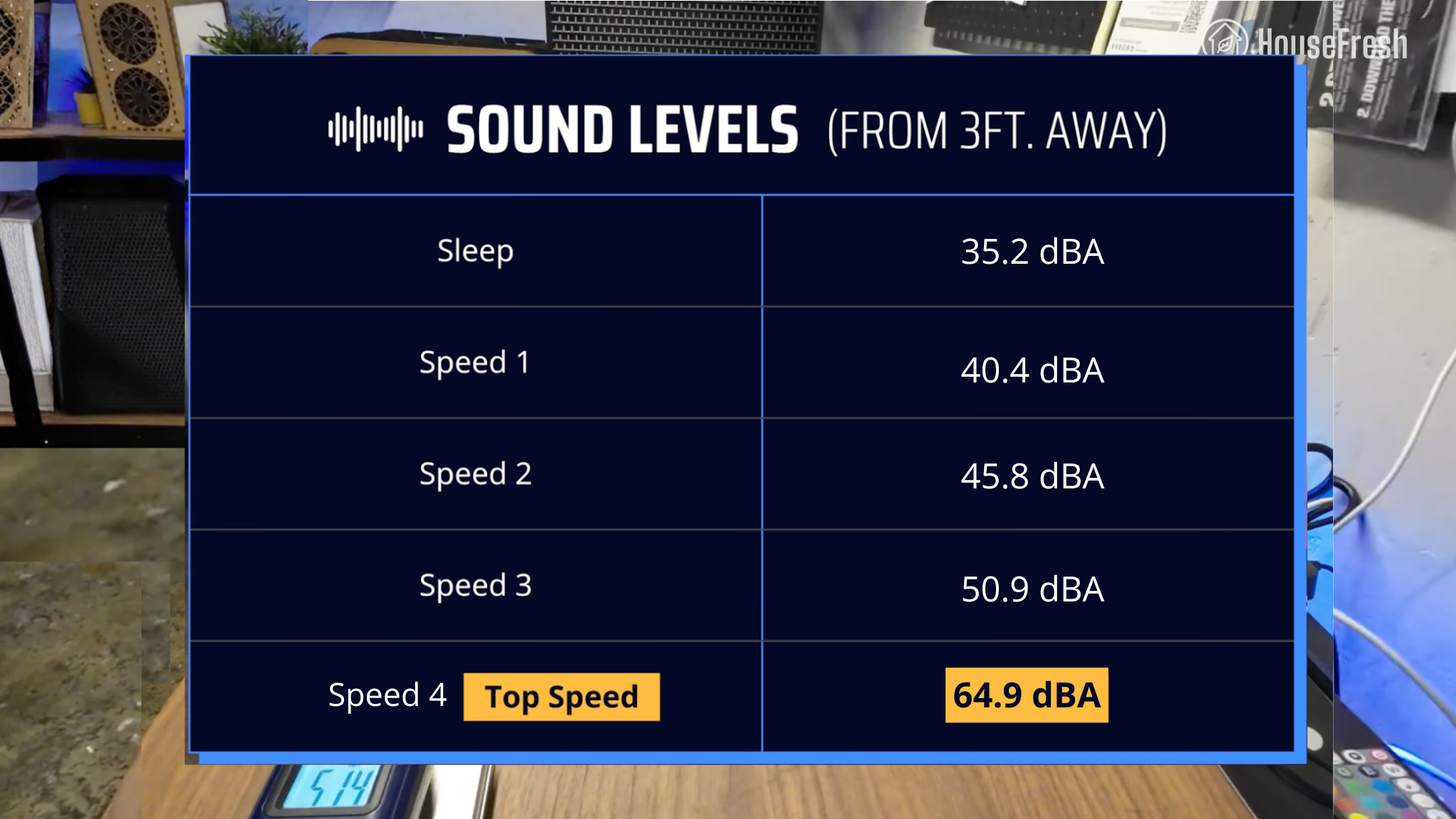
| Noise level in decibels from 3 ft. away: | Speed 1: 40.4 dBA Speed 2: 45.8 dBA Speed 3: 50.9 dBA Speed 4: 64.9 dBA |
| Electricity consumption in watts: | Standby: 1.14 watts Sleep mode: 3.49 watts (3.77 with PlasmaWave) Speed 1: 6.89 watts (7.13 with PlasmaWave) Speed 2: 10.63 watts (10.92 with PlasmaWave) Speed 3: 16.77 watts (16.75 with PlasmaWave) Speed 4: 55.31 watts (55.6 with PlasmaWave) |
| Filter lifespan: | 12 months |
| Manufacturer’s warranty: | 2 years |
| Country of origin: | South Korea |
| Country of manufacture: | Thailand |
Filtration technology
Three separate filters for particle and VOC filtration.
The Winix 5520 offers three layers of filtration: a pre-filter for larger particles, a True HEPA filter for small particles, and a pelleted activated carbon filter for gases and odors.
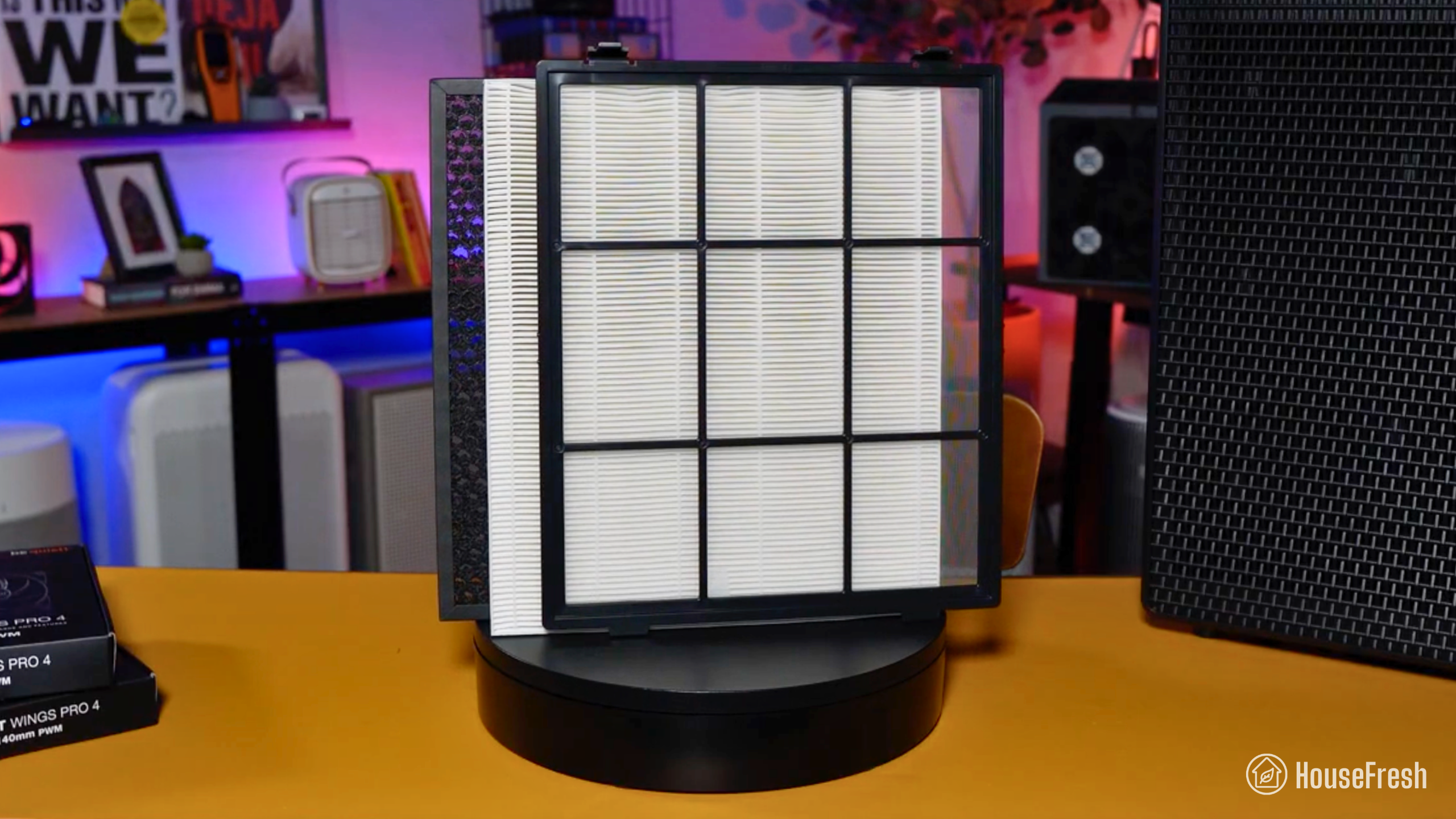
The pre-filter is removable, making it easier to vacuum and clean to remove pet hair, fluff, and large dust particles that accumulate before they block airflow.
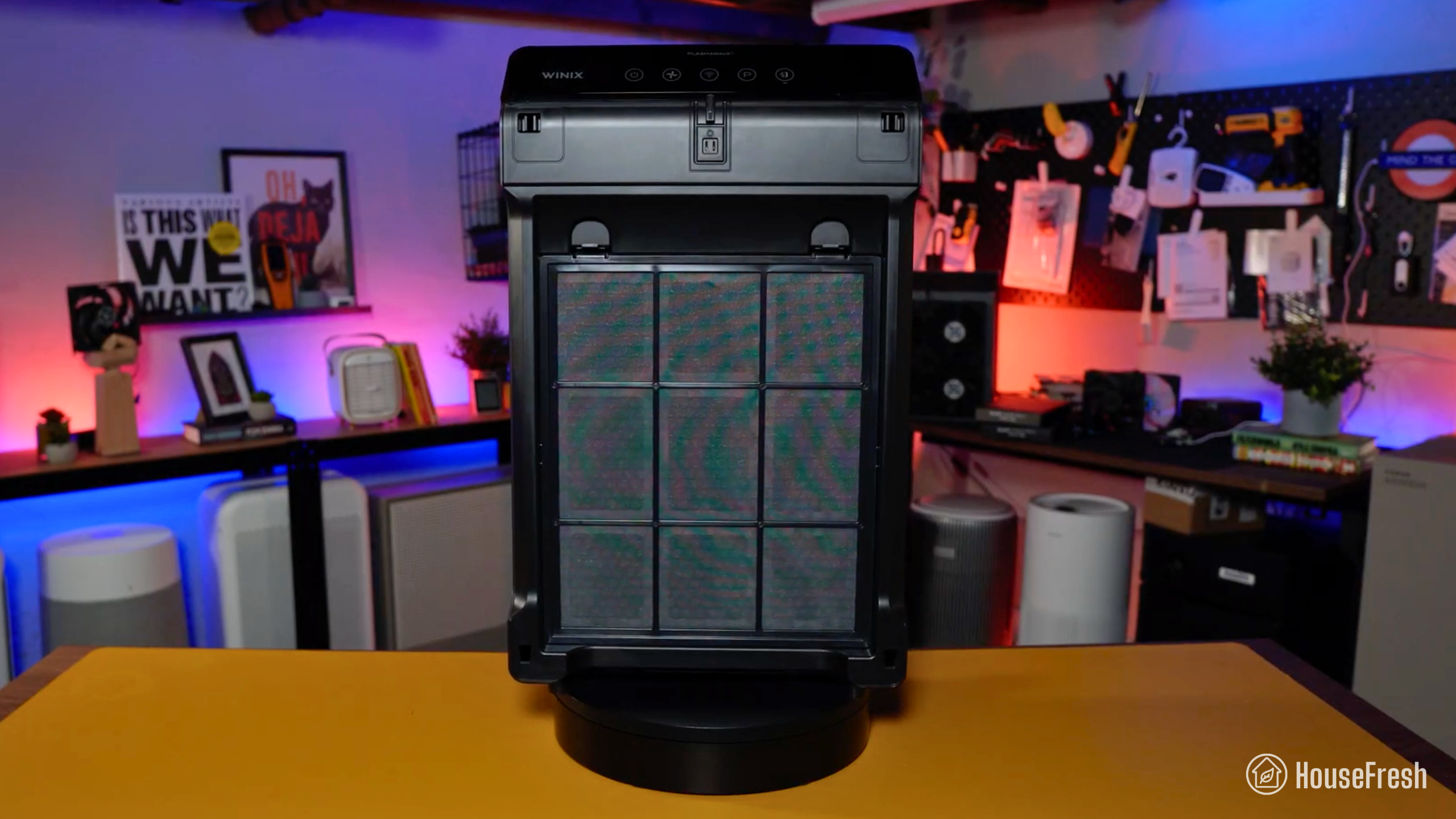
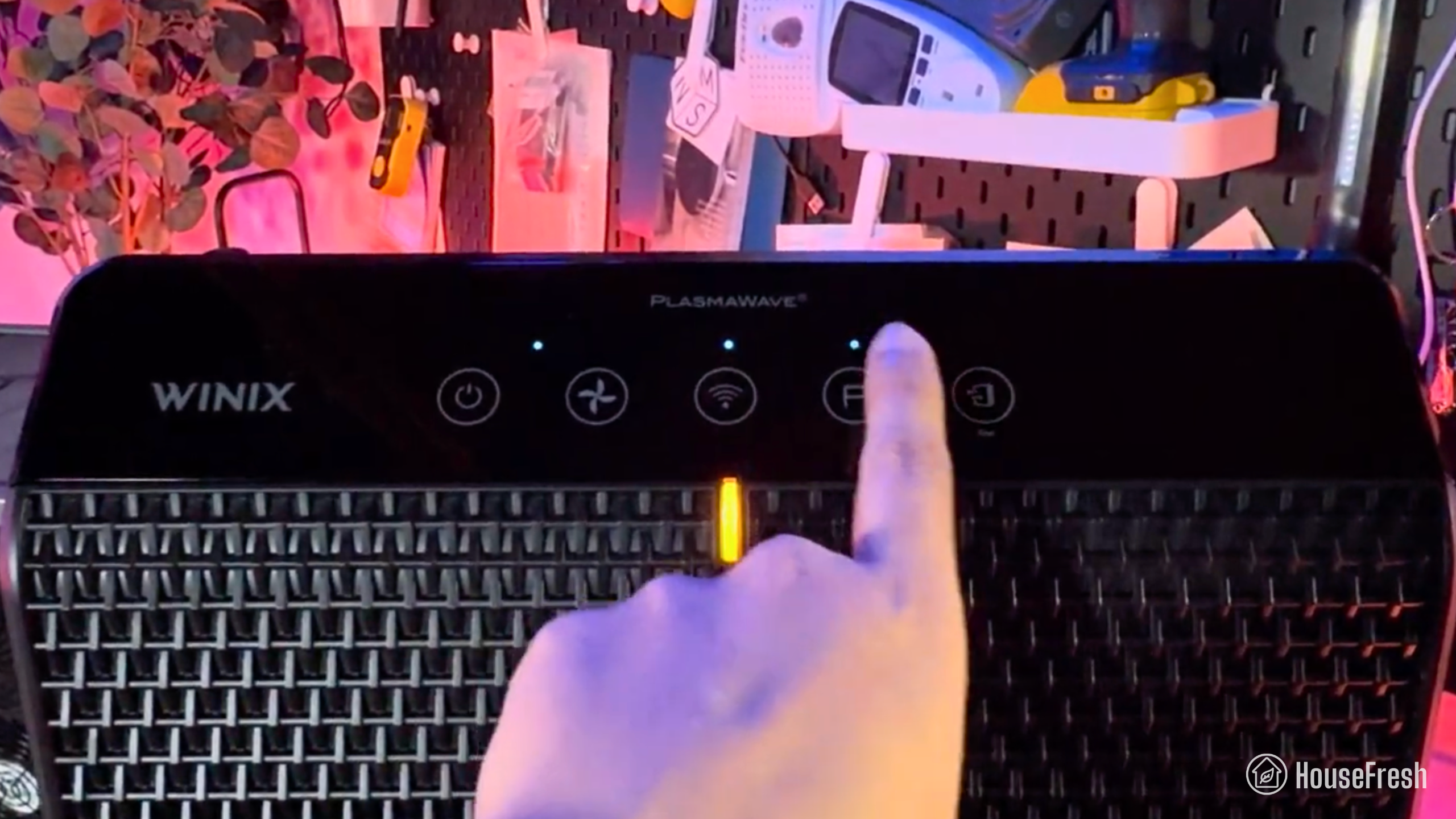
As with other Winix air purifiers, the 5520 comes with PlasmaWave, Winix’s trademarked bipolar ionization technology. This feature is meant to supercharge air cleaning performance by releasing electrical charges that make particles easier to remove from the air.
The bipolar ionization process may introduce new chemicals into the air, such as ozone. Winix makes this feature optional, so you can simply deactivate PlasmaWave by pressing the P button if you don’t want to use it.
Design, controls and app features
A stylish, medium-sized air purifier with app support.
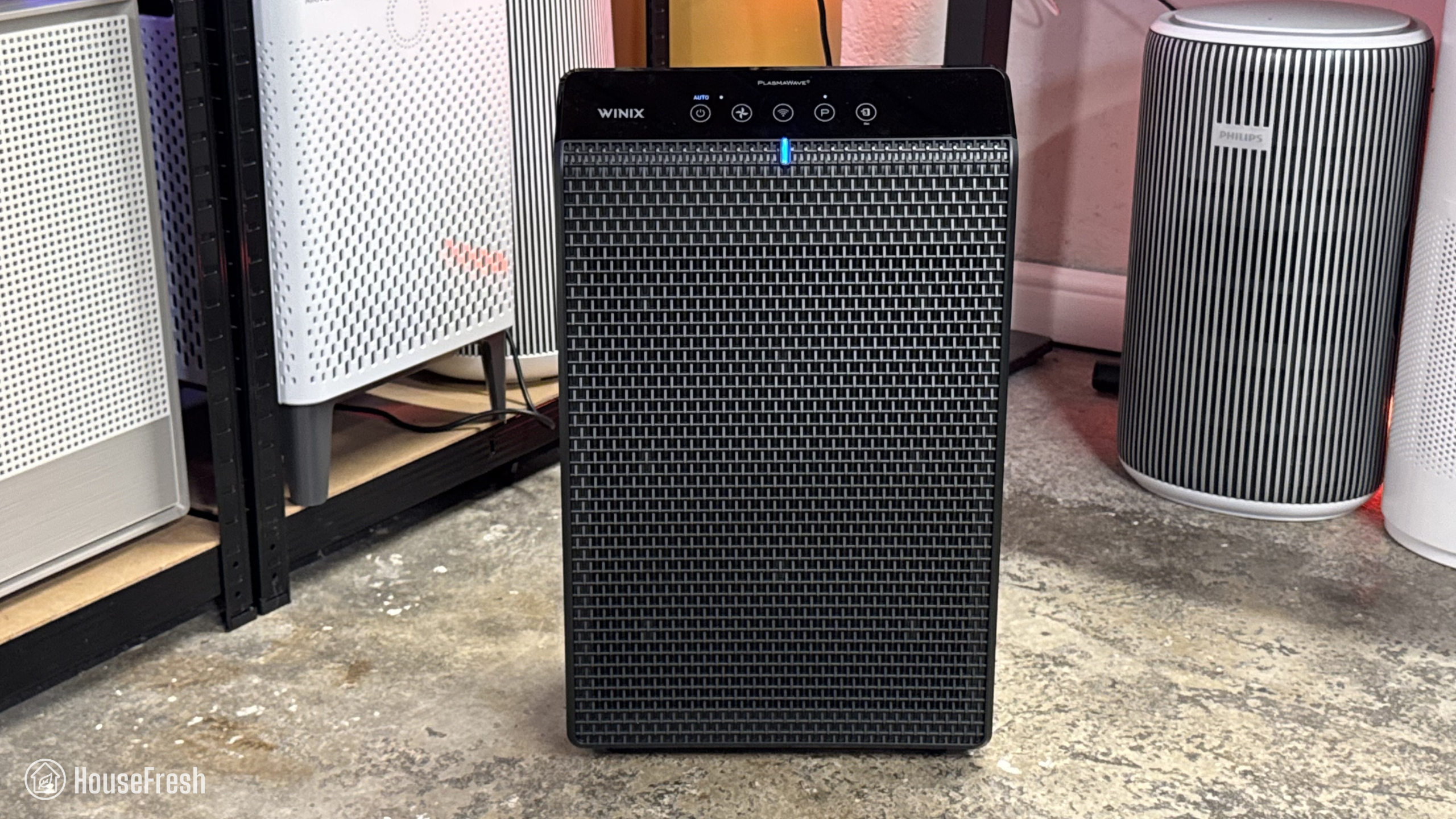
I know looks are subjective, but I really like the look of the 5520, with its black design and patterned cover.
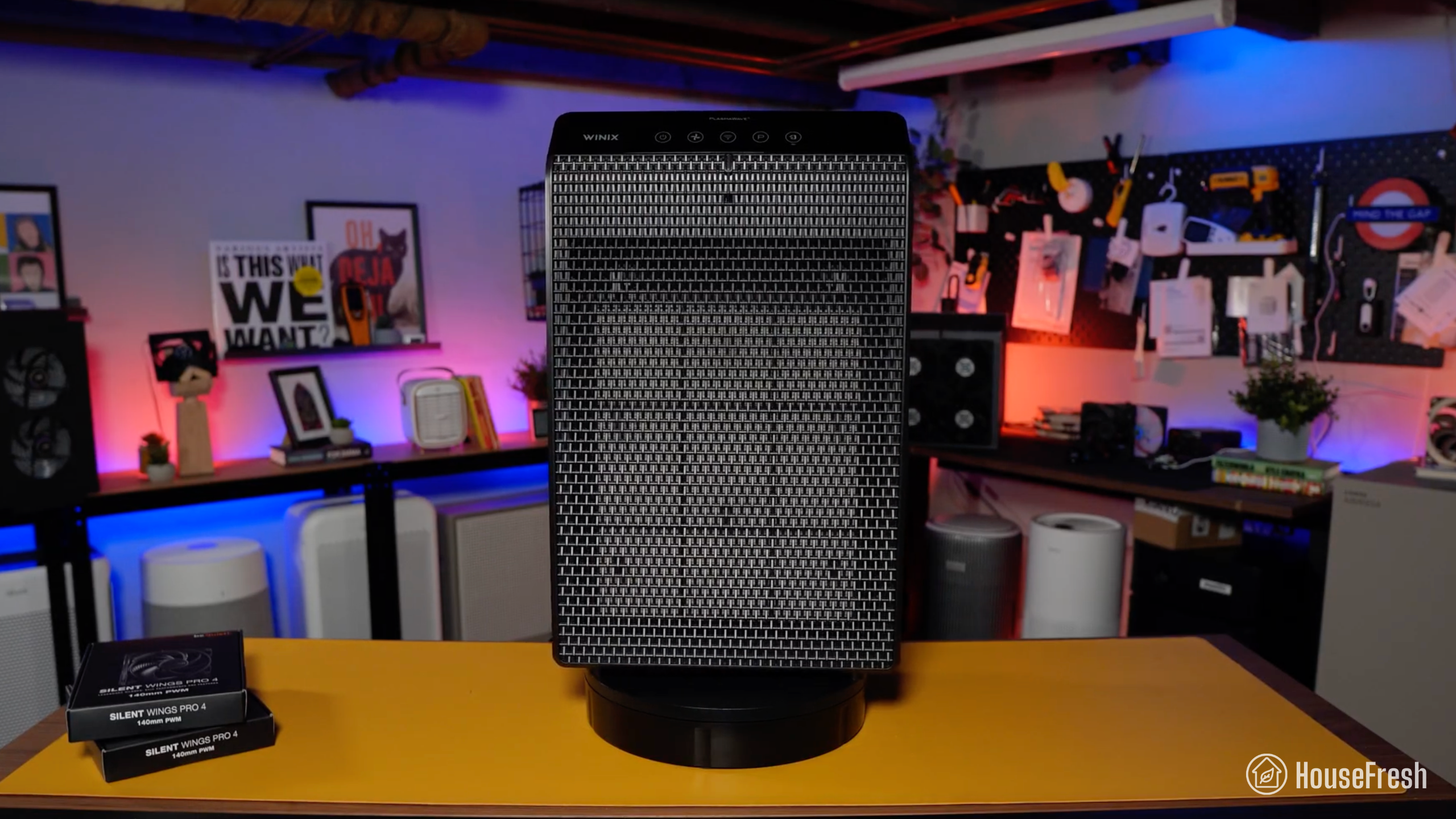
It’s smaller than the older Winix 5500-2, standing at 22.17 inches (56.31 cm) and weighing 13.3 lb (6 kg).
The controls are simple: a power button, a speed button (including Sleep and Auto Modes), and a button to engage PlasmaWave.
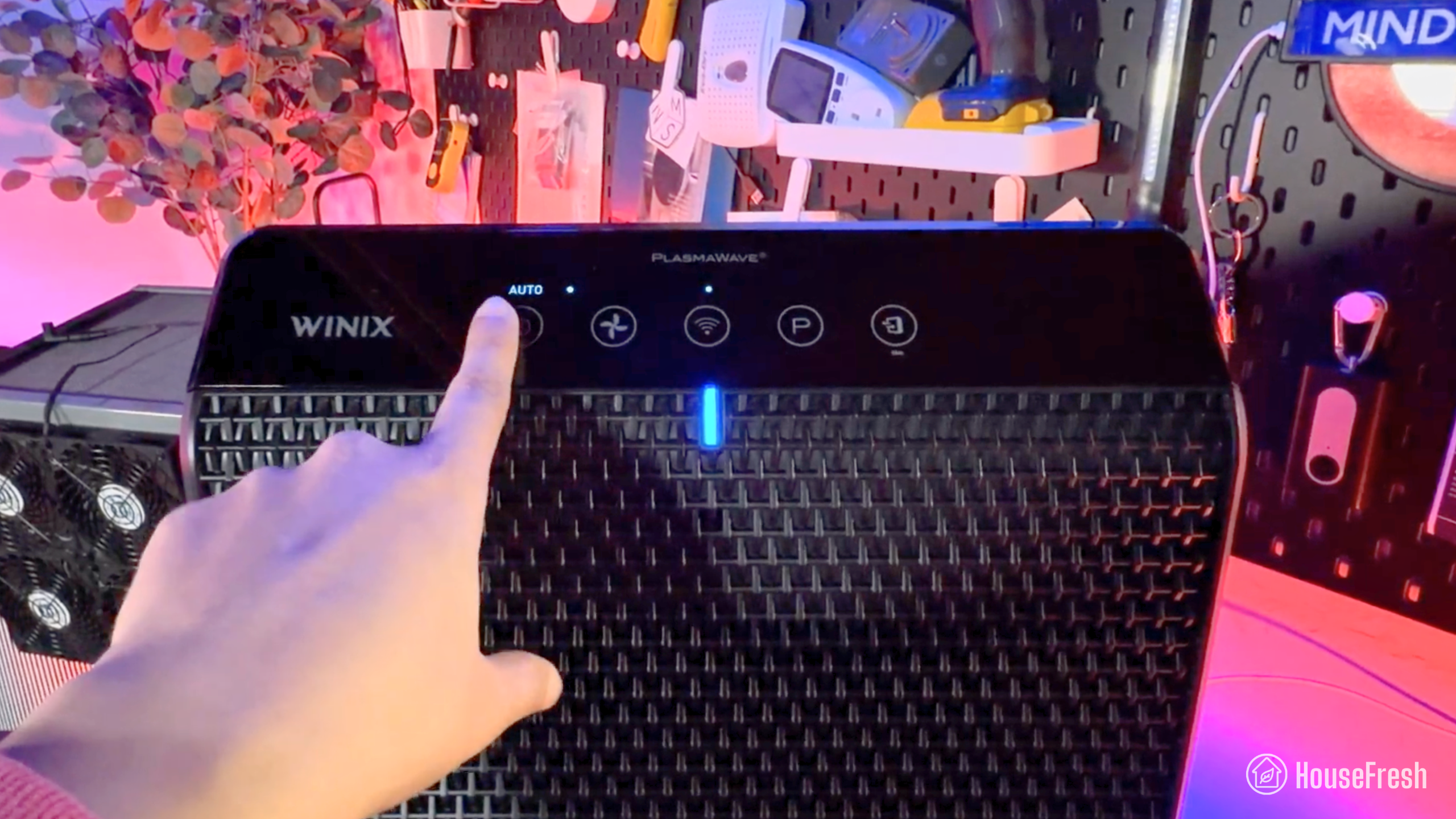
You don’t get a child lock or a timer button, which are common features you will find in other mid-sized air purifiers.
It has a gas sensor that informs the air quality indicator light at the front, which changes from Blue (good) to Amber (poor) to Red (bad).
It also has a light sensor at the top, which will react to changes in ambient light, switching the air purifier to low-light in the dark.
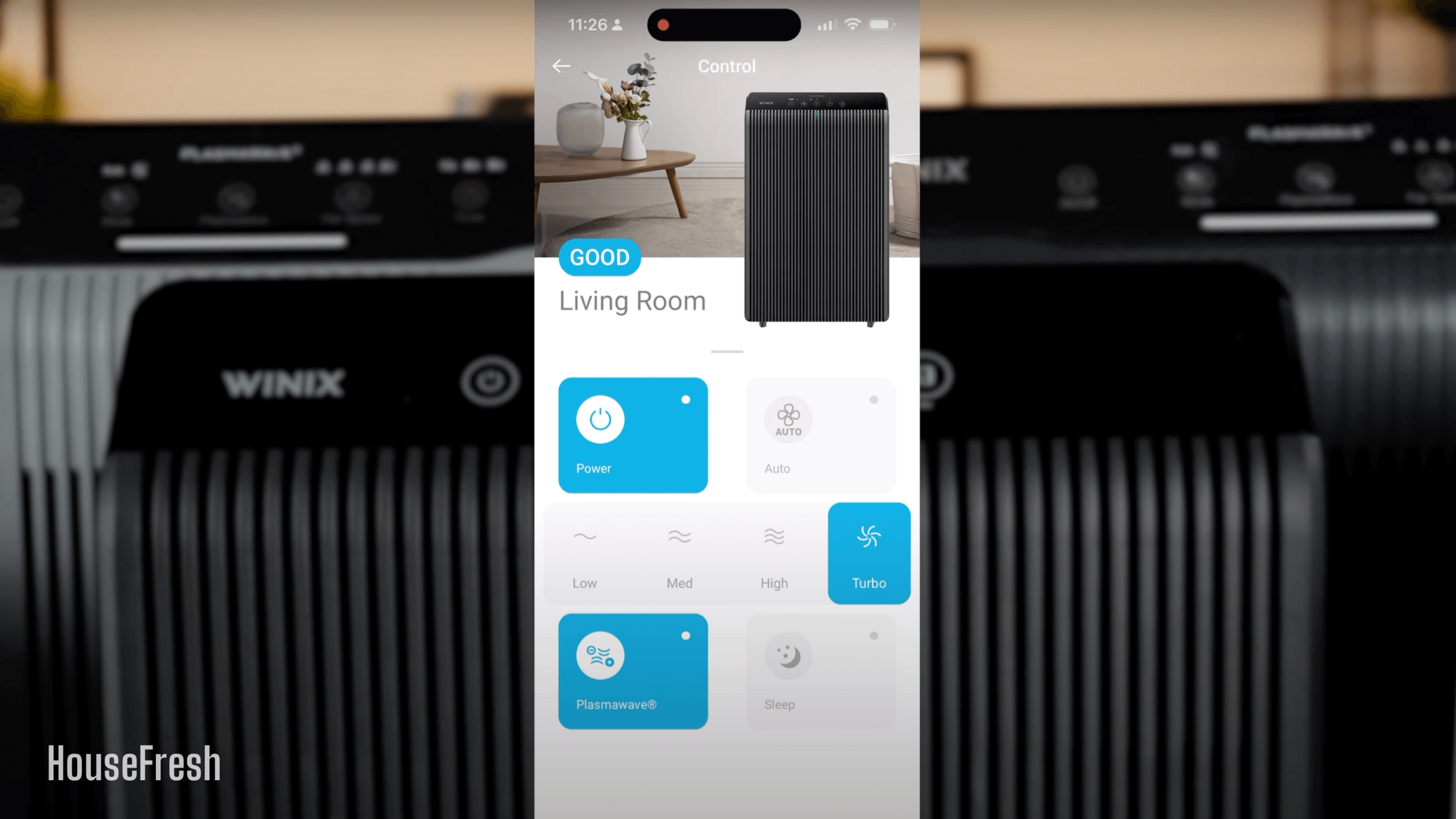
You can connect the 5520 to your smartphone via the Winix Smart app, which is available on both iPhone and Android.
The app has a clean design and a good UX, with no major issues. It lets you adjust fan speeds remotely from your phone, monitor filter life, and track air quality data from the sensor.
After using other apps from different manufacturers, I found the Winix Smart app pretty bare – it misses features that are common in apps from brands like Xiaomi and Levoit.
Air cleaning performance
We tested the Winix 5520 in our 728 cubic ft. test room, tracking how fast it removed all PM1 particles from the air after we filled the space with incense smoke.
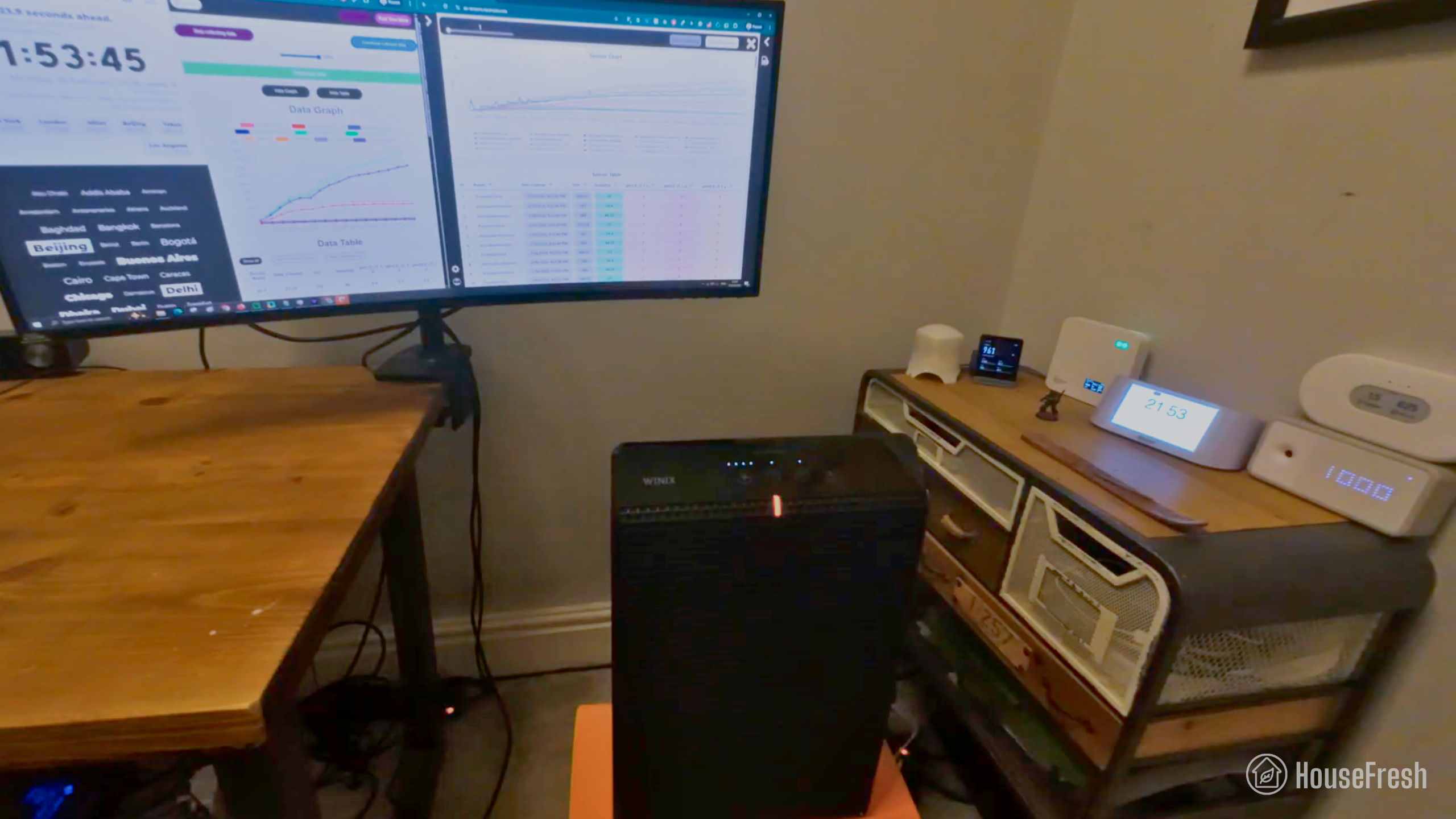
When running at top speed, our PurpleAir Zen sensor shows that the 5520 needed 24 minutes to reach PM1 zero. Based on the natural ventilation of our test room, we estimate a PM1 CADR of 249 cfm.
This makes the Winix 5520 powerful enough to provide five air changes per hour in medium-sized rooms up to 373 sq. ft.
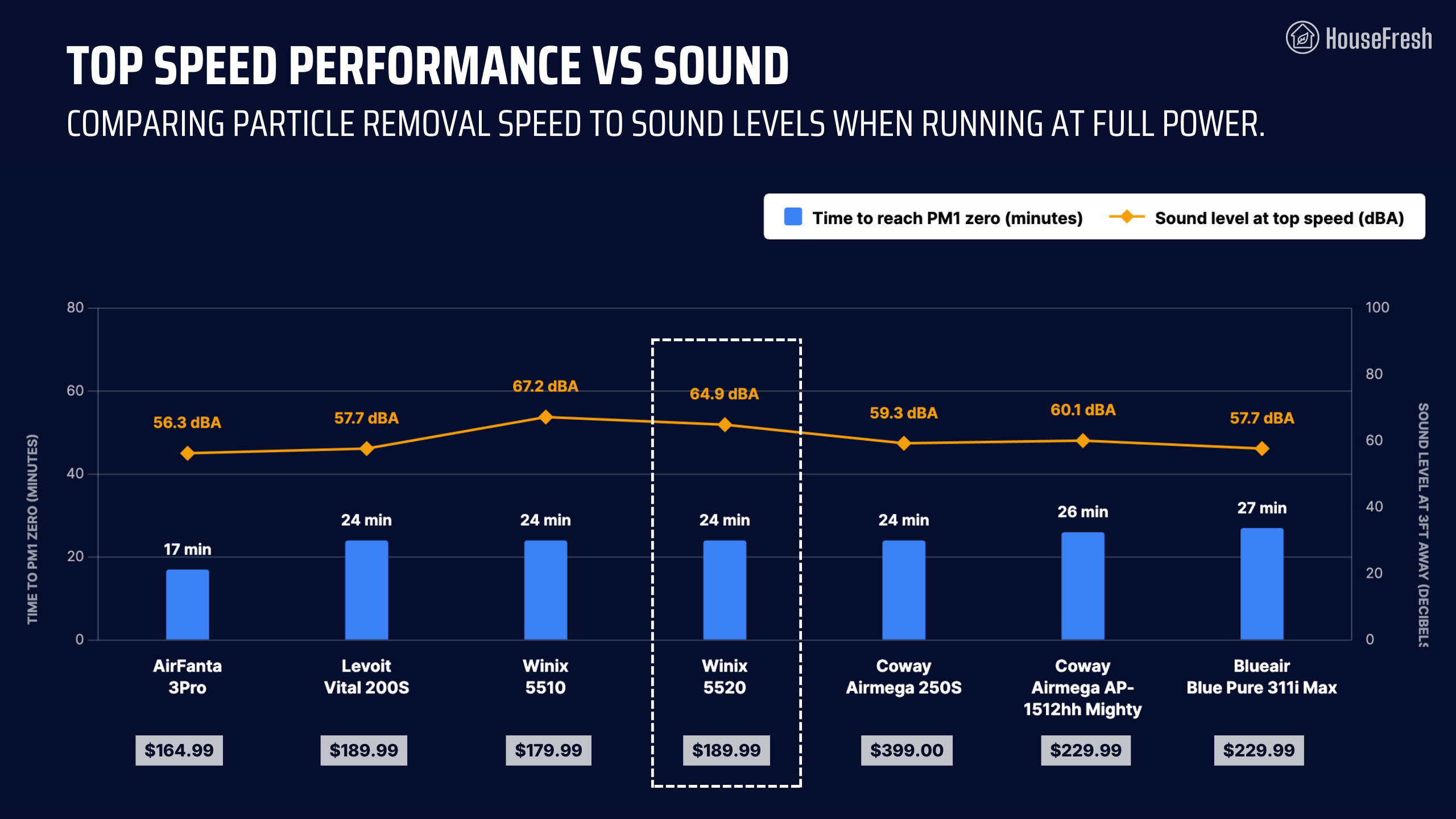
As you can see from the chart, the 5520 matched the top speed performance of its sibling (5510), the popular Levoit Vital 200S, and the pricier Coway Airmega 250S:
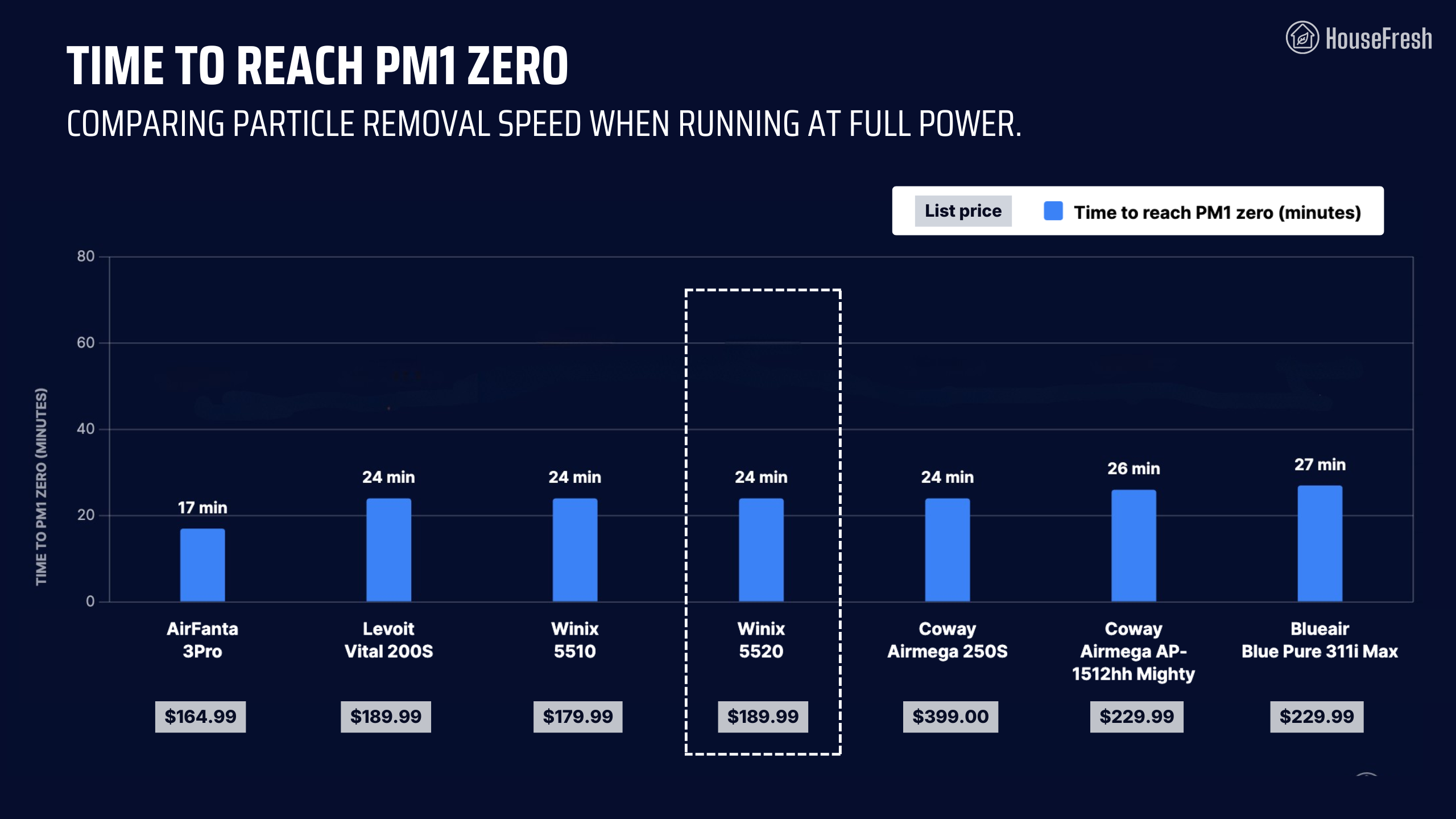
This is a good result for a medium-sized air purifier in the sub-$200 price range.
BUT, as I always say, air purifiers running at full power are usually too loud for everyday use, so we must account for noise levels…
Sound levels
The sound levels of the Winix 5520 range from 40.4 dBA to 64.9 dBA — which is louder than other mid-sized air purifiers from Levoit, Coway and Blueair.
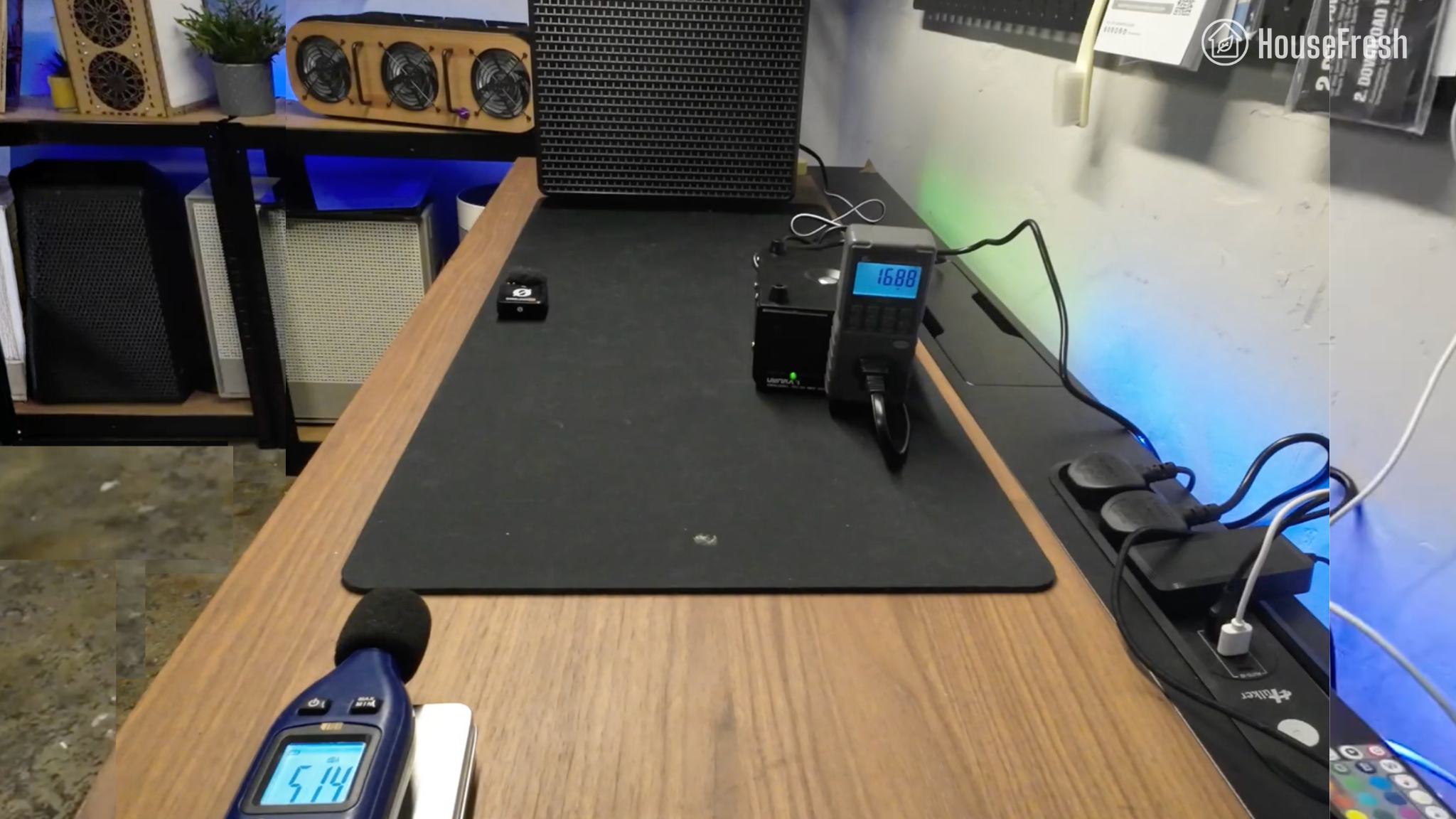
I used our BAFX sound meter to measure how much sound the 5520 generates at each of its fan speeds at 3 ft away:
Reaching 64.9 dBA at top speed, the 5520 is one of the loudest mid-sized air purifiers on the chart, second only to the Winix 5510 and its 67.2 dBA when running at full power.
Running at speed 1, the 5520 reached 40.4 dBA and completed our particle removal test in 55 minutes. This is the only fan speed under the 45 dBA limit we set for quiet performance tests.
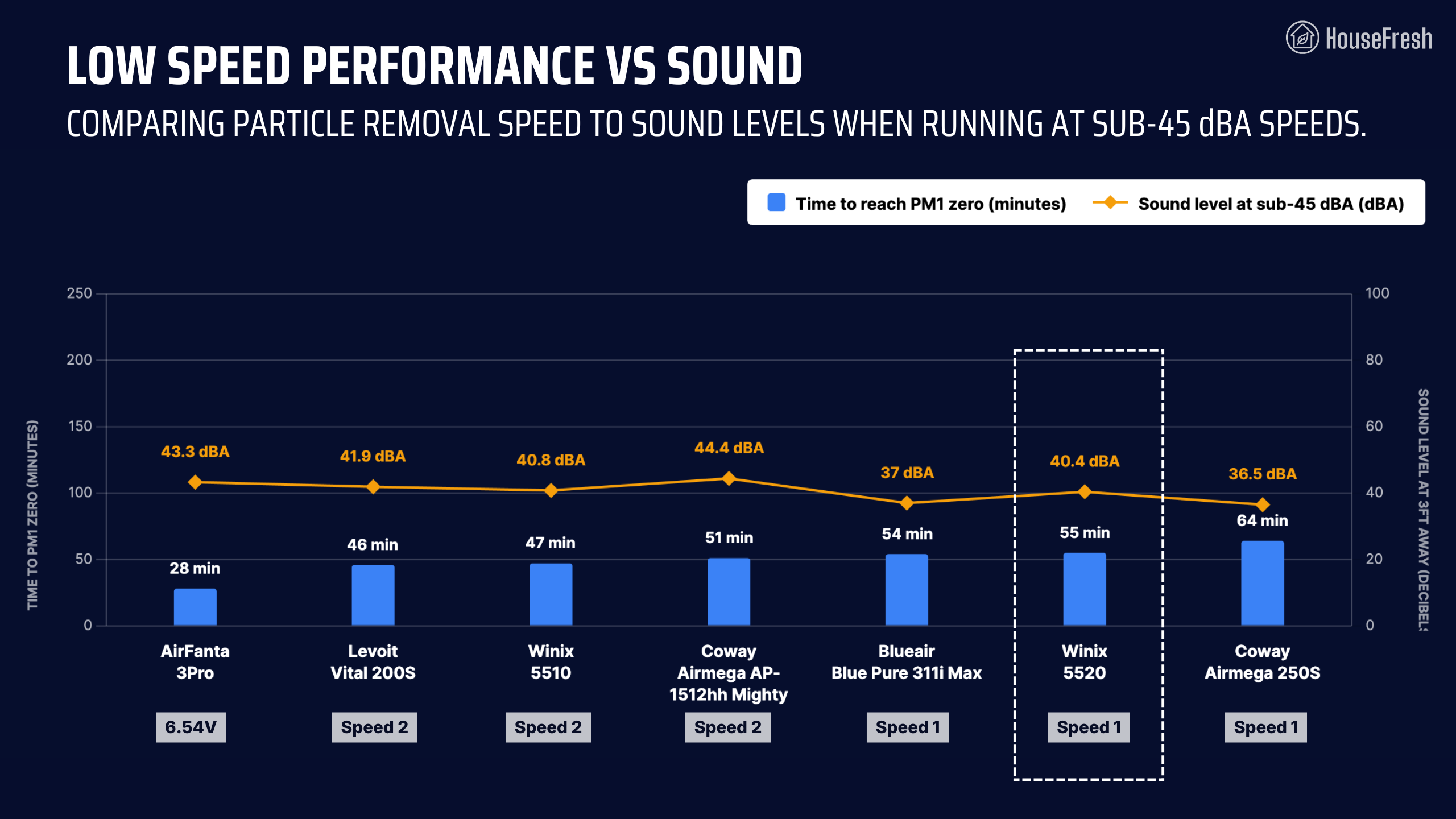
I repeated the test with the 5520 running at speed 2, and it cleared our test room in 44 minutes while generating 45.8 dBA of noise. That is not much louder than our 45 dBA limit, so if you don’t mind the extra noise, you could have the 5520 running at speed 2, and it would clean the air five times per hour in spaces up to 200 sq. ft.
Long-term running costs
Running a Winix 5520 will cost you $146.51 per year, combining energy and filter replacement costs.
We used our energy meter to record how much electricity the 5520 pulls at each fan speed and while on standby.
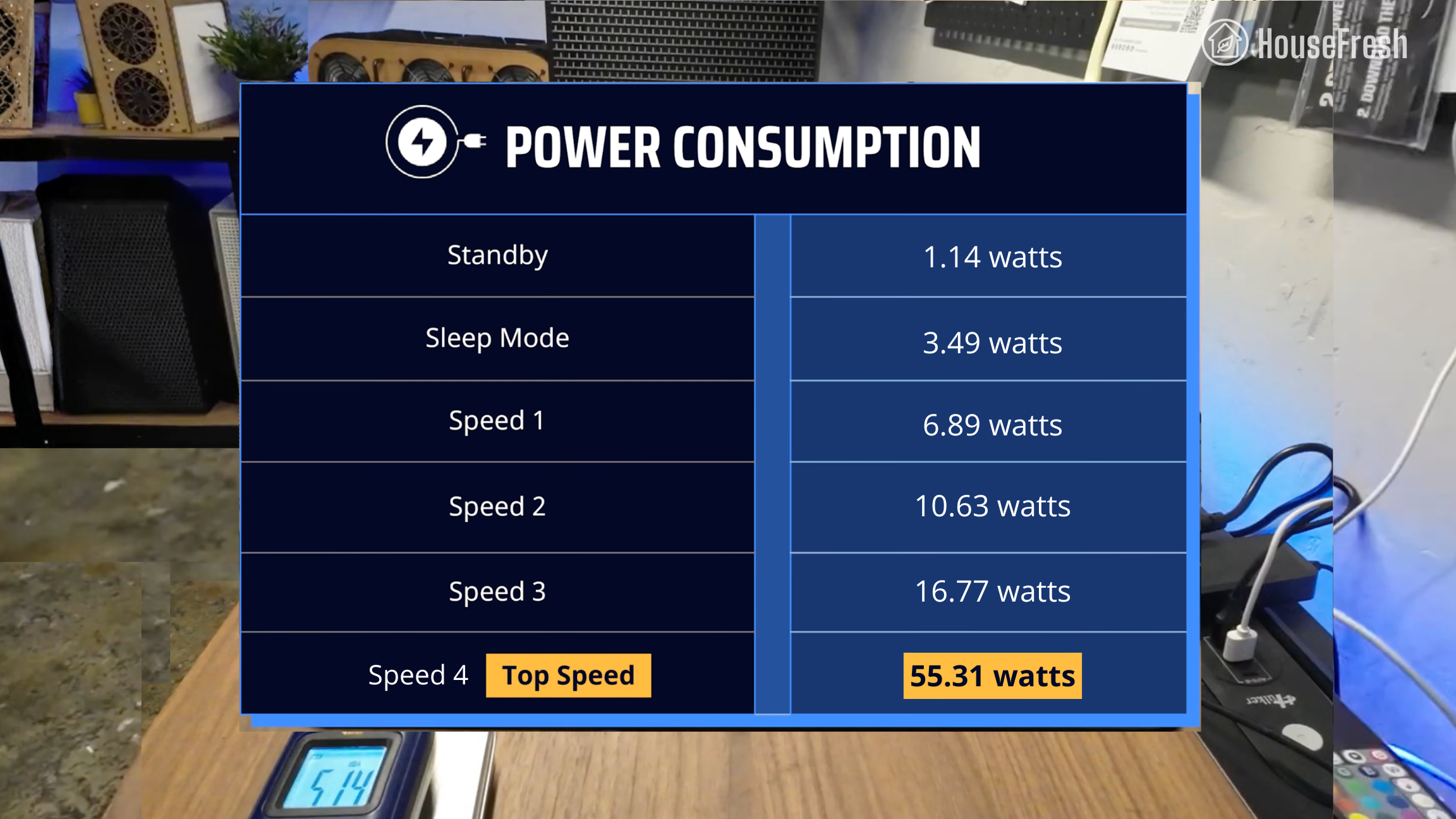
At top speed, the Winix 5520 draws 55.31 watts, so if you were to leave it running at full power 24/7 for a year, it would add $66.52 to your energy bill, based on the average U.S. electricity price as of March 2026.
However, electricity consumption is not the only long-term cost you should budget for when buying an air purifier… The biggest expense tends to be the filter replacements.
According to Winix, you need to change the filter in your 5520 every 12 months. The set with one True HEPA and one carbon filter costs $79.99, so you can expect to spend that much each year on filter replacements alone.
When we add this to energy costs, we can work out that it will cost you $146.51 to run a 5520 for a year. Let’s compare it with other models:
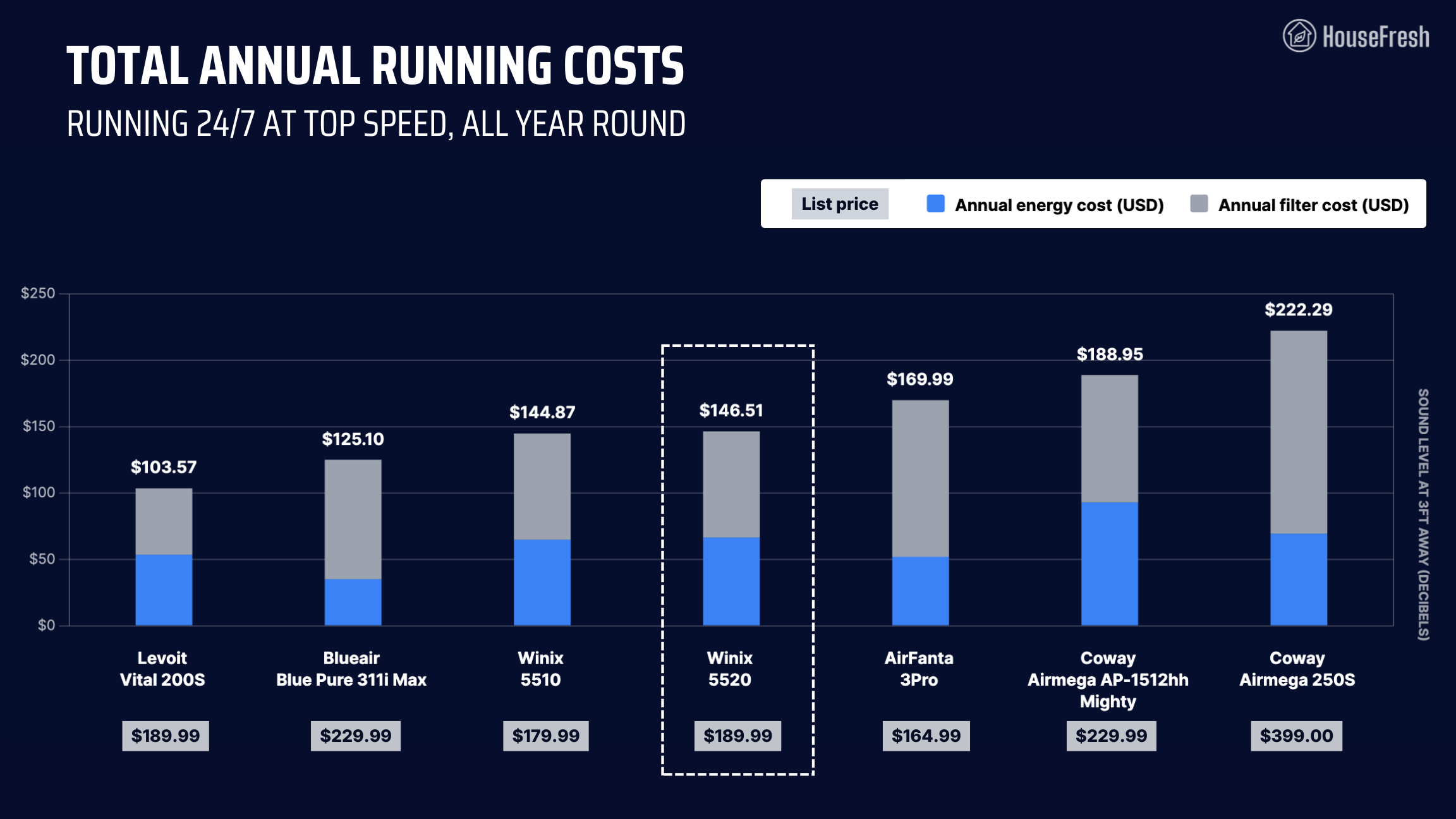
Because the 5520 is a tiny bit more power-hungry than the Winix 5510, you can expect to spend more each year on running costs, even though both units use the same filter replacements.
Bottom line: Should you get a Winix 5520?
Our data showed that the 5520 offers performance comparable to that of its sibling, the Winix 5510, BUT it comes with a higher price tag and a more power-hungry fan motor.
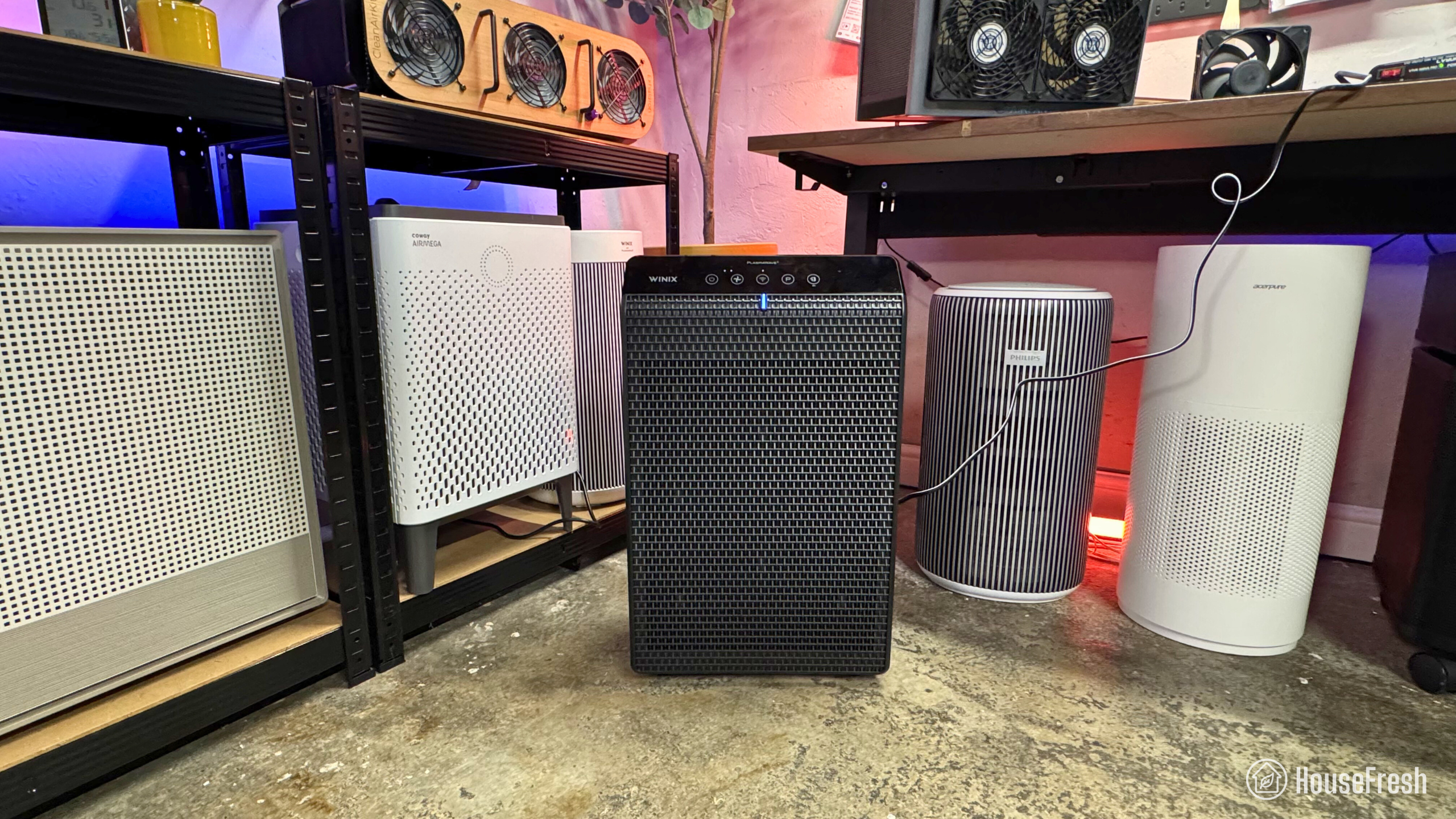
The 5520 is a solid mid-sized air purifier with similar particle removal performance to that of many popular models in the segment, such as the Levoit Vital 200S, the Smart Air SA600, and even the more expensive Coway Airmega 250S.
Considering its affordable price at $189.99, this makes it a good choice for those looking for a good performing air purifier for rooms up to 373 sq. ft. that also comes with app support, an onboard air quality sensor, and auto mode.
That said, it’s hard to recommend it over the Winix 5510…
Both devices look nearly identical, offer the exact same features and share the same Winix filters:
However, when it comes to air filtration, you will get better performance from the 5510 at quiet fan speeds. Plus, the 5510 costs less to buy and run, because the 5520 has a slightly higher price tag and consumes more electricity.
You will save some money upfront and in the long run with the 5510:
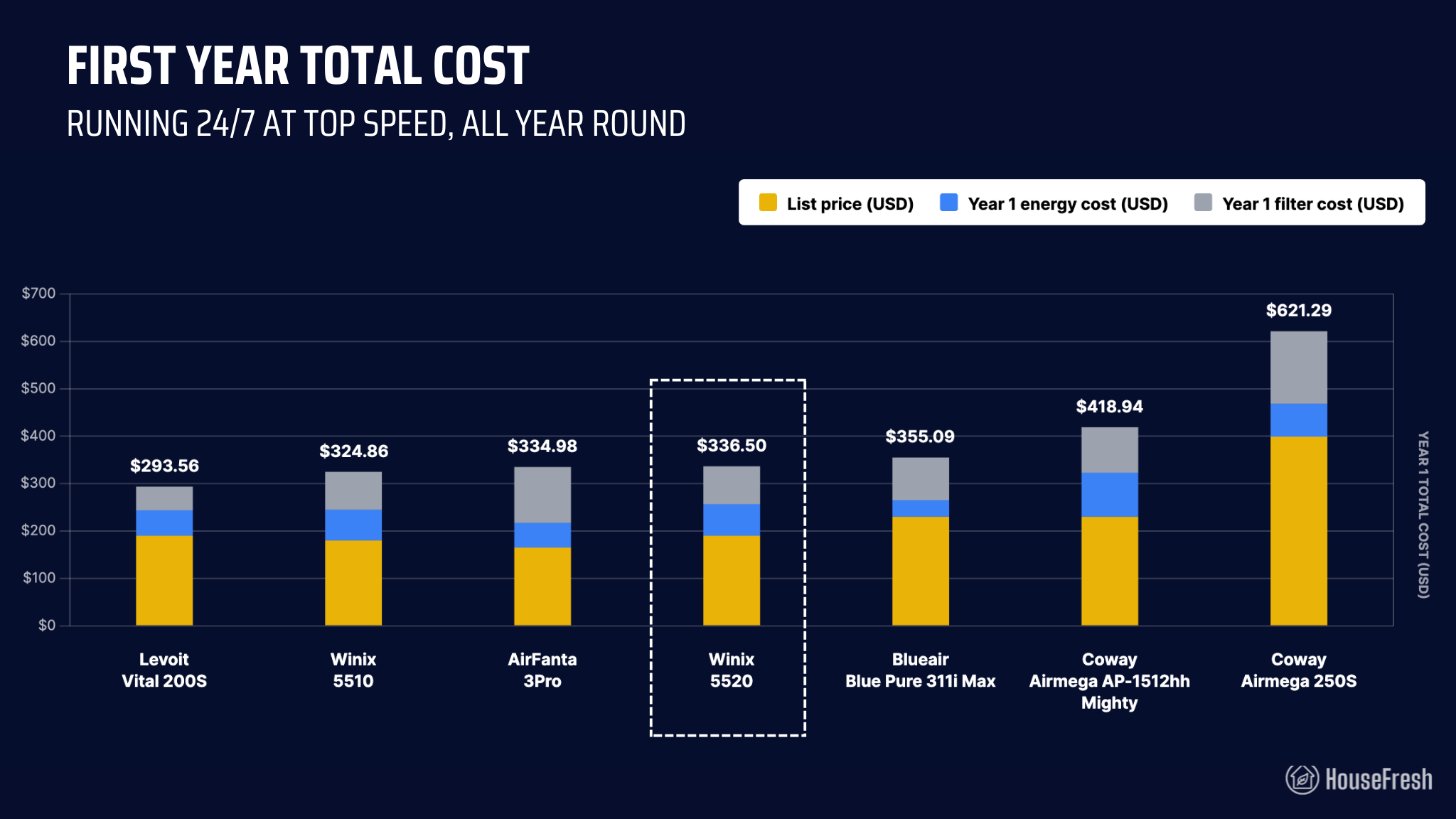
That is why I wouldn’t recommend buying the 5520 over the 5510 unless you really like its front cover design – that is the main design difference between the two.
If you’re looking for a cheap air purifier to help with dust, mold, or pollen allergies, I suggest checking out the AirFanta 3Pro. For $165, you’ll get better particle removal performance in rooms as large as 529 sq. ft., thanks to a higher CADR of 353 cfm (vs the 249 cfm in the 5520). The downsides are that the $165 version doesn’t come with carbon (which you won’t need if you’re trying to tackle dust, mold, and pollen), and that the 3Pro is a PC fan-powered unit without a fancy touchscreen display or onboard sensors you’ll find in a traditional air purifier.
BUT if you like the look of the 5520 and are happy to pay the $189.99 price tag, then you will be buying a good air purifier with smart features that will help remove both particles and odors from the air.
If you decide to get yourself a 5520, please use this link to help support the work we do at HouseFresh. When you buy through that link, we will receive a small affiliate commission at no extra cost to you. We don’t run any ads and have no partnerships with air purifier brands, so we rely on those small commissions to continue buying and testing air quality products.
And if you’re still unsure, you can try using our air purifier comparison tool to see how the Winix 5520 stacks up against units with similar prices:
If you have any questions about the 5520 or about Winix air purifiers in general, please drop them in the comments below, and I’ll get back to you personally as soon as I can.