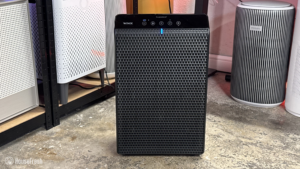
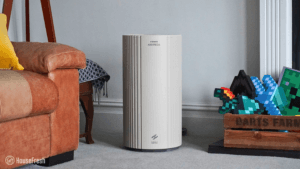
The Blueair Blue Signature looks like a piece of furniture and doubles as a table, just like the IKEA Starkvind and the air purifiers from SwitchBot.
However, unlike IKEA and Switchbot units, the Blue Signature is not cheap, with a list price of $449.99 in the U.S. and £369 in the UK.
But does beautiful design and a high price tag equal better performance? We bought one to find out.
The overall score for the Blueair Blue Signature incorporates first-hand data results from our battery of tests, as well as our ratings for customer service, brand transparency, and design & UX. Check out the full scorecard below to see the split of categories.
Search for ‘Blueair Blue Signature’ to see where it ranks, based on its air cleaning performance and value for money. You can also filter results to easily compare models in the same price range.
The pros and cons of the Blueair Blue Signature
A summary of our top-level findings after testing this air purifier, following our methodology.
“The Blue Signature looks like a piece of furniture and also doubles as a table. You can even add legs to lift it off the ground, with options to match your home’s decor.
It’s not cheap at just under $450, but it ticks a lot of boxes for this price: Performance is top tier at both top speed and quiet fan speeds, the running costs are fair, and it has a high quality laser sensor, a table surface, and app support.”

HouseFresh Founder
& Lead Tester
CONS
PROS
| Clean air delivery rate (CADR): | – Top speed PM1 CADR: 400 cfm – Sub-45 dBA PM1 CADR: 229 cfm – AHAM PM2.5 CADR: 434 cfm (dust) |
| Filter technology: | HEPASilent particle filter with pelleted activated carbon and a removable pre-filter fabric. |
| Recommended room size: | 600 sq. ft. (5 air changes per hour) |
| Dimensions: | 17.3 x 15.7 x 15.7 in (44 x 40 x 40 cm) |
| Weight: | 13.2 lbs (5.98 kg) |
| Noise level in decibels from 3 ft. away: | Sleep mode: 34.8 dBA Speed 1: 35.3 dBA Speed 2: 40 dBA Speed 3: 51.9 dBA Speed 4: 59.6 dBA |
| Electricity consumption in watts: | Standby: 0.96 watts Sleep mode: 2.63 watts Speed 1: 2.95 watts Speed 2: 6.63 watts Speed 3: 19.08 watts Speed 4: 38.65 watts |
| Filter lifespan: | 9 months |
| Manufacturer’s warranty: | 1 year (3 years with product registration) |
| Country of origin: | Sweden |
| Country of manufacture: | China |
Filtration technology
HEPASilent with pelleted activated carbon and a washable, removable pre-filter.
The filter wraps around and clips onto the Blue Signature’s body – something new from Blueair.
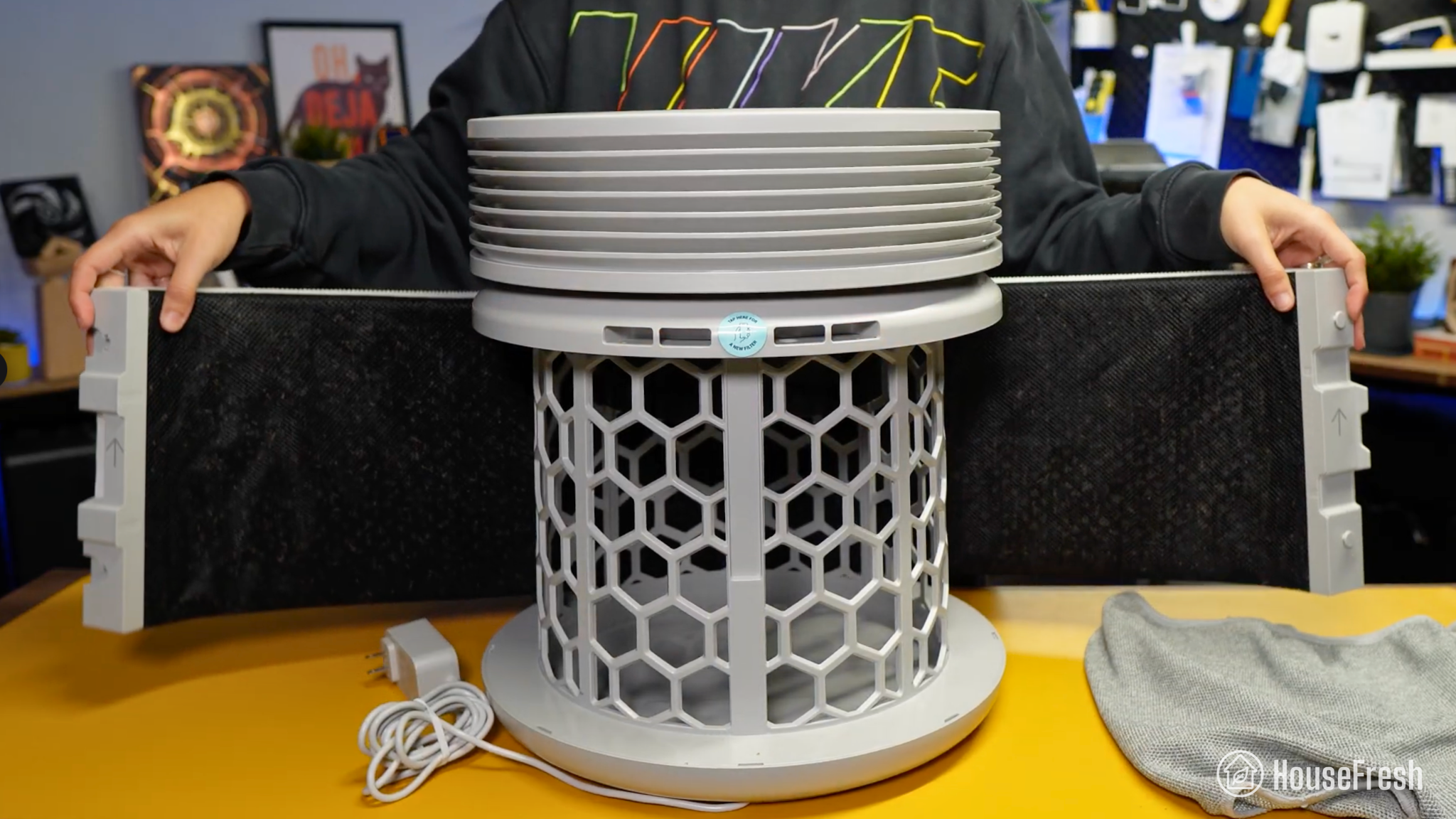
This is the first time we see something like this from Blueair, but it reminded me of the carbon filter in our Dyson Big+Quiet BP06.
On the inside of the filter, you get a layer of pelleted activated carbon.
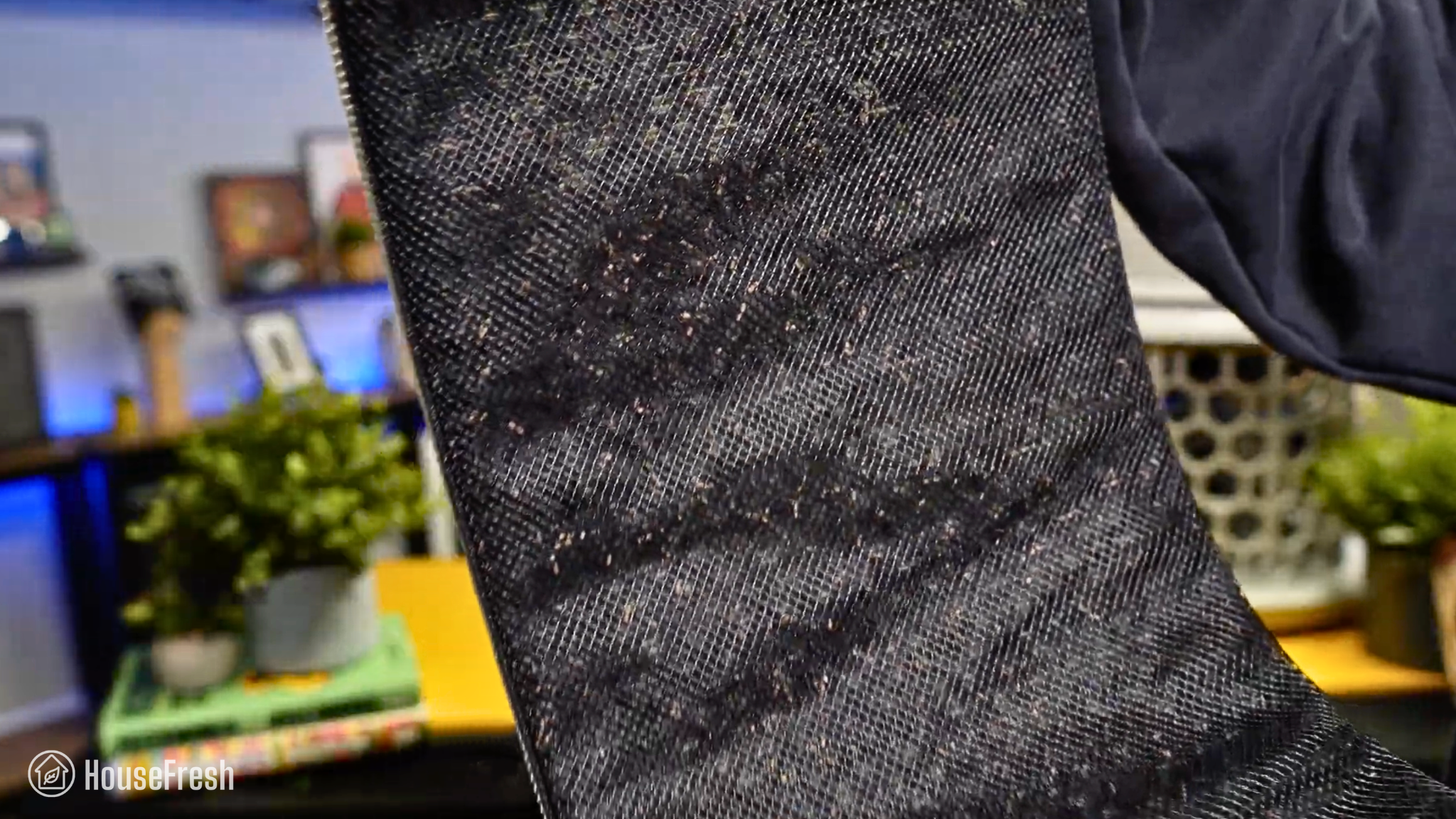
I was glad to see this, as it’s much better than the impregnated carbon fabric in other Blueair models.
Similar to previous models, the Blue Signature has a removable, washable fabric pre-filter.
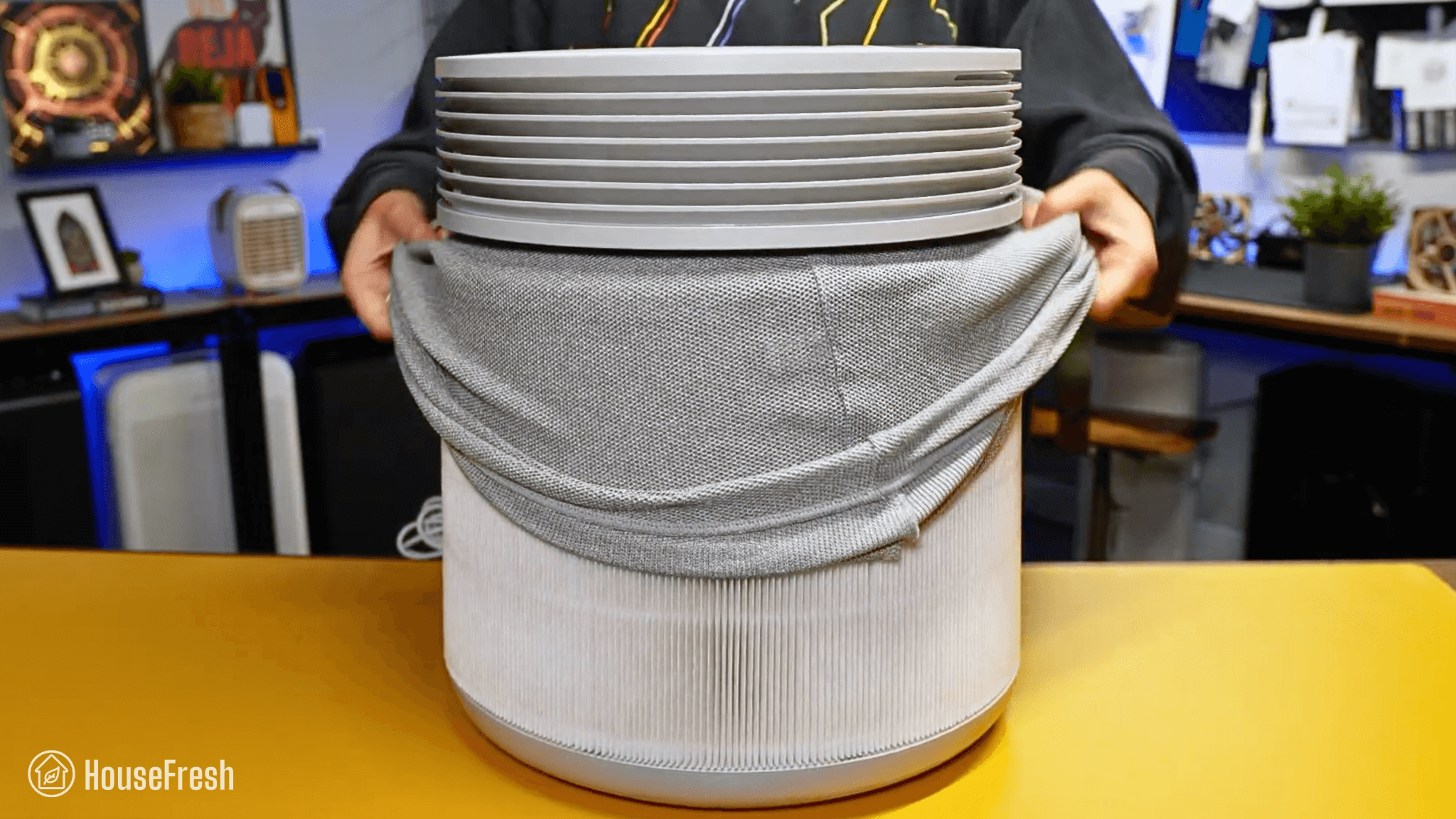
I bought the Nordic Fog pre-filter, but you can choose from a range of colors to customize your Signature’s look.
HEPASilent is Blueair’s trademarked air filtration technology that combines electrostatic ionization with mechanical filtration.
The mechanical filtration element is the same as in all other air purifiers, with particle and carbon filters working in combination with a fan to remove pollutants from the air as it passes through the filters. For the electrostatic component, an ionizer inside the device generates negative ions to attract airborne particles, which are then captured by the filter.
This type of ionization process can release ozone, which can then form other chemical byproducts depending on the chemicals already in the air.
Now, the HEPASilent ionizer inside the Blue Signature produces very low levels of ozone: AHAM certified it produces just 3 ppb of ozone, which would be defined as producing zero ozone, based on the UL testing program UL2998 because it sits below the threshold of 5 ppb.
However, I still wish Blueair would include an option to disable HEPASilent, either with a button (as Alen, Winix, and Coway do) or just a setting in the app (as we’ve seen from Xiaomi).
Design, controls and app features
It clearly belongs to Blueair’s family of air purifiers, but with a twist.
It is shorter and lighter than other cylindrical units, such as the popular Levoit Core 400S, but it takes up more floor space. But what you lose in floorspace, you gain in tabletop space.
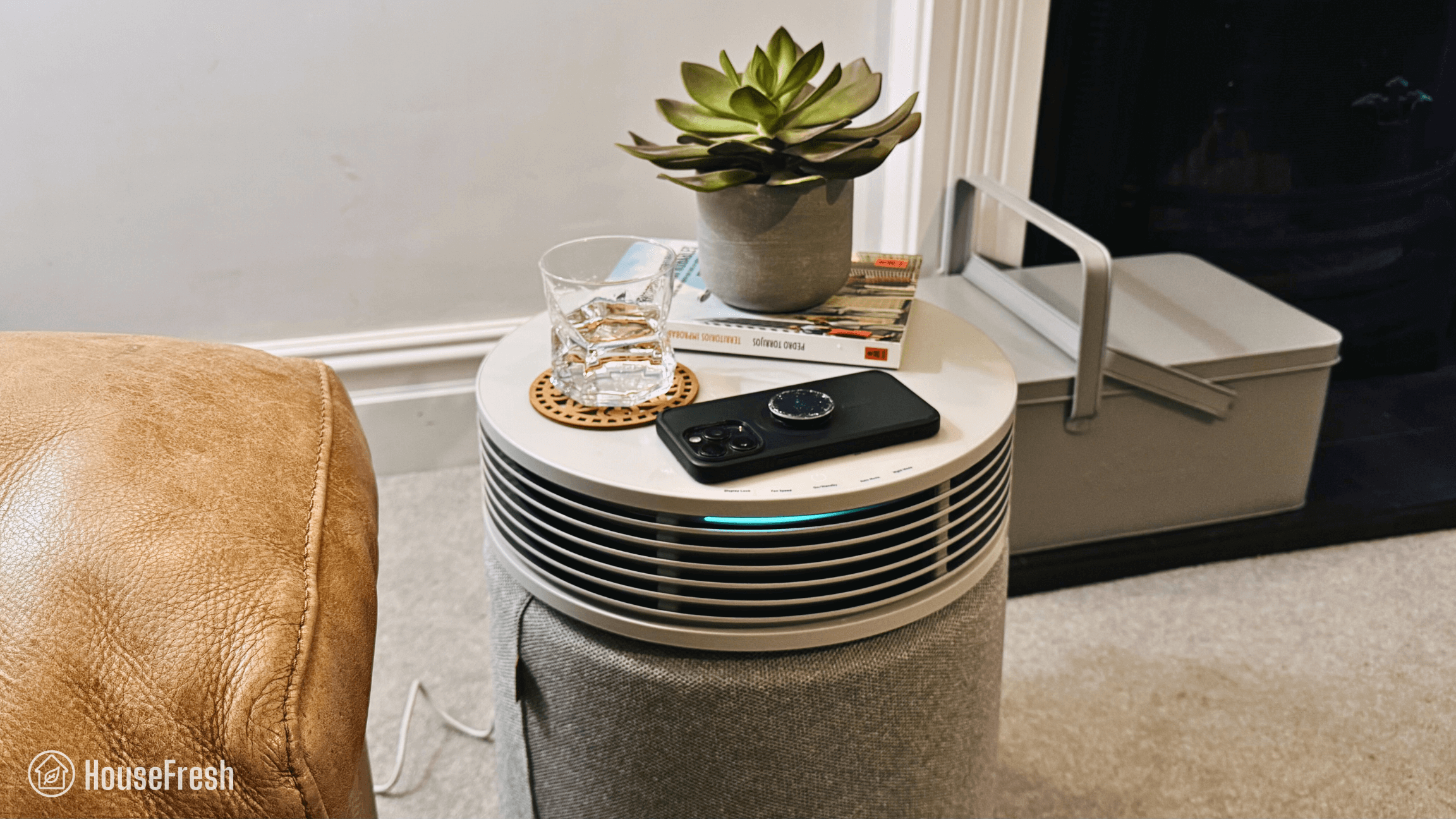
Another big change from the usual is the option to add a base to your Signature to elevate it from the ground and give it a more ‘furniture look’ – you can add a metal ring base for $100 or wooden legs for $87.
With the Blue Signature, Blueair moved away from the one-button control. It has a touchscreen with buttons to change fan speeds and modes, as well as PM2.5 readings.
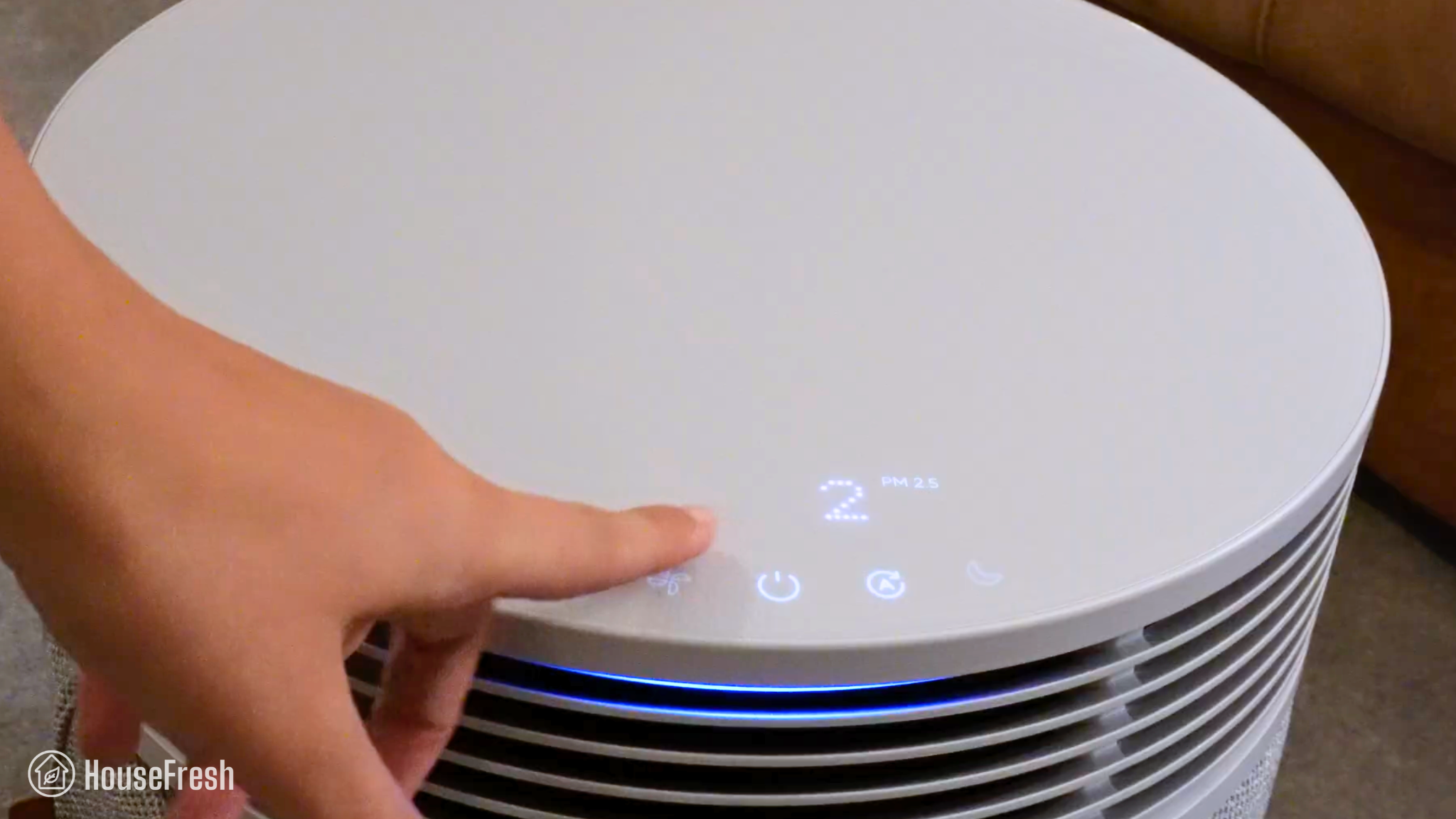
The display turns off automatically after a few seconds, and you can wave to get the lights back on. You also get an LED light at the front that changes color based on readings from the onboard laser sensor.
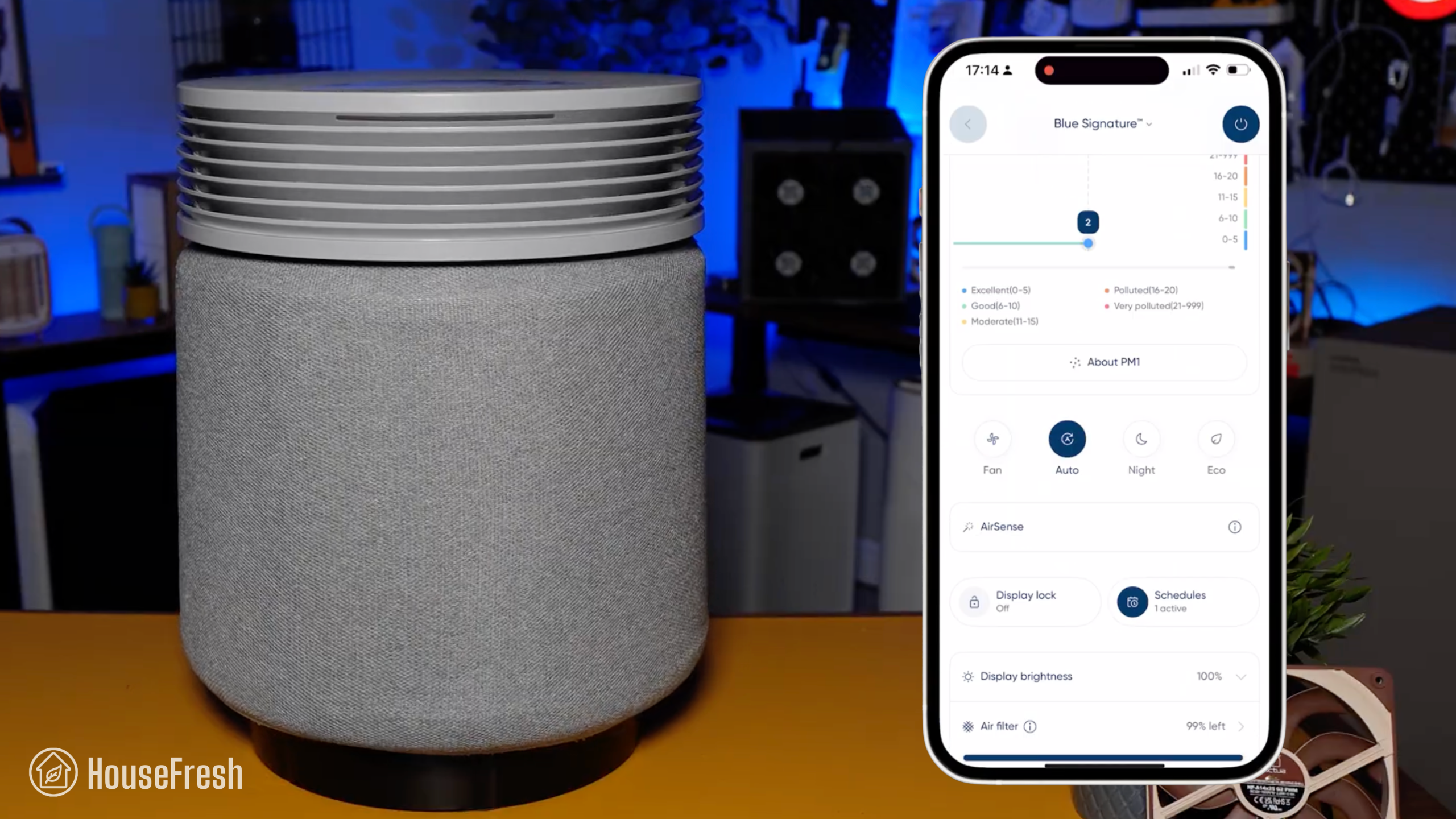
The Blueair app is quite basic compared to the apps from brands like Xiaomi, Levoit, and Philips, but the design is clean, and you can see all the info you need on one screen.
You get real-time air quality readings from the onboard laser sensor, which update quickly on the screen. Historical data is saved, so you can access it whenever you want.
Through the app, you can also control the device, set schedules, and adjust the brightness of the display at the top of the Signature.
Air cleaning performance
We tested the Blue Signature in our 728 cubic ft. test room, tracking how fast it removed all PM1 particles from the air after we filled the space with incense smoke.
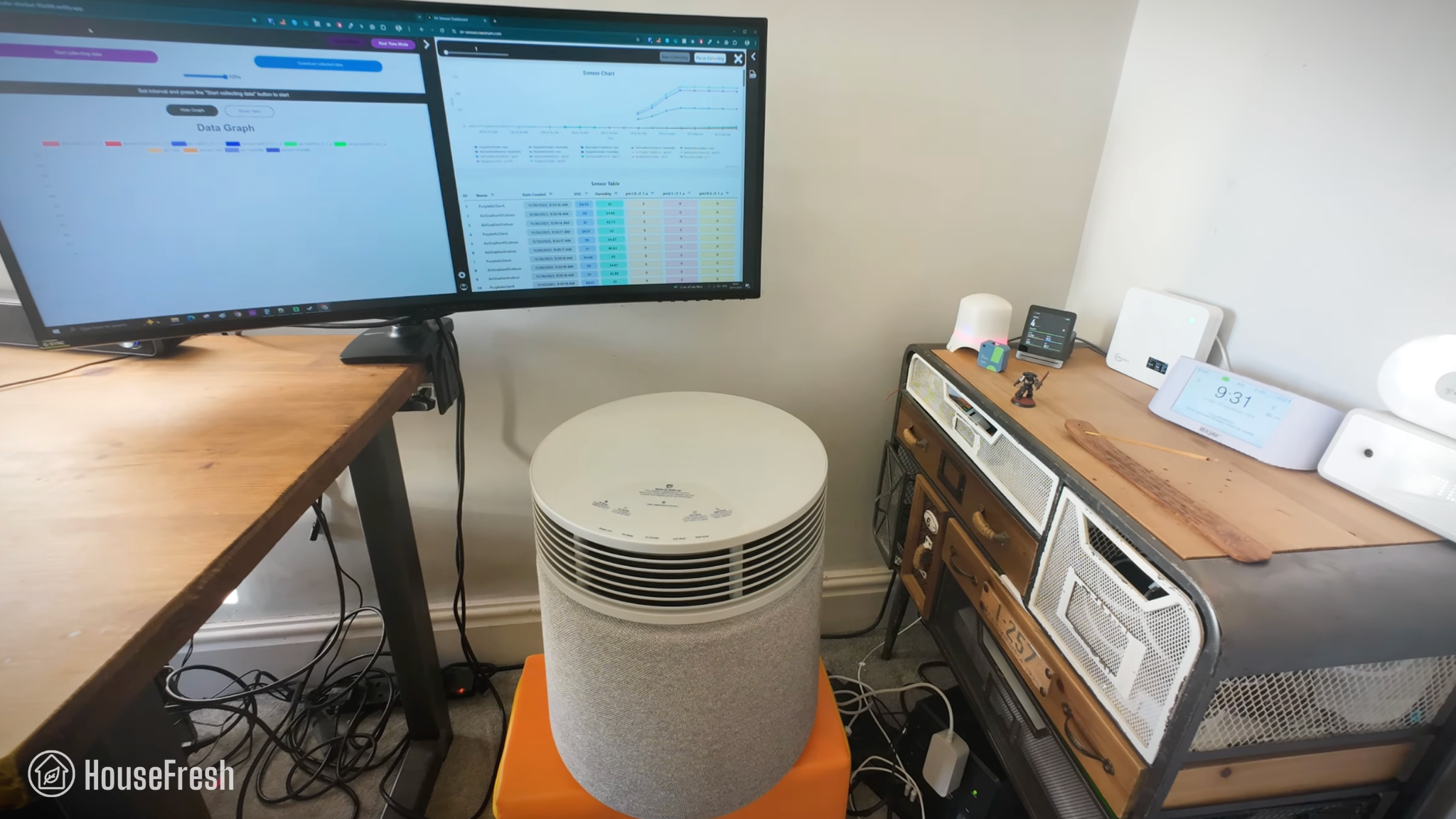
When running at top speed, our PurpleAir Zen sensor shows that the Signature needed 15 minutes to reach PM1 zero. Based on the natural ventilation of our test room, we estimate a PM1 CADR of 400 cfm.
This makes the Blue Signature powerful enough to provide five air changes per hour in large rooms up to 600 sq. ft.
As you can see from the chart, the Signature shows a significant performance jump over the older, bulkier Blue Pure 211+.
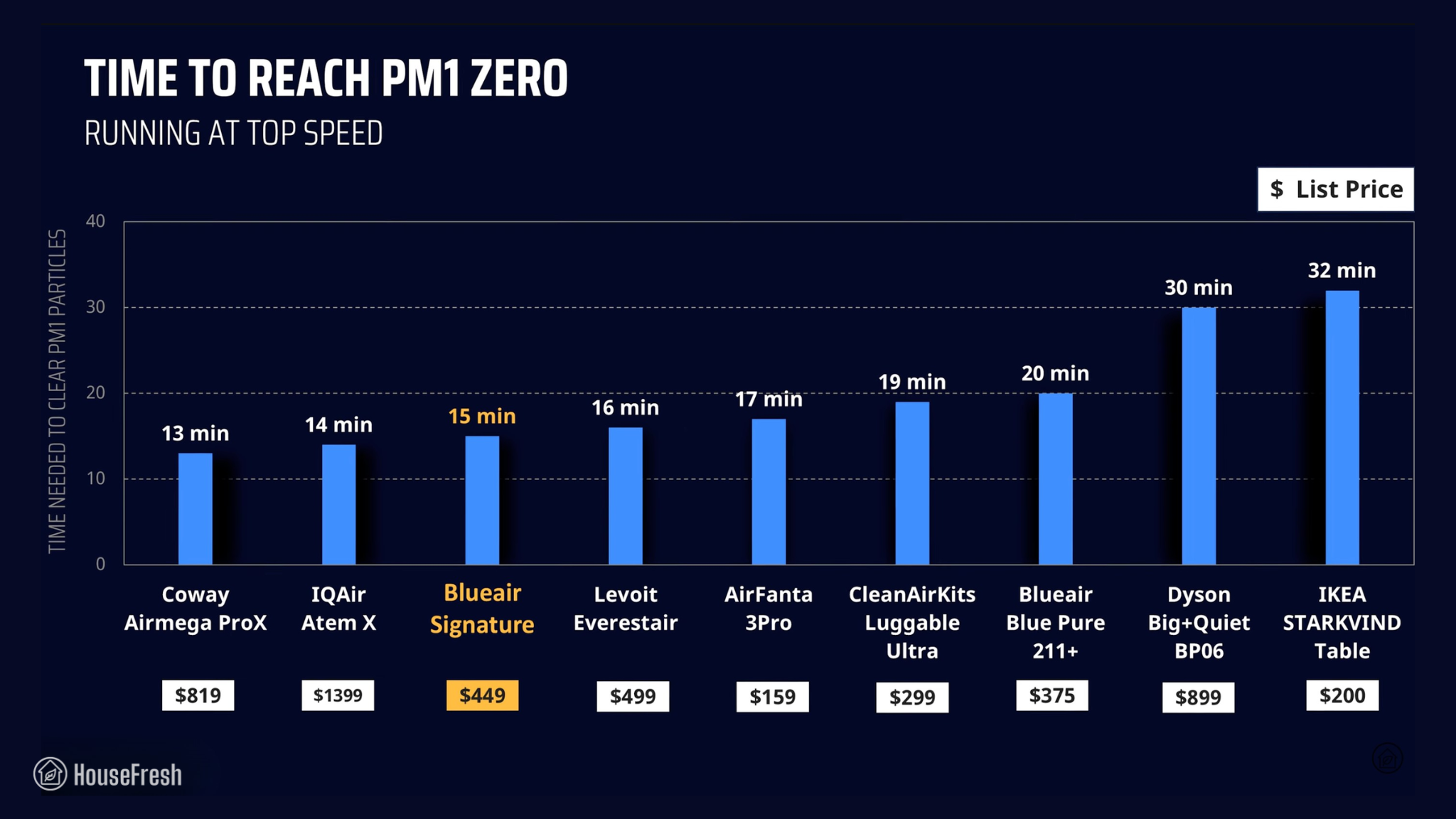
The only devices that were quicker to complete our test were the much larger Coway Airmega ProX (13 minutes) and the much, much pricier IQAir Atem X (14 minutes).
We repeated our particle removal test three times across all available fan speeds, which allowed me to estimate PM1 CADR at each fan speed:
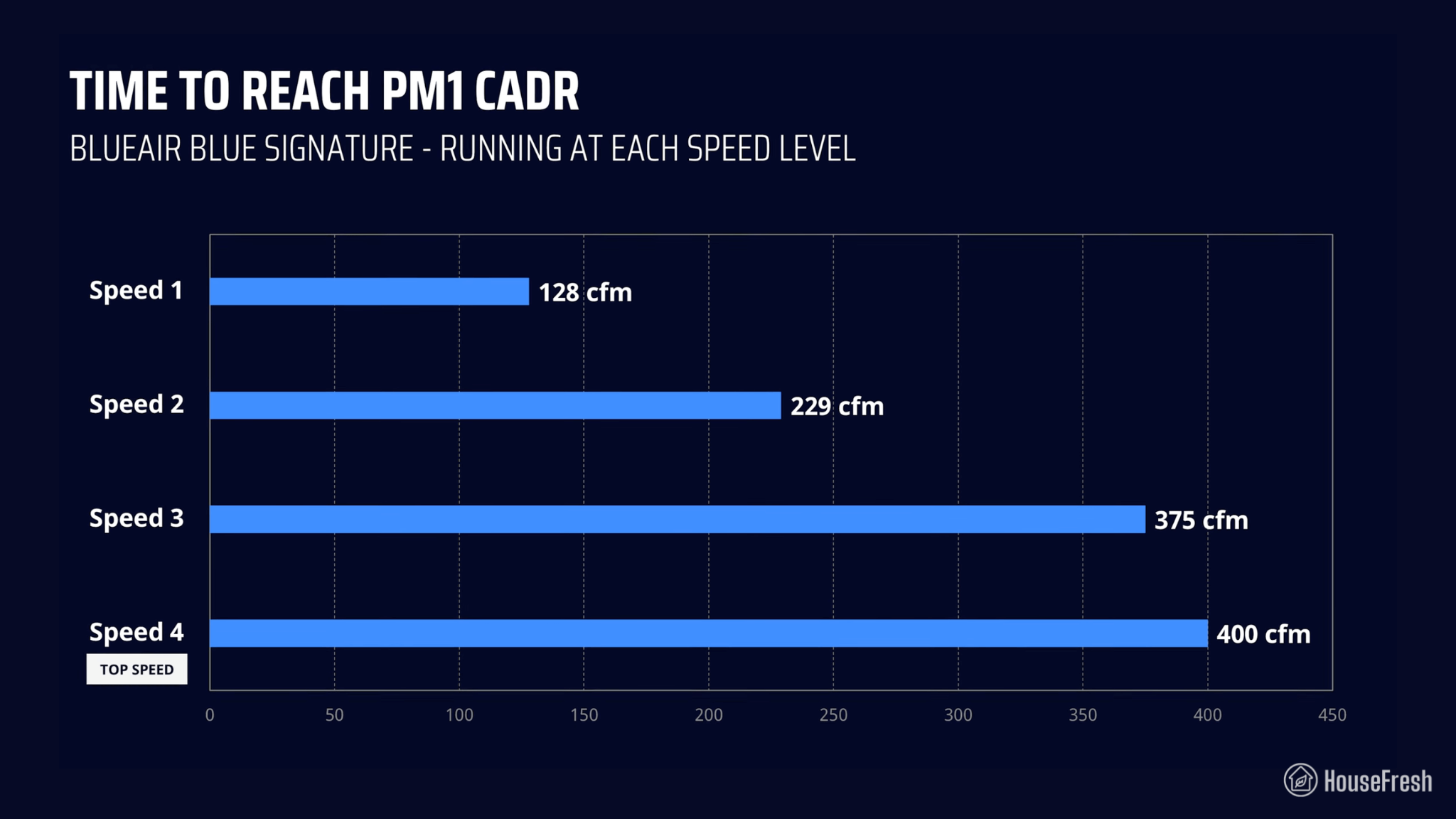
BUT air purifiers running at full speed tend to be too loud for everyday use, so we must account for noise levels…
Sound levels
The sound levels of the Blue Signature range from 34.8 dBA to 59.6 dBA — which is a little louder than most air purifiers we have benchmarked it against.
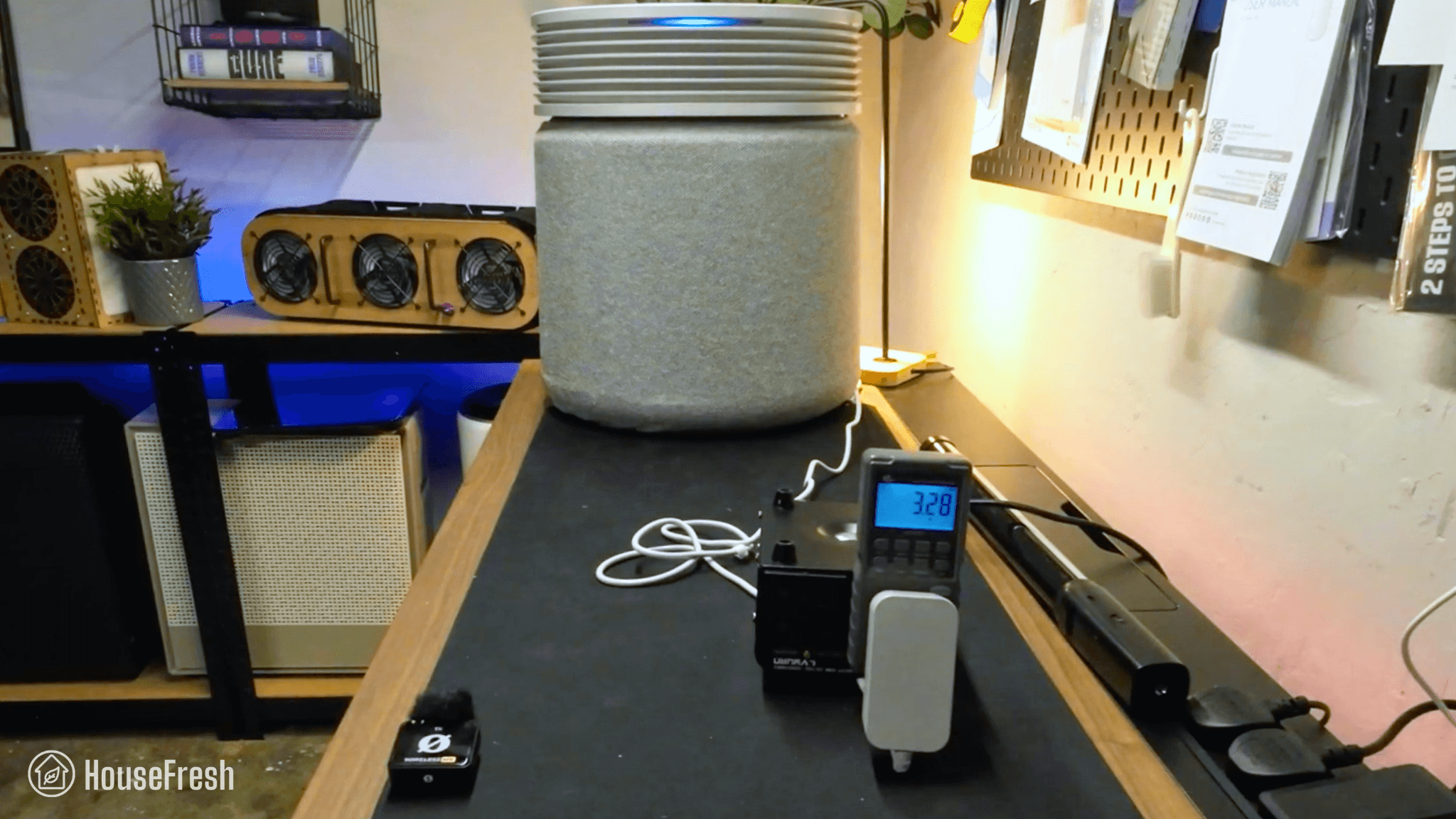
I used our BAFX sound meter to measure how much sound the Blue Signature generates at each of its 4 fan speeds and in sleep mode at 3 ft away:
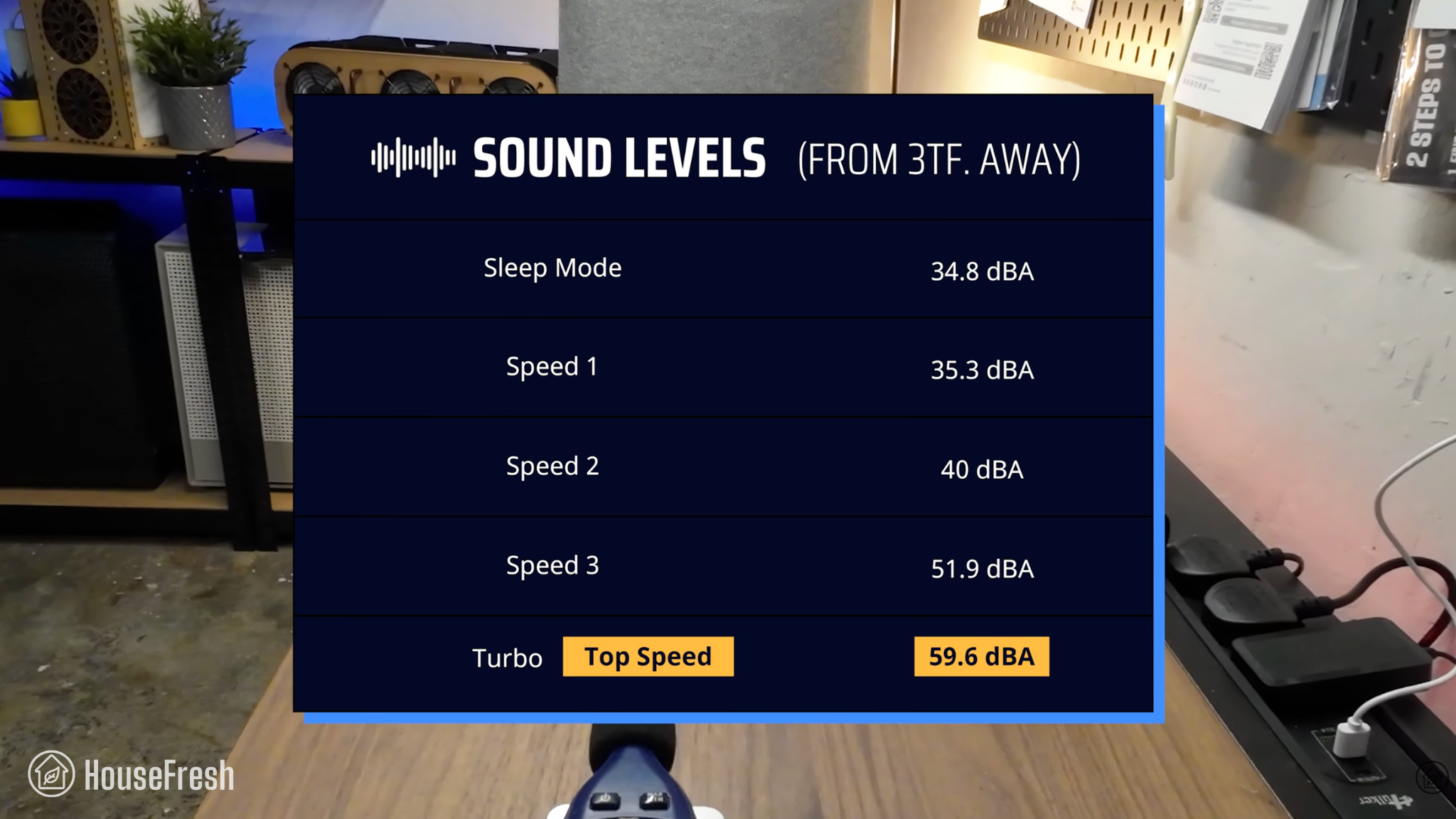
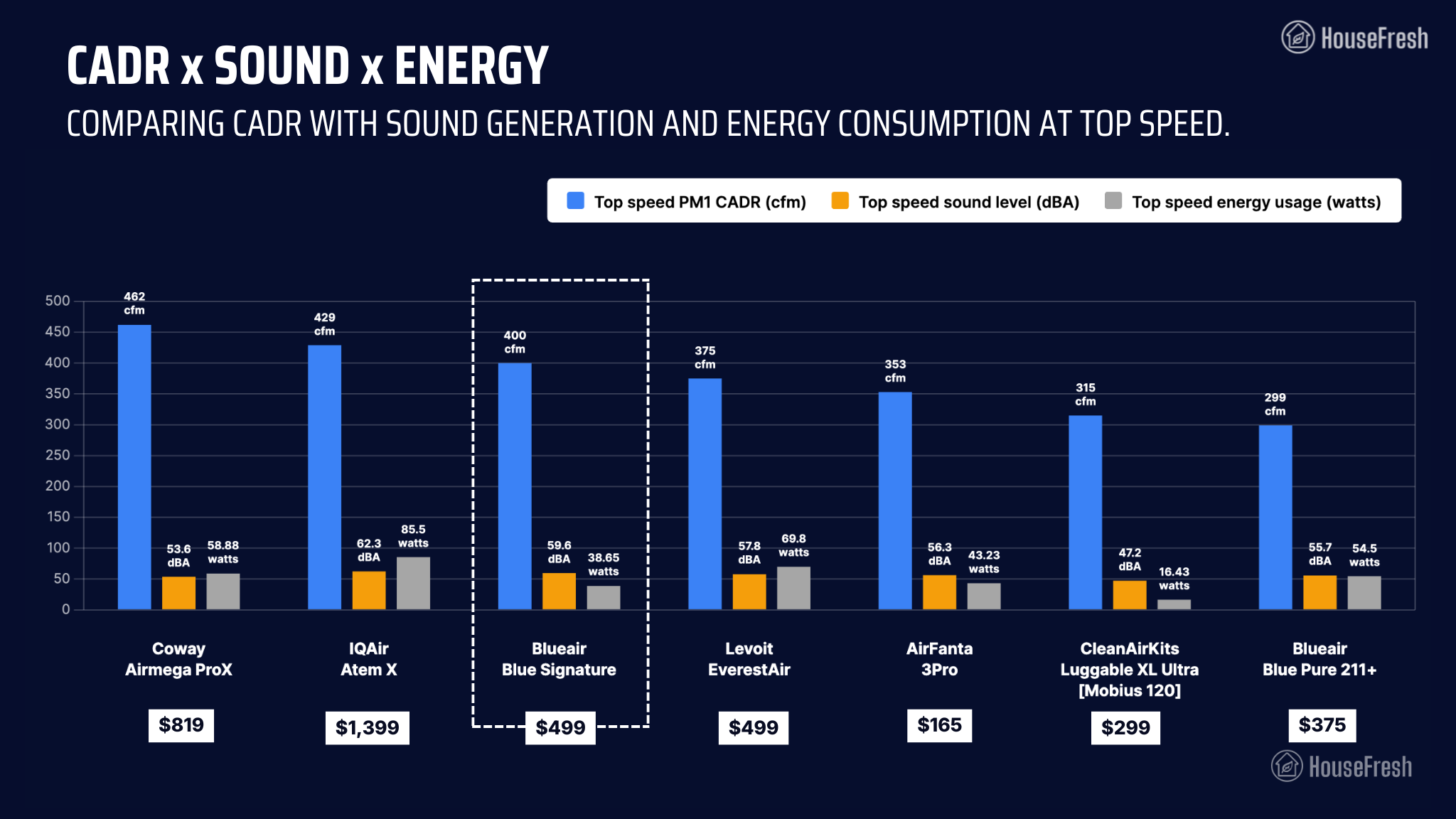
Hitting 59.6 dBA at top speed, the Blue Signature is one of the loudest air purifiers on the table, second only to the Atem X, with its 62.3 dBA when running full power.
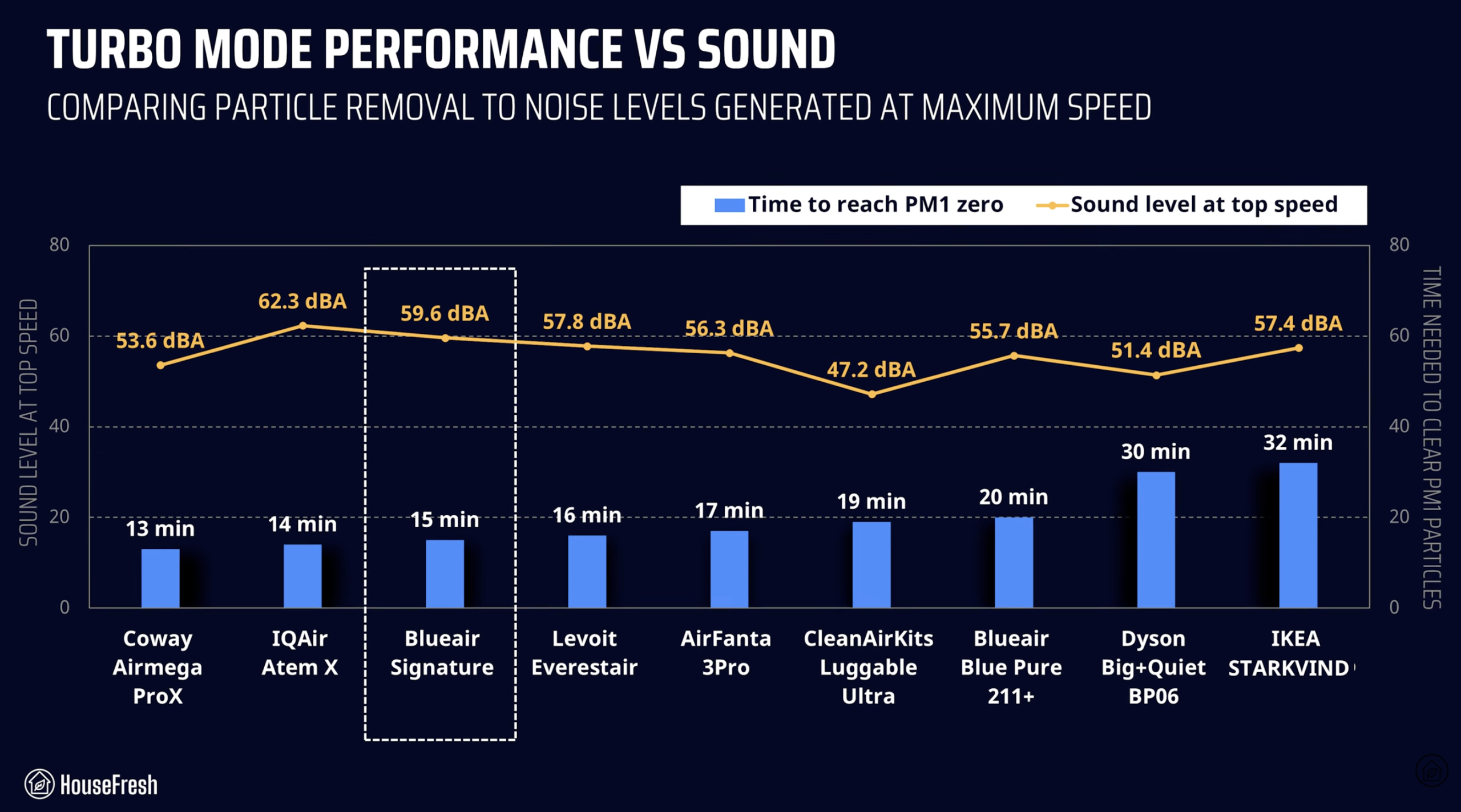
When running at speed 2, it generates just 40 dBA and was able to complete our particle removal test in 26 minutes – faster than the pricier EverestAir and BP06.
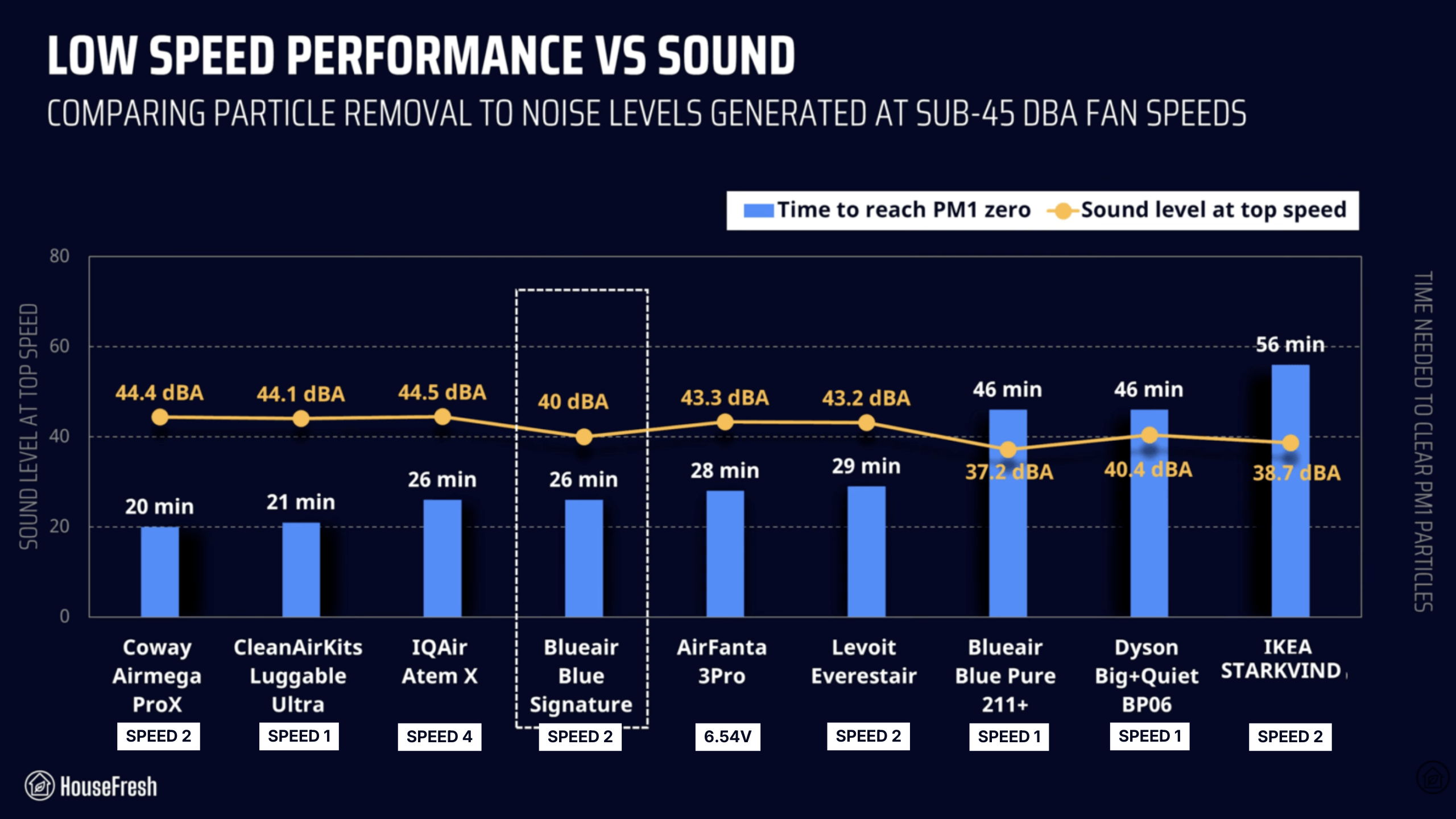
If you kept your Blue Signature running at speed 2, it would be whisper-quiet and still clean the air five times per hour in rooms up to 343 sq. ft.
Long-term running costs
Running a Blueair Blue Signature will cost you $179.81 per year, combining energy and filter replacement costs.
We used our energy meter to record how much electricity the Signature pulls at each fan speed and also while on standby.
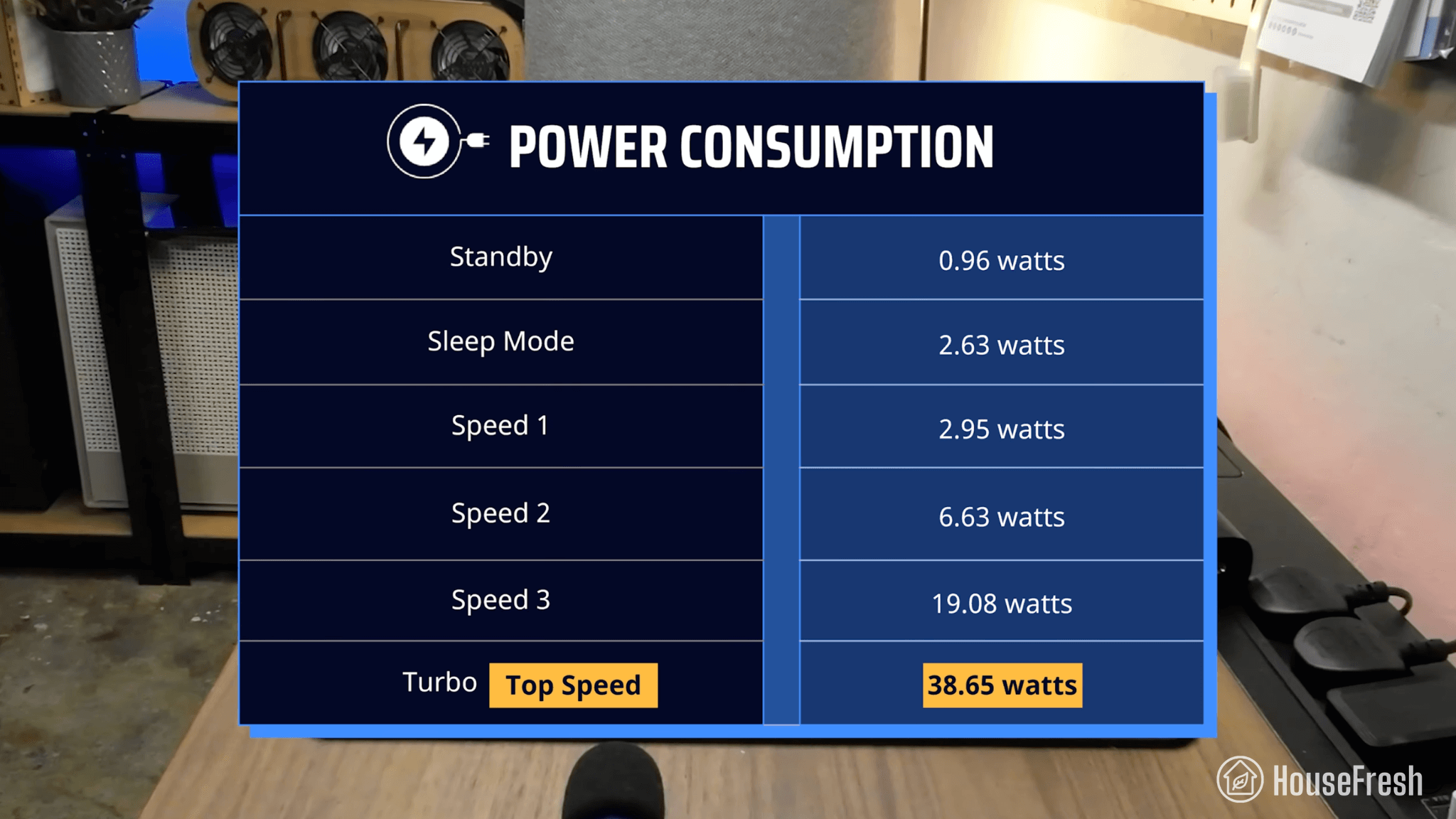
At top speed, the Signature draws 38.65 watts, so if you left it running at top speed 24/7 for one year, it would add $46.49 to your energy bill, based on the average U.S. electricity price as of March 2026.
This is a huge improvement over the older 211+, and it’s only beaten by the Mobius fans in the Luggable Ultra and the highly energy-efficient BP06 and Starkvind, which are less powerful than the Signature.
So I went one step further and created a chart to compare its CADR, noise levels AND energy usage at quiet fan speeds to see how the Blue Signature compares to other popular high-CADR air purifiers:
But let’s calculate how much you’ll need to spend to run your Blueair Blue Signature for a year.
According to Blueair, you need to change the filter in your Blue Signature every 9-12 months. And as always, I will use the lowest estimate of nine (9) months.
The replacement filter is available for $99.99. That means that you can expect to spend $133.32 each year on filter replacements alone.
We can add this to energy costs to work out the total yearly cost and compare it with the other devices I’m benchmarking the Signature against:
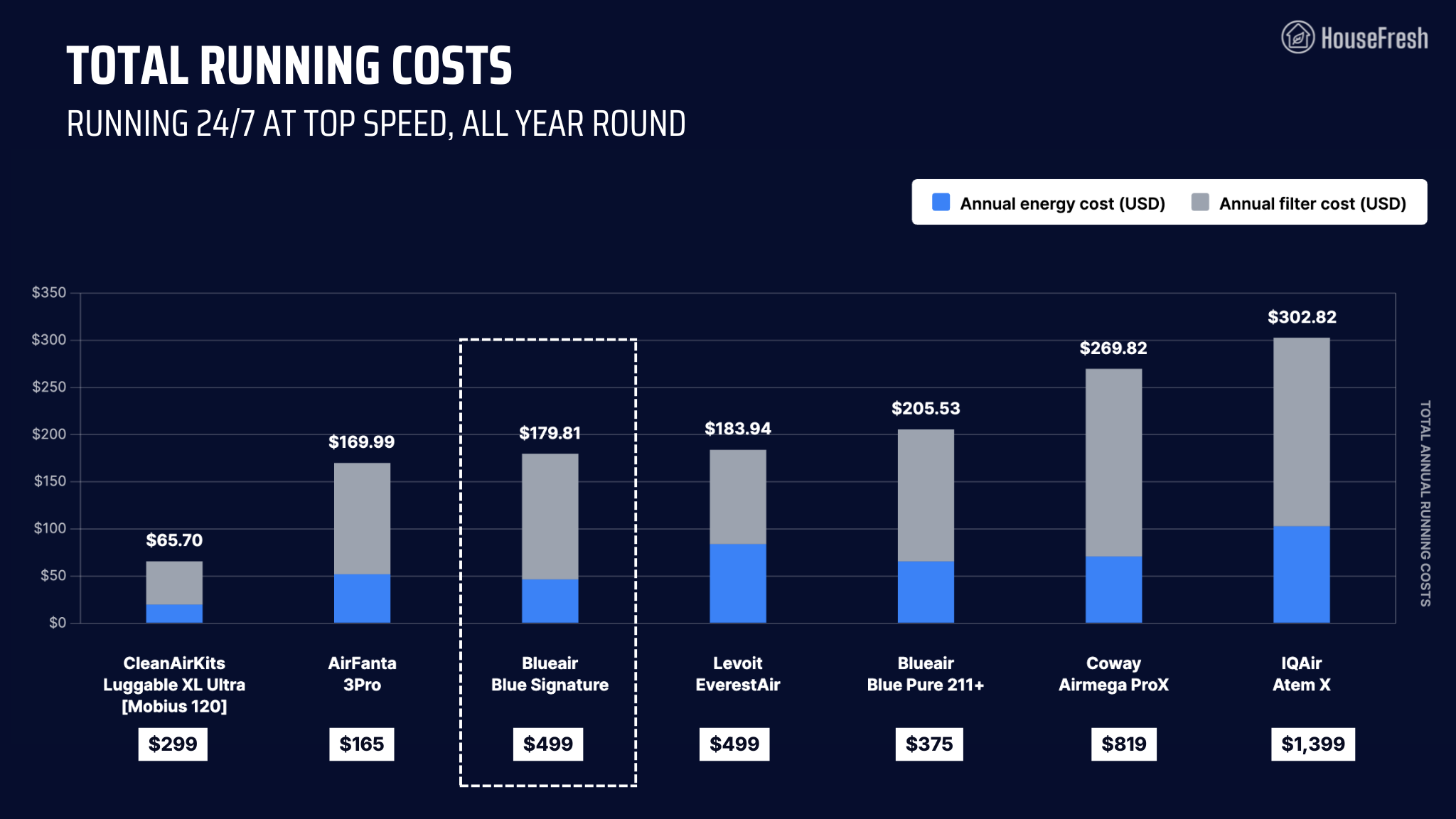
Thanks to the low energy costs, the Blue Signature is cheaper to run than the older Blue Pure 211+ and most other high CADR models we benchmarked it against, with the exception of the PC fan-powered AirFanta 3Pro and CleanAirKits Luggable XL Ultra.
Bottom line: Should you get a Blueair Blue Signature?
Our data showed that the Blue Signature offers high performance, even at quiet operation, in a well-designed package for less than $450.
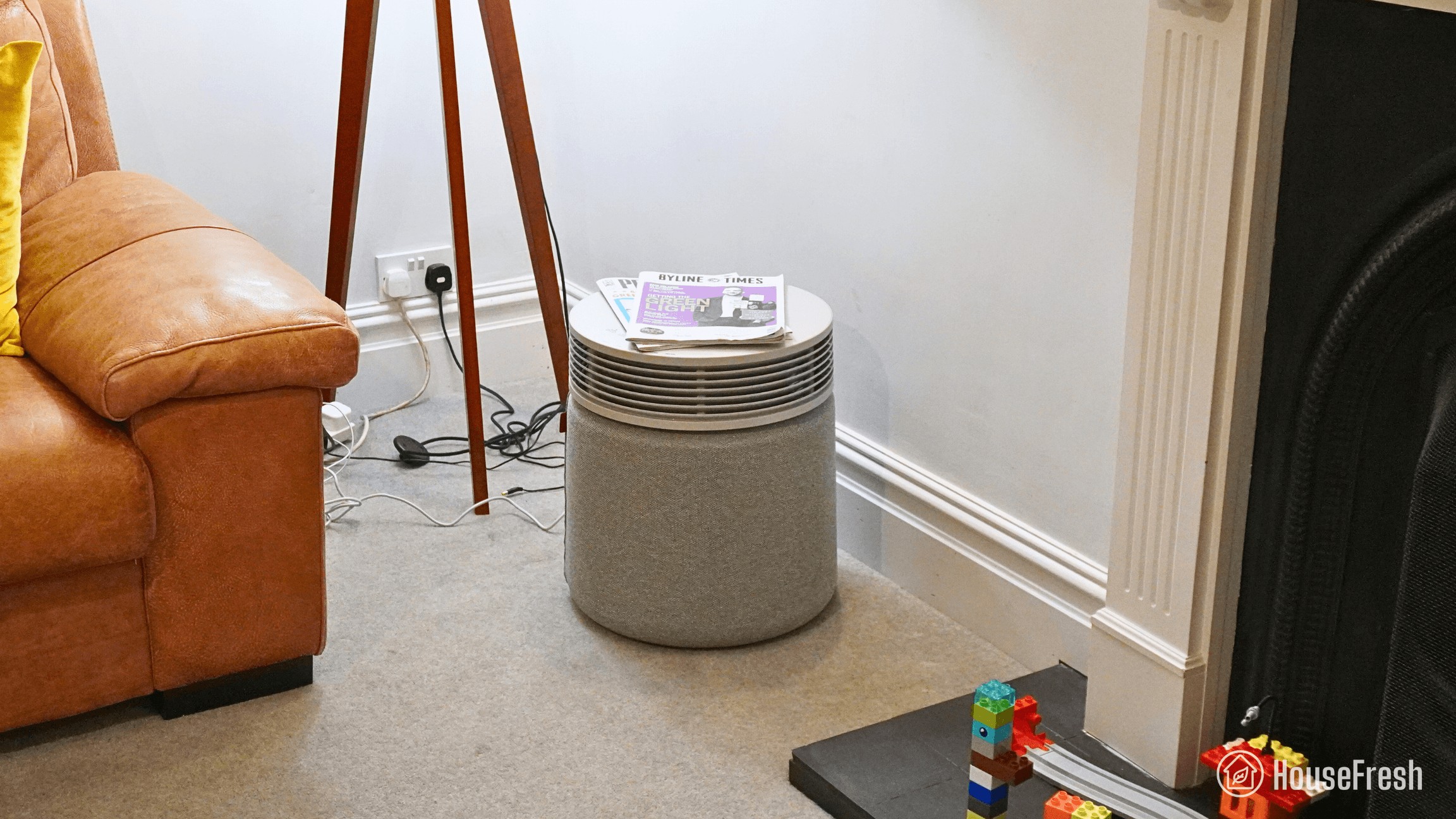
The Blue Signature looks like a piece of furniture and also doubles as a table. You can even add legs to lift it off the ground, with options to match your home’s decor.
It isn’t cheap at just under $450, but it ticks a lot of boxes for this price.
Performance is top tier at both top speed and quiet fan speeds. To match the Signature’s performance with a traditional air purifier, you would need to spend nearly double for a much more utilitarian-looking Smart Air Blast Mini, or go with a much larger machine like the Coway Airmega Pro X.
And if you want the same power in a smaller, good-looking package, then you would need to spend $1,400 on the IQAir Atem X — that’s a spicy price tag if I’ve seen one!
The running costs of the Blue Signature are fair, and while the initial price is higher than that of other mid-size models on the market, you do get a high-quality laser sensor, a table surface, and app connectivity.
So… This thing has the looks, the power and all the features you could ask for… so what’s the downside?
Even though the ozone levels from HEPASilent are very low, I still wish Blueair would include an option to disable HEPASilent, either a button (as Alen, Winix, and Coway do) or a setting in the app (as we’ve seen from Xiaomi).
I have received messages from people who have adverse reactions to any form of ionization, so I think all manufacturers using ionizers should allow consumers to choose whether they want this or not — even if it does lead to reductions in CADR.
So this is the main downside you should be aware of before buying that none of the other big media publisers or YouTube creators reviewing the Blue Signature will tell you about.
If you do decide to buy one, please use this link to support the work we do here at HouseFresh. In doing so, we will receive a small affiliate commission at no extra cost to you that we will use to continue buying and testing air quality products.
Did I miss any details? Do you have any questions I left unanswered? Just drop a comment below, and I’ll get back to you as soon as I see it.