The Philips 800 was a fan favorite in the UK in 2025, but it had one fatal flaw: it offered poor air cleaning performance at its only quiet fan speed.
Now Philips has released a new small air purifier: the Philips PureProtect Mini 900 Series. But can this new model deliver more powerful air cleaning performance without adding too much noise?
I bought one with my own money in order to find out. I tested its air cleaning performance, sound generation, energy efficiency, yearly running costs, and day-to-day user experience.
The overall score for the Philips 900 Series incorporates first-hand data results from our battery of tests, as well as our ratings for customer service, brand transparency, and design & UX. Check out the full scorecard below to see the category breakdown.
Search for ‘Philips 900’ to see where it ranks, based on its air cleaning performance and value for money. You can also filter results to easily compare models in the same price range.
The pros and cons of the Philips PureProtect Mini 900 Series
A summary of our top-level findings after testing this air purifier, following our methodology.
“The Philips 900 Series stands out against other small cylindrical air purifiers for two main reasons: it offers good air cleaning performance even at quiet fan speeds + it has low running costs.
It also looks pretty good and comes with all the features you want from a modern air purifier like an on-board sensor, an air quality indicator light, a straightforward touchscreen, auto mode, and a decent app with scheduling functions.”

HouseFresh Founder
& Lead Tester
CONS
PROS
| Clean air delivery rate (CADR): | – Top speed PM1 CADR: 147 cfm – Sub-45 dBA PM1 CADR: 91 cfm |
| Filter technology: | HEPA NanoProtect with pelleted activated carbon |
| Recommended room size: | 222 sq. ft. (5 air changes per hour) |
| Dimensions: | 14.3 x 9.4 x 9.3 in (36.4 x 24 x 23.8 cm) |
| Weight: | 7.7 lbs (3.5 kg) |
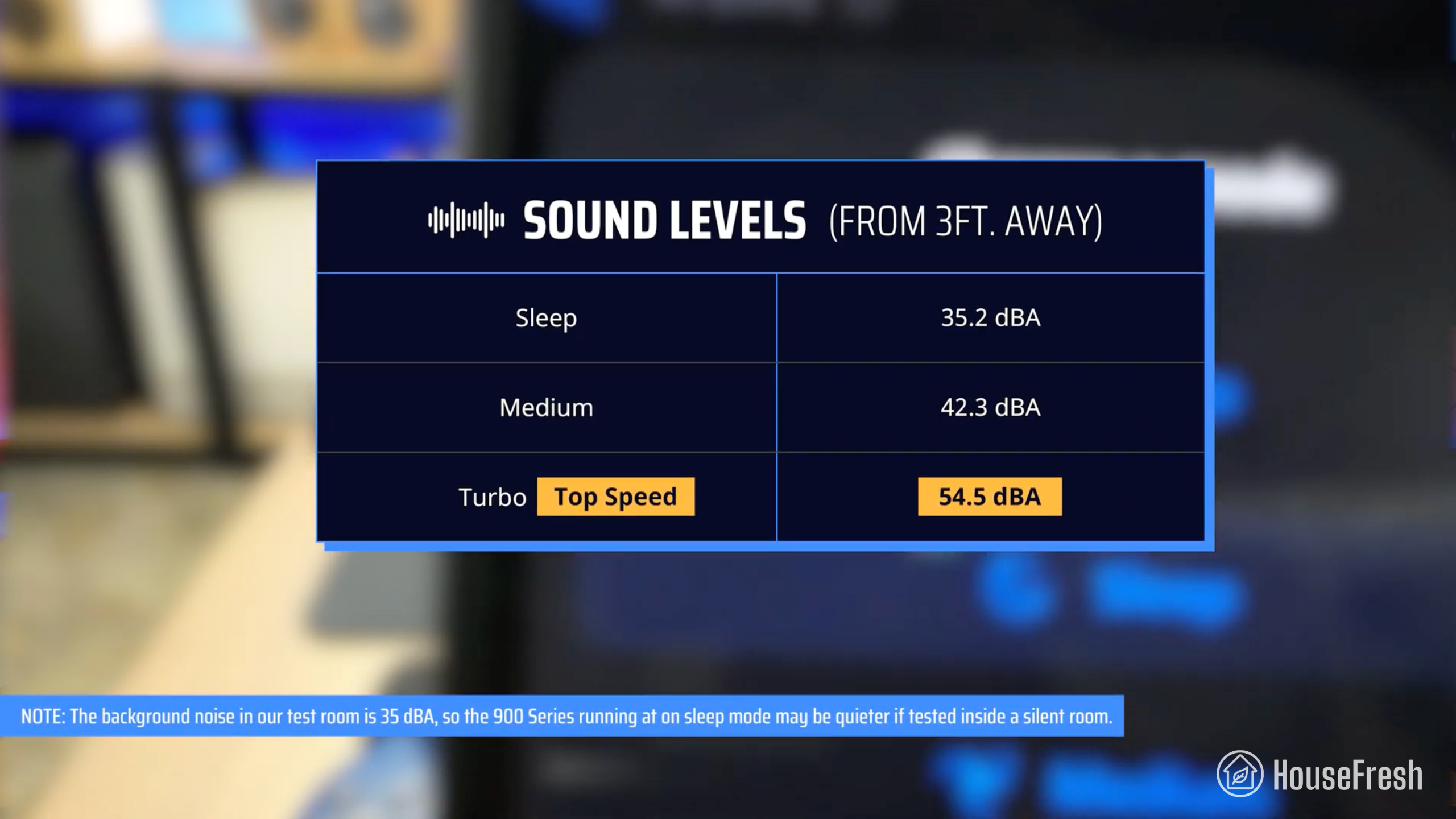
| Noise level in decibels from 3 ft. away: | Sleep mode: 34.7 dBA Speed 1 (Medium): 42.3 dBA Speed 2 (Turbo): 54.5 dBA |
| Electricity consumption in watts: | Standby: 1.2 watts Sleep mode: 6.5 watts Speed 1 (Medium): 6.9 watts Speed 2 (Turbo): 19.8 watts |
| Filter lifespan: | 12 months |
| Manufacturer’s warranty: | 2 years |
| Country of origin: | Netherlands |
| Country of manufacture: | China |
Filtration technology
A small cylindrical filter with particle filtration and activated carbon.
The filter inside the 900 Series has three layers of filtration: a pre-filter mesh on the outside, a particle filter in the middle and a carbon filter on the inside.
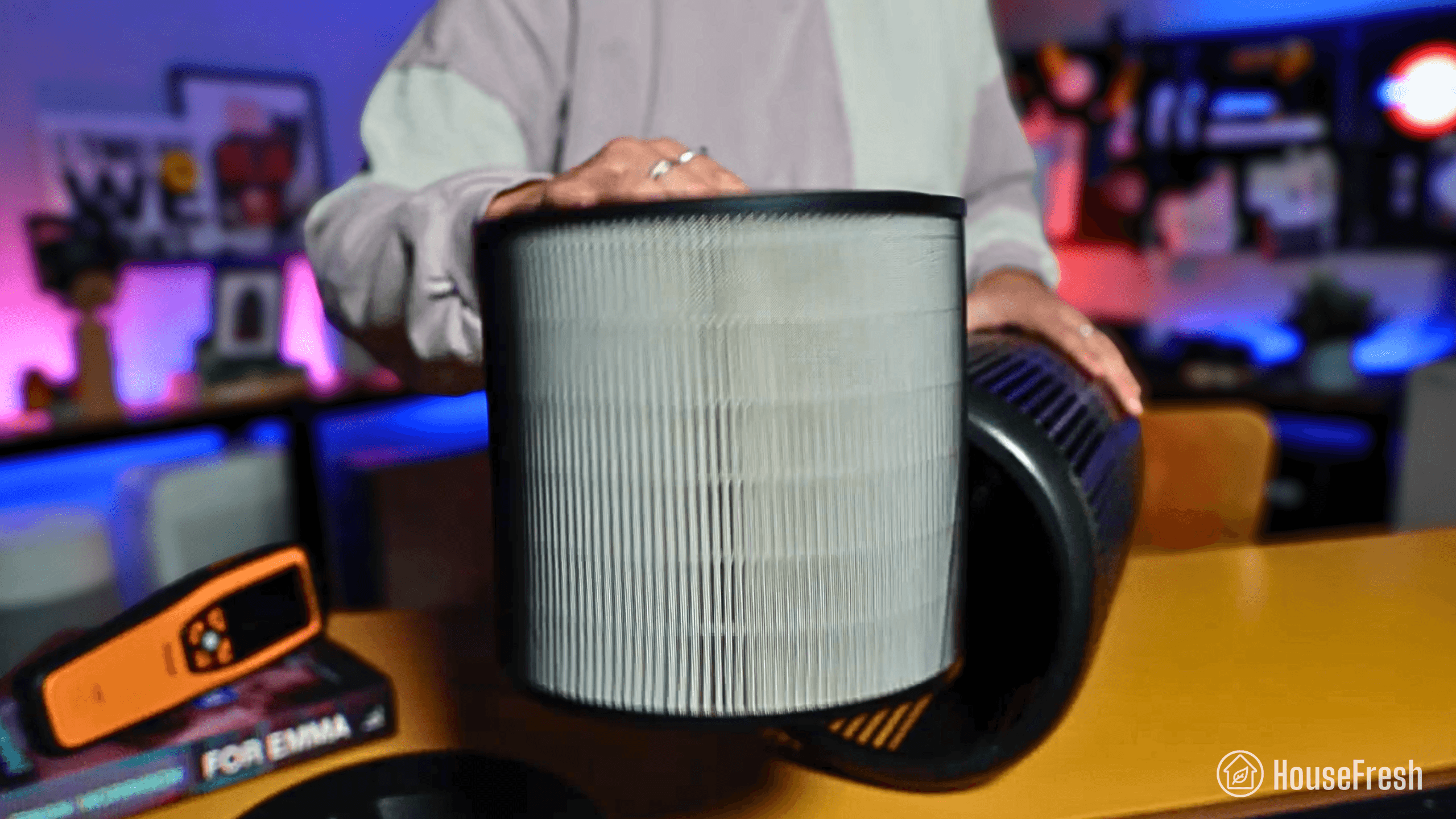
Philips revamped the older filter in the 800 Series by adding a layer of pelleted activated carbon that makes the 900 Series better at removing odors.
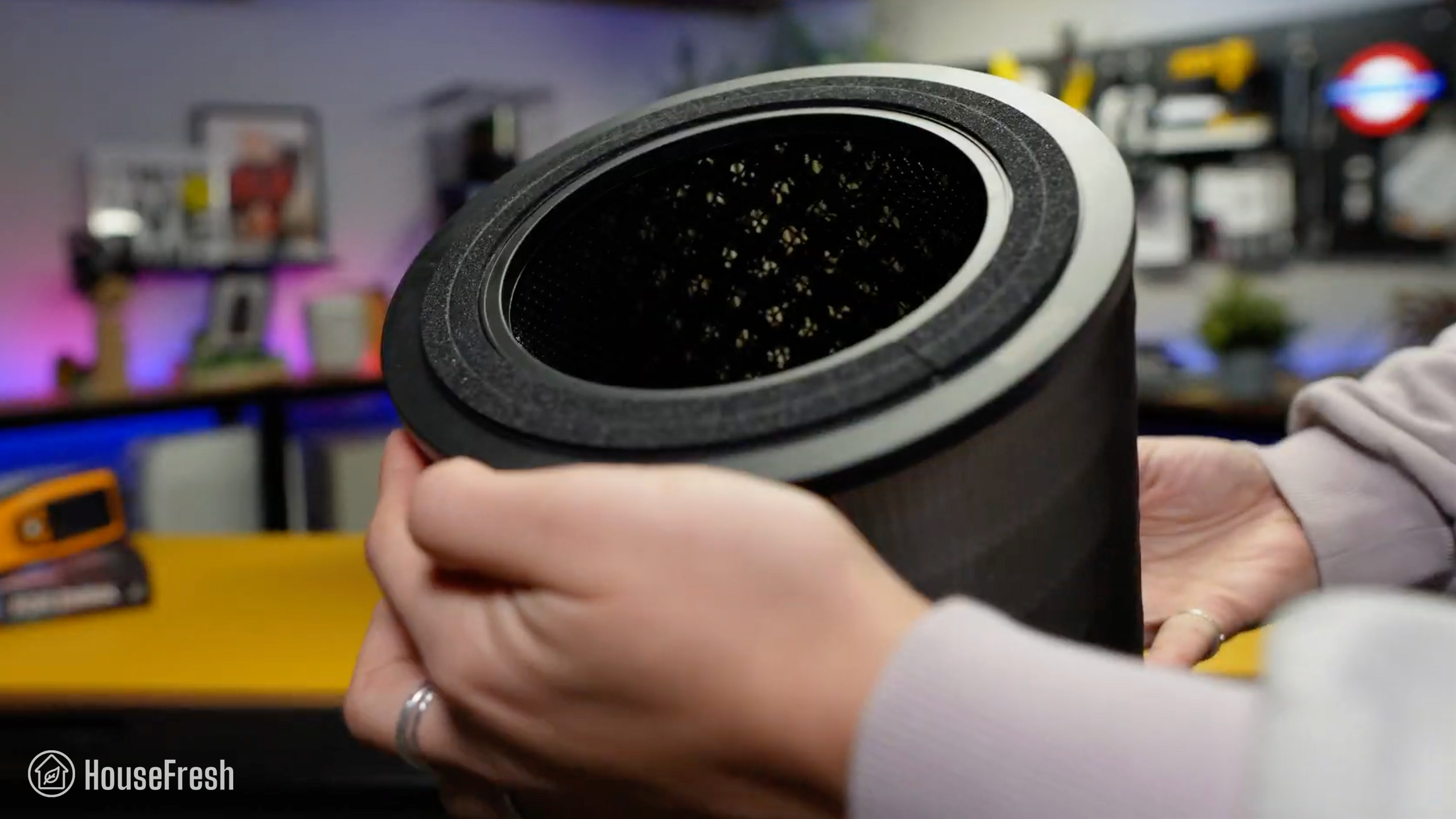
As with other Philips models I have reviewed, Philips uses the term HEPA NanoProtect+ to refer to the main filter inside the 900 Series.
While the average consumer might think that this name stands for a higher grade of HEPA filtration, in reality, the filter inside the 900 Series is less dense than the usual HEPA H13 you see advertised.
The good news is that this lower-grade particle filter leads to a higher CADR, which in turn leads to more clean air in a shorter period of time.
Design, controls and app features
A small cylindrical air purifier with similar dimensions to the popular Levoit Core 300S.
It has a modern and sleek oval shape similar to its larger sibling, the Philips 3200.
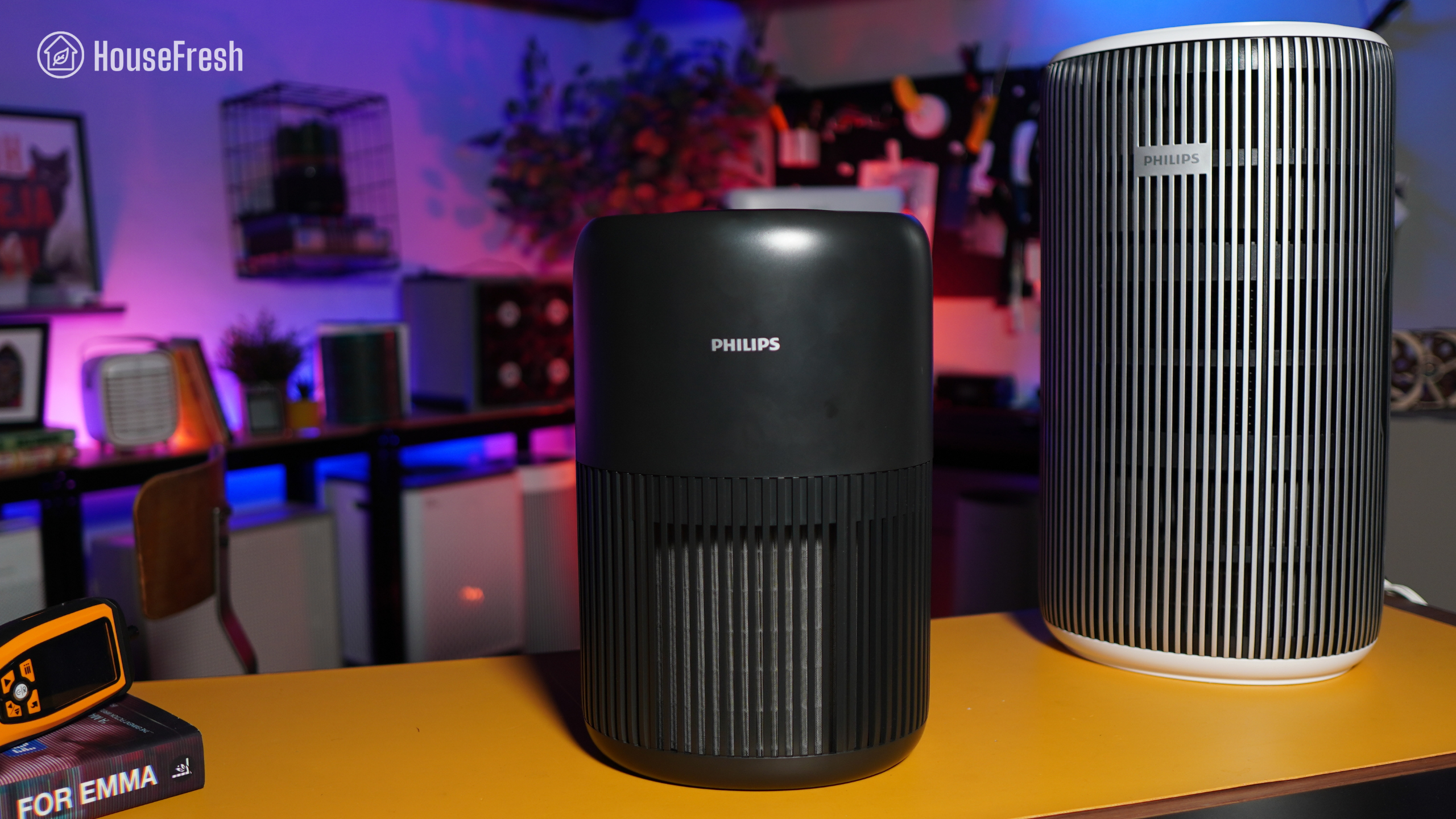
I bought the black version, but it’s also available in white if you prefer.
It has three buttons: light, power and mode (to switch between auto, medium, turbo, sleep).
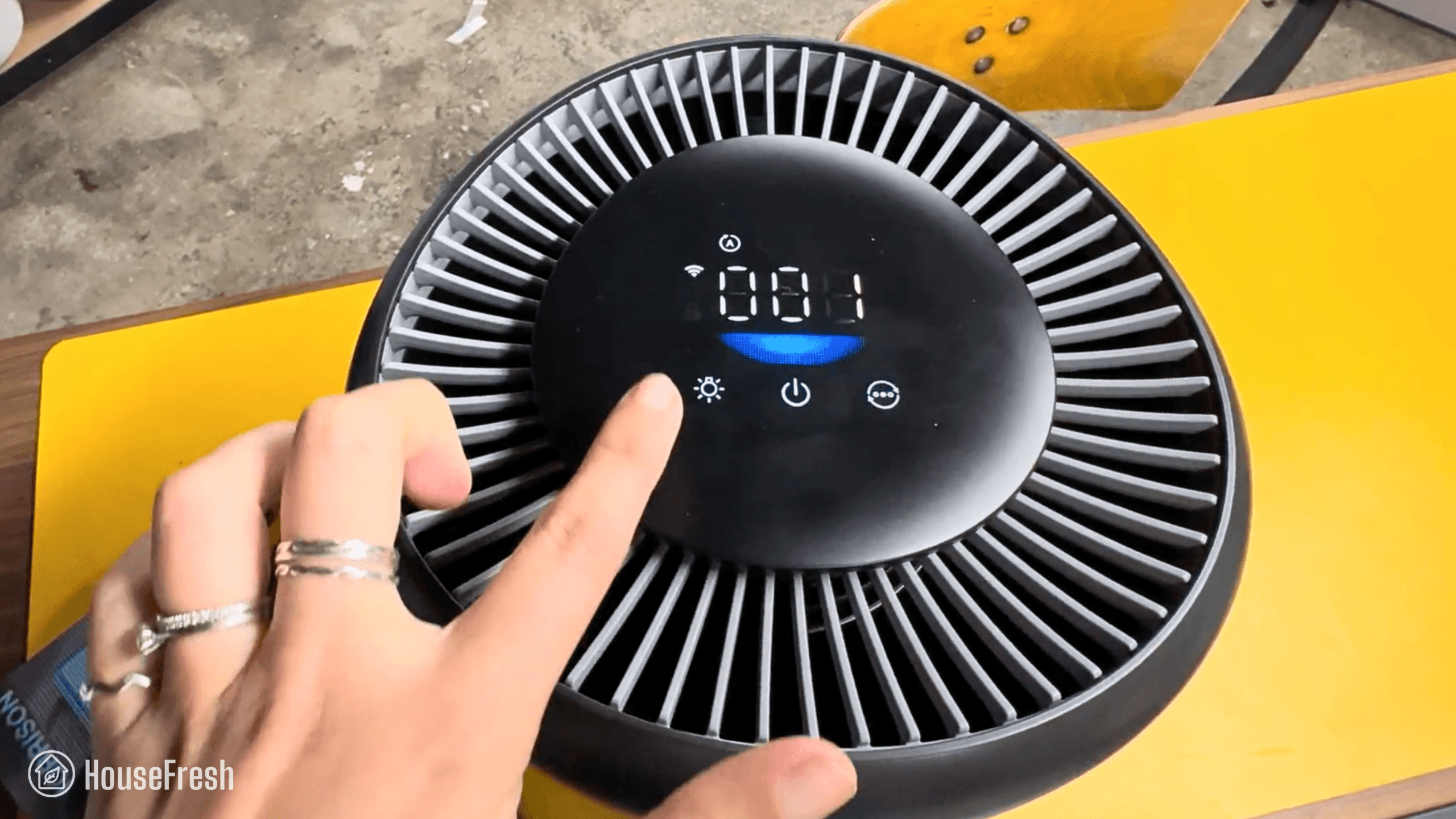
You get real-time sensor readings and an LED air quality indicator light.
It has an infrared dust sensor that measures the level of PM2.5 particle pollution in the air.
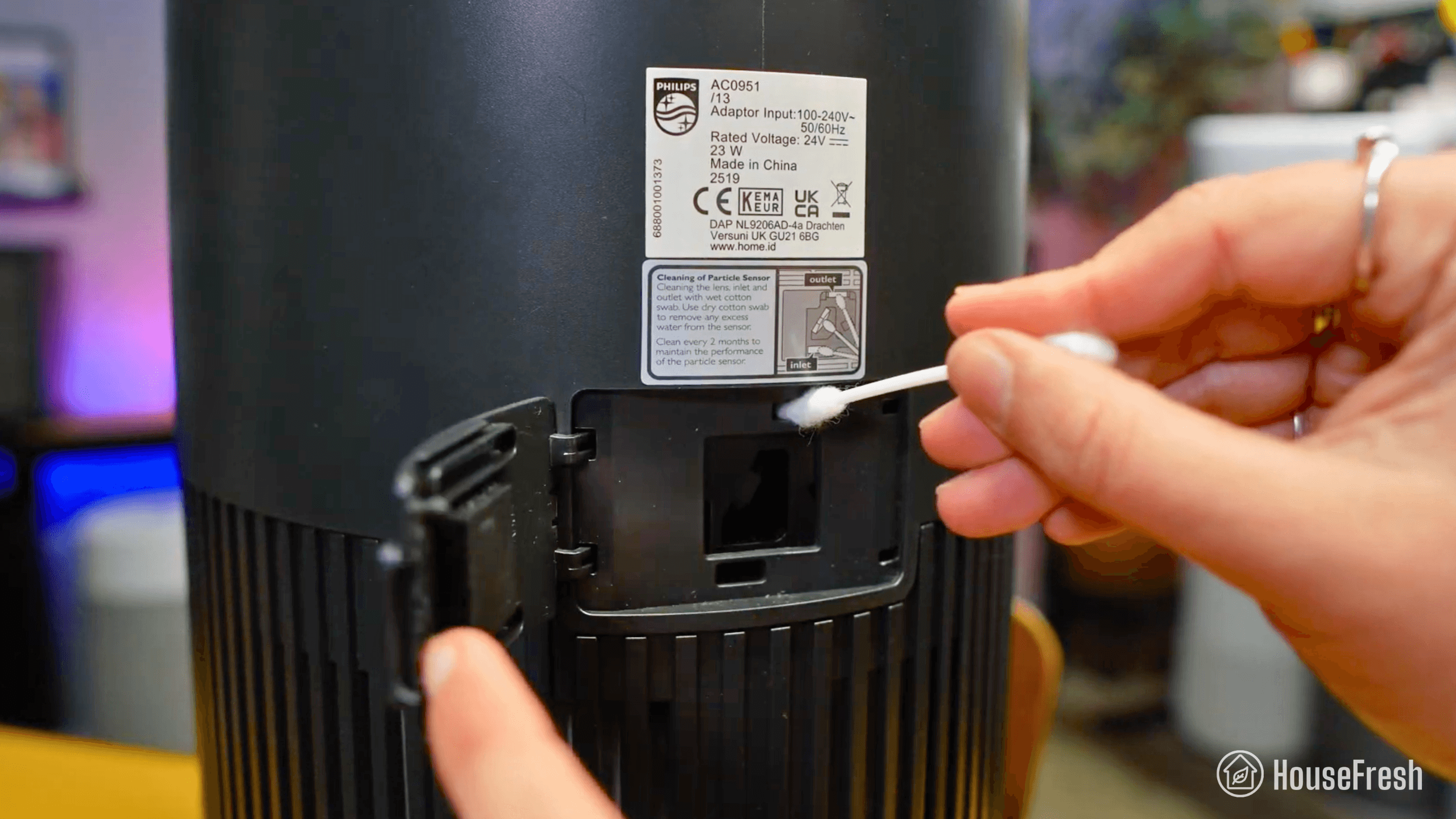
You will need to clean the sensor with a cotton swab every two months.
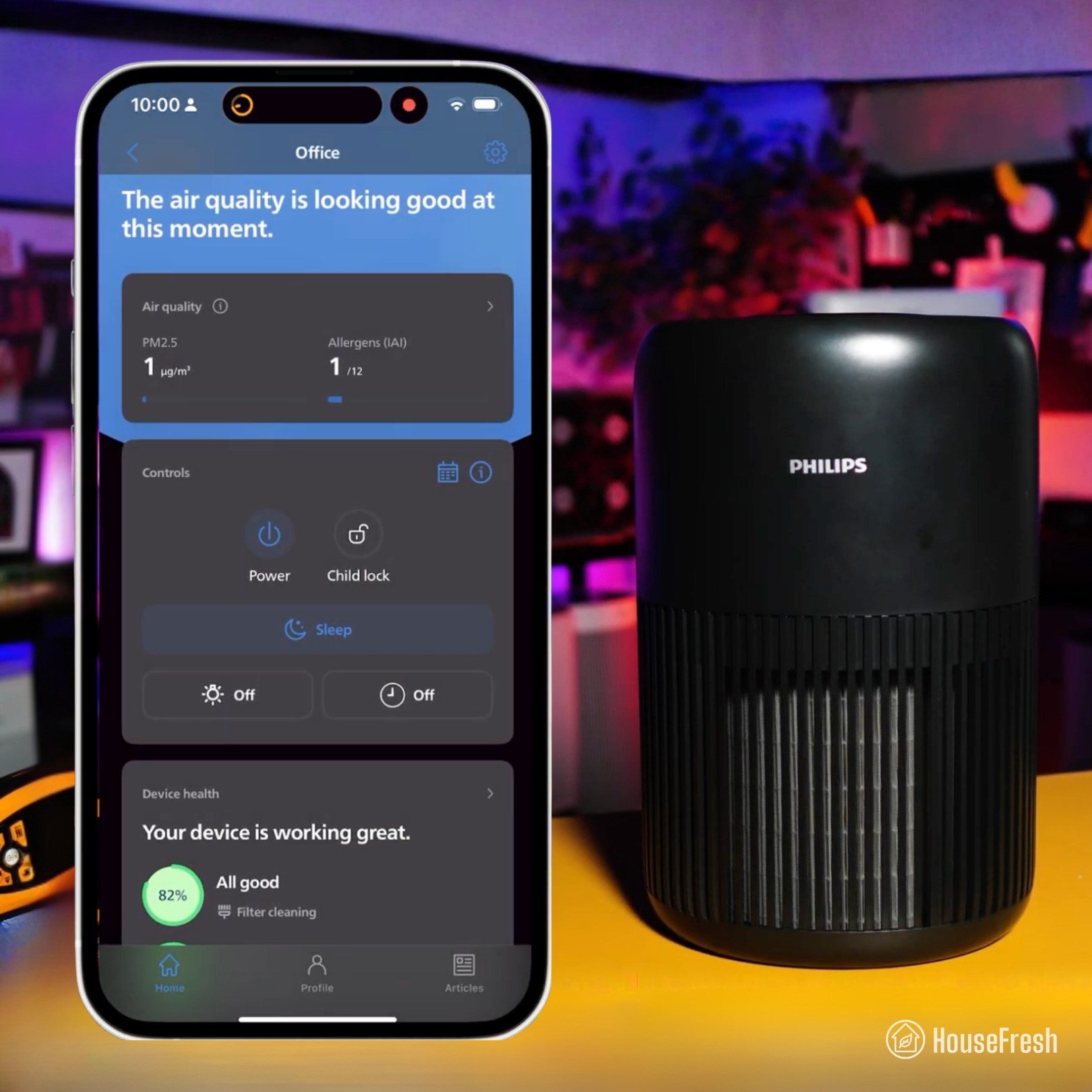
You can connect your 900 Series to the Philips Air+ app, which is one of my favorite apps because it has great UX, clean design and is not bloated with ads.
The only disappointing thing about it is that Philips didn’t roll out all the functions available with other models, like the Allergy Sleep mode that I can set on my larger Philips 3200.
On the app, you only get air quality readings, the ability to control your 900 remotely and the option to set timers and schedule routines. It all works well, though, so I’m just being picky here.
Air cleaning performance
We tested the Philips 900 Series in our 728-cubic-ft test room, measuring how quickly it removed PM1 particles from the air after we filled the space with incense smoke.
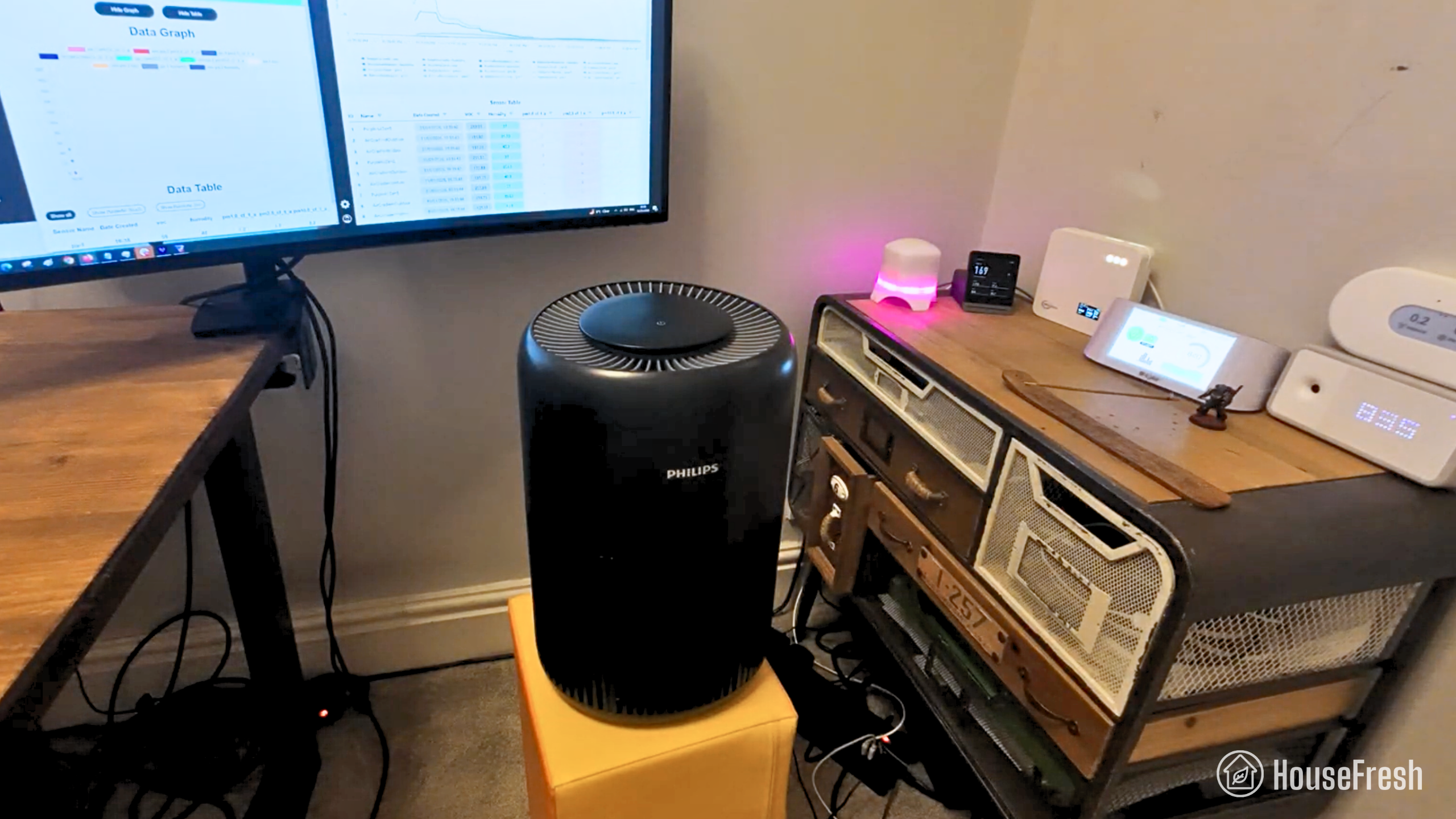
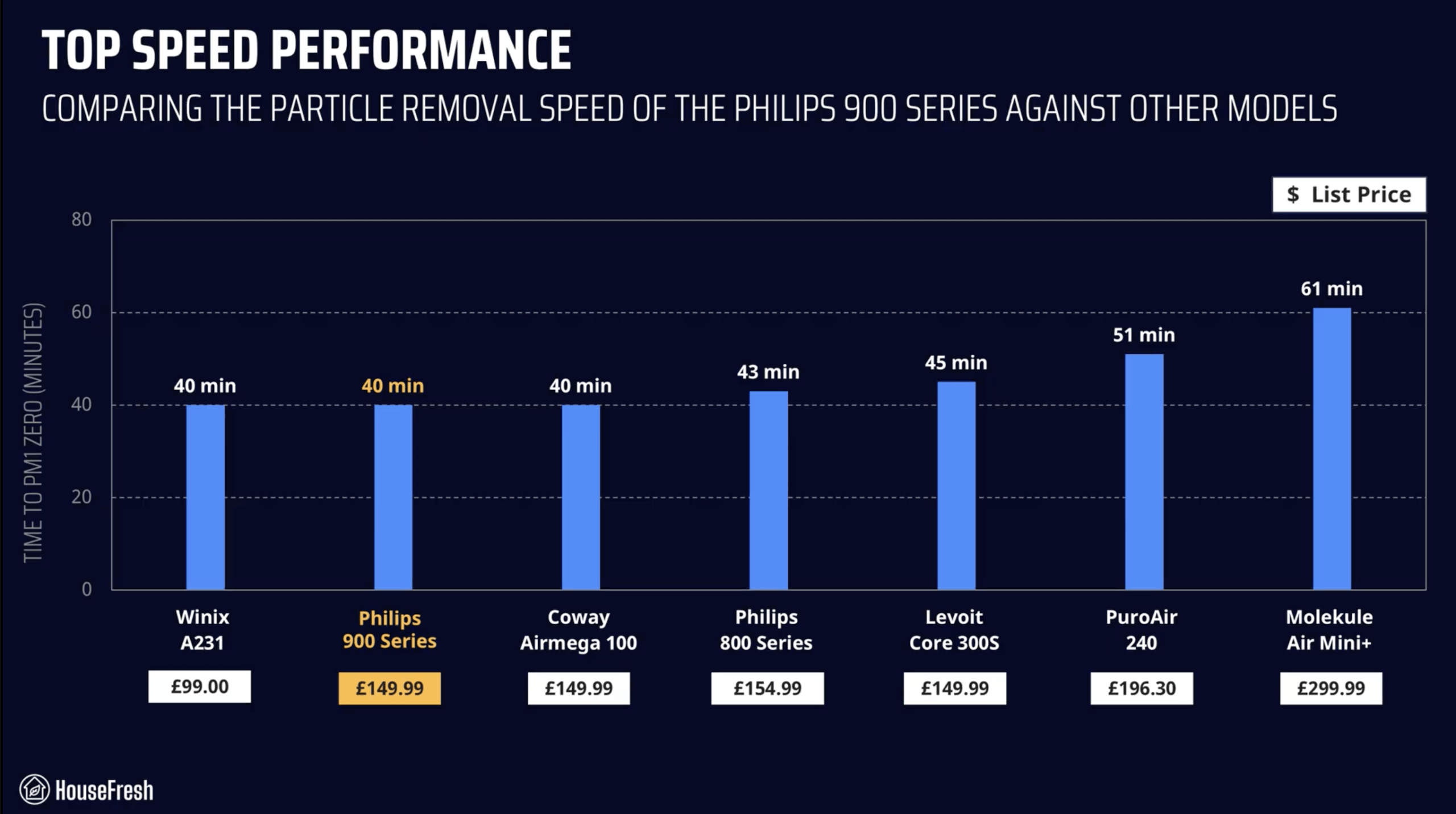
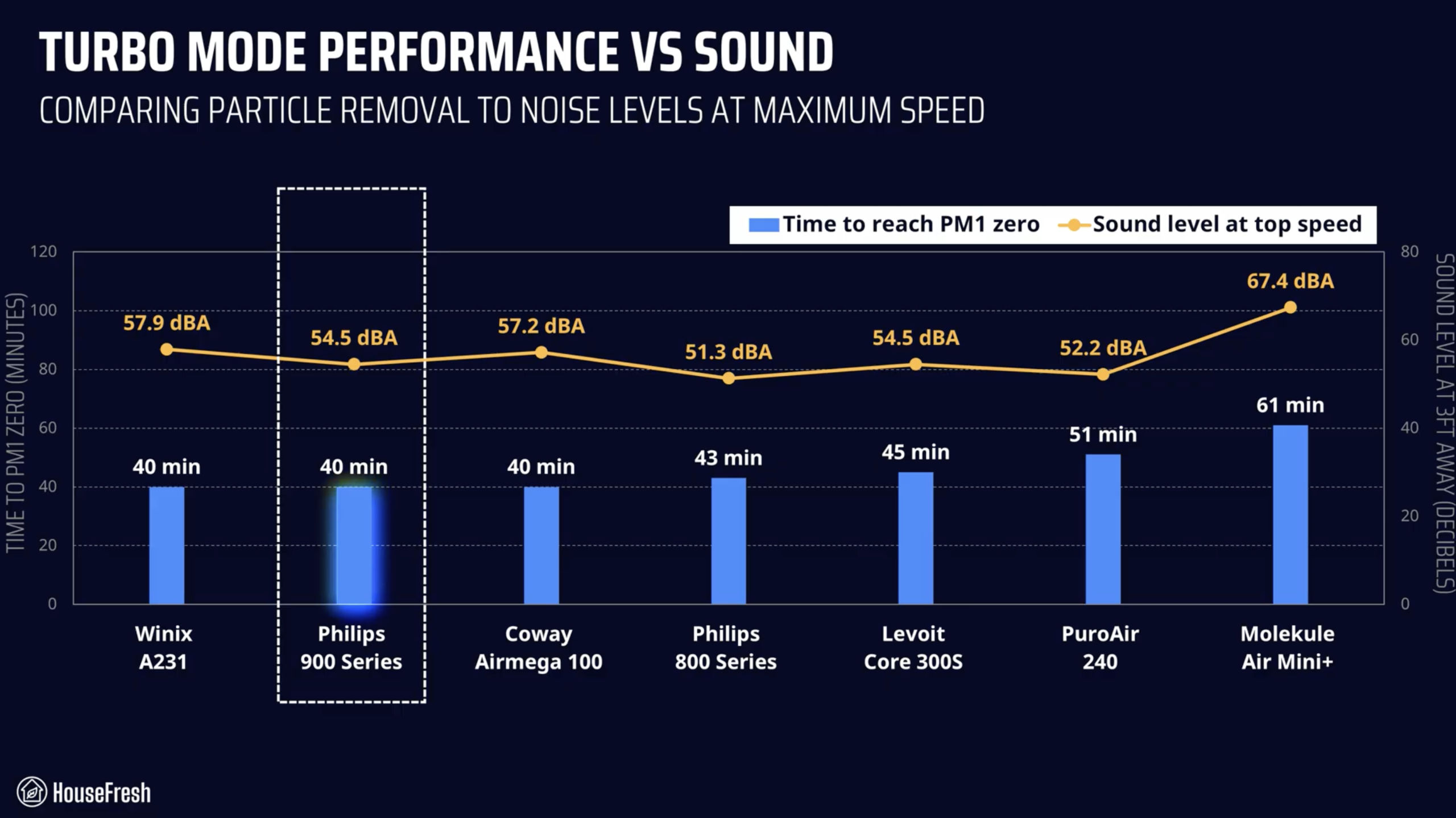
When running at top speed, our PurpleAir Zen sensor shows that the 900 Series needed 40 minutes to reach PM1 zero. Based on the natural ventilation of our test room, we estimate a PM1 CADR of 147 cfm.
This makes the Philips 900 Series powerful enough to provide five air changes per hour in small rooms up to 222 sq. ft.
There is a lot of competition in the 40-minute mark, but the 900 Series is the only one on the list that reached the top of the ranking and also offers app support. It was also 21 minutes faster than the much pricier Molekule Air Mini+!
BUT, as I always say, air purifiers running at full power are usually too loud for everyday use, so we must account for noise levels – – especially with small units that you’re likely to place on top of your bedside table or a desk.
Sound levels
The sound levels of the Philips 900 Series range from 35.2 dBA to 54.5 dBA — which is quieter than small air purifiers from Coway and Winix with similar performance.
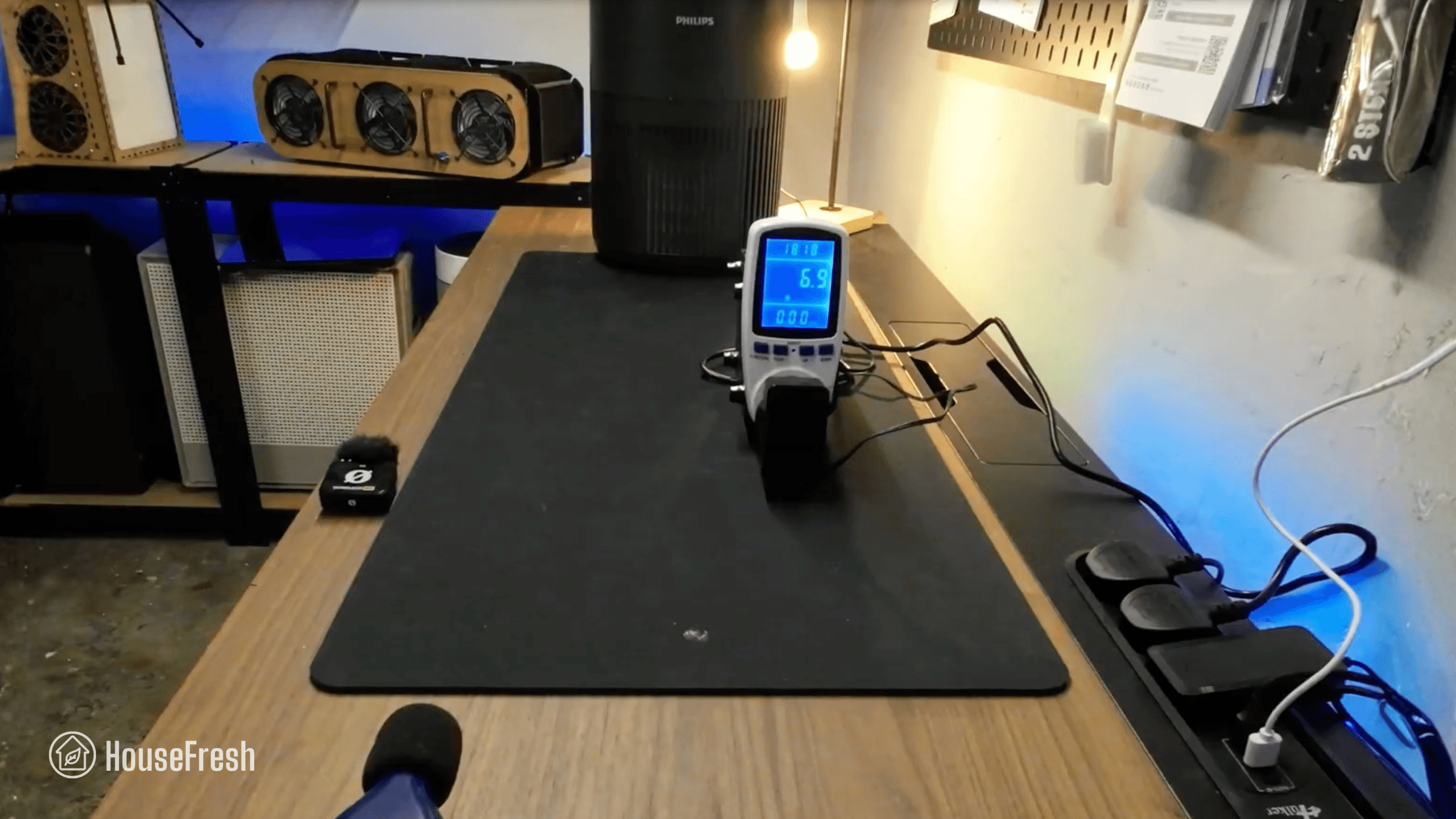
I used our BAFX sound meter to measure how much sound the 900 Series generates at each of its fan speeds at 3 ft away:
Reaching 54.5 dBA at Turbo speed, the Philips 900 is not particularly quiet compared to other small air purifiers on the chart, BUT it is quieter than similar-performing units like the Winix A231 and Coway Airmega 100.
Running at Medium speed (its lowest manual fan speed), the 900 Series reached 42.3 dBA and cleared our test room in 64 minutes. That makes it the fastest small cylindrical air purifier to complete our test when running at sub-45 dBA fan speeds.
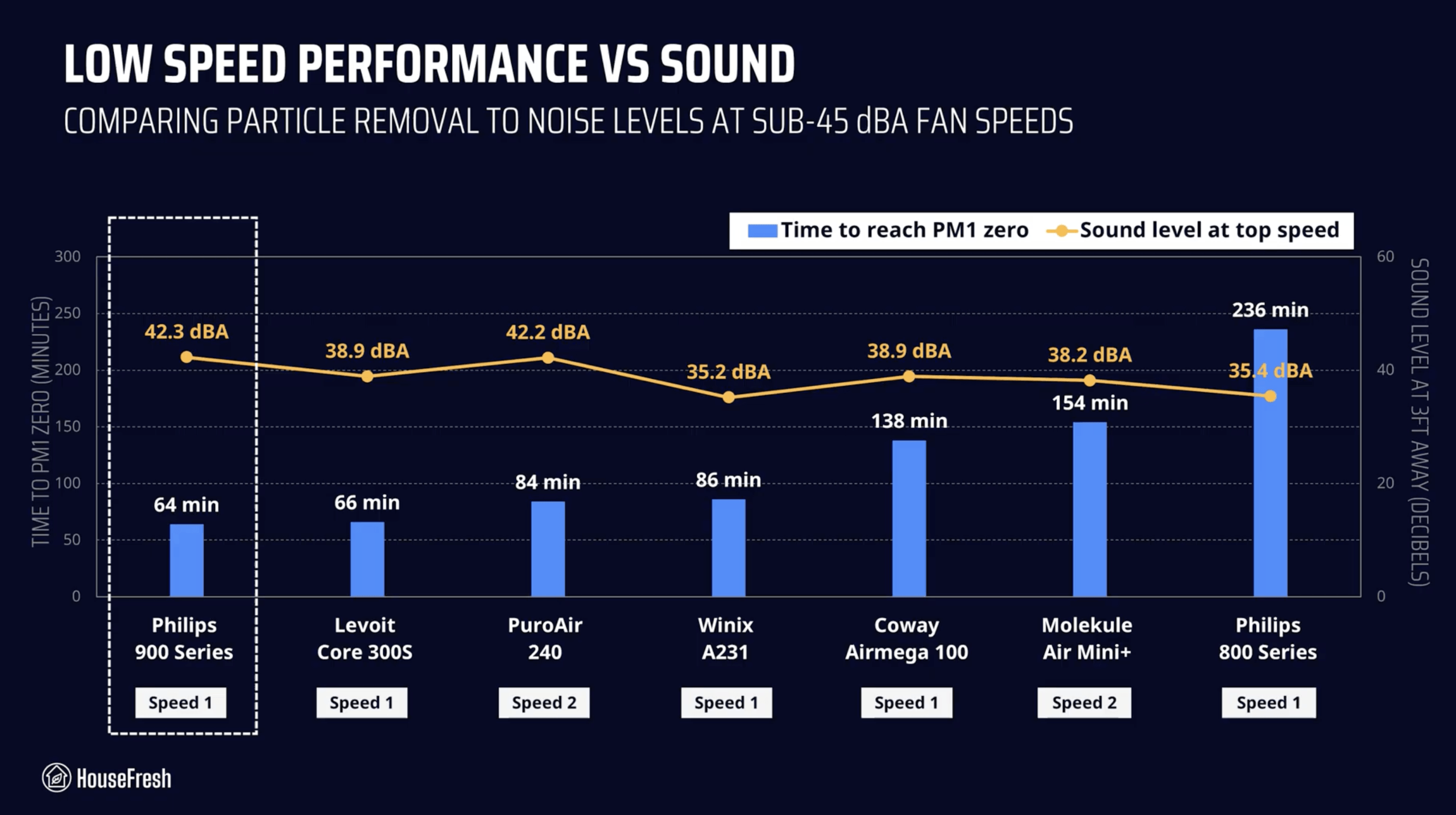
Based on the natural ventilation of our test room, I estimate a PM1 CADR of 91 cfm at Medium speed, which can clean the air five times per hour in spaces up to 136.5 sq. ft.
Long-term running costs
Running a Philips 900 Series will cost you £83.01 per year, combining energy and filter replacement costs.
We used our energy meter to record how much electricity the 900 Series pulls at each fan speed and while on standby.
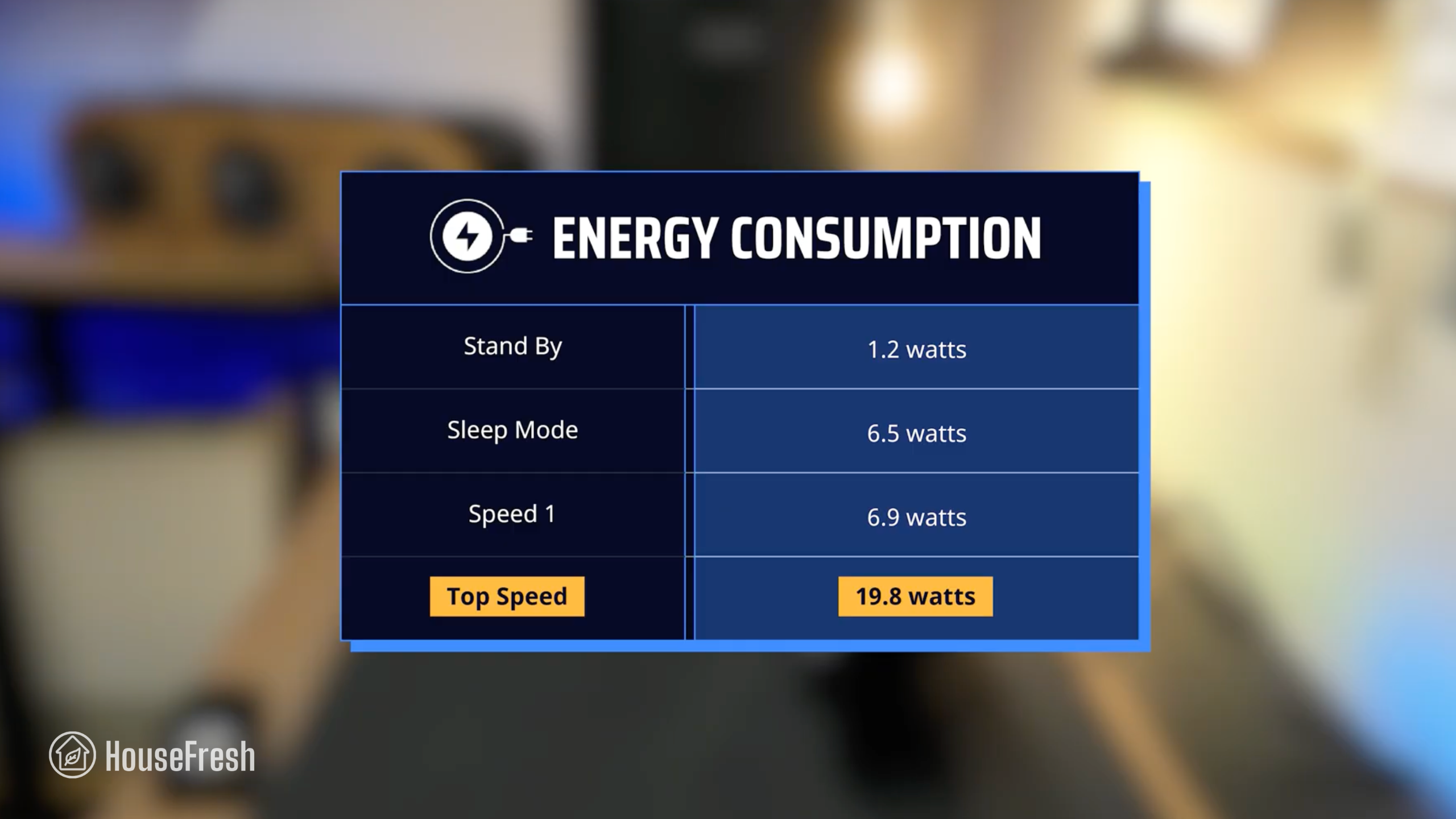
At top speed, the Philips 900 draws 18.8 watts, so if you were to leave it running at top speed 24/7 for one year, it will add £48.02 to your energy bill, based on the UK price cap as of May 2026.
It’s great to see that the marketing claims on the product page around the energy efficiency of the 900 Series are, in fact, true! But energy consumption isn’t the only cost to consider, so let’s look at replacement filters.
According to Philips, you need to change the filter in your 900 Series every 12 months. The genuine filter is available for £34.99, so you can expect to spend £34.99 each year on filter replacements alone.
I added this to the energy costs and can tell you that you need to budget £83.01 each year to keep your 900 Series running 24/7 in your home:
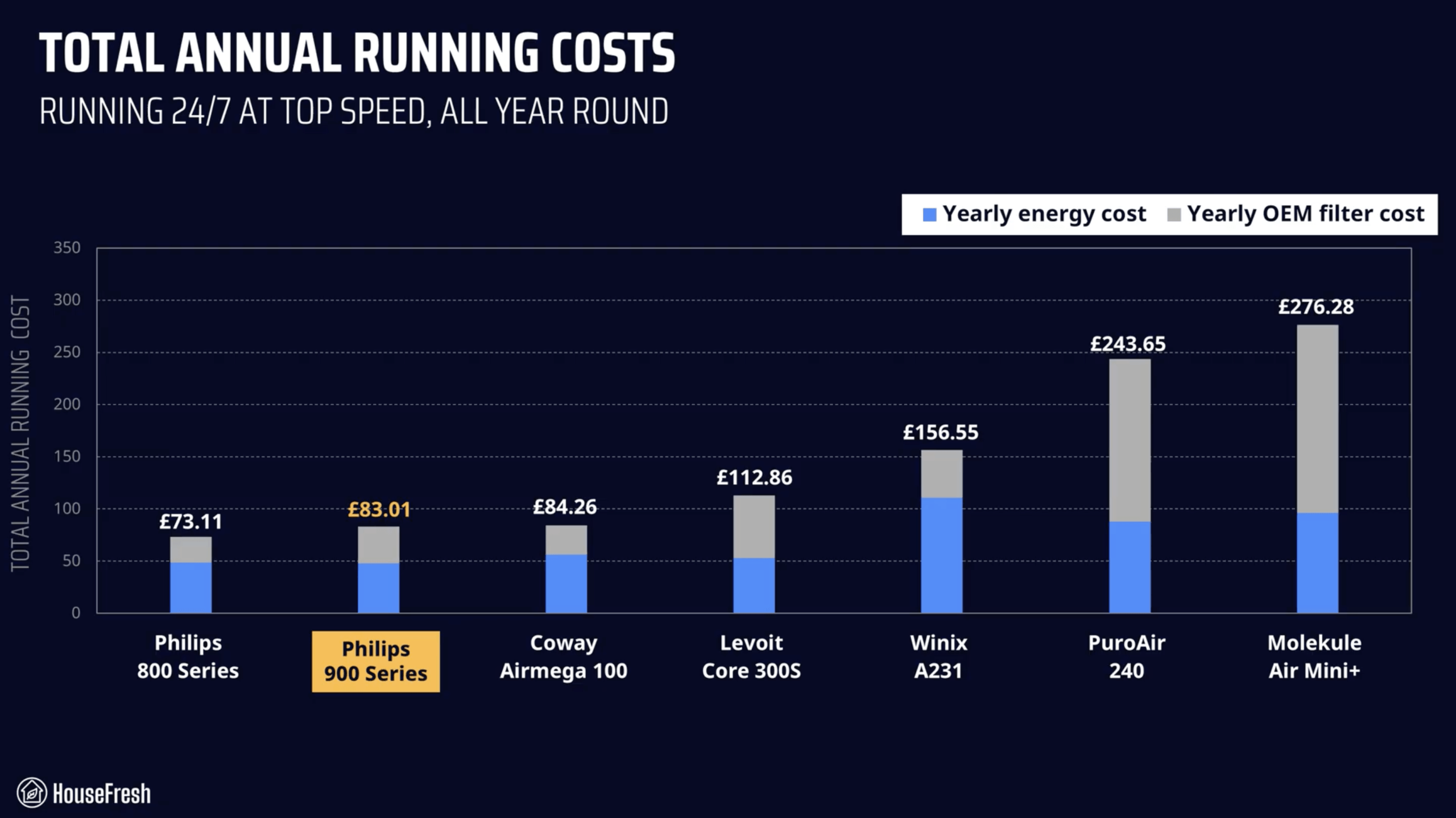
The only other small air purifier with lower running costs is the older 800 Series BUT bear in mind that the filter doesn’t have any carbon, so it’s definitely worth spending the additional £10 per year to get the higher performance and the pelleted carbon in the 900 Series.
When you add the £149.99 list price to that first year’s running cost, you will need to invest £233 in the first year of owning a Philips 900:
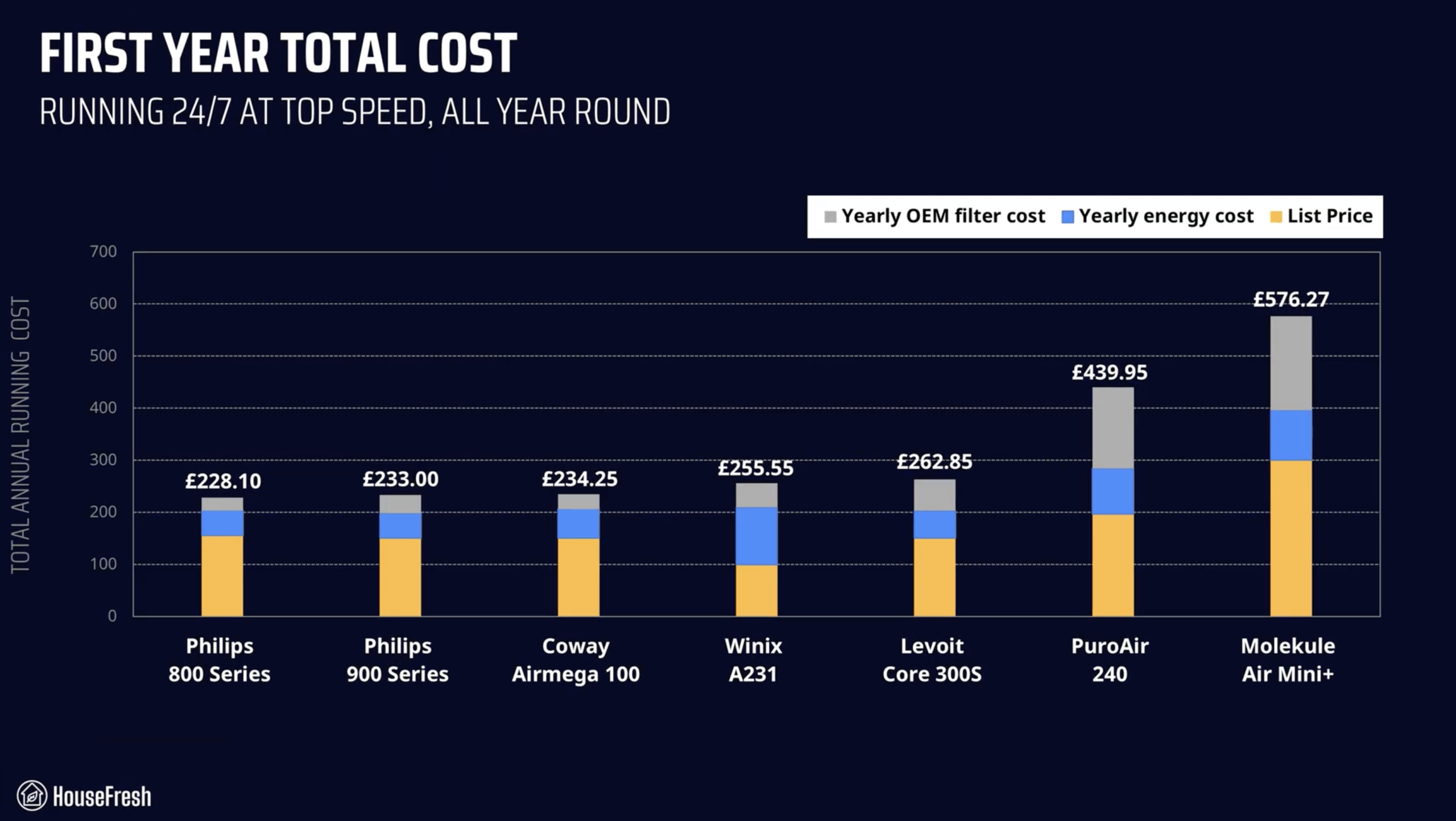
As you can see from the table, you could buy and run two Philips 900 air purifiers for the total year 1 cost of just one PuroAir 240… and the figure is even higher for the Molekule Air Mini+.
That is why I always advise people looking for small air purifiers to take the time to calculate how much they will need to spend each year, at least on filter replacement costs. These little units might look cute and inexpensive, but they can drain your bank account in the long run.
Bottom line: Should you get a Philips 900 Series?
If the £149.99 fits your budget, I’d say go for it.
When compared against other small air purifiers available in the UK right now, the Philips 900 stands out for two main reasons:
- It offers better air cleaning performance than what you will get from other small models, even when running on its quietest fan speed.
- It has low running costs thanks to its energy efficiency and fairly priced filter replacements.
And on top of good performance under 45 dBA and low yearly running costs, the Philips 900 Series also looks pretty good and comes with all the features you want from a modern air purifier, like an on-board sensor, an air quality indicator light, a straightforward touchscreen, auto mode, and a decent app with scheduling functions.
If you’re reading this from the U.S. or Canada, I’m sorry to report that the Philips 900 is not available in North America at the moment. But if you’re in Europe, the Middle East or Asia Pacific, it’s likely that you will find the 900 Series in your country.
Before I leave you, I will suggest that most people go for a mid-sized air purifier with a CADR of at least 200 cfm to get the most value for your money. If you like what the 900 Series offers, then look into the Philips 3200 Series.
BUT I get that there is a lot of demand for smaller units, which is why manufacturers keep coming up with tiny models each year that get recommended by every big media publisher under the sun. So I won’t try to convince you to go bigger, as I’m sure there’s a good reason why you’re looking for a small unit.
If you decide to get yourself a 900 Series, please use this link to help support the work we do at HouseFresh – – we will receive a small affiliate commission at no extra cost to you. We don’t run any ads and have no partnerships with air purifier brands, so we rely on those commissions to continue buying and testing air quality products.
And if you’re still unsure, you can try using our air purifier comparison tool to see how the Philips 900 stacks up against units with similar prices:
If you have any questions about the 900 Series or about Philips air purifiers in general, please drop them in the comments below, and I’ll get back to you personally as soon as I can.