After testing over 120 air purifiers, I feel we finally have enough data from models available in the UK to recommend the best options for different room sizes and use cases.
Even though they might look similar at a glance (it’s basically an appliance, right?), not all air purifiers are created equal. So whether you’re looking for an air purifier to help you through allergy season, or a device to remove unwanted odours from the air, I’ve got a recommendation for you.
By the way, every air purifier you’ll read about on this list has gone through our full testing process, so you can rest assured I’m not just paraphrasing manufacturer specifications or retailer talking points here – – I bought all of these units with my own money and have no special deals or sponsorships with any brands.
1. Best for most people: Winix Zero S
A medium-sized air purifier (for rooms up to 35 m2) that outperformed models sold for twice its price.
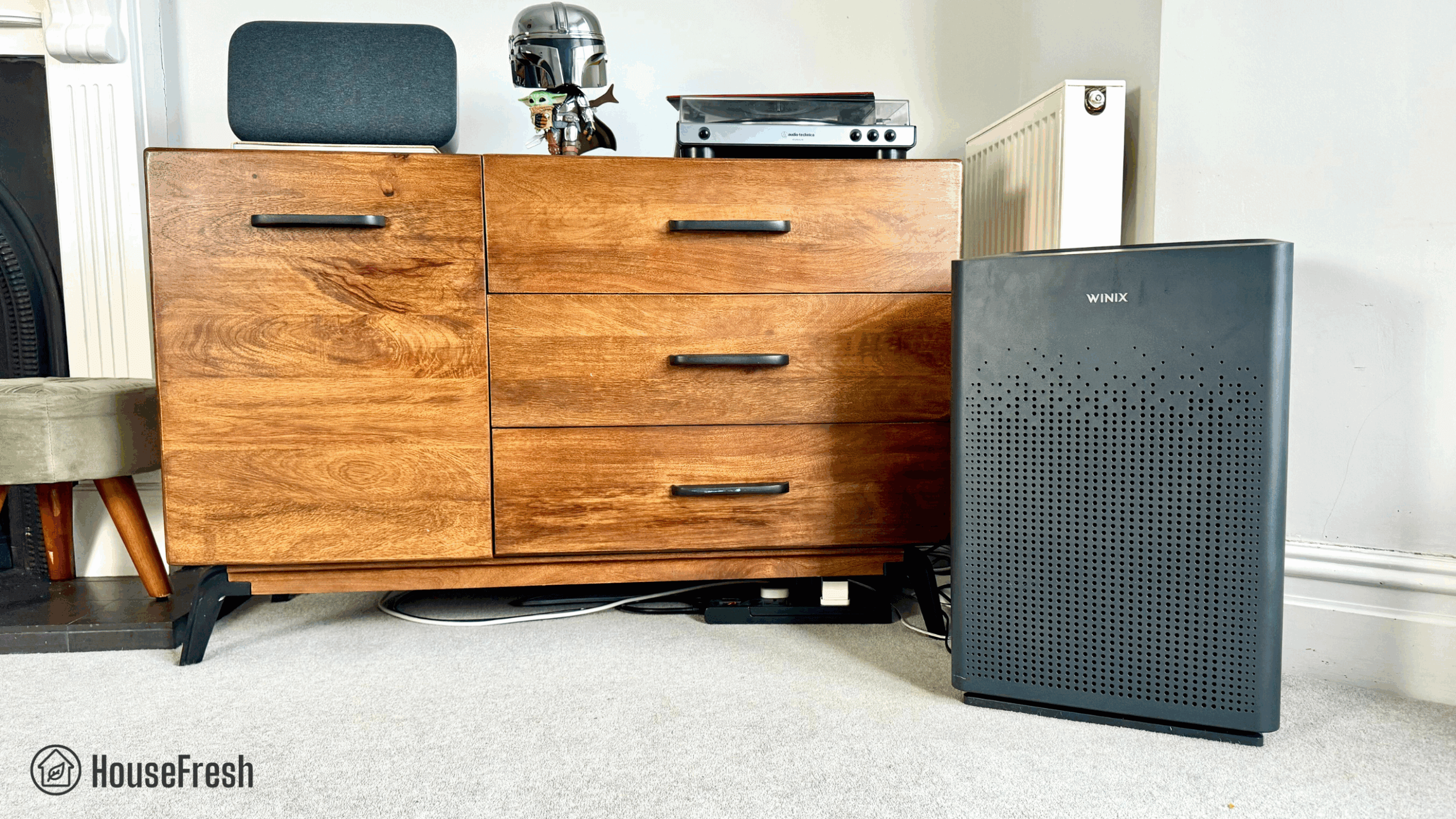
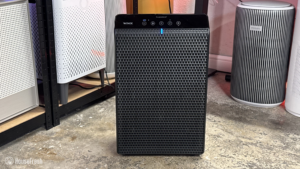
Selling at £185, the Winix Zero S is my top pick for most people because it offers excellent particle removal performance without any fancy bells and whistles that would add to the price.
Its removable pre-filter is easy to clean: you can simply vacuum it, or if it gets too gunky, you can just take it out to rinse under water and let it dry.
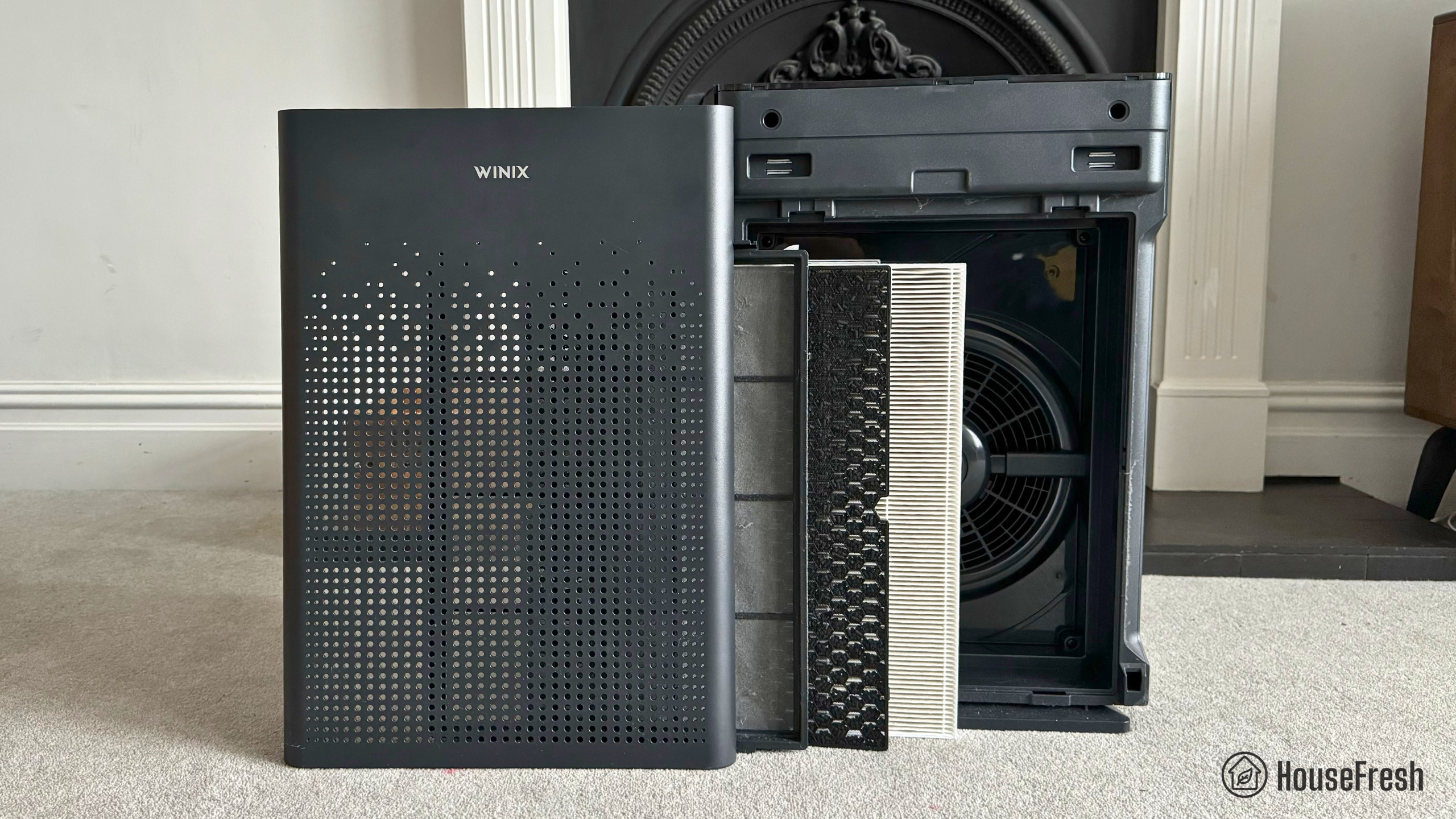
The Zero S uses Winix Filter H sets, which come with a HEPA filter and a pelleted activated carbon filter. A set costs £69 and will last up to 12 months.
There’s no app support, but it has a sensor that triggers automatic mode to kick in when air quality drops. It also has an air quality indicator light.
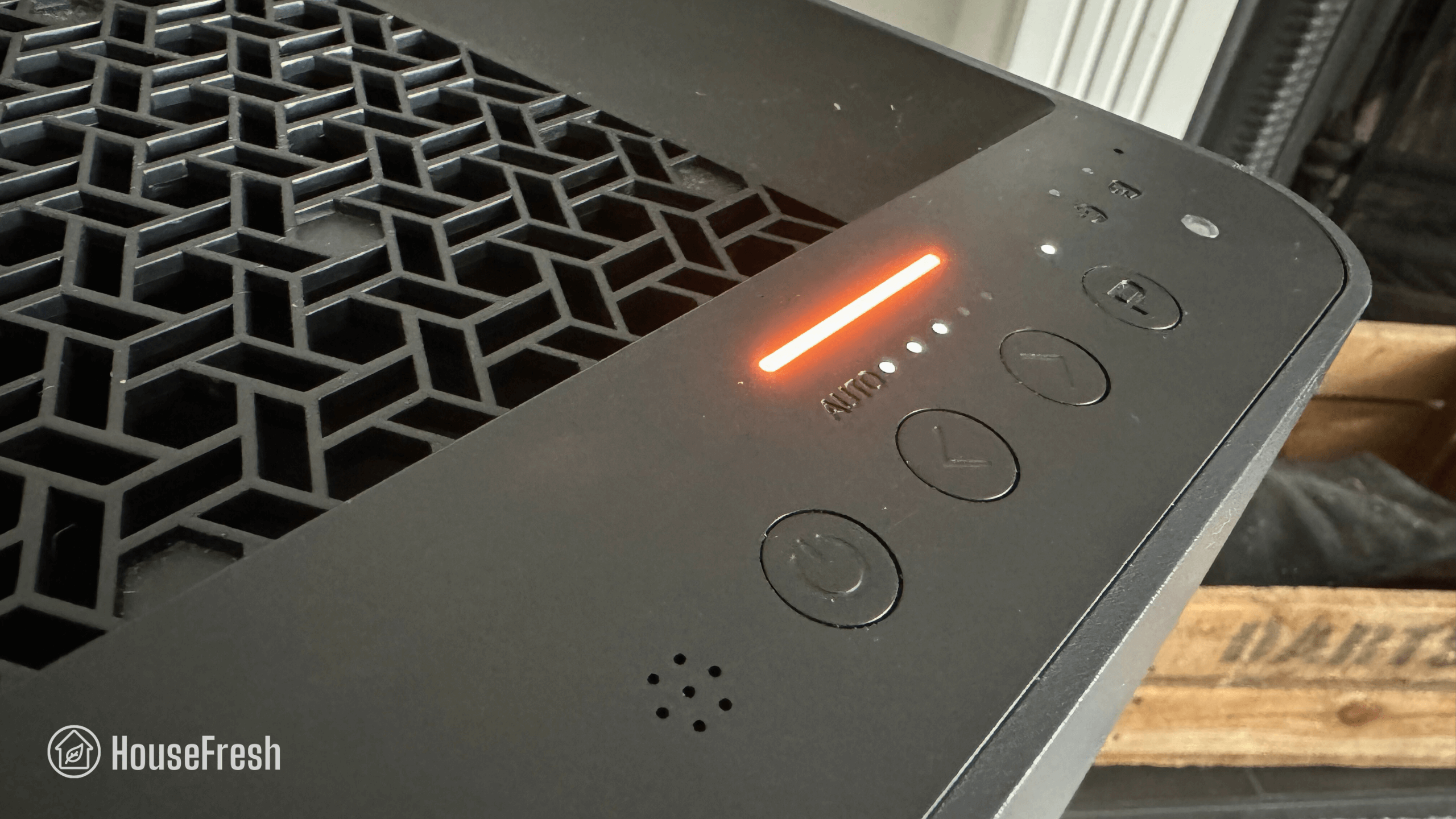
It features PlasmaWave bipolar ionization, which charges airborne particles, making them easier to remove from the air. If you prefer to avoid potential ozone byproducts, you can simply disable it.
CONS
PROS
| Clean air delivery rate (CADR): | – Top speed PM1 CADR: 423 m3/h – Sub-45 dBA PM1 CADR: 228 m3/h – AHAM CADR: 404 m3/h (dust) |
| Filter technology: | HEPA filter with pelleted activated carbon and a removable pre-filter |
| Recommended room size: | 35 m2 (5 air changes per hour) |
| Dimensions: | 37.9 x 19.9 x 60 cm |
| Weight: | 7.5 kg |
| Noise level in decibels from 3 ft. away: | Speed 1: 35.6 dBA Speed 2: 38.4 dBA Speed 3: 43.3 dBA Speed 4: 57.4 dBA |
| Electricity consumption in watts: | Standby: 1.2 watts Speed 1: 5.2 watts (4.8 with PlasmaWave) Speed 2: 7.6 watts (7.2 with PlasmaWave) Speed 3: 11.5 watts (11.1 with PlasmaWave) Speed 4: 52.6 watts (52.6 with PlasmaWave) |
| Filter lifespan: | 12 months |
| Manufacturer’s warranty: | 2 years |
| Country of origin: | South Korea |
| Country of manufacture: | South Korea |
Philips 3200 Series
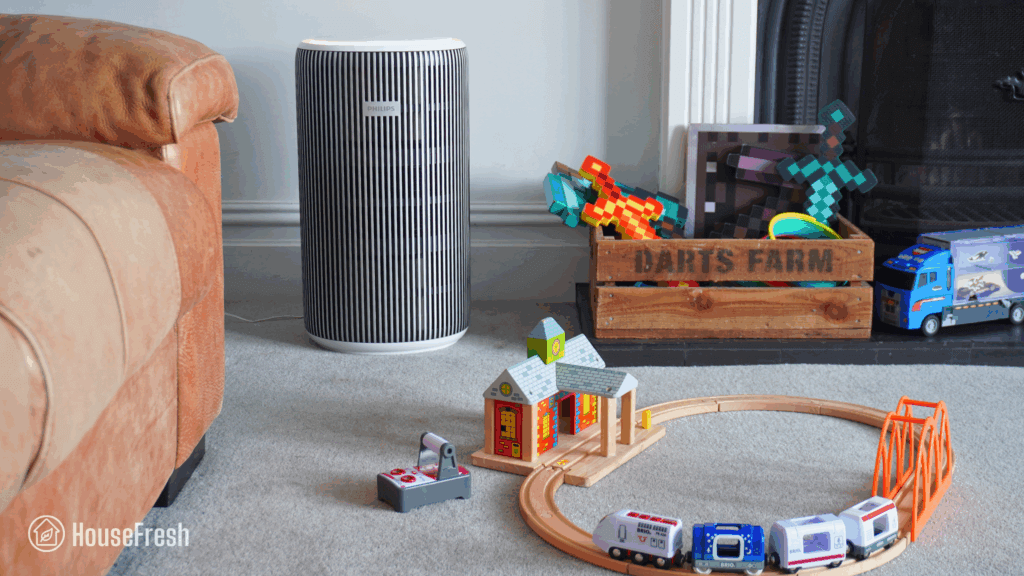
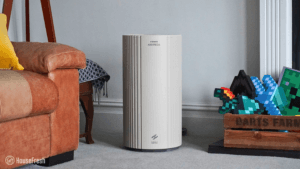
The Philips 3200 offers the same level of performance as the Winix Zero S (CADR of 423 m3/h), but in a more modern, cylindrical body. It uses two 3-in-1 filters: pre-filter mesh, particle filter, and carbon filter.
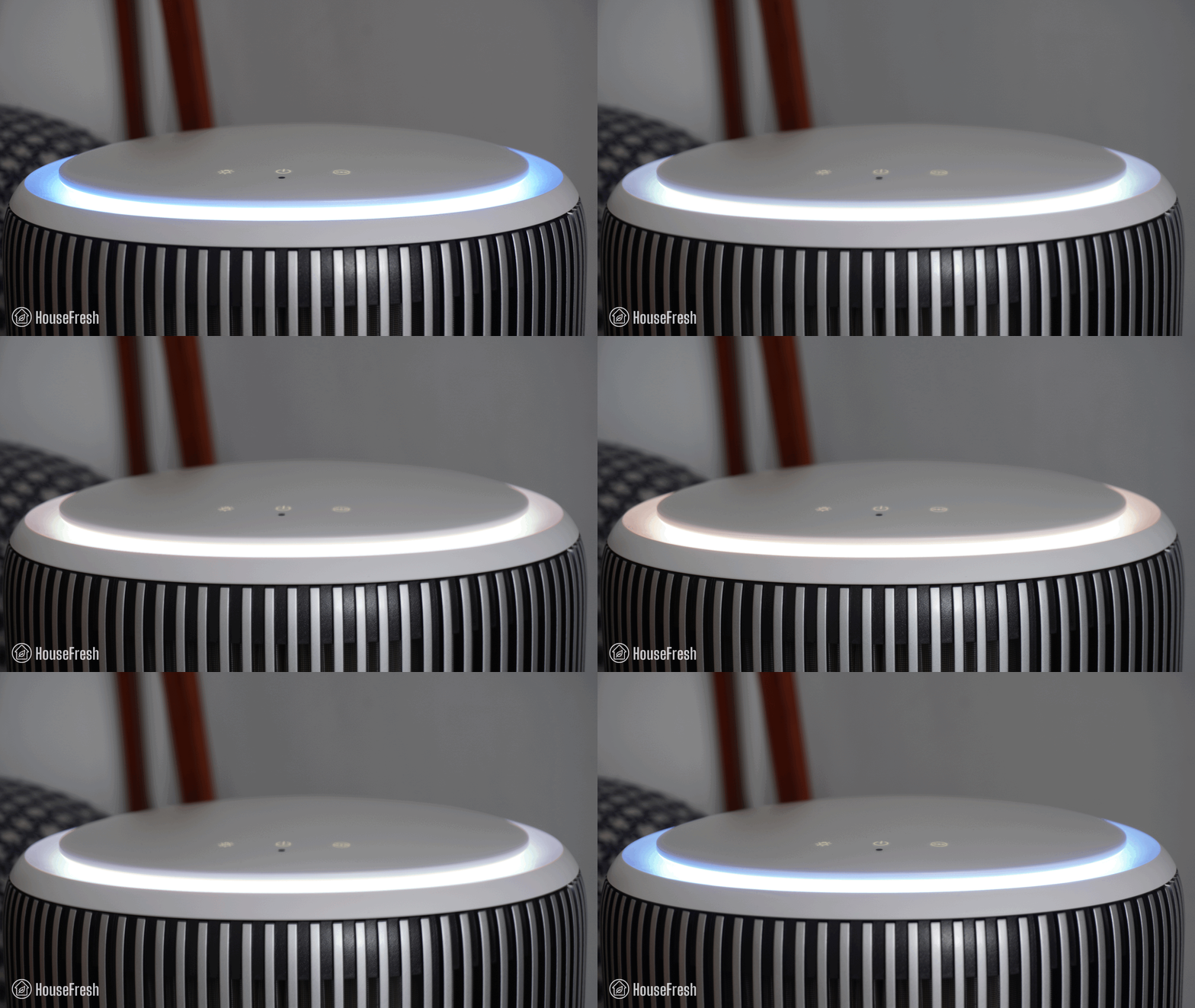
It has an optical sensor, auto mode, and you also get PM2.5 readings on the touchscreen at the top. It also has an LED ring that changes colour based on the air quality, or that you can set as a lamp (warm white glow).
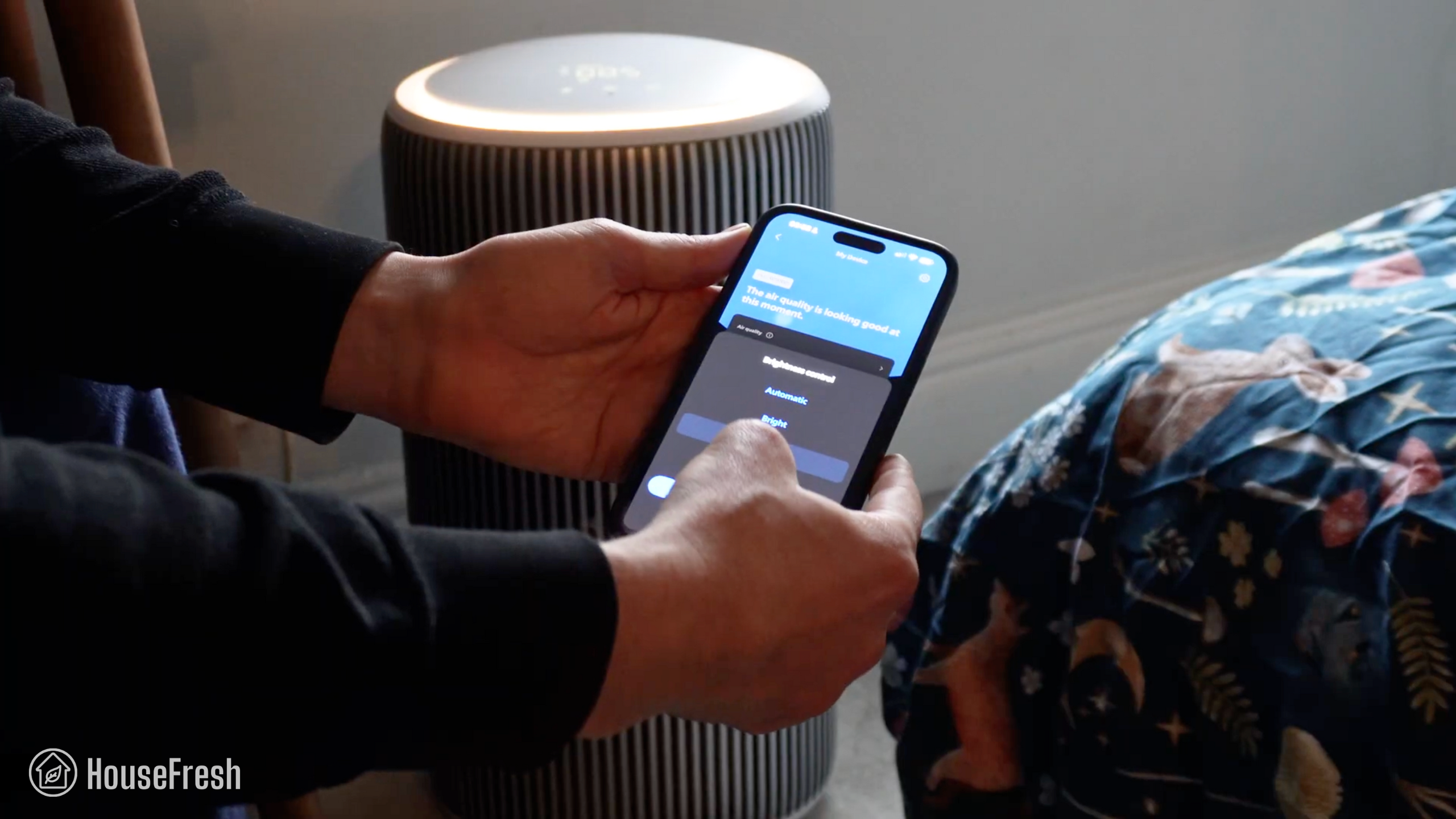
It connects to the Philips Air+ App, so you can set schedules, adjust the light, and receive filter change alerts. You can also enable the Allergy Sleep mode, which supercharges the normal sleep mode.
2. Best value for money: AirFanta 3Pro
A PC fan-powered air purifier that offers a very high CADR of 600 m3/h, suitable for rooms up to 49 m2.

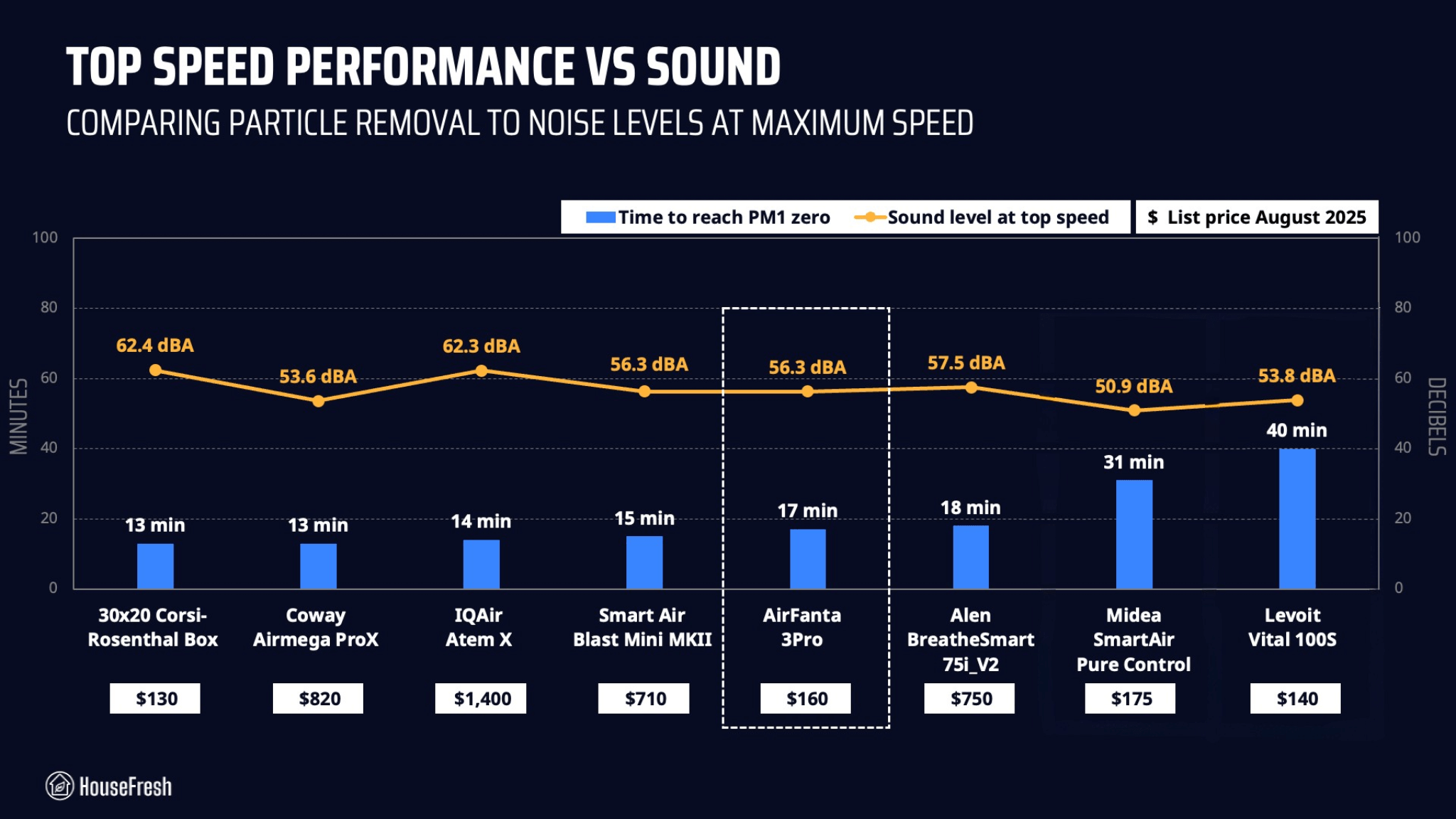
The AirFanta 3Pro offers the best value for money out of all the air purifiers I’ve tested to date. Based on our particle removal tests, we estimate a PM1 CADR of 600 m3/h, which is outstanding considering its low price of £118. With this power, the 3Pro can provide five air changes per hour in rooms up to 49 m2.
The 3Pro is a relatively small box inspired by the Corsi-Rosenthal Box design. It has a plastic base, four HEPA filters at each side, and four 140 mm PC fans on top.
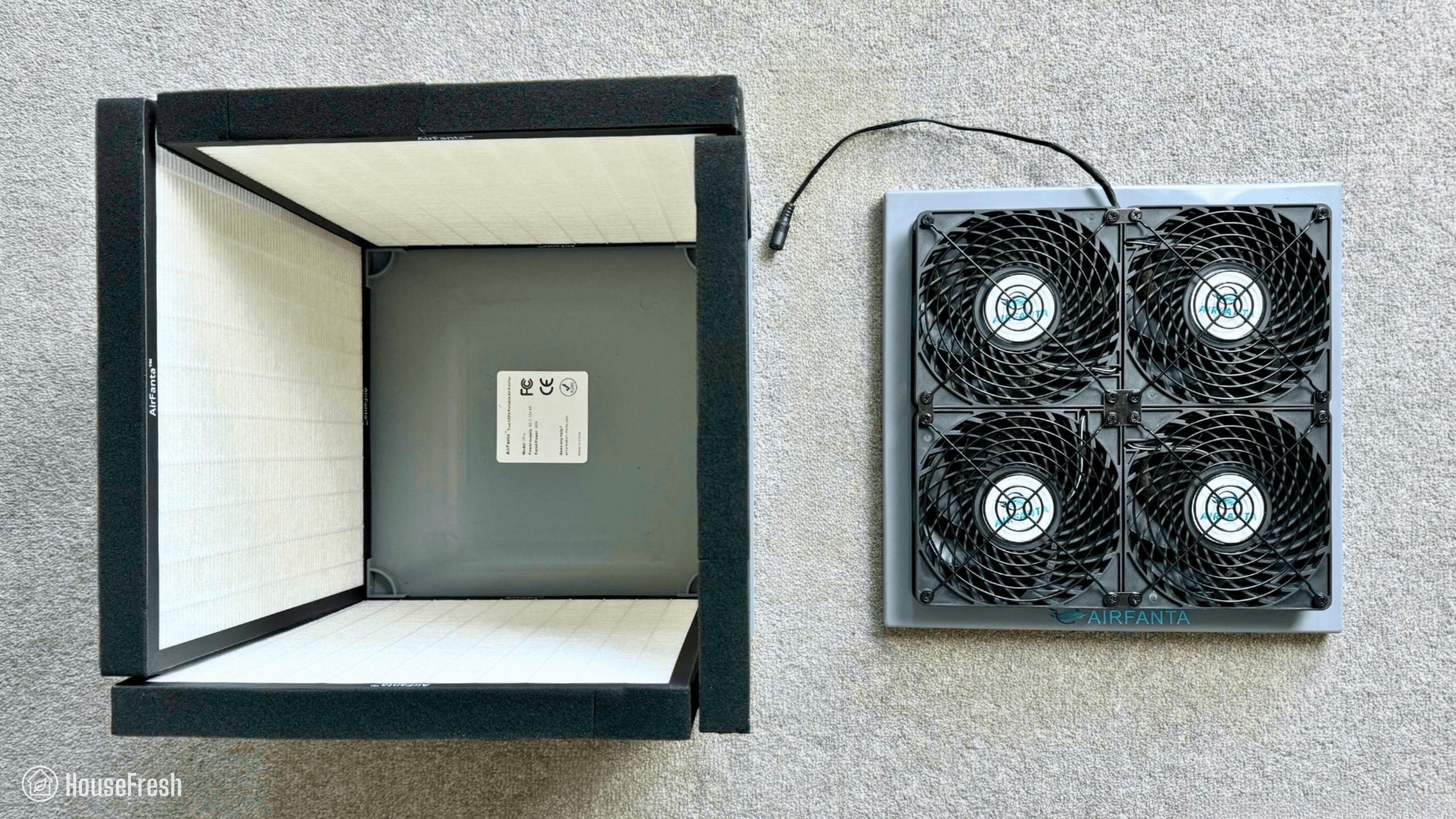
You can even disassemble and reassemble the 3Pro to bring it with you inside a carry-on suitcase or large backpack wherever you go.
It outperforms air purifiers twice its size that cost three times as much. That’s why it’s my value pick as you’ll get incredible power for less than 120 quid.
If you also want to remove odours and chemical gases from the air, you can upgrade to the HEPA + carbon filters for £130 to add a layer of pelleted activated carbon on top of the HEPA filtration.
CONS
PROS
| Clean air delivery rate (CADR): | – Top speed PM1 CADR: 600 m3/h – Sub-45 dBA PM1 CADR: 362 m3/h |
| Filter technology: | E11 particle filter with optional pelleted activated carbon |
| Recommended room size: | 49 m2 (5 air changes per hour) |
| Dimensions: | 32 x 32 X 32 cm |
| Weight: | 3.49 kg |
| Noise level in decibels from 3 ft. away: | 3.63 volts: 36.1 dBA 4.19 volts: 36.9 dBA 5.24 volts: 39.7 dBA 6.54 volts: 43.3 dBA 7.44 volts: 46.7 dBA 8.56 volts: 49.1 dBA 12.6 volts: 56.3 dBA |
| Electricity consumption in watts : | 43.23 watts |
| Filter lifespan: | 6 – 12 months |
| Manufacturer’s warranty: | 1 year |
| Country of origin: | China |
| Country of manufacture: | China |
Midea SmartAir Pure Control
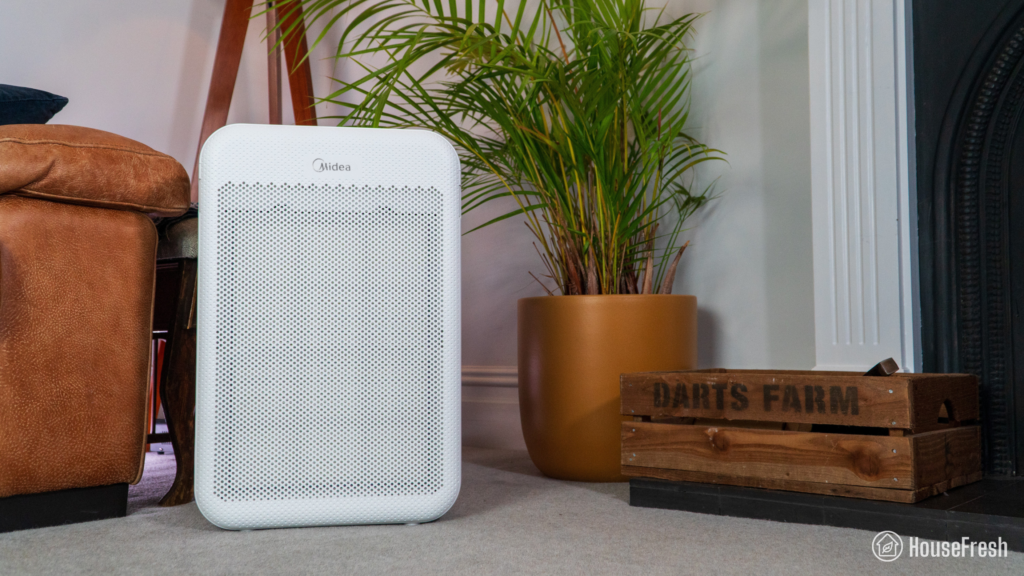
The Midea SmartAir Pure Control doesn’t have the raw power of the AirFanta 3Pro BUT it offers excellent value for its £99.99 price tag.
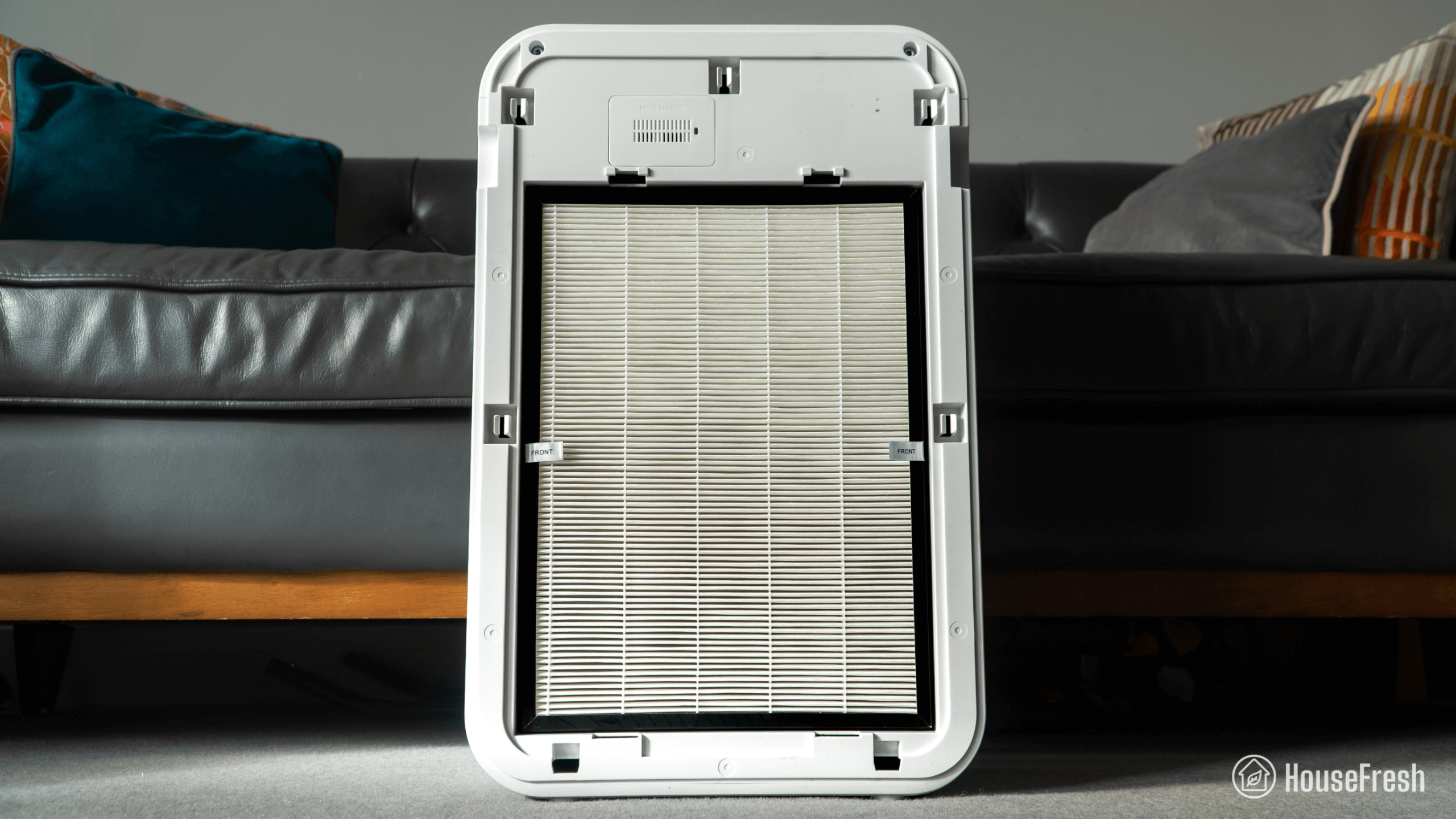
It completed our particle removal test in 31 minutes, so we estimate a PM1 CADR of 326 m3/h – powerful enough to provide five air changes per hour in spaces up to 27 m2.
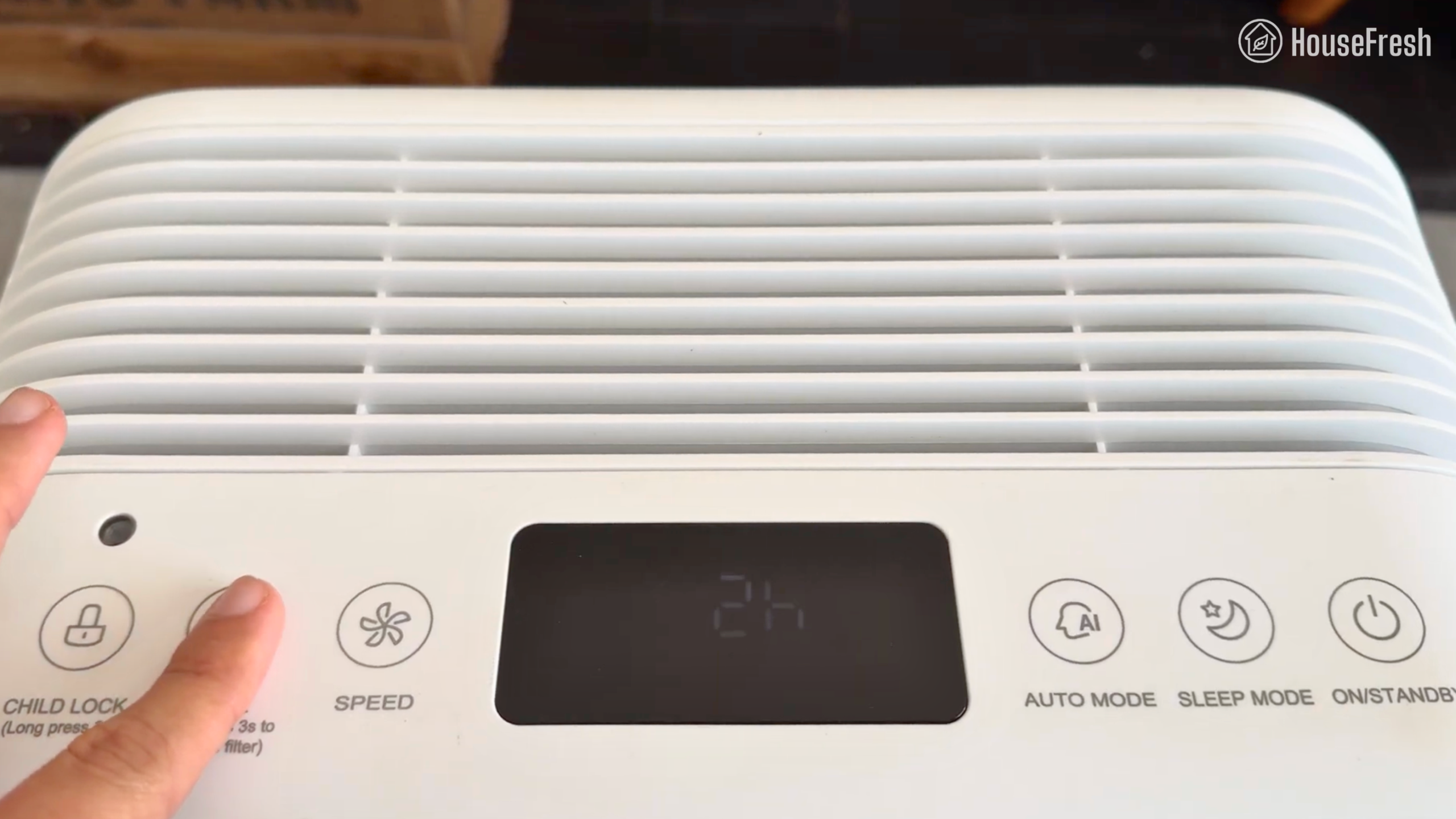
It comes with a sensor and an air quality indicator on top. Plus, it connects to the Midea SmartHome app so you can control it remotely from your phone.
3. Best for large spaces: Coway Airmega 350
A cylindrical air purifier with a CADR of 598 m3/h – powerful enough to clean the air in 49 m2 rooms.
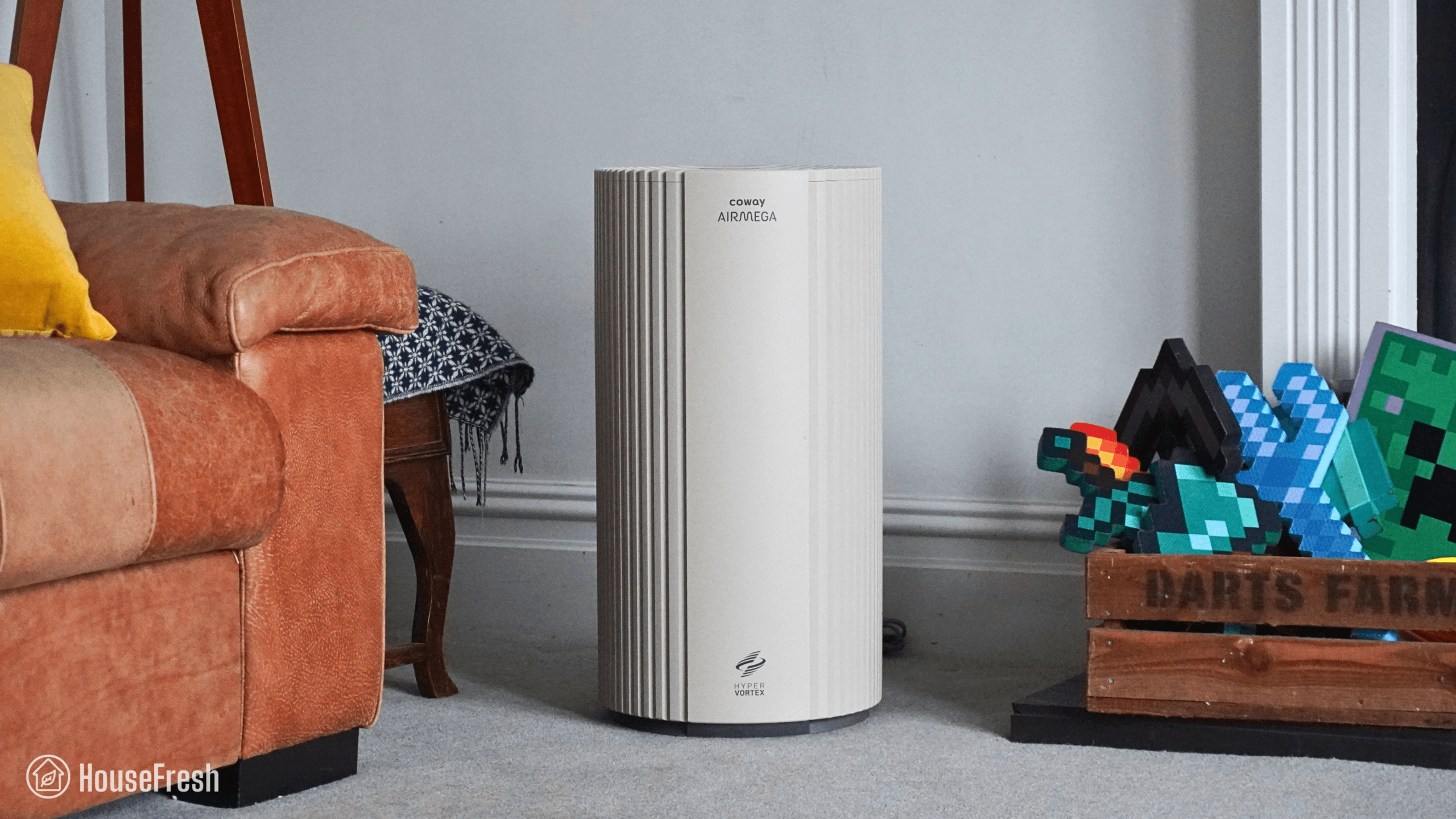
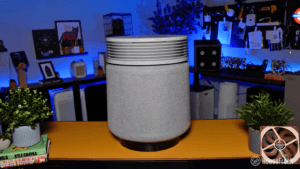
The Airmega 350 from Coway is a medium-sized, cylindrical air purifier that can deliver five air changes per hour in spaces up to 49 m2. Running at top speed, it completed our particle removal test in 17 minutes (PM1 CADR of 598 m3/h), matching the performance of the Levoit Core 600S and even outperforming the more expensive Xiaomi Elite.
The cylindrical filter has a pre-filter mesh on the outside (that you’ll need to vacuum regularly), Green True HEPA in the middle, and a layer of pelleted activated carbon on the inside.
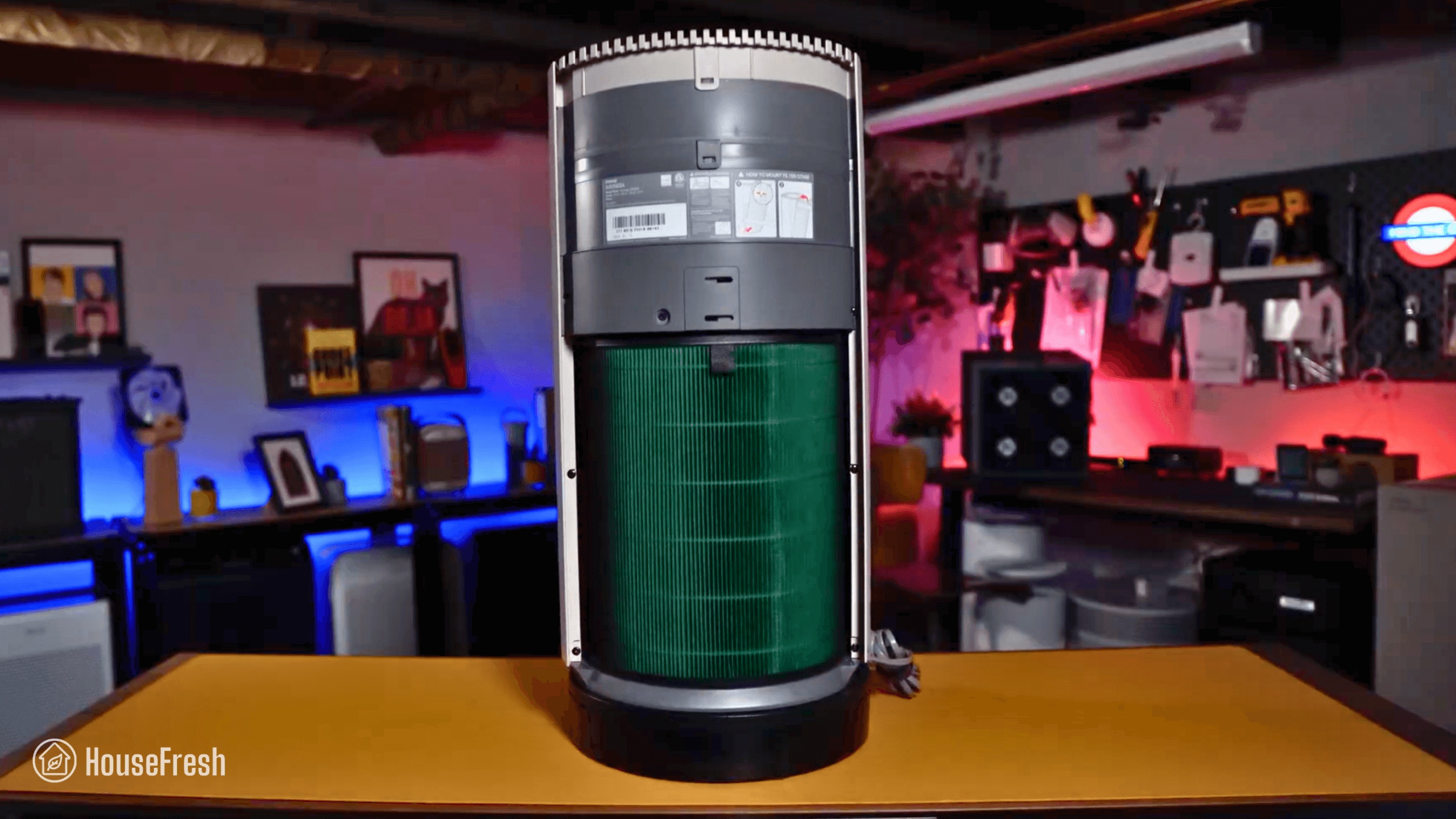
The filter replacement costs £69.99 and can last up to 12 months, so you can expect to spend that much on replacements each year.
The control panel is straightforward but comprehensive. I love the granular light control: you can turn off the display, the air quality ring, or both, which is perfect for a bedroom.
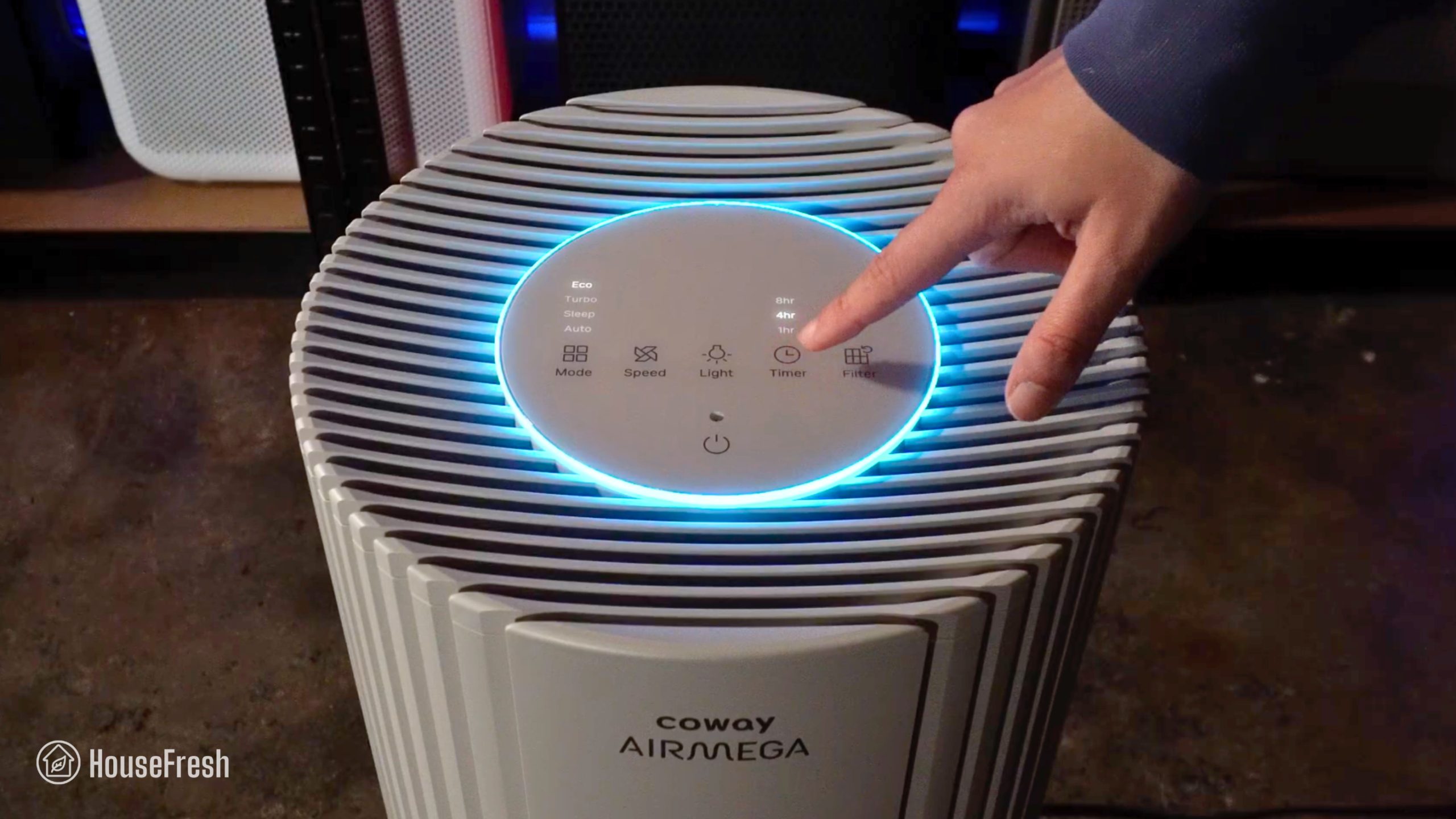
It can get loud at top speed (61.8 dBA), but we found that running at speed 2, it generates 49 dBA and still provides 263 m3/h.
CONS
PROS
| Clean air delivery rate (CADR): | – Top speed PM1 CADR: 598 m3/h – Sub-45 dBA PM1 CADR: 170 m3/h – AHAM CADR: 642 m3/h (dust) |
| Filter technology: | Green HEPA filter with pelleted activated carbon |
| Recommended room size: | 49 m2 (5 air changes per hour) |
| Dimensions: | 30.5 x 30.5 x 59.1 cm |
| Weight: | 7.8 kg |
| Noise level in decibels from 3 ft. away: | Sleep mode: 35.2 dBA Speed 1: 37.6 dBA Speed 2: 49.4 dBA Speed 3: 55.4 dBA Speed 4: 61.8 dBA |
| Electricity consumption in watts: | Standby: 0 watts Sleep mode: 3.1 watts Speed 1: 4.89 watts Speed 2: 17.04 watts Speed 3: 32.65 watts Speed 4: 57.95 watts |
| Filter lifespan: | 12 months |
| Manufacturer’s warranty: | 2 years |
| Country of origin: | South Korea |
| Country of manufacture: | China |
Levoit Core 600S
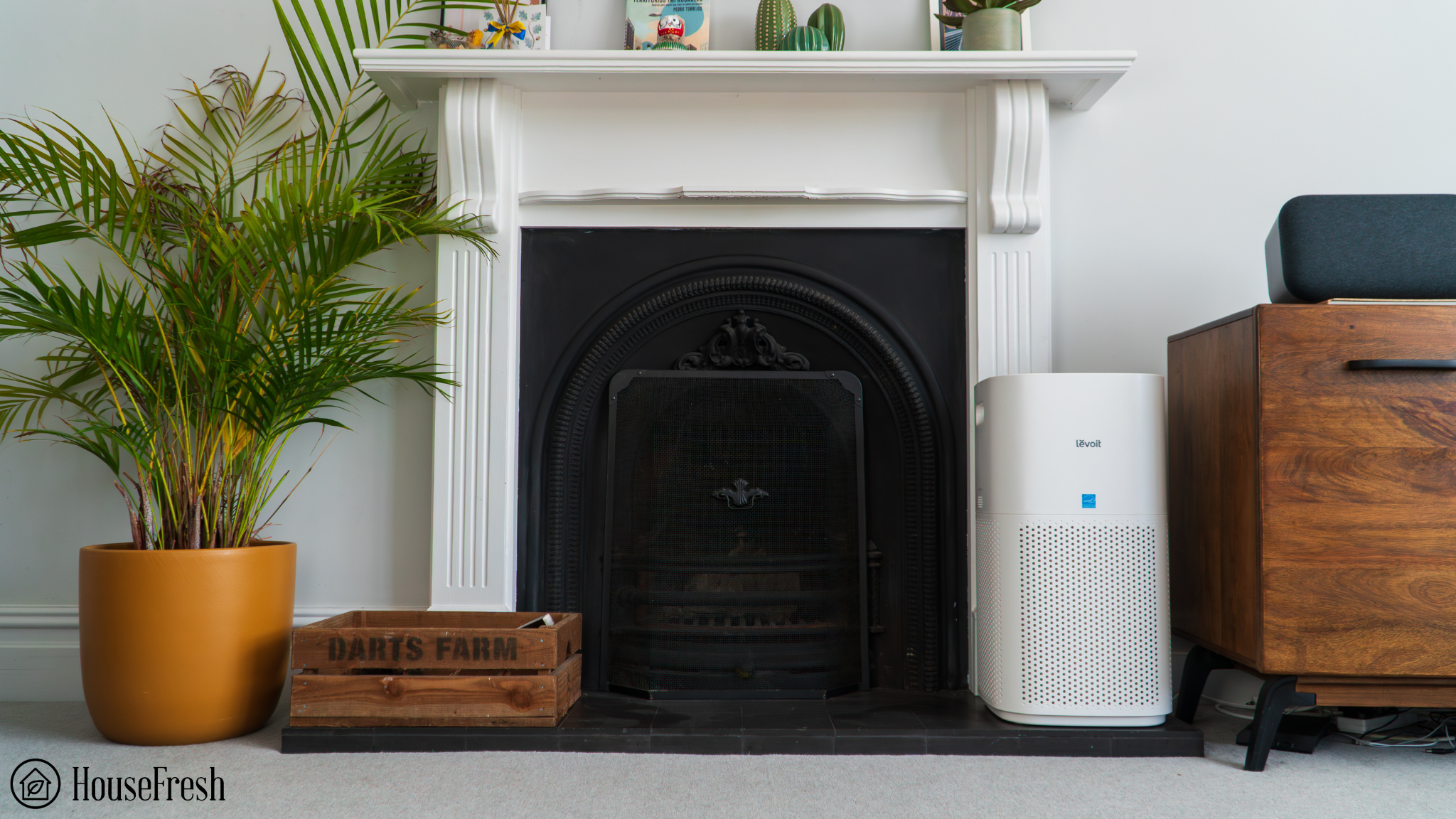
The 600S is the largest air purifier in Levoit’s Core range and, in our tests, it outperformed my top pick for large spaces by one full minute – but it’s more expensive, with a list price of £299.99.

It completed our particle removal test in 16 minutes, so we estimate a PM1 CADR of 637 m3/h – powerful enough to provide five air changes per hour in spaces up to 52.3 m2.
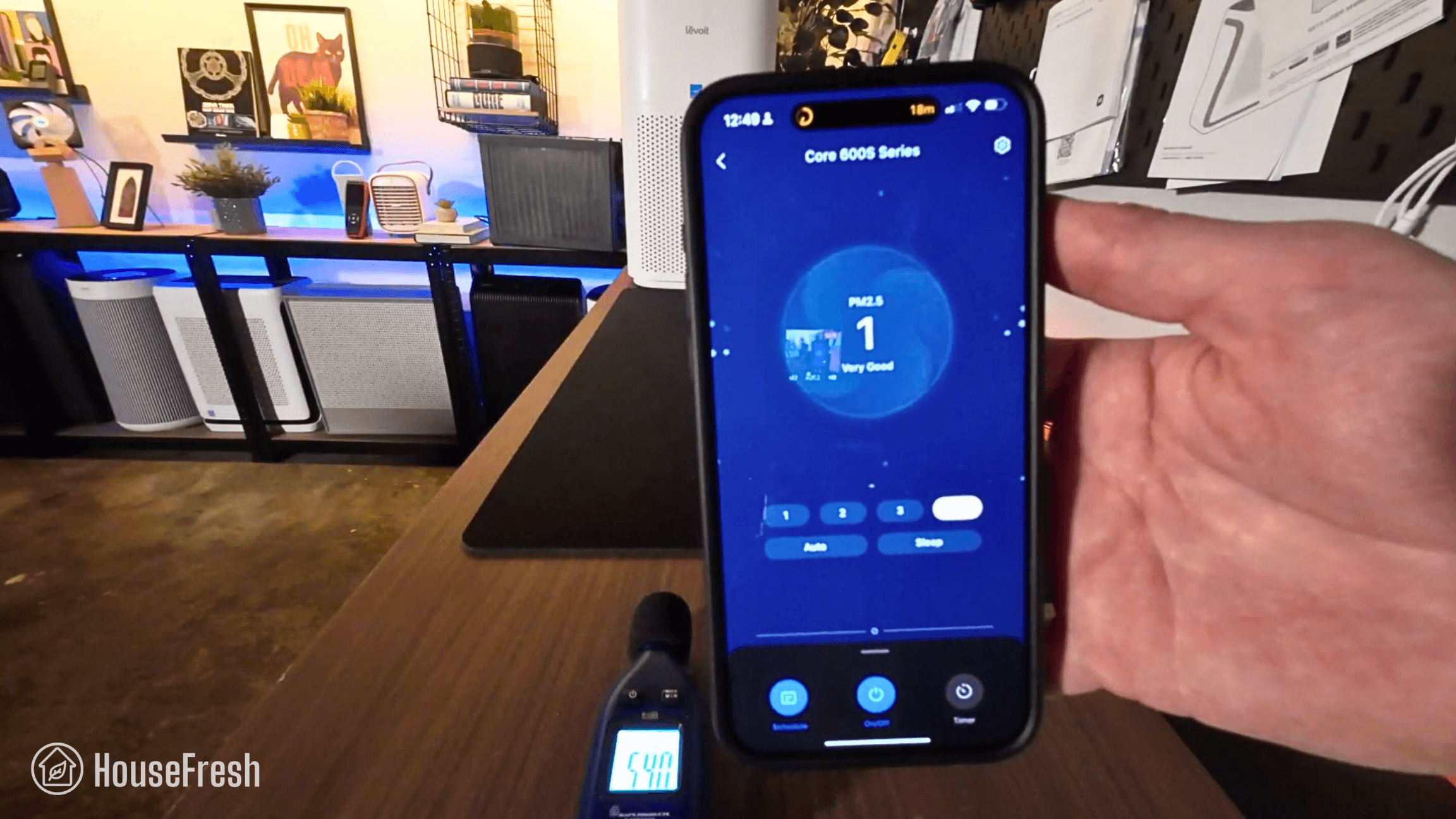
It has a sensor, an air quality indicator ring and PM2.5 particle readings on top. And it connects to Levoit’s VeSync app, so you can control it remotely from your phone, set routines, and a lot more.
4. Best for small spaces: Philips 900 Series
A cylindrical air purifier small enough to fit on top of a side table that actually cleans the air for £130.
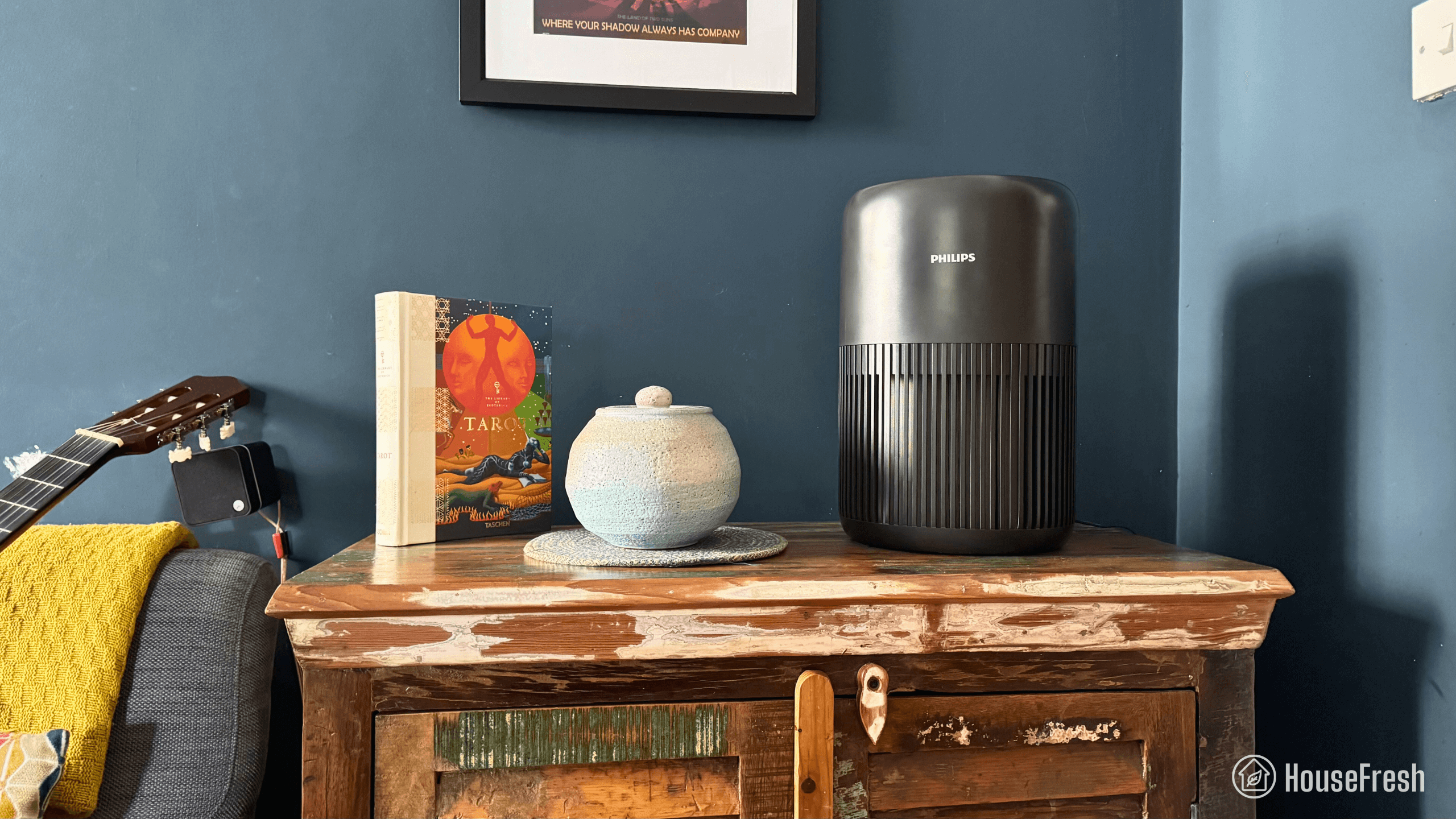
The Philips PureProtect Mini 900 Series is a small, cylindrical air purifier that surprised me. It sits in the same category as the popular Levoit Core 300S and the Winix A231, but it outperformed both of them in our particle removal tests.
It cleaned our test room of PM1 pollutants in 39 minutes (at top speed), so we estimate a CADR of 250 m3/h. This makes it powerful enough to provide five air changes per hour in spaces up to 20 m2.
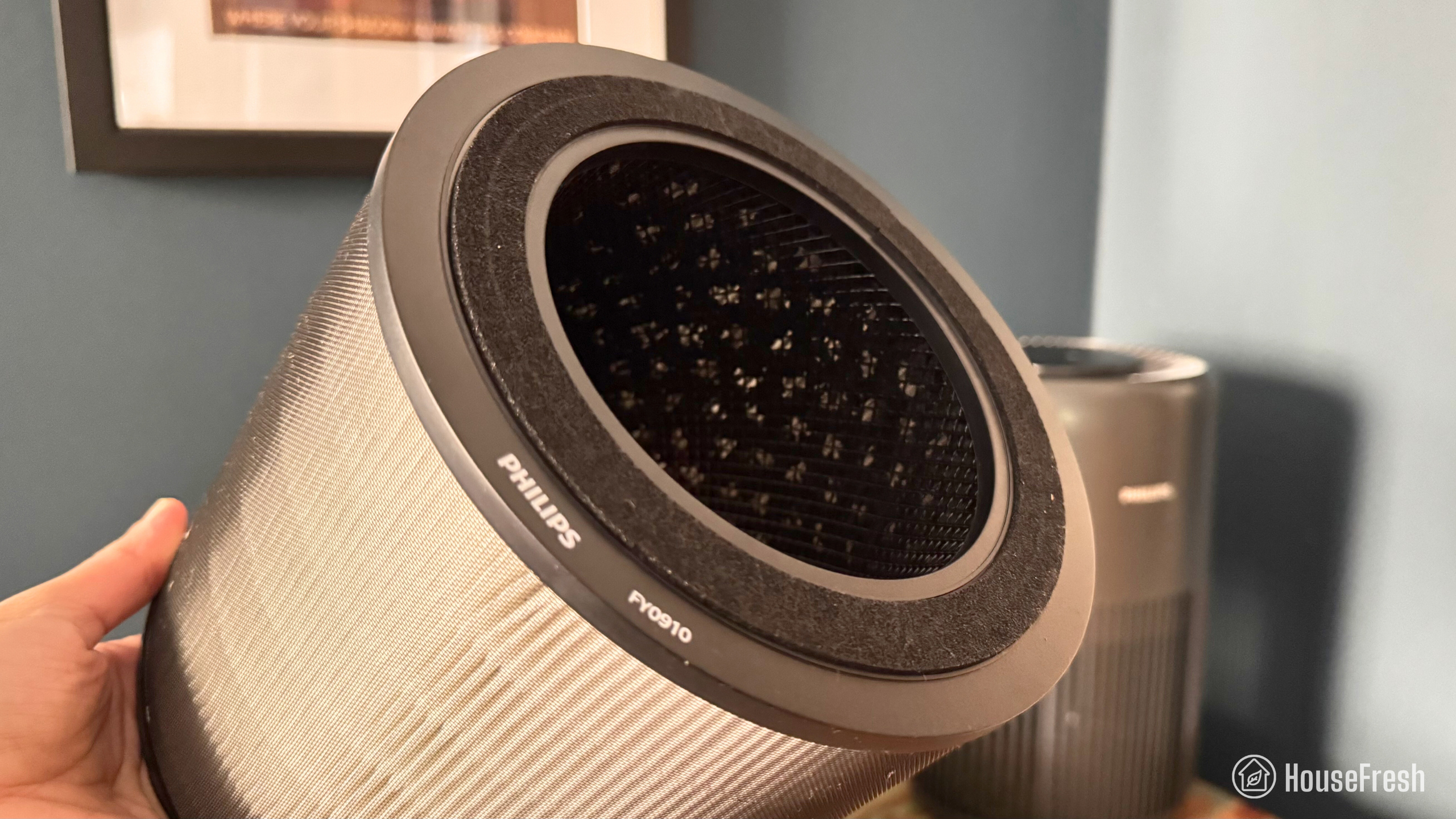
As with other cylindrical air purifiers, you need to tip it upside down to access the filter. The filter has a pre-filter mesh on the outside, a particle filter layer in the middle, and a carbon layer on the inside.
The 900 Series comes with a sensor that unlocks auto mode and also informs the air quality indicator light AND the PM2.5 particle counter in the middle of the touchscreen control panel.
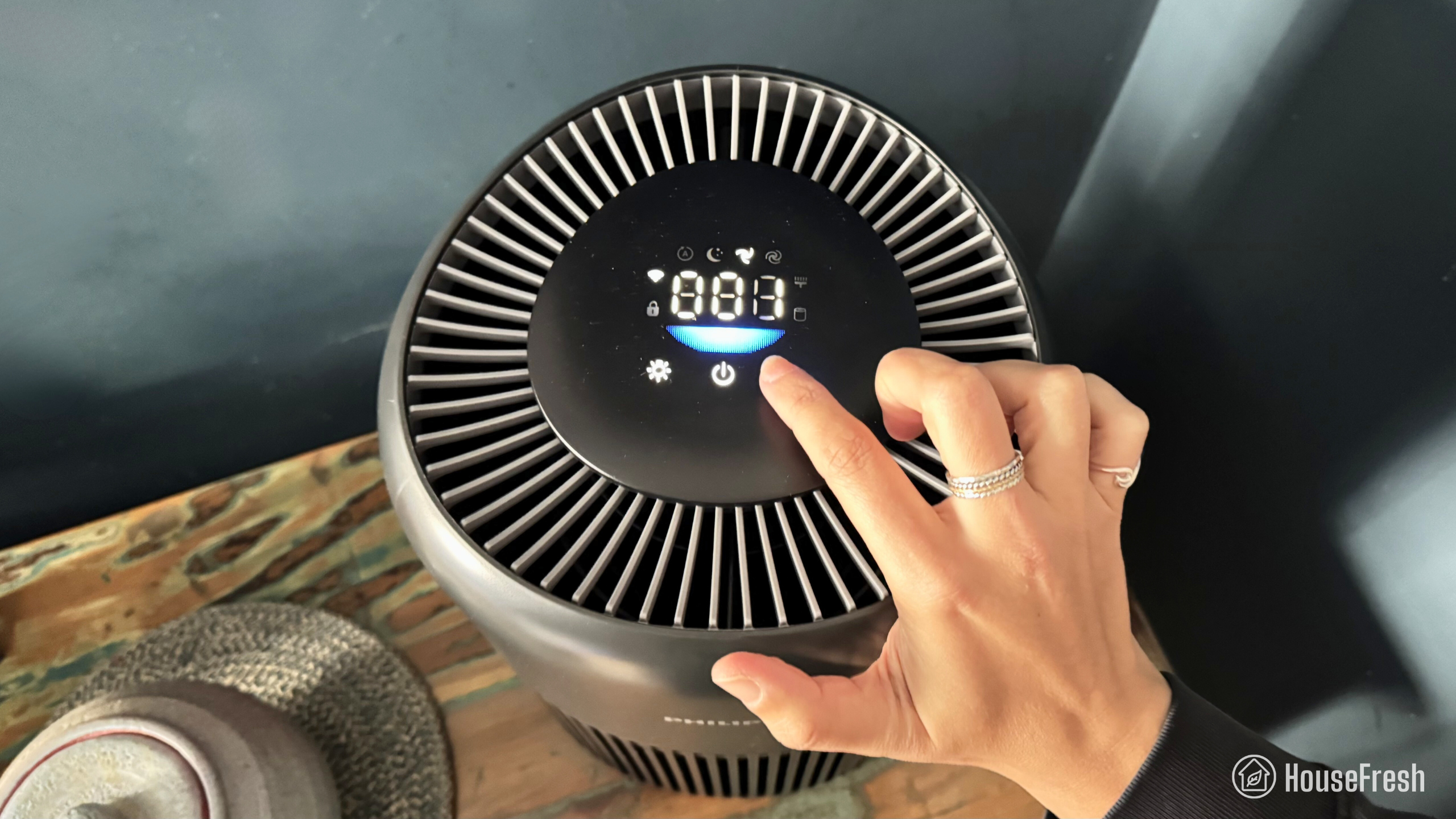
You also get app support through the Philips Air+ App, so you can control your 900 remotely, set schedules, access historical air quality data, adjust the lights on the screen, and customize smart modes.
CONS
PROS
| Clean air delivery rate (CADR): | – Top speed PM1 CADR: 250 m3/h – Sub-45 dBA PM1 CADR: 155 m3/h |
| Filter technology: | Outer pre-filter mesh, particle filter and pelleted activated carbon layer |
| Recommended room size: | 20.5 m2 (5 air changes per hour) |
| Dimensions: | 36.4 x 24 x 23.8 cm |
| Weight: | 2.5 kg |
| Noise level in decibels from 3 ft. away: | Sleep mode: 34.7 dBA Speed 1: 42.3 dBA Speed 2: 54.5 dBA |
| Electricity consumption in watts: | Standby: 1.2 watts Speed 1: 6.9 watts Speed 2: 19.8 watts |
| Filter lifespan: | 12 months |
| Manufacturer’s warranty: | 2 years |
| Country of origin: | Netherlands |
| Country of manufacture: | China |
GoveeLife Smart Air Purifier 2
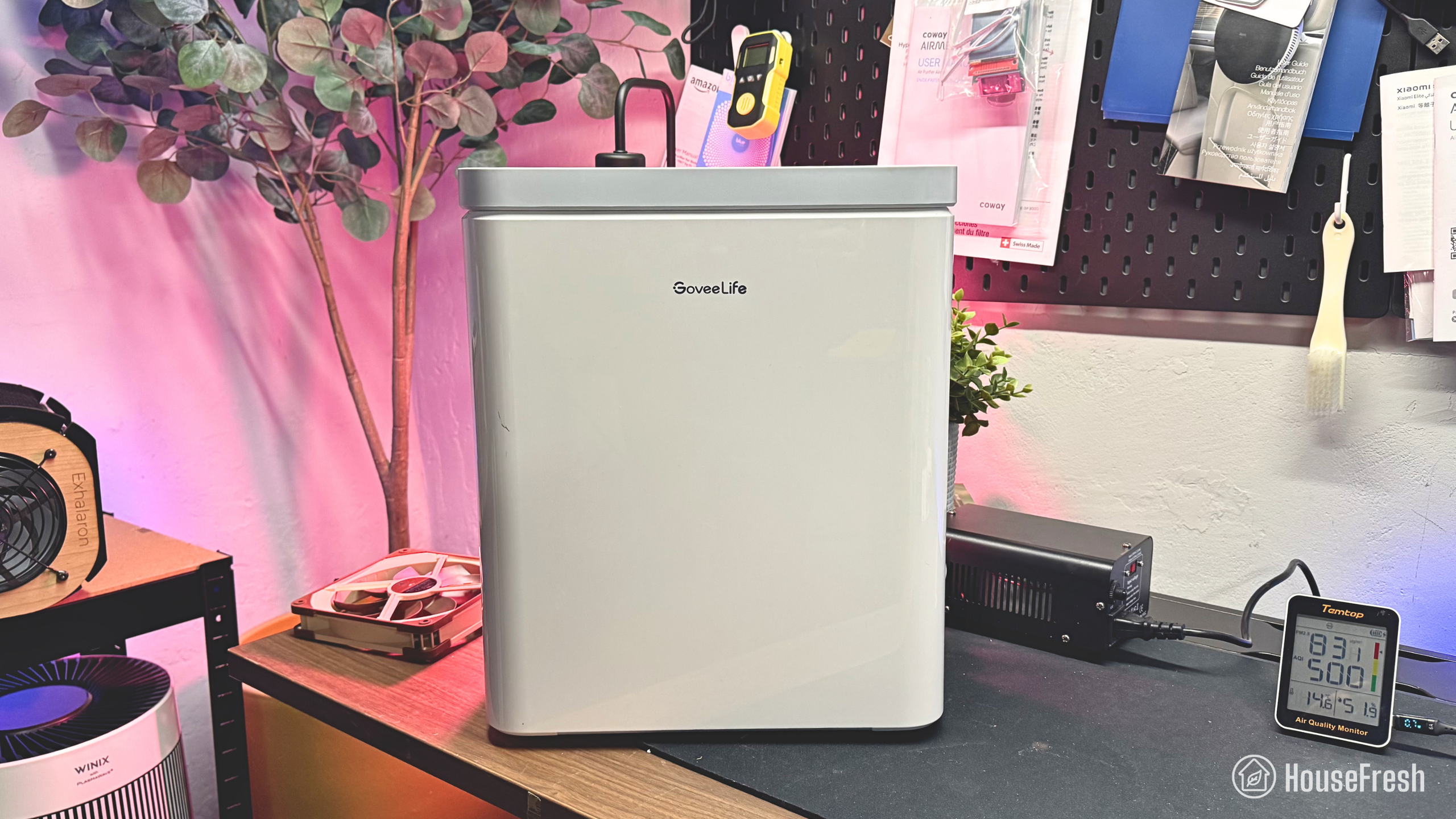
The GoveeLife Smart Air Purifier 2 is a small, rectangular unit that fits most desks and tabletops. A good small pick for those of you who don’t like the sound and/or look for cylindrical models.
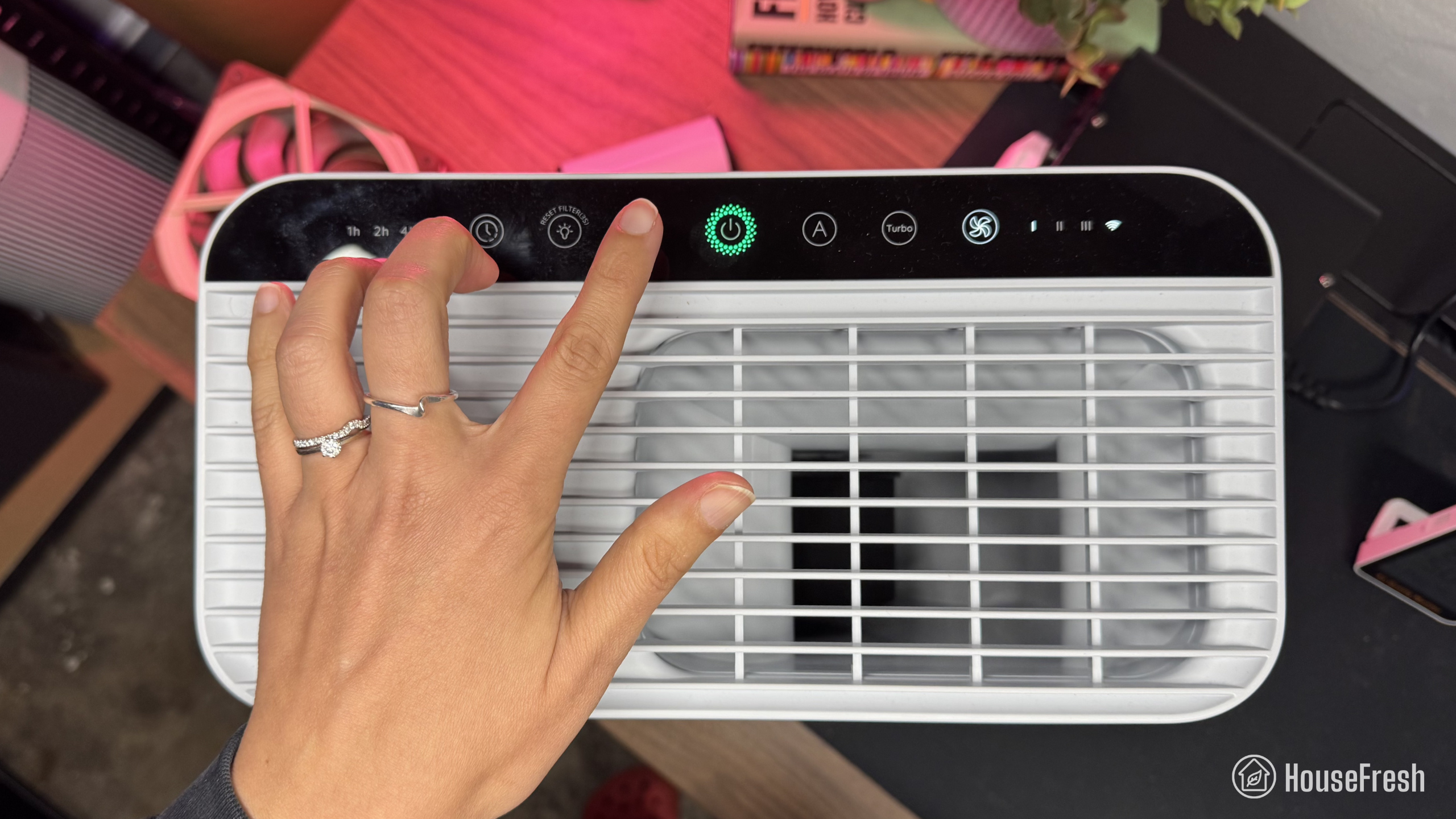
It comes with an onboard sensor, air quality indicator light and app connectivity through the Govee Home app. It’s also a Matter-certified device, so you will be able to connect it to your smart home system.
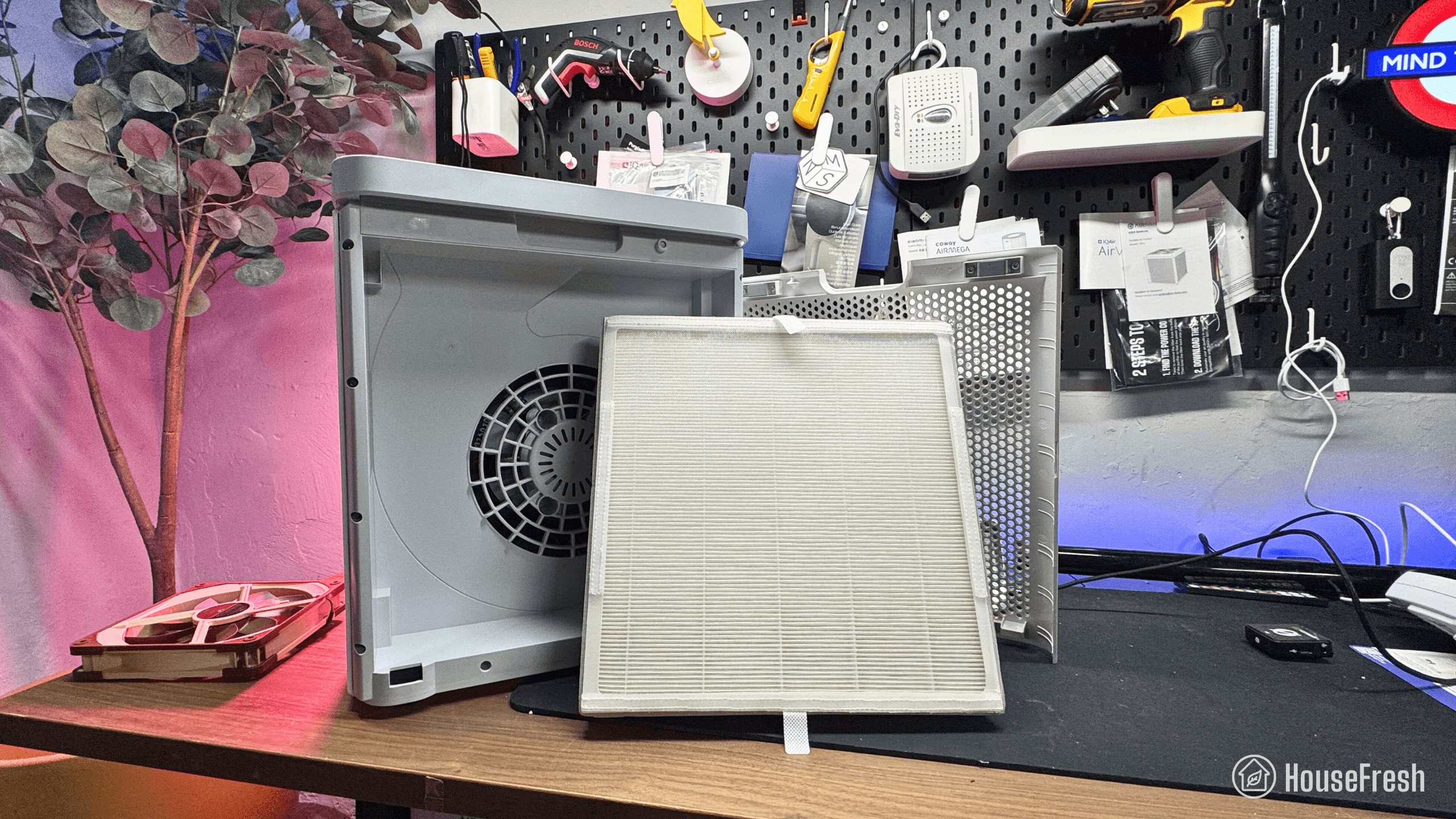
It comes with a bonded particle and carbon filter, and completed our particle removal test in 40 minutes, so we estimate a PM1 CADR of 249 m3/h – can provide five air changes per hour in spaces up to 20.3 m2.
5. Best for quiet spaces: CleanAirKits Luggable XL Ultra
An eco-friendly PC-fan powered air purifier with incredible performance-to-noise ratio and the lowest long-term running costs I’ve seen.
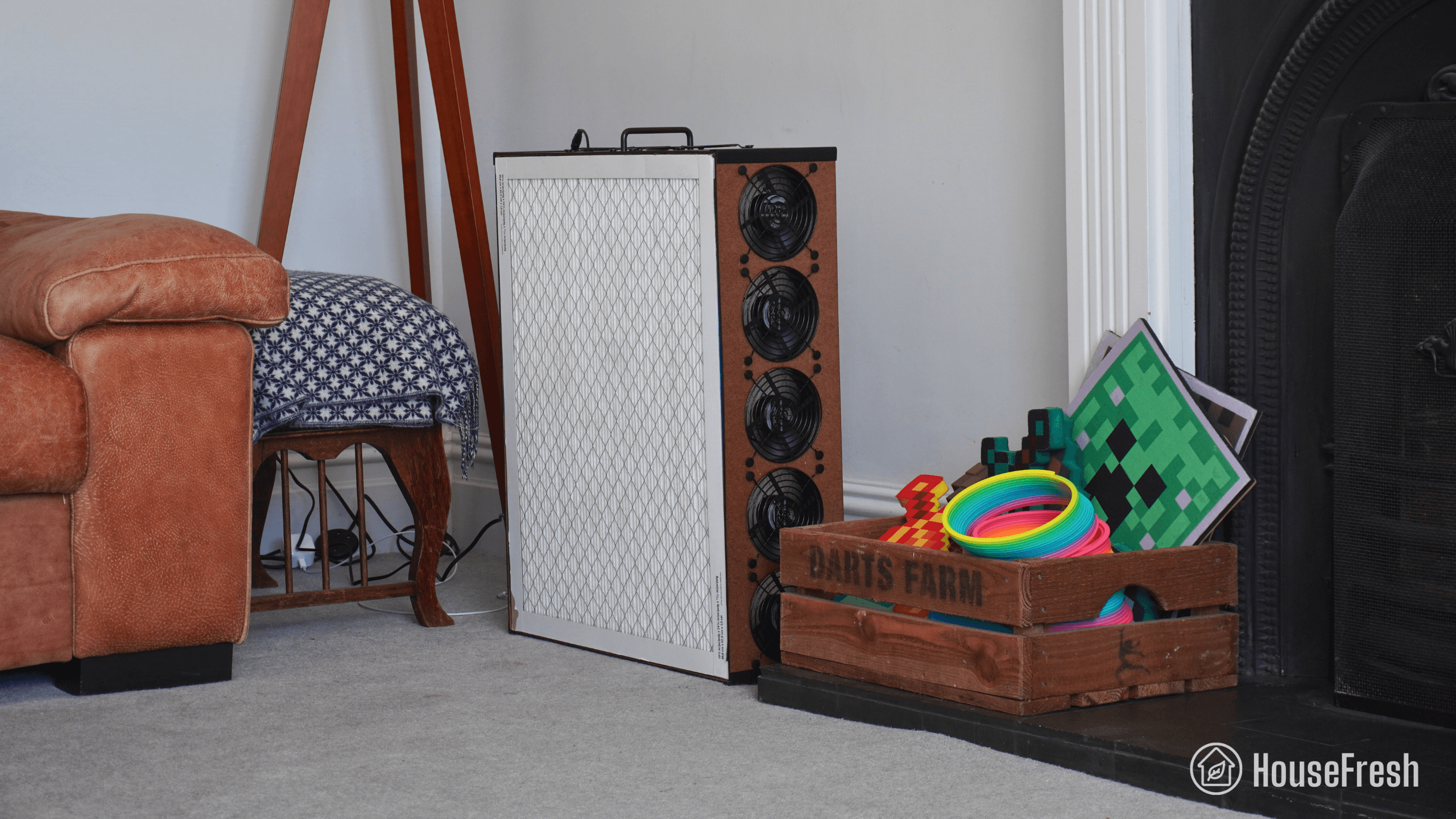
The Luggable XL Ultra is an eco-friendly air purifier, powered by seven PC fans and two MERV 13 filters, resulting in an estimated PM1 CADR of 535 m3/h with a sound level of 47.2 decibels! That means this air purifier can clean the air five times per hour in rooms up to 43.9 m2.
The DIY kit comes with nearly everything you’ll need to build it at home, including seven CoolerMaster Mobius 120P PC fans.

These PC fans are the secret behind the incredible quiet performance of the Luggable. For a traditional air purifier to match this level of quiet performance, you have to buy a much larger, much more expensive machine and run it on its lowest settings.
You’ll only need to buy two 20×25×1 MERV 13 filters. You could use any brand, but we recommend the 3M Filtrete MPR1900.

This combination of energy-efficient PC fans and 25×20 non-branded filters leads to incredibly low long-term running costs. Over a period of 12 months, you can expect to spend £34.72 on filter replacements and £40.15 on electricity costs.
CONS
PROS
| Clean air delivery rate (CADR): | – Top speed PM1 CADR: 535 m3/h – Sub-45 dBA PM1 CADR: 482 m3/h |
| Filter technology: | MERV 13 filter (20x25x1) |
| Recommended room size: | 43.9 m2 (5 air changes per hour) |
| Dimensions: | 50.8 x 63.5 x 17.7 cm |
| Weight: | 3.6 kg |
| Noise level in decibels from 3 ft. away: | Speed 1: 44.1 dBA Speed 2: 47.2 dBA |
| Electricity consumption in watts: | Speed 1: 12.06 dBA Speed 2: 16.43 dBA |
| Filter lifespan: | 12 months |
| Manufacturer’s warranty: | 1 year |
| Country of origin: | United States |
| Country of manufacture: | United States |
Nukit Tempest Pro
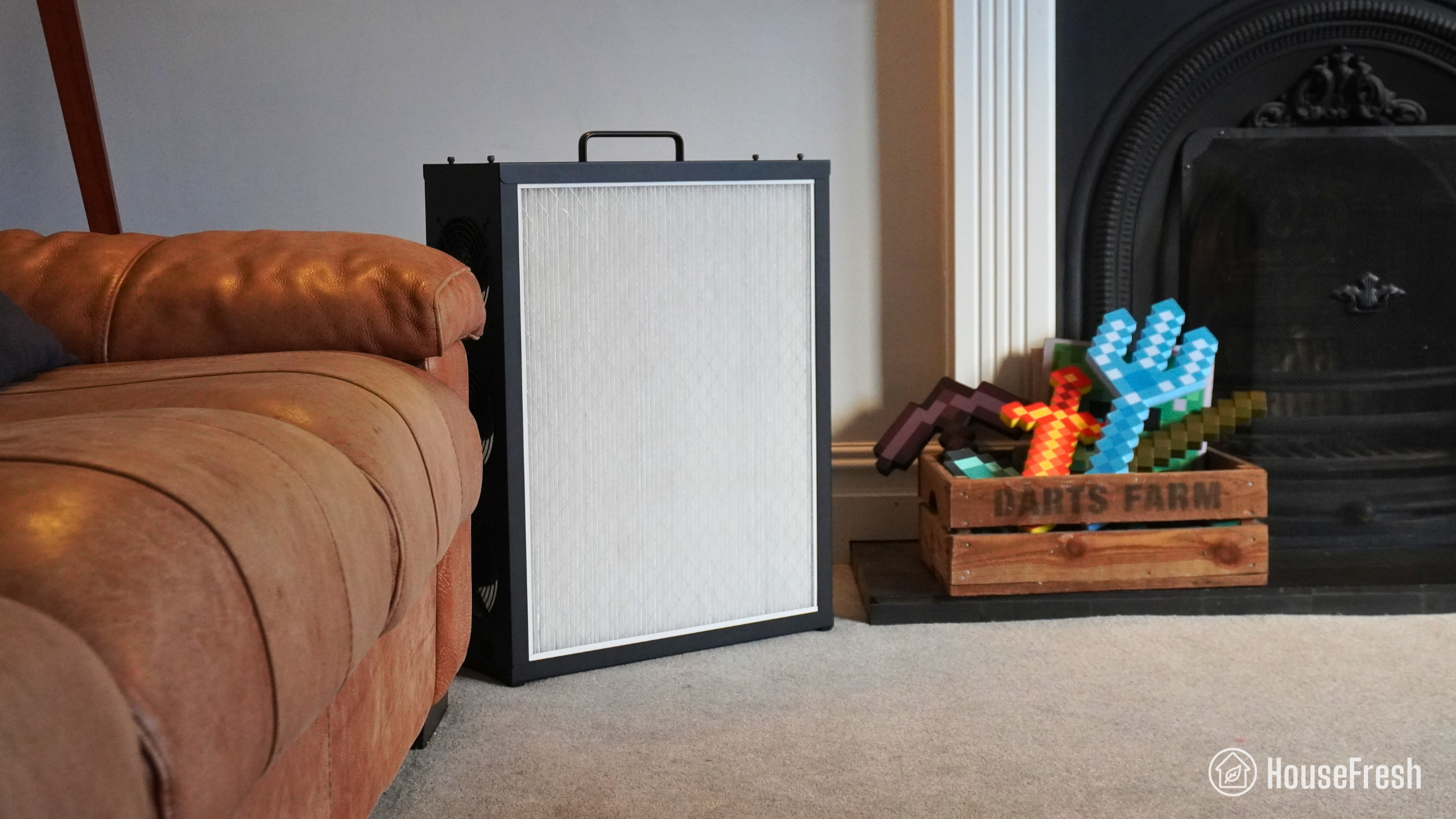
Unlike the lightweight wooden frame of the Luggable Ultra (above), the Nukit Tempest Pro features a steel body. As I said in my review, it takes one look at this thing to know that you’re buying it for life.
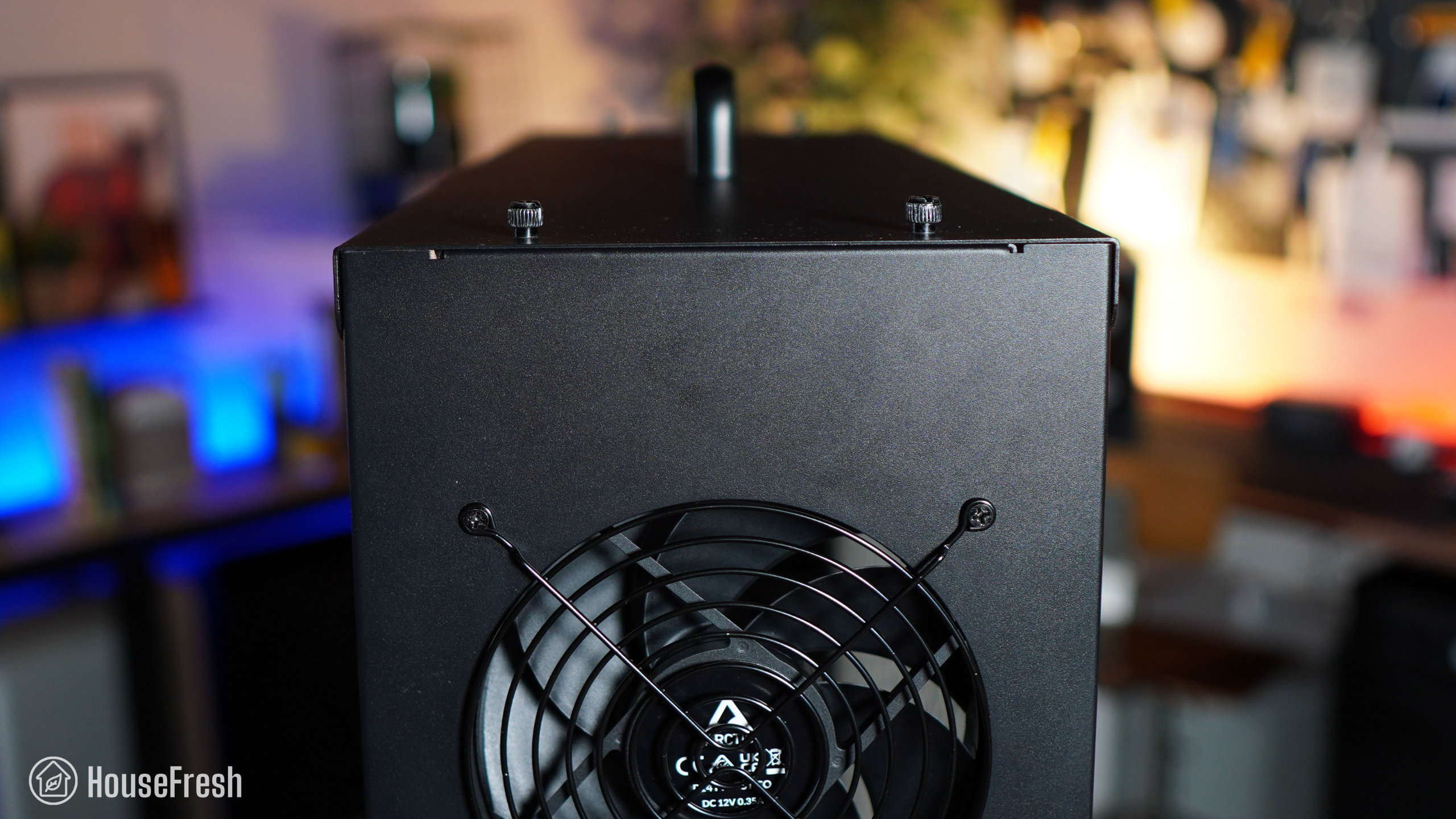
It uses six PC fans that come in the box with everything else you need to build the air purifier, except the filters. You can place it on the floor, or you can mount it on the wall – you get the wall mounts inside the box, too.
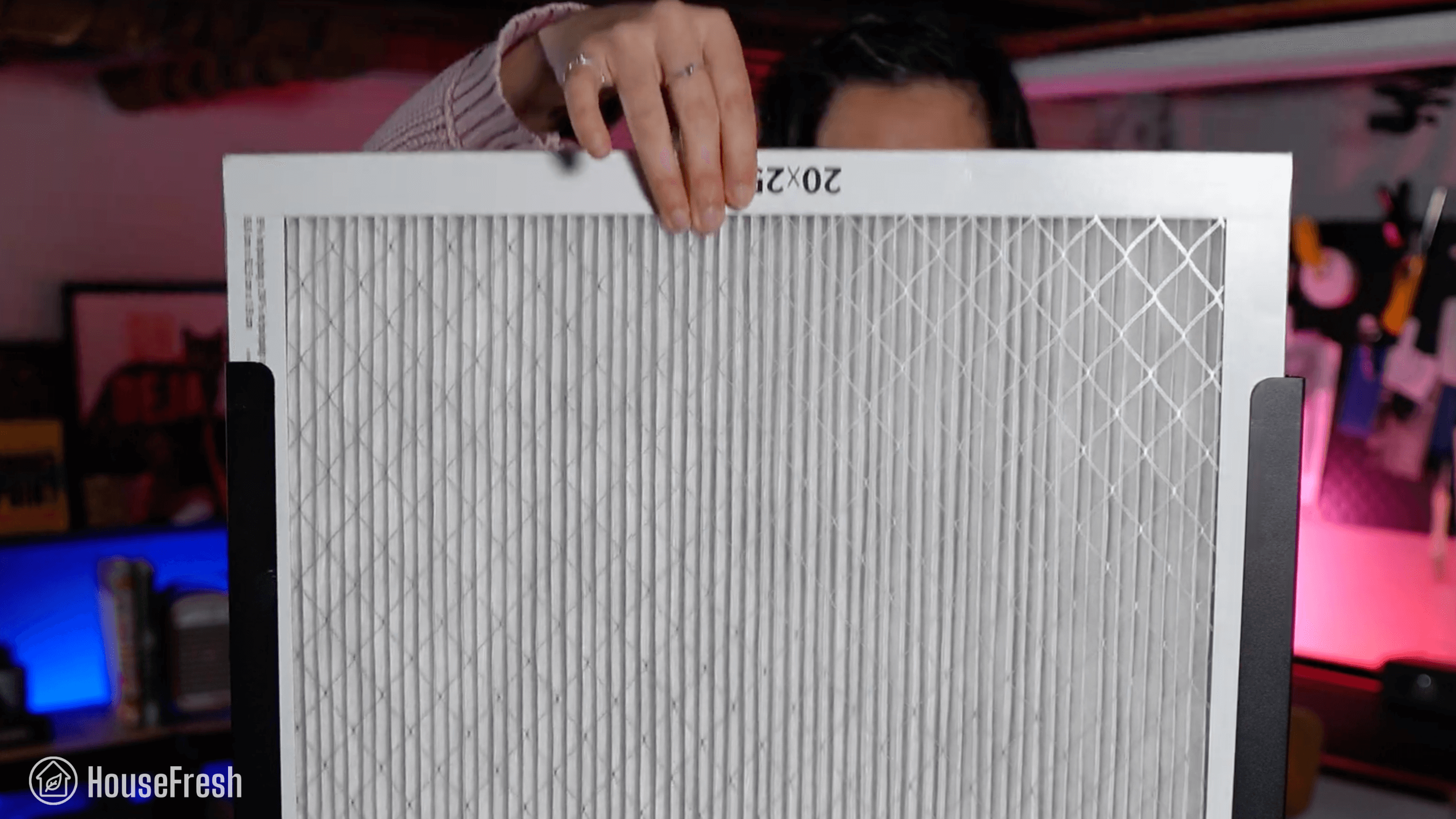
It uses the same 20×25 MERV 13 filters as the Luggable Ultra, and completed our particle removal test in 33 minutes while generating just 39.1 dBA of noise! We estimate a PM1 CADR of 319 m3/h and can provide five air changes per hour in spaces up to 26.2 m2.
What to look for when buying an air purifier
My top tips on what you should consider before you buy your first air purifier.
The specific features you should look for when buying an air purifier depend on why you’re buying it and the room where you’d like to use it. But, regardless of the use case and your budget, there are some things that will ALWAYS be important to consider.
1. The size of the room and the CADR (clean air delivery rate) of the air purifier.
According to the EPA, for an air purifier to be truly effective, it should provide at least 4.8 air changes per hour (ACH) in a room. However, many air purifier brands overstate the cleaning performance of their units, advertising room size coverage based on just one air change per hour.
We made a handy CADR calculator so you can enter the size of your room to find out how much CADR (in cfm or m3/h) an air purifier needs to clean the air in that specific room size 4.8 times per hour:
NOTE: The room size recommendations in the SPECS tables beneath each of the air purifiers I recommended in this article are calculated based on five (5) air changes per hour.
2. The types of filters
The most common types of filters in an air purifier include three stages of air filtration:
| PRE-FILTER | Pre-filters trap larger particles that would otherwise clog the main filter faster (like pet hair). | > TIP: The best units feature a removable pre-filter, making it easier to vacuum, rinse, and keep in top shape. This is a must for pet owners! |
| ACTIVATED CARBON FILTER | Activated carbon filters adsorb chemical gases and odours. | > TIP: If you need to deal with serious VOCs or unwanted odours, look out for pelleted or granular activated carbon, which has a wider surface to collect pollutants compared to impregnated carbon fabric. |
| PARTICLE FILTER | Particle filters remove microscopic particles from the airstream. They could have different grades, such as HEPA H13 or MERV 13. | > TIP: You don’t need to buy an air purifier with a HEPA filter to get good particle filtration. In fact, sometimes a denser filter like HEPA H13 won’t lead to better performance. It’s better to focus on CADR figures to decide whether a particular air purifier model will be good enough for your specific space. |
3. Noise output
The fan that powers your air purifier can generate a lot of noise, and you are unlikely to want to use your unit regularly if this noise becomes too much. That is why it’s worth factoring in how noisy the model you want to buy will be, especially if you want to use it in your bedroom or home office.
Two things to consider:
- Smaller units won’t make much of a difference to the air when running at the slowest fan speed, and they tend to be noisier than larger ones at top speed.
- Some air purifiers suited for big spaces can be whisper-quiet at their lowest fan speeds, so it is worth going bigger to get a unit that runs quieter.
4. Long-term costs
In addition to the upfront cost of buying an air purifier, you should also consider associated maintenance costs, such as electricity use and filter replacements. Here are some tips to estimate long-term running costs:
- Manufacturers usually provide electricity usage in watts (approximation to real-life), so you can use this Electricity Cost Calculator to find out how much the model you’re interested in could add to your electricity bill.
- Filter replacement costs vary by brand and model, and so does the filter lifespan you can expect. Use the lowest estimate suggested by the manufacturer on their website as your base to calculate how much you can expect to pay per year:
( £ of the filter / 12 months ) x filter lifespan = yearly filter cost
- The longer a unit has been on the market, the more likely that you’ll find good-quality generic filters that will be cheaper than branded ones.
5. Extra features
A comprehensive control panel with smart functions, app support, onboard air quality sensors or remote controls are handy perks that can make life easier. A no-lights mode for the bedroom, for example, is definitely something worth considering.
However, if asked, I would recommend not sacrificing CADR or performance for fancier tech-y bonuses. After all, the purpose of an air purifier is to clean the air.
How we test air purifiers
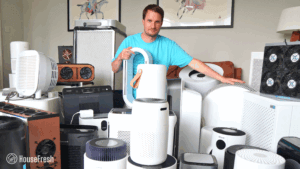
Saying we tested over 120 air purifiers in the last five years sounds great, doesn’t it? But what does testing mean for HouseFresh?
HouseFresh is fully data-driven, and our findings are openly published on the site.
Since 2020, I’ve been conducting particle removal, sound, energy and features tests in the same space to gather comparable data. Performing all these tests in the same location, under the same conditions, allows me to compare air purifiers like-for-like and draw consistent conclusions.
We don’t blindly repeat manufacturers’ specifications and marketing claims without further research or hands-on testing. In fact, we don’t have any special relationships and don’t accept any form of sponsorship from brands.
I buy every device with my own money to remain unbiased, and I’m confident that our tests reveal what manufacturers won’t tell you.
Common questions people have about air purifiers
Many mechanical air purifiers also feature a built-in ionizer that can boost the units’ CADR and efficiency by electrostatically charging particles in the air, making them easier to capture. This process has been proven to generate chemical byproducts, such as ozone, which can be detrimental to the health of those with pre-existing respiratory conditions.
Although ionizing technology is continuously evolving, at HouseFresh, we prefer to recommend air purifiers without ionizer functions or those where the ionizer can be disabled at the touch of a button, such as the PlasmaWave technology in Winix devices.
It depends. More often than not, expensive air purifiers get boosted because the associated commissions are higher than those for budget-friendly air purifiers. There are plenty of overpriced units out there with shockingly low cleaning performance that are best to avoid, such as the Molekule Air Mini+.
Smart features also build up in a unit’s price tag, so if you are into auto modes, air quality readings, or remote app control, you might consider chipping in an extra quid.
Usually, one powerful air purifier is more convenient than two or more smaller units. Although a larger, high-performing unit will have a larger footprint and take up more space, the long-term costs (filters, energy bills) and noise output would double or triple with more than one air purifier running constantly.
That being said, if you have a very large space (think 75+ m2.), then you might be better off placing multiple air purifiers around the room. In this thorough guide to ventilation and air purifiers, you will find an example of someone who chose multiple units to clean the air in her large loft.
Finding the right spot to place an air purifier is key. Height is only one variable, but ensuring the unit is far enough from the wall or furnishing to draw in enough air is as important. And so it is that the air purifier has the right CADR to effectively achieve enough ACH in the room.
Now, in terms of height, the ideal placement will depend on how you’ll use the air purifier. In bedrooms, for example, it is best to place the unit 2-3 ft off the ground to take advantage of the clean airflow near your face while you sleep. But if the unit will be in the kitchen, it’s best to place it near the source of pollutants.
The idea is to keep the air outlet close to the source of pollutants and to your breathing zone.
Short answer: yes, air purifiers definitely remove dust.
The woven fiber maze of particle filters captures larger, coarse particles (such as pollen, dead skin flakes, dust mites, mold spores, pet fur or dander) and tiny ones as small as 0.3 and sometimes 0.1 microns (fine dust, soot, smoke, viruses and bacteria).
As this particulate matter (usually called PM10 and PM2.5, referring to the particle sizes) is trapped by the filter, it’s permanently removed, unable to reenter your indoor air.
There are a few things to consider:
- Placement: Finding the right spot for your unit is of super important. To ensure good airflow, avoid obstructions at both the inlet and outlet.
- Maintenance: Replace the filters when needed and keep the unit clean, removing any particle or dust debris on the device. A not-so-demanding routine will help keep your air purifier in top shape for longer.
- CADR: Make sure to choose a unit with the right CADR for the room where you’ll place it. If the CADR is too low, it will make little difference to your air. Try to stick to 340 m3/h as a minimum if you can afford it.
Wrapping up
My goal when launching HouseFresh was (and continues to be) to help consumers find the right air purifier to fit their needs and, most importantly, their budget.
I want our readers to find actual, helpful solutions. If you haven’t found a model that suits your space or meets your requirements, feel free to drop a comment below or send me an email to danny@housefresh.com, and I’ll reply personally as soon as I can.
February 17th, 2026
- Published our first edition of this guide, shortlisting the best air purifiers in the UK. No edits to report yet 🙂