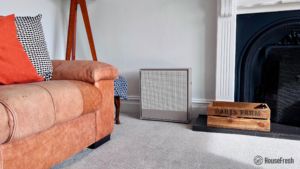
The highest CADR air purifiers I have tested were designed for commercial spaces.
But what if you wanted something that not only looks good in the home but also comes with all the features you expect from a residential air purifier? Enter the Coway Airmega ProX.
The ProX is the largest model in the Coway Airmega line of air purifiers. But does size equal better performance? We bought one to find out.
The overall score for the ProX incorporates first-hand data results from our battery of tests, as well as our ratings for customer service, brand transparency, and design & UX. Check out the full scorecard below to see the split of categories.
Search for the ProX (or any other model you are researching) to see where it ranks:
The pros and cons of the Coway Airmega ProX
A summary of our top-level findings after testing this air purifier, following our methodology.
“The ProX isn’t cheap, is heavy and takes up a lot of space… but I have to say I’m a big fan.
I like that Coway has dropped the use of an ionizer that we have seen in older models but still managed to provide outstanding air cleaning power with mechanical filtration alone. And they did this without the loud noise and high energy consumption that usually comes with high CADR.”

HouseFresh Founder
& Lead Tester
CONS
PROS
| Clean air delivery rate (CADR): | – Top speed PM1 CADR: 462 cfm – Sub-45 dBA PM1 CADR: 299 cfm – AHAM dust CADR: 586 cfm |
| Filter technology: | Two washable pre-filters and two Max2 filters (Green True HEPA and activated carbon) |
| Recommended room size: | 693 sq. ft. (5 air changes per hour) |
| Dimensions: | 18.9 x 36.6 x 24.3 in (48 x 93 x 62 cm) |
| Weight: | 51 lbs (23kg) |
| Noise level in decibels from 3 ft. away: | Speed 1: 37.4 dBA Speed 2: 44.4 dBA Speed 3: 53.6 dBA |
| Electricity consumption in watts: | Standby mode: 0 watts Speed 1: 11.76 watts Speed 2: 26.09 watts Speed 3: 58.88 watts |
| Filter lifespan: | 12 months |
| Manufacturer’s warranty: | 3 years |
| Country of origin: | South Korea |
| Country of manufacture: | China |
Filtration technology
You get Coway’s signature Green True HEPA and pelleted activated carbon, times two.
The ProX has two sets of Max2 filters, one at each side, and unlike the popular AP-1512hh, it doesn’t come with an ionizer function.
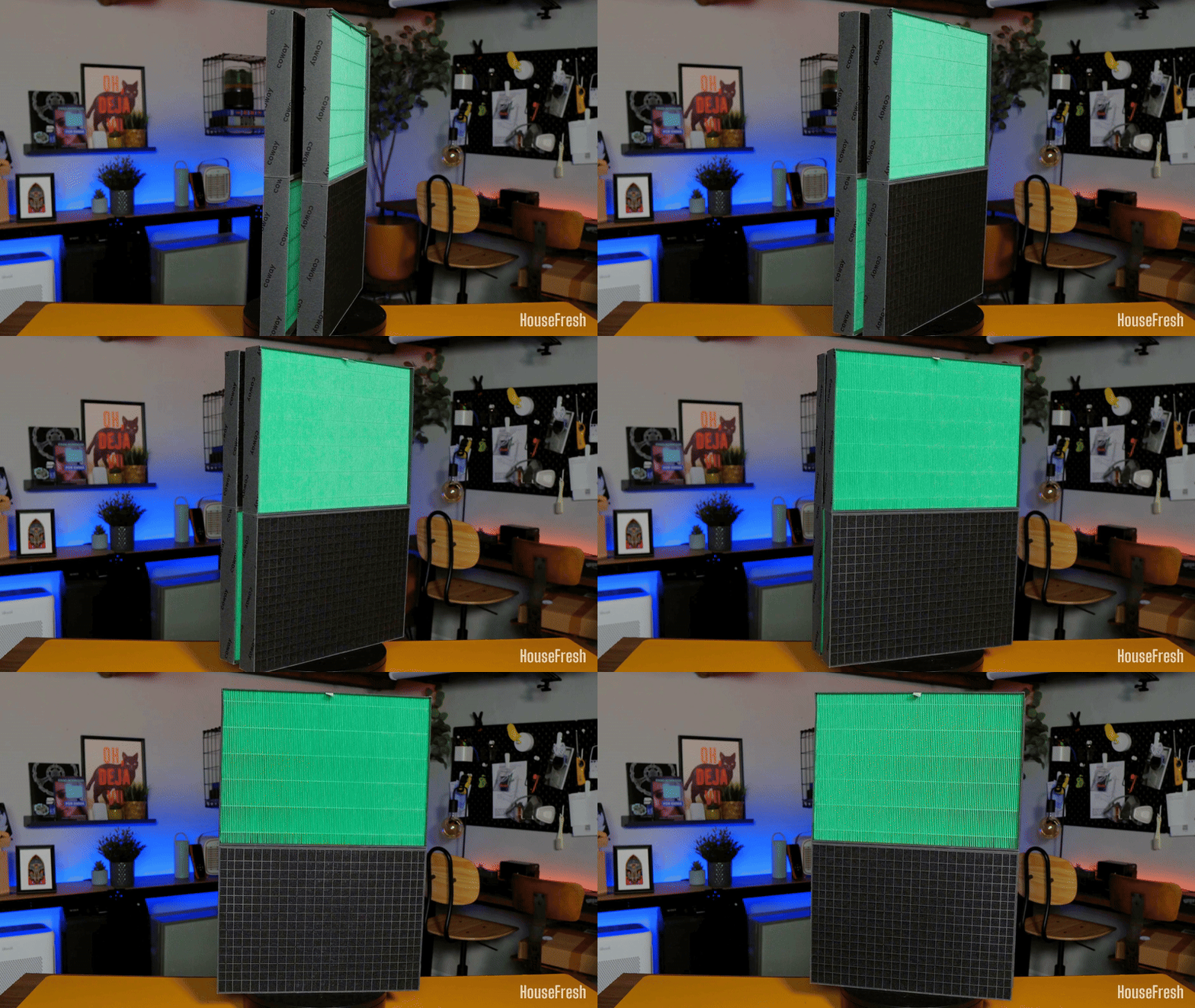
The filters themselves are bonded filters that combine two Green True HEPA filters with an activated carbon filter.
The filters are bonded, so you’ll need to replace them once the carbon is full, which might happen before the particle filter is at the end of its life.
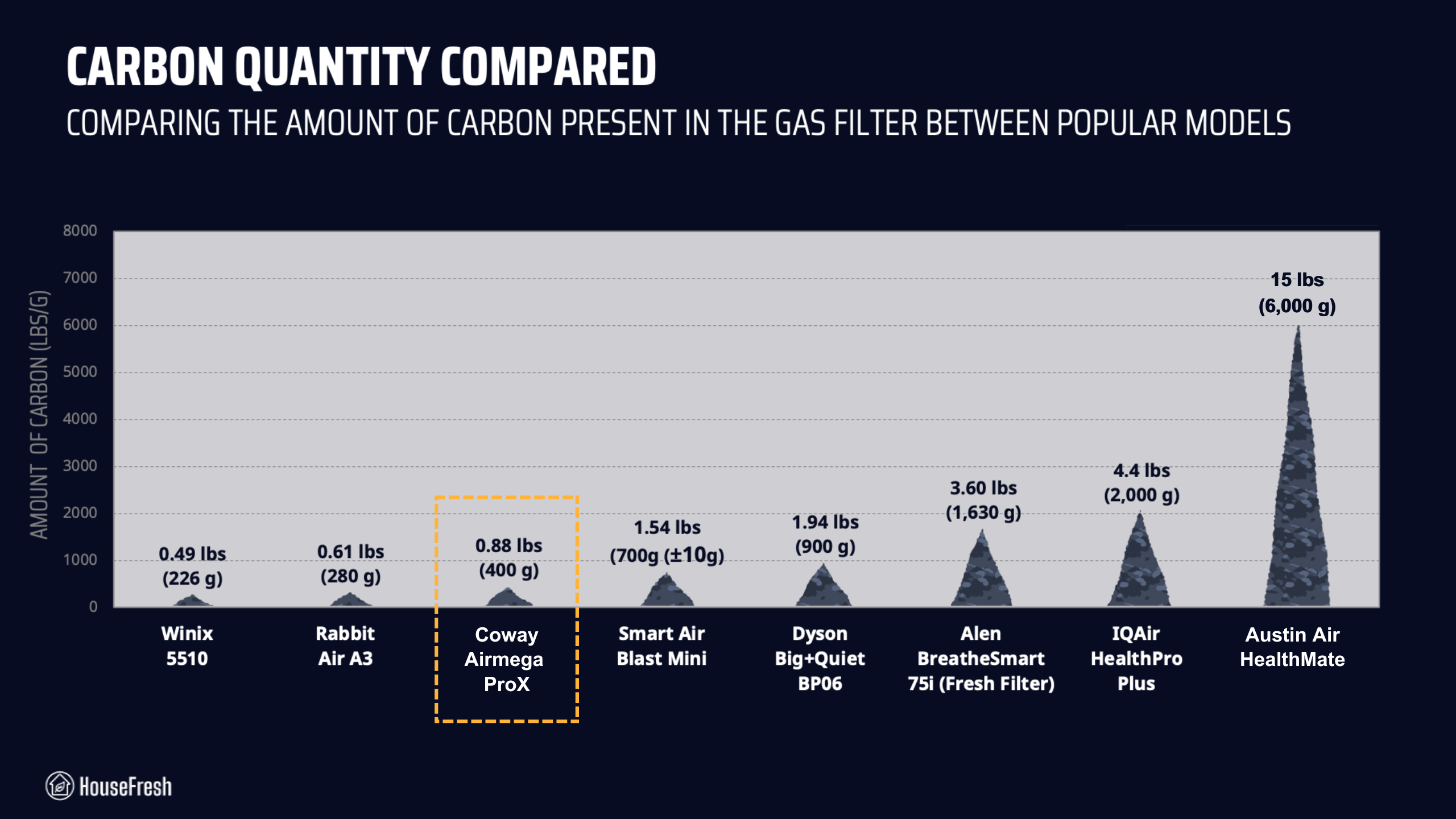
According to this Redditor, the Max2 filters in the ProX container 0.88 lbs of pelleted activated carbon. Be aware that this won’t be enough to address serious odor and VOC issues.
Design, controls and app features
It has the same retro feel as other new Airmega models, with muted colors and hard lines.
The ProX is the largest air purifier we’ve tested from Coway, weighing 51 lbs (23.1 kg).
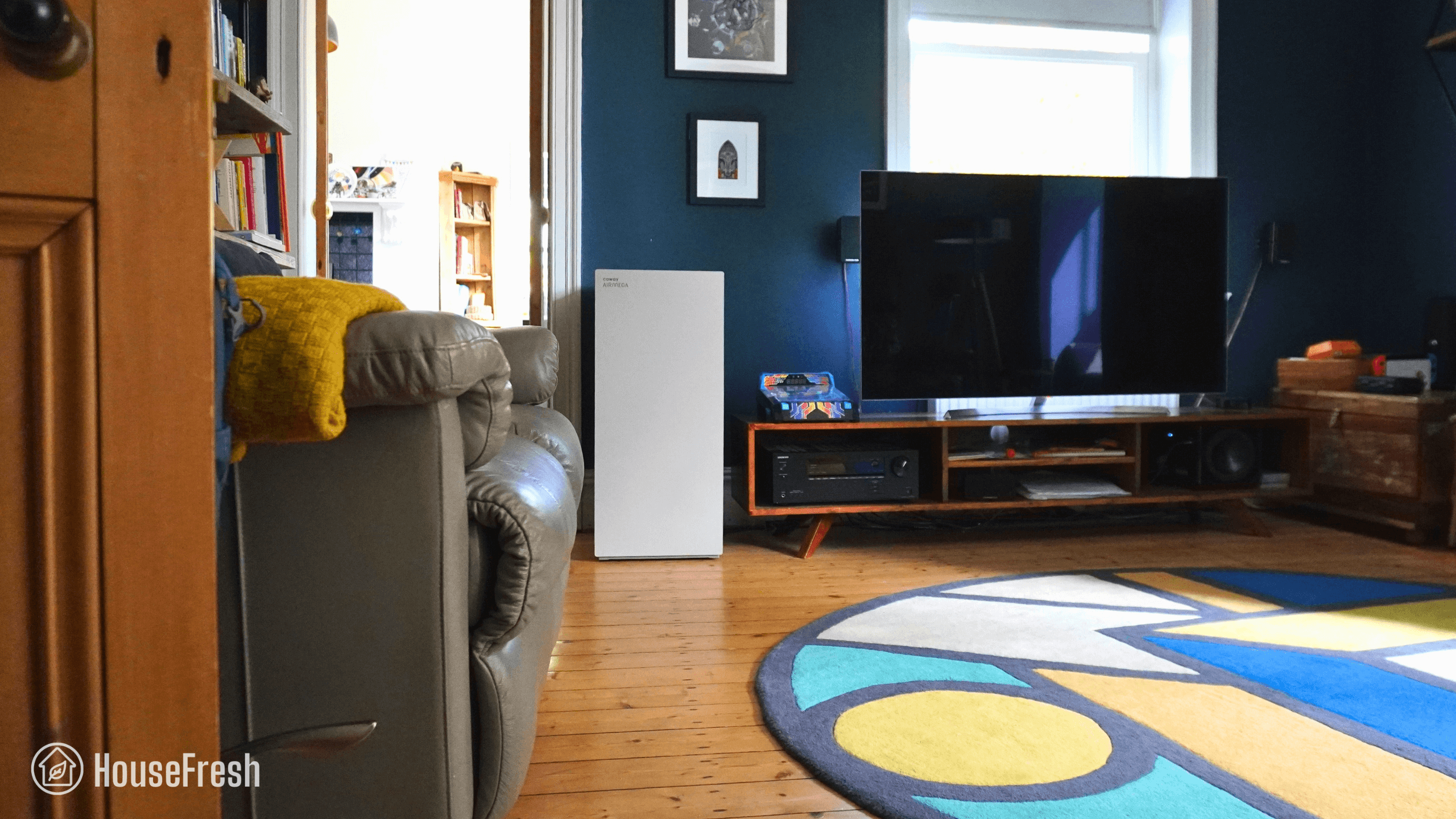
Considering how heavy it is, I was glad to see it has four wheels to move it around – great for hard floors, not so great for carpets.
If you want to lift it, you can use the handles at each side of the device.
The only problem is that if you pull the handles from the wrong angle, you will end up removing the filter cover… which is a little annoying.
It doesn’t include app support, but it has a laser sensor and customizable auto modes.
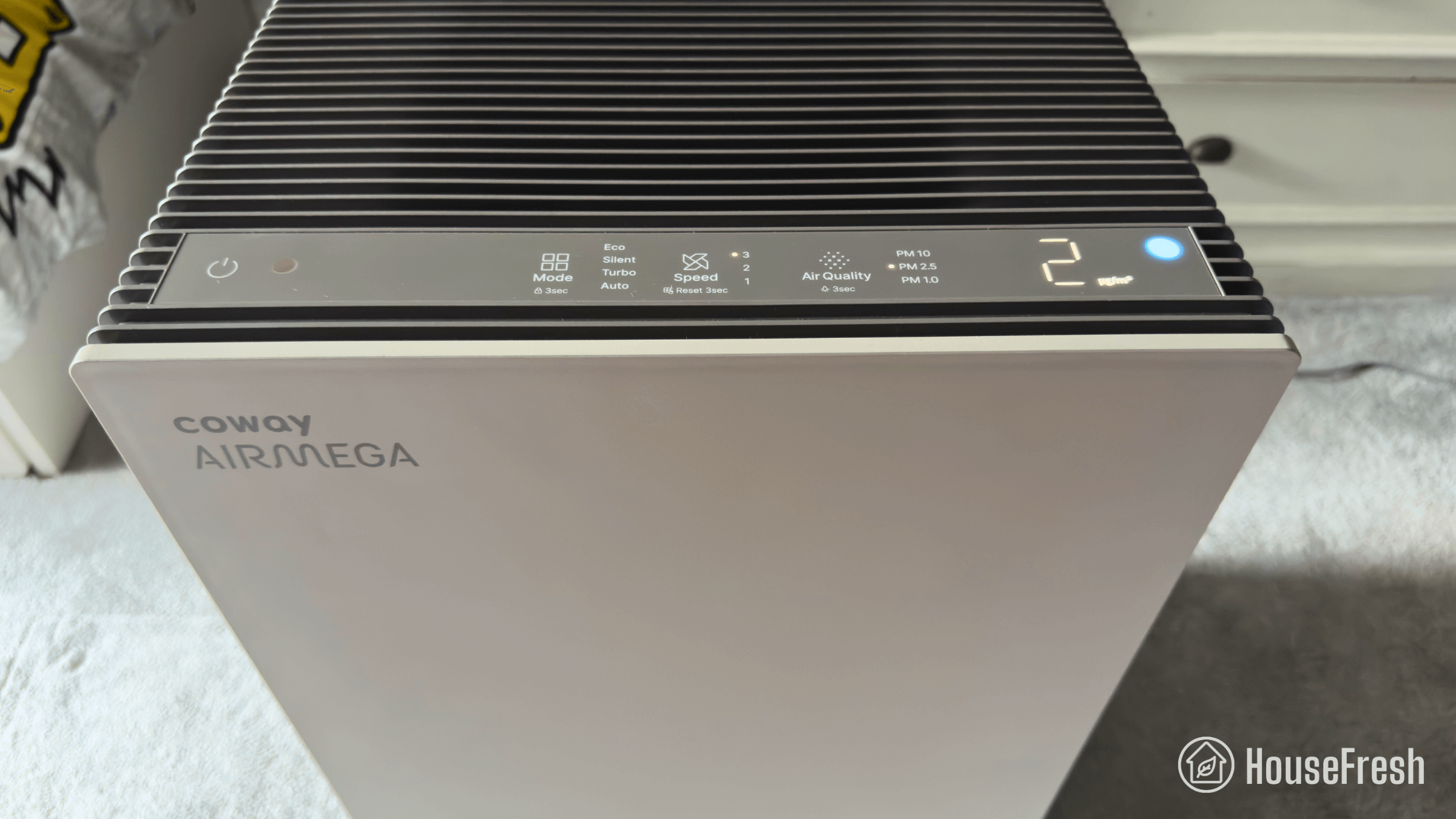
You also get an air quality indicator at the far right, in the form of an LED light that changes color based on your air quality.
The large body of the ProX houses two fans stacked on top of each other on either side of the device, which is something I had never seen before.
Air cleaning performance
We tested the ProX in our 728 cubic ft. test room, tracking how fast it removed all PM1 particles from the air after we filled the space with incense smoke.
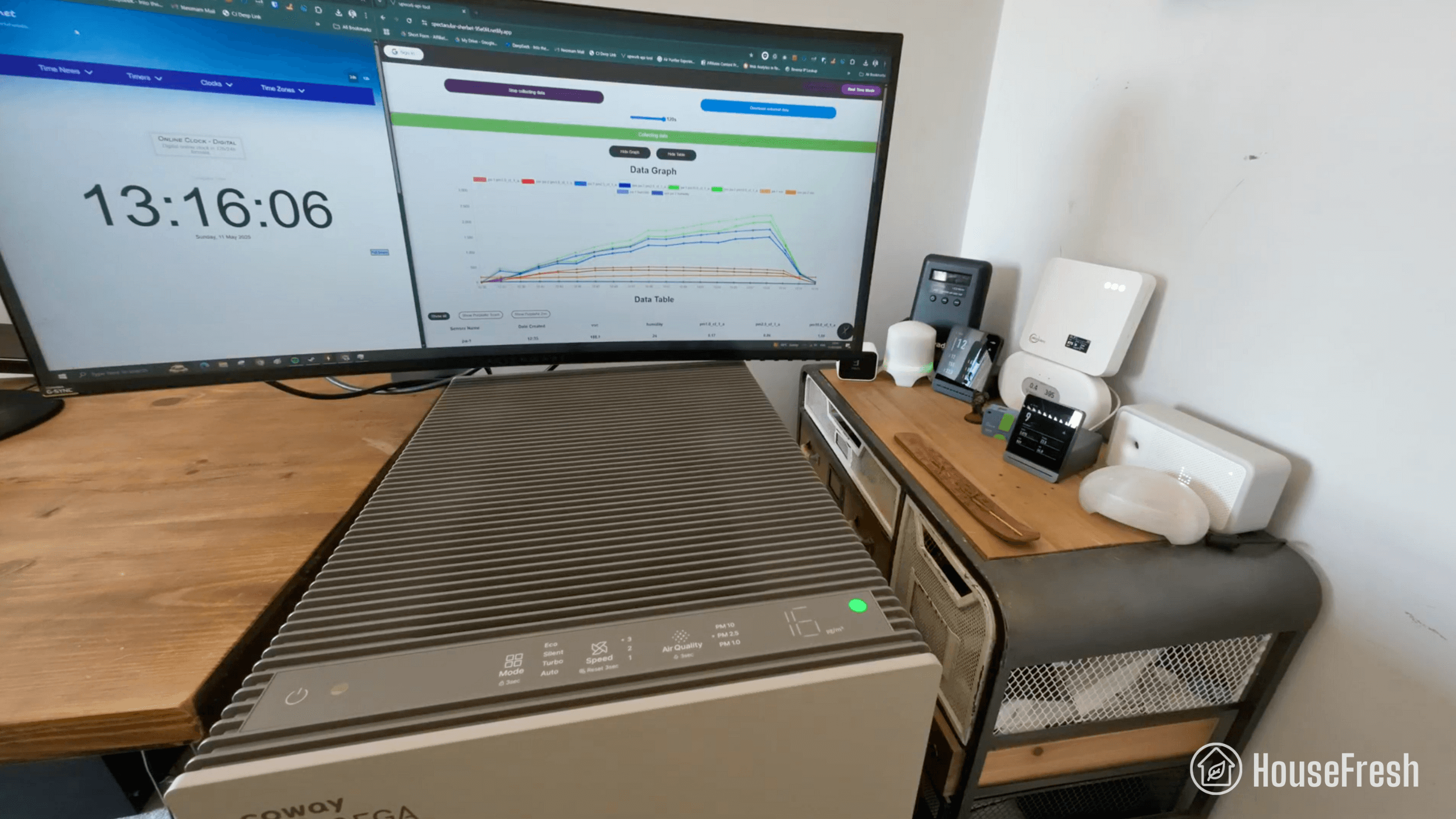
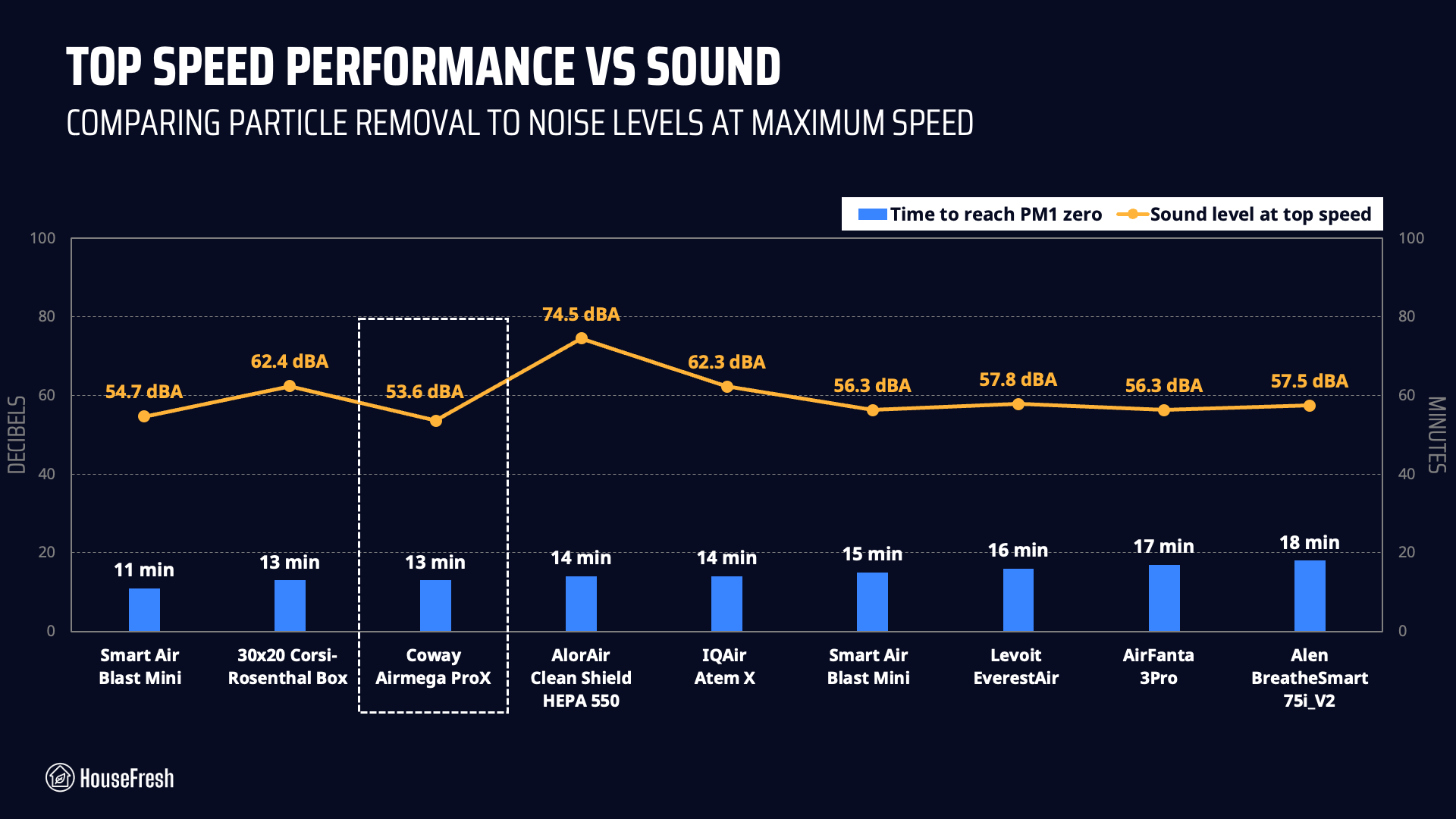
When running at top speed, our PurpleAir Zen sensor shows that the ProX needed 13 minutes to reach PM1 zero. Based on the natural ventilation of our test room, we estimate a PM1 CADR of 462 cfm.
This makes the Airmega ProX powerful enough to provide five air changes per hour in large rooms up to 693 sq. ft.
As you can see from the chart, 13 minutes is the same amount of time it took for our DIY 30×20 Corsi-Rosenthal Box to reach PM1 zero:
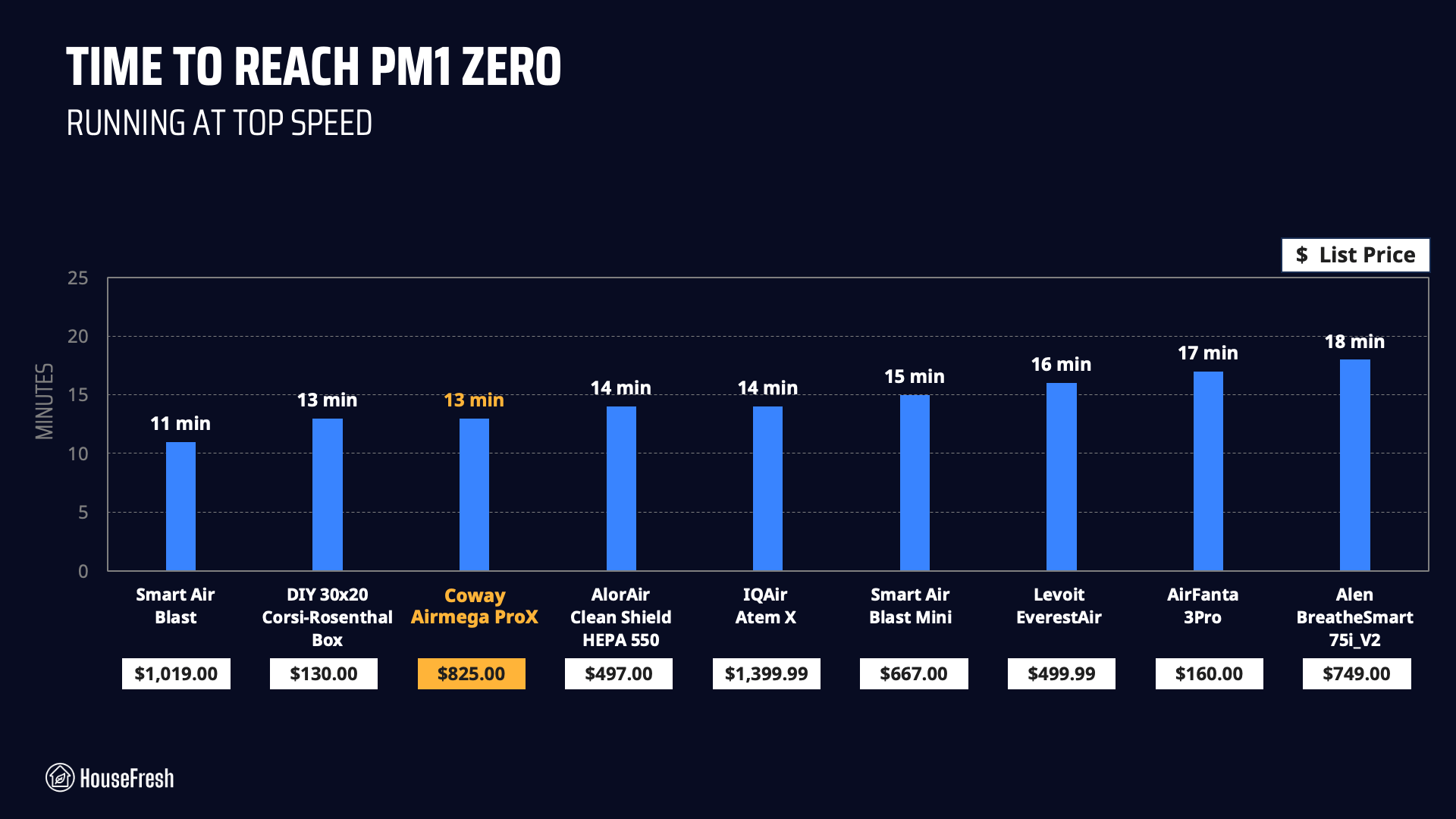
The only device to perform quicker than this was the even larger Smart Air Blast, which completed our particle removal test in a speedy 11 minutes.
We repeated our particle removal test three times across all available fan speeds, which allowed me to estimate PM1 CADR at each fan speed:
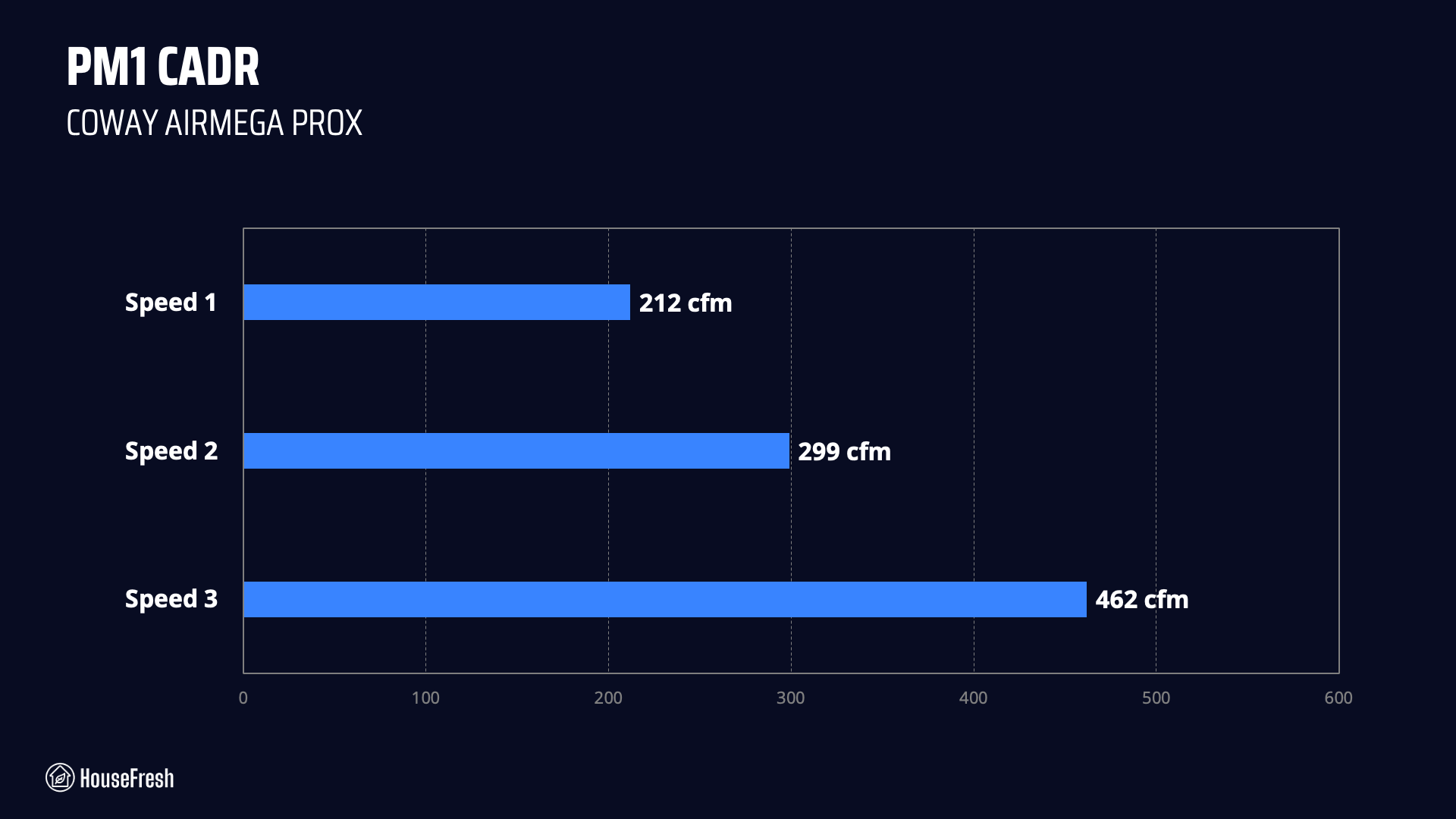
BUT looking at the results of our air cleaning tests in isolation won’t tell us the full story…
Sound levels
The sound levels of the ProX range from 37.4 dBA to 53.6 dBA — considerably quieter than every single large air purifier we have benchmarked it against.
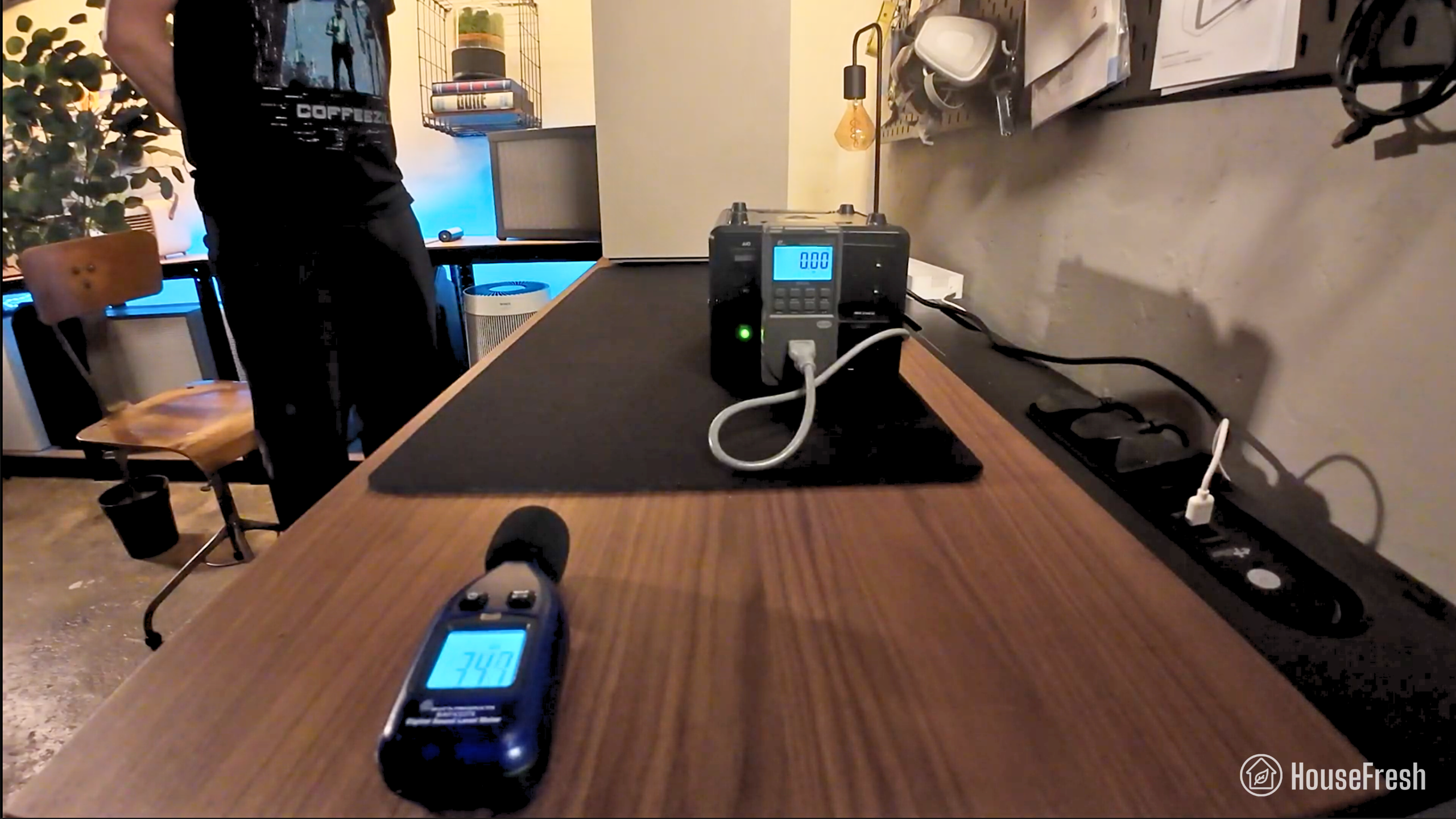
As I always say, if your air purifier is too loud, someone in the house will eventually turn it off.
That is why I used our BAFX sound meter to measure how much noise in decibels the Airmega ProX generates at each fan speed from 3 ft. away:
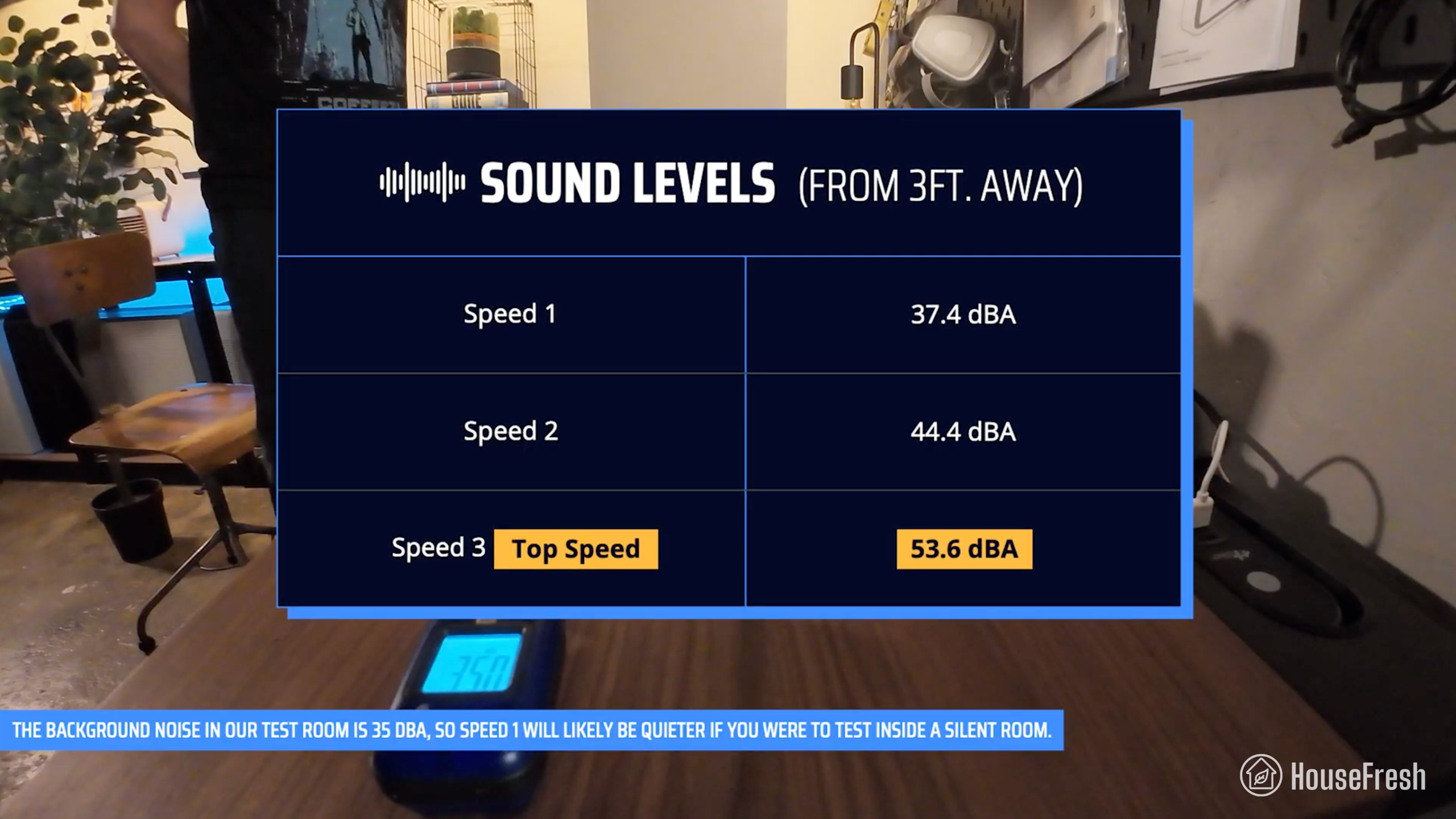
I was surprised by how quiet the ProX is! Hitting 53 dBA at top speed is nothing considering its power.
When comparing particle removal speed to noise levels at top speed, it becomes clear that Coway has nailed performance at quiet operation:
I repeated the HouseFresh CADR test at each fan speed with excellent results.
At speed 2, it reached PM1 zero in 20 minutes while generating 44.4 dBA. And at speed 1, it took 28 minutes at just 37.4 dBA.
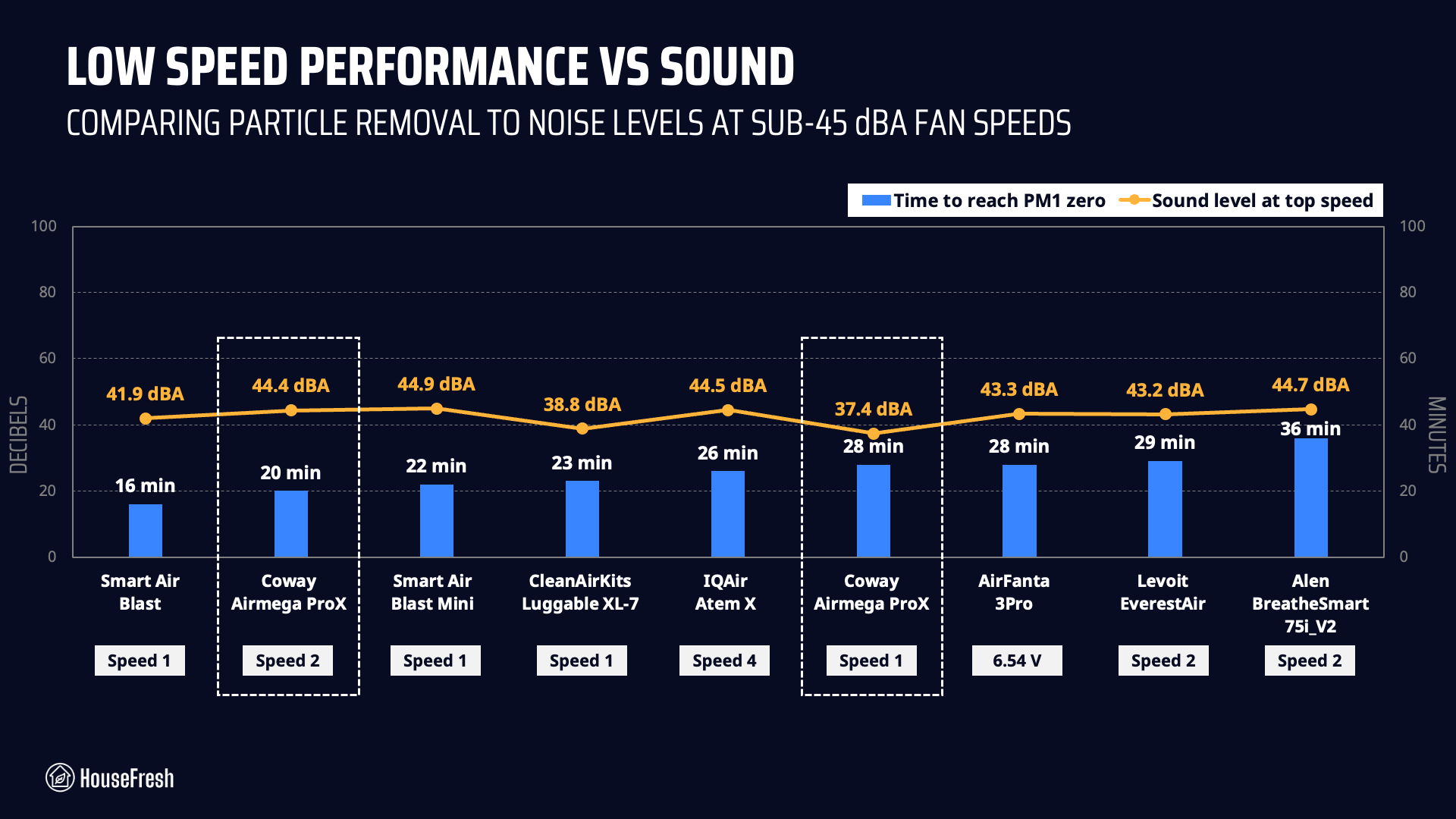
When we compare this to other high-CADR air purifiers, you can see that, in terms of quiet performance, the ProX is only outmatched by the much larger Blast from Smart Air. And it’s clear that even at speed 1, this device delivers excellent air cleaning performance without the noise.
Long-term running costs
Running a Coway Airmega ProX will cost you $264.64 per year, combining energy and filter replacement costs.
We used our energy meter to record how much electricity the ProX pulls at each fan speed and also while on standby.
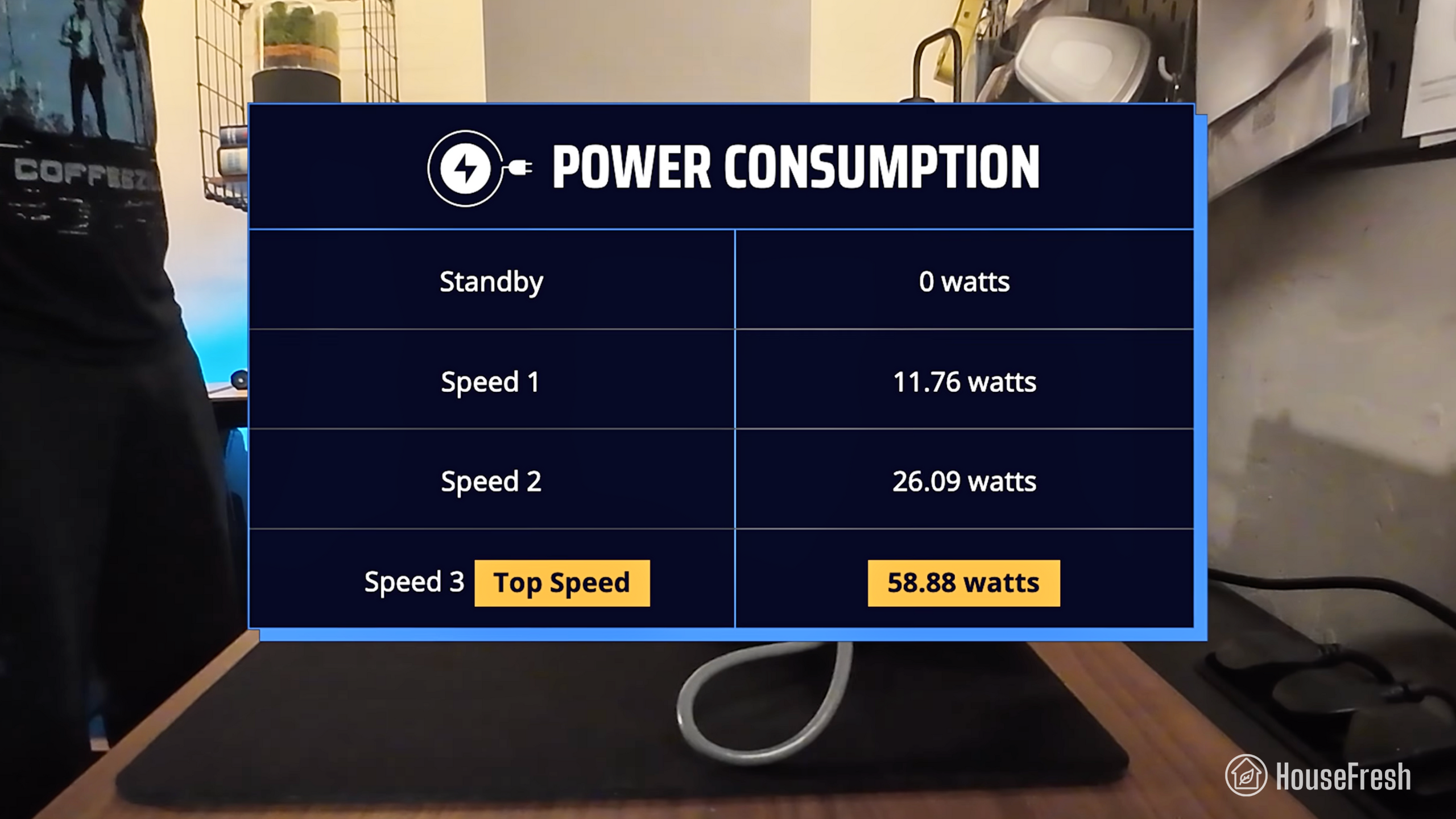
At speed 3, the ProX pulls 58.88 watts. Running it at top speed 24/7 for one year will add $65.54 to your energy bill, based on the average U.S. electricity price of 0.1268/kWh at the time of our test.
After conducting our particle removal test, I knew the Airmega ProX offers impressive raw performance, but I didn’t expect it would deliver this high CADR with such low energy consumption.
So I went one step further and created a chart to compare its CADR, noise levels AND energy usage at quiet fan speeds to see how the ProX compares to other popular high-CADR air purifiers:
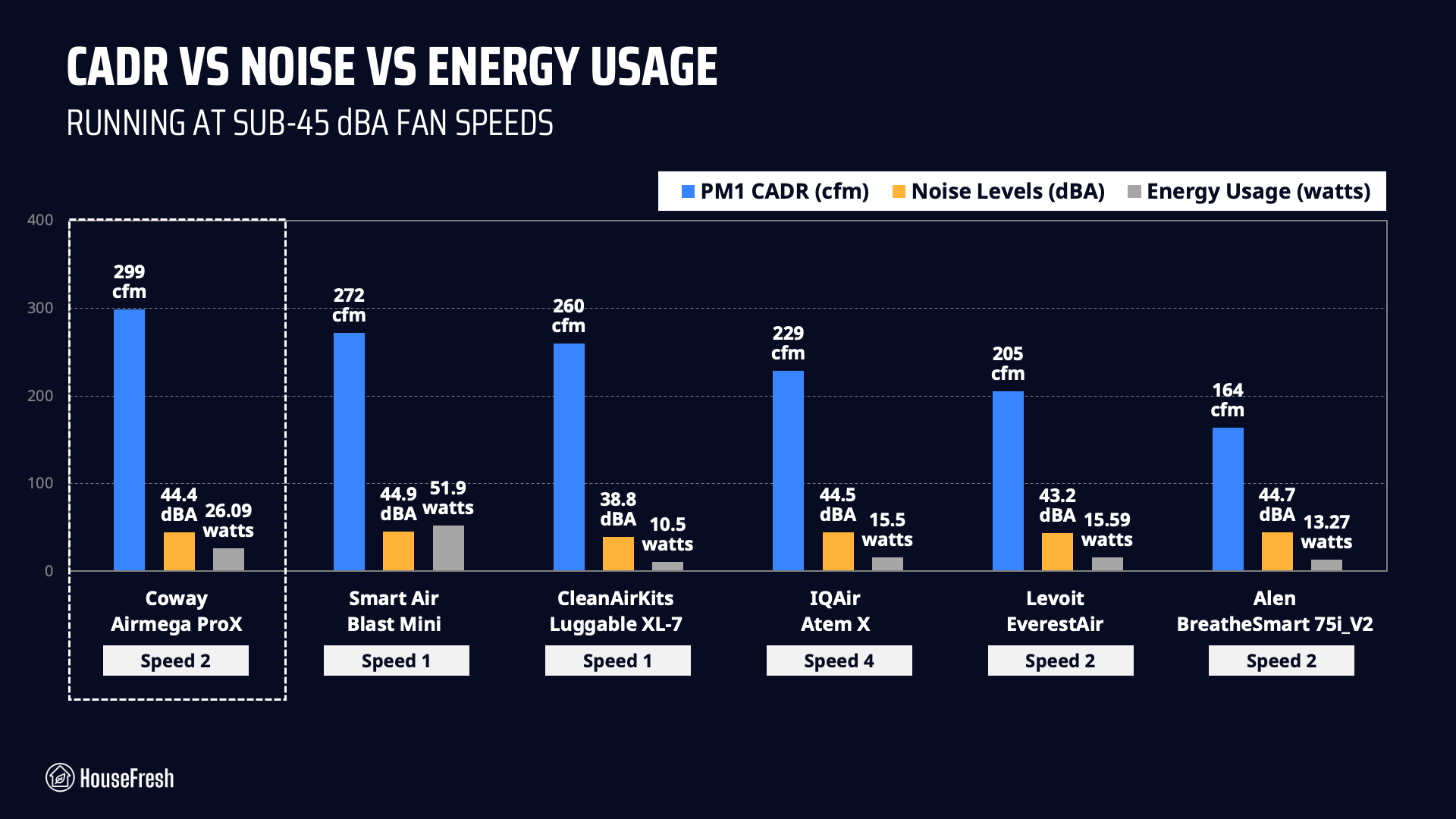
As the table above shows, the Coway Airmega ProX delivers incredible CADR at lower fan speeds without excessive energy use or noise, vastly outperforming most large air purifiers I benchmarked it against. The exception would be the Luggable XL-7, which is A LOT more energy efficient and noticeably quieter than the ProX — that said, it’s not nearly as powerful.
But let’s look at the other main factor affecting yearly running costs: filter replacements.
According to Coway, you can expect to change filters every 12 months, and you can buy a new filter set for $199, so you can expect to spend $199 each year on filter replacements alone.
We can add this to energy costs to work out the total yearly cost and compare it with the other devices I’m benchmarking the ProX against:
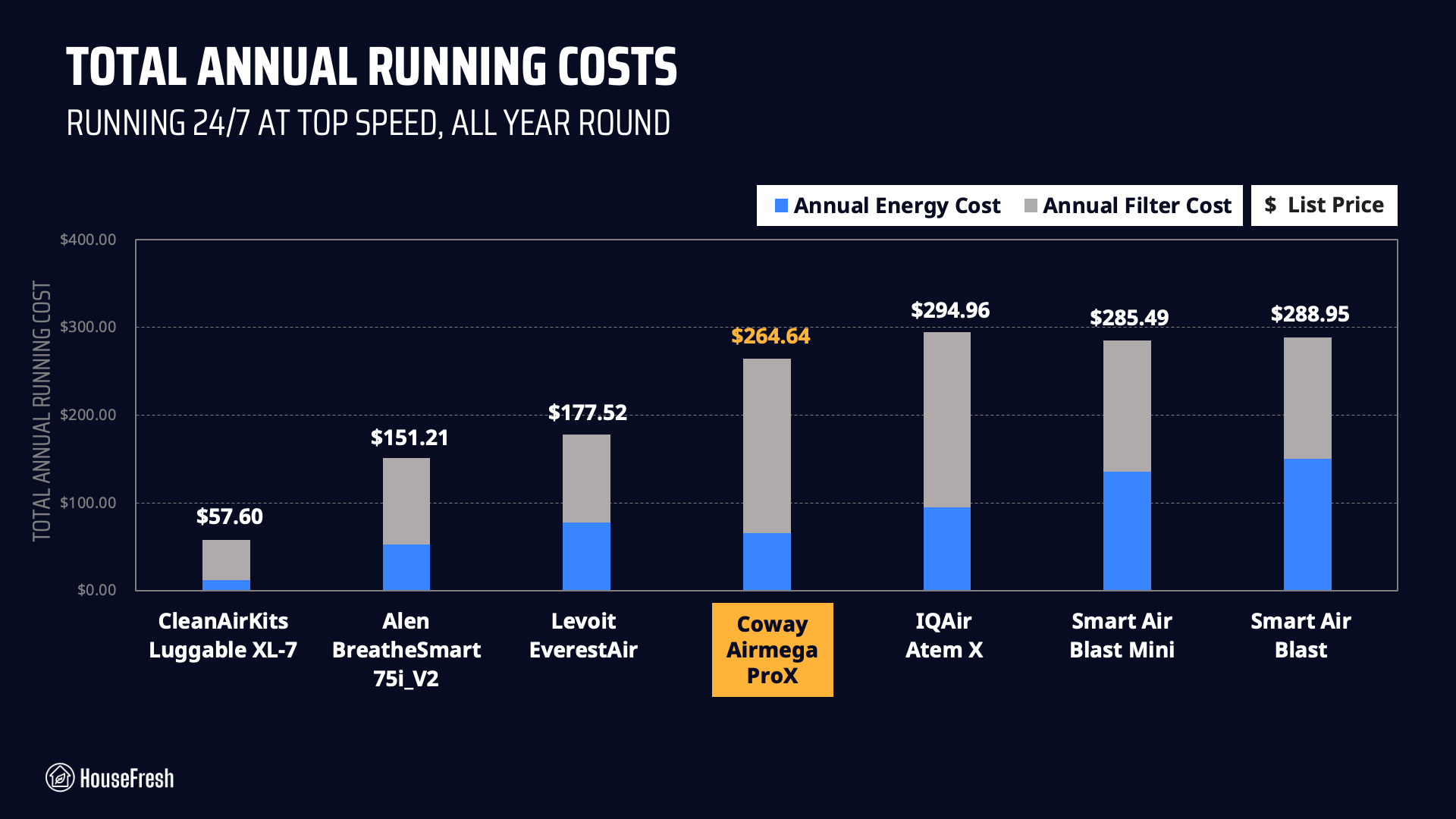
$199 for a set of filters is steep, and it pushes the total annual cost to over $260, which is more than the Alen 75i and Levoit EverestAir, and doesn’t come close to the CleanAirKits Luggable XL-7 with its standard 3M HVAC filters.
Bottom line: Should you get a Coway Airmega ProX?
The ProX is one of the best options for those looking for an air purifier to help with dust, pollen, pet allergens, or smoke in large spaces.
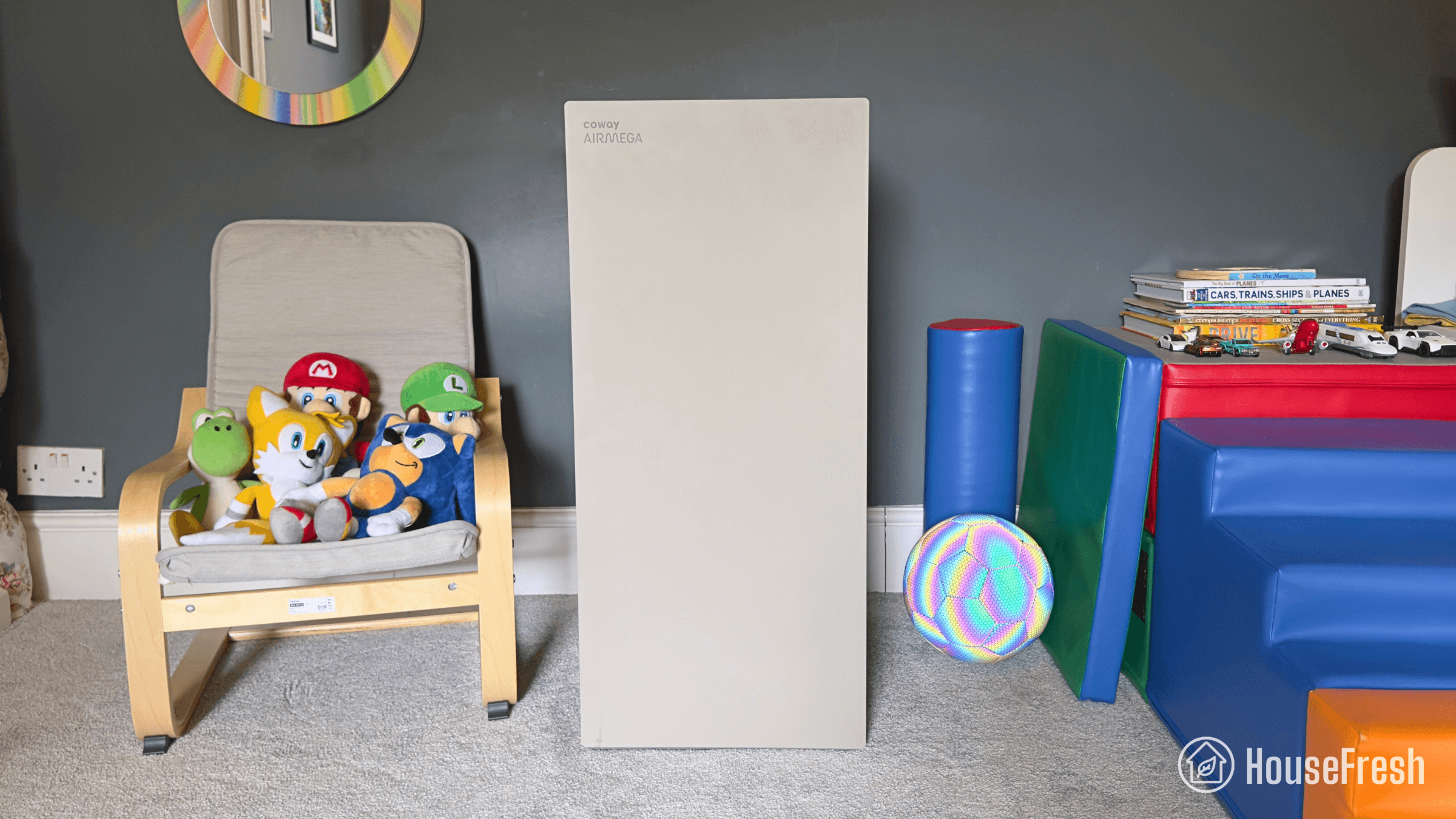
The ProX isn’t cheap, is heavy, and takes up a lot of space… but I have to say I’m a big fan.
I like that Coway has dropped the ionizer we saw in older models without dropping performance. Even without the ionizer, the ProX still provides outstanding air-cleaning power with mechanical filtration alone. And they did this without the loud noise and high energy consumption that usually comes with high CADR.
This air purifier doesn’t have an app. However, it still comes with a ton of features that most consumers will appreciate, such as a customizable auto mode, a particle sensor, an air quality indicator, a child lock, and the ability to adjust the sensor’s sensitivity.
Coway also innovated in how the ProX handles sleep time. Instead of a useless sleep mode, the ProX running in auto mode will automatically switch all lights off without you needing to do anything else. It won’t disturb your sleep, but it will ramp up the fan speed when detecting pollutants in the air.
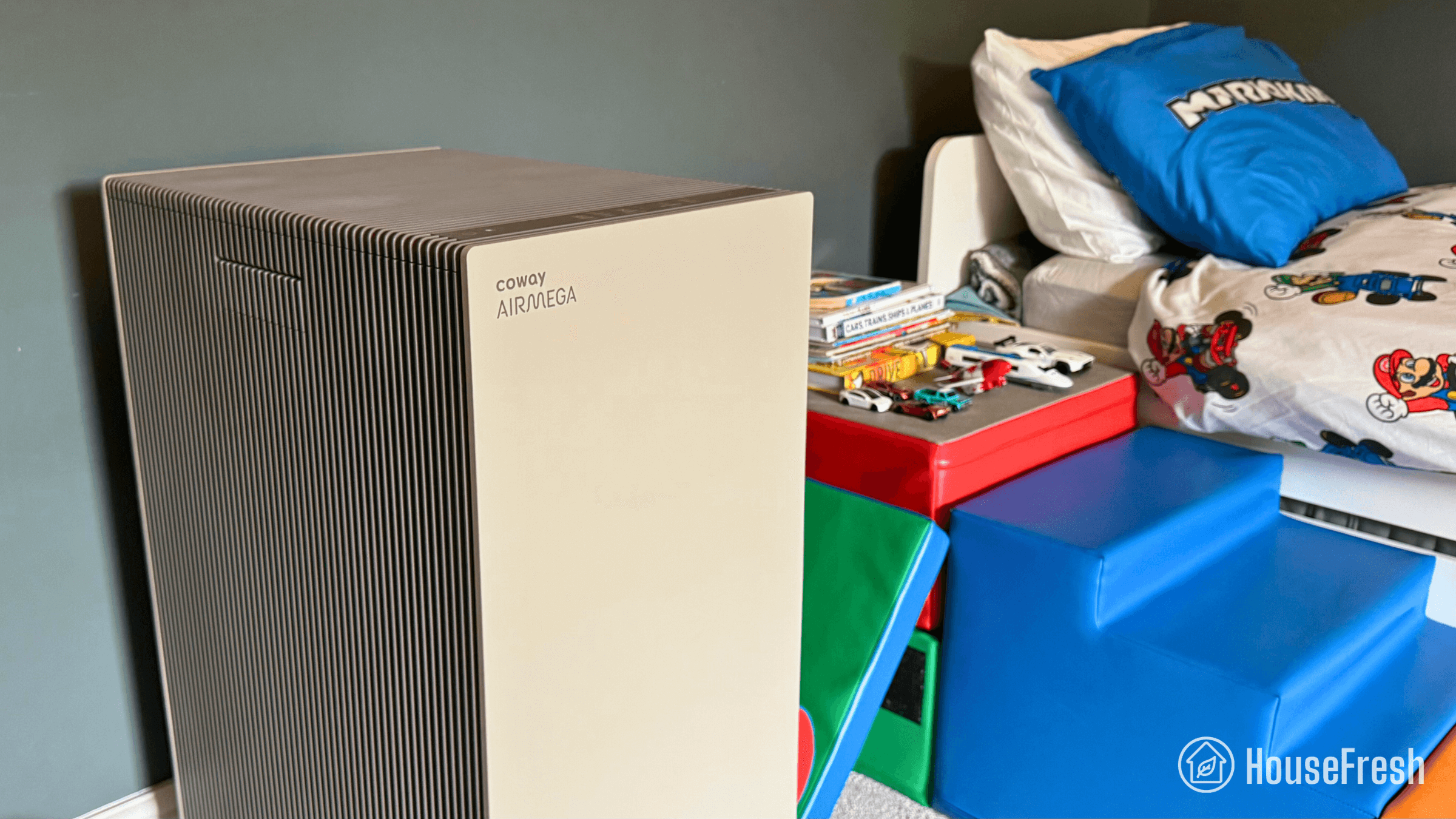
And even if you were to leave your ProX running at speed 1 all day, it would still provide you a higher CADR than you would get from a medium-sized unit like the Levoit Core 400S running at full speed.
For those looking for an air purifier to help with dust, pollen, pet allergens or smoke in large spaces, the Coway Airmega ProX is one of the best options out there because it won’t cost you an arm and a leg to run, it will offer excellent performance at quiet operation AND it will look good in your home while it’s at it.
Sadly, it is only available in the U.S. right now but I’ll update the review if that changes.
Now, for those looking for the best bang for buck, know that PC fan models like the Luggable XL-7 and the AirFanta 3Pro will still provide a lot more value — and you will be able to get multiple of these devices for the price of the ProX.
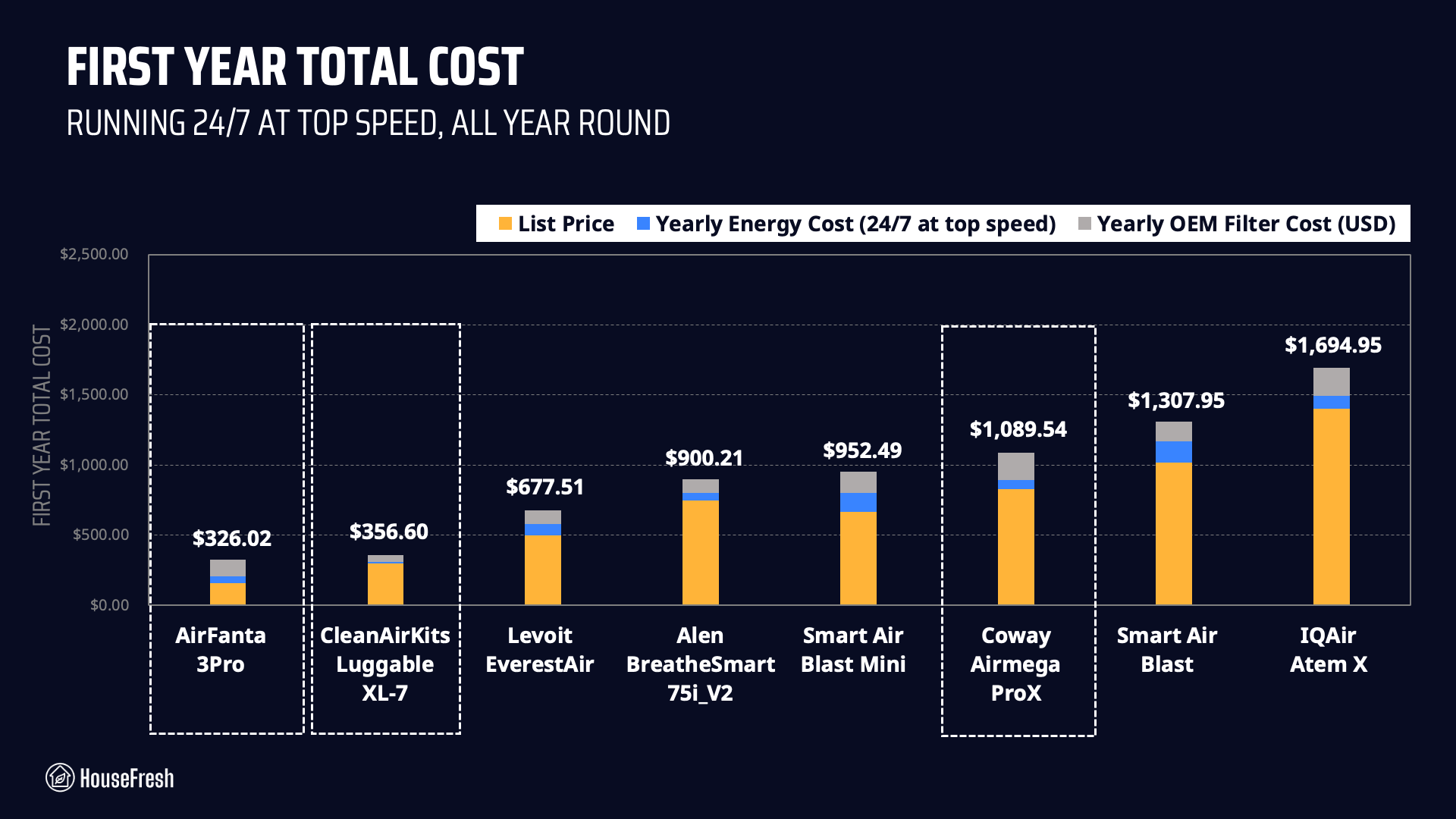
And if you’re looking for a high CADR air purifier for a commercial space, an office, or a classroom, then check out the Smart Air Blast, which will offer more air cleaning power than the ProX with a full metal body and no smart features, so you can set it and forget it.
But for those who want a large unit that looks good AND has all the bells and whistles you would expect from a standard consumer air purifier, the Airmega ProX is a solid choice.
If you do decide to buy one, please use this link to support the work we do here at HouseFresh. In doing so, we will receive a small affiliate commission at no extra cost to you that we will use to continue buying and testing air quality products.
Did I miss any details? Do you have any questions I left unanswered? Just drop a comment below and I’ll get back to you as soon as I see it.