
When we first wrote this post, the World Health Organization didn’t accept that the COVID-19 virus was airborne, though they did recommend ventilation in healthcare facilities.
But by the summer of 2023, the WHO finally announced that COVID-19 is actually airborne. At that point, the U.S. CDC added the following guidelines for American schools, recommending ventilation to reduce the spread of COVID-19.
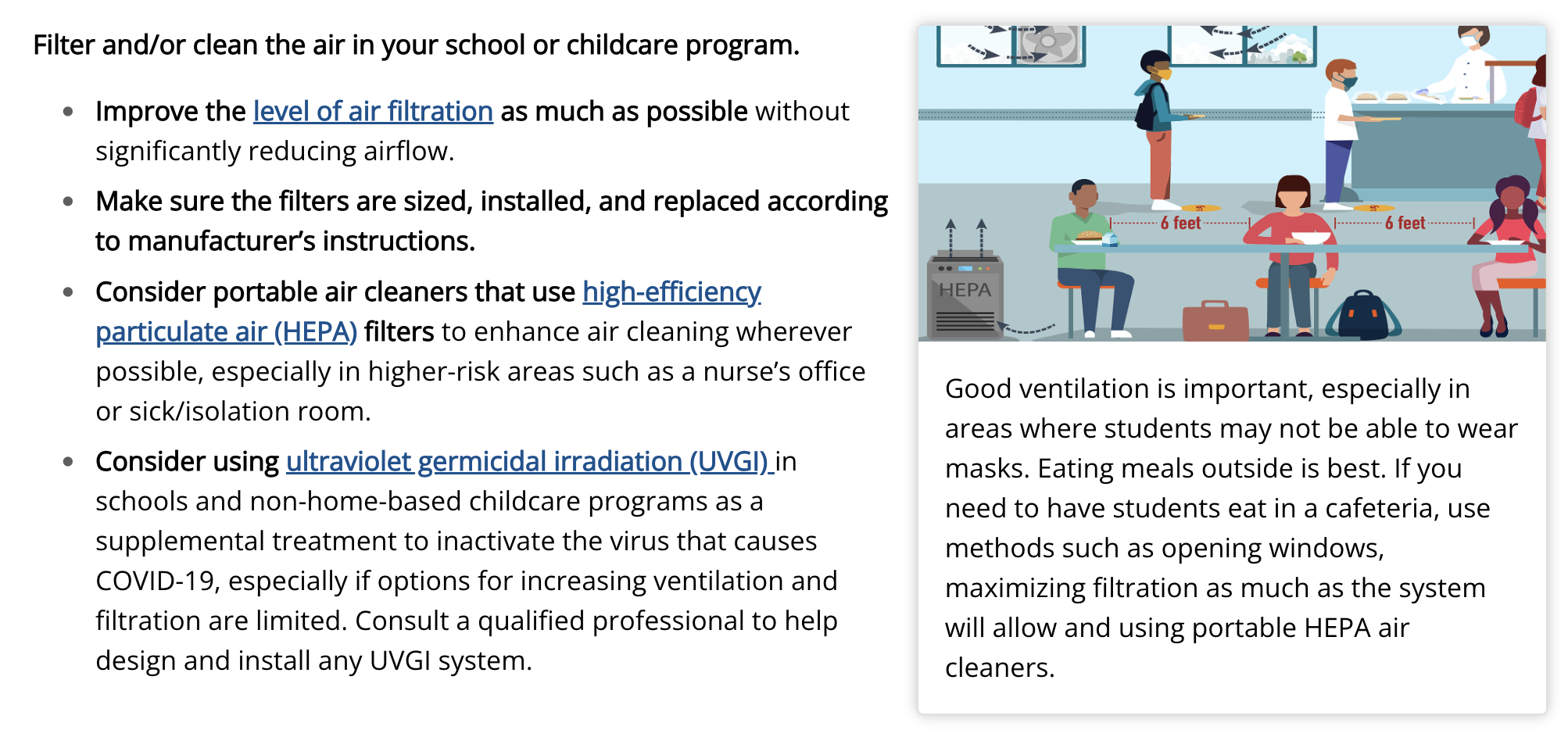
Dr. Richard Corsi (Dean of Maseeh College of Engineering) recommends that all classrooms install HEPA air purifiers with a CADR of at least 250-300 CFM. Most of us don’t live in classrooms, but it’s wise to err on the side of caution and get a similarly spec’d model for home use.
Buying an air purifier won’t replace Coronavirus prevention methods such as social distancing, mask usage, and keeping indoor areas well ventilated – these have all been shown to significantly reduce the risk of catching and spreading COVID.
I have bought and tested all the air purifiers I’m recommending today, and I use them at home every day. If you have any questions about any of them, please drop them in the comments section. And if you want to read more about our testing process, check out this page.
If you don’t want to read our full article, check out my recommendations in the table below:
| BEST CHEAP | SMALL SPACES | MEDIUM SPACES | LARGE SPACES | VERY LARGE SPACES | |
|---|---|---|---|---|---|
| AirFanta 3Pro | Smart Air SA600 | CleanAirKits Luggable XL Ultra | Coway Airmega ProX | Smart Air Blast | |
 |  |  |  |  | |
| TOP SPEED PM1 CADR | 353 cfm (600 m³/h) | 249 cfm (423 m³/h) | 315 cfm (535 m³/h) | 462 cfm (785 m³/h) | 547 cfm (929 m³/h) |
| SUB-45 dBA PM1 CADR | 213 cfm (362 m³/h) | 128 cfm (217 m³/h) | 284 cfm (482 m³/h) | 299 cfm (508 m³/h) | 375 cfm (637 m³/h) |
| FILTER TECH | E11 particle filter + optional carbon filter | H13 HEPA filter + optional carbon | MERV 13 filter | GreenHEPA filter + carbon filter | H13 HEPA filter + optional carbon |
| ROOM SIZE (5 ACH) | 529 sq. ft. (49 m²) | 373 sq. ft. (34 m²) | 472.5 sq. ft. (44 m²) | 693 sq. ft. (64 m²) | 820.5 sq. ft. (76 m²) |
| PRICE | $164.99 | $278.95 | $299 | $905.01 | $1,169.00 |
| FULL REVIEW | 3Pro review | SA600 review | Luggable review | ProX review | Blast review |
The best budget option: AirFanta 3Pro
With a low price of $159.99 and a PM1 CADR of 353 cfm at top speed, there is no other cheap air purifier that can beat the power of the AirFanta 3Pro.

Use the discount code HOUSEFRESH for 5% off when buying directly from AirFanta.
This PC fan-powered air purifier can clean the air five times per hour in rooms up to 529 sq. ft. (49 m²) when running at top speed. This is the minimum number of air changes you want to achieve to reduce the risk of COVID-19 and other airborne viruses.
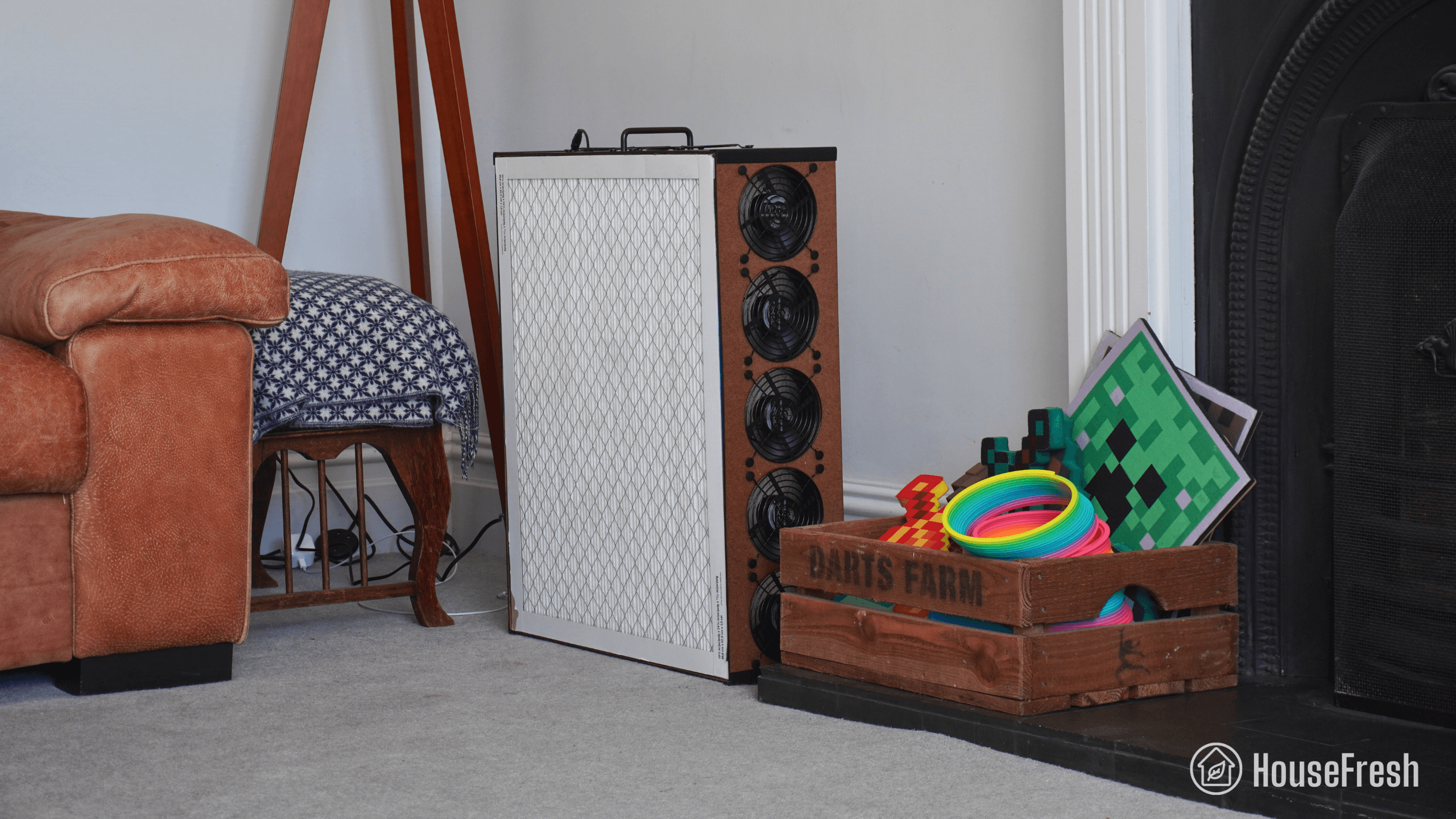
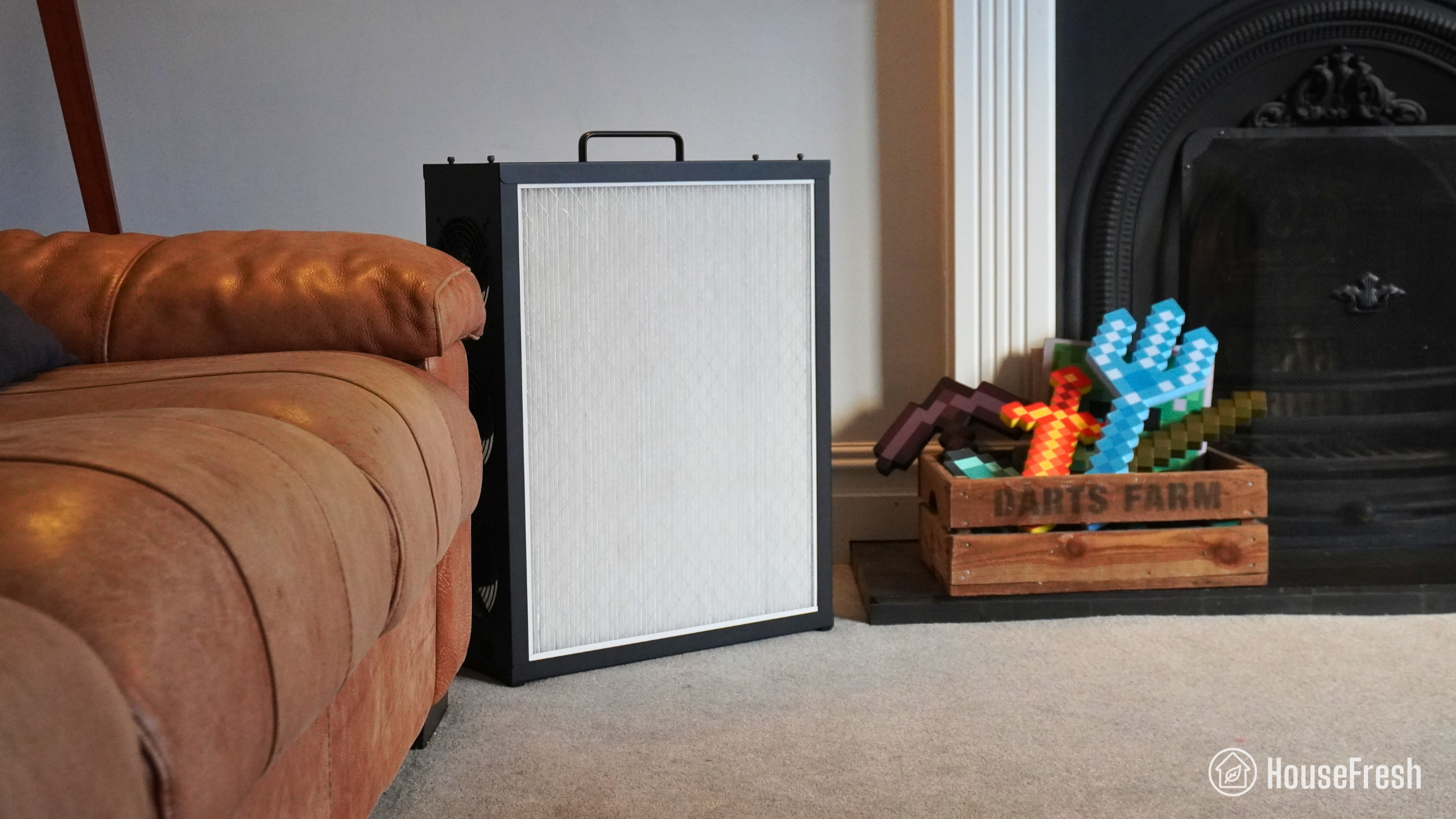
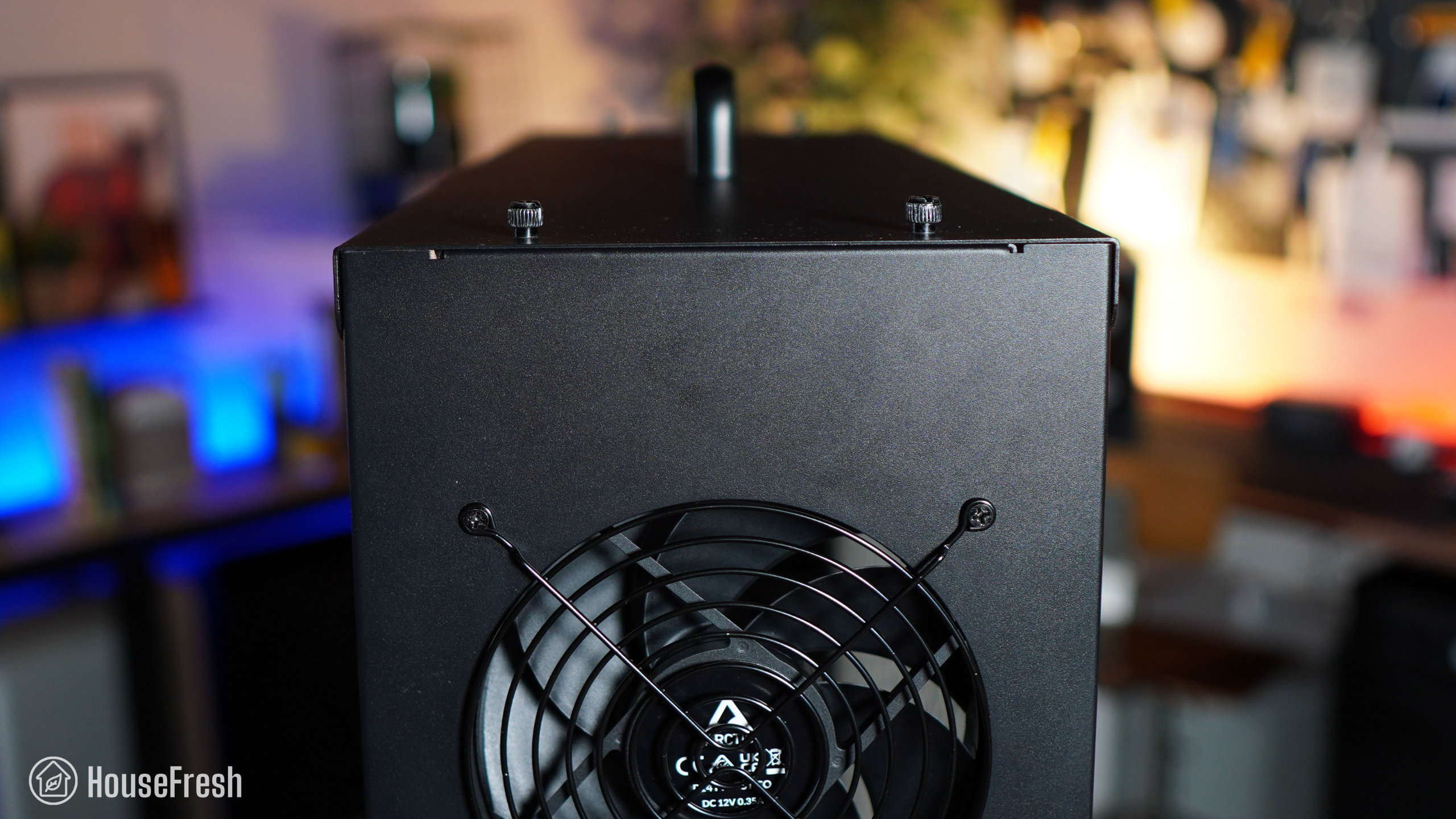
Inspired by the DIY Corsi-Rosenthal box, the 3Pro is a small box with a base at the bottom, a filter at each side, and four PC fans on top.
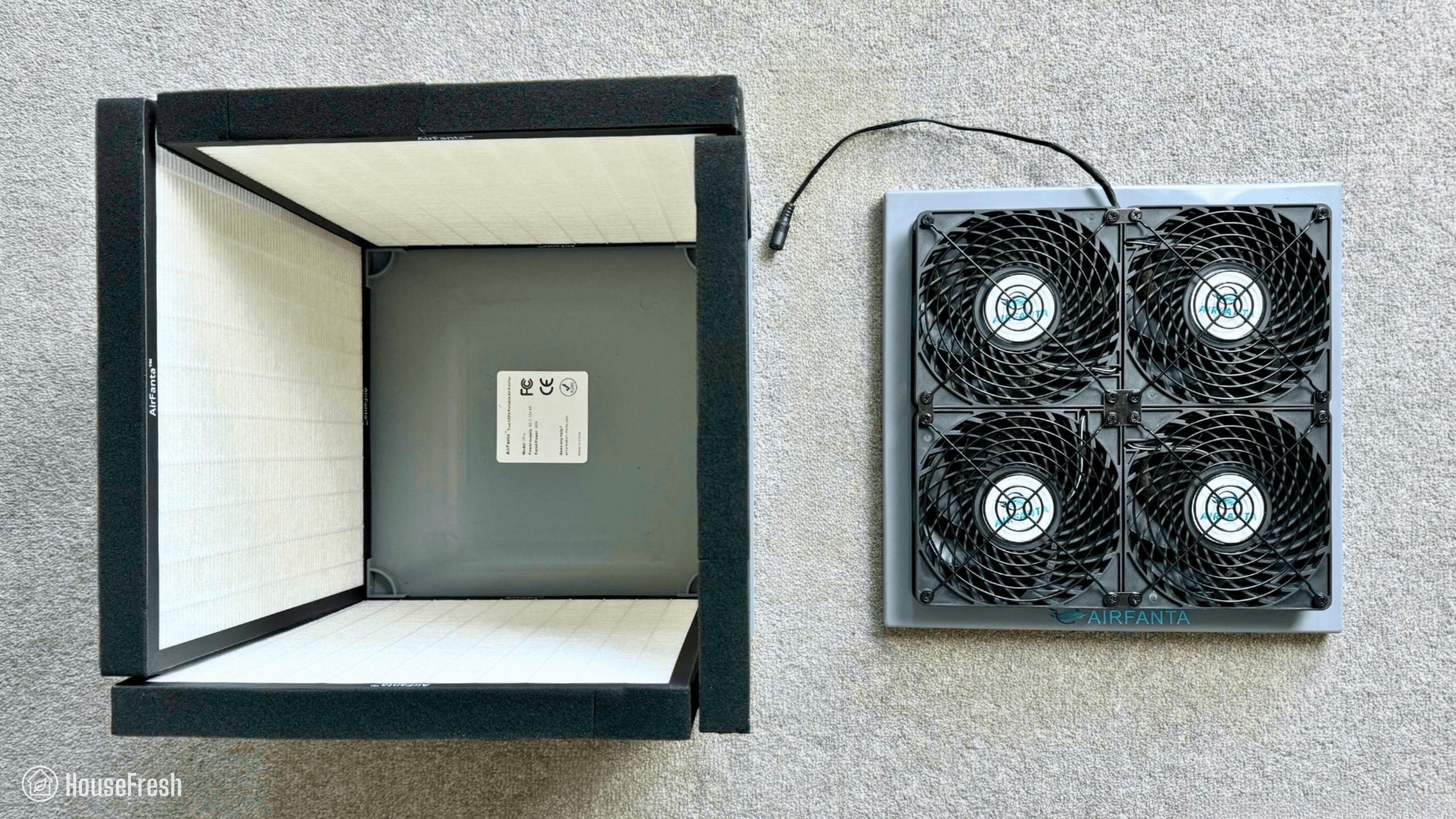
It can be disassembled and reassembled in just a few minutes, and once you’ve taken it apart, it fits inside a large carry bag.
You don’t get any buttons or control panel, but it comes with a speed controller to adjust the fan speed and noise levels.
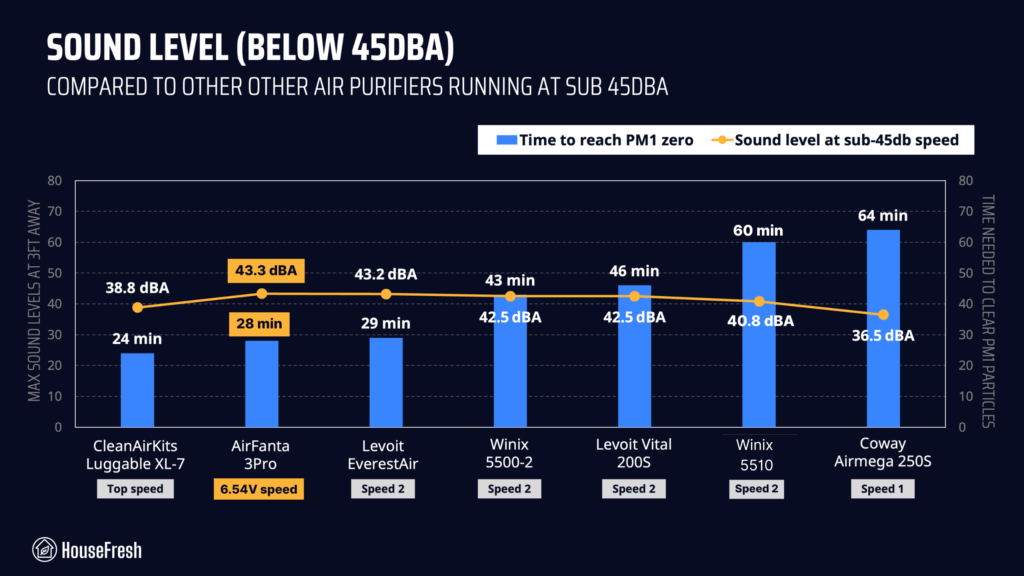
If you set it to 6.54 V, it will generate less than 45 dBA but will still be able to provide an estimated CADR PM1 of 213 cfm (362 m³/h).
CONS
PROS
| Clean air delivery rate (CADR): | – Top speed PM1 CADR: 353 cfm – Sub-45 dBA PM1 CADR: 213 cfm |
| Filter technology: | True HEPA H11 and optional pelleted activated carbon |
| Recommended room size: | 529 sq. ft. (5 air changes per hour) |
| Dimensions: | 12.6D x 12.6W x 12.6H inches (32D x 32W X 32H cm) |
| Weight: | 7.7 lbs (3.49 kg) |
| Noise level in decibels from 3 ft. away: | 3.63 volts: 36.1 dB 4.19 volts: 36.9 dB 5.24 volts: 39.7 dB 6.54 volts: 43.3 dB 7.44 volts: 46.7 dB 8.56 volts: 49.1 dB 12.6 volts: 56.3 dB |
| Electricity consumption in watts : | 43.23 watts |
| Filter lifespan: | 6 – 12 months |
| Manufacturer’s warranty: | 1 year |
| Country of origin: | China |
| Country of manufacture: | China |
The best for small rooms: Smart Air SA600
A mid-sized air purifier from Smart Air that will give you five air changes per hour in rooms up to 373 sq. ft.

For small rooms up to 373 sq. ft. (or 34 m²), I’d suggest you don’t go smaller than the SA600 from Smart Air. It doesn’t have any smart features, but all lights automatically shut off after a few seconds and it works with a smart plug.
The SA600 uses two sets of filters: two H13 HEPA filters, two pelleted carbon filters, and two pre-filters.

To tackle viruses and bacteria from the air, you can run it without the activated carbon filters for maximum particle removal performance.
The controls are pretty straightforward. I’ve got the 5-speed SA600 and keep it running in the background at speed 3.

At speed 3, it generates just 41.5 dBA of noise, so it’s quiet enough to blend into the background but still provides 128 cfm (217 m³/h).
PROS
CONS
| Clean air delivery rate (CADR): | – Top speed PM1 CADR: 249 cfm – Sub-45 dBA PM1 CADR: 128 cfm – AHAM PM2.5 CADR: 287 cfm (dust) |
| Filter technology: | H13 TrueHEPA filter with a removable pre-filter and pelleted activated charcoal filter (set of two) |
| Recommended room size: | 373 sq. ft. (5 air changes per hour) |
| Dimensions: | 20 x 13.8 x 9 inches (51 x 35 x 23 cm) |
| Weight: | 15.5 lbs (7 kg) |
| Noise level in decibels from 3 ft. away: | Speed 1: 35.2 dBA Speed 2: 37.2 dBA Speed 3: 41.5 dBA Speed 4: 46.1 dBA Speed 5: 56.7 dBA |
| Electricity consumption in watts: | Standby: 0.1 watts Speed 1: 2.4 watts Speed 2: 4.3 watts Speed 3: 7.1 watts Speed 4: 12.9 watts Speed 5: 53.8 watts |
| Filter lifespan: | 18 months |
| Manufacturer’s warranty: | 1 year |
| Country of origin: | China |
| Country of manufacture: | China |
The best for medium-sized rooms: CleanAirKits Luggable XL-7
A PC fan-powered air purifier that uses any type of MERV 13 HVAC filters and seven PC fans that offer exceptional air cleaning performance at whisper-quiet operation.
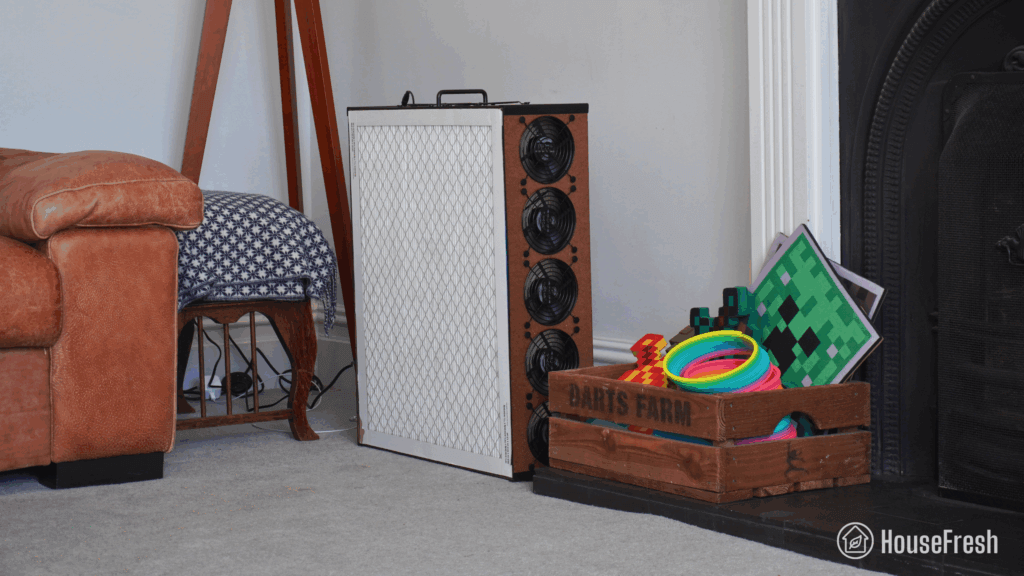
The Luggable XL Ultra uses seven PC fans that pull the air through two 20×25 MERV 13 filters. I recommend the 3M Filtrete MPR1900 filters — based on my tests, these are the best performing HVAC filters.
The Cooler Master Mobius 120 PC fans made it one of the quietest high-CADR air purifiers I’ve tested, and it’s also highly energy efficient.

You can save money by buying the DIY kit, which includes everything you need to build it yourself. Otherwise, you can buy it pre-built.

CONS
PROS
| Clean air delivery rate (CADR): | – Top speed PM1 CADR: 260 cfm – Sub-45 dBA PM1 CADR: 260 cfm – Intertek PM2.5: 323 cfm (dust) |
| Filter technology: | MERV 13 (20×25) |
| Recommended room size: | 390 sq. ft. (5 air changes per hour) |
| Dimensions: | 7D x 25W x 20H in (18D x 64W x 51 cm) |
| Weight: | 8 lbs (3.63 kg) |
| Noise level in decibels from 3 ft. away: | Only speed: 38.8 dBA |
| Electricity consumption in watts: | Only speed: 10.5 watts |
| Filter lifespan: | 6-12 months |
| Manufacturer’s warranty: | 1 year |
| Country of origin: | United States |
| Country of manufacture: | United States |
Northbox Systems is a Canadian manufacturer that produces PC fan-powered air purifier kits that use HVAC filters. We tested the 6XL and its air cleaning performance is outstanding.
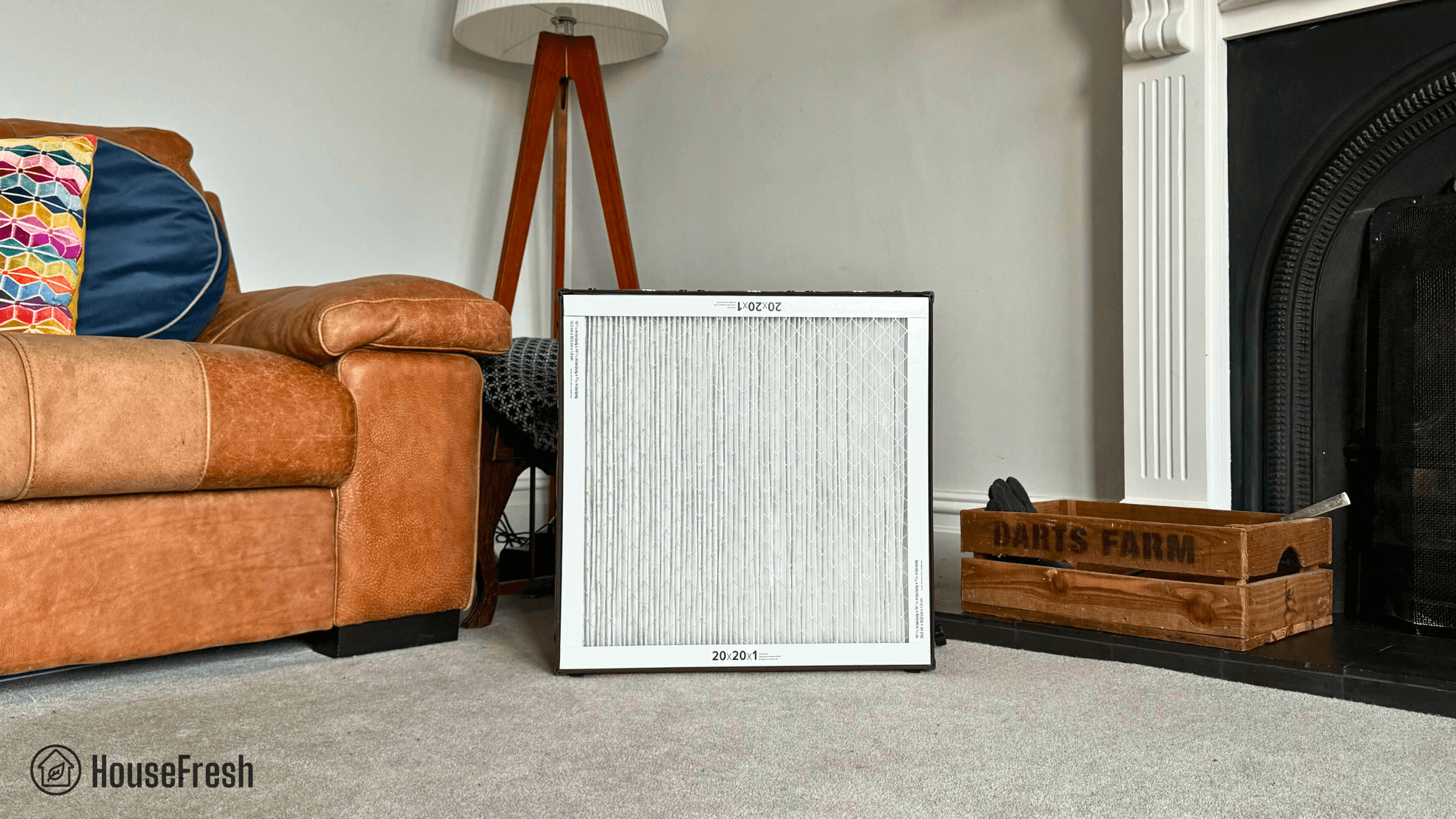
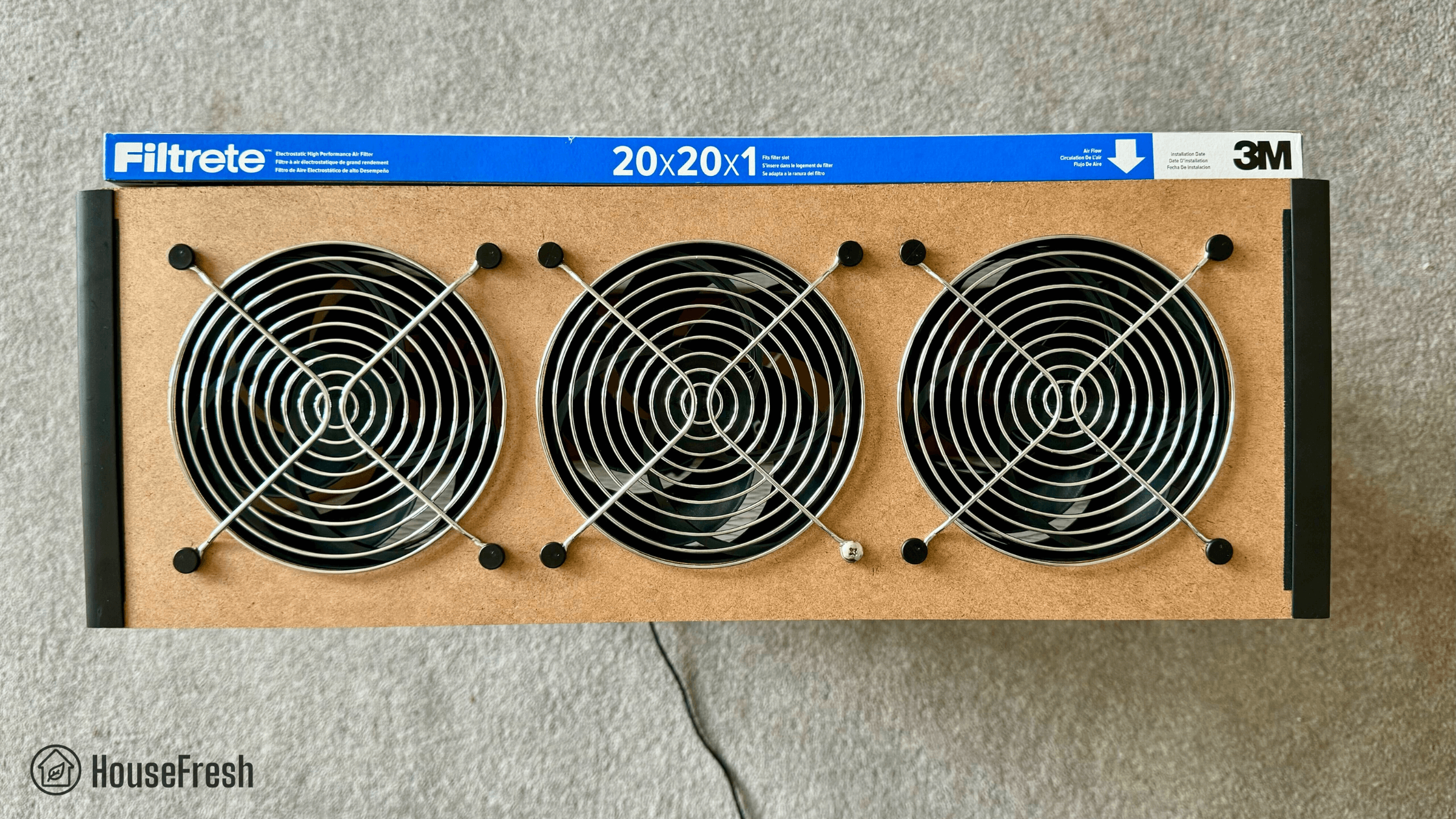
The Tempest Pro is a PC fan-powered air purifier that also uses 20×25 MERV 13 filters but comes with a metal body, so it’s more durable than the Luggable XL Ultra.
The best for large spaces: Coway Airmega ProX
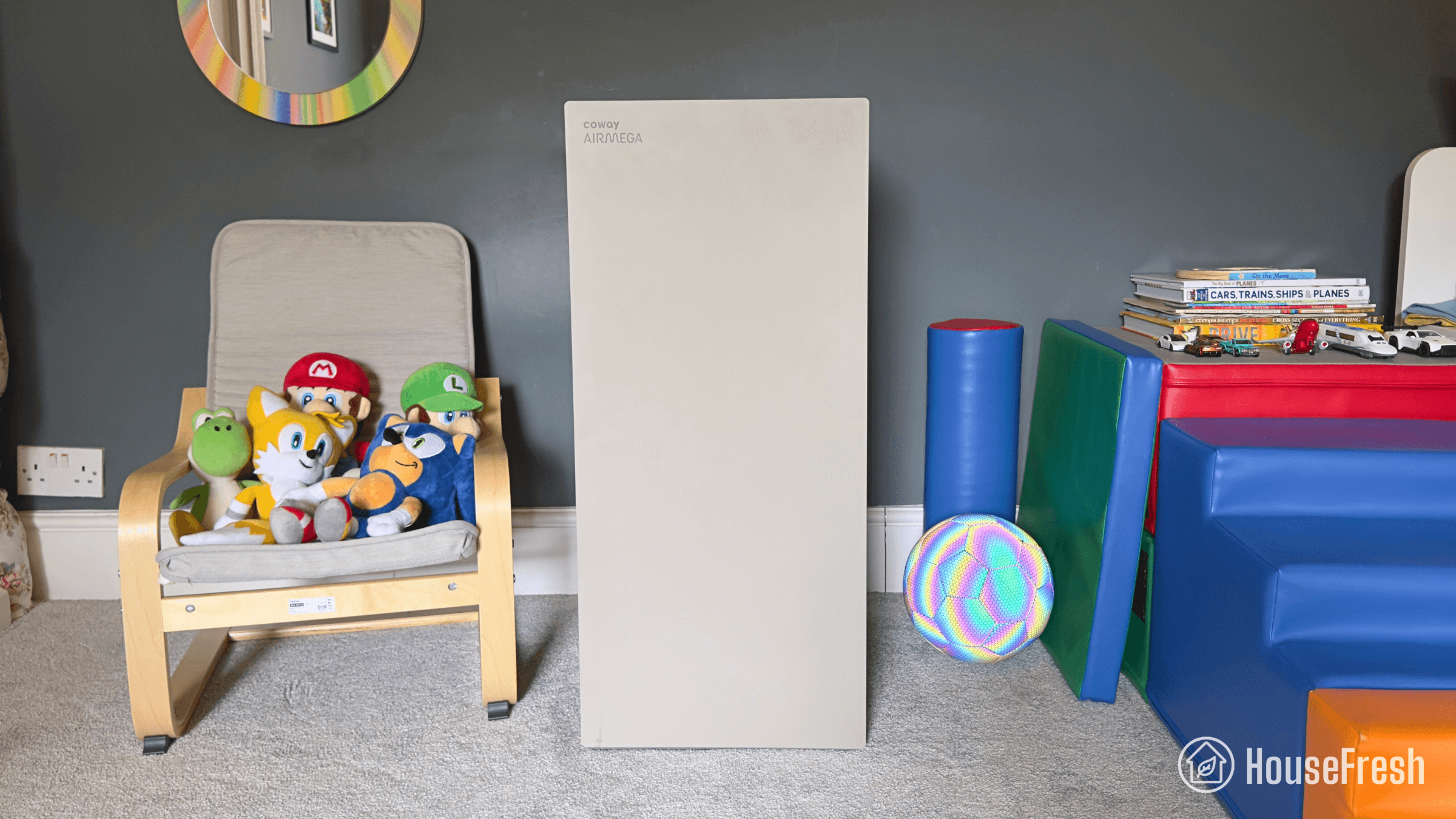
If you are looking for a powerful air purifier to remove airborne viruses like COVID-19 from the air in a large space, then the Coway Airmega ProX is the one I recommend.
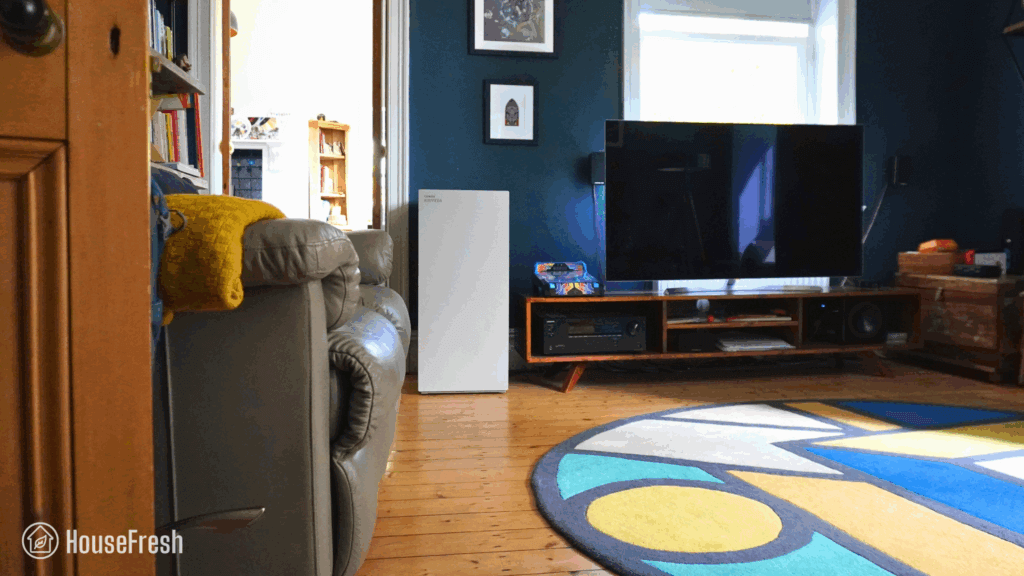
With an estimated PM1 CADR of 462 cfm (785 m³/h) at top speed, the Airmega ProX can provide five air changes per hour in large rooms up to 693 sq. ft. (or 64 m²).
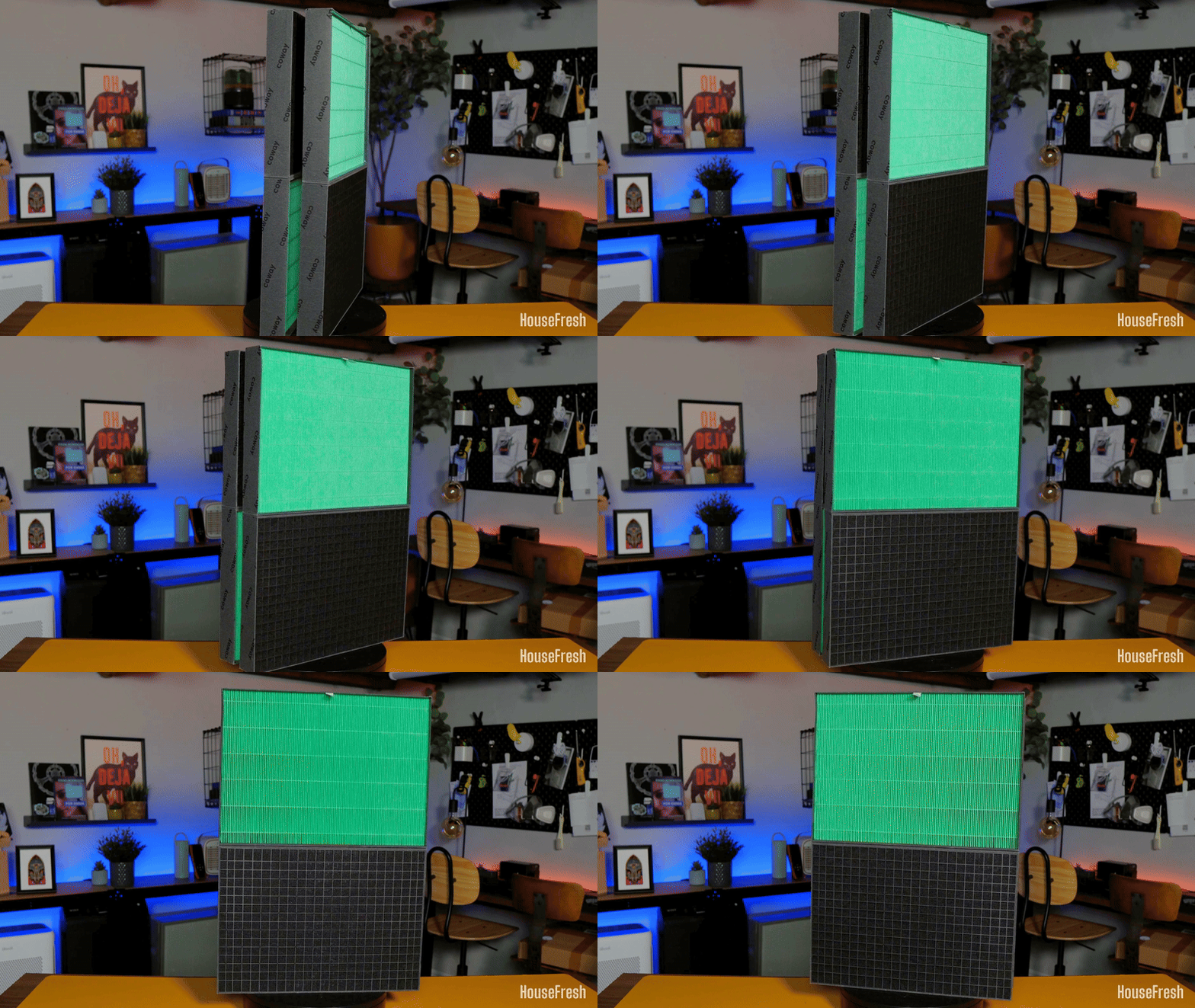
You get a filter on each side of the device. They are bonded GreenHEPA particle filters with a section of pelleted activated carbon.
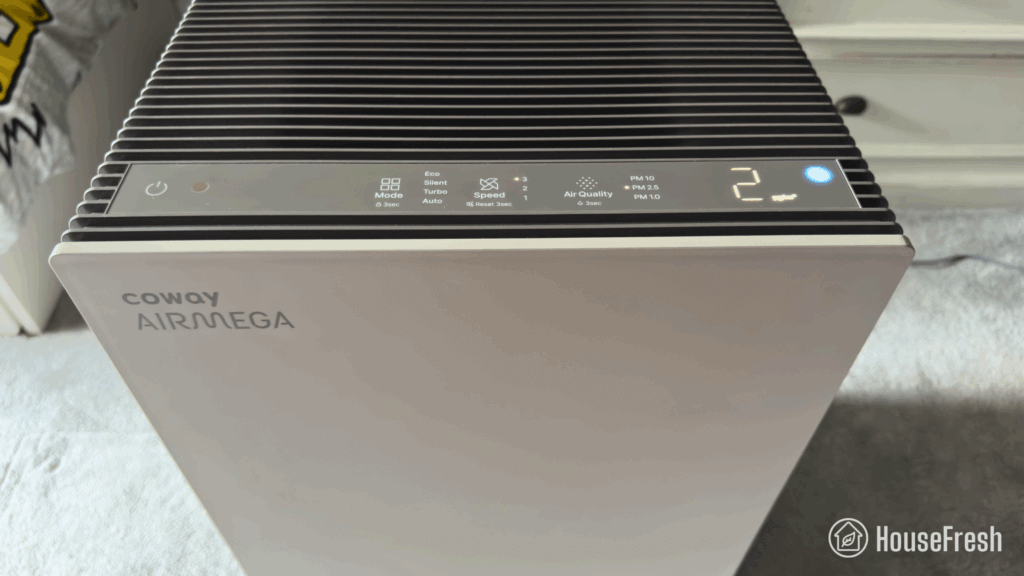
It has an onboard air quality sensor, so it can automatically react to changes in air quality when set to one of its smart modes.
CONS
PROS
The best for very large spaces: Smart Air Blast
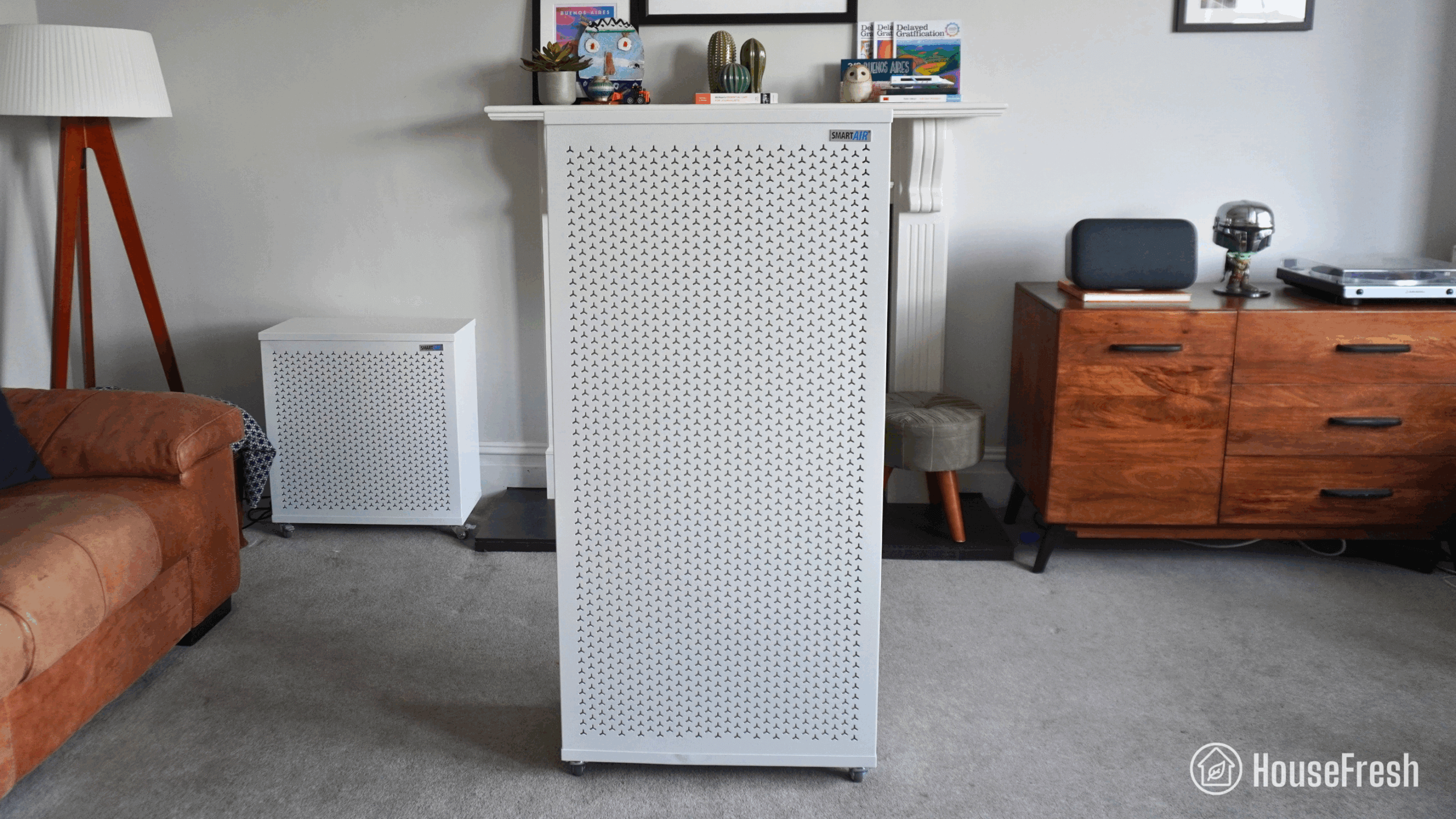
A large air purifier made out of metal that can be fixed to the wall and is powerful enough to clean the air in large, high traffic spaces like offices and classrooms.
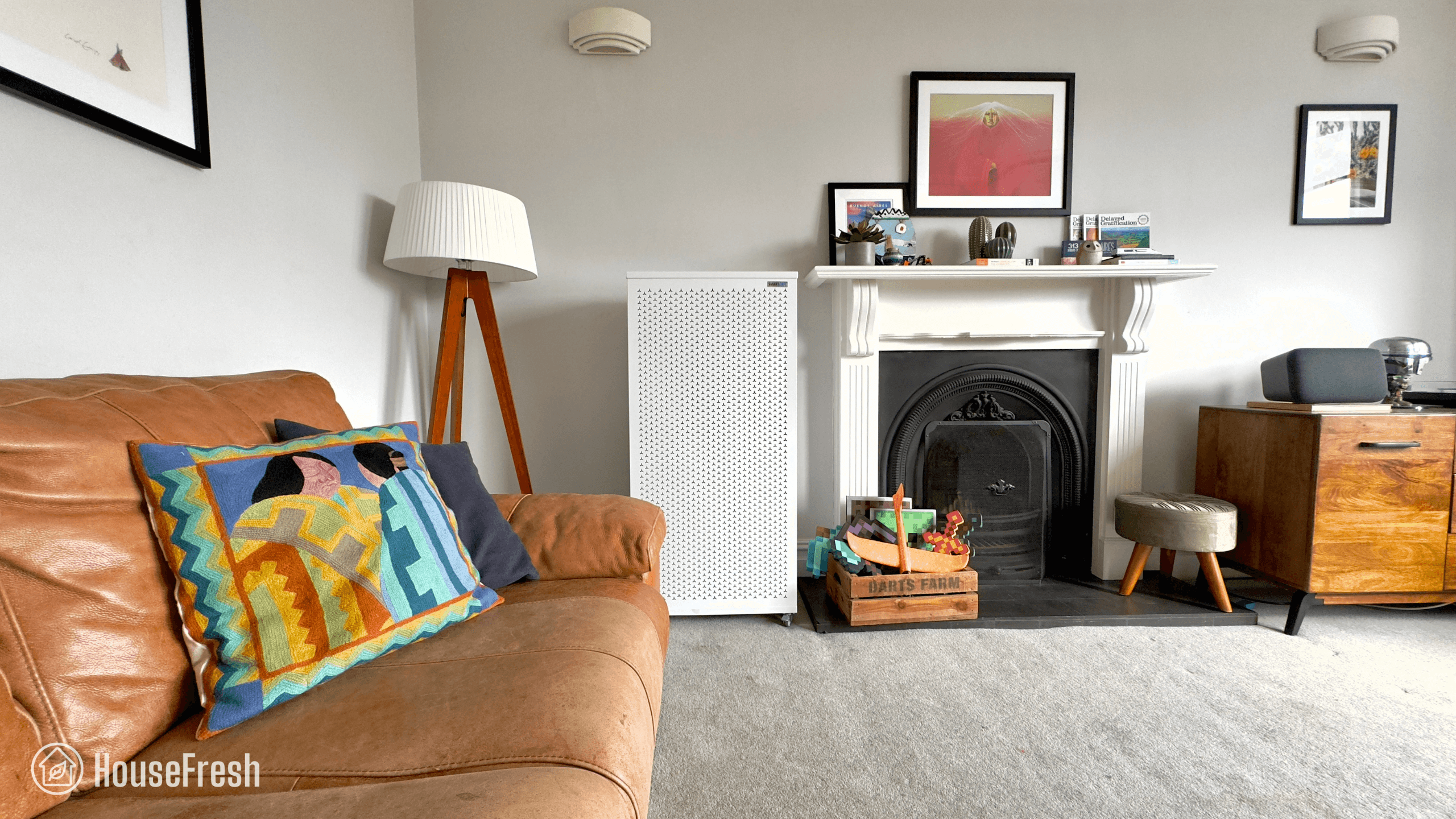
The Blast MKII from Smart Air is a powerful commercial air purifier with an estimated PM1 CADR of 547 cfm (929 m³/h) at top speed, which can clean the air five times per hour in big spaces no larger than 820.5 sq. ft. (or 76 m²).
The H13 HEPA filter inside is massive and has a long lifespan of up to 19 months. You can also buy an activated carbon filter to go with it.
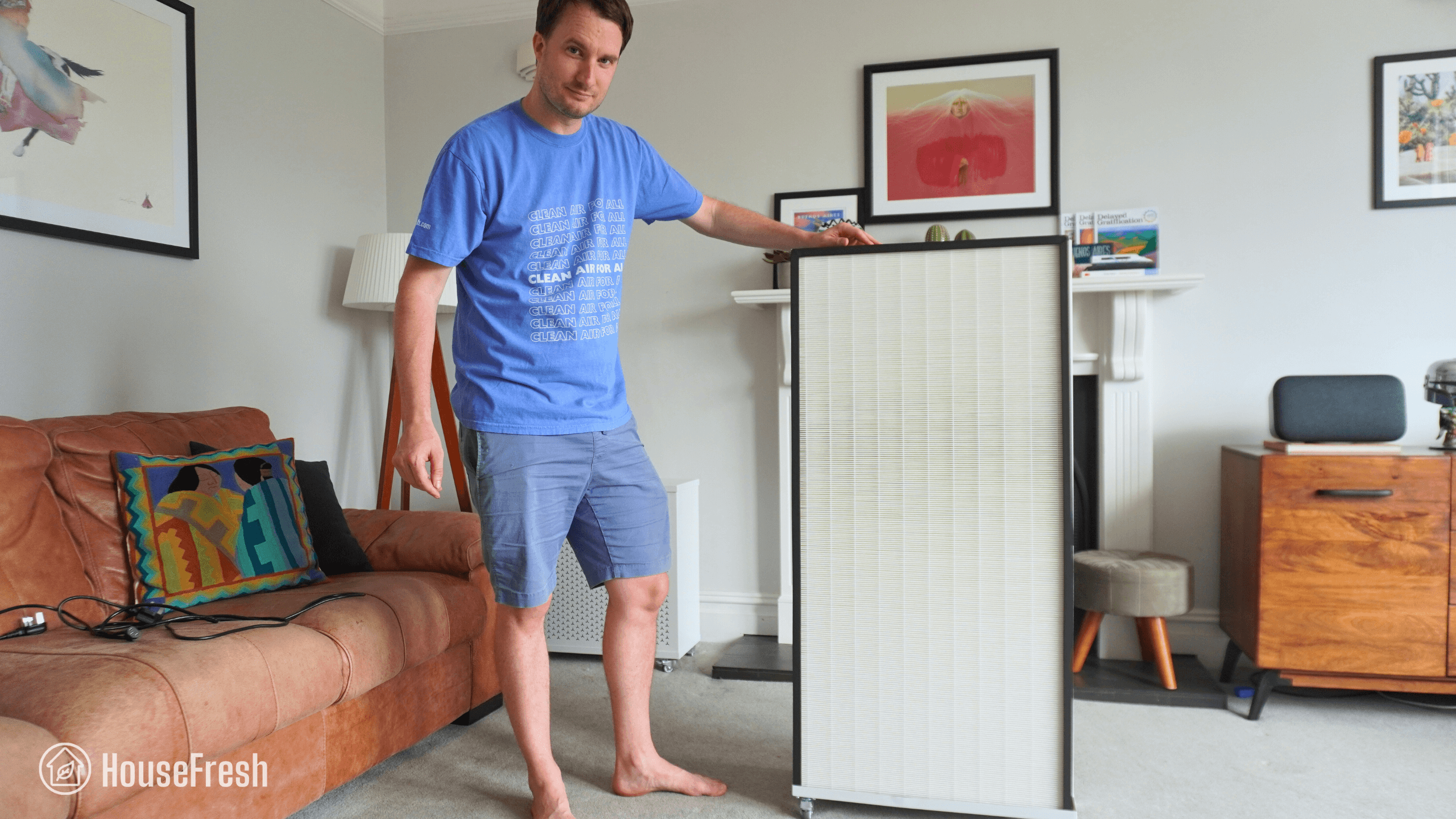
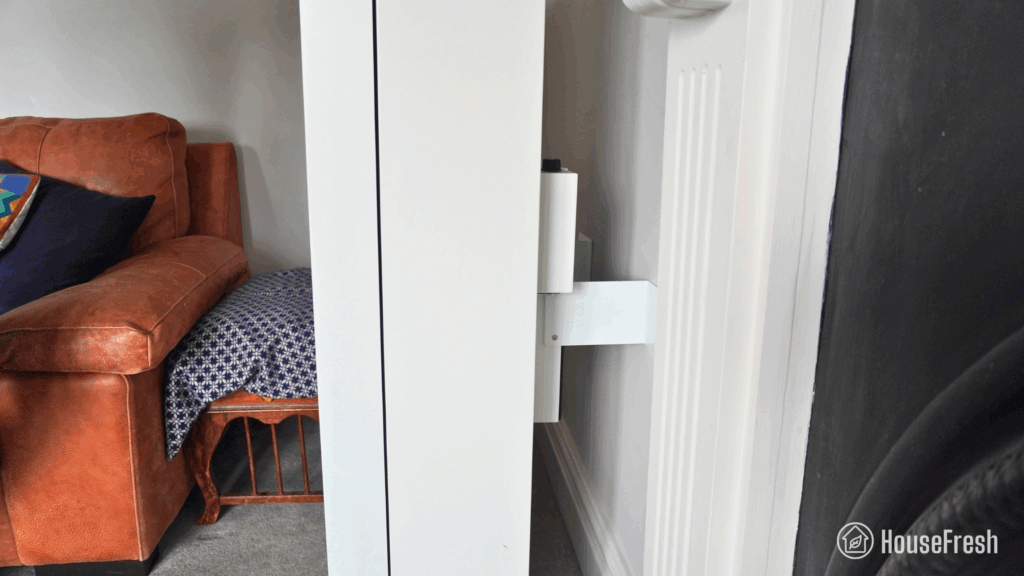
The body is fully made out of metal with wheels to move it around. You can also fix it to the wall, when using it in high traffic areas.
CONS
PROS
| Clean air delivery rate (CADR): | – Top speed PM1 CADR: 547 cfm – Sub-45 dBA PM1 CADR: 375 cfm – Manufacturer provided CADR: 559 cfm |
| Filter technology: | H13 HEPA filter (and optional pelleted activated carbon filter) |
| Recommended room size: | 820.5 sq. ft. (5 air changes per hour): |
| Dimensions: | 15D x 25W x 50H inches (38.1D × 63.5W × 127H cm) |
| Weight: | 84 lbs (38 kg) |
| Noise level in decibels from 3 ft. away: | Speed 1: 41.9 dB Speed 2: 49.4 dB Speed 3: 54.7 dB |
| Electricity consumption in watts: | Standby mode: 0 watts Speed 1: 56.3 watts Speed 2: 94.5 watts Speed 3: 133.5 watts |
| Filter lifespan: | 19 months |
| Manufacturer’s warranty: | 1 year |
| Country of origin: | China |
| Country of manufacture: | China |
Some notable mentions
These seven air purifiers were very close to making this list. Depending on your budget and availability in your location, it could be worth checking them out.

Smart Air Blast Mini MKII
It has a PM1 CADR of 400 cfm at top speed (56.3 dBA) and 272 cfm at speed 1 (44.9 dBA). It comes with optional carbon, so for tackling Coronavirus, you can stick to HEPA H13 only. It didn’t make the list because the ProX offers better performance at a quieter level (299 cfm at 44.4 dBA) and has a sensor.
IQAir Atem X
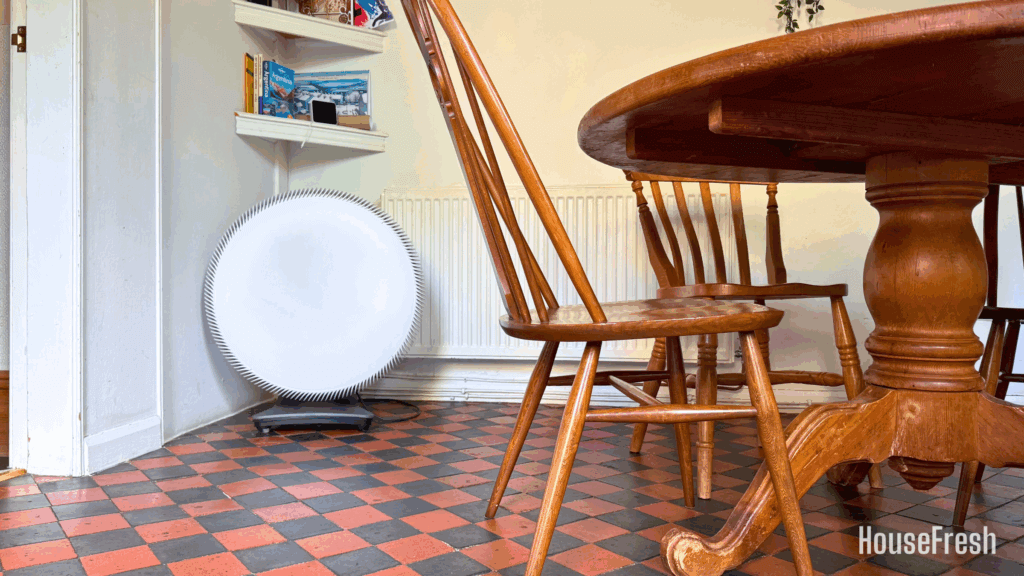
At top speed (62.3 dBA), we estimate a PM1 CADR of 429 cfm and at speed 4 (44.5 DBA) we estimate 229 cfm, which would be good enough for rooms up to 286 sq. ft. I didn’t shortlist the Atem X due to its high price tag ($1,399.99), which makes it hard to recommend over the cheaper Airmega ProX and Smart Air Blast.

Levoit Vital 200S
This is a solid performer under $200 with app support, smart functions and a sensor. It didn’t make the list because its raw air cleaning power at top speed (260 cfm at 57.7 dBA) is not nearly as good as what you’ll get with the AirFanta 3Pro (353 cfm at 56.3 dBA).
Dyson Big+Quiet BP06
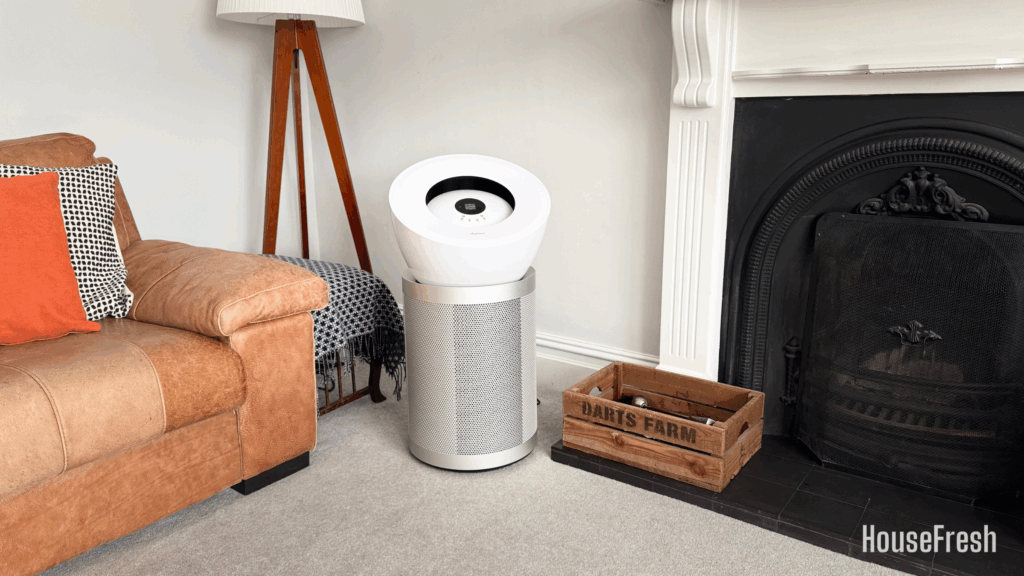
This is not only the cheapest Dyson’s Big+Quiet model ($899.99) but also the best-performing Dyson purifier we tested. It will give you 198 cfm at top speed (51.4 dbA) and 128 cfm at speed 1 (40.4 dBA), which makes it good enough for rooms up to 160 sq. ft. However, its performance is comparable to models that cost a third of its price.
Check out our air purifier leaderboard
Since 2020, I have tested and reviewed over 130 air purifiers. Explore the interactive table low to see which models come on top for performance, value for money, and overall features:
What to look for when buying an air purifier for COVID-19
The EPA states that air purifiers can help reduce airborne contaminants, including viruses, in a building or small space.
The way that the virus spreads makes it especially hard to tackle, as it is emitted from infected persons through tiny droplets, which attach to particulate matter and remain in the air for several hours, depending on factors like ambient humidity, ventilation, wind rates, and the amount of particulate matter pollution in the air.
When choosing an air purifier, it’s essential to keep the main goal of your purchase in mind. Dr. Corsi keeps it simple:
“No need to purchase gimmicky add-ons that sometimes do little and sometimes emit ozone. HEPA is fine.”

Don’t be swayed by new virus-killing technology. HEPA has been shown to be very capable of removing COVID-19 particles. HEPA is backed up by decades of research.
Most new technologies like ionizers, PECO, UV, PCO, etc. are sold as doing something new, but in most cases, perform very poorly. They also have the potential to make the air worse as they can lead to harmful byproducts created when they interact with other chemicals in the air.
Whatever air purifier you pick, make sure to ventilate your home well by opening windows to allow fresh air in — increasing ventilation is another way of reducing the risk of COVID-19 transmission.
Common questions about COVID-19 and air purifiers
With the sheer amount of COVID-19 research published, we asked consultant scientist Bharti Sharma who has published several academic COVID-19 papers published, to help us understand the latest research when it comes to COVID-19 and air quality:
Using a fan within an enclosed space during COVID-19 infection can increase the transmission of the infection, particularly if there is no ventilation. Portable and ceiling fans just circulate the air inside a room, but they do not exchange, purify, or replace the air.
A limited number of research studies have shown that HEPA filters can remove viruses in droplet form in the air as the size of the airborne droplets is big and permits the HEPA filters to remove them.
Yes, they have shown high efficiency in capturing the COVID-19 virus and research studies. High-efficiency particulate air (HEPA) filters or air purifiers are universally used in medical institution wards for filtering the air.
The CDC recommends ventilation through portable or built-in high-efficiency particulate air (HEPA) filtration systems for filtering air in higher-risk areas like medical institutions or areas used by individuals suffering from COVID-19 infection or other viral infections.
Using ventilation within public buildings, like hospitals, malls, office complexes, schools, libraries, eateries, cruise ships and elevators, can minimize airborne transmission of COVID-19 indoors together with isolation, social distancing and masking.
The sampling of air samples from hospital rooms in several research studies has proven that, yes, it is possible to detect SARS-CoV-2 PCR-positive particles of sizes >4 μm and 1–4 μm from air samples.
Wrapping up
Whatever air purifier you decide to buy, remember that ventilation, social distancing and masking are also all essential in the fight against Coronavirus.
If you have any questions about the models I recommended in this article, please drop them below and I’ll reply personally as soon as I can. Or if you prefer to ask me something in private, you can always email me at danny@housefresh.com.