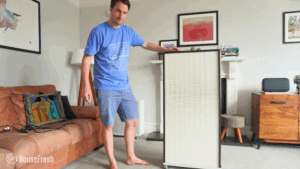
When considering investing in an air purifier to deal with pet odors and allergies, the question may come to mind: are air purifiers safe for pets?
I’m here to tell you that not all air purifiers are 100% safe for animals or for people. Some air cleaners can produce toxic chemicals as a by-product of their process, introducing harmful gases into your home air that both you and your pet would be exposed to.
In this article, we’ll go through those types of technology and analyze the dangers they pose. We’ll also explore the benefits of safe air purifiers and the things you should look for if you are considering getting one for you and your loved domestic fauna.
Dangerous air purifiers pet owners should avoid
All appliances or electronic devices carry a potential risk and require certain precautions in pet-friendly homes. Some mischievous pets like chewing through power cables and might even get tangled in them, depending on their size. Not only that, electronics can get knocked over in a night burst of zoomies or by clumsy waggy tails (placement is, no doubt, something to consider).
When it comes to air purifiers, you also need to factor in the technology these gadgets use to clean the air. Not all air purifiers work the same way; some can even pose health hazards.
For the purpose of this article, we’ll classify air purification technologies into three categories:
| Method | Technology | How do they work |
| Mechanical pollutants removal | HEPA and activated carbon filters | They remove particles and gases (VOCs and odors) from the indoor air by capturing them on the surfaces by filtration (HEPA) and adsorption (activated carbon). |
| Electronic pollutants removal | Ionizers and Electrostatic Precipitators (ESP) | An electrical charge makes the airborne particles drop out of the air onto any surface or get trapped in the units’ oppositely charged plates. |
| Pollutant destruction | Ozone generators and UV Light cleaners (including Ultraviolet Germicidal Irradiation (UVGI) and Photocatalytic Oxidation (PCO) cleaners) | Ozone and UV light decompose particles and gas molecules through chemical reactions. |
Long story short, air purifiers with mechanical filtration systems are the safest ones. Both HEPA and activated carbon filters are inert and don’t release any chemicals in their process. You and your pets will be safe around them and even benefit from the improved air quality in your home.
On the other hand, ionizers, ozone generators and UV light cleaners all come with their risks.
These technologies are effective (some more than others) and will remove a certain amount of airborne pollutants. But, in the process, they will also release chemical byproducts, including ozone, into your indoor air, which are harmful to pets and people alike.
Ozone is a highly toxic air pollutant that affects humans and pets (dogs, cats, rodents, birds) similarly by:
- irritating the respiratory system
- causing irreversible lung damage
- generating metabolic disorders and nervous system issues
- worsening asthma symptoms (in people and equivalent disorders in animals).
Besides, even at concentrations below public health standards, ozone also reacts with chemicals found in household cleaning products, air fresheners, deodorizers and certain paints, producing ultrafine particles and VOCs (including formaldehyde, peroxides and other harmful gasses).
But let’s dig deeper into each of them to further understand how these technologies work — and what downsides they present.
How ionizers can affect your pet
This type of technology has many names: ion air purifiers, air ionizers, electrostatic precipitation, bipolar needlepoint ionization and plasma technology, to name a few.
Despite the creative advertising, all of these cleaners use a similar mechanism: they release ions into the air through electrical discharges. The ions attach to airborne particles and either force them to drop into any horizontal surface (including rugs, beds, couches, you get the idea) or are sucked into the unit’s oppositely charged plates to collect them.
However, pollutants and molecules in the environment react with the electrical discharges. Units with built-in high-voltage coronas or pin/needle ionizers, for example, can alter oxygen molecules, recombining them to form ozone. Acetone, ethanol and toluene are other common byproducts of ionization.
All these chemicals can trigger an array of health issues in pets, including kidney, liver, retinal and nerve damage.
Besides, the VOCs generated by ionization can react with other compounds in the air found in any home and produce new fine particles (PM2.5) that are harmful to breathe.
For the cherry on top, according to the EPA, there’s doubt about their efficiency at removing large particles, such as house dust allergens (which includes the pet dander you are probably looking to eradicate if you have pets at home).
The U.S. Food and Drug Administration’s Code of Federal Regulations limits ozone emission from devices like ionizers at 0.05 ppb. Some units in the market may comply with this regulation and be advertised as safe. But this doesn’t take into consideration that ionizing technology can also produce other toxic chemicals and fine particles. Besides, no matter how small the amount, it’s better to avoid ozone altogether when looking for a device for pets.
How ozone generators can affect your pet
These devices purposefully create ozone, allegedly to remove air pollutants, VOCs, mold, viruses, bacteria and odors from the air. They use UV light or an electrical discharge (just like ionizers) to transform oxygen molecules (O2) into ozone (O3) by breaking them apart and making them available to bind with other molecules in the air.
As mentioned above, the dangers of ozone are well studied and accounted for. And yet, ozone generators are still recommended on the internet to deal with pet odors (particularly old urine), among other uses.
Even if used when no people or pets are present, the EPA warns that there’s not much information about the chemical by-products left behind by ozone generators.
Besides, according to the California Air Resources Board, ozone can fiddle with the sense of smell, disguising rather than eliminating odors. What’s more, ozone cannot remove particles (dust, pollen, pet dander) from the air in concentrations below public health standards set by the FDA.
How UV light cleaners can affect your pet
Ultraviolet Germicidal Irradiation (UVGI) air cleaners became very popular during the COVID-19 pandemic due to their capacity to kill or neutralize viruses and bacteria. They can be effective against mold, too. However, their efficiency relies on the use of a particularly dangerous UV light: UV-C.
High-powered UV-C light can damage any living thing —not just viruses, bacteria or mold— and creates ozone as a byproduct.
To make most portable air purifiers safe to use in homes, the UV-C lights used are not powerful enough to deteriorate any of those biological pollutants to the point of neutralizing them. Yet, they are still capable of introducing ozone into your home. As a result, you’ll end up with the negative effects but without any actual cleaning power.
Besides, UV light does not remove particles. The CDC recommends the use of UVGI technology as long as it is supplemented with an air filtration system. Otherwise, airborne particles (either active or inactive) will remain inhalable in the environment.
Something similar happens with Photocatalytic Oxidation (PCO) air cleaners, which use UV-A, UV-C or UV-V (which produces ozone as a by-product) lights and a catalyst to produce an oxidation process (hence the name) that breaks down VOCs. One of the biggest downsides of this kind of cleaner is that catalytic oxidation can produce dangerous byproducts, including sulfur, phosphorus, formaldehyde and ozone.
The benefits of HEPA (mechanical) air purifiers for pets and their humans
Our home is an essential part of our lives as it is to our pets. They spend most of their time there, dozing off on the couch, playing around or resting in our lap as we remote-work or watch our favorite TV show. And yet, according to the EPA, indoor air pollution can be two to five times higher than outdoors.
The thing is, air pollutants have a negative effect on people —that’s well documented—but they can also affect our pets. Dogs and cats, for sure, but also the rabbits, birds, mice, guinea pigs and any animal we share our lives with will be adversely affected by poor indoor air quality.
Just like with humans, younger and older pets, as well as those with preexisting conditions, are more at risk than healthy adults.
But there’s no need to freak out. Thorough and regular cleaning routines with safe cleaning products can boost the air quality in our homes. And for those unavoidable pollutants that enter through our window as we ventilate, an air purifier will do the trick. With a mechanical air filtration system, such as portable HEPA and activated carbon filter air purifiers, you and your dear pets can:
- Reduce respiratory problems associated with airborne particles. HEPA filters are capable of removing 99.97% of mold spores, smoke and cooking-related particles, pollen, dust and dander that irritate the whole respiratory tract of people and pets like dogs and cats.
- Lessen negative effects of VOCs and gaseous indoor pollutants. Everyday cleaning products, varnishes and paints, furnaces and heating appliances can release a myriad of VOCs harmful to all. Birds, for example, are particularly susceptible to gaseous pollutants, which cause severe respiratory issues, higher stress levels and changes in behavior. Cats also are especially prone to respiratory problems, which worsen in the presence of pollutants.
- Reduce the risk of chronic diseases and immune system damage related to air pollution. Some studies link air pollution to oxidative stress and the over-production of white blood cells, which can point to excessive work of the immune system. Both lead to cell inflammation that affects healthy cells, tissues and organs and can increase the risk of chronic diseases. This study detected a direct connection between PM2.5 from wildfire smoke and high levels of oxidative stress in dogs.
- Cut down allergies. Pet fur, dander, saliva and urine can trigger allergies in people. Removing pet–related pollutants from the air with a HEPA filter air purifier can make a huge difference and improve the quality of life in pet-friendly homes. But humans aren’t the only ones who can suffer from allergies: dogs, cats, birds, rabbits and guinea pigs can suffer from allergies as well. These can be triggered by biological pollutants and VOCs in the air.
- Minimize unwanted smells. Pet parents will know how unpleasant the smell of litter boxes, rodent enclosures or bird cages can be. While it’s essential to keep these neat and tidy for our pet’s well-being, sometimes, even with regular cleaning, they can still give off a foul smell. Or maybe you are struggling to get the dog scent out of the couch. Activated carbon filters on air purifiers can adsorb those lingering pet odors.
If this is one of your main concerns when it comes to your pawsome home, then check out our selection of air purifiers for pet odor and litter-box smells based on our performance testing.
What to look for when buying an air purifier for a home with pets
So, we’ve analyzed the types of air cleaners that aren’t safe for pets (or humans) and should be avoided. Now, let’s go through the things you should look for in an air purifier to make the most of it:
1. Three staged filtration air purifiers
This comprehensive filtration that can tackle all kinds of indoor airborne pollutants includes:
Pre-filter:
Not all purifiers have pre-filters, but when it comes to homes with furry companions, this filtration stage can make a huge difference. As the name indicates, these come before the HEPA filter to trap larger particles (such as pet hair but feather bits as well) before they reach the main filter. Shed fur and other debris can clog the machine, tampering with its filtration capacity and reducing the life of HEPA filters. The best pre-filters are removable (and washable), as they make the cleaning process much easier for you (either vacuuming or rinsing the particles out).
HEPA Filter:
High-efficiency particulate air filters are made of thousands of intertwined glass fibers. They form a maze capable of capturing airborne particles as small as 0.3 microns, including allergens like pollen, mold spores, dander and fine dust. As the air purifier draws air in, the particles go through the filter and get trapped, thus removing them from the home environment.
Activated carbon filter:
This third filtering stage will deal with the gaseous pollutants (like VOCs and smells) that can pass through the other two and re-enter your home air. When gases and odor molecules reach the activated carbon filter, they get stuck in the porous surface (this process is called adsorption), unable to flow back into the airstream.
Air purifiers with mechanical filtration systems sometimes have built-in ionizers or emit ozone as they work to boost their performance. In some cases, like the Alen BreatheSmart 75i and 45i, the ion function can be turned off.
Some others, like Blueair units with their HEPASilent filtration technology, use an ionizer you cannot disable. Double-check the unit’s features before making your decision.
2. Silent units
All mechanical air purifiers make sounds as the fans draw in the air to filter. But the noise levels vary from one unit to another, even at the same fan speed or power to achieve the same air cleaning results.
As animals have a much more keen sense of hearing than humans, it is best to opt for an air purifier that runs as quietly as possible to avoid stressing out your pet. HouseFresh recommendation is to opt for models with an average noise level of around 40dB.
3. The right cleaning power
Air purifiers are designed to efficiently clean the air within specific-sized areas. This means less powerful air purifiers will be best suited to remove most airborne particles from smaller rooms (such as bedrooms, studies, or small kitchens), while more potent units will be the best option to keep larger areas (such as integrated kitchens or ample living rooms) free of pollutants.
However, greater power usually means an elevated energy consumption that translates into the general costs of running an air purifier. That’s why finding the unit with the right cleaning power and Clean Air Delivery Rate (CADR) rating is important.
As this may be a bit tricky to grasp at first, we’ve developed our own CADR calculator that will indicate the rating you need according to the exact size of your space. You’ll notice the Air changes per hour (ACH) field is pre-filed. That’s because 4.8 is the ACH the EPA recommends to keep up with any unfiltered air entering the room.
4. Button lock
This is a useful feature to prevent mischievous or clumsy pets from tampering with the settings (or switching the air purifier off!). Most units have one-touch control settings that, as technology evolves, are becoming really sensitive to the point of responding even to the touch of a sneaky paw.
Wrapping up
After exploring different air purifier technologies, the dangers some of them may pose and the benefits of clean indoor air, it’s safe to say that mechanical air filtration is definitely something to consider.
An air purifier with HEPA+activated carbon filters and the power to clean and renew the air in your space will make your environment healthier —and make it smell fresher as a bonus!
SOURCES
- American Society of Heating, Refrigerating and Air-Conditioning Engineers, Inc. (2015). ASHRAE Position Document on Filtration and Air Cleaning. ashrae.org
- California Air Resources Board. (2023). Hazardous Ozone-Generating Air Purifiers. arb.ca.gov
- Claus, H. (2021). Ozone Generation by Ultraviolet Lamps. onlinelibrary.wiley.com
- Connecticut Department of Public Health. (2007). Ozone Generators. portal.ct.gov
- Environmental Protection Agency. (2023). What are ionizers and other ozone generating air cleaners?. epa.gov
- Environmental Protection Agency. (2023). Ozone Generators that are Sold as Air Cleaners. epa.gov
- Environmental Protection Agency. (2014). Guide to Air Cleaners in the Home. epa.gov
- Niu, J.L. et al. (2001). Quantification of dust removal and ozone emission of ionizer air-cleaners bychamber testing. sciencedirect.com
- Gupta, R. C. et al. (2022). Other Toxicants in Animals. msdvetmanual.com
- Gwaltney-Brant, S. M. (2022). Alcohols. msdvetmanual.com
- Mostrom, M. S. (2022). Petroleum Product Poisoning in Animals. msdvetmanual.com
- U.S. Food and Drug Administration. (2023). Code of Federal Regulations – Subchapter H: Medical Devices. Special Requirements for Specific Devices. fda.gov
- Waring, M. S. et al. (2008). Ultrafine particle removal and generation by portable air cleaners. sciencedirect.com
- Zeng, Y. et al. (2021). Evaluating a commercially available in-duct bipolar ionization device for pollutant removal and potential byproduct formation. sciencedirect.com