Wildfire smoke generates pollution from tiny particles (PM1, PM2.5 and PM10), and also chemical gases (VOCs) that occur when different materials burn.
The most dangerous pollutants are tiny particles measuring 1-10 microns, which are small enough to pass through lung tissue and get into the bloodstream. The good news is that high-performing air purifiers with the right filters can remove these particles from the air before they get into your body.
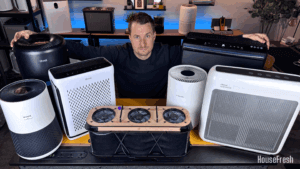
My recommendations today are based on more than 130 air purifier tests, in which we assessed the air cleaning performance of different brands and models to find units powerful enough to quickly clear wildfire smoke from the air without breaking the bank. Read about our testing process if you want to learn more.
Let me point out that I included two air purifiers that you can build at home: the Corsi-Rosenthal Box and a simple fan+filter DIY air purifier. I did this because wildfire smoke can accumulate very quickly, so the best solution is to get a device to clean your air ASAP.
1. DIY option: 30×20 Corsi-Rosenthal Box
For those reacting to the immediate threat of wildfire smoke, you can build your own Corsi-Rosenthal Box with a box fan, four HVAC MERV 13 filters, cardboard, and duct tape.
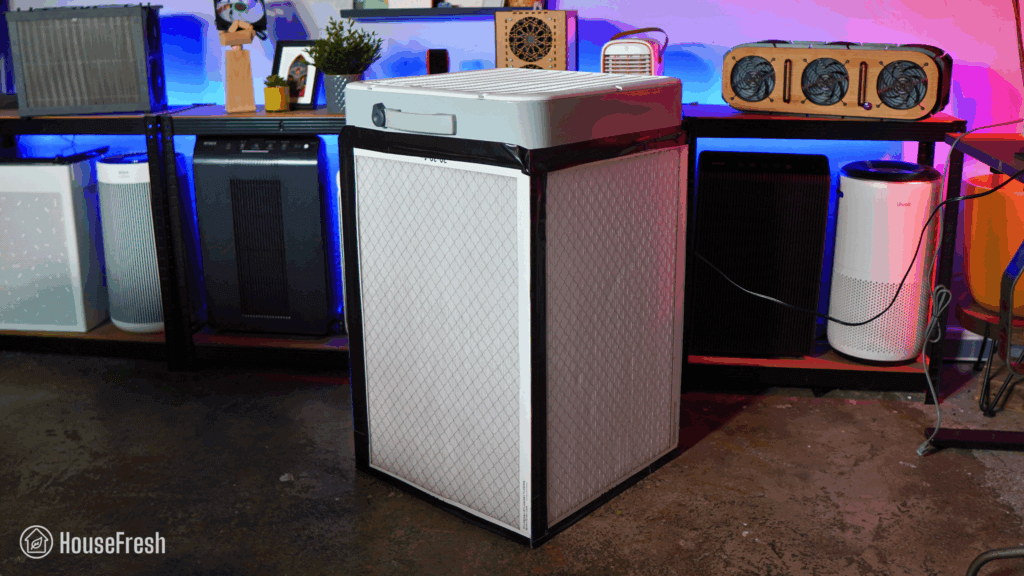
You can build this air purifier using items you may already have in the home. It was popularized by engineers Richard Corsi and Jim Rosenthal during the COVID-19 pandemic, but in addition to airborne viruses, this box can also help remove the dangerous tiny particles created by wildfire smoke.
To build one, you need a cardboard base, four 30x20x1 MERV 13 filters (I recommend 3M Filtrete MPR 1900) on each side, and a box fan on top.
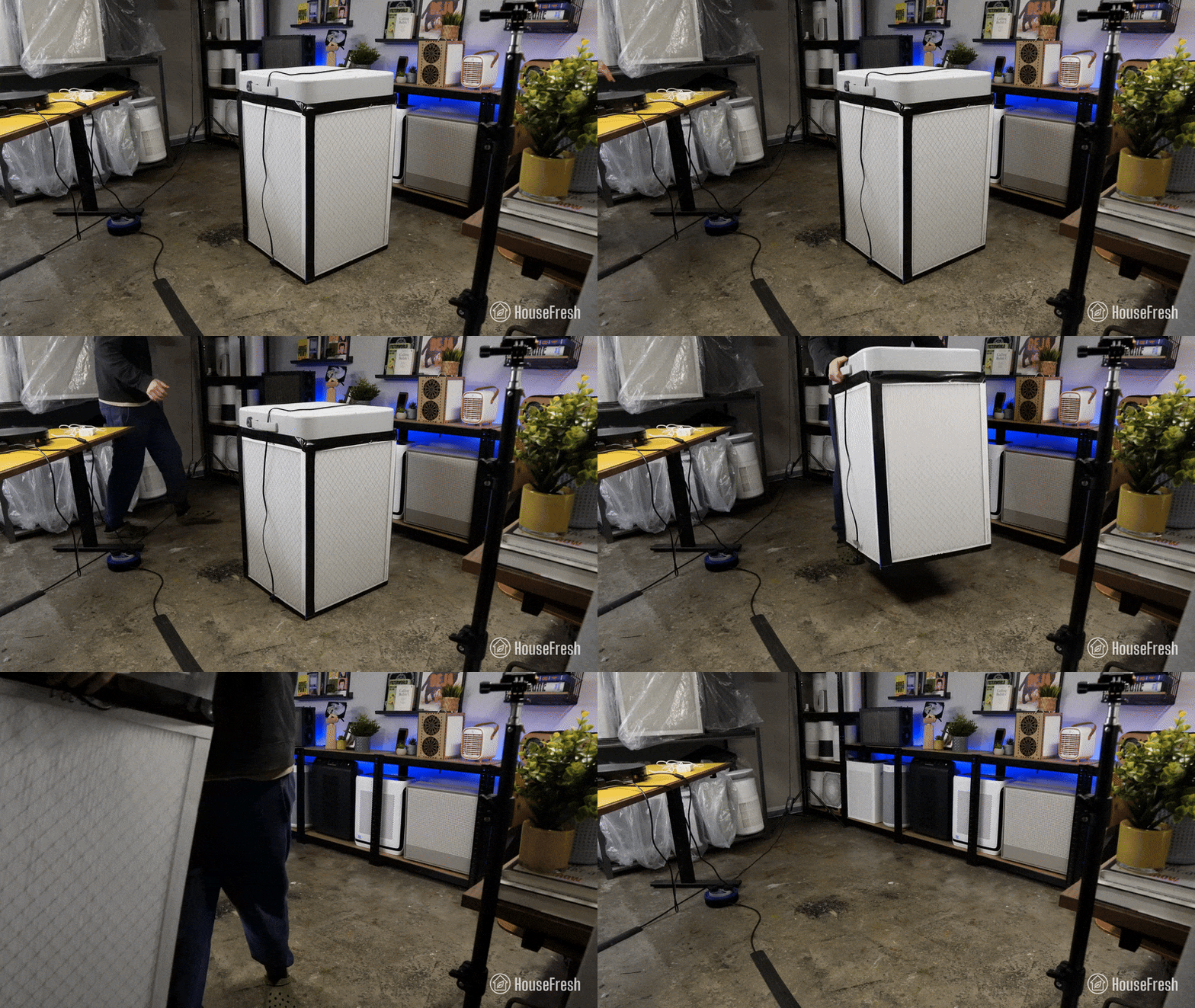
This 30×20 design is the largest one we’ve built, but its performance is outstanding. Here is an infographic explaining how to build one.
In terms of air cleaning speed, it reached the top of our leaderboard, matching the performance you can expect from models selling for $800+.
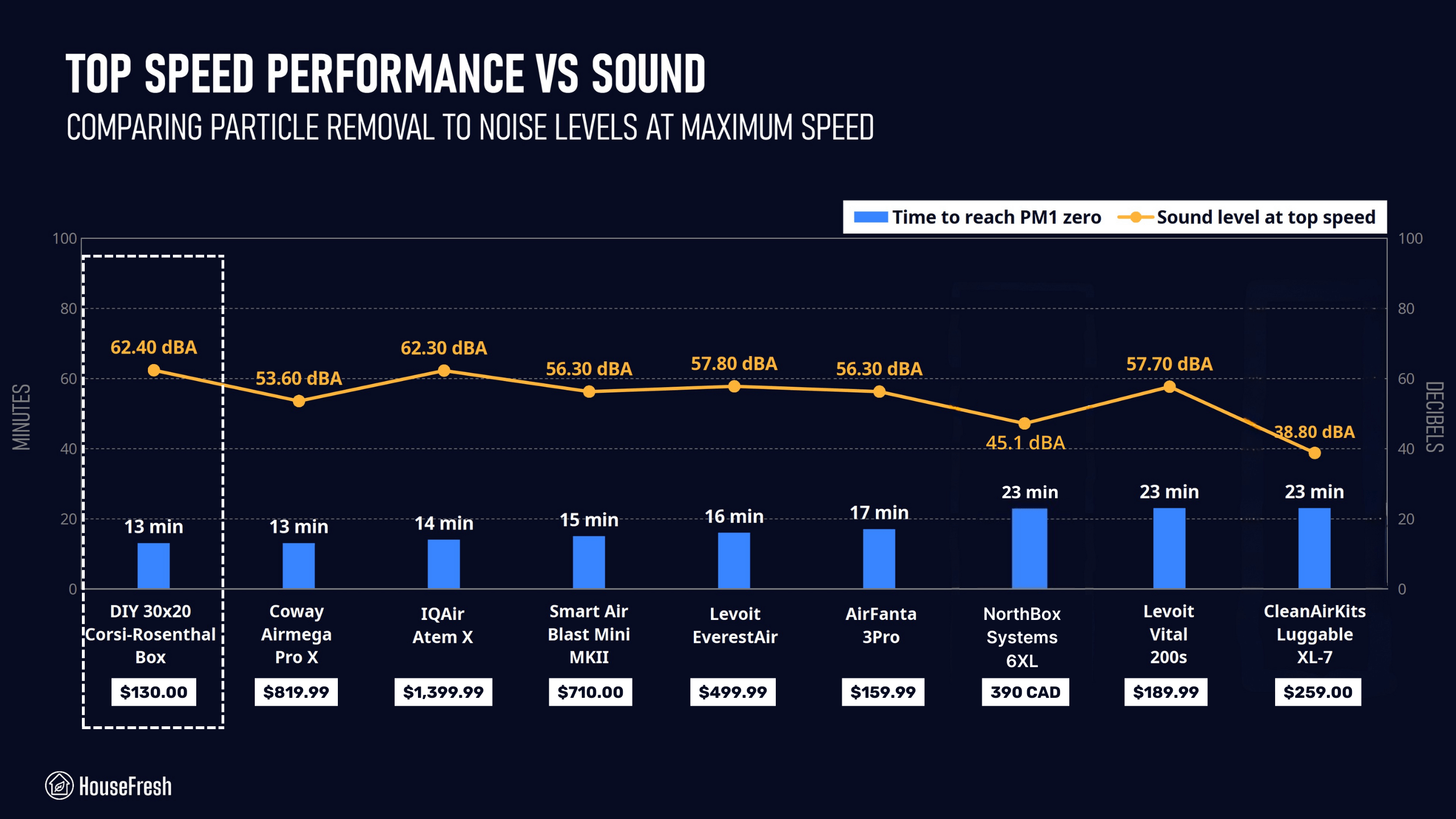
However, keep in mind that box fans are generally loud and power-hungry, so this might not be the best solution for the long term.
CONS
PROS
| Clean air delivery rate (CADR): | 462 cfm |
| Filter technology: | MERV 13 |
| Recommended room size: | 693 sq. ft. (5 air changes per hour) |
| Dimensions: | 20 x 20 x 30 inches (51 x 51 x 76 cm) |
| Weight: | 8 lbs (3.4 kg) |
| Noise level in decibels from 3 ft. away: | Speed 1: 51.5 dB Speed 2: 58.3 dB Speed 3: 62.4 dB |
| Electricity consumption in watts : | Standby mode: 0 kWh Speed 1: 72.57 kWh Speed 2: 88.55 kWh Speed 3: 103.28 kWh |
| Filter lifespan: | 6 months |
READ MORE ABOUT THE CORSI-ROSENTHAL BOX ➜
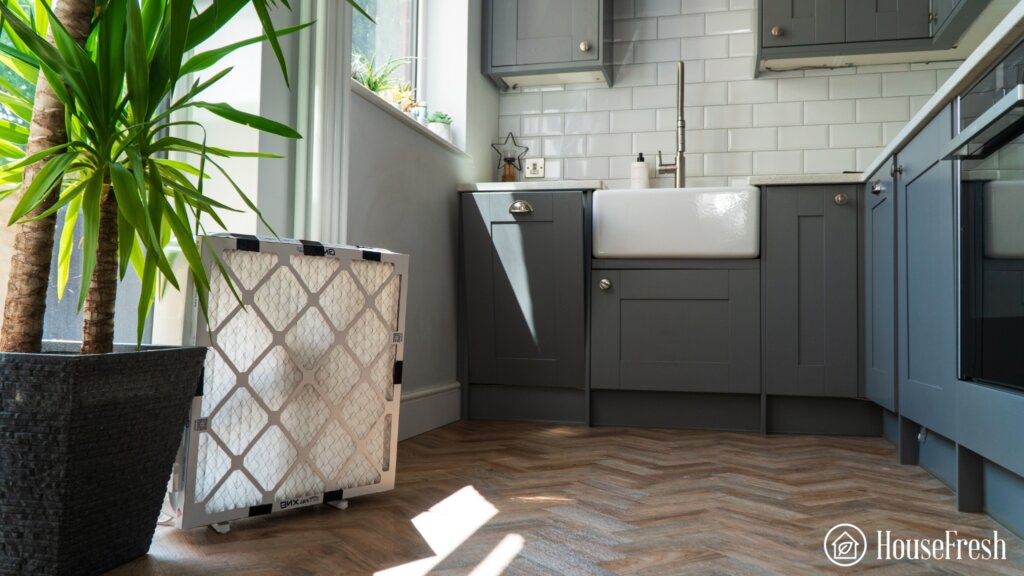
Air purifiers are essentially just a fan and a filter, and that is exactly what this DIY air purifier is.
You can read our full guide and review of this simple DIY Air Purifier, but in simple terms, you just attach a MERV-13 filter to a box fan and voilà.
In terms of air cleaning performance, it needed more than twice as much time to clear our small test room of PM1 smoke particles, but when dealing with wildfire smoke, this simple DIY device is most definitely better than having no air purifier at all.
Alternatively, you can look for a ready-made fan and filter device in the Lasko AirFlex 2-in-1.
A pro tip for those who choose for this option: we swapped the Lasko filter for a 3M Filtrete 20×20 filter and this doubled its air cleaning performance:
2. Best budget option: AirFanta 3Pro
At under $165, the AirFanta 3Pro boasts outstanding air cleaning performance thanks to four 140mm PC fans — plus, it can cover areas as big as 529 sq. ft.

Use the discount code HOUSEFRESH for 5% off when buying directly from AirFanta.
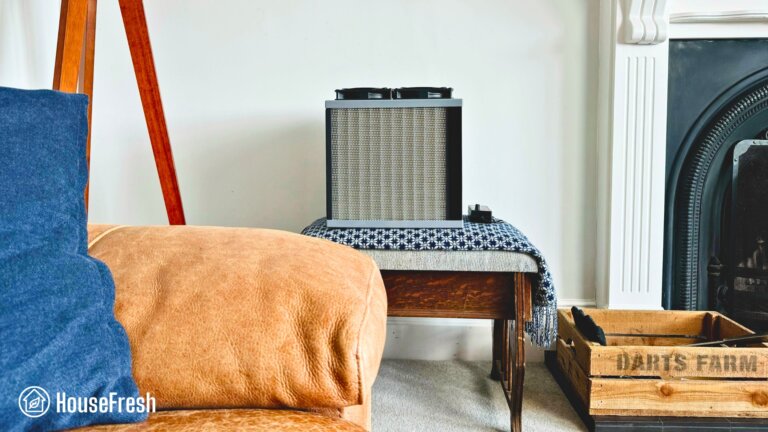
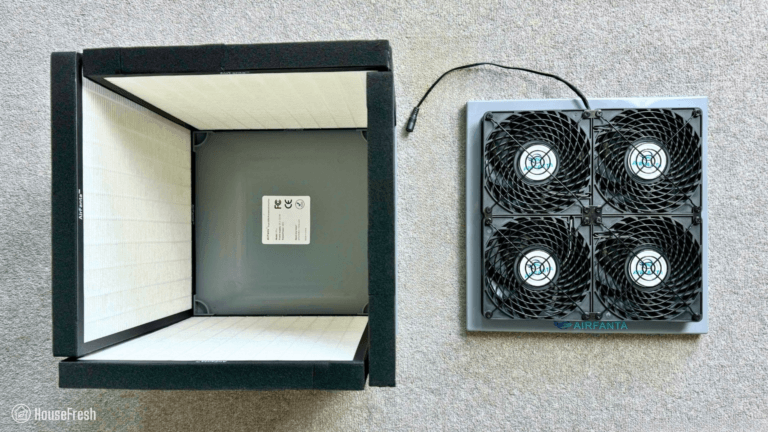
The design of the AirFanta 3Pro is inspired by the Corsi-Rosenthal box (above): a cube with a filter on each side, fans on top and a base at the bottom. But here’s the main difference: the 3Pro uses four PC cooling fans instead of a regular box fan.
The AirFanta 3Pro comes with four low-resistance E11 particle filters, which quickly remove smoke particles from the air with each pass.
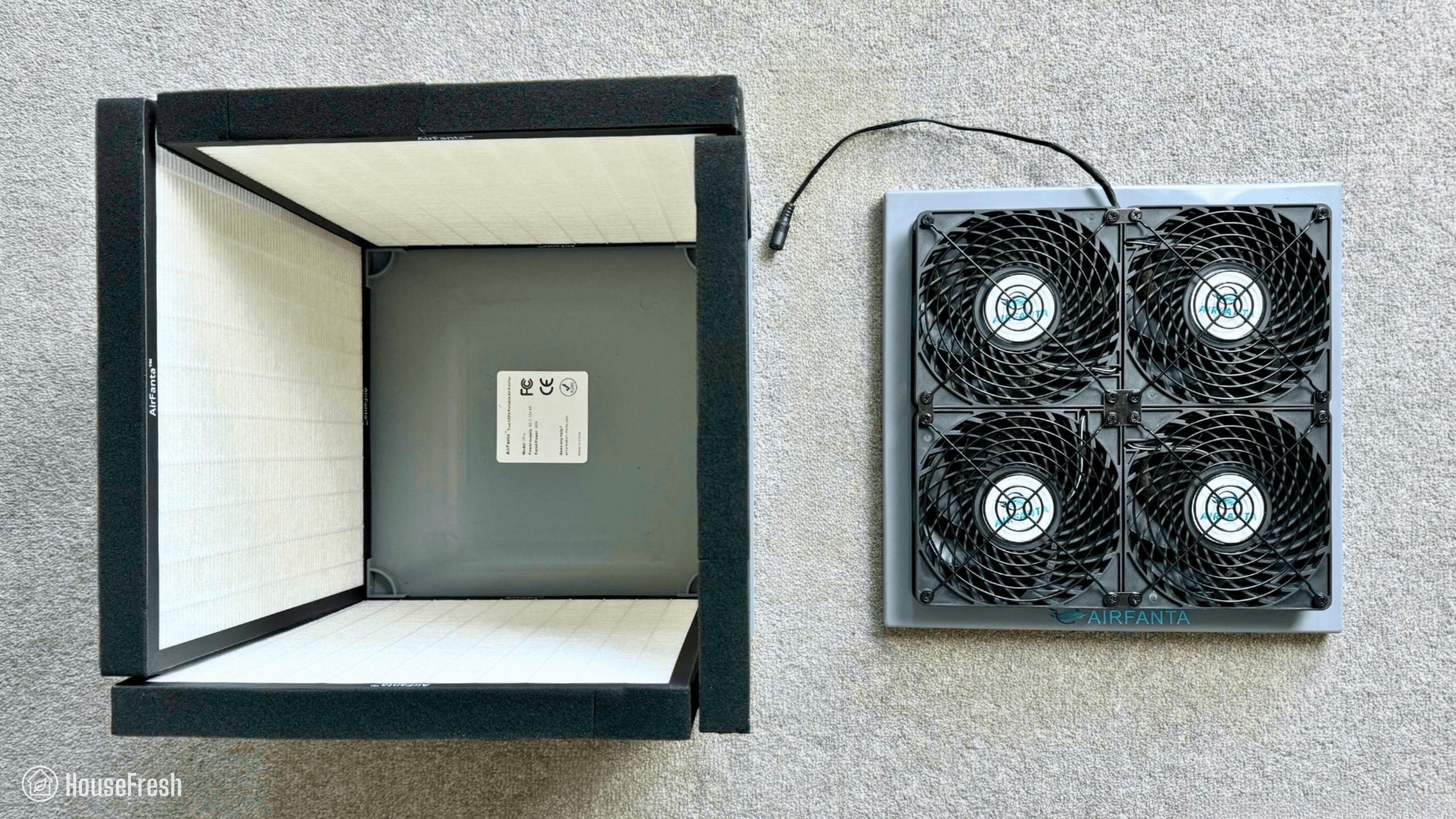
You will have to build the 3Pro but it’s very easy to do. You place the plastic base at the bottom, a filter at each side, and then secure the box with the PC fan array on top.
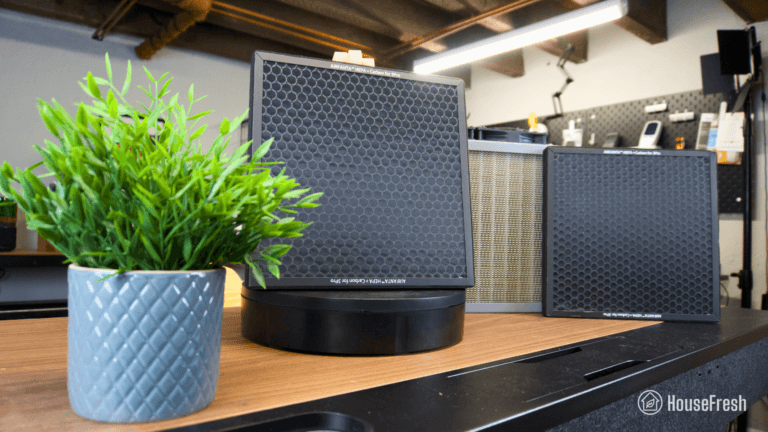
I recommend you go with the filters that come with activated carbon to clear your air of particles AND gases from wildfire smoke.
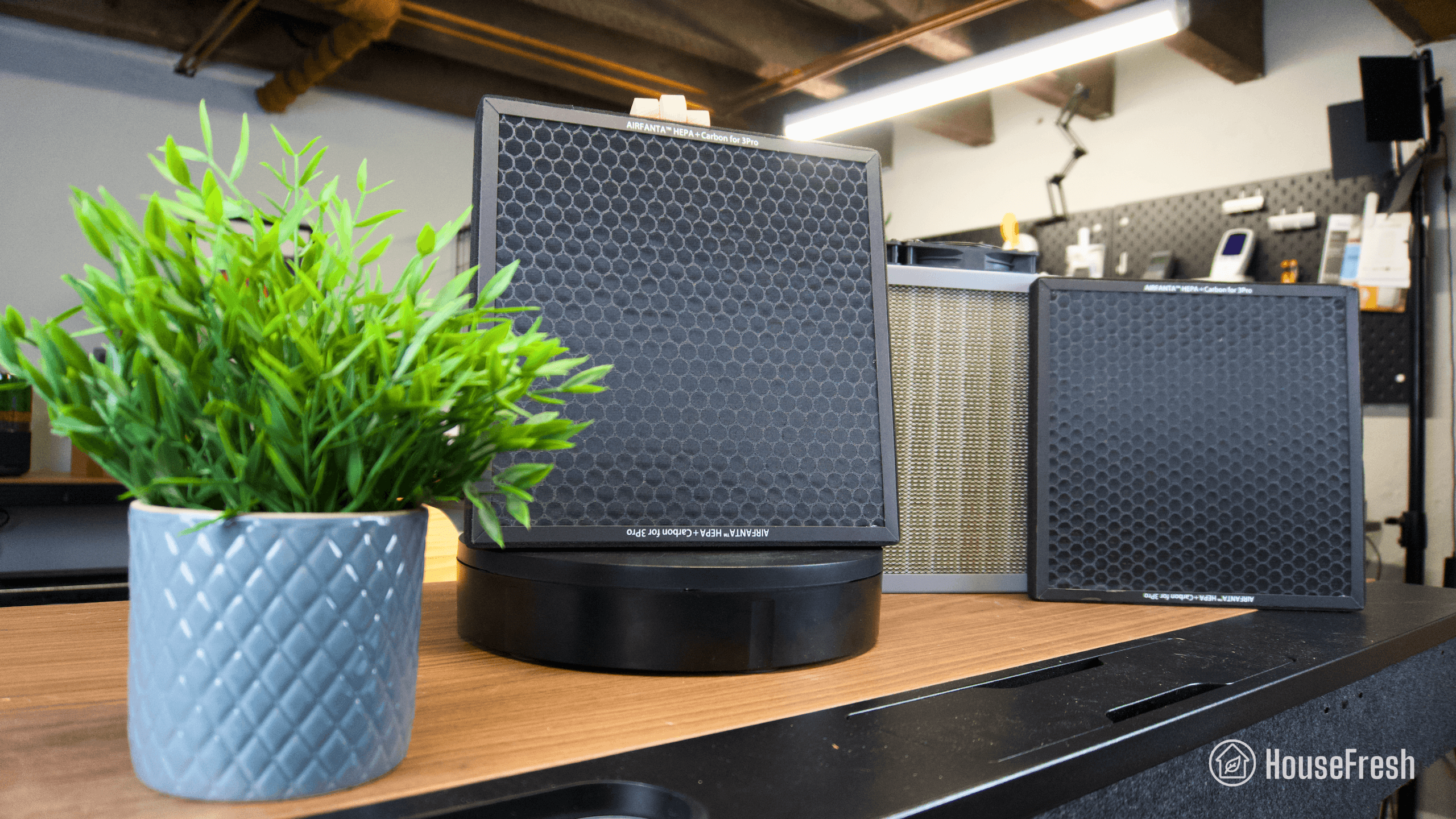
In terms of performance, this little box is one of the most powerful air purifiers I’ve tested. Based on its results, it can change the air five times per hour in rooms up to 529 sq. ft.
CONS
PROS
| Clean air delivery rate (CADR): | – Top speed PM1 CADR: 353 cfm – Sub-45 dBA PM1 CADR: 213 cfm |
| Filter technology: | True HEPA H11 and optional pelleted activated carbon |
| Recommended room size: | 529 sq. ft. (5 air changes per hour) |
| Dimensions: | 12.6D x 12.6W x 12.6H inches (32D x 32W X 32H cm) |
| Weight: | 7.7 lbs (3.49 kg) |
| Noise level in decibels from 3 ft. away: | 3.63 volts: 36.1 dB 4.19 volts: 36.9 dB 5.24 volts: 39.7 dB 6.54 volts: 43.3 dB 7.44 volts: 46.7 dB 8.56 volts: 49.1 dB 12.6 volts: 56.3 dB |
| Electricity consumption in watts : | 43.23 watts |
| Filter lifespan: | 6 – 12 months |
| Manufacturer’s warranty: | 1 year |
| Country of origin: | China |
| Country of manufacture: | China |
READ MY FULL REVIEW ➜
WATCH MY VIDEO REVIEW ➜
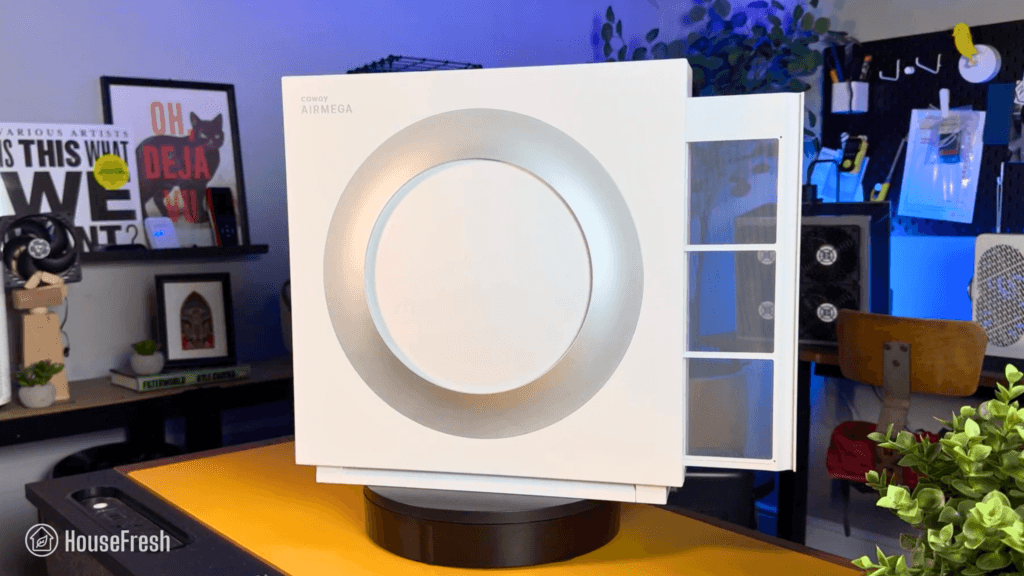
3. Best for large spaces: Coway Airmega ProX
Outstanding air cleaning power for large spaces, smart modes, and an accurate air quality sensor for just under $900.
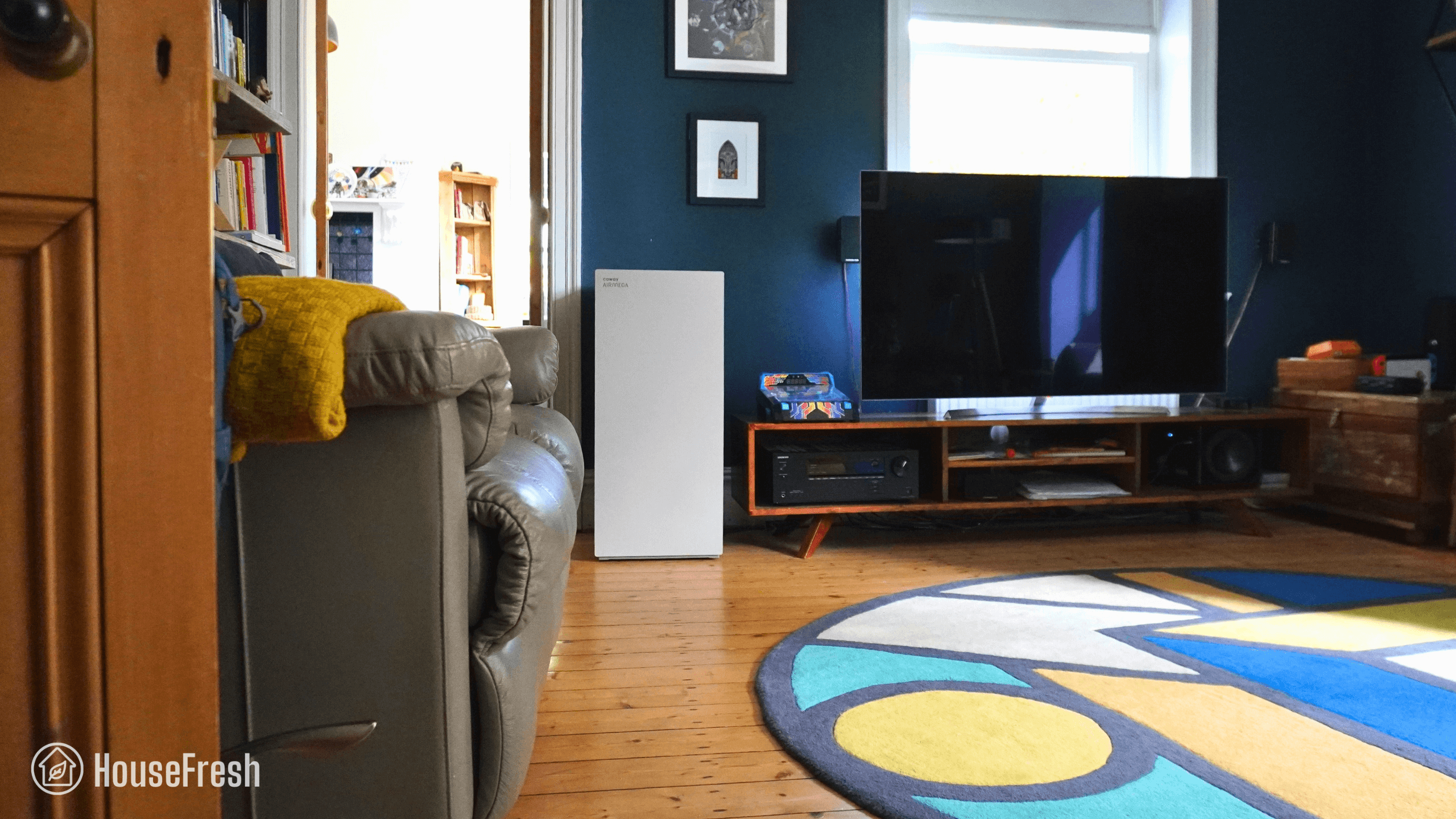
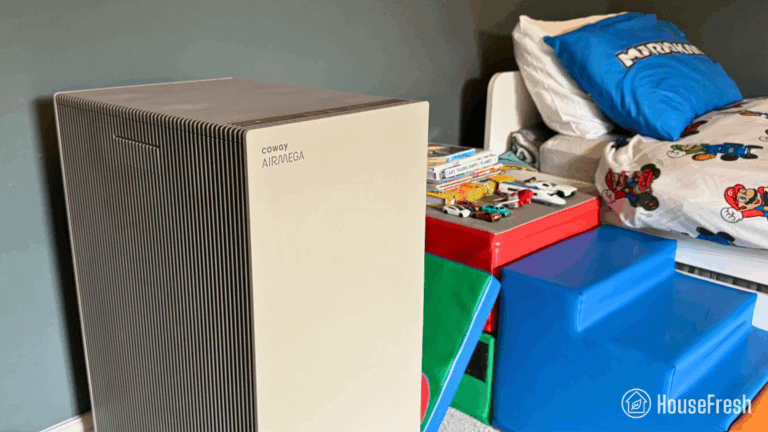
Speedyness is key when there’s a wildfire nearby. Selling for $899.99, the Airmega ProX is not as affordable as the AirFanta 3Pro, but it comes with such a powerful fan that it bested all 141 units we tested so far, completing our particle removal test in just 13 minutes.
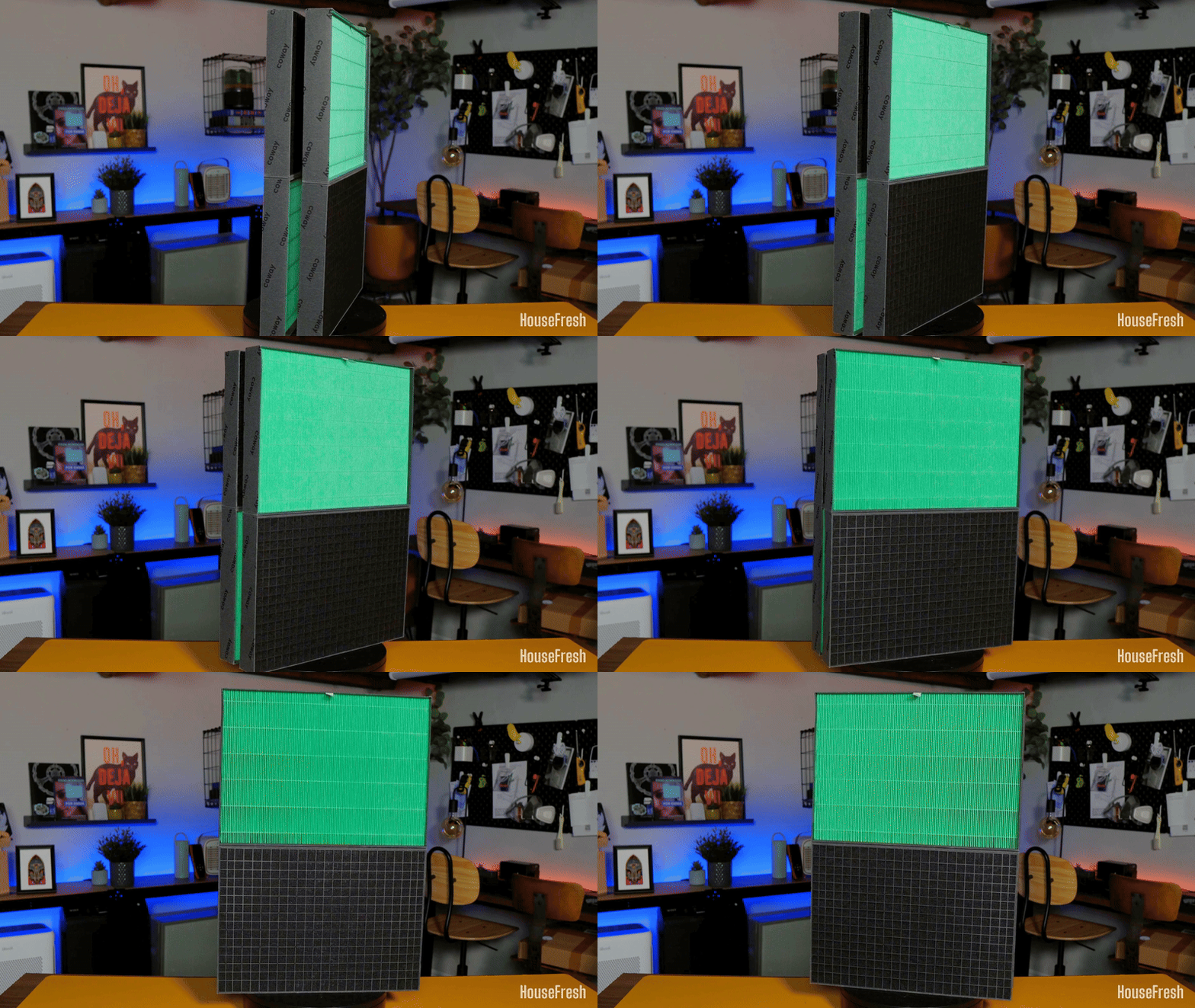
Its outstanding performance could be explained by the use of not one but TWO powerful fans and a set of two bonded HEPA and pelleted carbon filters – one on each side:
The ProX outmatched nearly every other air purifier I’ve tested, with the exception of the commercial Smart Air Blast, which is much bigger.
This is a large air purifier that will be able to clean the air five times per hour in large spaces of up to 693 sq. ft. at top speed, while generating just 56 decibels of noise.
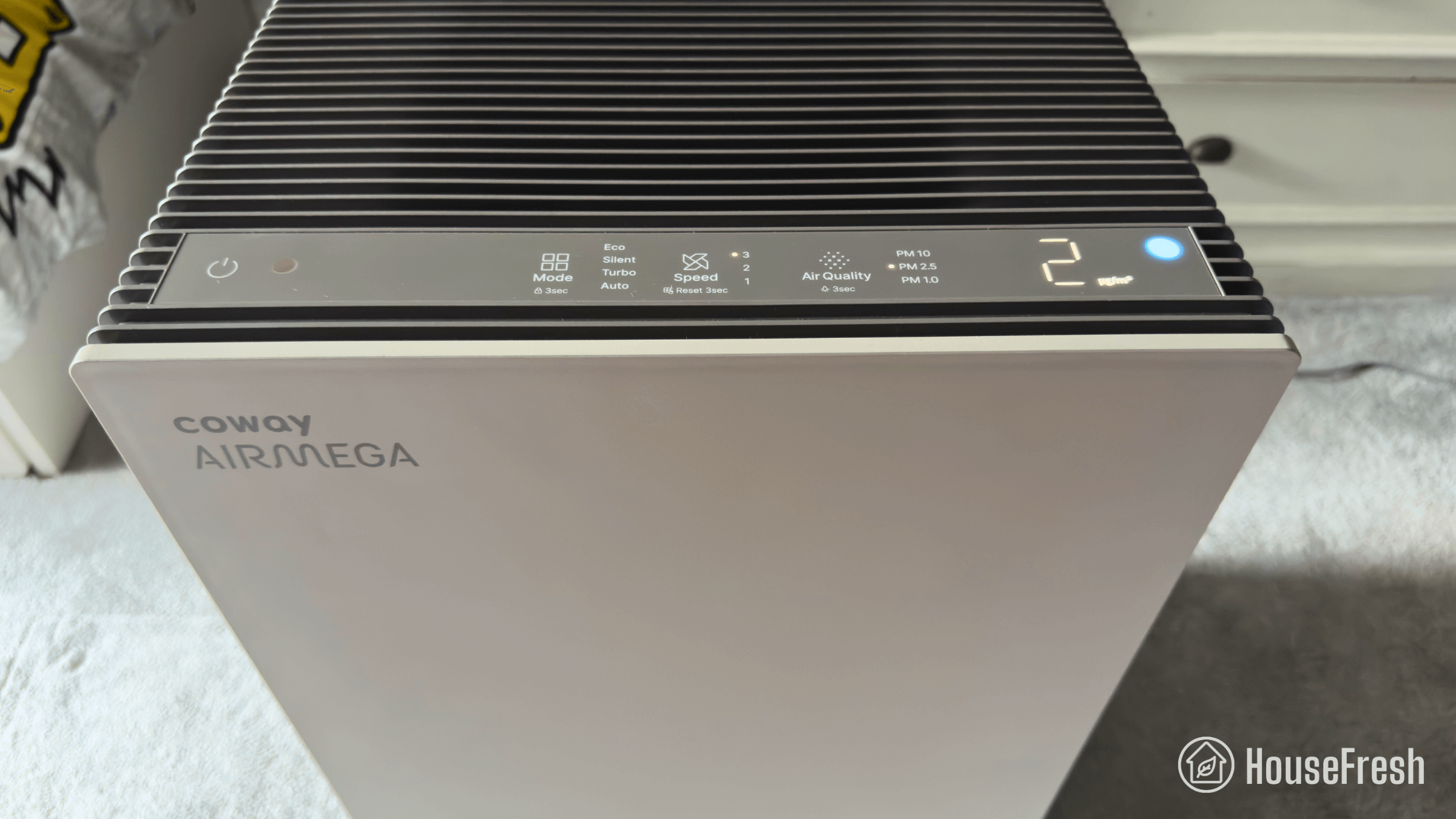
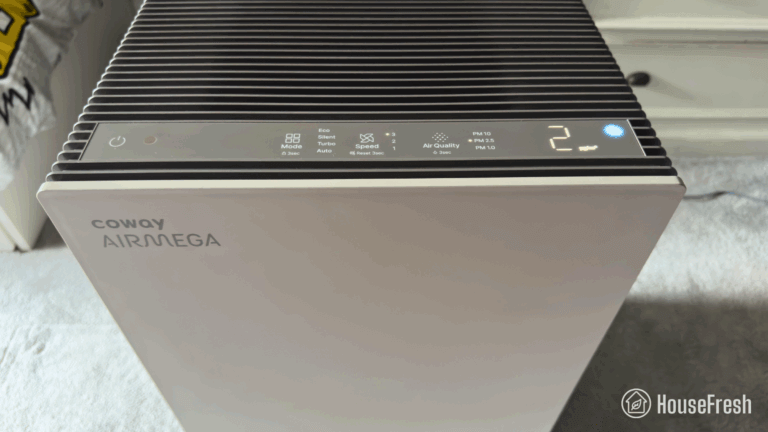
You also get a highly accurate particle sensor that unlocks smart features and automatic modes, where the air purifier will adjust its fan speeds based on the quality of your air.
CONS
PROS
| Clean air delivery rate (CADR): | – Top speed PM1 CADR: 462 cfm – Sub-45 dBA PM1 CADR: 299 cfm – AHAM PM2.5 CADR: 586 cfm (dust) |
| Filter technology: | Green True HEPA filter with pelleted activated carbon |
| Recommended room size: | 693 sq. ft. (5 air changes per hour) |
| Dimensions: | 18.9 x 36.6 x 24.3 in (48 x 93 x 62 cm) |
| Weight: | 51 lbs (23kg) |
| Noise level in decibels from 3 ft. away: | Speed 1: 37.4 dBA Speed 2: 44.4 dBA Speed 3: 53.6 dBA |
| Electricity consumption in watts: | Standby: 0 watts Speed 1: 11.76 watts Speed 2: 26.09 watts Speed 3: 58.88 watts |
| Filter lifespan: | 12 months |
| Manufacturer’s warranty: | 3 years |
| Country of origin: | South Korea |
| Country of manufacture: | South Korea |
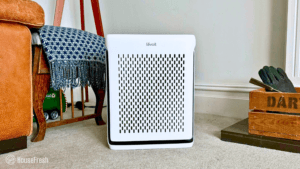
4. Best for small spaces: Levoit Vital 200S
This is our top recommendation for those looking for a smart air purifier with particle and carbon filters for under $200.
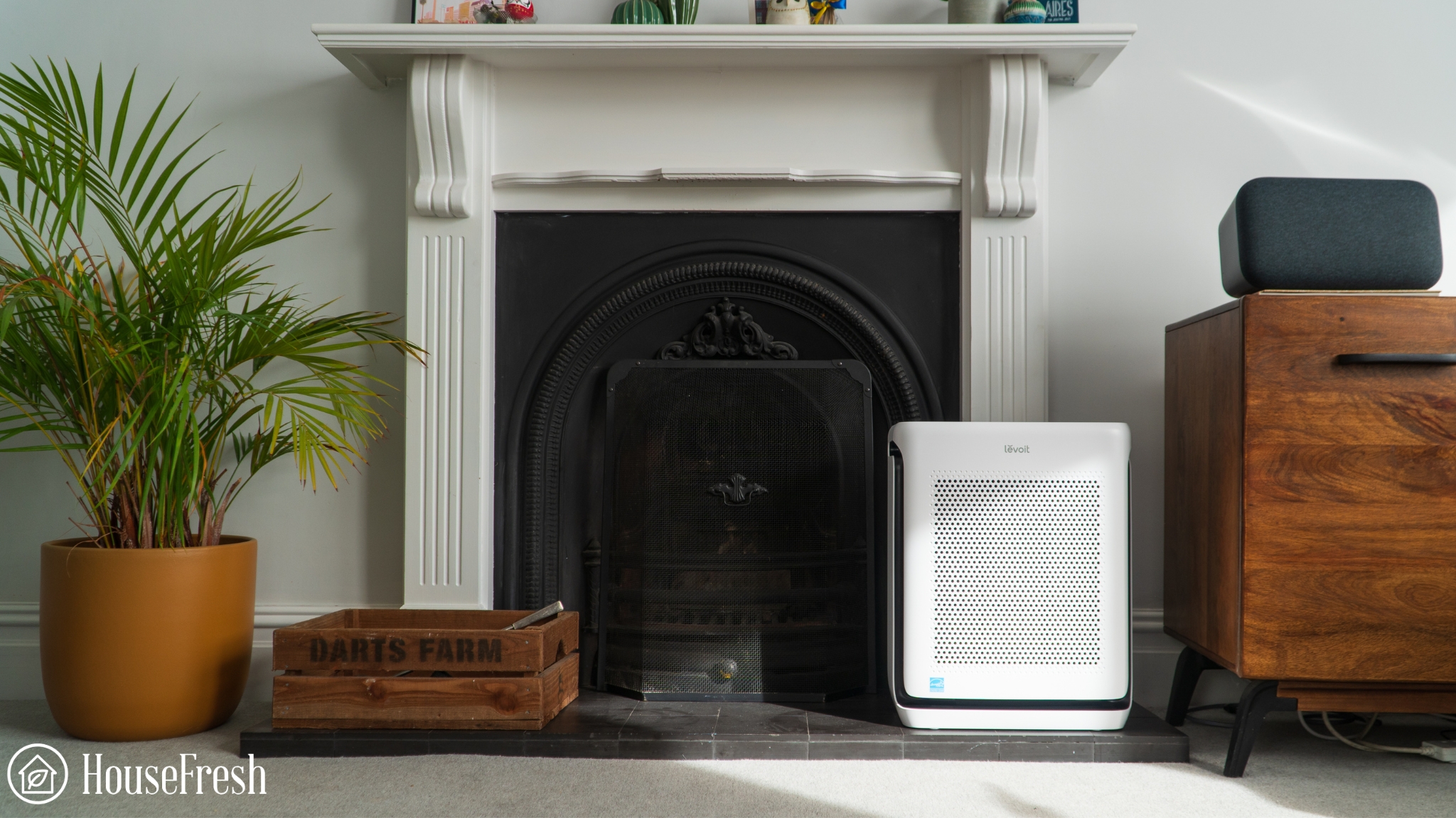
You don’t need ultra-powerful air purifiers for smaller spaces. However, I strongly recommend choosing a unit with a minimum CADR of 200 CFM, especially if you need to deal with wildfire smoke. Now, this is a medium-sized air purifier so it might not be what you expect – there are tons of small, cylindrical units on Amazon but those won’t be powerful enough.
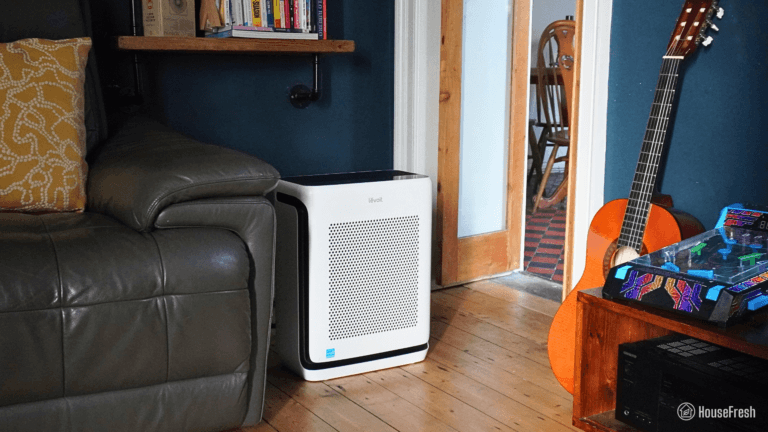
Based on our tests, the Vital 200S has a PM1 CADR of 249 CFM and will be able to clean the air five times per hour in rooms as large as 373 sq. ft.
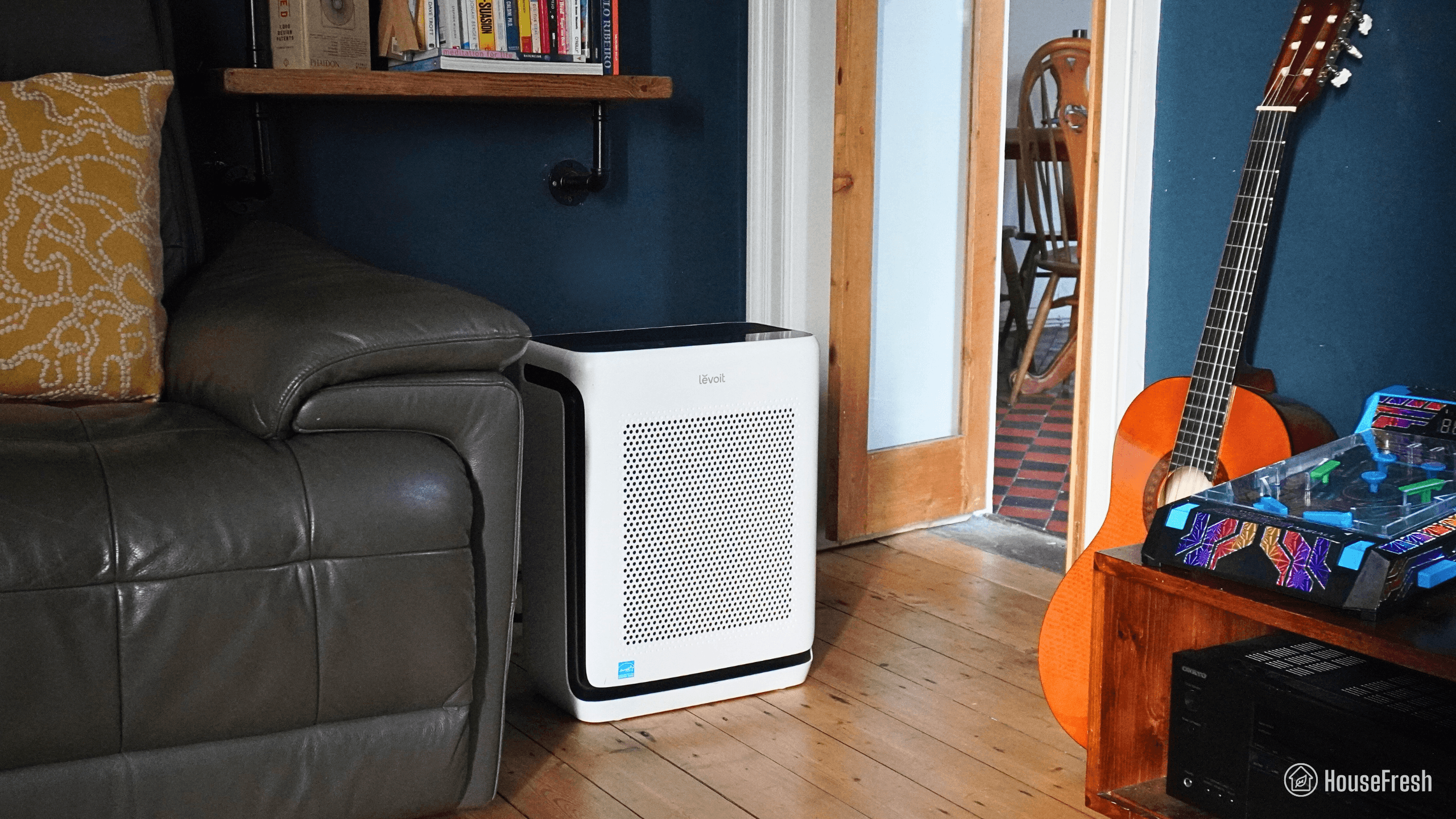
The Vital 200S comes with a powerful fan and a washable pre-filter, a particle filter and a layer of pelleted activated carbon. It can help remove particles and odors from the air.
It’s the traditional air purifier that offers the best value for your money – other models match its CADR but they are also louder and more power-hungry.
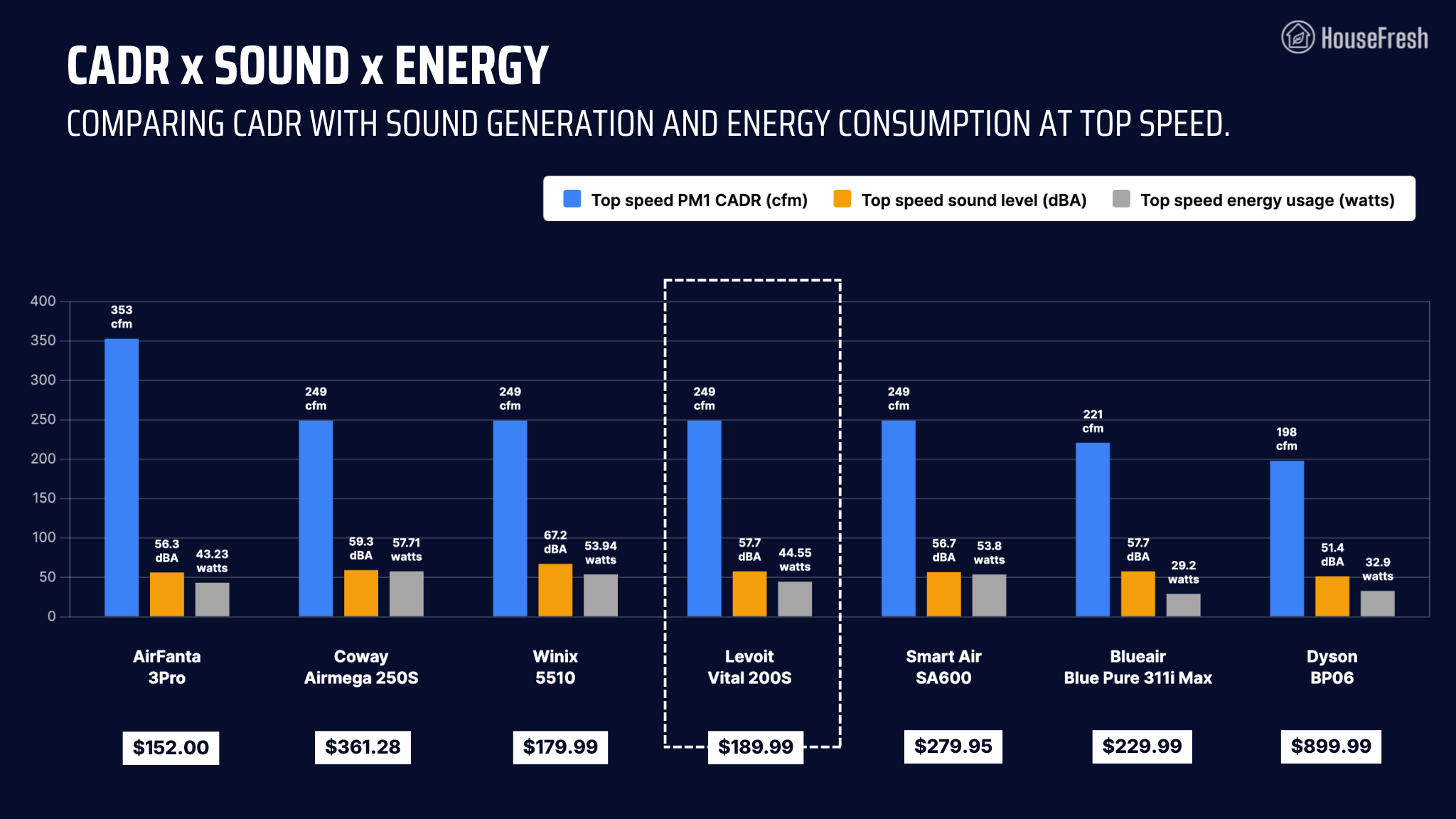
The Vital 200S also has pretty low running costs: if you were to leave it running at top speed 24/7, it would cost you just $123.48 over the year between electricity and filters.
CONS
PROS
| Clean air delivery rate (CADR): | – Top speed PM1 CADR: 249 cfm – Sub-45 dBA PM1 CADR: 128 cfm – AHAM PM2.5 CADR: 254 cfm (dust) |
| Filter technology: | Bonded particle filter with a layer of pelleted activated carbon and a removable pre-filter |
| Recommended room size: | 373 sq. ft. (5 air changes per hour) |
| Dimensions: | 15.6D x 8.5W x 19.8H inches (39.3D x 21.5W x 50.2H cm) |
| Weight: | 13.2 lbs (5.9 kg) |
| Noise level in decibels from 3 ft. away: | Speed 1: 38.3 dB Speed 2: 41.9 dB Speed 3: 53.8 dB Speed 4: 57.7 dB |
| Electricity consumption in watts: | Standby mode: 0.97 watts Speed 1: 5.71 watts Speed 2: 8.01 watts Speed 3: 31.96 watts Speed 4: 44.55 watts |
| Filter lifespan: | 12 months |
| Manufacturer’s warranty: | 2 years |
| Country of origin: | United States |
| Country of manufacture: | China |
Three other solid air purifiers that didn’t make the cut
If none of the options above seem like the right fit, consider the devices in this section.
It’s always worth mentioning other air purifiers with outstanding performance that didn’t make the final shortlist in case the models I recommend aren’t available where you live.
Coway Airmega Mighty2
The Mighty2 has air-cleaning performance slightly better than the Levoit Vital 200S, with an estimated PM1 CADR of 260 cfm at top speed (56.9 dBA of noise).
It features an onboard sensor, smart modes, and air quality readings, but it didn’t make the cut because it costs more than the Vital 200S ($269.99).

Smart Air Blast Mini
The Blast Mini is highly durable (made of metal), has a powerful fan inside, and a huge H13 HEPA filter, with the option to buy pelleted carbon to go with it.
It didn’t make the cut because we noticed it’s been out of stock a lot lately.
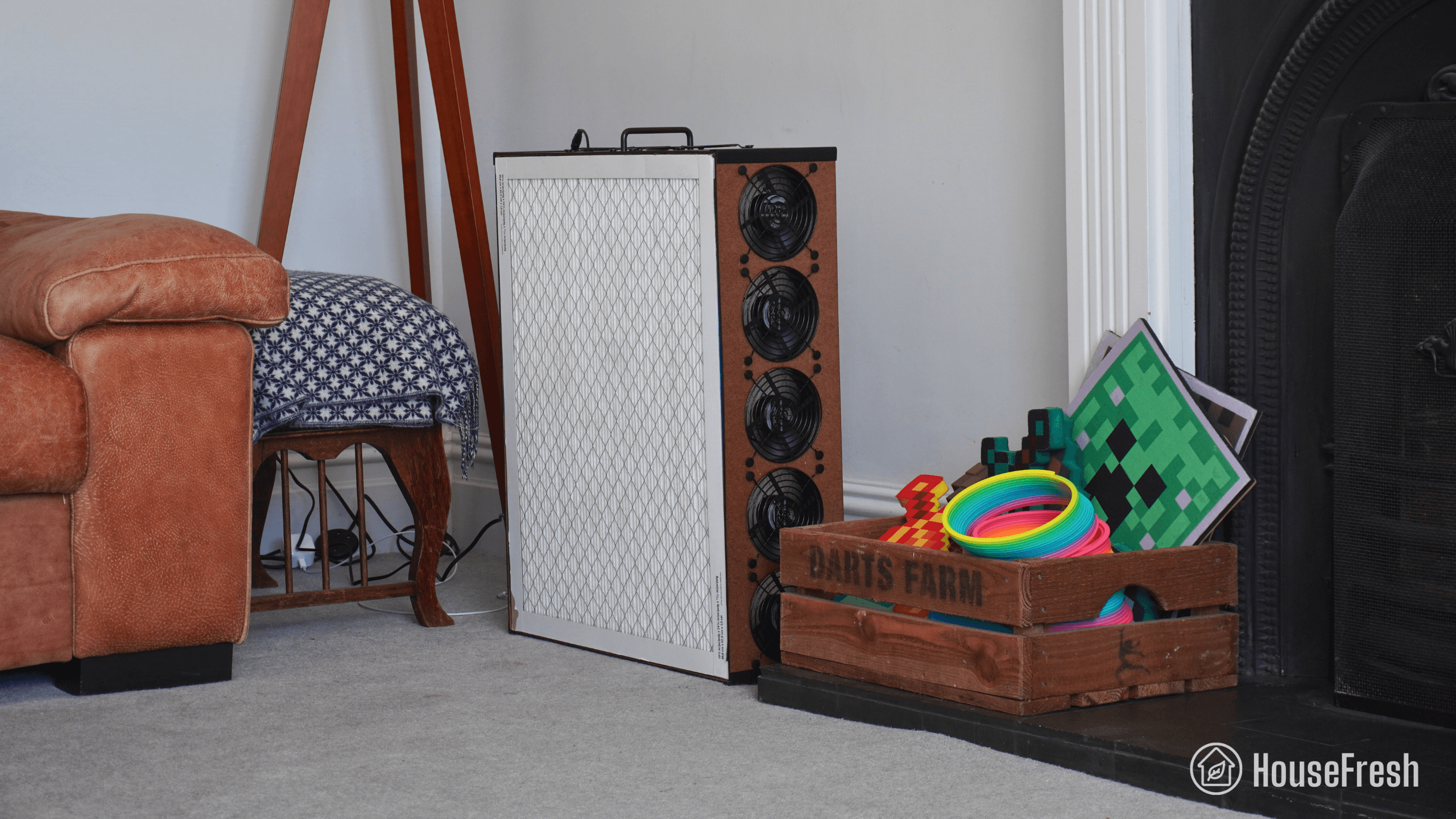
CleanAirKits Luggable XL Ultra
The Luggable XL Ultra is a PC fan-powered air purifier made in the USA by the team at CleanAirKits.
It offers INCREDIBLE performance for its size (PM1 CADR of 315 cfm) and low running costs thanks to the use of HVAC filters and highly efficient PC fans. It didn’t make the cut because it retails for $310, so it’s pricey.
Other units we tested but don’t recommend for wildfire smoke
If you can’t find what you’re looking for in the list above, email me before you end up buying a useless air purifier.
The five air purifiers below are on my do-not-buy list for those looking to clear the air from wildfire smoke:
- Levoit Core 300 – We love this budget air purifier, but it will be too underpowered to deal with a severe issue like wildfire smoke. You are much better off spending a little more for the Levoit LV-H133, which still has the same air-cleaning power as the Corsi-Rosenthal box.
- Austin Air HealthMate – This air purifier has a large amount of carbon (15 lbs), but its particle removal could be better considering its price of over $700. Wildfire smoke generates a ton of particulate matter, so you need better performance than the estimated 150 CFM, which took 37 minutes to remove all PM1 particles from our test room.
- Blueair Blue Pure 211+ – Big media sites regularly recommend this air purifier, but it uses an ionizer that you can’t turn off that potentially can bring ozone into your environment. Considering that many non-ionizer units are available, there is no need to recommend this device for wildfire smoke.
- AROEVE MK01 – This popular cheap air purifier on Amazon could not fully clean our air of incense smoke even when we left it for 5 hours, so it would be useless with the particulates generated by a major wildfire.
- PuroAir 240 – This air purifier is too underpowered to deal with wildfire smoke effectively. Not only that: you will find it discounted on Amazon all year round, but even with a discount, it is overpriced considering its performance.
Tips for protecting yourself from wildfire smoke
As we saw in New York in 2023, wildfire smoke can travel hundreds of miles from the source of the fire, so it’s important to be aware of the problem even if you don’t live in a high-risk zone.
Using a DIY air purifier like the Corsi-Rosenthal box or buying a traditional air purifier is a great way to remove particulate pollution, but there are other things you can do to reduce the risk of wildfire smoke in your home.
- Seal Up: Wildfire smoke can pass through any gaps in your home, so seal up any spaces around windows and doors. Close any vents and outdoor intake dampers if you have a central AC.
- Mask up: If you have to leave your home or use any rooms that don’t have air purifiers, then be sure to use an approved face mask and, if possible, also wear goggles as wildfire smoke can irritate your eyes.
- Recirculate: You will still want to use your AC as temperatures will rise due to wildfire smoke, but you will want to enable the “recirculate mode” as this will mean it won’t pull polluted air from outside.
- Run air purifiers 24/7: Wildfire smoke is a severe issue, so you will want to ensure that this smoke is continuously removed from your home air, as even when you seal windows and doors, it will still find a way to enter your home air. Smart Air showed in their experiment that pollutants will increase when you switch your unit off, so be sure to keep it running until the wildfire risk is over.
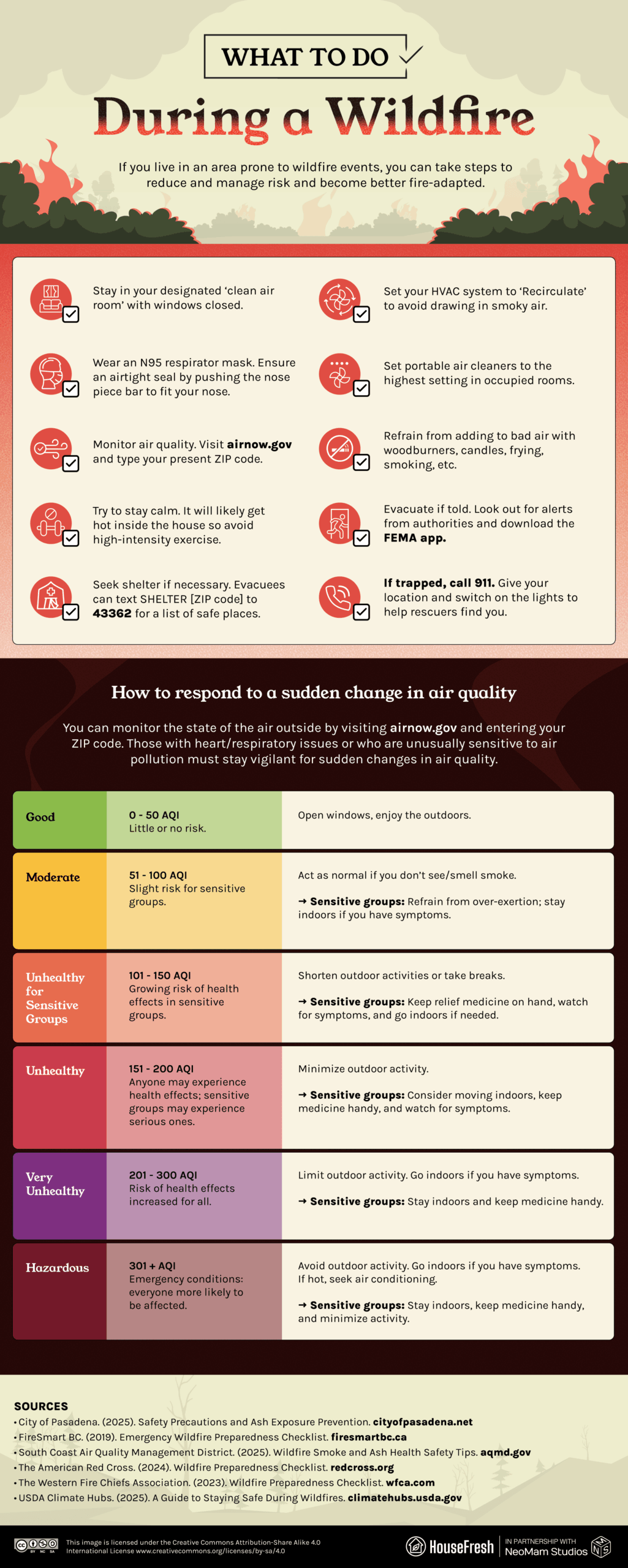
Be sure to check out our full guide for more tips on how to protect your home from wildfire, including how to clean up afterward.
Final thoughts
Before I leave you, let me share the most important things you need to consider before buying an air purifier, as well as the biggest mistakes people tend to make:
If you have any questions that we haven’t covered in this guide, then be sure to email me directly (danny@housefresh.com) or drop a comment below and I’ll get back to you as soon as I read it.
And if you decide to buy a different air purifier from the ones I recommended here today, please do the math to find a unit that will be able to clean the air a minimum of 4.8-5 times per hour in the room where you will use it. You can use our CADR calculator to find out how much CADR you’ll need to provide that level of air cleaning in your specific space:
Or if you already have a specific model in mind and would like to know how it compares to other models, you should definitely check out our comparison tool to see how different air purifiers did in our range of tests including air cleaning performance, sound generation, energy consumption and long term running costs.
You can explore our leaderboard with the scores and test data for every air purifier I have tested so far – just use the search bar to look for specific brands and models, or filter the results based on your budget to find the best-performing models overall and also those that provide the best value for your money: