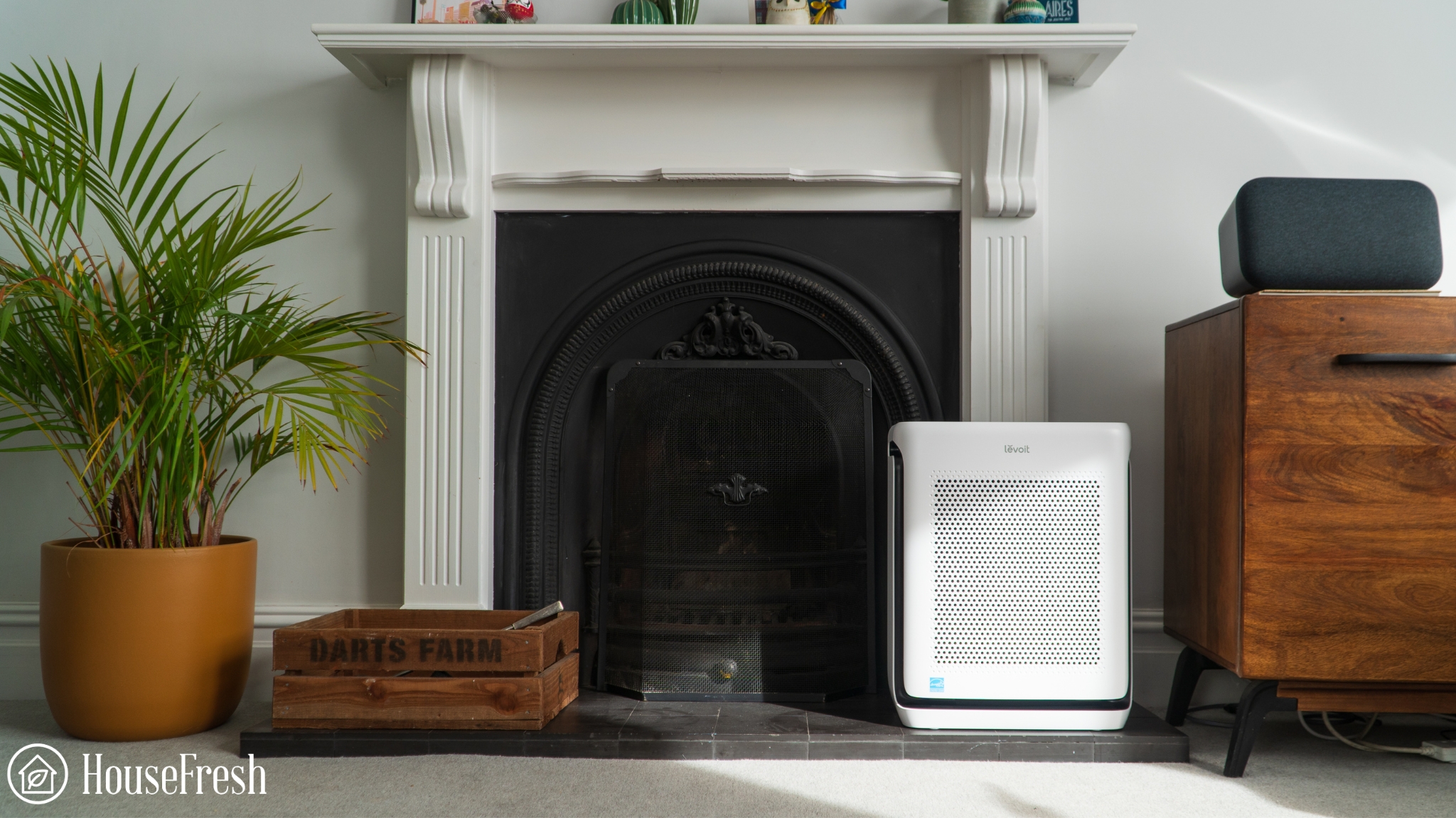
Winix 5520 review

Winix 5520 Close

The Winix 5520 was released alongside the 5510 around the same time the highly popular Winix 5500-2 was discontinued.

But can this new model deliver the same powerful air cleaning performance as its predecessor? And is it better or worse than the Winix 5510? I bought a 5520 with my own money, so that I could put it through all the tests we perform here at HouseFresh in order to find out.

The overall score for the Winix 5520 incorporates first-hand data results from our battery of tests, as well as our ratings for customer service, brand transparency, and design & UX. Check out the full scorecard below to see the split of categories.

Search for ‘Winix 5520’ to see where it ranks, based on its air cleaning performance and value for money. You can also filter results to easily compare models in the same price range.

The pros and cons of the Winix 5520

A summary of our top-level findings after testing this air purifier, following our methodology.

“The Winix 5520 is the predecessor to the highly popular Winix 5500-2, but it comes in a smaller and better looking package. It has smart features and app support, and the running costs are fair, too.

Air cleaning performance is very good and matches what we saw with the Winix 5510 – but only when running at top speed.”

Danny Ashton HouseFresh
Danny Ashton
HouseFresh Founder
& Lead Tester

CONS

It only has one fan speed below 45 decibels (speed 1) and its performance is weak (106 cfm) compared to the sub-45 dBA performance of the Winix 5510.
The Winix Smart app is quite bare and lacks features you see in apps from Levoit, Xiaomi and Philips.
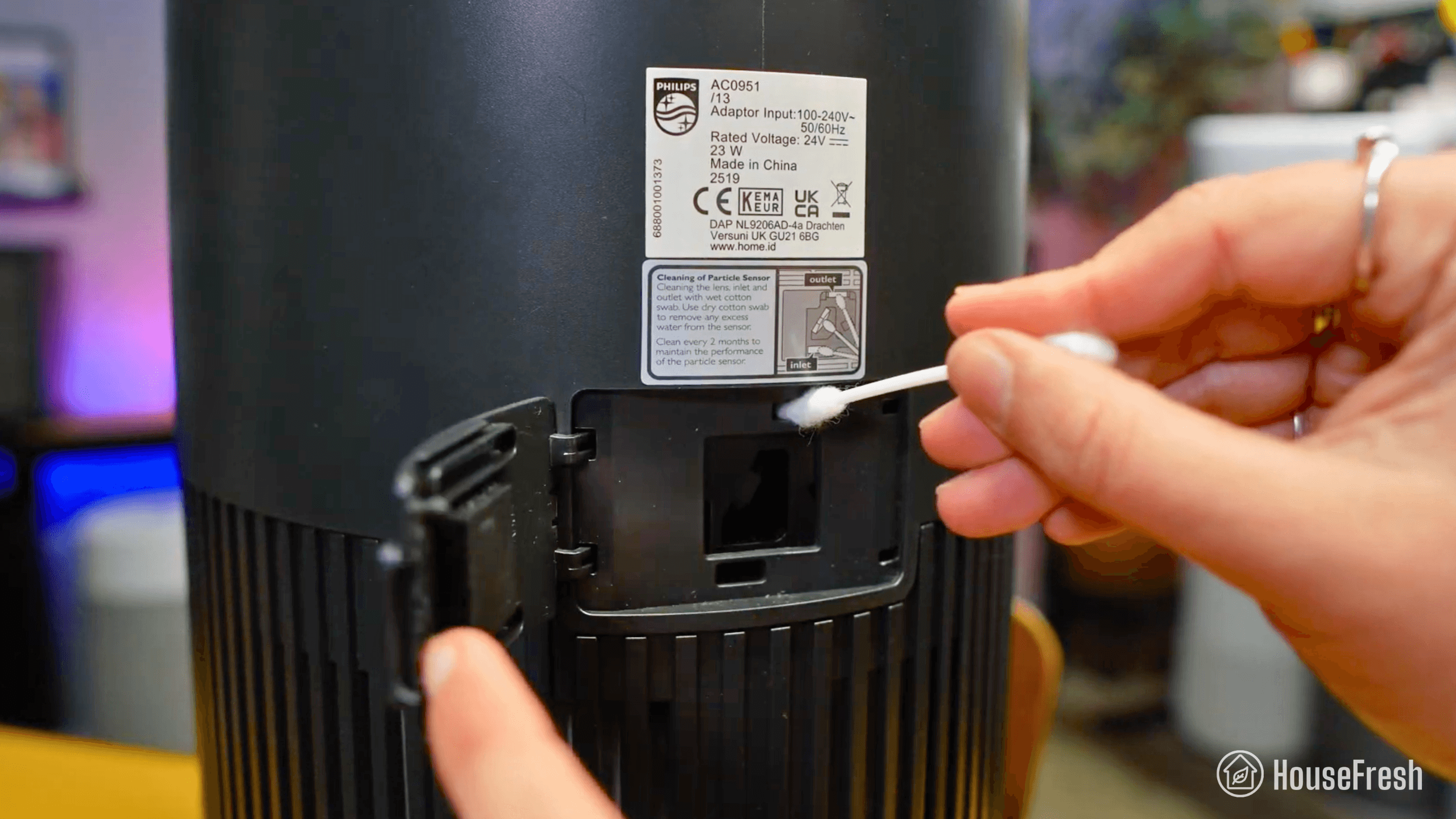
It comes with a gas sensor rather than a particle sensor, so it will respond to VOCs in the air but not to particulate matter.

PROS

It offers solid performance at top speed, matching what we saw with the Winix 5510 and the Levoit Vital 200S.
It has a smaller body than the Winix 5500-2, so it will fit in tighter spaces.
The filter replacements are fairly priced ($79.99) and can last up to 12 months.
You get app support via the Winix app, which has a clean UX and is easy to use.

Clean air delivery rate (CADR):– Top speed PM1 CADR: 248 cfm
– Sub-45 dBA PM1 CADR: 106 cfm
– AHAM PM2.5 CADR: 252 cfm (dust)
Filter technology:True HEPA filter with pelleted activated carbon and a removable pre-filter
Recommended room size:372 sq. ft. (5 air changes per hour)
Dimensions:15.9 x 11 x 25.2 in (40.3 x 27.9 x 64 cm)
Weight:13.03 lbs (5.9 kg)
Noise level in decibels from 3 ft. away:Speed 1: 40.4 dBA
Speed 2: 45.8 dBA
Speed 3: 50.9 dBA
Speed 4: 64.9 dBA
Electricity consumption in watts:Standby: 1.14 watts
Sleep mode: 3.49 watts (3.77 with PlasmaWave)
Speed 1: 6.89 watts (7.13 with PlasmaWave)
Speed 2: 10.63 watts (10.92 with PlasmaWave)
Speed 3: 16.77 watts (16.75 with PlasmaWave)
Speed 4: 55.31 watts (55.6 with PlasmaWave)
Filter lifespan:12 months
Manufacturer’s warranty:2 years
Country of origin:South Korea
Country of manufacture:Thailand

Filtration technology

Three separate filters for particle and VOC filtration.

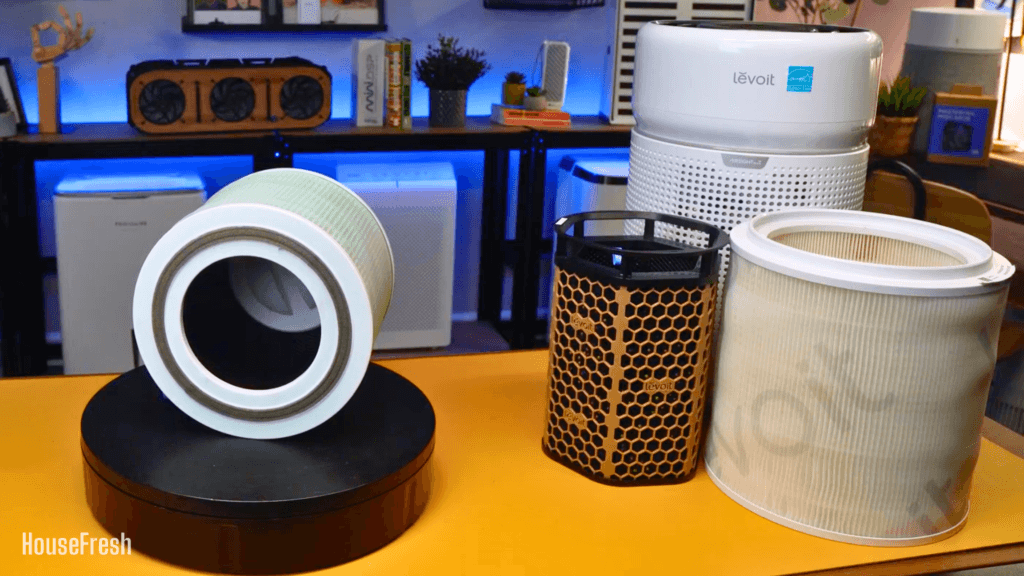
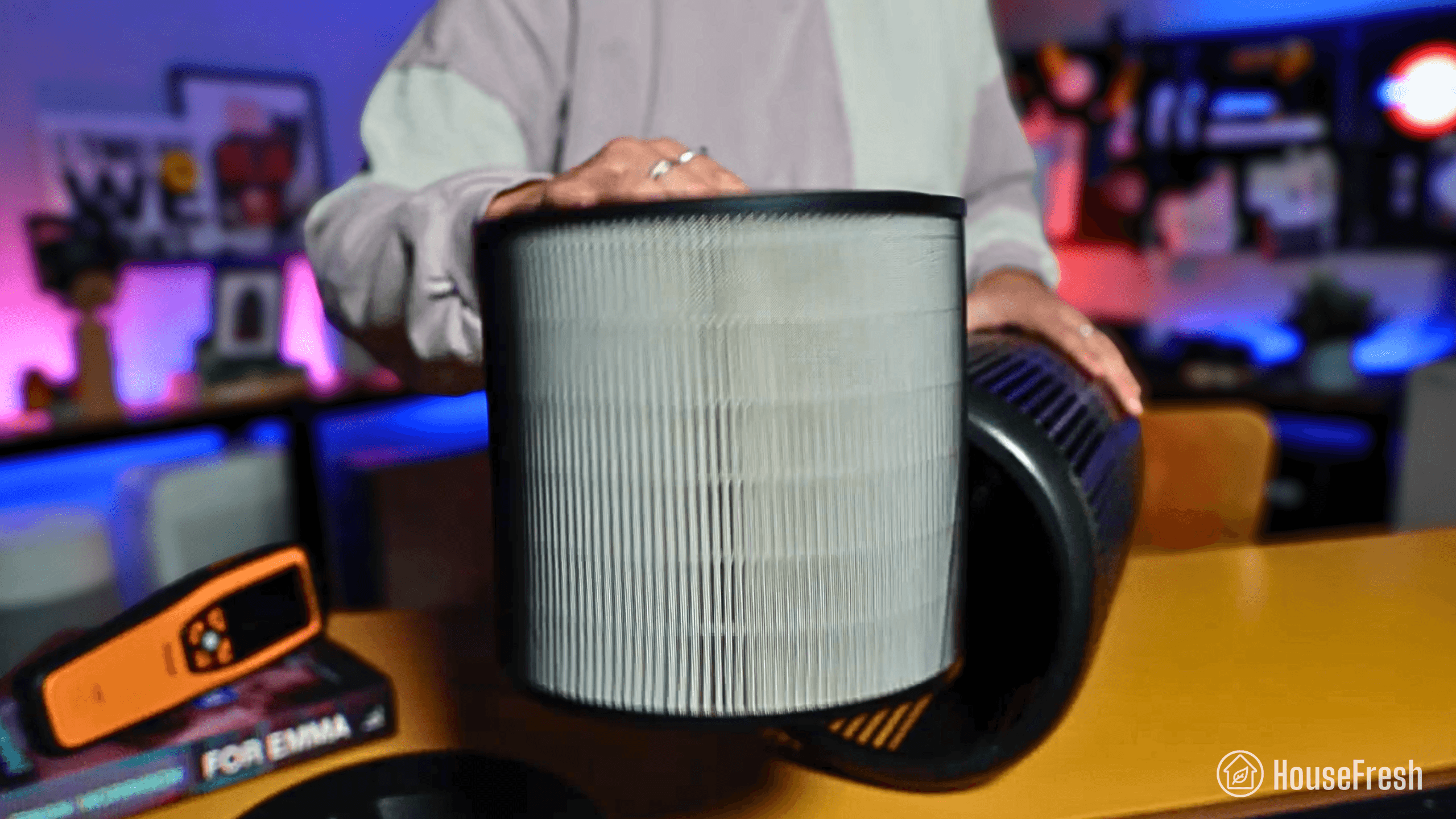
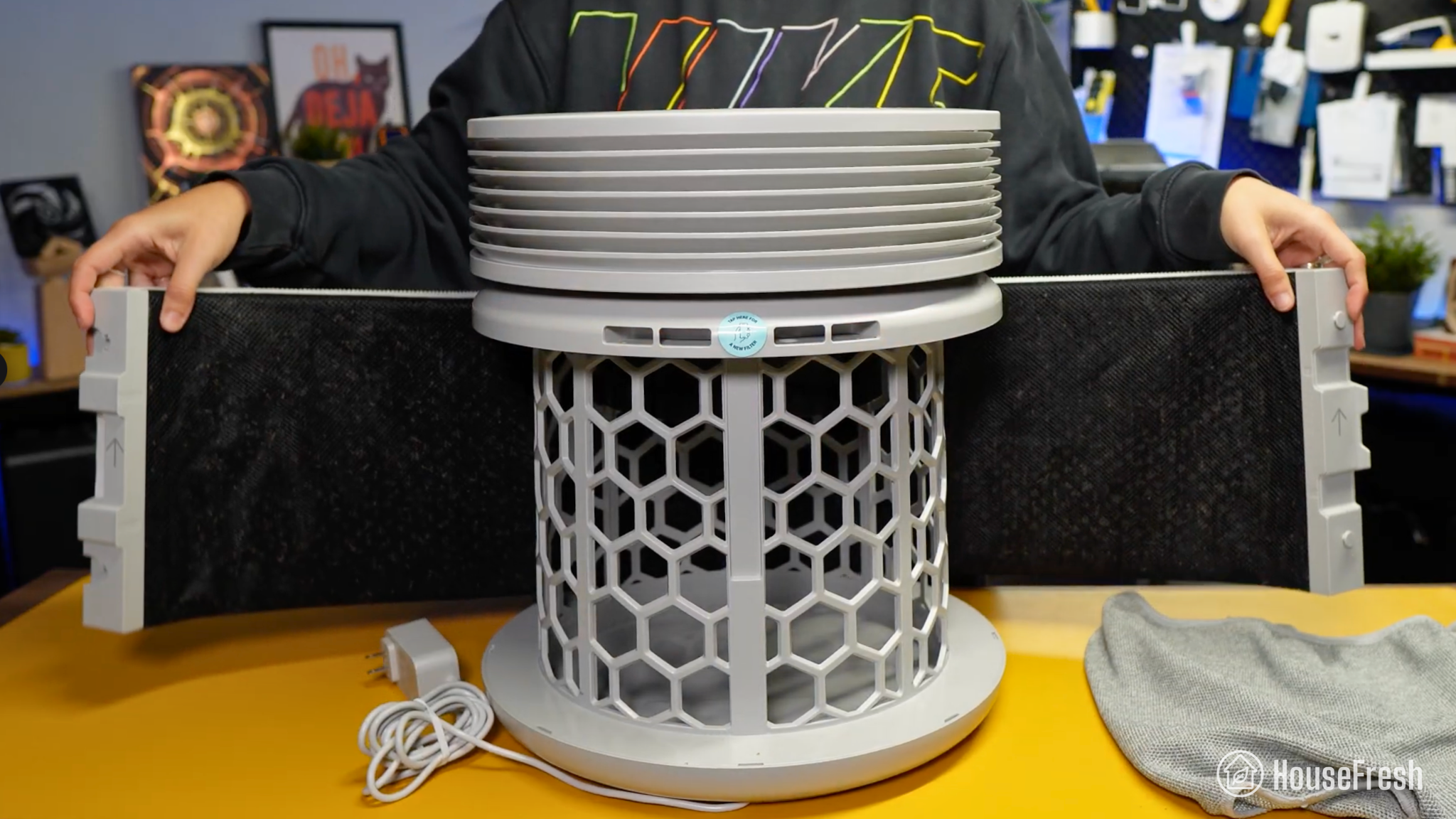
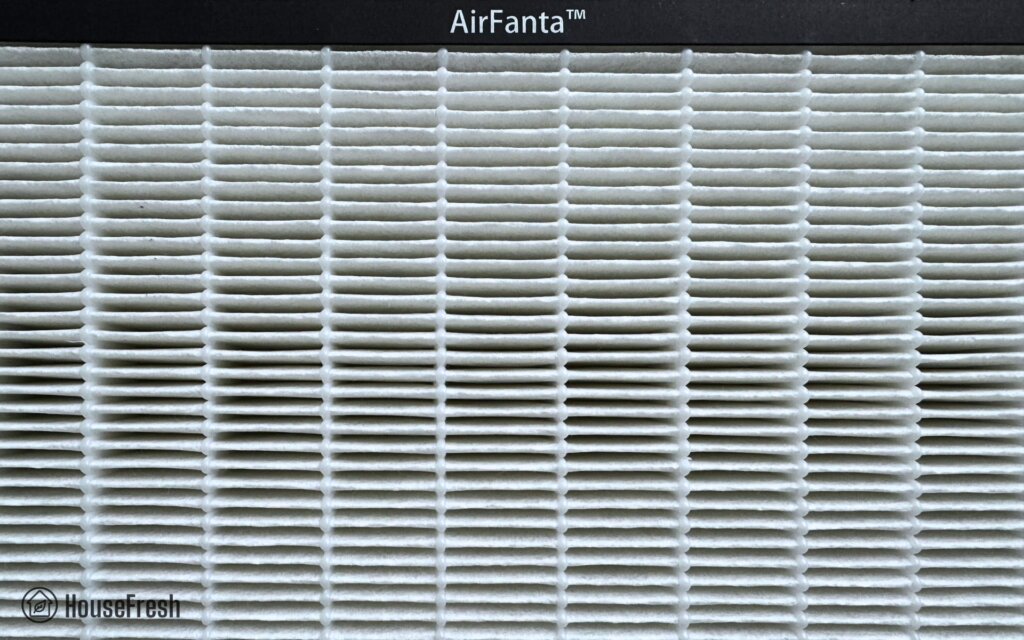
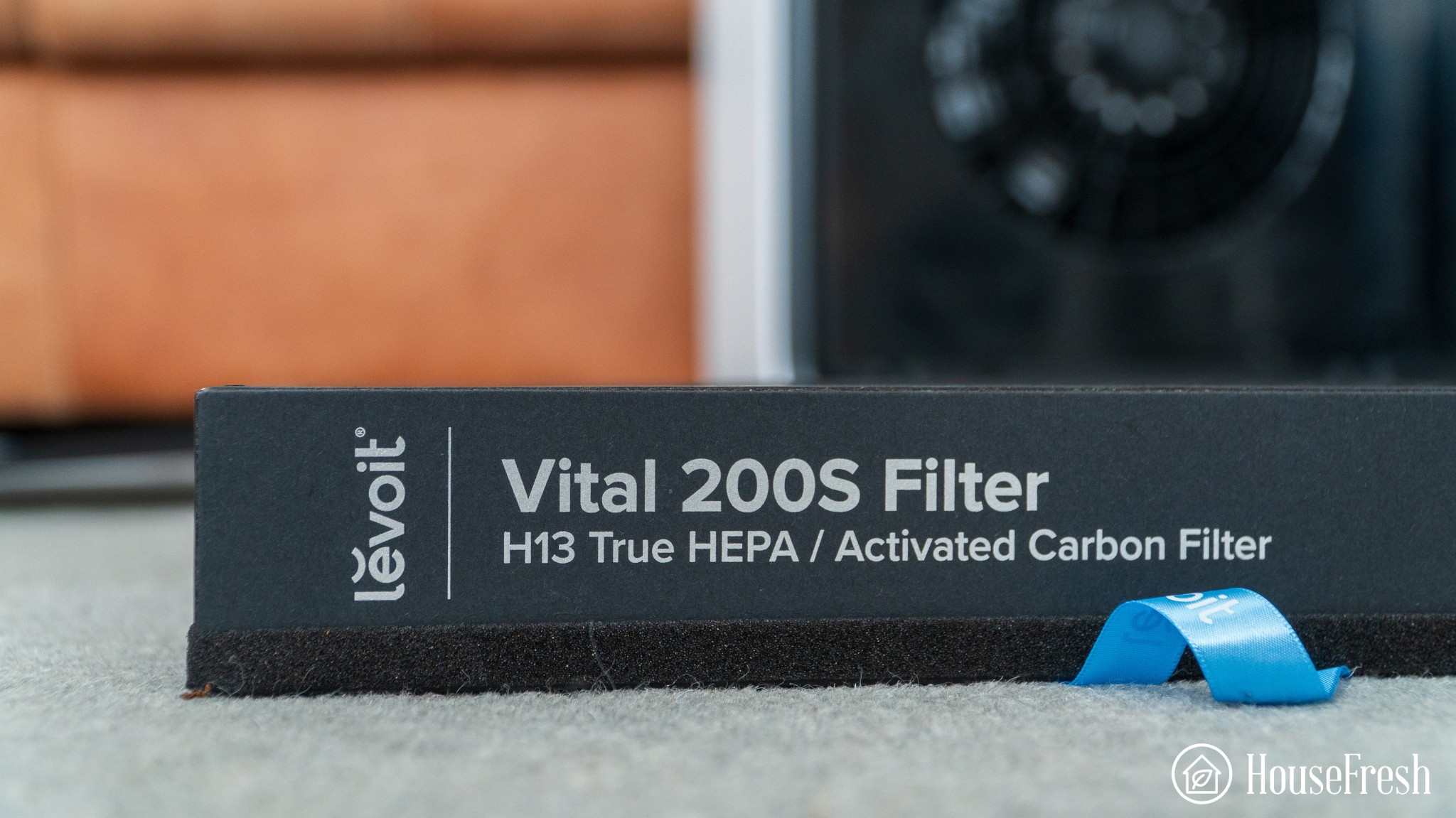
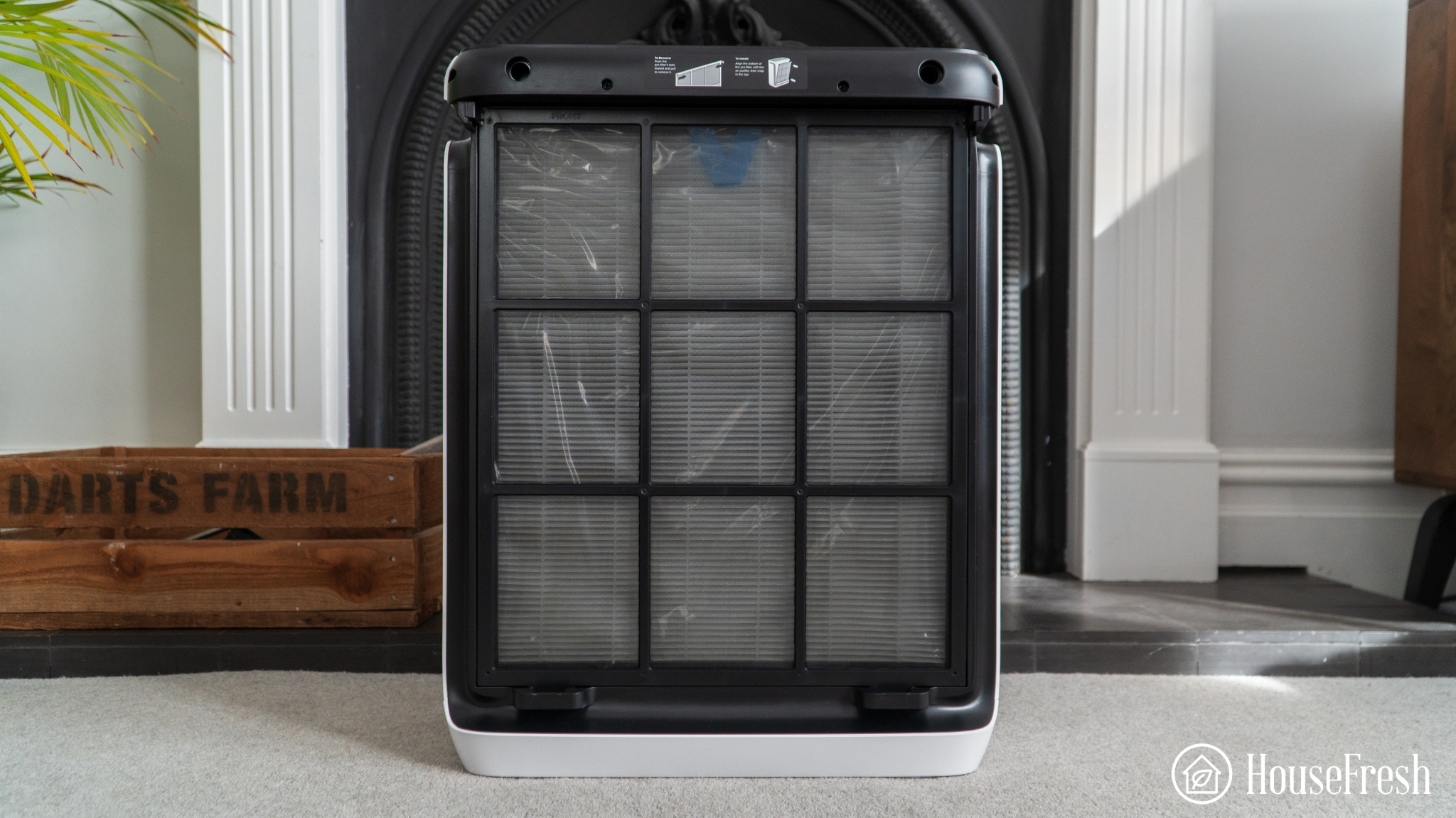
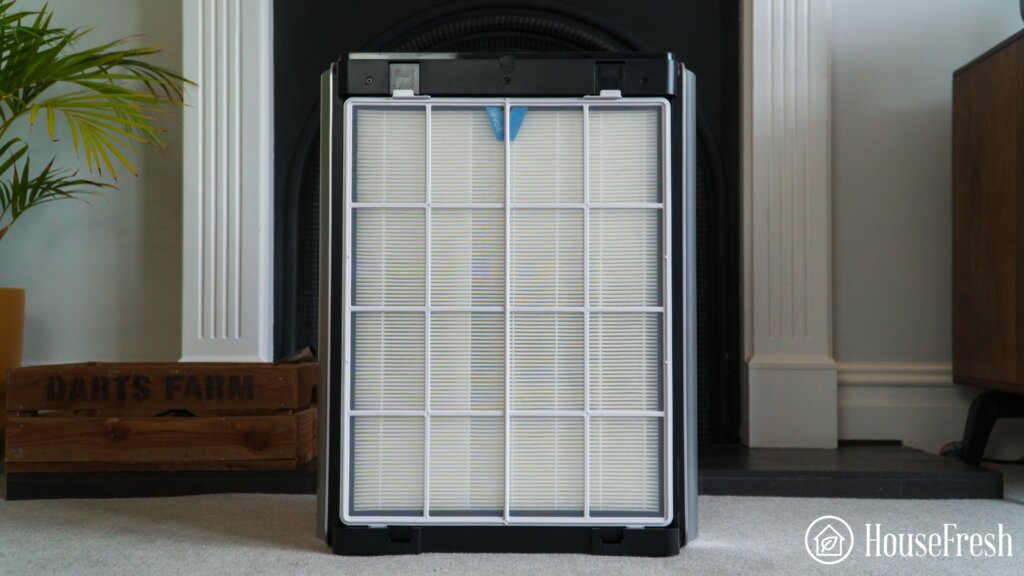
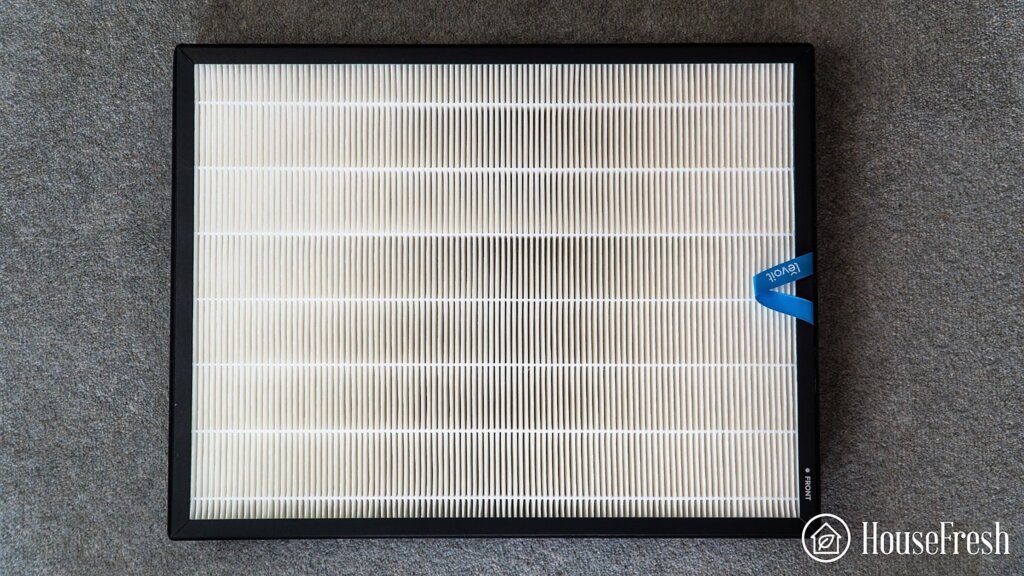
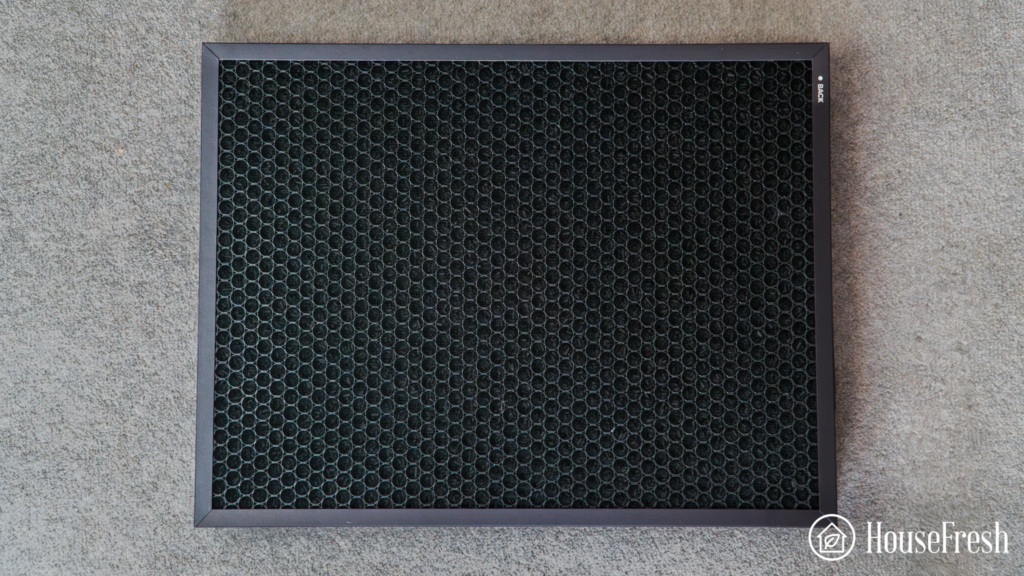
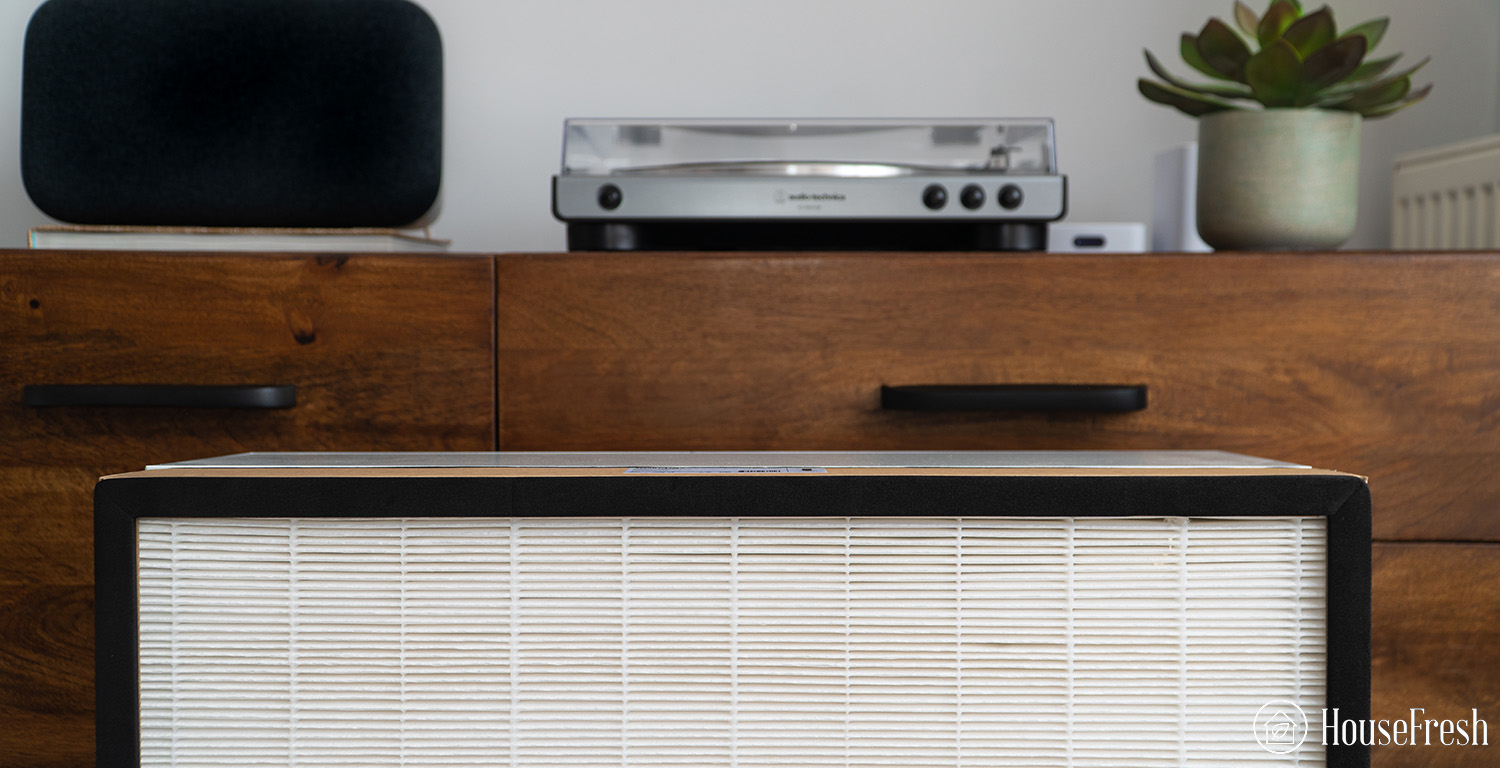
The Winix 5520 offers three layers of filtration: a pre-filter for larger particles, a True HEPA filter for small particles, and a pelleted activated carbon filter for gases and odors.

Winix 5520 Filters

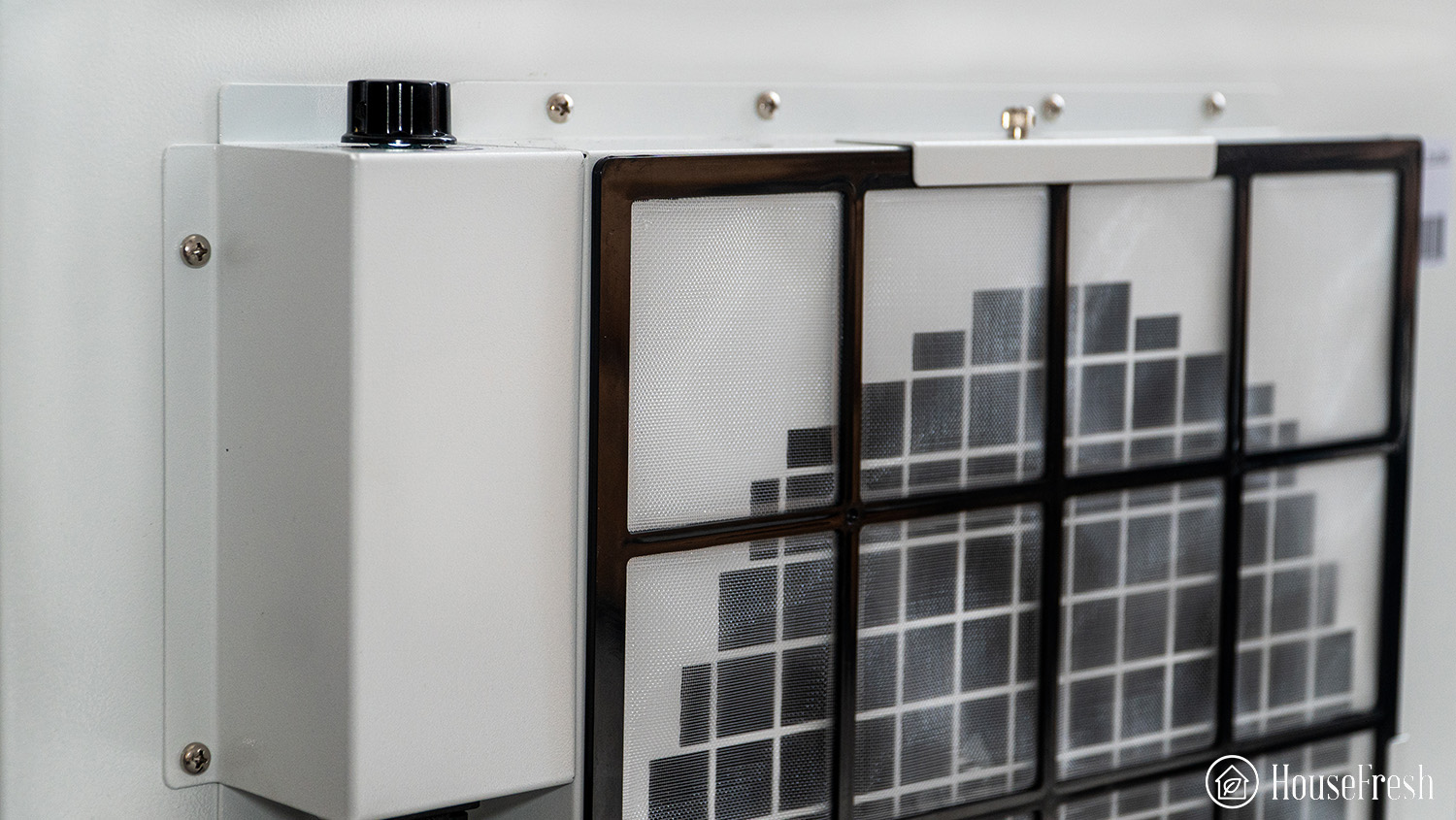
The pre-filter is removable, making it easier to vacuum and clean to remove pet hair, fluff, and large dust particles that accumulate before they block airflow.

Winix 5520 Pre filter

As with other Winix air purifiers, the 5520 comes with PlasmaWave, Winix’s trademarked bipolar ionization technology. This feature is meant to supercharge air cleaning performance by releasing electrical charges that make particles easier to remove from the air.

The bipolar ionization process may introduce new chemicals into the air, such as ozone. Winix makes this feature optional, so you can simply deactivate PlasmaWave by pressing the P button if you don’t want to use it.

Winix 5520 PlasmaWave

Design, controls and app features

A stylish, medium-sized air purifier with app support.

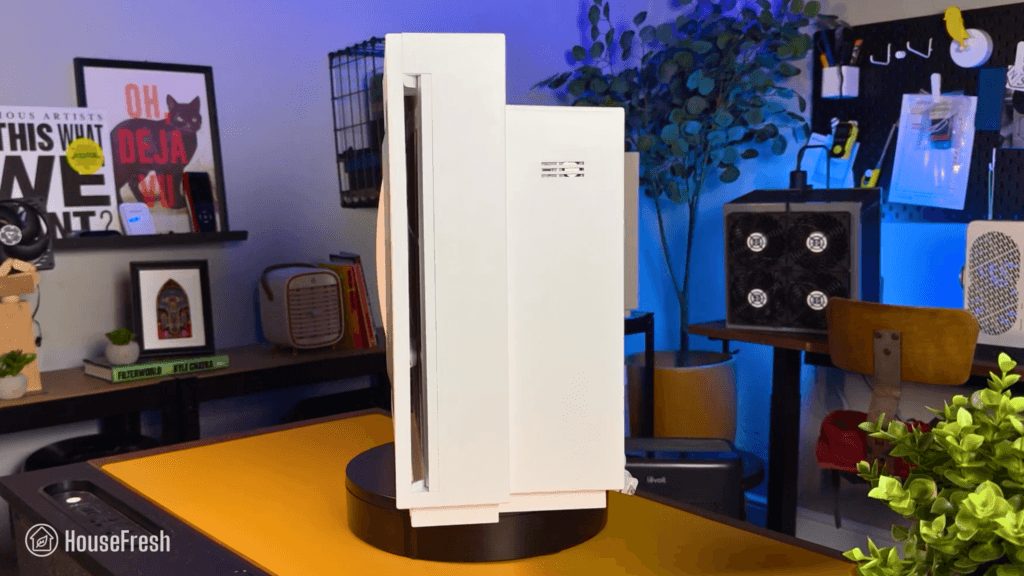
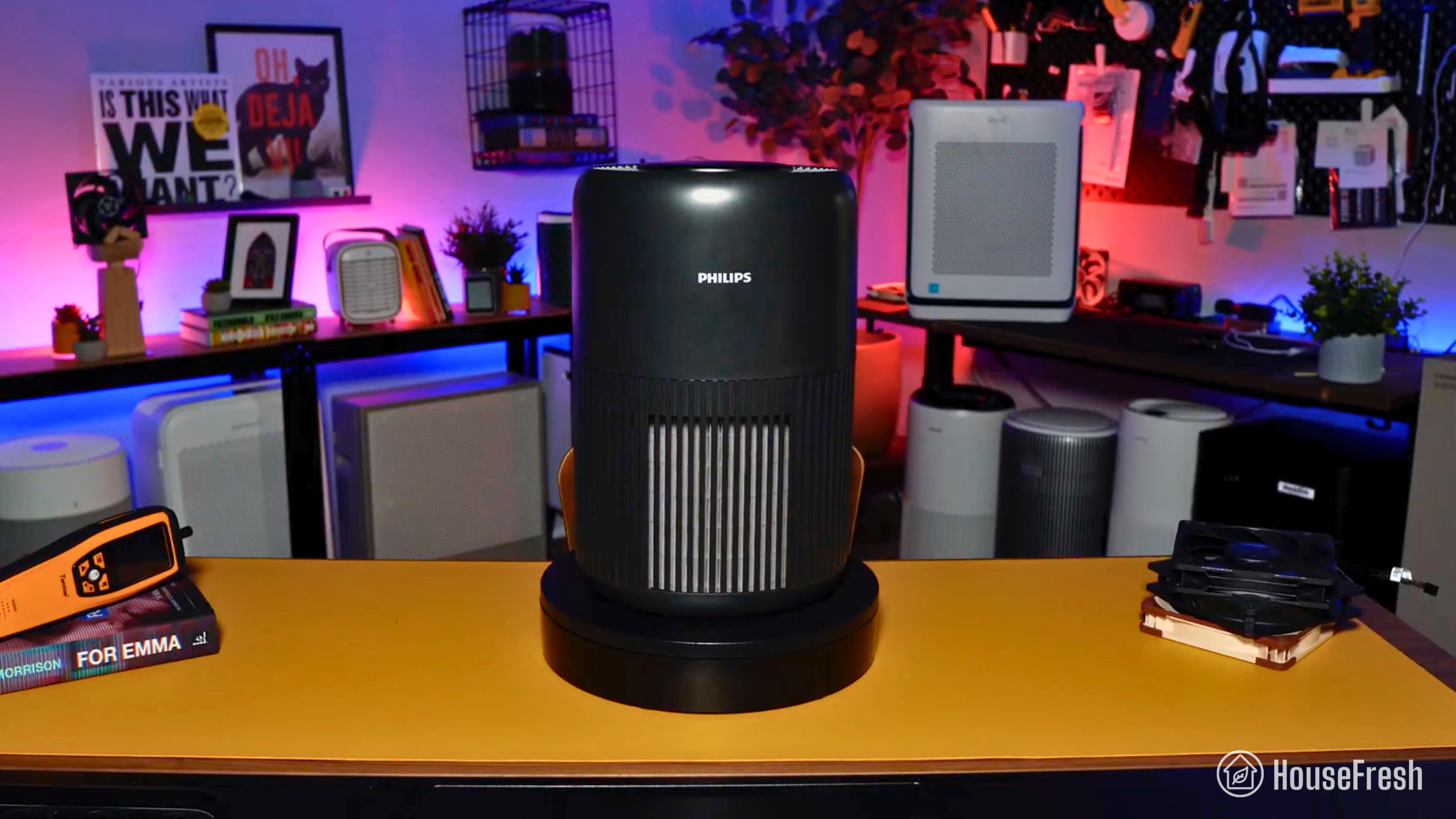
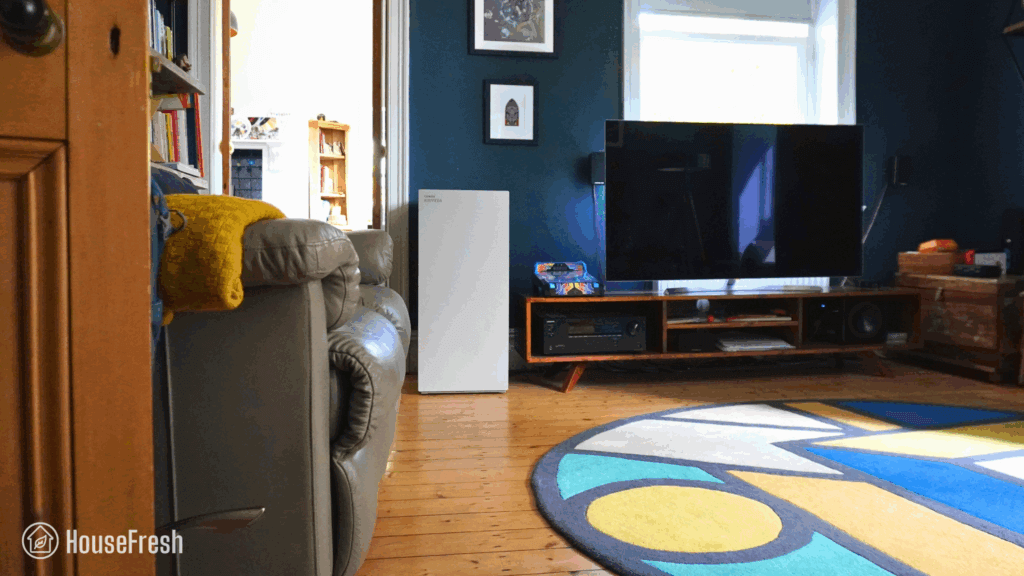
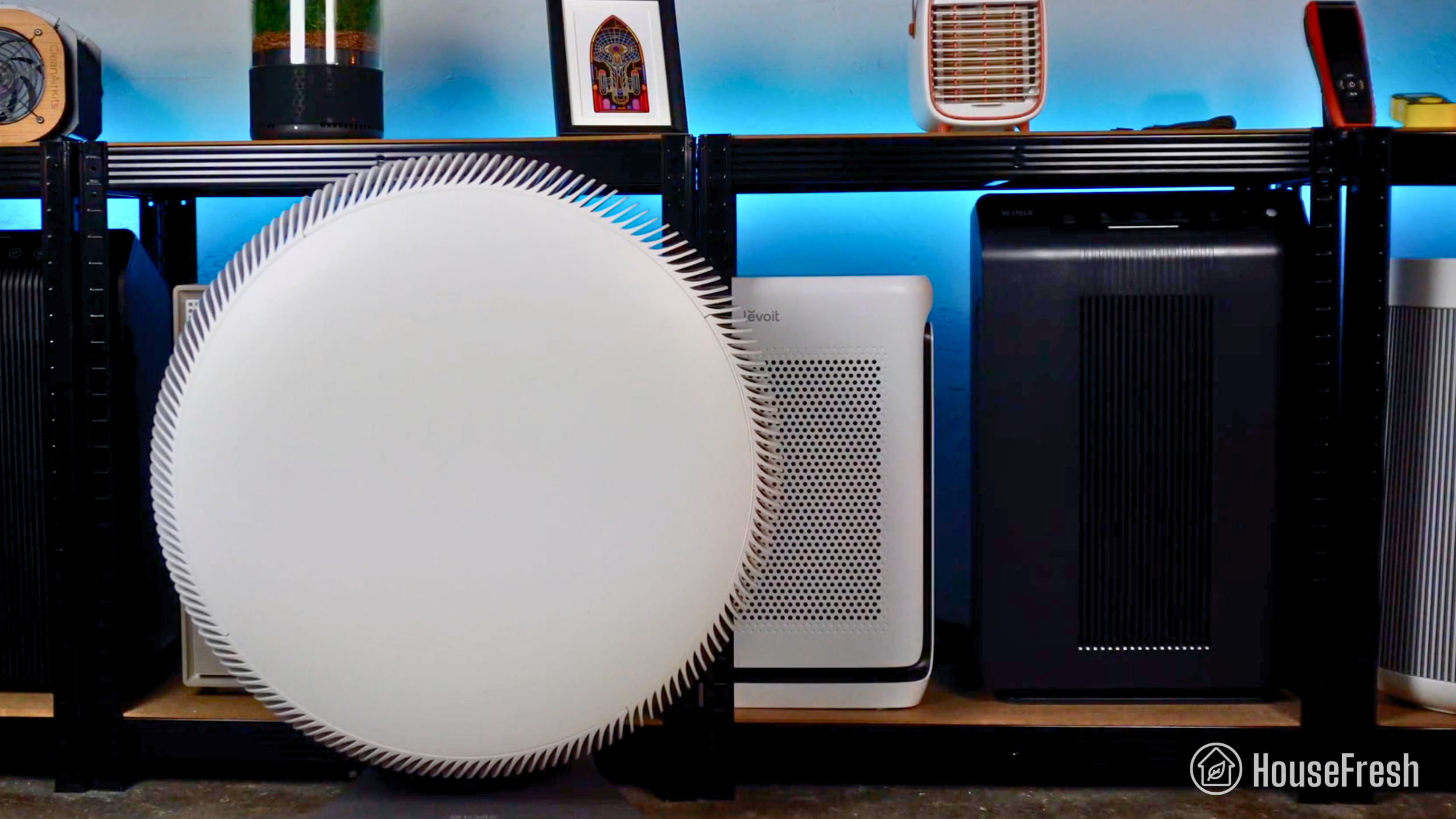
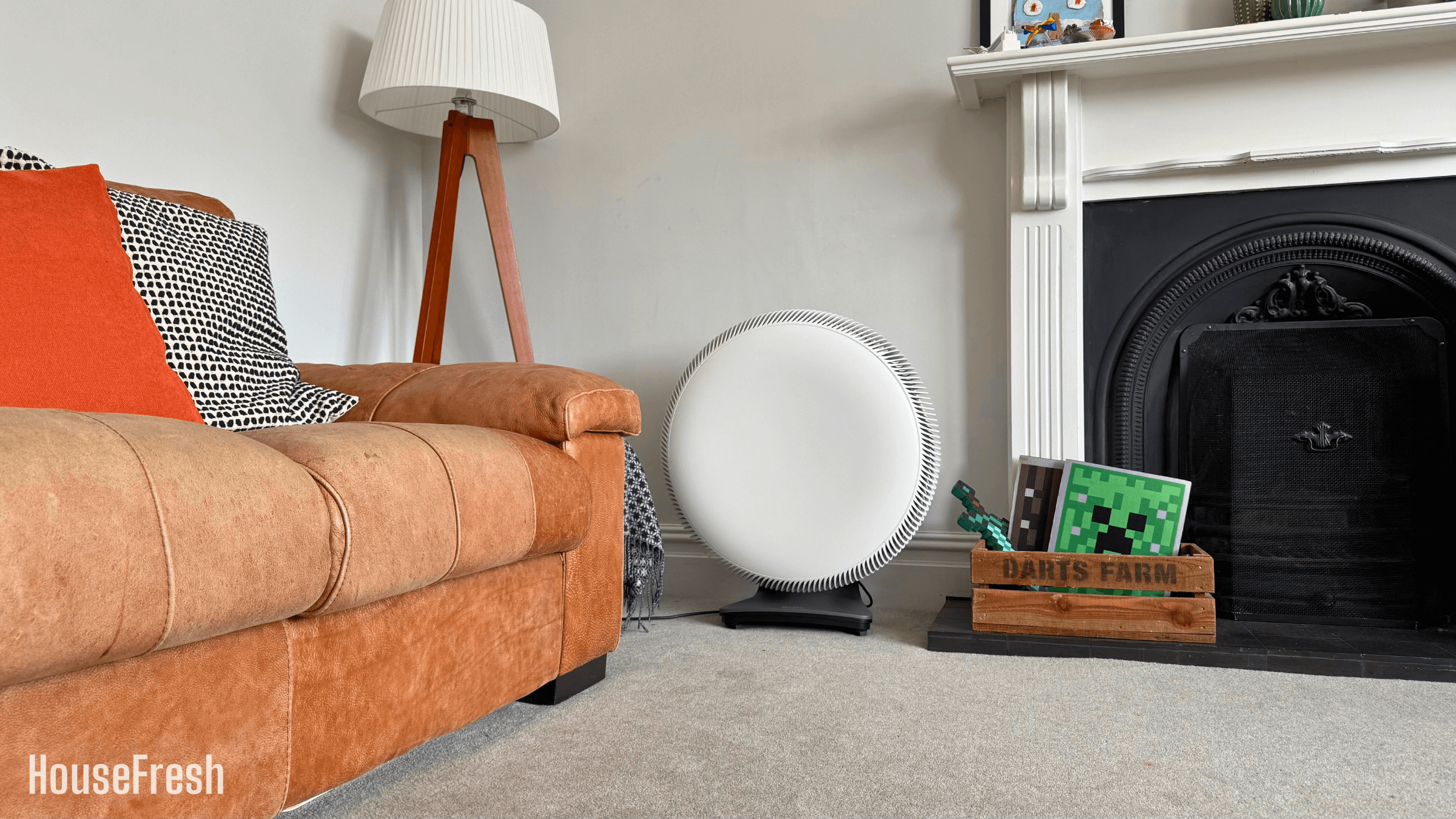
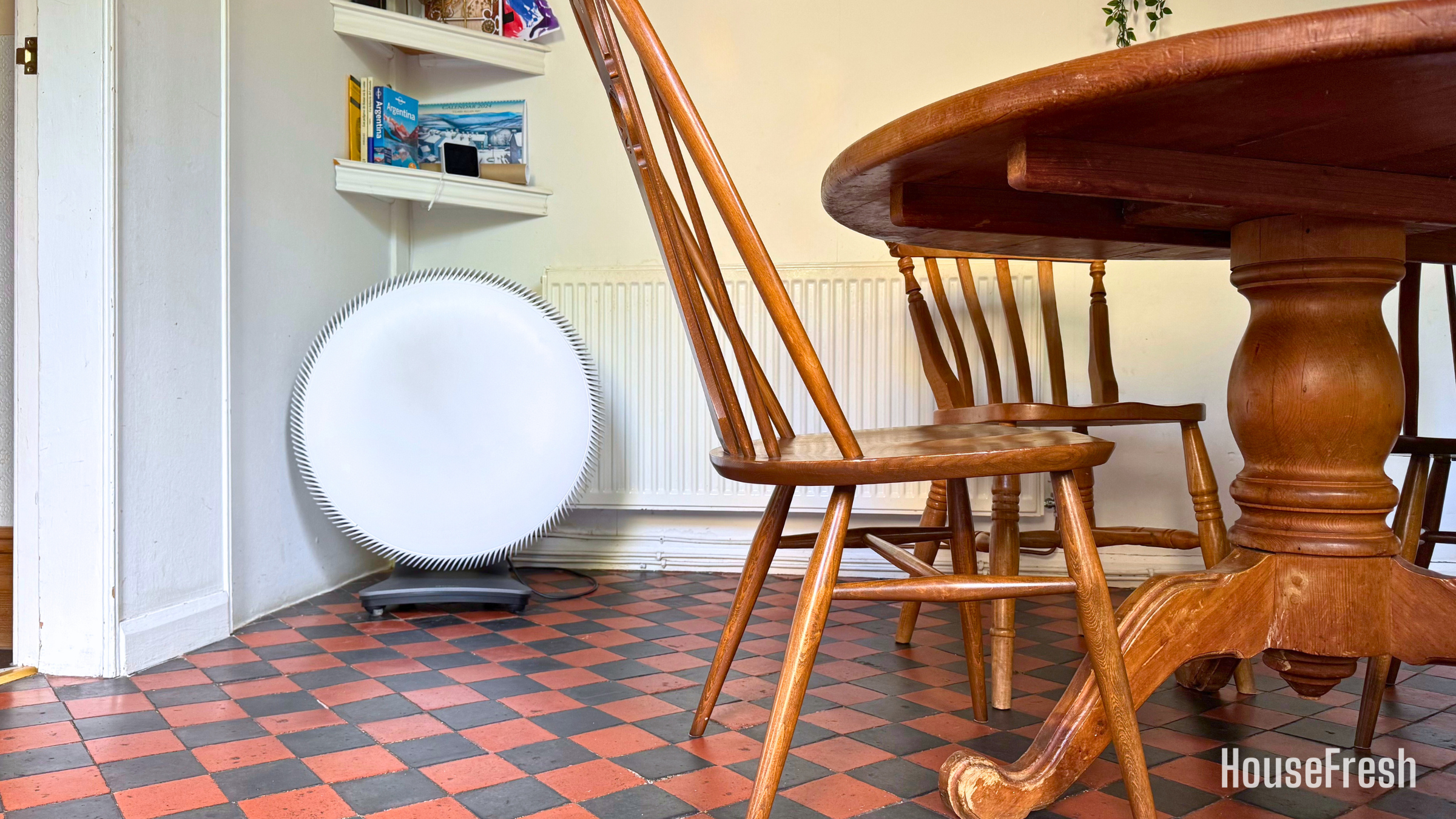
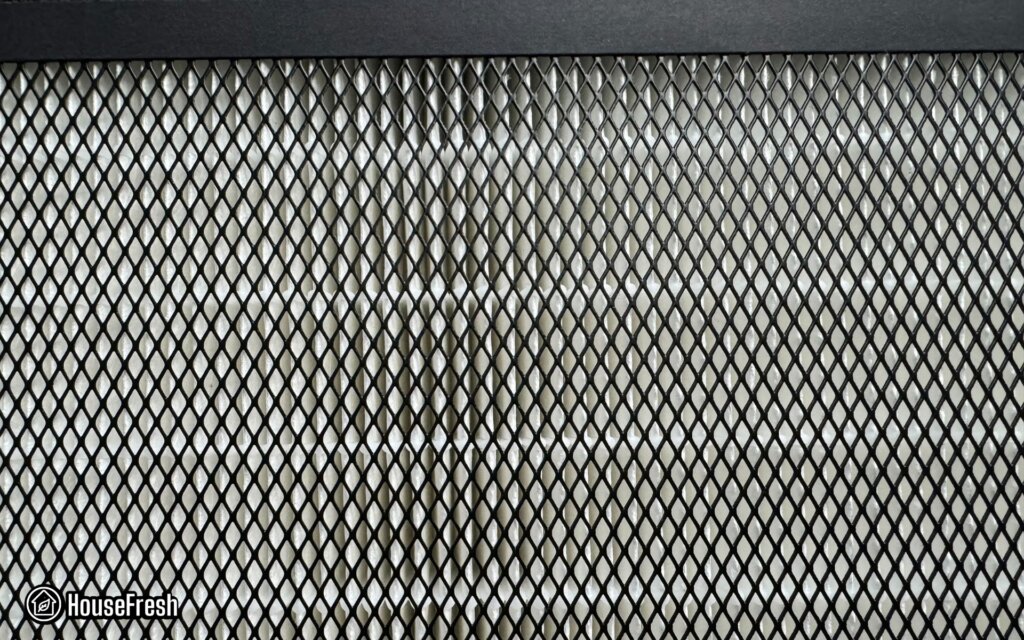
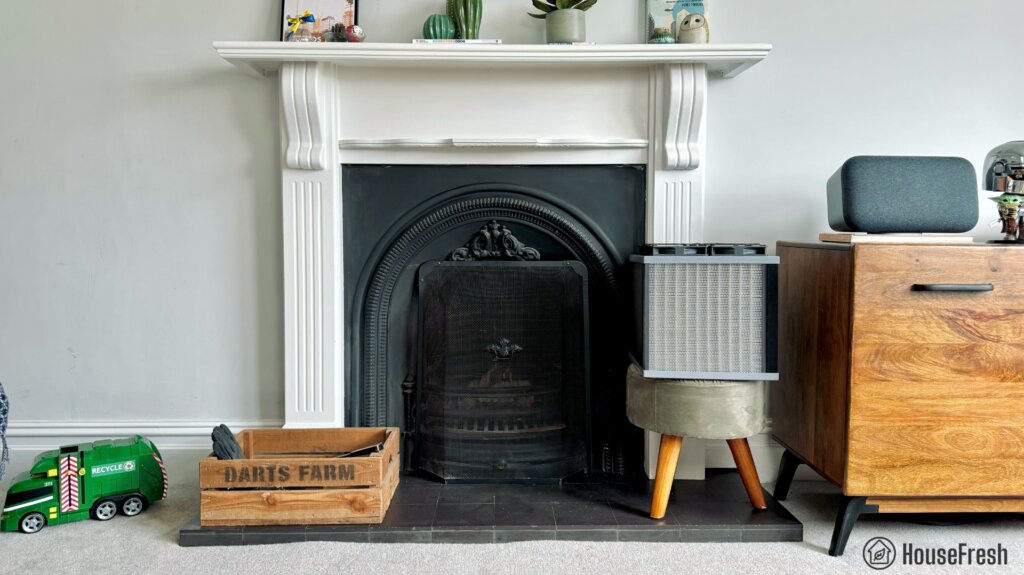
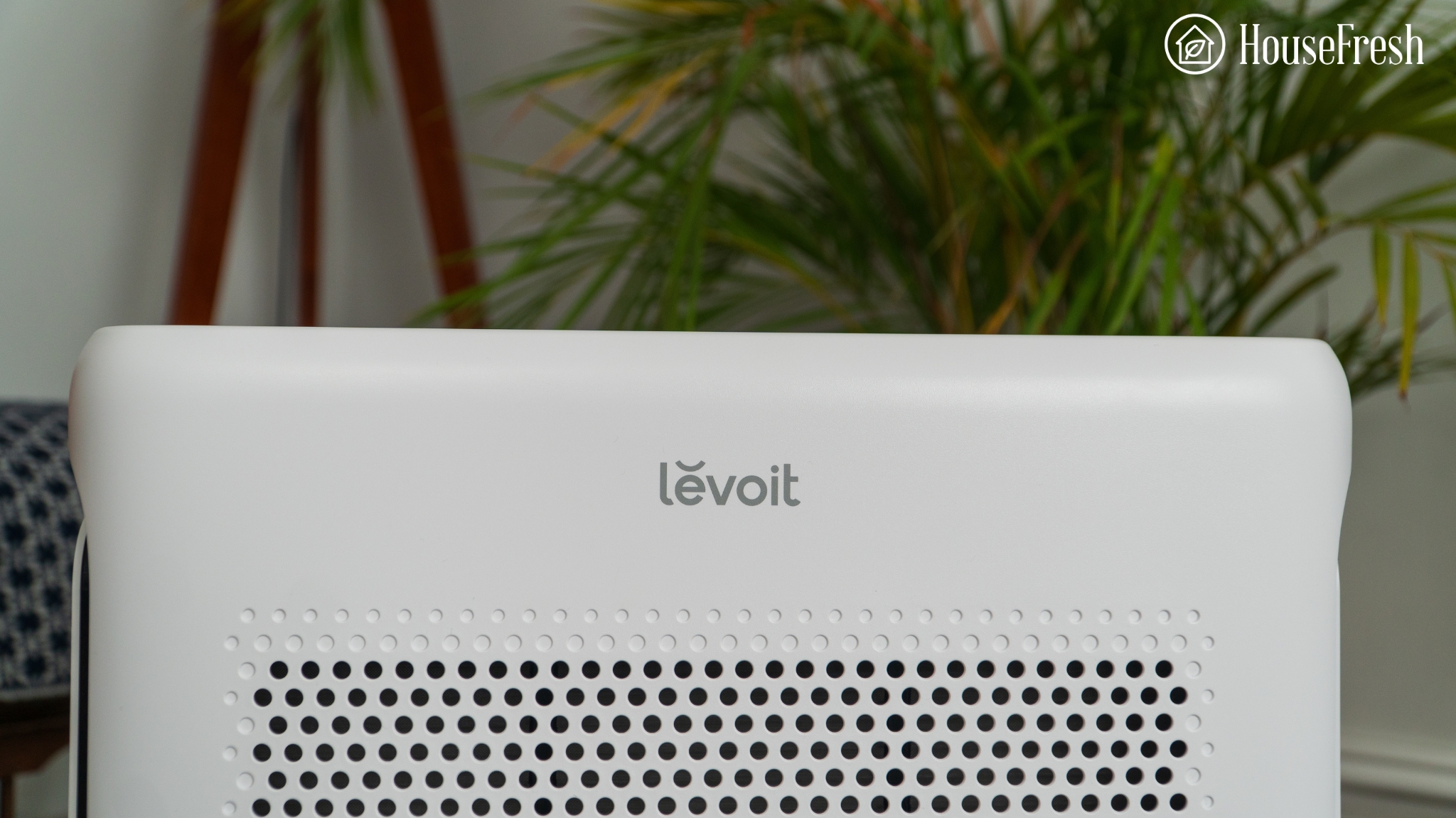
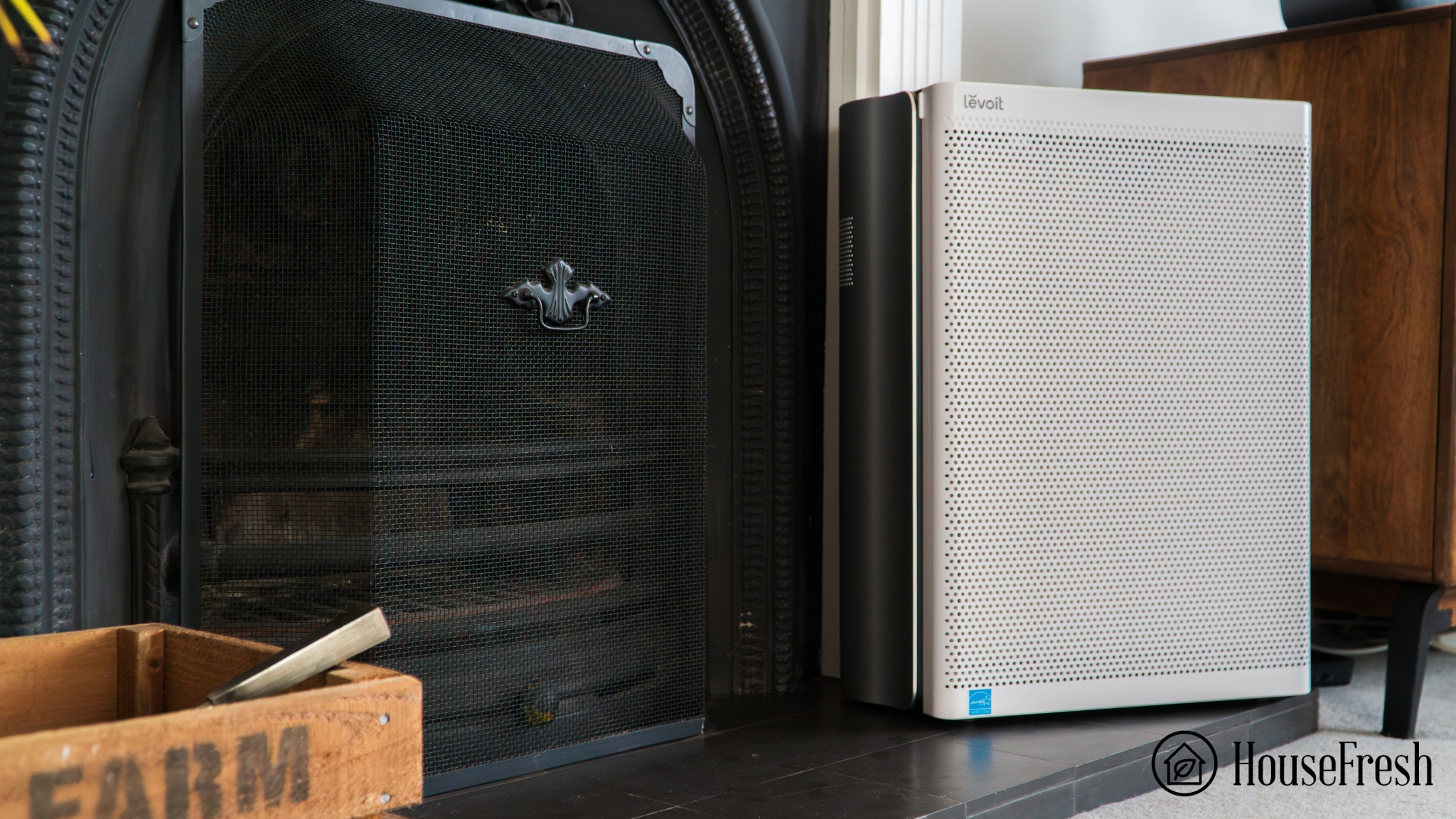
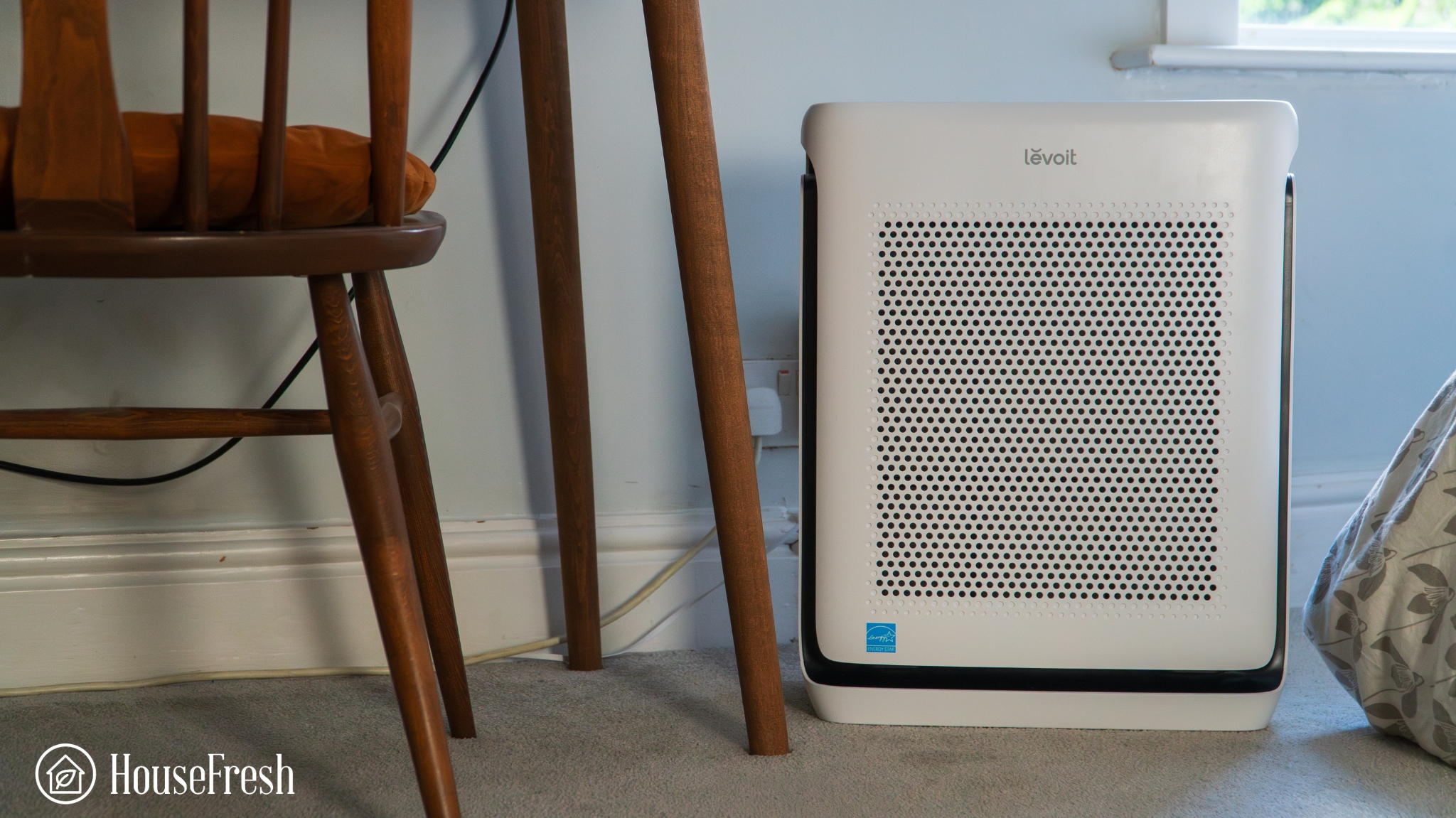
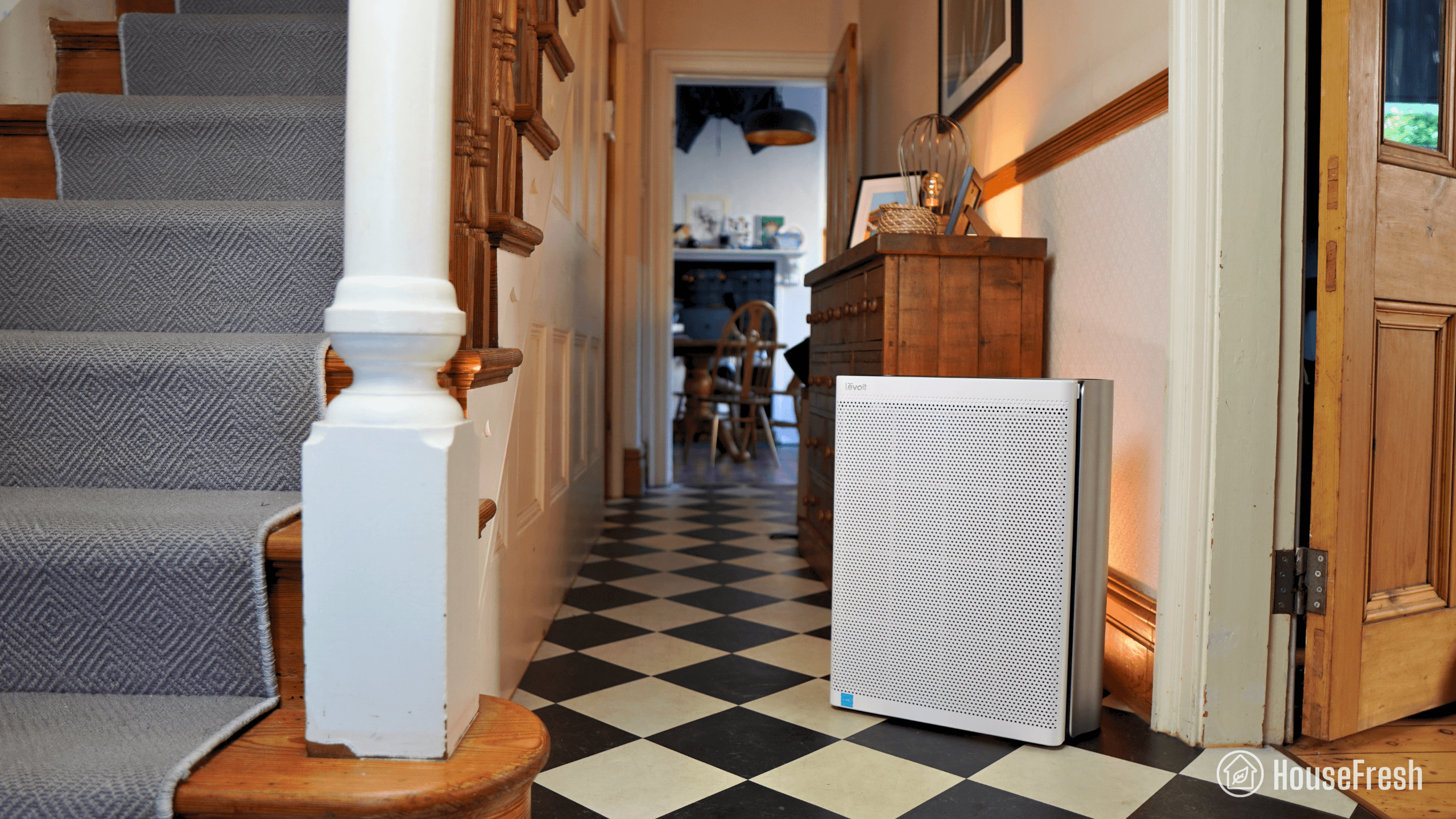
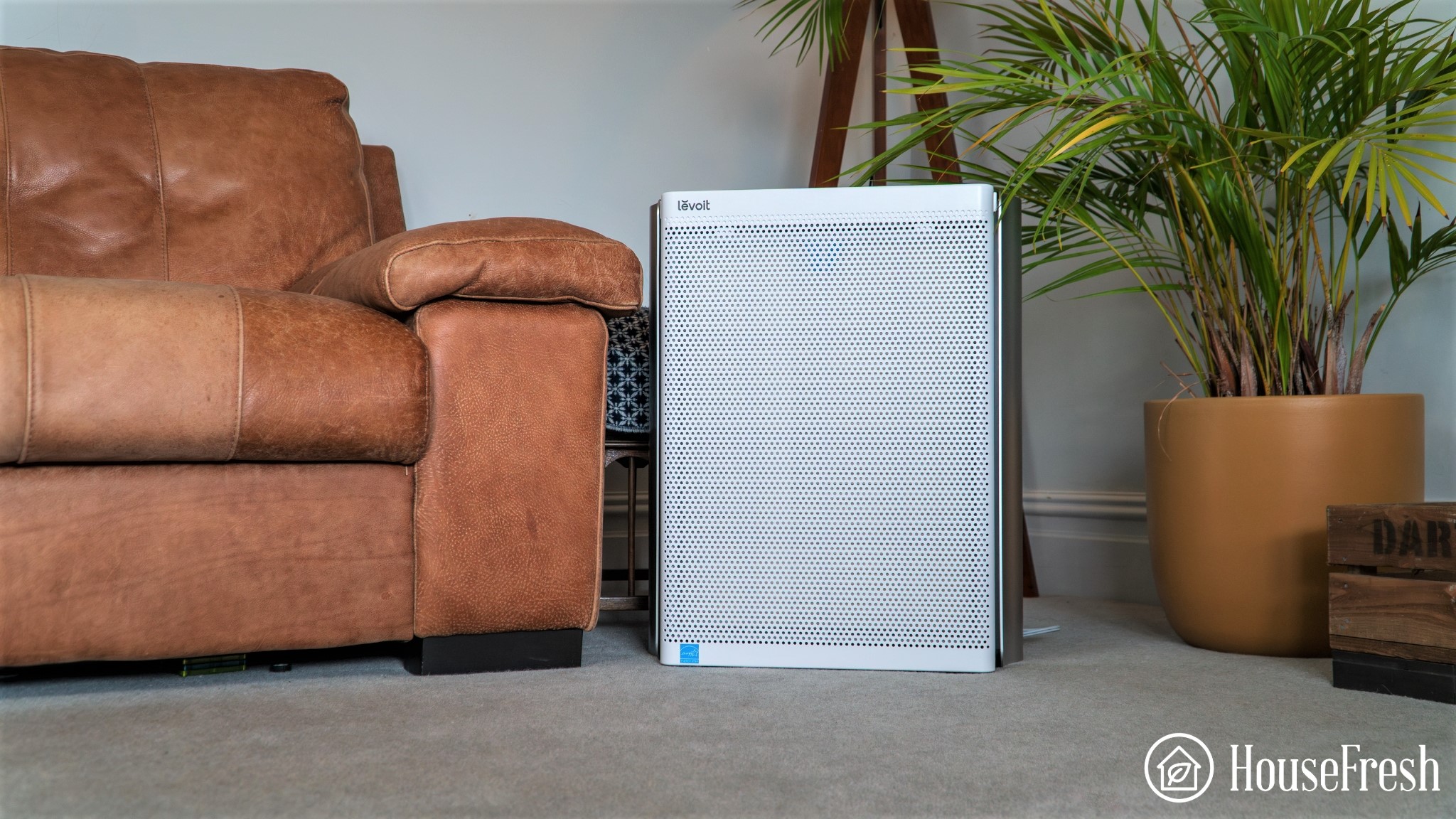
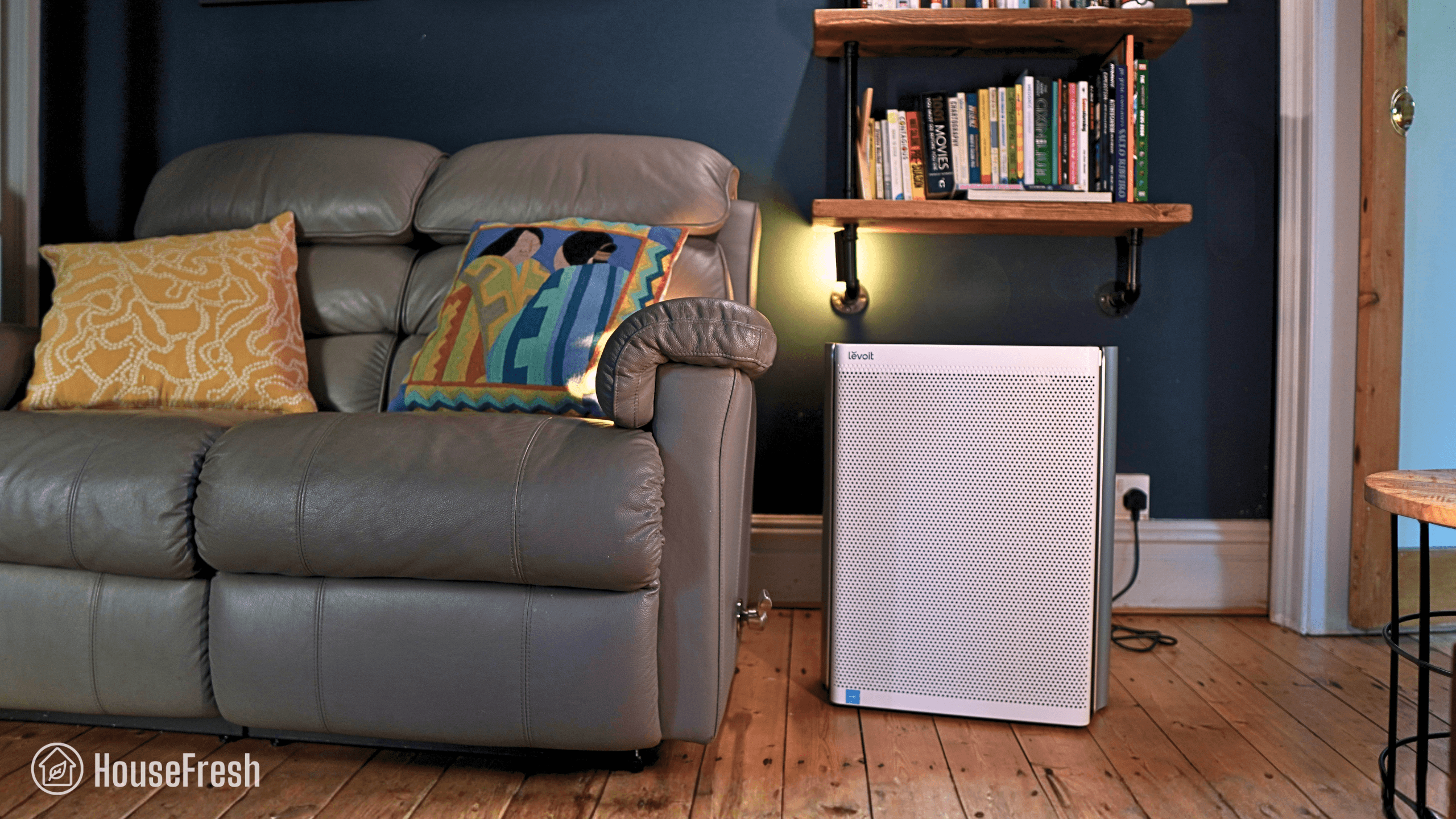
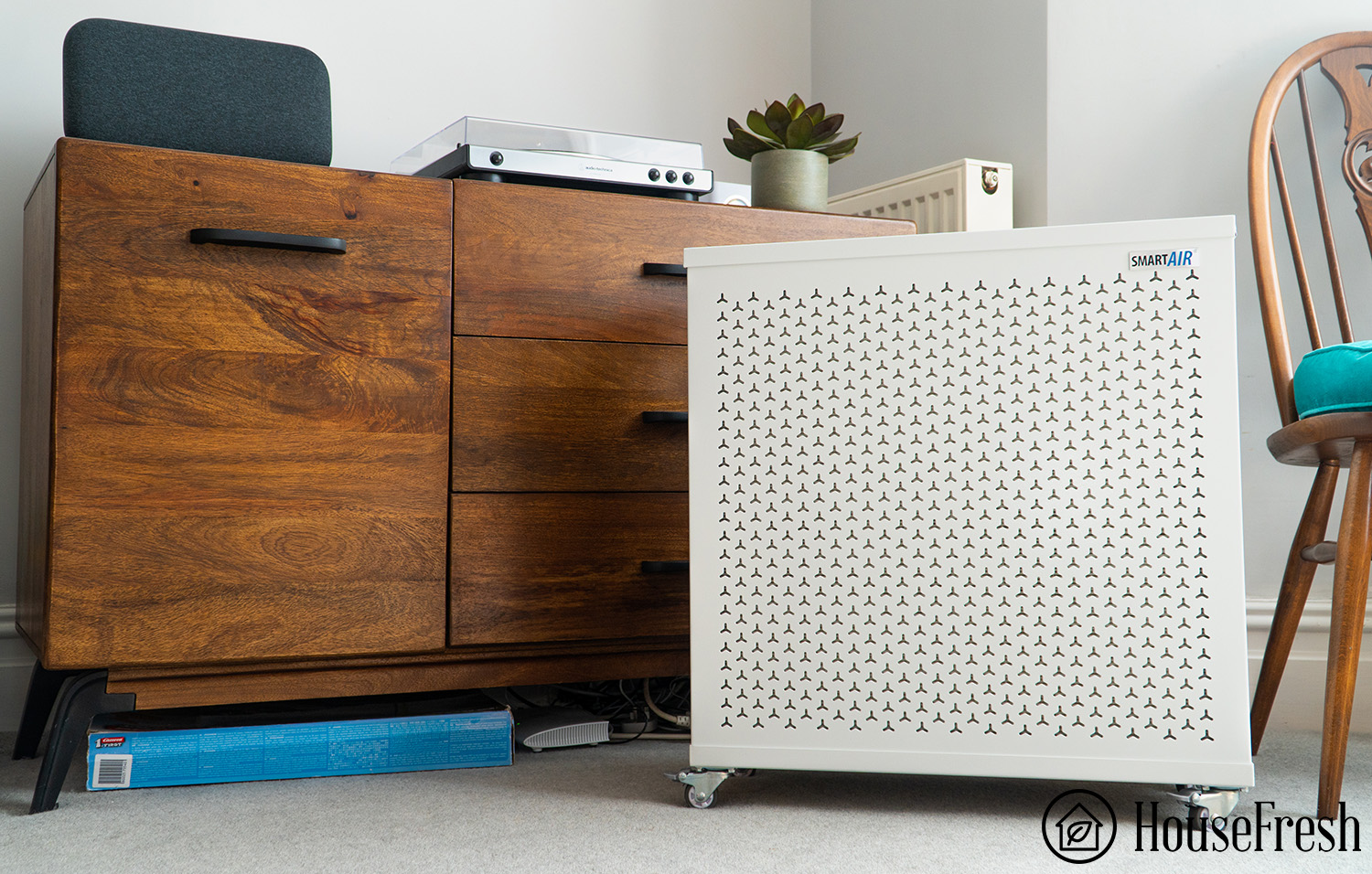
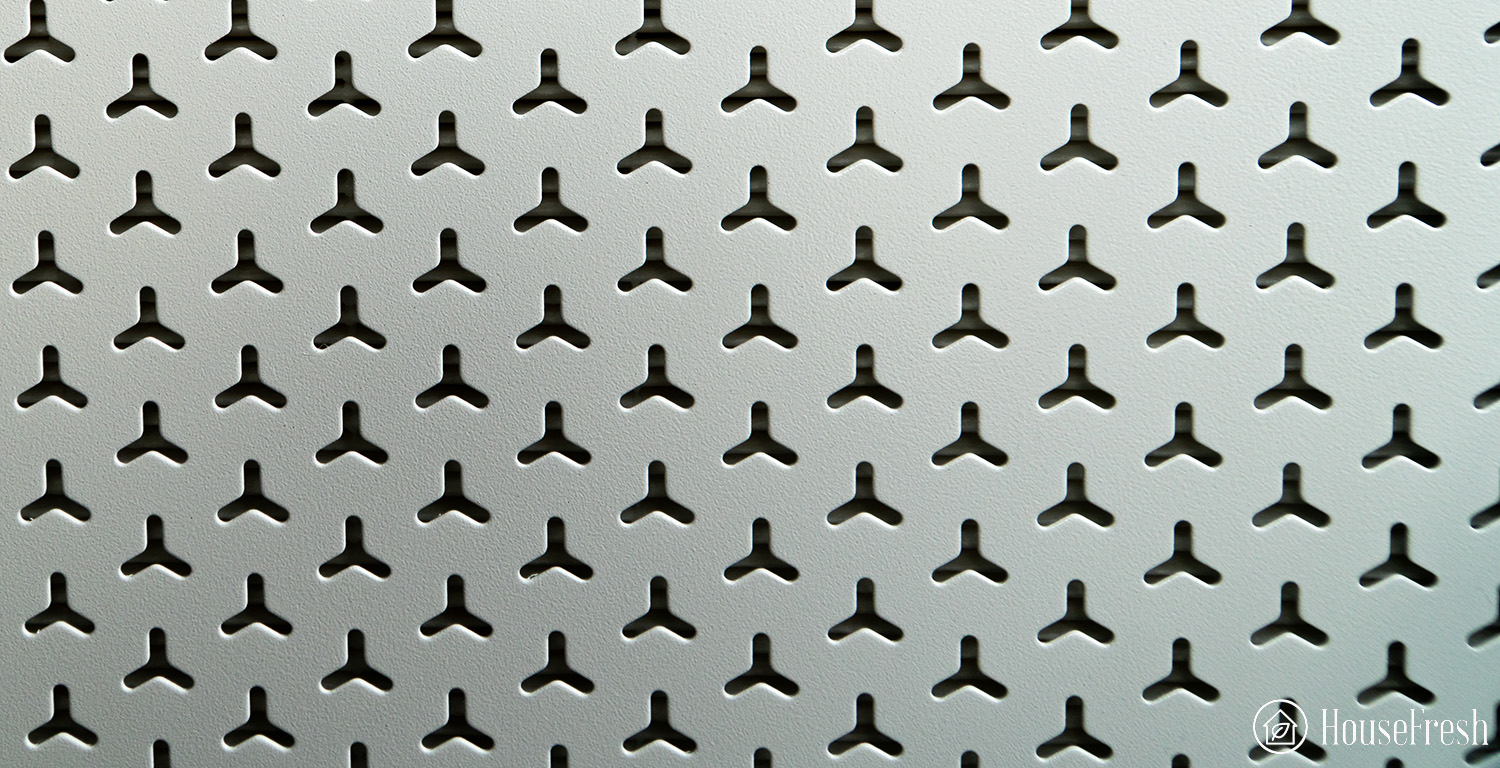
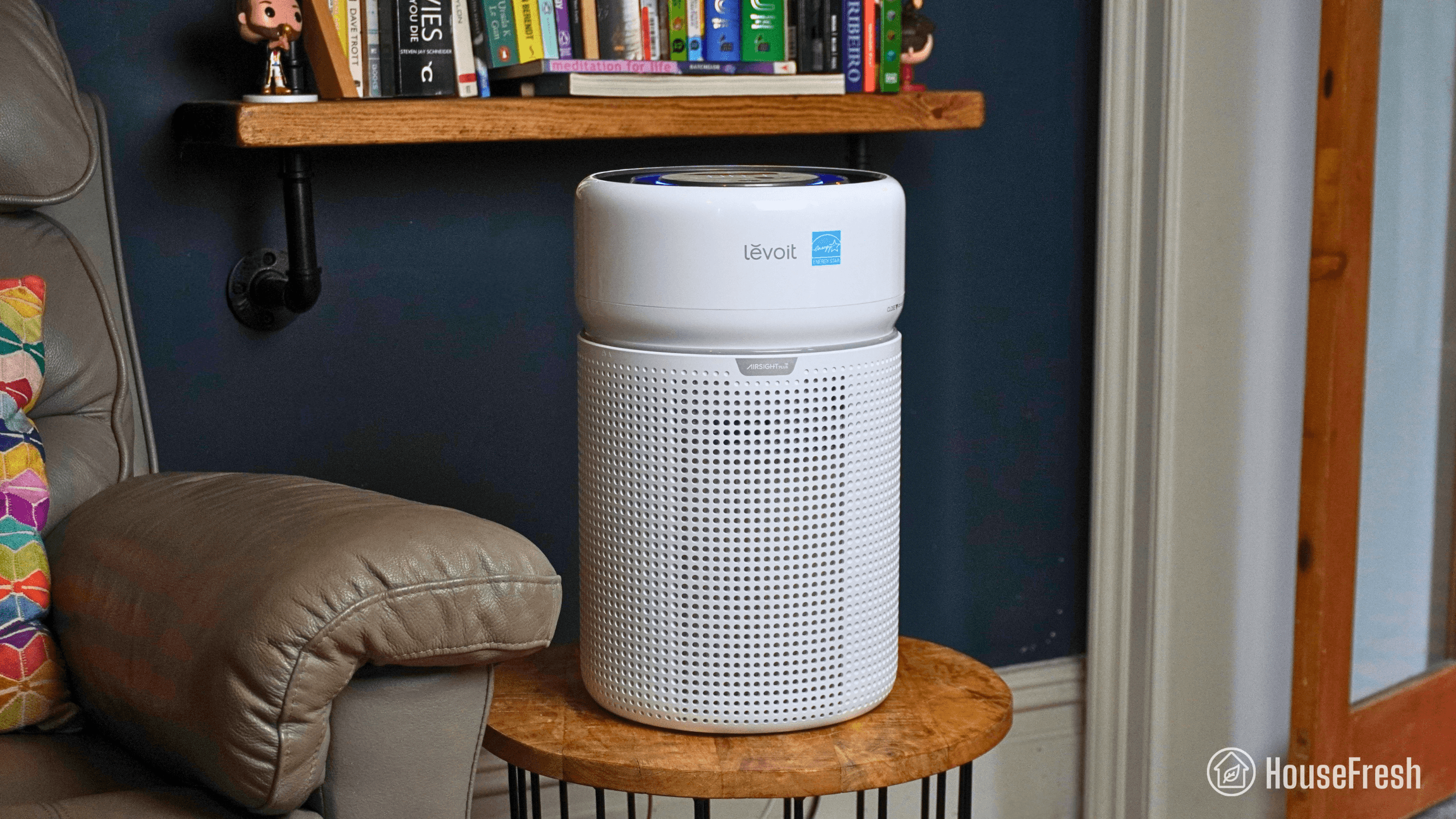
I know looks are subjective, but I really like the look of the 5520, with its understated black design and patterned cover.

Winix 5520 HouseFresh Studio

It’s smaller than the older Winix 5500-2, standing at 22.17 inches (56.31 cm) and weighing 13.3 lb (6 kg).

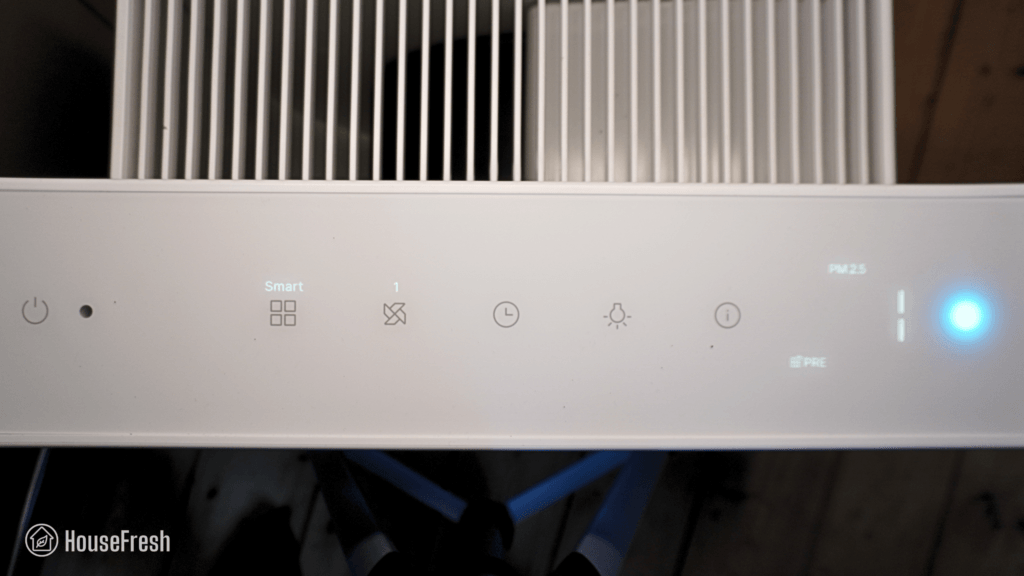
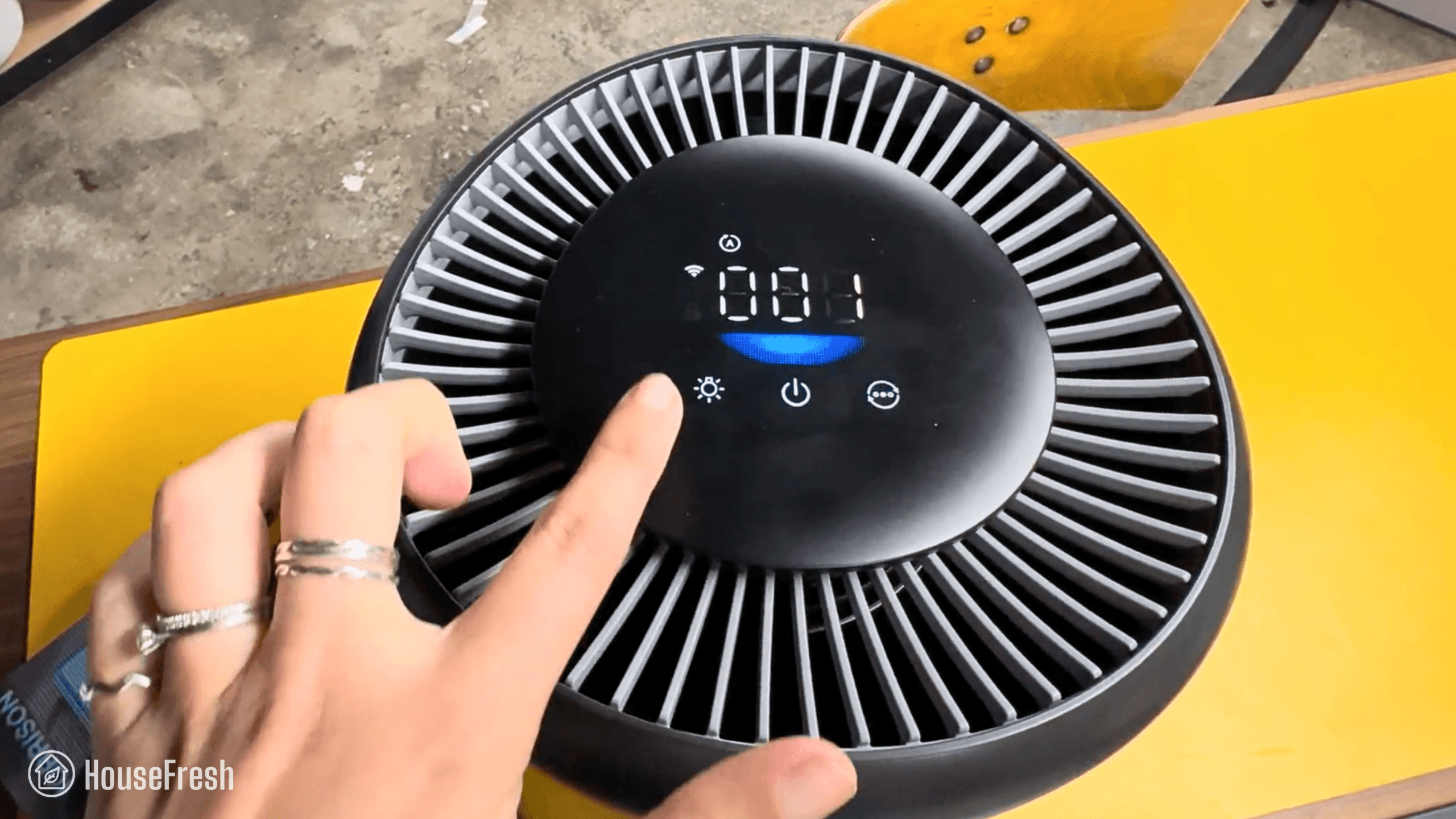
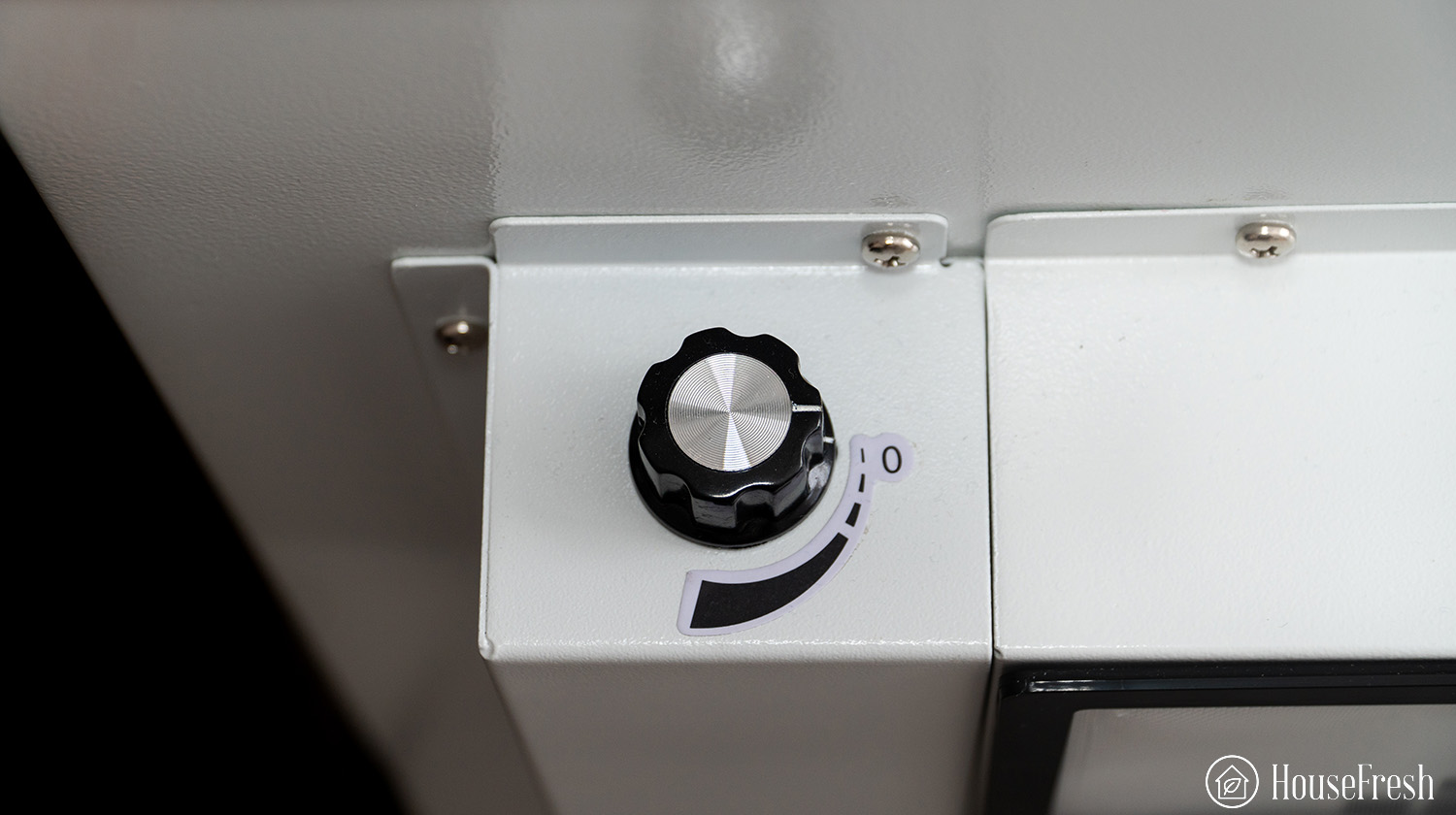
The controls are simple: a power button, a fan speed button (including Sleep and Auto Modes), and a button to engage PlasmaWave.

Winix 5520 Controls

You don’t get a child lock or a timer button, which are common features you will find in other mid-sized air purifiers.

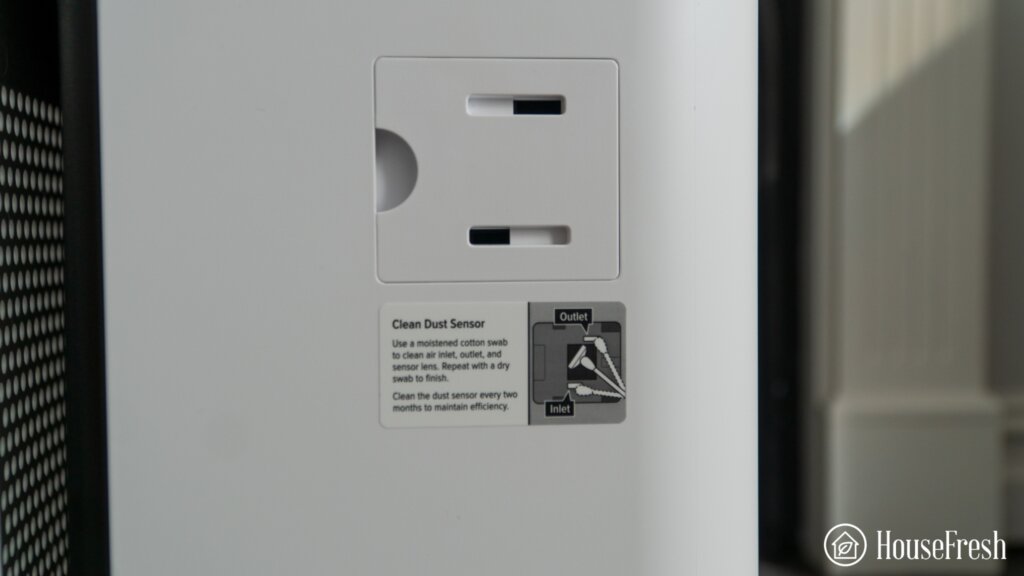
It has a gas sensor that informs the air quality indicator light at the front, which changes from Blue (good) to Amber (poor) to Red (bad).

Winix 5520 Close

It also has a light sensor at the top, which will react to changes in ambient light, switching the air purifier to low-light in the dark.

Winix 5510 App

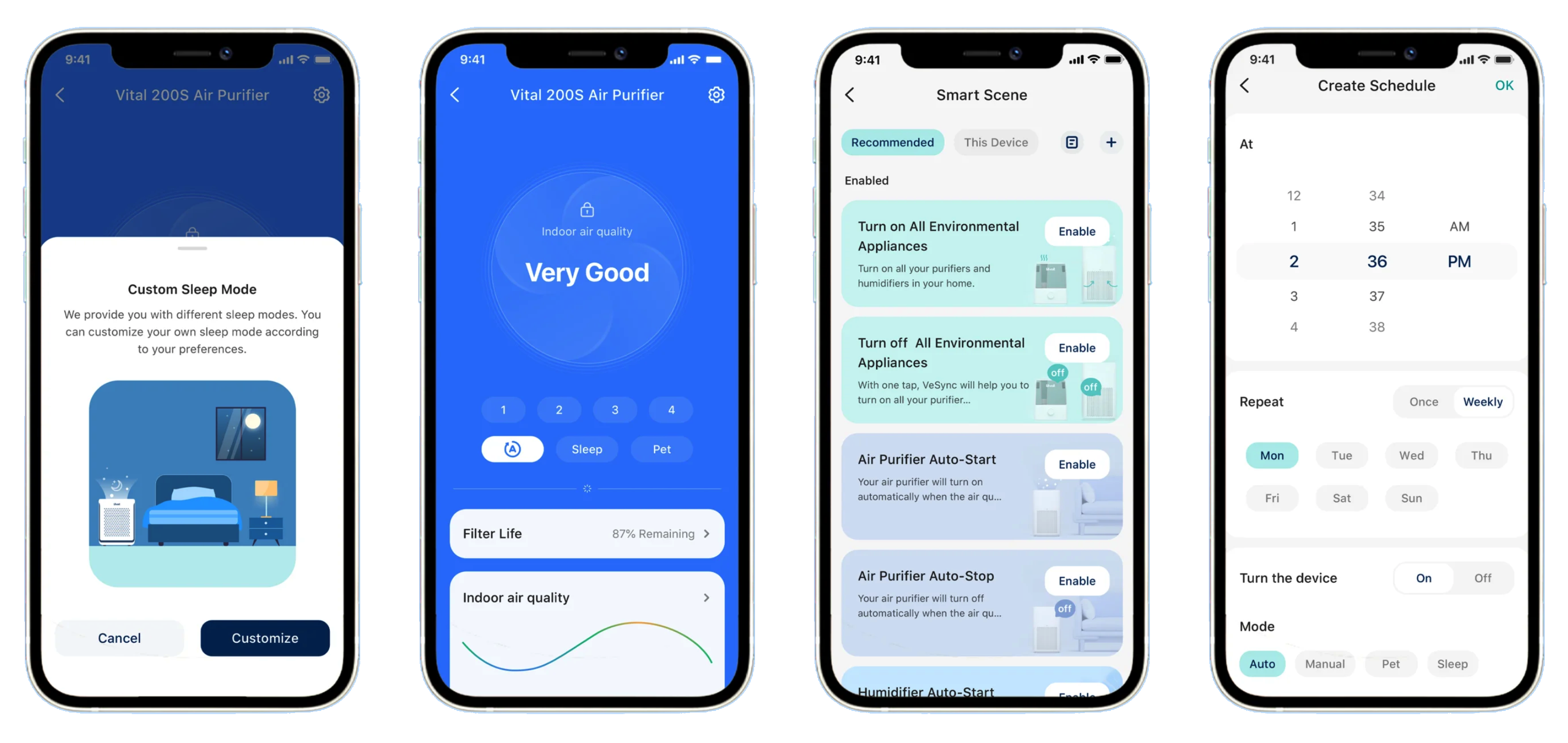
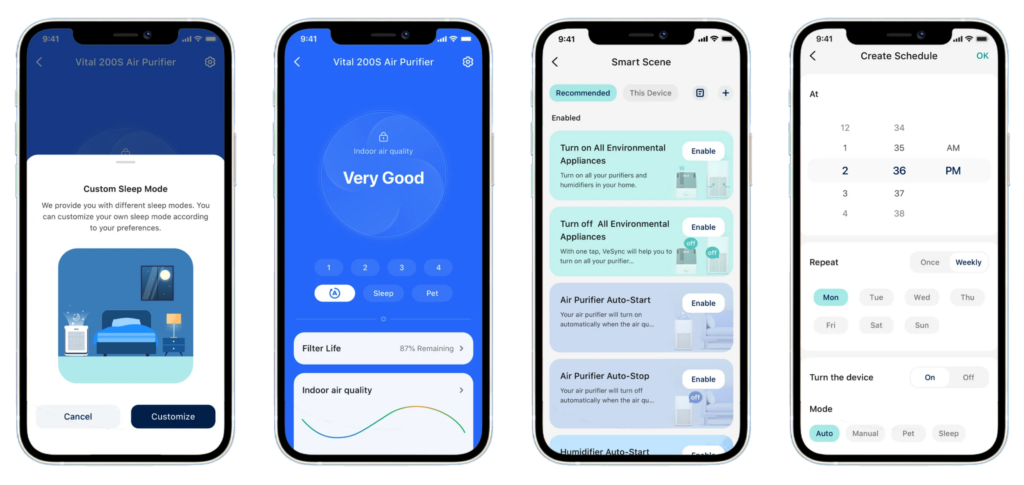
You can connect the 5520 to your smartphone via the Winix Smart app, which is available on both iPhone and Android.

The app has a clean design and a good UX, with no major issues. It lets you adjust fan speeds remotely from your phone, monitor filter life, and track air quality data from the sensor.

After using other apps from different manufacturers, I found the Winix Smart app pretty bare – it misses features that are common in apps from brands like Xiaomi and Levoit.

Air cleaning performance

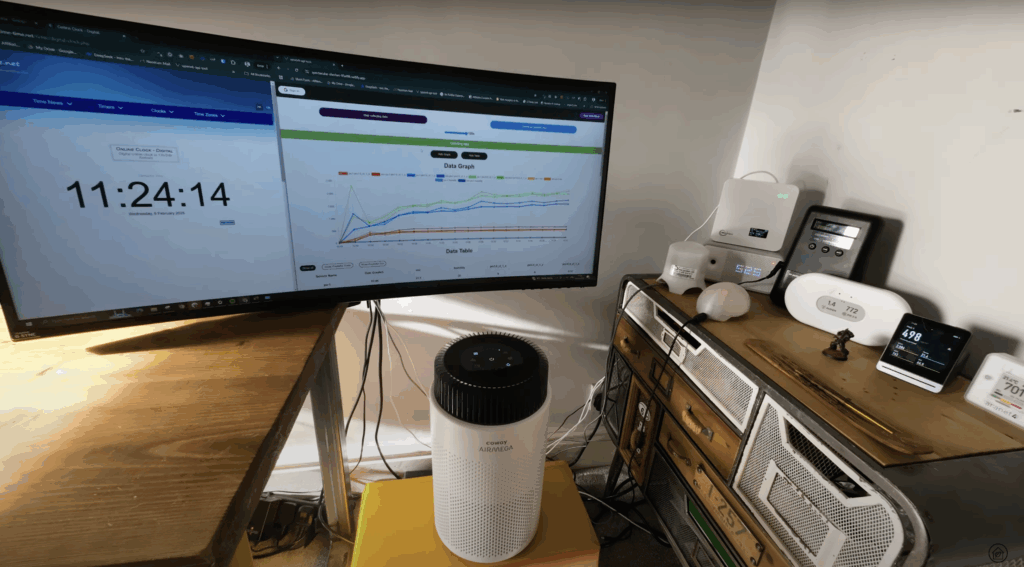
We tested the Winix 5520 in our 728 cubic ft. test room, tracking how fast it removed all PM1 particles from the air after we filled the space with incense smoke.
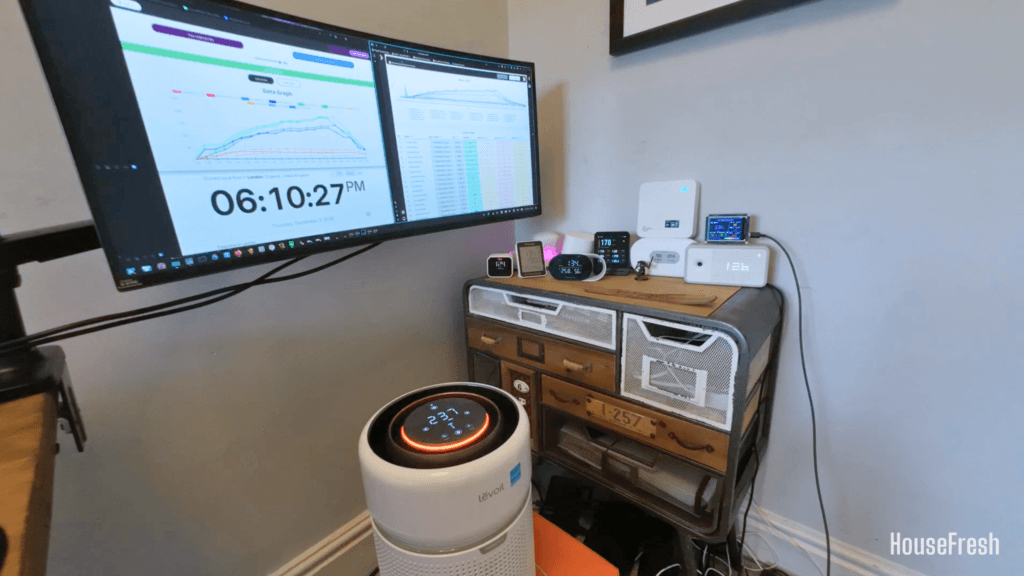
Winix 5520 Performance Test

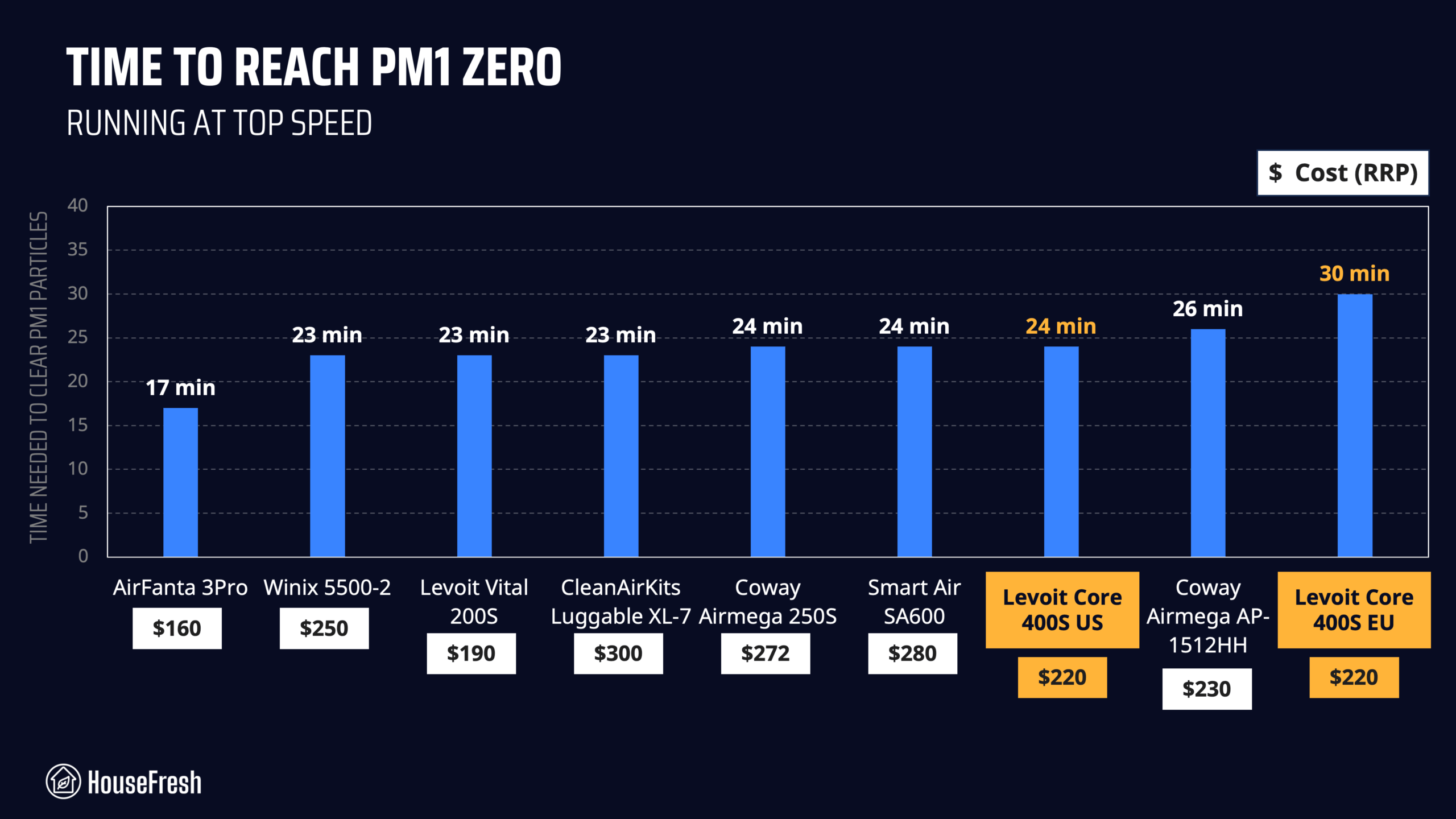
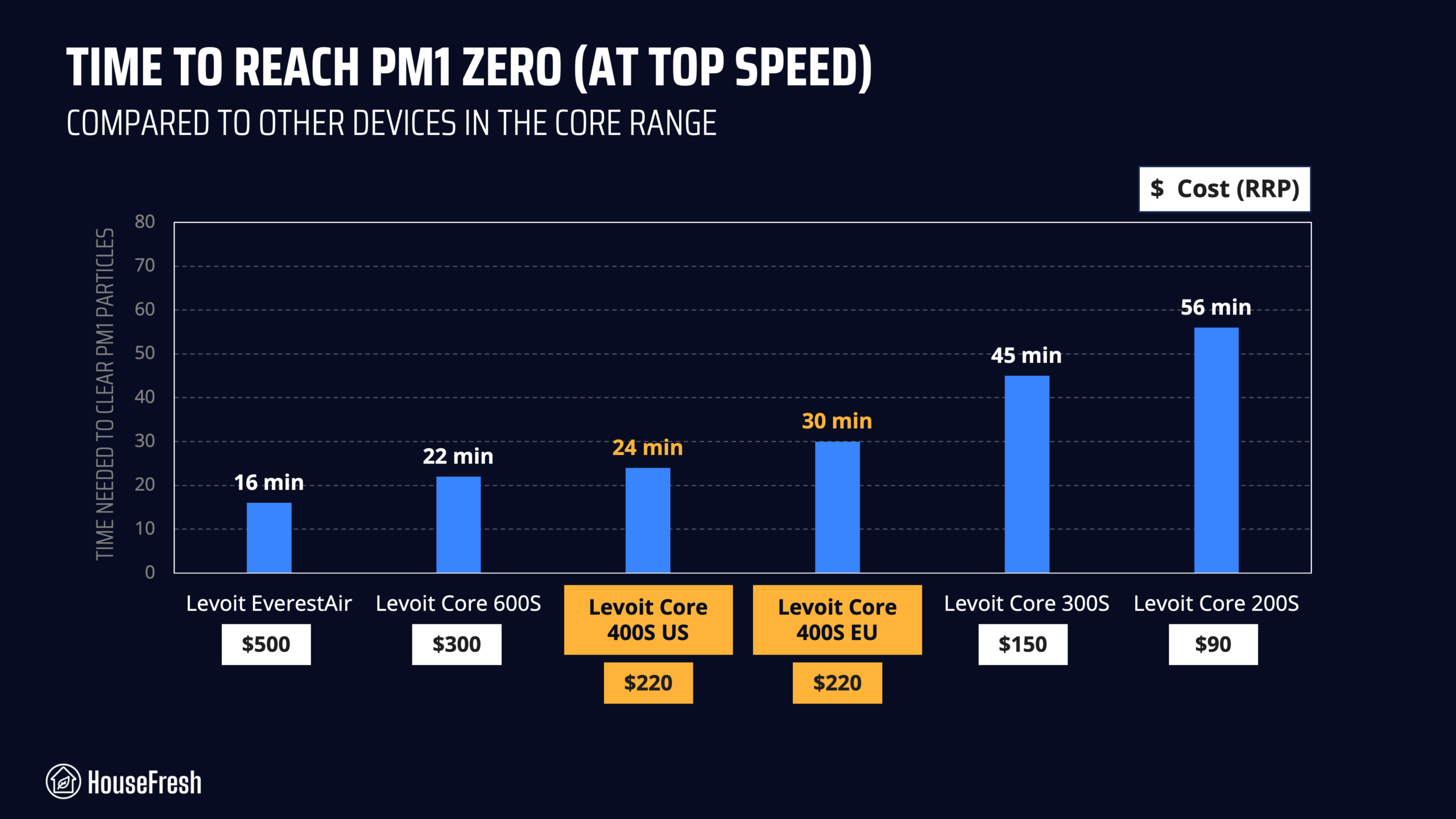
When running at top speed, our PurpleAir Zen sensor shows that the 5520 needed 24 minutes to reach PM1 zero. Based on the natural ventilation of our test room, we estimate a PM1 CADR of 249 cfm.

This makes the Winix 5520 powerful enough to provide five air changes per hour in large rooms up to 373 sq. ft.

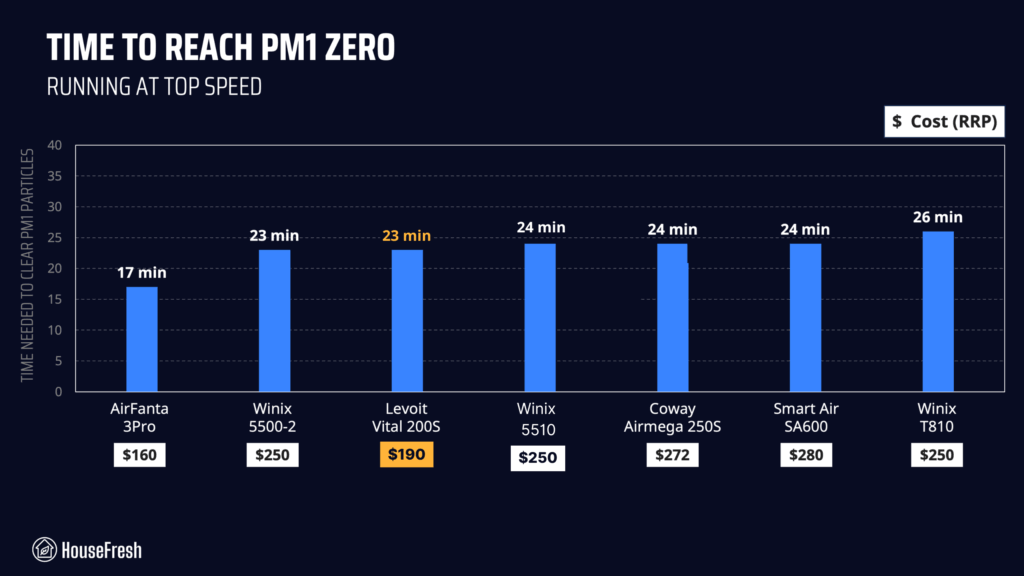
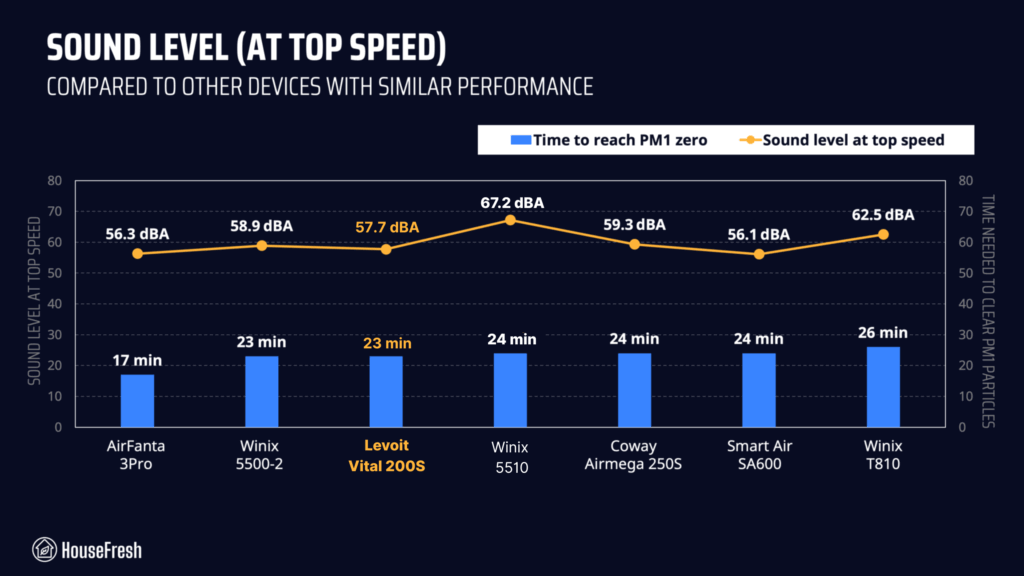
As you can see from the chart, the 5520 matched the top speed performance of its sibling (5510), the popular Levoit Vital 200S and the pricier Coway Airmega 250S:

Winix 5520 HouseFresh Particle Removal Chart

This is a good result for a medium-sized air purifier in the sub-$200 price range.

BUT, as I always say, air purifiers running at full power are usually too loud for everyday use, so we must account for noise levels…

Sound levels

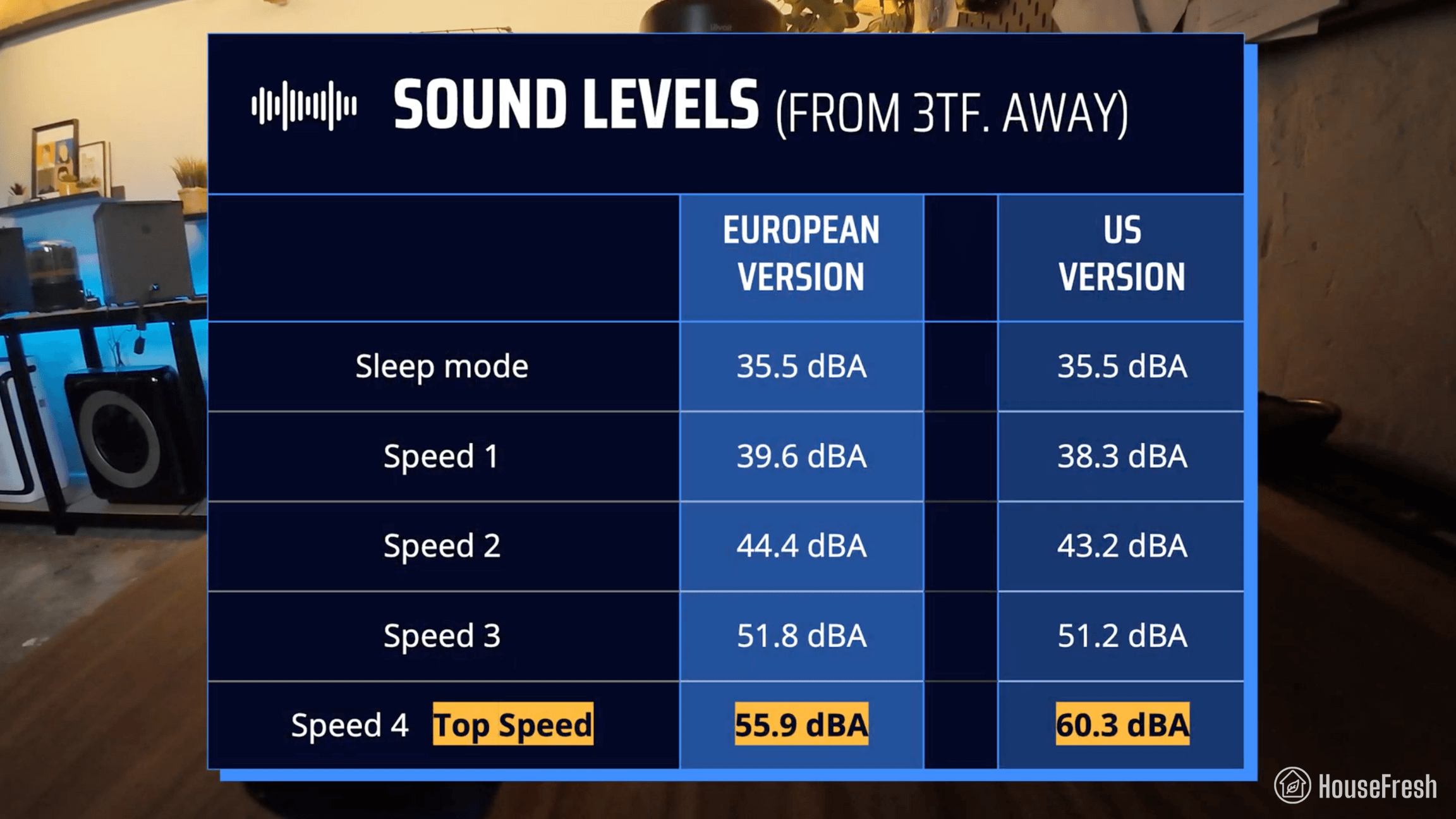
The sound levels of the Winix 5520 range from 40.4 dBA to 64.9 dBA — which is louder than other mid-sized air purifiers from Levoit, Coway and Blueair.

Winix 5520 Sound Energy Test

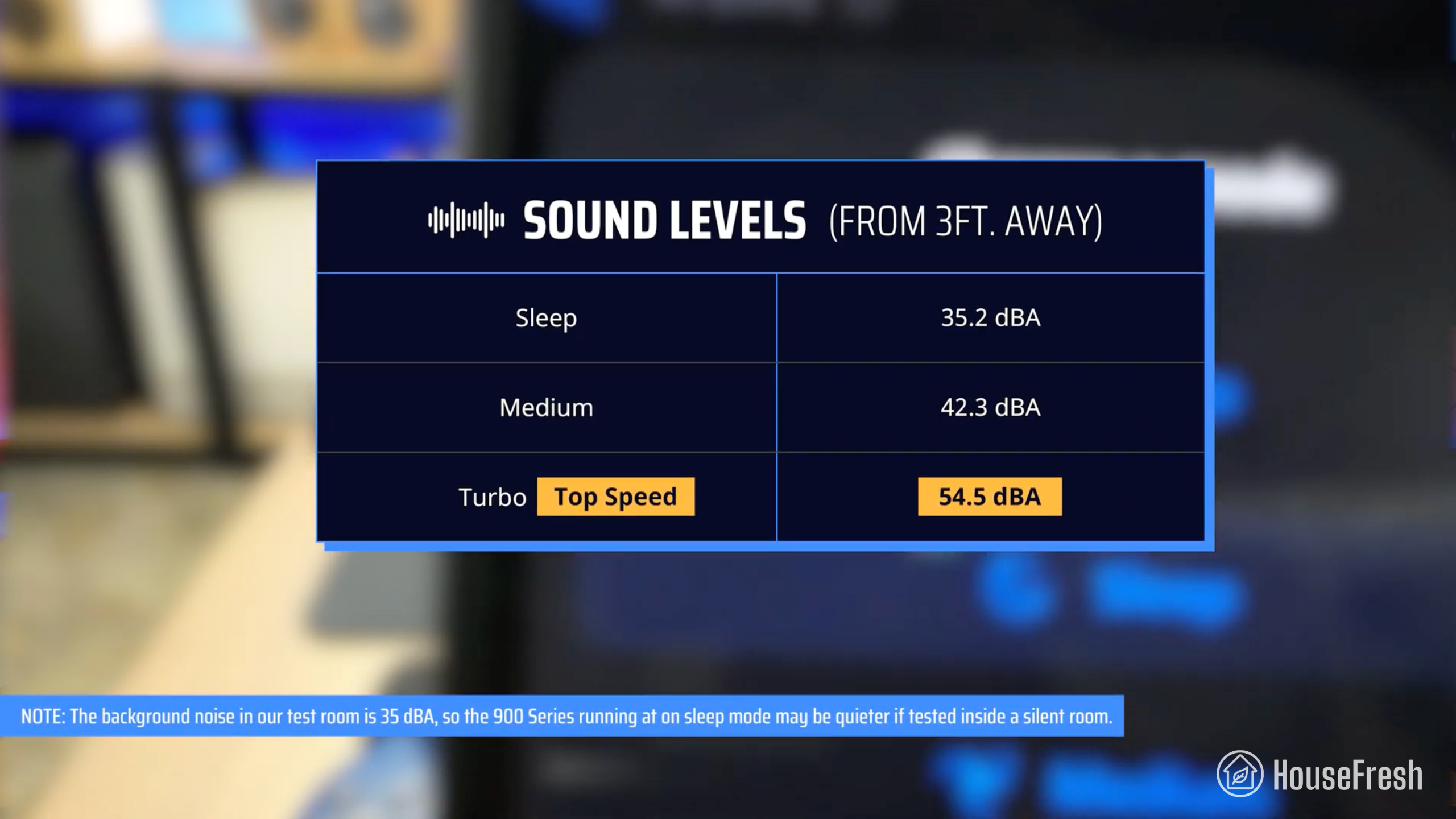
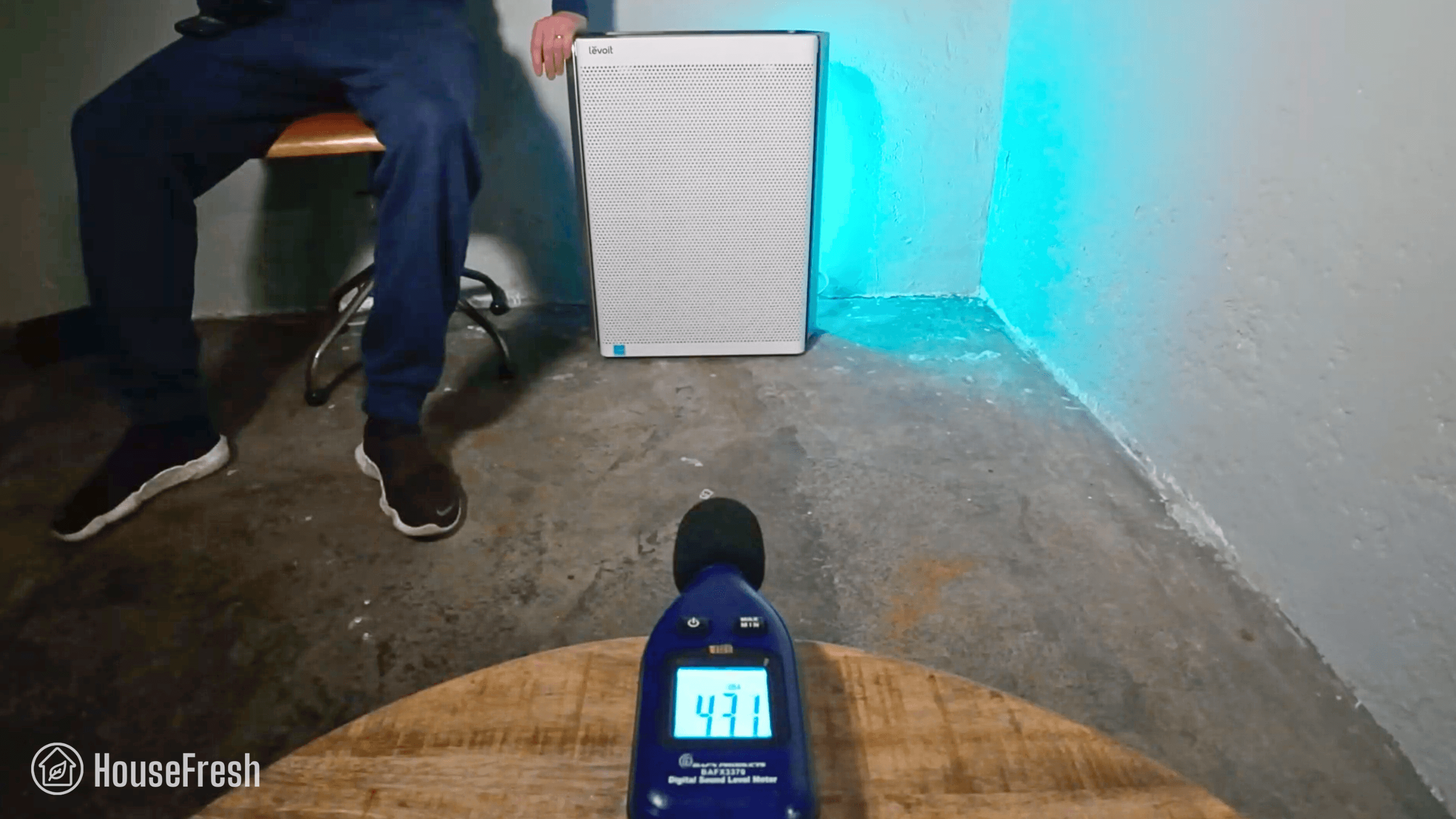
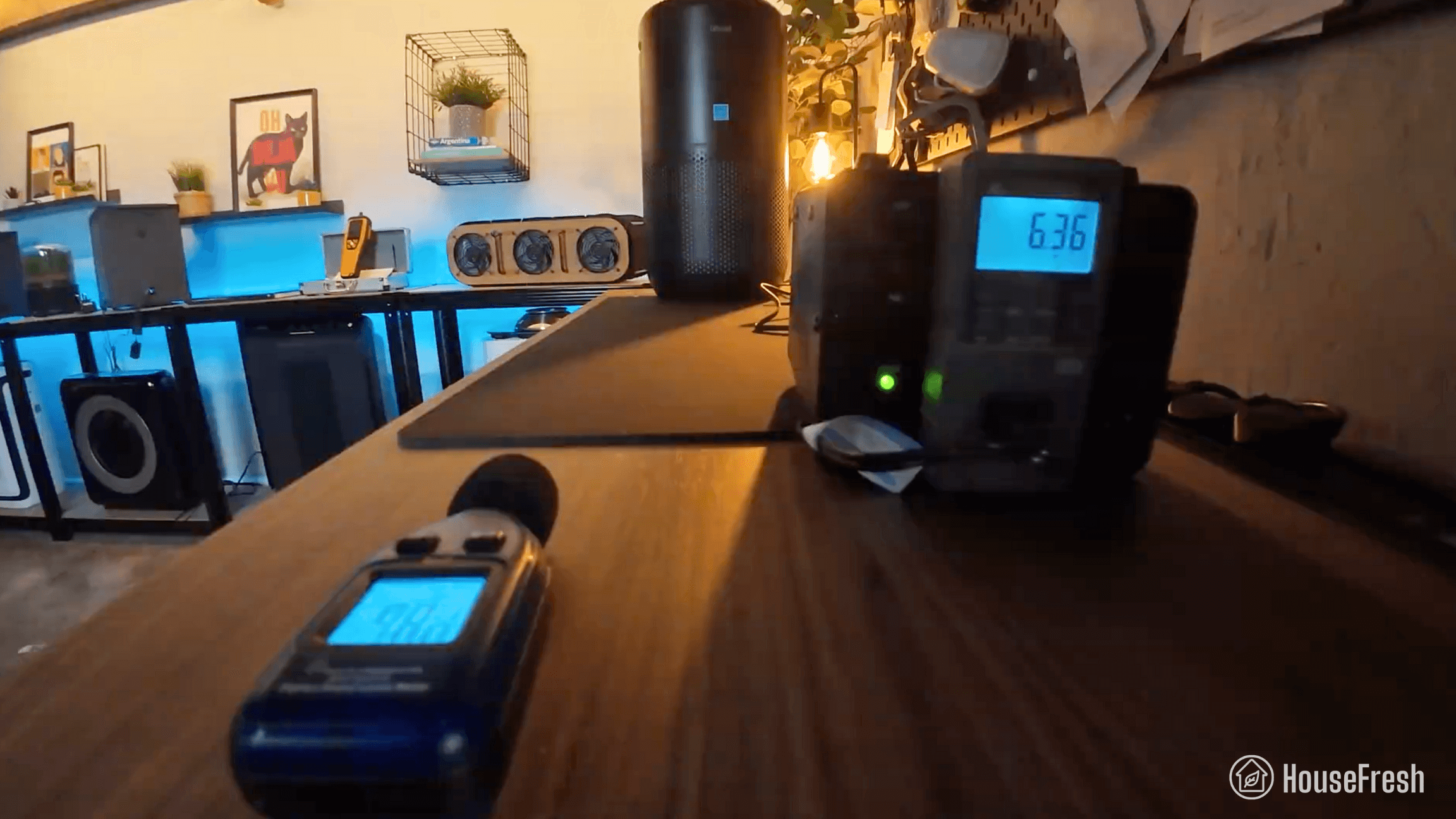
I used our BAFX sound meter to measure how much sound the 5520 generates at each of its fan speeds at 3 ft away:
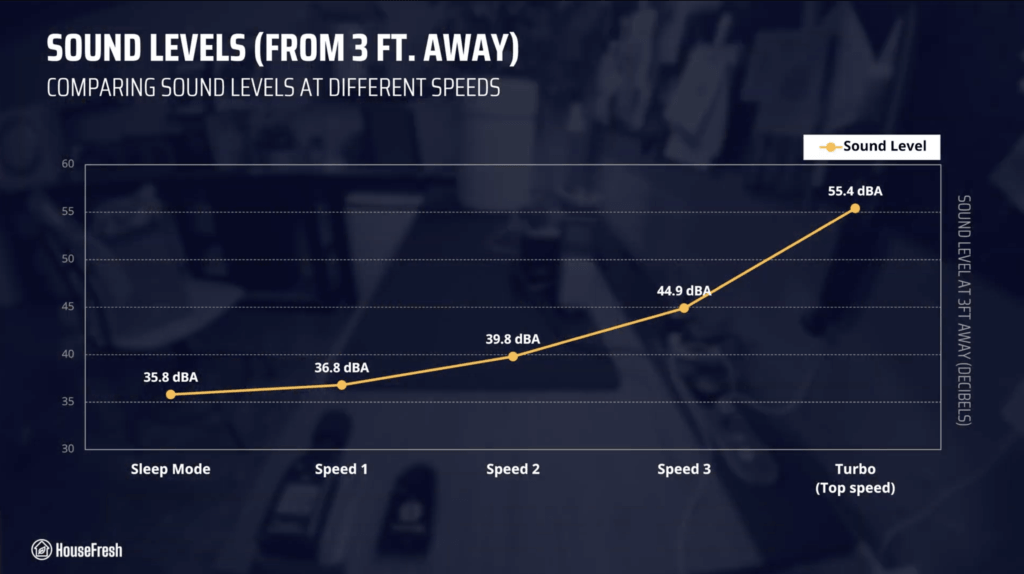
Winix 5520 Sound Levels HouseFresh

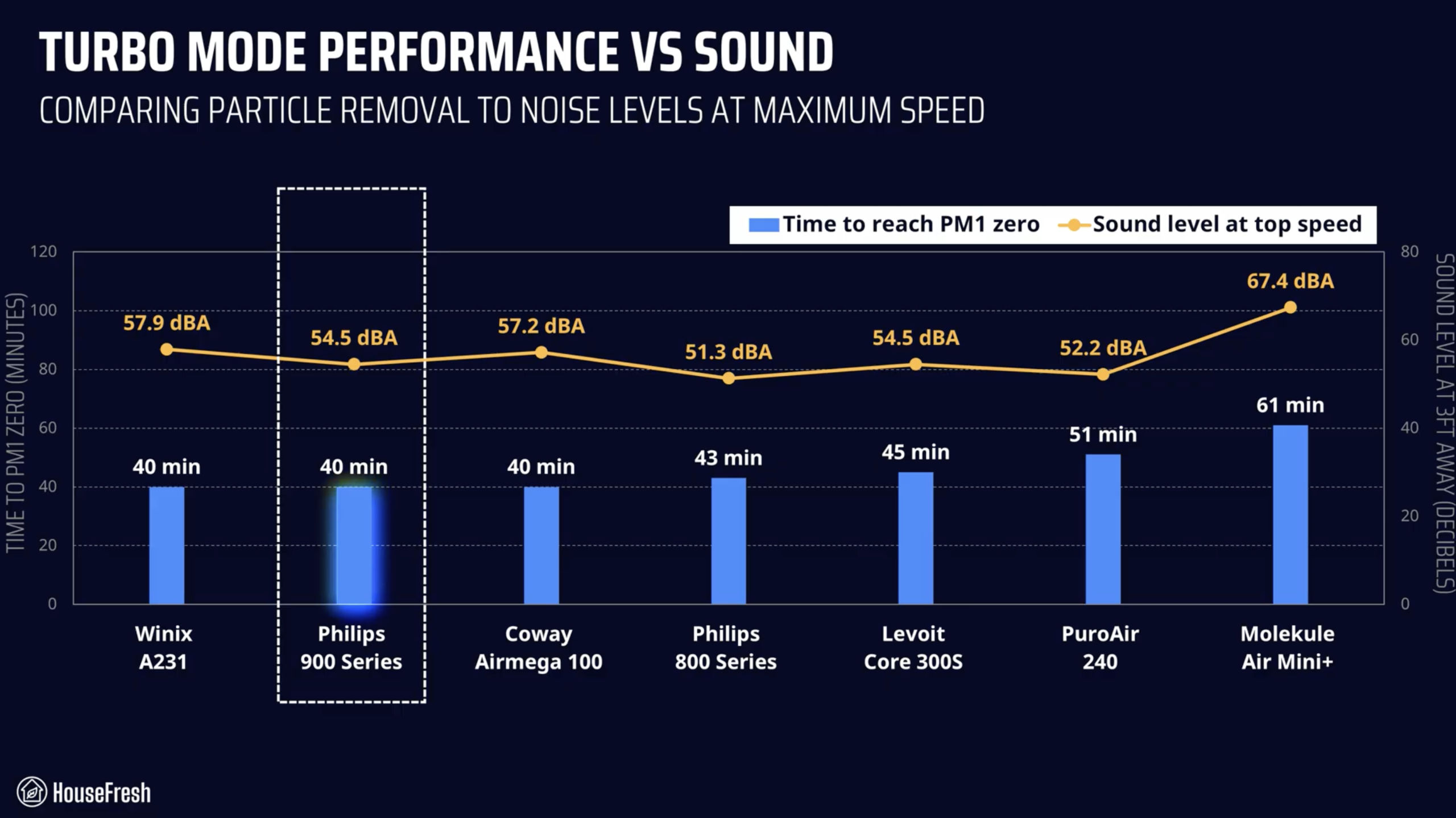
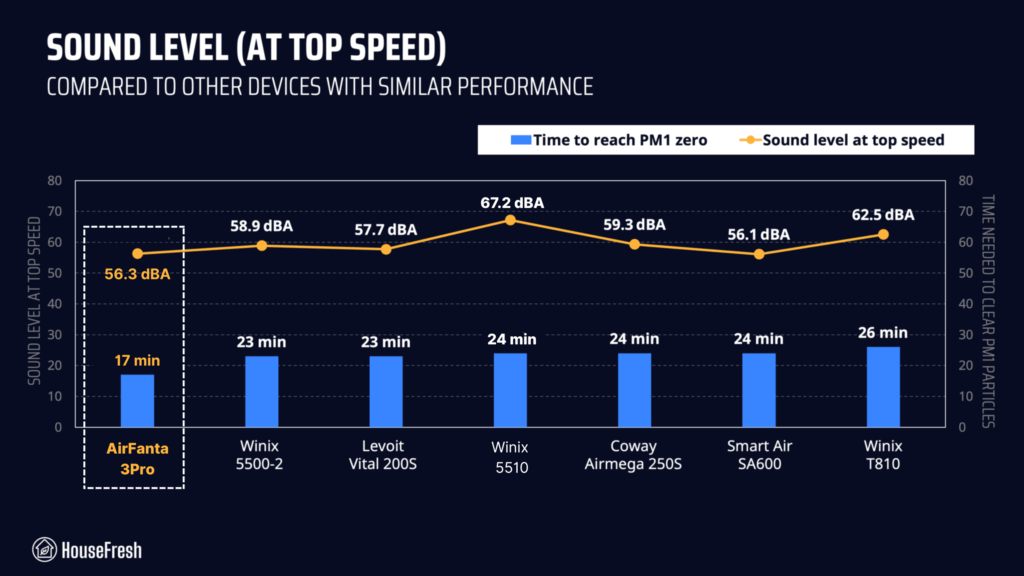
Reaching 64.9 dBA at top speed, the 5520 is one of the loudest mid-sized air purifiers on the chart, second only to the Winix 5510 and its 67.2 dBA when running at full power.

Winix 5520 Top Performance Chart

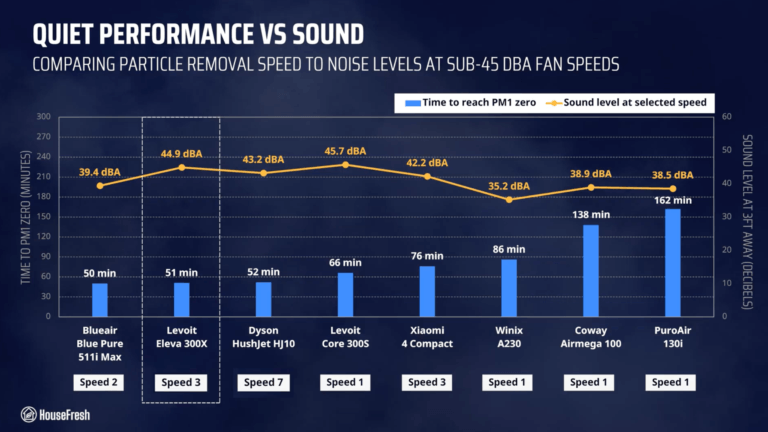
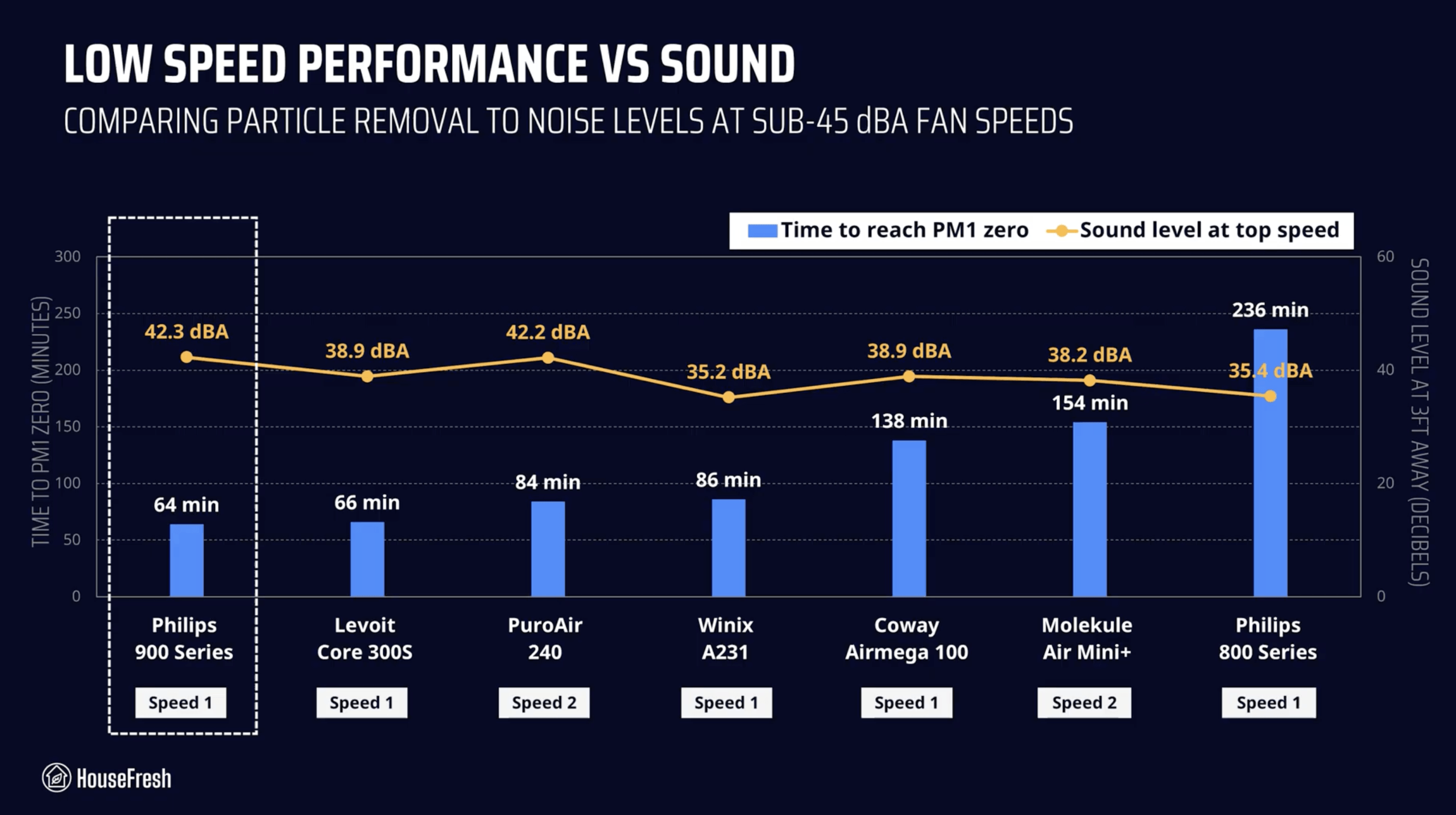
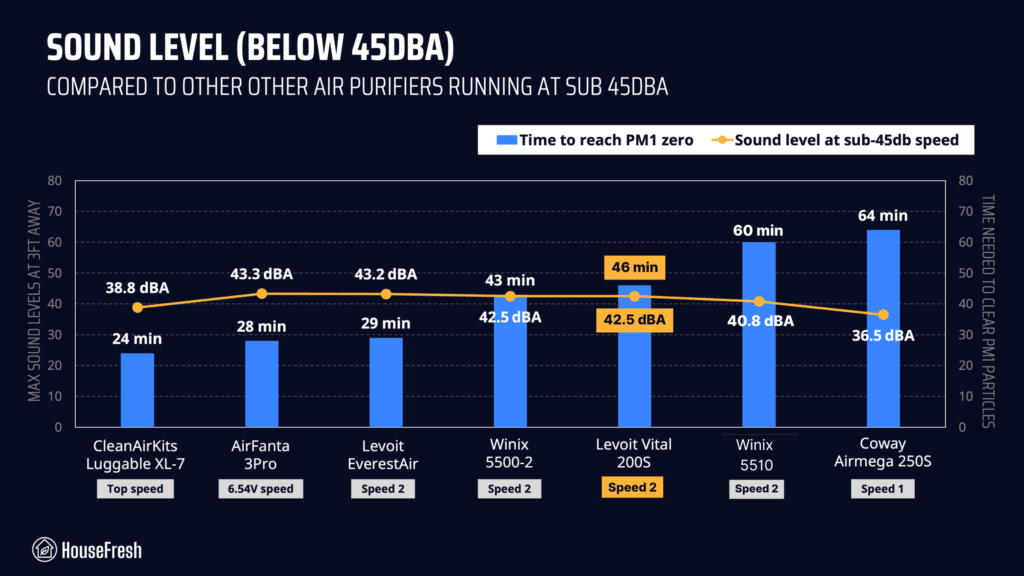
Running at speed 1, the 5520 reached 40.4 dBA and completed our particle removal test in 55 minutes. This is the only fan speed under the 45 dBA limit we set for quiet performance tests.

Winix 5520 Quiet Performance Chart

I repeated the test with the 5520 running at speed 2, and it cleared our test room in 44 minutes while generating 45.8 dBA of noise. That is not much louder than our 45 dBA limit, so if you don’t mind the extra noise, you could have the 5520 running at speed 2, and it would clean the air five times per hour in spaces up to 200 sq. ft.

Long-term running costs

Running a Winix 5520 will cost you $146.51 per year, combining energy and filter replacement costs.

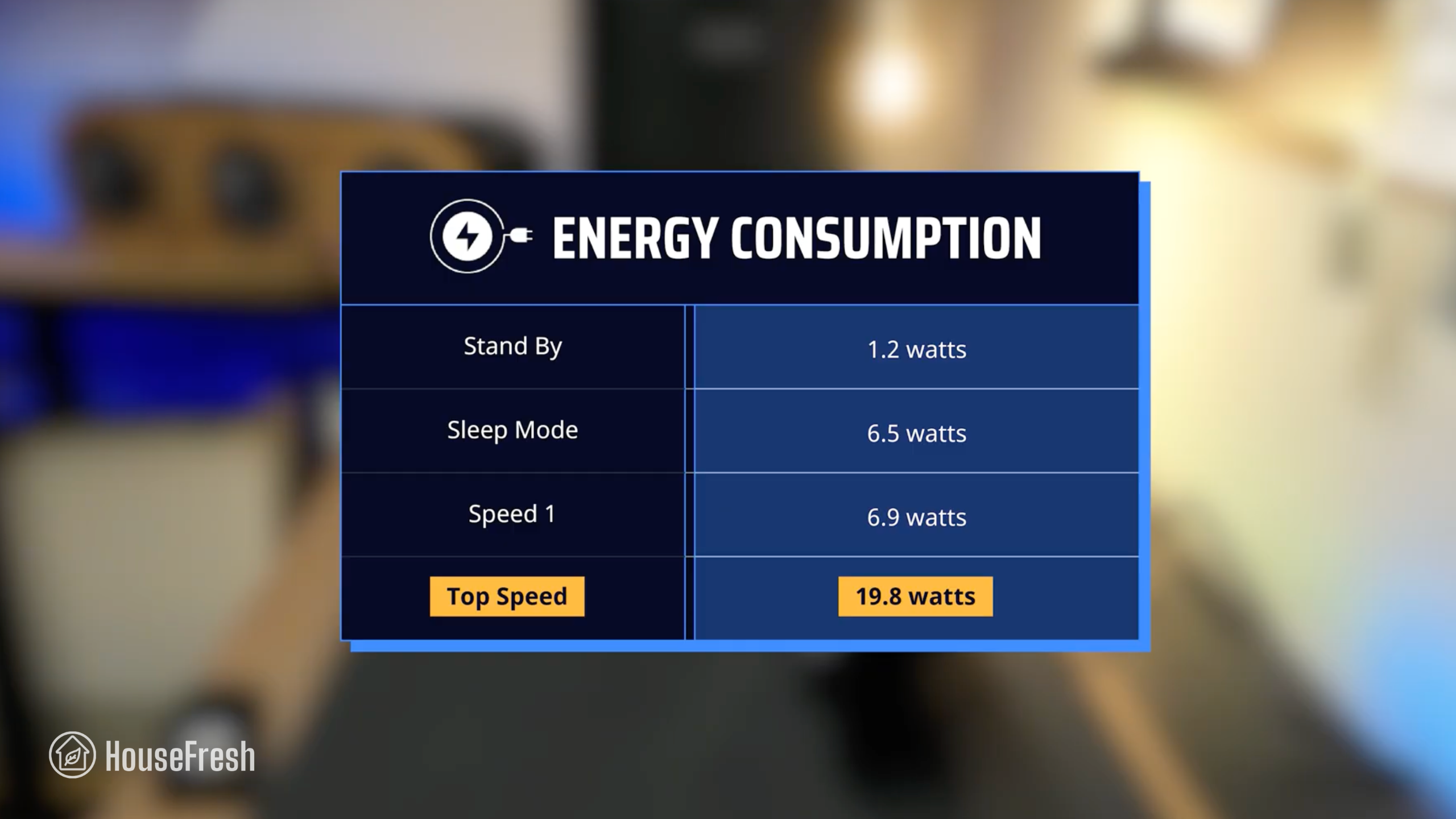
We used our energy meter to record how much electricity the 5520 pulls at each fan speed and while on standby.
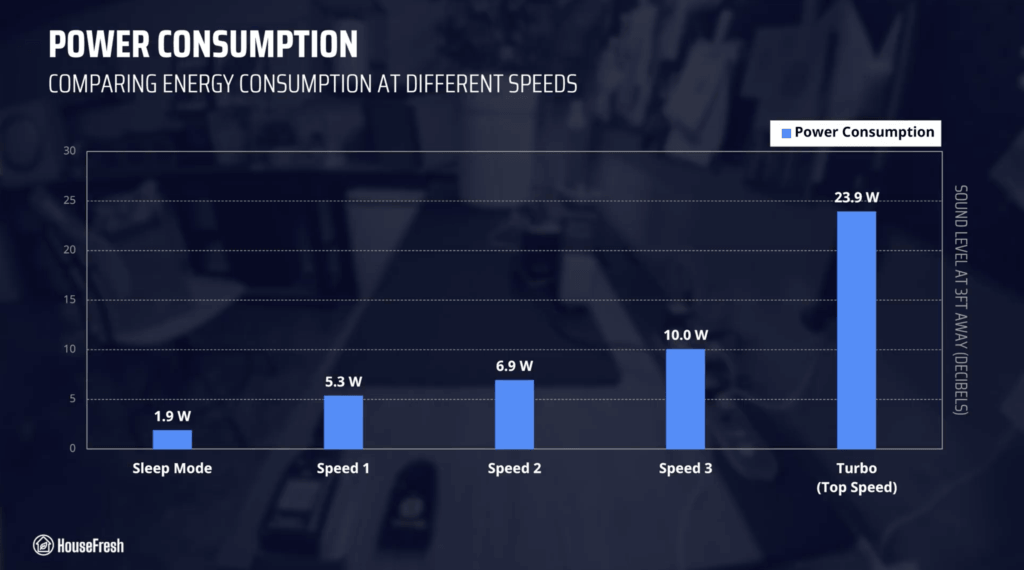
Winix 5520 Energy Consumption HouseFresh

At top speed, the Winix 5520 draws 55.31 watts, so if you were to leave it running at full power 24/7 for a year, it would add $66.52 to your energy bill, based on the average U.S. electricity price as of March 2026.

However, electricity consumption is not the only long-term cost you should budget for when buying an air purifier… The biggest expense tends to be the filter replacements.

According to Winix, you need to change the filter in your 5520 every 12 months. The set with one True HEPA and one carbon filter costs $79.99, so you can expect to spend that much each year on filter replacements alone.

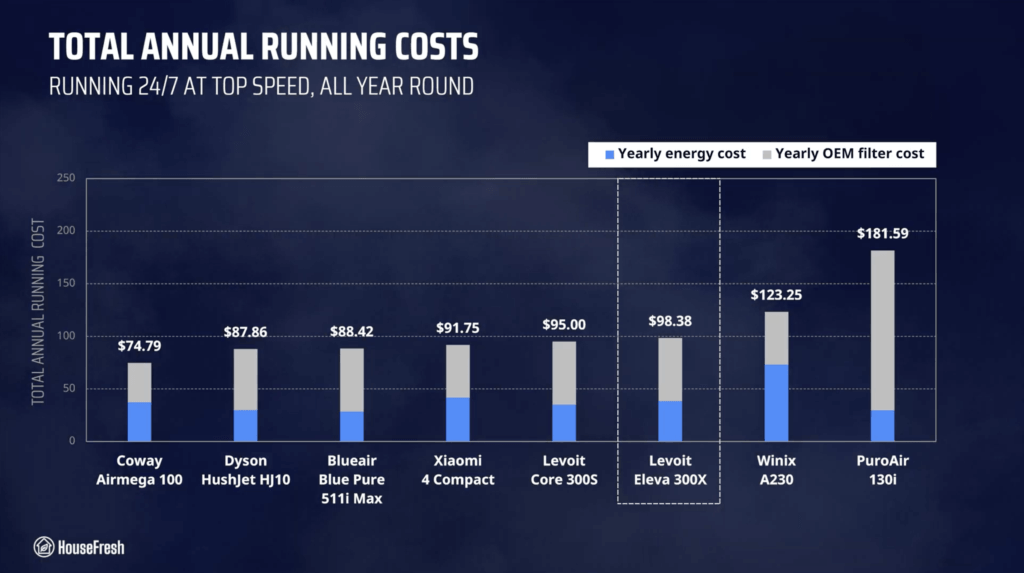
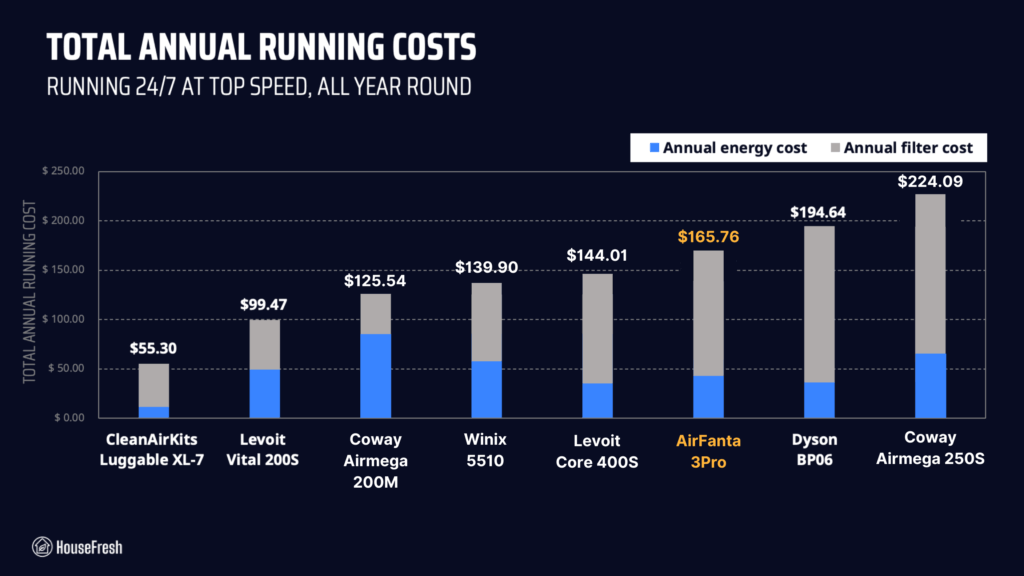
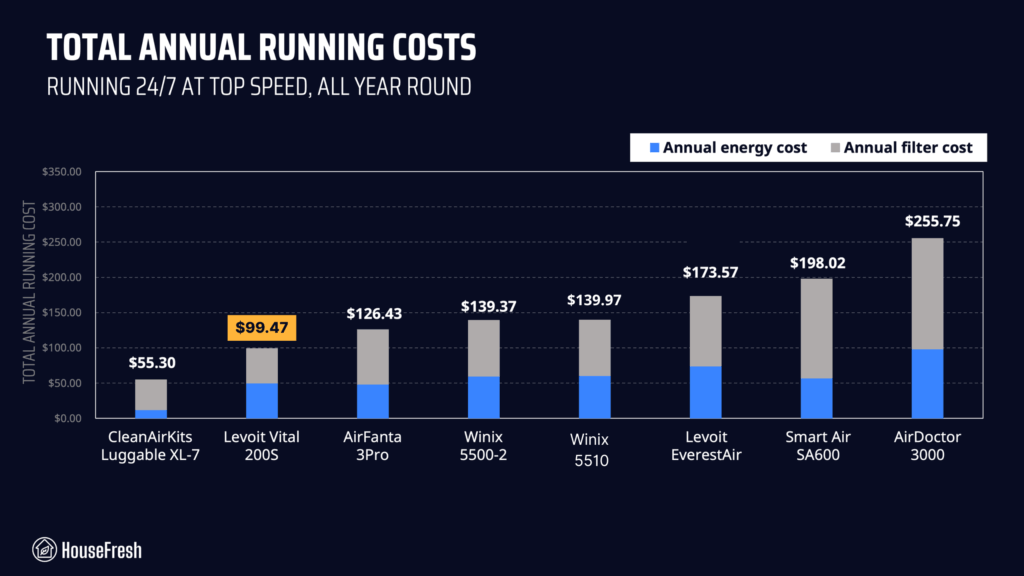
When we add this to energy costs, we can work out that it will cost you $146.51 to run a 5520 for a year. Let’s compare it with other models:

Winix 5520 Yearly Running Costs Chart

Because the 5520 is a tiny bit more power-hungry than the Winix 5510, you can expect to spend more each year on running costs, even though both units use the same filter replacements.

Bottom line: Should you get a Winix 5520?

Our data showed that the 5520 offers performance comparable to that of its sibling, the Winix 5510, BUT it comes with a higher price tag and a more power-hungry fan motor.

Winix 5520 Corner

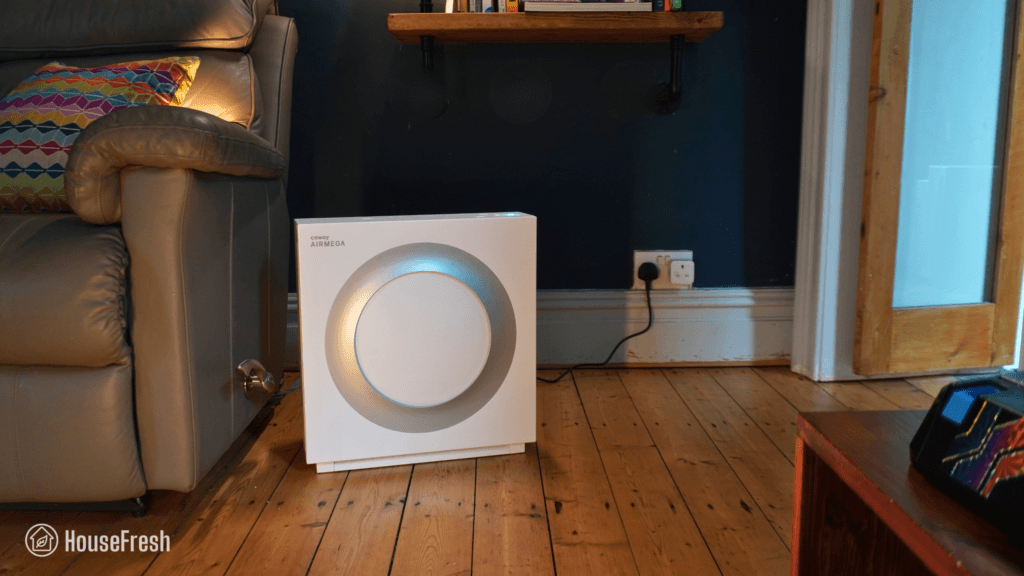
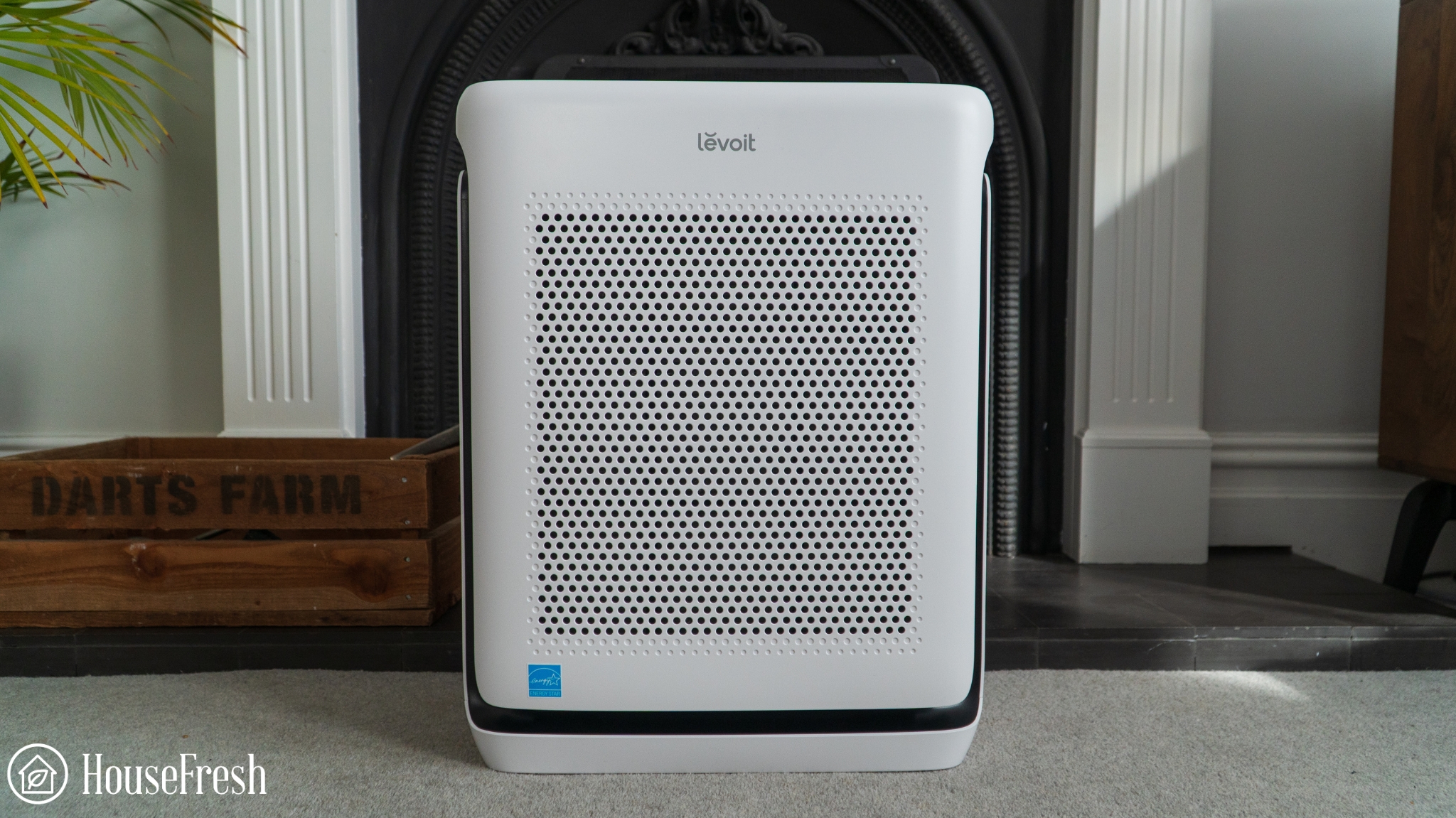
The 5520 is a solid mid-sized air purifier with similar particle removal performance to that of many popular models in the segment, such as the Levoit Vital 200S, the Smart Air SA600, and even the more expensive Coway Airmega 250S.

Considering its affordable price at $189.99, this makes it a good choice for those looking for a good performing air purifier for rooms up to 373 sq. ft. that also comes with app support, an onboard air quality sensor, and auto mode.

That said, it’s hard to recommend it over the Winix 5510

Both devices look nearly identical, offer the exact same features and share the same Winix filters:

However, when it comes to air filtration, you will get better performance from the 5510 at quiet fan speeds. Plus, the 5510 costs less to buy and run, because the 5520 has a slightly higher price tag and consumes more electricity.

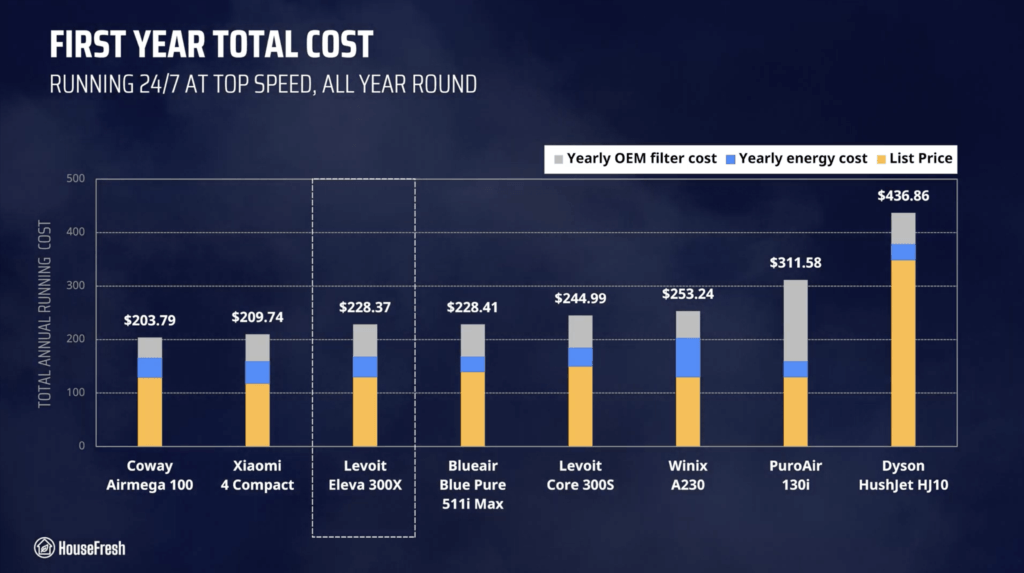
You will save some money upfront and in the long run with the 5510:

Winix 5520 Year 1 Costs Chart

That is why I wouldn’t recommend buying the 5520 over the 5510 unless you really like its front cover design – that is the main design difference between the two.

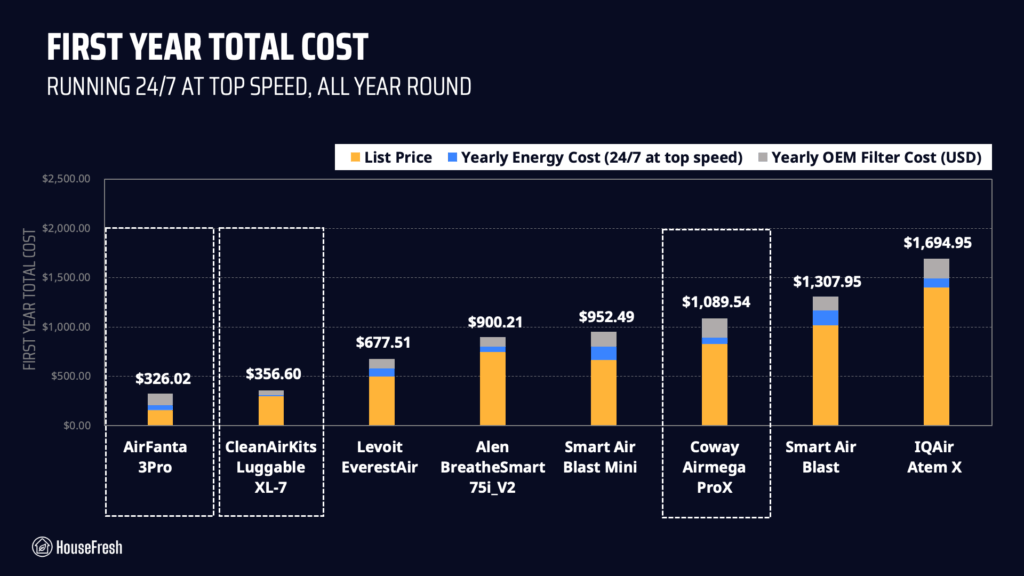
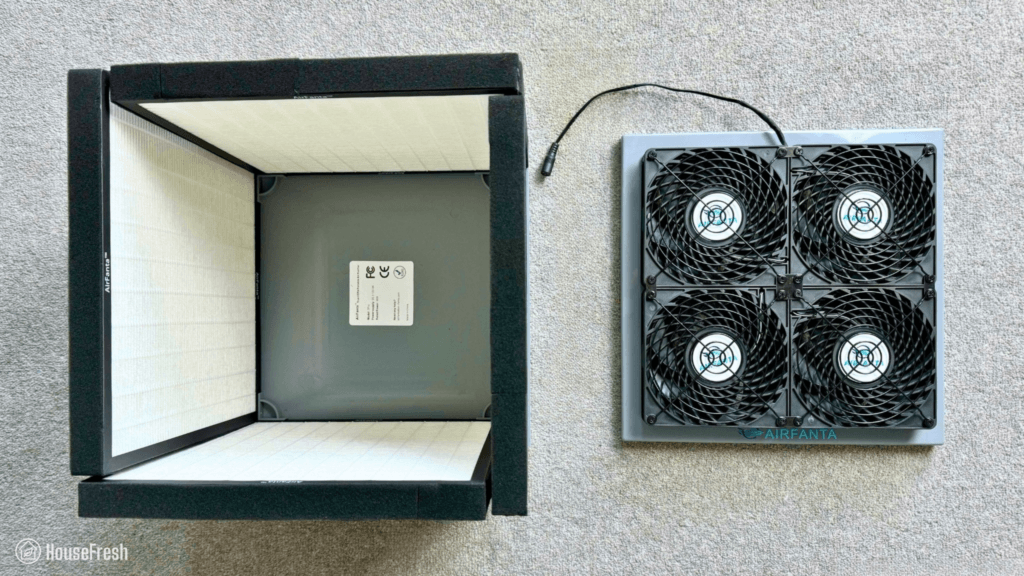
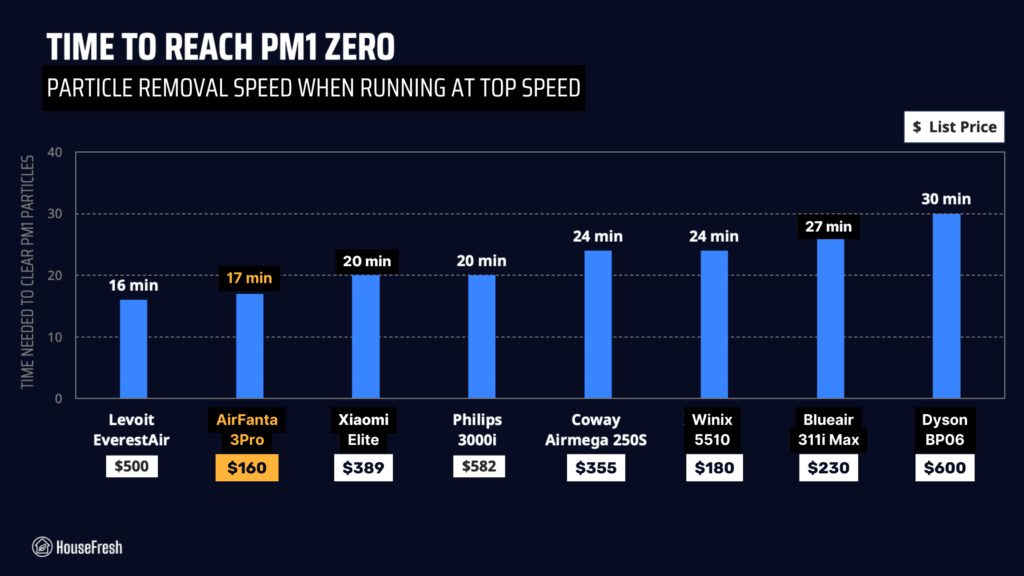
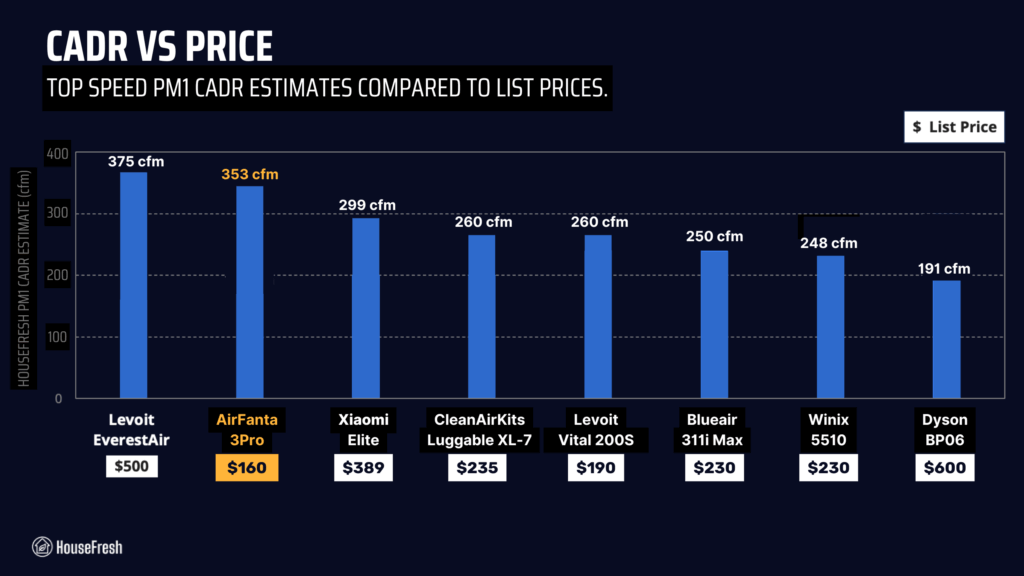
If you’re looking for a cheap air purifier to help with dust, mold, or pollen allergies, I suggest checking out the AirFanta 3Pro. For $165, you’ll get better particle removal performance in rooms as large as 529 sq. ft., thanks to a higher CADR of 353 cfm (vs the 249 cfm in the 5520). The downsides are that the $165 version doesn’t come with carbon (which you won’t need if you’re trying to tackle dust, mold, and pollen), and that the 3Pro is a PC fan-powered unit without a fancy touchscreen display or onboard sensors you’ll find in a traditional air purifier.

BUT if you like the look of the 5520 and are happy to pay the $189.99 price tag, then you will be buying a good air purifier with smart features that will help remove both particles and odors from the air.

If you decide to get yourself a 5520, please use this link to help support the work we do at HouseFresh. When you buy through that link, we will receive a small affiliate commission at no extra cost to you. We don’t run any ads and have no partnerships with air purifier brands, so we rely on those small commissions to continue buying and testing air quality products.

If you have any questions about the 5520 or about Winix air purifiers in general, please drop them in the comments below, and I’ll get back to you personally as soon as I can.
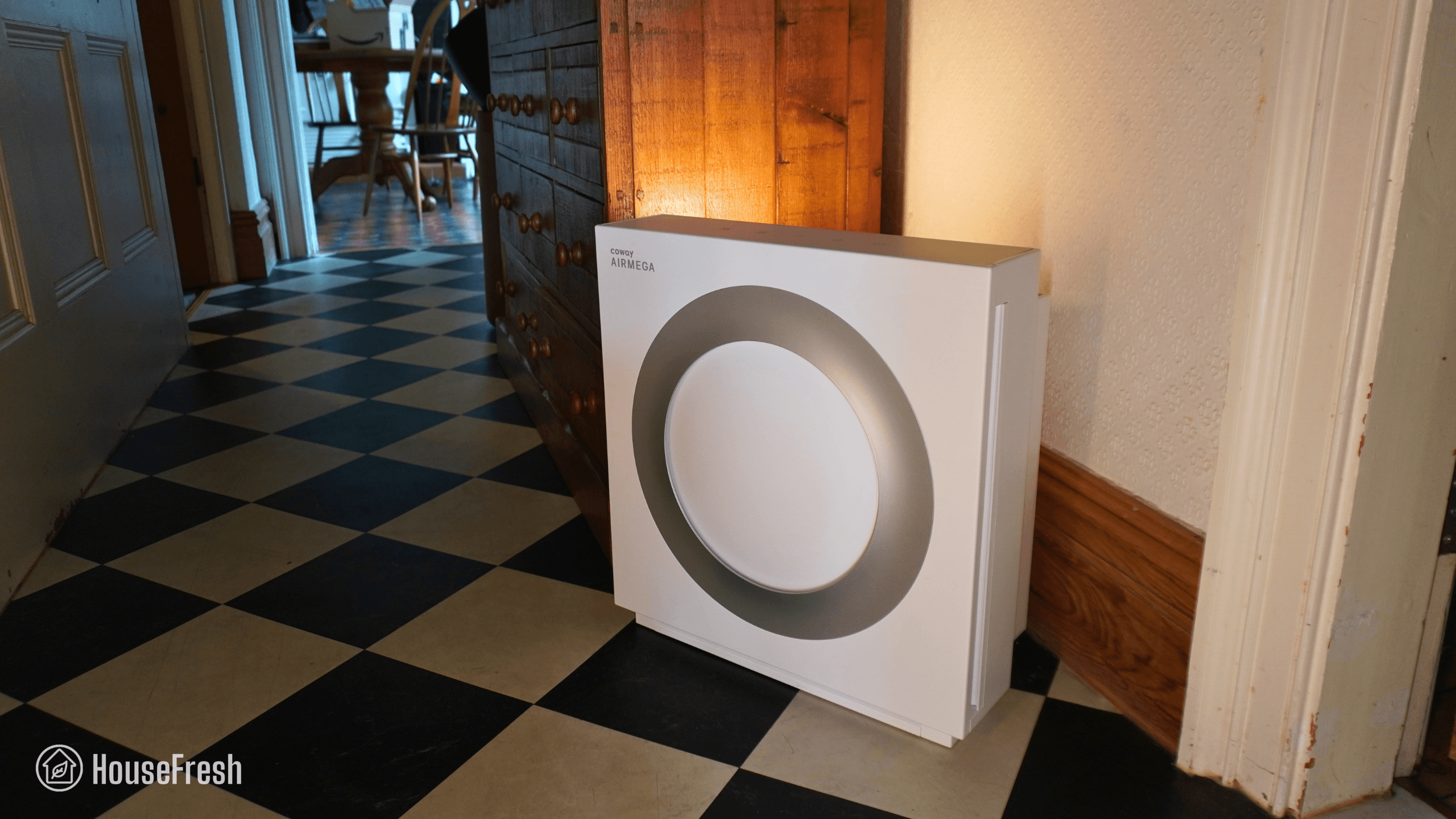
Coway Airmega 350 review

Coway Airmega 350 Living Room scaled

With the Airmega 350, Coway brought the power and low running costs they’re well known for but in a cylindrical design, with the same retro-inspired aesthetic as the Airmega 250S and Airmega ProX.

But can this new model compete with the excellent cylindrical designs from Levoit, Winix and Xiaomi? I bought a 350 with my own money and put it through all the tests we perform here at HouseFresh to find out.

The overall score for the Coway Airmega 350 incorporates first-hand data results from our battery of tests, as well as our ratings for customer service, brand transparency, and design & UX. Check out the full scorecard below to see the split of categories.

Search for ‘Coway Airmega 350’ to see where it ranks, based on its air cleaning performance and value for money. You can also filter results to easily compare models in the same price range.

The pros and cons of the Coway Airmega 350

A summary of our top-level findings after testing this air purifier, following our methodology.

“The Airmega 350 is Coway’s alternative to the Levoit Core 600S and the Xiaomi Elite, with a good looking design that will fit even the most stylish of homes. The running costs are very fair, with $79 filter replacements that can last as long as 12 months.

When comparing to Xiaomi and Levoit, you get comparable air cleaning performance but you lose out on a laser sensor and app support. That said, you can use the 350 with a smart plug.”

Danny Ashton HouseFresh
Danny Ashton
HouseFresh Founder
& Lead Tester

CONS

It only has one fan speed below 45 decibels (speed 1) and its performance at this speed is weak (100 cfm).
There is a big jump in how loud this thing gets when you go from speed 1 (37.6 dBA) to speed 2 (49.4 dBA).
It comes with an optical sensor rather than a laser sensor, so you can’t forget to clean it regularly.

PROS

It offers excellent performance at top speed, outmatching large units like the Winix 9800 and the Xiaomi Elite.
You can use it with any smart plug, so you can connect it to your smart home system or set simple automations.
The filter replacements are fairly priced and can last up to 12 months.
It looks like a million bucks – I know design is subjective, but I think most people will like the look of the 350.

Clean air delivery rate (CADR):– Top speed PM1 CADR: 352 cfm
– Sub-45 dBA PM1 CADR: 100 cfm
– AHAM PM2.5 CADR: 378 cfm (dust)
Filter technology:Bonded cylindrical Green HEPA filter with a layer of pelleted activated carbon and a surrounding pre-filter mesh.
Recommended room size:528 sq. ft. (5 air changes per hour)
Dimensions:12 x 12 x 23 in (30.5 x 30.5 x 59 cm)
Weight:17.6 lbs (8 kg)
Noise level in decibels from 3 ft. away:Sleep mode: 35.2 dBA
Speed 1: 37.6 dBA
Speed 2: 49.4 dBA
Speed 3: 55.4 dBA
Turno mode: 61.8 dBA
Electricity consumption in watts:Standby: 0 watts
Sleep mode: 3.1 watts
Speed 1: 4.89 watts
Speed 2: 17.04 watts
Speed 3: 32.65 watts
Trubo mode: 57.95 dBA
Filter lifespan:12 months
Manufacturer’s warranty:3 years
Country of origin:South Korea
Country of manufacture:China

Filtration technology

Coway’s Green True HEPA filter with pelleted activated carbon and a pre-filter mesh.

The Airmega 350 comes with a large cylindrical filter with Coway’s signature Green True HEPA and a layer of pelleted activated carbon.

Coway Airmega 350 Filter scaled

As with other cylindrical models, the pre-filter is attached to the main filter, so you will need to remove the whole thing to vacuum it.

Coway Airmega 350 Filter scaled

There are three different filters for the Airmega 350:

  • Fresh Starter+ filter is the standard filter (above)

  • Allergen+ filter, which is treated with a proprietary compound to remove allergens

  • Intense Smoke+ filter, aimed at those who want to tackle smoke and VOCs
350 airmega pdpgrid 7

Design, controls and app features

A cylindrical addition to Coway’s new retro modern family of air purifiers.

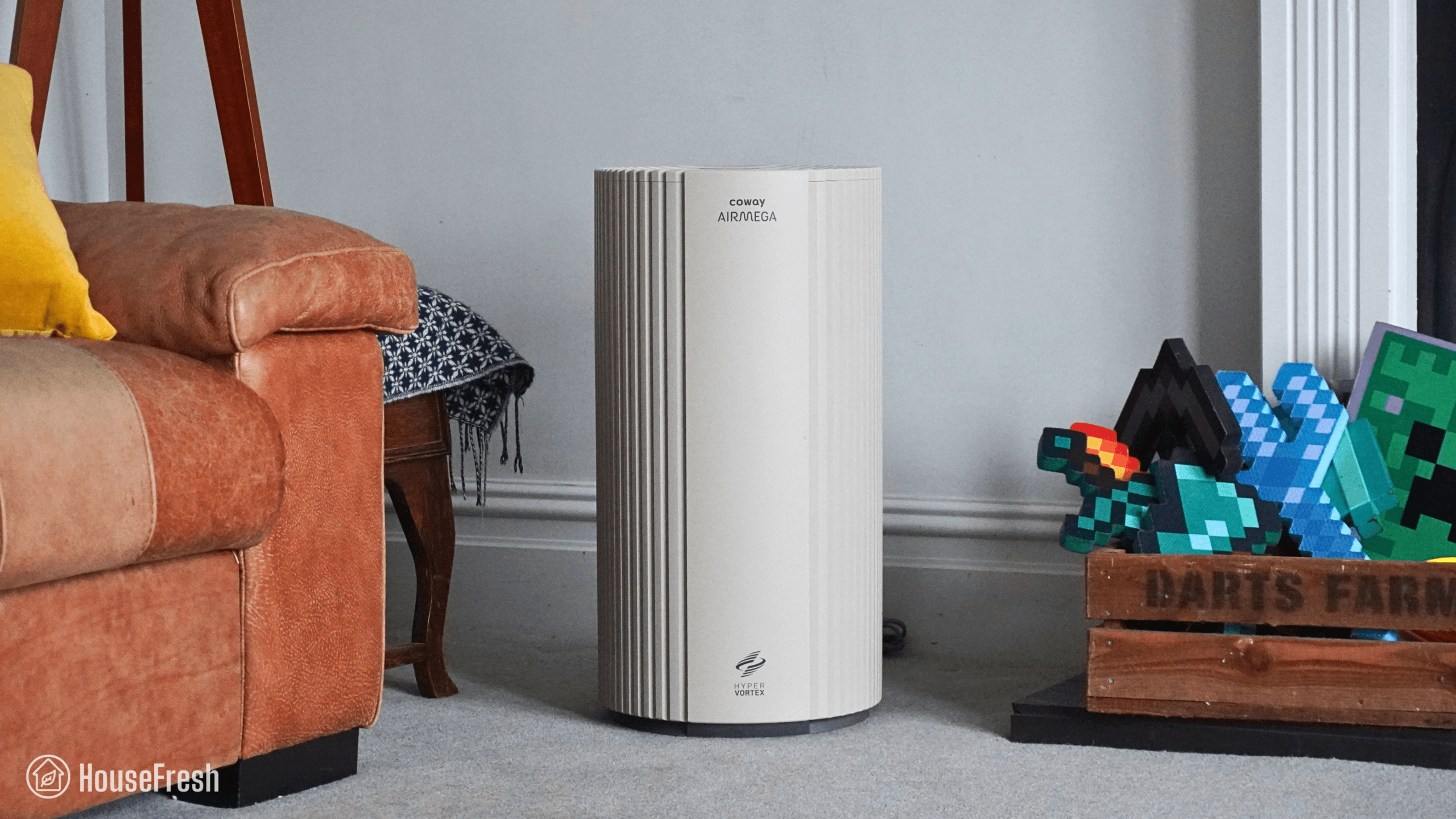
It looks like a million bucks – I know design is subjective, but I think most people will like the retro modern look of the 350.

Coway Airmega 350 Corner

I bought the beige version that matches our 250S, but if you’re not a fan of beige, you’ll be happy to know you can also get it in white.

In terms of size, it stands at 23 inches tall (58.4 cm) and weighs 17.19 lbs (7.8 kg), so it’s on the larger side of cylindrical models.

Coway Airmega 350 Handle scaled

It’s great to see that Coway included a deep handle at the back, which makes it easier to move it around the house.

It has an infrared particle sensor that measures PM10 pollution and connects to the LED air quality indicator light at the top.

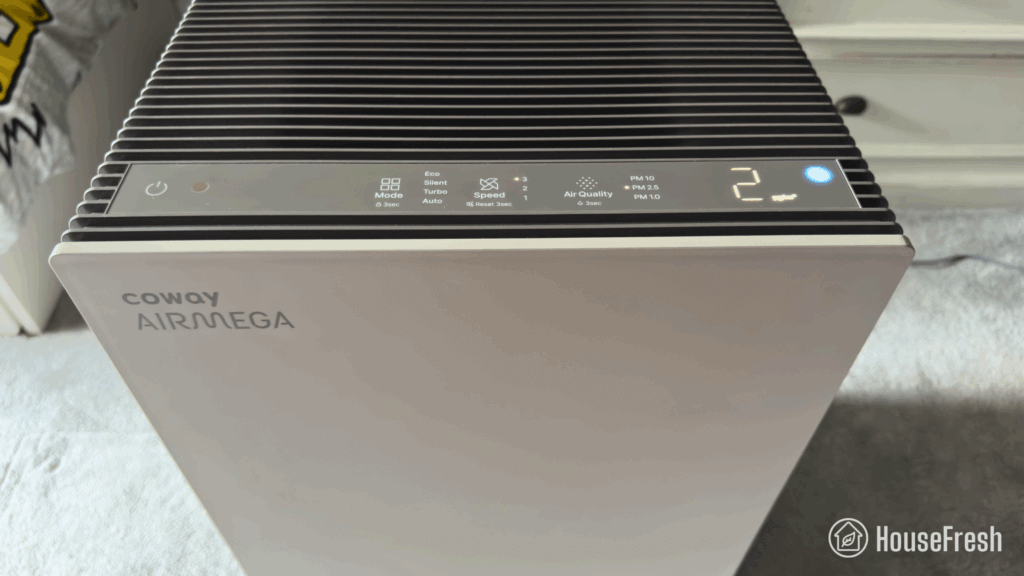
Coway Airmega 350 Controls scaled

You get buttons to set fan speeds, smart modes and timers. There’s also a light button that turns off the display, the LED ring, or both.

The Coway 350 doesn’t come with an app, but you can use it with any smart plug to add simple routines. I tested it using a Philips Hue Plug and was able to switch it on and off remotely via the Hue app.

You also get a very cool hidden feature I wish more manufacturers would roll out:

If you hold down the Mode and Airflow buttons, you can adjust the sensitivity of the sensor, selecting between 1 (sensitive), 2 (default) and 3 (insensitive).

Air cleaning performance

We tested the Coway Airmega 350 in our 728 cubic ft. test room, tracking how fast it removed all PM1 particles from the air after we filled the space with incense smoke.

Coway Airmega 350 Particle Removal Test

When running at top speed, our PurpleAir Zen sensor shows that the Airmega 350 needed 17 minutes to reach PM1 zero. Based on the natural ventilation of our test room, we estimate a PM1 CADR of 352 cfm.

This makes this Coway Airmega powerful enough to provide five air changes per hour in large rooms up to 528 sq. ft.

As you can see from the chart, the Airmega 350 outperformed most models we’ve benchmarked it against:

Coway Airmega 100 HouseFresh Particle Removal Test scaled

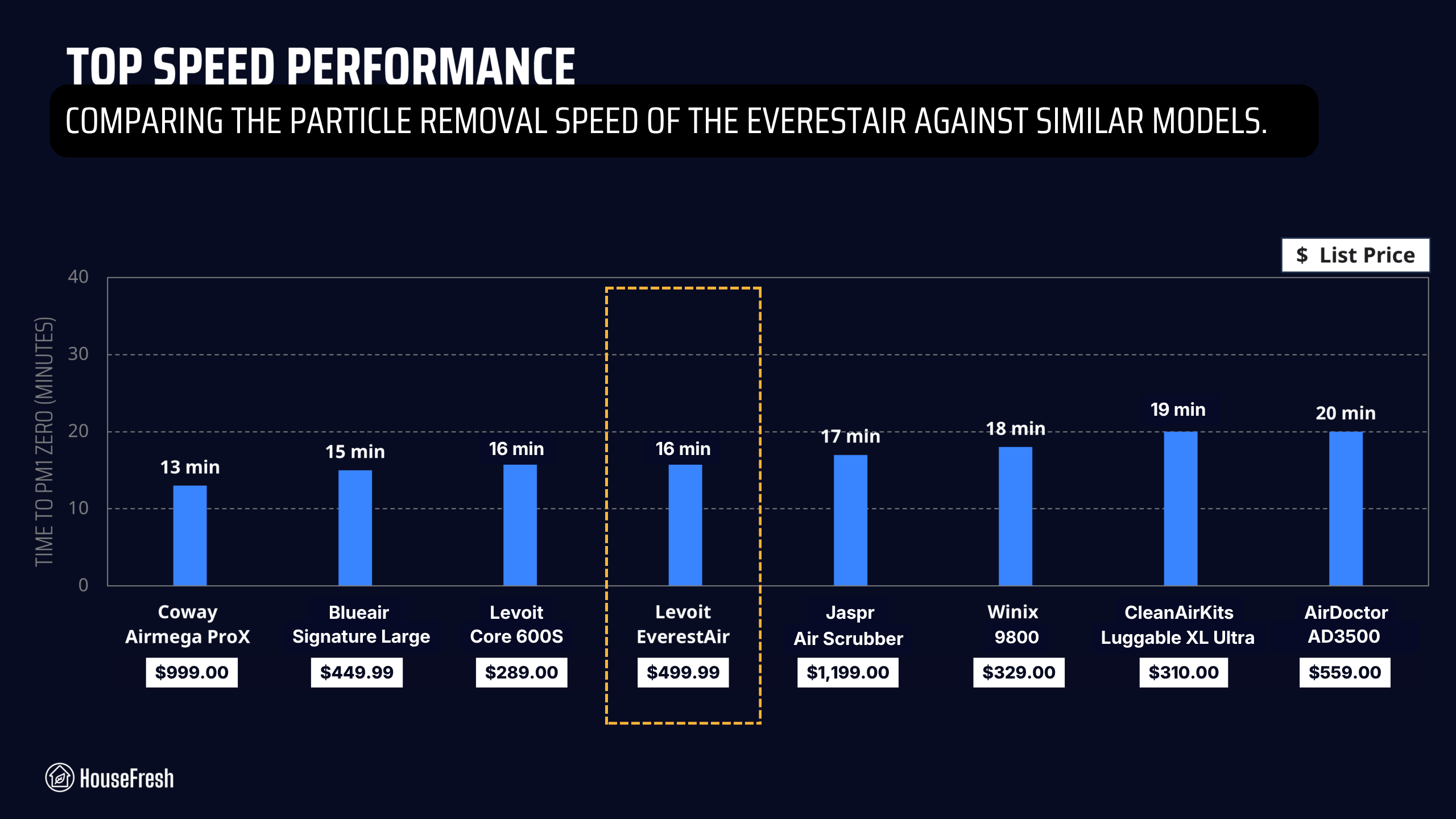
The only devices that were quicker to complete our test were the much larger Coway Airmega ProX (13 minutes) and the older (and cheaper!) Levoit Core 600S.

We repeated our particle removal test three times across all available fan speeds, which allowed me to estimate PM1 CADR at each fan speed:

Coway Airmega 350 CADR scaled

BUT, as I always say, air purifiers running at full power are usually too loud for everyday use, so we must account for noise levels…

Sound levels

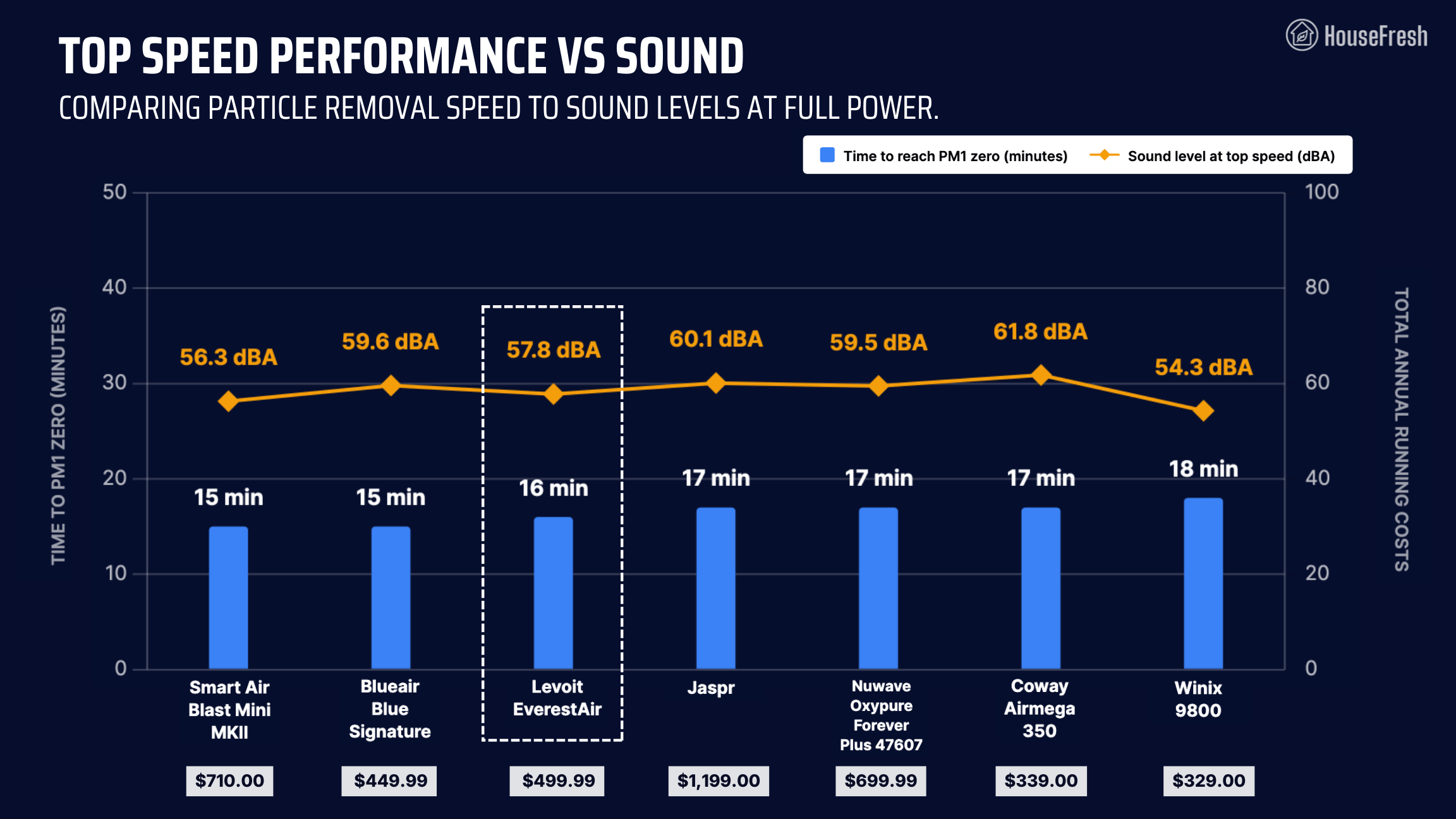
The sound levels of the Coway Airmega 350 range from 35.2 dBA to 61.8 dBA — which is a little louder than most air purifiers we have benchmarked it against.

Coway Airmega 350 Sound Energy Test

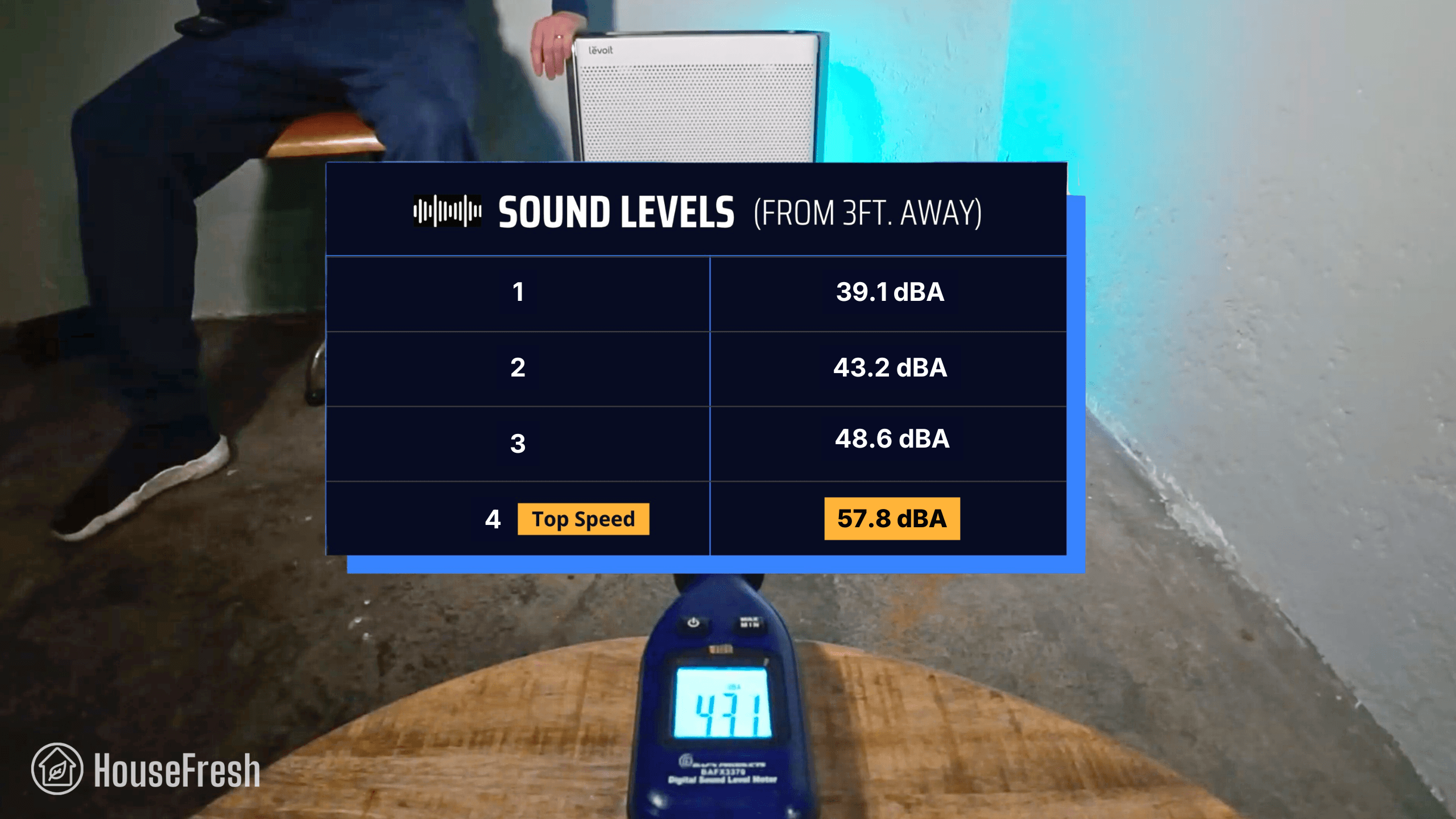
I used our BAFX sound meter to measure how much sound the Airmega 350 generates at each of its fan speeds (including sleep mode) at 3 ft away:

Coway Airmega 350 Sound Levels

Hitting 61.8 dBA at top speed, the Airmega 350 is one of the loudest air purifiers on the chart, second only to the Core 600S and its 62.3 dBA when running full power.

Coway Airmega 350 HouseFresh Top Performance

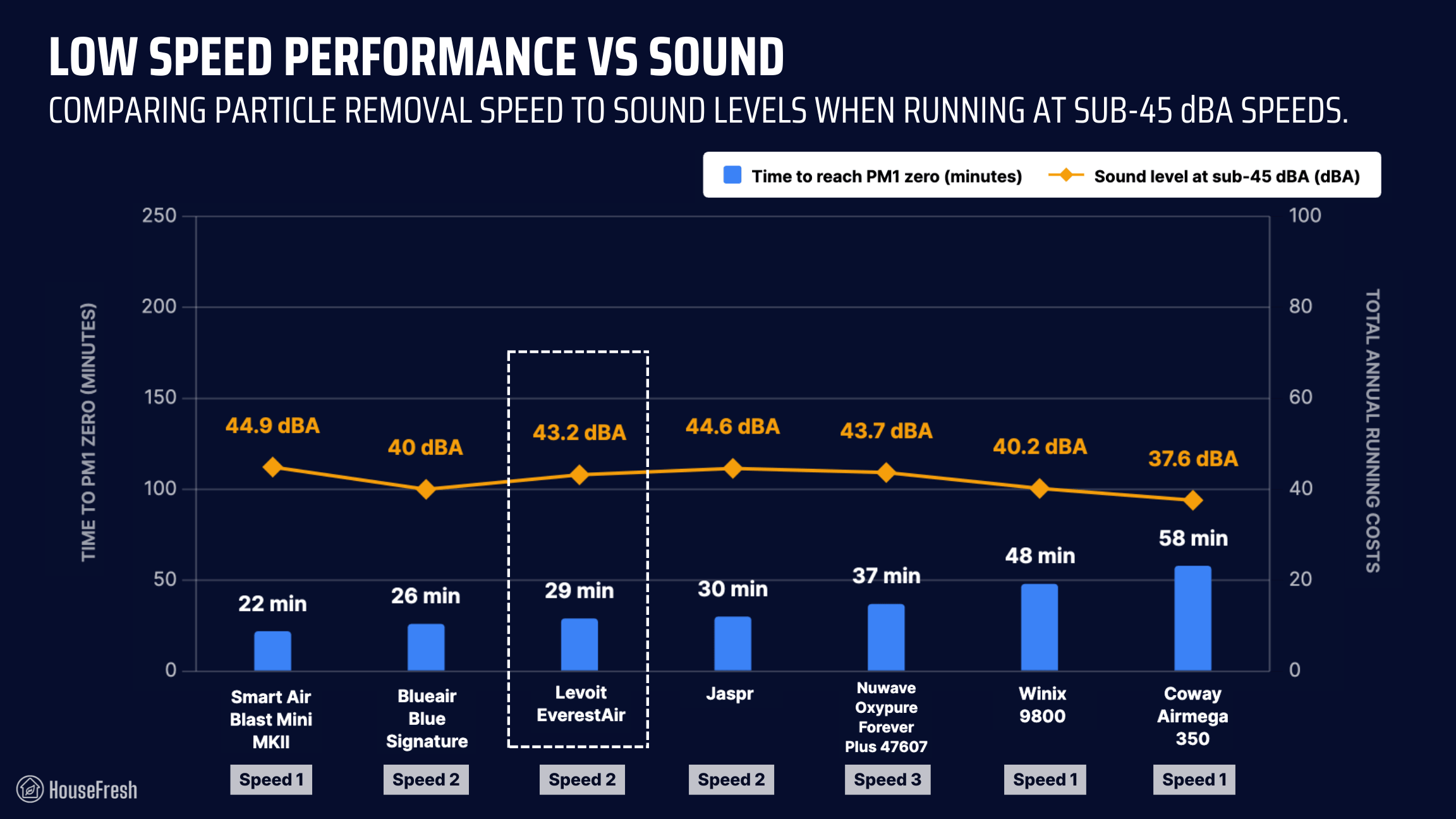
When running at speed 1, it generates just 37.6 dBA and was able to complete our particle removal test in 58 minutes – slower than most other models on the table.

Coway Airmega 350 Sub 45dBA Performance

I wish Coway would add an intermediary fan speed between speed 1 and speed 2, where the 350 stays below 45 dBA.

Long-term running costs

Running a Coway Airmega 350 will cost you $115.69 per year, combining energy and filter replacement costs.

We used our energy meter to record how much electricity the Airmega 350 pulls at each fan speed and while on standby.

Coway Airmega 350 Energy

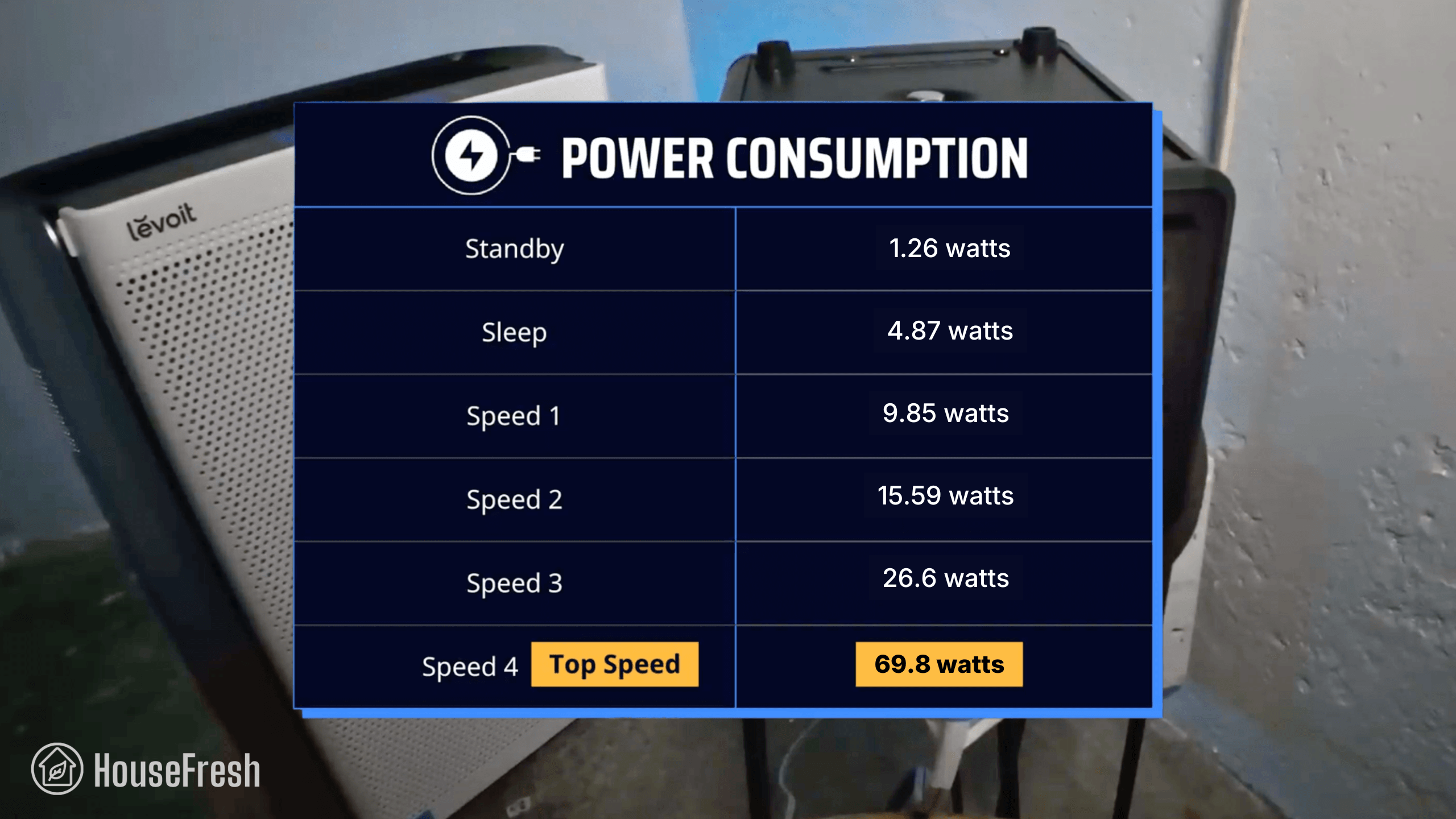
At top speed, the Airmega 350 draws 57.95 watts, so if you left it running at top speed 24/7 for one year, it would add $69.70 to your energy bill, based on the average U.S. electricity price as of March 2026.

But electricity consumption is not the only long-term cost you need to budget for; there’s also the filter replacements.

According to Coway, you need to change the filter in your Airmega 350 every 12 months. The replacement filter costs $79, so you can expect to spend that much each year on filter replacements alone.

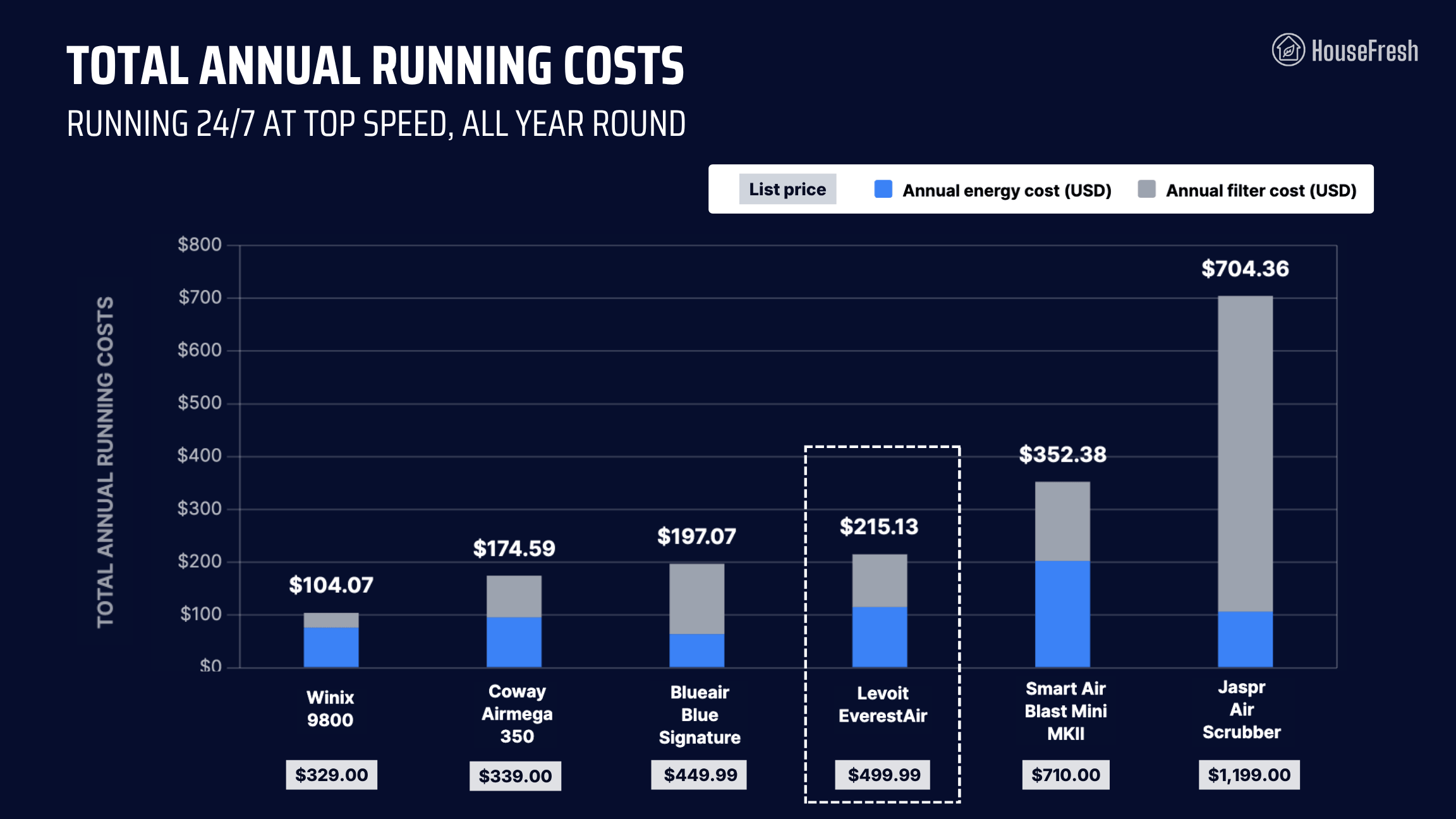
When we add this to energy costs, we can work out that it will cost you $148.70 to run a 350 for a year. Let’s compare it with other models:

Coway Airmega 350 Yearly Running Costs

Thanks to Coway’s affordable filter replacement costs, the Airmega 350 is cheaper to run than most other high CADR models we benchmarked it against, with the exception of the Winix 9800 and the Xiaomi Elite.

Bottom line: Should you get a Coway Airmega 350?

Our data showed that the Airmega 350 offers excellent air cleaning performance when compared to other cylindrical air purifiers on the market today.

Coway Airmega 350 Living Room scaled

If you’re looking for the absolute best bang for your buck, the AirFanta 3Pro will offer the same level of performance at top speed as the Airmega 350, but at a lower price tag ($165).

And if you’re looking for a more traditional-looking air purifier, then the Winix 9800 costs a little less than the 350 ($329) and offers similar performance with much lower running costs courtesy of Winix’s highly affordable Type A filters.

That said, the 350’s running costs are also very fair, so at the end of the first year, the upfront cost will even out:

Coway Airmega 350 Year 1 Costs

I also know that many consumers prefer the look and small footprint of cylindrical air purifiers, so if that is you, then the Coway Airmega 350 might be just the thing.

Personally, I much prefer the design of the 350 to the look of Xiaomi’s Elite and Levoit’s Core 600S. However, when compared to Xiaomi and Levoit, you don’t get an accurate laser sensor and app support.

But I’d swap app support any day for the granular light control and the ability to adjust the sensor’s sensitivity that you get with the Airmega 350. Plus, it’s great to know that you can use a smart plug to control your 350 remotely from your phone.

As it has become common with Coway, there is a big jump in sound from speed 1 to speed 2, which means that its performance at sub-45 dBA sound levels is less powerful than all the air purifiers we benchmarked it against. But if 49 dBA is not too loud for you, then you will get excellent performance at speed 2. For reference, we had our 350 in our bedroom for over a month running at speed 2 all day and all night without it bothering us.

Overall, I think the Airmega 350 is a great alternative to the Levoit Core 600S, and I can see myself recommending this model in the future to those looking for a mid-sized cylindrical air purifier that looks good and offers good air cleaning performance.

If you decide to get yourself a 350, please use this link to help support the work we do here at HouseFresh. If you do, we will get a small commission at no extra cost to you, which we will use to continue buying and testing air quality products.

If you have any questions about the 350 or about Coway air purifiers in general, please drop them in the comments below, and I’ll get back to you as soon as I can.

Blueair Blue Signature review

Blueair Signature HouseFresh

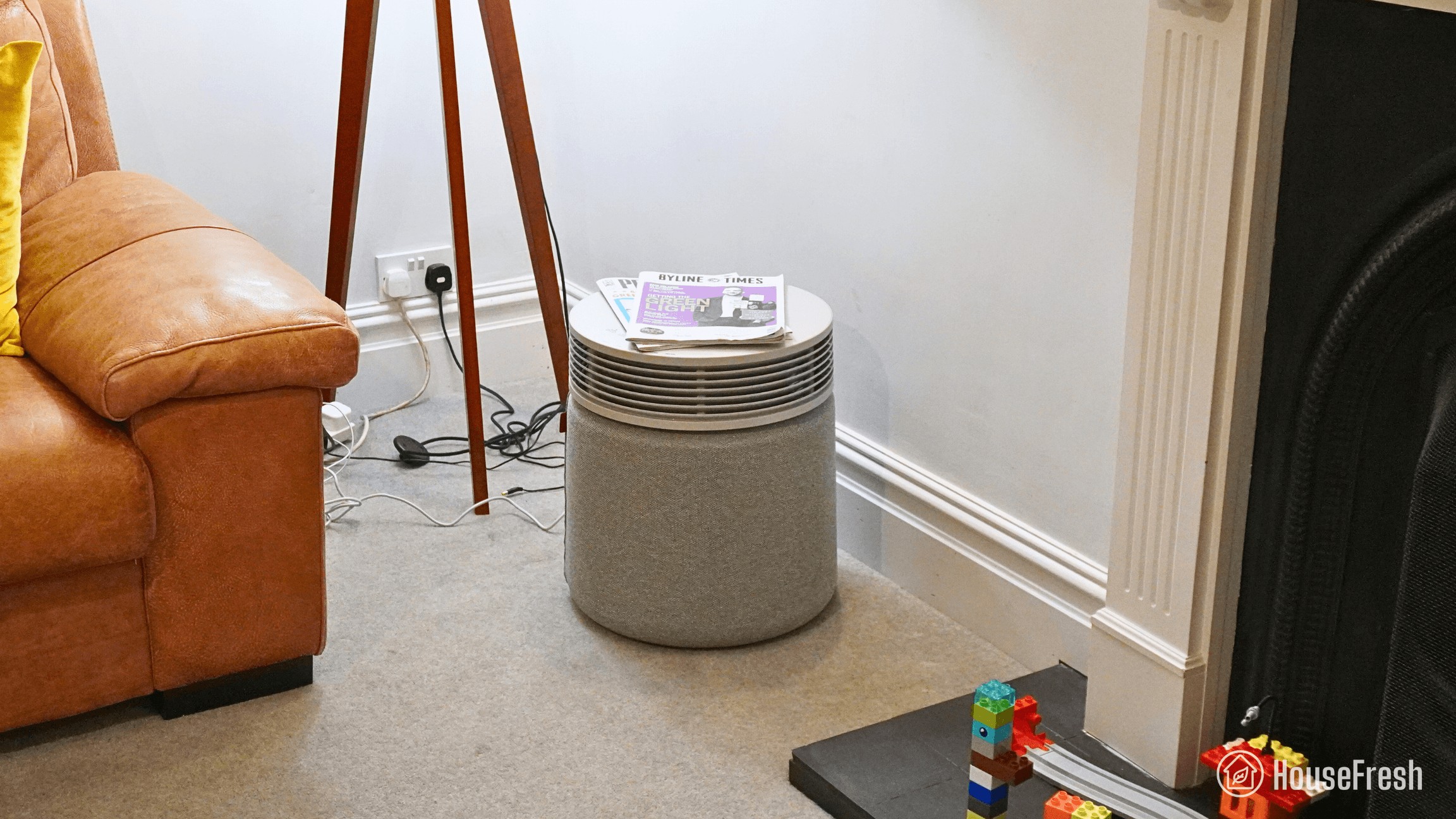
The Blueair Blue Signature looks like a piece of furniture and doubles as a table, just like the IKEA Starkvind and the air purifiers from SwitchBot.

However, unlike IKEA and Switchbot units, the Blue Signature is not cheap, with a list price of $449.99 in the U.S. and £369 in the UK.

But does beautiful design and a high price tag equal better performance? We bought one to find out.

The overall score for the Blueair Blue Signature incorporates first-hand data results from our battery of tests, as well as our ratings for customer service, brand transparency, and design & UX. Check out the full scorecard below to see the split of categories.

Search for ‘Blueair Blue Signature’ to see where it ranks, based on its air cleaning performance and value for money. You can also filter results to easily compare models in the same price range.

The pros and cons of the Blueair Blue Signature

A summary of our top-level findings after testing this air purifier, following our methodology.

“The Blue Signature looks like a piece of furniture and also doubles as a table. You can even add legs to lift it off the ground, with options to match your home’s decor.

It’s not cheap at just under $450, but it ticks a lot of boxes for this price: Performance is top tier at both top speed and quiet fan speeds, the running costs are fair, and it has a high quality laser sensor, a table surface, and app support.”

Danny Ashton HouseFresh
Danny Ashton
HouseFresh Founder
& Lead Tester

CONS

It is more expensive to buy and run than other mid-sized air purifiers.
There is no option to disable the electrostatic ionization function, unlike what we see from other manufacturers like Winix, Coway and Xiaomi.
The wooden legs and the chrome base to turn it into a table are not included, so you’d need to pay up to $100 more to elevate your Blue Signature.

PROS

It doubles as a side table that will fit most living rooms and bedrooms – you can even buy wooden legs to give it more height.
It matches the air-cleaning performance of high-end units that cost twice as much and are twice as large.
It comes with a highly accurate laser sensor on board that doesn’t need to be cleaned regularly.
The Blueair app has a clean UX and is easy to use.
You can customize the design with options for multiple pre-filter fabric colors and two different designs for the legs.

Clean air delivery rate (CADR):– Top speed PM1 CADR: 400 cfm
– Sub-45 dBA PM1 CADR: 229 cfm
– AHAM PM2.5 CADR: 434 cfm (dust)
Filter technology:HEPASilent particle filter with pelleted activated carbon and a removable pre-filter fabric.
Recommended room size:600 sq. ft. (5 air changes per hour)
Dimensions:17.3 x 15.7 x 15.7 in (44 x 40 x 40 cm)
Weight:13.2 lbs (5.98 kg)
Noise level in decibels from 3 ft. away:Sleep mode: 34.8 dBA
Speed 1: 35.3 dBA
Speed 2: 40 dBA
Speed 3: 51.9 dBA
Speed 4: 59.6 dBA
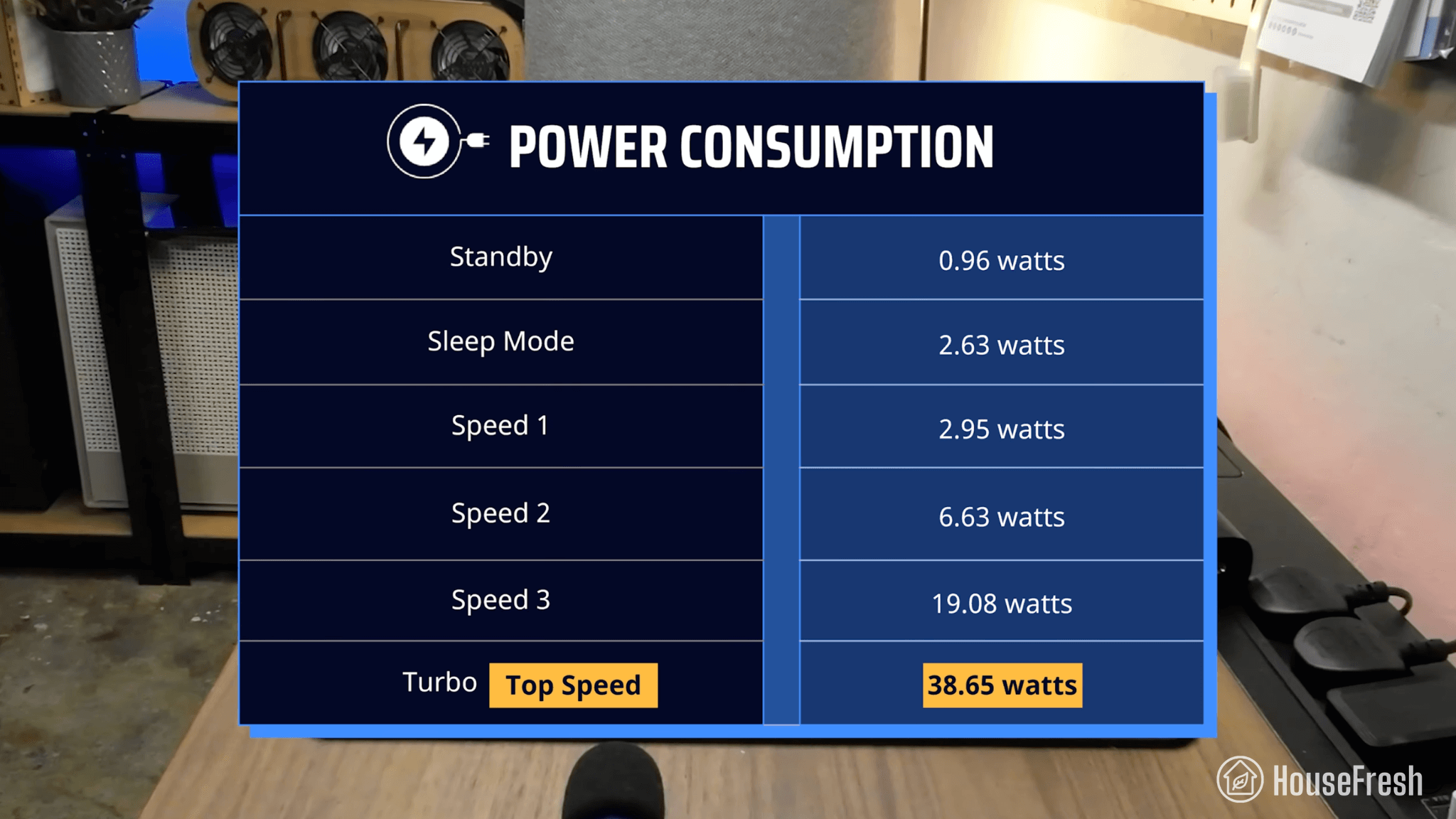
Electricity consumption in watts:Standby: 0.96 watts
Sleep mode: 2.63 watts
Speed 1: 2.95 watts
Speed 2: 6.63 watts
Speed 3: 19.08 watts
Speed 4: 38.65 watts
Filter lifespan:9 months
Manufacturer’s warranty:1 year (3 years with product registration)
Country of origin:Sweden
Country of manufacture:China

Filtration technology

HEPASilent with pelleted activated carbon and a washable, removable pre-filter.

The filter wraps around and clips onto the Blue Signature’s body – something new from Blueair.

Blueair Blue Signature Main Filter

This is the first time we see something like this from Blueair, but it reminded me of the carbon filter in our Dyson Big+Quiet BP06.

On the inside of the filter, you get a layer of pelleted activated carbon.

Blueair Blue Signature Carbon

I was glad to see this, as it’s much better than the impregnated carbon fabric in other Blueair models.

Similar to previous models, the Blue Signature has a removable, washable fabric pre-filter.

Blueair Blue Signature Pre Filter

I bought the Nordic Fog pre-filter, but you can choose from a range of colors to customize your Signature’s look.

HEPASilent is Blueair’s trademarked air filtration technology that combines electrostatic ionization with mechanical filtration.

The mechanical filtration element is the same as in all other air purifiers, with particle and carbon filters working in combination with a fan to remove pollutants from the air as it passes through the filters. For the electrostatic component, an ionizer inside the device generates negative ions to attract airborne particles, which are then captured by the filter.

This type of ionization process can release ozone, which can then form other chemical byproducts depending on the chemicals already in the air.

Now, the HEPASilent ionizer inside the Blue Signature produces very low levels of ozone: AHAM certified it produces just 3 ppb of ozone, which would be defined as producing zero ozone, based on the UL testing program UL2998 because it sits below the threshold of 5 ppb.

However, I still wish Blueair would include an option to disable HEPASilent, either with a button (as Alen, Winix, and Coway do) or just a setting in the app (as we’ve seen from Xiaomi).

Design, controls and app features

It clearly belongs to Blueair’s family of air purifiers, but with a twist.

It is shorter and lighter than other cylindrical units, such as the popular Levoit Core 400S, but it takes up more floor space. But what you lose in floorspace, you gain in tabletop space.

Blueair Signature Table

Another big change from the usual is the option to add a base to your Signature to elevate it from the ground and give it a more ‘furniture look’ – you can add a metal ring base for $100 or wooden legs for $87.

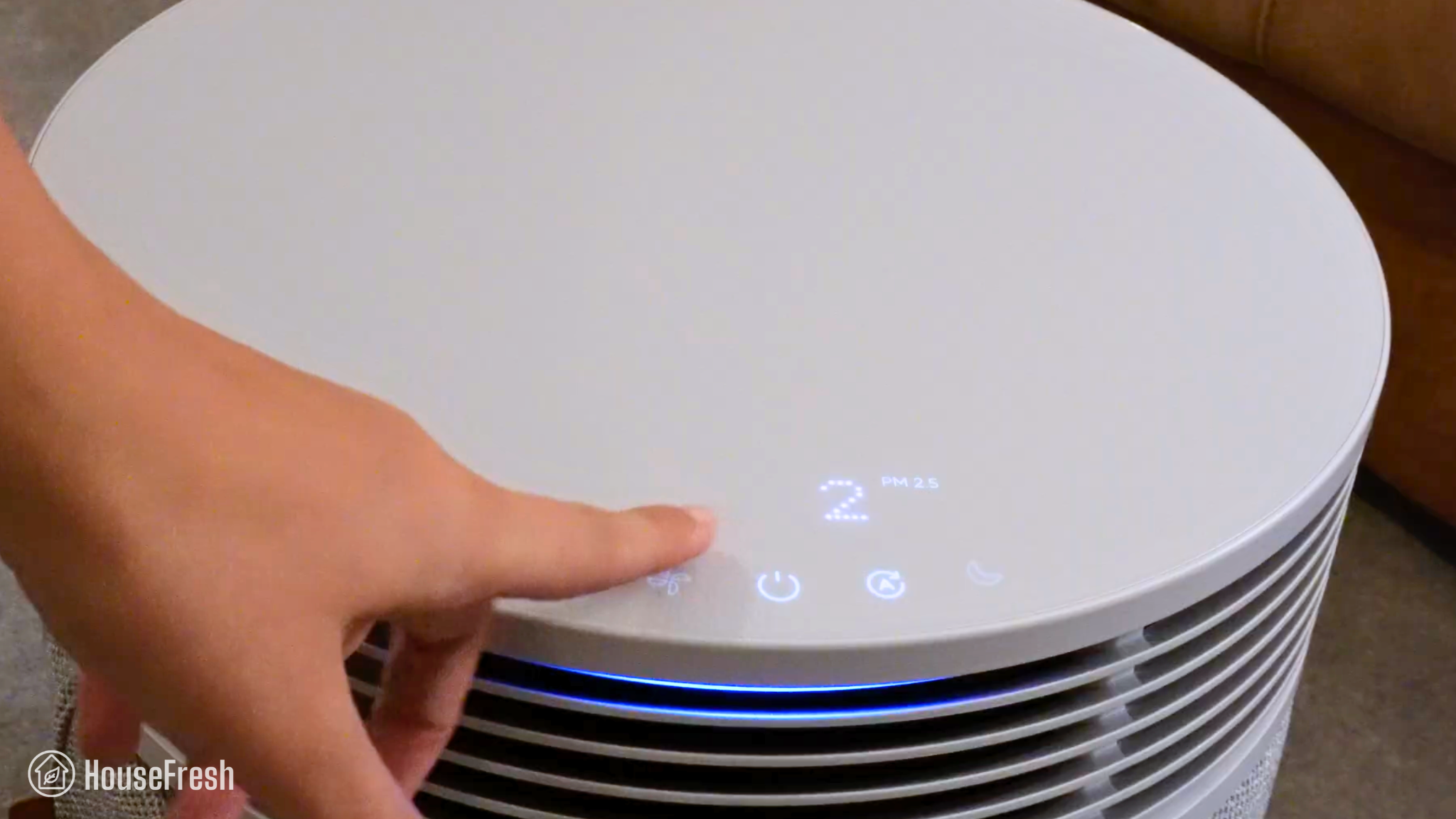
With the Blue Signature, Blueair moved away from the one-button control. It has a touchscreen with buttons to change fan speeds and modes, as well as PM2.5 readings.

Blueair Blue Signature Controls

The display turns off automatically after a few seconds, and you can wave to get the lights back on. You also get an LED light at the front that changes color based on readings from the onboard laser sensor.

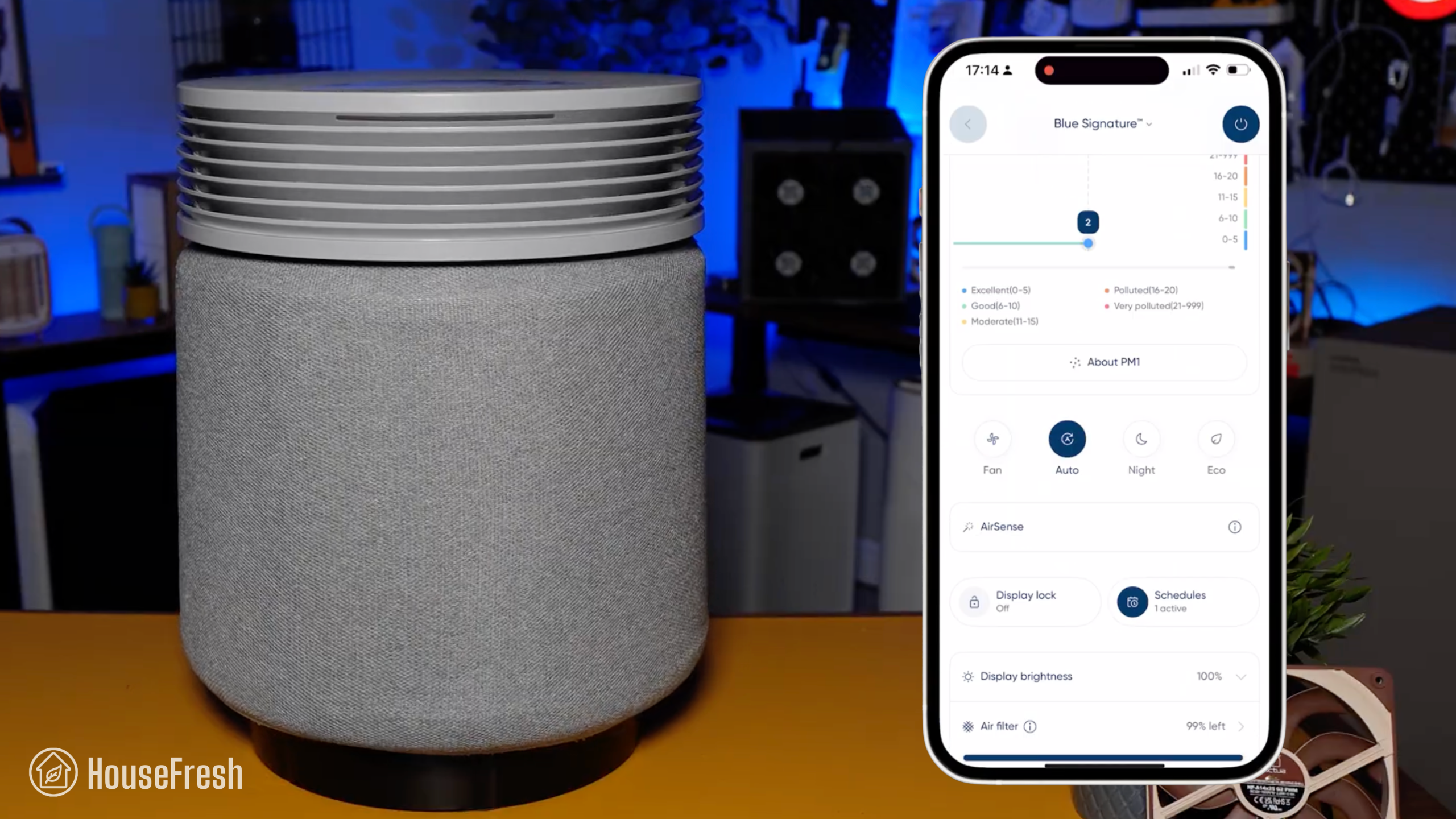
Blue Signature App

The Blueair app is quite basic compared to the apps from brands like Xiaomi, Levoit, and Philips, but the design is clean, and you can see all the info you need on one screen.

You get real-time air quality readings from the onboard laser sensor, which update quickly on the screen. Historical data is saved, so you can access it whenever you want.

Through the app, you can also control the device, set schedules, and adjust the brightness of the display at the top of the Signature.

Air cleaning performance

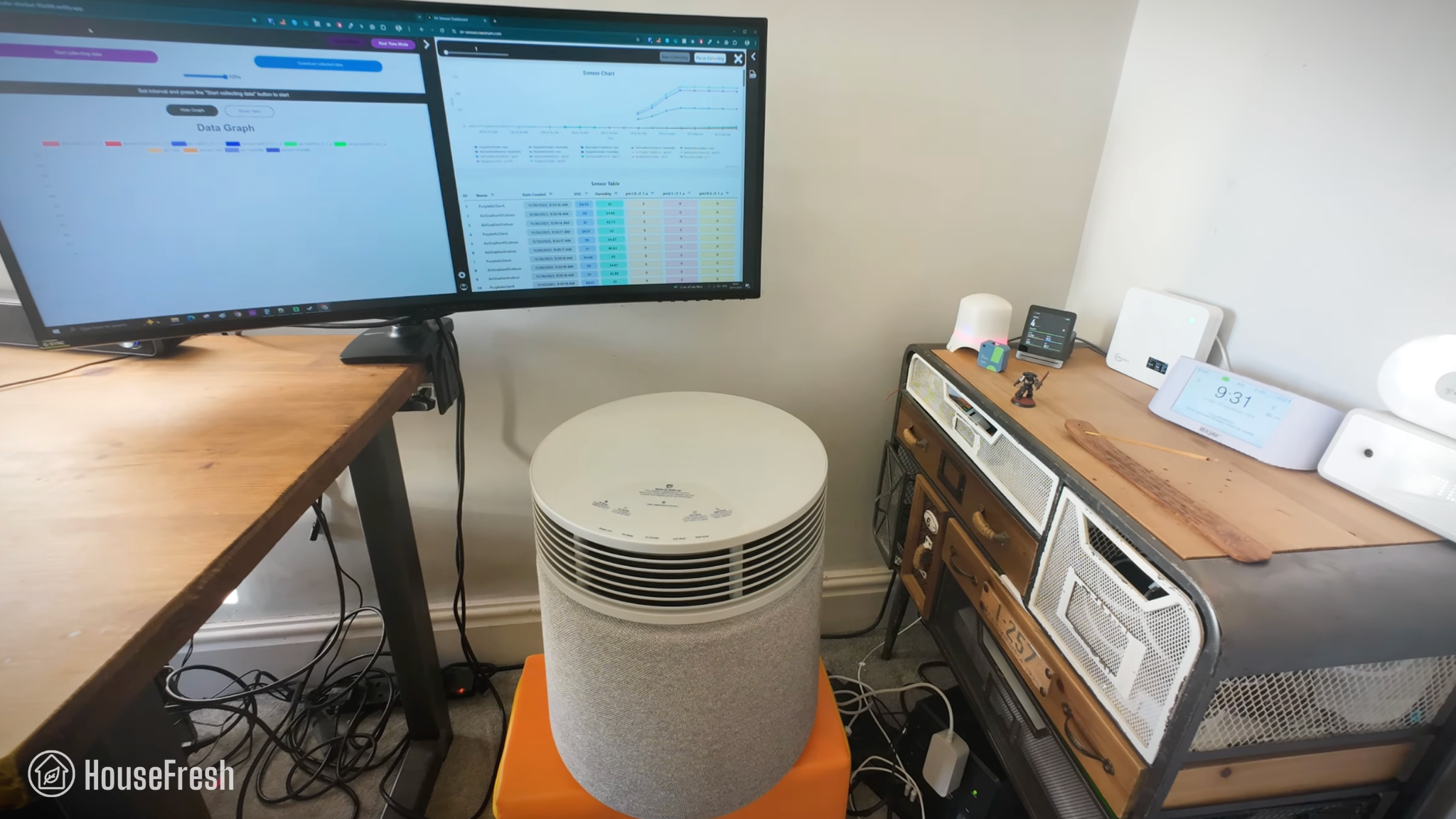
We tested the Blue Signature in our 728 cubic ft. test room, tracking how fast it removed all PM1 particles from the air after we filled the space with incense smoke.

Blueair Blue Signature HouseFresh CADR Test

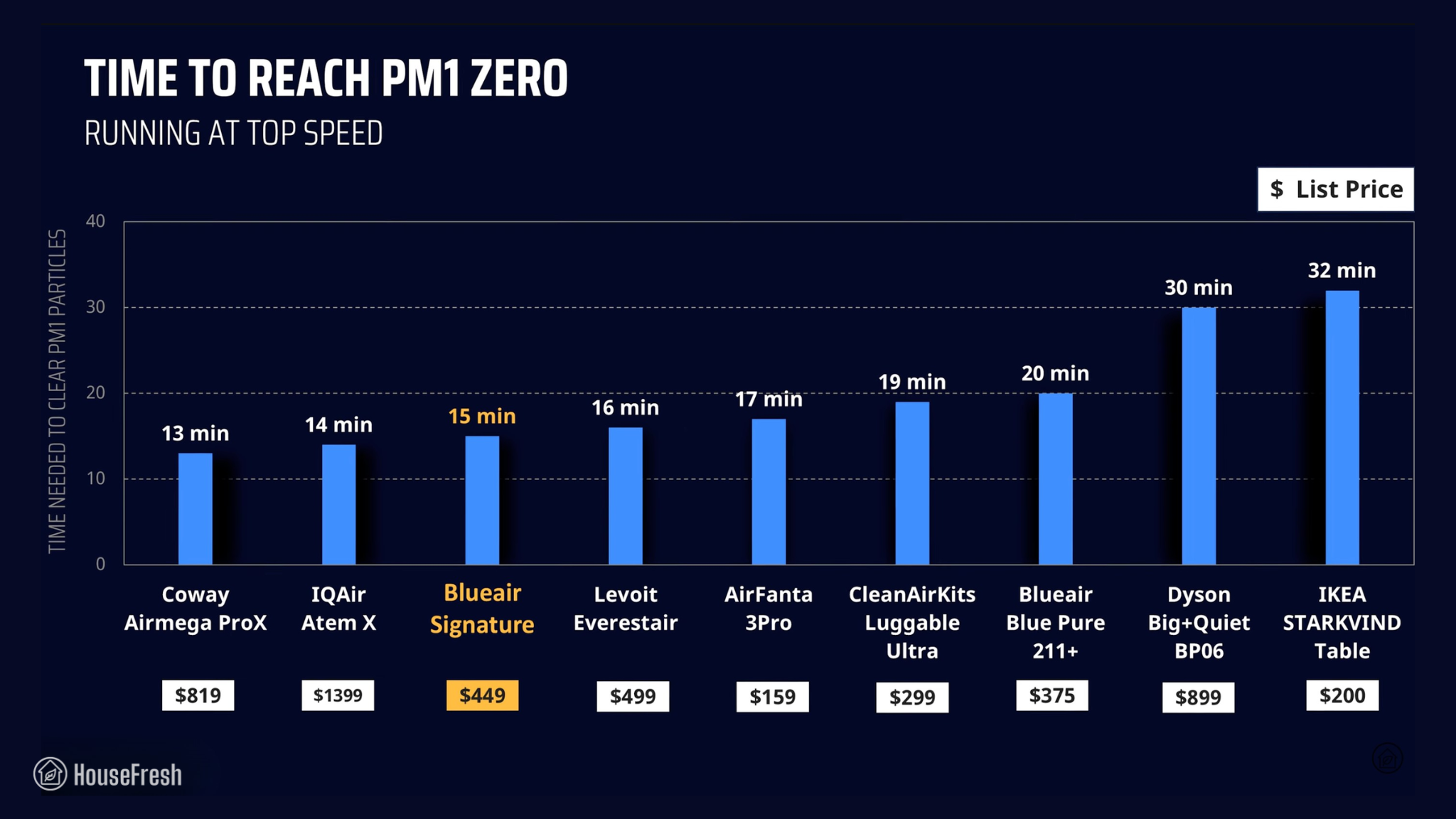
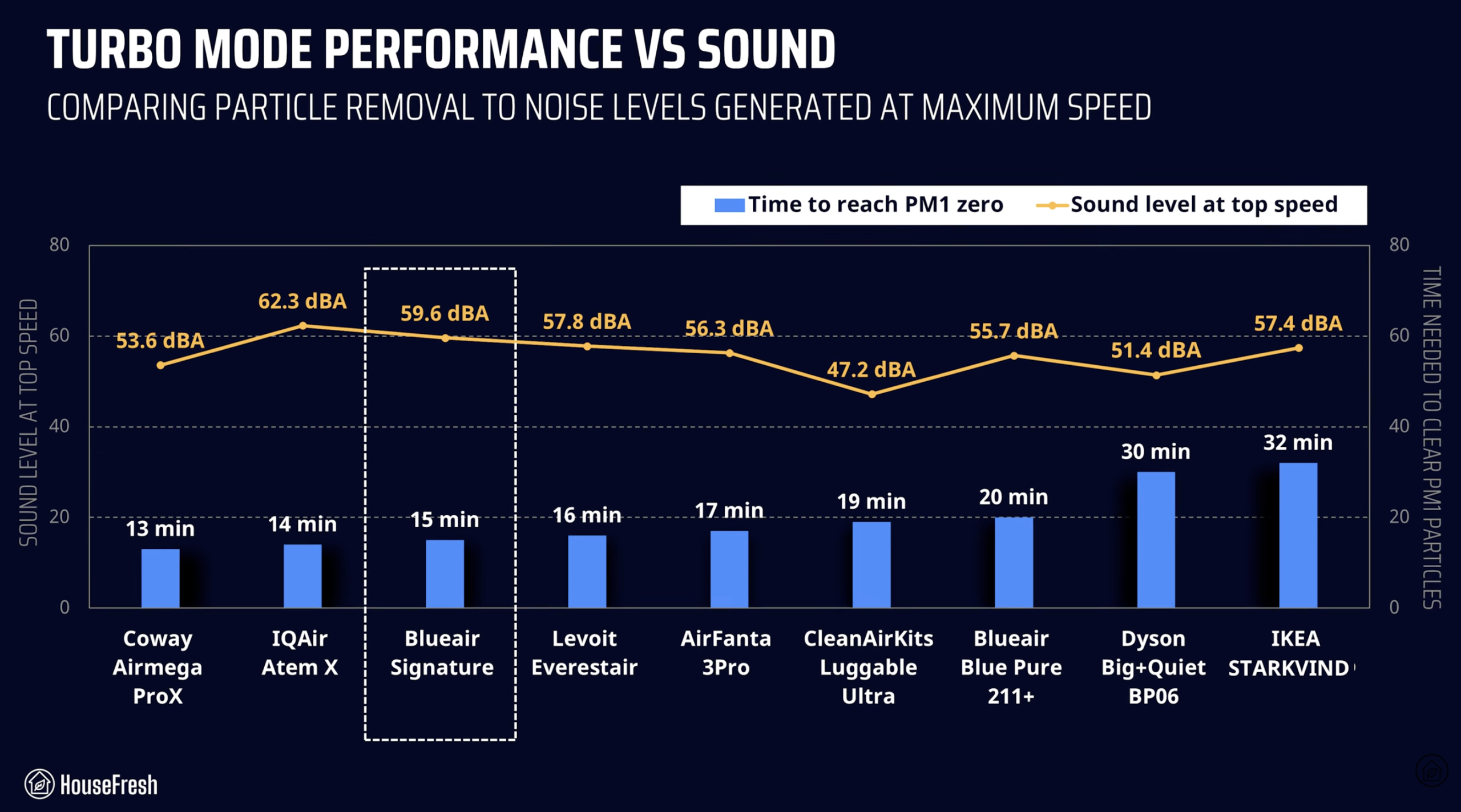
When running at top speed, our PurpleAir Zen sensor shows that the Signature needed 15 minutes to reach PM1 zero. Based on the natural ventilation of our test room, we estimate a PM1 CADR of 400 cfm.

This makes the Blue Signature powerful enough to provide five air changes per hour in large rooms up to 600 sq. ft.

As you can see from the chart, the Signature shows a significant performance jump over the older, bulkier Blue Pure 211+.

Blueair Blue Signature Performance Test

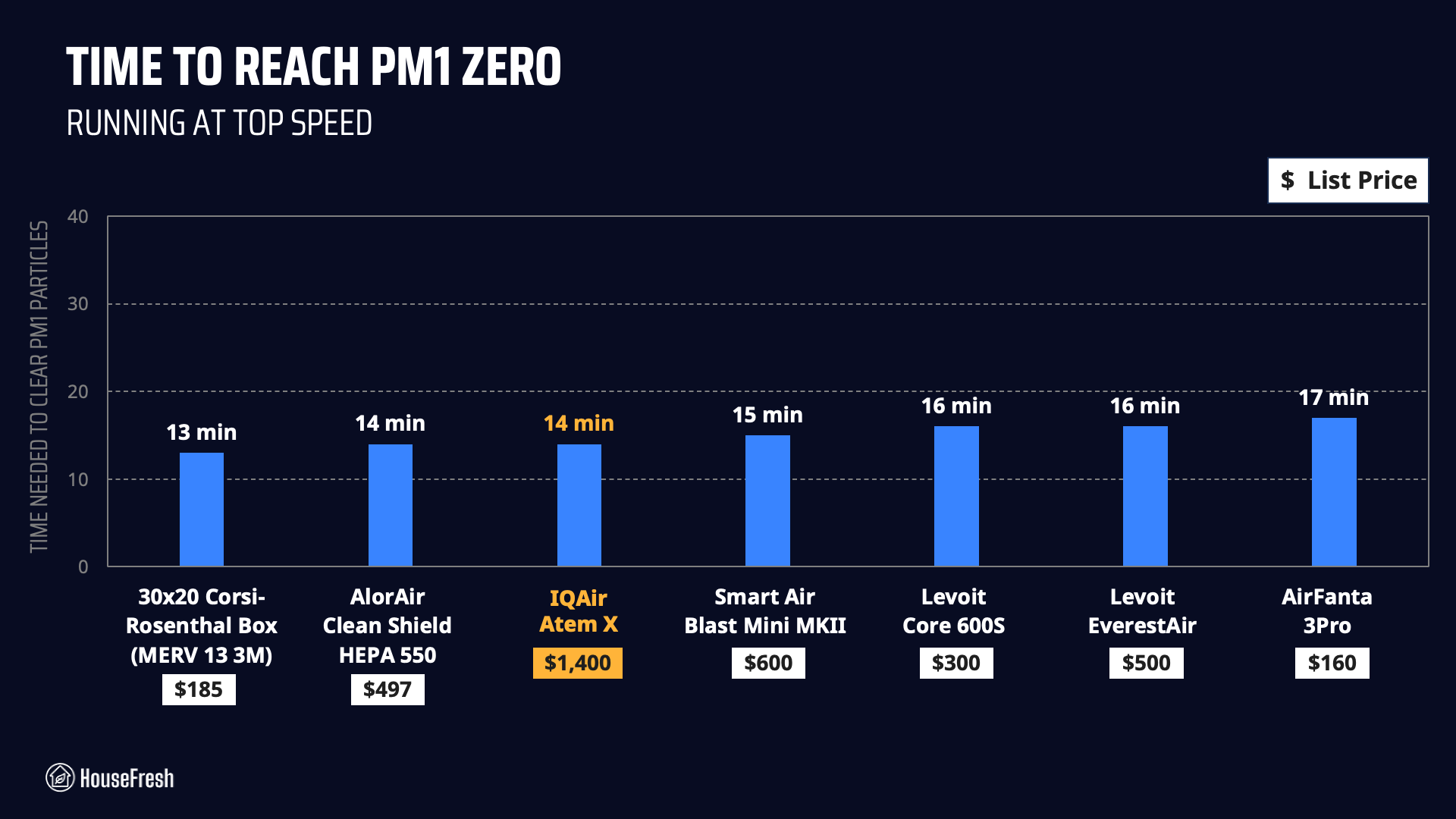
The only devices that were quicker to complete our test were the much larger Coway Airmega ProX (13 minutes) and the much, much pricier IQAir Atem X (14 minutes).

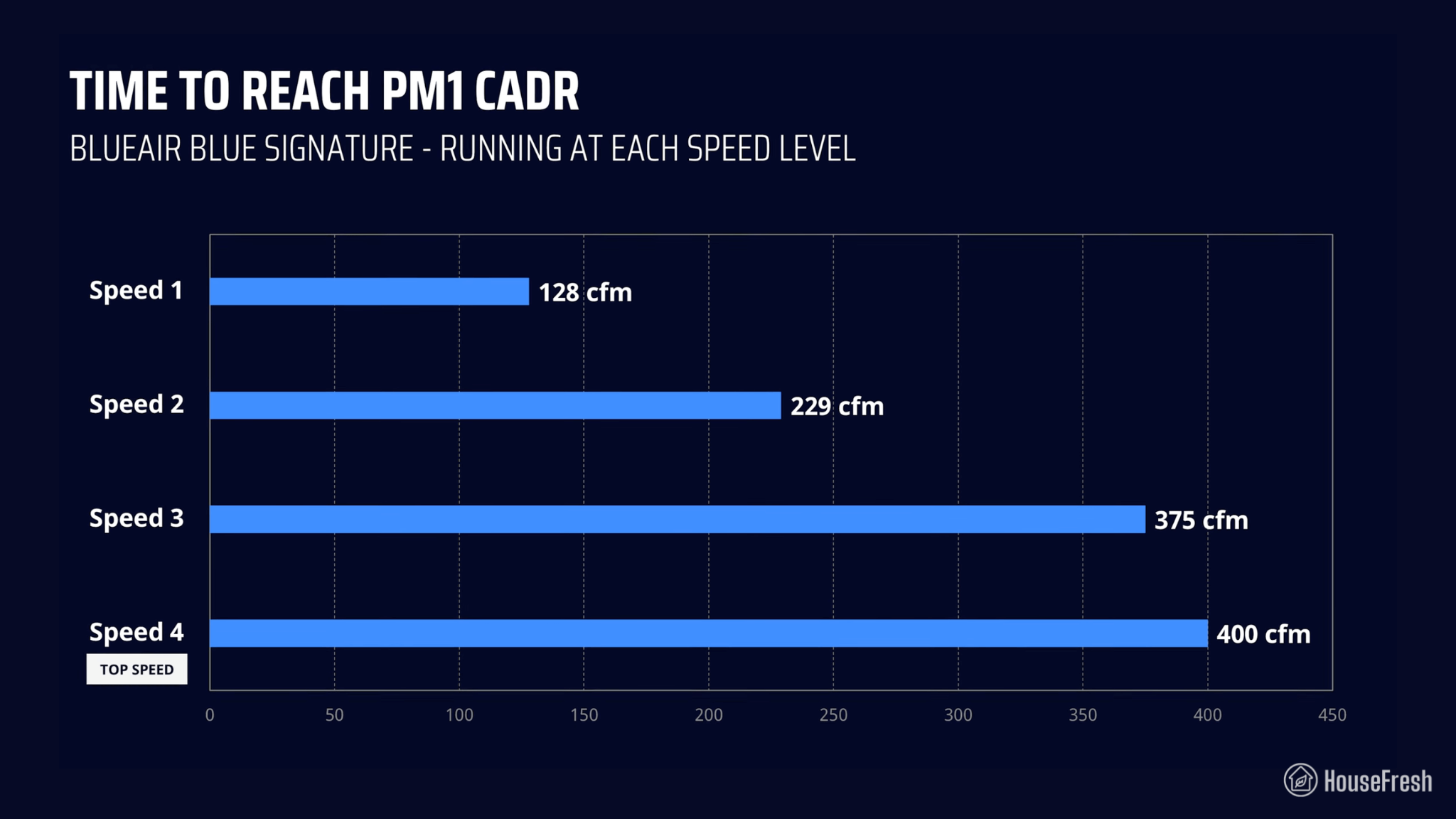
We repeated our particle removal test three times across all available fan speeds, which allowed me to estimate PM1 CADR at each fan speed:

Blueair Blue Signature CADR

BUT air purifiers running at full speed tend to be too loud for everyday use, so we must account for noise levels…

Sound levels

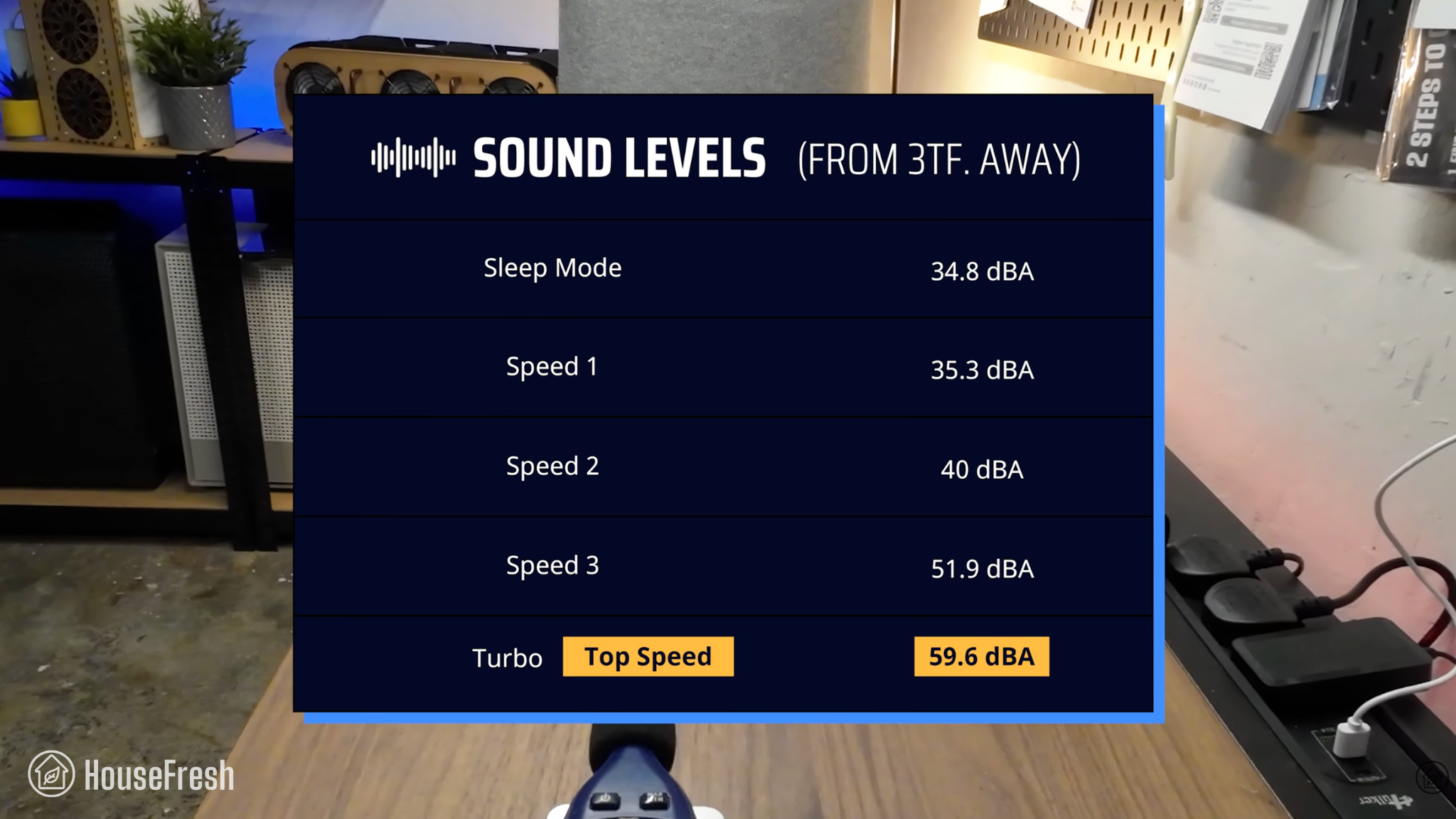
The sound levels of the Blue Signature range from 34.8 dBA to 59.6 dBA — which is a little louder than most air purifiers we have benchmarked it against.

Blueair Blue Signature Sound test

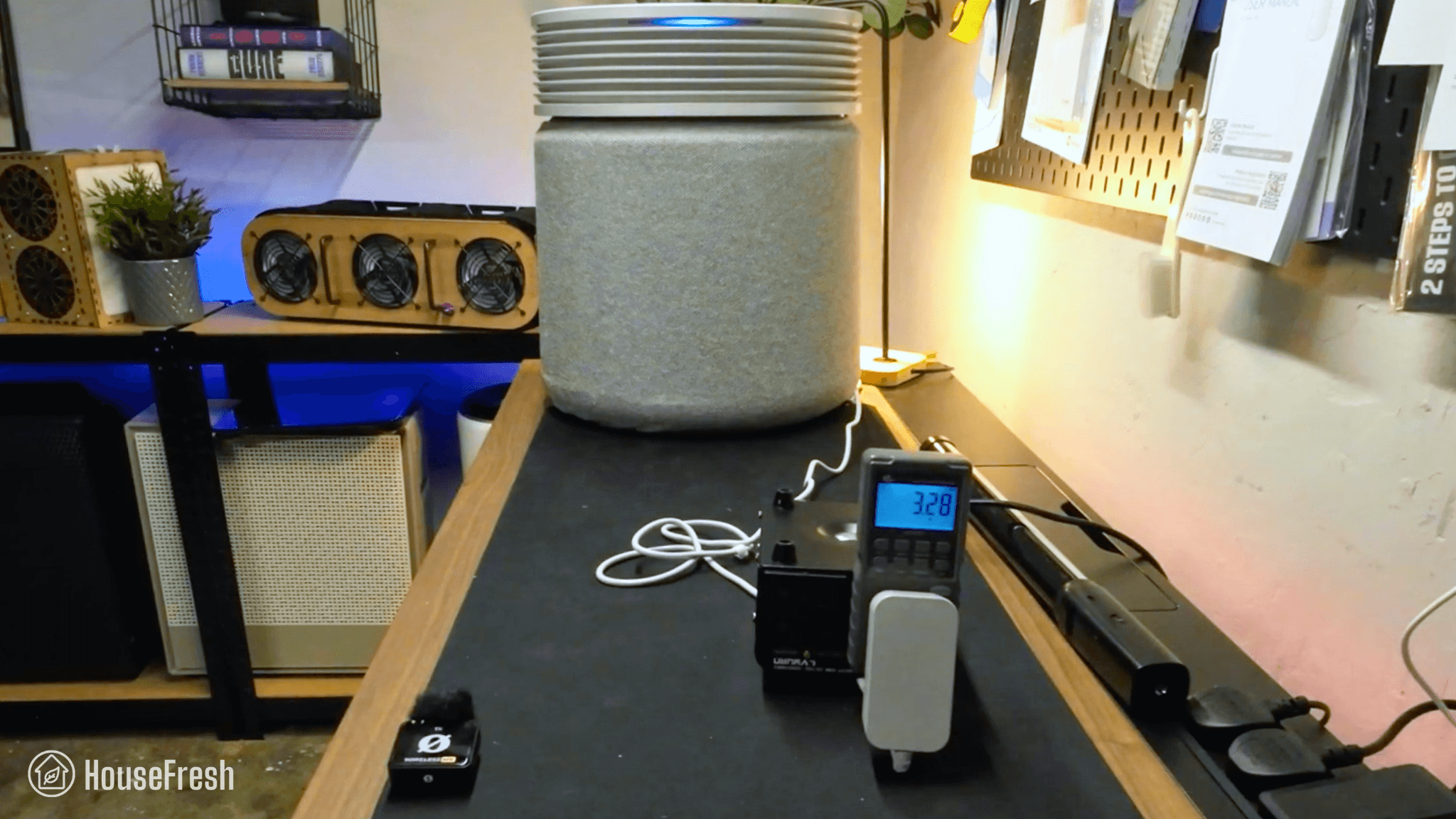
I used our BAFX sound meter to measure how much sound the Blue Signature generates at each of its 4 fan speeds and in sleep mode at 3 ft away:

Blueair Blue Signature Sound Data

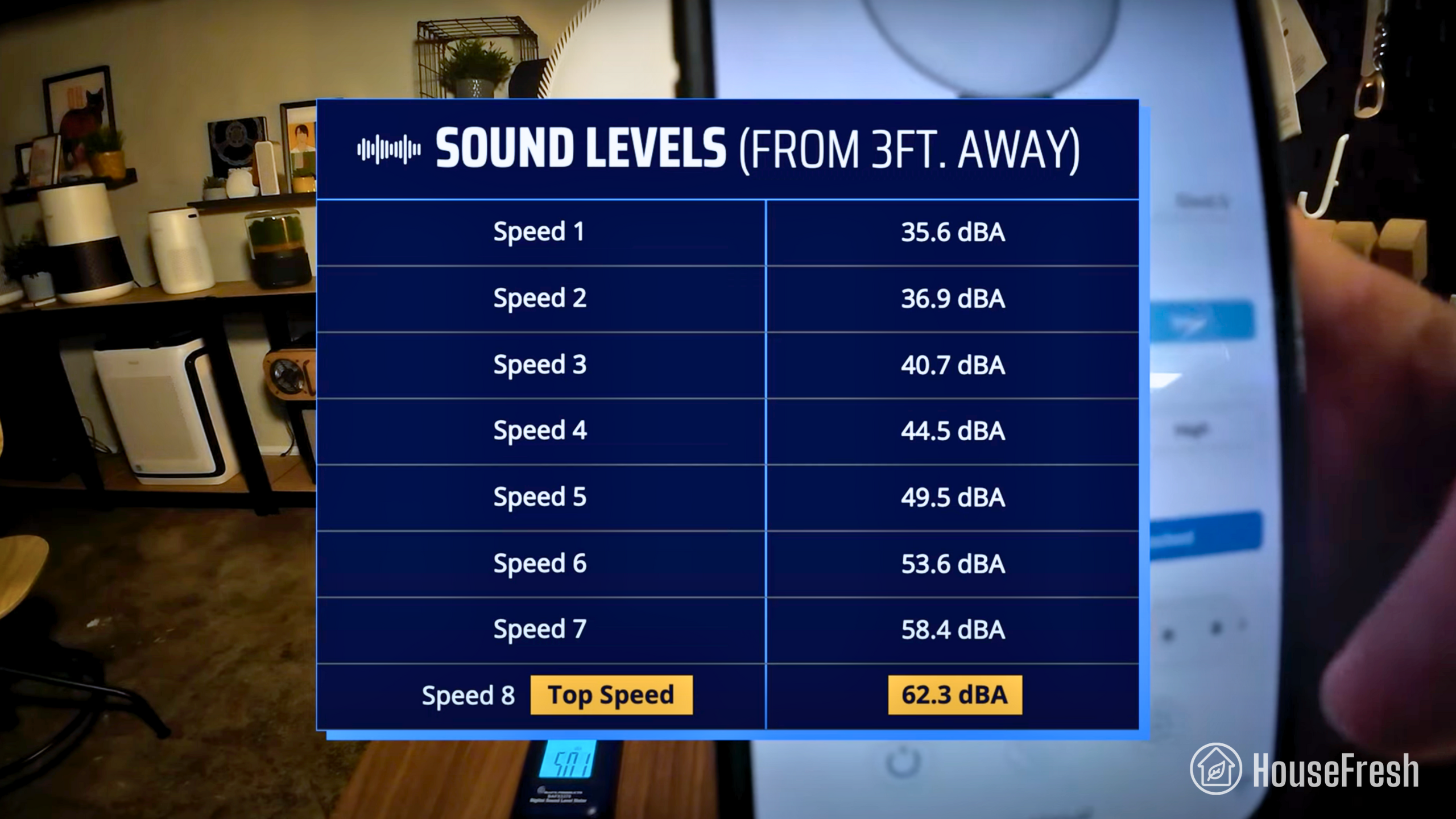
Hitting 59.6 dBA at top speed, the Blue Signature is one of the loudest air purifiers on the table, second only to the Atem X, with its 62.3 dBA when running full power.

Blueair Blue Signature Performance vs Sound scaled

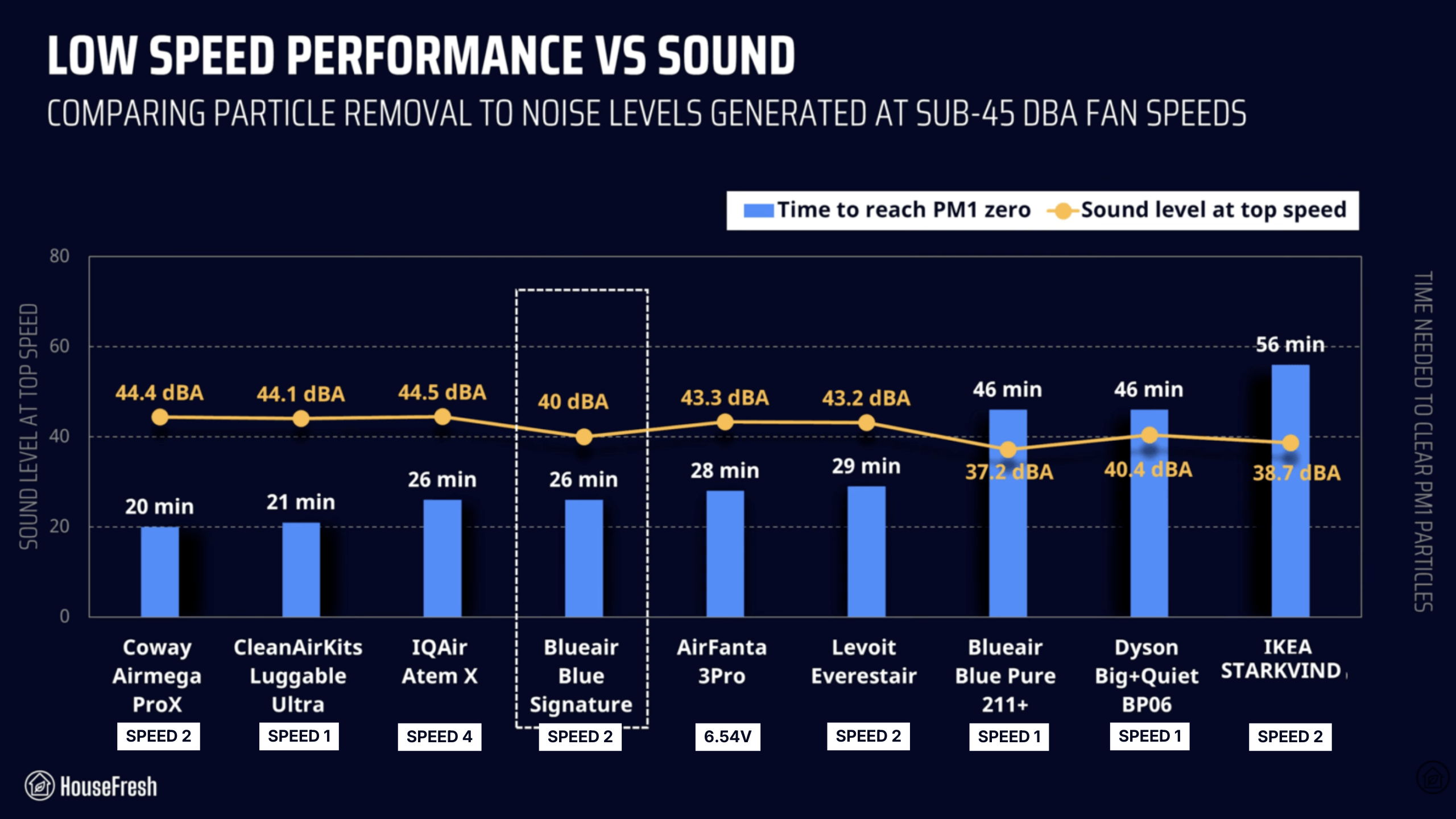
When running at speed 2, it generates just 40 dBA and was able to complete our particle removal test in 26 minutes – faster than the pricier EverestAir and BP06.

Blueair Blue Signature Quiet Performance HouseFresh

If you kept your Blue Signature running at speed 2, it would be whisper-quiet and still clean the air five times per hour in rooms up to 343 sq. ft.

Long-term running costs

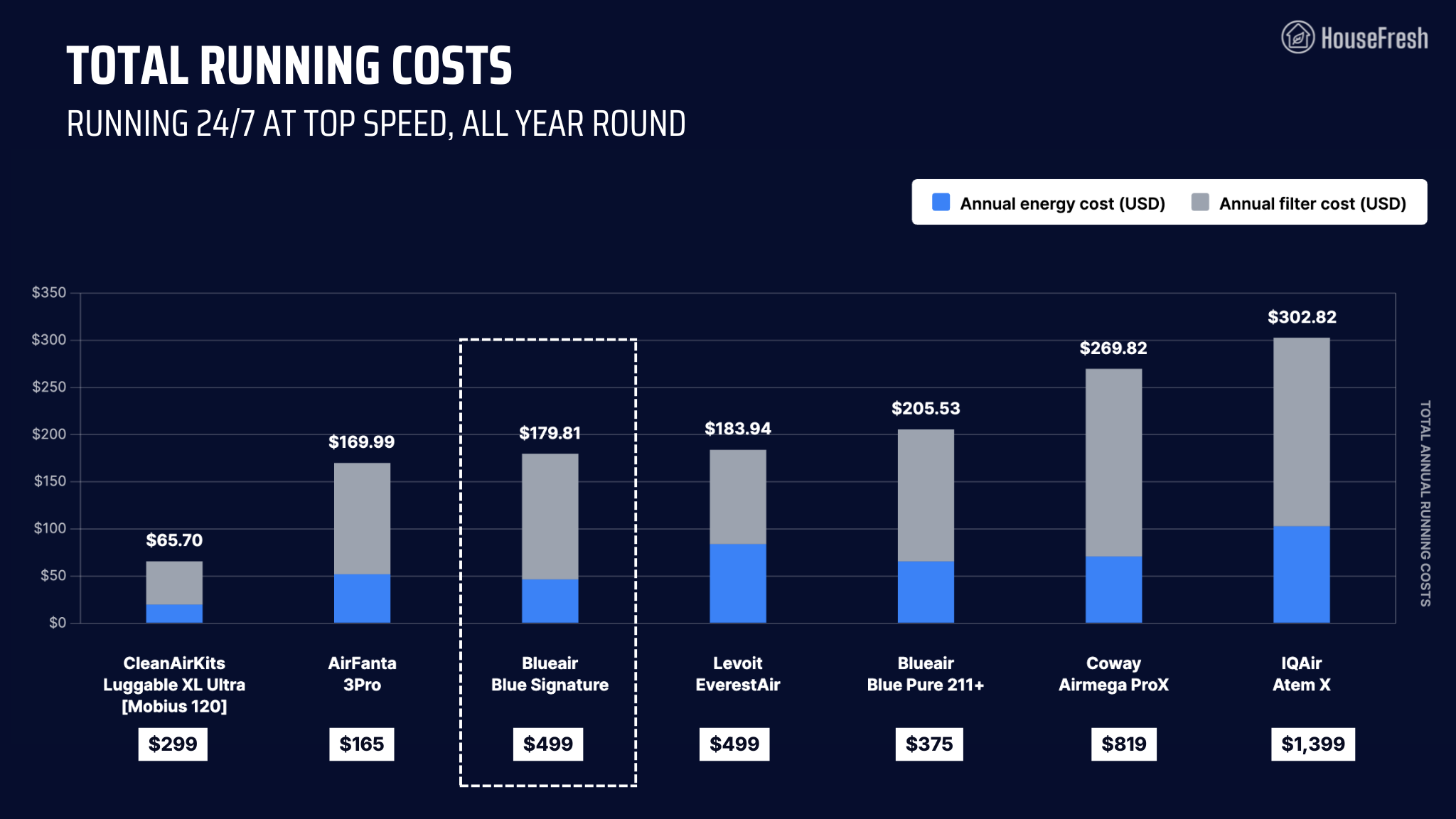
Running a Blueair Blue Signature will cost you $179.81 per year, combining energy and filter replacement costs.

We used our energy meter to record how much electricity the Signature pulls at each fan speed and also while on standby.

Blueair Blue Signature Energy Data

At top speed, the Signature draws 38.65 watts, so if you left it running at top speed 24/7 for one year, it would add $46.49 to your energy bill, based on the average U.S. electricity price as of March 2026.

This is a huge improvement over the older 211+, and it’s only beaten by the Mobius fans in the Luggable Ultra and the highly energy-efficient BP06 and Starkvind, which are less powerful than the Signature.

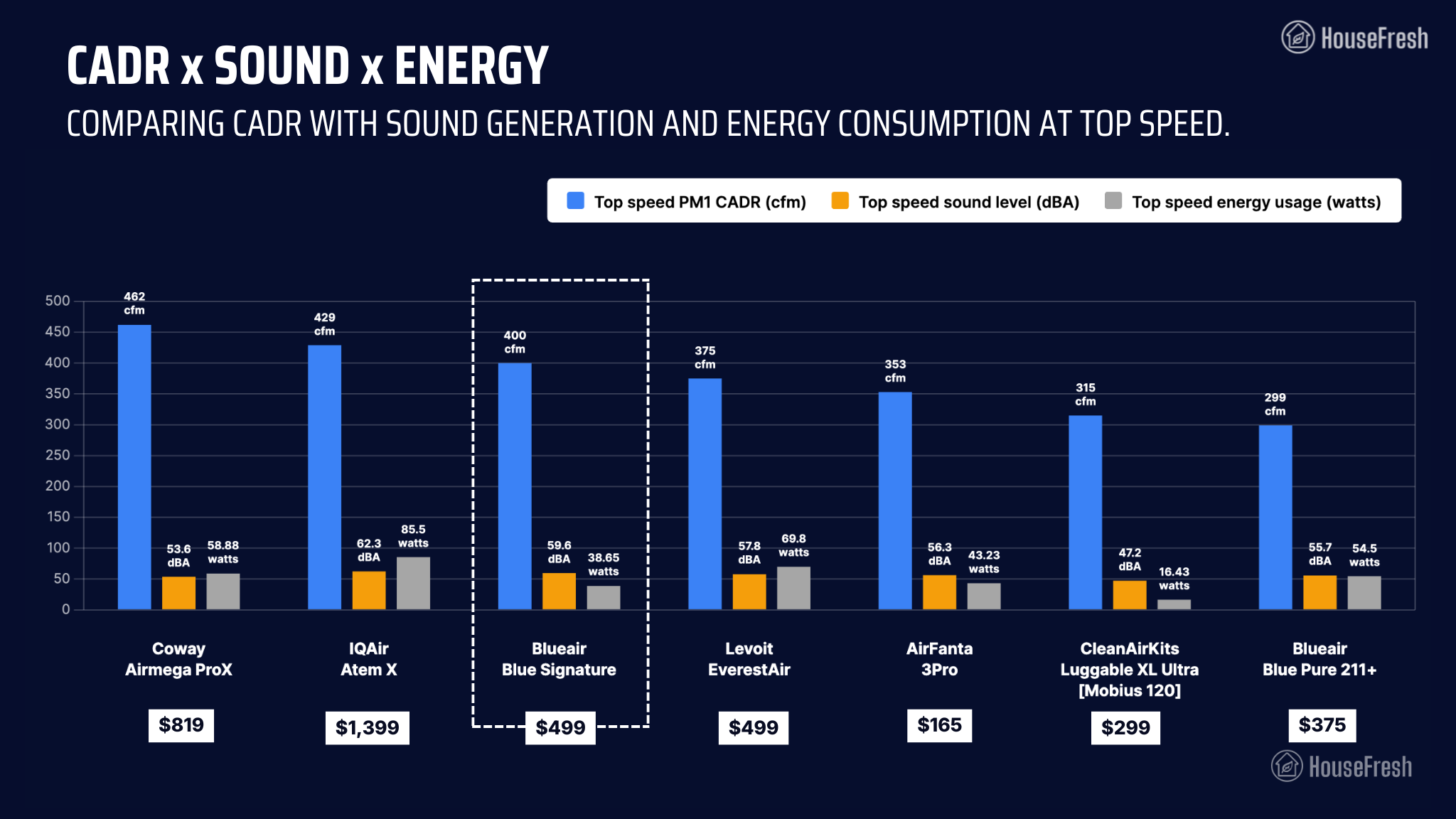
So I went one step further and created a chart to compare its CADR, noise levels AND energy usage at quiet fan speeds to see how the Blue Signature compares to other popular high-CADR air purifiers:

Blueair Blue Signature CADR Sound Energy

But let’s calculate how much you’ll need to spend to run your Blueair Blue Signature for a year.

According to Blueair, you need to change the filter in your Blue Signature every 9-12 months. And as always, I will use the lowest estimate of nine (9) months.

The replacement filter is available for $99.99. That means that you can expect to spend $133.32 each year on filter replacements alone.

We can add this to energy costs to work out the total yearly cost and compare it with the other devices I’m benchmarking the Signature against:

Blueair Blue Signature Yearly Running Cost

Thanks to the low energy costs, the Blue Signature is cheaper to run than the older Blue Pure 211+ and most other high CADR models we benchmarked it against, with the exception of the PC fan-powered AirFanta 3Pro and CleanAirKits Luggable XL Ultra.

Bottom line: Should you get a Blueair Blue Signature?

Our data showed that the Blue Signature offers high performance, even at quiet operation, in a well-designed package for less than $450.

Blueair Signature Corner

The Blue Signature looks like a piece of furniture and also doubles as a table. You can even add legs to lift it off the ground, with options to match your home’s decor.

It isn’t cheap at just under $450, but it ticks a lot of boxes for this price.

Performance is top tier at both top speed and quiet fan speeds. To match the Signature’s performance with a traditional air purifier, you would need to spend nearly double for a much more utilitarian-looking Smart Air Blast Mini, or go with a much larger machine like the Coway Airmega Pro X

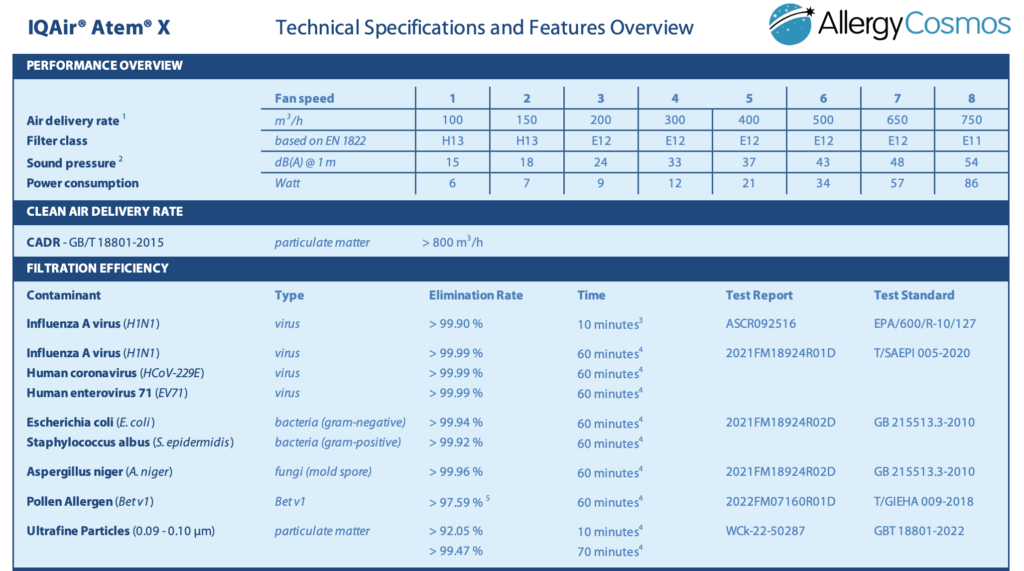
And if you want the same power in a smaller, good-looking package, then you would need to spend $1,400 on the IQAir Atem X — that’s a spicy price tag if I’ve seen one!

The running costs of the Blue Signature are fair, and while the initial price is higher than that of other mid-size models on the market, you do get a high-quality laser sensor, a table surface, and app connectivity.

So… This thing has the looks, the power and all the features you could ask for… so what’s the downside?

Even though the ozone levels from HEPASilent are very low, I still wish Blueair would include an option to disable HEPASilent, either a button (as Alen, Winix, and Coway do) or a setting in the app (as we’ve seen from Xiaomi).

I have received messages from people who have adverse reactions to any form of ionization, so I think all manufacturers using ionizers should allow consumers to choose whether they want this or not — even if it does lead to reductions in CADR.

So this is the main downside you should be aware of before buying that none of the other big media publisers or YouTube creators reviewing the Blue Signature will tell you about.

If you do decide to buy one, please use this link to support the work we do here at HouseFresh. In doing so, we will receive a small affiliate commission at no extra cost to you that we will use to continue buying and testing air quality products.

Did I miss any details? Do you have any questions I left unanswered? Just drop a comment below, and I’ll get back to you as soon as I see it.

Winix 5510 review

Winix 5510 Closeup scaled

The Winix 5510 is the much-anticipated successor to the incredibly popular Winix 5500-2, which has been one of my most recommended air purifiers since I first tested it back in 2023.

We received MANY requests to review the 5510, so I’m happy to share the results of our tests with you today.

Winix 5510 HouseFresh Subs

I paid $459.65 in total, including import fees and shipping, to get the Winix 5510 delivered to me in the UK, based on a list price of $249.99. However, as of May 2025, you can find the 5510 on Amazon for $179.99 and on the Winix America store for $199.99.

The overall score for the 5510 incorporates first-hand data results from our battery of tests, as well as our ratings for customer service, brand transparency, and design & UX. Check out the full scorecard below to see the split of categories.

Search for ‘Winix 5510’ to see where it ranks, based on its air cleaning performance and value for money. You can also filter results to easily compare models in the same price range.

The pros and cons of the Winix 5510

A summary of our top-level findings after testing this air purifier, following our methodology.

“The 5510 looks good, doesn’t take up too much space, and can clean the air as fast as the Levoit Vital 200S, the Philips 3200 Series and the Smart Air SA600.

So if you’re looking for a mid-sized air purifier that offers excellent air cleaning performance and you value smart features with app support, then the 5510 is definitely worth your consideration.”

Danny Ashton HouseFresh
Danny Ashton
HouseFresh Founder
& Lead Tester

CONS

The 5510 is louder at top speed than similarly-sized air purifiers from Winix and other brands.
Its air cleaning performance drops when running at sub-45 dBA fan speeds.
The app is still quite bare and lacks features you see in apps from Levoit and Xiaomi, but this is expected as it’s very new for Winix.

PROS

It has a better-looking design compared to every other rectangular Winix device I’ve tested.
When running at top speed, its air cleaning performance is on par with the SA600, the 5500-2 and the Rabbit Air A3.
The Winix app is intuitive and has no annoying ads like the ones we see in other apps.
Its body is compact and has a smaller footprint compared to the older Winix 5500-2.

Clean air delivery rate (CADR):– Top speed PM1 CADR: 248 cfm
– Sub-45 dBA PM1 CADR: 125 cfm
– AHAM PM2.5 CADR: 252 cfm (dust)
Filter technology:True HEPA filter with pelleted activated carbon and a removable pre-filter
Recommended room size:372 sq. ft. (5 air changes per hour)
Dimensions:15.9 x 11 x 25.2 in (40.3 x 27.9 x 64 cm)
Weight:13.03 lbs (5.9 kg)
Noise level in decibels from 3 ft. away:Sleep mode: 35.2 dBA
Speed 1: 36.8 dBA
Speed 2: 40.8 dBA
Speed 3: 51.6 dBA
Speed 4: 67.2 dBA
Electricity consumption in watts:Standby: 0.65 watts
Sleep mode: 3.51 watts (3.77 with PlasmaWave)
Speed 1: 4.59 watts (4.87 with PlasmaWave)
Speed 2: 6.58 watts (6.89 with PlasmaWave)
Speed 3: 15.68 watts (15.98 with PlasmaWave)
Speed 4: 52.62 watts (53.94 with PlasmaWave)
Filter lifespan:12 months
Manufacturer’s warranty:2 years
Country of origin:South Korea
Country of manufacture:South Korea

Design, controls and app features

A good-looking air purifier with smart features and app connectivity

Winix 5510 Living Room

The body of the 5510 is smaller than that of the now-discontinued 5500-2 and other mid-sized Winix air purifiers.

Winix 5510 VS 5500 2 Front

After reviewing the T810 and now the 5510, it has become obvious to me at this point that Winix is focusing heavily on the aesthetics of their devices with their new generation of air purifiers.

It has a gas sensor that triggers auto mode and a light sensor that puts it to sleep mode when detecting darkness. 

Winix 5510 Sensors

The control panel is intuitive and easy to navigate. You also get an air quality indicator in the form of an LED light that changes color (from blue to red) depending on the quality of your air.

You can connect it to your smartphone via the Winix app, which is available on both iPhone and Android.

Winix 5510 App

The app has a clean UX, works well, and allows you to control the 5510 remotely from your phone. It’s bare-bones compared to other air purifier apps, but it does the job without any issues.

Filtration technology

True HEPA filtration with activated carbon and optional bipolar ionization via PlasmaWave.

The 5510 comes with three separate mechanical filtration layers: a removable pre-filter, an activated carbon filter, and a HEPA particle filter.

Winix 5510 Filters

This means that once the carbon runs out (and starts getting smelly), you can just take it out and keep using the True HEPA filter till you can replace the carbon.

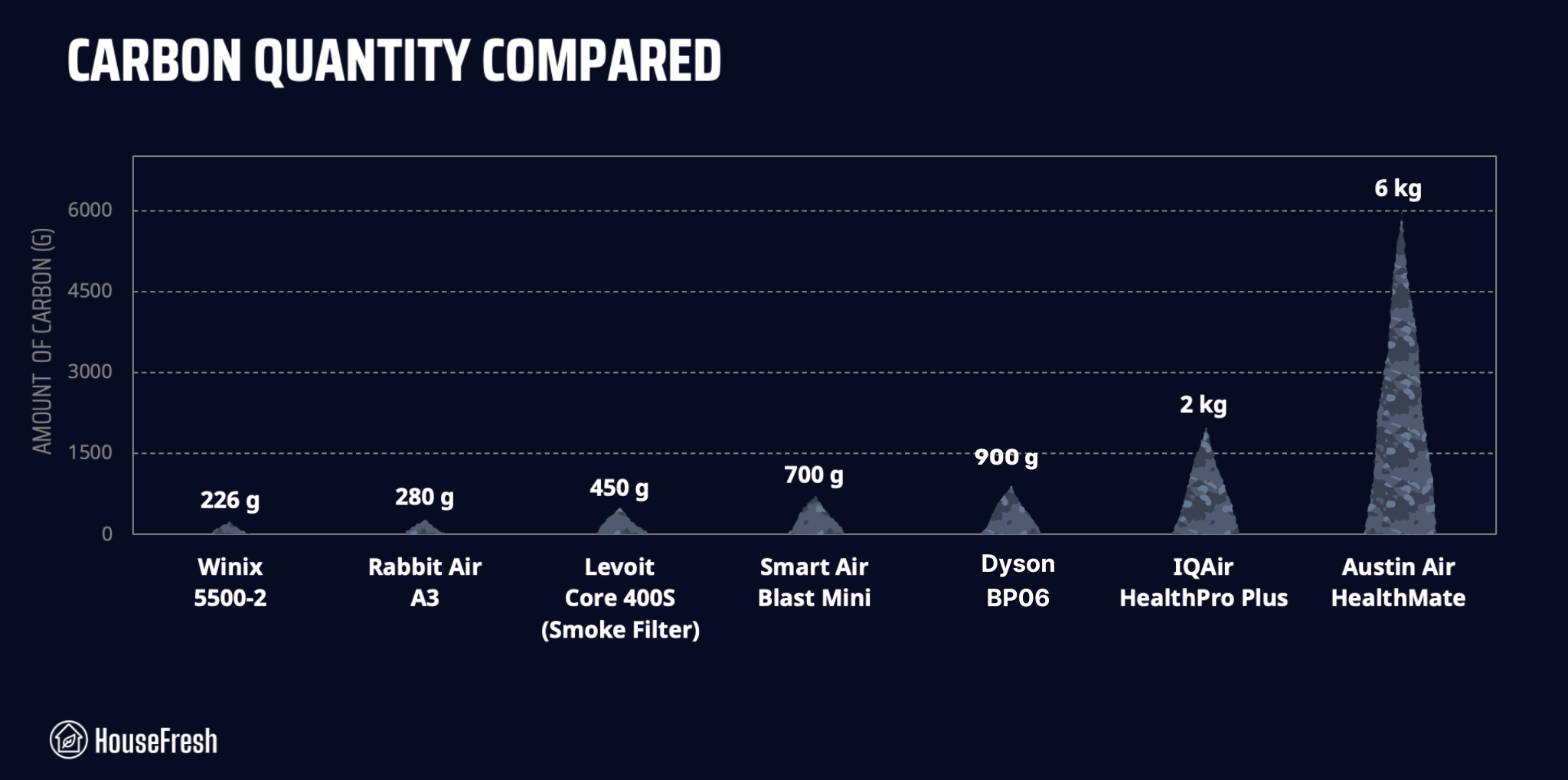
I reached out to Winix for more information and they confirmed that the 5510 comes with 226 grams of carbon – same as the older 5500-2. 

Winix 5510 Carbon amounts

As with other Winix devices, the 5510 comes with PlasmaWave, a bipolar ionization process that electrostatically charges particles, making them easier to remove. You can disable it if you prefer to avoid ionizers.

The 5510 uses a different type of filter set, Filter Q — 1712*0123-00, which works with the 5510 and 5520 models but is too small for the 5500-2, the 5300-2 and other older rectangular Winix devices.

Winix 5510 VS 5500 2 Filters
The filters in the Winix 5510 (left) are smaller than those in the Winix 5500-2 (right)

Air cleaning performance

We tested the 5510 in our 728 cubic ft. test room, tracking how fast it removed all PM1 particles from the air after we filled the space with incense smoke.

Winix 5510 HouseFresh CADR test scaled

First, we tested the Winix 5510 running at top speed with PlasmaWave enabled. According to our PurpleAir Zen sensor, the 5510 needed 24 minutes to achieve PM1 zero in our 728 cubic ft. test room, which matches what we expected based on its CADR report:

Based on the natural ventilation of our test room, I estimate a top speed PM1 CADR of 249 cfm. This is powerful enough to provide five air changes per hour in large rooms up to 373 sq. ft.

Winix 5510 HouseFresh Performance Data scaled

As you can see from the table, the 5510 compares very well against some of the best mid-sized devices we have tested when looking at raw performance at top speed, but considering it is a new model, I was hoping it would be at least a little quicker than the older 5500-2.

our air cleaning tests in isolation won’t tell us the full story…

Sound levels

The sound levels of the Winix 5510 range from 35.2 dBA to 67.2 dBA — considerably quieter than every single large air purifier we have benchmarked it again.

Winix 5510 HouseFresh tests scaled

The reality is that if an air purifier is too loud, then someone will turn it off eventually.

That is why I used my sound meter to measure how much noise the Winix 5510 generates from 3 ft. away at each of its fan speeds, including sleep mode:

winix 5510 sound

Be aware that our background noise is 35 dBA, so the 5510 running at speed one (1) and in sleep mode is likely to be quieter if you could measure sound levels in a silent room.

When running at top speed, it reached 67.2 dBA, which is considerably louder than other air purifiers with a similar clean air delivery rate.

Winix 5510 HouseFresh Performance VS Sound Data scaled

At speed 2, it reached PM1 zero in 47 minutes while generating 40.8 dBA, which is under our 45 dBA limit for daily use.

Winix 5510 Quiet Performance Test HouseFresh

Long-term running costs

Running a Winix 5510 will cost you $141.20 per year, combining energy and filter replacement costs.

winix 5510 energy consumption

At its top speed, the 5510 draws 53.84 watts. If you had to leave your 5510 running 24/7, it would cost $61.21 in energy costs for a year.

But let’s look at the other main factor affecting yearly running costs: filter replacements.

According to Winix, you can expect to change filters every 12 months, and you can buy a new filter set for $79.99, so you can expect to spend around $80 each year on filter replacements.

Winix 5510 Yearly costs scaled

We can now combine energy and filter replacement costs with the list price to calculate how much you will spend on the first year of owning a Winix 5510, and compare this to what you’d pay with other similar performing air purifiers:

Winix 5510 First Year Cost scaled

The 5510 has a list price of $179.99, but you could find it as low as $149.99 during Prime Day or Black Friday:

Retailer Lowest Ever Highest Ever

Bottom line: Should you get the Winix 5510?

Now that the Winix 5500-2 has been discontinued, the 5510 is the best next thing from Winix.

I hate to say this, but the Winix 5510 offers less powerful air cleaning performance at louder operation than older mid-sized Winix models. Sadly, I can’t recommend the 5500-2 or the 5300-2 anymore, as they have both been discontinued.

But does this mean that the 5510 is a bad investment? Well… not really.

In our air-cleaning performance tests, the Winix 5510 running at top speed is just 1 minute slower than the older 5500-2. And this level of power comes in a much more compact body and smaller filters, which explains why it is louder, as the fan has to work harder.  

Plus, the 5510 looks more high-end than the 5500-2 and the 5300-2 AND it comes with smartphone connectivity through the Winix app, which has a good UX and no annoying bugs. So you get some good features that you wouldn’t get access to with the older models.

Winix 5510 Closeup

However, if you are sensitive to sound and prefer to run your air purifier at low, quiet fan speeds, then I suggest you look into the Winix T810. The T810 offers similar performance at top speed to the 5510, but you will get better air cleaning power at quiet fan speeds. Plus, it also comes with smartphone connectivity through the Winix app.

If you are a big fan of app support but are not too bothered about getting a Winix device, then I recommend looking into air purifiers from brands like Levoit and Xiaomi, as their apps are much more polished and feature-rich.

Devices like the Levoit Vital 200S or the Xiaomi Pro 4 will offer air-cleaning performance similar to that of the 5510.

Levoit Vital 200S Corner Room

Philips 3200 Living Room

And if you are in the UK or Europe and like what the 5510 has to offer, you’ll be disappointed to hear it’s not available in your region yet.

Two good comparable models would be the Philips 3200 Series (for those who want a smart unit) and the Smart Air SA600 (for those who don’t want smart features).

If you decide to buy a 5510, please make sure to use this link to support the work we do here at HouseFresh. We will get a small commission on the sale at no extra cost to you, and this will allow us to continue to buy and test air purifiers in the future.

Are you still unsure about whether the Winix 5510 is the right air purifier for you? Just drop me a comment below and I’ll get back to you as soon as possible. Or email me if you would rather discuss in private 🙂

Coway Airmega ProX review

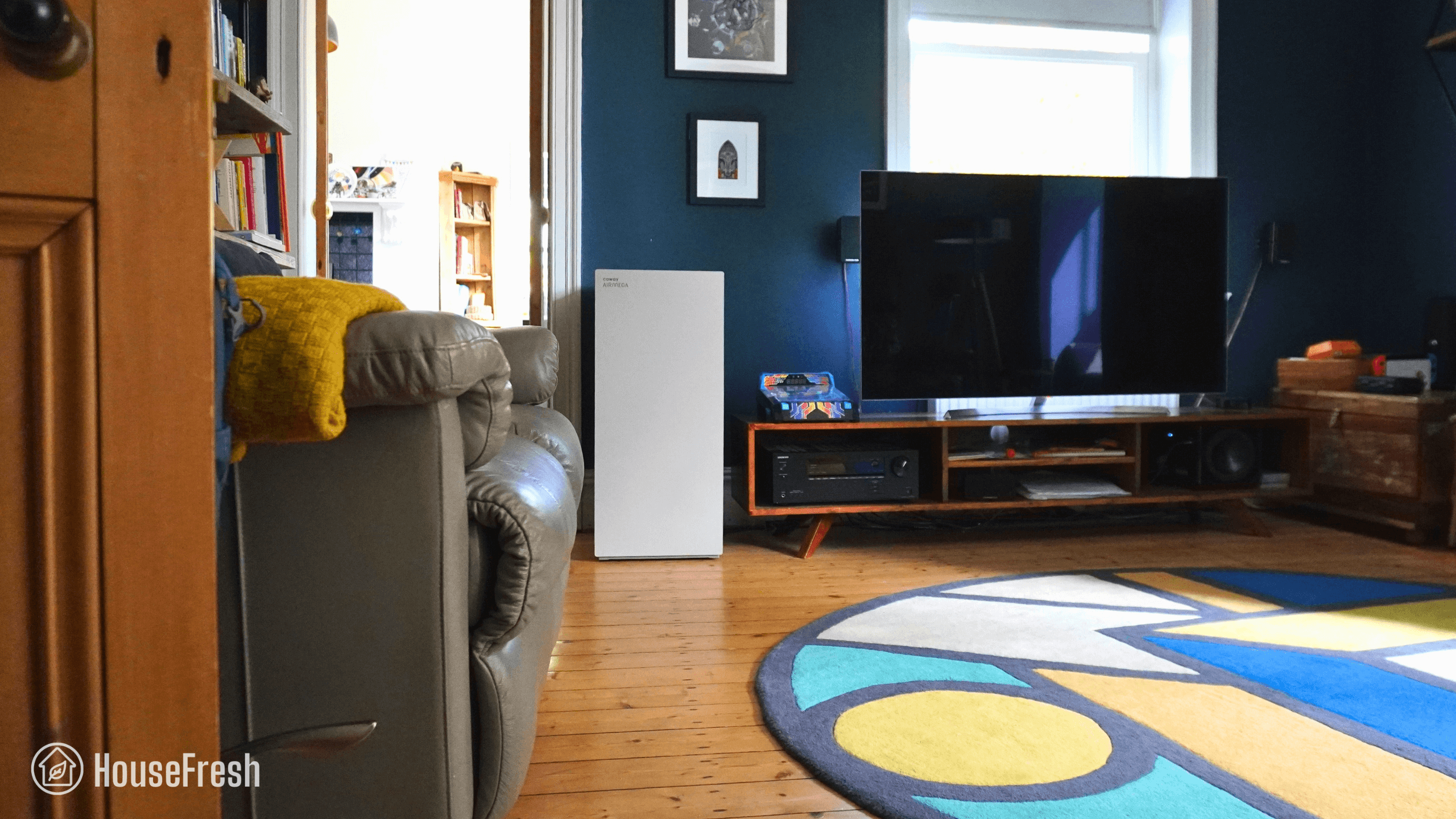
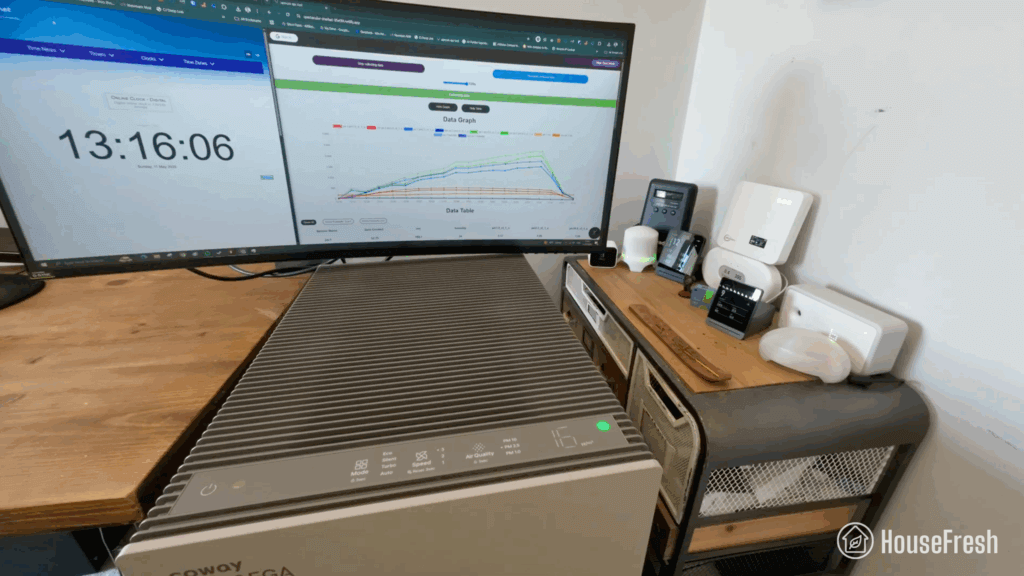
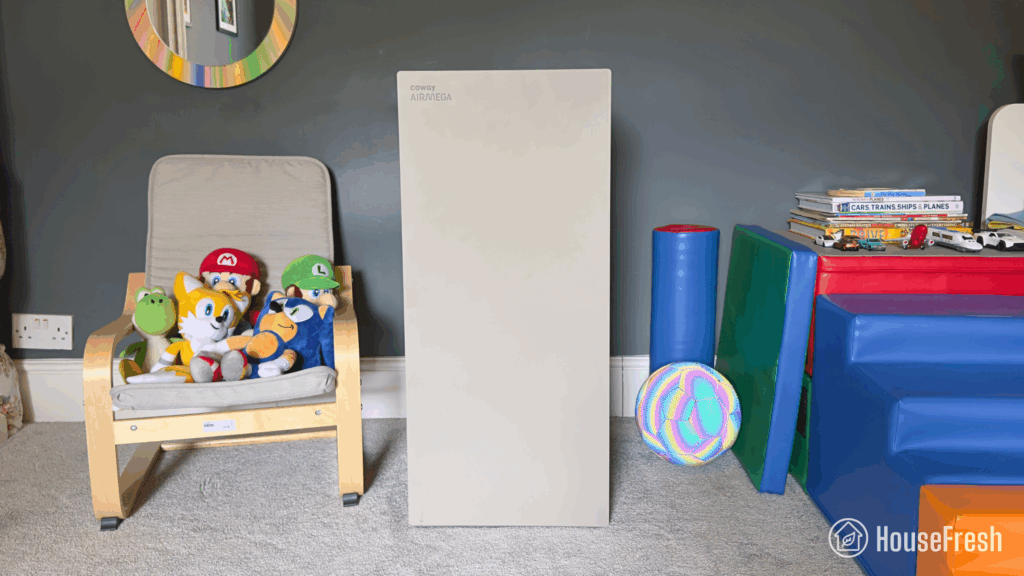
Coway Airmega ProX TV Room

The highest CADR air purifiers I have tested were designed for commercial spaces.

But what if you wanted something that not only looks good in the home but also comes with all the features you expect from a residential air purifier? Enter the Coway Airmega ProX.

The ProX is the largest model in the Coway Airmega line of air purifiers. But does size equal better performance? We bought one to find out.

The overall score for the ProX incorporates first-hand data results from our battery of tests, as well as our ratings for customer service, brand transparency, and design & UX. Check out the full scorecard below to see the split of categories.

Search for the ProX (or any other model you are researching) to see where it ranks:

The pros and cons of the Coway Airmega ProX

A summary of our top-level findings after testing this air purifier, following our methodology.

“The ProX isn’t cheap, is heavy and takes up a lot of space… but I have to say I’m a big fan.

I like that Coway has dropped the use of an ionizer that we have seen in older models but still managed to provide outstanding air cleaning power with mechanical filtration alone. And they did this without the loud noise and high energy consumption that usually comes with high CADR.”

Danny Ashton HouseFresh
Danny Ashton
HouseFresh Founder
& Lead Tester

CONS

The replacement filters are expensive and will set you back around $200 each year.
The bonded filter design means you will need to replace a perfectly good HEPA filter if the carbon element runs out first.
The filter covers sometimes will pop off when you lift the ProX using the handles on each side.
It takes up a lot of space.

PROS

It has an incredible performance-to-noise ratio. It’s powerful and quiet in a way that surprised me.
It comes with a responsive and low-maintenance laser particle sensor.
It has very low energy consumption for a device with such high CADR.
Coway included thoughtful ‘smart’ features, like the light sensor for auto-sleep mode.

Clean air delivery rate (CADR):– Top speed PM1 CADR: 462 cfm
– Sub-45 dBA PM1 CADR: 299 cfm
– AHAM dust CADR: 586 cfm
Filter technology:Two washable pre-filters and two Max2 filters (Green True HEPA and activated carbon)
Recommended room size:693 sq. ft. (5 air changes per hour)
Dimensions:18.9 x 36.6 x 24.3 in (48 x 93 x 62 cm)
Weight:51 lbs (23kg)
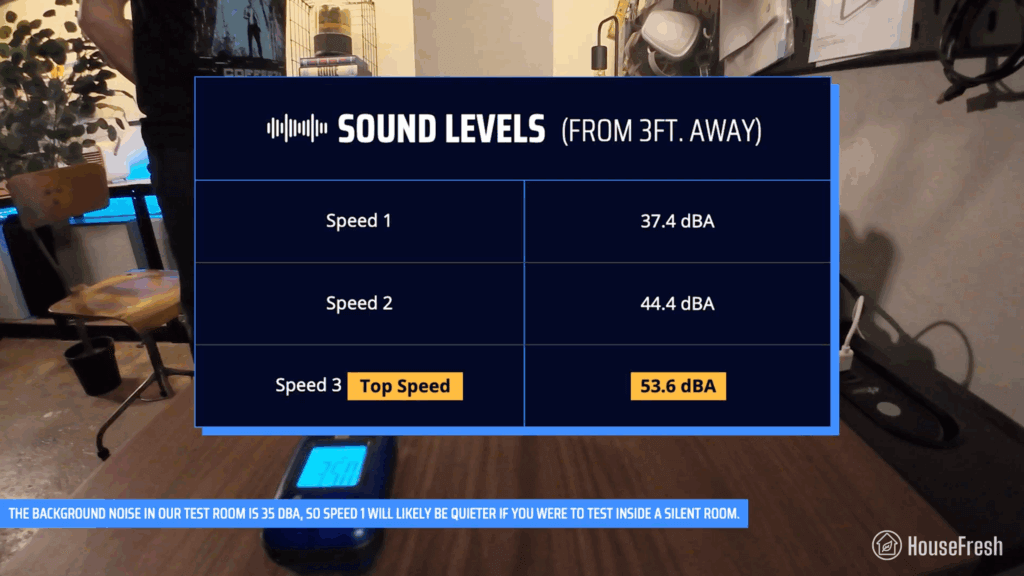
Noise level in decibels from 3 ft. away:Speed 1: 37.4 dBA
Speed 2: 44.4 dBA
Speed 3: 53.6 dBA
Electricity consumption in watts:Standby mode: 0 watts
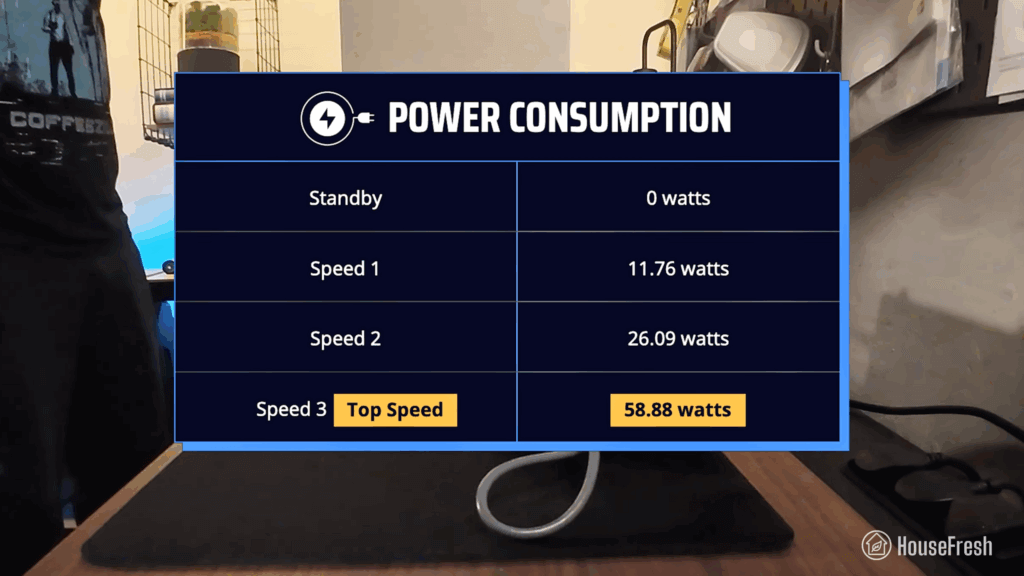
Speed 1: 11.76 watts
Speed 2: 26.09 watts
Speed 3: 58.88 watts
Filter lifespan:12 months
Manufacturer’s warranty:3 years
Country of origin:South Korea
Country of manufacture:China

Filtration technology

You get Coway’s signature Green True HEPA and pelleted activated carbon, times two.

The ProX has two sets of Max2 filters, one at each side, and unlike the popular AP-1512hh, it doesn’t come with an ionizer function.

Coway Airmega ProX Filters

The filters themselves are bonded filters that combine two Green True HEPA filters with an activated carbon filter.

The filters are bonded, so you’ll need to replace them once the carbon is full, which might happen before the particle filter is at the end of its life.

Coway ProX Carbon

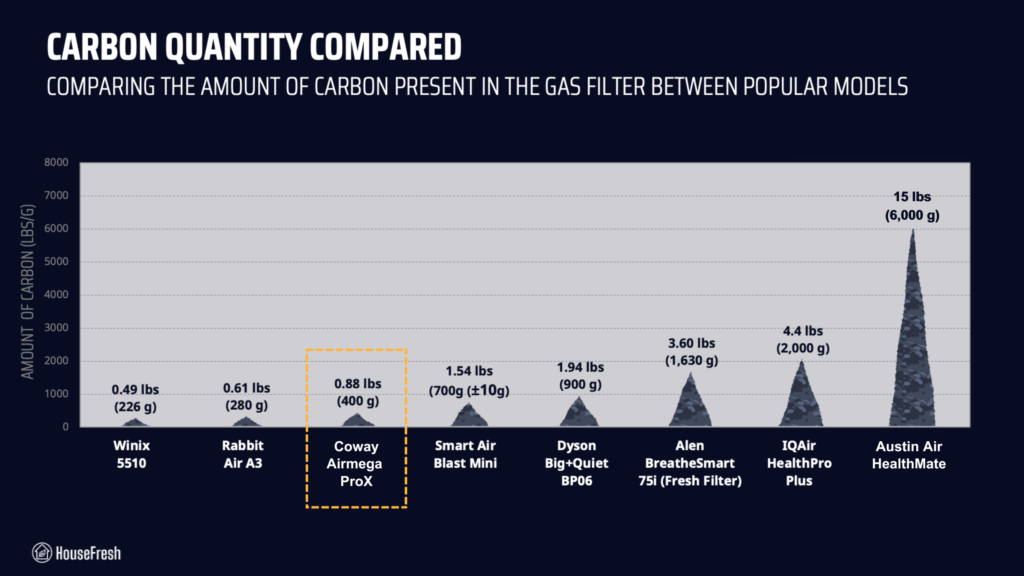
According to this Redditor, the Max2 filters in the ProX container 0.88 lbs of pelleted activated carbon. Be aware that this won’t be enough to address serious odor and VOC issues.

Design, controls and app features

It has the same retro feel as other new Airmega models, with muted colors and hard lines.

The ProX is the largest air purifier we’ve tested from Coway, weighing 51 lbs (23.1 kg).

Coway Airmega ProX TV Room

Considering how heavy it is, I was glad to see it has four wheels to move it around – great for hard floors, not so great for carpets.

If you want to lift it, you can use the handles at each side of the device.

ProX Handle issue

The only problem is that if you pull the handles from the wrong angle, you will end up removing the filter cover… which is a little annoying.

It doesn’t include app support, but it has a laser sensor and customizable auto modes.

Coway Airmega ProX Controls

You also get an air quality indicator at the far right, in the form of an LED light that changes color based on your air quality.

Coway ProX Fans

The large body of the ProX houses two fans stacked on top of each other on either side of the device, which is something I had never seen before.

Air cleaning performance

We tested the ProX in our 728 cubic ft. test room, tracking how fast it removed all PM1 particles from the air after we filled the space with incense smoke.

Coway Airmega ProX Test

When running at top speed, our PurpleAir Zen sensor shows that the ProX needed 13 minutes to reach PM1 zero. Based on the natural ventilation of our test room, we estimate a PM1 CADR of 462 cfm.

This makes the Airmega ProX powerful enough to provide five air changes per hour in large rooms up to 693 sq. ft.

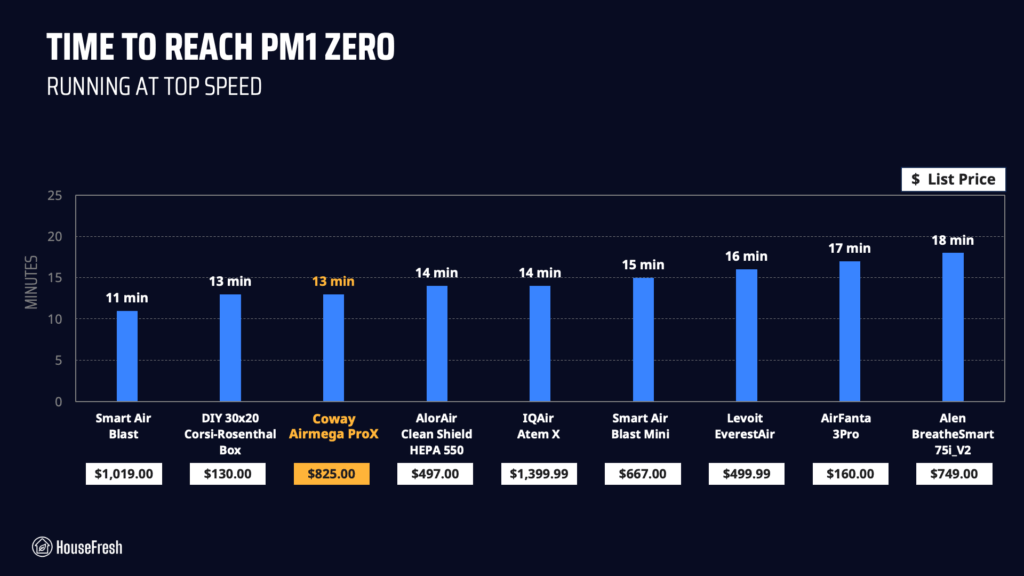
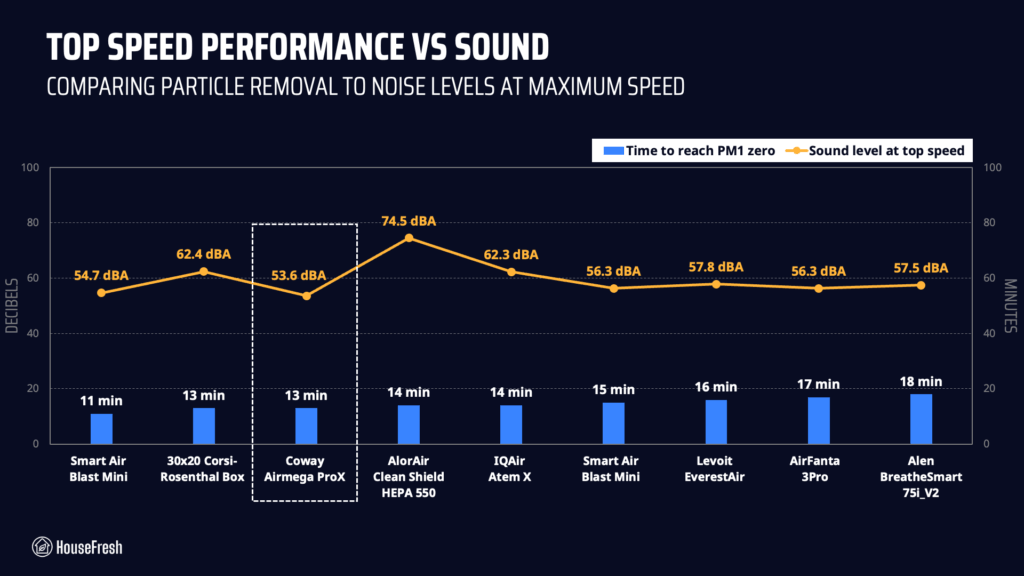
As you can see from the chart, 13 minutes is the same amount of time it took for our DIY 30×20 Corsi-Rosenthal Box to reach PM1 zero:

Coway Airmega ProX HouseFresh Test

The only device to perform quicker than this was the even larger Smart Air Blast, which completed our particle removal test in a speedy 11 minutes.

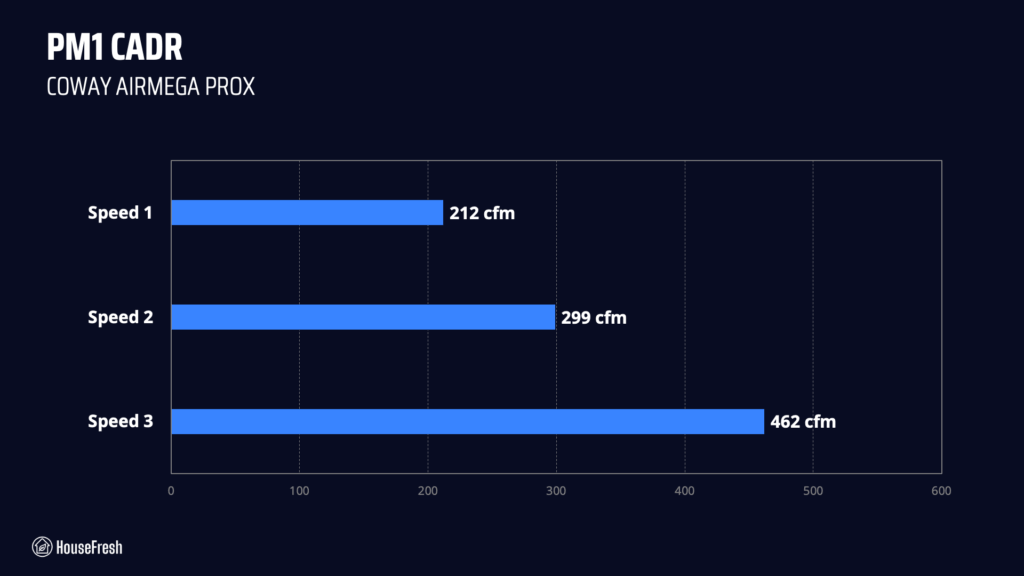
We repeated our particle removal test three times across all available fan speeds, which allowed me to estimate PM1 CADR at each fan speed:

Coway Airmega ProX CADR

BUT looking at the results of our air cleaning tests in isolation won’t tell us the full story…

Sound levels

The sound levels of the ProX range from 37.4 dBA to 53.6 dBA — considerably quieter than every single large air purifier we have benchmarked it against.

Coway ProX Sound Test HouseFresh

As I always say, if your air purifier is too loud, someone in the house will eventually turn it off.

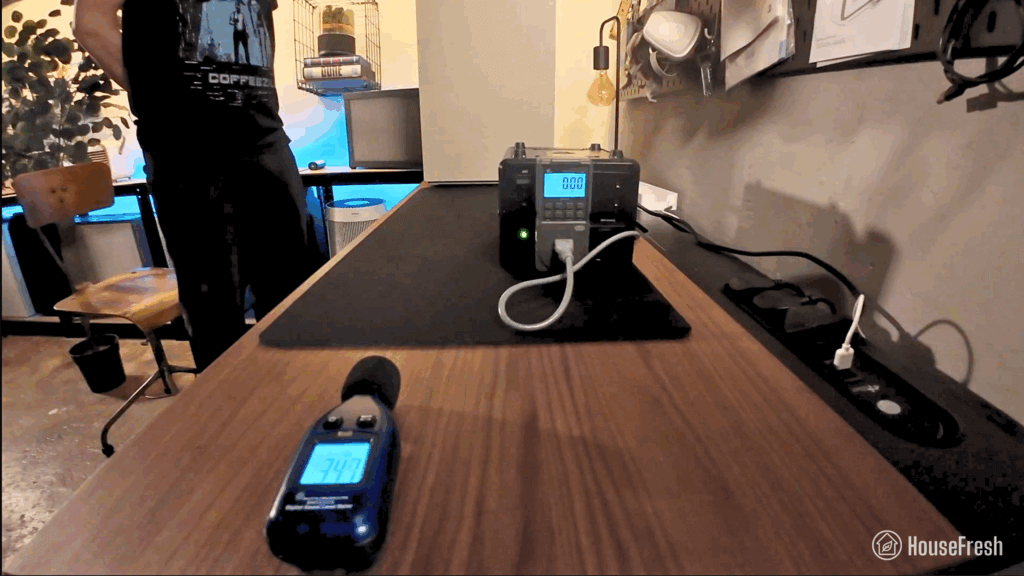
That is why I used our BAFX sound meter to measure how much noise in decibels the Airmega ProX generates at each fan speed from 3 ft. away:

Coway ProX Sound Results

I was surprised by how quiet the ProX is! Hitting 53 dBA at top speed is nothing considering its power.

When comparing particle removal speed to noise levels at top speed, it becomes clear that Coway has nailed performance at quiet operation:

Coway Airmega ProX Top speed sound

I repeated the HouseFresh CADR test at each fan speed with excellent results.

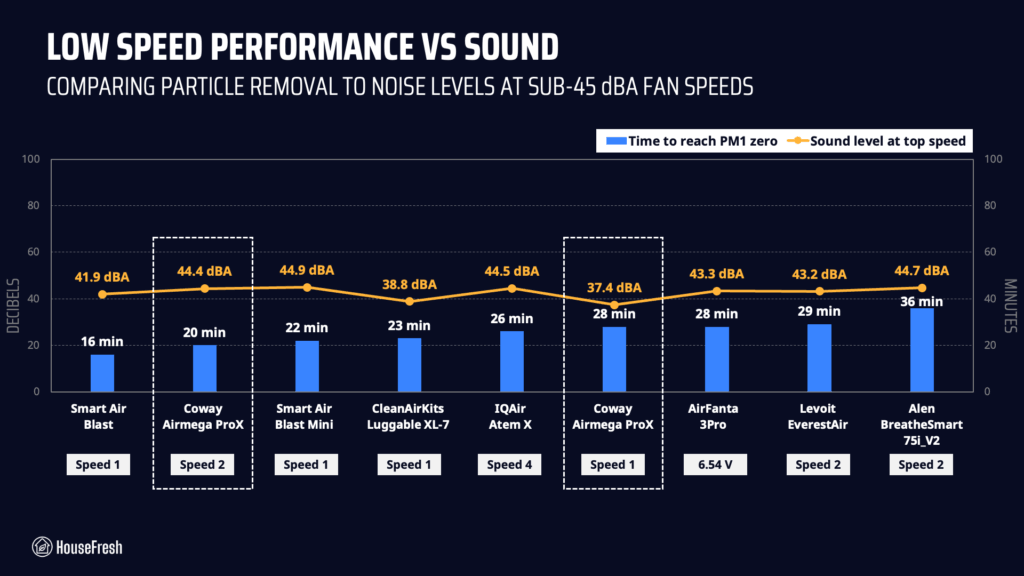
At speed 2, it reached PM1 zero in 20 minutes while generating 44.4 dBA. And at speed 1, it took 28 minutes at just 37.4 dBA.

Coway Airmega ProX Sound

When we compare this to other high-CADR air purifiers, you can see that, in terms of quiet performance, the ProX is only outmatched by the much larger Blast from Smart Air. And it’s clear that even at speed 1, this device delivers excellent air cleaning performance without the noise.

Long-term running costs

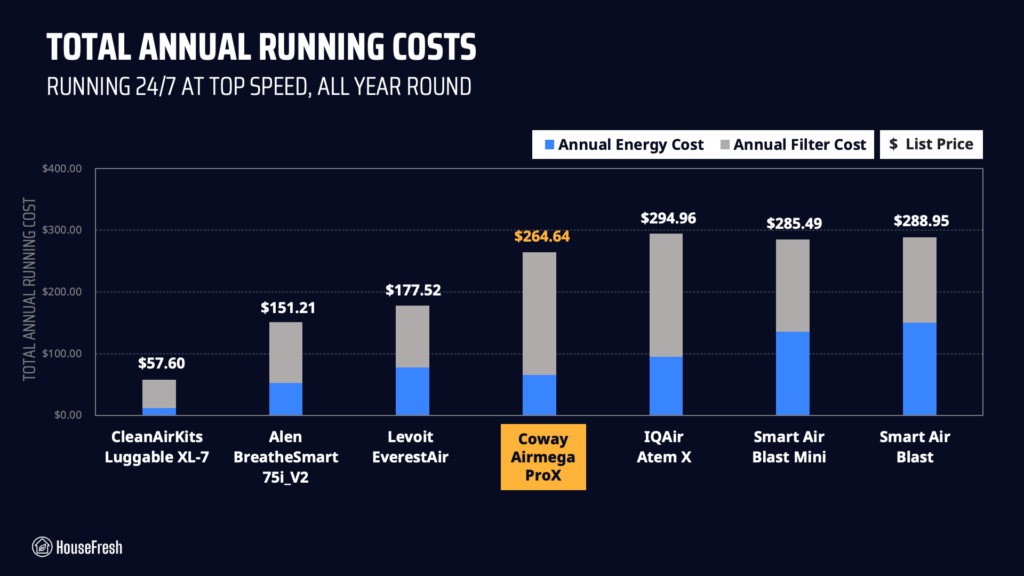
Running a Coway Airmega ProX will cost you $264.64 per year, combining energy and filter replacement costs.

We used our energy meter to record how much electricity the ProX pulls at each fan speed and also while on standby.

Coway ProX energy consumption

At speed 3, the ProX pulls 58.88 watts. Running it at top speed 24/7 for one year will add $65.54 to your energy bill, based on the average U.S. electricity price of 0.1268/kWh at the time of our test.

After conducting our particle removal test, I knew the Airmega ProX offers impressive raw performance, but I didn’t expect it would deliver this high CADR with such low energy consumption.

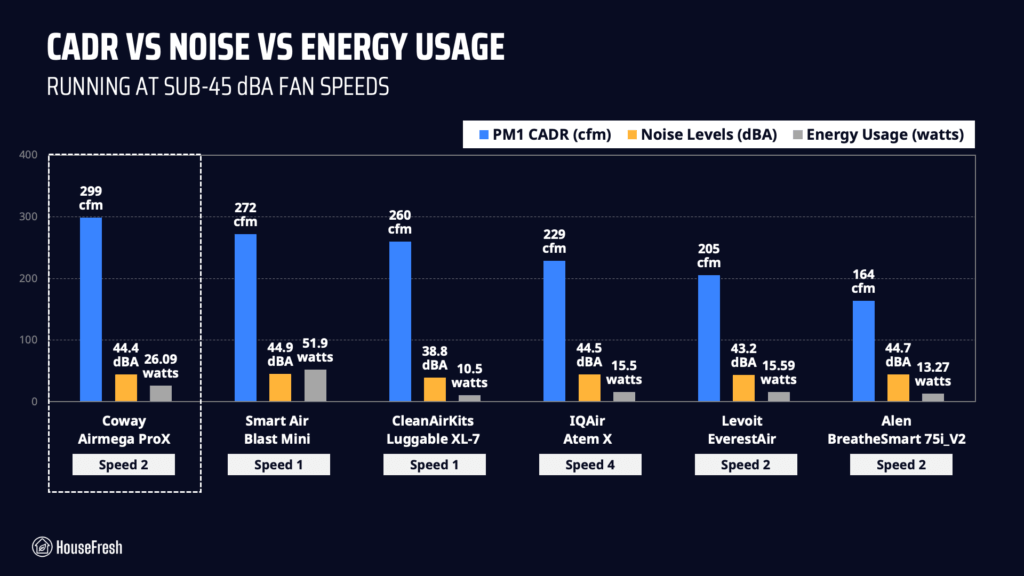
So I went one step further and created a chart to compare its CADR, noise levels AND energy usage at quiet fan speeds to see how the ProX compares to other popular high-CADR air purifiers:

Coway ProX CADR energy sound

As the table above shows, the Coway Airmega ProX delivers incredible CADR at lower fan speeds without excessive energy use or noise, vastly outperforming most large air purifiers I benchmarked it against. The exception would be the Luggable XL-7, which is A LOT more energy efficient and noticeably quieter than the ProX — that said, it’s not nearly as powerful.

But let’s look at the other main factor affecting yearly running costs: filter replacements.

According to Coway, you can expect to change filters every 12 months, and you can buy a new filter set for $199, so you can expect to spend $199 each year on filter replacements alone.

We can add this to energy costs to work out the total yearly cost and compare it with the other devices I’m benchmarking the ProX against:

Coway Airmega ProX Running Costs

$199 for a set of filters is steep, and it pushes the total annual cost to over $260, which is more than the Alen 75i and Levoit EverestAir, and doesn’t come close to the CleanAirKits Luggable XL-7 with its standard 3M HVAC filters.

Bottom line: Should you get a Coway Airmega ProX?

The ProX is one of the best options for those looking for an air purifier to help with dust, pollen, pet allergens, or smoke in large spaces.

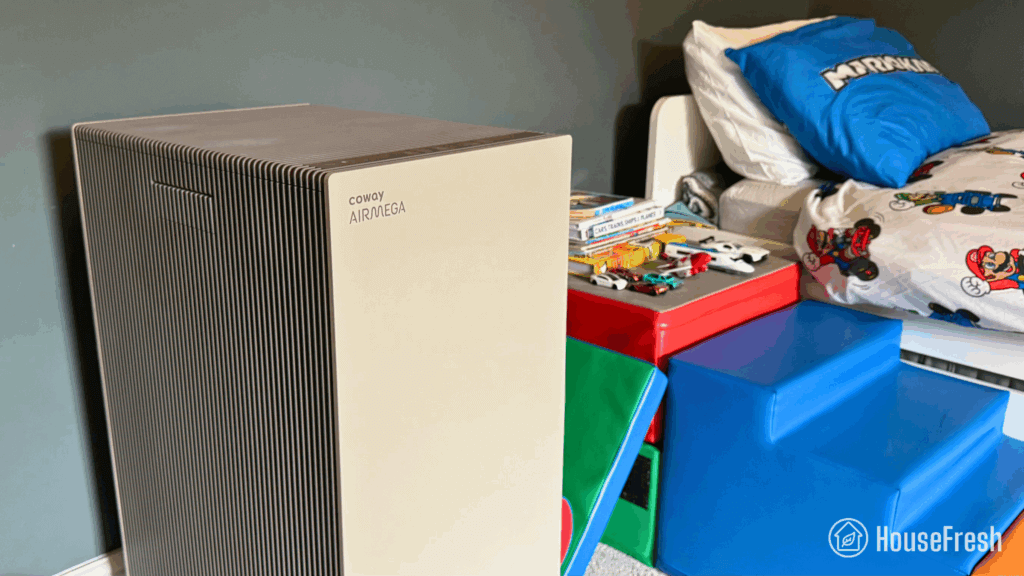
Coway Airmega ProX Kids room

The ProX isn’t cheap, is heavy, and takes up a lot of space… but I have to say I’m a big fan.

I like that Coway has dropped the ionizer we saw in older models without dropping performance. Even without the ionizer, the ProX still provides outstanding air-cleaning power with mechanical filtration alone. And they did this without the loud noise and high energy consumption that usually comes with high CADR.

This air purifier doesn’t have an app. However, it still comes with a ton of features that most consumers will appreciate, such as a customizable auto mode, a particle sensor, an air quality indicator, a child lock, and the ability to adjust the sensor’s sensitivity.

Coway also innovated in how the ProX handles sleep time. Instead of a useless sleep mode, the ProX running in auto mode will automatically switch all lights off without you needing to do anything else. It won’t disturb your sleep, but it will ramp up the fan speed when detecting pollutants in the air.

Coway Airmega ProX Side

And even if you were to leave your ProX running at speed 1 all day, it would still provide you a higher CADR than you would get from a medium-sized unit like the Levoit Core 400S running at full speed.

For those looking for an air purifier to help with dust, pollen, pet allergens or smoke in large spaces, the Coway Airmega ProX is one of the best options out there because it won’t cost you an arm and a leg to run, it will offer excellent performance at quiet operation AND it will look good in your home while it’s at it.

Sadly, it is only available in the U.S. right now but I’ll update the review if that changes.

Now, for those looking for the best bang for buck, know that PC fan models like the Luggable XL-7 and the AirFanta 3Pro will still provide a lot more value — and you will be able to get multiple of these devices for the price of the ProX.

ProX first year cost

And if you’re looking for a high CADR air purifier for a commercial space, an office, or a classroom, then check out the Smart Air Blast, which will offer more air cleaning power than the ProX with a full metal body and no smart features, so you can set it and forget it.

But for those who want a large unit that looks good AND has all the bells and whistles you would expect from a standard consumer air purifier, the Airmega ProX is a solid choice.

If you do decide to buy one, please use this link to support the work we do here at HouseFresh. In doing so, we will receive a small affiliate commission at no extra cost to you that we will use to continue buying and testing air quality products.

Did I miss any details? Do you have any questions I left unanswered? Just drop a comment below and I’ll get back to you as soon as I see it.

Levoit Core 600S review

Levoit Core 600S Room 5

If you’ve been shopping around for a new air purifier, you will no doubt have come across Levoit. 

Having emerged on the scene in 2017, they’ve become one of the most popular manufacturers on the market, with an array of air purifiers to suit different needs and budgets.

Levoit’s Core line has sold millions of units thanks to impressive performance at affordable prices. The Core 600S is the largest and most powerful unit in the range, with a particle and gas filter capable of providing five air changes per hour in spaces up to 562 sq. ft.

I have been using my 600S at home since 2022. But after over a hundred air purifier tests, is it still a top contender all these years later?

The overall score for the Levoit Core 600S incorporates first-hand data results from our battery of tests, as well as our ratings for customer service, brand transparency, and design & UX. Check out the full scorecard below to see the split of categories.

Search for the 600S (or any other model you are researching) to see where it ranks:

The pros and cons of the Levoit Core 600S

A summary of our top-level findings after testing this air purifier, following our methodology.

💡exclusive code for HouseFresh for 10% off a single purchase on Levoit.com: HOUSE10

“The Core 600S is the biggest air purifier in Levoit’s Core range, with an estimated PM1 CADR at top speed of 375 cfm that matches the newer, fancier Levoit EverestAir. The main difference? The Core 600S costs less than $300.

I have been using my 600S since 2022 without any issues. In 2025, I re-tested everything about it and found that it still is a good option for those who want an air purifier with smart features and excellent raw air cleaning power at a low initial price.”

Danny Ashton HouseFresh
Danny Ashton
HouseFresh Founder
& Lead Tester

CONS

It’s loud at top speed (62 dBA) and, at speed 1, it makes an annoying whirring sound that might bother you if you’re sensitive.
The filter isn’t HEPA as initially advertised when I bought it in 2022. This won’t affect performance for most pollutants, but it’s not good.
Its air cleaning performance at quiet fan speeds lags behind more modern large air purifiers like the Coway Airmega ProX.
It has a bonded filter, so you’ll have to replace the entire thing when the carbon runs out, even if the particle filter has life in it.

PROS

The raw air cleaning performance at top speed (375 cfm) is fantastic for the price (less than $300).
It comes with a laser sensor that reacts quickly to airborne particles and doesn’t need to be cleaned regularly.
Despite its size, it remains lightweight and easy to move around thanks to its deep handles at each side of the unit.
The app’s customisable auto-modes are a game changer, letting you tailor its performance to your exact needs.

Clean air delivery rate (CADR):– Top speed PM1 CADR: 375 cfm
– Sub-45 dBA PM1 CADR: 156 cfm
– AHAM PM2.5 CADR: 398 cfm (dust)
Filter technology:Bonded particle filter with a layer of pelleted activated carbon and a pre-filter mash wrap.
Recommended room size:562 sq. ft. (5 air changes per hour)
Dimensions:12.3 x 12.3 x 23.6 inches (31.3 x 31.3 x 60 cm)
Weight:13.7 lbs (6.2 kg)
Noise level in decibels from 3 ft. away:Sleep: 37.9 dBA
Speed 1: 44.4 dB
Speed 2: 45.9 dB
Speed 3: 53.8 dBA
Speed 4: 62.3 dBA
Electricity consumption in watts:Standby mode: 1.3 watts
Sleep: 4.33 watts
Speed 1: 7.46 watts
Speed 2: 10.7 watts
Speed 3: 20.29 watts
Speed 4: 48.1 watts
Filter lifespan:6-12 months
Manufacturer’s warranty:2 years
Country of origin:United States
Country of manufacture:China

Filtration technology

The Core 600S comes with a 3-in-1 cylindrical filter that captures particles and helps reduce mild odors.

The large cylindrical filter has three layers: an outer pre-filter mesh, a particle filter, and a layer of pelleted activated carbon on the inside.

Levoit Core 600S Filter 3

Be aware that using a bonded filter means you will need to replace both the particle and carbon filters, even if only one needs replacing — usually the carbon, as it will likely fill sooner than the HEPA.

When it’s time to replace your filter, you can choose the standard filter or upgrade to the Pet Allergy, Smoke Remover, or Toxin Absorber.

levoit core 600s filter options

The specialized filters all come packed with 360g of activated carbon instead of the 160g you get in the Standard filter.

When I bought my Core 600S in 2022, Levoit advertised it as a HEPA H13 filter. Today, you won’t have ‘H13’ mentioned anywhere. The change in marketing occurred in 2023, when Levoit discontinued HEPA claims for its products following a Better Business Bureau challenge brought by Dyson.

The bad news is that Levoit seems to have misrepresented the grade of their filters. The good news is that, HEPA or no HEPA, the particle filtration of the 600S is excellent.

Installing and replacing the filter on the Core 600S couldn’t be easier. Twist the body and slot in the filter with the tabs facing up. Check out our video below to see just how easy it is. 

Design, controls and app features

A large cylindrical air purifier with smart functions that is lightweight and easy to move around the room.

It is the largest in the Levoit Core range, which includes the 200S, 300S, and 400S.

Levoit Core Range

It weighs 13.7lbs (6.2 kg) but is easy to move around thanks to handles on each side.

It comes with Levoit’s Airsight Plus, which is a laser dust sensor on the side of the device.

Levoit Core 600S Sensor

It is quicker to react to PM2.5 particles than optical sensors, and doesn’t need to be cleaned every few weeks.

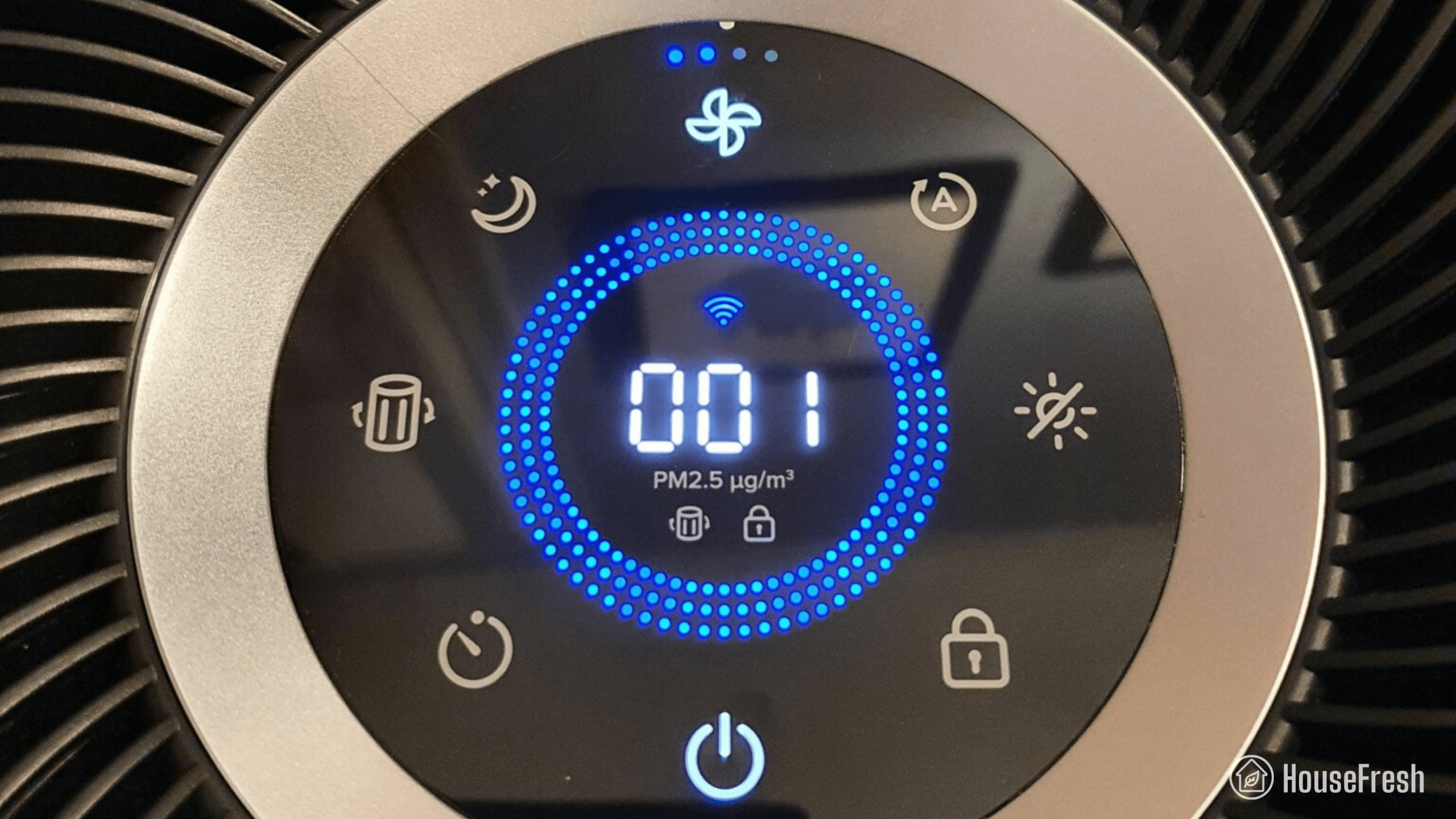
The LED ring on top changes color based on your air, from blue (very good) to red (bad).

Levoit Core 600S Controls

Inside the ring, you get real-time PM2.5 particle readings in micrograms per cubic meter.

Levoit Core 600S App

When I first tested the Core 600S back in 2022, the VeSync app worked well, but it was pretty simple compared to what it is now.

Levoit has clearly invested in its app in the last few years, and all improvements have been rolled out across old models. The most exciting change in my view is that I can now adjust the auto-mode settings on my old 600S 🙂

Standard auto-modes often cap the air purifier to a set speed threshold, which is usually below the top speed. This makes regular auto-modes less efficient, as they don’t reach top speed even when air pollution levels are high.

Now, Levoit allows you to customize your auto-mode, offering choices for Default, Quiet, Eco and Efficient. My preference is the efficient mode, as you can set the size of your room, and the air purifier will reach full speed to provide a full air change before returning to the default auto-mode. 

I can also see the sensor and the Core 600S in my Home Assistant app, which is good news for those who want to integrate their air purifier with Home Assistant.

The warning covers 900 toxins and carcinogens that, if exposed to, can result in adverse health effects.  The 1986 act now covers any goods sold in California, which has enforced labels on everything, from bread to Starbucks coffee

Regarding the 600S, and air purifiers in general, the warning usually relates to the electrical components inside, with solder known to contain chromium and circuit boards often found to contain lead. These are trace amounts and won’t pose any danger through normal use. The Core 600S is FCC-compliant and CARB-certified, ensuring compliance with federal and California health and safety standards. 

Air cleaning performance

We tested the Core 600S in our 728 cubic ft. test room, tracking how fast it removed all PM1 particles from the air after we filled the space with incense smoke.

Levoit Core 600S CADR

When running at top speed, our PurpleAir Zen sensor shows that the 600S needed 16 minutes to reach PM1 zero. Based on the natural ventilation of our test room, we estimate a PM1 CADR of 375 cfm.

This makes it powerful enough to provide five air changes per hour in large rooms up to 562 sq. ft.

When we compare this against other similarly priced and similar performing air purifiers, you see what a good deal you get with a 600S:

Levoit Core 600S Performance scaled

The only cheaper model that matches the top speed performance of the Core 600S is the AirFanta 3Pro, with its four PC fans and four E11 filters that you can buy for less than $160.

We repeated our particle removal test three times across all available fan speeds, which allowed me to estimate PM1 CADR at each fan speed:

Levoit Core 600S CADR scaled

BUT air cleaning performance alone won’t tell us the full story…

Sound levels

Levoit Core 600S Sound Test

Here’s the thing: if your air purifier is too loud, you will turn it off eventually. That is why we use a sound meter to measure how much noise in decibels the Core 600S generates at each fan speed from 3 ft. away:

Levoit Core 600S Sound Data

But I know that sound can be subjective, so please have a listen for yourself:

The Core 600S runs loud, hitting 62.3 dBA at top speed.

Every other air purifier I’ve benchmarked it against is quieter than this, with the loudest one of the pack being the Xiaomi Elite (61.5 dBA).

Levoit Core 600S Performance VS Sound scaled

The 600S generates 44.4 dBA at speed 1, so I repeated the particle removal test at this speed, and it took 38 minutes to reach PM1 zero.

We estimate a PM1 CADR of 156 cfm, based on the natural ventilation of our test room.

Levoit Core 600S Performance VS Sound 45dB scaled

When we compare this to other similarly priced devices, you can see that the 600S offers generally low performance at low fan speeds compared to other large units — with the exception of the Blueair 211+, which took much longer to clean the air.

Long-term running costs

Running a Levoit Core 600S will cost you $173.30 per year, combining energy and filter replacement costs.

We used our energy meter to record how much electricity the 600S pulls at each fan speed and also while on standby.

Levoit Core 600S Energy Data

At top speed, the Core 600S pulls 48.1 watts, so if you were to leave it running 24/7, it will add $53.32 to your yearly energy bill, based on the average U.S. electricity price as of September 2025.

When comparing against other similarly powered and similarly priced devices, it becomes clear that the 600S is one of the most energy efficient high CADR traditional air purifiers.

But let’s look at the other main factor affecting yearly running costs: filter replacements.

According to Levoit, you need to change the filter in your Core 600S every 6-12 months. As always, I will take the lowest estimate for my calculations here. The original standard 600S filter is available for $59.99. That means that you can expect to spend $119.98 each year on filter replacements alone.

We can add this to energy costs to work out the total yearly cost and compare it with the other devices I’m benchmarking the 600S against:

Levoit Core 600S Running Costs scaled

The Levoit Core 600S sits right in the middle of the comparison here — it isn’t the most expensive, but it’s also not the cheapest to run in the long term.

Bottom line: Should you get a Levoit Core 600S?

After re-testing everything about this air purifier, I can confidently say it still holds its own against newer models — especially given its price.

Levoit Core 600S Front Room

💡exclusive code for HouseFresh for 10% off a single purchase on Levoit.com: HOUSE10

I calculated how much money you can expect to pay on year 1 of owning a Core 600S and it goes to show how good a deal you get, considering its raw air cleaning power.

Levoit Core 600S Year 1 Costs scaled

And this is based on the list price of $319.99, which is usually higher than what you can find the 600S selling for online.

Now, it doesn’t come without its downsides:

  • It is loud at top speed hitting 62 decibels.
  • Its only sub-45 dBA fan speed is speed 1 and at that speed it is not as powerful at cleaning the air.
  • It comes with a bonded filter so you will need to replace it once the carbon is full, which might happen sooner than the particle filter needs replacing.

But if you’re not too bothered about noise and are looking for a powerful unit under $300 that comes with smart features and smartphone connectivity, then the Levoit Core 600S is a solid choice.

I have mine running in a corner of the basement, as I don’t care about noise down there, it is a hardy unit and I can set automations so it only comes on when it detects particles in the air.

The big standout benefit and a big win for existing owners has been the investment that Levoit has made to the app. You now can adjust the way the Auto mode works, which was one of my main bug bears around auto-modes in general.

The fact that you can create automations using just the sensor’s information to switch it on the 600S is a game-changer. Whilst I am sure there are plenty of home automation enthusiasts out there that can do this type of thing, the fact that this works out of the box and is as simple as a few clicks is impressive.

Levoit Core 600S Room 5

Now, if sound is important to you and you don’t care about smart features, then you should definitely look into the PC fan kits like the AirFanta 3Pro or the Luggable XL-7 from CleanAirKits. 

And if you’re looking for a more traditional air purifier that is quieter than the 600S and does have an auto mode, then the Winix 9800 might be a better option.

However, for those who value app connectivity and raw air cleaning power at a low initial price, then the Levoit Core 600S is well worth considering.

If you decide you like this model and want to support the channel, be sure to use the affiliate links I included throughout this article. We will get a small commission at no extra cost to you that will allow me to continue to buy, test and review air quality products in the future.

CleanAirKits Luggable XL-7 review

CleanAirKits Luggable XL Living Room

Today, I am excited to review another PC fan-powered air purifier: the Luggable XL from CleanAirKits, a business operating out of Missouri.

CleanAirKits came about in 2022 as an online community of engineers from around the world experimenting with PC fan-powered Corsi-Rosenthal boxes. The goal was to design a solution that could offer air cleaning in a quiet, cheap and efficient way to keep classrooms’ air clean and safe after mask mandates were dropped.

The result? A series of snap-together kits that aim to bring energy-efficient and super quiet PC fan-powered air purifiers to as many people as possible. 

We received tons of messages from readers after we published our review of the Nukit Tempest asking us to test a DIY air purifier kit from CleanAirKits, so I hope you will find this review insightful and helpful in your search for the best PC fan-powered unit for your home.

It was great to see that CleanAirKits offers several different options with each device they sell on their online shop: you can choose the number of fans, the type of wood, the size, and even whether you want your kit pre-built. 

As with all the air purifiers we reviewed here at HouseFresh, we bought the device from CleanAirKits ourselves. We do this for two reasons: Firstly, we want to remain unbiased, without any special relationship or deal with the manufacturer. Secondly, we like to experience the full customer journey just as you would.

If you buy a CleanAirKits Luggable XL through one of the links on this page, we will earn a small commission at no extra cost to you—this is how we can afford to spend months testing air purifiers like this one.

how we test
How we test air purifiers

Read our full testing methodology.

I’m based in the UK, so I chose to go with one of the kits available for international customers: the CleanAirKits Luggable XL-7 Sickleflow. We paid £176 for the kit that includes everything except for the filters, and then we added two Filtrete 20x25x1 MERV 13 for £88.47. 

If you are in the U.S., you can get the same kit for $227, and the filters will be much cheaper at around $45. If you’d like to go with the pre-built option with filters included, that figure will go up to $299.

The lowdown on the CleanAirKits Luggable XL-7

Danny Ashton HouseFresh
“This DIY PC fan-powered air purifier reached the top tier of our ranking with two MERV 13 filters and without any ionization or electrostatic filtration technology.

The CleanAirKits Luggable XL-7 has convinced me that PC fans are the future of air purification.”
— Danny Ashton, HouseFresh Founder & Senior Writer

$229 AT CLEAN AIR KITS RECOMMENDED FILTERS ($45.94)

What we really like

This air purifier is the best-performing air purifier we have ever tested under 40dB.
It offers solid air cleaning performance, making it a good choice for spaces as large as 485 sq. ft.
The DIY kit comes with everything you need, except for the filters.
It was relatively easy to build, compared to other DIY kits like the Tempest or the NorthBox.
It is lightweight and looks pretty good, considering it’s a thing you can build yourself at home.

What we think could be better

The mesh filter guard is an optional extra that will set you back $100.
My wife (who is 5’2″) reported not being able to use the handle to move the Luggable from room to room without dragging the device on the floor.
The case is built with lightweight wood, which looks great but is not as durable as harder materials like the metal in the Tempest.

Clean air delivery rate (CADR):– Top speed PM1 CADR: 260 cfm
– Sub-45 dBA PM1 CADR: 260 cfm
– Intertek PM2.5: 323 cfm (dust)
Filter technology:MERV 13 (20×25)
Recommended room size:390 sq. ft. (5 air changes per hour)
Dimensions:7D x 25W x 20H in (18D x 64W x 51 cm)
Weight:8 lbs (3.63 kg)
Noise level in decibels from 3 ft. away:Only speed: 38.8 dBA
Electricity consumption in watts:Only speed: 10.5 watts
Filter lifespan:6-12 months
Manufacturer’s warranty:1 year
Country of origin:United States
Country of manufacture:United States

The best Luggable XL-7 feature: Only 38.8 dB of noise without compromising on air cleaning power

The Luggable XL is a great choice for classrooms, offices and rooms where a quiet environment is important.

CleanAirKits Luggable XL Living Room

One would think I’d get used to quiet operation after having tested and reviewed five different PC fan-powered air purifiers, but the CleanAirKits team really pushed the limits with the Luggable XL. 

When running at top speed (which is also the only speed), the Luggable XL-7 hit 38.8 dB(A). That is as quiet as leaves rustling, and it compares incredibly well against other air purifiers we have tested:

As you can see, CleanAirKits’ choice of Cooler Master SickleFlow 120 fans paid off: the Luggable XL is the quietest air purifier we have tested to date even when compared against other PC fan-powered devices (in red).

A lightweight, thin, good-looking CR box

Combining a lightweight wood case, seven PC fans and two 20x25x1 MERV 13 filters.

CleanAirKits Luggable XL Front

The design of the CleanAirKits Luggable XL is inspired by the Corsi-Rosenthal box, but looks a lot slicker and is easier to move from room to room.

The Luggable XL’s body is made of hardboard panels and houses only two filters (versus four in the CR box), one on each side. We bought the XL-7 model, which has seven PC fans on top and two more on one of its sides.

One of the big downsides of the original Corsi-Rosenthal Box is that they are very big, take up a lot of floor space and can potentially look pretty ugly if you suck at DIY as much as I do. 

CR

However, you can’t say the same about the CleanAirKits Luggable XL.

While it’s certainly less durable than the steel used for the Nukit Tempest, the Luggable XL is truly lightweight, and it looks modern and clean—especially when compared to the CR box:

CR Box VS CleanAirKits Luggable Front

However, keep in mind that even though it’s not as deep as the CR Box, the Luggable will be wider than other similarly-powered air purifiers if you use it with the five filters on top. 

That said, you can turn it on its side to have the shorter side on top and this will reduce its width. See how it compares to the Smart Air SA600 in the photo below:

CleanAirKits Luggable XL Smart Air SA600

When it was time to buy the Luggable XL, I chose the DIY kit to assemble it at home. I was pleased to see that it came with clear instructions. 

Inside the box, I received seven Cooler Master SickleFlow 120 PC fans, four hardboard panels (one with an integrated handle), a power supply, internal pre-tensioner cords, foam tape strips and seven fan guard grills. The whole process took me around 45 minutes but bear in mind that I’m not great at building stuff.

The internal pre-tensioner cord helped me neatly connect all the PC fans, while keeping the cables out of the way of the filters for when the time comes to replace them.

CleanAirKits Luggable XL Open

I particularly like the side suitcase handle as it makes it easy for me to grab my Luggable to move it around the house. That said, my wife (who is much shorter than me) mentioned that it would be great to have a handle on the longer side of the Luggable as the current placement means that she will drag the device on the floor.

CleanAirKits Luggable XL Handle

If you prefer, you can get a mesh filter guard, which may improve durability and looks. Personally, I quite like the open filter design, but if you want the mesh, it’s another $85.

For a more interesting look, they sell versions that are higher priced but made with Cherry wood, starting at $285 without filters.

cherry wood cleanairkits

Tip

If you choose to buy the DIY kit, be aware that it doesn’t come with any filters.

Two widely available MERV 13 filters

You can choose any 20×25 MERV 13 filters. CleanAirKits recommends 3M Filtrete MPR1900+, and I agree with their recommendation.

CleanAirKits Luggable XL Fireplace

On their website, CleanAirKits recommends two 3M Filtrete MPR1900+ filters, but you can use any other brand of MERV 12 or MERV 14 filters, which is the beauty of PC fan kits like this one.

However, be aware that if you don’t go with Filtrete, you will need to use 2-inch thick filters to get the same level of performance. This means that the filters will stick out a little more compared to how they look when you use the Filtrete MPR1900 or MPR2200 filters.

CleanAirKits Luggable XL Fans

After testing multiple MERV filters with other DIY air purifiers, I have to say I really like how well-constructed the filters from Filtrete are. They are sturdier and hold their shape incredibly well, thanks to the thick cardboard border.

CleanAirKits Luggable XL Filter inside

Tip

At the moment, there are no carbon filters available for the Luggable XL-7, so if you are looking for a PC fan-powered air purifier to help you deal with odors and gases, then I recommend you check out the AirFanta 3Pro instead.

The Luggable XL-7 cleared our test room in 23 minutes

As fast as the Winix 5500-2, the Levoit Vital 200S and the Smart Air SA600.

CleanAirKits Luggable XL Closeup

After some controversy with the r/AirPurifiers subreddit, CleanAirKits sent the Luggable to Intertek for AHAM AC-1 CADR testing. The report is here and shows the following figures:

  • Smoke: 259 cfm
  • Dust: 323 cfm
  • Pollen: 370 cfm

Based on dust CADR figures, I expected our performance results for the Luggable XL-7 to be somewhere between the Levoit Core 400S (247 cfm, 28 minutes in our test) and the Levoit EverestAir (365 cfm and 18 minutes in our test).

We tested the Clean Air Kits Luggable in the same 728 cubic feet test room where we tested 90+ different air purifier models since 2020. By testing every device in the same room doing the same job (removing incense smoke), we can quickly compare performance across devices.

Our trusted PurpleAir Zen laser particle counter shows that the CleanAirKits Luggable XL-7 reached PM1 zero in 23 minutes.

I knew CleanAirKits had built something special with the Luggable, but I didn’t know it would be so special.

This DIY PC fan-powered air purifier reached the top tier of our air purifier ranking with two MERV 13 filters and without any type of ionization technology.

Check out how its performance compares to other air purifiers in its same price range:

AIR PURIFIER MODELTIME TO CLEAN OUR TEST ROOMPRICE
Levoit Vital 200S23 minutes$189.99
Smart Air SA60023 minutes$279.95
AirFanta 3Pro17 minutes$159.99
Winix 5500-2 (with ionizer)23 minutes$249.99
CleanAirKits Luggable XL-723 minutes$299.00
Corsi-Rosenthal Box32 minutes$85.00
Nukit Tempest31 minutes$300.00
Coway Airmega AP-1512HH (with ionizer)26 minutes$229.99

The Luggable XL-7 performs as well as popular retail HEPA air purifiers coming from well-known brands such as Levoit, Winix, Coway and Smart Air. 

Noise levels, compared

While air cleaning performance is very important, if the air purifier sounds like a jet engine then it will be turned off. That is why we use a sound level monitor from 3 ft. away to record the sound levels generated by air purifiers at each fan speed.

Now, the CleanAirKits Luggable XL-7 has made my job easier as it has only one speed. In our test, I recorded 38.8 dB on average, which is incredible.

The first PC fan air purifier we ever reviewed was the Nukit Tempest with Artic P14 fans and it generated 41.8 dBA of noise — super quiet! However, the Luggable XL-7 with its 120 SickleFlow fans is even quieter.

AIR PURIFIER MODELSOUND LEVEL AT TOP SPEED (dBA)TIME TO CLEAN OUR TEST ROOMPRICE
Levoit Vital 200S57.7 dB(A)23 minutes$189.99
AirFanta 3Pro56.3 dB(A) 17 minutes$159.99
Smart Air Blast Mini56.3 dB(A)15 minutes$599.00
CleanAirKits Luggable XL-738.8 dB(A)23 minutes$299.00
Winix 5500-258.9 dB(A)23 minutes$249.99
Levoit EverestAir57.8 dB(A)16 minutes$499.99
Corsi-Rosenthal box60.7 dB(A)32 minutes$85.00

The background noise in our house is around 35.5 dBA, so I would often forget that the Clean Air Kits Luggable XL was running—which is exactly what you want from an air purifier.

But listen for yourself:

Most air purifiers we test sit between 50-60 dBA at their highest fan speed, could be considered too loud for some use cases such as a classroom, an office or any other space where you need quiet. That’s why we recommend that most people choose bigger devices than they need and run them at lower fan speeds. 

When comparing the Luggable XL-7 to popular air purifiers running at fan speeds that generate less than 45 dBA (suitable for classrooms and offices), we found that even at these lower speeds, other devices can’t compete with the low level of sounds generated by the CleanAirKits device:

AIR PURIFIER MODELSOUND LEVEL AT LOWEST SPEED (dBA)TIME TO CLEAN OUR TEST ROOM AT LOWEST SPEED
Levoit Vital 200S - Speed 241.9 dB(A)40 minutes
AirFanta 3Pro - 4.84v38.1 dB(A)31 minutes
AirFanta 3Pro - 8.01v47.2 dB(A)17 minutes
Smart Air Blast Mini - Speed 144.9 dB(A)16 minutes
CleanAirKits Luggable XL-738.8 dB(A)20 minutes
Winix 5500-2 - Speed 2 (no ionizer)42.5 dB(A)43 minutes
Levoit EverestAir - Speed 139.1 dB(A)25 minutes
TaoTronics AP-003 - Speed 242.8 dB(A)39 minutes
Air Doctor 3000 - Speed 140.2 dB(A)43 minutes

As you can see from the table, some of our most highly recommended air purifiers running at sub-45dBA fan speeds are still louder than the Luggable XL-7 running at its main fan speed.

The only device that got close to the Luggable XL-7 in terms of noise levels generated was the $500+ Levoit EverestAir. However, running at this low speed, the EverestAir couldn’t match the air cleaning performance of the Luggable, and needed five additional minutes to complete our particle removal test.

So, when you account for sound levels, the CleanAirKits Luggable XL-7 offers just incredible air cleaning performance.

The cost to run a CleanAirKits Luggable XL-7: $58.16 per year

The use of PC fans and HVAC filters leads to lower long-term running costs, compared to traditional HEPA retail devices.

CleanAirKits Luggable XL Dining Room

1. Electricity costs = $12.22 per year

We used a power meter to measure how much energy is pulled by the Luggable XL-7 when running at its only fan speed. Similarly to what we saw with noise levels, the energy consumption of the Luggable XL is also very low: 10.55 watts with all seven PC fans running.

Energy consumption figures are even more impressive when we compare the Luggable XL-7 with other devices running at their top speed:

AIR PURIFIER MODELENERGY CONSUMPTION AT TOP SPEED (watts)TIME TO CLEAN OUR TEST ROOM AT TOP SPEED
AirFanta 3Pro43.2 watts17 minutes
PuroAir 24036.2 watts51 minutes
NorthBox 6XL [P14Max Build]15.4 watts22 minutes
Levoit Vital 200S44.5 watts23 minutes
Smart Air SA60053.8 watts24 minutes
Winix 5500-2 53.8 watts23 minutes
CleanAirKits Luggable XL-710.5 watts23 minutes
Corsi-Rosenthal box46.7 watts32 minutes
Nukit Tempest [P14 Build]8.8 watts39 minutes

The only air purifier I have tested that pulls less energy than the Luggable XL-7 is the Tempest by Nukit.

When compared with other devices running at lower fan speeds, the energy difference is less pronounced in itself but it becomes clear how powerful the Luggable XL is in terms of air cleaning:

When you account for energy usage and air cleaning speed at sub-45 dBA fan levels, the Luggable XL-7 from CleanAirKits is much more efficient than most—especially when compared to standard retail HEPA devices.

Clearly, CleanAirKits made a solid choice going for the super energy-efficient Cooler Master SickleFlow 120 fans. 

If you were to leave your Luggable XL-7 running 24/7 all year around, it would add $12.22 to your energy bill in a year. This is one of the lowest we have seen!

The Luggable XL-7 uses a 12V power supply, so you can connect its cable directly to a battery pack using a USB-C adapter.

CleanAirKits Luggable XL Cable

This means you can use this air purifier on the go and in locations where you might not have an easily accessible power outlet. 

According to the CleanAirKits website, a 20,000mAh battery can last 12 hours. Just be aware that not all battery packs work at full voltage. My Anker PowerBank worked well, if you want to try it.

2. Filter costs = $45.94 per year

As with any air purifier, the filters for the CleanAirKits Luggable XL-7 will need to be replaced eventually.

CleanAirKits recommends replacing the filters every 12 months, but filter life will be dependent on the air quality in your area and the severity of the issues you’re tackling with your air purifier.

The recommended Filtrete MPR1900 filters cost $45.94 for two, so this is how much you’d need to spend on filters each year.

Sale
3M Filtrete MPR 1900 20x25x1
  • MAKE YOUR HOME YOUR SANCTUARY: 2-pack of 3-month pleated 1” Filtrete 20x25x1 MPR 1900 AC Furnace Air Filter helps capture unwanted particles from your household air to contribute to a cleaner, fresher home environment
  • DIFFERENT FROM NOMINAL SIZE: Slightly different from the nominal size, this air filter’s exact dimensions are 19.69 x 24.69 x 0.78
  • TOP PICK: Selected by The New York Times Wirecutter for its ability to clean the air of ultrafine particles without straining your HVAC system.
  • EXCLUSIVE TECHNOLOGY: HVAC filter designed with Filtrete 3-in-1 technology to pull in and trap unwanted particles, allowing cleaner air to flow through

The total cost of running your CleanAirKits Luggable XL-7 all year is $58.16. This also compares favorably with other air purifiers we have tested: 

AIR PURIFIER MODELESTIMATED ELECTRICITY COST (per year) FILTER REPLACEMENT COST (per year)YEARLY MAINTENANCE COST
Nukit Tempest$9.25$40.86$50.11
CleanAirKits Luggable XL-7$12.22$45.94 $58.16
Levoit Vital 200S$46.83$49.99$96.82
Corsi-Rosenthal box$50.56$60.32$110.88
AirFanta 3Pro$46.56$78.67$125.23
Winix 5500-2$57.82$79.99$137.81
Smart Air SA600$63.07$54.99$118.06

With its significantly reduced energy costs and the ability to use HVAC filters, this air purifier offers excellent performance at much lower running costs than a traditional HEPA retail device.

Bottom line: Is the Luggable XL from CleanAirKits worth it?

When you take into account sound levels generated and energy consumption, the Luggable XL-7 can out-clean anything sold in retail. 

The Luggable XL-7 is the quietest, most cost-effective high CADR air purifier we have tested. This is a highly contended spot in our rankings as we believe that the Holy Grail of air purification is a device that can move a lot of air quickly without excessive noise or long-term running costs.

CleanAirKits Luggable XL Front room

I appreciate that CleanAirKits has been making kits for a while, and it shows. They are continually improving their designs to make them easier to construct. The Luggable is easier to put together compared to the other DIY kits like the Nukit Tempest. However, it is worth mentioning that the Tempest’s steel material will likely be more durable than the Luggable’s hardboard body, That said, the fact that the case material is more flexible makes adding the filters easier compared to the inflexible metal case of the Tempest. So you get pros and cons with both.

With the Luggable XL, CleanAirKits has convinced me that the PC fan DIY kit movement is the future of air purifiers. The big benefit of DIY air purifier kits like the Luggable XL is that they are repairable and much more environmentally friendly than a traditional shop-bought air purifier. These devices have been designed with easily available parts and filters. 

CleanAirKits Luggable XL Open

If you don’t want to build anything, you can buy the pre-made version, and the kit itself is easy to put together. And if you are based in Canada, I highly recommend you check out what the team at NorthBox Systems is doing over there with the NorthBox 6XL.

Just to wrap this up, I want to touch upon the unwarranted controversy around CleanAirKits over at Reddit in the past year or so. After some negative comments made about CleanAirKits on Reddit by a former moderator of the popular r/AirPurifiers subreddit, CleanAirKits have invested into getting their device CADR tested by an independent third-party and these results match our in-house tests.

I hope that our air cleaning performance data will add to the body of work that supports the high levels of air cleaning performance you can expect from a CleanAirKits Luggable XL, compared to even the best retail HEPA devices on the market.

If you have any questions about this PC fan-powered air purifier DIY kit, please drop a comment below and I will reply as soon as possible. Thank you for reading!

SOURCES

We calculated energy consumption costs with the help of the Department of Energy’s appliance energy calculator. We calculated yearly costs associated with running a CleanAirKits Luggable XL-7 for 24hs a day for 365 days. We ran this calculation utilizing the U.S. average utility rate of $0.1268/kWh as of December 2024.

AirFanta 3Pro review

AirFanta 3Pro Living Room

If you like the idea of a Nukit Tempest but you worry about the process of building it yourself from scratch with multiple PC fans, parts and screws, then this device by AirFanta might be the perfect option for you.

The AirFanta 3Pro is a creation of Adam Wong, someone who is very active on social media platforms — you might recognize him by his handle: @Engineer_Wong. Wong started his journey developing air purifiers in 2022, right after China left the Covid Zero policy. His beginnings involved assembling Corsi-Rosenthal boxes for friends and family, powered by his engineering background. Over time, he started receiving CR box requests from the local Covid Cautious community. This led to him designing and developing a new kind of DIY box that could be assembled and disassembled easily.

As with all the air purifiers we tested, we paid for the AirFanta 3Pro with our own money to experience the entire customer journey, conduct various tests and write an honest (and unbiased) review. If you decide to buy an AirFanta 3Pro after clicking on a link from this review, you will be supporting our work, as we will get a small commission at no extra cost to you.

The overall score for the AirFanta 3Pro incorporates first-hand data results from our battery of tests, as well as our ratings for customer service, brand transparency and design & UX. Check out the full scorecard below to see the split of categories.

The pros and cons of the AirFanta 3Pro

A summary of our top-level findings after testing this air purifier following our methodology.

Use the discount code HOUSEFRESH for 5% off when buying directly from AirFanta.

This is the only high CADR air purifier that you can disassemble and bring along wherever you go inside a backpack or suitcase.

The AirFanta 3Pro blew me away with its air cleaning performance, which is powered by a smart CR box-inspired design and the choice of combining four low-resistance H11 filters with four PC fans.

The market for PC fan air purifiers is booming, and AirFanta has made its mark with a device you can buy for a fraction of the price of its competitors ($160).”

Danny Ashton HouseFresh
Danny Ashton
HouseFresh Founder
& Lead Tester

If you don’t want to read my full review, here are the six things we like about the AirFanta 3Pro and the three things we don’t.

CONS

It is louder (56.3 dBA) than other PC fan kits we have tested (>45 dBA) when running at full speed.
Unlike other PC fan kits, the 3Pro doesn’t use standard HVAC (MERV 13) filters — you have to use OEM filters.
Energy costs are similar to traditional HEPA devices when running at full speed.

PROS

The highly affordable price ($159.99).
Its incredible air cleaning performance — it took just 17 minutes to clean our test room, which is two minutes slower than the almighty Smart Air Blast Mini.
It is A LOT easier to put it together than a standard DIY PC fan air purifier kit.
It’s small in size, especially when compared to a Corsi-Rosenthal box.
It can be assembled and disassembled in just a few minutes.
When taken apart, the parts are small enough to fit inside a backpack or small suitcase.

Clean air delivery rate (CADR):– Top speed PM1 CADR: 353 cfm
– Sub-45 dBA PM1 CADR: 213 cfm
Filter technology:True HEPA H11 and optional pelleted activated carbon
Recommended room size:529 sq. ft. (5 air changes per hour)
Dimensions:12.6D x 12.6W x 12.6H inches (32D x 32W X 32H cm)
Weight:7.7 lbs (3.49 kg)
Noise level in decibels from 3 ft. away:3.63 volts: 36.1 dB
4.19 volts: 36.9 dB
5.24 volts: 39.7 dB
6.54 volts: 43.3 dB
7.44 volts: 46.7 dB
8.56 volts: 49.1 dB
12.6 volts: 56.3 dB
Electricity consumption in watts :43.23 watts
Filter lifespan:6 – 12 months
Manufacturer’s warranty:1 year
Country of origin:China
Country of manufacture:China

The best feature: it fits inside a carry-on bag

This is the only high-CADR air purifier you can bring with you wherever you go.

AirFanta 3Pro Travel Backpack

Adam Wong designed the AirFanta 3Pro to be not only highly powered but also portable. You will not find any other air purifier with a CADR above 400 that you will be able to fit inside a large backpack or small suitcase.

The 3Pro can be disassembled and reassembled in just a few minutes, making it the best option for those looking for devices they can travel with.

You also get a long piece of cable management Velcro that you can use to wrap all the parts neatly once you have disassembled your AirFanta 3Pro:

Filtration technology

Four HEPA 11 filters (with the option of activated carbon) with an expected life of 6-12 months. Wong stated that they can last a full nine months before they need to be replaced.

AirFanta 3Pro Filters

HEPA ONLY FILTERS HEPA + CARBON FILTERS

Unlike actual DIY air purifier kits, you won’t be able to simply pick up some HVAC filters for your AirFanta 3Pro, so you will need to buy the official AirFanta filters. You can choose between HEPA 11 filters only or HEPA 11 with activated carbon. We have both because we wanted to test the performance of the 3Pro with and without activated carbon.

AirFanta 3Pro HEPA

When it comes to the HEPA 11 design, AirFanta states they developed a new pleating technology in order to produce powerful filters in such a small package. The 126×11.4“ particle filter material has been pleated eleven times into a much smaller 11.4×11.4×1″ area.

AirFanta 3Pro Cover

Whether you choose to go with the particle filter only or the particle+gas filter, you will find that AirFanta filters come with an aluminium cover on the outside that protects the air filter and serves as a (sort of) pre-filter for large dust particles.

For those needing to tackle odors and gases, the best option is the carbon filter. It is a bonded filter (similar to those we see in Levoit devices) that combines a 15mm thick HEPA 11 filter with a 10mm layer of activated carbon. 

Tip

Remember to remove the filters from the plastic bag they come in before you switch on your AirFanta 3Pro.

Design and controls

The 3Pro is a small and light with a design inspired by the Corsi-Rosenthal box.

AirFanta 3Pro Fireplace

Use the discount code HOUSEFRESH for 5% off when buying directly from AirFanta.

The AirFanta 3Pro is basically a box with a base at the bottom, one filter at each side and a fan array on top — much like the design of the Corsi-Rosenthal box.

The thing with the AirFanta 3Pro is that it is A LOT smaller than a CR box and that other PC fan kits using large HVAC filters:

CR Box VS AirFanta 3Pro Front CR Box VS AirFanta 3Pro Top
DIY air purifiers Size comparison

Now, while this is not a DIY kit like the Nukit Tempest or the CleanAirKits Luggable XL-7, you still need to put the AirFanta 3Pro together, but it’s a lot easier to do compared to the Tempest and the Luggable.

You just need to put the four filters in place on the sides of the base, which are clearly marked.

AirFanta 3Pro Open Corner

Once the four filters are in place at each side, you just need to clip the fan array on top.

AirFanta 3Pro Open

As I mentioned briefly above, the AirFanta 3Pro has been designed to be cheap and portable: when you take it apart, you will be able to fit it neatly inside a standard carry-on bag. It even fits snuggly inside Gisele’s Osprey Proxima backpack:

In terms of controls, the AirFanta 3Pro comes with a 110-220v AC to 3-12v stepless DC power adapter which will allow you to control the speed of the fans and the noise output.

AirFanta recently launched a new edition of the 3Pro, which is certified by CARB and is the only option if you live in California. 

This new edition has an independent speed controller that allows you to control the speed even when it is connected to a power bank of 12v/3A (or higher current) DC 5.5mm x 2.1 mm port.

Something that I really appreciate about AirFanta and Adam Wong is how committed they are to keep improving their devices based on customer feedback.

A few days after we ordered our 3Pro, I saw a tweet from Wong in which he announced the introduction of a handy Velcro strap in response to an idea from @ParentMishmash:

As mentioned at the top of this review, you can use this very same Velcro strip to strap the filters + fan array + base together once you have disassembled your 3Pro to ensure all parts fit nicely inside your suitcase or backpack. Simple yet effective!

Air cleaning performance

The AirFanta 3Pro cleared our test room in 17 minutes — it is nearly as fast at cleaning the air as the MUCH larger Smart Air Blast Mini.

AirFanta 3Pro Sidetable

I’ve been really keen to test the AirFanta 3Pro because there has been a lot of hype around it — especially after it was independently tested by Rob Wissmann and David Elfstrom. These are the results of their CADR tests:

  • CADR: at 13V: 436 CFM
  • CADR at 12V: 413 CFM 
  • CADR at 9V: 328 CFM 
  • CADR at 6V: 213 CFM 

I’m happy to report that the hype is completely warranted. Let me walk you through how the 3Pro performed in our tests.

According to our PurpleAir Zen sensor, the AirFanta 3Pro needed 17 minutes to achieve PM1 zero in our 728 cubic ft. test room running at top speed (12.6v). We estimate a PM1 CADR of 353 cfm, which would allow the 3Pro to provide five air changes per hour in rooms no larger than 529 sq. ft.

Swapping the filters for the HEPA + activated carbon option added three more minutes to the test, bringing the time to clean all traces of PM1 smoke pollutants to 20 minutes:

This matches the incredible CADR score tests performed by David Elfstrom and Rob Wiss, and compares quite favorably with other air much more expensive air purifiers.

As you can see in the table below, the AirFanta 3Pro is not only affordable but also incredibly fast at cleaning the air:

12v performance airfanta 3pro

Our air cleaning performance test showed that at its highest fan speed (12.6v), the AirFanta 3Pro is as powerful as devices costing upwards of $450 and more effective at removing particles from the air than much more expensive air puriifers like the Dyson BP06.

Sound levels

In our testing, the sound levels of the 3Pro ranged from 36.1 dBA to 56.3 dBA. It is much quieter than the new Winix T810 (62.5 dBA) and the Coway AIrmega 200M (64.3 dBA)

The second most important thing to look at when choosing an air purifier is the amount of sound it generates. A device that is too loud is unlikely to be used regularly or, even worse, is likely to be switched off.

That is why we record (from 3 ft. away) the sound levels generated by every air purifier we test running at each fan speed in the same location (our basement). 

The AirFanta 3Pro comes with an AC-to-DC power adapter, which includes a dial for adjusting the voltage and the sound level generated by the air purifier. Here are the results at each fan speed we measured:

VOLTAGESOUND LEVELS (decibels)
3.63 v.36.1 dBA
4.19 v.39.7 dBA
5.24 v.36.9 dBA
6.54 v.43.3 dBA
7.44 v46.7 dBA
8.56v49.1 dBA
12.6 v. (top speed)56.3 dBA

At top speed, the AirFanta 3Pro reaches 56.3 dBA, which is quieter than most mind-sized popular traditional air purifiers available on the market today:

sound top speed airfanta 3pro

However, you may be wondering how this compares to other devices, especially other PC fan-powered air purifiers. Check out our table below:

PC FAN KITSOUND AT TOP SPEED (decibels)
CleanAirKits Luggable XL-7 [Cooler Master SickleFlow 120]38.8 dBA
CleanAirKits Luggable XL-7 Ultra [Cooler Master Mobius 120]47.2 dBA
Nukit Tempest41.8 dBA
NorthBox Systems 6XL [ARCTIC P14 Max]50.2 dBA
Nukit Tempest Euro50.5 dBA
NorthBox Systems 6XL [Noctua P14s Redux]45.1 dBA
AirFanta 3Pro56.3 dBA

Compared to other PC fan devices from Nukit, CleanAirKits and NorthBox Systems, the AirFanta 3Pro is much louder at its highest fan speed. However, it’s still in line with the top-speed sound levels of the traditional retail HEPA devices we have tested. 

However, sound levels at top fan speeds are not as important as air cleaning performance at lower fan speeds.

That is why we always identify a fan speed where the air purifier generates less than 45 dBA of noise to assess its quiet performance. In the case of the AirFanta 3Pro, we repeated the particle removal test multiple times across different voltages:

My recommendation is to go for 6.54V for top performance at sub-45 dB noise levels. Running at this speed, the 3Pro generates 43.3 dB of noise while still being able to clean our test room in 28 minutes.

airfanta quiet performance

When we account for sound levels, we see the performance of the AirFanta 3Pro getting beat by the CleanAirKits Luggable XL-7, which managed to clean our test room in 23 minutes even when running at only 38.8 dBA. However, the Luggable XL-7 costs upwards of $200 (plus filters), so considering the low cost of the AirFanta 3Pro ($159.99 including filters), I am super impressed. 

What impresses me the most is how incredibly well the AirFanta 3Pro compares to the shop-bought HEPA air purifiers I have tested. At its top speed, it is faster and quieter than most of the devices we have reviewed here at HouseFresh.

Tip

If you’re considering getting an AirFanta 3Pro, I suggest experimenting with the voltages to find a sound level that works for you. Personally, I have stuck to having my 3Pro running at the 8-volt mark as I find it offers an excellent performance-to-sound ratio.

Long-term running costs

Running an AirFanta 3Pro will cost you $165.76 per year, combining energy consumption costs ($47.76) and filter replacement costs ($118).

AirFanta 3Pro Corner

Use the discount code HOUSEFRESH for 5% off when buying directly from AirFanta.

As always, I calculated the long-term costs associated with running your AirFanta 3Pro all day, every day at its top high speed for a full year — an unlikely scenario as you’ll probably want to have it running at a lower fan speed, but it’s a good baseline for running costs.

I started by using our energy meter to measure how much electricity the 3Pro uses at different voltages and, when running at top speed (12.6V), it pulled 43.23 watts.

VOLTAGEENERGY CONSUMPTION (watts)
Standby0 watts
3.63 v.2.19 watts
5.24 v.5.02 watts
6.54 v.8.98 watts
7.63 v.13.31 watts
8.56 v17.46 watts
12.6 v. (top speed)43.23 watts

This means that if you had to leave your 3Pro running 24/7 at top speed, it would cost $47.76 in energy costs for a year, using average U.S. energy rates as of July 7th, 2025.

Considering you need to replace the filter every six months and that the replacement costs $59 (HEPA only), you can expect to also spend $118 per year on filters.

When compared to other similar-performing air purifiers, the 3Pro has low energy consumption costs but it’s the OEM filter replacement costs that drive the yearly running costs up.

airfanta long term costs scaled

At 43.2 watts, the AirFanta 3Pro is more energy-efficient than many popular units, such as the Winix 5510 or the Levoit Vital 200S. However, compared with another PC fan-powered air purifier like the Luggable XL-7 from CleanAirKits, it’s clear that the 3Pro consumes more electricity at its maximum speed of 2900 RPM. 

That said, running costs for the 3Pro are similar to those of standard HEPA retail devices, but you do get much higher performance levels especially when you consider the much lower initial purchase cost.

cadr vs price airfanta

Tip

For a more efficient operation of the AirFanta 3Pro, I recommend going for 6.54V.

At this fan speed, the 3Pro consumes just 8.97 watts, so it will just add 10 bucks to your energy bill in a year while still being able to clean the air effectively as Levoit Core 400S or the IQAir HealthPro Plus running at full speed.

AirFanta’s creator, Adam Wong, explains how this big drop in energy consumption is possible:

“The power consumption of a fan is proportional to the cube of its RPM, while the airflow is proportional to the first power of the RPM. So higher RPM will result in less efficient of electricity consumption. The fan in the AirFanta 3Pro has a maximum speed of 2900 RPM, which is much higher than other PC-fan-based air purifiers, making it look less energy-efficient.

In fact, running it at 9V or lower would significantly improve energy efficiency. It still has a quite good CADR at lower voltage.”

Adam Wong, Founder of AirFanta

All AirFanta products come with a 1-year warranty. AirFanta will send you a new 3Pro and you won’t need to return the faulty device.

If you experience issues with your AirFanta 3Pro, all you need to do is email the AirFanta team at airfanta@air-fanta.com.
Make sure to include photos and/or videos of the issue you are experiencing.

Bottom line: Should you get the AirFanta 3Pro?

It’s totally worth it. This is the only air purifier with a a high CADR that you can travel with.

Here’s the thing: if you were to have come to me selling an air purifier with a CADR of 353 cfm for $159.99, I would have assumed it was some sort of a scam. The sheer power of such a device would surely cost a lot more, right? 

Adam Wong says no.

The AirFanta 3Pro can provide large rooms with multiple air changes for a price that is three times cheaper than what you normally pay for a standard, shop-bought HEPA air purifier. That is an incredible achievement that goes to show how brilliant Wong is and how much he actually cares about creating truly affordable solutions to clean the air. 

AirFanta 3Pro Sofa

Use the discount code HOUSEFRESH for 5% off when buying directly from AirFanta.

While the 3Pro is not totally plug-and-play (as you need to fit the filters and put the fans in place), it is MUCH easier to put together than all the other PC fan-powered DIY air purifier kits I have tested. That said, the 3Pro is also louder than all of them, so that is something to keep in mind.

For those looking for an air purifier they bring along when traveling or to events, there isn’t anything on the market right now that matches the high CADR of the AirFanta 3Pro. You can simply disassemble the device and pack it in your suitcase or backpack just to reassemble it wherever you need it. 

For those wanting a quiet and energy-efficient air purifier, they can leave running in the background even when having work calls or meetings at the office, then a PC fan kit like the Luggable XL by CleanAirKits or the Tempest by Nukit will be a better choice — just know that they will both cost over $100 more than the 3Pro.

Now, is sound is a concern but your budget can’t stretch beyond $160, then remember you can run your AirFanta 3Pro at lower fan speeds. It will be much quieter and still outperform the standard retail HEPA air purifier you can find online, costing you less upfront and in the long run.

I really love this device, so I expect you will find it across many of our lists of recommended devices. 

One last thought before I leave you: I believe everyone living outside the U.S. will really benefit from the AirFanta 3Pro, especially those living in places like the UK, where finding box fans and HVAC filters to build your own Corsi-Rosenthal box is virtually impossible. As if that wasn’t good enough, the 3Pro has a much smaller footprint than the standard CR box, is definitely quieter and offers much more adjustable fan speed options.

Do you have any questions about this device that I didn’t cover in my review? Drop a comment below, and I’ll reply right away.

SOURCES

We calculated energy consumption costs with the help of the Department of Energy’s appliance energy calculator. We calculated yearly costs associated with running an AirFanta 3Pro for 24hs a day for 365 days. We ran this calculation utilizing the U.S. average utility rate of 0.1235/kWh as of September 17, 2024.

Levoit Vital 200S review

Levoit Vital 200S Living Room

Levoit is probably the best-selling air purifier brand in the United States. That fact will not surprise you if you, like me, have used Levoit air purifiers in your home.

Their product range includes top-end devices like the Levoit EverestAir, which is one of the fastest air purifiers we have tested, reaching PM1 zero in a swift 16 minutes. Levoit also produces budget-friendly air purifiers like the trusted Core 300, which managed to clean our room in 54 minutes.

So, we were excited to finally get a chance to test and review the Levoit Vital 200S. It has a more traditional look than the EverestAir or the Core series, and is aimed at medium-sized rooms up to 400 square feet.

We bought the Vital 200S with our own money so we could test it following the same methodology we have used to test over 100 air purifiers since 2020. In this review, I will share the results of our tests and my experience after having this device at home for well over two years now.

The pros and cons of the Levoit Vital 200S

A summary of our top-level findings after testing this air purifier following our methodology.

💡exclusive code for HouseFresh for 10% off a single purchase on Levoit.com: HOUSE10

A super efficient fan combined with a high-quality particle and activated charcoal filter results in a powerful air purifier.

Retailing at $189.99, the Levoit Vital 200S gives you plenty of bang for your buck.”

Danny Ashton HouseFresh
Danny Ashton
HouseFresh Founder
& Lead Tester

CONS

It has a bonded filter, so once the carbon runs out (which usually happens within 6 months), you’ll have to replace the whole thing, even if the particle filter still has life in it.
The air quality sensor is an optical sensor, so you need to keep it clean for it to report accurate readings.
I would like to see an independent test that could offer a filter grade after Levoit removed all mentions of HEPA from their marketing.

PROS

It offers a high level of air cleaning performance to $ ratio, completing our particle removal test as fast as units double its price.
You get smart features and smartphone connectivity through Levoit’s VeSync app.
It remembers settings and modes, so if you unplug it and plug it back in, the Vital 200S will still remember what it was last doing.
There are a ton of generic filters available that keep long-term costs low.

Clean air delivery rate (CADR):– Top speed PM1 CADR: 249 cfm
– Sub-45 dBA PM1 CADR: 128 cfm
– AHAM PM2.5 CADR: 254 cfm (dust)
Filter technology:Bonded particle filter with a layer of pelleted activated carbon and a removable pre-filter
Recommended room size:373 sq. ft. (5 air changes per hour)
Dimensions:15.6D x 8.5W x 19.8H inches (39.3D x 21.5W x 50.2H cm)
Weight:13.2 lbs (5.9 kg)
Noise level in decibels from 3 ft. away:Speed 1: 38.3 dB
Speed 2: 41.9 dB 
Speed 3: 53.8 dB
Speed 4: 57.7 dB
Electricity consumption in watts:Standby mode: 0.97 watts
Speed 1: 5.71 watts
Speed 2: 8.01 watts
Speed 3: 31.96 watts
Speed 4: 44.55 watts
Filter lifespan:12 months
Manufacturer’s warranty:2 years
Country of origin:United States
Country of manufacture:China

In August of 2023, Dyson officially challenged Levoit’s use of ‘True HEPA 13 filters’ in their marketing and advertising through the BBB National Programs National Advertising Division (NAD). As a result, Levoit removed all mentions of “HEPA H13” in their marketing materials for all their air purifiers (including the Vital 200S).

Now, it’s worth mentioning that a higher grade HEPA is not required to clean the air of even the tiniest particles, as lower grade filters still pick up these small particles in multiple passes. Still, we don’t appreciate manufacturers not being transparent about technical specifications.

Design and smart features

A rectangular design that houses a powerful fan, a bonded filter and an air quality sensor.

Levoit Vital 200S Living Room

💡exclusive code for HouseFresh for 10% off a single purchase on Levoit.com: HOUSE10

Rather than use the cylindrical design we see with the Levoit Core series, the Vital 200S is a standard rectangle that pulls air from the front and pushes it out of the top. 

Levoit Vital 200S Close Up

Compared to the Levoit air purifier range, it shares a closer resemblance to the premium Levoit EverestAir, although I have to say I prefer the look of the pricier EverestAir — do you blame me? Have a look at it:

Levoit EverestAir Fireplace
Levoit Vital 200S Sensor

You will need to clean the optical sensor every two months to ensure it continues to be accurate when using the device on auto mode. This is one of the reasons why I prefer laser sensors, as I know many people will forget to clean the sensor and this will lead to the air quality readings not being as accurate as they could be.

Levoit Vital 200S Top

From right to left you get an auto-mode button, a night mode button, the fan speed button, the power button, a timer button, a child lock button and lastly a button to turn the lights on and off. The power button is surrounded by an LED ring that changes color surrounded by lights that change color depending on indoor air quality. 

The Vital 200S comes with app connectivity through the VeSync app, which is the app used by a range of Levoit gadgets and is well-rated across Android and Apple ecosystems. 

Levoit Vesync App

The app uses Vesync, which is the app used by a range of Levoit gadgets and is well-rated across Android and Apple ecosystems. 

I tested the Apple app, and it was easy to install and add the Vital 200S quickly. You can adjust the air purifier’s settings via the app and also see what the current indoor air quality rating is in the room where it’s set.

Levoit Vesync App
Levoit Vital 200 App Ad
Levoit Vital 200 App

The main app screen has internal ads for different Levoit products, which I would prefer it didn’t, but once you go into the air purifier, there are no ads shown. 

One feature that I haven’t seen in other Levoit air purifiers is a light detection mode that allows the device to switch off the display and run extra quiet when low light is detected. This is a great feature for those wanting to use it in a bedroom. 

Levoit Vital 200S Bedroom

Filtration technology

An all-in-one particle filter with pelleted activated carbon. You will need to replace both filters even if only one of them needs replacing.

Levoit Vital 200S Filter Side

Levoit initially stated that the Vital 200S uses HEPA H13, which is medical grade and can remove 99.97% of particles measuring 0.3 microns. But as you know, Dyson’s challenges Levoit’s claims through the BBB National Programs National Advertising Division (NAD) and as a result, VeSync removed all mentions of ‘HEPA’ from their marketing materials.

Levoit Vital 200S HEPA Filter

It comes with a bonded particle and gas filter that performed very well in our particle removal test.

Levoit Vital 200S Activated Carbon Filter

The gas filter uses pelleted charcoal that is much better than the impregnated fabric we see with some manufacturers. 

How to Vacuum Air Purifier Pre Filter

It comes with a removable pre-filter which is much easier to clean than the pre-filter in the cylindrical Core 300/300S.

While you do get a good amount of activated carbon in the Vital 200S, if you have serious issues with VOCs and gasses, you should look for an air purifier with a much bigger filter with lbs of activated carbon such as the Alen BreatheSmart 75i, the IQAir HealthPro Plus and the Austin Air HealthMate.

Remember that most air purifier filters will arrive in a plastic bag, so be sure to remove the filter from the bag before you switch it on; otherwise, it will make your air quality worse!

Levoit Vital 200S Open

When the time comes to change the filter in your Levoit Vital 200S, you’ll find that the process is simple and straightforward.

Air cleaning performance

The real-world performance of the Levoit Vital 200S matches reported CADR scores.

Running at full speed, the Vital 200S brought the levels of PM1ug/m3 to zero in 23 minutes. That makes the Levoit Vital 200S one of the fastest units we have tested under $200.

The Levoit Vital 200S was able to complete our particle removal test faster than the popular Winix 5510 but without using an ionizer function.

Levoit Vital 200S Particle Removal

As the table shows, the AirFanta 3Pro offered a higher clean air delivery rate for a cheaper price. This goes to show the power of PC fans compared to retail HEPA air purifiers.

Sound levels

In our testing, the sound levels of the Vital 200S ranged from 38.3 to 57.7 dBA

Levoit Vital 200S sound test

As I always say, air purifiers that are too loud, get turned off eventually. That is why we used a sound meter to measure how much sound the Levoit Vital 200S generates from three feet away. We did this across all four fan speeds:

FAN SPEEDSOUND LEVEL
Speed 138.3 dB
Speed 241.9 dB
Speed 353.8 dB
Speed 457.7 dB

We can now compare the air cleaning performance and sound level at top speed against data from other air purifiers in the same price range:

Levoit Vital 200S Sound Performance

As you can see from the table, the sound generated by the Vital 200S at top speed is quieter than that of most other air purifiers with a similar clean air delivery rate.

Running at the Vital 200S at speed 2 generates 42.5 dBA of sound, which is below the 45 dB(A) limit we have set for our quiet performance tests.

So I repeated the particle removal test with the 200S running at speed 2, and it managed to reach PM1 zero in 46 minutes.

Levoit Vital 200S Sub45 dB

As you can see from the table, the Vital 200S offers more powerful air cleaning performance at sub-45 dBA fan speeds than popular devices such as the Winix 5510 and the Coway Airmega 250S.

However, it is still no match to PC fan-powered air purifiers such as the Luggable XL-7 from CleanAirKits and the AirFanta 3Pro.

But sound can be very subjective, so we recorded a video of the air purifier running at different fan speeds:

Long-term running costs

Running a Levoit Vital 200S will cost you $99.47 per year, combining energy consumption costs and filter replacement prices.

As always, we used our energy meter, we recorded a maximum of 44.55 watts consumed by the Vital 200S when running at full speed. This equates to $49.48 per year if you were to keep it running 24 hours per day at its highest speed. 

Here are the full results for each fan speed:

MODEENERGY USAGE
Standby0.97 watts
Sleep mode3.21 watts
Speed 15.71 watts
Speed two8.01 watts
Speed 331.96 watts
Top Speed44.55 watts

This tells me that the Levoit Vital 200S has a very efficient fan that can move a lot of air without excessive energy usage. It’s great to see that newer models of air purifiers can perform well AND be energy efficient.

Considering you need to replace the filter every 12 months and that the replacement costs $49.99, you can expect to also spend $49.99 per year on filters.

When we combine the estimated electricity costs with the filter replacement costs, you can see that the Vital 200S offers great value in the long term as well:

Levoit Vital 200S Yearly costs

Regarding the filters themselves, you have other options in addition to the original filter: one aimed at those looking to deal with pet allergies, a smoke remover filter, and one that includes toxin absorbers. The price of these filters ranges from $49 to $65 dollars, so they are not cheap but they are also not super expensive.

If you want to reduce yearly running costs further, you will be happy to hear that there are many generic filters available for half the price of the genuine filters from Levoit – it’s worth mentioning that performance will vary:

Bottom line: Is the Levoit Vital 200S worth it?

With a list price of $189.99, it offers excellent value for the money, with air cleaning performance that matches units that cost twice the price.

Levoit Vital 200S Fireplace

If you want to get the best air cleaning for $ ratio and want to avoid ionizer technology, the Levoit Vital 200S is definitely worthy of consideration.

It includes many smart features that are normally only found on more expensive models but still manages to clean the air as effectively as we’ve seen from units like the iconic Winix 5500-2 but without the use of an ionizer.

Those with larger spaces will want to look at bigger units like the Levoit Core 600S ($299.99), but for those with a space between 400-500 square feet, the Vital 200S is a great choice as it will be able to keep your air clean for an affordable price. 

Noise levels associated to the Vital 200S are lower than the average and it comes with a sleep mode and the possibility of turning off the lights of the display (not to disturb your sleep), making it a very good option for a medium-sized bedroom.

Levoit Vital 200S Bedroom

💡exclusive code for HouseFresh for 10% off a single purchase on Levoit.com: HOUSE10

Due to the lack of a True HEPA H13 filter, I don’t recommend this device for medical settings. However, as our in-house test showed, the Vital 200S can clean all tiny particles of 1 micron in 23 minutes. Air cleaning performance nearly three times as fast as the Levoit Core 300 ($99) and is only one minute slower than the larger Levoit Core 600S ($300).

For those who want to keep a medium-sized room clean of tiny particles and don’t want to spend more than $190, then the Levoit Vital 200S is well worth checking out. And if money is tighter, do check out the PC fan-powered AirFanta 3Pro.

If you decide to buy a Vital 200S and want to support the work we do at HouseFresh, please use this link so we can earn a commission at no extra cost to you. And if you have any questions about this device or about Levoit air purifiers in general, please drop them in the comments below and I’ll reply as soon as I can.
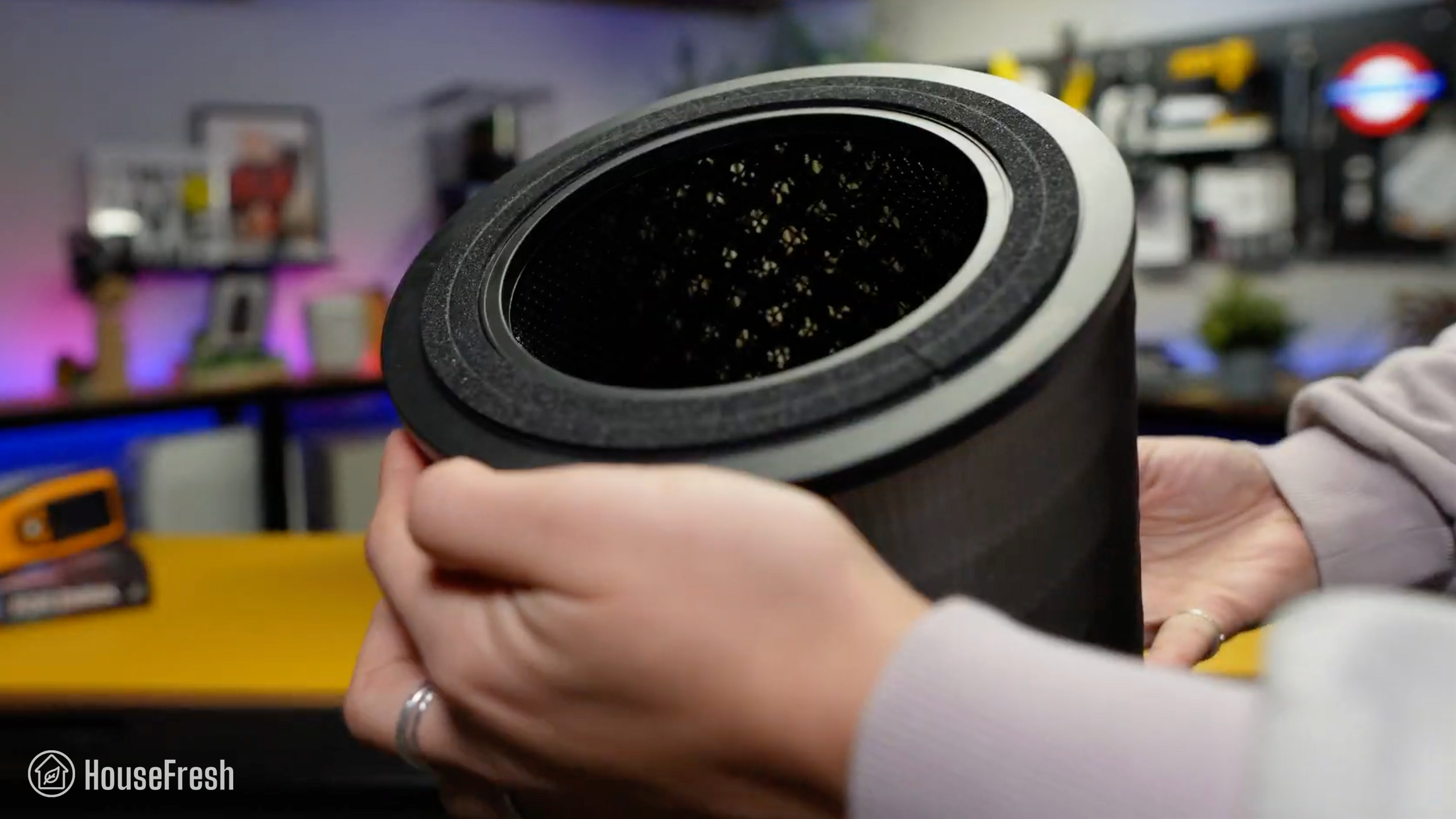
Austin Air HealthMate review

Austin Healthmate Hallway

Richard Taylor’s wife, Joyce, suffered from respiratory distress syndrome. He noticed that she only had relief when in a clean hospital room. So in 1990, he designed an air purifier that used True Medical HEPA and activated carbon to clean the air inside his home. Within a week of using the first device, Joyce could sleep undisturbed for the first time in years. That was the start of Austin Air.

Now, it’s one of the world’s largest air cleaning manufacturers, with a reported revenue of $19.2 million. What makes this brand stand out is that Austin Air purifiers use much more activated carbon than what is typically found in traditional consumer air purifiers, with around 15 lbs of carbon and zeolite in the HealthMate I am reviewing today.

While this means that Austin Air purifiers are among the highest-priced on the market, they are great at removing gases, odors and VOCs that standard air purifiers find much harder to remove. Austin Air was tested by the U.S. Army and fulfilled the largest deployment of air purifiers in American history to support the air quality concerns in post-9/11 NYC. 

As with every air purifier review we publish here at HouseFresh, we bought the Austin Air HealthMate Standard (B400B1) with our own money to remain unbiased.

The pros and cons of the Austin Air HealthMate

A summary of our top-level findings after testing this air purifier following our methodology.

Austin Healthmate TV Room

“The Austin Air HealthMate is the best air purifier on the market for dealing with severe air quality issues connected to chemical gasses, unwanted odors and VOCs.

However, with its 15 lbs of carbon and a price that surpasses $700, this device is overkill for those looking to keep dust and pollen levels low due to its high initial and running costs.”

Danny Ashton HouseFresh
Danny Ashton
HouseFresh Founder
& Lead Tester

CONS

At maximum fan speed, it pulls 148 watts which are on the higher side compared to similar-performing units,
It has no app support, on-board sensor or smart features.
At 61.5 dBA, it gets pretty loud when running at top speed.

PROS

It comes with 15 lbs of activated carbon with zeolite, which is the largest amount we have seen in a household air purifier.
Filters last five years before they need to be changed.
It has a one-dial operation that is easy to use right out of the box.
It comes on castor wheels that run well.

Clean air delivery rate (CADR):– Top speed PM1 CADR: 156 cfm
– Sub-45 dBA PM1 CADR: 77 cfm
– AHAM PM2.5 CADR: 154 cfm (dust)
Filter technology:HEPA particle filter with 15 lb of activated carbon and zeolite mix gas filter
Recommended room size:234 sq. ft. (5 air changes per hour)
Dimensions:23H x 14.5W x 14.5D inches (58.4H x 36.8W x 36.8D cm)
Weight:20.41 lbs (9.26 kg)
Noise level in decibels from 3 ft. away:Speed 1: 42.5 dB
Speed 2: 53.2 dB
Speed 3: 61.5 dB
Electricity consumption in watts:Standby mode: 0 watts
Speed 1: 61.1 watts
Speed 2: 85.05 watts
Speed 3: 147.6 watts
Filter lifespan:5 years
Manufacturer’s warranty:5 years
Country of origin:United States
Country of manufacture:United States (Buffalo, New York)

The best feature: a large amount of activated carbon and zeolite

The Austin Air HealthMate comes with a HEPA filter and a whooping 15 lbs of carbon and zeolite.

This is the largest amount of carbon we have encountered in a filter across the nearly 100 air purifiers we have tested.

However, at over $700, this air purifier will be out of budget for most people. That is why I particularly want to highlight it for those of you wanting to remove harmful VOCs and unwanted odors from your air, as that is the one use case where spending $700 will make the most sense.

Austin Healthmate Filter VS Core 300

Tip

The closest I can make would be the IQAir HealthPro Plus, which costs around $900 and also comes with powerful HEPA filtration and a gas filter that combines activated carbon and zeolite, too.

The one thing I will say about the HealthPro Plus is that it performed better in our particle removal test, cleaning the air of PM1 pollutants in 28 minutes compared to the 52 minutes it took for the Austin Air HealthMate to achieve the same result.

Now, the big difference between the two is that the HealthPro Plus comes with only 5 lbs of carbon compared to the 15 lbs of carbon you get with the HealthMate.

Design, controls and features

Functional design elements that do the job without any bells and whistles.

Austin Healthmate Front

The HealthMate is one of the largest air purifiers we tested, based on weight and dimensions.

The HealthMate has a simple 3-function switch for switching the unit on and for changing the fan speed.

Austin Healthmate Controls

The top of the device is flat and can make a handy side table:

Austin Healthmate Front

With a body made out of metal and a MASSIVE filter, this is a heavy air purifier that weighs 47 lbs (21.3 kg).

Austin Healthmate Living Room

Luckily, it comes on wheels that make it easy to move around the house.

Austin Healthmate Wheels

“With infrequent filter changes, the Austin Air is cheaper to own than almost every other heavy-carbon-HEPA air purifier on the market.

But at 45 pounds HealthMate NEEDS the four caster type wheels to get around, and may prove difficult for the elderly or infirm to move about the home, or upstairs.”

ed sherbenou
Ed Sherbenou
Air-Purifier-Power
Founder

When it comes to its size, we’re talking about an air purifier that will need its fair share of space. However, when compared side-by-side with its biggest competitor (the IQAir HealthPro Plus), you can see that even though the HealthMate has a similar floor footprint but is a much shorter unit.

IQAir Healthpro Plus VS Austin Healthmate

Filtration technology

The Austin Air HealthMate comes with a True HEPA filter and 15 lbs of carbon + zeolite mix.

Austin Healthmate Filter Change

Most air purifiers use a HEPA-based filter with a small amount of activated carbon via impregnated fabric or small pellets. The reason that small amounts of carbon are used is down to price and can quickly increase costs for the initial unit and replacement filters.

If you are dealing with unwanted odors and VOCs, you need the biggest amount of activated carbon available. The filter inside the HealthMate comes with 15 lbs of activated carbon and zeolite.

Austin Healthmate Filter

It is worth mentioning that replacing the filter in the HealthMate is not as straightforward as with other air purifiers I have tested. You will need a screwdriver:

Austin Healthmate Accesing Filters


Once you have detached the top of the unit from its body, you will be able to access the filter. Here is how it looks inside:

Air cleaning performance

We tested the HealthMate in our 728 cubic ft. test room, tracking how fast it removed all PM1 particles from the air after we filled the space with incense stick.

Austin Healthmate Hallway

According to our PurpleAir Zen sensor, the HealthMate needed 52 minutes to achieve PM1 zero in our 728 cubic ft. test room. We estimate a PM1 CADR of 156 cfm.

But this information in isolation probably doesn’t mean much to you, so I made a table to show you how the performance of the Austin Air HealthMate compares to other devices we have tested:

AIR PURIFIER MODELTIME TO REACH PM1 ZERO AT FULL SPEEDLIST PRICE
Smart Air Blast Mini MKII15 minutes$649.00
Levoit EverestAir16 minutes$499.99
Alen BreatheSmart 45i30 minutes$429.00
Winix 5500-223 minutes$249.99
Rabbit Air A324 minutes$749.95
Coway Airmega AP-1512hh Mighty26 minutes$229.99
IQAir HealthPro Plus28 minutes$1000.00
AirDoctor 300030 minutes$519.00
Austin Air HealthMate52 minutes$756.00

If this air purifier were to have been designed with the focus of removing particles from the air, then the results could be seen as unimpressive, considering that it cleaned our test room at a similar rate to the Levoit Core 300 (54 minutes), which is available for $99.

But you must consider that the Austin Air is designed to remove gasses and VOCs due to its larger-than-normal activated carbon and zeolite filter. And the thing with large amounts of carbon is that they restrict airflow, so this will have an effect in the particle removal performance of this air purifier.

Luckily our upgraded Purple Air Indoor sensor has the latest BME68 sensor that allows us to also track the level of VOCs in the air. 

Removing gasses takes much longer and even with the large filter of the Austin Air HealthMate, you can see that VOC levels are drastically reduced over the next few hours after we perform our particle test. By 2 p.m., we had reduced the level of VOC from 433.65ppm to 50.52ppm. 

Sound levels

The sound levels of the Austin Air HealthMate range from 42 dBA to 61.5 dBA — this matches what we saw with the IQAir HealthPro Plus (61.2 dBA at top speed).

As part of our testing, we use a sound level meter to measure how much noise each of the air purifiers we review generates at each fan speed.

SpeedSound Level
142.0 dB
253.2 dB
361.5 dB

This is how this compares to other devices we tested:

AIR PURIFIER MODELSOUND LEVEL AT TOP SPEED (dB) TIME TO CLEAN OUR TEST ROOM
Smart Air Blast Mini MKII56.3 dB15 minutes
Levoit EverestAir57.8 dB16 minutes
Coway Airmega AP-1512hh Mighty60.1 dB25 minutes
IQAir Healthpro Plus61.2 dB28 minutes
Austin Air HealthMate HM40061.5 dB52 minutes
AirDoctor 300063.6 dB20 minutes

The ability to remove VOCs will likely require a more substantial fan to push the air through the large filter, so more noise is expected. While it’s not painfully loud, it would be too loud if you had to work in the same room. 

That being said, I know that noise is subjective. Have a listen for yourself so you can assess whether the Austin Air HealthMate is too noisy for you.

I re-tested the particle removal performance of the HealthMate at its only sub-45 dBA fan speed (speed 1 @ 42 dBA) and it needed 76 minutes to reach PM1 zero:

Long-term running costs

Running a Austin Air HealthMate will cost you $226.95 per year, combining energy consumption costs and filter replacement prices.

As with all the air purifier reviews we publish here at HouseFresh, we did the math to calculate how much you should budget to run this specific device for a year accounting for energy costs and filter replacement costs.

First, we used a power meter to measure just how much electricity the HealthMate consumes at each of its fan speeds:

Fan speedEnergy consumed
161.1 watts
285.05 watts
3147.6 watts

This means that it would cost you $163.95 in energy costs for a year, based on 24/7 usage at top speed at the average U.S. energy rate.

The replacement filters for the HealthMate costs a whopping price of $315. Luckily, you only need to replace the filter every five years, which will translate into $63 per year in filter replacement costs.

Check the table below to compare the yearly running costs of an Austin Air HealthMate with what you can expect to pay with other similarly-priced and popular air purifiers:

AIR PURIFIER MODELESTIMATED ELECTRICITY COST (per year) FILTER REPLACEMENT COST (per year)YEARLY MAINTENANCE COST
Coway Airmega AP-1512hh Mighty$83.64$39.99$123.63
Winix 5500-2$57.82$79.99$137.81
Levoit EverestAir$73.58$99.99 $173.57
Smart Air SA600$56.55$141.47$198.02
AirDoctor 3000$104.63 $178.00$282.63
Austin Air HealthMate$164.39$57.90$283.03
Smart Air Blast Mini MKII$136.29$236.99 $373.28
IQAir HealthPro Plus$221.47 $200.00$421.47

Bottom line: Should you get an Austin Air HealthMate?

This is the best air purifier on the market today if you have serious issues with VOCs or odors. Otherwise, you should look into cheaper units.

If you have health concerns that tie back to VOCs or are experiencing significant issues with gasses, you can’t get much better than the Austin Air HealthMate and its 15 lbs of activated carbon and zeolite.

However, for the vast majority of use cases, spending $700+ on this device will be overkill and unnecessary.

Austin Healthmate Living Room

The HealthMate comes with much more activated carbon than the IQAir HealthPro Plus (5 lbs VS 15 lbs) and is cheaper to buy and run. But when it comes to particle removal performance, the HealthPro Plus will offer you better bang for your buck – even at its higher price.

So for those looking for the best air purifier for dealing with serious VOCs, then the Austin Air HealthMate is definitely a top contender. But if you are just looking for a good air purifier that will help with common kitchen odors, dust and pollen, then you will be able to find a device for a fraction of the price in our list of the best air purifiers we recommend right now.

And if you’re looking at the HealthMate because you’re looking for an air purifier made in the USA, then you should also check out the Luggable XL-7 from the team at CleanAirKits. It doesn’t come with activated carbon so it will be useless against odors and gases but its particle removal performance is INCREDIBLE, it is whisper quiet thanks to the use of PC fans AND all the DIY kits are made in the USA.

SOURCES

We calculated yearly costs associated with running the Austin Air  Health Mate 24 hours a day, 365 days per year utilizing the appliance electricity consumption calculator from the U.S. Department of Energy as of January 2025.

Levoit Core 400S review

Levoit Core 400S Living Room 2 1

Today, I am reviewing a highly popular air purifier from Levoit that came on the market in 2021: the Levoit Core 400S.

This mid-sized air purifier sits between the Core 300S and the larger Core 600S, and it comes with the same cylindrical design and smart features such as the VeSync app.

The overall score for the Levoit Core 400S incorporates first-hand data results from our battery of tests, as well as our ratings for customer service, brand transparency and design & UX. Check out the full scorecard below to see the split of categories.

I have tested and compared the U.S. version with the European version in our YouTube channel, and learned that performance varies between the two. You can watch the video below:

As always, we bought both of our Core 400S devices with out own money so we could write an unbiased review, getting to experience the same customer journey you will if you decide to buy it. If you want to support the work we do at HouseFresh, please use the links in the buttons used throughout this page – we will earn a small commission at no extra charge to you.

The pros and cons of the Core 400S

A summary of our top-level findings after testing this air purifier following our methodology.

Levoit Core 400S Living Room.jpg

💡exclusive code for HouseFresh for 10% off a single purchase on Levoit.com: HOUSE10

“A solid option to consider with medium-sized rooms and those who value smart features like app support, auto-mode, and a screen that displays air quality levels in real time.

That said, I still think most people would be better off with the slightly cheaper Vital 200S thanks to its removable pre-filter, but the Core 400S is worthy of consideration, especially if you prefer the cylindrical design”

Danny Ashton HouseFresh
Danny Ashton
HouseFresh Founder
& Lead Tester

Looking for some quick-fire facts on the 400S? Here are the key points from my full review. 

CONS

There is no clear information anywhere about the differences between the European and the U.S. version of the Core 400S.
It uses a bonded filter so the pre-filter is attached to the main filter, which makes it inconvenient for cleaning regularly. Plus, you will need to replace the entire thing once the carbon is full, even if the particle still has life in it.
And we have the whole issue with Dyson’s complaint against Levoit with the BBB that led to Levoit removing the term HEPA from their marketing materials.

PROS

The U.S. version has great performance at sub-45 dBA fan speeds (134 cfm). The EU version was six minutes slower than the U.S. version (118 cfm).
You get filter options with different amounts of carbon, with the top one being 450 grams (Smoke Remover), which is the most you will get with any Levoit device.
The cylindrical design takes up less floor space than the traditional boxy air purifier design.
Super energy efficient, drawing 38 watts on its highest speed setting
The app has a ton of useful features and it is constantly updated and improved.

Clean air delivery rate (CADR):– Top speed PM1 CADR: 213 cfm
– Sub-45 dBA PM1 CADR: 134 cfm
– AHAM PM2.5 CADR: 247 cfm (dust)
Filtration technology:Pre-filter for large particles, main filter for airborne particles and activated carbon filter for odors and gasses
Recommended room size:319 sq. ft. (5 air changes per hour)
Dimensions:10.8L x 10.8W x 20.5H inches (27.4L x 27.4W x 52H cm)
Weight:11.2 lbs (5 kg)
Filter lifespan:6 months
Noise level in decibels from 3 ft. away:Sleep mode: 35.5 dBA
Speed 1: 38.3 dBA
Speed 2: 43.2 dBA
Speed 3: 51.2 dBA
Speed 4: 60.3 dBA
Electricity consumption in watts:Standby: 0.93 watts
Sleep mode: 3.05 watts
Speed 1: 5.28 watts
Speed 2: 8.51 watts
Speed 3: 16.41 watts
Speed 4: 39.64 watts
Manufacturer’s warranty:2 years
Country of origin:United States
Country of manufacture:China

Design and controls

The 400S might not set the world alight with its appearance but is well-designed with some useful smart functions.

Levoit Core 400S Kitchen

💡exclusive code for HouseFresh for 10% off a single purchase on Levoit.com: HOUSE10

Those who own any of the Levoit Core series will recognize the design of the Core 400S. 

Similar to the 300S and the 600S, it uses a cylindrical design which means it is more compact and takes up less floor space than the rectangular designs we see with the Vital series. 

Levoit Core 300S VS 400S VS 600S

While it’s much bigger than the Core 300S, it feels more manageable than the very large 600S, and as it’s less imposing. Personally, I prefer the design of the 400S over the larger 600S. 

Core 400S filter

Like the other devices in the Core series, the filter in the 400S is bonded, so the particle filter and carbon are combined into one filter, with a layer of mesh pre-filter on top.

This means that cleaning the pre-filter will involve taking out the entire filter, which is more cumbersome and may lead you to clean the pre-filter less often.

Core 400S sensor

The 400S comes with a laser air quality sensor that is better than the standard optical sensors that come with most air purifiers.

According to Levoit, you still need to clean with a vacuum cleaner every few months, but it is quicker to respond and more accurate than optical sensors.

Core 400S control panel

You get an LED ring on the control panel that changes color depending on the air quality. But unlike the 300S, you also get the particle count on a little screen inside the ring.

On the panel you’ll get a button to adjust the fan speed, sleep mode, auto mode, a button to switch off the lights, a child lock, a timer and a filter replacement indicator.

App connectivity

Those with smart homes will appreciate that you can connect the Core 400S to your phone and your smart home hub.

You can operate the 400S from your phone through the Vesync app, which is the same app that is used across all Levoit smart appliances. Once the app is set up, you can also use Amazon Alexa or Google home to control/access the air purifier. 

core 400S app1

Through the app, you can do the usual stuff like scheduling routines but you can also change the settings of the auto mode. This is something I wish more air purifiers would allow so you get to decide whether you want auto mode to hit the top fan speed or not. 

Usually auto modes don’t hit the top fan speed to reduce noise and energy consumption, but this leads to the air not being cleaned as fast and effectively as it could be.

core 400S app2

One thing that is worth noting is that Levoit has been busy rolling out new features for its app that will work across all models.

The tracking history of indoor air quality data is much better than it used to be, with regular intervals graphed out, including what mode the Core 400S was on at the time. I hope to see Levoit continue to improve the app support through regular updates.

All in all, the VeSync app is one of my favorite air purifier apps, but I do find the constant ads annoying. When I go on it, I do it to manage my Levoit devices so I don’t really want to see adverts for other Levoit products. I much prefer a cleaner design that just gives me the tools I need without it turning into a sales pitch to sell me more products. 

Filtration technology

For those looking for an air purifier to tackle odors, the 400S is a better choice than the larger 600S due to the option of a Smoke Remover filter with 450 grams of carbon.

Before I take you through what you get with the filter, we first need to talk about the change in marketing Levoit made after Dyson made a complaint to the BBB. When we bought our Core 400S, the filter was labelled as HEPA H13, but in late 2023 Levoit changed their marketing to remove all mentions of HEPA H13 after Dyson complained about the filters not being HEPA H13 certified.

However, after having tested over 100 air purifiers, I can confidently say that you don’t need a HEPA filter to get excellent air cleaning performance, as shown by what we saw when testing the Luggable XL-7 from CleanAirKits with its MERV 13 filters. This can be explained by the fact that high-grade HEPA filters will restrict the air passing through them, which in turn leads to lower airflow compared to low-grade particle filters that can benefit from the air passing through the filter multiple times.

Having said that, I still don’t think it’s okay for Levoit to say one thing publicly across their marketing and then take it all away quietly without any explanation of what happened or any sort of clarification on the grade of their filters.

Anyway, let me tell you about the filter…

core 400S prefilter

The Levoit Core 400S has a cylindrical bonded filter that is larger than what you get with the Core 300S but smaller than the filter in the Core 600S.

As we’ve come to expect from Levoit, you will find that there are multiple options for filters, each with different amounts of carbon.

levoit core 400s filters

The Original filter has 240g of carbon. The Pet Allergy and Toxin Absorber filter have 400g of carbon. Finally, the Smoke Remover filter comes with 450g of carbon.

The Levoit Core 400S with the Smoke Remover filter has the highest amount of carbon in the entire Levoit range.

Be aware that even though more activated carbon will be better for dealing with odors and gases, it will also reduce particle removal performance as carbon restricts airflow. So, if you don’t need the extra carbon, you are better off sticking with the original filters as they will save you money and offer higher CADR for removing particles.

It’s super simple to install and replace these filters. All you have to do is twist the body of the purifier, slot in the cylindrical filter with the tabs facing up, and reassemble the unit. Check out our short video below to see just how easy it is. 

The Levoit Core 400S I’m reviewing here doesn’t have an ionizer function but there is a version of the model that does: the PlasmaPro® 400S Smart Air Purifier.

400s plasmapro

Levoit’s PlasmaPro technology generates positive and negative ions that bind with pollutants to help neutralize them. This is similar to what we see in Winix units and their PlasmaWave technology.

Levoit air purifiers equipped with PlasmaPro have a button on their control panel with a leaf next to a plus (+) and minus (-) symbol that you can press to enable and disable this bipolar ionization technology.

Air cleaning performance

Our American Core 400S cleared our test room in 24 minutes, whereas our European version needed 30 minutes.

core 400s performance

💡exclusive code for HouseFresh for 10% off a single purchase on Levoit.com: HOUSE10

According to our PurpleAir Zen sensor, the U.S. version of the Core 400S needed 24 minutes to achieve PM1 zero in our 728 cubic ft. test room — we estimate a PM1 CADR of 213 cfm.

We were surprised to see that the European version of the 400S was slower, needing 30 minutes so we estimate a PM1 CADR of 198 cfm.

You can see the results of both tests in the chart below:

As you can see from the table, the U.S. Core 400S performs as well as the best devices we have tested when running at top speed.

core 400s comparison top speed scaled

When comparing against other units in the Levoit range, it becomes clear that the mid-sized Core 400S offers good value for your money:

performance comparison levoit core range scaled

I reached out to Levoit’s customer support team to confirm whether the two devices were supposed to be the same as I noticed that the same CADR figure was used in the marketing material in Europe and in the U.S.

“The European Core 400S model has been optimized with a focus on noise reduction. Extensive user research revealed that noise levels are a significant consideration for European customers. By optimizing the wattage, we are able to deliver a quieter experience without compromising essential air purification capabilities, ensuring a product that aligns with local expectations for comfort and usability.”

Levoit Customer Support

So it seems that the European version has been designed to be quieter which neatly brings us to the next part of our testing…

Sound levels

In our testing, the sound levels of the U.S. Core 400S ranged from 35.5 dBA to 60.3 dBA, and the European version ranged from 35.5 dBA to 55.9 dBA.

core 400s sound energy test

If an air purifier is too loud, you will turn it off eventually. That is why we always measure how much sound each air purifier generates from three (3) feet away.

core 400s us eu sound levels

Be aware our background noise is 35 dBA, so the 400S running at sleep and speed 1 is likely to generate less sound if you could measure it in a silent room.

Sound levels at low fan speeds are very similar but the U.S. version runs louder top speed. Compared to some of the best HEPA retail devices we have tested, the European Core 400S is quietest at top speed, but as expected, it can’t compare with a PC fan air purifier like the Luggable XL-7.

core 400s performance vs sound scaled

However, you are unlikely to want to run your device at top speed all the time, so we found a fan speed at which the Core 400S generates less than 45 dBA of noise, which is the limit we have set for our quiet performance tests.

Running at speed 2 the European model hits 44.4 dBA and the American version hits 43.2 dBA, so we repeated the particle removal test with both devices running at that sub-45 dBA speed.

core 400s quiet performance scaled

The U.S. version running at speed 2 is much closer to other mid-sized devices like the Vital 200S and Winix 5500-2 but can’t compete with much larger CADR devices like the Levoit EverestAir.

But as with most HEPA retail design it can’t compete with PC fan-powered devices like the Luggable XL and AirFanta 3Pro.

Long-term running costs

Running a Core 400S will cost you $144.41 per year, combining energy consumption costs and filter replacement prices.

As always, we used our energy meter to measure how much electricity the 400S uses when running at each fan speed and also while on standby.

core 400s energy consumption

As with sound, the difference in energy usage only shows at the top fan speed. If you had to leave your European Core 400S running 24/7, it would cost $26.07 in energy costs for a year and for the U.S. Core 400S it would cost $44.43

Considering you need to replace the filter every six months and that the replacement costs $49.99, you can expect to also spend $99.98 per year on filters.

When combining energy and filter costs, you can expect to pay $126.06 if you buy the European version and $144.41 if you get the U.S. version, due to the slightly higher energy consumption.

core 400s long term costs scaled

There are many generic filters available, starting at $34.99 per filter. We will run performance tests with a range of generic filters for our Patreon supporters.

Bottom line: Is the Levoit Core 400S worth it?

It really depends on the version you get, as the European version and U.S. version are not the same.

The European Core 400S will cost less to run at top speed on a yearly basis, but the U.S. version offers better air cleaning performance at more usable speeds under 45 dBA.

Levoit Core 400S Living Room 2 1

💡exclusive code for HouseFresh for 10% off a single purchase on Levoit.com: HOUSE10

Its size is much easier to live with compared to the Core 600S and Levoit EverestAir, and it requires less floor space than the Vital 200S.

While it lacks the Vital 200S removable pre-filter, the Core 400S still has all the smart functionality and features of the latest series, and I was pleased to see that Levoit has been adding new features to the app.

The OEM filters are fairly priced and thanks to the efficient fan motor, it doesn’t consume as much energy as other mid-sized air purifiers. 

Another pro is that its Smoke Remover filter comes packed with the highest amount of pelleted activated carbon in the Levoit Core range, including the much pricier Levoit EverestAir, which has 400 grams of carbon.

For those wanting a cheap air purifier with a good amount of carbon to help remove odors, the Core 400S with the Smoke Remover filter is the best option available under $250. In fact, you will usually find it online at around $180.

carbon filters compared

This review is a great example of how important first-hand testing is, as the AHAM report available on the EnergyStar website shows one CADR figure for the Levoit Core 400S but our testing shows that there are CADR differences between the U.S. version of this device and the model sold across Europe.

If you appreciate the lengths we go to with our air purifier reviews, be sure to use the links in the buttons. We will get a small affiliate commission at no extra cost to you, and it will help support the work we do here at HouseFresh.

Have you got any questions about the Core 400S that I didn’t answer in my review? Please, drop them in the comments below and I’ll reply as soon as I can.
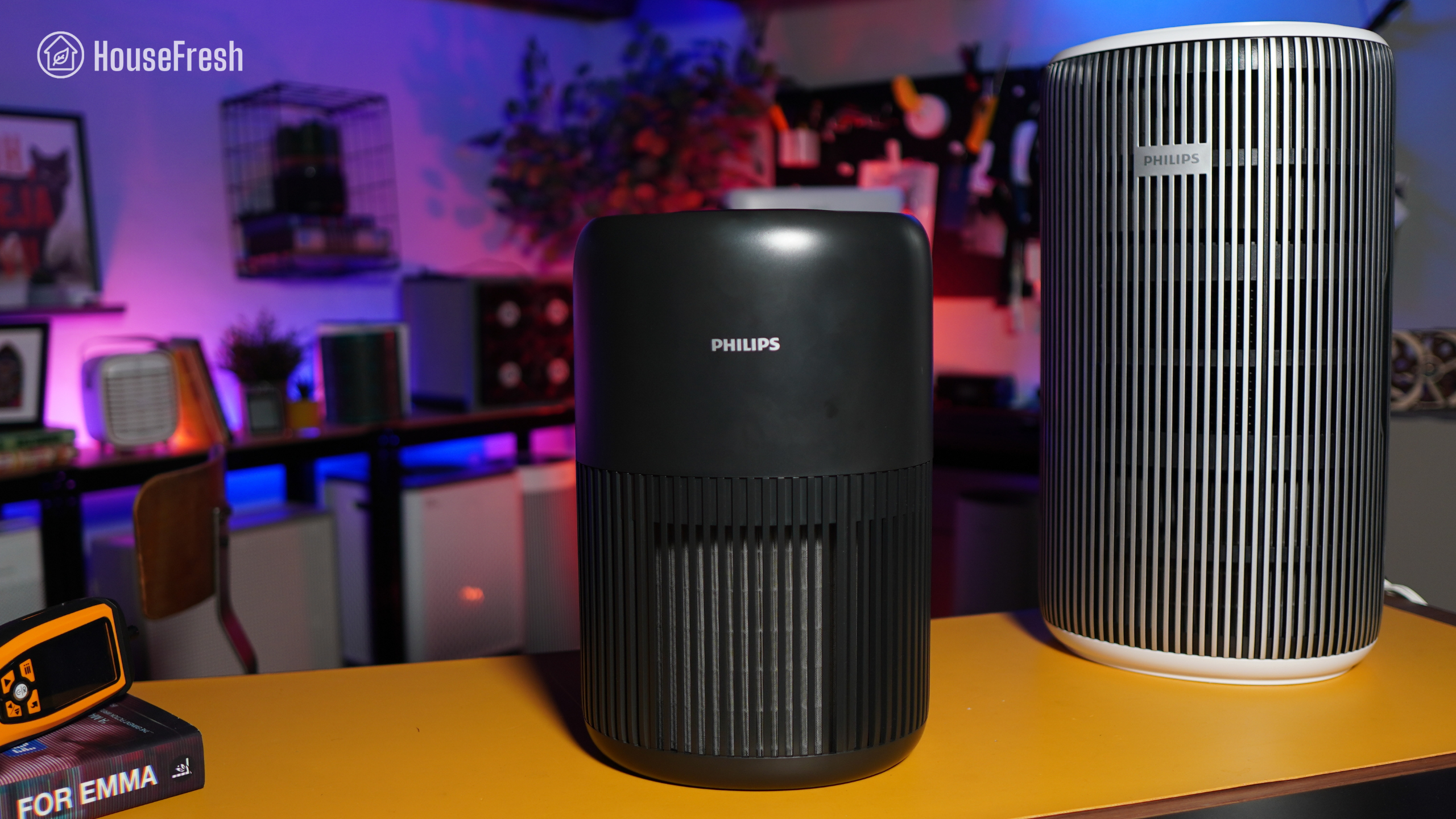
Smart Air Blast Mini review

Blast Mini MKII Corner

Smart Air’s story is one of humble beginnings. It all started in 2013 when founder Thomas Talhelm was a student in Beijing, working on his PhD. 

Air pollution is an ongoing issue in Beijing, mainly due to smog, traffic pollution, coal burning and sandstorms. This led Talhelm to want to buy an air purifier, but he was shocked to find the cost of air purifiers was way outside his budget.

Talhelm decided to take matters into his own hands. 

He solved his problem at a fraction of the cost by simply strapping a HEPA filter to a fan. When he posted his results online on his blog, Particle Counting, he started to receive positive feedback and questions from folks wanting to do the same.
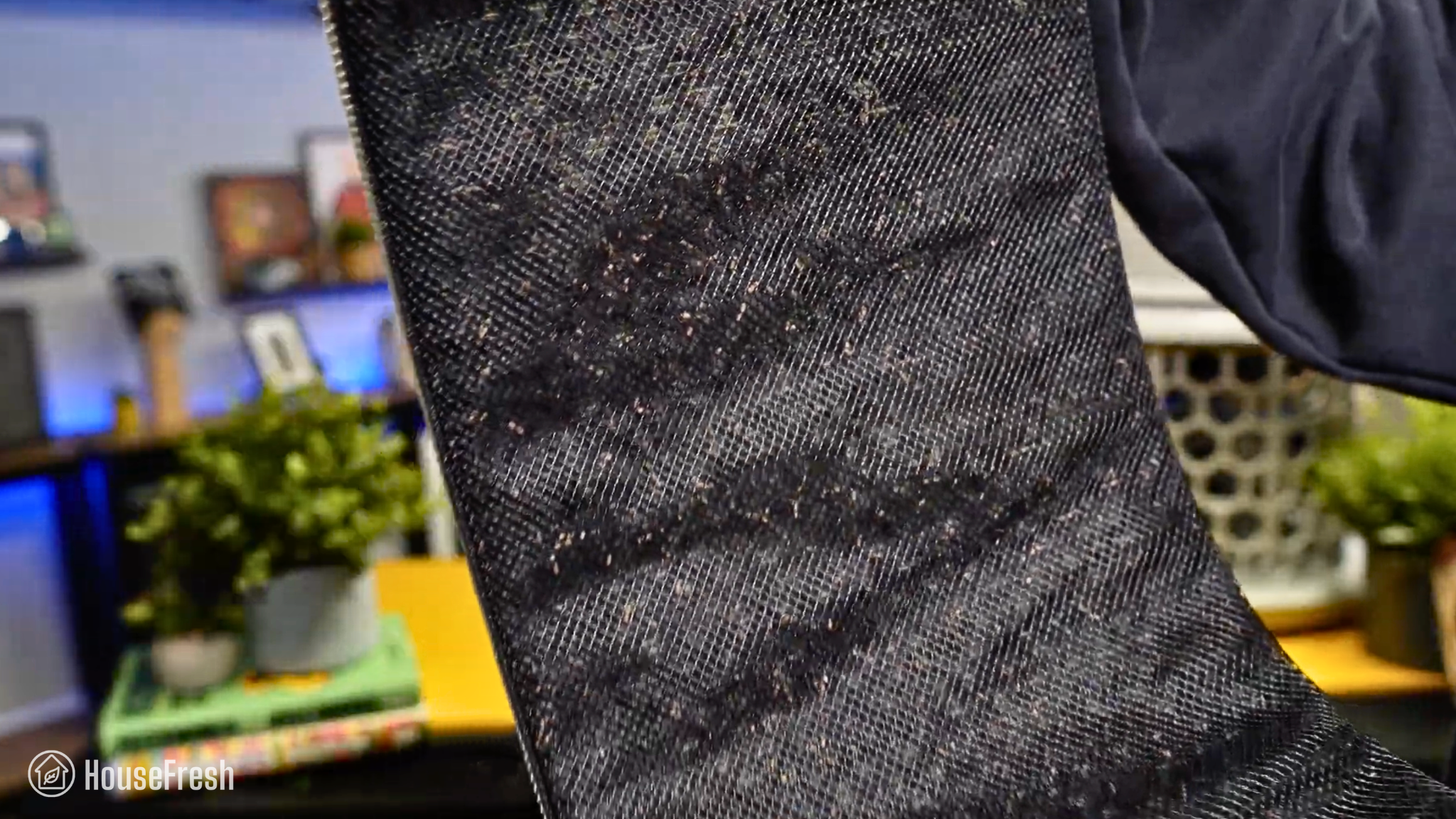
And so, Smart Air was born. Initially, they focused on selling DIY kits (a box fan, a HEPA filter and a strap) and hosting workshops in Beijing to teach people how to build their own air purifiers.
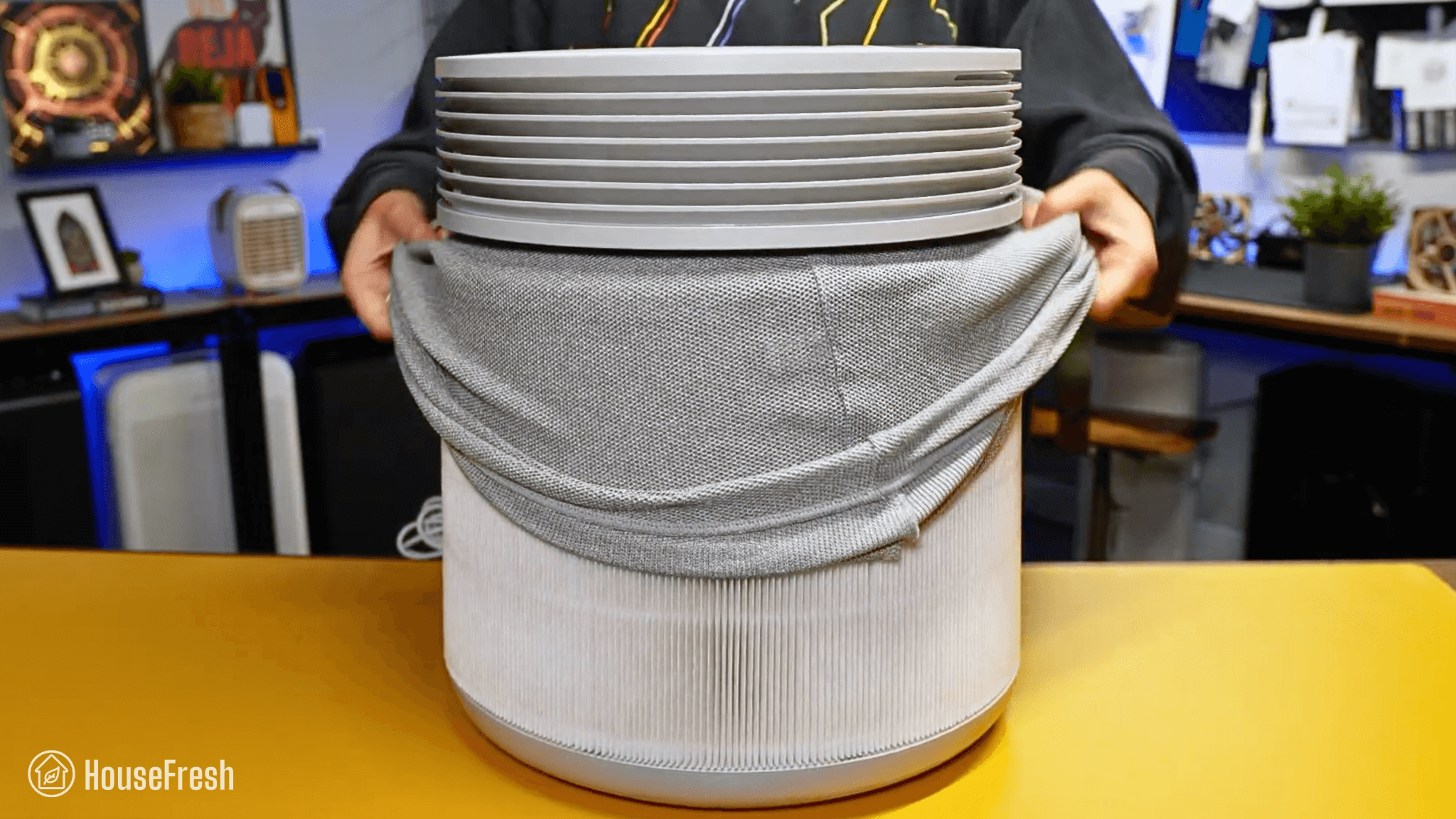
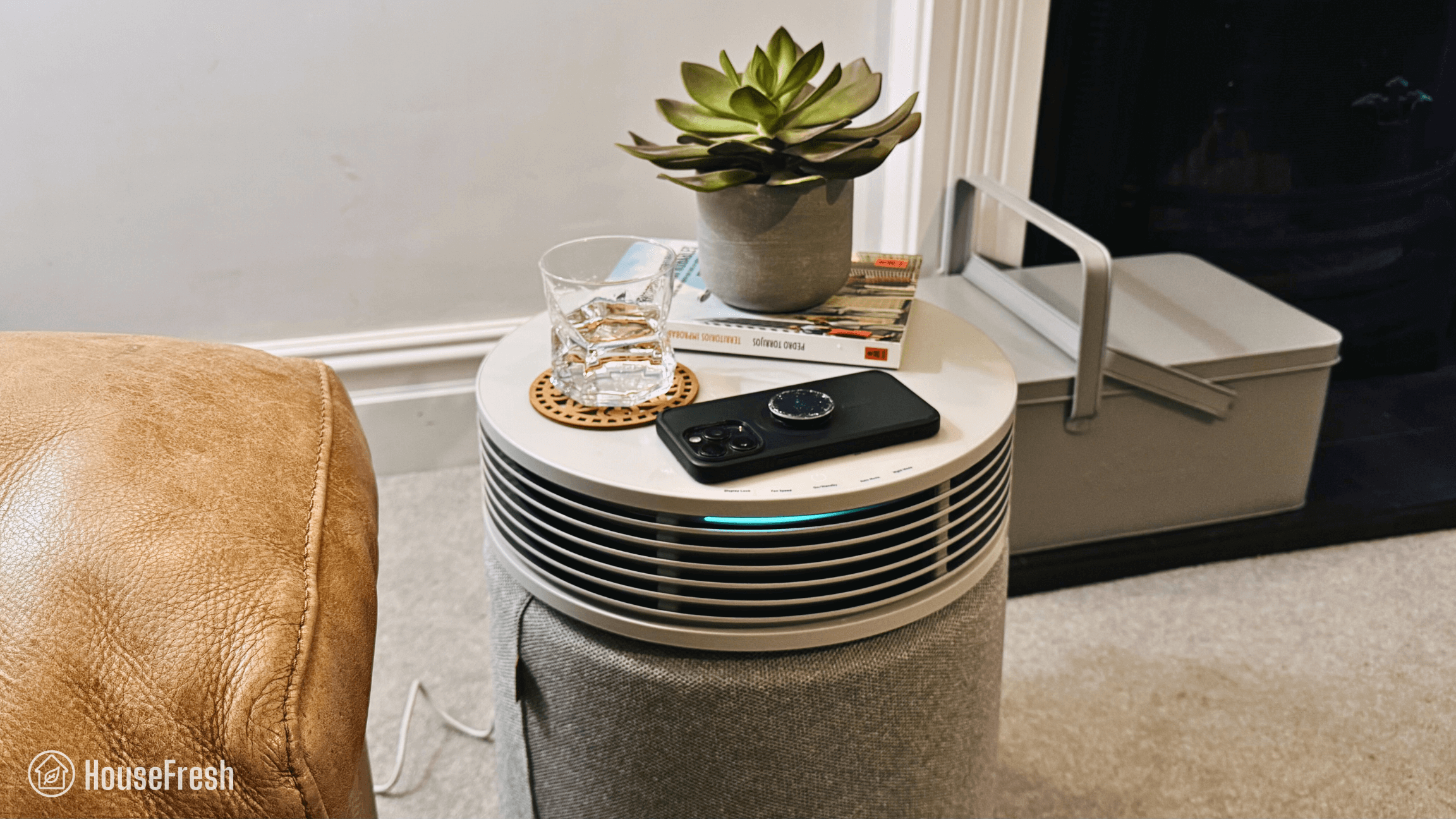
smart air 2013

Over time, Smart Air took the plunge and released its own line of no-nonsense, affordable air purifiers. That’s when units like the Blast Mini were introduced into the market.

The Blast Mini MkII is the second version of the Blast Mini. When designing the MkII, Smart Air made improvements to the original MkI design. They redesigned the air outlet to increase its airflow from 1200 to 1400 m3/hr, got rid of the metal wire guard and introduced hand twist screws to make it easier to remove the pre-filter, and upgraded the cardboard frame of the HEPA filter to make it lighter and more environmentally friendly.

In this review, I will walk you through the results of our performance tests, including how well the Blast Mini cleans the air, how loud (or quiet!) it is, how much money you will need to spend every year to keep it running, and how it’s like to live with it.

how we test
How we test air purifiers

Read our full testing methodology.

The lowdown on the Smart Air Blast Mini

Danny Ashton HouseFresh

“The Blast Mini outperformed all the units we’ve tested so far. It’s not loud, and although it’s heavy (mainly due to its metal body), it has wheels that move it around with ease. 

This is an air purifier that will stand the test of time.”

— Danny Ashton, HouseFresh Founder & Senior Writer

Blast Mini MKII Corner

PRICE AT SMART AIR U.S.
£432 AT SMART AIR UK

If you want a quick summary, these are my main likes and dislikes for the Blast Mini.

What we really like

It’s made from metal instead of plastic, making it more durable and better for our planet.
It has a high CADR rating of 435 CFM (740 m3/h) – it cleaned the air in our test room in just 15 minutes.
The filter boasts a longer life than most other brands (13 months).
It doesn’t look out of place in my home, and I like the design of the front plate.
It is incredibly easy to use thanks to its one-dial operation. No fluffy functions.
Our sound tests showed it is incredibly quiet, considering how powerful its fan is.

What we think could be better

At 59 lbs, it ain’t easy to move this device from room to room — luckily, it comes with wheels.
The control dial sits at the back, making it difficult to access if you have the unit close to the the wall. But that also means that your kids (or your pets) won’t be able to access the controls easily.
Our electricity consumption test showed it is not as energy-efficient as other units (122.7 watts at its highest fan speed).

Clean air delivery rate (CADR):– Top speed PM1 CADR: 400 cfm
– Sub-45 dBA PM1 CADR: 272 cfm
– Manufacturer provided CADR: 437 cfm
Filter technology:H13 HEPA filter (and optional pelleted activated carbon filter)
Recommended room size:600 sq. ft. (5 air changes per hour):
Dimensions:22.6L x 13W x 24.8H inches (57.5L × 33W × 63H cm)
Weight:59 lbs (26.8 kg)
Noise level in decibels from 3 ft. away:Speed 1: 44.9 dB
Speed 2: 51.2 dB
Speed 3: 56.3 dB
Electricity consumption in watts:Standby mode: 0 watts
Speed 1: 51.9 watts
Speed 2: 87.4 watts
Speed 3: 122.7 watts
Filter lifespan:13 months
Manufacturer’s warranty:1 year
Country of origin:China
Country of manufacture:China

Right, let’s find out if the Blast Mini is the right air purifier for you.

The best Blast Mini feature: it is powerful yet quiet

Outstanding air cleaning speed that doesn’t disturb you.

The Smart Air Blast Mini has a high-performance motor that moves air through the filters a lot faster than every other air purifier I have tested. But here’s the thing: it is super quiet, too.

After our performance tests, the Blast Mini took the #1 spot as the fastest unit at cleaning the air (15 minutes, according to our PurpleAir Zen sensor) and the #1 spot as the quietest large air purifier (56.3 dB at top speed). 

Have a listen for yourself:

The “Mini” that is not so mini

No more plastic — you can now choose this metal beast with wheels and a one-dial control.

Blast Mini Living room

The Smart Air Blast Mini’s body is fully made of metal. This material will stand the test of time and is also a far more sustainable option compared to the plastic body of every other air purifier on the market.

Despite all odds, the metal body is actually quite stylish—mainly because of the beautiful front plate. Upon closer inspection, you can see that these cutaways are carefully polished to ensure there are no sharp metal edges anywhere in sight.

Blast Mini Design

The front plate is tightly secured by a metal top plate, which can be easily removed so you can access the filters. I say easily but be wary of the weight of each component of this air purifier, as everything is made of metal:

Blast Mini MKII Top Cover Removed

This is the part of the review where I clarify that the Blast Mini is not mini in size at all. The ‘Mini’ in the name has been added in relation to size compared to the Smart Air Blast (the big brother of the Blast Mini), which is double the height.

For reference, I took a photo of the Blast Mini next to the popular Levoit Vital 200S just to show you how big this device is:

Smart Air Blast Mini vs Levoit Vital 200S

The good news is that, unlike other large air purifiers like the Blueair Blue Pure 211+ or the Levoit Core 600S, the Blast Mini has high-quality, lockable wheels that allow you to move the unit from room to room. 

Blast Mini MKII Wheels

That said, the size makes complete sense when you realize how powerful this air purifier is. I will go through our performance test results further down in this review, but I can tell you now that this thing is IMPRESSIVE.

Moving on, let me show you one of my favorite things about the Blast Mini: its minimalist control panel.

Do you see the black dial in the picture below? That’s it. That’s your control panel.

Blast Mini Control panel

There are three speeds to choose from. Simply turn the dial to select which speed you want, and voilà.

The downside of the Blast Mini is the lack of smart functions or app capabilities. I generally prefer air purifiers with Auto Mode and on-board air quality sensors, but I’m also a smart home geek who understands that these IoT features don’t equal better air cleaning performance.

Smart Air believes that air purifiers should concentrate on their basic function without the need for bells and whistles, and they have designed a device that perfectly makes this point.

🎸 The Blast Mini was spotted being used by The Anchoress, who is clinically vulnerable and used a number of these air purifiers to keep the air she breathed clean; check out the photos over at NME.com.

A large, long-lasting H13 HEPA filter

The filter is the most important part of any air purifier, and the Blast Mini does not disappoint.

Blast Mini Close up

Smart Air made it their mission to have the best HEPA filter in the market by testing different filters in order to find the highest-performing option to match their powerful fan. They decided on an H13 (medical grade) HEPA filter, which removes 99.95% of particles like dust, pollen, pet dander, bacteria and viruses.

Blast Mini MKII HEPA Cover

Another thing worth mentioning is that the HEPA filter in the Blast Mini is huge, measuring 57 x 57 cm (23 x 23 inches). 

Just to put this into perspective, check out how much larger the filter looks next to the filter in the Levoit Core 200S — the Blast Mini HEPA filter is double the size of the Vital 200S filter!

Blast Mini MKII HEPA vs Vital 200S

Unlike other air purifiers, which need their HEPA filters replaced every six months, the Blast Mini’s filter can last up to 13 months.

In addition to the HEPA filter, the Blast Mini comes with a pre-filter at the back of the unit. This pre-filter captures larger particles like dust and hair, prolonging the lifespan of the HEPA filter.

The pre-filter is screwed in with twist screws, so you can easily unscrew it when you want to vacuum it and wash it with water or a damp cloth.

Blast Mini Back

Now, if you are reading about the Blast Mini because you’re considering it to help you tackle issues with VOCs or smells, be aware that Smart Air doesn’t provide an Activated Carbon filter as standard. 

That means you will have to purchase Smart Air’s VOC filter as an optional extra. 

In the words of Smart Air, “Purifier companies have a financial incentive to convince people to buy carbon filters.” In their view, consumers should only buy a carbon filter if they truly need it.

The Blast Mini cleared our test room in 15 minutes

The large body of the Blast Mini hides a heavy-duty motor with a centripetal “squirrel cage” fan that can quickly move a lot of air through the HEPA filter.

Blast Mini MKII No Filter

Now we’ve come to the good part: how this air purifier performs in the real world. 

If you visit Smart Air’s YouTube channel, you’ll see videos of them testing the performance of their air purifiers in translucent domes. We don’t have a translucent dome, and we guess you don’t either.

So, we tested the Blast Mini in an actual room to see how fast it could clear our 728-cubic-feet test room of airborne pollutants we generated by lighting an incense stick. We turned the Blast Air on at full speed and monitored each stage of our test using two indoor sensors, our Purpleair Touch and PurpleAir Zen, which provided us with updates on PM1.0 Ug/m3, PM2.5 Ug/m3, and PM10.0 ug/m3 levels in real-time.

With a fan of this size, I expected great results from the Blast Mini but the data still managed to surprise me. This unit cleared our simulated airborne contaminants from our home lab in an astonishing 15 minutes.

This placed the Blast Mini at the top of our leaderboard: it is the fastest air purifier we ever tested. You can see in the chart below how it compared to the top 10 fastest units we’ve tested;

The closest units are the Levoit EverestAir and the AirDoctor AD3000, both of which trail behind the Blast Min by just two minutes.

Fan speed test results

The cleaning performance of an air purifier depends on two factors: how good the filter is and how much air the unit pushes through it. Basically, the more power a unit has, the more clean air it can circulate in your room.

We used an anemometer to measure air speed when running our Blast Mini at each fan speed:.

Our data shows that at its lowest speed, the Blast Air pushes out an average of 0.55m of air per second (m/s). At medium fan speed, it pushes 1.6 m/s on average and at its highest speed, it pushes an average of 2.6 m/s.

Noise levels test results

As part of our tests, we also measured the noise levels generated by the Blast Mini at each of its fan speeds while standing 3 ft. away from it.

Because of the size and power of the fan in this unit, you can’t expect it to be “whisper” quiet, but it’s by no means loud. 

At its lowest speed, you will hear the hum of the motor at 44.9 dB, and as you crank it up, it reaches 56.3 dB, which is about the sound of a conversation — pretty outstanding considering the average decibels at the highest speed across all the units we’ve tested sit at 64 dB.

I know that sound can be subjective, so it is worth listening to the noise generated by the Blast Mini  with your own ears to decide if it is too noisy for you:

Here’s how the Blast Mini compares to other units in noise output, cleaning speed and initial price. 

AIR PURIFIER MODELSOUND LEVEL AT LOWEST SPEED (dB) SOUND LEVEL AT TOP SPEED (dB)TIME TO CLEAN OUR TEST ROOMPRICE
Blueair Blue Pure 211+37.2 dB55.7 dB18 minutes$249.95
Smart Air Blast Mini 44.9 dB56.3 dB12 minutes$599.00
Levoit EverestAir39.1 dB57.8 dB14 minutes$499.99
IQAir HealthPro Plus36.9 dB61.2 dB24 minutes$899.00
Austin Air HealthMate HM400 42 dB61.5 dB37 minutes$719.99
AirDoctor 300040.2 dB63.6 dB15 minutes$519.00

The cost to run a Smart Air Blast Mini: $285.29 per year

1. Electricity costs = $136.29 per year

When choosing the right air purifier for your home, you need to consider a few more things besides the size of your space and your taste in design. You need to think about how much it will cost to run, especially with ever-rising electricity prices worldwide.

That is why we used an energy monitor to measure how much electricity in watts the Smart Air Blast Mini consumes when running at each of its fan speeds.

Blast Mini MKII Energy Test

Our data shows that the Blast Mini isn’t the most efficient air purifier. 

We clocked its highest usage at 122.7 watts, which is quite substantial. But that’s when running at its top fan speed, which you are unlikely to need to use for long periods of time. It’s recommended that you keep an air purifier on 24/7/365, but keeping the Blast Mini running at full speed for that long would be pointless and wasteful in most situations.

On its lowest setting, this unit pulls around 51.9 watts, which is still a lot compared to air purifiers with similar cleaning performance. For example, the Levoit EverestAir cleared our home lab in 14 minutes yet only pulls 69.8 watts at full fan speed.

AIR PURIFIER MODELENERGY CONSUMPTION AT TOP SPEED (watts)TIME TO CLEAN OUR TEST ROOM
Blueair Blue Pure 211+54.5 watts18 minutes
Levoit EverestAir69.8 watts14 minutes
AirDoctor 300093.2 watts14 minutes
Smart Air Blast Mini 122.7 watts12 minutes
IQAir HealthPro Plus145.2 watts24 minutes

2. Filter costs = $149 per year (HEPA only) or $236.99 (HEPA + VOC filter)

Another cost to consider is replacing the filters. The filter is the most important part of your air purifier; without it, you just have a fan in a box circulating polluted air. As HEPA filters work by trapping these pollutants, they become full and less effective over time. That’s why they need replacing.

Even though Smart Air has redesigned their H13 HEPA filters for the Blast Mini, making them lighter and more environmentally friendly, they still come with a high price tag:

Smart Air (aka Smart Health) Blast Mini Genuine Replacement HEPA Filter – 99.97% Particle Filtration, Genuine Filter for Smart Air Blast Mini Air Purifier
  • ✔ 𝐎𝐑𝐈𝐆𝐈𝐍𝐀𝐋 𝐒𝐌𝐀𝐑𝐓 𝐀𝐈𝐑 𝐓𝐑𝐔𝐄 𝐇𝟏𝟑 𝐇𝐄𝐏𝐀 𝐑𝐄𝐏𝐋𝐀𝐂𝐄𝐌𝐄𝐍𝐓 𝐅𝐎𝐑 𝐁𝐋𝐀𝐒𝐓 𝐌𝐈𝐍𝐈 𝐀𝐈𝐑 𝐏𝐔𝐑𝐈𝐅𝐈𝐄𝐑: This original Smart Air (aka Smart Health) Blast Mini HEPA replacement filter is designed exclusively for the Smart Air (aka Smart Health) Blast Mini Mk II air purifier(ASIN B09S4HDQDQ), ensuring proper fit, correct airflow, and reliable filtration performance in large rooms, offices, classrooms, and shared spaces.
  • ✔ 𝐑𝐄𝐌𝐎𝐕𝐄𝐒 𝐖𝐇𝐀𝐓 𝐌𝐀𝐓𝐓𝐄𝐑𝐒 𝐌𝐎𝐒𝐓 𝐈𝐍 𝐑𝐄𝐀𝐋 𝐈𝐍𝐃𝐎𝐎𝐑 𝐄𝐍𝐕𝐈𝐑𝐎𝐍𝐌𝐄𝐍𝐓𝐒: These True H13 HEPA filters capture PM2.5, dust, pollen, mold particles, pet dander, allergens, bacteria, and airborne viruses. For families, allergy sufferers, pet owners, and high-occupancy spaces, this means fewer airborne irritants and cleaner air throughout daily life.
  • ✔ 𝐄𝐍𝐆𝐈𝐍𝐄𝐄𝐑𝐄𝐃 𝐅𝐎𝐑 𝐁𝐋𝐀𝐒𝐓 𝐌𝐈𝐍𝐈 - 𝐍𝐎𝐓 𝐀 𝐆𝐄𝐍𝐄𝐑𝐈𝐂 𝐑𝐄𝐏𝐋𝐀𝐂𝐄𝐌𝐄𝐍𝐓: Original Smart Air (aka Smart Health) filters are engineered specifically for the Blast Mini’s high-airflow, high-capacity system. They are built to match the purifier’s airflow, pressure, and filtration balance - helping the Blast Mini perform the way it was designed: powerfully, efficiently, and consistently. For Original Genuine Activated Carbon Filter for Blast Mini ASIN B09SJVSTFP.
  • ✔ 𝐌𝐀𝐒𝐒𝐈𝐕𝐄 𝐇𝐄𝐏𝐀 𝐒𝐔𝐑𝐅𝐀𝐂𝐄 𝐀𝐑𝐄𝐀 𝐅𝐎𝐑 𝐋𝐎𝐍𝐆𝐄𝐑-𝐋𝐀𝐒𝐓𝐈𝐍𝐆 𝐏𝐄𝐑𝐅𝐎𝐑𝐌𝐀𝐍𝐂𝐄: The Blast Mini HEPA filter features an extra-large filtration surface, significantly larger than standard home air purifier filters. This allows it to maintain strong airflow while capturing more pollutants, supporting a long lifespan of 7–14 months depending on air quality and usage.
  • ✔ 𝐏𝐑𝐎𝐓𝐄𝐂𝐓𝐒 𝐘𝐎𝐔𝐑 𝐈𝐍𝐕𝐄𝐒𝐓𝐌𝐄𝐍𝐓 𝐈𝐍 𝐂𝐋𝐄𝐀𝐍 𝐀𝐈𝐑: Using poorly made or overly restrictive filters can strain the fan and reduce purifier lifespan. Original Smart Air (aka Smart Health) HEPA filters are built to the correct specifications, helping protect internal components and ensuring long-term reliability of your Blast Mini air purifier.

The cost increases if you get the HEPA and the VOC filter, which I highly recommend you do:

Smart Air (aka Smart Health) Blast Mini Genuine Replacement Carbon Filter – VOC & Odor Filtration, Works with True H13 HEPA for Smoke, Chemicals & Household Gases
  • ✔ 𝐎𝐑𝐈𝐆𝐈𝐍𝐀𝐋 𝐒𝐌𝐀𝐑𝐓 𝐀𝐈𝐑 𝐀𝐂𝐓𝐈𝐕𝐀𝐓𝐄𝐃 𝐂𝐀𝐑𝐁𝐎𝐍 𝐅𝐈𝐋𝐓𝐄𝐑 𝐅𝐎𝐑 𝐁𝐋𝐀𝐒𝐓 𝐌𝐈𝐍𝐈: This genuine Smart Air carbon replacement filter is designed specifically for the Blast Mini air purifier (ASIN B09S4HDQDQ), ensuring proper fit, correct airflow, and reliable gas-removal performance. Using original filters helps your purifier operate the way it was engineered to - efficiently and consistently.
  • ✔ 𝐃𝐄𝐒𝐈𝐆𝐍𝐄𝐃 𝐓𝐎 𝐖𝐎𝐑𝐊 𝐈𝐍 𝐓𝐑𝐔𝐄 𝐏𝐀𝐑𝐓𝐍𝐄𝐑𝐒𝐇𝐈𝐏 𝐖𝐈𝐓𝐇 𝐓𝐑𝐔𝐄 𝐇𝟏𝟑 𝐇𝐄𝐏𝐀: HEPA filters capture particles like PM2.5, dust, pollen, and allergens. This activated carbon filter complements HEPA by addressing gases and odors, creating a more complete air-cleaning system that handles both particulate and gas-phase pollution.
  • ✔ 𝐓𝐀𝐑𝐆𝐄𝐓𝐒 𝐕𝐎𝐂𝐬 𝐅𝐎𝐔𝐍𝐃 𝐈𝐍 𝐑𝐄𝐀𝐋 𝐇𝐎𝐌𝐄𝐒 & 𝐎𝐅𝐅𝐈𝐂𝐄𝐒: Helps reduce volatile organic compounds (VOCs) such as formaldehyde, benzene, paint fumes, smoke, and chemical odors - common pollutants from cooking, cleaning products, furniture, renovations, traffic pollution, and cigarette smoke.
  • ✔ 𝐇𝐈𝐆𝐇-𝐐𝐔𝐀𝐋𝐈𝐓𝐘 𝐀𝐂𝐓𝐈𝐕𝐀𝐓𝐄𝐃 𝐂𝐀𝐑𝐁𝐎𝐍 𝐖𝐈𝐓𝐇 𝐌𝐀𝐒𝐒𝐈𝐕𝐄 𝐒𝐔𝐑𝐅𝐀𝐂𝐄 𝐀𝐑𝐄𝐀: Made with porous activated carbon pellets engineered to provide a huge adsorption surface area, allowing gas molecules to bind to the carbon instead of lingering in the air you breathe.
  • ✔ 𝐔𝐒𝐄𝐅𝐔𝐋 𝐖𝐇𝐄𝐑𝐄 𝐆𝐀𝐒𝐄𝐒 & 𝐎𝐃𝐎𝐑𝐒 𝐀𝐑𝐄 𝐀𝐂𝐓𝐔𝐀𝐋𝐋𝐘 𝐀 𝐏𝐑𝐎𝐁𝐋𝐄𝐌: Ideal for spaces with recent painting or renovation, persistent smoke or odors, limited ventilation, or proximity to outdoor pollution sources. Carbon filtration is optional - but essential when gas pollution is present. For Original Smart Air True H13 HEPA Filter for Blast Mini, ASIN B09SK7R7KT.

Use the table below to see how the long-term costs of running a Smart Air Blast Mini compare to other large air purifiers:

AIR PURIFIER MODELESTIMATED ELECTRICITY COST (per year) FILTER REPLACEMENT COST (per year)YEARLY MAINTENANCE COST
Levoit EverestAir$73.58$99.99$173.57
Blueair Blue Pure 211+$57.29$139.98$197.27
Austin Air HealthMate HM400 $164.39$57.90$283.03
AirDoctor 3000$104.63 $178.00$282.63
Smart Air Blast Mini $136.29$149 $366.29
IQAir HealthPro Plus$221$200$421

Bottom line: Is the Blast Mini worth it?

A high-performance, quiet air purifier ideal for classrooms, offices and commercial spaces.

Smart Air has stepped up the game when it comes to CADR (Clean Air Delivery Rate). The Smart Air Blast Mini shows us what’s possible when you use a high-performance motor in your unit. It outperformed units like the Alen BreatheSmart 75i and the IQAir Healthpro Plus, saving you a couple of hundred dollars on the price.

Unfortunately, the high-performance motor does come with its own cost: the cost of electricity to run it. But the fact that filters can last up to 13 months, will save you money.

Blast Mini MKII Kids Room

All in all, I really like what Smart Air is trying to achieve with the Blast Mini. It’s quiet yet performed incredibly well in our performance test. It’s easy to operate, built to last, and has wheels that make it easy to move around, even if it’s heavy.

If you want a hardworking unit and aren’t concerned about smart features, the Blast Mini might be the right choice. This is especially true if you are buying an air purifier for a large space like an office or a classroom, where keeping noise levels down is important to allow people to focus and concentrate.

Before I close this review, I want to mention how rare it is to find a brand that cares so much about its cause. Smart Air not only engineers its air purifiers for maximum cleaning performance but also dedicates their time, money and energy to help more people breathe clean air.

They invest 60% of their profits in educating people about air pollution, 20% in running experimental tests to contribute first-hand knowledge to the air quality community, and the remaining 20% into bringing clean air to people in need around the world.

We need more companies like Smart Air.

SOURCES

We calculated the yearly costs associated with running the Blast Mini 24 hours a day for 365 days using the Department of Energy’s appliance energy calculator. We ran this calculation utilizing the U.S. average utility rate of $0.12/kWh as of May 9th, 2024.