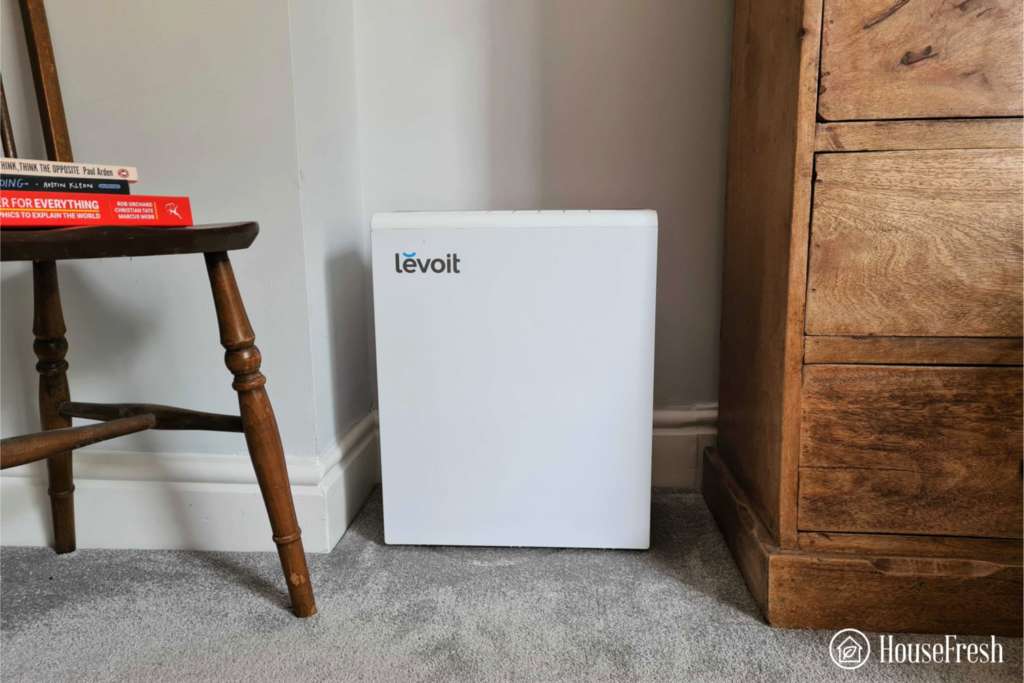
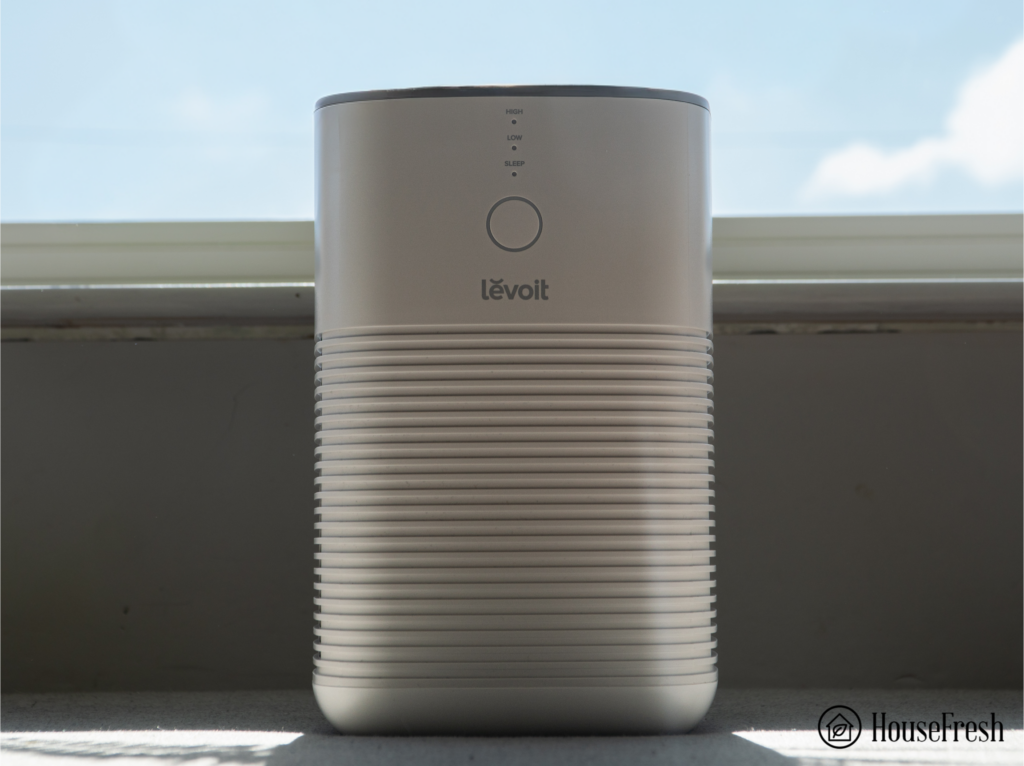
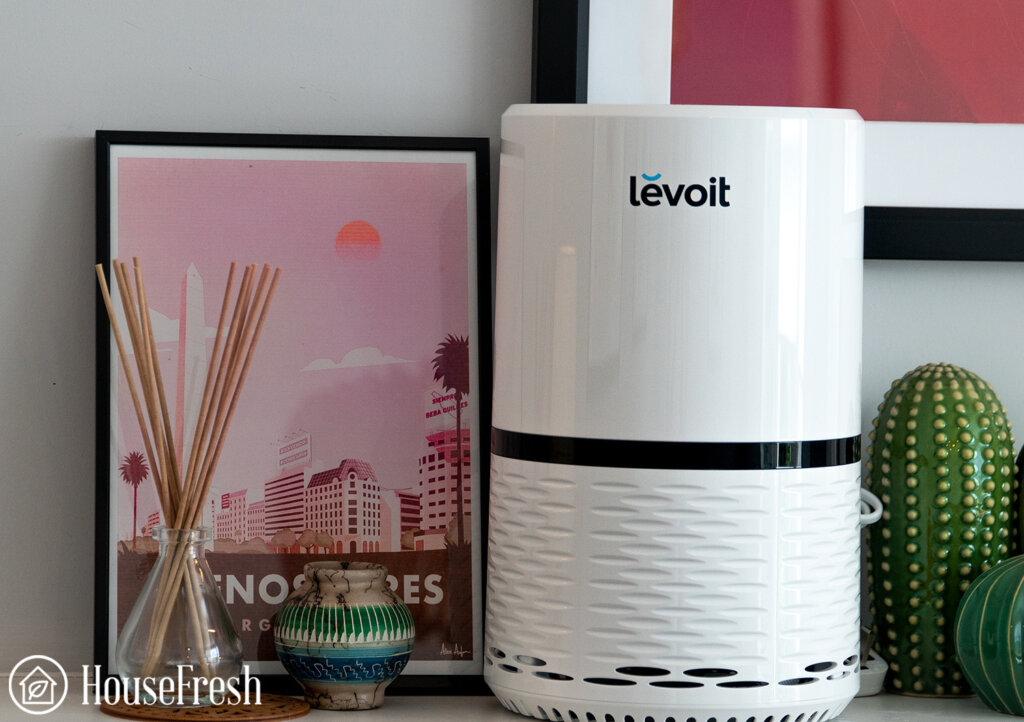
There’s nothing quite like the aroma of burnt toast in the morning and spicy curry sauce in the evening… We all wish our extractor fans did their magic and removed the smells along with the smoke, but it rarely happens.
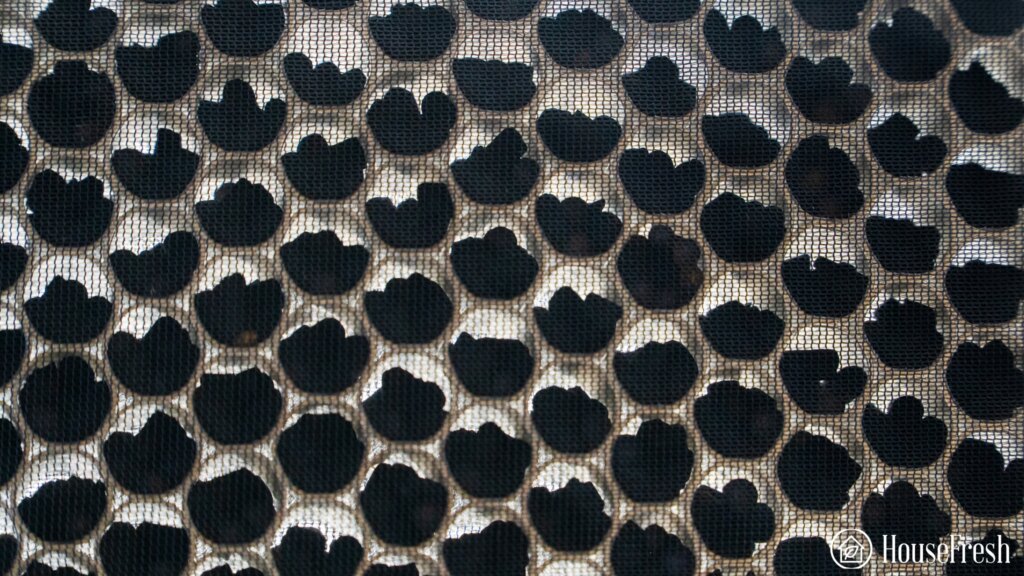
If you want to keep cooking smells and unwanted kitchen odors at bay, then you should consider getting an air purifier with a good amount of activated carbon to remove gases and smelly volatile organic compounds (VOCs) from your air.
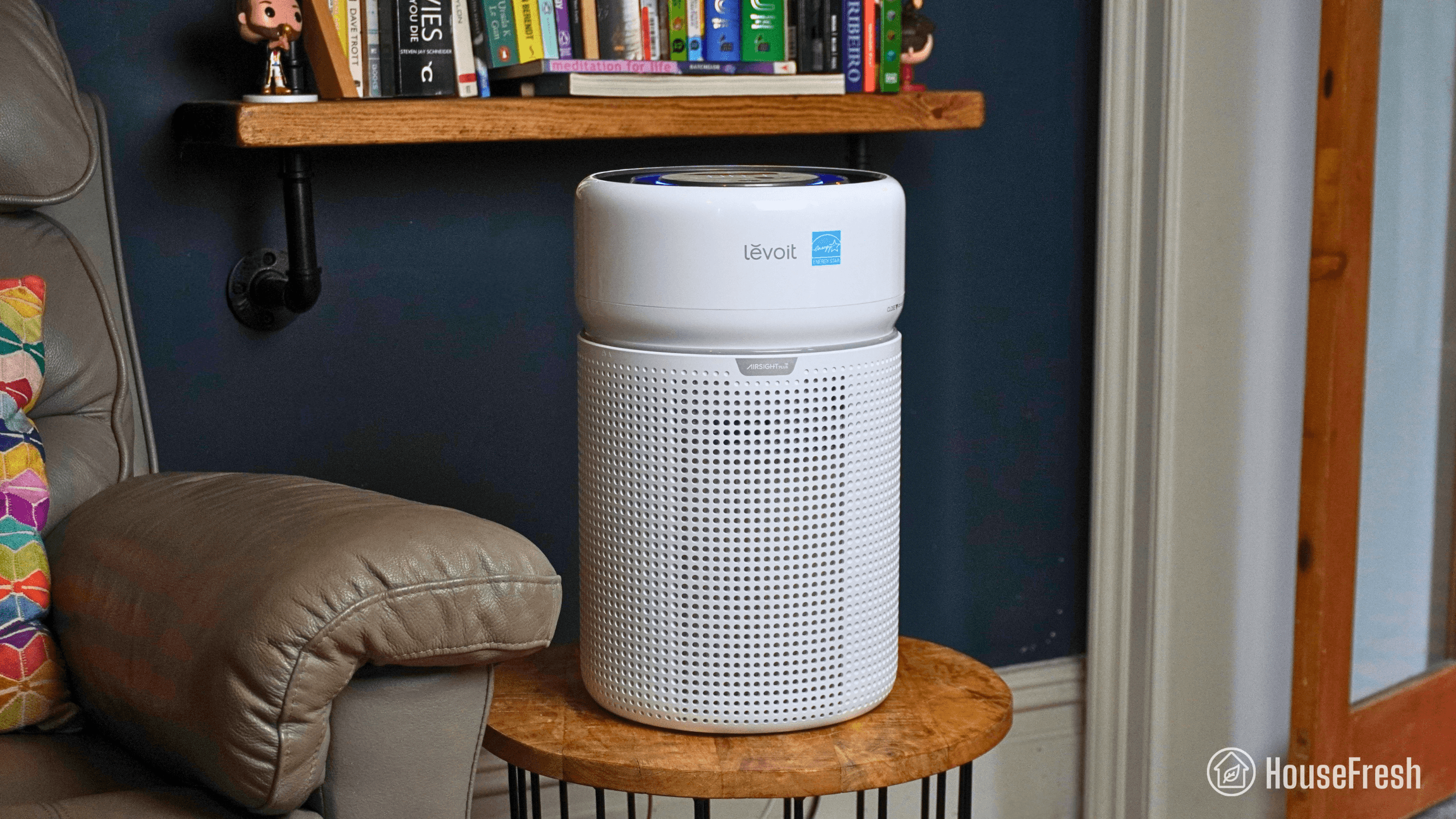
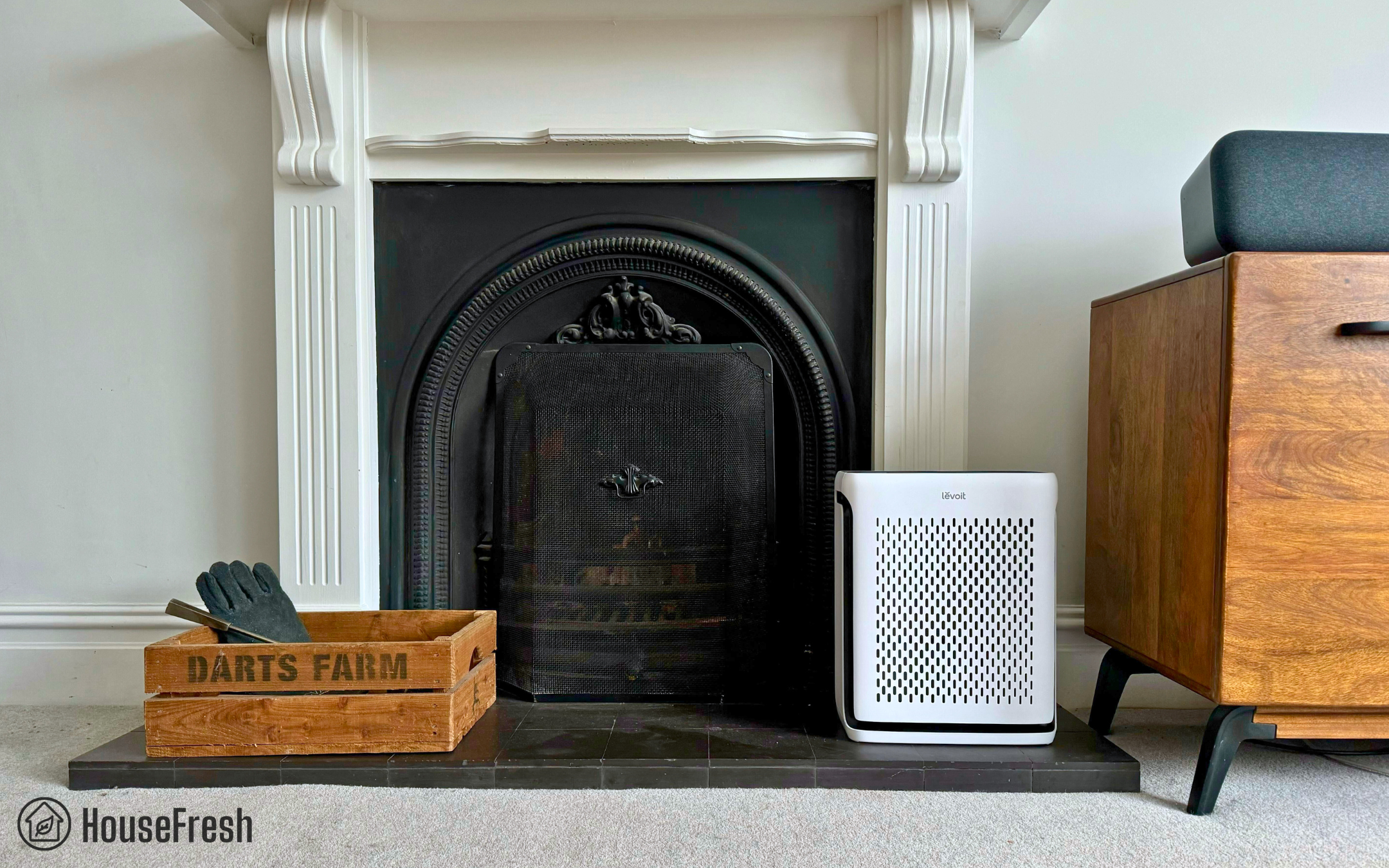
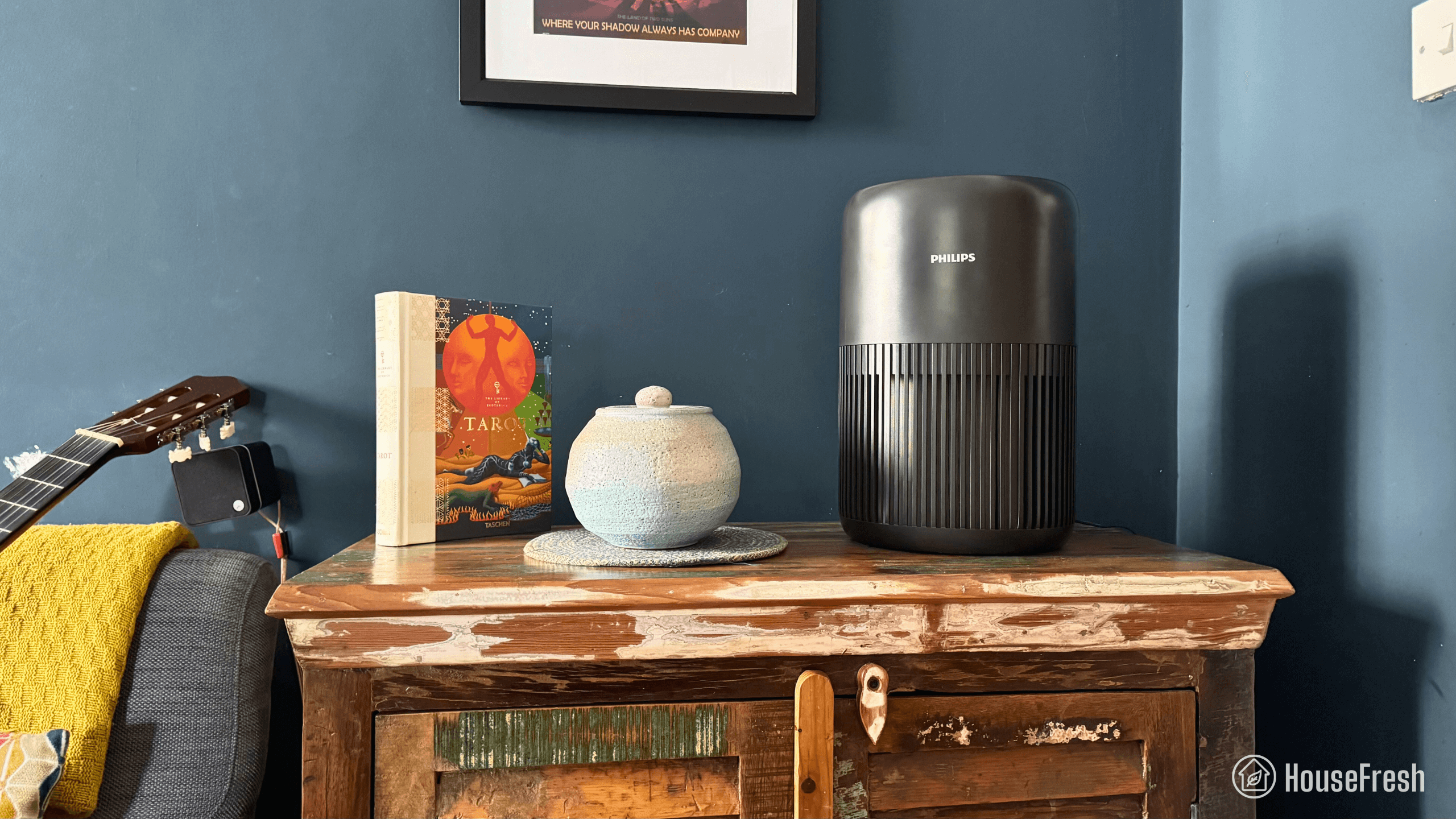
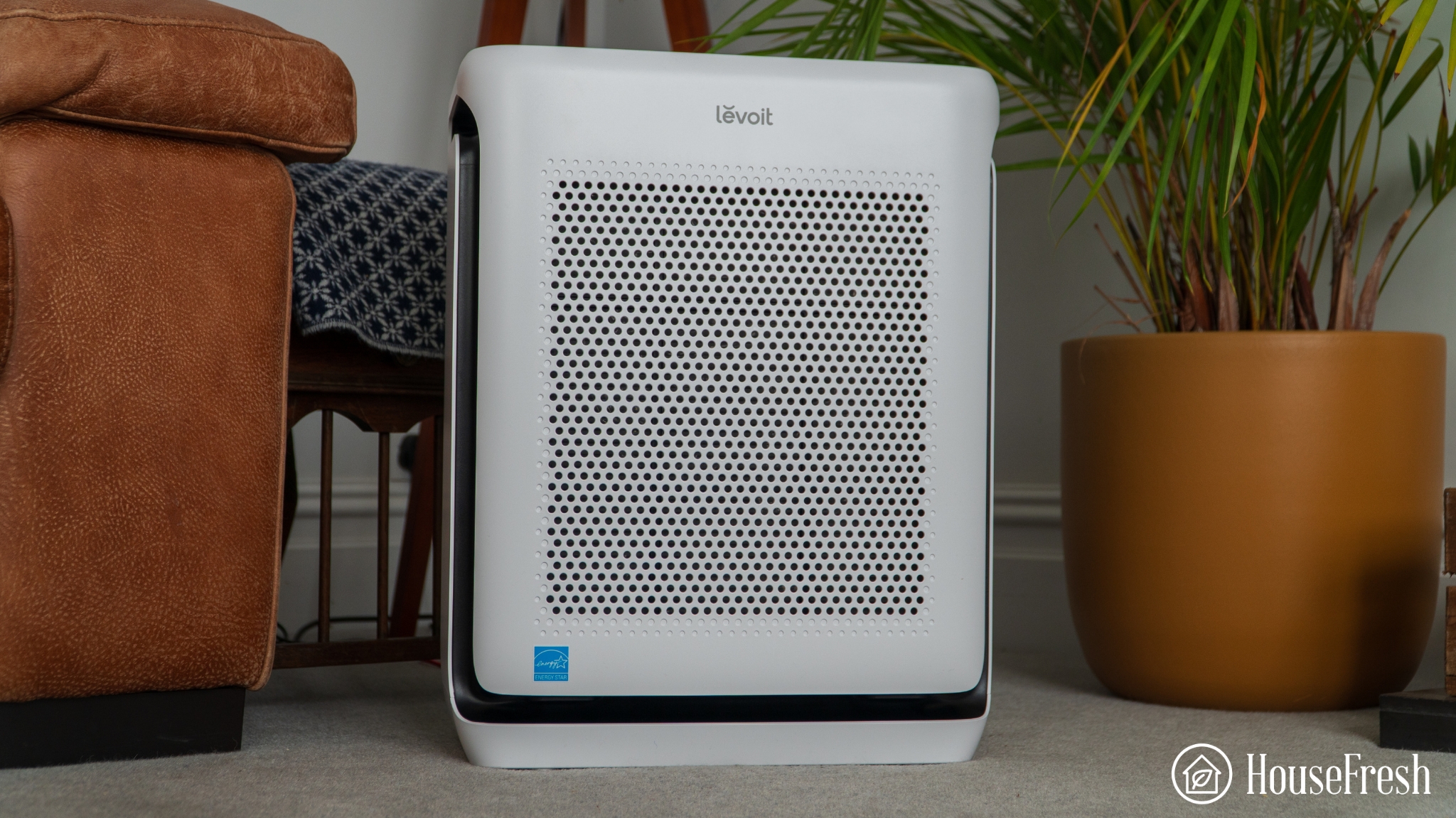
The Eleva 300X offers excellent air cleaning performance, a responsive laser sensor and 260g of carbon to tackle odors.
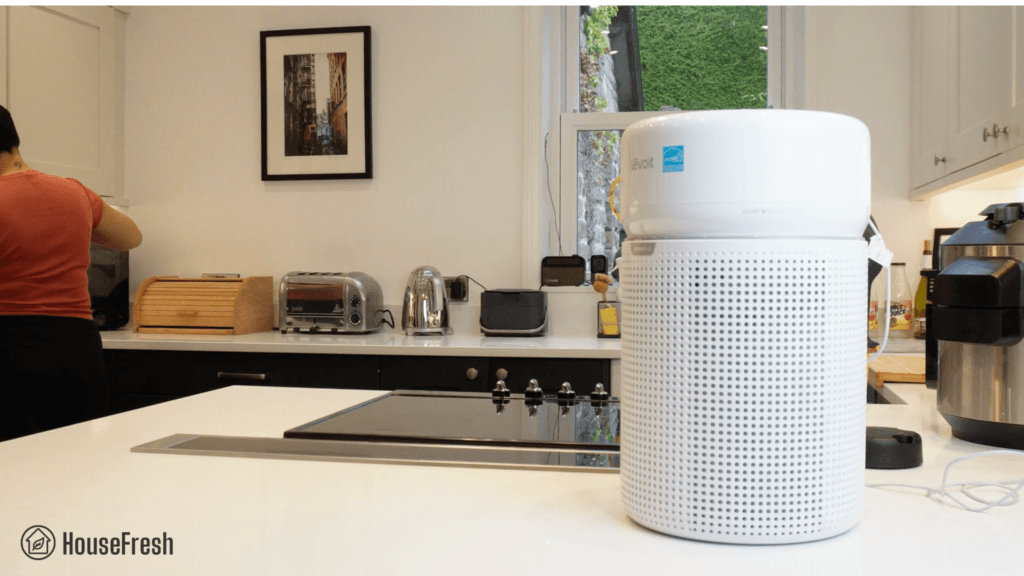
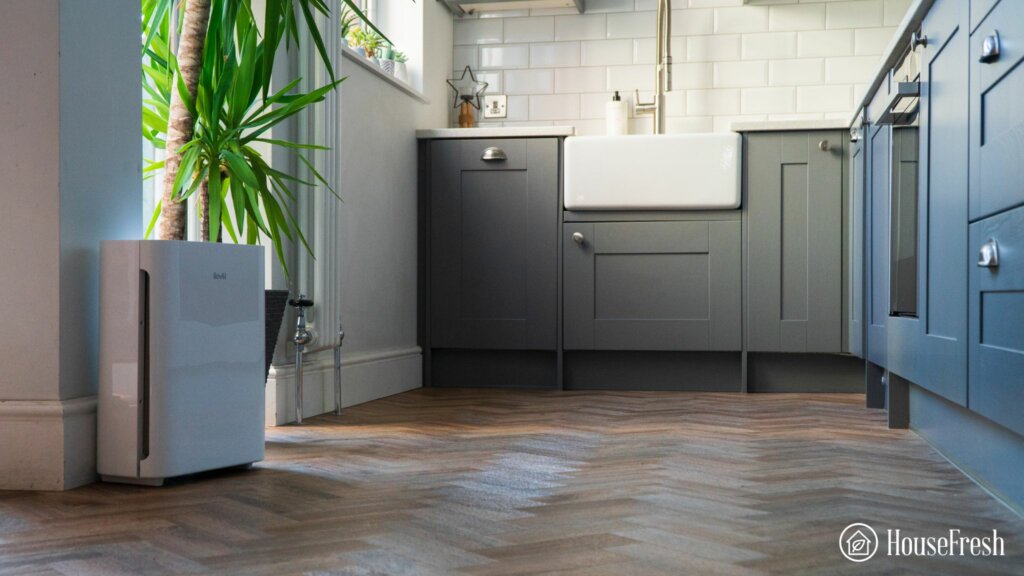
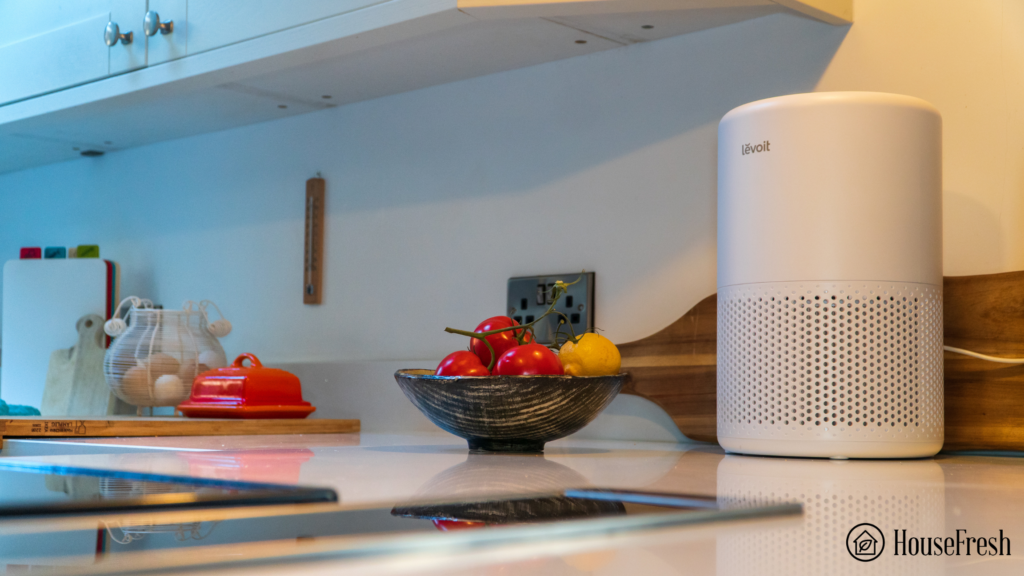
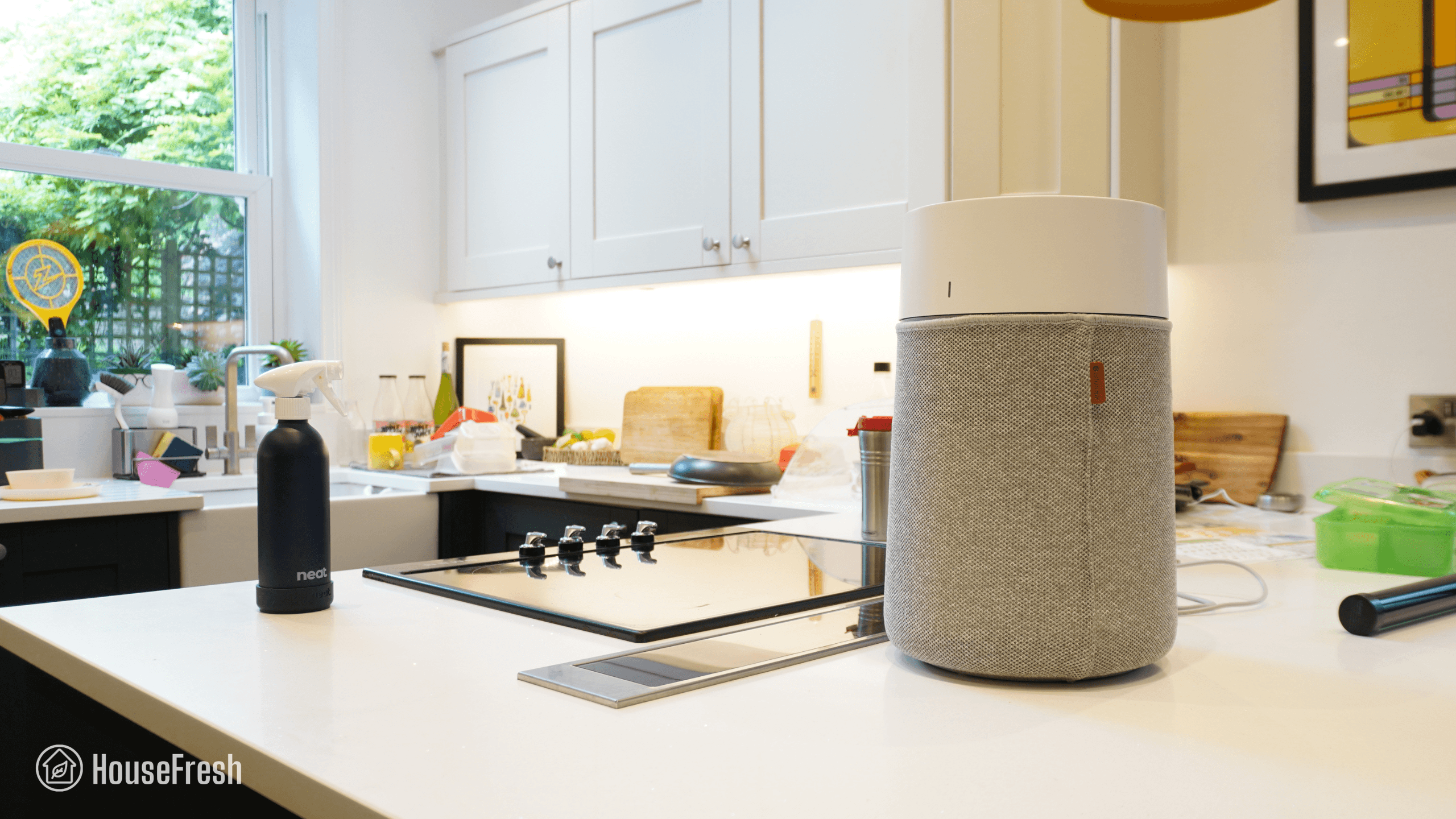
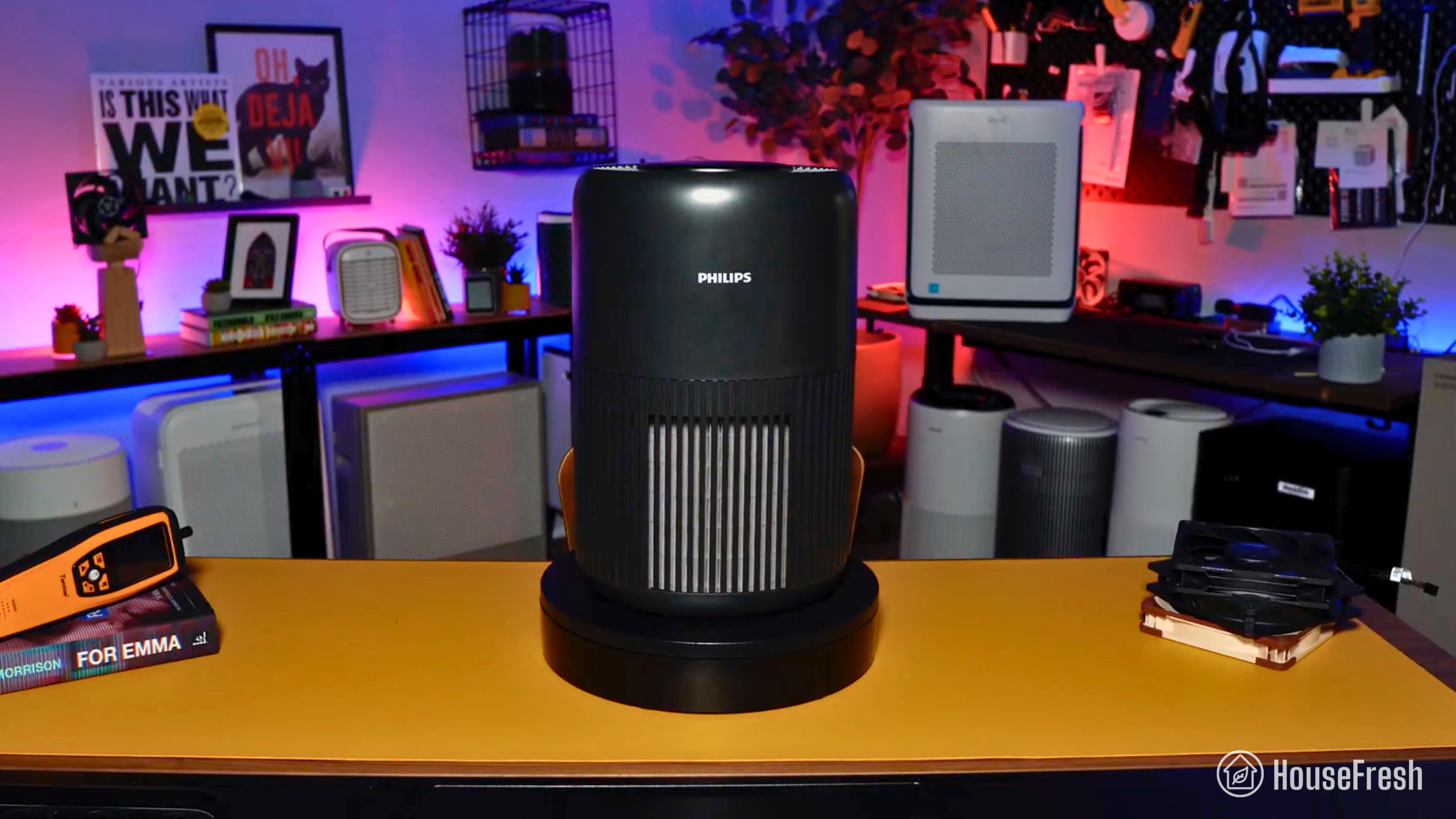
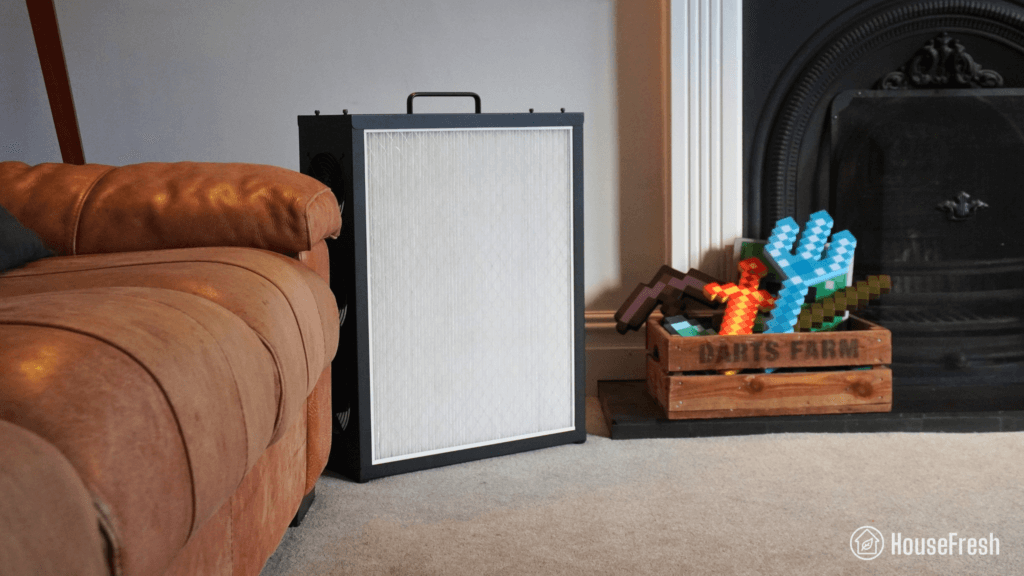
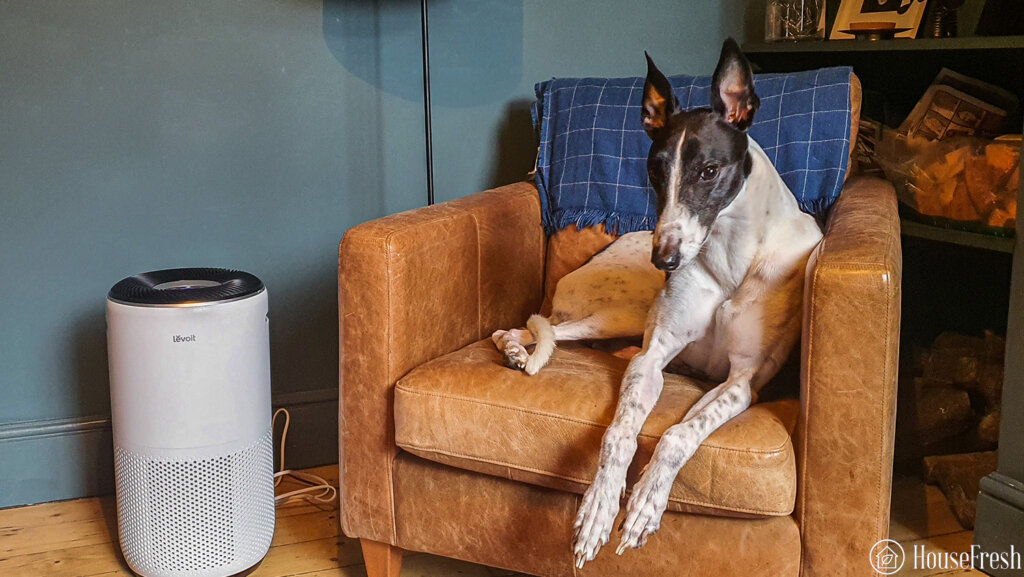
The Eleva 300X is small enough to fit on top of your kitchen counter, so you can place it near where you cook and it will get to work as soon as smoke and smells are released into the air. With a PM1 CADR of 165 cfm, it can clean the air five times per hour in rooms up to 247 sq. ft. (23 m2).
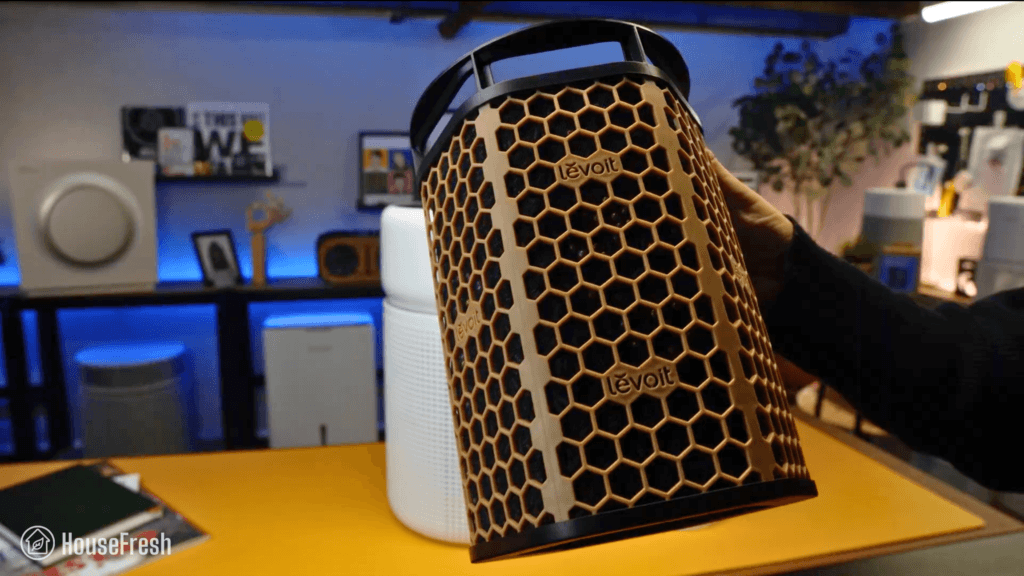
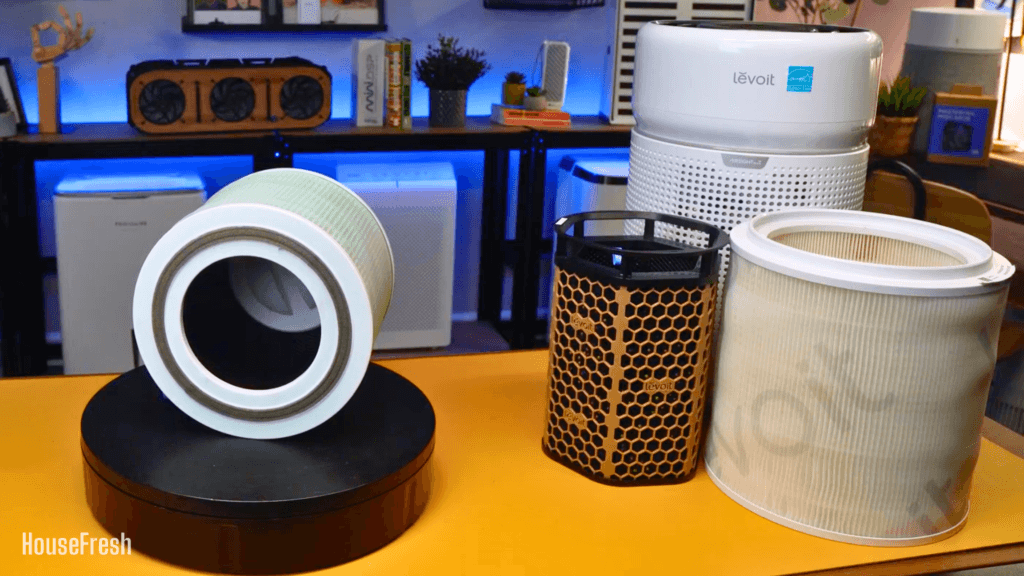
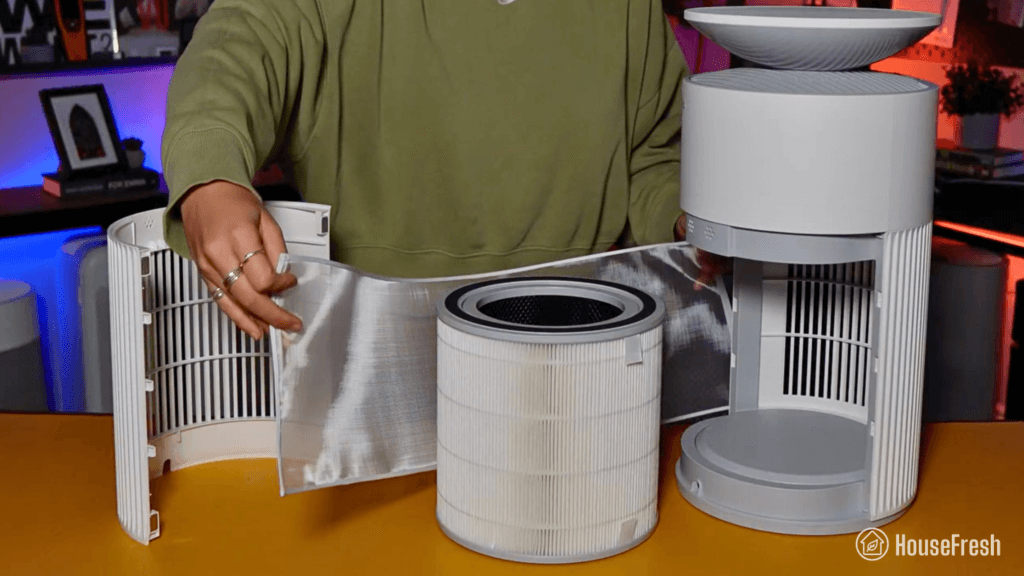
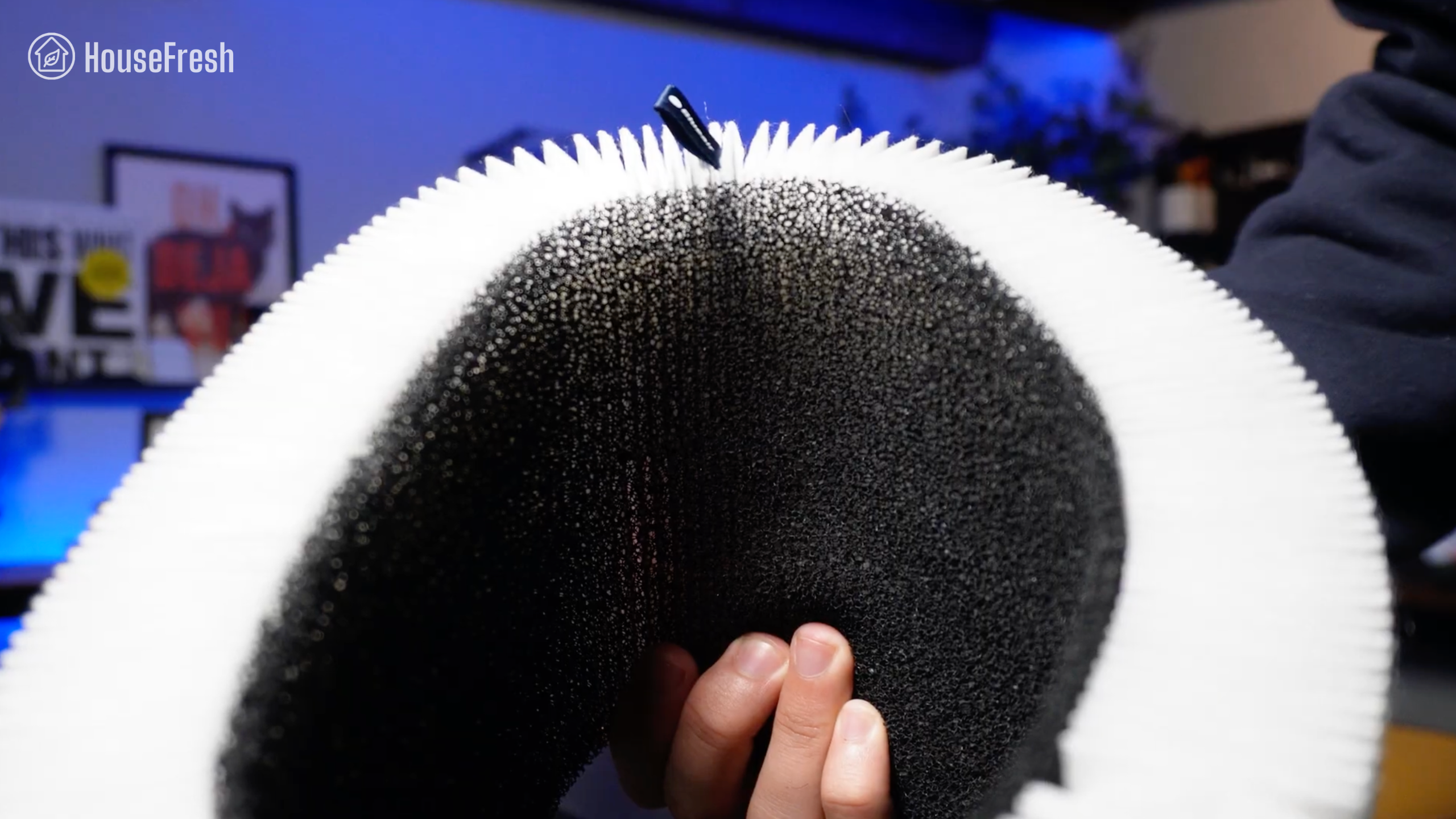
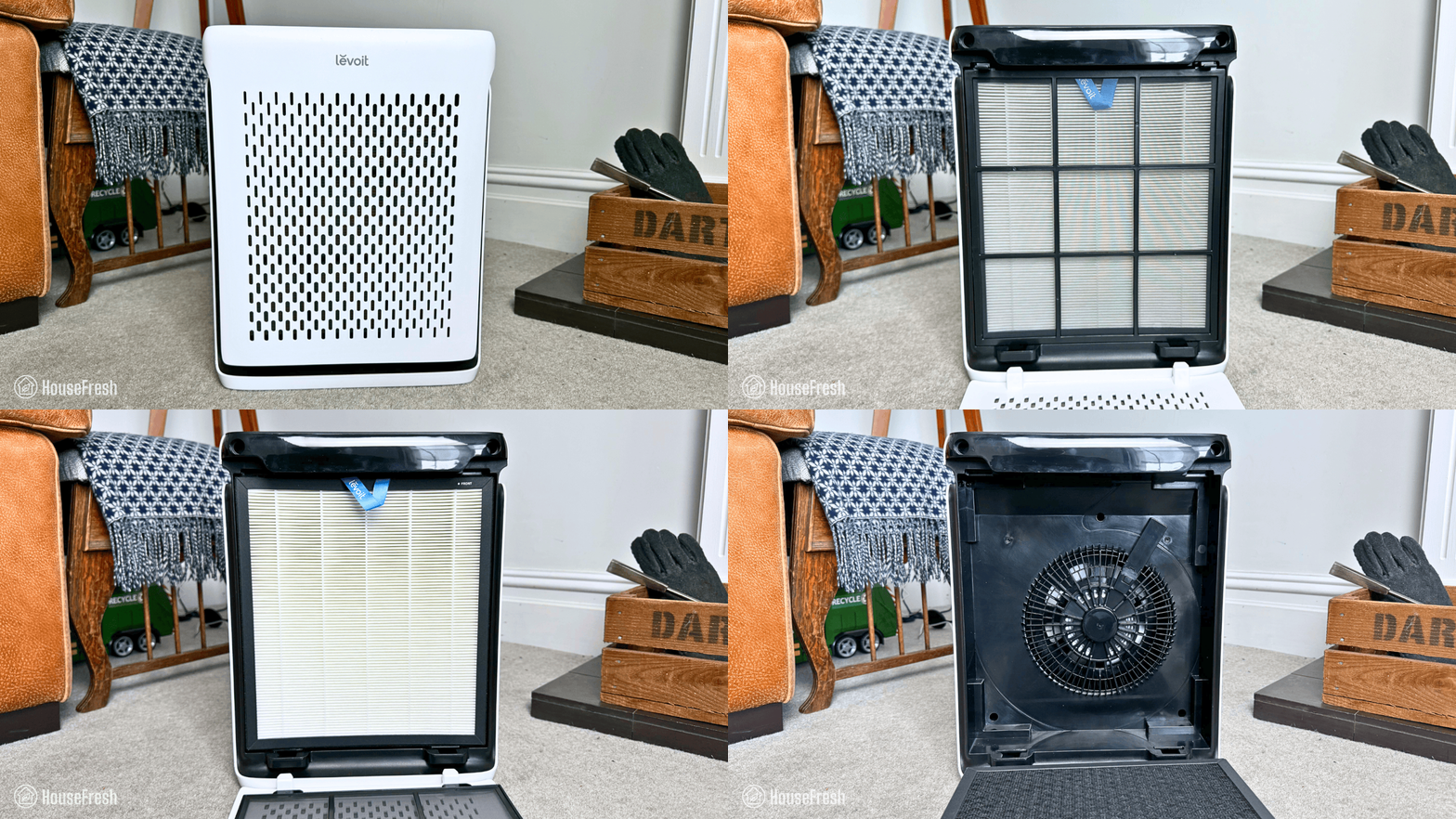
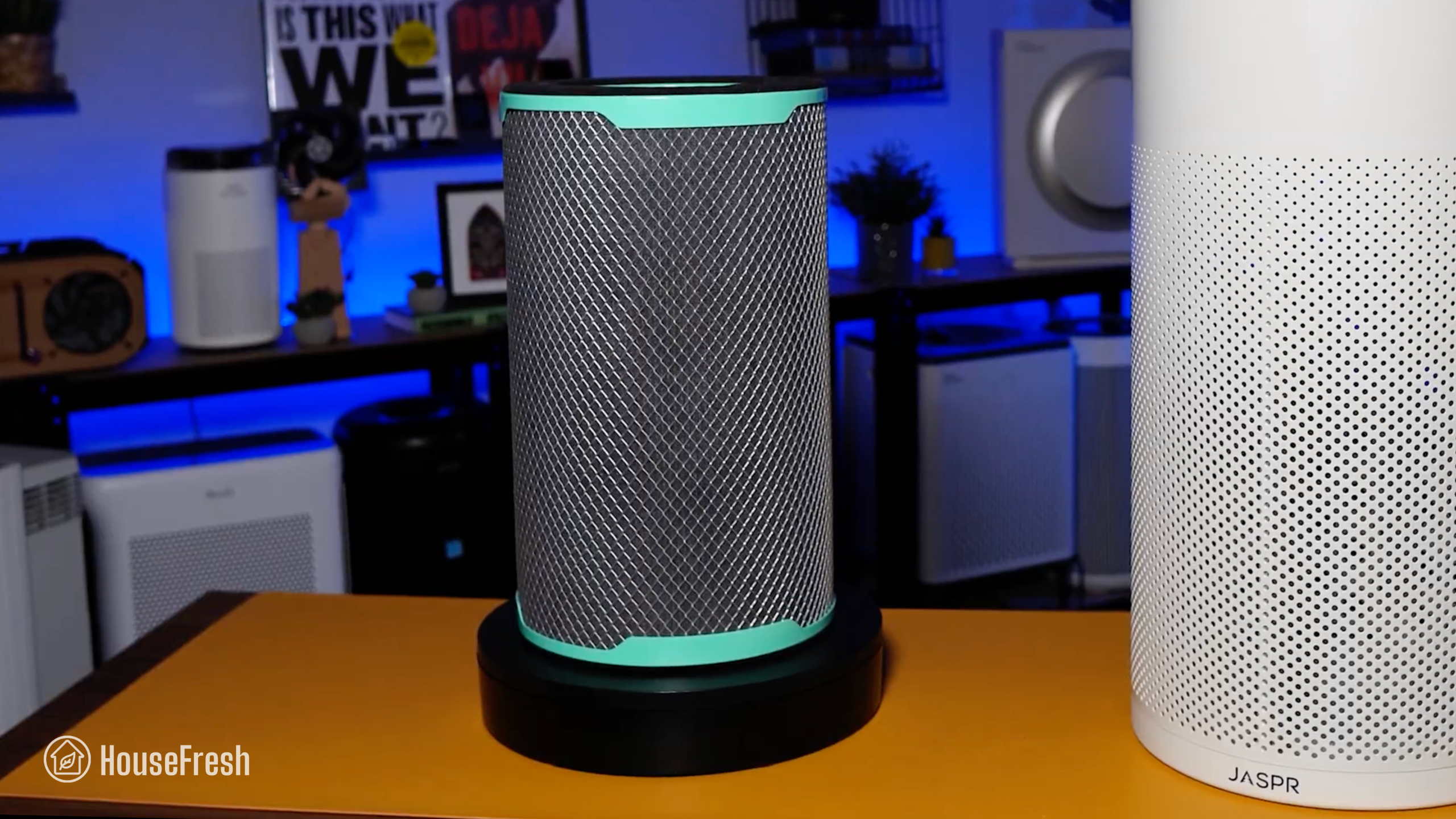
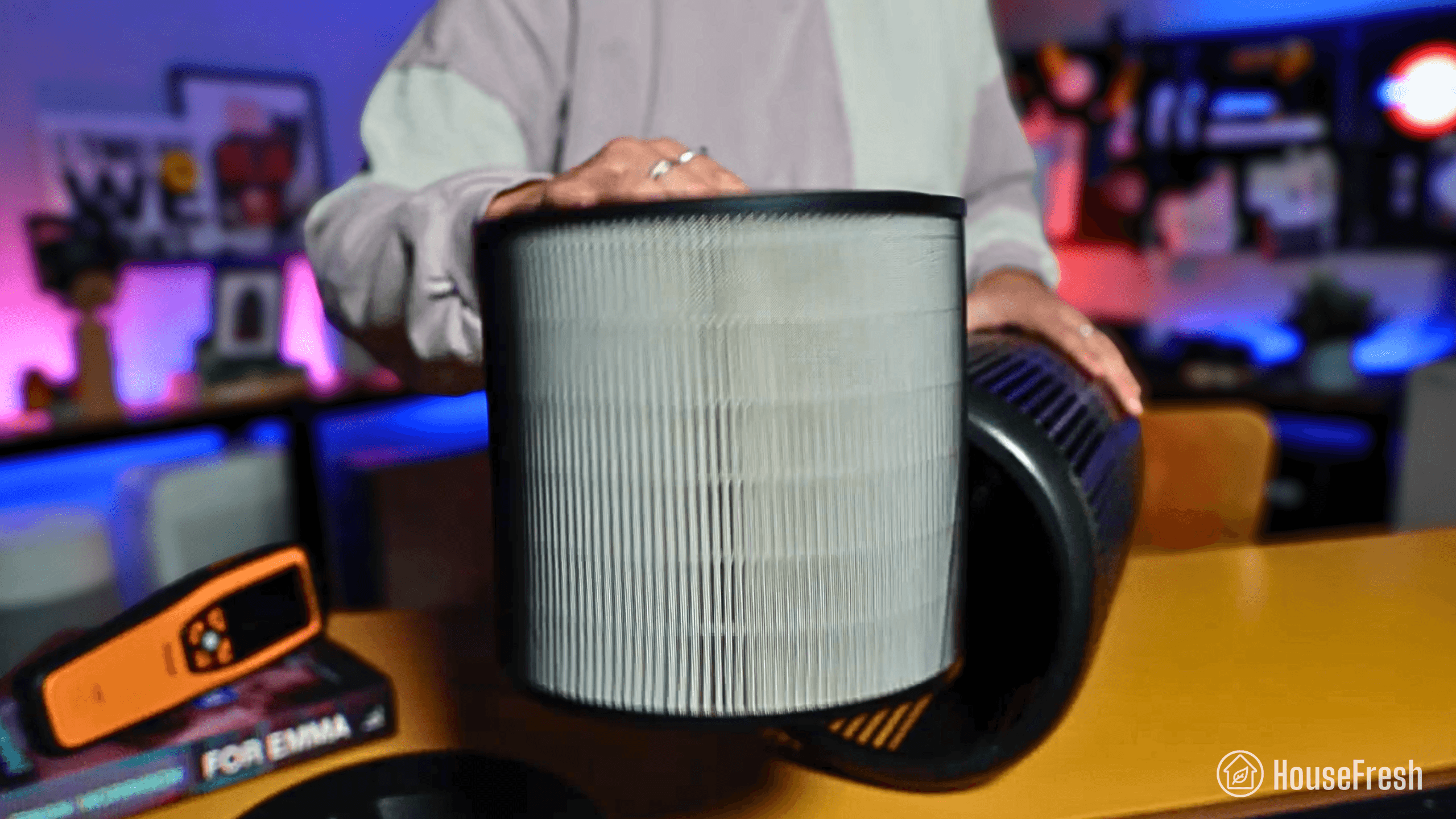
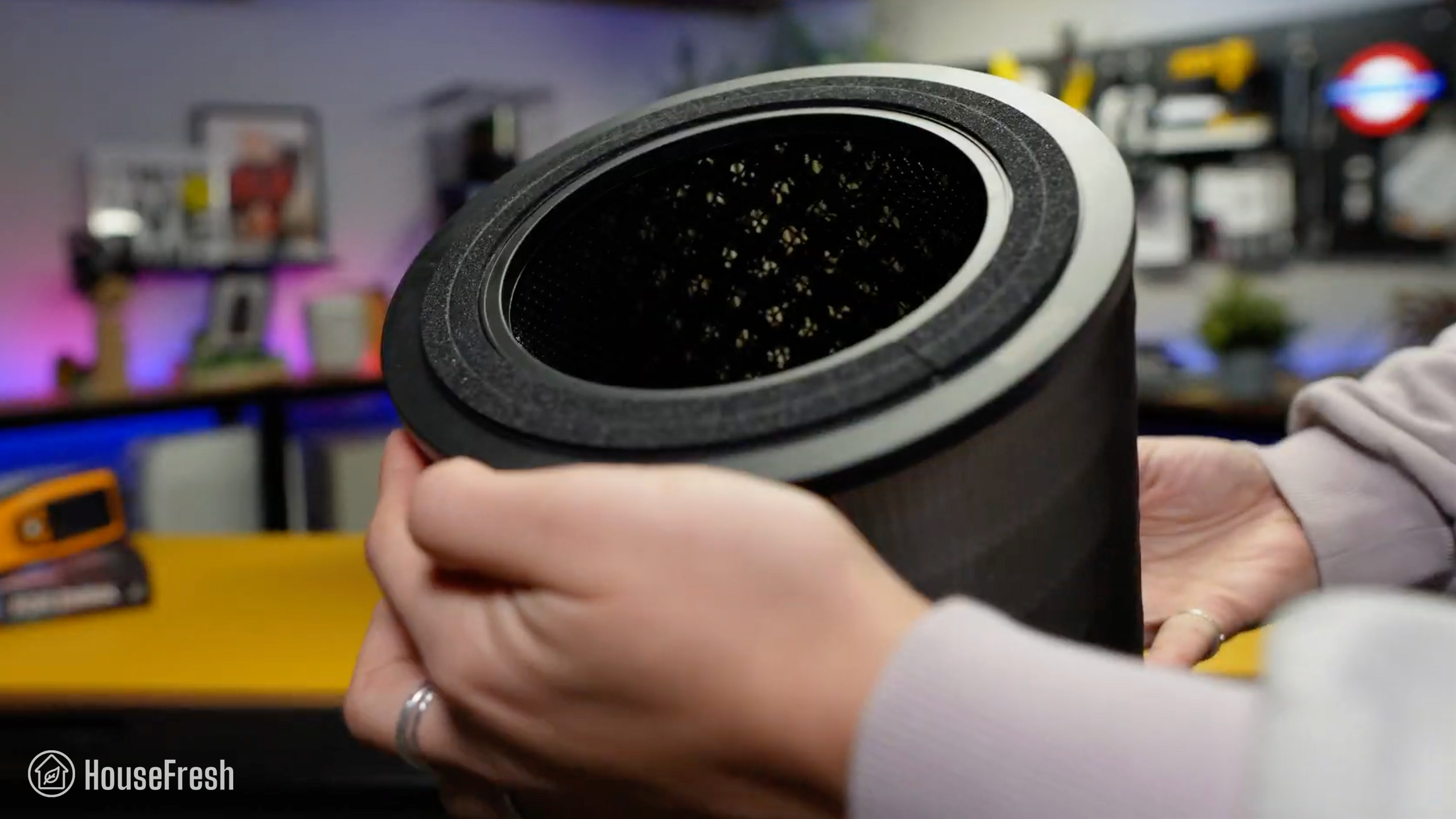
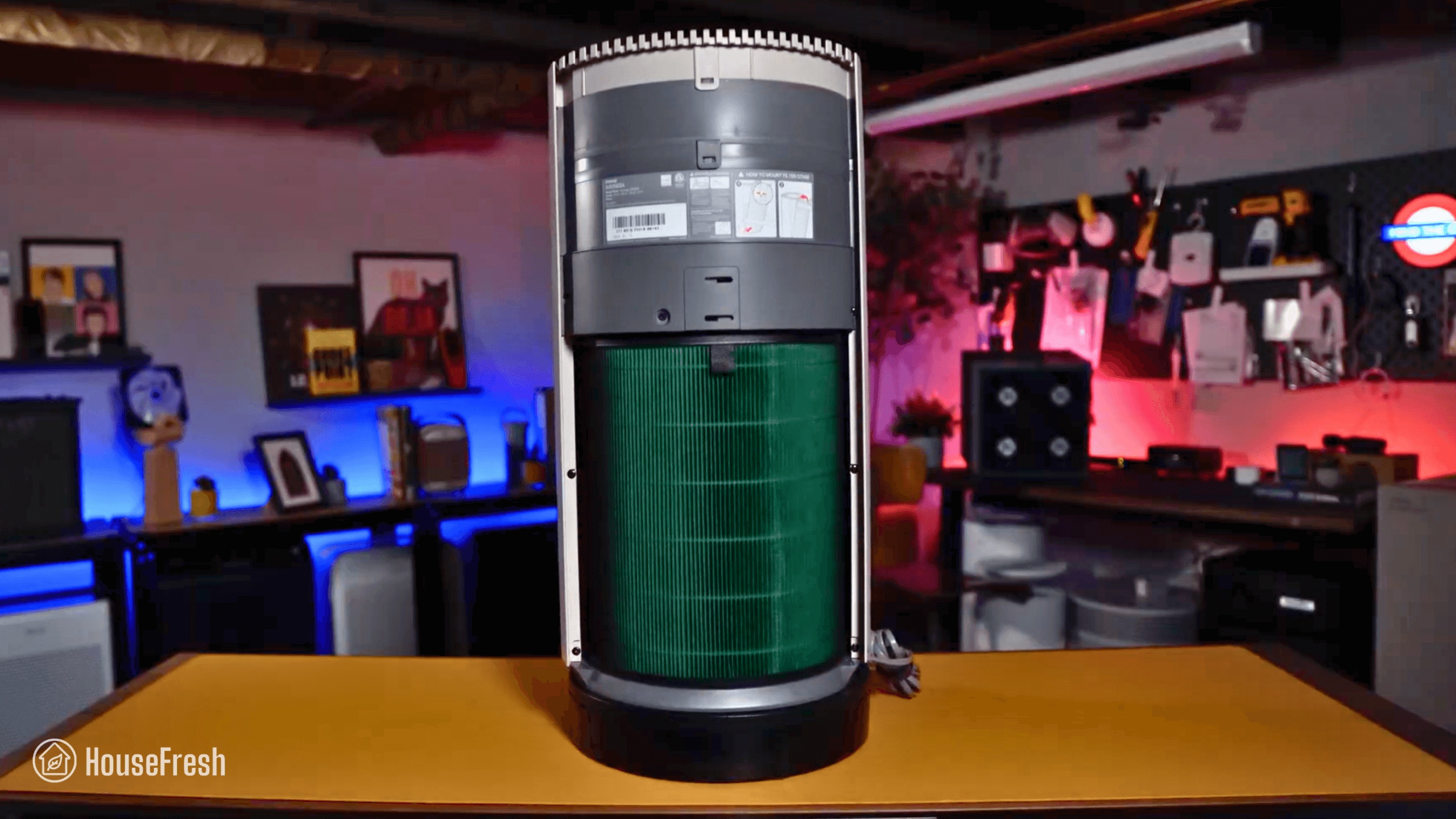
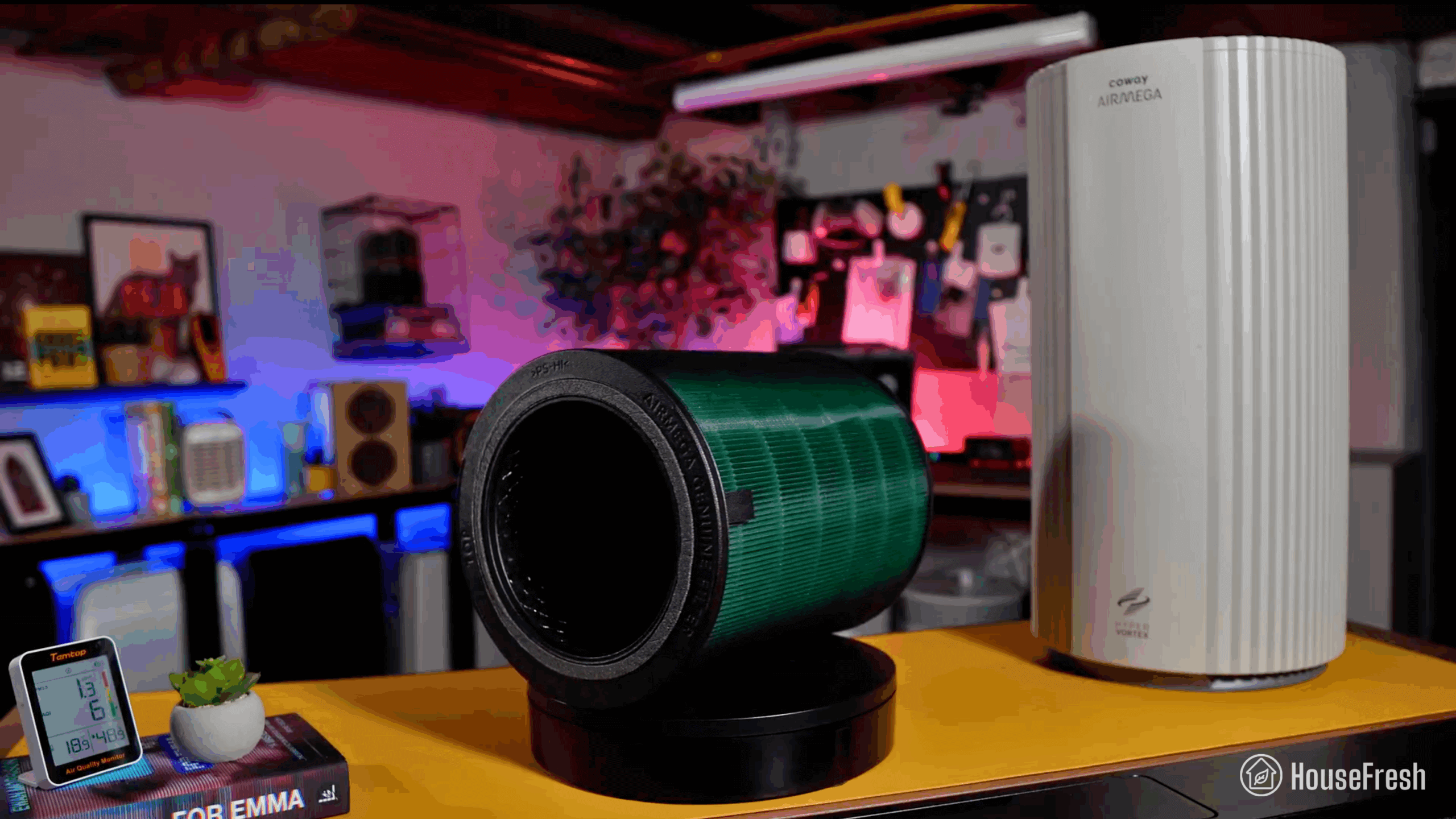
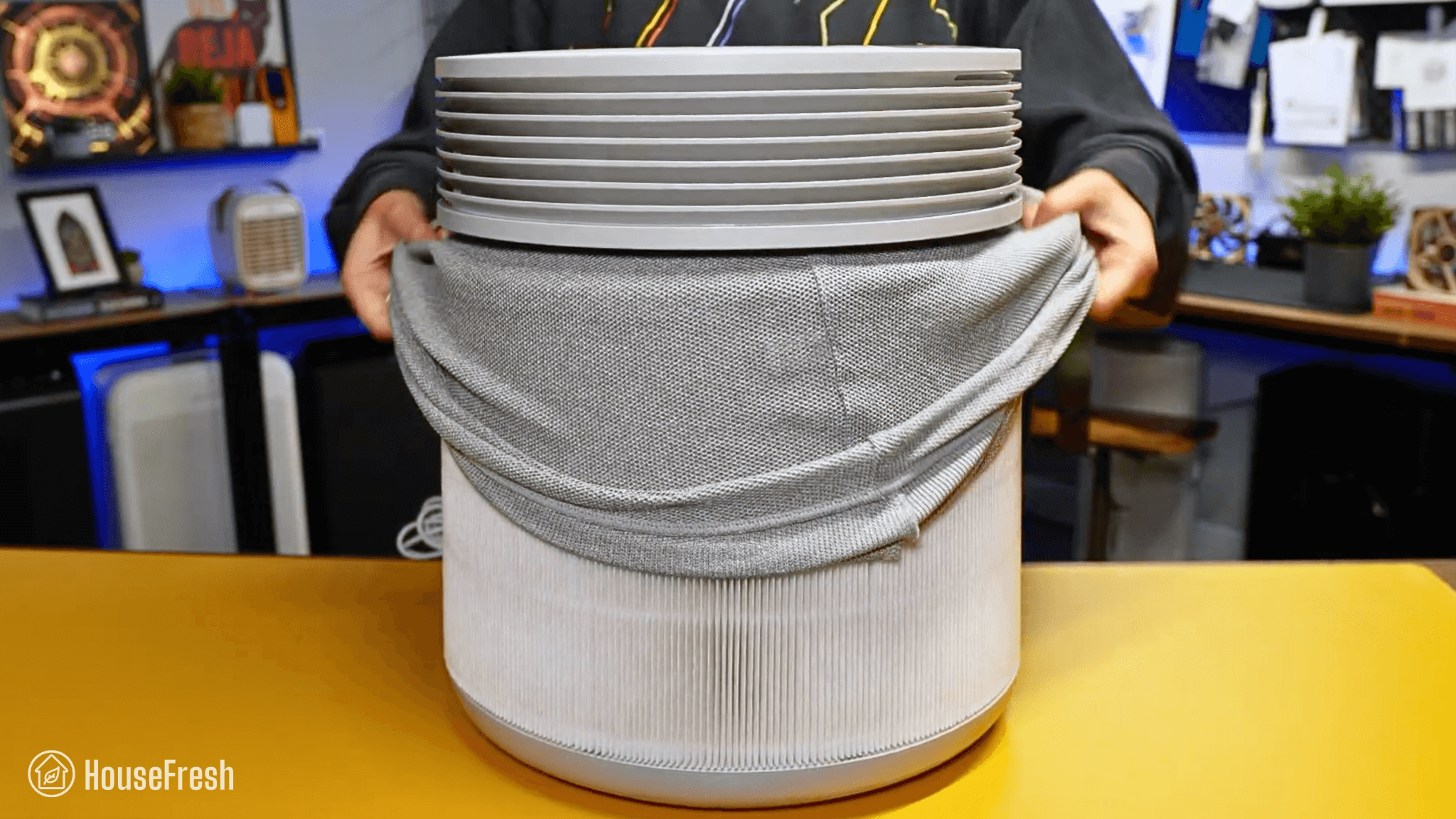
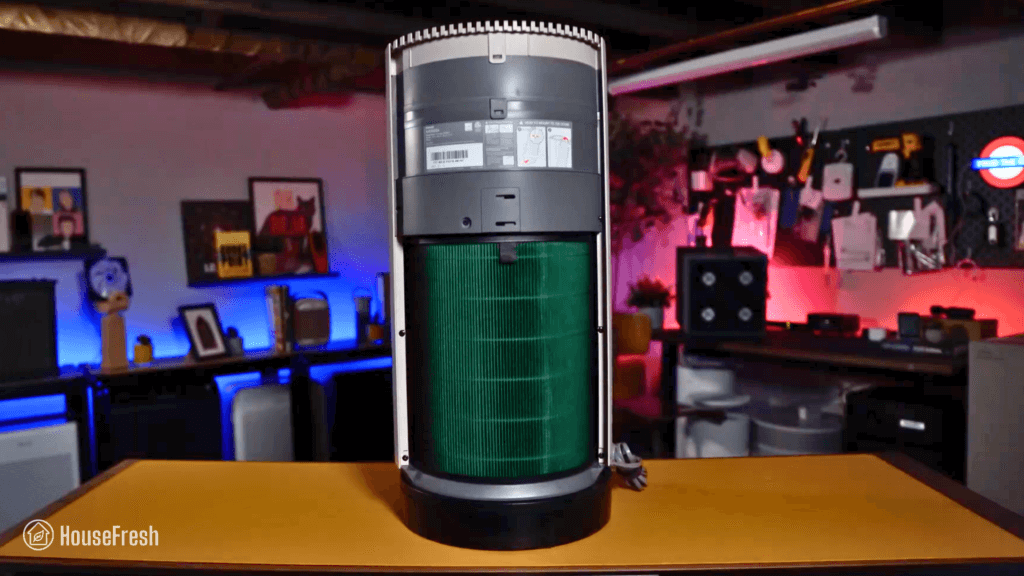
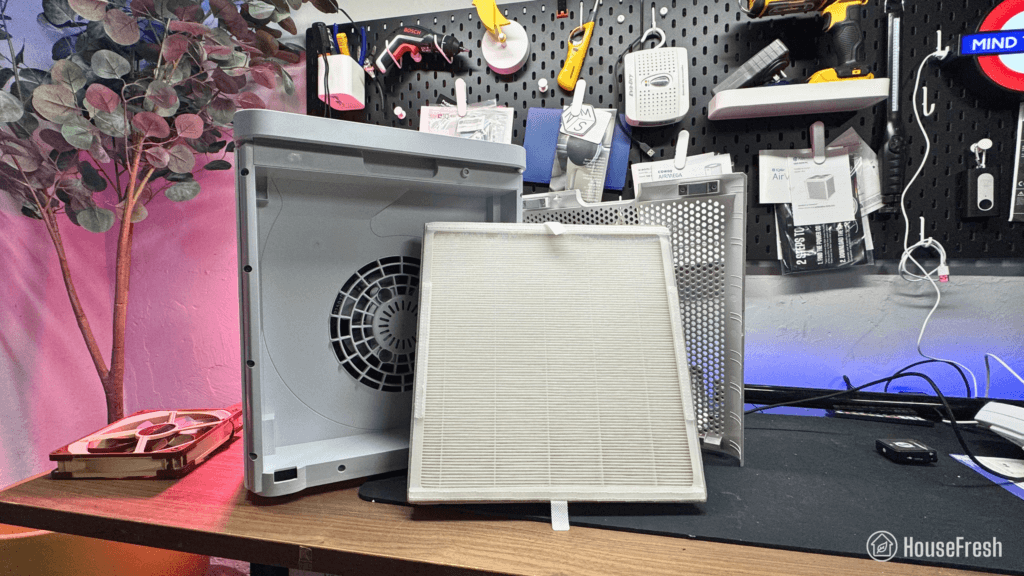
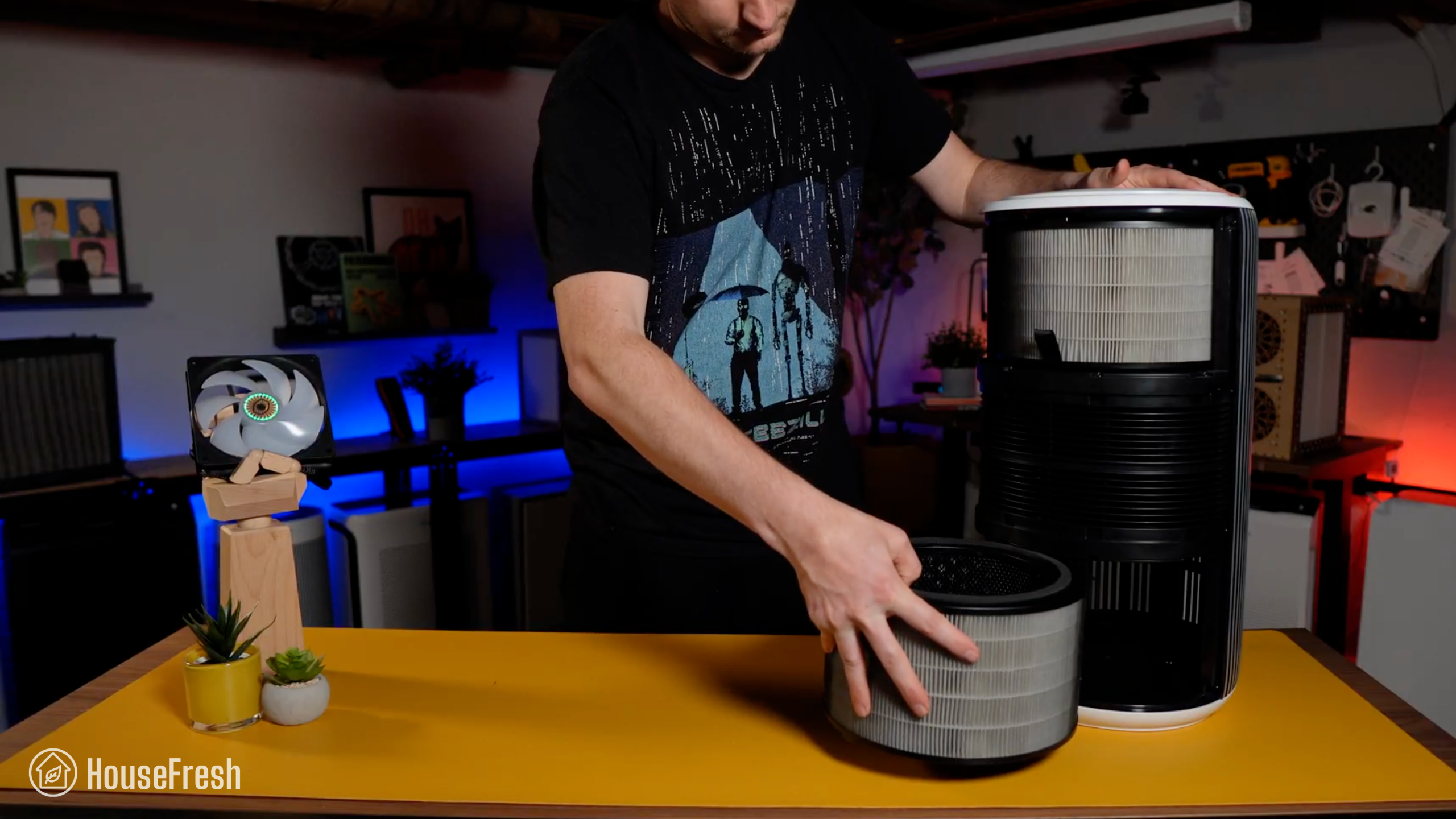
Unlike most cylindrical air purifiers, the Eleva 300X has separate particle and odor filters. This is good news: you can replace the odor filter once the carbon is full without having to throw away a particle filter that still has life in it.
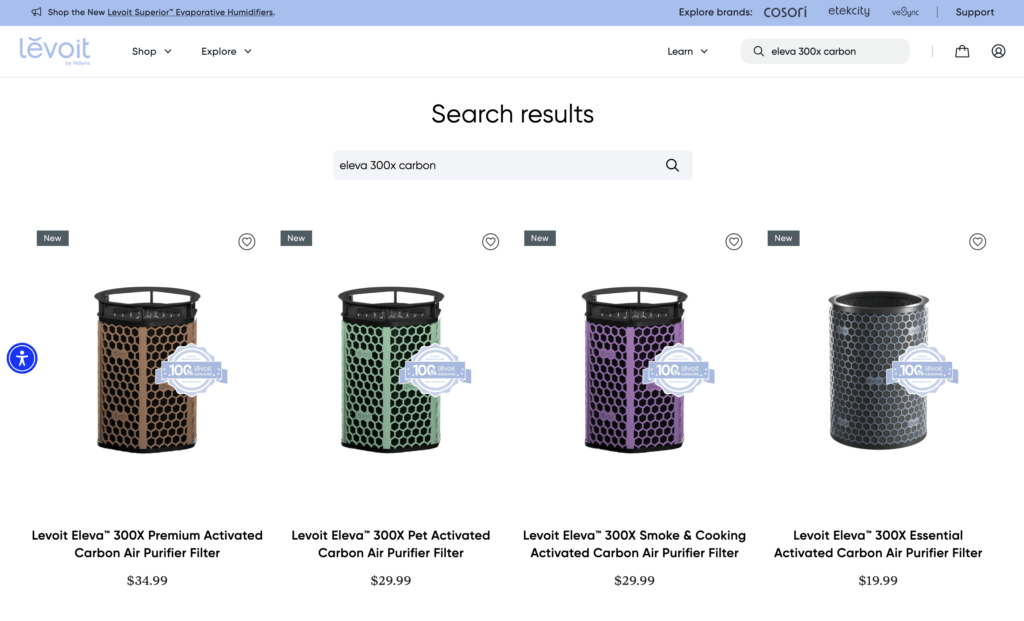
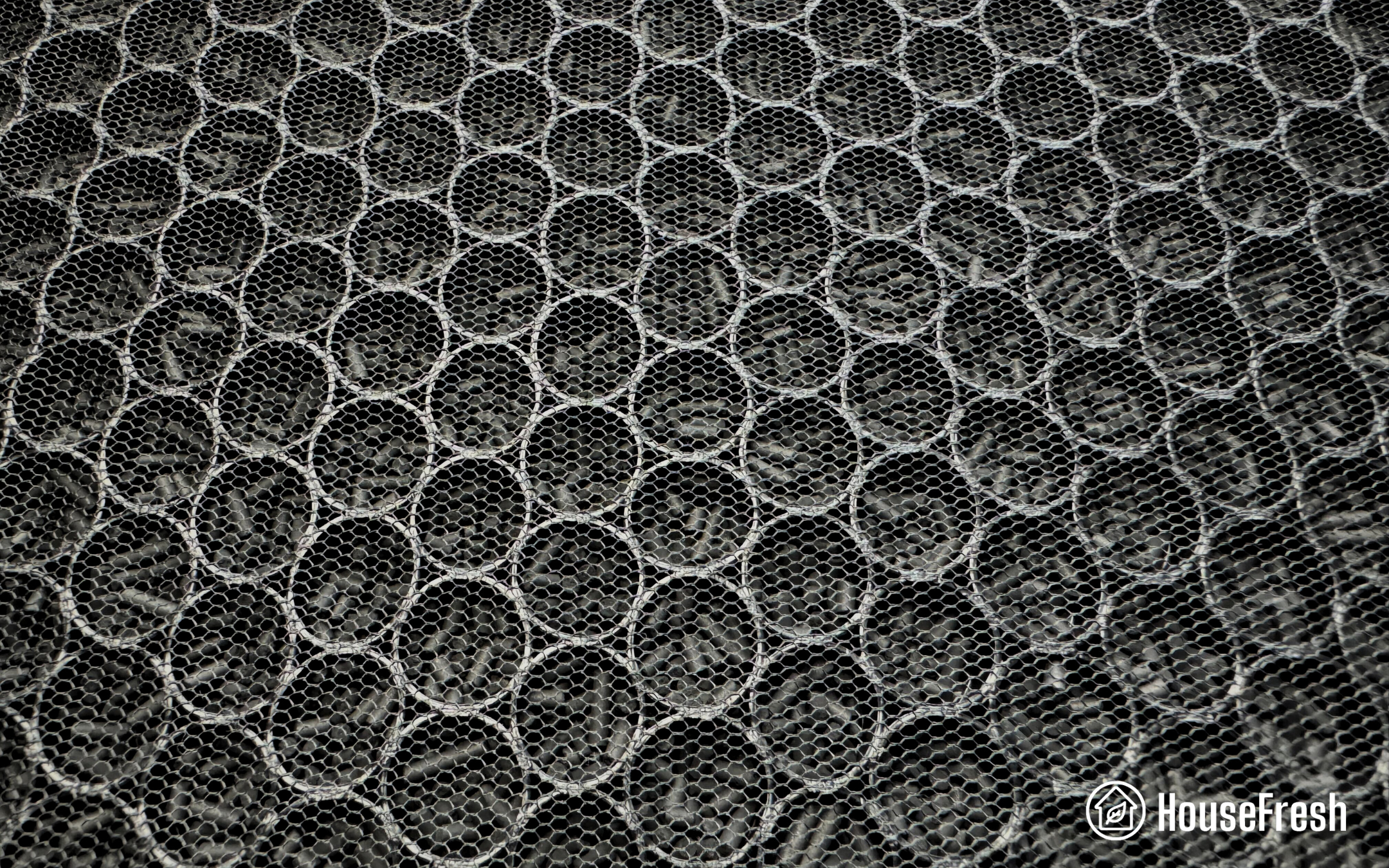
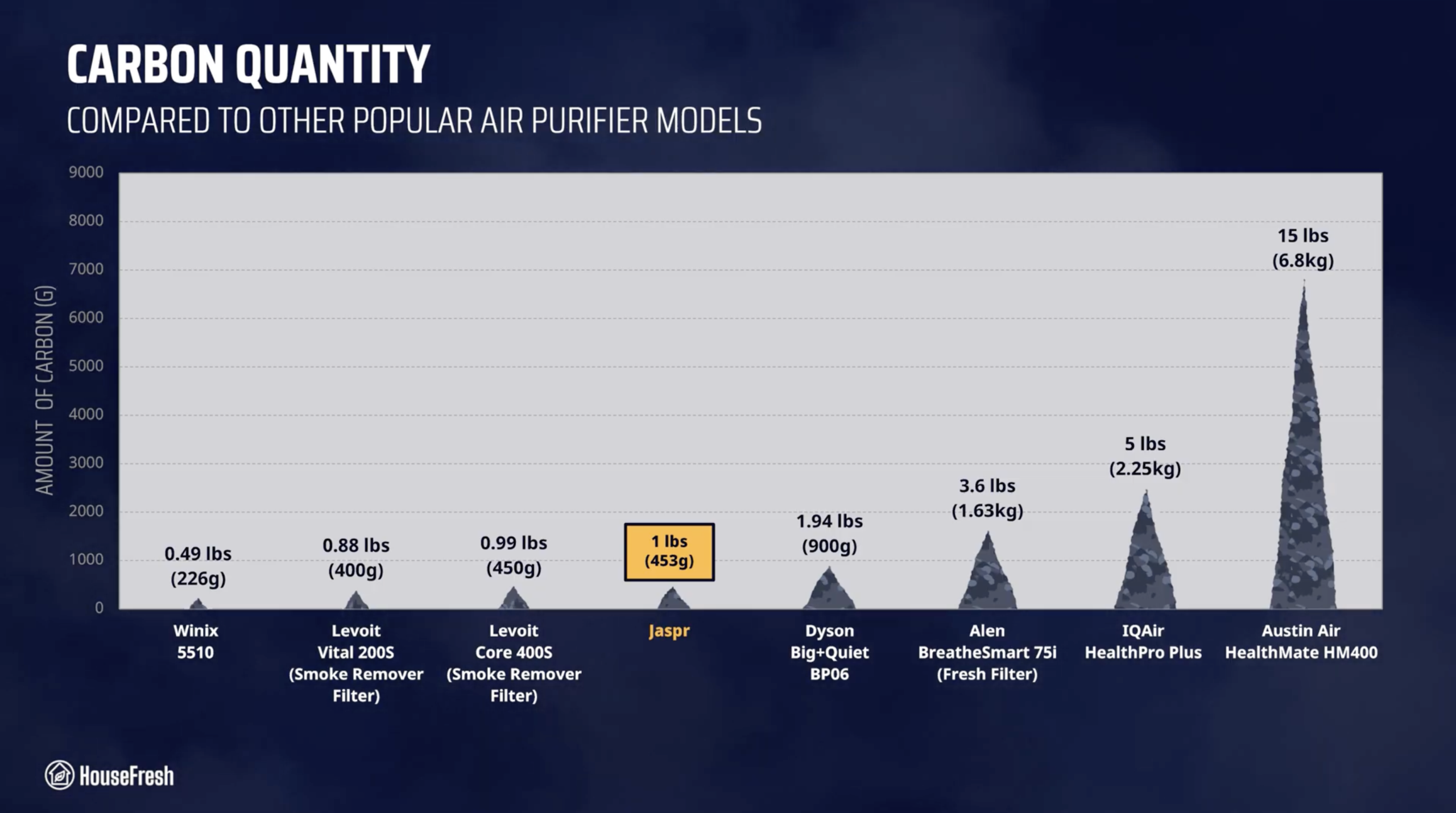
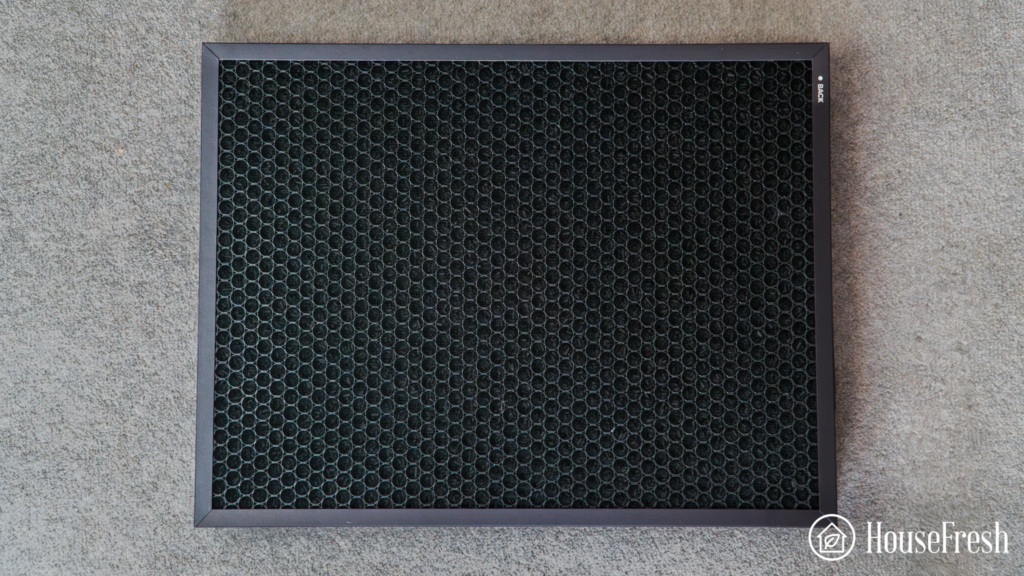
For the kitchen, I recommend upgrading to the Premium odor filter as it comes with 260 grams of activated carbon pellets. The more carbon you get, the better the air purifier will be at removing unwanted smells from the air.
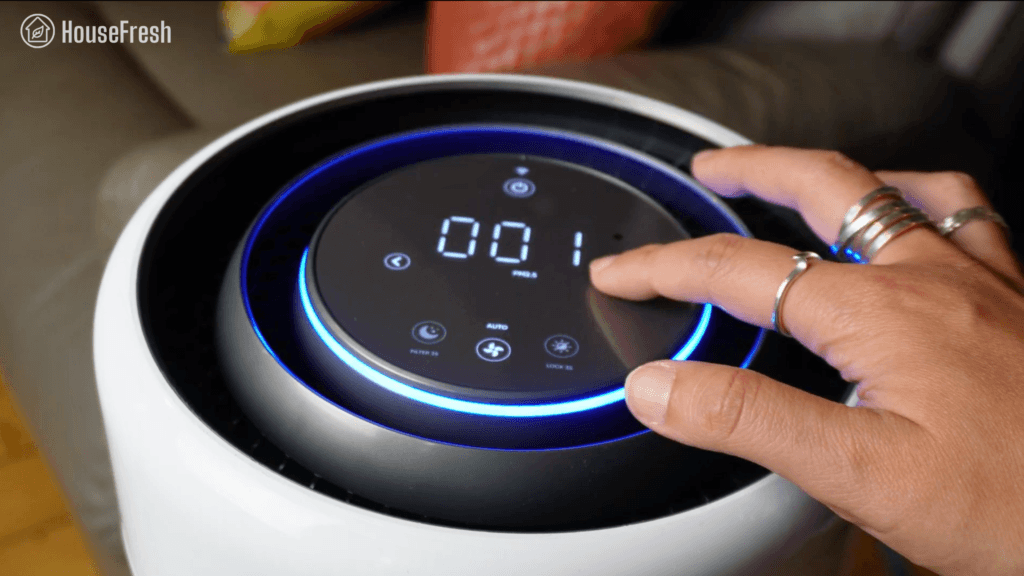
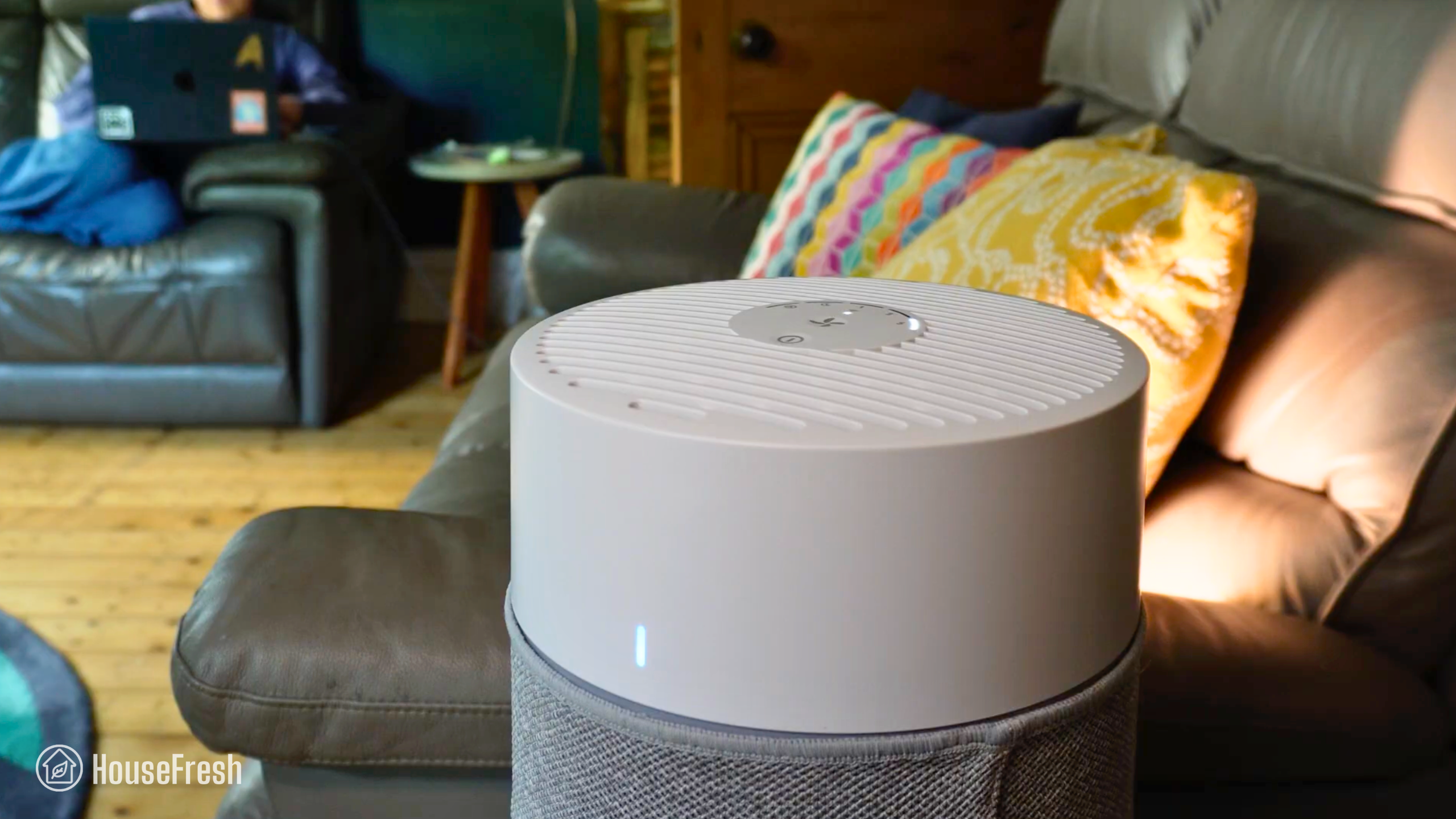
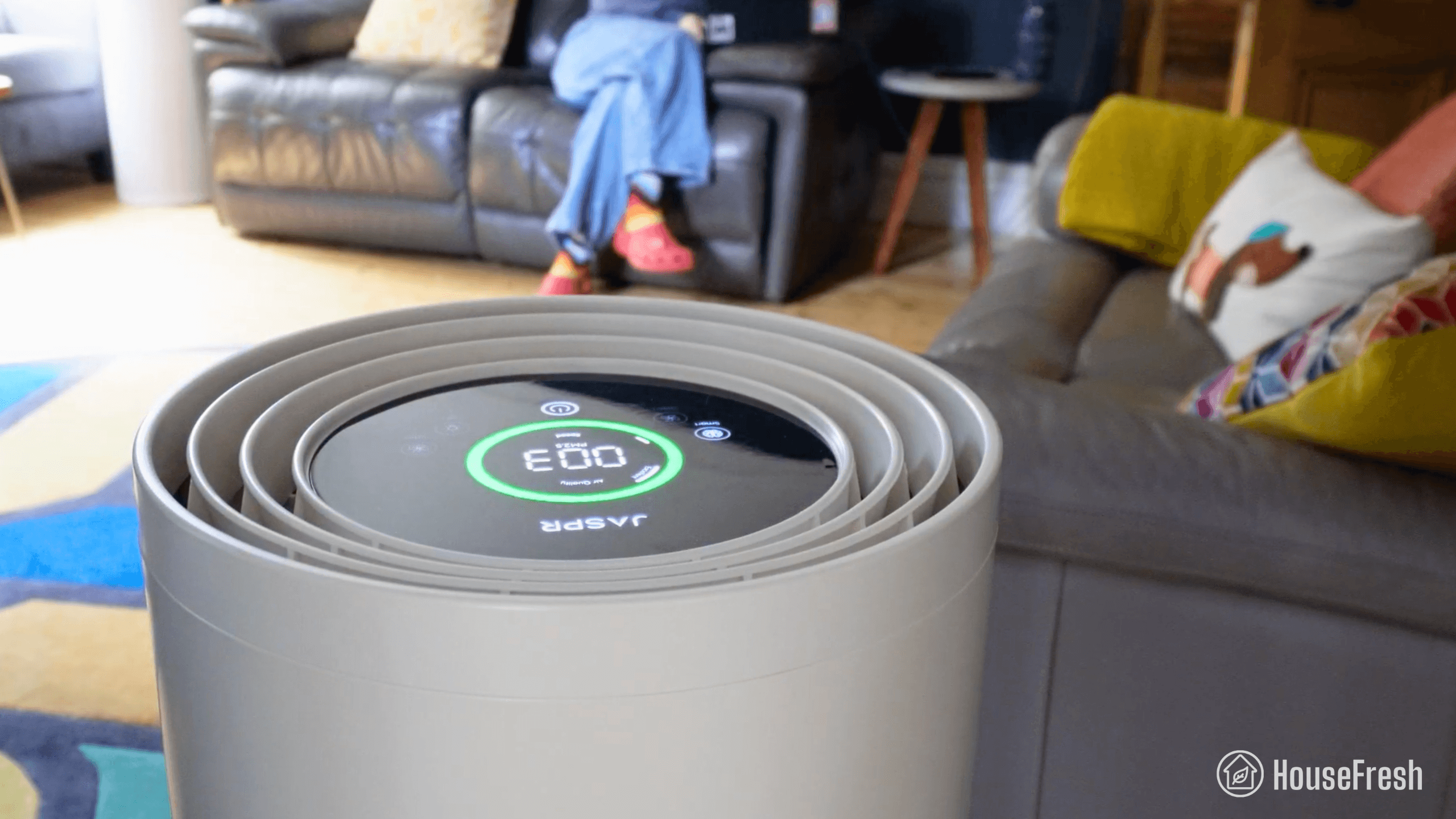
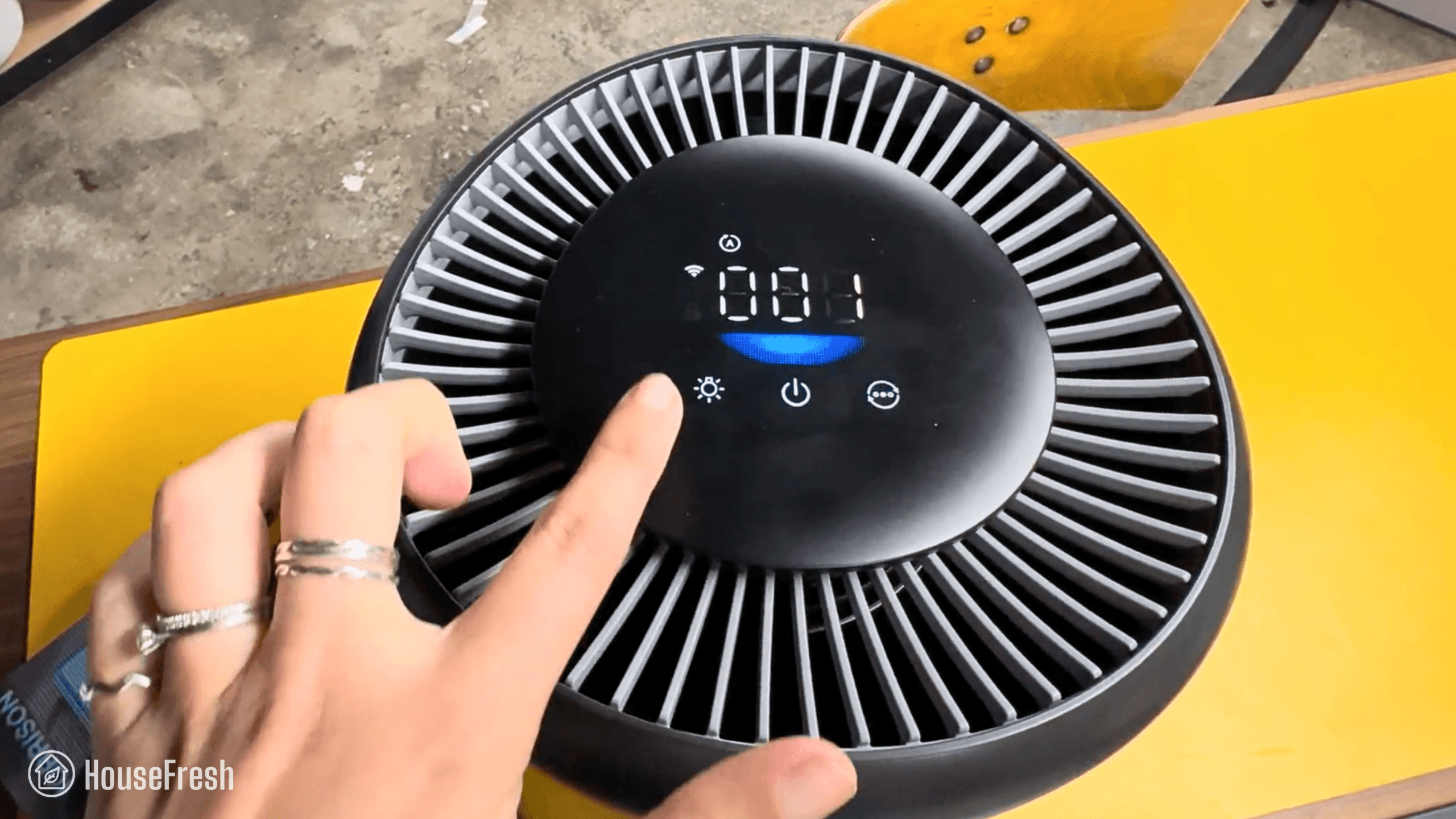
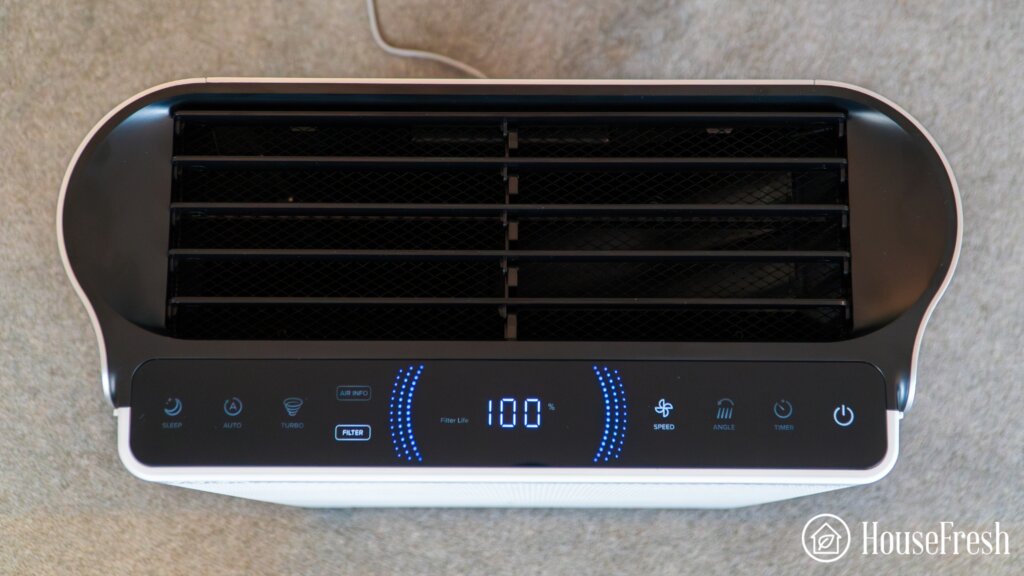
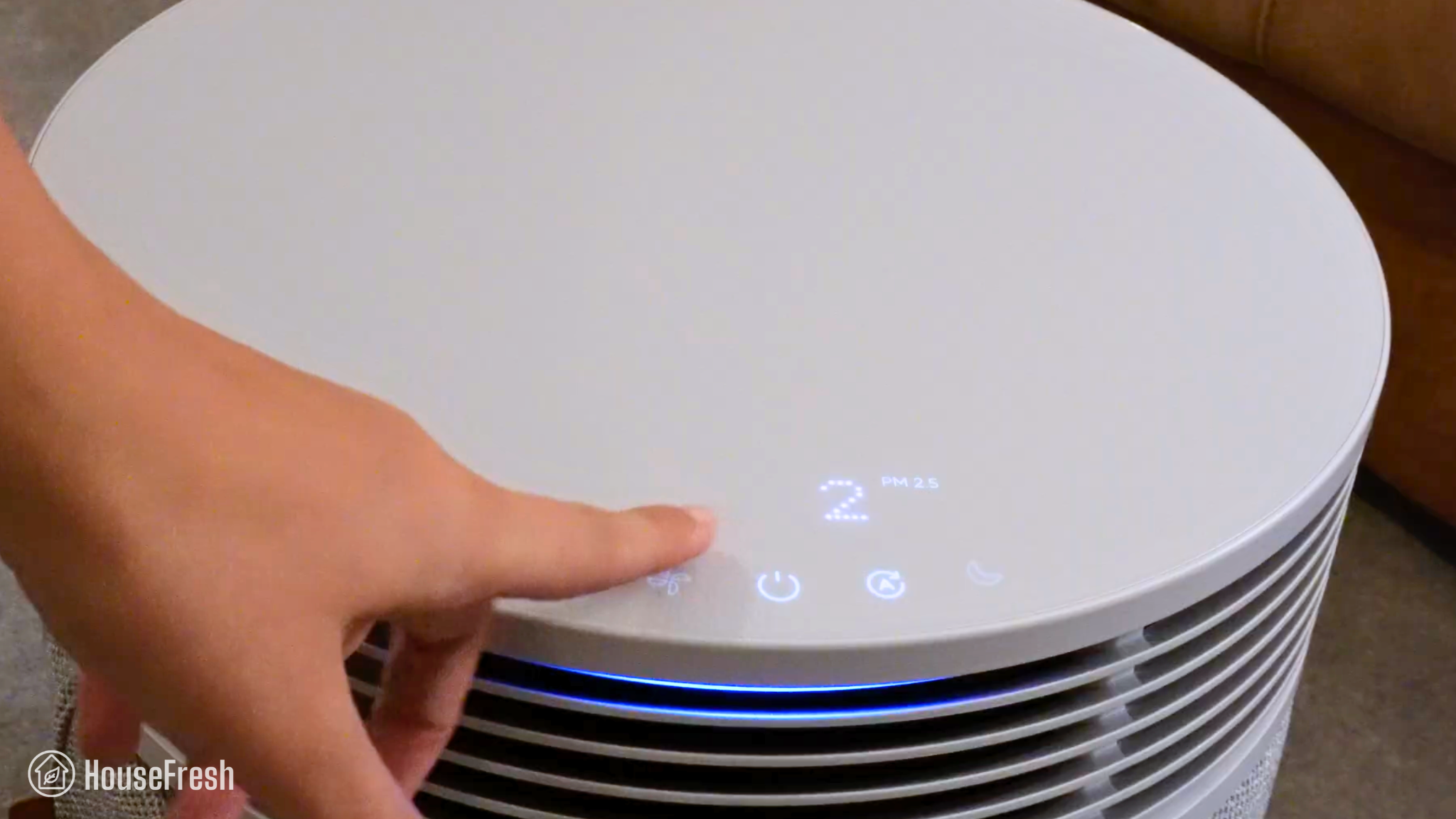
It has a laser sensor that enables auto mode, so the air purifier can automatically get to work when it senses pollutants in the air. You can see particle and air quality readings on the screen at the top of the device.
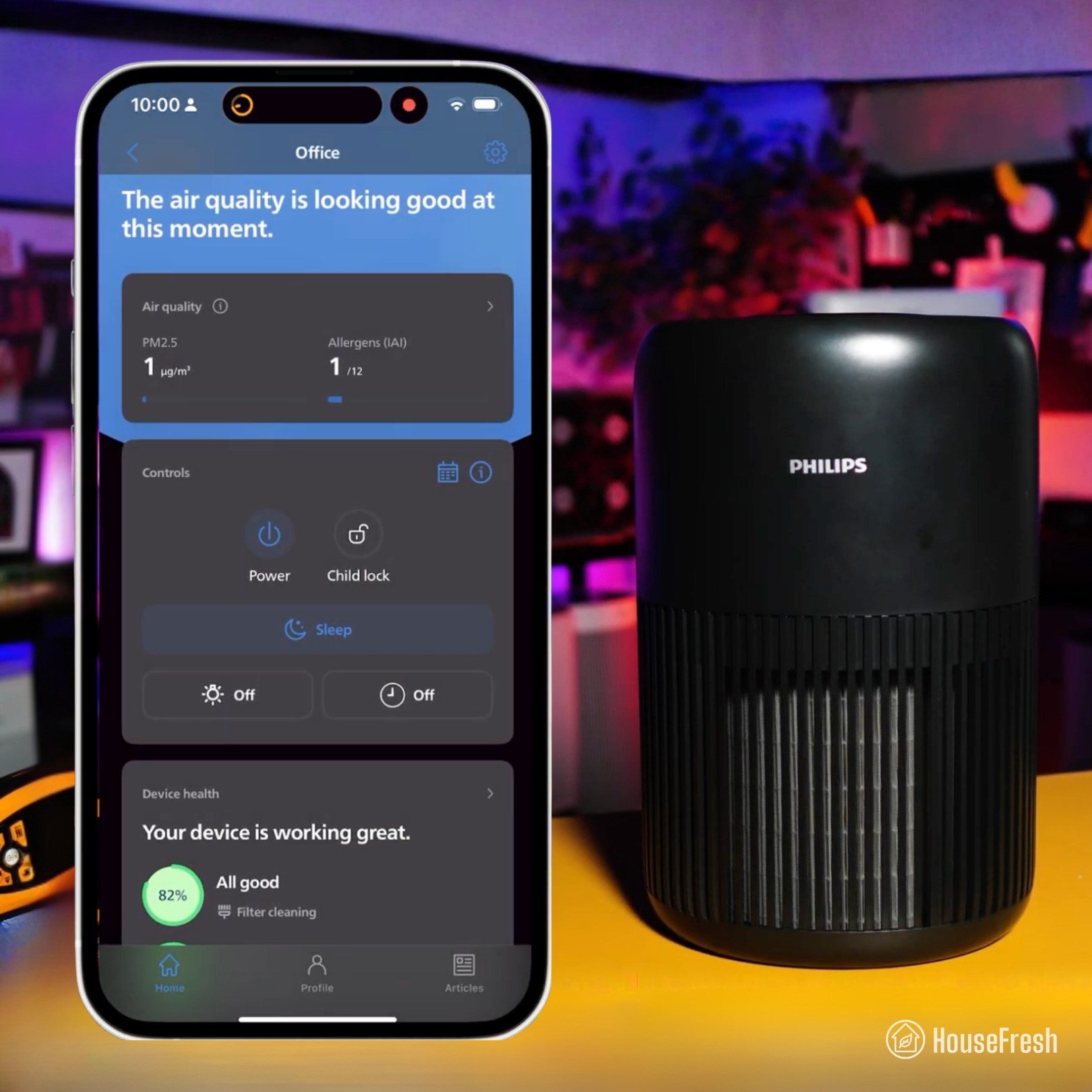
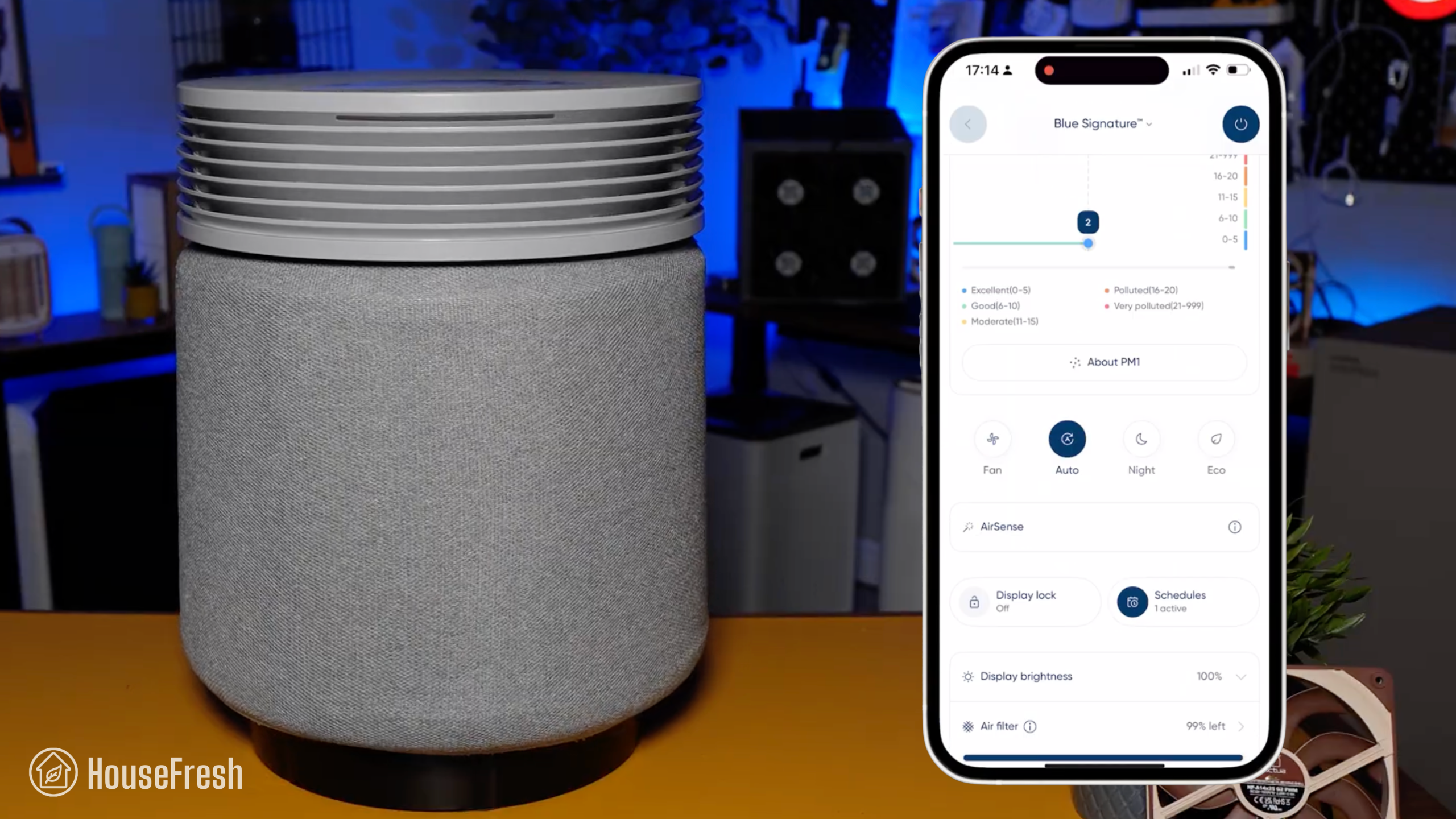
You can also connect your Eleva 300X to the VeSync app from Levoit to control the air purifier remotely, track air quality metrics over time, customize the auto mode, schedule routines and set different smart modes.
CONS
You must register the filters to pair them to the device. If you don’t do this, you lose the filter lifespan tracking function.
The use of AI in the data reporting seems to add complexity and lag for no obvious benefit.
It is power-hungry and filters aren’t cheap compared to other small air purifiers I’ve tested.
PROS
It offers excellent value for your money! It has the lowest cost per CADR across all other small units I’ve tested.
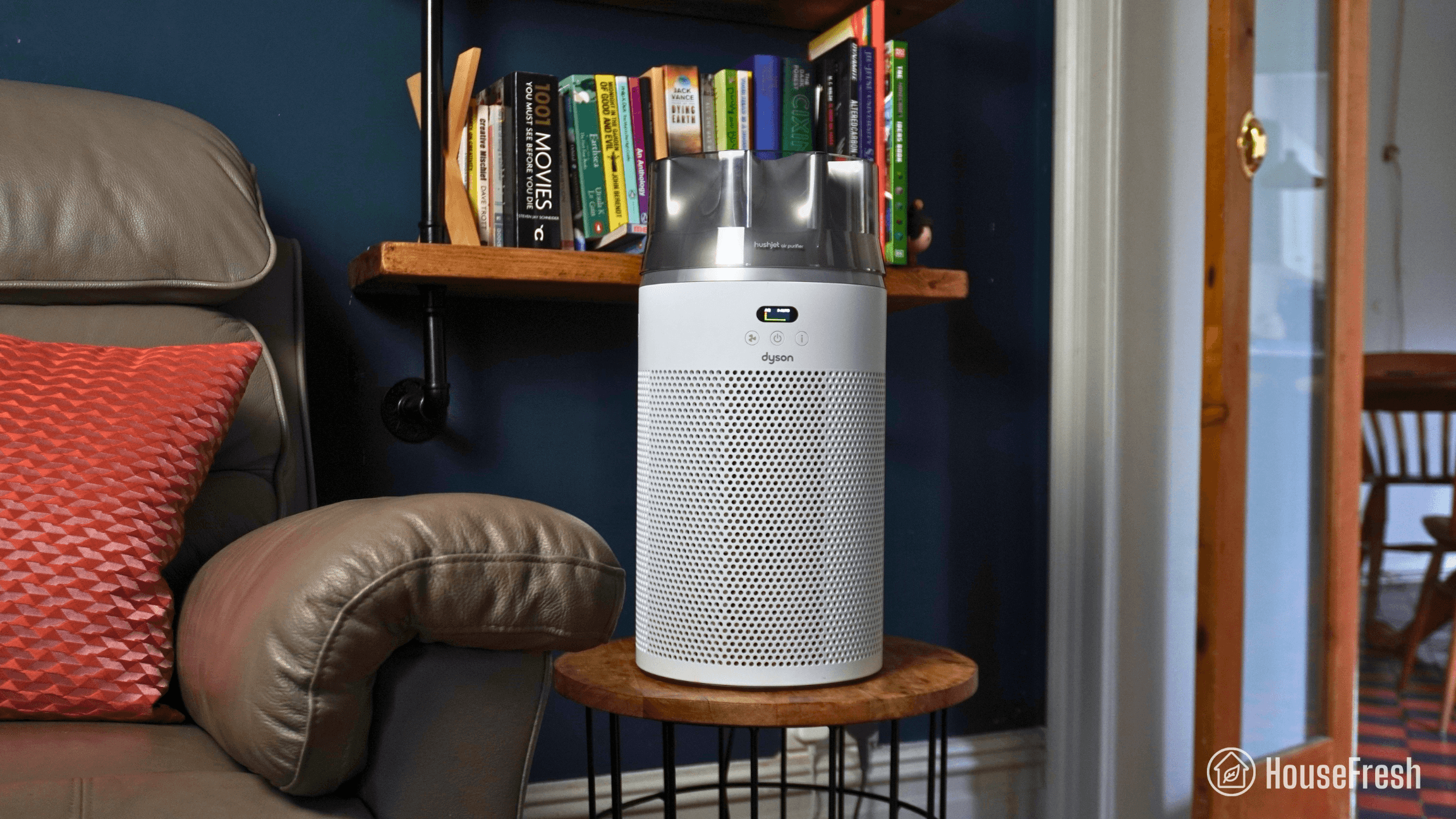
Its performance at quiet fan speeds rivals that of the $349 Dyson HushJet Compact but for a much cheaper price.
You get two separate filters for particles and gases – no more all-in-one cylindrical filters you’ll be throwing away sooner than you need to.
It comes with a high quality laser sensor that provides data on PM1, PM2.5 and PM10 particle levels.
The new app enables a Dynamic Manual mode I’m in love with: you can manually set your Eleva to run at speed 2, for example, while also allowing it to momentarily go up to Turbo whenever the sensor notices a rise in pollutants.
This air purifier has a powerful fan that can clean the air in kitchens up to 297 sq. ft. (or 27 m²), removing particle pollution and unwanted cooking smells.
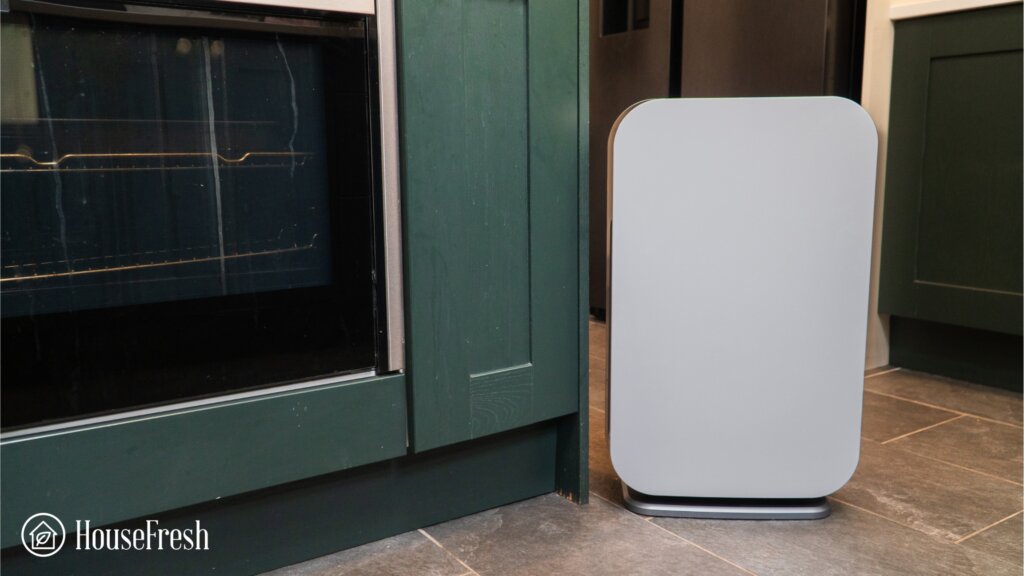
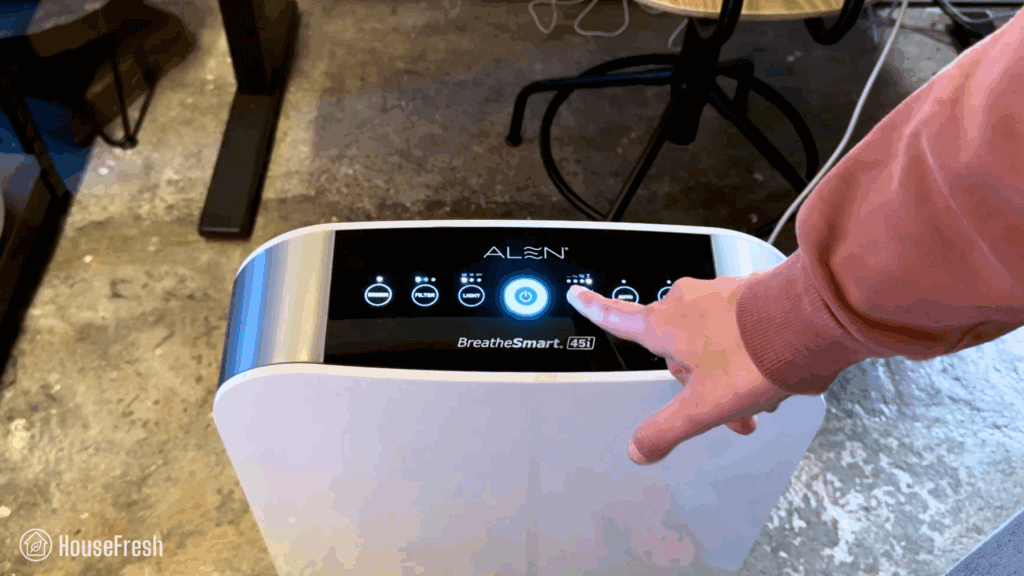
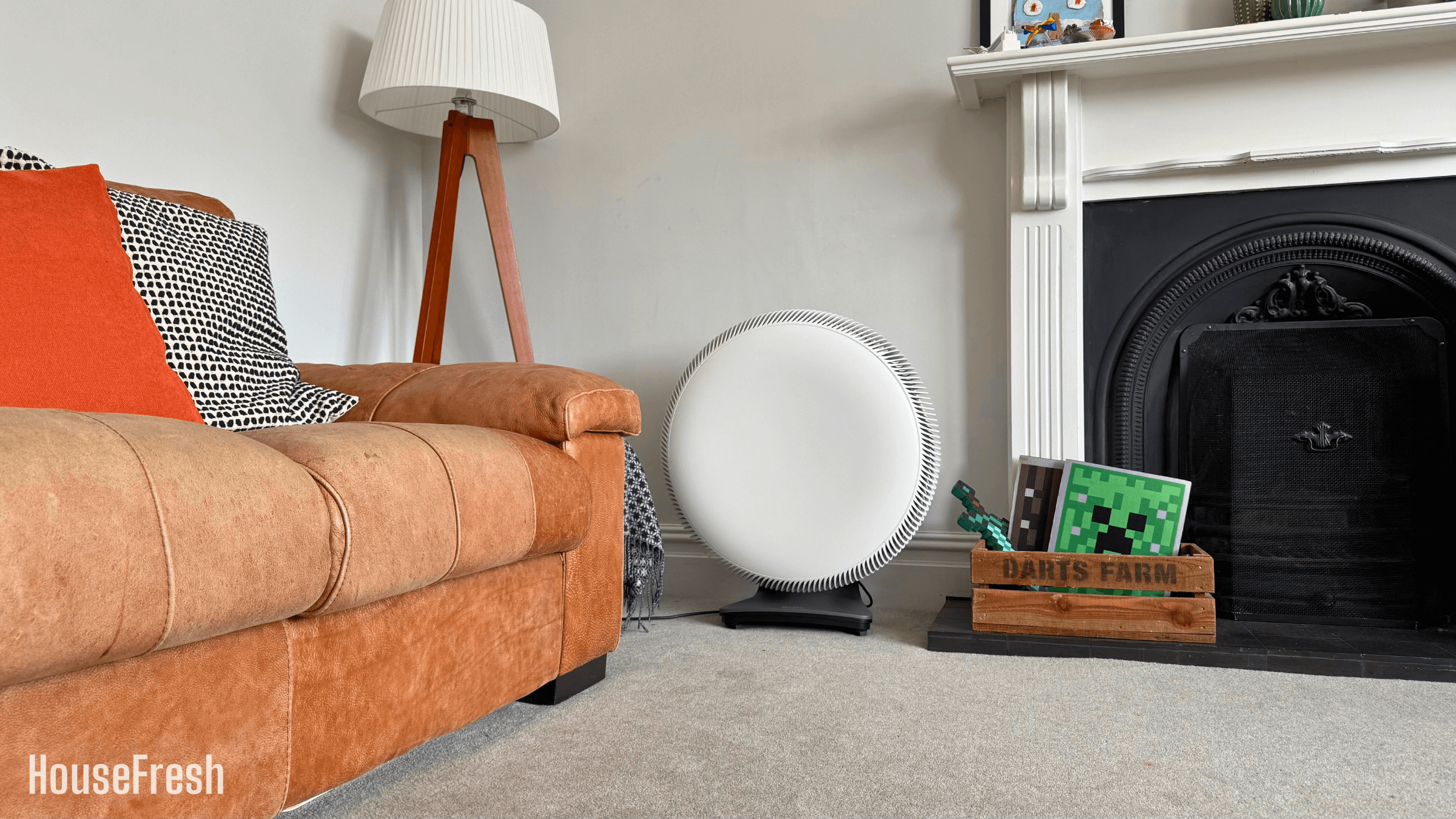
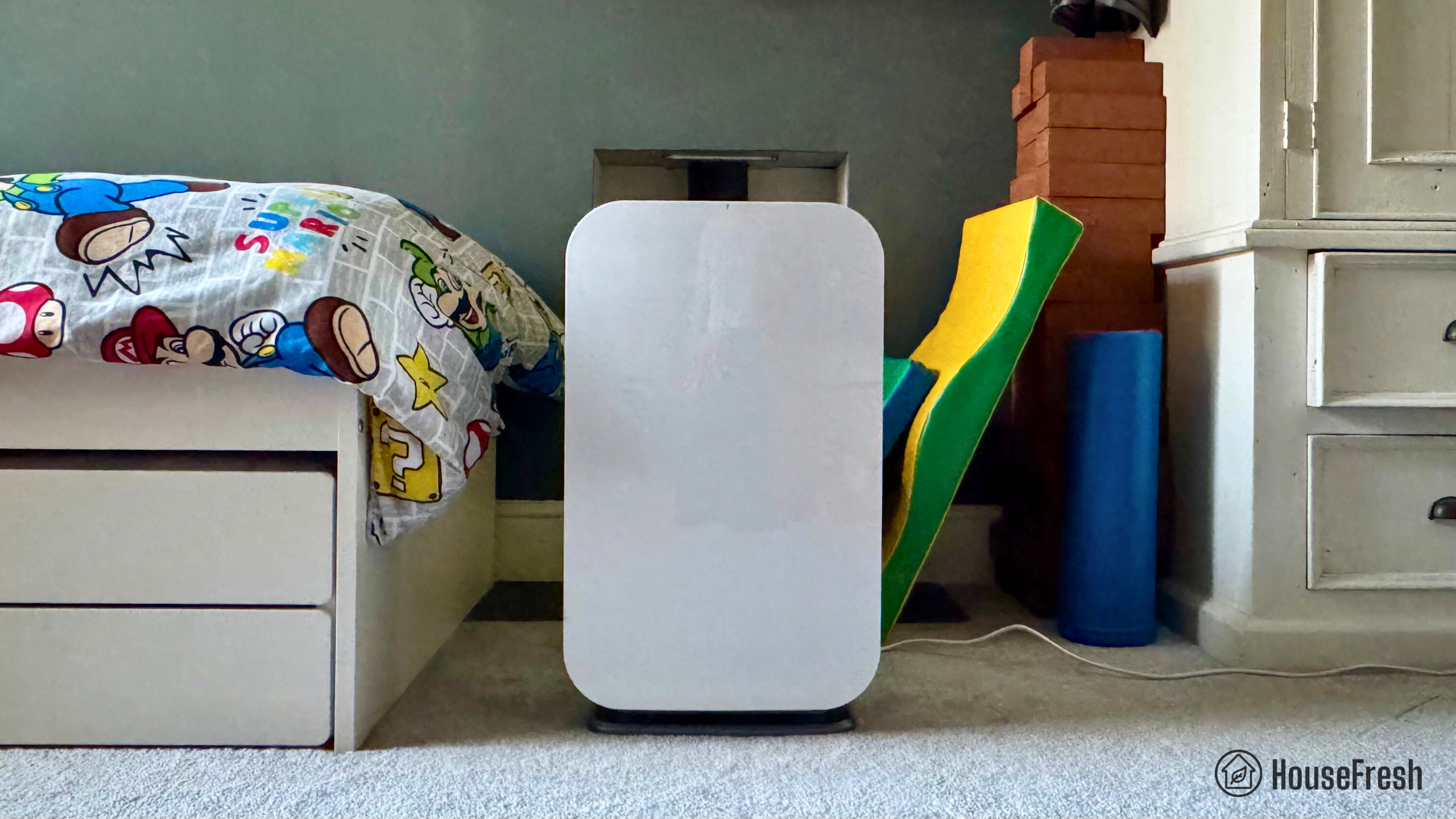
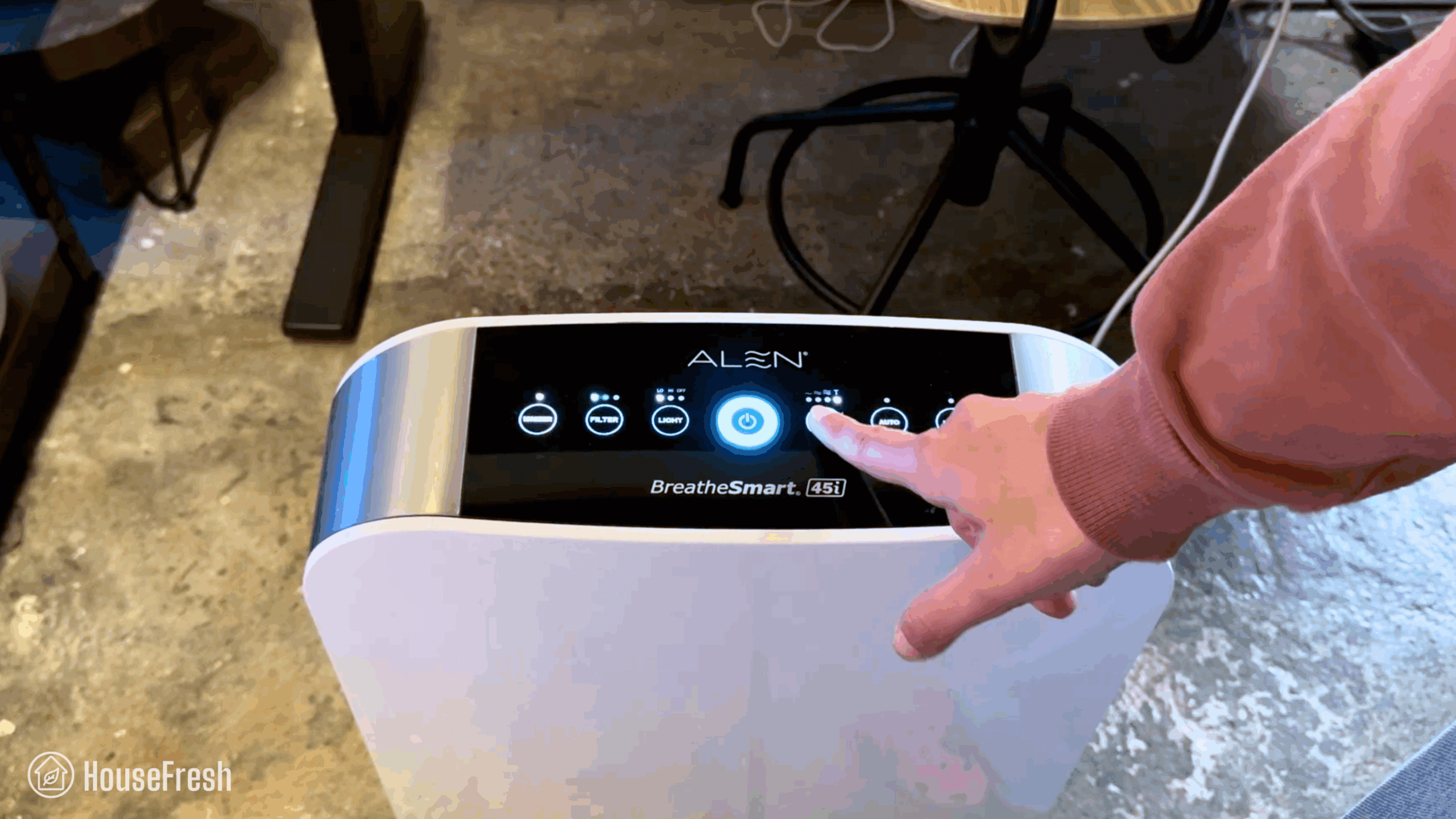
If you prefer to have your air purifier on the floor, then the Alen BreatheSmart 45i would be my go-to choice. It has a PM1 CADR of 198 cfm when running at top speed that will give you five air changes per hour in kitchens no larger than 297 sq. ft. (or 27 m²).
Similar to the Eleva 300X, Alen also offers different filter options. For kitchen odors, I recommend upgrading to the Ultimate Odor filter which combines H13 HEPA filtration with activated carbon pellets treated with an odor neutralizer.
The 45i also has an ionizer function that can supercharge odor removal, but you don’t have to use it if you prefer to avoid ozone emissions no matter how low they may be.
I appreciate being able to give the unit a wipe whenever any oils or grease ends up on the front cover. This is much more convenient than having to dry clean or wash the pre-filter fabric you get with units like the Blueair 311i Max and the 3000i Series – – those two models didn’t do well in our messy kitchen, unfortunately.
The 45i has a laser sensor that unlocks smart functions, so you can leave it running while you cook and it will switch to top speed whenever it detects pollutants in the air.
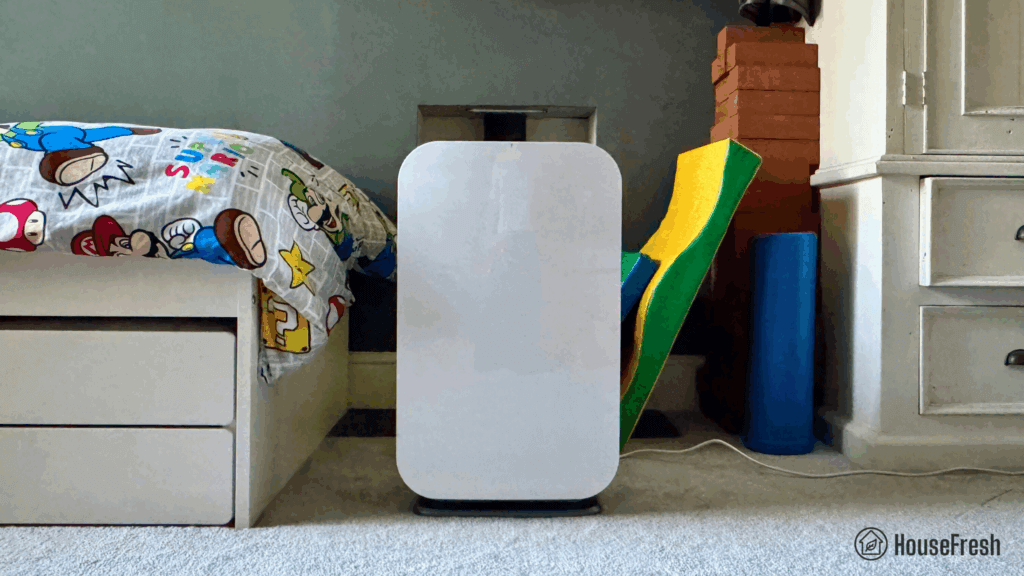
I used my Alen 45i in our kitchen for a very long time and really missed it when the time came to switch to a different air purifier, as the kitchen is one of the rooms where we test units. Now my 45i lives in our kids’ bedroom.
CONS
Filters do cost a little more than other brands, but do last up to 12 months.
Higher price for extra features and better build quality than budget air purifier brands
PROS
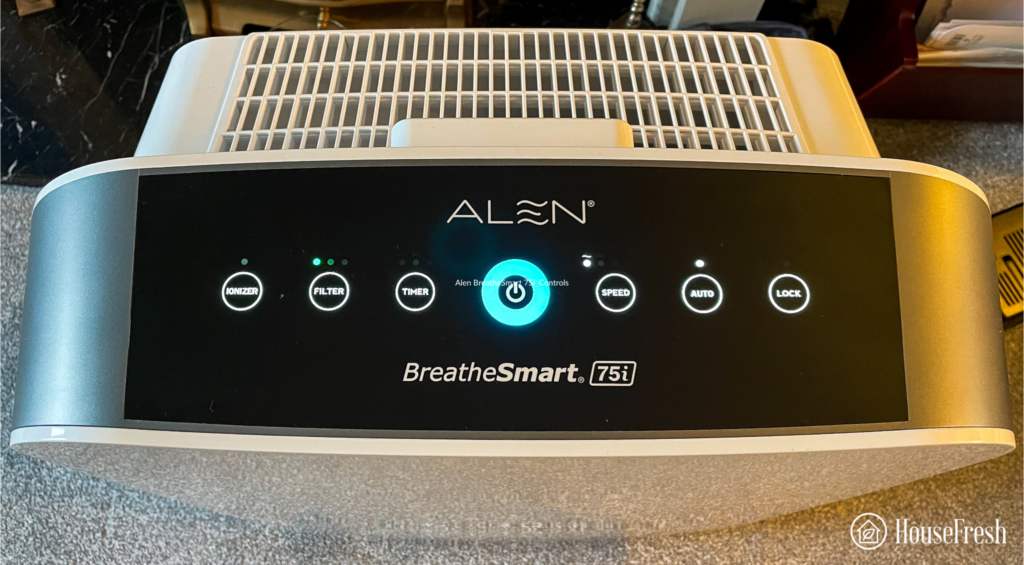
The buttons on the control panel are clearly labelled, which is something I wish more manufacturers would do instead of icons that may or may not be clear to most people.
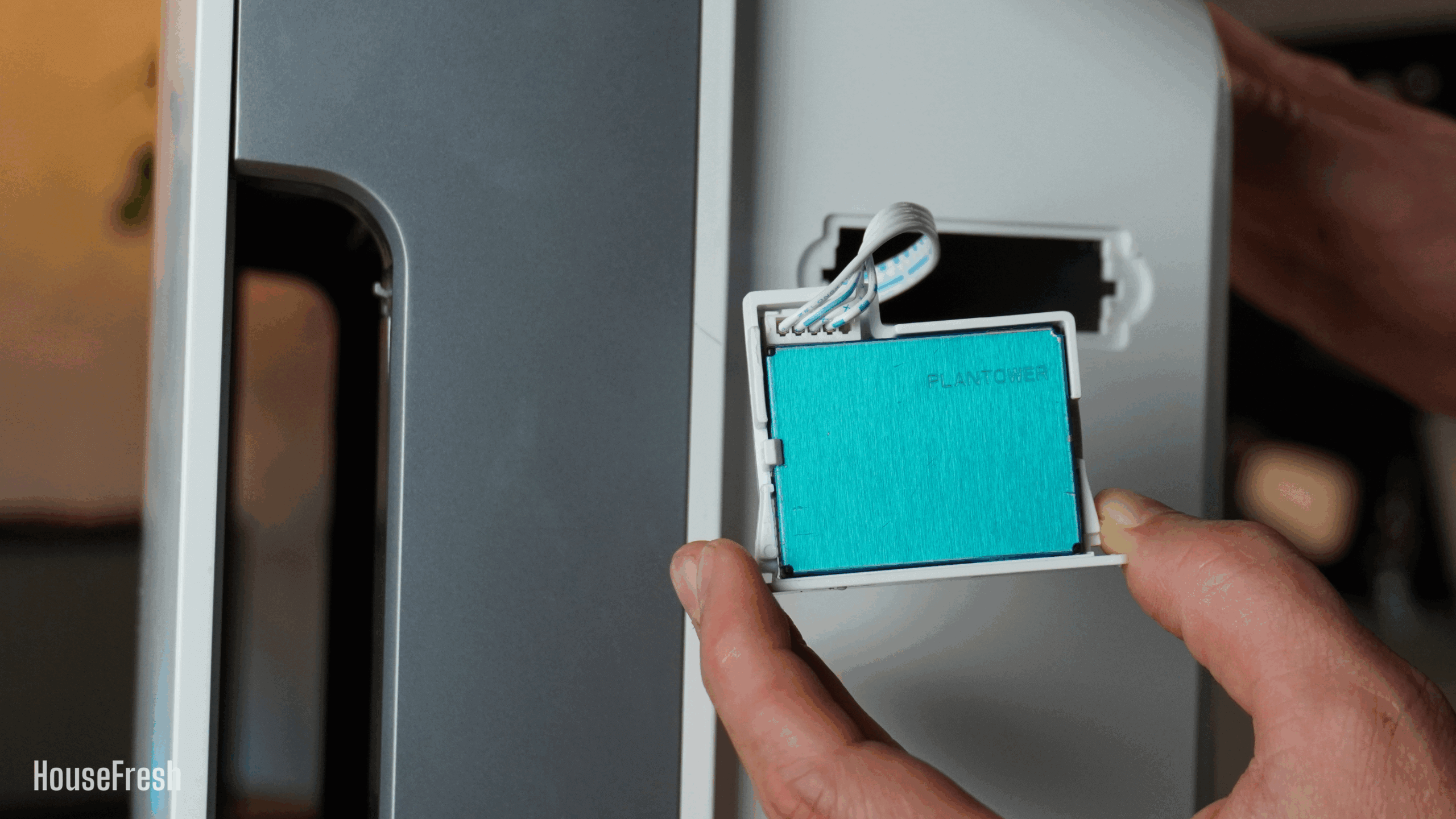
It has a high quality laser sensor from Plantower – this is the best I’ve seen used in the air purifiers I’ve tested.
It’s pretty quiet considering its power, with sound levels ranging between 36.2 dBA and 56.1 dBA.
You get lifetime warranty if you subscribe to Alen’s filter replacements.
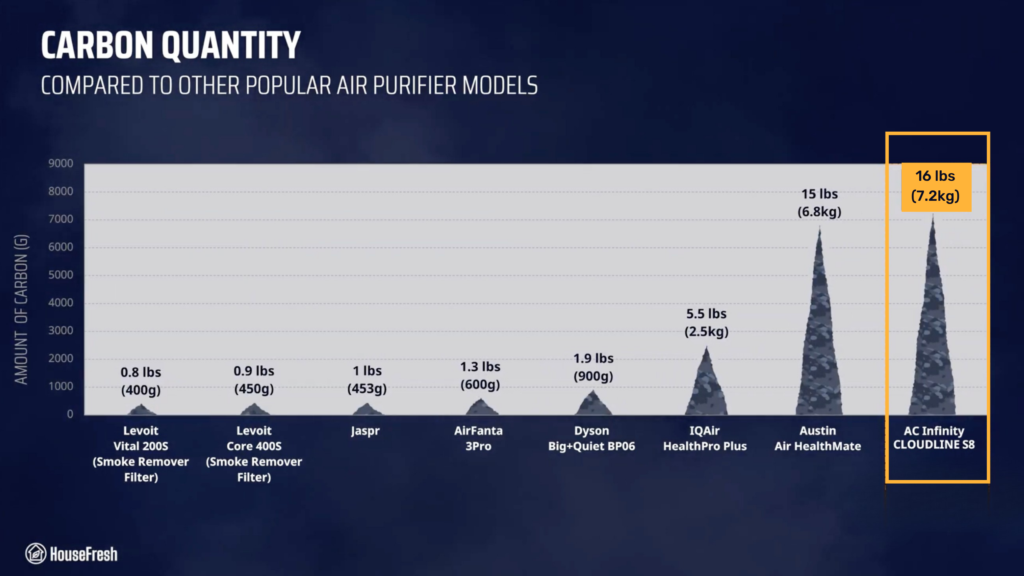
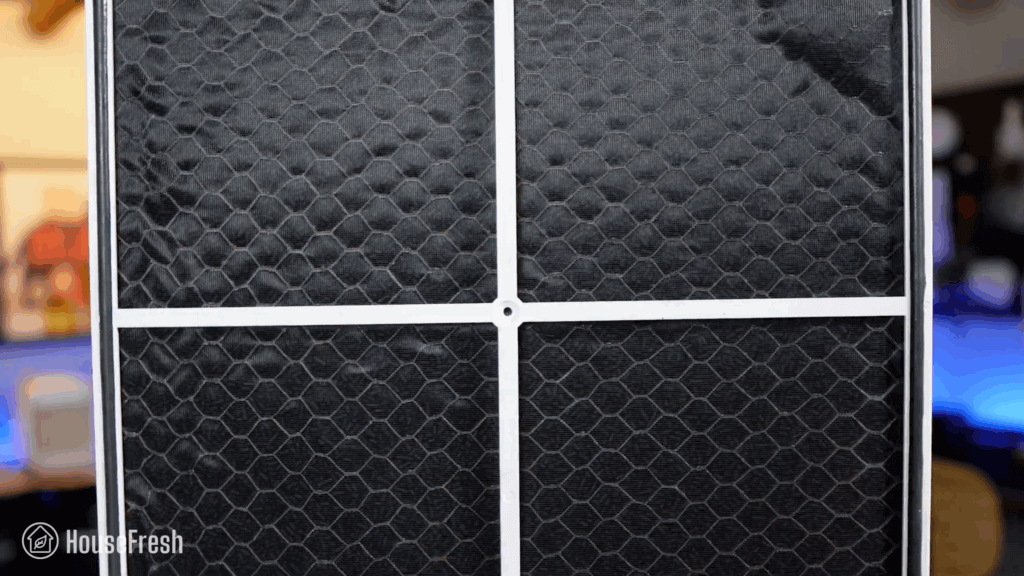
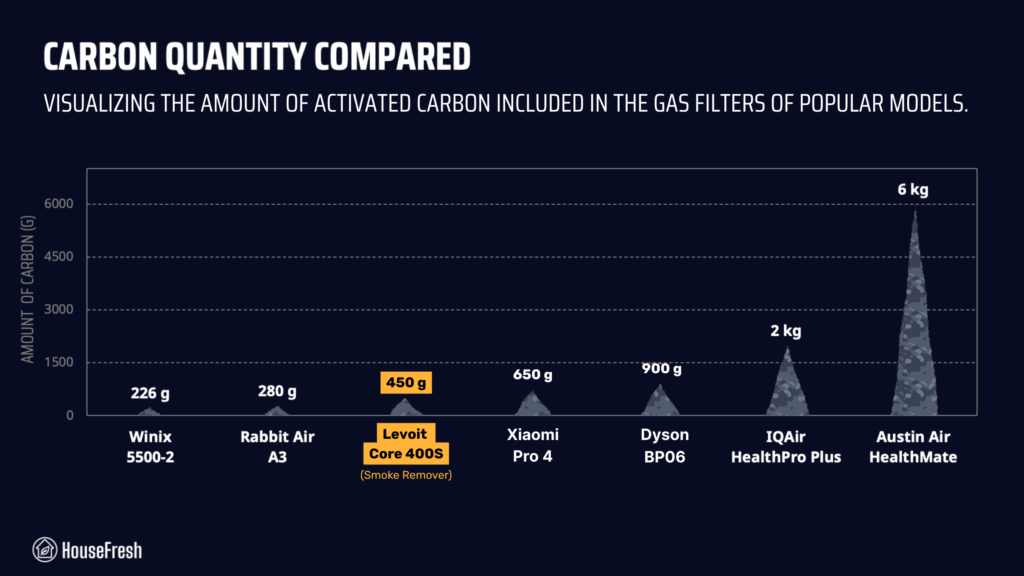
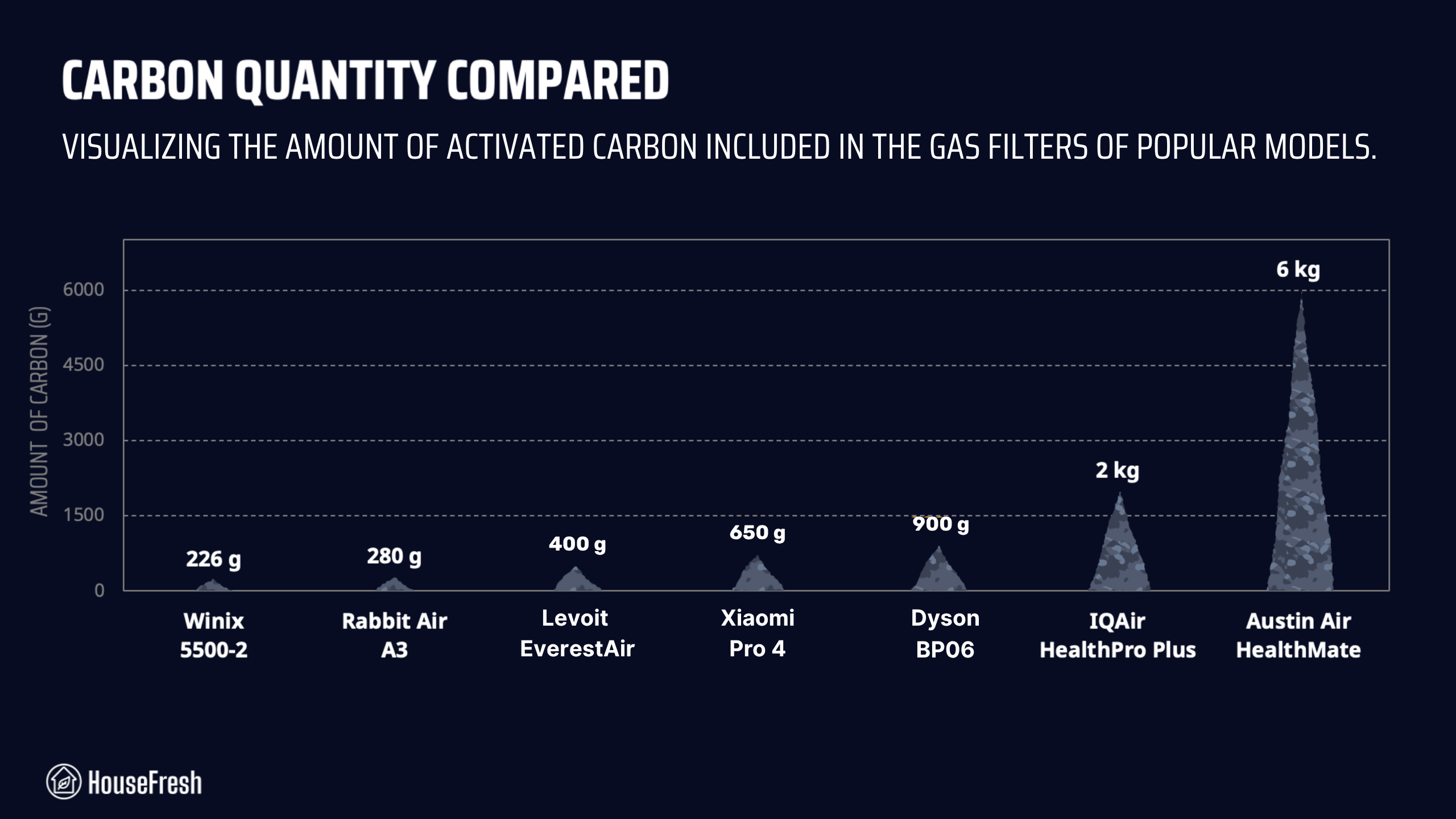
This is a specialist device with a refillable filter packed with 16 lbs of activated carbon, which is the most I’ve seen.
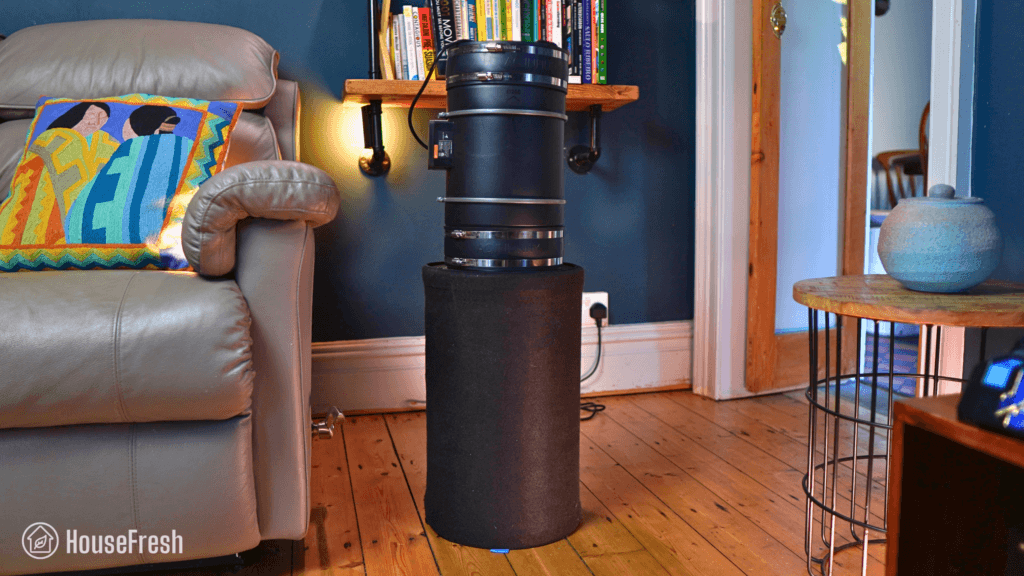
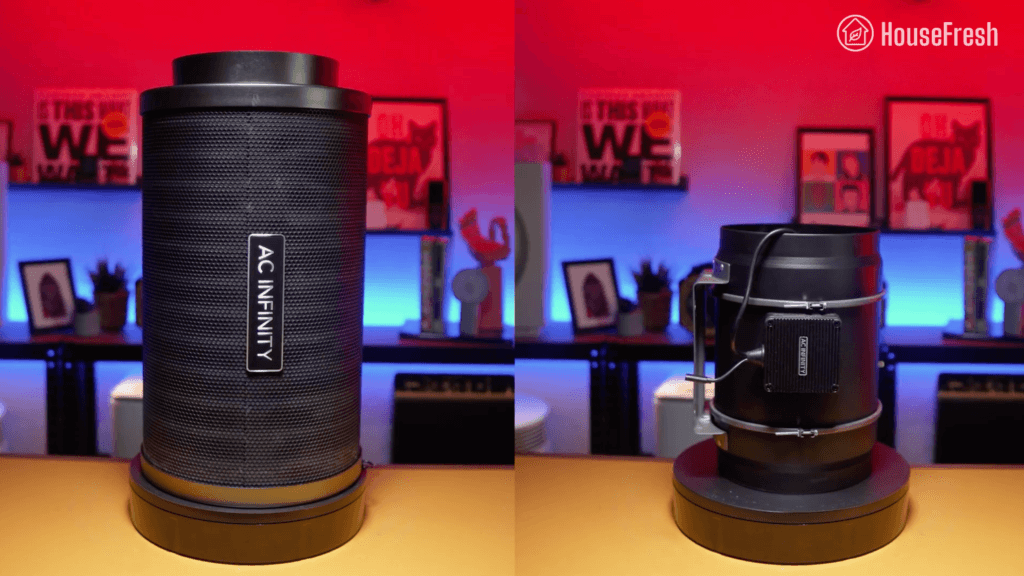
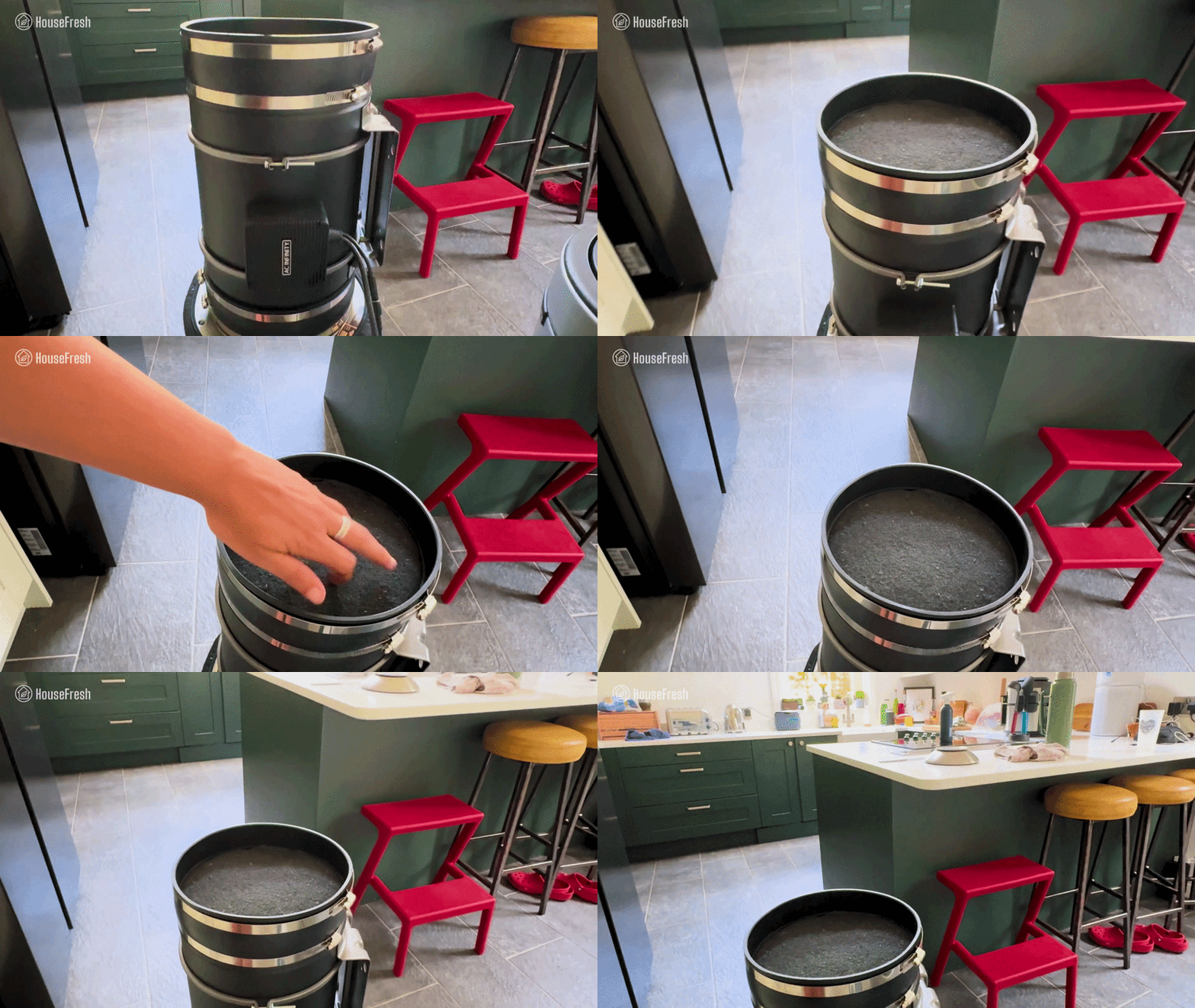
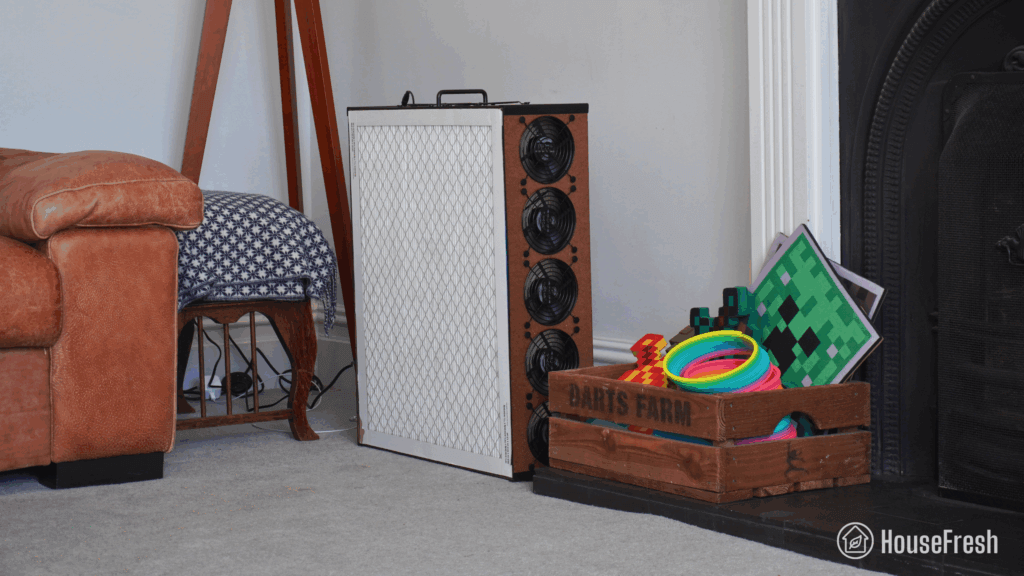
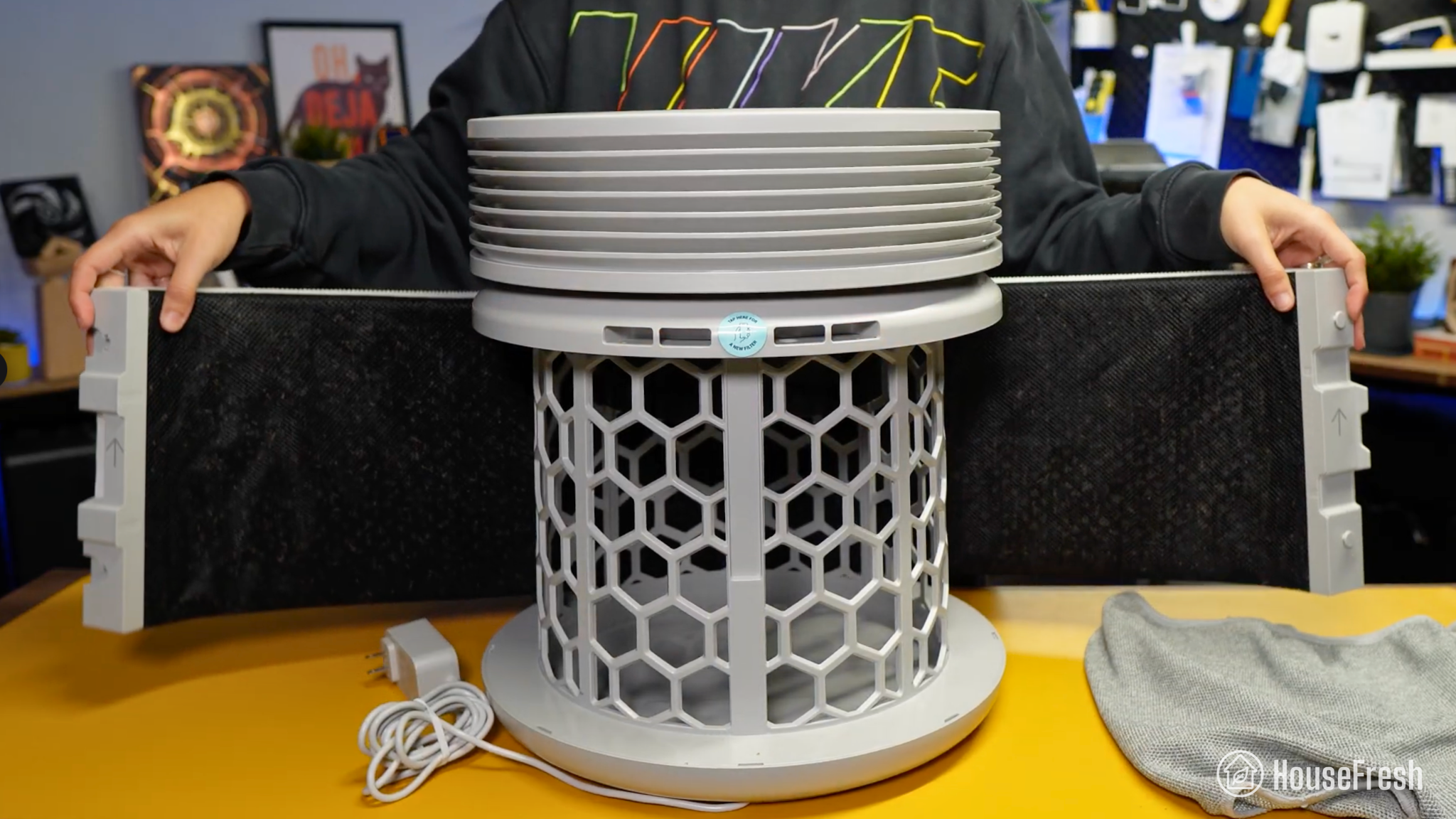
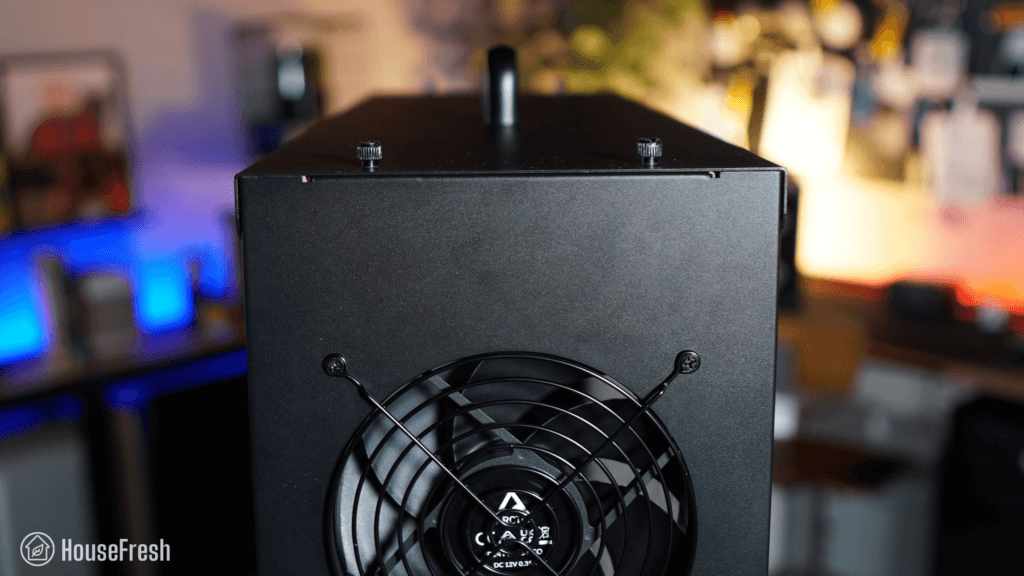
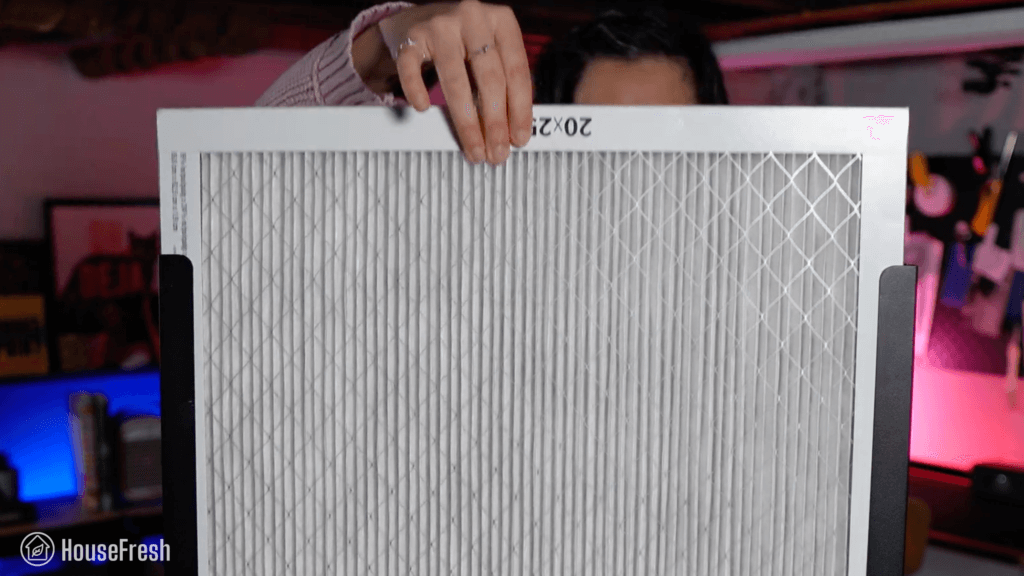
Traditional air purifiers will struggle to deal with serious cooking odors or unwanted kitchen smells. In those cases, I recommend building an odor-busting device using AC Infinity’s CLOUDLINE S8 fan, an 8-inch Carbon Filter, two noise reduction clamps and a pre-filter cloth. The whole setup costs around $410.
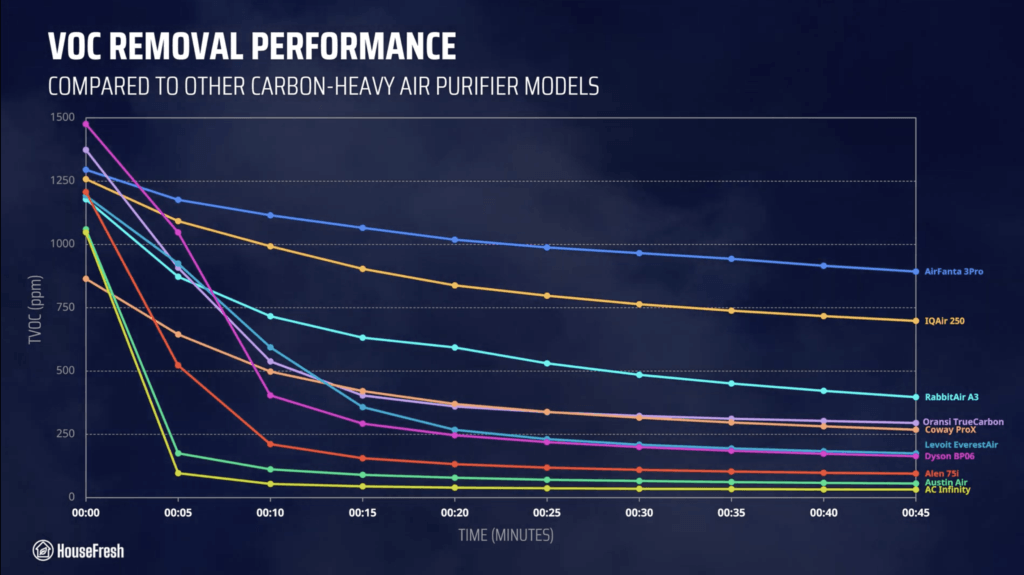
In our odor removal tests, our AC Infinity running at speed 5 outperformed every other air purifier thanks to its whooping 16 lbs (or 7.2kg) of activated carbon.
And my favorite thing about it is that you can refill the filter once the carbon is used up. This will save you a fortune in the long run.
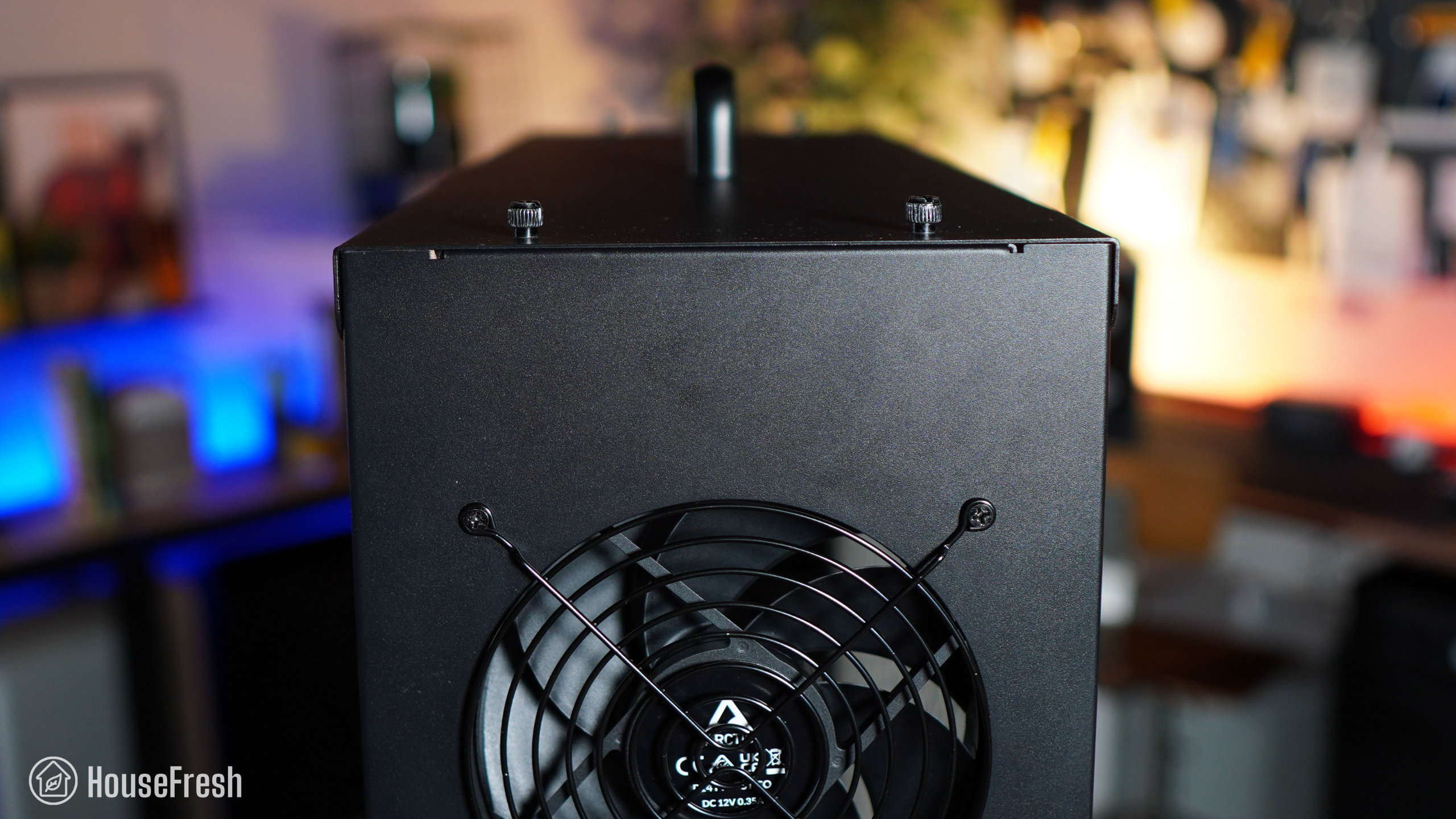
This device is meant to be installed on the ceiling. Be aware that when using it on the floor, the fan blades are exposed at the top.
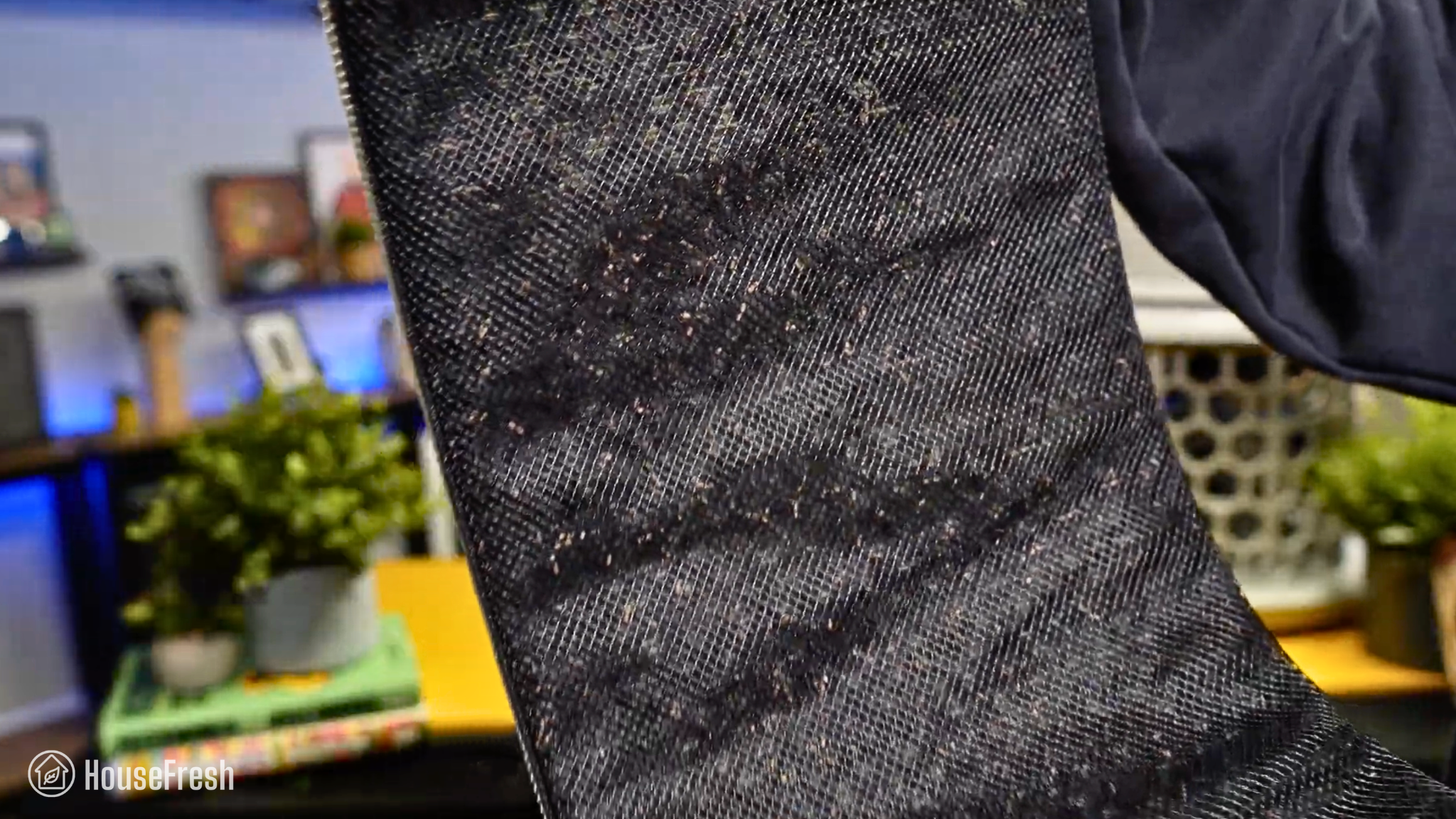
To fix this, I cut out a circular piece of carbon-impregnated fabric and placed it above the fan before adjusting the top clamp. This also reduced carbon particles floating around.
CONS
This device only removes gases and odors from the air. You won’t get any particle filtration, so you will need to use it alongside an air purifier with a MERV 13 or HEPA filter if you want to remove smoke particles too. A cheap model could work.
This isn’t a traditional air purifier. You have to build it yourself and it doesn’t come with any fancy touchscreens or smart features.
It is LOUD. When set to speed 5 (optimal speed), it generates 61.9 decibels. The good news is that VOC removal improves at lower fan speeds.
PROS
The 8-inch carbon filter comes with 16 lbs (or 7.2 kg) of activated carbon, which is the largest amount we have seen.
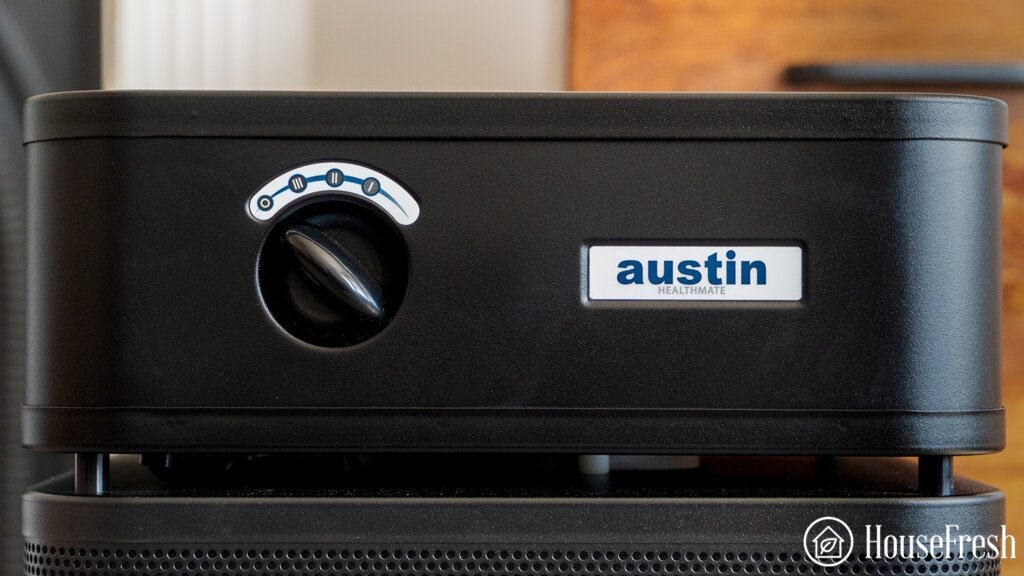
It is much cheaper than specialist odor-busting units from Austin Air, Allerair and Airpura can cost as much as $1,000.
This filter is refillable, so once the carbon is used up, you can dispose of it and refill the cylinder with more carbon.
The price of a years’s worth of carbon is just $89.99! This is A LOT more accessible than the nearly $400 you’re expected to spend on filter replacements with other specialist brands.
Filter technology:
VOC and odor adsorption
Carbon type:
Australian RC412 at 1200+ IAV (38mm thickness)
Carbon quantity:
16 lbs (7.2 kg)
Airflow:
857 cfm
Dimensions:
Fan: 3.3 x 2.9 x 0.5 inches (8.5 x 3.6 x 1.3 cm) Filter: 18.1 x 10.9 inches (46 x 27.7 cm)
Two buying tips for finding a good air purifier for your kitchen
Many studies show that kitchens are a significant source of indoor pollution, including smoke, VOCs, nitrogen dioxide and particulate matter. It’s worth taking the time to ensure that the air purifier you choose will do an excellent job of keeping your air clean whenever you cook.
To find the right air purifier for your kitchen, you need to consider the size of your cooking space, the type of filter and any features you can’t live without.
1. To tackle cooking odors, you need a good amount of carbon
Particle filters like HEPA can’t do anything against odors, which are chemicals or gasses in nature. That’s what activated carbon deals with, through a process called adsorption.
2. Consider the size of your kitchen
A common mistake is choosing an undersized air purifier for a given space. If the unit is not big or powerful enough, it will consume filters more than necessary, and the air in your space won’t be thoroughly cleaned.
You should consider the air purifier’s Clean Air Delivery Rate (CADR), which is basically a measure for how much clean air the unit can deliver within a given time.
Feel free to input your kitchen size into our calculator below and it will output the CADR you should aim for if you want to achieve 4.8 air changes per hour:
Final thoughts
If you’re still unsure about which air purifier to get for your kitchen, drop me a comment below or email me directly to danny@neomam.com and I’ll help you find a better alternative. Make sure to specify your country and budget, so I can find a good air purifier for your specific situation.
And if you’ve got a model in mind but you want to see how it compares to other air purifiers on the market, you can use our air purifier comparison tool:
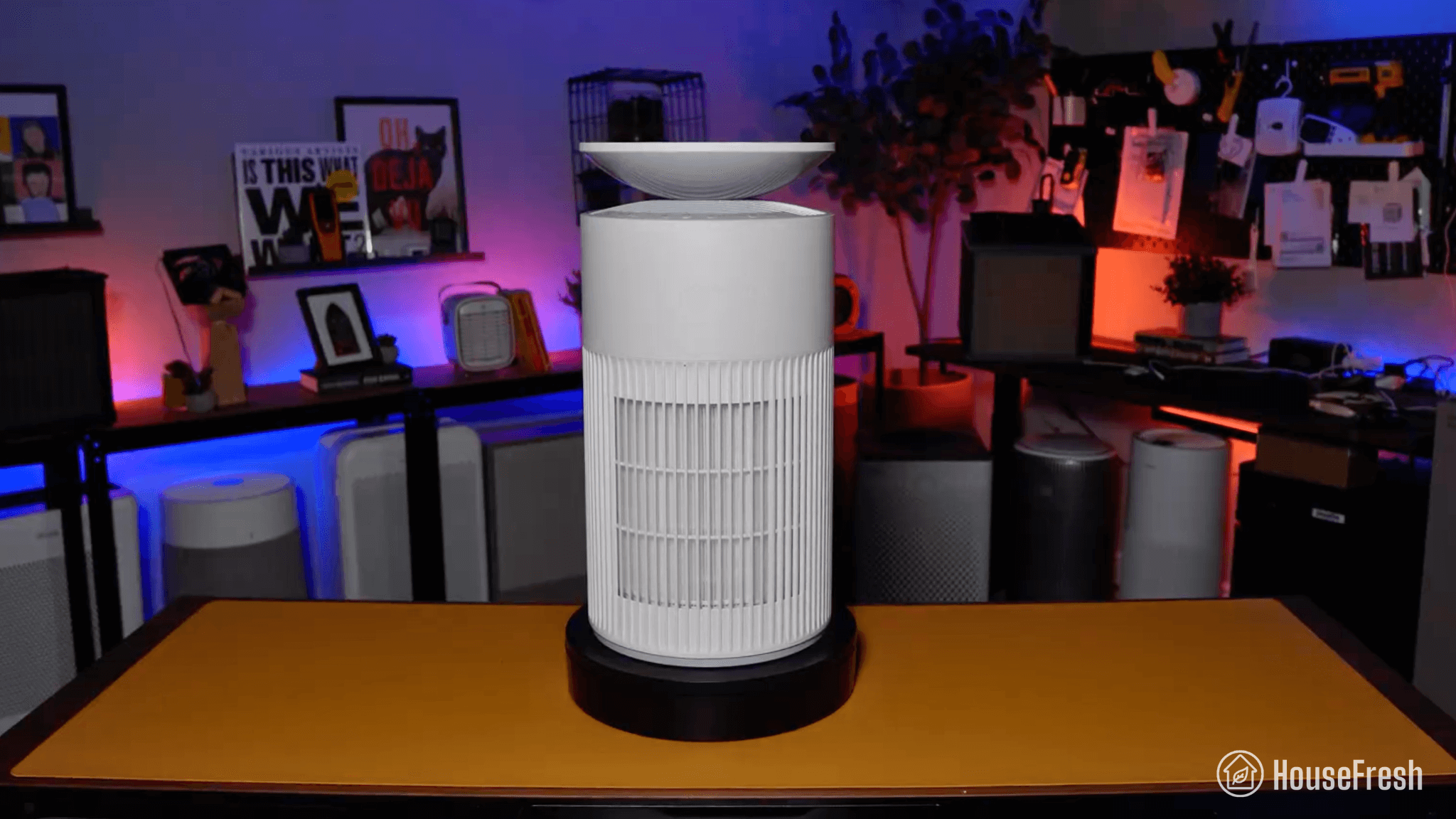
The Eleva 300X is a new tabletop air purifier from Levoit with an onboard laser sensor, separate particle and gas filters, and smart features you can customize via their app.
But how does it compare to the trusted Core 300 and Core 300S? And is it better or worse at cleaning the air than other small air purifier models from Dyson, Blueair, Winix, Coway and Xiaomi? And what about the filter inside?… Is it HEPA grade or not?
To find out, I bought one with my own money so that I could test its air cleaning performance, noise generation, energy consumption, annual running costs, and day-to-day user experience.
The overall score for the Levoit Eleva 300X incorporates first-hand data results from our battery of tests, as well as our ratings for customer service, brand transparency, and design & UX. Check out the full scorecard below to see the category breakdown.
Search for ‘Eleva 300X’ to see where it ranks, based on its air cleaning performance and value for money. You can also filter results to easily compare models in the same price range.
The pros and cons of the Levoit Eleva 300X
A summary of our top-level findings after testing this air purifier, following our methodology.
“When you compare it to other small air purifiers on the market today, it becomes clear that the Eleva 300X is a powerful little unit – with a high CADR at quiet operation.
And when you compare it to the older Core 300S, you get much better air cleaning performance and features at a cheaper price, so I recommend you go with a 300X over a 300S.
I really appreciate the cheap initial price, especially considering that you not only get good performance, but also features like a laser sensor and the ability to customize the auto mode through the app.”
You must register the filters to pair them to the device. If you don’t do this, you lose the filter lifespan tracking function.
The use of AI in the data reporting seems to add complexity and lag for no obvious benefit.
It’s louder and more power-hungry than the older Levoit Core 300S.
Filter replacements are more expensive than other small models from competing brands, but they have a longer lifespan as well.
PROS
It offers excellent value for your money! It has the lowest cost per CADR across all other small units I’ve tested.
Its performance at quiet fan speeds rivals that of the $349 Dyson HushJet Compact but for a much cheaper price.
You get two separate filters for particles and gases – no more all-in-one cylindrical filters you’ll be throwing away sooner than you need to.
It comes with a high quality laser sensor that provides data on PM1, PM2.5 and PM10 particle levels.
The new app enables a Dynamic Manual mode I’m in love with: you can manually set your Eleva to run at speed 2, for example, while also allowing it to momentarily go up to Turbo whenever the sensor notices a rise in pollutants.
Separate particle and carbon filters that will help reduce waste.
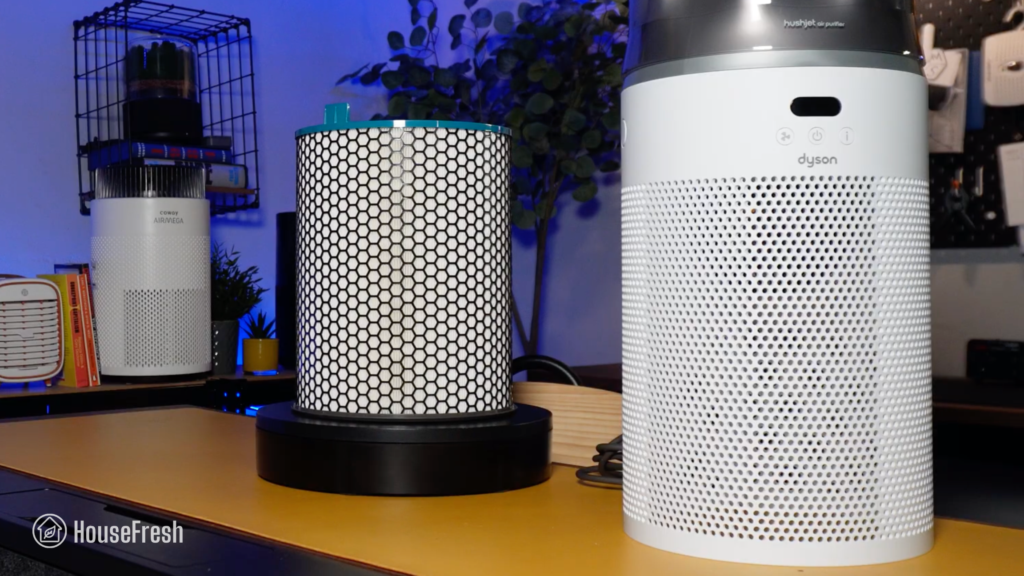
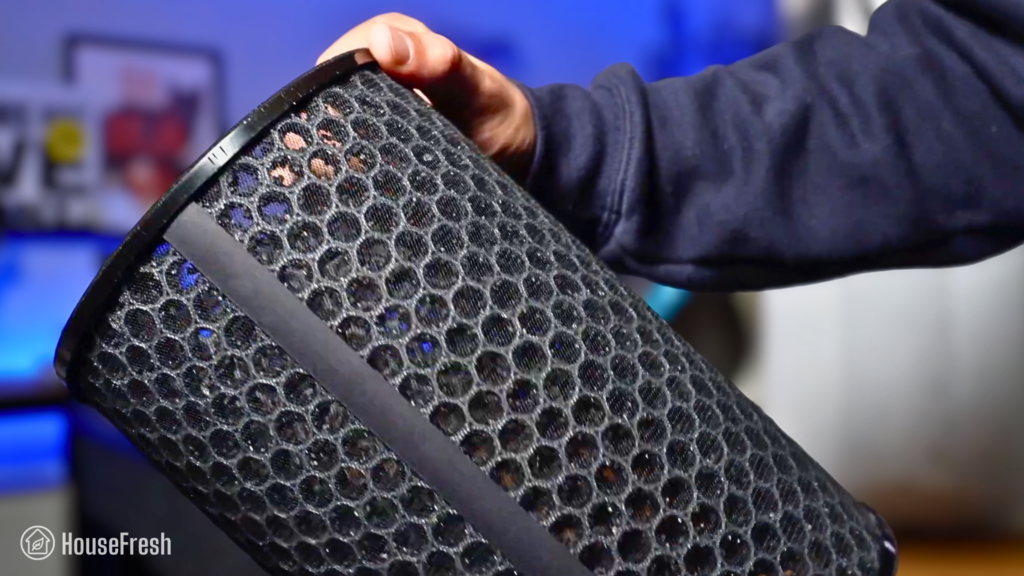
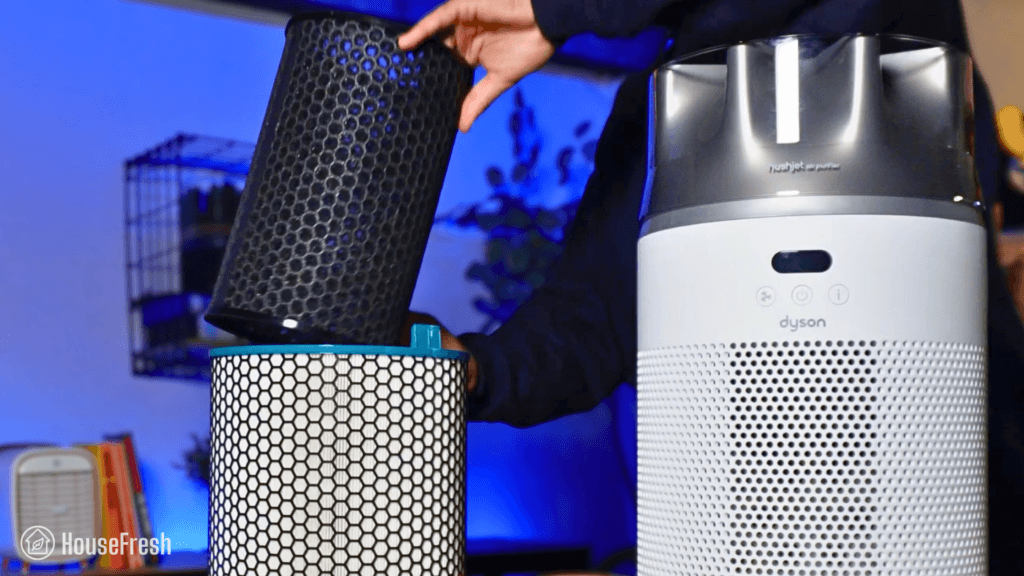
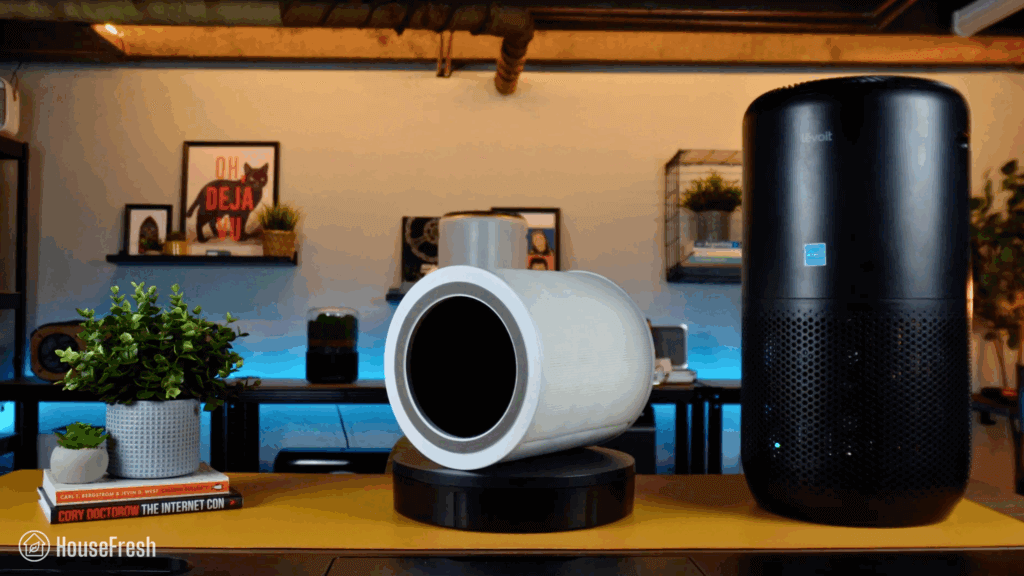
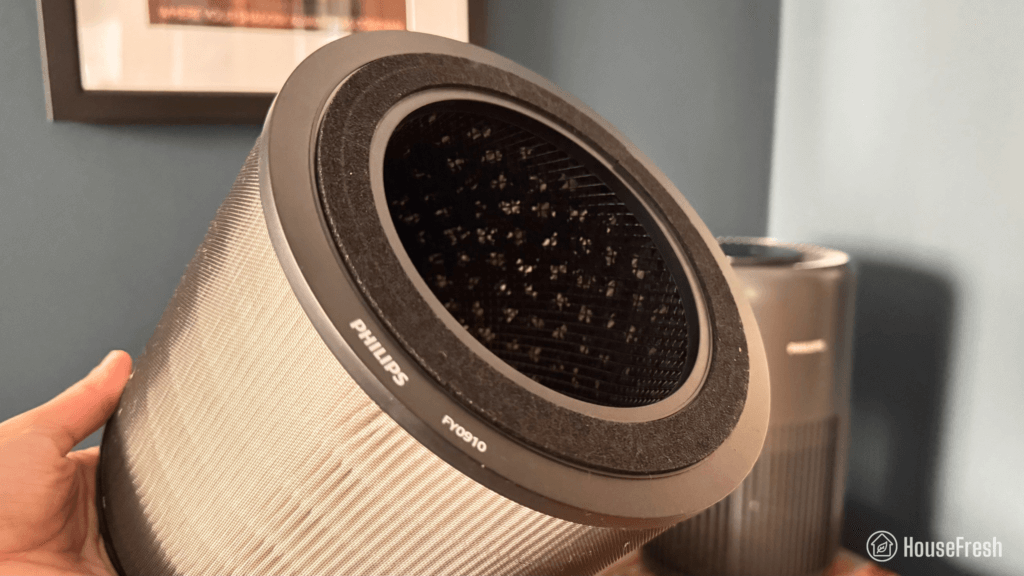
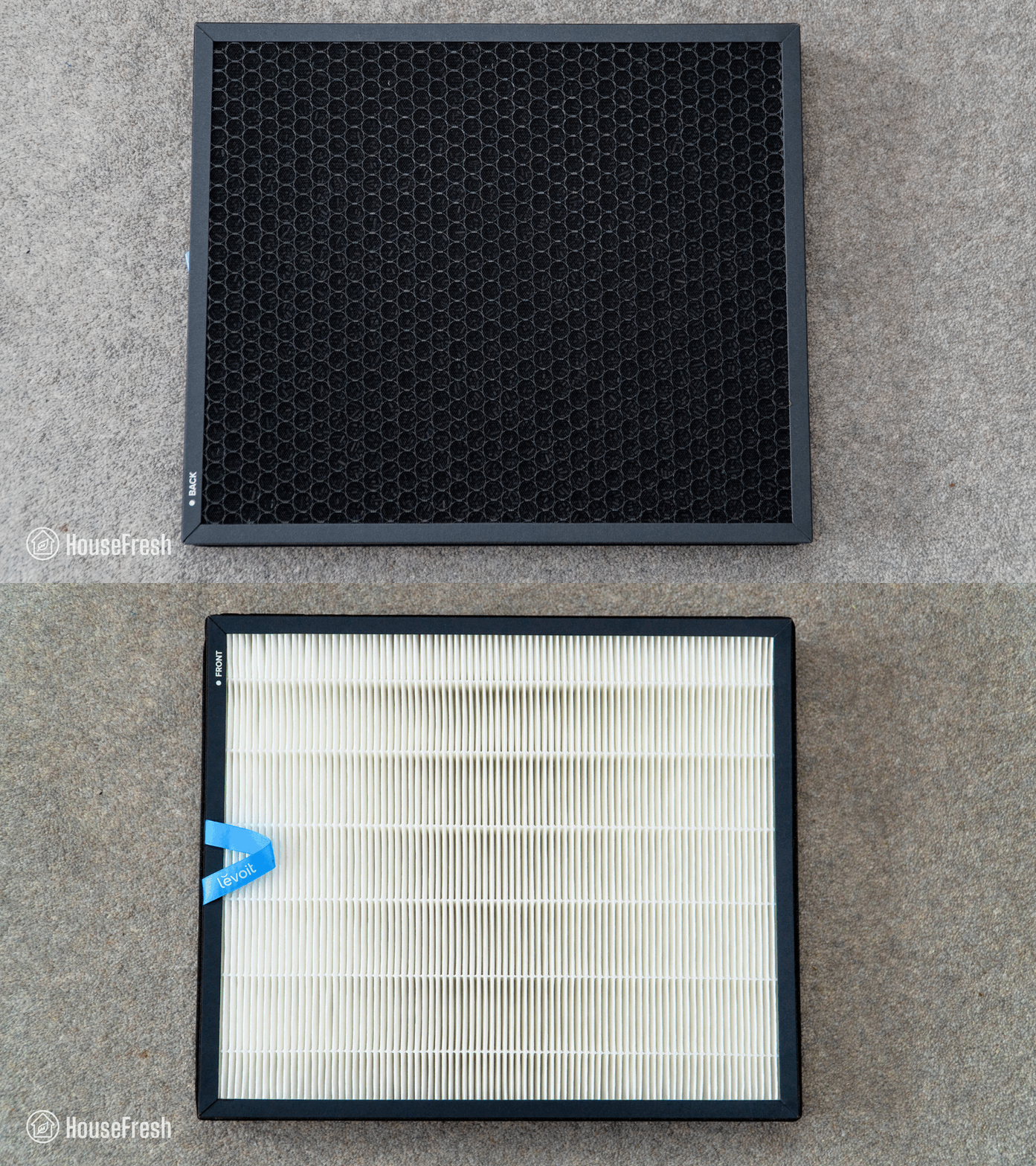
Most cylindrical air purifiers come with all-in-one filters that combine the particle and gas filters into one (see left). But with the Eleva 300X, you get two filters: one that captures particles and one that traps gases.
Carbon filters have a shorter lifespan than particle filters, so with all-in-one filters, you must throw both of them away when the time comes to replace just one. The Eleva 300X fixes this with separate filters.
Keep in mind that larger amounts of carbon will restrict airflow so, unless you need to tackle serious odors, I recommend sticking to the standard filter to get the best possible particle filtration.
Now Levoit states that the Eleva 300X features HEPA filtration capable of capturing 99.97% of 0.3 micron particles, according to an independent test by SGS using the ASTM F3150-18 test standard — a test normally used for residential and commercial vacuum cleaners.
The test involves detecting if any small particles are released when a vacuum cleaner is running, so the focus is not solely on the filter itself but the entire device.
So it seems that the Levoit Eleva 300X can achieve HEPA levels of filtration when the air passes through the device.
This might explain the new rubber seals where the filter meets the body, as otherwise air could bypass the filter.
Design, controls and app features
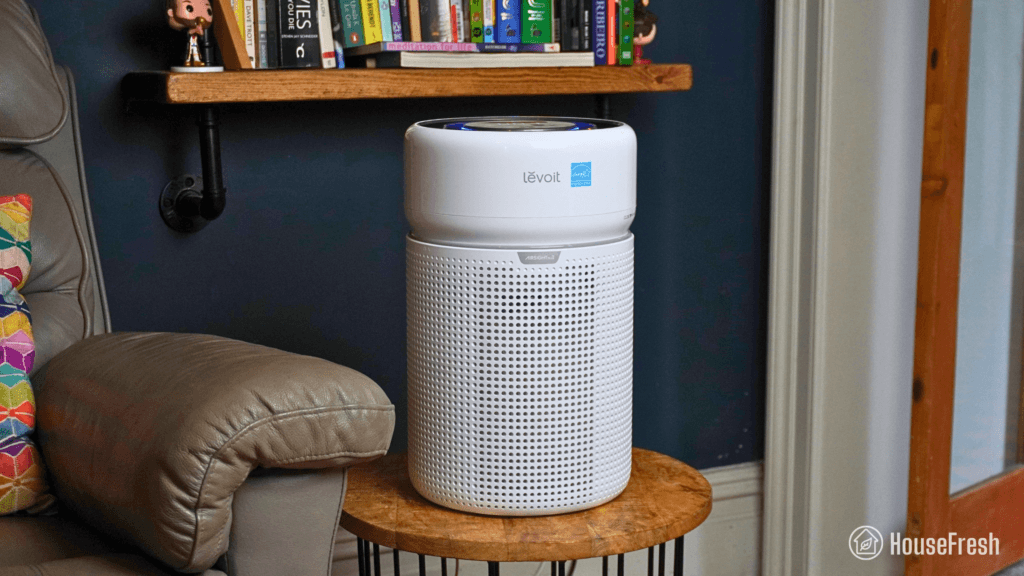
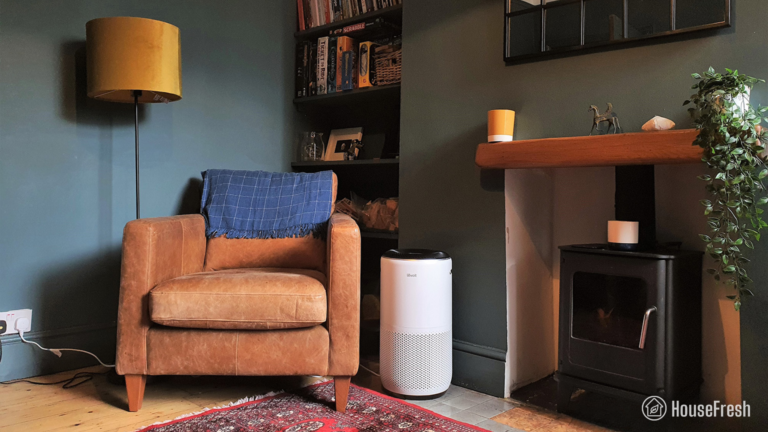
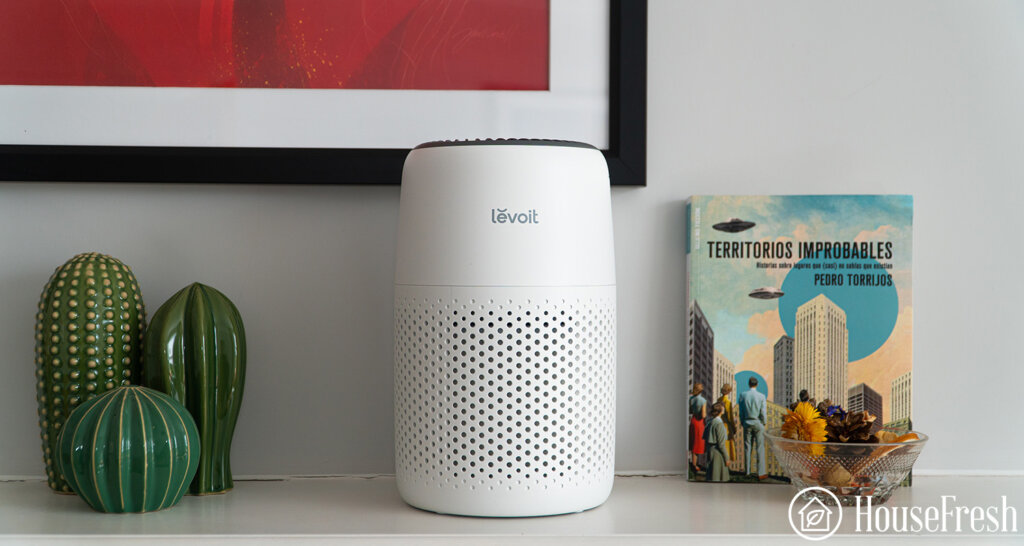
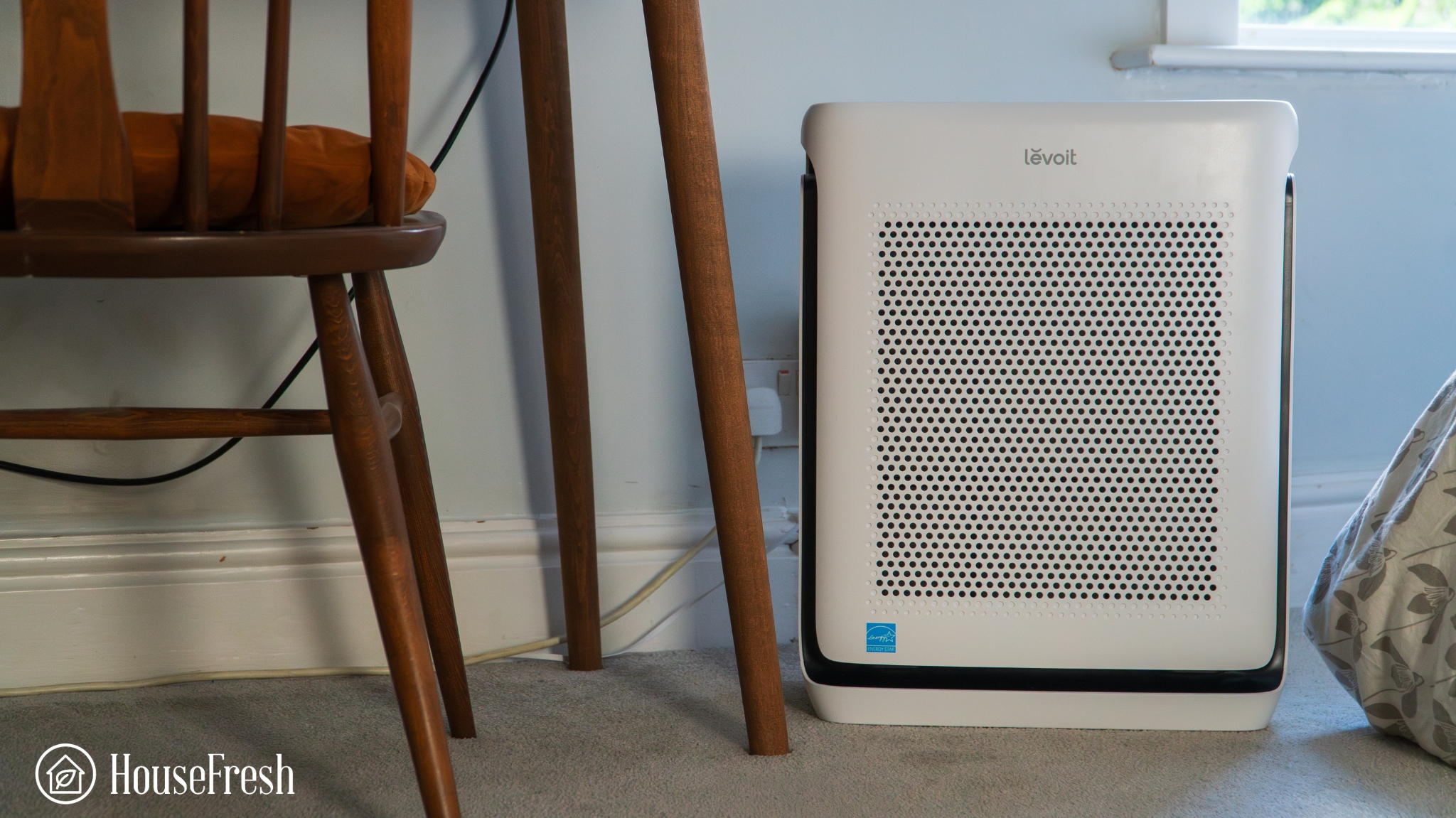
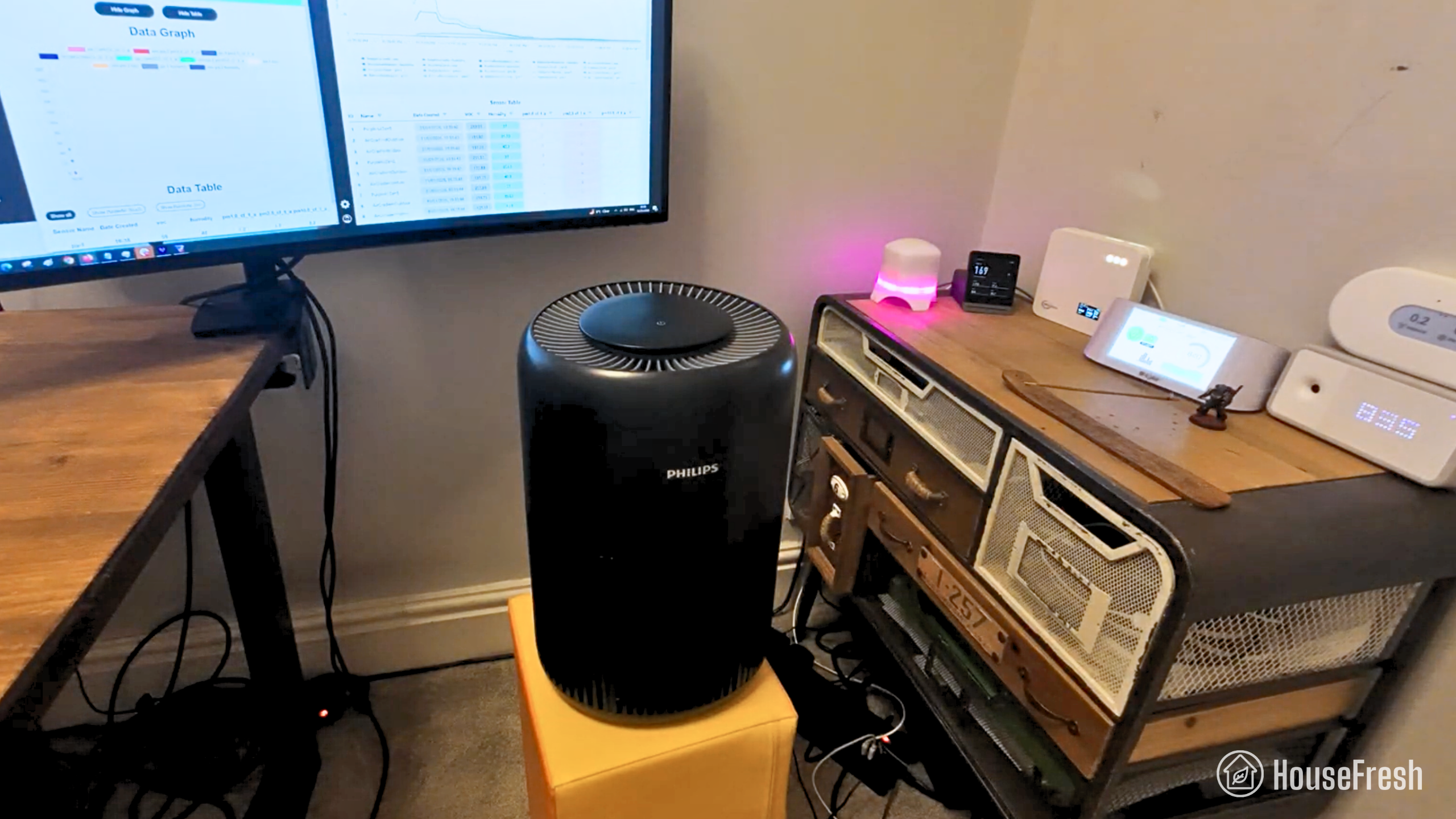
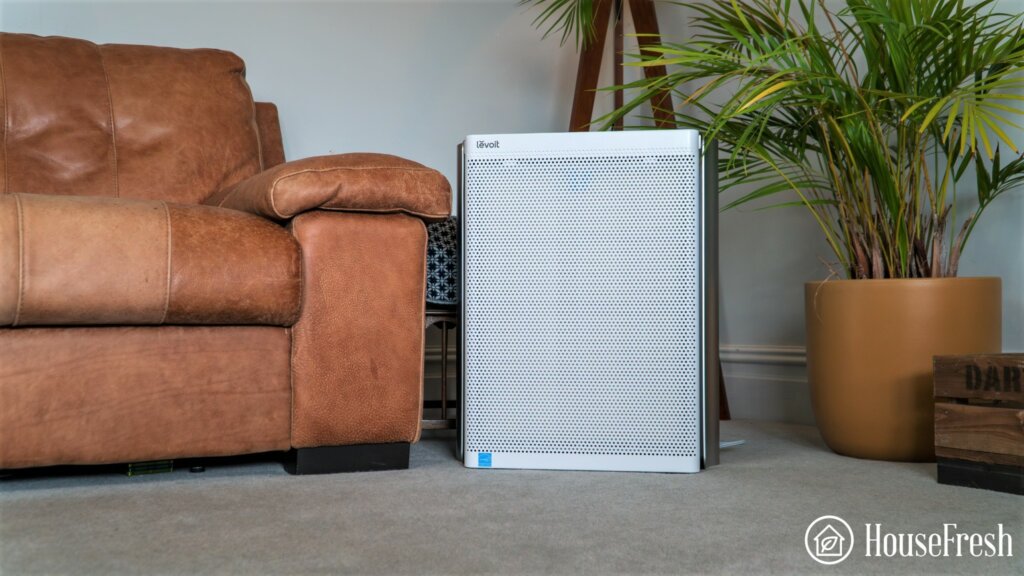
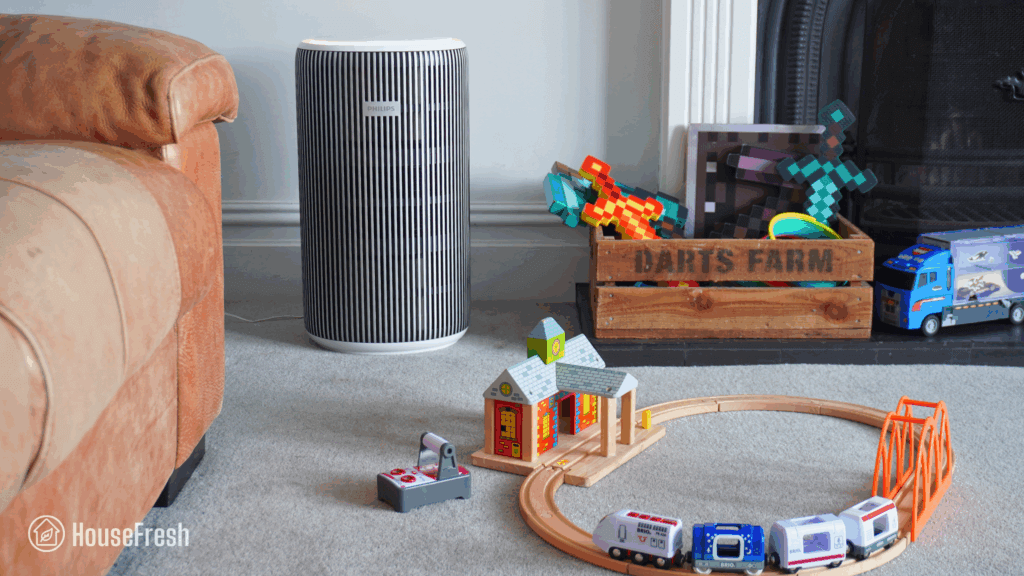
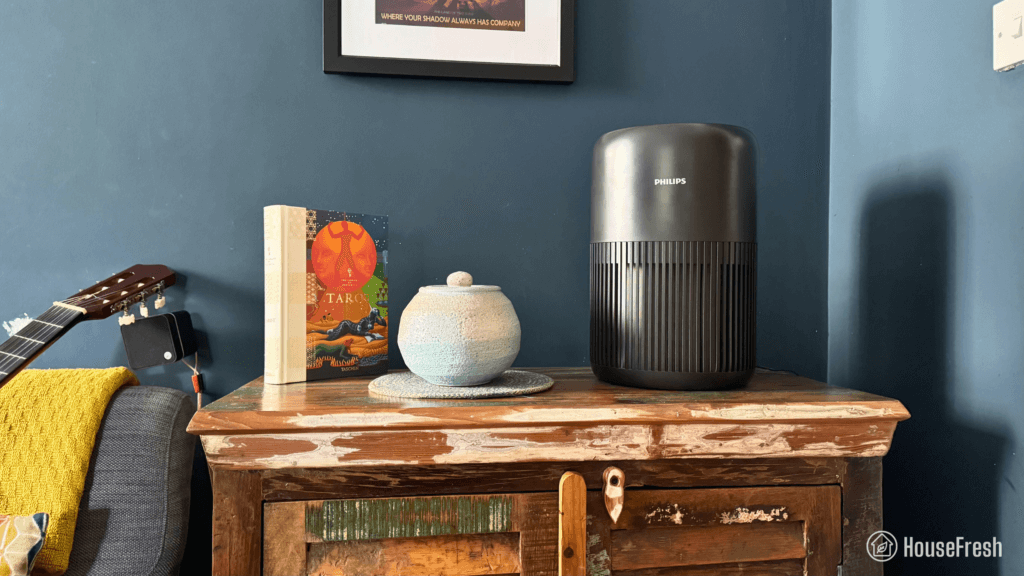
A cylindrical air purifier small enough to fit on top of a kitchen counter or bedside table.
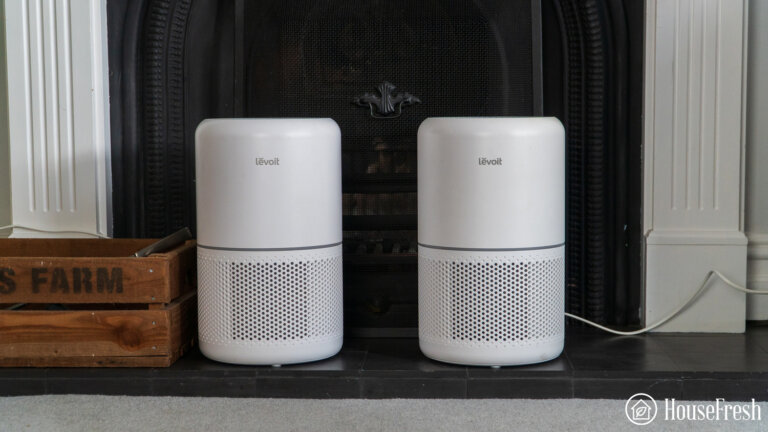
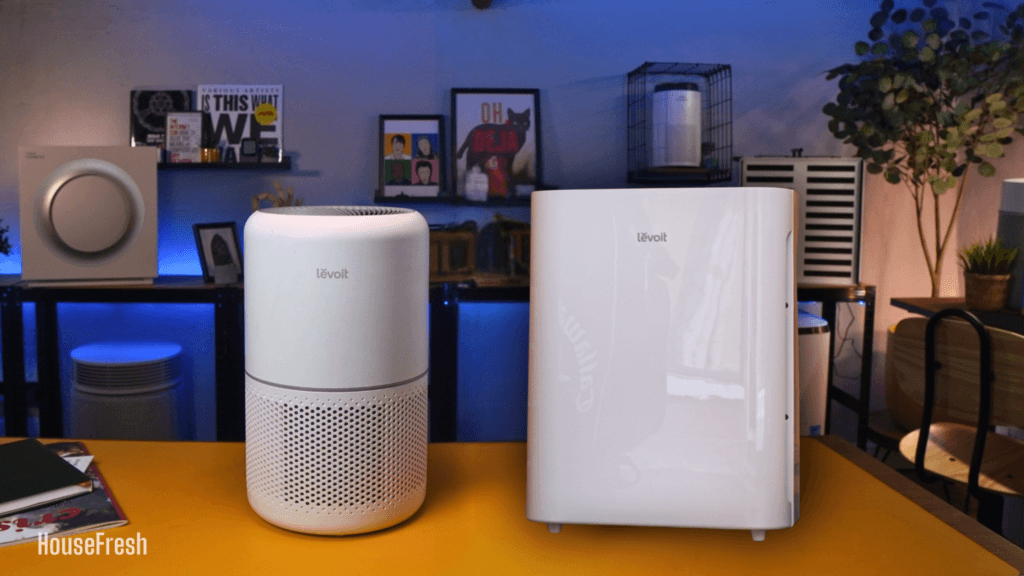
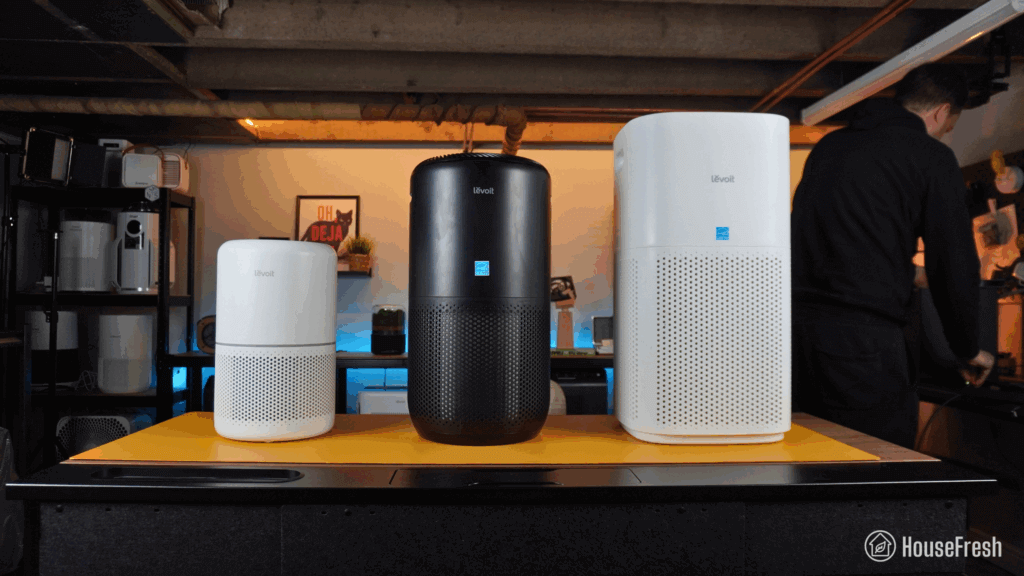
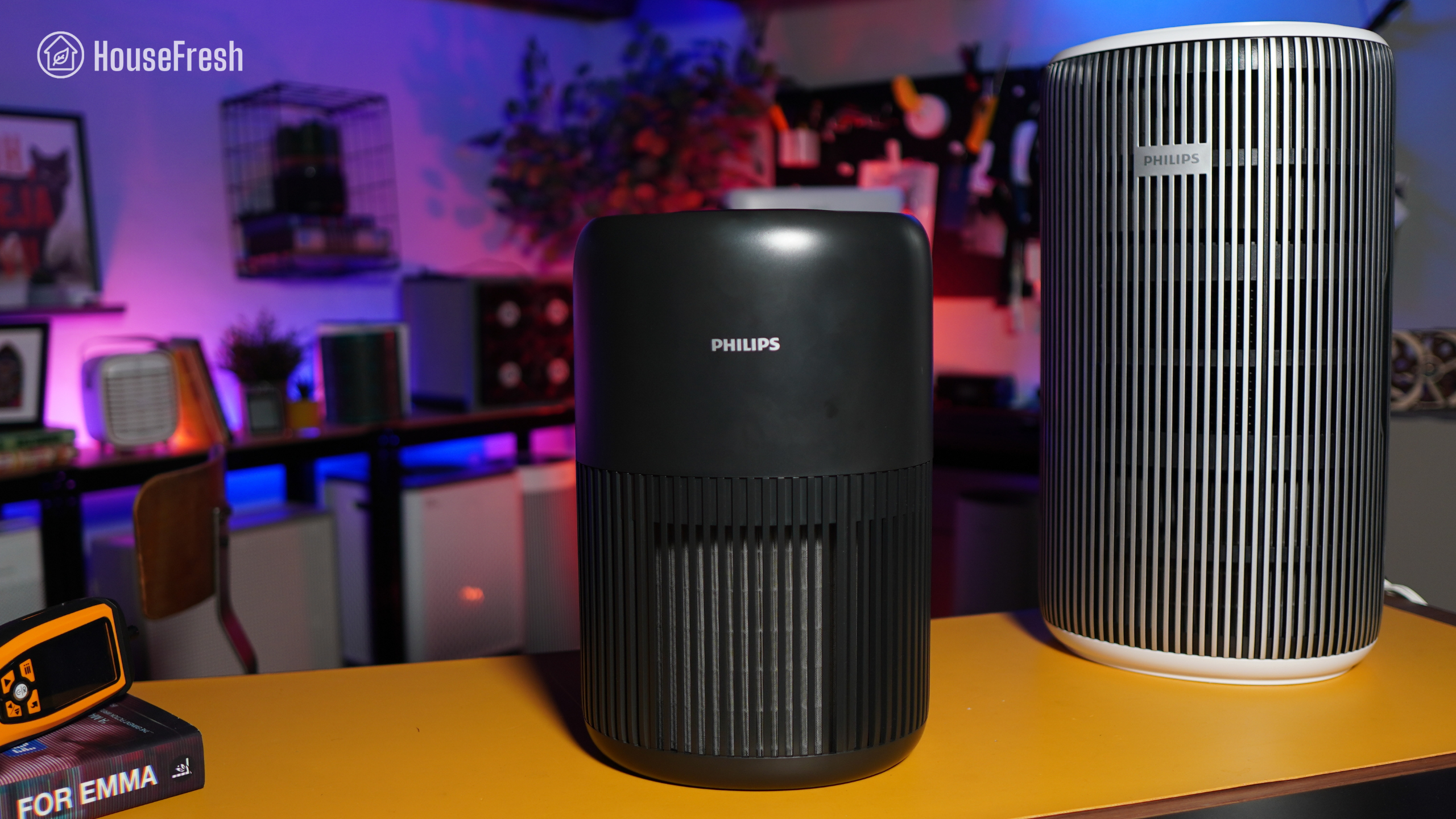
The Eleva 300X and the Core 300S are similar at a glance but the Eleva is a little bigger.
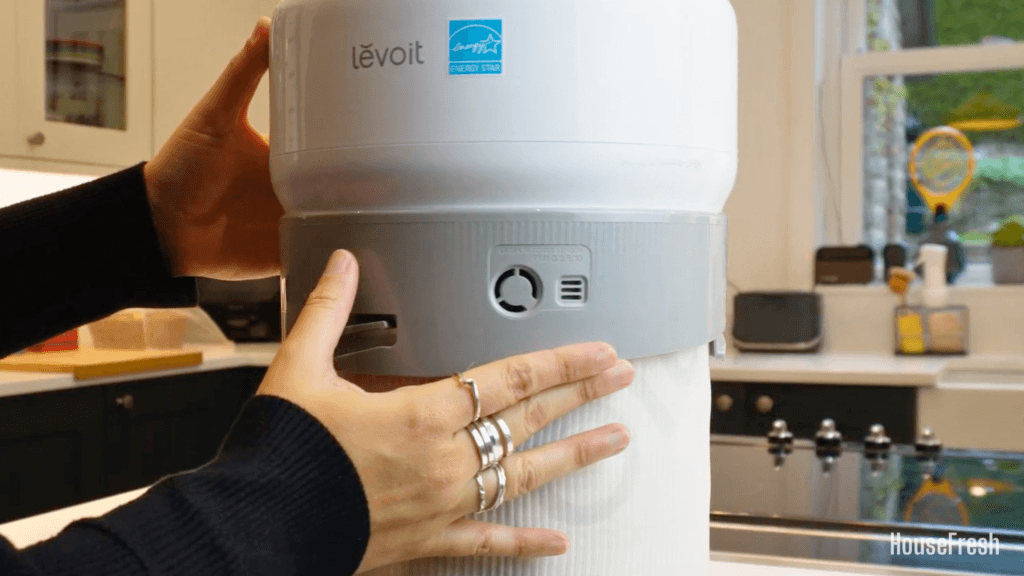
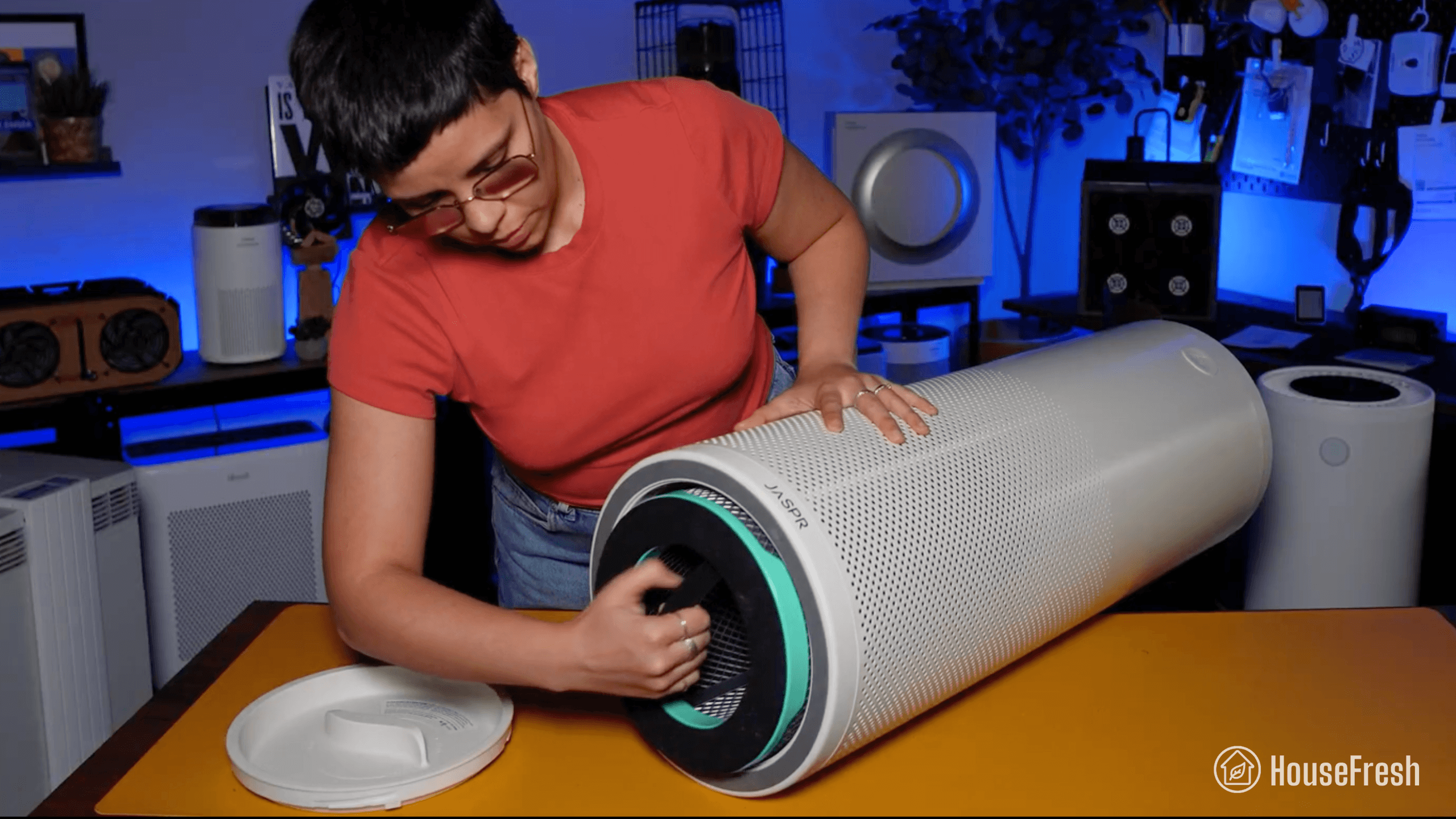
To access the filter on your Eleva 300X, you must twist and pull the top out before pressing a button to disconnect the filter from the head.
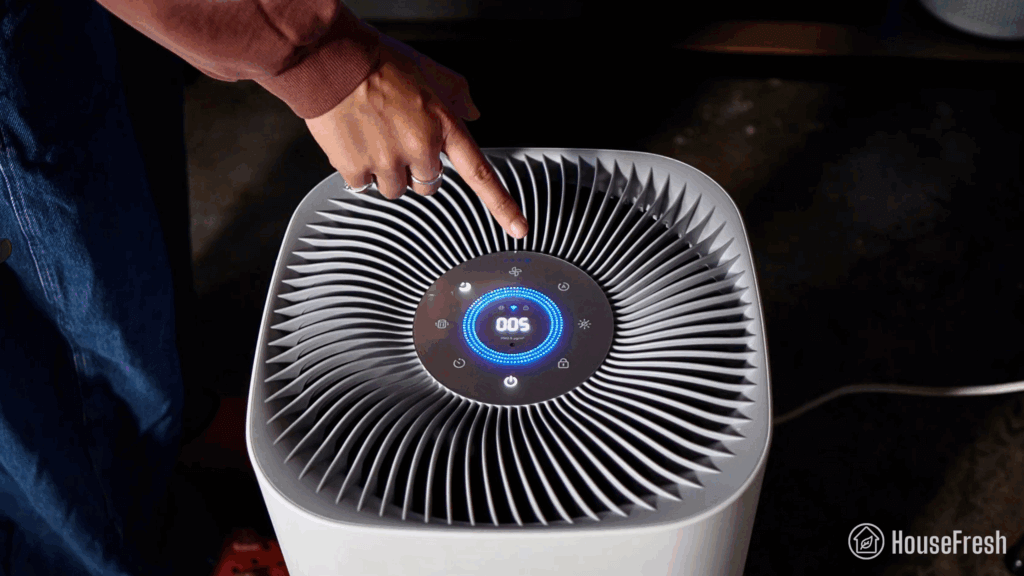
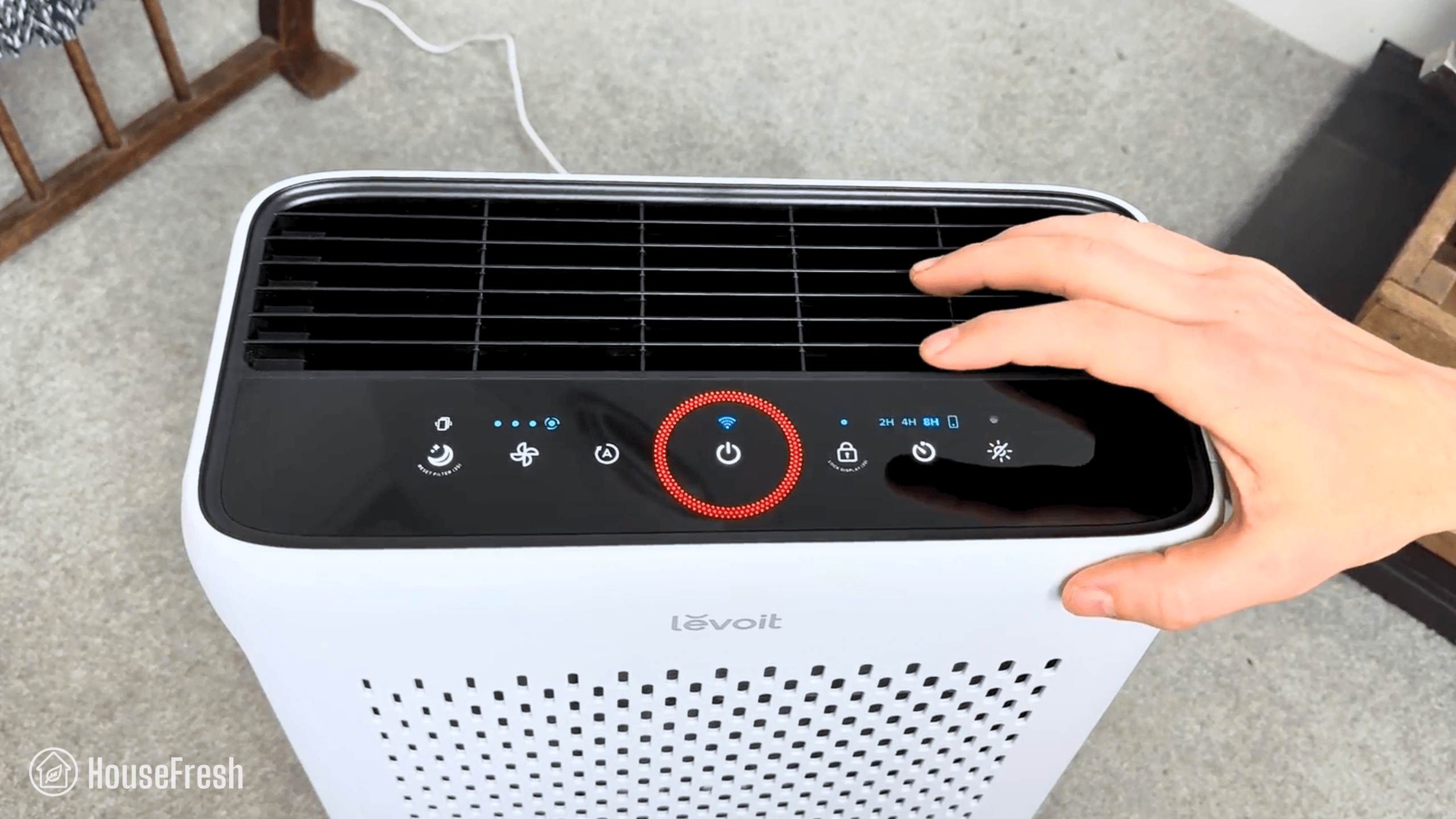
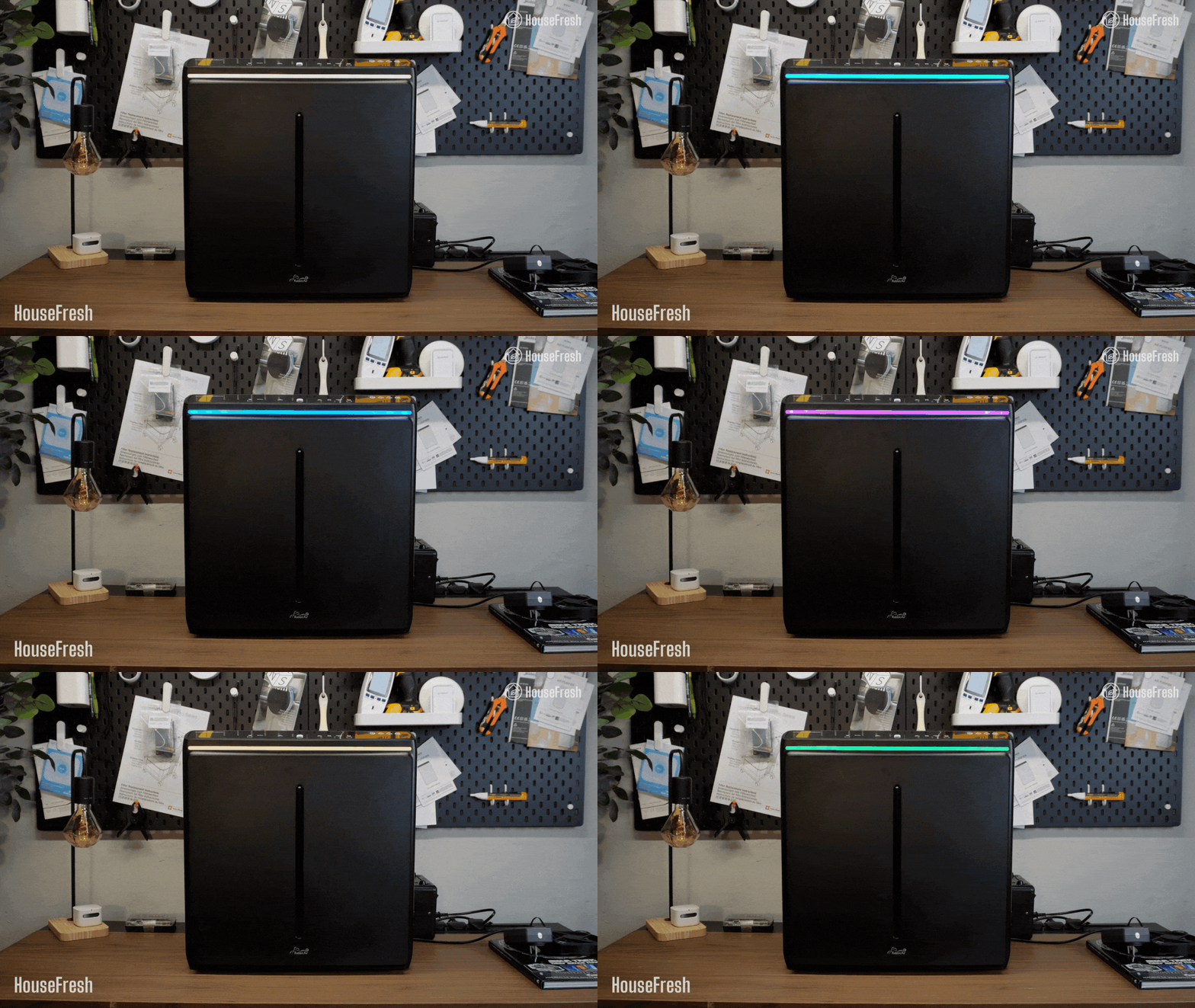
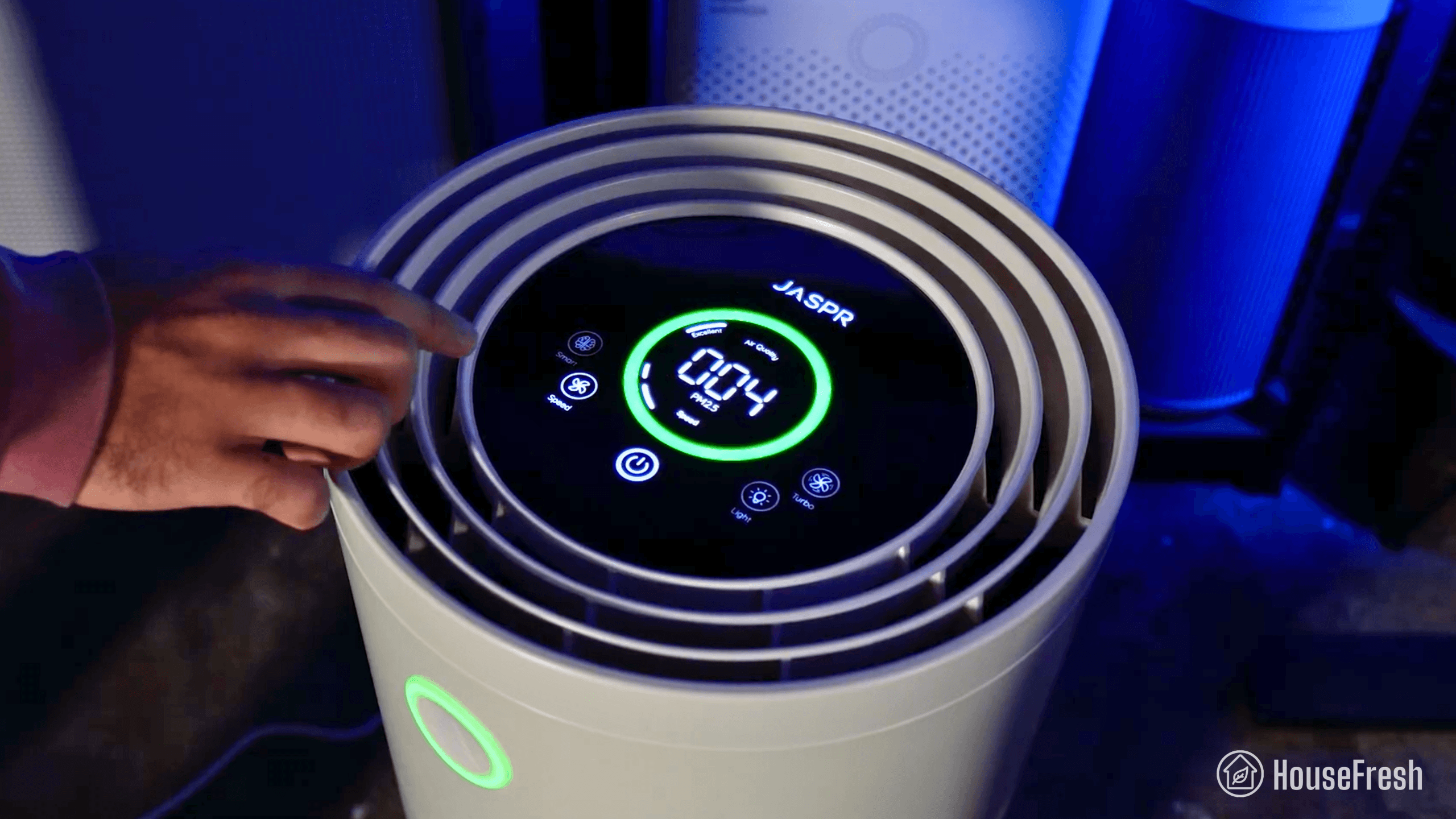
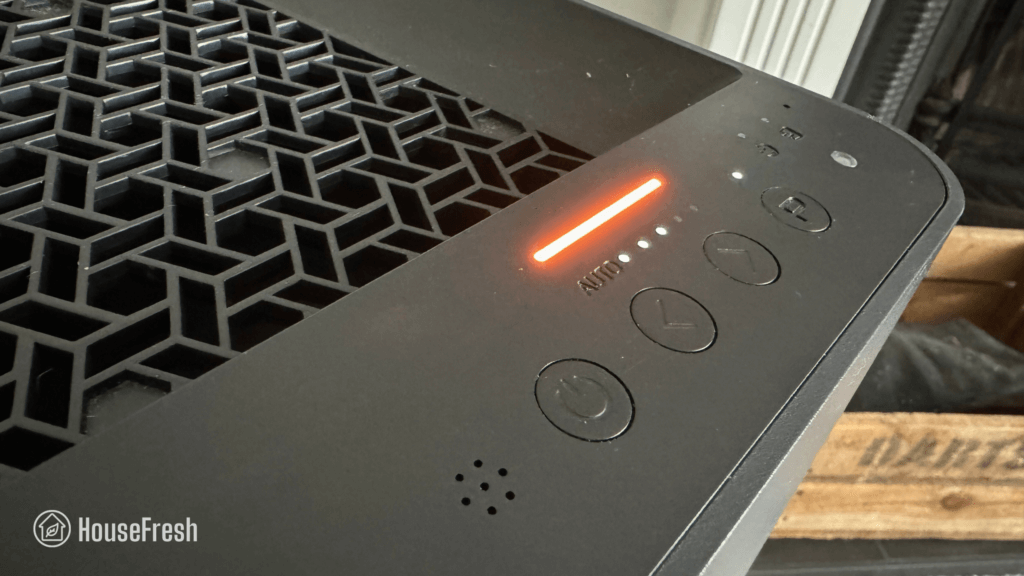
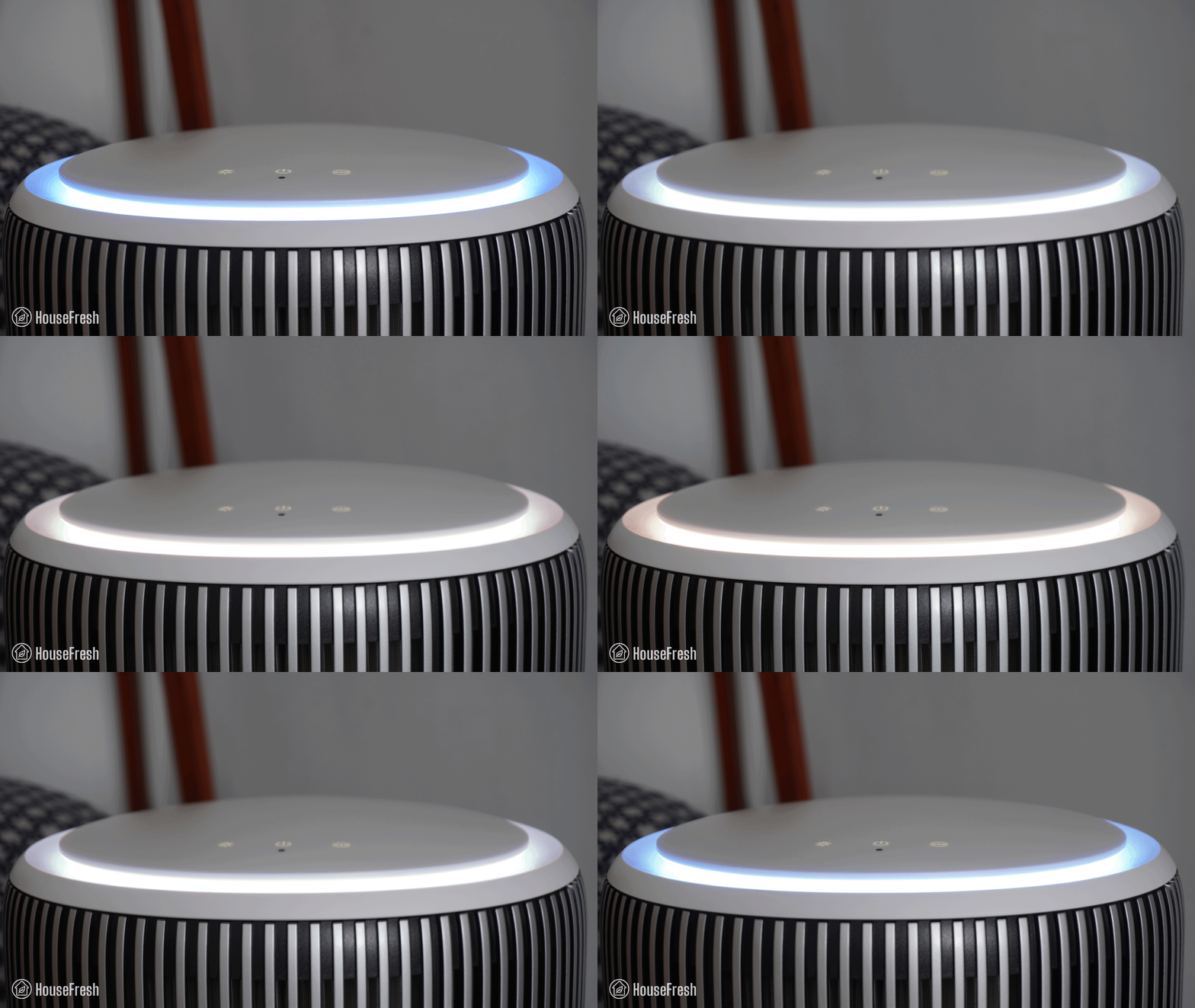
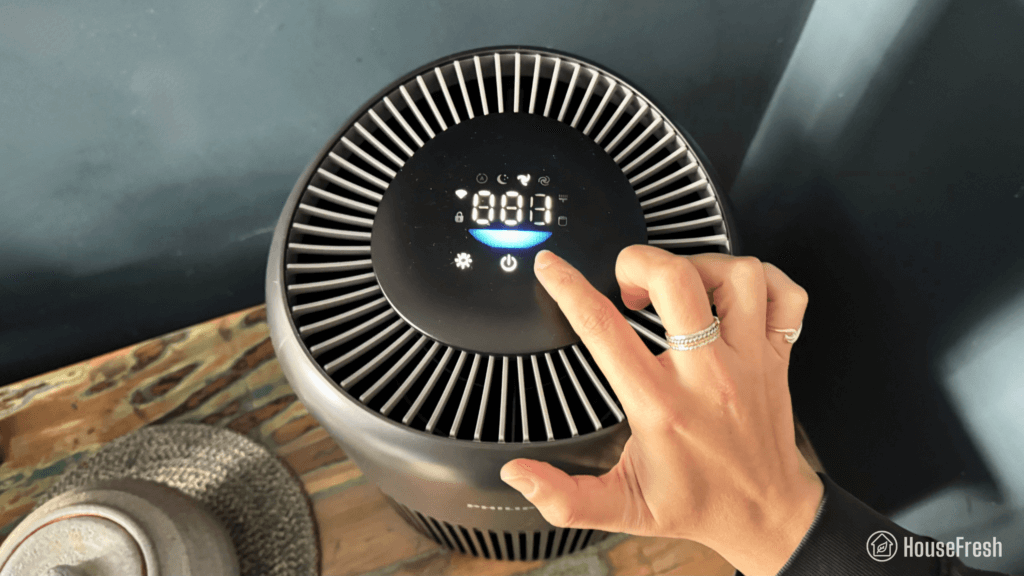
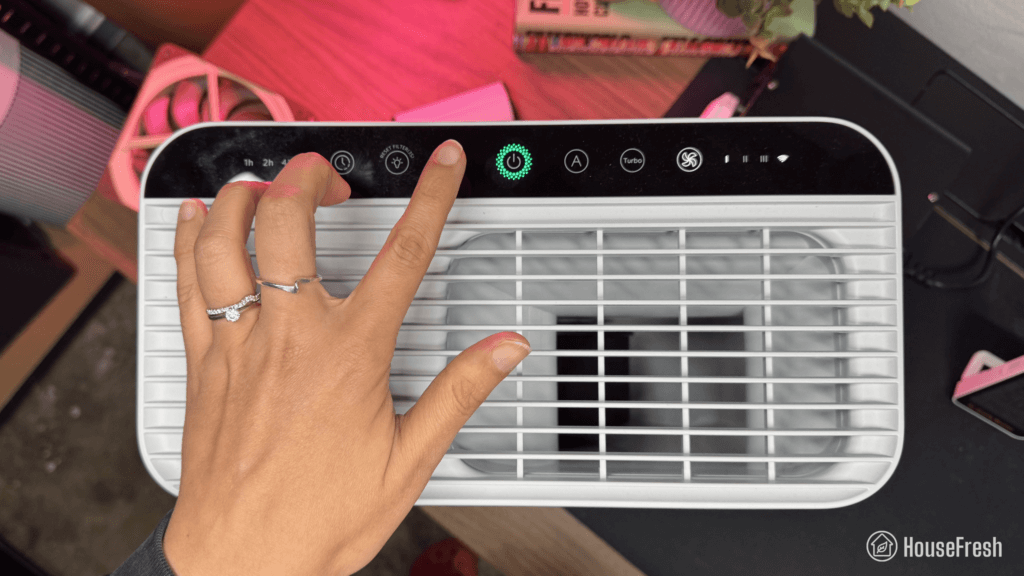
The control panel sits at the top, with a bright LED ring that adjusts color depending on air quality.
You get touchscreen buttons to enable sleep mode, switch between fan speeds or set Auto Mode, and turn the display off or lock the screen.
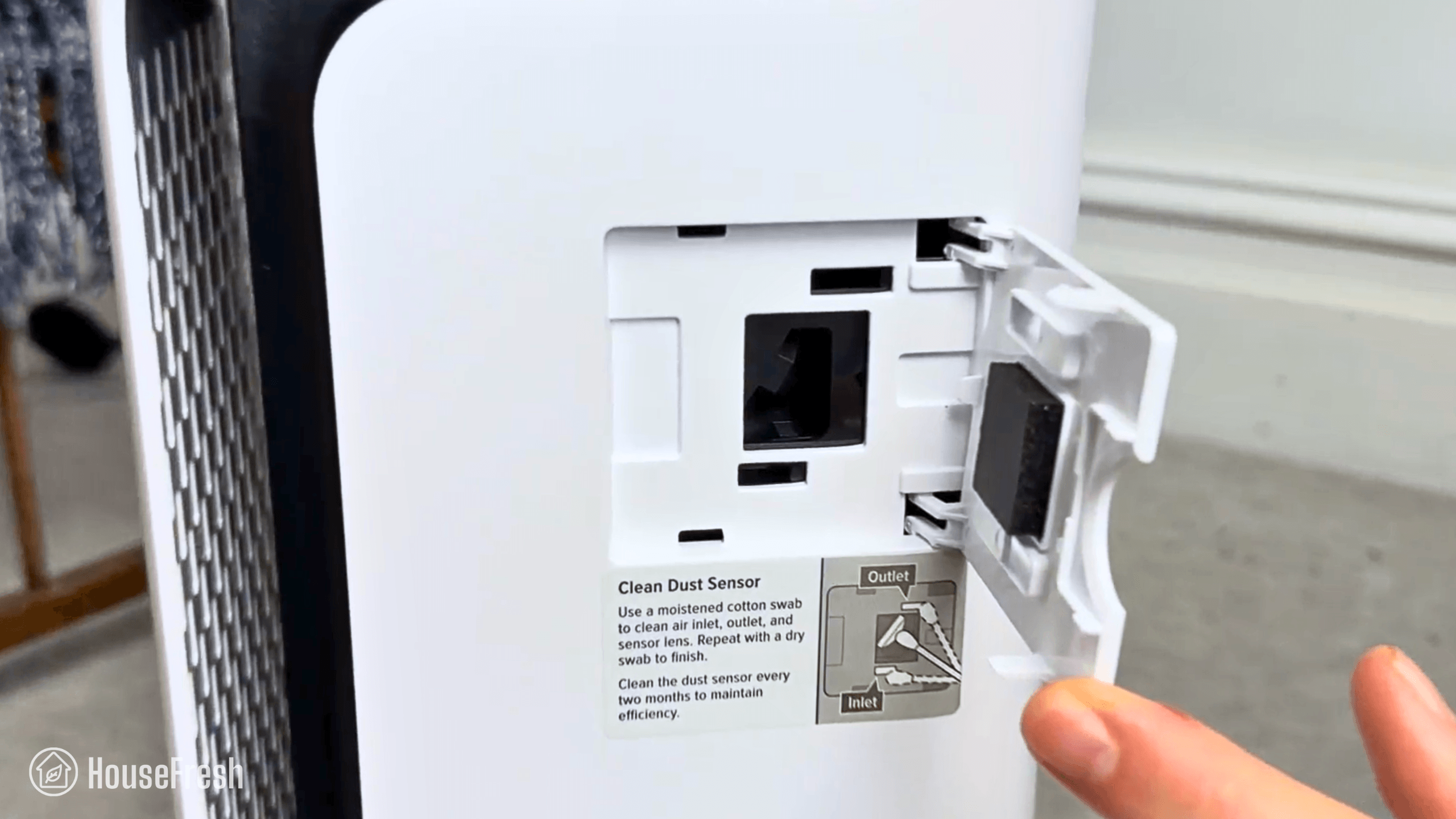
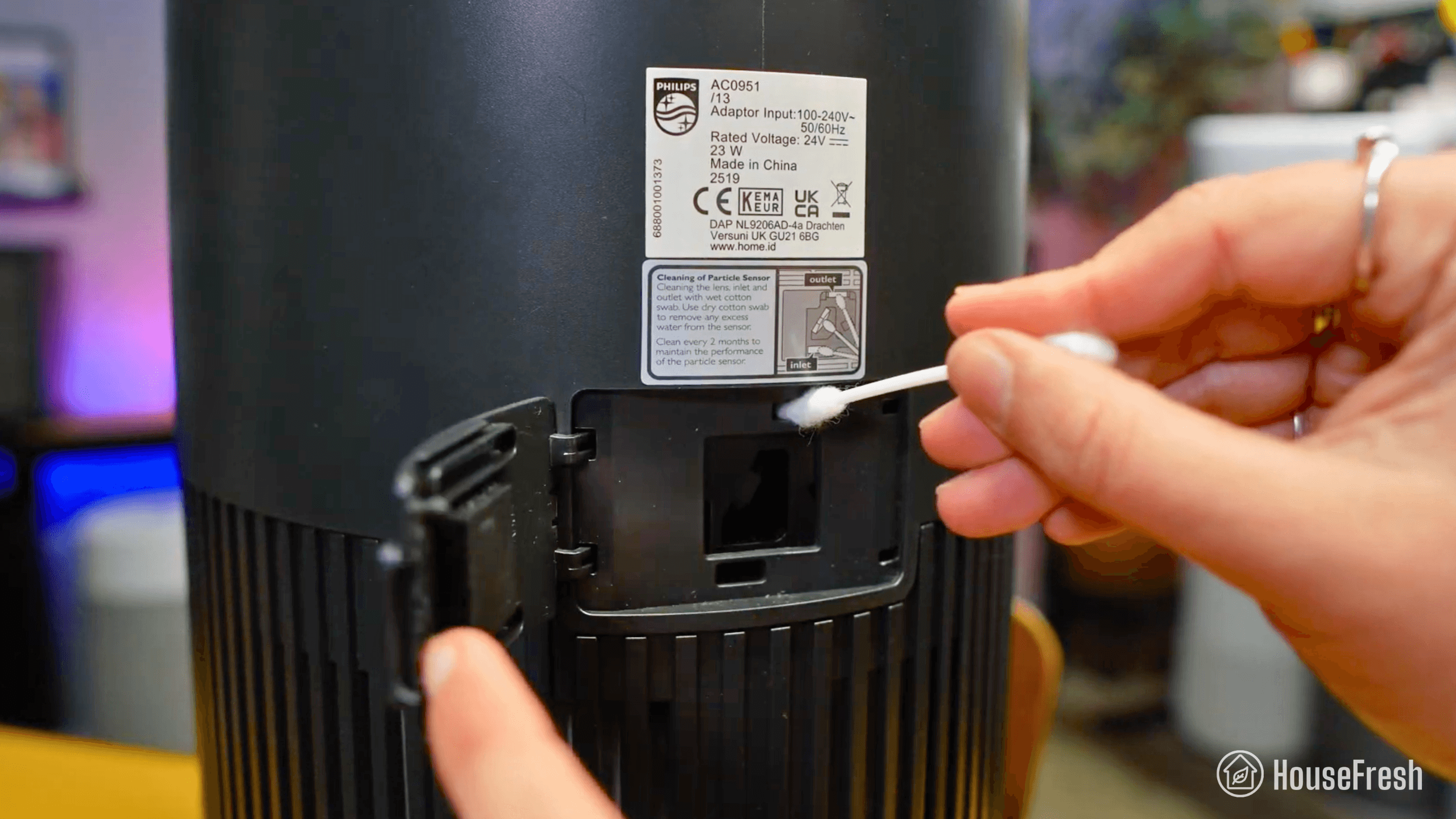
When removing the head, you also get to see the spot where the laser particle sensor is.
There is also an onboard screen at the top that shows levels of PM1, PM2.5, PM10 particle pollution, and an overall air quality score.
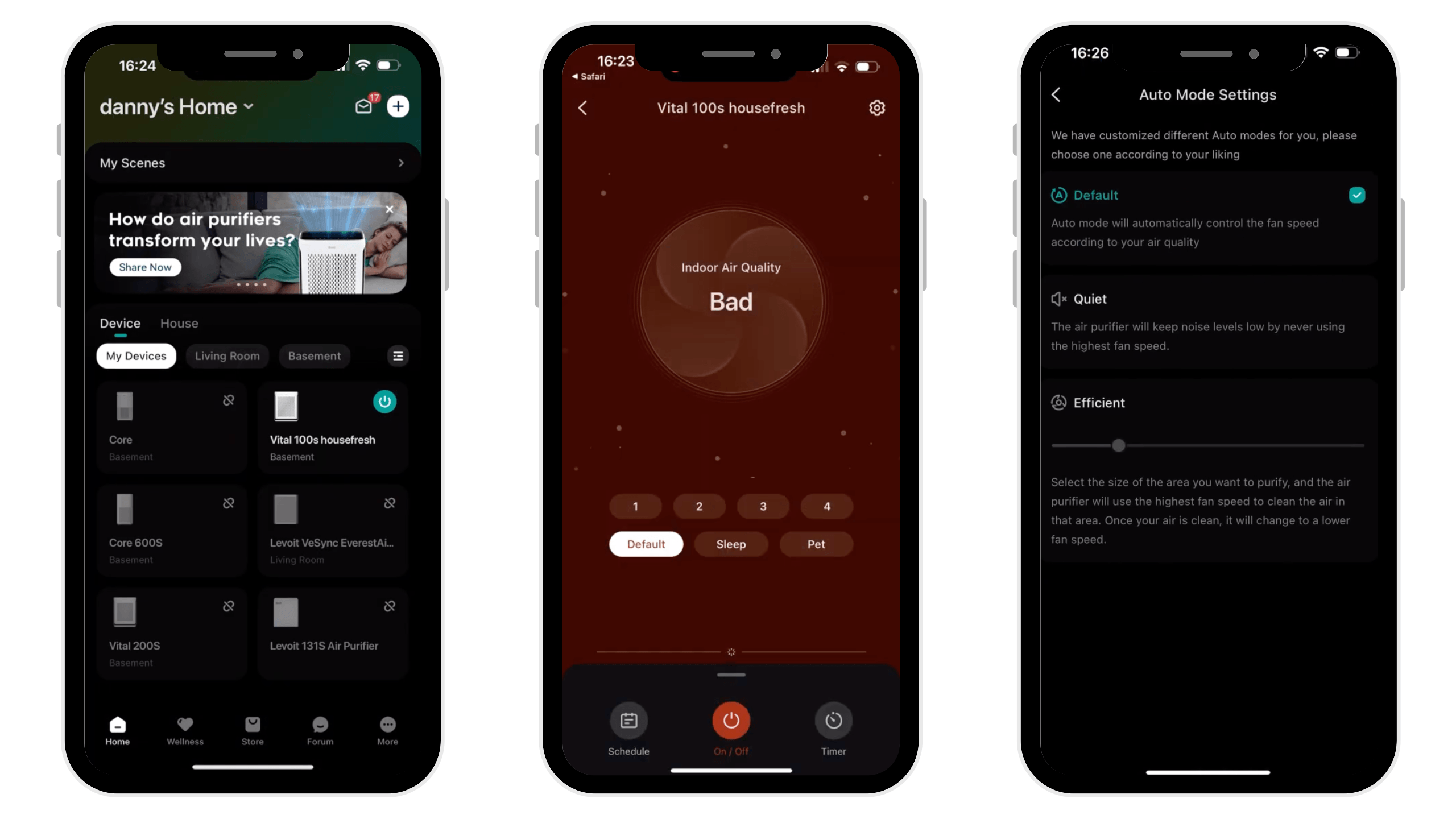
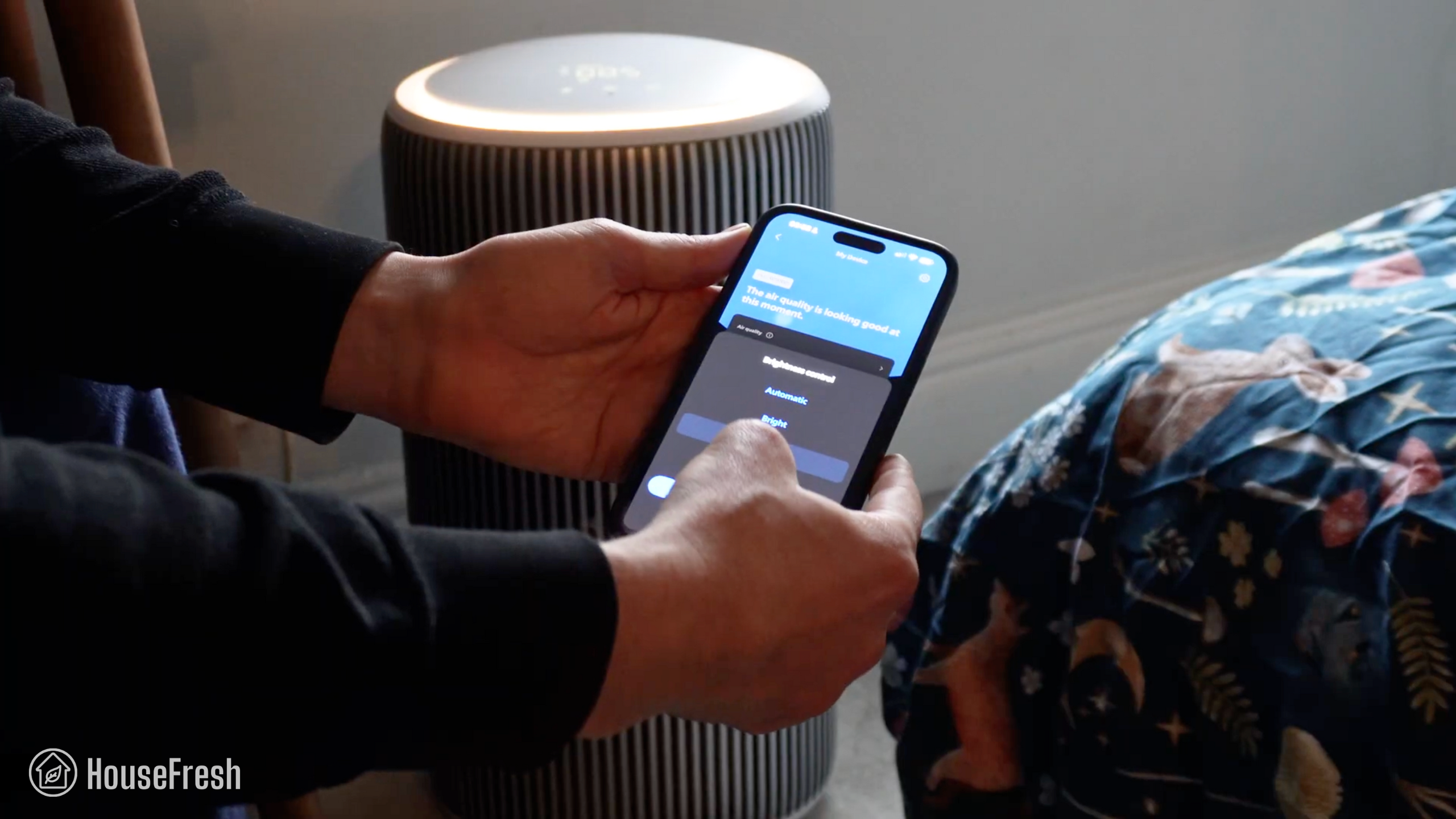
You can connect your Eleva 300X to the VeSync app, which is same app Levoit uses across all their smart products. On the app, you can control your device remotely, keep track of air quality readings from the sensor, set simple automated routines and get access to customizable smart modes.
With the Eleva series, Levoit introduced something they call ‘Personalized Air Purification’ through three personalized functions: Daily Comfort, Focused Care, and Advanced Care.
I personally found these modes unclear and I miss having the option to set Efficient Mode based on the size of the room as I can do it with old models like my Vital 200S.
Something I did like about the app is the introduction of the Dynamic Manual mode.
Dynamic Mode is a function that allows you to set a preferred manual speed while enabling your Eleva to kick into Turbo mode whenever the sensor detects pollutants, before returning to the manual speed you chose.
This means you get the full power of the fan ready to quickly kick into gear but once the air is clean, the air purifier will go back to your chosen manual speed – instead of going down to the lowest fan speed, as normal Auto Modes do.
Air cleaning performance
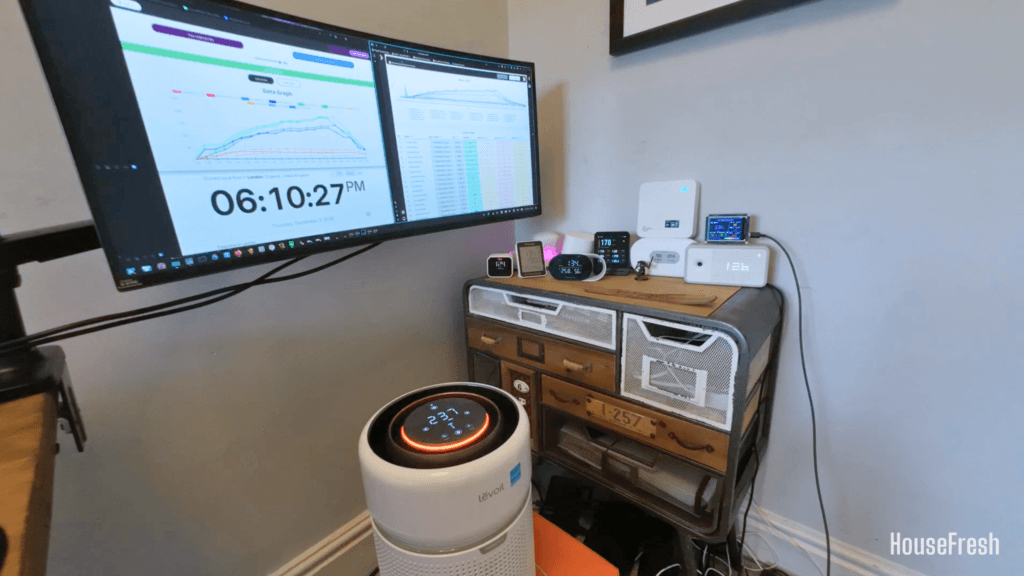
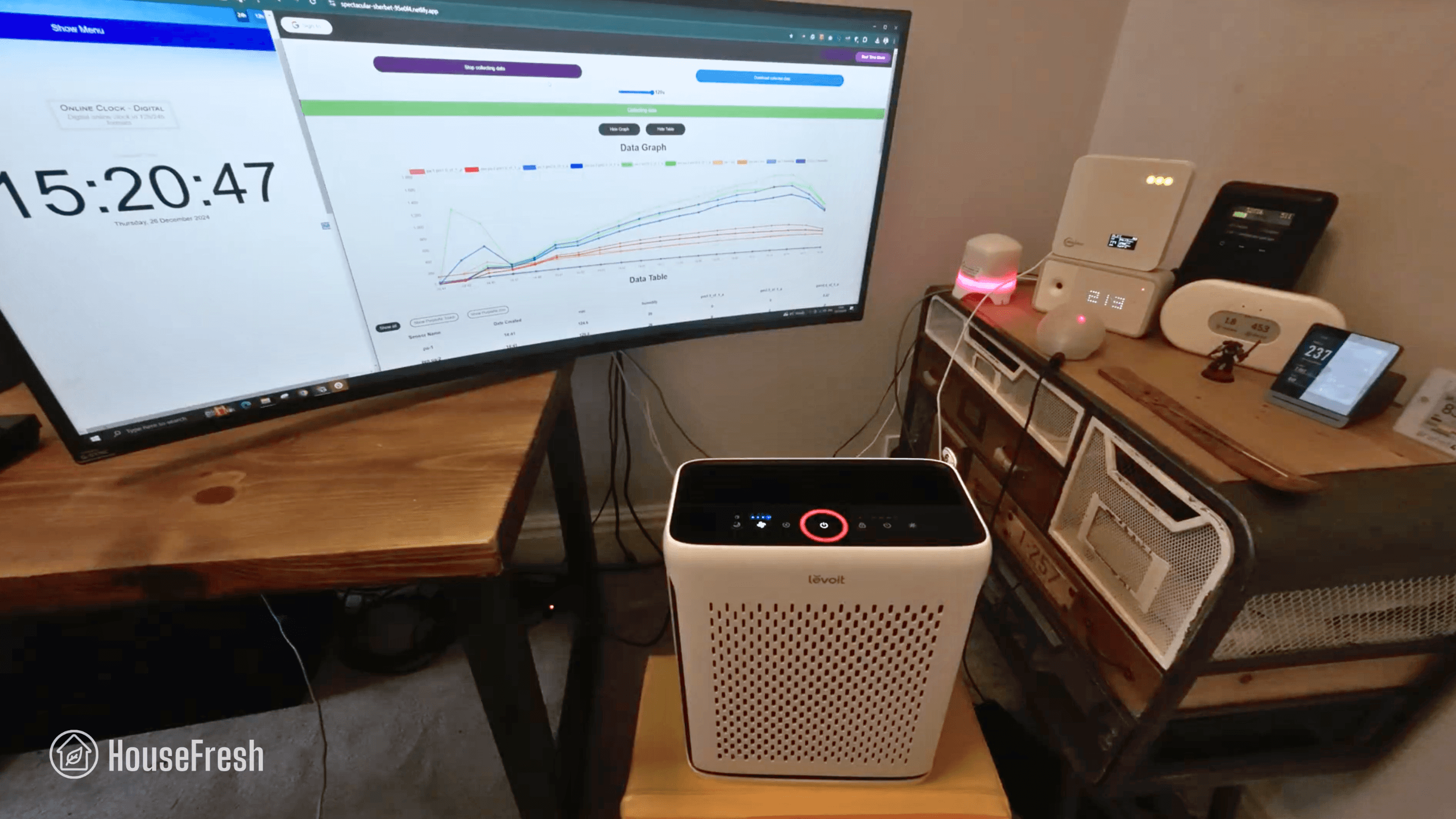
We tested the Levoit Eleva 300X in our 728-cubic-ft test room, measuring how quickly it removed PM1 particles from the air after we filled the space with incense smoke.
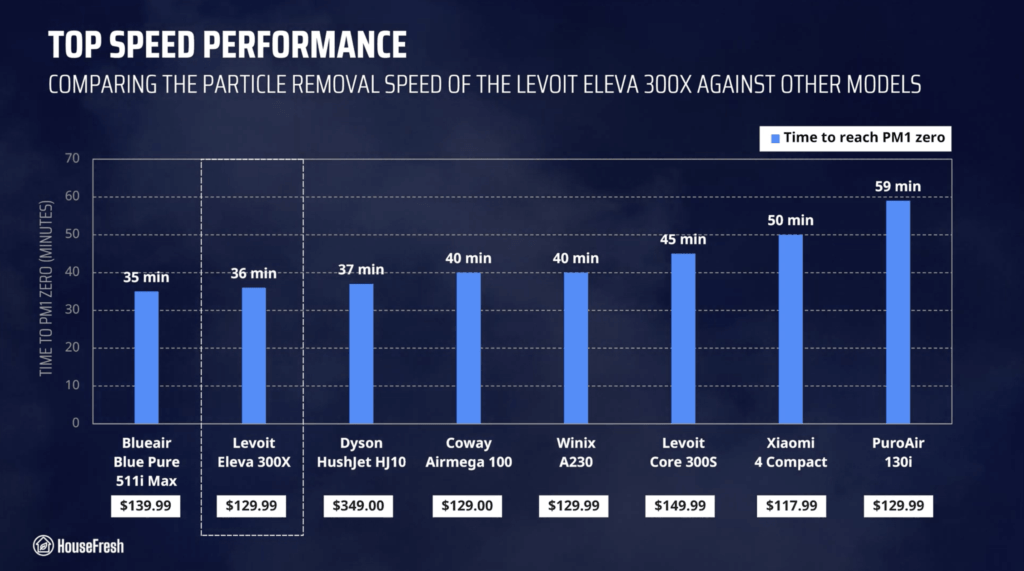
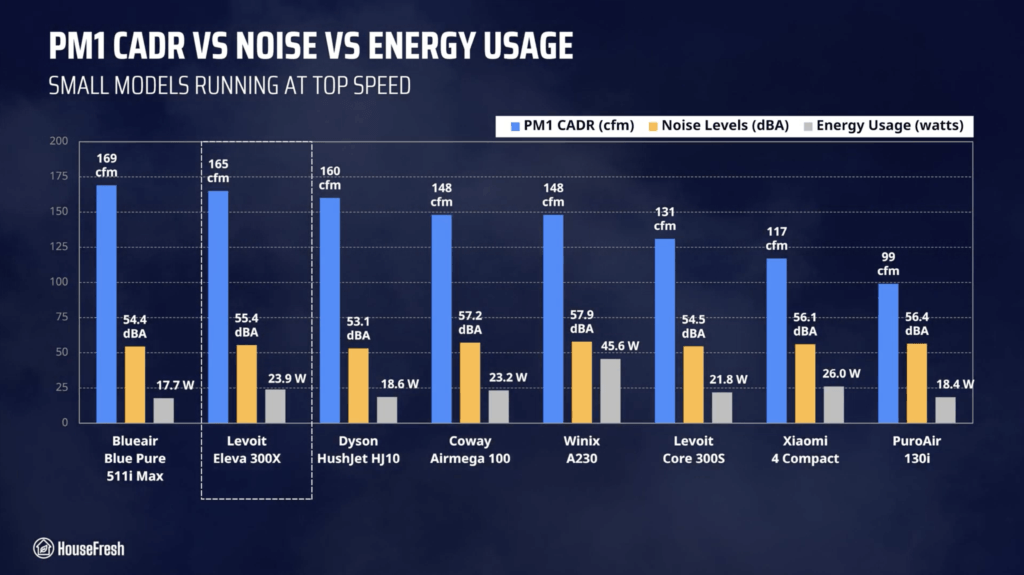
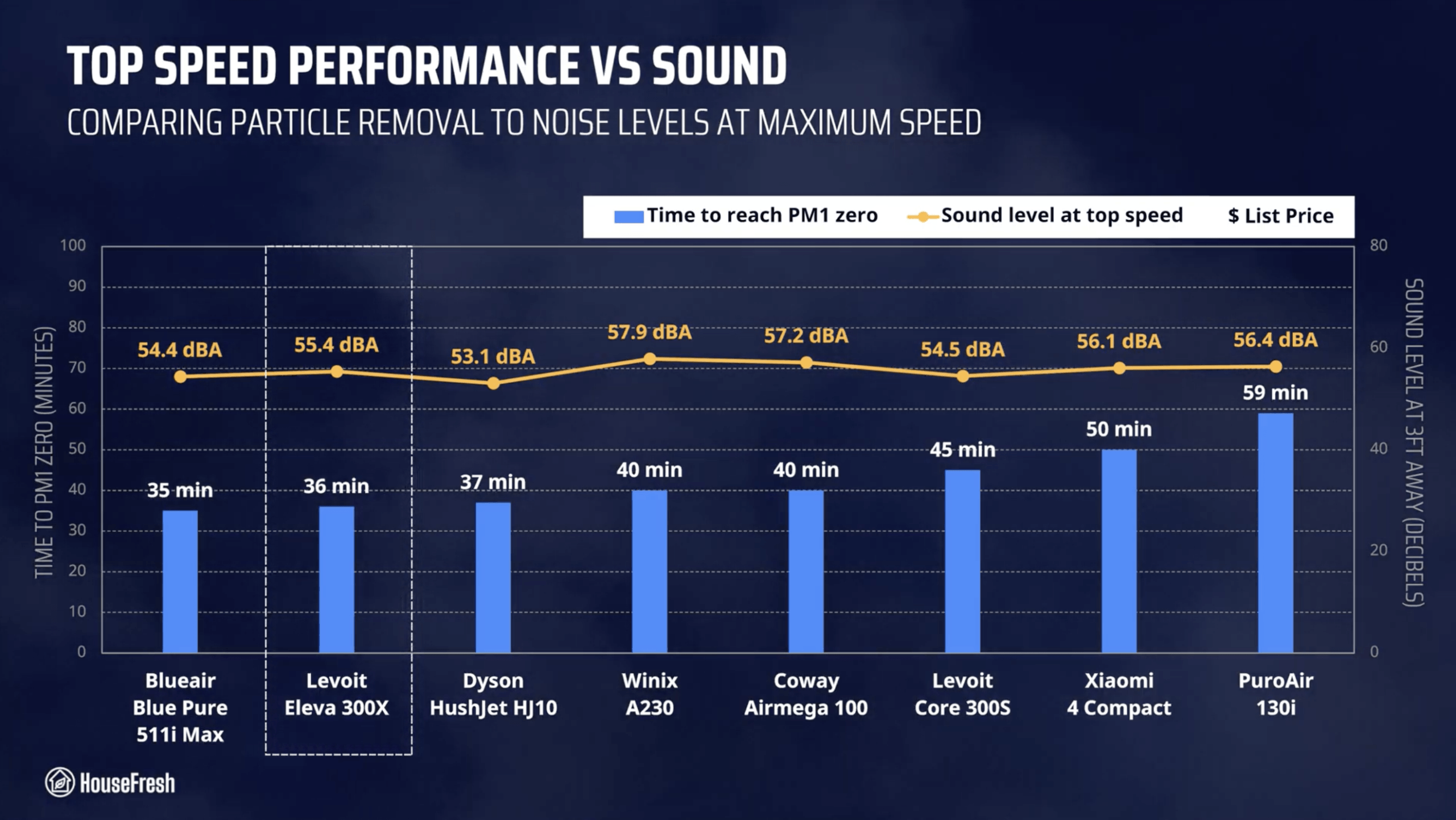
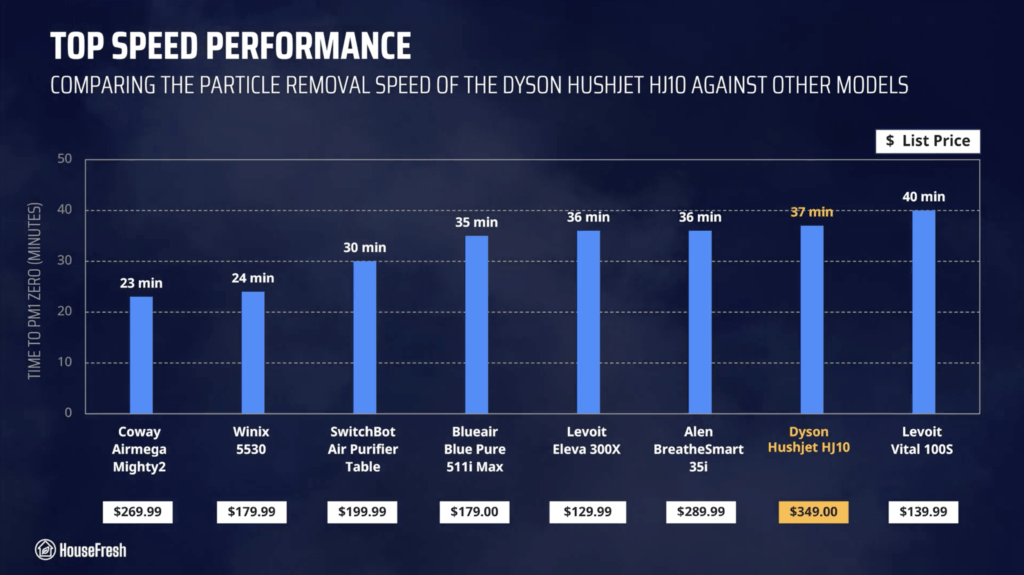
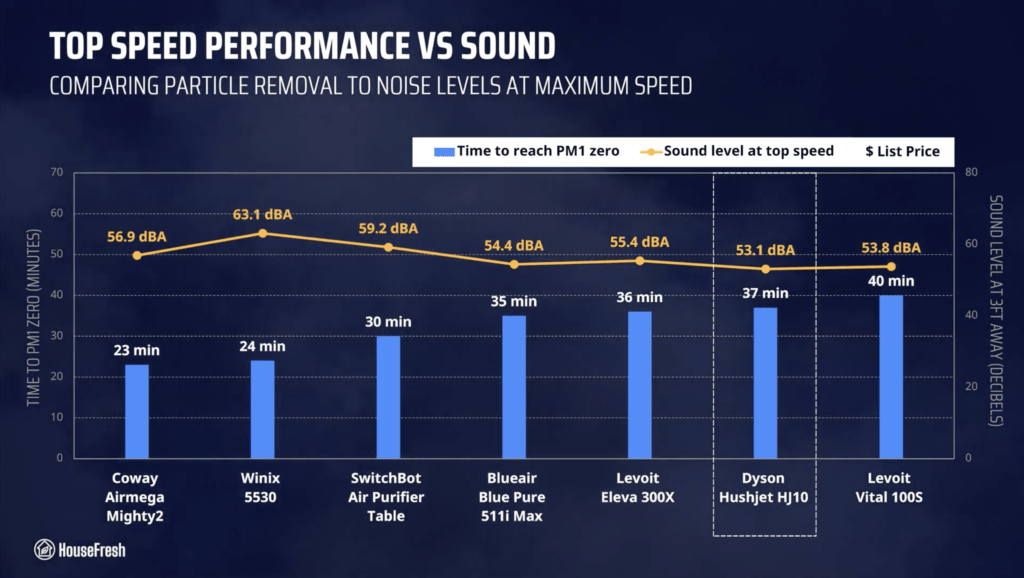
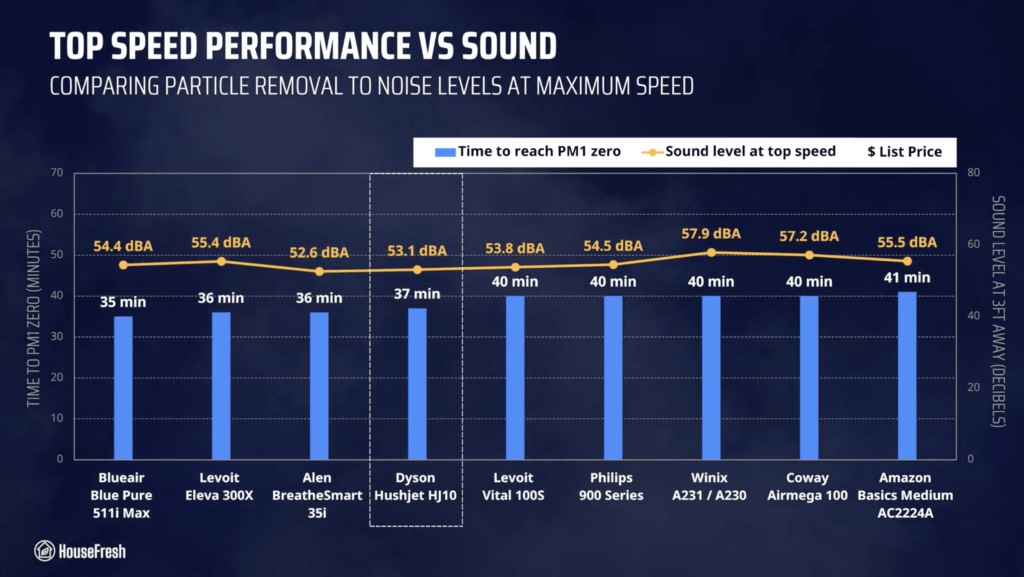
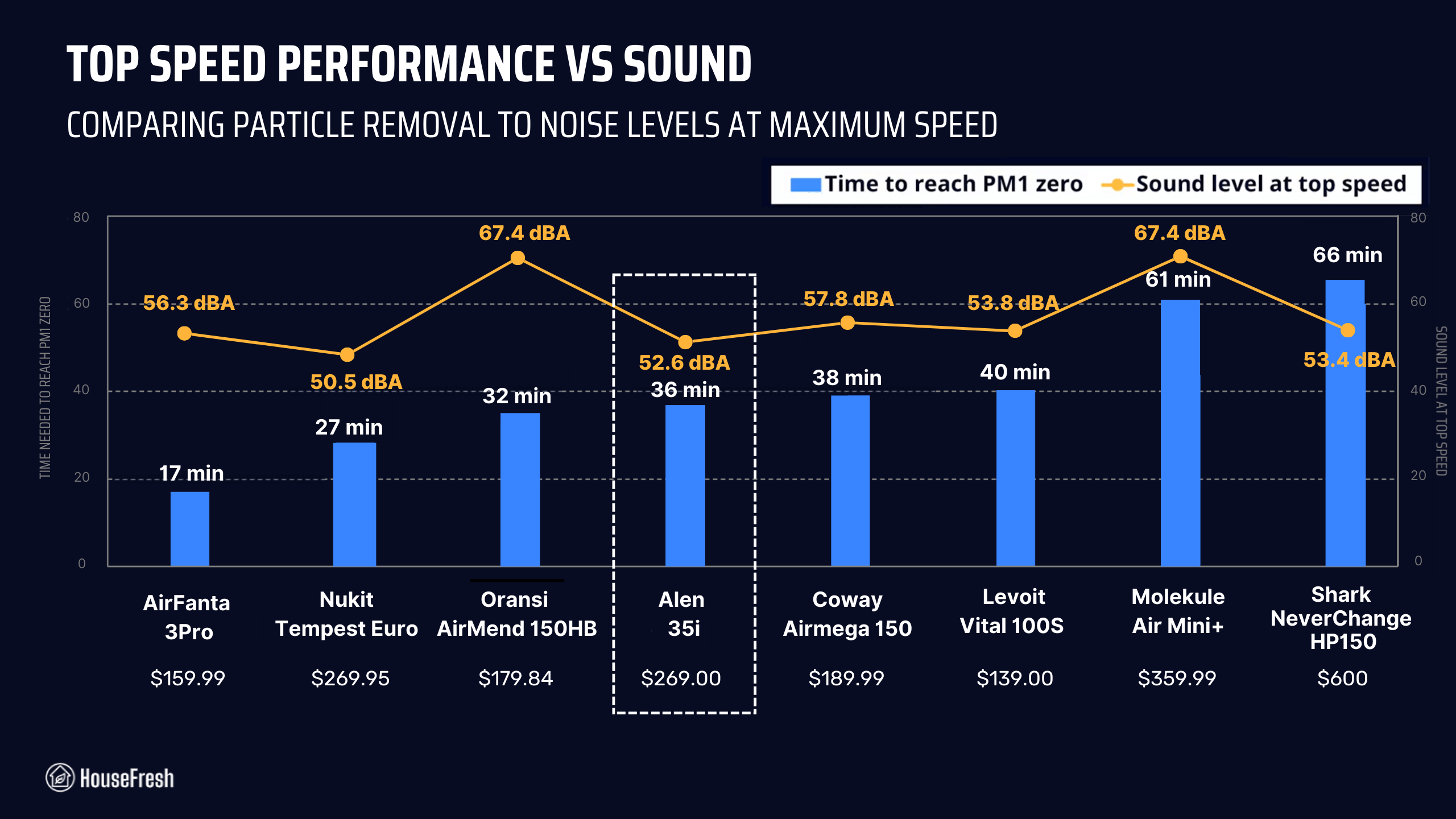
When running at top speed, our PurpleAir Zen sensor shows that the Eleva 300X needed 36 minutes to reach PM1 zero. Based on the natural ventilation of our test room, we estimate a PM1 CADR of 165cfm.
This makes the Eleva 300X powerful enough to provide five air changes per hour in small rooms up to 247 sq. ft. (or 23 m2).
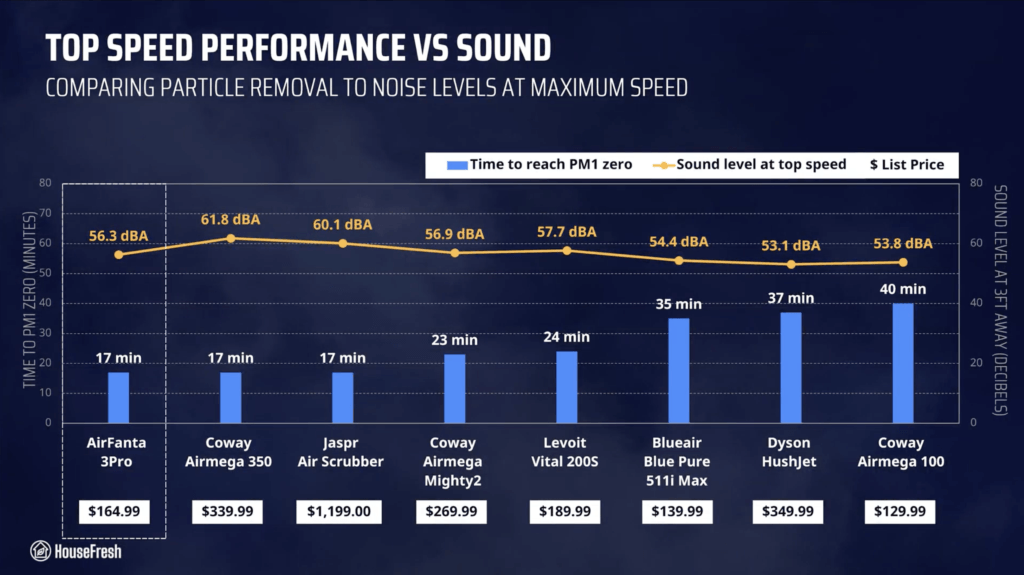
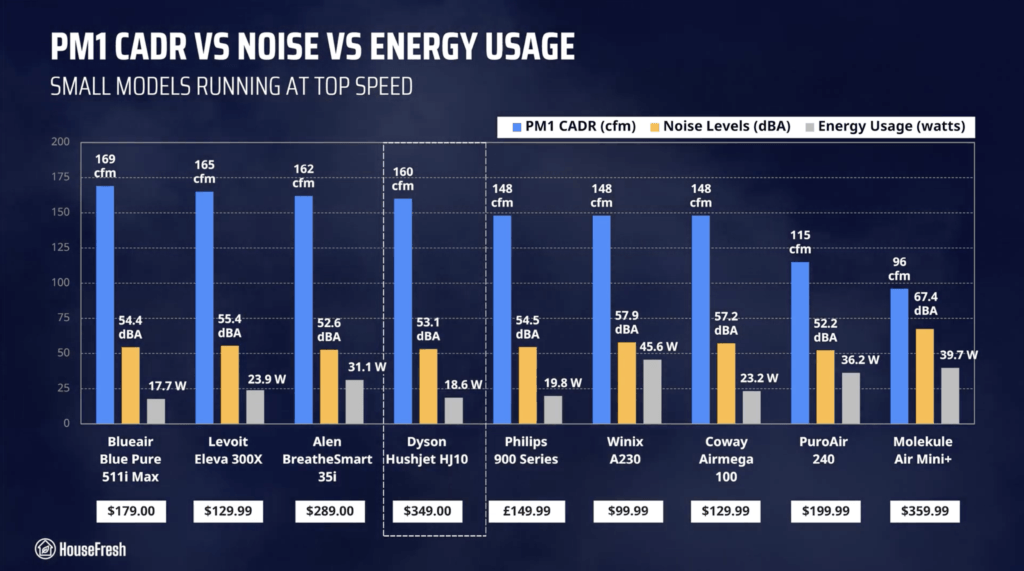
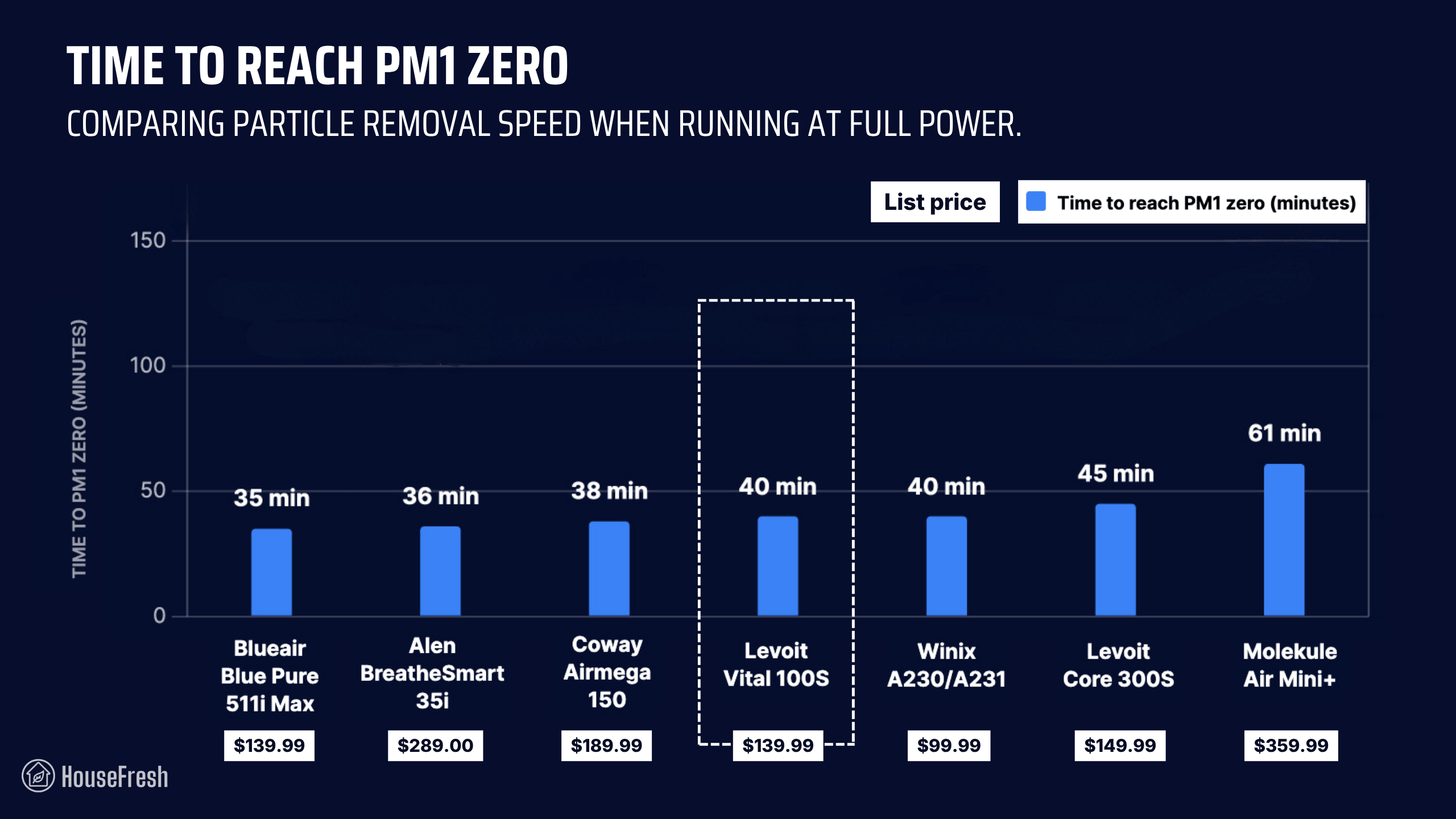
As you can see from the chart below, this Levoit offers excellent air cleaning performance for its price. The only small unit under $150 that outperforms it is the Blueair Blue Pure 511i Max, which uses an ionization process that cannot be disabled.
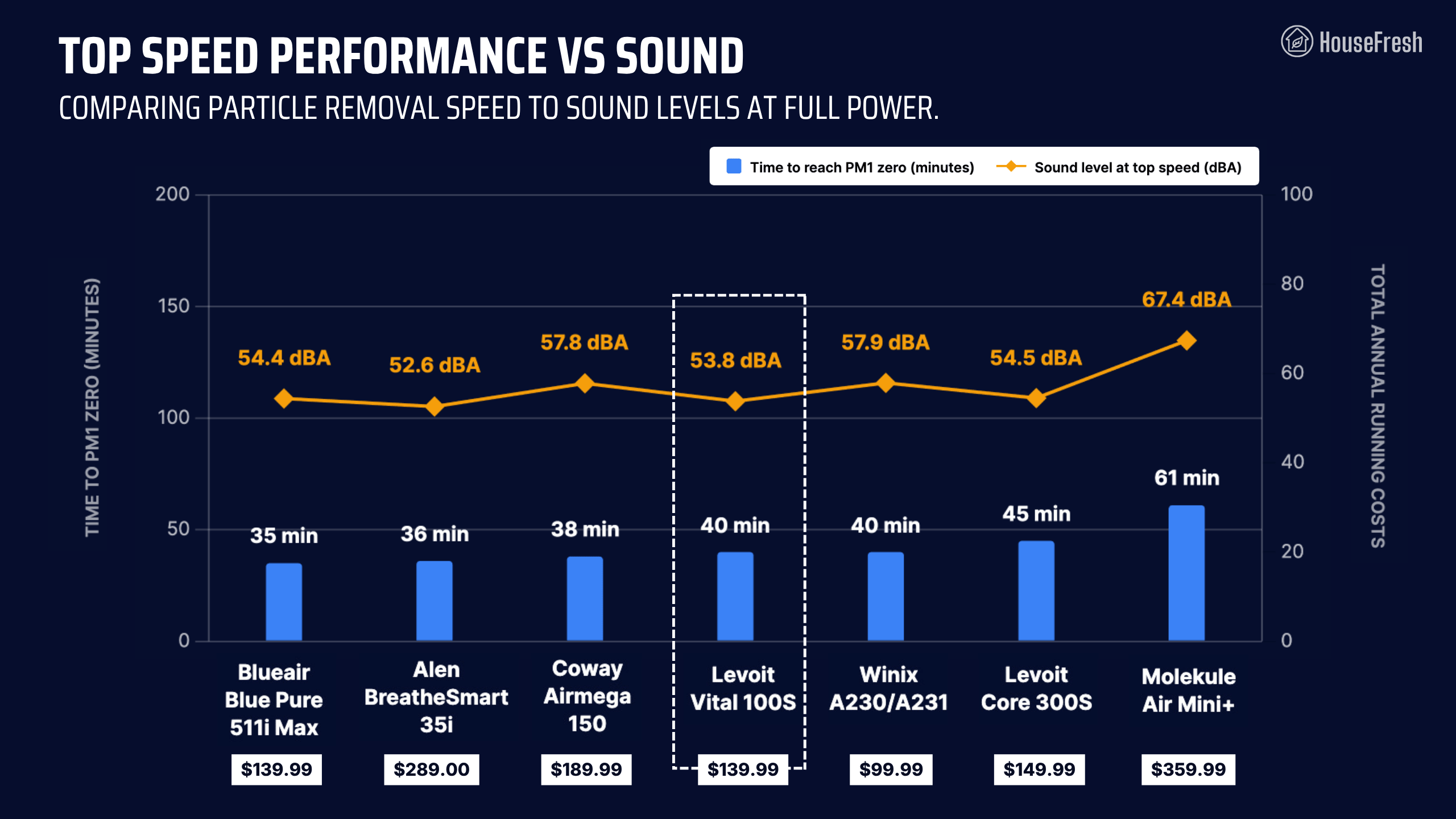
But all these numbers are based on results at top speed, and most people won’t use their air purifier at top speed 24/7 because these devices running at full power can be as loud as a vacuum cleaner.
Sound levels
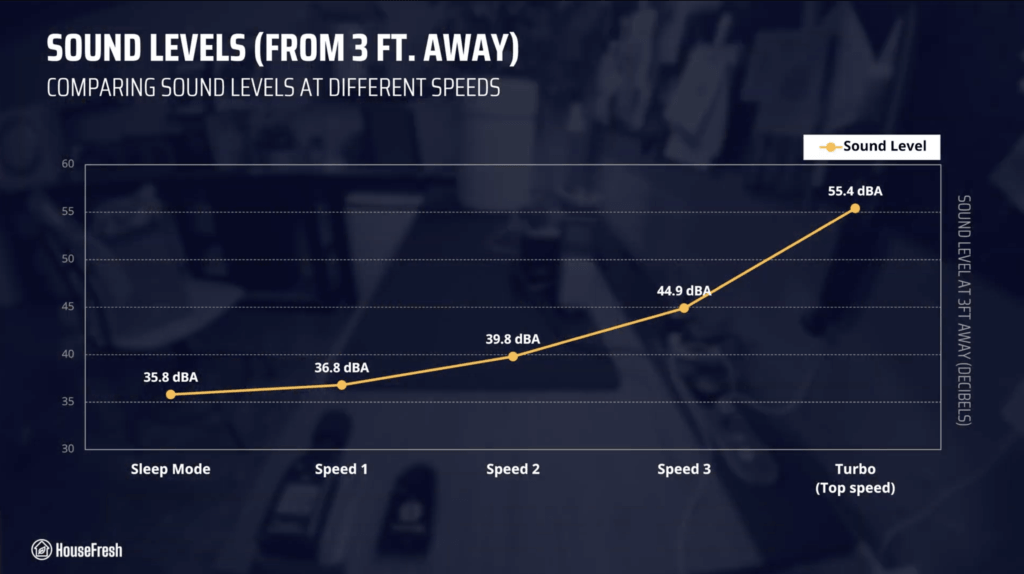
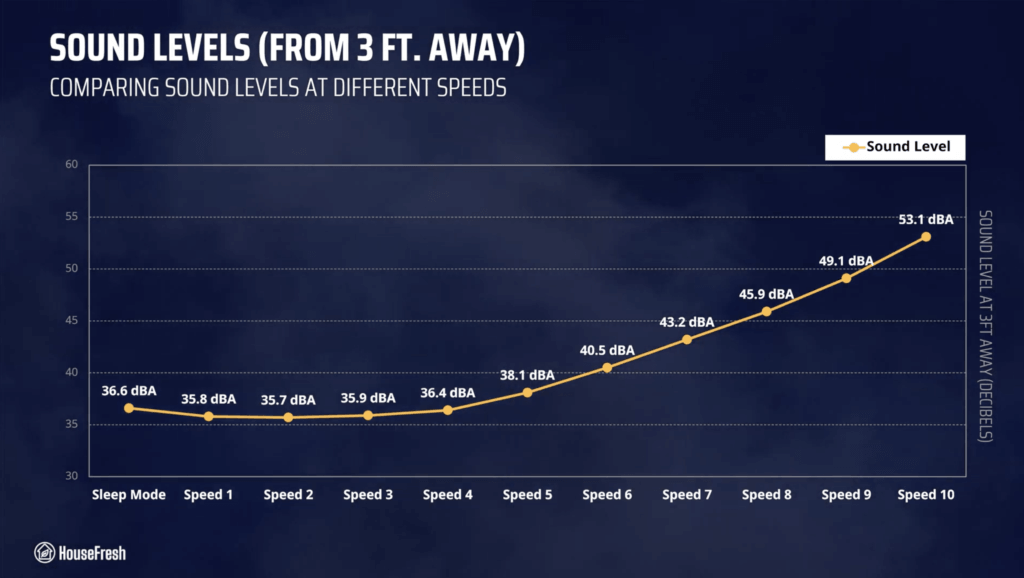
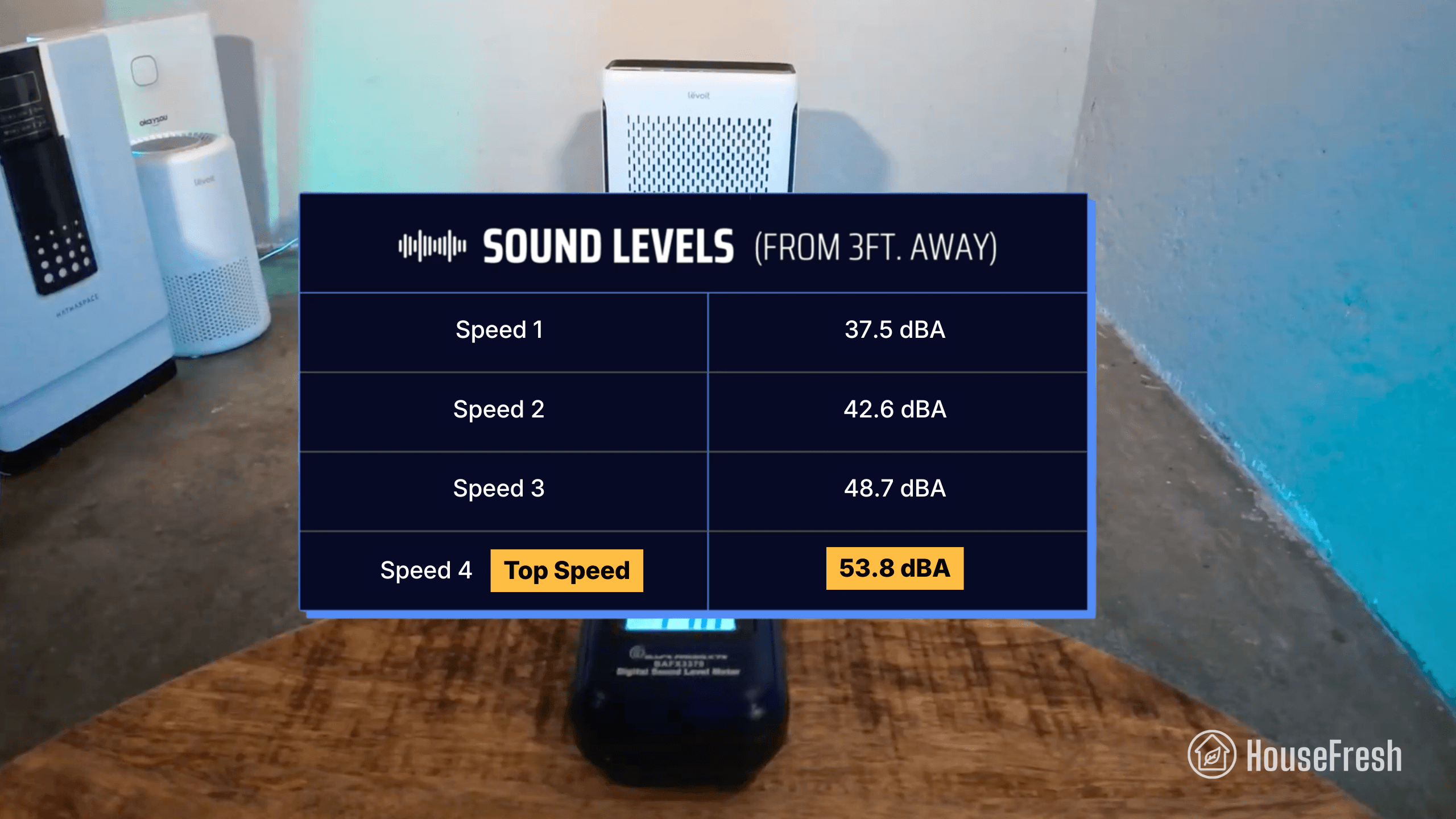
The sound levels of the Levoit Eleva 300X range from 35.8 dBA to 55.4 dBA — which is a little louder than what we measured when testing the Dyson HushJet Compact HJ10.
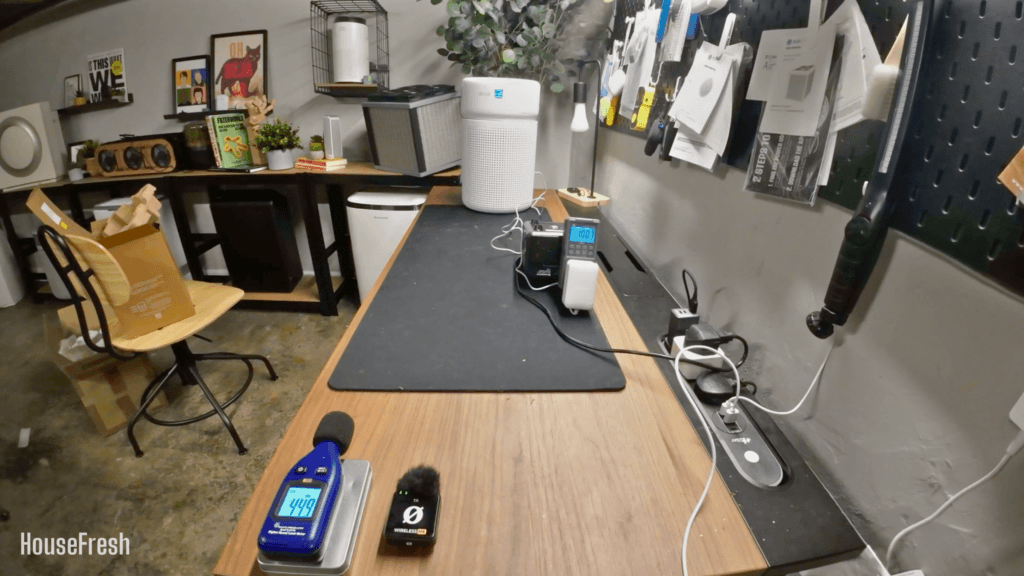
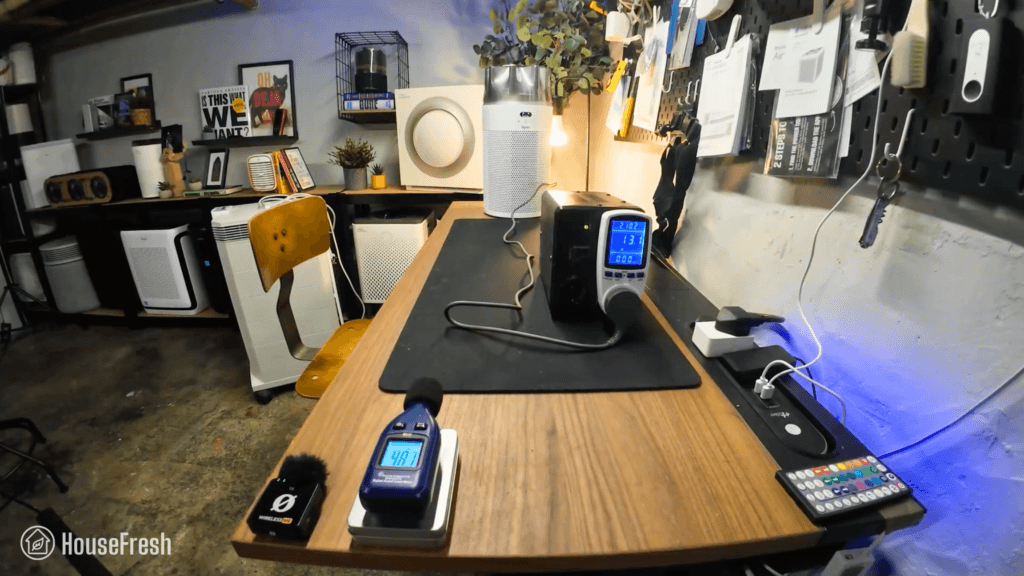
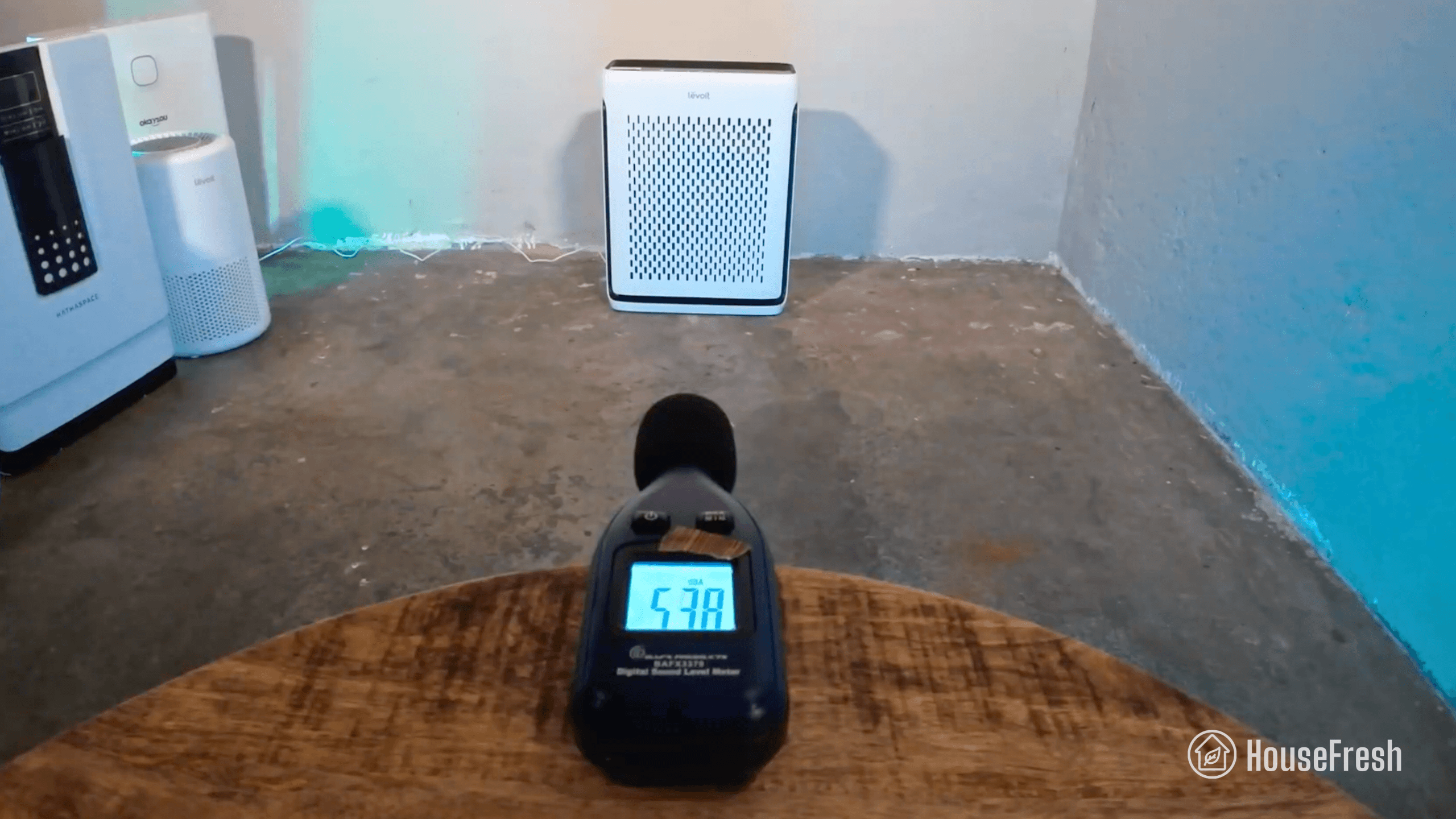
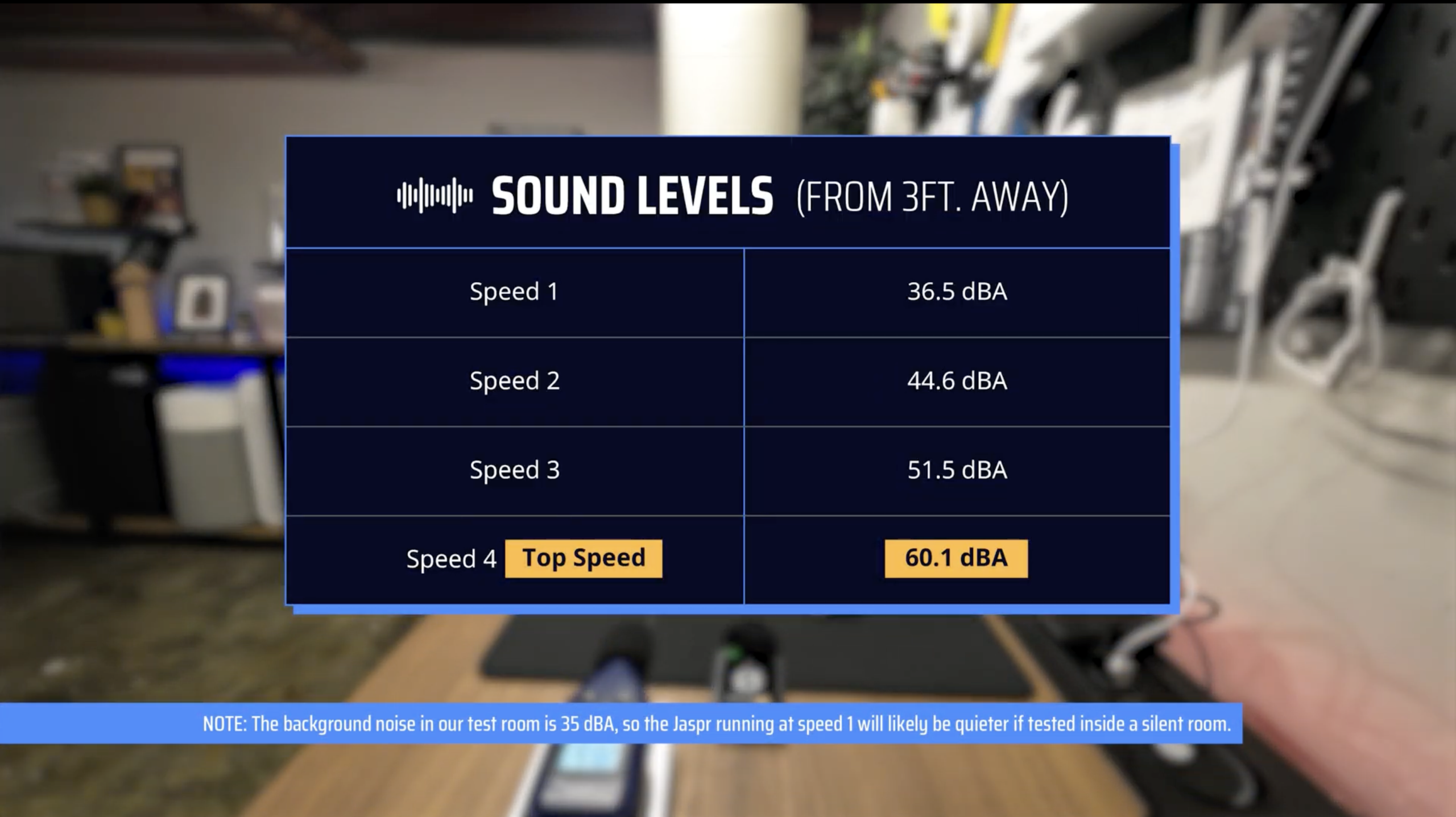
As always, I used our BAFX sound meter to measure how much sound the Eleva 300X generates at each of its fan speeds at 3 ft away:
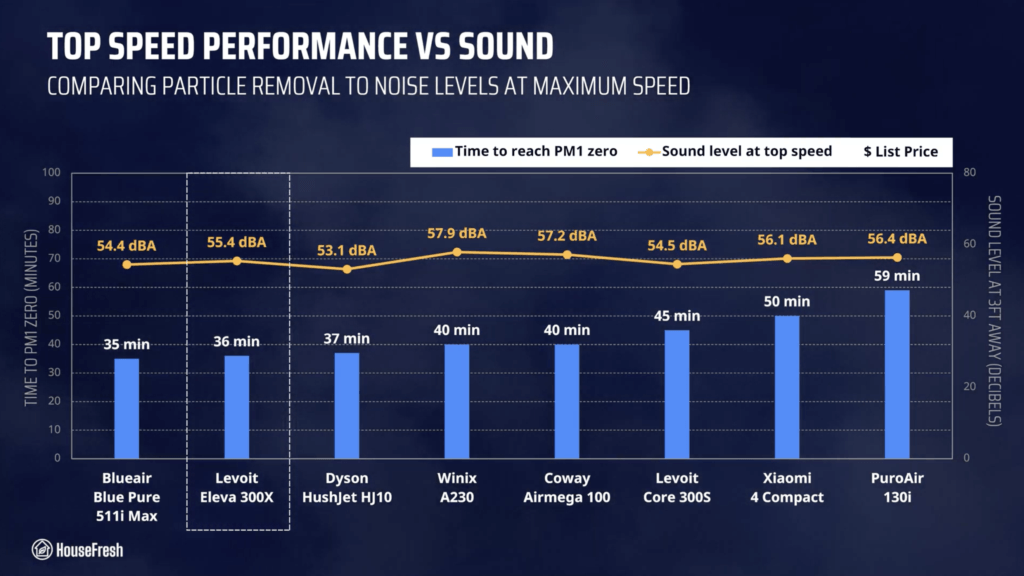
Reaching 55.4 dBA at top speed, the Eleva 300X is louder than the older Levoit Core 300S and newer models from Dyson and Blueair.
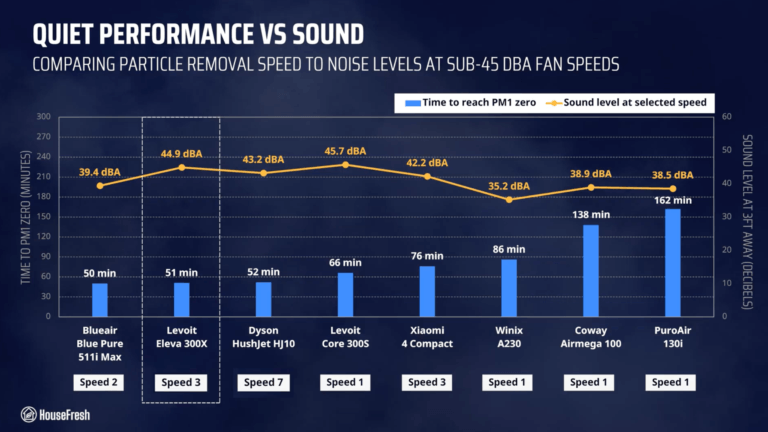
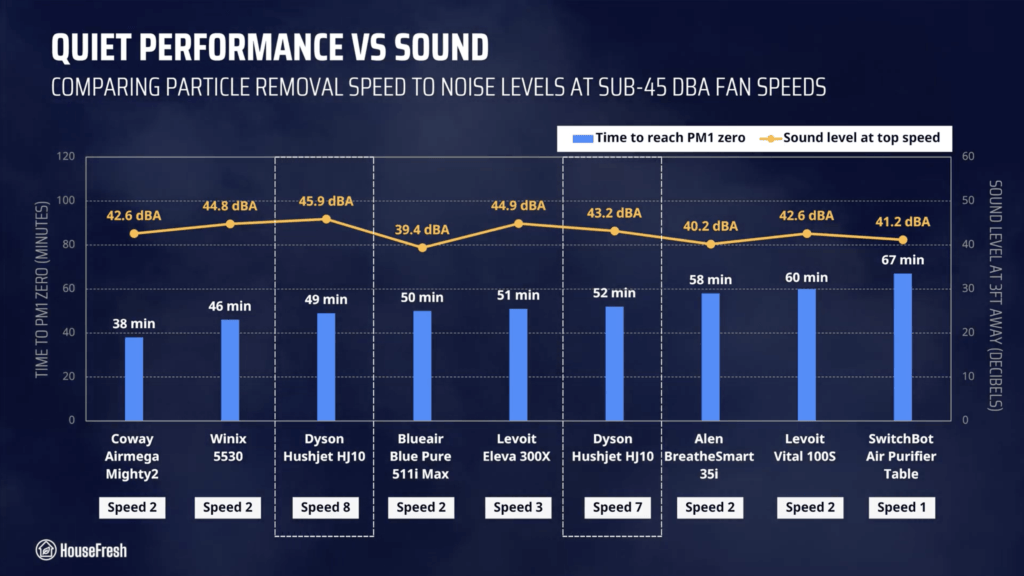
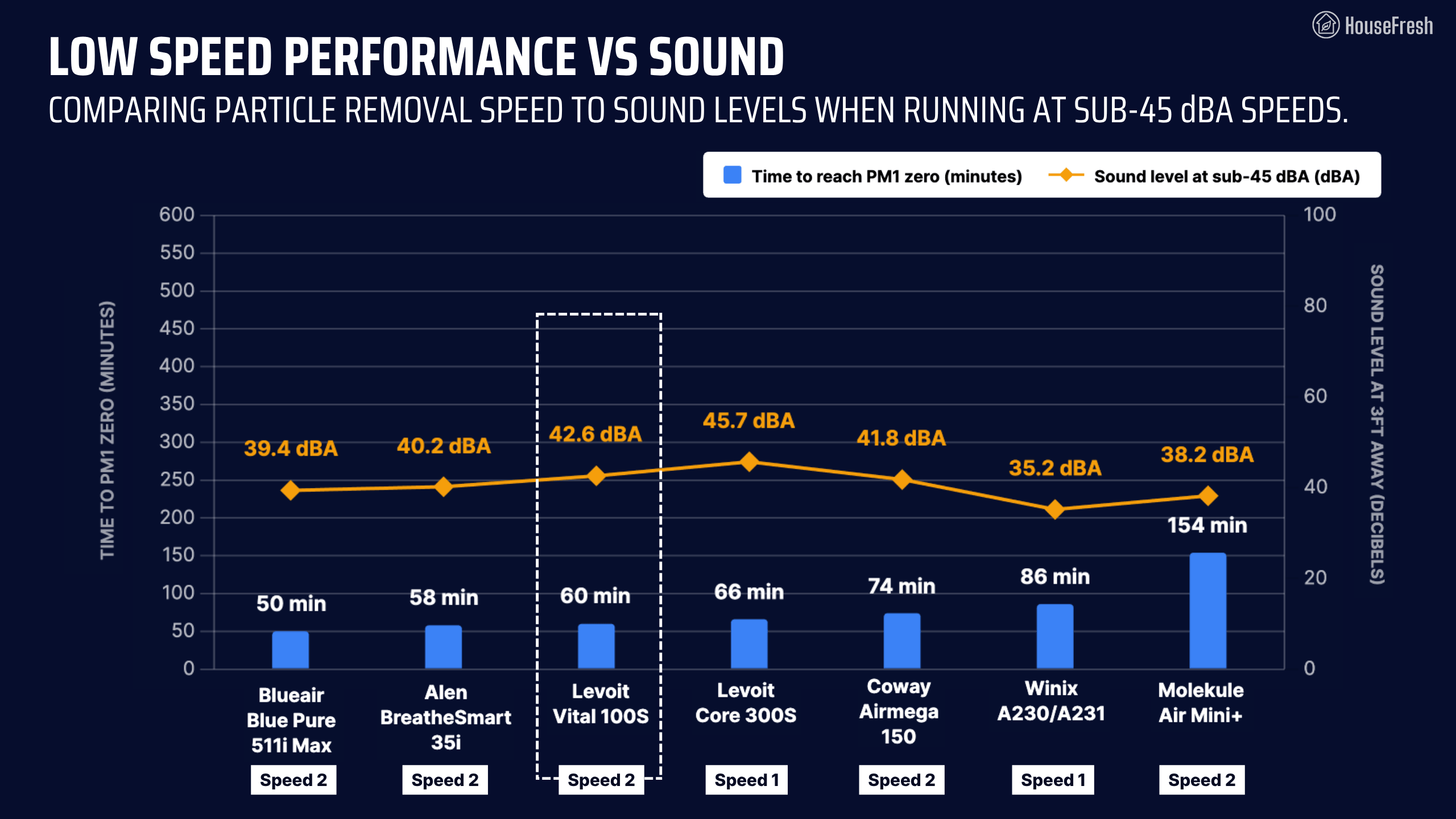
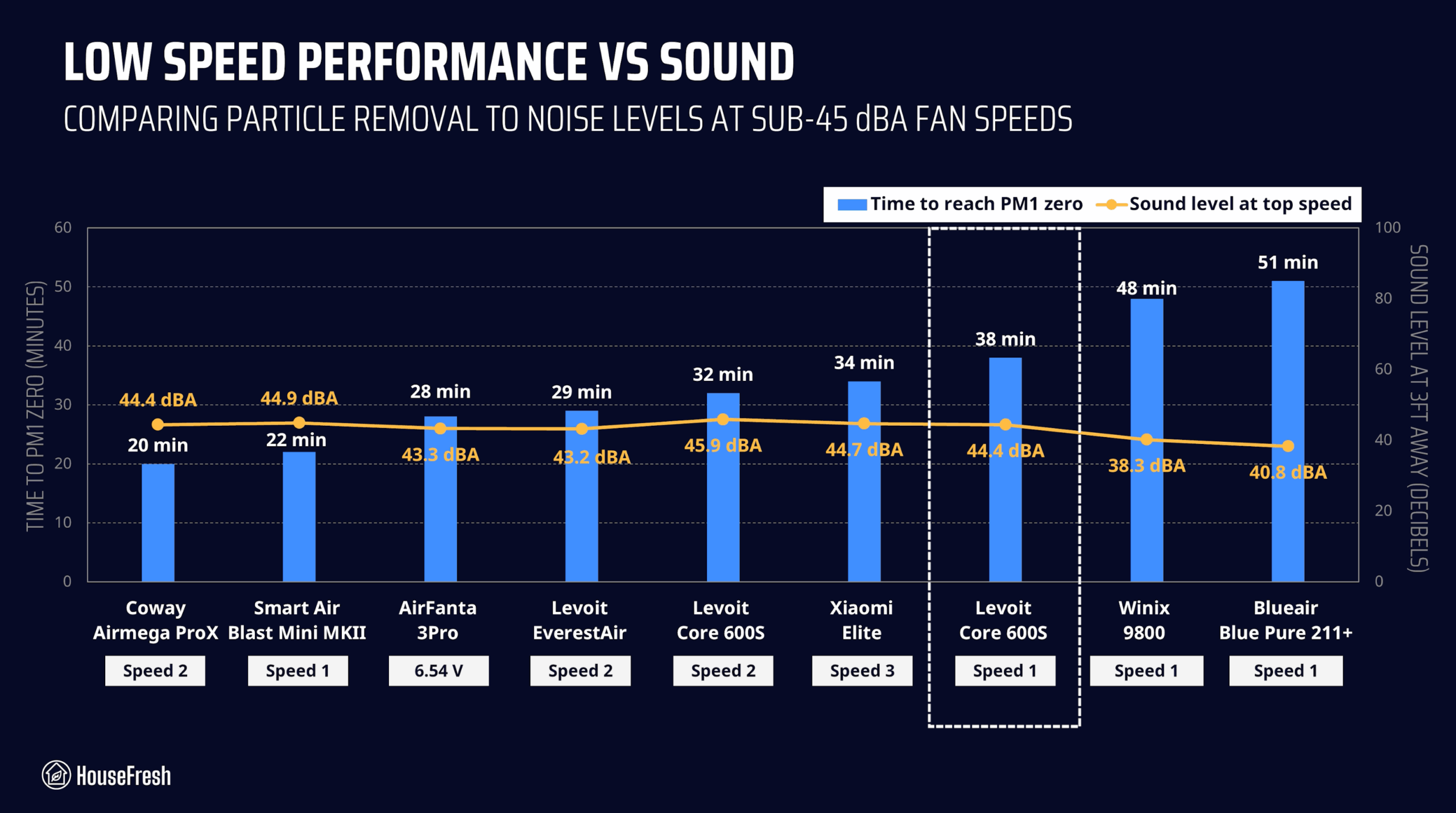
Running at speed 3, it reached 44.9 dBA and cleared our test room in 51 minutes. This is faster than most other small units in our benchmark.
When looking at quiet performance results, we can see just how much power this Eleva model packs… It completed the test 15 minutes faster than the old Levoit Core 300S – pretty impressive!
Long-term running costs
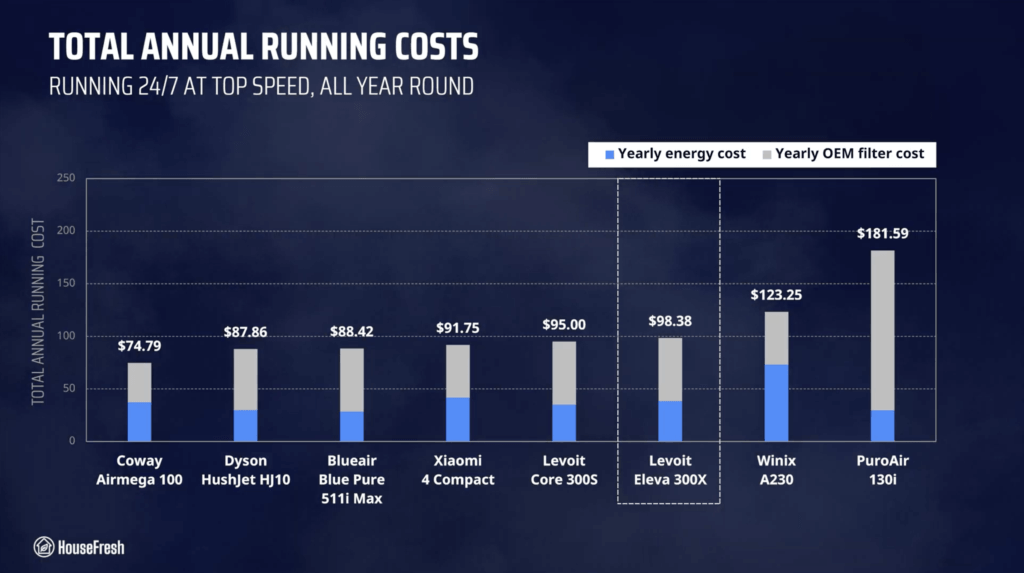
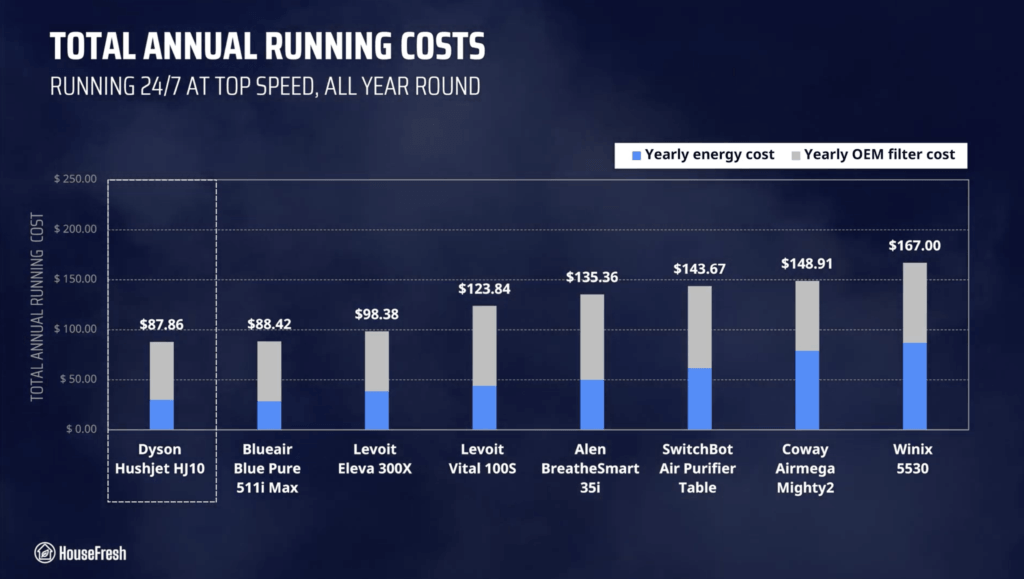
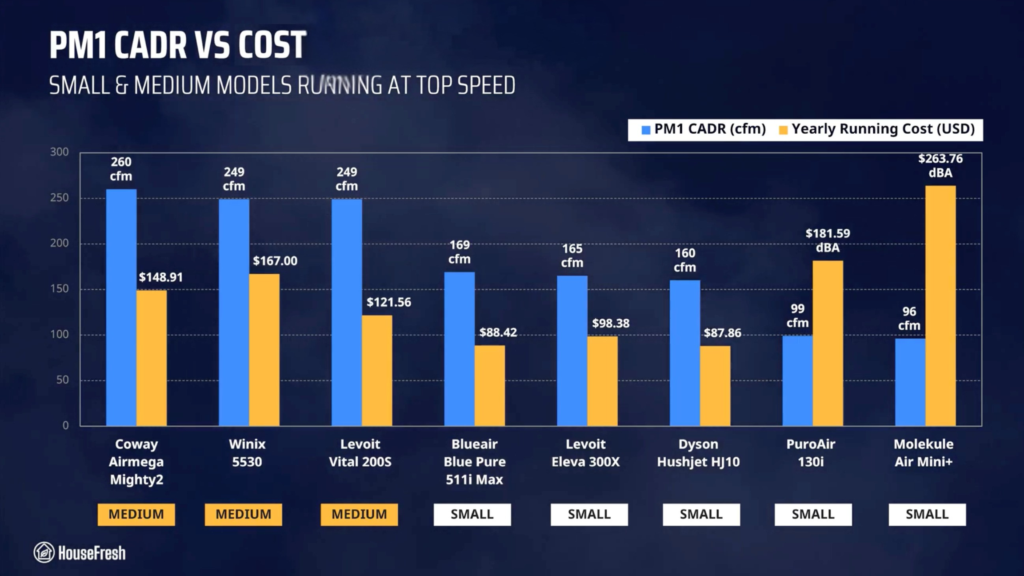
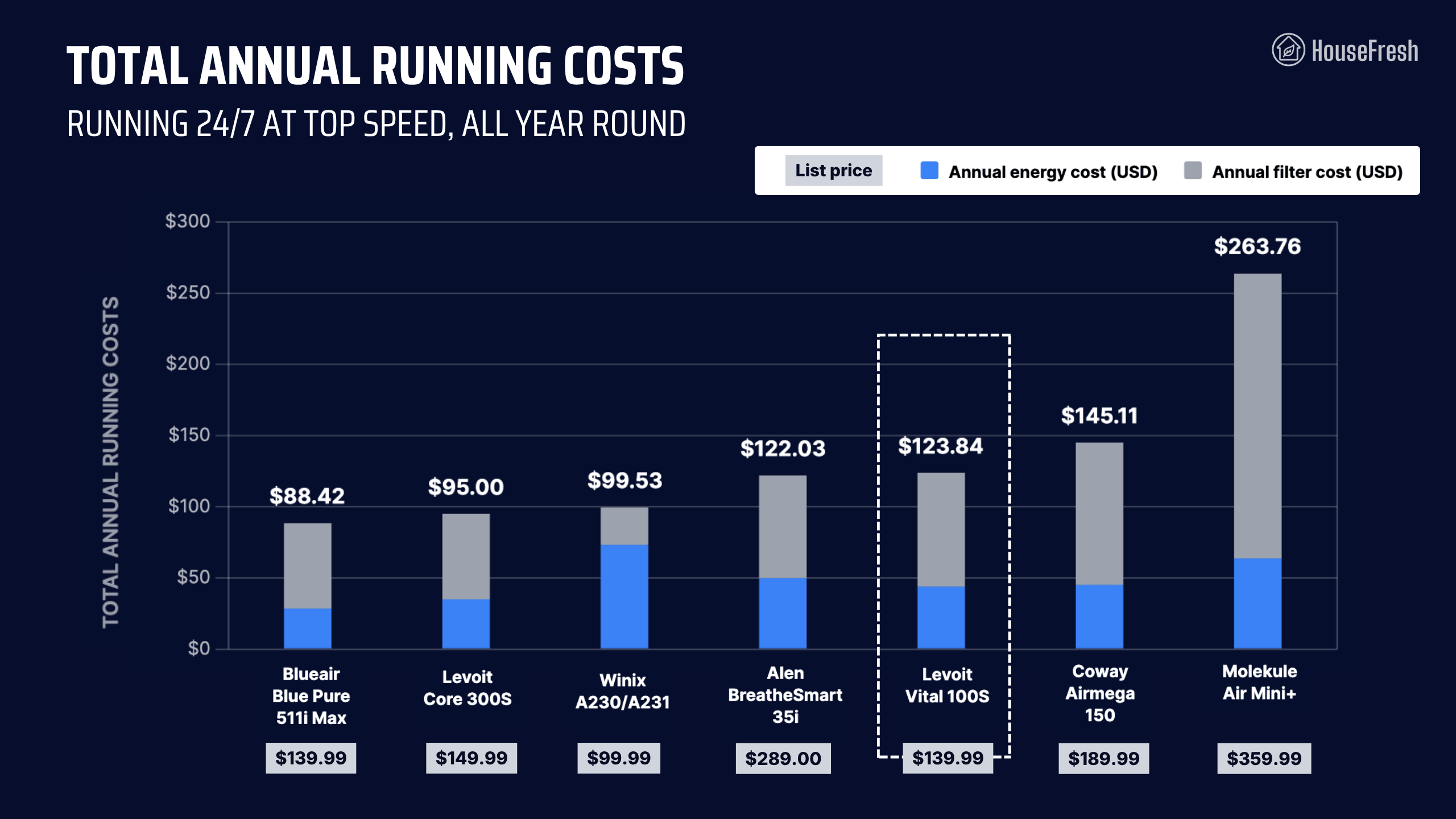
Running a Levoit Eleva 300X will cost you $98.38 per year, combining energy and filter replacement costs.
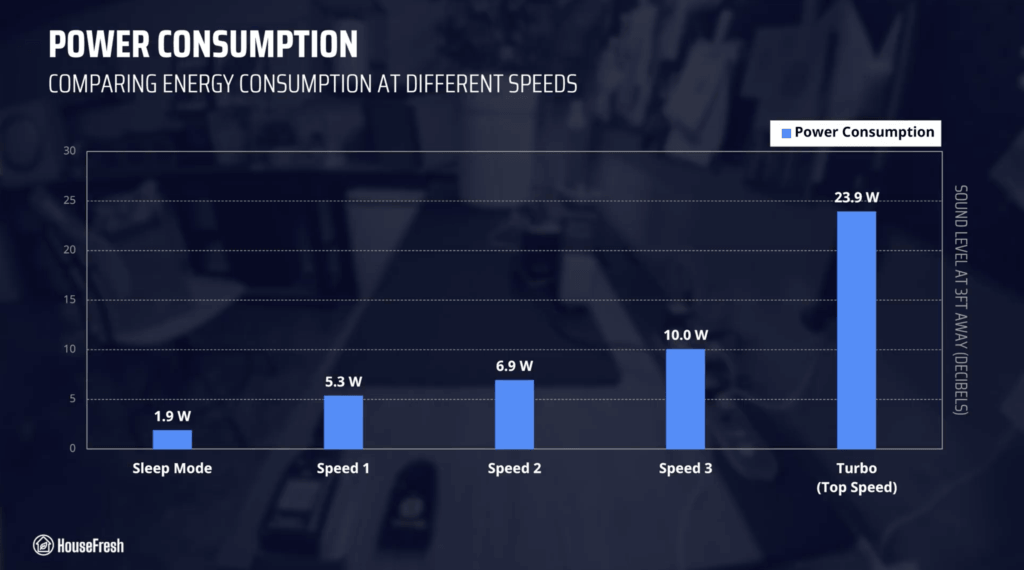
We used our energy meter to record how much electricity the Eleva 300X pulls at each fan speed and while on standby.
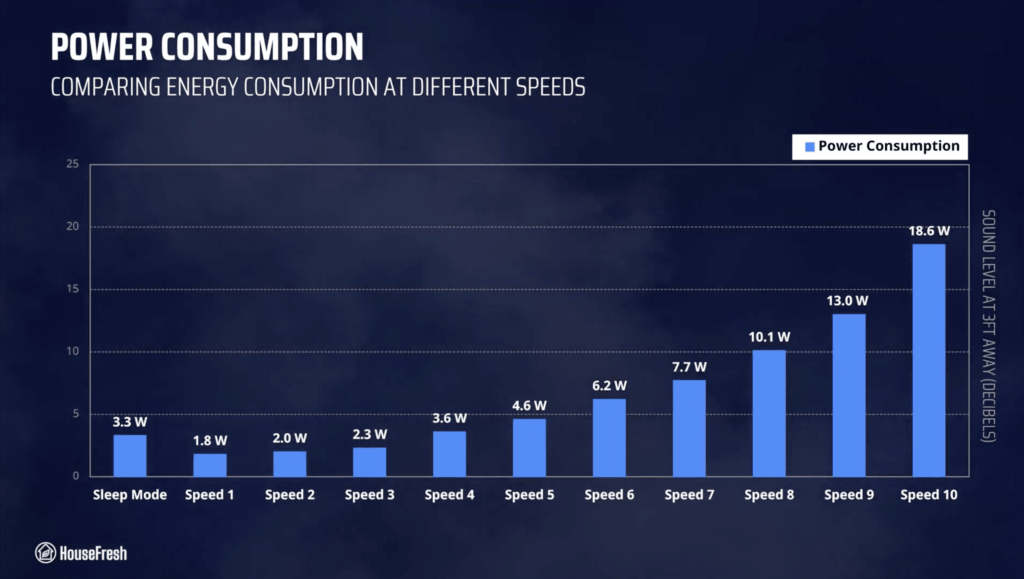
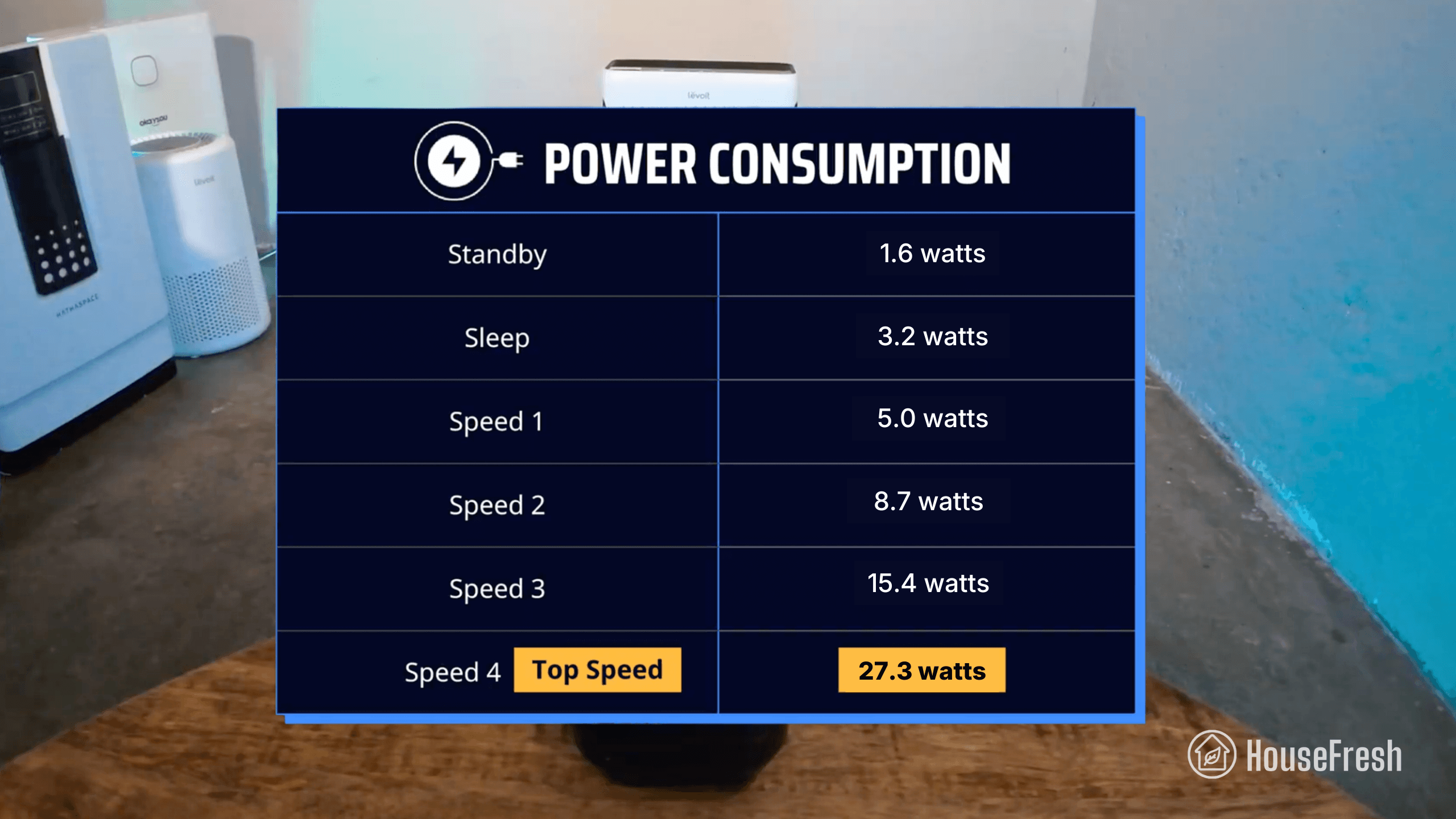
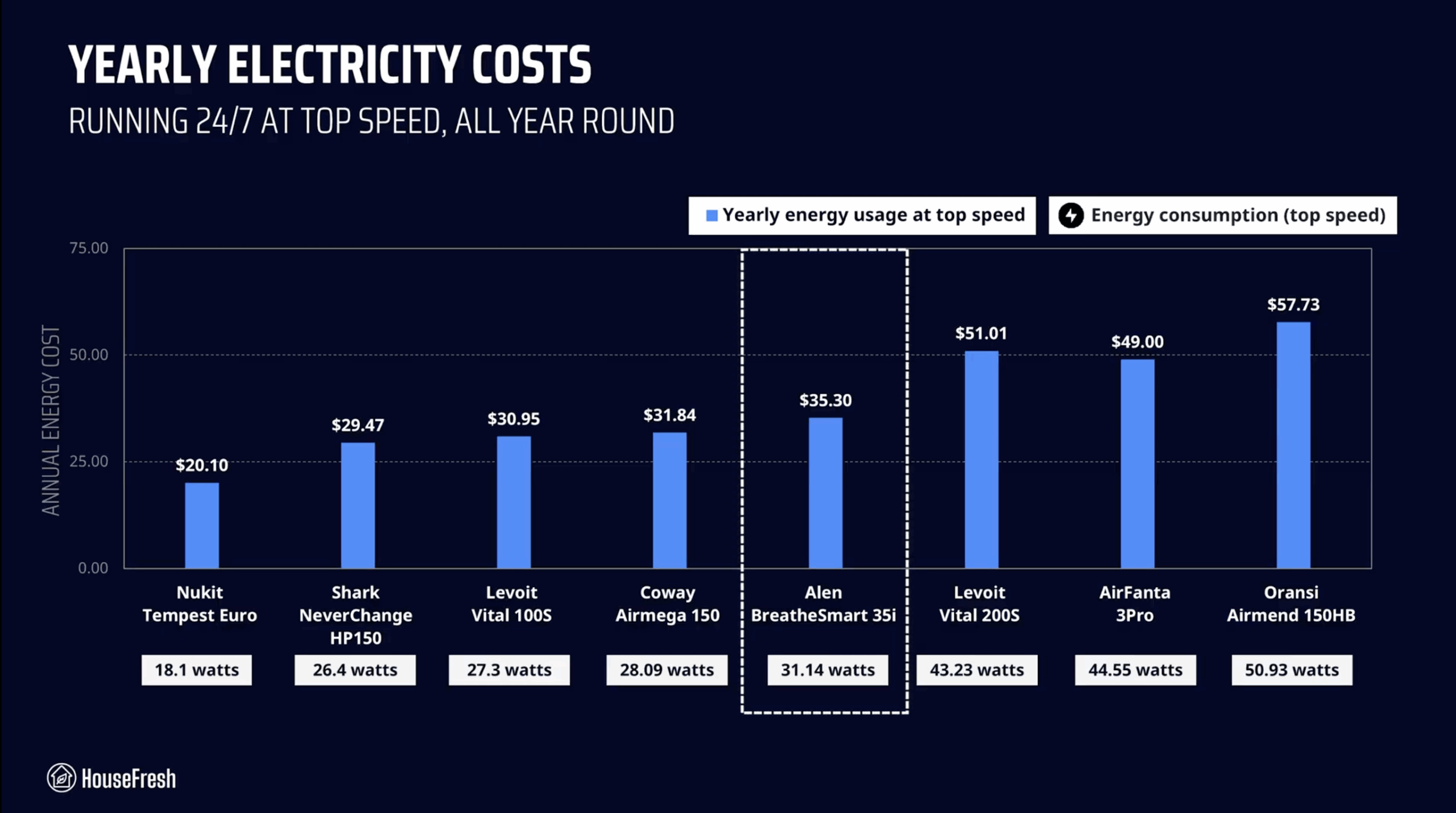
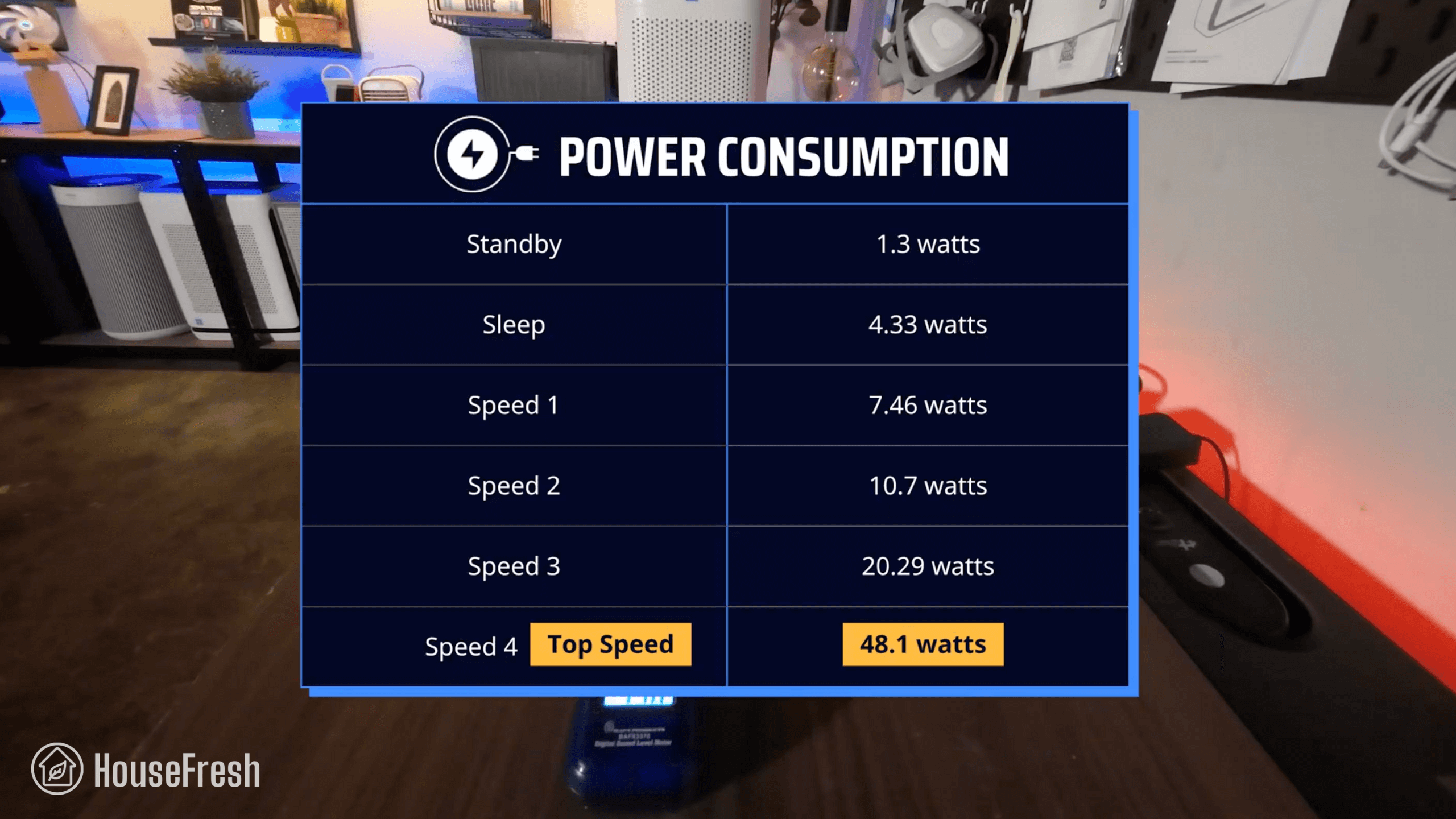
At top speed, the Eleva 300X draws 23.9 watts, so if you were to leave it running at top speed 24/7 for one year, it will add $38.41 to your energy bill, based on the latest electricity prices in the U.S. as of October 2026.
This makes the 300X more power hungry than the older Levoit Core 300S and the new Dyson HushJet Compact H10 AND the Blueair 511i Max.
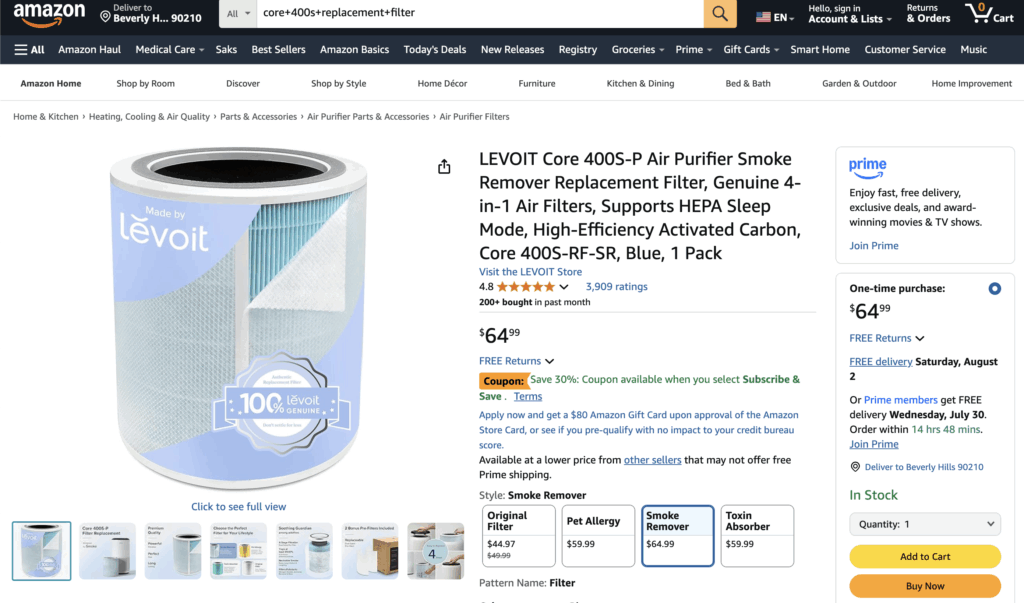
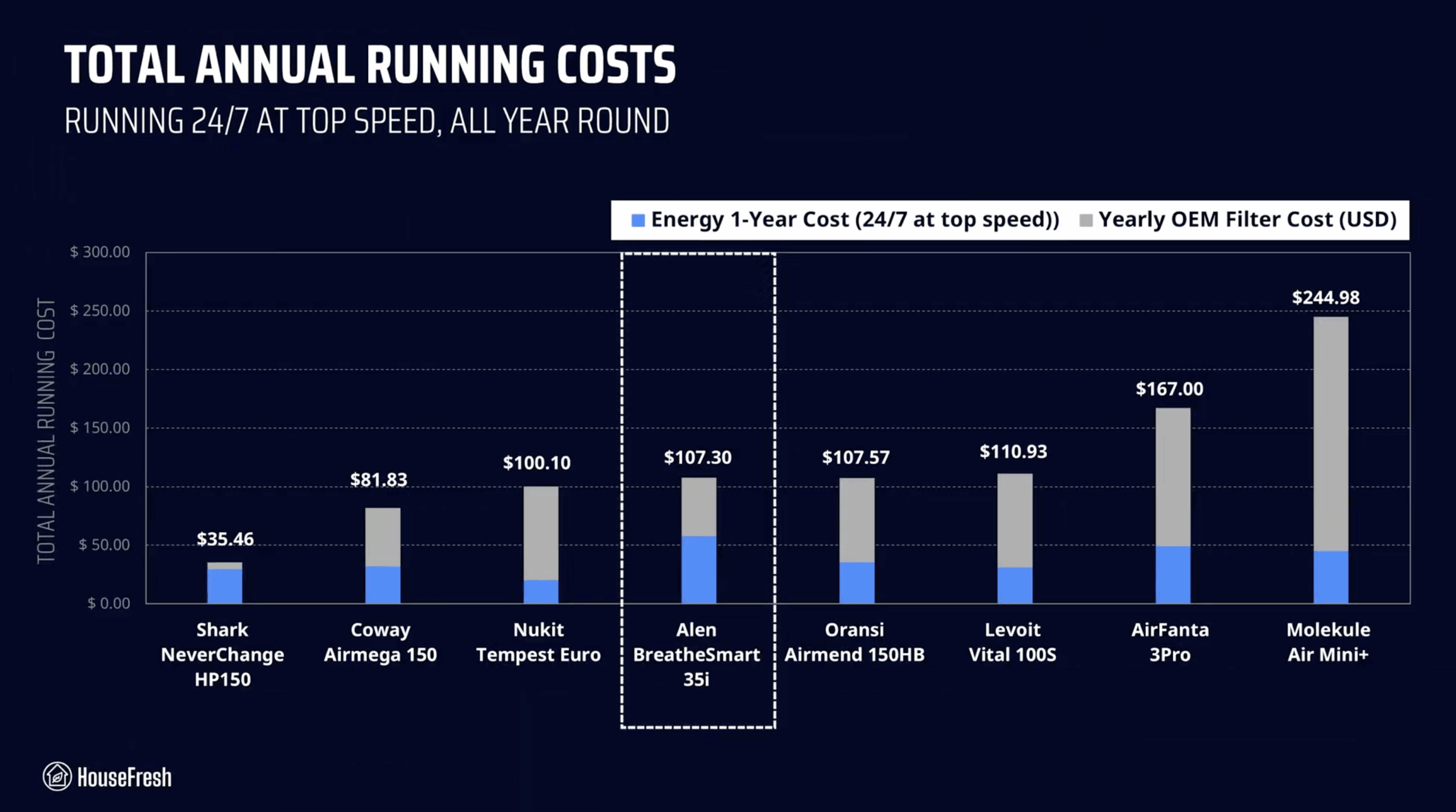
According to Levoit, the particle filter ($39.99) can last up to 2 years and the standard carbon filter ($19.99) has a lifespan of 6 months. This means you can expect to spend $59.97 each year on filter replacements alone.
I added this to the energy costs and can tell you that you need to budget $98.38 each year to keep your 100S running 24/7 in your home:
Due to higher filter and energy costs, the 300X has some of the highest running costs when compared to other small air purifiers we have benchmarked it against.
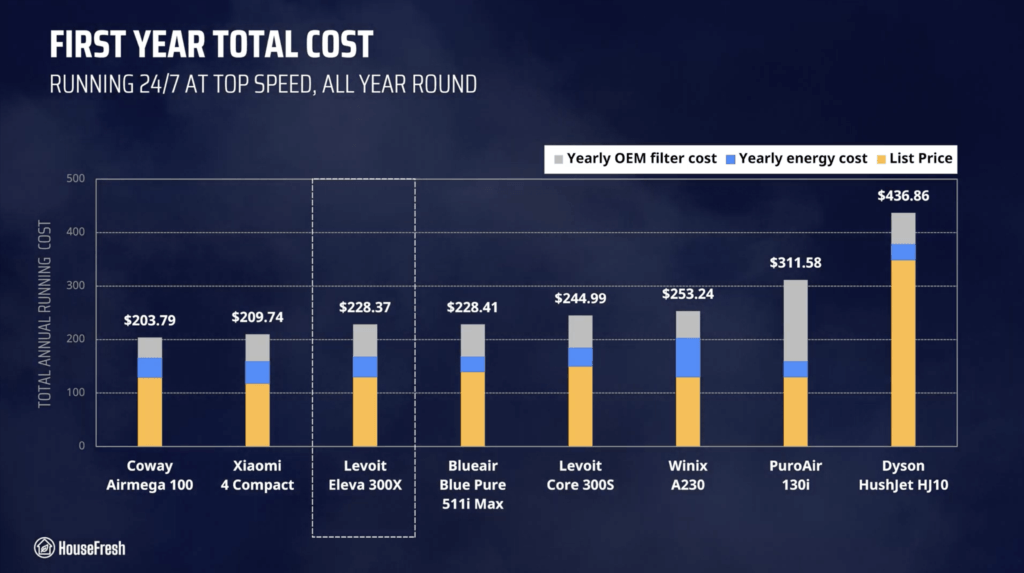
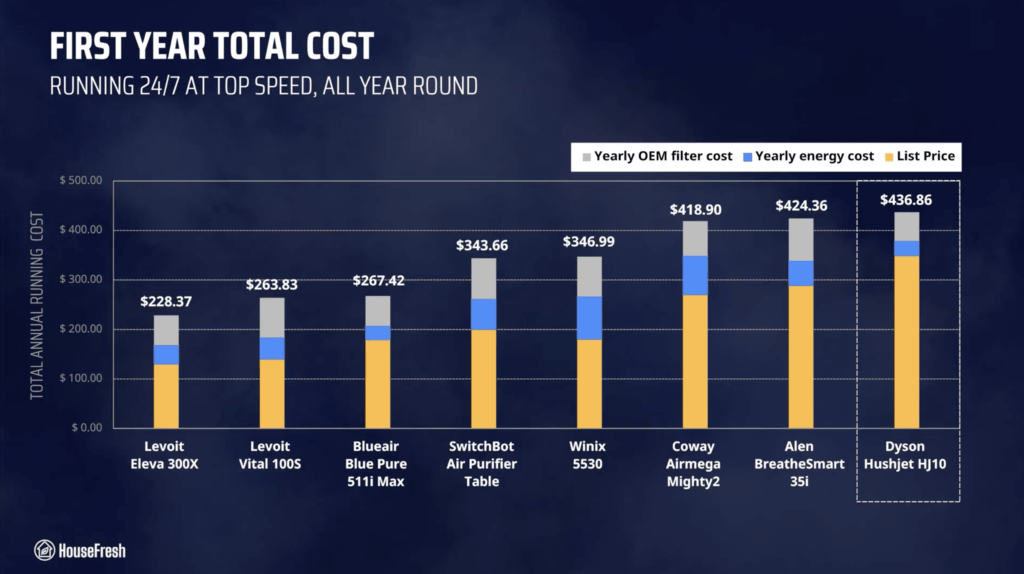
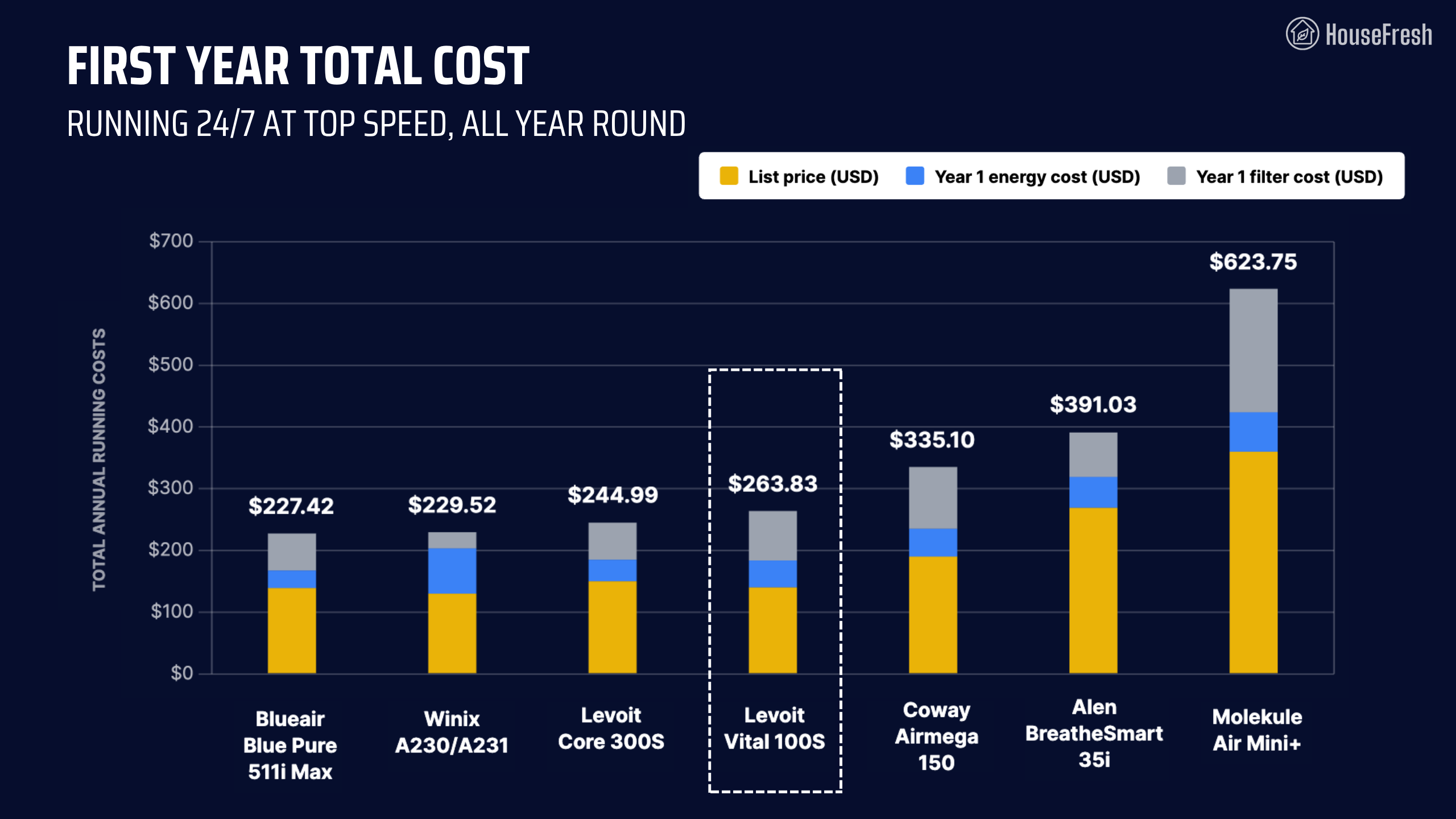
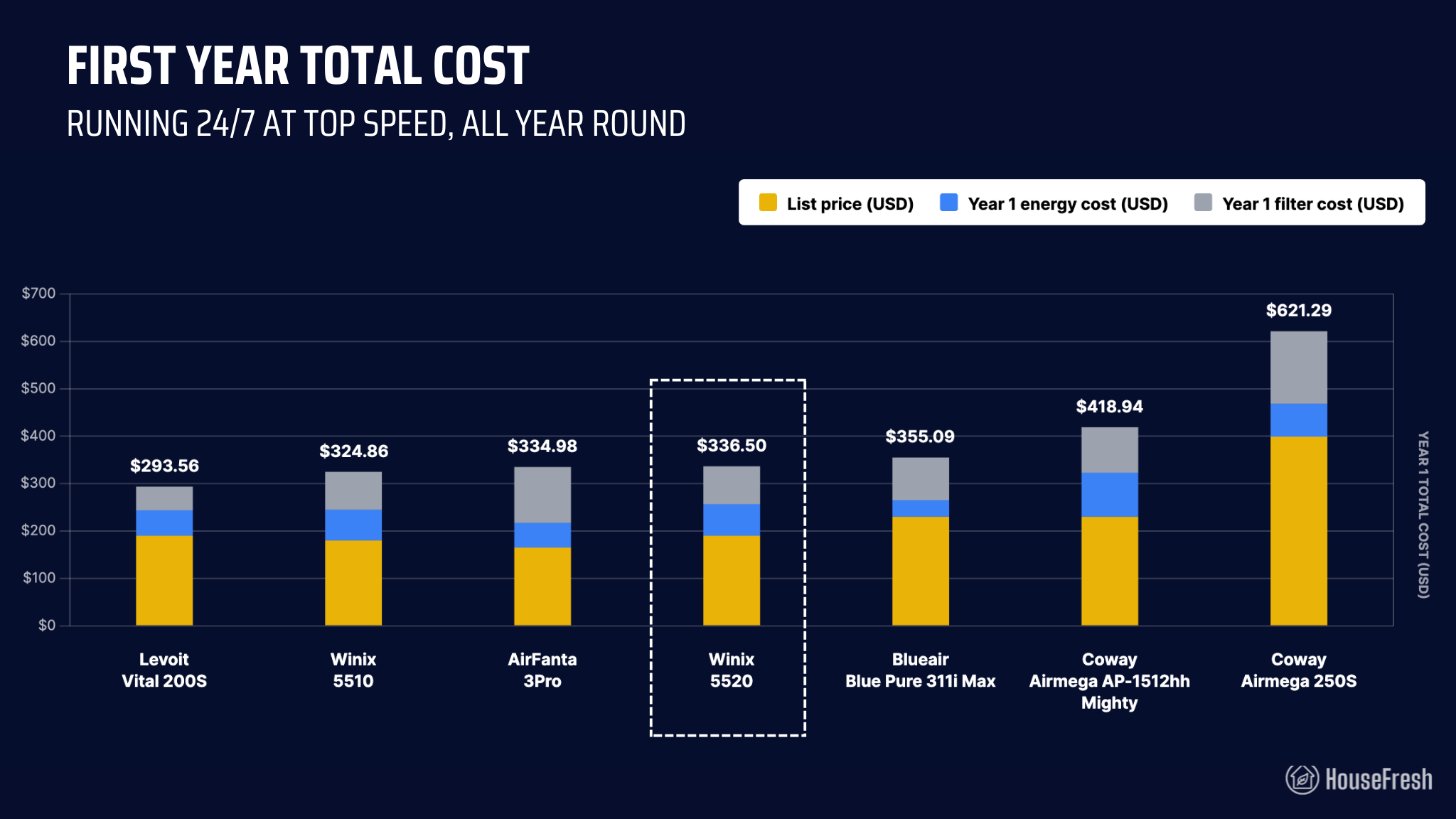
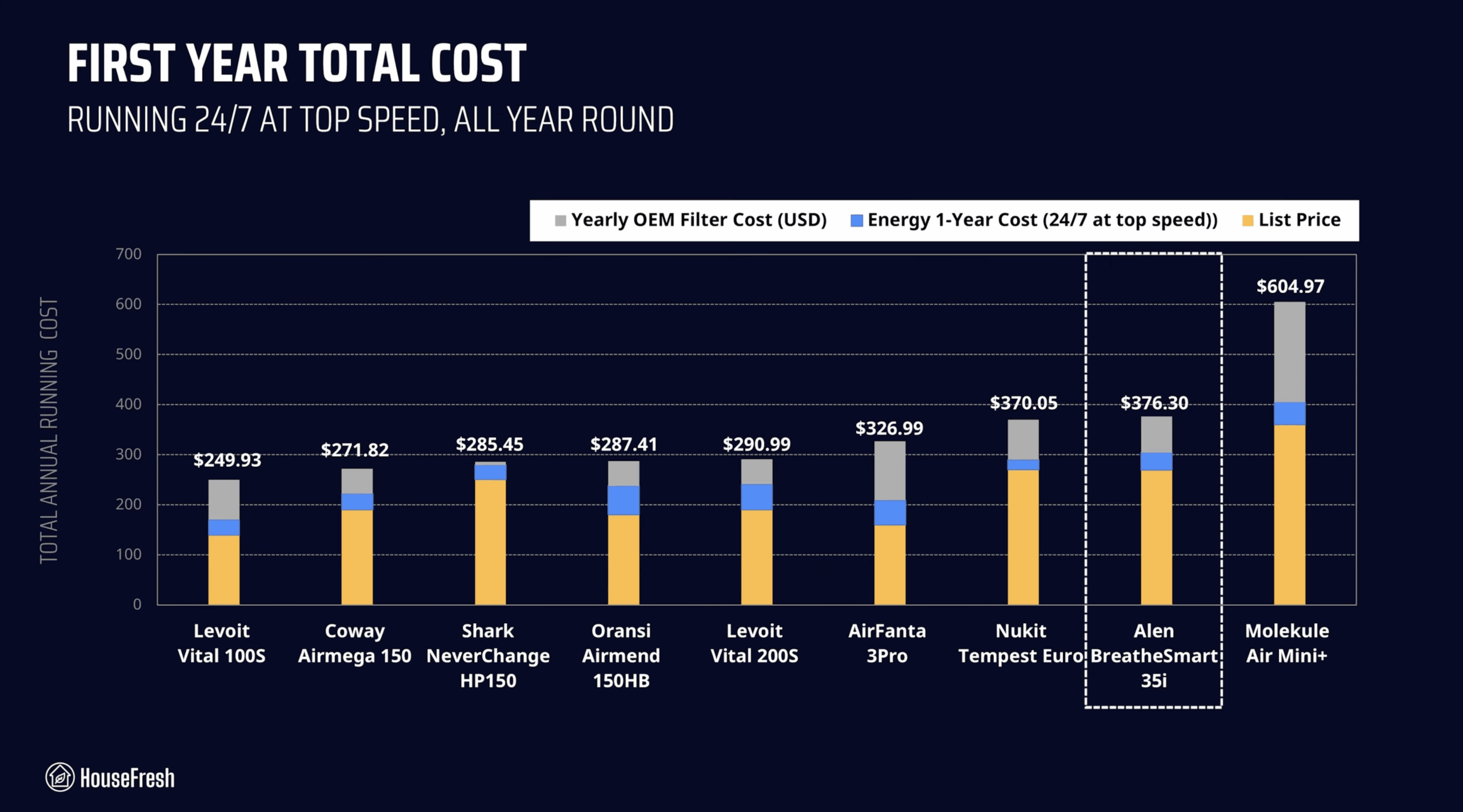
But for a new buyer, the most important figure is the total investment in the first year. And here the math works in Levoit’s favor… When you add the $129.99 retail price to that first year’s running cost, your total investment is $228.37:
Thanks to its low initial cost, the Eleva 300X is the third cheapest device to buy and run in that first year of ownership – – cheaper than even the old Levoit Core 300S.
Bottom line: Should you get a Levoit Eleva 300X?
If you’re looking for a small air purifier for a room no larger than 247 sq. ft. (23 m2), then this might be it.
When you compare it to the older Core 300S, you get much better air cleaning performance and features at a cheaper price with the Eleva 300X, so I definitely recommend it over a Core 300S.
And when you compare it to other small air purifiers on the market today, we find powerful air cleaning power with fair sound levels and energy consumption for less than $130.
However, the main big benefit over other small cylindrical units is the use of separate filters.
You could get up to two years of use for the main particle filter, while you replace the gas filter as needed whenever the carbon is full. Plus, if you don’t care about odor removal, then you could just run your Eleva without the carbon filter and save yourself some money there.
I really appreciate the cheap initial price, especially considering that you not only get good performance, but also features we don’t normally see on budget-friendly air purifiers like a laser sensor.
And if you care about buying a small unit with HEPA grade filtration, then this might be it.
I’m still not sure why Levoit (and other manufacturers) continue to go to great lengths to produce units with HEPA-grade filters after we’ve seen so many examples of units with lower grade filters outperforming HEPA…
If you decide to get yourself a Levoit Eleva 300X, please use this link and we will receive a small affiliate commission at no extra cost to you.
And if you’re still unsure, you can try using our air purifier comparison tool to see how the Eleva 300X stacks up against units with similar prices:
If you have any questions about the this model or about Levoit air purifiers in general, please drop them in the comments below, and I’ll get back to you personally as soon as I can.
We started testing and reviewing air purifiers in 2020, and Levoit stood out for its solid performance without a large price tag. They have released many units so if you have been researching air purifiers for a while, you are likely to have seen their brand more than once.
The Core 300 was the first air purifier under $100 that I was happy to recommend, and their Vital 200S has been my top recommendation for most people since I tested it in 2023.
But here’s the thing though: Not all Levoit air purifiers are created equal. Some models should be avoided, and I will discuss them at the end of the article.
As always, we bought every device on the list with our own money so we could run our usual battery of tests to gather comparable data in order to benchmark each Levoit air purifier against the more than 130 units we have reviewed to date. You can read more about our testing methodology here.
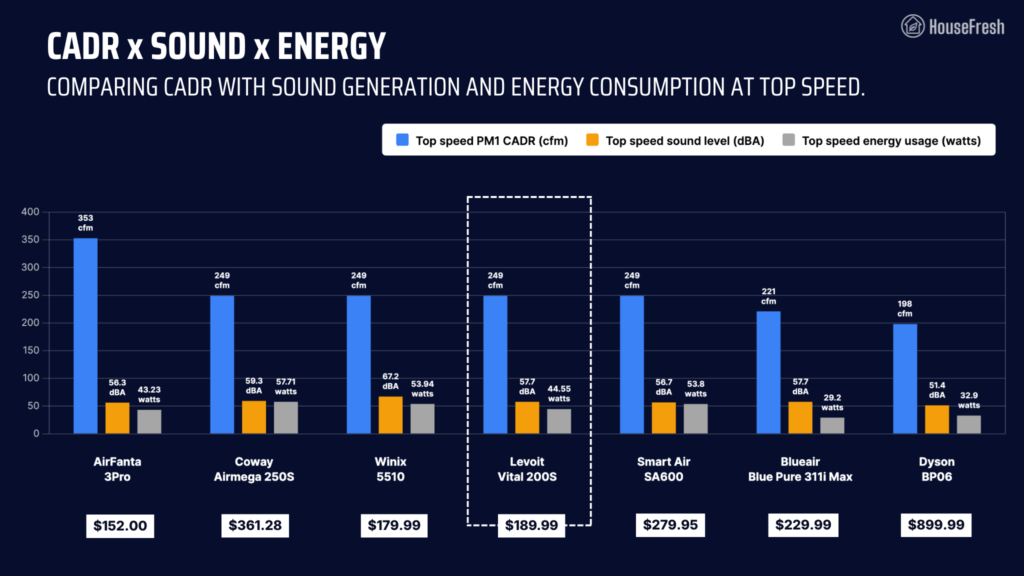
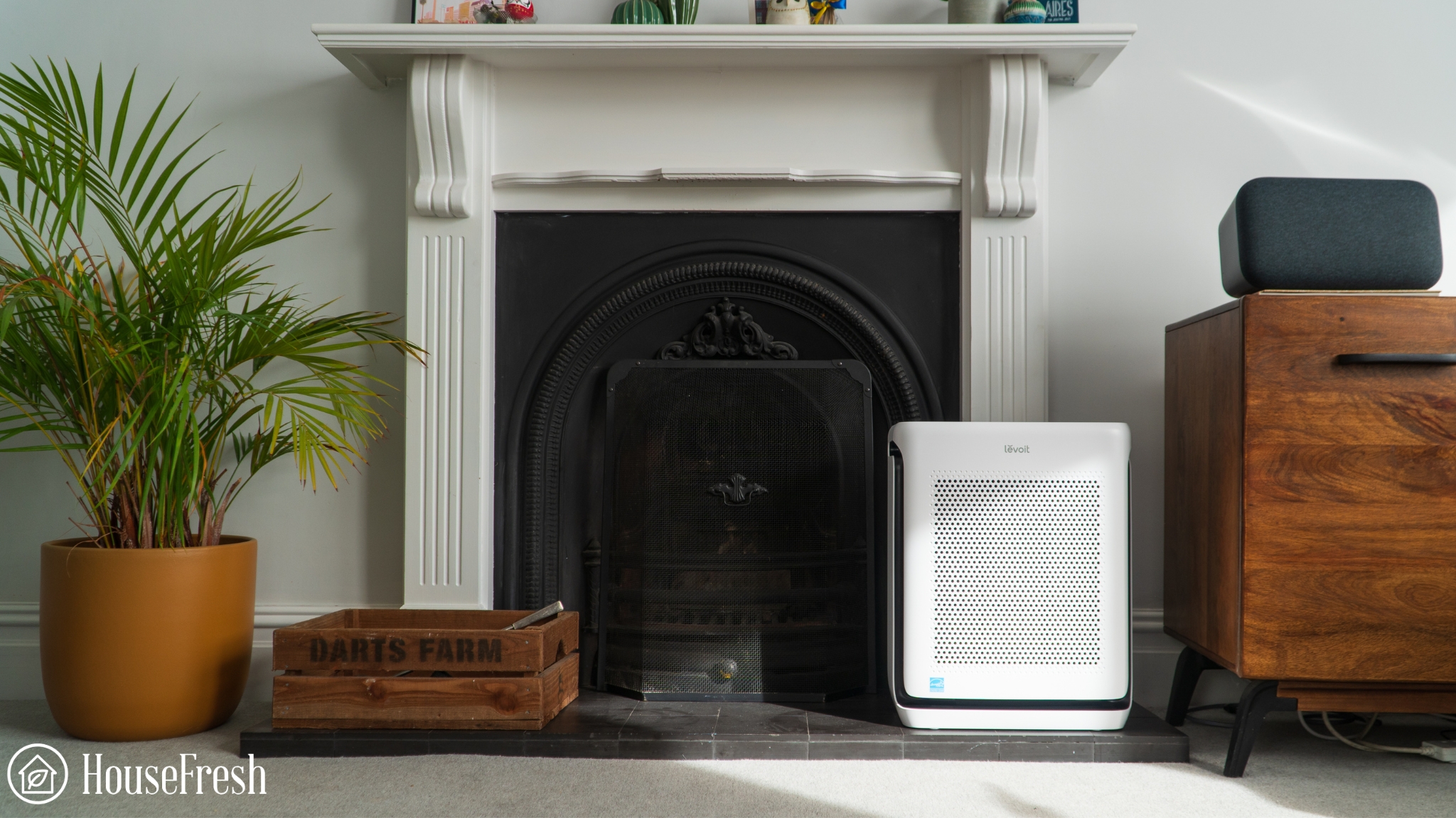
Retailing at $189.99, the Vital 200S is my top recommendation for most people due to its excellent air cleaning performance and smart features.
This medium-sized air purifier comes with a smart features, app connectivity, a removable pre-filter, and a bonded particle and activated carbon filter with pellets. So I think it probably will tick off most boxes for the majority of people.
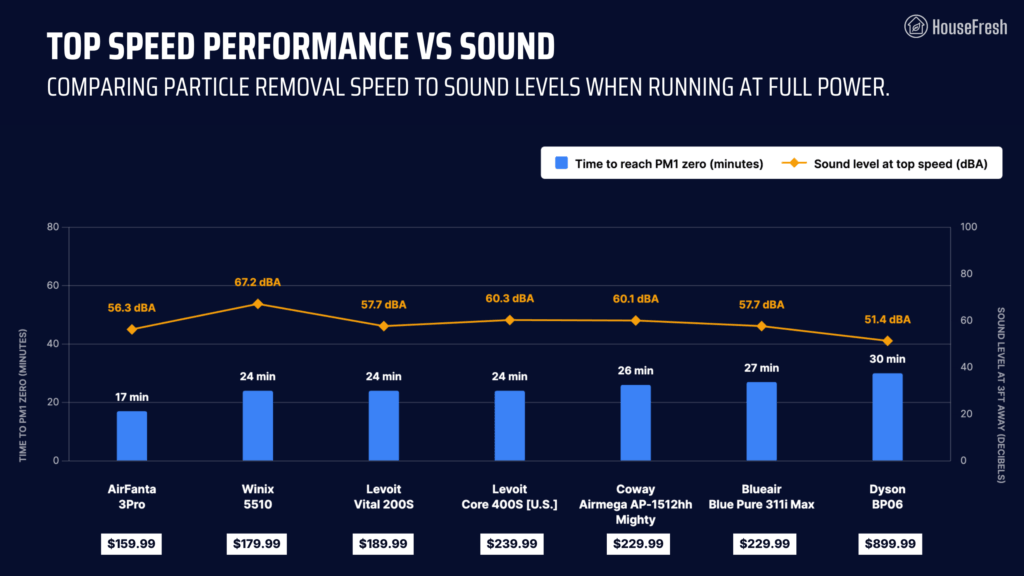
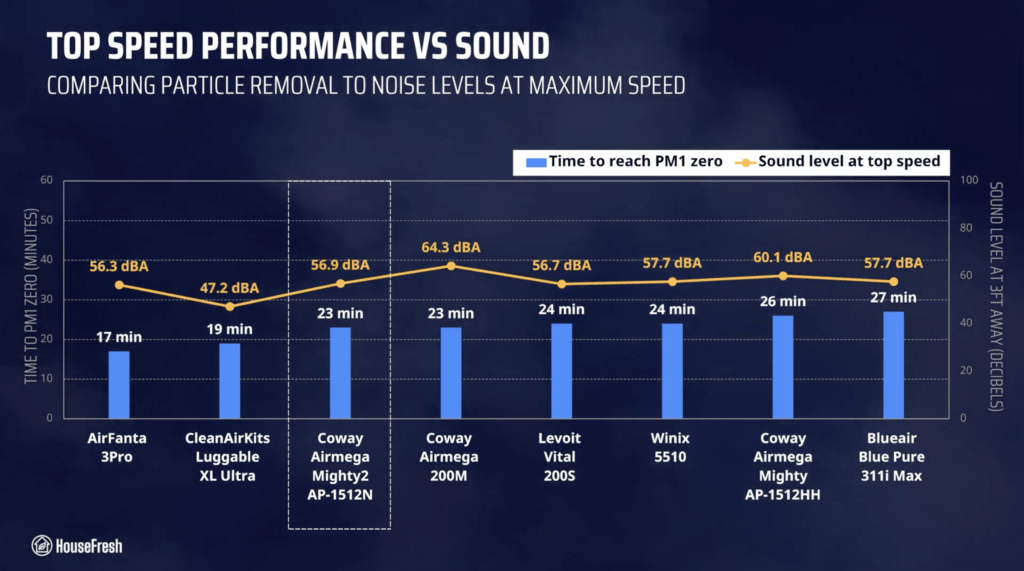
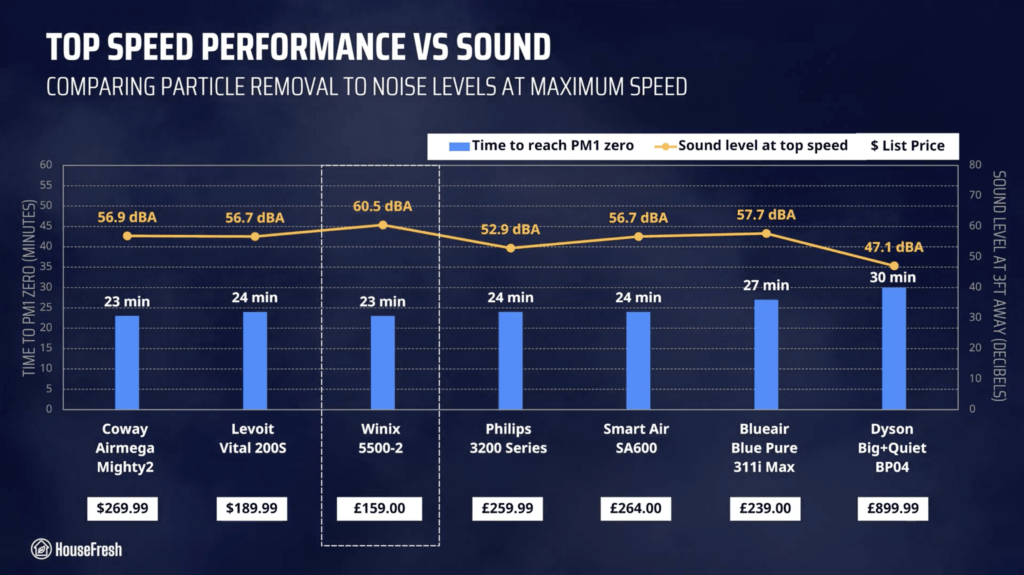
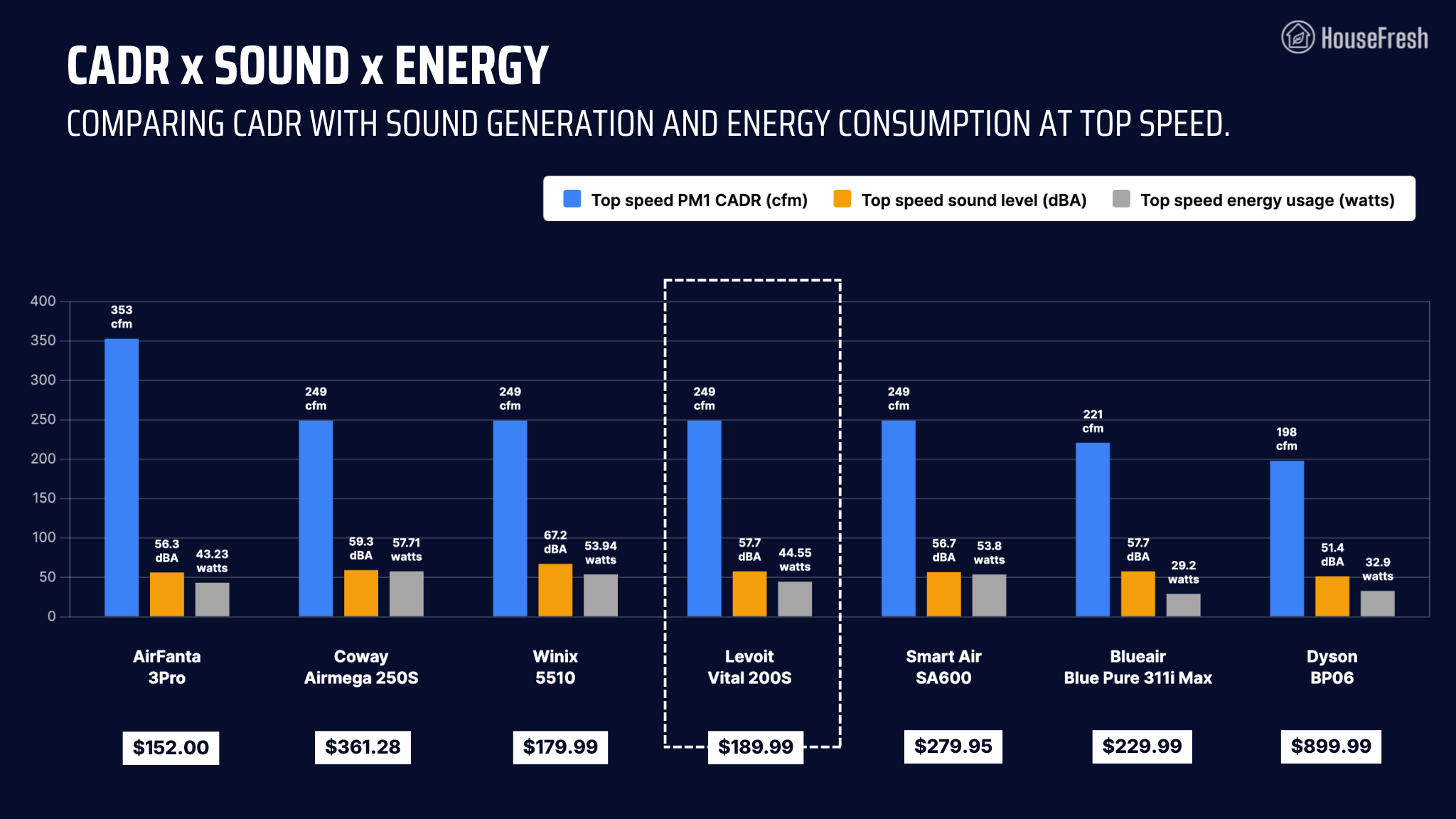
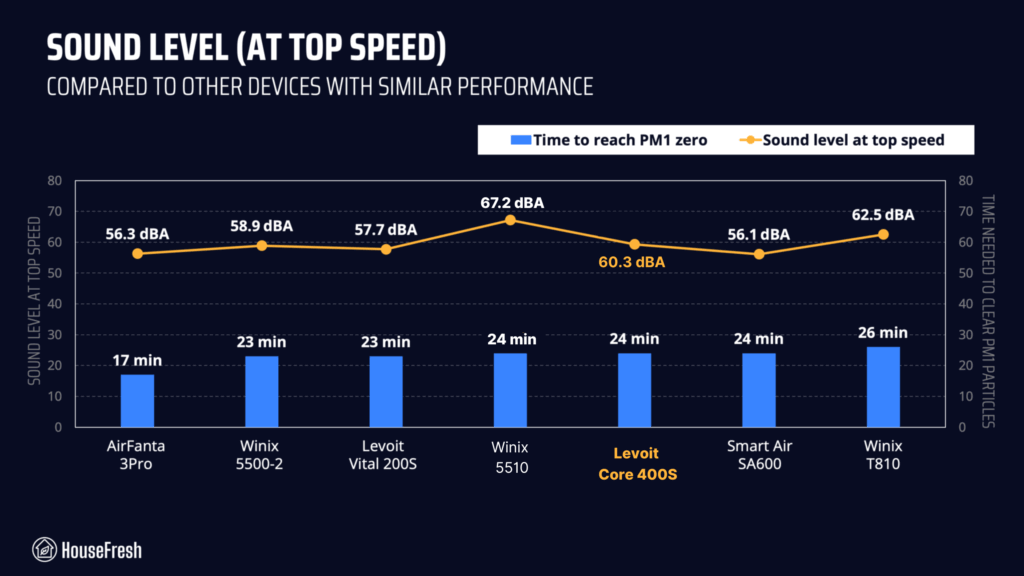
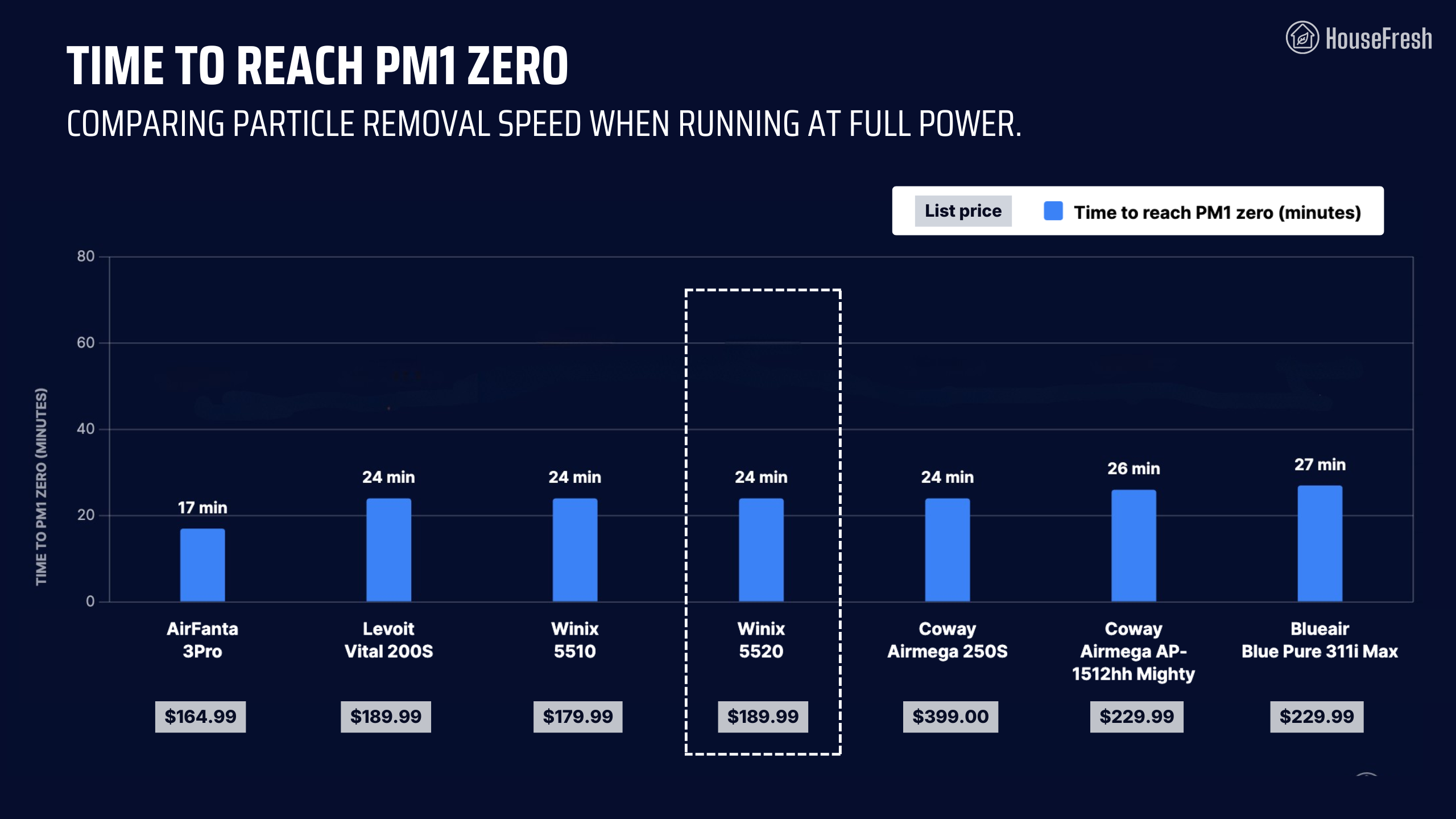
The Vital 200S took 24 minutes to clear our 728-cubic-feet test room of PM1 pollutants from incense smoke, which makes it faster than more expensive air purifiers such as the $230 Coway Mighty2, the $230 Blueair 311i Max, and the $900 Dyson Big+Quiet BP06.
And it did this while generating just 57 dBA of noise. This makes it powerful enough to clean the air five times per hour in rooms up to 373 sq. ft.
I appreciate that the pre-filter is removable and washable, too. Dirty pre-filters can clog the main filter and reduce performance, so having something that you can remove makes the job much easier compared to cylindrical all-in-one filters.
You also get a bonded filter: one side removes particles and the other adsorbs odors and gases. There are different options, with more carbon for bad smells.
CONS
It comes with an infrared dust sensor instead of laser dust sensor, so you’re going to have to remember to clean the sensor regularly.
The particle filter is not HEPA-grade, even though it was originally advertised as such. This doesn’t affect performance but it’s worth mentioning.
The fact that the filters are bonded together means you need to replace the whole filter when the carbon is full even if the HEPA is still working well.
PROS
Even when running at sub-45 dB (speed 2), it still managed to clean our test room in 46 minutes — which is 10 minutes faster than the Levoit Core 200S running at full speed.
It is highly energy efficient, pulling just 44.55 watts at full power so it will add just $73.49 to your electricity bill if you were to leave it running 24/7 for a year.
You will need to replace the filters every 12 months, which is double the lifespan you will get with filters in the Levoit Core range.
It has an in-built air quality sensor and you can see the quality of your air in the LED ring on top of the control panel.
It comes with auto-mode (which adjusts fan speeds automatically based on air quality readings) so you can set it and forget it.
You can connect it to the Vesync app to control it directly from your phone.
For just under $300 you get a powerful air purifier
💡exclusive code for HouseFresh for 10% off a single purchase on Levoit.com: HOUSE10
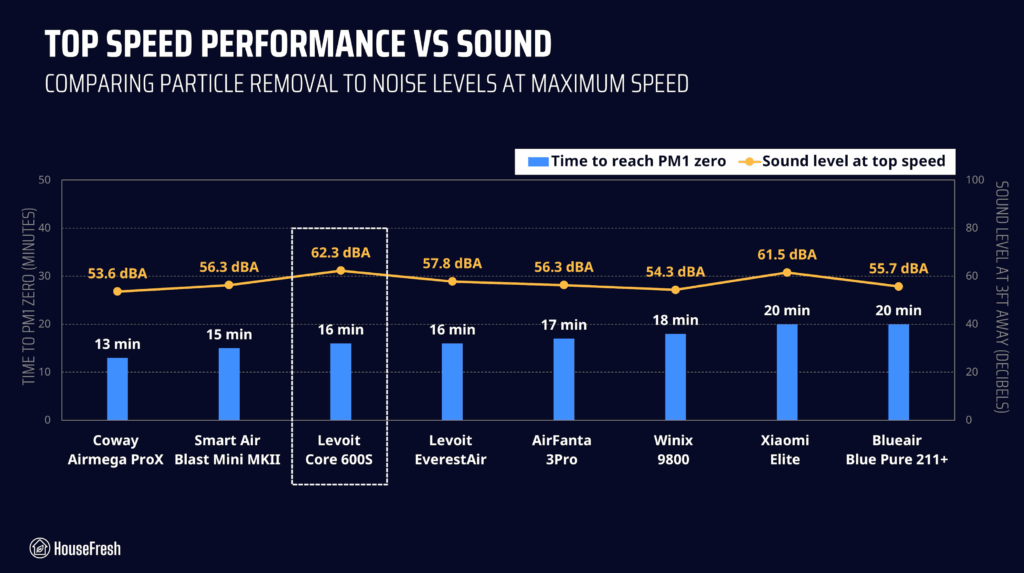
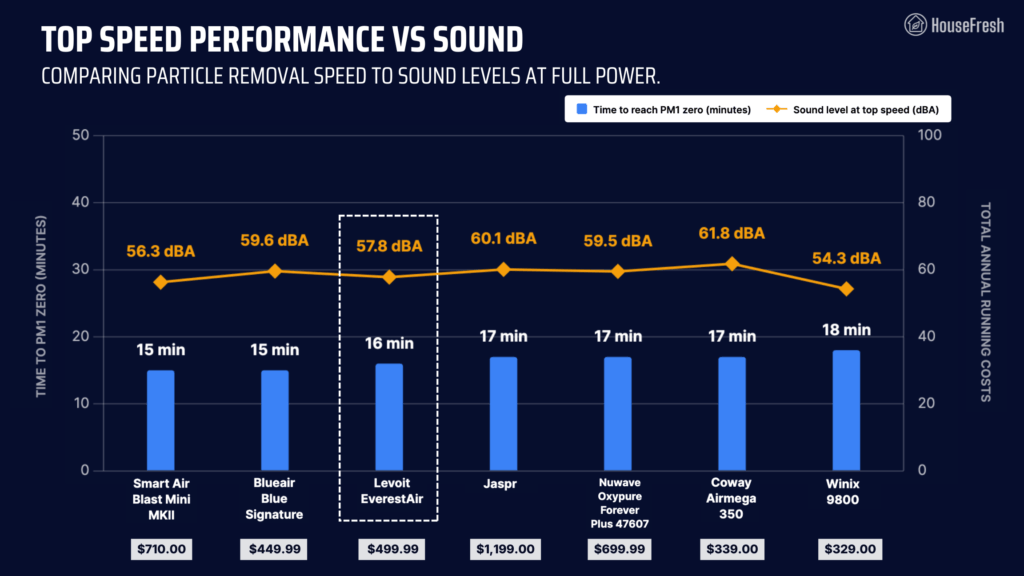
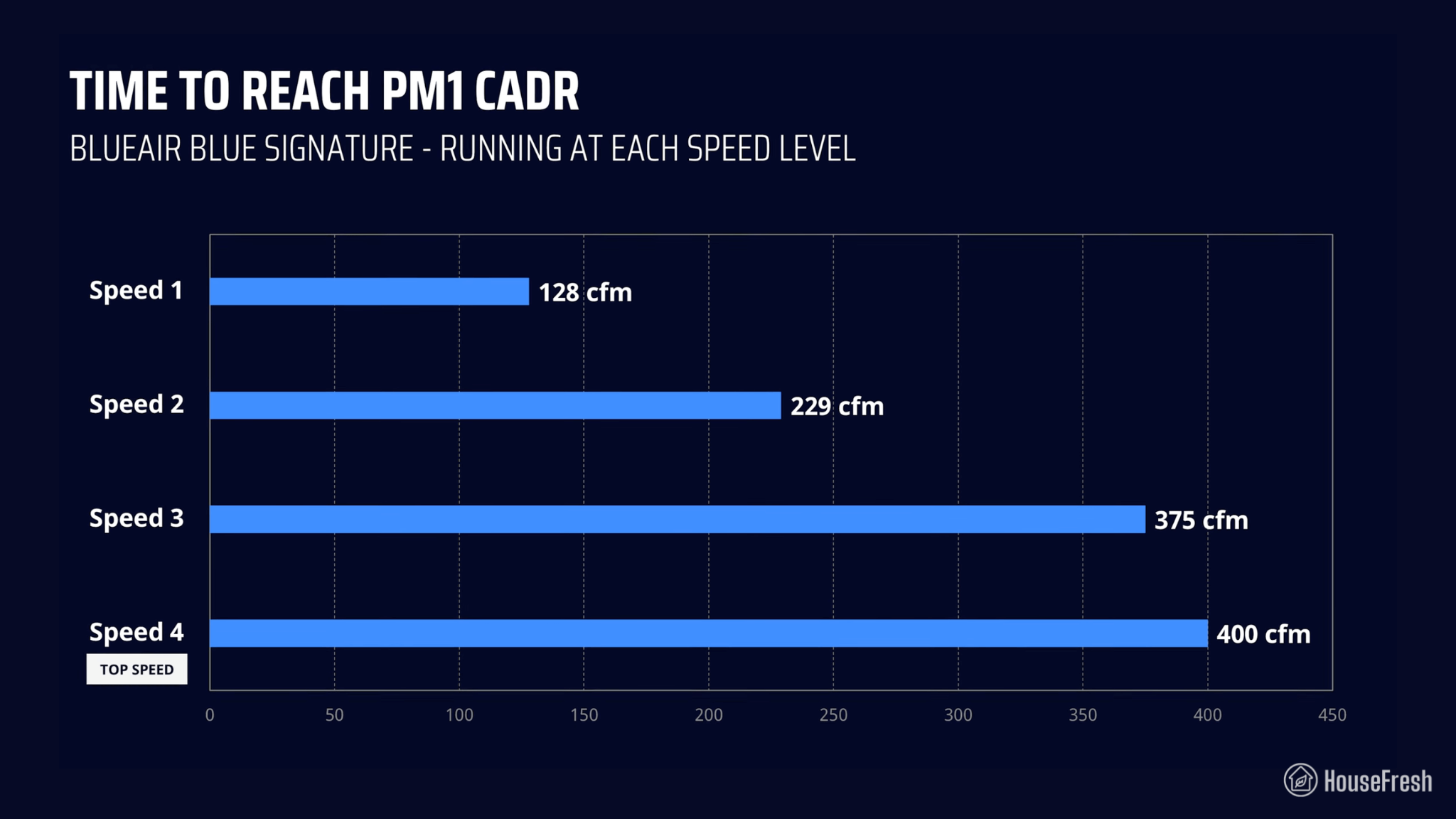
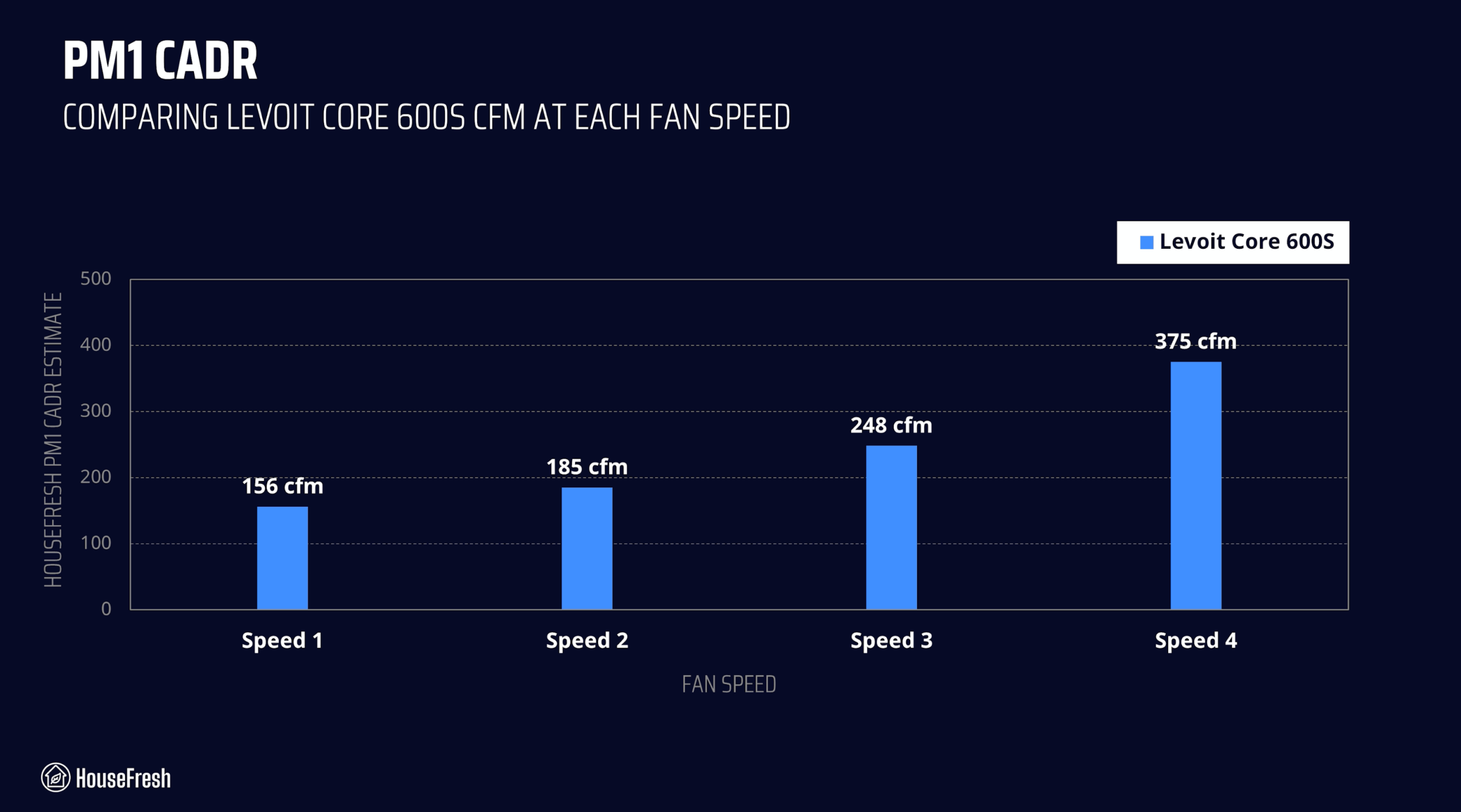
With a PM1 CADR of 375 CFM, the Levoit Core 600S is one of the most powerful air purifiers in the Levoit range in a shared spot with the more expensive, Levoit EverestAir. Based on this result, we calculated that it can clean large rooms of up to 562 sq. ft. five times per hour.
This PM1 CADR is calculated based on our particle removal performance test, and in this test, the 600S cleared our test room of incense smoke in a speedy 16 minutes — this is nearly as fast as the $667 Blast Mini from Smart Air!
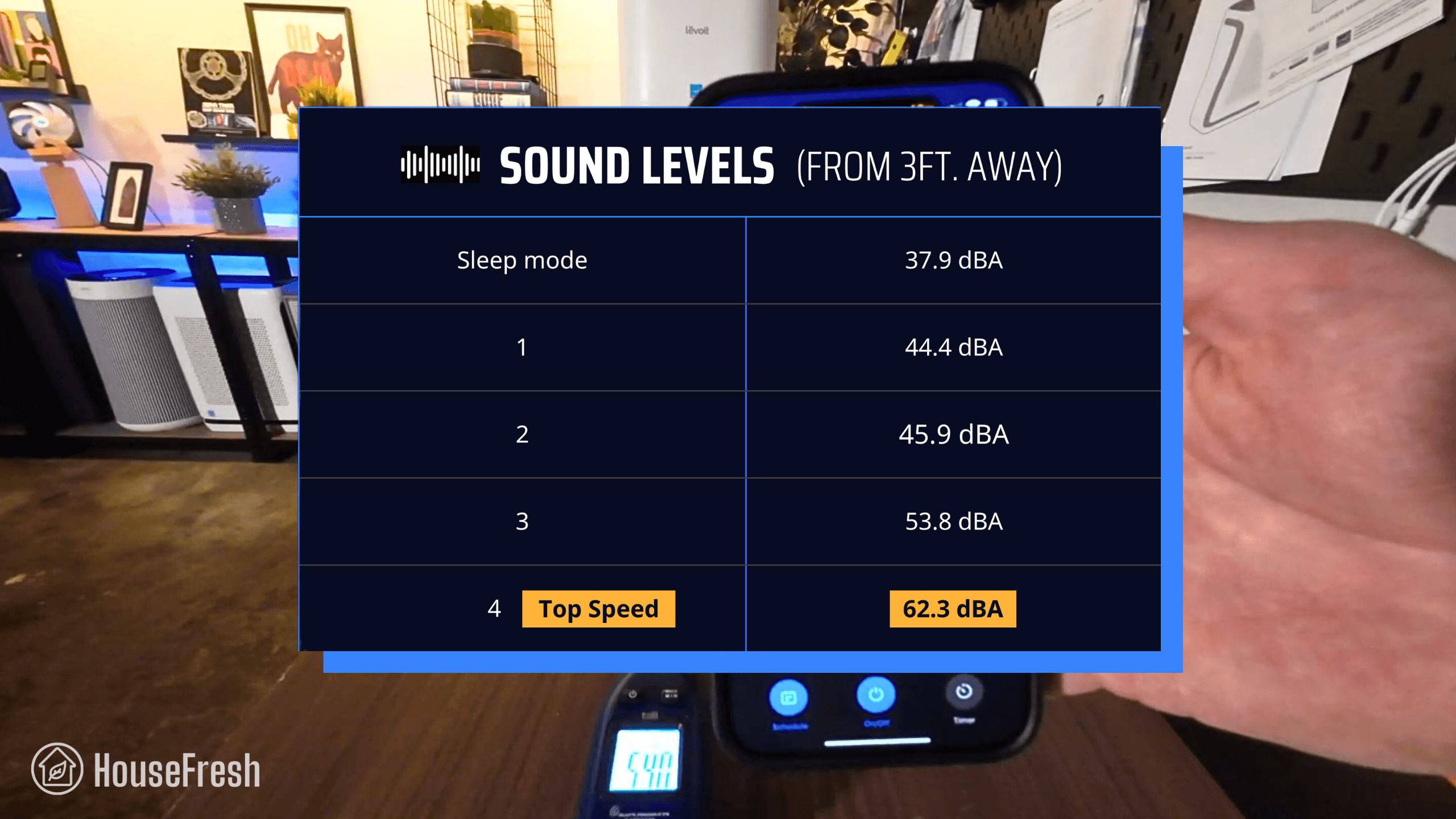
Now, this result was achieved at top speed, where the 600S generates 62.3 decibels of noise. It’s good to have this level of power for when you need it, but you won’t want to have such a loud unit running like this 24/7.
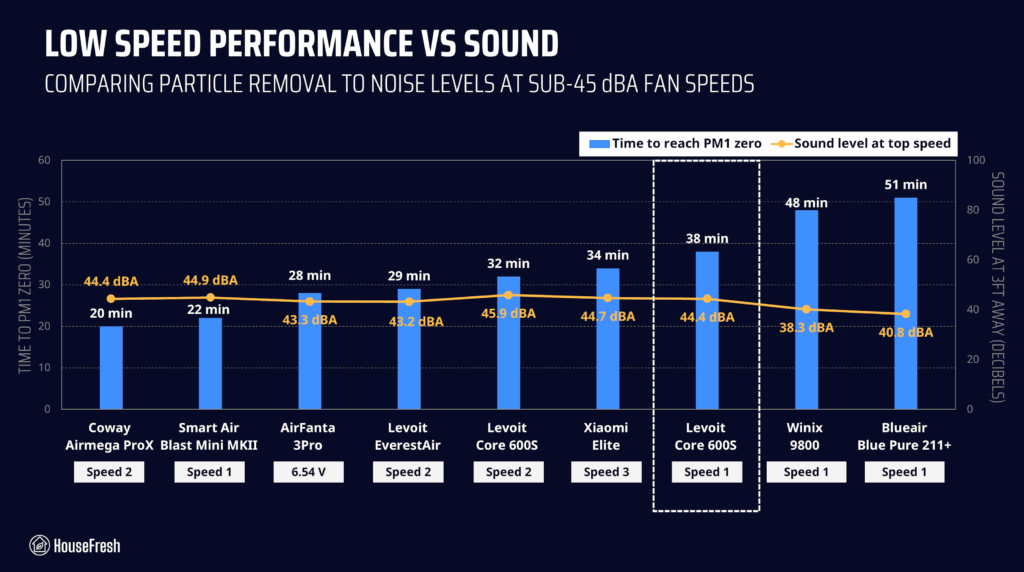
Running at speed 1, it will generate less than 45 decibels and will still provide good performance. Although, I would recommend setting it to speed 2, which is a little louder but a lot more powerful.
The 600S has a large cylindrical filter with three layers: an outer pre-filter mesh, a particle filter, and pelleted carbon on the inside. You can customize it to your needs, choosing between Pet Allergy, Smoke Remover, or Toxin Absorber.
It comes with Levoit’s Airsight Plus, which is a laser dust sensor on the side of the device that is quicker to react to PM2.5 particles than optical sensors, and doesn’t need to be cleaned every few weeks.
This sensor informs an LED ring on top of the 600S that changes color based on the quality of your air, from blue (very good) to red (bad). You also get real-time PM2.5 particle readings in micrograms per cubic meter.
CONS
When running at its top fan speed, the Core 600S was louder than most other high-performing units (61.4 dB).
The pre-filter can’t be removed to clean, so you need to take the entire cylindrical filter out of the device to vacuum the pre-filter.
The particle filter is not HEPA-grade, even though Levoit advertised it as such for many years until Dyson complained to the BBB.
PROS
You normally have to pay much more than $299.99 for this level of air cleaning power.
Even though it’s big, the design includes two deep handles (one at each side), which make it easy to move it from room to room.
It comes with a laser dust sensor and has an LED ring at the top of the device that shows the quality of the air in the room.
It has smart features (like auto-mode) and you can connect it to your smartphone through the VeSync app.
The best-performing Levoit air purifier you can buy for less than $130 and that is small enough to fit on top of a table.
The Eleva 300X retails at $129.99, but I have seen it going for as low as $109.99 during big deal days, making it the best option for those wanting to buy an air purifier from Levoit on a tight budget.
It’s the first model in Levoit’s new Eleva line and it really impressed me, You get a laser sensor, smart features like auto-mode and app connectivity through Levoit’s VeSync app (one of my favorite air purifier apps, if I may add).
Based on our particle removal test, we estimate a PM1 CADR of 165 cfm, making this Levoit able to clean the air in spaces up to 247 sq. ft. (or 23 m2) five times in one hour — and it can do this while generating just over 55 decibels of noise.
In terms of filtration, you get separate filters: a HEPA filter to tackle particles and a gas filter with activated carbon pellets to remove odors. There are different custom gas filters, with the Premium filter being the one that packs the most power (260g of carbon).
You get a touchscreen on top with the controls as well as real-time particle readings from the sensor inside. There is also an LED ring that changes color based on the air quality.
CONS
You must register the filters to pair them to the device. If you don’t do this, you lose the filter lifespan tracking function.
The use of AI in the data reporting seems to add complexity and lag for no obvious benefit.
PROS
It offers excellent value for your money! It has the lowest cost per CADR across all other small units I’ve tested.
Its performance at quiet fan speeds rivals that of the $349 Dyson HushJet Compact but for a much cheaper price.
You get two separate filters for particles and gases – no more all-in-one cylindrical filters you’ll be throwing away sooner than you need to.
It comes with a high quality laser sensor that provides data on PM1, PM2.5 and PM10 particle levels.
The new app enables a Dynamic Manual mode I’m in love with: you can manually set your Eleva to run at speed 2, for example, while also allowing it to momentarily go up to Turbo whenever the sensor notices a rise in pollutants.
If you want the best Levoit air purifier money can buy, look no further than the $499.99 EverestAir.
Use the discount code HOUSE10 for 10% off when buying directly from Levoit.
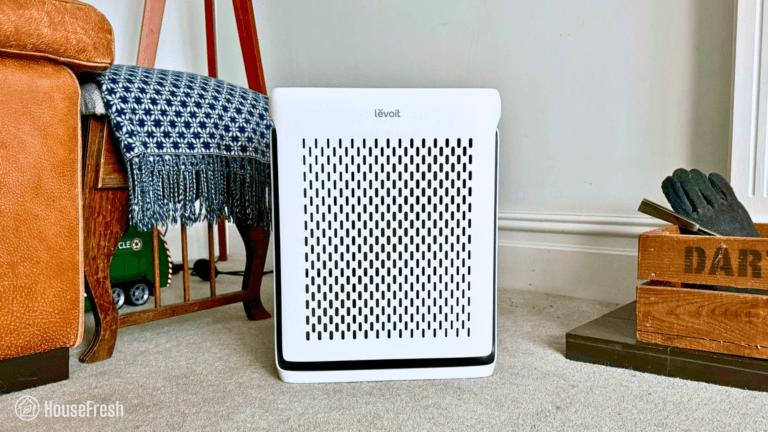
As soon as we unboxed the Levoit EverestAir, I knew it would be special. Not only does it look like something Apple might design, but it also has all the features you need from an air purifier AND its air cleaning performance blew me away. However, it is not cheap, with a list price of $499.99.
It completed our particle removal test in a speedy 16 minutes at top speed, which is impressive considering its price — especially when compared with units with similar performance that cost up to three times as much.
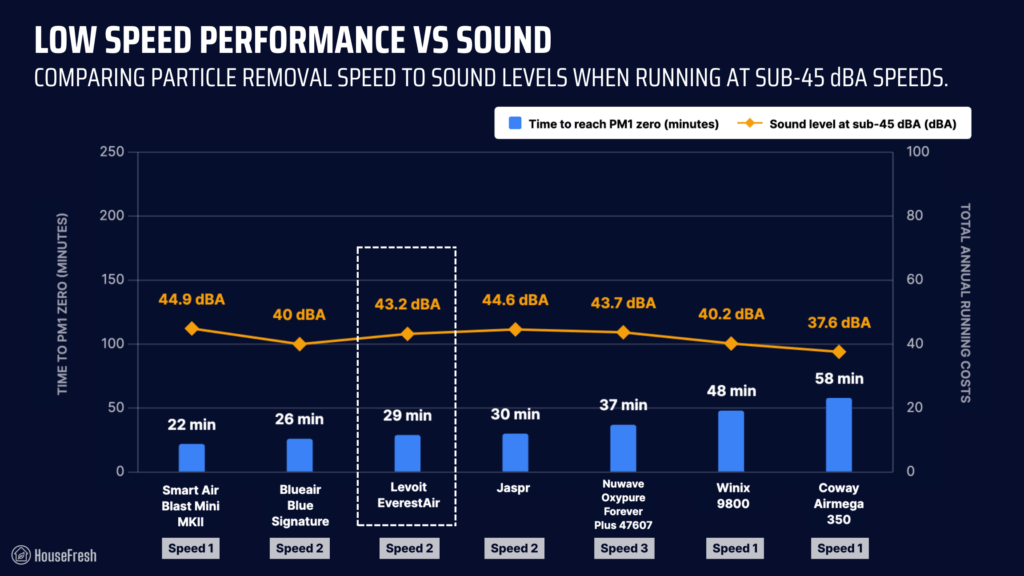
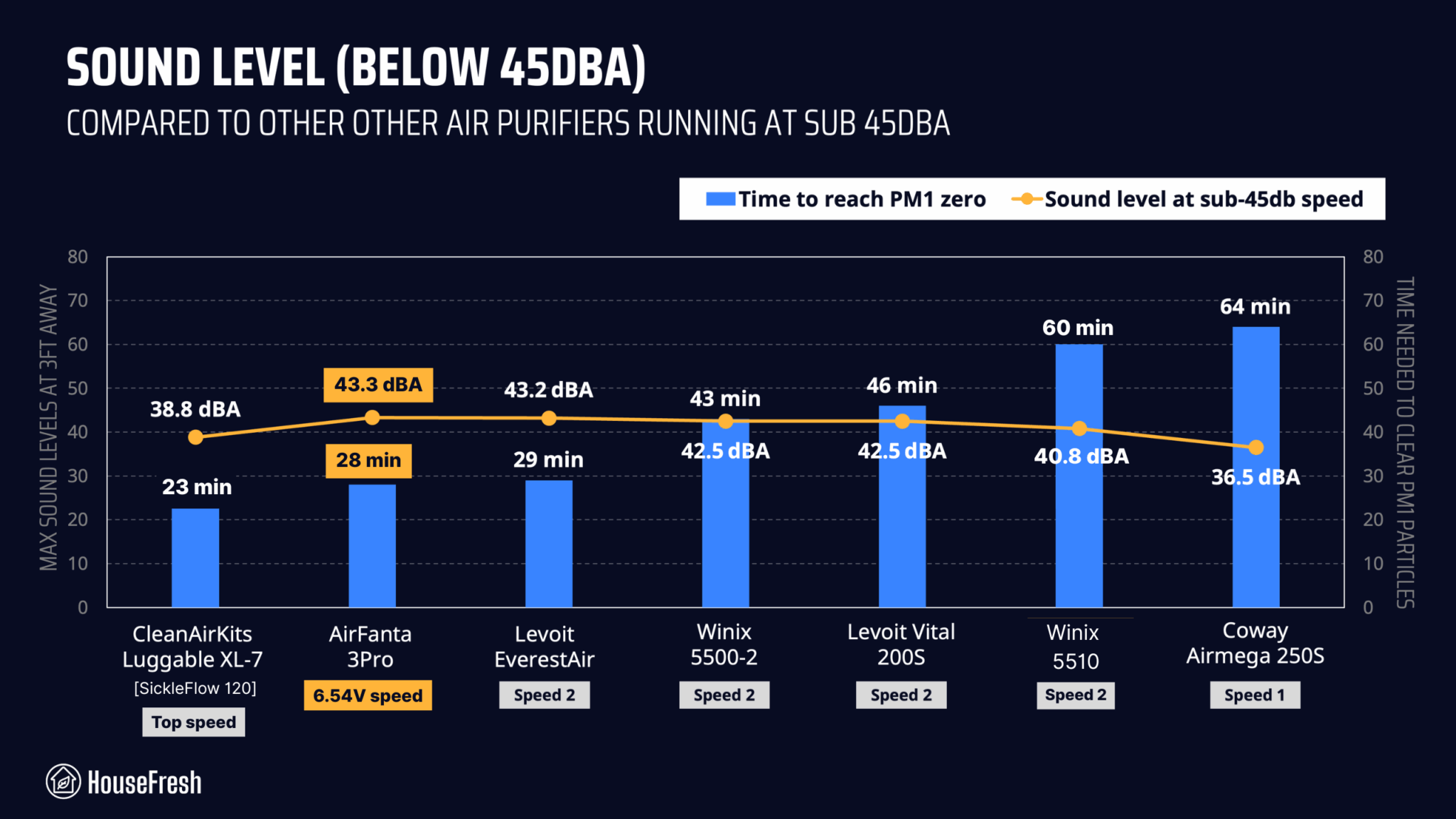
And when set to speed 2, sound levels stay under 45 decibels and it still managed to complete our particle removal test in 29 minutes. This makes it an excellent option for those looking for an air purifier for a room where quiet is important, like a bedroom.
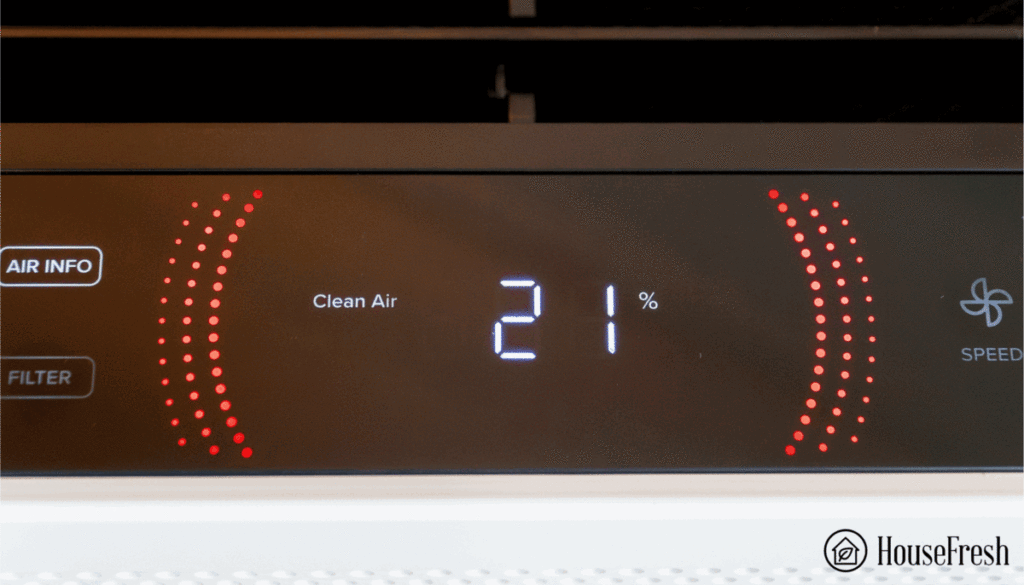
It comes with a bonded filter with particle and activated carbon filtration, plus a removable pre-filter. It also has a laser sensor and LED air quality indicator at the top, with the option to see particle readings or percentage of clean air.
A cool feature is the ability to adjust angle of the vents at the top, so you can choose the position that works best for your space depending on where you place your EverestAir. This is something that I haven’t seen in other models.
CONS
Not a fan of the bonded particle and activated carbon filter approach, as you will need to replace the whole thing even if the only filter that needs changing is the carbon.
It is big and comes on wheels to move it from room to room, but the wheels only move sideways… It would be better to have some good old caster wheels.
As with other devices on this list, I think Levoit shouldn’t have advertised the particle filter in the EverestAir as TrueHEPA if this wasn’t the case.
PROS
It’s very quiet considering its air cleaning power, with similar sound levels to the less powerful Vital 200S.
You get an LED air quality indicator light, real-time particle readings on screen and smart features such as auto-mode and smartphone connectivity via the Vesync app.
It comes with a laser dust sensor that doesn’t need to be cleaned as you would with an infrared sensor like the one in the Vital 200S.
I know this is subjective, but I think the EverestAir looks like a million bucks. The adjustable vents on top are something I had never seen in an air purifier.
This is a smaller version of the Vital 200S and it comes with all the same features, including an onboard sensor, smart features like auto-mode and app connectivity through Levoit’s VeSync app.
Based on our particle removal test, we estimate a PM1 CADR of 148 cfm, making this Levoit able to clean the air in spaces up to 222 sq. ft. five times in one hour while generating just 53 decibels of noise. It’s a good unit but it was outperformed by the $130 Levoit Eleva 300X.
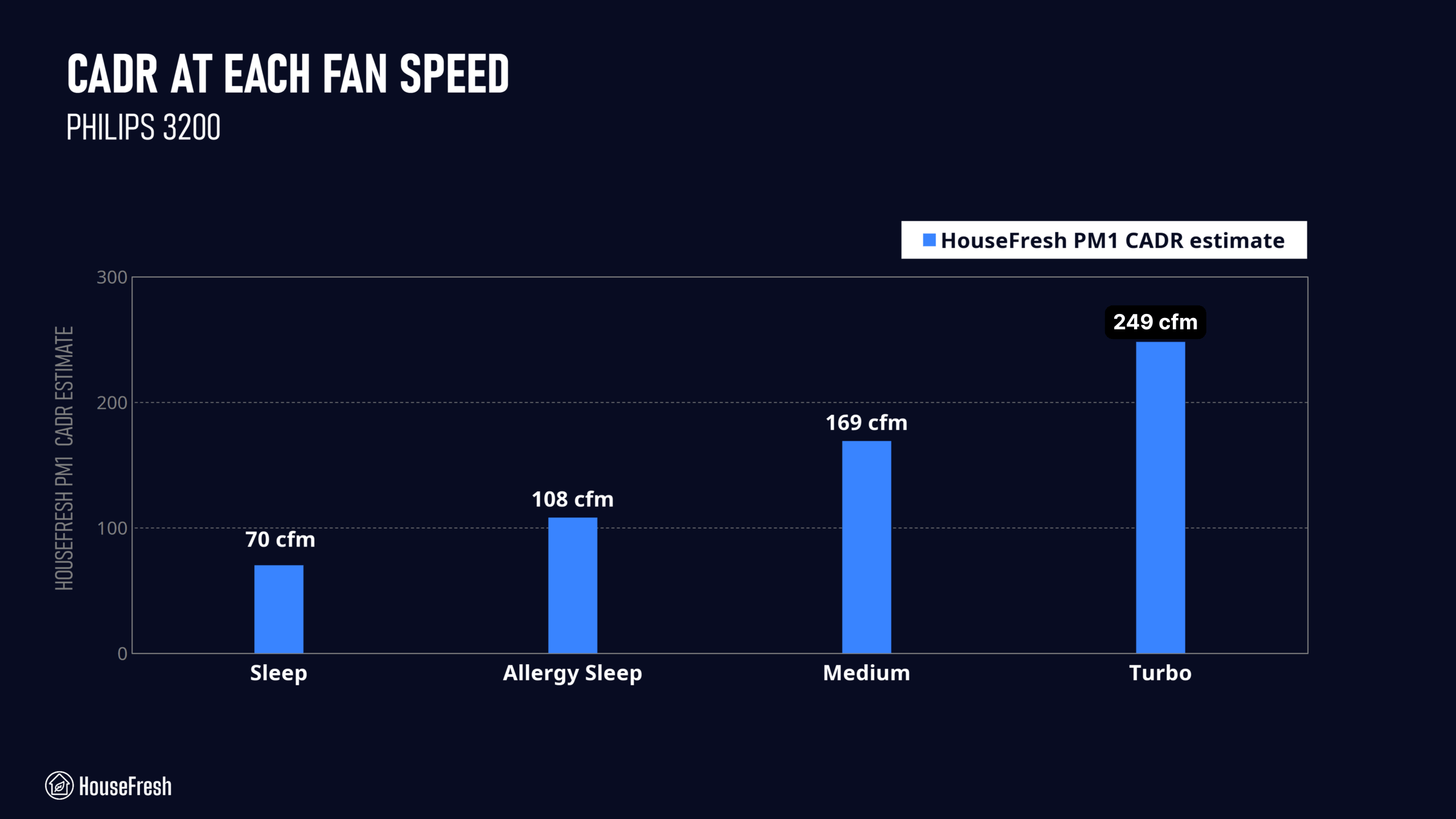
Based on our tests, I estimate a PM1 CADR of 249 cfm, which is powerful enough to clean the air five times per hour in medium-sized rooms up to 373 sq. ft. (or 34.6 m²).
The 400S comes with an on-board air quality sensor, an LED ring that shows air quality in real time, auto mode, sleep mode and app connectivity for $219.99. But it didn’t make our short list because the Levoit Vital 200S has similar performance and features for a cheaper price.
The Core 300 doesn’t come with any bells and whistles, but it’s a solid air cleaner you can buy for $99.99. And the Core 300S is its smart sibling with an on-board sensor and app support.
These two are some of my favorite small, tabletop air purifiers but with the release of the Eleva 300X, they no longer offer the value they once did.
Levoit models we don’t recommend
Not all Levoit models are worth it. These are the ones you should avoid.
This little device is a big seller thanks to its low price. Unfortunately, the Mini is also too underpowered to clean the air in even the smallest of rooms. I recommend you don’t go smaller than the Eleva 300X – – you’ll get a lot more air cleaning power for your money.
This is now an outdated model from Levoit. If you like the boxy look and are looking for an air purifier for a medium sized room (up to 249 sq. ft.), check out the Vital 200S instead.
Selling for $89.99, the Core 200S might seem like a great catch but our performance tests show it is not powerful enough. You’d be better off spending an extra $30 an get higher CADR from the Eleva 300X.
One of the cheapest Levoit models on the market, but as with other mini air purifiers, it doesn’t have enough power to keep even the smallest room clean. I recommend you don’t go smaller than the Eleva 300X.
This is another popular air purifier from Levoit that I cannot recommend due to its poor air cleaning performance. I’ll say it one last time: don’t go smaller than the Eleva 300X.
What to look for when buying an air purifier
My goal at HouseFresh is to recommend air quality products you won’t regret buying, and it all starts with a few basics that we need to get right.
1. How big is your room?
When it comes to air purifiers, size matters; buying a unit that is too small for your room won’t be very effective. On the other hand, buying one that’s too big will be overkill and a waste of energy and money.
That’s why we’ve chosen air purifiers to suit a variety of room sizes so that you can find the right unit for your space. Check out our SPECS & FEATURES table to see what size room each unit is most effective in.
You can also use our CFM calculator to see what minimum CADR you would need to achieve a minimum of 4 to 5 air changes per hour (which is the rate recommended by the EPA):
2. What is your budget?
It’s not just the initial cost of the air purifier you need to consider; it’s also the unit’s running costs.
All of these air purifiers need electricity to run and it’s recommended that you run your unit 24/7; this costs money in energy bills. Some air purifiers are more efficient than others, so check their ‘Estimated energy consumption” before making your decision.
Also the HEPA filters that Levoit air purifiers use need to be replaced periodically so that they can remain effective at all times. Replacement filters come at a cost, so check how much they are and how often they need replacing to factor into your budget.
3. What features do you need/want?
In our selection, there are different features that each unit includes (and some are the same). Think about which of these you need/want on your air purifier.
Some people prefer to get an air purifier with auto mode so that they can switch it on and forget about it. Others, want to have air purifiers with app connectivity to connect to their smart home routines.
4. How much noise do they make?
All air purifiers make noise from the motor running and fan spinning, getting louder at high fan speeds. But they don’t all emit the same level of noise. If you’re like me and you work with your air purifier running, you’ll want a unit that’s as quiet as possible.
That’s why we give you noise level data in our SPECS table and as noise is subjective, we record the sound of each unit on all fan speeds so that you can get an idea of the noise it makes.
I heard belatedly that Levoit has retracted their claim that their most popular air purifiers are actually HEPA at all. Has anyone in #8020agang or #CleanAirCrew evaluated these to determine their filtration efficiency? Seems the whole Levoit CORE line…https://t.co/lD4qm2SDKi
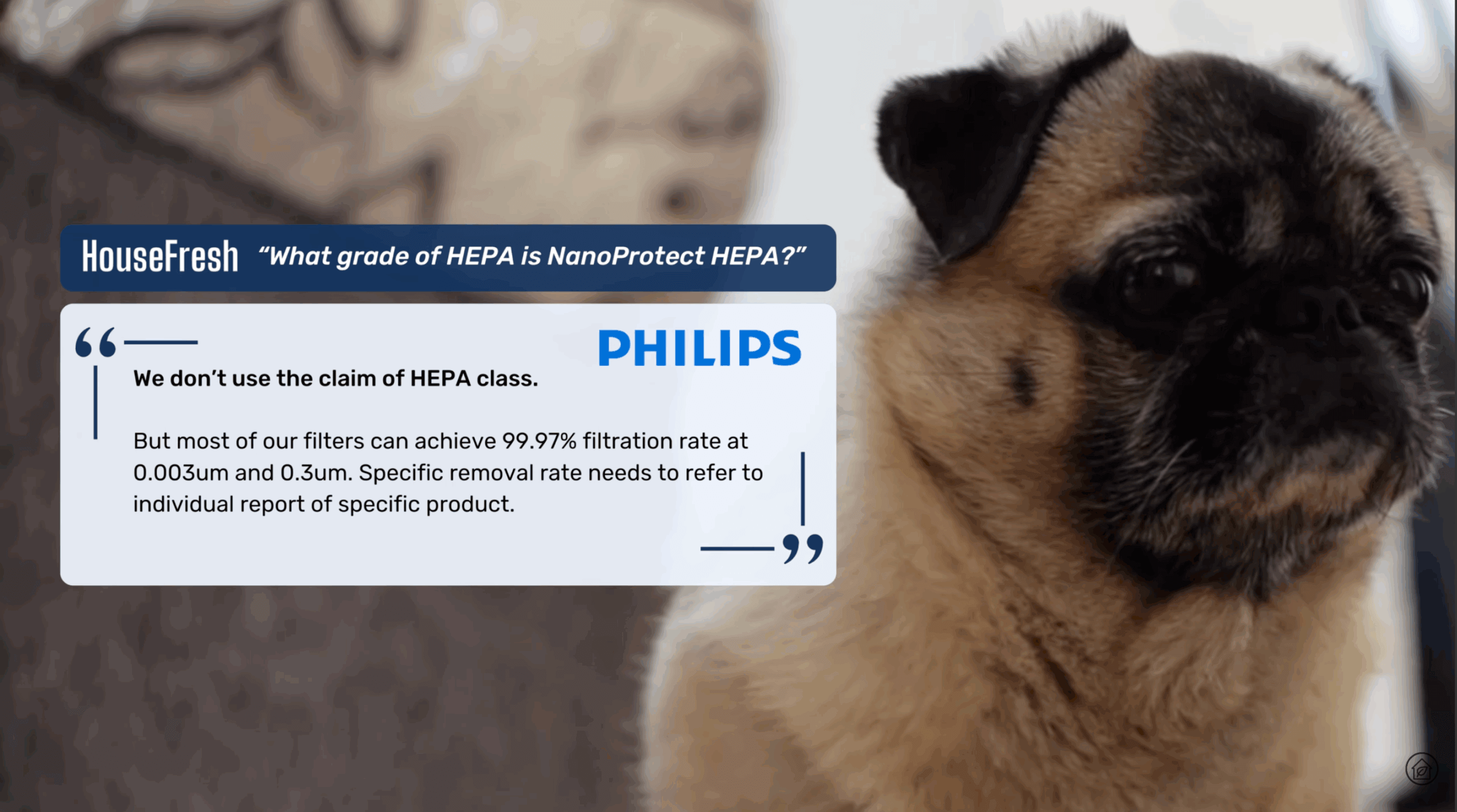
This left a bad taste in my mouth but it doesn’t affect the air cleaning performance of Levoit models. In fact, in a post on X (formerly Twitter), Smart Air stated that this change doesn’t affect the CADR score associated with Levoit units. The post also said, “The Corsi-Rosenthal boxes with MERV filters are proof of fast filtration with non-HEPA filters.”
I believe the CADR remains the same, the concern is that they are marketing this as a HEPA filter.
The Corsi-Rosenthal boxes with MERV filters are proof of fast filtration with non-HEPA filters.
Why not just state the grade that achieves the stated CADR and let people choose?
However, the new generation of Eleva units comes with particle filters that have been certified as HEPA grade.
Levoit is anAmerican-based company with its headquarters located in California. Here, they conduct all the research and development for their range of purifiers, designing them to the highest specification to meet US standards. Once the purifier has been designed, it is then manufactured in China.
Levoit air purifiers are all 100% ozone-free. By using high-grade mechanical filters (rather than Ionizer or UV technology), Levoit offers excellent purifier performance without the risk of emitting harmful ozone.
Levoit is a relatively new brand, having launched in 2017. Despite their tender years, they have rapidly gained popularity thanks to their excellent product performance and very reasonable prices.
Levoit products often rank highly amongst independent product reviews and each unit we’ve tested has impressed us. From gauging customer feedback online, Levoit are often praised for their helpful customer support, with centers in the US, Europe, and Asia. What’s more, Levoit offers special discounts through VerifyPass to active military personnel, veterans, medical staff, first responders, and teachers, which is a big plus from our point of view.
Wrapping up
If you’re looking for an air purifier to use in your home, Levoit has a vast range for you to choose from.
Each unit made by Levoit is well-engineered to remove pollutants from the air in your home, is easy to use and doesn’t cost an arm and a leg to run.
They have units for a variety of room sizes and budgets. Some come with cool features like auto mode, AQI and app connectivity, and some are there for those who like things a little simpler.
But if you can’t find what you’re looking for, or if you have questions about any of the air purifiers on this list, please leave a comment below and I’ll get back to you right away.
And if you have a specific Levoit model in mind and would like to know how it compares to other models, you should definitely check out our comparison tool to see how different air purifiers did in our range of tests including air cleaning performance, sound generation, energy consumption and long term running costs.
You can also explore our leaderboard with the scores and test data for every air purifier I have tested so far – just use the search bar to look for specific brands and models, or filter the results based on your budget to find the best-performing models overall and also those that provide the best value for your money:
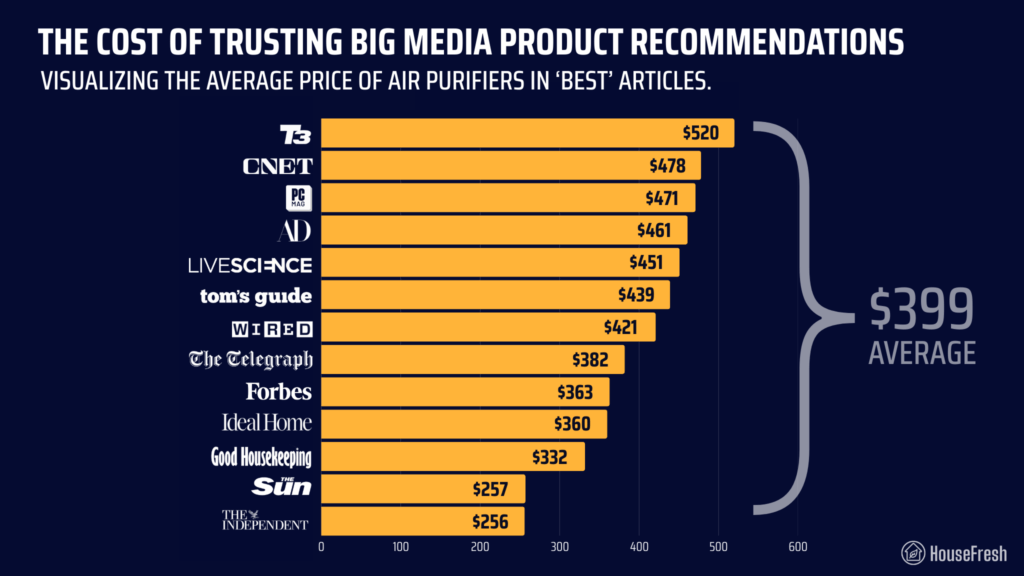
I spent HOURS browsing lists of ‘the best air purifiers’ from big media sites and found that the average cost of the models they recommend is $400!
But you most definitely don’t need to spend $400 to get a good air purifier. To prove it, I have compiled a list of the best air purifiers I’ve tested that will clean the air without breaking the bank.
Since 2020, I have reviewed 133 different air purifiers (and counting!), and I used the data we collected from our tests to select the best-performing options you can buy for less than 190 bucks:
All-in-one HEPA with carbon + removable pre-filter
HEPA particle filter + separate carbon filter
E11 particle filter + optional carbon filter
All-in-one particle with carbon + removable pre-filter
ROOM SIZE (5 ACH)
105 sq. ft.
693 sq. ft.
297 sq. ft.
247 sq. ft.
529 sq. ft.
373 sq. ft.
If you prefer to watch a video version of this article, I’ve got you covered:
Tip
When you’re on a budget, the best way to get the best cleaning power is to use multiple air purifiers instead of just one. If your unit has a CADR of 150 CFM, two units working together will have a CADR of 300 CFM.
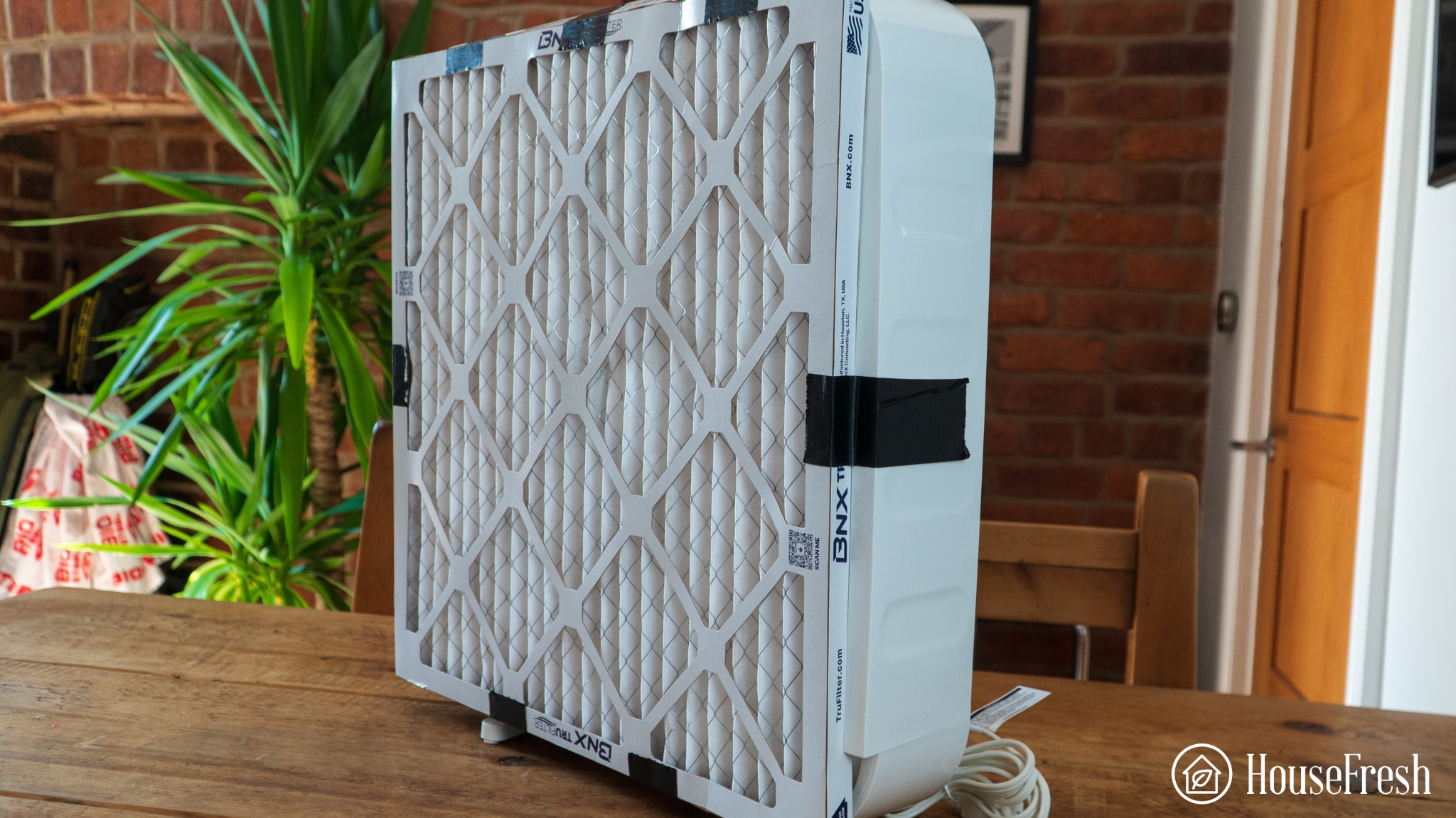
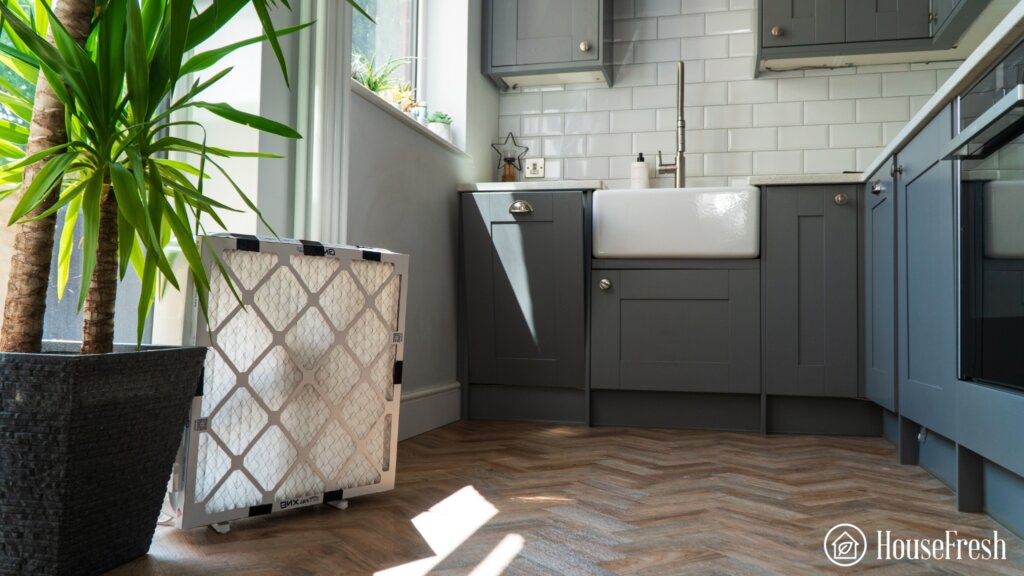
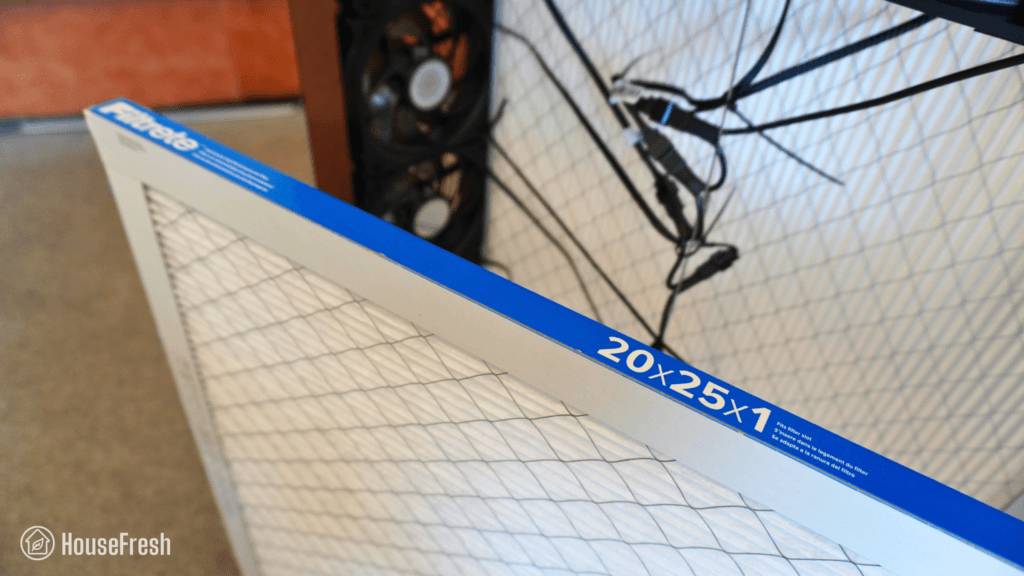
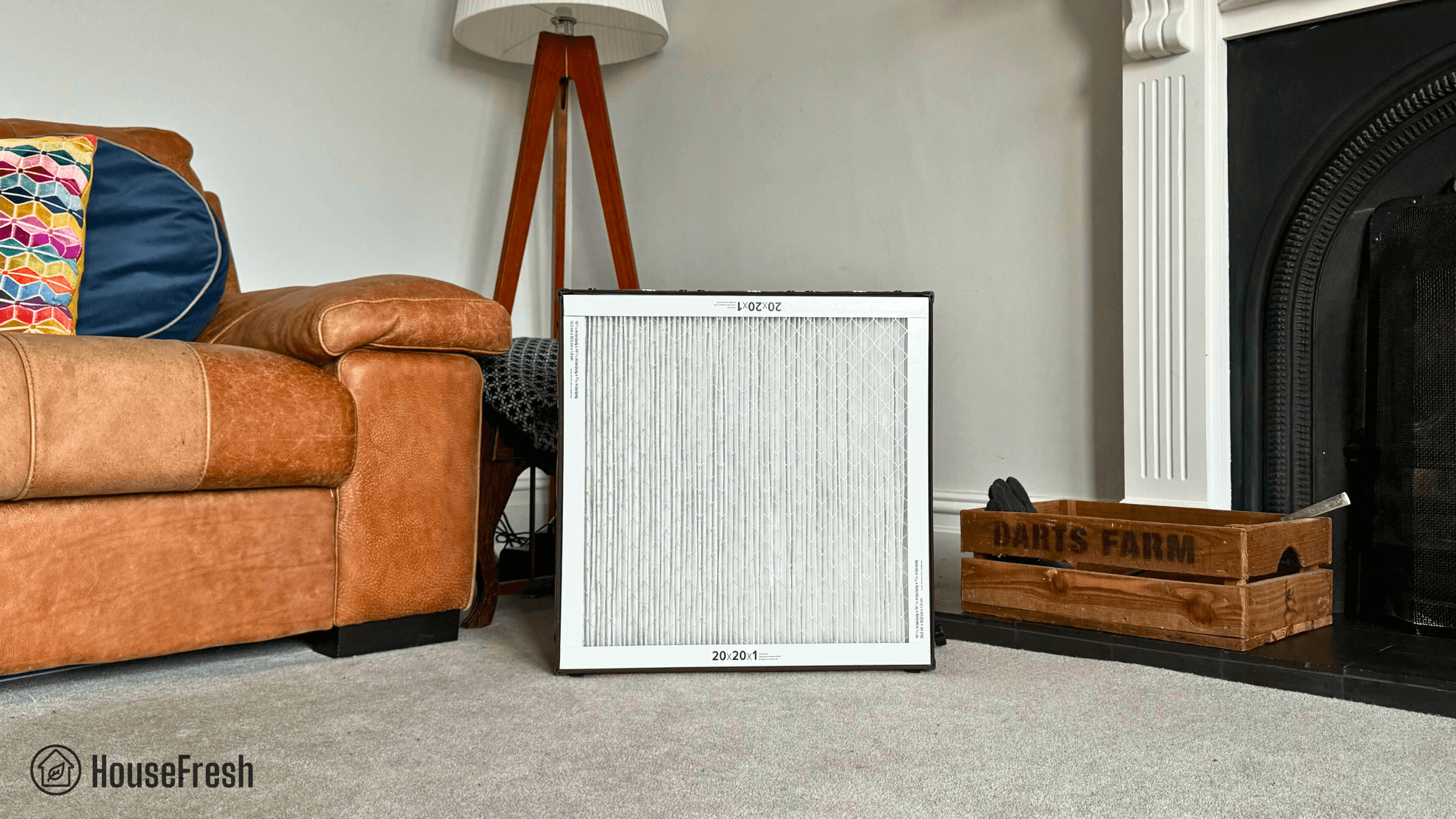
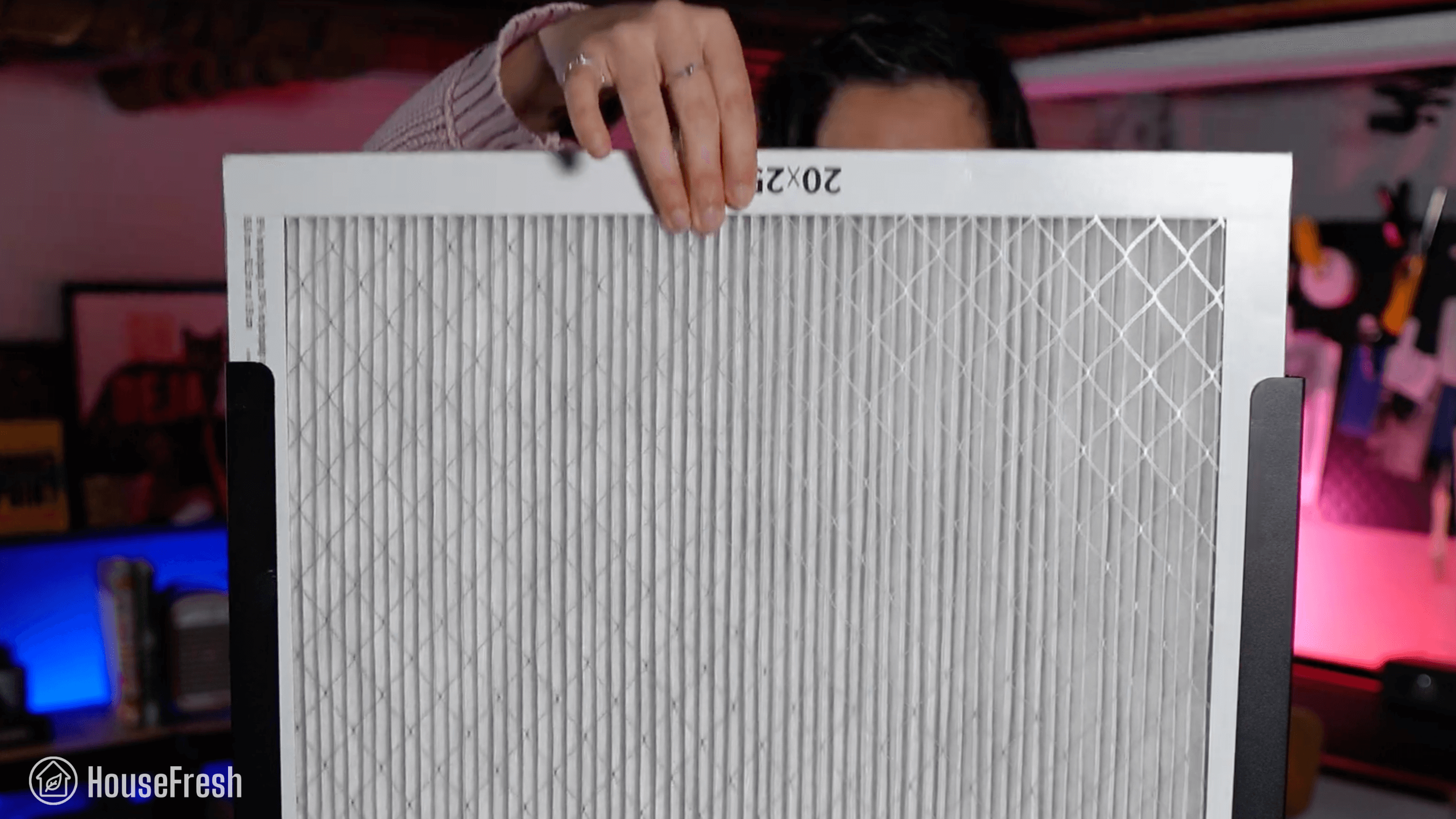
For around $50, you will be able to buy a good Lasko fan (on eBay) and a 20×20 MERV 13 filter to build your own air purifier.
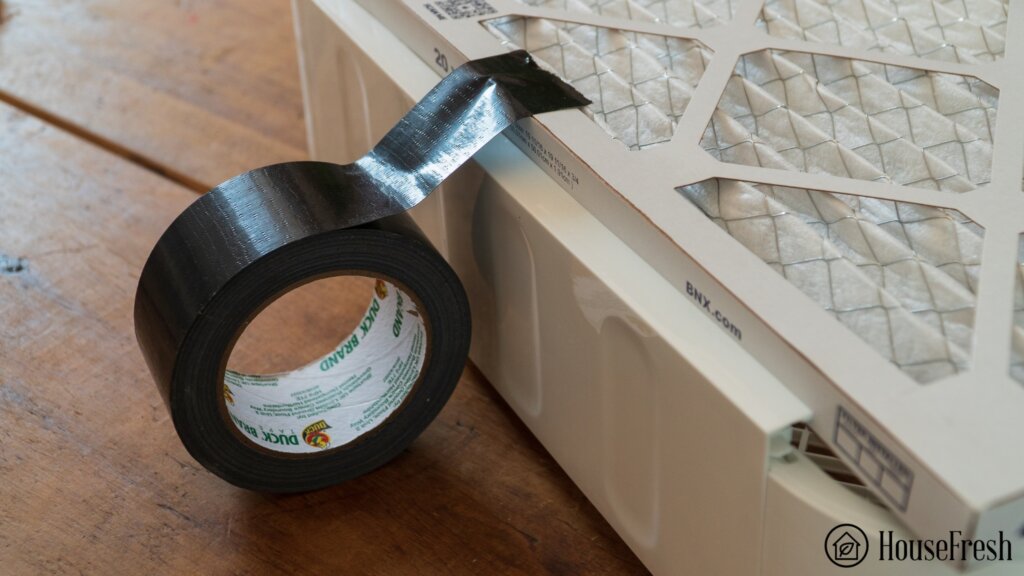
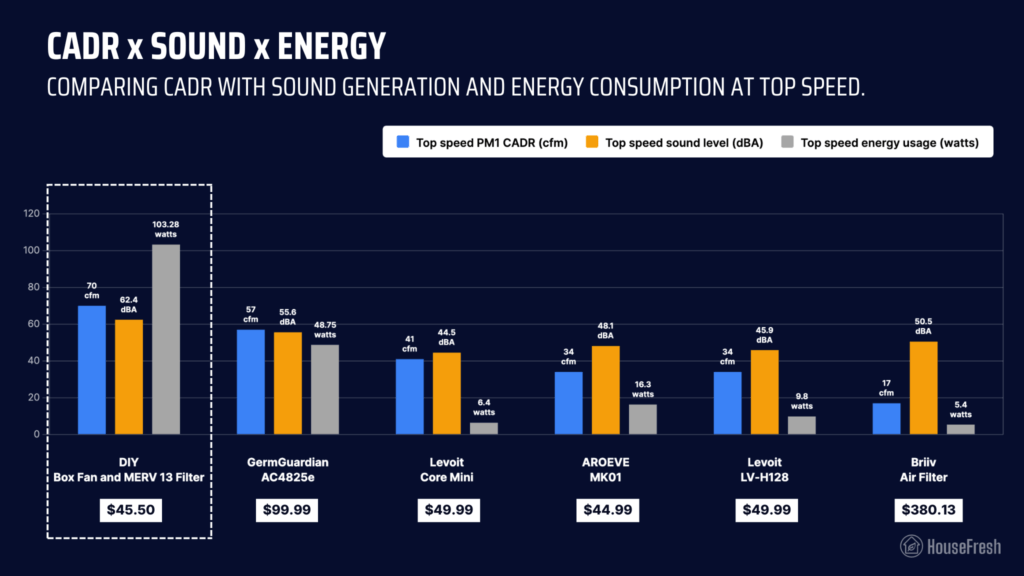
You can build it at home with a 20’’ box fan, a 20×20 HVAC filter, some duct tape, and a pair of scissors. It won’t be able to help with odors and VOCs, but in terms of particle filtration, it will give you a CADR of around 70 cfm, which will provide 3-5 air changes per hour in spaces between 105-175 sq. ft.
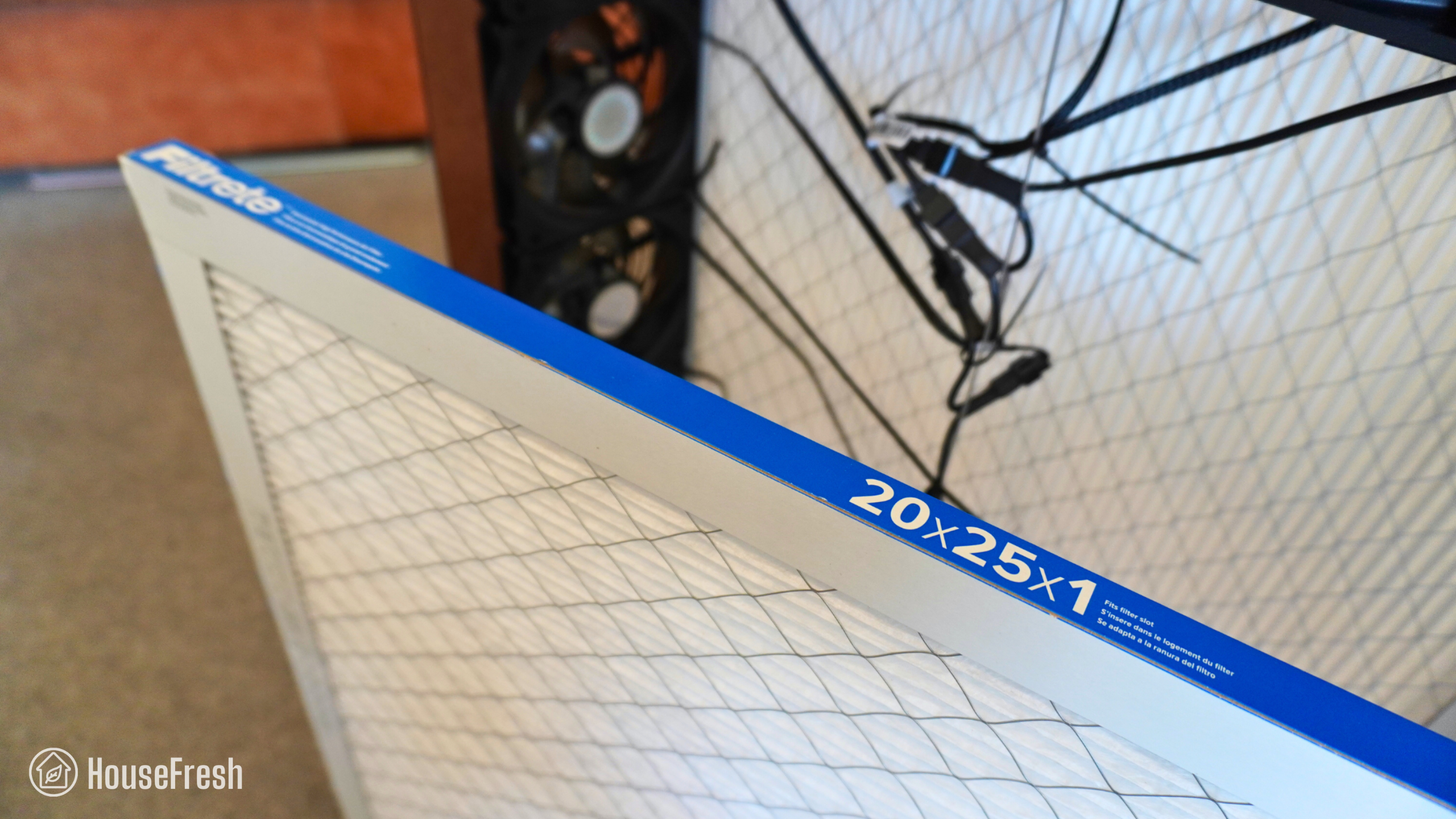
If you already have a box fan at home, it will cost you just $30.99, which is the price of two 3M Filtrete MPR1900 filter.
It offers a much higher CADR than the $45 AROEVE MK01 (34 cfm) and the $50 Levoit Core Mini (41 cfm). But it’s loud and power-hungry.
CONS
It’s just a fan and a filter, so you won’t get any fancy features.
It can be loud at top speed, depending on how loud the box fan is that you use.
Box fans tend to consume a lot of energy too.
You don’t get any carbon to help with unwanted smells or VOCs.
PROS
You can build it yourself with materials you probably already have at home.
It offers much better performance than all the other models I’ve tested under $50.
You can use any type of 20″ x 20″ MERV 13 filter, so you will be able to find good deals.
Clean air delivery rate (CADR):
70 cfm
Filter technology:
MERV 13
Recommended room size:
105 sq. ft. (5 air changes per hour)
Dimensions:
4.5L x 20W x 20H inches (11.4L x 51W x 51H cm)
Weight:
8 lbs (3.4 kg)
Noise level in decibels from 3 ft. away:
Speed 1: 51.5 dB Speed 2: 58.3 dB Speed 3: 62.4 dB
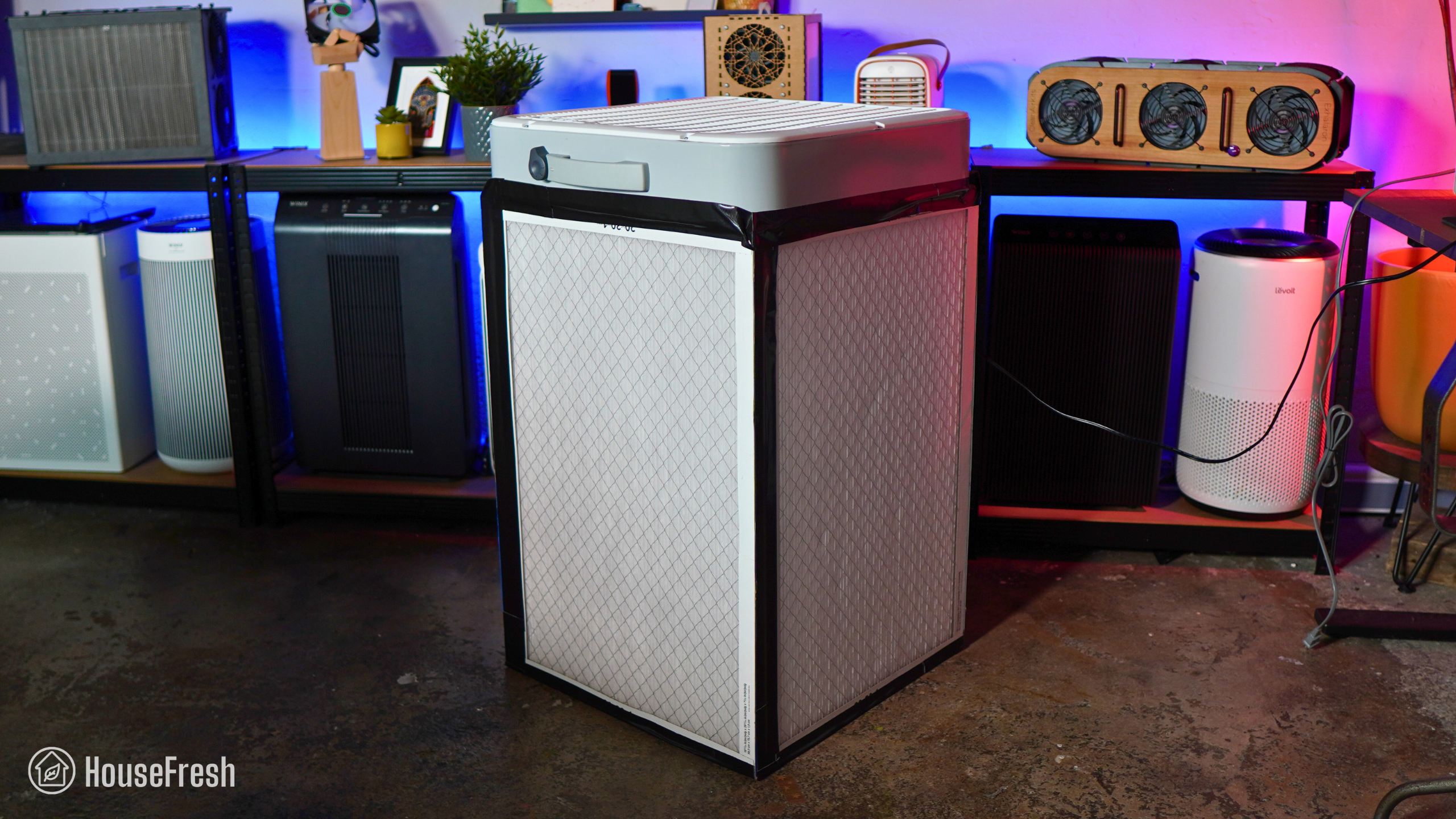
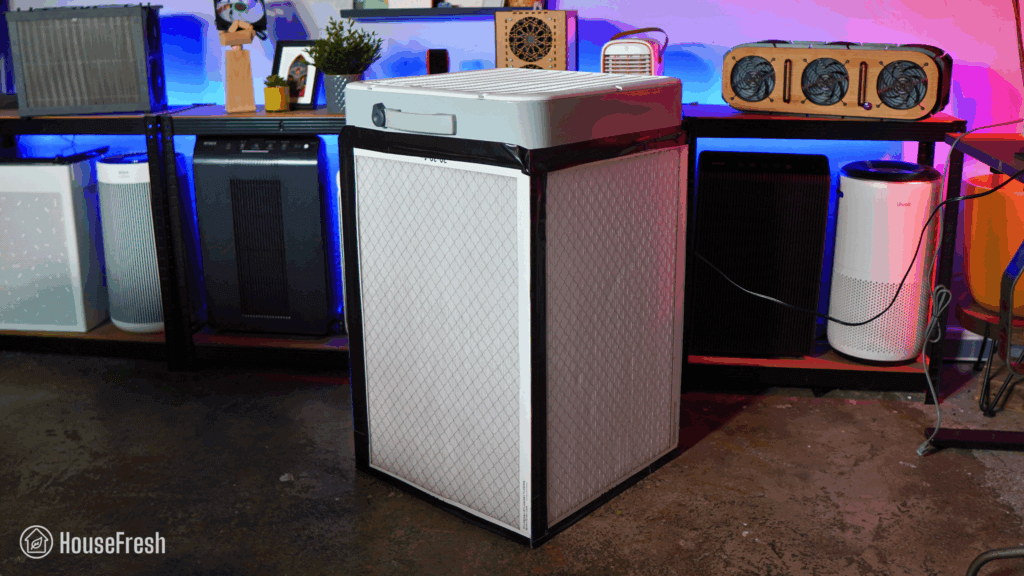
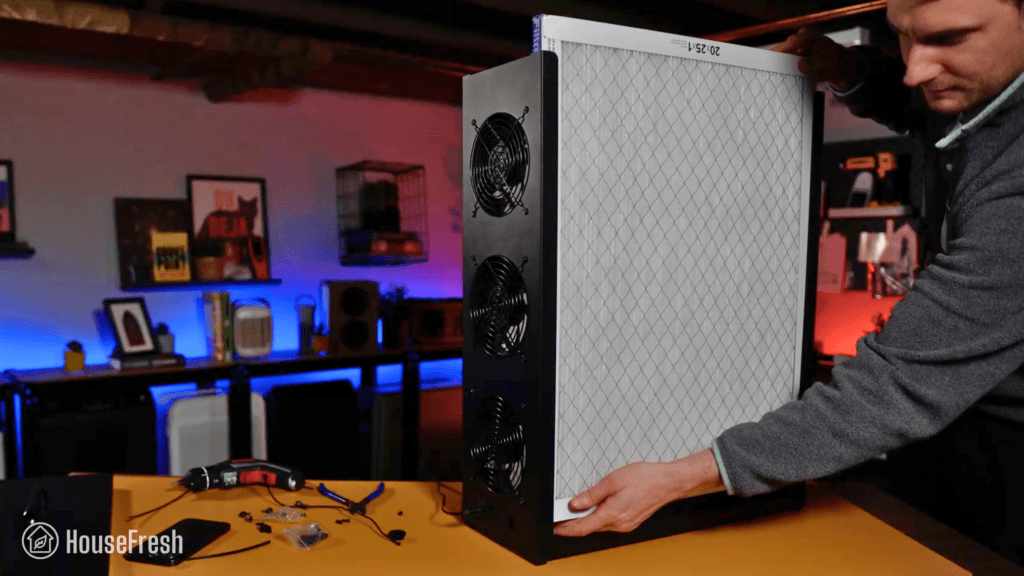
If you combine your 20″x20″ box fan with four 20″x30″ Filtrete MPR 1900 filters ($90), you’ll get a much bigger DIY air purifier called a Corsi-Rosenthal box (or CR box). It will be MUCH bigger than the fan + filter air cleaner from before, but with the size comes incredible power.
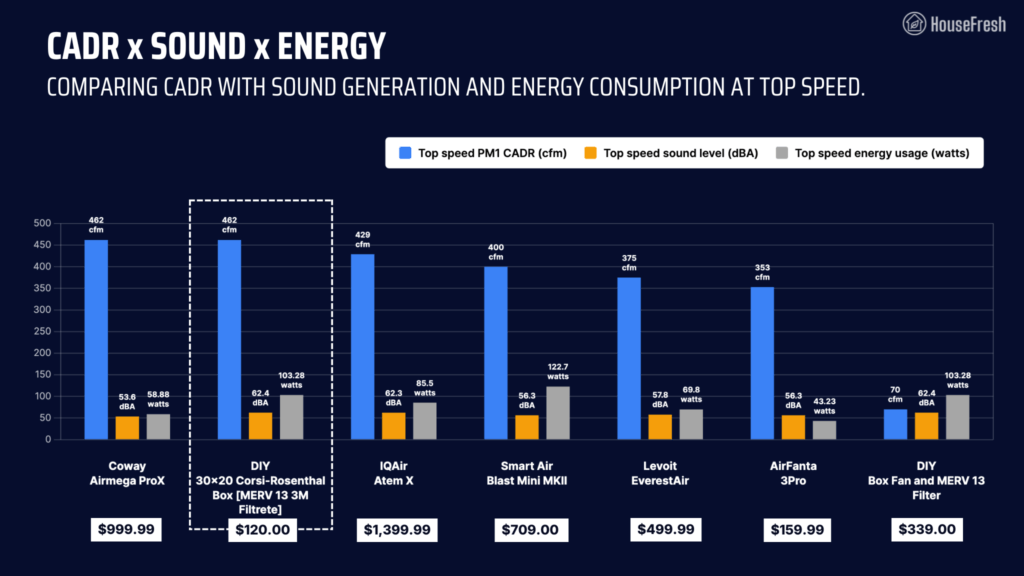
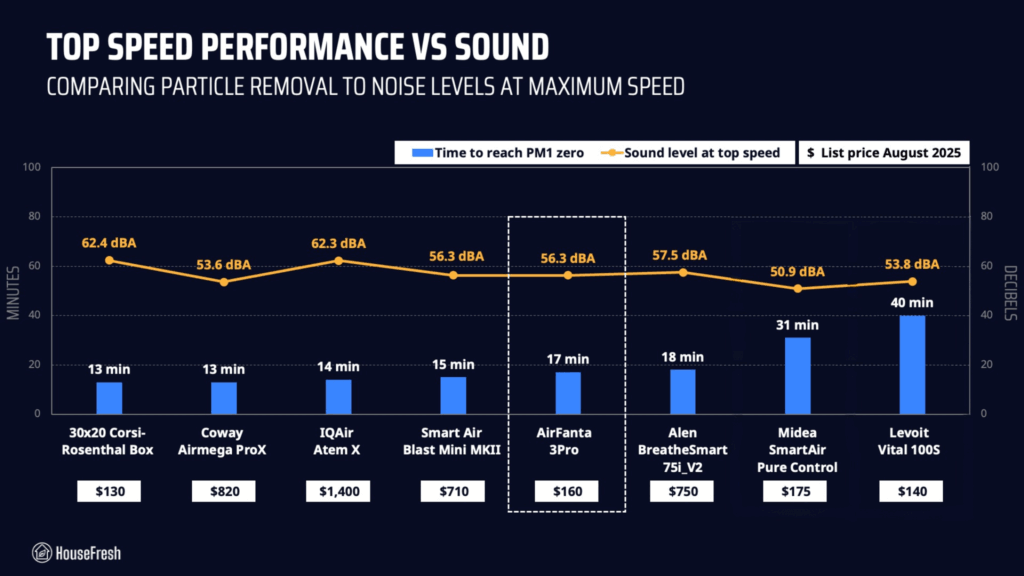
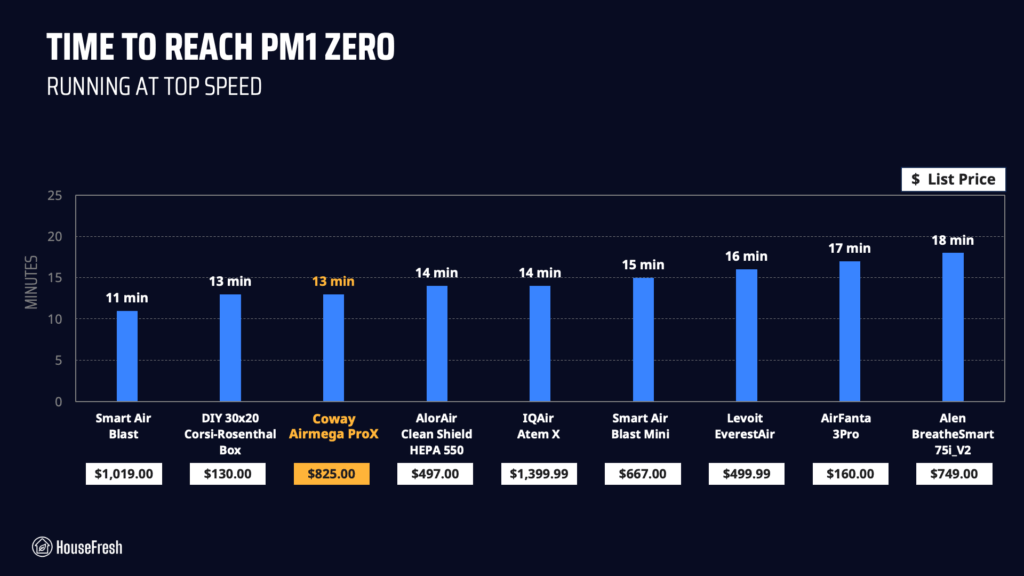
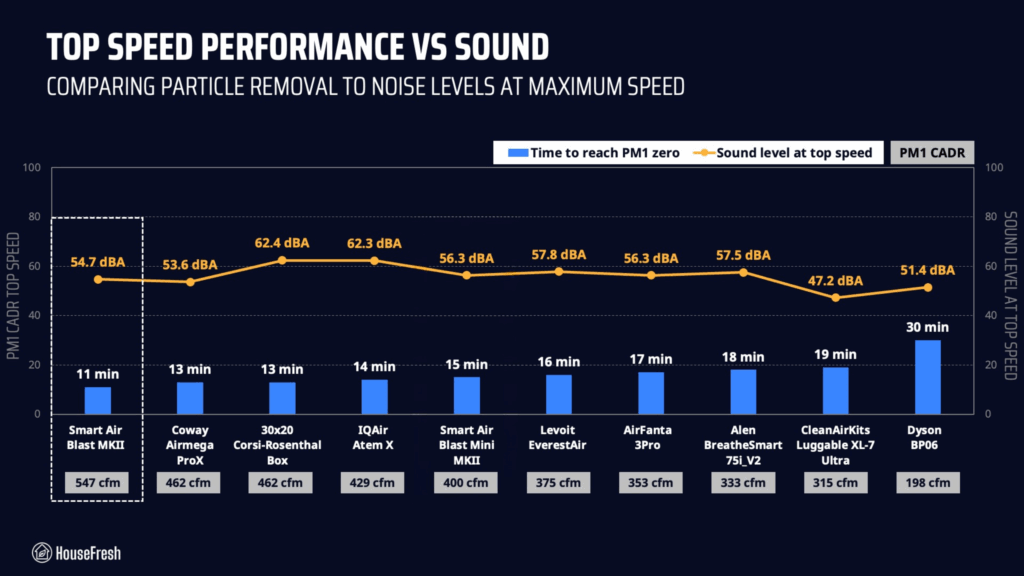
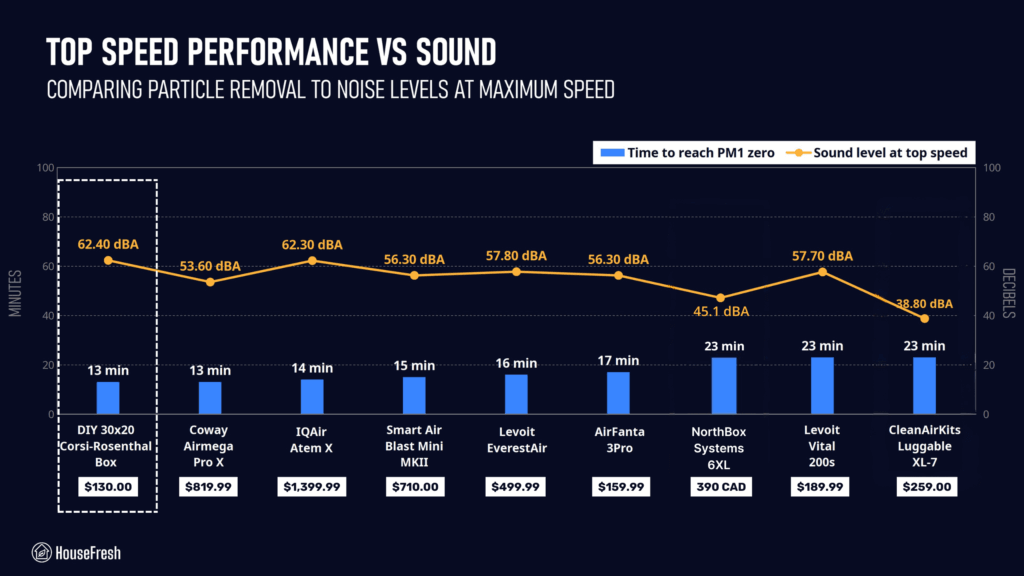
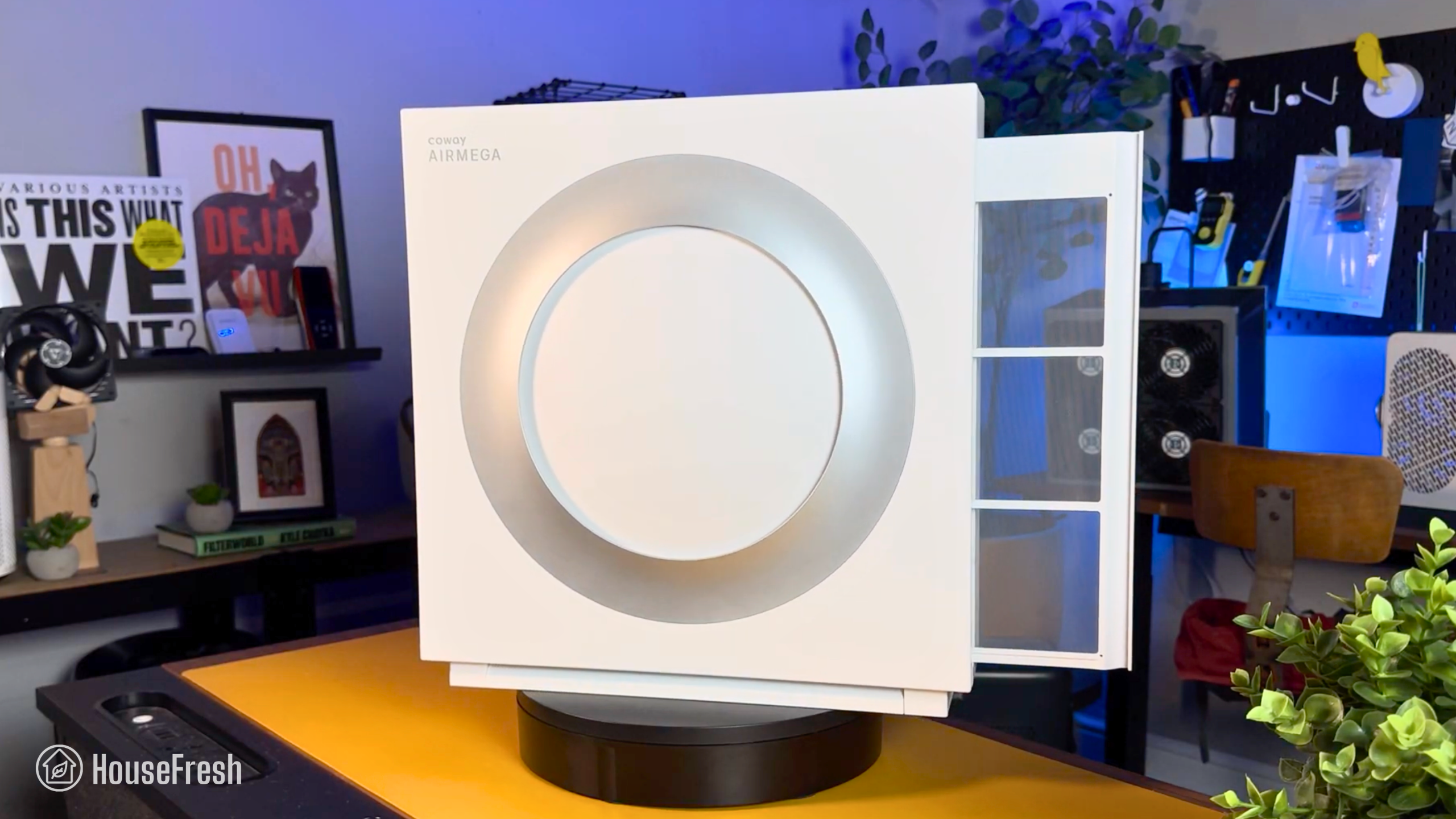
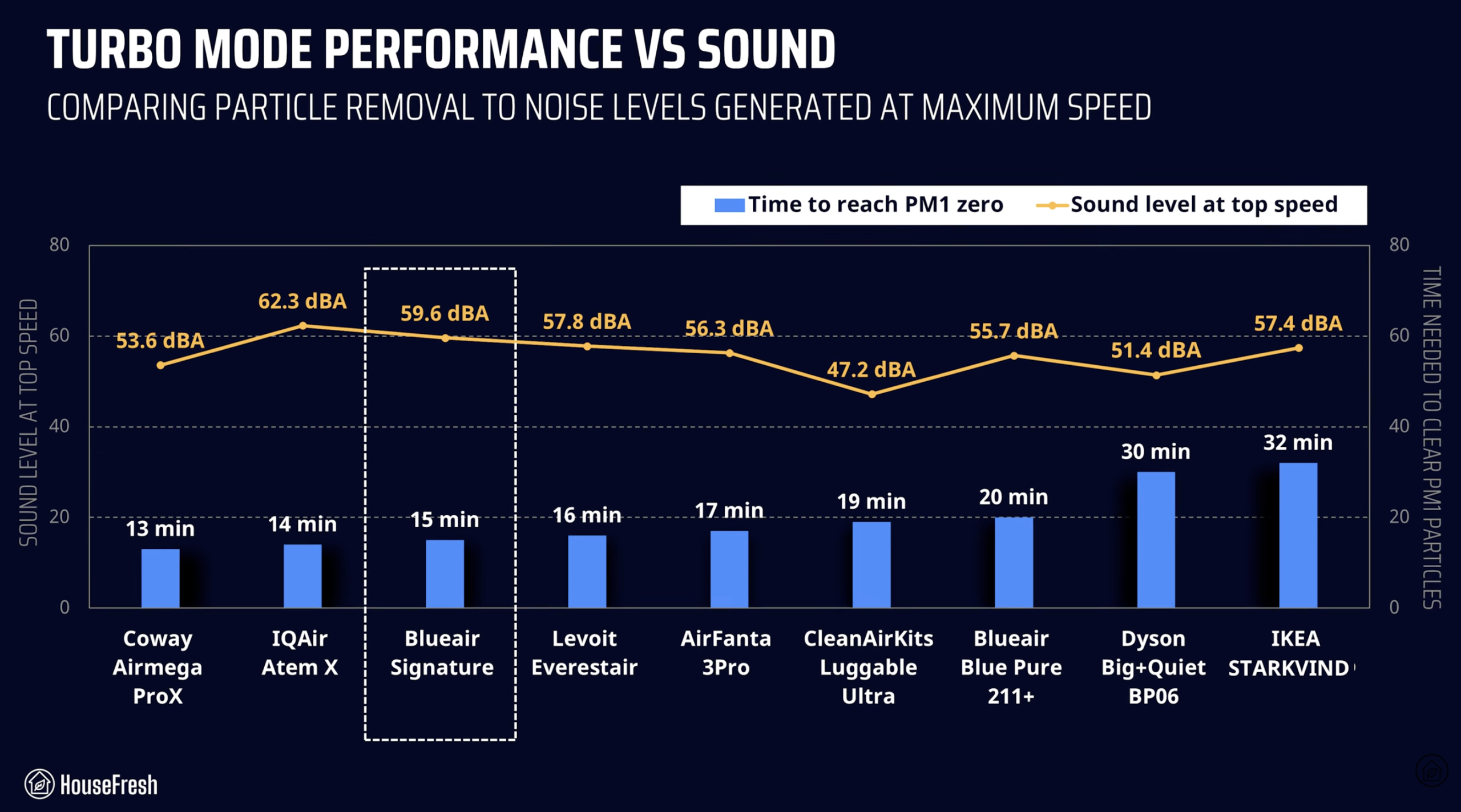
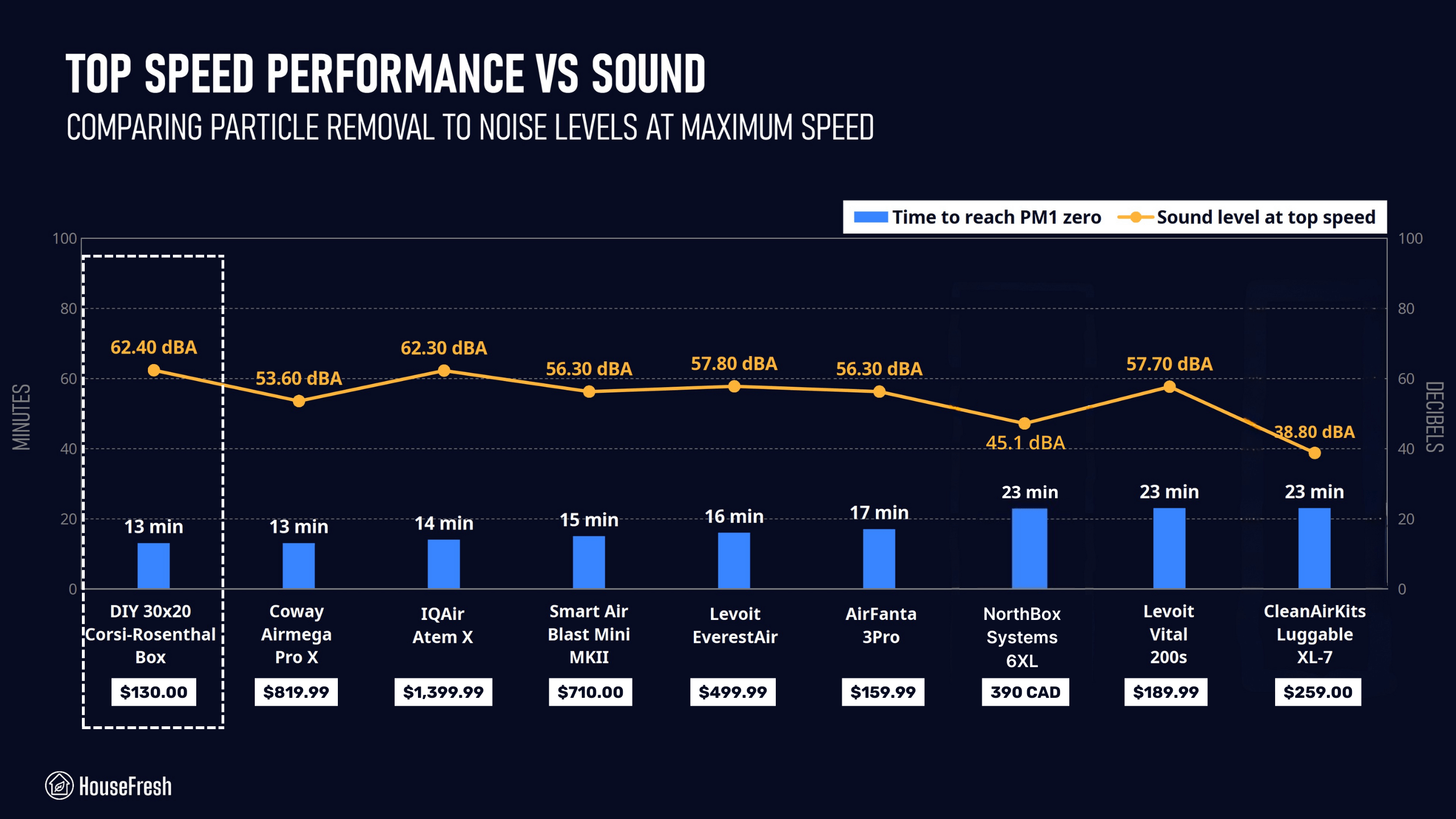
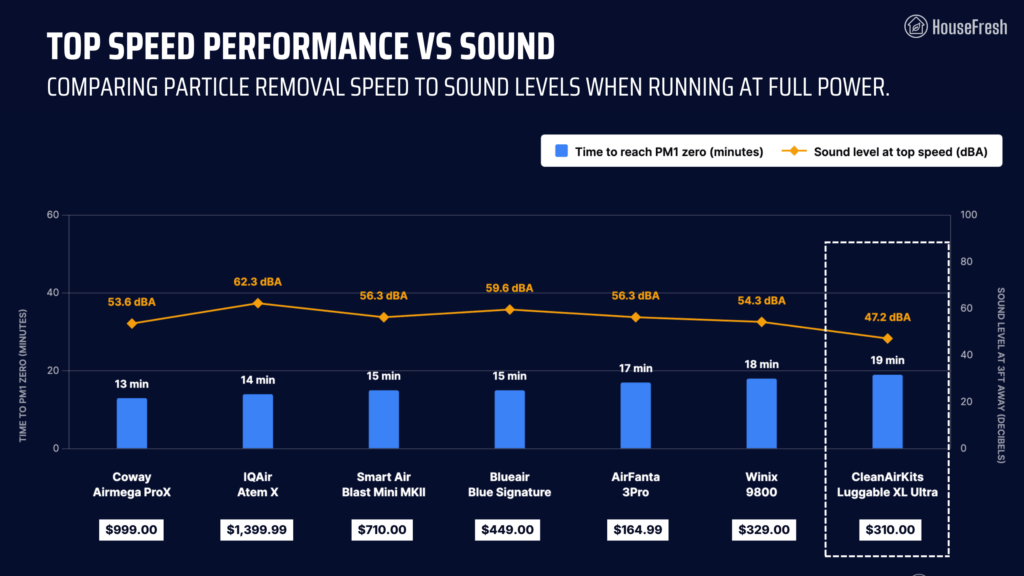
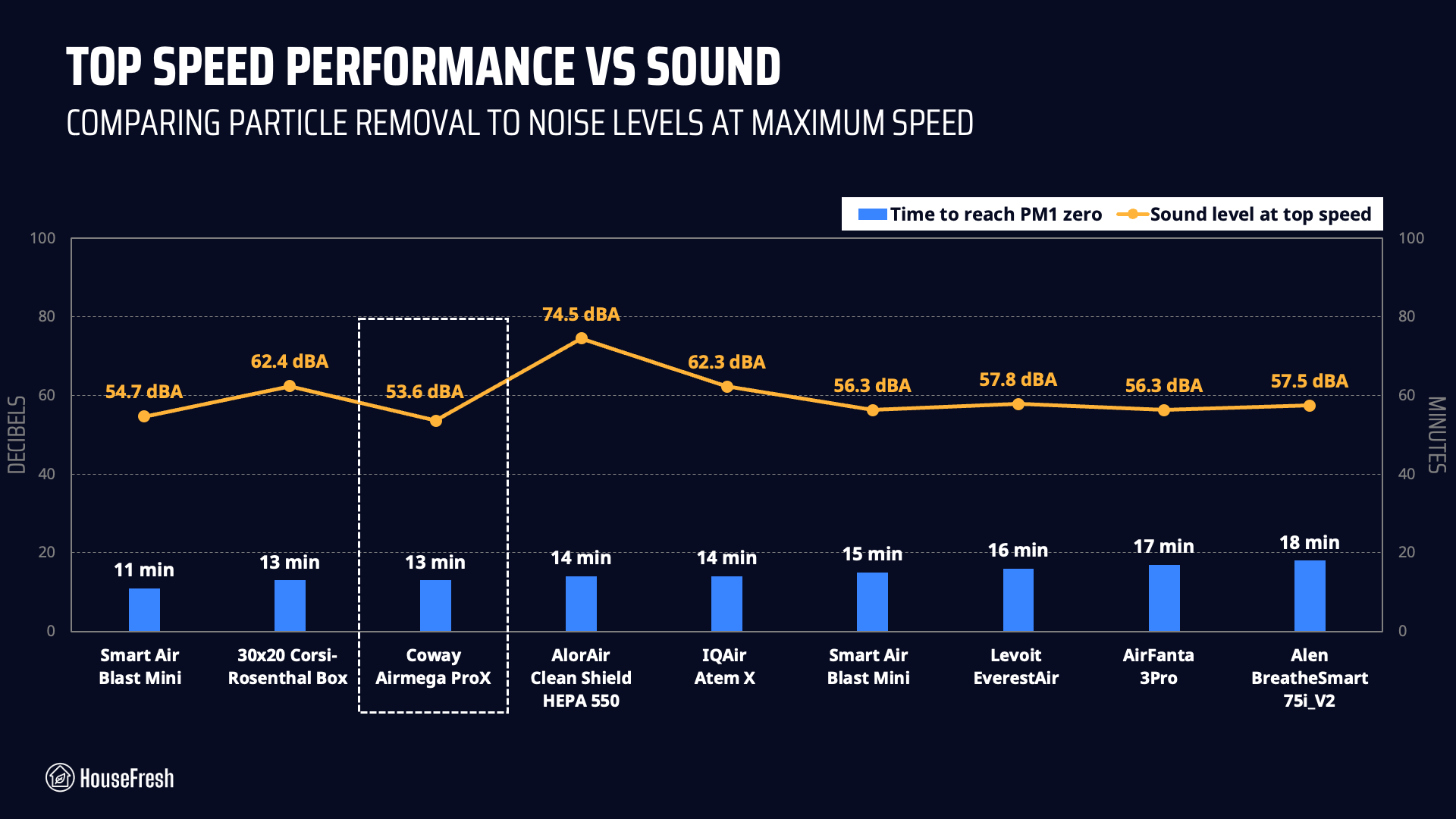
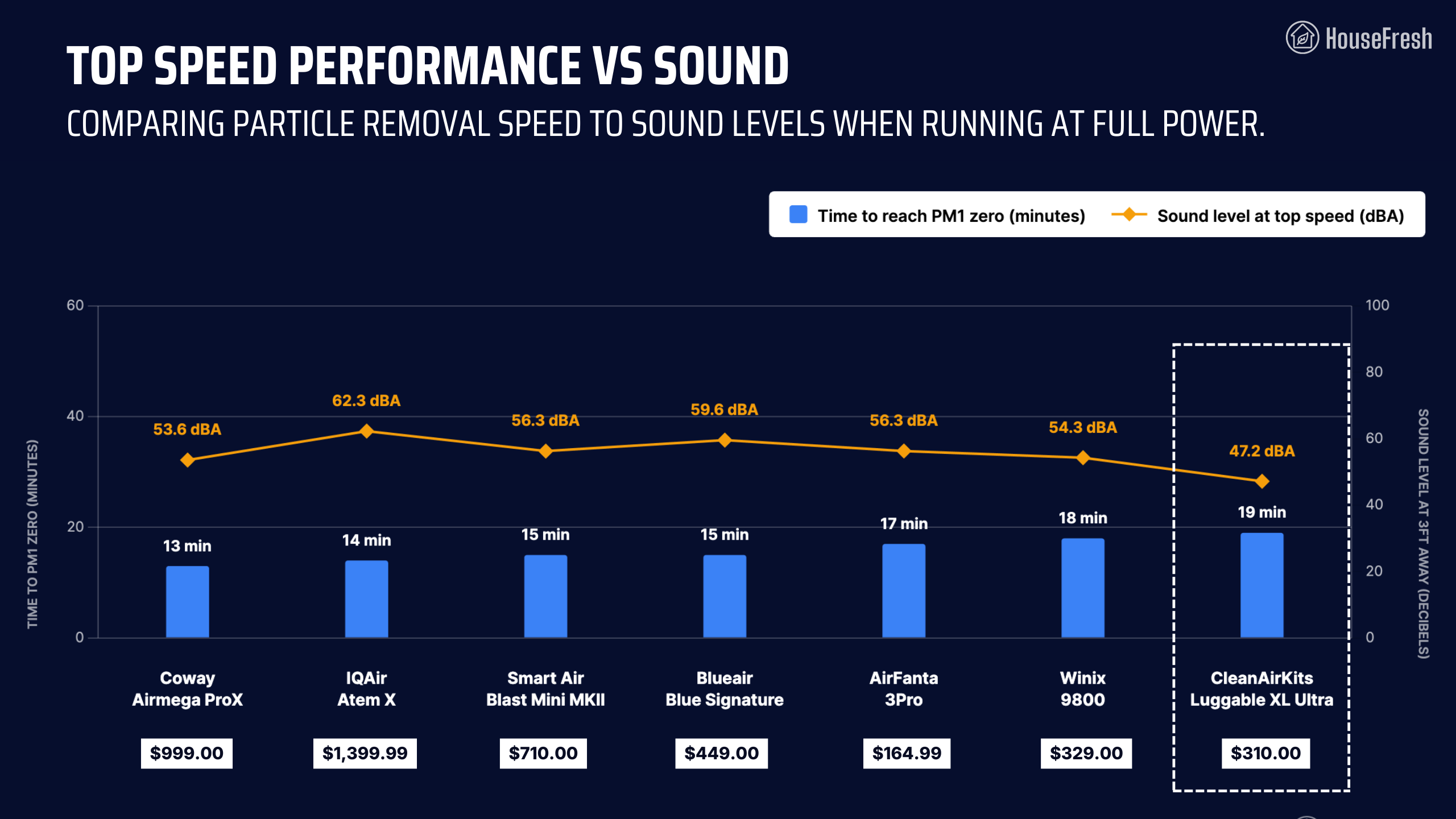
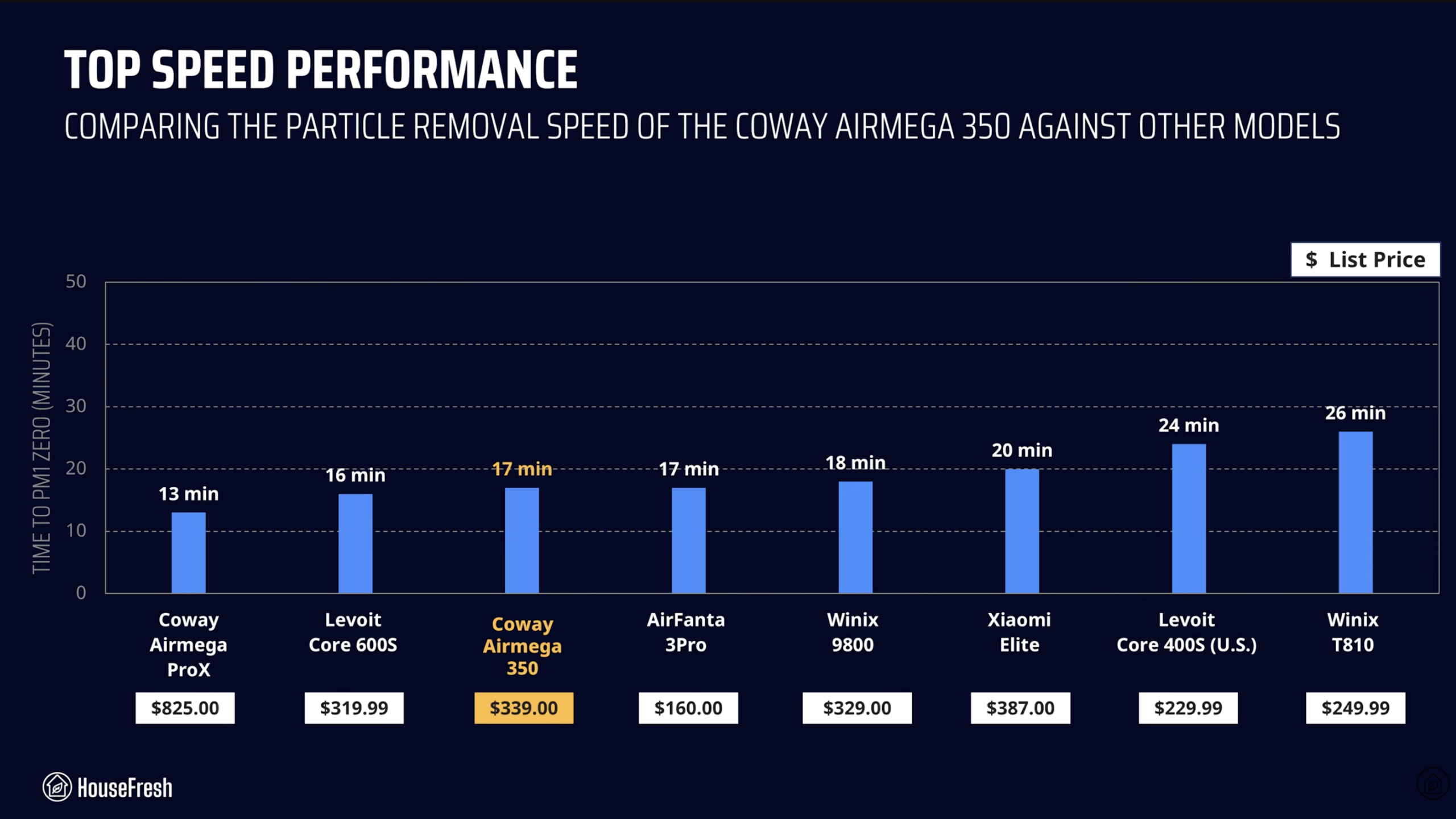
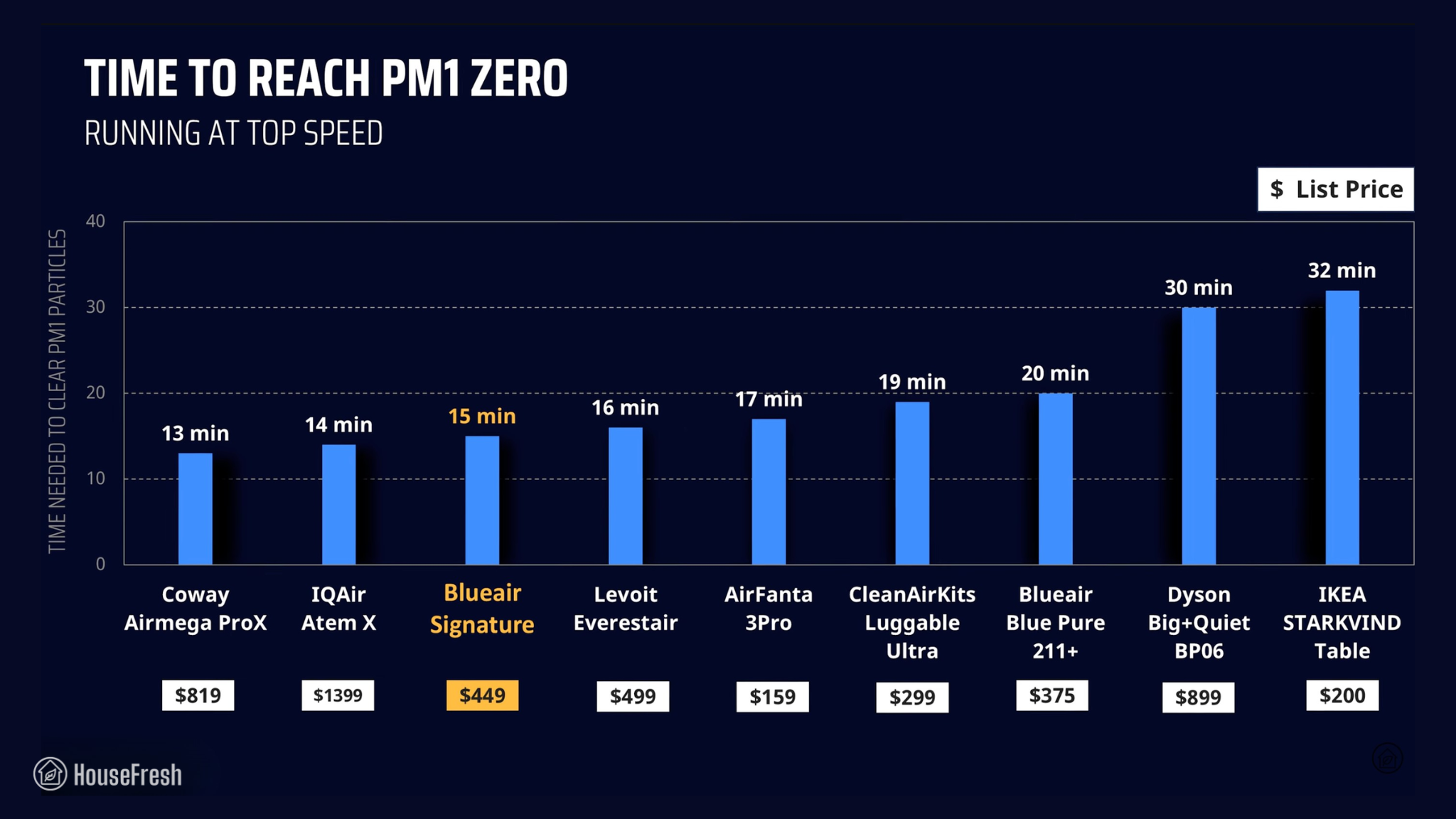
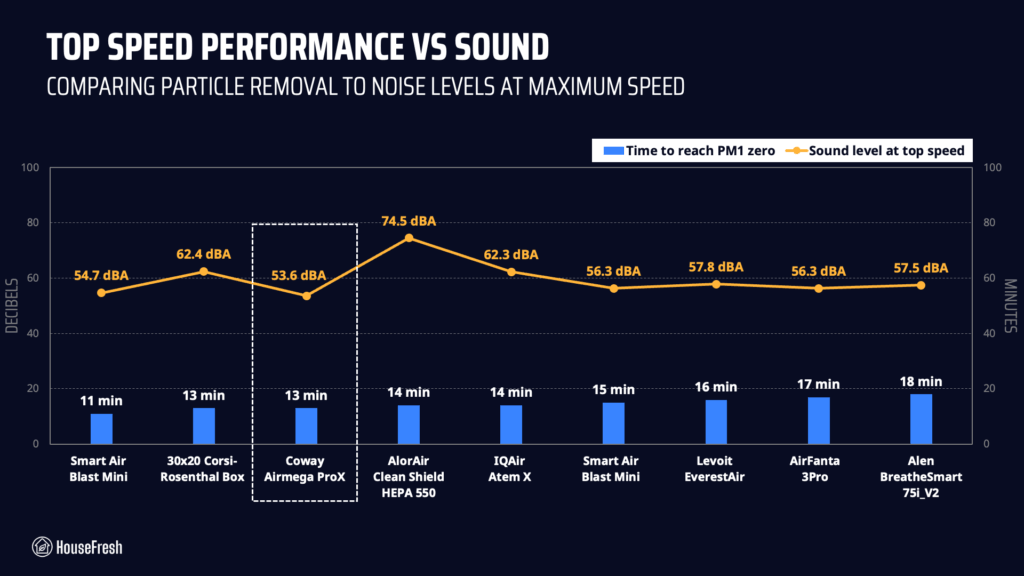
In our particle removal test, it cleared the air in 13 minutes – that’s as fast as the Coway Airmega ProX, which costs just under $1,000. Not bad for a thing you can build yourself…
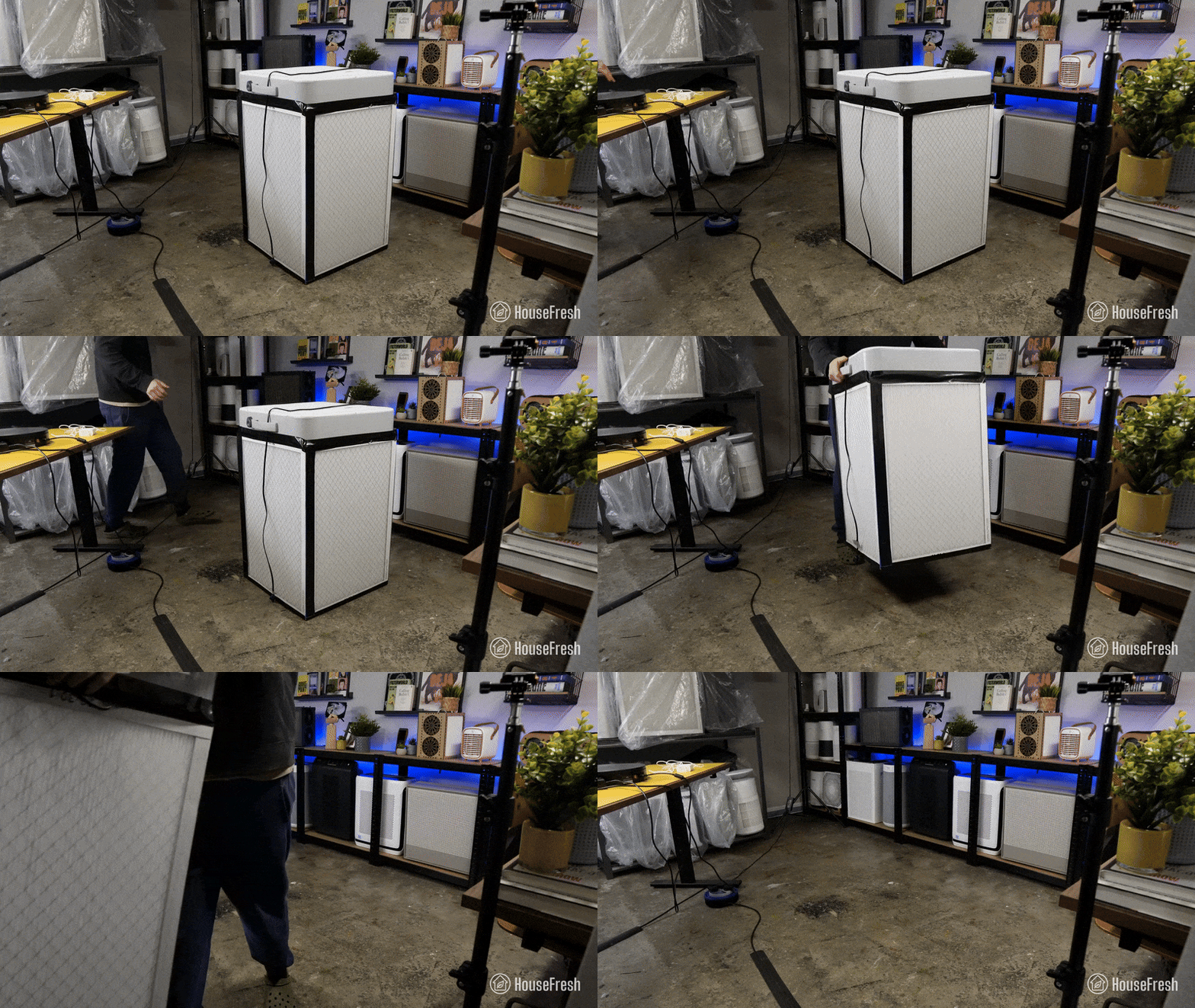
But be aware, that box fans are not quiet and they aren’t known for is their energy efficiency. Another thing to consider is that the 30×20 CR box is pretty big.
CONS
It’s very big so it can take up quite a bit of floor space.
You will only get the fan speed controller, so no smart controls or features.
It can be loud and power-hungry, as most box fans are.
You don’t get any carbon to help with unwanted smells or VOCs.
PROS
At top speed, it completed our removal test as fast as the much more expensive Coway Airmega ProX (13 minutes).
You can use any type of 20″ x 20″ MERV 13 filter, so you will be able to find good deals. But I recommend the Filtrete MPR 1900.
It’s the best performing air purifier you will be able to build yourself with materials you can buy at the store.
It outperformed 134 air purifier models we have tested at HouseFresh.
Clean air delivery rate (CADR):
462 cfm
Filter technology:
MERV 13
Recommended room size:
693 sq. ft. (5 air changes per hour)
Dimensions:
20 x 20 x 30 inches (51 x 51 x 76 cm)
Weight:
8 lbs (3.4 kg)
Noise level in decibels from 3 ft. away:
Speed 1: 51.5 dB Speed 2: 58.3 dB Speed 3: 62.4 dB
An air purifier for small spaces that costs less than $100, comes with smart features and doubles up as a small side table.
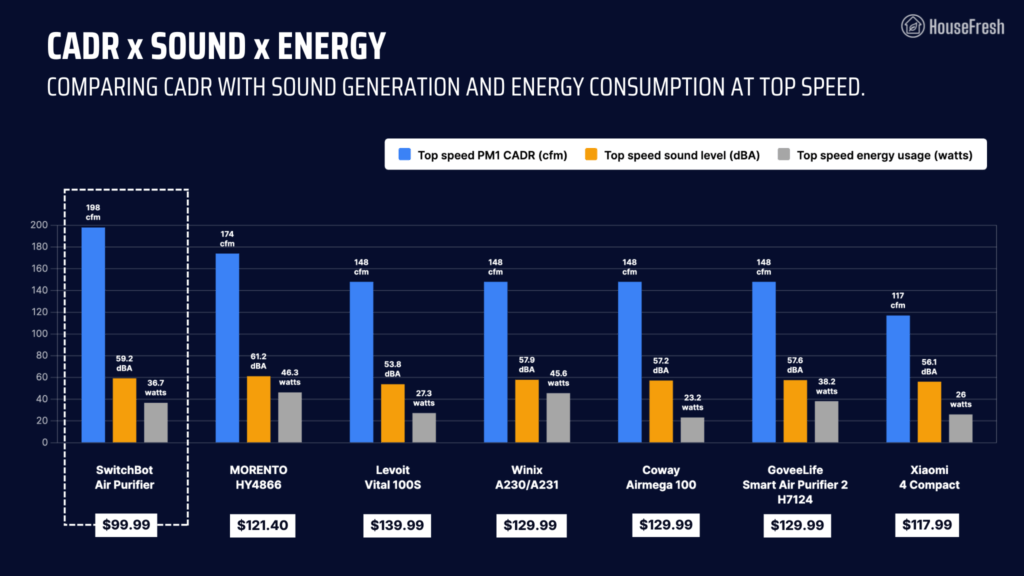
There are MANY options for air purifiers under $100 on Amazon, but after testing 21 different models at that price point, I only recommend the SwitchBot Air Purifier. It has a list price of $99.99, but can be found on Amazon for as low as $75 on deal days.
It completed our particle removal test in 30 minutes, which is 10 minutes faster than the more expensive Winix A231, Levoit Vital 100S, and Coway Airmega 100.
It has an all-in-one HEPA and carbon filter with a removable, washable pre-filter mesh on the outside. This makes it easier to clean and vacuum — a good design for pet owners.
CONS
It will be too underpowered for spaces larger than 297 sq. ft.
The amount of carbon in the filter won’t be enough to tackle serious issues with odors and chemical gases.
SwitchBot is new to the air purifier game compared to manufacturers like Coway, Levoit, Winix or IQAir.
PROS
It’s the only air purifier under $100 with a CADR of 198 cfm — this is the same as the more expensive Dyson BP06, PuroAir 400 and Alen 45i.
It’s doubles as a side table with a built-in light that changes color based on the air quality readings from the onboard PM2.5 sensor.
It has an aroma pad, where you can drop essential oils for a diffuser effect. This is not my cup of tea, but I know some might appreciate it.
It comes with an app and is also Matter-certified, so you can connect it to your existing smart home system if you prefer.
Clean air delivery rate (CADR):
198 cfm
Filter technology:
HEPA filter with pelleted activated carbon and a removable pre-filter mesh
A brand new small air purifier model from Levoit with smart features and app support that will set you back $129.99.
The Eleva 300X is a new air purifier from Levoit that in my eyes has replaced the popular Core 300S. It has excellent air cleaning performance, especially for its price and its small size, and comes with an onboard sensor, smart features and app support.
In terms of performance, the Eleva 300X completed our particle removal test in 36 minutes – that’s 23 full minutes faster than the equally priced PuroAir 130i.
You get a HEPA filter that removes particles and a separate gas filter packed with activated carbon pellets that adsorb unwanted smells.
CONS
You must register the filters to pair them to the device. If you don’t do this, you lose the filter lifespan tracking function.
The use of AI in the data reporting seems to add complexity and lag for no obvious benefit.
It is cheap to buy but it has slightly higher yearly running costs than other small models.
PROS
It offers excellent value for your money! It has the lowest cost per CADR across all other small units I’ve tested.
Its performance at quiet fan speeds rivals that of the $349 Dyson HushJet Compact but for a much cheaper price.
You get two separate filters for particles and gases – no more all-in-one cylindrical filters you’ll be throwing away sooner than you need to.
It comes with a high quality laser sensor that provides data on PM1, PM2.5 and PM10 particle levels.
Through the app you can enable Dynamic Manual mode, setting your Eleva to run continuously on your preferred fan speed while also allowing it to momentarily go up to Turbo whenever the sensor notices a rise in pollutants.
If you could stretch your budget to $152, you could buy one of the best air purifiers I’ve ever tested – powerful enough for large rooms up to 529 sq. ft.
Use the discount code HOUSEFRESH for 5% off when buying directly from AirFanta.
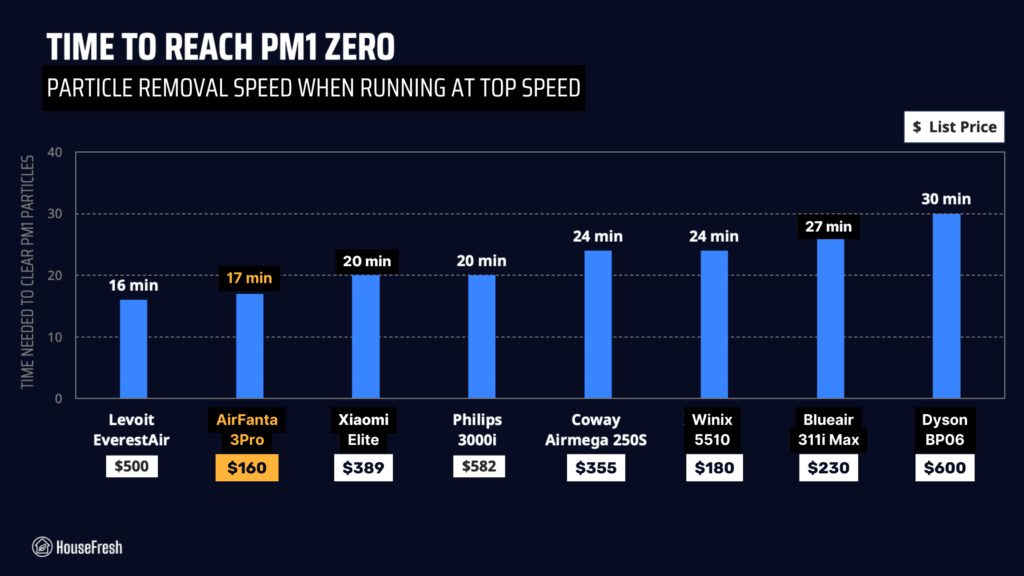
Out of the 133 air purifiers I’ve tested since 2020, the AirFanta 3Pro stands out thanks to its incredible value for money. The HEPA-only version sells for $160, but you can get it for $152 if you use the HOUSEFRESH discount code.
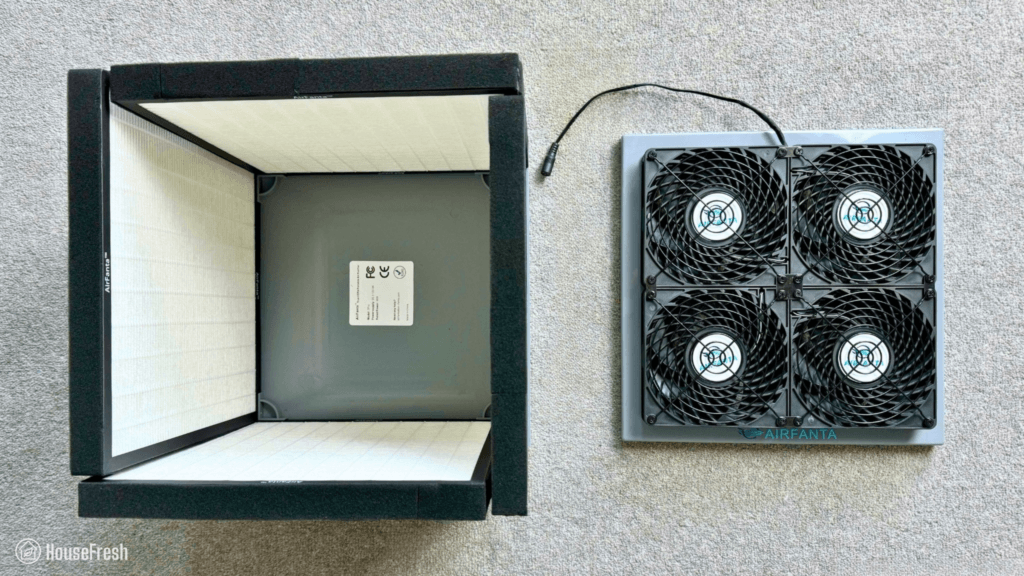
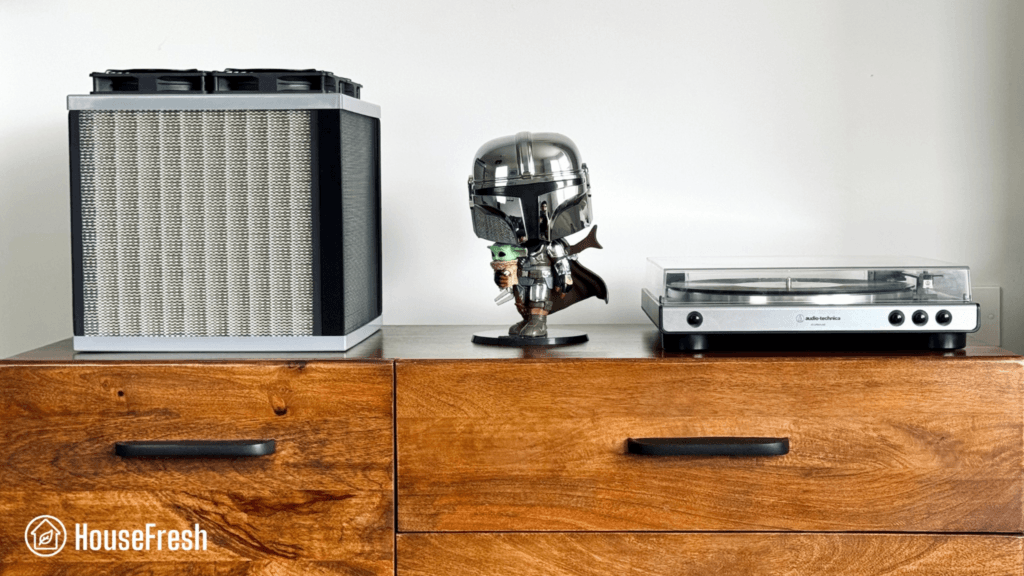
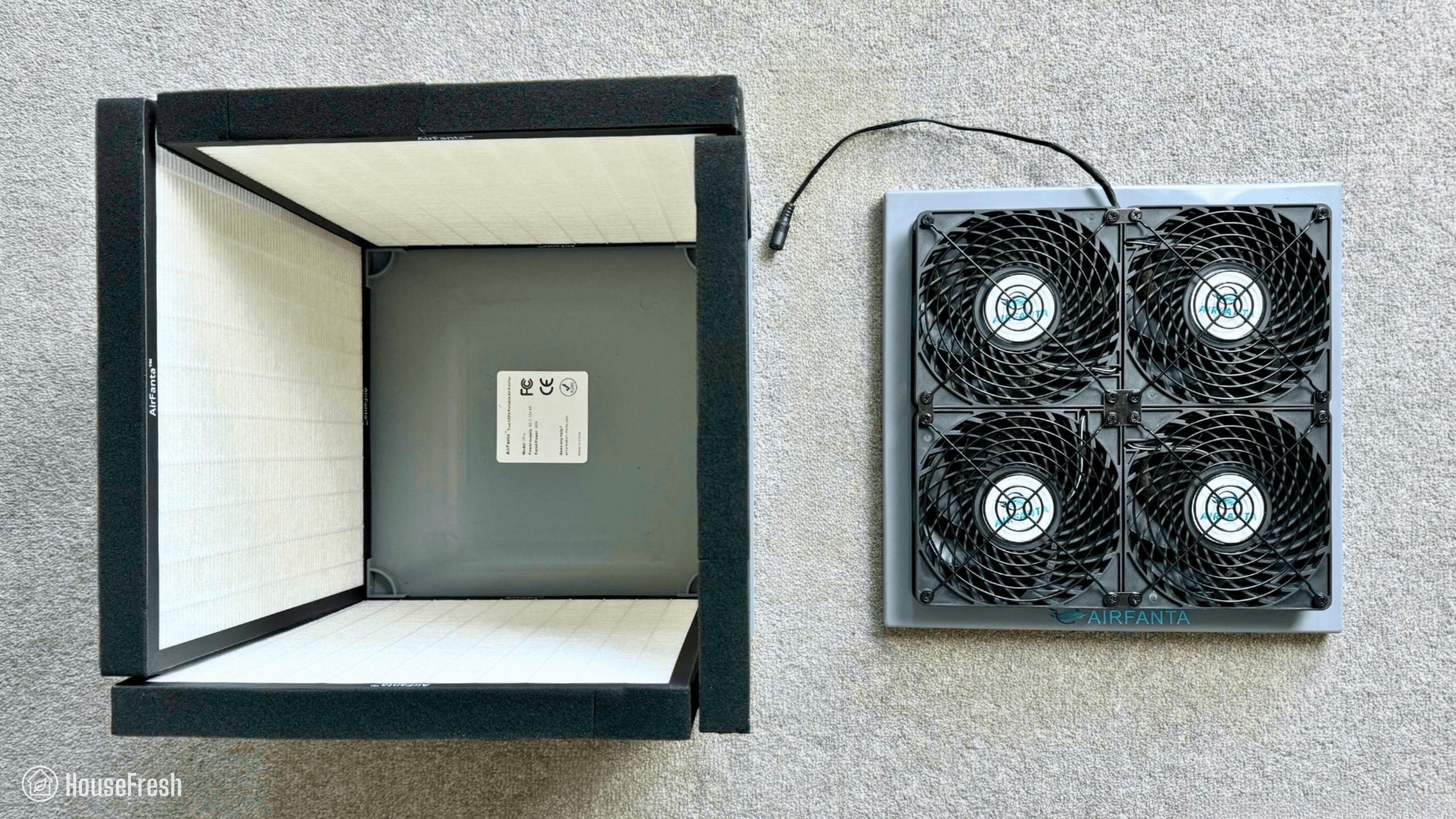
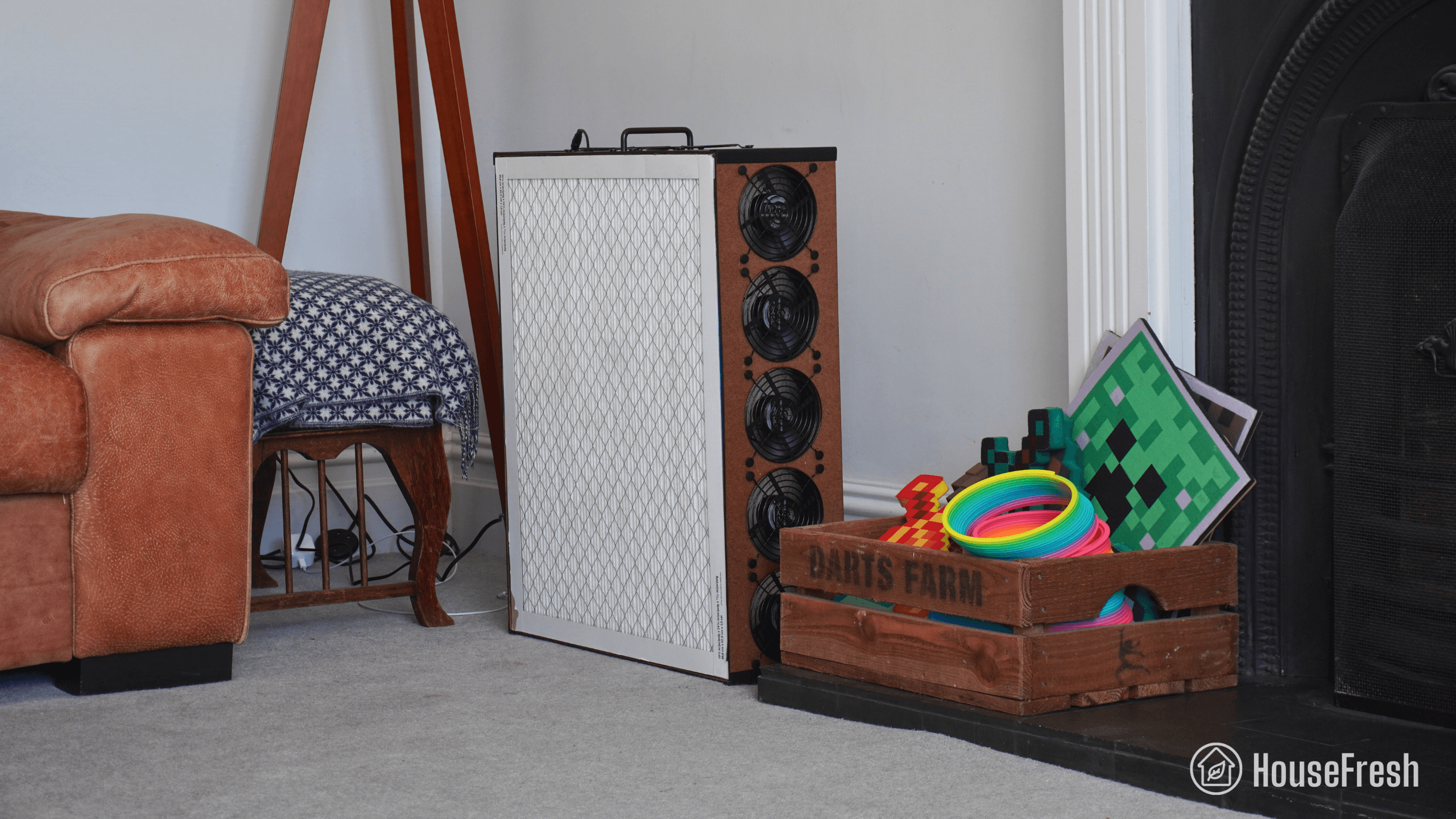
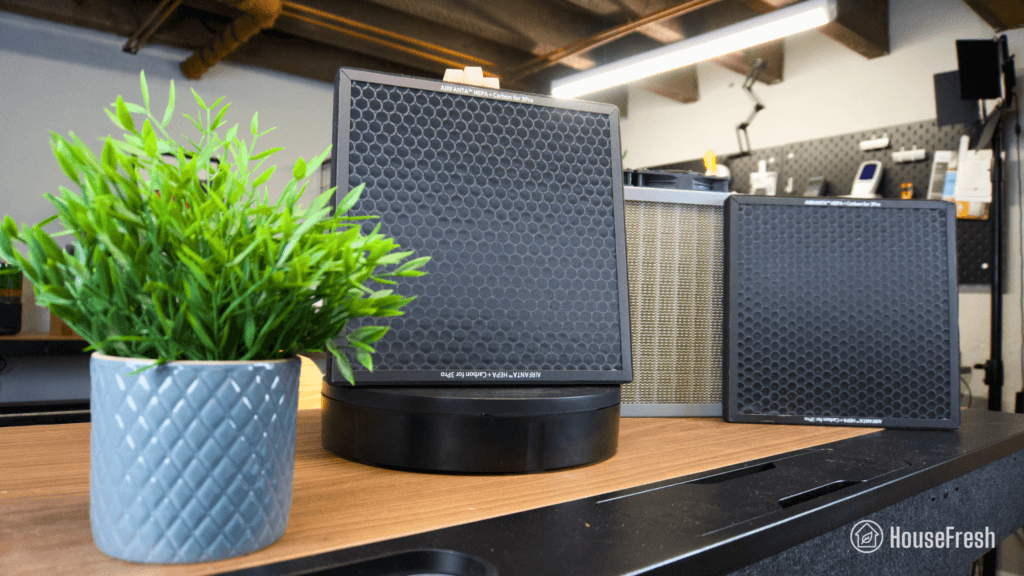
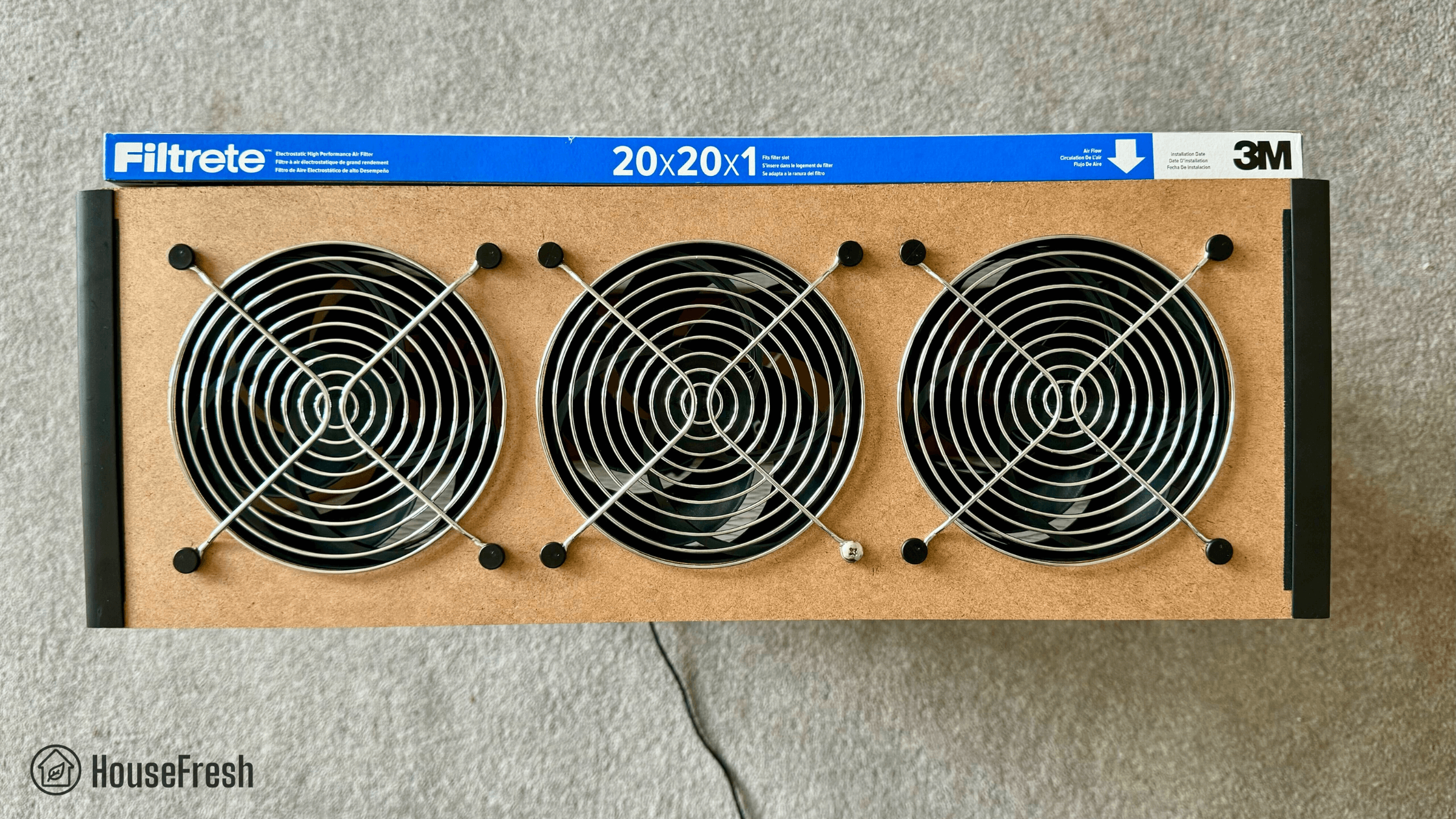
The 3Pro is inspired by the Corsi-Rosenthal box: it’s basically a cube with a plastic base at the bottom, a filter on each side, and a fan array on top with four 140mm PC fans.
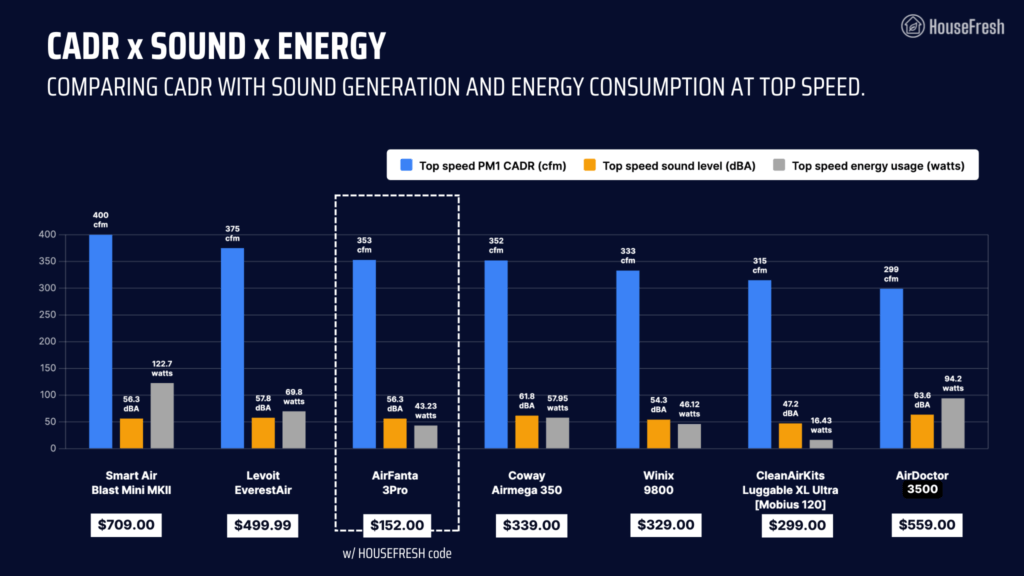
At top speed, the 3Pro cleaned our test room as fast as the Coway Airmega 350, which costs more with a list price of $339.
CONS
You have to assemble it as it arrives disassembled, but it is quick and easy.
Even though it uses PC fans, its long-term energy costs ($51.99 per year) align with “normal,” retail air purifiers.
It doesn’t have any smart features, no timers, no app support, and no on-board sensors that you are likely to find in a traditional air purifier.
PROS
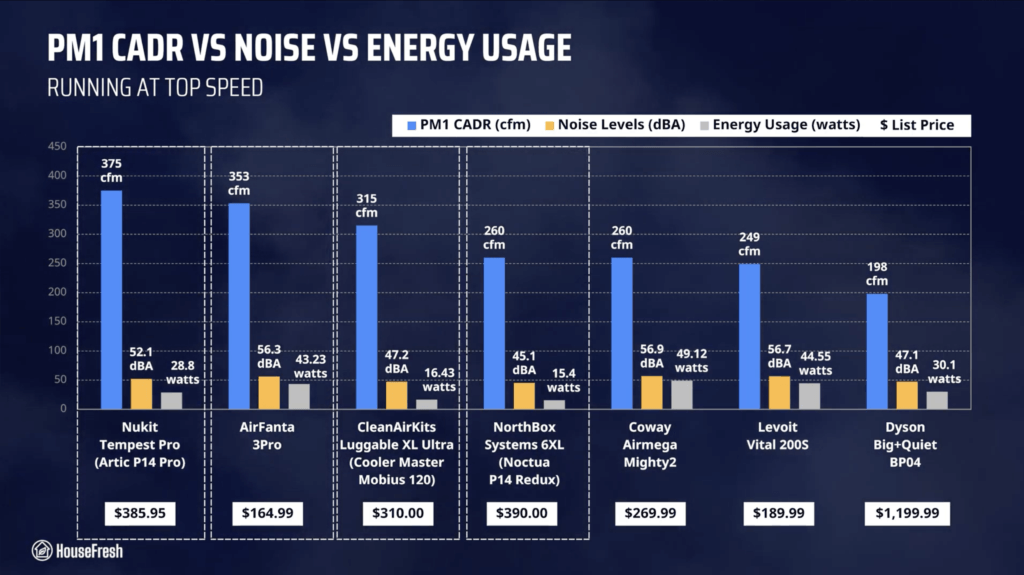
It offers outstanding air cleaning power at a very low price — an estimated CADR of 353 cfm, which is in line with what we see in air purifiers that cost upwards of $500.
Its small footprint makes it easy to use around the house, both in rooms big and small.
You can take it apart and rebuild it in just a couple of minutes, and when broken down, it fits inside a medium size carry bag.
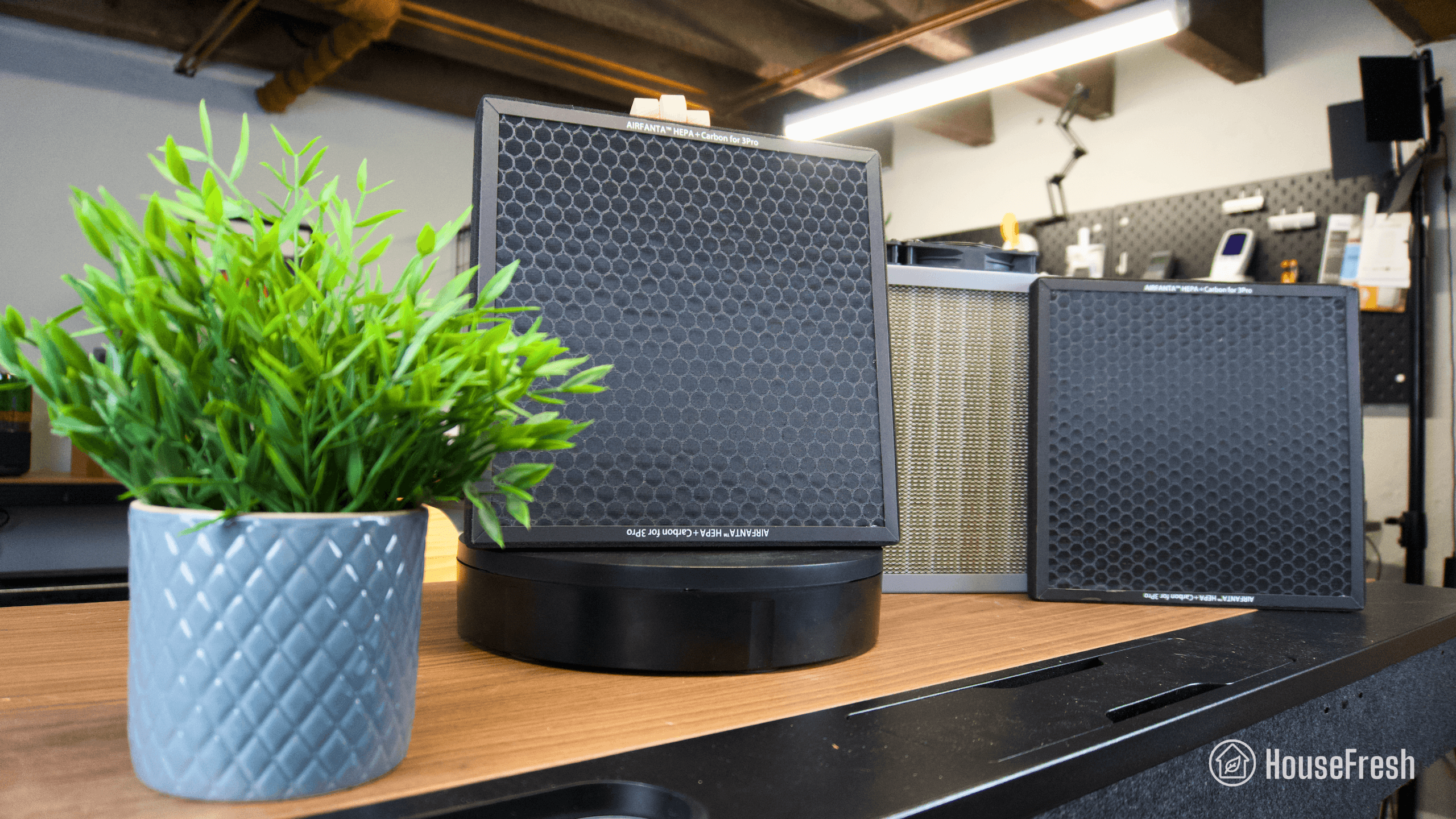
You can choose the HEPA-only filters to remove particles from the air, or you can choose the HEPA + carbon filters to also deal with odors and gases.
One of the models I recommend the most often to people due to its affordable price and excellent air cleaning performance.
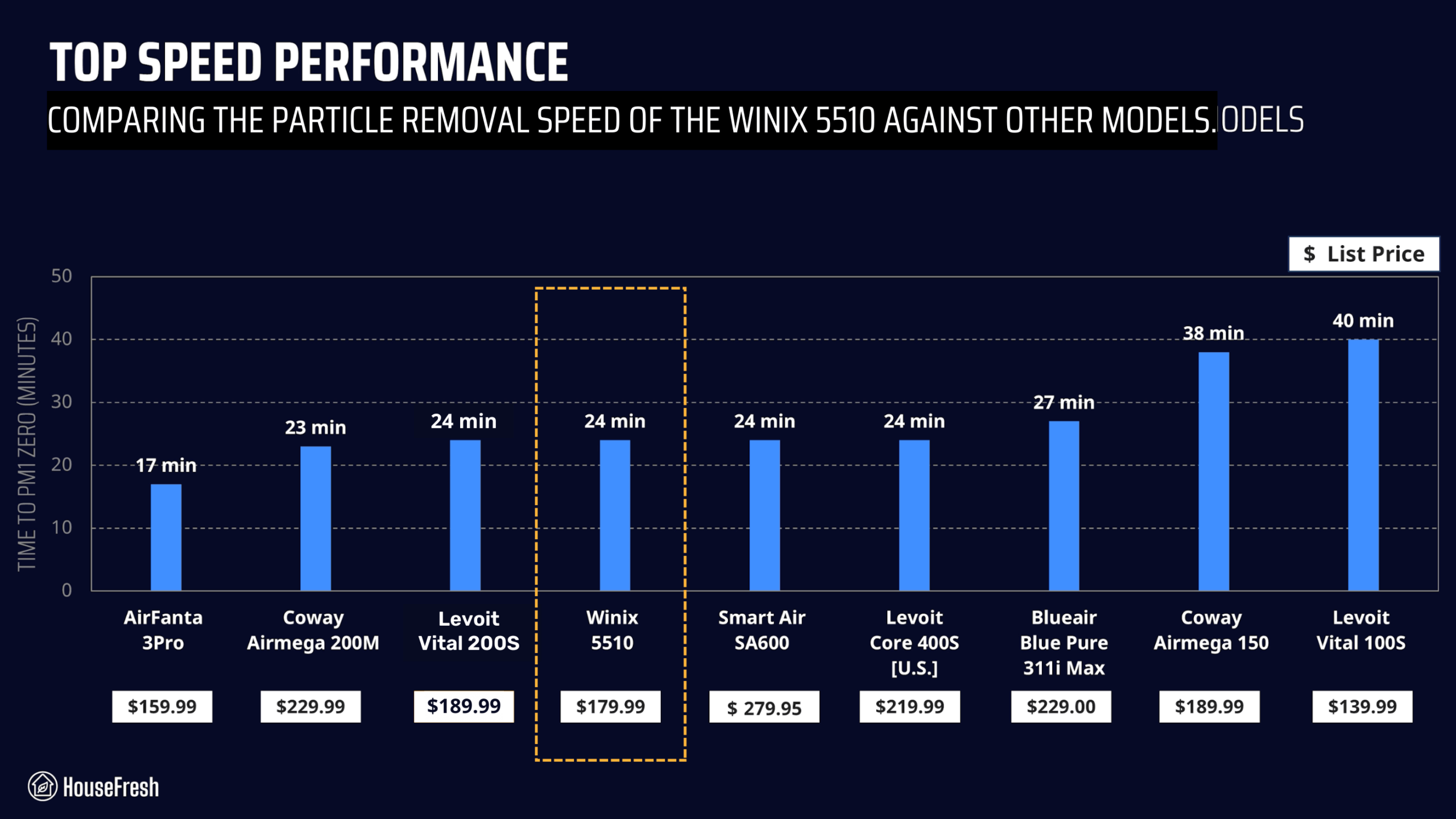
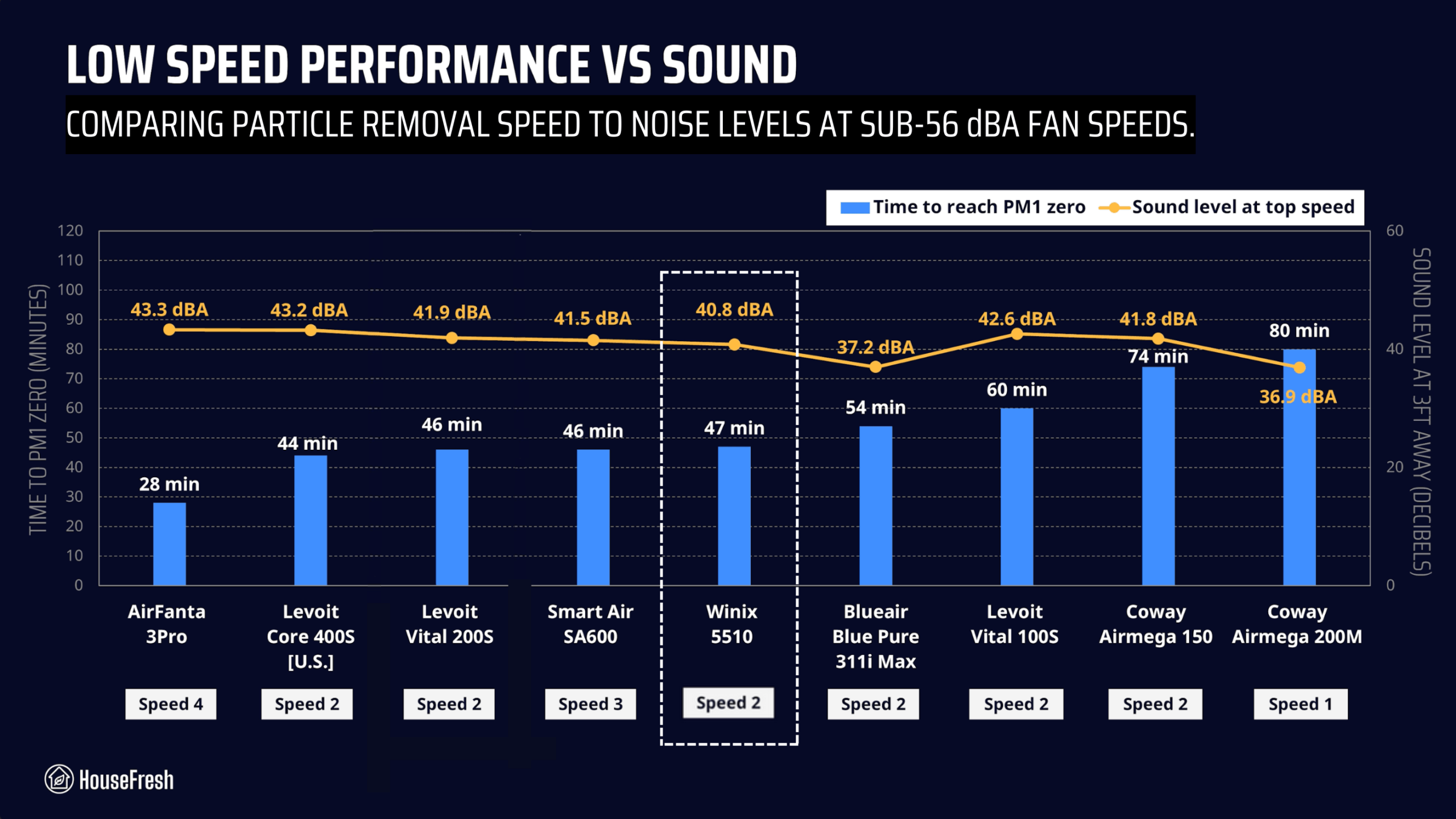
The Vital 200S completed our particle removal test as fast as the Winix 5510 (above). That said, it was one minute faster to clean the air in our test room when both models were running at speed 2 (sub 45-dBA).
It is more energy-efficient that other air purifier models with comparable CADR and this leads to the lowest running costs in the bunch.
Just like the Eleva 300X, it comes with an air quality sensor, an air quality indicator light, auto-mode and app connectivity.
CONS
It has an all-in-one filter, so once the carbon runs out (which usually happens within 6 months), you’ll have to replace the whole thing, even if the particle filter still has life in it.
Levoit initially advertised the filters as HEPA H13 but have changed their marketing, now stating the filter is H13 only on sleep mode.
The air quality sensor is an optical sensor so you need to keep it clean for it to report accurate readings.
PROS
It offers a high level of air cleaning performance to $ ratio, completing our particle removal test as fast as units double its price.
You get smart features and smartphone connectivity through Levoit’s VeSync app.
It remembers settings and modes, so if you unplug it and plug it back in, the Vital 200S will still remember what it was last doing.
It comes with a removable pre-filter that is easy to vacuum, and you can also rinse and dry.
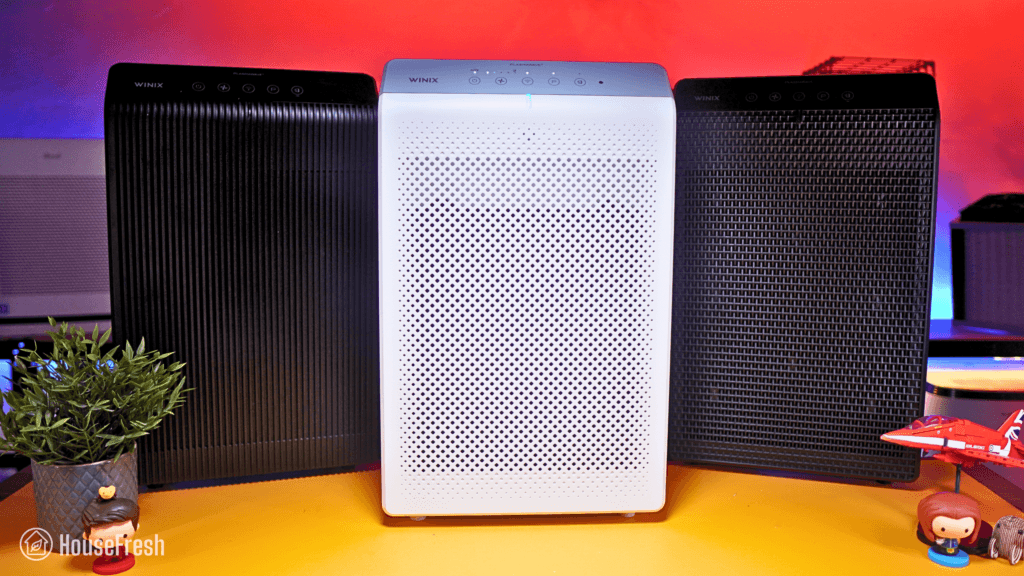
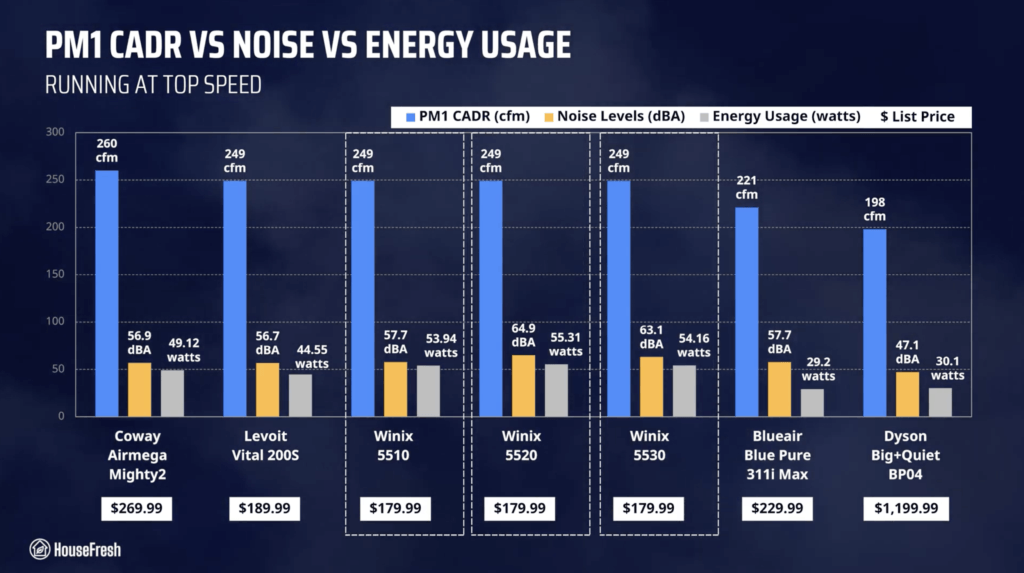
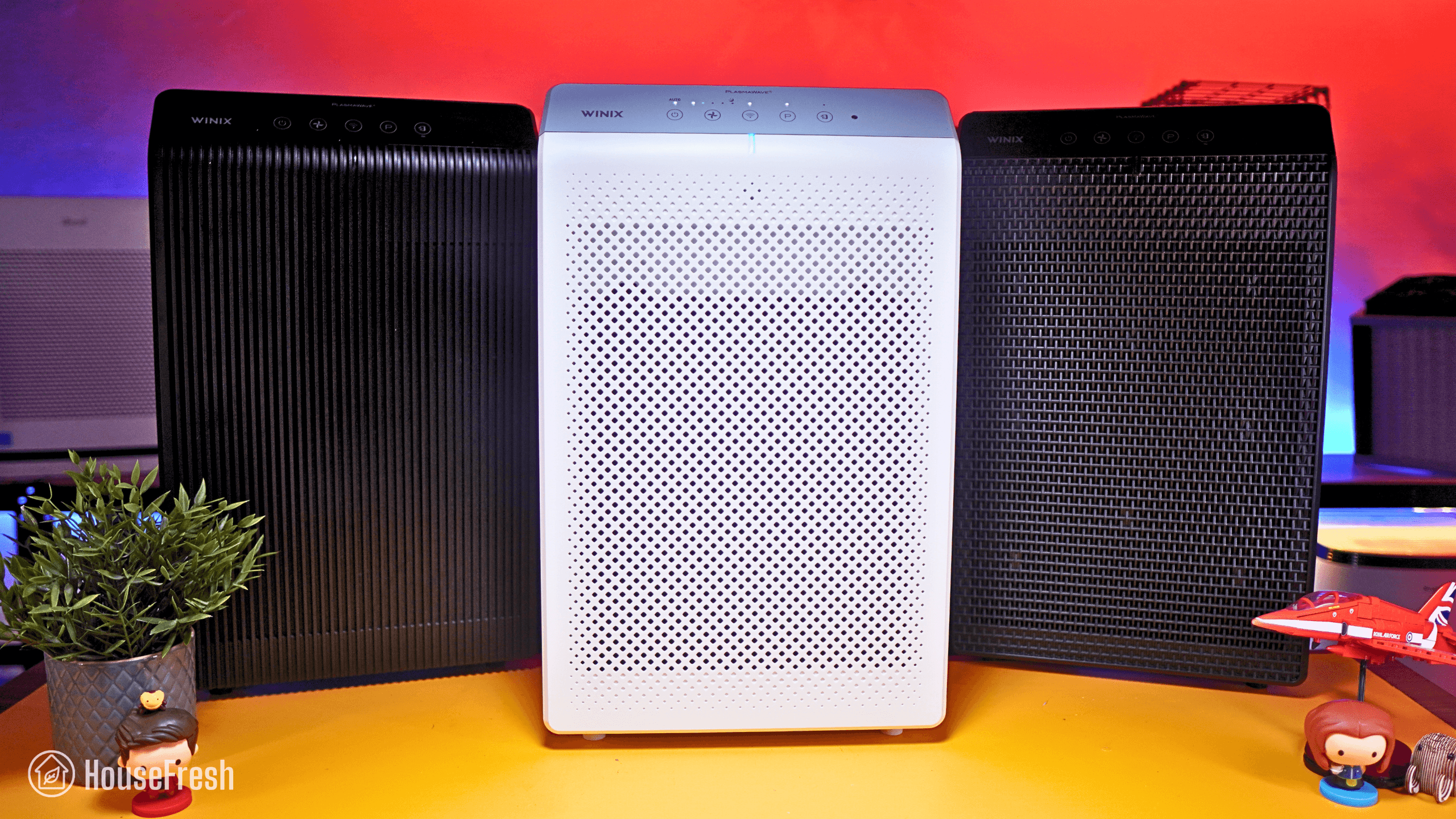
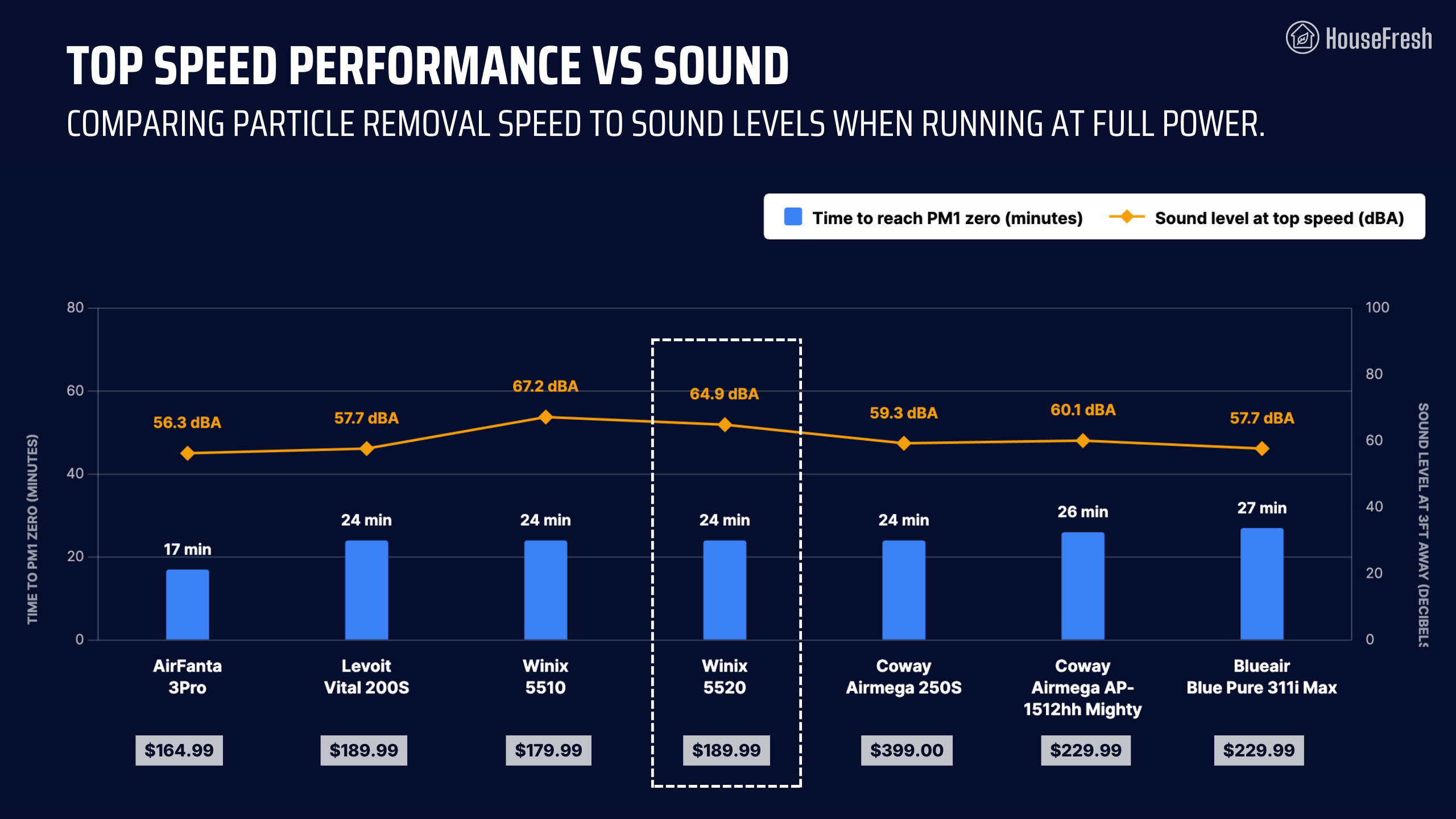
With a PM1 CADR of 249 cfm, this new generation of Winix air purifiers was able to complete our particle removal test as fast as the Levoit Vital 200S (above).
This is good performance for less than $180, but unfortunately they are all louder and more power-hungry than the Vital 200S.
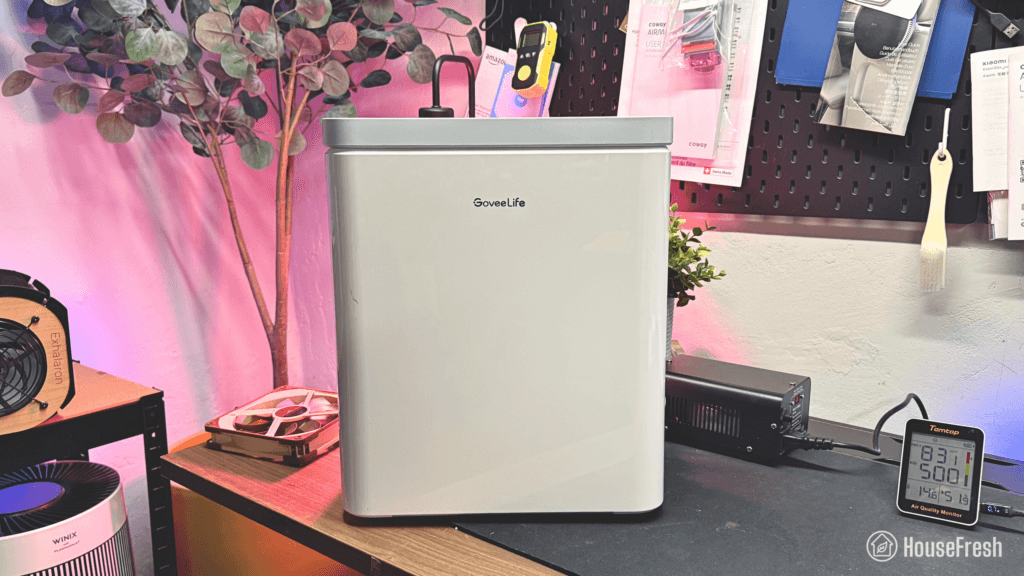
With a PM1 CADR of 148 cfm, the GoveeLife Smart Air Purifier 2 was able to complete our particle removal test in 40 minutes while generating 57.6 dBA of noise, which is quieter than other models with equal power like the Winix A231.
This is good performance for an air purifier you can buy for less than $100, but it was outshined by what we saw with the SwitchBot Air Purifier.
The HY4866 has a PM1 CADR of 174 cfm at top speed, which will be powerful enough to clean the air five times per hour in rooms no larger than 261 sq. ft. It has a list price of $120 but you will regularly find it on deal for less than $90.
It didn’t make the list because it was no match for the SwitchBot Air Purifier and its CADR of 198 cfm.
The cheap air purifiers that we don’t recommend
We test many air purifiers here at HouseFresh and while we are continually looking for units like the Taotronics AP-003 that move the performance needle forward, we also come across a lot of duds. This is especially true at the sub $100 level, and so we felt it our duty to also point out those air purifiers you should avoid in this budget range.
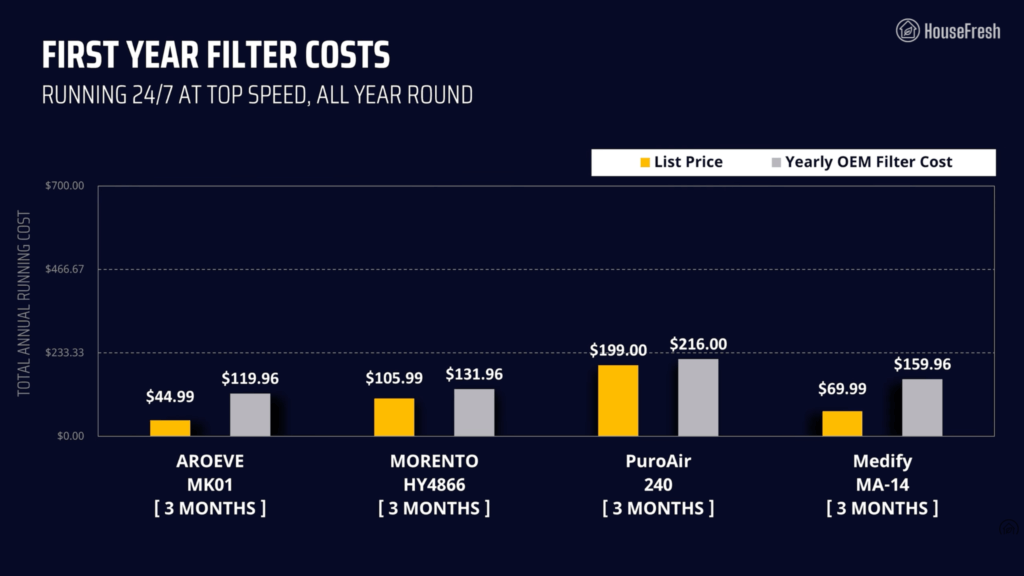
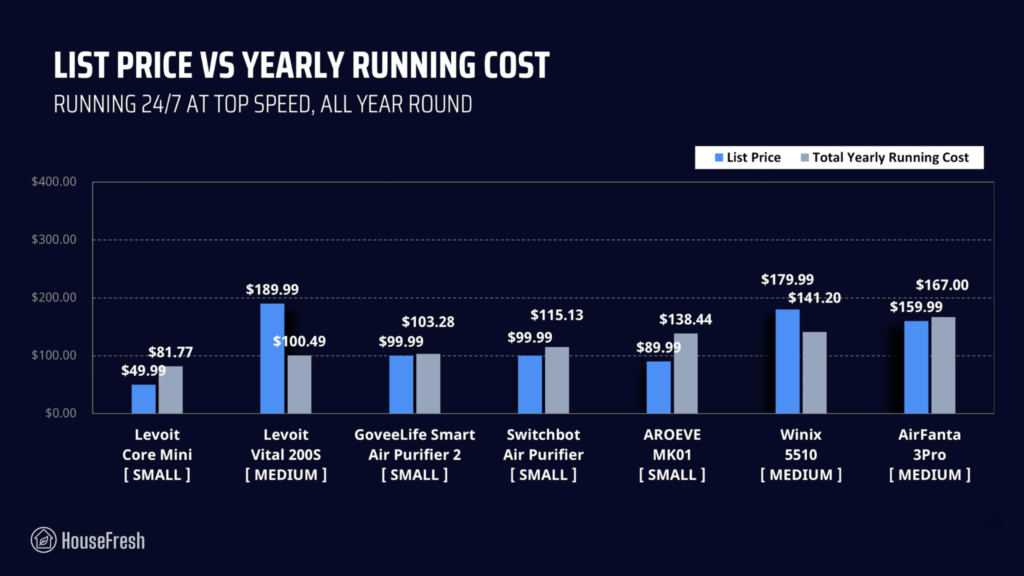
AROEVE MK01 – I could not find a published CADR for this unit, which would make sense as when we tested it, we found it took 163 minutes to clean our room to the levels recommended by the WHO guidelines. Remember that our test room (728 cubic feet) is the smallest in our house, so we can assume that this unit will be underpowered for most home use cases and should be avoided. The budget doesn’t have to be the thing that holds you back from having clean air in your home. Pay $20 extra and get the TaoTronics.
Levoit Core Mini – The Core Mini is the smallest air purifier in the Levoit Core line. It comes with the same three-stage filtration (pre-filter, main filter and activated carbon filter) and it doubles down as a diffuser for essential oils. It only pulls 6.4 watts and generates just 44 dB of sound at its highest fan speed, but it took one hour and 53 minutes to remove all the pollutants in our relatively small test room. This budget unit is too underpowered for most rooms, but if you are looking for a way to clean the air in your RV or campervan, then this could be the one.
GermGuardian AC482e – This air purifier seems awesome on the surface, especially as you will find glowing reviews from well-respected media organizations if you decide to Google it. There is only one problem — it’s not good at all. It might have been an OK choice a few years back, but the AC4825e failed to perform well in our home lab tests with a poor performance of 104 minutes. When the Levoit Core 300 can achieve this in 40 minutes, you must wonder what you are paying for with the GermGuardian AC4825e.
Levoit Core 200S – The Core 200S is not bad, it is just not good enough for you to spend $89.99 on it. it comes with app support, emits a maximum of 49dB of sound when running at its top speed and doesn’t pull too much power (28.4 watts max) but it took a full hour to clean the air in our test room. You could get a TaoTronics AP003 or a Winix A231 for that money and they would offer you much better air cleaning performance.
How to avoid wasting money when buying a budget air purifier
Air purifiers offer an excellent way to remove harmful particles and improve indoor air quality, but many high-end models come with a hefty price tag. You need to know what to look for in a quality air purifier, and you’ll discover many high-performance units that are affordably priced. And we’re here to help!
Our guide for the best budget air purifiers outlines the critical things to consider when buying an air purifier.
1. Take the time to calculate how much it will cost you to replace the filters
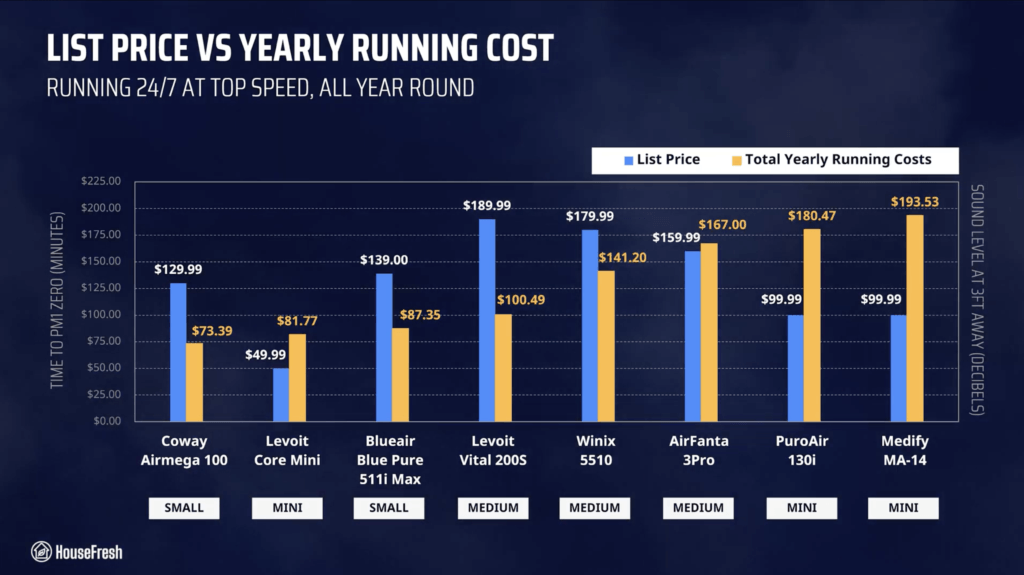
Manufacturers usually specify the estimated lifespan of the filters on the product page. They will usually give you a range (like 6-12 months or 3-6 months), so I recommend taking the lowest estimate for your calculation.
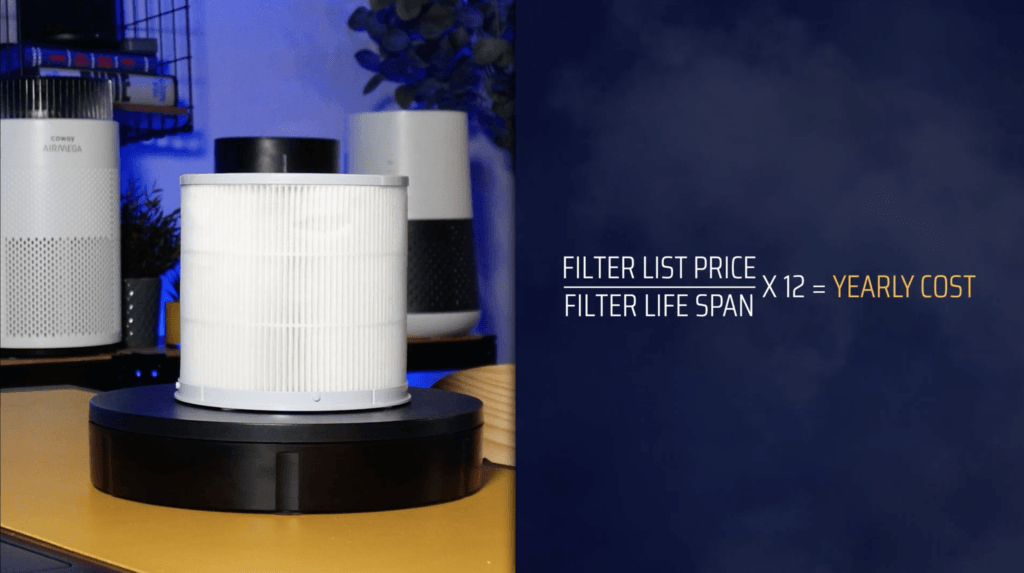
Once you know the lifespan, check out the cost of a filter replacement. You will then be able to calculate how much you can expect to spend to replace the filter each year:
Filter list price ————— x 12 = Yearly filter cost Filter lifespan
Doing this will help you avoid models with disproportionate filter costs where, within a year, you might end up spending the same (or more) than the price of the air purifier.
2. Find an air purifier with enough CADR to clean your specific room
Room size is another critical factor when buying an air purifier, as not all air purifiers aren’t created equal. Based on the size of your room, you can estimate how much CADR the air purifier will need to provide a minimum of 4.8 air changes per hour, which is what the EPA recommends.
CADR, or clean air delivery rate, measures the air volume an air purifier can clean in a given time. You can use our calculator to find out what CADR you should be looking for:
3. Don’t be duped into buying one of those small, cheap air purifiers at the top of Amazon
Seeing a $50 price tag might help you make a quick decision, but in the end, it will only lead you to a false economy.
Small air purifiers usually need their filters replaced every 3 to 6 months, compared to the 9-12 months of lifespan you get with mid-sized filters. So in the end, you might end up spending double!
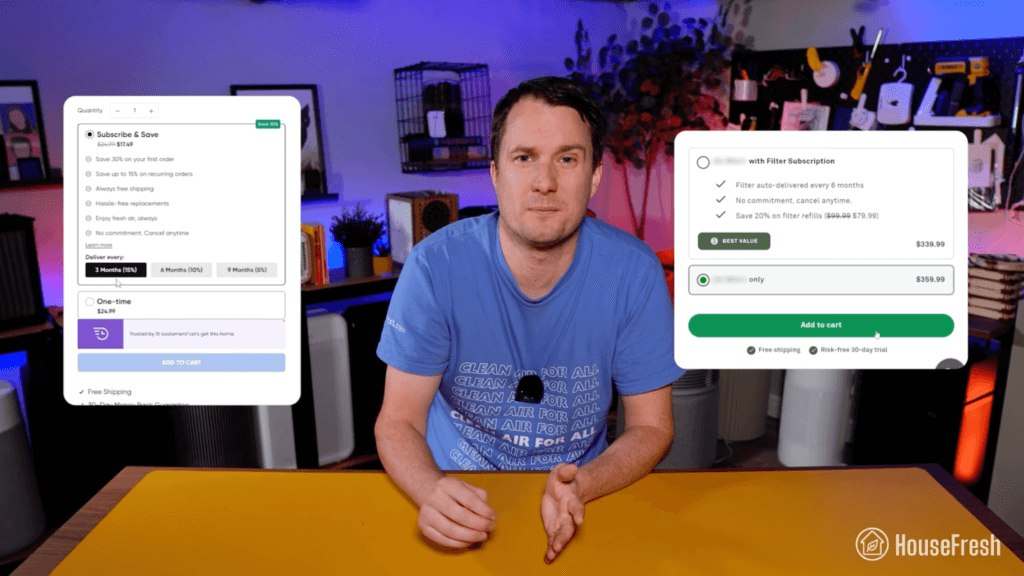
4. Before you hit the ‘Buy’ button, double-check that you’re not also being tricked into signing up for a filter subscription
I’ve seen multiple examples of online stores that use dark patterns to trick users into signing up for filter subscriptions.
These could be options already selected for you with a checkbox to opt out greyed out or simply not as prominent. And in some extreme cases, just a tiny legend that tells you that you’re also signing up for automatic replacements with your purchase.
If you’re only going to take one thing from this article, let it be this: when buying anything online, be vigilant of the dark patterns that end up signing you up for newsletters you don’t want to receive, add-ons you don’t care about buying, or subscriptions you most definitely don’t need.
Wrapping up
Clean air shouldn’t be something only the 1% can afford. You can make your budget go further by going down the DIY route with a Corsi-Rosenthal box or trying out some of the newer designs that utilize PC fans, like the AirFanta 3 Pro.
To keep running costs low, look into generic filters, as they can be much lower in price. Just be aware that carbon quality might not be the same as with OEM filters, but in our testing, particle removal performance is on par.
But whatever unit you decide to go for, if you are on a tight budget but need an air purifier for your home, make sure to do your research BEFORE you buy. You don’t want to end up like this Redditor, who bought two different air purifiers before realizing they didn’t work and had to buy a third one to help with her cat allergies.
October 22nd, 2026:
Added the Levoit Eleva 300X as a good small air purifier for less than $130.
Added the Winix 5510, 5520 and 5530 to the ‘Special mentions’ section.
March 8th, 2026:
Replaced the Levoit Vital 100S with the SwitchBot Air Purifier, as it achieved faster particle removal results.
Replaced the 20×20 Corsi-Rosenthal Box with the 30×20, as it’s much faster at cleaning the air.
Added the Winix 5510 as an alternative for medium-sized spaces.
Replaced the Winix A231 with the DIY Fan + Filter Air Purifier.
January 10th, 2025:
Added the Levoit Vital 100S.
December 23rd, 2024:
We decided to raise the budget to be $150 in order to include the highly powerful and affordable AirFanta 3Pro.
Moved the TaoTronics AP-003 outside of the top picks as it has been discontinued and other models built on its same OEM design are currently out of stock across the U.S.
August 24th, 2024:
Removed the TaoTronics AP-005 as it is consistently out of stock everywhere.
May 25th, 2024:
Embedded the video version of the article.
May 10th, 2024:
Updated long-term running costs calculations.
March 16th, 2024:
Replaced the Levoit Core 300 with the Winix A230/A231 as the top recommendation overall.
Removed mentions of HEPA filtration for Levoit devices after a challenge from Dyson through the BBB National Programs National Advertising Division (NAD) let to Levoit removing mentions of a “True HEPA filter”.
November 26th, 2023:
Upfront and long-term running costs were added prominently next to the names of the devices.
An air purifier is just a fan and a filter. But not all fans are created equal, and filters come in all shapes and sizes.
So whether you’re looking for an air purifier to tackle odors before they escape your kitchen, or you’re trying to get rid of dust in your bedroom before your allergies get triggered at night, there will be a specific combination of a fan and a filter that will make the most sense for you.
Since 2020, I’ve bought and tested 152 air purifiers (and counting!) to separate the good units from the absolute scams. You can read more about our testing methodology here.
In this guide, I will cut through all the marketing noise to tell you which are the best air purifiers on the market right now, based on hundreds of tests conducted in the same space over a period of six years.
Don’t buy an air purifier before watching this
These are our picks for the best air purifiers we have tested available to buy right now.
Read till the end to learn about the solid air purifier models that didn’t make the list, as well as the ones we tested that aren’t a good investment based on our data. And if there are any specific models you’ve got in mind, you can use our air purifier comparison tool to compare them side-by-side.
A high-performing air purifier in a small package with an onboard sensor, smart features and quiet operation.
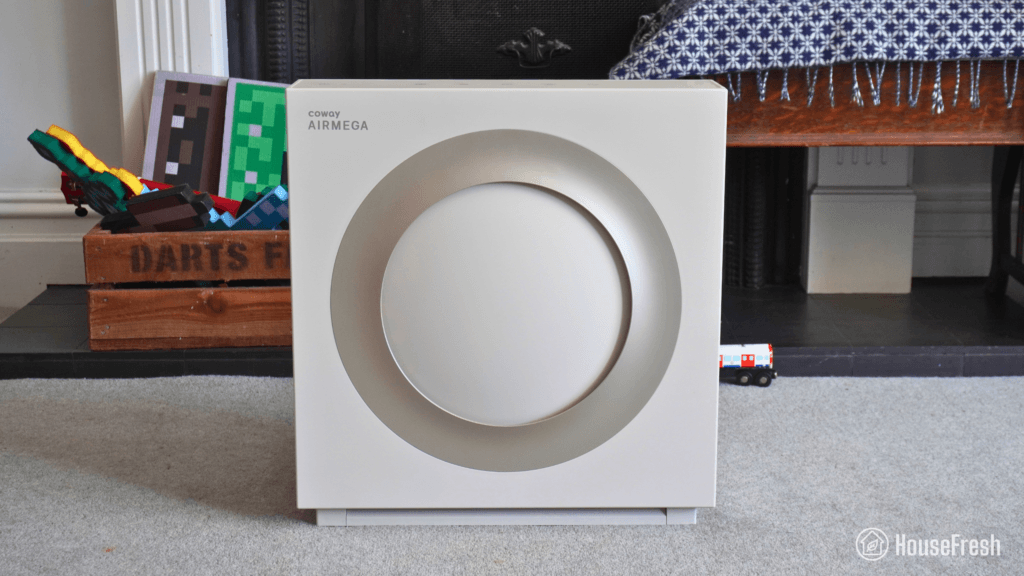
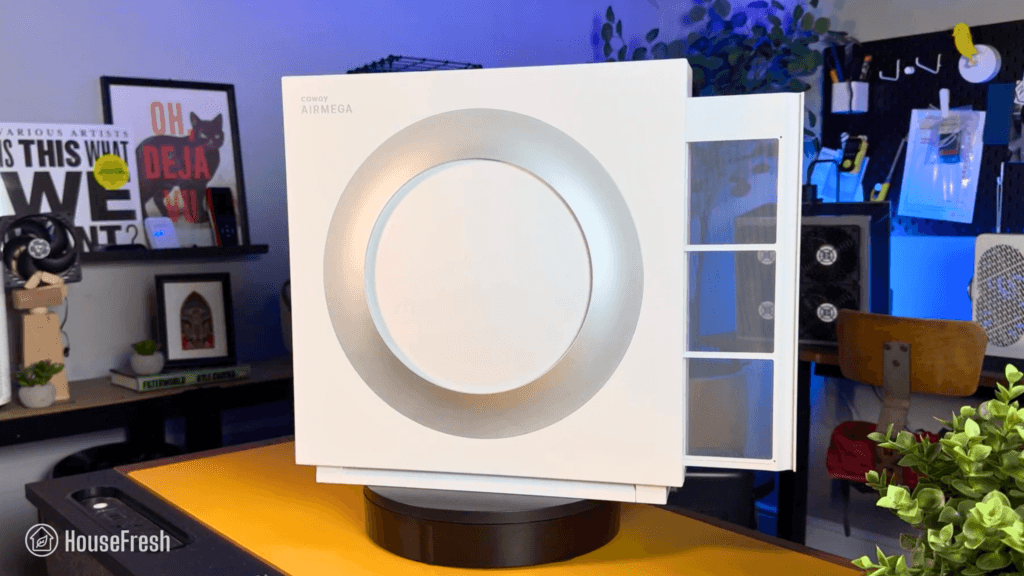
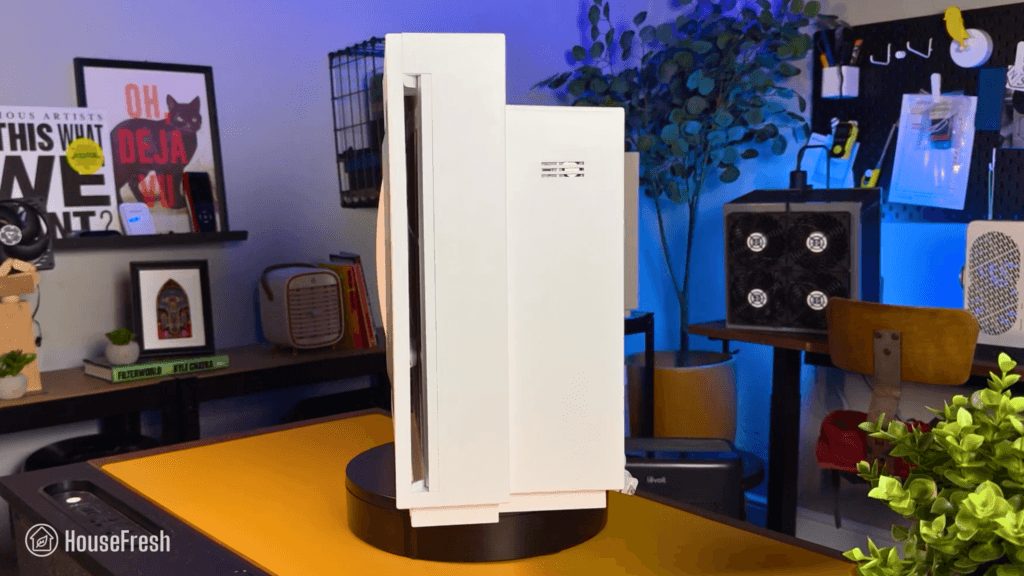
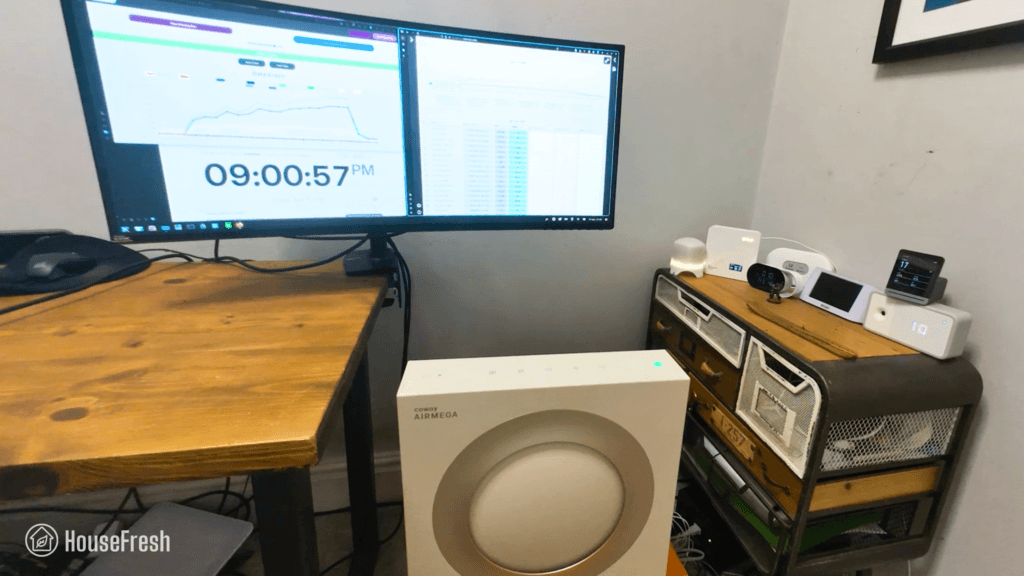
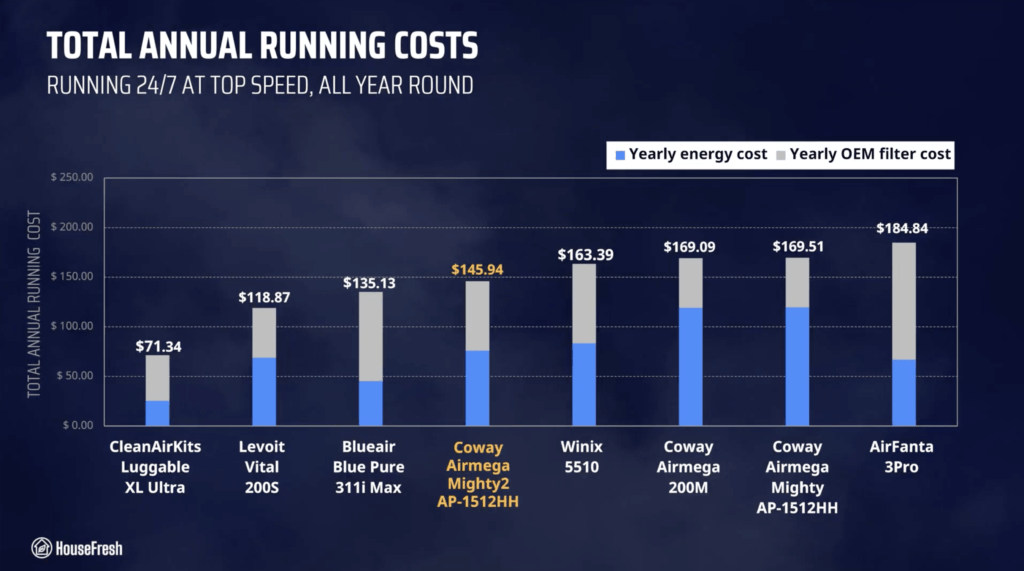
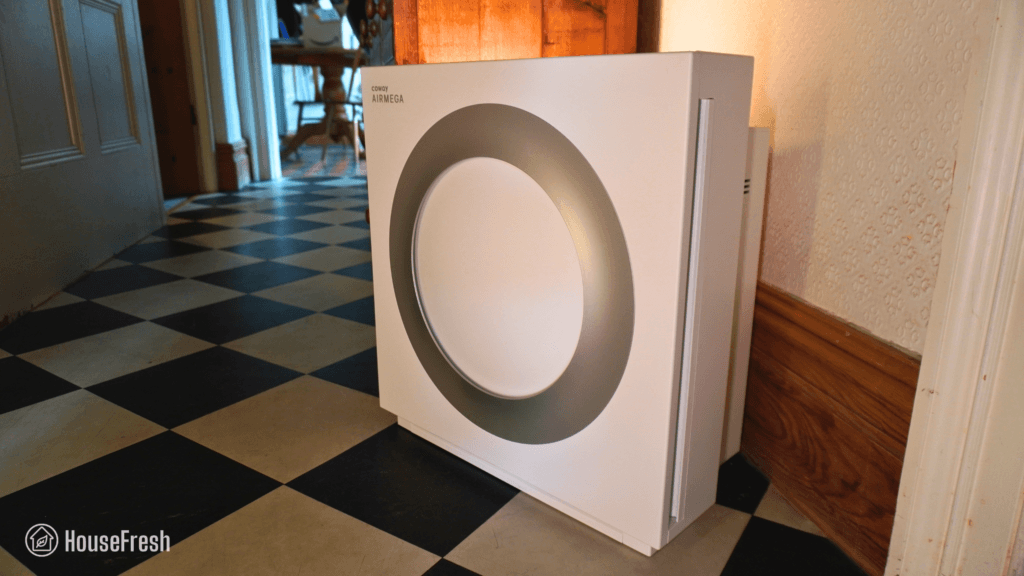
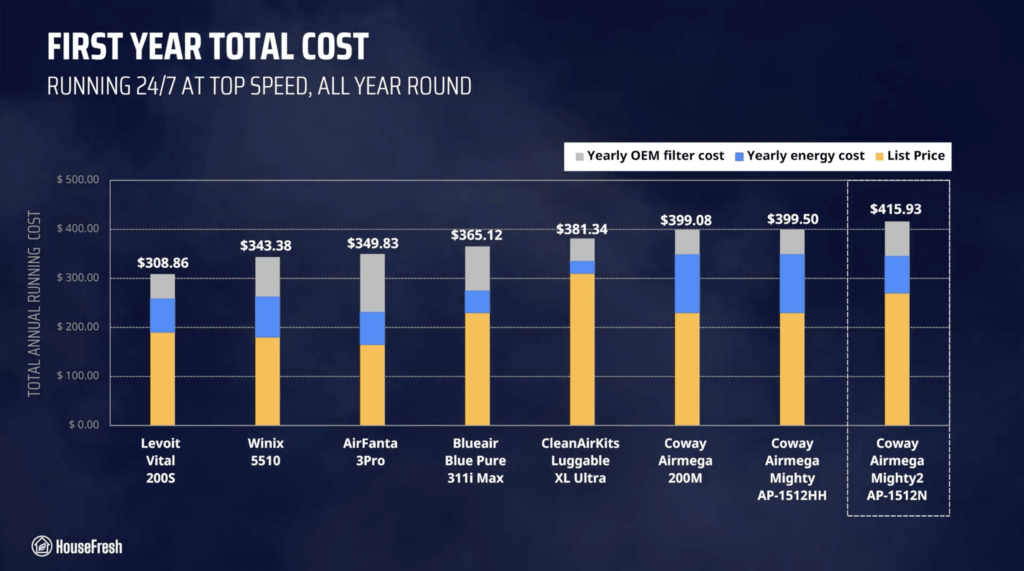
The Mighty2 is a new air purifier from Coway that will tick off all the boxes for most people because it costs just $269.99, fits small to medium-sized rooms, comes with activated carbon as default, has a high-quality laser sensor that unlocks smart features AND it offers excellent performance.
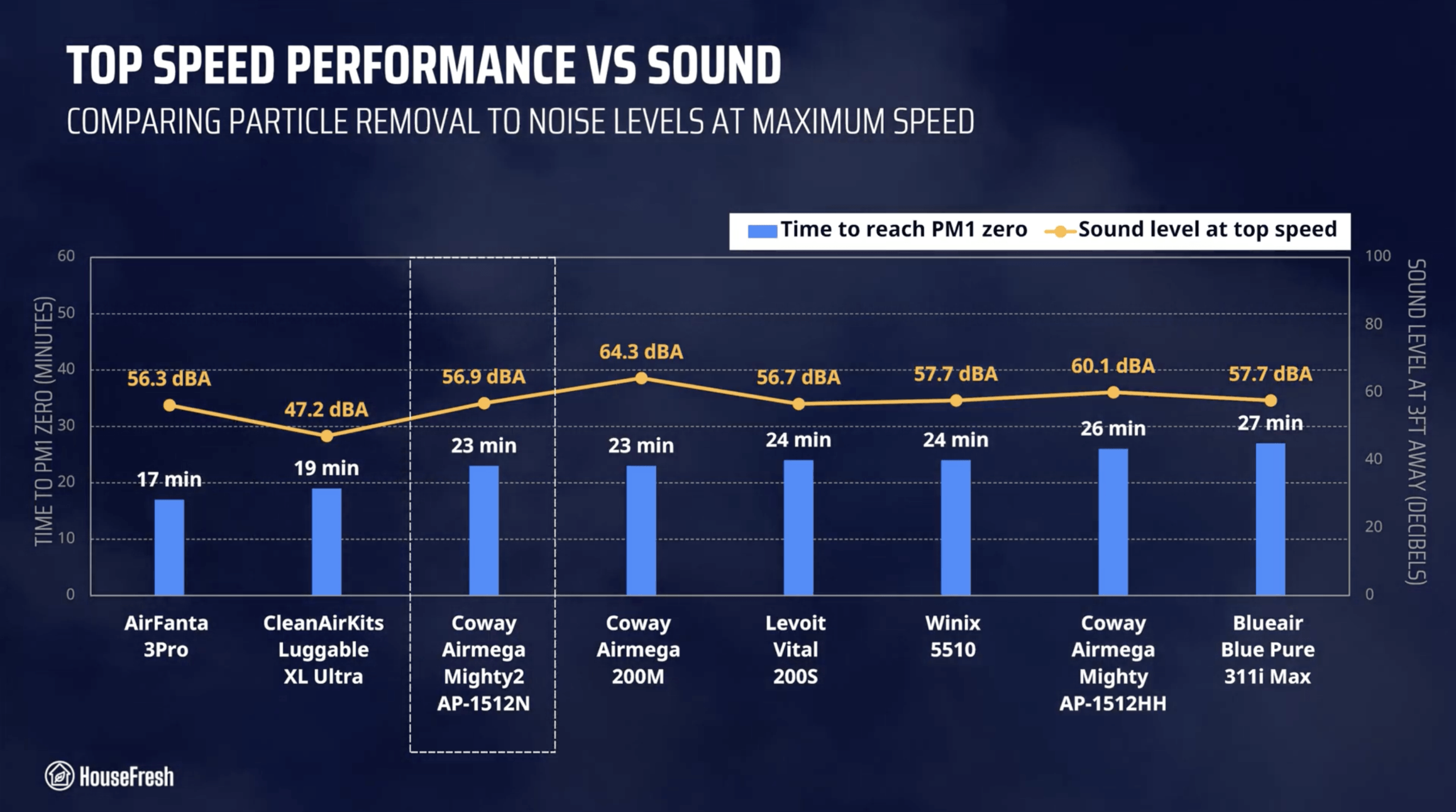
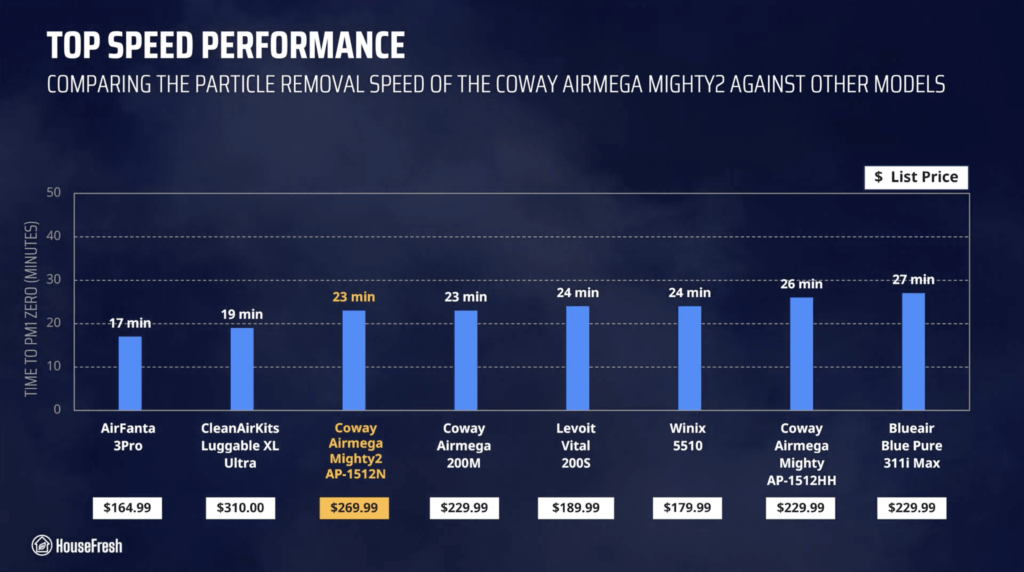
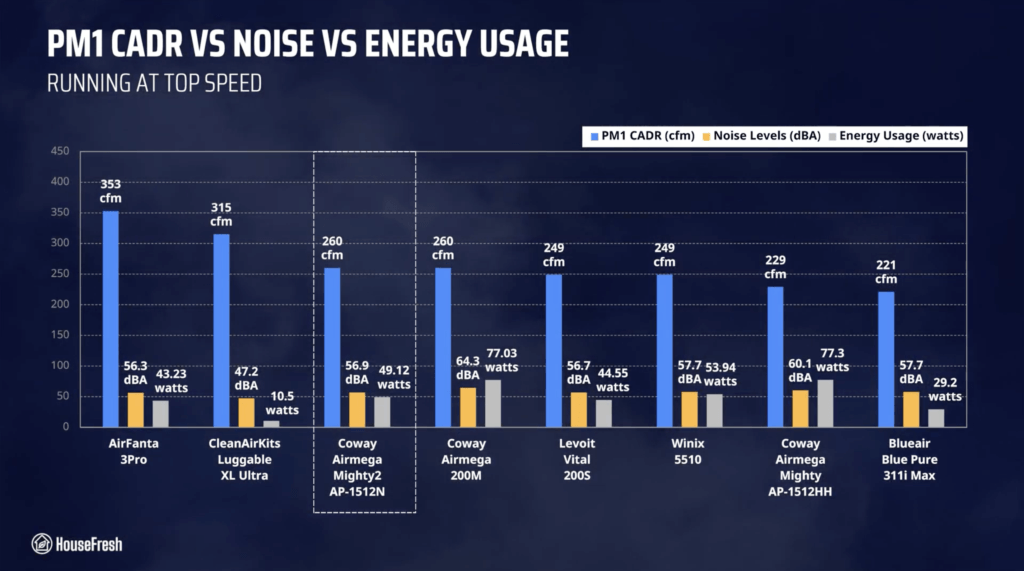
It completed our particle removal test in 23 minutes, outperforming popular models from Levoit, Winix and Blueair while generating less noise.
Based on this result, we estimate a PM1 CADR of 260 cfm, which will be powerful enough to provide five air changes per hour in rooms up to 36m2 (or 390 sq. ft.) when running at top speed.
It comes with a bonded filter with a particle filter (for pollen and dust) on one side and activated carbon pellets (for odors and gases) on the other.
The Mighty2 also comes with a washable, slidable pre-filter that can be removed to be cleaned without opening the front cover – – less mess, especially for pet owners!
CONS
The carbon and particle filters are bonded, so once the carbon becomes full (within 6-9 months), you will need to replace the entire filter even if the HEPA side still has life in it.
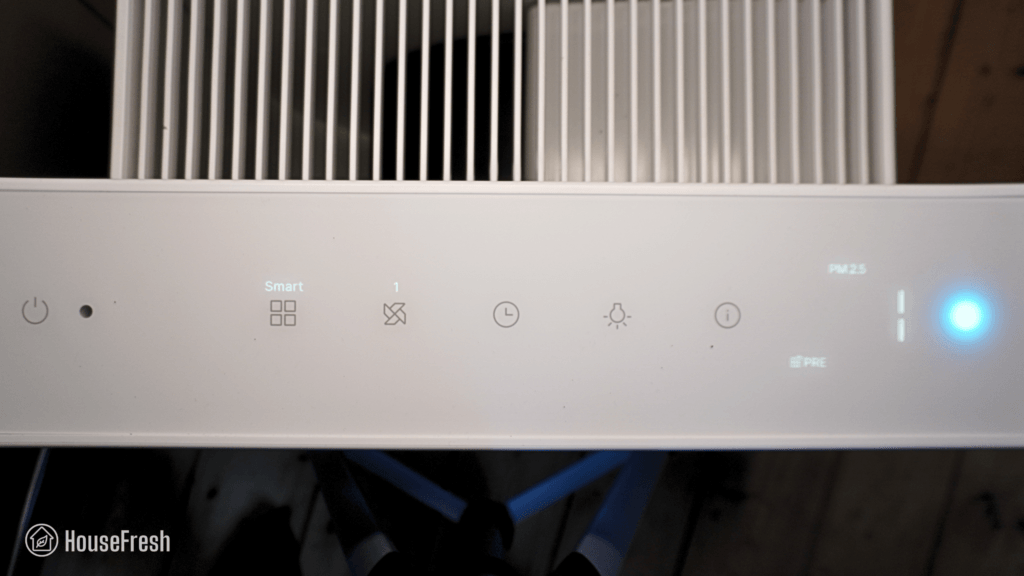
When set to Smart mode, it will automatically go into Sleep mode when the light sensor detects darkness. That is why I recommend leaving it on speed 2 all day.
It doesn’t come with app support, which isn’t something you need in an air purifier but you might expect it.
PROS
It offers excellent performance for an air purifier of this size that sells for less than $300.
The filter is chunkier and larger than what you get with other mid-sized models. Plus, it comes with carbon pellets instead of the carbon-impregnated fabric you get with the old Coway Mighty.
The removable pre-filter slides out without the need of opening the front cover, minimizing dust and fluff floating around when the time comes to clean it.
It comes with a laser particle sensor that responds much faster than the optical sensor you get in other Coway models.
It is smaller than other mid-sized air purifiers, so it won’t be hard to find a spot for it, even in small rooms.
If you’re looking for a mid-sized model that offers everything you get with the Mighty2 plus app connectivity, then I’ve got two other recommendations for you:
The Vital 200S offers similar performance to the Mighty2 at a cheaper price ($189.99) and with app connectivity. The pre-filter is removable and the main filter is bonded, with particle filtration on one side and carbon on the other.
Based on our tests, we estimate a PM1 CADR of 249 cfm, making it powerful enough to provide five air changes per hour in rooms up to 33 m2 (or 360 sq. ft.). READ MY FULL REVIEW ➜
Use the discount code HOUSE10 for 10% off when buying directly from Levoit.
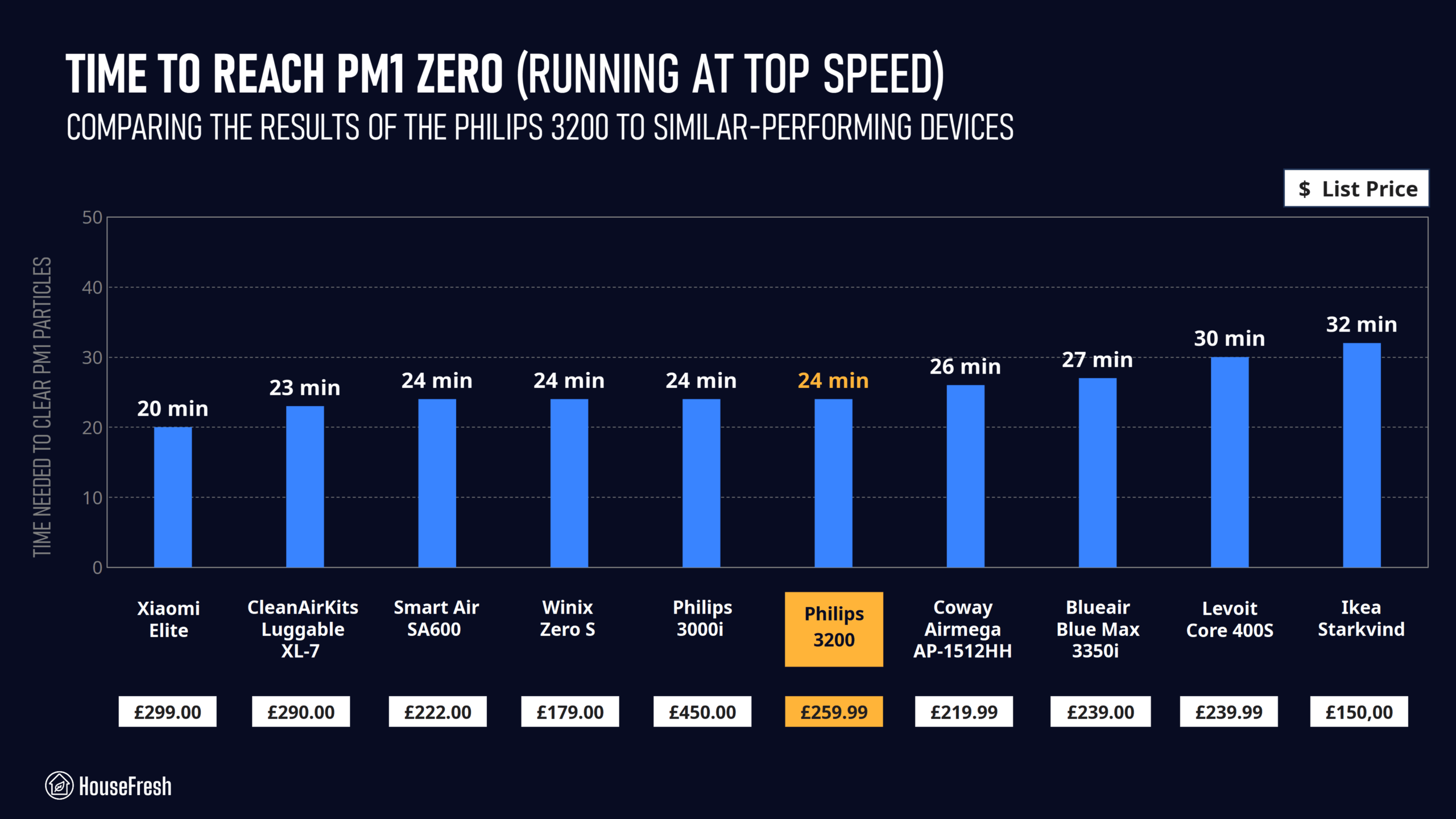
The Philips 3200 is a great option for those living in Europe, Asia and Oceania, where the Mighty2 and the Vital 200s are rare. It comes with smart features, app support and a lamp function for just £240 (or €260).
Based on our tests, we estimate a top speed PM1 CADR of 249 cfm, so it can provide five air changes per hour in spaces up to 33 m2 (or 360 sq. ft.). READ MY FULL REVIEW ➜
If you care about one thing — maximum air cleaning at the minimum price — the 3Pro is untouchable.
Use the discount code HOUSEFRESH for 5% off when buying directly from AirFanta.
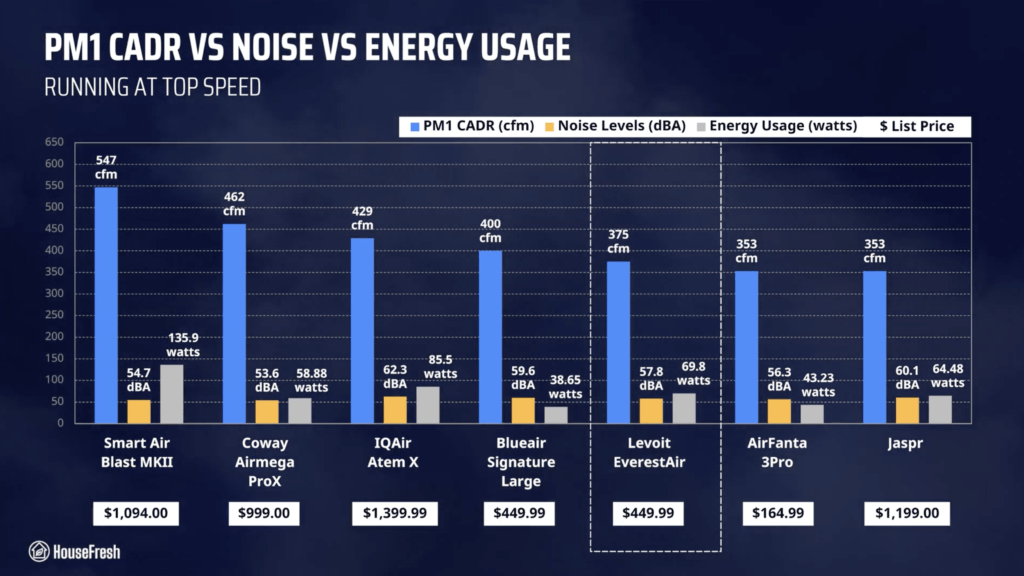
The AirFanta 3Pro is a PC fan-powered air purifier that broke the mold. Based on our tests, we estimate a PM1CADR of 353 cfm, which is incredible considering its low price of $159.99. This makes the 3Pro capable of providing five air changes per hour in rooms up to 49 m2 (529 sq. ft.).
The 3Pro is a small box with a plastic base, an H11 HEPA filter on each side, and four PC fans on top.
You can disassemble and reassemble it in a few minutes and it fits inside a carry-on suitcase or large backpack – a good travel option.
In terms of size, the 3Pro is relatively small and can fit comfortably on top of a side table or windowsill.
But don’t let its size trick you into thinking this is not a powerful unit. The 3Pro outperforms units twice its size that cost three times as much.
CONS
The design is not for everyone, with a subscriber describing it to me as “a sci-fi toaster”.
It has no smart features, no air quality sensor, and no app support.
It’s in high demand, so it is often out of stock on Amazon. If you can’t find it on Amazon, check the official AirFanta shop.
You will have to build it yourself, but it takes just a couple of minutes to do so.
PROS
It offers the best performance for $ spent across the 130+ air purifiers we tested.
It is the only high-CADR air purifier you can fit in a backpack.
The use of PC fans makes it quieter and more energy-efficient than most traditional retail air purifiers.
It comes with an AC-to-DC power adapter that includes a dial to adjust the voltage and sound levels.
A small cylindrical air purifier with an onboard sensor and app support that is powerful enough to clean the air in rooms up to 23 m2 (or 247 sq. ft.)
Amazon is full of small air purifiers that cost next to nothing. But unfortunately, the vast majority of them are too underpowered to make a meaningful difference to your air. After testing nearly 40 small air purifiers, my top pick right now is the Eleva 300X from Levoit.
At top speed, it completed our test faster than most other small units. With a PM1 CADR of 165 cfm, it can clean the air 5 times/hour in rooms up to 23 m2 (or 247 sq. ft.).
The only exception is the Blue Pure 511i Max, which offers higher performance with quieter operation and less energy consumption. However, I know many people prefer to stay away from ionizers and the one inside the 511i Max cannot be disabled.
You get a pleated HEPA filter for particles and a gas filter for odors. There are different gas filters, with the Premium one packing the largest amount of activated carbon pellets.
It has a laser sensor that informs and air quality indicator light on top that changes color based on the quality of your air. You also get smart functions like auto mode (that reacts to particle pollution) and dynamic mode (which you can set from the app).
CONS
You must register the filters to pair them to the device. If you don’t do this, you lose the filter lifespan tracking function.
The use of AI in the data reporting seems to add complexity and lag for no obvious benefit.
It is power-hungry and filters aren’t cheap compared to other small air purifiers I’ve tested.
PROS
It offers excellent value for your money! It has the lowest cost per CADR across all other small units I’ve tested.
Its performance at quiet fan speeds rivals that of the $349 Dyson HushJet Compact but for a much cheaper price.
You get two separate filters for particles and gases – no more all-in-one cylindrical filters you’ll be throwing away sooner than you need to.
It comes with a high quality laser sensor that provides data on PM1, PM2.5 and PM10 particle levels.
The new app enables a Dynamic Manual mode I’m in love with: you can manually set your Eleva to run at speed 2, for example, while also allowing it to momentarily go up to Turbo whenever the sensor notices a rise in pollutants.
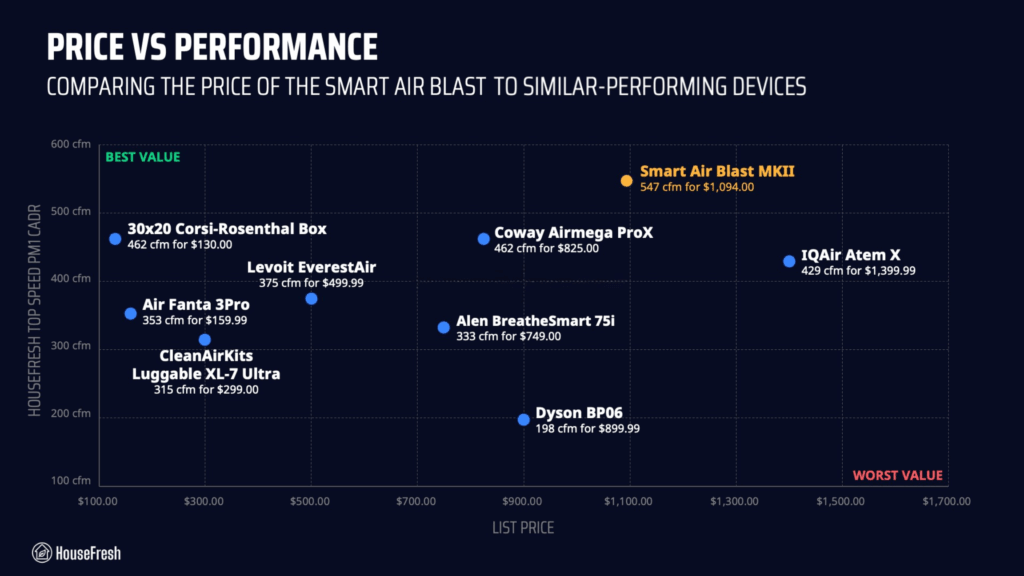
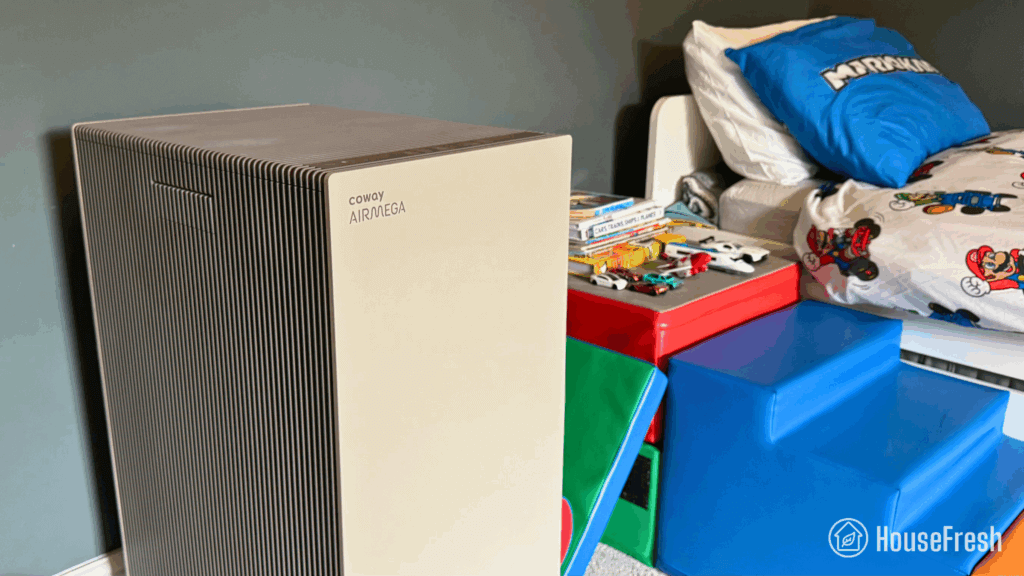
The ProX offers an impressive PM1 CADR of 462 cfm, smart modes, and an accurate air quality sensor for just over $800.
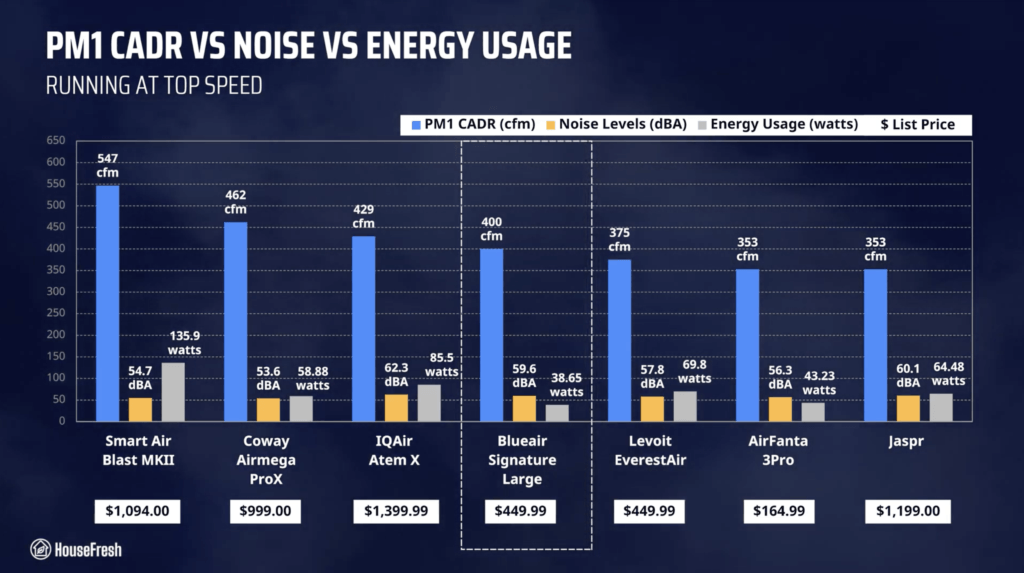
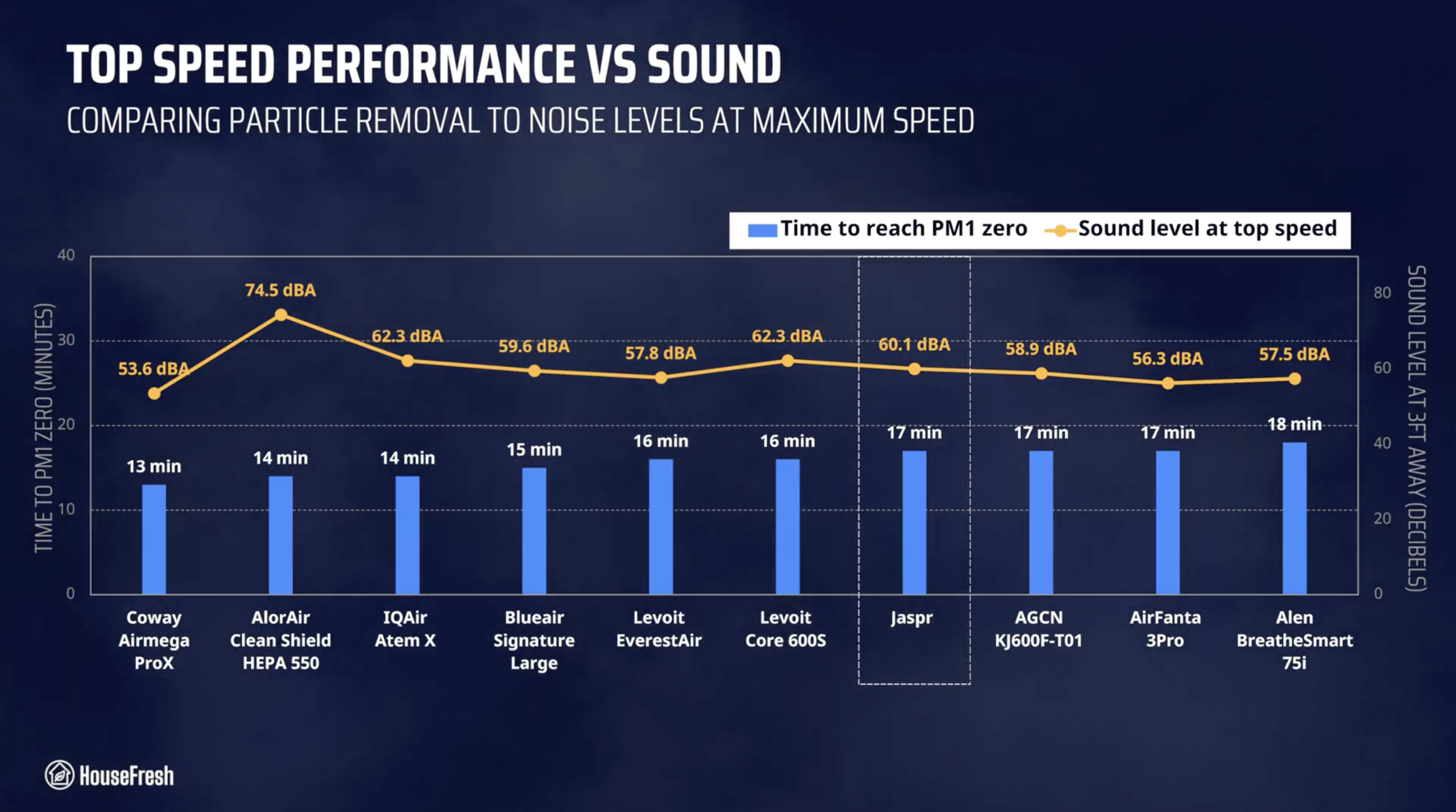
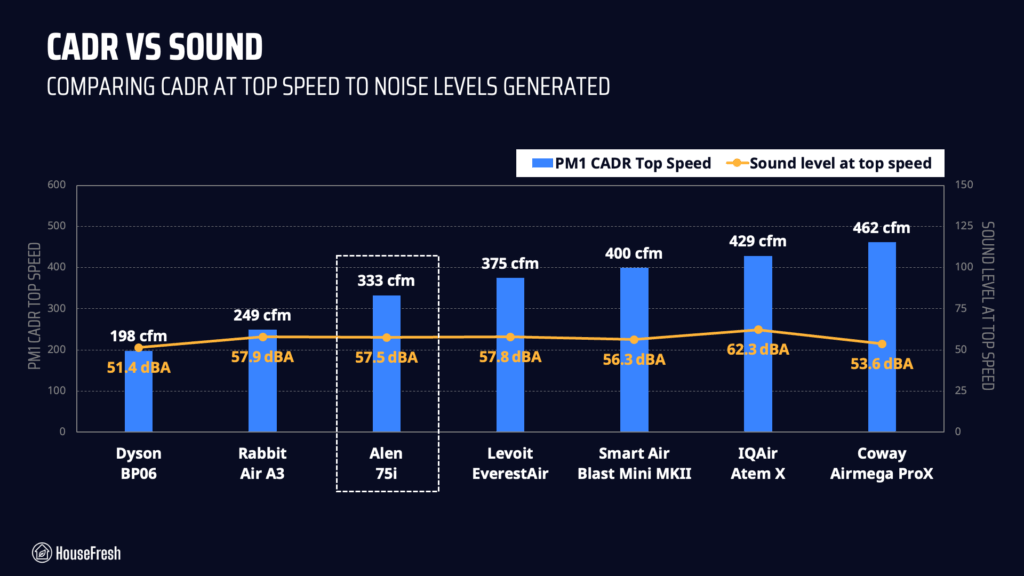
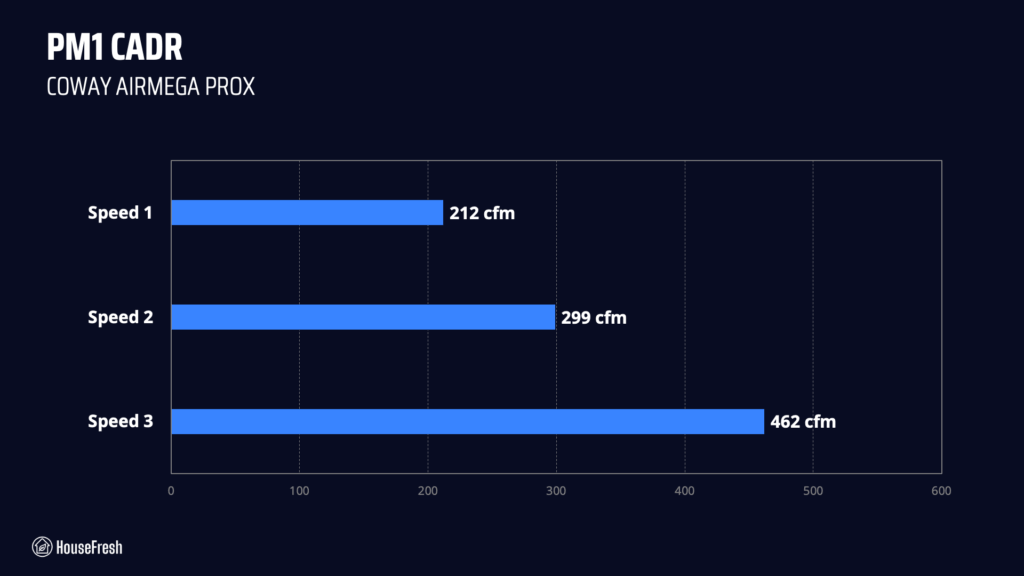
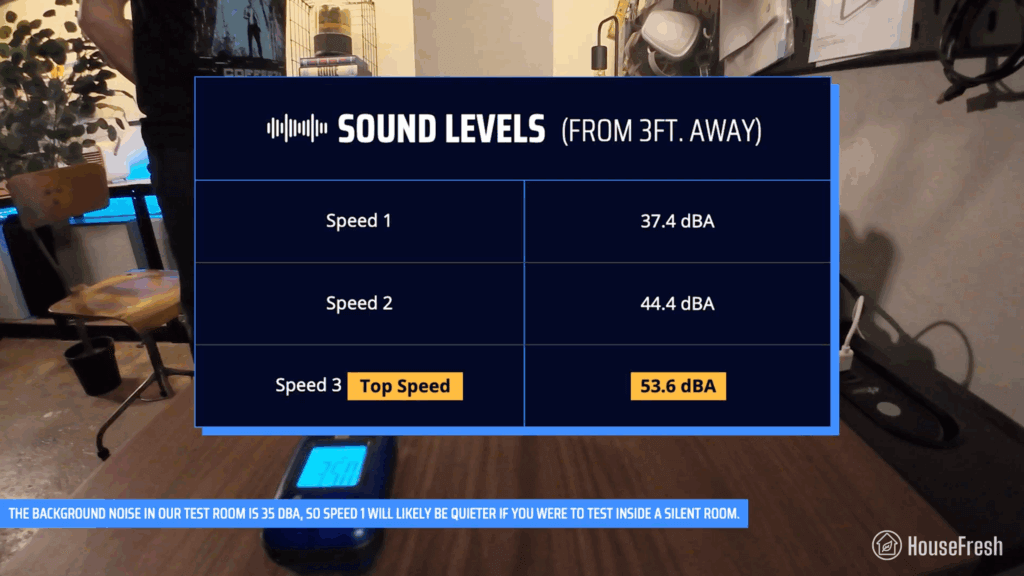
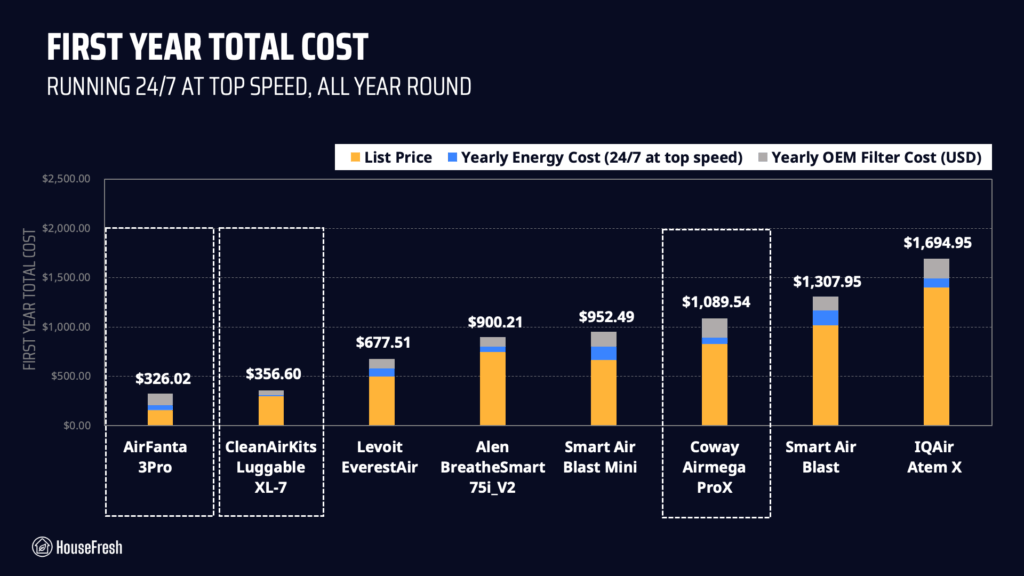
The Airmega ProX from Coway is a large, powerful air purifier that can offer five air changes per hour in spaces up to 64 m2 (or 693 sq. ft.). Running at top speed, it generates 53.6 dBA and has an estimated PM1 CADR of 462 cfm.
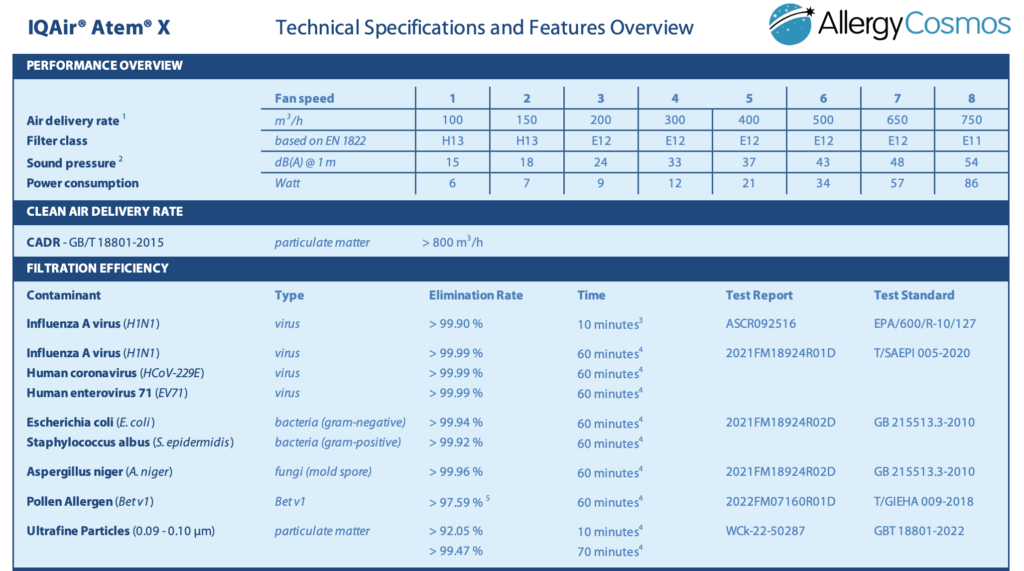
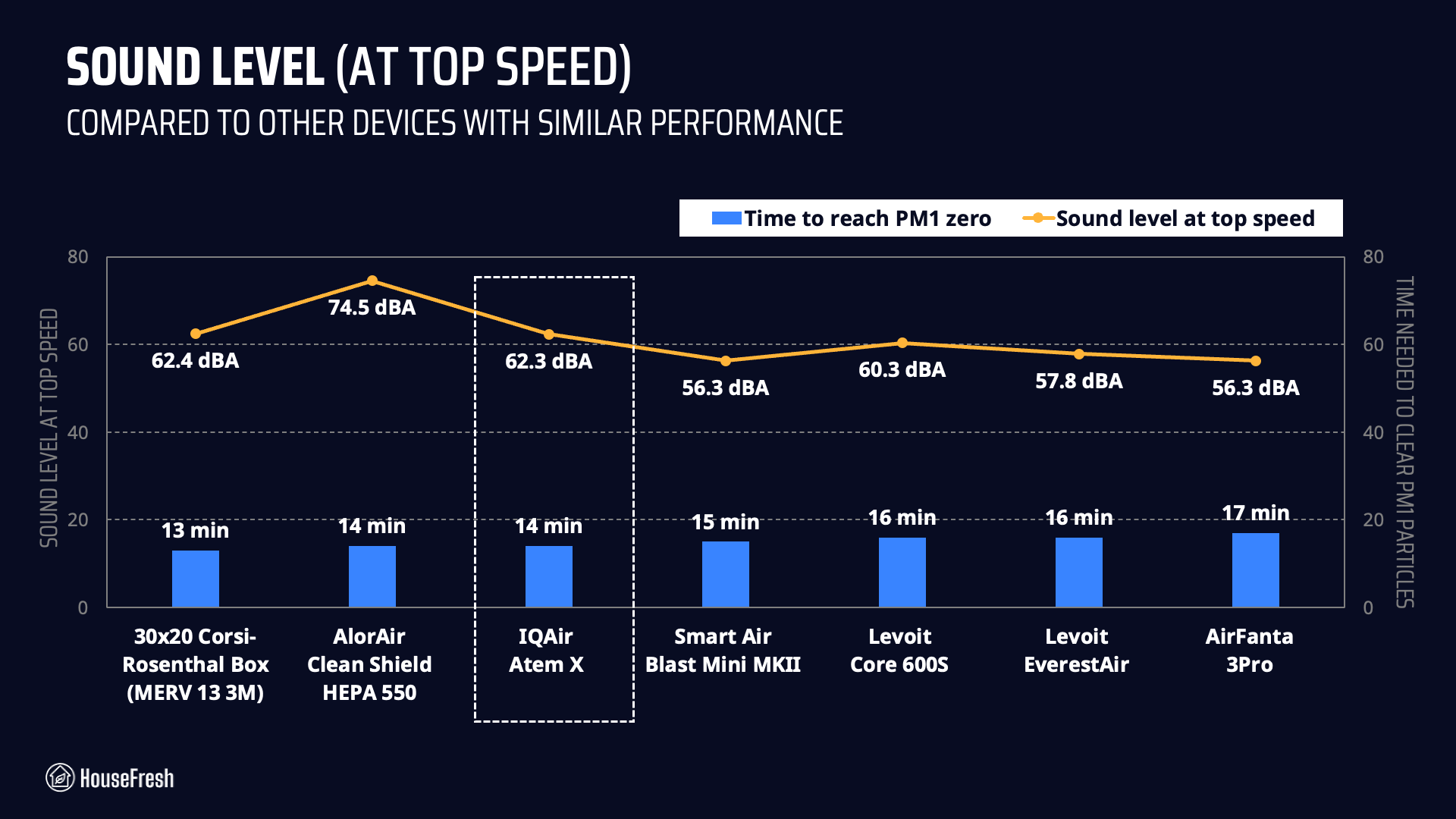
In our tests, it outperformed the $1,400 IQAir Atem X and currently ranks at the top of our leaderboard for large residential air purifiers.
And when it comes to sound, the ProX is the only traditional air purifier that comes close to the quiet performance we saw from the PC fan models.
You get double filtration, with a True HEPA filter and a pelleted carbon filter at each side of the device. The lifespan of the filters is 12 months.
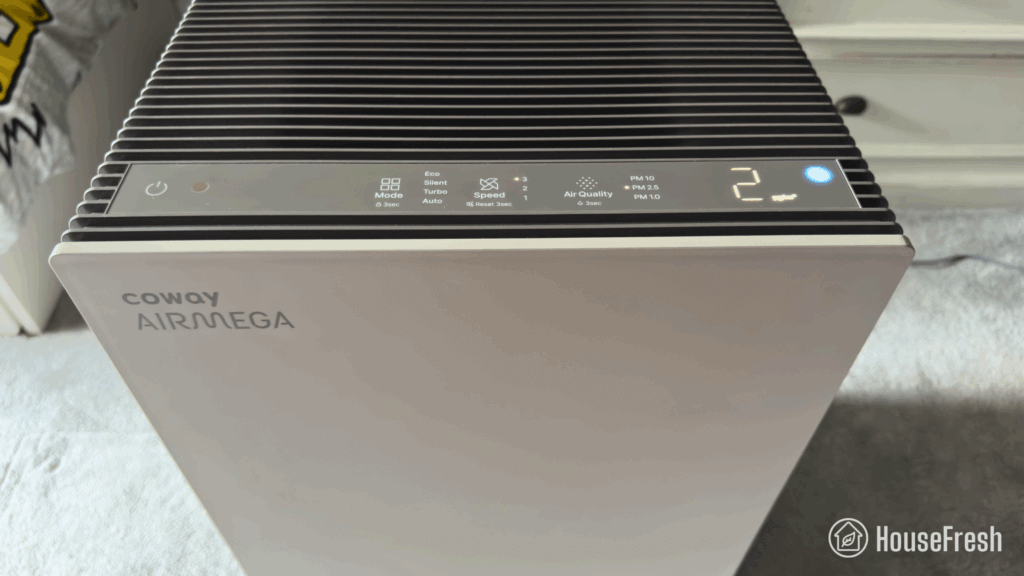
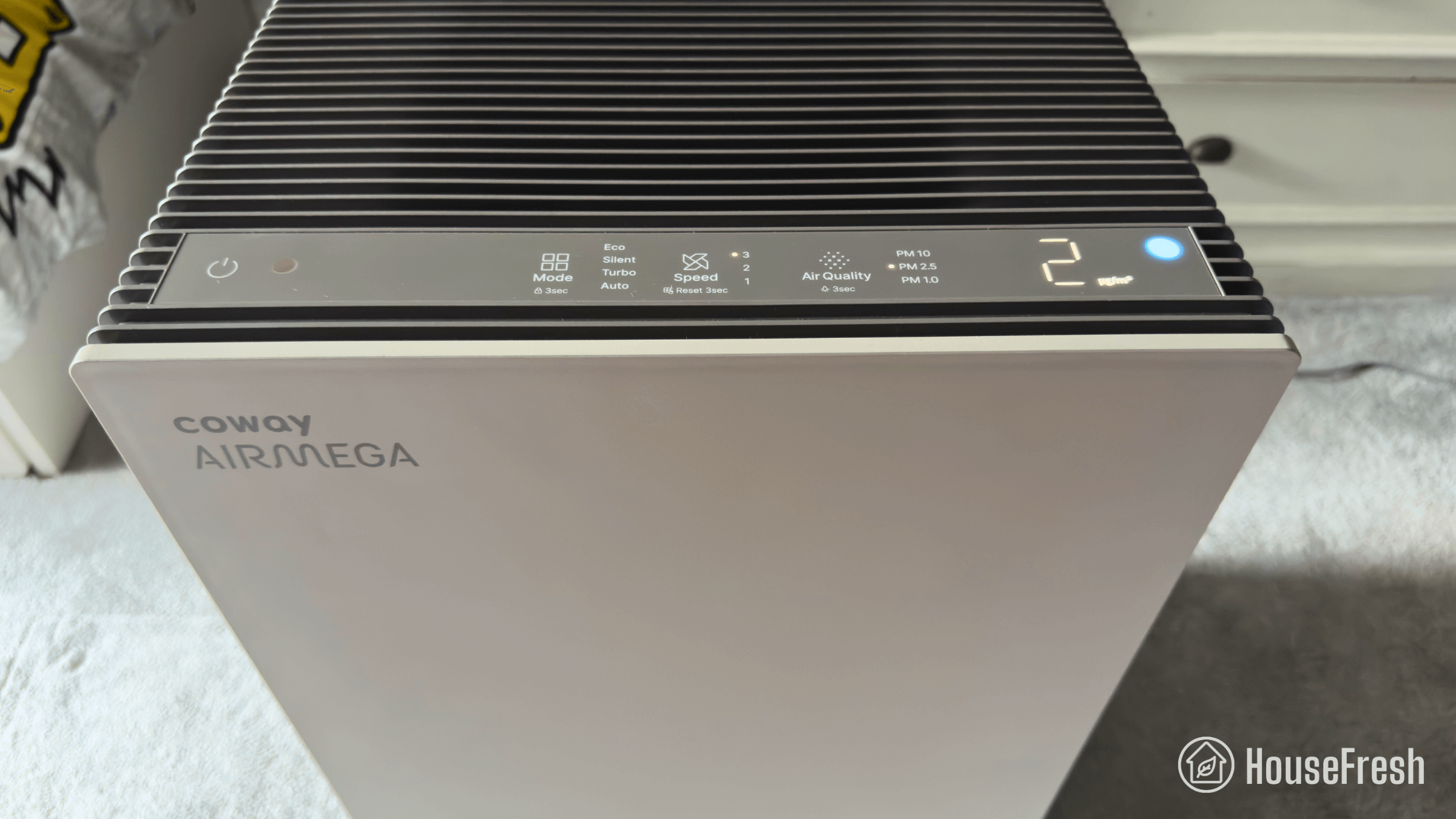
The ProX lacks app support, but it has a laser sensor and four smart modes: eco, silent, turbo + auto. You also get real-time particle readings on screen.
CONS
It is not cheap, with a list price just over $800.
Occasionally, you may accidentally open the side covers when using the side handles to lift the ProX, if you need to move it around the house in areas where the wheels may get stuck.
It doesn’t come with app connectivity, which some people might expect to get when paying upwards of $800.
PROS
It’s the fastest residential air purifier we tested, ranking 2nd after the commercial beast that is the Smart Air Blast – we estimate a PM1 CADR of 462 cfm.
It comes with an onboard air quality sensor and shows real-time particle readings on screen paired with a color-coded LED light at the top of the device.
It features four smart modes, giving you more flexibility based on how much power, noise, or energy consumption you want.
It is made of high-quality materials and looks great.
For less than $300, the Levoit Core 600S comes with a laser air quality sensor, auto-mode, and even app support. It offers the most bang for your buck, with a PM1 CADR of 375 cfm that will clean the air five times per hour in rooms up to 52m2 (562 sq. ft.). READ MY FULL REVIEW ➜
Use the discount code HOUSE10 for 10% off when buying directly from Levoit.
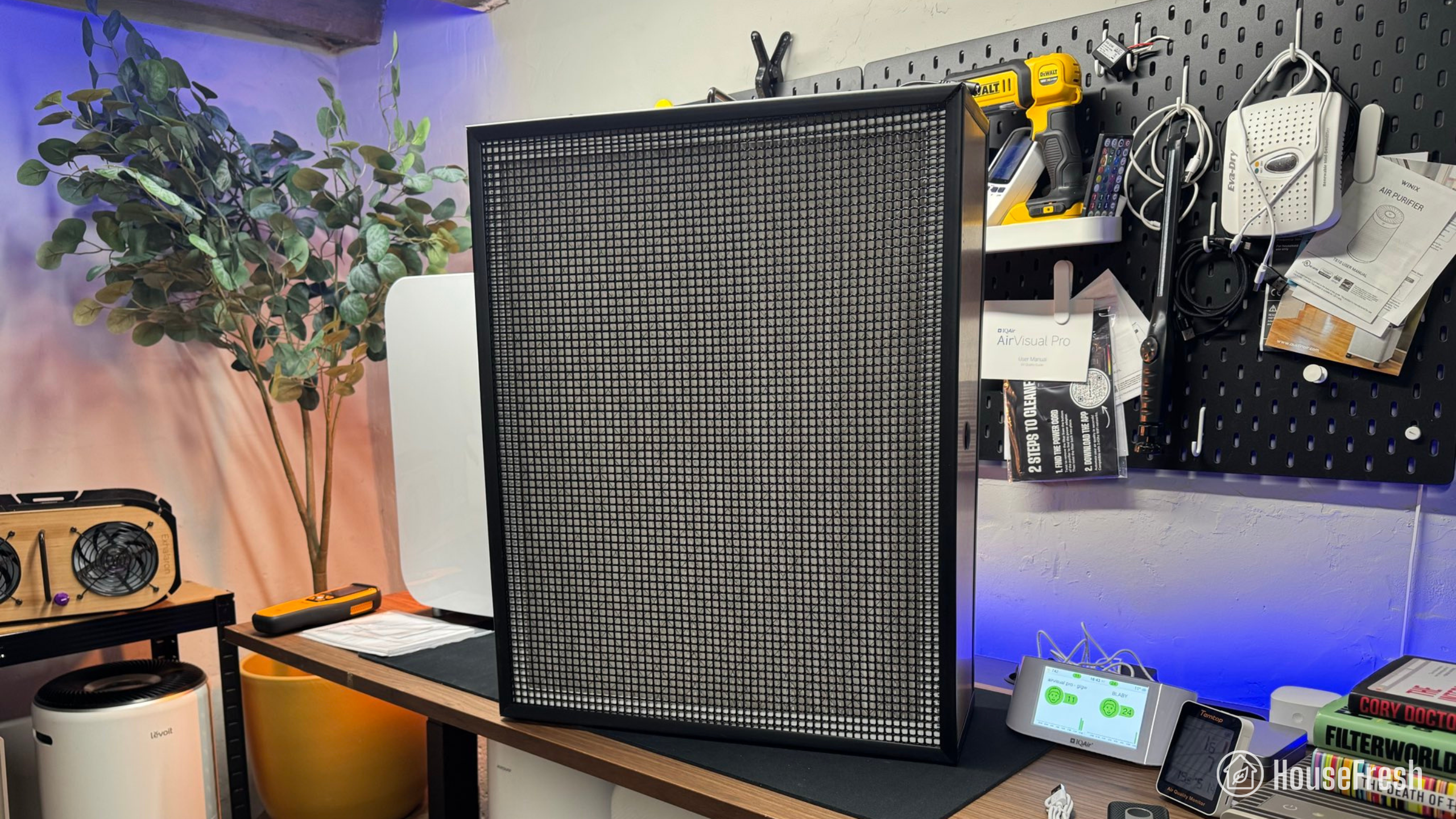
If odors are your primary focus, my top pick is the AC Infinity CLOUDLINE S8 fan and one of their 8-inch refillable carbon filters.
To remove serious odors and gases from your air, you need to look beyond the standard air purifiers, as they usually come with a small amount of carbon that will become saturated quickly in spaces with high levels of VOCs. My top recommendation is to build yourself your own odor-busting device using parts from AC Infinity.
Although many air purifiers come with activated carbon filters, these usually come with small quantities of carbon. Now, this is where the AC Infinity CLOUDLINE S8 truly shines, thanks to its carbon filter packed with 16 lbs of activated carbon.
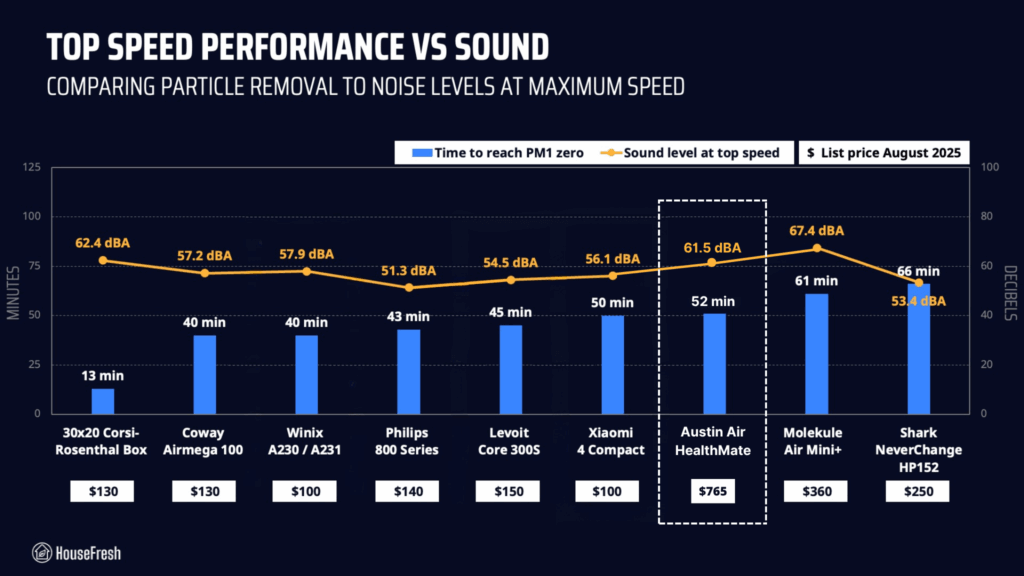
In our VOC removal tests, the AC Infinity CLOUDLINE S8 was the quickest, outperforming the mighty Austin Air HealthMate. Now, performance dropped when set to its highest fan speed – – better stick to speed 5 and below.
By the way, when using it on the floor, the fan blades are exposed. We’ve got children in the house so I fixed this by cutting out a piece of carbon-impregnated fabric for the top that keeps the blades away from little hands.
CONS
This device only removes VOCs from the air. You won’t get any particle filtration, so you will need to use it alongside an air purifier if you want to remove particles as well as gases and smells.
This isn’t a traditional air purifier. You have to build it yourself and it doesn’t come with any fancy touchscreens or smart features.
It is LOUD. When set to speed 5 (optimal speed), it generates 61.9 decibels. The good news is that VOC removal improves at lower fan speeds.
PROS
The 8-inch carbon filter comes with 16 lbs (or 7.2 kg) of activated carbon, which is the largest amount we have seen.
It is much cheaper than specialist odor-busting units from Austin Air, Allerair and Airpura can cost as much as $1,000.
This filter is refillable, so once the carbon is used up, you can dispose of it and refill the cylinder with more carbon.
The price of a years’s worth of carbon is just $89.99! This is A LOT more accessible than the nearly $400 you’re expected to spend on filter replacements with other specialist brands.
Filter technology:
VOC and odor adsorption
Carbon type:
Australian RC412 at 1200+ IAV (38mm thickness)
Carbon quantity:
16 lbs (7.2 kg)
Airflow:
857 cfm
Dimensions:
Fan: 3.3 x 2.9 x 0.5 inches (8.5 x 3.6 x 1.3 cm) Filter: 18.1 x 10.9 inches (46 x 27.7 cm)
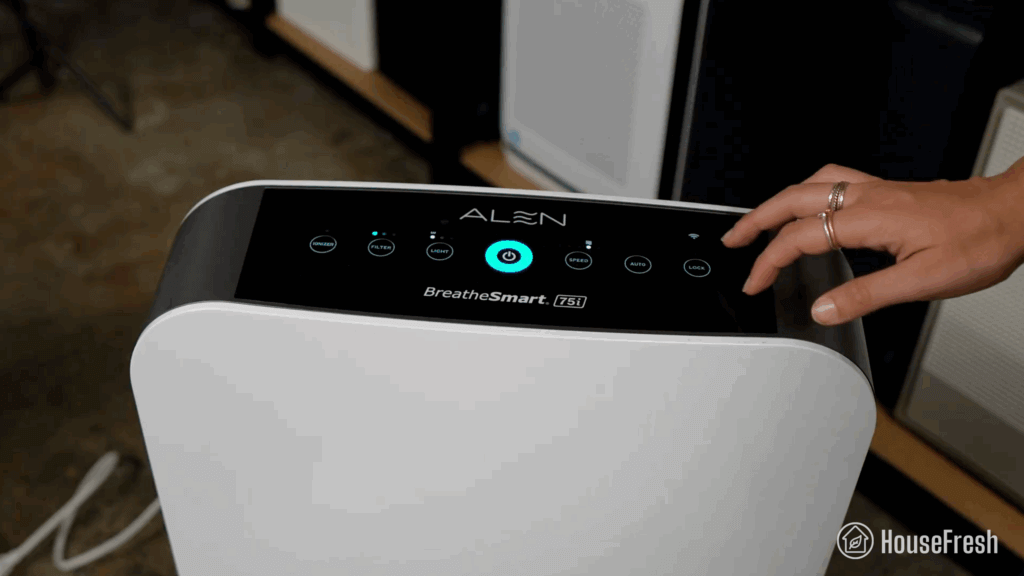
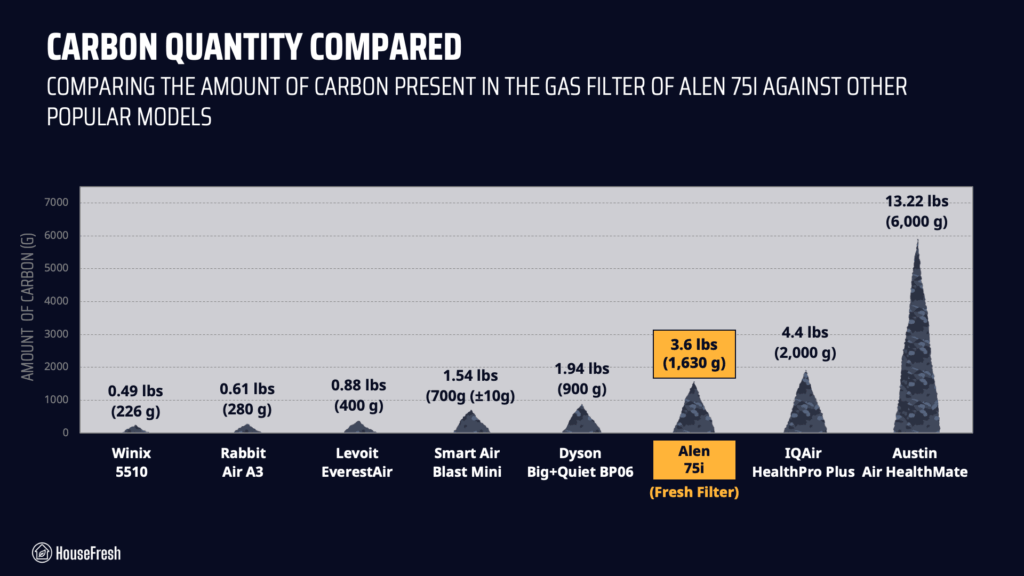
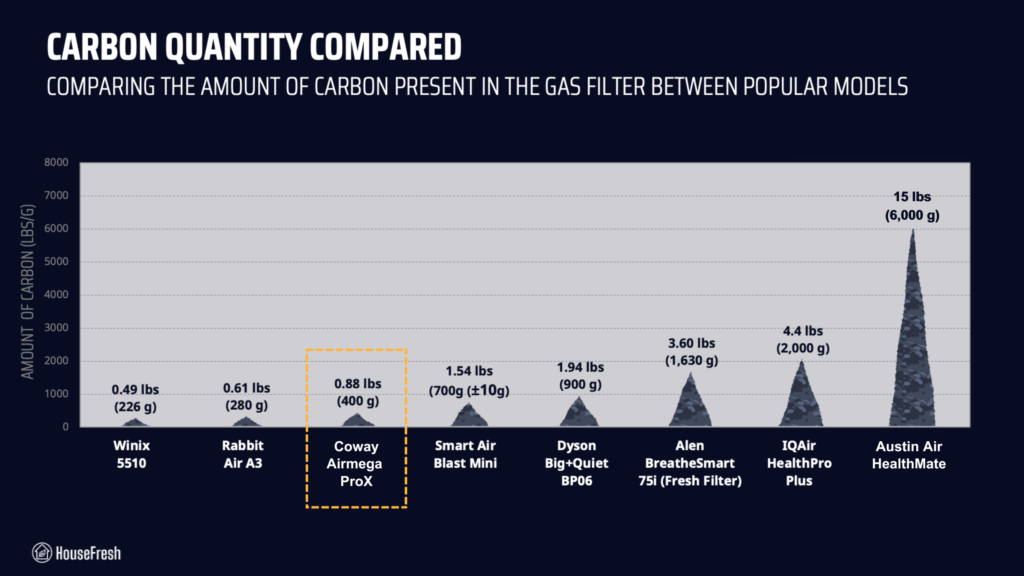
I highly recommend the Alen BreatheSmart 75i V2. It comes with 3.6 lbs of pelleted activated carbon but was still able to clear our test room in just 18 minutes. Based on this result, we estimate a PM1 CADR of 333 cfm, which will be good enough to clean the air five times per hour in rooms no larger than 41 m2 (448 sq. ft.) WATCH MY VIDEO REVIEW ➜
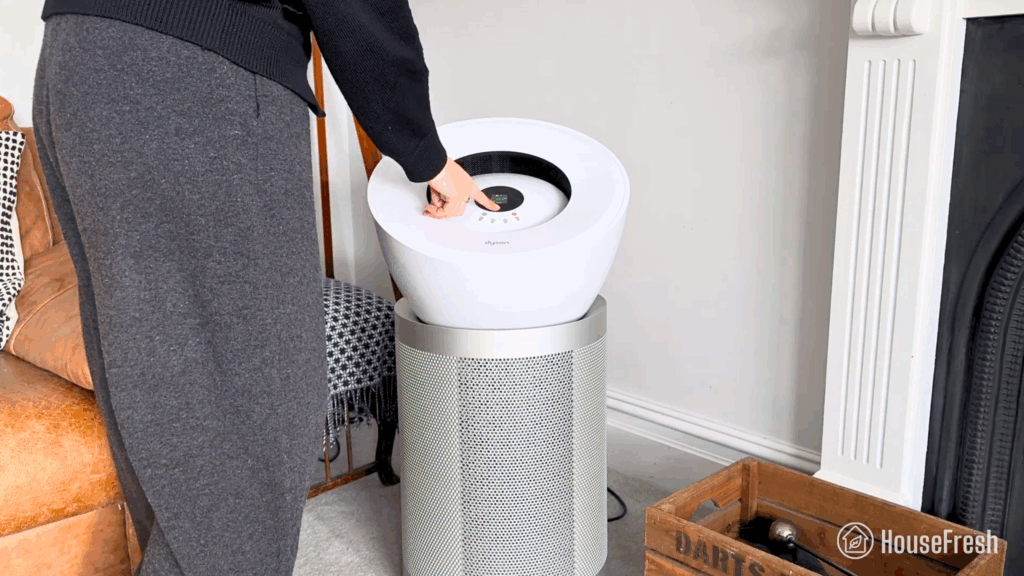
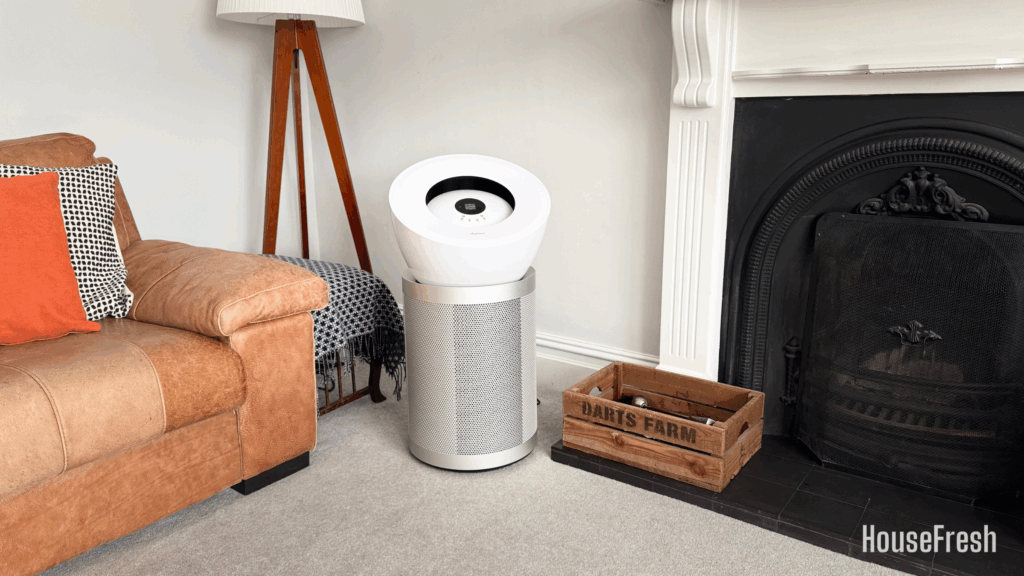
If you don’t mind paying for the Dyson tax, check out the Dyson Big+Quiet BP06, with its 1.94 lbs of carbon and super quiet operation, but still boasting good particle removal performance. Based on our tests, we estimate a PM1 CADR of 198 cfm so this is a good choice for rooms up to 27 m2 (297 sq. ft.) WATCH MY VIDEO REVIEW ➜
If you’re looking for an air purifier with large amounts of carbon, then the Austin Air HealthMate might be the one. It comes with 16 lbs of activated carbon and zeolite mix and reached excellent results in our VOC removal test, second only to the AC Infinity. Its particle removal performance isn’t great though, with an estimated PM1 CADR of 160 cfm that will keep the air clean in rooms smaller than 15 m2 (169 sq. ft.) WATCH MY VIDEO REVIEW ➜
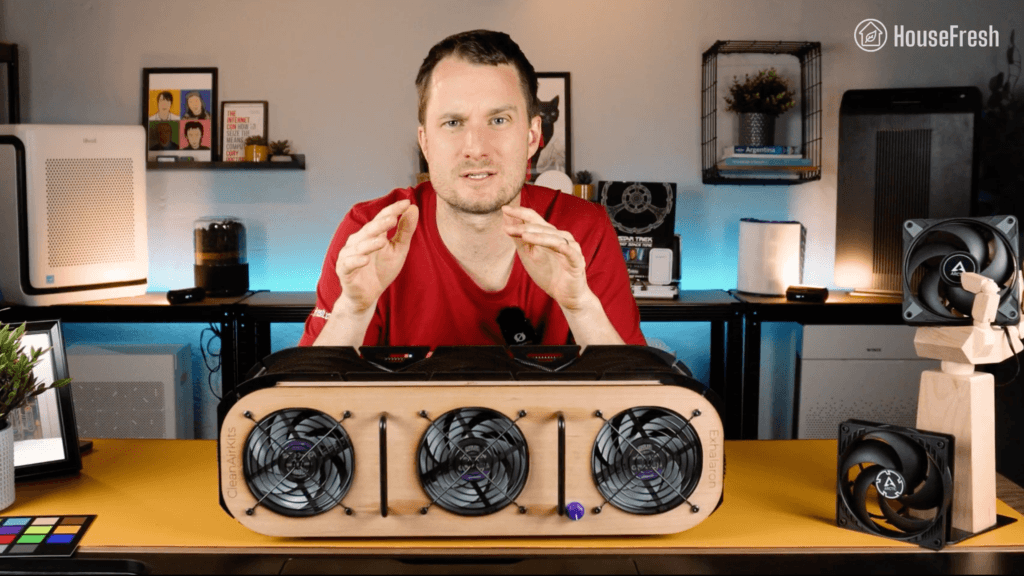
After testing multiple portable air purifiers, I’m confident that the Triple Exhalaron is the only one you can use on the go with a battery pack that will provide enough clean air to make it useful.
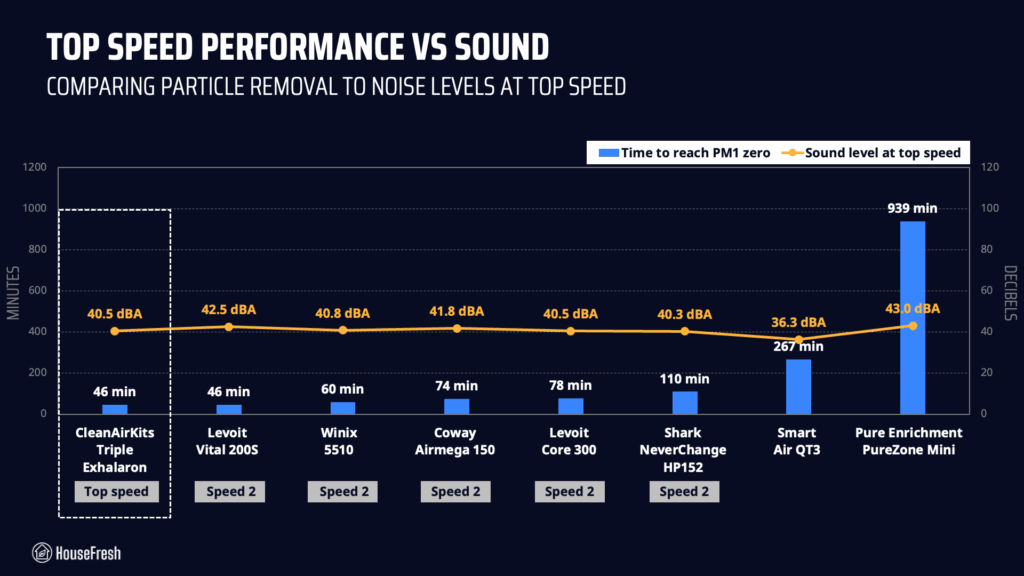
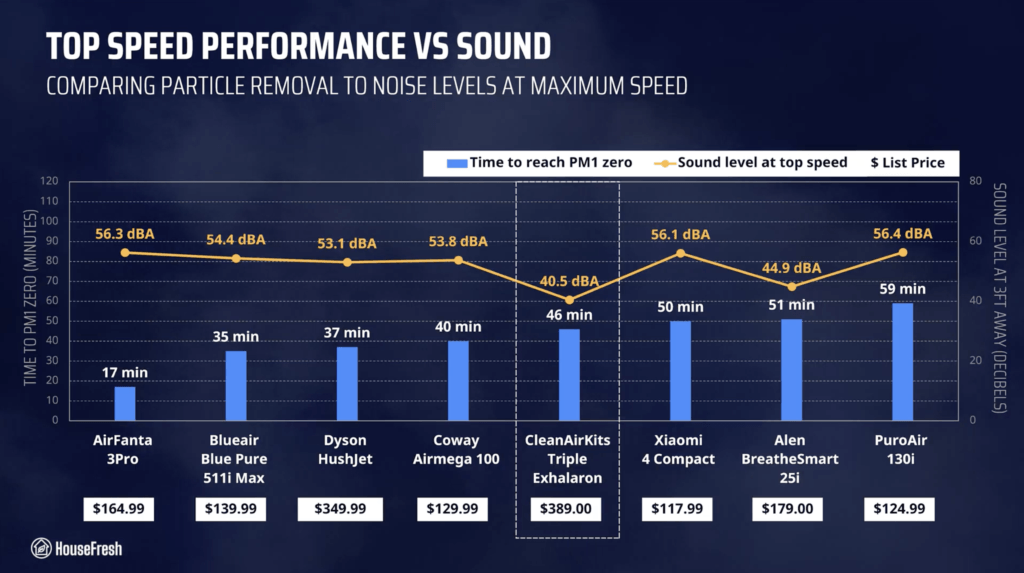
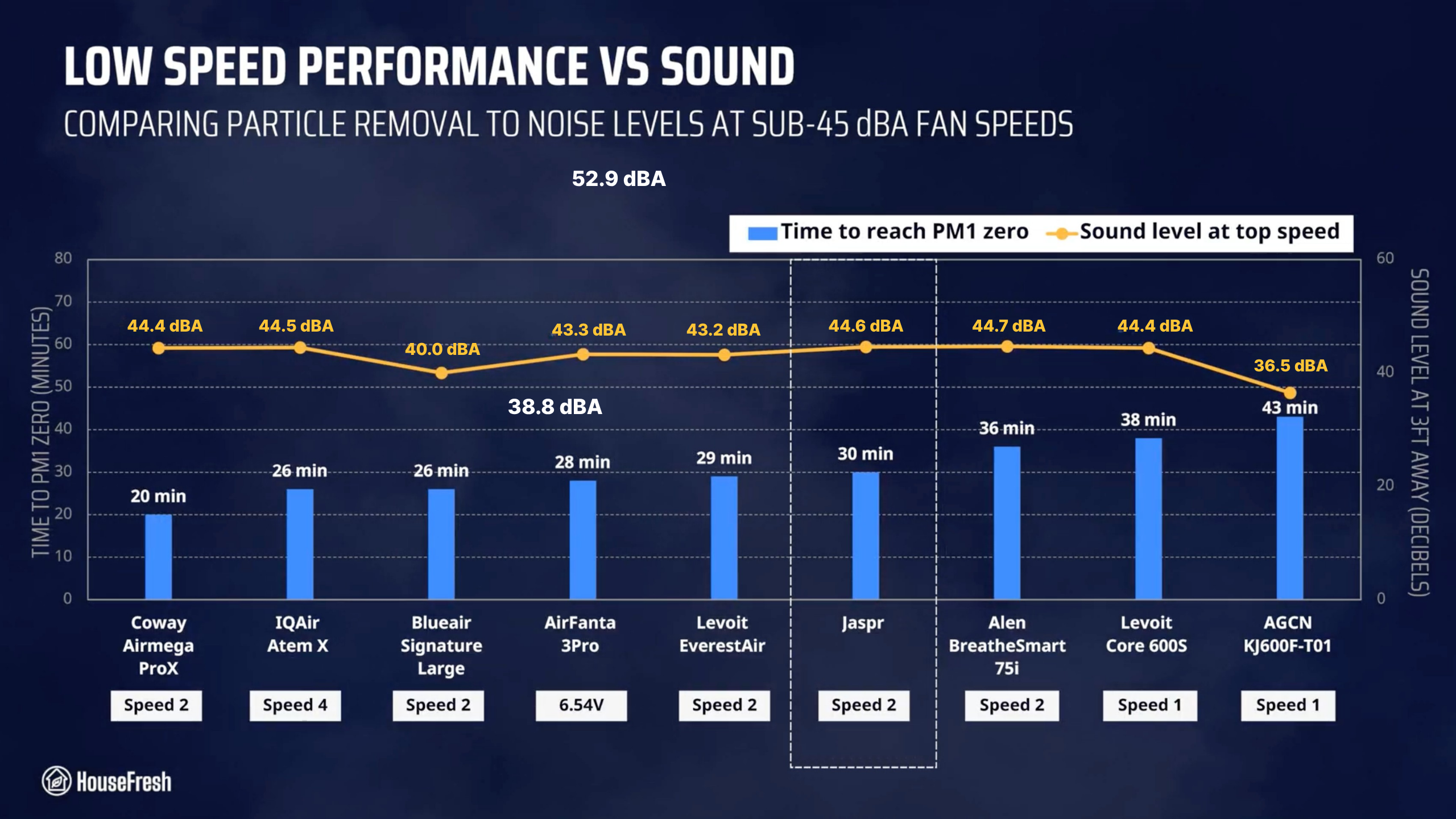
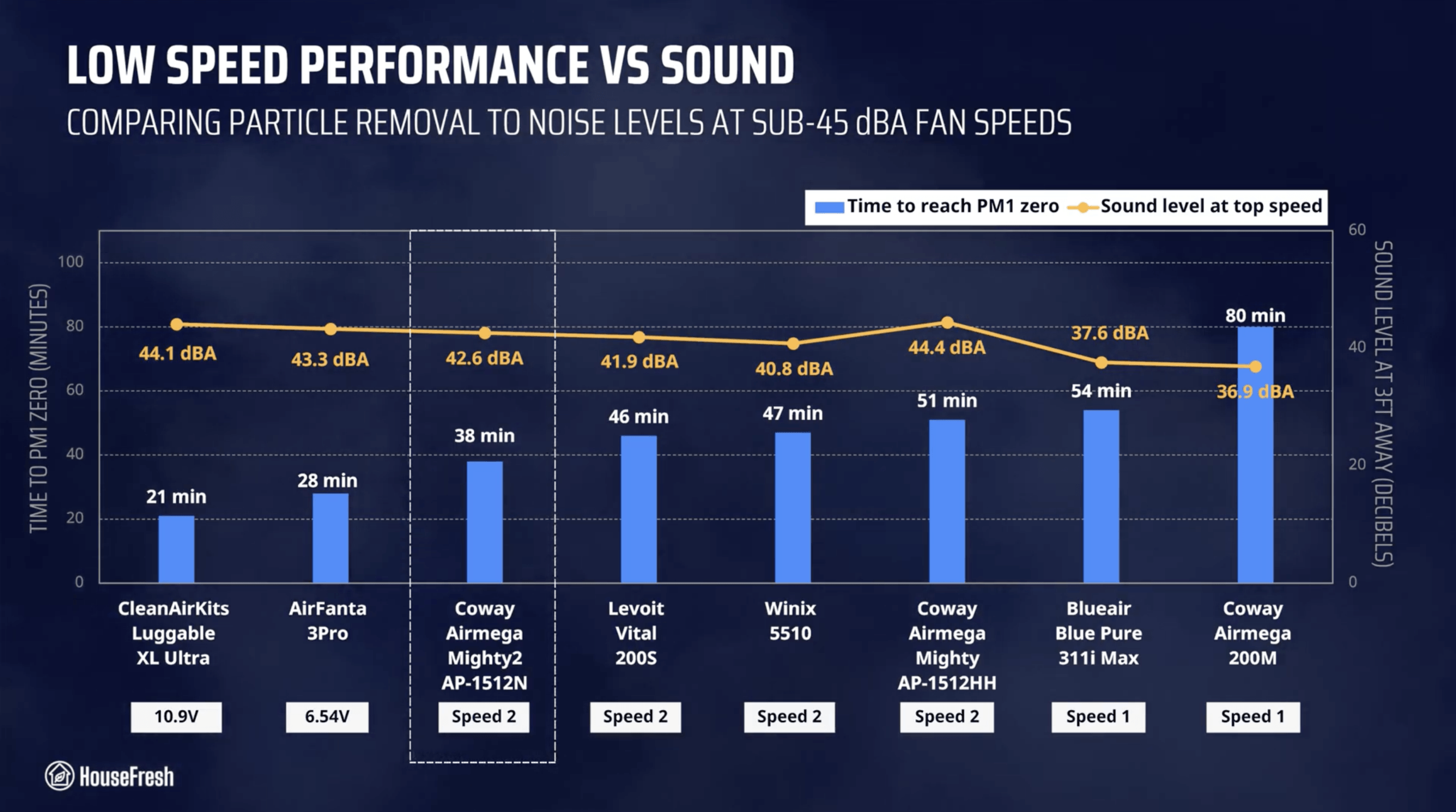
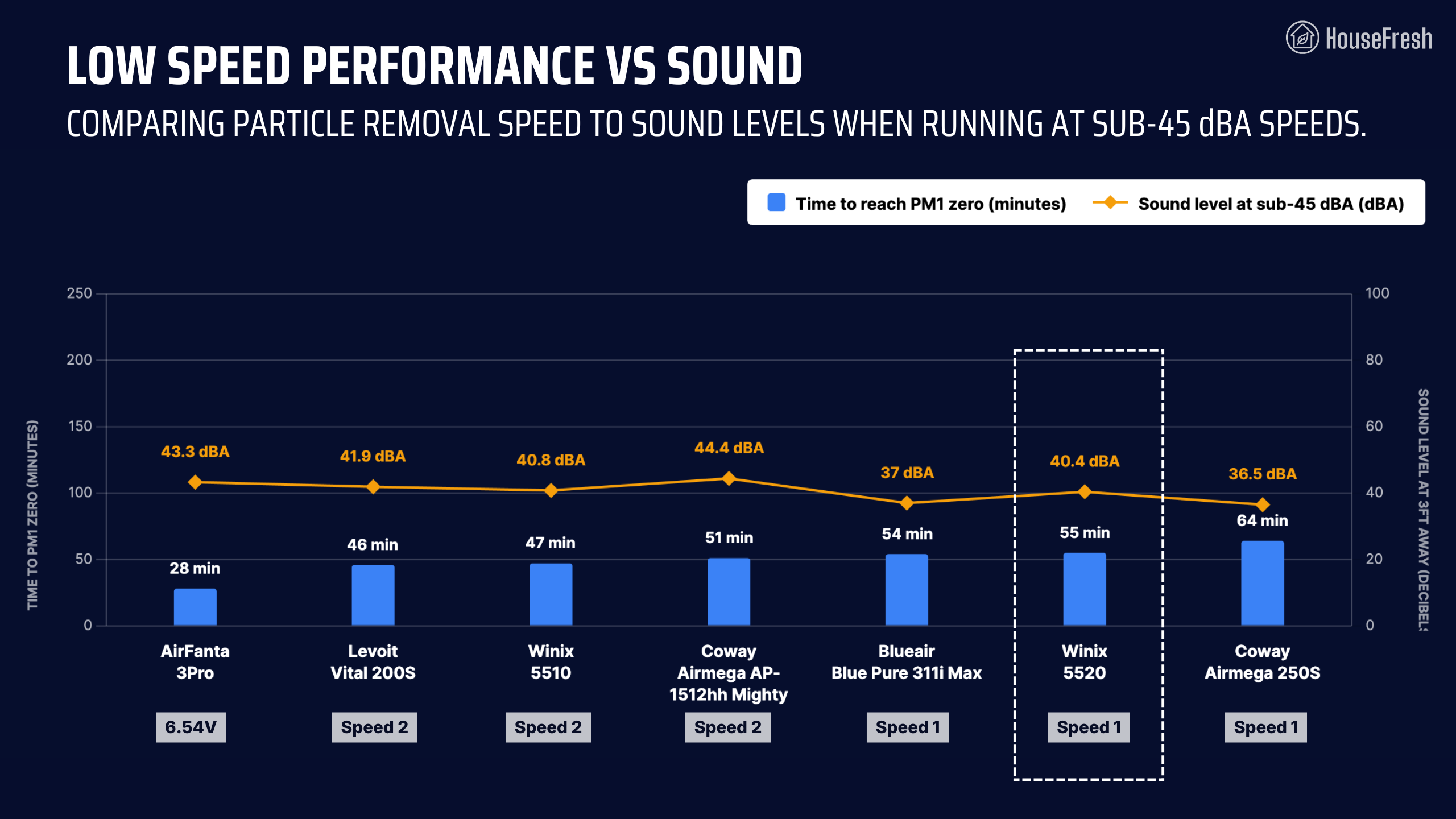
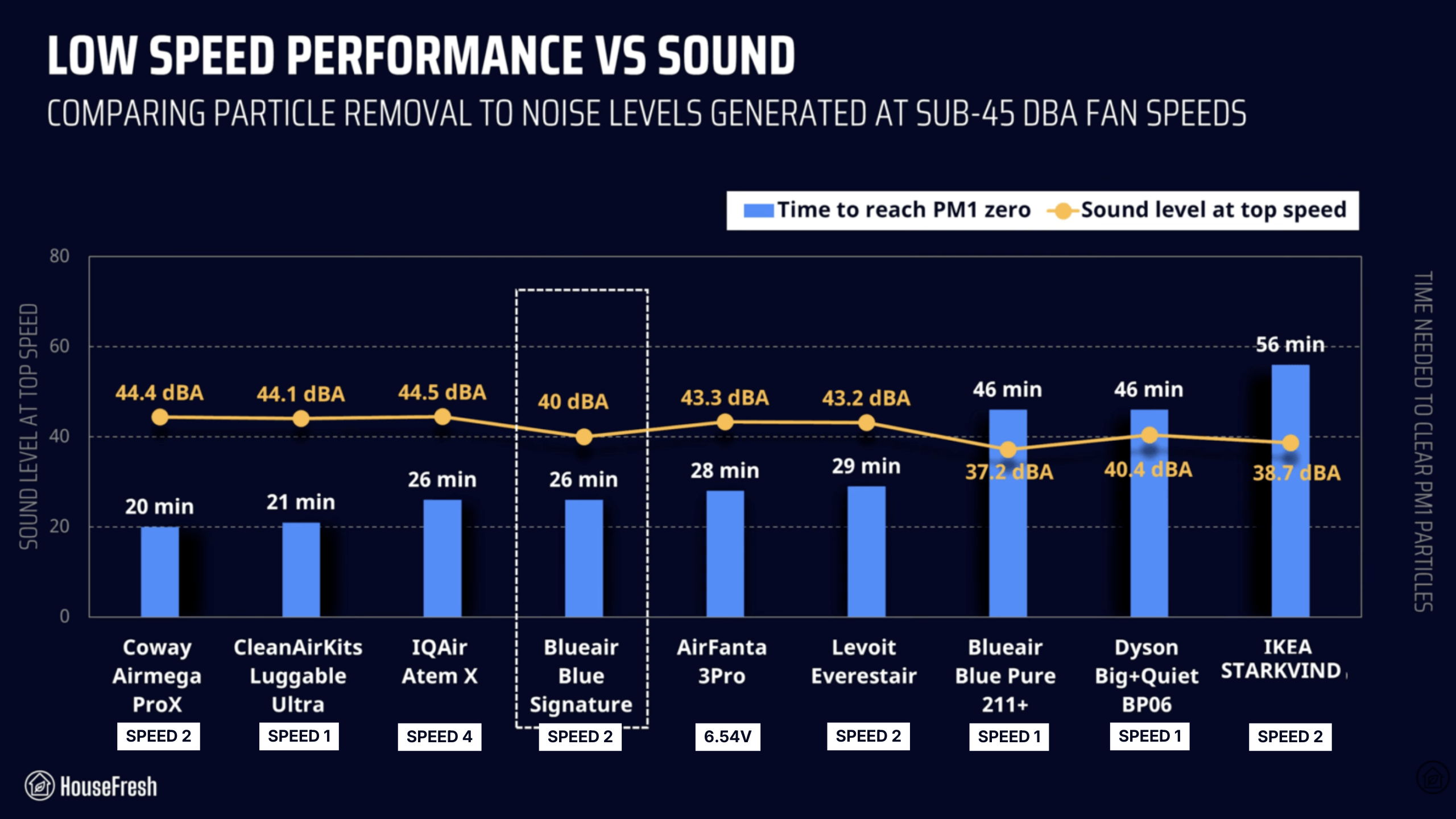
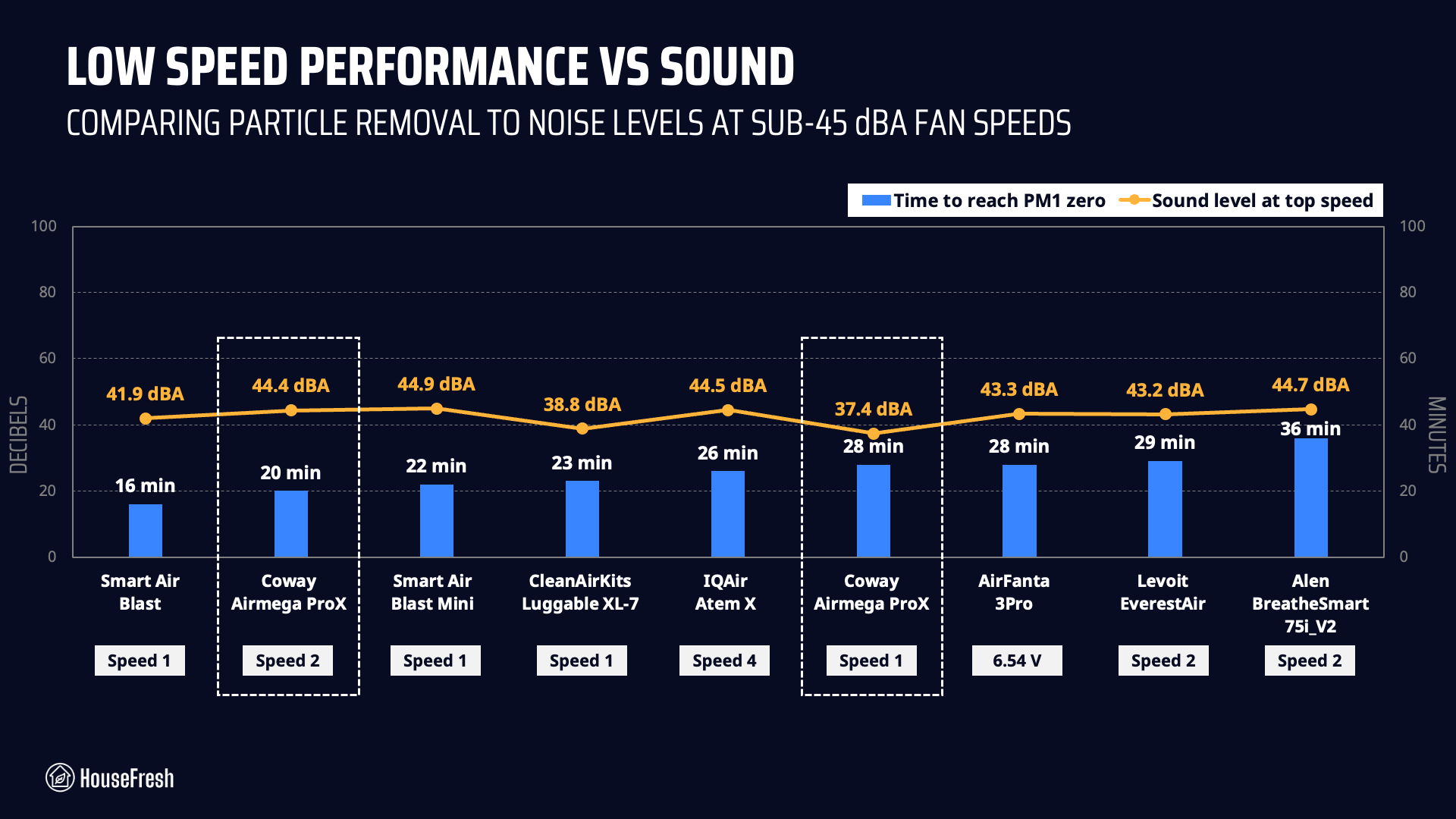
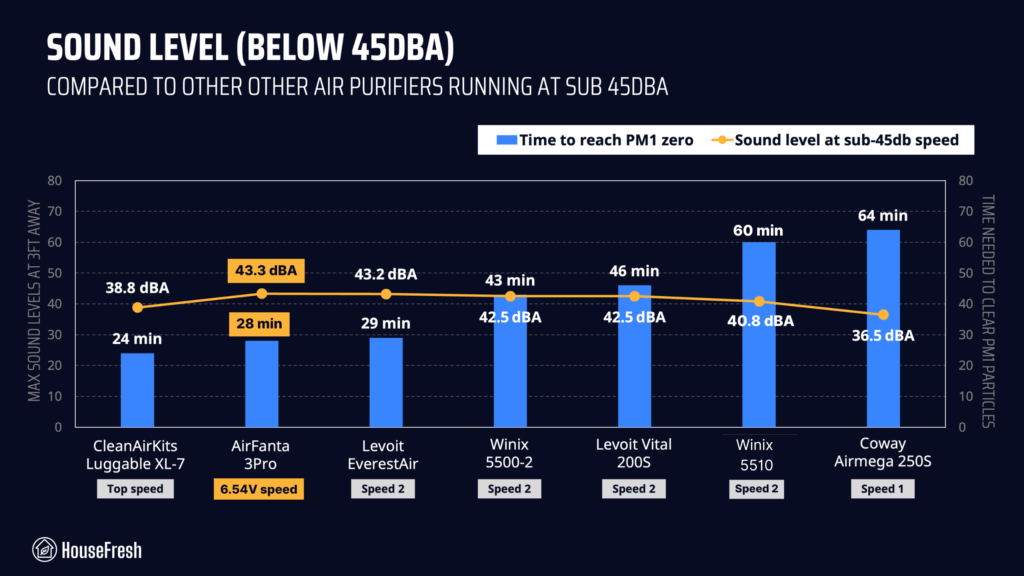
The Exhalaron cleared our test room in 46 minutes while generating just 40.5 dBA. This is outstanding for a device you can run on a battery pack – – see how it compares to mid-sized air purifiers running at sub-45 dBA speeds.
It comes with three cylindrical HEPA filters that sit between a thin wooden base and a thicker wooden top that houses three quiet and energy-efficient Cooler Master PC fans. You also get two handles at the top and a knob to adjust fan speeds.
CONS
Retailing at $359, it is the most expensive of all the portable air purifiers we’ve tested, but it’s the only one that will actually clean your air and keep it clean on the go. A good investment for your car.
PROS
It is super quiet. In our sound test, we measured the sound levels from 35.2 dB to 40.5 dB from its lowest to its highest fan speed.
It is compatible with generic PUREBURG filters, reducing yearly running costs if you prefer not to use CleanAirKits’ OEM filters.
It looks cool. I know this is just personal preference, but I really like the industrial feel of the Exhalaron.
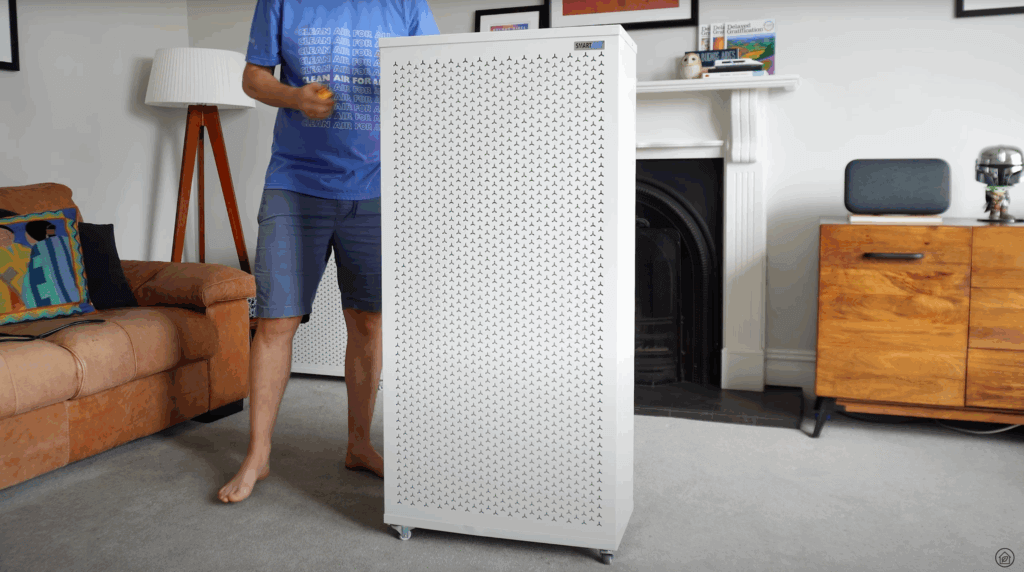
A large, powerful, quiet, no-nonsense air purifier with a massive fan and filter that can effectively clean the air in large classrooms, offices, and other high-traffic areas.
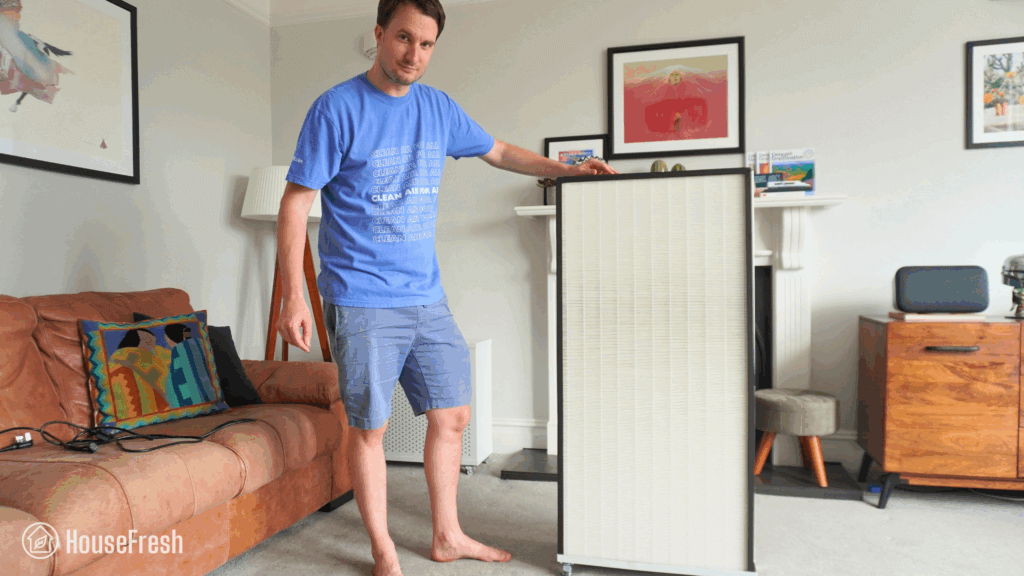
With an estimated PM1 CADR of 547 cfm, the Blast from Smart Air can provide five air changes per hour in rooms as large as 76 m2 (820 sq. ft.). But what’s incredible about it is that this power doesn’t come with a super loud noise attached to it.
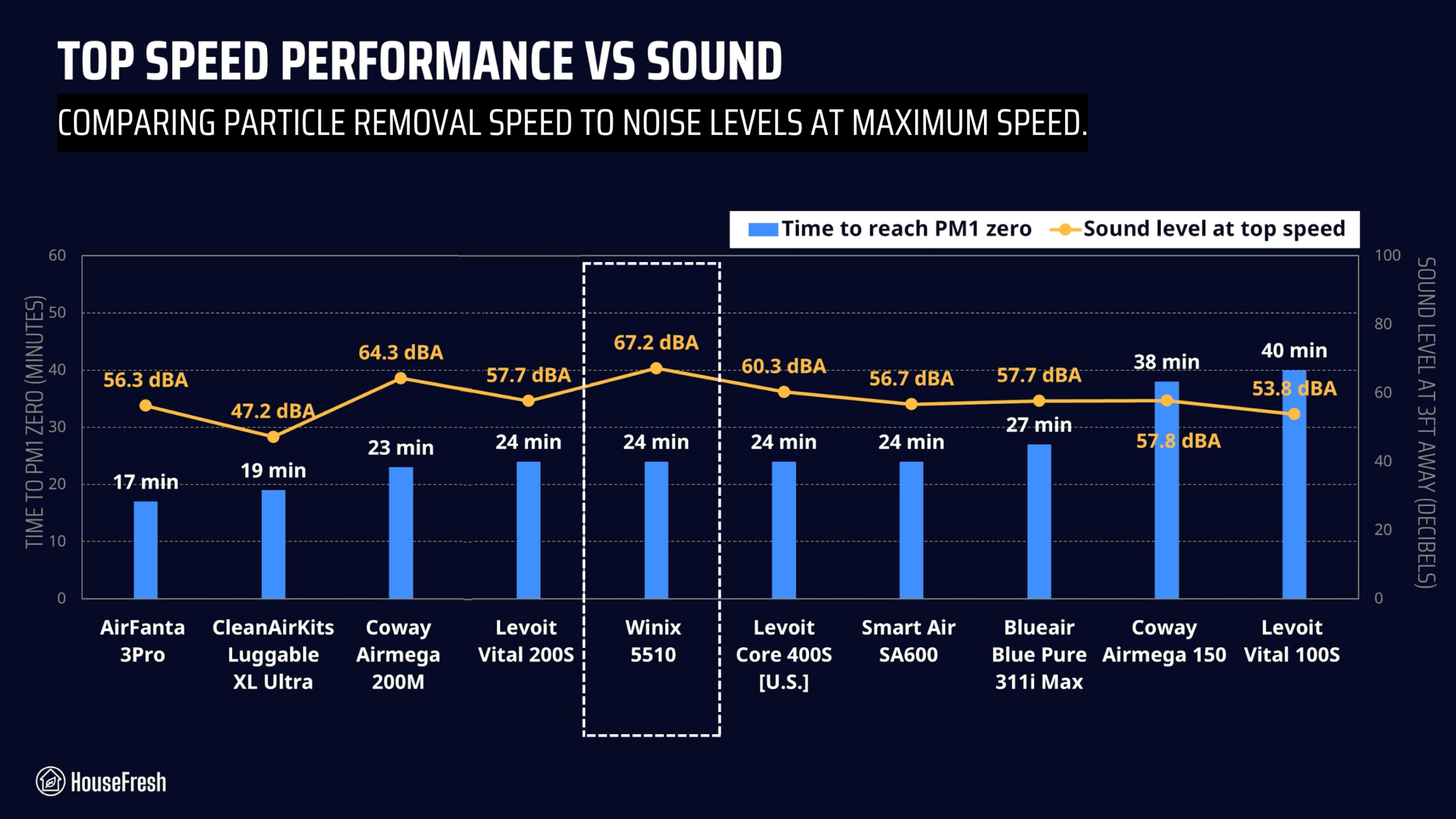
At its highest fan speed, this air purifier hits only 54.7 dBA, which is quieter than the much smaller Levoit Vital 200S (57.7 dBA).
This air purifier boasts one of the highest CADR ratings across all the air purifiers we have tested to date.
It has a huge H13 HEPA filter that traps particles (dust, pollen, viruses, bacteria). You can also get an optional pelleted carbon filter for VOCs.
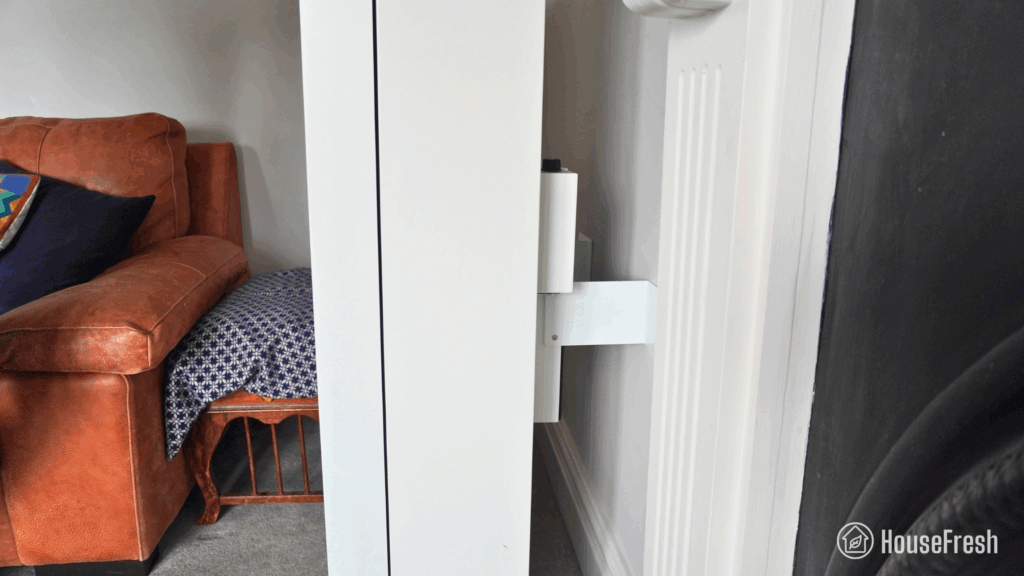
The combination of a quiet operation and a high CADR makes it the best choice for classrooms. I appreciate the brackets to fix it to the wall.
CONS
It comes at a high initial price of just over $1,000.
It is an oversized unit that takes up a lot of space, making it likely overkill for most homes.
It’s also a heavy unit (38 kg), not designed to be moved around from room to room as easily – – although the wheels help!
It consumes significantly more energy than other large air purifiers, pulling 135.9 watts at top speed.
PROS
It can clean a lot of air but only makes 54.7 dB(A) of sound at its top fan speed, based on our tests.
Very fair prices for new filters that provide 13 months of usage.
With an outer case made of metal instead of plastic, this unit is robust and built to last.
Only has a one-dial command to navigate through three fan speeds.
It’s a set-and-forget unit without any apps or fancy modes, and you can use it with a smart plug.
You can build a Corsi–Rosenthal Box (or CR Box for short) at home with a standard box fan, four MERV-13 HVAC filters, duct tape, and a cardboard base, making it the best low-cost option for those who need a swift air purifying solution due to wildfire smoke or an unexpected air quality issue.
Our 30×20 CR Box matched the air cleaning performance of the $800+ Airmega ProX, and it even outperformed the $1,400 Atem X!
Depending on the box fan you use, it can get loud and power-hungry. And with the 30×20 MERV 13 filters, it will take up a lot of space.
CONS
It is a huge device and not the best looking – – it takes up a lot of space.
It can run loudly and consume a lot of electricity, depending on the box fan you use.
There are no extra features you’ll find on commercial devices, like a child lock or the ability to schedule routines.
You don’t get the option to add a carbon filter to tackle VOCs and odors.
PROS
It is an air purifier you can build yourself with parts you might already have available at home.
Excellent air cleaning performance for the price — one of the best ratios of performance to money spent.
You’ll be choosing the materials, so it’s super customizable and a fun project on its own.
All parts are readily available on Amazon.
Clean air delivery rate (CADR):
462 cfm (top speed)
Filter technology:
20x30x1 3M Filtrete MPR1900
Recommended room size:
693 sq. ft. (5 air changes per hour)
Dimensions:
20L x 20W x 20H inches (50L x 50W x 50H cm)
Weight:
10 lbs (4.5 kg)
Noise level in decibels from 3 ft. away:
Speed 1: 51.5 dB Speed 2: 58.3 dB Speed 3: 62.4 dB
The good-performing air purifiers that didn’t make the cut, but that could be a good choice for you.
Since 2020, we have tested nearly 150 different air purifier models and, along the way, we have found some incredible units. That is why I thought it could be useful to give a shoutout to other excellent air purifiers in case they are available in countries where my top picks are not.
If sound is important to you, consider buying a PC fan kit. I tested models from CleanAirKits, Nukit and Northbox Systems, and they all excelled at cleaning the air while generating minimal noise.
Plus, they consume very little electricity and use non-branded MERV 13 filters, which then leads to very low running costs.
You can build your PC fan kit yourself using parts from CleanAirKits, Nukit or NorthBox Systems, highly-efficient yet whisper-quiet PC fans and HVAC filters (ideally MERV13) like 3M’s Filtrete MPR1900+.
I left PC fan kits out of my list because they cost over $300 and don’t come with many features or carbon, so I know most people won’t consider them.
I tested the Winix 5510, the 5520 and the 5530 with great results in terms of performance, sound, energy efficiency and long-term running costs.
All three of them come with an onboard sensor, an ionizer function that can be switched off, and smartphone connectivity through the Winix app. WATCH MY VIDEO REVIEW ➜
Our test results were nearly identical across all three, with the 5510 being quieter and more energy-efficient than the other two.
Ultimately, neither of these mid-sized Winix models made the cut because the Coway Mighty2 offers even better air cleaning power at quieter operation while pulling less energy.
The Alen 35ihas a PM1CADR of 162 cfm at top speed and generates 52.6 dBA – powerful enough to clean the air five times per hour in rooms up to 23 m2 (247 sq. ft.).
It’s bigger than most small cylindrical air purifiers, but you get a choice of specialist filters and a 10-year warranty when subscribing to filters from Alen. READ MY FULL REVIEW ➜
And when running on speed 2, it outperformed every other small air purifier we benchmarked it against, with the exception of PC fan-powered air purifiers.
If you live in Europe, you might still be able to buy the legendary Winix 5500-2 – an excellent affordable air purifier that has been one of my top recommendations for years.
It is a little bulkier than the new mid-sized Winix units and it doesn’t come with app support, but it does the job without breaking the bank. READ MY FULL REVIEW ➜
It sells for £159 / € 199 and offers excellent performance that rivals modern units from popular brands like Levoit and Philips, although it’s a bit loud.
I didn’t shortlist it because it has been discontinued in North America, but it’s an incredible air purifier that we really wish was still around in the U.S. and Canada.
The Blue Signature Large doubles as a side table, comes with an onboard sensor that unlocks smart features and includes app support. It has the looks and packs the power, too.
It didn’t make the cut because what you don’t get is the option to disable its HEPASilent, which is a trademarked technology that uses an ionizer that releases small levels of ozone.
In our tests, it matched the performance of bigger and pricier models. For $450, you get a CADR of 400 cfm that can clean the air 5 times / hour in rooms under 55m2 (600 sq. ft.).
So if the use of an ionizer doesn’t bother you, then you should definitely consider getting a Blueair Signature. READ MY FULL REVIEW ➜
With a list price of $500, this is a premium model from Levoit that comes with everything you’ll get with the Vital 200S and then some. READ MY FULL REVIEW ➜
You also get app connectivity, an onboard sensor, adjustable vents at the top, a deep handle at the back and wheels at the bottom to easily move it from room to room.
It looks good and packs the power to thoroughly clean the air in large rooms up to 52 square meters (or 562 sq. ft.) without generating a lot of noise.
I love my EverestAir but it didn’t make the cut because the Coway ProX packs more power and the AirFanta 3Pro offers a similar CADR at a cheaper price.
Or if you already have a specific model in mind and would like to know how it compares to other models, you should definitely check out our comparison tool to see how different air purifiers did in our range of tests including air cleaning performance, sound generation, energy consumption and long term running costs.
You can also explore our leaderboard with the scores and test data for every air purifier I have tested so far – just use the search bar to look for specific brands and models, or filter the results based on your budget to find the best-performing models overall and also those that provide the best value for your money:
Other models that we tested but don’t recommend
These are the popular models that other reviewers often recommend, along with what our tests show.
Okaysou AirMax 10L Pro – This device became a best-seller on Amazon thanks to a successful influencer campaign on TikTok. In our testing, it failed to match the hype or price point. We found that Okaysou used marketing tricks to inflate its performance. I would avoid any Okaysou device. Update 26 June 2024: Okaysou is now bankrupt, and you can no longer buy it and their 5-year warranty is now worthless.
Molekule Air Mini+ – Molekule has been touting its new PECO technology, but has had to remove many of its previous marketing messages due to misleading advertising claims and class action lawsuits resulting from underperformance. In our test, it was very poor at removing PM1 particles and emitted 86 dB at its highest fan speed – – louder than a leafblower! If this device is recommended in 2025, it’s likely due to the high commission for the publisher recommending it, as they start at $349 and go up to $999 with the Pro series.
Rainbow RainMate – This is an old device that is still touted as being able to clean the air. However, it was the worst-performing device in our tests, making me think that water air-cleaning is totally useless in even the smallest of home rooms. Don’t rely on this device to clean your air; stick to a good old mechanical filtration.
PuroAir 240 – Previously sold under the name ‘PuroAir HEPA 14 240’, the PuroAir 240 didn’t live up to the marketing spiel. After completing all our tests, we found that this air purifier has poor air cleaning performance for its price and is too underpowered to clean spaces of up to 1,100 sq. ft., which is something that is mentioned multiple times in the marketing materials and on PuroAir’s website.
Jaspr – This large air purifier has a high CADR of 353 cfm but I don’t recommend it because it costs nearly $1,200 to buy and you can expect to pay an additional $704.36 per year in electricity bills and filter replacements. This means that you will spend just over $1900 in the first year of ownership – – the highest year-1 cost I’ve ever seen.
Shark NeverChange HP152 – I liked the innovative pre-filter design for this cylindrical device, the low running costs and the use of a laser particle sensor. Those are all nice features, but unfortunately, the CADR is too low for the price, both at top speed (88 cfm) and at sub-45 dBA fan speeds (52 cfm).
What to look for when buying an air purifier
The basic things you need to consider to make sure you’re not being duped into buying a device that won’t help.
The qualities you should look for in an air purifier will differ if you want to reduce allergy triggers at home, live near a busy road, need to improve your air quality during wildfire season, or deal with pet odors and dander. However, some things will always be important.
1. The size of the room and the CADR (clean air delivery rate) of the air purifier.
It’s vital to analyze these two aspects together, considering many brands overstate the cleaning performance of their units. It’s not necessarily unfunded, but there’s a catch.
According to the EPA, for an air purifier to be truly effective, it should be able to perform 4.8 air changes per hour (or ACH) in a room. Unfortunately, some brands will advertise the room size coverage to achieve just one ACH, being able to claim a somewhat opaque wider coverage.
The rule is simple: a higher CADR (stated in CFM, or cubic feet per meter) means greater cleaning power. Instead of focusing on room sizes recommended by the manufacturer, look at the CADR rating.
The best way to go about it is to figure out how powerful an air purifier needs to be for your space’s specific dimensions. You can use our calculator to do just that:
2. The filtration system
Pure mechanical purifiers stand their ground on efficiency and safety when it comes to air filtration. The most comprehensive systems feature three stages:
A pre-filter to trap larger particles that would otherwise clog the main filter faster. The best units feature a removable pre-filter, making it easier to vacuum, rinse and keep in top shape. But you may find the pre-filter attached to the main one in budget air purifiers. It’s better than not having one, but it’s also harder to clean.
An activated carbon filter to adsorb gasses and smells. If you are after a device to help you reduce unwanted smells or remove chemicals and VOCs from the air, then you need a filter packed with carbon pellets. Carbon-impregnated fabric filters are okay for mild odors but won’t be powerful enough for serious issues with smells.
Lastly, the main particle filter will remove microscopic particles from the air. If you need an air purifier to deal with dust or pet dander, for example, you will need a particle filter like HEPA or MERV 13.
But a denser filter just for the sake of it – like with PuroAir’s HEPA 14 – is not necessarily equivalent to a better performance. On the contrary, it’s important to balance fan power and filter thickness. If a filter is too dense and the air purifier is not potent enough to draw a good amount of air and pass it through, the cleaning power is reduced. It takes longer to remove airborne pollutants with restricted airflow.
Many mechanical air purifiers also feature a built-in ionizer that can boost the units’ CADR and efficiency. Although ionizing technology is continuously evolving, at HouseFresh, we prefer those units where, like in the Winix 5510 or the 5500-2 included in the special mentions, the ionizing function can be disabled at the user’s convenience.
3. Noise output
The fan that powers your air purifier can generate a lot of noise, and you are unlikely to want to use your unit regularly if this noise becomes too much. That is why it’s worth factoring in how noisy the unit will be, especially when running at its top fan speed. This is particularly important if you want an air purifier for the bedroom or your home office.
Two things to consider:
Smaller units won’t make much of a difference to the air when running at the slowest fan speed, and they tend to be noisier than larger ones at top speed.
Some air purifiers suited for big spaces can be whisper-quiet when running at their lowest fan speeds, so it is worth going bigger to get a unit that will run quieter.
4. Long-term costs
In addition to the upfront cost of buying an air purifier, you should also consider associated maintenance costs such as energy usage and filter replacement.
Running your air purifier 24/7 2ill substantially improve your air, but that also means an appliance adding to your electricity bill all day, year-round. The good news is that many energy-efficient units out there won’t significantly affect your monthly expenses. However, make sure to check this to avoid unpleasant surprises, as some units are on the power-hungry side.
A few things to consider in terms of filters:
Filter replacement costs vary among brands and models – – and so does the required replacement frequency.
The longer a unit has been on the market, the more probable good-quality generic filters will be available.
More and more brands are offering convenient filter subscriptions that are cost-effective and include perks for happier customers.
5. Extra features
An extensive control panel with smart functions, app support, onboard air quality sensors or remote controls are handy perks that can make life easier. A no-lights mode for the bedroom, for example, is definitely something worth considering.
However, if asked, I would recommend not to sacrifice CADR or performance over fancier tech-y bonuses. After all, the purpose of an air purifier is to clean the air.
How we test air purifiers
Saying we tested over 110 air purifiers in the last five years sounds great, doesn’t it? But what does testing mean for HouseFresh?
It’s definitely not just getting the units out of their boxes to take some cool editorial pictures for our articles. On the contrary, it is a thorough process that involves reliable testing devices to cover the many aspects of air purifier evaluation.
Air cleaning performance is key, for sure. But we go further. When you decide to invest in an air purifier that will be constantly running at home, things like long-term costs and noise output are also important in a real-world context.
Our testing process includes the following steps:
Step 1. We conduct a particle removal test
First, we burn an incense stick (always the same brand and type) to pollute the air in our 728 cubic feet test room. Using our PurpleAir and AiGradient air quality monitors, we measure how fast each air purifier can remove PM1 particles at each available fan speed. The sensors provide regular updates on particulate matter levels, allowing us to calculate the PM1 CADR of the device.
Step 2. We conduct a VOC removal test
Then, we fill up our grow tent with Lynx Africa deodorant to release chemical gases into the air. We let the VOC levels stabilize before setting the air purifier to its highest fan speed for 45 minutes. We track tVOC levels with our PurpleAir and AiGradient air quality sensors before visualizing the data for comparison reasons.
Step 3. We measure sound levels generated
For noise levels, we use a commercial sound meter from 3 ft. away to measure how much noise in decibels (dB) is generated by the air purifier at each fan speed. Like other measurements, the data is displayed in our reviews, but we also share the results on HouseFresh YouTube channel.
Step 4. We measure electricity consumption
We use a power meter to record how much electricity (in watts) the air purifier consumes when running at each of its fan speeds, including sleep mode and stand-by mode.
Step 5. We estimate yearly maintenance costs
We also calculate the long-term costs you can expect to spend each year to run the air purifier. First, we calculate how much money running the air purifier will add to your yearly energy bill. Next, we conduct desk research to determine the costs of genuine and generic replacement filters, using filter lifespan information stated by the manufacturer.
Step 6. Real-life experience
All five steps comprise the core performance evaluation we run on every unit. We know the data is solid. However, there’s something about everyday use that cannot be measured in a lab-test situation. That is why our final step is using the air purifier at home in different rooms with different use cases. You can learn a lot by just living with a device.
Wrapping up
Air pollution is real. Over one-third of Americans still live in areas with unhealthy air and suffer from the consequences to their health. Improving our indoor air shouldn’t be something to take lightly.
Considering how a high-performing air purifier can improve people’s daily lives, it’s somewhat infuriating to find the internet flooded with unfounded reviews of air purifiers that lack the research and data to back them up.
Our goal at HouseFresh is to help consumers find the right air purifier to fit their needs and budgets in real-life situations. We don’t take free units from manufacturers and are not afraid to raise our voices when a hyped unit turns out to be a disappointment. Most importantly, we are driven by a transparent, hands-on approach and constantly improving methods of real-life testing.
We want our readers to find actual, helpful solutions. We may not always address all of your doubts in our articles. That’s why my mailbox is always open: danny@housefresh.com
Since 2020, we’ve been conducting our tests in the same 728-cubic-foot room to gather comparable data. We buy every device with our own money because we don’t want any strings attached. We are data-driven, and all our findings are openly published on the site.
Performing our tests in the same location under the same conditions allows us to compare air purifiers like-for-like in order to draw consistent conclusions. With all this data in hand, we are able to compare performance across different air purifiers from different manufacturers to quickly identify the best units for unique scenarios or situations, no matter how specific or average these may be.
We are confident that our tests reveal what manufacturers won’t tell you. That is why we don’t blindly repeat manufacturers’ specifications and marketing claims without further research or hands-on testing. We know that in many cases, their data has a degree of bias, with many brands overstating the capabilities of their devices with clever marketing and outright lies.
October 22nd, 2026
Replaced the Coway Airmega 100 with the Levoit Eleva 300X, which offers better air cleaning power and features for the same price.
Moved the Alen BreatheSmart 35i to the ‘Special mentions’ section, as it’s no longer a better alternative to my pick for the best small unit now that the Eleva 300X came into the picture.
September 18th, 2026
Replaced all animated GIFs with autoplay videos to reduce loading times for the page.
August 25th, 2026
Replaced the Levoit Vital 200S with the Coway Airmega Mighty2 AP-1512N, which offers better air cleaning performance at top and sub-45 dBA fan speeds.
Replaced the Austin Air HealthMate with the AC Infinity CLOUDLINE S8 fan + 8-inch filter, which offers better VOC removal performance and a refillable filter with a whopping 16 lbs of carbon.
Added the Winix 5530 and the Winix 5520 to our list of ‘Special mentions’ alongside the Winix 5510.
Added the Blueair Signature Large to the list of ‘Special mentions’.
Replaced the Levoit Core 400S with the Levoit EverestAir in the ‘Special mentions’ section.
August 15th, 2026
Added a link to our new video with our picks for 2026, replacing the 2025 video.
Replaced the Xiaomi 4 Compact with the Coway Airmega 100, which offers better air cleaning performance at top speed and is readily available across multiple countries.
Added two new categories: best for medium rooms and best table air purifier.
Added the Winix 5510 and the Winix 9800 to the Special Mentions section.
February 17th, 2026
Replaced the Xiaomi Pro 4 recommendation for those in the UK and in Europe with the Philips 3200 Series, which offers equal levels of performance and better features for the same price.
Replaced the Nukit Tempest Euro recommendation for those in Europe with the newer Nukit Tempest Pro.
October 29th, 2025
Added a link to our video review of the Coway Airmega ProX.
Replaced the Winix 5510 recommendation with the Winix 9800.
October 15th, 2025
Updated our pick for ‘best for small spaces,’ incorporating the Xiaomi 4 Compact to our list.
Updated our pick for ‘best for VOCs’ with the Austin Air HealthMate replacing the IQAir HealthPro Plus.
Added two new categories: best for bedrooms and best portable air purifier.
Updated our pick for ‘best for classrooms,’ replacing the Smart Air Blast Mini with the Smart Air Blast.
Added new models to the list of units we don’t recommend.
Added the Winix T810 to our list of ‘Special mentions.’
October 14th, 2025
Added our new YouTube video with Danny’s picks for 2025.
Updated the category of the Luggable XL-7 to ‘Best overall’ based on its CADR vs Sound vs Energy Consumption vs Running Costs.
Added new charts to show our test data in an easy-to-digest way.
August 31st, 2025
Added our interactive leaderboard, with a live ranking of all the units we’ve completed tests on bar those effectively discontinued.
Updated our pick for ‘best for large spaces,’ incorporating the Coway Airmega ProX to our list.
Moved the Levoit Core 600S as a budget option for large spaces.
Added links to our written and video reviews for all the models in the ‘Special mentions’ section.
June 26th, 2025
Trimmed the text for the devices under ‘Special mentions’.
Removed the big table with all my top picks at the top, as it wasn’t working well on mobile.
Removed auto-play videos from the ‘How we test’ section and replaced them with photos of one of our latest tests.
April 3rd, 2025
Included a new category (best performing stylish air purifier) after receiving emails from people looking for a more ‘fashionable’ recommendation.
Added a quick list with all the shortlisted air purifiers at the top of the article with jump links for people who want to navigate faster through the page.
January 2nd, 2025
After learning that that the mighty TaoTronics AP-003 has been discontinued, we added a new budget option (the AirFanta 3Pro).
Included a new category (best performing quiet air purifier) after many people requested a recommendation under 40 dB of noise.
Updated the results of our particle removal test for all units, based on data collected with our new PurpleAir Zen sensor, replacing the data from our older PurpleAir Indoor sensor.
November 10th, 2024
Embedded our video with 10 things you need to know before buying an air purifier into the buying guide section of the article.
Updated the FAQ section to clarify when it makes sense to buy multiple small air purifiers over a large unit.
October 4th, 2024
Added two alternatives to the TaoTronics AP-003 as it has become nearly impossible to find in stock. We tested two devices based on the same ODM KJ35-G-S1 model: the Lago air purifier for the U.S. and the Midea Smart Air SmartAir Pure Control for those in Europe and Asia.
July 12th, 2024
Embedded our new CADR calculator into the buying guide of the article.
May 24th, 2024
Removed internal links and made layout changes after receiving advice on potential reasons why Google had demoted our website, taking away 90% of our search traffic.
April 26th, 2024
Embedded our video shortlisting the best air purifiers of 2024 based on our test data collected between 2020 and 2023.
We generally recommend that most people go for the biggest air purifier they can live with to get the most power (and the most value) for their money.
Having a slightly more powerful air purifier than you need will let you run it at lower fan speeds and still get solid air cleaning performance without making much noise. Plus, in the long run, you will find that small air purifiers will cost nearly as much to maintain as larger devices because you will need to replace their filters much more often.
However, I know that sometimes people just want a small air purifier. So, to find the ones worth buying, I spent $4,872 on 30 air purifiers small enough to fit on top of a table.
I used all the air purifiers we bought at home and also ran a series of tests to find out how well they clean the air at different fan speeds, how noisy they are, how much energy they consume, and how much they will cost you to run each year. You can read more about our testing process here.
The first of a new generation of Levoit air purifiers with excellent air cleaning power for just $129.99.
The Levoit Eleva 300X is a small, cylindrical air purifier with separate particle and carbon filters that will help remove dust, pollen, smoke and other allergens from the air in spaces no larger than 247 sq. ft. (or 23 m2).
At top speed, it cleared our test room of pollutants in 36 minutes while generating 55.4 decibels of noise. We estimate a PM1 CADR of 165 cfm.
As you can see from the table, the only unit that offers offer better air cleaning at top speed is the Blueair 511i Max. But this small Blueair uses an ionizer function that cannot be disabled.
The Eleva 300X has a high quality laser sensor that tracks particle levels in real time and informs smart functions such as auto mode.
You can track particle pollution levels on the screen at the top and you also get an LED indicator light that changes color based on your air quality.
CONS
You must register the filters to pair them to the device. If you don’t do this, you lose the filter lifespan tracking function.
The use of AI in the data reporting seems to add complexity and lag for no obvious benefit.
It is power-hungry and filters aren’t cheap compared to other small air purifiers I’ve tested.
PROS
It offers excellent value for your money! It has the lowest cost per CADR across all other small units I’ve tested.
Its performance at quiet fan speeds rivals that of the $349 Dyson HushJet Compact but for a much cheaper price.
You get two separate filters for particles and gases – no more all-in-one cylindrical filters you’ll be throwing away sooner than you need to.
It comes with a high quality laser sensor that provides data on PM1, PM2.5 and PM10 particle levels.
The new app enables a Dynamic Manual mode I’m in love with: you can manually set your Eleva to run at speed 2, for example, while also allowing it to momentarily go up to Turbo whenever the sensor notices a rise in pollutants.
If you’re looking for a small, cylindrical unit that won’t break the bank but will still offer solid performance, then the Blueair 511i Maxmight be just the thing.
It comes with app connectivity, an onboard sensor, smart modes and a bonded filter with HEPA filtration and a layer of carbon.
CONS
The filter comes with carbon impregnated fabric instead of pellets so it’s unlikely to be very helpful with odor control
You will be forced to use its in-built ionizer, in the form of Blueair’s trademarked HEPASilent technology, which cannot be disabled.
PROS
It’s one of the best performing small air purifiers we tested – second only to the AirFanta 3Pro.
When running at speed 2, it generates just 39.4 dBA and still cleaned the air as fast as the PuroAir 130i running at top speed.
It has super low running costs, thanks to the fact that it’s energy efficient and filter replacements are cheap.
2. The best for performance in overall: AirFanta 3Pro
If you’re buying a small air purifier to help with your allergies, the 3Pro is the only one powerful enough to help.
Use the discount code HOUSEFRESH for 5% off when buying directly from AirFanta.
This PC-fan powered air purifier is a 32 x 32 cm cube that weighs just 2.3 kg and is small enough to fit on top of a side table or a large desk. You have to build it yourself but it takes just a minute: place the plastic base at the bottom, stand a filter at each side and secure the filters with the PC fan array on top.
At top speed, it offers an impressive PM1 CADR of 353 cfm, so it can clean the air 5 times per hour in rooms up to 529 sq. ft. (or 49 m2) while generating 56.3 decibels.
For those looking for the best performance in a small package, then nothing beats the $165 AirFanta 3Pro. It outperforms units that cost 7x as much!
A cool thing about it, is that you can break it down and fit the parts inside a bag, making it a great option for those looking for a small air purifier to travel with.
You get the option of buying it with HEPA filters only (for particles) or HEPA with pelleted carbon (for gases and odors).
CONS
It doesn’t come with any smart features, a fancy touchscreen, a sensor or app connectivity. You just get four powerful PC fans and four excellent filters.
It has no control panel but you get a voltage controller to control the speed of the fans and adjust the noise output.
It looks very different from a traditional air purifier. I know the utilitarian design won’t be everybody’s cup of tea.
PROS
It offers excellent value for your money — it’s the most powerful air purifier you can buy for less than $165.
You get the option of buying it with E11particle filters only. But if you’re looking for a device that can deal with odors and gases, then you can buy the HEPA + carbon filters for $75.
You can assemble it and disassemble it in just a couple of minutes, so you can take it with you wherever you go inside a small suitcase or big backpack.
It uses PC fans, so it is quieter and more energy-efficient than most traditional retail air purifiers.
The best option for those looking for a small, portable air purifier to use on the go.
The Triple Exhalaron from CleanAirKits is a PC fan-powered air purifier that weighs 2.7 kg and can be powered with a USB battery pack, so you can use it on the go inside your vehicle, or take it with you while you travel.
I’ve tested many portable air purifiers and this is the only one with a performance that can go head-to-head with home air purifiers.
And thanks to the use of PC fans, it reaches just 40.5 dBA when running at top speed, so it offers better air cleaning at quiet operation than most other small air purifiers.
In terms of design, you get a wooden base, three cylindrical filters and a hard wooden top with three powerful PC fans.
There’s no control panel, fancy touchscreen, smart features or even buttons, but you do get a knob to dial the fan speed up and down.
CONS
It isn’t cheap, selling for $389. You can get a cheaper price if you go for the Exhalaron with just two filters instead of three.
Considering the price, you might expect to get a fancy touchscreen or smart features but all you’ll get is a knob on the side to adjust fan speeds.
You also don’t get any sort of carbon filtration so it won’t help with odors.
PROS
It is the only truly portable model that can actually clean the air effectively at the same level you’d expect from a normal air purifier.
You get up to 10 hours of use with a 20,000 mAh battery pack.
It is durable thanks to the wooden body and the choice of flexible filters protected by a mesh cover
Yearly running costs are low thanks to minimal energy consumption and cheap filter replacements.
This $99.99 air purifier matched the performance of the Coway Airmega 100, even though it’s a little louder.
The GoveeLife Smart Air Purifier 2 (or H7124) is a small air purifier with good air cleaning performance that comes with an air quality sensor and smart features for just $99.99.
Even though it’s not as small as the usual cylindrical air purifier, it’s still big enough to sit on a desk or side table.
GoveeLife air purifiers come with the option to connect the devices to your smart home setup thanks to the fact that they are Matter certified.
The filter is bonded, combining a side of HEPA filtration for particles and a side of pelleted activated carbon for odors and gases.
There isn’t enough carbon to tackle serious VOCs and chemicals, but it’s much better than the carbon-impregnated fabric filter we find in most small units.
CONS
It is more power-hungry than the Airmega 100, drawing 38.2 watts at top speed versus the 23.2 watts drawn by the Coway 100.
Filter replacements are also more expensive than the Coway’s – you can expect to spend $58.39 each year on filters vs $37.52 you’d spend with the Airmega 100.
PROS
Good air cleaning performance at top speed for less than $100, comparable to what you’ll get with the $140 Levoit Vital 100S.
You can connect it to your existing smart home system via Matter.
It comes with an air quality sensor and you get an LED light at the bottom that changes color depending on the quality of your air.
We bought and tested 30 different tabletop air purifiers to find the best models for this list. Many of them were very close to making the cut, so I thought it could be useful to give them a shoutout in case they are available in countries where my top picks are not.
The Philips 900 Series was a solid contender: it offers the same top speed performance as the Coway Airmega 100 and comes with smart features and app support.
Ultimately, it didn’t make the cut because Coway is available in more countries, but if you can find the 900 Series on deal where you live, then it’s a great small unit.
It costs less at $62.99 and performed as well as the GoveeLife Smart Air Purifier 2, outperforming it at sub-45 dBA fan speeds. Plus, it comes with a sensor, auto mode and an air quality indicator light that can be set as a night light, just like the Coway Airmega 100.
It didn’t make the cut because the build quality isn’t as good as other models on this list. But if you can find this model where you live, know it’s a good unit.
The Alen 35i offers good air cleaning power and quiet operation with the high-quality build one can expect from a brand like Alen.
It didn’t make the cut because it is bulkier than other small units on the final list.
However, if budget is no objection, then the small units from Alen offer incredible performance and top-notch build quality that will last for years to come.
The Airmega 100 is a small, cylindrical air purifier with a bonded particle and carbon filter that can clean the air five times per hour in spaces no larger than 177 sq. ft. (or 16 m2).
It used to be my top recommendation for small spaces but the Levoit Eleva 300X outperformed when running at full power and also at sub-45 decibel fan speeds.
Levoit Core Mini – Weighing just 2.3 lbs (1.06 kg) and selling for just $49.99 on Amazon, the Core Mini might seem like the perfect small air purifier. However, it is too underpowered to make any meaningful difference to the air in even the smallest of rooms. Plus, if you go with the Core Mini, you will end up spending the same amount of money you’ll need to run a larger device like the Core 300S due to the fact that the small filters need to be replaced every three months or so.
Molekule Air Mini+ – This is undoubtedly a very good looking small-sized air purifier but it doesn’t come cheap at $359.99 and our test data showed that its air cleaning performance is seriously lacking considering this high price. Not only did the Air Mini+ take a full hour to complete our particle removal test but it is also way too loud: when we measured the noise levels from 3 ft. away, we recorded 67.4 dBA when running at top speed.
PuroAir 240 – When we reviewed and tested this device in early 2024, it was called the PuroAir HEPA 14 240 but the name has now changed and all references to HEPA 14 have been removed without any clarification on what the grade of the filter actually is. But the main reason why we don’t recommend this small air purifier is that it’s not good value considering its list price of $199.00 on Amazon, especially when compared to the $75 Winix A231 which completed our particle removal test 11 minutes faster than the PuroAir 240.
My advice for finding an air purifier you won’t regret buying
Before I leave you, let me share three tips to help you choose a good option even if you don’t go with any of my picks.
1. Don’t be duped into buying one of those mini air purifiers at the top of Amazon.
Seeing a $50 price tag might help you make a quick decision, but in the end, it will only lead you to a false economy.
Mini air purifiers usually need their filters replaced every 3 to 6 months, compared to the 9-12 months of lifespan you get with small or mid-sized filters.
So in the end, you might end up spending double!
2. Take the time to calculate how much you will spend on filters over a year.
Manufacturers usually specify the estimated lifespan of the filters on the product page. They will usually give you a range (like 6-12 months or 3-6 months), so I recommend taking the lowest estimate for your calculation.
Once you know the lifespan, check out the cost of a filter replacement. You will then be able to calculate how much you can expect to spend to replace the filter each year.
Doing this will help you avoid models with disproportionate filter costs that will become a hole in your wallet.
3. If you already have different air purifier models in mind but need help deciding which one is best, check out our new tool.
You can now use our air purifier comparison tool to compare the performance, sound, energy consumption, and long-term running costs across different units we have tested:
We might not have every small air purifier under the sun, but there are a lot of models in there!
4. If you can go bigger than a tabletop air purifier, please do.
A mid-sized air purifier like the Levoit Vital 200S, the Winix 5510, or the Coway Mighty2 will cost a little more to buy, but you will get double the air cleaning power with a unit that will fit a small room.
By going bigger, you will be able to run your device at lower fan speeds that generate less noise, while still getting good air cleaning perfomance. Also, if the need arises, you will have an air purifier that packs some extra power. AND you are likely to spend the same amount of money each year to replace the filters, compared to small devices with filter that cost nearly the same but need to be replaced more often.
Use our CADR calculator to find out the ideal CADR cfm you need in your air purifier to clean the air in the room where you will use it at least 4-5 times per hour:
Final thoughts
If you are looking for a small device because you have a small budget available, then please check out my list of recommendations ranking the best cheap air purifiers. You will find some DIY options in there that will cost you as little as $80 but still deliver powerful air cleaning performance.
Now, if space is a serious concern, then I hope you were able to find a good option for your specific situation in the list above.
If you have any questions about the air purifiers featured on this list or about buying a small air purifier, just drop a comment below and I’ll get back to you as soon as I read it. Or send me an email to danny@housefresh.com.
And if you go a bit deeper, explore our air purifier leaderboard to see where all the different models I’ve tested rank based on their performance and value for money.
The Dyson HushJet Compact Purifier is the smallest air purifier I’ve tested from Dyson and it’s also the first one to be released in their new HushJet range.
In the years I’ve been reviewing air purifiers, my opinion on Dyson models has been pretty consistent: average performance for a high price that will definitely won’t be worth it for most.
But could Dyson change my mind with the release of their first small air purifier?
To find out, I bought a Dyson HushJet Compact and have been using it at home since May 2026 to test its air cleaning performance, sound generation, energy consumption, long-term running costs and everyday user experience.
The overall score for the Dyson HushJet Compact HJ10 incorporates first-hand data results from our battery of tests, as well as our ratings for customer service, brand transparency, and design & UX. Check out the full scorecard below to see the category breakdown.
Search for ‘Dyson HushJet’ to see where it ranks, based on its air cleaning performance and value for money. You can also filter results to easily compare models in the same price range.
The pros and cons of the Dyson HushJet Compact HJ10
A summary of our top-level findings after testing this air purifier, following our methodology.
“Dyson’s HushJet Compact comes with a wide range of fan speeds, a very good app, smart functions, and solid air cleaning performance, especially considering its size.
In our particle removal tests, it cleared our test room of incense smoke in 37 minutes, outperforming small units I’ve recommended over the years like the Winix A231 and the Coway Airmega 100. And it did this, generating less noise and consuming less electricity.
So if the $349 price tag doesn’t scare you, then you will be buying a tabletop air purifier with good air cleaning performance with lower yearly running costs than most.”
It is very expensive, especially for a small air purifier – for the same price, you could buy yourself a more powerful midsized unit like the Coway Airmega Mighty2 and you’d still have money to spare.
In our tests, it was outperformed by cheaper air purifiers from Levoit, Coway, Winix, Blueair and Switchbot.
PROS
The upfront cost is high but the yearly running costs are some of the lowest I’ve seen.
It completed our particle removal test faster than popular small cylindrical models, and it did so at quieter operation.
It’s very, VERY quiet – sound levels range from 35 to 53 decibels.
You get separate particle and gas filters, so you can replace the gas filter when the carbon is full without having to throw away a perfectly good particle filter.
I was pleased to see that even though it comes with app, Dyson didn’t get rid of the physical buttons as we saw with other models like the Dyson BP04.
Two separate cylindrical filters that remove particles and odors from the air.
I was really pleased to see that Dyson designed separate filters for the HushJet Compact.
When you press the buttons at each side of the air purifier, the body disconnects from the filters inside.
Once you remove the body of the device, you’ll be met with a cylindrical particle filter.
Dyson states they’ve used a material with lower resistance than HEPA that’s electrostatically charged to pull particles towards it.
Underneath the particle filter, you get a gas filter with 120 g of activated carbon to remove odors.
This is a small amount of carbon that will remove mild odors but won’t help with serious issues with VOCs.
One of the downsides of cylindrical air purifiers is that they generally come with all-in-one filters that combine a particle filter with a gas filter in one cylindrical design.
We’ve found that this kind of bonded filter tends to lead to slightly better air cleaning performance BUT it also forces you to buy replacements more often than you may need.
This happens because the carbon inside the gas filter portion will generally become full within 6 months or so, and you will get a sense the air isn’t as fresh as before.
So you will go ahead and replace the filter, and will likely end up throwing away a perfectly good particle filter in the process.
Particle filters generally have a longer lifespan than carbon filters, with most of them lasting around 12 months.
Design, controls and app features
A relatively small air purifier that will sit comfortable on top of a desk or side table.
This is a small cylindrical air purifier that will fit on top of a bedside table or kitchen counter.
As you would expect from Dyson, the HushJet Compact HJ10 has a unique design and is manufactured to a high build quality.
It has a laser sensor and a little screen at the front where you can see particle levels in real time.
It has three buttons to adjust fan speeds, set auto/sleep mode, and switch between air quality readings and filter lifespan estimates.
It takes up as much space as other small cylindrical units BUT it’s slightly taller due to the nozzle.
This nozzle sits at the top of all HushJet devices from Dyson and it helps reduce noise. We tested it and it was 2 full decibels louder without it.
I was glad to see that Dyson added three buttons to the HushJet HJ10, moving away from units with just one button which forces you to use the app or the remote control provided.
If you want to get access to all the different fan speeds in your HushJet Compact and get more insight into the data from the sensor, then you can download the app on your phone.
The Dyson app has a pretty clean UX and has recently had a design face lift that opened up a lot more insight into the air quality readings from the laser sensor onboard.
Air cleaning performance
We tested the Dyson HushJet Compact in our 728-cubic-feet test room, measuring how quickly it removed PM1 particles from the air after we filled the space with incense smoke.
When running at top speed, our PurpleAir Zen sensor shows that the HushJet Compact needed 37 minutes to reach PM1 zero. Based on the natural ventilation of our test room, we estimate a PM1 CADR of 160cfm.
This makes this Dyson model powerful enough to clean the air five times per hour in rooms no larger than 240 sq. ft. (or 22 m2).
To put this into context, this is faster than the 40 minutes it took popular units like the Levoit Vital 100S but it’s slower than the results achieved by the new generation of small air purifiers like the $130 Levoit Eleva 300X:
However, this test was conducted at full power and air purifiers running at full power tend to be too loud – – even small models like this one. That is why I tested sound levels at different fan speeds so we could account for noise levels.
Sound levels
The sound levels of the Dyson HushJet Compact HJ10 range from 35.8 dBA to 53.1 dBA — which is quieter than most other small models I’ve tested.
As always, I used our BAFX sound meter to how much sound the Dyson HJ10 generates at each of its fan speeds and on sleep mode from 3 ft. away:
As you can see from the chart below, the HushJet Compact is the quietest small air purifier model in our comparison, reaching 53.1 dBA at top speed.
Running at speed 7, it reached 43.2 dBA and cleared our test room in 52 minutes. Based on this result, we estimate a PM1 CADR of 113 cfm at speed 7.
When it comes to quiet performance, the Dyson HushJet HJ10 is faster than most other small units running at sub-45 dBA fan speeds with the exception of the Levoit Eleva 300X and the Blueair Blue Pure 511i Max.
Long-term running costs
Running a Dyson HushJet Compact HJ10 will cost you $87.86 per year, combining energy and filter replacement costs.
We used our energy meter to record how much electricity the Dyson HushJet Compact pulls at each fan speed and while on standby.
At top speed, the HushJet Compact draws 18.6 watts, so if you were to leave it running at top speed 24/7 for one year, it will add $29.88 to your energy bill, based on the latest electricity prices in the U.S. as of October 2026.
This is outstanding energy efficiency from Dyson, but electricity consumption isn’t the only cost to consider, so let’s look at replacement filters.
Dyson states that the electrostatic filter should last up to 5 years and the carbon filter up to 12 months. The electrostatic filter costs $64.99 and the carbon filter costs $44.99. So based on these lifespan calculations, yearly filter costs would go up to $58.
I added this to the energy costs and can tell you that you need to budget $87.86 each year to keep your Dyson HushJet Compact running 24/7 in your home:
This makes the Dyson HushJet Compact HJ10 the cheapest air purifier in our yearly costs comparison, thanks to the combination of low energy usage and a 5-year filter lifespan.
Bear in mind that most other small air purifier models have filters that last just 12 months so this low filter replacement cost is dependent on the particle filter really lasting 5 years.
When you add the $349 retail price to that first year’s running cost, your total investment in the first year of ownership is $436.86.
Looking at the chart, we find that the Dyson HushJet Compact is the most expensive model to buy and to run in that first year of ownership.
And bear in mind that this comparison includes midsized models that offer more air cleaning power like the Winix 5530 and the Coway Airmega Mighty2.
Bottom line: Should you get a Dyson HushJet Compact HJ10?
Is the Dyson HushJet Compact worth the $349 price tag? Well… It depends…
Let me start by saying that this is a good air purifier. It comes with a wide range of fan speeds, a very good app, smart functions, and solid air cleaning performance, especially considering its size.
In our particle removal tests, we found that the 40-minute mark is tough to beat for small cylindrical air purifiers. And I’ve got to say, I was worried the HushJet would cost 350 bucks and hit the same wall…
But it managed to clear our test room in 37 minutes, outperforming small units I’ve recommended over the years like the Winix A231 and the Coway 100.
Based on our test data, it offers a PM1 CADR of 160 cfm at top speed, while generating 53 dBA of noise and pulling less than 20 watts.
And this compares well to other small air purifiers…
Models that offer more air cleaning power are generally louder or more power hungry than the HushJet Compact. However, they are also cheaper to buy…
The good news is that if the $349 price tag doesn’t scare you, then you will be saving money in the long run. When you combine the use of separate particle and gas filters with the fact that they have a long lifespan, this saves you money on filter replacements.
And Dyson’s engineers managed to pack a lot of power in a fan that is actually really energy efficient, so this will in turn save you money on electricity.
As I always say, if space is not an issue, I recommend that you size up and go for a midsized model instead — you will get a lot more air cleaning power with a Coway Mighty2, a Levoit Vital 200S or a Winix 5530.
If you decide to get yourself a Dyson HushJet Compact HJ10, please use this link. When doing so, we will receive a small affiliate commission at no extra cost to you.
And if you’re still unsure, you can try using our air purifier comparison tool to see how this Dyson model stacks up against air purifiers with similar prices:
If you have any questions about the this model or about Dyson air purifiers in general, please drop them in the comments below, and I’ll get back to you personally as soon as I can.
It feels like 2026 has just started, but somehow we made it to October and Amazon’s Prime Big Deals Days are here.
Amazon Prime Big Deals runs from October 6th to the 7th, offering many discounts and low prices for those with an Amazon Prime membership.
To be able to access Prime Day deals, you must be an Amazon Prime member. If you’re not one already, you can sign up today as they provide a 30-day trial where you can cancel at any time 😉
We woke up early to sift through Amazon Prime Day deals and found that some of our favorite air purifiers are on deal, with discounts that go between 10 and 38% off — impressive!
Get a 30% off on the highly anticipated successor to Coway’s most popular air purifier for medium sized rooms.
The Coway Airmega Mighty2 AP-1512N usually sells for $270 so this $190 price is the lowest we’ve seen since it was first released at the beginning of 2026. Based on its air cleaning performance and features, I’ve chosen this to be the best Prime Day deal this October 2026.
When we tested its particle removal performance, it completed the test 23 minutes – faster than the Levoit Vital 200S (also on deal) and quieter than the Winix 5510 (now 29% off).
One of my favorite features is the removable pre-filter which you can slide out without needing to open the front cover, minimizing mess. This is perfect for pet owners!
The 5510 completed our particle removal test in 24 minutes, which is just one minute slower than the Coway Mighty2 but it’s also louder, at 67.2 decibels when running full power.
We estimate a PM1 CADR of 249 cfm, which can provide five air changes per hour in rooms up to 373 sq. ft. (or 34 m²). It comes with an onboard sensor, smart features, and an air quality indicator light at the front.
The Vital 200S-P is the sibling of the Vital 200S, with the exact same dimensions, performance and features.
It cleaned our test room in 24 minutes, so it offers the same air cleaning power than the 5510 (above) but it’s quieter, hitting just 57.7 decibels at top speed.
Just like the Mighty2 and the 5510, you also get particle and gas filtration. But unlike the Mighty2, it comes with smartphone connectivity through Levoit’s VeSync app.
Outstanding air cleaning power for large spaces, smart modes, and an accurate air quality sensor for just over $600.
Normally found on Amazon selling for around $800, you can now get the beast that is the Coway Airmega ProX for just over $600. This is a steal for anyone looking for an air purifier for an open-plan space or a large room up to 693 sq. ft. (64 m2).
The ProX outmatched nearly every other air purifier I’ve tested, with the exception of the commercial Smart Air Blast – bigger brother of the Blast Mini.
You get an onboard sensor, smart features and double filtration, with a True HEPA filter and a pelleted carbon filter at each side of the device.
The 350 completed our particle removal test in 17 minutes, which is four (4) minutes slower than the Coway Airmega ProX. Based on this performance, we estimate a PM1 CADR of 352 cfm, which can provide five air changes per hour in rooms up to 528 sq. ft.
In terms of design, it’s smaller than the ProX, but it also comes with an onboard sensor, smart features, and an air quality indicator. You get particle and gas filtration.
The 600S is the largest air purifier in Levoit’s Core range, with a size similar to the Airmega 350 and a performance to match.
It cleaned our test room in 16 minutes, so it packs a little more power than the 350 (above) and a PM1 CADR of 375 cfm that can clean the air five times per hour in spaces up to 562 sq. ft.
Just like the 350, you also get particle and gas filtration. But unlike the Coway, it comes with smartphone connectivity through Levoit’s VeSync app.
If you’re looking for a small air purifier that will offer good air cleaning performance, this might be the deal for you.
The 511i Max is a small air purifier from the new Blue Pure range from Blueair that usually sells for $139.99, but it is currently on sale for just $94.49 – a great deal! In our tests, it outperformed other popular small units like the Dyson HushJet, the Coway Airmega 100 and the Philips 900 Series.
It comes with an air quality sensor that unlocks the auto mode and an indicator light at the front that changes color depending on the changes in air quality in the room.
You get particle filtration and a thin layer of carbon-impregnated fabric, which won’t be enough to help with serious odors but will do a good job in spaces like a bedroom.
This small air purifier from Coway also comes with an onboard sensor and a nightlight mode, and it’s powerful enough to clean the air in rooms smaller than 222 sq. ft.
It has a cylindrical filter with three layers: an outer pre-filter mesh cover that you should vacuum regularly, a pleated HEPA filter, and a layer of carbon-impregnated fabric.
Something I don’t like: It produces a sort of whistling sound when running at its lowest fan speeds – you might not notice it, but some people will.
The EverestAir looks great, offers powerful performance, and comes with all the smart features – it has it all.
This Prime Day, you can get an air purifier that sits at the top of the Levoit line for less than $350. And it’s not just about the designs and features… The EverestAir has a PM1 CADR of 375 cfm, which is powerful enough to provide five air changes per hour in rooms up to 562 sq. ft. when running at top speed (57.8 dBA).
It has an air quality sensor inside and it shows real-time particle readings on the display at the top. Plus, it comes with auto mode and you can unlock other smart modes via the app.
It has a bonded filter with particle filtration on one side and a gas filter on the other with 400g of pelleted activated carbon (to adsorb odors and gases).
Now is the time to buy this high-CADR air purifier that doubles as a table and comes with all the bells and whistles.
The Blueair Blue Signature large is my favorite air purifier with a table function, with a large surface at the top and the possibility of adding legs underneath for a more ‘furniture-y’ look. In terms of performance, you’re also getting one of the best air purifiers we have tested.
It completed our particle removal test in 15 minutes, which is less than half the time it took the fancy Dyson Big+Quiet BP06. It’s one of the most powerful air purifiers I’ve tested.
Not only does the Blue Signature look like a piece of furniture, but it also doubles as one: it comes with a tabletop surface, and you can add legs to lift it off the ground.
Frequently asked questions about Amazon Prime Day deals
Amazon first launched Prime Day in the summer of 2015, celebrating the 20th anniversary of the company. Since day one, Prime Day has encouraged other retailers to use the time to release their own deals, so it is a good time to find good prices for big purchases. Worth the wait if you’re planning to buy something expensive!
Many products are sold during Prime Day, from air purifiers to other household devices. That’s why we recommend using this time to make big purchases that you had planned to do already. Many Amazon products, like the Kindle, are found at historically low prices too.
The short answer: yes.
BUT if you are not a member and you have found a great deal, then you don’t need to miss it: Just grab the 30-day free trial so you can buy all the deals, and then go to the subscriptions page to cancel the Prime membership afterwards if you know you won’t need the benefits of Amazon Prime outside of Prime Day.
It started on October 6th and will run until October 7th 2026, but some other retailers will run sales throughout the week.
I love Amazon, but many items are not great, so try to avoid blind searches and look at those specific brands and products you already know about to check if the price has changed.
There is no point in saving a load of money on one of the air purifier deals above just to spend another $200 on stuff you don’t need or a product that doesn’t live up to expectations.
Also, be aware that deals run out, so try to purchase before this happens.
The Vital 100S is the smaller sibling of the Levoit Vital 200S, one of the air purifiers I’ve recommended to most people since I first tested it years ago.
But can this smaller model deliver the same level of powerful air cleaning performance than the larger 200S?
To find out, I bought one with my own money so that I could test its air cleaning performance, noise generation, energy consumption, annual running costs, and day-to-day user experience.
The overall score for the Levoit Vital 100S incorporates first-hand data results from our battery of tests, as well as our ratings for customer service, brand transparency, and design & UX. Check out the full scorecard below to see the category breakdown.
Search for ‘Vital 100S’ to see where it ranks, based on its air cleaning performance and value for money. You can also filter results to easily compare models in the same price range.
The pros and cons of the Levoit Vital 100S
A summary of our top-level findings after testing this air purifier, following our methodology.
“The Levoit Vital 100S is a small rectangular air purifier that offers good air cleaning performance for rooms no larger than 222 sq. ft. (20 m²).
It also looks pretty good, following the design lines and features of the larger Vital 200S. You get a removable pre-filter, a particle sensor, auto mode, an air quality indicator ring and a straightforward touchscreen at the top, and app connectivity.”
It comes with an optical sensor instead of laser sensor, so you’re going to have to remember to clean it regularly.
As with all the other devices on this list, I don’t appreciate Levoit initially marketing the particle filter as TrueHEPA just to remove mentions later. This doesn’t affect performance, though.
PROS
The Vital 100S one of the most energy-efficient Levoit air purifiers we tested, pulling just 27.3 watts at top speed.
It has low long-term running costs, both in terms of filter replacement and energy consumption.
It comes with all the same smart features as the larger Vital 200S, such as app support, an in-built air quality sensor and auto mode.
It has a removable pre-filter, which makes it easier to quickly vacuum or rinse the pre-filter regularly to incrase the lifespan of the main filter.
An all-in-one filter with particle filtration and activated carbon.
In terms of filtration, you get a double-sided filter with particle filtration on one side and activated carbon filtration on the other.
The pre-filter is removable and washable to help trap larger particles and extend the life of the main all-in-one filter. Remember to clean it every 1-2 weeks, especially if you have a pet.
I was pleased to see a good amount of activated carbon pellets in the gas filter. You get four filter options: original, pet, smoke and toxins.
You will need to replace the whole filter once the carbon is full, which might happen sooner than the particle filter needs changing if you have serious issues with odors.
We don’t appreciate manufacturers not being transparent about technical specifications. However, we must clarify that HEPA is not required to clean the air effectively, as lower grade filters still remove the smallest of particles in multiple passes.
Design, controls and app features
A rectangular air purifier with smaller dimensions than the popular Levoit Vital 200S.
It has a modern and clean look similar to its larger sibling, the Vital 200S.
It’s smaller than small air purifier models from brands like Alen and Coway, while packing similar power.
You get buttons to adjust modes and fan speeds, set timers, switch lights off, and lock the screen.
You get an LED ring around the power button that changes color depending on the quality of your air.
It has an infrared dust sensor that measures the level of PM2.5 particle pollution in the air.
You must clean the sensor with a cotton swab every two months to ensure it stays accurate.
You can connect your Vital 100S to the VeSync app, which is one of my favorite apps along with Xiaomi’s and Philips’ app.
This is the same app used across all Levoit smart products. It has great UX and gets regular updates that unlock new features even on old devices.
On the app, you can control your Vital remotely, see air quality readings, customize the auto mode, and set simple automated routines and schedules.
One thing I don’t like is the number of ads you get served on the app for other Levoit products.
Air cleaning performance
We tested the Levoit Vital 100S in our 728-cubic-ft test room, measuring how quickly it removed PM1 particles from the air after we filled the space with incense smoke.
When running at top speed, our PurpleAir Zen sensor shows that the Vital 100S needed 40 minutes to reach PM1 zero. Based on the natural ventilation of our test room, we estimate a PM1 CADR of 148cfm.
This makes the Vital 100S powerful enough to provide five air changes per hour in small rooms up to 222 sq. ft.
As you can see from the chart below, this Levoit offers good performance for its price. The only small unit under $150 that outperforms it (Blueair Blue Pure 511i Max) does so with the help of bipolar ionization, which I know many people prefer to avoid.
BUT this test was conducted at full power and air purifiers running at full power are usually too loud for everyday use. That is why I tested sound levels at different fan speeds so we could account for noise levels.
Sound levels
The sound levels of the Levoit Vital 100S range from 37.5 dBA to 53.8 dBA — which is quieter than small air purifiers from Coway, Winix and Blueair with similar performance.
As always, I used our BAFX sound meter to measure how much sound the Vital 100S generates at each of its fan speeds at 3 ft away:
Reaching 53.8 dBA at top speed, the Vital 100S is quieter than nearly all other small air purifiers in the comparison, with the exception of the Alen 35i which costs $150 more.
Running at speed 2, it reached 42.6 dBA and cleared our test room in 60 minutes. In our comparison, it was once again outperformed by the 511i Max and the 35i.
Based on the natural ventilation of our test room, I estimate a PM1 CADR of 97 cfm at speed 2, which can clean the air five times per hour in spaces up to 145 sq. ft. (or 13 m²).
Long-term running costs
Running a Levoit Vital 100S will cost you $123.84 per year, combining energy and filter replacement costs.
We used our energy meter to record how much electricity the Vital 100S pulls at each fan speed and while on standby.
At top speed, the Vital 100S draws 27.3 watts, so if you were to leave it running at top speed 24/7 for one year, it will add $43.86 to your energy bill, based on the latest electricity prices in the U.S. as of September 2026.
This is the kind of energy efficiency Levoit has us accustomed to. But energy consumption isn’t the only cost to consider, so let’s look at replacement filters.
According to Levoit, you need to change the filter in your Vital 100S every 6-12 months. The original filter is available for $39.47, so you can expect to spend $79.98 each year on filter replacements alone, using the shortest lifespan estimation.
I added this to the energy costs and can tell you that you need to budget $123.84 each year to keep your 100S running 24/7 in your home:
This places the Vital 100S on the ‘expensive’ side of the chart, alongside models like the Alen 35i and the Coway Airmega 150.
Smaller units like the Core 300S and the Winix A230 cost less to run, but perhaps the most important calculation for a first time buyer is the total investment cost in the first year of ownership.
When you add the $139.99 list price to that first year’s running cost, you will need to invest $263.83 in the first year of owning a Levoit Vital 100S.
As the table shows, you could buy and run two Vital 100S air purifiers for the total year 1 cost of just one Molekule Air Mini+…
That is why you should always calculate how much you will need to spend to use an air purifier before deciding which model you’ll go with, especially with small air purifiers that will need filters replaced more often than mid-sized or larger units.
Bottom line: Should you get a Levoit Vital 100S?
If you’re looking for a small air purifier that doesn’t use an ionizer under $150, then this might be the one for you.
The Vital 100S offers good performance at top speed, matching the air cleaning power you’ll get from units like the Winix A230 and the Philips 900 Series. And it comes with an onboard particle sensor that informs an air quality indicator light and smart functions like auto-mode, which you can customize through the VeSync app.
If you’re looking for all this and you only have $150 to spare, then the Vital 100S might be the one. But if you can spare $100 more or if you don’t mind the use of bipolar ionization, then you will get more power from the Alen 35i and the Blueair 511i Max.
Okay but before I leave you, I will suggest that if space allows, you should consider choosing a mid-sized air purifier with a CADR of at least 200 cfm to get the most bang for your buck. If you like what the Vital 100S offers, then look into the Levoit Vital 200S.
If you decide to get yourself a Levoit Vital 100S, please use this link to help support the work we do here at HouseFresh. When using this link, we will receive a small affiliate commission at no extra cost to you that we will use to buy and tests more air quality products.
And if you’re still unsure, you can try using our air purifier comparison tool to see how the Vital 100S stacks up against units with similar prices:
If you have any questions about the this unit or about Levoit air purifiers in general, please drop them in the comments below, and I’ll get back to you personally as soon as I can.
Since 2020, we have bought and tested over 140 air purifiers (and counting!), gathering first-hand comparable data on overall air cleaning performance, particle removal speed at different fan speeds, sound levels, energy consumption, and long-term running costs. If you want to learn more about how we test, read our full methodology.
There are many ways you can use our data to compare different air purifier models. That is why, instead of developing a one-size-fits-all air purifier comparison tool, we have created a series of different tools to help you find the best air purifier for your specific situation.
Performance, sound & costs comparison
Compare the running costs, air cleaning performance, sound and energy test results of different air purifier models side-by-side.
If you’re on your computer, you’ll be able to compare up to seven different models. But if you’re visiting this page on your phone, we suggest sticking to just four air purifiers to ensure the charts display properly.
Keep in mind that some units in our list don’t have fan speeds below the 45 dBA limit we set for quiet performance testing. There are also units in there that have been discontinued, so they won’t display a price. All costs are calculated in U.S. dollars, with energy prices being calculated based on the latest available data from the U.S. Energy Information Administration.
Ranking & score comparison
See where the air purifier you’re researching ranks in our leaderboard.
Explore the ranking, or look for specific air purifier models or brands in the search box. To see the full scorecard and details for a model, just click the image or the device name. Use the filters to isolate units based on their price (and your budget).
Beware the rankings change when you swap tabs:
The overall ranking shows all the air purifiers we have tested ranked by their overall score according to our HouseFresh weighted scoring system, which combines rankings across six different criteria: performance, value for money, ongoing costs, user experience & design, brand transparency & trust, and customer service.
The performance ranking is weighed based on air cleaning performance, with a strong focus on particle removal speed at fan speeds below 45 dBA, which is about the sound of a quiet library or classroom.
The value for money ranking has a focus on financial data points, such as price and long-term running costs, in relation to air cleaning performance.
Everything you need to know about air purifiers
Don’t buy an air purifier before watching this three-minute video packed with practical advice on what to look for, and what to ignore.
Watch this video where our founder, Danny Ashton, shares his crash course on what to look for when you’re buying an air purifier.
The right air purifier will clean your air for years to come, but the wrong one will just waste your money, so make sure to read the tips below before you buy:
Calculate the CADR needed for your room size
The higher the CADR (stated in CFM, or cubic feet per meter), the higher the air cleaning power. Use our CADR calculator to find out how powerful an air purifier needs to be based on the size of your space.
Choose the right filters for the job
If you’ve got hairy pets, look for a removable pre-filter. If you want to tackle allergens like dust, pollen and mold, you’ll need a HEPA or MERV filter. And if you want to remove odors and chemical gases, you’ll need kilograms (and not just grams) of pelleted activated carbon.
Factor in how noisy the air purifier will be
For quiet rooms like a home office or a bedroom, you’ll want an air purifier powerful enough to clean the air while generating less than 45 dBA. Read our full reviews to find out if the model you’re considering is a good option for your quiet space.
Calculate the long-term running costs
Your air purifier will eventually need its filters replaced, so take your time to find out how much the replacements will cost over a year. There are models that will be cheap to buy but expensive to run!
Consider whether you need smart features or an app
Special features like smart functions, app connectivity, onboard air quality sensors or remote controls are handy perks that can make life easier. However, you shouldn’t sacrifice CADR or performance over nice-to-have features – if your budget is tight, drop the fancy functions.
We’re currently working on a few more comparison tools, so if you have any ideas, please drop your comment below. And if you would rather find out which air purifier models we recommend, just check out our top picks.
Wildfire smoke generates pollution from tiny particles (PM1, PM2.5 and PM10), and also chemical gases (VOCs) that occur when different materials burn.
The most dangerous pollutants are tiny particles measuring 1-10 microns, which are small enough to pass through lung tissue and get into the bloodstream. The good news is that high-performing air purifiers with the right filters can remove these particles from the air before they get into your body.
My recommendations today are based on more than 130 air purifier tests, in which we assessed the air cleaning performance of different brands and models to find units powerful enough to quickly clear wildfire smoke from the air without breaking the bank. Read about our testing process if you want to learn more.
Let me point out that I includedtwo air purifiers that you can build at home: the Corsi-Rosenthal Box and a simple fan+filter DIY air purifier. I did this because wildfire smoke can accumulate very quickly, so the best solution is to get a device to clean your air ASAP.
1. DIY option: 30×20 Corsi-Rosenthal Box
For those reacting to the immediate threat of wildfire smoke, you can build your own Corsi-Rosenthal Box with a box fan, four HVAC MERV 13 filters, cardboard, and duct tape.
You can build this air purifier using items you may already have in the home. It was popularized by engineers Richard Corsi and Jim Rosenthal during the COVID-19 pandemic, but in addition to airborne viruses, this box can also help remove the dangerous tiny particles created by wildfire smoke.
To build one, you need a cardboard base, four 30x20x1 MERV 13 filters (I recommend 3M Filtrete MPR 1900) on each side, and a box fan on top.
This 30×20 design is the largest one we’ve built, but its performance is outstanding. Here is an infographic explaining how to build one.
In terms of air cleaning speed, it reached the top of our leaderboard, matching the performance you can expect from models selling for $800+.
However, keep in mind that box fans are generally loud and power-hungry, so this might not be the best solution for the long term.
CONS
The filters don’t have activated carbon, so it won’t be effective against the odors and gases generated by wildfires.
It has a large footprint, so it will take up a fair share of space.
Box fans can be loud. The noise levels vary from fan to fan, so make sure to find one that is comfortably quiet.
You will need to rebuild it every time you have to replace the filters.
PROS
You can build your own Corsi-Rosenthal box with four HVAC filters, a box fan, some cardboard and tape. Easy and affordable.
In terms of air cleaning performance, it needed more than twice as much time to clear our small test room of PM1 smoke particles, but when dealing with wildfire smoke, this simple DIY device is most definitely better than having no air purifier at all.
Alternatively, you can look for a ready-made fan and filter device in the Lasko AirFlex 2-in-1.
A pro tip for those who choose for this option: we swapped the Lasko filter for a 3M Filtrete 20×20 filter and this doubled its air cleaning performance:
At under $165, the AirFanta 3Pro boasts outstanding air cleaning performance thanks to four 140mm PC fans — plus, it can cover areas as big as 529 sq. ft.
Use the discount code HOUSEFRESH for 5% off when buying directly from AirFanta.
The design of the AirFanta 3Pro is inspired by the Corsi-Rosenthal box (above): a cube with a filter on each side, fans on top and a base at the bottom. But here’s the main difference: the 3Pro uses four PC cooling fans instead of a regular box fan.
The AirFanta 3Pro comes with four low-resistance E11 particle filters, which quickly remove smoke particles from the air with each pass.
You will have to build the 3Pro but it’s very easy to do. You place the plastic base at the bottom, a filter at each side, and then secure the box with the PC fan array on top.
I recommend you go with the filters that come with activated carbon to clear your air of particles AND gases from wildfire smoke.
In terms of performance, this little box is one of the most powerful air purifiers I’ve tested. Based on its results, it can change the air five times per hour in rooms up to 529 sq. ft.
CONS
You don’t get any fancy features: no app support, no smart features, no touchscreen display.
I’m aware that its look is not everyone’s cup of tea.
PROS
With a list price of $165, this is the most affordable high CADR air purifier on the market today.
It offers outstanding air cleaning performance — it cleared all incense smoke from our test room in 17 minutes!
It is easy to build in just a few minutes. Once disassembled, you can fit it inside a carry-on bag or small suitcase to take with you.
It is a small 12.6×12.6 inches (32×32 cm) box, so it will fit most spaces — especially when compared to a Corsi-Rosenthal box.
Outstanding air cleaning power for large spaces, smart modes, and an accurate air quality sensor for just under $900.
Speedyness is key when there’s a wildfire nearby. Selling for $899.99, the Airmega ProX is not as affordable as the AirFanta 3Pro, but it comes with such a powerful fan that it bested all 141 units we tested so far, completing our particle removal test in just 13 minutes.
Its outstanding performance could be explained by the use of not one but TWO powerful fans and a set of two bonded HEPA and pelleted carbon filters – one on each side:
The ProX outmatched nearly every other air purifier I’ve tested, with the exception of the commercial Smart Air Blast, which is much bigger.
This is a large air purifier that will be able to clean the air five times per hour in large spaces of up to 693 sq. ft. at top speed, while generating just 56 decibels of noise.
You also get a highly accurate particle sensor that unlocks smart features and automatic modes, where the air purifier will adjust its fan speeds based on the quality of your air.
CONS
The replacement filters are expensive and will set you back around $200 each year.
The bonded filter design means you will need to replace a perfectly good HEPA filter if the carbon element runs out first.
The filter covers sometimes will pop off when you lift the ProX using the handles on each side, so I recommend sliding it on its wheels.
It takes up a lot of space.
PROS
It has an incredible performance-to-noise ratio. It’s powerful and quiet in a way that surprised me.
It comes with a responsive and low-maintenance laser particle sensor.
It has very low energy consumption for a device with such high CADR.
Coway included thoughtful ‘smart’ features, like the light sensor for auto-sleep mode.
This is our top recommendation for those looking for a smart air purifier with particle and carbon filters for under $200.
You don’t need ultra-powerful air purifiers for smaller spaces. However, I strongly recommend choosing a unit with a minimum CADR of 200 CFM, especially if you need to deal with wildfire smoke. Now, this is a medium-sized air purifier so it might not be what you expect – there are tons of small, cylindrical units on Amazon but those won’t be powerful enough.
Based on our tests, the Vital 200S has a PM1 CADR of 249 CFM and will be able to clean the air five times per hour in rooms as large as 373 sq. ft.
The Vital 200S comes with a powerful fan and a washable pre-filter, a particle filter and a layer of pelleted activated carbon. It can help remove particles and odors from the air.
It’s the traditional air purifier that offers the best value for your money – other models match its CADR but they are also louder and more power-hungry.
The Vital 200S also has pretty low running costs: if you were to leave it running at top speed 24/7, it would cost you just $123.48 over the year between electricity and filters.
CONS
The carbon and particle filters are bonded, so once the carbon becomes full (within 6-12 months), you will need to replace the entire filter.
The particle filter is not HEPA grade, even though Levoit initially advertised it as H13 HEPA. However, this doesn’t affect performance.
Its air quality sensor is infrared, so it needs to be cleaned periodically to stay accurate.
PROS
Outstanding cleaning power for under $200, with an efficient $ per CADR ratio and affordable long-term running costs.
Despite being budget-friendly, the Vital 200S comes with all the bells and whistles: onboard sensor, smart modes AND app support.
It doesn’t use an ionizer, so it is ozone-free.
It is relatively quiet — it hits 57.7 dBA at its top speed, and its performance at speed 2 (41.9 dBA) is very good.
You can set smart home routines through the VeSync app.
Three other solid air purifiers that didn’t make the cut
If none of the options above seem like the right fit, consider the devices in this section.
It’s always worth mentioning other air purifiers with outstanding performance that didn’t make the final shortlist in case the models I recommend aren’t available where you live.
The Mighty2 has air-cleaning performance slightly better than the Levoit Vital 200S, with an estimated PM1 CADR of 260 cfm at top speed (56.9 dBA of noise).
It features an onboard sensor, smart modes, and air quality readings, but it didn’t make the cut because it costs more than the Vital 200S ($269.99).
The Blast Mini is highly durable (made of metal), has a powerful fan inside, and a huge H13 HEPA filter, with the option to buy pelleted carbon to go with it.
It didn’t make the cut because we noticed it’s been out of stock a lot lately.
The Luggable XL Ultra is a PC fan-powered air purifier made in the USA by the team at CleanAirKits.
It offers INCREDIBLE performance for its size (PM1 CADR of 315 cfm) and low running costs thanks to the use of HVAC filters and highly efficient PC fans. It didn’t make the cut because it retails for $310, so it’s pricey.
Other units we tested but don’t recommend for wildfire smoke
If you can’t find what you’re looking for in the list above, email me before you end up buying a useless air purifier.
The five air purifiers below are on my do-not-buy list for those looking to clear the air from wildfire smoke:
Levoit Core 300– We love this budget air purifier, but it will be too underpowered to deal with a severe issue like wildfire smoke. You are much better off spending a little more for the Levoit LV-H133, which still has the same air-cleaning power as the Corsi-Rosenthal box.
Austin Air HealthMate– This air purifier has a large amount of carbon (15 lbs), but its particle removal could be better considering its price of over $700. Wildfire smoke generates a ton of particulate matter, so you need better performance than the estimated 150 CFM, which took 37 minutes to remove all PM1 particles from our test room.
Blueair Blue Pure 211+– Big media sites regularly recommend this air purifier, but it uses an ionizer that you can’t turn off that potentially can bring ozone into your environment. Considering that many non-ionizer units are available, there is no need to recommend this device for wildfire smoke.
AROEVE MK01– This popular cheap air purifier on Amazon could not fully clean our air of incense smoke even when we left it for 5 hours, so it would be useless with the particulates generated by a major wildfire.
PuroAir 240 – This air purifier is too underpowered to deal with wildfire smoke effectively. Not only that: you will find it discounted on Amazon all year round, but even with a discount, it is overpriced considering its performance.
Tips for protecting yourself from wildfire smoke
As we saw in New York in 2023, wildfire smoke can travel hundreds of miles from the source of the fire, so it’s important to be aware of the problem even if you don’t live in a high-risk zone.
Using a DIY air purifier like the Corsi-Rosenthal box or buying a traditional air purifier is a great way to remove particulate pollution, but there are other things you can do to reduce the risk of wildfire smoke in your home.
Seal Up: Wildfire smoke can pass through any gaps in your home, so seal up any spaces around windows and doors. Close any vents and outdoor intake dampers if you have a central AC.
Mask up: If you have to leave your home or use any rooms that don’t have air purifiers, then be sure to use an approved face mask and, if possible, also wear goggles as wildfire smoke can irritate your eyes.
Recirculate: You will still want to use your AC as temperatures will rise due to wildfire smoke, but you will want to enable the “recirculate mode” as this will mean it won’t pull polluted air from outside.
Run air purifiers 24/7: Wildfire smoke is a severe issue, so you will want to ensure that this smoke is continuously removed from your home air, as even when you seal windows and doors, it will still find a way to enter your home air. Smart Air showed in their experiment that pollutants will increase when you switch your unit off, so be sure to keep it running until the wildfire risk is over.
Before I leave you, let me share the most important things you need to consider before buying an air purifier, as well as the biggest mistakes people tend to make:
If you have any questions that we haven’t covered in this guide, then be sure to email me directly (danny@housefresh.com) or drop a comment below and I’ll get back to you as soon as I read it.
And if you decide to buy a different air purifier from the ones I recommended here today, please do the math to find a unit that will be able to clean the air a minimum of 4.8-5 times per hour in the room where you will use it. You can use our CADR calculator to find out how much CADR you’ll need to provide that level of air cleaning in your specific space:
Or if you already have a specific model in mind and would like to know how it compares to other models, you should definitely check out our comparison tool to see how different air purifiers did in our range of tests including air cleaning performance, sound generation, energy consumption and long term running costs.
You can explore our leaderboard with the scores and test data for every air purifier I have tested so far – just use the search bar to look for specific brands and models, or filter the results based on your budget to find the best-performing models overall and also those that provide the best value for your money:
The original Coway Mighty is a legend… It’s been on the market for over 10 years, and in that time, it has become one of the most recommended air purifiers online.
But the reign of the Mighty has potentially come to an end with the release of the Coway Airmega Mighty2 AP-1512N in March 2026.
But is this new Mighty2 better than the original Mighty? And how does it compare to popular mid-sized air purifiers like the Levoit Vital 200S and the Winix 5510?
I bought one with my own money to test its air cleaning performance, sound generation, energy efficiency, yearly running costs, and day-to-day user experience.
The overall score for the Coway Airmega Mighty2 incorporates first-hand data results from our battery of tests, as well as our ratings for customer service, brand transparency, and design & UX. Check out the full scorecard below to see the category breakdown.
Search for ‘Mighty2’ to see where it ranks, based on its air cleaning performance and value for money. You can also filter results to easily compare models in the same price range.
The pros and cons of the Coway Airmega Mighty2 AP-1512N
A summary of our top-level findings after testing this air purifier, following our methodology.
“The Coway Mighty2 looks like a million bucks and, in our tests, it outperformed the original Mighty AP-1512hh, the popular Levoit Vital 200S AND both the Winix 5510 and the 5520. Outstanding and unexpected.
When you compare it to PC fan-powered units, it still loses on raw power but for a traditional mid-sized air purifier, the Mighty2 is one of the best options out there — especially considering how quiet it is.”
The buttons are not backlit, so it’s difficult to see what you’re pressing at night.
When set to Smart mode, it will automatically go into Sleep mode when the light sensor detects darkness. That is why I recommend running it on speed 2 24/7.
It doesn’t come with app support, which might be something you expect considering it’s more expensive than mid-sized units from Levoit and Winix with app support.
The first Mighty2 I bought made a weird rattling sound at low fan speeds. I bought a second one that didn’t, so I think perhaps my first unit was damaged in transit but it’s worth mentioning.
PROS
Coway removed the ionizer, and it didn’t have a negative impact on performance.
It comes with a laser particle sensor that responds much faster than the optical sensor you get in other Coway models.
The removable pre-filter slides out without the need of opening the front cover, minimizing dust and fluff floating around when the time comes to clean it.
The filter is much chunkier and larger than the one you get with other mid-sized air purifiers. Plus, it comes with carbon pellets instead of the carbon-impregnated fabric you get with the old Mighty.
It is smaller than other mid-sized air purifiers so it won’t be hard to find a spot for it, even in small rooms.
An all-in-one filter that combines HEPA-grade particle filtration with pelleted activated carbon.
The filter is larger than the ones in the old Mighty and the 200M, and it comes with pelleted carbon, which offers better odor removal.
The downside of bonded filters like this one is that you will need to replace the whole thing when the carbon filter runs out, which usually happens before the main particle filter needs replacing. But they help improve performance.
You can easily slide the pre-filter out to vacuum it or wash it without opening the front cover, unlike with other models.
Not only is this feature cool, but it also significantly minimizes the amount of dust and fluff that fly into the air every time you open the front cover when the time comes to clean the pre-filter.
The short answer: yes, but only when running in sleep mode.
This might seem odd, but it’s actually just science – the higher the speed of the air flowing through the filters, the higher the penetration of particles and the lower the CADR. You can see in the image below how the class of the particle filter in the IQAir Atem X changes at different fan speeds:
Particle filters classed as HEPA-grade at top speed result in a very low CADR. That means that the low-grade particle filter in the Mighty2 allows this air purifier to circulate air through the filter multiple times per hour – and this is a good thing.
Design, controls and app features
A relatively small air purifier with similar dimensions to the old Airmega Mighty and the Airmega 200M.
The design is stylish and compact, with a retro modern vibe that I personally really like.
We used our Mighty2 in different rooms around the house, and it was never out of place.
Coway upgraded the old Mighty design with a laser particle sensor that won’t need regular cleaning.
This makes the Mighty2 much quicker at detecting airborne particles than models with infrared sensors.
You get buttons to set smart modes, adjust fan speeds, schedule timers and control lights.
You also get an air quality indicator light with real-time PM1, PM2.5 and PM10 readings on screen.
Similarly to what we saw with other models like the Winix 9800, the Mighty2 comes with a light sensor that will automatically set the unit from Smart mode to Sleep mode when it detects darkness — even if you just wanted to have it running on auto, lights and all. This is why I prefer to have our Mighty2 set to speed 2 all day, every day.
The fan of our first Mighty2 made a rattling sound at low fan speeds, so we bought another one to see if this was a common issue. This second Mighty2 doesn’t make any weird noises, so I think perhaps our first one got damaged in transit to the UK.
Air cleaning performance
We tested the Coway Airmega Mighty2 AP-1512N in our 728-cubic-ft test room, measuring how quickly it removed PM1 particles from the air after we filled the space with incense smoke.
When running at top speed, our PurpleAir Zen sensor shows that the Mighty2 needed 23 minutes to reach PM1 zero. I’ll be honest… I wasn’t expecting that!
Based on this performance, we estimated a PM1 CADR of 260 cfm, which is powerful enough to clean the air five times per hour in rooms up to 390 sq. ft.
This is faster than the original Mighty AP-1512hh, but it’s also faster than the larger Levoit Vital 200S and the Winix 5510 and 5520.
BUT results at top speed won’t tell us the full story… We need to take sound into account because you don’t want to sleep or watch TV next to a leaf blower.
Sound levels
The sound levels of the Coway Airmega Mighty2 range from 35.9 dBA to 56.9 dBA — which is quieter than mid-sized air purifiers from Levoit and Winix with similar performance.
As always, I used our BAFX sound meter to measure how much sound the Mighty2 AP-1512N generates at each of its fan speeds at 3 ft away:
Reaching 56.9 dBA at Turbo speed, the Might2 is still louder than PC fan-powered models like the Luggable XL Ultra and the AirFanta 3Pro, but it is the quietest compared to traditional mid-sized air purifiers from Levoit, Winix, Blueair and even Coway itself.
Running at Speed 2, it reached 42.6 dBA and cleared our test room in 38 minutes – this is a very impressive result for a unit of this size. The Mighty2 was a full eight (8) minutes quicker to clean the air than the next traditional air purifier in the comparison.
Based on the natural ventilation of our test room, I estimate a PM1 CADR of 151 cfm at speed 2, which can clean the air five times per hour in spaces up to 226.5 sq. ft (or 21 m2).
Long-term running costs
Running a Coway Mighty2 will cost you $145.94 per year, combining energy and filter replacement costs.
We used our energy meter to record how much electricity the Mighty2 pulls at each fan speed and while on standby.
At top speed, the Mighty2 draws 49.12 watts, so if you were to leave it running at top speed 24/7 for one year, it will add $75.95 to your energy bill, based on the average electricity price as of June 2026. Compared to older models in the Airmega line, it’s clear that Coway has improved the fan motor’s energy efficiency.
According to Coway, you need to change the filter every 12 months. The genuine filter costs $69.99, so you can expect to spend $69.99 each year on filter replacements alone.
Overall, you will need to budget $145.94 each year to keep your Coway Mighty2 running 24/7 in your home at top speed:
The only mid-sized models in our benchmark that are cheaper to run are the CleanAirKits Luggable XL (with generic filters and super-efficient PC fans), the Levoit Vital 200S (with its cheaper filter replacements and less power-hungry motor), and the 311i Max from Blueair (with its highly energy-efficient fan motor with ionization technology).
However, when it comes to performance, the Mighty2 will offer more air cleaning power than the Levoit and the Blueair, so the additional running cost comes with benefits.
But… Is the Coway Airmega Mighty2 worth it?
Bottom line: Should you get a Coway Airmega Mighty2?
Honestly, I think this could be a possible contender to take the crown from the Vital 200S as the best air purifier for most people…
When you compare it to PC fan-powered units, this new Coway still loses on raw power but for a traditional air purifier, it is one of the best options out there — especially considering how quiet it is:
The older Mighty is a solid air purifier in terms of value for money, but it’s also loud, it’s power-hungry, and it uses an ionizer – which I know a lot of people prefer to avoid.
The Mighty2 has managed to keep all the good stuff from the original while upgrading things in the right areas: you get a stylish design, a more accurate laser sensor, lower energy consumption and better performance at quieter fan speeds.
The only tradeoff is the price…
The Mighty2 is selling for $269.99, and when you add this to the running cost, your total investment in the first year goes up to $415.07:
This makes the Airmega Mighty2 the most expensive mid-sized air purifier to buy and to run in the first year of ownership. But, in my opinion, you’re getting your money back in good performance, good design, and good quality.
Plus, it comes with the coolest slidable, removable pre-filter I’ve seen **heart-eyes emoji**
And let’s not forget about Coway’s 3-year warranty. I regularly hear from people who have been using the original Mighty for 10 years or more, so I have confidence that the Mighty2 will follow in the footsteps of the old one.
The only possible fly in the ointment is the lack of app support, which I know might be an issue for some people. But it’s worth noting that this model works with any smart plug, so you can add it to your smart home setup without downloading another app on your phone.
If you decide to buy a Coway Mighty2, please use this link to help support the work we do at HouseFresh – – we will receive a small affiliate commission at no extra cost to you. We don’t run any ads and have no partnerships with air purifier brands, so we rely on those commissions to continue buying and testing air quality products.
And if you’re still unsure, you can try using our air purifier comparison tool to see how the Mighty2 stacks up against units with similar prices:
Did I miss anything? If you have any questions about the Mighty2 or about Coway air purifiers in general, please drop them in the comments below, and I’ll get back to you personally as soon as I can.
The Jaspr is a $1,200 air purifier that has been all over social media for the past few years, with influencers giving glowing reviews and offering juicy discount codes.
But after testing it, I found something that doesn’t add up…
It costs three times as much to buy and run as air purifiers with the same level of performance.
And I know this because I bought a Jaspr with my own money and then spent an additional $1,298 to have it shipped to the UK, so we could test it.
Read on to find out how the Jaspr fared in my tests of its air-cleaning performance, sound generation, energy efficiency, yearly running costs, and day-to-day user experience.
The overall score for the Jaspr incorporates first-hand data results from our battery of tests, as well as our ratings for customer service, brand transparency, and design & UX. Check out the full scorecard below to see the category breakdown.
Search for ‘Jaspr’ to see where it ranks, based on its air cleaning performance and value for money. You can also filter results to easily compare models in the same price range.
The pros and cons of the Jaspr
A summary of our top-level findings after testing this air purifier, following our methodology.
“The Jaspr isn’t a bad air purifier: it offers good air cleaning at top speed, is made of durable materials and comes with both a particle sensor and a VOC sensor.
However, there is nothing in the performance, filtration technology, features or design that make the $1,200 price tag make sense for consumers.
Our data shows that the Jaspr delivers performance on par with air purifiers you could buy for as low as $165. So even though you are paying a premium price upfront, you are not getting premium value in return.”
A large cylindrical filter with particle filtration and activated carbon pellets.
The filter inside the Jaspr has a metal pre-filter mesh on the outside, a particle filter in the middle, followed by a layer of pelleted carbon.
The filter comes with 1 lb (453g) of carbon, which is a good amount but won’t be sufficient to tackle serious VOCs. See how it compares to other models:
You need to tip the Jaspr onto its head to access the filter. Once you twist the bottom cover, you’ll be able to see the filter inside.
The filter comes with an elasticated handle at one end, which makes it easy to grab and pull out of the body of the Jaspr.
This is the first time I’ve encountered a manufacturer that didn’t offer the option to simply buy the device without an automatic filter subscription.
Jaspr seems to have designed the checkout process so that a recurring $199 filter subscription is mandatory.
I reached out to Jaspr to ask whether customers can currently purchase a Jaspr without enrolling in a recurring subscription, and the spokesperson said customers can contact the company via the website to buy a unit without a filter subscription.
The founder of Jaspr explains why they removed customers’ ability to buy the device without automatically subscribing to filter replacements
Design, controls and features
A large, cylindrical air purifier made out of metal that weighs 25 lbs (11.3 kg).
Considering how big and heavy it is, I was surprised to find that it doesn’t have handles or wheels.
You get smart functions, but there are no buttons to set timers or lock the screen. Also, there’s no app, which might be something you expect at this price point.
It has a touch screen at the top with four buttons: smart mode, fan speed, light and turbo mode.
It comes with a particle sensor and a gas sensor, which makes the auto mode more responsive and more useful – especially in a room like a kitchen.
You also get real-time particle readings on screen (PM2.5), and an air quality indicator ring.
The ring changes color depending on the quality of the air in the room, going from green to yellow to red based on readings from the sensor.
When I first saw the Jaspr, it immediately reminded me of the air purifier that my dentist uses called the DentAir MedicAir 1.0.
There are certainly some differences, but it seems to me that this DentAir device has a similar height, control positioning, air quality indicator layout, and even a similar rolled-steel body to the Jaspr.
I dug deeper and came across a listing on Alibaba for the AGCEN KJ-600F-T01. Another tall, cylindrical air purifier with a steel body, the same reported CADR, dual sensors, and a similar touchscreen at the top.
Finding this unit made me even more curious, so I did some additional research to learn more about Jaspr Air Ventures Inc., the company behind Jaspr.
So I spent an additional $299 to buy a KJ-600F-T01 to test it and compare its results with those of the Jaspr. I’ll include the results for the AGCEN device in the sections below.
Air cleaning performance
We tested the Jaspr in our 728-cubic-ft test room, measuring how quickly it removed PM1 particles from the air after we filled the space with incense smoke.
When running at top speed, our PurpleAir Zen multi-sensor array shows that the Jaspr needed 17 minutes to reach PM1 zero. Based on the natural ventilation of our test room, we estimate a PM1 CADR of 353cfm.
This makes the Jaspr powerful enough to provide five air changes per hour in rooms up to 529.5 sq. ft.
While top speed performance is good, there are cheaper models from different brands that achieved the same or even better performance – in fact, 17 minutes was the exact same result we recorded for the AGCEN KJ-600F:
Just to put it into perspective, you could afford to buy four (4) Levoit Core 600S or seven (7) AirFanta 3Pros for the price of one Jaspr, and in both cases, you would be getting an air purifier with similar or even better particle removal performance.
But performance in isolation might not be showing us the full picture here.
Sound levels
The sound levels of the Jaspr range from 36.5 dBA to 60.1 dBA — which is louder than air purifiers from Blueair, Levoit and Coway with similar performance.
I used our BAFX sound meter to measure how much sound the Jaspr generates at each of its fan speeds at 3 ft away:
Reaching 60.1 dBA at speed 4, the Jaspr is the fourth loudest at top speed, behind the AlorAir air scrubber, the Atem X and the Levoit Core 600S.
Running at speed 2, the Jaspr cleared our test room of PM1 pollutants in 30 minutes while generating 44.6 dBA of noise.
So far, we’ve learned that the Jaspr offers similar performance to much cheaper models, but perhaps it will make up for it in long-term maintenance costs…
Long-term running costs
Running a Jaspr will cost you $696.57 per year, combining energy and filter replacement costs.
We used our energy meter to record how much electricity the Jaspr pulls at each fan speed and while on standby.
At top speed, the Jaspr draws 64.48 watts, so if you were to leave it running at top speed 24/7 for one year, it will add $98.57 to your energy bill.
The Jaspr ranks as the fourth most power-hungry model after the AlorAir air scrubber, the Atem X, and the EverestAir.
However, energy costs are not the only costs that add up when running your air purifier; eventually, you will also need to replace the filters.
According to Jaspr (and their automatic filter subscription), you will need to replace the filters every 6 months. Jaspr sells filter replacements outside the subscription for $299 on its website, resulting in a yearly filter cost of $598.
I added this to the energy costs and can tell you that you need to budget $696.57 each year to keep your Jaspr running at to speed 24/7 in your home:
When accounting for both energy and filters, the Jaspr will cost nearly 1.5x as much to run as the super power-hungry commercial air scrubber from AlorAir.
And when we compare it to similarly powered air purifiers, the gap grows wider – the Jaspr is around 3x more expensive to run than the more powerful Coway Airmega ProX and even the high-end IQAir Atem X.
When you add the $1,199.99 list price to that first year’s running cost, you will need to invest $1,896.56 in the first year of owning a Jaspr:
To put this figure into perspective, for the same amount of money, you could afford to buy and run five (5!) AirFanta 3Pros 24/7 for a year at top speed – and you’d have $175 to spare to buy us a coffee.
Expensive filter replacements don’t help, but what inflates the investment you’ll need to make in the first year of ownership is the high price tag.
But… Is the Jaspr worth the $1,199.99 price tag?
Bottom line: Should you get a Jaspr?
Is the Jaspr as good as all these influencers + podcasters + YouTubers say? In our view… No, it is not.
Let me start by clarifying that the Jaspr isn’t a bad air purifier. At top speed, it cleaned the air as fast as some of the best units we’ve tested.
In terms of sound, it gets a bit loud at top speed, but at speed 2 it stays below 45 dBA and still offers fair performance. Plus. it’s made out of a durable material and it comes with both a particle sensor AND a VOC sensor that make the auto mode more responsive.
That said, there is nothing in the performance, filtration technology, features, or design of the Jaspr that justifies the $1,200 price tag.
At top speed, the Jaspr delivers good performance, but you’re expected to pay a premium for it.
To show the differences in even clearer terms, I’ve calculated the cost per CADR cfm at top speed across all these models – the lower the cost per CADR, the more air cleaning power you get for your money:
The Jaspr Pro offers a cost per CADR cfm of $3.40, which is the highest across the board – even higher than the work of art that is the $,1400 Atem X from IQAir.
And it gets worse…. When you factor in the cost of filter replacements and power consumption, the Jaspr ranks as the most expensive model to buy and to run in that first year of ownership.
So my verdict is simple: I wouldn’t advise anyone to spend over $1,000 in a Jaspr.
If you want top-tier air cleaning performance, there are better options that cost less to buy and operate.
If you’re looking for a unit for a large room or an open-plan space, the Coway Airmega ProX delivers more power for under $900.
If you want more carbon, I would look at the Austin Air HealthMate because it comes with 15x as much carbon as the Jaspr.
If you want the best air cleaner money can buy, then check out the Atem X from IQAir. It offers better performance than the Jaspr at top speed AND at quiet fan speeds.
And if you’re looking to get the best performance for your money, then look no further than the $165 AirFanta 3Pro – it offers the same air cleaning power as the Jaspr with quieter operation, lower energy consumption, and cheaper filter replacement costs.
If you appreciated this review and want to support the work we do here at HouseFresh, you can buy us a coffee: https://buymeacoffee.com/housefresh
And if you’re still unsure of which air purifier to buy, you can try using our air purifier comparison tool to see how the Jaspr stacks up against units with similar prices:
If you have any questions about the Jaspr or about air purifiers in general, please drop them in the comments below, and I’ll get back to you as soon as I can.
Weed smoke lingers, with odors sticking to clothes, hair and furniture. It can also travel far, reaching roommates and next-door neighbors.
Not only that… Smoking cannabis indoors has been found to dramatically increase the level of PM2.5 particulate matter – – including carcinogens and toxic chemicals, which can result in serious health effects for smokers and second-hand smokers alike.
Thankfully, a high-powered air purifier filled with a high-quality particle filter and a good amount of pelleted activated carbon can remove both the gases and the particles generated by weed smoke.
Since 2020, I have tested and reviewed over 130 different air purifiers from different brands, and these are my top picks for weed smoke right now:
A smart air purifier with HEPA H13 filter and 3.6 lbs of pelleted activated carbon to remove unwanted marihuana odors.
This is the most powerful air purifier in Alen’s BeatheSmart range. It has an estimated PM1 CADR of 333 cfmat top speed and can provide five air changes per hour in rooms of up to 448 sq. ft. (41 m²).
It comes with three layers of filtration: a removable pre-filter, a HEPA H13 filter, and a layer of pelleted activated carbon.
Alen offers multiple filter options for the 75i, but for weed smoke, I recommend the Fresh filter, which comes with 3.6 lbs of pelleted activated carbon.
The 75i comes with a highly accurate laser particle sensor that informs the air quality indicator light at the top.
It completed our particle removal test in 18 minutes at top speed. Based on this result, we estimate a PM1 CADR of 333 cfm.
CONS
The cheapest filter option (Pure) doesn’t have activated carbon so make sure to choose the Fresh or Odor filters.
It’s a large and heavy unit that won’t fit in small spaces.
It comes with an ionizer function, but you can switch it off and this won’t impact the performance of your 75i.
PROS
Excellent quiet performance – it has a PM1 CADR of 164 cfm when running at speed 2 while generating 44.7 dBA.
The control panel has a color-coded air quality indicator that provides real-time readings.
The pre-filter can be easily removed and washed.
It comes with a lifetime warranty from Alen, as long as you buy filter replacements directly from them.
With 16 lbs. (or 7.2 kg) of activated carbon, you’ll struggle to find an air cleaner with more charcoal to help deal with serious VOCs from weed smoke.
If you are dealing with strong odors from marihuana smoke, you will need A LOT more carbon than what you usually get with traditional air purifiers. For those cases, I recommend building yourself a specialist odor-busting device with parts from AC Infinity.
Our AC Infinity CLOUDLINE S8 outperformed the mighty Austin Air HealthMate in our VOC removal tests. Be aware that performance dropped when set to its highest fan speed, so I suggest sticking to speed 5 and below.
The 8-inch Carbon Filter comes with 7.2 kg (or 16 lbs) of activated carbon pellets. And the filter is refillable, so you’ll save a fortune in the long run.
The fan blades are exposed at the top, so I covered them with a circular piece of carbon-impregnated fabric that I cut out from an old Coway Mighty filter.
CONS
This device only removes VOCs from the air. You won’t get any particle filtration, so you will need to use it alongside an air purifier if you want to remove particles as well as gases and smells.
This isn’t a traditional air purifier. You have to build it yourself and it doesn’t come with any fancy touchscreens or smart features.
It is LOUD. When set to speed 5 (optimal speed), it generates 61.9 decibels. The good news is that VOC removal improves at lower fan speeds.
PROS
The 8-inch carbon filter comes with 16 lbs (or 7.2 kg) of activated carbon, which is the largest amount we have seen.
It is much cheaper than specialist odor-busting units from Austin Air, Allerair and Airpura can cost as much as $1,000.
This filter is refillable, so once the carbon is used up, you can dispose of it and refill the cylinder with more carbon.
The price of a years’s worth of carbon is just $89.99! This is A LOT more accessible than the nearly $400 you’re expected to spend on filter replacements with other specialist brands.
Filter technology:
VOC and odor adsorption
Carbon type:
Australian RC412 at 1200+ IAV (38mm thickness)
Carbon quantity:
16 lbs (7.2 kg)
Airflow:
857 cfm
Dimensions:
Fan: 3.3 x 2.9 x 0.5 inches (8.5 x 3.6 x 1.3 cm) Filter: 18.1 x 10.9 inches (46 x 27.7 cm)
The filter inside the HealthMate is packed with 15 lbs of activated carbon and zeolite mix and is bigger than most small air purifiers you’ll find at the top of Amazon – see how it compares to the Levoit Core 300S.
It is great at removing odors and VOCs from the air, but its particle filtration is on par with much smaller air purifiers so it won’t offer the level of power you’d get from a unit like the Alen BreatheSmart 75i.
3. Best for small spaces: Levoit Core 400S (with Smoke Remover filter)
The Smoke Remover filter comes with 450 grams of pelleted activated carbon – – the most you’ll get from a Levoit unit.
Use the discount code HOUSE10 for 10% off when buying directly from Levoit.
The cylindrical Core 400S from Levoit is a mid-sized air purifier that doesn’t take up much floor space and offers solid air cleaning performance, with the option of supersizing the gas filtration to tackle weed smell in rooms no larger than 373 sq. ft. (35 m²).
It comes with a cylindrical filter with a pre-filter mesh on the outside, a particle filter in the middle, and pelleted activated carbon on the inside.
Make sure to get the Smoke Remover filter, as it comes with 450 grams of activated carbon pellets, so it will be more effective at removing weed odors.
This is the smallest unit I’d recommend – – anything smaller than this won’t be powerful enough to remove weed smoke from the air.
Based on our tests, we estimate a PM1 CADR of 249 cfm, so the 400S can provide five air changes per hour in rooms up to 373sq. ft.
CONS
It’s an all-in-one filter, so you will need to replace the entire thing once the carbon is full, even if the particle filter still has life in it.
The particle filter was initially sold as H13 HEPA, but this was later removed from the marketing. This won’t affect performance, but you need to know.
The European version of the 400S is less powerful than the U.S. version, so keep that in mind if you’re in Europe. Learn more about this in this video.
PROS
The 400S with the Smoke Remover filter comes with the largest amount of carbon (450 g) in the entire Levoit range of air purifiers.
It comes with an onboard sensor, an LED air quality indicator and auto-mode.
You get smartphone connectivity through the VeSync app.
The Core 400S doesn’t have an ionizer. Stay away from the PlasmaPro 400S, which looks the same but does have an ionizer.
4. Best for less than $200: AirFanta 3Pro (with HEPA + carbon filters)
Most choices above cost $500+ and while they are still my top options for weed smoke, I also wanted to include an affordable device powered by PC fans.
Use the discount code HOUSEFRESH for 5% off when buying directly from AirFanta.
With a design inspired by the DIY Corsi-Rosenthal box, you will need to assemble the 3Pro yourself, but it’s fairly straightforward: you place a filter on each side on top of a plastic base and secure the cube with a PC fan array on top.
AirFanta’s carbon filter is a bonded filter that combines a 15mm thick HEPA E11 filter with a 10mm layer of activated carbon. You will get four of them to fit at each side of the 3Pro.
The 3Pro is one of the fastest air purifiers we have ever tested, and you can buy it for less than $200 – that’s outstanding value for money.
Based on this result, we estimate a PM1 CADR of 353 cfm when running at top speed. It’s powerful enough to clean the air five times per hour in spaces up to 529 sq. ft.
CONS
You don’t get any buttons or touchscreen. Instead, the 3Pro comes with a power adapter with a dial for adjusting the voltage and the sound level: we recommend 6.45V as a sweet spot of power, energy consumption and sound.
There are no generic filter replacements for the AirFanta 3Pro. You have to go with OEM filters, but they are very fairly priced.
It doesn’t come with any type of smart functions, such as auto mode or sleep mode.
PROS
Outstanding value for money.
It can be disassembled and reassembled in a few minutes, making it the only high-CADR air purifier you fit in a backpack.
Thanks to its compact design, you can easily lift and move this unit around the house.
It has been designed to be affordable yet powerful, which is not something we can say for the vast majority of the air purifiers we have tested.
In our tests, the Dyson BP06 showed excellent VOC removal power, completing the test in fourth place after the AC Infinity, the Austin Air and the Alen 75i – – not bad!
It didn’t make the list because the filter lifespan is very short when dealing with high concentrations of VOCs like weed smoke. But if you have money to spend, then this is a good option as it also offers a PM1 CADR of 198 cfm. ➜ READ OUR FULL REVIEW
The EverestAir comes with a ton of bells and whistles. It has an auto-mode that will kick in within seconds of detecting weed smoke and also offers full app support with the VeSync app.
In our VOC removal tests, it ranked 5th right after the Dyson BP06 (above). This makes it a good option under $500 but the carbon in the filters will be depleted within months if you’re dealing with high levels of weed smoke. ➜ READ OUR FULL REVIEW
The ProX is the one of our most recommended air purifiers for large spaces. It offers excellent air cleaning performance (PM1 CADR of 462 cfm), comes with particle and odor filtration, and has smart functions + an on-board laser sensor with real-time particle readings on screen.
It didn’t make the list because it ranked 6th in our VOC removal tests but it costs more than the Alen 75i, which had a better result. ➜ READ OUR FULL REVIEW
Wrapping up
If you’ve reached this point in the guide and are still unsure which air purifier to get, just email Danny at danny@housefresh.com, and he will help you.
And if you want to compare the air purifiers I shortlisted here side-by-side, you can use our comparison tools or play with the interactive tool below:
October 20th, 2026:
Made the photos of the air purifiers a little smaller to help reduce the speed at which the web page loads.
August 26th, 2026:
Replaced the Austin Air HealthMate with the AC Infinity CLOUDLINE S8 fan with an 8-inch refillable carbon filter.
Replaced all models in the ‘Special mentions’ section based on the latest VOC removal results.
May 28th, 2026:
Replaced the IQAir HealthPro Plus with the Alen BreatheSmart 75i. After testing the V2 of the 75i, I found it offers more powerful particle and gas filtration.
Replaced the Winix 5500-2 with the Levoit Core 400S because the 5500-2 has been discontinued in the U.S. and Canada.
June 22nd, 2025:
Added the PC fan-powered AirFanta 3Pro to the list.
Moved the Alen 45i and the EverestAir outside of the main ranking to a new section with other good options that didn’t make it as top picks.
October 4th, 2024:
Updated the layout of the article to incorporate a list of air purifiers we don’t recommend for weed smoke.
May 29th, 2024:
Added a new reader question to the FAQ section of the guide.
May 16th, 2024:
Updated the introduction and removed a few broken links.
Added more detail to each of the top picks, focusing mainly on the activated carbon filters.
January 29th, 2024:
We rolled out a new design for the site, so we had to make lots of adjustments to the layout of this page to fit with the new design elements.
January 10th, 2024:
Updated the list of units, based on our data from tests we conducted in 2023. The Levoit EverestAir entered the ranking.
The Philips 800 was a fan favorite in the UK in 2025, but it had one fatal flaw: it offered poor air cleaning performance at its only quiet fan speed.
Now Philips has released a new small air purifier: the Philips PureProtect Mini 900 Series. But can this new model deliver more powerful air cleaning performance without adding too much noise?
I bought one with my own money in order to find out. I tested its air cleaning performance, sound generation, energy efficiency, yearly running costs, and day-to-day user experience.
The overall score for the Philips 900 Series incorporates first-hand data results from our battery of tests, as well as our ratings for customer service, brand transparency, and design & UX. Check out the full scorecard below to see the category breakdown.
Search for ‘Philips 900’ to see where it ranks, based on its air cleaning performance and value for money. You can also filter results to easily compare models in the same price range.
The pros and cons of the Philips PureProtect Mini 900 Series
A summary of our top-level findings after testing this air purifier, following our methodology.
“The Philips 900 Series stands out against other small cylindrical air purifiers for two main reasons: it offers good air cleaning performance even at quiet fan speeds + it has low running costs.
It also looks pretty good and comes with all the features you want from a modern air purifier like an on-board sensor, an air quality indicator light, a straightforward touchscreen, auto mode, and a decent app with scheduling functions.”
A small cylindrical filter with particle filtration and activated carbon.
The filter inside the 900 Series has three layers of filtration: a pre-filter mesh on the outside, a particle filter in the middle and a carbon filter on the inside.
Philips revamped the older filter in the 800 Series by adding a layer of pelleted activated carbon that makes the 900 Series better at removing odors.
As with other Philips models I have reviewed, Philips uses the term HEPA NanoProtect+ to refer to the main filter inside the 900 Series.
While the average consumer might think that this name stands for a higher grade of HEPA filtration, in reality, the filter inside the 900 Series is less dense than the usual HEPA H13 you see advertised.
The good news is that this lower-grade particle filter leads to a higher CADR, which in turn leads to more clean air in a shorter period of time.
Design, controls and app features
A small cylindrical air purifier with similar dimensions to the popular Levoit Core 300S.
It has a modern and sleek oval shape similar to its larger sibling, the Philips 3200.
I bought the black version, but it’s also available in white if you prefer.
It has three buttons: light, power and mode (to switch between auto, medium, turbo, sleep).
You get real-time sensor readings and an LED air quality indicator light.
It has an infrared dust sensor that measures the level of PM2.5 particle pollution in the air.
You will need to clean the sensor with a cotton swab every two months.
You can connect your 900 Series to the Philips Air+ app, which is one of my favorite apps because it has great UX, clean design and is not bloated with ads.
The only disappointing thing about it is that Philips didn’t roll out all the functions available with other models, like the Allergy Sleep mode that I can set on my larger Philips 3200.
On the app, you only get air quality readings, the ability to control your 900 remotely and the option to set timers and schedule routines. It all works well, though, so I’m just being picky here.
Air cleaning performance
We tested the Philips 900 Series in our 728-cubic-ft test room, measuring how quickly it removed PM1 particles from the air after we filled the space with incense smoke.
When running at top speed, our PurpleAir Zen sensor shows that the 900 Series needed 40 minutes to reach PM1 zero. Based on the natural ventilation of our test room, we estimate a PM1 CADR of 147cfm.
This makes the Philips 900 Series powerful enough to provide five air changes per hour in small rooms up to 222 sq. ft.
There is a lot of competition in the 40-minute mark, but the 900 Series is the only one on the list that reached the top of the ranking and also offers app support. It was also 21 minutes faster than the much pricier Molekule Air Mini+!
BUT, as I always say, air purifiers running at full power are usually too loud for everyday use, so we must account for noise levels – – especially with small units that you’re likely to place on top of your bedside table or a desk.
Sound levels
The sound levels of the Philips 900 Series range from 35.2 dBA to 54.5 dBA — which is quieter than small air purifiers from Coway and Winix with similar performance.
I used our BAFX sound meter to measure how much sound the 900 Series generates at each of its fan speeds at 3 ft away:
Reaching 54.5 dBA at Turbo speed, the Philips 900 is not particularly quiet compared to other small air purifiers on the chart, BUT it is quieter than similar-performing units like the Winix A231 and Coway Airmega 100.
Running at Medium speed (its lowest manual fan speed), the 900 Series reached 42.3 dBA and cleared our test room in 64 minutes. That makes it the fastest small cylindrical air purifier to complete our test when running at sub-45 dBA fan speeds.
Based on the natural ventilation of our test room, I estimate a PM1 CADR of 91 cfm at Medium speed, which can clean the air five times per hour in spaces up to 136.5 sq. ft.
Long-term running costs
Running a Philips 900 Series will cost you £83.01 per year, combining energy and filter replacement costs.
We used our energy meter to record how much electricity the 900 Series pulls at each fan speed and while on standby.
At top speed, the Philips 900 draws 18.8 watts, so if you were to leave it running at top speed 24/7 for one year, it will add £48.02 to your energy bill, based on the UK price cap as of May 2026.
It’s great to see that the marketing claims on the product page around the energy efficiency of the 900 Series are, in fact, true! But energy consumption isn’t the only cost to consider, so let’s look at replacement filters.
According to Philips, you need to change the filter in your 900 Series every 12 months. The genuine filter is available for £34.99, so you can expect to spend £34.99 each year on filter replacements alone.
I added this to the energy costs and can tell you that you need to budget £83.01 each year to keep your 900 Series running 24/7 in your home:
The only other small air purifier with lower running costs is the older 800 Series BUT bear in mind that the filter doesn’t have any carbon, so it’s definitely worth spending the additional £10 per year to get the higher performance and the pelleted carbon in the 900 Series.
When you add the £149.99 list price to that first year’s running cost, you will need to invest £233 in the first year of owning a Philips 900:
As you can see from the table, you could buy and run two Philips 900 air purifiers for the total year 1 cost of just one PuroAir 240… and the figure is even higher for the Molekule Air Mini+.
That is why I always advise people looking for small air purifiers to take the time to calculate how much they will need to spend each year, at least on filter replacement costs. These little units might look cute and inexpensive, but they can drain your bank account in the long run.
Bottom line: Should you get a Philips 900 Series?
If the £149.99 fits your budget, I’d say go for it.
When compared against other small air purifiers available in the UK right now, the Philips 900 stands out for two main reasons:
It offers better air cleaning performance than what you will get from other small models, even when running on its quietest fan speed.
It has low running costs thanks to its energy efficiency and fairly priced filter replacements.
And on top of good performance under 45 dBA and low yearly running costs, the Philips 900 Series also looks pretty good and comes with all the features you want from a modern air purifier, like an on-board sensor, an air quality indicator light, a straightforward touchscreen, auto mode, and a decent app with scheduling functions.
If you’re reading this from the U.S. or Canada, I’m sorry to report that the Philips 900 is not available in North America at the moment. But if you’re in Europe, the Middle East or Asia Pacific, it’s likely that you will find the 900 Series in your country.
Before I leave you, I will suggest that most people go for a mid-sized air purifier with a CADR of at least 200 cfm to get the most value for your money. If you like what the 900 Series offers, then look into the Philips 3200 Series.
BUT I get that there is a lot of demand for smaller units, which is why manufacturers keep coming up with tiny models each year that get recommended by every big media publisher under the sun. So I won’t try to convince you to go bigger, as I’m sure there’s a good reason why you’re looking for a small unit.
If you decide to get yourself a 900 Series, please use this link to help support the work we do at HouseFresh – – we will receive a small affiliate commission at no extra cost to you. We don’t run any ads and have no partnerships with air purifier brands, so we rely on those commissions to continue buying and testing air quality products.
And if you’re still unsure, you can try using our air purifier comparison tool to see how the Philips 900 stacks up against units with similar prices:
If you have any questions about the 900 Series or about Philips air purifiers in general, please drop them in the comments below, and I’ll get back to you personally as soon as I can.
Most air purifiers claim to clear large rooms, but for allergy sufferers, that’s often a dangerous lie.
Since 2020, I have tested just over 150 air purifiers using the same methodology to gather comparable data, and I have found that only a handful of models pack enough power to effectively remove allergens from the air without sounding like a jet engine or costing an arm and a leg to run.
Because the thing with allergies is that you will need to run your air purifier 24/7.
That is why I’ve shortlisted the only units that deliver excellent performance even at low fan speeds, so you can keep them running in the background without generating much noise or consuming much energy.
The Luggable XL Ultra uses seven Cooler Master Mobius 120 PC fans that pull air through two 20×25 MERV 13 filters. This combination results in a dust CADR of 315 cfm with a max sound level of 47.2 dBA! Excellent for those with dust or pollen allergies.
The Luggable XL Ultra is the quietest high-CADR air purifier I’ve tested so far, yet it’s powerful enough to provide six air changes per hour in rooms up to 393.7 square feet.
The long-term costs are generally low because it’s energy-efficient AND you can choose any 20×25 MERV 13 filters, but we recommend the 3M Filtrete MPR1900. To make the body sturdier, you might want to consider adding CleanAirKit’s filter guards.
CONS
Its body is not as sturdy as a traditional air purifier made from plastic or metal. If durability is a concern, you can go instead with the cherry wood Aerating End Table.
It is a large device, so you will need space. But if you worry about size, then you can choose the 5-fan version of the Luggable.
You don’t get any smart features or the usual controls you may expect from a traditional air purifier.
PROS
For the vast majority of allergy sufferers who get triggered by pollen, dust, and pet dander, the absence of a carbon filter is a plus — it means more airflow dedicated to particle removal without affecting particle capture efficiency.
It’s the most energy-efficient high CADR air purifier I have tested and will add just $19.76 to your energy bill each year.
The DIY kit comes with everything you need to build it, except for the filters. You can buy it pre-built if DIY is not your thing.
It is lightweight and comes with a handle to move it from room to room.
Northbox Systems is a Canadian manufacturer that produces PC fan-powered air purifier kits that use HVAC filters. We tested the 6XL and its air cleaning performance is outstanding.
With a top speed CADR of 353 cfm and a low price of $164.99, there is a lot to like about the AirFanta 3Pro.
Use the discount code HOUSEFRESH for 5% off when buying directly from AirFanta.
With a top speed CADR of 353 cfm and a low price of $164.99, there is a lot to like about the AirFanta 3Pro. For those with allergies, the big benefit of this device is its excellent air cleaning performance at quiet sound levels.
The 3Pro is a small box with a base at the bottom, one filter at each side, and a PC fan array on top—making a much compact version of the bulky Corsi-Rosenthal box (left).
In testing, we identified a fan speed that generates less than 45 dBA (6.54 V) and has an estimated CADR PM1 of 213 cfm, which is higher than what we saw with the much larger (and much more expensive) Levoit EverestAir.
CONS
Even though it uses PC fans, energy costs are similar to traditional air purifiers when running at full speed.
It doesn’t come with the usual control panel or any smart features you might expect from an air purifier.
PROS
Its incredible air cleaning performance — it took just 17 minutes to clean our test room, which is two minutes slower than the almighty Smart Air Blast Mini.
It is A LOT easier to put it together than a standard DIY PC fan air purifier kit.
It can be assembled and disassembled in just a few minutes.
You get a choice of HEPA H11 filters only or HEPA with activated carbon, but I recommend sticking with the standard HEPA filters as you get higher CADR at a lower price.
It is quite small and will sit comfortably on top of a sidetable or window sill.
Another feature to highlight is that the 3Pro is the only high CADR air purifier that fits inside a backpack. This device can be disassembled and reassembled in just a few minutes, so could be a great solution for those wanting to have protection from allergens when traveling to a new place.
The Mighty2 is a new air purifier from Coway that can provide six air changes per hour in rooms up to 188 sq. ft. at a fan speed quieter than 45 decibels.
When running at speed 2, the Airmega Mighty2 generates just 42.6 dBA and based on our particle removal test, we estimated a PM1 CADR of 151 cfm, which is good enough for six air changes in spaces up to 188 square feet.
The Mighty2 has a bonded filter with particle filtration on one side and a layer of pelleted activated carbon on the other.
It has a washable pre-filter that slides out without the need to open the front cover – – this is particularly useful for those with a dust allergy, as it minimizes floating dust everywhere.
When running at speed 2, it outperformed larger air purifiers like the the popular Vital 200S from Levoit and the Winix 5510.
If you suffer from allergies and you’re looking for an air purifier for a small space, you shouldn’t go smaller than the Mighty2. Smaller models won’t pack the power needed.
CONS
The carbon and particle filters are bonded, so once the carbon becomes full (within 6-9 months), you will need to replace the entire filter even if the HEPA side still has life in it.
When set to Smart mode, it will automatically go into Sleep mode when the light sensor detects darkness. That is why I recommend leaving it on speed 2 all day.
It doesn’t come with app support, which isn’t something you need in an air purifier but you might expect it.
PROS
It offers excellent performance for an air purifier of this size that sells for less than $300.
The filter is chunkier and larger than what you get with other mid-sized models. Plus, it comes with carbon pellets instead of the carbon-impregnated fabric you get with the old Coway Mighty.
The removable pre-filter slides out without the need of opening the front cover, minimizing dust and fluff floating around when the time comes to clean it.
It comes with a laser particle sensor that responds much faster than the optical sensor you get in other Coway models.
It is smaller than other mid-sized air purifiers, so it won’t be hard to find a spot for it, even in small rooms.
If the DIY look isn’t for you and you need serious power to clean the air in a large space, then look no further than the ProX.
With an estimated PM1 CADR of 299 cfm at speed 2 (44 dBA), the Coway Airmega ProX can provide six air changes per hour in spaces up to 373 square feet while generating less than 45 decibels.
When running at full speed, we estimate a PM1 CADR of 462 cfm. This means it’s powerful enough to clean the air six times per hour in rooms as large as 577 square feet while generating just 53.6 dBA of noise.
Unlike the rest of the air purifiers on this list, the ProX comes with an onboard air quality sensor that unlocks auto mode and provides real-time PM2.5 readings. It also comes with two particle + carbon filters.
CONS
Retailing at just over $900, the ProX isn’t cheap.
It’s not small either, weighing 50 lbs or 22.67 kg.
It doesn’t have app support, which we would expect at this price point.
PROS
It is officially the fastest HEPA air purifier we tested – at top speed, the ProX completed our particle removal test in 13 minutes.
Even though it is heavy, it comes with deep handles at each side and wheels at the bottom.
You can adjust the sensibility of the air quality sensor.
You can also adjust the power of the auto mode, rotating between eco, silent and turbo.
It looks incredible and is made of high-quality plastic.
The Tempest Pro is a PC fan air purifier with excellent particle removal performance and a metal body that will last a lifetime.
When running at top speed, the Nukit Tempest Pro is whisper-quite, generating 39.1 dBA of noise while providing an estimated PM1 CADR of 188 cfm, which is good enough for six air changes in rooms no larger than 235 sq. ft.
If your allergies are not triggered by VOCs, you can run it without the activated carbon filters to reduce long-term costs.
Much like the Luggable XL Ultra, the Tempest Pro also uses any type of 20×25 MERV 13 filters you can buy. Based on my tests, I recommend the 3M Filtrete MPR1900 filters.
PROS
The 3-speed version is not as quiet as the 5-speed version, so look for the SA600 with five fan speeds.
If you want a smart air purifier, this is not the device for you.
CONS
The control panel is intuitive and the lights switch off automatically, without the need to press any button or activate any special mode.
It restarts automatically following a power cut or after being unplugged, which is something most models don’t do.
It can be mounted to the wall and comes with screw holes on the bottom, but you will need to source the fixtures to do this.
If money is no object, the Atem X from IQAir is the best air purifier for allergy sufferers wanting to remove pollen, dust, mold and other particles from the air.
The Atem X is the most expensive air purifier we have tested at HouseFresh and its performance, features and design blew me away. At speed 4, it generates 44.5 dBA while providing a PM1 CADR of 229 cfm, which is powerful enough to clean the air six times per hour in rooms up to 286 sq. ft.
It comes with three HEPA filters, but it doesn’t come with a gas filter or any form of carbon filtration as standard, so it won’t be suitable for those with allergies triggered by chemical gases.
IQAir’s signature HyperHEPA filter offers excellent particle filtration. The HEPA grade will depend on the level of airflow and ranges from H13 to E11, as you can see in the full technical specifications below:
The control panel sits at the back and, unlike most other air purifiers, it doesn’t have any screens – instead, you get a few different lights, a fan speed slider and a color-coded air quality indicator.
The Atem X also comes with full app support via the IQAir AirVisual App, which unlocks many features that are not available on the control panel.
At top speed, it delivers excellent particle removal performance. This was great to see, as the Atem X was by far the most expensive air purifier we tested.
PROS
It doesn’t come cheap at one cent under $1400.
It doesn’t come with a carbon filter for removing gases and odors from the air, so you only get particle filtration.
It runs louder at top speed (62.3 dBA) than other highly-powered traditional air purifiers.
Genuine IQAir filters are not cheap, selling for $199.99.
CONS
The design looks incredible and even though it is a big device, it has a footprint smaller than two sheets of A4 paper.
When running at speed 5, it reaches 44.5 dBA and offers similar performance to PC fan-powered air purifiers from AirFanta, CleanAirKits, NorthBox Systems and Nukit.
It comes with IQAir’s 10-year warranty, which certainly inspires confidence.
The app has a good UX, useful functions, and you even get a web dashboard with additional air quality data.
Transparent specs: IQAir made available factory-tested airflow reports and detailed HEPA filter grades at each fan speed.
These air purifiers were very close to making this list.
The units above are my top picks, but there are other excellent models that nearly made the cut. Depending on your budget and availability in your location, it could be worth checking them out.
At top speed (59.6 dBA), we estimate a PM1 CADR of 400 cfm and at speed 2 (40 dBA), we estimate 229 cfm, which would be good enough for rooms up to 286 sq. ft. The design is beautiful and it doubles as a table, but I didn’t shortlist it because it comes with an ionizer function that cannot be disabled.
It has a PM1 CADR of 547 cfm at top speed (54.7 dBA) and 375 cfm at speed 1 (41.9 dBA). It comes with optional carbon, so if your allergies are triggered by particles, you can stick to HEPA H13 only. It didn’t make the list because the ProX offers better performance at a quieter level (299 cfm at 44.4 dBA) and has a sensor.
I tested the Winix 5510, the 5520 and the 5530 with great results in terms of performance, sound, energy efficiency and long-term running costs.
Our test results were nearly identical across all three, with the 5510 being quieter and more energy-efficient than the other two: it delivers 125cfm at speed 2 (40.8 dBA), which is good for 6 ACH in spaces no larger than 156 sq. ft.
This is a solid performer under $200 with app support, smart functions and a sensor. It didn’t make the list because its raw air cleaning power at top speed (260 cfm at 57.7 dBA) is not nearly as good as what you’ll get with the AirFanta 3Pro (353 cfm at 56.3 dBA).
This is not only the cheapest Dyson’s Big+Quiet model ($899.99) but also the best-performing Dyson purifier we tested. It will give you 198 cfm at top speed (51.4 dbA) and 128 cfm at speed 1 (40.4 dBA), which makes it good enough for rooms up to 160 sq. ft. However, its performance is comparable to models that cost a third of its price.
What to look for when buying an air purifier to help with allergies
There are three key factors you should be aware of when selecting an air purifier for allergies.
1. Air changes per hour and room sizes
The most critical number for allergy sufferers is Air Changes Per Hour, or ACH.
ACH indicates how many times an air purifier can completely filter the air in a specific room within one hour.
Walk through Amazon, and you’ll see tiny purifiers claiming to clean 1,000 sq. ft. rooms, but they’re usually quoting that based on just ONE air change per hour. For your allergies? That’s like trying to empty a sinking boat with a teaspoon. Sure, it eventually cleans the old pollen, but in that same hour, a whole new batch of allergens will make their way into the room.
Industry experts at AHAM (that’s the Association of Home Appliance Manufacturers) say you need at least 4.8 ACH. For severe allergies? We recommend aiming for 6 ACH. Six air changes per hour means that the air in a room will be cleaned of all pollutants every 10 minutes.
This means that many small purifiers with a low Clean Air Delivery Rate (or CADR) aren’t up to the task for serious allergy relief.
Let’s take the popular Levoit Core Mini as an example: The Levoit Core Mini has a dust CADR of 41 CFM. We plug that into our HouseFresh CADR calculator for six ACH, and what do we get? A maximum room size of just 51 sq. ft. That’s barely a walk-in closet, not your bedroom.
You can use our CADR calculator to find out how much CADR an air purifier will need to provide 4-6 air changes per hour, depending on the size of the room where you plan to use it:
2. The importance of sound
But high ACH isn’t the only piece of the puzzle. If your purifier sounds like a 747 taking off, you won’t use it, especially at night when allergies can be the worst.
Let’s use the Molekule Air Mini+ as an example: At top speed, it has a PM1 CADR of 96 CFM, which could give you six ACH in a 120 sq. ft. room. The catch? It does this blasting out 67.4 decibels… That’s louder than a vacuum cleaner – try sleeping next to that! When we tested it at a more livable 45 dBA, the CADR plummeted to 36 CFM, that’s six ACH in a room smaller than what the tiny Levoit Core Mini could manage at its top speed.
Look for units with good air cleaning performance at low fan speeds that generate less than 45 decibels.
Check out our leaderboard to see which air purifier models offer the best performance, based on particle removal tests at top speed and at sub-45 dBA speeds:
3. Particle vs gas filtration
If you are allergic to pollen, dust, or pet dander, focus on finding a device with a high-quality particle filter.
Activated carbon filters are only necessary in cases where your allergies are tied to chemical sensitivities, where you need to remove triggers such as cigarette smoke, perfume, insecticide, new carpet smell, paint fumes, etc.
So, the magic formula for most allergy sufferers is six air changes per hour at under 45 decibels with a solid particle filter.
Wrapping up
So there you have it, four excellent air purifiers that will actually offer solid particle removal performance and good value for allergy sufferers. If you are unsure of which one to get, feel free to drop me an email to danny@housefresh.com and I can help you find the best option for your specific situation.
I hope you found my guide useful, and if you decide to buy any of the air purifiers I mentioned today, please use the links in the buttons to help support the work we do here at HouseFresh. It won’t cost you anything extra and we will get a small affiliate commission that will allow us to keep buying and testing air purifiers in the future.
Do you have any questions about air filters for allergies that I haven’t answered? Leave them in the comments below and I’ll get back to you as soon as I can.
August 26th, 2026
Replaced the Levoit Core 400S with the Coway Airmega Mighty2, which offers a higher CADR at sub-45 dBA fan speeds.
Removed the Blast Mini from Smart Air from ‘Special mentions’ as it has been out of stock for a long time now.
Added the new range of mid-sized air purifiers from Winix to the ‘Special mentions’ list.
March 29th, 2026
Replaced the CleanAirKits Luggable XL-7 with the Luggable XL Ultra because it offers better particle removal performance and the XL-7 has been discontinued.
Removed the Nukit Tempest Euro because it has been discontinued.
Replaced the Smart Air SA600 with the Levoit Core 400S as the best for small spaces, due to the higher CADR that provides more air changes per hour.
Added the Nukit Tempest Pro as the best buy-it-for-life option for those looking for a highly durable PC fan-powered air purifier.
Added the IQAir Atem X as the best money can buy for those without budget constraints who want the best air purifier for allergy sufferers.
Added the Smart Air Blast MKII and the Blueair Blue Signature to the ‘Special mentions’ list.
September 2nd, 2025
Added a ‘Special mentions’ section at the end of the article with models that didn’t make the shortlist.
July 1st, 2025
Added a link to YouTube video reviews for all the models on the list.
June 12th, 2025
Added the North Box Systems 6XL and the Nukit Tempest Euro as alternatives to the CleanAirKits Luggable XL-7.
Pet odors, hair and dander can linger, even with regular grooming and cleaning. That’s when an air purifier can become a valuable investment.
But that is only the case if you buy the right one.
I have bought and tested nearly 150 different air purifiers to find the best models for pet owners. You can read more about our testing methodology here.
To build this list, I focused on units with a removable pre-filter (ideally washable), activated carbon filtration (for odors), a high quality particle filter (for allergens), good performance at quiet fan speeds (to protect your pet’s hearing), and enough power to clean the air five times per hour in most rooms.
I also made a point of sticking to air purifiers without an ionizer or with bipolar ionization technologies that could be disabled without negatively impacting air cleaning performance.
1. Best under $200: Levoit Core 400S (with Smoke Remover filter)
A smart and quiet air purifier with a filter packed with 450 grams of pelleted activated carbon to help with pet smells.
Use the discount code HOUSE10 for 10% off when buying directly from Levoit.
There are many other much smaller devices than the 400S, but if you want to keep your air clean of pet hair, dander and odors, then you shouldn’t go smaller than this. The cylindrical design will make it easier to find a spot for it even in the smallest of rooms.
The filter itself is a cylindrical filter, so vacuuming the pre-filter won’t be as easy as with rectangular models like the Vital 200S.
Size-wise, the Core 400S is similar to the Winix T810 but it offers better air cleaning performance at quiet fan speeds that won’t disturb your pet.
Based on our tests, we estimate a PM1 CADR of 249 cfm, it can provide five air changes per hour in rooms up to 373 sq. ft. (35 m²).
CONS
The particle filter was initially sold as H13 HEPA but it isn’t HEPA. This won’t affect performance but you need to know.
The filter is bonded, so you will need to replace the entire thing once the carbon is used up, even if the particle filter still works.
The European version of the 400S is less powerful than the U.S. version, so keep that in mind if you’re in Europe. Learn more about this on this video.
PROS
The cylindrical design takes up less floor space while still offering solid air cleaning performance.
It comes with an onboard sensor, an LED air quality indicator and auto-mode.
You get smartphone connectivity through the VeSync app.
The 400S with the Smoke Remover filter comes with the largest amount of carbon (450 g) in the entire Levoit range of air purifiers.
The Core 400S doesn’t have an ionizer but stay away from the PlasmaPro 400S, which looks the same but does have an ionizer.
A large air purifier with an H13 HEPA filter and 3.6 lbs of pelleted activated carbon to remove unwanted pet smells from the air.
The 75i is Alen’s largest and most powerful air purifier. With an estimated PM1 CADR of 333 cfm, it can provide five air changes per hour in rooms as large as 448 sq. ft.
Similarly to the EverestAir (above), the 75i comes with a removable pre-filter, which is easy to access and keep clean regularly.
It also has a laser particle sensor (which you won’t need to clean regularly) and you get an air quality indicator on screen.
There are multiple filter options available. For pets, I recommend the Fresh filter, which comes with a HEPA H13 and a carbon filter.
Alen’s Fresh filter is packed with 3.6 lbs of pelleted activated carbon, which is a lot more than what you get with most other devices.
CONS
The cheapest filter option (Pure) doesn’t have activated carbon so make sure to choose the Fresh or Odor filters.
It’s a large and heavy unit that won’t fit in small spaces.
It comes with an ionizer function, but you can switch it off and this won’t impact the performance of your 75i.
PROS
It is the tenth fastest air purifier at completing our particle removal test – reached PM1 Zero in 18 minutes at top speed (57.5 dBA).
Excellent quiet performance with 164 cfm when running at speed 2 – this is more powerful than the Coway Airmega 150 running at top speed.
The control panel has a color-coded air quality indicator that provides real-time readings.
The pre-filter can be easily removed and washed.
It comes with a lifetime warranty from Alen, as long as you buy filter replacements directly from them.
A smart and quiet air purifier with a slidable, washable pre-filter that will minimize pet hair and fluff floating around.
There are many other much smaller devices than the Coway Mighty2, but if you want to keep your air clean of pet hair, dander and odors, then you shouldn’t go smaller than this. Even though it packs a lot of power, this model will fit even in the smallest of rooms.
This is the first air purifier I tested with a slidable pre-filter you can remove for vacuuming or washing without having to open the front cover, minimizing mess.
The filter is bonded: one side filters out particles like pet dander while the other has activated carbon pellets that remove unwanted smells.
In terms of size, the Mighty2 is much smaller than medium-sized air purifiers from popular brands like Winix and Levoit that offer similar levels of air cleaning power.
Based on our tests, we estimate a PM1 CADR of 260 cfm, it can provide five air changes per hour in rooms up to 390 sq. ft. (36 m²).
CONS
The carbon and particle filters are bonded, so once the carbon becomes full (within 6-9 months), you will need to replace the entire filter even if the HEPA side still has life in it.
When set to Smart mode, it will automatically go into Sleep mode when the light sensor detects darkness. That is why I recommend leaving it on speed 2 all day.
It doesn’t come with app support, which isn’t something you need in an air purifier but you might expect it.
PROS
It offers excellent performance for an air purifier of this size that sells for less than $300.
The filter is chunkier and larger than what you get with other mid-sized models. Plus, it comes with carbon pellets instead of the carbon-impregnated fabric you get with the old Coway Mighty.
The removable pre-filter slides out without the need of opening the front cover, minimizing dust and fluff floating around when the time comes to clean it.
It comes with a laser particle sensor that responds much faster than the optical sensor you get in other Coway models.
It is smaller than other mid-sized air purifiers, so it won’t be hard to find a spot for it, even in small rooms.
The EverestAir boosts power and smart features in a sleek white and silver design that makes it stand out from the crowd.
Use the discount code HOUSE10 for 10% off when buying directly from Levoit.
For $499.99, you get a good looking air purifier with enough air cleaning power (PM1 CADR of 375 cfm) to provide five air changes per hour in rooms up to 562 sq. ft. when running at top speed (57.8 dBA).
The pre-filter is easy to remove so you can vacuum pet hairs and extend the life of the main particle filter that sits behind it.
The bonded filter has a high quality particle filter on one side (to remove the smallest of particles from the air) and a gas filter on the other with 400g of pelleted activated carbon (to adsorb odors and gases).
The air quality sensor displays particle readings on screen and it unlocks a smart mode where it adjusts fan speeds automatically.
The color-coded LED lights on the display show the percentage of clean air in the room.
And the VeSync app unlocks features like scheduling and display lock to ensure curious pets don’t change settings.
CONS
Levoit originally advertised it as having H13 HEPA filter but they removed all mentions of HEPA from their marketing.
There is no child lock button on the device and you will need to use the app to lock the display.
The air vents can move, but you can set the angle so they are not fully open if you expect your cat to lie on top.
PROS
At speed 2, it cleaned the air in our test room in 29 minutes while generating just 43.2 decibels – we estimate a CADR of 205 cfm.
It is the fastest Levoit air purifier we have tested, reaching PM1 zero in 16 minutes at top speed.
Its large filter comes with 400 g of pelleted activated carbon to deal with pet odors.
The VeSync app is easy to use and it is compatible with Amazon Alexa and Google Home for voice control.
It doesn’t have an ionizer so it doesn’t generate ozone as part of the air cleaning process.
An air purifier made in the USA with a filter packed with 15 lbs. of carbon that can remove the most stubborn, pungent pet odors from the air.
If you have multiple pets at home, you’re likely to need a lot more carbon than what you usually get with most air purifiers you’ll find in stores. For those cases, I recommend the Austin Air HealthMate and its filter packed with 15 lbs. of activated carbon and zeolite.
Its metal body is heavy but durable, with a flat top that many cats will enjoy sleeping on.
Even though it’s heavy, it comes on wheels so you can easily move it around your house as needed. It’s one of the only devices I’ve tested with wheels that roll well on carpets.
The filter of the HealthMate is bigger than most small air purifiers you’ll find online.
Instead of a touchscreen display or colorful buttons, the HealthMate comes with a dial to switch between three fan speeds — no risk of your pet accidentally switching the device off.
CONS
It is great at removing odors and VOCs from the air but its particle filtration is as good as much smaller devices like the Xiaomi 4 Compact or the Levoit Core 300.
It is power hungry, pulling 147.6 watts at top speed. It would add $164.39 to your energy bill each year to run it 24/7.
The filter replacement is expensive ($315) but you only need to replace it every five years.
It doesn’t have any smart features or smartphone app controls.
PROS
It comes with the largest carbon filter in the household purifier market.
The filter is packed with a carbon and zeolite mix that increases odor adsorbency.
It is made in the USA and comes with a 5-year warranty.
It doesn’t have an ionizer so it doesn’t generate ozone as part of the air cleaning process.
To remove serious odors from your air, you need to look beyond traditional air purifiers. My advice is to build yourself your own odor-busting device using parts from AC Infinity.
This unit won’t filter out particles BUT it’s $250 cheaper than the Austin Air HealthMate so you will save enough to buy a dedicated air purifier to remove pet hair and dander from the air. If you’re on a tight budget, check out the best cheap models I’ve tested.
The 8-inch carbon filter comes with 16 lbs (or 7.2 kg) of activated carbon, and the filter is refillable! Once the carbon is used up, you can dispose of it and refill the cylinder with more carbon – this will save you a lot of money in the long term.
Special mentions
These are the air purifier models that nearly made the cut
I have tested over 140 different air purifiers and have found many excellent options for pet owners. Not all of them made my shortlist, but perhaps they will be a good choice for you.
With a PM1 CADR of 165 cfm at top speed, the Eleva 300X cleans the air five times per hour in 247 sq. ft. rooms. You get different filters but for pet owners, I recommend the Premium filter (H13 HEPA + 260g of carbon pellets to neutralize odors).
Even though its performance is top-notch, I recommend sizing up to the the Core 400S, which is my top pick for small spaces.
It has a PM1 CADR of 198 cfm at top speed, so it can provide five air changes per hour in rooms up to 297 sq. ft. It has an H13 HEPA filter for pet allergies and a wraparound filter with 900g of carbon for pet odors.
The BP06 is the best Dyson air purifier I’ve tested, but I haven’t included it because it’s expensive ($800+) and keeps going out of stock.
This PC fan-powered air purifier offers incredible value for money, costing $164.99 and offering an impressive PM1 CADR of 353 cfm. At top speed, it can clean the air five times per hour in spaces up to 529 sq. ft.
It didn’t make the cut because the fans on top are too exposed and the design might not survive being pushed around by curious pets.
This is a beautiful device from Coway that doesn’t have an ionizer and comes with an onboard sensor and smart features.
We estimate a PM1 CADR of 353 cfm, which can provide five air changes per hour in rooms up to 529 sq. ft. I didn’t include it because it offers similar performance to the EverestAir and the Alen 75i but it’s louder than both, reaching 61.8 decibels at top speed.
The SA600 has two H13 HEPA filters, two activated carbon filters, and two removable pre-filters. With a PM1 CADR of 249 cfm at top speed, it can change the air five times per hour in rooms up to 373 sq. ft.
It didn’t make this list because it’s too large for small spaces and too expensive ($279.95) for the under $200 category.
Do you already have a specific model in mind and would like to know how it compares to other options? You can use our comparison tool to see how different air purifiers performed in our tests including air cleaning, sound generation, energy consumption and long term running costs.
You can also explore our leaderboard with the scores and test data for every air purifier I’ve tested so far – just use the search bar to look for specific brands and models, or filter the results based on your budget:
What to look for when buying an air purifier for pets
To find out if the unit you are considering is the right one for the job, these are a few questions that will guide you in your search:
1. Does the air purifier have the right filters?
When it comes to pets, a three-stage filtration system is the most comprehensive option, as it includes a pre-filter, an activated carbon filter, and a particle filter.
Stage 1: Pre-filter. These are designed to pick up larger particles (such as pet hair) before they reach the main filter. Their key function is to prevent fur from clogging the main filters, thus extending their lifespan. Removable pre-filters are more straightforward to clean; some are washable to rinse the shed fur effortlessly.
Stage 2: Activated carbonfilter. This is the layer that clears the air from unwanted pet odors — the carbon works by absorbing odors (and VOCs) that pass through the filter, removing them from the air.
Stage 3: Main particle filter. Particle filters are made of pleated sheets that create a maze of randomly assorted fibers capable of capturing the smallest of airborne particles, including pet dander, dust, and pollen.
2. Is the air purifier capable of dealing with your room size?
This is a key issue when choosing the right air purifier for you. A unit suited for smaller rooms won’t be able to make the air changes per hour (ACH) needed to clean the air in large spaces. Therefore, it won’t be efficient at removing the odors and lacks the power to remove all airborne pollutants.
This is where the unit’s CADR (Clean Air Delivery Rate) comes in, indicating its cleaning performance in CFM (Cubic Feet Per Minute). We’ve included each unit’s CADR and room size recommendation in our spec tables.
But you can use our calculator to find the exact CADR you need based on the size of the space where you want to use the air purifier:
3. Does the unit produce any chemical by-products?
Ionization features are often found in air purifiers to enhance their performance. Air purifiers with ionizer functions release ions into the air that attach to airborne particles, forcing them to drop onto surfaces so you can vacuum and wipe them.
The problem is that, in the process, these devices can generate small amounts of ozone, which can be detrimental to the health of those with pre-existing respiratory conditions.
If you worry about the health of your pet, then you should stick to air purifiers without ionizers or with ionizer functions that can be disabled, like the ones on my list of recommendations.
To wrap it up
Taking good care of your pets (with frequent grooming, healthy food and periodic visits to the vet) is a solid step forward in reducing their odor and the amount of hair floating around in the air. Regular home cleaning makes for another important element in the equation, but that’s not always enough.
Introducing the right air purifier to your home can make a BIG difference. Just make sure you are buying a device powerful enough for the space where you will place it with a high quality particle filter, a pre-filter that is easy to clean, and a good amount of pelleted activated carbon to deal with odors. Pay attention to sound levels too, as pets are sensitive to noise, and stay away from ionizer functions that cannot be disabled.
If you have any questions about your specific situation, just drop them in the comments below, and I’ll get back to you as soon as I can.
October 22nd, 2026
Reduced the size of the photos to make the page load a little faster.
Added the Levoit Eleva 300X to the ‘Special mentions’ section as an option for small spaces.
August 26th, 2026
Added the AC Infinity CLOUDLINE S8 fan with refillable carbon filter as an option for homes with multiple smelly pets.
Replaced the Levoit Vital 200S with the Coway Airmega Mighty2, which offers better air cleaning power at quieter operation and with a slidable, washable pre-filter that minimizes floating pet hair and messes when time comes with clean it.
Replaced the Coway Airmega 250S with the Airmega 350 in the ‘Special mentions’ section.
Added our air purifier comparison tool and our full ranking.
March 28th, 2026
Added the Coway Airmega 150 and the Alen BreatheSmart 35i to the ‘Special mentions’ section as potential contenders for small rooms.
Added links to the YouTube video reviews for the Austin Air HealthMate and the units under ‘Special mentions’.
October 4th, 2025
Added the Coway Airmega 250S to the ‘Special mentions’ section as a potential pick for medium-sized spaces.
August 12th, 2025
Added the Dyson BP06 to the ‘Special mentions’ section as a potential pick for rooms with smelly pets.
April 28th, 2025
Added links to the YouTube videos of all the units shortlisted.
Created a section with a list of solid devices that didn’t make the cut (Special mentions).
August 190th, 2024
Updated the criteria for the shortlist, including specific features needed for the filters, the design and the number of air changes required to help with pet-related allergies and odor issues.
Removed the Mila air purifier because it didn’t meet the criteria for the minimum CADR required for 4-5 air changes per hour.
Replaced the Levoit Core 300S with the Levoit Core 400S as the best for small spaces, due to the higher CADR that provides more air changes per hour.
Added the Smart Air SA600 as the best option for those who don’t care about smart features.
February 14th, 2024
Updated the sections for all Levoit air purifiers to include information about VeSync removing all mentions of HEPA from their marketing materials after being challenged by Dyson in front of the BBB.
January 13th, 2024
Updated the formatting across all sections of the article.
The Winix 5520 was released alongside the 5510 around the same time the highly popular Winix 5500-2 was discontinued.
But can this new model deliver the same powerful air cleaning performance as its predecessor? And is it better or worse than the Winix 5510? I bought a 5520 with my own money, so that I could put it through all the tests we perform here at HouseFresh in order to find out.
The overall score for the Winix 5520 incorporates first-hand data results from our battery of tests, as well as our ratings for customer service, brand transparency, and design & UX. Check out the full scorecard below to see the split of categories.
Search for ‘Winix 5520’ to see where it ranks, based on its air cleaning performance and value for money. You can also filter results to easily compare models in the same price range.
The pros and cons of the Winix 5520
A summary of our top-level findings after testing this air purifier, following our methodology.
“The Winix 5520 is the predecessor to the highly popular Winix 5500-2, but it comes in a smaller and better looking package. It has smart features and app support, and the running costs are fair, too.
Air cleaning performance is very good and matches what we saw with the Winix 5510 – but only when running at top speed.”
Standby: 1.14 watts Sleep mode: 3.49 watts (3.77 with PlasmaWave) Speed 1: 6.89 watts (7.13 with PlasmaWave) Speed 2: 10.63 watts (10.92 with PlasmaWave) Speed 3: 16.77 watts (16.75 with PlasmaWave) Speed 4: 55.31 watts (55.6 with PlasmaWave)
Filter lifespan:
12 months
Manufacturer’s warranty:
2 years
Country of origin:
South Korea
Country of manufacture:
Thailand
Filtration technology
Three separate filters for particle and VOC filtration.
The Winix 5520 offers three layers of filtration: a pre-filter for larger particles, a True HEPA filter for small particles, and a pelleted activated carbon filter for gases and odors.
The pre-filter is removable, making it easier to vacuum and clean to remove pet hair, fluff, and large dust particles that accumulate before they block airflow.
As with other Winix air purifiers, the 5520 comes with PlasmaWave, Winix’s trademarked bipolar ionization technology. This feature is meant to supercharge air cleaning performance by releasing electrical charges that make particles easier to remove from the air.
The bipolar ionization process may introduce new chemicals into the air, such as ozone. Winix makes this feature optional, so you can simply deactivate PlasmaWave by pressing the P button if you don’t want to use it.
Design, controls and app features
A stylish, medium-sized air purifier with app support.
I know looks are subjective, but I really like the look of the 5520, with its black design and patterned cover.
It’s smaller than the older Winix 5500-2, standing at 22.17 inches (56.31 cm) and weighing 13.3 lb (6 kg).
The controls are simple: a power button, a speed button (including Sleep and Auto Modes), and a button to engage PlasmaWave.
You don’t get a child lock or a timer button, which are common features you will find in other mid-sized air purifiers.
It has a gas sensor that informs the air quality indicator light at the front, which changes from Blue (good) to Amber (poor) to Red (bad).
It also has a light sensor at the top, which will react to changes in ambient light, switching the air purifier to low-light in the dark.
You can connect the 5520 to your smartphone via the Winix Smart app, which is available on both iPhone and Android.
The app has a clean design and a good UX, with no major issues. It lets you adjust fan speeds remotely from your phone, monitor filter life, and track air quality data from the sensor.
After using other apps from different manufacturers, I found the Winix Smart app pretty bare – it misses features that are common in apps from brands like Xiaomi and Levoit.
Air cleaning performance
We tested the Winix 5520 in our 728 cubic ft. test room, tracking how fast it removed all PM1 particles from the air after we filled the space with incense smoke.
When running at top speed, our PurpleAir Zen sensor shows that the 5520 needed 24 minutes to reach PM1 zero. Based on the natural ventilation of our test room, we estimate a PM1 CADR of 249cfm.
This makes the Winix 5520 powerful enough to provide five air changes per hour in medium-sized rooms up to 373 sq. ft.
As you can see from the chart, the 5520 matched the top speed performance of its sibling (5510), the popular Levoit Vital 200S, and the pricier Coway Airmega 250S:
This is a good result for a medium-sized air purifier in the sub-$200 price range.
BUT, as I always say, air purifiers running at full power are usually too loud for everyday use, so we must account for noise levels…
Sound levels
The sound levels of the Winix 5520 range from 40.4 dBA to 64.9 dBA — which is louder than other mid-sized air purifiers from Levoit, Coway and Blueair.
I used our BAFX sound meter to measure how much sound the 5520 generates at each of its fan speeds at 3 ft away:
Reaching 64.9 dBA at top speed, the 5520 is one of the loudest mid-sized air purifiers on the chart, second only to the Winix 5510 and its 67.2 dBA when running at full power.
Running at speed 1, the 5520 reached 40.4 dBA and completed our particle removal test in 55 minutes. This is the only fan speed under the 45 dBA limit we set for quiet performance tests.
I repeated the test with the 5520 running at speed 2, and it cleared our test room in 44 minutes while generating 45.8 dBA of noise. That is not much louder than our 45 dBA limit, so if you don’t mind the extra noise, you could have the 5520 running at speed 2, and it would clean the air five times per hour in spaces up to 200 sq. ft.
Long-term running costs
Running a Winix 5520 will cost you $146.51 per year, combining energy and filter replacement costs.
We used our energy meter to record how much electricity the 5520 pulls at each fan speed and while on standby.
At top speed, the Winix 5520 draws 55.31 watts, so if you were to leave it running at full power 24/7 for a year, it would add $66.52 to your energy bill, based on the average U.S. electricity price as of March 2026.
However, electricity consumption is not the only long-term cost you should budget for when buying an air purifier… The biggest expense tends to be the filter replacements.
According to Winix, you need to change the filter in your 5520 every 12 months. The set with one True HEPA and one carbon filter costs $79.99, so you can expect to spend that much each year on filter replacements alone.
When we add this to energy costs, we can work out that it will cost you $146.51 to run a 5520 for a year. Let’s compare it with other models:
Because the 5520 is a tiny bit more power-hungry than the Winix 5510, you can expect to spend more each year on running costs, even though both units use the same filter replacements.
Bottom line: Should you get a Winix 5520?
Our data showed that the 5520 offers performance comparable to that of its sibling, the Winix 5510, BUT it comes with a higher price tag and a more power-hungry fan motor.
The 5520 is a solid mid-sized air purifier with similar particle removal performance to that of many popular models in the segment, such as the Levoit Vital 200S, the Smart Air SA600, and even the more expensive Coway Airmega 250S.
Considering its affordable price at $189.99, this makes it a good choice for those looking for a good performing air purifier for rooms up to 373 sq. ft. that also comes with app support, an onboard air quality sensor, and auto mode.
That said, it’s hard to recommend it over the Winix 5510…
Both devices look nearly identical, offer the exact same features and share the same Winix filters:
However, when it comes to air filtration, you will get better performance from the 5510 at quiet fan speeds. Plus, the 5510 costs less to buy and run, because the 5520 has a slightly higher price tag and consumes more electricity.
You will save some money upfront and in the long run with the 5510:
That is why I wouldn’t recommend buying the 5520 over the 5510 unless you really like its front cover design – that is the main design difference between the two.
If you’re looking for a cheap air purifier to help with dust, mold, or pollen allergies, I suggest checking out the AirFanta 3Pro. For $165, you’ll get better particle removal performance in rooms as large as 529 sq. ft., thanks to a higher CADR of 353 cfm (vs the 249 cfm in the 5520). The downsides are that the $165 version doesn’t come with carbon (which you won’t need if you’re trying to tackle dust, mold, and pollen), and that the 3Pro is a PC fan-powered unit without a fancy touchscreen display or onboard sensors you’ll find in a traditional air purifier.
BUT if you like the look of the 5520 and are happy to pay the $189.99 price tag, then you will be buying a good air purifier with smart features that will help remove both particles and odors from the air.
If you decide to get yourself a 5520, please use this link to help support the work we do at HouseFresh. When you buy through that link, we will receive a small affiliate commission at no extra cost to you. We don’t run any ads and have no partnerships with air purifier brands, so we rely on those small commissions to continue buying and testing air quality products.
And if you’re still unsure, you can try using our air purifier comparison tool to see how the Winix 5520 stacks up against units with similar prices:
If you have any questions about the 5520 or about Winix air purifiers in general, please drop them in the comments below, and I’ll get back to you personally as soon as I can.
Sounds above 85 decibels are considered harmful to human hearing, so we should avoid prolonged exposure to them. This can become a problem when you consider that the fans inside air purifiers can get really freaking loud – especially if you have more than one device inside a room.
All this is to say that sound matters when it comes to air purifiers, and unfortunately, sound levels in product listings and marketing materials cannot be trusted.
In fact, if you click on a random air purifier on Amazon, you will likely see very low sound levels (around 20 dB) mentioned. But you should know that these incredibly low decibel figures are generally what you can expect when running the air purifier on sleep mode…
Sadly, it’s now common for air purifier manufacturers to only share the sound level at the lowest fan speed. The problem is that at this low fan speed, any small air purifier will not be able to provide multiple air changes per hour in even the smallest of rooms.
That is why we not only test the air cleaning performance of air purifiers at top speed but also at fan speeds below 45 dBA, which is the limit set by Clean Air Stars for noisy classrooms and offices.
My recommendations today are based on benchmark testing of over 130 different air purifiers running at fan speeds that generate less than 45 decibels of sound.
TL;DR: These are the best quiet air purifiers
If reading is not your thing, you can just watch the video version of this article.
I’ve also put together a table with information about each of the air purifiers I recommend for those looking for solid performance with quiet operation:
Read on to learn more about my top picks for the best-performing quiet air purifiers you will find today. If none of them is right for you, scroll down to my list of excellent devices that nearly made the list or drop us a message on Reddit.
The Luggable XL Ultra cleaned our 728 cubic ft. test room of all PM1 pollutants in 19 minutes while generating only 47.2 dB of sound. Just to put this into perspective, that is around the same time it took the larger Winix 9800 and the Coway Airmega 350 — incredible air cleaning performance below 50dB!
It’s super quiet because it’s powered by seven Cooler Master Mobius 120 PC fans, which combined with two Filtrete MPR 1900 MERV 13 filters lead to excellent performance at whisper-quiet operation.
With the Luggable Ultra you’ll get 315cfm under 50 dB, which will be powerful enough for five air changes in spaces of up to 472.5sq. ft.
CONS
If you go with the DIY kit, know that building it can be tricky – I made a video to show how it works.
The lightweight wood looks great, but the body is more delicate than plastic or metal you’ll find in other air purifiers. If durability is a concern, check out the Nukit Tempest Pro at the end of this list.
It doesn’t come with carbon, so it won’t help with odors and chemical gases.
It’s a large device that won’t fit in smaller spaces. But if you like the look of the Luggable, then you can choose the 5-fan version.
It doesn’t come with any smart functions or app support.
PROS
It offers excellent air cleaning power even under the 45 dBA limit we set for quiet performance tests (284 cfm).
You can use any brand of 20×25 MERV 13 filters, which leads to lower running costs.
It’s lightweight and comes with a handle for easy movement from room to room.
The body is made of lightweight wood, making it more sustainable than traditional plastic air cleaners.
You can buy the DIY kit, which is cheaper and includes everything you need to build it at home (except the filters).
If anything breaks, you will be able to fix it yourself.
Northbox Systems is a Canadian manufacturer that produces PC fan-powered air purifier kits that use HVAC filters. We tested the 6XL and its air cleaning performance is outstanding.
More than just quiet: this is the only air purifier with a CADR above 350 cfm that you can fit inside a carry-on bag.
Use the discount code HOUSEFRESH for 5% off when buying directly from AirFanta.
This is another PC fan-powered air purifier like the Luggable XL Ultra (above) but this one is much easier to build and cheaper to buy. Based on our tests, we estimate a CADR of 353 cfm (56.3 dB), which will provide five air changes per hour in rooms up to 529 sq. ft for just $164.99.
The 3Pro arrives in parts, so you’ll need to build it yourself but it’s super easy: you get plastic square-shaped base, four H11 HEPA filters (carbon is optional) and four PC fans on top.
It has a speed controller, so you can set it to 6.54V and it will offer 213 cfm while generating just 43.3 dB of noise – excellent quiet performance at an affordable price!
CONS
The design is not for everyone, with a subscriber describing it to me as “a sci-fi toaster”.
It has no smart features, no air quality sensor, and no app support.
It’s in high demand, so it is often out of stock on Amazon. If you can’t find it on Amazon, check the official AirFanta shop.
You will have to build it yourself, but it takes just a couple of minutes to do so.
PROS
It offers the best performance for $ spent across the 130+ air purifiers we tested.
It is the only high-CADR air purifier you can fit in a backpack.
The use of PC fans makes it quieter and more energy-efficient than most traditional retail air purifiers.
It comes with an AC-to-DC power adapter that includes a dial to adjust the voltage and sound levels.
A quiet option for those who want a more traditional air purifier with an onboard sensor, smart features and app connectivity.
The Blue Signature is a cylindrical air purifier that doubles as a table with powerful air cleaning performance, a laser PM2.5 sensor, smart modes and app connectivity. At top speed, it will give you 400 cfm while generating 59.6 dB of noise. This will be enough to clean the air five times per hour in spaces up to 600 sq. ft.
When set to speed 2, the Signature will reach 40 dB while still being able to provide a CADR of 229 cfm – pretty impressive quiet performance!
It comes with wraparound filter that combines particle filtration with a layer of pelleted activated carbon and Blueair’s HEPASilent ionizer technology.
CONS
It is more expensive to buy and run than other table air purifiers from IKEA and SwitchBot.
There is no option to disable the electrostatic ionization function, unlike what we see from other manufacturers like Winix, Coway and Xiaomi.
The wooden legs and the chrome base to turn it into a table are not included, so you’d need to pay up to $100 more to elevate your Blue Signature.
The Blueair app has a clean UX and is easy to use.
PROS
It doubles as a side table that will fit most living rooms and bedrooms – you can even buy legs to give it more height.
It matches the air cleaning performance of high-end units that cost twice its price and are twice its size.
It comes with a laser sensor on board that is highly accurate and doesn’t need to be cleaned regularly.
The Blueair app has a clean UX and is easy to use.
You can customize the design with multiple pre-filter fabric colors and two leg design options.
As much as I would like every person to buy the largest, most powerful air purifier they can live with, I know that not everyone has the space for a full-sized device. If this is you and you find yourself looking for a small and quiet air purifier with good air-cleaning performance, you should definitely consider the Triple Exhalaron from CleanAirKits.
At its highest fan speed, it hit 40.5 dB while having a CADR of 128 cfm so it can clean the air five times per hour in small areas no larger than 192 sq. ft.
In terms of design, the Exhalaron consists of three cylindrical filters covered by a washable pre-filter mesh with a wooden base and three CoolerMaster Mobius PC fans at the top.
CONS
This quiet sound level doesn’t come cheap, as the Triple Exhalaron will set you back $359.
If you don’t need portability or tabletop usage, you get much better CADR to $ with the Luggable Ultra from CleanAirKits or the AirFanta 3Pro.
It has no smart features, no air quality sensor, and no app support – just a dial to adjust fan speeds.
PROS
It is designed to be powered by a battery pack (with a male USBC pigtail), so you can use it on the go or inside your car. You get up to 10 hours of use with a 20,000 mAh battery.
It is a lot more durable than other PC fan-powered kits thanks to its sturdy wooden parts and the use of cylindrical filters over exposed HVAC filters.
It looks cool – I know it’s a personal preference, but I like the steampunk feel of the Exhalaron.
The filters comes with activated carbon for odors and gasses
The ProX offers an impressive CADR of 586 cfm (dust) for large rooms without generating excessive noise.
The ProX is the largest air purifier in the Coway Airmega line and can provide five air changes per hour in rooms of up to 693 sq. ft. (CADR of 462 cfm) when running at top speed (53.6 dB). It lacks app support but comes with an onboard air quality sensor that unlocks smart modes.
It’s the only traditional air purifier that comes close to the quiet performance of PC fan models like those from CleanAirKits, Nukit and AirFanta.
It uses two filters, each combining a Green HEPA filter with a pelleted carbon filter to help with both particles and VOCs.
CONS
It is not cheap, with a list price just over $800.
Occasionally, you may accidentally open the side covers when using the side handles to lift the ProX, if you need to move it around the house in areas where the wheels may get stuck.
It doesn’t come with app connectivity, which some people might expect to get when paying upwards of $800.
PROS
It’s the fastest residential air purifier we tested, ranking 2nd after the commercial beast that is the Smart Air Blast – we estimate a PM1 CADR of 462 cfm.
It comes with an onboard air quality sensor and shows real-time particle readings on screen paired with a color-coded LED light at the top of the device.
It features four smart modes, giving you more flexibility based on how much power, noise, or energy consumption you want.
It is made of high-quality materials and looks great.
The Tempest Pro is the latest PC fan powered air purifier from Nukit and it’s entirely made out of metal.
The design of the Tempest Pro is similar to other Nukit models, with panels made out of black steel that will last a lifetime. But unlike the Euro and the original Tempest, the Pro uses six fans placed in two rows of three and 25×20 MERV 13 filters, so its body is larger — the same size as the Luggable XL Ultra from CleanAirKits.
With its OEM fans, it reached 38.1 dB at top speed with a CADR of 188 cfm – powerful enough for five air changes per hour in rooms up to 282 sq. ft.
it isn’t cheap but I honestly think it’s an investment for the long term, for those looking for an air purifier that will last a lifetime and are happy to pay extra for it.
CONS
It is more expensive than other PC fan kits on the market.
There is no option to buy it pre-built, so you will have to build it yourself.
Daisy-chaining the PC fans is a little trickier than with the other kits I’ve built.
PROS
A steel chassis means long-term durability – even when using it in busy areas.
It has low running costs thanks to low energy usage and the use of commonly found HVAC filters.
It comes with all the extra parts, including a PWM controller, a mesh guard and a wall-mount.
It uses any kind of 25X20 MERV 13 filters, so you get a good choice of brands to pick from. I recommend the 3M Filtrete MPR 1900 filters.
It comes with a set of fans but you can upgrade them for increased performance.
These air purifiers also offer solid performance at quiet fan speeds, even though the didn’t make my final list. Perhaps one of them could be a better choice for you, depending on what you’re looking for:
A medium-sized air purifier with touchscreen controls, a H13 HEPA filter with pelleted activated carbon, and an ionizer function that you can turn on and off.
With a PM1 CADR of 198 cfm, it used to be my top recommendation but its 51 dB is too loud compared to what we see today from the new generation of PC fan-powered air purifiers.
Unlike most air purifiers, the Blast Mini is made from metal instead of plastic, which makes it super durable. It’s large and powerful,, with a PM1 CADR of 400 cfm and 56.3 dB at top speed.
When running at its lowest speed, it hit 44.9 dB and 272 cfm. This is a great option for large spaces, but it didn’t make the cut because the ProX hit 299 cfm at 44.4 dB.
If you want to ensure the air in your home is clean, you should run your air purifier 24/7/365. That means that if your air purifier is noisy, it will affect the quality of life of those who live in your home… or even worse, you will likely turn it off sooner or later.
That is why you could say that the Holy Grail of air purifiers is a high CADR unit powered by a quiet fan, but these units are not easy to find, so I rounded up some tips to help you navigate the world of sound when looking for a quiet air purifier:
1. Don’t get duped by reported noise levels
Most air purifier guides on the Internet are nothing more than a repetition of manufacturers’ claims and data, and the thing with manufacturers is that it is in their interest to show you the best numbers, even if they had to jump through hoops to achieve them in a controlled test environment that won’t be reflective of day-to-day use.
That is why you will often see articles about quiet air purifiers quoting very low decibel figures, as manufacturers tend to promote noise levels of their units running at its lowest fan speeds.
When buying an air purifier for your home, be sure to check how much noise it produces at both low AND high fan speeds. Ideally, look for third-party data like the one we publish here at HouseFresh.
Tip
Check out this tool from Clean Air Stars, where you can enter the desired noise levels to find devices that will fit that criteria.
2. Pay attention to the CADR rating
By checking the air purifier’s clean air delivery rate (CADR) rating, you can determine how effectively the device filters pollutants within a given room size.
For example, a device with a 250 CADR rating for dust will be more effective than one with a 200 CADR rating for the same room size. The 250 rating means the air purifier can produce 250 cubic feet of fresh air per minute to remove dust from the room. Therefore, the higher the CADR rating, the faster the air purifier will clean a room’s air.
You can use our handy calculator to find out what CADR rating you should be looking for depending on the size of the room where you will be using the air purifier:
3. Check whether the air purifier has a Sleep Mode
If you are looking for an air purifier for your bedroom, don’t just focus on noise levels; choose one with a sleep mode option.
The sleep mode option not only sets the device to run at the lowest fan speed possible but also turns off the lights on the display, minimizing the chances of the air purifier disturbing the darkness of your room.
4. Beware of small air purifiers that promise whisper-quiet operation
Most lists you will find ranking on Google for “quiet air purifiers” will recommend tons of tiny air purifiers because they operate super quietly at low fan speeds. The problem is that these small devices won’t be able to clean enough air even when running at their top fan speeds (which are usually a lot noisier), so they will offer even worse performance at low fan speeds.
Take the popular Levoit Core Mini, for example. In our test, its top fan speed hit just 44.5 dB, which is below the 45 dB limit we set for this list of recommendations. The reason why this air purifier didn’t make the list is that when running at its highest speed, it took 1 hour and 53 minutes for the Core Mini to clean our fairly small test room of PM1 pollutants. Compare this to the 17 minutes it took the AirFanta 3Pro to complete the exact same test, and you’ll understand why I’m not recommending devices like the Levoit Core Mini.
If you choose the traditional air purifier route over PC fan-powered devices, the best option is to buy a big unit that is powerful enough to clean your air even when running at its lowest fan speeds.
Wrapping up
Our motto at HouseFresh is that our tests reveal what manufacturers won’t tell you. To fulfill that promise, we buy all our devices with our own money to avoid any bias and we spend months testing them thoroughly.
If you buy one of the air purifiers I recommended today by clicking the buttons throughout this page, you will be supporting our work so we can keep testing and reviewing air quality products. In simple terms, when you buy a device through our website, we will get a 3% commission on the sale at no extra cost to you.
These funds will help us continue testing and reviewing air purifiers, so we can identify more devices that offer exceptional air cleaning performance without generating too much noise.
As always, if you have any questions about any of the air purifiers I mentioned in this article, then let me know in the comments.
March 17th, 2026
Replaced the CleanAirKits Luggable XL-7 with the CleanAirKits Luggable XL Ultra now that the XL-7 has been discontinued in the U.S.
Replaced the Levoit EverestAir with the Blueair Blue Signature, which offers more powerful quiet performance.
Added two new categories: best for large rooms and best buy-it-for-life.
Trimmed the text in the Special Mentions section to make it easier to digest.
April 28th, 2025
Updated the list of devices under ‘Special mentions’.
Updated the buttons with new designs that include real-time pricing data.
December 12th, 2024
Updated the entire article, from the intro to the conclusion.
Replaced the Alen 45i as the best overall pick with the CleanAirKits Luggable XL-7.
Replaced the Levoit Vital 200S as the best budget pick with the AirFanta 3Pro.
Replaced the Levoit Core 300S as the best small for the CleanAirKits Triple Exhalaron.
Added the Levoit EverestAir as the best smart option.
June 26th, 2024
Updated the Okaysou section to update readers: the brand entered Chapter 4 bankruptcy procedures.
April 29th, 2024
Updated my picks with embedded Flourish graphs showing test data.
With the Airmega 350, Coway brought the power and low running costs they’re well known for but in a cylindrical design, with the same retro-inspired aesthetic as the Airmega 250S and Airmega ProX.
But can this new model compete with the excellent cylindrical designs from Levoit, Winix and Xiaomi? I bought a 350 with my own money and put it through all the tests we perform here at HouseFresh to find out.
The overall score for the Coway Airmega 350 incorporates first-hand data results from our battery of tests, as well as our ratings for customer service, brand transparency, and design & UX. Check out the full scorecard below to see the split of categories.
Search for ‘Coway Airmega 350’ to see where it ranks, based on its air cleaning performance and value for money. You can also filter results to easily compare models in the same price range.
The pros and cons of the Coway Airmega 350
A summary of our top-level findings after testing this air purifier, following our methodology.
“The Airmega 350 is Coway’s alternative to the Levoit Core 600S and the Xiaomi Elite, with a good looking design that will fit even the most stylish of homes. The running costs are very fair, with $79 filter replacements that can last as long as 12 months.
When comparing to Xiaomi and Levoit, you get comparable air cleaning performance but you lose out on a laser sensor and app support. That said, you can use the 350 with a smart plug.”
Coway’s Green True HEPA filter with pelleted activated carbon and a pre-filter mesh.
The Airmega 350 comes with a large cylindrical filter with Coway’s signature Green True HEPA and a layer of pelleted activated carbon.
As with other cylindrical models, the pre-filter is attached to the main filter, so you will need to remove the whole thing to vacuum it.
There are three different filters for the Airmega 350:
Fresh Starter+ filter is the standard filter (above)
Allergen+ filter, which is treated with a proprietary compound to remove allergens
Intense Smoke+ filter, aimed at those who want to tackle smoke and VOCs
Design, controls and app features
A cylindrical addition to Coway’s new retro modern family of air purifiers.
It looks like a million bucks – I know design is subjective, but I think most people will like the retro modern look of the 350.
I bought the beige version that matches our 250S, but if you’re not a fan of beige, you’ll be happy to know you can also get it in white.
In terms of size, it stands at 23 inches tall (58.4 cm) and weighs 17.19 lbs (7.8 kg), so it’s on the larger side of cylindrical models.
It’s great to see that Coway included a deep handle at the back, which makes it easier to move it around the house.
It has an infrared particle sensor that measures PM10 pollution and connects to the LED air quality indicator light at the top.
You get buttons to set fan speeds, smart modes and timers. There’s also a light button that turns off the display, the LED ring, or both.
The Coway 350 doesn’t come with an app, but you can use it with any smart plug to add simple routines. I tested it using a Philips Hue Plug and was able to switch it on and off remotely via the Hue app.
You also get a very cool hidden feature I wish more manufacturers would roll out:
If you hold down the Mode and Airflow buttons, you can adjust the sensitivity of the sensor, selecting between 1 (sensitive), 2 (default) and 3 (insensitive).
Air cleaning performance
We tested the Coway Airmega 350 in our 728 cubic ft. test room, tracking how fast it removed all PM1 particles from the air after we filled the space with incense smoke.
When running at top speed, our PurpleAir Zen sensor shows that the Airmega 350 needed 17 minutes to reach PM1 zero. Based on the natural ventilation of our test room, we estimate a PM1 CADR of 352cfm.
This makes this Coway Airmega powerful enough to provide five air changes per hour in large rooms up to 528 sq. ft.
As you can see from the chart, the Airmega 350 outperformed most models we’ve benchmarked it against:
The only devices that were quicker to complete our test were the much larger Coway Airmega ProX (13 minutes) and the older (and cheaper!) Levoit Core 600S.
We repeated our particle removal test three times across all available fan speeds, which allowed me to estimate PM1 CADR at each fan speed:
BUT, as I always say, air purifiers running at full power are usually too loud for everyday use, so we must account for noise levels…
Sound levels
The sound levels of the Coway Airmega 350 range from 35.2 dBA to 61.8 dBA — which is a little louder than most air purifiers we have benchmarked it against.
I used our BAFX sound meter to measure how much sound the Airmega 350 generates at each of its fan speeds (including sleep mode) at 3 ft away:
Hitting 61.8 dBA at top speed, the Airmega 350 is one of the loudest air purifiers on the chart, second only to the Core 600S and its 62.3 dBA when running full power.
When running at speed 1, it generates just 37.6 dBA and was able to complete our particle removal test in 58 minutes – slower than most other models on the table.
I wish Coway would add an intermediary fan speed between speed 1 and speed 2, where the 350 stays below 45 dBA.
Long-term running costs
Running a Coway Airmega 350 will cost you $115.69 per year, combining energy and filter replacement costs.
We used our energy meter to record how much electricity the Airmega 350 pulls at each fan speed and while on standby.
At top speed, the Airmega 350 draws 57.95 watts, so if you left it running at top speed 24/7 for one year, it would add $69.70 to your energy bill, based on the average U.S. electricity price as of March 2026.
But electricity consumption is not the only long-term cost you need to budget for; there’s also the filter replacements.
According to Coway, you need to change the filter in your Airmega 350 every 12 months. The replacement filter costs $79, so you can expect to spend that much each year on filter replacements alone.
When we add this to energy costs, we can work out that it will cost you $148.70 to run a 350 for a year. Let’s compare it with other models:
Thanks to Coway’s affordable filter replacement costs, the Airmega 350 is cheaper to run than most other high CADR models we benchmarked it against, with the exception of the Winix 9800 and the Xiaomi Elite.
Bottom line: Should you get a Coway Airmega 350?
Our data showed that the Airmega 350 offers excellent air cleaning performance when compared to other cylindrical air purifiers on the market today.
If you’re looking for the absolute best bang for your buck, the AirFanta 3Pro will offer the same level of performance at top speed as the Airmega 350, but at a lower price tag ($165).
And if you’re looking for a more traditional-looking air purifier, then the Winix 9800 costs a little less than the 350 ($329) and offers similar performance with much lower running costs courtesy of Winix’s highly affordable Type A filters.
That said, the 350’s running costs are also very fair, so at the end of the first year, the upfront cost will even out:
I also know that many consumers prefer the look and small footprint of cylindrical air purifiers, so if that is you, then the Coway Airmega 350 might be just the thing.
Personally, I much prefer the design of the 350 to the look of Xiaomi’s Elite and Levoit’s Core 600S. However, when compared to Xiaomi and Levoit, you don’t get an accurate laser sensor and app support.
But I’d swap app support any day for the granular light control and the ability to adjust the sensor’s sensitivity that you get with the Airmega 350. Plus, it’s great to know that you can use a smart plug to control your 350 remotely from your phone.
As it has become common with Coway, there is a big jump in sound from speed 1 to speed 2, which means that its performance at sub-45 dBA sound levels is less powerful than all the air purifiers we benchmarked it against. But if 49 dBA is not too loud for you, then you will get excellent performance at speed 2. For reference, we had our 350 in our bedroom for over a month running at speed 2 all day and all night without it bothering us.
Overall, I think the Airmega 350 is a great alternative to the Levoit Core 600S, and I can see myself recommending this model in the future to those looking for a mid-sized cylindrical air purifier that looks good and offers good air cleaning performance.
If you decide to get yourself a 350, please use this link to help support the work we do here at HouseFresh. If you do, we will get a small commission at no extra cost to you, which we will use to continue buying and testing air quality products.
If you have any questions about the 350 or about Coway air purifiers in general, please drop them in the comments below, and I’ll get back to you as soon as I can.
The Blueair Blue Signature looks like a piece of furniture and doubles as a table, just like the IKEA Starkvind and the air purifiers from SwitchBot.
However, unlike IKEA and Switchbot units, the Blue Signature is not cheap, with a list price of $449.99 in the U.S. and £369 in the UK.
But does beautiful design and a high price tag equal better performance? We bought one to find out.
The overall score for the Blueair Blue Signature incorporates first-hand data results from our battery of tests, as well as our ratings for customer service, brand transparency, and design & UX. Check out the full scorecard below to see the split of categories.
Search for ‘Blueair Blue Signature’ to see where it ranks, based on its air cleaning performance and value for money. You can also filter results to easily compare models in the same price range.
The pros and cons of the Blueair Blue Signature
A summary of our top-level findings after testing this air purifier, following our methodology.
“The Blue Signature looks like a piece of furniture and also doubles as a table. You can even add legs to lift it off the ground, with options to match your home’s decor.
It’s not cheap at just under $450, but it ticks a lot of boxes for this price: Performance is top tier at both top speed and quiet fan speeds, the running costs are fair, and it has a high quality laser sensor, a table surface, and app support.”
HEPASilent with pelleted activated carbon and a washable, removable pre-filter.
The filter wraps around and clips onto the Blue Signature’s body – something new from Blueair.
This is the first time we see something like this from Blueair, but it reminded me of the carbon filter in our Dyson Big+Quiet BP06.
On the inside of the filter, you get a layer of pelleted activated carbon.
I was glad to see this, as it’s much better than the impregnated carbon fabric in other Blueair models.
Similar to previous models, the Blue Signature has a removable, washable fabric pre-filter.
I bought the Nordic Fog pre-filter, but you can choose from a range of colors to customize your Signature’s look.
HEPASilent is Blueair’s trademarked air filtration technology that combines electrostatic ionization with mechanical filtration.
The mechanical filtration element is the same as in all other air purifiers, with particle and carbon filters working in combination with a fan to remove pollutants from the air as it passes through the filters. For the electrostatic component, an ionizer inside the device generates negative ions to attract airborne particles, which are then captured by the filter.
This type of ionization process can release ozone, which can then form other chemical byproducts depending on the chemicals already in the air.
Now, the HEPASilent ionizer inside the Blue Signature produces very low levels of ozone: AHAM certified it produces just 3 ppb of ozone, which would be defined as producing zero ozone, based on the UL testing program UL2998 because it sits below the threshold of 5 ppb.
However, I still wish Blueair would include an option to disable HEPASilent, either with a button (as Alen, Winix, and Coway do) or just a setting in the app (as we’ve seen from Xiaomi).
Design, controls and app features
It clearly belongs to Blueair’s family of air purifiers, but with a twist.
It is shorter and lighter than other cylindrical units, such as the popular Levoit Core 400S, but it takes up more floor space. But what you lose in floorspace, you gain in tabletop space.
Another big change from the usual is the option to add a base to your Signature to elevate it from the ground and give it a more ‘furniture look’ – you can add a metal ring base for $100 or wooden legs for $87.
With the Blue Signature, Blueair moved away from the one-button control. It has a touchscreen with buttons to change fan speeds and modes, as well as PM2.5 readings.
The display turns off automatically after a few seconds, and you can wave to get the lights back on. You also get an LED light at the front that changes color based on readings from the onboard laser sensor.
The Blueair app is quite basic compared to the apps from brands like Xiaomi, Levoit, and Philips, but the design is clean, and you can see all the info you need on one screen.
You get real-time air quality readings from the onboard laser sensor, which update quickly on the screen. Historical data is saved, so you can access it whenever you want.
Through the app, you can also control the device, set schedules, and adjust the brightness of the display at the top of the Signature.
Air cleaning performance
We tested the Blue Signature in our 728 cubic ft. test room, tracking how fast it removed all PM1 particles from the air after we filled the space with incense smoke.
When running at top speed, our PurpleAir Zen sensor shows that the Signature needed 15 minutes to reach PM1 zero. Based on the natural ventilation of our test room, we estimate a PM1 CADR of 400cfm.
This makes the Blue Signature powerful enough to provide five air changes per hour in large rooms up to 600 sq. ft.
As you can see from the chart, the Signature shows a significant performance jump over the older, bulkier Blue Pure 211+.
The only devices that were quicker to complete our test were the much larger Coway Airmega ProX (13 minutes) and the much, much pricier IQAir Atem X (14 minutes).
We repeated our particle removal test three times across all available fan speeds, which allowed me to estimate PM1 CADR at each fan speed:
BUT air purifiers running at full speed tend to be too loud for everyday use, so we must account for noise levels…
Sound levels
The sound levels of the Blue Signature range from 34.8 dBA to 59.6 dBA — which is a little louder than most air purifiers we have benchmarked it against.
I used our BAFX sound meter to measure how much sound the Blue Signature generates at each of its 4 fan speeds and in sleep mode at 3 ft away:
Hitting 59.6 dBA at top speed, the Blue Signature is one of the loudest air purifiers on the table, second only to the Atem X, with its 62.3 dBA when running full power.
When running at speed 2, it generates just 40 dBA and was able to complete our particle removal test in 26 minutes – faster than the pricier EverestAir and BP06.
If you kept your Blue Signature running at speed 2, it would be whisper-quiet and still clean the air five times per hour in rooms up to 343 sq. ft.
Long-term running costs
Running a Blueair Blue Signature will cost you $179.81 per year, combining energy and filter replacement costs.
We used our energy meter to record how much electricity the Signature pulls at each fan speed and also while on standby.
At top speed, the Signature draws 38.65 watts, so if you left it running at top speed 24/7 for one year, it would add $46.49 to your energy bill, based on the average U.S. electricity price as of March 2026.
This is a huge improvement over the older 211+, and it’s only beaten by the Mobius fans in the Luggable Ultra and the highly energy-efficient BP06 and Starkvind, which are less powerful than the Signature.
So I went one step further and created a chart to compare its CADR, noise levels AND energy usage at quiet fan speeds to see how the Blue Signature compares to other popular high-CADR air purifiers:
But let’s calculate how much you’ll need to spend to run your Blueair Blue Signature for a year.
According to Blueair, you need to change the filter in your Blue Signature every 9-12 months. And as always, I will use the lowest estimate of nine (9) months.
The replacement filter is available for $99.99. That means that you can expect to spend $133.32 each year on filter replacements alone.
We can add this to energy costs to work out the total yearly cost and compare it with the other devices I’m benchmarking the Signature against:
Thanks to the low energy costs, the Blue Signature is cheaper to run than the older Blue Pure 211+ and most other high CADR models we benchmarked it against, with the exception of the PC fan-powered AirFanta 3Pro and CleanAirKits Luggable XL Ultra.
Bottom line: Should you get a Blueair Blue Signature?
Our data showed that the Blue Signature offers high performance, even at quiet operation, in a well-designed package for less than $450.
The Blue Signature looks like a piece of furniture and also doubles as a table. You can even add legs to lift it off the ground, with options to match your home’s decor.
It isn’t cheap at just under $450, but it ticks a lot of boxes for this price.
Performance is top tier at both top speed and quiet fan speeds. To match the Signature’s performance with a traditional air purifier, you would need to spend nearly double for a much more utilitarian-looking Smart Air Blast Mini, or go with a much larger machine like the Coway Airmega Pro X.
And if you want the same power in a smaller, good-looking package, then you would need to spend $1,400 on the IQAir Atem X — that’s a spicy price tag if I’ve seen one!
The running costs of the Blue Signature are fair, and while the initial price is higher than that of other mid-size models on the market, you do get a high-quality laser sensor, a table surface, and app connectivity.
So… This thing has the looks, the power and all the features you could ask for… so what’s the downside?
Even though the ozone levels from HEPASilent are very low, I still wish Blueair would include an option to disable HEPASilent, either a button (as Alen, Winix, and Coway do) or a setting in the app (as we’ve seen from Xiaomi).
I have received messages from people who have adverse reactions to any form of ionization, so I think all manufacturers using ionizers should allow consumers to choose whether they want this or not — even if it does lead to reductions in CADR.
So this is the main downside you should be aware of before buying that none of the other big media publisers or YouTube creators reviewing the Blue Signature will tell you about.
If you do decide to buy one, please use this link to support the work we do here at HouseFresh. In doing so, we will receive a small affiliate commission at no extra cost to you that we will use to continue buying and testing air quality products.
Did I miss any details? Do you have any questions I left unanswered? Just drop a comment below, and I’ll get back to you as soon as I see it.
A screenshot of the guidelines on the website of the CDC
Dr. Richard Corsi (Dean of Maseeh College of Engineering) recommends that all classrooms install HEPA air purifiers with a CADR of at least 250-300 CFM. Most of us don’t live in classrooms, but it’s wise to err on the side of caution and get a similarly spec’d model for home use.
Many portable HEPA air cleaners can signif' lower risks of SARS-CoV-2 exposure in classrooms < 1,000 ft2. Put on stable small table to lower re-suspension from floor. Go CADR > 300 (scfm) for ETS. Avoid devices w/ gimmicky add-ons. Just purchased 12 for my bldg @Portland_State.
— Richard Corsi, PhD, PE (Texas) (@CorsIAQ) July 15, 2020
Buying an air purifier won’t replace Coronavirus prevention methods such as social distancing, mask usage, and keeping indoor areas well ventilated – these have all been shown to significantly reduce the risk of catching and spreading COVID.
I have bought and tested all the air purifiers I’m recommending today, and I use them at home every day. If you have any questions about any of them, please drop them in the comments section. And if you want to read more about our testing process, check out this page.
If you don’t want to read our full article, check out my recommendations in the table below:
With a low price of $159.99 and a PM1 CADR of 353 cfm at top speed, there is no other cheap air purifier that can beat the power of the AirFanta 3Pro.
Use the discount code HOUSEFRESH for 5% off when buying directly from AirFanta.
This PC fan-powered air purifier can clean the air five times per hour in rooms up to 529 sq. ft. (49 m²) when running at top speed. This is the minimum number of air changes you want to achieve to reduce the risk of COVID-19 and other airborne viruses.
Inspired by the DIY Corsi-Rosenthal box, the 3Pro is a small box with a base at the bottom, a filter at each side, and four PC fans on top.
It can be disassembled and reassembled in just a few minutes, and once you’ve taken it apart, it fits inside a large carry bag.
You don’t get any buttons or control panel, but it comes with a speed controller to adjust the fan speed and noise levels.
If you set it to 6.54 V, it will generate less than 45 dBA but will still be able to provide an estimated CADR PM1 of 213 cfm (362 m³/h).
CONS
You don’t get any fancy features, a touchscreen or smart functions — this is just four fans and four filters.
Some people don’t like the look of it, but that’s just subjective. I personally quite like it.
PROS
Its air cleaning performance is incredible, considering its price and its size.
It is A LOT easier to put it together than a standard DIY PC fan air purifier kit.
It’s the only high-CADR air purifier that you can bring with you when you travel.
For COVID-19, you can just go with E11 particle filters only. If you also want to help with odors, get the filters with activated carbon.
It’s the smallest air purifier on the list and will fit most rooms, and it even sits comfortably on top of a side table.
A mid-sized air purifier from Smart Air that will give you five air changes per hour in rooms up to 373 sq. ft.
For small rooms up to 373 sq. ft. (or 34 m²), I’d suggest you don’t go smaller than the SA600 from Smart Air. It doesn’t have any smart features, but all lights automatically shut off after a few seconds and it works with a smart plug.
The SA600 uses two sets of filters: two H13 HEPA filters, two pelleted carbon filters, and two pre-filters.
To tackle viruses and bacteria from the air, you can run it without the activated carbon filters for maximum particle removal performance.
The controls are pretty straightforward. I’ve got the 5-speed SA600 and keep it running in the background at speed 3.
At speed 3, it generates just 41.5 dBA of noise, so it’s quiet enough to blend into the background but still provides 128 cfm (217 m³/h).
PROS
Running costs are higher than those of other similarly powered air purifiers, but you can save money if you run it without the carbon.
The 3-speed version is not as quiet as the 5-speed version, so look for the SA600 with five fan speeds.
CONS
The control panel is intuitive and the lights switch off automatically, without the need to press any button or activate any special mode.
It restarts automatically after a power cut or when unplugged, which many other models don’t do.
It can be mounted to the wall and comes with screw holes on the bottom, but you will need to source the fixtures to do this.
A PC fan-powered air purifier that uses any type of MERV 13 HVAC filters and seven PC fans that offer exceptional air cleaning performance at whisper-quiet operation.
The Luggable XL Ultra uses seven PC fans that pull the air through two 20×25 MERV 13 filters. I recommend the 3M Filtrete MPR1900 filters — based on my tests, these are the best performing HVAC filters.
The Cooler Master Mobius 120 PC fans made it one of the quietest high-CADR air purifiers I’ve tested, and it’s also highly energy efficient.
You can save money by buying the DIY kit, which includes everything you need to build it yourself. Otherwise, you can buy it pre-built.
CONS
Its body is not as sturdy as a traditional air purifier made from plastic or metal.
It doesn’t come with any fancy features. No app support, no touchscreen, no sensor.
PROS
It is the most energy-efficient high-CADR air purifier I’ve ever tested.
The DIY kit comes with everything you need to build it, except for the filters. You can buy it pre-built if DIY is not your thing.
It is lightweight and comes with a handle to move it from room to room.
It’s powerful and incredibly quiet thanks to the use of PC fans.
You can use any 25×20 MERV 13 filters you can get hold of.
Northbox Systems is a Canadian manufacturer that produces PC fan-powered air purifier kits that use HVAC filters. We tested the 6XL and its air cleaning performance is outstanding.
The Tempest Pro is a PC fan-powered air purifier that also uses 20×25 MERV 13 filters but comes with a metal body, so it’s more durable than the Luggable XL Ultra.
If you are looking for a powerful air purifier to remove airborne viruses like COVID-19 from the air in a large space, then the Coway Airmega ProX is the one I recommend.
With an estimated PM1 CADR of 462 cfm (785 m³/h) at top speed, the Airmega ProX can provide five air changes per hour in large rooms up to 693 sq. ft. (or 64 m²).
You get a filter on each side of the device. They are bonded GreenHEPA particle filters with a section of pelleted activated carbon.
It has an onboard air quality sensor, so it can automatically react to changes in air quality when set to one of its smart modes.
CONS
Retailing at just over $900, the ProX isn’t cheap.
It is a large air purifier, weighing 22.67 kg (around 50 lbs).
It doesn’t have app support, which you might expect at this price point.
Sometimes, when carrying the device by its handles, you may end up removing the filter covers due to where the handles are positioned.
PROS
At top speed, the ProX completed our particle removal test in 13 minutes. The only model that was faster is the Blast (see next).
Even though it is heavy, it comes with deep handles at each side and wheels at the bottom.
You can adjust the sensibility of the air quality sensor.
You can also adjust the power of the auto mode, rotating between eco, silent and turbo.
It looks great, and the build quality is excellent.
A large air purifier made out of metal that can be fixed to the wall and is powerful enough to clean the air in large, high traffic spaces like offices and classrooms.
The Blast MKII from Smart Air is a powerful commercial air purifier with an estimated PM1 CADR of 547 cfm (929 m³/h) at top speed, which can clean the air five times per hour in big spaces no larger than 820.5 sq. ft. (or 76 m²).
The H13 HEPA filter inside is massive and has a long lifespan of up to 19 months. You can also buy an activated carbon filter to go with it.
The body is fully made out of metal with wheels to move it around. You can also fix it to the wall, when using it in high traffic areas.
CONS
It costs over $1000, so it’s a big investment.
It is very, very big, so it might be overkill for most homes.
You don’t get any smart features or app support.
PROS
It’s currently the fastest air purifier at completing our particle removal test (11 minutes).
It’s big and heavy but comes with high quality wheels that make it easy to move around.
You can set it at speed 1 and it will generate just 41.9BA, while still providing a CADR of 375 cfm (637 m³/h). Impressive!
These seven air purifiers were very close to making this list. Depending on your budget and availability in your location, it could be worth checking them out.
It has a PM1 CADR of 400 cfm at top speed (56.3 dBA) and 272 cfm at speed 1 (44.9 dBA). It comes with optional carbon, so for tackling Coronavirus, you can stick to HEPA H13 only. It didn’t make the list because the ProX offers better performance at a quieter level (299 cfm at 44.4 dBA) and has a sensor.
At top speed (62.3 dBA), we estimate a PM1 CADR of 429 cfm and at speed 4 (44.5 DBA) we estimate 229 cfm, which would be good enough for rooms up to 286 sq. ft. I didn’t shortlist the Atem X due to its high price tag ($1,399.99), which makes it hard to recommend over the cheaper Airmega ProX and Smart Air Blast.
This is a solid performer under $200 with app support, smart functions and a sensor. It didn’t make the list because its raw air cleaning power at top speed (260 cfm at 57.7 dBA) is not nearly as good as what you’ll get with the AirFanta 3Pro (353 cfm at 56.3 dBA).
This is not only the cheapest Dyson’s Big+Quiet model ($899.99) but also the best-performing Dyson purifier we tested. It will give you 198 cfm at top speed (51.4 dbA) and 128 cfm at speed 1 (40.4 dBA), which makes it good enough for rooms up to 160 sq. ft. However, its performance is comparable to models that cost a third of its price.
Since 2020, I have tested and reviewed over 130 air purifiers. Explore the interactive table low to see which models come on top for performance, value for money, and overall features:
What to look for when buying an air purifier for COVID-19
The EPA states that air purifiers can help reduce airborne contaminants, including viruses, in a building or small space.
The way that the virus spreads makes it especially hard to tackle, as it is emitted from infected persons through tiny droplets, which attach to particulate matter and remain in the air for several hours, depending on factors like ambient humidity, ventilation, wind rates, and the amount of particulate matter pollution in the air.
When choosing an air purifier, it’s essential to keep the main goal of your purchase in mind. Dr. Corsi keeps it simple:
“No need to purchase gimmicky add-ons that sometimes do little and sometimes emit ozone. HEPA is fine.”
Most new technologies like ionizers, PECO, UV, PCO, etc. are sold as doing something new, but in most cases, perform very poorly. They also have the potential to make the air worse as they can lead to harmful byproducts created when they interact with other chemicals in the air.
With the sheer amount of COVID-19 research published, we asked consultant scientist Bharti Sharma who has published several academic COVID-19 papers published, to help us understand the latest research when it comes to COVID-19 and air quality:
Using a fan within an enclosed space during COVID-19 infection can increase the transmission of the infection, particularly if there is no ventilation. Portable and ceiling fans just circulate the air inside a room, but they do not exchange, purify, or replace the air.
A limited number of research studies have shown that HEPA filters can remove viruses in droplet form in the air as the size of the airborne droplets is big and permits the HEPA filters to remove them.
Yes, they have shown high efficiency in capturing the COVID-19 virus and research studies. High-efficiency particulate air (HEPA) filters or air purifiers are universally used in medical institution wards for filtering the air.
The CDC recommends ventilation through portable or built-in high-efficiency particulate air (HEPA) filtration systems for filtering air in higher-risk areas like medical institutions or areas used by individuals suffering from COVID-19 infection or other viral infections.
Using ventilation within public buildings, like hospitals, malls, office complexes, schools, libraries, eateries, cruise ships and elevators, can minimize airborne transmission of COVID-19 indoors together with isolation, social distancing and masking.
The sampling of air samples from hospital rooms in several research studies has proven that, yes, it is possible to detect SARS-CoV-2 PCR-positive particles of sizes >4 μm and 1–4 μm from air samples.
Wrapping up
Whatever air purifier you decide to buy, remember that ventilation, social distancing and masking are also all essential in the fight against Coronavirus.
If you have any questions about the models I recommended in this article, please drop them below and I’ll reply personally as soon as I can. Or if you prefer to ask me something in private, you can always email me at danny@housefresh.com.
The Winix 5510 is the much-anticipated successor to the incredibly popular Winix 5500-2, which has been one of my most recommended air purifiers since I first tested it back in 2023.
We received MANY requests to review the 5510, so I’m happy to share the results of our tests with you today.
I paid $459.65 in total, including import fees and shipping, to get the Winix 5510 delivered to me in the UK, based on a list price of $249.99. However, as of May 2025, you can find the 5510 on Amazon for $179.99 and on the Winix America store for $199.99.
The overall score for the 5510 incorporates first-hand data results from our battery of tests, as well as our ratings for customer service, brand transparency, and design & UX. Check out the full scorecard below to see the split of categories.
Search for ‘Winix 5510’ to see where it ranks, based on its air cleaning performance and value for money. You can also filter results to easily compare models in the same price range.
The pros and cons of theWinix 5510
A summary of our top-level findings after testing this air purifier, following our methodology.
So if you’re looking for a mid-sized air purifier that offers excellent air cleaning performance and you value smart features with app support, then the 5510 is definitely worth your consideration.”
Standby: 0.65 watts Sleep mode: 3.51 watts (3.77 with PlasmaWave) Speed 1: 4.59 watts (4.87 with PlasmaWave) Speed 2: 6.58 watts (6.89 with PlasmaWave) Speed 3: 15.68 watts (15.98 with PlasmaWave) Speed 4: 52.62 watts (53.94 with PlasmaWave)
Filter lifespan:
12 months
Manufacturer’s warranty:
2 years
Country of origin:
South Korea
Country of manufacture:
South Korea
Design, controls and app features
A good-looking air purifier with smart features and app connectivity
The body of the 5510 is smaller than that of the now-discontinued 5500-2 and other mid-sized Winix air purifiers.
After reviewing the T810 and now the 5510, it has become obvious to me at this point that Winix is focusing heavily on the aesthetics of their devices with their new generation of air purifiers.
It has a gas sensor that triggers auto mode and a light sensor that puts it to sleep mode when detecting darkness.
The control panel is intuitive and easy to navigate. You also get an air quality indicator in the form of an LED light that changes color (from blue to red) depending on the quality of your air.
You can connect it to your smartphone via the Winix app, which is available on both iPhone and Android.
The app has a clean UX, works well, and allows you to control the 5510 remotely from your phone. It’s bare-bones compared to other air purifier apps, but it does the job without any issues.
Filtration technology
True HEPA filtration with activated carbon and optional bipolar ionization via PlasmaWave.
The 5510 comes with three separate mechanical filtration layers: a removable pre-filter, an activated carbon filter, and a HEPA particle filter.
This means that once the carbon runs out (and starts getting smelly), you can just take it out and keep using the True HEPA filter till you can replace the carbon.
I reached out to Winix for more information and they confirmed that the 5510 comes with 226 grams of carbon – same as the older 5500-2.
As with other Winix devices, the 5510 comes withPlasmaWave, a bipolar ionization process that electrostatically charges particles, making them easier to remove. You can disable it if you prefer to avoid ionizers.
The 5510 uses a different type of filter set, Filter Q — 1712*0123-00, which works with the 5510 and 5520 models but is too small for the 5500-2, the 5300-2 and other older rectangular Winix devices.
The filters in the Winix 5510 (left) are smaller than those in the Winix 5500-2 (right)
Air cleaning performance
We tested the 5510 in our 728 cubic ft. test room, tracking how fast it removed all PM1 particles from the air after we filled the space with incense smoke.
First, we tested the Winix 5510 running at top speed with PlasmaWave enabled. According to our PurpleAir Zen sensor, the 5510 needed 24 minutes to achieve PM1 zero in our 728 cubic ft. test room, which matches what we expected based on its CADR report:
Based on the natural ventilation of our test room, I estimate a top speed PM1 CADR of 249 cfm. This is powerful enough to provide five air changes per hour in large rooms up to 373 sq. ft.
As you can see from the table, the 5510 compares very well against some of the best mid-sized devices we have tested when looking at raw performance at top speed, but considering it is a new model, I was hoping it would be at least a little quicker than the older 5500-2.
our air cleaning tests in isolation won’t tell us the full story…
Sound levels
The sound levels of the Winix 5510 range from 35.2 dBA to 67.2 dBA — considerably quieter than every single large air purifier we have benchmarked it again.
The reality is that if an air purifier is too loud, then someone will turn it off eventually.
That is why I used my sound meter to measure how much noise the Winix 5510 generates from 3 ft. away at each of its fan speeds, including sleep mode:
Be aware that our background noise is 35 dBA, so the 5510 running at speed one (1) and in sleep mode is likely to be quieter if you could measure sound levels in a silent room.
When running at top speed, it reached 67.2 dBA, which is considerably louder than other air purifiers with a similar clean air delivery rate.
At speed 2, it reached PM1 zero in 47 minutes while generating 40.8 dBA, which is under our 45 dBA limit for daily use.
Long-term running costs
Running a Winix 5510 will cost you $141.20 per year, combining energy and filter replacement costs.
At its top speed, the 5510 draws 53.84 watts. If you had to leave your 5510 running 24/7, it would cost $61.21 in energy costs for a year.
But let’s look at the other main factor affecting yearly running costs: filter replacements.
According to Winix, you can expect to change filters every 12 months, and you can buy a new filter set for $79.99, so you can expect to spend around $80 each year on filter replacements.
We can now combine energy and filter replacement costs with the list price to calculate how much you will spend on the first year of owning a Winix 5510, and compare this to what you’d pay with other similar performing air purifiers:
The 5510 has a list price of $179.99, but you could find it as low as $149.99 during Prime Day or Black Friday:
Bottom line: Should you get the Winix 5510?
Now that the Winix 5500-2 has been discontinued, the 5510 is the best next thing from Winix.
I hate to say this, but the Winix 5510 offers less powerful air cleaning performance at louder operation than older mid-sized Winix models. Sadly, I can’t recommend the 5500-2 or the 5300-2 anymore, as they have both been discontinued.
But does this mean that the 5510 is a bad investment? Well… not really.
In our air-cleaning performance tests, the Winix 5510 running at top speed is just 1 minute slower than the older 5500-2. And this level of power comes in a much more compact body and smaller filters, which explains why it is louder, as the fan has to work harder.
Plus, the 5510 looks more high-end than the 5500-2 and the 5300-2 AND it comes with smartphone connectivity through the Winix app, which has a good UX and no annoying bugs. So you get some good features that you wouldn’t get access to with the older models.
However, if you are sensitive to sound and prefer to run your air purifier at low, quiet fan speeds, then I suggest you look into the Winix T810. The T810 offers similar performance at top speed to the 5510, but you will get better air cleaning power at quiet fan speeds. Plus, it also comes with smartphone connectivity through the Winix app.
If you are a big fan of app support but are not too bothered about getting a Winix device, then I recommend looking into air purifiers from brands like Levoit and Xiaomi, as their apps are much more polished and feature-rich.
Devices like the Levoit Vital 200S or the Xiaomi Pro 4 will offer air-cleaning performance similar to that of the 5510.
And if you are in the UK or Europe and like what the 5510 has to offer, you’ll be disappointed to hear it’s not available in your region yet.
Two good comparable models would be the Philips 3200 Series (for those who want a smart unit) and the Smart Air SA600 (for those who don’t want smart features).
If you decide to buy a 5510, please make sure to use this link to support the work we do here at HouseFresh. We will get a small commission on the sale at no extra cost to you, and this will allow us to continue to buy and test air purifiers in the future.
Are you still unsure about whether the Winix 5510 is the right air purifier for you? Just drop me a comment below and I’ll get back to you as soon as possible. Or email me if you would rather discuss in private 🙂
After testing over 150 air purifiers, I feel we finally have enough data from models available in the UK to recommend the best options for different room sizes and use cases.
Even though they might look similar at a glance (it’s basically an appliance, right?), not all air purifiers are created equal. So whether you’re looking for an air purifier to help you through allergy season, or a device to remove unwanted odours from the air, I’ve got a recommendation for you.
By the way, every air purifier you’ll read about on this list has gone through our full testing process, so you can rest assured I’m not just paraphrasing manufacturer specifications or retailer talking points here – – I bought all of these units with my own money and have no special deals or sponsorships with any brands.
A medium-sized air purifier (for rooms up to 35 m2) that outperformed models sold for twice its price.
Selling at £185, the Winix Zero S is my top pick for most people because it offers excellent particle removal performance without any fancy bells and whistles that would add to the price.
Its removable pre-filter is easy to clean: you can simply vacuum it, or if it gets too gunky, you can just take it out to rinse under water and let it dry.
The Zero S uses Winix Filter H sets, which come with a HEPA filter and a pelleted activated carbon filter. A set costs £69 and will last up to 12 months.
There’s no app support, but it has a sensor that triggers automatic mode to kick in when air quality drops. It also has an air quality indicator light.
It features PlasmaWave bipolar ionization, which charges airborne particles, making them easier to remove from the air. If you prefer to avoid potential ozone byproducts, you can simply disable it.
CONS
I wish the handle at the back were a little deeper to make it easier to move it around the house. But, hey, at least it has a handle!
I know some people prefer to avoid air purifiers with ionizer functions. But you can disable PlasmaWave if that’s you.
The controls are bare-bones: just a power button, a PlasmaWave button, and two arrows to switch between speeds and auto mode.
There is no app support.
PROS
It completed our particle removal test in 24 minutes, so we estimate a CADR of 423 m3/h – it can provide five air changes per hour in spaces up to 35 m2.
Running at speed 3, it’s whisper-quiet at 43.3 dBA and still cleaned our test room 16 mins faster than the fancier Winix 5510.
If you’ve got pets, you’ll appreciate the removable pre-filter, which is easier to clean than all-in-one pre-filters in cylindrical models.
It has separate filters, so you don’t need to throw away a perfectly good HEPA filter after the carbon runs out.
The Philips 3200 offers the same level of performance as the Winix Zero S (CADR of 423 m3/h), but in a more modern, cylindrical body. It uses two 3-in-1 filters: pre-filter mesh, particle filter, and carbon filter.
It has an optical sensor, auto mode, and you also get PM2.5 readings on the touchscreen at the top. It also has an LED ring that changes colour based on the air quality, or that you can set as a lamp (warm white glow).
It connects to the Philips Air+ App, so you can set schedules, adjust the light, and receive filter change alerts. You can also enable the Allergy Sleep mode, which supercharges the normal sleep mode.
A PC fan-powered air purifier that offers a very high CADR of 600 m3/h, suitable for rooms up to 49 m2.
The AirFanta 3Pro offers the best value for money out of all the air purifiers I’ve tested to date. Based on our particle removal tests, we estimate a PM1 CADR of 600 m3/h, which is outstanding considering its low price of £118. With this power, the 3Pro can provide five air changes per hour in rooms up to 49 m2.
The 3Pro is a relatively small box inspired by the Corsi-Rosenthal Box design. It has a plastic base, four HEPA filters at each side, and four 140 mm PC fans on top.
You can even disassemble and reassemble the 3Pro to bring it with you inside a carry-on suitcase or large backpack wherever you go.
It outperforms air purifiers twice its size that cost three times as much. That’s why it’s my value pick as you’ll get incredible power for less than 120 quid.
If you also want to remove odours and chemical gases from the air, you can upgrade to the HEPA + carbon filters for £130 to add a layer of pelleted activated carbon on top of the HEPA filtration.
CONS
It comes disassembled, so you’ll have to build it yourself, but it only takes just a couple of minutes.
You don’t get the usual controls or app support. Instead, you will receive a speed controller to control fan speeds and noise levels.
There are no generic filters, so you have to use OEM AirFanta filters (but they are well-priced and usually in stock).
PROS
It offers the best performance per £ spent across the 120+ air purifier models I’ve tested.
It is the only high-CADR air purifier you can fit in your favourite supermarket chain’s bag for life (once disassembled).
The PC fans are quieter and more energy-efficient than the big fans inside traditional air purifiers.
You can choose between HEPA-only or HEPA + activated carbon. If you need to tackle odors or VOCs, get the filters with carbon.
The Midea SmartAir Pure Control doesn’t have the raw power of the AirFanta 3Pro BUT it offers excellent value for its £99.99 price tag.
It completed our particle removal test in 31 minutes, so we estimate a PM1 CADR of 326 m3/h – powerful enough to provide five air changes per hour in spaces up to 27 m2.
It comes with a sensor and an air quality indicator on top. Plus, it connects to the Midea SmartHome app so you can control it remotely from your phone.
A cylindrical air purifier with a CADR of 598 m3/h – powerful enough to clean the air in 49 m2 rooms.
The Airmega 350 from Coway is a medium-sized, cylindrical air purifier that can deliver five air changes per hour in spaces up to 49 m2. Running at top speed, it completed our particle removal test in 17 minutes (PM1 CADR of 598 m3/h), matching the performance of the Levoit Core 600S and even outperforming the more expensive Xiaomi Elite.
The cylindrical filter has a pre-filter mesh on the outside (that you’ll need to vacuum regularly), Green True HEPA in the middle, and a layer of pelleted activated carbon on the inside.
The filter replacement costs £69.99 and can last up to 12 months, so you can expect to spend that much on replacements each year.
The control panel is straightforward but comprehensive. I love the granular light control: you can turn off the display, the air quality ring, or both, which is perfect for a bedroom.
It can get loud at top speed (61.8 dBA), but we found that running at speed 2, it generates 49 dBA and still provides 263 m3/h.
CONS
It only has one fan speed below 45 decibels (speed 1) and its performance at this speed is weak (170 m3/h).
There is a big jump in how loud this thing gets when you go from speed 1 to speed 2.
It comes with an optical sensor rather than a laser sensor, so you can’t forget to clean it regularly.
PROS
It offers excellent performance at top speed, outmatching large units like the Winix 9800 and the Xiaomi Elite.
You can use it with any smart plug, so you can connect it to your smart home system or set simple automations.
The filter replacements are fairly priced and can last up to 12 months.
It looks like a million bucks – I know design is subjective, but I think most people will like the look of the 350.
The 600S is the largest air purifier in Levoit’s Core range and, in our tests, it outperformed my top pick for large spaces by one full minute – but it’s more expensive, with a list price of £299.99.
It completed our particle removal test in 16 minutes, so we estimate a PM1 CADR of 637 m3/h – powerful enough to provide five air changes per hour in spaces up to 52.3 m2.
It has a sensor, an air quality indicator ring and PM2.5 particle readings on top. And it connects to Levoit’s VeSync app, so you can control it remotely from your phone, set routines, and a lot more.
A cylindrical air purifier small enough to fit on top of a side table that actually cleans the air for £130.
The Philips PureProtect Mini 900 Series is a small, cylindrical air purifier that surprised me. It sits in the same category as the popular Levoit Core 300S and the Winix A231, but it outperformed both of them in our particle removal tests.
It cleaned our test room of PM1 pollutants in 39 minutes (at top speed), so we estimate a CADR of 250 m3/h. This makes it powerful enough to provide five air changes per hour in spaces up to 20 m2.
As with other cylindrical air purifiers, you need to tip it upside down to access the filter. The filter has a pre-filter mesh on the outside, a particle filter layer in the middle, and a carbon layer on the inside.
The 900 Series comes with a sensor that unlocks auto mode and also informs the air quality indicator light AND the PM2.5 particle counter in the middle of the touchscreen control panel.
You also get app support through the Philips Air+ App, so you can control your 900 remotely, set schedules, access historical air quality data, adjust the lights on the screen, and customize smart modes.
CONS
It is too small to be helpful in spaces larger than 20 m2, so don’t even think about buying one of them for a medium-sized room.
The filter comes with a small amount of pelleted activated carbon, so it won’t help with serious issues with odours or VOCs.
I wish there were an in-between fan speed with more power than speed 1 (155 m3/h) but less noisy than speed 2 (54.5 dBA).
PROS
It outperformed excellent models from Levoit, Winix, Xiaomi and Coway.
It comes in two colours: white and black. The white version is cheaper (£130) than the black (£149.99).
It’s highly energy efficient! It would add around £47 to your yearly energy bill if you left it running 24/7.
The GoveeLife Smart Air Purifier 2 is a small, rectangular unit that fits most desks and tabletops. A good small pick for those of you who don’t like the sound and/or look for cylindrical models.
It comes with an onboard sensor, air quality indicator light and app connectivity through the Govee Home app. It’s also a Matter-certified device, so you will be able to connect it to your smart home system.
It comes with a bonded particle and carbon filter, and completed our particle removal test in 40 minutes, so we estimate a PM1 CADR of 249 m3/h – can provide five air changes per hour in spaces up to 20.3 m2.
The Luggable XL Ultra is an eco-friendly air purifier, powered by seven PC fans and two MERV 13 filters, resulting in an estimated PM1 CADR of 535 m3/h with a sound level of 47.2 decibels! That means this air purifier can clean the air five times per hour in rooms up to 43.9m2.
The DIY kit comes with nearly everything you’ll need to build it at home, including seven CoolerMaster Mobius 120P PC fans.
These PC fans are the secret behind the incredible quiet performance of the Luggable. For a traditional air purifier to match this level of quiet performance, you have to buy a much larger, much more expensive machine and run it on its lowest settings.
You’ll only need to buy two 20×25×1 MERV 13 filters. You could use any brand, but we recommend the 3M Filtrete MPR1900.
This combination of energy-efficient PC fans and 25×20 non-branded filters leads to incredibly low long-term running costs. Over a period of 12 months, you can expect to spend £34.72 on filter replacements and £40.15 on electricity costs.
CONS
The lightweight wood looks great, but the body is more delicate than plastic or metal you’ll find in other air purifiers.
It doesn’t come with carbon, so it won’t help with unwanted odours or VOCs.
It’s narrow but long, so it won’t fit in very tight spaces. A tip: you can stand it to save some floor space.
It doesn’t come with smart functions or app support.
PROS
It cleaned our test room of all PM1 in 19 minutes – this is faster than my pick for most people (Winix Zero S @ 24 minutes) and nearly as fast as my pick for large spaces (Coway 350 @ 17 minutes).
You can use any brand of 20×25×1 MERV 13 filters.
It’s lightweight and comes with a handle so you can move it from room to room with ease.
The body is made of lightweight wood, so it’s way more sustainable than traditional air purifiers made out of plastic.
Unlike the lightweight wooden frame of the Luggable Ultra (above), the Nukit Tempest Pro features a steel body. As I said in my review, it takes one look at this thing to know that you’re buying it for life.
It uses six PC fans that come in the box with everything else you need to build the air purifier, except the filters. You can place it on the floor, or you can mount it on the wall – you get the wall mounts inside the box, too.
It uses the same 20×25 MERV 13 filters as the Luggable Ultra, and completed our particle removal test in 33 minutes while generating just 39.1 dBA of noise! We estimate a PM1 CADR of 319 m3/h and can provide five air changes per hour in spaces up to 26.2 m2.
My top tips on what you should consider before you buy your first air purifier.
The specific features you should look for when buying an air purifier depend on why you’re buying it and the room where you’d like to use it. But, regardless of the use case and your budget, there are some things that will ALWAYS be important to consider.
1. The size of the room and the CADR (clean air delivery rate) of the air purifier.
According to the EPA, for an air purifier to be truly effective, it should provide at least 4.8 air changes per hour (ACH) in a room. However, many air purifier brands overstate the cleaning performance of their units, advertising room size coverage based on just one air change per hour.
We made a handy CADR calculator so you can enter the size of your room to find out how much CADR (in cfm or m3/h) an air purifier needs to clean the air in that specific room size 4.8 times per hour:
NOTE: The room size recommendations in the SPECS tables beneath each of the air purifiers I recommended in this article are calculated based on five (5) air changes per hour.
2. The types of filters
The most common types of filters in an air purifier include three stages of air filtration:
PRE-FILTER
Pre-filters trap larger particles that would otherwise clog the main filter faster (like pet hair).
> TIP: The best units feature a removable pre-filter, making it easier to vacuum, rinse, and keep in top shape. This is a must for pet owners!
ACTIVATED CARBON FILTER
Activated carbon filters adsorb chemical gases and odours.
> TIP: If you need to deal with serious VOCs or unwanted odours, look out for pelleted or granular activated carbon, which has a wider surface to collect pollutants compared to impregnated carbon fabric.
PARTICLE FILTER
Particle filters remove microscopic particles from the airstream. They could have different grades, such as HEPA H13 or MERV 13.
> TIP: You don’t need to buy an air purifier with a HEPA filter to get good particle filtration. In fact, sometimes a denser filter like HEPA H13 won’t lead to better performance.
It’s better to focus on CADR figures to decide whether a particular air purifier model will be good enough for your specific space.
3. Noise output
The fan that powers your air purifier can generate a lot of noise, and you are unlikely to want to use your unit regularly if this noise becomes too much. That is why it’s worth factoring in how noisy the model you want to buy will be, especially if you want to use it in your bedroom or home office.
Two things to consider:
Smaller units won’t make much of a difference to the air when running at the slowest fan speed, and they tend to be noisier than larger ones at top speed.
Some air purifiers suited for big spaces can be whisper-quiet at their lowest fan speeds, so it is worth going bigger to get a unit that runs quieter.
4. Long-term costs
In addition to the upfront cost of buying an air purifier, you should also consider associated maintenance costs, such as electricity use and filter replacements. Here are some tips to estimate long-term running costs:
Manufacturers usually provide electricity usage in watts (approximation to real-life), so you can use this Electricity Cost Calculator to find out how much the model you’re interested in could add to your electricity bill.
Filter replacement costs vary by brand and model, and so does the filter lifespan you can expect. Use the lowest estimate suggested by the manufacturer on their website as your base to calculate how much you can expect to pay per year:
( £ of the filter / 12 months ) x filter lifespan = yearly filter cost
The longer a unit has been on the market, the more likely that you’ll find good-quality generic filters that will be cheaper than branded ones.
5. Extra features
A comprehensive control panel with smart functions, app support, onboard air quality sensors or remote controls are handy perks that can make life easier. A no-lights mode for the bedroom, for example, is definitely something worth considering.
However, if asked, I would recommend not sacrificing CADR or performance for fancier tech-y bonuses. After all, the purpose of an air purifier is to clean the air.
How we test air purifiers
Saying we tested over 120 air purifiers in the last five years sounds great, doesn’t it? But what does testing mean for HouseFresh?
HouseFresh is fully data-driven, and our findings are openly published on the site.
Since 2020, I’ve been conducting particle removal, sound, energy and features tests in the same space to gather comparable data. Performing all these tests in the same location, under the same conditions, allows me to compare air purifiers like-for-like and draw consistent conclusions.
We don’t blindly repeat manufacturers’ specifications and marketing claims without further research or hands-on testing. In fact, we don’t have any special relationships and don’t accept any form of sponsorship from brands.
I buy every device with my own money to remain unbiased, and I’m confident that our tests reveal what manufacturers won’t tell you.
Wrapping up
My goal when launching HouseFresh was (and continues to be) to help consumers find the right air purifier to fit their needs and, most importantly, their budget.
I want our readers to find actual, helpful solutions. If you haven’t found a model that suits your space or meets your requirements, feel free to drop a comment below or send me an email to danny@housefresh.com, and I’ll reply personally as soon as I can.
Or if you already have a specific model in mind and would like to know how it compares to other models, you should definitely check out our comparison tool to see how different air purifiers did in our range of tests including air cleaning performance, sound generation, energy consumption and long term running costs.
You can also explore our leaderboard with the scores and test data for every air purifier I have tested so far – just use the search bar to look for specific brands and models, or filter the results based on your budget to find the best-performing models overall and also those that provide the best value for your money:
October 20th, 2026
Updated the size of the photos to help the page load faster.
Embedded our comparison tool and leaderboard to help readers compare and contrast.
February 17th, 2026
Published our first edition of this guide, shortlisting the best air purifiers in the UK. No edits to report yet 🙂
The highest CADR air purifiers I have tested were designed for commercial spaces.
But what if you wanted something that not only looks good in the home but also comes with all the features you expect from a residential air purifier? Enter the Coway Airmega ProX.
The ProX is the largest model in the Coway Airmega line of air purifiers. But does size equal better performance? We bought one to find out.
The overall score for the ProX incorporates first-hand data results from our battery of tests, as well as our ratings for customer service, brand transparency, and design & UX. Check out the full scorecard below to see the split of categories.
Search for the ProX (or any other model you are researching) to see where it ranks:
The pros and cons of the Coway Airmega ProX
A summary of our top-level findings after testing this air purifier, following our methodology.
“The ProX isn’t cheap, is heavy and takes up a lot of space… but I have to say I’m a big fan.
I like that Coway has dropped the use of an ionizer that we have seen in older models but still managed to provide outstanding air cleaning power with mechanical filtration alone. And they did this without the loud noise and high energy consumption that usually comes with high CADR.”
You get Coway’s signature Green True HEPA and pelleted activated carbon, times two.
The ProX has two sets of Max2 filters, one at each side, and unlike the popular AP-1512hh, it doesn’t come with an ionizer function.
The filters themselves are bonded filters that combine two Green True HEPA filters with an activated carbon filter.
The filters are bonded, so you’ll need to replace them once the carbon is full, which might happen before the particle filter is at the end of its life.
According to this Redditor, the Max2 filters in the ProX container 0.88 lbs of pelleted activated carbon. Be aware that this won’t be enough to address serious odor and VOC issues.
Design, controls and app features
It has the same retro feel as other new Airmega models, with muted colors and hard lines.
The ProX is the largest air purifier we’ve tested from Coway, weighing 51 lbs (23.1 kg).
Considering how heavy it is, I was glad to see it has four wheels to move it around – great for hard floors, not so great for carpets.
If you want to lift it, you can use the handles at each side of the device.
The only problem is that if you pull the handles from the wrong angle, you will end up removing the filter cover… which is a little annoying.
It doesn’t include app support, but it has a laser sensor and customizable auto modes.
You also get an air quality indicator at the far right, in the form of an LED light that changes color based on your air quality.
The large body of the ProX houses two fans stacked on top of each other on either side of the device, which is something I had never seen before.
Air cleaning performance
We tested the ProX in our 728 cubic ft. test room, tracking how fast it removed all PM1 particles from the air after we filled the space with incense smoke.
When running at top speed, our PurpleAir Zen sensor shows that the ProX needed 13 minutes to reach PM1 zero. Based on the natural ventilation of our test room, we estimate a PM1 CADR of 462cfm.
This makes the Airmega ProX powerful enough to provide five air changes per hour in large rooms up to 693 sq. ft.
As you can see from the chart, 13 minutes is the same amount of time it took for our DIY 30×20 Corsi-Rosenthal Box to reach PM1 zero:
The only device to perform quicker than this was the even larger Smart Air Blast, which completed our particle removal test in a speedy 11 minutes.
We repeated our particle removal test three times across all available fan speeds, which allowed me to estimate PM1 CADR at each fan speed:
BUT looking at the results of our air cleaning tests in isolation won’t tell us the full story…
Sound levels
The sound levels of the ProX range from 37.4 dBA to 53.6 dBA — considerably quieter than every single large air purifier we have benchmarked it against.
As I always say, if your air purifier is too loud, someone in the house will eventually turn it off.
That is why I used our BAFX sound meter to measure how much noise in decibels the Airmega ProX generates at each fan speed from 3 ft. away:
I was surprised by how quiet the ProX is! Hitting 53 dBA at top speed is nothing considering its power.
When comparing particle removal speed to noise levels at top speed, it becomes clear that Coway has nailed performance at quiet operation:
I repeated the HouseFresh CADR test at each fan speed with excellent results.
At speed 2, it reached PM1 zero in 20 minutes while generating 44.4 dBA. And at speed 1, it took 28 minutes at just 37.4 dBA.
When we compare this to other high-CADR air purifiers, you can see that, in terms of quiet performance, the ProX is only outmatched by the much larger Blast from Smart Air. And it’s clear that even at speed 1, this device delivers excellent air cleaning performance without the noise.
Long-term running costs
Running a Coway Airmega ProX will cost you $264.64 per year, combining energy and filter replacement costs.
We used our energy meter to record how much electricity the ProX pulls at each fan speed and also while on standby.
At speed 3, the ProX pulls 58.88 watts. Running it at top speed 24/7 for one year will add $65.54 to your energy bill, based on the average U.S. electricity price of 0.1268/kWh at the time of our test.
After conducting our particle removal test, I knew the Airmega ProX offers impressive raw performance, but I didn’t expect it would deliver this high CADR with such low energy consumption.
So I went one step further and created a chart to compare its CADR, noise levels AND energy usage at quiet fan speeds to see how the ProX compares to other popular high-CADR air purifiers:
As the table above shows, the Coway Airmega ProX delivers incredible CADR at lower fan speeds without excessive energy use or noise, vastly outperforming most large air purifiers I benchmarked it against. The exception would be the Luggable XL-7, which is A LOT more energy efficient and noticeably quieter than the ProX — that said, it’s not nearly as powerful.
But let’s look at the other main factor affecting yearly running costs: filter replacements.
According to Coway, you can expect to change filters every 12 months, and you can buy a new filter set for $199, so you can expect to spend $199 each year on filter replacements alone.
We can add this to energy costs to work out the total yearly cost and compare it with the other devices I’m benchmarking the ProX against:
$199 for a set of filters is steep, and it pushes the total annual cost to over $260, which is more than the Alen 75i and Levoit EverestAir, and doesn’t come close to the CleanAirKits Luggable XL-7 with its standard 3M HVAC filters.
Bottom line: Should you get a Coway Airmega ProX?
The ProX is one of the best options for those looking for an air purifier to help with dust, pollen, pet allergens, or smoke in large spaces.
The ProX isn’t cheap, is heavy, and takes up a lot of space… but I have to say I’m a big fan.
I like that Coway has dropped the ionizer we saw in older models without dropping performance. Even without the ionizer, the ProX still provides outstanding air-cleaning power with mechanical filtration alone. And they did this without the loud noise and high energy consumption that usually comes with high CADR.
This air purifier doesn’t have an app. However, it still comes with a ton of features that most consumers will appreciate, such as a customizable auto mode, a particle sensor, an air quality indicator, a child lock, and the ability to adjust the sensor’s sensitivity.
Coway also innovated in how the ProX handles sleep time. Instead of a useless sleep mode, the ProX running in auto mode will automatically switch all lights off without you needing to do anything else. It won’t disturb your sleep, but it will ramp up the fan speed when detecting pollutants in the air.
And even if you were to leave your ProX running at speed 1 all day, it would still provide you a higher CADR than you would get from a medium-sized unit like the Levoit Core 400S running at full speed.
For those looking for an air purifier to help with dust, pollen, pet allergens or smoke in large spaces, the Coway Airmega ProX is one of the best options out there because it won’t cost you an arm and a leg to run, it will offer excellent performance at quiet operation AND it will look good in your home while it’s at it.
Sadly, it is only available in the U.S. right now but I’ll update the review if that changes.
Now, for those looking for the best bang for buck, know that PC fan models like the Luggable XL-7 Utral and the AirFanta 3Pro will still provide a lot more value — and you will be able to get multiple of these devices for the price of the ProX.
But for those who want a large unit that looks good AND has all the bells and whistles you would expect from a standard consumer air purifier, the Airmega ProX is a solid choice.
If you do decide to buy one, please use this link to support the work we do here at HouseFresh. In doing so, we will receive a small affiliate commission at no extra cost to you that we will use to continue buying and testing air quality products.
Did I miss any details? Do you have any questions I left unanswered? Just drop a comment below and I’ll get back to you as soon as I see it.
Or if you have a specific model in mind, you can use our comparison tool to see how it compares to the Coway ProX and every other air purifier I have tested since 2020 – – give it a try!
The Alen 35i is the smallest and most affordable model in Alen’s premium lineup of air purifiers.
But ‘affordable’ is relative at $269 – especially considering that the 35i is significantly more expensive than small units from Coway and Levoit that promise similar performance.
So, what are you actually paying for? Is it just a brand name, or does this machine have any special features that make it worth the extra cash? To find out, we bought one ourselves and put it through the same tests I’ve performed on nearly 120 air purifiers to date.
The overall score for the Alen BreatheSmart 35i incorporates first-hand data results from our battery of tests, as well as our ratings for customer service, brand transparency, and design & UX. Check out the full scorecard below to see the split of categories.
Search for the 35i (or any other model you are researching) to see where it ranks:
The pros and cons of the Alen 35i
A summary of our top-level findings after testing this air purifier, following our methodology.
“If you can afford the $269 price tag, then the Alen 35i is one of the best small air purifiers I have reviewed.
In my experience, Alen makes air purifiers that you are buying for life. You’ll get excellent build quality, solid performance and a lifetime warranty if stick to OEM filters.”
You can customize the choice of filter for your Alen 35i depending on whether you want to tackle particles or odors (or both).
You get to choose between three specialist filters — I went with the standard Pure filter, which is a HEPA H13 filter without carbon.
For removing particles and gases, you can go with the Fresh or Odor filters, both of which combine HEPA H13 with 0.5 lbs of activated carbon.
That said, be aware that a half-pound layer of carbon won’t be enough to tackle serious issues with chemicals like VOCs:
My favorite detail is the filter lock at the top that keeps the filter in place while creating a perfect, airtight seal.
This seal is also improved by the use of rubber around the filter, which stands out from the cheaper foam we see in other air purifiers.
By the way, if you want to remove mold spores or dust but don’t care about odors or gases, then the cheaper Pure filter will do the job you need it to do.
Design, controls and app features
A small air purifier with smart functions and an onboard laser particle sensor that is faster and more precise than the one you get in units from Coway and Levoit.
It looks like a shrunken-down version of its bigger siblings, the 45i and 75i:
Even though it’s the cheapest in the series, it still carries the same thoughtful design elements as the larger Alen devices.
It has a high-end laser particle sensor that you won’t need to clean, unlike optical sensors.
The sensor is fast and precise, triggering the LED ring at the top to go from blue (good) to purple (bad) in seconds.
The control panel is intuitive and gives you access to everything you need without the app.
You have clearly labeled buttons for the child lock, the lights, the multiple fan speeds, and the auto mode.
The 35i comes with app connectivity, which I know is not something everyone cares about but I was glad to see considering the price tag of this device.
Through the Alen Air App, you will be able to do all the useful things you’d expect. You can set timers, create custom schedules, and control your 35i from across the room via the virtual remote.
You can even get instant alerts on your phone the moment pollution spikes, and also see detailed graphs of the air quality levels in the room.
In fact, the 35i also has sensors for humidity, CO2, and tVOCs, so the app gives you a pretty good picture of air quality in your home.
Air cleaning performance
I tested the Alen 35i in our 728 cubic ft. test room, tracking how fast it removed all PM1 particles from the air after we filled the space with incense smoke.
When running at speed 4, our PurpleAir Zen sensor shows that the 35i needed 36 minutes to reach PM1 zero.
That’s a good time – a few minutes faster than the Coway Airmega 150 and the Levoit Vital 100S, and a massive jump over the popular Shark NeverChange HP150.
That said, both the AirFanta 3Pro and the Nukit Tempest Euro outperformed the 35i, showing the power of PC fan powered air purifiers.
Based on the natural ventilation of our test room, we estimate a PM1 CADR of 162 cfm. This makes the 35i powerful enough to provide five air changes per hour in rooms no larger than 247.5 sq. ft. when running at top speed.
I repeated the particle removal test with the Alen 35i running at each available fan speed, allowing me to estimate PM1 CADR at each fan speed:
Sound levels
I measured how much sound the Alen 35i generates at each fan speed from 3 ft. away – noise ranges from 36.4 dBA to 52.6 dBA at full speed.
The 35i hit 52.6 dBA at speed 4, making it noticeably quieter than the Coway Airmega 150.
Not only that, but it’s also a full 15 decibels quieter than the Oransi AirMend 150HB.
It generates 40.2 dBA at speed 2, and it took 58 minutes to reach PM1 zero in our test room.
This is a better performance than the other traditional small devices, but once again, it doesn’t come close to the small PC fan-powered air purifiers on the list.
Long-term running costs
Running an Alen 35i will cost you $107.30 per year, combining energy and filter replacement costs.
We used our energy meter to record how much electricity the 35i pulls at each fan speed and also while on standby:
At speed 4, the 35i pulls 31.14 watts and would add $35.30 to your annual electricity bill, assuming you run it 24/7 year-round.
That puts it right in the middle of the pack, cheaper to run than the higher CADR models from Oransi, AirFanta, and the midsize Levoit, but a few dollars more expensive than small, less powerful models from Coway, Shark and Levoit.
Alen recommends replacing the Pure filter every 9-12 months. A Pure filter costs$54, bringing your annual filter cost to $72.
When you combine this to the $269 upfront cost, the total cost to buy and run the Alen 35i for its first year reaches $376.30.
To put that in perspective, the more powerful AirFanta 3Pro would cost you just $327 in the first year. The popular Coway Airmega 150? Only $272… And even the larger Vital 200S has a cheaper year-1 cost at $291.
Bottom line: Should you get an Alen BreatheSmart 35i?
Our data shows that the Alen 35i is the most expensive in its class, both to buy and to own – does that make it the best small air purifier money can buy?
Based on the messages we get every day, it’s clear that many consumers want a small air purifier, which explains the trend we’re seeing of manufacturers releasing smaller models recently.
The problem is that many of these cute, small air purifiers are advertised as “quiet as light rain” and “suitable for large spaces,” yet our data shows that most are too loud and underpowered.
Not only that, small air purifiers are generally as expensive to run as larger devices because filters usually cost just as much, but they need replacing more often.
BUT, I know that some people want a small device or need something to help clean the air in small spaces.
If that is you, then you’ll get the most bang for your buck with the AirFanta 3Pro and more power with the Nukit Tempest Euro. Both of these are small devices and use quiet, energy-efficient PC fans.
However, I’ve heard from enough people who don’t like the look of PC fan air purifiers, or who just want a traditional device with smart features and an air quality sensor. If that is you, then you might want to look at the Levoit Vital 100S (left) or the Coway Airmega 150 (right).
However, investing in the Alen 35i could be worth the additional $100 when you consider that:
It is quieter at top speed than every other air purifier we’ve benchmarked it against, except for the PC fan-powered 3Pro and the Tempest Euro.
It also managed to outperform every other traditional air purifier when running at speed 2, making it the best performer at sub-45 dBA.
It comes with a laser particle sensor, which makes the auto-mode more responsive, more accurate, and more useful than most.
So, if you can afford the $269 price tag or find it on deal, then the Alen 35i is one of the best small air purifiers I have reviewed, hands down.
Retailer
Lowest Ever
Highest Ever
Loading price history…
Unable to load price history data.
It’s worth mentioning that, in my experience, Alen makes air purifiers you can buy for life. You’ll get excellent build quality, solid performance, and a lifetime warranty if you stick to OEM filters. My 10-year-old Alen A350 still works, and I can still buy filters from Alen even today!
And that’s it from me.
If you decide to get yourself a 35i, please use our affiliate link, as this will help me continue running this channel and buy and test more devices in the future. And if you have any questions, please drop them below in the comments section and I’ll reply as soon as I can.
In 2025, Black Friday falls on November 28th, but I found that Amazon and other manufacturers are offering deals from November 20th onwards.
Whilst most “Black Friday” listicles are just lists of the most popular and profitable products, all the air purifiers on our list are those we have put through our in-depth testing process and regularly recommend at full price.
If you don’t want to read our full notes on each of the air purifiers we handpicked for this Black Friday deals article, you can browse the tables below, where we rounded up the juiciest discounts from Amazon and manufacturers.
Most people want an air purifier that does everything well and doesn’t cost too much to buy or run, and after testing over 110 air purifiers, I’m comfortable saying that the Levoit Vital 200S is the one. With a top speedCADR of 260 cfm, it cleans the air five times per hour in rooms up to 390 sq. ft.
It comes with a bonded particle and carbon filter, so it can help remove allergens, dust, mold spores and odors from the air.
It also has a pre-filter that catches pet hair and lint, and is easy to remove and wash — much better than all-in-one cylindrical filters!
It delivers better, quieter air cleaning performance than air purifier models that are more expensive to buy and to run.
If you have been on the fence about the Vital 200S, this sale price should help make it a little easier.
The Winix 5510 is a smaller, smarter successor to the popular 5500-2. But smaller doesn’t mean less powerful: it has a top speed CADR of 249 cfm, so it can provide five air changes per hour in rooms no larger than 373 sq. ft.
Unlike the Levoit Vital 200S, the 5510 comes with separate filters. You get a removable pre-filter, a HEPA H13 filter, and a washable carbon filter that can help remove the smallest of particles and unwanted odors from the air.
It comes with an LED light at the front that changes color based on real-time readings from its air quality sensor. It also features app support via the Winix app, which lets you schedule routines and control the device remotely.
Released in February 2025, the Coway Airmega 350 brings midsize power in a cylindrical design, with the same retro-inspired aesthetic as the Airmega 250S and Airmega Pro X. Based on our tests, we estimate a top speed CADR of 352 cfm that is powerful enough to clean the air five times per hour in spaces up to 528 sq. ft.
It comes with a large, all-in-one cylindrical filter with a layer of Green HEPA particle filtration and pelleted activated carbon to remove odors.
Be aware that cleaning the pre-filter is more cumbersome than with the removable rectangular pre-filter in the Vital 200S and 5510.
You get an onboard optical sensor with adjustable sensitivity and an LED ring at the top of the device that changes color depending on the quality of your air.
It doesn’t come with app support, but it is compatible with any smart plug.
I appreciate the handle at the back that makes it easy to move the air purifier around the house. You’d be surprised at how many manufacturers forget to add handles to cylindrical models!
I also like the overall look and retro vibes of the design.
For those who want a good-sized cylindrical air purifier with excellent top-speed performance in turbo mode, the Coway 350 is well worth a look, especially at this low price.
This year, Levoit has released A LOT of Black Friday Deals for its Core and Vital lines, but the biggest discount you will get will be on its most premium air purifier model: the Levoit EverestAir.
This is a powerful air purifier with a top speed CADR of 375 cfm, so it can provide five air changes per hour in large rooms up to 562 sq. ft.
It has a bonded filter that combines particle filtration with 400g of pelleted activated carbon to remove unwanted smells and gases.
The EverestAir also has an on-board air quality sensor that enables auto-mode, where the air purifier adjusts fan speeds automatically based on the quality of your air.
You also get air quality readings on screen and in the mobile app.
The Alen 45i is a good option for those looking for an air purifier for medium-sized areas. Based on the results of our air cleaning test, we estimate a top speed CADR of 198 cfm, which means that the 45i can clean the air five times per hour in rooms up to 297 sq. ft.
It is a mid-sized air purifier from Alen’s BreatheSmart line, so it’s not as large as the 75i, but it’s definitely bigger than the 35i.
It weighs 15lbs (6.8kg), but it comes with a generous handle at the back that makes it easy to move from room to room, as needed.
As with other Alen devices, it comes with a high-quality laser particle sensor from Plantower. This makes its air quality readings incredibly accurate.
This sensor doesn’t need regular cleaning, unlike the sensors inside units from Winix, Coway, and Levoit.
The controls are clearly labelled and you also get an LED ring that changes color depending on the quality of your air.
As with other Alen devices, the 45i comes with a medical-grade H13 HEPA filter that can be upgraded with various carbon filtration options.
Alen is also offering savings on the larger Alen 75i, starting at $559.30, which is nearly $240 off! The 75i provides even more power, making it better suited to larger spaces, and still comes with the many filter options you get with the 45i.
The Airmega 100 is usually more expensive than other small air purifiers from different brands, but this Black Friday price makes a big difference. Based on our tests, we estimate a top speed CADR of
It comes with an onboard particle sensor that triggers automatic fan speed changes when air quality drops. There’s an indicator light at the top of the unit that changes color depending on air quality.
The light can also be turned off, or you can switch it to the nightlight, which is a faint shade of orange.
It has the lowest running costs of any other smaller air purifier we’ve tested, which is something we always see in air purifiers manufactured by Coway.
That is assuming the carbon-impregnated gas filter doesn’t run out before 12 months.
I first reviewed the Core 600S in 2002 and, after re-testing everything about it in 2025, I can confidently say it can hold its own against newer models — especially given its price! This Black Friday, the price drops to $219.99, one of the lowest we have seen for this large air purifier.
The 600S comes with an all-in-one filter with a particle layer and a pelleted activated carbon layer surrounded by a pre-filter mesh you’ll need to vacuum every few weeks.
The filter is bonded, so you will need to replace the whole thing once the carbon is full, which might happen sooner than the particle filter needs replacing.
It comes with an onboard sensor, app connectivity and an air quality display.
It is loud at top speed, reaching 62 decibels, but its air-cleaning performance is excellent. Based on our tests, we estimate a top speed CADR of 375 cfm, which will be powerful enough to clean the air five times per hour in spaces as large as 562 sq. ft.
I calculated how much you can expect to pay in year 1 of owning a Core 600S, and it goes to show how good a deal you get, given its raw air-cleaning power.
The only air purifier with this level of power that is cheaper to buy and run for the first year is the incredible AirFanta 3 Pro. The Winix 9800 is slightly less powerful (333 cfm).
The most powerful air purifier you can fit inside a suitcase to bring with you when you travel is now available for $144 (HEPA only) and for $158 (HEPA and carbon).
Even without the Black Friday discount, the PC-powered 3Pro is one of the most affordable high-CADR air purifiers you can buy. This year, AirFanta is offering 10% off any order, including the HEPA-only version and the HEPA + carbon version.
With a design inspired by the Corsi-Rosenthal box, the AirFanta 3Pro offers air filtration on all four sides of the cube, powered by E11 filters (activated carbon optional), a base at the bottom, and four powerful PC fans on top.
It blew me away with its particle-removal speed in our smoke test — especially considering its price! Based on its results, we estimate a top speed CADR of 353 cfm, which is powerful enough to clean the air five times per hour in rooms up to 529 sq. ft.
If you want to remove unwanted odors and chemical gases from the air, as well as allergens, dust, and other particles, you can choose to go with the particle + gas filters (600g of pelleted activated carbon). If you don’t need to tackle gases, then you can choose to just get the E11 filters.
The 3200 is a mid-sized cylindrical air purifier from Philips with excellent performance at top and bottom fan speeds. Running on Turbo mode, we estimate a PM1 CADR of 249 cfm, which can provide five air changes per hour in rooms no larger than 373 sq. ft.
The Philips 3200 comes with two cylindrical filters with three layers of filtration: a pre-filter mesh, a particle filter, and a layer of activated carbon.
The filters should last up to 12 months, but may last less if you have serious issues with odors and VOCs.
It comes with an air quality sensor on the back, enabling auto-mode and PM2.5 readings, which are displayed at the top of the device.
The LED ring light at the top can be set to change color based on air quality, or you can switch to lamp mode for a warm white glow that looks great.
It has app connectivity via the Philips Air+ App. Through the app, you can set schedules for different modes, switch the light to lamp mode, and get alerts when it’s time to clean the pre-filter.
You can also enable the Allergy Sleep mode, which I highly recommend.
Be mindful that many deals have limited quantities, so they can sell out quickly.
Most deals are not much better than the usual price drops you are likely to find throughout the year, but sometimes, Black Friday deals are worth it. That is why we only included air purifiers we consider to be selling at an especially low price, based on the prices we tracked over the last 12 months.
In 2025, Amazon will run Black Friday deals for a week, from the 20th of November to the 28th of November. There are also deals on Cyber Monday (1st December), but they are usually focused on consumer electronics.
Usually, better prices are available on Prime Day as it’s only open to Prime members, but there are still deals to be had on Black Friday, as this post proves, and you don’t need a Prime membership to access these deals.
It depends on the retailer, but Amazon often has a limited amount of stock, so when they are sold, the deal is removed. If a deal doesn’t sell out, it will usually end by the end of November.
Black Friday traditionally marks the start of the shopping season after Thanksgiving and in the lead-up to Christmas. It has grown to become a day when manufacturers and stores offer dehumidifiers at discounted prices, so it can be a good time to buy.
In 2025, Black Friday falls on November 28th, but this year, Amazon will host Black Friday Week with deals available from November 20th to November 28th.
We will update this article throughout the week with the best deals we find on dehumidifiers that are actually worth your money. Something to keep in mind is that lots of crappy devices will go on the deal, too, so you want to avoid being duped by a big discount.
The models on this list are the same we recommend at full list price, so it’s even better if you can grab them at a lower price at this time of year.
Tip
Unlike Prime Day, you don’t need to be an Amazon Prime member to access Black Friday Deals.
I have been running the 50-pint Midea Cube in our basement for over two years without any issues and it currently ranks as our top recommendations for those looking for dehumidifiers.
You can connect it to the Midea Cube Air app to control it remotely. It also comes with an onboard sensor that measures humidity, with readings displayed on screen at the top.
It runs quieter than the traditional dehumidifiers we’ve tested, and the much larger-capacity bucket can get heavy when full, but you can set a full level you’re comfortable lifting.
We currently run this 24/7 in our YouTube studio and use the gravity hose to move water outside, eliminating the need to keep emptying the bucket.
This Black Friday, the Midea Cube 35-Pint is available at 16% off at $209.99.
Now, just to be transparent: I haven’t tested the 35-pint version of the Midea Cube.
However, after running the larger 50-pint version in our basement nonstop for over two years now without any issues, I feel comfortable recommending other sizes of this model.
In this case as well, I tested the larger version of this model, which could remove 50-pints of water per day. This 25-pint device is designed for much smaller spaces.
It can remove 25 pints of moisture at 65°F and 38 pints at 80°F, so be sure to account for the temperature at which you plan to use it.
hOmeLabs states that it can remove up to 64 pints in warmer climates. In those cases, the in-built gravity hose will come in handy.
It comes with app connectivity for those who want to control their dehumidifier remotely from their phone.
If 24 pints is too little for your very humid space, you’ll be happy to hear that the new 50-pint model from HomeLabs is also on deal, now available at a super-low historical price of $212.49.
It can remove up to 120 pints at 95°F and 50 pints at 65°F, and it also offers high-efficiency water removal, based on third-party testing from EnergyStar.
We have tested it with good results. Based on our data, it isn’t as hardy and convenient as the 50-Pint Midea Cube, but it’s a solid device.
The Moiswell 145-Pint is a high-capacity dehumidifier that can remove 70 pints of water per day, based on data from EnergyStar. Its narrow rectangular body makes it an excellent choice for crawlspaces and low-ceiling basements.
This dehumidifier comes with an in-built pump that allows you to move water up to 16.5ft vertically to reach a drain.
I’m not a huge fan of pumps because they are one of the first things to break, but they are handy while they work.
The control panel has four buttons: one for switching on/off, two for adjusting the humidity target, and a timer function.
I use a Philips Hue Smart Plug to set automated routines as I do with other appliances in the house.
It is heavy, weighing 70 lbs (31.75 kg), so I was glad to see Moiswell added handles at the top to make it easier to move it around.
It is still heavy, but the handlebars make picking it up and dragging it around A LOT less challenging.
Water it can remove in a day:
145 pints (
Recommended room size:
6,000 sq. ft. (557 mᶟ)
Water tank capacity:
No tank.
Dimensions:
19.2 x 12.2 x 13.3 in (48.7 x 30.9 x 33.7 cm)
Weight:
70 lbs (31.75 kg)
Noise level at top speed:
56.8 dBA
Other features:
Gravity drain hose, internal pump and external pump option.
This Black Friday, you can buy the dehumidifier I’ve been using 24/7 in our dining room with no issues for just £295.20. That is a great deal if you ask me.
I use the onboard smart mode to keep humidity down without continuously adding to my energy bill. The clothes drying mode is also great.
The best thing is the water bucket, which resembles a watering can. This makes it much easier to empty it when full.
This dehumidifier has been designed specially for the UK climate and is also made in the UK in their factory in Northumberland.
Be aware that many of the deals are for sub-par products that use the sale to push a dehumidifier that isn’t powerful enough for most use cases. Avoid these mini devices as they will disappoint. Be aware that most dehumidifiers are made at the same factory, as we discuss on our dehumidifier page.
Most deals are not much better than the usual price drops you will likely find throughout the year, but sometimes, Black Friday deals are only worth it if you would have already liked the model at its standard list price, and the sale price is just a cherry on top. Don’t just choose a model based on price alone.
In 2025, Amazon will run Black Friday deals for a week from November 20th to November 28th.
Usually, better prices are available on Prime Day as it’s only open to Prime members, but there are still deals to be had on Black Friday, as this post proves, and you don’t need a Prime membership to access these deals.
It depends on the retailer, but Amazon often has limited stock, so once it’s sold, the deal is removed. If a deal doesn’t sell out, it will usually end by the end of November.
The dos and don’ts of buying a dehumidifier
Before you go ahead and buy a dehumidifier, please take the time to read my tips below:
DO
Choose dehumidifiers that have been Energy Star certified. Before buying a model, look for it on the Energy Star website to ensure it has been third-party tested.
Be aware of strange brand names on Amazon that are offered at lower prices. Many dehumidifier sellers care more about making money than building a long-lasting brand. While it might be a little pricier to go with a trusted brand like Midea or Ebac, you will find that buying a unit from an unknown company offers less value in the long term – – especially when you can’t find anyone to contact if you need help with warranties and repairs.
Be wary of recommendations from big publications. In most cases, they do not even test the dehumidifiers before telling you to buy them.
DON’T
Stay away from small, Peltier dehumidifiers. Most people choose this type of dehumidifier because they are small and cost around $50-80, but after testing several Peltier-effect dehumidifiers, they were all too weak to reduce humidity in our tests.
Don’t use a dehumidifier in your bathroom. Bringing an electric device into your bathroom poses a risk that is not worth taking. If you are struggling with humidity in your bathroom, the first step is to improve ventilation by keeping the door and window open to let air in, or by installing exhaust fans if that’s possible.
Don’t buy a dehumidifier with a pump if you can help it. Models with internal pumps generally cost the most, and the pumps are one of the first things to break.
Philips is a Dutch multinational company founded in 1891. In 2021, they sold the domestic appliance portion of the business to a private equity firm (Hillhouse Investments). This appliance arm of Philips is now led by Versuni, so that is the company behind their air purifier range.
The 3200 is a stylish mid-sized device that promises performance on par with the larger, now-discontinued Philips 3000i Series. But is this all too good to be true?
The overall score for the Philips PureProtect 3200 Series (AC3220/10) incorporates first-hand data results from our battery of tests, as well as our ratings for customer service, brand transparency, and design & UX. Check out the full scorecard below to see the split of categories.
Search for the 3200 (or any other model you are researching) to see where it ranks:
The pros and cons of the Philips 3200
A summary of our top-level findings after testing this air purifier, following our methodology.
“After spending a few months with the Philips 3200 at home, I am convinced that it’s a significant upgrade to the now-discontinued 3000i.
You get the same level of air cleaning performance at a lower initial price with half the energy usage and cheaper long term costs.”
The Philips 3200 comes with two 3-in-1 cylindrical filters that capture particles and reduce mild odors.
Upon removing the front cover, you will find two small 3-in-1 filters: an outer pre-filter mesh, a particle filter, and a carbon filter on the inside.
The filters are bonded, so you will need to replace the whole filter when the carbon runs out, which is usually earlier than the particle filter.
When I reached out to Philips, they told me that each cylindrical filter is packed with 50g of coconut carbon, which brings the total to 100 grams:
Philips stated that “coconut carbon is more effective than standard carbon, is renewable, and uses less energy to produce.”
In terms of particle filtration, the 3200 uses the same HEPA NanoProtect filter used in other Philips air purifiers, which most people will assume is a certified HEPA filter.
However, Philips confirmed with us that it was not the case when I reached out for comment while working on my review of the Philips 3000i.
Marketing terms like ‘HEPA NanoProtect’ can be confusing to consumers, and mentions of how the filter “captures 99.97% at 0.003 microns” can be misleading because this level of particle removal can be achieved with a wide range of filter grades.
Design, controls and app features
A medium-sized cylindrical air purifier with smart functions, with a silver and black design that helps it stand out from the standard white we see from other brands.
The Philips 3200 (center) is a mid-size air purifier, similar in size to the Levoit Core 400S (right) and the Winix T810 (left).
It weighs 6.2kg (13.6 lbs), so it’s not too heavy to move around – although I wish it had a handle somewhere so I wouldn’t have to carry it like a baby.
It comes with an optical sensor on the back, enabling auto-mode and PM2.5 readings, which are displayed at the top of the device.
Optical sensors require regular cleaning to prevent dust buildup, which can affect their accuracy. Philips recommends cleaning it every two months with a dry cotton swab.
The LED ring at the top changes color based on the air quality in your room. Going from blue (good) to purple (fair) to red (poor).
If you prefer, you can also set the ring to be a lamp. When set to lamp mode, the top of the 3200 emits a nice, warm white glow.
Through the Philips Air+ App, you can set schedules for different modes, switch the light to lamp mode, and receive alerts when it’s time to clean the pre-filter.
You can also enable the Allergy Sleep mode, which supercharges the normal sleep mode by allowing the air purifier to reach a more powerful yet quiet fan speed when it detects PM2.5 in the air.
This is much better than the performance of the standard sleep mode, which is capped at the lowest fan speed, regardless of the level of particles in the air.
Unlike most cylindrical air purifiers, the 3200 has two filters and two fans. Whilst I have seen two fans used in larger devices, this is the first time I have seen this dual-fan approach in a mid-sized device like this.
Read on to find out whether this two-fans-two-filters gamble paid off for Philips – and whether doubling the number of fans led to double electricity consumption…
Air cleaning performance
I tested the Philips 3200 in our 728 cubic ft. test room, tracking how fast it removed all PM1 particles from the air after we filled the space with incense smoke.
When running at Turbo speed, our PurpleAir Zen sensor shows that the 3200 needed 24 minutes to reach PM1 zero.
I was surprised to see that the 3200 matched the performance of the larger and more expensive Philips 3000i Series, which goes to show that the choice of using two fans and two filters paid off:
Based on the natural ventilation of our test room, we estimate a PM1 CADR of 249cfm. This makes it powerful enough to provide five air changes per hour in rooms no larger than 373 sq. ft.
I repeated the particle removal test with the 3200 running at each available fan speed, allowing me to estimate PM1 CADR at each fan speed:
Sound levels
I measured how much sound the 3200 generates at each fan speed from 3 ft. away – noise ranges from 35.4 dBA to 52.9 dBA at full speed.
The 3200 hit 52.9 dBA at Turbo speed, so it’s much quieter than the older 3000i (59.2 dBA).
The 3200 is the second quietest mid-sized air purifier on our table, outmatched only by the PC fan-powered Luggable XL-7 from CleanAirKits (38.8 dBA).
It generates 42.6 dBA at Medium speed, and it took 35 minutes to reach PM1 zero in our test room.
It’s fair to say that the Philips 3200 offers excellent performance at quiet fan speeds – even though it was once again outperformed by the incredible power of the Luggable XL-7 with its seven Cooler Master Sickleflow 120 fans.
Long-term running costs
Running a Philips 3200 Series will cost you £131.82 per year, combining energy and filter replacement costs.
We used our energy meter to record how much electricity the Philips 3200 pulls at each fan speed and also while on standby:
At Turbo speed, the 3200 Series pulls 31.1 watts, so if you were to leave it running 24/7 at this speed for one year, it would add £71.83 to your energy bill, based on the November 2025 average UK electricity price cap of £0.26 per kWh.
Here, the Philips 3200 also does well against other similarly priced mid-sized models, although it still uses more energy than the Blueair 3350i and the European version of the Levoit Core 400S.
According to Philips, you can expect to change filters every 12 months, and you can buy a new filter set that includes two filters for £59.99. We can add this to energy costs to work out the total yearly cost and compare it with other mid-size devices we have tested:
When accounting for both energy and filter replacements, the Philips 3200 is one of the more affordable mid-size air purifiers to run.
Bottom line: Should you get a Philips 3200 Series?
Our data shows that the 3200 Series is a significant upgrade to the now-discontinued 3000i Series – does that make it the best air purifier in the UK?
On paper, the 3200 certainly looked good, but it took me a while to pull the trigger and buy it because I was super disappointed to learn that Philips had discontinued the 3000i after just a few years on the market. But I reached out to Philips, and they said that the 3200 is here to stay. They also confirmed that they have no plans to discontinue the filter replacements for the 3000i, so that is some good news for UK owners of the 3000i 🙂
After spending a few months with the Philips 3200 at home, I am convinced that it’s a significant upgrade to the now-discontinued 3000i.
You get the same level of air cleaning performance at a lower initial price with half the energy usage and cheaper long term costs.
However, aside from finances, the best feature of the 3200 is how well it performs at quiet fan speeds below 45 dBA.
The use of two fans allows this device to outperform most mid-size models available in the UK and Europe.
It is clear as well that Philips has been upgrading its app by rolling out better smart features, and I’m a big fan of their Allergy Sleep mode, which dials up the CADR of the default Sleep mode.
And even though I thought the lamp function would be gimmicky at first, I was surprised by the quality of the light and I soon found myself scheduling the light through the app as I do with my Philips Hue lights.
However, if you don’t care about smart functions, apps and lights, then you should definitely check out the Luggable XL-7 from CleanAirKits, which has recently been introduced to the UK and Europe.
Or if you’re looking for a traditional air purifier that offers better bang for your buck, then you should check out the Winix Zero S, which costs £179 and offers similar performance to the 3200 without the fancy app.
But for those of you who want it all (looks, smart features, app connectivity, quiet performance and a nightlight), then you can’t go wrong with the Philips 3200.
If you think the 3200 is the right air purifier for you, please use our affiliate link to buy one to help support the work we do here at HouseFresh at no extra cost to you. And if you have any questions about this or any other air purifier, please drop them in the comments below and I’ll get back to you as soon as I can.
If you’ve been shopping around for a new air purifier, you will no doubt have come across Levoit.
Having emerged on the scene in 2017, they’ve become one of the most popular manufacturers on the market, with an array of air purifiers to suit different needs and budgets.
Levoit’s Core line has sold millions of units thanks to impressive performance at affordable prices. The Core 600S is the largest and most powerful unit in the range, with a particle and gas filter capable of providing five air changes per hour in spaces up to 562 sq. ft.
I have been using my 600S at home since 2022. But after over a hundred air purifier tests, is it still a top contender all these years later?
The overall score for the Levoit Core 600S incorporates first-hand data results from our battery of tests, as well as our ratings for customer service, brand transparency, and design & UX. Check out the full scorecard below to see the split of categories.
Search for the 600S (or any other model you are researching) to see where it ranks:
The pros and cons of the Levoit Core 600S
A summary of our top-level findings after testing this air purifier, following our methodology.
💡exclusive code for HouseFresh for 10% off a single purchase on Levoit.com: HOUSE10
“The Core 600S is the biggest air purifier in Levoit’s Core range, with an estimated PM1 CADR at top speed of 375 cfm that matches the newer, fancier Levoit EverestAir. The main difference? The Core 600S costs less than $300.
I have been using my 600S since 2022 without any issues. In 2025, I re-tested everything about it and found that it still is a good option for those who want an air purifier with smart features and excellent raw air cleaning power at a low initial price.”
The Core 600S comes with a 3-in-1 cylindrical filter that captures particles and helps reduce mild odors.
The large cylindrical filter has three layers: an outer pre-filter mesh, a particle filter, and a layer of pelleted activated carbon on the inside.
Be aware that using a bonded filter means you will need to replace both the particle and carbon filters, even if only one needs replacing — usually the carbon, as it will likely fill sooner than the HEPA.
When it’s time to replace your filter, you can choose the standard filter or upgrade to the Pet Allergy, Smoke Remover, or Toxin Absorber.
The specialized filters all come packed with 360g of activated carbon instead of the 160g you get in the Standard filter.
When I bought my Core 600S in 2022, Levoit advertised it as a HEPA H13 filter. Today, you won’t have ‘H13’ mentioned anywhere. The change in marketing occurred in 2023, when Levoit discontinued HEPA claims for its products following a Better Business Bureau challenge brought by Dyson.
The bad news is that Levoit seems to have misrepresented the grade of their filters. The good news is that, HEPA or no HEPA, the particle filtration of the 600S is excellent.
Installing and replacing the filter on the Core 600S couldn’t be easier. Twist the body and slot in the filter with the tabs facing up. Check out our video below to see just how easy it is.
Design, controls and app features
A large cylindrical air purifier with smart functions that is lightweight and easy to move around the room.
It is the largest in the Levoit Core range, which includes the 200S, 300S, and 400S.
It weighs 13.7lbs (6.2 kg) but is easy to move around thanks to handles on each side.
It comes with Levoit’s Airsight Plus, which is a laser dust sensor on the side of the device.
It is quicker to react to PM2.5 particles than optical sensors, and doesn’t need to be cleaned every few weeks.
The LED ring on top changes color based on your air, from blue (very good) to red (bad).
Inside the ring, you get real-time PM2.5 particle readings in micrograms per cubic meter.
When I first tested the Core 600S back in 2022, the VeSync app worked well, but it was pretty simple compared to what it is now.
Levoit has clearly invested in its app in the last few years, and all improvements have been rolled out across old models. The most exciting change in my view is that I can now adjust the auto-mode settings on my old 600S 🙂
Standard auto-modes often cap the air purifier to a set speed threshold, which is usually below the top speed. This makes regular auto-modes less efficient, as they don’t reach top speed even when air pollution levels are high.
Now, Levoit allows you to customize your auto-mode, offering choices for Default, Quiet, Eco and Efficient. My preference is the efficient mode, as you can set the size of your room, and the air purifier will reach full speed to provide a full air change before returning to the default auto-mode.
I can also see the sensor and the Core 600S in my Home Assistant app, which is good news for those who want to integrate their air purifier with Home Assistant.
The warning covers 900 toxins and carcinogens that, if exposed to, can result in adverse health effects. The 1986 act now covers any goods sold in California, which has enforced labels on everything, from bread to Starbucks coffee.
Regarding the 600S, and air purifiers in general, the warning usually relates to the electrical components inside, with solder known to contain chromium and circuit boards often found to contain lead. These are trace amounts and won’t pose any danger through normal use. The Core 600S is FCC-compliant and CARB-certified, ensuring compliance with federal and California health and safety standards.
Air cleaning performance
We tested the Core 600S in our 728 cubic ft. test room, tracking how fast it removed all PM1 particles from the air after we filled the space with incense smoke.
When running at top speed, our PurpleAir Zen sensor shows that the 600S needed 16 minutes to reach PM1 zero. Based on the natural ventilation of our test room, we estimate a PM1 CADR of 375cfm.
This makes it powerful enough to provide five air changes per hour in large rooms up to 562 sq. ft.
When we compare this against other similarly priced and similar performing air purifiers, you see what a good deal you get with a 600S:
The only cheaper model that matches the top speed performance of the Core 600S is the AirFanta 3Pro, with its four PC fans and four E11 filters that you can buy for less than $160.
We repeated our particle removal test three times across all available fan speeds, which allowed me to estimate PM1 CADR at each fan speed:
BUT air cleaning performance alone won’t tell us the full story…
Sound levels
The sound levels of the Core 600S range from 37.9 dBA to 62.3 dBA — considerably louder than popular large air purifiers like the Winix 9800 or the Levoit EverestAir.
Here’s the thing: if your air purifier is too loud, you will turn it off eventually. That is why we use a sound meter to measure how much noise in decibels the Core 600S generates at each fan speed from 3 ft. away:
But I know that sound can be subjective, so please have a listen for yourself:
The Core 600S runs loud, hitting 62.3 dBA at top speed.
Every other air purifier I’ve benchmarked it against is quieter than this, with the loudest one of the pack being the Xiaomi Elite (61.5 dBA).
The 600S generates 44.4 dBA at speed 1, so I repeated the particle removal test at this speed, and it took 38 minutes to reach PM1 zero.
We estimate a PM1 CADR of 156 cfm, based on the natural ventilation of our test room.
When we compare this to other similarly priced devices, you can see that the 600S offers generally low performance at low fan speeds compared to other large units — with the exception of the Blueair 211+, which took much longer to clean the air.
Long-term running costs
Running a Levoit Core 600S will cost you $173.30 per year, combining energy and filter replacement costs.
We used our energy meter to record how much electricity the 600S pulls at each fan speed and also while on standby.
At top speed, the Core 600S pulls 48.1 watts, so if you were to leave it running 24/7, it will add $53.32 to your yearly energy bill, based on the average U.S. electricity price as of September 2025.
When comparing against other similarly powered and similarly priced devices, it becomes clear that the 600S is one of the most energy efficient high CADR traditional air purifiers.
But let’s look at the other main factor affecting yearly running costs: filter replacements.
According to Levoit, you need to change the filter in your Core 600S every 6-12 months. As always, I will take the lowest estimate for my calculations here. The original standard 600S filter is available for $59.99. That means that you can expect to spend $119.98 each year on filter replacements alone.
We can add this to energy costs to work out the total yearly cost and compare it with the other devices I’m benchmarking the 600S against:
The Levoit Core 600S sits right in the middle of the comparison here — it isn’t the most expensive, but it’s also not the cheapest to run in the long term.
Bottom line: Should you get a Levoit Core 600S?
After re-testing everything about this air purifier, I can confidently say it still holds its own against newer models — especially given its price.
💡exclusive code for HouseFresh for 10% off a single purchase on Levoit.com: HOUSE10
I calculated how much money you can expect to pay on year 1 of owning a Core 600S and it goes to show how good a deal you get, considering its raw air cleaning power.
And this is based on the list price of $319.99, which is usually higher than what you can find the 600S selling for online.
Now, it doesn’t come without its downsides:
It is loud at top speed hitting 62 decibels.
Its only sub-45 dBA fan speed is speed 1 and at that speed it is not as powerful at cleaning the air.
It comes with a bonded filter so you will need to replace it once the carbon is full, which might happen sooner than the particle filter needs replacing.
But if you’re not too bothered about noise and are looking for a powerful unit under $300 that comes with smart features and smartphone connectivity, then the Levoit Core 600S is a solid choice.
I have mine running in a corner of the basement, as I don’t care about noise down there, it is a hardy unit and I can set automations so it only comes on when it detects particles in the air.
The big standout benefit and a big win for existing owners has been the investment that Levoit has made to the app. You now can adjust the way the Auto mode works, which was one of my main bug bears around auto-modes in general.
The fact that you can create automations using just the sensor’s information to switch it on the 600S is a game-changer. Whilst I am sure there are plenty of home automation enthusiasts out there that can do this type of thing, the fact that this works out of the box and is as simple as a few clicks is impressive.
Now, if sound is important to you and you don’t care about smart features, then you should definitely look into the PC fan kits like the AirFanta 3Pro or the Luggable XL-7 from CleanAirKits.
And if you’re looking for a more traditional air purifier that is quieter than the 600S and does have an auto mode, then the Winix 9800 might be a better option.
However, for those who value app connectivity and raw air cleaning power at a low initial price, then the Levoit Core 600S is well worth considering.
If you decide you like this model and want to support the channel, be sure to use this affiliate link, or the buttons I included throughout this article. We will get a small commission at no extra cost to you that will allow me to continue to buy, test and review air quality products in the future.
Do you have another model in mind and would like to know how it compares to the Core 600S? Use our comparison tool or drop me a comment below and I’ll share my personalized advice as soon as I can.