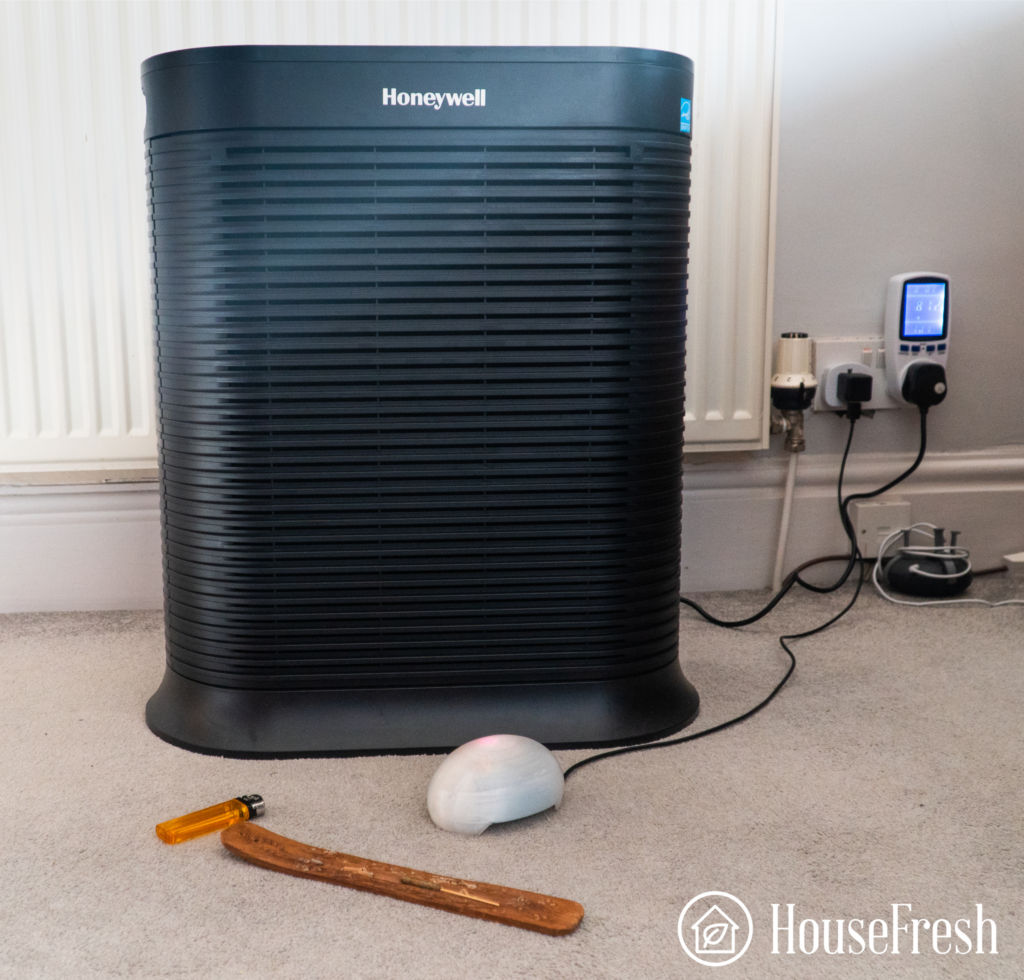
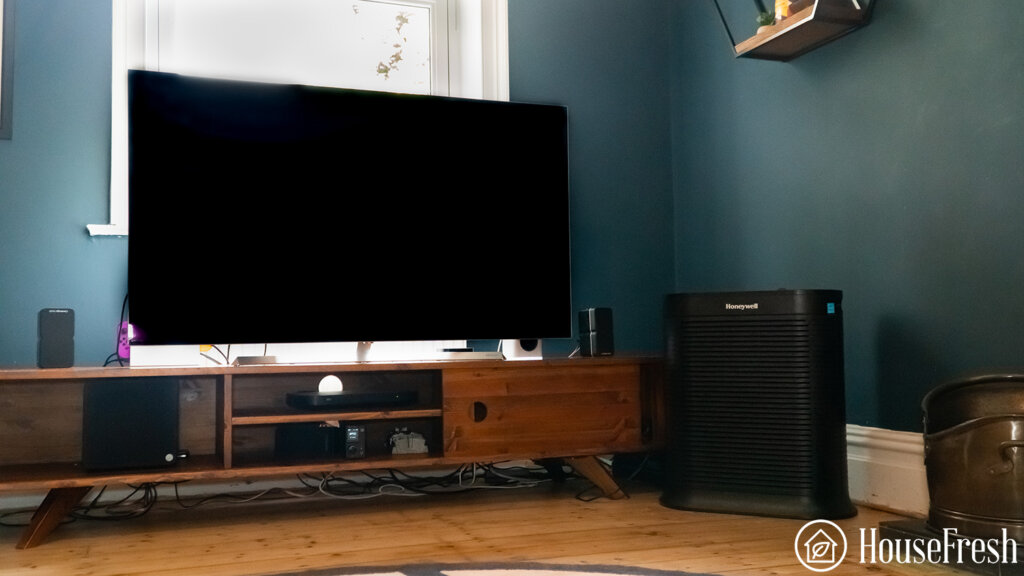
Honeywell HPA060 review

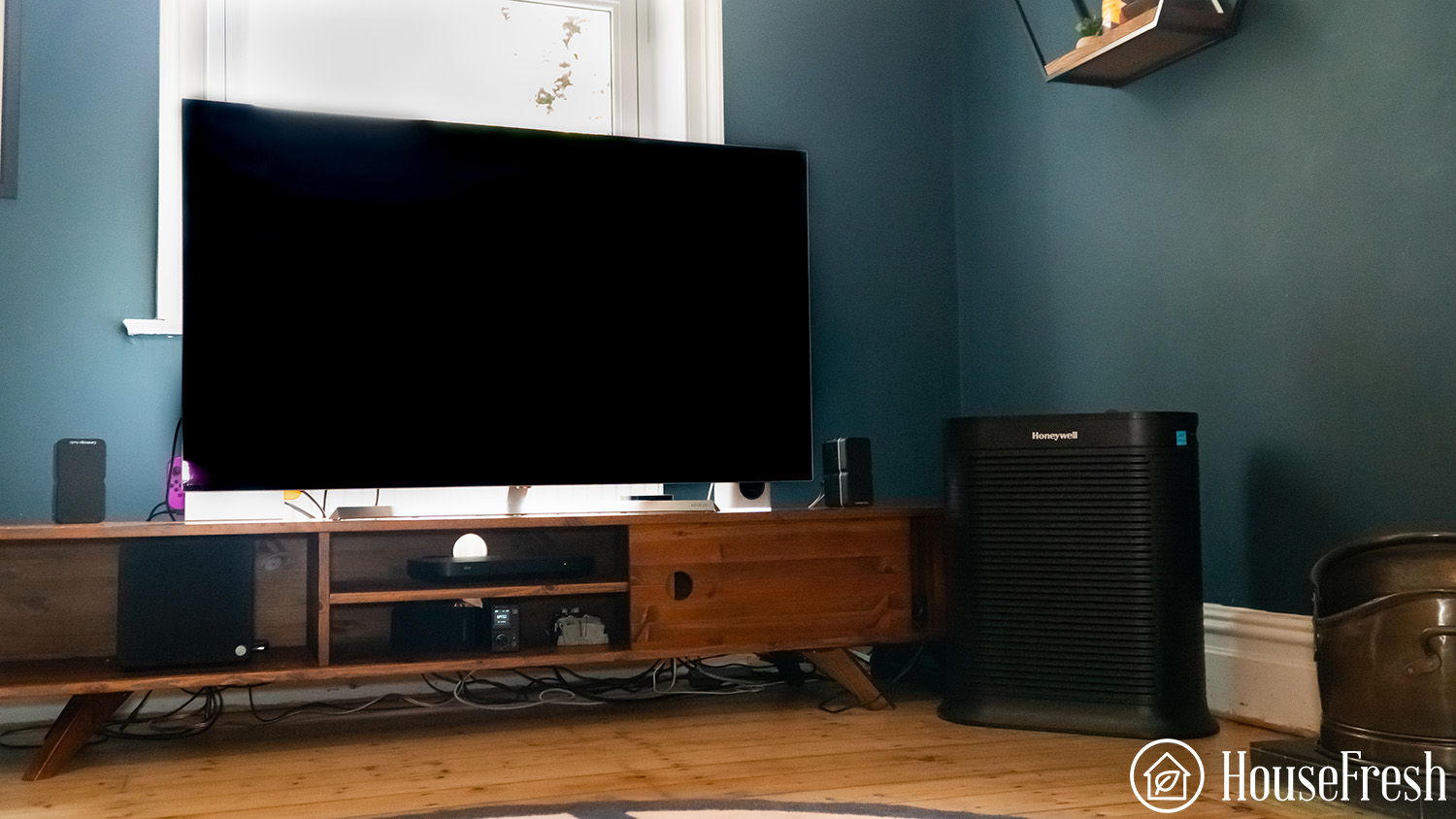
Honeywell HPA060 Living Room

If you’ve researched air purifiers, you’ve most likely come across the name Honeywell. This big brand has earned its reputation as a trustworthy household name and prides itself on producing no-nonsense, powerful air purifiers and dehumidifiers.

It’s worth noting that, according to the manual, the HPA60 is not made directly by Honeywell. It turns out that the HPA060 comes out of a company called Kaz USA (part of Helen of Troy Limited), which licenses the Honeywell trademark. 
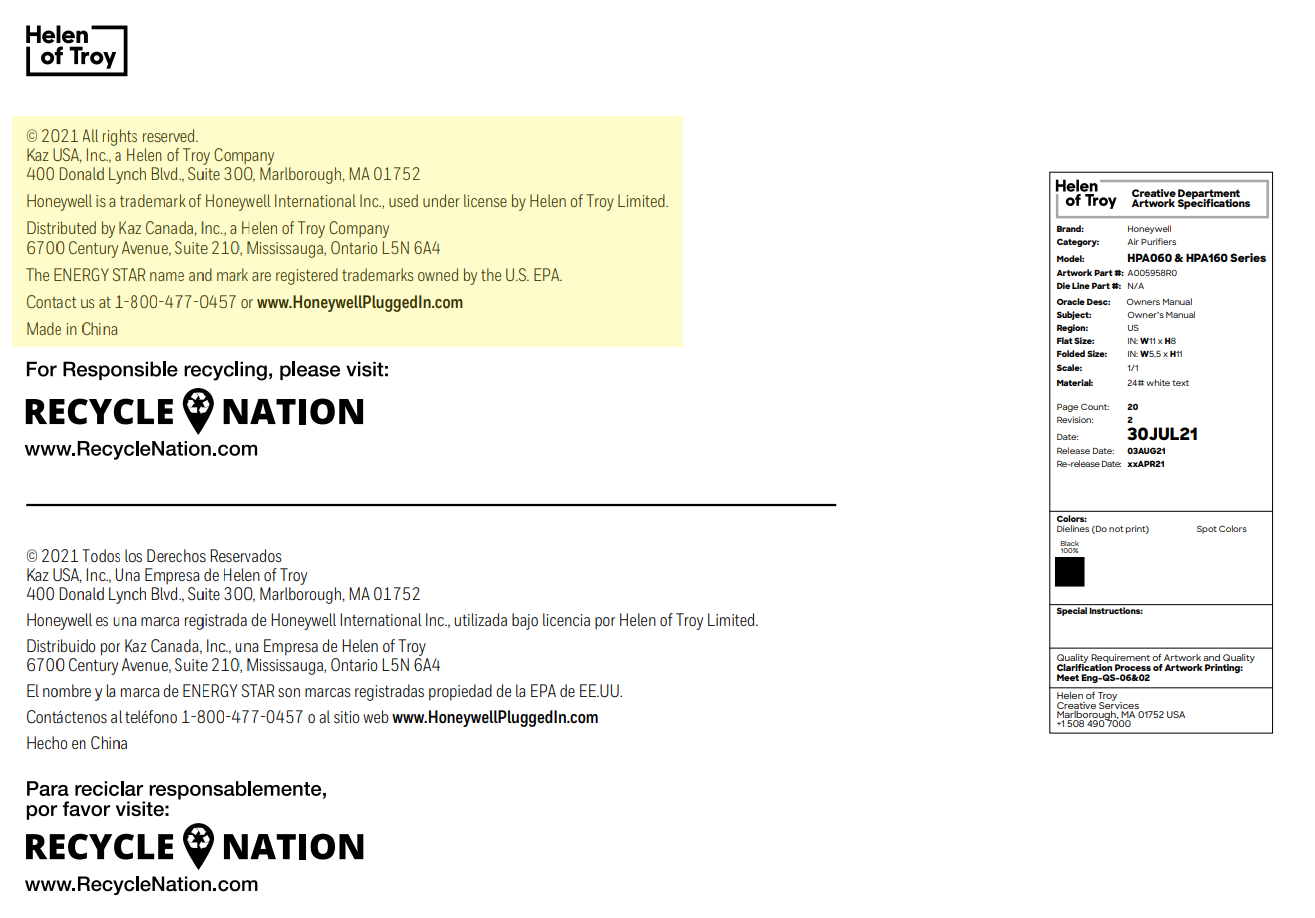
image1

Helen of Troy Limited made over two billion dollars in sales last year, so it is not a small company. However, it is still worth making consumers aware that this product is being sold under a license because the marketing materials don’t make it clear that Honeywell International Inc does not manufacture this air purifier. 

We have a few Honeywell products in HouseFresh HQ, including the popular Honeywell HPA300 and the questionable Air Genius 5 HFD320

The Honeywell HPA060 is a smaller air purifier, which is a big market to be in. With popular units like the Levoit Core 300, Winix A231 and the Shark HP102, does the HPA060 stand tall next to the competition?

In this review, I will take you through the data we collected from using and testing the HPA060, look at its controls, features and functions, offer my opinions on the design and see how it compares to other air purifiers of similar size and CADR. 

The lowdown on the Honeywell HPA060

Danny Ashton HouseFresh
“A solid, basic small air purifier from Honeywell but likely too underpowered for most use cases. I recommend our readers to spend a little extra for a device with at least 140 CFM.”
— Danny Ashton, HouseFresh Founder & Senior Writer
Honeywell HPA060 Shelf

With all the air purifiers to consider, you may not have time to read the full review. So, I’ve condensed it down to the main points from our performance test of this unit.

What we really like

It’s lightweight and easy to move between rooms, making it possible to keep the HPA060 on a ledge or shelf.
The controls are simple and straightforward thanks to its one-dial operation.
It is small enough to fit on a desk in your home office or on the countertop in your kitchen.
The filters are easy to replace.

What we think could be better

It is lacking in power to effectively clean the air even in the smallest of rooms — it took 74 minutes to complete our air cleaning performance test, compared to the 39 minutes we saw with the Levoit Core 300S.
The pre-filters only last three months.
It doesn’t offer any smart features (such as Auto Mode) or an on-board air quality sensor. 

The specifications

The HPA060 is a smaller unit, so its size and performance should match its price tag. This unit retails for around $100, which is ballpark for air purifiers of this size with no smart functions. The issue comes with the performance per $ spent, and with a CADR of just 61 CFM, it is a poor result for a Honeywell unit.

HouseFresh rating:★★☆☆☆
Time to clean our 728 cubic feet test room (with the device running at top speed):74 minutes
Air purifier technology:Pre-filter, True HEPA filter and activated carbon sheet
Recommended room size (4.8 air changes per hour):75 sq. ft. (5 ACH)
Clean air delivery rate (CADR):Dust: 61 CFM
Smoke: 48 CFM
Pollen: 75 CFM
Dimensions (in inches / in cm):10.69 x 7.72 x 15.16 inches (27.15 x 19.61 x 38.51 cm)
Weight (in pounds / in kg):6.39 lbs (2.90 kg)
Filter life:B Genuine Pre-Filter: 3 months
H Certified True HEPA Filter: 12 months
Noise level in decibels (measured from 3 ft. away with a sound level meter):Speed 1: 42.1 dB
Speed 2: 48.2 dB
Speed 3: 54.5 dB
Electricity consumption in watts (recorded with an electricity usage monitor):Standby mode: 0.01 watts
Speed 1: 11.44 watts
Speed 2: 16.13 watts
Speed 3: 21.21 watts
Estimated running cost (electricity consumption + official filter replacement):$98.34 per year
Cost per CADR cfm (based on dust CFM as reported by AHAM):$1.15
Manufacturer’s warranty:5-year limited warranty
Country of manufacture:China

It looks like a Honeywell

They’re not straying from the path of design or operation — that’s not a bad thing
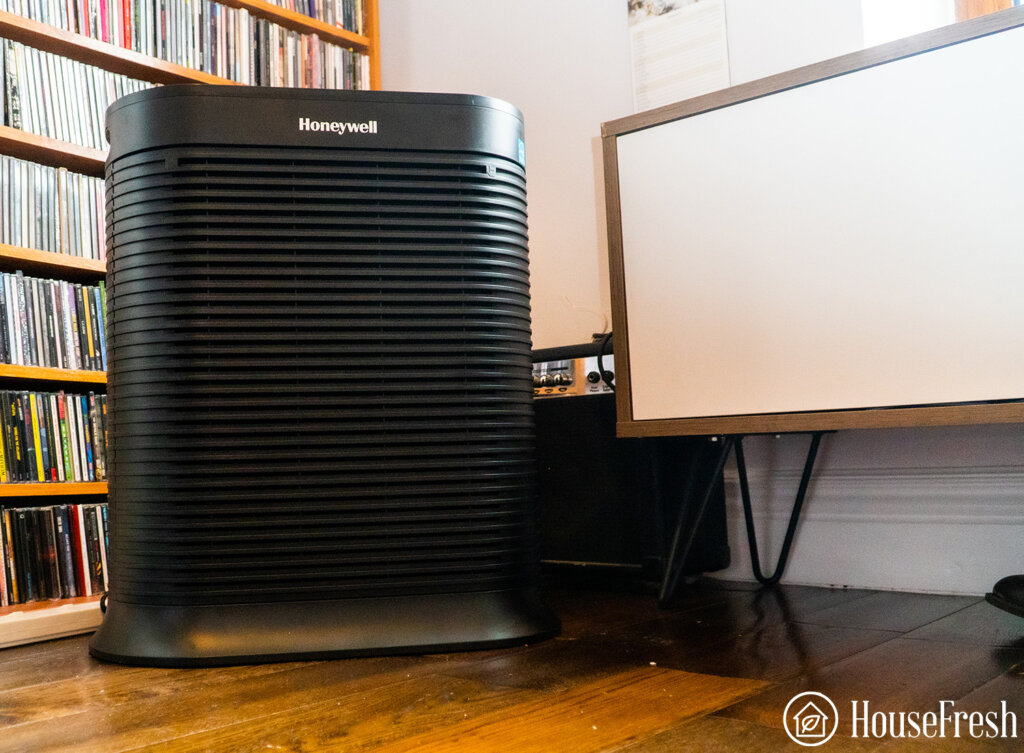
Honeywell HPA060 Corner

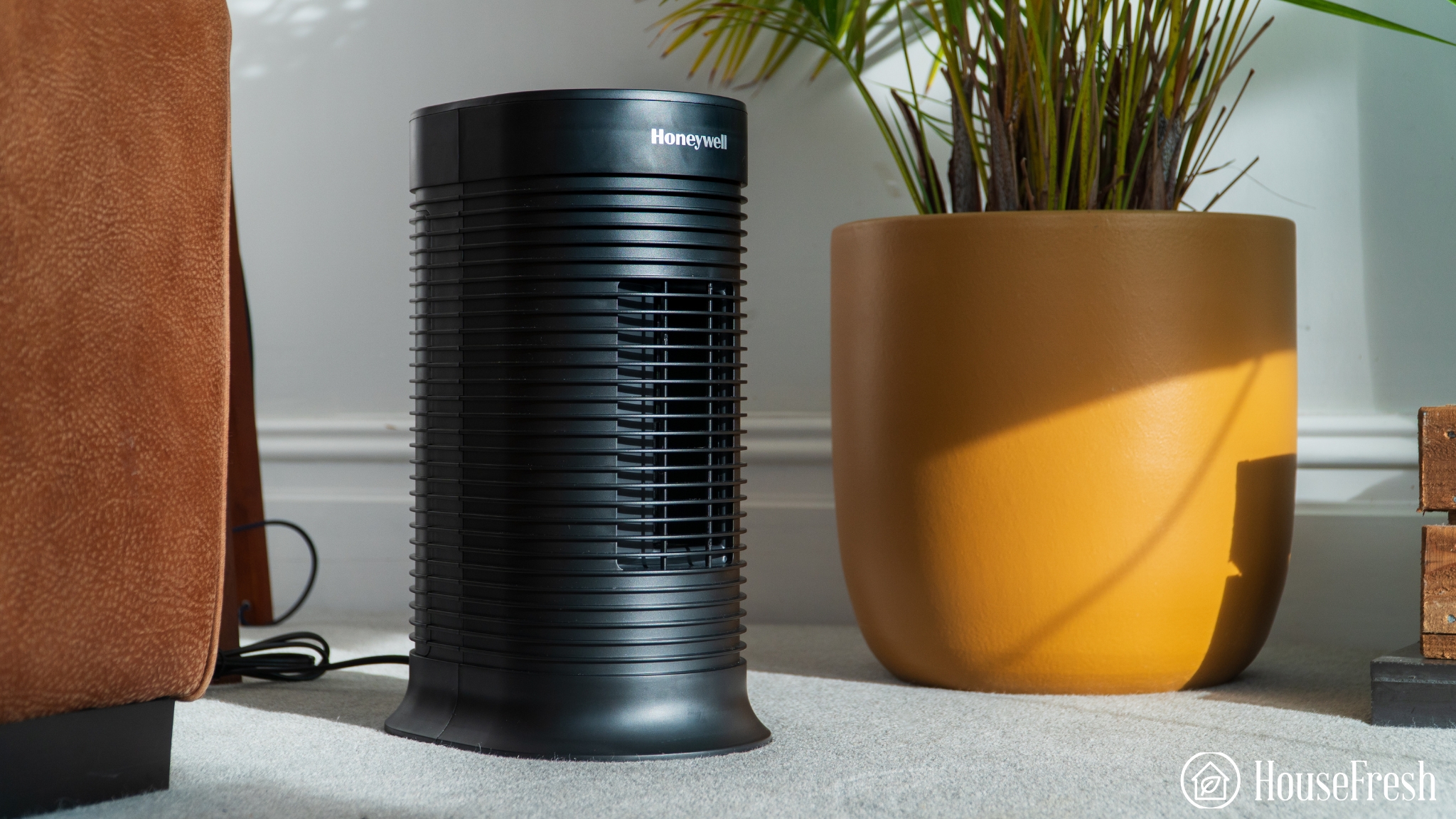
If you’re looking for a stylish air purifier to fit the aesthetic of your modern home, Honeywell isn’t the usual choice. They like to stick to their black, oval-like design, but that’s because they keep their air purifiers with no-frills. 
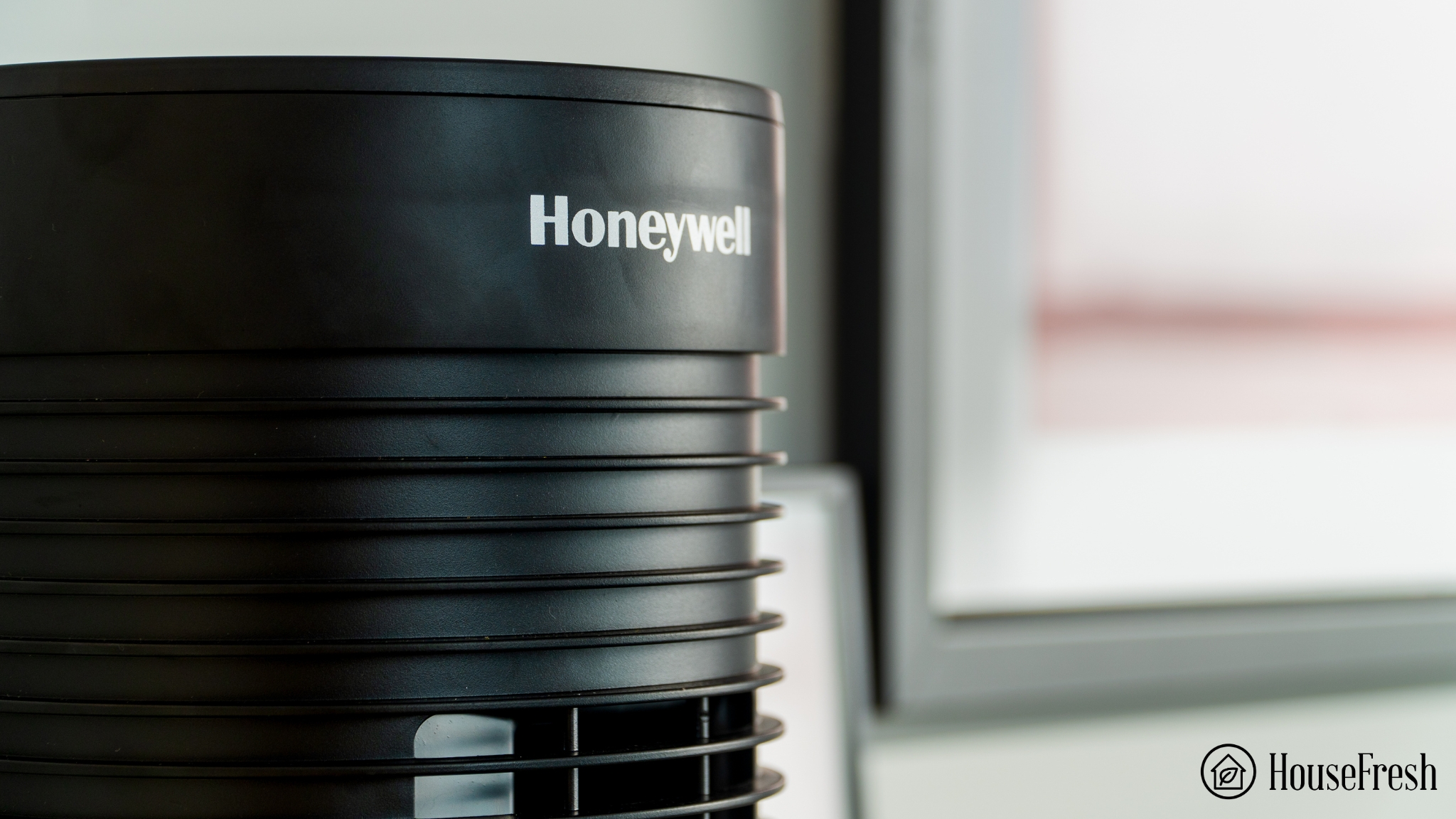
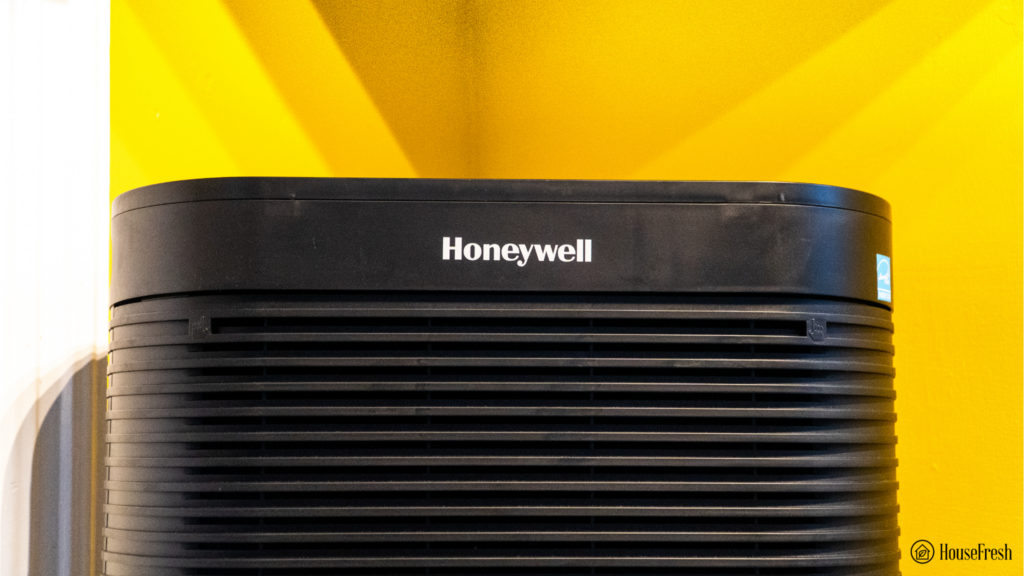
Honeywell HPA060 Top

A smaller version of the HPA300 looks wise; the HPA060 is made of plastic with grill-like lines around the body. There’s a handle on the pack so you can move it easily from room to room (it’s also not heavy, weighing in at just over 6 lbs).
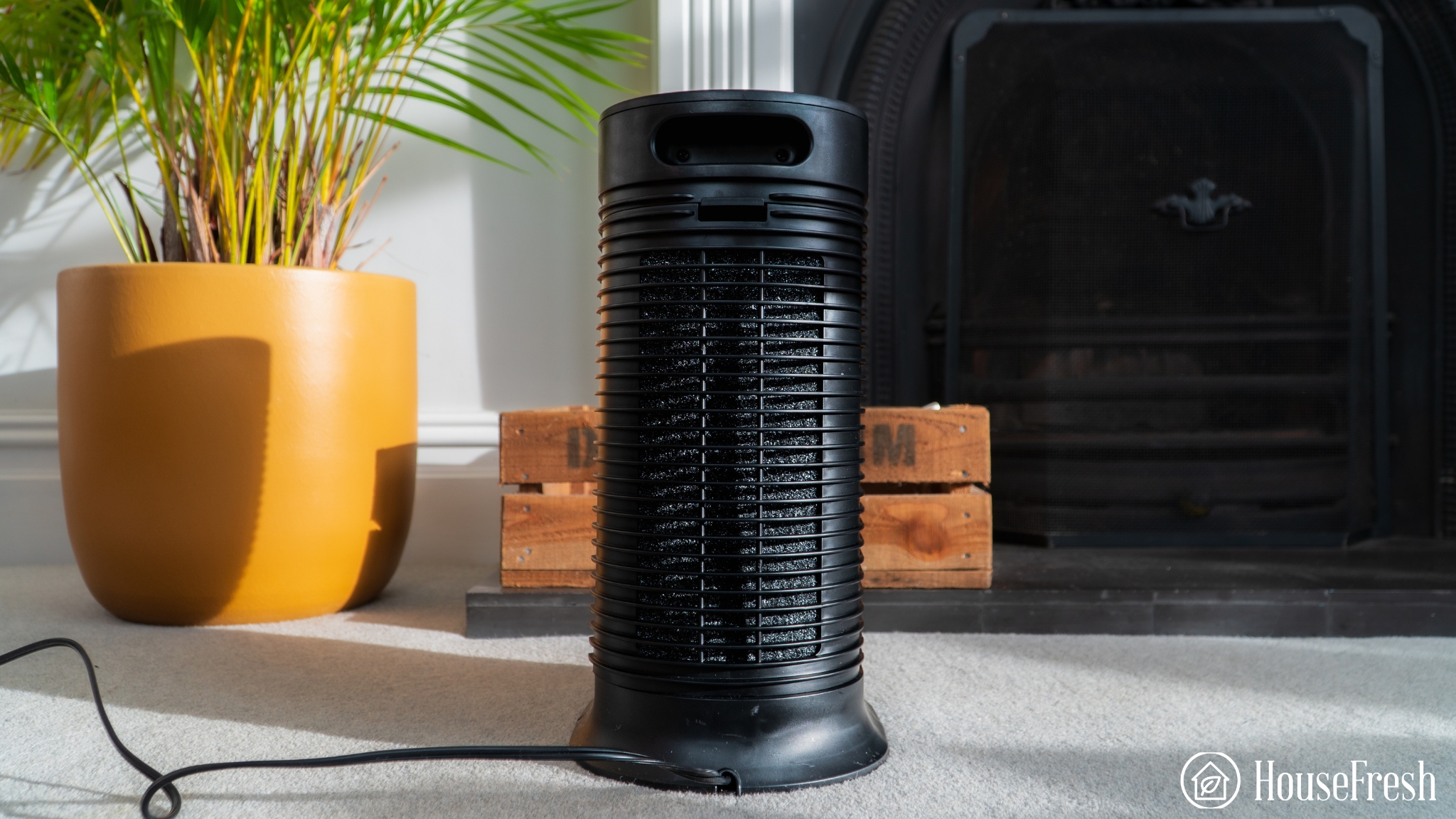
Honeywell HPA060 Back

The HPA060 is intended for those who don’t have use for smart functions like an auto mode, AQI, sensors or app connectivity. The basic functionality means it’s easy to use and not much can go wrong.

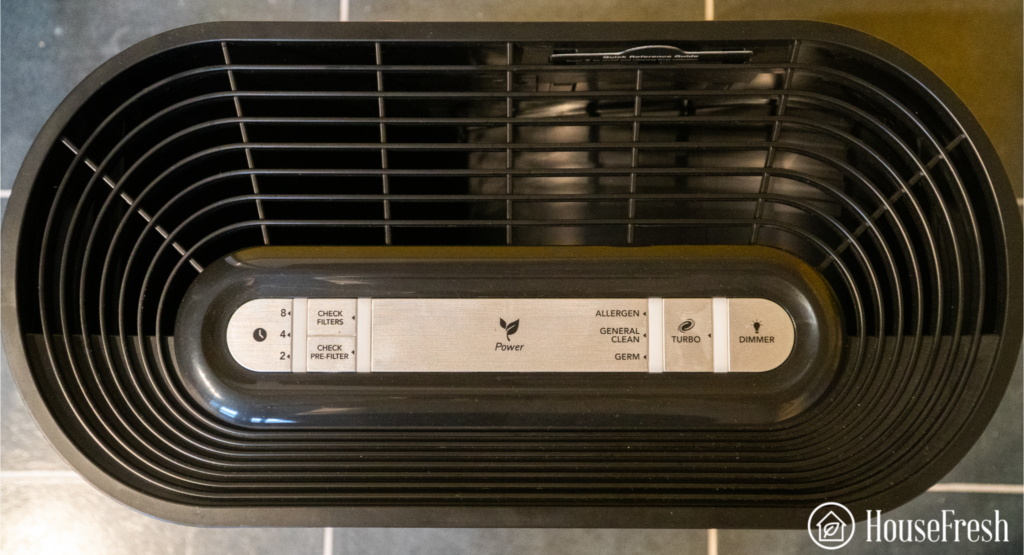
The controls sit nicely on the top of the unit, with the fan speed setting built into a dial instead of the usual button format. There are three fan speeds to choose from low, medium and high. There are also two filter check lights, one for the main particle filter and one for the pre-filter (I’ll get into the filters in a second).

Honeywell HPA060 Controls

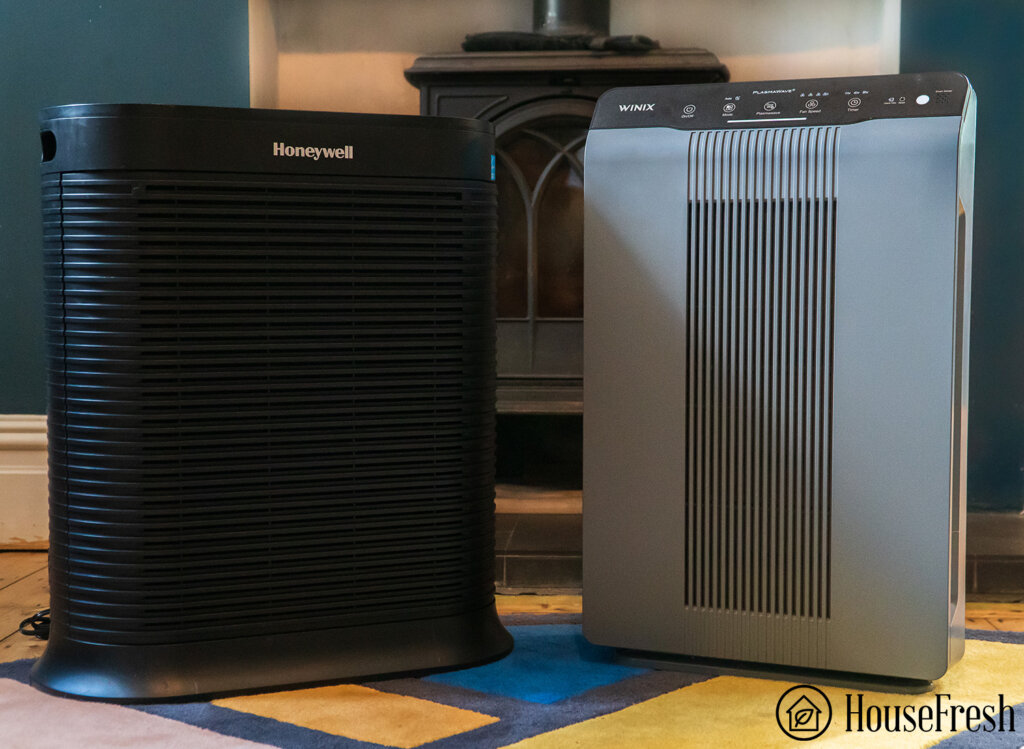
When you place the HPA060 next to other units of similar size, like the Levoit Core 300, Winix A231(A230) and Coway Airmega 150, you can see that it has a different style than the others. It also doesn’t take up much space, which is a big plus when running it in a small room.
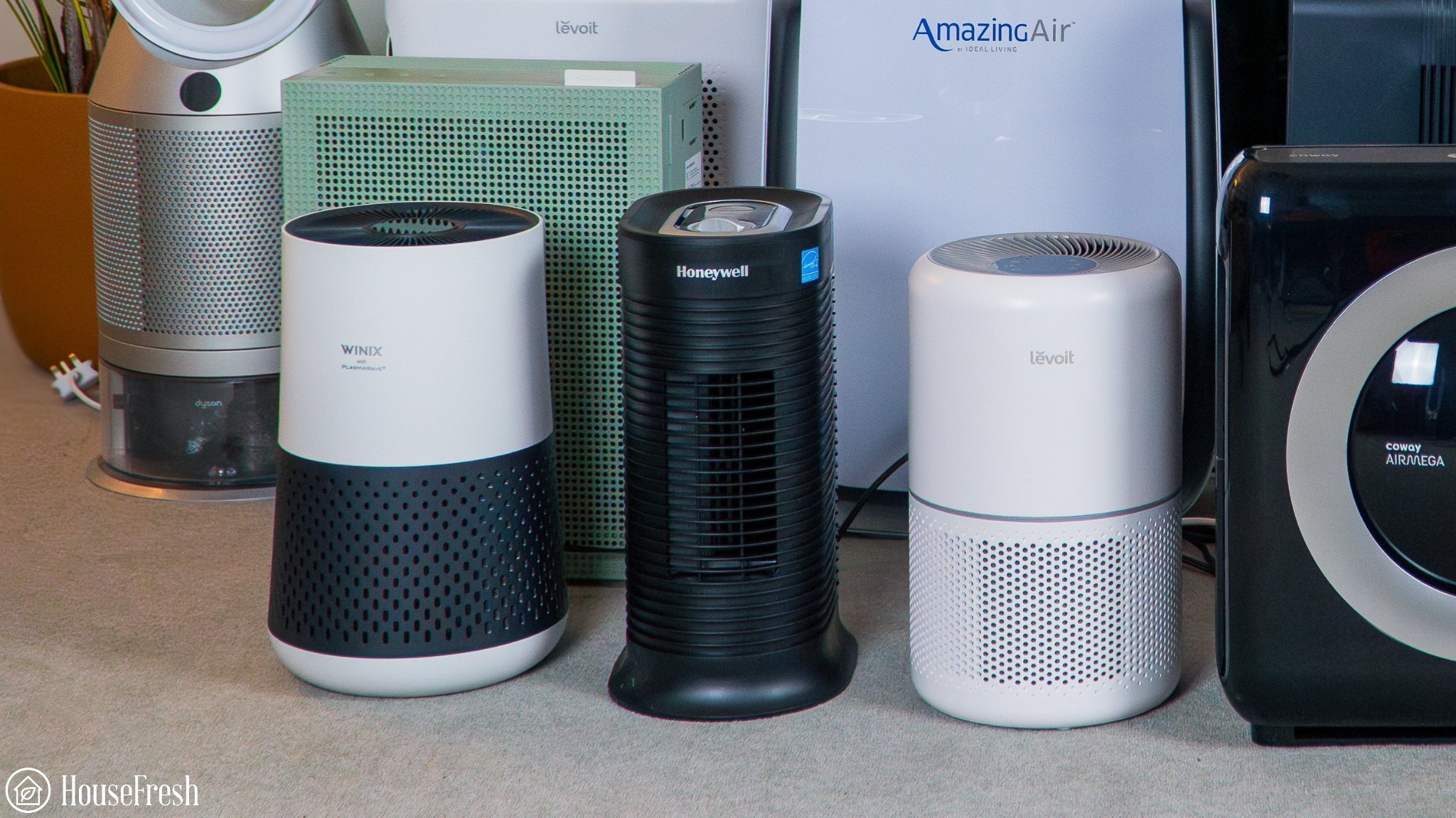
Honeywell HPA060 Group

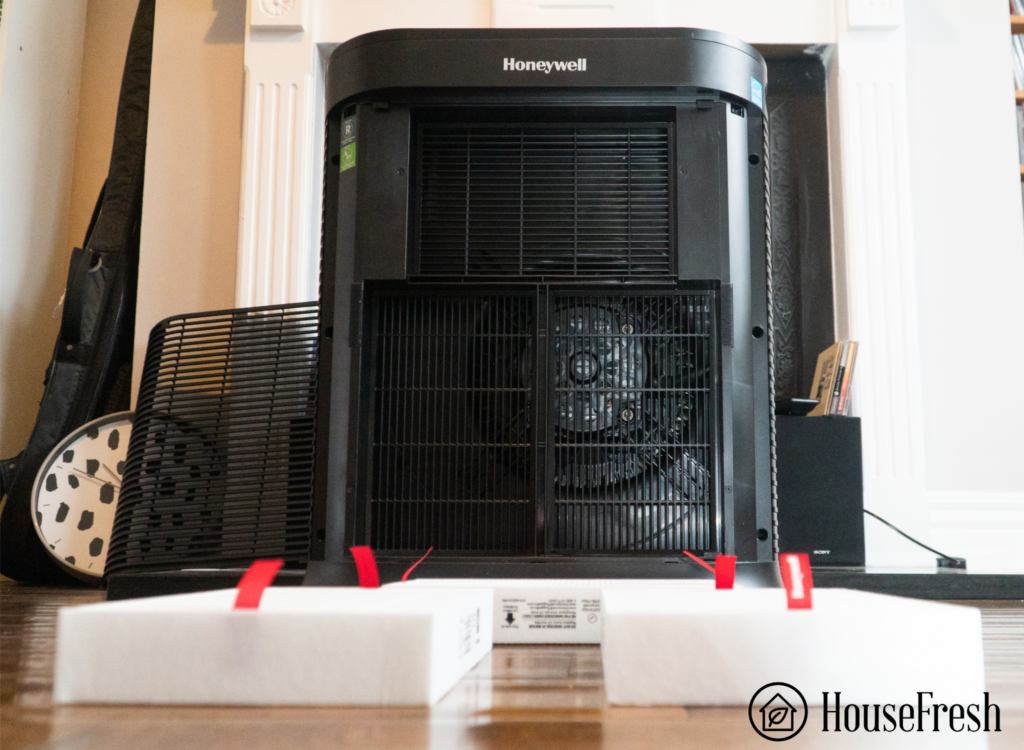
Something I don’t understand about the design of the HPA060 is the position of the inlet panel. Why have they limited the airflow to a narrow section when they could have used the side area like the HPA300?

Narrow, but still HEPA

Honeywell’s HEPA filters are ok, but the pre-filter is a letdown
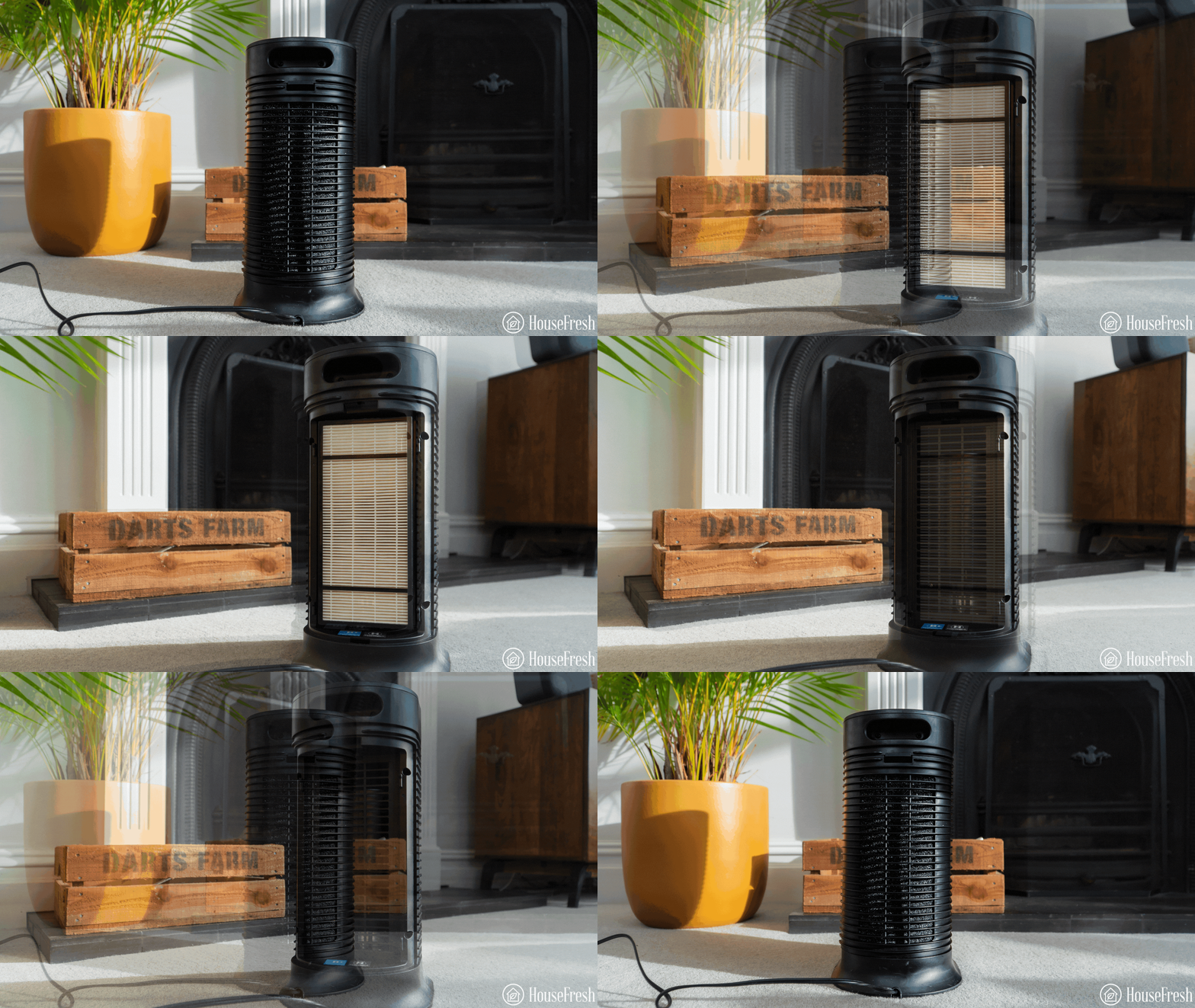
Honeywell HPA060 Filters

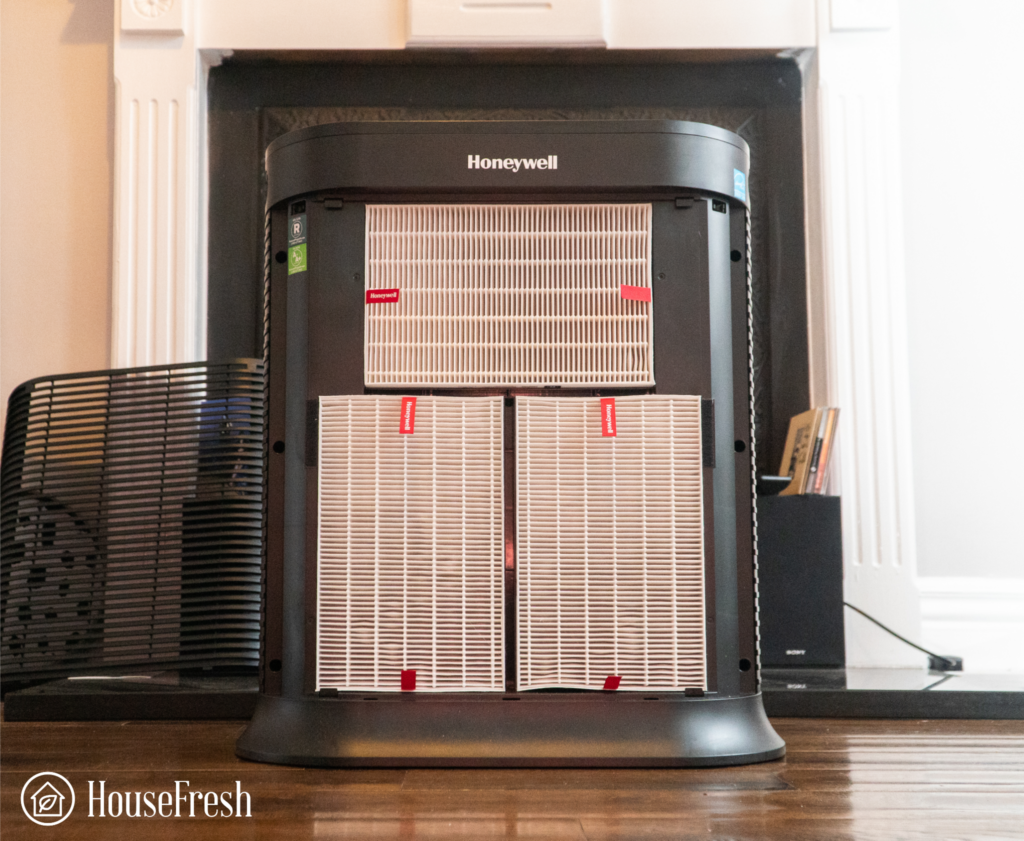
Because the inlet is located where it is, the filters must also be narrow. Inside is a True HEPA filter, which is highly effective at removing microscopic contaminants from your air down to 0.3 microns. But Honeywell has restricted itself by making it so narrow with minimal surface area.
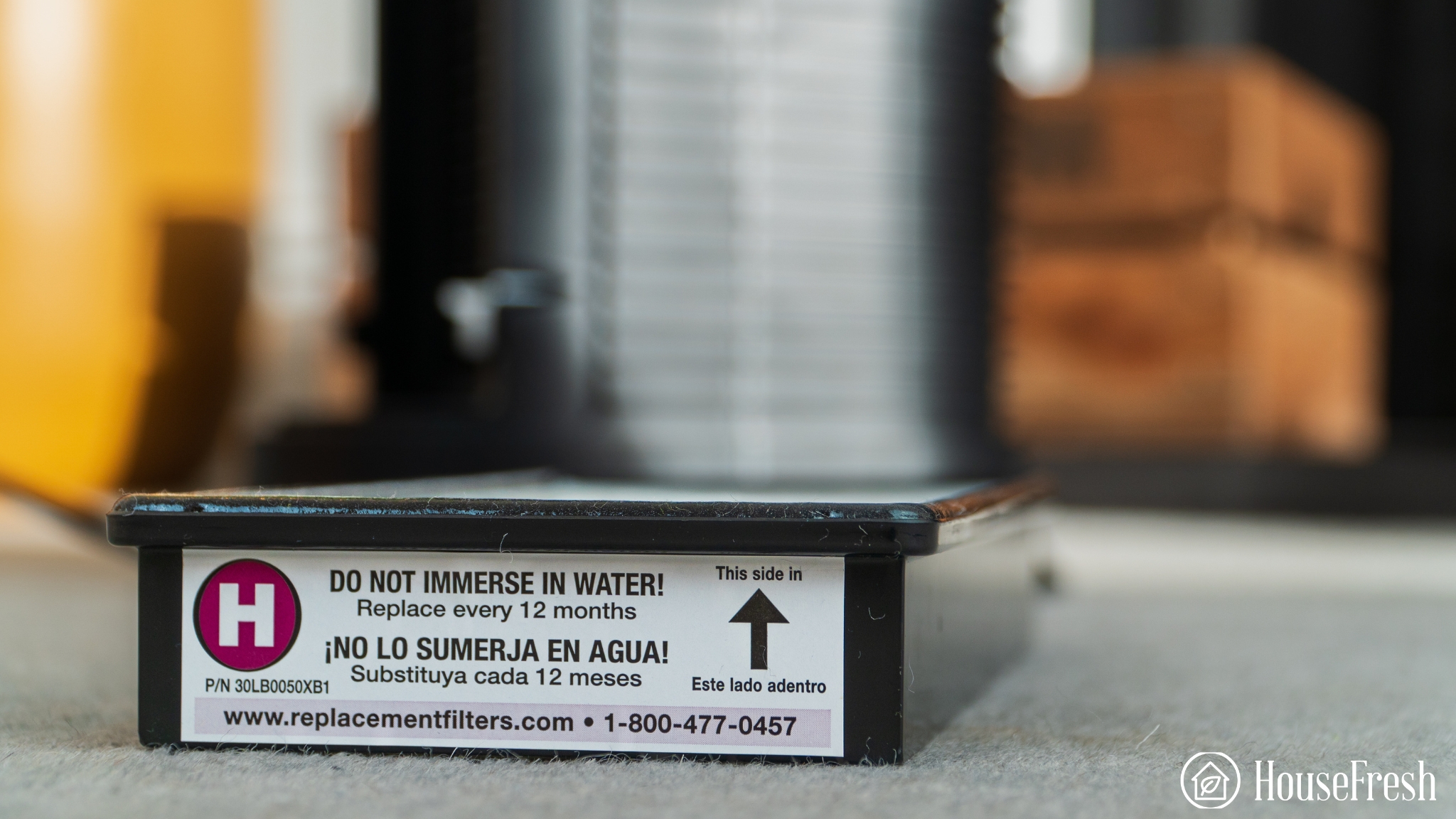
Honeywell HPA060 HEPA Instructions

The HEPA filter in the HPA060 is sturdy and well-built, with a plastic shell to keep it rigid. Honeywell says that it should last around a year before it needs to be replaced, which is a plus as it’s usually half that time in other units.

Honeywell HPA060 HEPA filter

The pre-filter that Honeywell has opted for in this unit doubles as an activated carbon filter and is a disappointment. 

It is basically a wafer-thin sheet that “helps capture large particles such as dust, lint, fibers and pet fur and helps to reduce VOCs & odors from cooking, smoke, bathrooms and pets,” according to their marketing.
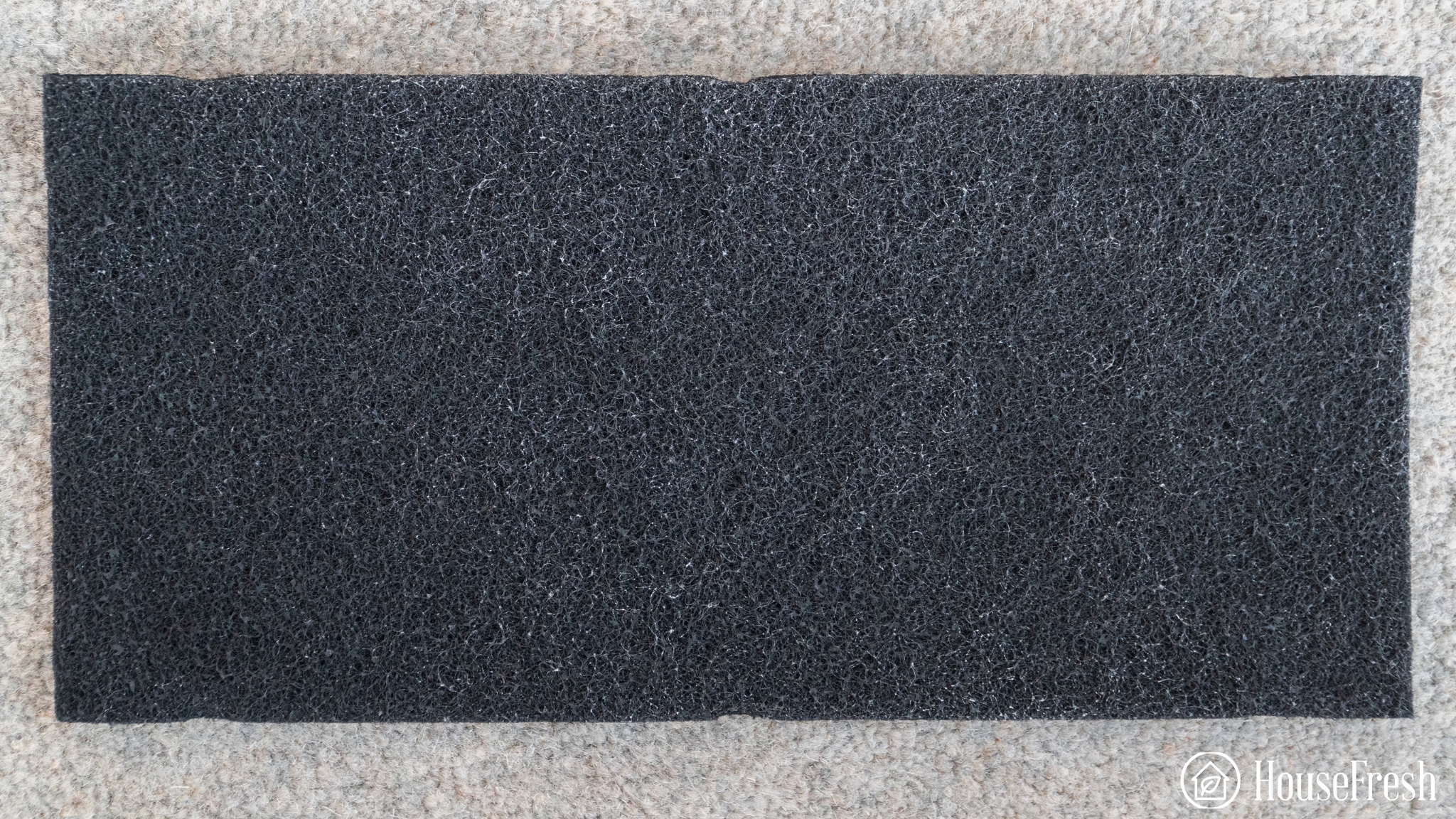
Honeywell HPA060 Activated carbon filter

This sheet may be able to capture large particles, but there is not enough activated carbon embedded in this filter to tackle VOCs and odors. 

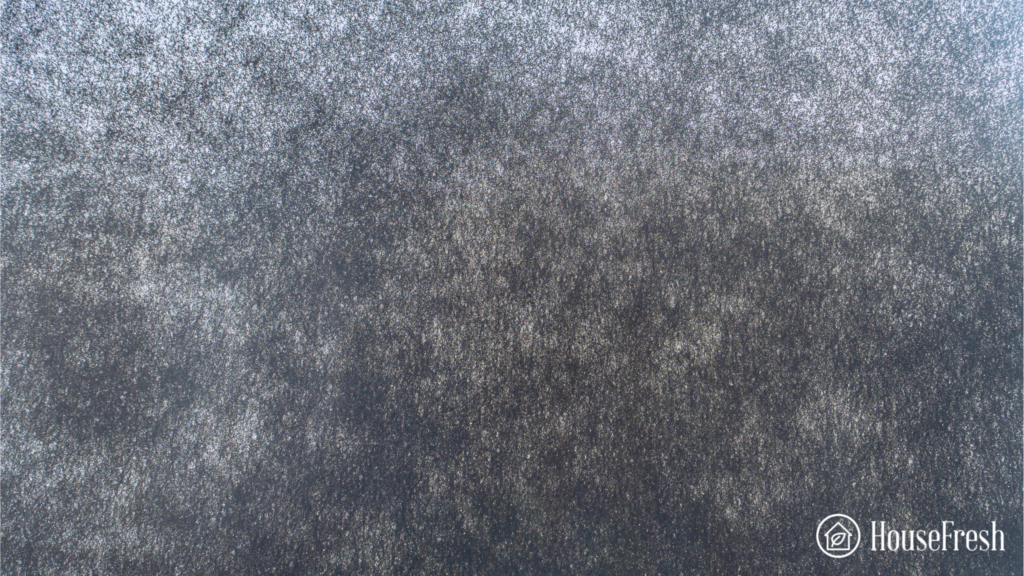
You can see plenty of holes when you hold the pre-filter up to a light. And it only has a lifespan of 3 months, an extra cost that could have been avoided by installing a washable pre-filter instead.
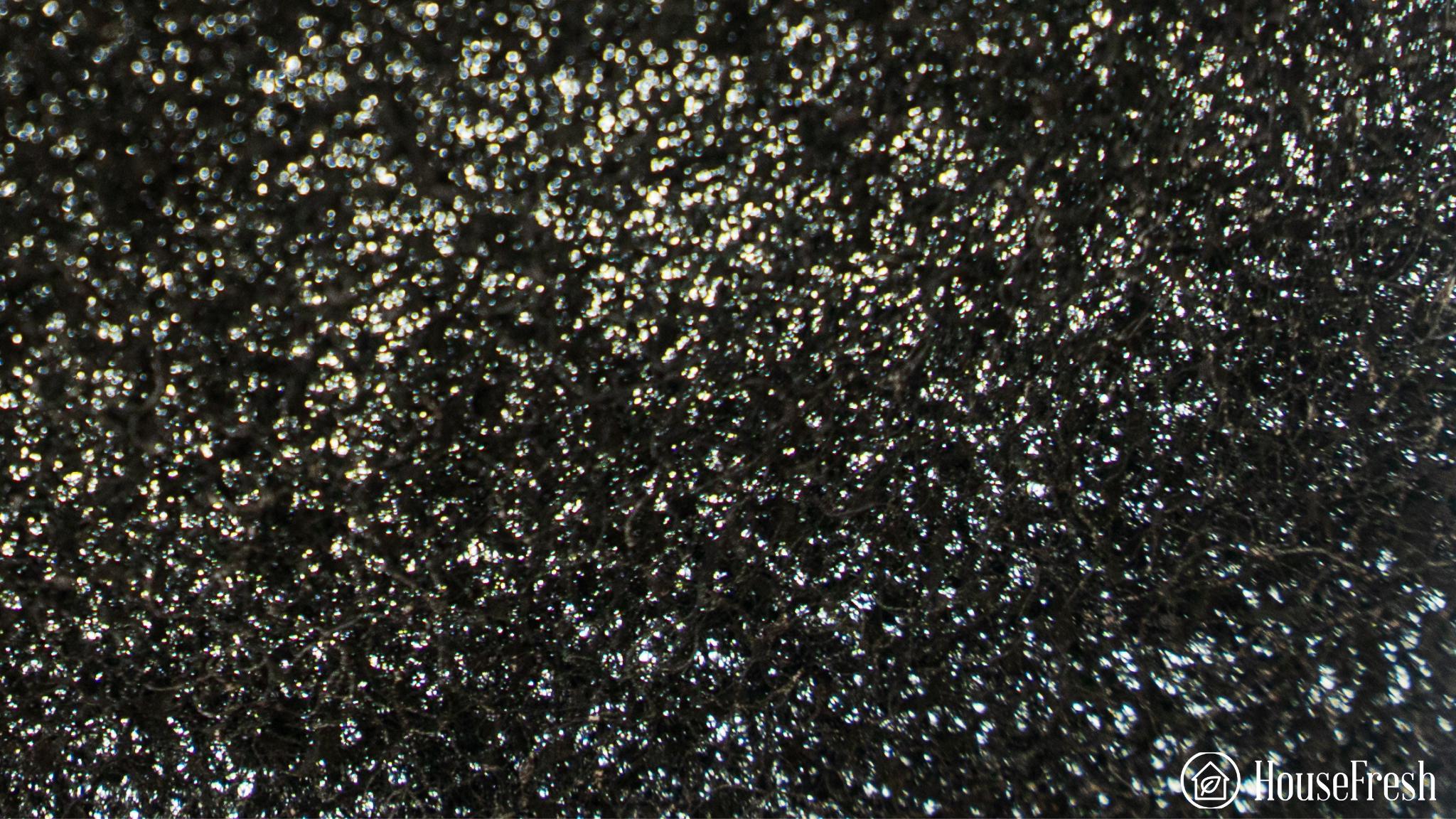
Honeywell HPA060 Activated carbon see through

I promise I’m not being unnecessarily harsh here. I am pointing out all these issues with the filters because they will significantly impact how well the HPA060 will remove pollutants and odors from the air.

You can see how flimsy the filters in the HPA060 are just by looking at the results of the CADR test in the unit’s AHAM Verifide Performance Verification Certificate:
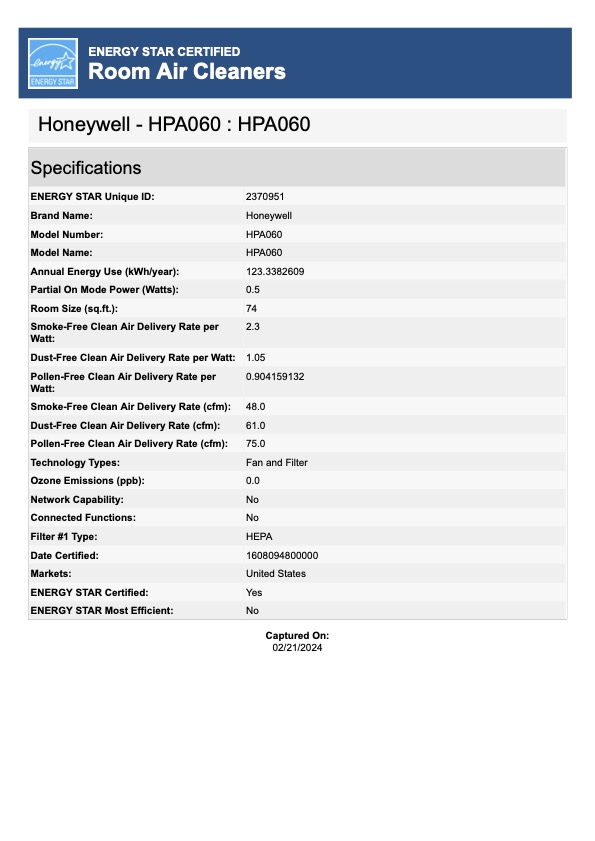
HoneywellHPA060 2024 02 21

Once the filters are ready to be replaced, an indicator light on the control panel will illuminate. Changing either of the filters is painless, but it could get annoying when you have to do it every 3 months.

Here’s what you need to do:

  1. Switch off the unit and unplug it
  2. Remove the panel at the back of the unit
  3. The pre-filter is located on the inside of the back panel; remove and replace
  4. Pull the HEPA filter out and replace it with a new one
  5. Click the back panel back into place

See how simple it is with our filter replacement video:

Tip

When you purchase a new air purifier, it’s common for the HEPA filter to be wrapped in plastic packaging inside the unit. Be sure to remove all of the packaging from the HEPA filter otherwise, it won’t be able to perform its duties effectively.

The Honeywell HPA060 cleared our test room in 74 minutes

A disappointing result from a Honeywell air purifier, even for a small unit

Honeywell HPA060 Testing

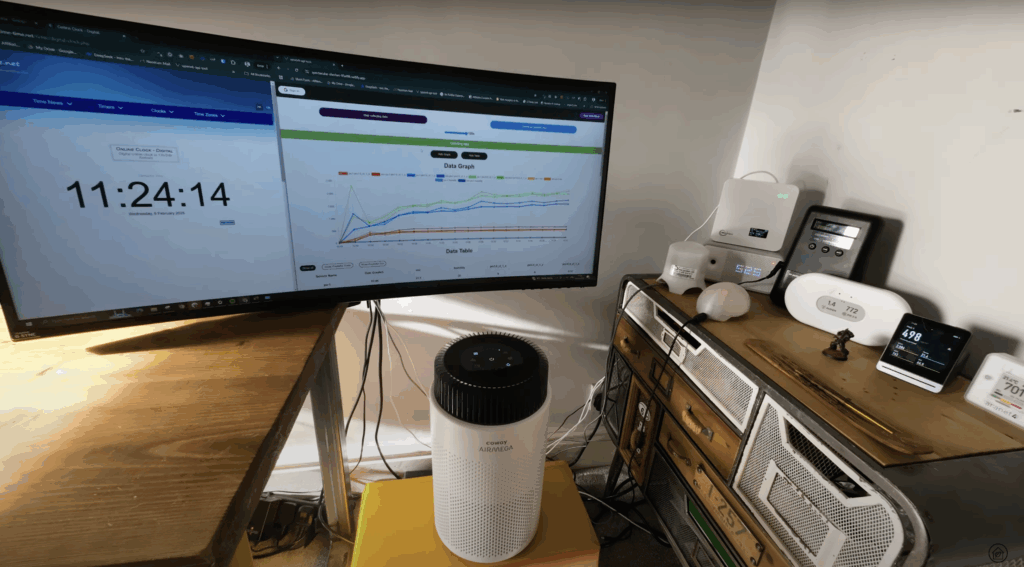
We don’t just rely on manufacturer numbers. We test every unit we review in our HouseFresh home lab (a room at HQ) under the same conditions. Doing this allows us to compare results with other units and share our data with you.
how we test
How we test air purifiers

Read our full testing methodology.

First, we measured the performance of the HPA060 by recording how long it took to remove incense smoke from our home lab using our indoor sensor from Purpleair. This provides us with updates on airborne PM1.0ug/m3, PM2.5ug/m3 and PM10.0 ug/m3 particles in real-time.

Once Danny exported the data, he used Flourish to visualize it so you can clearly see how long it took in an easy-to-digest way:

It took around one hour and 15 minutes for the HPA060 to reduce PM1.0 levels down to zero. 

I would say that the combination of a weak fan and a subpar HEPA filter is not working out well for this unit. Even for a small air purifier, it doesn’t possess the same kick as some of its rivals. 

Air cleaning speed compared

The Honeywell HPA060 cleared our room in 74 minutes, but how does that compare to other air purifiers in the same price range or with similar capabilities? Explore the chart below to find out:

When we put this unit next to others of the same size and cost, you can see how much the HPA060 falls behind. 

To continue my previous comparison, the Levoit Core 300 took 40 minutes to clear our room, and the Winix A231(A230) took 36 minutes. All in all, it seems to take the Honeywell HPA060 around 40 minutes longer to clean the air than small units from competitor brands.

Airflow test results

More powerful fans will result in faster and more effective air cleaning. That is why, as part of this test, Danny used the Testo 410i Anemometer to measure the fan speed levels directly from the air outlet of the device at each of the three fan speeds.

At its lowest fan speed, the HPA060 averaged 2.5 m/s. When moving to its second fan speed, it averaged 3.23 m/s. When reaching its highest fan speed, the HPA060 averaged 3.88 m/s.

Noise levels test results

Air purifiers make a sound; there’s no avoiding that, but some units make more noise than others. It can mean the difference between not being able to hear the TV and having to turn the air purifier off at night because you can’t sleep with the noise.

For a smaller air purifier, the HPA060 isn’t as quiet as some other units, but it also won’t make your room shake like you’re watching Apocolypse Now. We measured it at its lowest fan speed, producing 42.1 dB of sound and 54.5 dB at its highest.

Sound level is subjective. The volume I choose to listen to Motorhead may not be the same level my neighbors wished I listened to Motorhead. That’s why we made this video of the HPA060 running at all of its fan speeds so that you can get an idea of volume for yourself.

The cost to run a Honeywell HPA060: $98.34 per year

The HPA060 is an energy-efficient air purifier with costly filter replacements

1. Electricity costs = $32.35 per year

A cost you must consider when buying an air purifier is how much energy it uses. It’s recommended that you run your unit 24/7 in order to effectively clean the air in your home, but that also means pulling electricity non-stop. An air purifier that pulls a lot of power can become expensive pretty quickly.

This air purifier by Honeywell is a small unit, so it doesn’t require too much energy to run. When Danny used his electricity monitor during the test, he measured the HPA060 pulling 11.4 watts at its lowest fan speed and 21.2 watts at its highest.

I used the latest average electricity price per kWh reported by the U.S. Bureau of Labor Statistics to calculate how much you would spend if you were to run the HPA060 all day, every day. The total cost would come to $35.33 per year in associated energy costs.

2. Filter costs = $65.99 per year

Another running cost you need to consider is the price of replacement filters AND how often they need to be replaced. If you don’t buy new filters when the air purifier indicates it won’t work effectively.

Honeywell’s certified true HEPA filters must be replaced every 12 months, and they cost $25.99:

Honeywell HRF-H1 HEPA Air Purifier Filter H, 1-Pack – for HPA050/150, HPA060 & HPA160 Series – Airborne Allergen Air Filter Targets Wildfire/Smoke, Pollen, Pet Dander, and Dust
  • AIR PURIFIER FILTER REPLACEMENT – This Honeywell HEPA Air Purifier H Filter helps capture up to 99.97% of the following molecules: pollen, pet dander, debris and smoke.
  • WORKS WITH HONEYWELL AIR PURIFIERS FOR HOME – These Honeywell HEPA Filters are designed exclusively to fit Honeywell HEPA Air Purifier models HPA050 150, HPA 060 160 and HHT055 155 Series.
  • EFFECTIVE AIR CLEANING & CIRCULATION – A Honeywell Air Purifier with a Honeywell Certified filter will filter and circulate air up to 4.8x an hour in stated room size. Replace HEPA Filters 1x per year. Pre-filters used with this filter are sold separately.
  • COMPATIBLE DOESN’T MEAN COMPARABLE – For best performance, use only genuine Honeywell air purifier filters. Compatible air purifier filter replacements are not guaranteed to offer the same performance or efficiency.
  • A BRAND YOU CAN TRUST – Improve your air quality and neutralize unpleasant smells for a cleaner breathing experience year round with Honeywell air cleaners, purifiers and humidifiers.

When it comes to their B pre-filters, Honeywell recommends they should be replaced every three months. The cost of swapping out filters this often will rack up over time, especially considering an official B pre-filter costs nearly $10:

Honeywell Odor-Reducing Air Purifier Replacement Pre-Filter HRF-B1/Filter (B)
  • ODOR & GAS REDUCING PRE-FILTER: This replacement filter deodorizes the air, reducing odors & helping capture harmful gases from the air that passes through the filters with activated carbon & zeolite.
  • TRAP LARGER PARTICLES: This pre-filter traps larger particles like dust, lint, fibers & pet fur from the air that passes through the filters & reduces odors more effectively than standard carbon filters.
  • FILTER & CIRCULATE: Honeywell Air Purifiers filter & circulate air in the stated room size up to 5 times an hour. Breathe easy knowing the air in your home is fresher & cleaner with fewer allergens.
  • HONEYWELL QUALITY REPLACEMENT FILTERS: For best performance use only genuine Honeywell Replacement filters. Each air purifier’s performance is tested as a system with the filters for best efficiency.
  • HONEYWELL QUALITY: Improve your air quality & neutralize odors for a clean & healthy breathing experience year round with Honeywell replacement filters for air cleaners, purifiers & humidifiers.

The good news is that you could save some money by buying non-genuine filters, but we haven’t tested these, so we can’t speak to their performance. You can find a 4-pack of generic HEPA filters and pre-filters for the HPA060 retailing at around $40:

Fette Filter – Filter H with Pre-Filter for Model HPA-050 HPA-060 HPA-061 HPA-150 HPA-160 HHT-055 HHT-155 (QTY4) Part # HRF-H1 HRF-H2 HRF-B1 HRF-B2 H (4+4)
  • Includes 4 (four) Premium Filter & 4 (four) Pre Filter Replacement for Select Tower Air Purifer Models.
  • Compatiable with Filter H Filter B+ Part Number HRF-H1 HRF-H2 HRF-B1 HRF-B2 (Check for Your Model Below)
  • Compatiable with Tower Air Purifer Model HPA-050 HPA-060 HPA-061 HPA-150 HPA-160 HHT-055 HHT-155
  • Replacement Filter is able to remove all of airborne particles from the air that passes through the filter.
  • Easy to Install No Tools Requried. We recommend to change your filters every 4 months to maintain your machine at optimal performance.

Bottom line

If you are looking for a small but powerful air purifier, there are better air purifiers out there than the Honeywell HPA060.

With so many great small air purifiers on the market, Honeywell hasn’t hit the mark with the HPA060. 

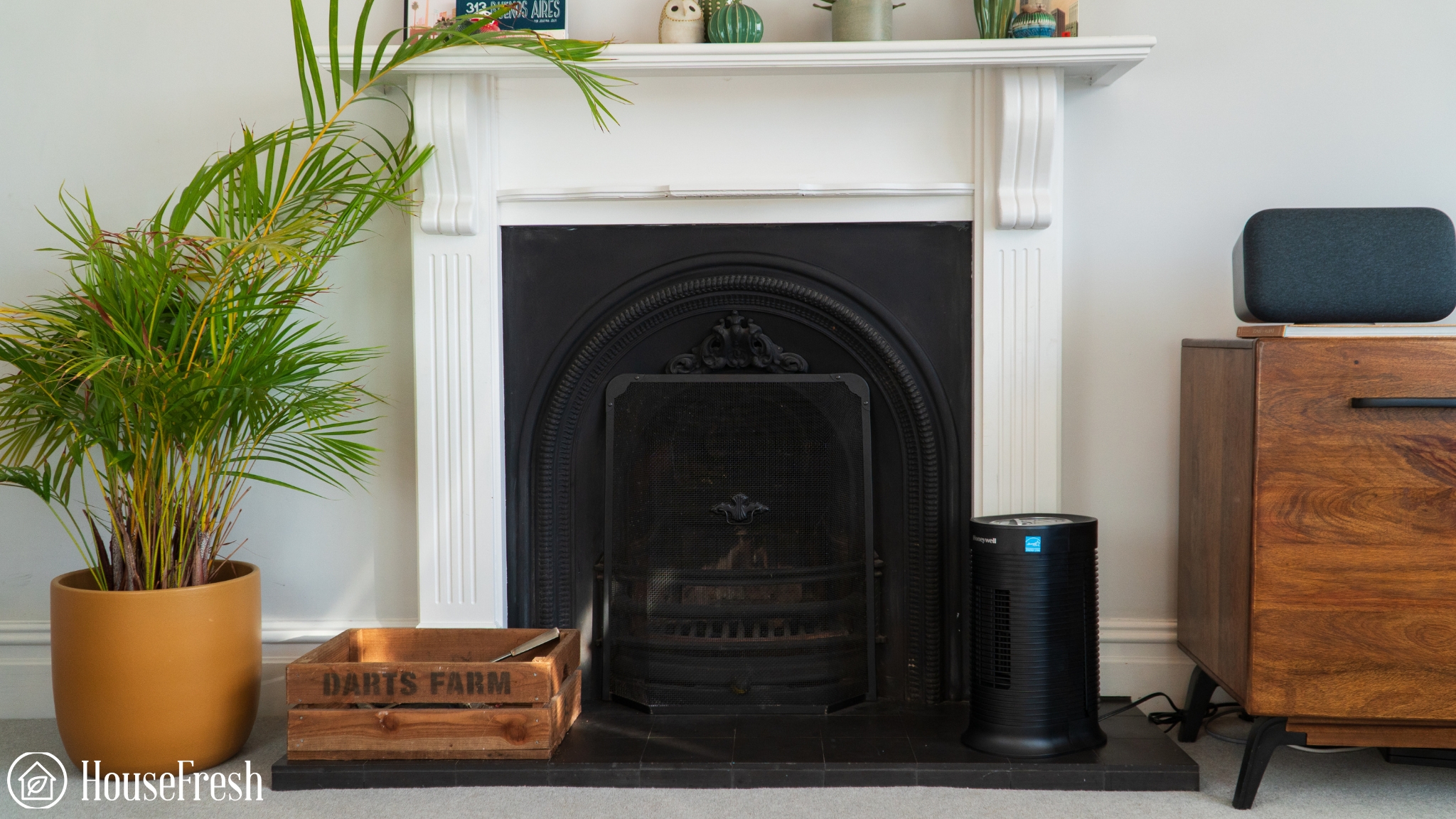
It is relatively small and light, which makes it easy to move from room to room. It is easy to use, thanks to its one-dial control. It looks different in black and doesn’t follow the “white box” aesthetic. But the performance isn’t there when it comes to cleaning the air.
Honeywell HPA060 Fireplace

With a CADR (Clean Air Delivery Rate) of 75 CFM for pollen, the HPA060 doesn’t match up to the CADR you can get with the Levoit Core 300 (145 CFM) or the Winix A231’s (149 CFM).

If you’re looking for an air purifier for a small room, you can find higher-performing units with additional features at the same price or for a few extra dollars.

SOURCES

We calculated yearly costs associated with running Honeywell HPA060 for 24 hours a day for 365 days utilizing the U.S. average utility rate of $0.174/kWh as of May 2024.

Honeywell Air Genius 5 HFD320 review

Honeywell Air Genius 5 HFD320 Corner

Honeywell has been a trusted brand worldwide for a long while, and it’s easy to see why. They use their extensive engineering knowledge to design a variety of consumer products, including high-performance air purifiers.

We reviewed the Honeywell HPA300 two years ago and were impressed with its performance but not so happy with its running costs. With the Air Genius range, Honeywell has done something a little different by using a permanent/washable particle filter instead of one you need to replace periodically. 

But does this filter stand up next to tried and tested HEPA technology? Has Honeywell given this the same power we’ve seen in previous models? Is it any good? 

I will answer all these questions as I take you through every aspect of the Air Genius 5.

how we test
How we test air purifiers

Read our full testing methodology.

The lowdown on the Honeywell Air Genius 5 HFD320

Danny Ashton HouseFresh

“A washable filter seems like the perfect solution to avoid paying for costly filter replacements, but the technology is just not there yet. 

A high initial price and poor particle removal performance make it hard to recommend the Honeywell Air Genius 5.”

— Danny Ashton, HouseFresh Founder & Senior Writer
Honeywell Air Genius 5 HFD320 Room

PRICE on amazon PRICE ON EBAY

Don’t have time to read my full review? Don’t worry, I’m not offended. Check out my concise list of what I liked about the Air Genius 5 and what I think could be better.

What we really like

It is easy to operate.
The washable filter means lower running costs in the long term.
It is quiet, even when running at high fan speeds.

What we think could be better

Lousy air cleaning performance.
No auto mode.
Lack of on-board air quality sensors.
The lifespan of its pre-filter is short (only three months).

The specs

We’ve come to expect more from air purifiers over $250, and this unit doesn’t hit the mark for performance or smart features.

HouseFresh rating:★★☆☆☆
Time to clean our 728 cubic feet test room (with the device running at top speed):93 minutes
Air purifier technology:True HEPA Filter K
Recommended room size (4.8 air changes per hour):250 sq. ft.
Clean air delivery rate (CADR):Dust: 160 CFM
Smoke: 161 CFM
Pollen: 170 CFM
Dimensions (in inches / in cm):9.97 x 9.92 x 26.81 inches (25.3 x 25.2 x 68 cm)
Weight (in pounds / in kg):13.05 lbs (5.91 kg)
Filter life:Pre-filter: 3 months
ifD® particle filter: washable 
Noise level in decibels (measured from 3 ft. away with a sound level meter):Speed 1: 41.8 dB
Speed 2: 44.8 dB
Speed 3: 45.9 dB
Electricity consumption in watts (recorded with an electricity usage monitor):Standby mode: 0 watts
Speed 1: 26.11 watts
Speed 2: 27.2 watts
Speed 3: 28.83 watts
Speed 4: 30.75 watts
Speed 5: 35.12 watts
Estimated running cost (electricity consumption + official filter replacement):$111.57 per year
Cost per CADR cfm (based on dust CFM as reported by AHAM):$1.22
Manufacturer’s warranty:5 years
Country of manufacture:China

Typical tower air purifier 

It may not be groundbreaking, but Honeywell has designed clear, easy-to-use controls and a light feature.

Animation Honeywell Air Genius 5 HFD320

Honeywell has an aesthetic they tend not to deviate from, which means you know what you’re gonna get when it comes to design. With its glossy black casing and large vented grill, the Air Genius 5 sticks to this trend…but in a tower format.

Honeywell Air Genius 5 HFD320 Top

Don’t get me wrong, in the air purifier world, it’s no Elephant Man, but it’s also no [insert current attractive celebrity] either. 

I feel that it’s time for Honeywell to take design into the new era, especially now that other manufacturers are releasing air purifiers with innovative and modern designs like the Airmega 150 from Coway and Levoit’s EverestAir.

But all is not lost, as Honeywell has added a little flare to the Air Genius 5 in the form of a blue accent light on the bottom of the unit.

Honeywell Air Genius 5 HFD320 Bottom

This blue hue matches the color of the control buttons and gives the unit a futuristic look.

Honeywell Air Genius 5 HFD320 Control panel

There are not a lot of buttons on the Air Genius 5, but they make use of the space by making them large and descriptive. Instead of ‘fan speed,’ it says ‘cleaning level’ where you can choose from [1] Sleep to [5] Max. There is also a timer you can set in 2-hour increments from 2 to 12 hours, turn on the oscillation and a button to illuminate the accent light.

Honeywell Air Genius 5 HFD320 Buttons

Honeywell has also added something I’d like to see more of… a filter status gauge. This gives you an idea of how full of particles your filter is so you know when it’s time to clean it.

I really appreciated the quick access guide that comes with the Air Genius 5 to remind the user of what each of the modes does, as well as instructions to reset the filter replacement warning light.

Honeywell Air Genius 5 HFD320 Guide

In my view, the Air Genius 5 is lacking in smart functions. There is no auto mode, no sensors and no AQI (Air Quality Indicator). If you want/need your air purifier with extra features, you can upgrade to the Air Genius 6. But I wouldn’t recommend that as there are plenty of more powerful and cheaper units available. 

Check out the TaoTronics TT-AP003, the Winix 5500-2 or the Levoit Core 300S for better performance for a fraction of the price.

Honeywell Air Genius 5 HFD320 Comparison

Washable particle filter

It makes environmental sense to use a permanent filter, but the ifD® filter in this unit doesn’t show much promise.

Honeywell Air Genius 5 HFD320 Unit HEPA

Honeywell has opted for something a little different for the Air Genius range. Instead of using HEPA filters that need replacing periodically, they’ve installed a permanent, washable particle filter they call the ifD®. 

Honeywell Air Genius 5 HFD320 HEPA filter

ifD® (intense field dielectric) technology has been described as “light-years ahead of anything else out there.” Instead of using fibers to capture particles like in HEPA, these types of filters contain thin electrode sheets to generate electrical fields. When pollutants pass through, they become electrically charged, forcing them to be drawn to the filter’s surfaces.

Honeywell Air Genius 5 HFD320 Air filter

As well as the ifD® filter, the Air Genius 5 has a separate ‘K Pre-Filter’ to trap larger particles like dust and dander. Honeywell claims this filter can also remove VOCs (Volatile Organic Compounds) and “odors from cooking, smoke, bathrooms and pets.”

In order to effectively remove odors and VOCs from the air, you need a substantial amount of activated carbon. The K Pre-Filter In this unit is a thin slice of material with little hope of removing odors and gasses. Sorry, Honeywell, that’s a poor effort.

Honeywell Air Genius 5 HFD320 Activated carbon filter

When prompted by the filter check lights, you’ll need to remove the filter before you can wash it. Removing the filter is the easy part:

  1. Unplug your air purifier
  2. Detach the back panel
  3. Remove the filters
  4. Wash, leave to dry completely and put them back the same way

Here’s a quick video to show you how easy it is to remove and re-insert the filter.

Full washing instructions are printed on the side of the air purifier.

Honeywell Air Genius 5 HFD320 Replacement instructions

Tip

Filters are often wrapped in plastic and placed into the air purifier when bought new from the store. Always remember to remove all packaging from the filter before switching on your unit.

If you don’t remove this packaging, the filter will not operate correctly, and you’ll probably start to detect a burning smell coming from your new air purifier.

The Honeywell Air Genius 5 HFD320 cleared our test room in 93 minutes

Our air cleaning speed test showed subpar performance from a trusted brand.

The Honeywell Air Genius HFD320 was sent to the AHMA VERIFIDE program, which puts the device through a series of tests to see how well it performs at removing dust, pollen and smoke. Public results are available at the EnergyStar directory

image1

The dust CADR of 161 CFM would make me expect that it would be a little quicker than the Winix A230 (36 minutes) or the Taotronics AP 005 (36 minutes) as they have similar CADR scores. Based on this CADR rating, we would expect a result of around 36 minutes, give or take three minutes.

In order to get accurate data, we test every unit we review under the same conditions. We light an incense stick inside our 728 cubic ft. test room and use our trusted PurpleAir sensor to measure the levels of PM1.0, PM2.5, PM10 and VOCs while the air purifier is working at its highest fan speed. This allows us to see how quickly the device can clear smoke pollutants from the air in the room.

Honeywell Air Genius 5 HFD320 Air cleaning test

At its highest fan speed, the Air Genius 5 cleared our home lab of incense smoke in 93 minutes. This was a disappointing result, not only for an air purifier of this size and cost but also for a Honeywell unit, which prides itself on cleaning performance. 

I am also surprised that the AHAM CADR score is so far off from the results we found in our in-house test. I tested this device again and got the same results, which were far from what we would expect based on the reported CADR from AHAM. It’s a little worrying as AHAM is the gold standard when evaluating air cleaners’ performance, but it shows us the importance of our in-house experiments. 

Air cleaning performance results, compared

When you compare this performance to other air purifiers similar in size or cost, you see how this unit falls short. 

Two air purifiers that spring to mind are the Levoit Core 300S and the Winix A231(A230). These units are over half the size, cost a lot less $$$ to buy, have more features like an auto mode, AQI and app connectivity (Core 300S only) and cleared our home lab of contaminants over 70 minutes faster than the Air Genius 5.

Other units that surpass the Air Genius 5 on performance to consider are the Winix 5500-2, Levoit Vital 200S, TaoTronics TT-AP003, Blueair Blue Pure 311, the list goes on.

Noise levels results, compared

I need to mention one positive that the Air Genius 5 has over many other units on the market: it is VERY quiet. 

When you compare this to some of the other units we’ve tested, the Honeywell shows that you can be a larger unit and still make the same sound as a ninja on a mission.

As you cycle through its fan speeds, the noise created is barely noticeable. At its highest fan speed, the Air Genius 5 produces 46dB (comparable to a refrigerator running), and at its lowest, it only makes 42dB (comparable to light rainfall).

Sound is subjective, so here’s a video of me cycling through its five fan speeds so you can hear its output for yourself.

The cost to run a Honeywell Air Genius 5 HFD320: $111.57 per year

You save money not replacing the particle filter, but the pre-filter only lasts three months.

1. Electricity costs = $53.57 per year

Unfortunately, the costs of clean air don’t stop at the initial purchase of an air purifier. You need to run this electrical device, and that means energy costs. With the cost of energy continually on the rise, it pays to know a unit’s running costs (pun intended).

On paper, the Air Genius 5 comes across as a highly energy-efficient air purifier that should cost less than $60 a year to run. But, as we’ve seen from our performance tests, this is because it’s not exactly working as hard as other units out there.

2. Filter costs = $58 per year

Another consideration to factor into your budget is how much it costs to replace the filters when needed. This is where I usually talk about how HEPA filters need replacing periodically because of how they work, but the Air Genius 5 doesn’t use a HEPA filter.

Having a washable filter may require more effort than simply ordering a new one, but you save a heck of an amount of money over time. That would be true for the AG5 if the pre-filters lasted longer than 3 months.

Why have a washable particle filter but not a washable pre-filter? 

At around $30 for a pack of two genuine Honeywell pre-filters, replacing them is the biggest expense here.

You can opt to buy unofficial filters from other brands at a cheaper price, but I can’t testify to how effective they are.

CoreCarbon 4-Pack Exact Fitment Carbon Pre-Filter Designed to Fit Honeywell Air Genius 3, 4, 5, 6 Purifier – Models HFD300, HFD310, HFD314, HFD320, HD320, HFD323CV1, HFD323-TGT, HFD324, HFD360B
  • NOTICE ***** PRE-FILTERS ARE DESIGNED TO BE LARGER THAN AND PROPERLY COVER THE HEPA FILTER. NOT TO COVER THE HOUSING GRILL. NO AIR WILL BYPASS THE PRE-FILTER. REFERENCE IMAGE #2
  • DESIGNED TO FIT: Honeywell* Air Genius 3, 4, 5, 6 Air Purifier – Models HFD300, HFD310, HFD314, HFD320, HD320, HFD323CV1, HFD323-TGT, HFD324, HFD360B
  • NO SCISSORS REQUIRED: Pre-Cut for Exact Fitment 5-3/4″ x 20-5/8″
  • MADE IN USA: High Grade Powdered Activated Carbon for Superior Performance, Odor Reduction, Includes Resealable Bag To Maintain Carbon Freshness
  • PERFORMACE: Proper balance of Air Flow and Performance

Bottom line

This is a poor-performing air purifier considering its price, I suggest you look elsewhere.

Honeywell has a strong position in the air purifier world. Their products are trusted and held in high regard amongst consumers. So, why have they let this one out into the wild?

There are some redeeming features on the Air Genius 5. It doesn’t look ugly, the controls are easy to use and it is seriously quiet, but none of these can outweigh the sheer lack of performance compared to its price tag. 

Honeywell Air Genius 5 HFD320 Room

I’ve never been this negative about an air purifier before, it’s probably because I’m so disappointed. I would expect this type of performance from a cheap mini-unit, not a tower unit from one of the best brands in the game.

Do yourself a favor, forget all about the Air Genius 5 and check out the long list of better air purifiers that we’ve tested and reviewed, like the Winix 5500-2, Levoit Vital 200S, TaoTronics TT-AP003, Blueair Blue Pure 311.

SOURCES

We calculated yearly costs associated with running the Honeywell Air Genius 5 HFD320 24 hours a day, 365 days per year utilizing the latest average energy prices as reported by the Bureau of Labor Statistics of $0.174/kWh as of May 2024.

Honeywell HPA300 review

Honeywell HPA300 Editorial logo

There’s no doubt about it: Honeywell is a household name. But they’re so much more than an air purifier manufacturer. With heavy ties in industry, aerospace, chemicals, and healthcare, it’s no wonder their air quality products have earned their slogan of “The Doctor’s Choice.”

With quite a few models in the range, Honeywell has created a unit to suit most room sizes. In the HPA series, it starts with the small 060, right up to the larger, more tech-heavy 5300.

Today, we’re looking at the HPA300, which falls into the middle section of the series and is a good gauge of what the range has to offer.

As with all our hands-on reviews here at HouseFresh, we bought this unit with our own money, so we have no biases to give a better review than we would under normal circumstances.

Opposite to most reviews, you will read when searching for info about the Honeywell HPA300, we have actually tested this air purifier and used it in our own home for over six months BEFORE telling you what we think of it.

We tested the Honeywell HPA300 in three stages, as we do with all the air purifiers we review:

how we test
How we test air purifiers

Read our full testing methodology.

All this to say that this review is not a simple copy-paste of the manufacturer’s marketing materials peppered with photos we took without even turning on the unit once.

This is a reflection of our experience testing the Honeywell HPA300 and also using it daily in our own home.

The lowdown on the Honeywell HPA300


danny

“The Honeywell HPA300 is a no-thrills, hard-working air purifier for those on a budget.”

— Danny Ashton, Founder & Senior Writer

Honeywell HPA300 Living Room 2

PRICE on amazon PRICE on EBAY

You’re busy; we get it. Here’s a Too Long Didn’t Read low down showing you the main pros and cons I found when testing the HPA300.

What we really like

It has a high CADR rating for its budget price.
Ready to use straight out of the box.
It doesn’t take up much floor space.
Replacement filters are easy to come by.
It has straightforward controls.

What we think could be better

It can get quite loud at higher fan speeds.
You have to replace the pre-filter quite often.
It doesn’t come with a remote control or app.

It’s amazing to see a CADR this high in an air purifier that costs under $300. This can be attributed to Honeywell’s high-powered fan. The HPA300 is a workhorse, clearing medium-sized rooms fast and effectively. The downside to having a powerful fan is that it uses a lot of energy to run and usually, this comes hand-in-hand with higher energy bills.

HouseFresh rating:★★★☆☆
Time to clean our 728 cubic feet test room (with the device running at top speed):20 minutes
Air purifier technology:Activated Carbon pre-filter and True HEPA filter
Recommended room size (4.8 air changes per hour):465 sq. ft.
Clean air delivery rate (CADR):Dust: 320 CFM
Smoke: 300 CFM
Pollen: 300 CFM
Dimensions (in inches / in cm):20.8L x 10.83W x 22.38H inches (52.8L x 27.5W x 56.8H cm)
Weight (in pounds / in kg):17 lbs (7.7 kg)
Filter life:HEPA every 12 months, Pre-filters every 3 months
Noise level in decibels (measured from 3 ft. away with a sound level meter):Speed 1: 43.6 dB
Speed 2: 48.8 dB 
Speed 3: 53.9 dB
Speed 4: 59.5 dB
Electricity consumption in watts (recorded with an electricity usage monitor):Standby mode: 0 watts
Speed 1: 28.35 watts
Speed 2: 42.92 watts
Speed 3: 55.8 watts
Speed 4: 76.2 watts
Estimated running cost (electricity consumption + official filter replacement):$205.22 per year
Cost per CADR cfm (based on dust CFM as reported by AHAM):$0.84
Manufacturer’s warranty:5 years
Country of manufacture:China

Matt, black and discrete

If there were an international beauty pageant for air purifiers, the HPA300 wouldn’t be on the podium.

Honeywell HPA300 Close Up

If you compare it to Rabbit Air’s MinusA2, which is focused on style, you’ll see that Honeywell makes units that look like air purifiers and act like air purifiers.

It has a simple, flat base with no wheels, which isn’t an issue for maneuverability as it weighs 17 lbs and has an inset handle on each side. My mom mentioned she liked this style better, as it doesn’t make a mark on her new carpet.

The metallic touch control panel is easy to operate with minimal buttons. You do have to press them hard, so if at first you don’t succeed…

I did find an issue with the front panel of the HPA300. It is held on by clicking it into place, and if it isn’t clicked in properly, it tends to fall off, especially when you move the unit from room to room.

Honeywell HPA300 Issue NO LOGO

To compare the design with another unit, we sat the HPA300 next to the Winix 5300-2 as they’re both similar in size and had a similar performance in our testing room. I personally prefer the design of the Winix, and it has the smart features that are missed on the HPA300.

Winix 5300 2 VS Honeywell HPA300 logo

Why have one filter when you can have three?

When you remove the front panel of the HPA300, you have access to the three mini filters. Each uses a two-stage process:

  • Stage 1 – Activated carbon pre-filter: Instead of having a pre-filter and a carbon filter, they are combined in one handy sheet. It captures larger particles in the air, such as dust and hair, whilst reducing odors and VOCs.
  • Stage 2 – HEPA filter: Instead of one large HEPA filter, they’ve opted for three smaller ones that fit snugly behind the pre-filter. The bonus of using smaller filters is that if one gets dirty, you only need to replace one instead of all three.

Usually, the third layer of a filter is the activated carbon layer, which is either packed full of loose activated carbon or bonded into a sheet. In the HPA300, you get that thin layer of bonded activated carbon to adsorb odors and other VOCs in the home.

Honeywell HPA300 Filters Shot

I can see the logic behind why Honeywell has gone for this approach, but the carbon filter feels a bit flimsy. Compare it to the Coway Airmega 300, and you can see the difference. With Coway, you can see the bits of carbon in the filter. 

Honeywell HPA300 Activated Carbon Filter

I prefer the loose-fill carbon filters as there’s more surface area for VOCs to adsorb, so this sheet is a little disappointing.

Honeywell advises changing the HEPA filters every 12 months and the pre-filters every three months. Luckily, you can buy both types in one pack to last you 12 months or purchase them both separately if needs be.

Honeywell HPA300 Unit Without FIlters 1

Replacing the filters is a simple process that takes around 30 seconds. Here’s the process and a video to show you how. 

  • Step 1: Unplug the unit
  • Step 2: Remove the front panel
  • Step 3: Remove the activated carbon sheet
  • Step 4: Pull the red tabs on the top of each HEPA filter to remove
  • Step 5: Insert your new HEPA filters and reverse the steps

Tip

It’s important that you remember to remove any plastic packaging from the filters before installing them into the unit. If you don’t, the filters simply won’t be able to work, and you’ll probably start to smell plastic burning over time.

Simple operation

The Honeywell HPA300 is for those who want to turn it on and let it be.

Honeywell HPA300 Control Panel

With no app, air quality indicator, ionizer, or remote to deal with, the control panel is easy to navigate, responsive and very straightforward.

There are four speeds to choose from germ, generally clean, allergen, and a separate button for turbo. There’s no need to get confused over the names; they basically mean low, medium, and high.

You have a timer to set for 2 hours, 4 hours and 8 hours for extra ease, and indicators will light up when it’s time to change the filters.

Lastly, a dimmer button dims the blue lights or turns them off completely, making it handy for use in the bedroom whilst sleeping or if you don’t want to draw any extra attention to the unit.

The Honeywell HPA300 cleared our test room in 20 minutes 

It’s all good discussing design and functions, but how does this air purifier perform?

Honeywell HPA300 Testing

We tested the HPA300 to measure its effectiveness at removing airborne contaminants from our testing room and compare it with other units we’ve tested in the same conditions.

As with all our reviews, we test these units in real-world situations. You don’t live in a sterile laboratory environment, and neither do we, so we test them in our home.

We placed the HPA300 inside our 728 cubic ft test room and recorded how fast it cleared the air from thick incense smoke pollution when running on turbo mode. We used our indoor sensor from Purpleair to update us on PM1.0ug/m3, PM2.5ug/m3, and PM10.0ug/m3 levels throughout the test.

Here’s what we found:

As you can see from the data collected, the HPA300 clears our room of contaminants in 20 impressive minutes. That’s due to the powerful fan I keep mentioning. It may be loud, and it may use a lot of power, but this is the result you get because of that.

Update December 2023:

We received a comment asking us to see how well the Honeywell HPA300 cleaned the air when running on lower fan speeds, so we tested performance at Speed 2 and Speed 1.

At Speed 1 (Germ), which is less than 45 dbA, it is 43.6 dBA and achieved PM1 Zero in 50 minutes.

At Speed 2 (General clean), which is under 50 dBA, it is 48.8 dBA and achieved PM1 zero in 34 minutes.

Air cleaning performance, compared

When we compare it to other units on the market with similar CADR ratings, the HPA300 was only two minutes away if the fastest air purifier we have tested so far: the Smart Air Blast Mini. Besides, it cleared our room at the same time as Levoit’s EverestAir and the AirDoctor 3000, two units that cost nearly double the price of this Honeywell.

Noise levels test results, compared

Unfortunately, noise is where the HPA300 lets itself down.  The big fan, which allows it to have high CADR levels in this unit, means you must compromise on noise. There’s no ‘silent’ or ‘sleep’ mode, which is an asset to Alen’s 75i and 45i units, only a turbo mode which makes this unit the focus in any room.

SPEEDSOUND LEVEL (at 3 ft. away)
Speed 4 [Top Speed]59.5 dBA
Speed 353.9 dBA
Speed 248.8 dBA
Speed 143.6 dBA

Hear for yourself with our noise video.

The cost to run the Honeywell HPA300: $205.22 per year

1. Electricity costs = $116.23 per year

When investing in an air purifier, it’s not only the cost of the unit you need to think about. Air purifiers use electricity to operate, so you will need to consider the cost of running, especially if it is recommended to run the unit for at least 8 hours per day.

As energy costs keep rising, it’s beneficial to have an air purifier that’s as energy-efficient as possible.

On Turbo mode, the HPA300 draws 76 watts of power, which is quite substantial compared to other units. We clocked the Winix 5300-2 at 51 watts on full and the Levoit Core 600S (one of our favorites) at almost 30 watts less at 49 watts. 

We calculated that if you ran the HPA300 at full fan speed for 24 hours a day, every day, it would cost $116.23 per year. We got this figure using the average energy prices as reported by the U.S. Bureau of Labor Statistics.

Looking at the performance test results, you shouldn’t ever need to run this unit for that long on turbo every day; that would be overkill. We use these perimeters to show the highest it could cost you.

2. Filter costs = $88.99 per year

Electricity isn’t the only extra expense when operating an air purifier in your home. You will also need to replace the filters in your unit periodically.

HEPA filters were developed during WWII and have been used to filter airborne contaminants. This technology has proved itself as the most effective way to remove micropollutants from the air by trapping them in a maze of intertwined fibers. The thing is, HEPA filters become less effective over time as they start to fill up with these trapped contaminants. Depending on the filter, it will become full and ineffective at some point, so it’s paramount you change the filters at this time.

As the HPA300 uses three small HEPA filters instead of one large one, Honeywell has put plenty of thought into replacement filters. They offer packs of 1, 2, or 3 replacements, so if one filter is full but the others are okay, you don’t need to fork out the extras. 

A pack of three genuine Honeywell HEPA filters will set you back around $78, but that doesn’t include a replacement activated carbon sheet, so we recommend purchasing the all-in-one box with three HEPA filters and four pre-cut activated carbon sheets for $88.99.

Honeywell HEPA Air Purifier Filter Replacement Kit for HPA300, HPA3300, HPA5300, HPA8350 series Air Purifiers, Value Combo Pack Includes 3 HEPA R & 4 A Carbon Pre-Cut Pre-Filters
Durabasics 3 HEPA Filter Set for HPA300 Honeywell Air Purifier Filters & Honeywell HPA300 - Compatible with Air Purifier Replacement HPA 300 - Replacements for Filter R & HPA 300 Filter
Technology
3 HEPA Replacement Filters and 4 Activated Carbon Pre-Filters
More information
Price
$89.95
$41.99
Honeywell HEPA Air Purifier Filter Replacement Kit for HPA300, HPA3300, HPA5300, HPA8350 series Air Purifiers, Value Combo Pack Includes 3 HEPA R & 4 A Carbon Pre-Cut Pre-Filters
Technology
3 HEPA Replacement Filters and 4 Activated Carbon Pre-Filters
More information
Price
$89.95
Durabasics 3 HEPA Filter Set for HPA300 Honeywell Air Purifier Filters & Honeywell HPA300 - Compatible with Air Purifier Replacement HPA 300 - Replacements for Filter R & HPA 300 Filter
Technology
3 HEPA Replacement Filters and 4 Activated Carbon Pre-Filters
More information
Price
$41.99

Bottom line: Is the Honeywell HPA300 worth it?

Overall, Honeywell has produced another sturdy air purifier covering all room sizes in the HPA range.

Unfortunately, that’s all it is, another sturdy air purifier. With none of the cool features we’ve become accustomed to, the HPA300 does what it’s meant to do, but in the least exciting way possible. Its noise levels let it down, and it wouldn’t be advised to have it running when watching a scary movie.

Honeywell HPA300 Editorial logo

Don’t get me wrong; this unit works hard. It boasts high CADRs and passes the test when it comes to eliminating airborne pollutants. It’s easy to use, replacing filters is no trouble and it’s simple to move from room to room. It’s just a bit… meh.

If you’re looking for a unit that will fit into your home, work hard and has a few more features, I would recommend going for the Winix 5300-2 or the Levoit Core 600S over the HPA300. And if your budget is tight, then you can’t go wrong with the Core 300S or the TaoTronics AP003.

SOURCES

We calculated yearly costs associated with running the Honeywell HPA300 24 hours a day, 365 days per year utilizing the latest average energy prices as reported by the Bureau of Labor Statistics of $0.174/kWh as of May 2024.