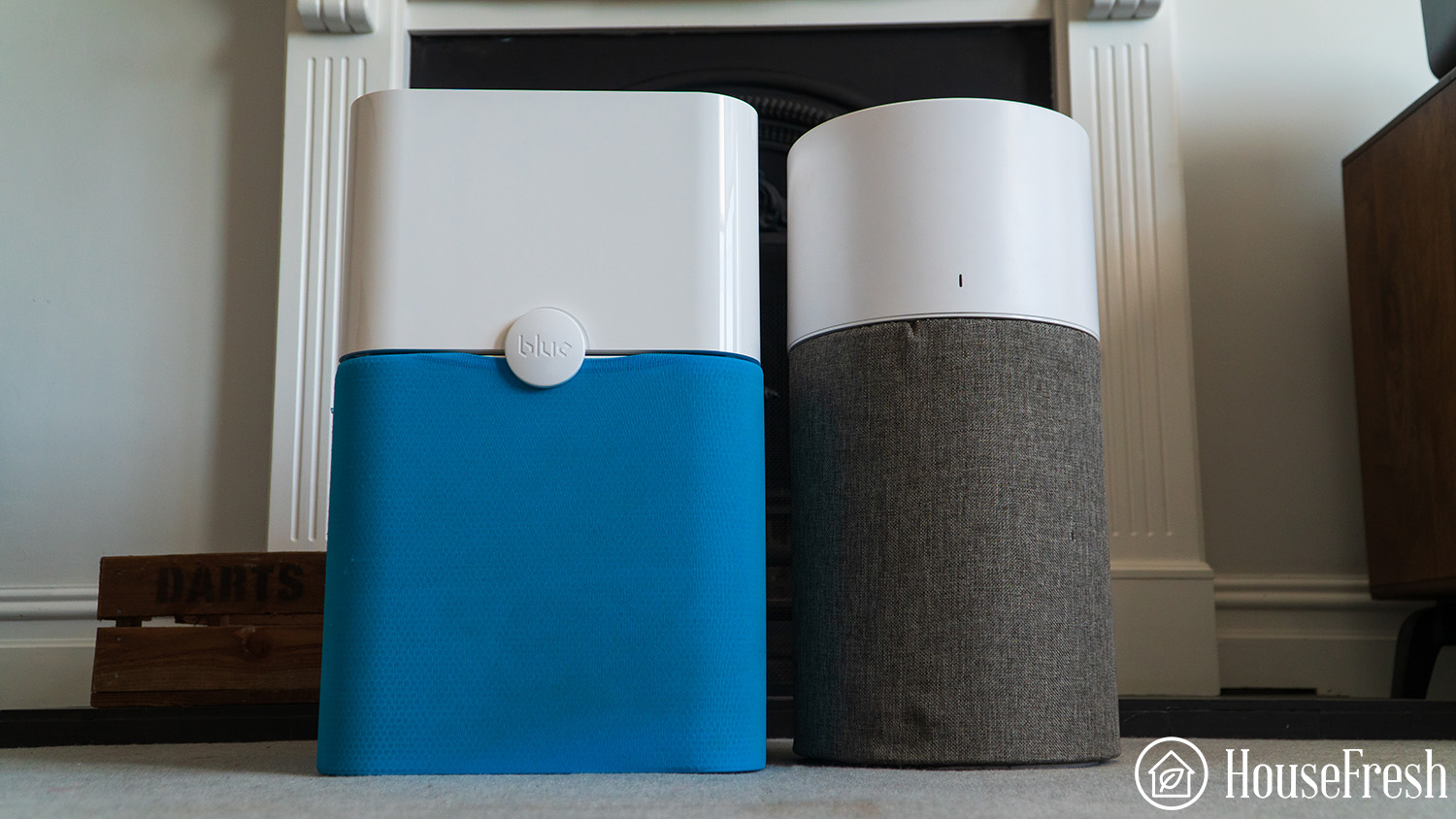
Blueair Blue Signature review

Blueair Signature HouseFresh

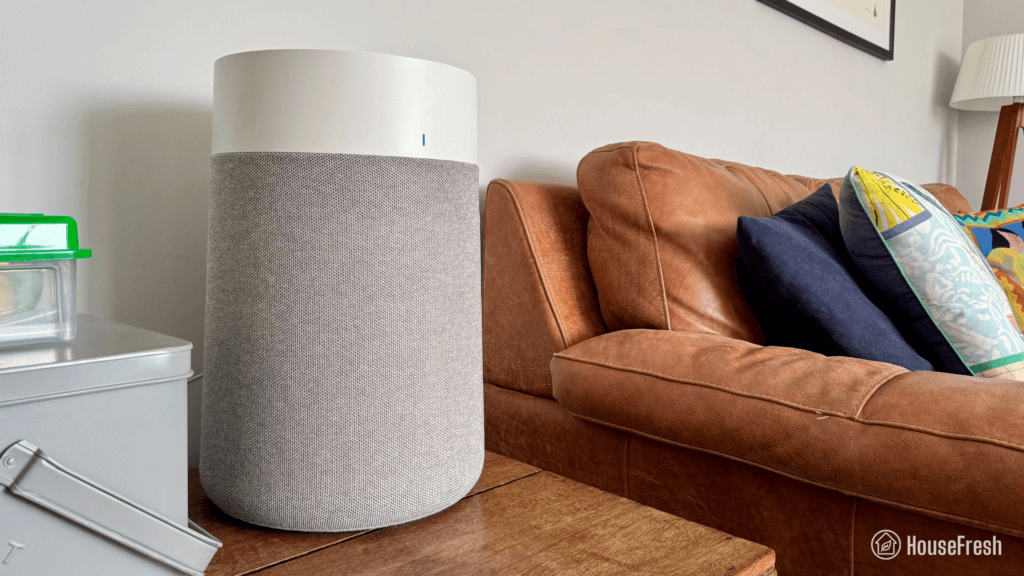
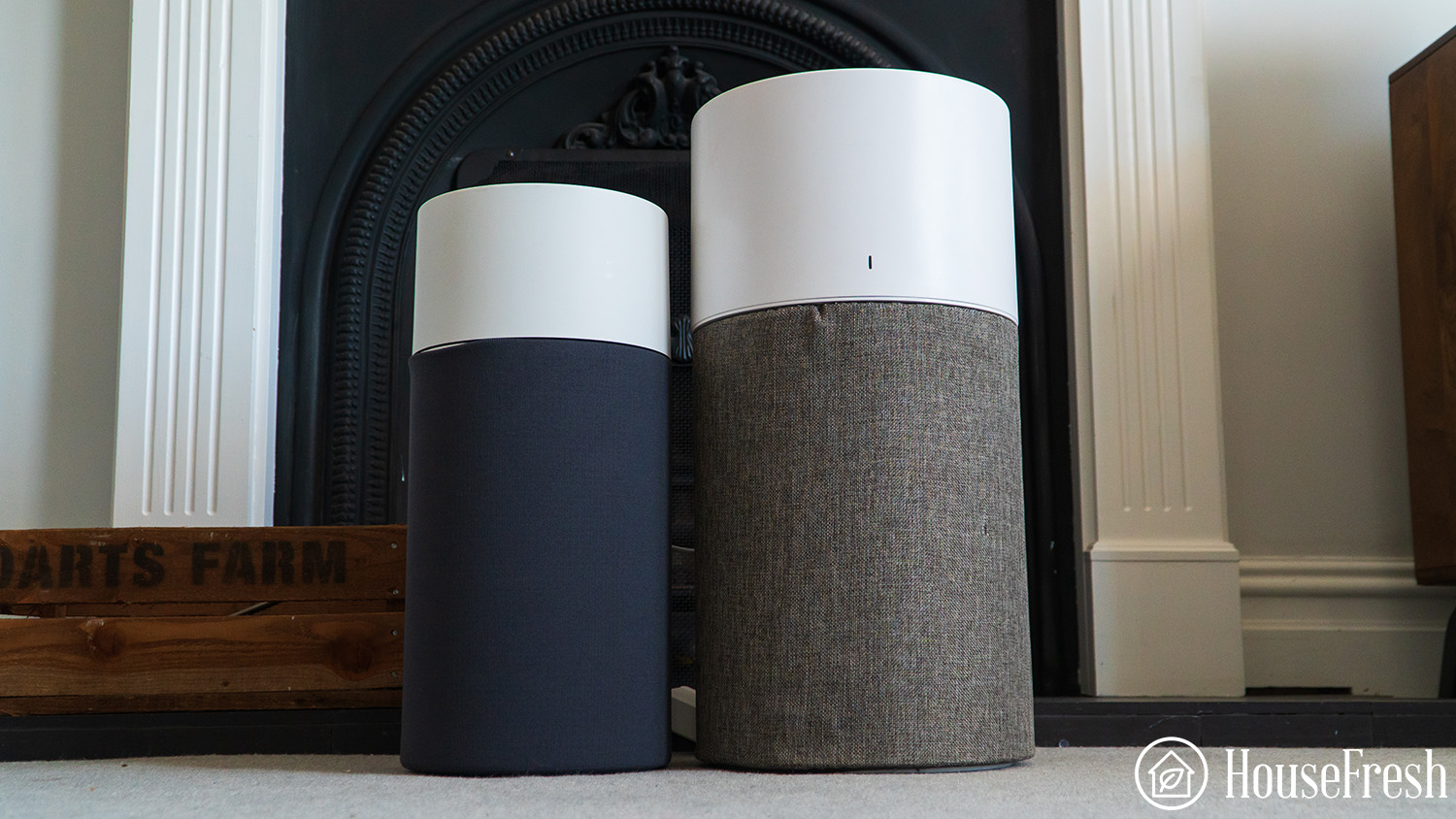
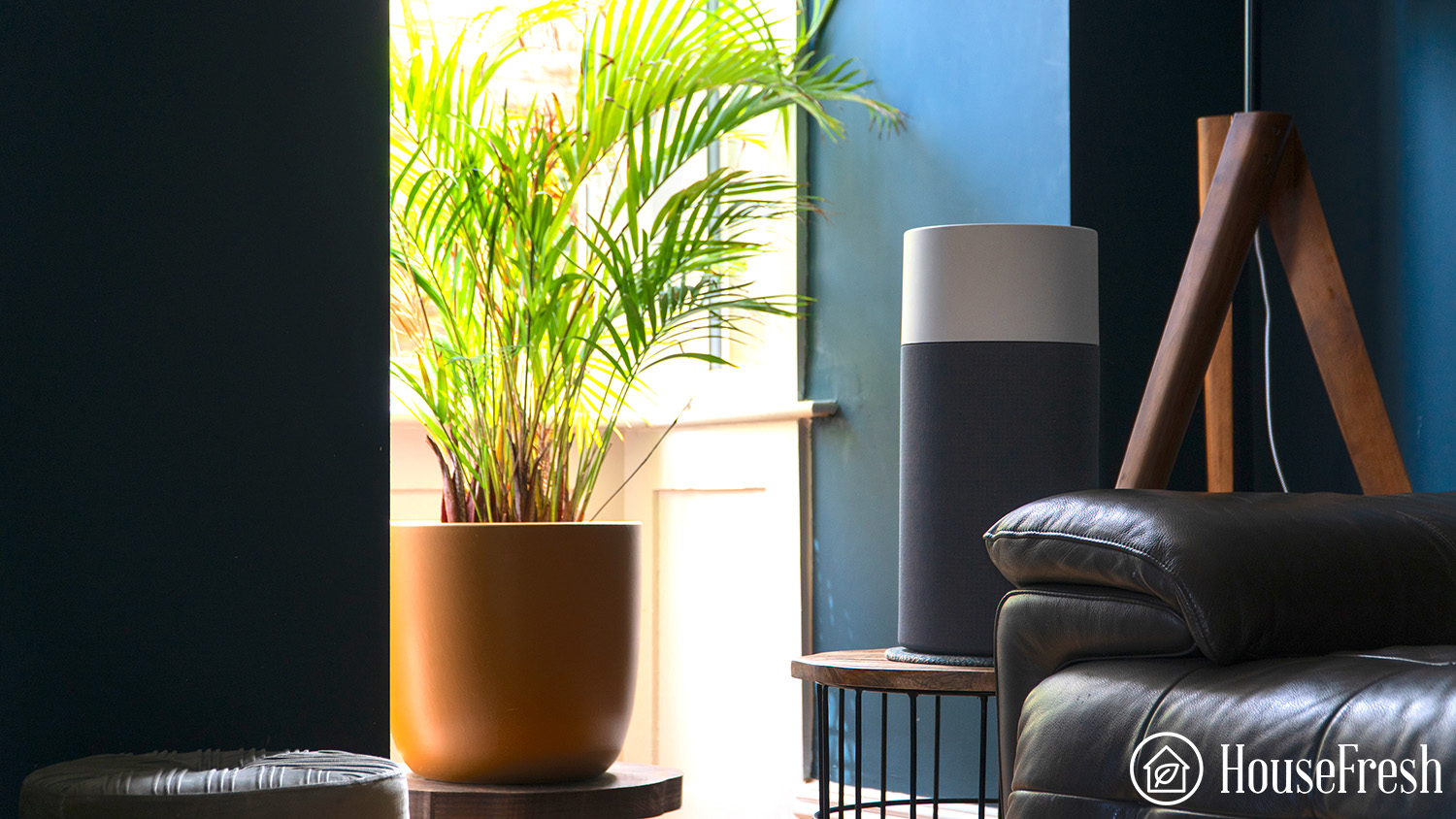
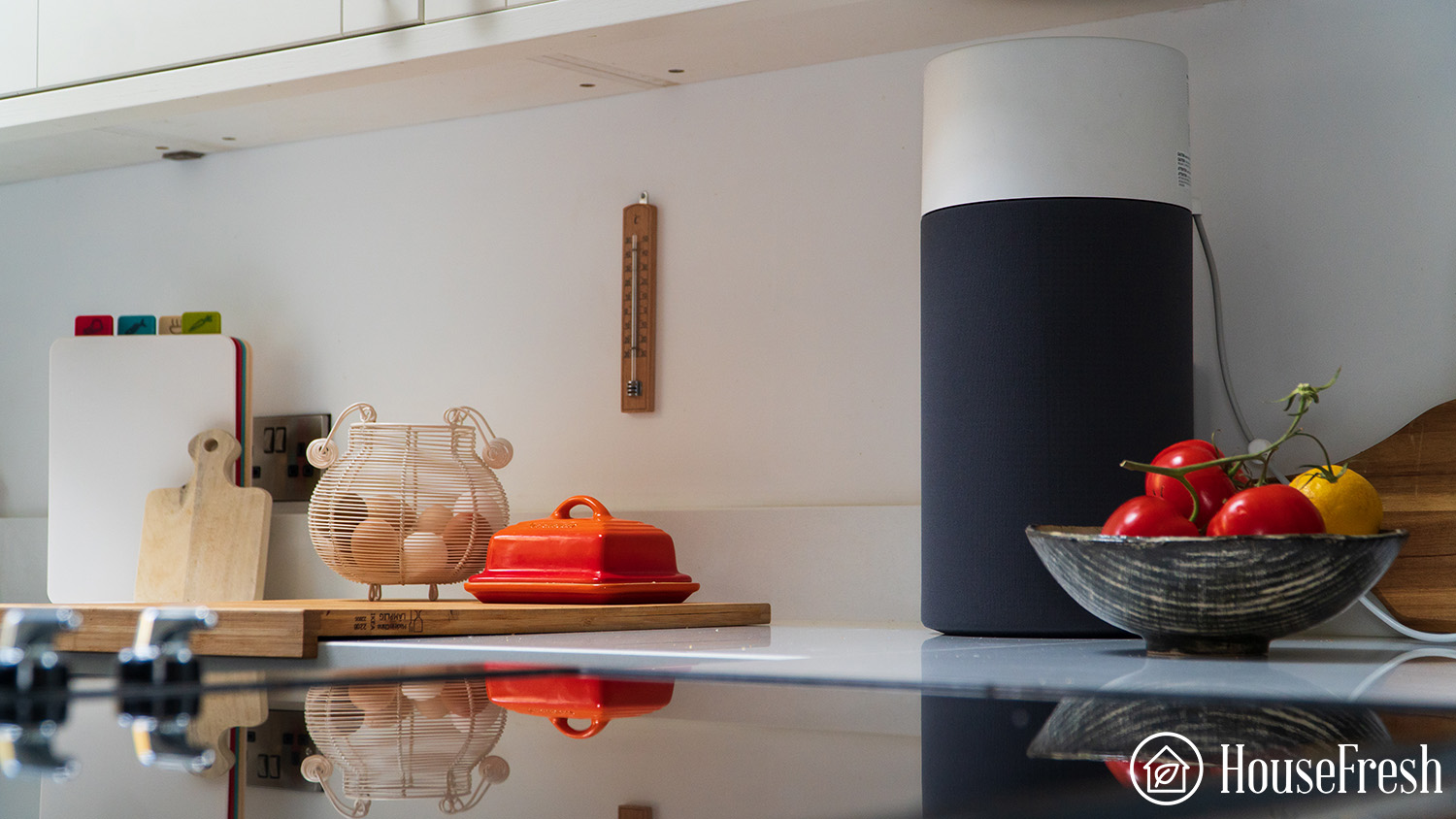
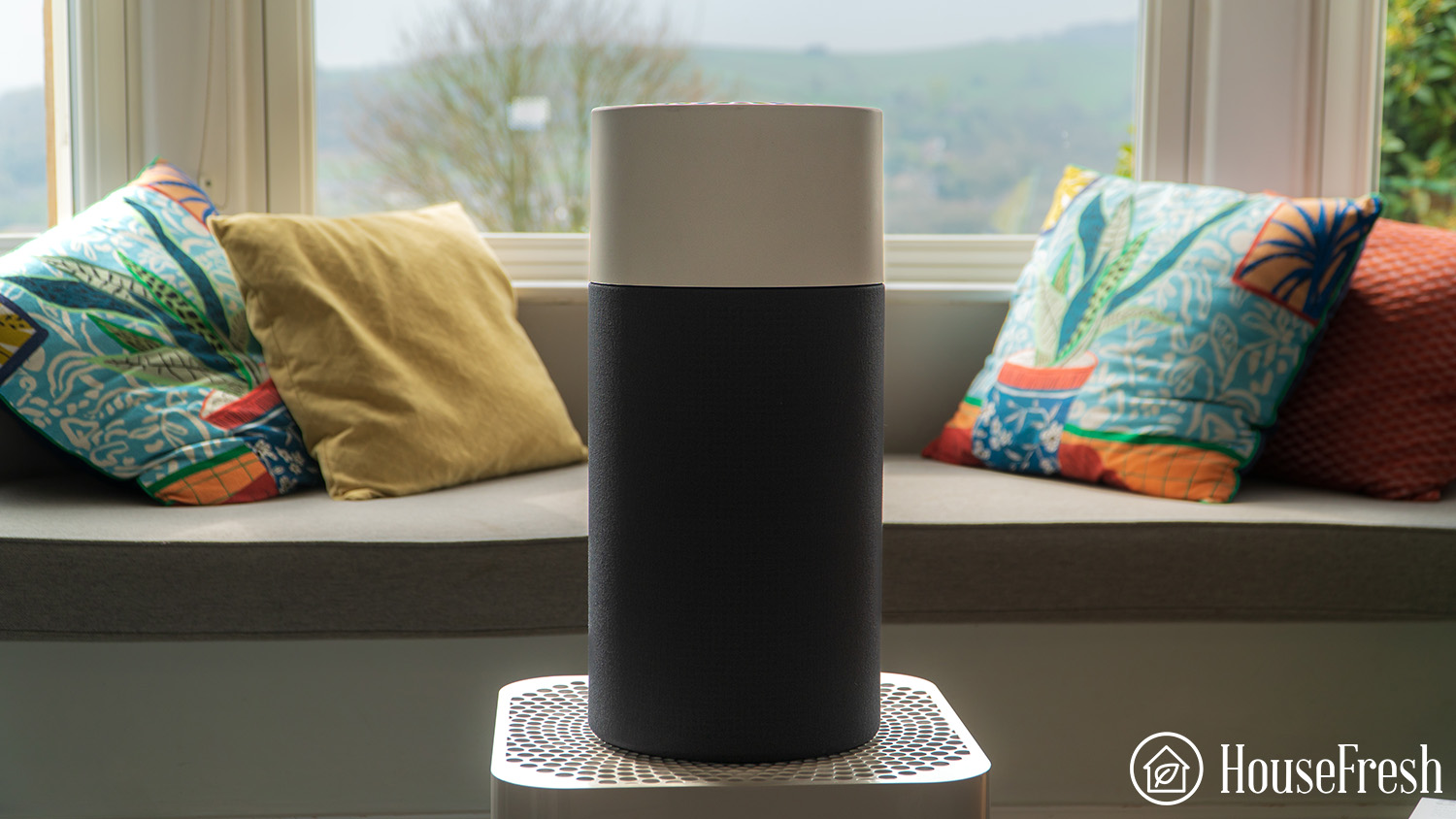
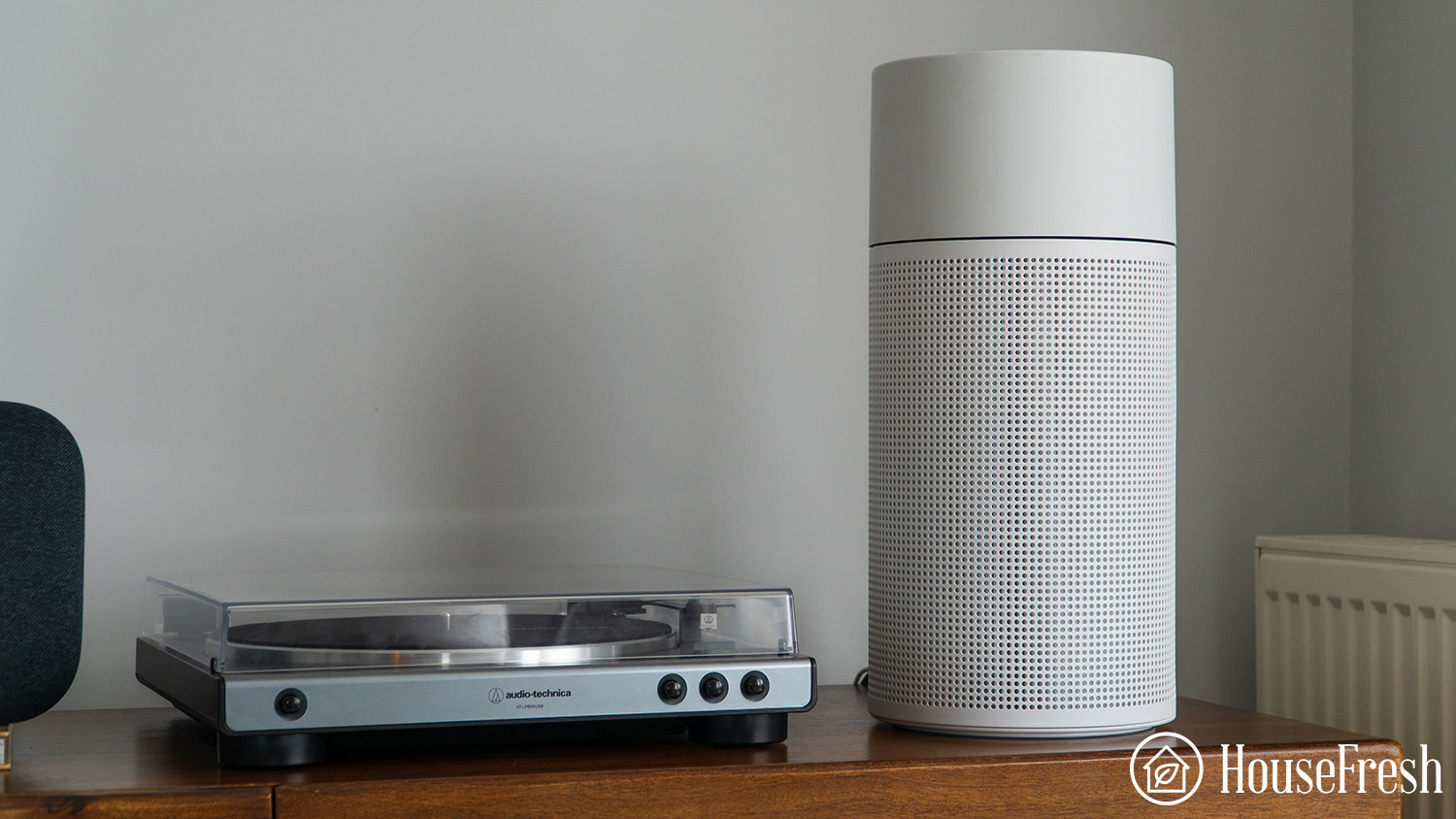
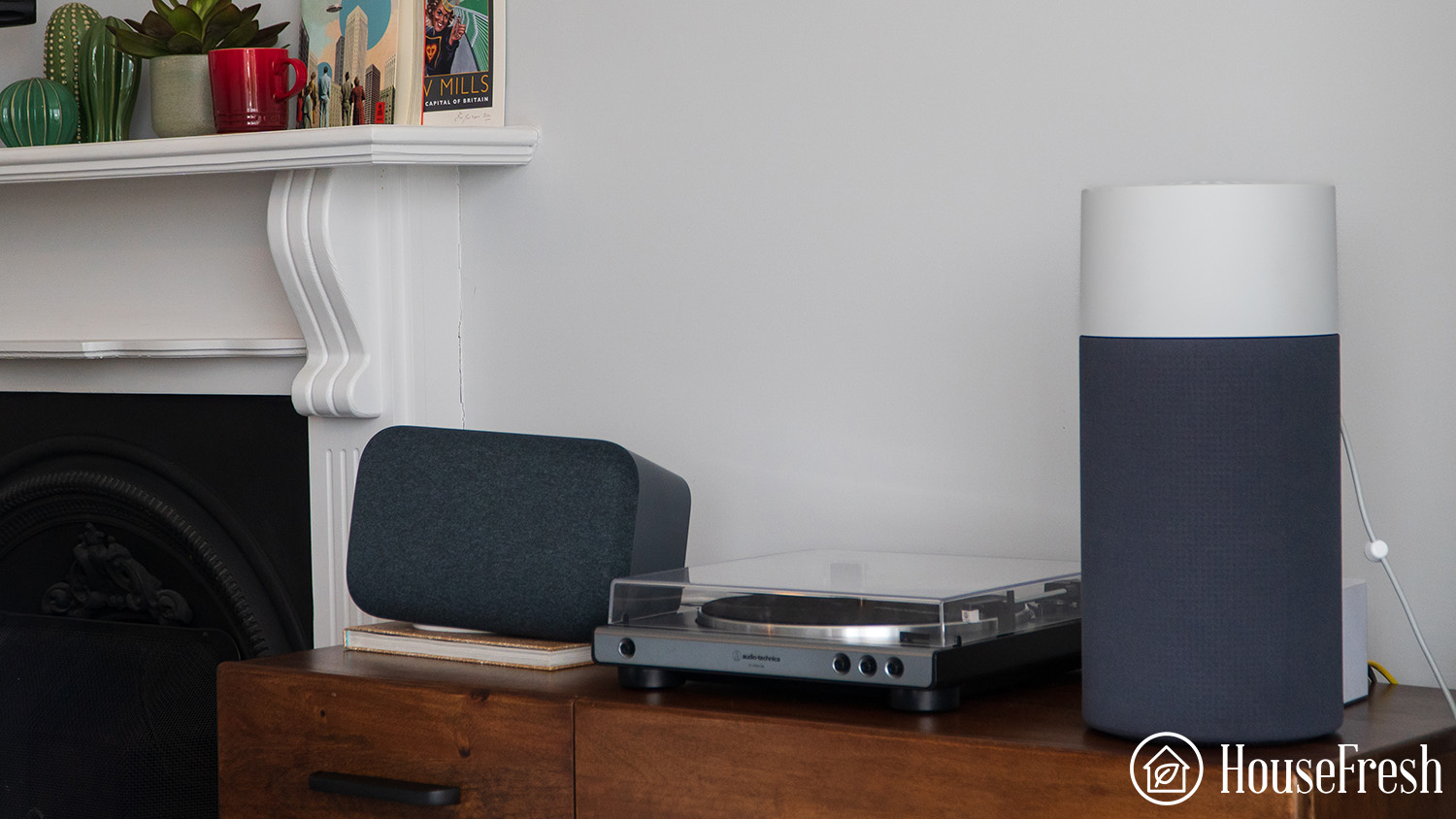
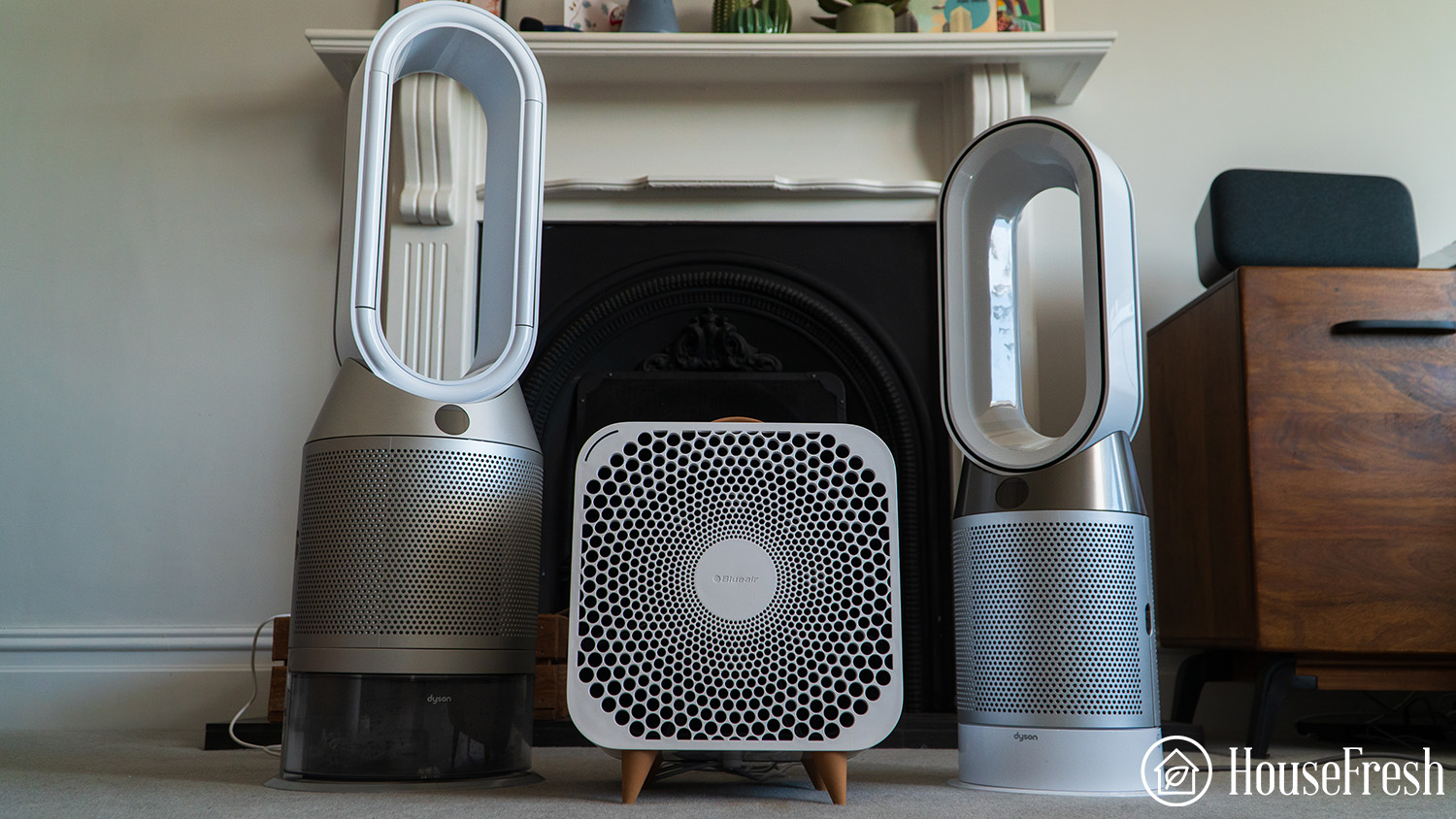
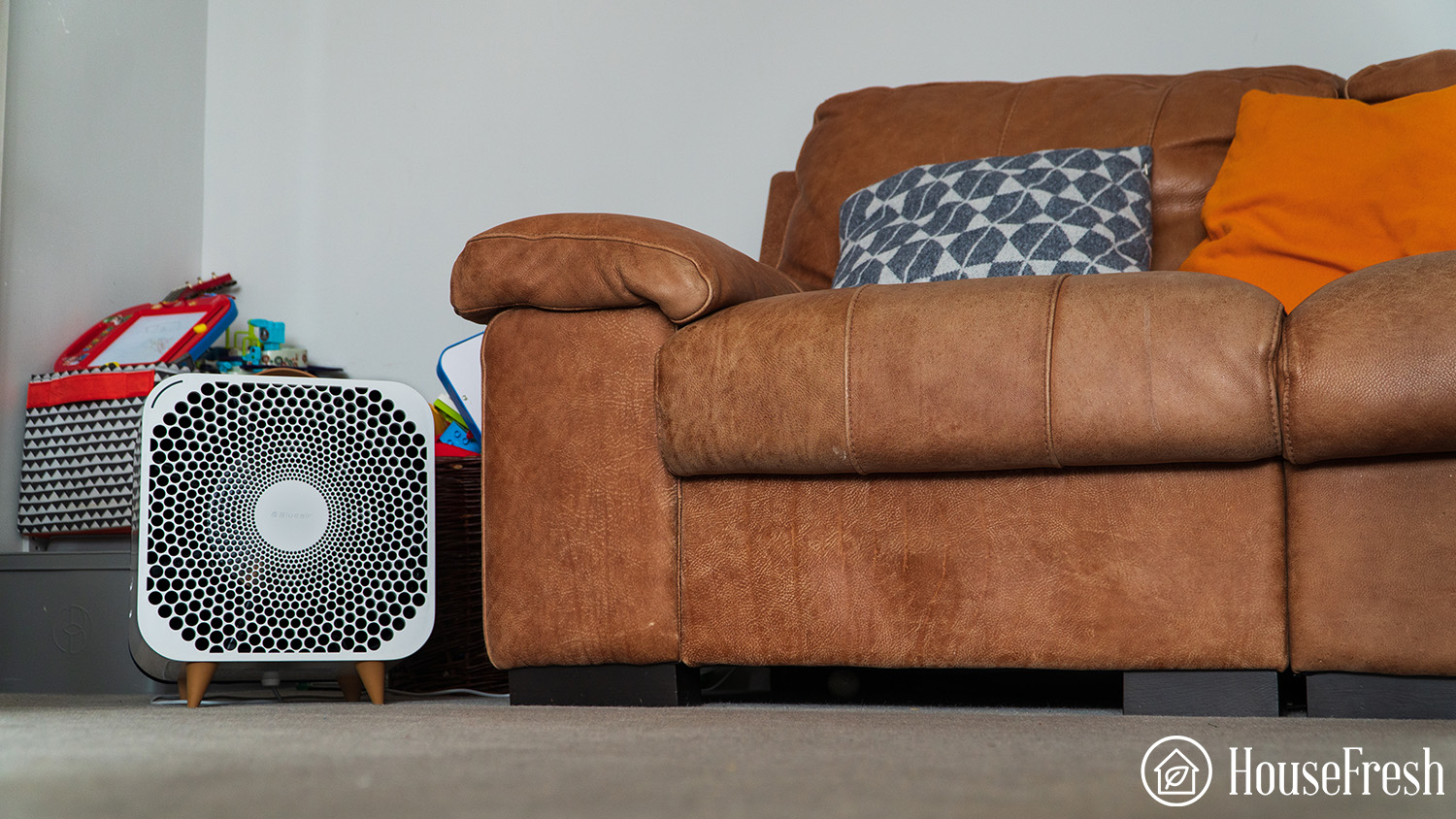
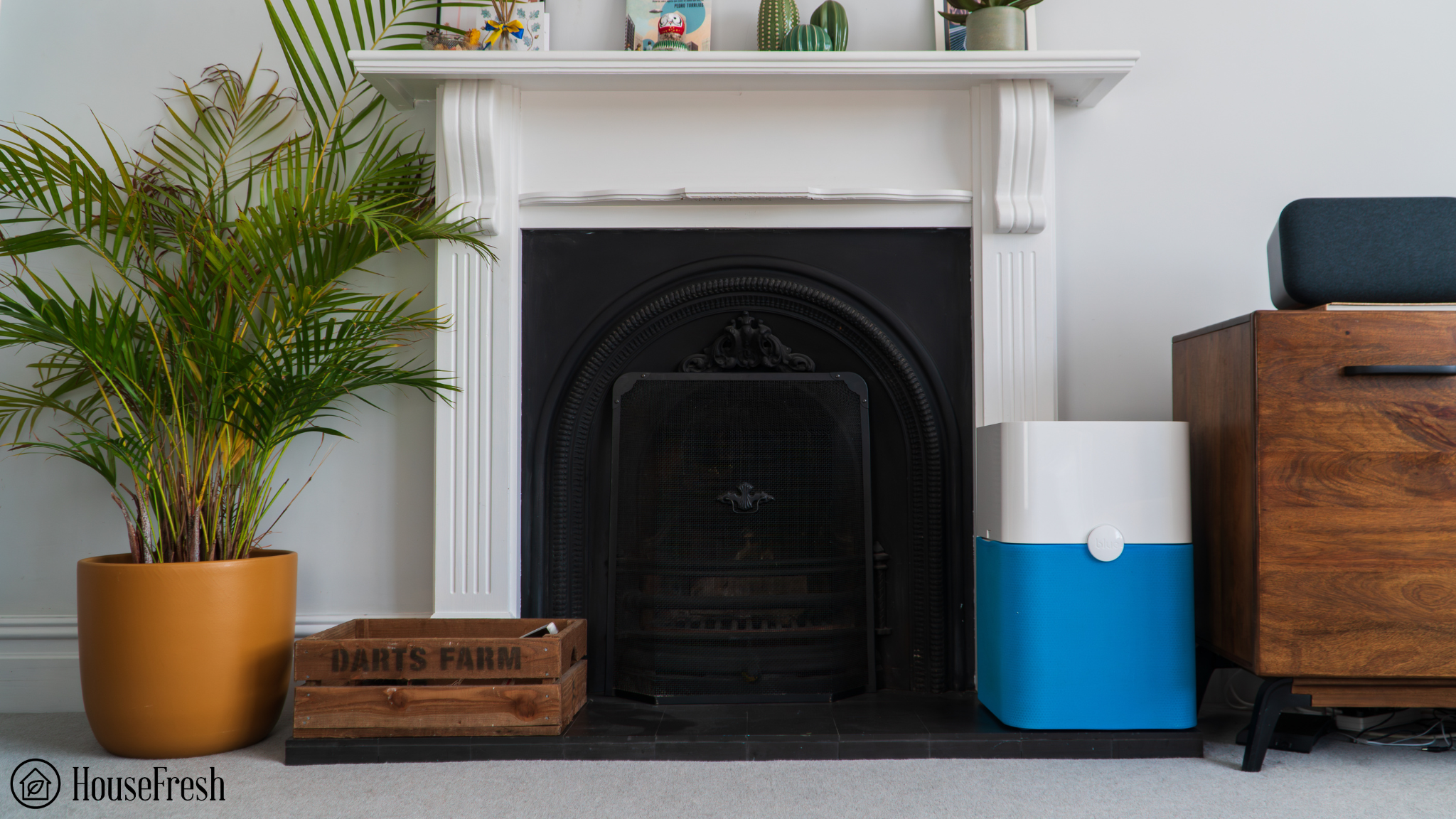
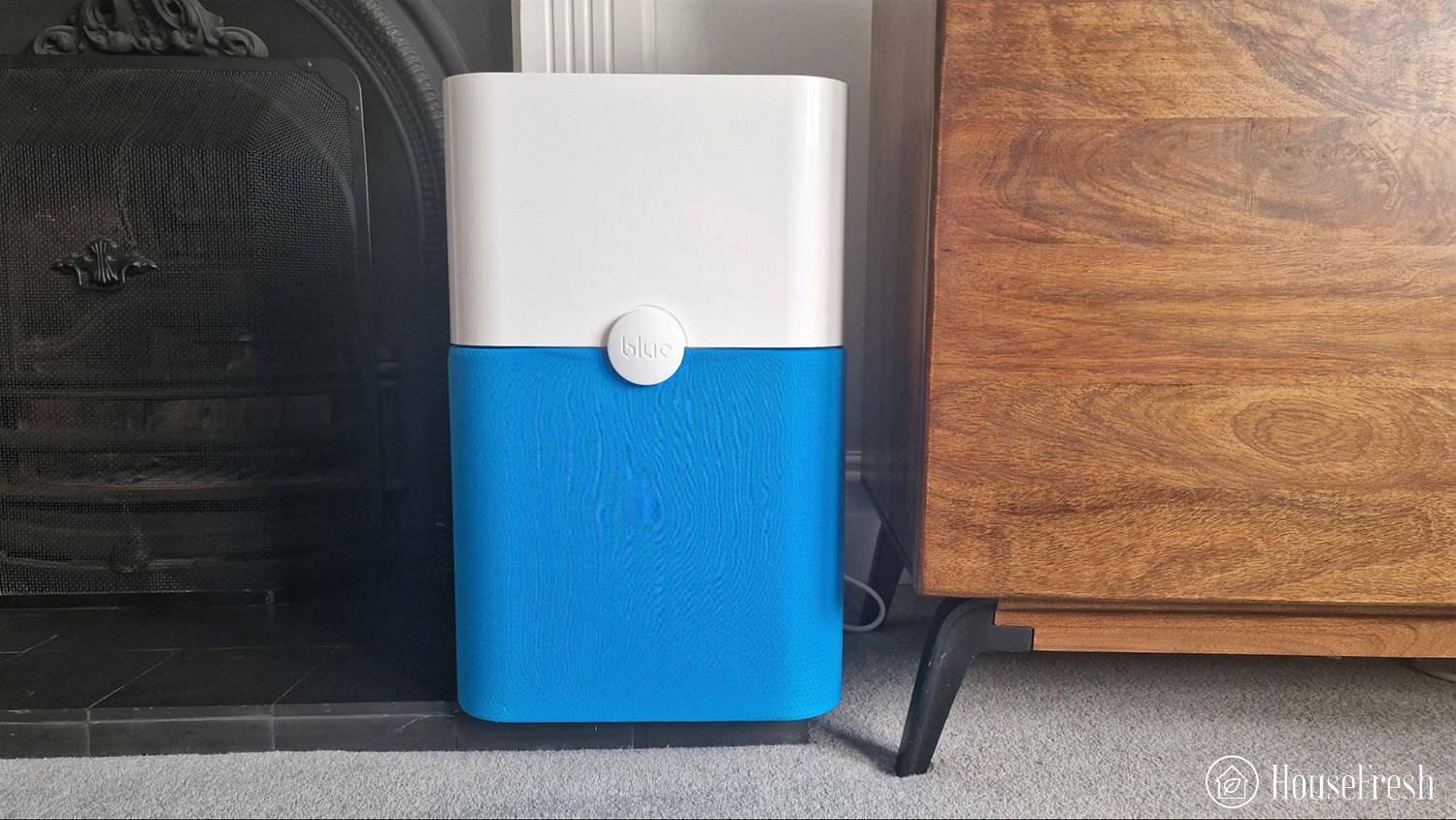
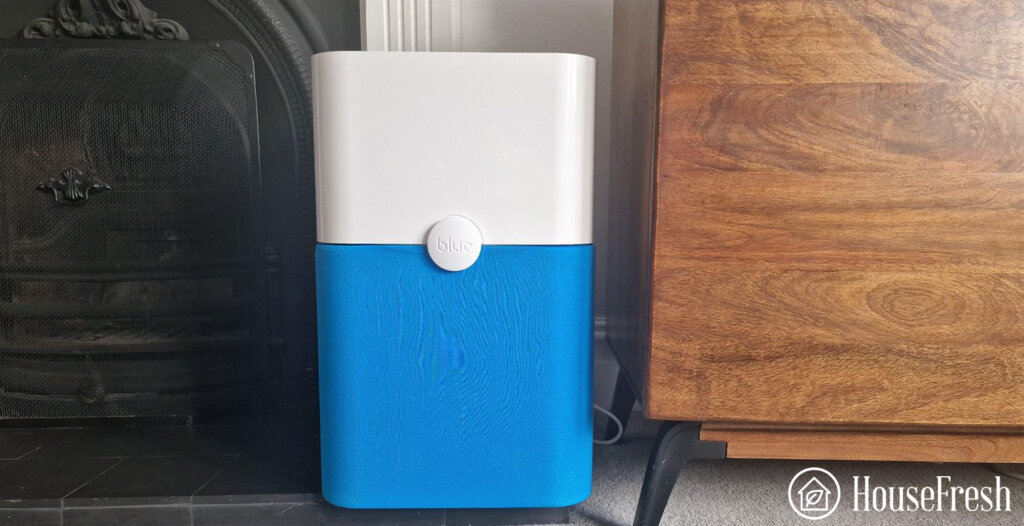
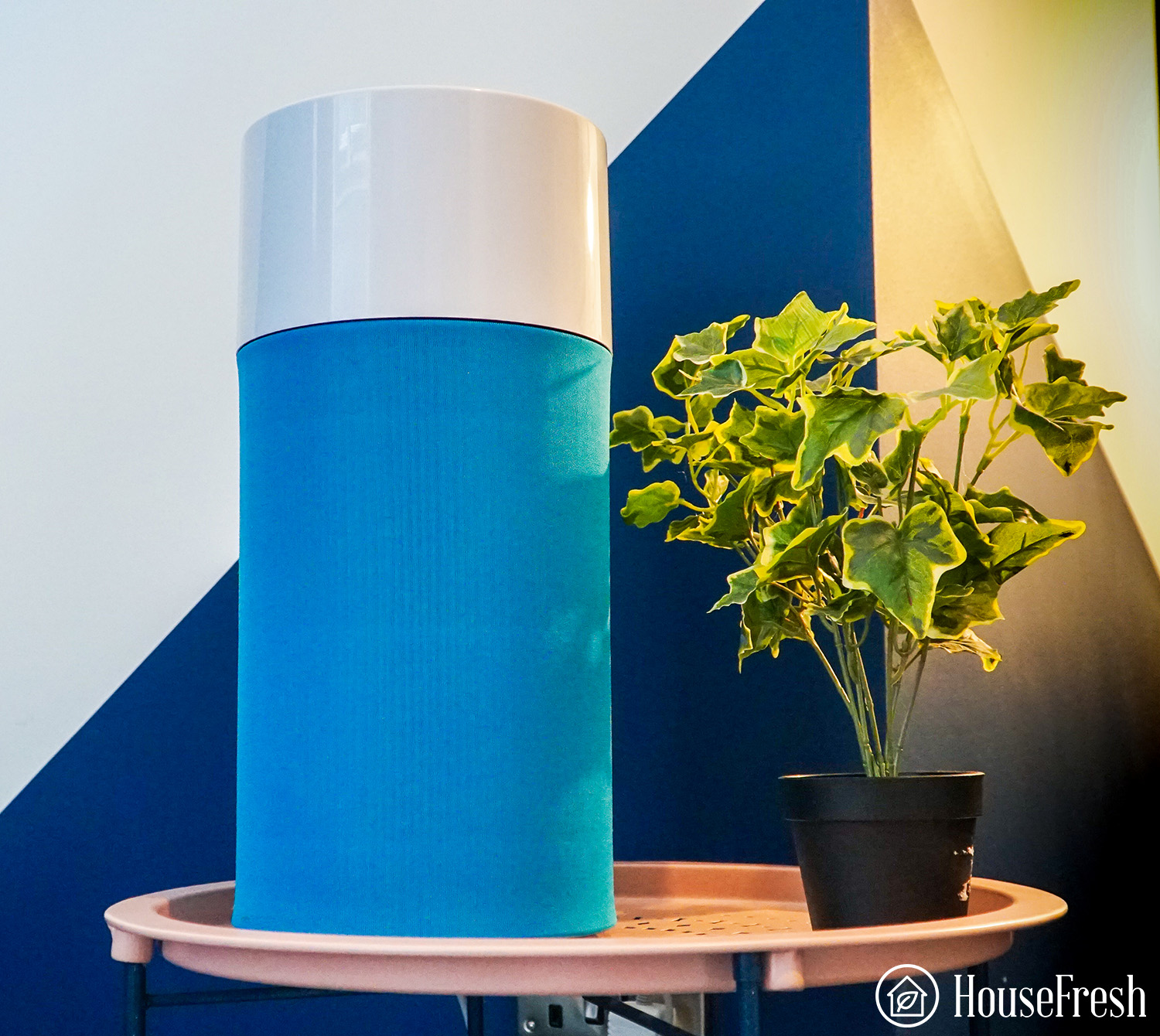
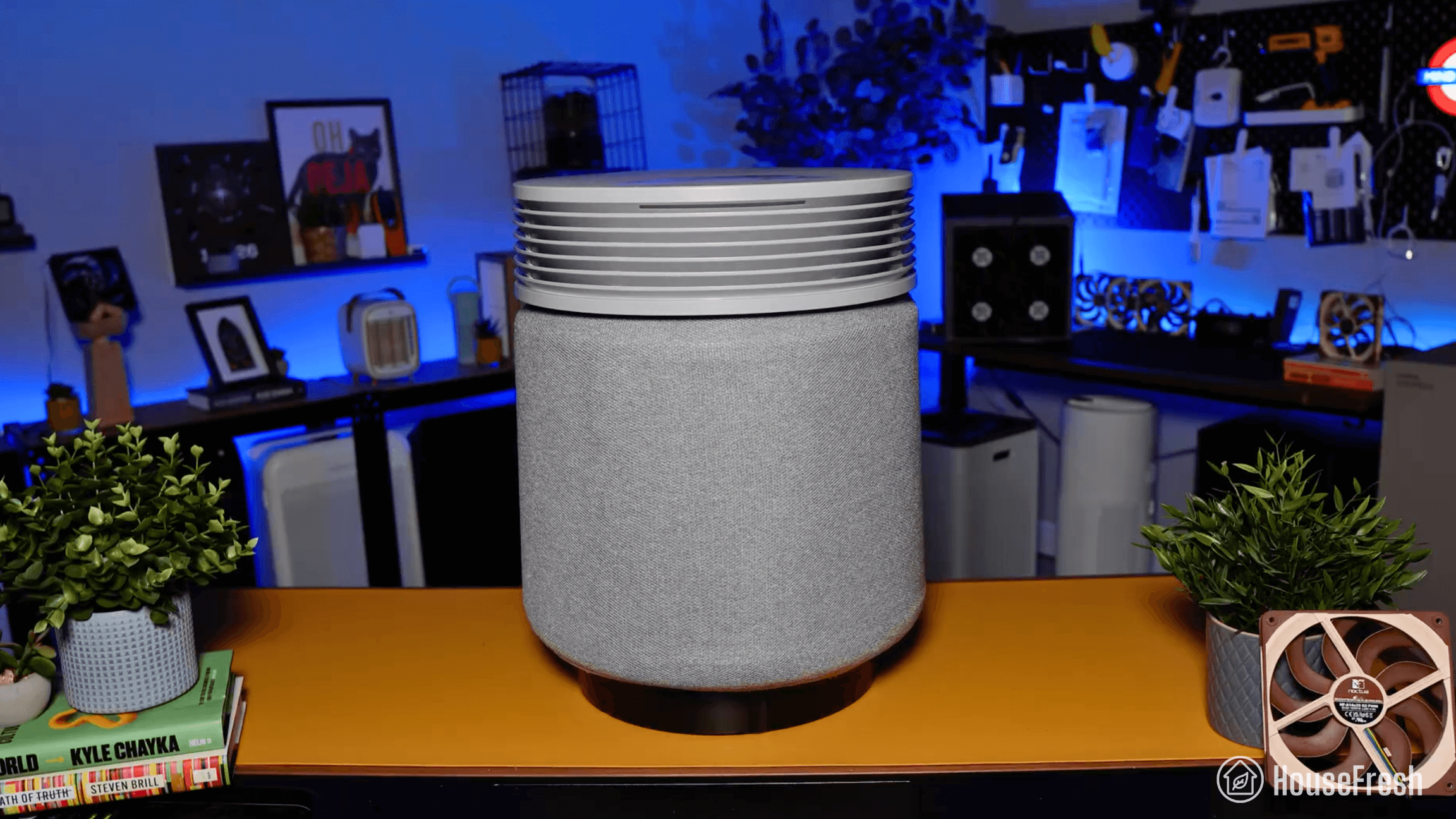
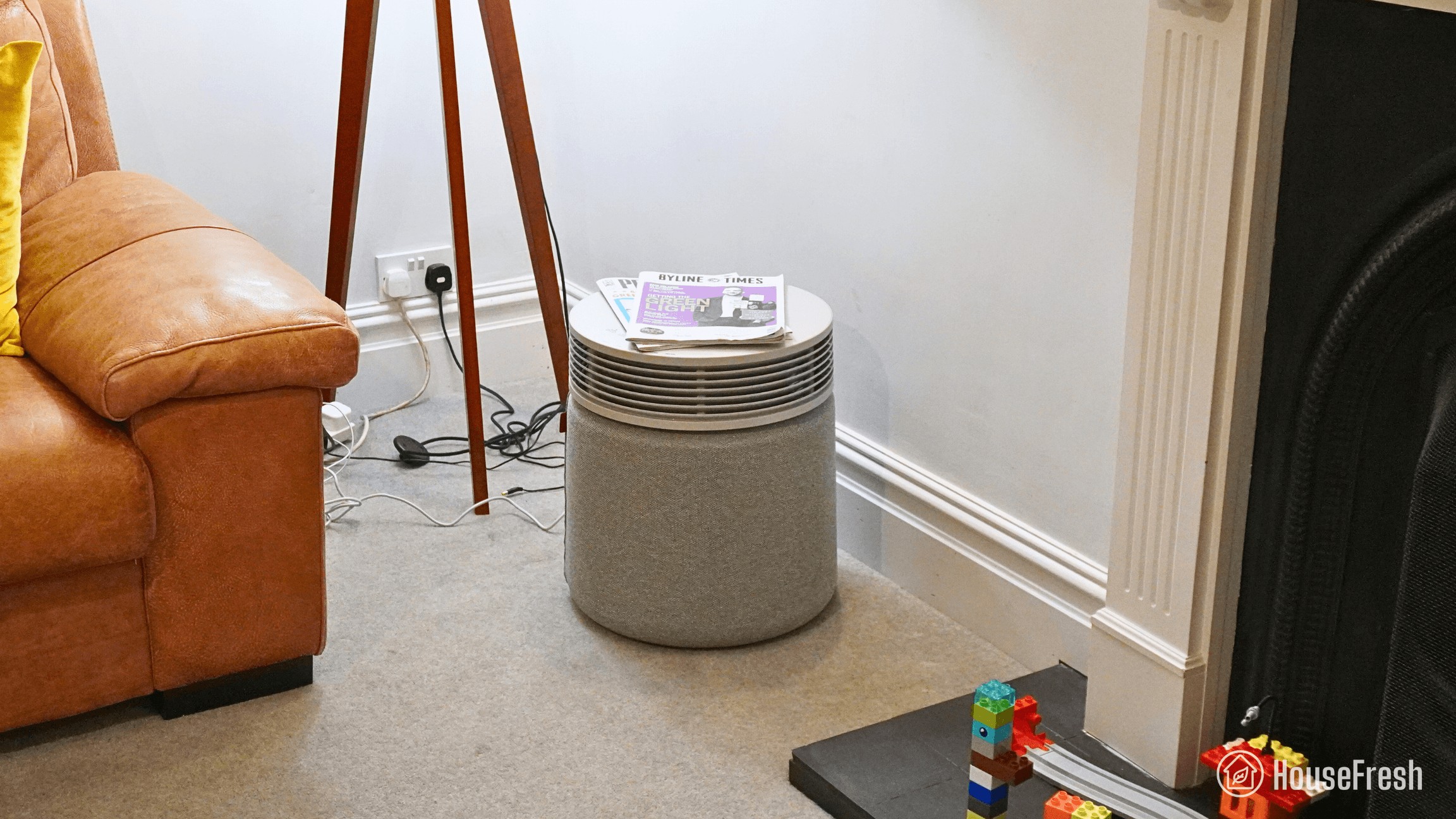
The Blueair Blue Signature looks like a piece of furniture and doubles as a table, just like the IKEA Starkvind and the air purifiers from SwitchBot.

However, unlike IKEA and Switchbot units, the Blue Signature is not cheap, with a list price of $449.99 in the U.S. and £369 in the UK.

But does beautiful design and a high price tag equal better performance? We bought one to find out.

The overall score for the Blueair Blue Signature incorporates first-hand data results from our battery of tests, as well as our ratings for customer service, brand transparency, and design & UX. Check out the full scorecard below to see the split of categories.

Search for ‘Blueair Blue Signature’ to see where it ranks, based on its air cleaning performance and value for money. You can also filter results to easily compare models in the same price range.

The pros and cons of the Blueair Blue Signature

A summary of our top-level findings after testing this air purifier, following our methodology.

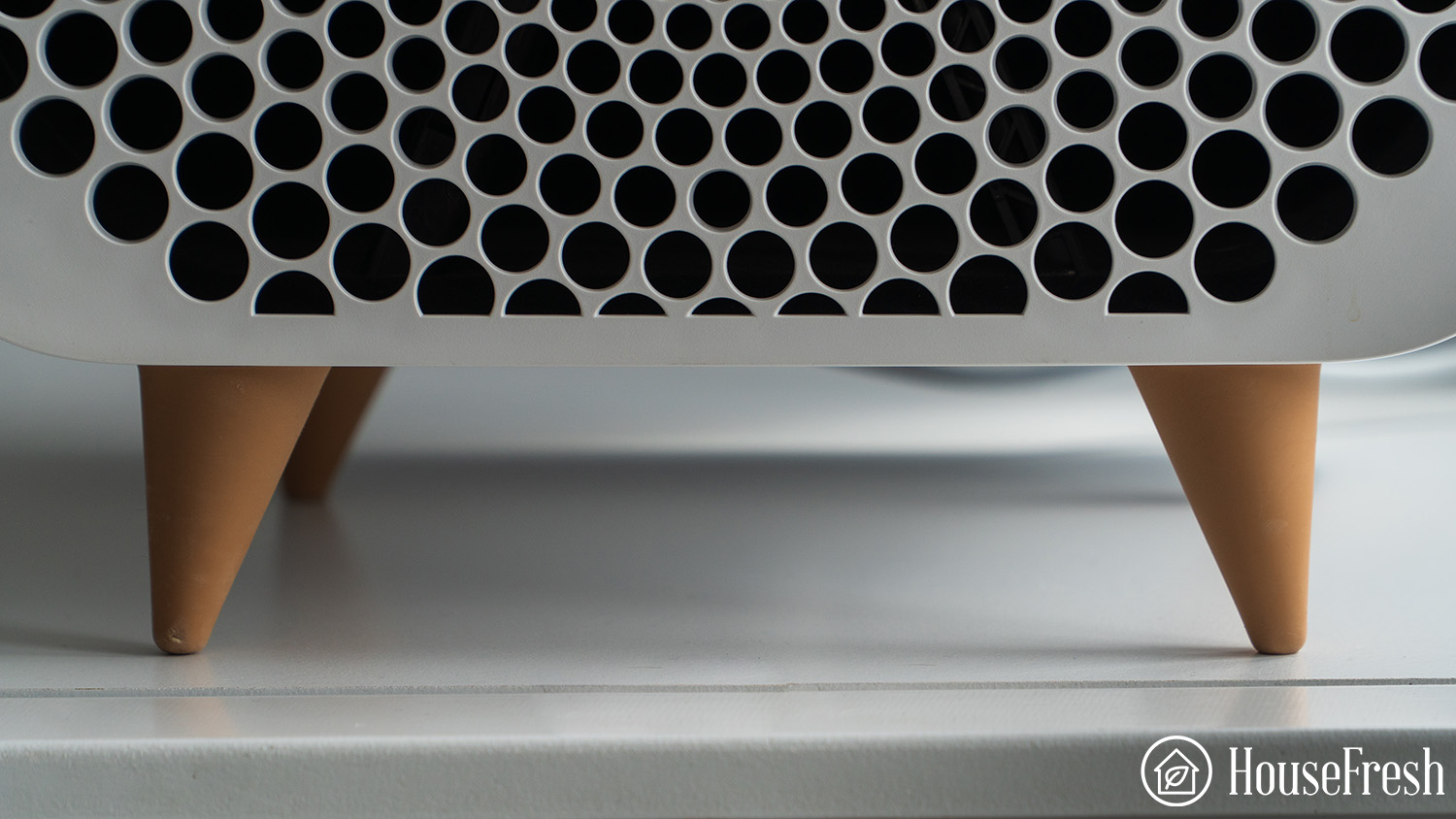
“The Blue Signature looks like a piece of furniture and also doubles as a table. You can even add legs to lift it off the ground, with options to match your home’s decor.

It’s not cheap at just under $450, but it ticks a lot of boxes for this price: Performance is top tier at both top speed and quiet fan speeds, the running costs are fair, and it has a high quality laser sensor, a table surface, and app support.”

Danny Ashton HouseFresh
Danny Ashton
HouseFresh Founder
& Lead Tester

CONS

It is more expensive to buy and run than other mid-sized air purifiers.
There is no option to disable the electrostatic ionization function, unlike what we see from other manufacturers like Winix, Coway and Xiaomi.
The wooden legs and the chrome base to turn it into a table are not included, so you’d need to pay up to $100 more to elevate your Blue Signature.

PROS

It doubles as a side table that will fit most living rooms and bedrooms – you can even buy wooden legs to give it more height.
It matches the air-cleaning performance of high-end units that cost twice as much and are twice as large.
It comes with a highly accurate laser sensor on board that doesn’t need to be cleaned regularly.
The Blueair app has a clean UX and is easy to use.
You can customize the design with options for multiple pre-filter fabric colors and two different designs for the legs.

Clean air delivery rate (CADR):– Top speed PM1 CADR: 400 cfm
– Sub-45 dBA PM1 CADR: 229 cfm
– AHAM PM2.5 CADR: 434 cfm (dust)
Filter technology:HEPASilent particle filter with pelleted activated carbon and a removable pre-filter fabric.
Recommended room size:600 sq. ft. (5 air changes per hour)
Dimensions:17.3 x 15.7 x 15.7 in (44 x 40 x 40 cm)
Weight:13.2 lbs (5.98 kg)
Noise level in decibels from 3 ft. away:Sleep mode: 34.8 dBA
Speed 1: 35.3 dBA
Speed 2: 40 dBA
Speed 3: 51.9 dBA
Speed 4: 59.6 dBA
Electricity consumption in watts:Standby: 0.96 watts
Sleep mode: 2.63 watts
Speed 1: 2.95 watts
Speed 2: 6.63 watts
Speed 3: 19.08 watts
Speed 4: 38.65 watts
Filter lifespan:9 months
Manufacturer’s warranty:1 year (3 years with product registration)
Country of origin:Sweden
Country of manufacture:China

Filtration technology

HEPASilent with pelleted activated carbon and a washable, removable pre-filter.

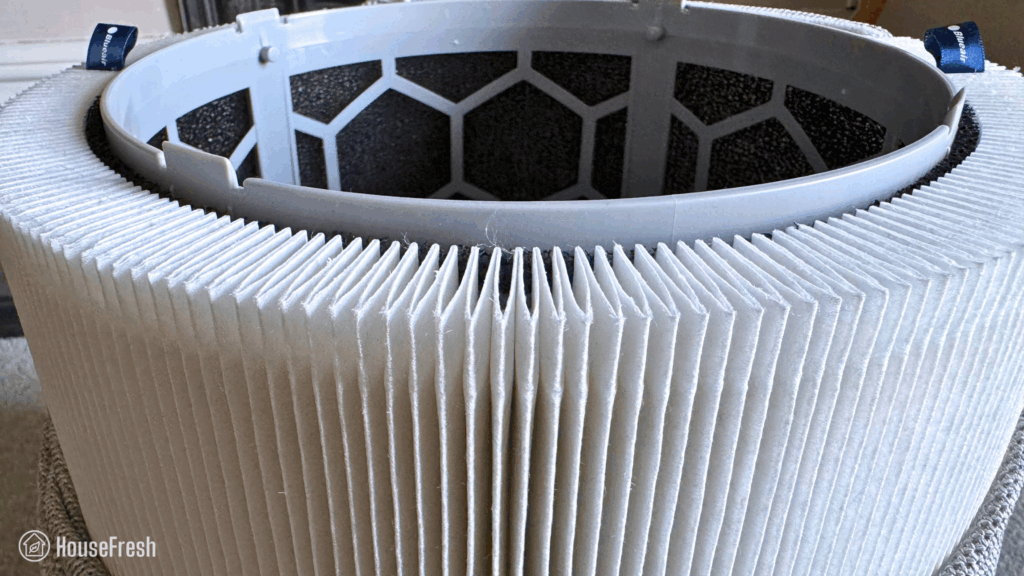
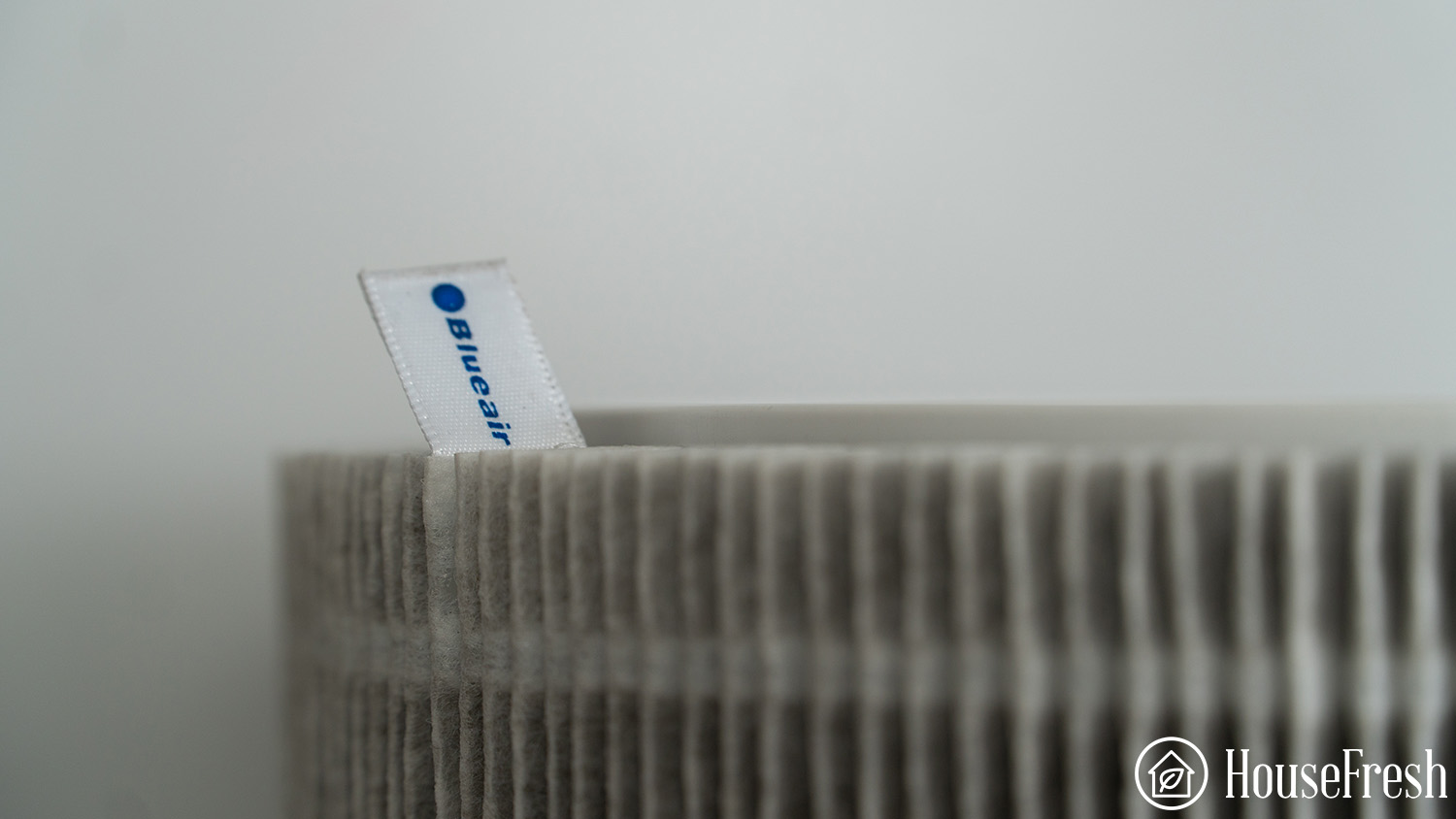
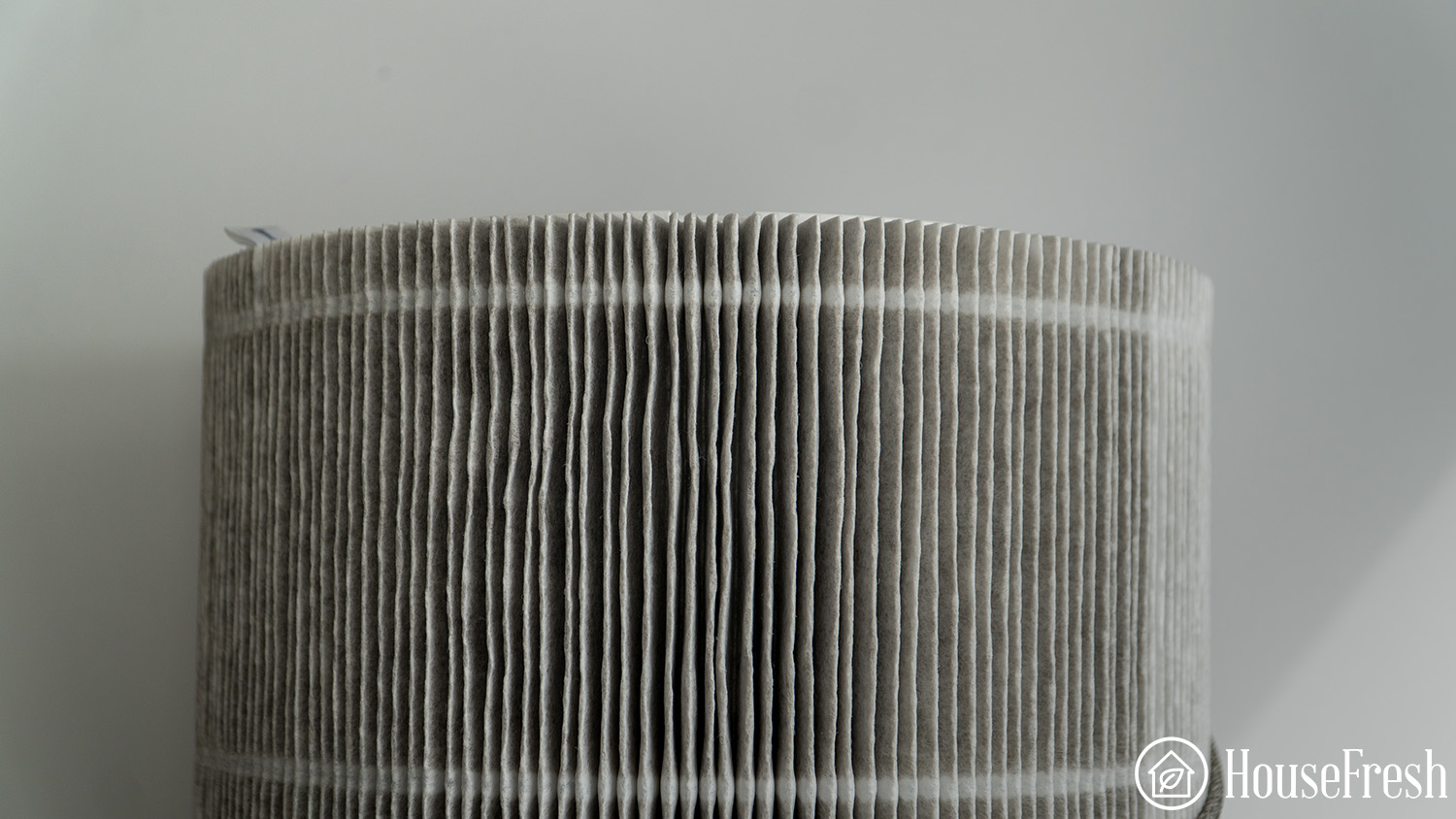
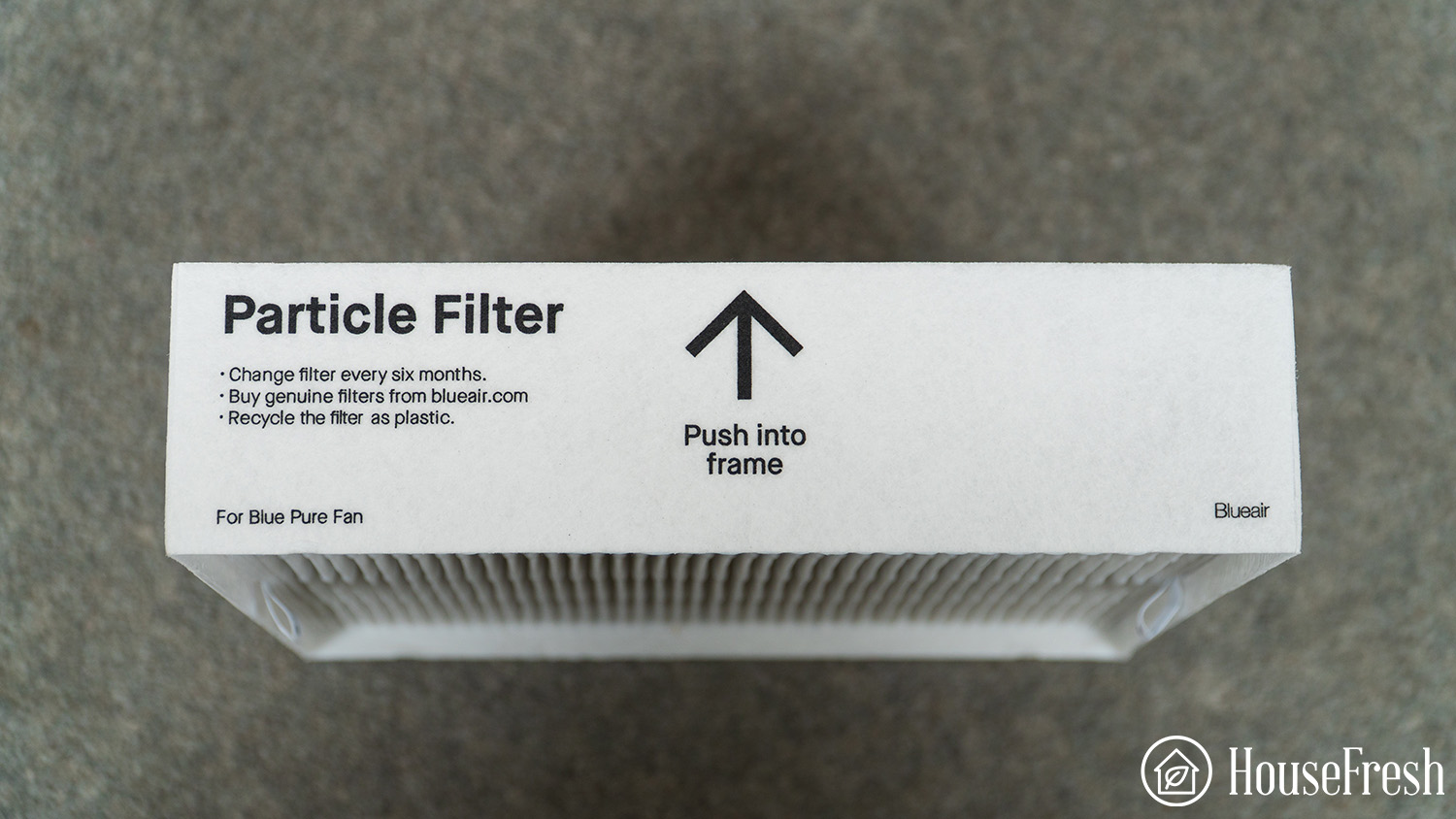
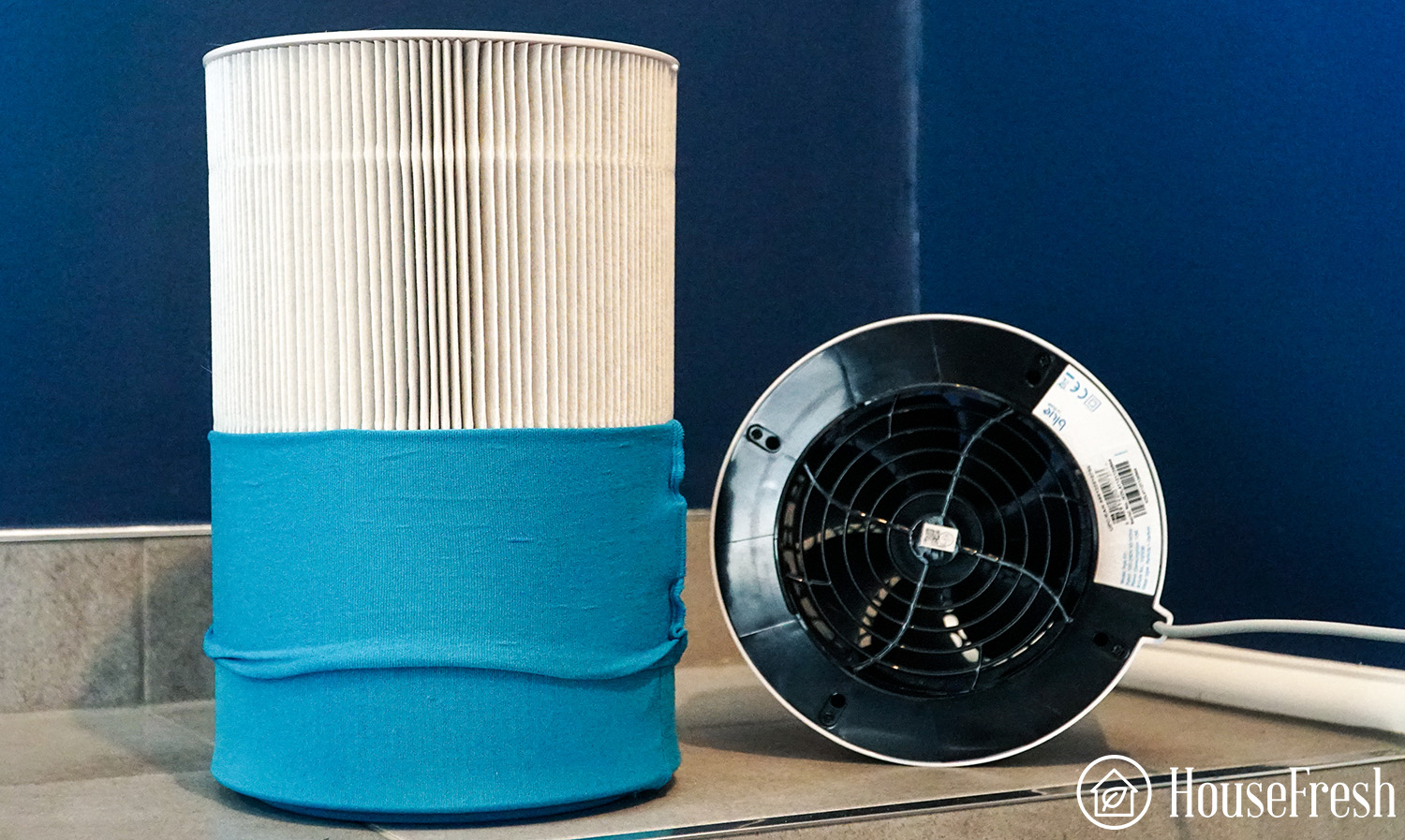
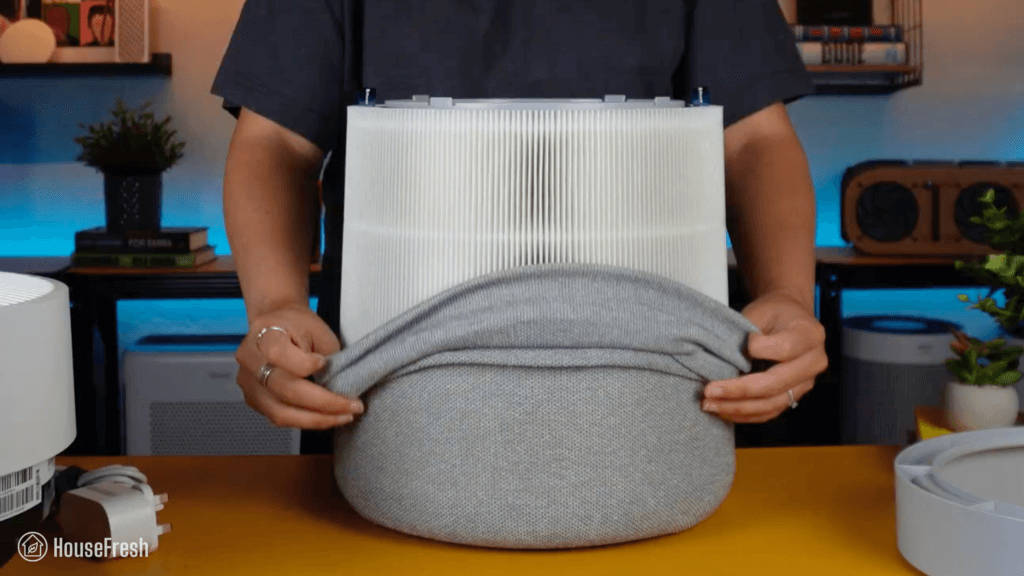
The filter wraps around and clips onto the Blue Signature’s body – something new from Blueair.
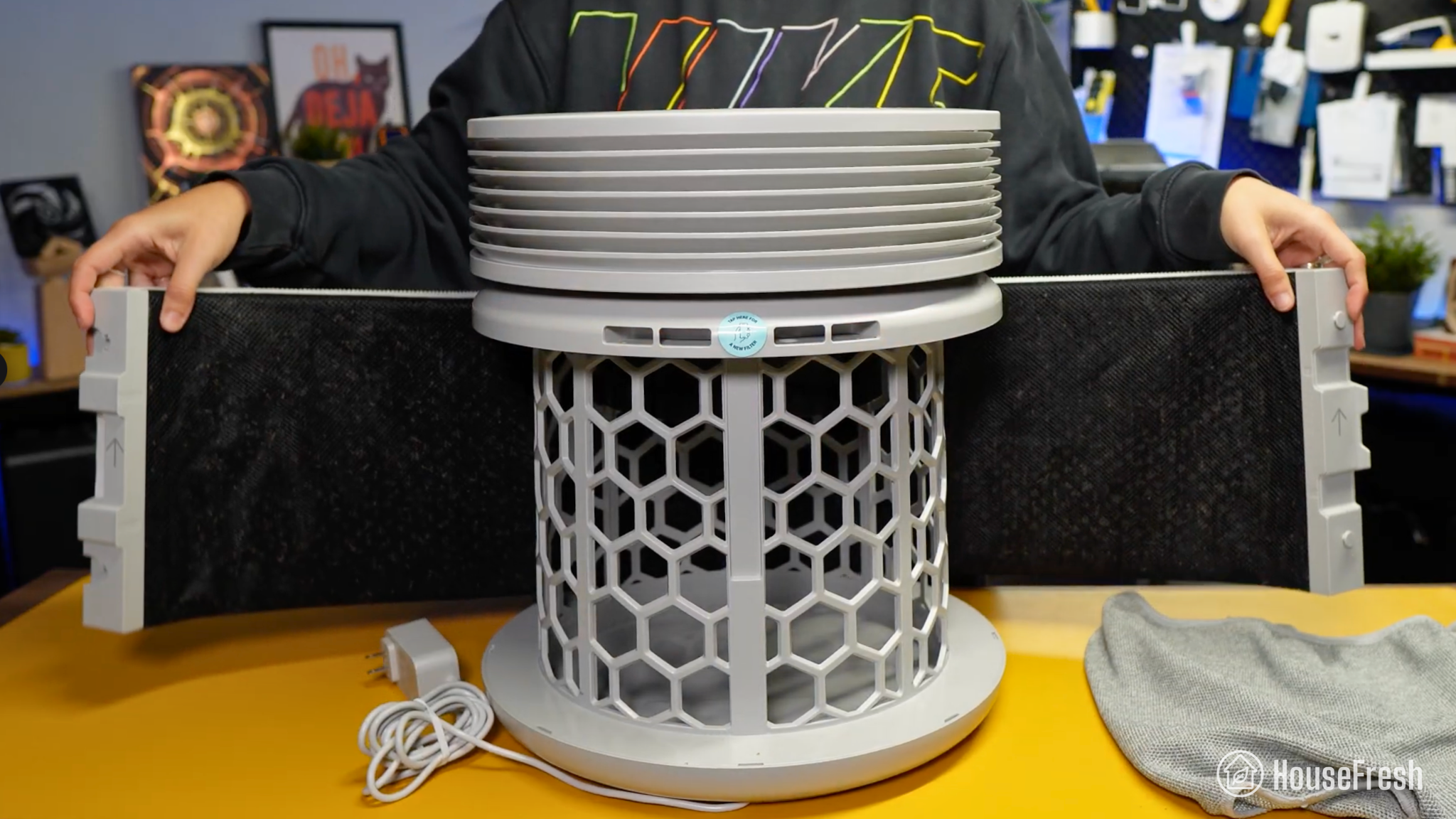
Blueair Blue Signature Main Filter

This is the first time we see something like this from Blueair, but it reminded me of the carbon filter in our Dyson Big+Quiet BP06.

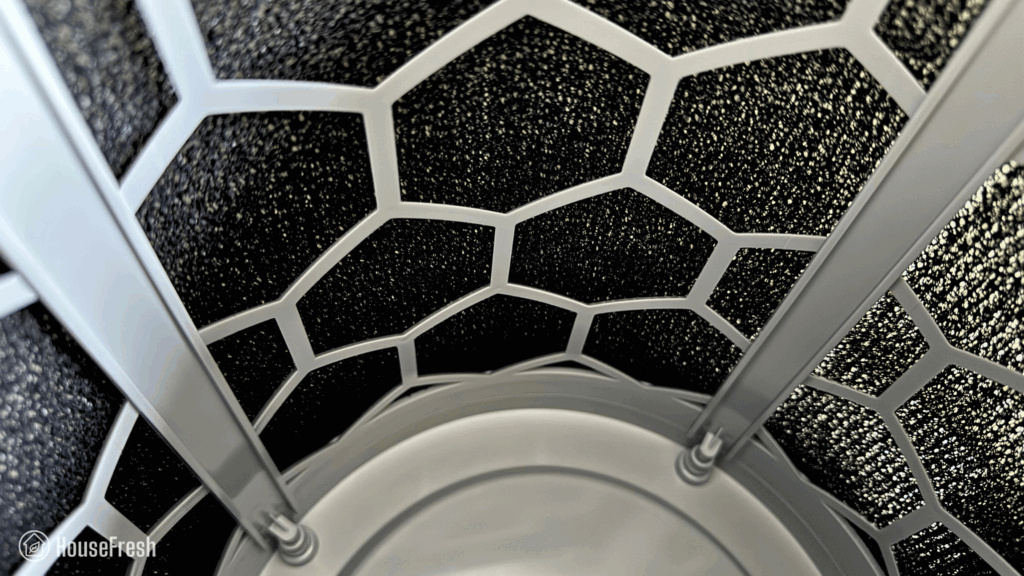
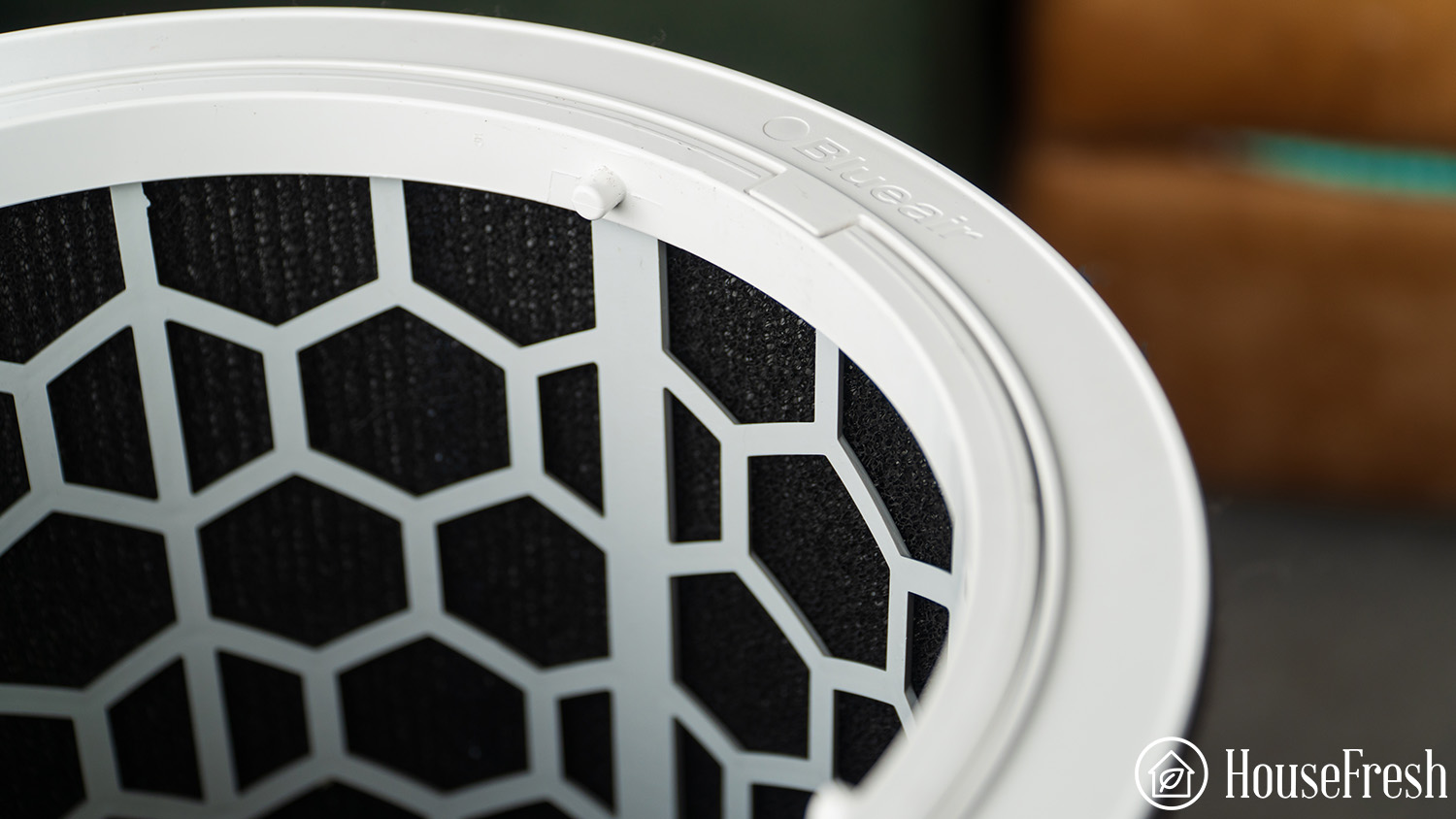
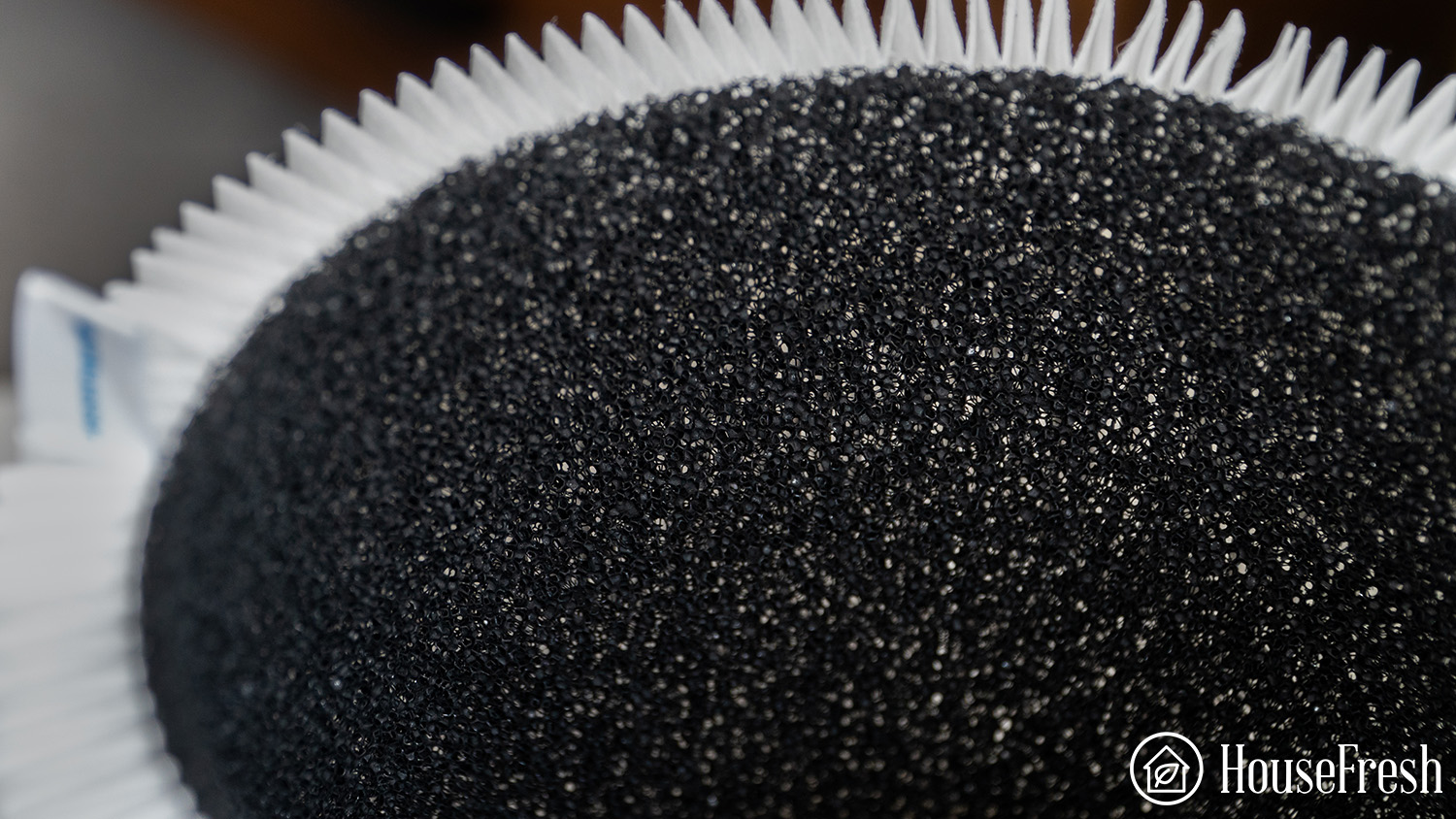
On the inside of the filter, you get a layer of pelleted activated carbon.
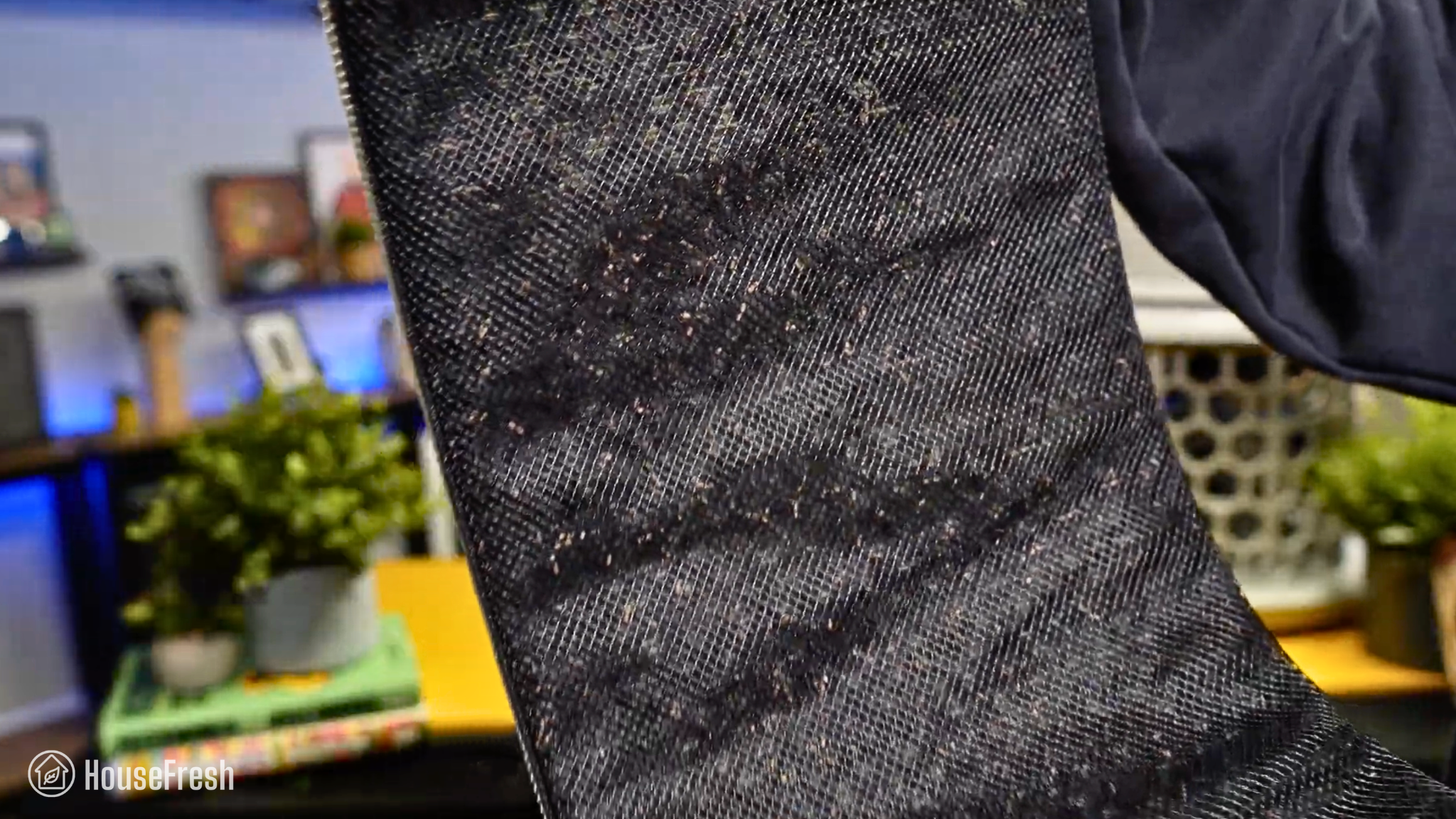
Blueair Blue Signature Carbon

I was glad to see this, as it’s much better than the impregnated carbon fabric in other Blueair models.

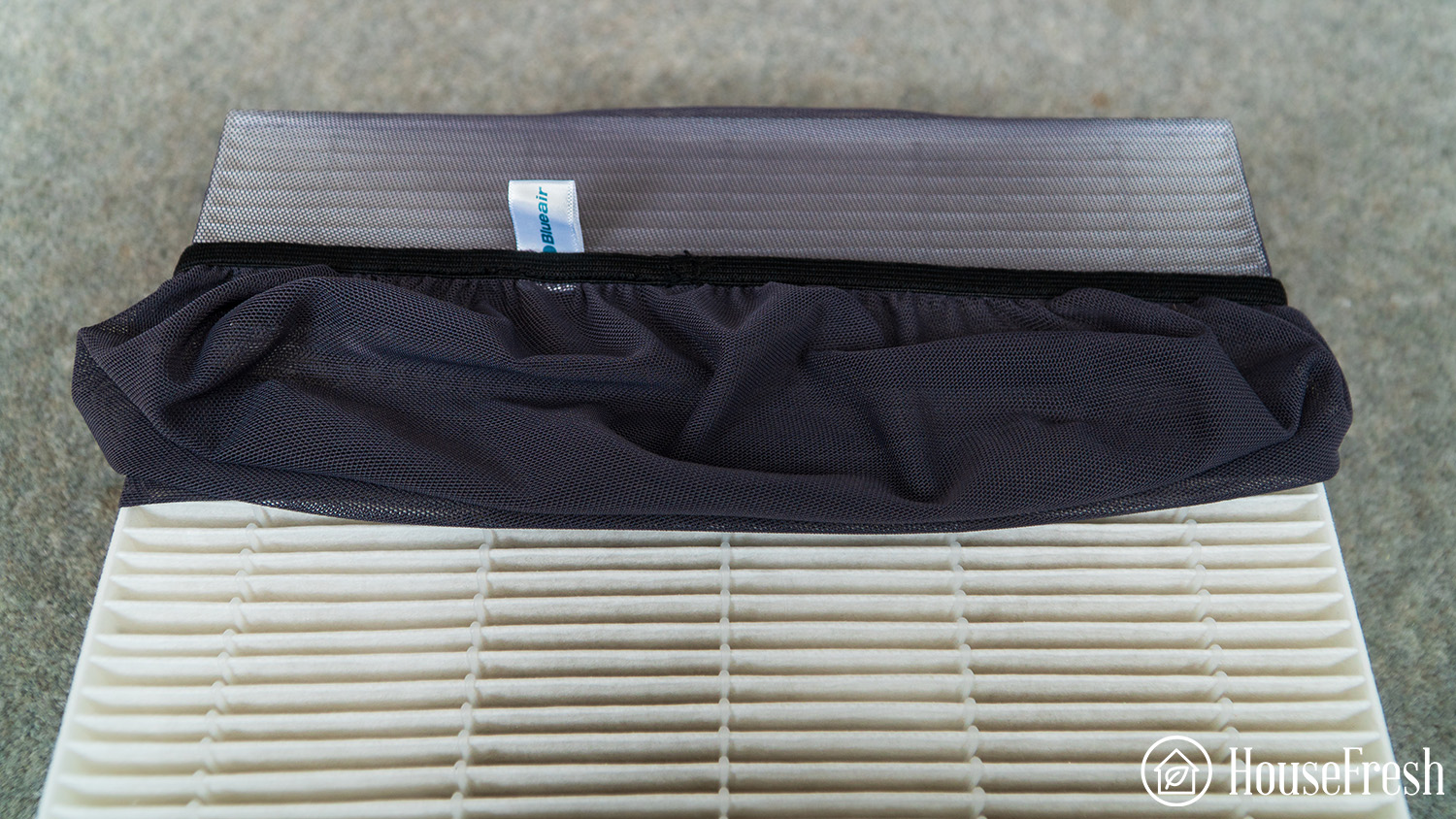
Similar to previous models, the Blue Signature has a removable, washable fabric pre-filter.
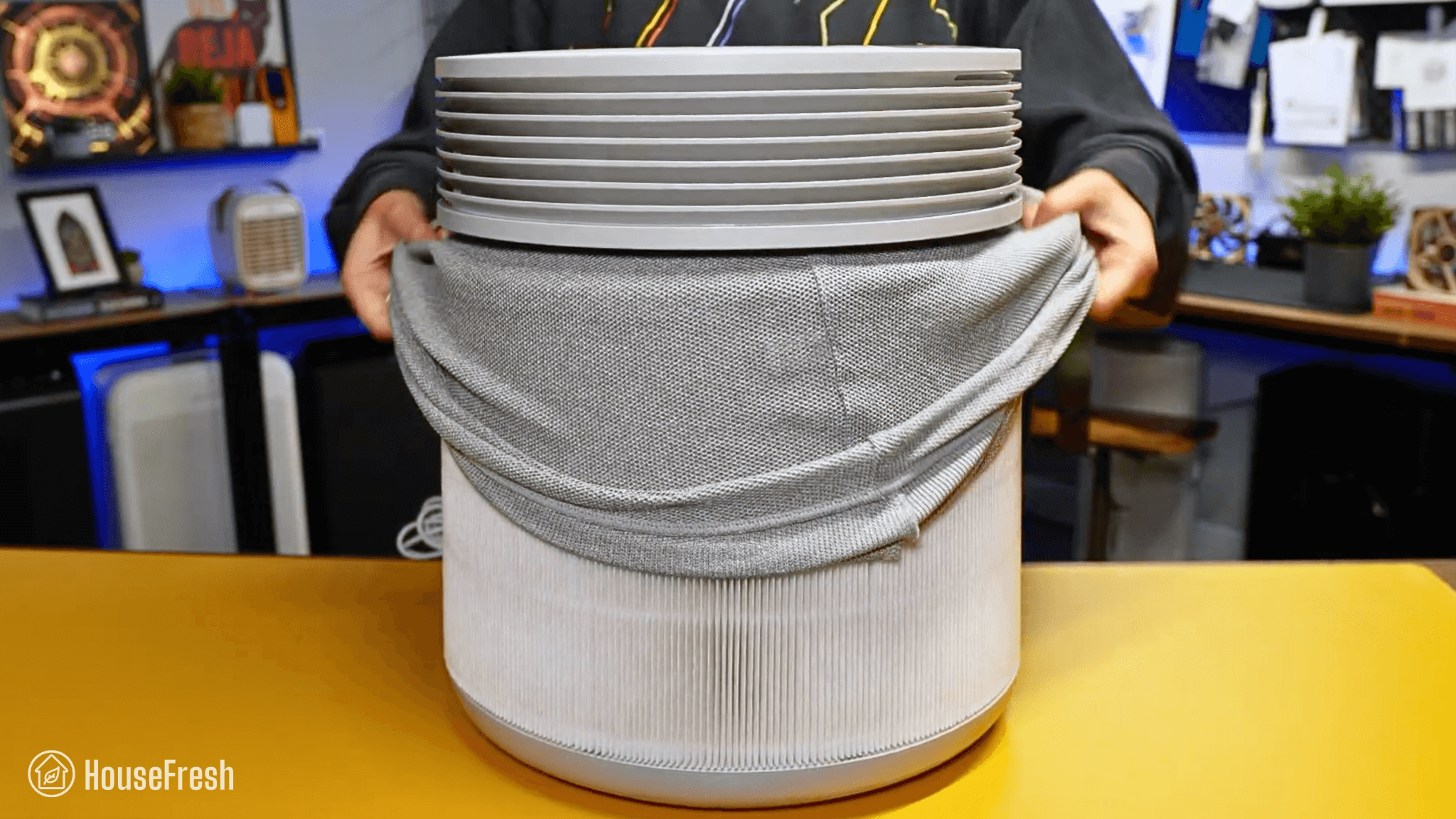
Blueair Blue Signature Pre Filter

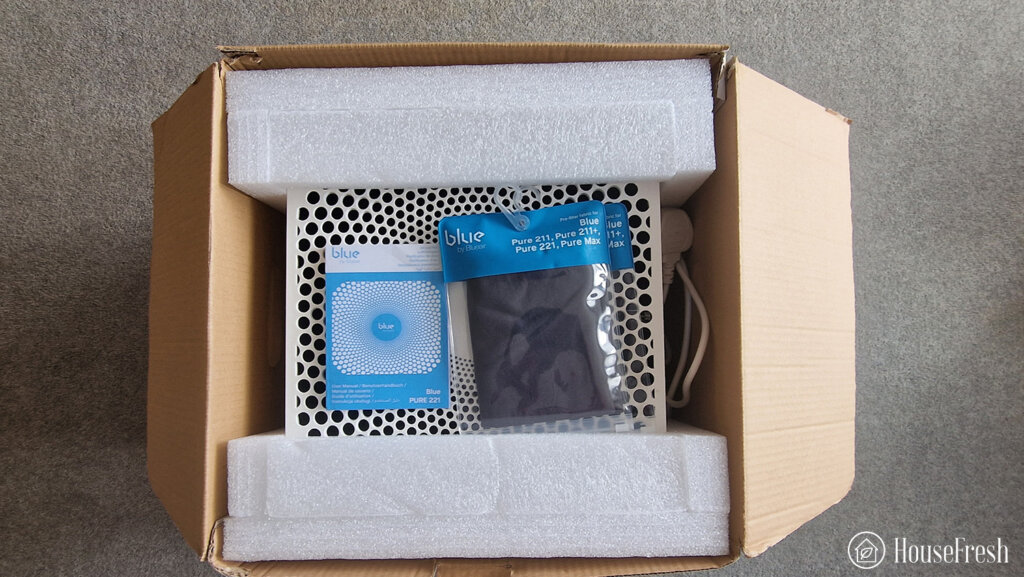
I bought the Nordic Fog pre-filter, but you can choose from a range of colors to customize your Signature’s look.

HEPASilent is Blueair’s trademarked air filtration technology that combines electrostatic ionization with mechanical filtration.

The mechanical filtration element is the same as in all other air purifiers, with particle and carbon filters working in combination with a fan to remove pollutants from the air as it passes through the filters. For the electrostatic component, an ionizer inside the device generates negative ions to attract airborne particles, which are then captured by the filter.

This type of ionization process can release ozone, which can then form other chemical byproducts depending on the chemicals already in the air.

Now, the HEPASilent ionizer inside the Blue Signature produces very low levels of ozone: AHAM certified it produces just 3 ppb of ozone, which would be defined as producing zero ozone, based on the UL testing program UL2998 because it sits below the threshold of 5 ppb.

However, I still wish Blueair would include an option to disable HEPASilent, either with a button (as Alen, Winix, and Coway do) or just a setting in the app (as we’ve seen from Xiaomi).

Design, controls and app features

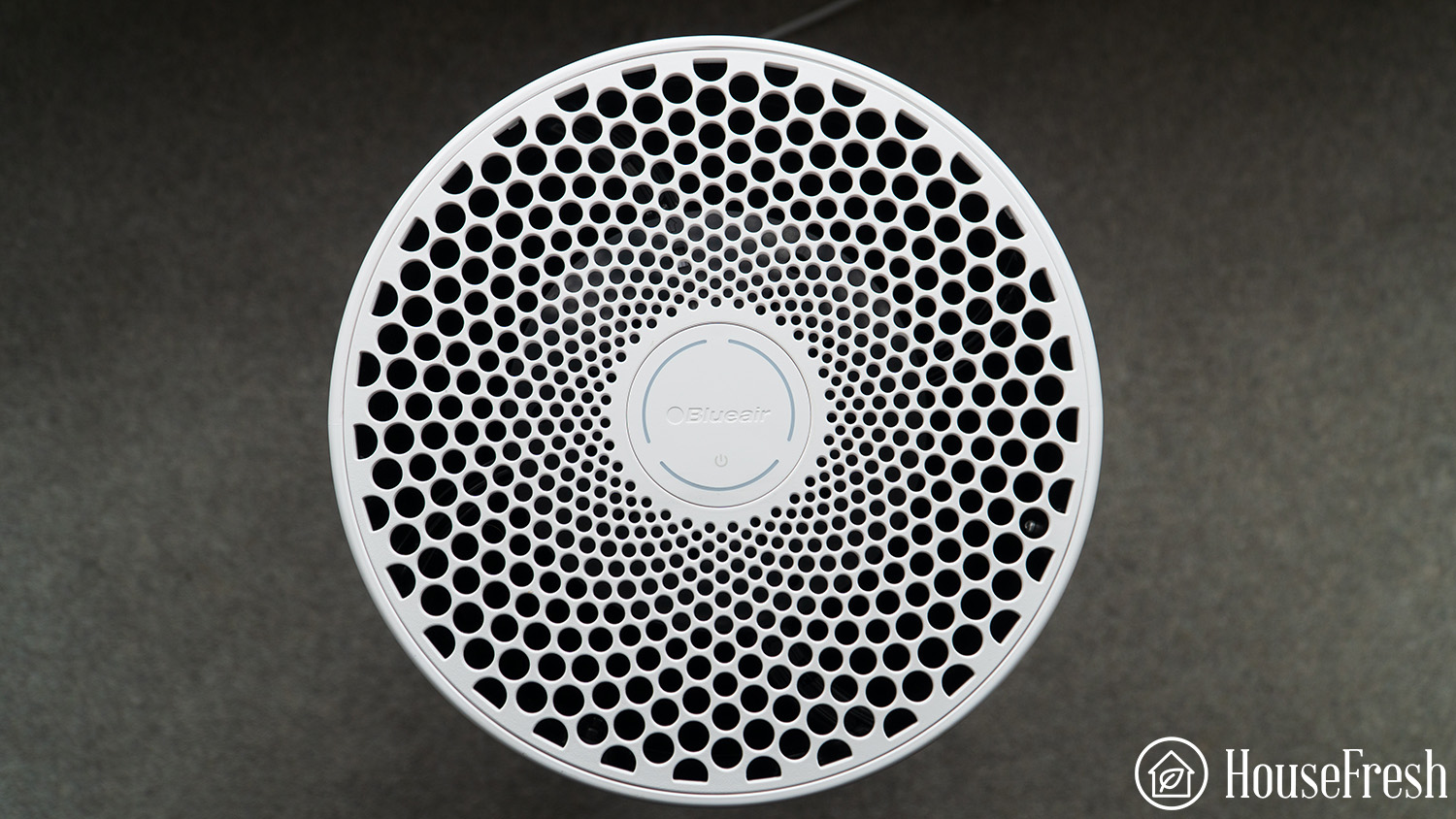
It clearly belongs to Blueair’s family of air purifiers, but with a twist.

It is shorter and lighter than other cylindrical units, such as the popular Levoit Core 400S, but it takes up more floor space. But what you lose in floorspace, you gain in tabletop space.
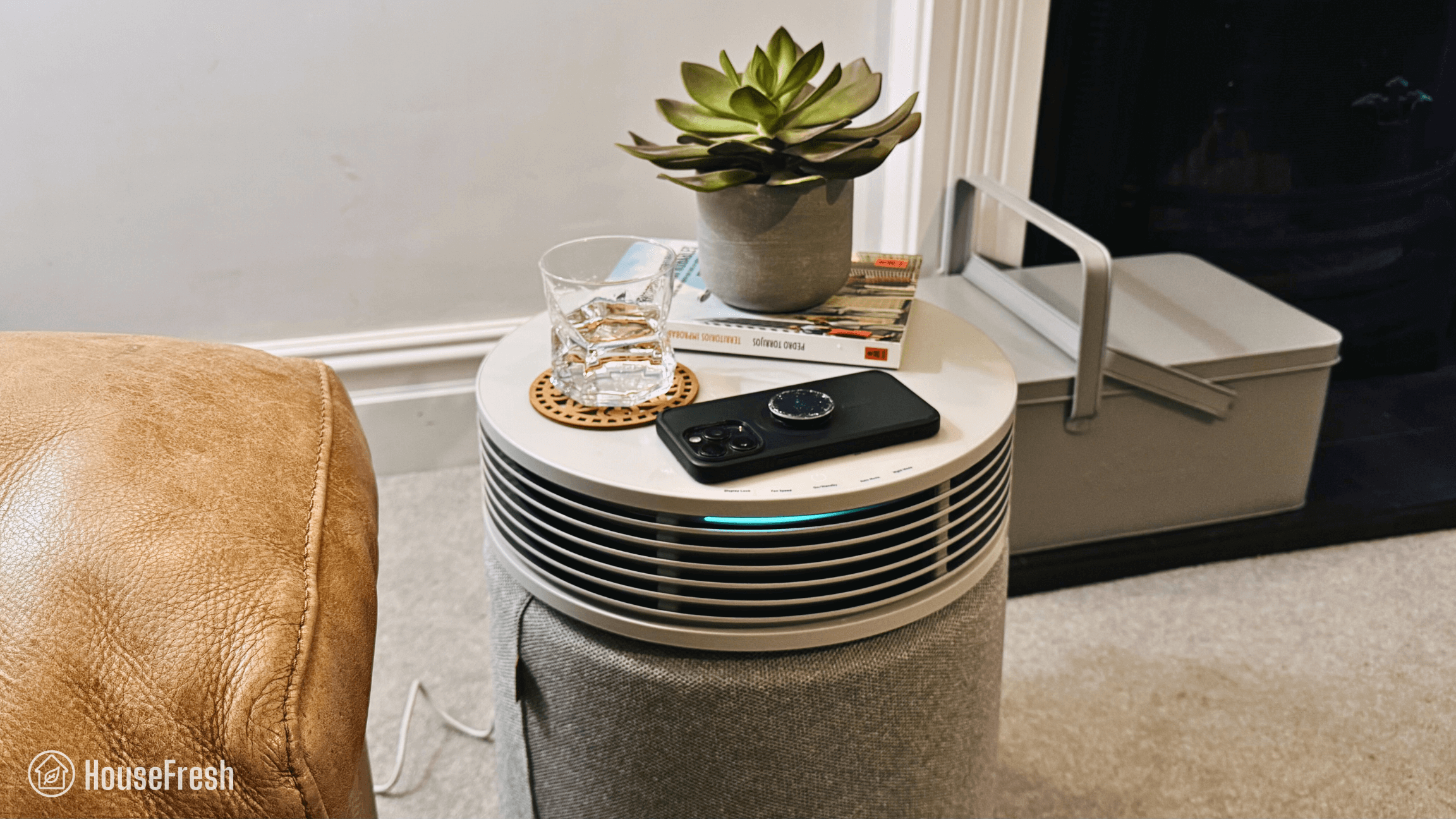
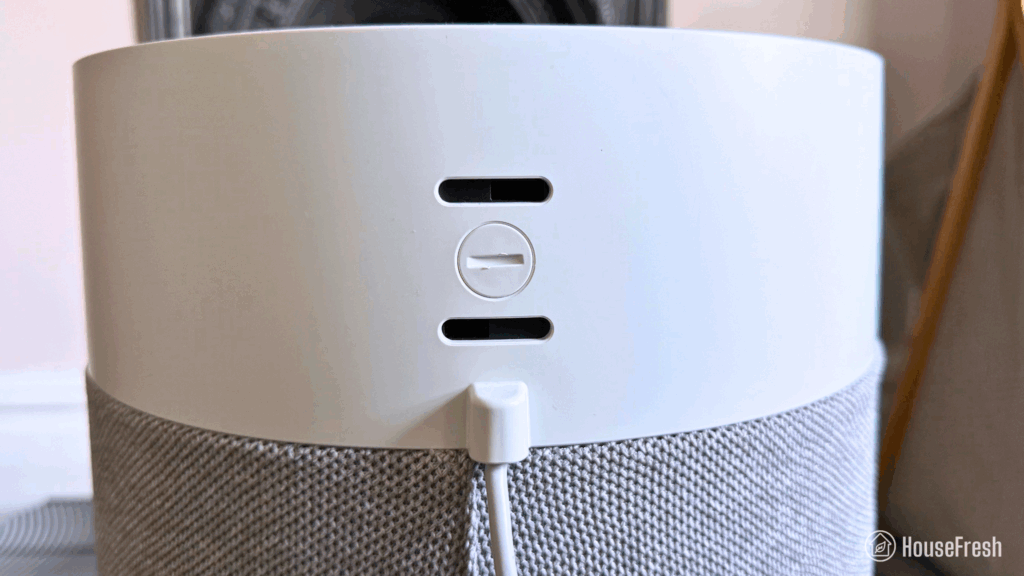
Blueair Signature Table

Another big change from the usual is the option to add a base to your Signature to elevate it from the ground and give it a more ‘furniture look’ – you can add a metal ring base for $100 or wooden legs for $87.

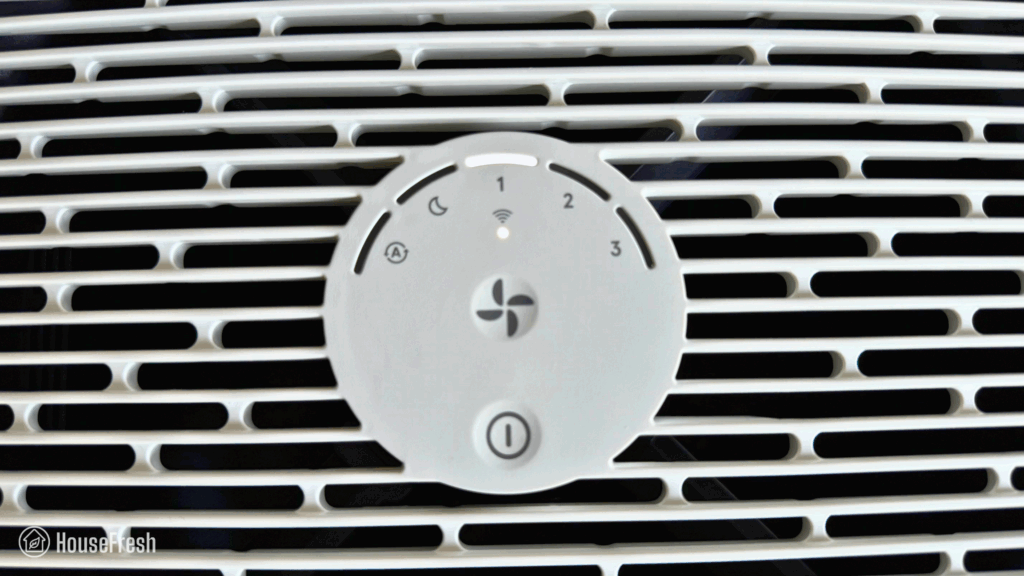
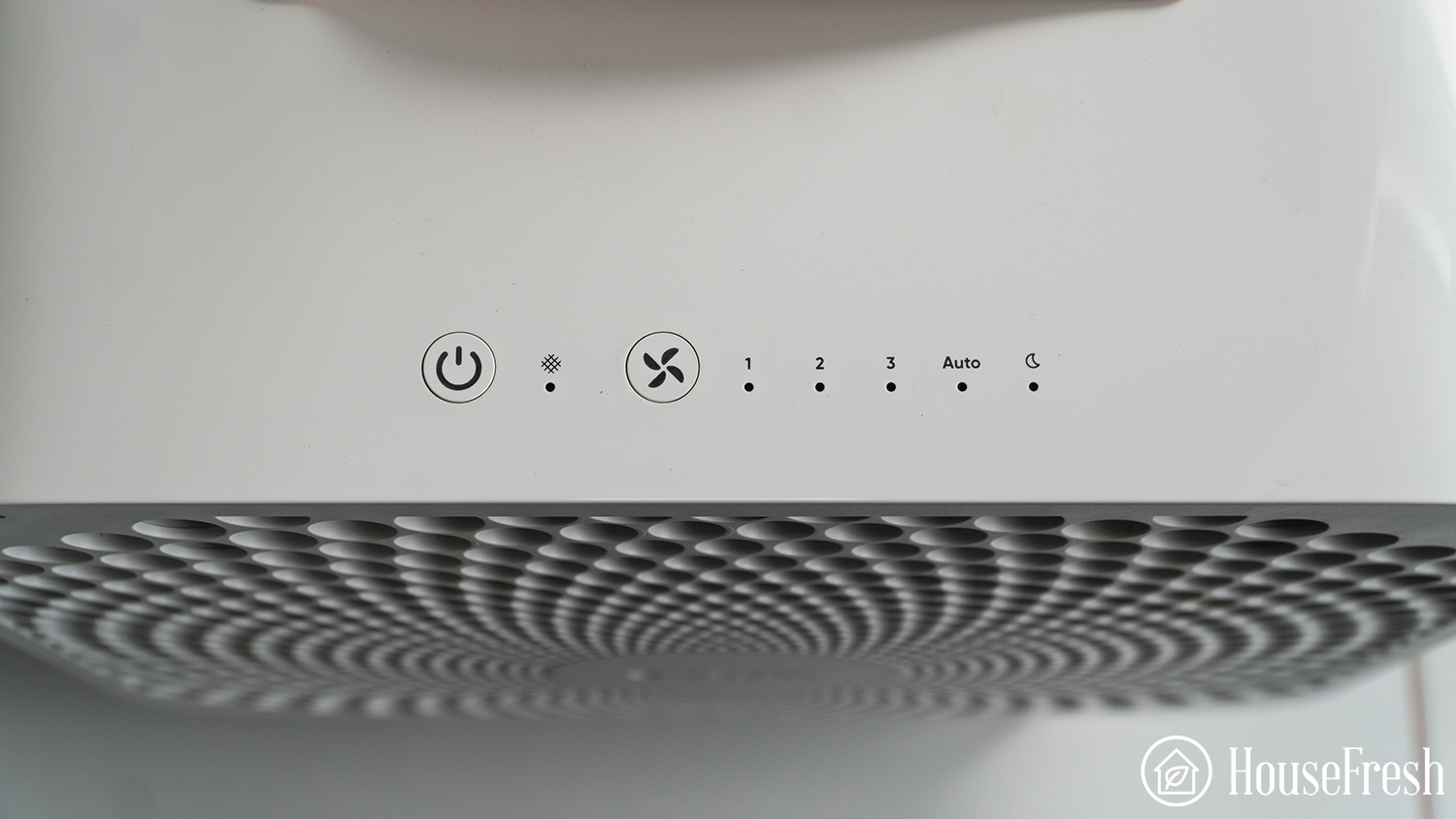
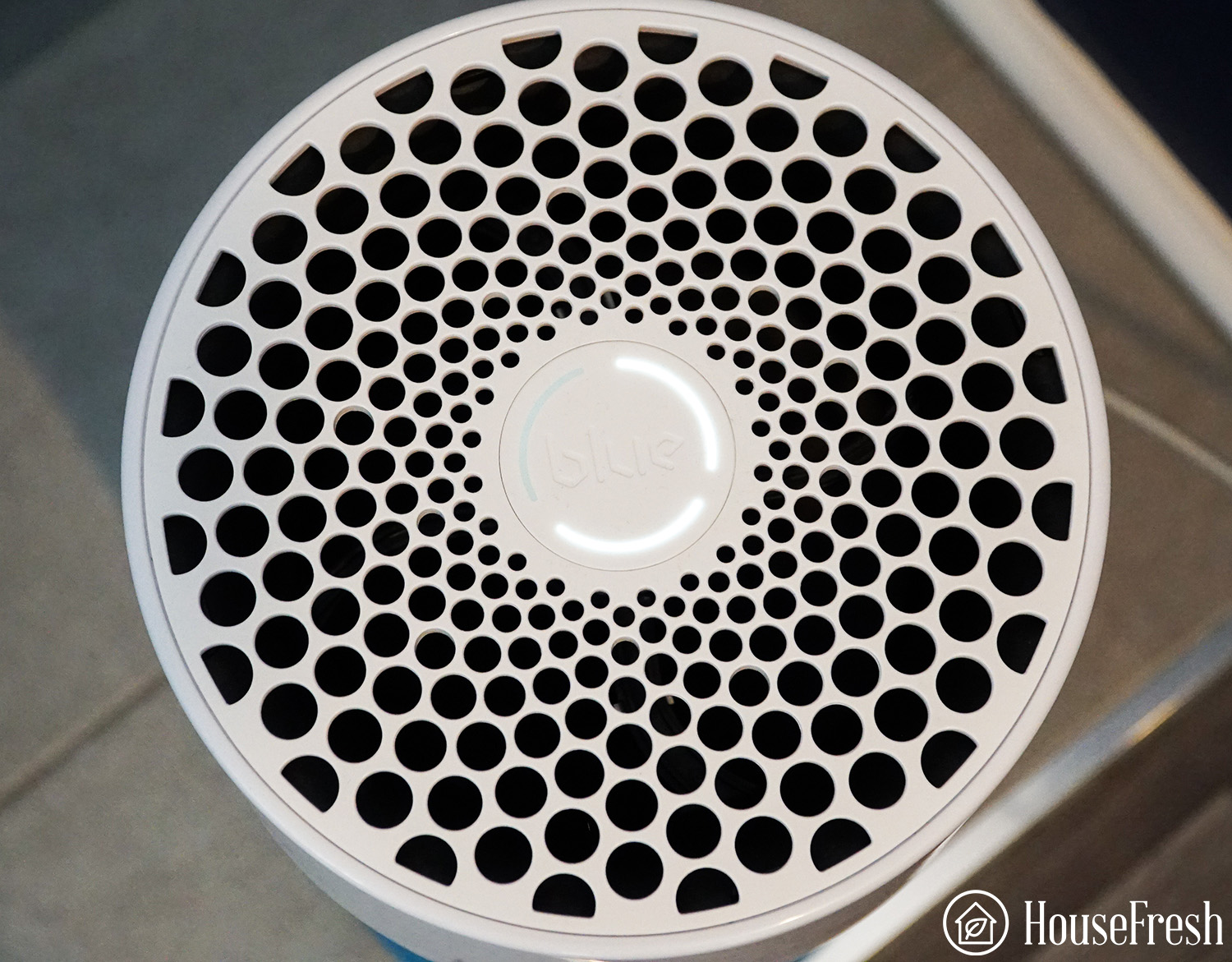
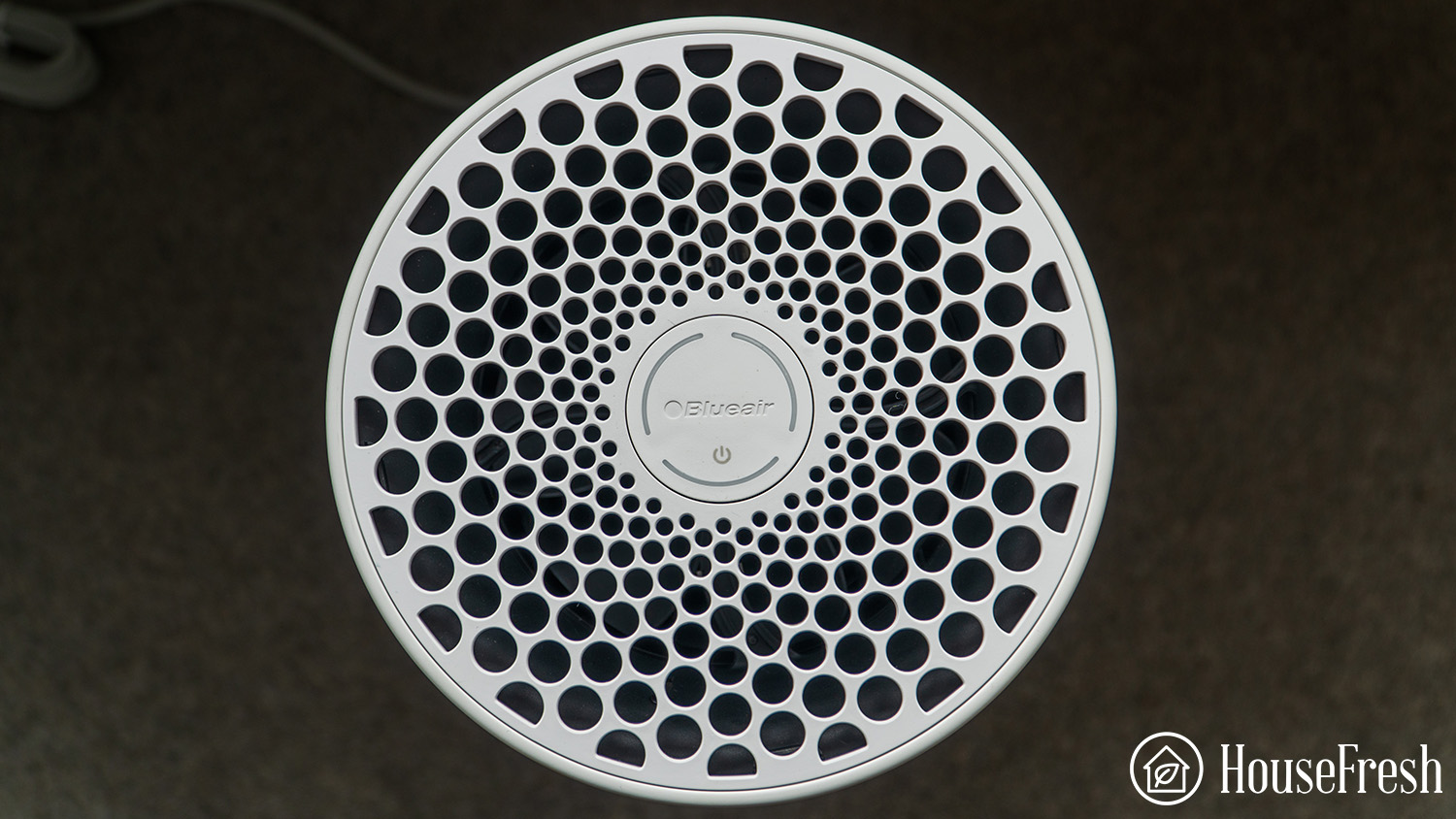
With the Blue Signature, Blueair moved away from the one-button control. It has a touchscreen with buttons to change fan speeds and modes, as well as PM2.5 readings.
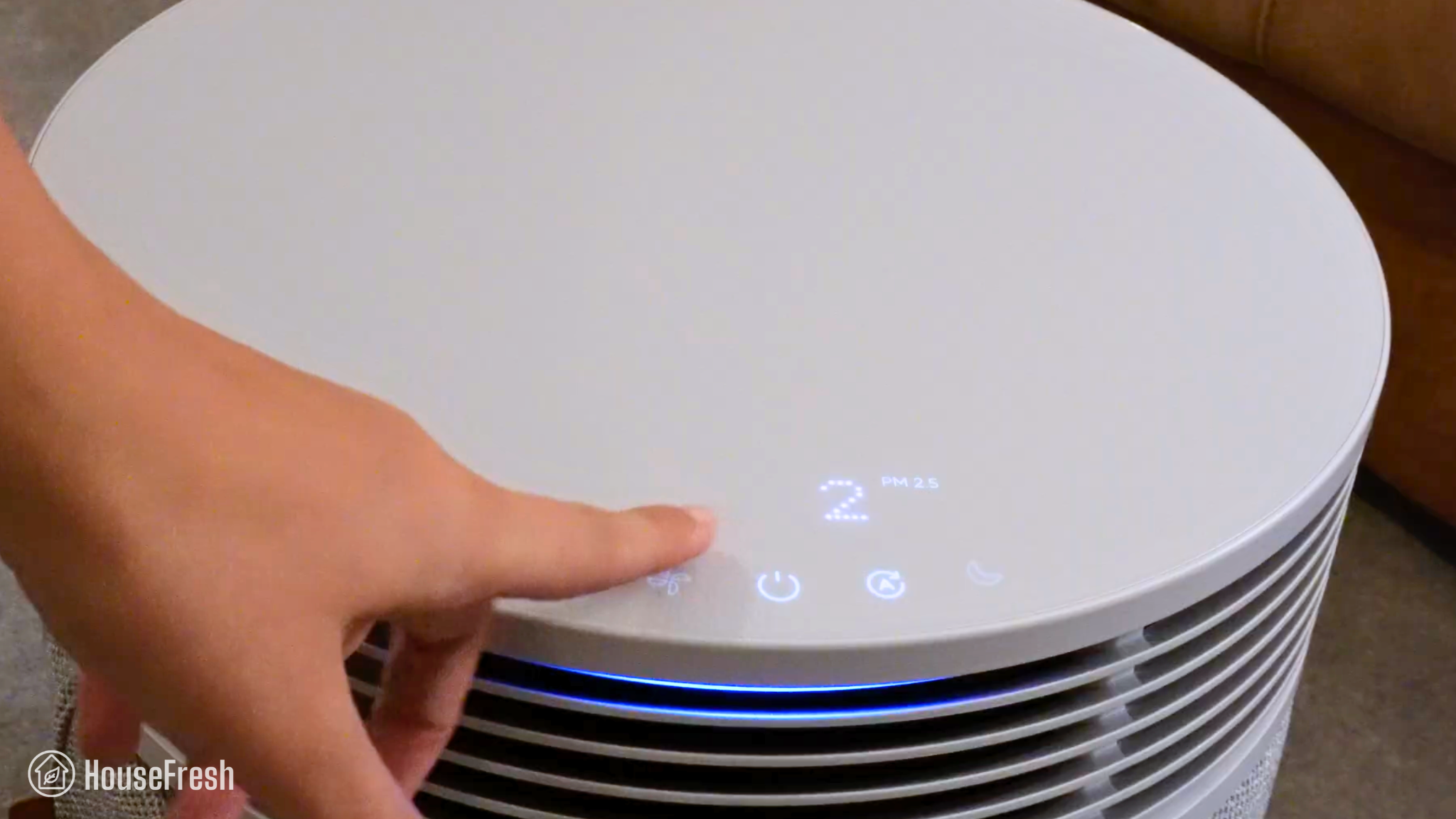
Blueair Blue Signature Controls

The display turns off automatically after a few seconds, and you can wave to get the lights back on. You also get an LED light at the front that changes color based on readings from the onboard laser sensor.
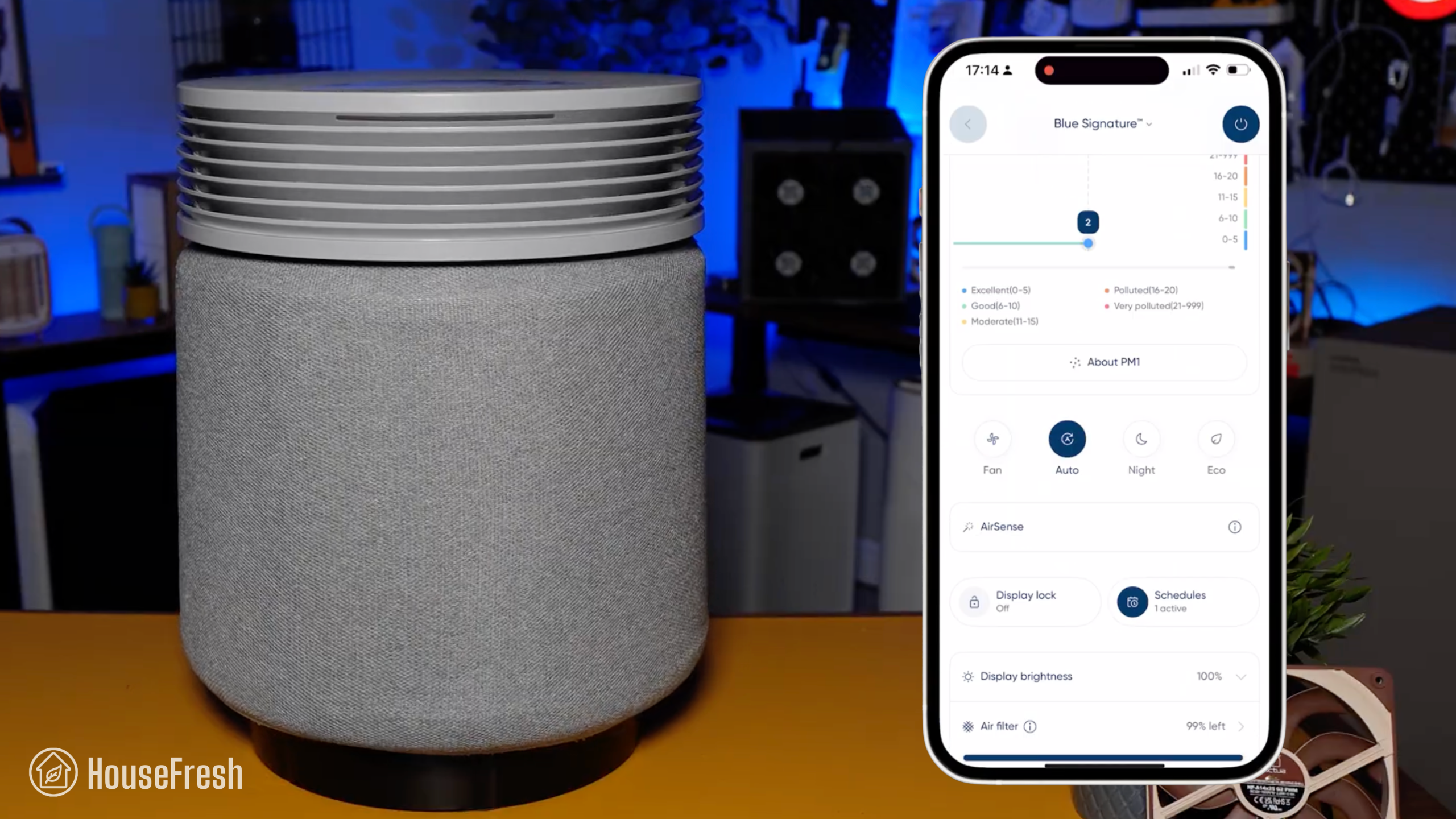
Blue Signature App

The Blueair app is quite basic compared to the apps from brands like Xiaomi, Levoit, and Philips, but the design is clean, and you can see all the info you need on one screen.

You get real-time air quality readings from the onboard laser sensor, which update quickly on the screen. Historical data is saved, so you can access it whenever you want.

Through the app, you can also control the device, set schedules, and adjust the brightness of the display at the top of the Signature.

Air cleaning performance

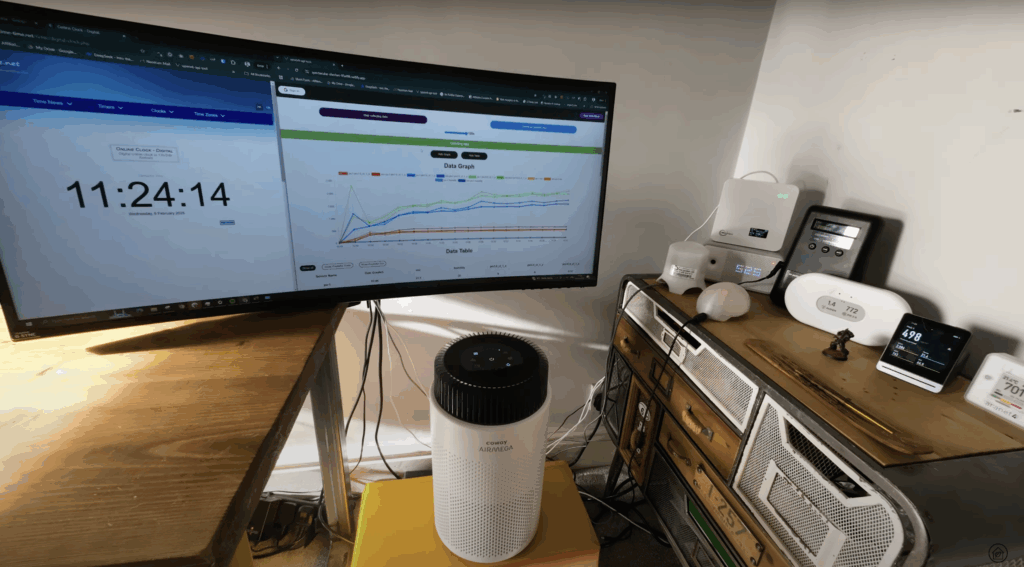
We tested the Blue Signature in our 728 cubic ft. test room, tracking how fast it removed all PM1 particles from the air after we filled the space with incense smoke.
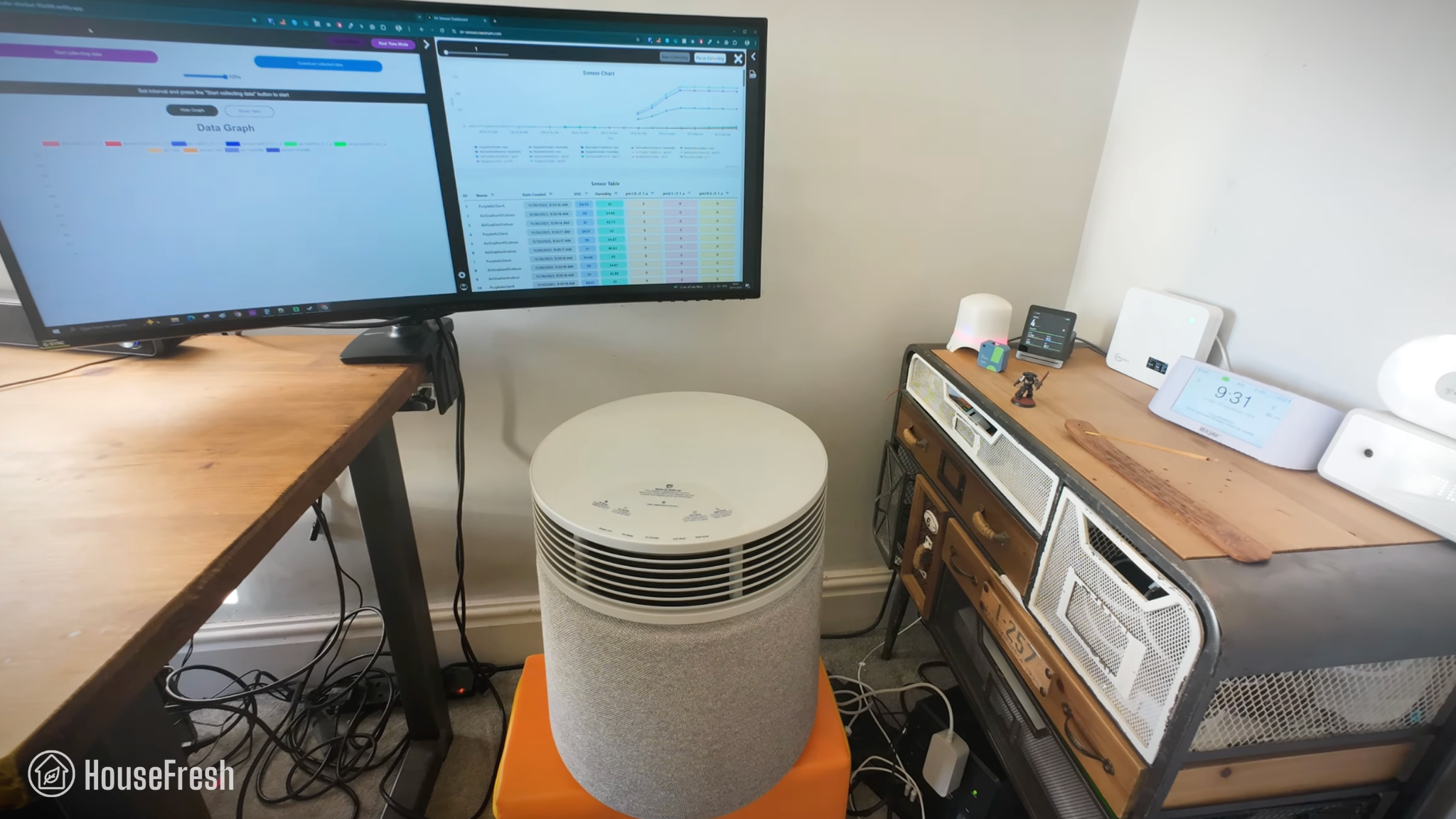
Blueair Blue Signature HouseFresh CADR Test

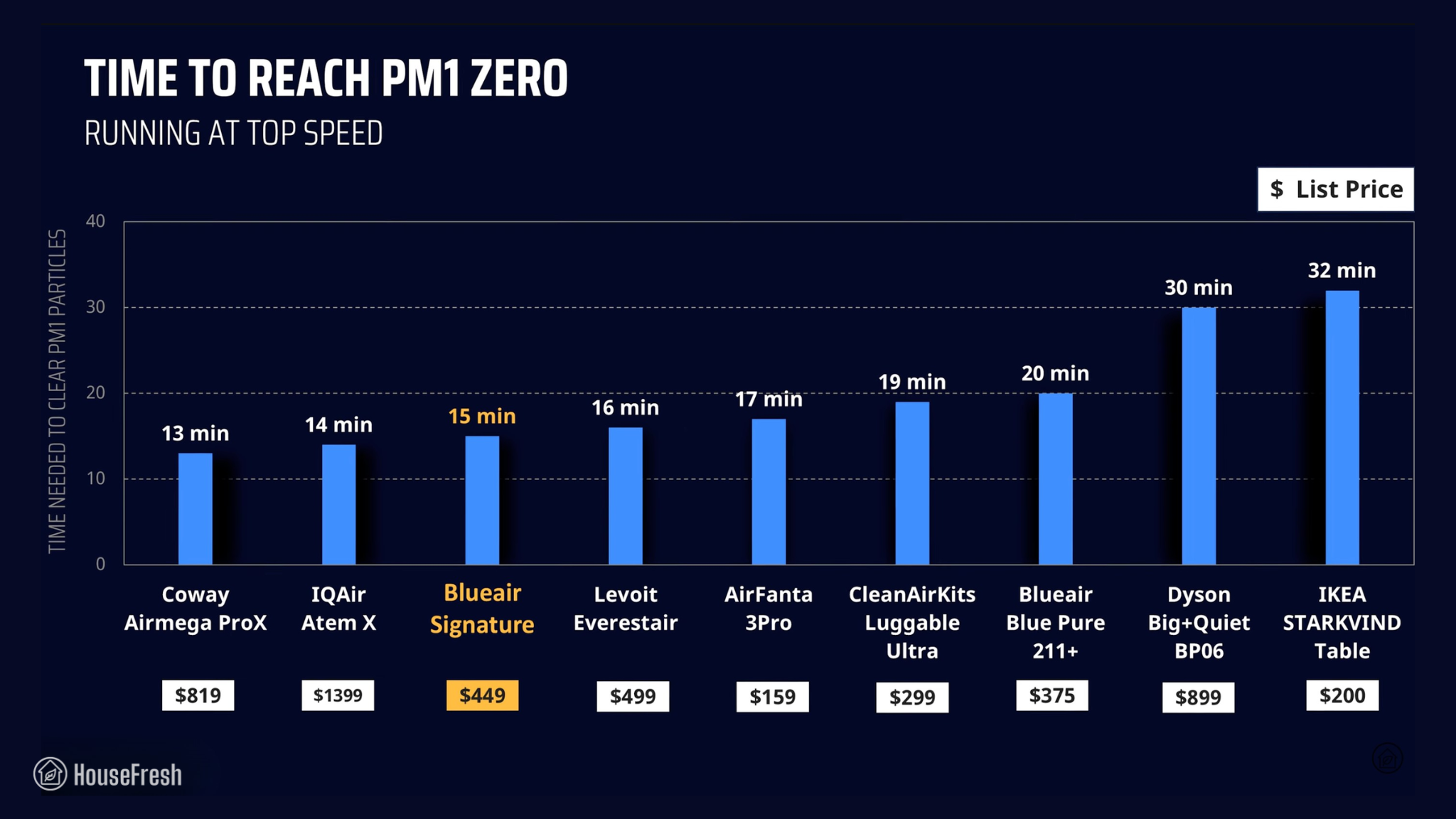
When running at top speed, our PurpleAir Zen sensor shows that the Signature needed 15 minutes to reach PM1 zero. Based on the natural ventilation of our test room, we estimate a PM1 CADR of 400 cfm.

This makes the Blue Signature powerful enough to provide five air changes per hour in large rooms up to 600 sq. ft.

As you can see from the chart, the Signature shows a significant performance jump over the older, bulkier Blue Pure 211+.
Blueair Blue Signature Performance Test

The only devices that were quicker to complete our test were the much larger Coway Airmega ProX (13 minutes) and the much, much pricier IQAir Atem X (14 minutes).

We repeated our particle removal test three times across all available fan speeds, which allowed me to estimate PM1 CADR at each fan speed:
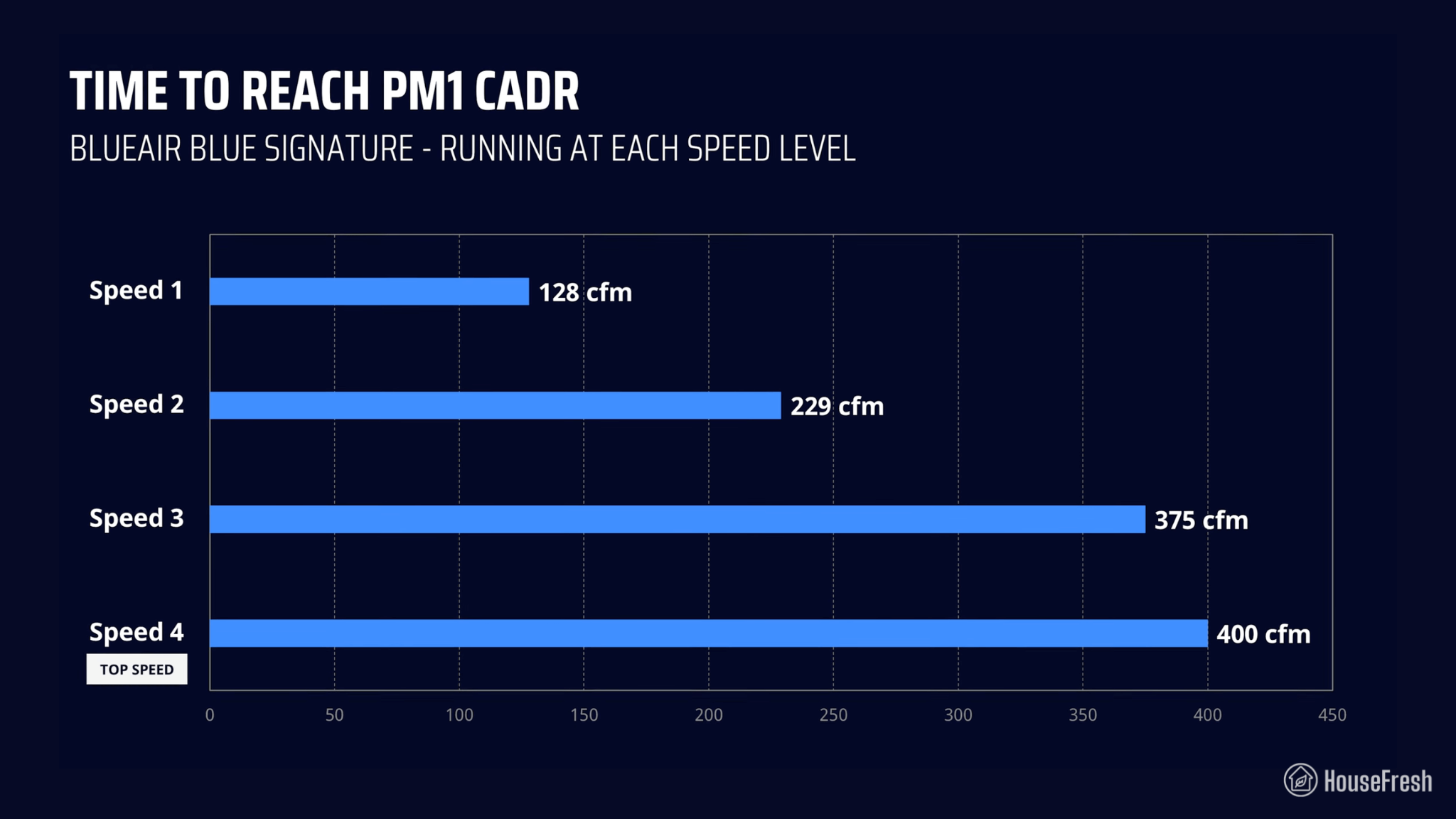
Blueair Blue Signature CADR

BUT air purifiers running at full speed tend to be too loud for everyday use, so we must account for noise levels…

Sound levels

The sound levels of the Blue Signature range from 34.8 dBA to 59.6 dBA — which is a little louder than most air purifiers we have benchmarked it against.
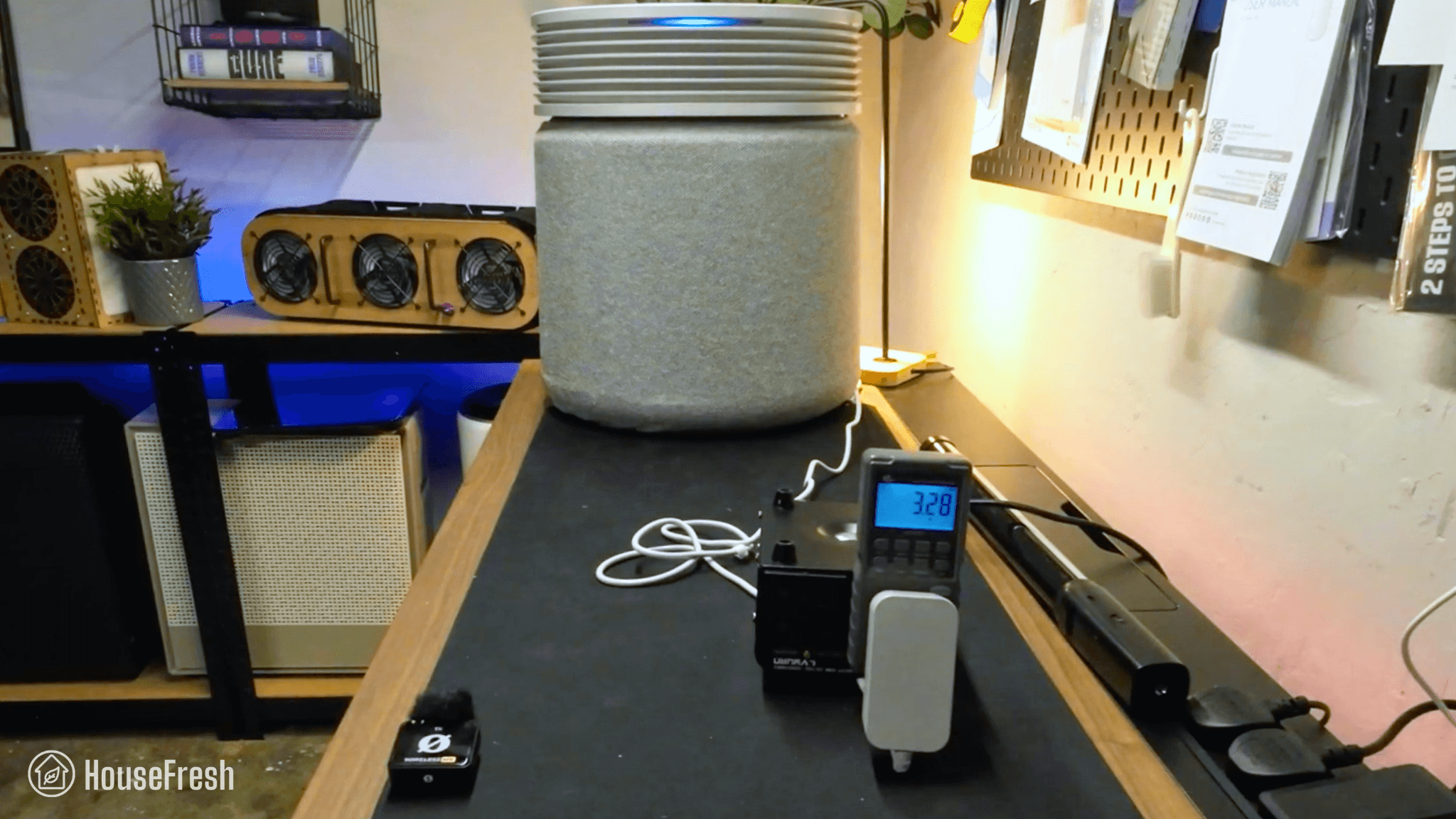
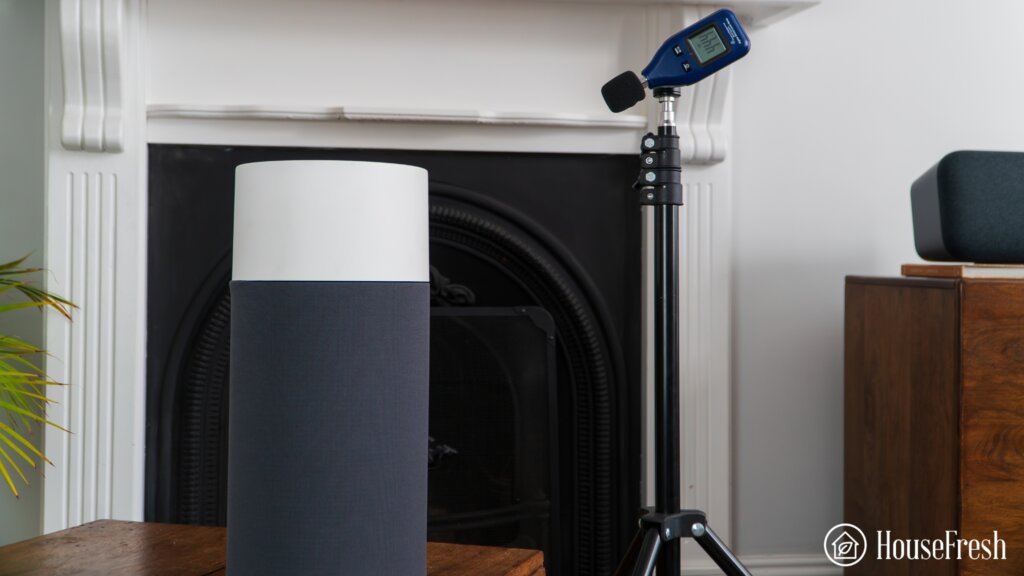
Blueair Blue Signature Sound test

I used our BAFX sound meter to measure how much sound the Blue Signature generates at each of its 4 fan speeds and in sleep mode at 3 ft away:
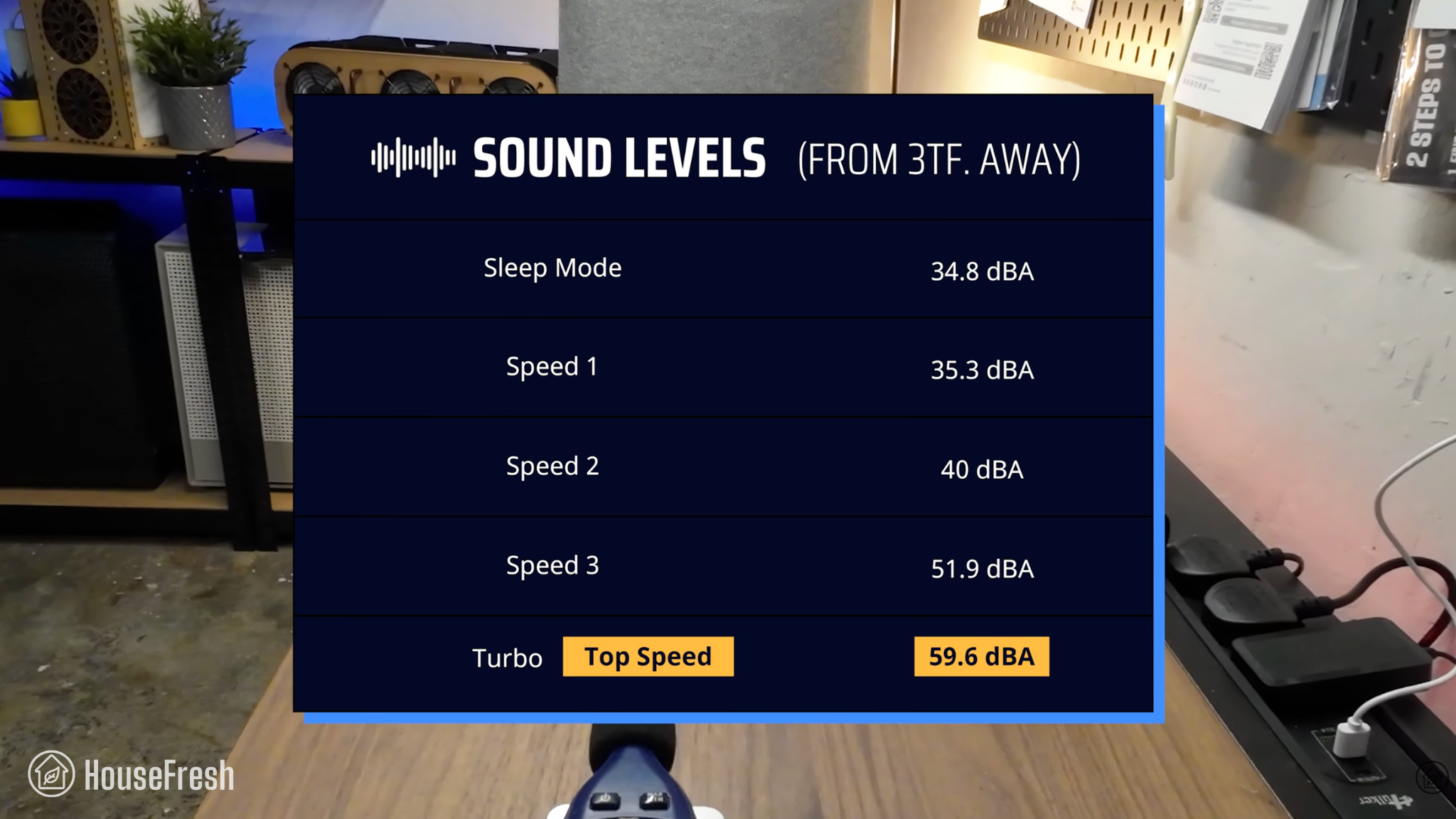
Blueair Blue Signature Sound Data

Hitting 59.6 dBA at top speed, the Blue Signature is one of the loudest air purifiers on the table, second only to the Atem X, with its 62.3 dBA when running full power.
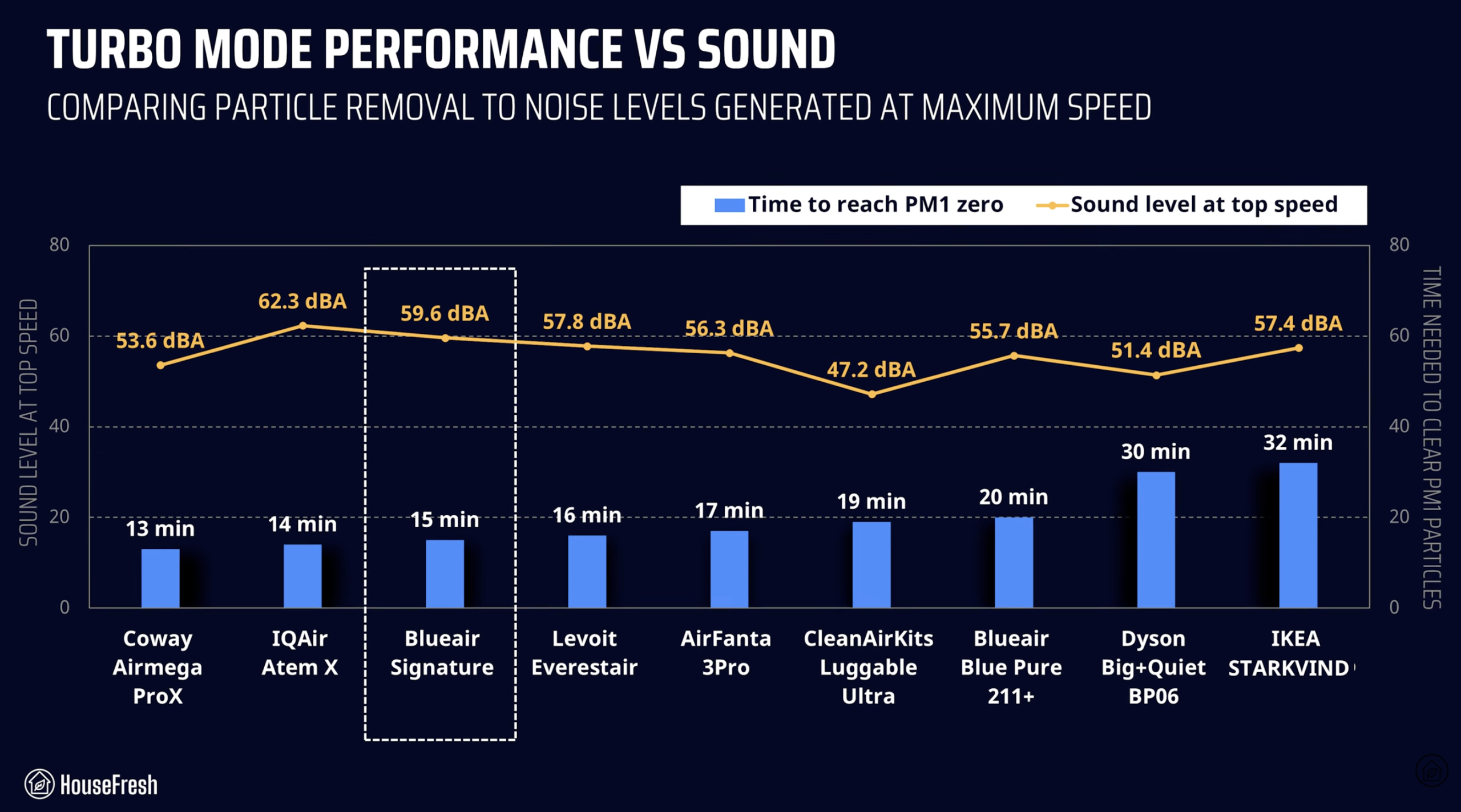
Blueair Blue Signature Performance vs Sound scaled

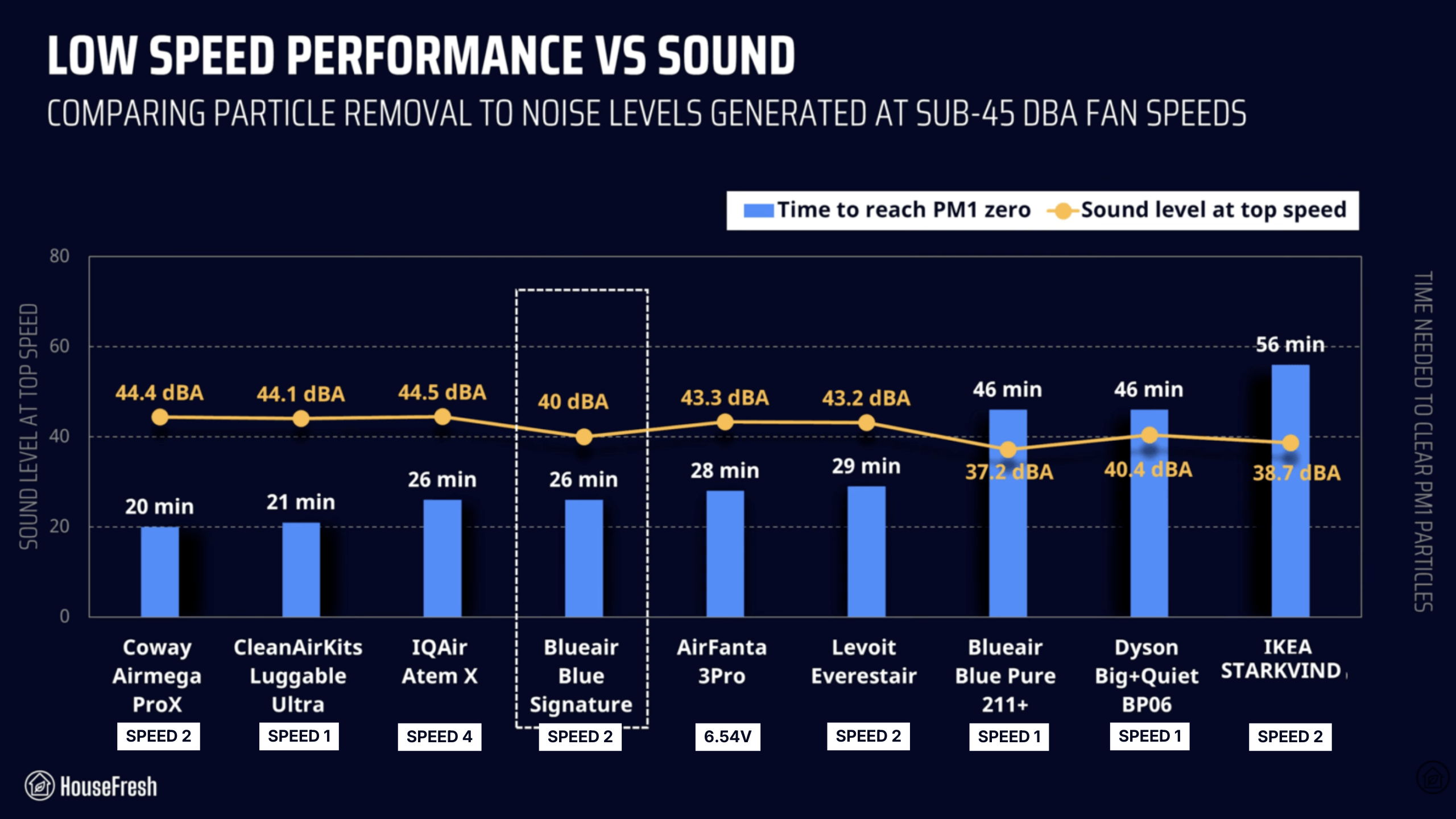
When running at speed 2, it generates just 40 dBA and was able to complete our particle removal test in 26 minutes – faster than the pricier EverestAir and BP06.
Blueair Blue Signature Quiet Performance HouseFresh

If you kept your Blue Signature running at speed 2, it would be whisper-quiet and still clean the air five times per hour in rooms up to 343 sq. ft.

Long-term running costs

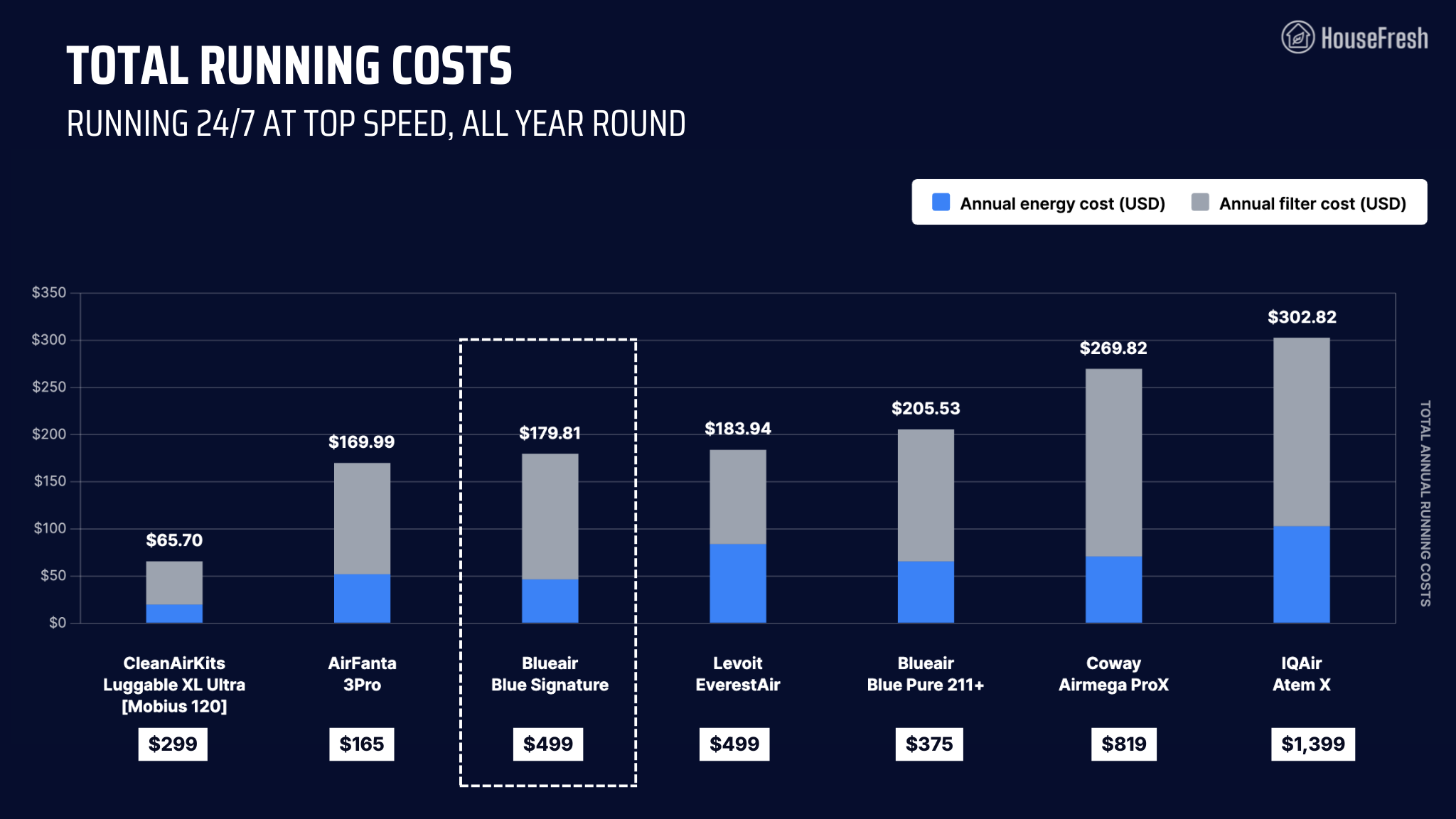
Running a Blueair Blue Signature will cost you $179.81 per year, combining energy and filter replacement costs.

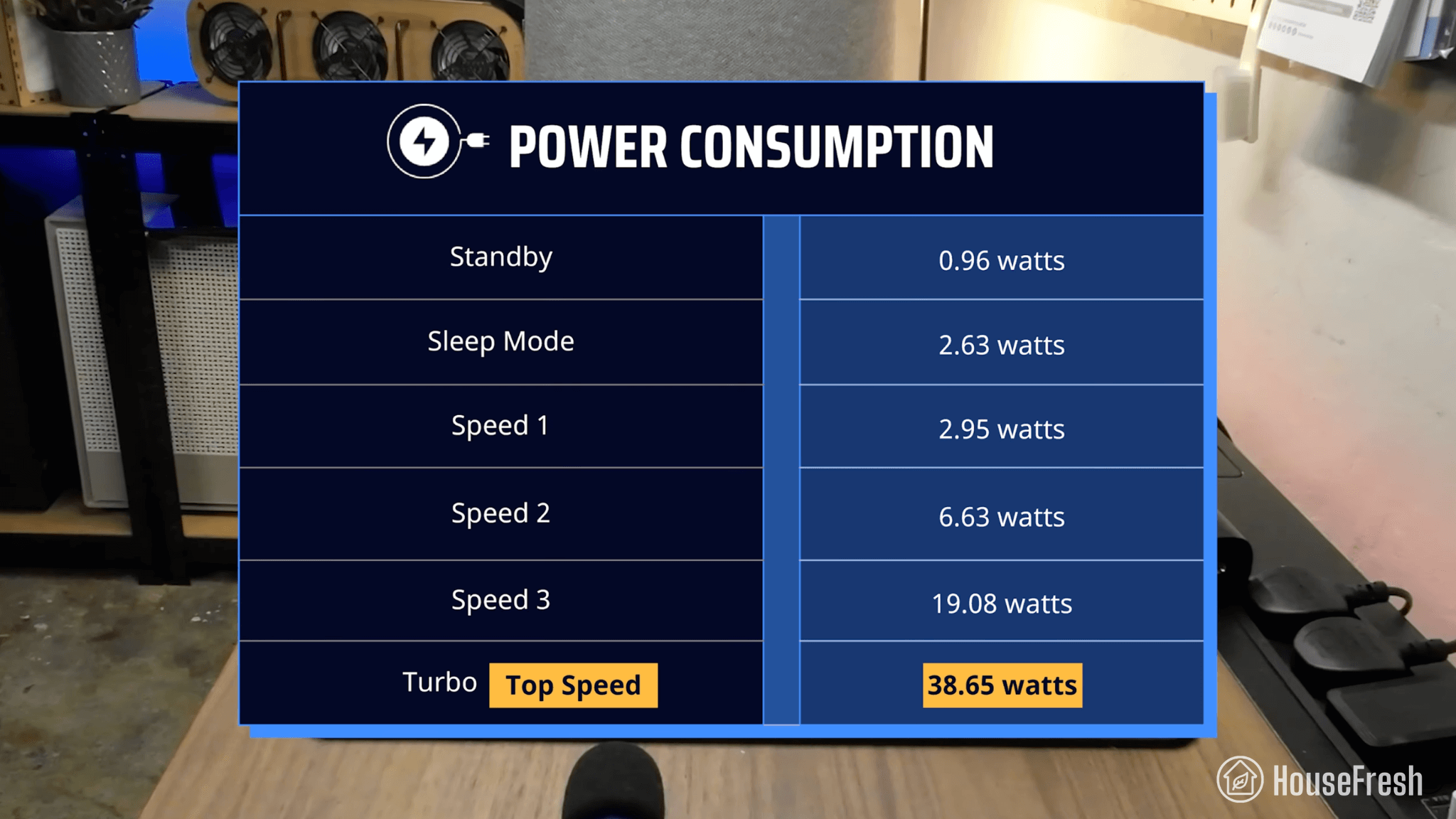
We used our energy meter to record how much electricity the Signature pulls at each fan speed and also while on standby.
Blueair Blue Signature Energy Data

At top speed, the Signature draws 38.65 watts, so if you left it running at top speed 24/7 for one year, it would add $46.49 to your energy bill, based on the average U.S. electricity price as of March 2026.

This is a huge improvement over the older 211+, and it’s only beaten by the Mobius fans in the Luggable Ultra and the highly energy-efficient BP06 and Starkvind, which are less powerful than the Signature.

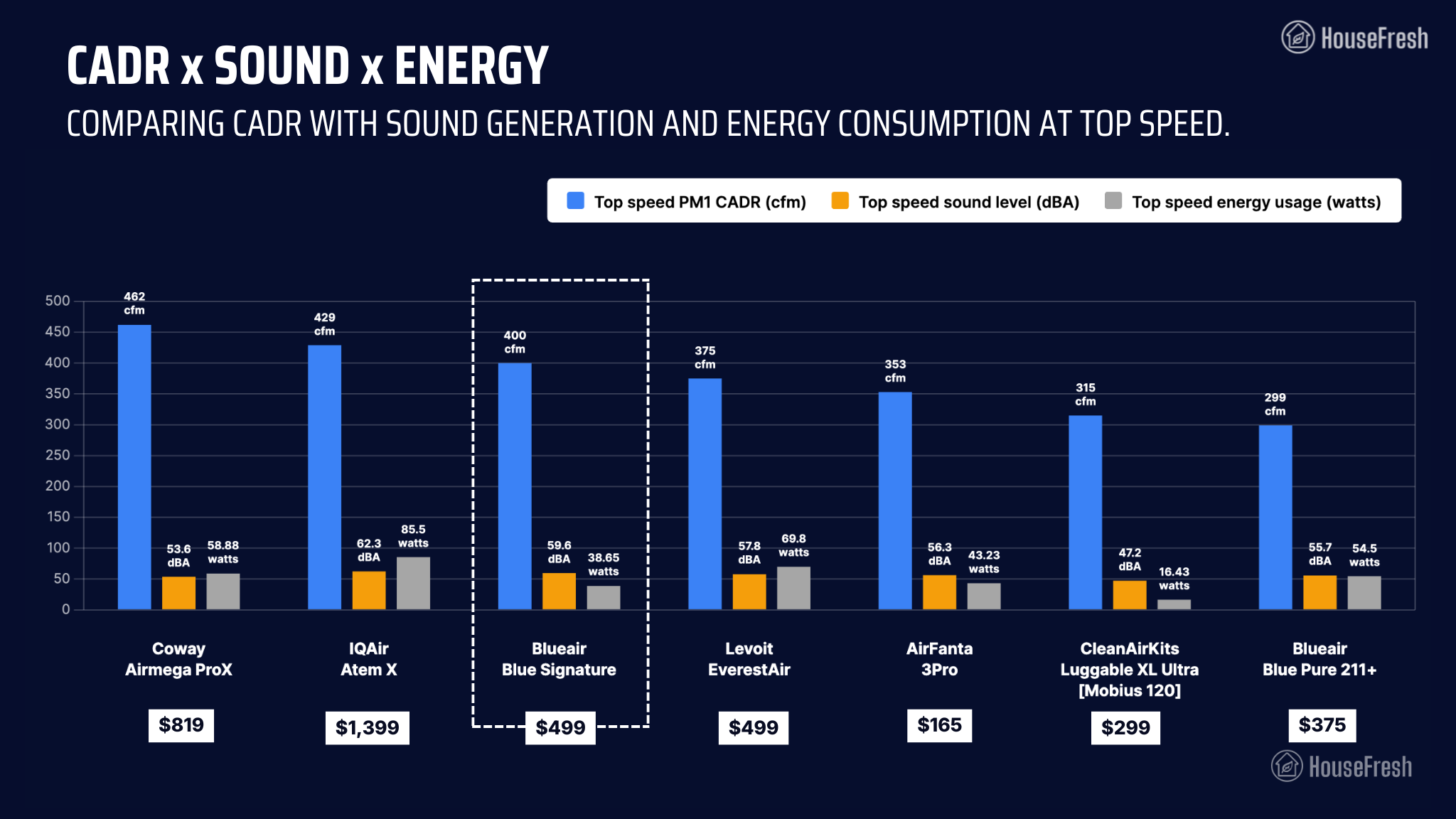
So I went one step further and created a chart to compare its CADR, noise levels AND energy usage at quiet fan speeds to see how the Blue Signature compares to other popular high-CADR air purifiers:
Blueair Blue Signature CADR Sound Energy

But let’s calculate how much you’ll need to spend to run your Blueair Blue Signature for a year.

According to Blueair, you need to change the filter in your Blue Signature every 9-12 months. And as always, I will use the lowest estimate of nine (9) months.

The replacement filter is available for $99.99. That means that you can expect to spend $133.32 each year on filter replacements alone.

We can add this to energy costs to work out the total yearly cost and compare it with the other devices I’m benchmarking the Signature against:
Blueair Blue Signature Yearly Running Cost

Thanks to the low energy costs, the Blue Signature is cheaper to run than the older Blue Pure 211+ and most other high CADR models we benchmarked it against, with the exception of the PC fan-powered AirFanta 3Pro and CleanAirKits Luggable XL Ultra.

Bottom line: Should you get a Blueair Blue Signature?

Our data showed that the Blue Signature offers high performance, even at quiet operation, in a well-designed package for less than $450.
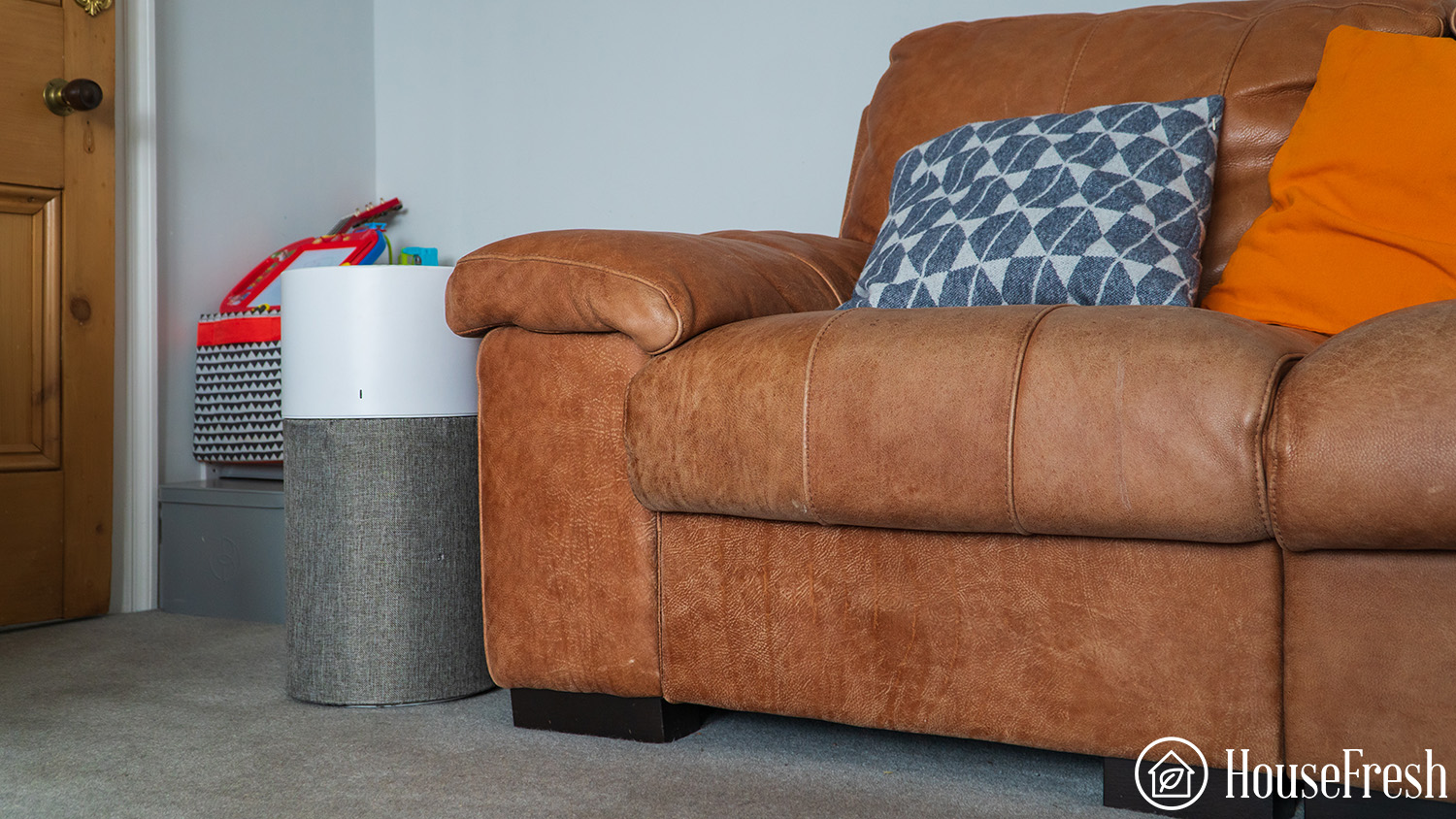
Blueair Signature Corner

The Blue Signature looks like a piece of furniture and also doubles as a table. You can even add legs to lift it off the ground, with options to match your home’s decor.

It isn’t cheap at just under $450, but it ticks a lot of boxes for this price.

Performance is top tier at both top speed and quiet fan speeds. To match the Signature’s performance with a traditional air purifier, you would need to spend nearly double for a much more utilitarian-looking Smart Air Blast Mini, or go with a much larger machine like the Coway Airmega Pro X

And if you want the same power in a smaller, good-looking package, then you would need to spend $1,400 on the IQAir Atem X — that’s a spicy price tag if I’ve seen one!

The running costs of the Blue Signature are fair, and while the initial price is higher than that of other mid-size models on the market, you do get a high-quality laser sensor, a table surface, and app connectivity.

So… This thing has the looks, the power and all the features you could ask for… so what’s the downside?

Even though the ozone levels from HEPASilent are very low, I still wish Blueair would include an option to disable HEPASilent, either a button (as Alen, Winix, and Coway do) or a setting in the app (as we’ve seen from Xiaomi).

I have received messages from people who have adverse reactions to any form of ionization, so I think all manufacturers using ionizers should allow consumers to choose whether they want this or not — even if it does lead to reductions in CADR.

So this is the main downside you should be aware of before buying that none of the other big media publisers or YouTube creators reviewing the Blue Signature will tell you about.

If you do decide to buy one, please use this link to support the work we do here at HouseFresh. In doing so, we will receive a small affiliate commission at no extra cost to you that we will use to continue buying and testing air quality products.

Did I miss any details? Do you have any questions I left unanswered? Just drop a comment below, and I’ll get back to you as soon as I see it.
Blueair Blue Pure 311i Max review

Blueair 311i

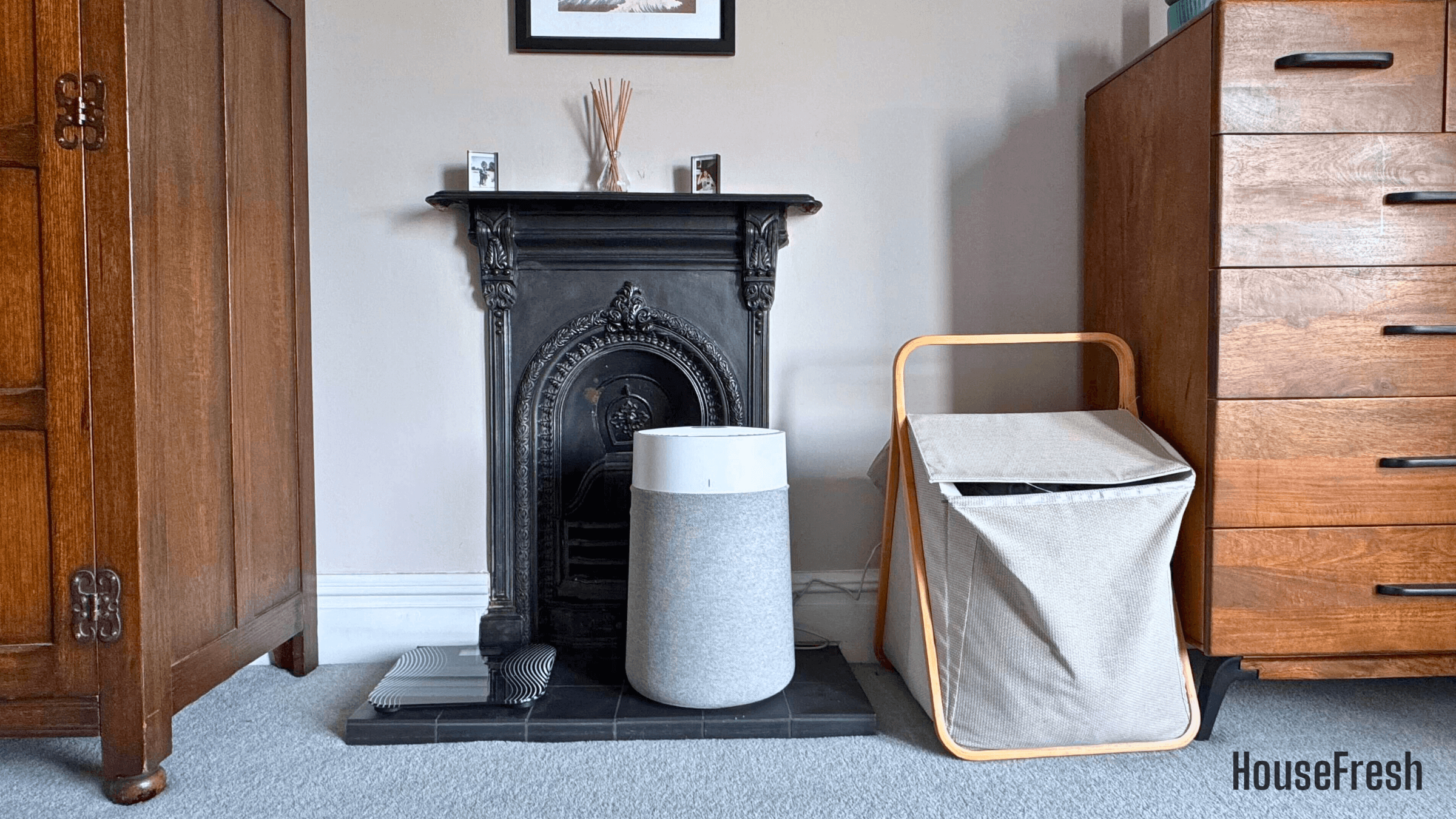
The Blue Pure 311i Max is a mid-sized air purifier from Blueair, available worldwide under various model names, including the Blue Pure 3350i Max (Europe) and the Blue Pure 3450i Max (Oceania and parts of Asia).

The 311i Max has smart functionalities, such as WiFi connectivity, auto-mode, an LED air quality indicator and an app that allows you to control the air purifier remotely. As with other devices from Blueair, it features their trademarked HEPASilent technology which combines mechanical filtration with electrostatic ionization.

The overall score for the Blue Pure 311i Max incorporates first-hand data results from our battery of tests, as well as our ratings for customer service, brand transparency and design & UX. Check out the full scorecard below to see the split of categories.

The pros and cons of the 311i Max

A summary of our top-level findings after testing this air purifier following our methodology.

“Raw figures from our particle removal tests show that this air purifier offers solid air cleaning performance, and the use of HEPASilent allows the 311i Max to clean a lot of air without consuming too much energy.

If you don’t mind the use of electrostatic ionization, then this could be a good option for you.

Danny Ashton HouseFresh
Danny Ashton
HouseFresh Founder
& Lead Tester

What we really like

Good air cleaning performance at top speed for less than $300, comparable to what you’ll get with the Winix T810 and the Dyson BP06.
Low energy usage that helps keep long-term costs low – it is less power-hungry than smaller devices like the PuroAir 240 or the Molekule Air Mini+.
The app works well and allows you to operate the 311i remotely.
It is aesthetically pleasing, as we have come to expect from Blueair devices with fabric pre-filters.
Good size for small to medium-sized rooms.

What we think could be better

It comes with an optical sensor instead of laser sensor, so you’re going to have to remember to clean the sensor regularly.
You will be forced to use its in-built ionizer, in the form of Blueair’s trademarked HEPASilent technology, which cannot be disabled.
With every new generation of 311 devices, Blueair introduces a new design that uses different filters, so if you’re thinking about upgrading from the old 311 Auto, you won’t be able to use any filters you might already have at home.

Clean air delivery rate (CADR):– Top speed PM1 CADR: 220 cfm
– Sub-45 dBA PM1 CADR: 108 cfm
– AHAM PM2.5 CADR: 321 cfm (dust)
Filter technology:Bonded particle and carbon filter with a removable fabric pre-filter and HEPASilent electrostatic filtration.
Recommended room size:330 sq. ft. (5 air changes per hour)
Dimensions:19 x 12.5 x 12.5 in (48H x 32W x 32D cm)
Weight:7.87 lbs (3.56 kg)
Noise level in decibels from 3 ft. away:Sleep: 34.9 dBA
Speed 1: 37 dBA
Speed 2: 47.8 dBA
Top speed: 57.7 dBA
Electricity consumption in watts:Standby: 0.6 watts
Sleep: 2.8 watts
Speed 1: 5.2 watts
Speed 2: 13.4 watts
Top speed: 29.2 watts
Manufacturer’s warranty:2 years
Country of origin:Sweden
Country of manufacture:China

Filtration technology

The Blue Pure 311i Max features a cylindrical filter with three layers of filtration, along with an in-built ionizer.

The first layer is a washable fabric pre-filter that comes in various colors.

blueair 311i max fabric pre filter

The second layer is a pleated particle filter that sits underneath the fabric pre-filter.

Blueair 311i Max Particle

The third layer is a carbon-impregnated fabric that sits on the inside of the main filter.

Blueair 311i Max Carbon

When buying a filter replacement, you can choose a basic particle + carbon filter, or upgrade to Blueair’s specialist filters: the SmokeBlock (with additional carbon) or the AllergenBlock (with an odor neutralizer). Personally, I’d suggest you stick to the basic filter as it’s cheaper and will do the job in 90% of cases.

In addition to mechanical filtration, the 311i Max utilizes an ionizer that electrostatically charges particles, attracting them to the filter where they are captured and removed from the air. This process generates small amounts of ozone, and unfortunately, it cannot be disabled.

Other manufacturers such as Alen, Coway, and Winix use similar ionization technologies to supercharge their particle removal speed. However, they all include buttons or app options that allow users to disable the ionizer for those who don’t want to risk introducing ozone into their air.

Controls and smart features

The 311i Max is a smart air purifier you can control with just two buttons and also from your phone.

This air purifier comes with auto mode (adjusts fan speed based on PM2.5 levels), sleep mode (quiet and with dimmed lights) and three fan speeds.

Blueair 311i Max Controls

On the back, you get a sensor that measures the level of PM2.5 particles in the air. Unfortunately, it’s just an optical sensor so you need to remember to clean it.

Blueair 311i Max Sensor

On the front, you get an air quality indicator in the form of an LED light that circles through five colors, going from blue (excellent) to red (very polluted).

Blueair 311i Max AQI

The 311i Max comes with app support through the Blueair app. I had no issues installing the app, connecting it to the device, and using it on a regular basis. From the app, you’ll be able to adjust the fan speed, set the mode (auto or night), enable the child lock, track the filter lifetime and schedule routines for the device.

Air cleaning performance

This air purifier delivers good performance at its top speed, matching our expectations based on its AHAM CADR report.

Blueair 311i Max Test

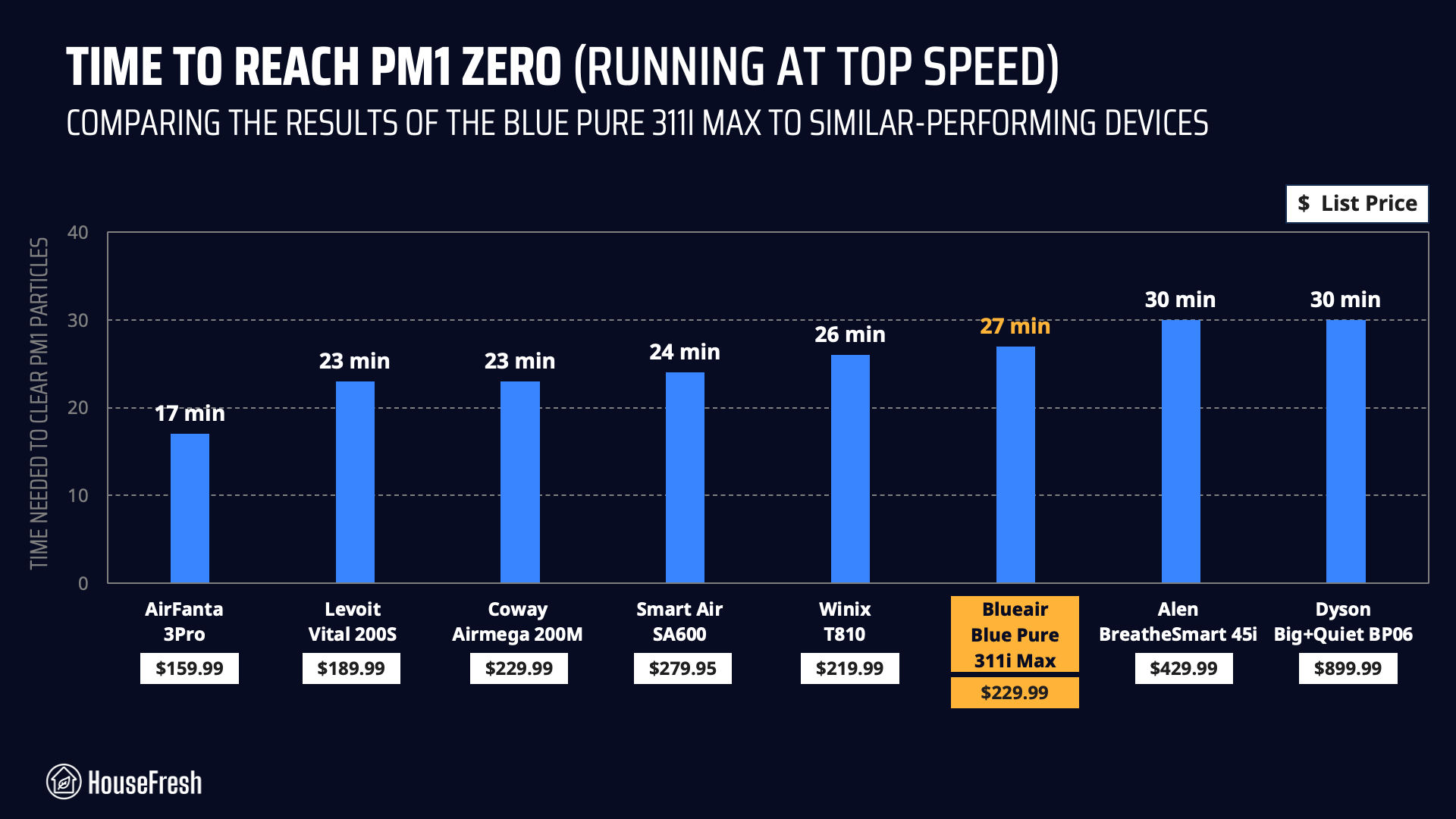
According to our PurpleAir Zen sensor, the Blueair 311i Max needed 27 minutes to achieve PM1 zero in our 728 cubic ft. test room. Based on this time, we estimate a PM1 CADR of 220 cfm.

But this information in isolation won’t tell you much, so check out how this compares to other popular mid-sized air purifiers on the market today:

blueair 311i max performance housefresh

The Blue Pure 311i Max completed our particle removal test faster than the much more expensive Dyson Big+Quiet BP06 (30 minutes) but slower than the cheaper Levoit Vital 200S (23 minutes).

Sound levels

Blueair 311i Max Sound

We used a sound level meter to measure how much noise each of the air purifiers we review generates at each fan speed.

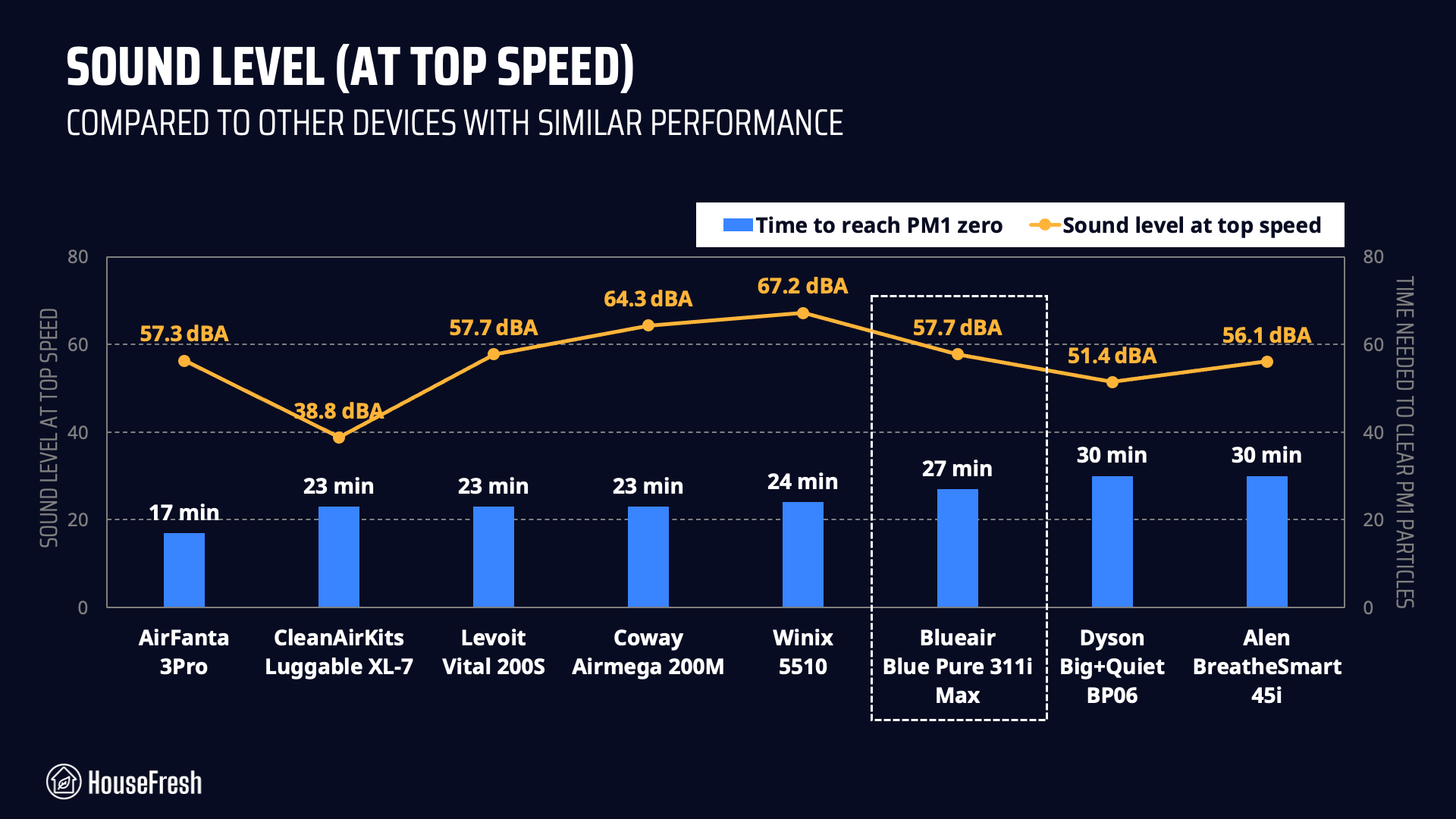
At top speed, the Blueair Blue Pure 311i Max reaches 57.7 dBA. Check out the table below to see how this compares to other similarly-priced air purifiers running at top speed:

blueair 311i max sound top speed

Completing our particle removal test in 27 minutes while generating only 57.7 dBA is impressive, although it doesn’t make a dent on the performance of the PC fan-powered Luggable XL-7 from CleanAirKits.

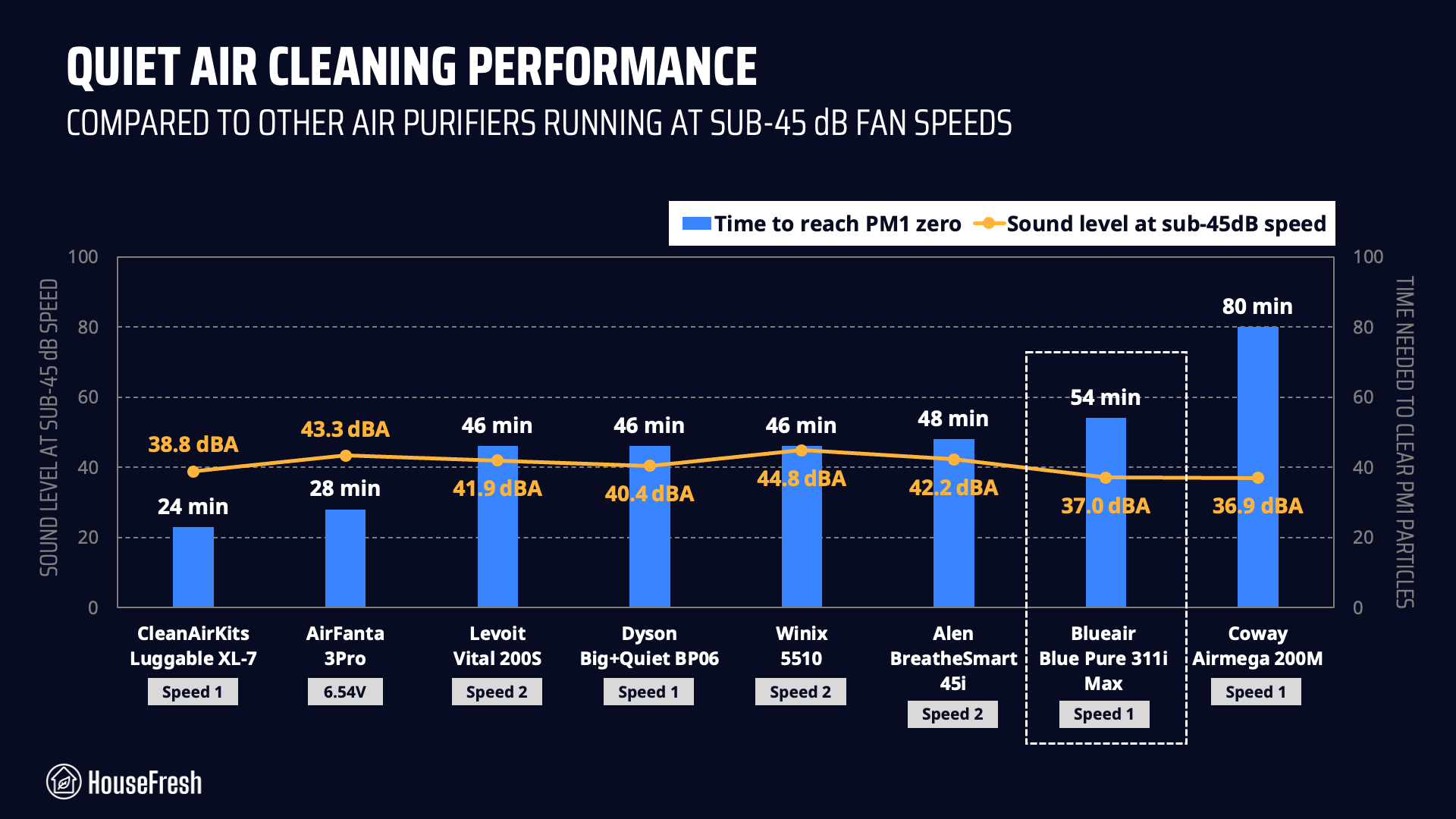
The reality however is that you are unlikely to want to run your air purifier at top speed all the time, so we found a fan speed at which the 311i Max generates less than 45 dBA of noise, which is the limit we have set for our quiet performance tests.

Running at the 311i Max at speed 1 will produce 37 dB(A) of sound, which is below the 45 dB(A) limit and close to the 40 dB(A) limit that CleanAirStars recommends for quiet classrooms and offices. At this speed, the 311I Max needed 54 minutes to complete our particle removal test:

blueair 311i max quiet performance

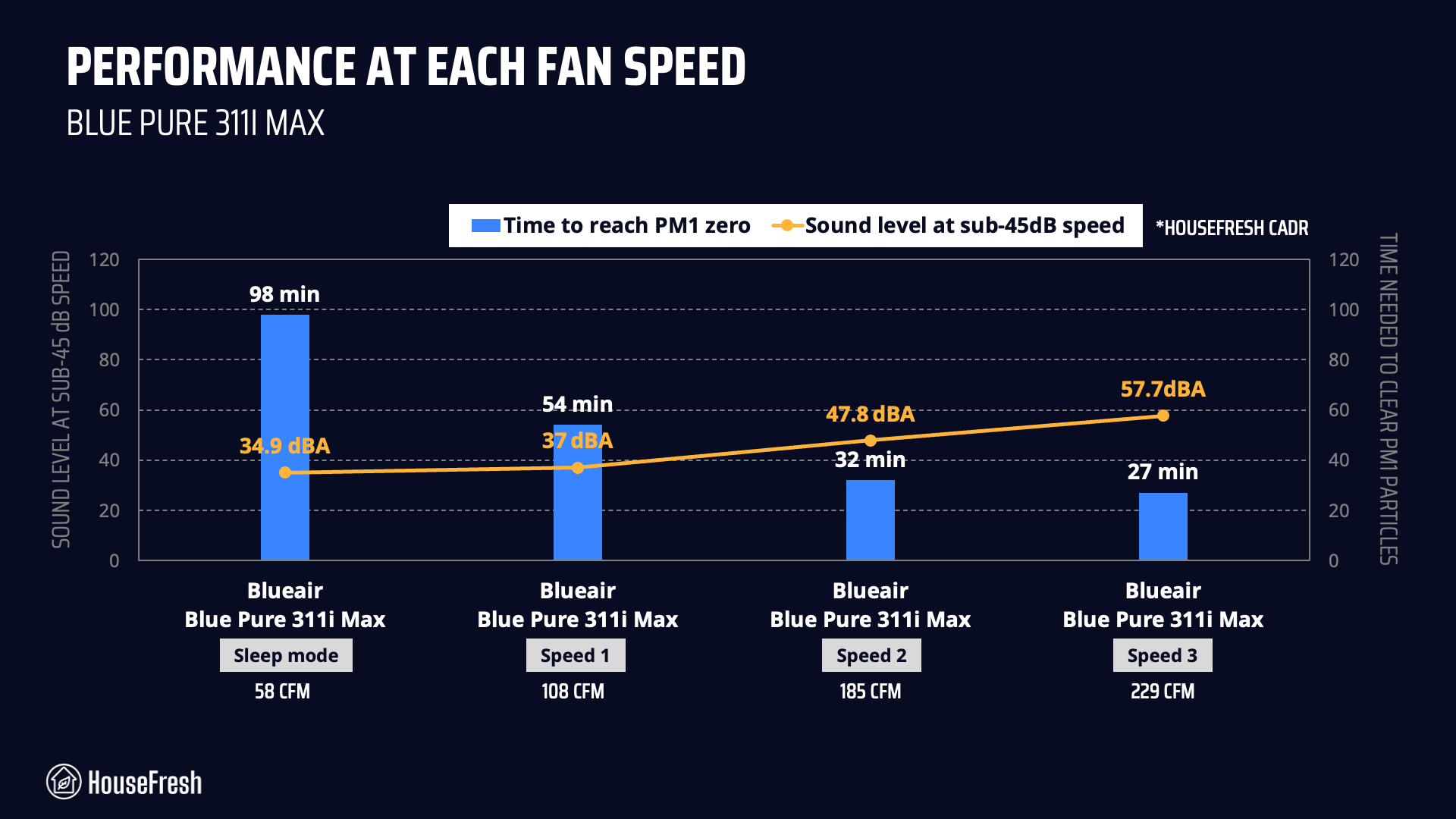
When we repeated the test at speed 2, the 311i Max reached PM1 zero in just 32 minutes while generating 47.8 dBA of noise. At home, I’ve been using it at this speed and it is louder than I would like BUT it is also more efficient at cleaning the air.

You can see in the table below the CADR and sound levels you get with the 311i Max at each available fan speed:

blueair 311i max CADR

Long-term running costs

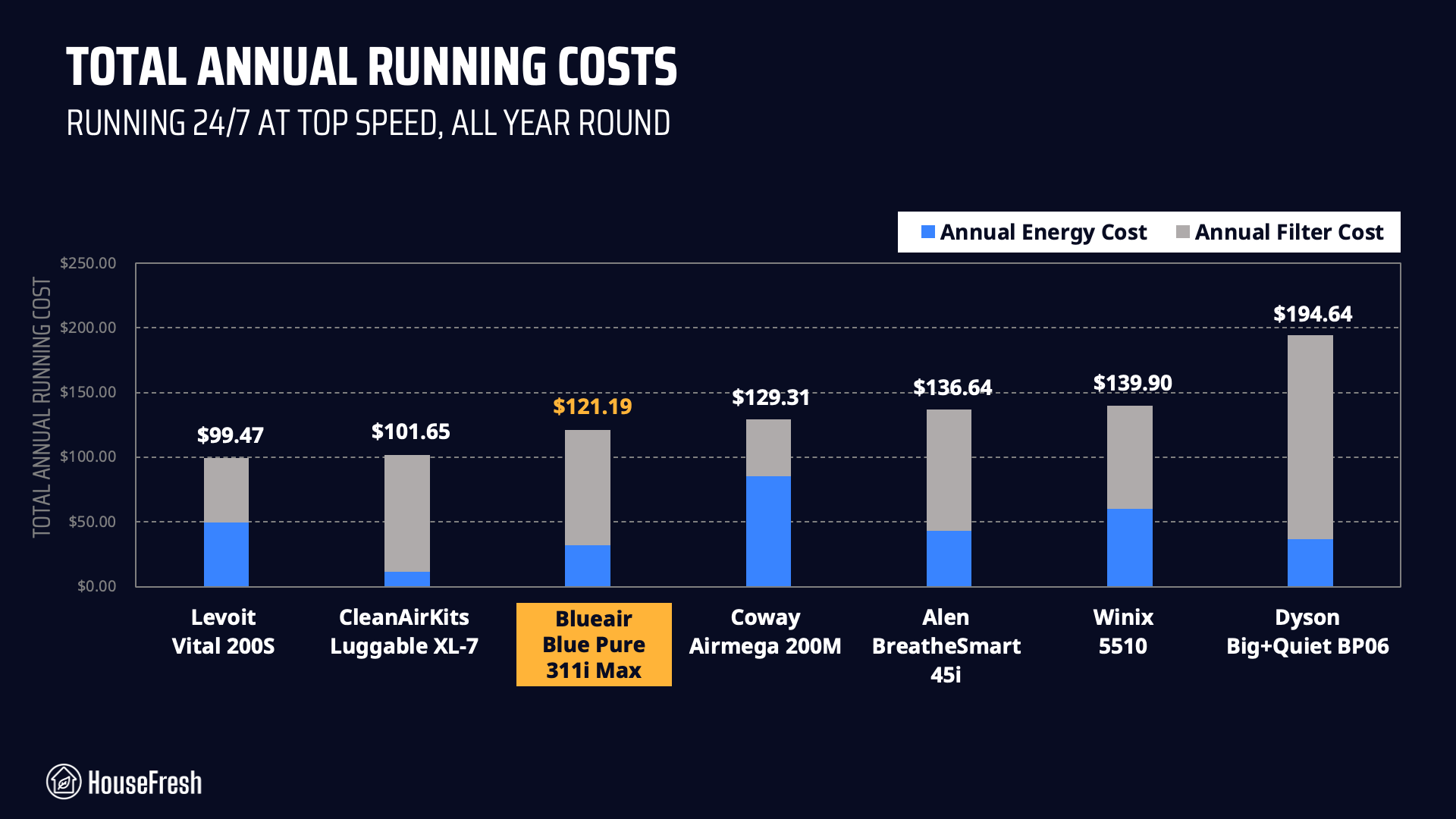
Running a Blueair Blue Pure 311i Max will cost you $122.19 per year, combining energy consumption costs and filter replacement prices.

As always, we used our energy meter to measure how much electricity the 311i Max uses when running at each fan speed and also while on standby. Energy consumption ranges from 2.8 watts on sleep mode to 29.2 watts when running at top speed.

This means that if you had to leave your Blueair 311i Max running 24/7 at top speed, it would cost $32.21 in energy costs for a year, using average U.S. energy rates.

Considering you need to replace the filter every six months and that the replacement costs $44.49, you can expect to also spend $89.98 per year on filters.

When compared to other similar-performing air purifiers, the 311i Max is generally cheaper to run, thanks to its low energy usage and low-cost OEM filters:

blueair 311i max long term costs

There are many generic filters available, starting at $17 per filter when you buy two. As they don’t use a HEPA grade or pelleted activated carbon the generic filters could offer a good option for those wanting to save money. We will run performance tests with a range of generic filters for our Patreon supporters.

Bottom line: Should you get the Blueair 311i Max?

A good option for those looking for a mid-sized air purifier that won’t cost an arm and a leg to run, and who aren’t bothered about using an ionizer.

Blueair 311i Max living room

At top speed, the Blueair Blue Pure 311i Max will be faster at cleaning the air and MUCH cheaper to run than the pricier Dyson Big+Quiet BP06, so overall performance and value for money is very good. Even at speed 2, it can provide 185 cfm while generating 47.8 dBA of noise, which is louder than our 45 dBA limit but not by much.

Energy consumption is lower than other mid-sized air purifiers and filter replacement costs are fair, so you won’t be spending more than you should to run this device all year long.

Plus, it comes with app connectivity and an on-board air quality sensor, for those who are looking for an air purifier with smart features.

But there are two clear cases where I don’t recommend this Blueair device:

Don’t get the 311i Max if want to remove odors or chemical gases from the air. The lack of pelleted activated carbon renders this model pretty useless for VOCs. Instead, look for an air purifier with large amounts of pelleted charcoal — here are my recommendations.

Don’t get the 311i Max if you are wary of ionizers or don’t want to add ozone to your air. Unlike popular air purifiers like the Coway Airmega AP-1512hh or the Winix 5500-2, Blueair doesn’t include an option for users to disable the ionizer inside their devices. If this doesn’t sit well with you, then look into models from Levoit and Smart Air, or check out my list of ozone-free air purifiers.

And if you’re not set on getting a Blueair device but love the idea of a quiet and energy-efficient model, then check out the new generation of PC fan-powered air purifiers like the CleanAirKits Luggable XL (U.S.), the NorthBox Systems 6XL (Canada) and the Nukit Tempest Euro (Europe). All of these models are able to clean the air incredibly fast while generating less than 45 dBA of noise and pulling very little electricity.

If you decide to buy a 311i Max and want to support the work we do at HouseFresh, please use this link so we can earn a commission at no extra cost to you.

January 23rd, 2026:

  • Replaced interactive comparison tables with static images that visualize performance, sound, and long-term costs data in an easy-to-digest way.
  • Added a new chart with PM1 CADR figures and sound levels in dBA for each available fan speed.
  • Added information on the new specialist filters available for this model + my advice on whether you should spend the extra money.
  • Added a link to a new AHAM CADR report for this model that has been uploaded to the Energystar database.

Blueair Blue Pure 311 Auto review

Blueair Blue 311 Kids Bedroom

Blueair is well known in the world of air purifiers as they’ve been selling them since 1996. Originally from Sweden, the company became part of the multinational Unilever in 2006. They create many different air purifier ranges, and Blue Pure is their budget performance range. This range doesn’t have the features and extras you get in their premium ranges. 

The cheapest Blue Pure air purifier (Blue Pure 411+) is available for just $119.99, and the 311 Auto we are reviewing here costs $229.99.

As I always like to clarify, we don’t accept free units in exchange for reviews. We buy all the air purifiers with our money, so we can share in detail how they perform with no biases. The core part of our review process is our performance test. This is where we put all units through the same test inside the same space so that we can compare their performance like for like.

how we test
How we test air purifiers

Read our full testing methodology.

This review will walk you through the findings of our performance test. Whenever possible, I will compare this unit with other similarly priced air purifiers on the market so you can decide which of them is better for your individual needs. I will also share my impressions when using this air purifier regarding the design, portability, user experience of its control panel, and more.

Okay, let’s get to it.

The lowdown on the Blueair Blue Pure 311 Auto

Danny Ashton HouseFresh
“If you don’t want to use a bigger air purifier and have a room around 400 sqft, this is the perfect unit. I still think the Blue Pure 211+ is a better deal with an extra 100 CFM CADR for $100, but if this is too big/pricey, then make sure you check out the Blue Pure 311i Max as this has the same cleaning performance, price and also comes with smart app support.”
— Danny Ashton, HouseFresh Founder & Senior Writer
Blueair Blue 311 Living Room

What we really like

Took 21 minutes to clean our test room compared with 43 minutes for the smaller Blue Pure 411+
53 dB at max fan speed was less than the Blue Pure 211+, which hit 56 dB
34.5 watts at full speed, which makes it one of the most efficient at this level of performance
Ability to customize the design with different choices of pre-filters
HEPASilent brings high CADR without the usual size and cost you see with pure HEPA and activated charcoal

What we think could be better

You need to pay more to get the auto mode which feels like it should be standard
Smart features are only available on the latest generation — I wish this were rolled out to all models 
The ionizer function cannot be disabled

The specifications

250 CFM CADR for less than $240 is a strong proposition considering you would need $500+ for a similar performance from other air purifiers. 

HouseFresh rating:★★★★☆
Time to clean our 728 cubic feet test room (with the device running at top speed):21 minutes
Air purifier technology:True HEPASilent filter with activated charcoal
Recommended room size (4.8 air changes per hour):388 sq. ft.
Clean air delivery rate (CADR):Dust: 250 CFM
Smoke: 250 CFM
Pollen: 244 CFM
Dimensions (in inches / in cm):20.5H x 10.2W x 10.2D inches (52.1H x 25.9W x 25.9D cm)
Weight (in pounds / in kg):6.8 lbs (3.08 kg)
Filter life:6 months
Noise level in decibels (measured from 3 ft. away with a sound level meter):Speed 1: 35.8 dB
Speed 2: 40.2 dB
Speed 3: 59.4 dB
Electricity consumption in watts (recorded with an electricity usage monitor):Standby mode: 0 watts
Speed 1: 2.61 watts
Speed 2: 5.74 watts
Speed 3: 32.01 watts
Estimated running cost (electricity consumption + official filter replacement):$128.79 per year
Cost per CADR cfm (based on dust CFM as reported by AHAM):$0.96
Manufacturer’s warranty:1 year (can be extended to 2 years by creating a Blueair account and registering the unit within 60 days of purchase)
Country of manufacture:Designed and engineered in Sweden, assembled in China

Customizable design and simple control panel

The Blue Pure range of air purifiers all have the same simple look, with one button to control everything. You also can change the pre-filter to fit your interior design scheme.

Blueair Blue 311 Top

Simple is the name of the game with the Blueair Blue Pure 311 Auto. The control panel can’t get much simpler with a device like an air purifier. One-click switches into auto-mode, and you can then leave the unit to change speed automatically as it senses new pollutants.

Blueair Blue 311 Info

Pressing the button again, you can adjust the speed with three options. Press the same button again and it switches off. It’s that simple! 

On the front of the unit is a small LED that acts as an air quality indicator and a filter replacement warning light. When in auto mode, this light will report the air quality in your room with three different colors. Your air quality is measured in real-time using the sensors on the back of the unit.

Blueair Blue 311 Air Quality Sensor


A cool feature that Blueair has used previously is to customize your unit using the different color pre-filters. Keep the gray one it comes with, or spice it up a little by swapping it out for Arctic Trail, Night Waves, Archipelago Sand, Winter Reed or Aurora Light:

Blueair Blue Pure 311 Auto Fabric Options

The 311 Auto is the middle-sized unit in Blueair’s Blue Pure range, between the smallest 411+ and the second largest 211+.

When comparing the Blue Pure 311 Auto (right) with the 411+ (left), you can see the difference in size is not as stark. The fact that the 311 Auto manages to drive 250 CFM with such a small unit is impressive:

Blueair Blue 411 VS 311 Auto Comparison

The size difference is more noticeable when comparing the 311 Auto (right) against the larger 211+ (left). The 211+ weighs 12.5 lbs (5.67 kg), nearly double the 311 Auto (6.8 lbs or 3.08 kg).

Blueair Blue 311 VS 211 Comparison

The Blueair Blue Pure 311 Auto is a good-looking air purifier that will fit small to medium-sized rooms without taking up too much space.

HEPASilent filtration technology for rooms sized 400 sq. ft.

As with all the Blueair range, the Blue Pure 311 Auto has a filter powered by HEPASilent technology, combining electrostatic and mechanical filtration technologies.

Blueair Blue 311 Filter Tag

Wondering how HEPASilent technology works? The fan draws air into the Blueair Blue Pure 311 Auto, where airborne particles receive an electrical charge causing them to adhere to the filters.

Larger particles get stuck in the washable pre-filter before the air moves through the HEPA filter, which removes pollen, dust, pet dander, viruses and bacteria:

Blueair Blue 311 HEPA Filter

From that point, the air moves through the activated carbon layer, which removes odors from pets, cooking and smoking.

Blueair Blue 311 Activated Carbon Filter

The HEPA filter will need replacing around every six months (the filter replacement indicator will let you know when), but don’t worry; it’s super easy to do so. 

Follow these step-by-step instructions:

  1. Unplug your 311 from the outlet
  2. Twist the top of the unit (the white bit) until you feel it unattached from the body, and remove
  3. Peel the velcro from the pre-filter and pull it from the HEPA filter
  4. Pull the pre-filter over the new HEPA filter and reattach the top
Tip

This is the perfect time to wash the pre-filter and clean the rest of the air purifier so it works to its maximum efficiency.

As with the 411 and 211 range, the Blueair Blue Pure 311 Auto brings excellent performance for $ spent, dB created and energy usage. The HEPASilent matches its expectations, and this unit has the best air cleaning performance value for rooms sized 400 sq. ft.

Be aware that when receiving a new unit or buying a replacement, the filters will be in a sealed bag and must be removed before they can be used.

The Blue Pure 311 Auto cleared our test room in 21 minutes

The main job of an air purifier is to remove tiny particles from the air, as we know how damaging they can be. We test every unit we review with the same methodology to determine its effectiveness in this area. 

We burn an incense stick in our 705 cubic ft test room, and using air quality sensors, we track how long it takes a specific air purifier to remove PM1.0ug/m3, PM2.5ug/m3 and PM10.0 ug/m3. 

We track this data and compare the performance to all the other units we have tested.

</

Air cleaning performance test results

The Blueair Blue Pure 311 Auto took 21 minutes to achieve a level of 0 PM1. This is 22 minutes better than the smaller 411+ and only three minutes less than the larger and higher-priced 211+.

The 311 Auto provides excellent cleaning performance on a budget. It took the Alen 75i three more minutes to clean our test room. The Dyson HP04 combo unit, which costs over $700, took 63 more minutes to remove all the pollutants. 

Noise levels test results

The Blue Pure range is hard to beat for pure power to sound. We had high hopes for the HEPASilent technology and were impressed with the maximum level of 53 dB, which is in range with much smaller units with less performance like the Levoit Core 300, which took 40 minutes to clean and had a maximum sound level of 50dB. 

Cost to run the Blue Pure 311 Auto: $116.77 per year

1. Electricity costs = $36.79 per year

At its maximum fan speed, the Blueair Blue Pure 311 Auto only recorded 34.5 watts, the same as the highest-power LED bulbs on the market. Compared to competitors, it pulls much less power; the Levoit Core 300, for example, recorded 45 watts for less air-cleaning power. 

2. Filter costs = $79.98 per year

The filter costs are fair for this level of air cleaning performance and the all-in-one filter only needs replacing twice in 12 months. Some generic filters are available, which brings the cost per year down to $43.99 for two filters, one of the cheapest we have seen for this level of air cleaning.

Filter
LEVOIT EverestAir Air Purifier Replacement Filter
2 Pack EverestAir-RF Replacement Filter, 3-in-1 H13 Grade True HEPA Filter
LEVOIT Genuine EverestAir-P Air Purifier Air Filter Replacement, Lasts for 12 -15 Months, Supports HEPA Sleep Mode, Efficient 3-In-1 Washable Filters, EverestAir-RF, 1 Pack, Black
2 Pack EverestAir/EverestAir-P Replacement Filter, Compatible with LEVOIT EverestAir Air Purifier, High-Efficiency Activated Carbon Filters Filter Set
Technology
3-Stage Filtration (Pre-filter, H13 HEPA and activated carbon)
2-Pack Replacement True HEPA and Activated Carbon Filter
More information
Price
$99.99
$59.39
Filter
LEVOIT EverestAir Air Purifier Replacement Filter
LEVOIT Genuine EverestAir-P Air Purifier Air Filter Replacement, Lasts for 12 -15 Months, Supports HEPA Sleep Mode, Efficient 3-In-1 Washable Filters, EverestAir-RF, 1 Pack, Black
Technology
3-Stage Filtration (Pre-filter, H13 HEPA and activated carbon)
More information
Price
$99.99
Filter
2 Pack EverestAir-RF Replacement Filter, 3-in-1 H13 Grade True HEPA Filter
2 Pack EverestAir/EverestAir-P Replacement Filter, Compatible with LEVOIT EverestAir Air Purifier, High-Efficiency Activated Carbon Filters Filter Set
Technology
2-Pack Replacement True HEPA and Activated Carbon Filter
More information
Price
$59.39

Bottom line

The Blueair Blue Pure 311 Auto gives you a great performance ratio to sound, price and energy usage. This is the perfect air purifier for those who love the Blueair Blue Pure range and have rooms that are too big for a Blueair 411+ but not big enough to warrant a Blueair 211+.

Blueair Blue 311 Kids Bedroom

If you want an air purifier that with a customizable design that is lightweight and offers solid air cleaning performance for a medium-sized room (like a living room or a bedroom), then the Blueair Blue Pure 311 Auto is a good option to keep your room free of pollutants without noise disturbance or bulky aesthetics.

SOURCES

We calculated the monthly energy consumption costs with the help of the Department of Energy’s appliance energy calculator. We calculated yearly costs associated with running Blueair Blue Pure 311 Auto for 24hs a day for 365 days. We chose to run this calculation utilizing the U.S. average utility rate of $0.12/kWh as of the 1st of May, 2023.

At HouseFresh, we have been reviewing air quality products since 2010. In all these years, we learned not to rely on manufacturers’ claims and the ever-so-glowing marketing materials. That is why we buy products with our own money, so we can write unbiased reviews after we’ve had enough time to evaluate air quality products in our home lab. Every unit we recommend has been thoroughly tested to assess its performance, energy consumption, and noise levels emitted in real-life environments. If you have any questions about our testing process for different types of air quality products, just drop us an email at danny@housefresh.com.

Blueair Blue Pure 411+ review

Blueair Blue Pure 411 Living Room

Originally from Sweden, Blueair has been in the air purifier industry since 1996. The company was bought by the mega-corporation Unilever in 2016.

Their Blue Pure series of air purifiers offer simple units that do an excellent job of cleaning the air. Their trademarked HEPAsilent™ process combines a mechanical HEPA with an electrostatic charge to clean more air for less power, lower price and less noise. 

We already found the original OK to be a solid performer, and the Blue Pure 211+ is an easy purifier to recommend for those looking to clean larger spaces. 

The Blueair Blue Pure 411+ is the upgraded version that hopes to build on the success of the Blue Pure 411 with higher air cleaning power for less energy usage.

We’re here to tell you if it meets those high expectations.

My review will cover all our findings from the performance test outlined above. If you have any questions about this unit by the time you reach the end, please email me as I have tons of data.

The lowdown on the Blueair Blue Pure 411+

danny

“A clear upgrade on the decent Blue Pure 411, the Blueair Blue Pure 411+ is an easy budget air purifier for those looking to clean a small space like a bedroom and who don’t want something that will create a lot of noise.”

— Danny Ashton, Founder & Senior Writer

Blueair Blue Pure 411 Kitchen

What we really like

Great cleaning performance to price — cleaned our test room in 43 minutes for less than $140.
Max sound is one of the lowest we have tested at 52.3 dB.
Has a higher cleaning power but uses less energy than the 411.
Improved Pollen CADR over the older 411 with 131 CFM VS. 120 CFM.
Small footprint and easy to live with thanks to the alternative color pre-filters.

What we think could be better

Not pelleted activated carbon, so expect not to last as long for removing odors.
Not auto-mode unless you pay for the upgrade.
HEPASilent is non-optional.

The specifications

Check out the full specs of the Pure 411+ below:

HouseFresh Rating:★★★★☆
Time to clean our test room:43 minutes
Air purifier technology:3-stage True HEPASilent filter with activated charcoal
Recommended room size:184 sq. ft.
Clean air delivery rate (CADR):– Smoke: 119 CFM
– Dust: 121 CFM
– Pollen: 131CFM
Dimensions (in inches / in cm):17H x 7.8W x 7.8D inches (43.18H x 19.812W x 19.812D cm)
Weight (in pounds / in kg):3.4 lbs (1.54 kg)
Filter life:6 months
Noise level in decibels (measured from 3 ft. away with a sound level meter):Speed 1: 35.8 dB
Speed 2: 41.9 dB
Speed 3: 52.3 dB
Electricity consumption in watts (recorded with an electricity usage monitor):Standby: 0 watts
Speed 1: 0.4 watts
Speed 2: 2.42watts
Speed 3: 7.65 watts
Estimated running costs (electricity consumption + official filter replacement):$34.59 per year
Cost per CADR cfm (based on dust CFM as reported by AHAM):$0.59
Manufacturer’s warranty:1 year
Country of manufacture:Designed and engineered in Sweden, assembled in China

Swedish design that is easy to live with

Blueair Blue Pure 411 Unit

I have been a big fan of Blue Air designs for a while. You can customize the overall look by changing the filter to a different color, but it’s still a good-looking machine, even without the pre-filter.

Blueair Blue Pure 411 No Pre Filter

Simplicity is the name of the game with Blueair purifiers and the 411+ is no different. It has no fancy features like timers and auto-mode with app support, although upgraded models do offer these features for a higher price. 

Blueair Blue Pure 411 Top

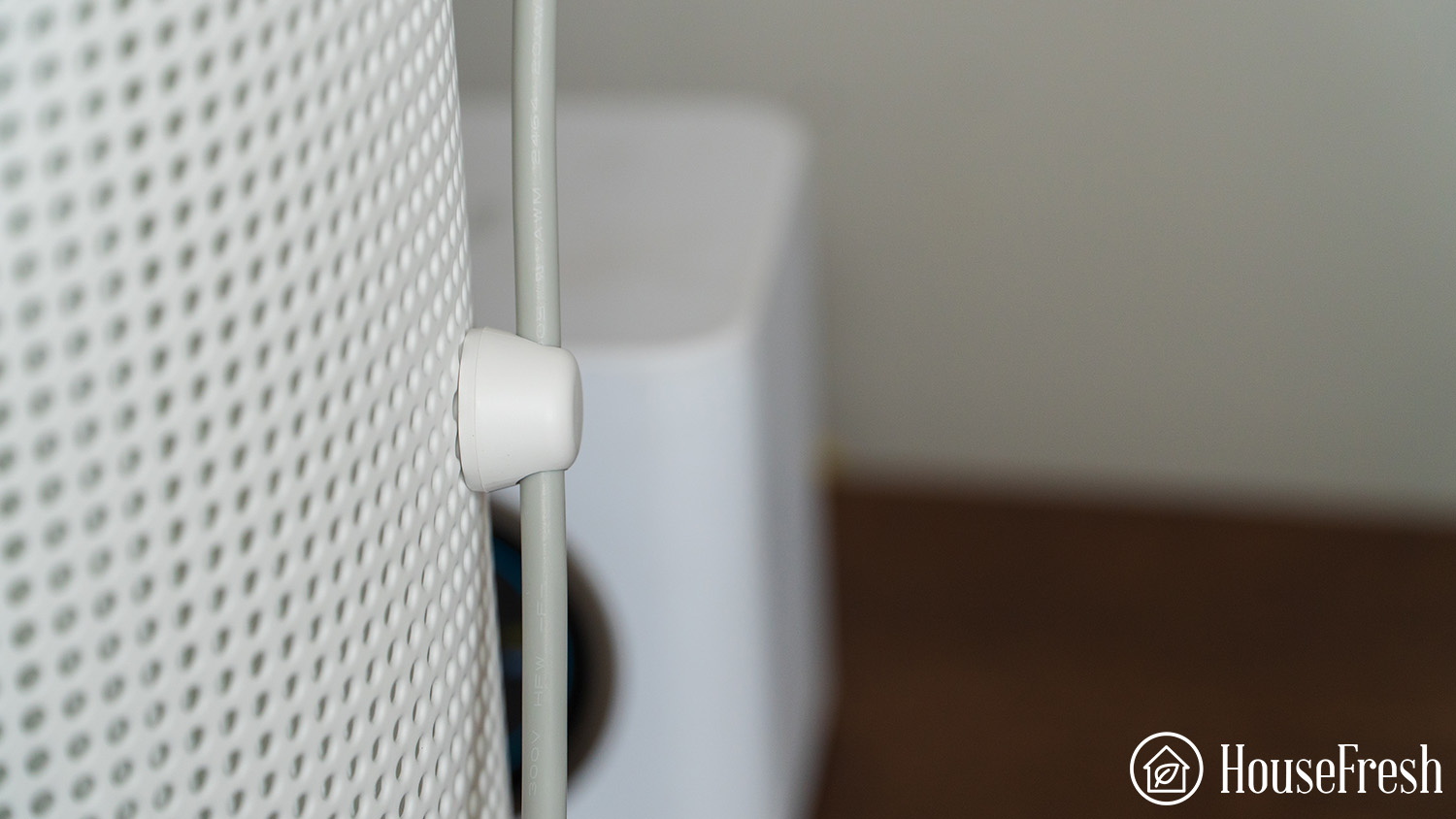
I particularly liked the magnetic cord straightener as it’s a convenient way to ensure the cable remains tidy and in place.

Blueair Blue Pure 411 Magnetic Cord

One of my favorite things about the Blueair Blue Pure 411+ is how compact it is compared to other units. Just to give you an idea of size, check out the photo below, where you can see how small it is compared to the Blue Pure 211+ (left) and the Blue Pure 311 Auto (right):

Comparison Photo Blueair Blue Pure 211 VS 411 VS 311

The Blue Pure range allows you to change the pre-filter to match your interior design, which feels like a nice Swedish touch.

Uniquetrademarked filter system 

Blueair combines HEPA, activated charcoal and electrostatic charge to create a combination filter that can achieve 120 CFM on less than 10 watts of electricity.

Blueair Blue Pure 411 Genuine Filter

Comparing cleaning performance and energy usage, it’s clear that the HEPASilent filter fulfills its promise of cleaning the air quietly.

Blueair Blue Pure 411 HEPA Filter

A slight minor issue: the filter of the Blue Pure 411+ includes activated charcoal as an impregnated fabric — they perform worse in general for VOC and gas removal than the pellets you see in some brands of air purifiers like the Alen BreatheSmart 45i and Levoit Core 300.

Blueair Blue Pure 411 Carbon Filter

As with all HEPA filters, they need replacing periodically when the fibers become complete with trapped particles. You won’t have to mark it on your calendar though; the 411+ will tell you when it’s time with a glowing red light.

When the time comes, follow these simple steps:

  1. Unplug your 411+ and turn it upside down
  2. Twist the cap off to reveal the filter inside
  3. Use the tabs to pull the filter out of the unit
  4. Insert the new filter, replace the cap and plug your 411+ in
💡 Pro Tip: When you’re ready to replace the filter, this is the perfect opportunity to maintain your air purifier, like giving it a good clean inside and out.

Like many air purifiers, the Blueair 411+ will come with filters in a plastic bag, so be sure to remove them before you switch the unit on for the first time.

The Blueair 411+ cleared our test room in 43 minutes

We think it’s super important to get a clear idea of how well an air purifier will do its primary job of removing particles from your home. 

We simulate pollution by burning an incense stick in our 728 cubic ft test room and track how quickly an air purifier can remove PM1.0ug/m3, PM2.5ug/m3 and PM10.0 ug/m3 using the PurpleAir Indoor sensor.

Air cleaning performance test results

It took the Blue Air Pure 411+ 43 minutes to bring particulate pollutants down to zero in our test room. This compares favorably with its older brother, the Blueair 411, which did it in 68 minutes with similar power usage and price.

It compares very well to the Dyson PH03, a humidifier and air purifier combo that costs over $700 but needed 72 minutes to clean the same room. 

Noise levels test results

The stand-out feature of the Blueair 411+ is its maximum sound levels of 52.3 dB, much lower than many of the air purifiers we test when running at their top speed.

Best Quiet Air Purifiers 411

The Levoit Core 300 creates 50 dB, and the smarter Mila air purifier goes up to 59dB at its highest speed. The HEPASilent technology lives up to its name of cleaning the air without bringing sound pollution to your home. 

The cost to run a 411+: $34.69 per year

1. Electricity costs = $11.59

With maximum energy usage of 7.65 watts, the Blueair 411+ sips electricity at a meager rate. It compares well with the Levoit Core 300, which pulls 35.5 watts at maximum and even when compared to the lower cleaning performance of the Core 200S, which draws 28.4 watts. 

Blueair has managed to find a way to turn less than 10 watts into the ability to clean our room in 43 minutes. 

2. Filter costs = $23

Mechanical filters like HEPA and activated charcoal have a limited life as they become impregnated with particles from the air, restricting airflow and eventually reducing performance. 

Most small air purifiers need filter replacements every six months and the 411+ is the same. Genuine filters are a little cheaper than competitors at $23 compared to $39.99 for Levoit Core 300 and if you don’t mind going for generic filters, you can find them for $10 per filter. 

Blueair Blue Pure 411+ Genuine Replacement Filter, Particle and Activated Carbon
  • Genuine Blueair replacement filter designed for Blue Pure 411 Auto, 411, and 411+
  • Particle + activated carbon filtration helps reduce allergens, dust, and odors
  • Easy to replace for maintaining cleaner indoor air and purifier performance

Bottom line

A great upgrade to the previous Blueair Blue Pure 411, the 411+ has improved cleaning power while maintaining low filters and energy usage costs. The primary benefit of this air purifier over others is the lower level of sound generation. 

Blueair Blue Pure 411 Entertainment Room

If you have a small room and don’t want to generate too much noise, the Blueair 411+ is well worth considering.

💡Pro Tip: If you experience any issues with your Blueair air purifiers, check out our guide of 10 Common Blueair Air Purifier Problems (And How to Fix Them).

SOURCES

We calculated yearly costs associated with running the Blueair Blue Pure 411+ 24 hours a day, 365 days per year utilizing the latest average energy prices as reported by the Bureau of Labor Statistics of $0.174/kWh as of April 2024.

Blueair Pure Fan Auto Review

Blueair Pure Fan Auto Hallway

Blueair is one of the big names in the air purifier industry; it has been designing and manufacturing air purifiers since 2016. 

Since 2016, the company has been owned by Unilever; as of this year, it is now a Certified B Corporation. Since the sale, Blueair has been rapidly bringing out new units, and this Pure Fan Auto is their first attempt at an air purifier and fan combo. 

Previously the “fan + air purifier combo” market has been dominated by Dyson with their HP04 and HP03 that bring air purifier functionality to heaters, fans and even humidifiers. 

The Pure Fan Auto combines the features of an air purifier with a fan and is aimed at capturing some of the markets that Dyson has built.

We liked the Dyson fan + air purifier combos but felt that the air cleaning performance could be improved, so we were excited to see how the Blueair Pure Fan Auto performed. 

The lowdown on the Blueair Pure Fan Auto

danny

“A powerful air purifier that is perfect for problems with pollen or dust but is slightly let down by the fan performance and its lack of activated charcoal filter.”

— Danny Ashton, Founder & Senior Writer

Blueair Pure Fan Auto Hallway

If you prefer a quick overview of the Blueair Pure Fan Auto, these are the key takeaways.

What we really like

Powerful air cleaning performance — it cleaned our test room in 26 minutes, which was only two minutes less than the IQAir Healthpro Plus.
Design is much better than what you usually see with air purifiers and could be a conversation piece.
Low long-term running costs.
Much smaller and easy to live with compared to other air purifiers with this level of air cleaning power.

What we think could be better

Lack of activated charcoal means it will not do anything for odors, gasses or VOCs.
Fan performance is much weaker than the Dyson combo units.
No app support or smart features beyond the auto-mode.

The specifications

The Blue Pure Fan Auto brings a high level of CADR without the usual high energy usage and sound generated that we see with units like the IQAir Healthpro Plus or Mila Air Purifier.

See the full specs for the Blue Pure Fan Auto below:

HouseFresh Rating:★★★★☆
Time to clean our test room:26 minutes
Air purifier technology:HEPASilent™ filtration technology
Recommended room size:326 sq. ft.
Clean air delivery rate (CADR):Pollen: 250 CFM
Dust: 220 CFM
Smoke: 210 CFM
Dimensions (in inches / in cm):15.5 x 12.9 x 11.2 inches (39 x 33 x 29cm)
Weight (in pounds / in kg):11.6 lbs (5.26 kg)
Filter life: Pre-filter: 4 weeks
Max2 filter: 12 months
Noise level in decibels (measured from 3 ft. away with a sound level meter):Speed 1: 37.8 dB
Speed 2: 47.9 dB
Speed 3: 59.6 dB
Electricity consumption in watts (recorded with an electricity usage monitor):Standby: 0 watts
Speed 1: 3.16 watts
Speed 2: 12.17 watts
Speed 3: 40.9 watts
Estimated running costs (electricity consumption + official filter replacement):$85.61 per year
Cost per CADR cfm (based on dust CFM as reported by AHAM):$1.21
Manufacturer’s warranty:1 year
Country of manufacture:Designed and engineered in Sweden, assembled in China

A functional art piece with simple controls

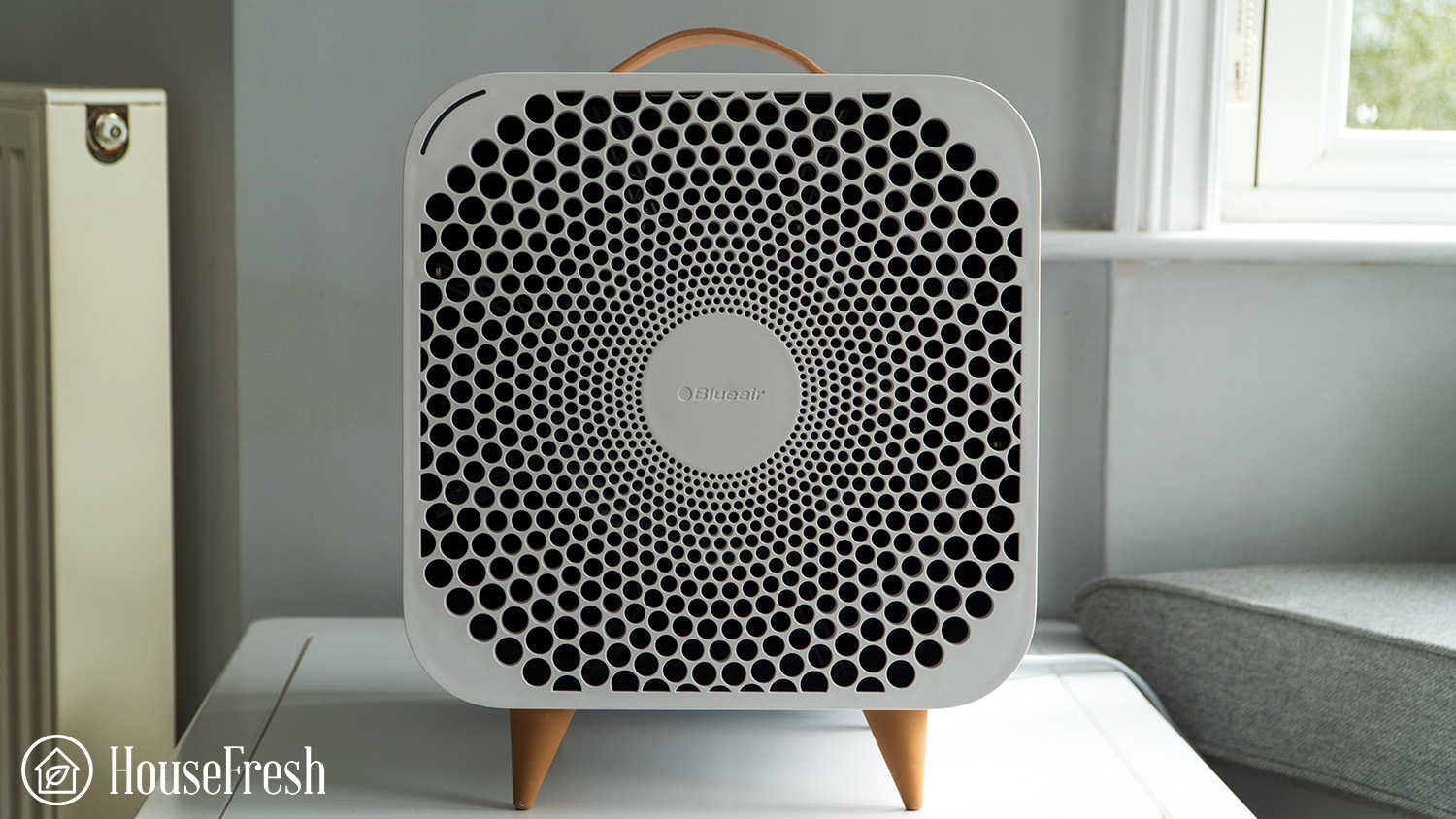
Blueair knows that design is super important to their customers. They have been continually investing in this over the past few years. I’m just going to say it: the Pure Fan Auto is one of the best-looking air purifiers that I have had a chance to review.

Blueair Pure Fan Auto Front

Its cube shape makes it easy to use in many places around the home, and doesn’t even need to sit directly on the floor.

Blueair Pure Fan Auto Legs Close Up

The legs look like something from a high-end piece of furniture and even the fan holes’ design is aesthetically pleasing. 

Blueair Pure Fan Auto Grill Close Up

The auto mode includes a light in the top left-hand corner that adjusts depending on the level of particle pollution. The fan will also automatically adjust to provide more cleaning power depending on the level of air quality detected. 

If I wanted to compare the design and aesthetics of Blue Fan Auto with a similar unit, then I would need to look at the Dyson range of fan-air purifier combos. Personally, I prefer the looks of the Blueair unit as it fits my home interiors better and blends into the furniture we already have BUT I know that’s a personal preference.

Objectively, you can see in the image below how the Dyson combo units are considerably bigger (and heavier) and must be kept on the floor. 

Blueair Pure Fan Auto VS Dyson Fan Combo

After living with all three of these combo units in my own home, I can say that the Pure Fan Auto is a much easier air purifier to live with. You can tuck it away and it doesn’t take a lot of space.

Plus, it comes with a leather carry handle, making it way easier to move to different locations around the house when compared to the chunkier Dyson units.

Blueair Pure Fan Auto Handle

As with the other Blueair purifiers we have reviewed, the control panel is super simple, with one button to turn it on and a fan button to adjust the fan speed, enable auto-mode and switch it to sleep mode. 

Blueair Pure Fan Auto Controls

I would have liked to have seen the ability to enable a sleep mode (lights off) that still works with the higher fan speeds. The sleep mode switches all the lights off but is restricted to a  low fan speed mode.

HEPASilent that lives up to its name

The Blueair Pure Fan Auto uses a HEPASilent system that combines an electrostatic charge with a HEPA filter that allows it to hit a CADR of 250 CFM, which is impressive considering it only draws 40.9 watts at full speed. 

Blueair Pure Fan Auto HEPA top

The main thing I noticed with the filter for the Blue Pure Fan Auto was the lack of activated charcoal. While HEPASilent will be super effective with dust or pollen, any issues with odors or VOCs will not be dealt with. 

As with other Blueair models of air purifiers, you can change the pre-filter color with five options.

Blueair Pure Fan Auto Pre filter

I would like a combined filter in future versions, as we saw with the Blue Pure 411+, including fabric impregnated with activated charcoal and HEPA.

As with all HEPA filters, Pure Fan Auto will need its filters replaced every 6 months as particles become trapped in the filter and eventually cause a reduction in the air cleaning performance. 

⚠️ The filters for the Pure Fan Auto are delivered in a plastic bag, so be sure to remove this before you switch it on. Otherwise, the unit will do nothing to clean your air.

The Pure Fan Auto cleared our test room in 26 minutes

The main thing to look for when buying an air purifier is how well it can remove particles from the air, so we don’t just trust what manufacturers tell us; we test it for ourselves. 

We simulate particle pollution by burning an incense stick in our 728 cubic ft test room and use our PurpleAir Indoor sensor to continuously track PM1.0ug/m3, PM2.5ug/m3 and PM10.0 ug/m3.

Air cleaning performance test results

The Pure Fan Auto managed to clean our test room in 26 minutes which compares very favorably with the Dyson Combo units like the HP04, which cleaned in 84 minutes and the PH03, which took 70 minutes. 

The Pure Fan Auto took only two more minutes than the $700 IQAir HealthPro Plus and was one minute quicker than the Winix 5300-2.

For pure cleaning power, the power the Pure Fan Auto compares favorably with many air purifiers that don’t have any fan capabilities. 

How did the fan perform?

As the Blueair Pure Fan Auto is not just an air purifier, we wanted to see how its fan functionality performed compared to other combo units like the Dyson range of fan/air purifiers.

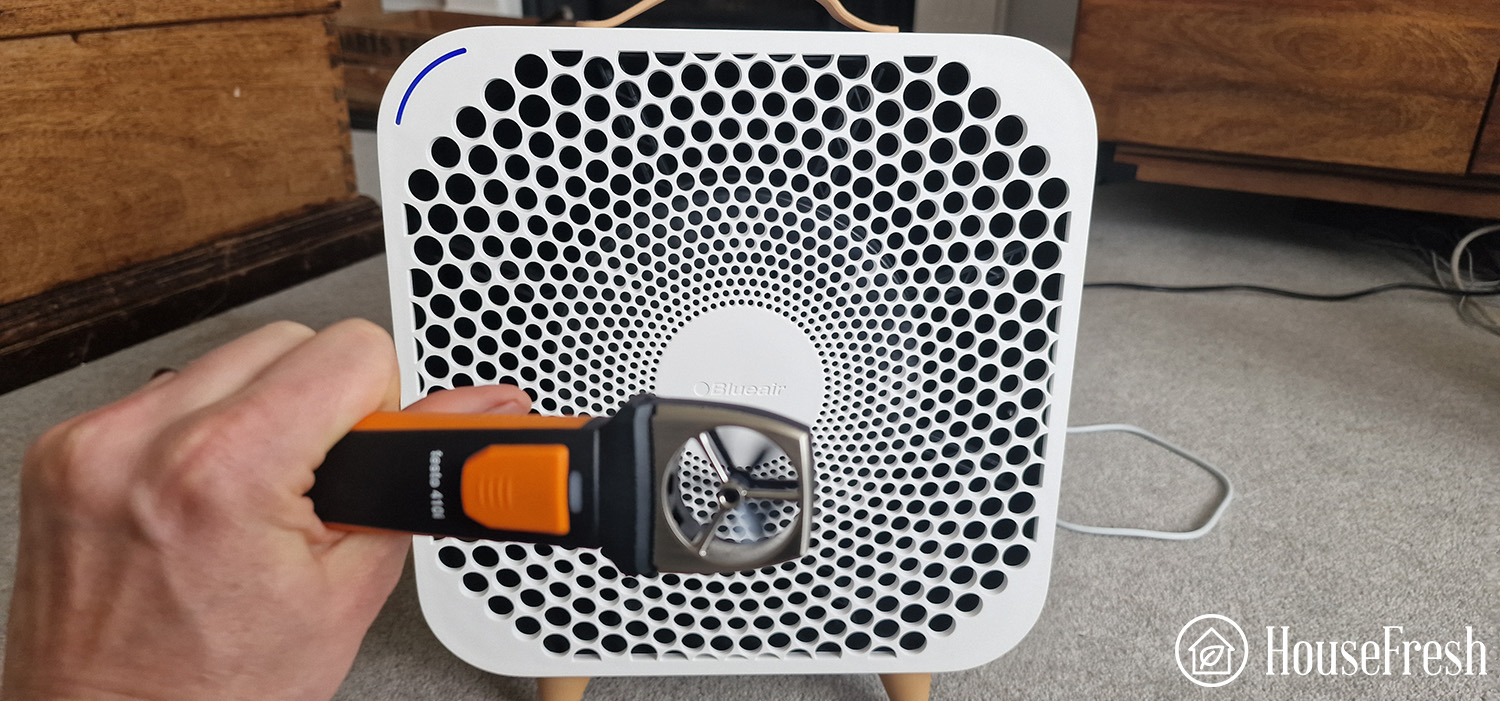
Blueair Pure Fan Auto Fan speed test

We tested flow velocity using the Testo 4101 Wireless Anemometer at 3ft from the fan. Over 30 seconds, we saw the following flow velocity measurements for the Pure Fan Auto compared with the Dyson HP04:

Blueair Pure Fan Auto Dyson HP04
Overall average0.74 m/s2.61 m/s
Minimum total0.51 m/s2.26 m/s
Maximum total0.99 m/s2.91 m/s

We can see that the Dyson provided over 3.5 times the airflow when 3ft away from the fan. 

So while the Pure Fan Auto performs much better as an air purifier, the Dyson has much better fan performance.

Noise levels test results

At its lowest speed, Pure Fan Auto only produced 37.8 dB – as silent as a quiet library. When turning the unit up to its highest fan speed, it hit 59.6 dB, which is the sound of a conversation or that of music playing in the background.

Sound is lower than the IQAir Healthpro Plus, which hits 61.2 dB. It’s also much lower than the Molekule Mini, which hits 68 dB.

The cost to run a Blueair Pure Fan Auto: $85.61 per year

1. Electricity costs = $62.38

Energy costs will not decrease anytime soon, so we feel it’s essential to monitor how much energy is used, as air purifiers are often needed 24/7 to keep your air continuously clean. 

The Pure Fan Auto compares very favorably with many units with a similar cleaning performance with only 40.9 watts at full power. Other units with similar CADR, such as the Coway Airmega AP-1512hh Mighty or the Winix 5300-2, draw 75.3 watts and 51, respectively.

2. Filter costs = $23.23

HEPA is designed to be replaced, as the particles are held inside the fiber material and at a certain point become so full of particles that it will lead to reduced air cleaning performance. 

The cost of authentic filters is lower than that of other air purifiers with similar air cleaning performance. You can even reduce this further with generic filters that cost $29.49 for one year with two filter changes. 

Blueair Blue Pure Fan Genuine Replacement Filter, Particle Filter for Large Pollutants Like Pollen & Dust
PUREBURG Replacement Filter Compatible with Blueair Pure Fan Auto,Blue Pure Purifying Fan, 2-Pack H13 HEPA Air Clean Dust
Technology
HEPASilent Filter
HEPA Filter, 2-Pack
More information
Price
$21.07
$24.42
Blueair Blue Pure Fan Genuine Replacement Filter, Particle Filter for Large Pollutants Like Pollen & Dust
Technology
HEPASilent Filter
More information
Price
$21.07
PUREBURG Replacement Filter Compatible with Blueair Pure Fan Auto,Blue Pure Purifying Fan, 2-Pack H13 HEPA Air Clean Dust
Technology
HEPA Filter, 2-Pack
More information
Price
$24.42

Bottom Line

The Pure Fan Auto finally brings a high air cleaning performance with fan functionality. As with many modern Blueair air purifiers, it uses a low level of electricity to clean a lot of air without leading to lots of noise generated. 

Blueair Pure Fan Auto Living Room

If you’re looking to replace a fan used in the bedroom, the Pure Fan Auto should be at the top of your list. The only downside is the lack of activated charcoal and the fan speed, which is much less than what you see with the Dyson units, which are great fans but poor air purifiers. 


SOURCES

We calculated yearly costs associated with running the Blueair Pure Fan Auto 24 hours a day, 365 days per year utilizing the latest average energy prices as reported by the Bureau of Labor Statistics of $0.174/kWh as of April 2024.

Blueair Blue Pure 211+ review

Blueair Blue Pure 211 Front Room

I will review one of the most popular air purifiers of the last few years: the Blue Pure 211+ from Blueair.

Since we started housefresh.com, we have tested and reviewed a few Blueair air purifiers.

Looking at Google Trends to gauge popularity, we can see that the 211+ first arrived in 2016 and reached its peak popularity in 2021 – too late for a review?

AD 4nXfClpaPVrU3UKCZyX4ATcY6cjdf36gpJcMq1tD7AFDwjfBd7a1wI7xyENc ZJGErp zXmpIGlVcX96li3gipp0z2lU9o5 eNiyEyEaOQFiaJhf8E PAKzQ7wjuPzPoCMW9RQTlv9A?key=k7QPQ4lqIn6RCyMevo QS27K

I don’t think so…

Although Blueair has now replaced the 211+ with the new Blue Pure Max 211i, many people are still looking to buy a 211+ as it’s still widely available, and many others own a 211+ and are wondering if it’s time to upgrade it, so this review is for them.

As always, we bought the Blue Pure 211+ with our own money. I paid £110 for our 211+ in early 2022, but you can find the 211+ on Amazon today for $319.99 — or you can get the latest Pure Max 211i in the U.S. for $349.99.

AD 4nXcUd5Bl3xIiLcFtrihArGGZfeRXUE4tloXumTrMV9bRmUKhtfffPGg2gt9esZyiTvZopyW EFte 69 qI1H7P54vQz2KqJNf45G hxmuYoloGP8gpCOQfTKaKB0bfte6WRuK c70w?key=k7QPQ4lqIn6RCyMevo QS27K

In this review, I will compare the Blue Pure 211+ to the more than 100 air purifiers we have tested at HouseFresh, based on our first-hand data on air cleaning performance, sound generation, energy efficiency, real-life user experience and long-term running costs. If you want to know more about how we test our air purifiers, please read this article or watch this video.

The lowdown on the Blue Pure 211+

Danny Ashton HouseFresh

“When I first tested the Blue Pure 211+ in 2022, I was blown away by its performance as it was a fairly cheap device yet could clean air very effectively.

As our new data shows, even when running at speed 2, the 211+ has an estimated CADR of around 230 cfm, and at speed 1 you will get the same performance as the Levoit Core 300 running at top speed (140 cfm).

So why do Blueair air purifiers never make it on my list of the best air purifiers?

Well, the Blueair Blue Pure range uses an ionizer process to help clean the air, which you will find in devices from Coway, Winix and Alen.

However, and unlike Coway, Winix and Alen, with the Blueair 211+ the user has no way of switching off this function. “

— Danny Ashton, HouseFresh Founder & Senior Writer

Looking for the quick-fire facts? Here are my main pros and cons of the Blueair Blue Pure 211+.

What we really like

It is a powerful air purifier that offers solid performance at top speed
Air cleaning is still good when running at fan speeds sub-45 and sub-40 dBA 
It has a simple yet stylish, with color options for the pre-filter
One-touch operation make this air purifier easy to use right out of the box

What we think could be better

When we disconnected the ionizer, performance dropped significantly
It is big and bulky, without any handles or wheels
The top can easily disconnect from the base when moving the device around
Filter costs are higher compared to other air purifiers with similar performance
You can’t disable the ionizer.

HouseFresh rating:★★★★☆
Time to clean our 728 cubic feet test room (with the device running at top speed):20 minutes
Air purifier technology:HEPASilent™ Technology and Activated Charcoal Filter + Ionizer technology
Recommended room size (4.8 air changes per hour):540 sq. ft.
Clean air delivery rate (CADR):Dust: 350 CFM
Smoke: 350 CFM
Pollen: 350 CFM
Dimensions (in inches / in cm):20H x 13W x 13D inches (51H x 33W x 33D cm)
Weight (in pounds / in kg):12.98 lbs (5.89 kg)
Filter life:6 – 8 months
Noise level in decibels (measured from 3 ft. away with a sound level meter):Speed 1: 37.2 dB
Speed 2: 45.8 dB
Speed 3: 55.7 dB
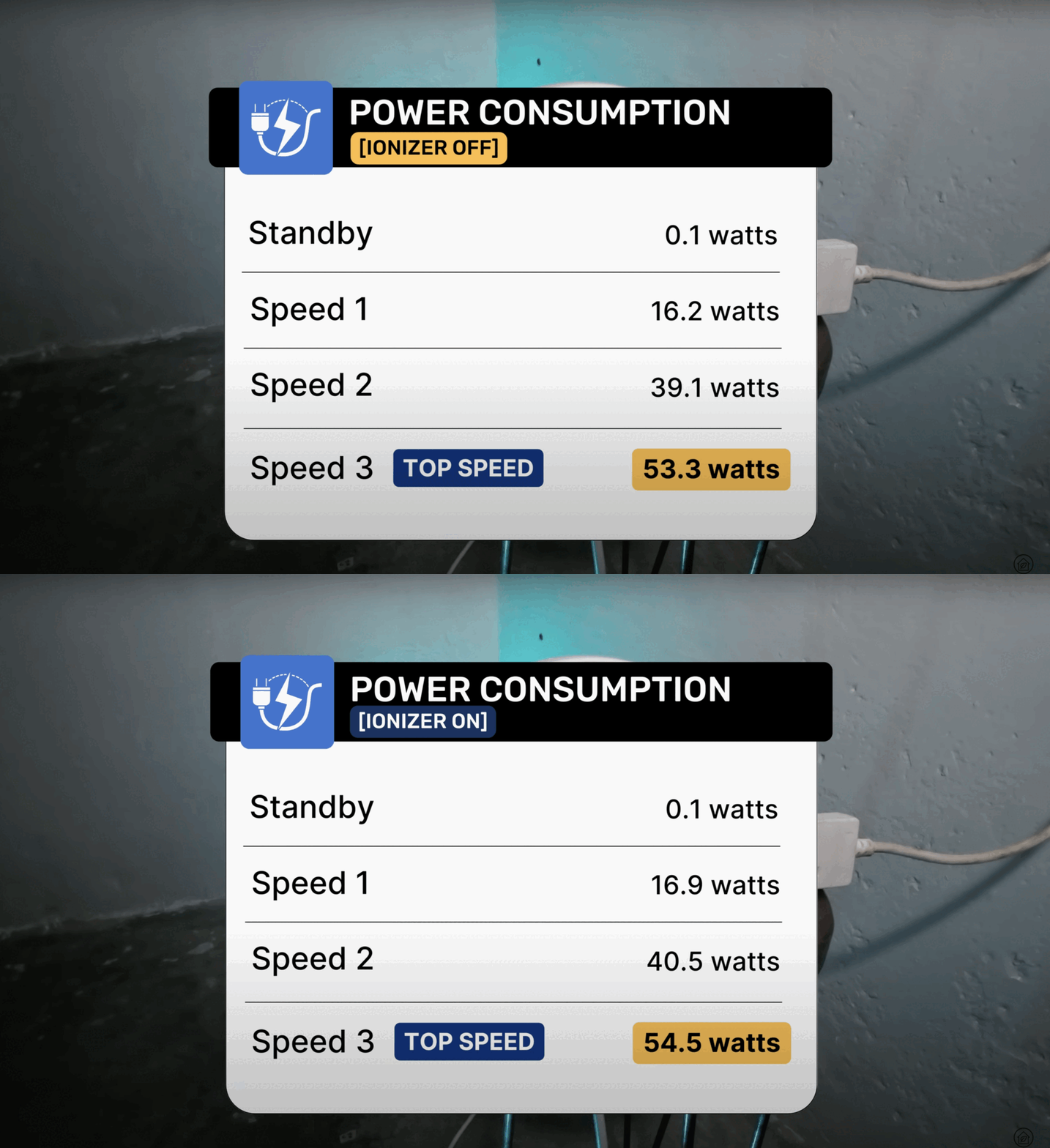
Electricity consumption in watts (recorded with an electricity usage monitor):Standby mode: 0.1 watts
Speed 1: 16.9 watts
Speed 2: 40.5 watts
Speed 3: 54.5 watts
Estimated running cost (electricity consumption + official filter replacement):$197.27 per year
Cost per CADR cfm (based on dust CFM as reported by AHAM):$0.71
Manufacturer’s warranty:1 year
Country of manufacture:Designed and engineered in Sweden, assembled in China

Blueair’s signature Scandi design with one-button operation

A bulkier Blueair device with a removable pre-filter fabric you can replace and customize, similar to other models in their range.

Blueair Blue Pure 211 plus Living Room

Before jumping into the performance data, let’s look at the design of the 211+.

Blueair’s Blue Pure range has a distinctive aesthetic. The fan sits at the top of the device and the filter is tucked in underneath, covered by a colorful pre-filter fabric.

Comparison Photo Blueair Blue Pure 211 VS 411 VS 311

The 211+ is the largest unit in the Blue Pure range, and it takes up much space. 

It takes up as much floor space as the Levoit Core 600S but it doesn’t come with any handles, so you need to carry it around in your arms to move it.
It is much bulkier than the AirFanta 3Pro, which has a higher CADR (430) and costs half the price. 

Blueair Blue Pure 211 plus Close up

The filter sits underneath the top half of the 211+ and is covered by a fabric pre-filter that comes in 5 color options to match your decor. 

The controls for the Blue Pure 211+ couldn’t be simpler. There is one large circle button at the front that you can tap to move across three fan speeds and the on/off switch.

This makes the 211+ super easy to use right out of the box, but you don’t get any extra features like child lock, timers, disabling the ionizer, or any of the other buttons we see on other air purifiers as standard. As an older model, it also doesn’t have any app support.


One annoying aspect of the 211+’s design is that when you pick it up to move it, the bottom half may or may not detach from the fan and fall to the ground. This doesn’t happen every time but it definitely has gotten worse over the years for my device, after each time I replace the filter.

Which brings me to the filter.

Tip

If, like me, you simply can’t live without smart mod-cons, it’s worth checking the 211+ Auto or 211i Max.

A particle filter with a layer of carbon that is supercharged with bipolar ionization

The 211+ uses Blueair’s trademarked HEPASilent filters to remove microscopic particles without noise.

Blueair Blue Pure 211 plus Filters

The filter in the 211+ consists of four layers of filtration:

First, you get the pre-filter which is made out of fabric and comes in different colors. 

As with any pre-filter, you will need to keep it clean by vacuuming it regularly. Blueair has made it easy to remove it for cases when it needs a deeper clean, so you can wash it in a washing machine using cold water.

Then, you get an ultra-thin polypropylene filter, which is the main particle filter. 

As shown by the new generation of PC fan kits that use MERV 13 filters, lower-grade particle filters are not a bad thing for air purifiers, as air will pass multiple times through the filters and the higher airflow helps to improve the speed of cleaning.

Blueair Blue Pure 211 plus No filter

Going deeper, you get a carbon filter for odors and gases.

Unfortunately, this is just a layer of carbon-impregnated fabric, so it will be less effective for VOCs and bad odors compared to the pelleted activated carbon we see in other models of air purifiers. 

Tip

Looking for more protection from VOCs? Supercharge the carbon quantity in your filter by upgrading to the SmokeBlock filter.

Lastly, you get Blueair’s trademarked HEPASilent technology.

According to Blueair, its HEPASilent technology “electrically charges particles that are drawn into the device, causing them to adhere to the particle filter, where viruses and bacteria are inactivated.” The marketing materials also state that “HEPASilent filtration can deliver up to 45% more clean air faster than HEPA H13.”

What Blueair is describing sounds a lot like ionization.

Air ionizers emit electrostatic discharges into the air that alter the particles’ structure, making them heavier and forcing them to drop onto surfaces or within the device itself so they can be cleaned.

However, Blueair’s marketing materials do not mention ionization. Instead, they mention “electrostatic filtration.” 

This makes sense as ionizers don’t have a great reputation because they can produce potentially dangerous by-products, including ozone, aldehydes, and fine particles, which can negatively affect the health of those with respiratory conditions.

It is worth mentioning here that Blueair air purifiers sold in the U.S. are CARB-certified, which means that their ozone emissions have been tested and proven not to surpass 50 parts per billion (ppb). They are also certified by Intertek as ozone-free…

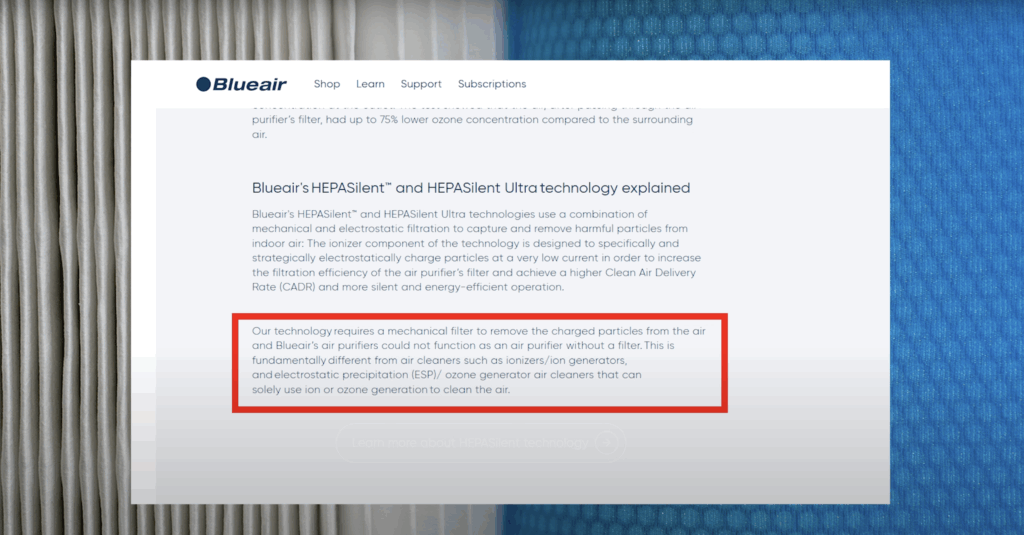
After digging deep into their website, I found a page where they clearly explain the difference between ionizers and HEPASilent technology:

hepasilent blueair

Blueair states that HEPASilent technology can’t be associated with ionizers because their devices combine electrostatic filtration with mechanical filtration. 

It’s important to note that the ionizer feature cannot be turned off on this device. Many people wrongly assume it will generate ozone, but a third-party lab test by Intertek provides a certificate for zero ozone (≤ 0.005 ppm).

In terms of the filter itself, it is straightforward to install; simply twist the body of the purifier and slot it inside with the carbon filter facing upwards.  Here’s a video on how to do it.
Tip

As with all new filters, remember to remove the filters from the plastic wrapper before turning on the air purifier.

The Blue Pure 211+ cleared our test room in 20 minutes

Blueair Blue Pure 211 look

We first tested the Blueair 211+ back in 2022 using our PurpleAir Indoor sensor, so before I started working on this video review, I re-tested the 211+ using our new PurpleAir Zen sensor:

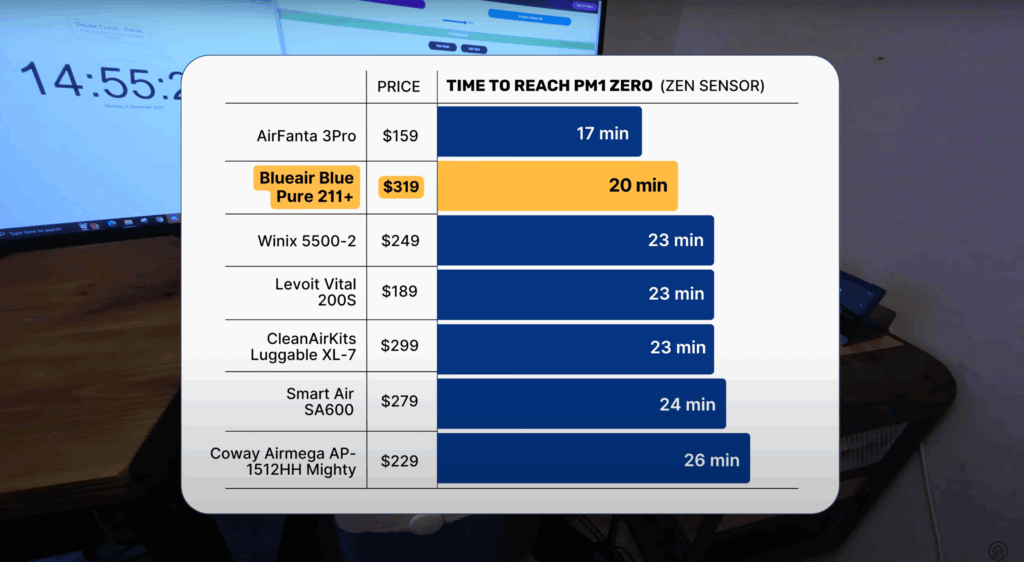
According to our Zen sensor, the 211+ needed 20 minutes to achieve PM1 zero in our 728 cubic ft. test room:

We can compare this to other similarly-priced devices running at their top speed:

blueair 211 performance housefresh

Considering this air purifier was released in 2016, the results at top speed are impressive. 

As I mentioned above, the Blueair Blue Pure 211+ comes with electrostatic filtration through their HEPASilent technology but (unlike manufacturers such as Winix, Alen and Coway) Blueair doesn’t allow you to turn off the HEPASilent in the 211+.

Smart Air has long stated that “adding an ionizer is an extremely cheap way for an air purifier company to increase its purifier’s CADR,” so I was intrigued to see how much of an effect Blueair’s HEPASilent has on the 211+’s performance.

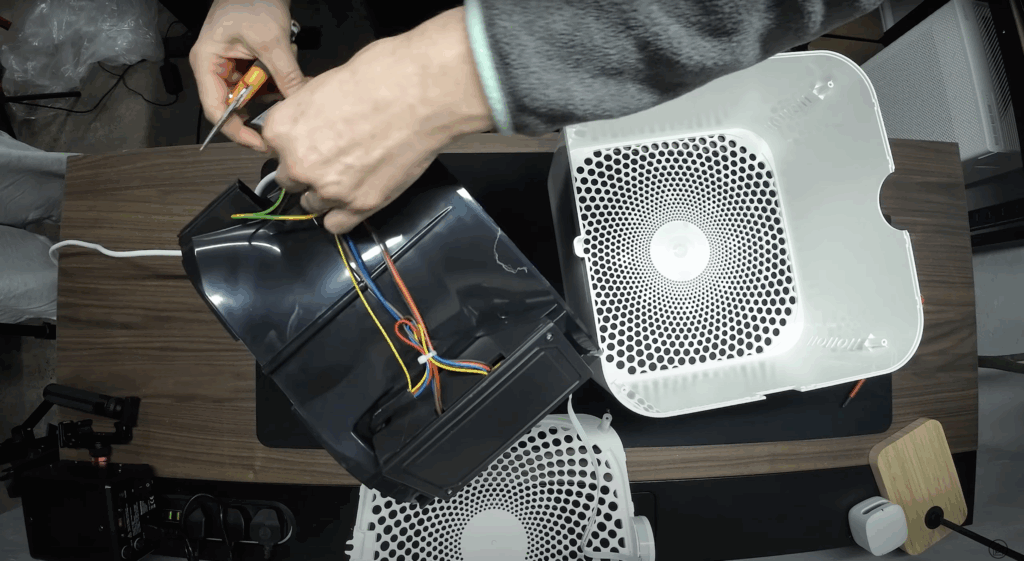
After much deliberation, I made the drastic decision to remove the ionizer:

blueair remove ionizer

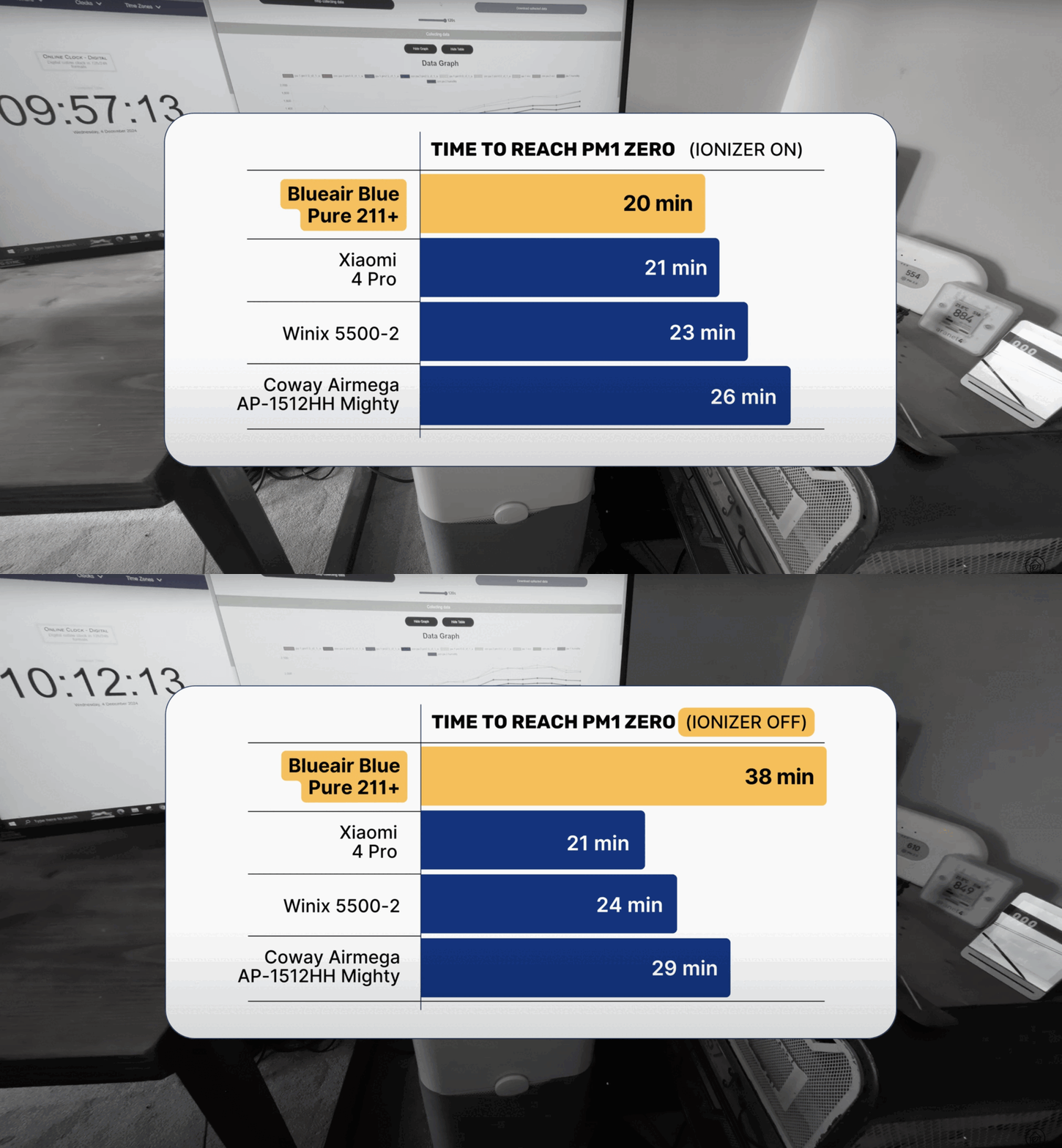
With HEPASilent enabled, the Blue Pure 211+ completed our air cleaning test in 20 minutes. Without HEPASilent, the same test took a whooping 38 minutes.

Before running the test, I assumed that HEPASilent would boost air cleaning performance a little, helping the 211+ complete our particle removal test just a few minutes faster than without HEPASilent as this is what we usually see with other air purifiers when we disable their ionizers.

blueair 211 ionizer on off

However, as the table above shows, removing the ionizer in the 211+ had a much bigger impact on air cleaning performance compared to other air purifiers.

In fact, our test shows that removing the ionizer in this Blueair device led to a 62% drop in performance.

So if you were considering removing the ionizer inside your Blue Pure 211+, keep in mind that you will significantly reduce its air cleaning performance.

I believe this explains why Blueair doesn’t include an option to disable HEPASilent in the same way other manufacturers do.

Incredibly quiet considering its size

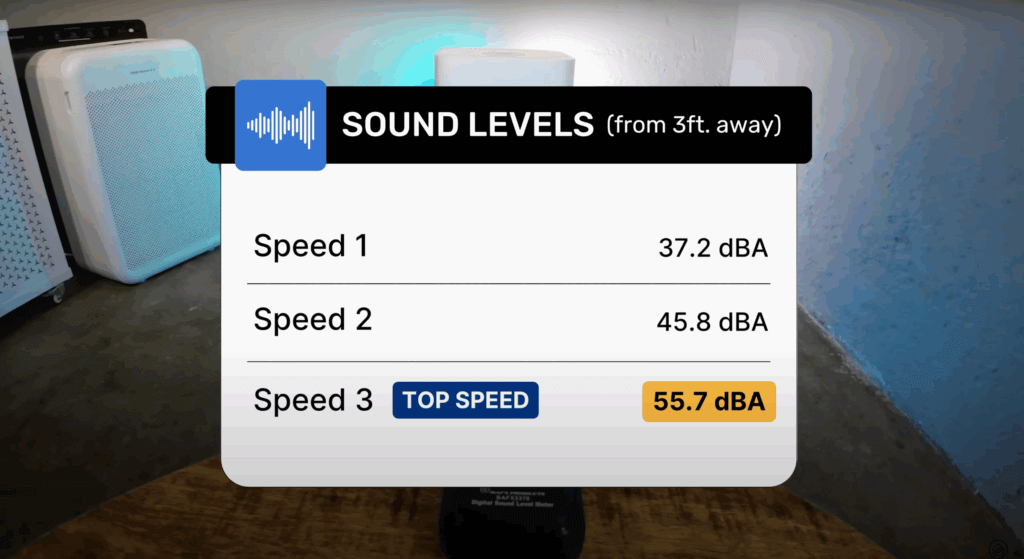
In our testing, the sound levels of the 211+ ranged from 37.2 dBA to 55.7 dBA

If an air purifier is too loud, you will find yourself turning it off eventually.

That is why we always measure how much sound they generate from 3 ft. away. 

These are the results for the 211+:

blueair 211 sound levels

Be aware our background noise is 35 dBA, so the 211+ running at speed 1 is likely to generate less sound if you could measure it in a silent room.

But feel free to have a listen for yourself:

As these figures won’t tell you much in isolation, I made a comparison with other devices that have similar performance:

Blueair 211 sound compare

The 211+ is quieter than most when compared to other similarly powered HEPA retail devices. However, it is out-matched when we compare it to PC fan-powered devices like the Luggable XL-7 from CleanAirKits. 

One of the benefits of a high-CADR air purifier is that you can use it on a lower fan speed and still achieve a good level of air cleaning performance.

So we retested the particle removal performance of the 211+ when running at its lowest fan speeds.

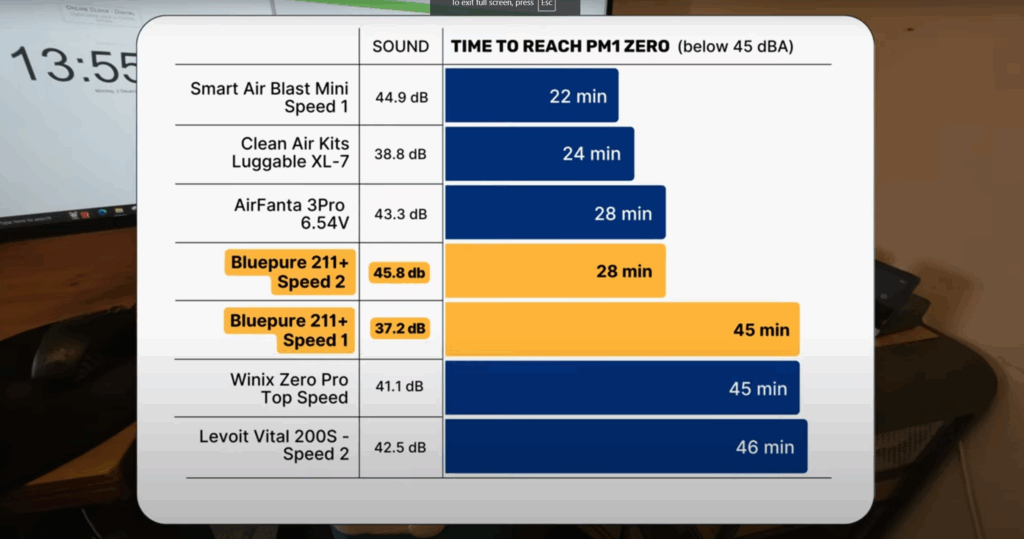
Running at speed 2 it generates 45.8 dBA, which is just above the 45 dBA limit that CleanAirStars recommends for noisy classrooms or offices. it managed to reach PM1 zero in 28 minute

When running at speed 1, it generates 37.2 dBA, which is below the 40 dBA recommended for quiet classrooms and offices. At speed 1, the 211+ reached PM1 zero in 45 minutes.

We can compare these results with other air purifiers running at sub-45dBA:

Blueair 211 performance test sub 45dbA compare

Running at lower fan speeds, the Blue Pure 211+ performs well when benchmarked against other similarly powered devices we have tested at low speeds. This is likely to be thanks to its HEPASilent technology.

However, concerning performance at low sound levels, the 211+ is still no match to PC fan-powered air purifiers like the AirFanta 3Pro or the CleanAirKits Luggable XL-7.

Let’s look at how much the 211+ will cost you in the long term, starting with your energy bill.

The cost to run a Blueair Blue Pure 211+: $197.27 per year

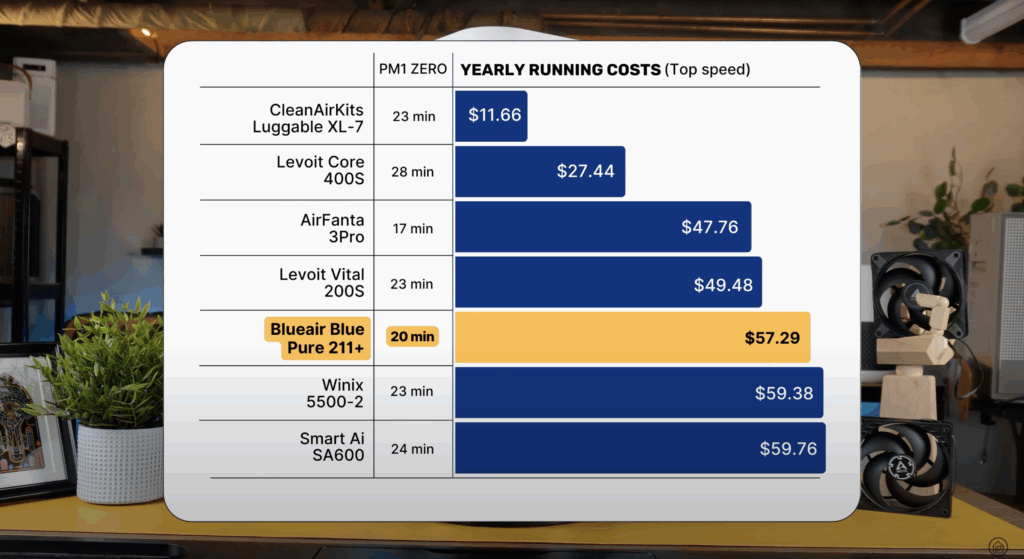
1. Electricity costs = $57.29 per year

As always, we used our energy meter to record the 211+’s energy use when running at each fan speed and also while on standby.

I also measured how much power was used once I removed the ionizer.

blueair 211 energy consumption

If you had to leave your Blueair 211+ running 24/7, it would cost $57.29 per year in energy costs.

With this calculation in mind, we can compare the annual energy costs you can expect from the Blueair 211+ to other devices we have tested:

blueair 211 energy consumption costs

Energy usage compared to performance is very fair with the Blue Pure 211+, which must be due to the combination of a lower-grade particle filter and electrostatic filtration.  

2. Filter costs = $139.98 per year

It’s not just energy costs that add to the running cost of an air purifier and you will also need to replace the filters eventually. 

Blueair says you need to replace the filters for the Blue Pure 211+ every 6 months. The recommended OEM filters cost $69.99 for the standard filters, but they do offer options with extras that go up to $89.99.

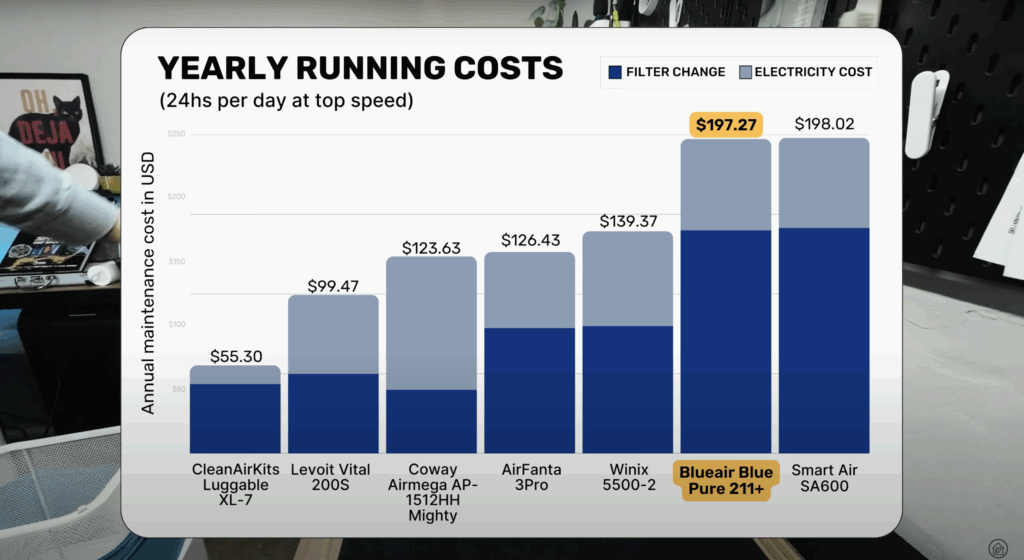
This means the total filter costs for one year for the Blue Pure 211+ is $139.98; We can combine that with energy costs and compare with other similar performing air purifiers:

blueair 211 yearly running costs

The Blue Pure 211+ is this group’s second most expensive air purifier, costing over three times more than the Luggable XL-7 and nearly twice as much as the Vital 200S. 

This is likely due to the lower filter life, as the filter needs replacing every 6 months, compared to 12 months for the Levoit Vital 200S.

Bottom line: Is the Blueair Blue Pure 211+ worth it?

Its combination of a lower-grade filter and ionization function provides good air cleaning power at lower fan speeds.

Blueair Blue Pure 211 Front Room

When I first reviewed the Blue Pure 211+ in 2022, I was blown away by its performance because it was a relatively cheap air purifier, yet it could effectively clean the air. 

As our new data shows, even when running at speed 2, the 211+ has an estimated CADR of around 230 cfm, and at speed 1 you will get the same performance as the Levoit Core 300 running at top speed (140 cfm). 

Blueair Blue Pure 211 plus Living Room logo

So why did Blueair air purifiers never make it to my list of the best air purifiers?

Well, the Blueair Blue Pure range uses an ionizer process to help clean the air, which is also found in devices from Coway, Winix and Alen. 

However and unlike Coway, Winix and Alen, with the Blueair 211+, the user has no way of switching off this function. 

To be clear, I don’t believe that the Blue Pure 211+ creates large amounts of ozone. I was unable to detect any with my ozone detector after leaving it running and it also has a certificate from Intertek to state it creates less than 0.005pm of ozone.

If you do have one, the performance is good as long as you have no issue with the ionizer, and know it can be very effective even when running on lower quiet fan speeds.  

SOURCES

We calculated yearly costs associated with running the Blueair Blue Pure 211+ 24 hours a day, 365 days per year, utilizing the Appliance Energy Calculator developed by the U.S. Department of Energy as of March 2025.

Blueair Blue Pure 411 review

Blueair Blue Pure 411 Living Room

Founded in Sweden by Bengt Rittri, Blueair has been around for over 20 years. Rittri wanted his children to breathe the same clean Stockholm Archipelago air while they spent time in the city. Thus, faithful to this vision, he started the company, creating simple and efficient air purifiers inspired by nature.

Back in 2016, Blueair became a Unilever brand. According to Rittri, the global company would help expand Bluair’s capability to reach more people in need of simple and affordable solutions for air pollution. The brand obtained a B Corp certification in 2023 with a clear mission of improving air quality in homes, schools and offices worldwide, focusing on children’s right to clean air.

I love the social and environmental commitment of the brand, as well as Rittri’s belief that freedom to breathe is a basic right. But we’re not here for the charms and chimes of brand positioning and marketing. 

When it comes to cleaning power, Blueair mixes simplicity with efficiency and offers an array of models for different space sizes. All units, however, feature the trademark HEPASilent™ Technology that combines electrostatic and mechanical filtration. I’m not a big fan of ionization, but we’ll get into that later.

As for the Blue Pure 411, it’s better suited for small rooms. It’s worth noting, though, that since Blueair became part of the Unilever family, its product range has broadly expanded. The launching of the Pure Max line in 2023 replaced some of the older models, including the Blue Pure 411. 

With such a prolific portfolio, navigating models can be a bit confusing, especially regarding filter replacements. Blue Pure 411, 411 Auto, and 411+ are three separate models but share the same filter; the 411a Max, on the other hand, use different ones. In a core comparison, however, they are not that far apart: the CADR rating, filter mechanism and Blueair’s HEPASilent™ Technology are scarcely different when not the same. As of 2025, Blueair has released a smaller Blue Pure 511i Max ‘s that is cheaper and has a lower CADR.

how we test
How we test air purifiers

Read our full testing methodology.

But if you’re here, you probably want to know more about the Pure 411 and its performance. So, let’s get to it.
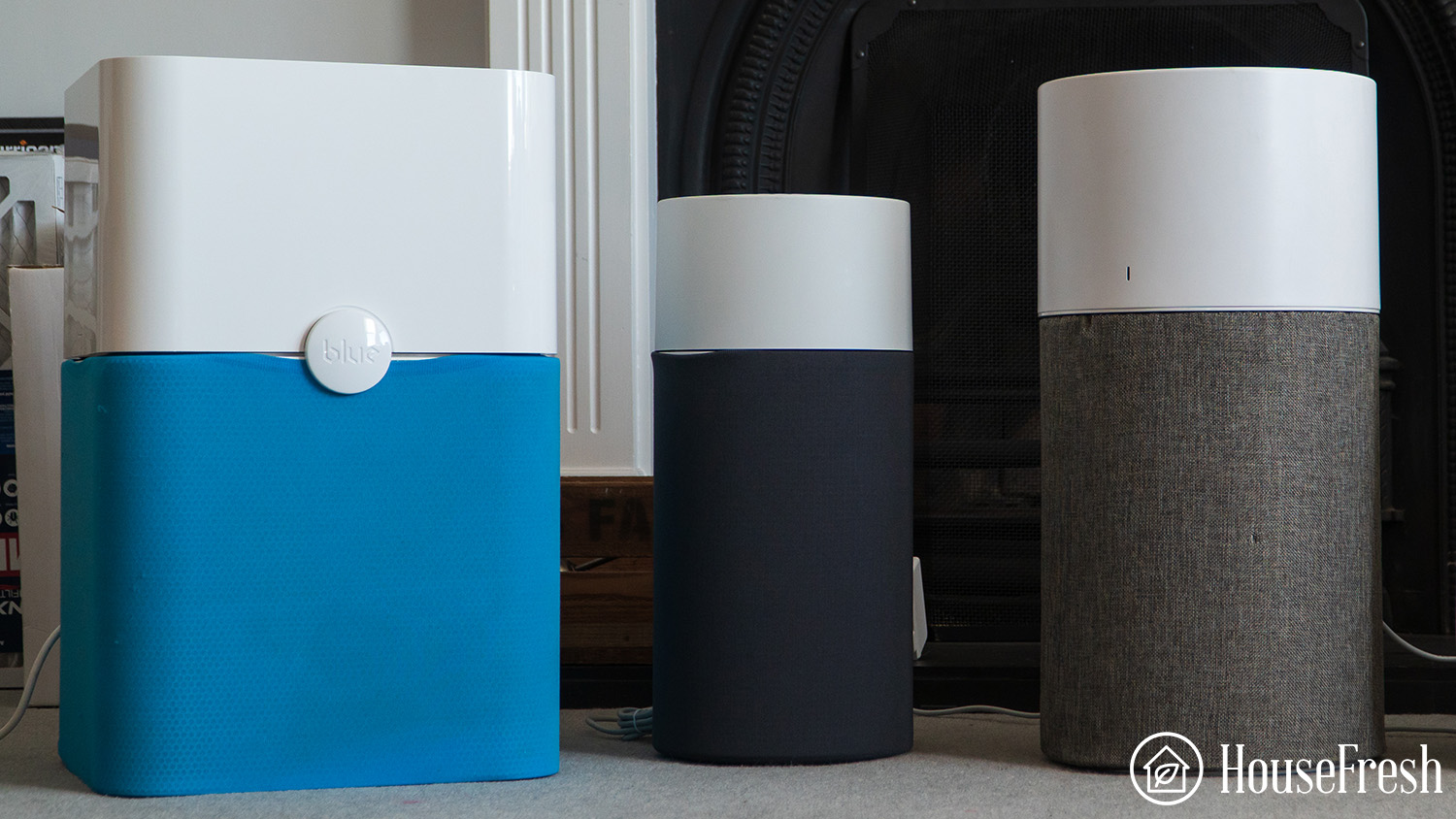
The lowdown on the Blueair Pure 411

Innovative concept but has no outstanding cleaning power.

Danny Ashton HouseFresh
“A very efficient device thanks to its HEPASilent™ process that combines an ionizer with a lower-grade filter than HEPA. This means it can clean the air quickly and with a low level of noise generation. The only downside is that you can’t disable the ionizer; something to be aware of if you just want mechanical filtration. A little outdated now with much lower air cleaning performance ratio when compared with the latest budget devices.”
— Danny Ashton, HouseFresh Founder & Senior Writer
Blueair Blue Pure 411 Drawers

PRICE on BlueAIR

We’ll delve into a detailed analysis of the Blue Pure 411, covering design, performance and noise output, among other things. But if you want to know black over white, our take on the pros and cons of the unit, check out the chart below:

What we really like

Made the 2024 Energy Star Most Efficient list, for its low energy consumption.
The washable (and interchangeable) pre-filter is functional and stylish.
Straightforward operation with the one-button control.
It’s lightweight and compact.
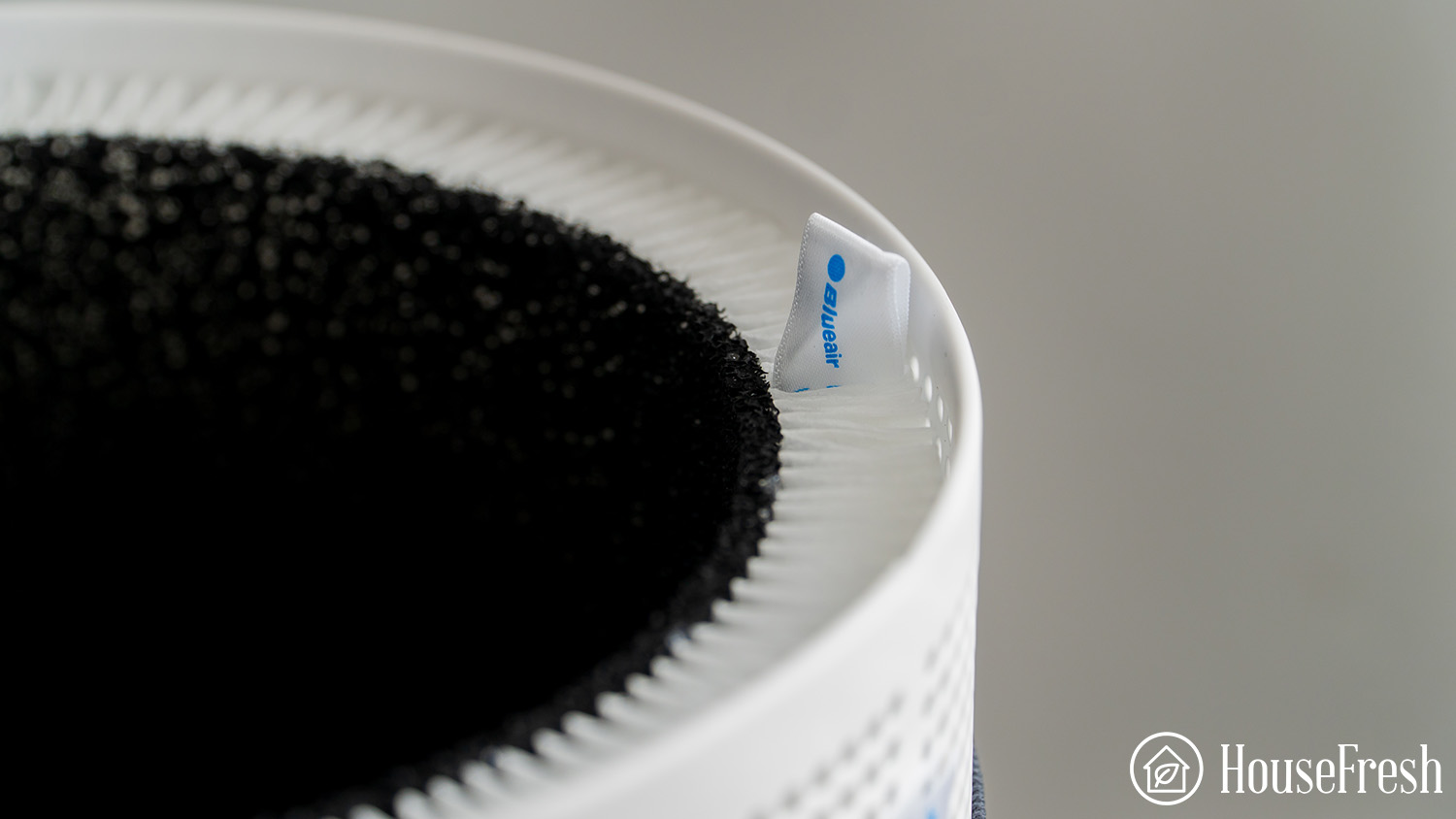
What we think could be better

It is not a fast unit, nor does it have a high CADR.
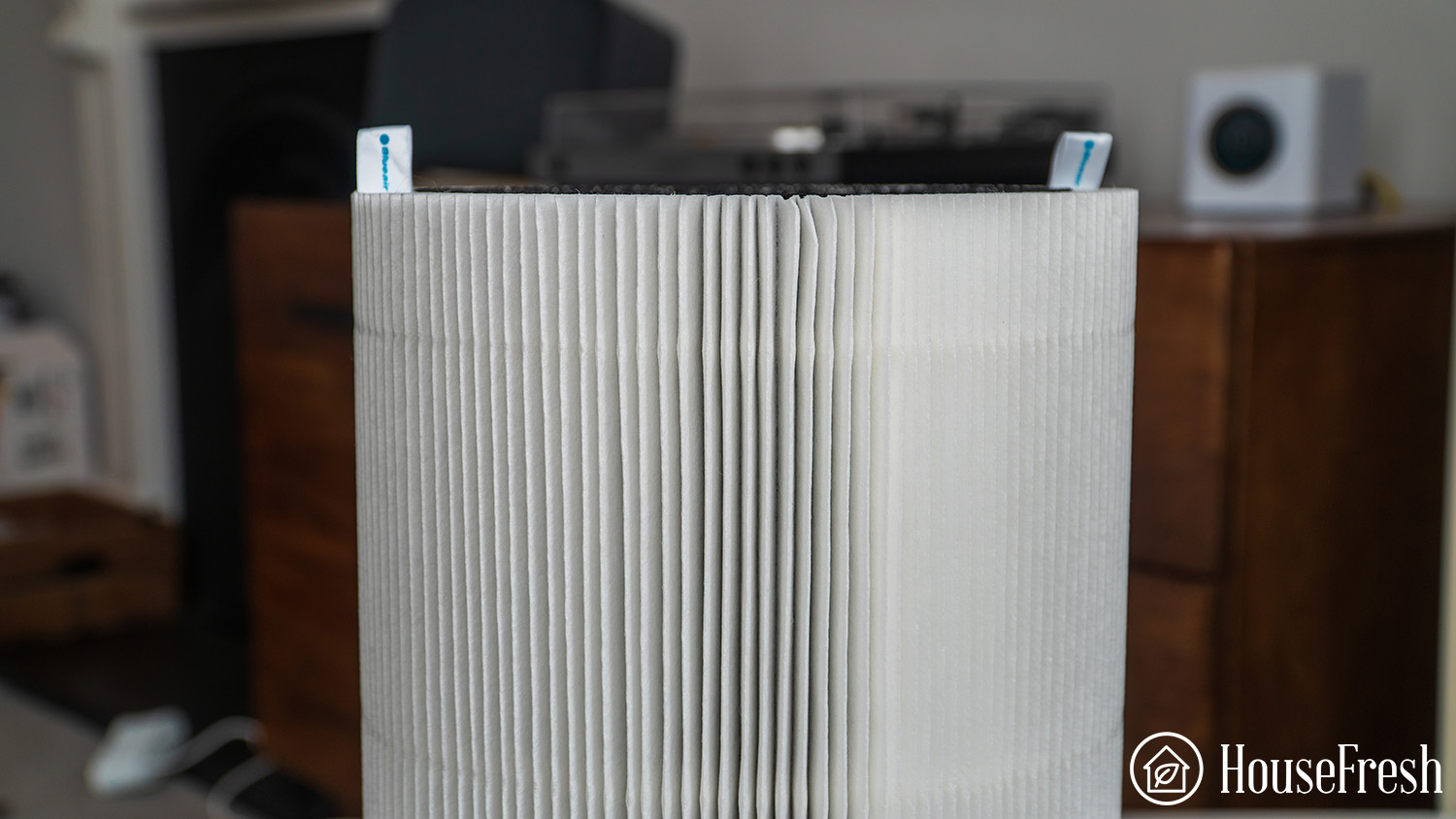
There’s no option to turn off the ionizer.
Not having a protecting grill for the filter makes it somewhat fragile.

The specs

The range of small air purifiers was much more limited when the Blueair Blue Puro 411 was launched. It wasn’t the most budget-friendly air purifier back then, but its CADR was ok (120 CFM) compared to other popular small units, such as the Levoit Core 200S (118 CFM). 

However, the standout point of the Puro 411 was the original design that disrupted the scene with lively colors and scandic aesthetics.
Since the newer Max Pro line became the key product Bluair focuses its communication on, the Puro 411 can now be found at $119 on Amazon — although still more expensive than the reliable Levoit Core 300 or newer and highly efficient units like the Winix A230.

HouseFresh rating:★★★☆☆
Time to clean our 728 cubic feet test room (with the device running at top speed):1 hour and 8 minutes
Air purifier technology:Washable pre-filter, activated carbon filter, HEPASilent™ filter + Ionizer technology
Recommended room size (4.8 air changes per hour):161 sq. ft.
Clean air delivery rate (CADR):Dust: 120 CFM
Smoke: 105 CFM
Pollen: 120 CFM
Dimensions (in inches / in cm):16.7H x 8W x 8D inches (42H x 20W x 20D cm)
Weight (in pounds / in kg):5.3 lbs (2.4 kg)
Filter life:6 months
Noise level in decibels (measured from 3 ft. away with a sound level meter):Speed 1: 36.2 dB
Speed 2: 42.1 dB
Speed 3: 53.1 dB
Electricity consumption in watts (recorded with an electricity usage monitor):Standby mode: 0 watts
Speed 1: 0.9 watts
Speed 2: 2.9 watts
Speed 3: 7.8 watts
Speed 4: 10 watts
Estimated running cost (electricity consumption + official filter replacement):$57.03 per year
Cost per CADR cfm (based on dust CFM as reported by AHAM):$0.49
Manufacturer’s warranty:1 year
Country of manufacture:Designed and engineered in Sweden, assembled in China

Minimalistic build, playful design

A thoughtfully engineered structure with customizable looks, although somewhat on the flimsy side.

Blueair Blue Pure 411 Side Table 1

Blueair was created with children in mind. It only makes sense that the original Blue Pure line is so colorful and lively yet has straightforward controls. I opted for the Diva Blue fabric pre-filter (which brings this iconic Diva to mind), but there are six colors to choose from, ranging from buff yellow to a sober dark gray for those who prefer a more subtle approach.

Blueair Blue Pure 411 vs 411

The top white cylinder houses the fan and ionizer, crowned by an organic-shaped control panel. The lower body accommodates the pre-filter and main filter, which fit neatly into a plastic honeycomb structure. The rounded body allows for an efficient 360 air inlet, while the clean air is then released from the top grill.

Blueair Blue Pure 411 With FIlter

Designed for ergonomic efficiency with the minimum amount of elements, the Pure 411 is both compact and lightweight (5.3 lbs). As the smallest unit of the Blue Pure line, it will easily fit even in tiny rooms, not using up too much space, while it weighs close to nothing to move around. 

Comparison Photo Blueair Blue Pure 211 VS 411 VS 311

However, this also means the structure requires gentle handling as there’s no outer casing or grill to protect the filer when manipulating the unit. Besides, most of the weight is at the top cylinder, so it’s somewhat flimsy and easier to tip over. 

Simplicity peaks with the control panel. There’s only one button on the Blue Pure 411 to switch on and off and cycle through three fan speeds. That’s right, even the young members of the family could operate it. 

Blueair Blue Pure 411 Control panel

Press the big round button once to start the air purifier at the lowest speed; a second and third press will step up the unit to the following fan speeds. One last touch will switch it off. The white LED lights around the button indicating the speed it’s on will dim after seven seconds of no interaction. 

This is one of those nice touches that show how thoughtful Blueair designers are, especially if you’ll be placing the unit in the bedroom. For that matter, however, it would be nice to have a no-lights function.

Although the one-button control is modest and straightforward, the Pure 411 has a built-in memory, so if you unplug the unit, the unit will remember your settings once replugged. Yet, this is the only “smart” feature, as there’s no auto mode, timer or app support. 

Blueair’s trademark HEPASilent™ filtration system

What’s this technology all Blueair purifiers feature? 

In short, HEPASilent™ technology is no more than a HEPA-type filter boosted by an ionizer. It’s a bit misleading, as the filter is not a real HEPA. But many brands coin creative names for their products using keywords we look out for to feel secure about our purchases. With this trademark, brand communications can use the word without the certification required for it to be real HEPA.

Blueair Blue Pure 411 HEPA Filter

Blueair filters are less dense than HEPA. This is not all bad, as a thinner filter media requires less power to create an airflow capable of passing through it. That’s how their units can clean the air with low energy consumption and more silently —hence the HEPASilent™.

But to remove 99.97% of airborne pollutants, this type of filter is not enough. That’s why Blueair combines mechanical (HEPA-type) with electrostatic filtration. An ionizer within the fan’s hood produces an electrostatic discharge, releasing ions that attach to airborne pollutants making them stickier and heavier, thus easier for the unit to capture and filter.

The downside of this technology is that it produces ozone as a byproduct. According to Blueair’s website:

All Blueair air purifiers are CARB certified which means that they are considered safe and do not exceed ozone emission limits.

Not exceeding ozone emission limits isn’t the same as not producing ozone at all. And then, even a slight amount of ozone can react with common gasses found in every home (including fumes from cleaning products) and produce further VOCs such as formaldehyde.  

However this type of combination device is unlikely to introduce any ozone as the particle and carbon filters will help to remove the ozone from the ionizer before it leaves the device. The larger 211 of the Blue Pure series has a certificate showing that it produces zero ozone emissions —check the certificate at Intertek— so we can assume the same with this smaller device in the series.

Sadly, the ionizer cannot be switched off on Blueair purifiers. Both technologies are engineered to work together, unlike other units that have an ionizer as a plus (such as the Winix Plasmawave).

Blueair Blue 311 Activated Carbon Filter

The filters also feature an activated carbon layer, although it’s an impregnated fabric instead of granular or pelleted charcoal.

Blueair Blue Pure 411 Carbon Filter

This media is not robust enough to deal with serious odor or VOC issues, but it will help with mild everyday smells.  

Lastly, there’s the outer pre-filter that traps bigger particles such as lint, dust and pet fur before they reach the mail filter. Washable prefilters are a functional upgrade as they can be thrown into the washing machine or vacuumed easily. Blueair recommends cleaning the pre-filter every three months to extend the lifespan of the main filter.

Now, the steps to change the Blue Pure 411 filter are somewhat different compared to other more traditional air purifiers. But the process is still pretty straightforward. 

After six months of continuous use, the LED lights on the one-button control will turn red, indicating it’s time for a filter replacement. After unplugging the unit, unscrew the top cap with a gentle twist. Remove the fabric pre-filter and pull out the main filter using the tabs on the sides. Place the new filter on the plastic structure, then the pre-filter and finally, replace the cap.

Tip

Like with most air purifiers, Blueair filters come sealed in a plastic bag to protect them until it’s time they get to work. When unboxing your new Blue Pure 411, make sure to remove any packaging from the inside of the unit before running it. The same applies to filter replacements. Otherwise, the unit won’t be able to operate properly.

The Blueair Blue Pure 411 cleared our test room in 68 minutes

Silent and easy to look at, but far from being the fastest.

Blueair Blue Pure 411 Test

We often find that brands claim (and big publishing companies spread all over the internet) far more than their products actually deliver. That’s why, at HouseFresh, we like to take things into our own hands. 

We conduct our performance tests in our 728 cubic ft. home laboratory. What does the HouseFresh testing process involve? We first generate pollutants by burning incense sticks. The PurpleAir Touch Indoor Air Quality Monitor —one of the most accurate sensors in the market— then helps us track how fast (or slow) each unit removes the PM1, PM2.5 and PM10 produced by the incense smoke.

As all of our tests are conducted in the same space, we can easily compare results across units. 

Now, without further ado, let’s get a look at the data:

Air cleaning performance, compared

Cleaning speed is a good indicator to asses an air purifier’s performance. Knowing the Blue Pure 411 took 68 minutes already gives us an idea of its efficiency. But it’s usually not as graphic as comparing it with other units. 

Let’s start by saying the Blue Pure 411 is an air purifier designed for small rooms. According to the Energy Star testing, it can achieve five air changes per hour in spaces of 163 sq. ft, with a CADR rating of 120 CFM. 

It’s only fair, then, to compare its performance with other small air purifiers. The most straightforward comparison is with its upgraded version, the Blue Pure 411+ (which is not the 411 Auto nor the 411 Max models). The 411+ is not only 25 minutes faster, but it also comes with smart features and app support. 

The Levoit Core 200S is another similar unit that, with a lower CADR (118 CFM) and for less money, cleaned our lab seven minutes faster than the Blue Pure 411. Besides, Levoit units only use mechanical filtration.

It’s not all bad news, though. There are slower air purifiers on the market, such as the Aroeve MK01 or the $700 Dyson PH03. In truth, neither of these are air purifiers we recommend. But, then, speed is not the only determining factor in choosing an air purifier. Other aspects of the Blue Pure 411 make it a suitable option for small rooms— take the noise output, for example.

Noise levels test results, compared

Using a commercial sound meter, we registered the decibels (dB) emitted by the Blue Pure 411 at every fan speed from three ft. away. 

The HEPASilent ™ technology is indeed quiet, at least to a certain extent: at its lowest fan speed, the noise output was 36.2 dB — which is equivalent to a soft whisper. Plus it gets quieter in Sleep Mode. In fact, you need to be really close to the unit to hear its hum in this setting. 

But then, at top speed, there’s a noticeable change. The dB rises to 53.1 dB at its fastest. For reference, 50 dB sounds like a quiet office.

With these results, I can only say the Blue Pure 411 delivers the Silent promise to a limited extent. Yes, at 36.2 dB is fairly quiet. But then, we should factor in the fan’s power at each speed.

As you can see, the airflow changes drastically among speeds. It can be quiet at the lowest, alright, but the cleaning power is significantly reduced. With that fan power, the small Blue Pure 411 would make little changes to your air. 

Besides, the AHAM CADR testing is always done at an air purifier’s highest speed, meaning that the unit should be running at top speed to achieve the 120 CFM and five air changes per hour in a small room.

But decibels are a rather abstract measurement. And perception of sound varies from person to person. That’s why we’ve recorded the unit’s noise output. Hear the Blue Pure 411 in action for yourself.

The cost to run a Blueair Blue Pure 411: $57.03 per year

An outstandingly energy-efficient unit with affordable replacement filters.

1. Electricity costs = $15.25 per year

The initial purchase price is only one variable to determine if an air purifier is a good investment. Then there’s the fixed costs you’ll be facing in the long run, including energy consumption and filter replacements.

In terms of electricity costs, Blueair’s HEPASilent™ technology is remarkably efficient. The Blue Pure 411 is no exception: it made the 2024 Energy Star Most Efficient list, which features the year’s most energy-conscious appliances. For a somewhat old model, this is saying a lot.

The 411’s power consumption ranges from 0.1 W to 10 W at the lowest and fastest speeds, respectively. This means that if you were to use the unit all year round, 24/7, at top speed, the cost would be $1.3 a month. To put it into perspective, an average LED light bulb uses about 10 watts. Not bad at all.

2. Filter costs = $41.78 per year

In addition to energy usage, it’s important to factor in the filter costs. Eventually, all HEPA (and HEPA-type) filters need replacement. The airborne pollutants trapped by the air purifier accumulate on the filter’s surface — which, in the long run, becomes clogged with those same filtered particles. 

Now, the frequency of filter replacement depends on how much you use the unit and the level of air pollution in your area. But as a general rule, Blueair recommends changing the Pure 411 filters every six months. This brings us to two filters per year, summing up to $41.78 if you buy the original ones.

When compared to similar units, Blueair’s filters are reasonably priced. The Levoit Core 200S and 300S filters, for example, cost between $25 and $30, slightly varying on the unit. Then, the Winix A230 replacement filters can be found at $49.99, although you need to replace these only once a year.

Blueair Blue Pure 411 Auto, 411, 411+ Genuine Replacement Filter
  • Genuine Blueair replacement filter designed for Blue Pure 411 Auto, 411, and 411+
  • Particle + activated carbon filtration helps reduce allergens, dust, and odors

Besides, as the Blue Pure 411 has been around for quite a long time, there are plenty of generic, cheaper options available. Although we’ve only tested the unit with genuine Blueair filters, so we cannot vouch for their performance.

Sale
Blueair Blue Pure 411 Auto, 411, 411+ Generic Replacement Filter
  • Compatible : Premium PARTICLE and ACTIVATED CARBON filter Fits the Blue Pure 411, 411+ and Mini Air Purifier.Get back to having a clean air to breathe again!
  • Particle Filters :PARTICLE filters can remove large and airborne particles, including dust, pet dander, common pollutants, and fabric fibers.

Bottom line

There’s a playfulness about the Blue Pure 411 that makes it unique.

The simple one-button control adds the perfect touch to that lively flair I miss in the new Blueair Max line. The brand has taken a more sober turn on the latest designs, aligning with current trends that demand desaturated colors and textures. But I kind of miss the old cheerfulness. 

Blueair Blue Pure 411 Hallway

In terms of performance and functionality, the Blue Pure 411 is compact, has low running costs and operates reasonably well. All these features make it a good choice for small rooms like bedrooms. 

However, if you prefer pure mechanical filtration, then the Levoit Core 300 (or 300S if you would like to upgrade to a smart unit) is one reliable unit I know I can trust. Then, if you are looking for an air purifier for bigger rooms, I’d take a look at the Levoit Vital 200S, which can achieve five air changes per hour in 375 sq. ft. in 21 minutes.

SOURCES

We calculated yearly costs associated with running the Blueair Blue Pure 411 24 hours a day, 365 days per year utilizing the latest average energy prices as reported by the Bureau of Labor Statistics of $0.174/kWh as of April 2024.