Dyson Purifier Cool TP07 review

Dyson TP07 Editorial

Dyson is a major player in the air quality appliance space. With a revenue of over $8 billion, they are a goliath compared to other air purifier manufacturers. 

Most of Dyson’s business is from its vacuum cleaner range, but in March 2015, the company entered the air purification space, releasing its first air purifier: the Dyson Pure Cool Link.

Over the years, Dyson has focused on developing multifunctional appliances, with the Dyson Purifier Cool TP07 being the latest iteration of their air purifier and fan combo. We have already reviewed the Dyson PH03 and Dyson HP04, which offer humidifier and heating features but failed to wow us with their pure air cleaning power ratio to the high unit price. 

At first glance, the Dyson Cool TP07 ticks a lot of boxes, providing a fan and air purifier feature with third-party lab-approved HEPA H13 filters, odor-adsorbing activated charcoal, app support and auto-mode. But question marks remain over Dyson’s air cleaning power, so I will be super keen to see how it performs in our PM1 particle removal test. 

Dyson doesn’t value CADR (clean air delivery rate), so they don’t list it on their site, but based on my experience with Dyson vacuum cleaners, they have a habit of improving performance with each new model so I’m keen to see how the Dyson Purifier Cool TP07 performs in our tests.
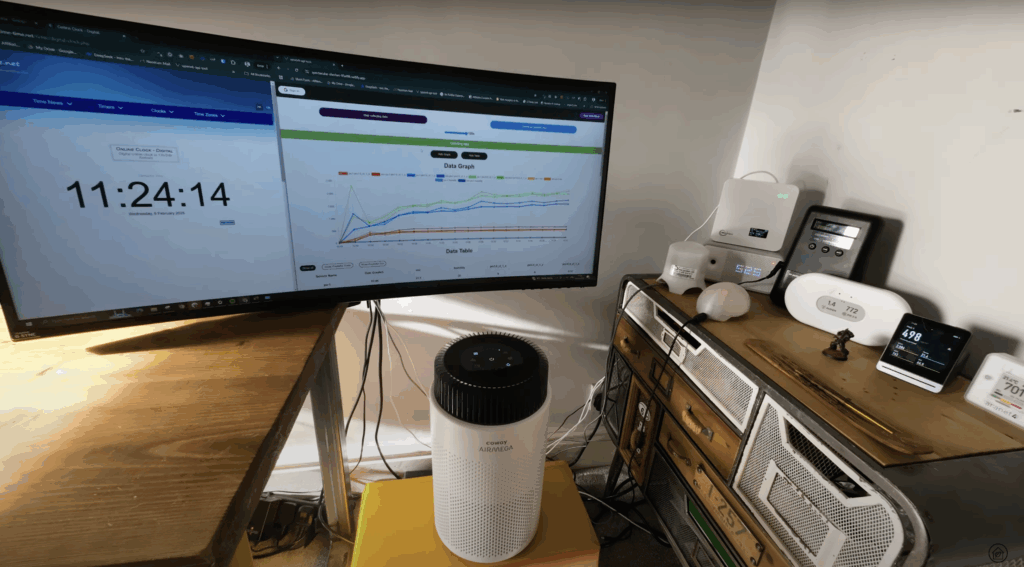
how we test
How we test air purifiers

Read our full testing methodology.

The lowdown on the Dyson Purifier Cool TP07

Danny Ashton HouseFresh

“Dyson does what Dyson does, and the TP07 shows major improvements in air cleaning performance and fan speed compared to earlier models. It is a high-priced device, considering its air cleaning capabilities when compared to other cheaper air cleaners.

But if you need a fan AND an air purifier with best-in-class smart features, then the Dyson TP07 is worth considering.”

— Danny Ashton, HouseFresh Founder & Senior Writer

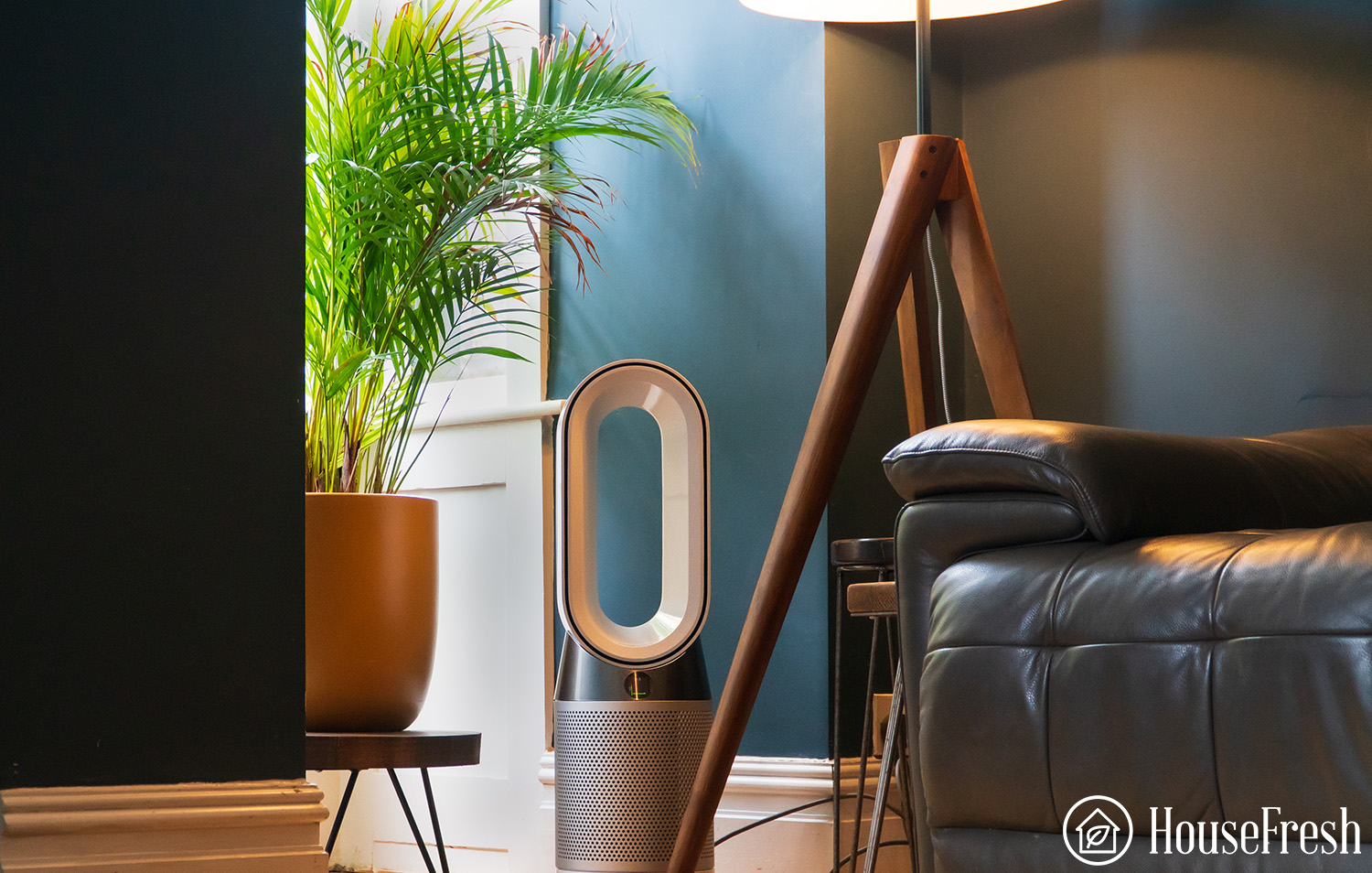
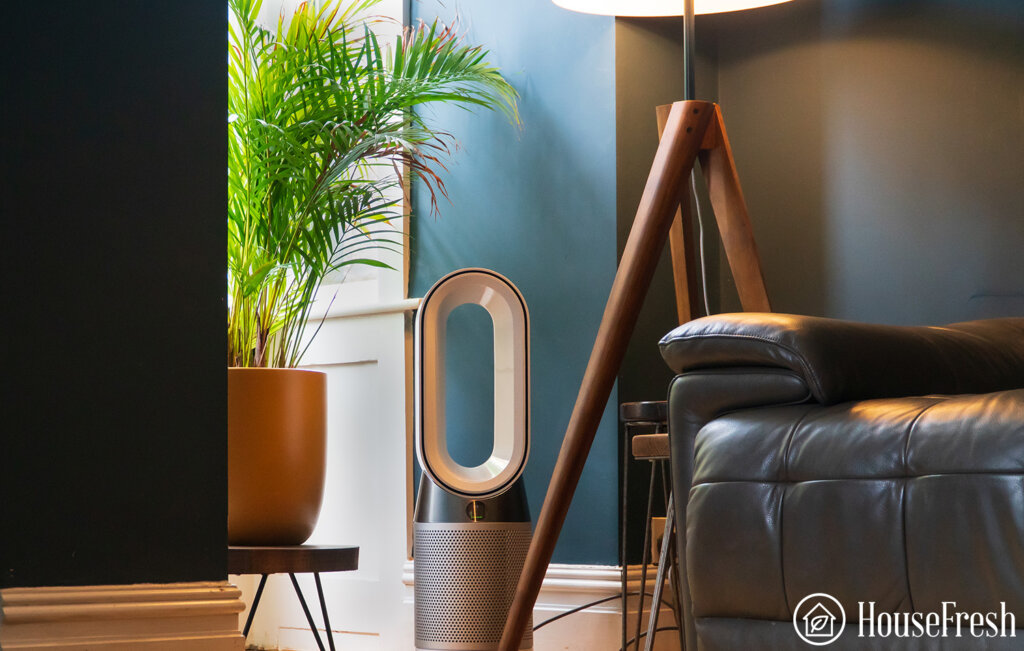
Dyson TP07 Living Room

We cover a lot of detail in our review, so if you are short on time, these are the key takeaways that you need to know about the Dyson TP07.

What we really like

Great UX for the smart app that can be used with other Dyson appliances you already have. 
Auto-mode was super quick to respond to a vape pen — switching into high mode very quickly.
The design is much more attractive than most other air purifier models you find.
Fan performance was improved over previous generations — the TP07 was able to push a lot more air.
Remote control attaches magnetically to the top — a small item but a great way of making it easier to use the device and not lose the remote.

What we think could be better

It needed 62 minutes to clear the air in our small 728 cubic feet test room — this is longer than what we saw with the Levoit Core 300 (54 minutes), which is an air purifier that costs under $100.
As with Dyson, the initial unit cost is high at $649, but this does come with a two-year warranty, and you won’t find fan features on devices only used for air purification.
Genuine filter costs are high at $80, but plenty of lower-priced generic versions are available.

Clean air delivery rate (CADR):– Top speed PM1 CADR: 94 cfm
– Sub-45 dBA PM1 CADR: 58 cfm
– AHAM PM2.5 CADR: 89.8 cfm (dust)
Filter technology:HEPA H13 and activated carbon filter
Recommended room size:141 sq. ft. (5 air changes per hour)
Dimensions:7.7 x 8 x 41 inches (19.56 x 20.32 x 104.14 cm)
Weight:11 lbs (4.99 kg)
Noise level from 3 ft. away:Speed 1: 38.9 dB
Speed 2: 44.9 dB
Speed 3: 50.2 dB
Speed 4: 56 dB
Electricity consumption in watts:Standby mode: 0.9 watts
Speed 1: 3.5 watts
Speed 2: 4.9 watts
Speed 3: 10 watts
Speed 4: 22.3 watts
Speed 5: 28.9 watts
Filter life:12 months
Manufacturer’s warranty:2-year parts and labor warranty
Country of origin:UK
Country of manufacture:Malaysia

Eye-catching Dyson design

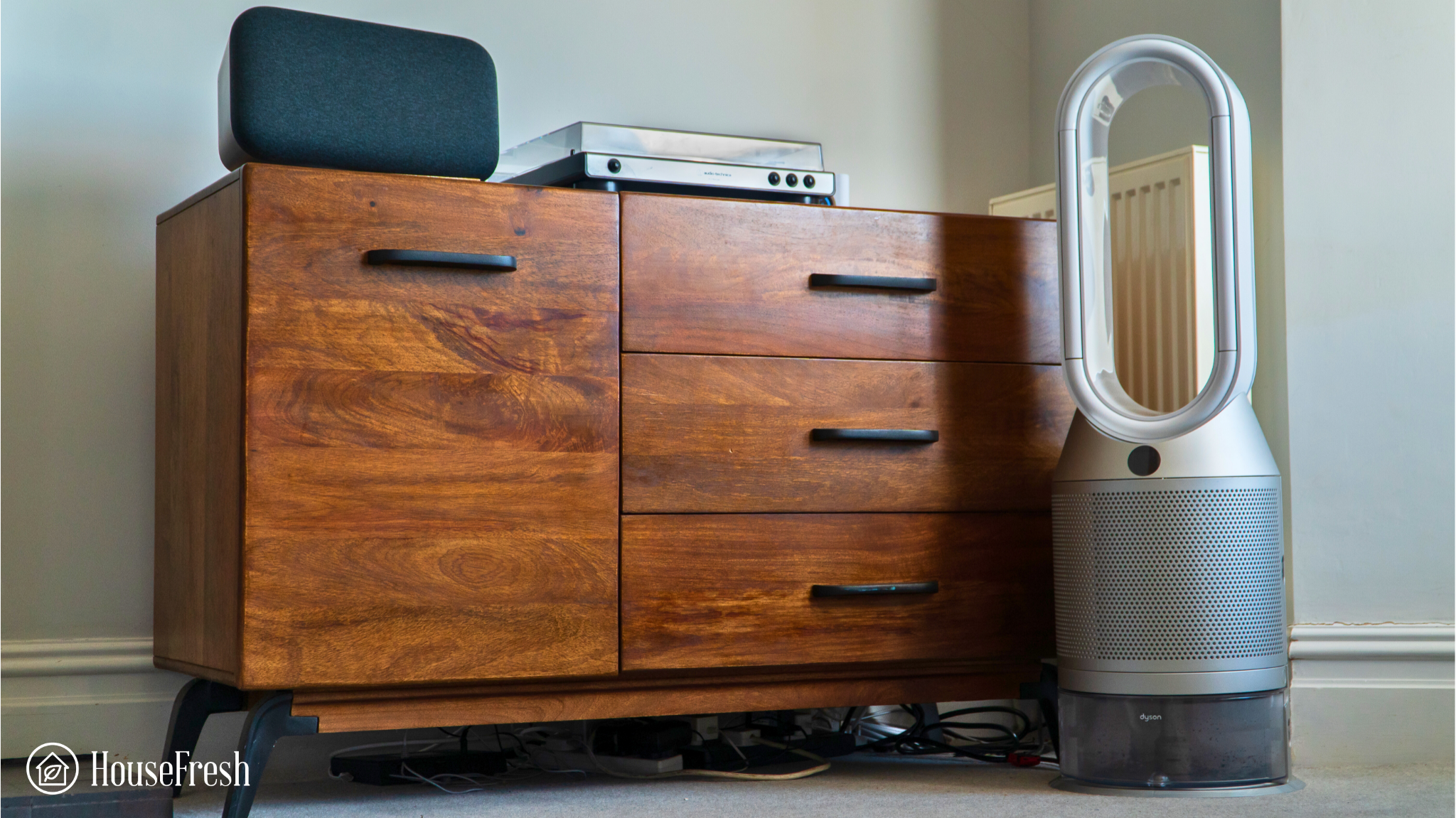
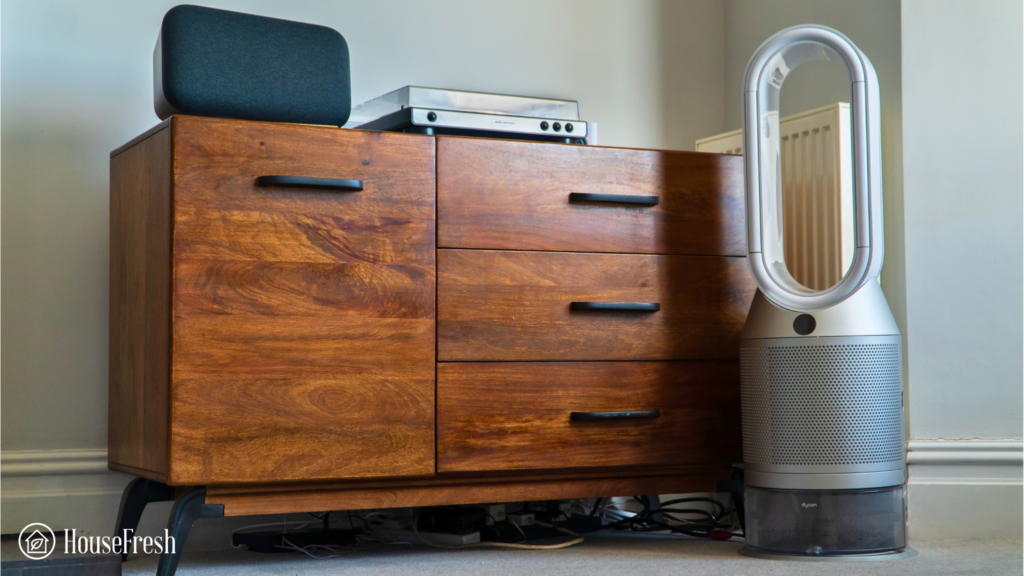
A small footprint with a design style that looks as good as any other Dyson appliance

Dyson TP07 Front

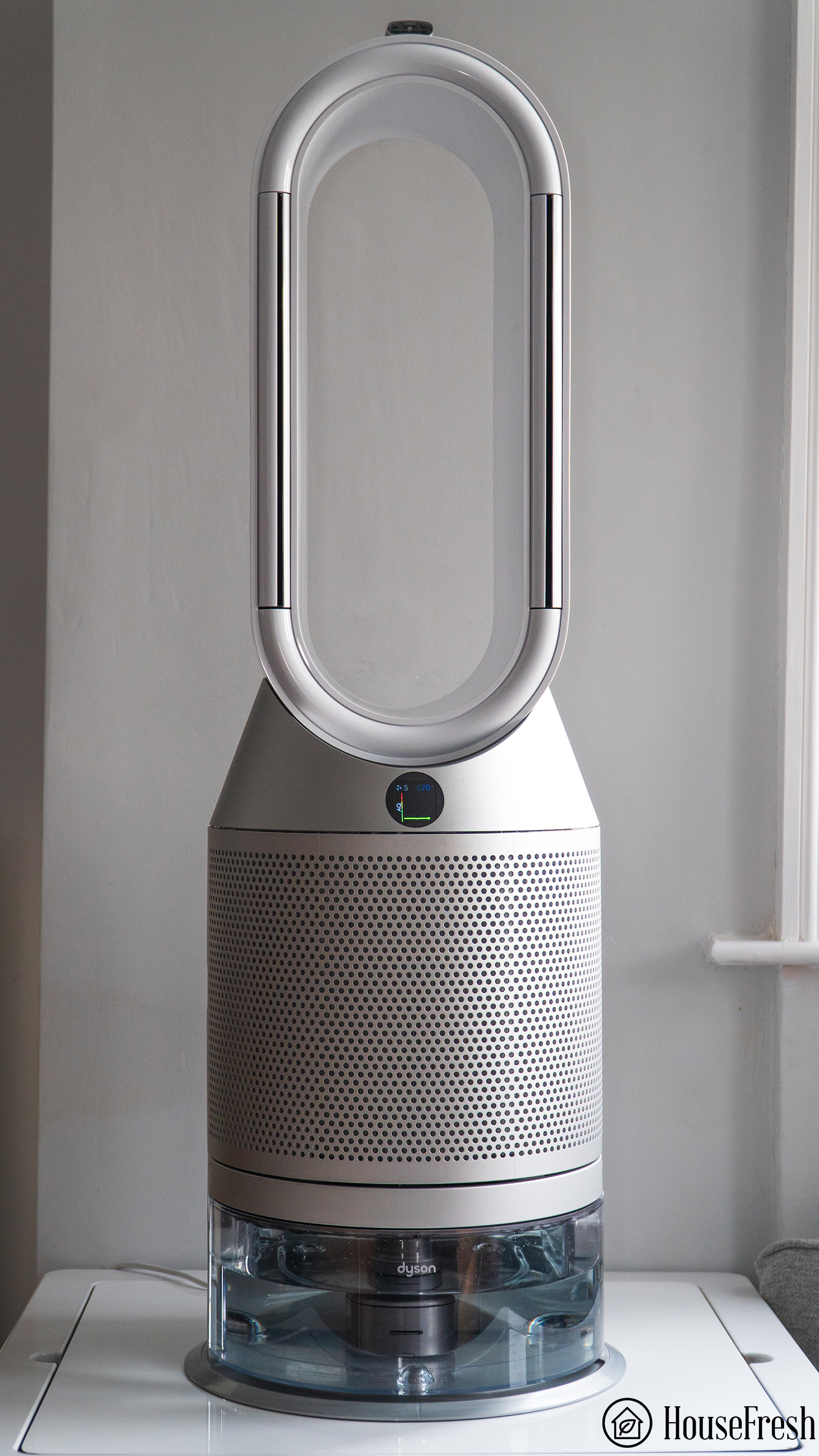
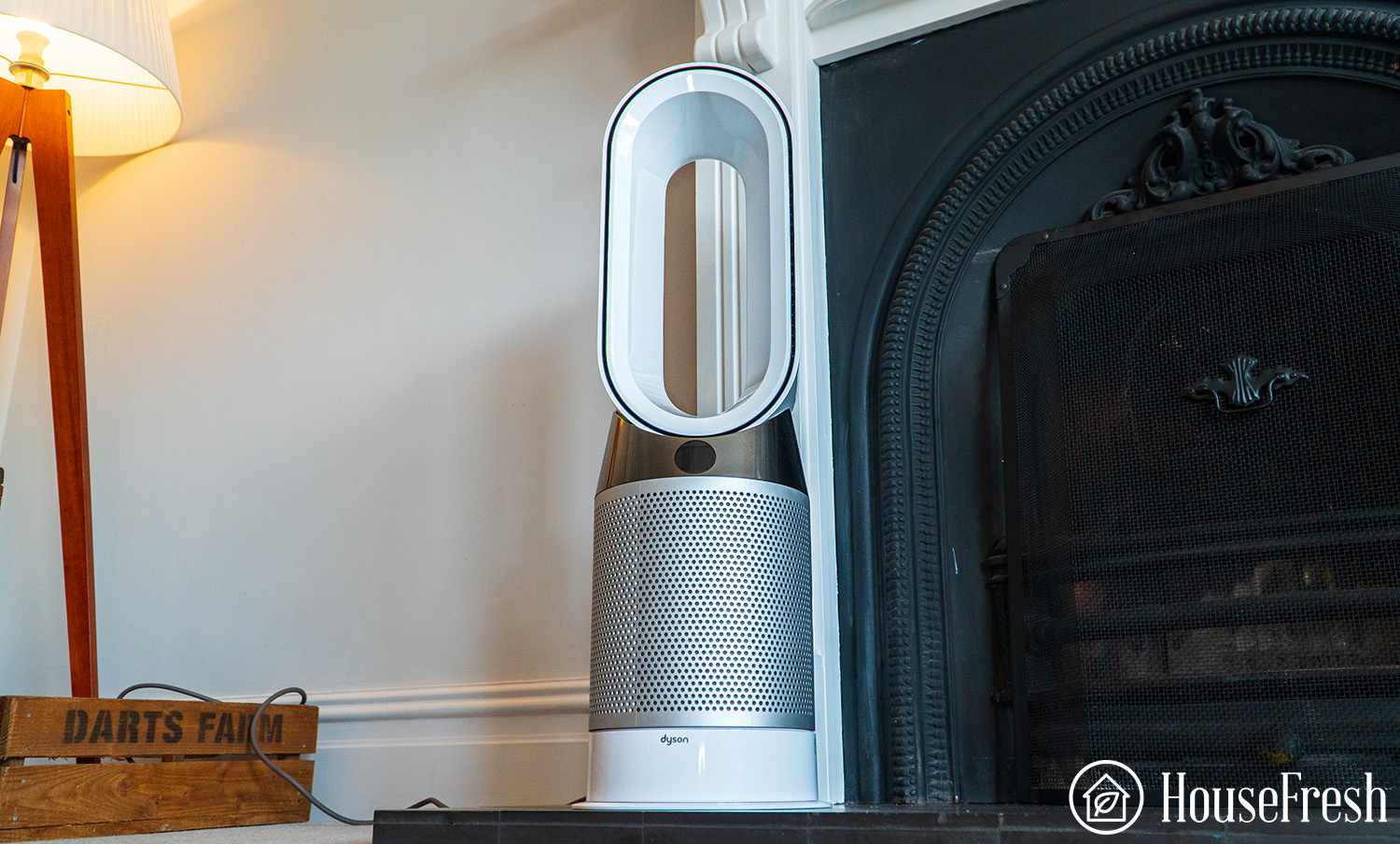
The TP07 has a modern white and silver design that looks great. Plus, there is the option to get a nickel and black colored — unit only if you buy directly from Dyson. The main body contains the filter units, while the tall top section is the bladeless fan. 

The main design feature I like is that the device can rotate up to 350 degrees to circulate clean air all around the room. 

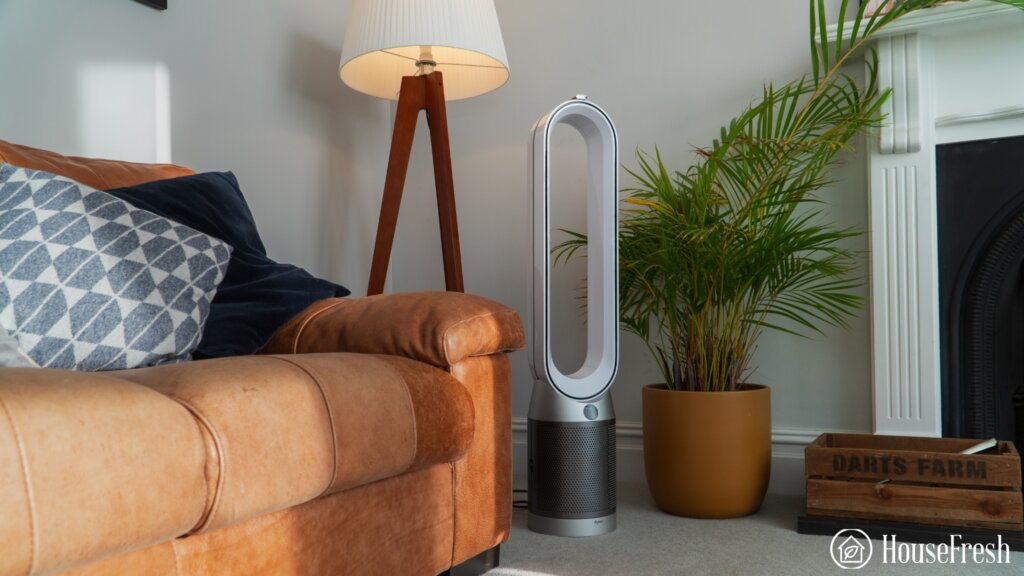
Dyson TP07 Fireplace

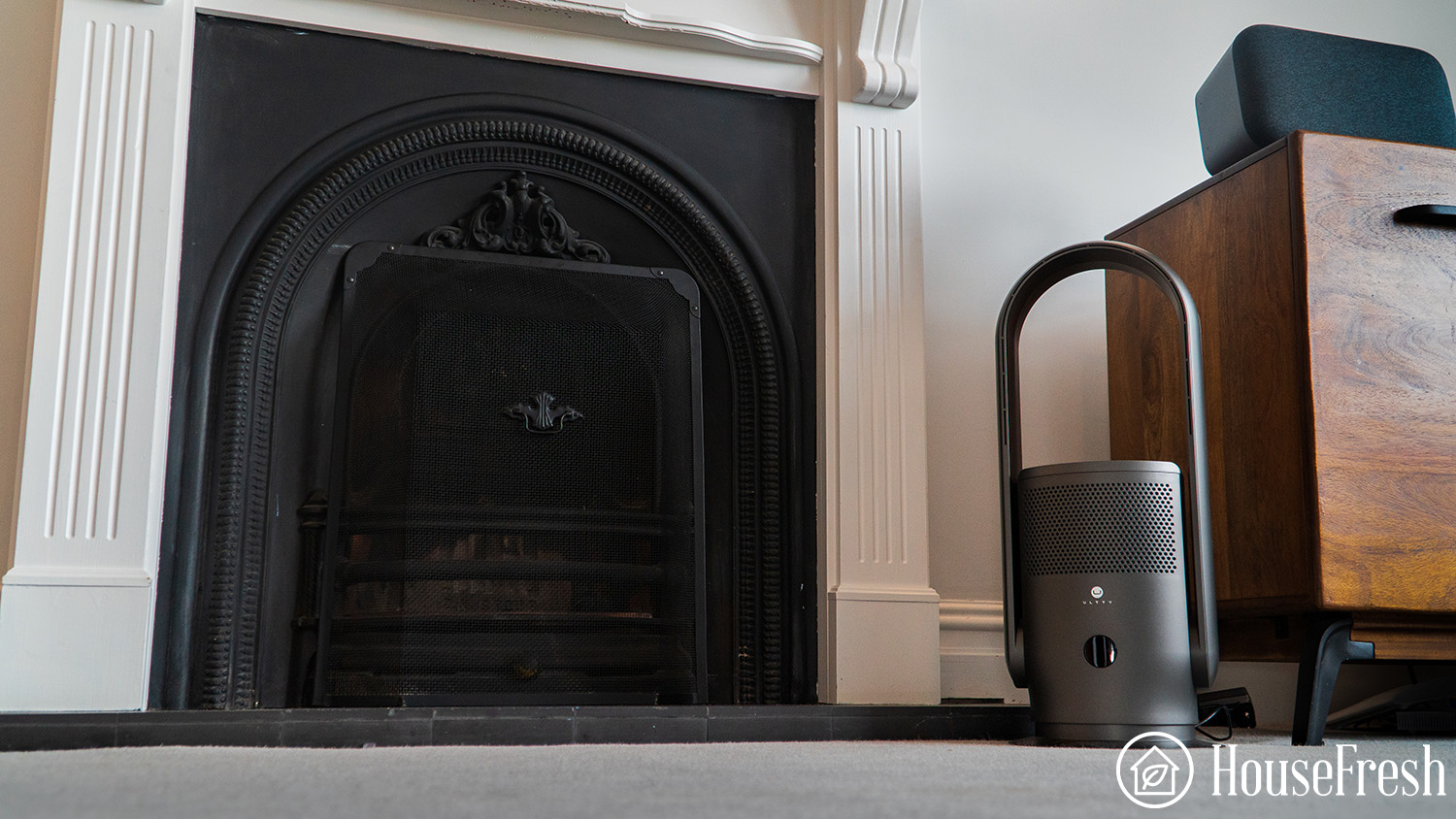
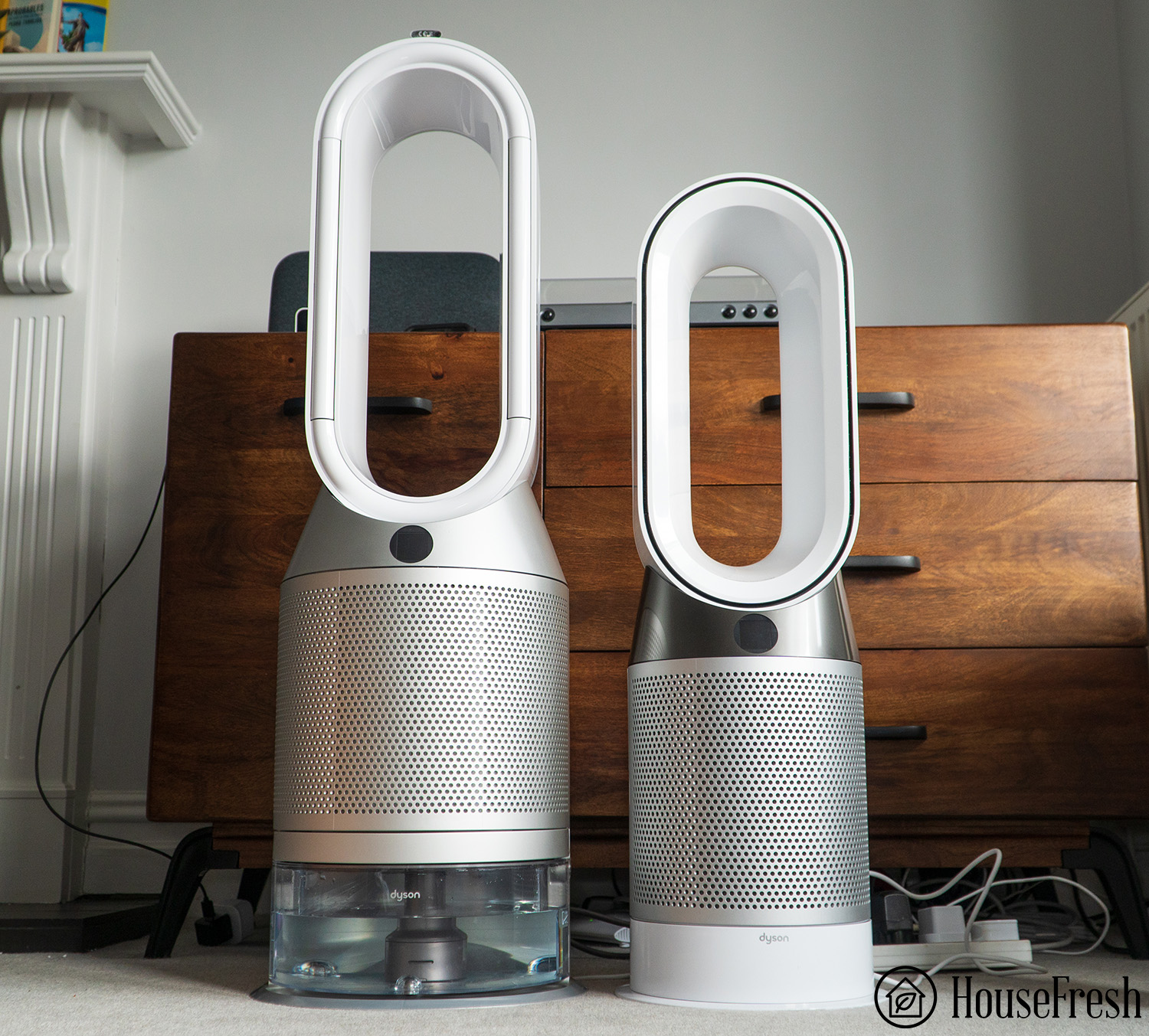
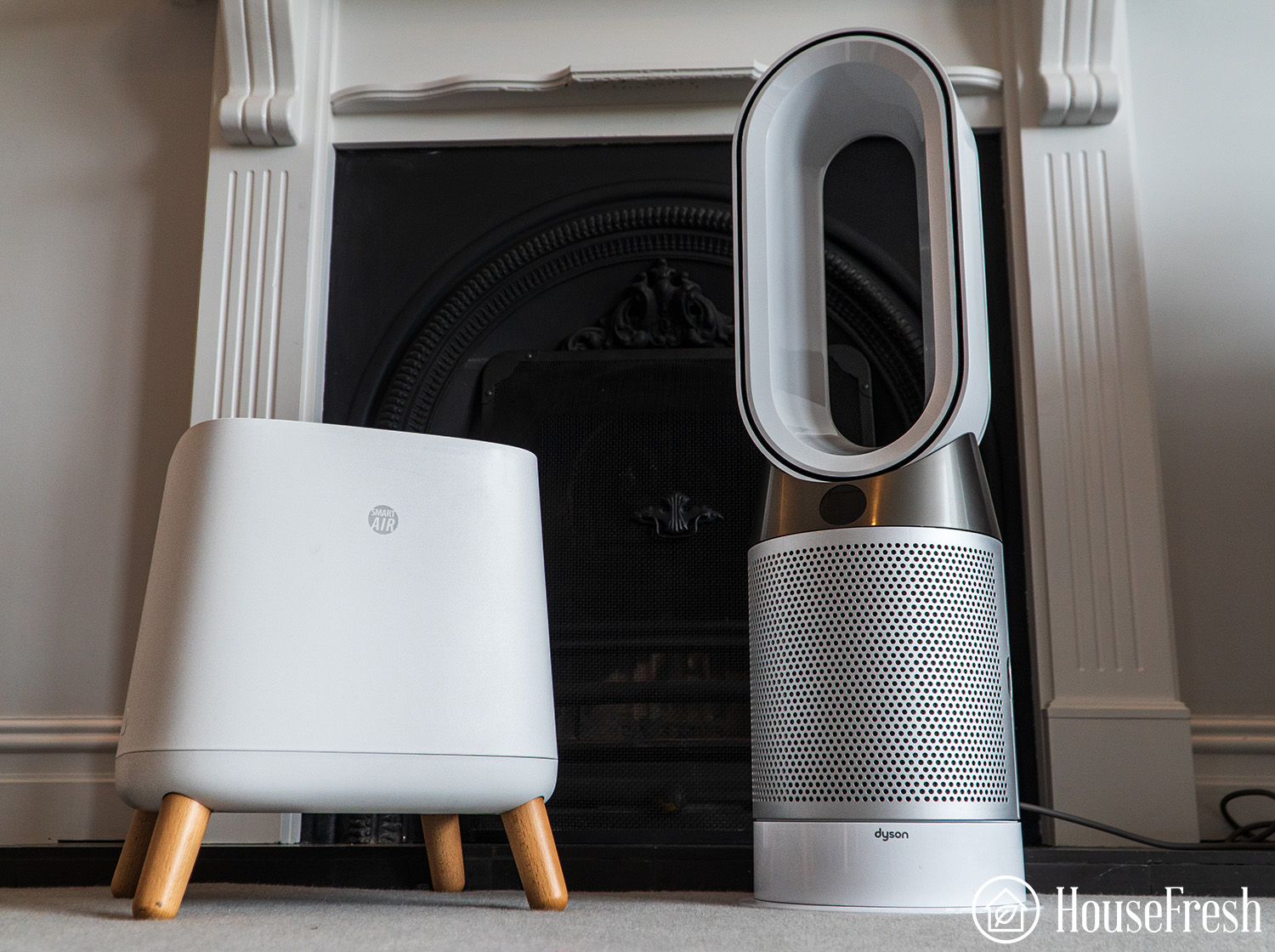
Compared to previous generations and variants, you can see that the Dyson TP07 is the tallest Dyson model we have reviewed. Yet it has the smallest floor space due to its smaller base compared to the variants offering heating or humidification. 

Dyson TP07 VS Dyson Combo Units

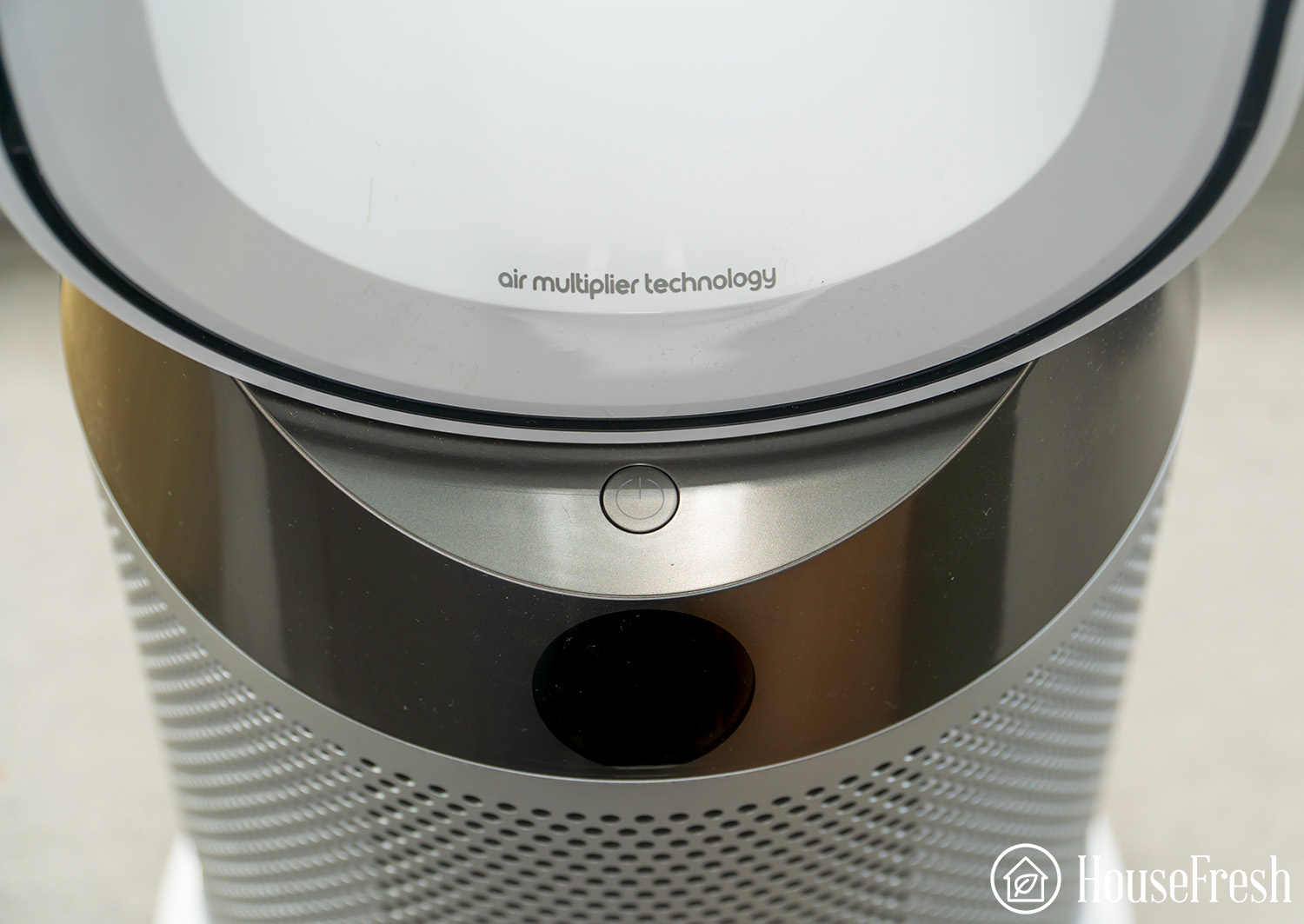
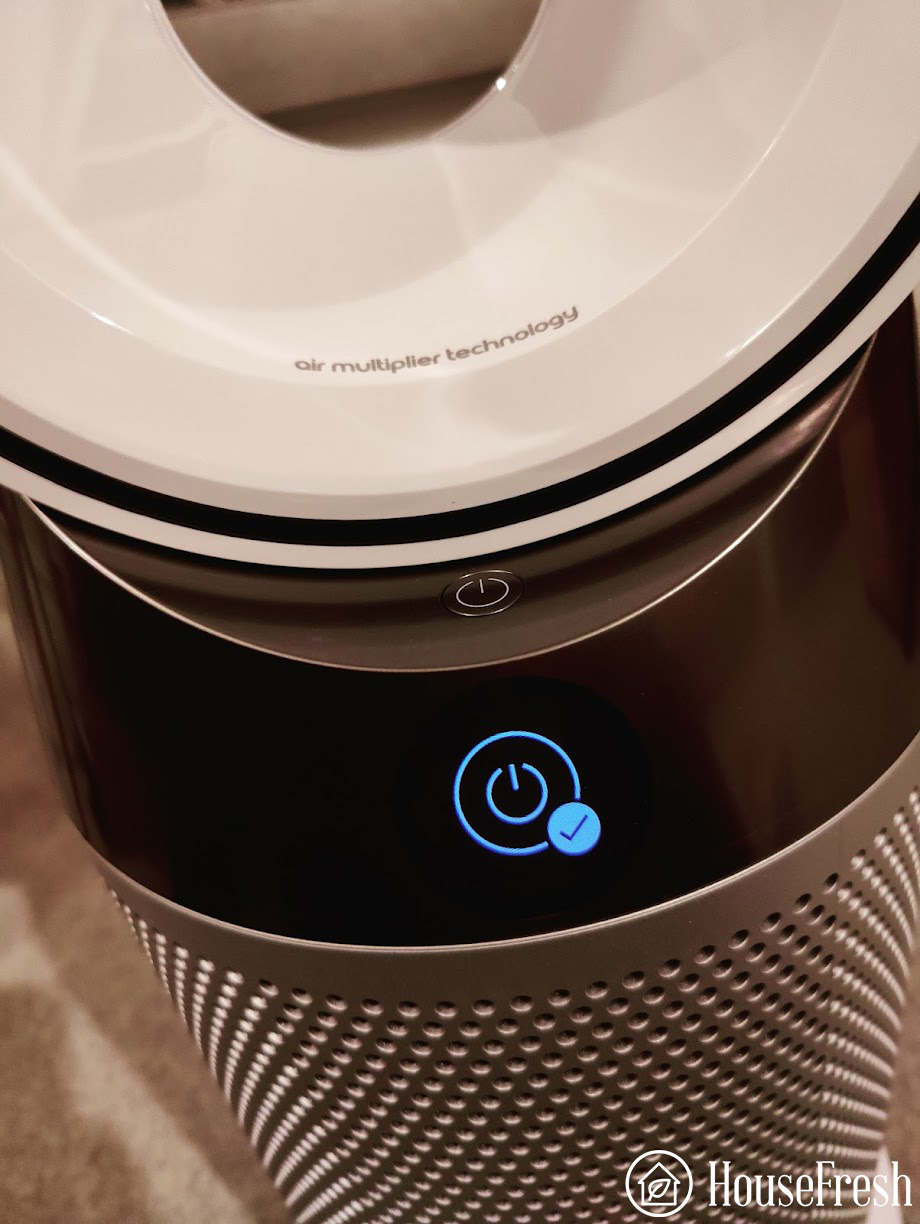
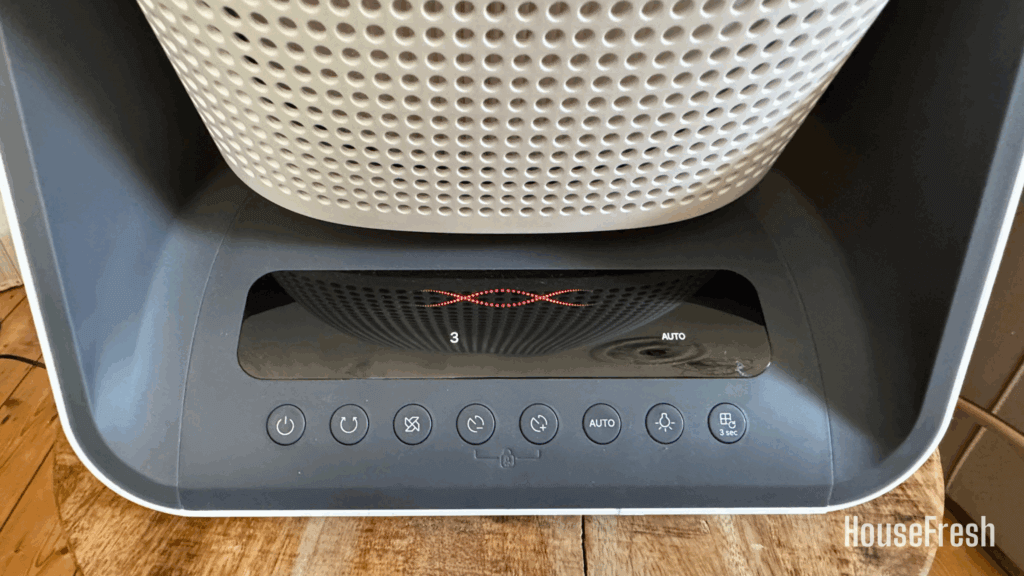
Even though there is a simple power button on the front of the unit, you will use either the remote control or the app to operate the purifier and adjust its settings. 

Dyson TP07 Controls

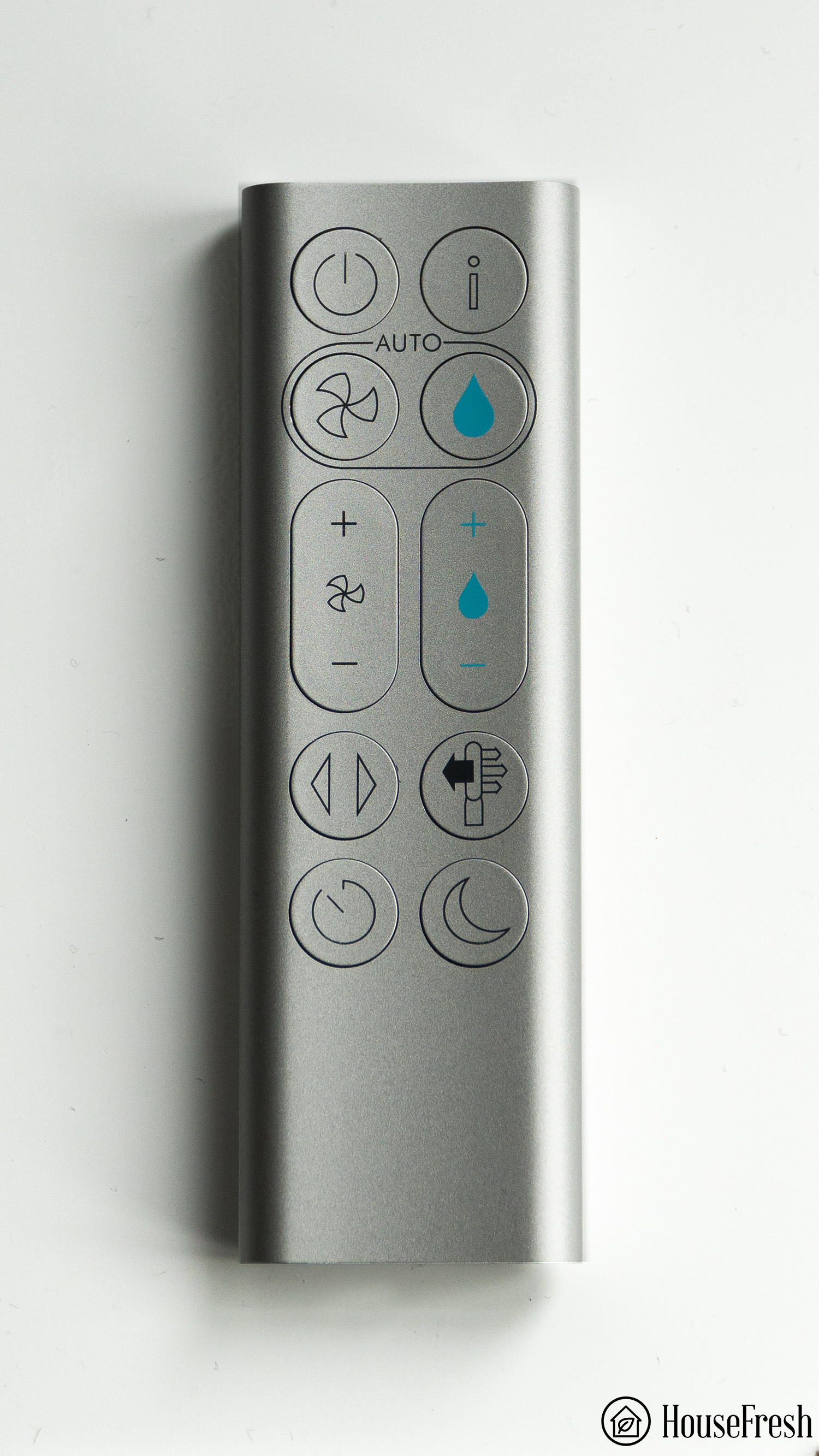
The remote provides options to change fan speed, degree of rotation, auto mode, night mode, change air flow direction and even check air quality and filter life. 

Dyson TP07 Remote control

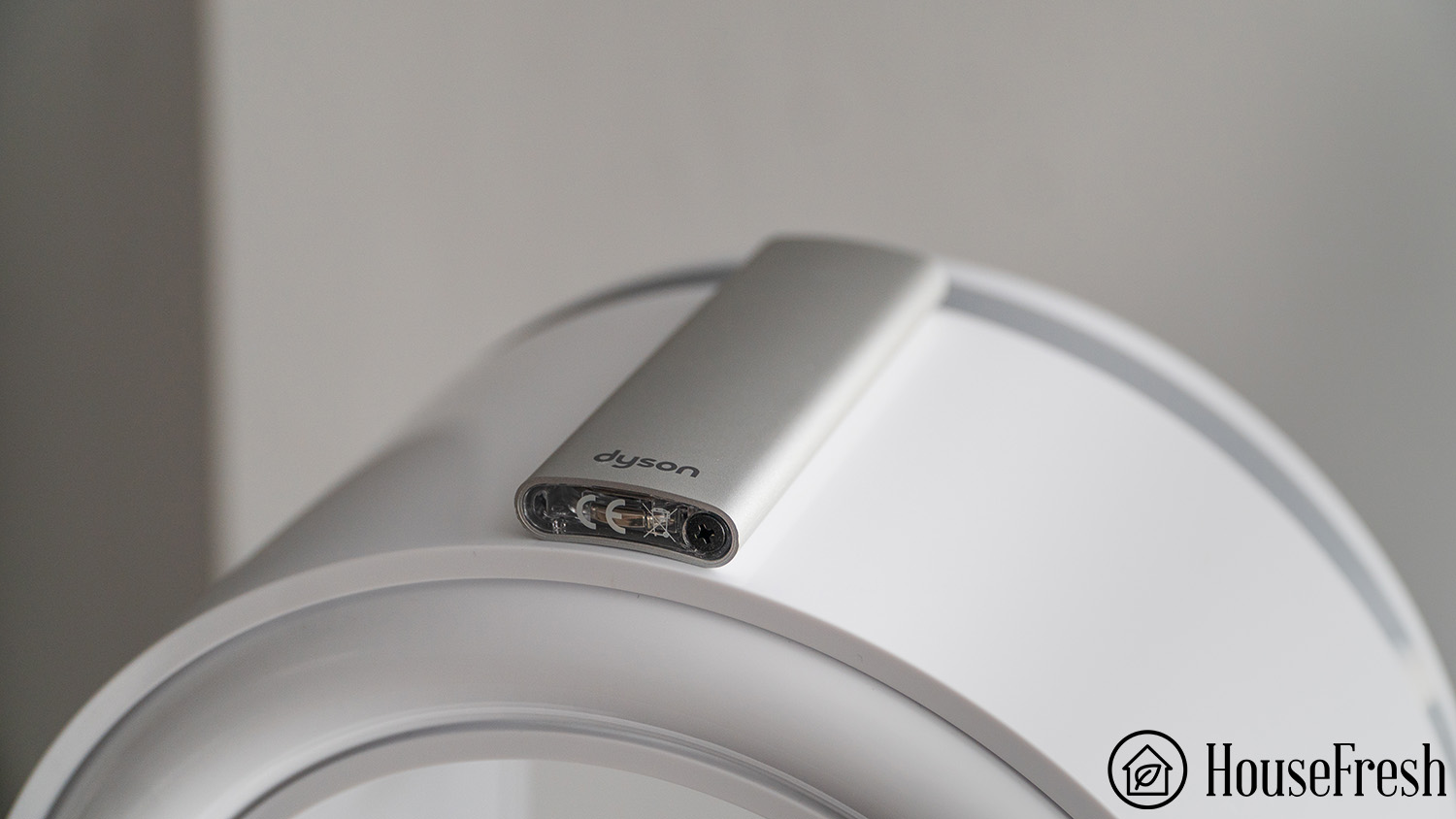
With all Dyson units, the remote control can attach magnetically to the top of your Dyson Cool TP07. This is super convenient as it gives you a clear (and handy) spot where to keep the remote, guaranteeing you won’t lose it around the house.

Dyson TP07 Remote control 2

The Dysol Cool TP07 comes with onboard air quality sensors, which make it possible for the air purifier to detect pollutants in the air and get to work automatically when set to Auto mode.

Dyson TP07 AQ Sensor

When on Auto mode, the TP07 will intelligently adjust the settings according to the air quality in the room, increasing airflow speed until the target air quality has been reached. At that point, the TP07 switches the fan to low speed, running in the background until the time comes to switch on to full speed again when the air quality levels drop.

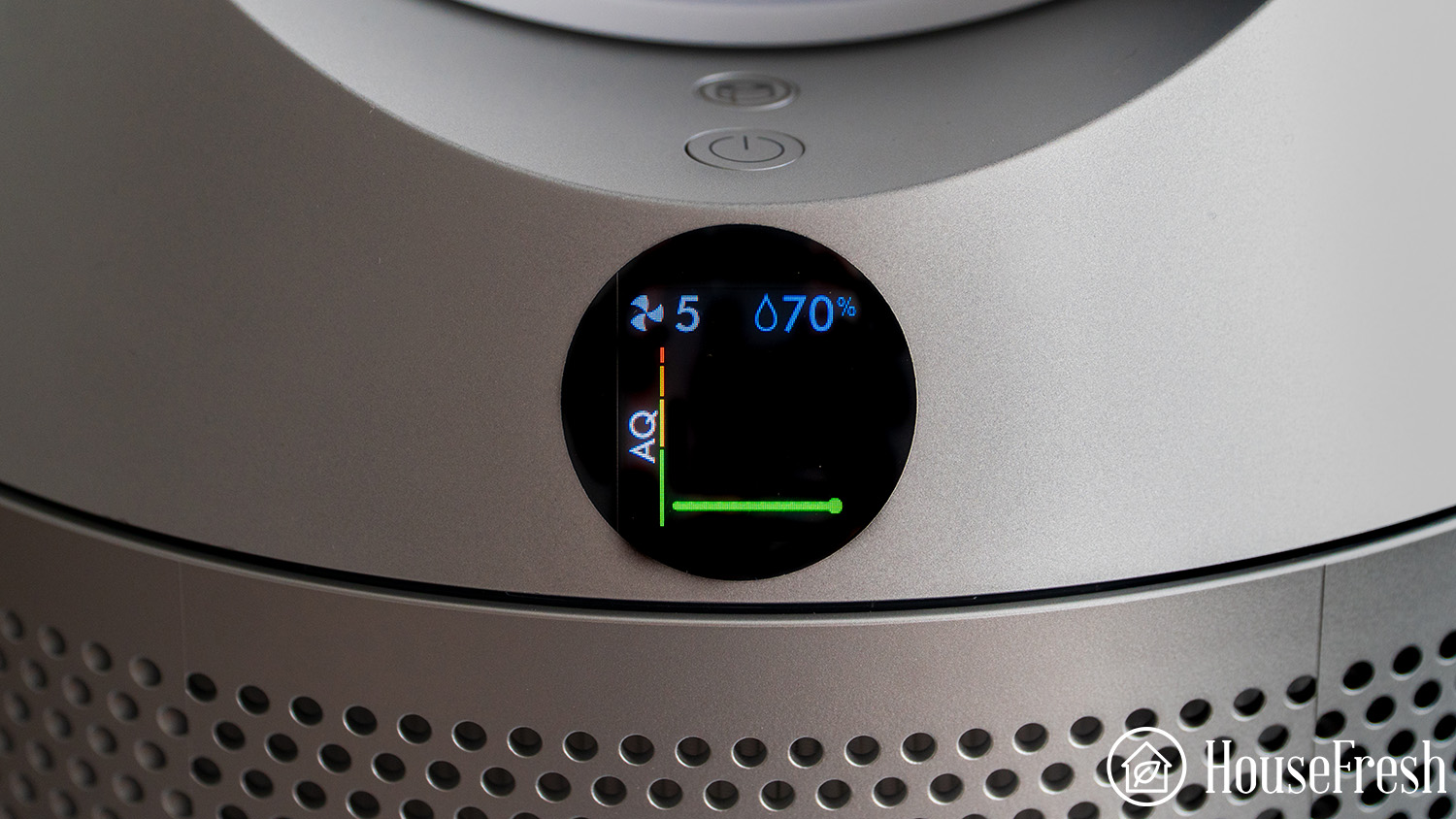
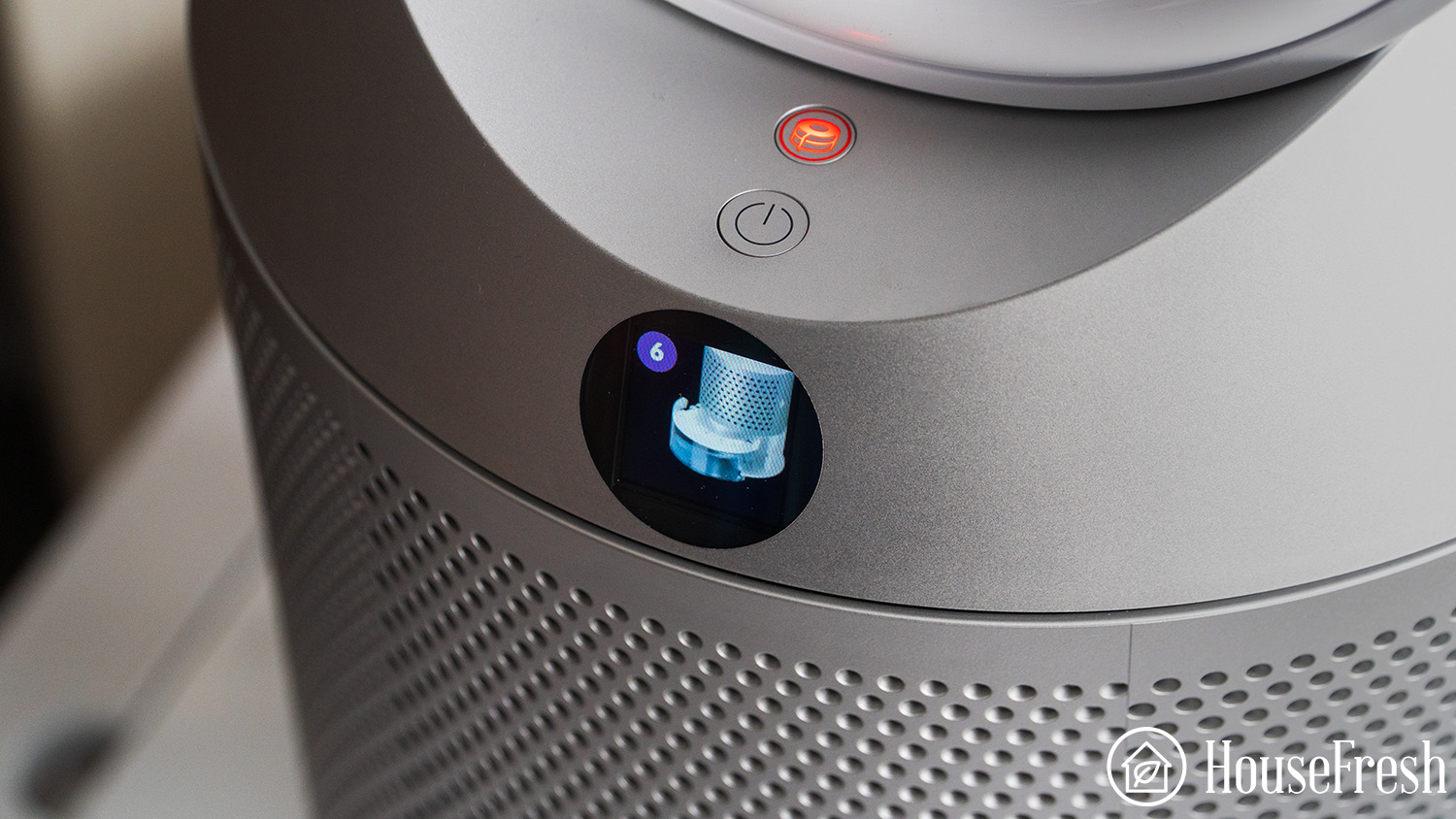
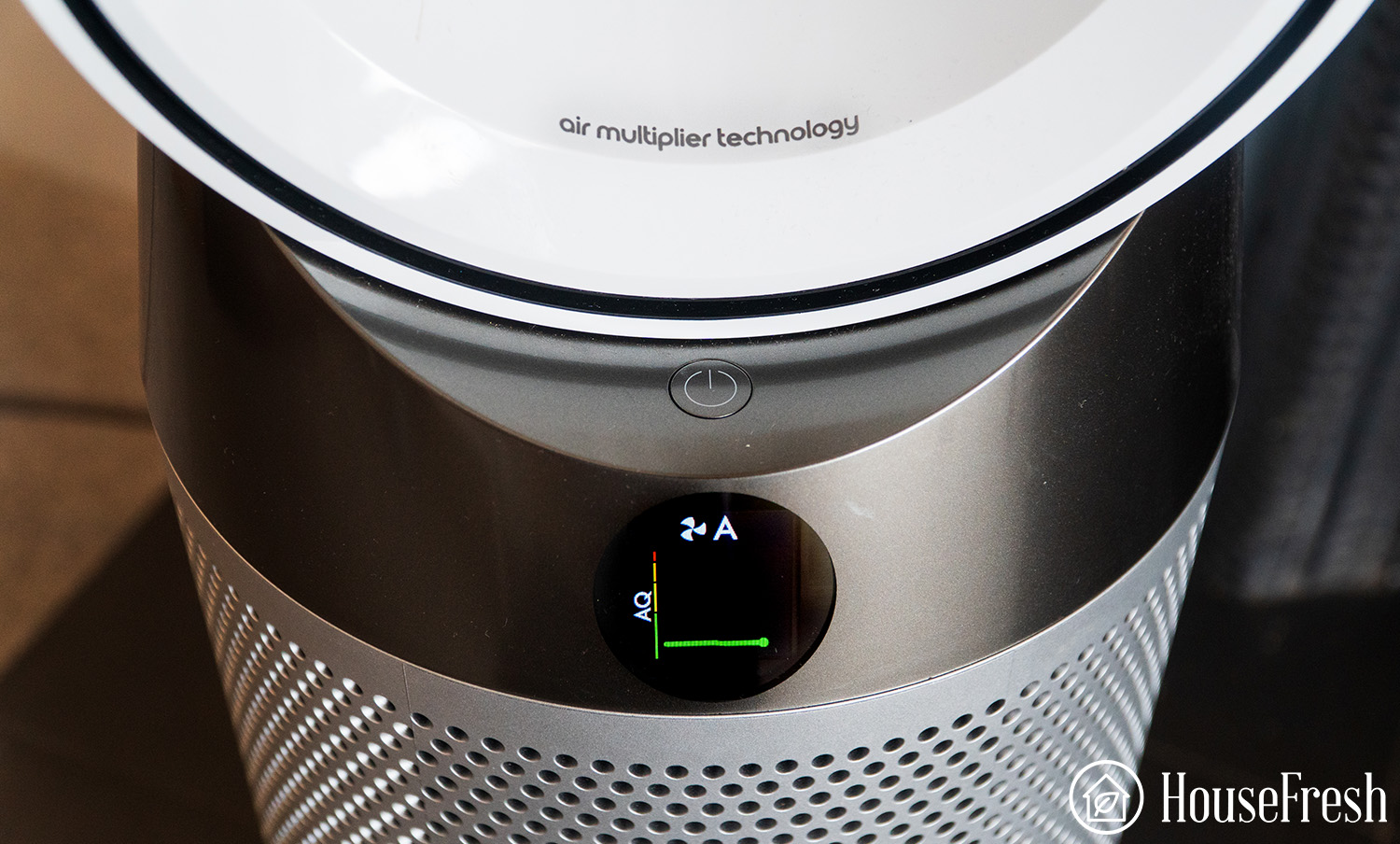
The LCD display screen on the Dyson Cool TP07 shows information about air quality, temperature, humidity, function modes and filter levels:

Dyson TP07 Screen

There’s a lot of info in there, so it’s handy to see a simple and clear explainer as part of the manual of the TP07:

Dyson Cool TP07 Screen Symbols

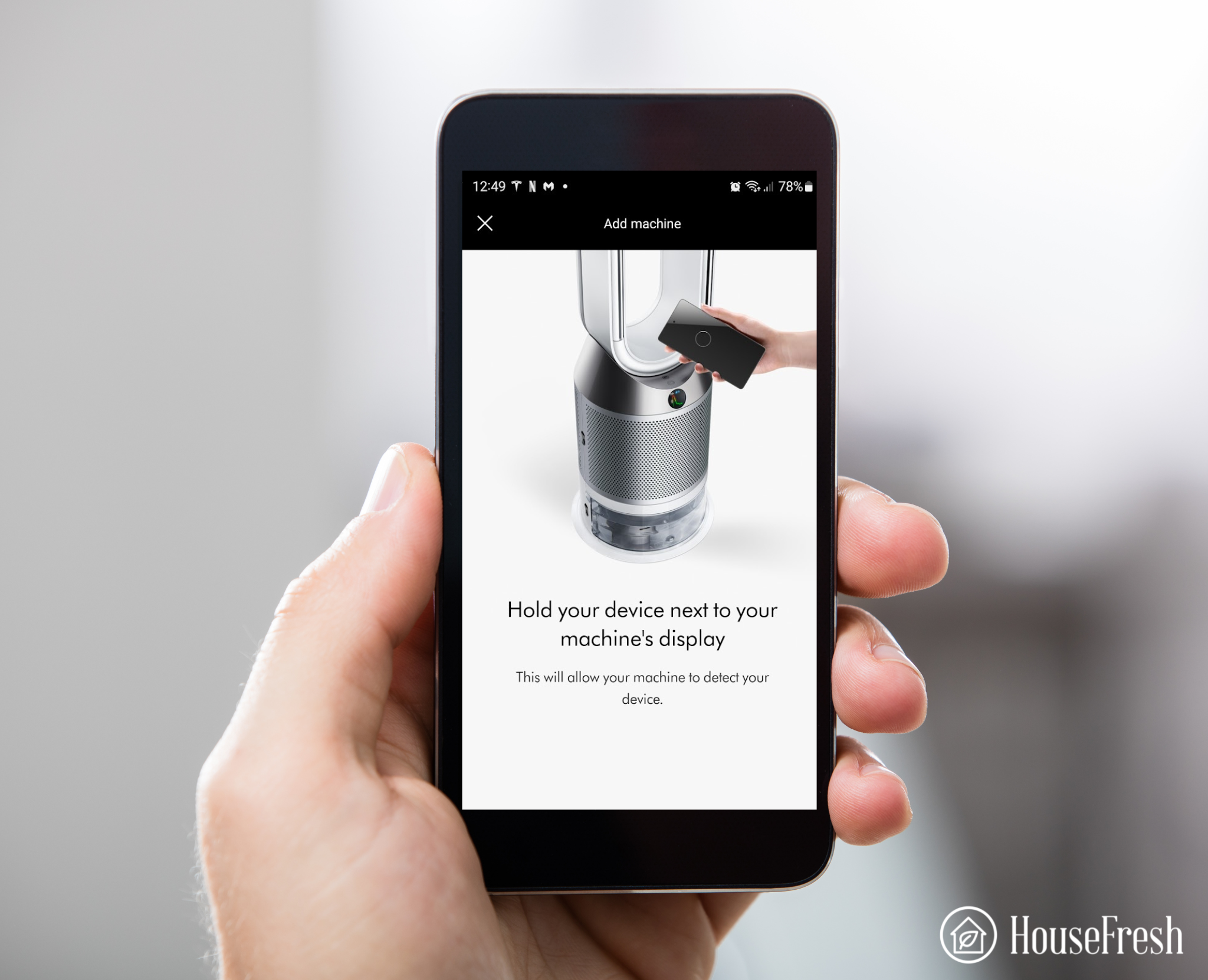
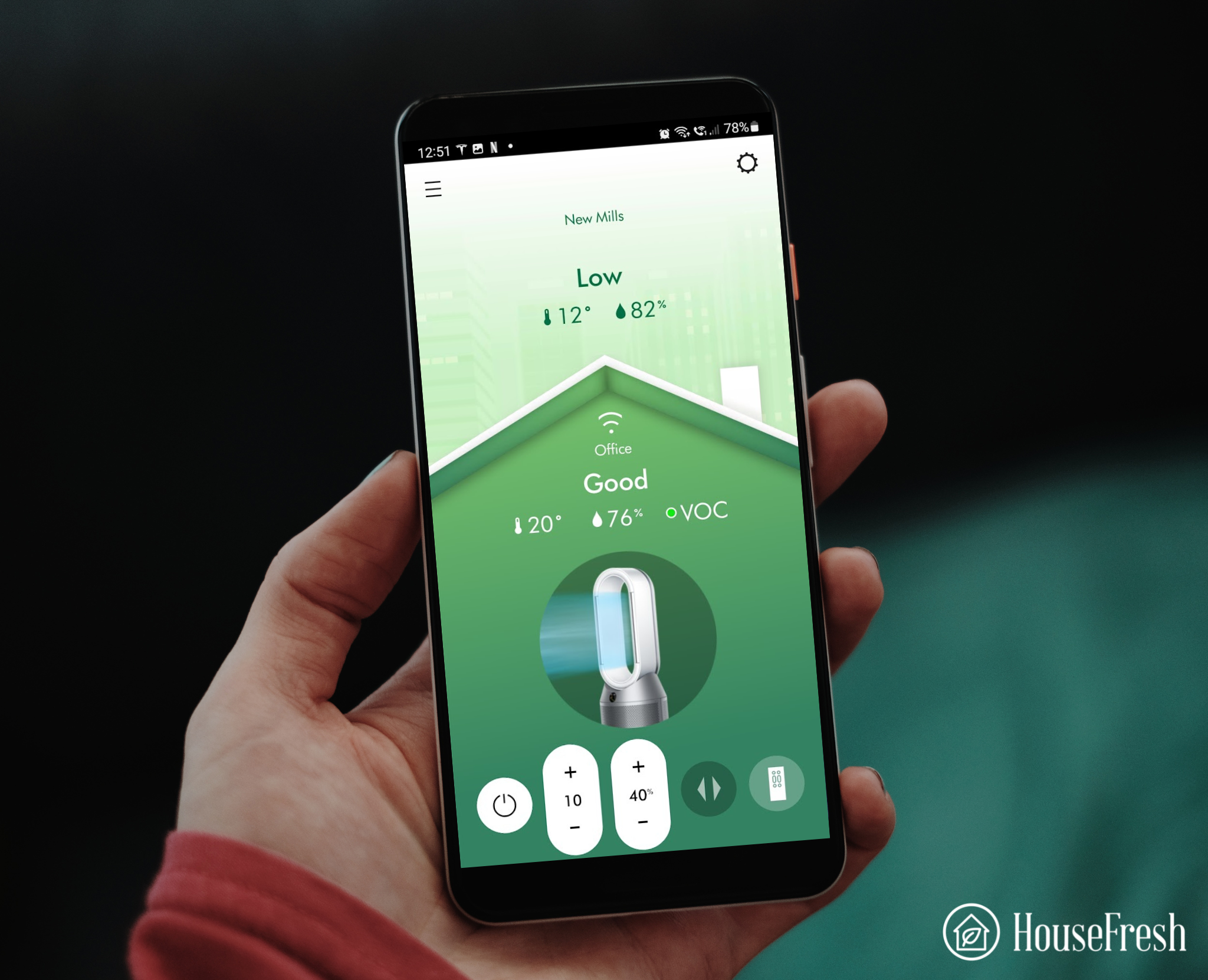
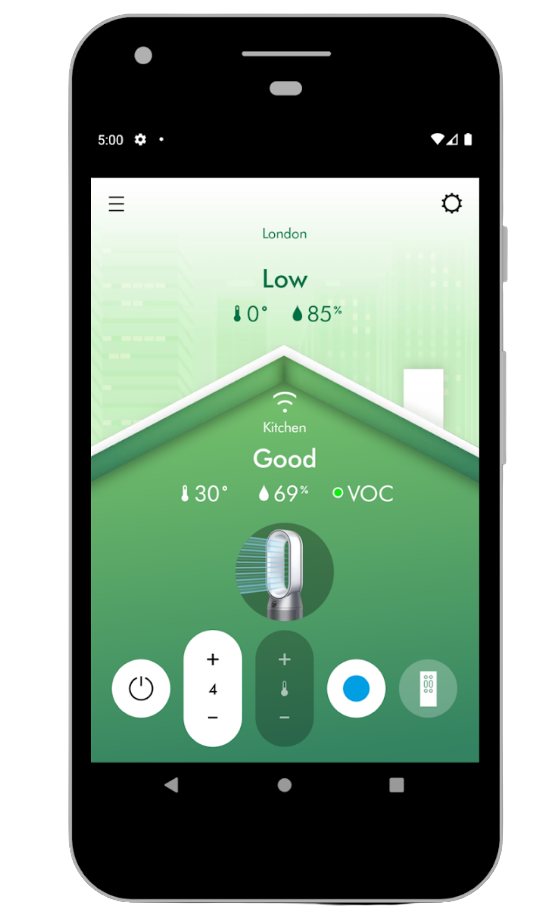
When it comes to smartphone connectivity, the Dyson TP07 uses the same MyDyson app you get for managing all your Dyson devices.

The MyDyson app is super simple to set up and, after a minute or so, I could check my space’s air quality levels and adjust all the same features as the remote control.

02Tev1q7QmAh8qmH3iXnCnW 11.v1621349489

Many apps from other air purifier brands are a little clunky to set up, and you can tell that Dyson invested a lot of thought into making the app user-friendly. 

Currently, the Dyson Link app is the best app we have used for any air-quality appliance we have reviewed. 

A medical grade and HEPA-certified air filter

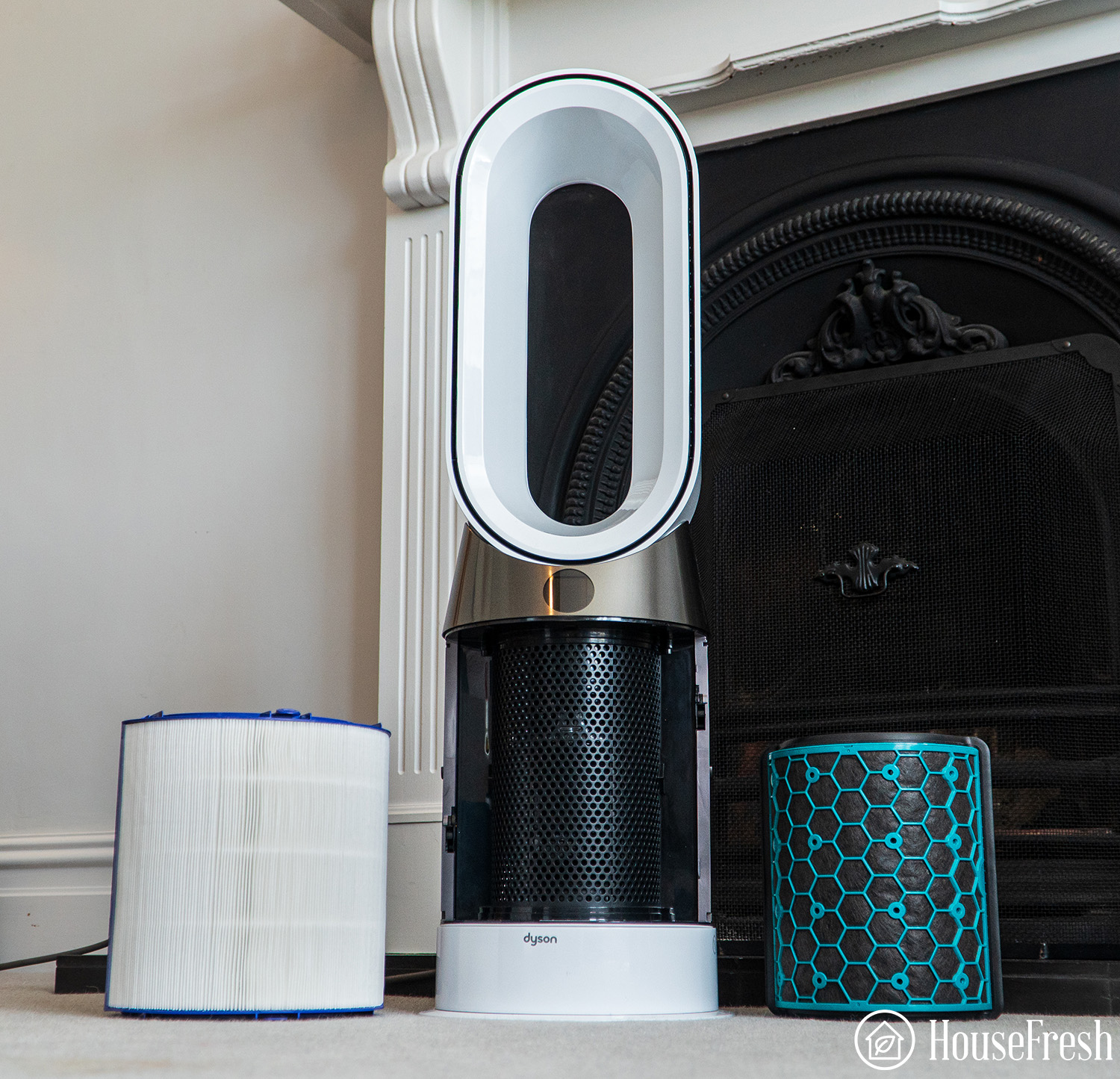
The same H13 HEPA filter we have seen in other Dyson combo air purifiers

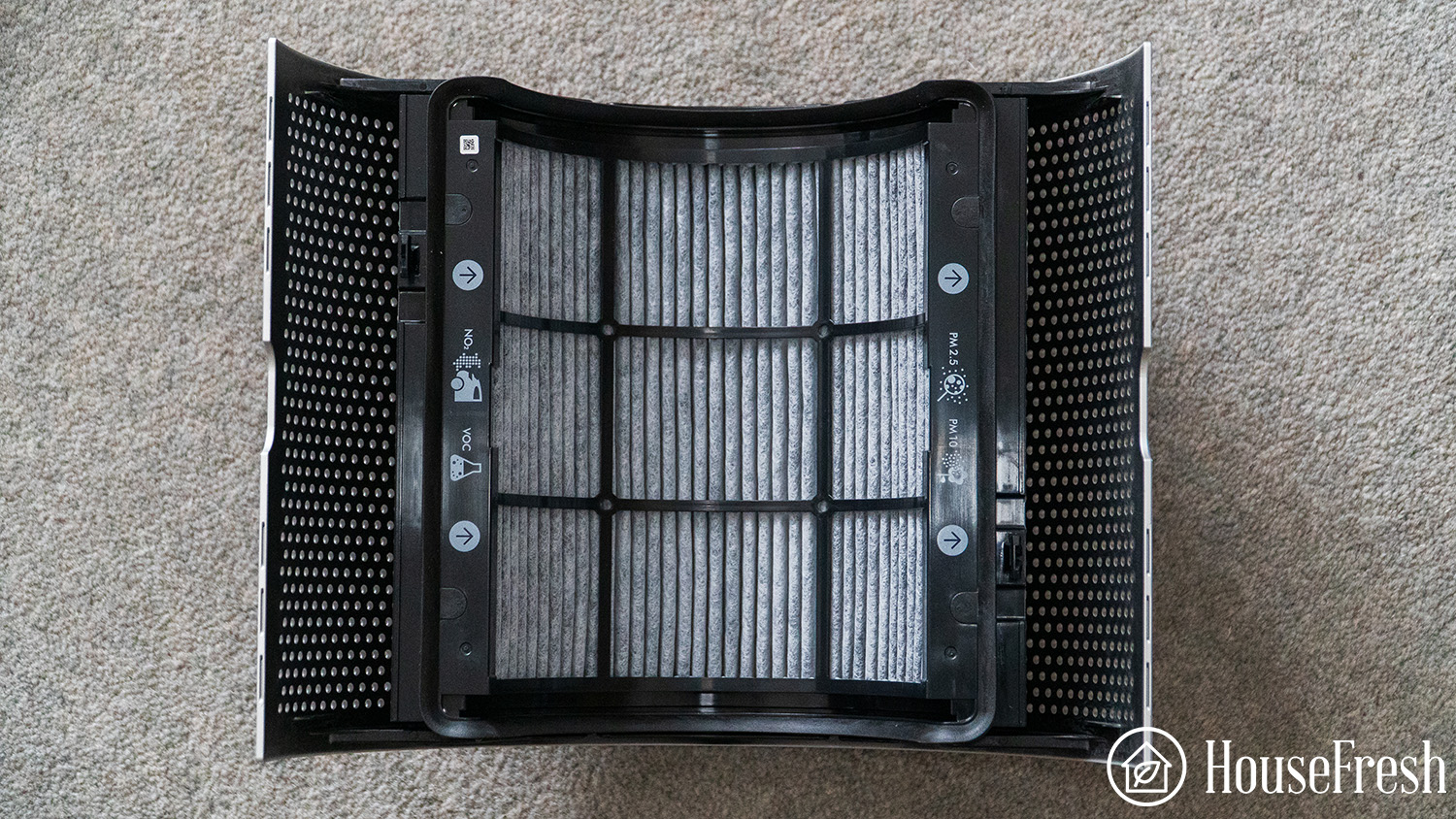
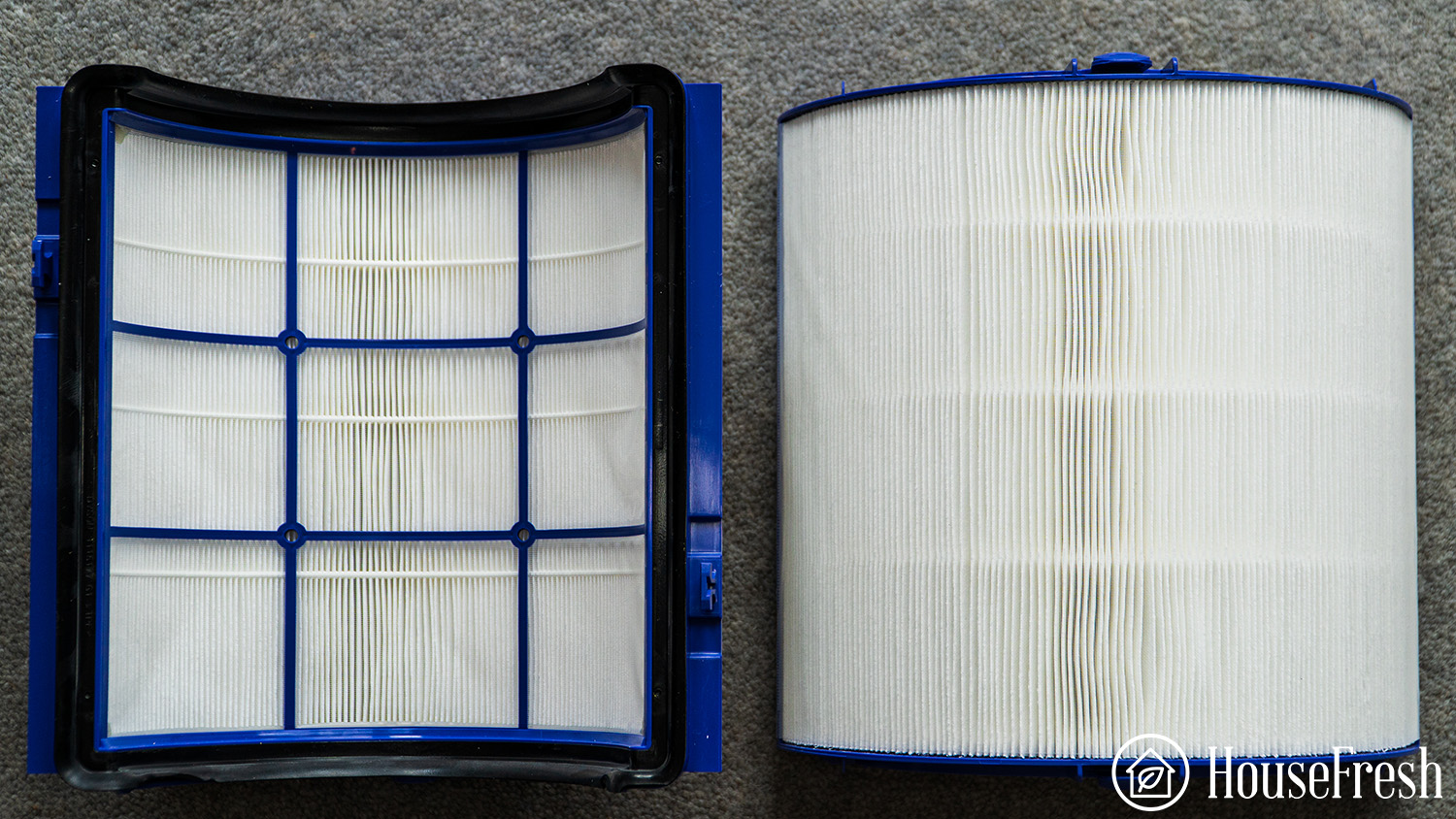
Dyson TP07 Filter top

I like that Dyson utilizes the same filter across its air purifier product range, unlike some brands that continually introduce new filters. When manufacturers continue to launch new filters, each new filter increases the probability that filters you need for your particular unit will become obsolete in the future.

Dyson calls its filter the 360 Combi Glass HEPA+Carbon Air, which uses a medical grade  HEPA H13 independently tested in a lab to confirm it’s up to the required quality.

It’s reassuring that Dyson publishes their third-party lab test result, making it available for anyone to see. Especially as Dyson was behind the recent complaint against Levoit, forcing them to remove HEPA H13 in the marketing for several different models.

Dyson TP07 Filter front

Filter grade is just one element, but I appreciate that Dyson uses its power to improve the industry as a whole – no manufacturer should mislead consumers when it comes to harmful air quality.

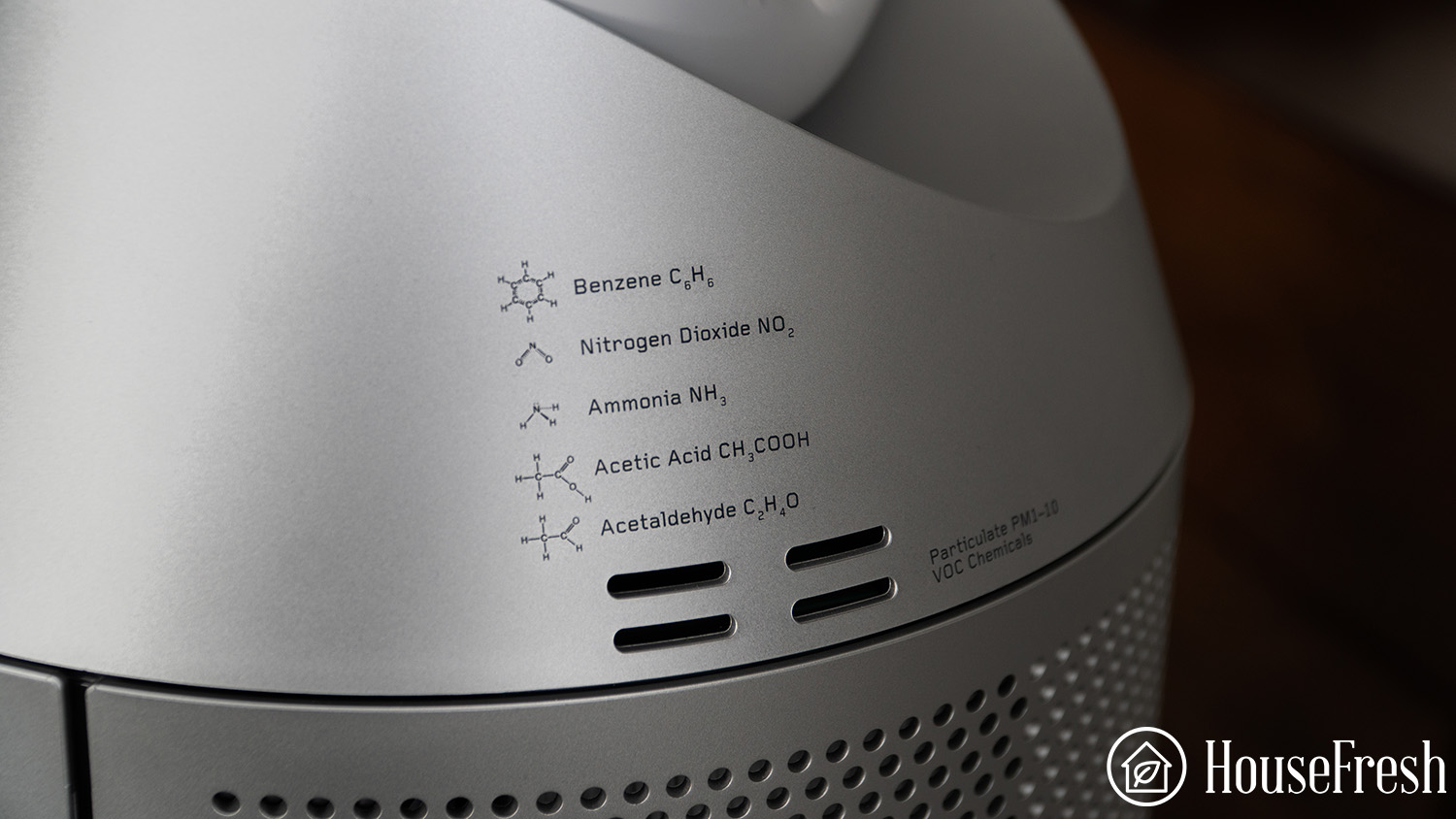
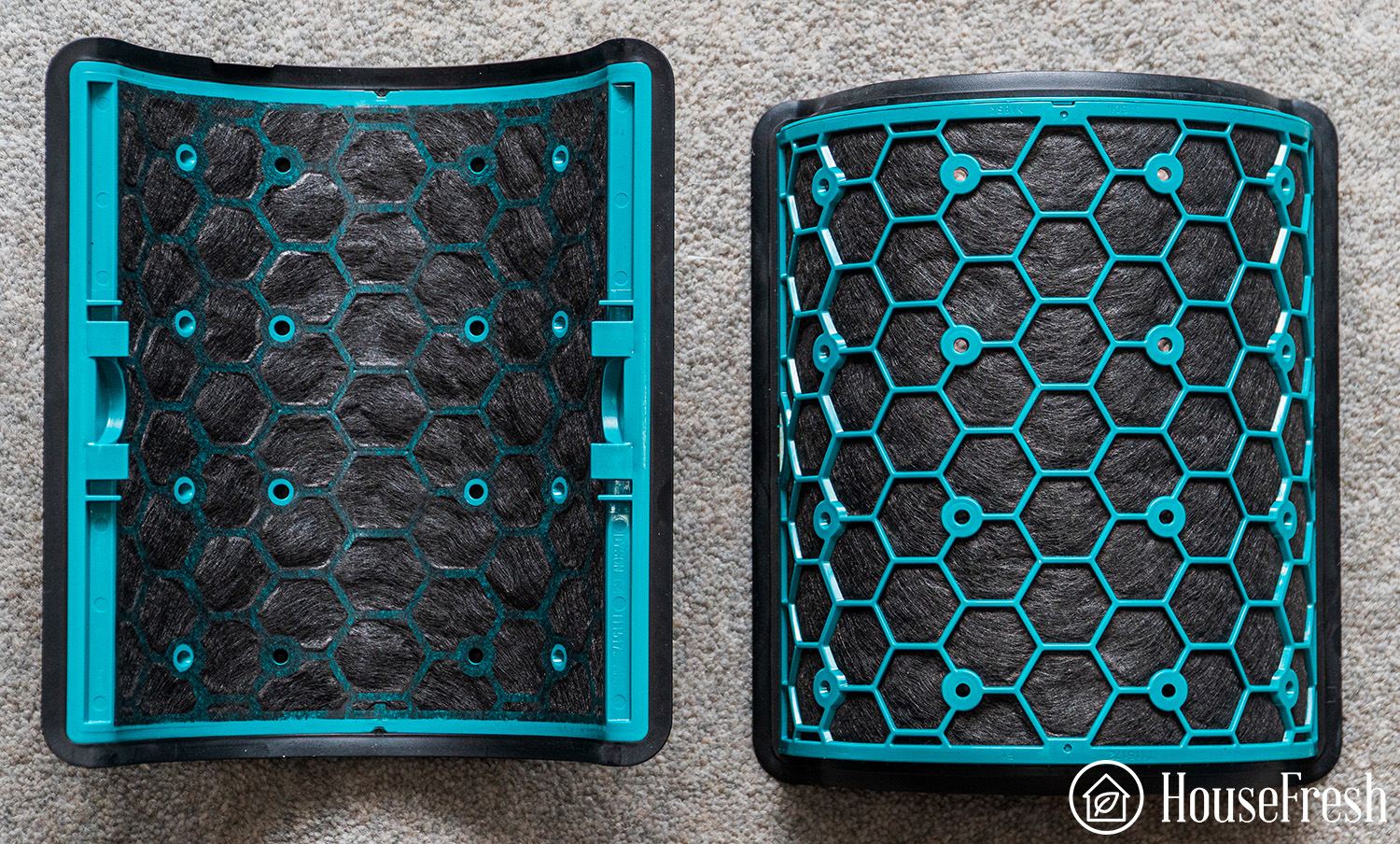
Dyson’s filter also contains activated charcoal designed to remove gas pollutants like chemical fumes or odor.  However, it contains a relatively small amount of carbon and will struggle to remove strong odors. If you have this issue, you should look at devices that list their carbon in lbs, such as the air purifiers we recommend for VOCs.

Dyson TP07 Filter back

Tip

Most HEPA filters come inside a plastic bag, so be sure to remove them, or you will just move particles around the room without removing them.

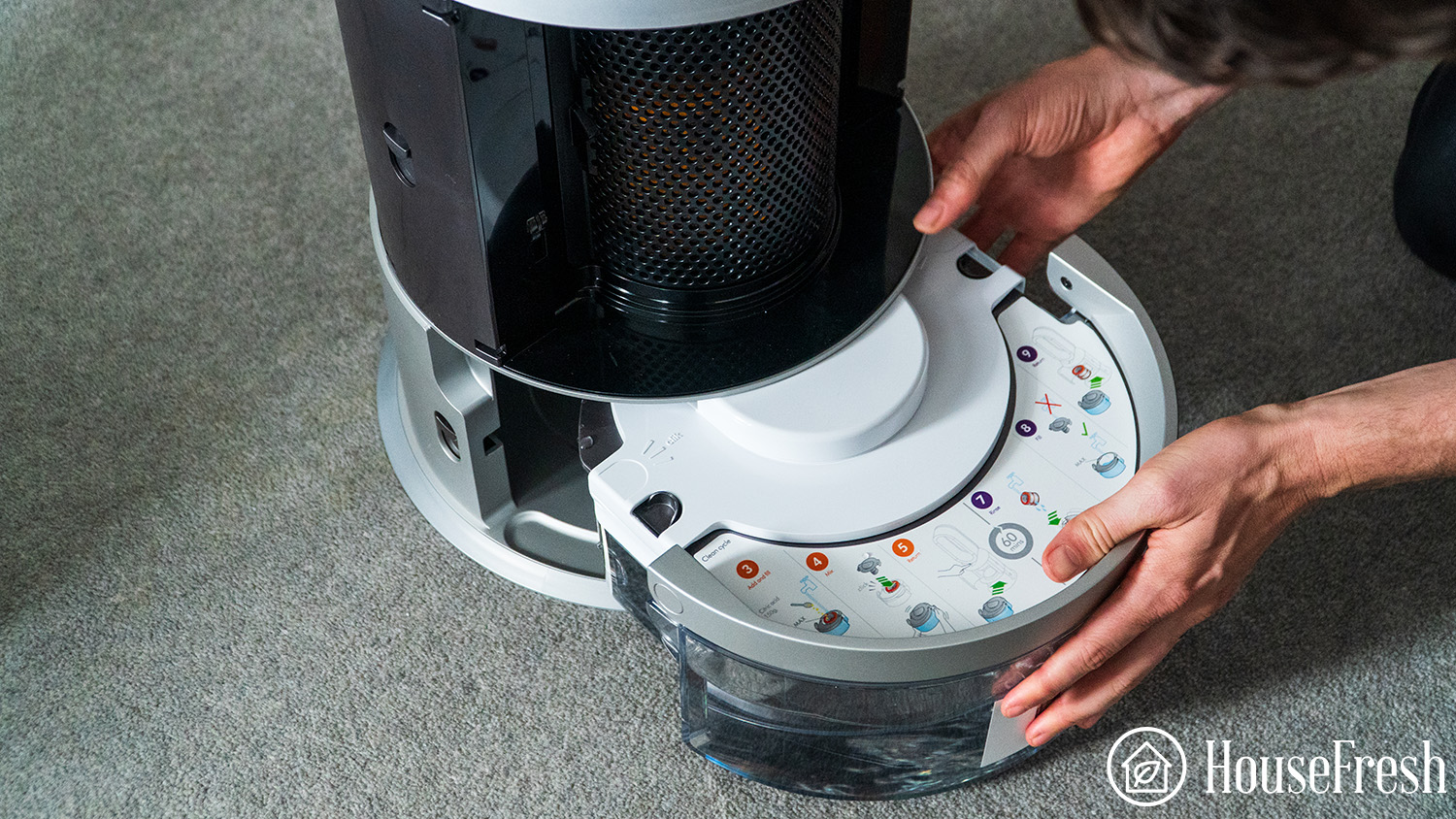
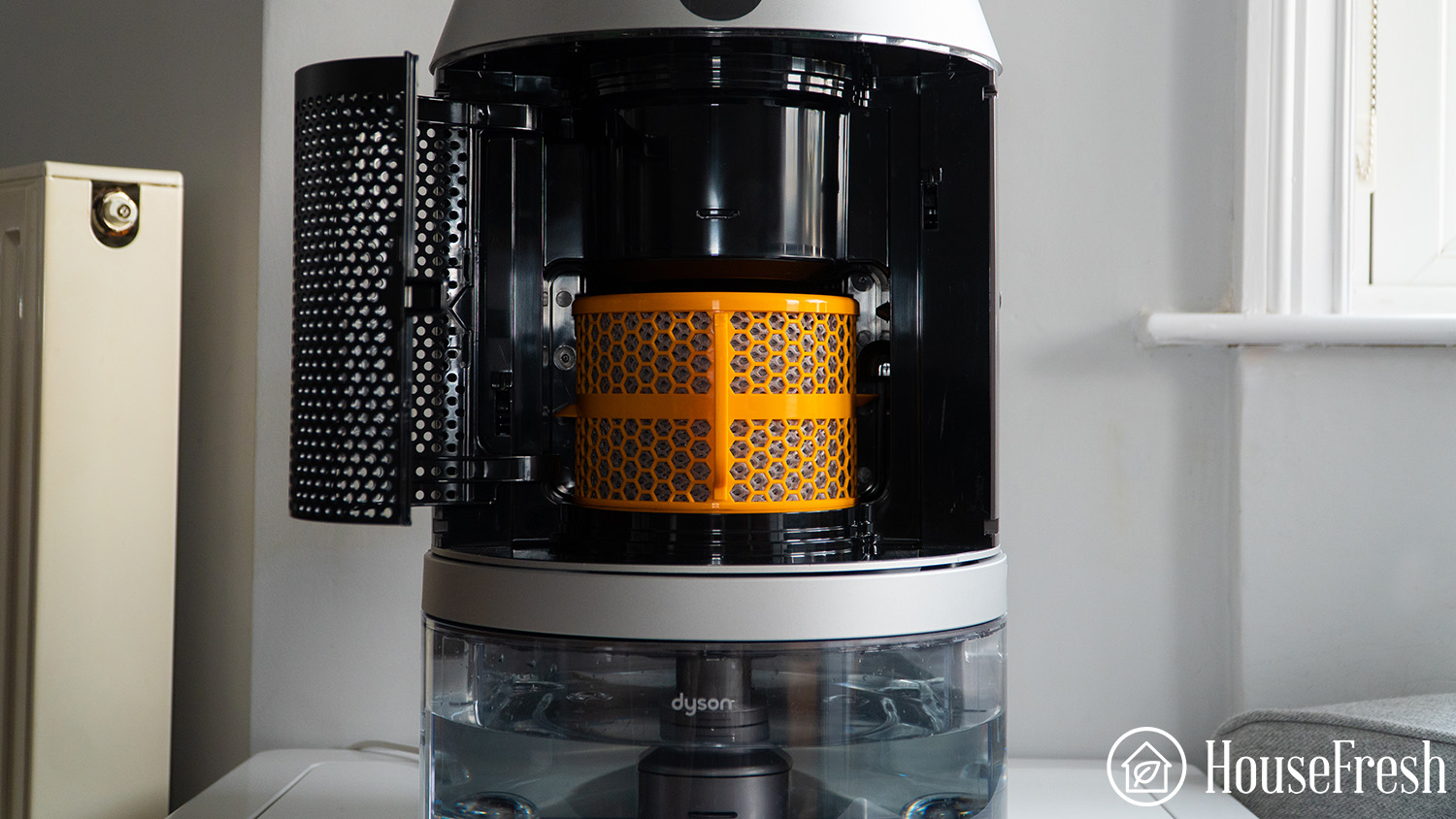
The Dyson TP07 has a button on each side of the device that you push down to release the filter case and filter. The filter is then removed from the casing with a push of a button and swapped out for a new one when needed. 

Dyson TP07 No filter

I’ve also given the unit design marks for encasing the filter in a rubber seal; this prevents air from escaping and increases cleaning efficiency. 

However, I don’t like that so much plastic and rubber is thrown away with each filter replacement. It would be good to reduce the waste to only the filter material. Dyson seems aware of this issue and states that the material used on the filter is recycled. But for future versions, I hope Dyson could improve the design so that less waste is created when you replace the filter.

Press and hold the Night mode button (🌙) on the remote control. The display will countdown from five before resetting the filter life indicator.

The Dyson TP07 cleared our test room in 62 minutes

This is slower than devices that cost a fraction of its price, such as the $99 Core 300 (54 minutes) or the $150 AirFanta 3Pro (17 minutes).

As part of this review, I checked out the current ENERGY STAR certificate for the TP07 and the older generation the Dyson TP04, and I was surprised to see that both devices had the same CADR figures. 

CADR is a lab test that provides a figure for the removal of Smoke, Dust and Pollen and helps you to get the right-sized air purifier for your space. 

I was surprised that both devices had the same CADR, as my experience with Dyson is that they tend to improve with each new generation. 

Based on these CADR figures, we expect the Dyson TP07 to perform as well as the Dyson HP04 that we tested last year, which took 92 minutes to clear our test room of 728 cubic feet of particles sized 1 micron or more. 

Unlike most air purifier reviews you read, we test all our devices in the same room doing the same job. This means we can compare models, brands and even DIY options. 

We first fill our test room with incense smoke and then switch on the Dyson TP07 to its highest fan speed (10) and track the levels of PM1, PM2.5 and PM10 to see how long it takes the air purifier to remove these tiny pollutants from the air. 

The Dyson TP07 took 62 minutes to clean our test room, 30 minutes quicker than the previous generation Dyson HP04:

It’s worth noting that whilst the performance is much better than the previous generation, it still took eight minutes more than the Levoit 300 – a $99 device – so it’s still not a purifier that I would recommend if you want the best bang for your buck. 

I am looking forward to finding out if Dyson can keep on improving performance with future generations as they have done with their other range of appliances, from vacuum cleaners to hair dryers. 

Noise levels test results

The reported sound levels for the Dyson TP07 at the lowest speed using air purification was 35.5 dB and went up to  54.4 dB at speed 10.  When compared with similarly powered air purifiers, this device runs considerably quiet, particularly considering its fan function. 

We know that sound levels can be personal, so we included a video of the Dyson TP07 running at its lowest and highest fan speed: 

Fan performance test results

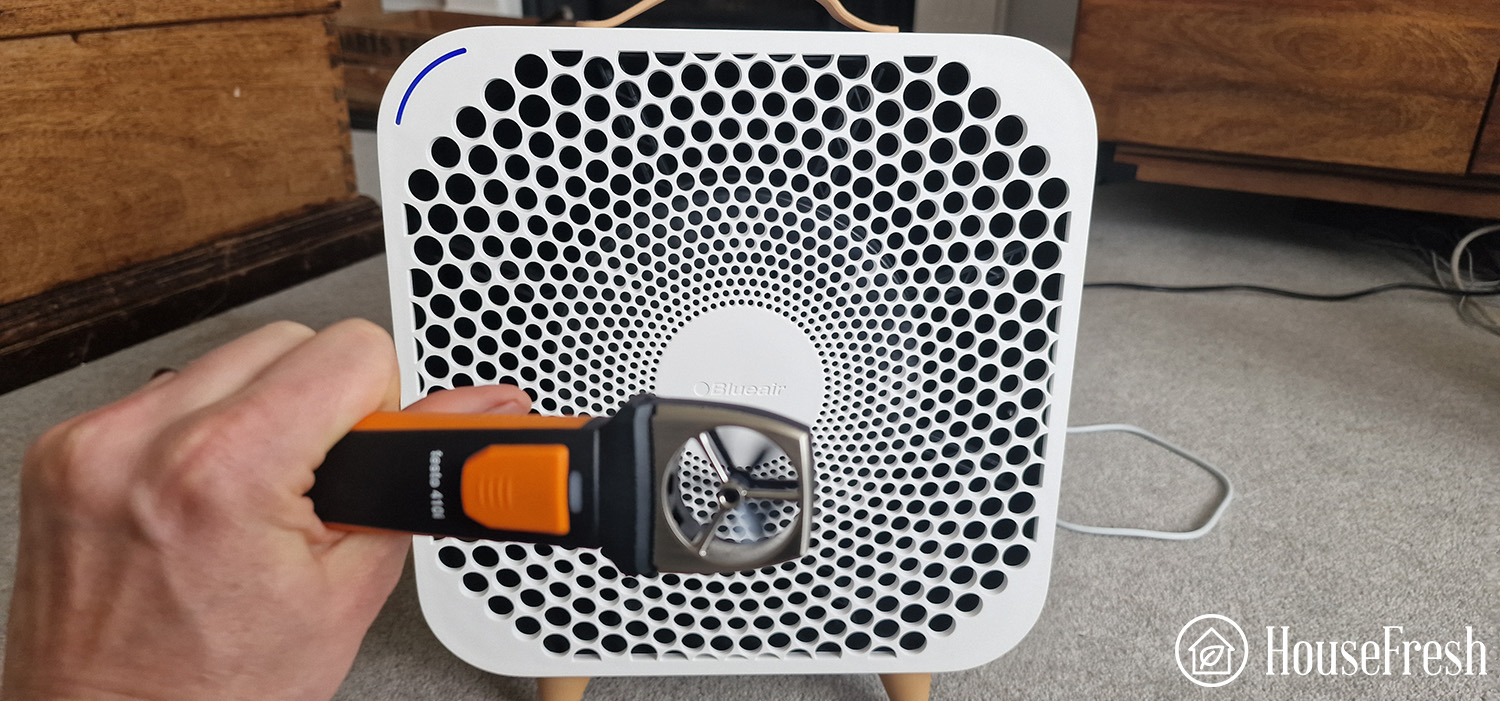
As part of this review, we used the Testo 410i anemometer, and we compared it to one of our favorite air purifier fan combos from last year, the Blueair Pure Fan Auto.


Blueair Pure Fan Auto Dyson TP07
Overall average0.74 m/s3.03 m/s
Minimum total0.51 m/s2.90 m/s
Maximum total0.99 m/s3.16 m/s

In comparison, the Dyson Cool TP07 has a much more powerful fan function, moving more than 3 times the amount of air. 

Although it still performs worse at air cleaning, taking 49 minutes to clear our test lab compared to the 26 minutes it took for the Blueair Pure Fan Auto to do the same job.

The cost to run a Dyson Cool TP07: $124.07 per year

1. Electricity costs = $44.08 per year

When using an energy meter, we saw that the Dyson pulled a maximum of 28.9 watts on its top speed setting, which is low compared to other brands on the market. Assuming we left it running at high speed 24/7 every day of the year, it would add just under $50 to your annual electricity bill.

2. Filter costs = $79.99 per year

Dyson recommends changing the filters every 12 months, but this will depend on your particular air quality situation. The genuine filters are more expensive than other models, but we were pleased to see that Amazon now has many generic filters to choose from, bringing the price down. These generic filters may not be third-party lab tested, but as we saw with non-HEPA grade Levoit filters, they will likely still do a good job of removing particles from the air at a lower cost than going with genuine filters. 

Choosing non-genuine filters will bring the yearly filter cost down to $35-40.

Sale
Dyson TP07 Replacement Filter (2-Pack )
  • 【COMPATIBIE MODELS】- This TP04 HP04 filter replacement are fully compatible with Dyson Air Purifier Fan TP04 HP04 DP04 TP05 and DP05 models, for Dyson Tower Fan Sealed Two Stage 360° Air Purifier and Pure Cool Air Purifier Fan. Compared to Part # 968707-04, 968708-04, 969048-01. Please double check your model is TP04 HP04 DP04 TP05 and DP05 before order.
  • 【HIGH EFFICIENCY TRUE HEPA FILTER】- Our TP04 DP04 filter replacements come with Dual-Layer Filtra-tion. This HEPA replacement filter helps for attaching 99.7% of the airborne particels as small as 0.3 microns, and the activated carbon filter helps you solve the problem of unpleasant odors and gases.

Bottom line: Is the Dyson TP07 worth it?

A big upgrade over previous generations of Dyson fan air purifiers but still lacking in air quality performance

Dyson has managed to upgrade the air cleaning performance over the previous generation, shaving off 30 minutes in our air cleaning performance test. Yet this device is still only as good at removing tiny particles as a $99 air purifier. 

Dyson TP07 Living Room

If you want a good-looking fan that can clean the air in a smaller space, this is likely the best option, but it comes with a high price tag. 

I am excited to see if Dyson can continue making big improvements with future generations of the air purifier to justify the costly purchase price. 

Unless you’re only in the market for a combo unit, for the same price as the Dyson Cool TP07, you can get a much more powerful air purifier such as the Levoit EverestAir — and you would still have $150 left over to spend on a separate fan. 

SOURCES

We calculated yearly costs associated with running the Dyson TP07 24 hours a day, 365 days per year utilizing the latest average energy prices as reported by the Bureau of Labor Statistics of $0.174/kWh as of April 2024.


Blueair Pure Fan Auto Review

Blueair Pure Fan Auto Hallway

Blueair is one of the big names in the air purifier industry; it has been designing and manufacturing air purifiers since 2016. 

Since 2016, the company has been owned by Unilever; as of this year, it is now a Certified B Corporation. Since the sale, Blueair has been rapidly bringing out new units, and this Pure Fan Auto is their first attempt at an air purifier and fan combo. 

Previously the “fan + air purifier combo” market has been dominated by Dyson with their HP04 and HP03 that bring air purifier functionality to heaters, fans and even humidifiers. 

The Pure Fan Auto combines the features of an air purifier with a fan and is aimed at capturing some of the markets that Dyson has built.

We liked the Dyson fan + air purifier combos but felt that the air cleaning performance could be improved, so we were excited to see how the Blueair Pure Fan Auto performed. 

The lowdown on the Blueair Pure Fan Auto

danny

“A powerful air purifier that is perfect for problems with pollen or dust but is slightly let down by the fan performance and its lack of activated charcoal filter.”

— Danny Ashton, Founder & Senior Writer

Blueair Pure Fan Auto Hallway

If you prefer a quick overview of the Blueair Pure Fan Auto, these are the key takeaways.

What we really like

Powerful air cleaning performance — it cleaned our test room in 26 minutes, which was only two minutes less than the IQAir Healthpro Plus.
Design is much better than what you usually see with air purifiers and could be a conversation piece.
Low long-term running costs.
Much smaller and easy to live with compared to other air purifiers with this level of air cleaning power.

What we think could be better

Lack of activated charcoal means it will not do anything for odors, gasses or VOCs.
Fan performance is much weaker than the Dyson combo units.
No app support or smart features beyond the auto-mode.

The specifications

The Blue Pure Fan Auto brings a high level of CADR without the usual high energy usage and sound generated that we see with units like the IQAir Healthpro Plus or Mila Air Purifier.

See the full specs for the Blue Pure Fan Auto below:

HouseFresh Rating:★★★★☆
Time to clean our test room:26 minutes
Air purifier technology:HEPASilent™ filtration technology
Recommended room size:326 sq. ft.
Clean air delivery rate (CADR):Pollen: 250 CFM
Dust: 220 CFM
Smoke: 210 CFM
Dimensions (in inches / in cm):15.5 x 12.9 x 11.2 inches (39 x 33 x 29cm)
Weight (in pounds / in kg):11.6 lbs (5.26 kg)
Filter life: Pre-filter: 4 weeks
Max2 filter: 12 months
Noise level in decibels (measured from 3 ft. away with a sound level meter):Speed 1: 37.8 dB
Speed 2: 47.9 dB
Speed 3: 59.6 dB
Electricity consumption in watts (recorded with an electricity usage monitor):Standby: 0 watts
Speed 1: 3.16 watts
Speed 2: 12.17 watts
Speed 3: 40.9 watts
Estimated running costs (electricity consumption + official filter replacement):$85.61 per year
Cost per CADR cfm (based on dust CFM as reported by AHAM):$1.21
Manufacturer’s warranty:1 year
Country of manufacture:Designed and engineered in Sweden, assembled in China

A functional art piece with simple controls

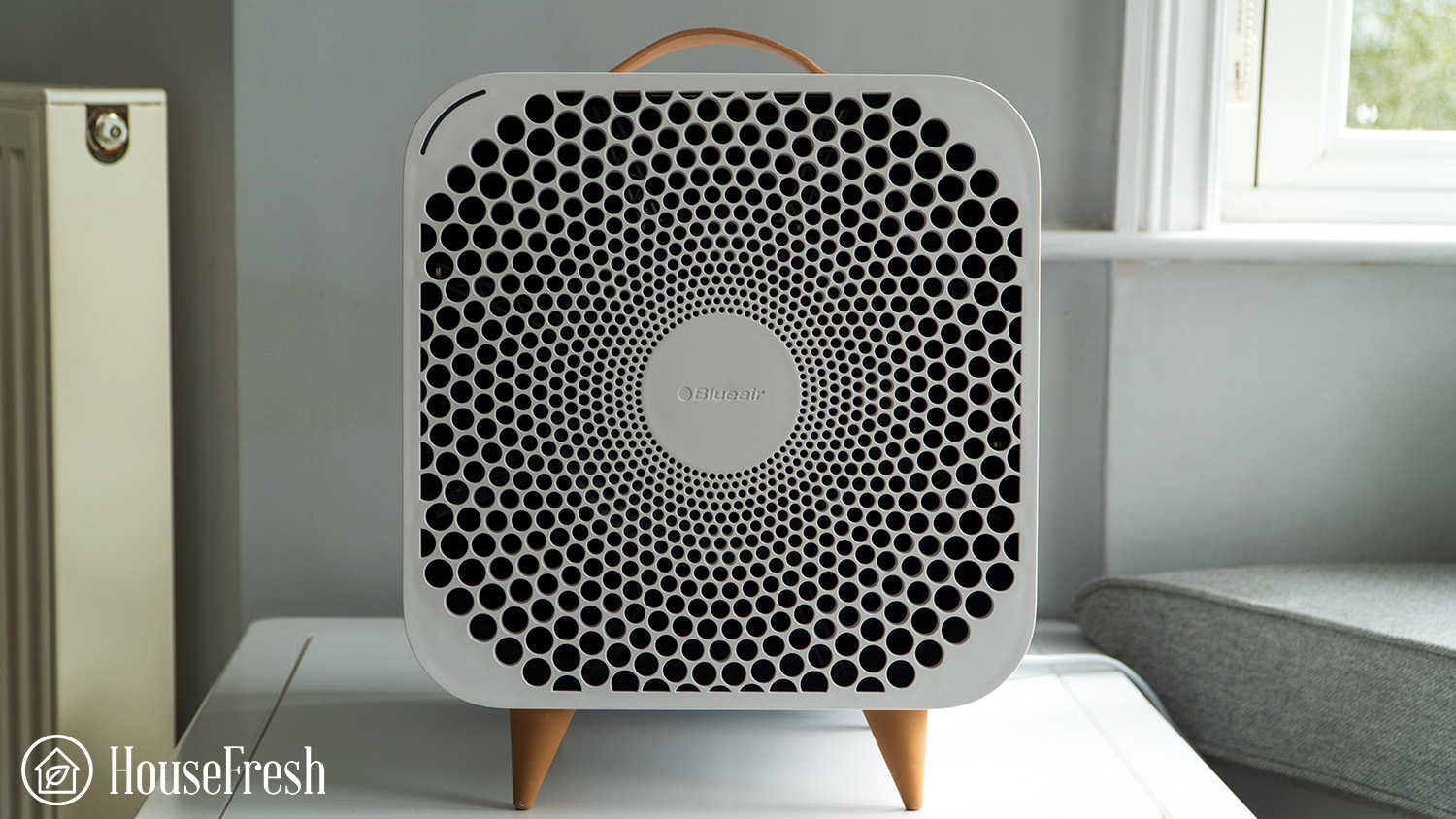
Blueair knows that design is super important to their customers. They have been continually investing in this over the past few years. I’m just going to say it: the Pure Fan Auto is one of the best-looking air purifiers that I have had a chance to review.

Blueair Pure Fan Auto Front

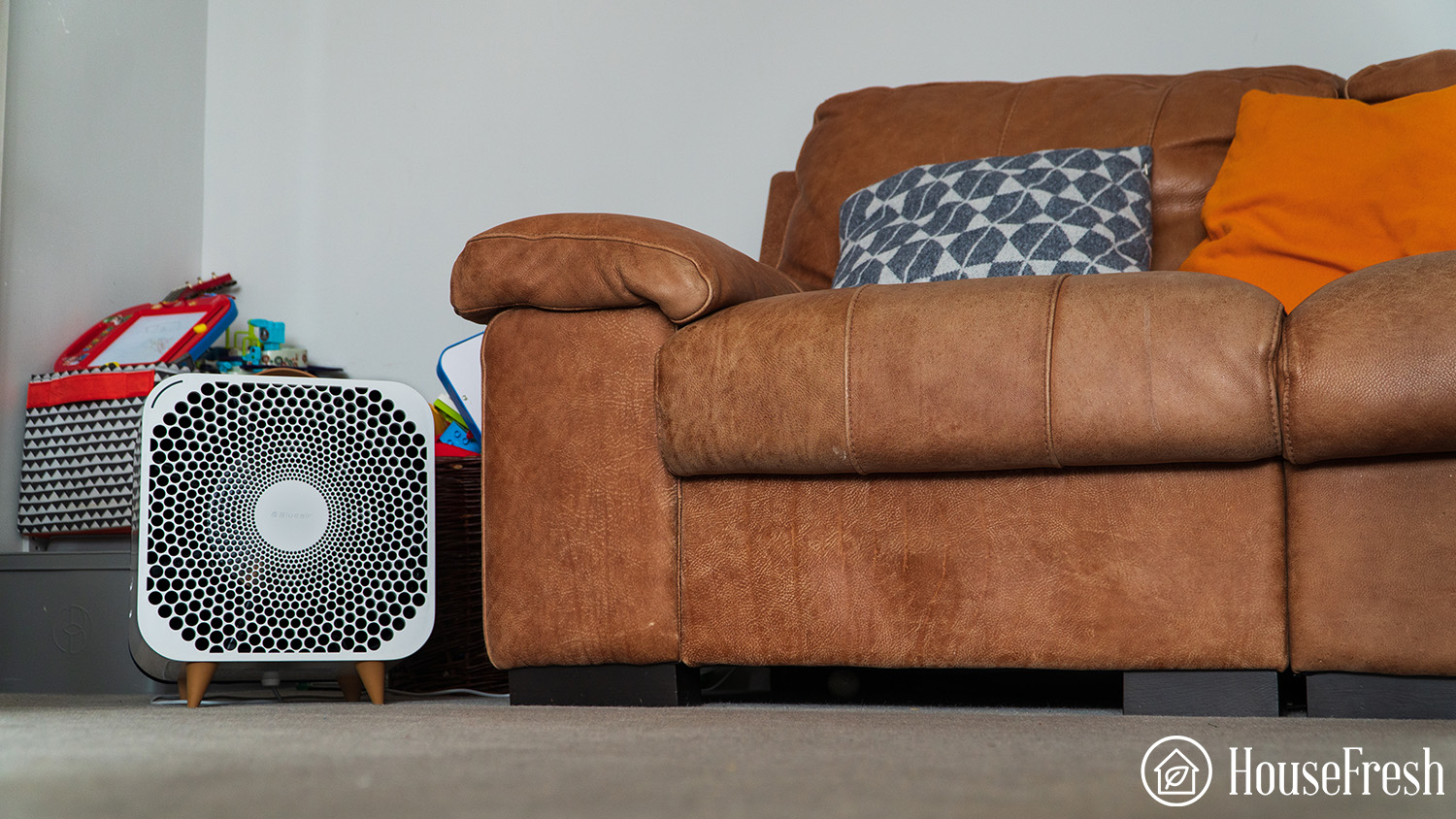
Its cube shape makes it easy to use in many places around the home, and doesn’t even need to sit directly on the floor.

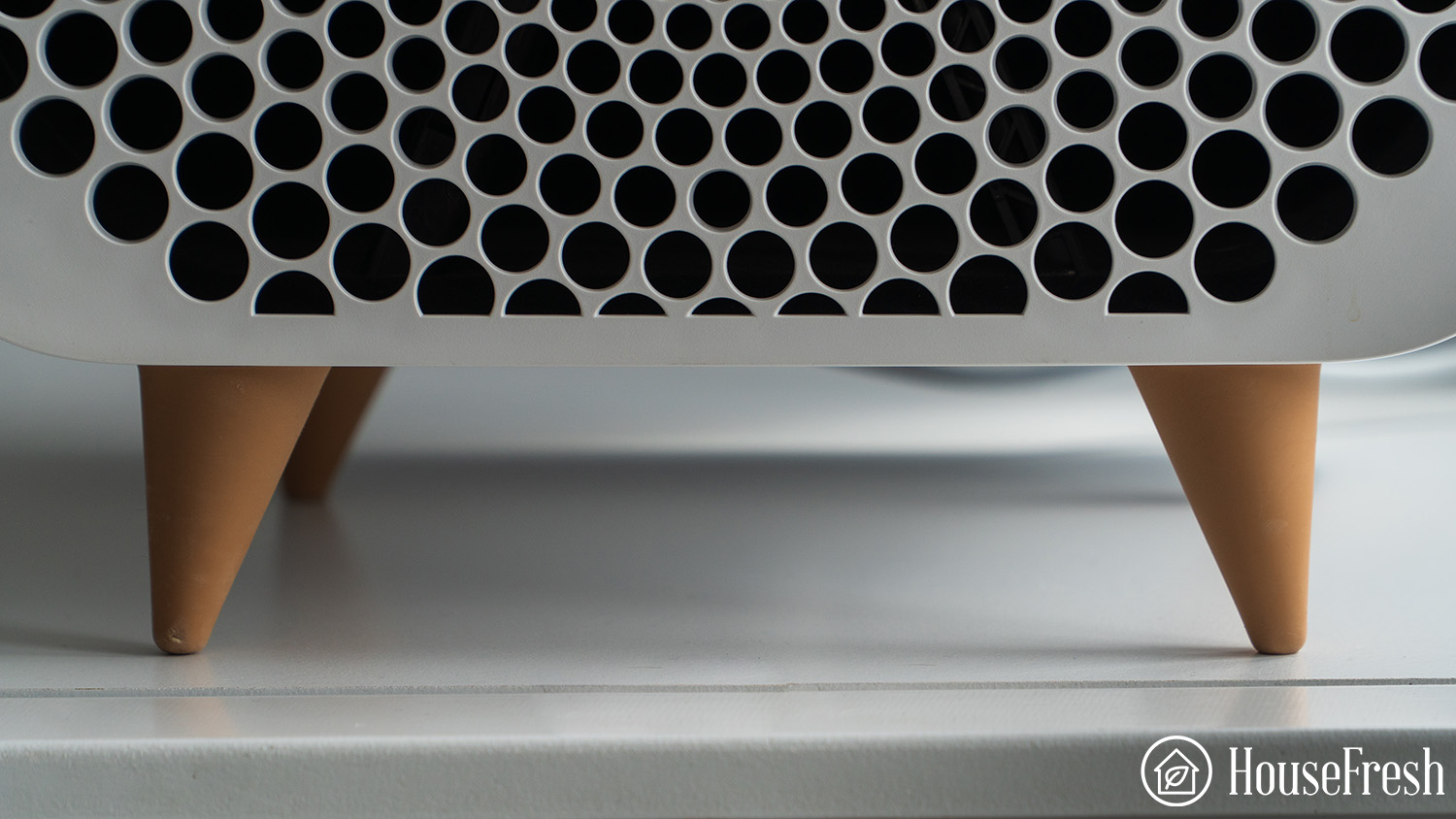
Blueair Pure Fan Auto Legs Close Up

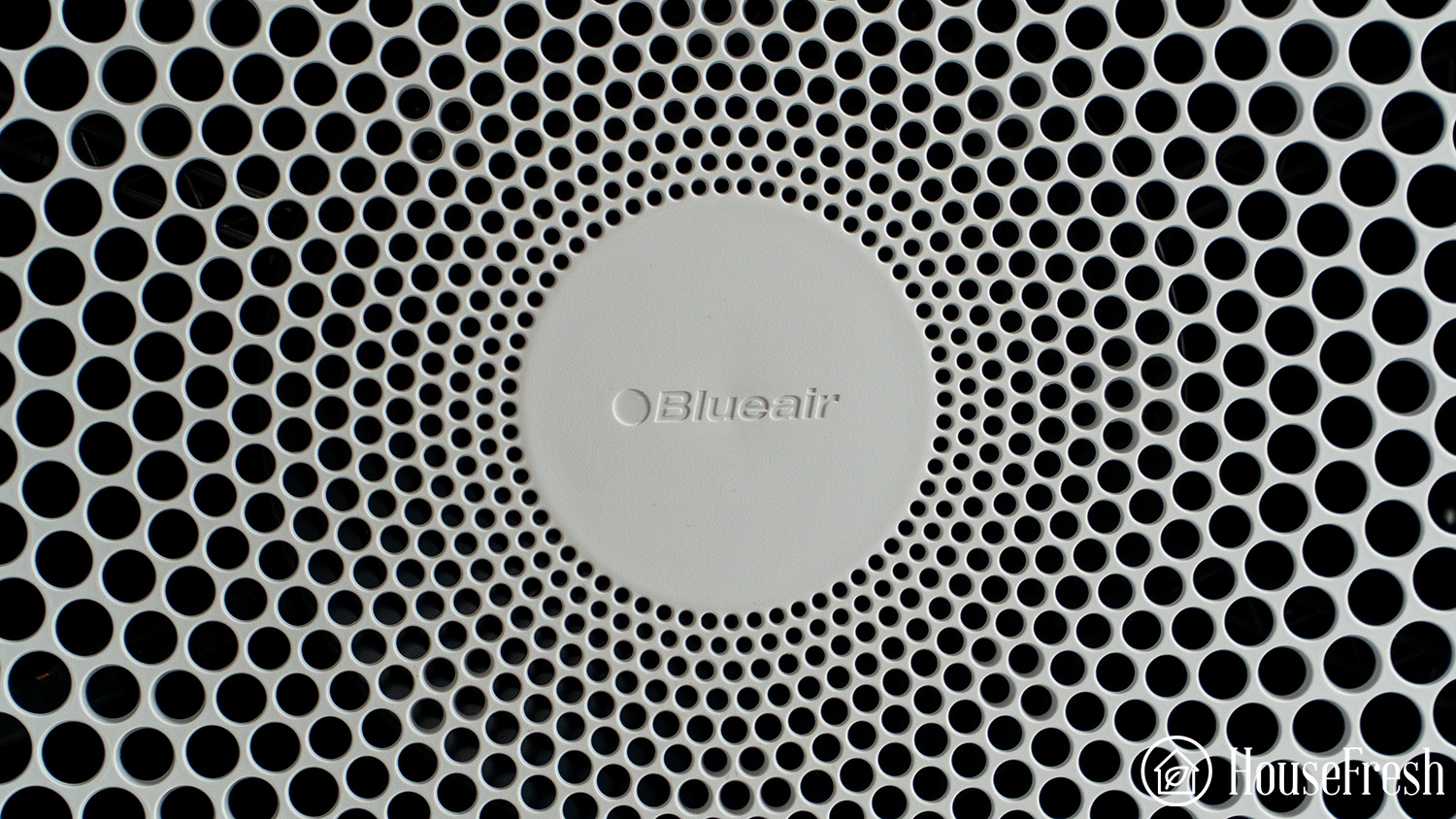
The legs look like something from a high-end piece of furniture and even the fan holes’ design is aesthetically pleasing. 

Blueair Pure Fan Auto Grill Close Up

The auto mode includes a light in the top left-hand corner that adjusts depending on the level of particle pollution. The fan will also automatically adjust to provide more cleaning power depending on the level of air quality detected. 

If I wanted to compare the design and aesthetics of Blue Fan Auto with a similar unit, then I would need to look at the Dyson range of fan-air purifier combos. Personally, I prefer the looks of the Blueair unit as it fits my home interiors better and blends into the furniture we already have BUT I know that’s a personal preference.

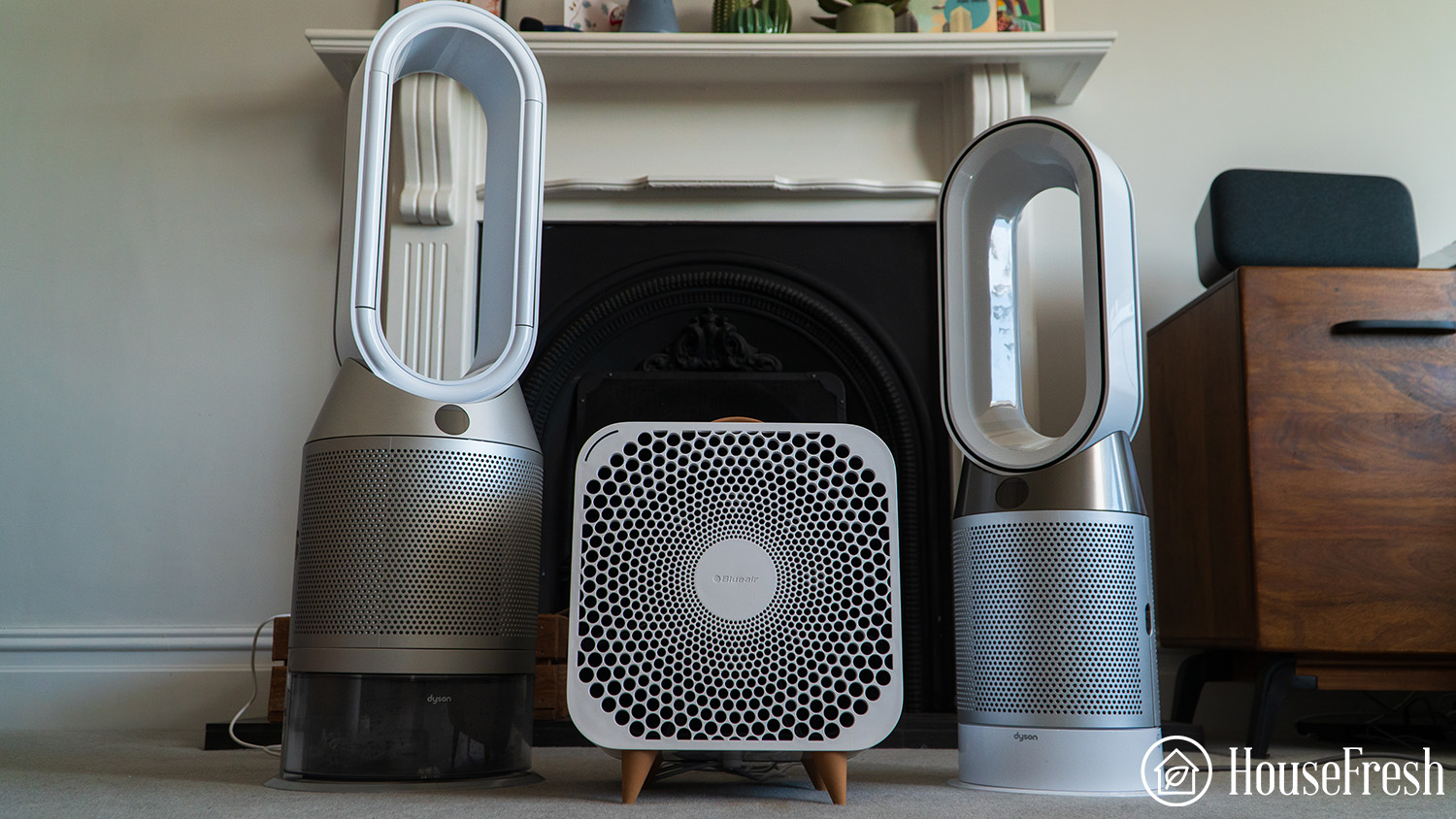
Objectively, you can see in the image below how the Dyson combo units are considerably bigger (and heavier) and must be kept on the floor. 

Blueair Pure Fan Auto VS Dyson Fan Combo

After living with all three of these combo units in my own home, I can say that the Pure Fan Auto is a much easier air purifier to live with. You can tuck it away and it doesn’t take a lot of space.

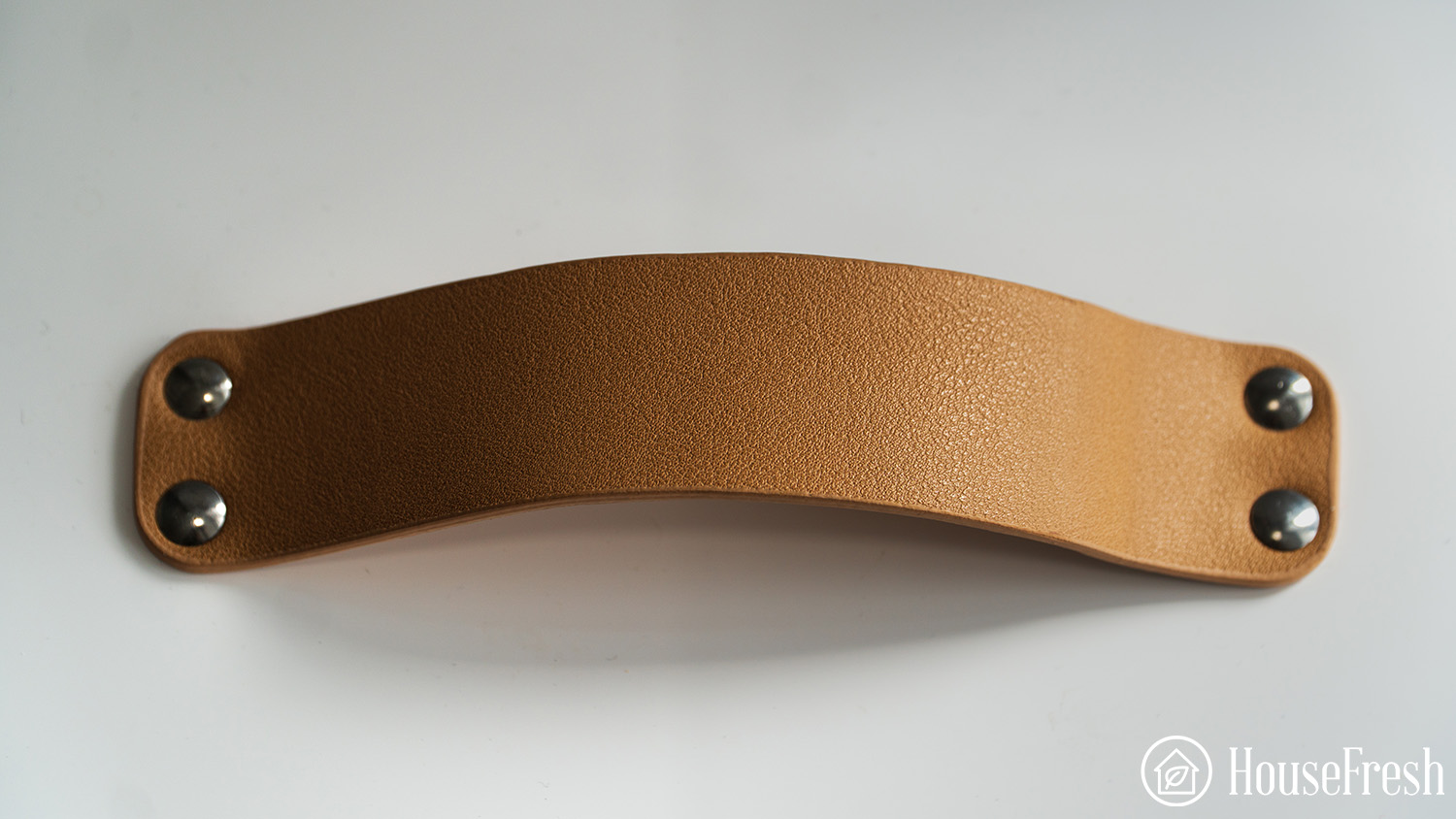
Plus, it comes with a leather carry handle, making it way easier to move to different locations around the house when compared to the chunkier Dyson units.

Blueair Pure Fan Auto Handle

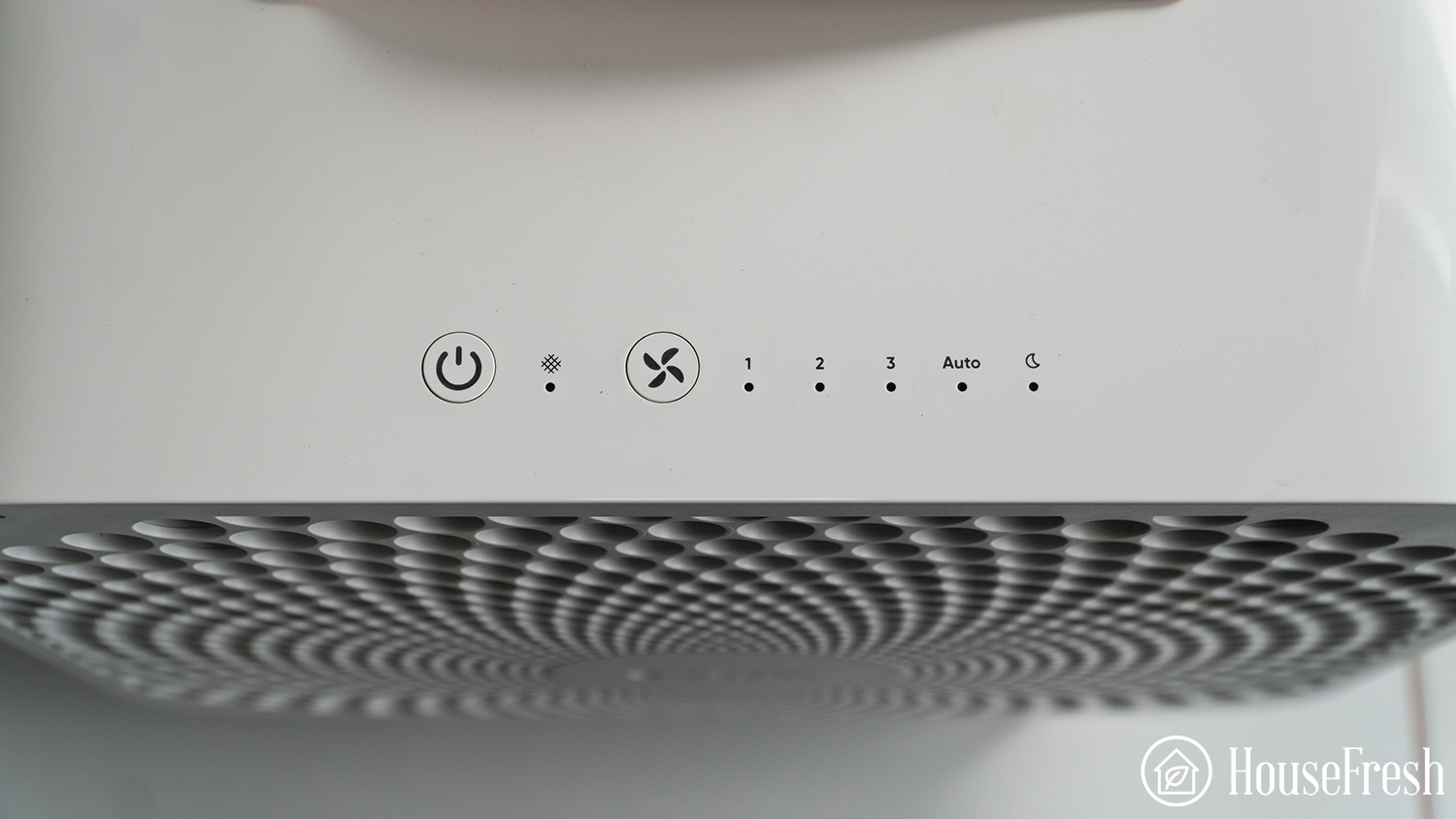
As with the other Blueair purifiers we have reviewed, the control panel is super simple, with one button to turn it on and a fan button to adjust the fan speed, enable auto-mode and switch it to sleep mode. 

Blueair Pure Fan Auto Controls

I would have liked to have seen the ability to enable a sleep mode (lights off) that still works with the higher fan speeds. The sleep mode switches all the lights off but is restricted to a  low fan speed mode.

HEPASilent that lives up to its name

The Blueair Pure Fan Auto uses a HEPASilent system that combines an electrostatic charge with a HEPA filter that allows it to hit a CADR of 250 CFM, which is impressive considering it only draws 40.9 watts at full speed. 

Blueair Pure Fan Auto HEPA top

The main thing I noticed with the filter for the Blue Pure Fan Auto was the lack of activated charcoal. While HEPASilent will be super effective with dust or pollen, any issues with odors or VOCs will not be dealt with. 

As with other Blueair models of air purifiers, you can change the pre-filter color with five options.

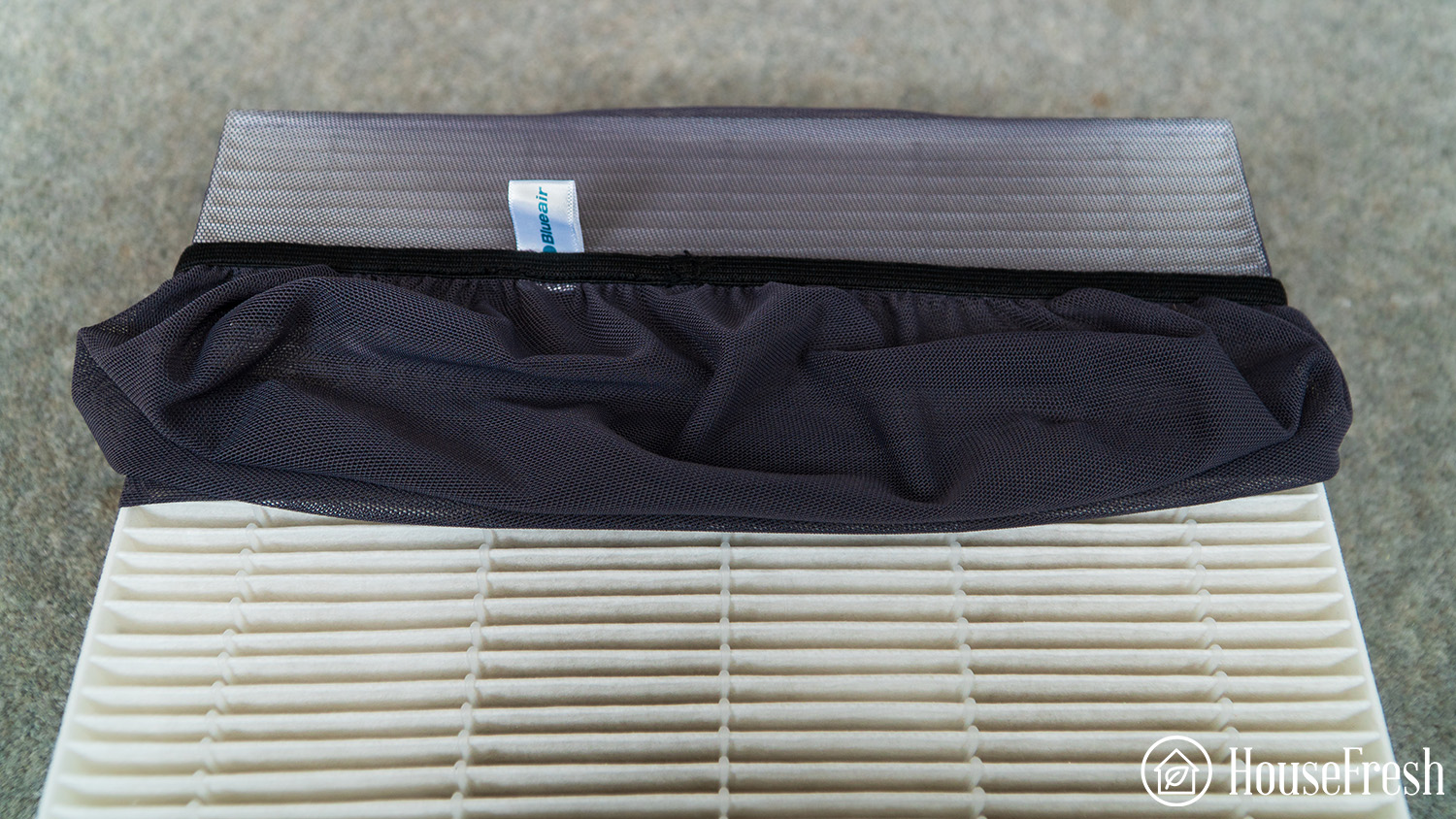
Blueair Pure Fan Auto Pre filter

I would like a combined filter in future versions, as we saw with the Blue Pure 411+, including fabric impregnated with activated charcoal and HEPA.

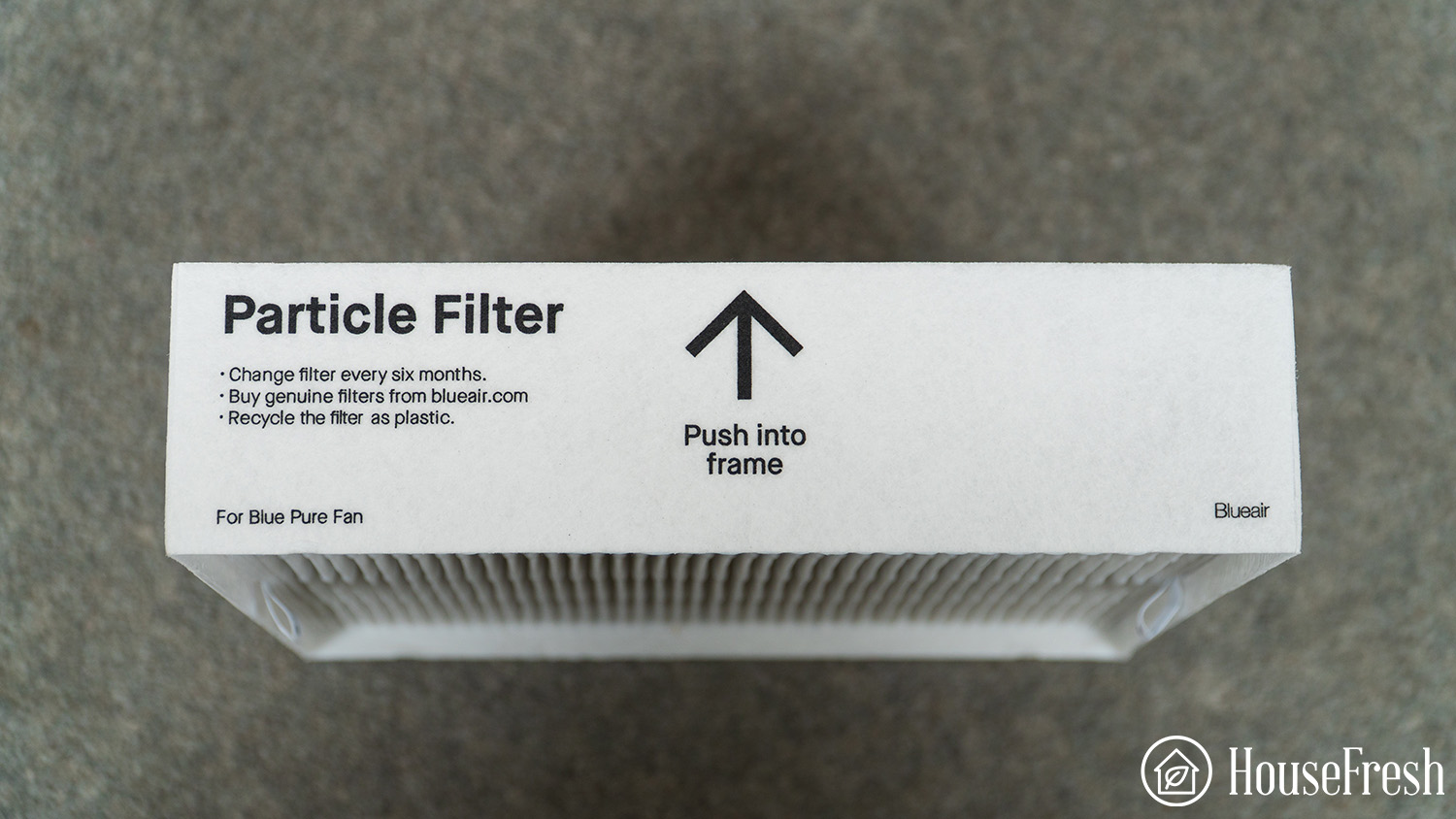
As with all HEPA filters, Pure Fan Auto will need its filters replaced every 6 months as particles become trapped in the filter and eventually cause a reduction in the air cleaning performance. 

⚠️ The filters for the Pure Fan Auto are delivered in a plastic bag, so be sure to remove this before you switch it on. Otherwise, the unit will do nothing to clean your air.

The Pure Fan Auto cleared our test room in 26 minutes

The main thing to look for when buying an air purifier is how well it can remove particles from the air, so we don’t just trust what manufacturers tell us; we test it for ourselves. 

We simulate particle pollution by burning an incense stick in our 728 cubic ft test room and use our PurpleAir Indoor sensor to continuously track PM1.0ug/m3, PM2.5ug/m3 and PM10.0 ug/m3.

Air cleaning performance test results

The Pure Fan Auto managed to clean our test room in 26 minutes which compares very favorably with the Dyson Combo units like the HP04, which cleaned in 84 minutes and the PH03, which took 70 minutes. 

The Pure Fan Auto took only two more minutes than the $700 IQAir HealthPro Plus and was one minute quicker than the Winix 5300-2.

For pure cleaning power, the power the Pure Fan Auto compares favorably with many air purifiers that don’t have any fan capabilities. 

How did the fan perform?

As the Blueair Pure Fan Auto is not just an air purifier, we wanted to see how its fan functionality performed compared to other combo units like the Dyson range of fan/air purifiers.

Blueair Pure Fan Auto Fan speed test

We tested flow velocity using the Testo 4101 Wireless Anemometer at 3ft from the fan. Over 30 seconds, we saw the following flow velocity measurements for the Pure Fan Auto compared with the Dyson HP04:

Blueair Pure Fan Auto Dyson HP04
Overall average0.74 m/s2.61 m/s
Minimum total0.51 m/s2.26 m/s
Maximum total0.99 m/s2.91 m/s

We can see that the Dyson provided over 3.5 times the airflow when 3ft away from the fan. 

So while the Pure Fan Auto performs much better as an air purifier, the Dyson has much better fan performance.

Noise levels test results

At its lowest speed, Pure Fan Auto only produced 37.8 dB – as silent as a quiet library. When turning the unit up to its highest fan speed, it hit 59.6 dB, which is the sound of a conversation or that of music playing in the background.

Sound is lower than the IQAir Healthpro Plus, which hits 61.2 dB. It’s also much lower than the Molekule Mini, which hits 68 dB.

The cost to run a Blueair Pure Fan Auto: $85.61 per year

1. Electricity costs = $62.38

Energy costs will not decrease anytime soon, so we feel it’s essential to monitor how much energy is used, as air purifiers are often needed 24/7 to keep your air continuously clean. 

The Pure Fan Auto compares very favorably with many units with a similar cleaning performance with only 40.9 watts at full power. Other units with similar CADR, such as the Coway Airmega AP-1512hh Mighty or the Winix 5300-2, draw 75.3 watts and 51, respectively.

2. Filter costs = $23.23

HEPA is designed to be replaced, as the particles are held inside the fiber material and at a certain point become so full of particles that it will lead to reduced air cleaning performance. 

The cost of authentic filters is lower than that of other air purifiers with similar air cleaning performance. You can even reduce this further with generic filters that cost $29.49 for one year with two filter changes. 

Blueair Blue Pure Fan Genuine Replacement Filter, Particle Filter for Large Pollutants Like Pollen & Dust
PUREBURG Replacement Filter Compatible with Blueair Pure Fan Auto,Blue Pure Purifying Fan, 2-Pack H13 HEPA Air Clean Dust
Technology
HEPASilent Filter
HEPA Filter, 2-Pack
More information
Price
$21.07
$24.42
Blueair Blue Pure Fan Genuine Replacement Filter, Particle Filter for Large Pollutants Like Pollen & Dust
Technology
HEPASilent Filter
More information
Price
$21.07
PUREBURG Replacement Filter Compatible with Blueair Pure Fan Auto,Blue Pure Purifying Fan, 2-Pack H13 HEPA Air Clean Dust
Technology
HEPA Filter, 2-Pack
More information
Price
$24.42

Bottom Line

The Pure Fan Auto finally brings a high air cleaning performance with fan functionality. As with many modern Blueair air purifiers, it uses a low level of electricity to clean a lot of air without leading to lots of noise generated. 

Blueair Pure Fan Auto Living Room

If you’re looking to replace a fan used in the bedroom, the Pure Fan Auto should be at the top of your list. The only downside is the lack of activated charcoal and the fan speed, which is much less than what you see with the Dyson units, which are great fans but poor air purifiers. 


SOURCES

We calculated yearly costs associated with running the Blueair Pure Fan Auto 24 hours a day, 365 days per year utilizing the latest average energy prices as reported by the Bureau of Labor Statistics of $0.174/kWh as of April 2024.
ULTTY Fan and Air Purifier Combo CR021 review

ULTTY CR021 Combo Editorial no logo

When I took a deeper look into ULTTY, the company behind this air purifier/fan combo, there was not much information on their website. When I looked at archive.org, the first site went live on July 28th 2020, and in their ‘About’ page mentions a factory you can visit but that info was removed from the latest version of the site. Analyzing their website details further, DNS records show that the site was registered in China, which makes sense. 

ULTTY seems like a smaller version of Taotronics. They are both Chinese manufacturers selling units directly to American customers. They don’t just sell fan and air purifier combos but also garden hoses and frying pans.

As a manufacturer who sells direct, they don’t waste time on marketing, with their value proposition defined by their low cost and ability to manufacture new designs quickly. They currently have multiple types of air purifier/fan combo units, and also a fan/heater combo that sells very well. 

In the space of air purifier and fan combo units, we have one main player which is Dyson, and the next smaller competitor would be ULTTY. The main point of difference between ULTTY and the competition is the price: consumers can spend $150 to get a seemingly similar unit to a Dyson air purifier/fan combo, which costs at least $799. 

The unit we are reviewing today is the CR021, although now there is also a CR022 for sale which is slightly larger and more powerful. The ULTTY CR021 uses an H13 HEPA filter and can work as a fan and air purifier combo or just one without the other. 

All this to say, we didn’t just gather some features and specs from the manufacturer’s website and called it a day.

how we test
How we test air purifiers

Read our full testing methodology.

The lowdown on the ULTTY Bladeless Fan and Air Purifier Combo CR021

danny

“The ULTTY CR021 does the job but takes a long time, making it an okay option for really small spaces or for those of you who don’t need to clean the air quickly.”

— Danny Ashton, Founder & Senior Writer

ULTTY CR021 Combo Editorial 2

$149.99 AT amazon

Can’t be bothered to read more? Then insert my key thoughts about this air purifier/fan combo straight into your brain below:

What we really like

The bladeless fan feels very sci-fi and futuristic.
It comes with an H13 HEPA filter, which is not normally used in cheaper air purifiers.
Simple remote that does everything you need.
Small size and lightweight, so easy to move around.
Price is much cheaper than big brand competitors.

What we think could be better

The lack of activated charcoal means it has no odor-removing ability.
Air cleaning performance is similar to a $70 air purifier.
No on-board sensor for indoor air pollution.
Cheaper build quality and design when compared with higher-priced models.

HouseFresh rating:★★★☆☆
Time to clean our 728 cubic feet test room (with the device running at top speed):2 hours and 11 minutes
Air filtration technology:H13 HEPA Filter
Recommended room size (4.8 air changes per hour):65 sq. ft.
Clean air delivery rate (CADR):42 CFM
Dimensions (in inches / in cm):28H x 18W x 16D inches (71H x 38W x 41D cm)
Weight (in pounds / in kg):8.6 lbs (3.9 kg)
Filter life:3 – 6 months
Noise level in decibels (measured from 3 ft. away with a sound level meter):32 dB – 59 dB
Electricity consumption in watts (recorded with an electricity usage monitor):Top speed: 25 watts
Estimated running cost (electricity consumption + official filter replacement):$98.11 per year
Cost per CADR cfm (based on dust CFM as reported by AHAM):$3.57
Manufacturer’s warranty:No warranty
Country of manufacture:Designed in the U.S., assembled in China

No Dyson, but still looks great

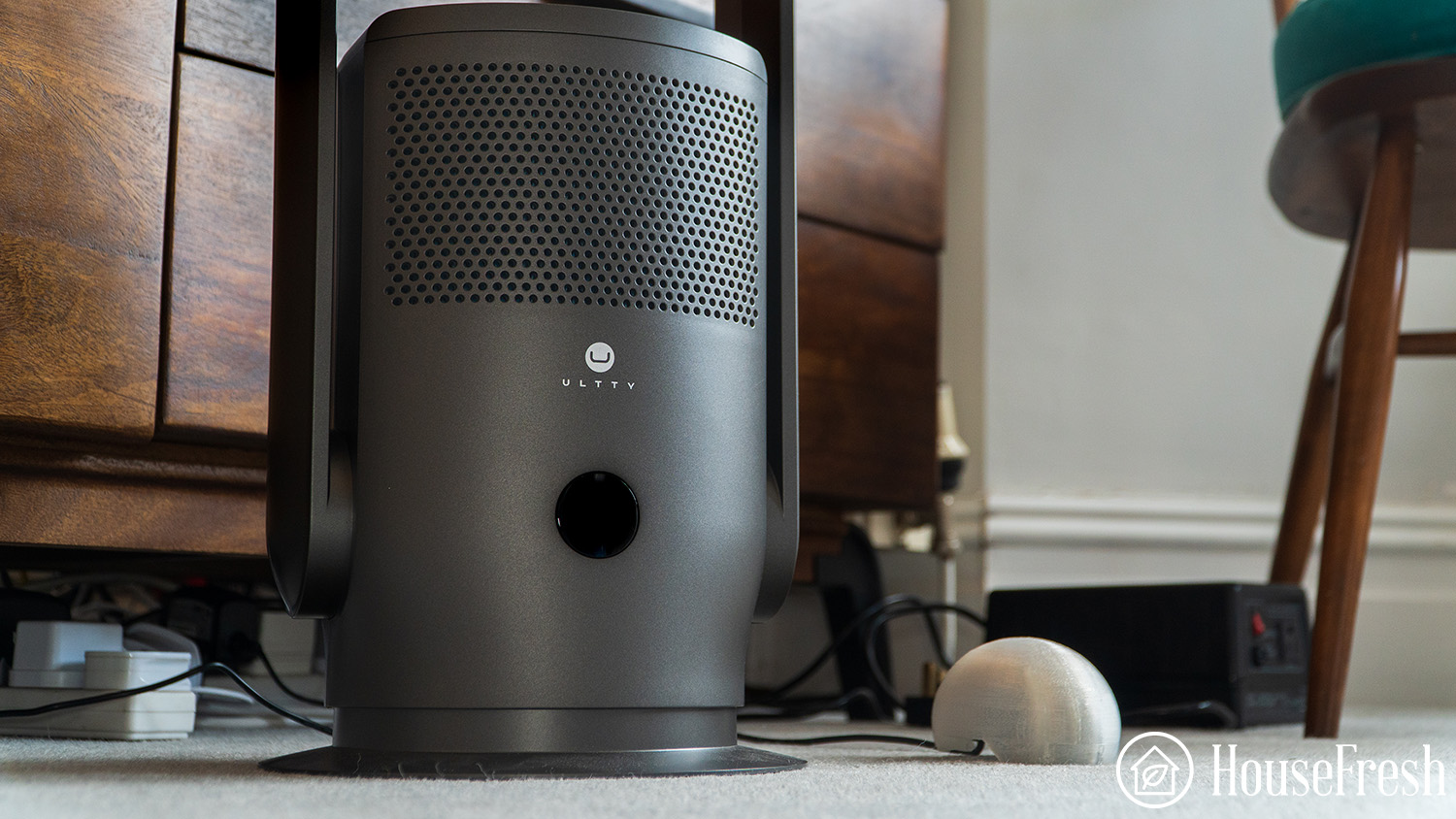
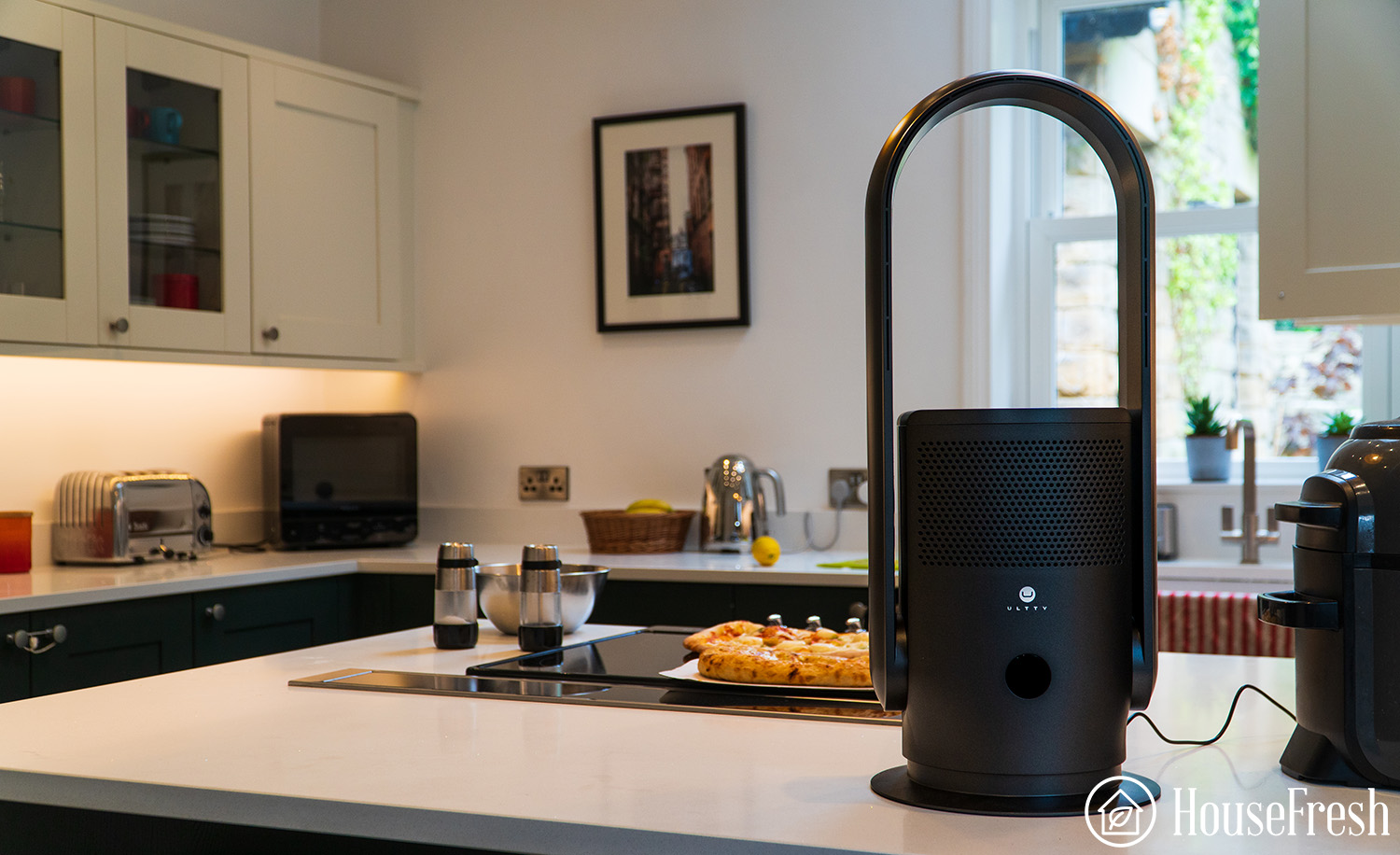
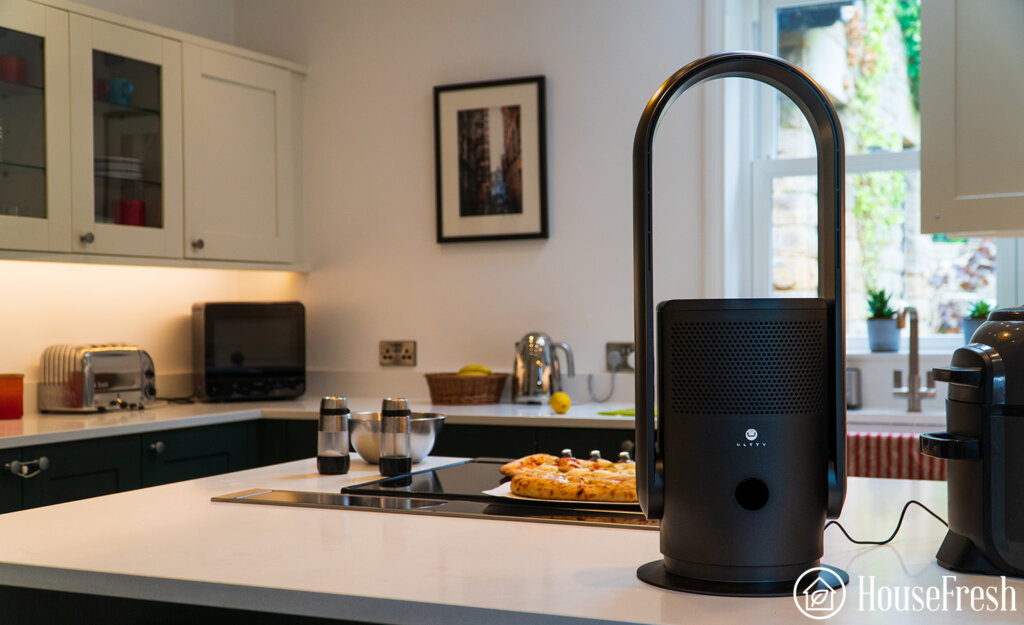
OK, so the ULTTY CR021 doesn’t look as sleek as the Dyson units, but considering its cost, it’s not a bad looker.

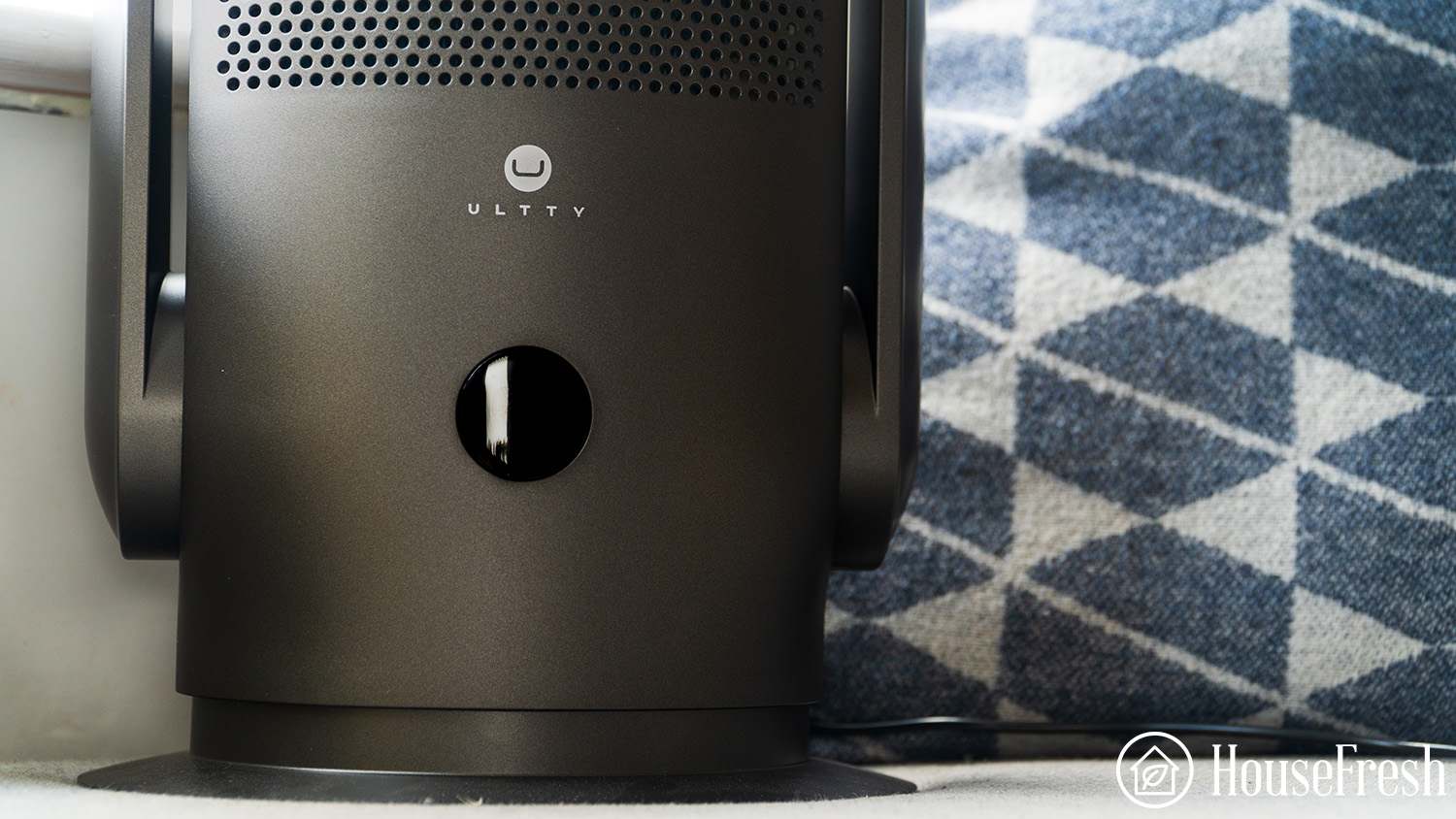
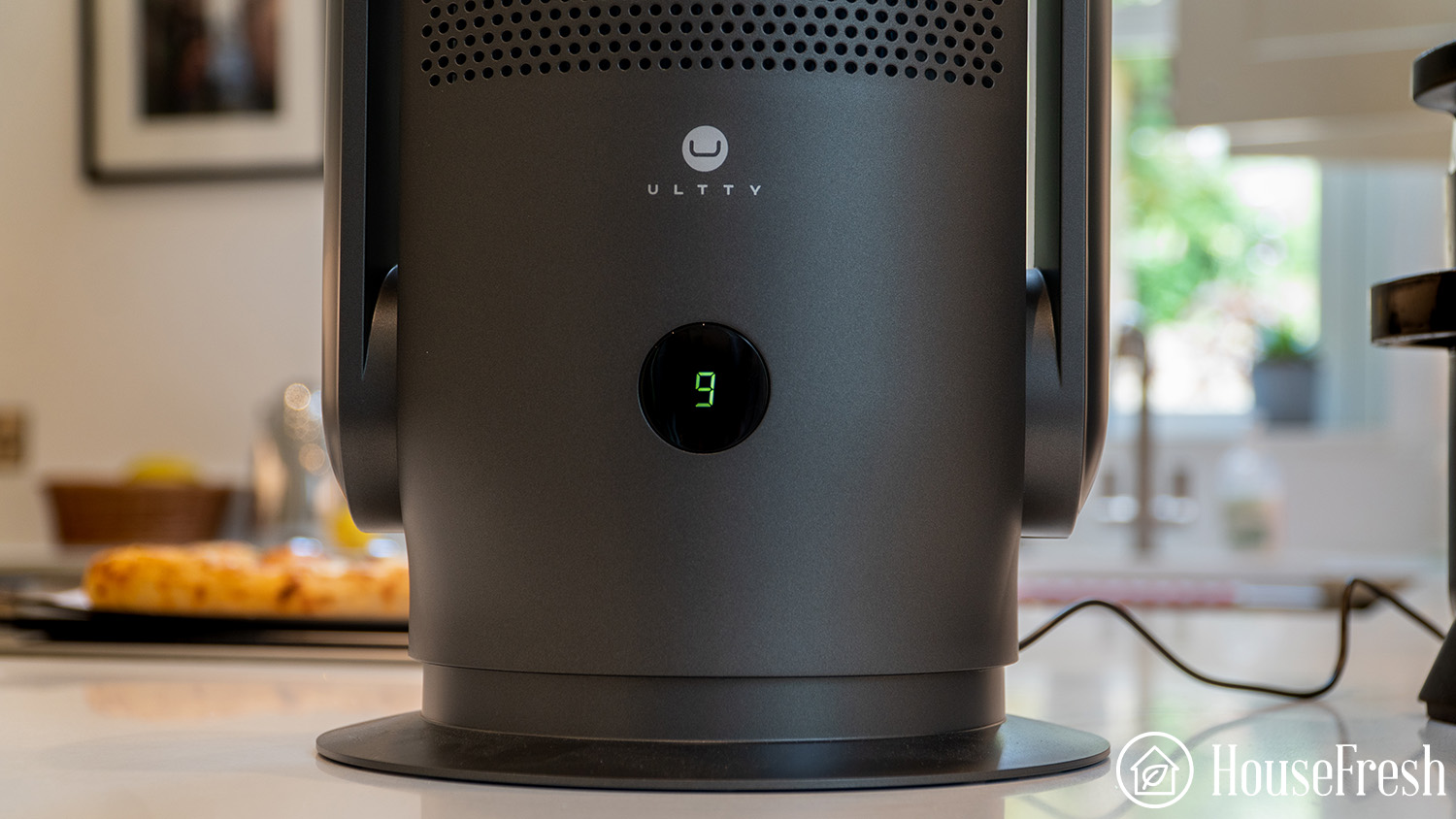
It still has the bladeless fan of the Dyson, with the main body used as the location for the HEPA filters. The screen is simple, with 9 speeds available but no onboard particulate or VOC sensors.

ULTTY CR021 Combo Front

$149.99 AT amazon

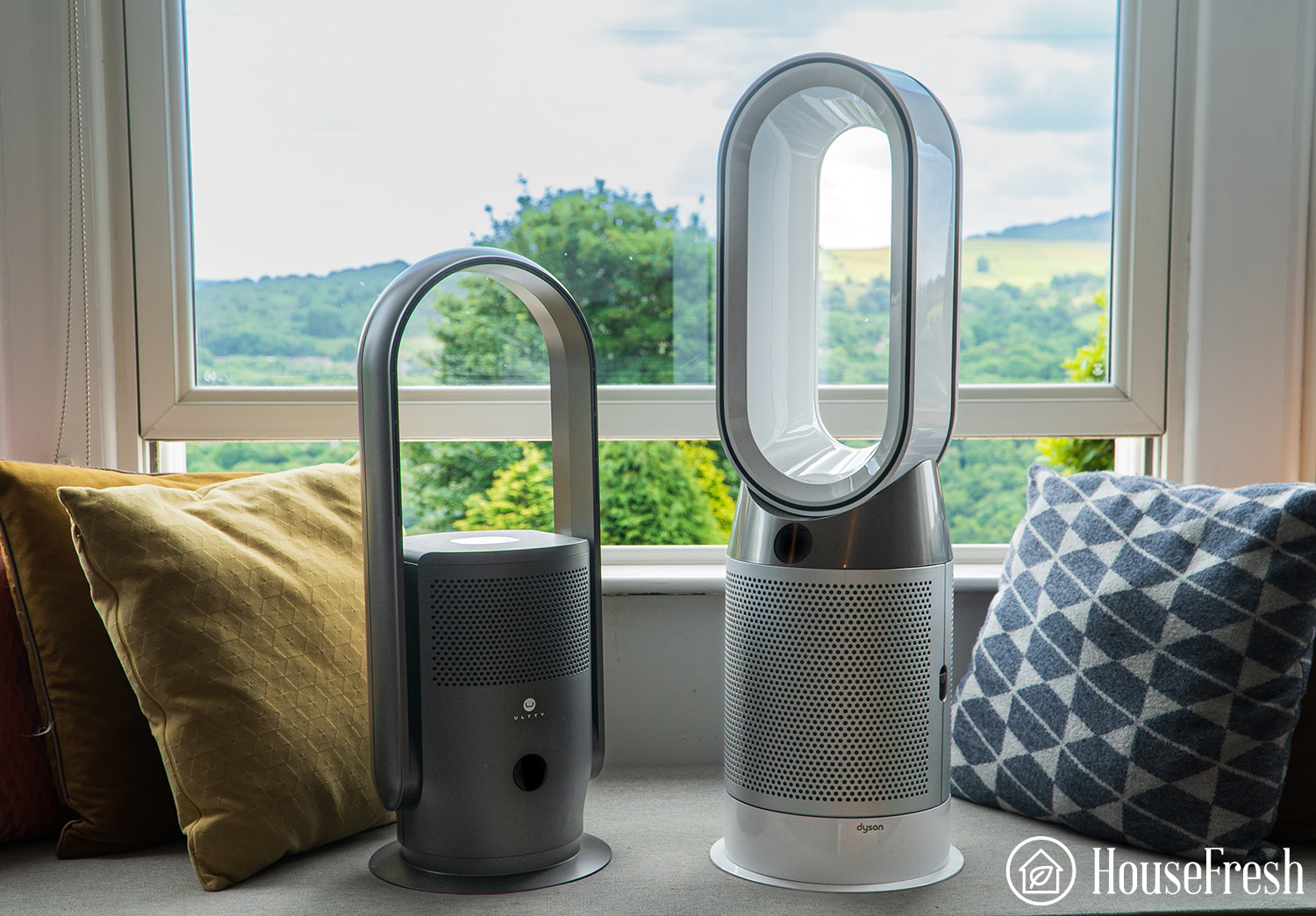
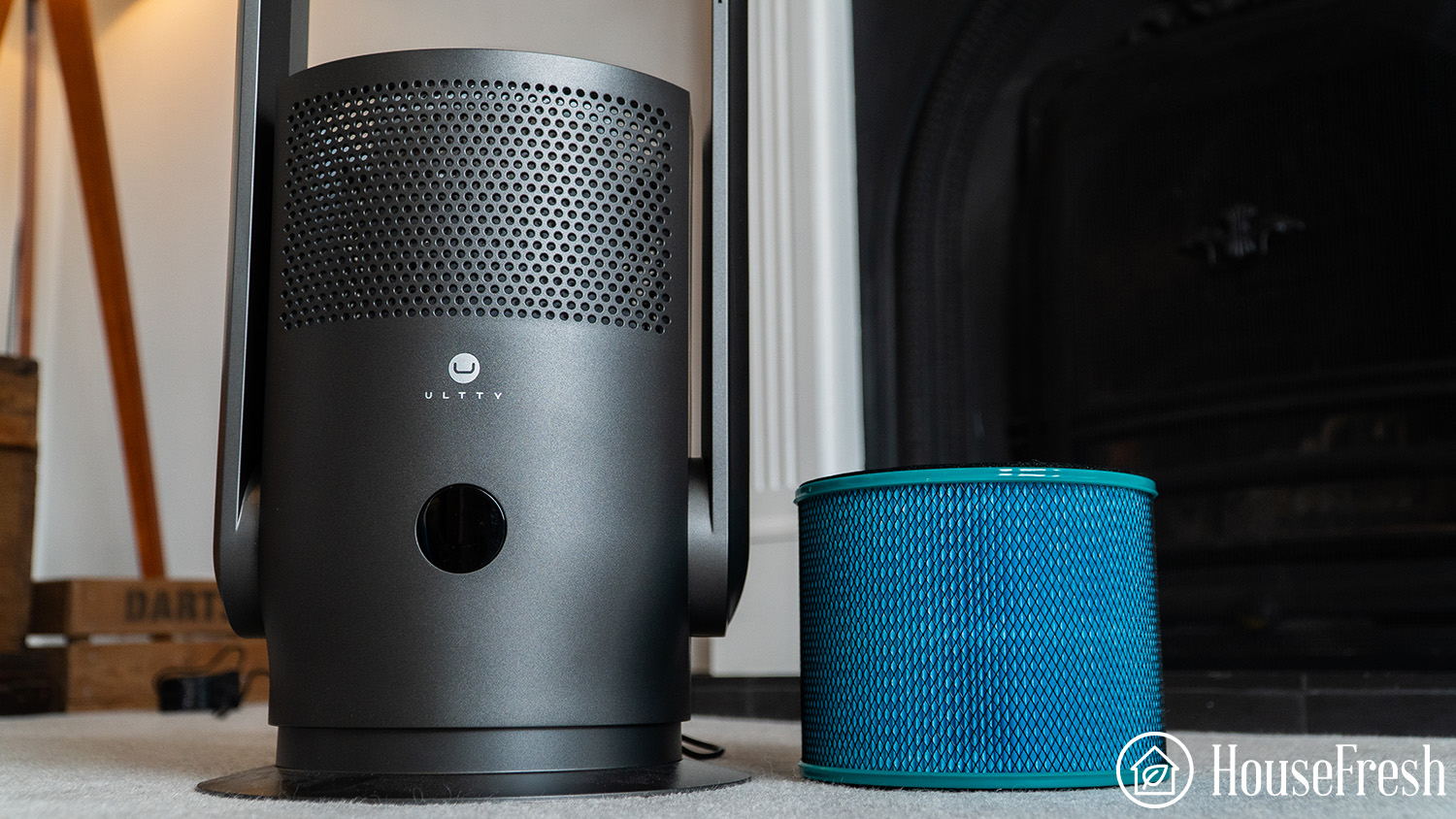
When you compare it to the Dyson combo units, it’s much shorter but has a similar floor footprint.

ULTTY CR021 Combo Comparrison

Unlike Dyson units that need an app to unlock all of their capabilities truly, the ULTTY keeps things simple with an old-school remote control. 

ULTTY CR021 Combo Control

$149.99 AT amazon

With the remote, you can adjust the level of rotation, the fan speed, and also set night mode or timers. While an app would be nice, I would be worried that it wouldn’t be built to the high standard we saw with the Dyson link app, so I am much happier with this simple approach to using this fan/air cleaner.

Filters won’t remove odors

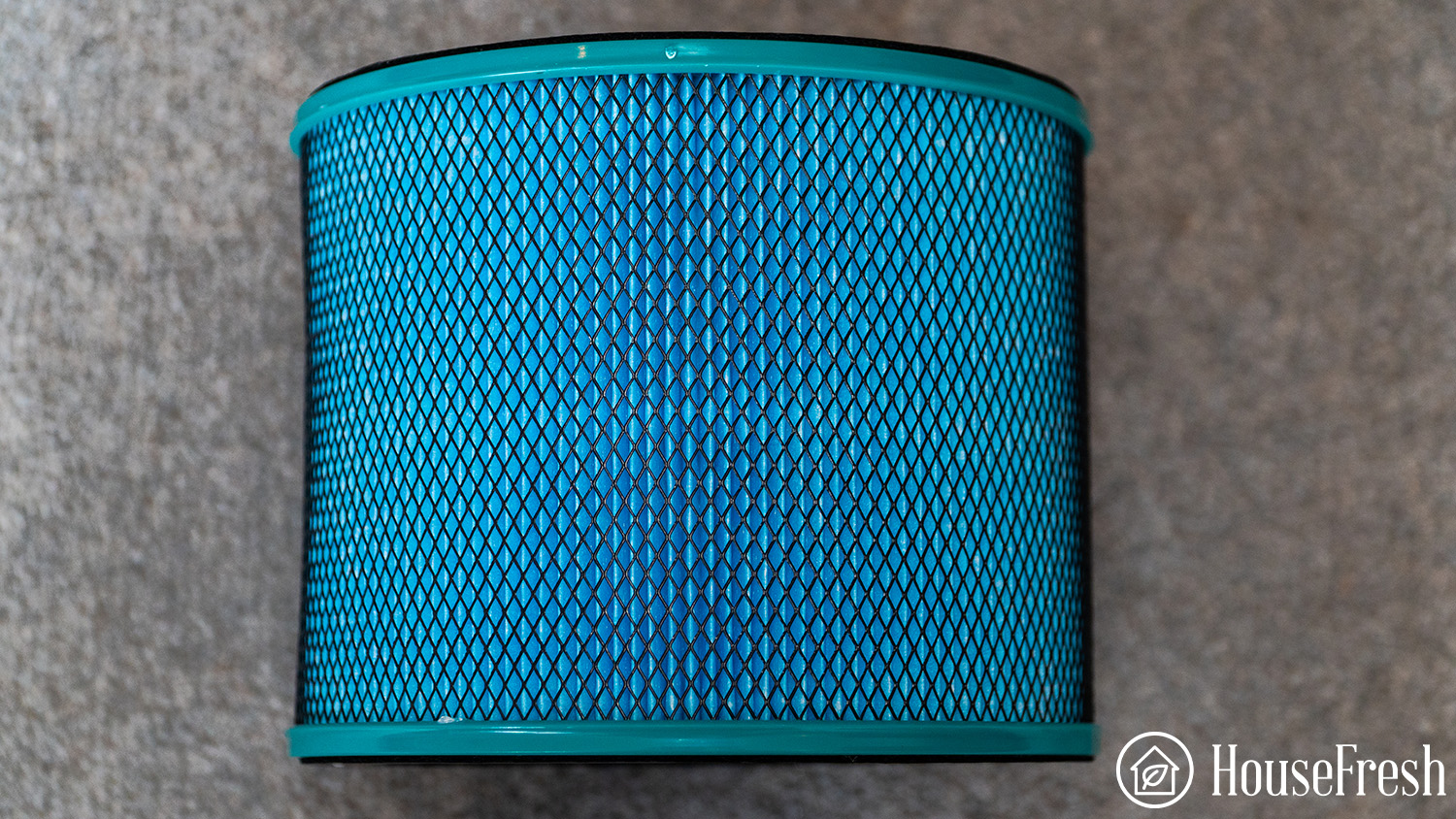
The ULTTY CR021 comes with an H13 HEPA filter. This is the same medical-grade filter Dyson uses, but I think this was a mistake for such a low-powered fan.

Lower-grade HEPA filters can still remove many small particulate particles from the air and are usually a better fit for air purifiers with low-power fans.

ULTTY CR021 Combo Filter 2

The higher the grade of HEPA, the denser the fibers and the harder it is to push air through them. This was one of the reasons we saw such a high cleaning score for the Smart Air S even though it used H11.

ULTTY CR021 Combo Filter 1

The big downside about the type of filter ULTTY uses is that it has no activated charcoal – it doesn’t even use the cheap impregnated type we see on lower-budget versions. This means that while the HEPA will remove particles, all odors will not be removed. This feels like a big home goal, as I know that most household users will want to remove odors. That’s why we see activated charcoal used in budget air purifiers like the Levoit Core 300.

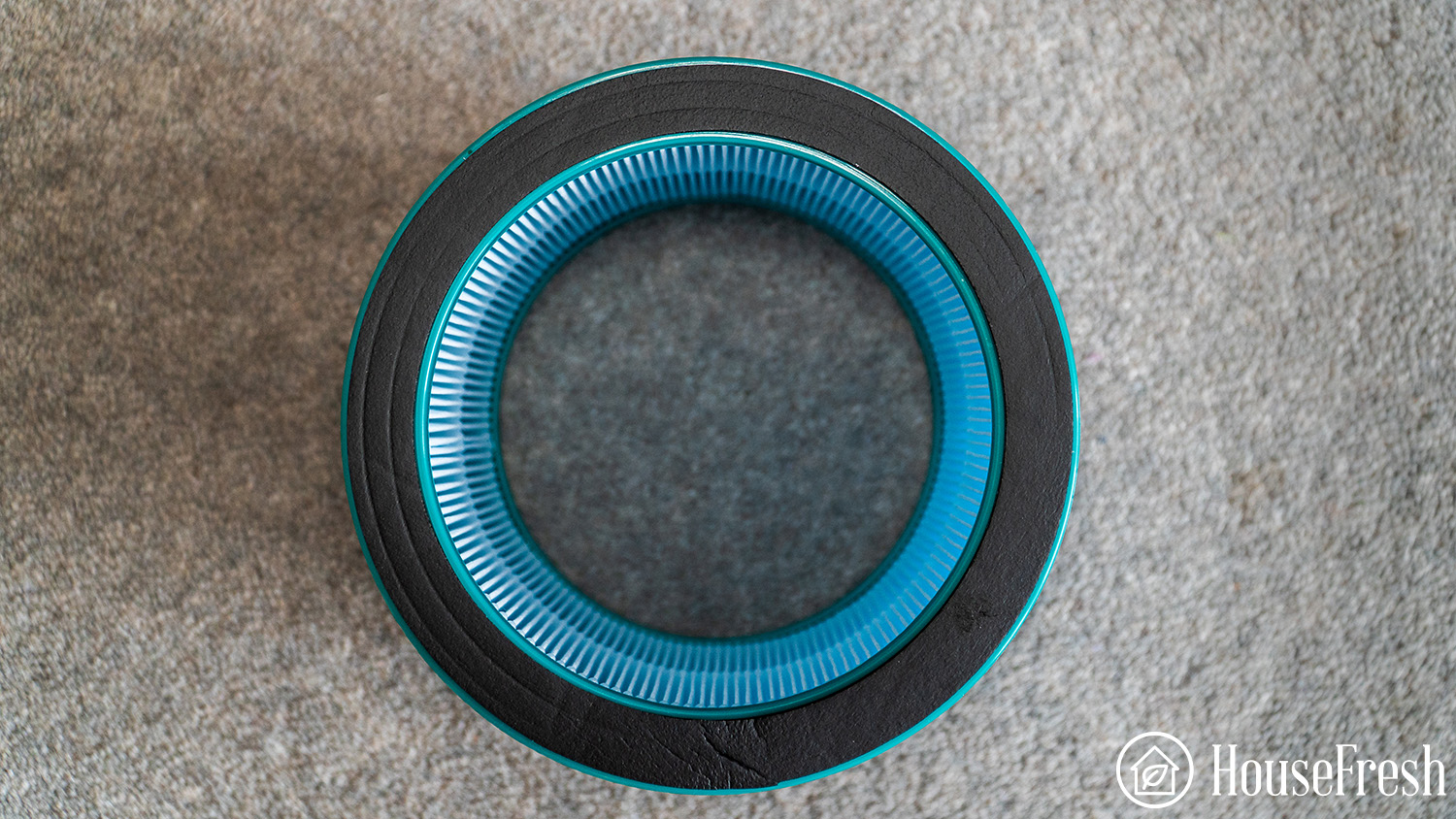
ULTTY CR021 Combo with filter

$149.99 AT amazon

The lack of activated charcoal is something that I really hope this manufacturer looks at for future versions, as right now, it has no odor-removing ability.

Changing the filter on the ULTTY CR021 is not difficult at all. Watch the video to find out how to do it:

This might seem silly, but do make sure you remove the filter from the plastic bag it arrives in. Every manufacturer will keep filters sealed so they are not used passively. If you don’t remove the plastic, the air will not be cleaned, and you might even cause overheating problems or melt the plastic. 

The ULTTY CR021 cleared our test room in 2 hours and 11 minutes 

As with all the reviews we perform here at HouseFresh, we went deep to see how well the ULTTY CR-021 is at removing pollutants from the air. 

ULTTY CR021 Combo Testing

We did this by performing the same test that all our air purifiers are put through to see how fast they clean one incense stick’s worth of pollutants. As all our air purifiers are tested in the same room (a 728 cubic ft office), we can compare performance across all models and brands. 

We use a Purple Air indoor sensor to export the pollutant count every 2 minutes for PM1.0ug/m3, PM2.5ug/m3, and PM10.0ug/m3. As we also have a professional background in data analysis and information design, we like the visualize the data in an interactive chart for our readers to explore:

I knew this fan/air purifier combo wasn’t going to beat records for cleaning particles from the air based on its price and reported CADR, but it was good to see that it did manage to remove all pollutants within 131 minutes. 

Air cleaning performance test results

In comparison, the Dyson HP04 air purifier and fan combo cleaned the air 47 faster than the ULTTY CR021, but this comes at a cost of nearly $900. Looking at pure air purifier performance, you will see that the ULTTY device is similar to the Levoit Core Mini with 113 minutes. However, this combo unit managed to clean the air quicker than the Aroeve MK01 which took 163 minutes with its pointless HEPA H13 filters.

Noise levels test results

The ULTTY has a maximum sound of 59 dB, less than the $360 Molekule Mini but more than the 44.5 dB we see with the Levoit Core mini. It’s a good unit for sound especially considering the function of a fan which is inherently noisier.

But feel free to listen to the actual noise levels in the video below to see if the sound would be a good fit for your ears:

The cost to run a ULTTY Bladeless Tower Fan and Air Purifier Combo CR021: $98.11 per year

Most people just look at the initial price of an air purifier, or as in this case, a fan/air purifier, but there are extra long-term costs you have to consider, with both electricity and filter costs needing to be considered. 

1. Electricity costs = $38.13

Energy costs are not getting cheaper and are doubtful to see any big drops in the next few years, so energy usage is now something that every homeowner needs to consider. There is no point in getting a gadget that uses so much electricity that it outweighs any benefit it provides. 

With a top wattage use of 25 watts, this air purifier/fan will not break the bank as even 24-hour usage will only cost $38.13 a year according to the U.S. average energy prices of the Bureau of Labour Statistics.

The fact that this does two jobs could be something to consider, as running both a fan and air purifier could cost much more than this.  Overall, it’s an energy efficient machine for the price. 

2. Filter costs = $59.98

HEPA technology is remarkable — just using fabric filters, you can remove tiny particles and viruses from the air. But the main downside is that these filters will need replacing over time if they are expected to keep cleaning air with the same performance. We based our calculations on filter replacement required every six months.

The genuine filters from the manufacturer cost $29.99, which might seem cheap, but considering it has no activated charcoal, is a little higher than I would want to pay. If you are open to generic filters, you can get them for under $15, which seems a fairer price considering the technology used. 

In comparison, you pay $70 for genuine Dyson air purifier replacement filters, which do contain activated charcoal, but you can see how these costs can start to add up. While not the cheapest filters, you can a 2-pack of generic filters for $39.39.

ULTTY H13 HEPA Replacement Filter with Medical Coating, True HEPA Filter For R021/ R020 Purifying Fan, Medium
PUREBURG Replacement Filter Compatible with ULTTY R021 R21 R020 R20 Bladeless Tower Fan + Air Purifier 2-in-1 & MODERE Hot + Cold Air Purifier,2-Pack H13 HEPA Air Clean
Technology
H13 HEPA + special medical coating
2-Pack High-efficiency Replacement HEPA Filters
More information
Price
$29.99
$32.42
ULTTY H13 HEPA Replacement Filter with Medical Coating, True HEPA Filter For R021/ R020 Purifying Fan, Medium
Technology
H13 HEPA + special medical coating
More information
Price
$29.99
PUREBURG Replacement Filter Compatible with ULTTY R021 R21 R020 R20 Bladeless Tower Fan + Air Purifier 2-in-1 & MODERE Hot + Cold Air Purifier,2-Pack H13 HEPA Air Clean
Technology
2-Pack High-efficiency Replacement HEPA Filters
More information
Price
$32.42

Bottom line: Should you get an ULTTY Combo CR021?

There are some major downsides to the ULTTY Bladeless Tower Fan and Air Purifier Combo CR021.

The lack of activated charcoal seems like something that could be fixed easily without a massive increase in price for filter replacements. As for the fan, I am as happy as I was with the Dyson — having a bladeless fan is great for when you have kids as you don’t have to worry about them poking it with their fingers.

ULTTY CR021 Combo Editorial 1

$149.99 AT amazon

If you like the idea of a fan and air purifier that doesn’t cost the earth, then you don’t have any other options currently than the ULTTY models. But if you are more worried about getting the best air cleaning bang for your buck, you would be better off with a cheap fan and a budget air purifier as you will get far more performance per $ spent. 

If you really want a combo fan + air purifier and have the money to spend, I would recommend the Dyson combo units as they look way better, have better performance, and have a ton of extra smart features with an app that is actually useful, but it does come at a cost that is closer to $1000.

SOURCES

We calculated yearly costs associated with running the ULTTY Bladeless Tower Fan and Air Purifier Combo CR021 24 hours a day, 365 days per year utilizing the latest average energy prices as reported by the Bureau of Labor Statistics of $0.174/kWh as of May 2024.

Dyson PH03 Air Purifier and Humidifier Review

Dyson PH03 Living Room

Dyson was founded in England in 1991, and it has quickly grown to become a powerful brand with over $6.63 billion in revenue and 14,000 employees around the world. They are famous for their bagless cyclonic vacuum cleaner, conceived by founder and inventor James Dyson after he became frustrated with his Hoover vacuum continuously clogging.

Since then, Dyson has been regularly introducing their latest inventions to many different categories of household appliances – and the Dyson PH03 is no exception. The “Air Multiplier” was Dyson’s approach to a fan with no blades. Since then, there have been multiple upgrades to this bladeless fan, such as the Dyson HP04 that included a fan, an air purifier and a heater. The Dyson PH03 is a combination of a bladeless fan, humidifier and air purifier. 

In the current market, there is nothing quite like this unit. Whilst there are a handful of humidifiers with air purifiers, there are no units that can also work as a bladeless fan. This new technology doesn’t come cheap, however, as this particular unit is sold on average for $819.99, which is the same price range as the IQAir Healthpro Plus.

One thing I really dislike about Dyson is that they don’t reveal the CADR score for their air purifiers. They suggest that it’s unfair to their units, which have a different way of cleaning the air, but I think they want to keep consumers in the dark. 

When I reviewed the Dyson HP04, I was able to find the CADR score (169.6 m3/h or 88 CFM) on the Chinese website, as they have strict rules when selling in PRC. Thanks to Google Translate, I could get both the gaseous and particulate scores for the Dyson PH03:

Dyson PH03 Chinese CADR report

When we convert this to CFM we have a particulate CADR score of 99.8 CFM, which is higher than the HP04 but is the same level of cleaning performance as the Blueair Blue Pure 411 which has 120 CFM but costs $110.

Manufacturers have been known to fib about CADR scores and while I don’t think Dyson would lie to the Chinese government, we want to know how well this air purifier can clean air in a real-world situation. That is why we tested this unit in our own home test lab. 

how we test
How we test air purifiers

Read our full testing methodology.

Hopefully, the findings of our testing and our insight will come in handy to help you decide if this unit is right for you.

The lowdown on the Dyson PH03 Air Purifier and Humidifier Combo Unit

Danny Ashton HouseFresh
“A premium combination unit that includes a humidifier, fan and air purifier. The design, intelligent features and app are world-class but the Dyson PH03 has the same cleaning power of a $100 air purifier with a much higher price tag.”
— Danny Ashton, HouseFresh Founder & Senior Writer

Dyson PH03 Living Room

PRICE on amazon PRICE on DYSON

If you don’t fancy reading my 3000+ word review (how dare you!) then here are my key findings:

This is a fairly low-powered air purifier that can operate as a humidifier and provide cooling through an oscillating fan. It is currently the only appliance available in the world that can do this.

What we really like

Best air cleaning performance for a combo unit we have tested
Impressive to get humidifier, fan and air purifier in one unit
Pure HEPA, activated charcoal, and no ionizer, which means zero ozone is created
Design is off the charts in product design and the remote control. The Apple of the air purifier market
The app is a real game changer in this industry with a great UX

What we think could be better

High initial price and you can’t control the unit from the onboard buttons – need remote or app
Pure air cleaning performance is better with the $99 Levoit Core 300
The latest filter uses impregnated filters rather than separate charcoal pellets, which feels like a step down in performance

Mediocre air cleaning power

At nearly $900 the amount of cleaning power is similar to an air purifier in the $100 range, but this unit does have the functionality of a humidifier and a fan, so it’s not a totally fair comparison. 

It is, however, something to consider if you are primarily looking for a gadget to clean your home air.

HouseFresh Rating:★★★★☆
Time to clean our test room:1 hour and 10 minutes
Air purifier technology:H13 HEPA with impregnated activated charcoal fabric
Recommended room size:Up to 2,860 sq. ft.
Clean air delivery rate (CADR):99.8 CFM (169.6 m³/h)
Dimensions (in inches / in cm):36.33H x 11.02W x 12.22D inches (92H x 28W x 31D cm)
Weight (in pounds / in kg):18 lbs (8.16 kg)
Filter life:3 – 6 months
Noise level in decibels (measured from 3 ft. away with a sound level meter):Speed 1: 35.1 dB
Speed 10: 54.3 dB
Electricity consumption in watts (recorded with an electricity usage motor):Standby: 0.6 watts
Speed 1: 3.16 watts
Speed 10: 41.7 watts
Estimated running costs (electricity consumption + official filter replacement):$93.60 per year
Cost per CADR cfm$8.77
Manufacturer’s warranty:2 years
Country of manufacture: Malaysia

The Dyson PH03 looks like $900!

If we were hosting a beauty competition, the Dyson PH03 would win hands down. When we finish testing our units, I have no problems finding a home for these Dyson units and I don’t think this is just because my family wants to sell them on eBay. 

Dyson PH03 Living Room

They look great, and you can easily see them adding to your home decor – air purifiers used to be beige units that looked more like photocopier machines than something you would want in your living room.

If you have a Dyson vacuum cleaner and you’re honest with yourself, you like it for its design as much as its ability to clean – and you’re happy to pay a premium for this.

Dyson PH03 Back

The first thing I noticed that was different with the Dyson PH03 compared to the HP04 that we had tested previously, was the quality of the screen. It’s like a miniature monitor that has full color and can show little animations on how to remove filters or fix something rather than just showing an error code.

Dyson PH03 Screen

This screen also shows the exact level of pollutants to the nearest ug/m3, as well as a color code from green to purple. The additional VOC sensor is something you never see on an air purifier and whilst it takes a little longer to give a reading, it’s good to see that in the future this might roll out to more affordable units.

Dyson PH03 Screen 2

As soon as I took this air purifier/humidifier combo out of the box, I noticed how much chunkier it was than the HP04.

Dyson PH03 Comparison

This makes sense considering it has a water reservoir with a cleaning function. Unlike the HP04, the whole unit doesn’t move to provide oscillation. Instead, small slits on each side adjust the fan flow.

Dyson PH03 Water Tray

Adding a water reservoir could be problematic if the whole base unit rotated, so it makes sense that they have adjusted this feature. However, it does mean that the unit has a maxim oscillation of 90 degrees versus the 350 degrees you get with the Dyson HP04.

The same filter as other Dyson Combo Units

The HEPA filter used with this unit is rated as HEPA H13, and it also contains activated charcoal. When looking at the filter, you can see that the activated charcoal is impregnated into the HEPA filter, so this unit doesn’t come with a separate filter filled with activated charcoal pellets you often see in other air purifiers.

Dyson PH03 HEPA

Impregnated charcoal will still work, but it is not as effective as using large pellets, which you often see in higher-end units or even the budget Taotronics AP-003 we tested recently. 

When comparing the filter size with the HP04, it seems that Dyson has decided to make a few changes. While the HP04 has a separate activated charcoal filter with pellets, the newer model has an integrated system with the charcoal filter being a part of the HEPA.

Dyson PH03 Filter Unit

With activated charcoal, more surface area means more cleaning power for odors and VOCs, so this update to the filter seems like a step back for those looking for odor-cleaning power. I would prefer a separate charcoal filter vs a combination like we see with the PH03.

Dyson PH03 Filter

As with the HP04, the PH03 filter looks well-made, and the seals do a good job of ensuring no air can bypass the filter. The prefilters make removing the lint and dust that will build up over time easy. 

The Dyson approach to customer information is top-notch, with very clear labels that no one could miss, informing them to remove the plastic from the filter before using the unit.

The Dyson best in class app

The Dyson PH03 has only 2 buttons on the unit itself – a power-on button and a cleaning mode to clean the humidifier unit.

Dyson PH03 Controls

Handily, you also receive a remote control that is highly intuitive. As I first saw with the HP04, it sticks to the top of the unit magnetically – very cool.

Dyson PH03 Remote 2

The remote is small, light, and simple to use without referencing the manual. You can adjust the humidification, fan speed, and oscillation – and even request current pollutant levels from the onboard screen!

Dyson PH03 Remote 2 NO LOGO1

Similar to Apple TV, the Dyson remote control nearly makes you forget that you’re paying $900 for $100 air cleaning power as it just feels good to use.

PH03 MyDyson App setup

I got to test the Android App and similar to my experience with the Dyson PH03, the experience was sublime.If you have read any of my other air purifier reviews, you will know I am not normally a fan of apps, as most are usually poorly made and don’t have any real value.

If only all air purifiers had an App like MyDyson, then it would be worth paying more for app-supported features. Pairing my unit took less than 10 seconds and only required me to enter my home Wi-Fi password.

MyDyson PH03 Setup and Ready

The app was ready to go within one minute. What I like the most is that the app gives me all the abilities of the remote as well as continuous updates on air quality for both particulates and VOCs. I could even receive air quality details for my local area.

Using the app, I could also easily switch between both machines I have in the house – if you love technology, then you will also love the MyDyson app. Don’t just take my word for it; the app has 4.1 stars on Google Play (over 1M downloads) and 4.5 stars on Apple across 7.6K ratings.

The Dyson PH03 cleared our test room in 1 hour and 10 minutes

I love the look and smart features of the Dyson PH03, but let’s get to the core issue: how well it cleans the air in our home. 

Many air purifier reviews you will read won’t put effort into finding out how well an air purifier cleans the air in the room, so we have made this our main focus here at HouseFresh. Painting the real picture is especially important with brands like Dyson, who don’t share their CADR scores outside of China. We hope our reviews will inform consumers who are about to get caught up in jargon and marketing speak without knowing how well the unit they are about to buy does the job it was designed to do. 

Our testing process at HouseFresh is simple. We use the same room with all the air purifiers we test (728 cubic feet), the same size as an average small bedroom or office. We then create indoor pollution using an incense stick before putting the air purifier on full power and tracking how quickly it can bring the particulate matter down to zero. 

For testing, we use the Purple Air indoor sensor, which provides regular updates of the level of PM1.0ug/m3, PM2.5ug/m3, and PM10.0ug/m3 at regular intervals. With this information, we can visualize the room cleaning and reach a number we can compare with other air purifiers from different brands. 

Based on the CADR data from the Chinese store, we would expect this unit to be on par with the Blueair Blue Pure 411 or Levoit Core 200S – and it should be slightly quicker than the Dyson HP04.

So, enough about our process… How did the Dyson PH03 do? Have a look below at the results:

Here’s how it did:

  • It took 70 minutes to remove all particulate pollutants from the air in our test room lab.
  • This matched up with the CADR scores we saw in China: quicker than the Dyson HP04 which managed 84 minutes.
  • The Blue Pure 411 was quicker at 68 minutes which makes sense considering its CADR was 120 CFM vs 99.8 CFM.
  • Compared to the air purifiers we tested, the PH03 is at the lower end but is still much better than the Honeywell Air Genius 5 HFD320 (93 minutes) and the Germguardian AC4825e (104 minutes).

Air cleaning performance test results 

When you compare the cost to CADR score, it’s one of the most expensive units, although it is still better than the Aroeve MK01.

ℹ️ Fact: While it’s not the most powerful air cleaning, the Dyson PH03 is currently the best combo unit we have tested.

Noise levels test results

Sound-wise, the Dyson PH03 is not overly quiet, but at its highest, it doesn’t hit more than 54.3 dB. This is less than the IQAir Healthpro Plus (61.2 dB), but higher than what we saw from the Alen BreatheSmart Flex (51 dB.) Some of this will be because this unit also works as a fan, naturally louder than just a pure air purifier.

But sounds can be super subjective, so feel free to listen to the different speeds in our video below:

The cost to run a Dyson PH03: $93.6 per year

1. Electricity costs = $63.60

A cost that many consumers forget when looking at air purifiers is the amount of electricity required to run it in the long term. If you have a continuous issue with outdoor pollution, you will likely use your air purifier 24 hours per day – electricity costs can add up with power-hungry units. 

Luckily, the Dyson PH03 is efficient, especially considering it does three jobs in one. When we tested it at its highest speed, it only pulled 41.7 watts which is much better than units with less cleaning power, such as the GermGuardian AC4825e that pulled 44.25 watts on full power. 

This level of energy consumption would cost you around $63.60 per year, according to the average energy prices in the U.S. as reported by the Bureu of Labour Statistics.

2. Filter costs = $30

Filter costs are another thing that air purifier customers can forget, and they can add up over time. HEPA and activated charcoal are mechanical filtration technology, which means that they will need to be replaced over time as pollutants get lodged in the filter. 

Dyson says that the filters will need replacing every 12 months, which is better than many smaller units that need to be replaced every 6 months. For reference, the genuine filters cost $79.99 each. This is on the higher end, as the filters for most units with this cleaning power cost less than $50 on average. 

However, this won’t be too bad if they only need replacing every 12 months. I will update this review to see how long we can get with our current filters. 

You should also be aware that non-genuine filters exist for this air purifier, with a pack of 2 available for $59.99. A cost of $30 per filter is a lot more palatable. While genuine filters are priced higher than the competition, the availability of generic filters means long-term costs should align with other units with this cleaning power.

Fette Filter - Premium Air Purifier Filter Replacement Compatible with Dyson HP06, HP09, TP06, TP09, PH01, PH02, PH03, PH04, HP07, TP07 (Part No.970341-01 & 965432-01) - Pack of 2
  • Enhanced Air Quality: Keep your Dyson HP06 TP06 HP07 TP07 TP7A HP09 TP09 HP09 TP09 PH01 PH02 PH03 PH04 systems performing at their best with this premium 2 pack of filter replacements. Enjoy cleaner and fresher air in your home.
  • Compatibility: Designed to be fully compatible with Dyson models HP06 TP06 HP07 TP07 TP7A HP09 TP09 HP09 TP09 PH01 PH02 PH03 PH04 these replacement filters are a perfect fit for your system. Part numbers 970341-01 or 965432-01.
  • True HEPA Filtration: Our replacement filter uses high-quality True HEPA technology to capture and remove particles as small as 0.3 microns, including dust, pet dander, and even fine smoke particles, providing you with the purest air.
  • Long-Lasting Performance: With a long filter lifespan, you won't have to worry about frequent replacements. These filters are built to last, ensuring cost-effective and reliable air purification for your home.
  • Easy Installation: Replacing your air purifier filter is a breeze with our user-friendly design. Enjoy hassle-free installation and continue to breathe easier with our premium replacement filter. Improve the air quality in your home today!


Bottom Line

This is normally an easy section to write up, with most air purifiers falling into the ‘good’ or ‘bad’ camps. However, it’s much trickier with the Dyson PH03 humidifier, fan and air purifier combo. 

Just looking at pure value for air cleaning power, it could seem that you are seriously overpaying with the Dyson PH03. But, this unit has a ton of extra features, its design is attractive, and it comes with top-end smart features that are unique across the whole air purifier industry.

Like Apple, Dyson has made design a key focus with these gadgets. For those people happy to pay the “Dyson tax” you will be pleased with a great fan humidifier combo that can also keep your bedroom air clean of particles, VOCs and gasses. It truly feels like an Apple device with the tech.

If you want to get the best bang for your cleaning buck, you are much better off investing in the reigning best budget air purifier in our rankings, which is less than $100 and has twice the cleaning power of this Dyson fan and humidifier combo. Be sure to check out the latest air purifier prime day deals and Black Friday air purifier deals, as often, the Dyson units have some of the biggest discounts during these sales.

Dyson PH03 Close Up

I don’t think this unit is aimed at these customers. Dyson, as it does with all its appliances, is promoting high-end units that are 100% focused on the customer experience – from the design of the unit, the use of the remote, the weight of the remote, and all the smart app-supported features. 

They offer a two-year warranty and if you have ever had other Dyson gadgets, you will know they do everything in their power to keep you happy if anything goes wrong.

The reality is that there is no other gadget on the market that does everything the Dyson PH03 can do, so it makes sense that the team at Dyson is charging a premium for it. 

If you are happy to pay a premium for a “Dyson” and need a unit capable of humidification with an oscillating fan and an air purifier suitable for a small to medium-sized bedroom, this is the unit you should go for. 

If it’s just the air cleaning power you are after, there are much better air purifiers that perform just as well, but you will give up the technology and design that the Dyson unit brings. 

Most people should pass on this unit, but I am pleased to see the improvements in cleaning power and features as Dyson keeps innovating in this sector. I hope they stick around to develop more units like this.

But which Dyson model is the best?

I find it strange that Dyson has many air purifier combo unit variations. For example, for the humidifier, fan, and air purifier range, you have:

– Dyson Pure PH04
– Dyson Pure PH03 
– Dyson Pure PH3A
– Dyson PH02
– Dyson PH01

The first thing to note is that all the above units use the same filter system, so the HEPA filter and activated charcoal setup is the same for all models. There is also an additional Cryptomic layer featured in the Dyson PH04 and PH02 aimed at removing Formaldehyde. 

The PH3A is similar to the PH03 but doesn’t come with any app support or Cryptomic layer and is slightly cheaper. The app support is my favorite part of this unit, so I don’t think it’s a good trade. 

To buy direct from Dyson, you must buy the latest model number. However, if you shop elsewhere, you might find older models with essentially the same features but for a much better price. Keep an eye out for that if you want to save a little money.

SOURCES

We calculated yearly costs associated with running the Dyson Pure PH03 24 hours a day, 365 days per year utilizing the latest average energy prices as reported by the Bureau of Labor Statistics of $0.174/kWh as of April 2024.
At HouseFresh, we have been reviewing air quality products since 2010. In all these years, we learned not to rely on manufacturers’ claims and the ever-so-glowing marketing materials. That is why we buy products with our own money, so we can write unbiased reviews after we’ve had enough time to evaluate air quality products in our home lab. Every unit we recommend has been thoroughly tested to assess its performance, energy consumption, and noise levels emitted in real-life environments. If you have any questions about our testing process for different types of air quality products, just drop us an email at danny@housefresh.com.

Dyson HP04 Pure Hot + Cool Review

Dyson HP04 Pure Hot Cool Fire Place

Dyson was started in 1991 by James Dyson in the UK who originally brought the cyclonic vacuum technology or bagless vacuum cleaner to the mainstream. I personally have the Dyson Outsize Absolute and we are super happy with it.  

Since then, Dyson has released several products, including the Dyson bladeless fan in 2009 and then their first air purifier in 2015. Air purifiers are just fans connected to filters. Hence, with indoor pollution becoming more and more of an issue around the world it makes total sense that Dyson would make the move into air purifier manufacturing.

This particular model that I am reviewing is the Dyson HP04 Hot + Cool, which is priced at $690*, not cheap when you compare it with other air purifiers on the market. But then again, no other devices offer fan cooling and heating. 

In general, the technological improvements in the air purifier world relate to the filter types. Still, Dyson is bringing something very new with its bladeless fan, and I’m excited to see how this unit compares with other air purifiers.

As with all the air purifiers we review here at HouseFresh, we bought the Dyson HP04 Pure Hot + Cool with our own money to ensure we can share our unbiased opinion. We also performed a series of tests on this unit that allow us to compare it like for like against all the other air purifiers we have reviewed over the years.

how we test
How we test air purifiers

Read our full testing methodology.

Right, let’s get into it.


The lowdown on the Dyson HP04 Pure Hot + Cool

Danny Ashton HouseFresh
“Unless you really need a combo unit with a fan, heater, and air purifier, then we would suggest passing on the Dyson HP04 as the air cleaning performance doesn’t match the large price tag.”
— Danny Ashton, HouseFresh Founder & Senior Writer
Dyson HP04 Pure Hot Cool Fire Place

PRICE on amazon PRICE on DYSON
PRice on SYlvANE

Let’s get down to the nitty-gritty. Here are the key points we found when reviewing the Dyson HP04. 

What we really like

The design of the unit and app is excellent
The fan mode is great, and I can see myself using this a lot as the temperature increases
Auto mode works well and detects pollutants as quickly as my air quality sensor
Dyson has good after-service support, based on my existing Dyson gadgets
The ability to rotate and move air up to 350 degrees around the room

What we think could be better

The price is very high for a unit with this level of air-cleaning performance
Genuine filters cost a lot for a fairly small surface area.
Dyson is not as transparent about their own performance data in their marketing aimed at English-speaking countries

The specifications

At $745, the Dyson HP04 doesn’t come cheap. For around this price, you could look to buy the Alen BreathSmart 75i with a CADR rating of 347 ($636.65) or the Mila Air Purifier with a CADR score of 263 CFM ($408). As the Dyson only scores a lowly 89 CFM, it’s fair to say that on paper, it doesn’t cut the mustard. But let’s see how it got on in our real-world review. 

HouseFresh rating:★★★☆☆
Time to clean our 728 cubic feet test room (with the device running at top speed):1 hour and 24 minutes
Air purifier technology:HEPA and activated carbon filter
Recommended room size (estimated by HouseFresh to achieve 4.8 air changes per hour):139 sq. ft. 
Clean air delivery rate (CADR):Estimated: 89 CFM
Dimensions (in inches / in cm):30.1H x 8.1W x 5.1D inches (76.5H x 20.7W x 13D cm)
Weight (in pounds / in kg):12.36 lbs (5.6 kg)
Filter life:12 months
Noise level in decibels (measured from 3 ft. away with a sound level meter):Speed 1: 37.2 dB
Speed 2: 43.5 dB
Speed 3: 49.1 dB
Speed 4: 54.6 dB
Electricity consumption in watts (recorded with an electricity usage monitor):Standby mode: 0.5 watts
Speed 1: 4.6 watts
Speed 2: 9.1 watts
Speed 3: 16.8 watts
Speed 4: 25.5 watts
Estimated running cost (electricity consumption + official filter replacement):$81.88 per year
Cost per CADR cfm (based on dust CFM as reported by AHAM):$4.59
Manufacturer’s warranty:2 years
Country of manufacture:Malaysia

Futuristic design fit for modern homes

Intuitive controls, high-tech features and smart capabilities

Air purifiers these days can come in all shapes and sizes, but for the most part, they are usually a box-type design that pulls in air from either the front and back or the sides. Dyson is known for their innovative designs, and the HP04 is no different. 

Dyson HP04 Pure Hot Cool Top Close

This has to be one of the best-looking air purifiers I have ever encountered. It would fit perfectly with the interior design of the modern home without taking up too much space as you would find with a box unit like the Coway Airmega 300.

The top half of this air purifier combo is the fan whilst the bottom section is where the filters sit. Simply put, it pulls air from the bottom through the two filters and then blows it out via the air outlets at the top. 

Dyson HP04 Pure Hot Cool Above

The bladeless fan is great for homes with curious kids who like to put their fingers into anything (as mine tend to do) and whilst it’s tall, it doesn’t feel intrusive to the room. 

When comparing the Dyson HP04 to the Smart Air S, you notice the contrast in design styles. Although the Smart Air S is still a cute-looking unit with its own charming features, the HP04 takes on a futuristic aesthetic that challenges the everyday design of household appliances. 

Dyson HP04 Pure Hot Cool Comparison Smart Health S

As we’ve come to expect from Dyson products, the HP04 comes well-packaged in a branded box. There’s still a little too much plastic for my liking, but they’re getting better at reducing their carbon footprint with their packaging. 

If you have used a Dyson before, you’ll know that they provide a great user experience; the same is true of the HP04. 

It has a digital display on the front that tells you the quality of the air in the room and which fan speed it’s currently set to. Using the remote control, you have ten different speeds to use, allowing you to harmonize the unit with the air quality or temperature.

Dyson HP04 Pure Hot Cool Control Panel

In older models, you could only use both functions simultaneously. If you wanted to clean the air, you would also have to put up with the fan cooling/heating the room. With the HP04 you can set the unit to purify the air and not use the fan, which is certainly useful for those living in colder climates. 

The fan can turn at varying degrees from 90 to a maximum of 350 which I would use during the summer to get as much cool air around me as possible. 

Auto mode allows the unit to only come on when it detects pollutants in the air and is a useful feature for those who have occasional issues with air pollutants like rush hour traffic on the adjacent road or dinner-time cooking odors.

The remote comes in its own box with the function of each button printed on it, making it so much easier to learn what each one does without spending time surveying the manual. However, you still do receive a physical manual with the unit. Like a lot of people now, I instantly lose any manual because I know everything I need is online. With a progressive company like Dyson, I expected them to not waste paper.

Dyson HP04 Pure Hot Cool Bottom Close

The remote is pretty small but very functional. You can control each function of the unit including fan speed, heating or cool mode, sleep timer, and the direction you want the air to flow. It even has a magnetic element so it can easily be stored on the top of the air purifier without it falling and being lost. 

The next step is to set up the app which is super simple once you’ve downloaded it from the Android or Apple app store.

Dyson Link App

Not only can you control the unit’s functions, but you can also monitor the air quality of your room, the air quality outside, see your unit’s activity, and get reports on temperature, humidity, and filter life. 

Once it’s set up you get a big tick and the air purifier is ready to work its magic.

Button 1

Small filters leave question marks over purifying capability

A round filter comprised of two separate halves that clip together in place, similar to other Dyson air purifiers

The one thing I was surprised about was the size of the filters. They are a lot smaller than I expected for such a big machine. This probably goes to explain why the CADR scores are so low when compared to other smaller units with bigger filters.

Dyson HP04 Pure Hot Cool Unit Filters

The activated carbon filters are fairly narrow, and I just can’t imagine that this amount of activated charcoal is going to be able to remove much beyond minor odors in small rooms. In comparison, the Austin Air Healthmate Pro comes with 15 lbs of activated carbon – this unit weighs 12.36 lbs in total.

Dyson HP04 Pure Hot Cool Carbon Filter

A lot of new units come with a washable pre-filter. These act as the first line of defense as they are able to stop bigger particles before they hit the HEPA filter. Being washable prolongs the life of the other filters, saving you from having to replace them more often. 

Dyson HP04 Pure Hot Cool HEPA Filter

However, there is no pre-filter here, which is disappointing as you’ll notice decreased performance relatively soon once hair, lint, and fur start to clog up your HEPA.

When it comes to changing the filter, the first thing you need to do with this unit is take off the covers and attach the charcoal filters. There is a big warning sign on the unit so you’re not going to forget. The activated charcoal filters clip in easily and you can see that the seal is airtight thanks to the rubber elements around both filters.

The filters then clip into the unit in two halves. Once you’ve removed the outer panels of the purifier section of the unit, they fit in as two semi-circles that make up the 360-degree air intake. 

The Dyson HP04 cleared our test room in 1 hour and 24 minutes

That’s 14 minutes longer than the Dyson PH03 and more than double the time than the Dyson Cool TP07

To test this unit I used our home office and generated smoke using an incense stick. I used the Purple Air Indoor Sensor to evaluate the change in air quality over time.

I wanted to know how quickly the Dyson HP04 could reduce the amount of PM2.5 and PM10 particles in the air. These tiny particles are the most important to remove as they can get deep into the lungs and cause long-term health issues.

The room was 728 cubic ft. I started the air purifier once 50% of the incense had burned, and my air quality sensor showed 500 PM10 and 500 PM2.5.

Similar to the team at IQAir, but for different reasons, the Dyson team are not big fans of CADR methods.

They argue that their fan air purifier can move more air around the room than standard air purifiers, so they use their own POLAR test. 

Like any test, CADR has its limitations, but I still think it’s a good benchmark to allow consumers to compare units. 

Unlike the US, China has strict rules around air purifiers, so Dyson does reveal the details for the slightly upgraded HP07 unit on their site in China.

image1

A CADR of 151.m3/h equated to 88.9341 CFM for a unit costing $700 is not great, considering you can purchase a unit that is less than $100 that achieves a higher CADR of 140 with the Levoit Core 300.

Air cleaning performance compared

While this unit does have way more features than the Levoit 300 (such as a fan, heating element and a smartphone app), I still expected this unit to perform a lot better than the Levoit 300 during our tests.

Noise levels test results

A concern for many with air purifiers is the amount of sound generated. In our tests, it clocked up to 54.5 dB on its highest setting, which is fairly low when compared to other units. It even matches some SilentHEPA Blueair units, such as the Blue Pure 411.

But I know that sound can be very subjective, so I created a video to show the sound at each speed level from 1-10.

The cost to run a HP04 Pure Hot + Cool: $81.88 per year

1. Electricity costs = $38.89

The running costs of an air purifier are something you should always consider, both in the costs of electricity usage and the required amount of filter replacements. 

This unit has a recorded power consumption of 36-44 watts, but when I tested it using a power meter, I found that on the maximum setting, it only pulled 25.5 watts.

Speed settingWattage used
13.5
23.8
34.6
45.2
56.5
69.1
711.7
816.8
920.2
1025.5

Using the average energy prices as registered by the U.S. Bureau of Labor Statistics, we can see that at its highest setting, this air purifier will cost $38.89 a year if left to run 24/7, which is excellent efficiency for a larger unit. 

When I used the heating element – the power wattage jumped significantly, with an average of 2500 watts which shows how energy-intensive space heaters are, so ensure you are aware of the incurred costs ($3.813 per year) if you’re planning to use the heater feature regularly.

2. Filter costs = $42.99

Replacing filters is another cost that many don’t think about. However, this can get costly, so it’s best to know what you’re committing yourself to. 

The genuine HEPA and activated carbon filters are $65, which is above average for a unit with this level of performance. There are also generic filters available on Amazon for $42.99 which may not perform as well as the original Dyson filters, but it’s good to know that there are cheaper options out there. 

Dyson recommends you replace the filters every 12 months, but based on their size and lack of pre-filter, I would expect this to be more like 6 months. We will keep an eye on this as we use it over the long term and report back on how long they lasted. 

2-Pack TP04 Filter Replacement Compatible with Dyson TP04 / HP04 / DP04 Air Purifier, 360 Combi Glass High-Efficiency Carbon Filter
  • 【Less Cost】 H13 True HEPA filter which fits and works as good as the original but cost by half.
  • 【Breath Clean Air】 Great for pet owners or people sensitive to the air. Our filters are capable of filtering the smoke produced by wildfires, rendering the indoor air pure and delightful.
  • 【Effortless Setup】 Just take the original filter out, and fit the new one in.
  • 【Fit Perfectly】 Compatible with Dyson HP04, TP04 and DP04 Air Purifier and Tower Fan, TP05 and DP05 models. All manufacturers' names and part numbers are used for compatibility information only.
  • 【Long Lasting】 It is recommended to replace filters for every 12 months. All manufacturers' names and part numbers are used for compatibility information only.


Bottom line

If you want an air purifier that works as a fan and a heater, then you don’t have any other options apart from the Dyson HP04. 

I’m a big fan of the innovation that Dyson is bringing to the air purifier market. Still, its air cleaning performance has a long way to go before I would recommend this unit over getting a separate fan and a much cheaper air purifier. 

Dyson HP04 Pure Hot Cool Living Room

I dislike that they don’t make the CADR clear for consumers and hope that they update their marketing material to align with what they have for China.

It’s certainly a great-looking machine, and the auto-mode and app work as well as you would expect for a $700 unit. But, for those looking for the best bang for the buck for cleaning the air – there are far better options. 

If you’re looking for a top-end unit, you’d be much better off going for the superior AlenBreathSmart 75i, the ‘godfather’ IQAir Healthpro Plus, or save yourself some cash and opt for the quickest purifier to undertake our real-world tests the Levoit Core 600S.

SOURCES

We calculated yearly costs associated with running the Dyson HP04 Pure Hot + Cool 24 hours a day, 365 days per year utilizing the latest average energy prices as reported by the Bureau of Labor Statistics of $0.174/kWh as of April 2024.
The only air purifiers + fan combos we recommend

Dyson TP07 Editorial

As we enter the summer and temperatures begin to soar, you might be tempted to dig your old desk fan out from the cupboard, but with rising temperatures, air pollutants intensify and become more persistent. Whether that’s increased pollen count, rampant wildfire smoke or unwanted odors from sweltering garbage, hotter days significantly affect our air quality.

Luckily, there are some good devices that offer both fan functions with air filtration.

In this article, I will share with you my picks for the best air purifier + fan combination units on the market today, based on hours of testing devices in our 728 cubic feet test room.

how we test
How we test air purifiers

Read our full testing methodology.

Read on to find out which air purifier + fan combos are worth your money — and which ones we tested but didn’t make the cut.

1. Best overall: Dyson TP07

The TP07 cleaned the air in our test room faster than any other air purifier + fan combo devices I have tested to date.

Dyson TP07 Living Room

The Dyson TP07 comes with auto mode and full app support via the Dyson link app. It is a solid fan with good air cleaning performance, but it is nowhere near as effective at cleaning the air as devices that are 100% air purifiers.

Dyson TP07 Screen

The LCD display screen at the front shows information about air quality, temperature, humidity, function modes and filter levels:

Dyson TP07 Remote control 2

To change fan speeds and modes, you need to use the remote control as the only button available is a power button.

Dyson TP07 AQ Sensor

It comes with onboard air quality sensors, which make it possible for the TP07 to react to pollutants in the air.

CONS

With an estimated PM1 CADR of 94 cfm, the TP07 will only give you 5 air changes per hour in rooms no larger than 141 sq. ft.
It comes with a high initial price and filter replacement costs than other combo units.
It doesn’t come with app support but you do have a remote control.

PROS

The filter has been certified as an H13 HEPA and includes a small amount of activated charcoal filter for tackling mild odors.
It is a great looking device that is not too heavy, so you can easily move it from room to room.
It comes with auto-mode and app support that is best in class.
It offers a much better air cleaning performance than other air purifier + fan combos we tested.

Clean air delivery rate (CADR):– Top speed PM1 CADR: 94 cfm
– Sub-45 dBA PM1 CADR: 58 cfm
– AHAM PM2.5 CADR: 89.8 cfm (dust)
Filter technology:HEPA H13 and activated carbon filter
Recommended room size:141 sq. ft. (5 air changes per hour)
Dimensions:7.7 x 8 x 41 inches (19.56 x 20.32 x 104.14 cm)
Weight:11 lbs (4.99 kg)
Noise level from 3 ft. away:Speed 1: 38.9 dB
Speed 2: 44.9 dB
Speed 3: 50.2 dB
Speed 4: 56 dB
Electricity consumption in watts:Standby mode: 0.9 watts
Speed 1: 3.5 watts
Speed 2: 4.9 watts
Speed 3: 10 watts
Speed 4: 22.3 watts
Speed 5: 28.9 watts
Filter life:12 months
Manufacturer’s warranty:2-year parts and labor warranty
Country of origin:UK
Country of manufacture:Malaysia

Read our full review

2. Best budget option: Coway Airmega Aim

For $150, you get a solid fan feature in a compact body with slightly less air cleaning power than the Dyson TP07.

Coway Airmega Aim Sofa

Our expectations for the Airmega Aim were high, considering it’s the first fan and air purifier combo unit from Coway, a Korean manufacturer known for making great air purifiers. We’re pleased to report that its air cleaning performance is fair, especially considering its small size and cheap price (under $150).

The Aim cleaned our 728 cubic feet test room in 72 minutes at full speed. This is only 10 minutes slower than the much pricier Dyson TP07 but faster than the Dyson HP04 (92 minutes).

We estimate a PM1 CADR at top speed of 80 cfm, so it will give you five air changes per hour in small rooms up to 120 sq. ft.

Coway Airmega Aim Rotation reduced

Plus, the base can rotate sideways and the cannon-like fan can be adjusted vertically.

Coway Airmega Aim AQI

It has an air quality sensor, enabling auto-mode if you want your Aim to react to the levels of air pollutants.

What we really like

Auto-mode so it can just use the air purifier function when it detects pollutants in your air
Performance at top speed hit same as the IKEA FÖRNUFTIG.
Low initial price up to $150 for an air purifier and fan function
OEM filters are fairly priced

What we think could be better

Fan function means a higher price so you could get more cadr for the same price if you go for a non combo unit
No smartphone app support.

For those on a budget looking for one device that can provide both a fan and a decent level of air cleaning, the Coway Airmega Aim is worth considering. The price does go up during hotter months, so if you know you will need it in summer, then it’s worth buying it earlier or later on in the year.

Clean air delivery rate (CADR):– Top speed PM1 CADR: 80 cfm
– Sub-45 dBA PM1 CADR: 66 cfm
– AHAM PM2.5 CADR: 95 cfm (dust)
Filter technology:Cylindrical bonded True HEPA filter with activated carbon
Recommended room size:120 sq. ft. (5 air changes per hour)
Dimensions:20.87 x 24.8 x 14.96 in (53D x 63W x 38H cm)
Weight:39.6 lbs (17.96 kg)
Noise level in decibels from 3 ft. away:Speed 1: 36.2 dBA
Speed 2: 47.3 dBA
Speed 3: 61.7 dBA
Electricity consumption in watts:Standby: 0.2 watts
Speed 1: 13 watts
Speed 2: 25.1 watts
Speed 3: 35.1 watts
Filter lifespan:8 months
Manufacturer’s warranty:10 years
Country of origin:South Korea
Country of manufacture:China

3. Best humidifier + fan + air purifier combo: Dyson PH03

Need a humidifier, a fan and an air purifier? Enter the Dyson PH03, which brings all three functions in just one device.

Dyson PH03 Living Room

The Dyson PH03 is a three-in-one device that can be used as a fan, an air purifier and a humidifier. When it comes to its air purifier function, the PH03 will give you the same air cleaning power you will get with the TP07 at the top of this list.

Based on our particle removal test, we estimate a PM1 CADR of 94 cfm, which will be good enough to provide five air changes per hours in rooms no larger 141 cfm.

Dyson PH03 Water Tray

As expected from Dyson, it doesn’t come cheap but for those of you are looking for an air purifier with a fan and a humidifier function, then this is the best option available today.

CONS

It is not cheap, especially considering its air cleaning performance is not nearly as good as that of pure air purifier devices that cost a third of the price.
Filter costs are higher than what you see with other air purifier manufacturers.

PROS

No other combo unit offers a humidifier, fan and air purifier as an all-in-one device.
It is a great-looking devices, as we have come to expect from Dyson.
High-quality HEPA and activated charcoal filters
It comes with a mode to make it easy to clean the water reservoir. 
It offers smartphone connectivity through the Dyson link app, and you also get a remote control.

Clean air delivery rate (CADR):– Top speed PM1 CADR: 141 cfm
– Sub-45 dBA PM1 CADR: 99 cfm
– AHAM PM2.5 CADR: 89.8 cfm (dust)
Filter technology:H13 HEPA with carbon-impregnated fabric
Recommended room size:141 sq. ft. (5 air changes per hour)
Dimensions:36.33H x 11.02W x 12.22D inches (92H x 28W x 31D cm)
Weight:18 lbs (8.16 kg)
Noise level in decibels (measured from 3 ft. away with a sound level meter):Speed 1: 35.1 dB
Speed 3: 37.7 dB
Speed 6: 43.8 dB
Speed 8: 48.4 dB
Speed 10: 54.3 dB
Electricity consumption in watts (recorded with an electricity usage monitor):Standby mode: 0.6 watts
Speed 1: 6.2 watts
Speed 3: 7.1 watts
Speed 6: 12.4 watts
Speed 8: 17 watts
Speed 10: 41.7 watts
Filter life:12 months
Manufacturer’s warranty:2 years
Country of origin:UK
Country of manufacture:Singapore/Malaysia

Read our full review

Other air purifier + fan combos we have tested

Below is a list of combination units I have tested but that haven’t made my shortlist of top recommendations:

ULTTY CR021 Combo logo

ULTTY CR021

The ULTTY CR021 offers some of the features of the Dyson devices without the big price tag.

However, its air cleaning performance is poor compared to its fan performance, needing over two hours (113 minutes) to clear our small test room of pollutants compared to the 62 minutes it took the Dyson TP07.

Read our full review

Dyson HP04 Pure Hot Cool Living Room logo

Dyson Pure Hot + Cool HP04

This is a three-in-one device from Dyson, which features not only both fan and air purifier functions but also a heater function.

Unfortunately, its air cleaning performance lagged behind the other Dyson combos on this list and this can be a deal-breaker, especially considering its high price.

Read our full review

Blueair Pure Fan Auto Front

Blueair Pure Fan Auto

The Blueair Pure Fan Auto is an air purifier and fan combination unit manufactured by Blueair with excellent air cleaning performance and an okayish fan function.

It looks awesome and is compact, so it’s easy to move it around the house. It is a pity that it has been discontinued, to be honest.

Read our full review

What to look for in an air purifier + fan combo unit

There are a few things to consider when finding the right air purifier/fan combo for your home.

1. Does it use HEPA filtration?

The main function of any air purifier is its ability to remove tiny particles measuring less than 10 microns that can enter our body through our lungs. The best technology for removing these tiny particles is HEPA, so you will want to look for a device that utilizes HEPA filters.

Dyson HP04 Pure Hot Cool HEPA Filter

The best grade of HEPA for residential air cleaners is HEPA H13, which can block 99.97% of particles measuring 0.3 microns in a single pass. Be aware that HEPA is often used in marketing without evidence, so be sure to look for independent lab reports like those that Dyson publishes if you are concerned about knowing if HEPA H13 is used or not.

2. Is it powerful enough to clean the air in your room at list multiple times per hour?

A HEPA filter alone won’t be able to keep your room clean unless it can also move enough air through the filter. CADR is the industry standard for understanding how much air can be cleaned, and you need to ensure that the CADR matches the size of your room.

While looking at recommended room sizes is good, you should also use the tool we built to see how much CADR you need for any room size to achieve 4.8 air changes per hour – which the EPA recommends for portable air purifiers.

Just enter your room size and see what CADR you need

You will notice that many of the air purifier fan combos don’t have the required CADR level for larger rooms, so be aware of that if that is your primary reason for getting a device like this. In most cases, it’s much better to get an air purifier-only device that can provide a much higher CADR to keep the air clean in a large space.

3. Do you need activated carbon?

HEPA alone won’t help against gasses and odors. If you just need a device to remove pollen then you will be fine with HEPA only, but if think you might need help with odors and gasses be sure to choose a unit that also includes activated carbon.

Dyson HP04 Pure Hot Cool Carbon Filter

4. Is the fan powerful enough?
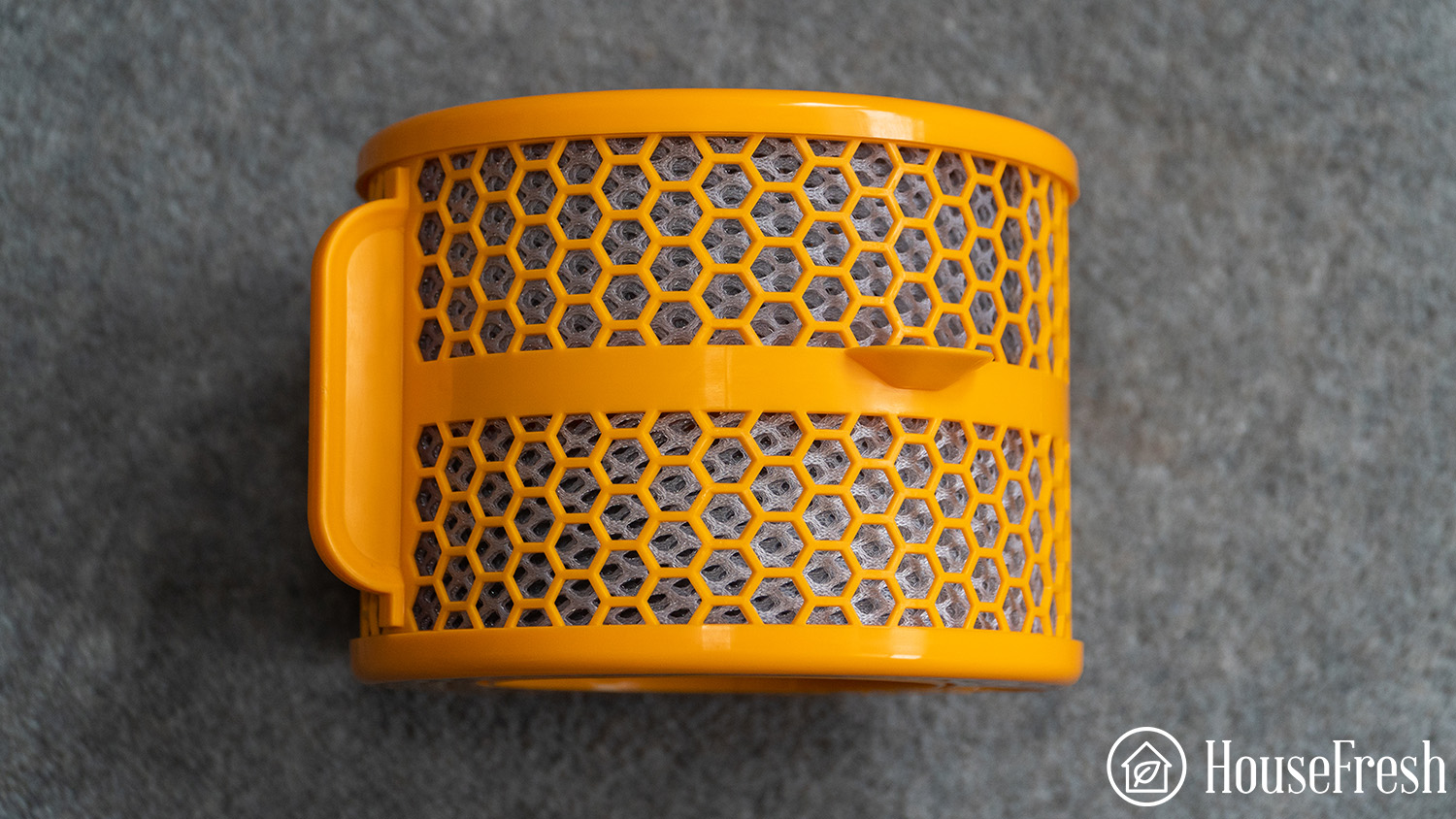
One thing we saw during our testing and reviewing is that many of the combo fan air purifiers are either good at air purifying or good at being a fan. Be sure to look at air flow levels for each device as some units, like the Blueair Fan auto, are good at cleaning the air but are not as good when using its fan function.
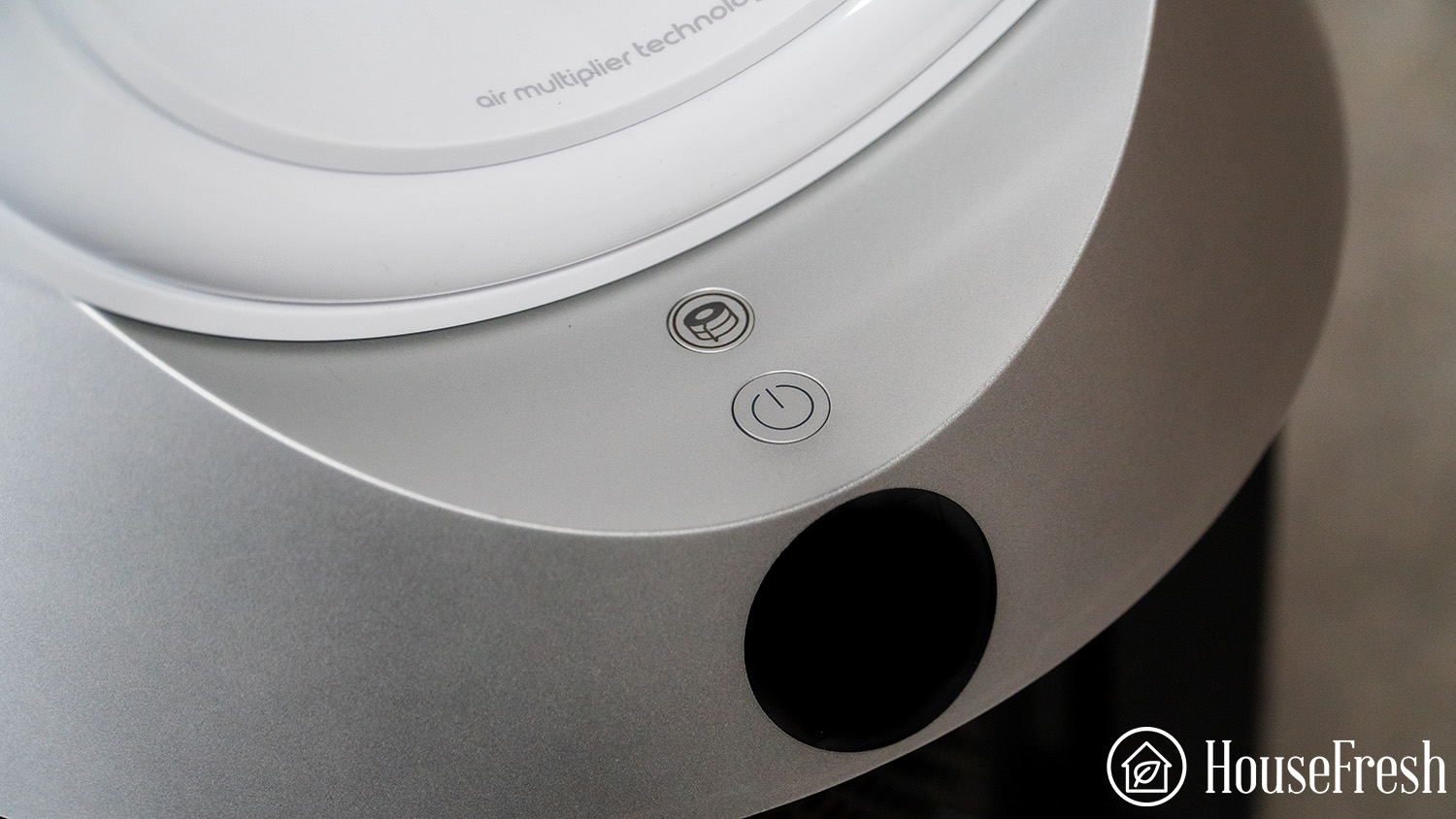
Blueair Pure Fan Auto Fan speed test

Wrapping up

The main purpose of an air purifier fan combo is to cycle and filter out unhealthy air continuously while also distributing fresher air, so when choosing the right air purifier + fan combo device, you can get the best of both worlds.

I hope you’ve found my guide useful. If you decide to buy any of the devices I mentioned and want to support the work we do here at HouseFresh, please use the links in the buttons for each unit — we will get a small commission at no extra cost to you that will fund future air purifier tests.

If you have any questions about any of the air purifier + fan combos I discussed above, please drop them in the comments below and I will get back to you as soon as I can.