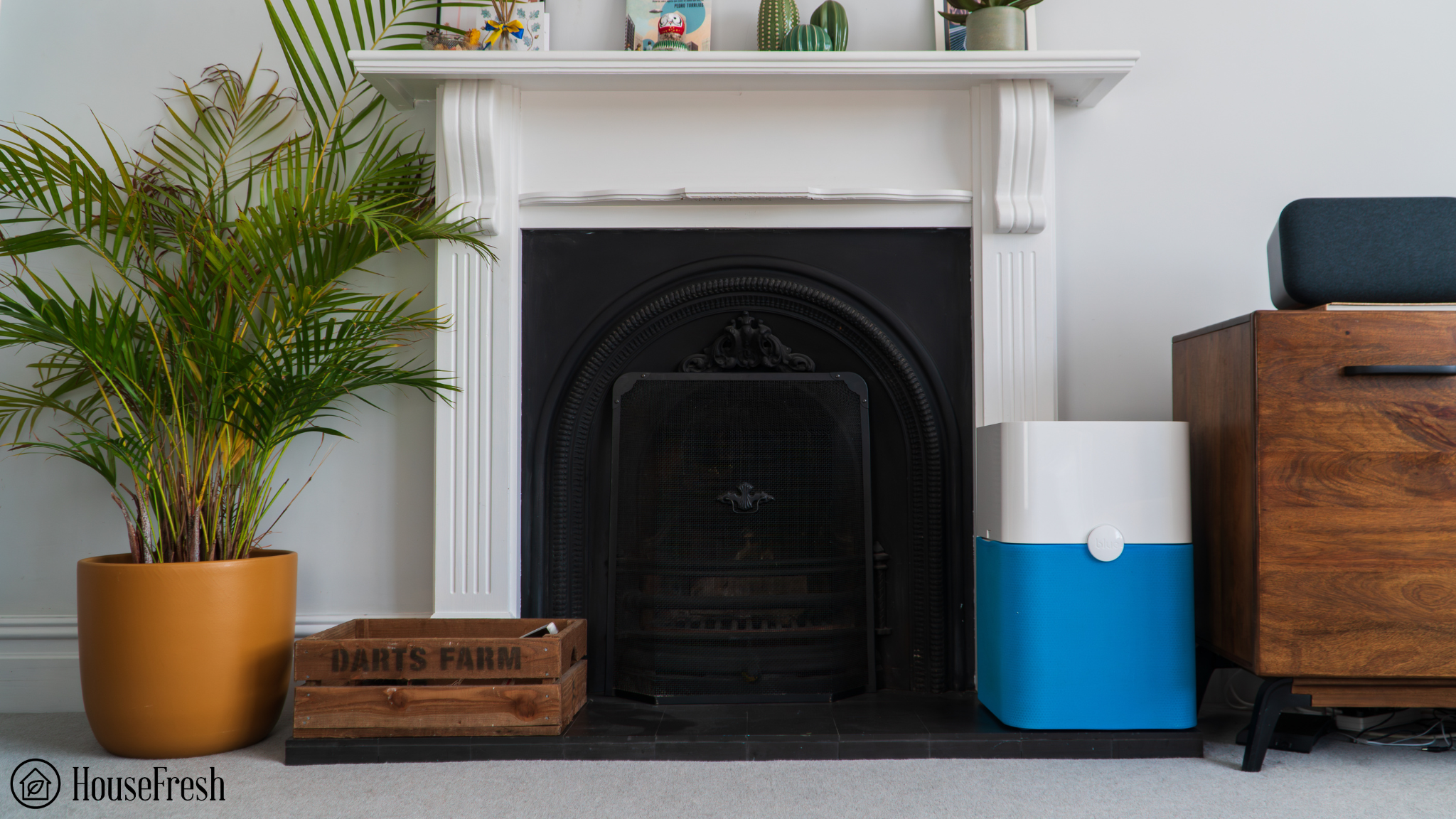
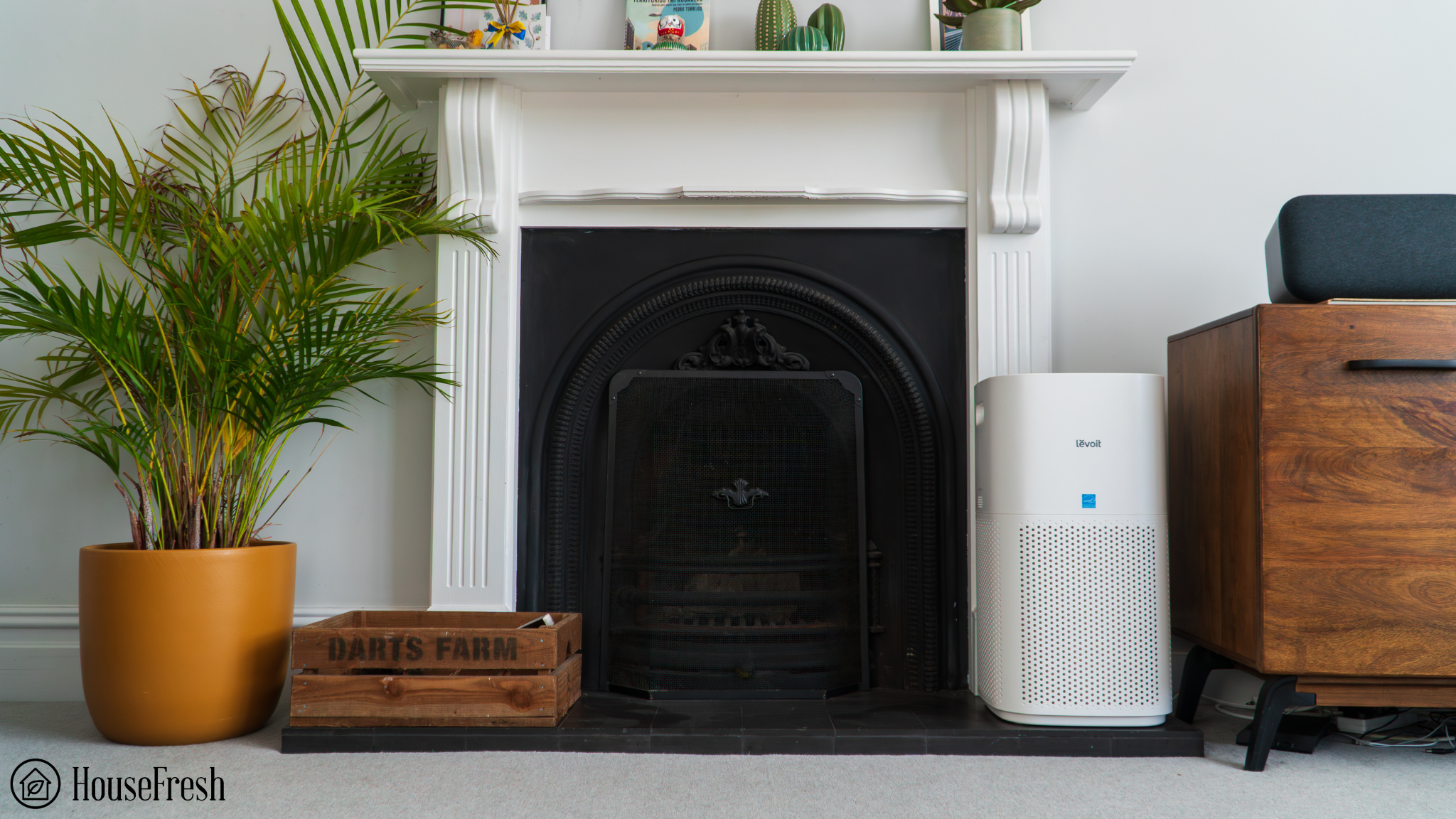
Levoit Core 300 VS Core 300S

Levoit Core 300S VS Core 300S Comparison

Levoit is part of the Arovast Corporation, which produces an array of electronics, from air fryers to fitness trackers. In 2017, the company turned its attention to indoor air quality. Since then, Arovast Corporation has developed a wide range of high-performance yet budget-friendly air purifiers. This led to Levoit’s rise as one of the biggest names in the air cleaning space. 

Among Levoit’s portfolio of purifiers, we’ve seen some top-quality units, including the Vital 200S and their latest unit, the EverestAir, which is the fastest purifier to complete the HouseFresh Clean Air Speed Test. 

However, Levoit’s most popular products are in the Core series. These affordable purifiers are designed to cover different-sized spaces within the home, from the Core Mini for personal use up to the Core 600S, which caters to spaces as large as 635 sq. ft.

The first unit in this series was the Core 300. It sets the benchmark for budget-friendly air purifiers, with impressive air cleaning performance within a small- to medium-sized space. 

Although the Core 300 is renowned for its purifying abilities, the unit is often deemed a basic option with no additional features. This paved the way for the Core 300S, an updated unit stacked with smart technology to make air purification even simpler. 

With the Core 300 costing $99.99 and the 300S $149.99, readers often ask if it’s worth spending the extra 50 bucks. So, in this review, I’ll compare these units side by side and analyze their performance, features, and design to see which comes out on top.  

TL;DR: Which unit wins overall? 

David Elfstrom photo
“In the ENERGY STAR listings, the Levoit Core 300S uses half the power of the Core 300 model for approximately the same clean air delivery rate! This suggests a major difference in the fan motor between the two models.”
Levoit Core 300S VS Core 300S Comparison

No time to read the full article? Don’t worry; here are my key takeaways.

The pros and cons compared:

Levoit Core 300Levoit Core 300S

Levoit Core 300

Levoit Core 300S
What we really likeWhat we really like
👍 Excellent CADR to $ ratio – with one CFM costing just 70 cents.
👍 Cylindrical design and Levoit’s VortexAir technology draws in dirty air from all corners of the room.
👍 Super simple to set up and use, with intuitive icons to cycle through the settings.
👍 Readily available and affordably priced filter replacements.
👍 Seamless design blends into a variety of spaces.
👍 Useful smart capabilities — especially Auto mode, which reacts to changing pollutant levels with zero input from the user.
👍 The VeSync App is easy to use and ideal for firing up the purifier before you get home from work.
👍
Sleep mode for round-the-clock use. At just 48 dB on top speed, this unit won’t cause disruption.
👍
More timer options, ranging from 1 hour to 24, give the user more control.
👍 Ultra-lightweight and compact design, ideal for the modern home.
What we think could be betterWhat we think could be better
👎 Lack of smart features are noticeable as they become increasingly common throughout the industry.
👎 No way to gauge current air quality conditions in your space without a third-party device.
👎 It would be better if the pre-filter was removable to aid in cleaning and maintenance — the Core 300S also suffers from this.
👎 Some may deem the extra $50 price tag unjust without much increase in CADR.
👎 An aesthetic design update from the Core 300 would have been great.
👎 Low quantities of activated carbon are included in the standard filter, so it’s worth upgrading to Levoit’s pet or toxin filter for use against VOCs.

Specs compared side-by-side

When it comes to specifications, the Levoit Core 300S just about wins due to being lighter, quieter, and faster than its counterpart.
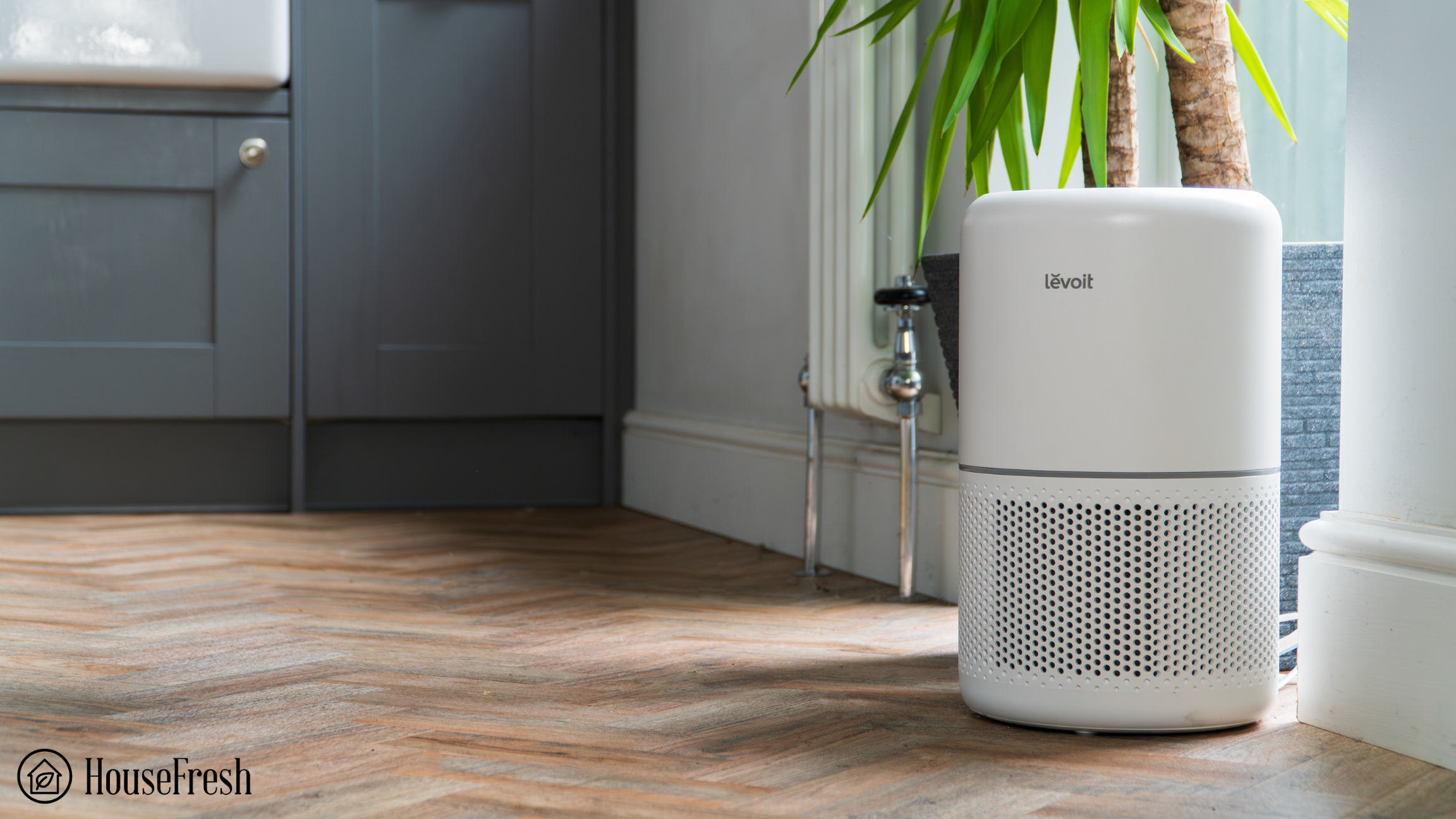
Levoit Core 300S Kitchen Floor

💡exclusive code for HouseFresh for 10% off a single purchase on Levoit.com: HOUSE10

At first glance, not much seems to separate these two air purifiers. 

They’re designed to work in the same-sized space, share the same dimensions, and have the same warranty. However, some marginal differences in weight, sound, and speed might swing your decision in favor of the Core 300S. 

The updated Core 300S does have a slightly better CADR score, thanks to its improved fan efficiency. This aligns with the real-world air cleaning speed we witnessed when testing the 300S, as it cleared our test space one minute faster. 

Levoit Core 300Levoit Core 300S
HouseFresh rating:★★★★★★★★★★
Time to clean our test room:54 minutes45 minutes
Air purifier technology:3-Stage Filtration (pre-filter for large particles, main filter for airborne particles, high-efficiency activated carbon filter for odors and gasses)3-Stage Filtration (pre-filter for large particles, main filter for airborne particles, high-efficiency activated carbon filter for odors and gasses)
Recommended room size:175 sq. ft.195 sq. ft.
Clean air delivery rate (CADR):– Smoke: 113 CFM
– Dust: 129 CFM
– Pollen 134 CFM
– Smoke: 126 CFM
– Dust: 134 CFM
– Pollen 154 CFM  
Dimensions (in inches / cm):14.2H x 8.7W x 8.7D inches (36H x 22W x 22D cm)14.2H x 8.7W x 8.7D inches (36H x 22W x 22D cm)
Weight (in pounds / kg):7.5 lbs (3.4 kg)5.95 lbs (2.7 kg)
Filter life:6 – 8 months6 – 8 months
Noise level (low – high):37.1 – 50.2 dB(A)38.9 – 54.5 dB(A)
Manufacturer’s Warranty2 years2 years
Estimated energy consumption:$39.43 per year$24.44 per year

Design elements compared

When it comes to design, nothing special separates these two models.

Levoit Core 300 vs 300S

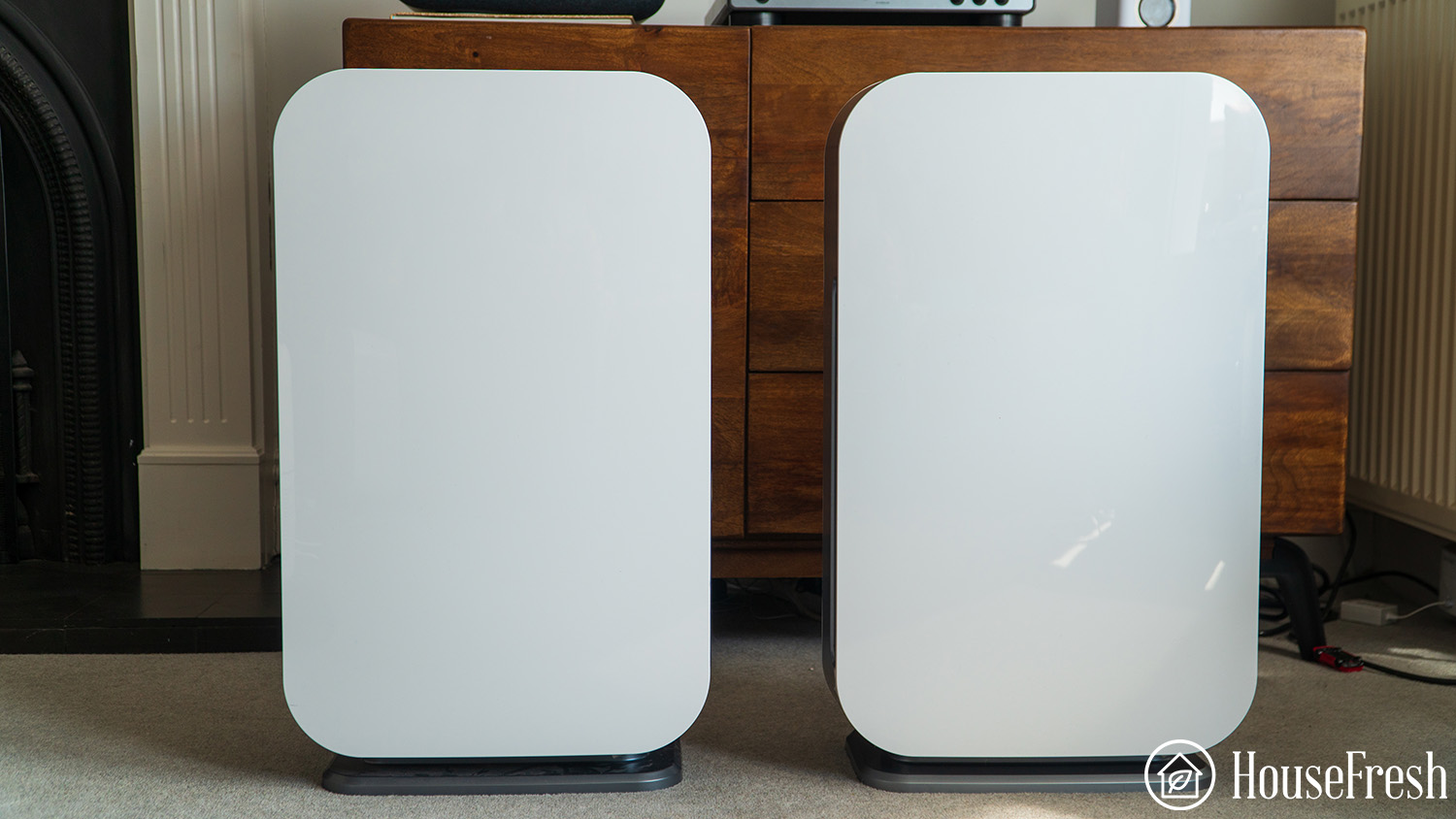
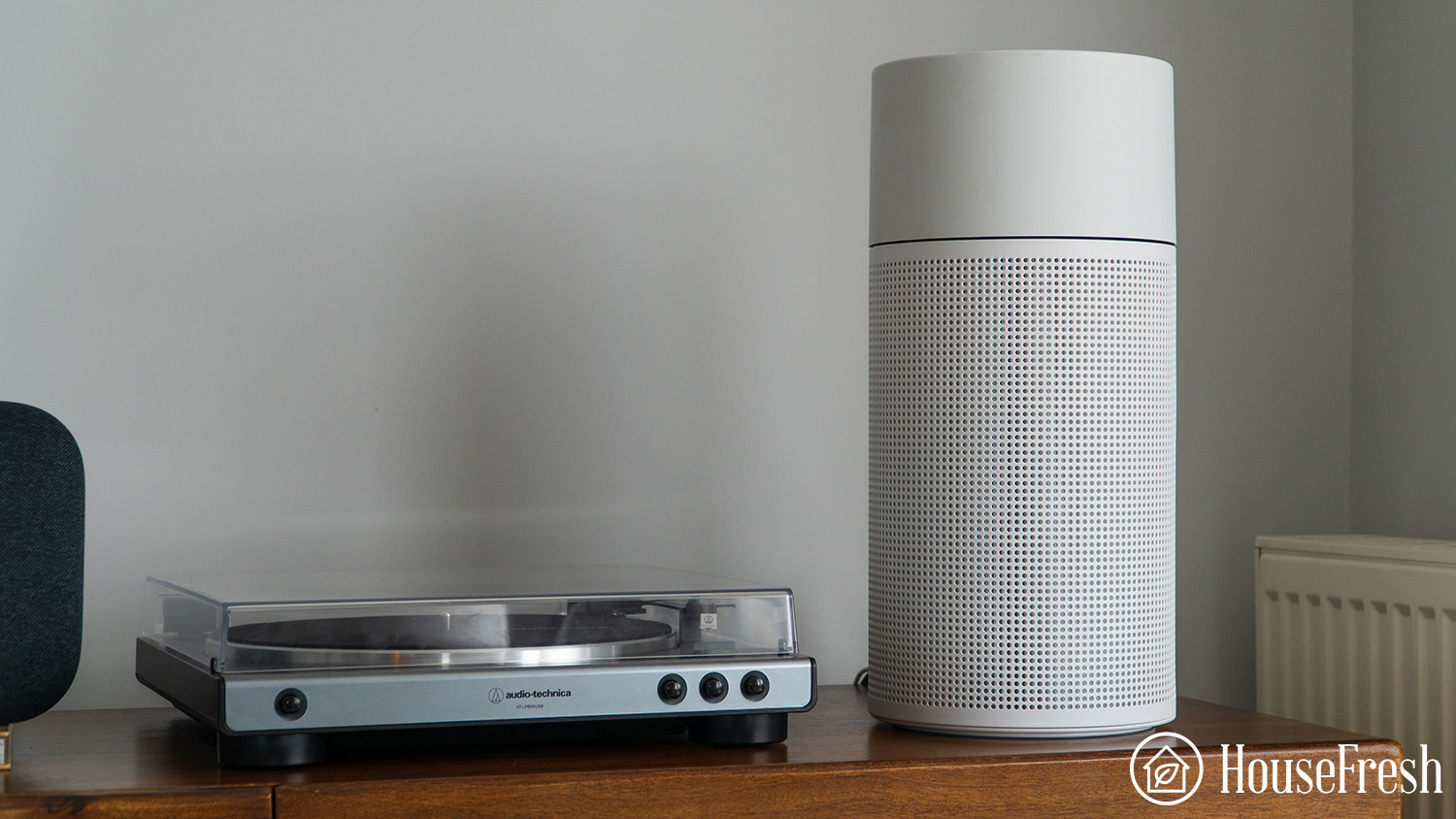
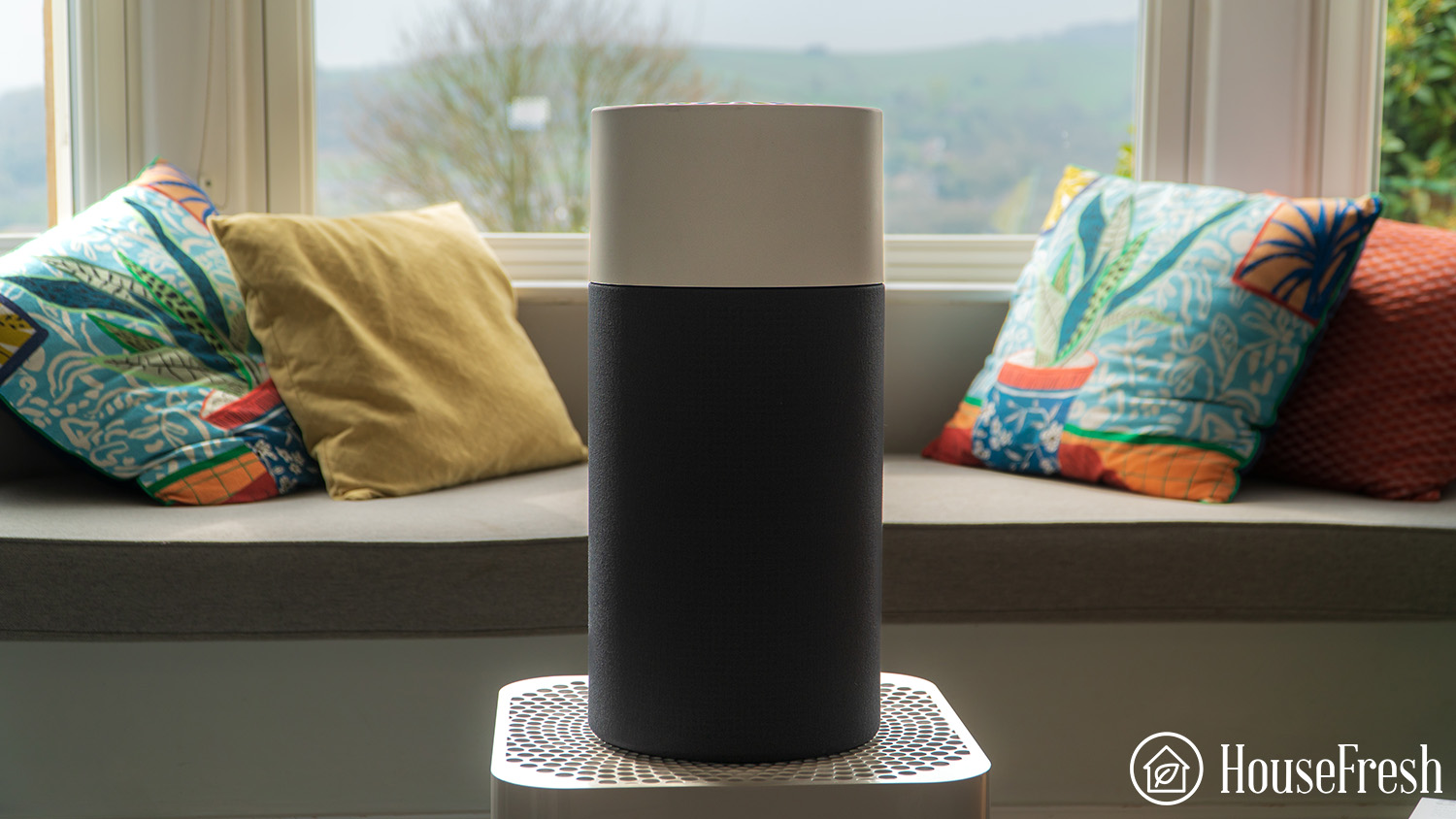
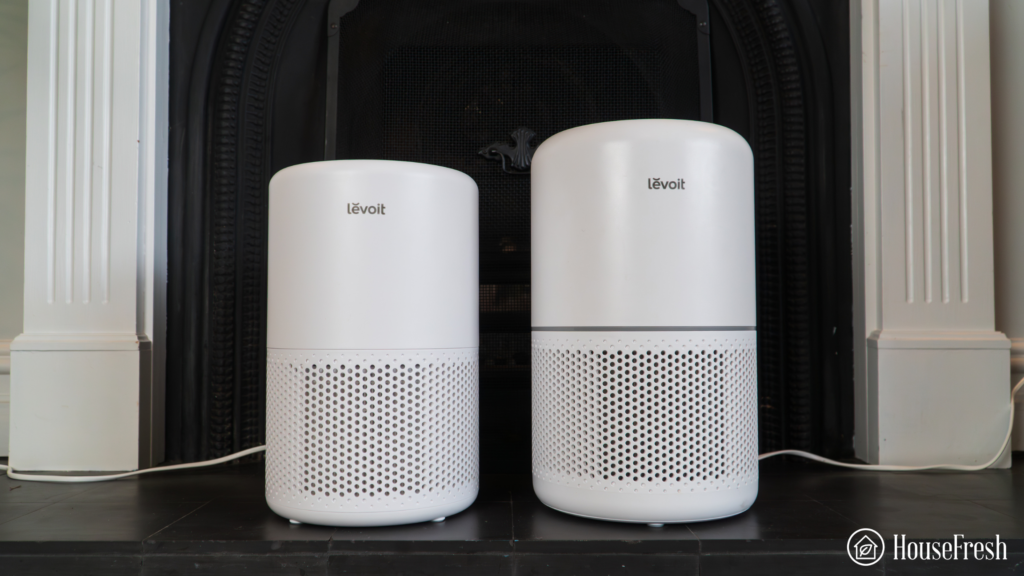
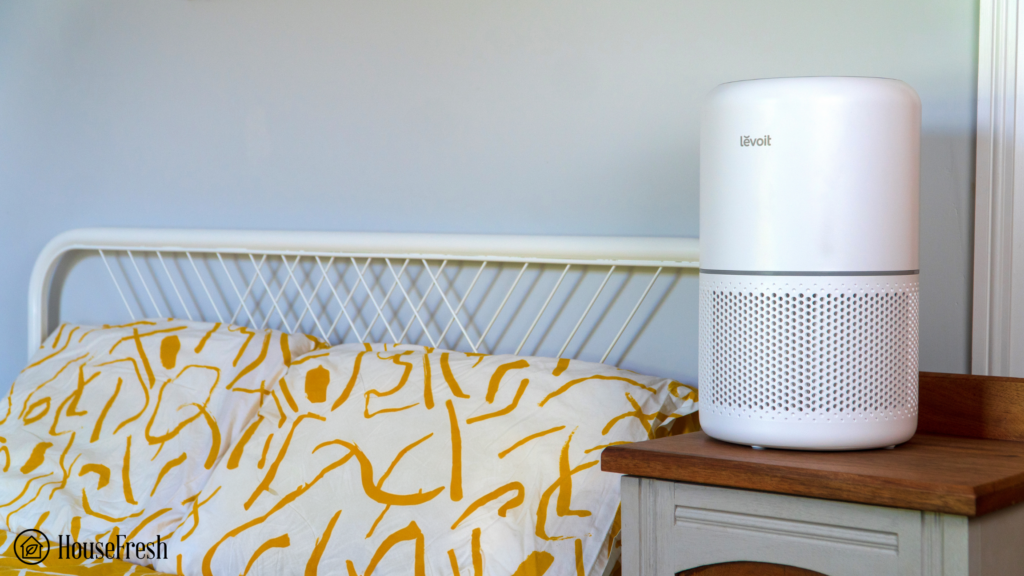
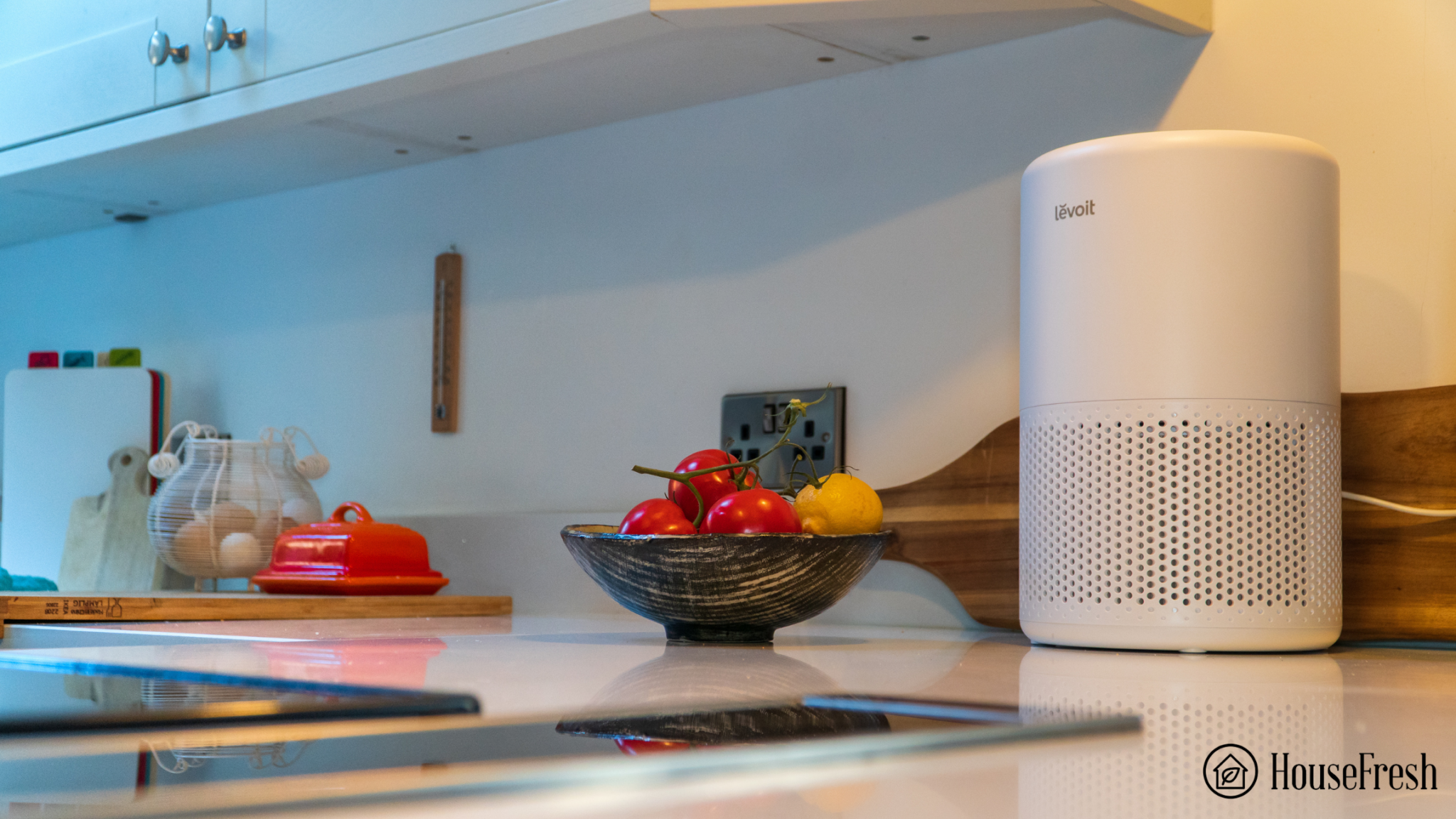
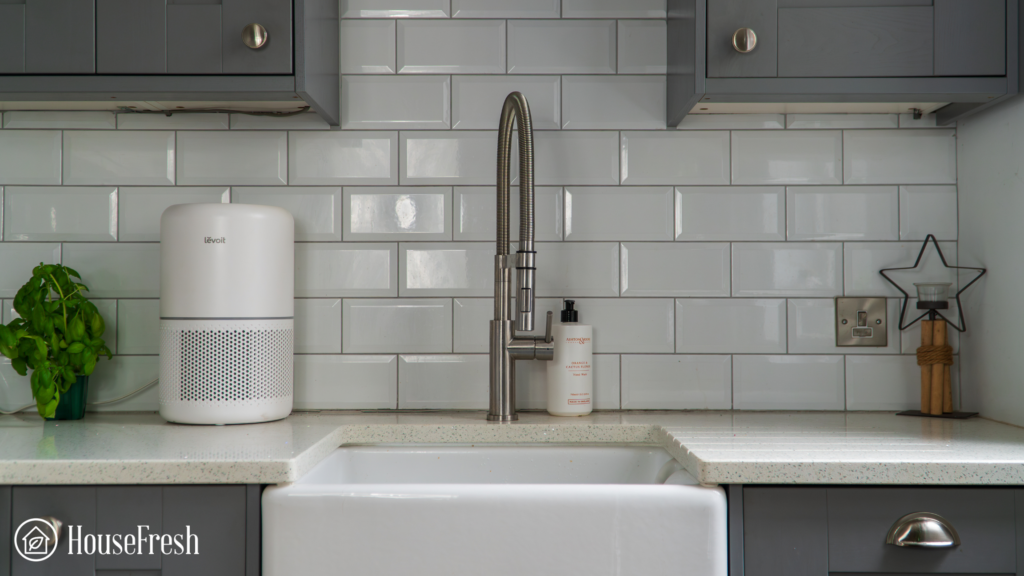
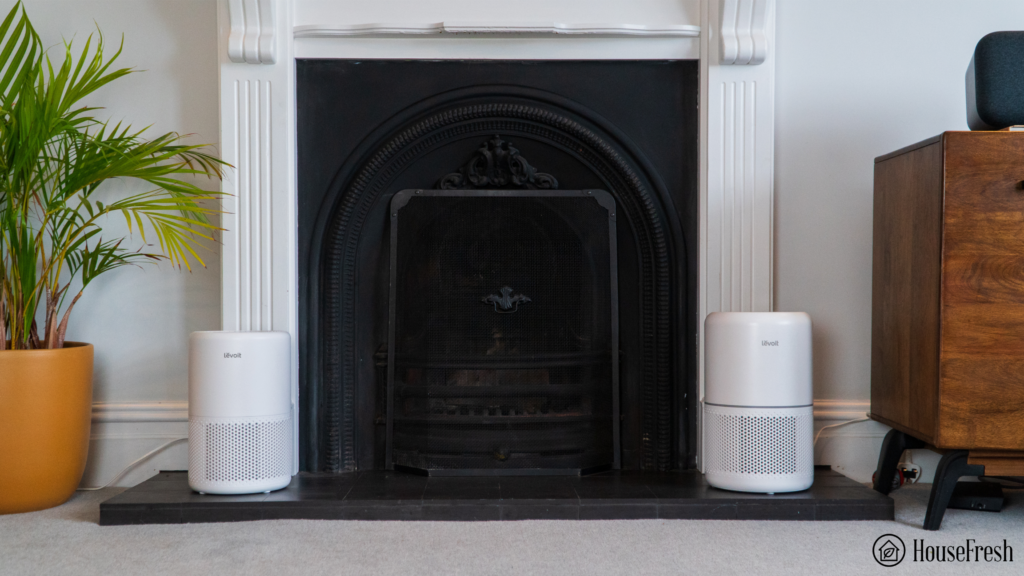
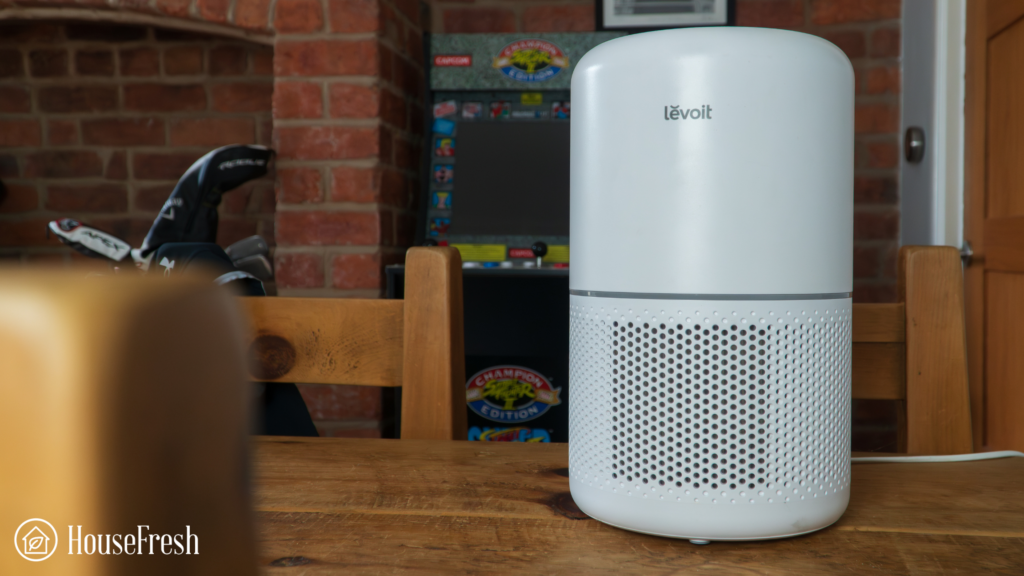
The Core 300 and Core 300S are almost identical. While they may be different internally, you’d struggle to tell them apart side by side. 

They both feature the same air inlet and outlet grills, come with a control panel on top of the unit, and have identical measurements.

However, looks might deceive you, as the Core 300S is 20% lighter than the 300. Its weight might be useful if you’re looking to utilize the purifier in different spaces around the home.

Ease of use and control panel design

When it comes to the controls, the winner has to be Core 300S. Despite having more functions, the panel remains easy to navigate.
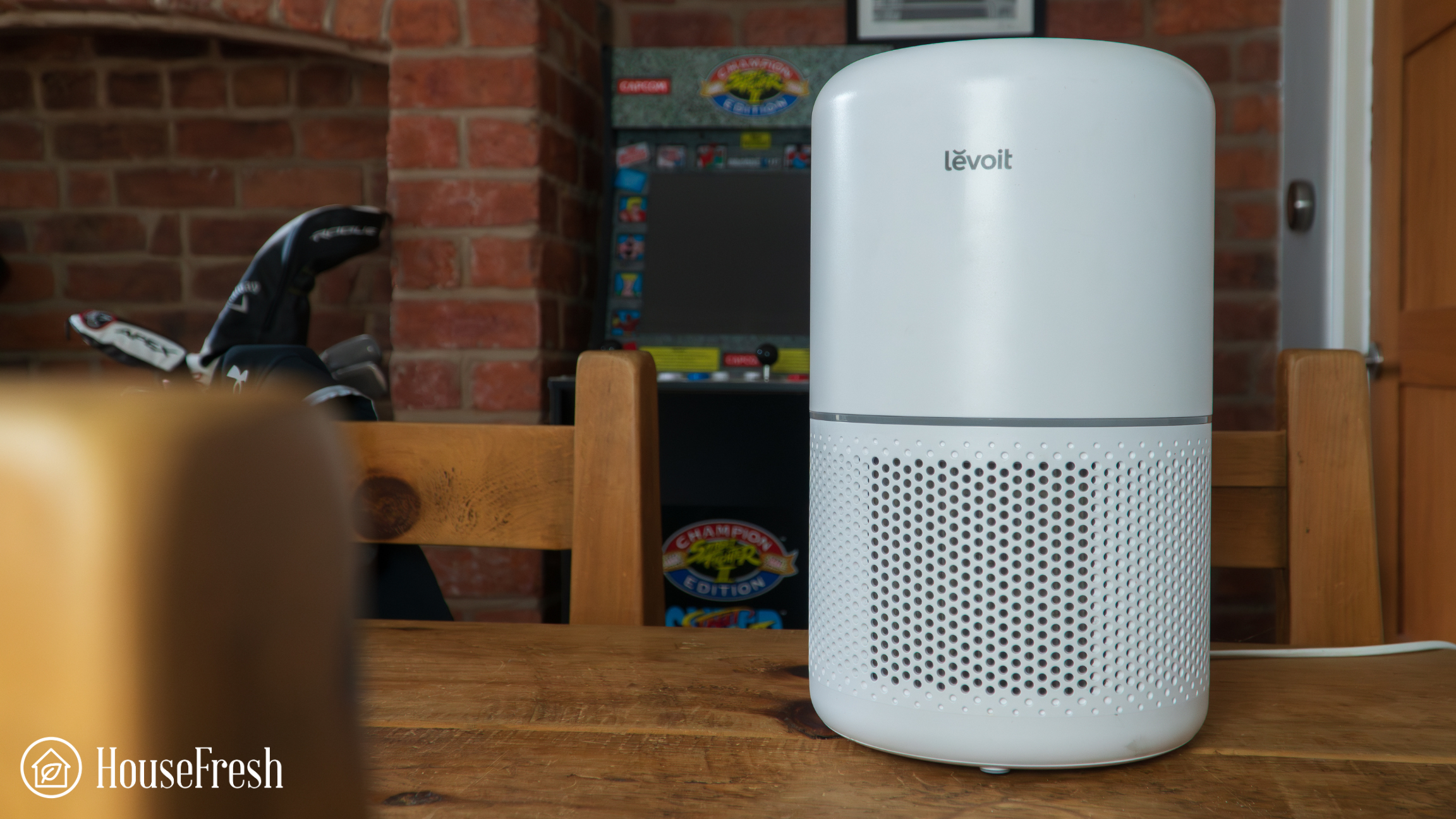
Levoit Core 300S Dining Room

💡exclusive code for HouseFresh for 10% off a single purchase on Levoit.com: HOUSE10

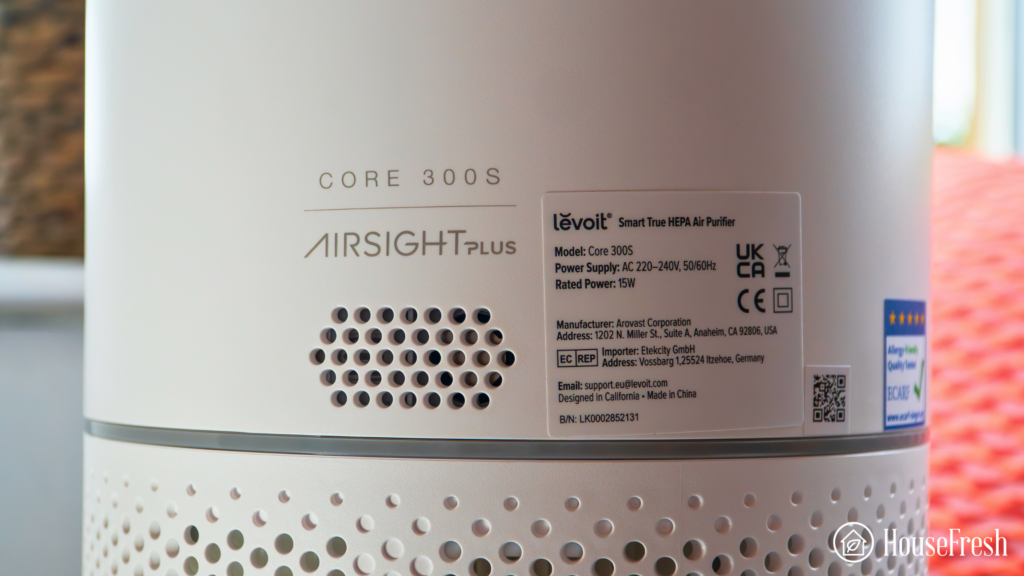
The control panel is where you’ll find the first glimpses of the 300S’s added smart features. 

The brightly colored rings provide real-time feedback on your space’s air quality, changing from blue (indicating clean and healthy air) to green, orange, and red (indicating high levels of pollutants). This works in tandem with the new Auto mode, which uses air quality data to change the purifier’s speed settings automatically to react to changing pollution levels.
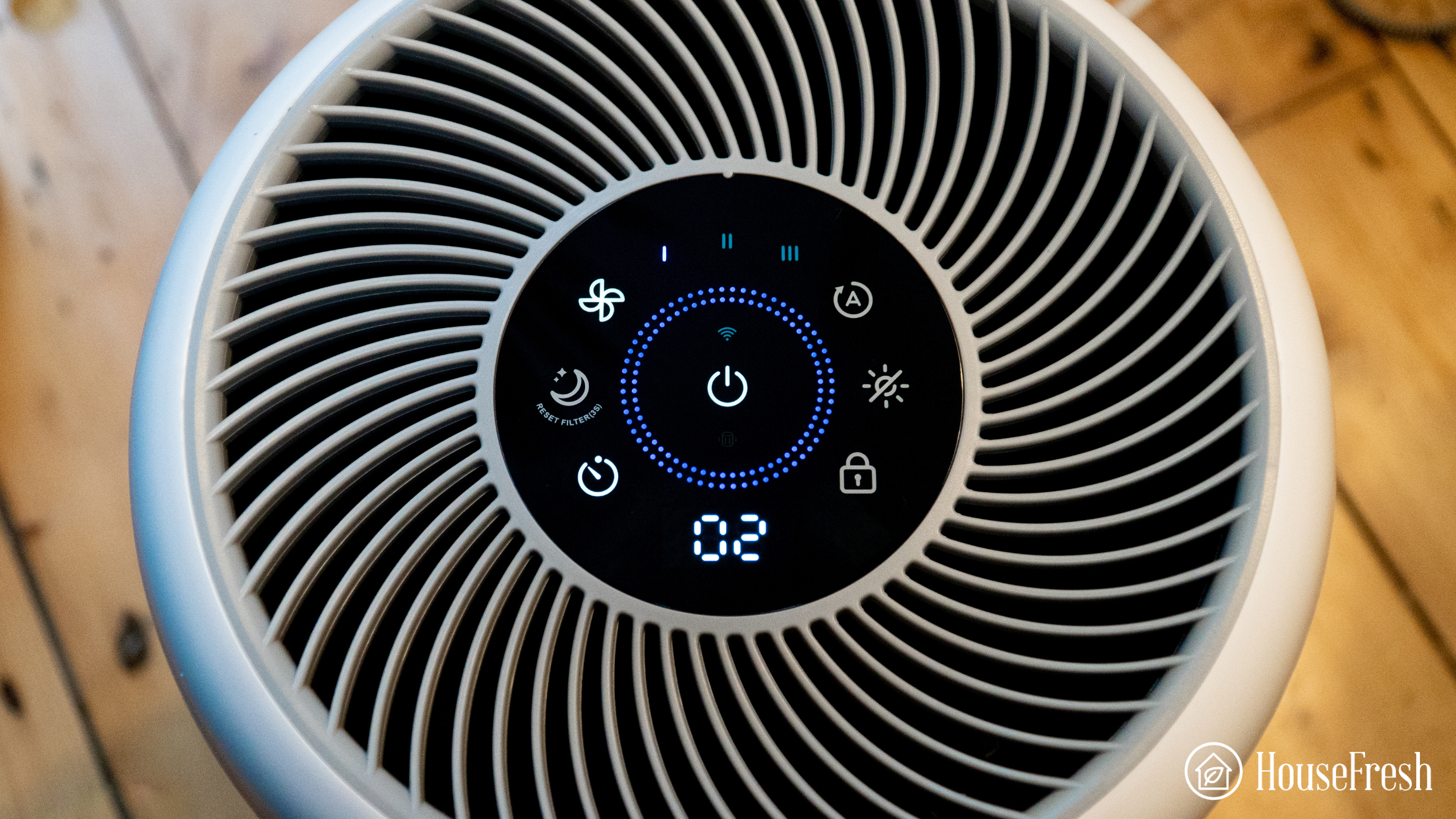
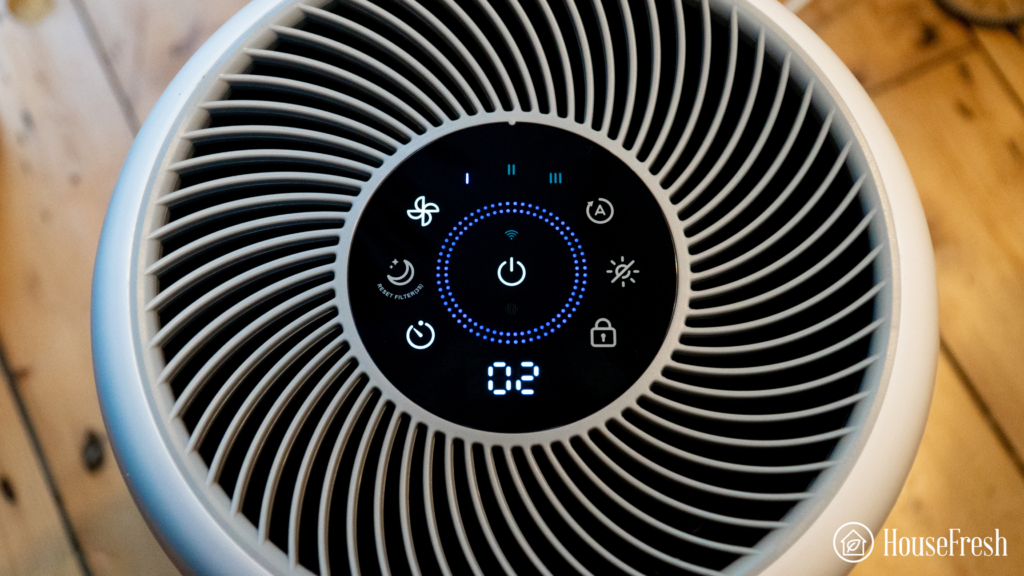
Levoit Core 300S Controls

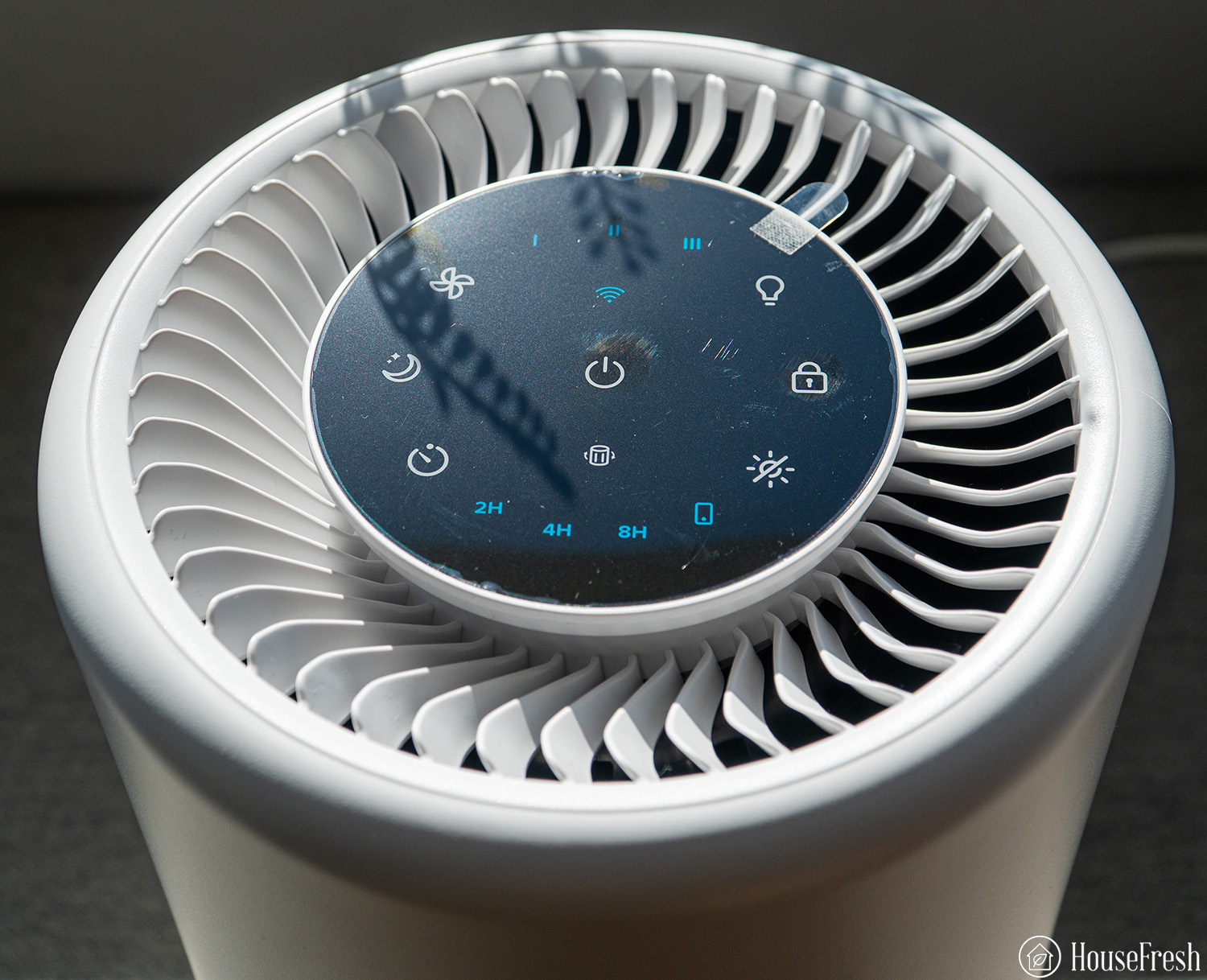
A new digital screen enables you to program the improved timer, ranging from 1 to 24-hour schedules. You can also cycle between the three fan speeds, kill the lights, activate sleep mode, and lock the controls by simply tapping the relevant icons.

If this isn’t enough to prove the 300S’s enhanced usability, you can also connect the device to Levoit’s VeSync app or a smart speaker. The app is super simple to connect to. All you need is a decent wifi connection, the app, and to be near the machine when you set it up. 
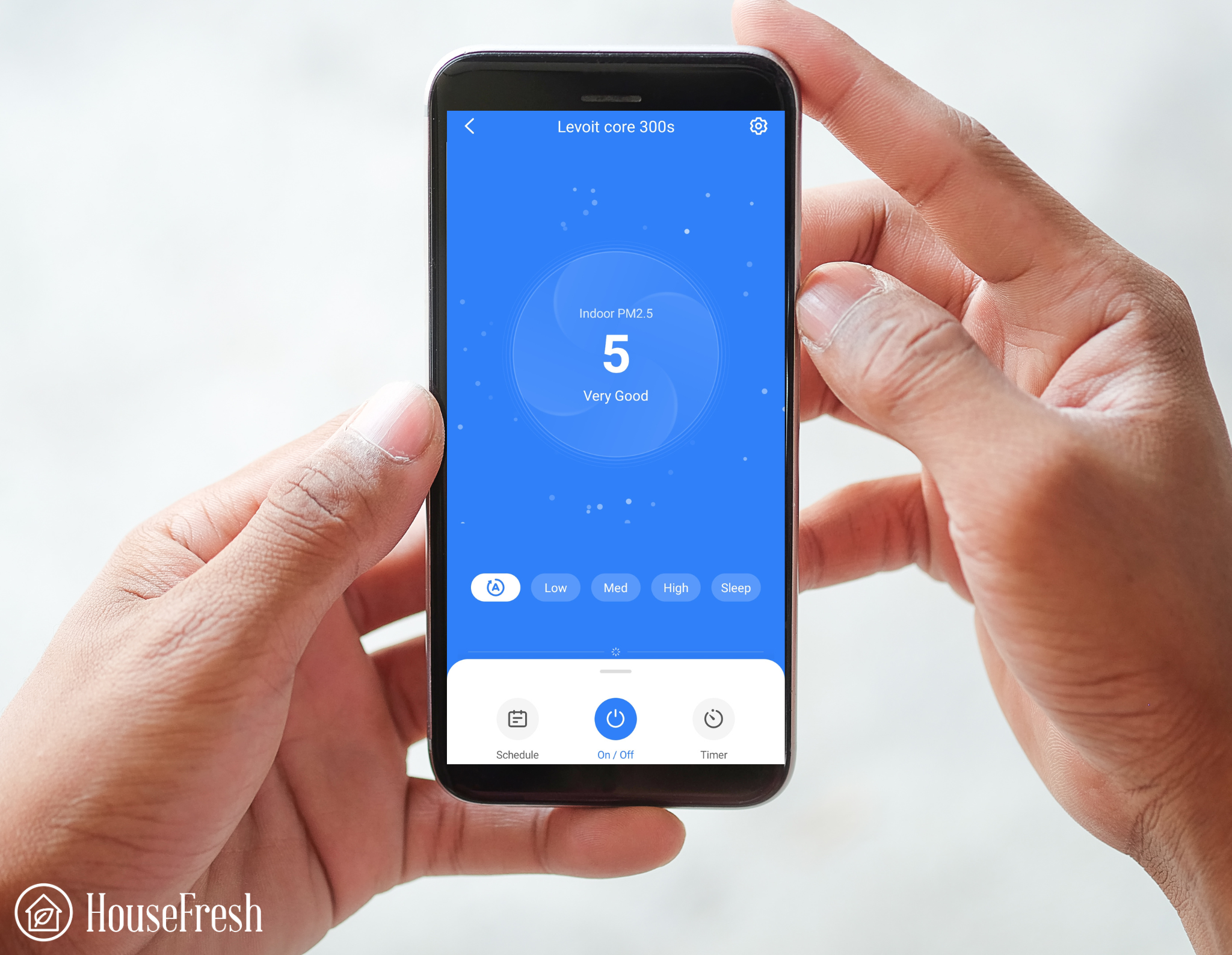
Levoit Core 300S App2

Once connected, you can adjust the unit’s settings and receive air quality updates from anywhere in the world. Connecting the 300S to a smart speaker lets you operate the appliance with simple voice commands.  

The Core 300 control panel has many of the same settings icons as the 300S. The main layout differences are the timer function, which is limited to 2/4/6/8 hour schedules, and a larger icon to remind you when to change the filter. 
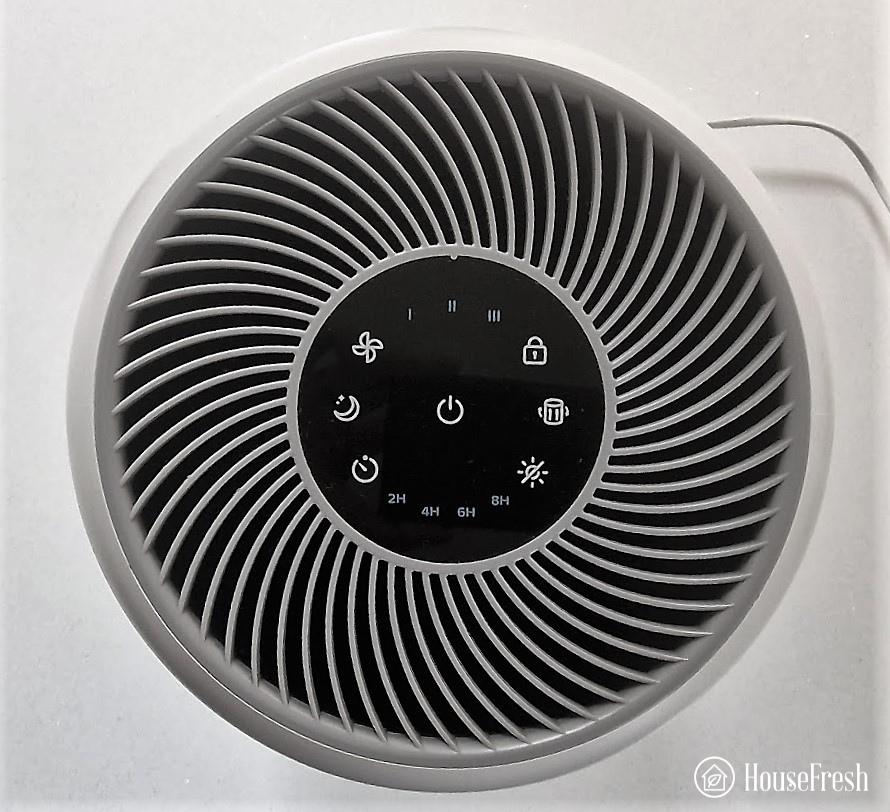
Levoit Core 300 Control panel

Operating the Core 300 is largely the same, utilizing an intuitive screen to cycle between fan speeds and settings, albeit with less functionality and no app or smart speaker compatibility. 

Air filtration technology

Both the Core 300 and Core 300S use the same filters, making this a tie

Levoit Core 300 vs 300S comparison

Whichever unit you side with, it’s good to know that you get the same level of protection from Levoit’s three-in-one filter.

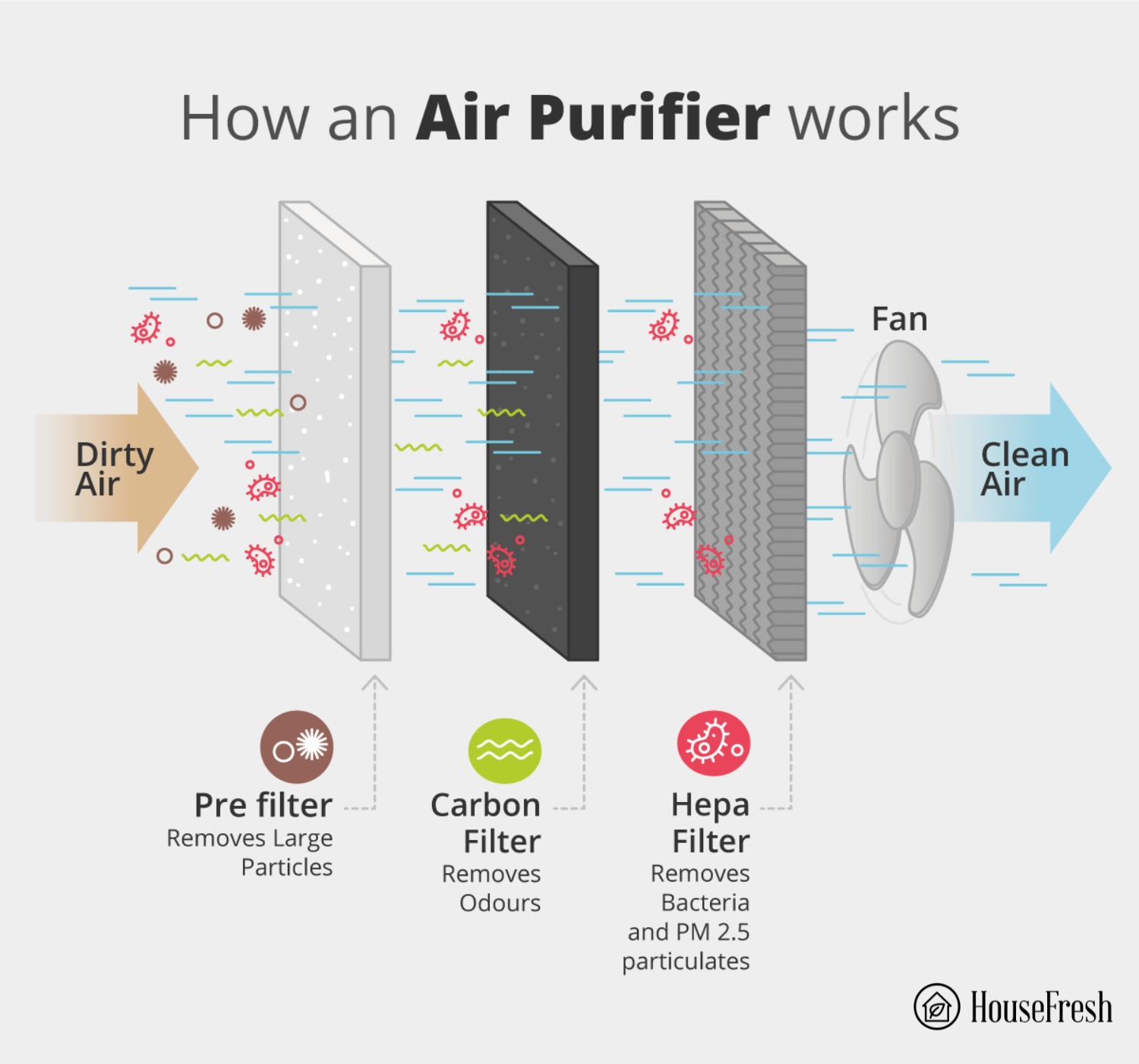
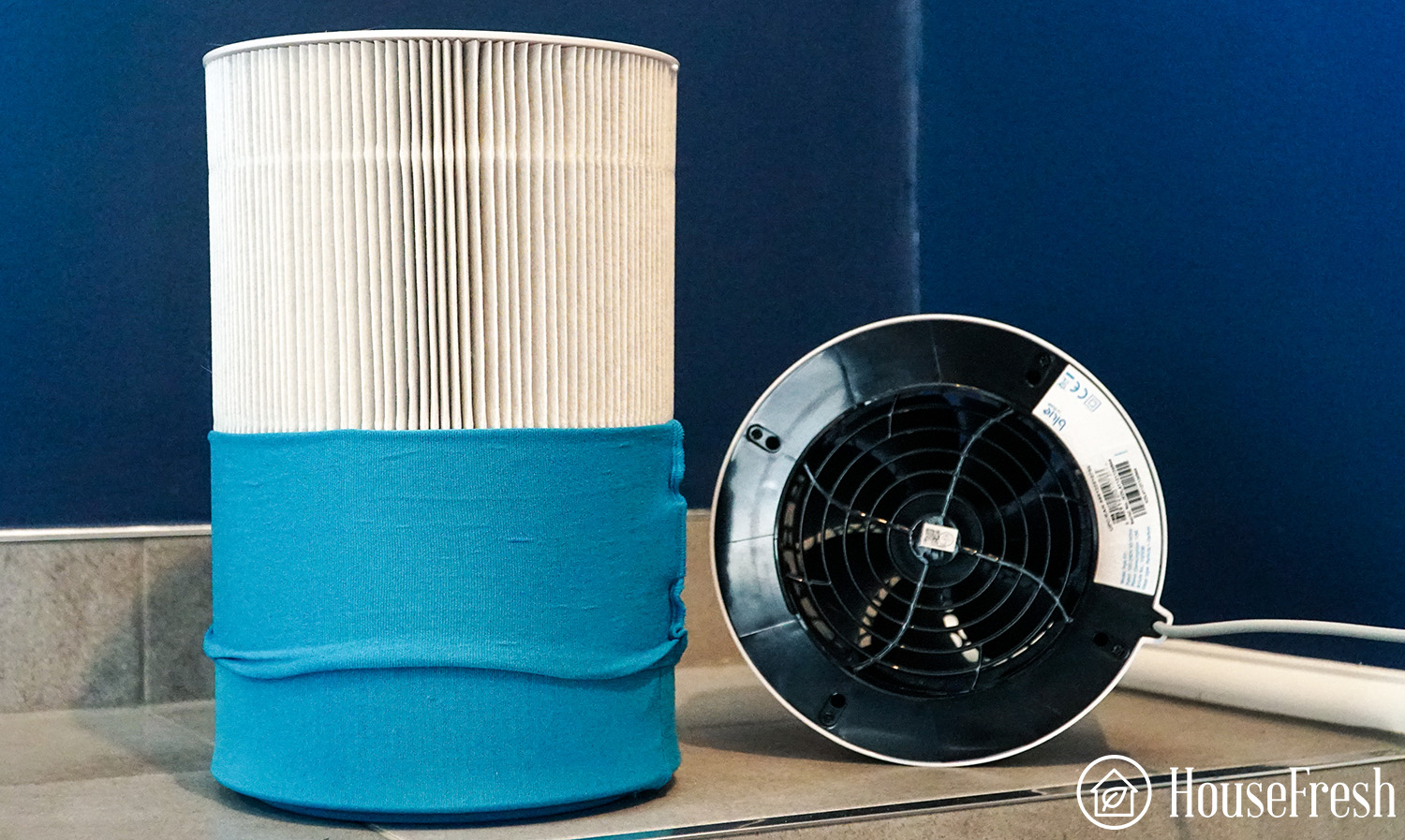
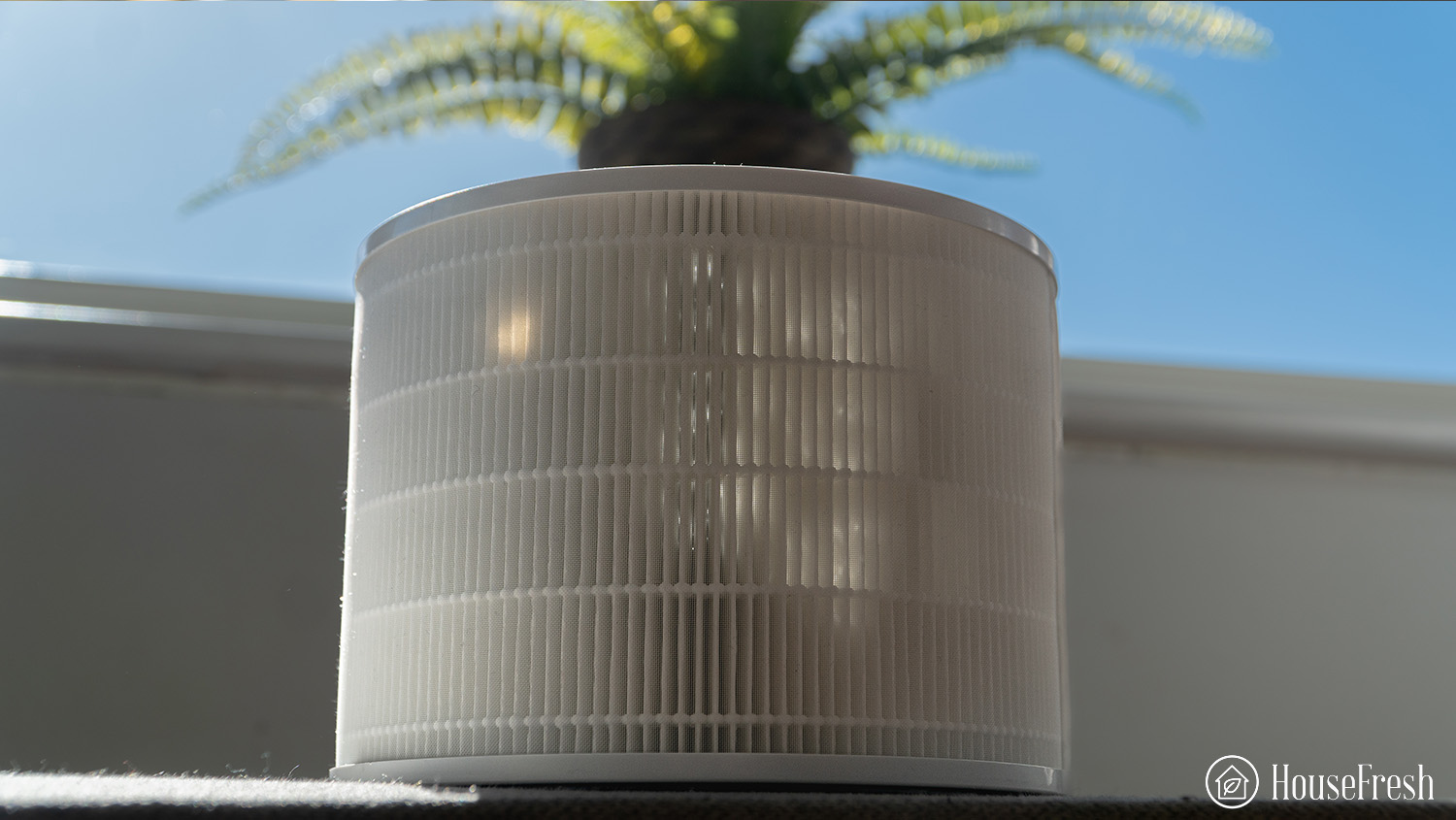
This cylindrical filter fits in effortlessly and provides comprehensive protection from even the smallest pollutant particles. It uses tried and tested mechanical filtration, ruling out any potentially harmful ionizer or UV technology. 

The first layer of defense comes from the nylon pre-filter, which captures larger particles like hair, lint, and dust. You can then vacuum out the dirt to improve filtration performance. This is a key step in the purification process, as it keeps your primary filter in tip-top shape for longer. 

Next is the activated carbon filter, which removes VOC pollutants like odor and chemical fumes. This has been beefed up by Levoit’s trademarked ARC formula, preventing gasses from leaking into your space.

Tip

The more carbon a filter contains, the better it will work against VOCs. The standard Levoit filter contains between 40 and 50 grams of carbon. 

So, if you’re looking to combat odors or chemical fumes, take a look at Levoit’s specific Pet or Toxin filters, which contain double the carbon content with 90 grams. 

Finally, you’ll find the primary filter. This is the most important part, as it removes microscopic particles such as allergens, smoke, and bacteria. Although this filter is no longer advertised as HEPA, they still work similarly, and we found it highly effective at removing the smallest PM1 particles during our tests. 
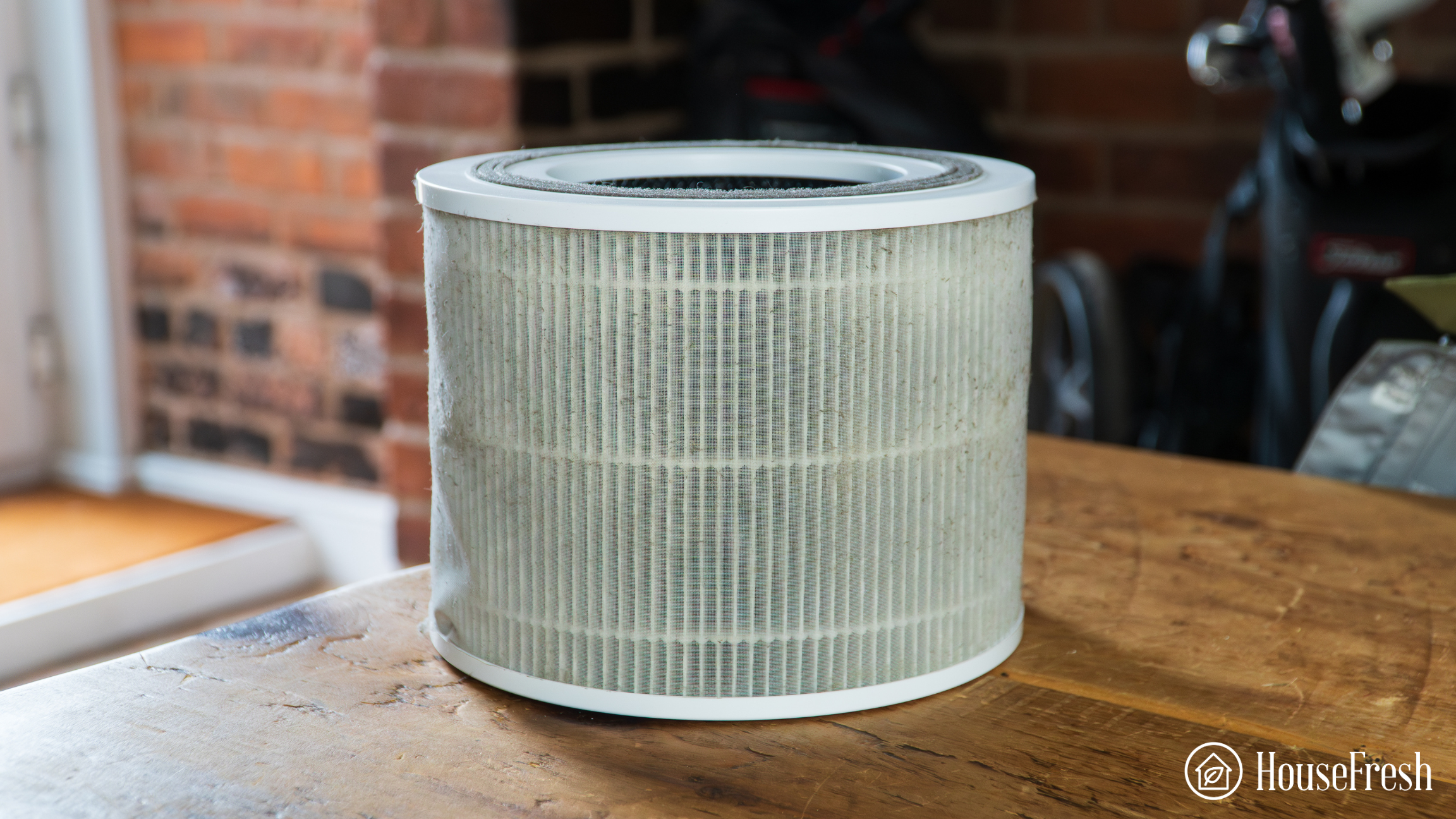
Levoit Core 300S Filter

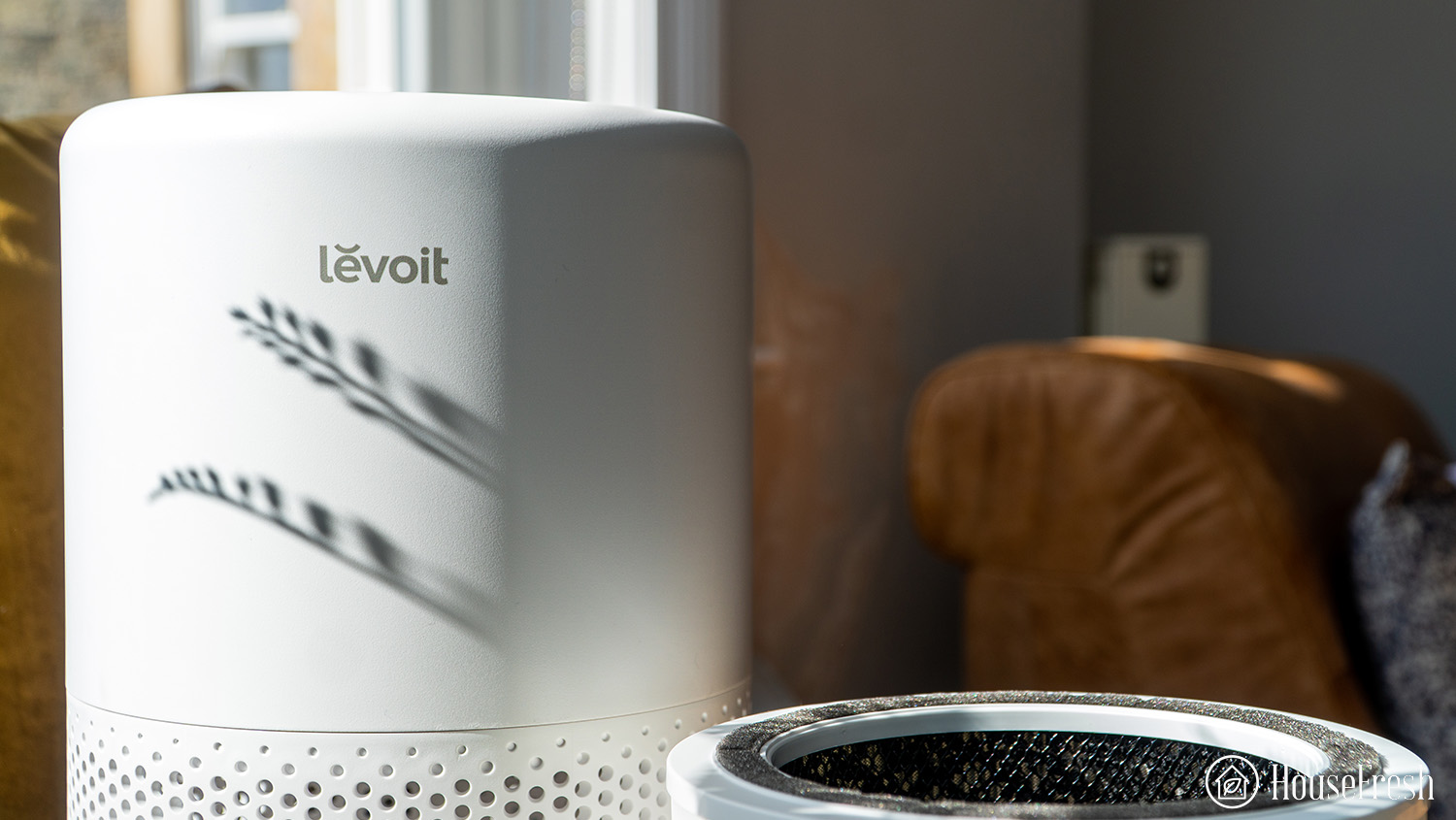
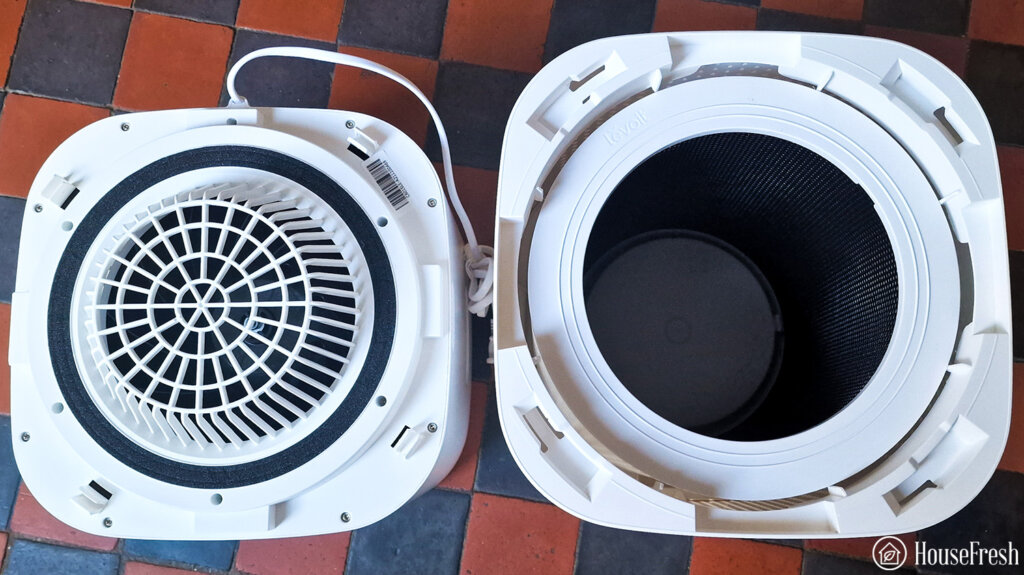
Installing the filter couldn’t be simpler. Both the 300 and 300S share the same design, where you twist the purifier body to open the filter compartment. 

All you have to do is slot the filter in and reassemble the unit before turning it on. 

Tip

New filters come wrapped in plastic packaging. Be sure to remove this polythene bag before you install the filter.

Air cleaning performance, compared

When it comes to air purification, the Core 300S wins. It cleared all traces of smoke particles in our test room one full minute faster than its predecessor.
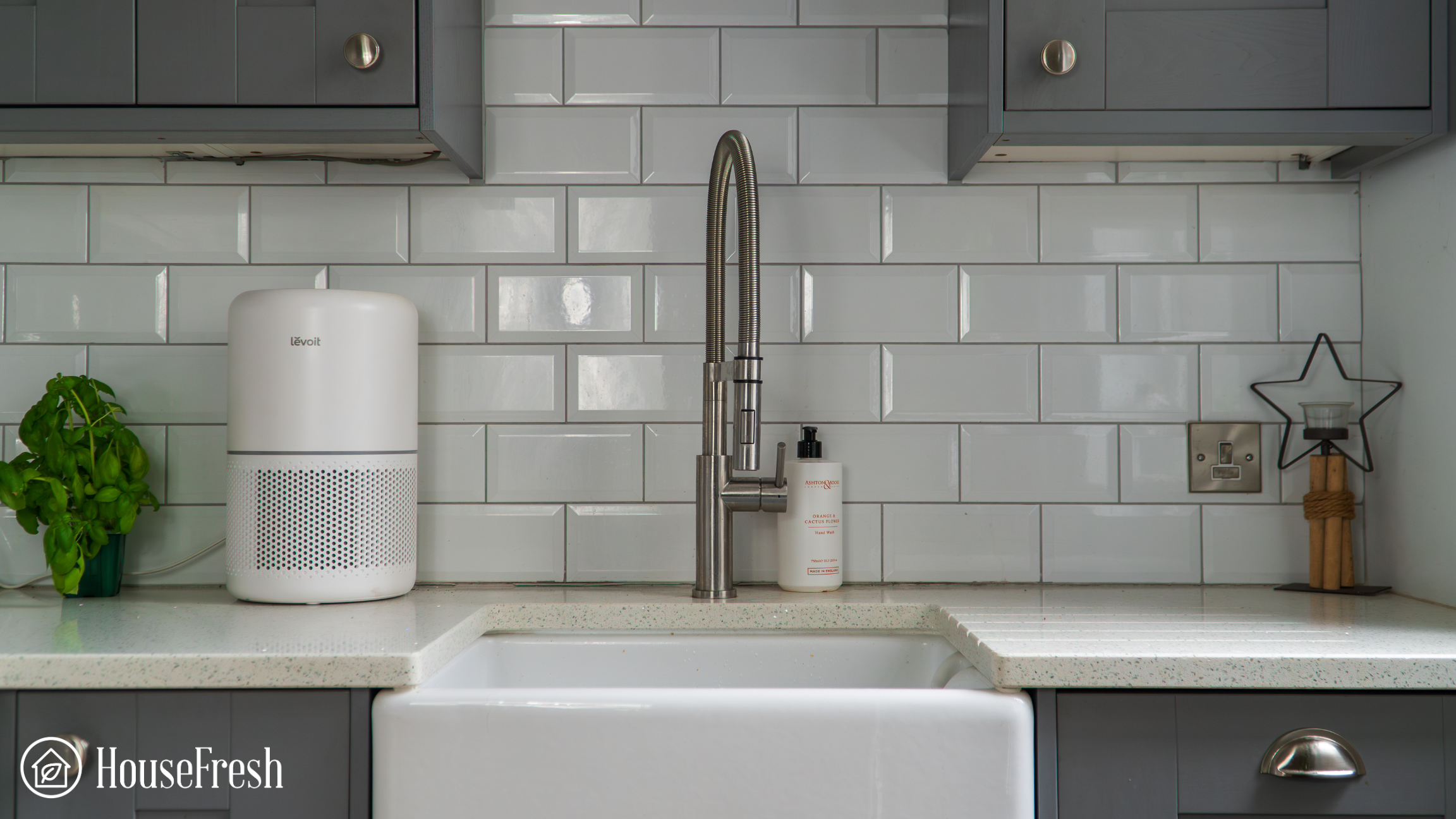
Levoit Core 300S Kitchen

💡exclusive code for HouseFresh for 10% off a single purchase on Levoit.com: HOUSE10

Every air purifier we review here at HouseFresh completes the same set of tests, so we can confidently compare them side-by-side.
how we test
How we test air purifiers

Read our full testing methodology.

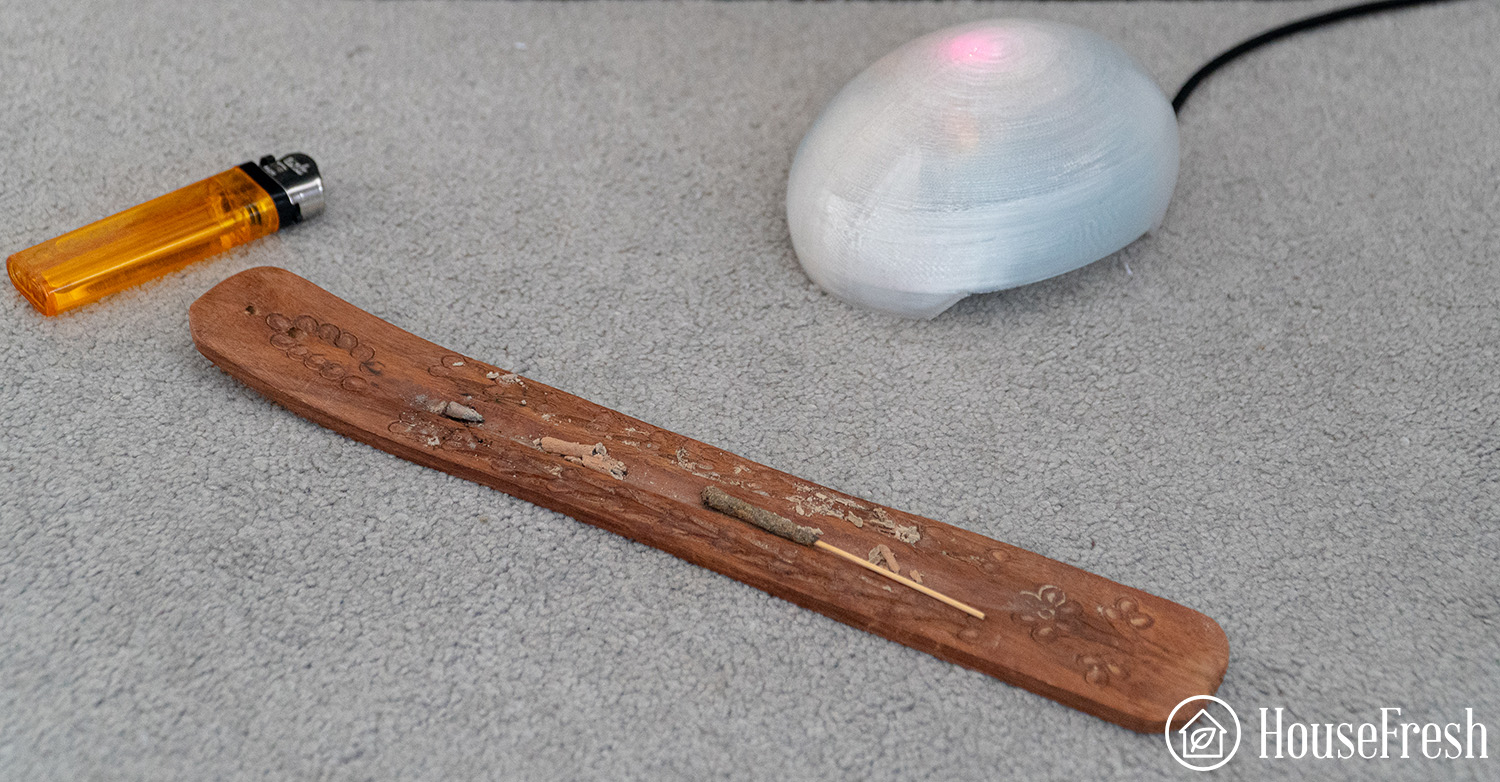
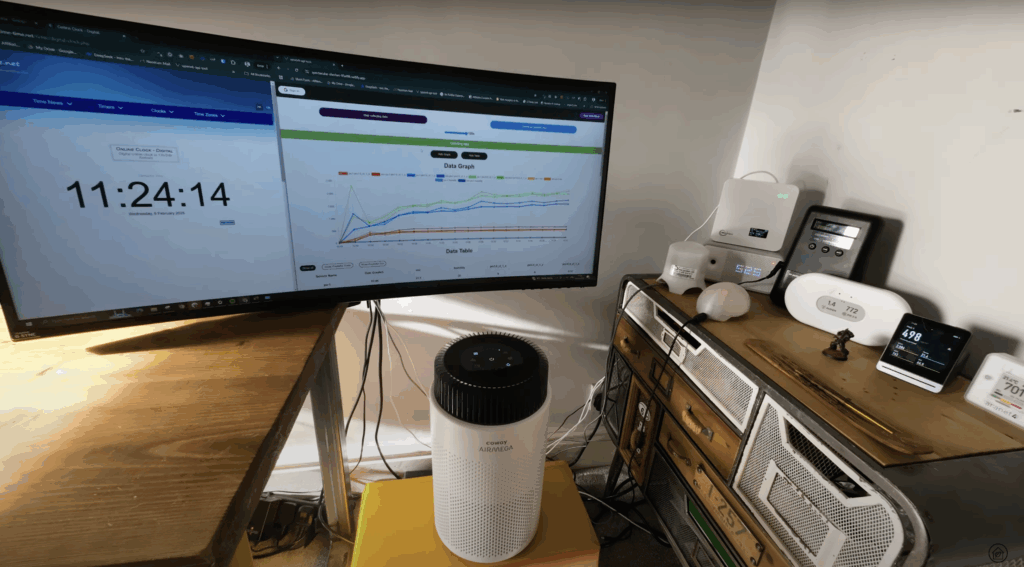
The first test is the particle removal test, where we fill our 728 cubic feet test room with incense smoke and use our PurpleAir Zen sensor to record how long it takes for the air purifier to reach PM1 zero.

Our Core 300 and 300S tests showed that these units provide good value for money, clearing our space of all pollutants in 54 and 45 minutes, respectively. 

With identical filters under the hood, it’s no wonder this was a tight contest. But thanks to the upgraded fan efficiency on the 300S, seen through its higher CADR scores, it proves to be the faster option. Although the 300 didn’t lose by much, every minute counts when it comes to breathing dirty and potentially dangerous air. 

The Levoit Core 300S cleared our test room in 45 minutes

The Levoit Core 300 cleared our test room in 54 minutes

After carrying out our own tests, we can compare the units side-by-side to determine which purifier on the market offers the best value. Here’s a peek at how the Core 300 and 300S performed compared to other popular units we have tested. 

Although the 300 and 300S aren’t the quickest air purifiers we’ve tested, we can clearly see that they lead the pack among the devices aimed for small-medium sized rooms, such as the Blue Pure 411 and the Medify MA-25.

Noise level test results, compared

When it comes to sound, the Core 300S is the better unit. It is a full two decibels quieter than the 300 when running at its highest fan speed.

Levoit Core 300S Kitchen

💡exclusive code for HouseFresh for 10% off a single purchase on Levoit.com: HOUSE10

How much sound an appliance makes is often an annoying afterthought once you’re stuck with the unit for good. 

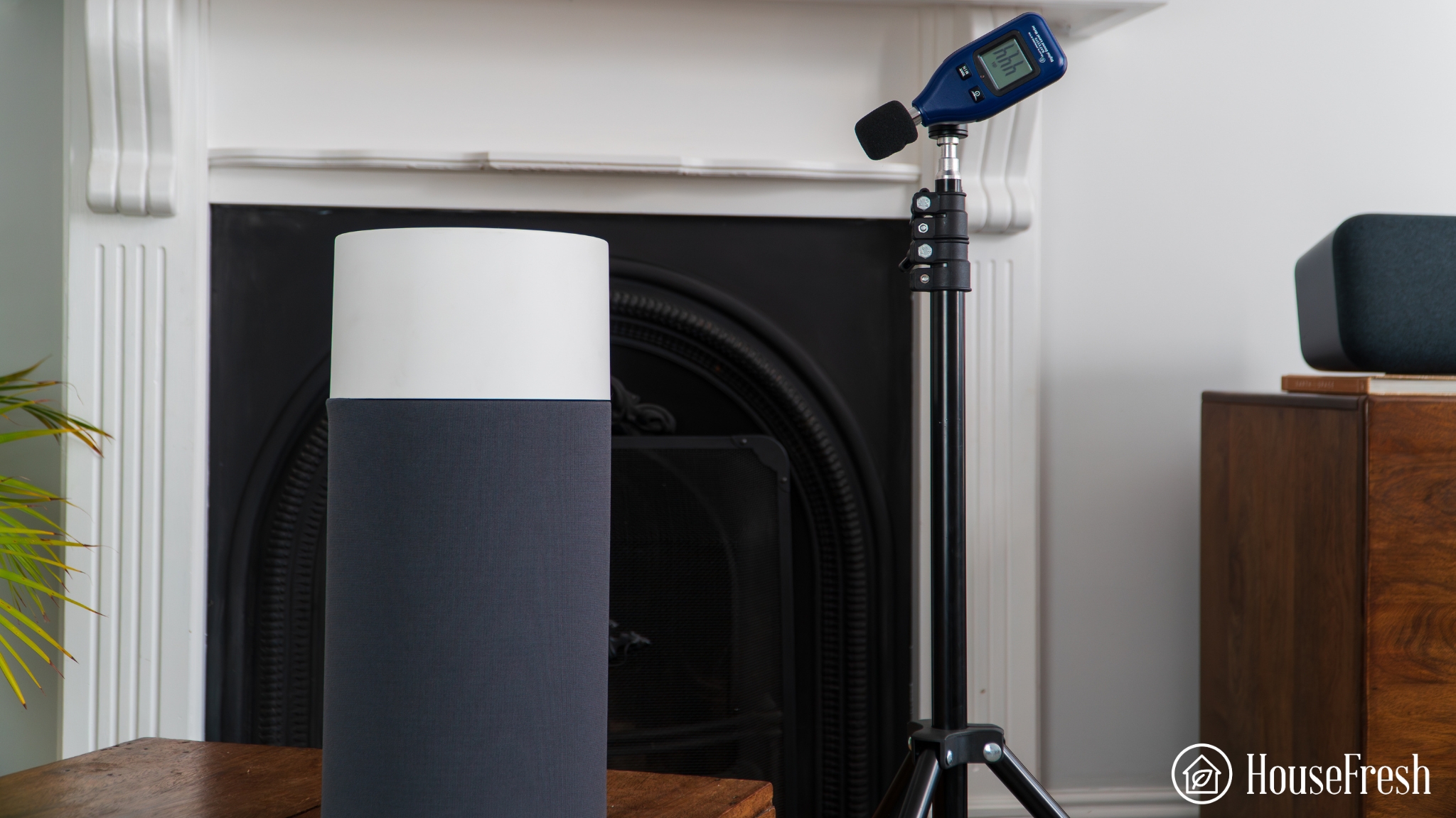
If an air purifier is noisy or peaks at unbearable volumes, the reality is that it won’t get used that often. That’s why we record the decibel levels of each air purifier we test to give you the complete picture before you take the plunge. 

During our testing, we found that the Levoit Core 300S was the quieter of the two units. At full speed, it peaked at 48 dB (quieter than a refrigerator hum or moderate rainfall) compared to the 50 dB created by the Core 300. 

At their lowest speed settings, both units created 24 dB of noise. This is the equivalent of a whisper, so you can rest assured you’ll get a good night’s sleep with night mode activated on either of these units.   

To help put these figures into context, here’s a look at how the Core 300 and 300S compare to other popular air purifiers on the market. 

Tip

Noisiness is subjective, so be sure to listen to our sound test videos for each purifier below to judge for yourself.

Yearly running costs, compared

When it comes to costs associated with energy consumption and filter replacements, the Core 300S wins out thanks to its lower energy draw.
Levoit Core 300S Kitchen Counter

💡exclusive code for HouseFresh for 10% off a single purchase on Levoit.com: HOUSE10

1. Yearly electricity costs = $37.32 (Core 300) vs. $22.92 (Core 300S)

Investing in an air purifier will cost more than the initial purchase price, with energy use being a key purchasing factor. 

When testing the Levoit Core 300, we noted that it drew 35.5. watts on its highest speed setting. This equates to $37.32 per year if you were to use the air purifier 24/7, 365 days a year.

Although this might be a reasonable expenditure for some, we were even more impressed with the 300S, which only drew 21.8 watts on full power, bringing estimated annual energy costs down to $22.92.

Using either unit less frequently will bring down this expenditure. But with a smaller unit, we advise using the air purifier as much as possible to reap the rewards of clean air around the clock. 

An added bonus of the 300S is its Auto mode, which automatically adjusts speeds whenever pollutant levels change. This means the unit will operate at a lower power once pollutants have subsided. 

2. Yearly filter costs = $29.98 (Core 300) versus $29.98 (Core 300S)

Another key cost to consider is filter replacements. Filter lifespans can vary greatly between manufacturers and models, so it’s wise to shop around and understand what you might pay in the long run before committing to a purchase. 

As the Core 300 and 300S use the same filter, there’s no winner or loser here. 

In line with their Core range ethos, Levoit offers reasonably priced replacement filters to keep your air at home cleaner for longer.

At the time of writing, a genuine Levoit filter replacement costs $29.98, which, according to Levoit, lasts between six to eight months.

Sale
Levoit Core 300 Filter
  • 𝐆𝐄𝐍𝐔𝐈𝐍𝐄 𝐑𝐄𝐏𝐋𝐀𝐂𝐄𝐌𝐄𝐍𝐓 𝐅𝐈𝐋𝐓𝐄𝐑: Designed specifically for the Core 300-P / Core 300S-P air purifiers to maintain its peak performance. Use genuine filters for premium quality and longer lifespan. We recommend replacing your filters every 6 to 8 months.
  • 𝐇𝐄𝐏𝐀-𝐆𝐑𝐀𝐃𝐄 𝐏𝐄𝐑𝐅𝐎𝐑𝐌𝐀𝐍𝐂𝐄 𝐈𝐍 𝐒𝐋𝐄𝐄𝐏 𝐌𝐎𝐃𝐄: Helps Levoit Core 300-P achieve HEPA* filtration efficiency during Sleep Mode. Zero ozone emissions and ultra-quiet operation (≤26dB) in Sleep Mode. *Tested with IEST RP C001.7 by independent lab

Generic filters for these purifiers are widely available, which can help reduce costs even further. There’s no guarantee the replica filters have been built to the same standard as the official replacements offered by the manufacturer. But in the wake of Dyson challenging Levoit’s HEPA filter classification, it may well be worth the gamble. 

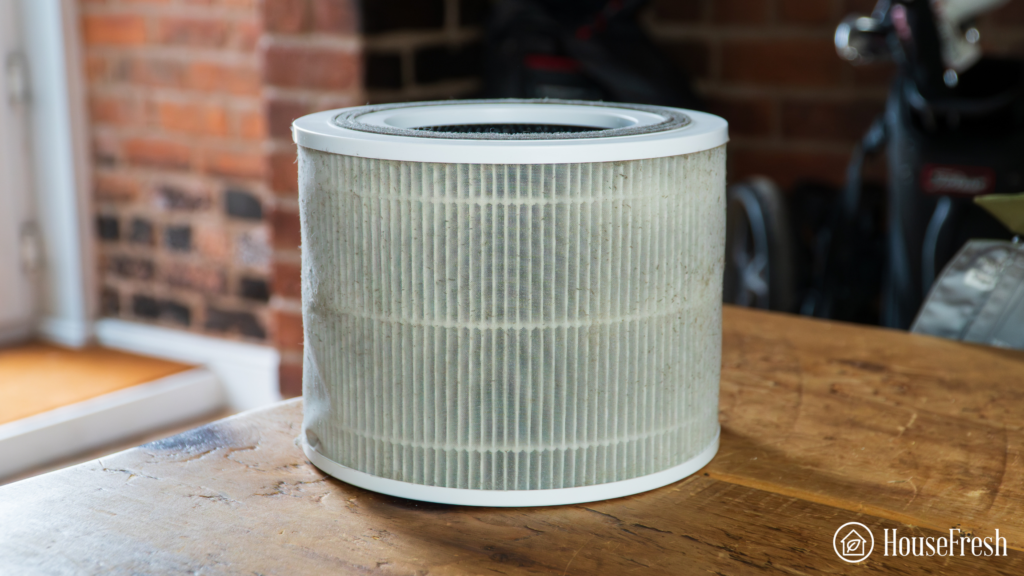
Most air purifiers use mechanical filters that capture airborne particles such as dust, dander, and debris in tightly woven fiberglass pleats. 

Over time, these filters become clogged with pollutants and lose efficiency, which is when you should replace them.

Bottom Line: Should you get a Levoit Core 300 or a Core 300S?

The Core 300 and 300S ran a close race throughout our comparison, but which unit will win overall? 

✅ If you want a speedy and smart air purifier capable of removing the smallest particles without excess noise or energy use — go for the Levoit Core 300S. 

Levoit Core 300S Kitchen Smells

💡exclusive code for HouseFresh for 10% off a single purchase on Levoit.com: HOUSE10

✅ If you want an air purifier to use periodically without a large upfront investment — go for the Levoit Core 300.
Levoit Core 300 Kitchen 2 logo

💡exclusive code for HouseFresh for 10% off a single purchase on Levoit.com: HOUSE10

There isn’t much to separate the two air purifiers in terms of performance, with the Core 300S clearing our test space just one minute faster than the Core 300. But overall, the latest 300S unit offers more functionality and user-friendly features that will keep your air clean while costing less to run in the process.

Of course, if you’re not interested in smart features and the benefits they might bring, you may be tempted to save yourself $50. This will only work if you plan to use the purifier sporadically, as any savings will be lost in energy costs in the space of three years if used daily (you’ll pay $59.60 extra when running a Core 300 for a year compared to the 300s).    

SOURCES

We calculated the monthly energy consumption costs with the help of the Department of Energy’s appliance energy calculator. We calculated yearly costs associated with running the Levoit Core 300 and 300S for 24 hours a day, 365 days a year. We ran this calculation utilizing the US average utility rate of $0.12/kWh as of January 2024.

At HouseFresh, we have been reviewing air quality products since 2010. In all these years, we learned not to rely on manufacturers’ claims and the ever-so-glowing marketing materials. That is why we buy products with our own money, so we can write unbiased reviews after we’ve had enough time to evaluate air quality products in our home lab. Every unit we recommend has been thoroughly tested to assess its performance, energy consumption, and noise levels emitted in real-life environments. If you have any questions about our testing process for different types of air quality products, just drop us an email at danny@housefresh.com.

Air purifier vs dehumidifier: key differences 

Header Air purifier vs dehumidifier

Modern-day life is full of challenges, from little things like what groceries to buy to major issues like pollution slowly poisoning us in our own homes. No big deal, right? 

Well, seeing as over 34 million Americans suffer from respiratory problems like asthma, it’s a pretty big deal. Airborne triggers such as allergens, bacteria, and viruses pose a very serious threat to our health and well-being in this day and age.

Investing in an air purifier or dehumidifier (or both) might be a necessity for those who are conscious about their health and well-being. But knowing which appliance is best for your needs isn’t always straightforward. 

The key differences between an air purifier and a dehumidifier 

They might look the same, but don’t be fooled. They have completely different uses. Here’s a breakdown of their main differences:

1. An air purifier removes particles from the air

Winix 5500 2 TV Room

You can’t see it, but the air around you is full of pollutants and particulates that you inhale, which can ultimately affect your health. 

What type of pollutants are floating around your home, you may ask. They can range from everyday pollutants such as household dust or traffic pollution to volatile organic compounds (VOCs) like formaldehyde emitted from your furniture and carpets.

How air purifiers work

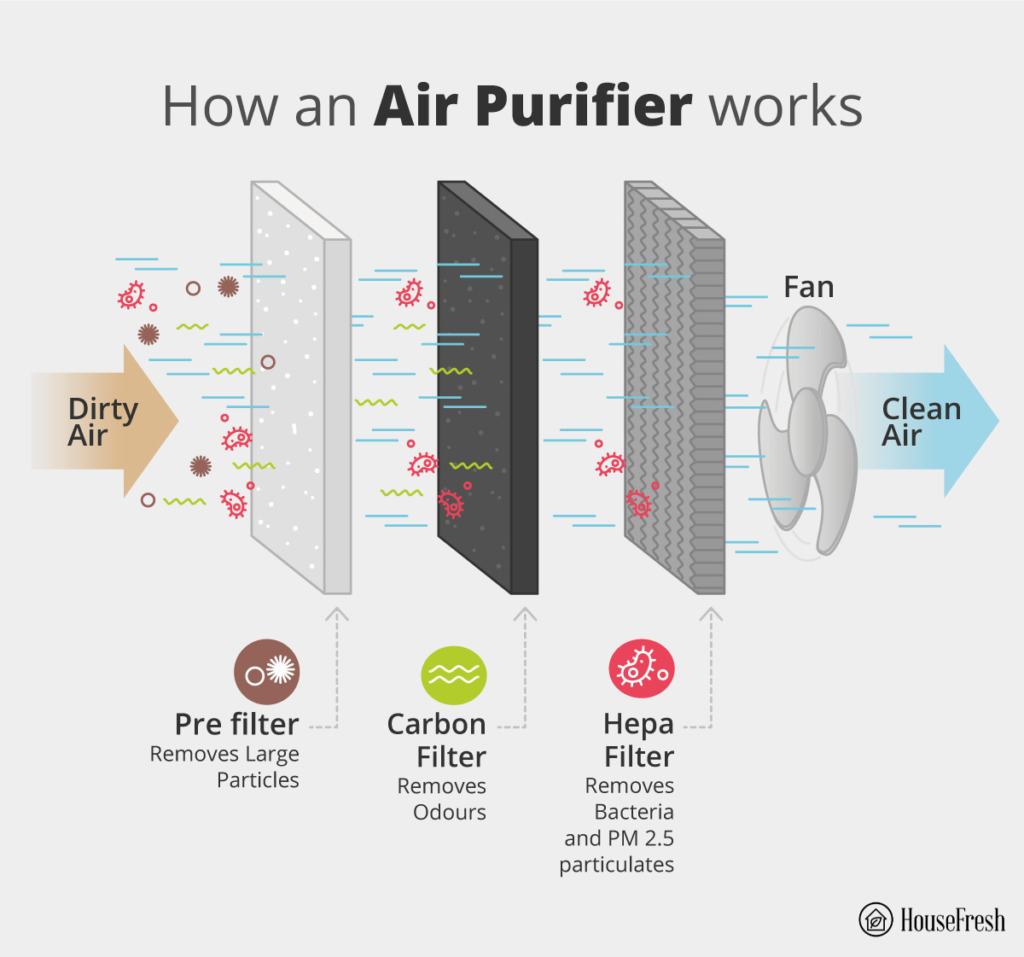
To keep these pollutants at bay, you can use an air purifier that draws in air and captures unwanted particles as they pass through a series of filters. That then leaves clean, healthy air that gets recirculated around your home. 

Air purifiers come with various types of filters. However, the vast majority use mechanical filters like HEPA and activated carbon, which are highly effective at reducing allergens and smoke and are even recommended for use against viruses such as COVID-19.

Winix 5500 2 HEPA filter

A High Efficiency Particulate Air filter (HEPA) is made up of tightly woven fiberglass strands designed to remove particulates from the air. The HEPA stamp of approval guarantees that the purifier can capture 99.97% of particles as small as 0.3 microns.

Activated carbon filters work against gas particles known as VOCs. The filter contains quantities of carbon or charcoal substrate, which locks pollutants such as odor or chemical fumes to the carbon pores through a process known as adsorption.

2. A dehumidifier removes excess moisture from the air

Honeywell TP70WKN Front

While a purifier removes pollutants, a dehumidifier removes water molecules from the air. 

The process starts in a somewhat similar way, as the humidifier also draws in air. But that’s where the similarities end. The next stage of the process depends on what type of dehumidifier you own: either a refrigerative or desiccant dehumidifier. 

How a dehumidifier

  • Refrigerative dehumidifiers cool humid air to create condensation (think of hot breath on a cold window pane). The condensation then collects in the unit’s internal reservoir as the dry air is warmed back up to room temperature and redistributed around your space. 
  • Desiccant dehumidifiers pass humid air through a revolving desiccant wheel, which acts like a sponge to draw moisture from the air. Heaters then warm the dry air, ready to be expelled into the space, as well as heating the desiccant material to maintain its moisture-absorbing properties. 
Honeywell TP70WKN Tray open

Dehumidifiers don’t have filters, so they can’t remove airborne pollutants like an air purifier can. What they can do is create an environment that certain pollutants struggle to survive in. Many larger compressor dehumidifiers will include a filter, but this is designed to protect the internal coils from dust particles, not to clean your room’s air. 

Moiswell filters logo

By regulating humidity in your home you can reduce exposure to many common allergies, prevent mold and mildew growth, and create an inhospitable environment for pests like cockroaches and dust mites.

The CDC recommends maintaining a humidity level between 30 and 50% to stop the spread of mold, dust mites, and pests.

When to choose an air purifier over a dehumidifier

Both air purifiers and dehumidifiers can be a pretty sizable investment. Therefore, it’s important to know exactly when to buy an air purifier or a dehumidifier. You don’t want to spend all that money just for nothing to happen.

What an air purifier can help with

Reduce particulates from a wide range of sources, including allergens like dust, dander, and pollen.
Protect you from VOCs such as radon, odor, and formaldehyde (if it has activated carbon filters).
Combat airborne particles, with HEPA filter units able to deal with particles as small as 0.3 microns.

What an air purifier won’t do

Eliminate the source of pollutants, such as mold, from occurring. They can only capture the particles once they’re airborne inside your space.
Fix damp issues in your home.

If you’re looking for protection from a wide range of indoor air pollutants, then an air purifier is what you need. These units can target the smallest airborne particulates as well as VOCs, creating a healthier environment within your home.

When to choose a dehumidifier over an air purifier

You might live in a humid region and desperately need dehumidifying to combat damp and mold. Then, an air purifier probably isn’t the priority.

What a dehumidifier can help with

Remove excess moisture from the air, which is helpful in flood-damaged homes or humid environments.
Combat issues such as mold and mildew by creating an environment where they’re unlikely to return.
Regulate your home’s humidity and create a healthier environment.
Protect immunocompromised individuals, as studies have shown that bacteria and virus pathogens thrive in humid spaces.

What a dehumidifier won’t do

Remove harmful particulates like wildfire smoke, traffic fumes, pet dander, or VOCs.
Improve conditions for those suffering from sinusitis. 

For homes with damp or excessive moisture, a dehumidifier is the ideal choice. By controlling humidity in your home, you can expect to resolve issues with mold and mildew while creating an environment less susceptible to dust mites, invaders, and even bacteria. 

To conclude

Air purifiers and dehumidifiers may look similar, but they serve completely different purposes.

They’ll both improve the overall indoor quality of your home, but each space has different challenges that you’ll need to consider before investing in these appliances.

A dehumidifier is the logical solution for homes that struggle with excess humidity. It controls moisture levels, creating a healthier environment where mold, mildew, and dust will be less problematic.

On the other hand, air purifiers are ideal if you’re affected by a wide range of pollutants. By removing the problematic particles from your air, you can breathe easier in the knowledge your home is free from microscopic allergens and toxins that can contribute to an array of health issues. 

In a perfect world, you’d have both. When you have both appliances, you can get rid of pollutants and excess moisture. Double whammy. You can check out our recommended air purifiers and dehumidifiers if you want thorough analysis and real in-hand reviews.

SOURCES

Alen BreatheSmart Flex VS 45i

Alen BreatheSmart

Alen are known worldwide for their range of air purifiers. This Austin-based company has been engineering and innovating since 1999, so they have a wealth of knowledge behind them. Their mission is to ” improve the quality of people’s lives” with their products; their vision is to “inspire a healthier life and provide peace of mind” for their customers.

Known for their simple yet elegant designs and heavy-duty filters, Alen air purifiers are extremely popular and trusted throughout the world. That’s why we wanted to get our hands on a few of their products to test and review.

First, we bought the BretheSmart 75i, which showed us how powerful Alen units can be. We then chose the BreatheSmart 45i, which was, again, very impressive. So we had to check the BreatheSmart Flex to see if Alen could keep up this streak (spoiler alert…it did).

As the 45i and Flex were so similar in size, we wanted to pit them against each other. This guide compares their test results, specifications, design, controls, filters, performance, sound and running costs to see which unit best suits your needs and budget.

how we test
How we test air purifiers

Read our full testing methodology.

TL;DR Which unit wins overall? 

Danny Ashton HouseFresh
“The Alen Flex is best for most people and is a one of our favorite air purifiers for a medium sized space and allows for choice of filters and has Alen’s lifetime warranty for the lowest possible price. Yet I still run a Alen 45i in my office as I appreciate the auto-mode but it comes at a price bump that you should be aware of.”
— Danny Ashton, HouseFresh Founder & Senior Writer
Alen BreatheSmart Flex VS Alen BeatheSmart 45i

Don’t want to read the full article? Don’t worry; I’ll condense it.

The pros and cons compared

BreatheSmart 45iBreatheSmart Flex

Alen BreatheSmart 45i Fireplace

Alen BreatheSmart
What we really like

👍 App connectivity
👍 Ionizer is optional
👍 Very quiet at low fan speeds
👍 Has an auto mode
What we really like

👍 Lower price than the 45i with similar CADR
👍 Energy efficient
👍 Four filters to choose from
👍 Lifetime warranty
What we think could be better

👎 Looks plain
👎 Not as energy efficient as the flex
👎 Cheapest filter option doesn’t have activated carbon
What we think could be better

👎 No auto mode or app support
👎 Higher filter costs than some other brands
👎 Control panel is a little basic

The specifications compared side-by-side

When it comes to specs, the 45i is the winner as it’s lighter, quieter and, due to its higher CADR, tackles pollutants in larger rooms than the Flex.

When we compare two units side-by-side, we first look at their cleaning power. This is called CADR (Clean Air Delivery Rate) and is measured in CFM (Cubic Feet per Minute) to show us how effective an air purifier is at its job.

Alen BreatheSmart 45i Front

The 45i boasts a higher CADR at 245 CFM whilst the Flex falls slightly behind at 225 CFM. But, when we put these two units through our performance tests, that extra 20 CFM only translated to one-minute difference to clean the contaminants from our room. 

It may win on paper, but the price difference between the 45i and the Flex is around $70 for that extra minute of cleaning performance.

Tip

Want to know more? Check out our full guide on What Is CADR Rating?

BreatheSmart 45iBreatheSmart Flex
HouseFresh Rating:★★★★☆★★★★☆
Time to clean our test room:33 minutes34 minutes
Air purifier technology:True HEPA H13 filters with activated carbon pellets + Ionizer technologyH13 HEPA with an option for activated charcoal pellets
Recommended room size:Up to 800 sq. ft. Up to 700 sq ft
Clean air delivery rate (CADR):245 CFM225 CFM 
Dimensions (in inches / in cm):25H x 15W x 8.5D inches inches (63.58H x 38.1W x 21.5D cm)25H x 15W x 8.5D inches (63.5 x 38.1 x 21.59 cm)
Weight (in pounds / in kg):9.1 kg (20.1 lbs)15 lbs (6.8 kg)
Filter life:12 months12 months
Noise level (low – high):23dB – 49dB25 – 50dB
Estimated energy consumption:$52.56 per year$25.23 per year 

The design elements compared

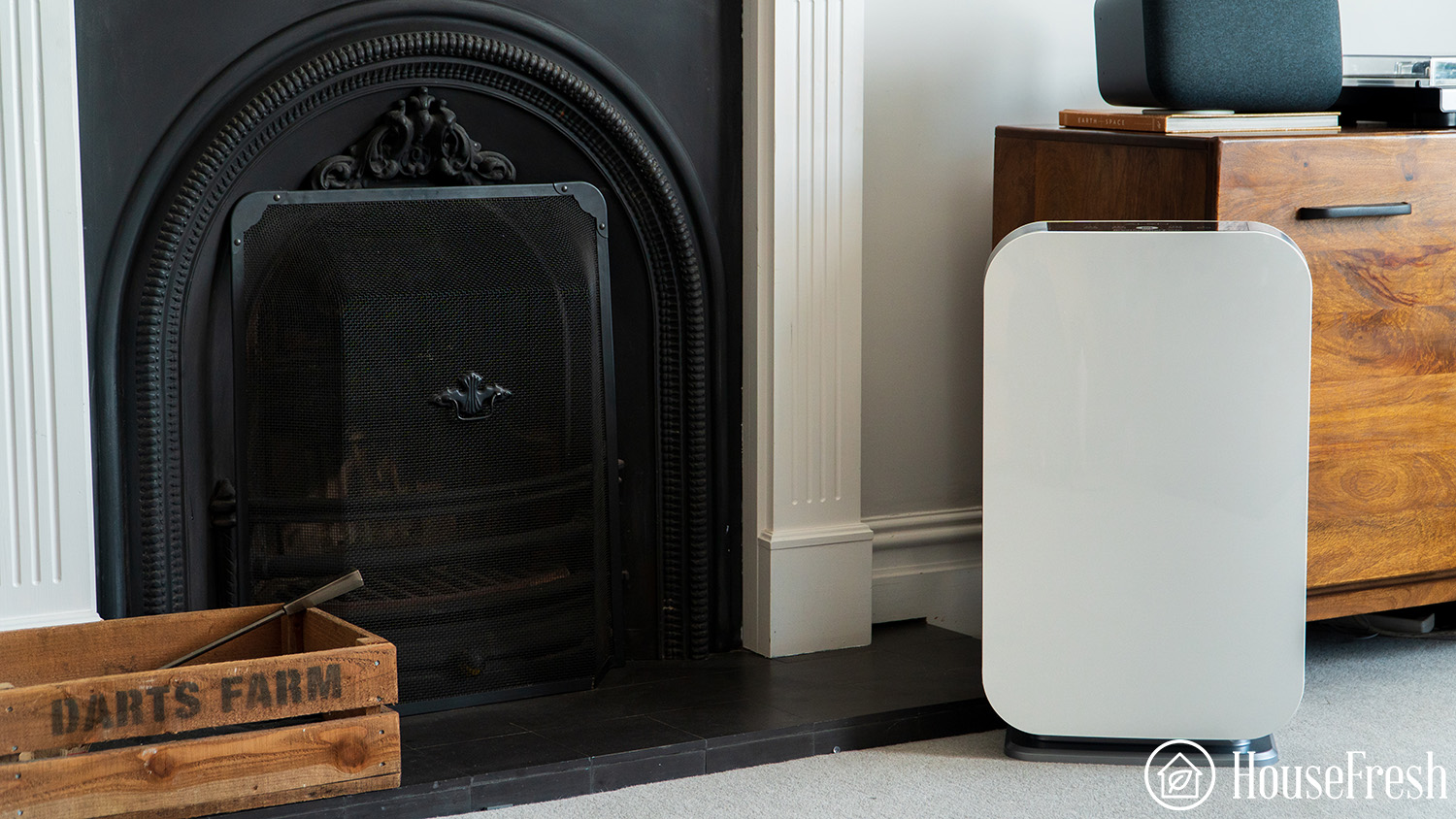
When it comes to the design aesthetics, it’s a draw as these two both look virtually identical.

The technology inside these two units may differ, but looking at them side-by-side, you’ll see they are practically exactly the same. It’s too close to call a winner.

Alen BreatheSmart Flex VS Alen BeatheSmart 45i

The subtle differences lay in the grill at the top of the unit, where the 45i has bigger square holes than the Flex and the control panel (which we’ll go into later) and the 45i sits a little higher on its stand. 

The 45i is lighter, so it is easier to move, but they both feature a flat, removable front panel held on with magnets, curved edges and measure up the same size. To the untrained eye, you would never be able to tell the difference.

Alen BreatheSmart Flex VS 45i

Ease of use and control panel compared

Regarding the control panel, the winner has to be the 45i thanks to its extra features, including an auto mode, ionizer and display brightness control.

Comparing the Alen Flex VS Alen 45i

They may be identical from the front, but when you look from above, you’ll see the differences on the control panel. Let’s start with our winner, the 45i.

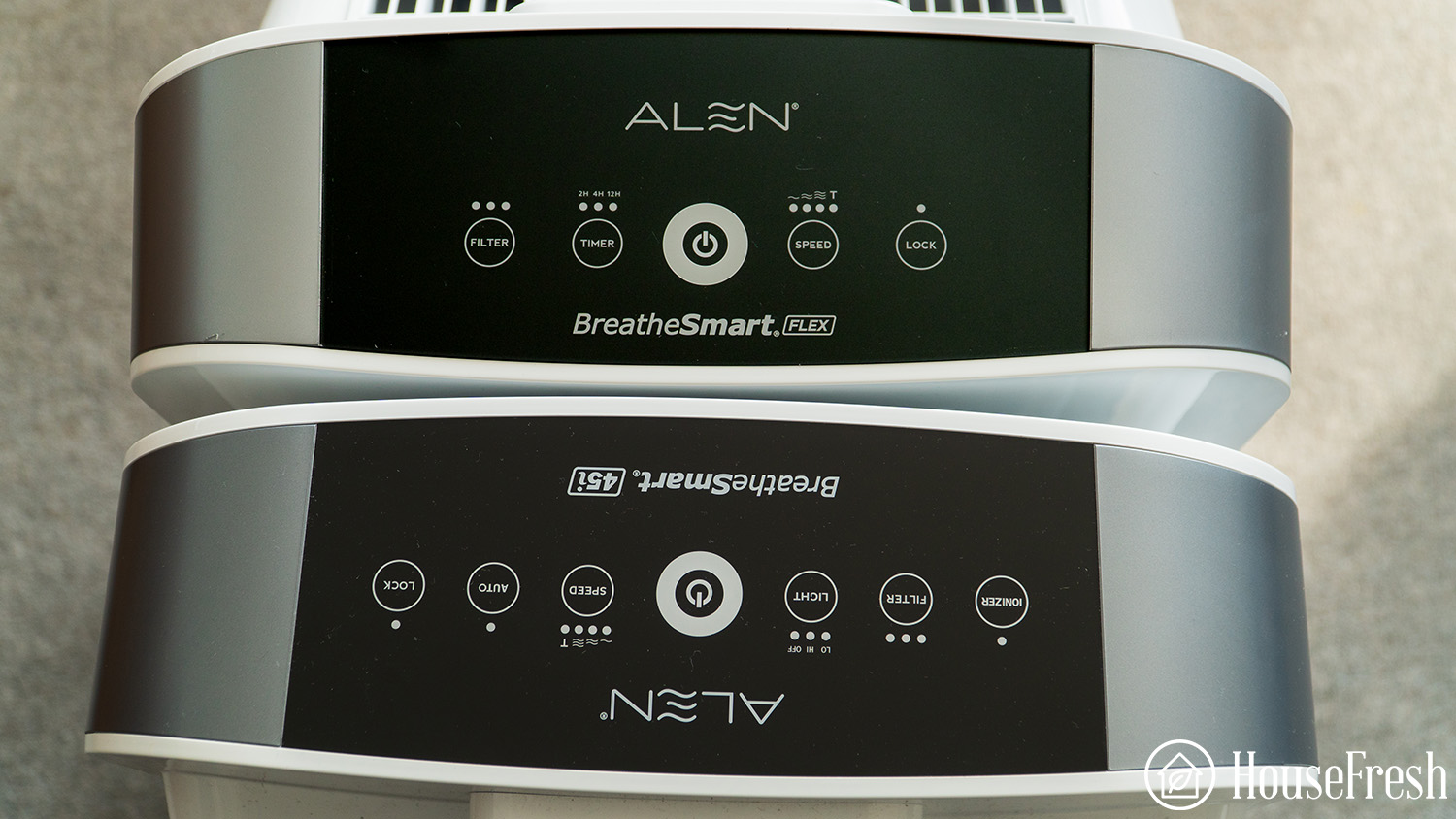
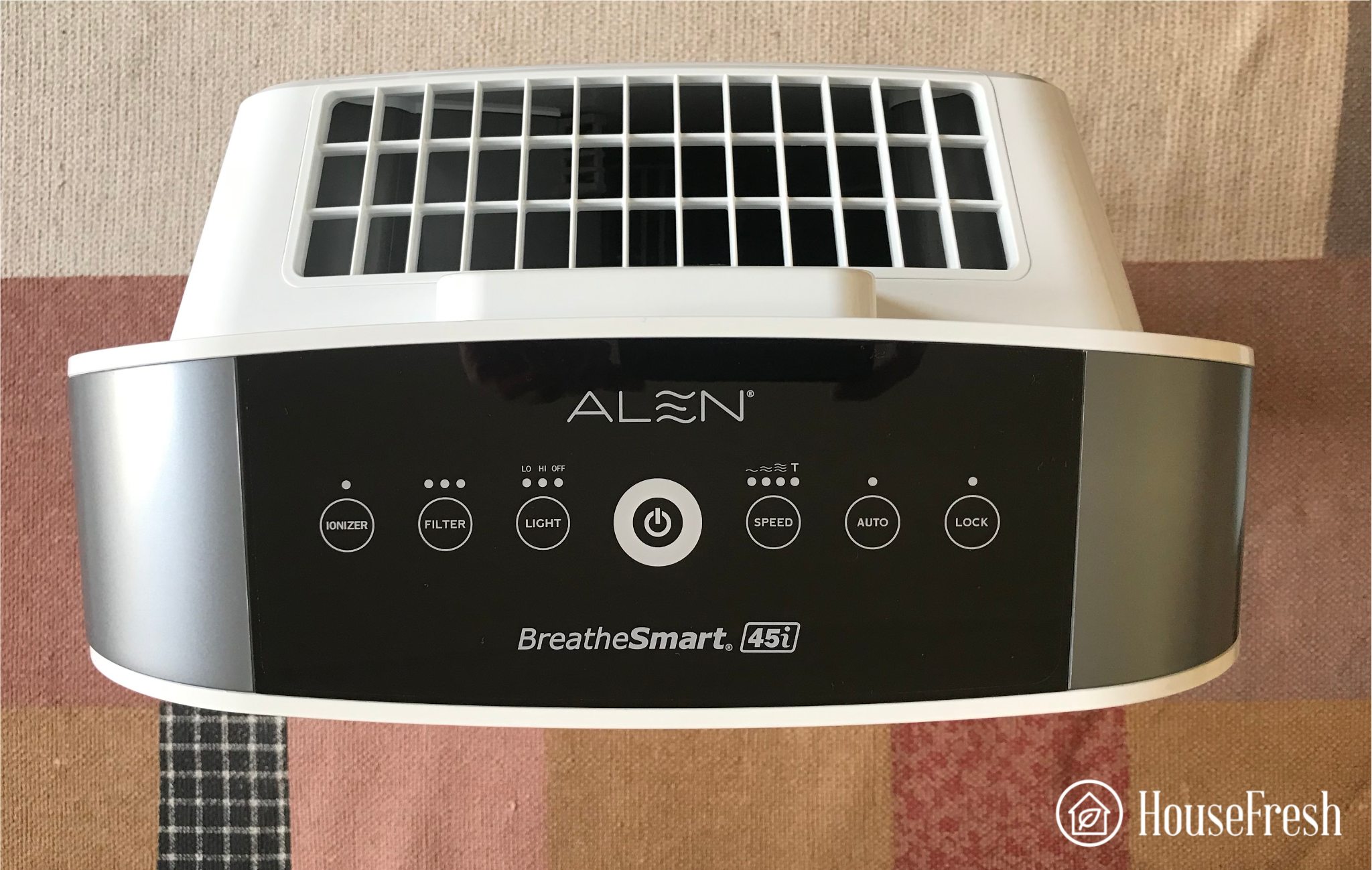
Seven touch-sensitive round buttons are placed along the black glossy top of the 45i to adjust its settings.

  • Ionizer releases electrically charged particles into the air that cling to pollutants and force them to the ground
  • Filter indicator with three lights (green, yellow, red) to warn you when the filter needs to be replaced
  • Light adjusts the brightness of the display between low, high and off
  • Power button in the center to turn the unit on and off
  • Speed switches between its four fan speeds (with the highest being Turbo speed)
  • Auto engages auto mode, where the unit uses data from its air quality sensor to adjust the fan speed according to the amount of pollutants in the air.
  • Lock allows you to disable the control panel after pressing and holding it for three seconds 

Sometimes, you’ll find that air purifiers with touch-sensitive controls are lacking on the “sensitive” part, making them hard to operate. This isn’t the case with Alen air purifiers. From the units we’ve reviewed, we found the controls very easy to press, and little force is needed to activate them.

The display is bright enough to be seen in daytime but not so bright that it’s distracting, and the addition of a brightness control and the option to turn them off completely makes it even better.

We’re still not sold on ionizer technology, but the fact you can leave it turned off is better than it running constantly.

Alen BreatheSmart 45i Control Panel

Both units come with an AQI (Air Quality Indicator) color wheel in the center of the control panel. Using data provided by the air purifier sensors, this light displays the air quality in your room using five colors. 

ColorAir Quality
PurpleVery poor
RedPoor
OrangeAverage
GreenGood
BlueVery good

The biggest difference between the features on the 45i and Flex is that the 45i comes with an auto mode. This uses the same air quality information from its sensor to adjunct the fan to suit the amount of pollutants in the air.

Alen BreatheSmart Flex Controls Alen BreatheSmart Flex VS Alen BeatheSmart

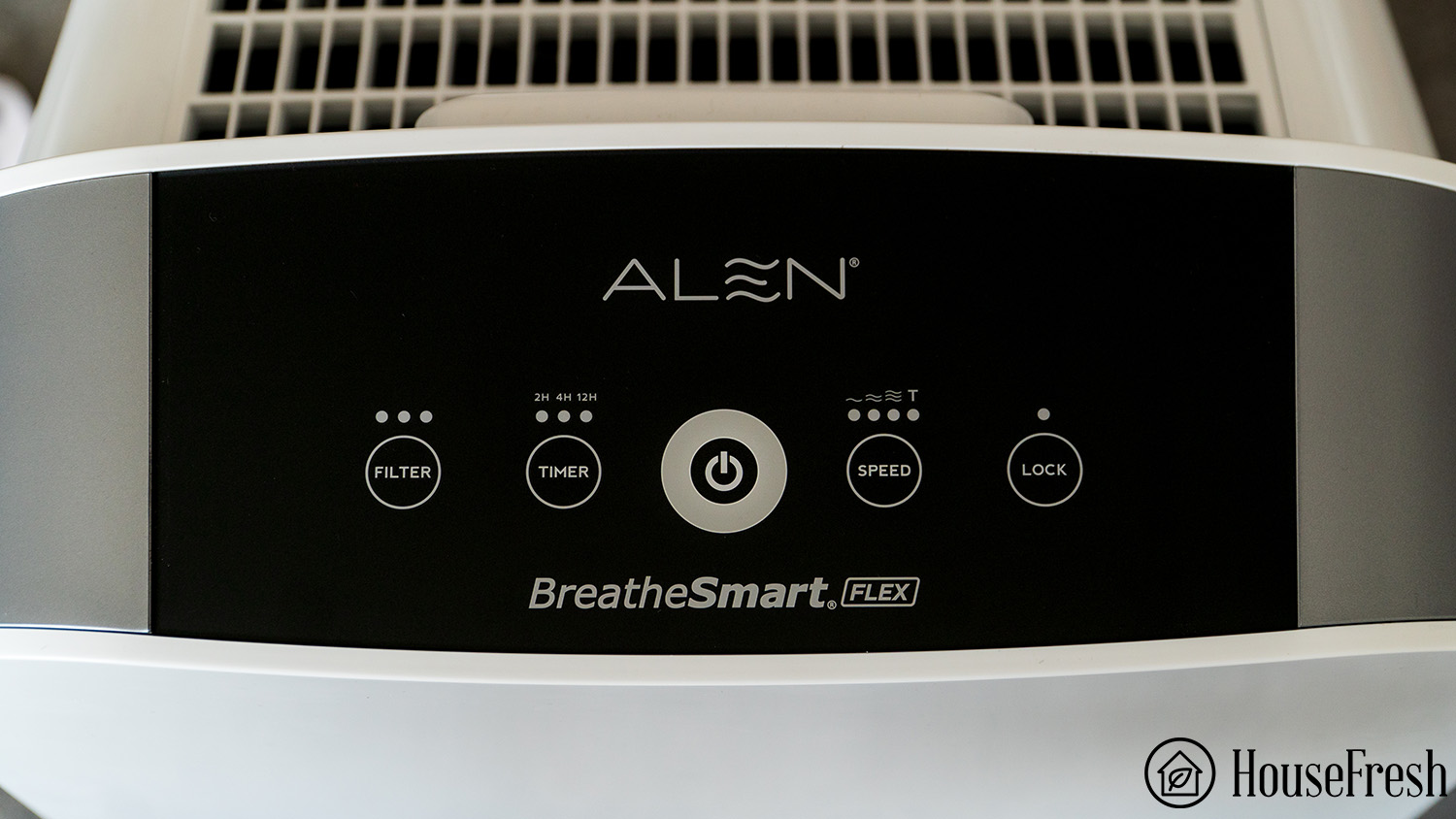
The Flex only has five buttons on its control panel: Filter, Timer, Power, Speed and Lock. The lack of auto mode is a detractor for me (you may not need one), but the addition of a timer is nice.

For all you tech heads out there, Alen has developed their own BreatheSmart smartphone app that connects to your unit through Wi-Fi or Bluetooth. Once connected, the app allows you to monitor the air quality in your room and control the unit settings from anywhere in the world.

The app is easy to navigate and control, and it looks great. Plus, you can add/monitor/control more than one BreatheSmart air purifier if you have them in multiple rooms. The app is available for iPhone and Android devices.

Air filtration technology compared

In terms of filtration technology, we face another draw: both units use the same filter technology.

Through our performance testing, we were impressed with all the filters from the Alen products we reviewed. Alen shows they mean business by only including heavy-duty, thick H13 (medical grade) HEPA filters with activated carbon pellets in their units.

Alen BreatheSmart Flex Pre Filter

As the 45i and Flex are the same size, Alen decided they could use the same filters for both. So that’s exactly what they did.

What differentiates these two air purifiers from many other models is that you can choose from five different variations of H13 HEPA filters to customize your unit to your needs and wants.

B4-Pure FilterCaptures allergens, dust, mold, and germs
B4-Fresh FilterAll of the above + carbon to absorb common household odors 
B4-Odor FilterAll of the above + odor neutralizer to absorb pet odors and other unwanted smells 
FL40-H Heavy Smoke FilterAll of the above + 2.3 lbs of active carbon to absorb chemicals, VOCs and smoke

Each filter available uses H13 HEPA technology that is capable of trapping 99.9% of airborne particles as small as 0.1 microns (dust, dander, allergens, mold, bacteria and viruses).

With the exception of their basic B4-Pure filter, they contain various levels of activated carbon pellets. This is used in filters because of its ability to adsorb odors and other VOCs (Volatile Organic compounds). The more activated carbon a filter contains, the more contaminants it can remove.

If your home isn’t affected by many pollutants, we recommend you go for the B4-Fresh Filter. Suppose you’re buying an air purifier because your home is heavily polluted (e.g. wildfire smoke), we suggest you opt for the stronger FL40-H Heavy Smoke Filter that contains 2.3 lbs of activated carbon.

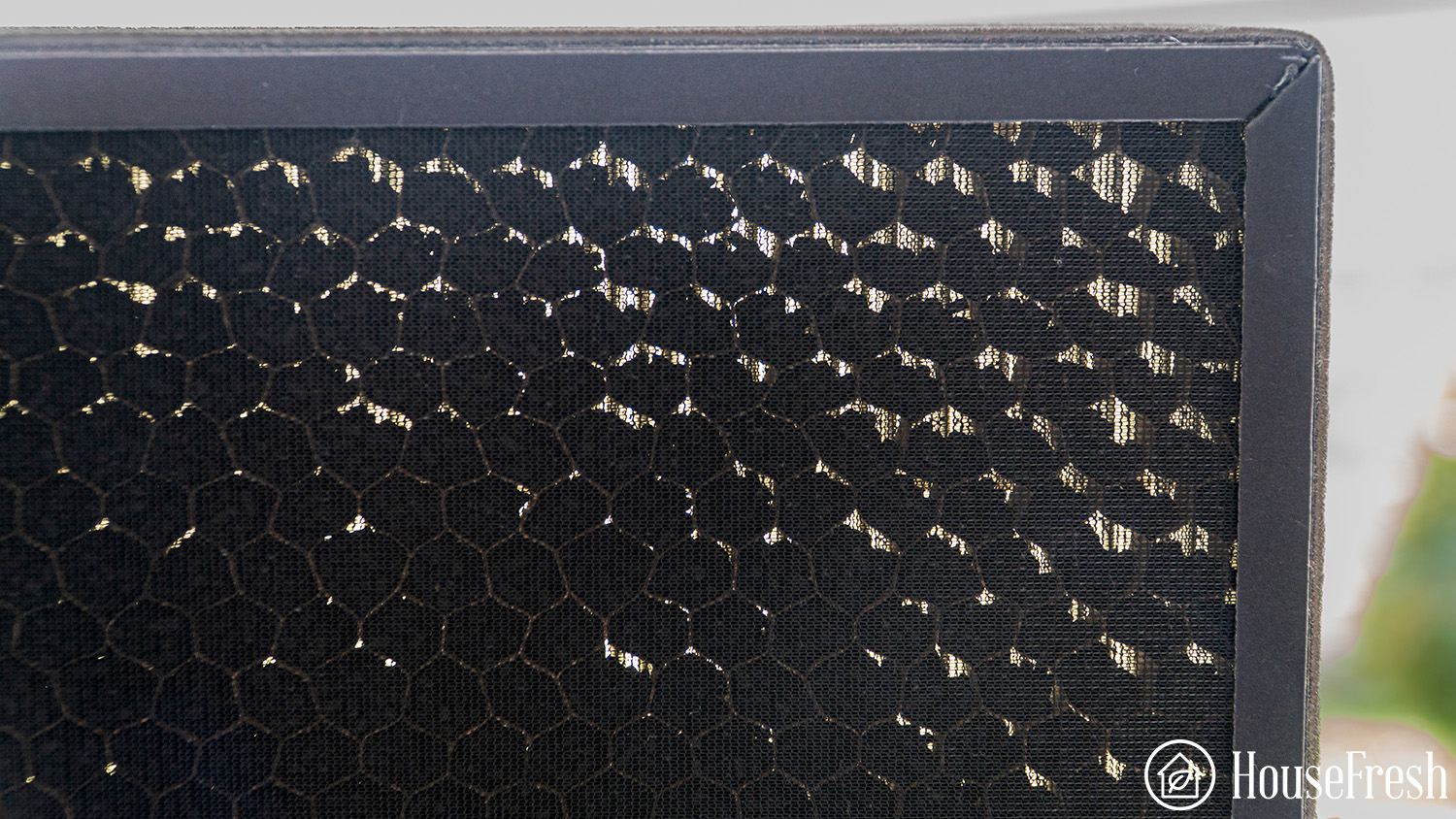
Alen BreatheSmart Flex Activated Carbon Filter CloseUp

Segue sentence to introduce the concept of filter replacement. Here is what you can expect from both units when it comes to replacing the filters:

Tip

When you first unbox your Alen air purifier, be sure to remove the plastic packaging from the filter before you start using the unit. If you don’t, the filter won’t do its job, and the plastic may start to burn over time.

Air cleaning test results compared

When it comes to air cleaning performance, the Flex wins. The 45i may have been faster by one minute, but the Flex has a lower CADR, so it worked much harder to get its result. 

If you’ve read a review on HouseFresh before, you’ll know that we test every air quality product we recommend in our own home lab. The Alen BreatheSmart Flex smashed the tests.

Alen BreatheSmart Flex Living Room

At HouseFresh, we don’t rely on manufacturer data for three main reasons:

  • Some air purifiers are tested in laboratory conditions; some are not
  • Manufacturers use different methods and equipment from each other
  • Some manufacturers may lie about their results

We knew that if we wanted to compare units side-by-side, we had to conduct our own performance tests under the same conditions and because you’re gonna be using your air purifier in your home, we want to test them in ours.

Every unit we review goes through the same performance tests where we fill our office (705 cubic ft) with simulated pollutants. We then turn the air purifier on at full fan speed to see how long it takes them to remove all the contaminants from the room.

Using our indoor sensor from Purpleair, which provides continual updates on PM1.0ug/m3, PM2.5ug/m3 and PM10.0 ug/m3, we monitor and collect data from every step of the process.

Purple Air Monitor

For an air purifier of this size and cost, we expected to see these two units give us a time of around 30 minutes, but we didn’t predict the difference to be so minimal.

Both units performed well in our performance testing room, with the 45i clearing all of our simulated contaminants from the air in 33 minutes and the Flex in 34 minutes

Even though the 45i had a better time, it was by only 1 minute. This shows that the Flex is working harder overall as it has a lower CADR of 225 CFM compared to the 45i, which has 245 CFM.

With their performance times so close, this shows that you’re paying those extra dollars on features, not performance. So take that into serious consideration when choosing which unit suits your needs.

Tip

If your main focus is performance, check out the Levoit EverestAir that cleared our performance room in 13 minutes.

The 45i cleared our test room in 33 minutes

The Flex cleared our test room in 34 minutes

When we look at the data side by side from the Flex and 45i, it becomes clear how close they are in cleaning performance. With only a minute between them, the Flex works harder than the 45i to match its results. You probably won’t be able to tell the difference in a smaller room.

To see the performance of these two units on a larger scale, we compare the data next to that of other units of similar size/price/CADR that we’ve tested. As you can see, they sit quite far down the list, but not a million miles away from the competition. 

Noise levels test results compared

When it comes to the sound emitted, the winner is the 45i, as it generates less noise. Although the 45i is only one decibel quieter than the Flex when running at its highest fan speed level.

Even though some manufacturers use buzzwords like “Whisper quiet” and “near silent,” air purifiers move air through their filters using a fan that is powered by a motor. This means all air purifiers generate sound. But some make more noise than others.

Alen BreatheSmart 45i Bedroom

Both units have four fan speeds, including T for Turbo, so you would expect that they would emit the same amount of noise. But the Flex is ever so slightly louder than the 45i on paper, though we doubt you’d notice the difference with them running side by side.

BreatheSmart 45iBreatheSmart Flex
Noise level (low – high):23dB – 49dB25 – 50dB

We’ve added this extra decibel to the Flex, working a little harder to match the 45i’s cleaning performance.

When you compare these two to some of the other air purifiers we’ve reviewed of similar size, you’ll see they are a little louder. But, 50dB (the loudest the Flex is at its highest fan speed) is equivalent to faint background music or a quiet office.

Tip

We don’t all know how loud decibels are and what some people consider loud, others may not. That’s why we take videos of all the air purifiers we review, recording each unit at their different fan speeds.

Check out both units here and see if you can tell the difference.

Cost to run each unit compared

Regarding long-term costs, the clear winner is the Flex. The filters may cost the same, but the Flex triumphs when it comes to energy efficiency.

Alen BreatheSmart

1. Yearly electricity costs = $25.23 (Flex) versus $52.56 (45i)

As they are electrical devices, air purifiers need energy to run. It’s recommended that you run your air purifier 24/7, so the more energy-efficient a unit is, the less it will cost you in the long run.

Depending on what unit you buy and the state you live in, the cost of running your unit will vary, and with energy costs rising each year, it’s something you should look into before purchasing an air purifier.

The difference in energy costs between the Flex and 45i is very noticeable. The annual cost of running the 45i can come to double what it costs to run the Flex, meaning it’s a hell of a lot more energy efficient.

2. Yearly filter costs = $89 (Flex) versus $89 (45i)

Another consideration you need to make when buying an air purifier is the cost of replacing the filters. The filters in air purifiers need replacing periodically (the manufacturer will tell you how long they last on average), and it’s not recommended that you wash them.

Both of our units will indicate when it’s time to replace your filter when three lights illuminate over the Filter button. Remember, if you don’t replace your filter when instructed to do so, your air purifier won’t run at maximum efficiency.

As both units use the same filters, the annual costs are the same. We’ve calculated this using the B4-Fresh filter, which we recommend for most household pollutants.

The filter in the Flex and 45i should be replaced every 12 months: 

Alen Air Filter B4-Pure Replacement H13 True HEPA Filter for BreatheSmart 45i & Flex Air Purifier - Captures Allergens, Dust, & Mold (1 Filter)
Alen Air Filter B4-Fresh Replacement HEPA Filter for BreatheSmart 45i & Flex Air Purifier - Captures Allergens & Mold + Odors & Smoke (1 Filter)
Alen Air Filter B4-MP-Odor Replacement HEPA Filter for BreatheSmart 45i & Flex Air Purifier-Captures Allergens & Mold + Pet Dander & Odors (1 Filter)
Alen Air Filter FL40-H VOC/Smoke Replacement HEPA Filter for BreatheSmart 45i & Flex Air Purifier-Captures Allergens & Mold + VOCs & Smoke (1 Filter)
Technology
Medical-grade H13 HEPA Air Filter
Medical-grade H13 HEPA Air Filter with Odor Neutralizer
Medical-grade H13 HEPA Air Filter with Carbon
Medical-grade H13 HEPA Air Filter with Extra Carbon
Good for
Capturing allergens, dust, mold, and germs
Neutralizing pet, diaper, and other stubborn household odors + capturing pet dander, allergens, dust, mold, and germs
Absorbing harmful chemicals and VOCs, cooking odors, and common household odors + capturing allergens, dust, mold, and germs
Absorbing noxious gases from wildfire smoke and secondhand smoke, harmful chemicals and VOCs + capturing allergens, dust, mold, and germs
Price
Price not available
Price not available
Price not available
Price not available
Alen Air Filter B4-Pure Replacement H13 True HEPA Filter for BreatheSmart 45i & Flex Air Purifier - Captures Allergens, Dust, & Mold (1 Filter)
Technology
Medical-grade H13 HEPA Air Filter
Good for
Capturing allergens, dust, mold, and germs
More information
Price
Price not available
Alen Air Filter B4-Fresh Replacement HEPA Filter for BreatheSmart 45i & Flex Air Purifier - Captures Allergens & Mold + Odors & Smoke (1 Filter)
Technology
Medical-grade H13 HEPA Air Filter with Odor Neutralizer
Good for
Neutralizing pet, diaper, and other stubborn household odors + capturing pet dander, allergens, dust, mold, and germs
More information
Price
Price not available
Alen Air Filter B4-MP-Odor Replacement HEPA Filter for BreatheSmart 45i & Flex Air Purifier-Captures Allergens & Mold + Pet Dander & Odors (1 Filter)
Technology
Medical-grade H13 HEPA Air Filter with Carbon
Good for
Absorbing harmful chemicals and VOCs, cooking odors, and common household odors + capturing allergens, dust, mold, and germs
More information
Price
Price not available
Alen Air Filter FL40-H VOC/Smoke Replacement HEPA Filter for BreatheSmart 45i & Flex Air Purifier-Captures Allergens & Mold + VOCs & Smoke (1 Filter)
Technology
Medical-grade H13 HEPA Air Filter with Extra Carbon
Good for
Absorbing noxious gases from wildfire smoke and secondhand smoke, harmful chemicals and VOCs + capturing allergens, dust, mold, and germs
More information
Price
Price not available

HEPA filters trap airborne pollutants in their tightly woven maze of fibers (think of a fly in a spider’s web), removing them from the air. Space inside the filter gets smaller as more and more pollutants become trapped, making the filter less effective.

Replacing your filter periodically ensures you’ll have plenty of room to trap those harmful contaminants from the air in your home.

Want to know more? Check out our full guide How Long Do HEPA Filters Last?


Bottom line: Should you get a 45i or a Flex?

These two air purifiers may have many similarities, but their unique characteristics will sway you towards one or the other. 

If you want an energy-efficient air purifier that works hard with lower annual running costs — go for the BreatheSmart Flex. 

Alen BreatheSmart Flex Living Room

✅ If you want to pay a little extra for features like an auto mode and the choice of ionization — go for the BreatheSmart 45i.

Alen BreatheSmart 45i Fireplace

It was a close call between the 45i and the Flex regarding design, filters and the numbers, with only one minute to separate them in our cleaning performance tests. The difference comes with the features included and the annual running costs. 

When you’re choosing which unit best suits your needs, you’ll need to think about what is more important: features or energy efficiency.

At HouseFresh, we have been reviewing air quality products since 2010. In all these years, we learned not to rely on manufacturers’ claims and the ever-so-glowing marketing materials. That is why we buy products with our own money, so we can write unbiased reviews after we’ve had enough time to evaluate air quality products in our home lab. Every unit we recommend has been thoroughly tested to assess its performance, energy consumption, and noise levels emitted in real-life environments. If you have any questions about our testing process for different types of air quality products, just drop us an email at danny@housefresh.com.

SOURCES

We calculated the monthly energy consumption costs with the help of the Department of Energy’s appliance energy calculator. We calculated yearly costs associated with running both units for 24hs a day for 365 days. We ran this calculation utilizing the U.S. average utility rate of $0.12/kWh as of October 6th, 2023. 

Blueair Blue Pure 411 VS 411+

Blueair Blue Pure 411 vs 411

Blueair has produced high-performing air purifiers for our homes for over two decades. It all started in 1996 when the company’s President, Bengt Rittri, wanted the same fresh, clean air for his children to breathe indoors as they had outside in the Swedish countryside.

Fast forward to the present day and Blueair is now one of the leading manufacturers of air purifiers worldwide, focusing on using state-of-the-art filter technology, simple operation and designs that reflect their Swedish heritage and innovation.

We wanted to put the Blue Pure 411 and the 411+ together to see if it is worth spending the extra money or if this upgraded unit is simply a marketing ploy to get you to spend more. The only way to find out was to put these two air purifiers side-by-side and see what difference a “+” sign really makes.

TL;DR: Which unit wins overall?

danny

“A clear upgrade on the decent Blue Pure 411, the Blueair Blue Pure 411+ is an easy budget air purifier for those looking to clean a small space like a bedroom and who don’t want something that will create a lot of noise.”

Danny Ashton, Founder & Senior Writer

Blueair Blue Pure 411 vs 411

We know your time is valuable, so here’s our quick-read pros and cons for each unit. If you want to delve further into our findings, read on for an in-depth look into this battle for clean air. 

The pros and cons compared:

Blueair Blue Pure 411+Blueair Blue Pure 411

Blueair Blue Pure 411 Living Room 1
Blueair Blue Pure 411 Living Room
What we really likeWhat we really like
👍 Customizable color pre-filter
👍 Low noise output even at high fan speed
👍 Simple operation
👍 Filters easy to replace
👍 Low running costs
👍 Washable pre-filter
👍 One-button operation
👍 Bright and bold color
What we think could be betterWhat we think could be better
👎 No activated carbon pellets
👎 No extra features
👎 No carry handle
👎 No shell protecting the filter
👎 No timer
👎 No air quality sensor

The specifications compared side-by-side

Regarding specs, the 411+ is the clear winner with its lighter body weight, larger room coverage and higher cleaning power that cleared our performance testing room of contaminants in only 43 minutes.

Blueair Blue Pure 411 Entertainment Room

PRICE ON BLUEAIR

Blueairs’ mission is to produce high-performing air purifiers for the modern home, and with these two units, they’ve succeeded. 

While the 411+ retails around $30 more than the 411, it’s worth shelling out those extra dollars for its superior performance. The 411+ is also suited to larger rooms, is a couple of pounds lighter, and is more hardwearing.

Blueair Blue Pure 411+Blueair Blue Pure 411
HouseFresh rating:★★★★☆★★★☆☆
Time to clean our test room:43 minutes1 hour and 8 minutes
Air purifier technology:Washable pre-filter, activated carbon filter, HEPASilent™ filterWashable pre-filter, activated carbon filter, HEPASilent™ filter
Recommended room size:185 sq. ft.161 sq. ft.
Clean air delivery rate (CADR):120 CFM120 CFM
Dimensions (in inches / in cm):17H x 7.8W x 7.8D inches (43.18H x 19.812W x 19.812D cm)16.7H x 8W x 8D inches (42H x 20W x 20D cm)
Weight (in pounds / in kg):3.4 lbs (1.54 kg)5.3 lbs (2.4 kg)
Filter life:6 months6 months
Noise level (low – high):17dB – 46dB17dB – 46dB
Estimated energy consumption:$10.51 per year$10.51 per year

Design elements compared

When it comes to design aesthetics, the winner is the 411+ due to its protective casing around the filter that the 411 doesn’t have and its magnetic tab that keeps the cable tidy.

Blueair Blue Pure 411 Living Room

The variations may be subtle with these two units, but the little differences make the 411+ the winner. 

First off, one of the things we disliked about the 411 was the exposure of the filter. This meant that the filter could get damaged if it got knocked or you picked it up by the body. Blueair must have thought the same, as they’ve added an outer casing to the 411+ that protects its filter and makes it easier to pick up.

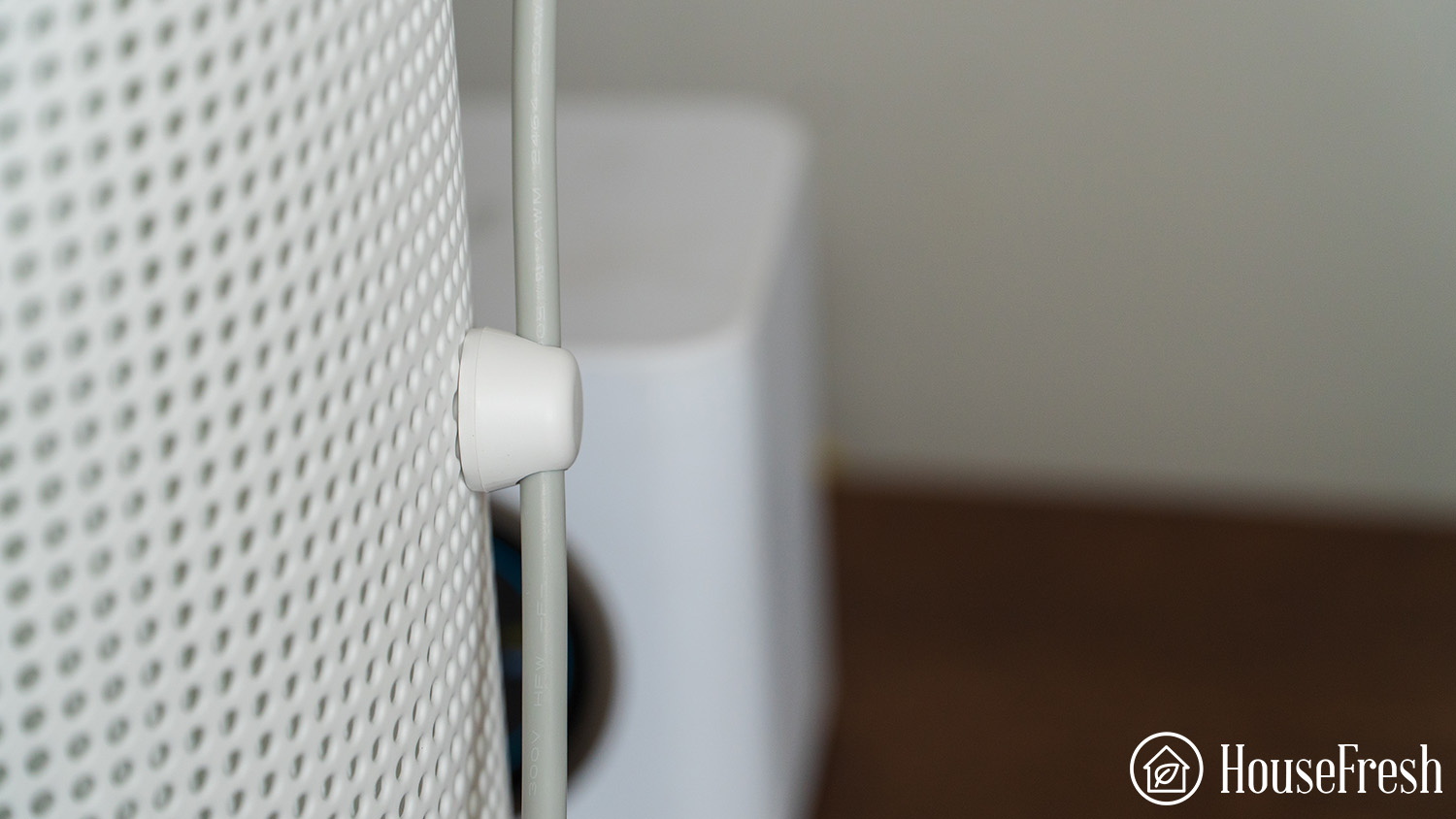
Another minor design feature is the magnetic tab on the 411+. This attaches to the unit’s shell to keep the cable tidy and out of the way. 

Blueair Blue Pure 411 Magnetic Cord

Both units also share many of the same design elements. The top of the circular unit houses the fan and motor and the bottom ⅔ is dedicated to the HEPASilent™ filter. Both units have fabric pre-filters that can be removed and washed (prolonging the life of the HEPA filter).

Blueair has put extra thought into its pre-filter by offering a range of colors to customize your unit to your taste or your home’s decor. The range includes Lunar Rock, Crystal Pink, Dark Shadow, Buff Yellow, Dive Blue and Saffron Red.

Blueair Blue Pure 411 vs 411 Auto Comparison

Ease of use and control panel design

When it comes to the control panel, the winner has to be 411+. Even though they are very similar, the 411+ looks sleeker, and the button is more sensitive when changing fan speeds.

Blueair Blue Pure 411 Top

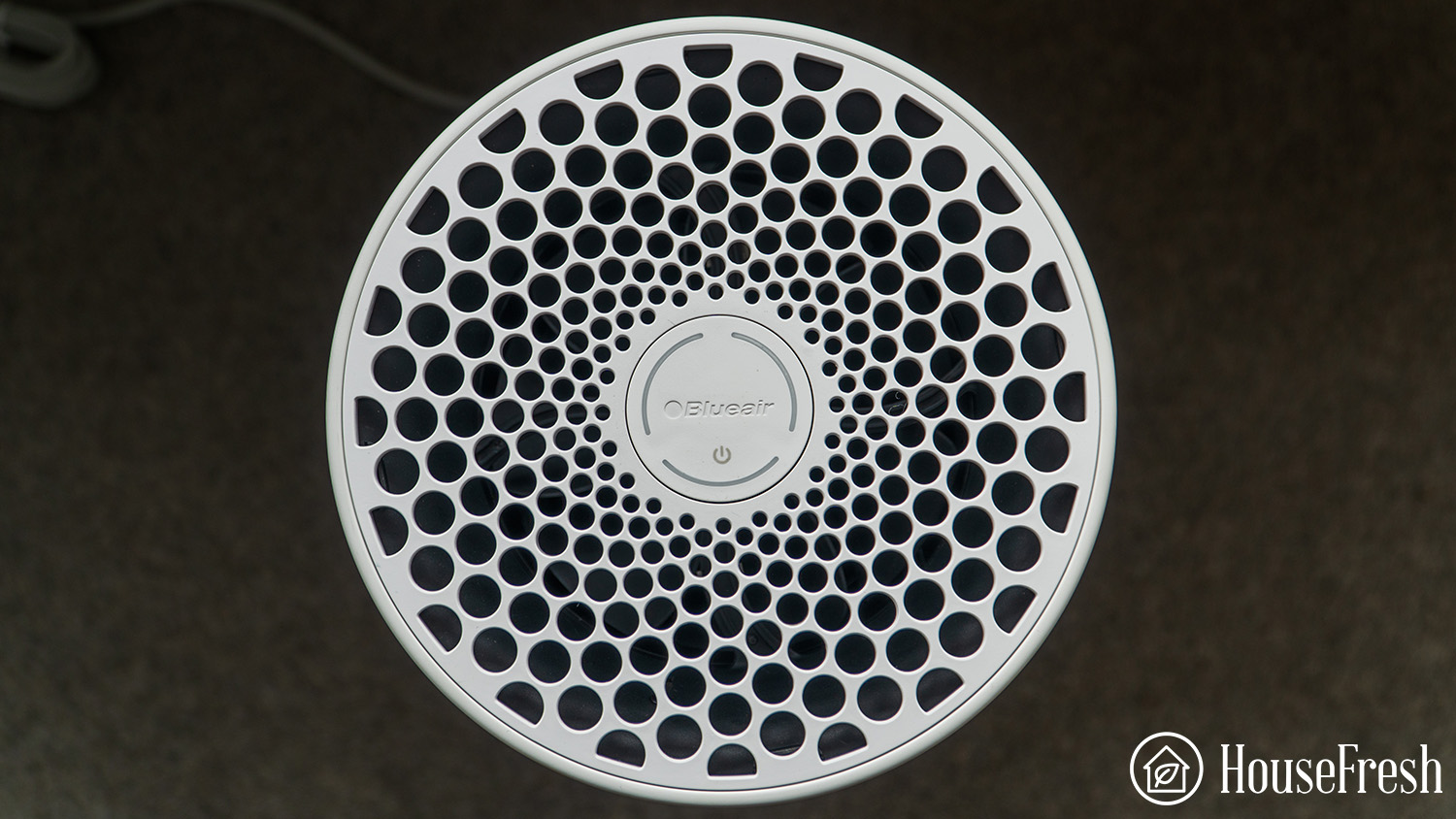
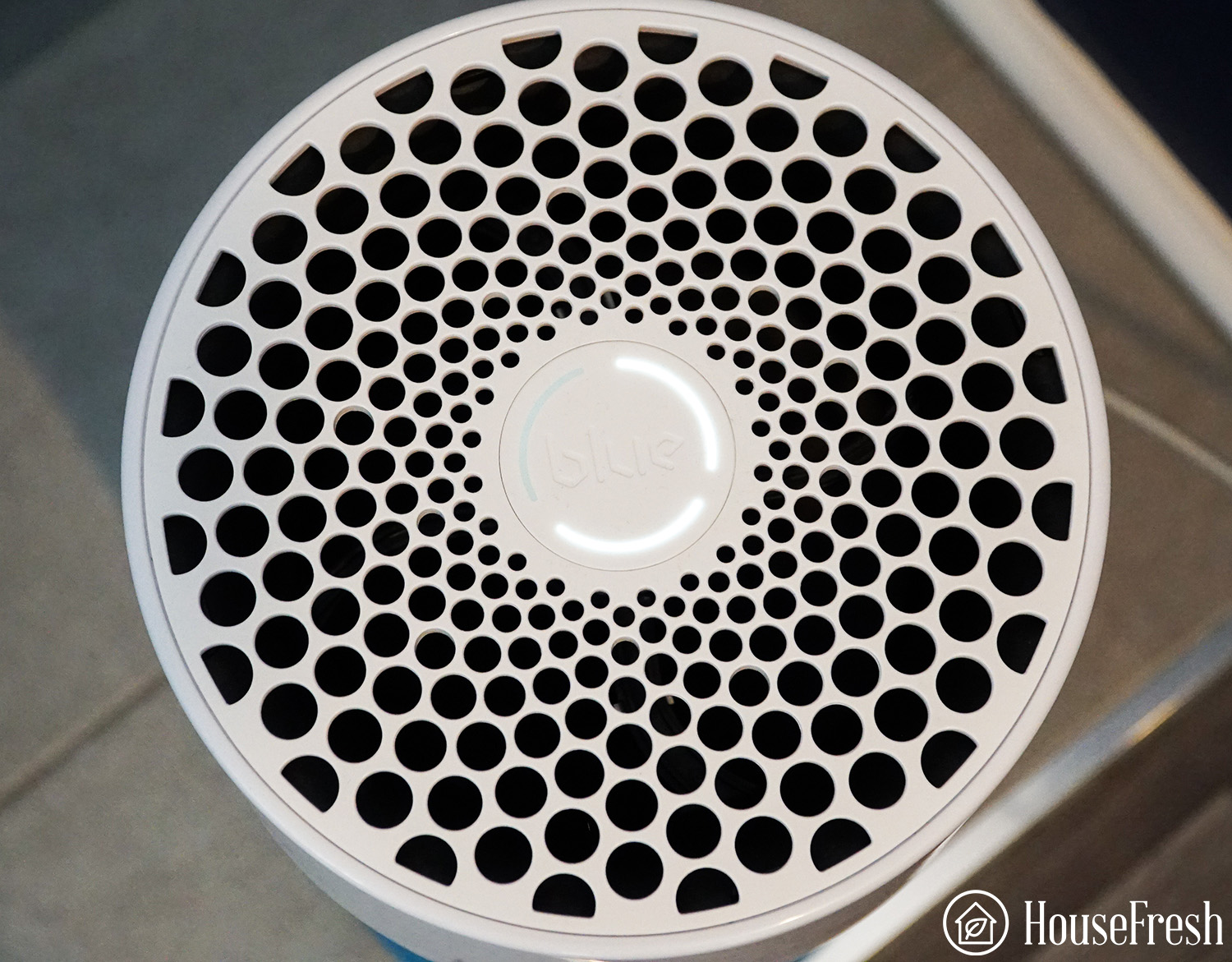
When Blueair upgraded the 411 with the 411+, they kept the unit’s operation the same. One change they did make was a slight branding facelift to the control button. But, for me, that slight change made the difference.

Blueair likes to keep things simple. So simple that they opted for an easy-to-use one-button operation for their Blue Pure series. This means there are no complicated display screens or fingerprint-covered controls, no remotes to lose or apps to download.

With three fan speeds to choose from, Each press of the button cycles through them and turns the air purifier on/off. The button also acts as a filter replacement indicator. When the lights around the button glow red, the air purifier is ready for a new filter.

Blueair Blue Pure 411 Control panel

Air filtration technology

Both units use the same Blueair trademarked HEPASilent™ filters, so it’s a draw.

Blueair Blue Pure 411 Genuine Filter

Blueair offers two different filters for the Blue Pure 411 series. Their Particle + Carbon Filter is included as standard, or you can opt for the SmokeBlock Filter. Each of these filters utilize Bluairs’ HEPASilent™ technology, capable of removing 99.97% of harmful particles and pollutants from the air in your home.

They’ve named it HEPASilent™ as it’s specially designed to require less air pressure, which means the motor doesn’t need to work as hard as it needs less energy to pull contaminants in. The less the motor has to work, the quieter the unit is.

Blueair Blue Pure 411 HEPA Filter

The SmokeBlock version is packed with more activated carbon, which is the ingredient that removes smoke, odors and VOCs (Volatile Organic Compounds) from the air. We recommend you go for this option, especially if you do a lot of cooking, use chemicals or paint on a regular basis or if your air is affected by wildfire smoke.

Blueair Blue Pure 411+ Genuine Replacement Filter, Particle and Activated Carbon
BLUEAIR Blue Pure 411 Series SmokeBlock Genuine Replacement Filter, Extra Carbon Captures 99.99% of Wildfire Smoke, fits Blue Pure 411 Auto, 411 and 411+ Air Purifiers, White
Technology
3-stage HEPASilent filter with activated charcoal
3-stage HEPASilent filter with additional activated charcoal
More information
Price
$23.99
$31.99
Blueair Blue Pure 411+ Genuine Replacement Filter, Particle and Activated Carbon
Technology
3-stage HEPASilent filter with activated charcoal
More information
Price
$23.99
BLUEAIR Blue Pure 411 Series SmokeBlock Genuine Replacement Filter, Extra Carbon Captures 99.99% of Wildfire Smoke, fits Blue Pure 411 Auto, 411 and 411+ Air Purifiers, White
Technology
3-stage HEPASilent filter with additional activated charcoal
More information
Price
$31.99
Blueair Blue Pure 411 With FIlter

PRICE on amazon PRICE on EBAY

Here is what you can expect from both units when it comes to replacing the filters:

When opening up the box of your new Blueair air purifier, you must twist off the top and remove all of the packaging from the filter before you start using the unit. If you don’t, the filter won’t work, and you will probably begin to notice a foul smell of the plastic packaging burning… not cool.

Air cleaning performance test results, compared

When it comes to air cleaning performance, the 411+ wins hands down. When we put both units through our performance cleaning tests, the 411+ cleared the contaminants from our room 25 minutes faster than the 411.

Blueair Blue Pure 411 No Pre Filter

The similarities may be clear, but the differences become more apparent when you analyze each unit’s cleaning performance.

When looking for the right air purifier for your home, cleaning performance should be high on your priorities. Manufacturers usually provide performance data for you, but often, these tests are done in sterile lab conditions…not in a home.

To ensure we get fair, concise results, we test all the air purifiers we review under the same conditions, in a real room, in an actual home…our home.

We conduct all of our performance testing in our 705 cubic foot office that we fill with simulated pollution by lighting an incense stick and letting the smoke fill the room. Once the room is packed with pollutants, we turn the air purifier on at full fan speed and time how long it takes to remove the incense smoke from the air. 

We monitor the whole process using our indoor sensor from Purpleair, which gives us updates on PM1.0ug/m3, PM2.5ug/m3 and PM10.0 ug/m3 in real-time so that we can give you the results.

Blueair Blue Pure 411 Test

Another reason we gather this performance data is so that we can compare air purifiers side-by-side. In the case of the 411 and 411+, the data we collect will show us if Blueairs’ upgrade is worth the money.

(Hint: It is)

The 411+ cleared our test room in 43 minutes

The 411 cleared our test room in 68 minutes

As you can see from our air cleaning tests, we have a clear winner here with the upgraded 411+, clearing our performance room 25 minutes faster than the standard 411 model. 

Because we test the cleaning performance of every air purifier we review, we can compare them side-by-side to see how they perform against the competition.

Both of these units fall a little short when compared to larger units on the market, but that is because they are engineered to be most effective in smaller spaces. While the 411+ cleared our performance testing room faster than average (across all the air purifiers we’ve tested), the 411 proves that it’s a little slow and outdated.

Noise levels test results compared

When it comes to noise levels emitted, the vote is yet again tied as they both emit the same level of sound as each other.

Best Quiet Air Purifiers 411

When Blueair released the original 411, they made a quiet unit ideal for bedrooms using their HEPASilent™ technology. Thankfully, they’ve kept this aspect for the 411+.

At their lowest fan speed, both air purifiers emit a whisper-like 17 dB (quieter than a ticking watch), which you’ll hardly notice. Even at its highest fan speed of 46dB (average room noise), they’re quieter than many units on the market. 

To show you what we mean, here’s a chart comparing noise levels to other popular units of similar size.

The chart shows that compared to other units of similar size and cleaning power, the 411 and 411+ are quieter. The Levoit Core 300 is louder, producing 24-48dB, as is the TaoTronics AP005, which emits 25-50dB of noise at its lowest and highest fan speeds.

Cost associated with running each air purifier

Even though they use the same filters and the same amount of energy, you need to run the 411 for longer, at higher speeds, using more energy in the long run.

Blueair Blue Pure 411 Unit

1. Average yearly electricity costs = $10.51 (411+) versus $10.51 (411).

When buying an air purifier, it’s not only the initial cost of the unit you need to consider. Like many other home devices, air purifiers use electricity and electricity costs money (obviously.)

That’s why it’s essential to look at how much energy a unit draws before committing to a purchase as (now more than ever), energy costs rack up over time.

Luckily, Blueair is extremely energy conscious, making each of its units as energy efficient as possible, and these two are no exception. Both the 411 and 411+ need minimal electricity to run thanks to the HEPASilent™ filter and efficient motor.

The 411 loses this section as you’ll need to run it at higher speeds for longer periods than the 411+, which, in turn, will use more energy.

2. Yearly filter costs = $47.98 (411+) versus $47.98 (411+)

Another additional cost to consider when buying an air purifier is the price of replacement filters.

HEPA filters are effective at removing harmful pollutants as they are made up of a maze of tiny fibers that capture particles from the air as it passes through them. Because the particles have nowhere to go when trapped, HEPA filters fill up with them and become less effective over time.

It all depends on how polluted your room is, but on average, Blueair suggests you replace the HEPASilent™ filter every 6 months. You can use Blueair genuine filters or replace them with “unofficial” filters from another brand. The unofficial filters are usually cheaper, but we’ve only tested genuine Blueair filters, so I can’t testify to other brands.

As both air purifiers use the same filter replacements, the cost is the same.

Blueair Blue Pure 411+ Genuine Replacement Filter, Particle and Activated Carbon
Blue Pure 411 Replacement Filters Compatible with Blueair Blue Pure 411 Genuine, 411+, 411 Auto and MINI Air Purifier, Include 2 Particle and 2 Activated Carbon
Technology
Particle and Activated Carbon Filter
2-Pack Replacement Particle and Activated Carbon Filter
More information
Price
$23.99
$17.98
Blueair Blue Pure 411+ Genuine Replacement Filter, Particle and Activated Carbon
Technology
Particle and Activated Carbon Filter
More information
Price
$23.99
Blue Pure 411 Replacement Filters Compatible with Blueair Blue Pure 411 Genuine, 411+, 411 Auto and MINI Air Purifier, Include 2 Particle and 2 Activated Carbon
Technology
2-Pack Replacement Particle and Activated Carbon Filter
More information
Price
$17.98

Bottom Line: Should you get a Blueair Blue Pure 411+ or a 411?

The Blueair 411+ and the 411 are not that different from one another, so which model wins overall?

✅ If you want a quiet, high-performing and modern-designed air purifier for your bedroom or home office — go for the 411+. 

Blueair Blue Pure 411 Kitchen

✅ If you want to save a small amount of cash — go for the 411.

Blueair Blue Pure 411 Hallway

This was a pretty easy battle. The data doesn’t lie. The 411 has been left obsolete with the introduction of its upgrade, the 411+. It may share many of the same attributes as its predecessor, but its cleaning performance surpasses the older model.

Most air purifier guides are written by freelance journalists who just repeat manufacturers’ claims and marketing slogans. Here at HouseFresh, we take all our air purifier reviews seriously, we refuse units in exchange for reviews and use our own money to avoid any sort of bias. We put every air purifier through our in-depth testing process in our own home, testing each unit’s cleaning power with an air quality sensor, measuring how much energy each unit uses with an electricity monitor and recording noise levels with a sound level meter.

SOURCES

We calculated the monthly energy consumption costs with the help of the Department of Energy’s appliance energy calculator. We calculated yearly costs associated with running both units for 24 hours a day for 365 days. We ran this calculation utilizing the U.S. average utility rate of $0.12/kWh as of October 6th, 2023. 

Levoit Core 200S VS Core 300S

Levoit Core 200S VS Core 300S

If you’ve researched air purifiers, you’re likely to have come across the brand Levoit. Since 2017, this company has been producing innovative air purifiers at price points that suit every consumer.

One of the latest innovations from Levoit comes in the form of their ‘S’ (aka smart) range. Levoit realizes that modern household devices are frequently becoming more reliant on app-based controls; I mean, who wants to get up to adjust settings these days?

Levoit Core 200S App logo

Therefore Levoit has developed, what they call, the VeSync app that allows you to monitor and control your air purifier from anywhere in the world with a WiFi connection. Available on both Apple and Android devices, you can:

  • Set timers
  • Create schedules
  • Adjust modes and fan speeds
  • Monitor your current air quality
  • Receive important notifications about your device
Tip

Also if you have more than one Levoit S device in your home, you can control each one through the same app.

Both the units we’re pitting against each other have this capability and many other similarities, but when it comes down to it, which air purifier do you want to spend your hard-earned dollars on?

We will evaluate each unit in sections to show you the similarities and differences between the Core 300S and the Core 200S, choosing a winner for each category. Then we’ll put it all under consideration and choose an overall winner.

TL;DR Which unit wins overall? 

danny

“It’s more powerful and a little bigger, but the Levoit Core 300S is the perfect ratio of power to cost. In comparison, the 200S will cost the same long term but will always be struggling unless you use it in a tiny room.”

— Danny Ashton, Founder & Senior Writer

Levoit Core 200S VS Core 300S Size

Need that clean air faster than it takes to read this article? Don’t worry; let me summarize it into bullet points for you.

The overall winner…The Levoit Core 300S!

The pros and cons compared

Levoit Core 200SLevoit Core 300S
Levoit Core 200S BedroomLevoit Core 300S Bedroom
What we really likeWhat we really like
👍 Not an intrusive size.
👍 Controls are easy to navigate.
👍 The fan is barely noticeable in sleep mode.
👍 Easily connects to app.
👍 Great CADR for price.
👍 Levoit’s popular 3-Stage Filtration system.
👍 Has a timer and auto mode.
👍 Color-coded wheel to monitor air quality.
What we think could be betterWhat we think could be better
👎 Doesn’t have an air quality indicator.
👎 Only comes in white.
👎 Can’t remove the pre-filter to clean.
👎 You can’t remove the pre-filter to clean.
👎 Design is a little lacking in creativity.
👎 Wish it contained more activated carbon.

The specifications compared side-by-side

Regarding specs, the Core 300S is a clear winner with its higher CADR and larger room coverage. Plus, it cleaned the air in our performance testing room 22 minutes faster than the 200S… It’s also three grams lighter!

Levoit Core 300S Bedroom

💡exclusive code for HouseFresh for 10% off a single purchase on Levoit.com: HOUSE10

When you put the specifications of these two units side-by-side (which we have…scroll down), the data from both Levoit and our performance tests show us that the 300S wins hands down. 

Even though these two are similar in size, the 300S boasts a CADR (Clean Air Delivery Rate) of 141 CFM (Cubic Feet per Minute), while the 200S hangs behind with 118 CFM.

Levoit Core 200SLevoit Core 300S
HouseFresh rating:★★★☆☆★★★★☆
Time to clean our test room:61 Minutes45 Minutes
Air purifier technology:Levoit 3-Stage Filtration (Pre-filter, main particle filter, high-efficiency activated carbon filter)Levoit 3-Stage Filtration (Pre-filter, main particle filter, high-efficiency activated carbon filter)
Recommended room size:183 sq. ft.219 sq. ft.
Clean air delivery rate (CADR):118 CFM141 CFM 
Dimensions (in inches / in cm):12.6H x 8.07W x 8.07D inches (32H x 20.5W x 20.5D cm)14.2H x 8.7W x 8.7D inches (36H x 22W x 22D cm)
Weight (in pounds / in kg):6.6 lbs (3 kg)5.95 lbs (2.7 kg)
Filter life:6 – 8 months6 – 8 months
Noise level (low – high):39.6 – 49.1 dB38.9 – 54.5 dB
Estimated energy consumption:$30.48 per year$52.56 per year

The design

Regarding the design aesthetics, I have chosen the Core 200S as our winner. This was a close call as they both look so similar, but I think the 200S looks slightly more modern and ergonomic. 

Levoit Core 200S Kitchen Close Up

💡exclusive code for HouseFresh for 10% off a single purchase on Levoit.com: HOUSE10

When you compare them to designs from Blueair or Coway, Levoit’s Core range isn’t the best-looking air purifiers out there, but they’re also not the worst. These air purifiers look incredibly similar, with the 300S having a band around its middle and a fraction bigger, but that’s about it. 

I chose the 200S as a winner merely because it looks a little sleeker than the 300S.

Levoit Core 300S Kitchen

💡exclusive code for HouseFresh for 10% off a single purchase on Levoit.com: HOUSE10

A great design point that both air purifiers possess is that they’re so easy to move between rooms. The 200S, weighing 6.6 lbs, and the slightly larger 300S, weighing 5.95 lbs, easily fit underneath your arm when transferring them to a different space.

As you can see, the differences are few and far between. Apart from the slight size difference, the recessed top grill and the gray band around the middle of the unit, you couldn’t tell them apart.

Levoit Core 200S VS Core 300S

The control panel

The winner is the Core 300S. Both control panels have different pros, but the 300S has a color-coded air quality monitor ring and an LED display to show how long your timer is set for.

Levoit Core 300S Controls

💡exclusive code for HouseFresh for 10% off a single purchase on Levoit.com: HOUSE10

First, let’s look at the 300S. The design and layout are similar to the Core 300, with a few subtle differences. The 300S comes with the addition of AirSight Plus™ technology that monitors the air quality in your room in real-time. The information is then displayed on the control panel as a color-coded light ring.

Levoit Core 300S Airsight

The 300S also has an auto mode controlled by the information from the air quality sensor. 

When in auto mode, the 300S will change its fan speed in accordance with the PM2.5 in the air. A low PM2.5 (good air quality) will set the fan to its lowest speed, and a high PM2.5 (bad air quality) will increase the unit’s fan speed.

Along with auto mode, the 300S also features four fan speeds, including sleep mode, display lock, display light control and a timer that can be set to any countdown from 1-12 hours and uses its LED screen to display.

Levoit Core 200S Controls logo 1

The 200S also comes with sleep mode, display lock, display light control and a timer, but can only be set to 2, 4 or 8-hour countdown. Unfortunately, the 200S doesn’t include Levoit’s AirSight Plus™ technology, which, in turn, means there is no auto mode, and you can’t monitor the air quality in your home.

The controls on the 200S also has a filter indicator light that illuminates when the filters are ready to be replaced and a button that turns its night light on and off, which doesn’t appear on the 300S.

Air filtration technology

When it comes to filtration technology, the Levoit Core 300S wins in our view due as you can customize the filter to your needs with four different replacements to choose from.

Levoit Core 300S Filter

💡exclusive code for HouseFresh for 10% off a single purchase on Levoit.com: HOUSE10

Levoit’s ‘original’ filter that’s included with your 300S has three stages made up of a pre-filter (to capture larger particles like dust), a main particle filter and a layer of activated carbon filter for odors and gases.

You can replace the original filter with three other types of filters. If you have pets, the Pet Allergy Filter is engineered to tackle removing pet odors and alleviating allergies. If you live in an area with high levels of smoke, fog and VOCs, go for the Toxin Absorber. For ultimate protection, there’s the four-stage Smoke Remover Filter that includes Custom High-Efficiency Activated Carbon.

Levoit Core 200S-P Air Purifier Genuine Replacement Filter, AHAM VERIFIDE, Supports HEPA Sleep Mode, High-Efficiency Activated Carbon, Removes Smoke, Odors, Allergens, Core 200S-RF, 1 Pack
LEVOIT Core 300-P Replacement Filter Air Purifier Pet Allergy, Genuine Core300S-P Filters, Supports HEPA Sleep Mode, High-Efficiency Activated Carbon, Core 300-RF-PA, Yellow, 1 Pack
LEVOIT Core 300-P Replacement Filter for Toxin Absorber, Genuine Core300S-P Air Purifier Filters, Supports HEPA Sleep Mode, High-Efficiency Activated Carbon, Core 300-RF-TX, Green
LEVOIT Core 300-P Replacement Filter for Air Purifier Smoke Remover, Genuine Core300S-P Filters, Supports HEPA Sleep Mode, High-Efficiency Activated Carbon, Core 300-RF-SR, 1 Pack, Blue
Technology
H13 (Medical) Grade HEPA and Activated Charcoal
3-in-1 HEPA, High-Efficiency Activated Carbon
4-in-1 HEPA, High-Efficiency Activated Carbon
Price
$21.34
$35.99
$35.99
$39.99
Levoit Core 200S-P Air Purifier Genuine Replacement Filter, AHAM VERIFIDE, Supports HEPA Sleep Mode, High-Efficiency Activated Carbon, Removes Smoke, Odors, Allergens, Core 200S-RF, 1 Pack
Technology
H13 (Medical) Grade HEPA and Activated Charcoal
More information
Price
$21.34
LEVOIT Core 300-P Replacement Filter Air Purifier Pet Allergy, Genuine Core300S-P Filters, Supports HEPA Sleep Mode, High-Efficiency Activated Carbon, Core 300-RF-PA, Yellow, 1 Pack
Technology
3-in-1 HEPA, High-Efficiency Activated Carbon
More information
Price
$35.99
LEVOIT Core 300-P Replacement Filter for Toxin Absorber, Genuine Core300S-P Air Purifier Filters, Supports HEPA Sleep Mode, High-Efficiency Activated Carbon, Core 300-RF-TX, Green
Technology
3-in-1 HEPA, High-Efficiency Activated Carbon
More information
Price
$35.99
LEVOIT Core 300-P Replacement Filter for Air Purifier Smoke Remover, Genuine Core300S-P Filters, Supports HEPA Sleep Mode, High-Efficiency Activated Carbon, Core 300-RF-SR, 1 Pack, Blue
Technology
4-in-1 HEPA, High-Efficiency Activated Carbon
More information
Price
$39.99

With the 200S, there is only one filter option available, but that doesn’t mean that it’s bad. Levoit includes a three-stage circular filter comprising a nylon pre-filter for larger particles, a main airborne particle filter and an activated carbon filter.

Levoit Core 200S Filter logo

When you receive your new unit, along with all of the exterior packaging, remember to open up your air purifier before you turn it on. You will most likely find that the filter is also packaged in a plastic bag. If you don’t remove this bag before operating the unit, a. the filter won’t work and b. It will probably start to smell like burning plastic.

Air cleaning performance

In our own performance tests, the Core 300S cleared our room of contaminants 16 minutes faster than the 200S, making it the winner for this section of the comparison spotlight.

Levoit Core 300S Dining Room

💡exclusive code for HouseFresh for 10% off a single purchase on Levoit.com: HOUSE10

In order to assess air cleaning performance, we fill our 728 cubic feet test room with incense smoke and use our PurpleAir Zen laser particle counter to record how long it takes for the air purifier to bring PM1 pollution down to zero.

Even though many of the features of the 300S and the 200S are extremely similar, our performance tests showed a big difference in the effectiveness of their air-cleaning abilities.

When you look at the CADR of each unit, 300S = 141 CFM, 200S = 118 CFM, you know that there will always be a difference in performance…and it shows. 

The 300S outperformed the 200S hands down with a whopping 16 minutes difference in the time it took them to clear the pollutants from our room.

The 300S cleared our test room in 45 minutes

The 200S cleared our test room in 61 minutes

When you look at their performances side-by-side it’s easy to see how they compare to each other and similar air purifiers on the market.

Noise levels test

There can be no clear winner regarding noise levels, as both units emit the same amount of noise… this one is a draw.

Levoit Core 200S VS Core 300S Size

A lot of brands like to label their air purifiers with buzz words like ‘Whisper quiet’ and even Levoit class the 300S as “quiet as a gentle breeze,” but no unit can be completely silent.

Air purifiers contain a fan and motor to run it that both make noise when they’re active, so it becomes a matter of how big the fan and motor are, how hard they’re working and how well made they are that dictate how loud or quiet an air purifier is.

On their quietest setting, the Levoit Core 200S reached 39.6 decibels, while the Levoit Core 300S was quieter at 38.9 decibels. And when running at its highest fan speed, the 200S reached 49.1 decibels against the 54.5 decibels we recorded when testing the 300S.

When you compare them to the noise levels of other air purifiers of the same size, you see that they are quieter than most.

Yearly running costs

The winner is the Core 200S due to its energy efficiency and lower cost filter replacements.

Levoit Core 200S Filter 2 logo

💡exclusive code for HouseFresh for 10% off a single purchase on Levoit.com: HOUSE10

1. Yearly electricity costs = $29.85 (200S) versus $22.92 (300S)

When you buy an air purifier, it’s not only the initial cost of the unit you need to consider. You need to think about how much it costs to run. Not all air purifiers are created the same, and the running costs will differ depending on which one you get.

Both these units are highly energy efficient, earning themselves certifications from the California Air Resources Board, Energy Star and the FCC. The Core 200S will cost you, on average, $29.85 a year if you run the unit for 24 hrs a day, 365 days a year. The Core 300S will cost you an average of $22.92 per year. This is due to its higher CADR, as the 300S is working harder than the 200S.

2. Yearly filter costs = $51.98 (200S) versus $59.98 (300S Original Filter)

Another running cost to be considered when choosing the right air purifier for your home is the cost of replacement filters. If you don’t replace them when prompted, your air purifier will become less and less effective.

With the 200S, there are only two filter options, an official Levoit replacement or an unofficial version. We’ve only tested out the official Levoit filters, so we can’t testament to the effectiveness of the unofficial version.

The official filters will set you back $25.99 each, and the unofficial filters are significantly cheaper at $23.39 for two. The filter in the 200S has to be replaced every 6-8 months: 

Levoit Core 200S-P Air Purifier Genuine Replacement Filter, AHAM VERIFIDE, Supports HEPA Sleep Mode, High-Efficiency Activated Carbon, Removes Smoke, Odors, Allergens, Core 200S-RF, 1 Pack
Technology
3-in-1 True HEPA, High-Efficiency Activated Carbon, Core 200S-RF
More information
Price
$21.34
Levoit Core 200S-P Air Purifier Genuine Replacement Filter, AHAM VERIFIDE, Supports HEPA Sleep Mode, High-Efficiency Activated Carbon, Removes Smoke, Odors, Allergens, Core 200S-RF, 1 Pack
Technology
3-in-1 True HEPA, High-Efficiency Activated Carbon, Core 200S-RF
More information
Price
$21.34

With the 300S, four official filters are available and unofficial versions to match. This time, we only tested the official ‘Original’ filter, but we’re confident the other official filters will be highly efficient. Prices start at $29.99 up to $39.99 for the highest spec replacement. Levoit recommends you replace the filter in the 300S every 6-8 months:

Levoit Core 200S-P Air Purifier Genuine Replacement Filter, AHAM VERIFIDE, Supports HEPA Sleep Mode, High-Efficiency Activated Carbon, Removes Smoke, Odors, Allergens, Core 200S-RF, 1 Pack
LEVOIT Core 300-P Replacement Filter Air Purifier Pet Allergy, Genuine Core300S-P Filters, Supports HEPA Sleep Mode, High-Efficiency Activated Carbon, Core 300-RF-PA, Yellow, 1 Pack
LEVOIT Core 300-P Replacement Filter for Toxin Absorber, Genuine Core300S-P Air Purifier Filters, Supports HEPA Sleep Mode, High-Efficiency Activated Carbon, Core 300-RF-TX, Green
LEVOIT Core 300-P Replacement Filter for Air Purifier Smoke Remover, Genuine Core300S-P Filters, Supports HEPA Sleep Mode, High-Efficiency Activated Carbon, Core 300-RF-SR, 1 Pack, Blue
Technology
H13 (Medical) Grade HEPA and Activated Charcoal
3-in-1 HEPA, High-Efficiency Activated Carbon
4-in-1 HEPA, High-Efficiency Activated Carbon
Price
$21.34
$35.99
$35.99
$39.99
Levoit Core 200S-P Air Purifier Genuine Replacement Filter, AHAM VERIFIDE, Supports HEPA Sleep Mode, High-Efficiency Activated Carbon, Removes Smoke, Odors, Allergens, Core 200S-RF, 1 Pack
Technology
H13 (Medical) Grade HEPA and Activated Charcoal
More information
Price
$21.34
LEVOIT Core 300-P Replacement Filter Air Purifier Pet Allergy, Genuine Core300S-P Filters, Supports HEPA Sleep Mode, High-Efficiency Activated Carbon, Core 300-RF-PA, Yellow, 1 Pack
Technology
3-in-1 HEPA, High-Efficiency Activated Carbon
More information
Price
$35.99
LEVOIT Core 300-P Replacement Filter for Toxin Absorber, Genuine Core300S-P Air Purifier Filters, Supports HEPA Sleep Mode, High-Efficiency Activated Carbon, Core 300-RF-TX, Green
Technology
3-in-1 HEPA, High-Efficiency Activated Carbon
More information
Price
$35.99
LEVOIT Core 300-P Replacement Filter for Air Purifier Smoke Remover, Genuine Core300S-P Filters, Supports HEPA Sleep Mode, High-Efficiency Activated Carbon, Core 300-RF-SR, 1 Pack, Blue
Technology
4-in-1 HEPA, High-Efficiency Activated Carbon
More information
Price
$39.99

Air purifier filters are the most efficient way of removing harmful contaminants from the air in your home. They work by trapping microscopic particles in a tightly woven maze of fibers, removing them from the air. 

Over time, the maze becomes full of all the collected particles, therefore becoming less effective. You need to replace them periodically to ensure your air purifier remains effective.

Bottom line: Should you get a Levoit Core 300S or a Core 200S?

Both of these units are high-performing air purifiers with smart features at a budget price.

✅ If you want air quality updates, app control and a great CADR — go for the 300S.

Levoit Core 300S Kitchen

💡exclusive code for HouseFresh for 10% off a single purchase on Levoit.com: HOUSE10

✅ If you want a slightly smaller unit with lower running costs — go for the 200S. 

Levoit Core 200S Living Room

💡exclusive code for HouseFresh for 10% off a single purchase on Levoit.com: HOUSE10

By introducing the Core 300S, Levoit have pretty much omitted the need for the 200S. Yes, it’s slightly smaller and doesn’t cost as much to run. Still, when  it comes down to performance and efficiency, the 300S surpasses the 200S…all for an extra $50.

SOURCES

We calculated the monthly energy consumption costs with the help of the Department of Energy’s appliance energy calculator. We calculated yearly costs associated with running the Core 300S and a Core 200S for 24 hours a day for 365 days. We ran this calculation utilizing the U.S. average utility rate of $0.12/kWh as of August, 3rd 2023.

Levoit Core 600S VS Blueair Blue Pure 211+

Levoit Core 600S VS Blueair Blue Pure 211 Plus

Levoit and Blueair are heavyweight brands, producing air purifiers that are sold across the world.

Levoit has been making air purifiers for over ten years and has earned a reputation for releasing reliable and innovative products with a budget price tag. They have even developed their own signature technologies to use in their units like VortexAir™, QuietKEAP™ and AIRSIGHT™ Plus.

With two decades of experience, Blueair is known for taking the style of air purifiers to new levels, even winning awards in design along the way. They don’t only concentrate on looks; Blueair strives to push filter technology across their air purifiers with HEPASilent™ Technology (electrostatic filtration with HEPA) exclusive to Blueair units.

These two units showcase each company at the top of their game with the Core 600S from Levoit and Blue Pure 211+ from Blueair, so we wanted to pit them against each other. But we didn’t want to go on power and cleaning ability alone; we know you (the consumer) have more needs and wants from an air purifier. 

So read on, where we examine looks, controls, filters, electricity consumption, noise levels and air cleaning performance to see who will reign victorious in the battle of these two incredible air purifiers.

TL;DR: Which unit wins overall? 

danny

“We always knew this would be a hard decision as these two units display amazing qualities. But ultimately I choose the Levoit Core 600S as our overall winner for its impressive air cleaning performance, added smart functions, low noise output and energy efficiency.”

— Danny Ashton, Founder & Senior Writer

Levoit Core 600S VS Blueair Blue Pure 211 Plus

Don’t want to read the full article? Don’t worry; I’ll condense it.

The pros and cons compared

Blueair Blue Pure 211+Levoit Core 600S
Blueair Blue Pure 211 Front RoomLevoit Core 600S Front Room
What we really likeWhat we really like
👍 Very simple to operate: you will do it all with just one button.

👍 It is super quiet considering its power.

👍 You can customize the design with a variety of pre-filter fabrics.

👍 Cleared our test room in 18 minutes.
👍 The mobile app is great and can connect to Alexa or Google Home.

👍 It offers a high CADR for a low price.

👍 It is easy to move around thanks to the handles at each side.

👍 Cleared our test room in 15 minutes.
What we think could be betterWhat we think could be better
👎 The HEPASilent technology in the Blue Pure 211+ uses a bipolar ionization process with the potential of generating small amounts of ozone, and this is a feature that cannot be disabled.

👎 After using the 211+ at home for a few years, the mechanism to open the top doesn’t hold as well so sometimes I accidentally open the device when trying to move it around.

👎 It’s too big and too heavy not to have a handle somewhere to make it easier to move around.
👎 The main filter in the 600S is not, in fact, a True HEPA filter as advertised initially by Levoit. This doesn’t affect its performance, but it’s something we need to mention here.

👎 It makes an annoying whirring sound at low fan speeds that might bother you if you’re sensitive to sound.

👎 The sensor needs to be vacuumed regularly to ensure accurate readings.

The specifications compared side-by-side

The Levoit Core 600S is the clear winner due to its higher CADR score, its fastest cleaning performance and the additional smart features.

Levoit Core 600S Front Room

💡exclusive code for HouseFresh for 10% off a single purchase on Levoit.com: HOUSE10

Both air purifiers retail at around $300, which is incredible value for money when it comes to performance. With a lack of extra features in the 211+, the 600S wins overall. It can also be used in larger rooms (up to 635 sq. ft. vs. 540 sq. ft.) and has a higher clean air delivery rate (CADR) of 410 CFM vs. 350 CFM (Cubic Feet per Minute) from the 211+.

The only other air purifier we have tested with similar performance is Smart Air’s Blast Mini, which is substantially bigger and retails at around $600.

Levoit Core 600S Blueair Blue Pure 211+
HouseFresh rating:★★★★★★★★★☆
Time to clean our test room:15 minutes18 minutes
Air purifier technology:3-Stage Filtration (Pre-filter for large particles, main filter for airborne particles, high-efficiency activated carbon filter for odors and gasses)HEPASilent™ Technology (electrostatic filtration with HEPA) and Activated Charcoal Filter + Ionizer technology
Recommended room size:635 sq. ft. 540 sq. ft.
Clean air delivery rate (CADR):410 CFM 350 CFM
Dimensions (in inches / in cm):23.6H x 12.3W x 12.3D inches (60H x 31.3W x 31.3D cm)20H x 13W x 13D inches (51H x 33W x 33D cm)
Weight (in pounds / in kg):13.7 lbs (6.2 kg)12.5 lbs (5.67 kg)
Noise level (low – high):26 – 55 dB31 – 56 dB
Filter life:6 months6 – 8 months
Estimated energy consumption:$51.51 per year$64.12 per year
Price:$269.99$399.99

The design elements compared

When it comes to the design aesthetics, the winner is the Blueair Blue Pure 211+ due to its brightly colored, customizable pre-filter and cosmic-looking grill.

Blueair Blue Pure 211 Front Room

Don’t get me wrong, the 600S doesn’t look bad, but it just looks like a traditional air purifier. It has curved edges that are more aesthetic than a straight box shape and unobtrusive branding.

The problem is, there’s not much else to comment on. 

Design and look are subjective, and the 600S is great for those who don’t want their air purifier to be noticed, but with its lack of creative design, it’s a little too plain for my taste.

Levoit Core 600S Fireplace

💡exclusive code for HouseFresh for 10% off a single purchase on Levoit.com: HOUSE10

Blueair, on the other hand, is a brand that uses design to set it apart from other brands producing “traditional” looking air purifiers, making them extremely popular with consumers who want an air purifier to fit into their modern lifestyle.

A great feature Blueair offers is its customizable pre-filters. The 211+ uses an exterior fabric pre-filter that is not just easy to clean (helping extend the life of its HEPA filter) but also offers a chance to adopt different colors so that you can customize your air purifier to fit the aesthetics of your room. Choose from Crystal Pink, Buff Yellow, Dark Shadow, Lunar Rock or the classic Diva Blue.

Blueair Blue Pure 211 Corner

When you stand them side-by-side, the differences are clear. Although they’re both box-type units, the 211+ is more stylized with its fabric pre-filter and gloss top.

Core 600 VS Blue Pure 211 Plus

Ease of use and control panel compared

When it comes to the control panel, the winner has to be the Blueair Blue Pure 211+ with its one-button control, making it super easy to use.

Blueair Blue Pure 211 plus Close up

The Blue Pure 211+ may not be able to connect to an app or have any smart functions like an auto mode or air quality monitor, but with its one-button design, the 211+ could be the easiest air purifier to operate on the market.

All you need to do is push the button once to turn it on, press it to scroll through the various fan speeds, then push it again to turn it off. You can’t get simpler.

The large button on the front also acts as a filter replacement indicator, so you know when it’s time to buy a new HEPASilent™ filter. It will automatically glow yellow after five months of operation, giving you time to buy a replacement; when the filter is full, it will glow red to indicate that you need to install the new filter.

That said, the control panel in the Levoit Core 600S is also pretty good, if a little more complex:

Levoit 600S Controls

Levoit has packed the 600S with additional features like an auto mode, sleep mode, timer, numerical & color-coded air quality monitor and the ability to turn off the display lights. But all of these functions need a button to operate them.

Yes, it’s intuitive and each button is spread out in a circle; nevertheless, the buttons are touch-sensitive and sometimes don’t activate on the first press, which can be frustrating.

The best control function Levoit has for its S range is the ability to control your air purifier using the VeSync app on your smartphone. It’s easy to set up and once your device is connected, you can control the settings and fan speed, turn it on/off and monitor the air quality in your home…from anywhere in the world with an internet connection.

Levoit 600S App 3 logo

Air filtration technology compared

The Levoit Core 600S wins in our view due to its HEPASmart™ technology + concentration of activated carbon. Plus, we don’t like the fact that the ionizer in the 211+ cannot be turned off.

Levoit Core 600S Filter 3

💡exclusive code for HouseFresh for 10% off a single purchase on Levoit.com: HOUSE10

Levoit provides us with a three-stage circular filter inside the Core 600S that will remove harmful airborne contaminants (dust, bacteria & viruses, smoke, mold and allergens) by trapping them in its tightly woven maze of fibers.

In addition to this, the filter in the Core 600S contains loose-fill pellets of activated carbon over a bonded sheet. We’ve found that loose-fill carbon is a hell of a lot more effective at removing odors and VOCs (Volatile Organic Compounds) and have a longer lifespan over bonded carbon sheet filters like the one you will find inside the Blue Pure 211+.

Levoit 600S Change filter 2

The 211+ comes with, what Blueair calls, a HEPASilent™ filter. According to Blueair, “dual filtration delivers up to 45% more clean air faster, using up to 67% less noise and energy than HEPA filtration alone.” It gives particles an electrostatic charge to cling to the filter more effectively. According to Smart Air, the technology is the same as the one used in ionizers – it’s unfortunate that the user can’t deactivate this function, considering they can produce ozone.

Blueair Blue Pure 211 plus No filter

Unlike the 600S, you can remove the pre-filter from the 211+ and wash it, prolonging the life of the HEPA filter as it removes larger particles from the air leaving the HEPA to deal with the smaller ones. 

Tip

HEPA filters work by trapping contaminants when they become full of particles; they need replacing periodically with new ones to keep them effective. 

When it comes to replacing the filters, both Blueair and Levoit keep it simple:

Always remember that when you get your new air purifier, the filter is usually inside the unit wrapped in a protective plastic bag. If you don’t remove this packaging before switching your air purifier on, it won’t work properly, and you’ll probably start to notice the smell of burning plastic.

Air cleaning test results compared

The Core 600S wowed us when we put it through our performance tests. It cleared the simulated contaminants from our testing room in just 15 minutes! Making it one of the fastest-performing air purifiers we have tested.

Levoit Core 600S Front

💡exclusive code for HouseFresh for 10% off a single purchase on Levoit.com: HOUSE10

If you’ve read any of our product reviews before, you’ll know that we don’t take manufacturers’ specifications as gospel. We conduct our own performance tests in a real-world environment to compare different air purifiers under the same conditions.

To see how efficient each unit is at removing pollutants from the air, we fill our 705 cubic ft office full of simulated contaminants (smoke from incense sticks). We then introduce an air purifier, crank it up to its highest fan speed, and measure how long it takes the unit to clear the room of smoke pollution with the help of our indoor sensor from Purpleair.

As with the other categories, the fight for the best-performing unit was another close call. Both the Core 600S and the Blue Pure 211+ performed amazingly in our home tests with only three minutes between them.

The data from our indoor sensor only shows us minute differences between each of these air purifiers. As you can see from the sharp decline in the results charts below, both the 600S and the 211+ spring into action, clearing even the smallest pollutants from our room at speed.

The Levoit Core 600S cleared our test room in 15 minutes

The Blueair Blue Pure 211+ cleared our test room in 18 minutes

As we test all of the air purifiers we review, we can compare them with other units to see how well they perform against each other. 

The chart below shows the performance of our two competitors matched against some of the other high-performing units we’ve reviewed.

Even though the 600S and 211+ are considered low-budget air purifiers (costing around $300 each), they out-performed units with much higher price tags. 

For example, the Blast Mini from Smart Air is double the price and more than double the size of the 600S and the Alen BreatheSmart 75i can set you back around $750 and isn’t nearly as stylish as the 211+.  

Noise levels test results compared

The Core 600S is five decibels quieter than the Blue Pure 211+ when running at its lowest fan speed level.

Levoit Core 600S Room 2 logo

💡exclusive code for HouseFresh for 10% off a single purchase on Levoit.com: HOUSE10

All air purifiers make noise unless they are turned off. Inside the unit are a fan and a motor that will make a whirring sound that escalates as the fan speed increases. Brands often use words like “silent” or “whisper quiet,” but this doesn’t mean they are mute.

The Core 600S emits 26 dB (equivalent to a whisper from five feet away) at its lowest fan speed and 55 dB (equivalent to a refrigerator) at its highest, while the Blue Pure 211+ produces 31 dB (equivalent to a whisper nearby)  at its lowest fan speed and 56 dB (equivalent to an electric toothbrush) at its highest. So, not a whole lot of difference there.

Comparing these two air purifiers with other units we have tested, you can see from our noise comparison chart that they’re both pretty average regarding the sound they produce.

Tip

The perception of what is noisy and what is not can be quite subjective. That is why, we always shoot a video so you can get an idea of how it sounds at each one of its fan speeds:

Cost to run each unit compared

Regarding expenses you can expect to pay in the long run, the winner is the Levoit Core 600S again due to its energy efficiency and lower filter replacement costs.

Levoit Core 600S Room 5

💡exclusive code for HouseFresh for 10% off a single purchase on Levoit.com: HOUSE10

1. Yearly electricity costs = $51.51 (600S) versus $64.12 (211+)

When buying a new air purifier and the initial cost of the unit, you need to keep in mind its running costs. After all, you don’t want a shock when your energy bill comes in. 

Different air purifiers have different-sized motors, that take different amounts of electricity to run. With the rising energy costs globally, it’s best to know how much it will cost to run a unit before you buy it.

For the size and cleaning power of these two air purifiers, they are both very energy efficient. Our performance tests revealed that the 600S pulled 49 watts at full fan speed and low 6.2 watts at its slowest. On the other hand, the 211+ pulled 55.5 watts on high and 16.7 watts on low.

2. Yearly filter costs = $100 (600S) versus $139.98 (211+)

Another high running cost to factor into your purchase is replacing your air purifiers’ filters. Brands offer different filter lifespans and charge different prices for replacement filters, usually dependent on size and strength. The good news is that in most cases, you will be able to purchase generic filter replacements at a cheaper cost. 

The average lifespan of a HEPA filter in an air purifier is around 6 months, but these guidelines depend on the specific air purifier, how often you use it and how much pollution the filters remove. 

The filter in the Levoit Core 600S has to be replaced every 6 months: 

Levoit Core 600S-P Air Purifier Genuine Replacement Filter, AHAM VERIFIDE, Supports HEPA Sleep Mode, High-Efficiency Activated Carbon, Removes Smoke, Odors, Allergens, Core 600S-RF, 1 Pack
Core 600S Replacement Filter HEPA Filter for LEVOIT Core 600S Air Purifier, Core 600S-RF Replacement Filter, 1 Pack
Technology
H13 True HEPA Filter with Activated Carbon Filter
H13 True HEPA Filter, and high efficiency Carbon Filter
More information
Price
$59.99
$37.79
Levoit Core 600S-P Air Purifier Genuine Replacement Filter, AHAM VERIFIDE, Supports HEPA Sleep Mode, High-Efficiency Activated Carbon, Removes Smoke, Odors, Allergens, Core 600S-RF, 1 Pack
Technology
H13 True HEPA Filter with Activated Carbon Filter
More information
Price
$59.99
Core 600S Replacement Filter HEPA Filter for LEVOIT Core 600S Air Purifier, Core 600S-RF Replacement Filter, 1 Pack
Technology
H13 True HEPA Filter, and high efficiency Carbon Filter
More information
Price
$37.79

Blueair recommends you replace the filter in the Blue Pure 211+ every 6-8 months:

BLUEAIR Blue Pure 211+ Genuine Replacement Filter, Particle and Activated Carbon, Fits Blue Pure 211+ Air Purifier (Non-Auto)
Technology
HEPASilent™ Technology (electrostatic filtration with HEPA) and Activated Charcoal Filter
More information
Price
$69.99
BLUEAIR Blue Pure 211+ Genuine Replacement Filter, Particle and Activated Carbon, Fits Blue Pure 211+ Air Purifier (Non-Auto)
Technology
HEPASilent™ Technology (electrostatic filtration with HEPA) and Activated Charcoal Filter
More information
Price
$69.99

HEPA filters effectively remove airborne contaminants from rooms as they trap and keep those microscopic particles in their tightly woven maze of fibers. As they capture more and more particles, the filter starts to become full and, in turn, less effective. That’s why you need to replace them periodically.

Bottom line: Should you get a Levoit Core 600S or a Blueair Blue Pure 211+ ?

Both the Levoit Core 600S and Blueair Blue Pure 211+ are high-performing, powerful air purifiers. So, which one is best for you?

✅ If you want smart functions, a mobile app and worry about ozone — go for the Core 600S

Levoit Core 600S Front Room

💡exclusive code for HouseFresh for 10% off a single purchase on Levoit.com: HOUSE10

✅ If you want a customizable design and value simplicity in the control panel — then the Blue Pure 211+ is the unit for you.

Blueair Blue Pure 211 Front Room

While the 600S has added functions and higher cleaning power, the 211+ has the looks and is easier to operate. But both are fantastic value for money regarding the unit’s initial price and running costs.

HouseFresh strives to give you open, honest, accurate and unbiased reviews. We don’t just research the products we review; we buy them with our money. This allows us the freedom to give you our real opinions, whether they be good or bad. Having the products in our hands allows us to put each air purifier through its paces to see how it operates in a real-world scenario. Too many review sites rely on marketing materials and data from manufacturers, but we have learned that manufacturers can’t always be trusted.

SOURCES

We calculated the monthly energy consumption costs with the help of the Department of Energy’s appliance energy calculator. We calculated yearly costs associated with running the 600S and 211+ for 24 hours a day for 365 days. We chose to run this calculation utilizing the U.S. average utility rate ($0.12) at the moment of writing this product comparison spotlight on June 29th, 2023.

Humidifiers vs. diffusers: key differences

Humidifiers versus Diffusers

When you walk into a room that smells like fruit or flowers, there’s probably a diffuser humming somewhere. 

Diffusers are a great tool to safely disperse essential oils, which can burn your skin if directly applied. Humidifiers, on the other hand, add moisture to the air, which acts as a temporary remedy for dry skin and congestion. 

Though similar in mechanics, their purposes differ; understanding these differences is essential before purchasing one or the other. What’s the fuss about these two products, and what makes them useful and different from each other?

This handy table breaks the basics down: 

Humidifier

It adds water moisture to the air
It is great for dry climates and winter weather
It improves your skin’s hydration
It can help unclog your stuffy nose
It allows for easy breathing and helps prevent itching in your nose and throat
It prevents sore throat, sinus problems, dry cough and itchy nose

Diffuser

It releases fragrances into the air
It won’t add moisture or help increase humidity levels in the air
Oils evoke different feelings and moods
It can improve your mental and physical state

From these differences, it’s easy to see that a humidifier is your friend if you need additional moisture. However, to make the air smell nicer, go for a diffuser. 

If you’re unsure if a product is a humidifier or a diffuser, check its tank size. Humidifiers often have large tanks holding about a gallon, while diffusers have a capacity equal only to about a cup of water.

Read on for more detailed ins and outs of diffusers and humidifiers. 

What is a humidifier?

Simply put, a humidifier releases moisture into the air. If you live in a dry climate, humidifiers are made for you. 

Humidifiers rely on water to increase the moisture level in a room and can typically hold around half a gallon of water. Humidifiers aren’t usually necessary in wet or humid climates; a dehumidifier is your best bet. If too much moisture is in the air, mold can form around the house.

How a Humidifier Works

There are three main types of humidifiers:

  • Evaporative humidifiers use a reservoir that stores cold water and empties it into a basin. A wicking filter absorbs water from the basin. It then blasts air through the wet filter with a fan.
  • Ultrasonic humidifiers generate water droplets by vibrating a metal diaphragm at an ultrasonic frequency. 
  • Steam humidifiers heat water and distribute it into the room as warm steam. This is the most basic and hence least expensive way of introducing moisture to the air.

The benefits of a humidifier

Humid weather doesn’t appeal to anybody, given that awful hot and sticky feeling. You likely already understand the frustration of having dry skin and a scratchy throat. Adding water to the air via a humidifier will help improve your skin’s hydration and can even unclog your stuffy nose. 

Additionally, more water in the air allows for easy breathing and helps prevent itching in your nose and throat. Breathing in dry air puts you at risk for a sore throat, sinus problems, dry cough and itchy nose. Increasing moisture in the air reduces these risks and soothes irritation in your airways. 

For productive coughs, humidity can also help your body clear mucus for more comfortable breathing. People with sinus problems will significantly benefit from these humidifiers designed to play nicely with their noses.

If you’ve bought a portable humidifier, you can hydrate one room at a time. The time it takes to raise the humidity levels in a room depends on your humidifier’s size and the volume of the room. 

Tip

For those with large rooms, buy humidifiers specifically built for them.

Humidifiers are most commonly used in winter when the air is dehydrated. You can buy both “cool mist” and “warm mist” varieties, letting you adhere to your desired room temperature while protecting your skin and keeping you fresh and comfortable.

What is a diffuser?

Diffusers release fragrance into the air. Though they sometimes release a little water, raising moisture levels isn’t their primary purpose.

Diffusers are a safe way to disperse essential oils around your home. Oils evoke different feelings and moods and improve your mental and physical state. This art of choosing scents is called aromatherapy.

Not all diffusers are designed the same. There are four common types: 

  • Evaporative diffusers are fitted with little fans that blow air through a piece of tissue or pad holding drops of essential oil. The air that comes out of the machine is beautifully scented.
  • Heated diffusers work by evaporating water and essential oils into the air. Typically, you drop your oil into the water, and the solution is heated gently. The resulting vapor is then released into the air. 
  • Ultrasonic diffusers don’t use heat; they use high-pitched sound frequencies that produce vibrations, jostling the essential oil particles and releasing them as mist.
  • Nebulizer diffusers are recognized by their “droplet” shape that tapers into a thin nozzle at the top. Pressurized air breaks down essential oils into particles and shoots them as a mist. Uniquely, no heat or water is required. 

The benefits of a diffuser

Diffusers are useful tools for aromatherapy. Breathing in certain smells can alter your mood, making you feel refreshed or relaxed. You can use your diffuser during meditation or a massage for added serenity. 

Another upside is that diffusers are also easy to use. You may need to add water or insert a cotton pad with drops of essential oil, but that’s just about it. 

Some diffusers also come with blinking lights, but if this interrupts your sleep, buy one that allows you to control this feature. Additionally, most diffusers operate quietly, so getting a good night’s sleep is a lot easier.

Once you’ve got the hang of aromatherapy, feel free to try out any essential oil you like. Citrus, rose, tea tree, sandalwood and peppermint are great options for starting out.

What about humidifier and diffuser combos?

Using one for the other is not recommended if you have an older humidifier or diffuser. That is, you generally shouldn’t use a humidifier as a diffuser (or vice versa). Essential oils can damage your humidifier and diffusers simply don’t hold enough water to be effective at moistening the air. You should have a separate diffuser for your aromatherapy needs.

Understandably, buying two devices can be costly or appear unsightly. Fortunately, it’s now possible to buy humidifiers that double as diffusers.

If you’re a fan of a two-in-one, Honeywell has a range of warm mist and ultrasonic cool mist humidifiers specially designed to hold essential oils. This way, you gain access to the benefits of moist air while also having the option to add some fragrance depending on your mood.

For a compact humidifier + diffuser combo that fits perfectly on your work desk, check out Honeywell’s Ultra Glow Light Changing Humidifier and Diffuser. It even has a neat adjustable light feature that’s perfect anywhere in the house, any time of the day. 

Final thoughts

Despite being different products, humidifiers and diffusers create a cozy, soothing home atmosphere that helps improve your mental and physical well-being.

The added moisture in the air treats dehydrated skin and relieves an itchy, congested nose and throat. With a diffuser, you can set the mood for a relaxing night or a meaningful meditation session. These two products will refresh you and are just the pick-me-ups you need in your home. 

And with modern technologies, you can even combine them into one product. With this duo combo, a house truly becomes a home.

Air purifier vs ionizer: key differences 

Air purifier vs ionizer Header

It’s widely known that the air inside our homes contains pollutants of all sorts. From dust, pollen, pet dander, and mold spores (all allergy triggers) to viruses, bacteria, and volatile organic compounds (VOCs). The greater our understanding of indoor air pollution, the more popular air purifiers become. 

These appliances are an effective solution to deal with pesky contaminants, especially when ventilation proves insufficient or when unable to remove the source of pollutants, like when living next to a busy road. 

On top of all that, there are so many devices and technologies on the market that make things super confusing.

Purely mechanical air purifiers (HEPA and activated carbon filters) and electronic air cleaners (ionizers) have the same function: they remove airborne pollutants. But their mechanisms differ greatly — and so do their cleaning capabilities.

In a nutshell:

  •  Mechanical air purifiers use a fan to pull in air, pass it through the HEPA and activated carbon filters that trap the pollutants, and release a clean airflow into your space.
  • Ionizers release an electrostatic discharge into the air that alters the particles’ structure, which forces them to drop out of the air.

The key differences between an air purifier and an ionizer

While both types of air cleaners may look similar from the outside, their mechanisms are nothing alike. Let’s find out why.

1. Air purifiers trap airborne pollutants through filtration and adsorption

As briefly explained above, mechanical purifiers pull the air from the environment and pass it through their filters before releasing clean air. Filters are made of different fibrous media, meaning they can trap pollutants on their surface.

How air purifiers work Diagram 1024x957 1

As shown in the illustration, most mechanical air purifiers have a three-stage filtration process: a pre-filter, an activated carbon filter, and a HEPA (or HEPA-type) filter. Each stage tackles different types and sizes of contaminants. 

Pre-filter: The first layer of protection. It prevents large particles (such as lint, coarse dust, or hair) from getting to the main filter. Prefilters need regular cleaning and upkeep to maintain efficiency.

Activated carbon: This layer tackles pollutants in their gas form. The carbon adsorbs odors, VOCs, and other toxic fumes, which get trapped on the porous surface of the charcoal, making them unable to reenter the air. 

HEPA (high-efficiency particulate air) filter: This main filter is made of randomly assorted fine fibers in the form of pleated sheets. It’s constructed like a maze to capture even the tiniest particles (as small as 0.1 microns) like smoke. When the airflow passes through the filter, over 99% of fine particles get tangled in the fibers, accumulating on the filter’s surface. 

Just like with HEPA filters, gaseous pollutants accumulate on the activated carbon’s surface. So, the bigger the surface area, the longer the filter will last to remain efficient at removing VOCs and odors.

Not all air purifiers have an activated carbon filter — some have a carbon-impregnated fiber. The best ones have charcoal pellets and are capable of adsorbing larger amounts of harmful fumes or unwanted smells.

2. Ionizers induce particle deposition but don’t trap pollutants.

Although ionizers do remove particles from the airstream, they don’t collect them.

As the name suggests, ion generators use imperceptible electrical discharges to release ions into the air. Some devices produce only negative ions and are known as unipolar ionizers. Bipolar ionizers, on the other hand, produce and release both positive and negative ions. Despite this difference, they use the same principle: electrically charging pollutants to force them to drop from the airstream. 

The ions become airborne in air or water vapor molecules, which are then attracted to oppositely charged pollutants, such as bacteria, mold spores, and other small to mid-sized particles that inhabit our indoor air. These clusters of ions, attached to pollutants, become heavier and fall down, depositing on oppositely charged surfaces around us: furnishings, curtains, beds, couches, tabletops, walls, or floors. 

how does an air ionizer work logo

Once the clusters land on these surfaces, they’ll stay there for some time, which you can vacuum or sweep. In fact, when using an ionizer, you’ll probably see more dust deposits around. Be mindful, however, that you’ll have to remove them periodically before the clusters break apart and the particles become airborne again.

ESPs and ionizers are often found under the same category: electronic air cleaners. Both technologies use an electrostatic process to charge and remove pollutants from the air. 

However, ESP units have built-in oppositely charged plates that collect the heavily charged particles by pulling air into the device.

In contrast, ionizers only release negative ions into the air, altering the particles that then linger in your living space until you remove them. And still, they can easily disperse. Even vacuuming could disturb and resuspend them.

3. Ionizers produce potentially dangerous by-products. HEPA and activated carbon are harmless

One huge downside of ionizers is that they generate harmful by-products. The electrical discharges and artificial introduction of ions into the environment produce multiple chemical reactions besides particle deposition. They can alter molecules in our homes, turning them into toxic fumes such as ozone, acetone, ethanol, toluene, and aldehydes.

CARB has tested many ionizers, and the agency found them to produce ozone concentrations as low as 0.05 parts per million (the maximum ozone level set by the FDA). However, the EPA states that, even at those levels, ozone can react with common household chemicals. Fumes from cleaning products, polishes, and wood flooring, among others, can react with ozone and produce further VOCs.

But that’s not all. Ozone can also react with compounds such as terpene, found in air fresheners, and create ultrafine particles, adding secondary harmful aerosols instead of removing them. 

Now, when it comes to mechanical air purifiers, both HEPA filters and activated carbon are harmless — they produce zero by-products. These devices operate with one goal in mind: to remove pollutants from your environment.

4. Research backs HEPA filters, but the verdict is still out there for ionizers.
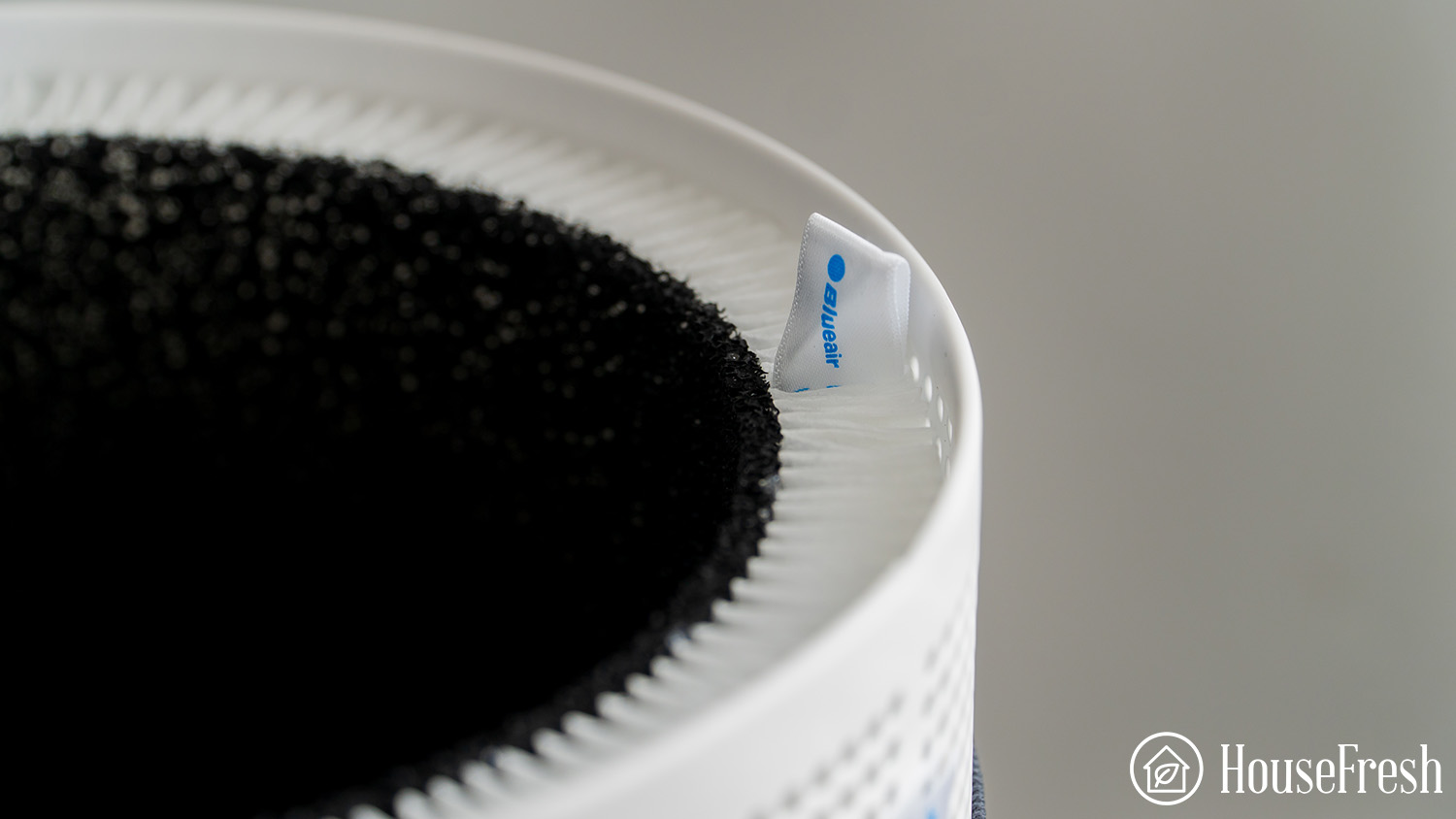
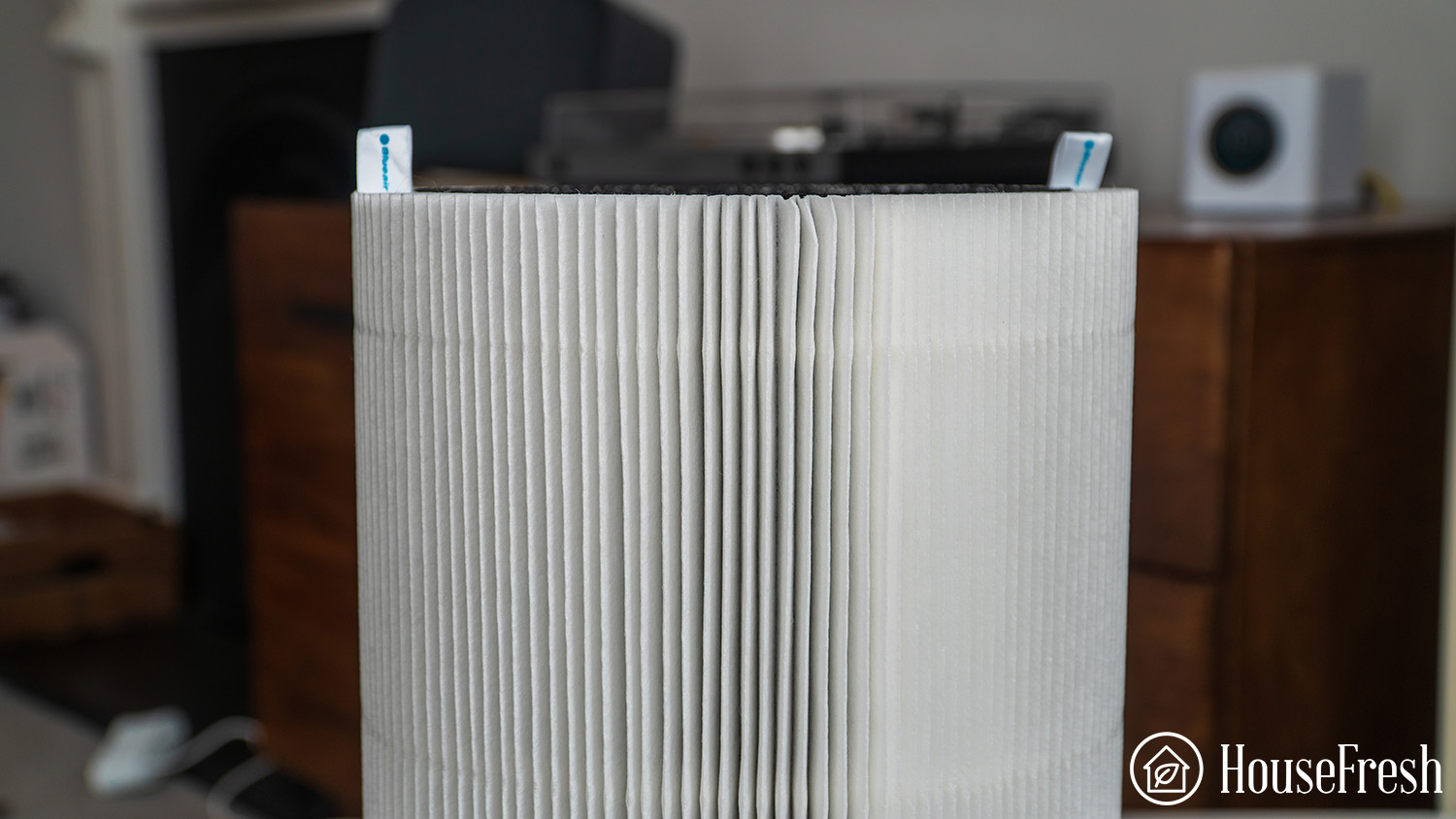
HEPA filters were developed during World War II to control the spread of radioactive pollutants and remove them from the air. Since then, they’ve evolved into the commercial filters we now know, used in an array of air cleaners. Their filtering mechanism, however, remains pretty much the same. 

Performance-wise, filters must meet strict quality standards. In the U.S., a HEPA filter has to be capable of removing at least 99.97% of pollutants as small as 0.3 microns. Meanwhile, the scientific literature suggests that they have multiple health benefits, such as:

  • Enhancing overall respiratory health and lung function
  • Reducing allergy and asthma symptoms
  • Improving cardiovascular health by decreasing blood pressure and oxidative stress

In contrast, academic research on ionizers is controversial, to say the least. For quite some time, there was a lot of hype about negative ions’ positive physical and mental health benefits. They became even more popular after claiming to kill viruses such as COVID. And yet, when you dig just a little deeper, most papers conclude that these claims don’t hold up.

But it’s not only dishonest advertising we should worry about. Besides the risks of ionizers’ by-products, the EPA warns about the dangers of particle deposition. The rates of fine particle deposition in the lungs and respiratory tract are higher for charged particles than uncharged ones. According to CARB, fine particulate matter, such as PM2.5, is considered to cause the most health issues associated with air pollution.

In line with this article by Colorado State University, as long as the industry sets parameters for testing standards and blocks peer-reviewed research, paid-for reviews on ionizers will continue to be commonplace.

The pros and cons of air purifiers

When it comes to mechanical air purifiers, it’s easy to pinpoint the advantages, although it’s harder to identify drawbacks.

Pros

HEPA filters remove and trap different-sized pollutants, from coarse particles such as pollen to fine ones like smoke.
Alleviates allergy and asthma symptoms by removing triggers.
Improves your home’s air quality, perfect for if you live in a polluted area.
Activated carbon filters adsorb harmful VOCs and gases produced indoors (cleaning products, solvents, some cosmetics) and outdoors (smog, car exhaust fumes)
Charcoal can also remove unwanted smells, such as pet odor.

Cons

Filters (both HEPA and activated carbon) need regular replacements.
Some air purifiers, like the Austin Air HealthMate, are power-hungry devices.
Each unit offers different performance and CADR, so you need to make sure the air purifier you buy suits your room’s specifications.

Still wondering if you should get an air purifier? This infographic could have the answer you are looking for.

The pros and cons of ionizers

Identifying the strengths of ionizers is not as easy, to be honest. There are some perks and benefits, for sure. But there are far more cons.

Pros

Reduce the number of airborne particles – at least to a certain extent.
Positive and negative ions hinder bacteria growth.
Ionization breaks down some VOCs, which can then be cleaned from surfaces, but the process can also create toxic fumes.

Cons

Produce dangerous by-products, including ozone, aldehydes, and fine particles — especially hazardous for people with asthma.
Ineffective against large particles, such as pollen or coarse dust.
Poor at removing smells, according to the EPA.
Unable to trap pollutants. Instead, particles settle on household surfaces and require cleaning. However, vacuuming or sweeping may disrupt them, causing them to re-enter your air.
Ionizers can harm your health. This study found that exposure to negative ions increases oxidative stress levels.

A case for air purifiers with an on/off ionizer function

You may have come across air purifiers with built-in ionizers. We’ve tested several of these units here at HouseFresh, such as the Winix 5500-2, the Coway Airmega AP-1512HH Mighty, and the Alen BreatheSmart 45i/75i, to name a few. Unlike Blueair units, these units come with a handy on/off button for the ionizer. 

These devices combine technologies to offer an alternative to traditional unipolar and bipolar ion generators. For starters, true HEPA filters can remove fine particles, such as those produced by ionization reactions. At the same time, electrostatically charged particles are stickier than uncharged ones, which makes them adhere to the HEPA fibrous media, enhancing the filter’s efficiency.

Additionally, activated carbon filters can adsorb ozone emissions, sometimes before it even leaves the unit  (if the output is low). If the filter is robust enough, which is the case with Winix and Alens units, it can also adsorb other VOCs produced by the ionization reaction. 

However, neither unipolar nor bipolar ionization is something to take lightly. Despite genuine and trustworthy certifications, such as those carried out by CARB or other approved entities, most experiments are conducted in laboratory chambers. These tests cannot emulate accurate real-world conditions nor guarantee that an air cleaner will produce zero by-products.

That’s why we’re supporters of air purifiers with an ionizer function that can be disabled, so you can choose when to activate it, if at all. If you’re ever unsure or feel uncomfortable with the ionizer on, you can simply switch it off and still enjoy the benefits of a mechanical air purifier.

Wrapping up

Throughout the article, we’ve explored the risks and (partial) benefits of ionization. In truth, ionizers alone fall short of expectations. 

I’d think twice before investing in an ion generator. But I will say, air purifiers with an optional ionizer function are a different story. Hybrid air cleaners can be more efficient. And I prefer choosing when to boost the purifier’s performance with the ionizer.

On the other hand, mechanical air purifiers are both reliable and safe devices for improving indoor air. They are, without a doubt, my go-to choice.

SOURCES

Air purifier vs humidifier: key differences

Air purifier vs Humidifier

Often, air purifiers and humidifiers are lumped together in the same category. It can be confusing which one you need for your home. Granted, they can both improve your indoor air quality, but that’s where the similarities end.

You’re probably asking yourself, “What’s the difference?” and maybe more importantly, “Which one do I need?” 

In this post, I’ll take you through the key differences between air purifiers and humidifiers, what they do, how they do it, and which device would suit your situation best.

Key differences between air purifiers and humidifiers

Before we go any further, I want to address the major difference between an air purifier and a humidifier as simply as possible.

Air purifiers clean the air, humidifiers add moisture to the air.

It may sound simple, but what exactly does that mean? Let’s examine each product closely to establish the key differences.

1. Air purifiers clean the air in your home

Coway Airmega 150 Corner Room

According to the EPA, the average American spends around 90% of their time indoors, where the air is full of pollutants. If not removed, these pollutants can have adverse immediate and long-term effects on our health.

Air purifiers pull air into the unit using a fan, pass it through a series of filters, and then push the clean air out. The filters trap microscopic pollutant particles (allergens, odors, dust, VOCs, etc.), leaving you with clean air.

How air purifiers work

There are thousands of air purifiers on the market. Some great and some not. So, it’s worth doing a little research before choosing the right one for your home. Check out our guide: What size air purifier do I need? to help with your journey.

If my extremely simplified explanation hasn’t satisfied your curiosity, don’t worry.

Here at HouseFresh, we’re dedicated to providing informative yet easy-to-read articles to help you understand the science behind a healthy home environment.

If you want to delve into the world of air purifiers, check out our blog, where you’ll find:

2. Humidifiers add moisture to the air

LEVOIT CLASSIC 300S Side Table

Low humidity can be an issue in your home, especially in the winter months. It’s not only uncomfortable to live in, but it can cause dry skin, eye irritation, and also make it hard to breathe. Studies have shown that introducing a humidifier into your room can relieve respiratory symptoms, alleviate dry skin, and even decrease the survival of influenza viruses.

Humidifiers draw in air from your room, introducing it to moisture from a water tank through a wick or mixing it with steam. The wet air is then released into the environment, mixing in with your air.

How a Humidifier Works

There are three main types of humidifier:

  • Evaporative humidifier – This unit has a reservoir that stores cold water and empties it into a basin. The water is absorbed from the water using a wicking filter. It then blasts air through the wet filter with the help of a fan.
  • Ultrasonic humidifier – This type of humidifier generates water droplets using a metal diaphragm. This component vibrates at an ultrasonic frequency (similar to a high-frequency speaker). An ultrasonic humidifier is usually quiet to run and creates a cool fog.

  • Vaporizer humidifier – AKA a vaporizer, heats water and distributes it into the room as warm steam. This is the most basic and least expensive way of introducing moisture to the air.

I’ve gone and done it again. Given the bare bones of what a humidifier is and how it works.

This is where the HouseFresh team comes into play with a host of articles to guide you:

When to choose an air purifier over a humidifier

Air purifiers can be costly investments, so understanding when to buy one over a humidifier will save you a lot of frustration and money.

✔️ What an air purifier can help with

If you suffer from allergies. An air purifier will remove allergens from the environment, relieving symptoms.
Living in a polluted area. Air purifiers trap fine particulate matter in their filters, removing them from the air.
Mold issues. HEPA filters easily capture airborne mold particles.
Relieving pet allergies. Air purifiers remove pet dander and odors from your room.

❌ What an air purifier won’t do

Change the humidity of your room. Air purifiers won’t add or remove moisture to your home.
Heat your room. A unit won’t add heat to your room unless you have an air purifier/heater combo.
Scent the air. Air purifiers remove odors from your space, and they won’t add a nice scent — that is unless they come with a diffuser feature like the Levoit Core Mini.

When to choose a humidifier over an air purifier

Humidifiers can be a great addition to your room, allowing you to maintain a healthy humidity in the air. But, there are some things a humidifier cannot do.

✔️ What a humidifier can help with

Dry skin. More moisture in the air will alleviate symptoms of dry skin, eyes, and hair.
Living in a dry climate. Prolonged exposure to dry air can cause problems to your health.
Snoring. Dry air can cause throat irritation and inflammation that worsen snoring.
Sinus issues. Humidifiers help loosen mucus in your throat and chest.

❌ What a humidifier won’t do

Remove allergens. They simply cannot remove them and are not recommended for allergy sufferers.
Remove pollutants. Humidifiers can create fine particulate matter, making your indoor air more contaminated.
Keep you hydrated. Humidifiers don’t add enough water to the air that you can stop drinking it. Sorry!

To conclude

Even though they look similar and deal with air quality, air purifiers and humidifiers have very different roles in your household. Remember the golden rule: air purifiers clean the air, humidifiers add moisture.

The good thing is you can run both in the same room simultaneously. You can have clean and moist air as they perform different tasks.

There is a third alternative. Brands have started combining air purifiers and humidifiers in the same unit. But I always air on the side of caution when I see combo units. If a device tries to do two jobs, it probably doesn’t do either to an acceptable standard. 

Check out our review of the Dyson PH03 Air Purifier and Humidifier to see Danny’s verdict on one of the best-selling purifier/humidifier combos on the market.

SOURCES