PuroAir HEPA 14 240 review

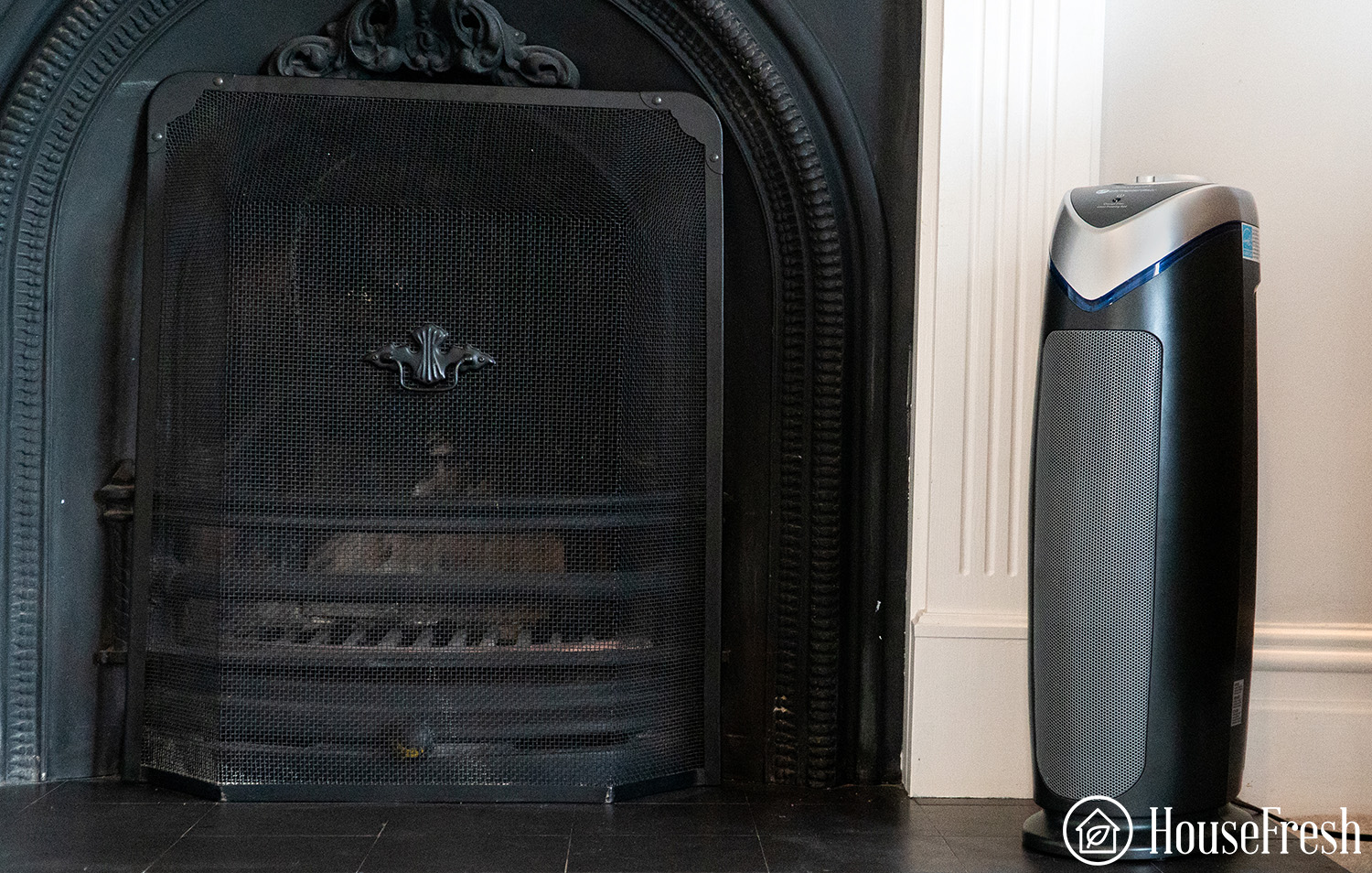
PuroAir HEPA 14 240 Sofa

I had never heard of the PuroAir HEPA 14 air purifier until the last quarter of 2023.

None of the several experts in air quality I follow on X (formerly Twitter) had mentioned this device. Even the excellent Clean Air Stars database, which has comprehensive data on 680 devices, has no record of PuroAir models. Yet, when analyzing sales figures on Amazon product research tool AMZScout, I saw this device listed as the best-selling air purifier of 2023 on Amazon.

According to this data, the two-device set (with a retail price of $349.99) sold an estimated $34 million in a single year. while the one-device option pulled in an estimated $22 million. Between the two listings, the PuroAir HEPA 14 240 sold an estimated $56 million worth of air purifiers in one year!=, according to data from AMZScout.

These estimations might not mean much in isolation, so I compared them to another device that usually tops the best-seller lists: the popular Levoit Core 300. The Core 300 has been on the market since 2019, and AMZScout figures show it has only sold an estimated $33 million on Amazon.com in 2023 — that is $23 million less than the estimations for PuroAir 240 devices.

This fact left me wondering, How could a new brand come out of nowhere and grow to become the hottest air purifier in the United States?

As we do for all our reviews, I conducted in-depth desk research into PuroAir (and the company behind it) before writing my review.

Typically, this is a fairly straightforward exercise where I read through company websites, check social media profiles (especially LinkedIn), and trawl public business databases. However, the job wasn’t as straightforward when I sat down to learn more about the company behind this air purifier.

After researching PuroAir for over a week, I couldn’t find any clear information about who owns the company, their background, their connection to air quality, or the location of factories and offices.

The one thing I did find was a collection of outstanding quotes from big media publishers highlighted on the homepage of PuroAir’s website, so I followed that lead.

puroair quotes

Now, I couldn’t find those exact quotes on the sites of those three publishers:

puroair big media quotes

Odd. 

But, when searching for PuroAir on Google.com, I found recommendation upon recommendation as part of “best air purifier” lists published by some of the largest newspapers and magazines in the world.

puroair google news

This air purifier must be incredible to receive such praise from some of the world’s most well-renowned publishers. This could be the kind of advertising that led to the PuroAir 240 becoming the best-selling air purifier of 2023.

So, naturally, I was super excited to see how this unit performed in our collection of tests designed to assess air cleaning performance (removing PM1.0 particles), energy usage, noise levels at each fan speed, and long-term running costs.
how we test
How we test air purifiers

Read our full testing methodology.

The PuroAir HEPA 14 240 retailed for $229.99 when it was first launched. At the time of writing this review, it has a retail price of $159 on Amazon.com.

The pros and cons of the Puroair 240

A summary of our top-level findings after testing this air purifier following our methodology.

PuroAir HEPA 14 240 Sofa

“Our hands-on tests show that the PuroAir 240 is too underpowered for the recommended room size and its air cleaning performance is worse than that of units sold for half its price.

I don’t understand why journalists from big-name publishers have regularly recommended this air purifier to their readers. But thanks to this push from these trusted brands Google chooses to rank at the top of its search results, thousands of consumers have paid double for an air purifier that won’t be effective in most rooms.

Danny Ashton HouseFresh
Danny Ashton
HouseFresh Founder
& Lead Tester

Due to many issues I encountered when testing this air purifier, this is a 4000-word review. I totally understand if you don’t want to read it all. Below are the key things you need to know about the PuroAir HEPA 14 240:

CONS

It took 51 minutes to clean the air in our 728 cubic ft. test room. A Winix A230 offers better performance (40 minutes) for $80.
The build quality is poor. It feels like a cheap rip-off of the Levoit Core 300.
Marketing materials state that this unit can be used in a room of up to 1,115 sq. ft, but this would allow for only one (1) air change per hour.
Filter has a sticker stating that the HEPA 14 has been lab-tested, but I can’t find any evidence. 
Claims the HEPA 14 performs 10x better than HEPA H13, but the PuroAir with a H13 filter actually performed quicker in our particle removal test.
Filter costs are much higher than Levoit and Winix for what seems like the exact same filter.

PROS

Rubber pads at the bottom of the unit prevent the bottom cover from accidentally opening up when moving the device around on the floor. This is an improvement on the Core 300’s design.
The black finish. Of course, this is subjective as I really like black.

HouseFresh rating:★☆☆☆☆
Time to clean our 728 cubic feet test room (with the device running at top speed):48 minutes
Air purifier technology:H14 HEPA and activated carbon filter
Recommended room size (4.8 air changes per hour):284 sq. ft.
Clean air delivery rate (CADR):Dust: 183 CFM 
Smoke: 181 CFM
Pollen: 204 CFM
Dimensions (in inches / in cm):8.5D x 8.5W x 14.25H inches (22 x 22 x 36cm)
Weight (in pounds / in kg):8 lbs. (3.6kg)
Filter life:12 months
Noise level in decibels (measured from 3 ft. away with a sound level meter):Speed 1: 36.9 dB
Speed 2: 42.2 dB 
Speed 3: 52.2 dB
Electricity consumption in watts (recorded with an electricity usage monitor):Sleep mode: 11.6 kWh
Speed 1: 15 kWh
Speed 2: 22.3 kWh
Speed 3: 36.2 kWh
Estimated running cost (electricity consumption + official filter replacement):$135.53 per year
Cost per CADR cfm (based on dust CFM as reported by AHAM):$1.15
Manufacturer’s warranty:30-day home trial with 100% refund and 1-year warranty
Country of manufacture:China

The design

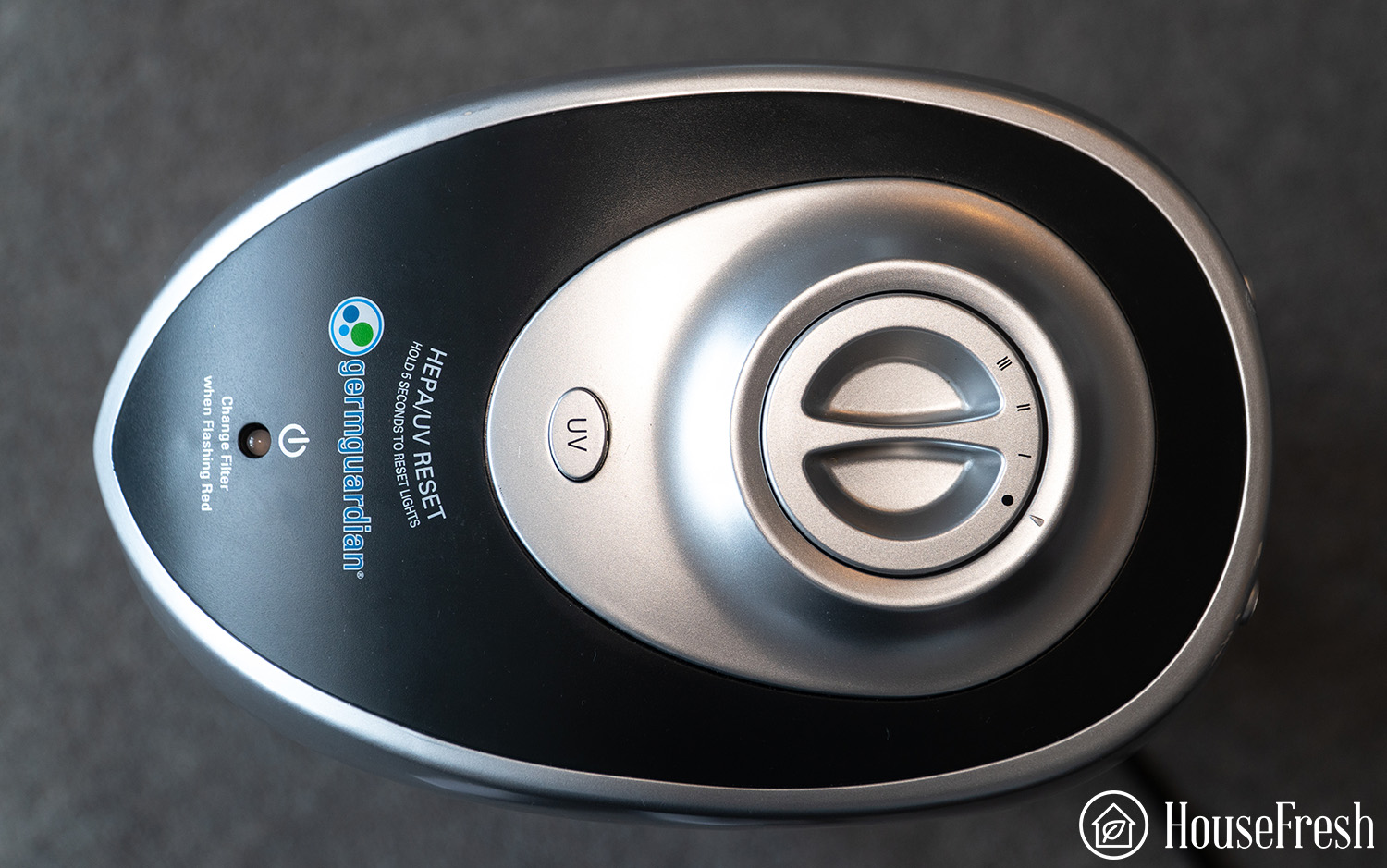
PuroAir HEPA 14 240 Top

I like black, so I was instantly attracted to it when I opened the box. 

The branding is also quite sleek, which is something you don’t always see when buying a new air purifier.

It didn’t take long for me to start noticing all the little details that now remind me of the Levoit Core range.

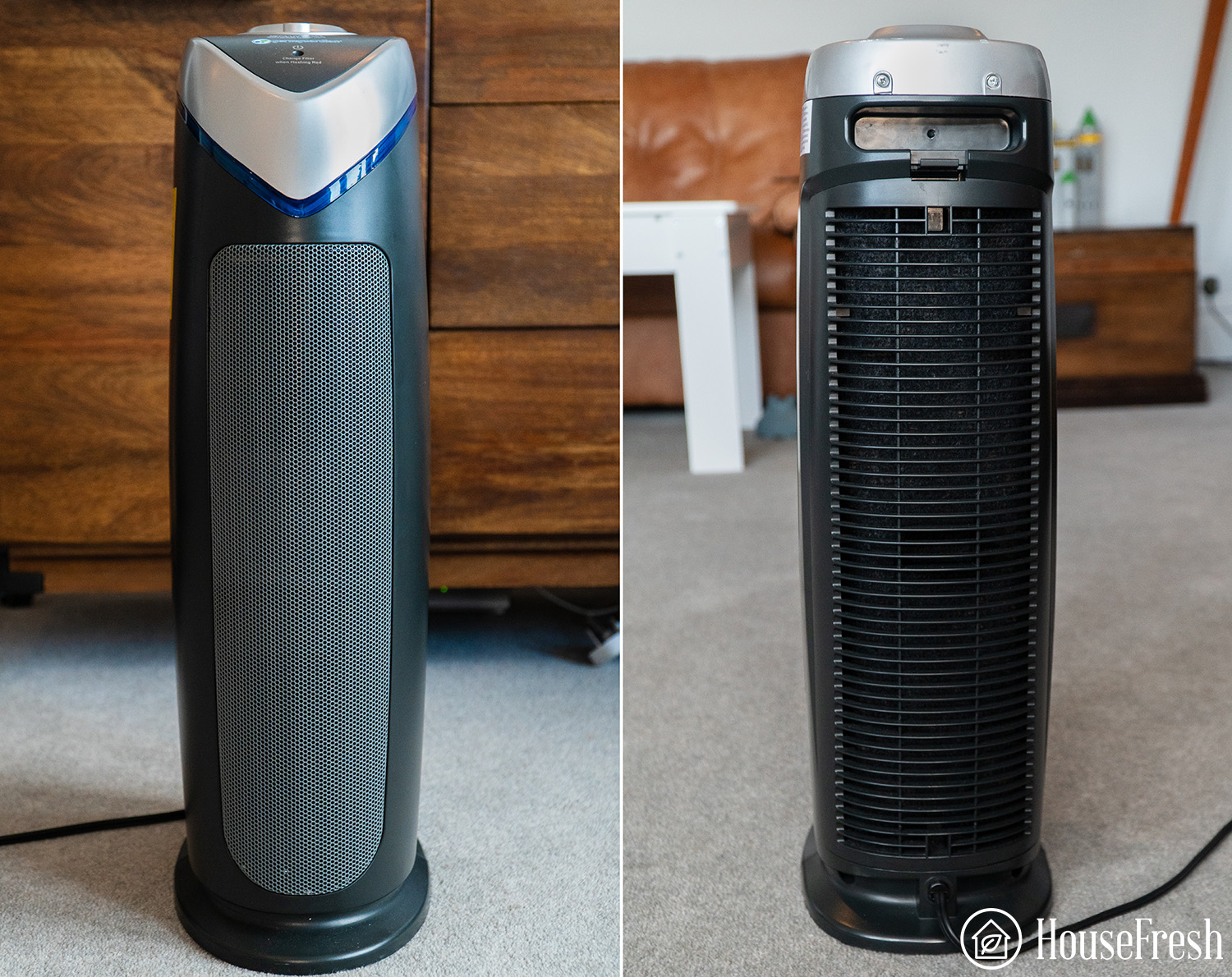
PuroAir HEPA 14 240 Front

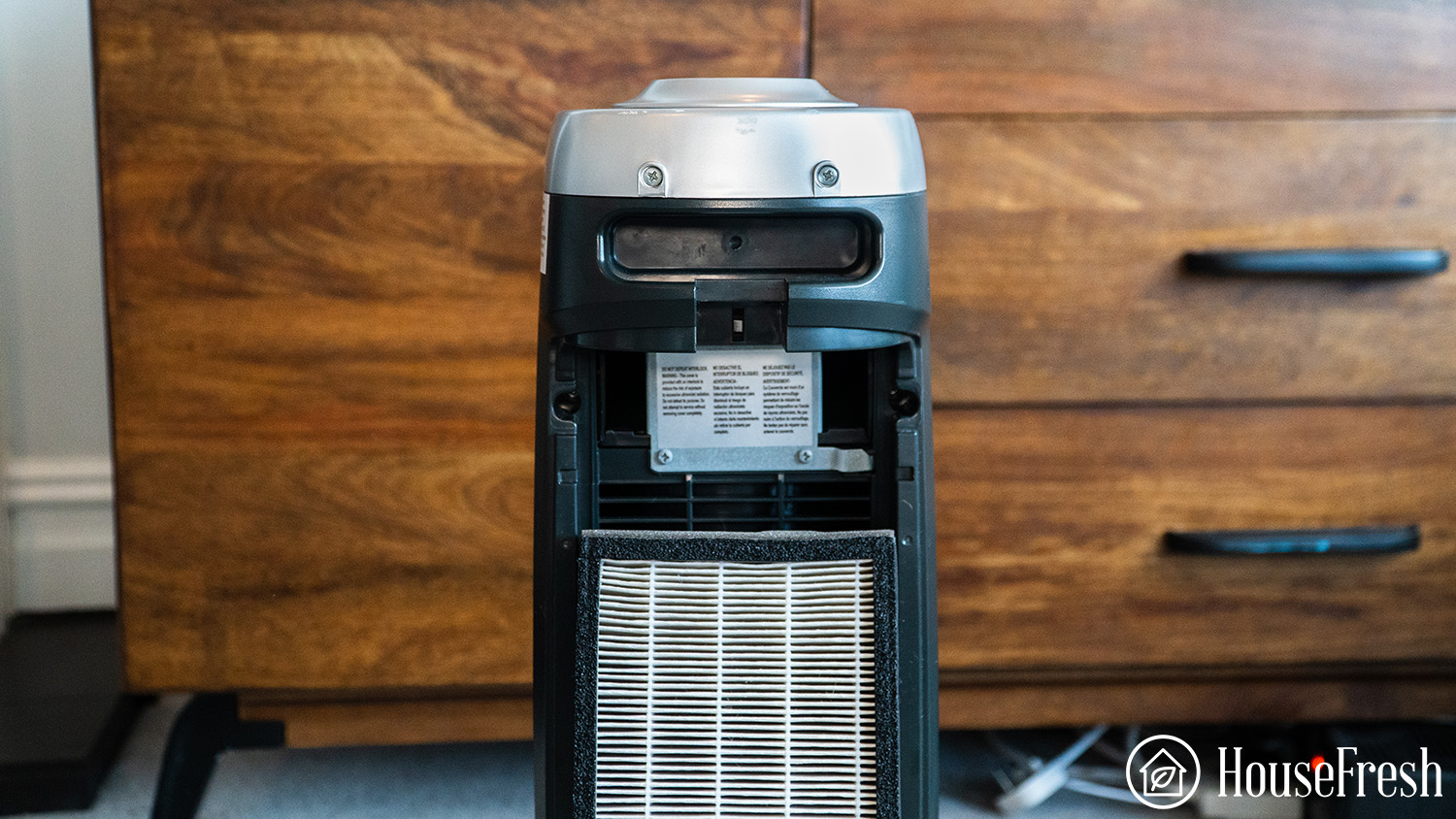
The design of the PuroAir HEPA 14 240 is reminiscent of the Levoit Core 300: there is a twist-off cover to remove the filter at the bottom of the device and the filter itself is a small tube with a handle, too.

This means that the PuroAir filter has some of the same design issues I didn’t like about the Core 300, such as an integrated pre-filter you can’t easily clean. With the PuroAir 240, you must remove the filter whenever you want to clean the pre-filter, which you should do every few weeks, depending on usage.

At the top of the unit, you’ll find the control panel. In the middle, there’s an on/off button. To the right is a timer button you can use to set a timer for two, four, six, and eight hours. On the left, you have an auto mode button to control the three fan speeds and switch on sleep mode. You also get a child lock and a filter replacement indicator.

PuroAir HEPA 14 240 Controls

The PuroAir HEPA 14 240 comes with an onboard air quality sensor. The red light you see in the photo above is the air quality indicator. This LED light changes color depending on the quality of your indoor air.

This air purifier has no other smart features besides auto-mode and sleep mode. It also doesn’t come with app support for your phone.

Right, let me show you how much this unit looks like a Levoit Core 300… 

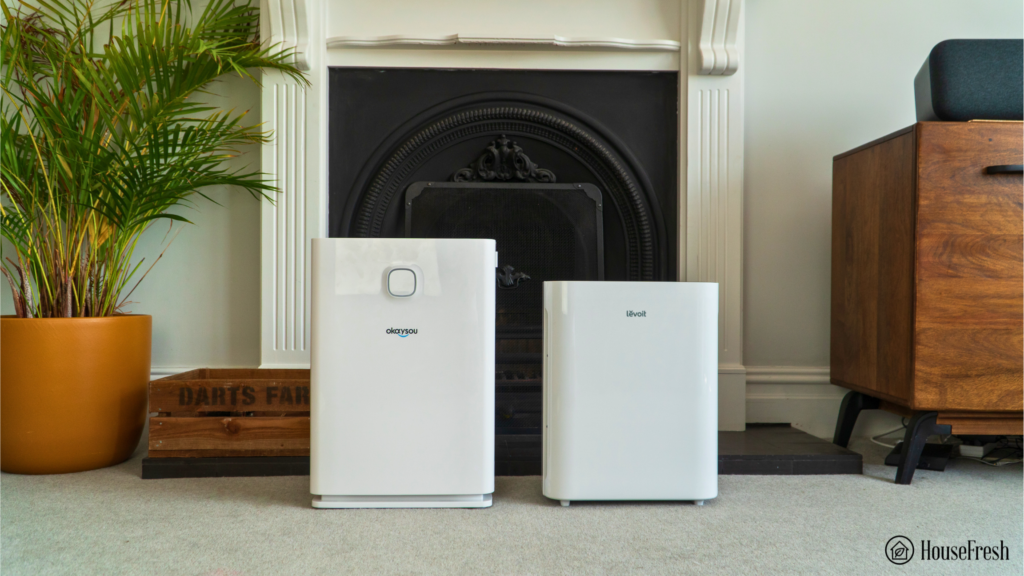
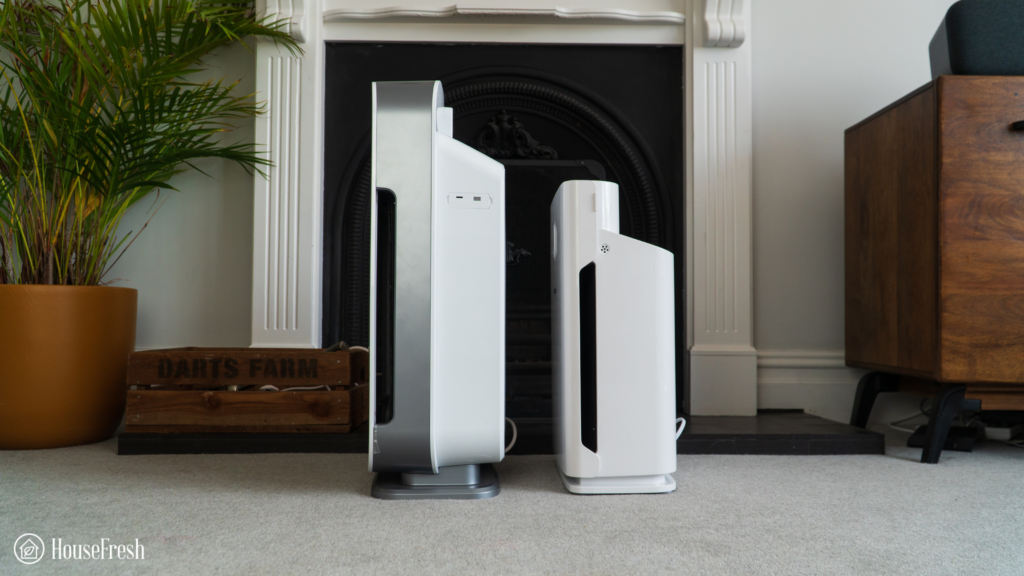
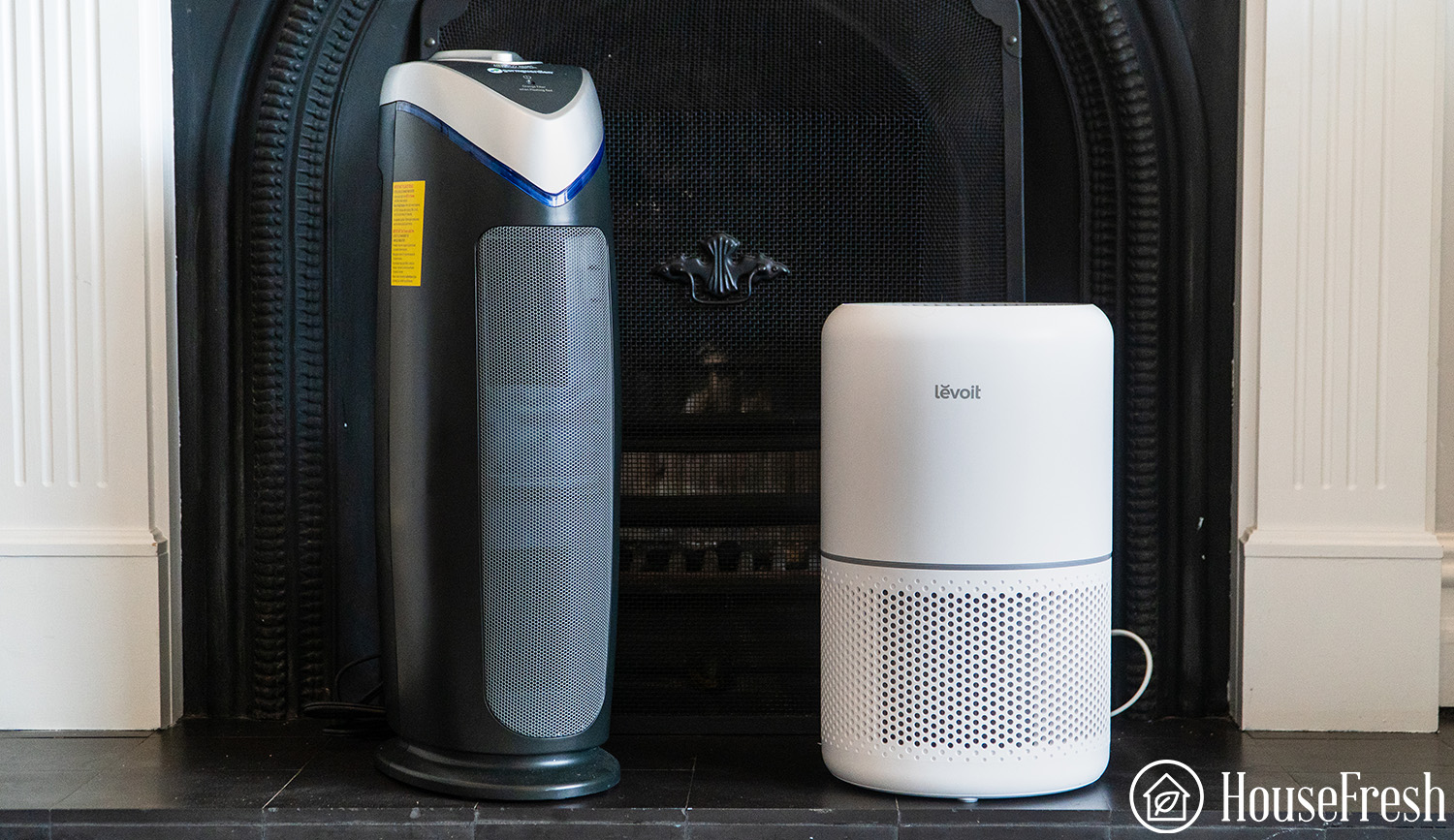
In the photo below, you can see how similar the design of the PuroAir device is to the Levoit Core 300 on the outside:

PuroAir 240 VS Levoit Core 300

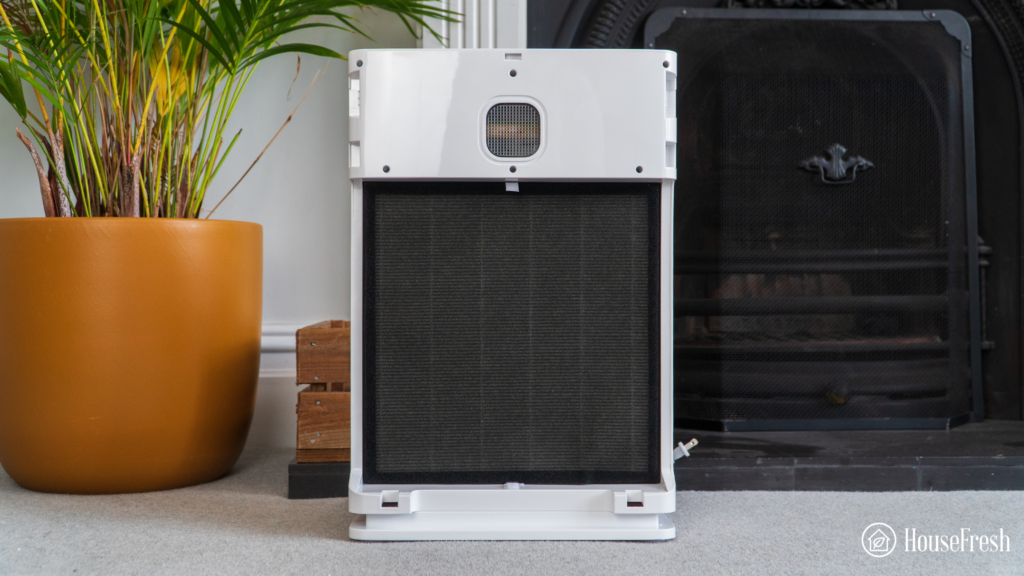
When removing the filter, you can see how the chamber inside of the body looks pretty much identical for both units:

I went as far as to open up both devices, but I’ll tell you more about it in the next section of my review.

The PuroAir HEPA 14 did improve one aspect of the Levoit Core 300 design. It has added rubber feet to the base of the unit.

PuroAir HEPA 14 240 Bottom

With the Levoit Core 300, if you move the device too much, you can accidentally open up the filter, which can be annoying. With the PuroAir HEPA 14, movement doesn’t open up the case, so this never happens. 

Filtration technology

It is an all-in-one filter similar to those we see in devices such as the Levoit Core 300S or the Winix A230.

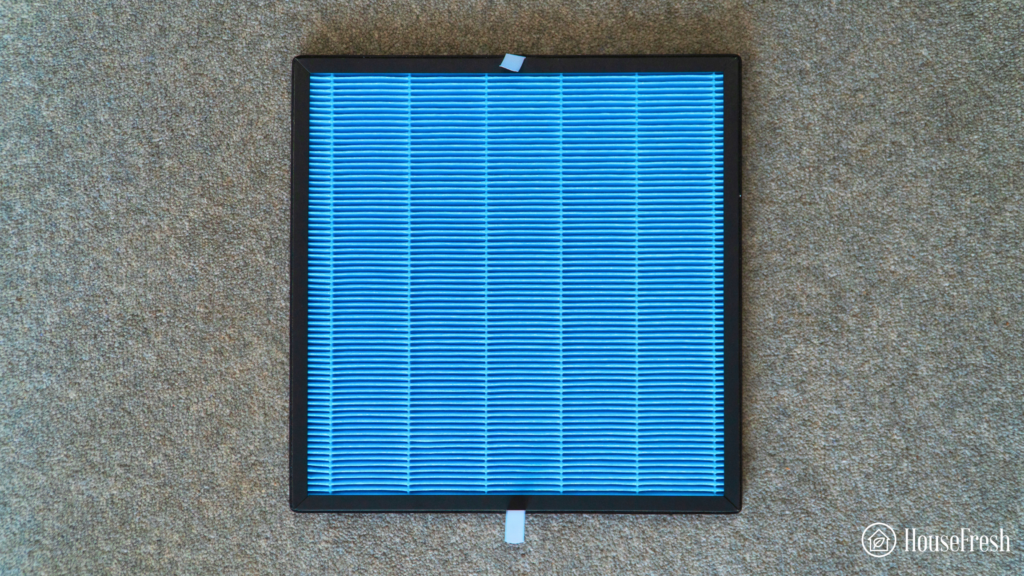
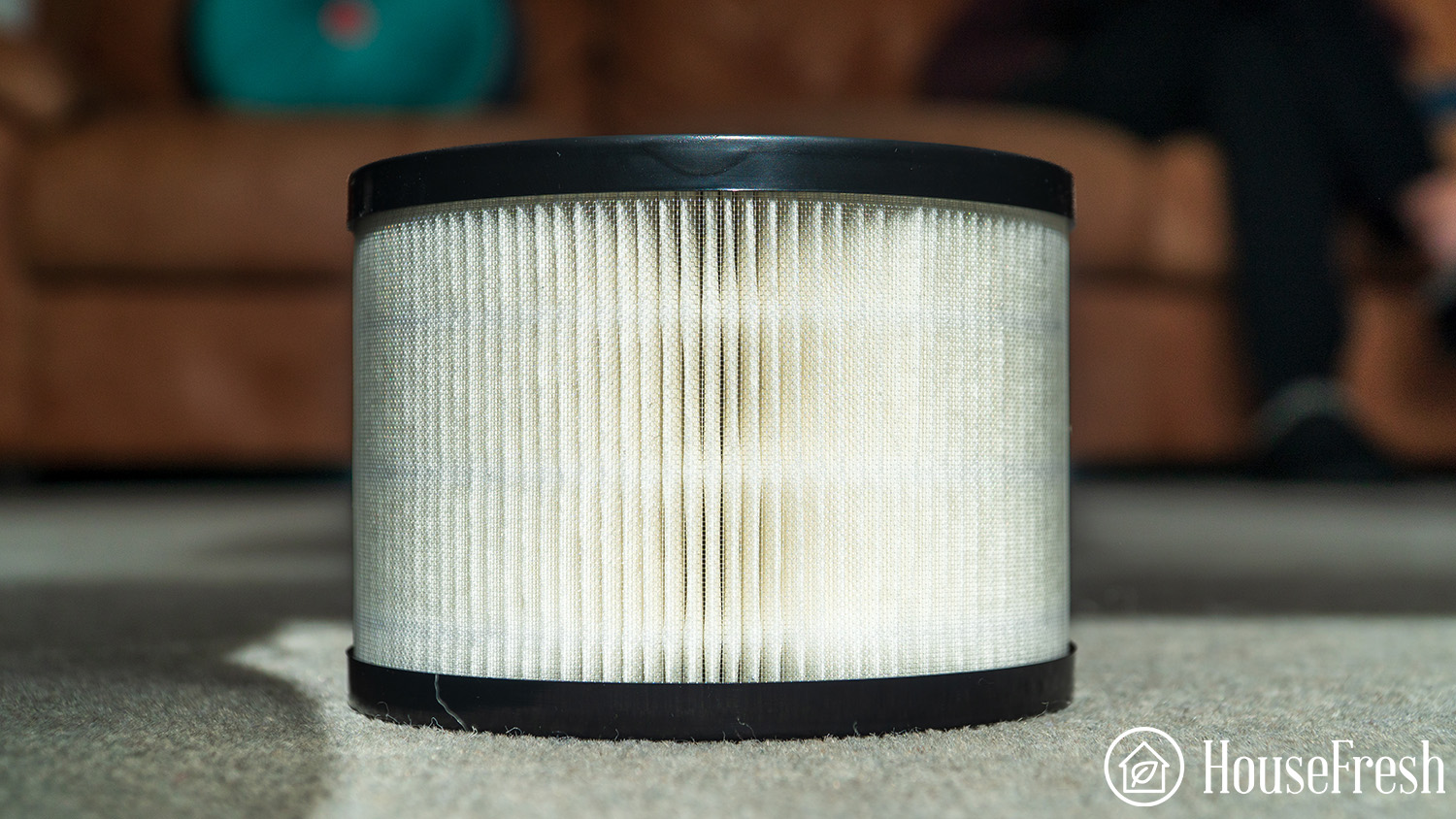
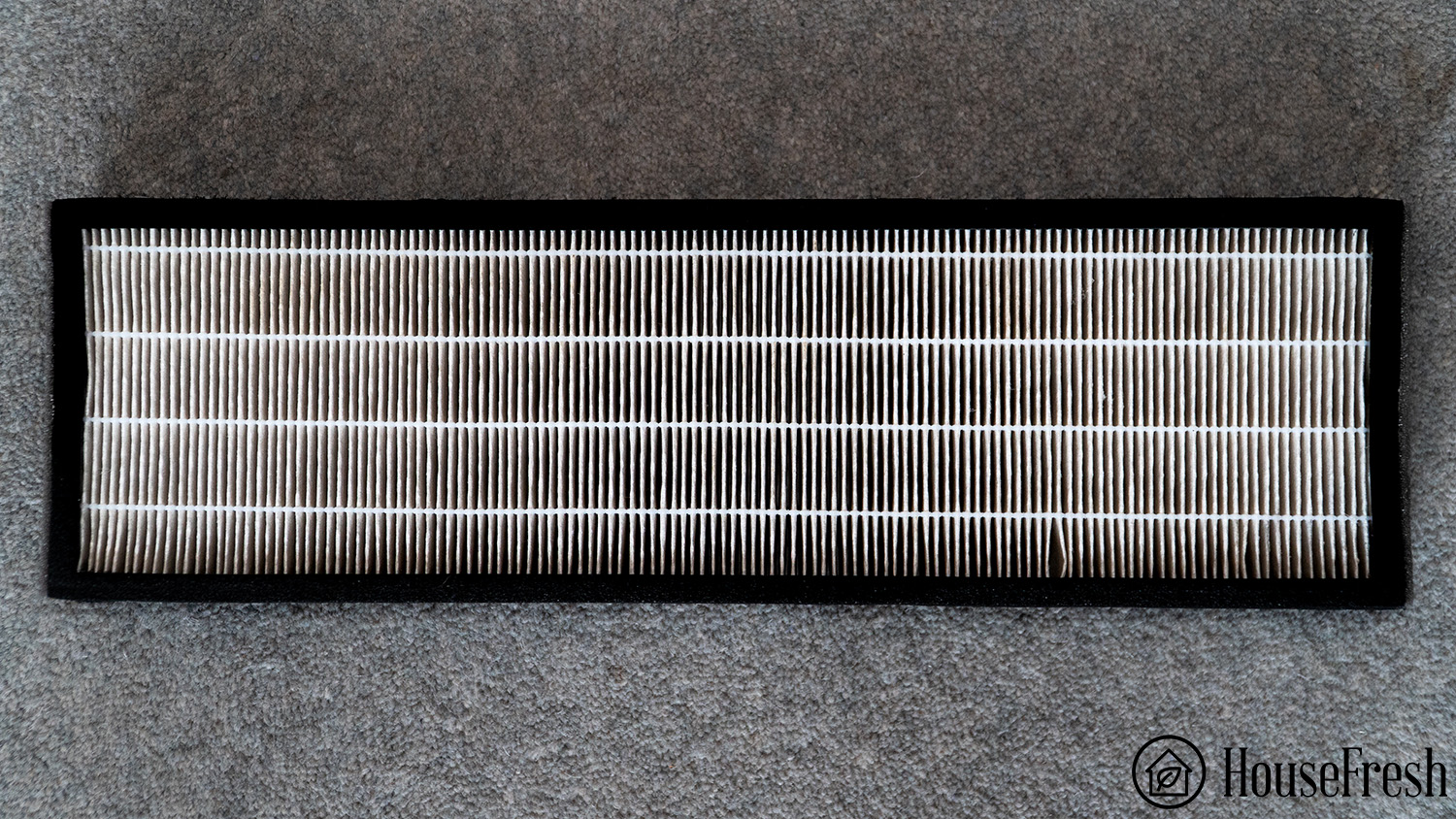
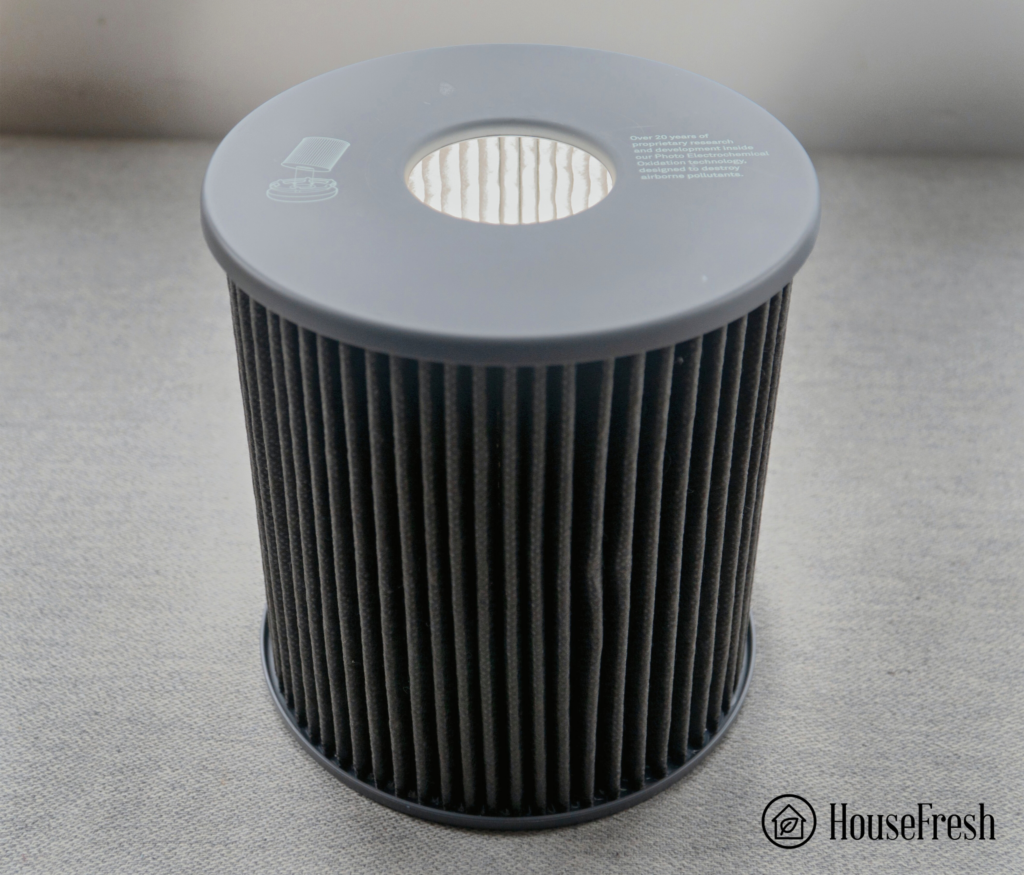
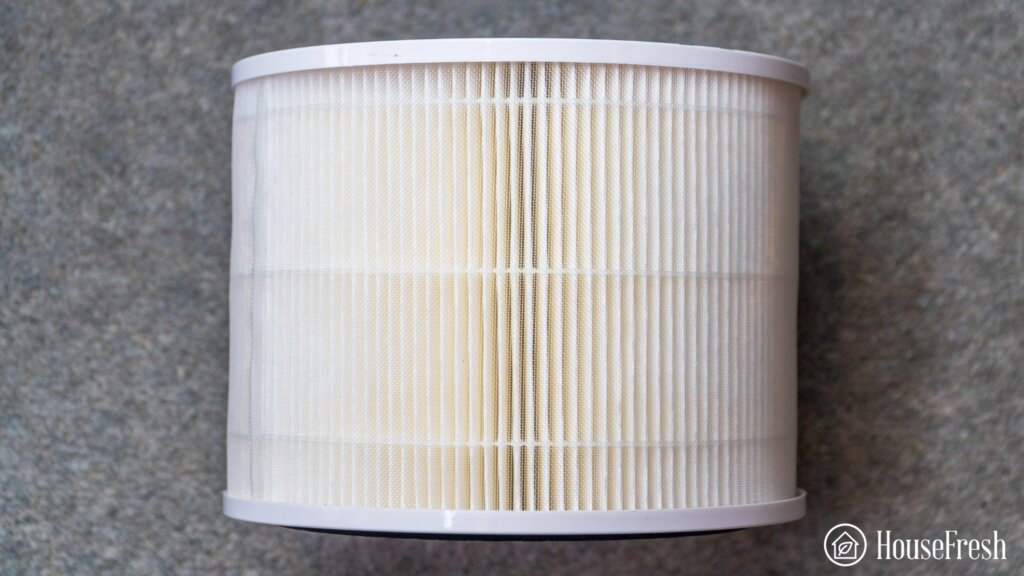
PuroAir 240 HEPA filter above

PuroAir’s website and marketing materials state that this is the “world’s first HEPA H14 air purifier.” The company also says that its filters have been lab-tested to remove 99.99% of particles, but they don’t state the particle size. If it’s a H14 filter, I assume it must be particles measuring 0.3 microns. I couldn’t find any reports or data confirming a third-party lab had tested PuroAir’s HEPA filter or that it complied with the requirements to be classed as H14. However, the company mentioned it plenty of times in its marketing materials, and even on the filter itself.
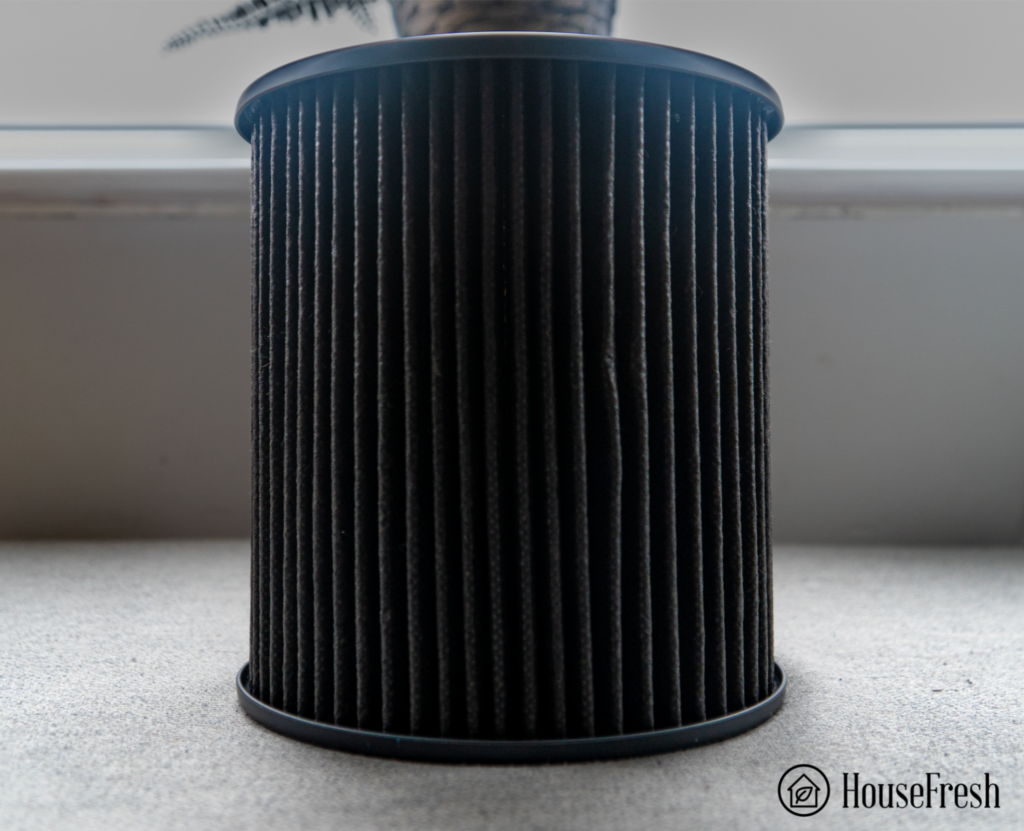
PuroAir 240 HEPA filter side

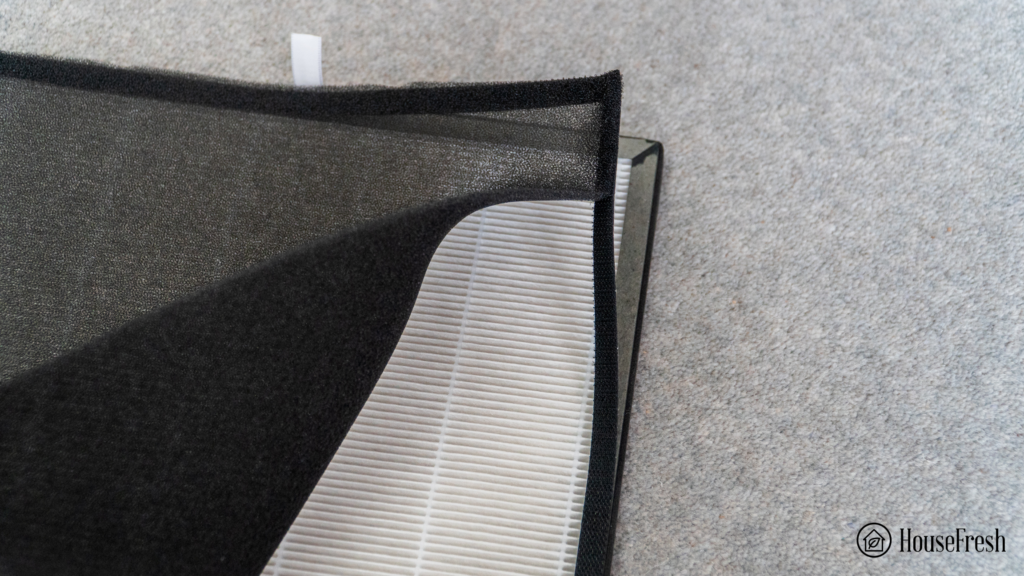
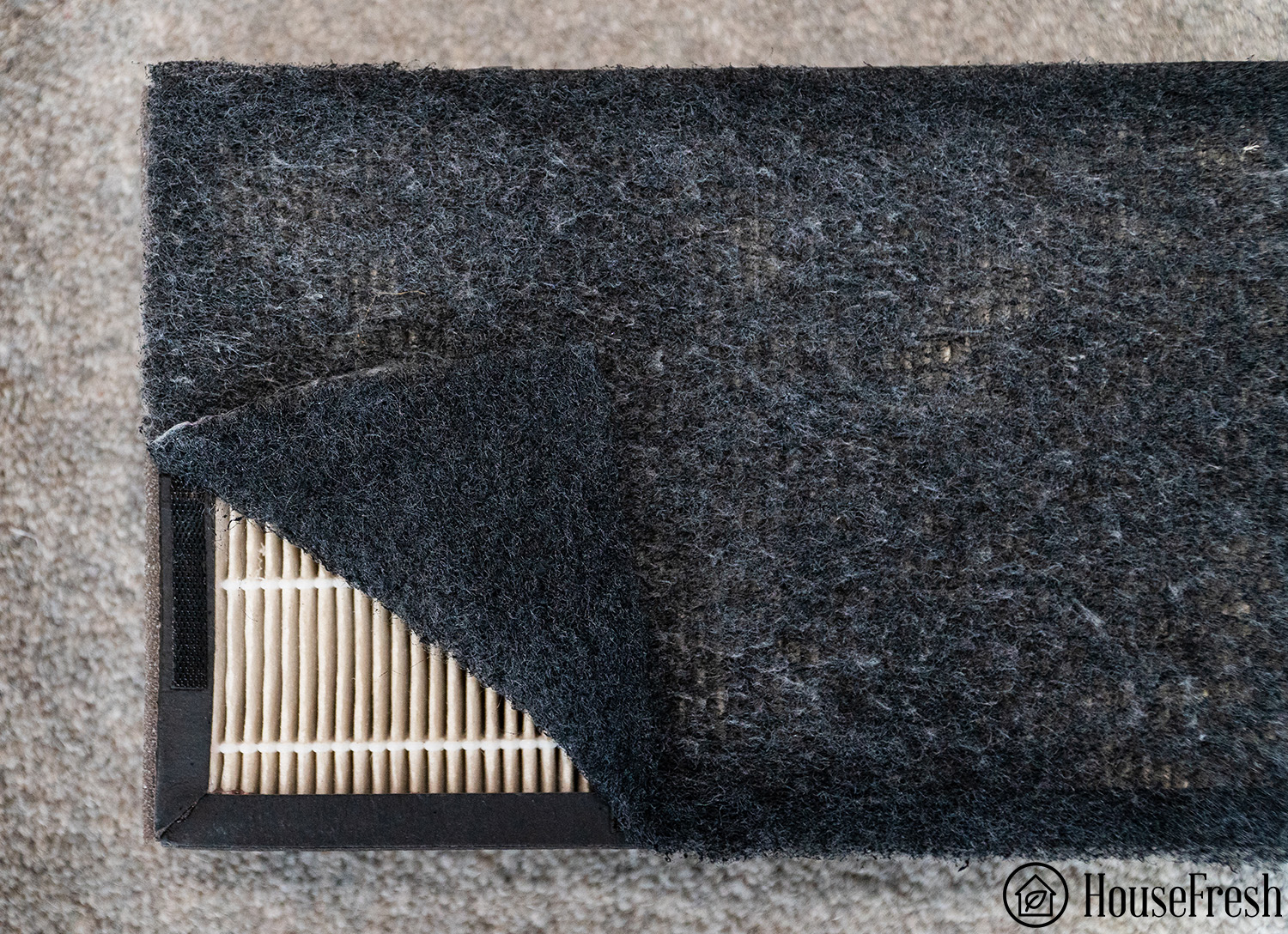
The particle filter is covered by a layer of fabric that functions as a pre-filter to filter out large particles like pet hair.
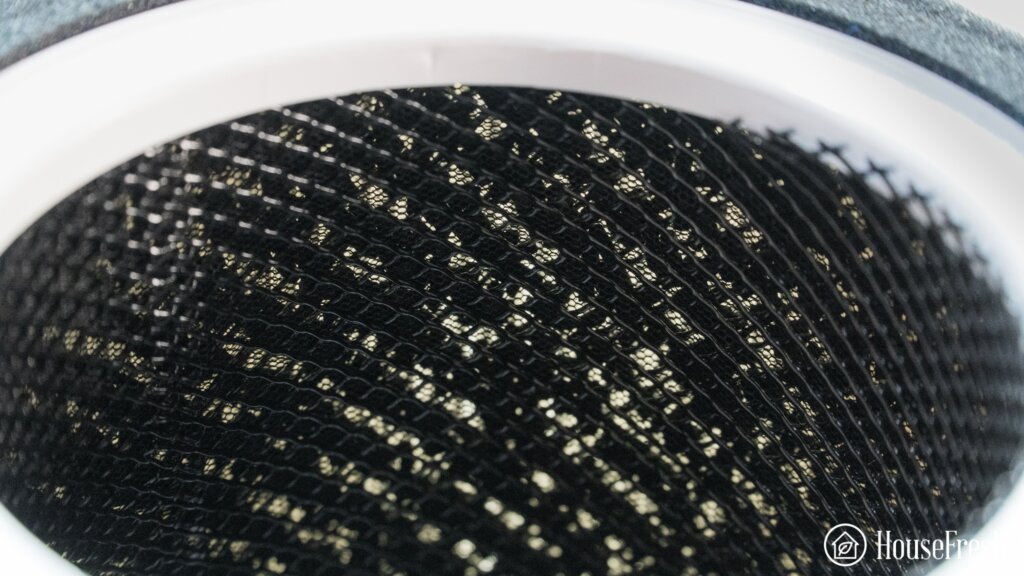
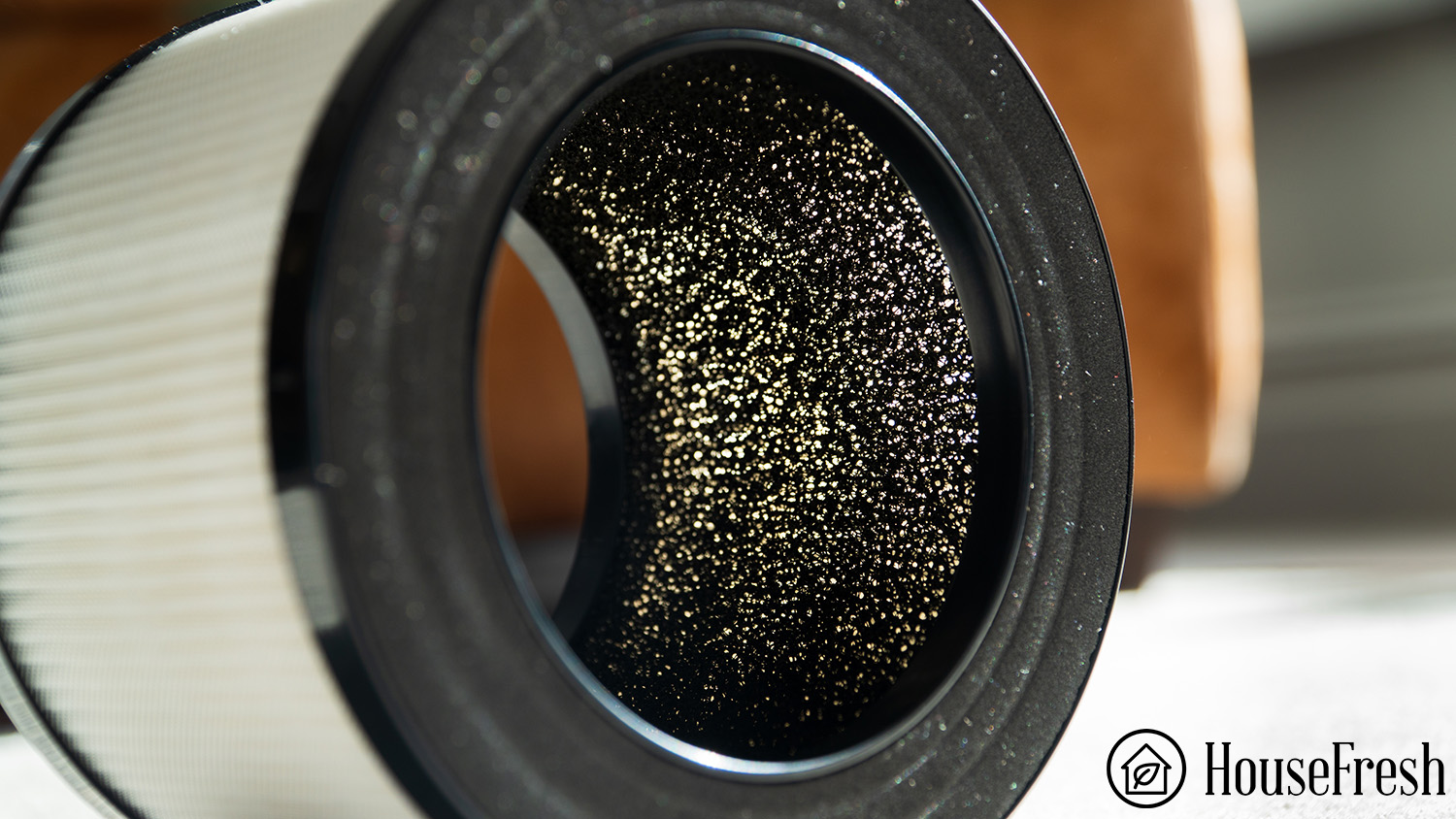
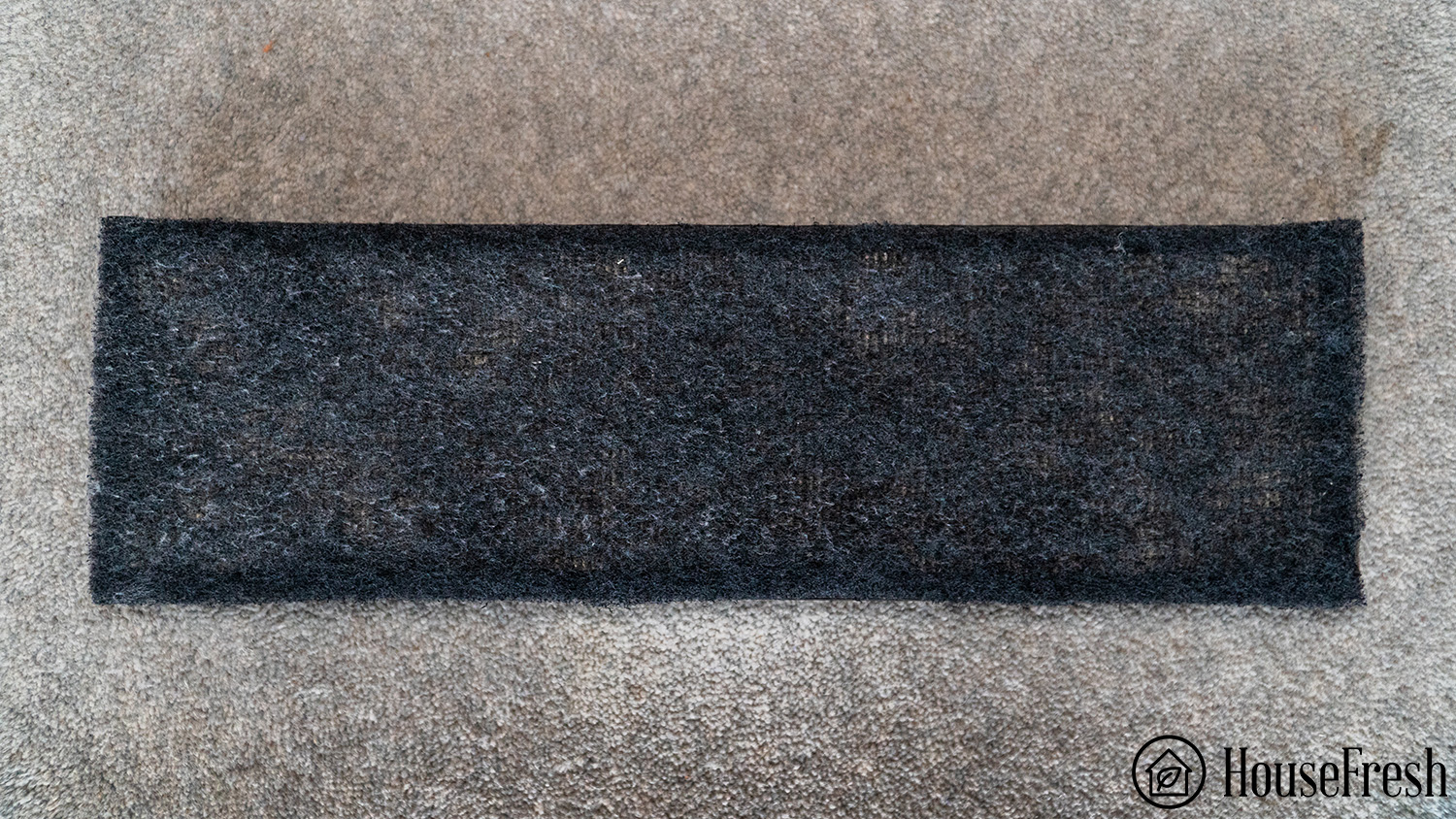
PuroAir HEPA 14 240 Activated carbon filter

On the inside of the filter, you get a small amount of activated carbon to help remove odors from the air.

PuroAir 240 HEPA 14 filter

Dyson shares third-party lab reports, but in the case of PuroAir, we have to take them at their word. 

One of the main reasons other manufacturers have not used H14 filters in portable air purifiers is that they cost a lot more, restrict airflow, and take longer to clean the air. The team at Smart Air showed that choosing a lower grade HEPA can actually improve performance, and the fact that the Corsi–Rosenthal box performs so well even though it uses non-HEPA grade filters (MERV 13) shows us that HEPA grade is not a requirement when it comes to household air cleaning performance.

I’m sure H14 sounds like a shiny upgrade compared to H13 for the average consumer, but for anyone who understands air filtration, H14 is seen as sub-optimal when the goal is to remove airborne particles as quickly as possible.

That’s why it’s strange to see claims like these on the PuroAir 240 product page like: 

puroair filter lab claims

If you didn’t know how these classifications work, you would think that HEPA H14 is offering 10x the performance of HEPA H13. Yet when we tested the PuroAir HEPA 14 240 using HEPA 14 filters, it was three (3) minutes quicker to clean our test room when using the HEPA 13 filters vs. the OEM HEPA 14 filters.

I contacted Harvard University and MIT to enquire about the tests they performed on the PuroAir filters, considering the company features them as organizations that backed this project. I didn’t hear back from either of them. But, I did notice that the Harvard and MIT logos have been removed from some sections of the PuroAir site (see before and after) since I started working on this review in November 2023.

Another strange thing I noticed when inspecting the PuroAir 240’s filter was how similar it is to the Levoit Core 300’s. Check them out for yourself:

PuroAir 240 VS Core 300 Filter top

Both filters have the same dimension, the same design on the handle to remove it from the device, and even the same type of soft foam at the bottom. 

PuroAir 240 VS Core 300 Filter side

While the dimensions are practically the same, the quality of materials in the PuroAir filter is much lower, with thinner plastic and sharper edges all around. It seems as if someone sent the filter of the Core 300 to a factory and asked them to create a cheaper clone.

This got me wondering. If the filter has the exact same dimensions as Levoit filters what about the main device?

While we don’t usually open devices up as part of our review process, this is something that I’ve done in the past in cases where a deep dig felt essential (looking at you, Westinghouse 1804).

So, I went one step further (once again) and opened up both air purifiers to explore the PuroAir 240 further.

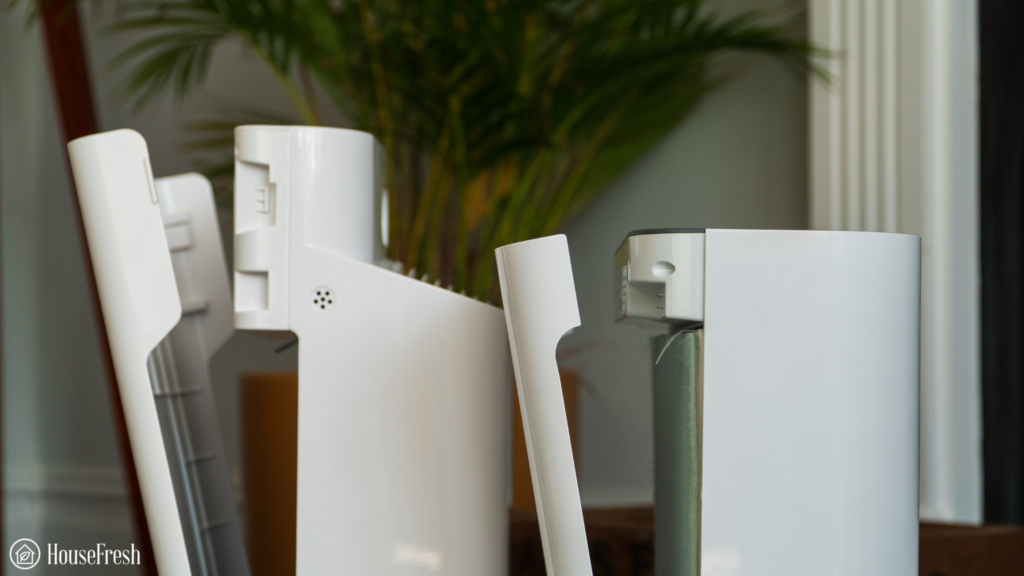
Opening PuroAir 240 and Core 300

After exploring the different layers of the PuroAir 240 and the Levoit Core 300, I could clearly see how similar their internals are.

Similar to the filter, I kept finding parts that looked like a rip-off of the Levoit design with a much cheaper build quality when looking at the different elements inside the device.

PuroAir vs Levoit Fan Inside


While looking through the internal components of the PuroAir 240, I was able to find the particulate matter sensor: a PM1006 V1.1 from Cubic. This is the same sensor used in the IKEA VINDRIKTNING air quality sensor that sells for $12. So, we can assume the sensor itself costs just under $3. It’s not as accurate as a laser counter, but it’s good for the price. 

If you are interested to see how you can change the filter for the PuroAir 240, see below:

I was glad to see that PuroAir added a sticker at the top of the HEPA filter warning users to remove it from the plastic bag before using the device.

Air cleaning performance

The PuroAir 240 cleared our test room 11 minutes slower than the Winix A230, which costs half the price ($78 VS $159).

PuroAir sent the 240 to the AHAM VERIFIDE program, which puts the devices through an ANSI/AHAM AC 1 2020 CADR test, and its results are publicly available on the EnergyStar directory.

Puroair 240 CADR report from Energystar website

The first thing that struck me when I saw this CADR report is that they note the recommended room size as 284 sq. ft. This is a fraction of the 1,115 sq. ft. advertised on the Amazon listings and marketing materials for the PuroAir HEPA 14 240.

puroair 240 1115 sq ft

In my opinion, PuroAir is knowingly overstating the capabilities of this air purifier. 

The marketing materials mention that it “cleans rooms up to 1,115 sq ft in just 67 minutes,” meaning that the 240 can provide only one air change in an hour in such a large room. Considering that the EPA recommends at least 4.8 air changes in an hour, it’s clear that this device is much more suited to small rooms, as per the CADR report.

To be clear, PuroAir isn’t the only brand that overstates the recommended room size like this. However, while other brands also include room size recommendations based on one air change per hour, they make this clearer in their marketing materials. For example, this is how Coway does it:

Coway mighty air changes mairketing material

I imagine many of the consumers who have bought these devices based on this marketed room size recommendation are likely to be breathing in airborne pollutants, unaware that one air change per hour is not enough to keep the air in their large rooms clean.

The other thing that shocked me about the CADR scores of the PuroAir HEPA 14 240  is how low the CADR was considering the price:

  • At $159, the PuroAir HEPA 14 240 will provide one CADR cfm for $1.15 — one of the highest costs per CADR CFM we have seen with a small air purifier.

I made a little table to compare against other small and/or budget units:

AIR PURIFIERAHAM CADR (dust)COST PER CADR CFM
Taotronics AP003 202 cfm$0.49
Winix A231154 cfm$0.64
Levoit Core 300141 cfm$0.68
PuroAir 240181 cfm$1.15

A month after this review went live, a new AHAM report was published for PuroAir 240 with higher CADR ratings (181 CFM for dust) and a larger room recommendation 284 sq. ft. (still much smaller than the advertised 1,115 sq. ft.).

Without even doing any performance testing, it’s clear that this device isn’t good value compared to other similar models. I don’t understand why so many well-known publications and magazines recommend this as the “best air purifier.”

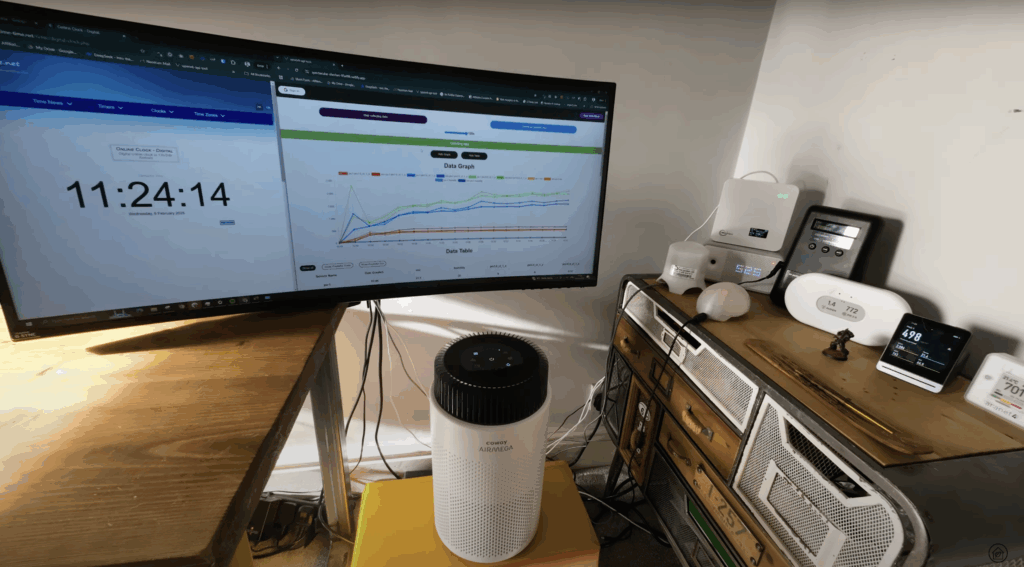
As usual, I tested the air cleaning performance of the PuroAir 240 inside our 728 cubic ft. test room by measuring how long it takes to clear the air of PM1.0, PM2.5, and PM10 particles from burning a powerful incense stick with the help of our PurpleAir Touch and PurpleAir Zen sensors.

I tested this device twice. On both occasions, it took 48 minutes to bring the PM1.0 level down to zero according to the PurpleAir Touch readings and 51 minutes based on the PurpleAir Zen sensor.

Looking at our test data, the PuroAir 240’s performance-to-price ratio was much higher than that of other devices we had tested. I will come back to this later in the review.

It’s worth noting that it was still quicker to clean our test room than the Molekule Air Mini+, which costs nearly twice as much.

However, I’m shocked at how often the PuroAir 240 is chosen as the “best air purifier,” considering it costs twice as much as more powerful devices.

MODELTIME TO CLEAN OUR TEST ROOM (minutes)LIST PRICE
AirFanta 3Pro17$159.99
CleanAirKits Luggable XL23$299.00
Levoit Vital 200S23$189.99
Blueair 311i Max27 $229.99
Coway Airmega 15038$189.99
Winix A23140$99.99
Levoit Core 300S45$149.99
PuroAir 24051$199.00
Molekule Air Mini+61$359.99

It seems that referring to themselves as “the Tesla of air purifiers,” proclaiming they invented HEPA 14 air cleaners, and name-dropping world-renowned universities has allowed PuroAir to sell a low powered device for $159.

Either the journalists who recommend this device don’t test or evaluate the performance of the products they tell you to buy, or they have chosen to include the PuroAir HEPA 14 240 for reasons unknown.

Sound levels

In our testing, the sound levels of the PuroAir 240 ranged from 36.9 dBA at speed 1 to 52.2 dBA at top speed.

PuroAir’s marketing materials only show the sound level at its lowest speed. This is another unethical marketing trick, as the CADR test would have been done at the highest speed, and using the lowest speed with a small device like this will be of no value, even for a tiny room.

We used our sound meter to measure the level of noise the unit generated from three feet away, and it registered 36.9 dB at the first fan speed, 42.2 dB at the second speed and 54 dB at its highest fan speed.

This sound level is very similar to what we saw with the Levoit Core 300, which doesn’t surprise me considering how many other features are similar to the Core 300.

Be aware that our location for testing has a high degree of background noise, so the lower fan speeds are likely lower than our test results show.

All in all, the PuroAir 240 is a quiet air purifier, but it is also too expensive considering its air cleaning performance.

AIR PURIFIER MODELSOUND LEVEL AT TOP SPEEDTIME TO CLEAN OUR TEST ROOMPRICE
Levoit Vital 200S57.7 dBA23 minutes$189.99
AirFanta 3Pro56.3 dBA17 minutes$159.99
Coway Airmega 15055.6 dBA38 minutes$189.99
PuroAir 24052.2 dBA51 minutes$199.00
Smart Air Sqair58.2 dBA32 minutes$179.95
Winix A23157.9 dBA40 minutes$99.99
CleanAirKits Luggable XL-738.8 dBA23 minutes$299.00

We repeated our particle removal test with the PuroAir 240 running at speed 2, where it generates 42.2 dBA of noise, which is below the 45 dBA limit we set for our quiet performance tests.

We know sound levels can be personal, and some people can hear things others can’t, so we included a video of the PuroAir 240 running at each fan speed.

Long-term running costs

Running a PuroAir HEPA 14 240 will cost you $231.99 per year, combining energy consumption costs and filter replacement prices.

As always, I calculated the long-term costs you can expect when running a PuroAir 240 for 12 months.

First, I used an energy meter to measure the amount of electricity the PuroAir 240 consumes when running at each fan speed.

Sleep mode11.6 watts
Fan speed 116 watts
Fan speed 223.2 watts
Fan speed 337.6  watts

Assuming you run this air purifier at its highest speed for 24 hours every day of the year, it’ll add just $39.99 to your electricity bill, using average U.S. energy rates.

Considering you need to replace the filter every three months and that the replacement costs $48, you can expect to also spend $192 per year on filters.

At $48 per filter, this is $8 more than what Levoit charges, but we assume this must be due to the use of HEPA 14. A tip: you’d be better off buying the 4-filter bundle as it costs $149.

This is how the long-term costs of running a PuroAir 240 compare to other units that can be found for a similar price:

AIR PURIFIER MODELANNUAL ENERGY COST (USD) ANNUAL FILTER COST (USD)ANNUAL MAINTENANCE COST (USD)
Levoit Vital 100S30.3279.98$110.30
Xiaomi 4 Compact28.8864.64$93.52
AirFanta 3Pro48.02118.00$166.02
Coway Airmega 10025.7737.52$63.29
Winix A23150.6549.99$100.64
PuroAir 24039.99192.00$231.99
Philips 800 Series22.2238.78$61.00
Smart Air Sqair43.7689.30$133.06

Compared to small devices that can be bought for a fraction of the price, the PuroAir 240 has higher running costs: 

I saw that generic filters were available, but interestingly, they state that they’re HEPA 13 grade and bring down the replacement cost to just under $40 per year. 

Bottom line: Is the PuroAir 240 worth it?

An underperforming air purifier that highlights how big media publishers are blindly recommending Amazon best-sellers without any first-hand testing

I assumed this air purifier was another TikTok sensation that used influencer marketing to push an overpriced product. Sadly, it was much worse than I feared. The PuroAir HEPA 14 240 is a device with worse performance than the $78 Winix A23 that is sold for $159. 

In order to sell this overpriced device, PuroAir has exaggerated room size recommendations, hinted at lab tests without making them available to the public, name-dropped universities without citing actual data from these collaborations, and stated that HEPA 14 has 10x better performance than HEPA H13 (which is untrue).

I only needed to take one look at their AHAM CADR results to know that this was an overpriced air purifier that would perform worse than units you can find for less than $100, such as the A230 or the Levoit Core 300.

PuroAir HEPA 14 240 Living room

Sadly, at no point did any of the journalists from Money.com, LA Times, Popular Science or USA Today who raved about this air purifier seem to have conducted any level of basic research to compare CADR lab reports. This is especially surprising, considering these publishers go to great lengths to highlight their testing process and even include quotes from physicians and other experts in their articles. Sadly, right now, Google has no idea who is really testing products, and it gives these publishers a free pass to rank highly in their search engine on their name alone.

Our industry has seen its fair share of unethical manufacturers taking advantage of consumers with overpriced devices, such as the current class action lawsuit against Molekule for false advertising (in 2023) or the case of Sharper Image and their ionizer devices that worsened indoor air (going back more than 10 years).

Unlike vacuum cleaners or air fryers, an air purifier’s work is hidden from the consumer. Brands can say that it works, and without lots of extra equipment, you wouldn’t know better. It’s easy to think that you are breathing in clean air when it might still be full of particles too small to see with the naked eye.

That is why AHAM developed an air cleaning test with the latest update ANSI/AHAM AC 1 in 2006, allowing consumers to see exactly how well an air cleaner performed.

If you still like the idea of a small air purifier that is similar to the PuroAir 240, then you’re much better off going with the Levoit Core 300S, which is cheaper (saves you $20), has better build quality and includes smart features like app support. Alternatively, you can save even more money and get the Core 300 or the Winix A230, both of which offer better air-cleaning performance for less than $100.

However, for most people, I recommend spending up to $180 and going for a larger device like the Vital 200S or Winix 5500 2, both of which provide significantly better air cleaning performance, more pelletized activated charcoal, and improvements like a removable pre-filter for easy cleaning.

Cases like the PuroAir 240 show how important it is for independent third parties like HouseFresh to thoroughly test and research products, going beyond the marketing materials and investigating the too-good-to-be-true claims from top-selling brands.

Okaysou AirMax 10L Pro review

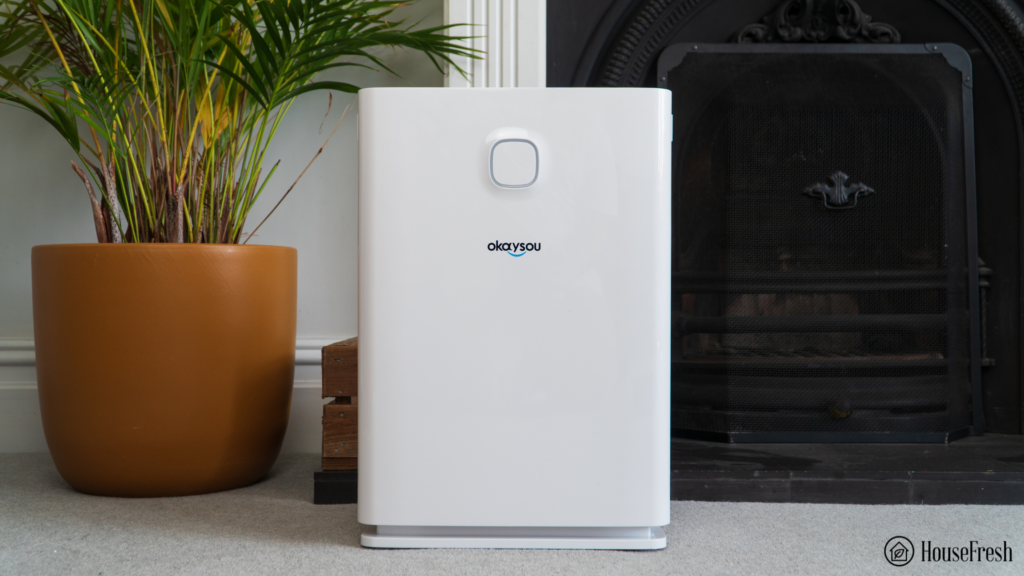
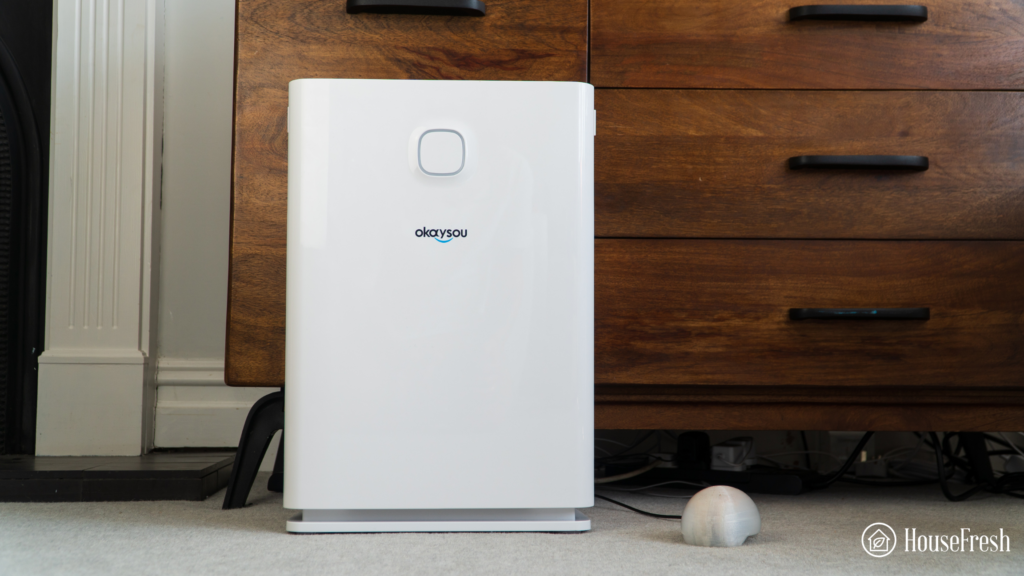
Okaysou AirMax 10L Pro Living Room

Okaysou has been around since 2018 and, according to Linkedin, only has eight employees, mostly based in China. I became aware of their air purifiers when they started ranking among the most popular units sold on Amazon. 

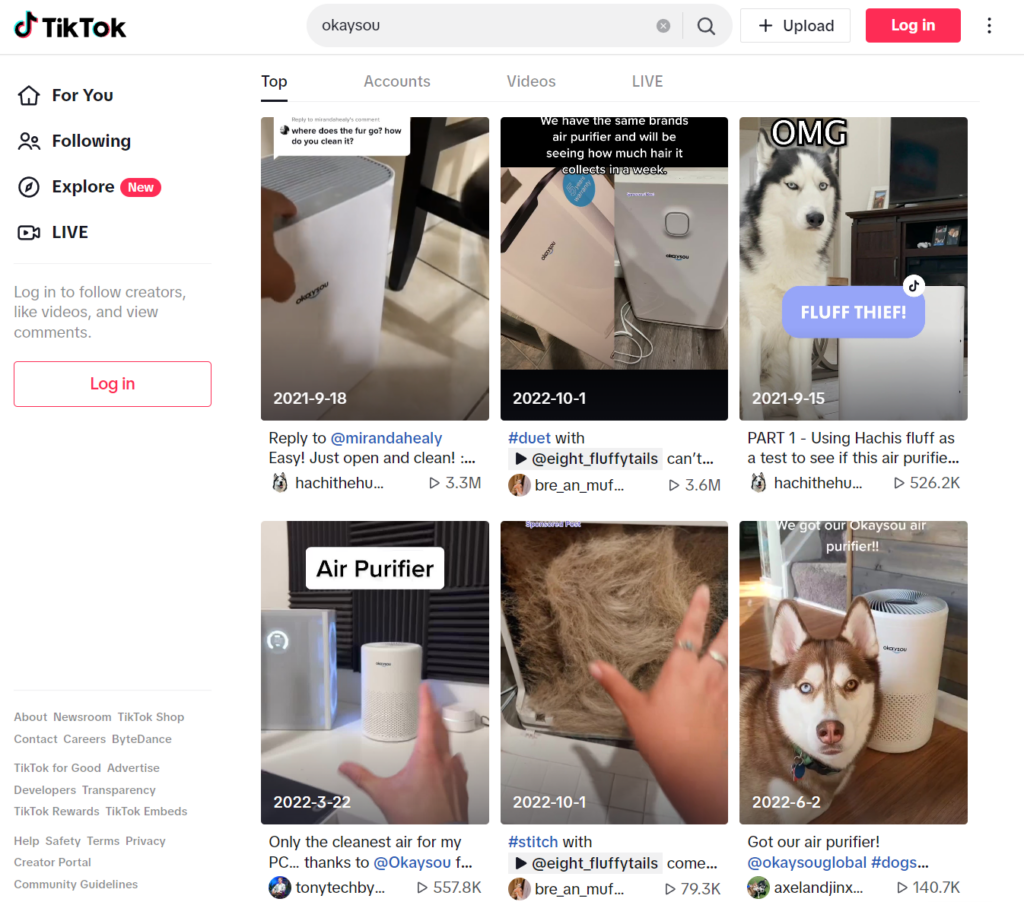
They have also been marketing heavily, with TikTok posts showing how their air purifiers catch pollutants in the home.  

TikTok Okaysou

The AirMax 10L (available since December 2020) is a larger update to their popular AirMax 8L. It has a 5-in-1 filter system that combines different filters, including a rare ionic silver filter and two H13 filters. 

Since 2022, the team at Okaysou has sent our team no less than eight messages asking us to join their affiliate scheme and receive a free air purifier. We never accept free air purifiers, though. We bought the AirMax 10L with our own money, so you can be sure this review will be honest and unbiased.  

We also don’t rely on what manufacturers say; we test all the units we review by analyzing how quickly they remove the smallest particles from the air. We can compare performance across brands and models by testing all our air purifiers in the same-sized space.

how we test
How we test air purifiers

Read our full testing methodology.

UPDATE 2024: Okaysou Corporation has declared bankruptcy

For those who own one of their units, some generic filters are still available on Amazon, but we don’t know for how long.

In 2022, Arovast Corporation and Etekcity Corporation (owners of the trademark Levoit) presented a patent lawsuit against Okaysou. They argued a design patent infringement on Okaysou’s Cayman 608 (which looks A LOT like the Levoit Core 400S) and Apollo 718 (a copy of Levoit Vital 100).

Levoit Vs Okaysou

Almost a year later, Okaysu Corporation declared bankruptcy by filing a Chapter 11 voluntary petition. This is known as a “reorganization” bankruptcy because the company is allowed to continue its operations while it develops a plan to repay its creditors. 

The case then took a turn when Amazon joined forces in a Conversion Motion, which is a request to convert the reorganization bankruptcy into a “liquidation” bankruptcy. Liquidation, Chapter 7 of the Bankruptcy Code, means selling the company’s assets to pay off its debts. 

In December 2023, they achieved it: the court decided to convert the case to Chapter 7. Okaysou’s website is currently down, and there’s no official Okaysou store on Amazon, either. The company’s prospects don’t look good at all. 

Tip

If you own an Okaysou air purifier, I recommend buying filter replacements in bulk if you find them to ensure you can still use your device for a little longer.

The lowdown on the Okaysou AirMax 10L Pro

Danny Ashton HouseFresh
“The Okaysou AirMax 10L Pro fails to meet the hype of its marketing and didn’t impress us in our real world air cleaning test and electricity usage.”
— Danny Ashton, HouseFresh Founder & Senior Writer
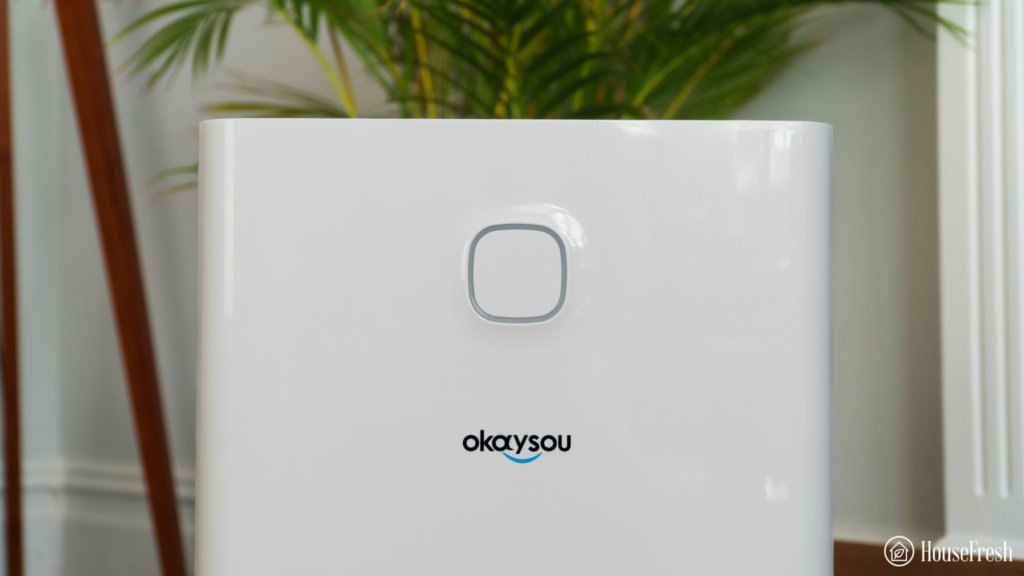
Okaysou AirMax 10L Pro Close Up

PRICE on amazon PRICE on EBAY

What we really like

Air quality sensor is not something you usually see at this price point for air purifiers
Simple button controls that are easy to use
Size is easy to live with and wouldn’t stand out in a bedroom or small room
At $149.99, it’s as affordable as other units with similar CADR scores
Auto-mode is another feature rarely found with cheaper air purifiers

What we think could be better

5-in-1 filter feels cheap and failed to show effectiveness in our particle removal test
High energy usage, especially when considering its low level of cleaning power
Filter costs are a little higher than other budget brands like Blueair Pure and Levoit

HouseFresh rating:★★★☆☆
Time to clean our 728 cubic feet test room (with the device running at top speed):42 minutes
Air purifier technology:Pre-filter, H13 dual HEPA filters, Advanced Blue Nano Ionic Silver Filter, Honeycomb Activated Carbon Filter
Recommended room size (4.8 air changes per hour):300 to 1000 sq. ft. 
Clean air delivery rate (CADR):Dust: 147 CFM
Dimensions (in inches / in cm):13.2L x 7.2W x 19H inches (33.5L x 18.3W x 48.2H cm)
Weight (in pounds / in kg):18.84 lbs (8.55 kg)
Filter life:6 months
Noise level in decibels (measured from 3 ft. away with a sound level meter):Speed 1: 38.8 dB
Speed 2: 45.3 dB 
Speed 3: 55.6 dB
Electricity consumption in watts (recorded with an electricity usage monitor):Standby mode: 0 watts
Speed 1: 33.32 watts
Speed 2: 39.92 watts
Speed 3: 58.22 watts
Speed 4: 58.05 watts
Estimated running cost (electricity consumption + official filter replacement):$188.44 per year
Cost per CADR cfm (based on dust CFM as reported by AHAM):$1.02
Manufacturer’s warranty:5 years
Country of manufacture:China

Looks like a Levoit and Alen had a baby

This unit resembles the Levoit Vital 100 and takes many design features from other units like the Alen 45i. It also looks very similar to the Coway Airmega AP-1512HH

Okaysou AirMax 10L Pro Front

It’s fair to say that the designers at Okaysou took inspiration from the best-selling units made by major air purifier brands in designing the AirMax 10L.

In the photo below, you can see the AirMax 10L Pro side by side with the Levoit Vital 100:

Okaysou AirMax 10L Pro Levoit Vital 100 Comparison

The design is not a total rip off but the front panel of the Okaysou AirMax 10L Pro does bear some resemblance to the front panel of the Levoit Vital 100.

Things change when looking at both units side by side:

Okaysou AirMax 10L Pro Levoit Design Comparison

When looking at the Okaysou AirMax 10L Pro profile, you can see that it’s reminiscent of the air purifiers designed by Alen:

Okaysou AirMax 10L Pro Alen 45i Comparison

As you can see, it’s much smaller than the Alen 45i but it does feel like a little sibling. Even the air quality sensor is on the same side of the unit:

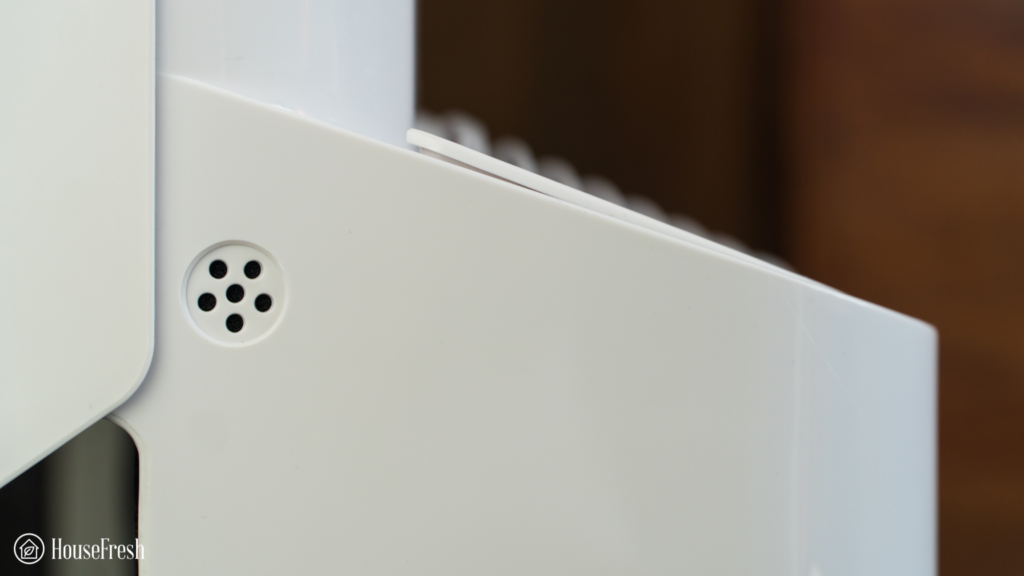
Okaysou AirMax 10L Pro Sensor

The air quality sensor is the main smart feature available on the Okaysou AirMax 10L Pro. The sensor changes color depending on the current level of indoor air quality. This feature allows you to enable auto-mode, a fan mode where the air purifier will automatically adjust fan speed levels based on the level of pollutants detected in the air. 

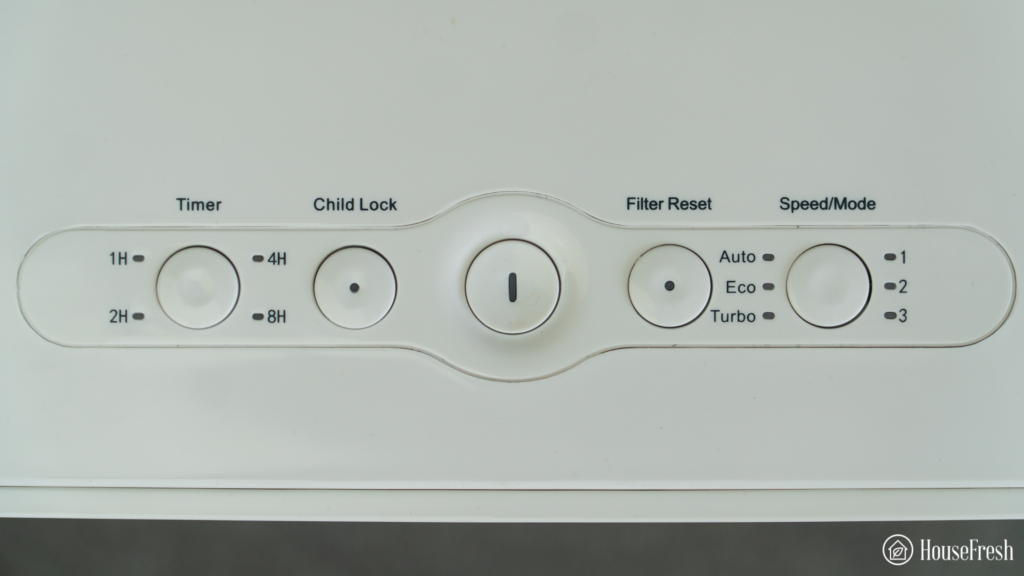
In addition to the auto-mode, the AirMax 10L Pro includes four timer settings, a child lock, three fan speeds, and a filter rest light.

Okaysou AirMax 10L Pro Controls

You don’t get fancy touchscreens with the Okaysou AirMax 10L. Instead, you have four buttons that do everything. 

“5-in-1 Purification System” that doesn’t match our expectations

Most air purifiers use a combination of HEPA and activated charcoal to remove gasses and particles from the air. 
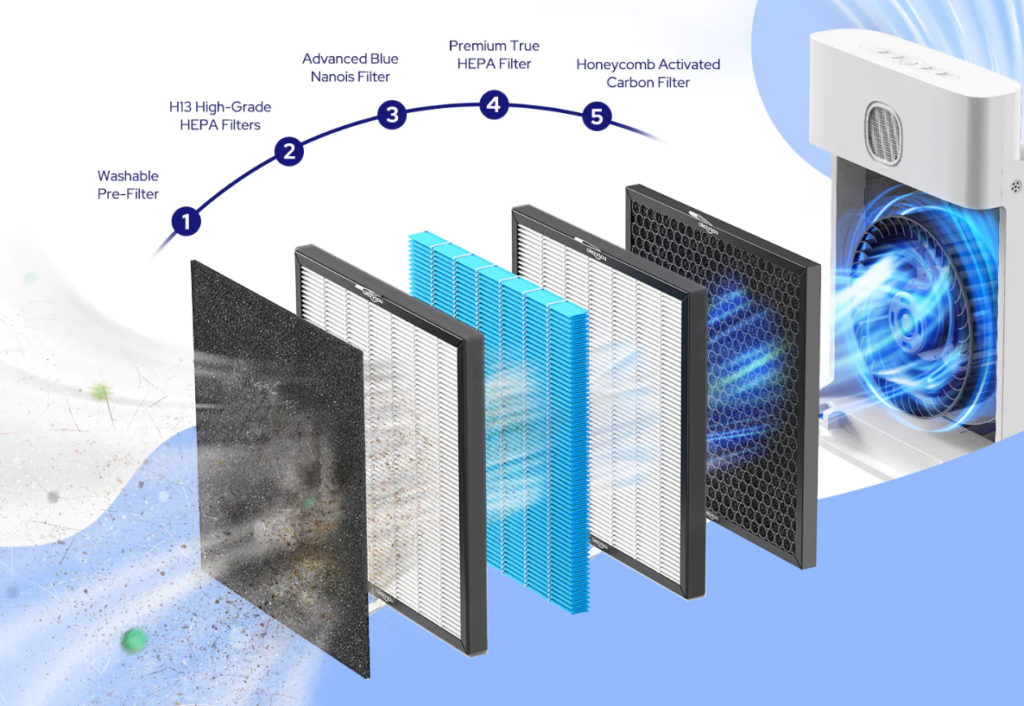
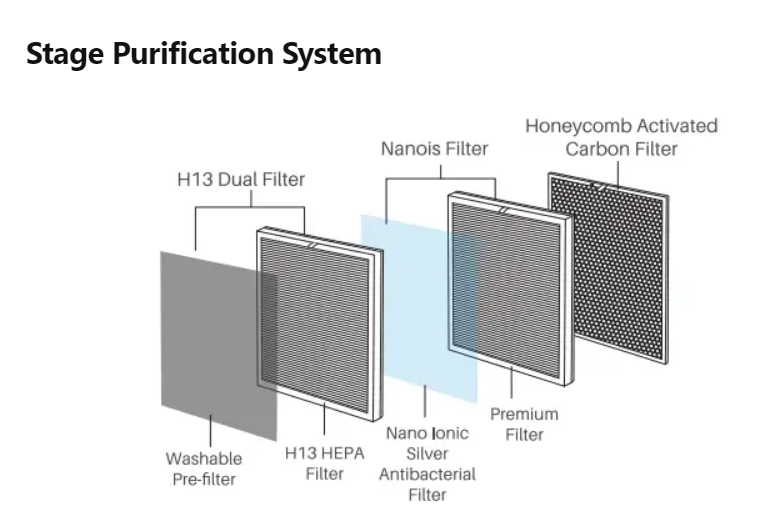
According to marketing materials, the Okaysou Airmax 10L Pro is “equipped with 5-in-1 purification system, washable dual-filter, nanois-Fflter, and honeycomb activated carbon filter”.

Okaysou AirMax 10L Pro Marketing

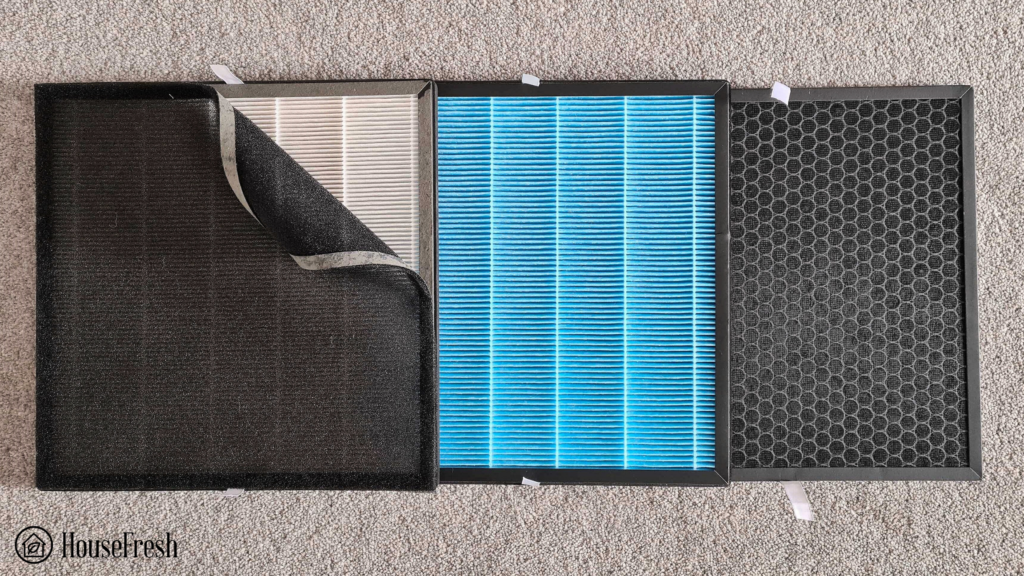
Based on the image and the description above, I was expecting a sizeable pre-filter, two HEPE Filters, one ‘blue nanois filter’, and an activated carbon filter. I kept looking inside the box because all I received was the following:

Okaysou AirMax 10L Pro All Filters

That said, I was pleased to see a honeycomb filter with active carbon pellets instead of the impregnated fabric you sometimes get in other budget air purifiers.

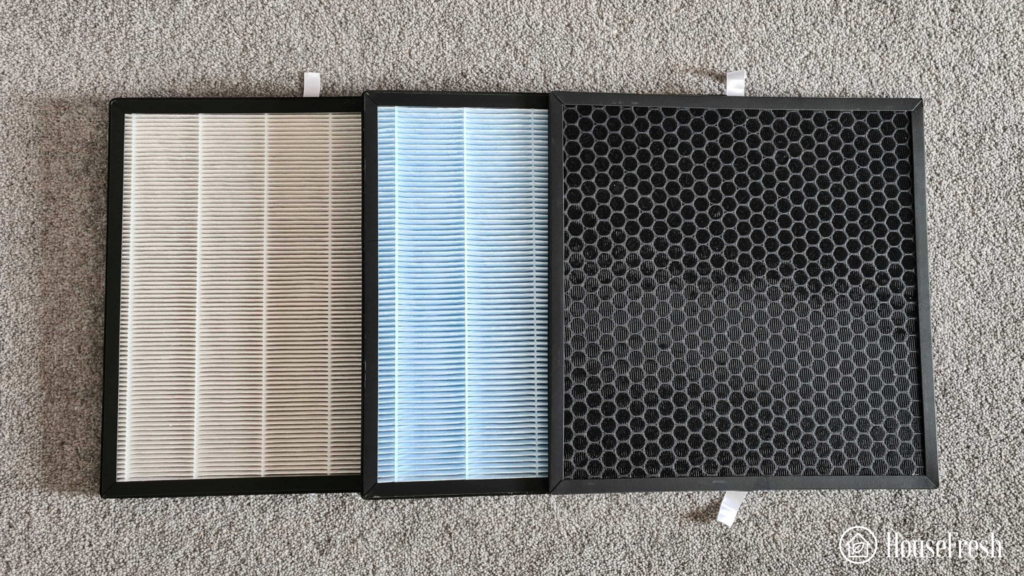
However, I believe this is misleading advertising. The H13 HEPA filter they show in their marketing materials in between the ‘Advanced Blue Nanois Filter’ and the activated carbon filter is not, in fact, two separate filters but just one that is blue on one side and white on the other:

Okaysou AirMax 10L Pro All Filters 2

A simple fix to the marketing materials would be to use a similar visualization as Okaysou uses in the user manual of the AirMal 10L Pro:

Okaysou AirMax 10L Pro Manual

The diagram above makes it clear that the nanois filter and the ‘premium filter’ are one thing, not two.

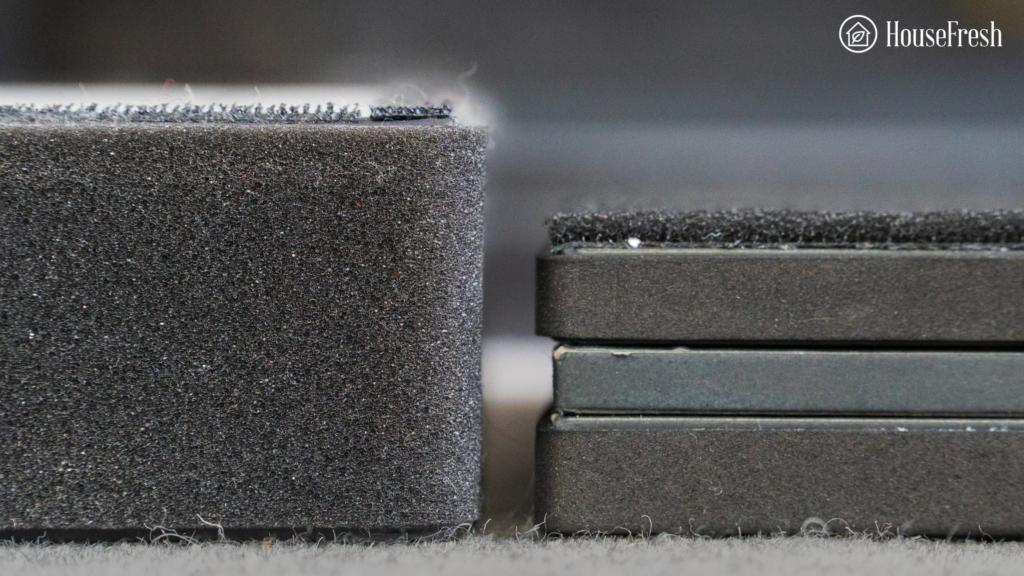
One thing I noticed when I first got the filters out was how thin they were — the activated carbon filter was less than 1 cm wide. 

Just to put this into perspective, here is a comparison shot showing the filter of the Alen BreatheSmart Flex side by side with the filter of the Okaysou AirMax 10L Pro:

Okaysou AirMax 10L Pro Filter Comparison with Alen Flex

Another issue I found is the low quality of the pre-filter. 

The pre-filter is attached to the HEPA using velcro, but when I tried to detach it for the first time, the glue became unstuck, leaving it to flap:

Okaysou AirMax 10L Pro Pre Filter Break

When it comes to the filtration technology in the Okaysou AirMax 10L Pro, the unit comes with a unique filter called “Advanced Blue Nanois Filter”. It is a HEPA filter treated with silver ions, which are bioactive agents that can kill bacteria, viruses and other microorganisms.

Okaysou AirMax 10L Pro Blue Nano Ionic Silver Filter

While there has been evidence that using a filter coated with silver ions can help reduce bacteria levels, there is also evidence of the toxic effect of silver ions and silver nanoparticles towards human cells. 

Compared with other similarly designed air purifiers, there is a little gap on each side of the filters when they are sitting inside of the unit. I prefer a tighter fit to avoid air bypassing the filter.

Okaysou AirMax 10L Pro Open

Accessing the filters is not difficult at all. Here is a video showing you what to do:

Tip

As with all brand-new air purifiers, the filters for the Okaysou AirMax 10L will come in plastic bags. Make sure to remove them before you switch it on, or they won’t be able to do anything to remove pollutants from your air. 

After testing the unit and going through the filter’s performance, I would have liked Okaysou to include one large H13 HEPA filter and a more robust activated carbon filter. 

I disagree entirely with their marketing message that their 5-in-1 system is 40% better by using multiple filters. But more on that in the next section of my review, where I review our performance test results.

The Okaysou AirMax 10L cleared our test room in 42 minutes

Like all the reviews we publish here at HouseFresh, we put the Okaysou 10L through our performance test: The results were disappointing. 

Okaysou AirMax 10L Pro Test

In our 728 cubic ft home lab, we simulate particle pollution and VOCs with an incense stick and use a Purpleair Indoor Sensor to monitor particulate levels. We then activate the air purifier at its maximum speed and measure the duration required to reduce the room’s air quality to a PM1 level of zero.

This is what happened when we performed this air cleaning test on the Okaysou AirMax 10L Pro:

Air cleaning speed, compared

With a CADR of 147 CFM, we expected it to clean our room quicker than the Levoit Core 300, but it took four more minutes.

Compared to the Blueair Blue Pure 411+, the difference between CADR and real-world performance is even starker; the Blueair 411+ has a CADR of 121 CFM yet managed to clean our room in one minute less. 

I fail to see how Okaysou can give this air purifier a recommended room size of up to 1000 sq ft. This unit is way too underpowered for such a large space, so it is likely to be unable to clean the air once an hour.

Noise levels, compared

At 55.6 dB at its highest speed, this aligns with other units at this price point and air cleaning power, such as the Levoit Vital 100 at 55.3 dB and the Medify 25 at the same level of 52 dB. 

As usual, we have also recorded a video so you can hear the sound with your own ears as noise levels can be a subjective thing:

The cost to run an Okaysou AirMax 10L: $188.44 per year

1. Electricity costs = $88.54 per year

Rising energy costs are unlikely to go away soon. So these costs must be considered when looking at a device that you want to run continuously, like an air purifier

We saw 58.05 watts at its highest fan speed — much higher than we expected for this cleaning performance. I imagine including the extra filters means the fan must work harder to push air through them effectively. 

In comparison, the Blueair 411+ cleaned our room one minute quicker and only pulled 10.4 watts. 

So, from an energy usage standpoint, the Okaysou AirMax 10L is much poorer when compared to other similar air purifiers. 

2. Filter costs = $99.90 per year

Mechanical filter technology uses HEPA and activated carbon to capture particles and gases that, over time, are held in the filter material. After some time, the filter will become so full of pollutants that you have to replace them to sustain cleaning performance. 

Okaysou recommends changing the filters every six months for the AirMax 10L and genuine filters are available for $49.95, equating to nearly $100 per year

This cost is less than the Dyson range of air purifiers and high-end units like the IQAir Healthpro Plus. But it is higher than the genuine filters for the Levoit Core 300 ($39.99.)

As with Levoit, Amazon does have several non-genuine filter options for less than that, which bring the yearly cost down by half, with two filter sets available for $52.99.

Okaysou Air Purifier AirMax 10L Plus Replacement Filter, High-Efficiency H13 True HEPA Filtration System with Activited Carbon Pre Filter Set, 5-Stage Air Purifier Filter for Smoke Dander
Airmax 10L Pro HEPA Filter Replacement Set Compatible with Okaysou Airmax 10L Pro and Aiibot-A300 Air Cleaner Purifiers, High-Efficiency True HEPA Filtration System, 2 Set
Technology
5-Stage H13 True HEPA Filtration System with Activated Carbon Pre Filter
2-Pack Replacement True HEPA and Activated Carbon
More information
Price
Price not available
$32.99
Okaysou Air Purifier AirMax 10L Plus Replacement Filter, High-Efficiency H13 True HEPA Filtration System with Activited Carbon Pre Filter Set, 5-Stage Air Purifier Filter for Smoke Dander
Technology
5-Stage H13 True HEPA Filtration System with Activated Carbon Pre Filter
More information
Price
Price not available
Airmax 10L Pro HEPA Filter Replacement Set Compatible with Okaysou Airmax 10L Pro and Aiibot-A300 Air Cleaner Purifiers, High-Efficiency True HEPA Filtration System, 2 Set
Technology
2-Pack Replacement True HEPA and Activated Carbon
More information
Price
$32.99

Bottom line: Should you buy an Airmax 10L Pro?

The Okaysou AirMax 10L Pro is an overly-marketed product that doesn’t live up to the hype

In my opinion, Okaysou contacted us many times because they wanted us to write an overly optimistic review. It’s clear that they are experts in marketing, but the AirMax 10L is not an air purifier I would recommend. 

While it’s pretty cheap, $199.99-$149.99, you still get better air cleaning performance with the $99 Levoit Core 300

I don’t like how they present their filter process as 40% better than standard methods. If anything, our tests showed that it has less air-cleaning power than standard HEPA and activated charcoal.  

I have been around the world of air purifiers for 20+ years, and it’s a regular occurrence that a new brand comes to market with many promises and a price that is easy to digest. 

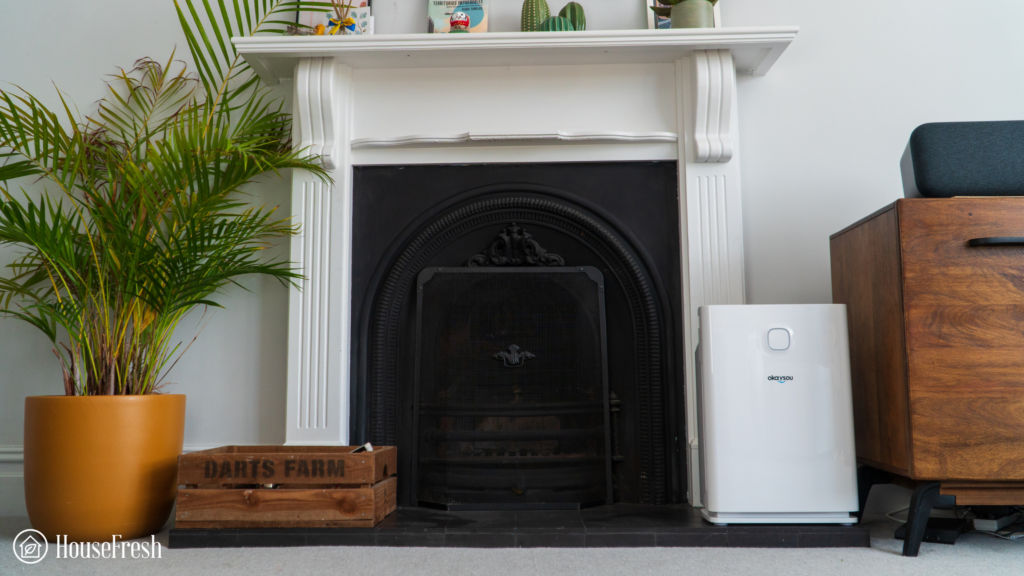
Okaysou AirMax 10L Pro Fireplace

Sadly, the Okaysou, while not the worst air purifier we have tested, fails to match its marketing promises and for that alone, I would not recommend it. 

Instead, I would recommend the Levoit Core 300 and Blueair 411+ as they clean the air quicker for less money. They cost less initially and in the long term and come from a brand that doesn’t bend the truth to sell more units. 

SOURCES

We calculated yearly costs associated with running the Okaysou AirMax 10L Pro 24 hours a day, 365 days per year utilizing the latest average energy prices as reported by the Bureau of Labor Statistics of $0.174/kWh as of May 2024.

At HouseFresh, we have been reviewing air quality products since 2010. In all these years, we learned not to rely on manufacturers’ claims and the ever-so-glowing marketing materials. That is why we buy products with our own money, so we can write unbiased reviews after we’ve had enough time to evaluate air quality products in our home lab. Every unit we recommend has been thoroughly tested to assess its performance, energy consumption, and noise levels emitted in real-life environments. If you have any questions about our testing process for different types of air quality products, just drop us an email at danny@housefresh.com.

Rainbow RainMate review

Rainbow RainMate Side Table

The Rainbow RainMate air purifier was invented as part of a patent developed by Rexair in 1988. That patent expired in 2006, so the market is now full of these “water air purifiers” that allegedly afilter air through water to remove pollutants.

While the primary market for this invention was a new type of vacuum cleaner, Rexair decided to use this technology on a smaller scale as part of an air cleaner. However, the Rainbow RainMate air purifier is not sold directly to the consumer. Instead, it’s used as part of a home sales presentation where a salesperson would try to sell a $3000-$4000 cleaning vacuum system while gifting or heavily discounting the price of the Rainbow RainMate along the way.

I’m not a fan of direct selling, as it naturally disadvantages the consumer, who will feel pressured to purchase something with someone in their home. Thankfully, I didn’t have to sit through a presentation for my Rainbow RainMate.

We bought the Rainbow RainMate with our own money and tested it to assess its air cleaning performance, energy efficiency and sound generation. You can read more about our air purifier testing process, but in short, we gather comparable data to help consumers compare and contrast the minefield of air purifiers on the market.

how we test
How we test air purifiers

Read our full testing methodology.

We don’t run ads on our site and are independent, so we are free to say exactly what we think about the air purifier we review. Unlike most sites that review air purifiers, we regularly share devices that fail to live up to the hype or those that should be avoided.

The lowdown on the Rainbow Rainmate

Danny Ashton HouseFresh
“The first thing that made me wary of this device’s effectiveness was the lack of data about its cleaning power. The manufacturer doesn’t share clean air delivery rate (CADR) figures or third-party tests, which is the first indicator of a potentially bad investment.

The Rainbow RainMate has not associated filter costs, but it failed to complete our particle removal test.

After testing this device, it is my opinion that this is a pretty-looking fragrance diffuser, but it shouldn’t be considered an air purifier.”
— Danny Ashton, HouseFresh Founder & Senior Writer

PRICE on amazon PRICE on EBAY

If you don’t want to read my 2000-word review on this air purifier, then you can see my key points below:

What we really like

It’s not a massive investment. I paid $54 for my device, but there are also plenty of generic versions on Amazon.com for around $40.
Water is a sustainable filter. It doesn’t create any harmful byproducts that you find with ionizers.
The LED lights look pretty good. This is especially true when you turn on this device in the dark.
Good diffuser. It’s a small and fairly easy way to deliver fragrances to your room.

What we think could be better

It doesn’t clean the air. It failed to remove particulate pollutants from the air in our particle removal tests.
It is sold door-to-door. I don’t like that the unit is sold directly via salespeople as it puts the consumer at a disadvantage and pressures them to buy.
It shouldn’t be sold as an air purifier. This is a water-based fragrance diffuser.

HouseFresh rating:☆☆☆☆☆ (if we could give it negative stars, we would)
Time to clean our 728 cubic feet test room (with the device running at top speed):It was unable to clean our air in our test
Air filtration technology:Water
Recommended room size (4.8 air changes per hour):The manufacturer states 1200 sq. ft., but it will not be able to clean the air in even the smallest of rooms.
Clean air delivery rate (CADR):Not available
Dimensions (in inches / in cm):9H x 8W x 9D inches (22 x 20 x 22 cm)
Weight (in pounds / in kg):2.8 lbs (1.2 kg)
Filter life:No filter, but the water needs to be changed
Noise level in decibels (measured from 3 ft. away with a sound level meter):53.3 dB
Electricity consumption in watts (recorded with an electricity usage monitor):10.8 watts
Estimated running cost (electricity consumption + official filter replacement):$11.35 per year
Manufacturer’s warranty:4 years
Country of manufacture:United States

At HouseFresh, we have tested over 105 air purifiers and recently put together our list of the best cheap but great air purifiers. We also have small air purifiers for those who want something that doesn’t take up too much space and would make a great alternative to the Rainbow Rainmate.

Looks more like a coffee machine

The Rainbow RainMate looks more like a coffee maker than a standard air purifier.

Rainbow RainMate Living Room

It’s small and easy to use, and you can easily keep it on top of furniture. The design is pretty minimalist with a blue bowl for the water and a top you can unscrew to replace the water. On the top, you will also find one button with two modes: one to turn on the RainMate (one line) and another to turn on the LEDs (two lines).

Rainbow RainMate Top

This simple control panel makes the Rainbow RainMate incredibly easy to use.

You just need to switch it on when it’s full of water by pressing the button with one line ( – ), and the RainMate will start pulling air from outside into the main tank, causing the water to start bubbling. If you want to add some color to the experience, you can turn on the LED light by pressing the button with two lines ( = ).

Rainbow RainMate Controls

The main tank needs to be filled with water before you can use your Rainbow RainMate, and this is also easy. Make sure to unplug the device before you unscrew the top cover, using the handle clockwise to reveal the opening of the water bowl.

Rainbow RainMate Open Bowl

As I mentioned earlier on in the review, I think the Rainbow RainMate is a nice air freshener. You can actually add fragrances to the water for aromatizing or deodorizing the air. The manual of the device clearly states that one should only use Rainbow brand fragrances in the RainMate as other oils and liquids could cause damage — I haven’t tested this, so I can’t confirm whether this will be the case.

Before you plug and turn on the RainMate, you need to make sure the top is fully closed and that it doesn’t tilt or move when sitting on top of the water bowl.

Water filtration technology

No need to replace particle or gas filters with the Rainbow RainMate — too good to be true?

Rainbow RainMate Bowl above

Unlike the standard air purifiers we review here at HouseFresh, the Rainbow RainMate uses water as the filter. The water will need changing when running the unit for a long time, but this will not incur additional long-term running costs compared to normal air purifiers with activated carbon and HEPA-like filters.

Rainbow RainMate Front

I have read many academic studies that support the excellent performance of HEPA filtration at removing particle pollutants. I’ve also read papers and studies supporting the performance of activated charcoal at clearing gasses from the air. However, I have never seen any studies supporting the technology used in the Rainbow RainMate or proving the power of water to remove particles and VOCs from the air.

The reality is that no one likes having to purchase new filters every six months, so water-based air filtration sounds like the perfect solution. That said, at this stage (and considering the performance of the Rainbow RainMate and similar units in our tests), I think this just sounds too good to be true.

The Rainbow RainMate was unable to clean the air in our test room

The RainMate took so long that the phone I use to record the particle removal test ran out of battery.

Rainbow RainMate Test

We started our test in the same 728-cubic-feet room where we tested all of our air purifiers, filling up the room with incense smoke at 2:11 p.m.

We switched the Rainbow RainMate on at 2:42 p.m. and then tracked the levels of PM1, PM2.5 and PM10 particles in the air with our air quality sensors from PurpleAir. We also filmed the test so our readers could see how well the device removes particles from the air in real time. 

You can view the video below:

Most particle removal tests are completed within 60 minutes, although some smaller devices can take double the amount of time. For example, the like the Levoit Core Mini took 113 minutes.

In the case of the Rainbow RainMate, the results were even worse.

For starters, at 5:25 p.m. my iPhone ran out of battery, so the test continued without being filmed. This was 163 minutes after 2:42 p.m., which was the time when I switched on the device.

However, the experiment continued until 6:03 p.m. At that time, I made an executive decision to end the test. At that point, the level of PM1 particles was still at 20.14 and any further reductions would just be down to the natural ventilation in the room.

Even after 3 hours and 35 minutes, our test room was still polluted with tiny particles.

Based on the 70+ air purifier performance tests we have completed so far, the Rainbow RainMate sits at the bottom of our leaderboard as it was unable to clean the air in our test room. The only other device we tested that was unable to remove all PM particles was the infamous Sharper Image Ionizer Breeze from 10+ years ago. 

Air cleaning performance, compared

You can see here how the terrible performance of the Rainbow RainMate Water Air Purifier compares to other low-budget units on the market:

We even compared it to devices like the IQair Atem Car, which is designed to work inside a car cabin, and the Rainbow RainMate still trailed far behind them.

The fact that this unit is touted as suitable for asthmatics and allergy sufferers is not true. This device will not be able to remove pollen and dander quickly enough to avoid triggering allergy/asthma symptoms.

Considering that Rainbow RainMate was unable to remove incense smoke pollutants, I know it will be useless against real-world issues such as wildfires or cigarette smoke, both of which create many more pollutants. 

Noise levels, compared

We recorded the noise levels generated by the Rainbow RainMate using a sound monitor from three feet away. While the sound is less intrusive than a standard fan, it still hits 53.3 dB, far from the silence touted in its marketing material.

This is how this compares to other small devices and some of the loudest we’ve tested:

The cost to run a Rainbow RainMate: $11.35 per year

1. Electricity costs = $11.35 per year

As with all the air purifiers we have reviewed here at HouseFresh, I used an energy meter to measure how much electricity the Rainbow RainMate pulls when running.

Rainbow RainMate ElectricityTest

The Rainbow Rainmate pulled 10.7 watts without the lights running and 10.8 watts with the lights running. 

Electricity consumption with light offElectricity consumption with light on
10.7 watts10.8 watts

2. Filter costs = $0 per year

As this air purifier uses water to filter the air, there are no extra filter costs to consider, as you just change the water every few weeks. 

Bottom line: Is the Rainbow RainMate worth it?

You often hear the phrase, “It sounds too good to be true,” and for the Rainbow RainMate, this might be the case. 

After testing the Rainbow RainMate, it is my opinion that this is a pretty-looking fragrance diffuser, but it shouldn’t be used as an air purifier — especially not one to be used to help ease asthma and allergy symptoms. Our particle removal test showed the Rainbow Rainmate will not be able to clear the air of pollutants that trigger allergic symptoms.

Some of our YouTube viewers who have the Rainbow RainMate reported they enjoy the relaxing sound of the water twirling around inside the bowl and that they like the mood set by the LED lights. I agree with them that this is a cute water whirilpool thingy, but please don’t get confused to think this is an air purifier.

If you are trying to buy a small air purifier, I would suggest you look at the Winix A230 instead or the even smaller Smart Air QT3. You will have to accept that you will need filter replacements every few months, but in exchange, you will be confident that it is cleaning the air in your home.

Rainbow RainMate Lights

But if you want a water fragrance diffuser like the RainMate, you will be able to find one on eBay and you can also get a generic version on Amazon. I would suggest you don’t accept salespeople in your home as I have read that the RainMate is often offered free or as a “prize” if you agree to a salesperson visiting your home with the goal of hosting a presentation to sell you a higher-priced vacuum cleaner ($4,000).

Now, I have written quite a few negative reviews of air purifiers over the last few years, but I have never received as many irate emails as I did when my video review of the Rainbow RainMate went live.

Most consumers will just feel a little embarrassed that they bought a sub-par product and will email me to ask for a recommendation that will not break the bank after they have already invested in a bad device. But in the case of the comments and emails i received about the RainMate, I wonder if these are not customers but people using the RainMate as part of their sales pitch for other products.

So I went over to Reddit to dig a little deeper and was shocked at the number of people talking about the Rainbow “Fresh Air Machine.”  From reading many threads, it’s clear that the RainMate is being used as a hook to get salespeople though the door as part of a high-pressure in-person sale opportunity.

reddit rainbow rainmate

I would have hoped that the invention of the Internet would make this type of in-person sales technique obsolete, but unfortunately, that doesn’t seem to be the case. I hope this review will provide more insights to people who are feeling the pressure to get this product.

If you found it helpful, be sure to share it with your friends and on social media. 


SOURCES

We used the Department of Energy’s appliance energy calculator to calculate the yearly electricity costs associated with running the Rainbow RainMate for 24hs a day for 365 days. We ran this calculation utilizing the U.S. average utility rate of $0.12/kWh as of May 31st, 2024.

AROEVE MK01 review

AROEVEMK01

AROEVE doesn’t make it easy to find out much about the company: their website is empty of information and there aren’t many details on their Amazon profile page. When I tried to find out more information about the https://aroeve.com/ website through a WHOIS query that pulls out domain registration data, I learned that their site is hosted on Alibaba and the domain is registered in China. So, we assume that this is a Chinese company that sells primarily on Amazon.com.

The MK01 is the most popular air purifier sold by AROEVE, but they also have the MK02 ($55) and MK04 ($99) which are designed for larger rooms. The AROEVE MK01 is targeted towards smaller rooms (up to 215 sq. ft.) and includes an aroma pad. 

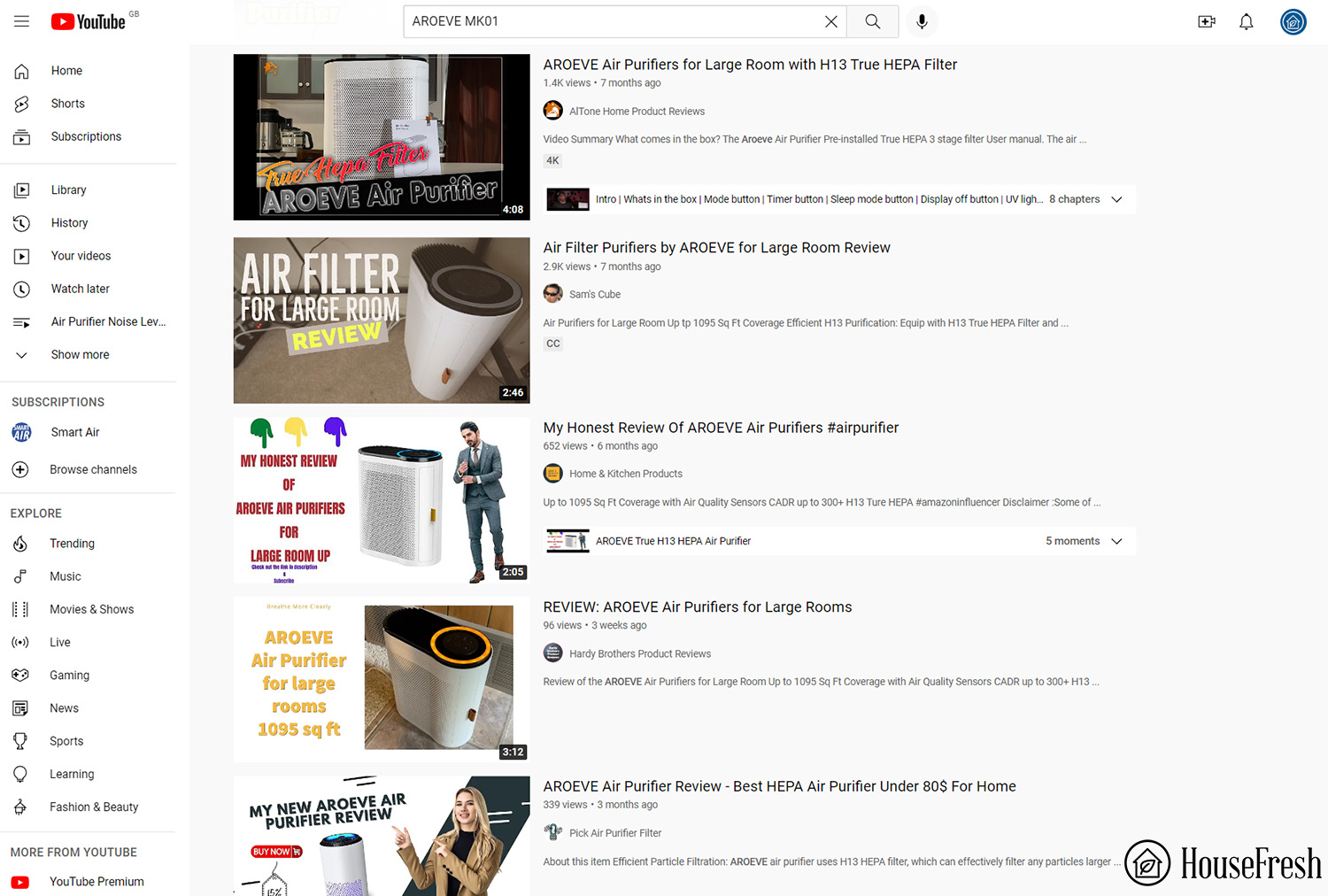
If you do a quick search on YouTube, you will see plenty of reviews for the MK01:

AROEVE MK01 YouTube Reviews

However, they are all very positive, making me think that many of these “reviewers” were provided this unit for free in return for a review.

Here at HouseFresh, we never accept free products in exchange for reviews, as we want to stay as unbiased as possible to provide our readers with the truth (positive or negative), so you can find the right air purifier for you. We ran a number of performance tests on the AROEVE MK01 before I wrote this review.

how we test
How we test air purifiers

Read our full testing methodology.

The lowdown on the AROEVE MK01

Danny Ashton HouseFresh
“No filter costs but it failed to deliver when it came to cleaning the air in my home..”
— Danny Ashton, HouseFresh Founder & Senior Writer
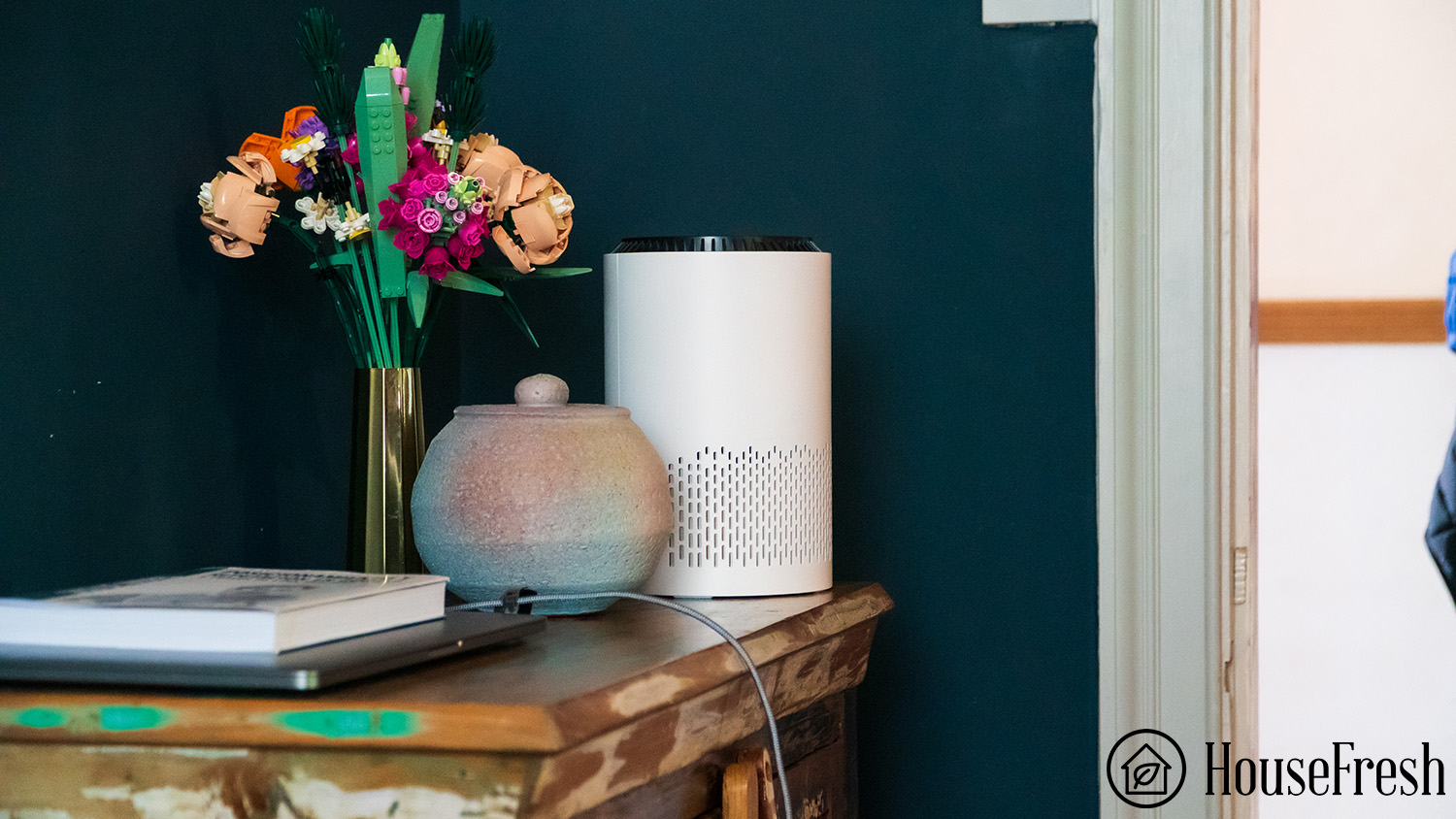
AROEVE MK01 Living room

PRICE on amazon PRICE on EBAY

If you just want to know whether this air purifier is good or not then I can save you time and tell you to avoid this purifier and go for something else like the Taotronics AP-033.

What we really like

It’s a small unit, making it easy to put on a desk or in a location where a larger air purifier would be too big
The lights are cool, although I don’t think they help with the air cleaning!

What we think could be better

AROEVE doesn’t share the CADR score for this air purifier and that’s likely because it’s very poor 
It took 2 hours and 43 minutes to get our home lab down to a breathable level 
It failed to remove all pollutants in 5 hours, something we usually only see with very small air purifiers
Filters are $19.99, which seems cheap but considering the lack of cleaning power is a total waste of money

HouseFresh rating:☆☆☆☆☆ (zero)
Time to clean our 728 cubic feet test room (with the device running at top speed):2 hours and 43 minutes (but was unable to clean the air 100% in less than 5 hours)
Air purifier technology:Pre-filter, H13 True HEPA filter and Activated Carbon filter
Recommended room size (4.8 air changes per hour):39 sq. ft.
Clean air delivery rate (CADR):Estimated: 25 CFM
Dimensions (in inches / in cm):6.1L x 6.1W x 9.7H inches (15.5 x 15.5 x 24.6 cm)
Weight (in pounds / in kg):1.57 lbs (0.71 kg)
Filter life:3 – 6 months
Noise level in decibels (measured from 3 ft. away with a sound level meter):Speed 1: 39.8 dB
Speed 2: 48.1 dB
Electricity consumption in watts (recorded with an electricity usage monitor):Standby mode: 0 watts
Speed 1: 13.4 watts
Speed 2: 16.3 watts
Estimated running cost (electricity consumption + official filter replacement):$44.85 per year
Cost per CADR cfm (based on dust CFM as reported by AHAM):$0.20
Manufacturer’s warranty:AROEVE MK01 does not come with a warranty
Country of manufacture:China

Small and cheap with simple controls

From a design point of view, the AROEVE looks cheap but is certainly not the worst air purifier I have seen. The size is great and would be perfect if it was able to also achieve great cleaning power. 

AROEVE MK01 Close Up

The MK01 has simple controls with no app or auto mode. You can choose a timer of 6, 12, and 24 hours.

AROEVE MK01 Controls

When you compare it with the Levoit Core 300, the MK01 is much smaller. However, this means that the unit will find it hard to clean as much air in comparison, as mechanical filters such as HEPA require a large surface area and a powerful fan to effectively clean the air in a room.

AROEVE MK01 Comparison

Pointless medical grade filters

The MK01 uses HEPA H13 which is the medical grade of HEPA – a strange choice considering that the unit is so small. Higher grade HEPA like H13 need more airflow to work efficiently, so many manufacturers will often use lower grade filters.

AROEVE MK01 HEPA

These filters can move more air in a compact space, meaning a quicker clean. I assume that AROEVE uses H13 as a marketing tactic, as they make a big show of it on their Amazon page.

In addition to HEPA filter, the AROEVE MK01 also comes with a fine pre-filter and an activated carbon filter:

AROEVE MK01 Carbon Filter

Tip

Be sure to remove the filter from the plastic bag, as the unit will not work unless air can flow freely into the filter.

Watch our video if you are wondering how easy it will be to replace the filters in an AROEVE MK01:

The AROEVE MK01 cleared our test room in 2 hours and 43 minutes

When writing this review, I was surprised to see all the reviews for this unit that stated it cleaned their air well, although not one had tested this for real. 

At HouseFresh, we test all our units to confirm manufacturer data is correct. This allows us to uncover the performance of units without lab data, such as the AROEVE MK01. 

We conduct our tests in the same 728 cubic ft home office, which allows us to compare the performance across all the air purifiers we’ve tested. The test has three parts:

  1. We introduce particulate pollutants into the room by using an incense stick
  2. We track the time it takes for the air purifier to remove all pollutants using an indoor sensor from Purpleair, that provides us with data on PM1.0ug/m3, PM2.5ug/m3, and PM10.0ug/m3
  3. Throughout it all, we gather energy consumption data with the help of a power meter and noise levels in decibels.

When it comes to the performance of the AROEVE MK01, we encountered the same issue we had with the Molekule Air Mini: the unit was unable to get the number of pollutants down to zero.

That being said, the MK01 managed to get air down to a breathable level (per World Health Organization guidelines) but had problems getting this level down further. This makes me think that this air purifier was too small for even our small office.

You can see the results of our air cleaning performance test in the interactive chart below:

To achieve the WHO breathable level it took 163 minutes (or 2 hours and 43 minutes), which is very poor compared to other units we’ve tested – including the ULTTY CR021, a fan and air purifier unit that took 131 minutes to clean the air in the room.

Air cleaning test results

Overall, it’s safe to say that this is one of the worst air purifiers we have tested here at HouseFresh.

Noise levels test results

At its lowest speed, the MK01 generated 39.8 dB of sound but you would not use this speed in reality as it is truly useless. The noise level doesn’t go up that much at the highest speed, reaching 48.1 dB. However, this is less than 1 dB higher than the Levoit Core 200S at top speed.

Have a listen for yourself:

The cost to run an AROEVE MK01: $44.85 per year

1. Electricity costs = $24.86 per year

With electricity costs expected to increase, this is a figure worth knowing before investing in an air purifier – a gadget that you will likely use 24/7, especially if you have issues with outdoor pollution.

Based on the U.S. Bureau of Labour Statistics average energy prices, this unit will cost you $24.86 a year to run constantly at top speed if you live in America.

2. Filter costs = $19.99 per year

AROEVE MK01 Filter unit

An area that customers new to air purifiers often forget about is that HEPA filters will need to be replaced every 6 months for smaller units. The filters from AROEVE are $19.99, and while this seems cheap when you compare it with its cleaning power, it’s far too high to recommend to most people.

AROEVE MK01 & MK06 Air Filter Replacement 4-in-1 Air Filter for Smoke Pollen Dander Hair Smell Suitable- Standard Version
  • Keep Your Money: Our filter uses uniquely adsorption reaction filtration technology, unlike the off-brand filter that imitates us on the market, we use environmentally friendly and healthy materials.
  • Prevent Clogging: When hairs, dander, and other large particles meet the pre-filter layer, they will be blocked outside to prevent the air purifier from clogging.
  • Special Reaction Filter Layer: Reaction filter layer can react with harmful particles entering the filter and produce harmless substances. We use a unique production process that is unmatched by the rest of the filters.
  • Impressive Filtration: Impressive filter layer is used, which It can filter airborne such as smoke pollen dander hair smell. Improving air quality and promoting better health and well-being for you.
  • Removes Unpleasant Odors: The premium reaction filter layer physically absorbs unwanted odors and fumes such as smoke, cooking odors, and pet odors, as well as VOCs, which makes it a good choice for homes with pets, cooking, and smokers.

Bottom line: Should you get an AROEVE MK01?

On paper, the AROEVE MK01 seems perfect, as it is priced cheaply at $59.99 and has 4.5 stars on Amazon.

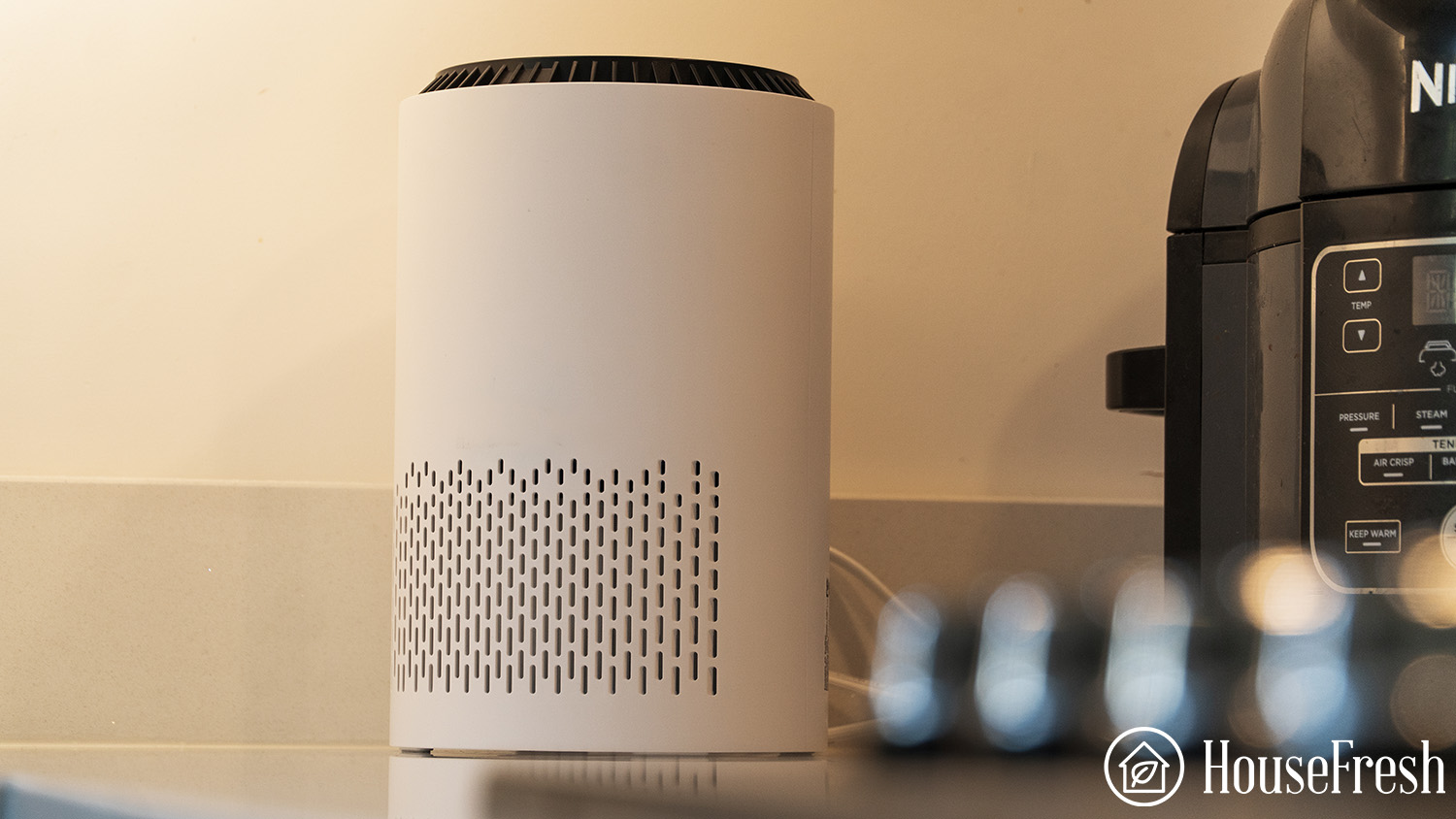
AROEVE MK01 Living room

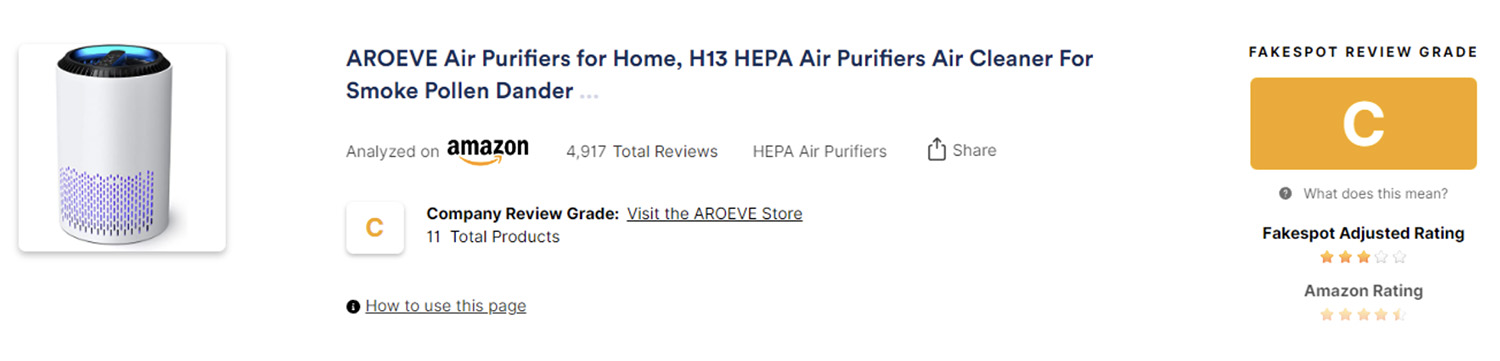
The reality becomes apparent when we use Fakespot and see that the MK01’s adjusted score is 3 stars, due to the evidence of review manipulation.

MK01 Fakespot Amazon Reviews

Personally, I would recommend paying $20 extra and going for the Taotronics AP-033, which operates much better across all areas and has been proven to clean the air effectively in rooms larger than the recommended size for the MK01. 

SOURCES

We calculated yearly costs associated with running the AROEVE MK01 24 hours a day, 365 days per year utilizing the latest average energy prices as reported by the Bureau of Labor Statistics of $0.174/kWh as of April 2024.

At HouseFresh, we have been reviewing air quality products since 2010. In all these years, we learned not to rely on manufacturers’ claims and the ever-so-glowing marketing materials. That is why we buy products with our own money, so we can write unbiased reviews after we’ve had enough time to evaluate air quality products in our home lab. Every unit we recommend has been thoroughly tested to assess its performance, energy consumption, and noise levels emitted in real-life environments. If you have any questions about our testing process for different types of air quality products, just drop us an email at danny@housefresh.com.

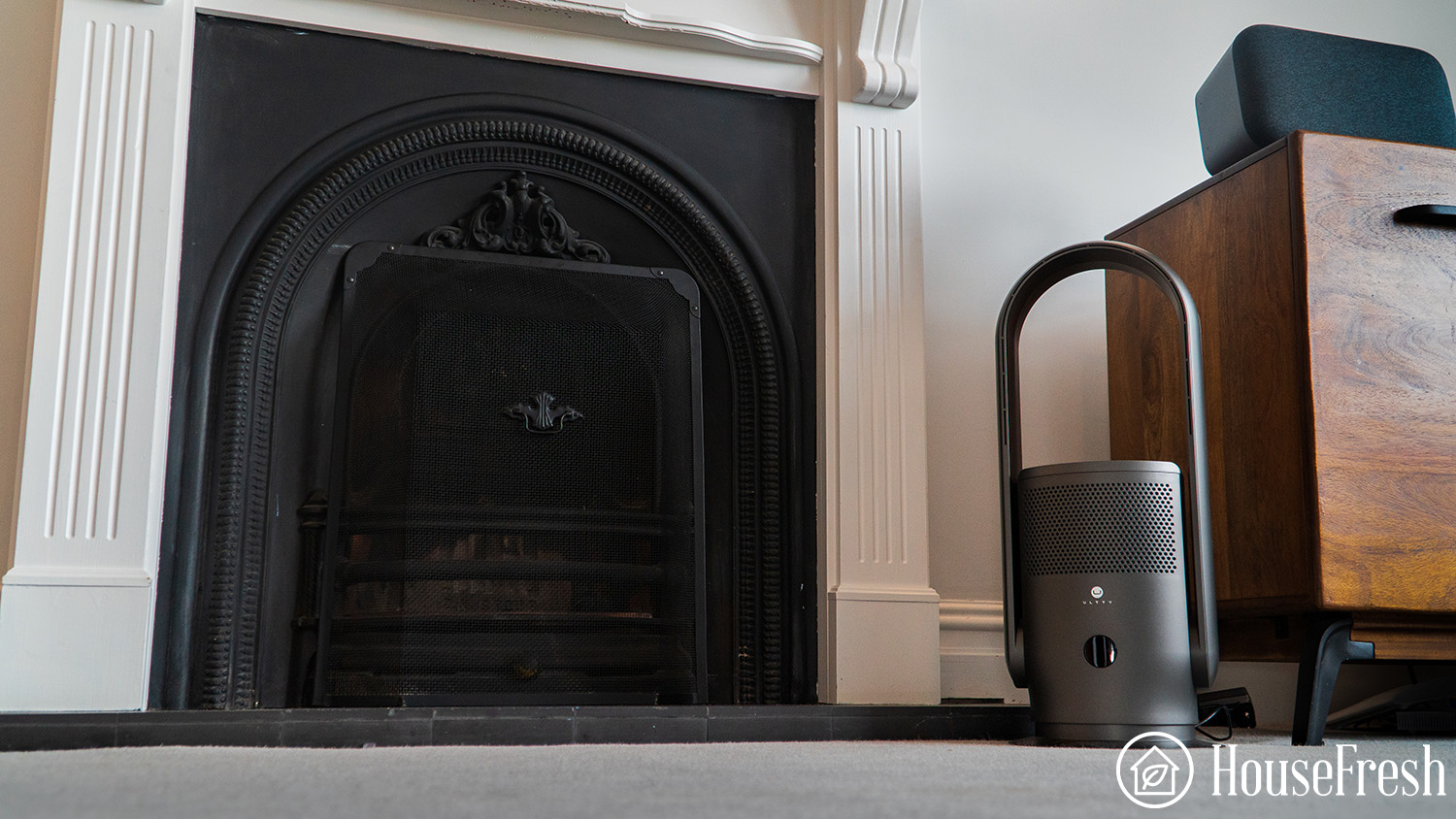
ULTTY Fan and Air Purifier Combo CR021 review

ULTTY CR021 Combo Editorial no logo

When I took a deeper look into ULTTY, the company behind this air purifier/fan combo, there was not much information on their website. When I looked at archive.org, the first site went live on July 28th 2020, and in their ‘About’ page mentions a factory you can visit but that info was removed from the latest version of the site. Analyzing their website details further, DNS records show that the site was registered in China, which makes sense. 

ULTTY seems like a smaller version of Taotronics. They are both Chinese manufacturers selling units directly to American customers. They don’t just sell fan and air purifier combos but also garden hoses and frying pans.

As a manufacturer who sells direct, they don’t waste time on marketing, with their value proposition defined by their low cost and ability to manufacture new designs quickly. They currently have multiple types of air purifier/fan combo units, and also a fan/heater combo that sells very well. 

In the space of air purifier and fan combo units, we have one main player which is Dyson, and the next smaller competitor would be ULTTY. The main point of difference between ULTTY and the competition is the price: consumers can spend $150 to get a seemingly similar unit to a Dyson air purifier/fan combo, which costs at least $799. 

The unit we are reviewing today is the CR021, although now there is also a CR022 for sale which is slightly larger and more powerful. The ULTTY CR021 uses an H13 HEPA filter and can work as a fan and air purifier combo or just one without the other. 

All this to say, we didn’t just gather some features and specs from the manufacturer’s website and called it a day.

how we test
How we test air purifiers

Read our full testing methodology.

The lowdown on the ULTTY Bladeless Fan and Air Purifier Combo CR021

danny

“The ULTTY CR021 does the job but takes a long time, making it an okay option for really small spaces or for those of you who don’t need to clean the air quickly.”

— Danny Ashton, Founder & Senior Writer

ULTTY CR021 Combo Editorial 2

$149.99 AT amazon

Can’t be bothered to read more? Then insert my key thoughts about this air purifier/fan combo straight into your brain below:

What we really like

The bladeless fan feels very sci-fi and futuristic.
It comes with an H13 HEPA filter, which is not normally used in cheaper air purifiers.
Simple remote that does everything you need.
Small size and lightweight, so easy to move around.
Price is much cheaper than big brand competitors.

What we think could be better

The lack of activated charcoal means it has no odor-removing ability.
Air cleaning performance is similar to a $70 air purifier.
No on-board sensor for indoor air pollution.
Cheaper build quality and design when compared with higher-priced models.

HouseFresh rating:★★★☆☆
Time to clean our 728 cubic feet test room (with the device running at top speed):2 hours and 11 minutes
Air filtration technology:H13 HEPA Filter
Recommended room size (4.8 air changes per hour):65 sq. ft.
Clean air delivery rate (CADR):42 CFM
Dimensions (in inches / in cm):28H x 18W x 16D inches (71H x 38W x 41D cm)
Weight (in pounds / in kg):8.6 lbs (3.9 kg)
Filter life:3 – 6 months
Noise level in decibels (measured from 3 ft. away with a sound level meter):32 dB – 59 dB
Electricity consumption in watts (recorded with an electricity usage monitor):Top speed: 25 watts
Estimated running cost (electricity consumption + official filter replacement):$98.11 per year
Cost per CADR cfm (based on dust CFM as reported by AHAM):$3.57
Manufacturer’s warranty:No warranty
Country of manufacture:Designed in the U.S., assembled in China

No Dyson, but still looks great

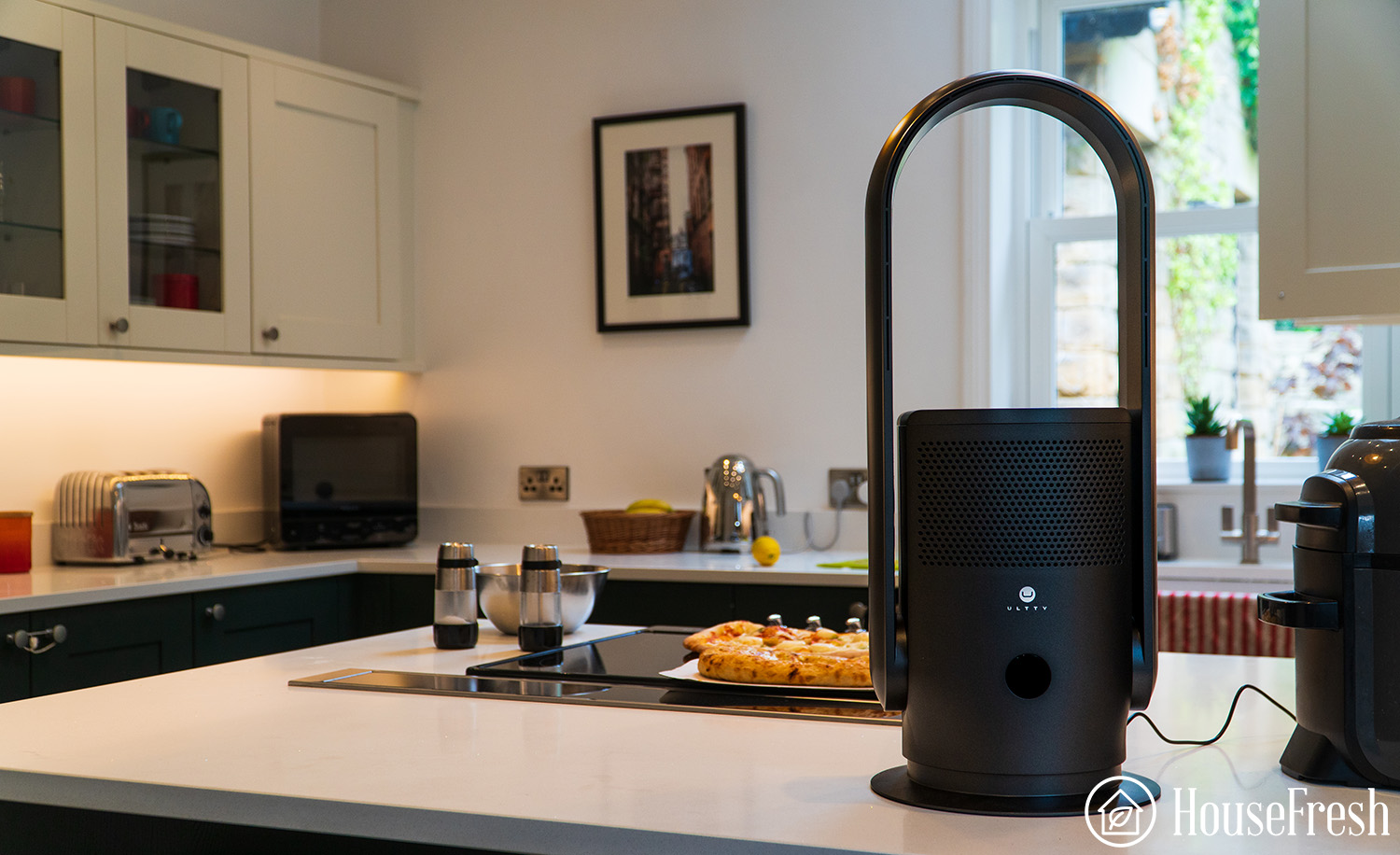
OK, so the ULTTY CR021 doesn’t look as sleek as the Dyson units, but considering its cost, it’s not a bad looker.

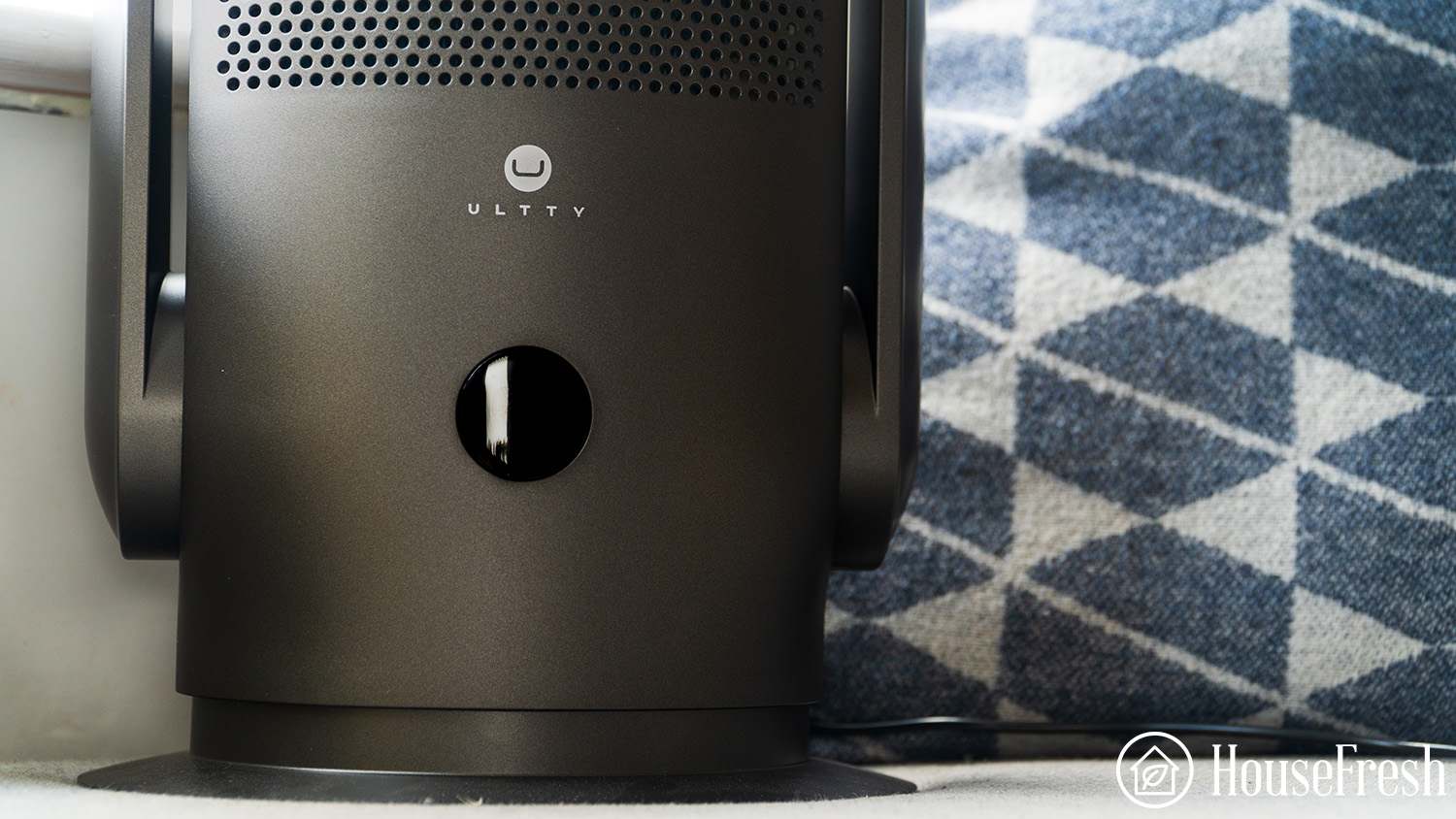
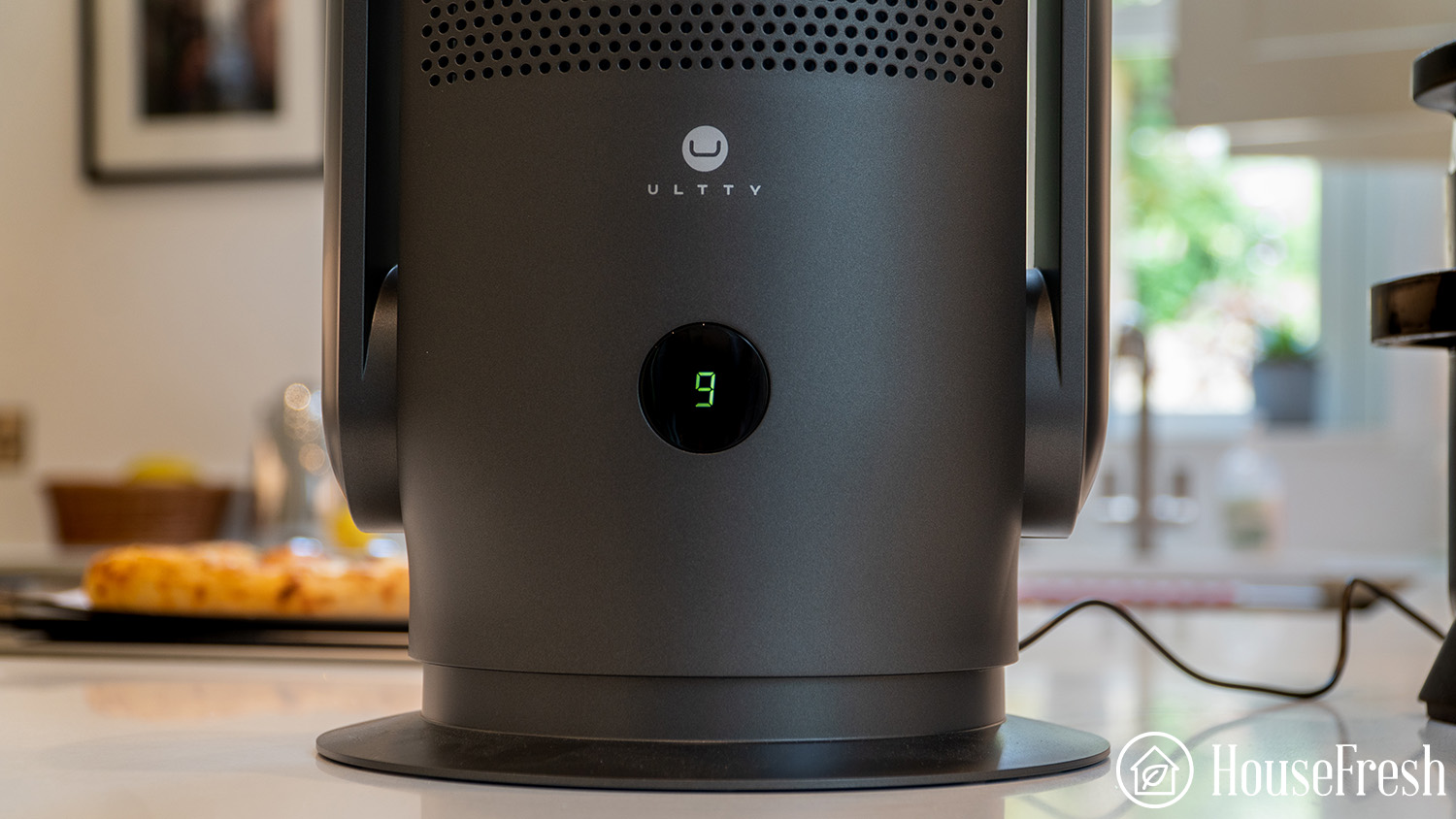
It still has the bladeless fan of the Dyson, with the main body used as the location for the HEPA filters. The screen is simple, with 9 speeds available but no onboard particulate or VOC sensors.

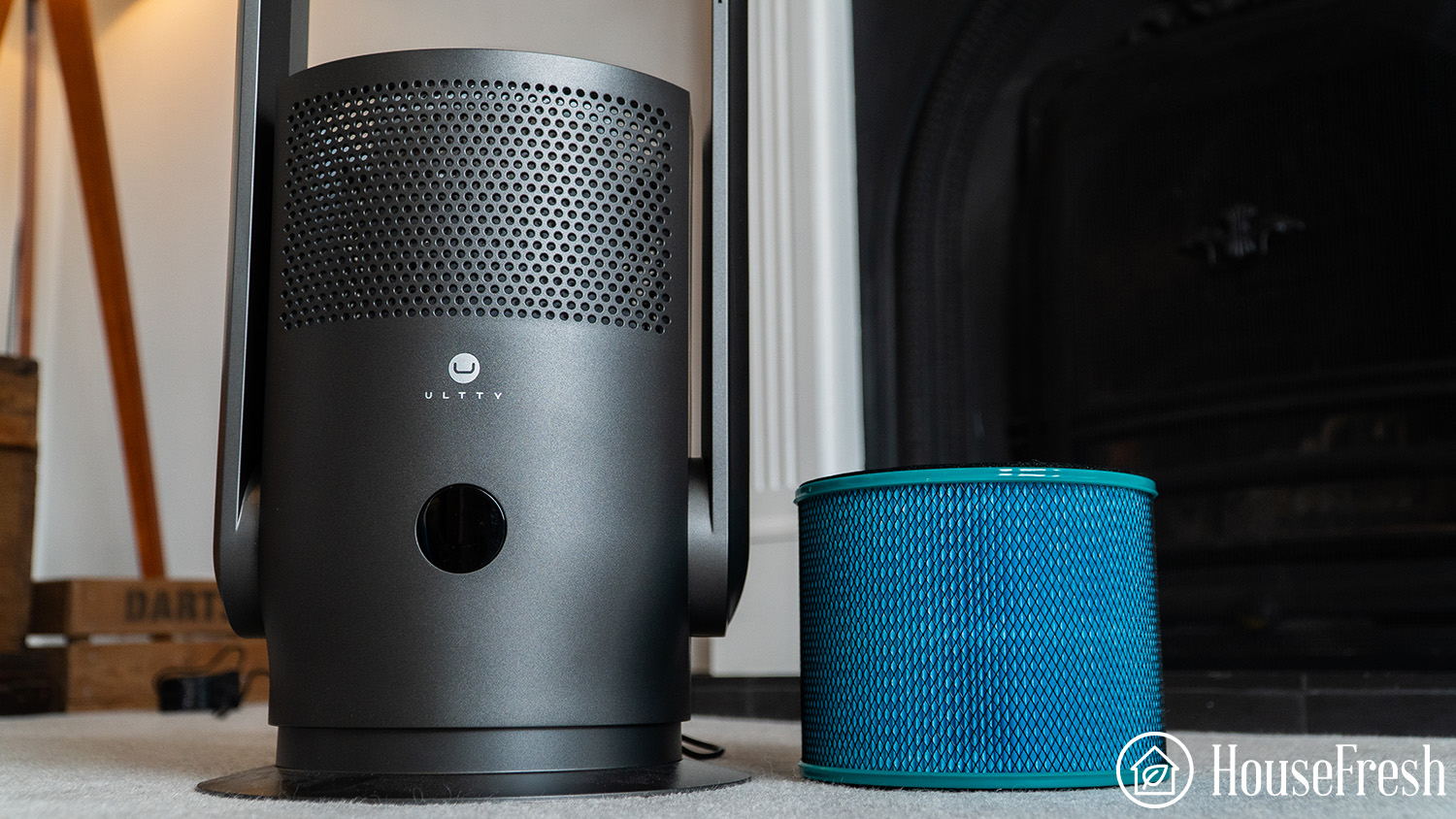
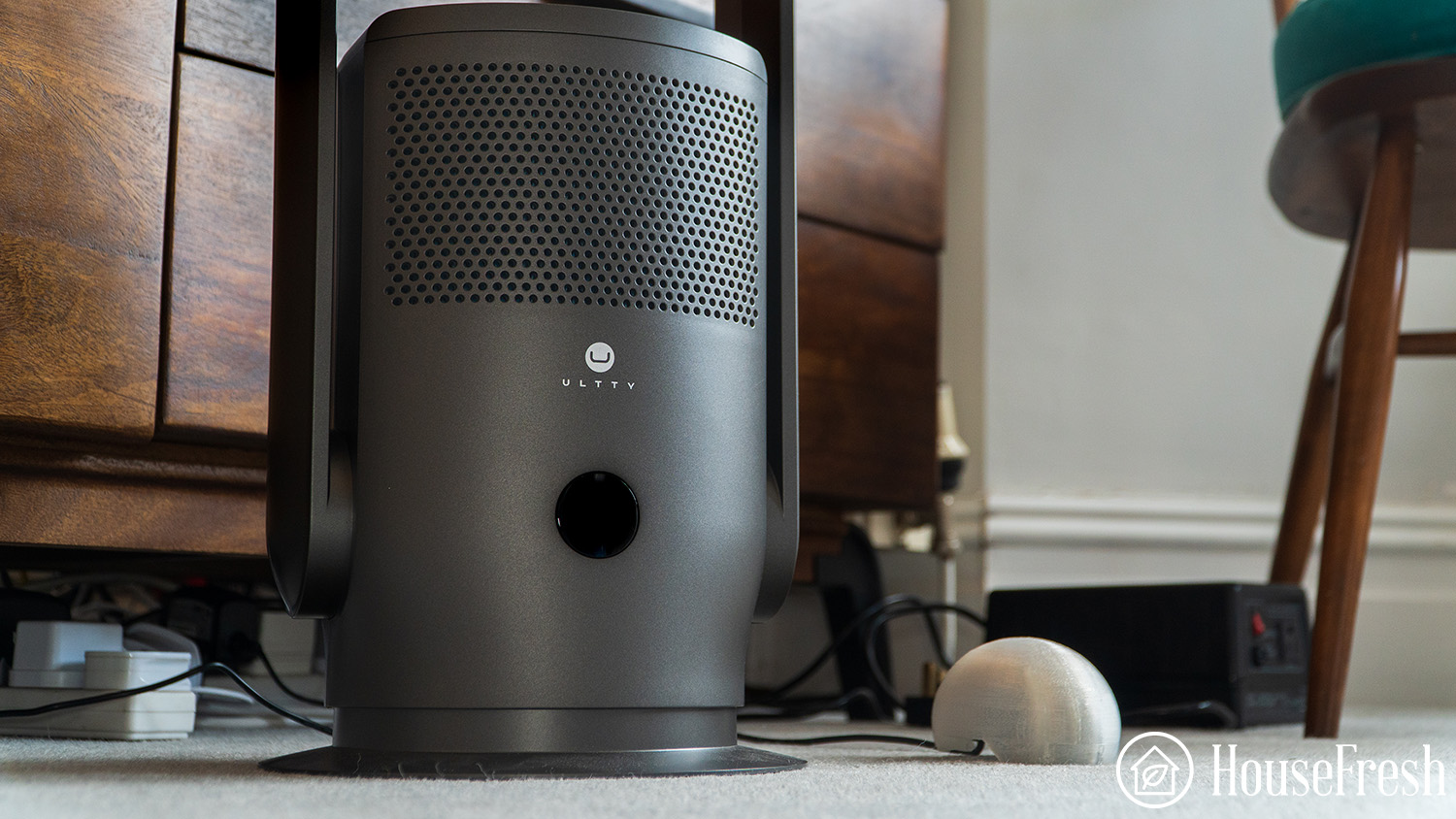
ULTTY CR021 Combo Front

$149.99 AT amazon

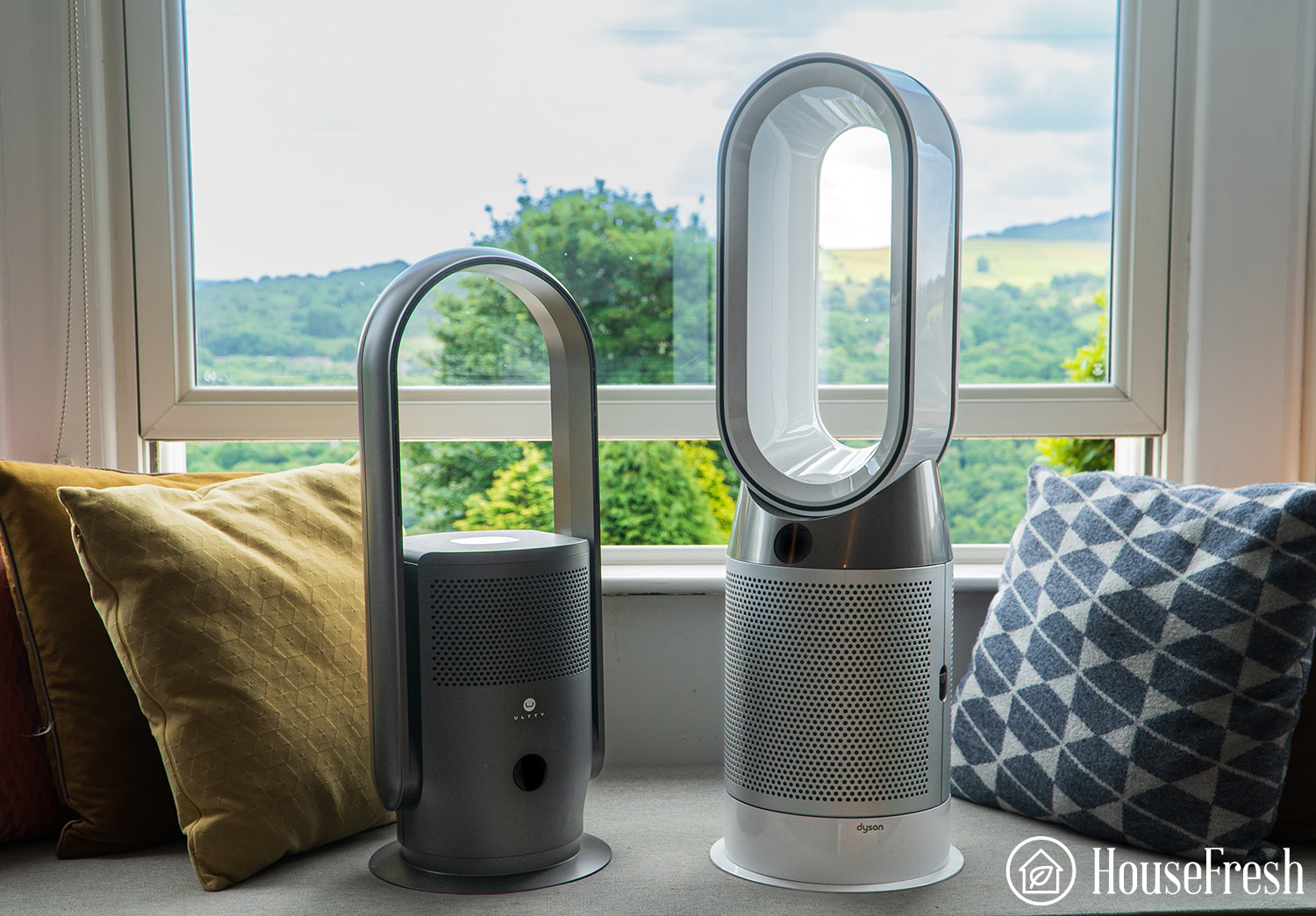
When you compare it to the Dyson combo units, it’s much shorter but has a similar floor footprint.

ULTTY CR021 Combo Comparrison

Unlike Dyson units that need an app to unlock all of their capabilities truly, the ULTTY keeps things simple with an old-school remote control. 

ULTTY CR021 Combo Control

$149.99 AT amazon

With the remote, you can adjust the level of rotation, the fan speed, and also set night mode or timers. While an app would be nice, I would be worried that it wouldn’t be built to the high standard we saw with the Dyson link app, so I am much happier with this simple approach to using this fan/air cleaner.

Filters won’t remove odors

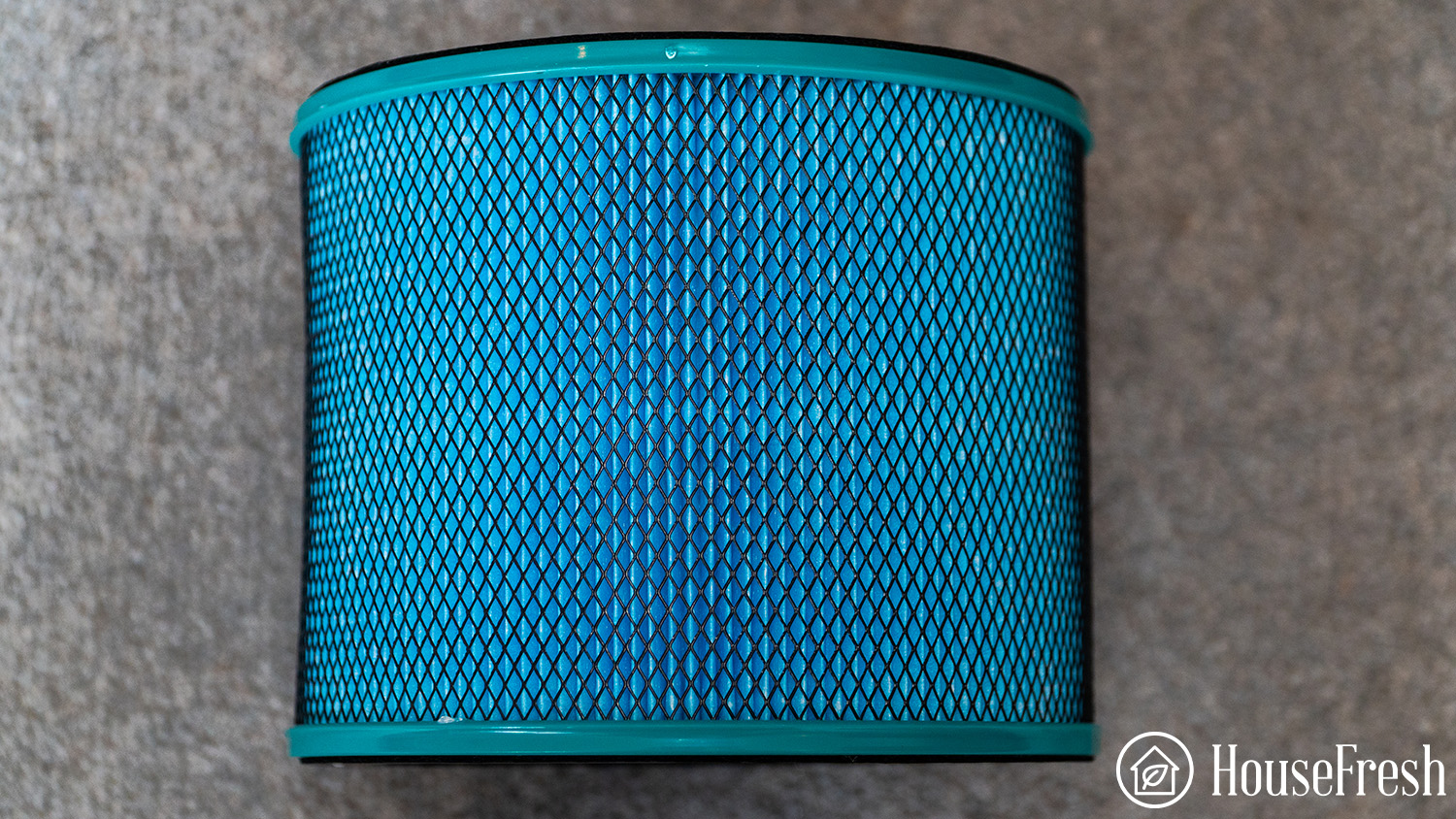
The ULTTY CR021 comes with an H13 HEPA filter. This is the same medical-grade filter Dyson uses, but I think this was a mistake for such a low-powered fan.

Lower-grade HEPA filters can still remove many small particulate particles from the air and are usually a better fit for air purifiers with low-power fans.

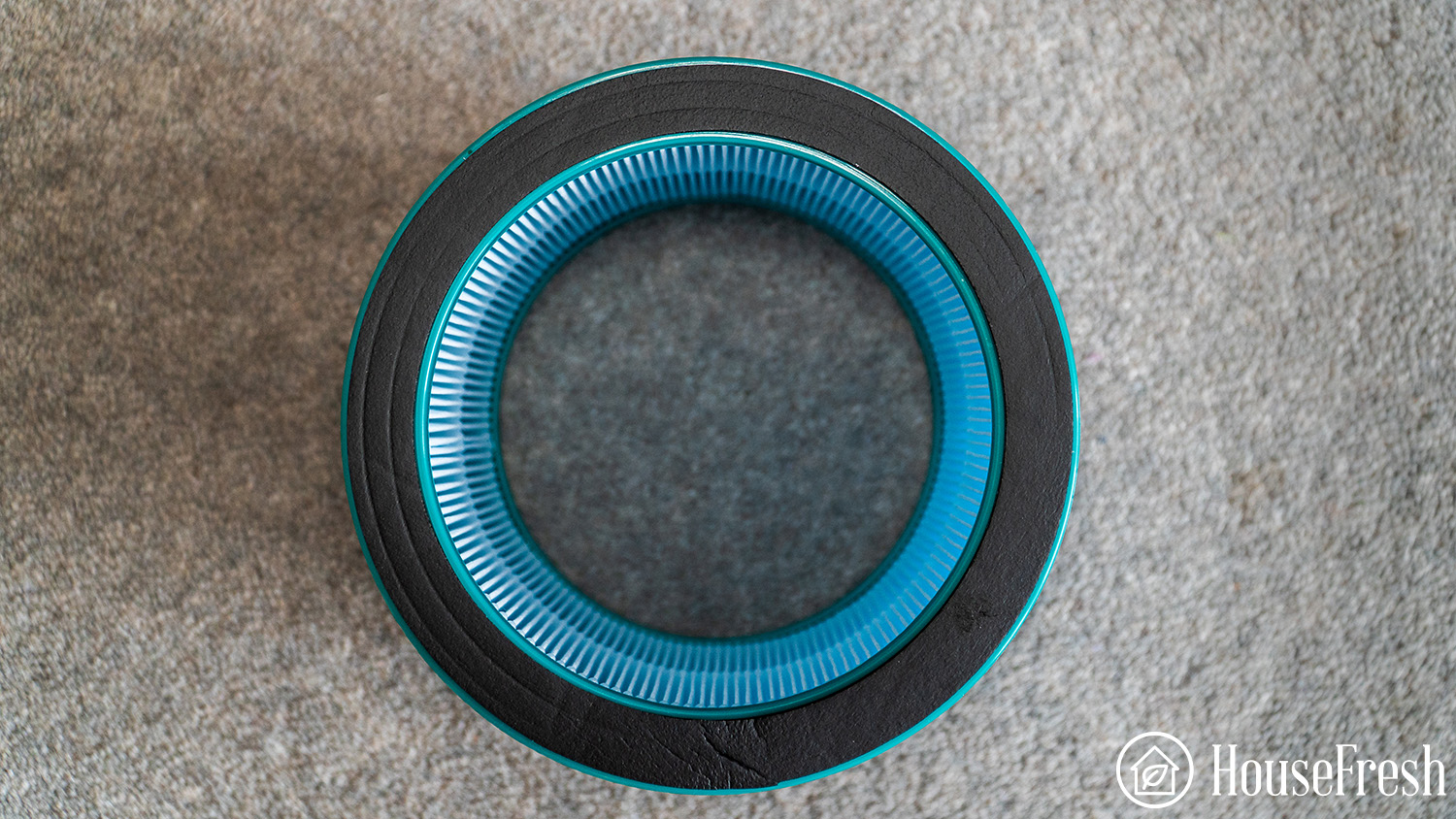
ULTTY CR021 Combo Filter 2

The higher the grade of HEPA, the denser the fibers and the harder it is to push air through them. This was one of the reasons we saw such a high cleaning score for the Smart Air S even though it used H11.

ULTTY CR021 Combo Filter 1

The big downside about the type of filter ULTTY uses is that it has no activated charcoal – it doesn’t even use the cheap impregnated type we see on lower-budget versions. This means that while the HEPA will remove particles, all odors will not be removed. This feels like a big home goal, as I know that most household users will want to remove odors. That’s why we see activated charcoal used in budget air purifiers like the Levoit Core 300.

ULTTY CR021 Combo with filter

$149.99 AT amazon

The lack of activated charcoal is something that I really hope this manufacturer looks at for future versions, as right now, it has no odor-removing ability.

Changing the filter on the ULTTY CR021 is not difficult at all. Watch the video to find out how to do it:

This might seem silly, but do make sure you remove the filter from the plastic bag it arrives in. Every manufacturer will keep filters sealed so they are not used passively. If you don’t remove the plastic, the air will not be cleaned, and you might even cause overheating problems or melt the plastic. 

The ULTTY CR021 cleared our test room in 2 hours and 11 minutes 

As with all the reviews we perform here at HouseFresh, we went deep to see how well the ULTTY CR-021 is at removing pollutants from the air. 

ULTTY CR021 Combo Testing

We did this by performing the same test that all our air purifiers are put through to see how fast they clean one incense stick’s worth of pollutants. As all our air purifiers are tested in the same room (a 728 cubic ft office), we can compare performance across all models and brands. 

We use a Purple Air indoor sensor to export the pollutant count every 2 minutes for PM1.0ug/m3, PM2.5ug/m3, and PM10.0ug/m3. As we also have a professional background in data analysis and information design, we like the visualize the data in an interactive chart for our readers to explore:

I knew this fan/air purifier combo wasn’t going to beat records for cleaning particles from the air based on its price and reported CADR, but it was good to see that it did manage to remove all pollutants within 131 minutes. 

Air cleaning performance test results

In comparison, the Dyson HP04 air purifier and fan combo cleaned the air 47 faster than the ULTTY CR021, but this comes at a cost of nearly $900. Looking at pure air purifier performance, you will see that the ULTTY device is similar to the Levoit Core Mini with 113 minutes. However, this combo unit managed to clean the air quicker than the Aroeve MK01 which took 163 minutes with its pointless HEPA H13 filters.

Noise levels test results

The ULTTY has a maximum sound of 59 dB, less than the $360 Molekule Mini but more than the 44.5 dB we see with the Levoit Core mini. It’s a good unit for sound especially considering the function of a fan which is inherently noisier.

But feel free to listen to the actual noise levels in the video below to see if the sound would be a good fit for your ears:

The cost to run a ULTTY Bladeless Tower Fan and Air Purifier Combo CR021: $98.11 per year

Most people just look at the initial price of an air purifier, or as in this case, a fan/air purifier, but there are extra long-term costs you have to consider, with both electricity and filter costs needing to be considered. 

1. Electricity costs = $38.13

Energy costs are not getting cheaper and are doubtful to see any big drops in the next few years, so energy usage is now something that every homeowner needs to consider. There is no point in getting a gadget that uses so much electricity that it outweighs any benefit it provides. 

With a top wattage use of 25 watts, this air purifier/fan will not break the bank as even 24-hour usage will only cost $38.13 a year according to the U.S. average energy prices of the Bureau of Labour Statistics.

The fact that this does two jobs could be something to consider, as running both a fan and air purifier could cost much more than this.  Overall, it’s an energy efficient machine for the price. 

2. Filter costs = $59.98

HEPA technology is remarkable — just using fabric filters, you can remove tiny particles and viruses from the air. But the main downside is that these filters will need replacing over time if they are expected to keep cleaning air with the same performance. We based our calculations on filter replacement required every six months.

The genuine filters from the manufacturer cost $29.99, which might seem cheap, but considering it has no activated charcoal, is a little higher than I would want to pay. If you are open to generic filters, you can get them for under $15, which seems a fairer price considering the technology used. 

In comparison, you pay $70 for genuine Dyson air purifier replacement filters, which do contain activated charcoal, but you can see how these costs can start to add up. While not the cheapest filters, you can a 2-pack of generic filters for $39.39.

ULTTY H13 HEPA Replacement Filter with Medical Coating, True HEPA Filter For R021/ R020 Purifying Fan, Medium
PUREBURG Replacement Filter Compatible with ULTTY R021 R21 R020 R20 Bladeless Tower Fan + Air Purifier 2-in-1 & MODERE Hot + Cold Air Purifier,2-Pack H13 HEPA Air Clean
Technology
H13 HEPA + special medical coating
2-Pack High-efficiency Replacement HEPA Filters
More information
Price
$29.99
$32.42
ULTTY H13 HEPA Replacement Filter with Medical Coating, True HEPA Filter For R021/ R020 Purifying Fan, Medium
Technology
H13 HEPA + special medical coating
More information
Price
$29.99
PUREBURG Replacement Filter Compatible with ULTTY R021 R21 R020 R20 Bladeless Tower Fan + Air Purifier 2-in-1 & MODERE Hot + Cold Air Purifier,2-Pack H13 HEPA Air Clean
Technology
2-Pack High-efficiency Replacement HEPA Filters
More information
Price
$32.42

Bottom line: Should you get an ULTTY Combo CR021?

There are some major downsides to the ULTTY Bladeless Tower Fan and Air Purifier Combo CR021.

The lack of activated charcoal seems like something that could be fixed easily without a massive increase in price for filter replacements. As for the fan, I am as happy as I was with the Dyson — having a bladeless fan is great for when you have kids as you don’t have to worry about them poking it with their fingers.

ULTTY CR021 Combo Editorial 1

$149.99 AT amazon

If you like the idea of a fan and air purifier that doesn’t cost the earth, then you don’t have any other options currently than the ULTTY models. But if you are more worried about getting the best air cleaning bang for your buck, you would be better off with a cheap fan and a budget air purifier as you will get far more performance per $ spent. 

If you really want a combo fan + air purifier and have the money to spend, I would recommend the Dyson combo units as they look way better, have better performance, and have a ton of extra smart features with an app that is actually useful, but it does come at a cost that is closer to $1000.

SOURCES

We calculated yearly costs associated with running the ULTTY Bladeless Tower Fan and Air Purifier Combo CR021 24 hours a day, 365 days per year utilizing the latest average energy prices as reported by the Bureau of Labor Statistics of $0.174/kWh as of May 2024.

GermGuardian AC4825e review

Germ Guardian AC4825e Kitchen Counter NO LOGO 1

The GermGuardian AC4825e is the top-selling unit for Guardian Technologies – a US company based in Ohio that was founded in 2002 and creates air purifiers, humidifiers, and essential oil diffusers. Guardian Technologies was bought by Lasko Products, a manufacturing company that has been operating for around 100 years. Lasko Products makes humidifiers, portable heaters, and fans with 376 employees based in Philadelphia.

The AC4825e has been around since 2013, and while demand for this unit has waned over the last few years, it has regularly been on a major top-selling air purifier list. The main area that the AC4825 stands out is that it is Aham verified, and it’s available for less than $100.

Here at HouseFresh, we’re unashamed air purifier nerds, so we constantly research CADR rankings and all the other science bits published by the manufacturers. BUT we put them to one side to perform our tests. I wouldn’t be 100% confident recommending a unit without playing with all its settings and putting it through our real-life performance testing first.

how we test
How we test air purifiers

Read our full testing methodology.

The lowdown on the GermGuardian AC4825e

Danny Ashton HouseFresh
“A budget air purifier that is not worth your money in 2023, where you will find budget units that perform better and have lots of additional features for the same price as the AC4825e.”
— Danny Ashton, HouseFresh Founder & Senior Writer
GermGuardian AC4825 Living Room logo

PRICE on amazon PRICE on EBAY

Not in the mood to read the full review? We know that feeling. Save yourself some time and check out our pros and cons. You never know; you just might want to read on.

What we really like

55dB (sound level) at the most powerful speed is similar to other units at this price level.
You can find generic filters for a good price – $17 for four carbon filters and one HEPA filter.
Cheap initial price
Great clear screen onboard sensor

What we think could be better

Performance scores were poorer than we expected, with the CADR od only rating of 125 CFM.
It’s a power-hungry unit – 45 watts to clean our test room in 104 minutes.
UV-C is useless – we didn’t see any difference when switching it on or off and would recommend choosing the non-UV-C version as it uses less electricity.

The GermGuardian AC4825e is aimed at the budget range of air purifiers, with its top competitor being the Levoit 300.

HouseFresh rating:★☆☆☆☆
Time to clean our 728 cubic feet test room (with the device running at top speed):1 hour and 44 minutes
Air purifier technology:True HEPA with UV-C
Recommended room size (4.8 air changes per hour):167 sq. ft.
Clean air delivery rate (CADR):Dust: 118 CFM
Smoke: 99 CFM
Pollen: 125 CFM
Dimensions (in inches / in cm):21.5H x 6.75W x 10.25D inches (54.61H x 17.14W x 26.03D cm)
Weight (in pounds / in kg):8.6 lbs (3.9 kg)
Filter life:6 – 8 months
Noise level in decibels (measured from 3 ft. away with a sound level meter):Speed 1: 40 dB
Speed 2: 44.8 dB 
Speed 3: 51.6 dB
Speed 4: 55.6 dB
Electricity consumption in watts (recorded with an electricity usage monitor):Standby mode: 0 watts
Speed 1: 35.45 watts
Speed 2: 39.76 watts
Speed 3: 44.25 watts
Estimated running cost (electricity consumption + official filter replacement):$121.49 per year
Cost per CADR cfm (based on dust CFM as reported by AHAM):$0.72
Manufacturer’s warranty:3 years
Country of manufacture:China

Old-fashioned design

1990’s called and they want their design back.

GermGuardian AC4825 Close Up logo

But in all seriousness, the design does feel a little old-fashioned, but it does have a small floor space required as it’s so tall. It looks more like a fan than an air purifier which might be a good thing, depending on how you want to use it.

It has a super simple menu system with a circular wheel to control power and a one-click button to switch the UV mode on or off.

GermGuardian AC4825 Controls logo

At the $99 price point, the best comparison to make is with the Levoit Core 300. I prefer Levoit’s design, but maybe you might like the GermGuardian AC4825e – beauty, after all, is in the eye of the beholder.

Germ Guardian AC4825e VS Levoit Core 300S logo

HEPA filters below par

The GermGuardian AC4825e is a relatively simple unit with two filters (true-HEPA and activated charcoal), which you can access by removing the back panel.

GermGuardian AC4825 Open Filter logo

The quality of the True HEPA filter is fair, and it covers the entire flow space of the air purifier.

GermGuardian AC4825 Filter true HEPA logo

It’s worth noting that the activated charcoal filter is relatively cheap as it is made of fabric covered in charcoal.

GermGuardian AC4825 Dual Filter logo

This is a big difference when compared with higher-end and more modern air purifiers that use pellets of charcoal -but it’s not just about expensive units; when looking at other budget air purifiers such as the Levoit Core 300 and TaoTronics AP003, they both use pellet-based charcoal for the activated carbon filters.

GermGuardian AC4825 Fillter activated charcoal logo

Tip

If you are serious about removing odors, I would always look away from the GermGuardian AC4825e and instead go for air purifiers that use pellets of activated charcoal and have filters packed with at least 1lb of carbon.

If you have an issue with VOCs or Formaldehyde, go for something like the IQAir Healthpro Plus, which uses a combination of zeolite and other chemicals within a filter along 5 lbs. of activated charcoal.

Returning to the GermGuardian AC4825e, the filter is rated at H13 HEPA. After spending some time reading the reviews for replacement filters, there seems to be a change in manufacturer as some customers found that the latest filters don’t seem to have the same quality as those bought previously.

Replacing the filter when the time comes is not complex:

It is worth mentioning that the GermGuardian team has reported a new manufacturer has been found for the HEPA and activated charcoal filters. Hence, they expect newer filters to perform better than older ones.

The last point I will make on the filter technology of the GermGuardian AC4825e is that I think UV-C lights are useless on portable air purifiers, especially at this low price point, and this air purifier has yet to change my mind.  

The GermGuardian AC4825e cleared our test room in 104 minutes

The big question with any air purifier is how well it cleans the air.

GermGuardian AC4825 Performance Testing logo

For all the air purifier tests we conduct at HouseFresh, we test them in the same-sized room. This allows us to compare units with one metric—how long did it take to remove pollutants from the air?

We use incense to create pollutants of different sizes and use a Purpleair indoor monitor to track how quickly these are removed over time. The sensors on the Purpleair device can track the number of pollutants of size 1.0ug/m3, 2.5ug/m3, and 10.0 ug/m3 every few minutes. The room we test is the size of a small bedroom with a total capacity of 728 cubic ft – this allows us to test units designed for all types of spaces.

Based on the CADR score of 125, we expected this unit to perform at the same level as the Levoit PUR131, which cleared our room of all pollutants in 60 minutes. 

Air cleaning performance, compared

Sadly, the GermGuardian AC4825e took 104 minutes to remove all pollutants from our test room. This is a lot more time than we would expect based on the pure CADR score and is one of the big reasons we like to do our own testing. This score is not too far from the much cheaper Levoit Mini that cleaned the room in 113 minutes for far less money and electricity. 

These numbers make it hard to recommend this unit on a pure performance to $ ratio.

Noise levels test results, compared

One area in which the GermGuardian AC4825e fared OK was with sound: it reached a maximum of 55.6 dB, which is in the same range as other units at this price level.

Take a listen for yourself below to get a better idea:

The cost to run a GermGuardian AC4825e: $121.49 per year

1. Electricity costs = $67.49

One of the costs many people ignore when looking to buy an air purifier is running it. If you have an issue with an allergen in your outdoor environment, you will need to ensure your unit is running 24/7, and costs can quickly add up. 

When we review air purifiers at HouseFresh, we use an electricity meter to see how much power is being used at the highest speed. At the maximum power setting with the UV-C mode on, the GermGuardian AC4825e pulled 44.25 watts which equates to $67.49 in one year, according to data from the U.S. Bureau of Labor Statistics.

This compares very unfavorably to many of the newest air purifiers on the market. The Blueair Blue Pure 311 Auto uses a maximum of 32 watts but can clean our room in 21 minutes. I have to assume that there have not been any changes to the fan efficiency since the first AC4825 came out in 2012, as it shows poor levels of efficiency.

2. Filter costs = $54

Another cost often forgotten about when buying a new air purifier is replacement filters. The way that mechanical filters like HEPA and Activated Charcoal work are that, over time, they become full of pollutants and beyond a certain point, performance will drop unless you replace them. 

It’s recommended that for the AC4825e air purifier, you must replace the filters every six to eight months, depending on usage.

Assuming that you will have to change them every 6 months, the annual cost of filters for the original filters would be $54. This compares fairly well with other units, such as the Levoit Core 300, which could cost you up to $80 in filter replacements in one year. Still, it’s also worth noting that the activated charcoal filter used by the AC4825e is much cheaper and less effective than the Levoit’s, which uses charcoal pellets instead of the less effective impregnated fibers.

GermGuardian Filter B HEPA Pure Genuine Air Purifier Filter, Removes 99.97% of Pollutants, Wildfire Smoke, Odors, for AC4825, AC4300, AC4850, AC4880, AC4900, CDAP4500, AP2200, Black/Yellow, FLT4825
Filter-Monster – Replacement Filter with Carbon Pre-Filter Set, 2 Filters and 2 Carbon-Filter Pack - Compatible with GermGuardian Air Purifier FLT4825 Size B
Technology
True HEPA filter with Activated Charcoal layer
More information
Price
$19.89
$18.99
GermGuardian Filter B HEPA Pure Genuine Air Purifier Filter, Removes 99.97% of Pollutants, Wildfire Smoke, Odors, for AC4825, AC4300, AC4850, AC4880, AC4900, CDAP4500, AP2200, Black/Yellow, FLT4825
Technology
True HEPA filter with Activated Charcoal layer
More information
Price
$19.89
Filter-Monster – Replacement Filter with Carbon Pre-Filter Set, 2 Filters and 2 Carbon-Filter Pack - Compatible with GermGuardian Air Purifier FLT4825 Size B
Technology
True HEPA filter with Activated Charcoal layer
More information
Price
$18.99

Bottom line

The AC4825e is an old air purifier, and it’s starting to show when you compare it with newer units from brands like Levoit and Medify.

The Levoit Core 300 and Medify MA-14 are found for less than $100 and perform much better in our performance test than the AC4825e. 

Germ Guardian AC4825e Kitchen logo

Combined with its high electricity costs, even the fairly cheap replacement filters for the AC4825e can’t make us recommend the GermGuardian AC4825e over many other budget units on the market. 

If you are looking to buy the AC4825e, be sure to check out our reviews first for the Levoit Core 300 and Medify-14 as you will get much more for your money both in the short term and long term.

SOURCES

We calculated yearly costs associated with running the GermGuardian AC4825e 24 hours a day, 365 days per year utilizing the latest average energy prices as reported by the Bureau of Labor Statistics of $0.174/kWh as of April 2024.

Molekule Air Mini review — Will you regret buying it?

Molekule mini review

Molekule is relatively new to the world of air purifiers. Dharendra Yogi developed a photo-voltaic technology called PECO or photoelectrochemical oxidation which is meant to be able to eliminate pollutants at a molecular level instead of using mechanical filters that trap pollutants like the rigorously tested, scientifically proven, industry-standard HEPA.

In the early days, it got a ton of great press with awards from Popular Science, SXSW, and even a design award from Fast Company.

Since then, the press hasn’t been so kind, with both Consumer Reports and The Wirecutter giving poor reviews of their units. In 2019, after a complaint from Dyson, the Better Business Bureau National Advertising Division recommended that Molekule stop 26 advertising claims, including the discontinuance of superiority claims vs. HEPA filters. Molekule removed all these false advertising claims from their marketing materials. 

You can see this by checking their corporate website from 2018 on Archive.org and comparing it with their current homepage at Molekule.com. You will notice that many of the previous scientific claims are now totally missing from the website.

Following this controversy, it’s safe to say I wasn’t particularly excited about any of the air purifiers from Molekule. Still, it’s only fair that we test these units in the same way we test all air purifiers at HouseFresh. 

As always, we paid with our own money for the Molekule Air Mini to avoid any biases and we don’t have any existing relationships with Molekule or any air purifier manufacturer. Our ultimate goal is to move beyond the marketing jargon to share our experience using these units in our home, running our own tests on them so we can compare them with other available units on the market.

We put the Molekule Air Mini through a three-stage test we designed to evaluate the performance of air purifiers:

how we test
How we test air purifiers

Read our full testing methodology.

Right, let’s get to it.

The lowdown on the Molekule Air Mini


danny

“The Molekule Air Mini is the worst air purifier I have tested. It uses a ton of energy, is painfully loud, and takes forever to clean the air. With so many great units on the market, there is no reason to buy this air purifier.”

— Danny Ashton, Founder & Senior Writer

Molekule Air Mini Living Room

PRICE on amazon PRICE on EBAY

On a rush? Here are the main pros and cons you need to keep in mind before considering investing your money on the Molekule Air Mini.

What we really like

When I forget everything else, I can say that the Molekule Mini is a good-looking gadget
Fairly simple touchscreen that works
Small, portable size
PECO is an interesting technology — maybe there are some health benefits beyond removing particulate matter efficiently, but I fail to see an obvious one

What we think could be better

I found the performance-to-price ratio aligned with what The Wirecutter found — even a very cheap sub $100 HEPA unit will perform better
The Android app just didn’t connect
It uses a lot of electricity, compared to other units, such as the Levoit Core 300S
It is very loud, it was uncomfortable for me at the highest level
High filter costs mean you would need to spend $199.98 to ensure your Molekule Air Mini is cleaning the air efficiently

The specs

This Molekule Air Mini has an RRP of $329.99.

It doesn’t have a published CADR with is annoying, but not to worry as we will test this unit in the same room we test all our units so we can compare its air cleaning performance with similar units that do have a published CADR. Molekule suggests the Air Mini is suitable for rooms size of 250 square feet so we would assume it has a CADR of 160-180 to be able to clean the air in the room four times in an hour. 

As a fan/air purifier, we would expect a much lower CADR score for the price, and as expected, this unit is really designed for smaller spaces or those not needing to clean a lot of air quickly. Although at this budget, I’m expecting a better performance than Honeywell HPA300 or the Levoit Core 400S which are both available for less money.

HouseFresh rating:★☆☆☆☆
Time to clean our 728 cubic feet test room (with the device running at top speed):53 minutes
Air purifier technology:PECO Air Purification Filter Technology
Recommended room size (4.8 air changes per hour):Up to 250 sq. ft.
Clean air delivery rate (CADR):Not available
Dimensions (in inches / in cm):12H x 8.26W x 8.26D inches (30.48H x 21W x 21D cm)
Weight (in pounds / in kg):11.8 lbs (5.35 kg)
Filter life:6 months
Noise level in decibels (measured from 3 ft. away with a sound level meter):Speed 1: 35.6 dB
Speed 2: 38.3 dB 
Speed 3: 46.4 dB
Speed 4: 57.8 dB
Speed 5: 68.2 dB
Electricity consumption in watts (recorded with an electricity usage monitor):Standby mode: 0 watts
Speed 1: 15.38 watts
Speed 2: 16.78 watts
Speed 3: 18.7 watts
Speed 4: 24 watts
Speed 5: 49.62 watts
Estimated running cost (electricity consumption + official filter replacement):$275.66 per year
Cost per CADR cfm (based on dust CFM as reported by AHAM):$6.10
Manufacturer’s warranty:2 years
Country of manufacture:U.S. and Malaysia


The Molekule Air Mini looks the part

You can totally understand why this device has won design awards

The Molekule Air Mini is small, cute, and wouldn’t look out of place in any high-end modern-designed home. 

Molekule Mini Close Up

The size is something that really stands out when compared to traditional “mechanical air filters” which are often much bigger, as filter size directly equates to their performance. The assumption is that the PECO technology is able to achieve similar efficacy but without the requirement for large filters that you find with HEPA and activated charcoal. 

You can see a big difference in size when we compare it with the Dyson HP04, and you could easily hide a unit of this size without taking over the room. 

Molekule Mini vs Dyson HP04

Similar to the Levoit Core series of air purifiers, the Molekule is a cylindrical shape that you turn to reveal the PECO filter unit.

It’s worth noting that the bulk of the filtering doesn’t happen inside the filter but instead, it uses UV-A light that interacts with the chemicals inside the filter to destroy pollutants. 

Molekule Mini Top Down

The filter was easy to remove, as you can see in the video below:

The controls are easy enough to use

If buttons aren’t your thing, the Molekule Air Mini also comes with app support

The Molekule Air Mini comes with touchscreen buttons on the top of the unit, making them a little hard to see in bright light. That said, the controls are easy to use.

If buttons aren’t your thing, it also comes with app support for Google Play and Apple. I only got a chance to test the Android version of the Molekule app. 

Similar to the Dyson Link App, you need to sign up for an account before you can use it. Getting my account set up and the app installed was simple – the challenge started when I tried to connect Molekule Air Mini…

Molekule Mini App

I’m by no means a technophobe and have a solid Wi-Fi connection around the house, but I just couldn’t get the air purifier to connect to my Wi-Fi, rendering the app pretty useless in my experience. 

I saw that I wasn’t alone when I looked at the Google Play reviews. The app has many reviews complaining about this very issue:

Molekule Air Puriifier App Review Android


A quick search through app user reviews on Apple’s App Store made it clear that this is not an isolated issue or a problem with the Android app:

Molekule Air Puriifier App Review iPhone

Considering the price of the Molekule Air Mini, it’s unfortunate that the app is failing the users and that these smart features are not working as well as they do for other air purifier brands.

That said, I was still able to use the unit using the touch buttons, but it’s a little concerning that a company supposedly at the forefront of a new type of technology (PECO) can’t create an app that works.
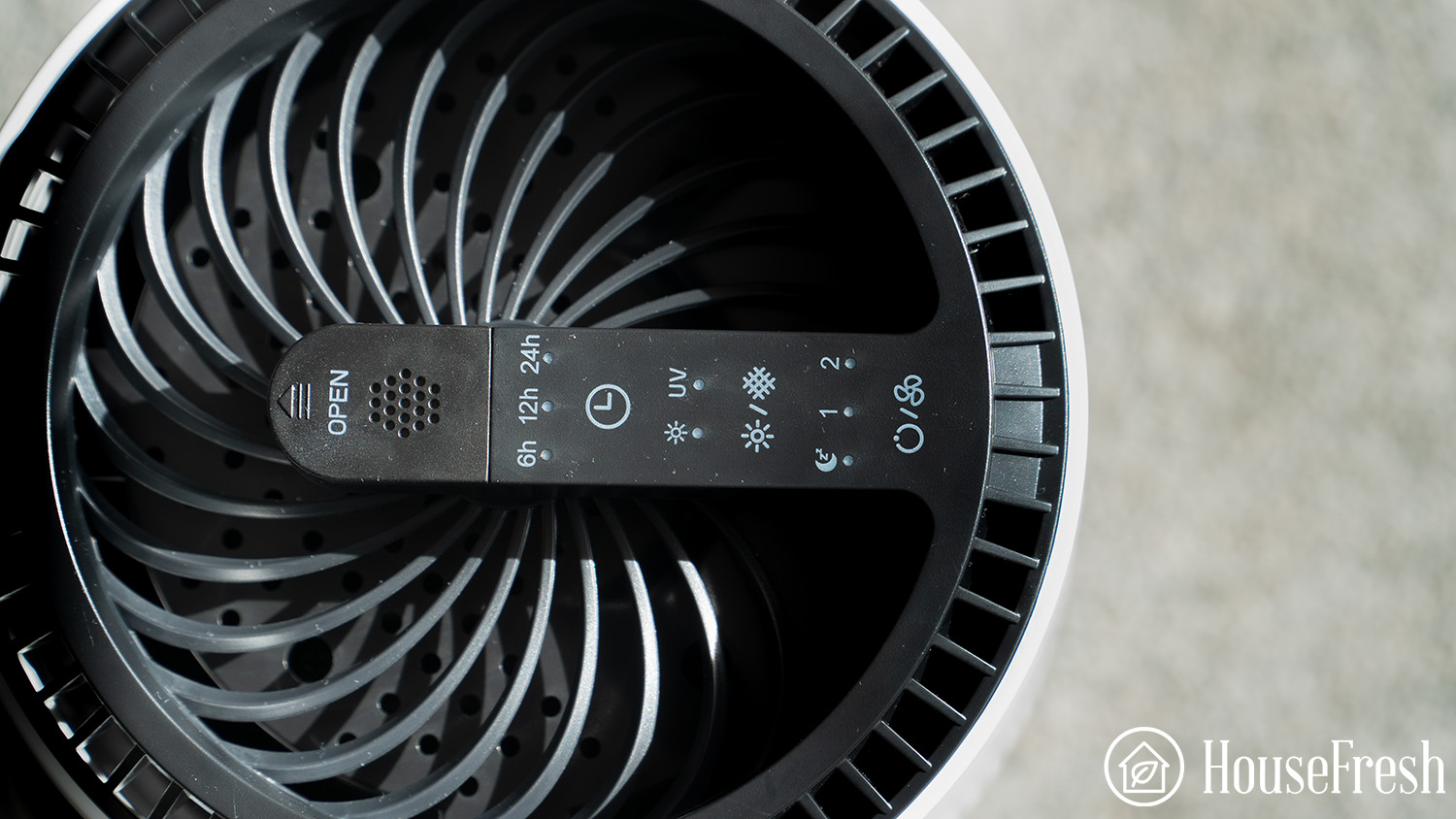
A non-mechanical filter: PECO Technology

This is the first non-mechanical filter that we have reviewed here at HouseFresh. The reason is fairly simple; we generally avoid new technologies that have not had the level of peer review analysis compared to HEPA and activated charcoal. 
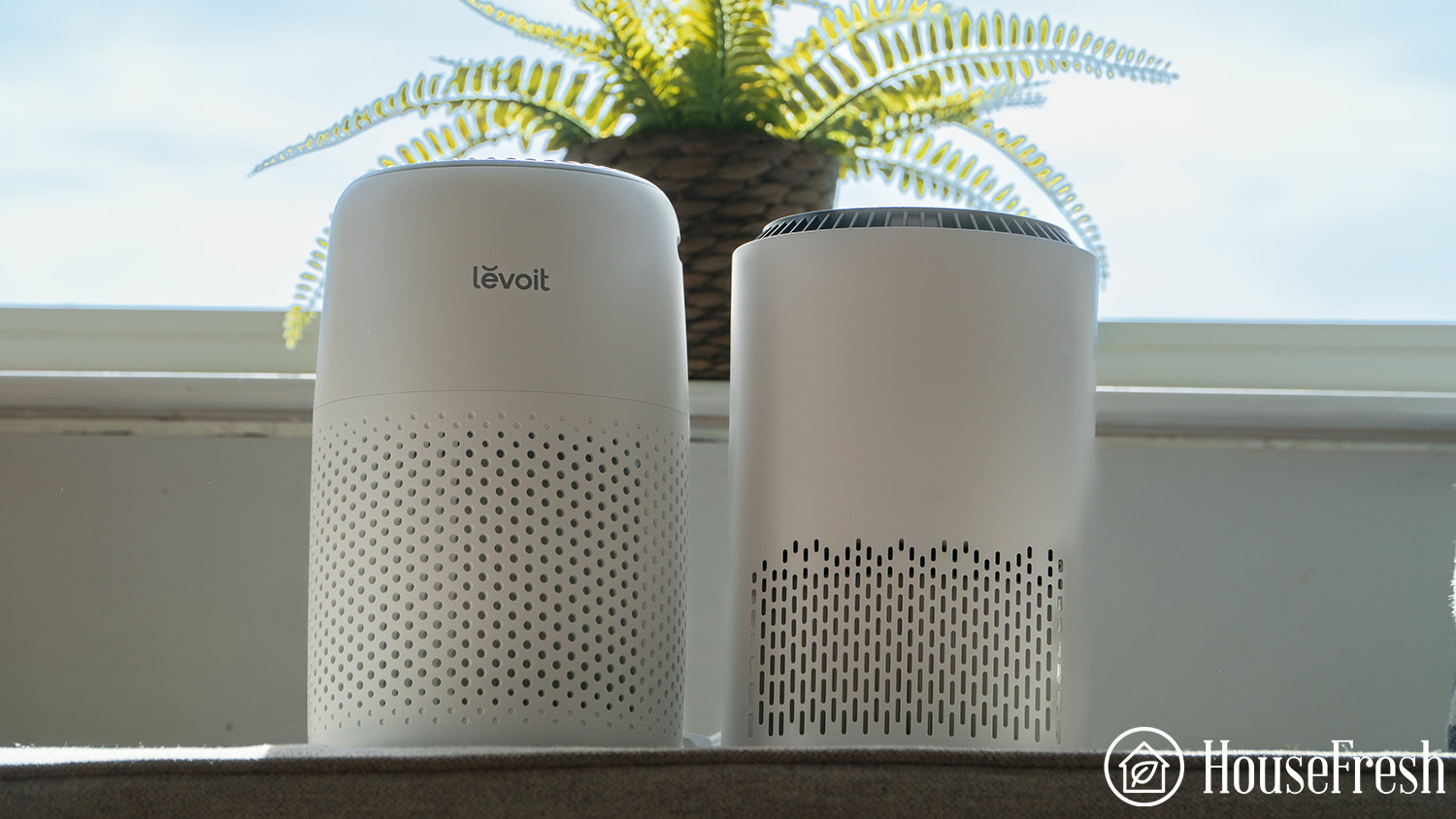
Mechanical filters have been in use since WW2, and there is a ton of scientific analysis and performance testing that we can trust. In a review of the academic literature, the team at Reading University showed the effectiveness of different filter technologies: 

Air purifier filter technology

Filtration and adsorption stood as clear winners for particles and VOCs of the filter technologies analyzed.

It’s worth noting that PECO was not included in the Reading University study, but it was included in an MIT study and was shown to be less effective than Adsorption when dealing with VOCs.

Molekule Mini Filter PECO

Over the years, there have been numerous air purifier technologies that have been brought to market with the hype that their technology is far better than mechanical-based filters, but they often lead to disappointment. Such as the Sharper Image Ionic Breeze that promised so much with its electrostatic precipitation but failed to do anything apart from releasing small amounts of ozone (if you didn’t know, ozone = bad). 

So you can understand that I might be cynical of another new technology that promises:


It destroys pollutants regardless how small, incl. those 1000x times smaller than what HEPA can collect.”

– Molekule*

*Taken from the Molekule.com homepage from 2018 that has now been removed after the complaint from Dyson to the BBB

But it’s totally true that HEPA systems are pretty much useless against VOCs, chemicals and odors. This is the reason why the vast majority of air purifiers use other technologies like activated carbon (adsorption). These have been shown in many peer-review papers to be highly effective, and activated charcoal has been in use since the Egyptian era. The downside to activated carbon is that you need a lot to make a big difference which is why the $1000 IQAir Health Pro Plus has 15lbs of carbon pellets as part of its filtration system. 

PECO promises that it can achieve better results without the downsides of size and weight that come with HEPA filters and with the added benefit that it destroys pollutants vs. just trapping them, so we can also assume it will require a less costly filter replacement.

Molekule Mini Filter 1

Sounds too good to be true? 

Well, let’s find out.

The Molekule Air Mini cleared our test room in 53 minutes

The Molekule Air Mini needed almost an hour to remove all the pollutants from the air in our small testing room.

Molekule Mini Performance Test

At HouseFresh, we test all our units in the same room of 728 cubic ft, which is my home office. The reason we use this room is so we can compare the performance of different air purifiers in the same environment.

Before I take you through the results of my test, let me walk you through the process:

  1. I burnt a powerful incense stick to create smoke pollutants.
  2. Once the room is filled with pollutants, I switch the Molekule Air Mini to full speed.
  3. I used the Purple Air Indoor sensor to evaluate how long it takes the air purifier to remove PM1, PM2.5, and PM10 pollutants from the air.

We clocked the Molekule Mini in 53 minutes, which is not impressive for the price nor lives up to the expectations generated by the cool looks. 

Air cleaning performance compared

Frankly, we expected more. Especially considering there are much more affordable units in the small-sized range that can outbeat the Molekule with ease. 

With a similar room coverage as reported by Molekule, the Levoit Core 300 (219 sq. ft.) cleaned the air in our test room 13 minutes faster and can be found at under $100. Or the Smart sibling Core 300S, which only took 32 minutes, was a whopping 21 minutes quicker. 

Meanwhile, the similarly priced but more powerful Blueair Blue Pure 211+ outperformed the Air Mini by no less than 43 minutes. 

The unit was, in fact, 10 minutes apart from being below the cleaning speed average. The data speaks for itself.

Based on this performance, I couldn’t, in my right mind, recommend this air purifier to anyone, as incense smoke is a fairly minor pollutant when compared to significant outside pollution or wildfire smoke.

Noise levels test results

But we didn’t just test the performance in terms of cleaning pollutants from the air. We also tested noise levels, and I’ve got to say, here it’s where it gets worse.

At the highest speed, the sound level is high at 68.2 dB, which compares poorly to competitors, with the Blueair Blue Pure 211+  having a maximum of 56 dB. 

To put things into perspective, the American Academy of Audiology considers 70 dB to be Loud noises and the CDC establishes 70 dB as the threshold for noises capable of producing hearing damage. The Molekule is not at all far from that.

In comparison, many of the quiet air purifiers we tested have a maximum of 55dB and some run as low as 49dB at the highest speed!

Feel free to have a listen yourself, check out the video below:

It really did sound like a jet plane and it makes me think that they are trying to use extra power to push more air through the unit to overcompensate for filters that are not effective at removing pollutants.

According to our testing, the Molekule Air Mini has some of the highest values for both electricity usage and noise levels generated, which means significant costs and negative externalities to consider when looking at use 24/7 over the long term. 

The cost to run a Molekule Air Mini: $275.66 per year

The cost to run an air purifier is a significant concern as you will want to run your air purifier on most of the time if you have any issues with your outside air. So we always want to consider the price of the unit at its highest speed 24/7.

1. Electricity costs = $75.68 per year

As always, I tested the Molekule mini with one of my trusty power meters:

  • Speed 1: 15.38 watts
  • Speed 2: 16.78 watts
  • Speed 3: 18.7 watts
  • Speed 4: 24 watts
  • Full power: 49.62 watts

This means that running a Molekule Air Mini in your room 24/7 could cost up to $75.68 per year in electricity bills only calculating with the average energy prices in the U.S. as reported by the Bureau of Labor Statistics, assuming you’d need to run the unit for 24 hours per day 365 days per year.

2. Filter costs = $199.98 per year

Another long-term cost to consider is regular filter replacements. With mechanical filter technology like HEPA, the filters get full of pollutants and if you don’t change them, they will become less effective. 

But, I wasn’t sure if this also applied to PECO. 

Looking at their site, I see that they recommend changing filters every 6 months to make sure that you are using the latest technology and to avoid performance issues with dirty filters.  

The Molekule air has filters available for $99.99* and they suggest replacing them every 6 months, so a filter replacement cost of $199.98 per year or $160 as part of a subscription. This is on the high side when compared with Levoit Core 400S, which has a HEPA and Activated Charcoal filter for $49.99 that also needs replacing every 6 months, so a $100 per year. It is a little less than the $250-300 that the IQAir Healthpro Plus requires on a yearly basis but that is spent over 3 different filters with heavy activated carbon filters that don’t come cheap.


Bottom line

Overall the running costs for the Molekule Air Mini per year, assuming you change the filters every 6 months and use it 24/7 as recommended, will be $264.10 per year, which is much higher than competitors that perform significantly better at keeping a room clear of particle-sized matter of PM1.0ug/m3, PM2.5ug/m3 and PM10.0ug/m3 which have been proven to be the worst type of particles to breath in for human health.

On top of this, its performance is extremely poor across the board to the point where even the very cheapest of HEPA filter-powered units, like the Levoit Core 300 or the TaoTronics AP003, perform much much better but a fraction of the cost.

2 Molekule Mini.jpg 2

Don’t get caught up in the hype – look elsewhere for a good air purifier.

SOURCES

We calculated yearly costs associated with running the Molekule Air Mini 24 hours a day, 365 days per year utilizing the latest average energy prices as reported by the Bureau of Labor Statistics of $0.174/kWh as of May 2024.