The best air purifiers for allergies → Powerful, quiet and energy-efficient

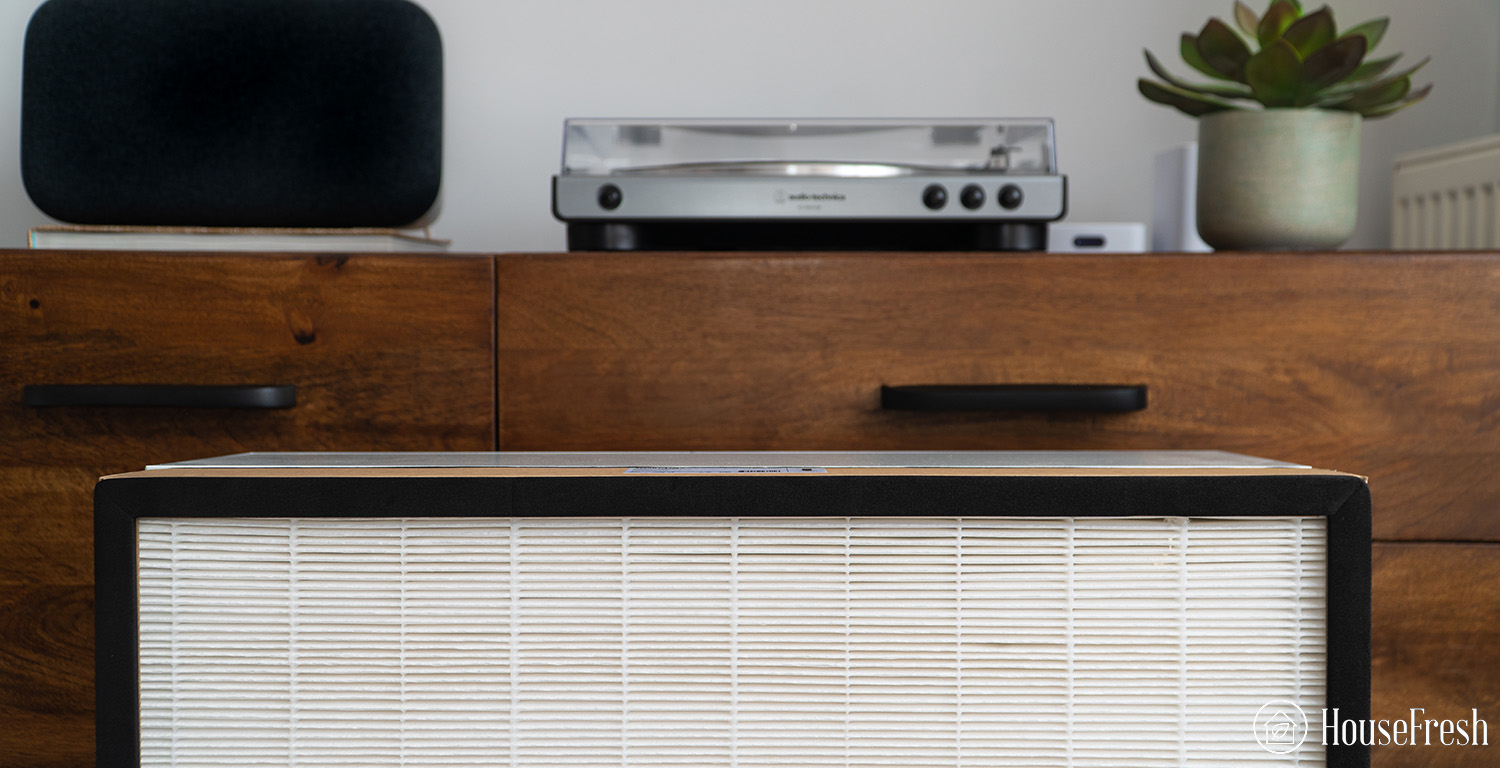
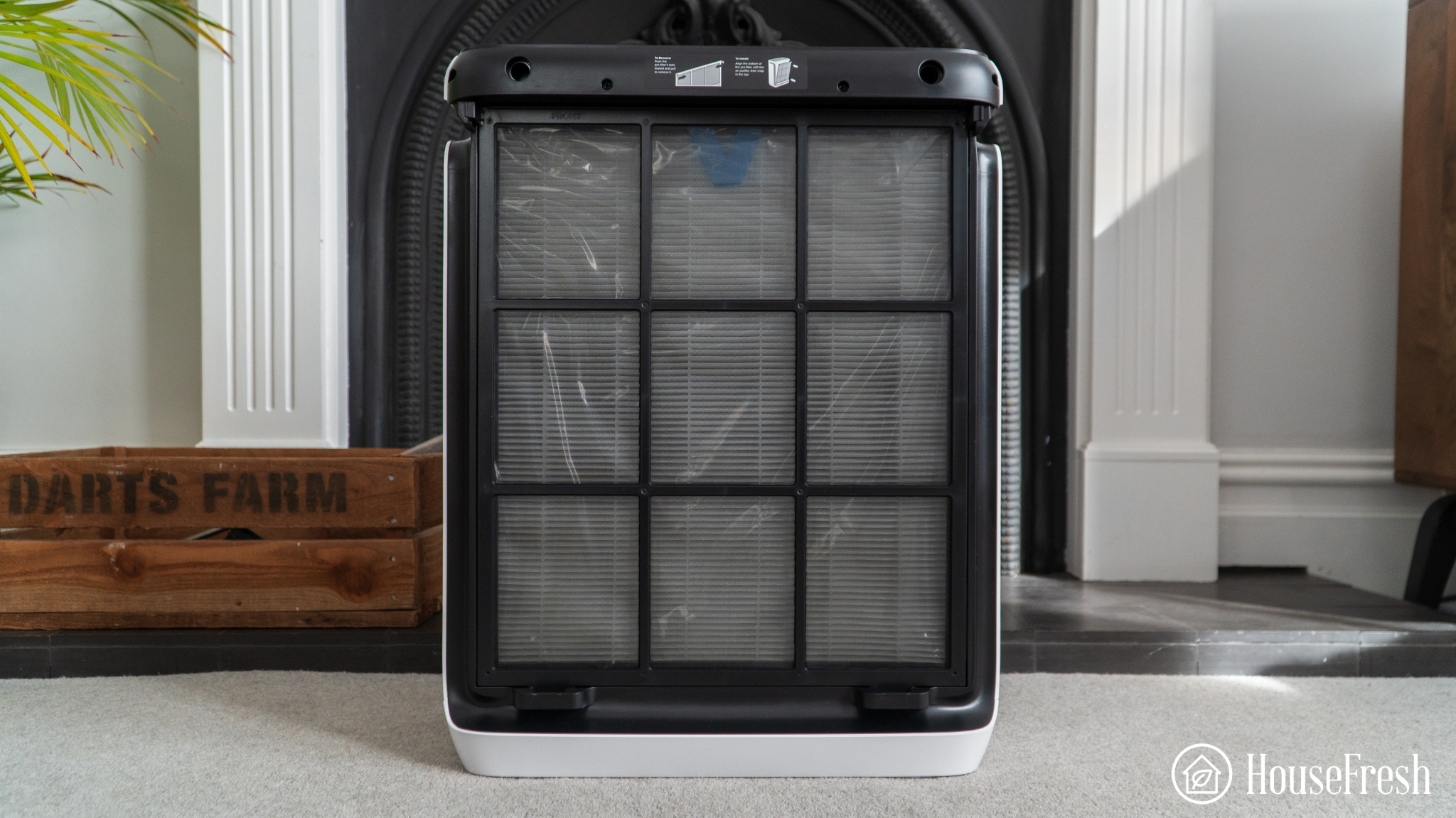
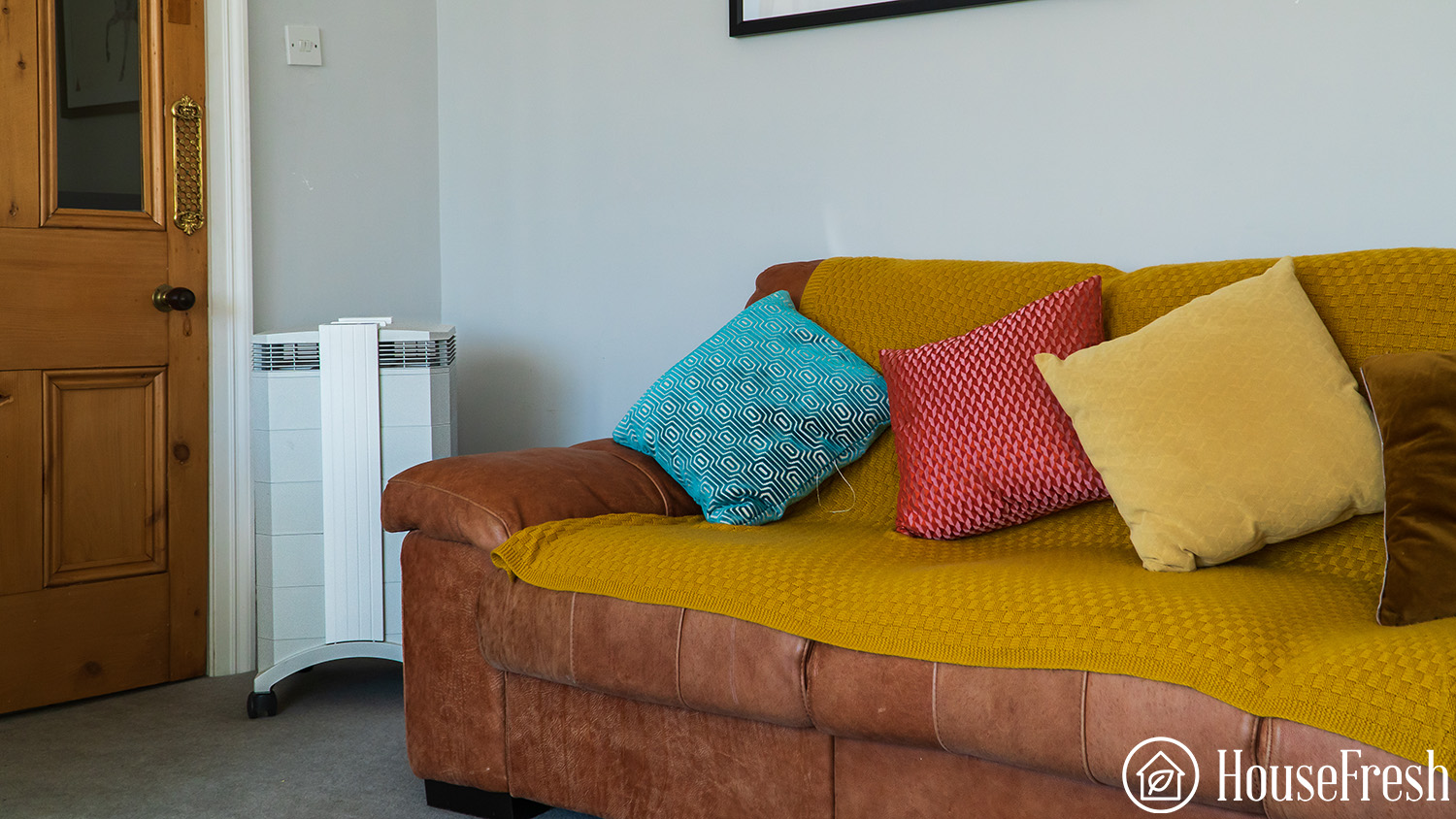
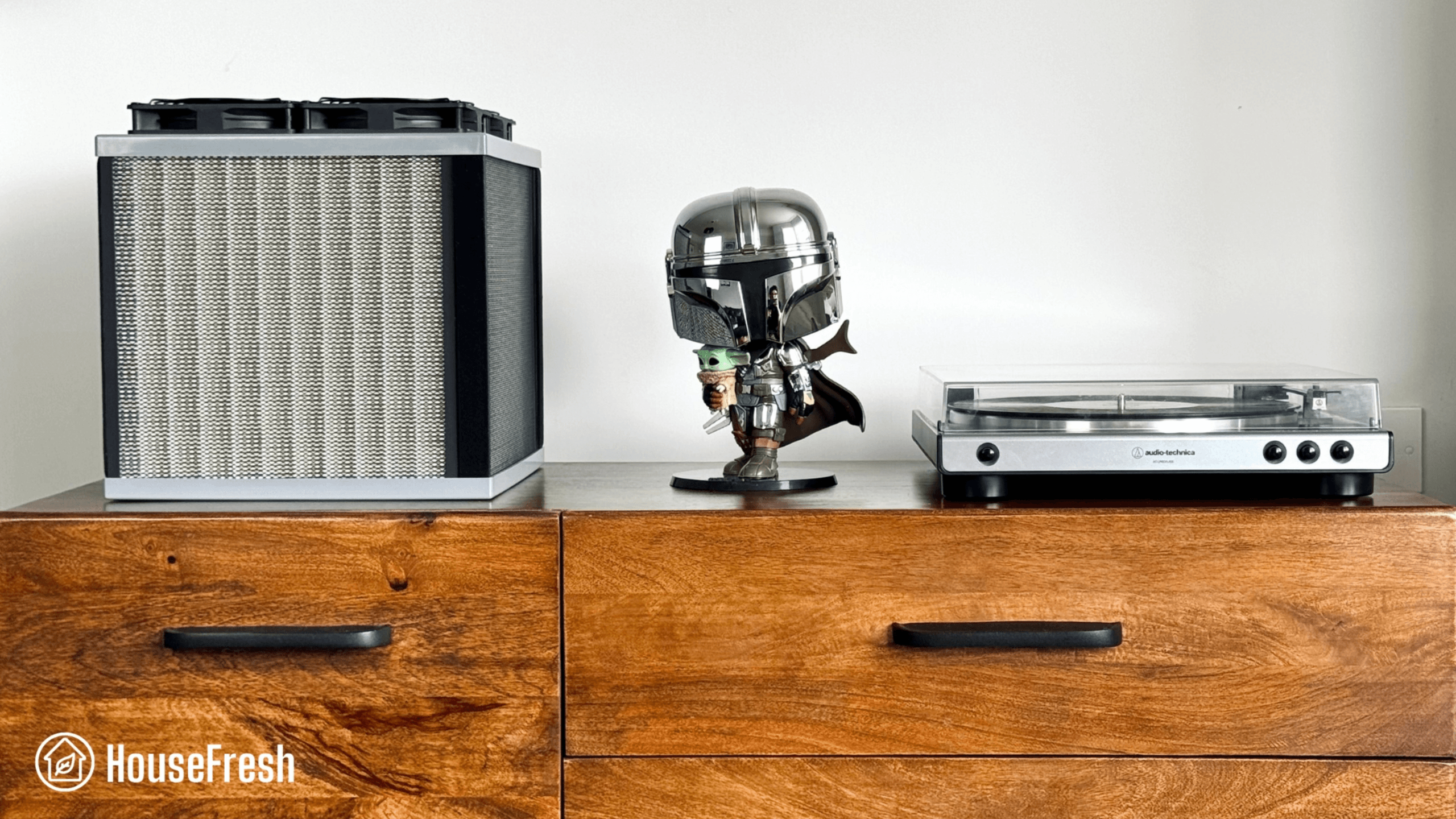
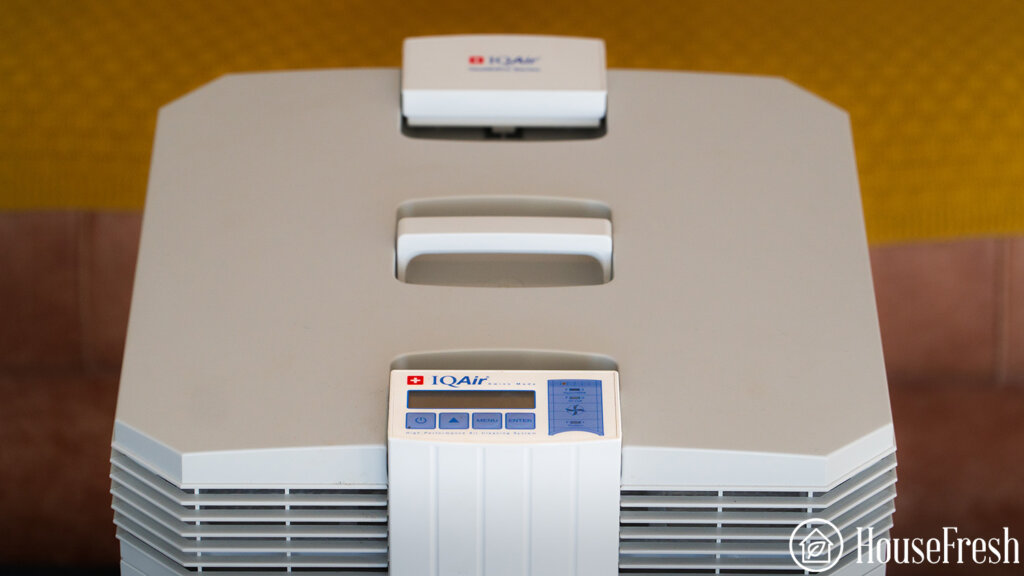
IQAir Atem X Living Room

Most air purifiers claim to clear large rooms, but for allergy sufferers, that’s often a dangerous lie.

Since 2020, I have tested over 130 air purifiers using the same methodology to gather comparable data, and I have found that only a handful of models pack enough power to effectively remove allergens from the air without sounding like a jet engine or costing an arm and a leg to run.

Because the thing with allergies is that you will need to run your air purifier 24/7.

That is why I’ve shortlisted the only units that deliver excellent performance even at low fan speeds, so you can keep them running in the background without generating much noise or consuming much energy.

1. Best overall: CleanAirKits Luggable XL Ultra

This DIY air purifier uses PC fans and HVAC filters, offering exceptional performance with whisper-quiet operation.
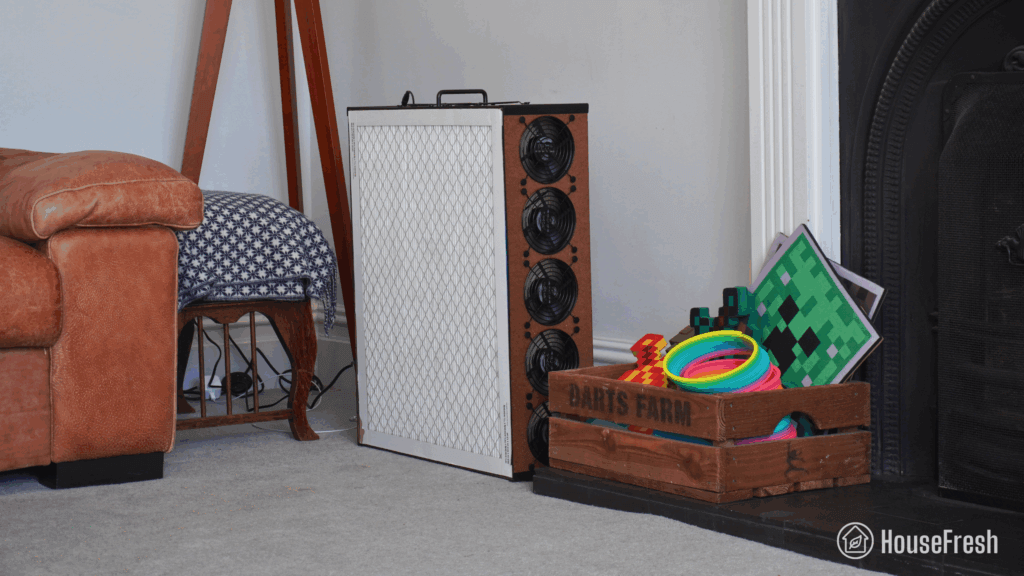
CleanAirKits Luggable XL7 Corner

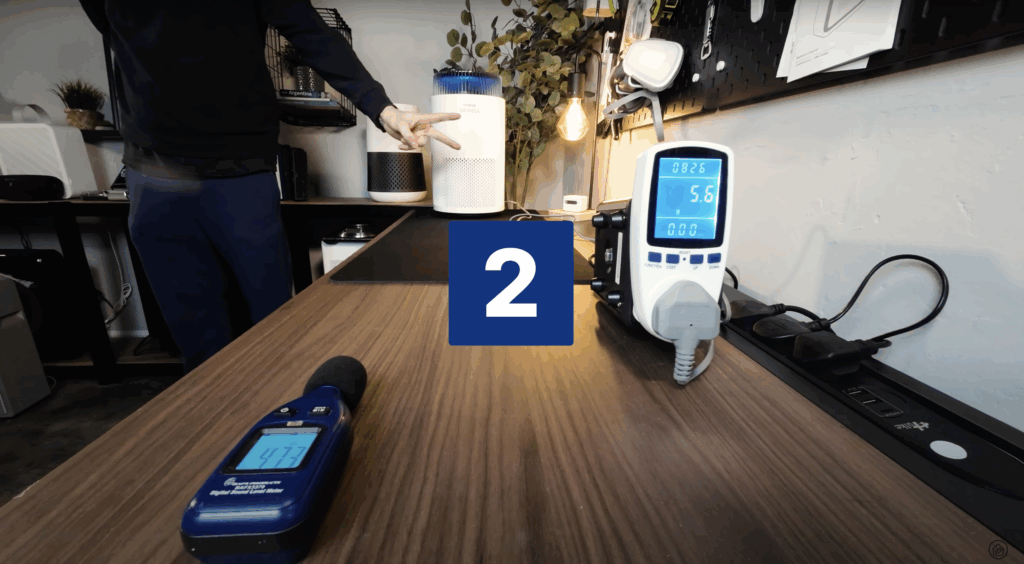
The Luggable XL Ultra uses seven Cooler Master Mobius 120 PC fans that pull air through two 20×25 MERV 13 filters. This combination results in a dust CADR of 315 cfm with a max sound level of 47.2 dBA! Excellent for those with dust or pollen allergies.
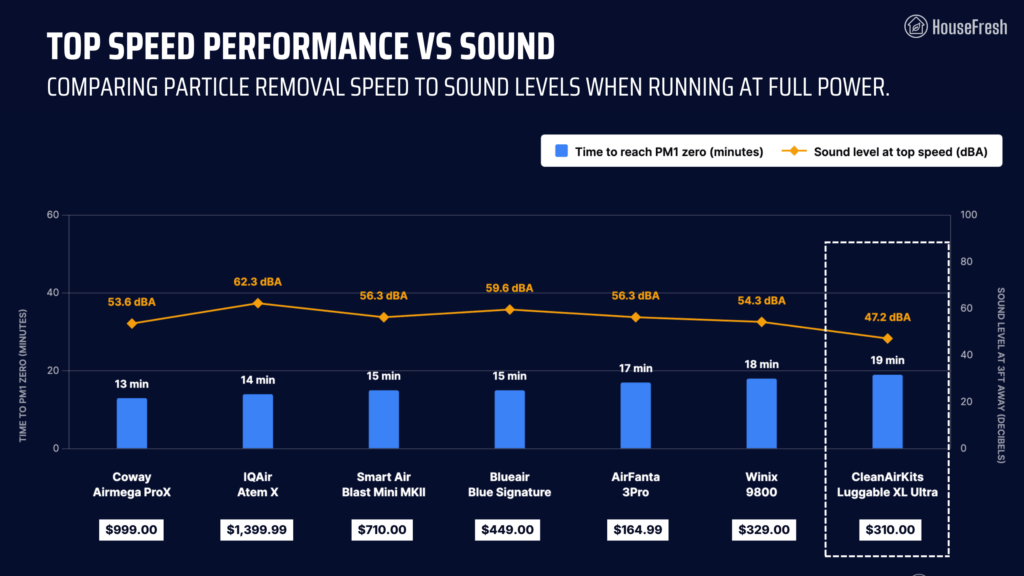
CleanAirKits Luggable XL Ultra HouseFresh Test Data

The Luggable XL Ultra is the quietest high-CADR air purifier I’ve tested so far, yet it’s powerful enough to provide six air changes per hour in rooms up to 393.7 square feet.

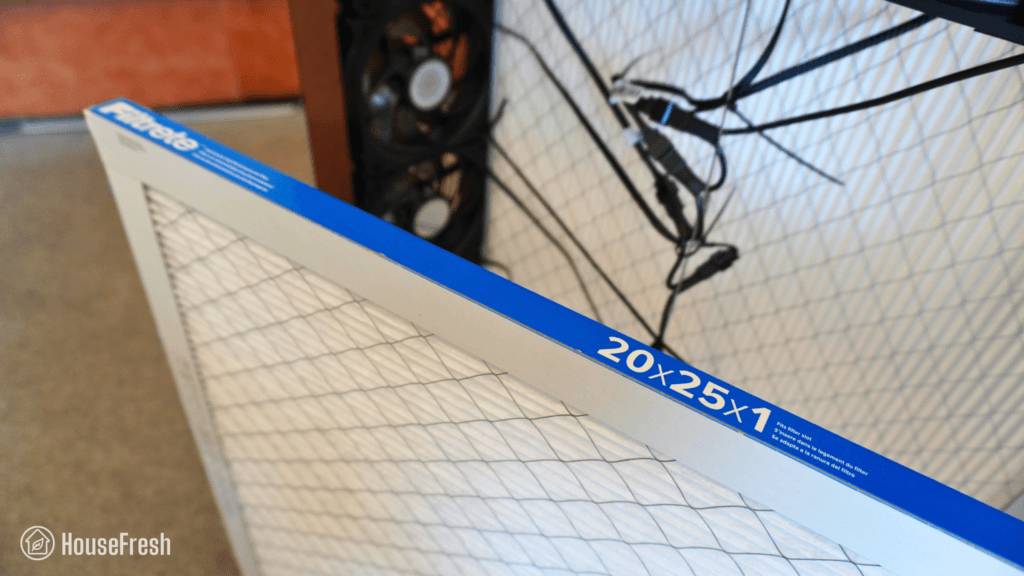
CleanAirKits Luggable XL Handle
CleanAirKits Luggable XL Filter inside

The long-term costs are generally low because it’s energy-efficient AND you can choose any 20×25 MERV 13 filters, but we recommend the 3M Filtrete MPR1900. To make the body sturdier, you might want to consider adding CleanAirKit’s filter guards.
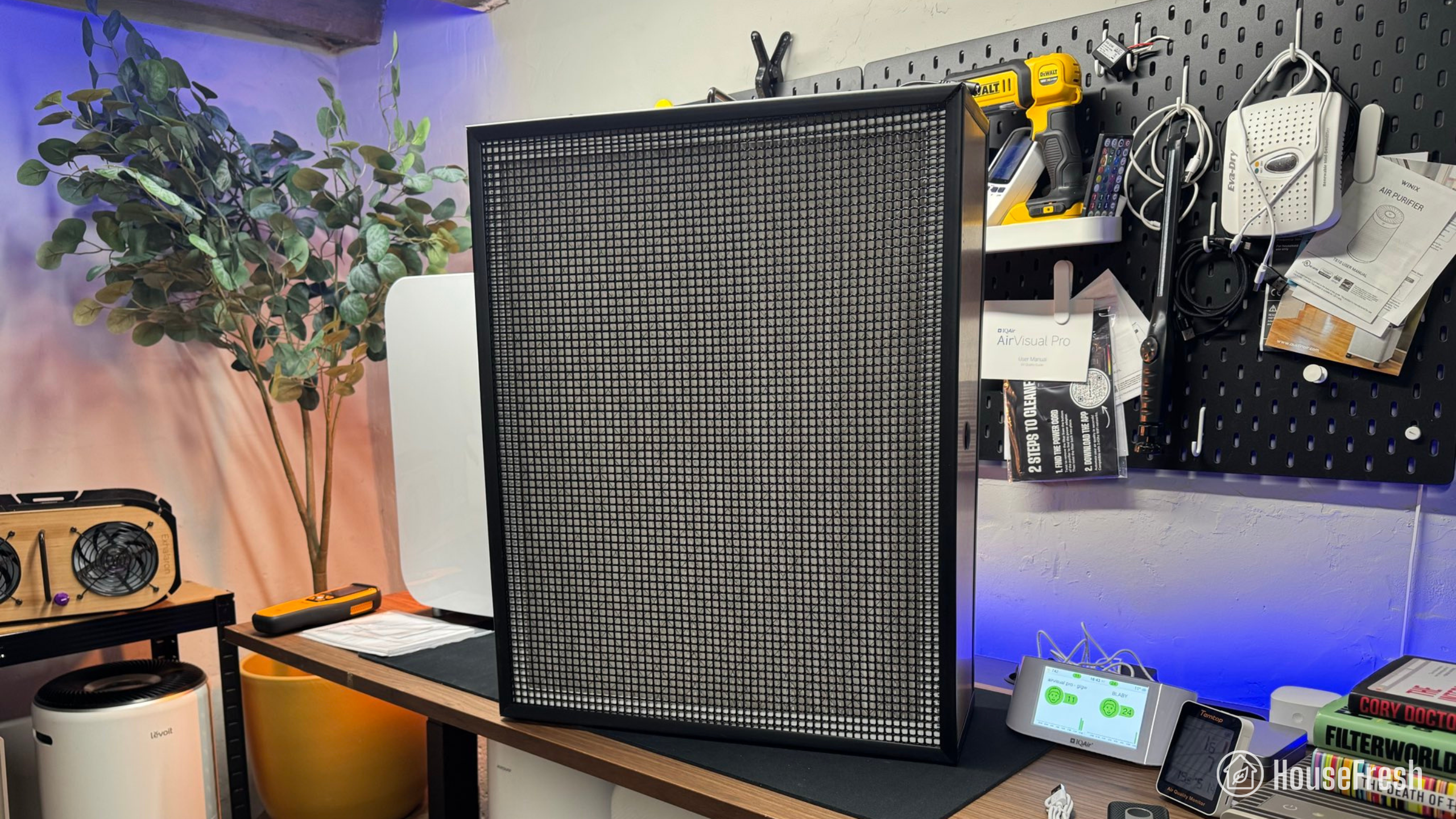
CleanAirKits Luggable XL Ultra Filter Guard

CONS

Its body is not as sturdy as a traditional air purifier made from plastic or metal. If durability is a concern, you can go instead with the cherry wood Aerating End Table.
It is a large device, so you will need space. But if you worry about size, then you can choose the 5-fan version of the Luggable.
You don’t get any smart features or the usual controls you may expect from a traditional air purifier.

PROS

For the vast majority of allergy sufferers who get triggered by pollen, dust, and pet dander, the absence of a carbon filter is a plus — it means more airflow dedicated to particle removal without affecting particle capture efficiency.
It’s the most energy-efficient high CADR air purifier I have tested and will add just $19.76 to your energy bill each year.
The DIY kit comes with everything you need to build it, except for the filters. You can buy it pre-built if DIY is not your thing.
It is lightweight and comes with a handle to move it from room to room.

Clean air delivery rate (CADR):– Top speed PM1 CADR: 315 cfm
– Sub-45 dBA PM1 CADR: 260 cfm
– EnergyStar PM2.5: 402 cfm (dust)
Filter technology:MERV 13 (20×25)
Recommended room size:390 sq. ft. (5 air changes per hour)
Dimensions:7D x 25W x 20H in (18D x 64W x 51 cm)
Weight:8 lbs (3.63 kg)
Noise level in decibels from 3 ft. away:47.2 dBA
Electricity consumption in watts:16.43 watts
Filter lifespan:6-12 months
Manufacturer’s warranty:1 year
Country of origin:United States
Country of manufacture:United States

Northbox Systems is a Canadian manufacturer that produces PC fan-powered air purifier kits that use HVAC filters. We tested the 6XL and its air cleaning performance is outstanding. 
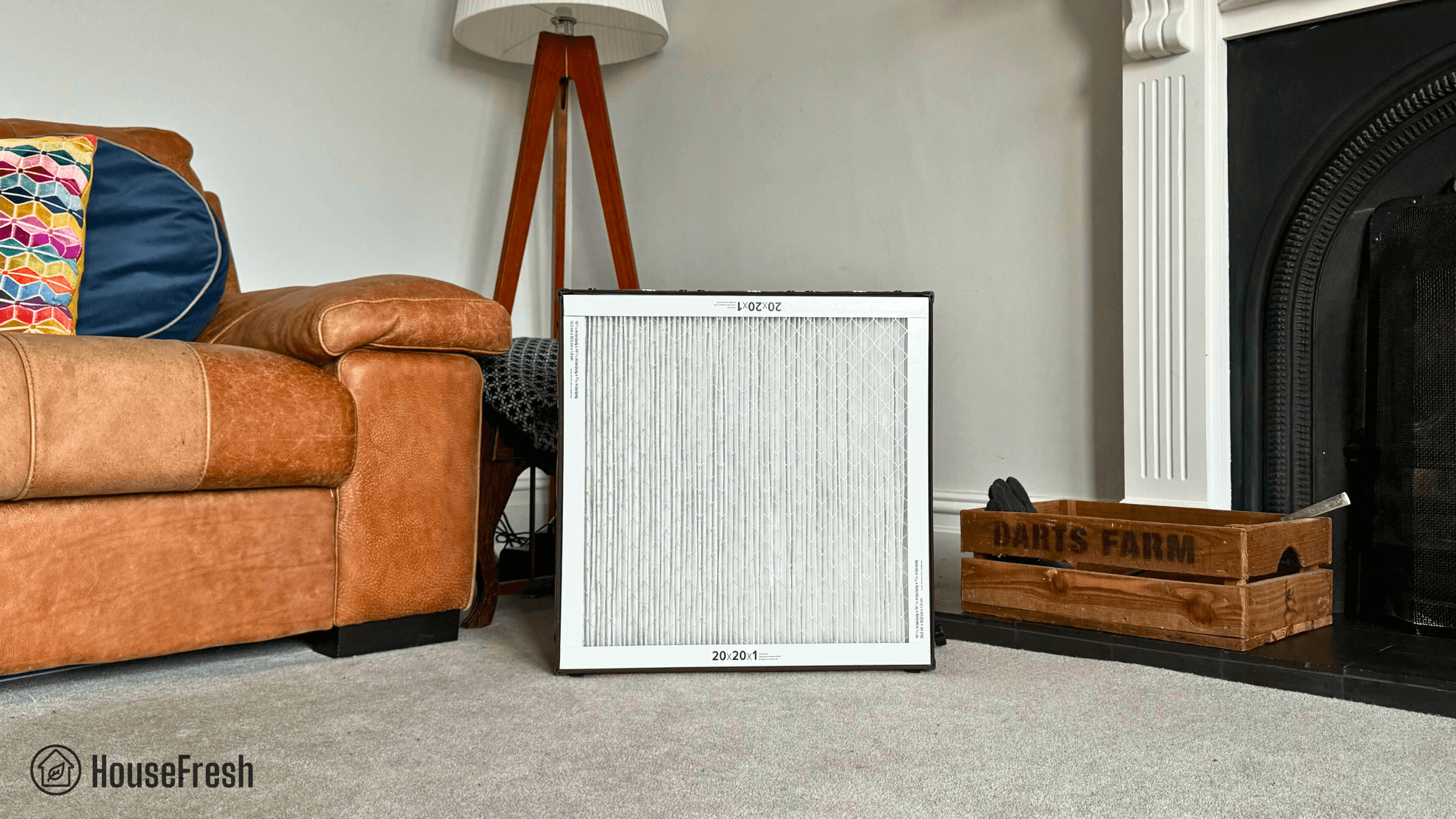
North Box 6XL Corner
North Box 6XL Top Down Filter

WATCH MY VIDEO REVIEW

3. Best under $200: AirFanta 3Pro

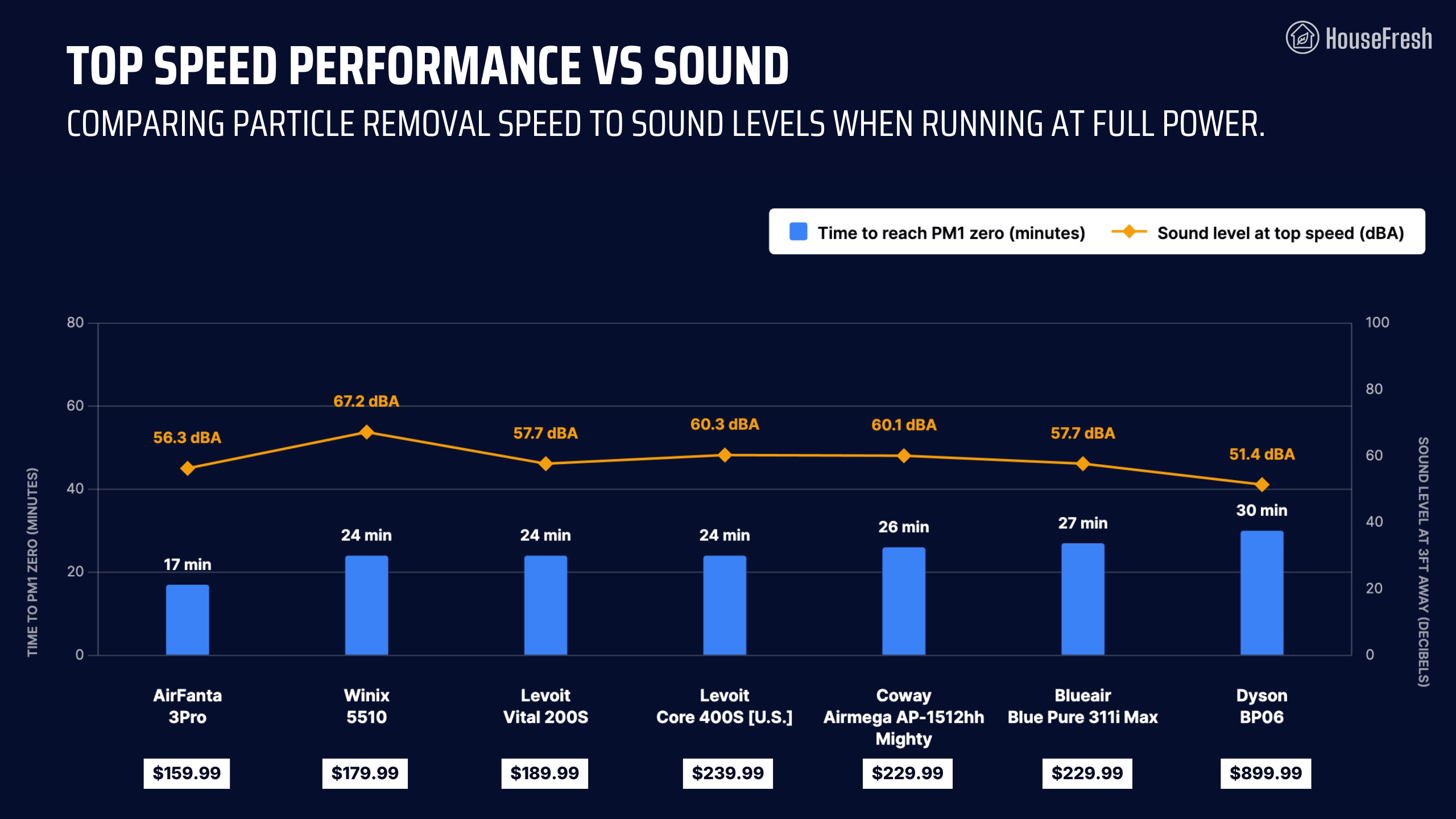
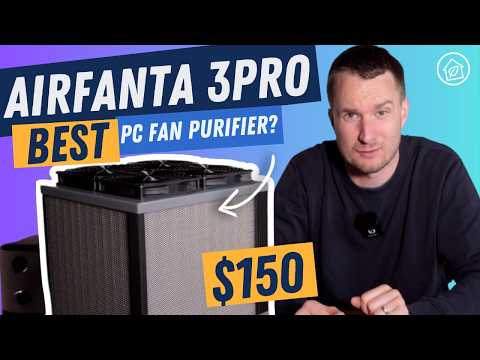
With a top speed CADR of 353 cfm and a low price of $164.99, there is a lot to like about the AirFanta 3Pro. 
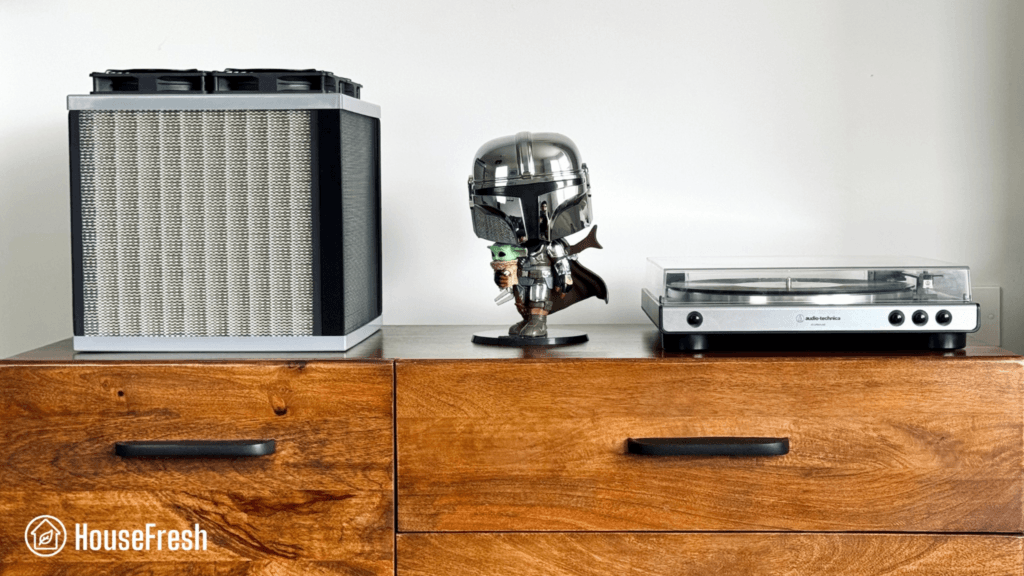
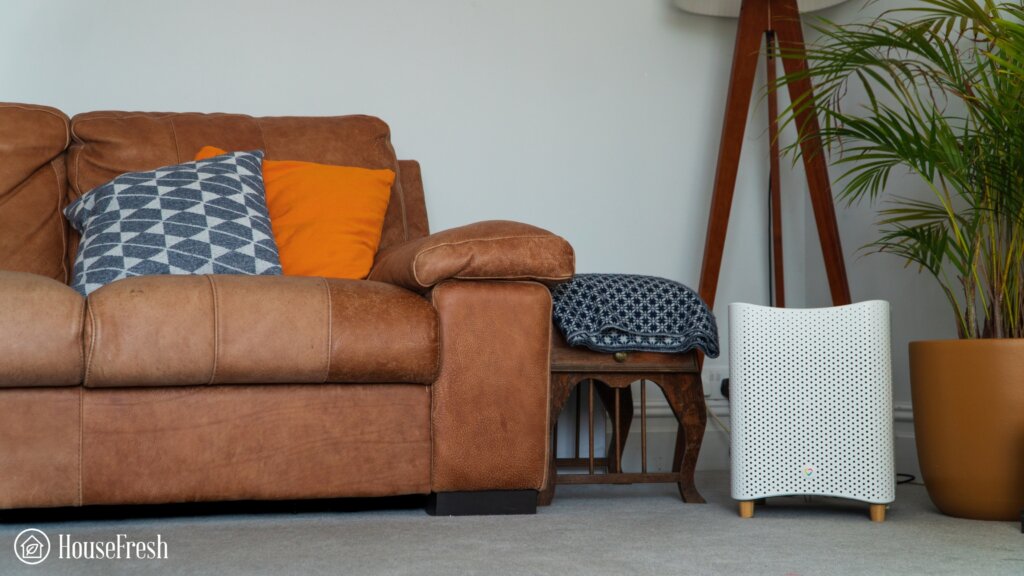
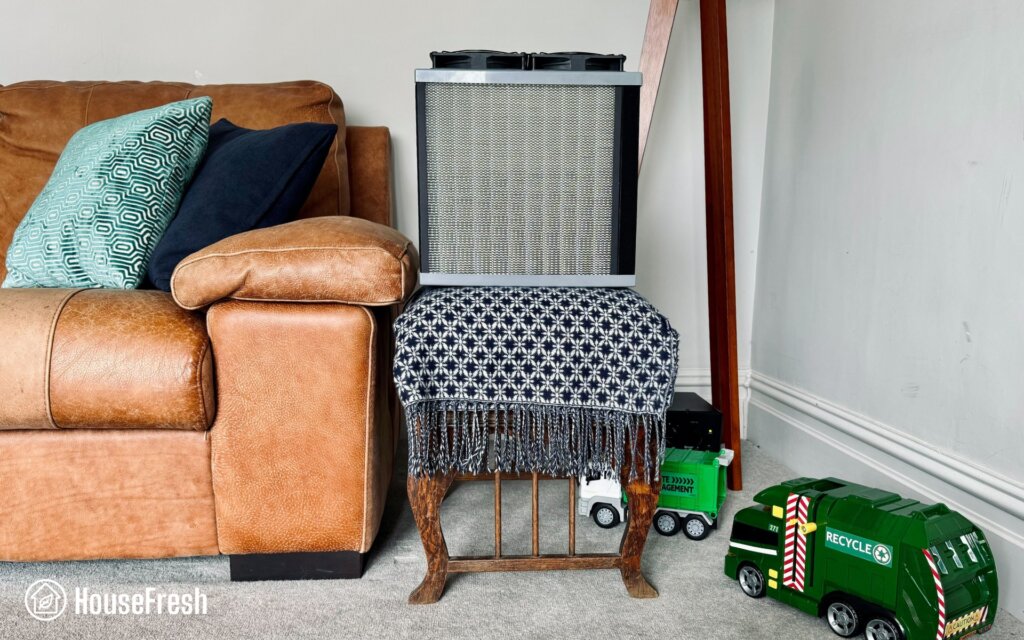
AirFanta 3Pro Sidetable

Use the discount code HOUSEFRESH for 5% off when buying directly from AirFanta.

With a top speed CADR of 353 cfm and a low price of $164.99, there is a lot to like about the AirFanta 3Pro.  For those with allergies, the big benefit of this device is its excellent air cleaning performance at quiet sound levels.

CR Box VS AirFanta 3Pro Top

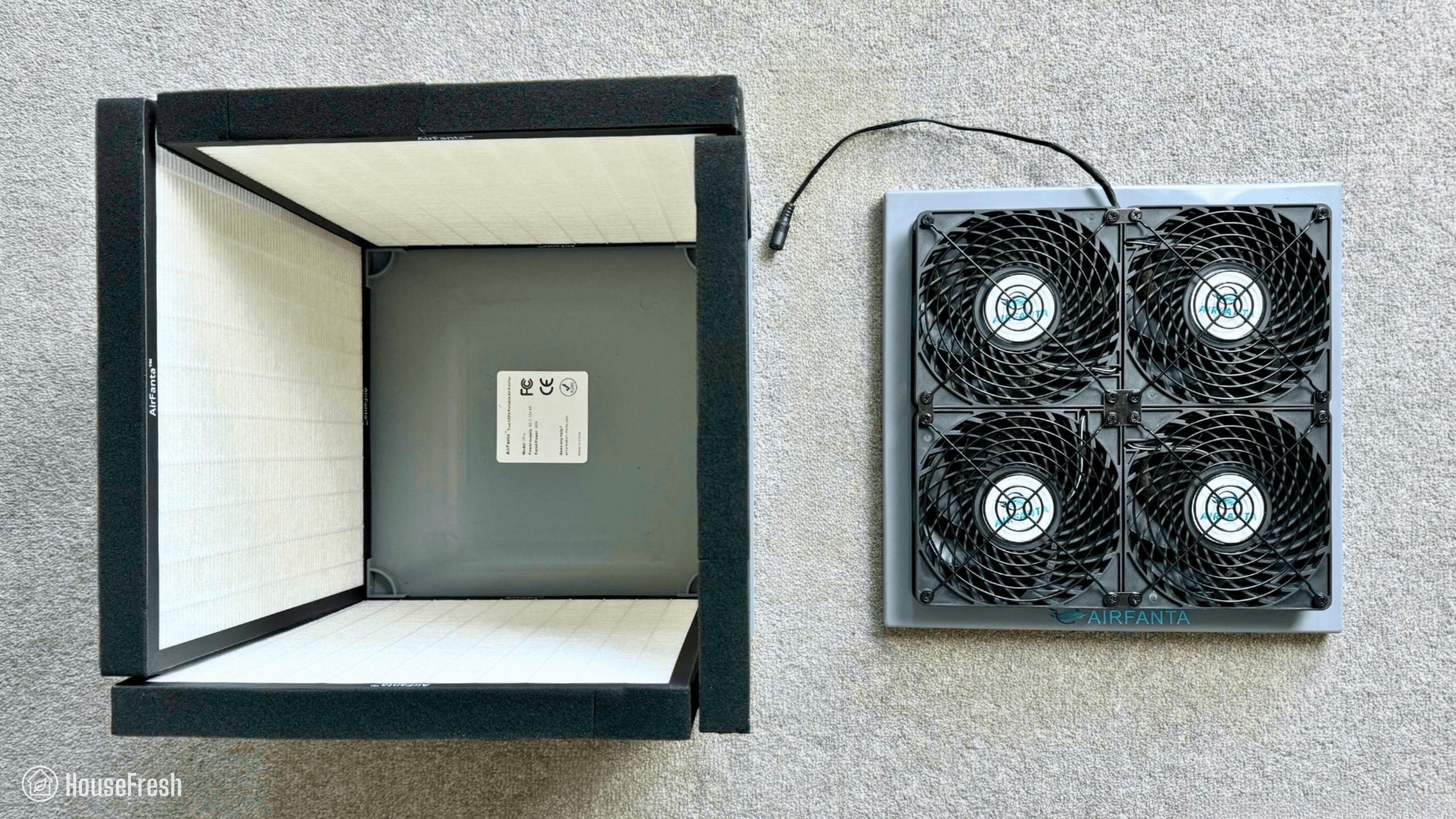
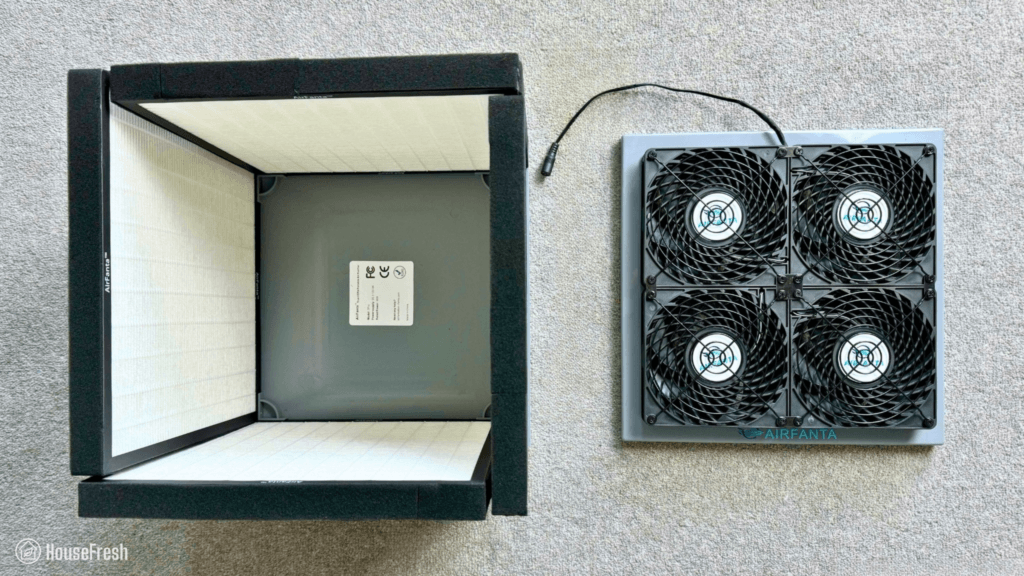
The 3Pro is a small box with a base at the bottom, one filter at each side, and a PC fan array on top—making a much compact version of the bulky Corsi-Rosenthal box (left).
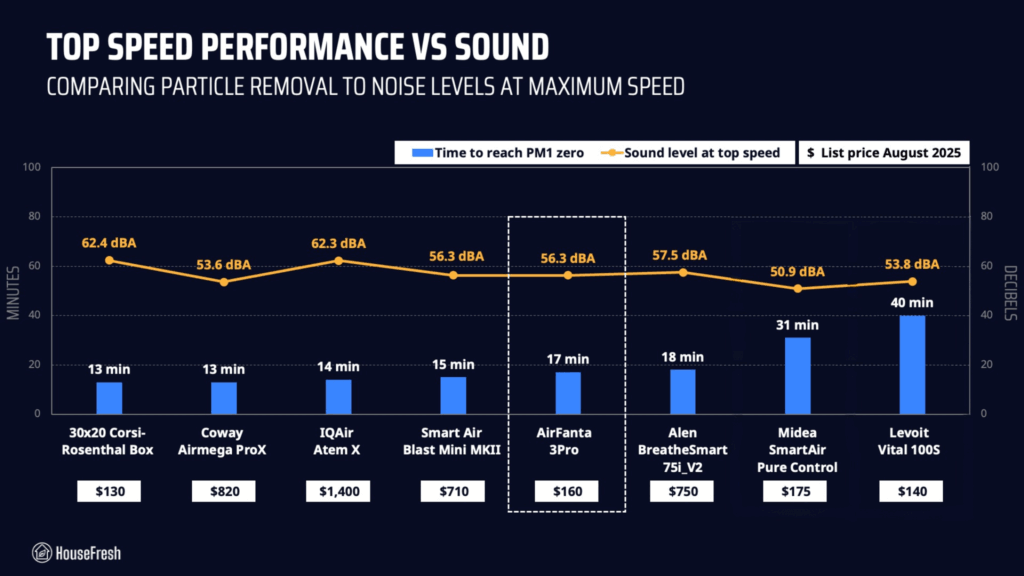
AirFanta 3Pro HouseFresh Data

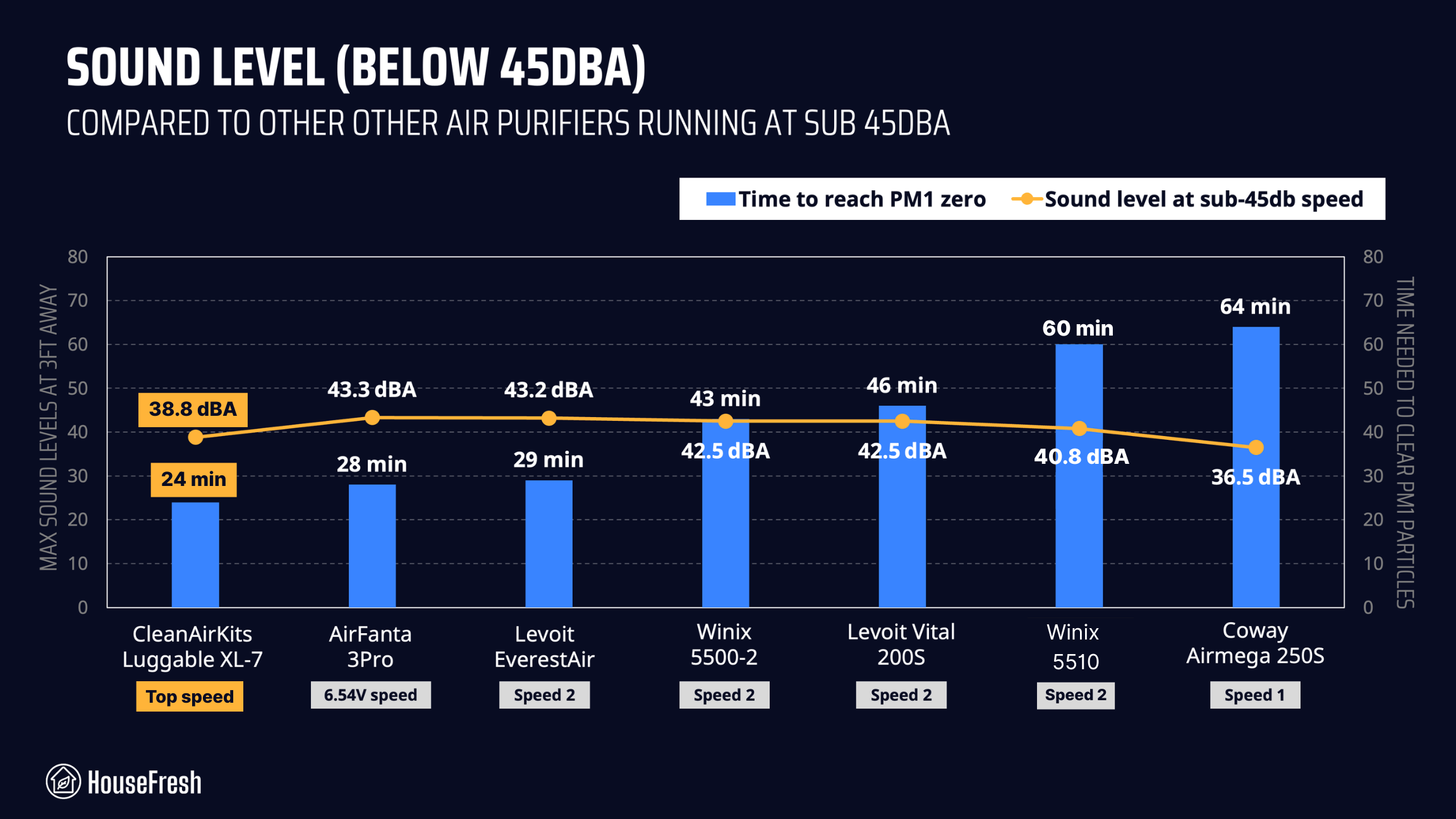
In testing, we identified a fan speed that generates less than 45 dBA (6.54 V) and has an estimated CADR PM1 of 213 cfm, which is higher than what we saw with the much larger (and much more expensive) Levoit EverestAir.

CONS

Even though it uses PC fans, energy costs are similar to traditional air purifiers when running at full speed.
It doesn’t come with the usual control panel or any smart features you might expect from an air purifier.

PROS

Its incredible air cleaning performance — it took just 17 minutes to clean our test room, which is two minutes slower than the almighty Smart Air Blast Mini.
It is A LOT easier to put it together than a standard DIY PC fan air purifier kit.
It can be assembled and disassembled in just a few minutes.
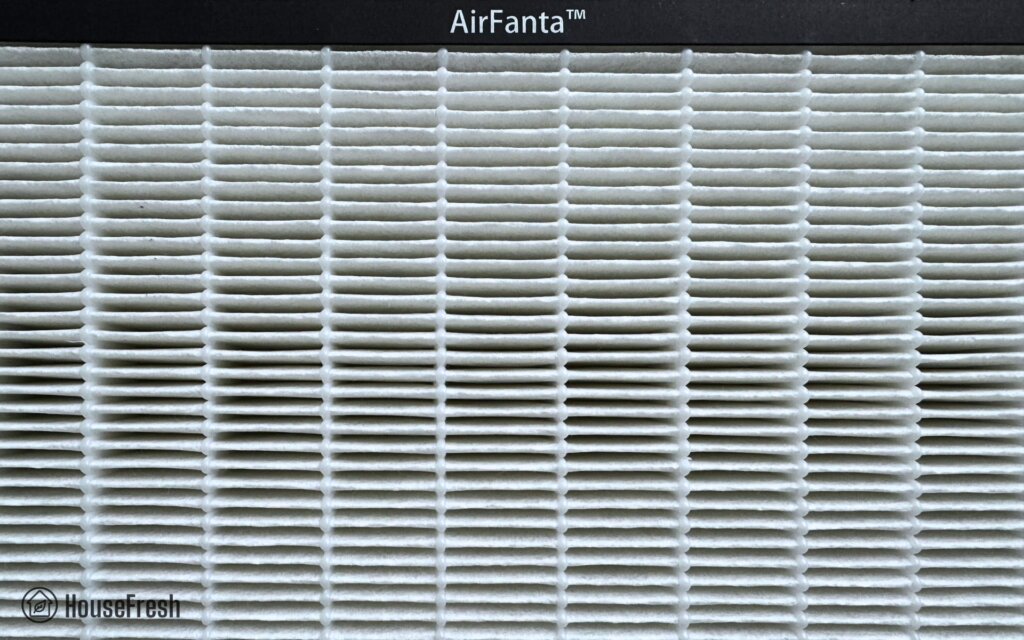
You get a choice of HEPA H11 filters only or HEPA with activated carbon, but I recommend sticking with the standard HEPA filters as you get higher CADR at a lower price.
It is quite small and will sit comfortably on top of a sidetable or window sill.

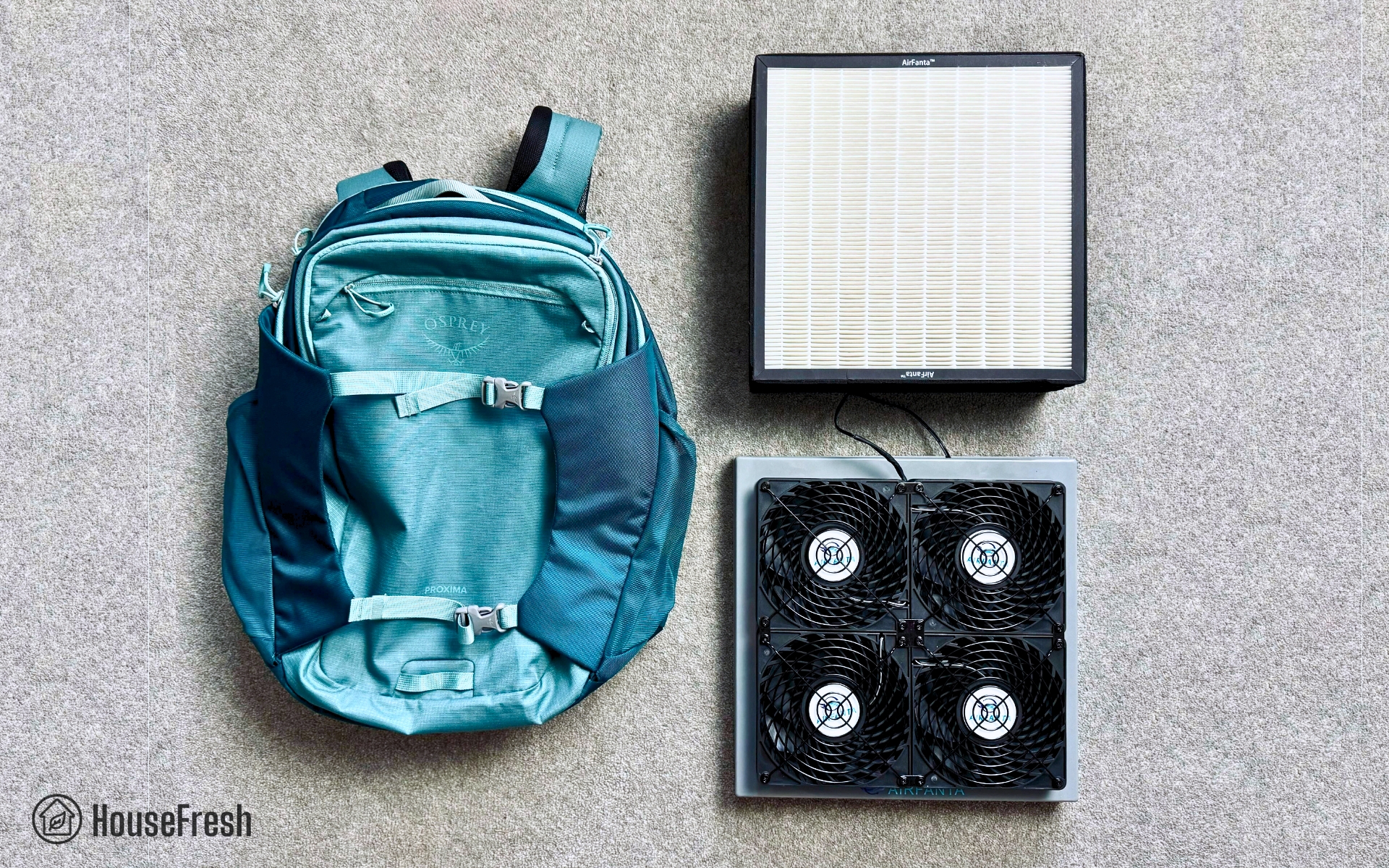
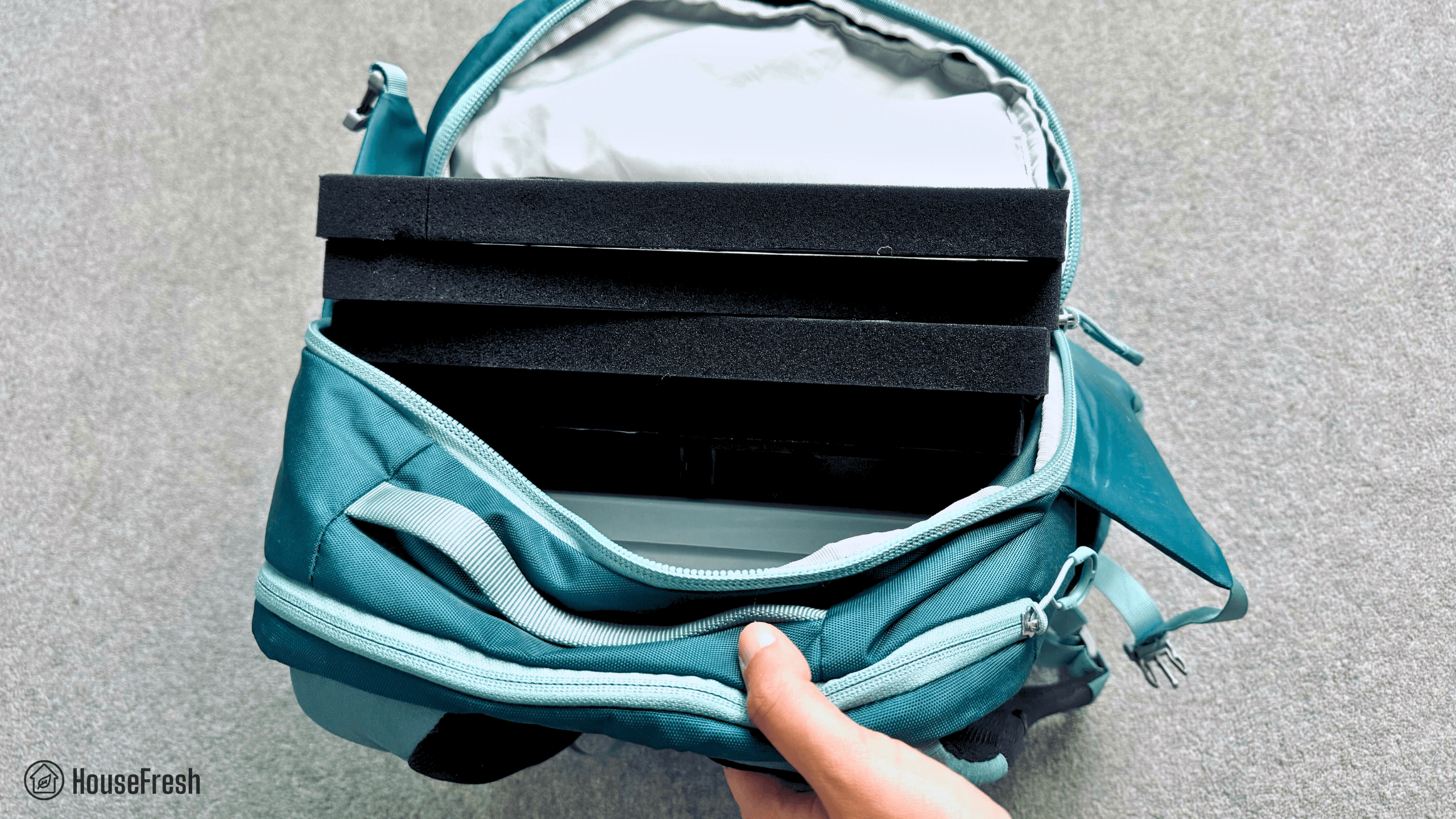
Another feature to highlight is that the 3Pro is the only high CADR air purifier that fits inside a backpack. This device can be disassembled and reassembled in just a few minutes, so could be a great solution for those wanting to have protection from allergens when traveling to a new place.
Clean air delivery rate (CADR):– Top speed PM1 CADR: 353 cfm
– Sub-45 dBA PM1 CADR: 213 cfm
Filter technology:True HEPA H11 and optional pelleted activated carbon
Recommended room size:529 sq. ft. (5 air changes per hour)
Dimensions:12.6D x 12.6W x 12.6H inches (32D x 32W X 32H cm)
Weight:7.7 lbs (3.49 kg)
Noise level in decibels from 3 ft. away:3.63 volts: 36.1 dB
4.19 volts: 36.9 dB
5.24 volts: 39.7 dB
6.54 volts: 43.3 dB
7.44 volts: 46.7 dB
8.56 volts: 49.1 dB
12.6 volts: 56.3 dB
Electricity consumption in watts :43.23 watts
Filter lifespan:6 – 12 months
Manufacturer’s warranty:1 year
Country of origin:China
Country of manufacture:China

READ OUR FULL REVIEW ➜ 

WATCH OUR VIDEO REVIEW ➜

3. Best for small spaces: Levoit Core 400S

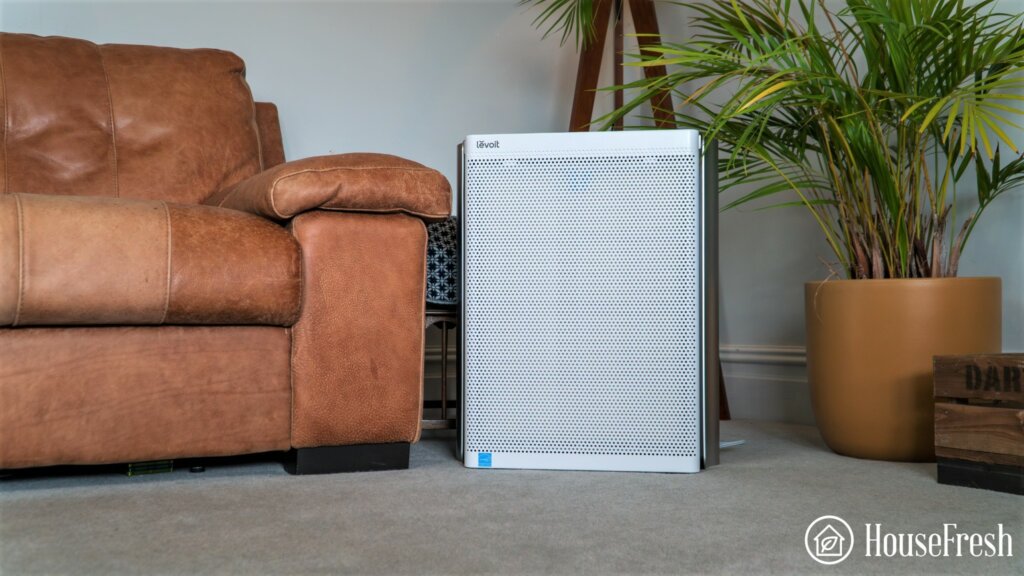
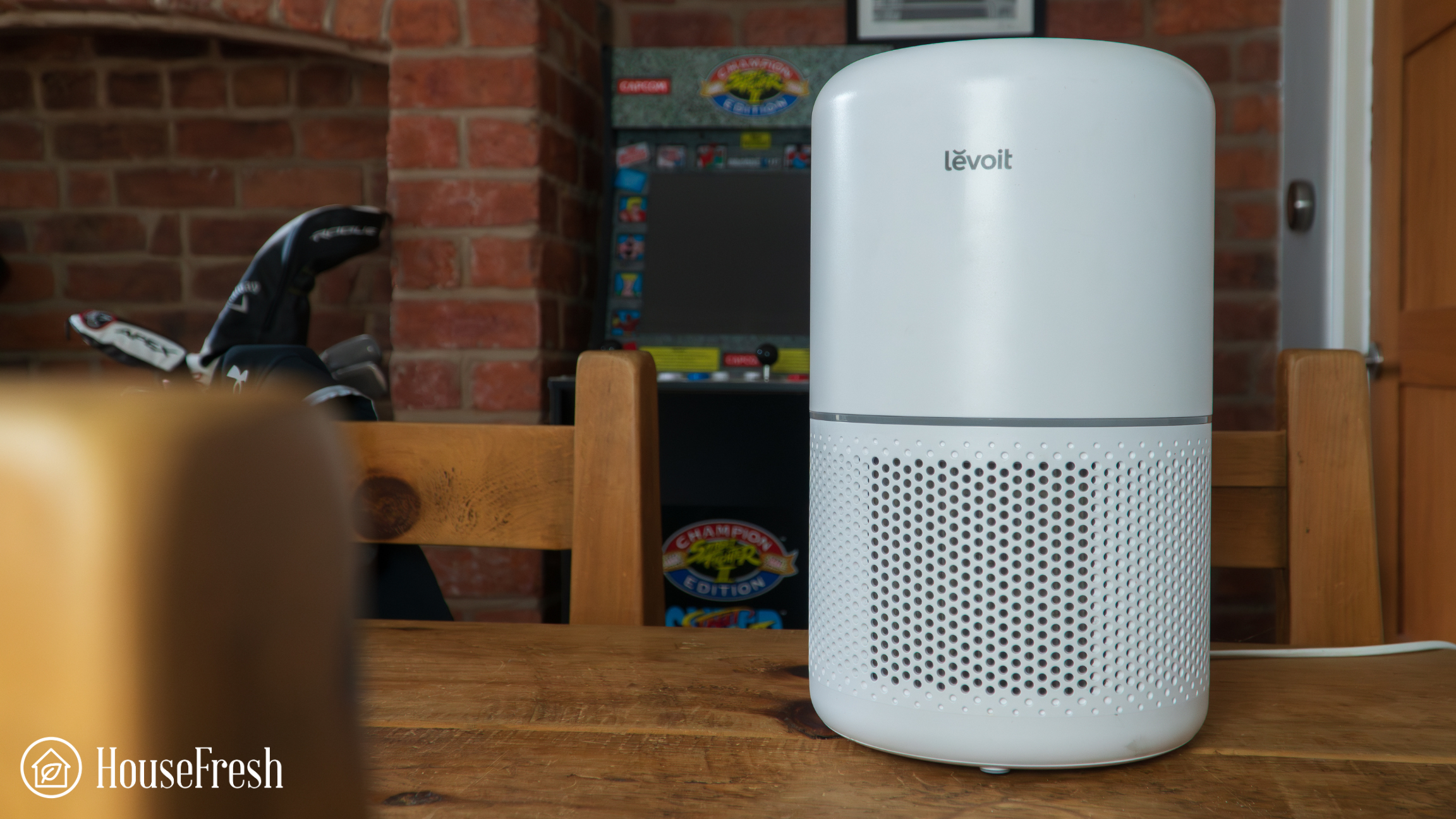
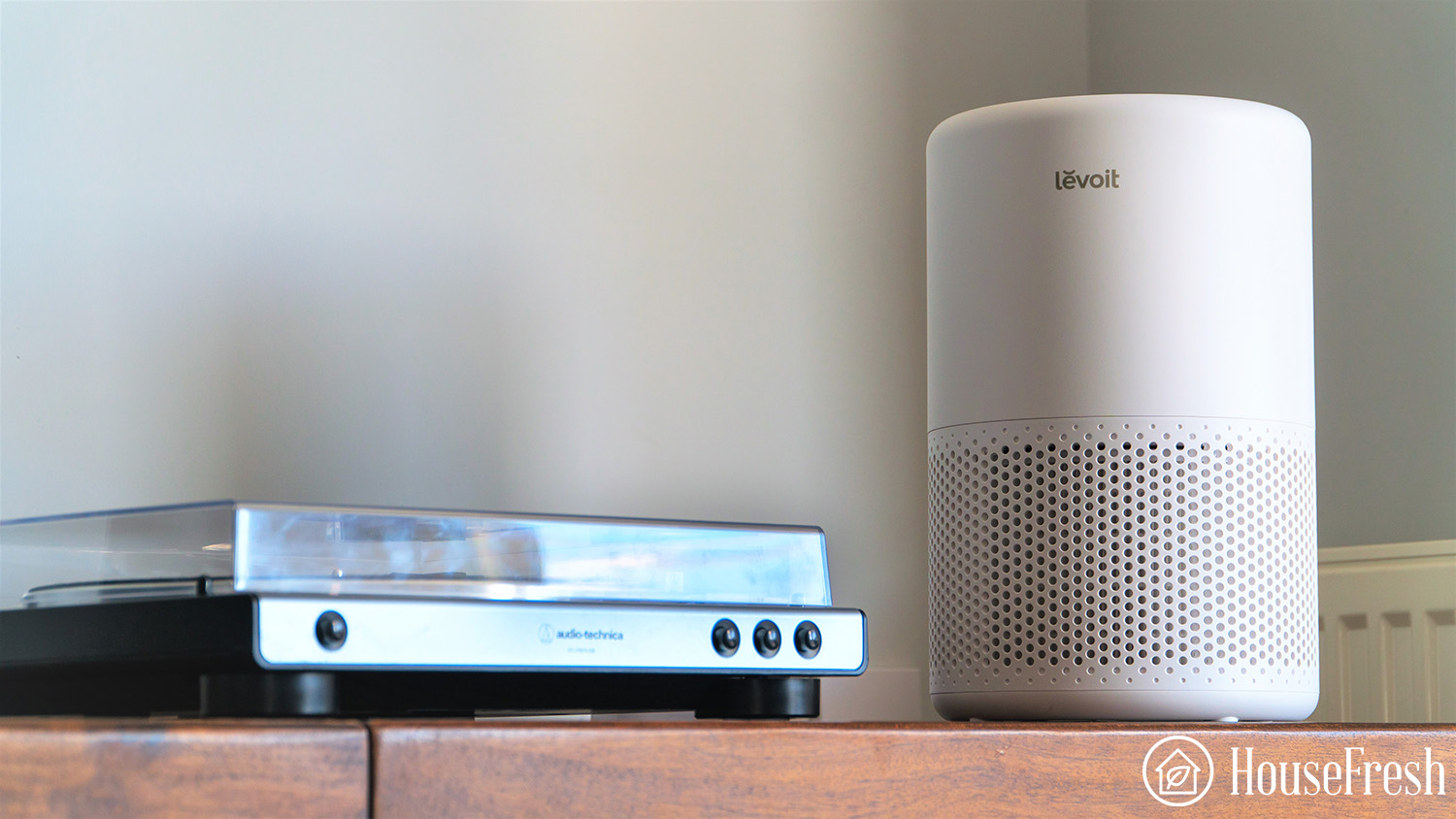
The Core 400S is a cylindrical air purifier that can provide six air changes per hour in rooms up to 167 sq. ft. at fan speeds under 45 decibels.
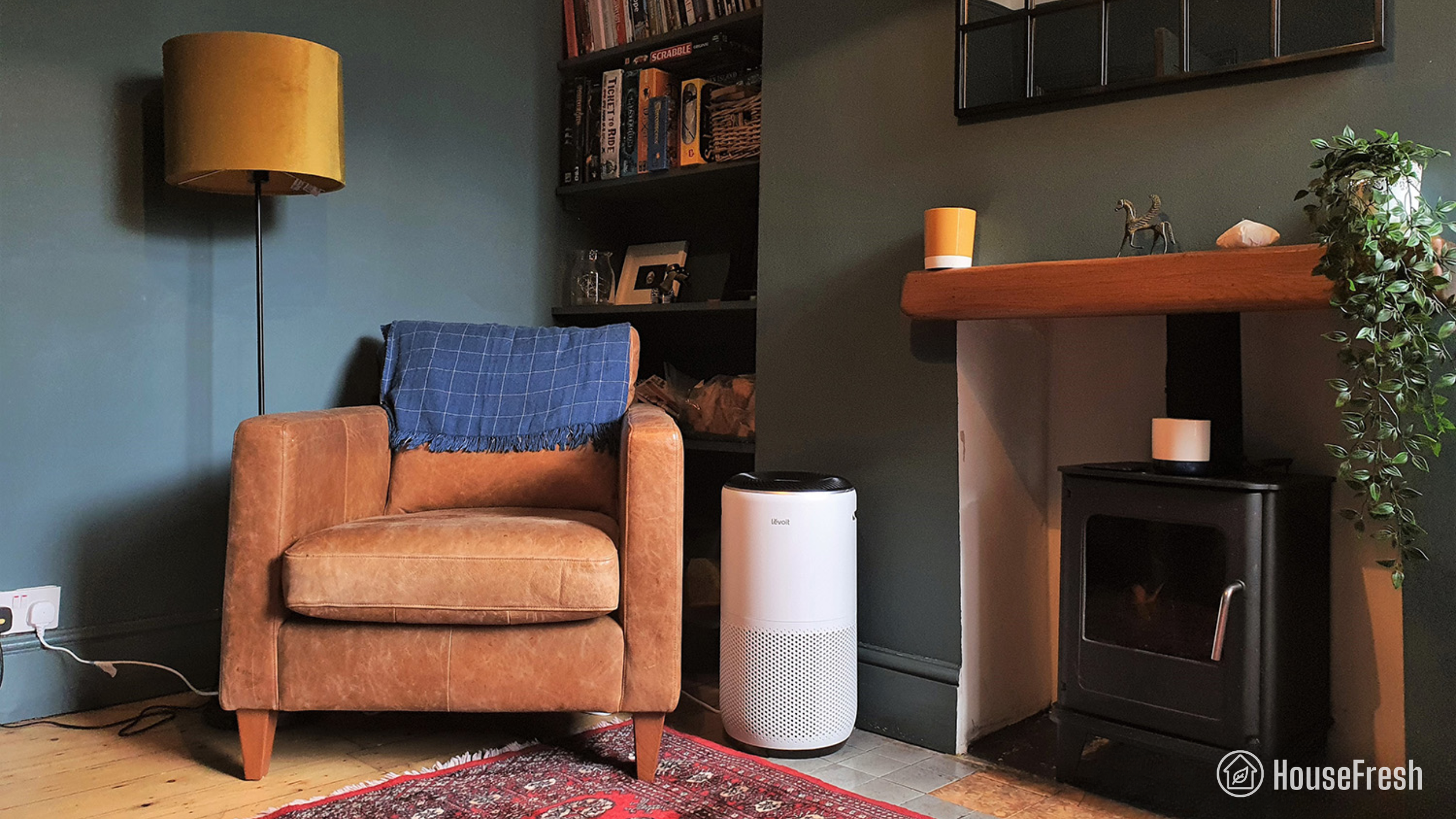
Levoit Core 400S Living Room

When running at speed 2, the Core 400S generates just 43.2 dBA and based on our particle removal test, we estimated a PM1 CADR of 134 cfm, which is good enough for six air changes in spaces up to 167 square feet.

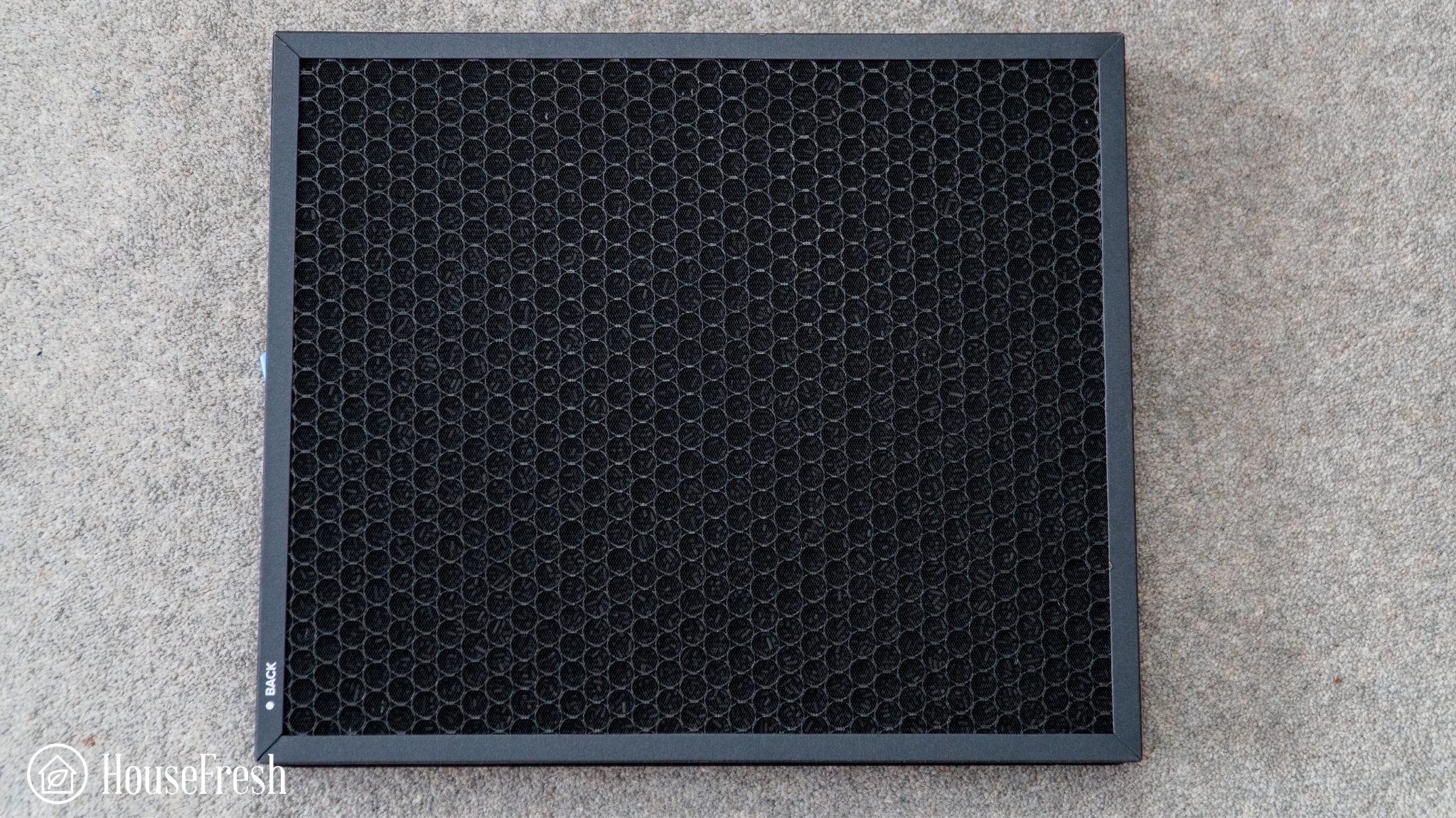
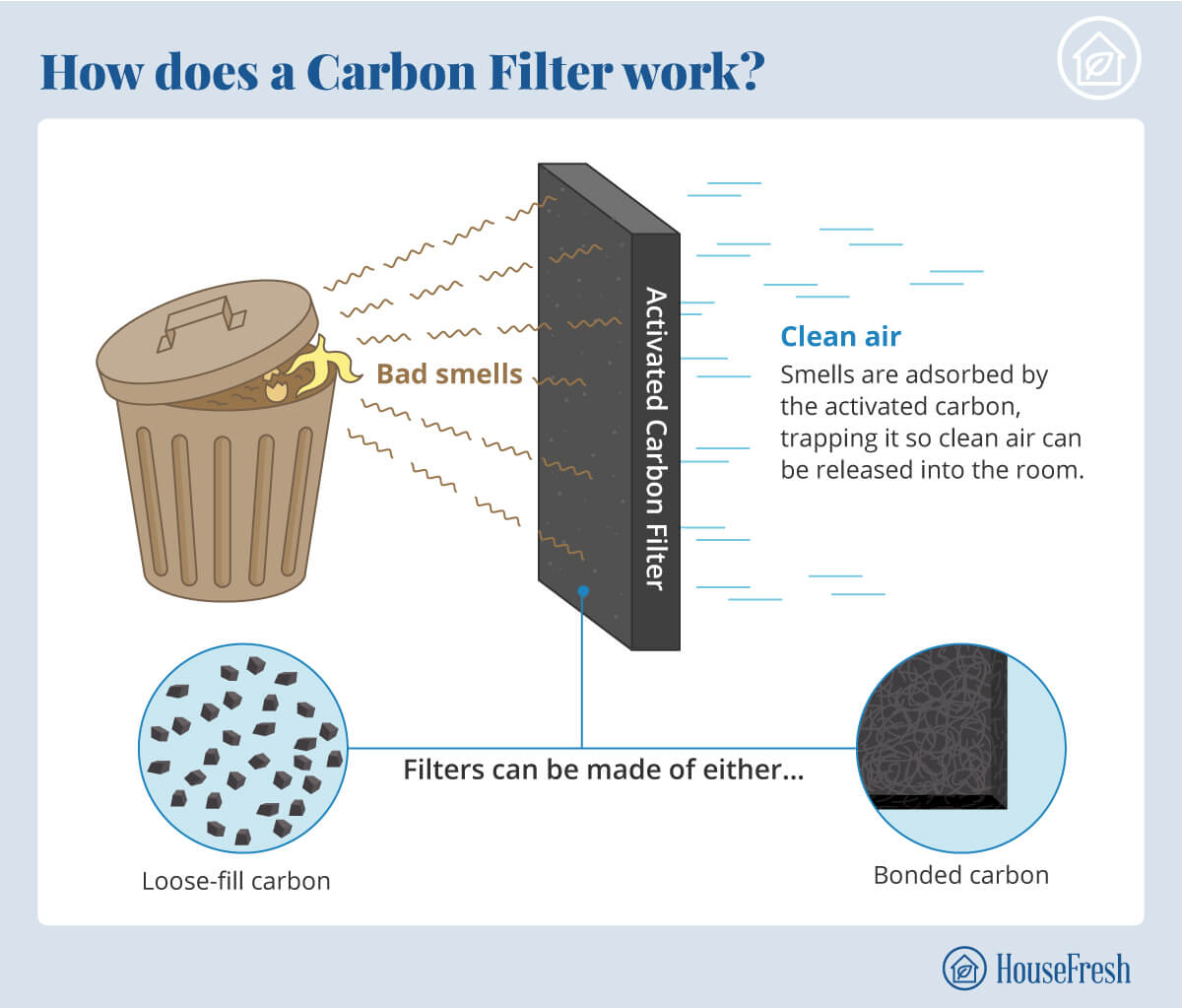
The Core 400S has a cylindrical filter with a pre-filter mesh that wraps around the particle filter and a layer of pelleted activated carbon.
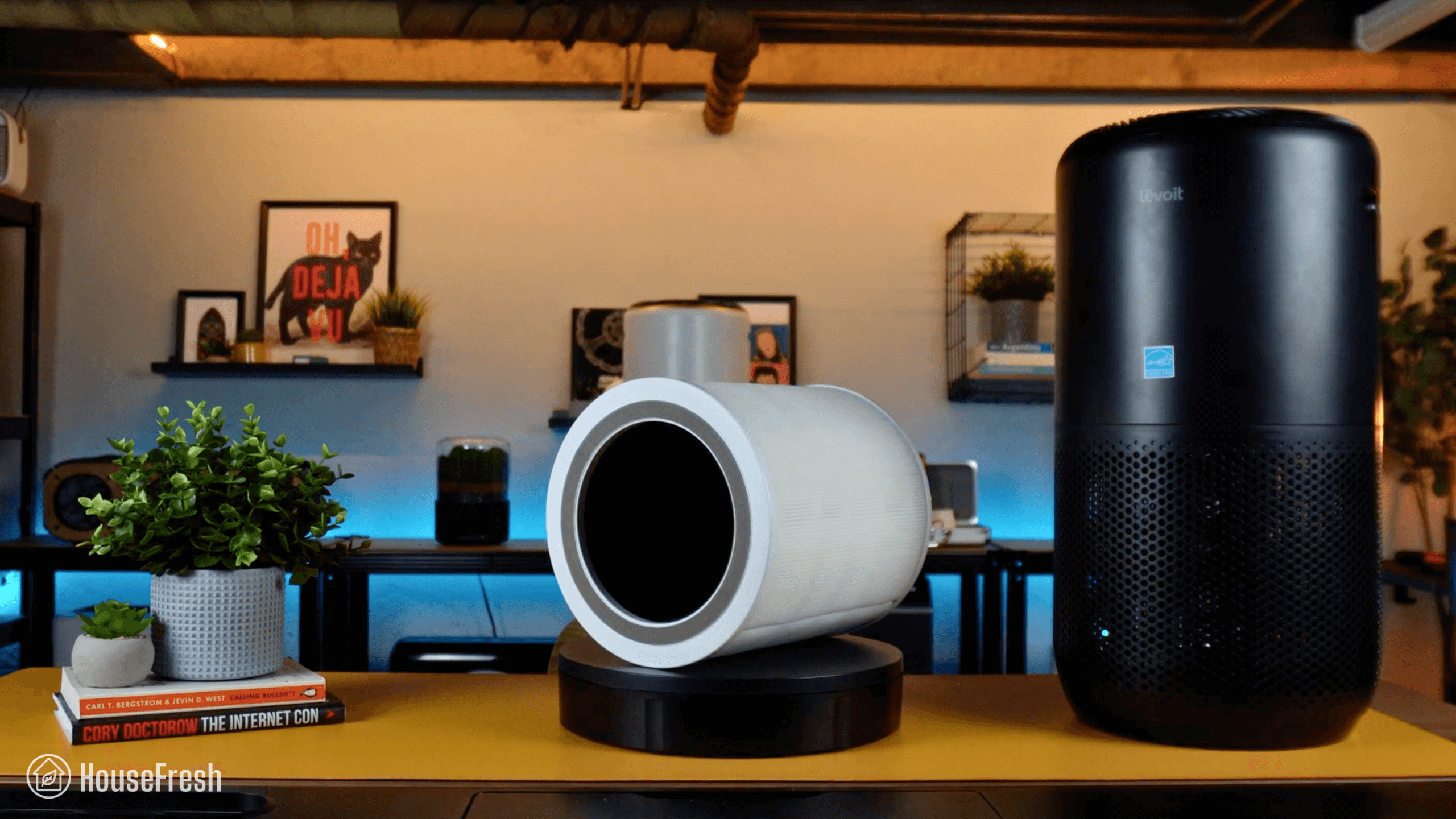
Core 400S filter

There are multiple filter options available, but if your allergies aren’t triggered by VOCs, I’d suggest sticking to the standard filter that doesn’t include additional carbon for better particle filtration.

When running at speed 2, it matched the particle filtration of the $750 Rabbit Air A3 and it outperformed the popular Vital 200S.
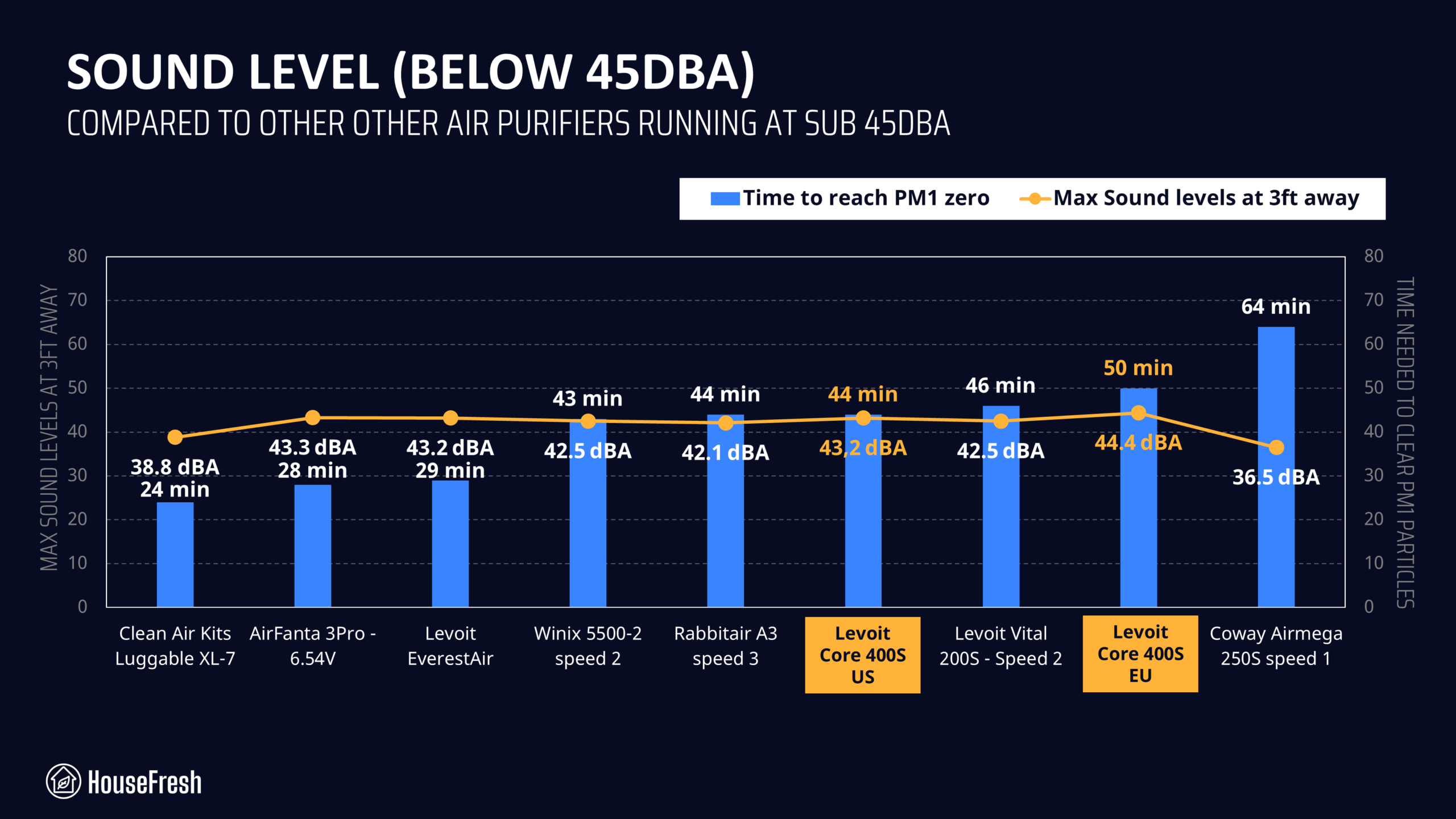
core 400s quiet performance scaled

However, if you’re in Europe, you should know that the European version of the Core 400S uses a different fan motor that is less powerful than the American version of this model.

PROS

The filter was originally advertised as HEPA, but Levoit stopped marketing it as such after Dyson challenged HEPA claims before the BBB.
The filter is bonded, so you will need to replace the entire thing once the carbon is full, even if the particle filter still has life in it.

CONS

The cylindrical design takes up less floor space than the traditional boxy air purifier design.
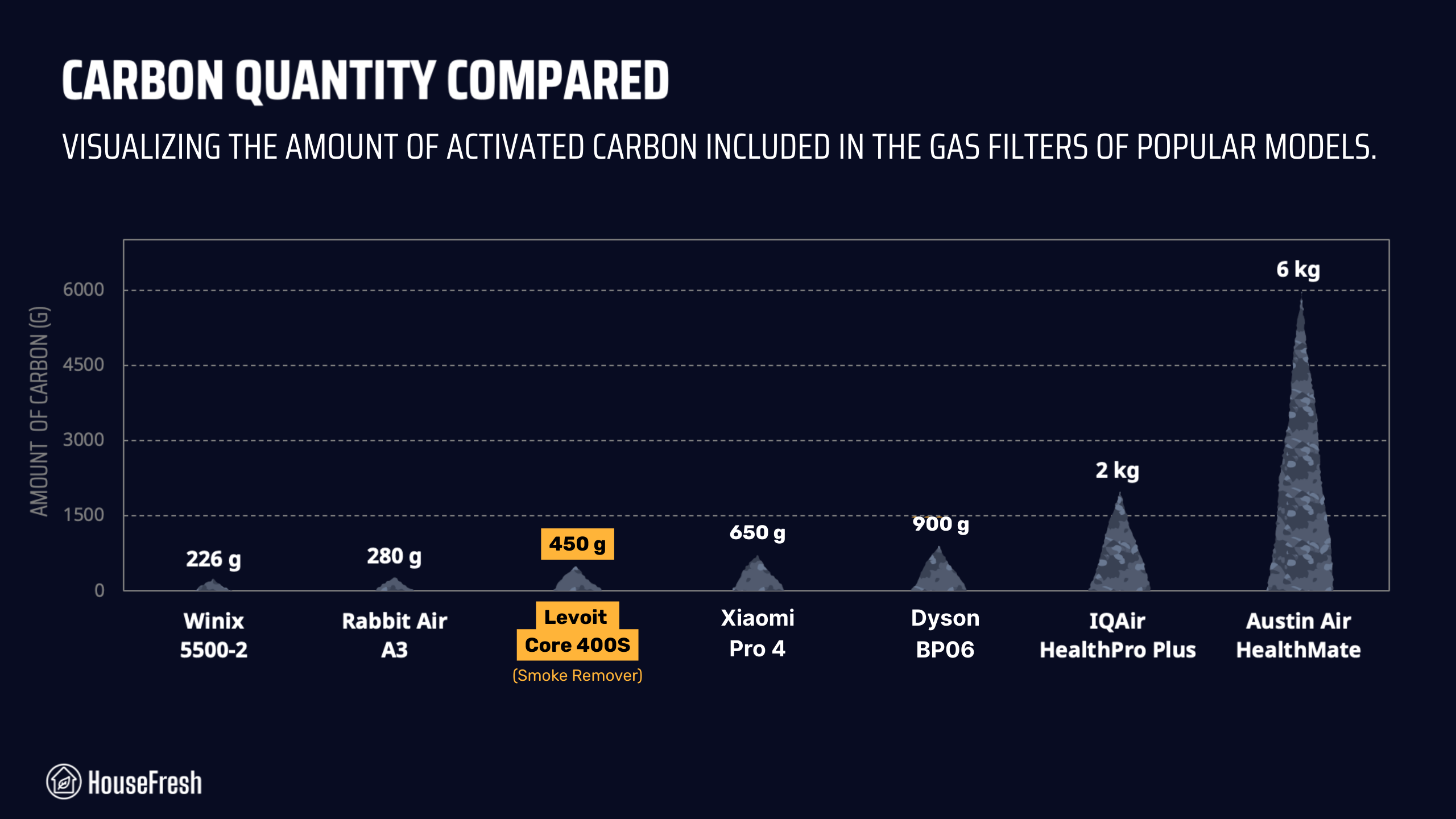
You get filter options with different amounts of carbon, with the top one being 450 grams (Smoke Remover), which is the most you will get with any Levoit device.
It has a laser particle sensor that unlocks smart modes and you get real-time PM2.5 readings at the top of the device.
It comes with app support via the VeSync app, which has great UX, useful features, and is constantly updated and improved.

Clean air delivery rate (CADR):– Top speed PM1 CADR: 213 cfm
– Sub-45 dBA PM1 CADR: 134 cfm
– AHAM PM2.5 CADR: 247 cfm (dust)
Filtration technology:Pre-filter for large particles, main filter for airborne particles and activated carbon filter for odors and gasses
Recommended room size:319 sq. ft. (5 air changes per hour)
Dimensions:10.8L x 10.8W x 20.5H inches (27.4L x 27.4W x 52H cm)
Weight:11.2 lbs (5 kg)
Filter lifespan:6 months
Noise level in decibels from 3 ft. away:Sleep mode: 35.5 dBA
Speed 1: 38.3 dBA
Speed 2: 43.2 dBA
Speed 3: 51.2 dBA
Speed 4: 60.3 dBA
Electricity consumption in watts:Standby: 0.93 watts
Sleep mode: 3.05 watts
Speed 1: 5.28 watts
Speed 2: 8.51 watts
Speed 3: 16.41 watts
Speed 4: 39.64 watts
Manufacturer’s warranty:2 years
Country of origin:United States
Country of manufacture:China

READ MY FULL REVIEW ➜ 

WATCH MY VIDEO REVIEW ➜

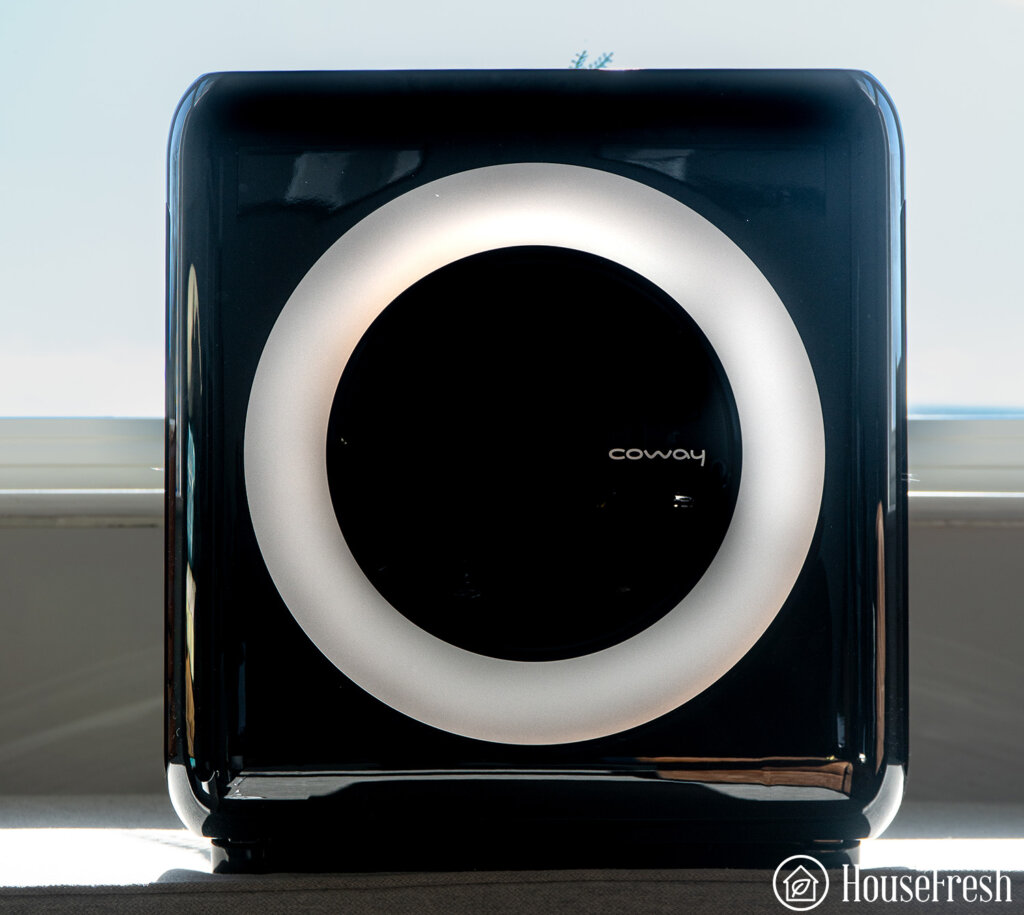
4. Best for large spaces: Coway Airmega ProX

If the DIY look isn’t for you and you need serious power to clean the air in a large space, then look no further than the ProX.
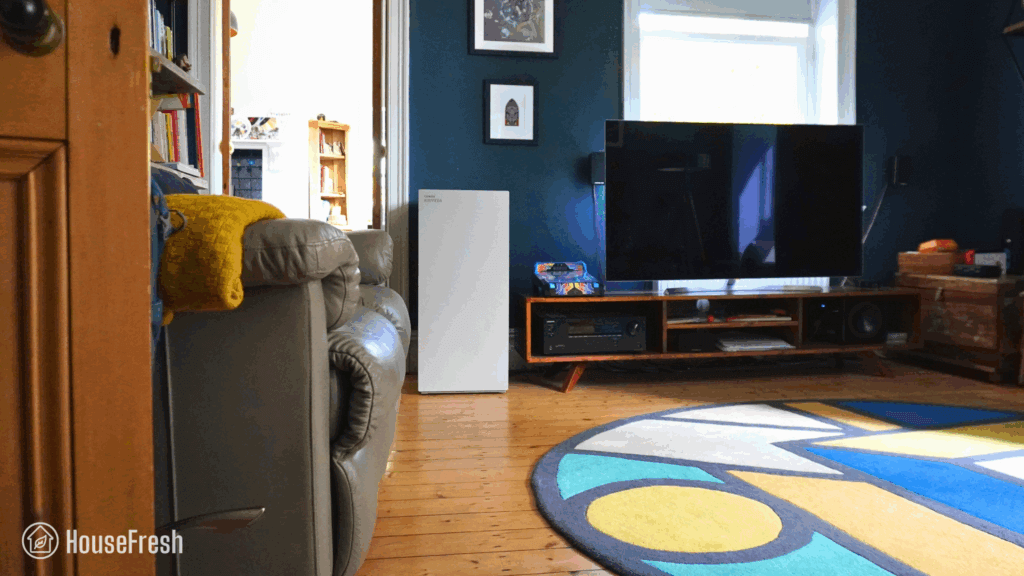
Coway Airmega ProX TV Room

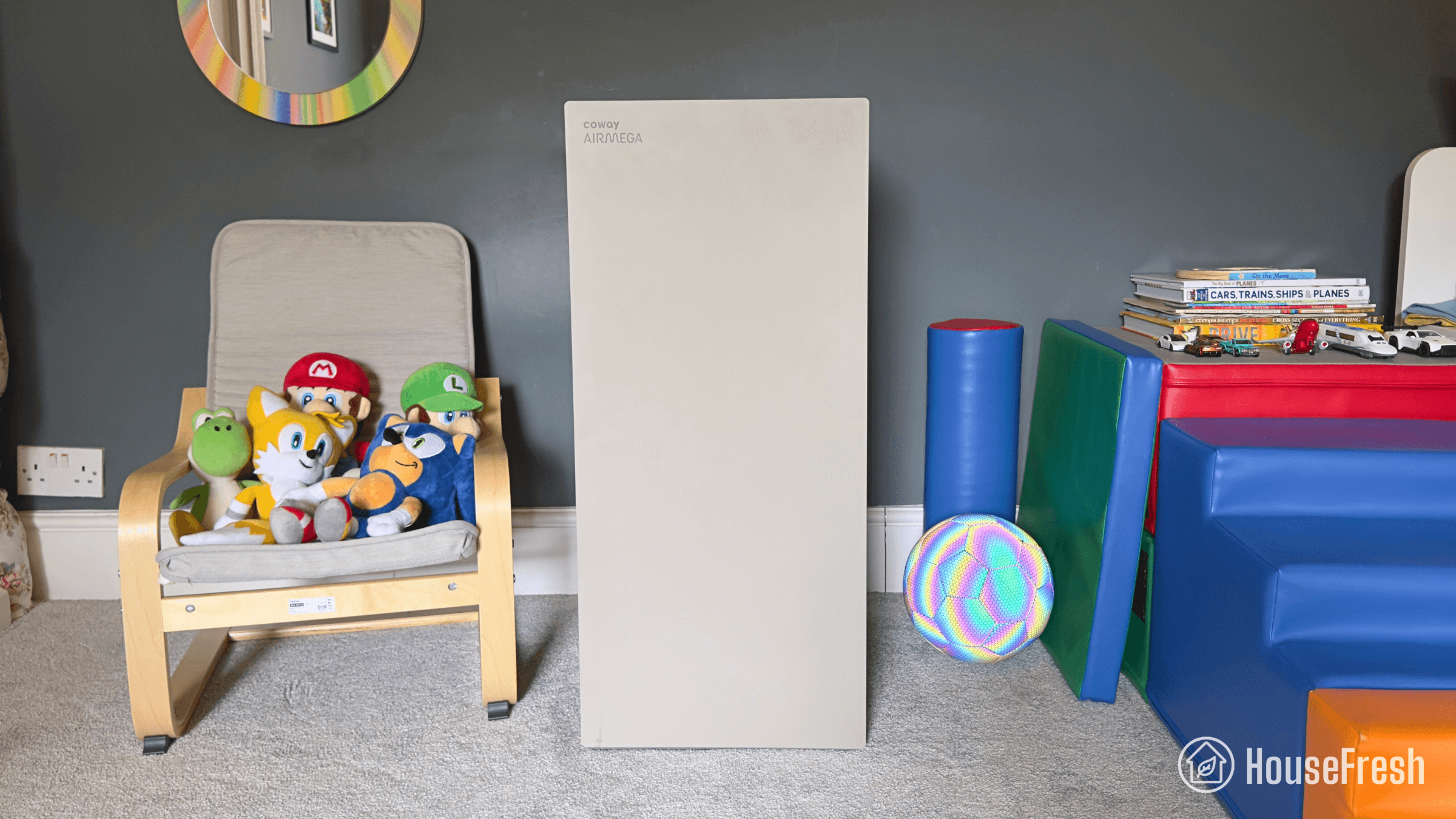
With an estimated PM1 CADR of 299 cfm at sub-45 dBA fan speeds, the Coway Airmega ProX can provide six air changes per hour in spaces up to 373 square feet.
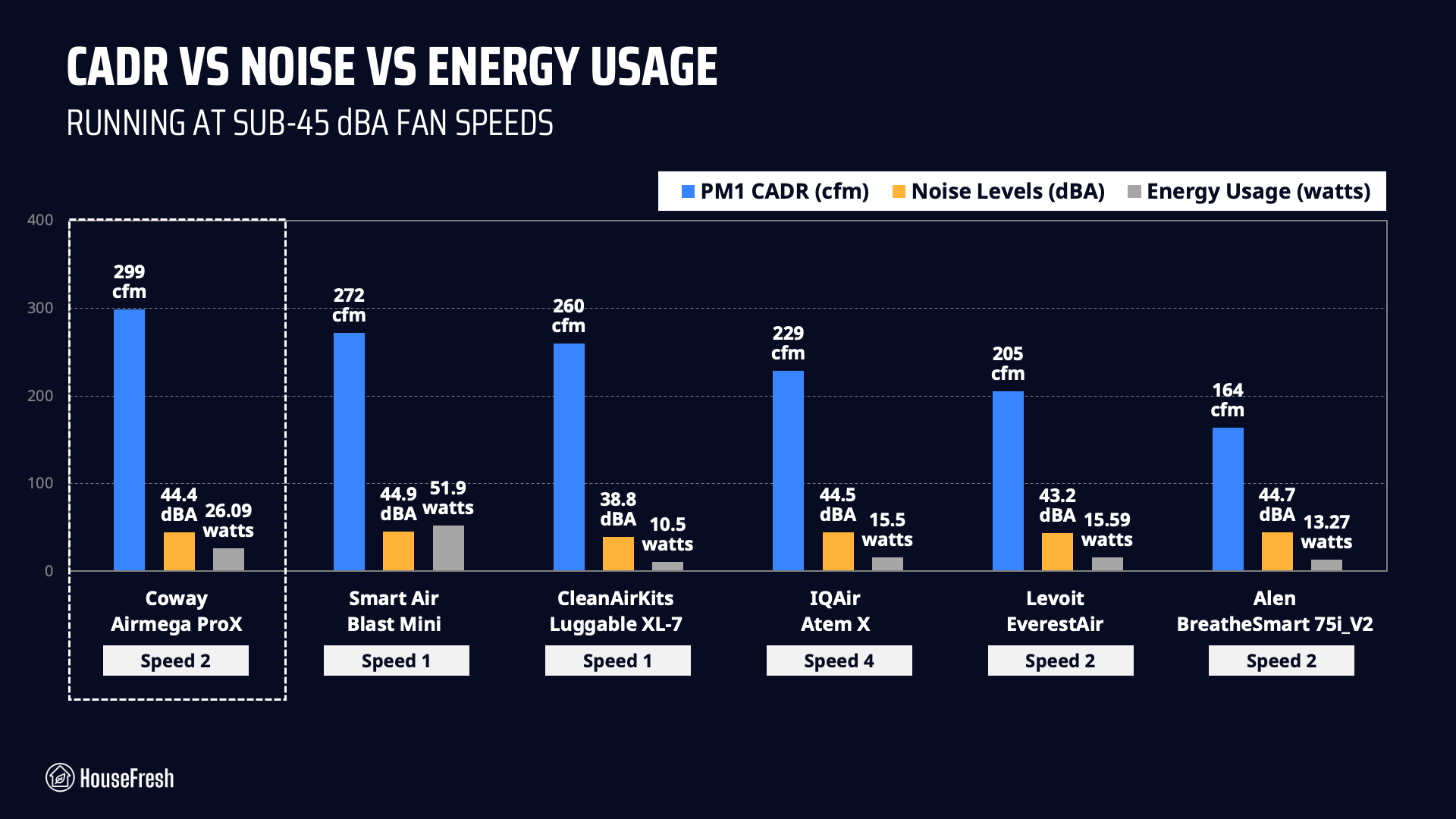
Coway ProX CADR energy sound

When running at full speed, we estimate a PM1 CADR of 462 cfm. This means it’s powerful enough to clean the air six times per hour in rooms as large as 577 square feet while generating just 53.6 dBA of noise.
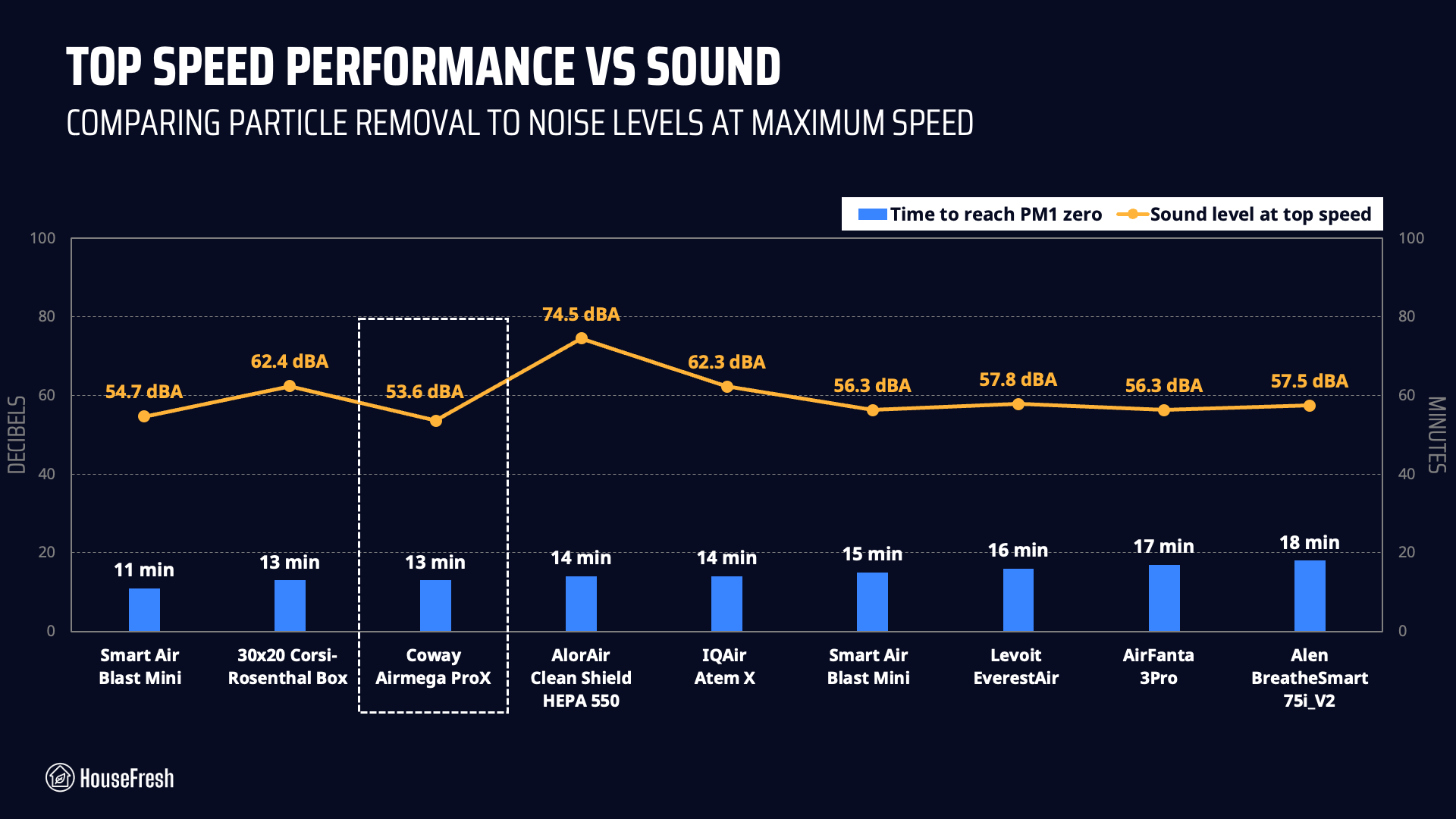
Coway Airmega ProX Top speed sound
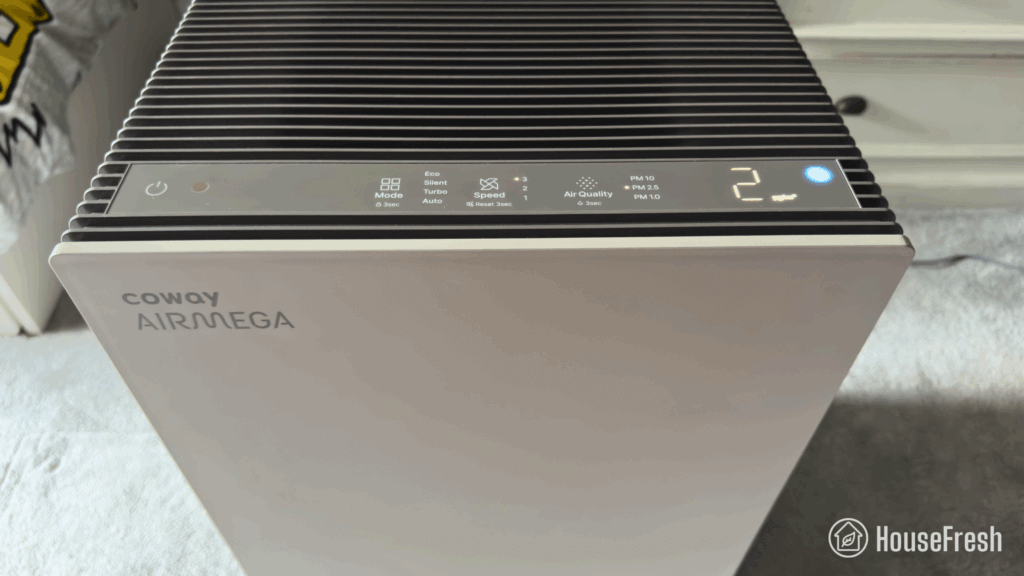
Coway Airmega ProX Controls

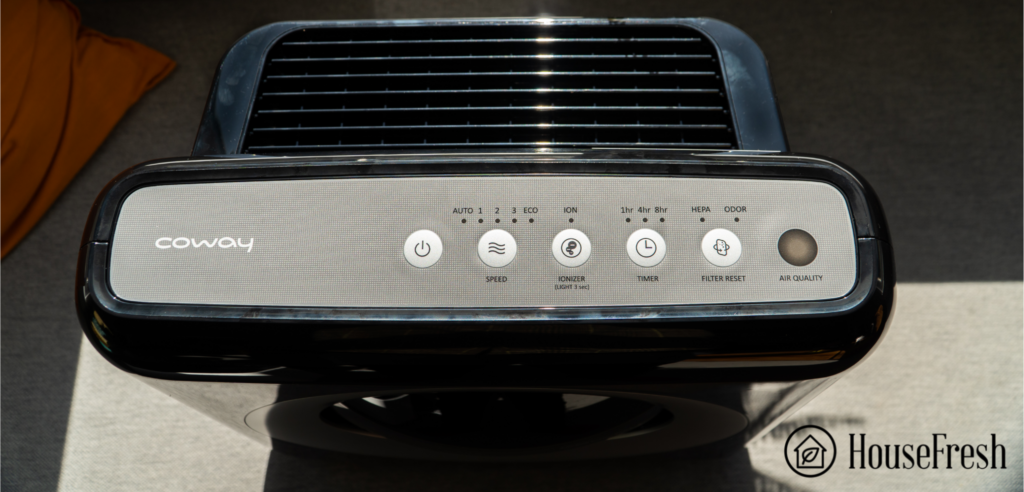
Unlike the rest of the air purifiers on this list, the ProX comes with an onboard air quality sensor that unlocks auto mode and provides real-time PM2.5 readings. It also comes with two particle + carbon filters.
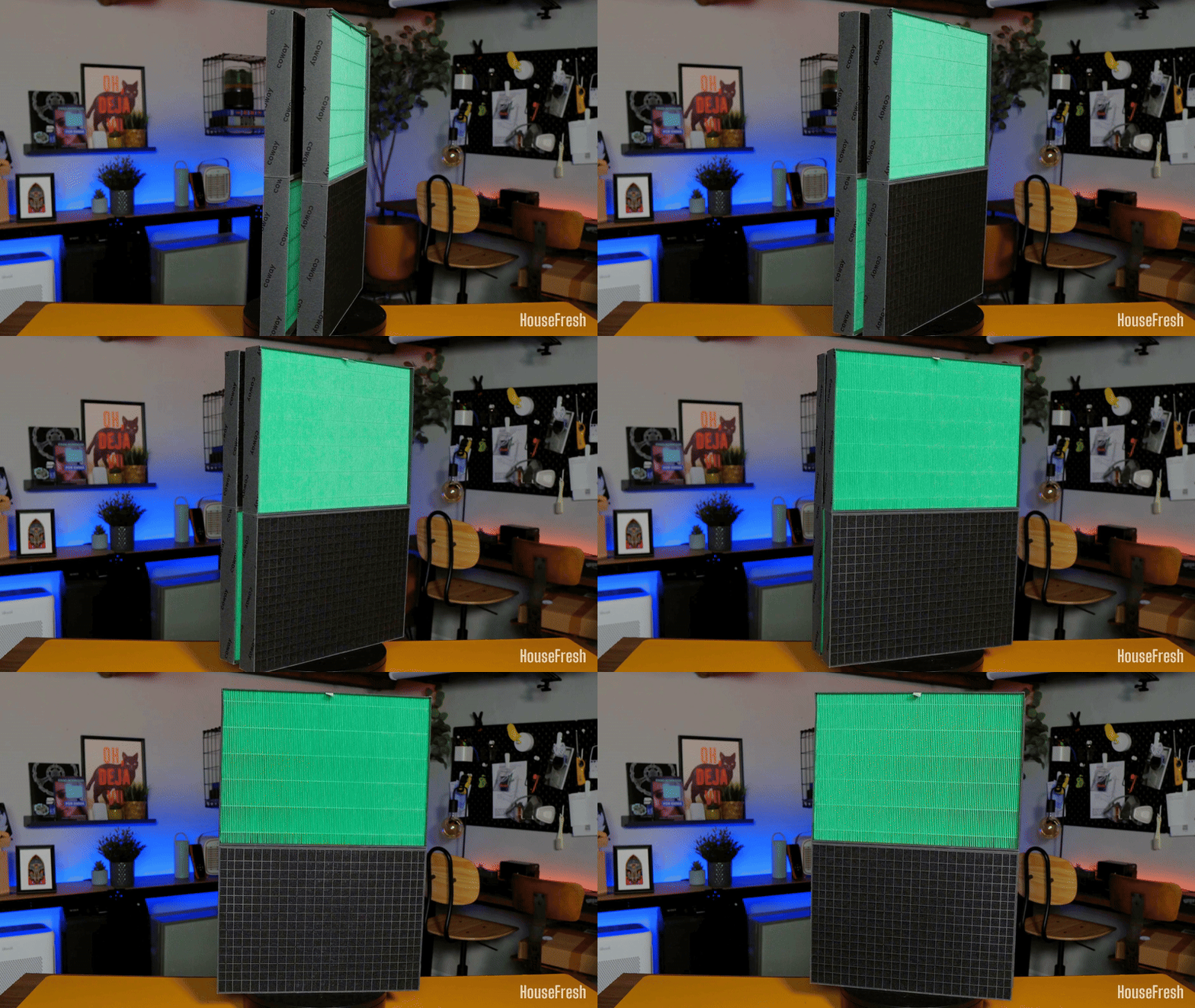
Coway Airmega ProX Filters

CONS

Retailing at just over $900, the ProX isn’t cheap.
It’s not small either, weighing 50 lbs or 22.67 kg.
It doesn’t have app support, which we would expect at this price point.

PROS

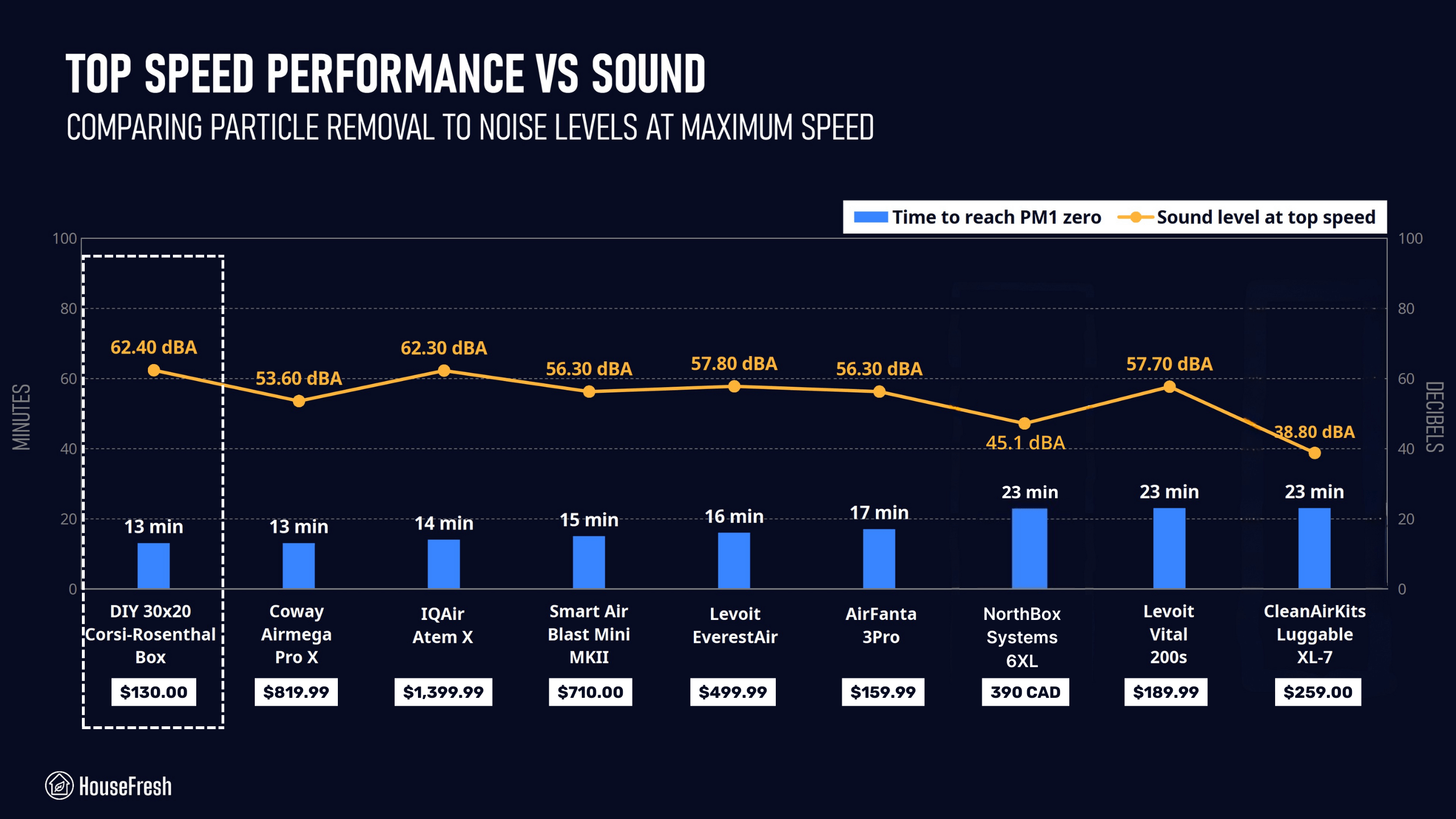
It is officially the fastest HEPA air purifier we tested – at top speed, the ProX completed our particle removal test in 13 minutes.
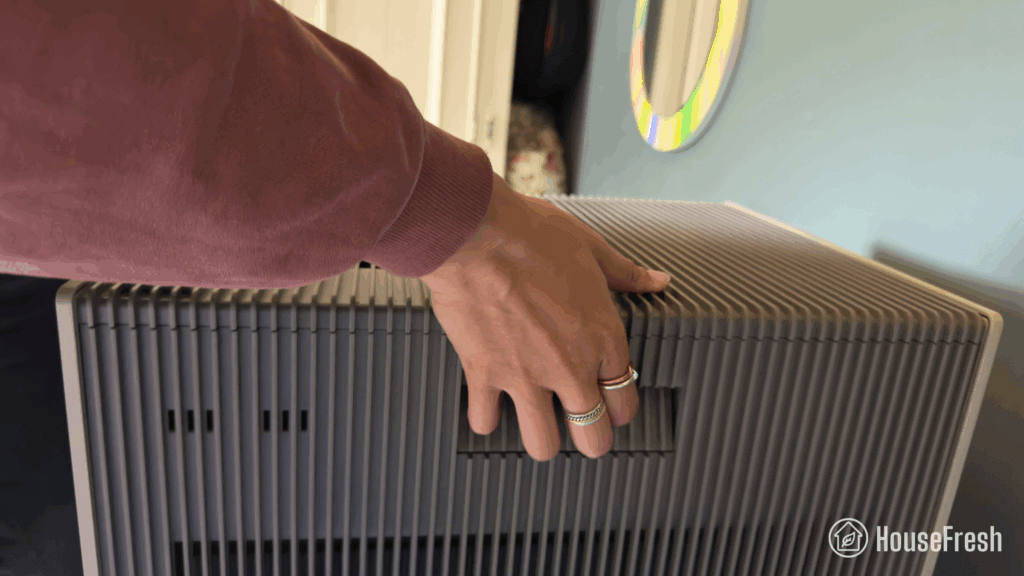
Even though it is heavy, it comes with deep handles at each side and wheels at the bottom.
You can adjust the sensibility of the air quality sensor.
You can also adjust the power of the auto mode, rotating between eco, silent and turbo.
It looks incredible and is made of high-quality plastic.

Clean air delivery rate (CADR):– Top speed PM1 CADR: 462 cfm
– Sub-45 dBA PM1 CADR: 299 cfm
– AHAM PM2.5 CADR: 586 cfm (dust)
Filter technology:Green True HEPA filter with pelleted activated carbon
Recommended room size:693 sq. ft. (5 air changes per hour)
Dimensions:18.9 x 36.6 x 24.3 in (48 x 93 x 62 cm)
Weight:51 lbs (23kg)
Noise level in decibels from 3 ft. away:Speed 1: 37.4 dBA
Speed 2: 44.4 dBA
Speed 3: 53.6 dBA
Electricity consumption in watts:Standby: 0 watts
Speed 1: 11.76 watts
Speed 2: 26.09 watts
Speed 3: 58.88 watts
Filter lifespan:12 months
Manufacturer’s warranty:3 years
Country of origin:South Korea
Country of manufacture:South Korea

READ MY FULL REVIEW ➜ 

WATCH MY VIDEO REVIEW ➜

5. Best buy-it-for-life PC fan kit: Nukit Tempest Pro

The Tempest Pro is a PC fan air purifier with excellent particle removal performance and a metal body that will last a lifetime.
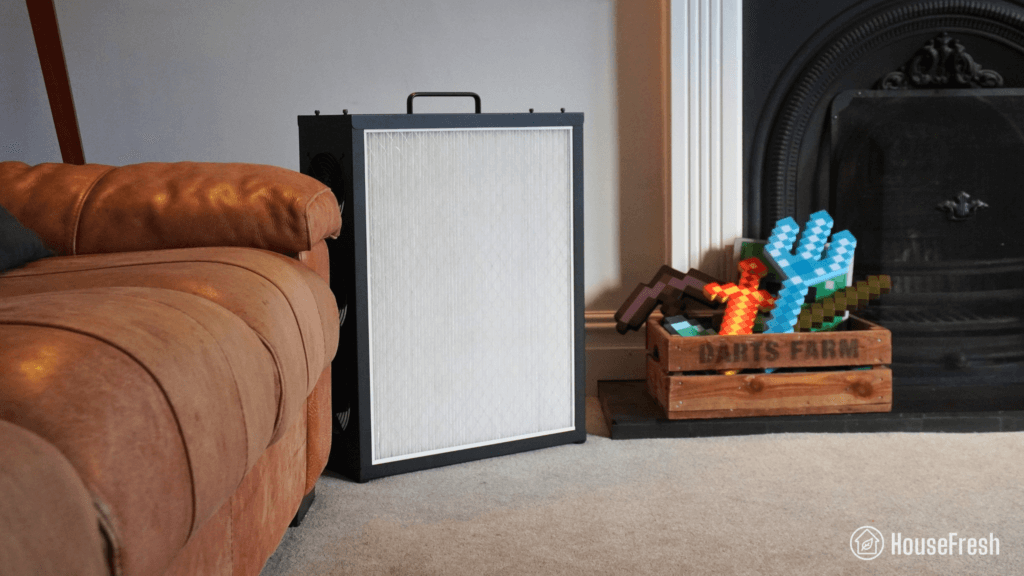
Nukit Tempest Pro Living Room

When running at top speed, the Nukit Tempest Pro is whisper-quite, generating 39.1 dBA of noise while providing an estimated PM1 CADR of 188 cfm, which is good enough for six air changes in rooms no larger than 235 sq. ft.
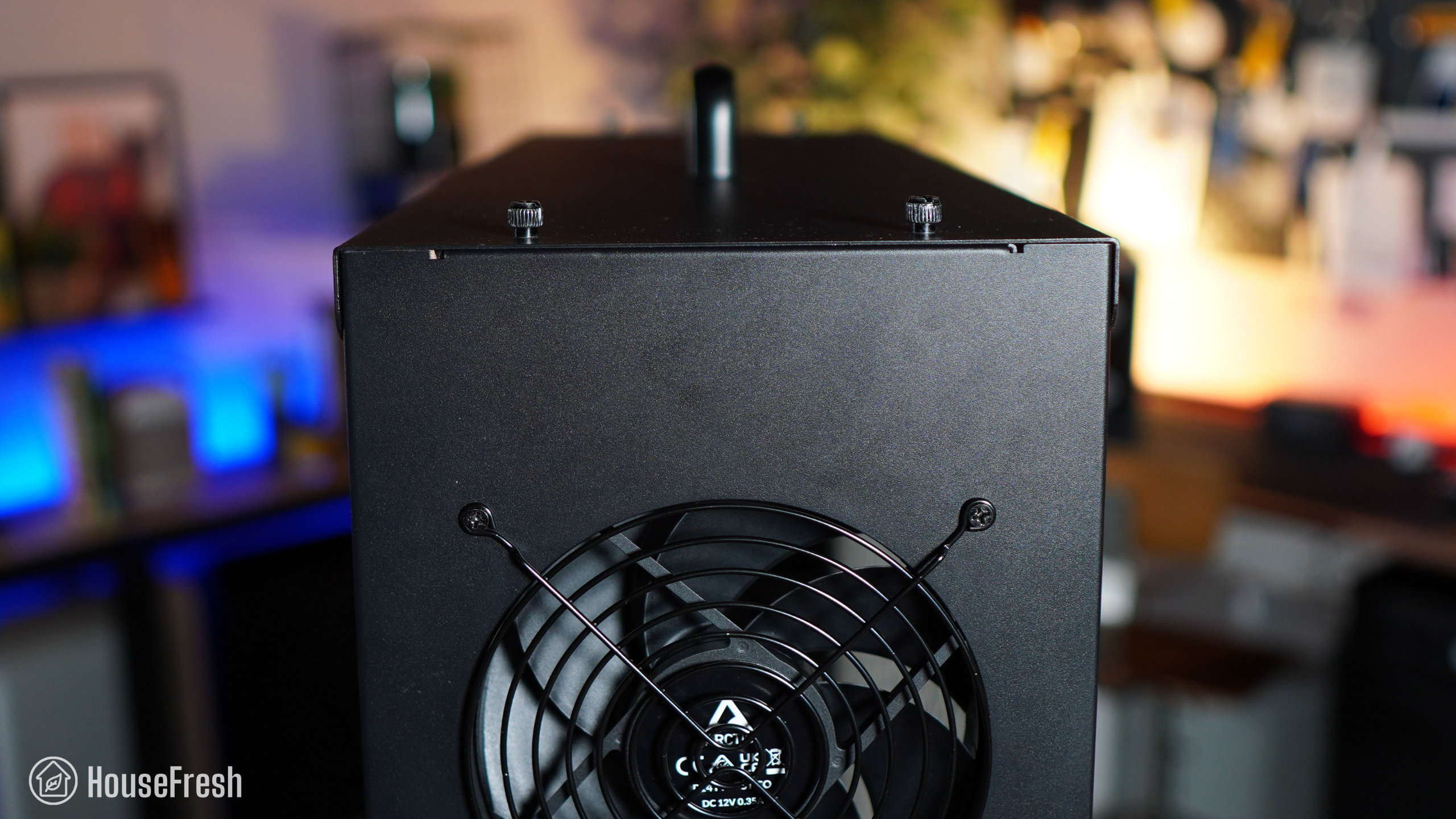
Nukit Tempest Pro Handle

If your allergies are not triggered by VOCs, you can run it without the activated carbon filters to reduce long-term costs.
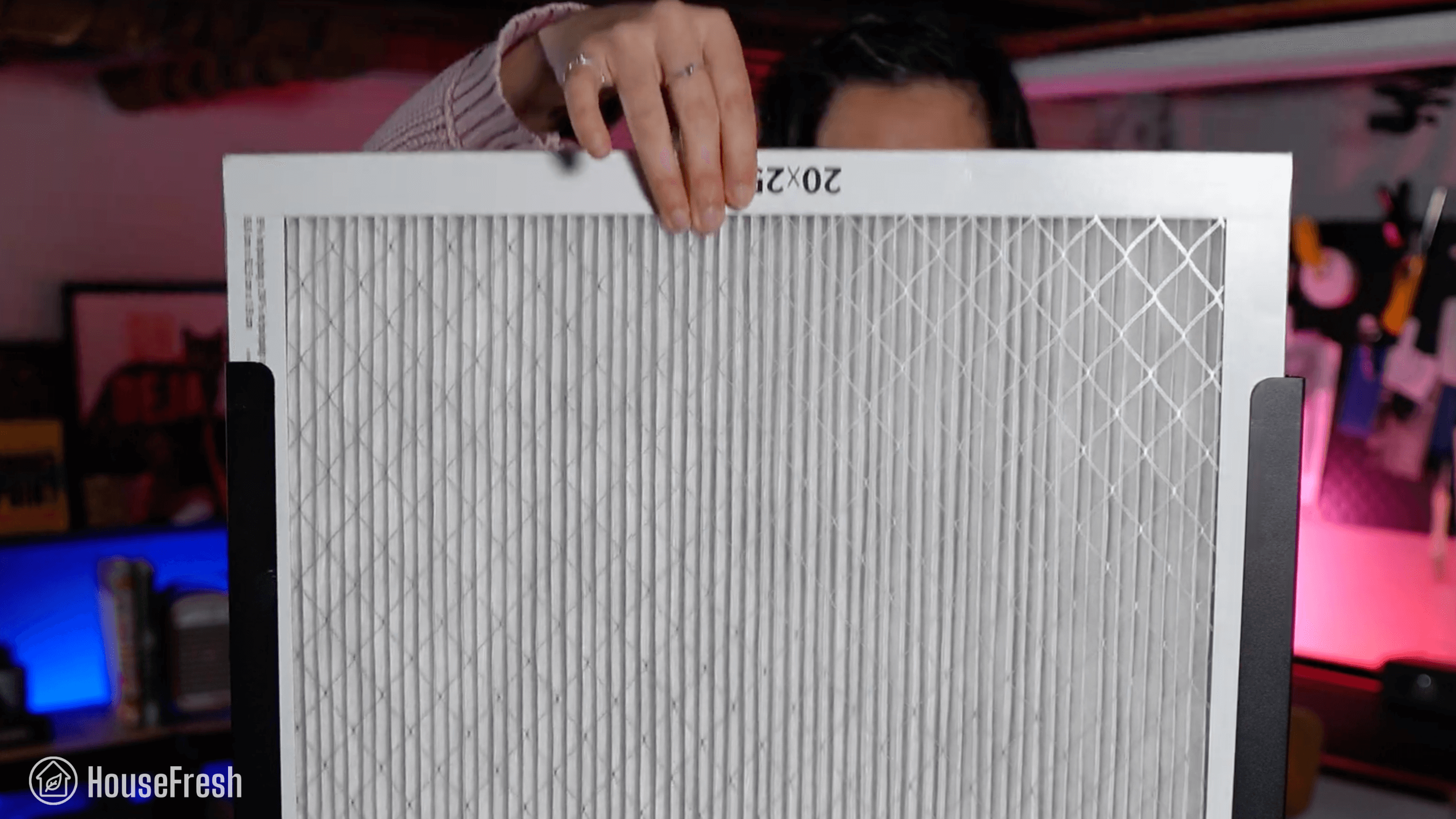
Nukit Tempest Pro Filters

Much like the Luggable XL Ultra, the Tempest Pro also uses any type of 20×25 MERV 13 filters you can buy. Based on my tests, I recommend the 3M Filtrete MPR1900 filters.

PROS

The 3-speed version is not as quiet as the 5-speed version, so look for the SA600 with five fan speeds.
If you want a smart air purifier, this is not the device for you.

CONS

The control panel is intuitive and the lights switch off automatically, without the need to press any button or activate any special mode.
It restarts automatically following a power cut or after being unplugged, which is something most models don’t do.
It can be mounted to the wall and comes with screw holes on the bottom, but you will need to source the fixtures to do this. 

Clean air delivery rate (CADR):– Top speed PM1 CADR: 188 cfm
– Sub-45 dBA PM1 CADR: 188 cfm
Filter technology:MERV 13 (20×25)
Recommended room size:282 sq. ft. (5 air changes per hour)
Dimensions:26.65 x 20.27 x 7.55 in (67.7 x 51.5 x 19.2 cm)
Weight:18.7 lbs (8.5 kg)
Noise level in decibels from 3 ft. away:Top speed: 39.1 dBA
Electricity consumption in watts:Standby: 0 watts
Top speed: 16.44 watts
Filter lifespan:12 months
Manufacturer’s warranty:1 year
Country of origin:China
Country of manufacture:China

READ MY FULL REVIEW ➜ 

WATCH MY VIDEO REVIEW ➜

6. Best money can buy: IQAir Atem X

If money is no object, the Atem X from IQAir is the best air purifier for allergy sufferers wanting to remove pollen, dust, mold and other particles from the air.
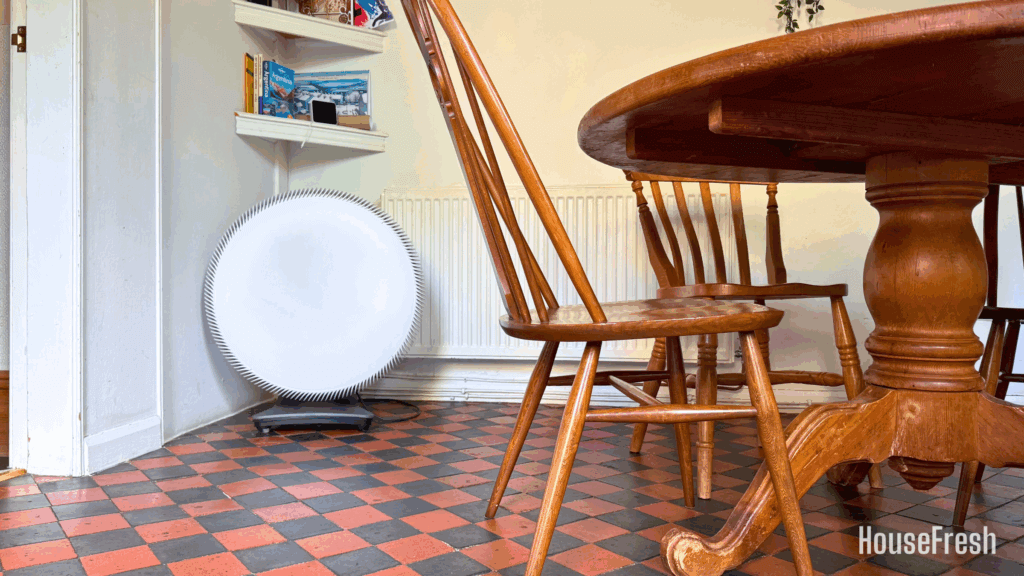
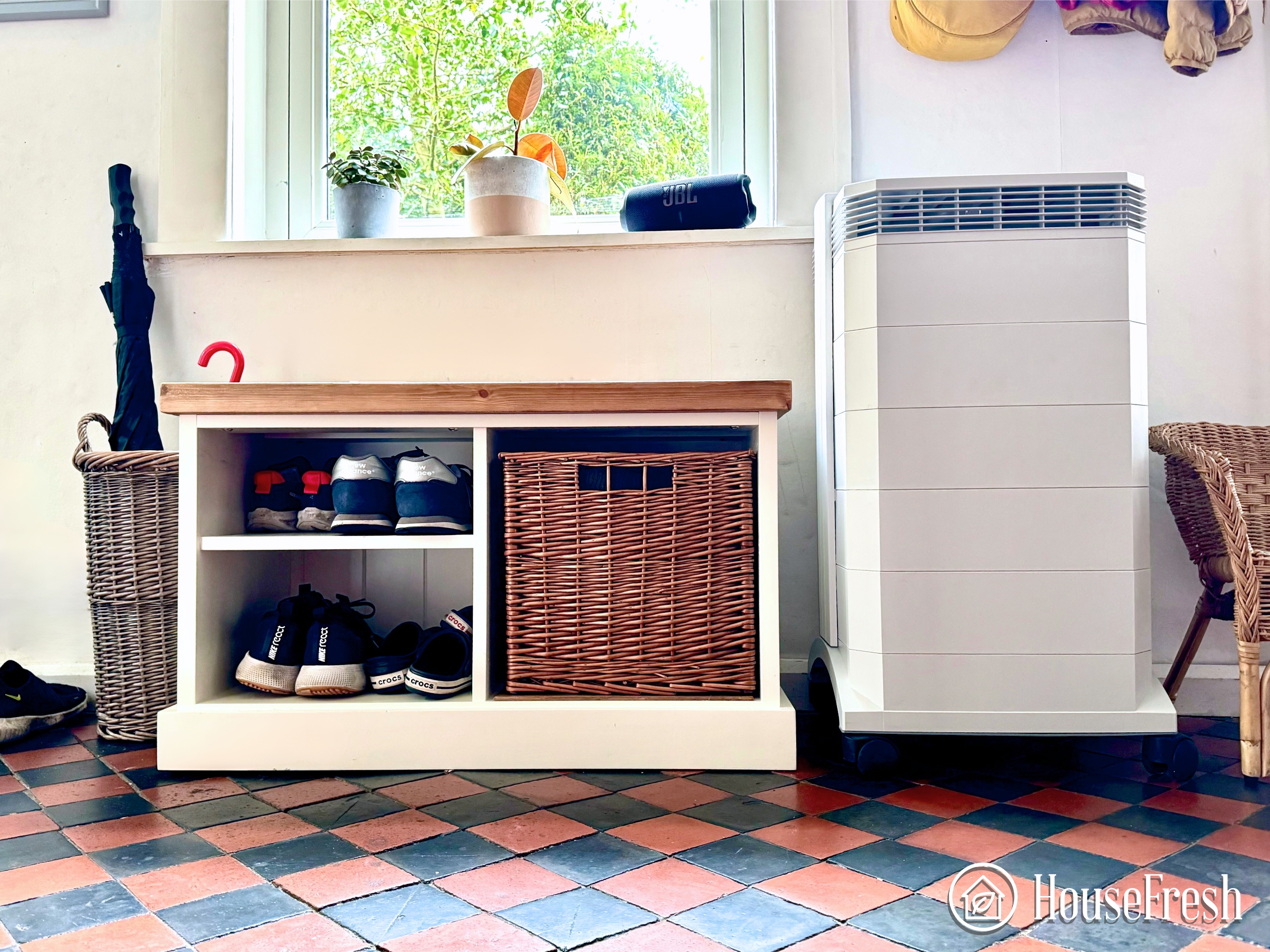
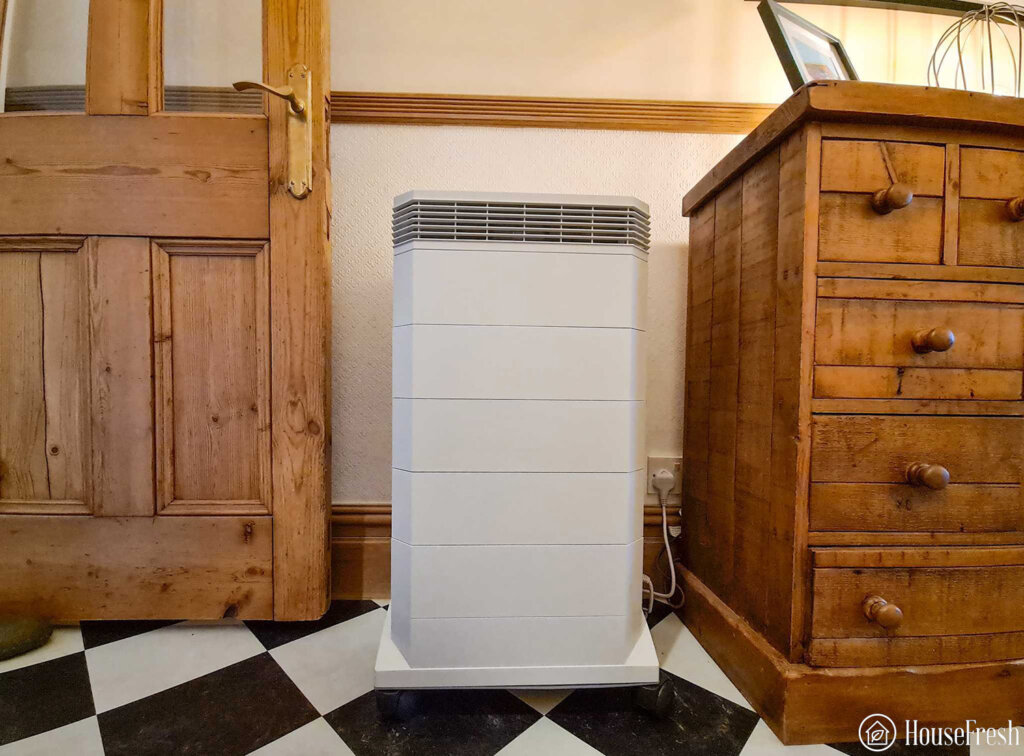
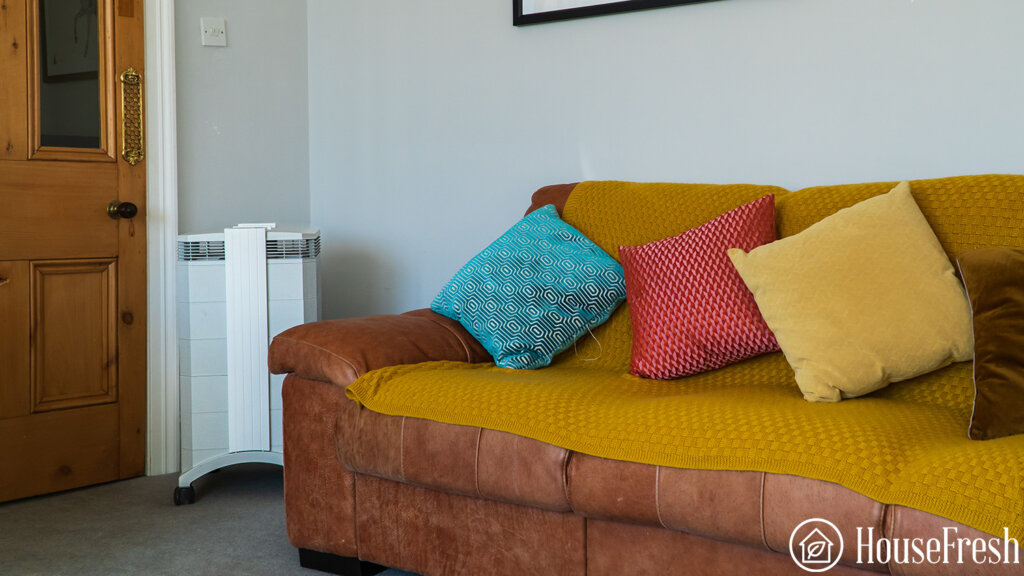
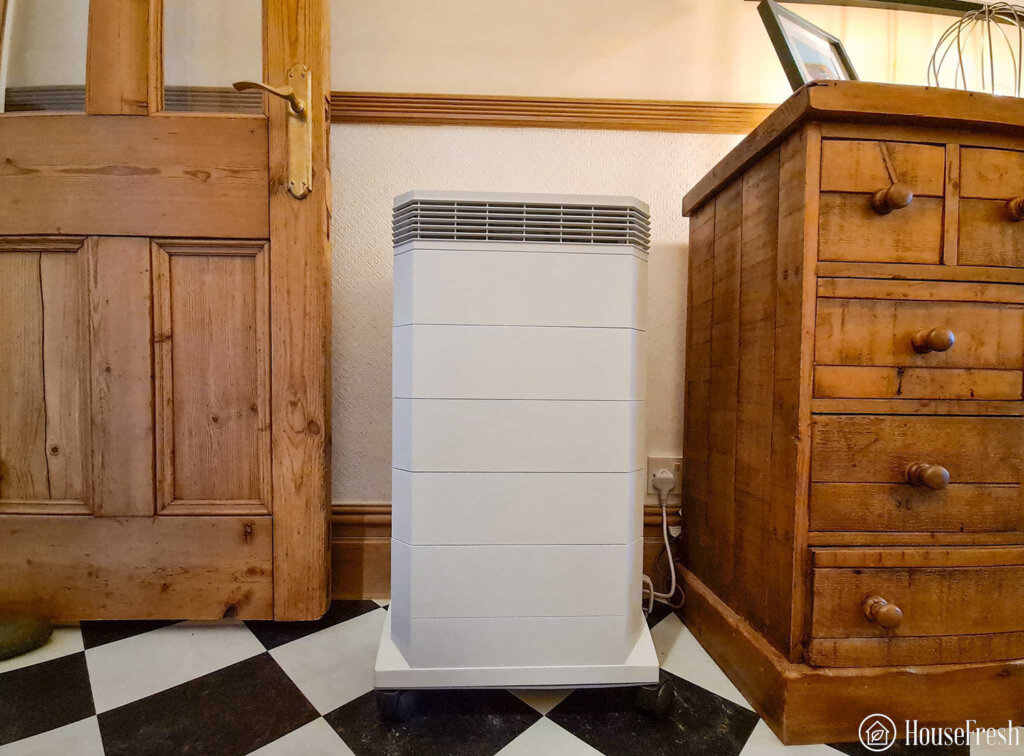
IQAir Atem X Dining Room

The Atem X is the most expensive air purifier we have tested at HouseFresh and its performance, features and design blew me away. At speed 4, it generates 44.5 dBA while providing a PM1 CADR of 229 cfm, which is powerful enough to clean the air six times per hour in rooms up to 286 sq. ft.

It comes with three HEPA filters, but it doesn’t come with a gas filter or any form of carbon filtration as standard, so it won’t be suitable for those with allergies triggered by chemical gases.
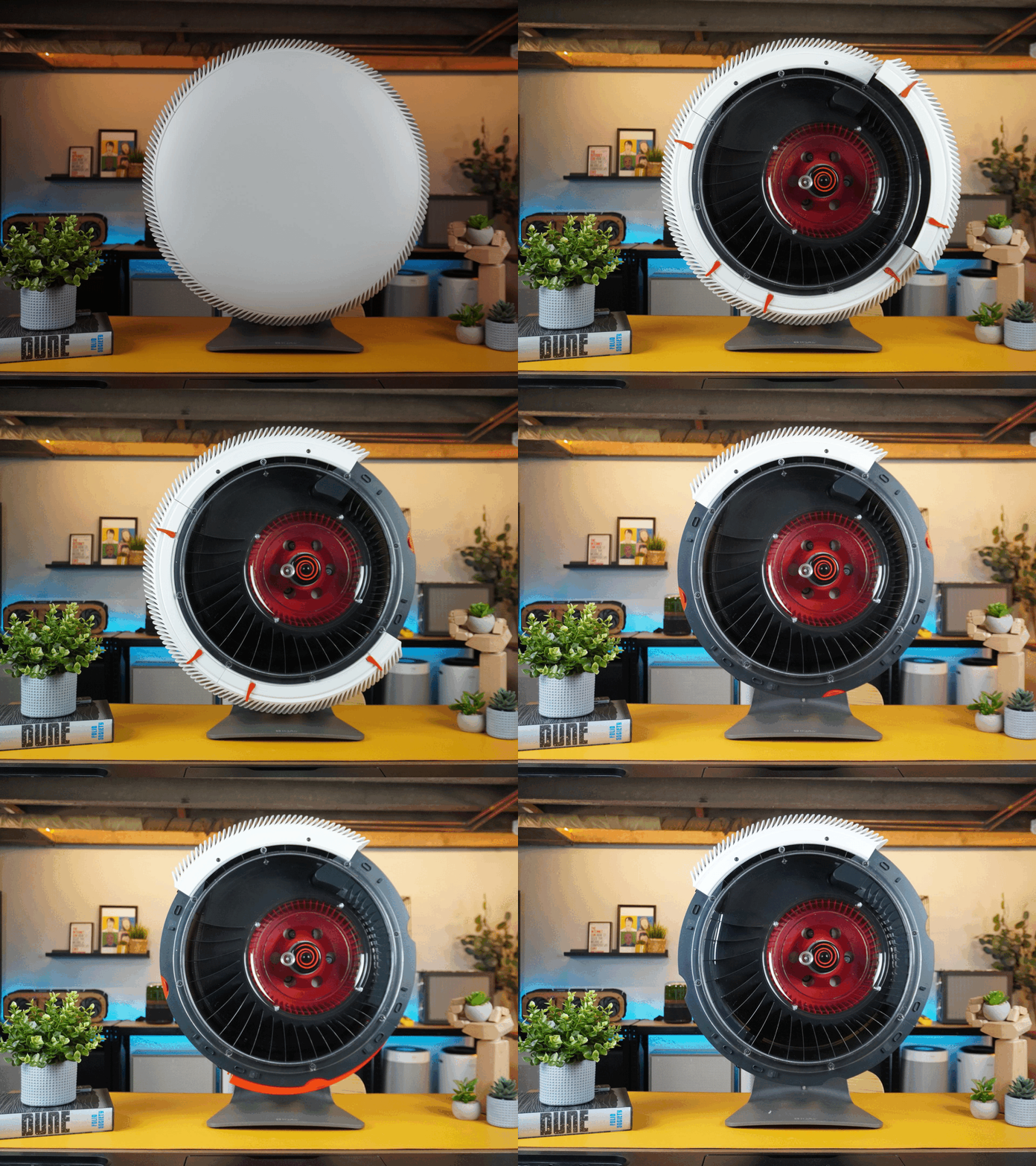
IQAir Atem X Filters

IQAir’s signature HyperHEPA filter offers excellent particle filtration. The HEPA grade will depend on the level of airflow and ranges from H13 to E11, as you can see in the full technical specifications below:
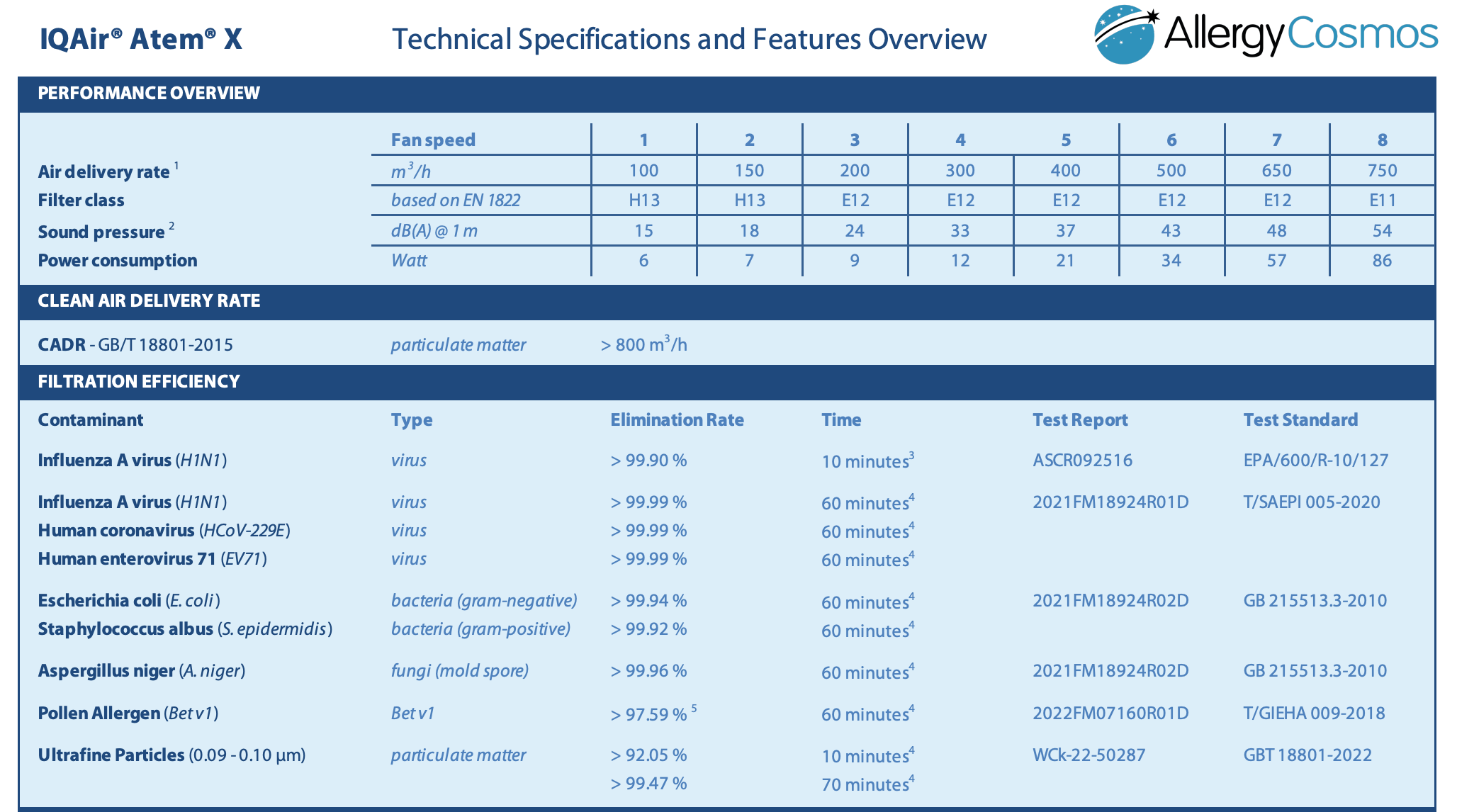
IQAir Atem X HyperHEPA Specs

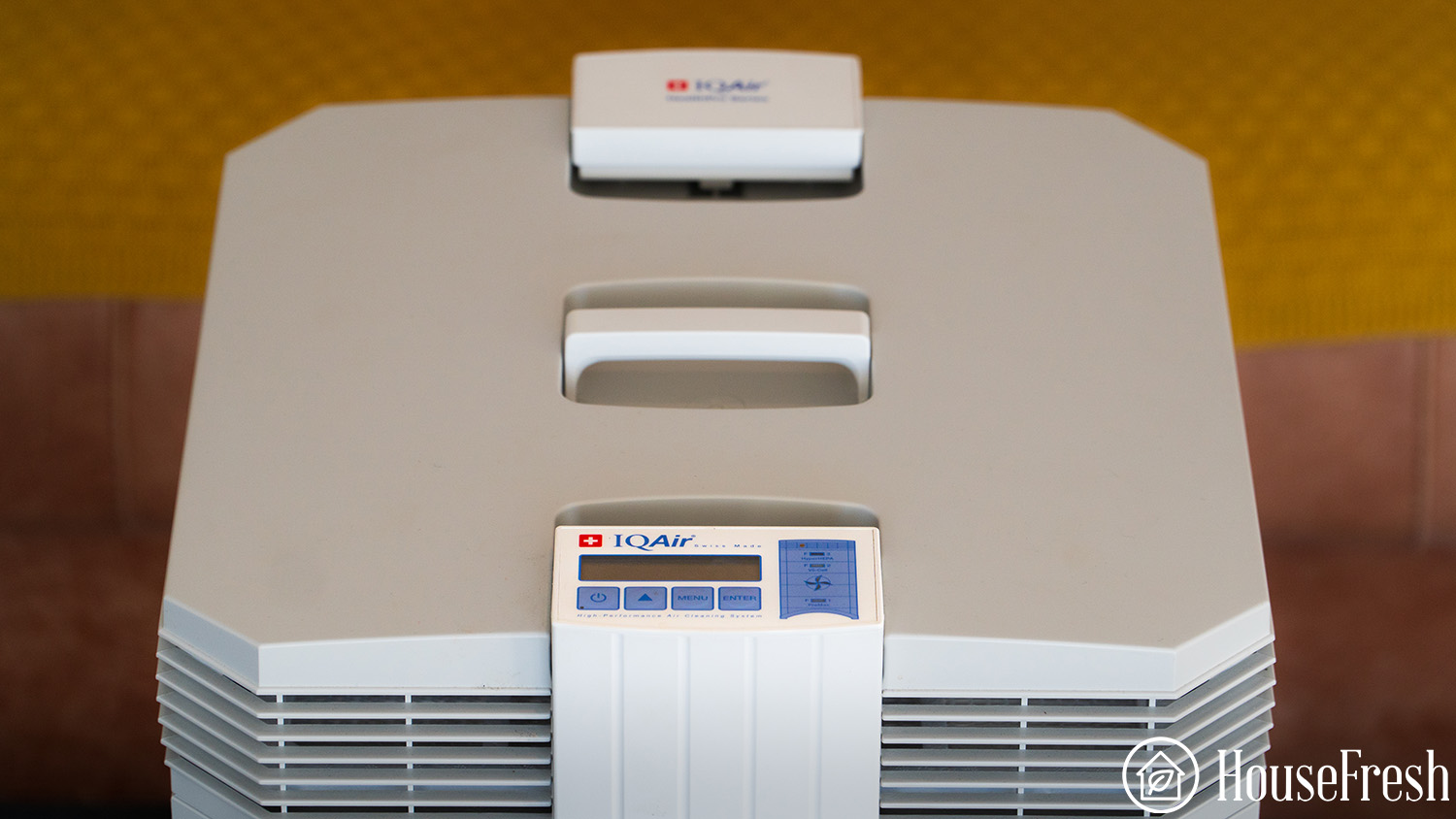
The control panel sits at the back and, unlike most other air purifiers, it doesn’t have any screens – instead, you get a few different lights, a fan speed slider and a color-coded air quality indicator.
IQAir Atem X Controls

The Atem X also comes with full app support via the IQAir AirVisual App, which unlocks many features that are not available on the control panel.

At top speed, it delivers excellent particle removal performance. This was great to see, as the Atem X was by far the most expensive air purifier we tested.
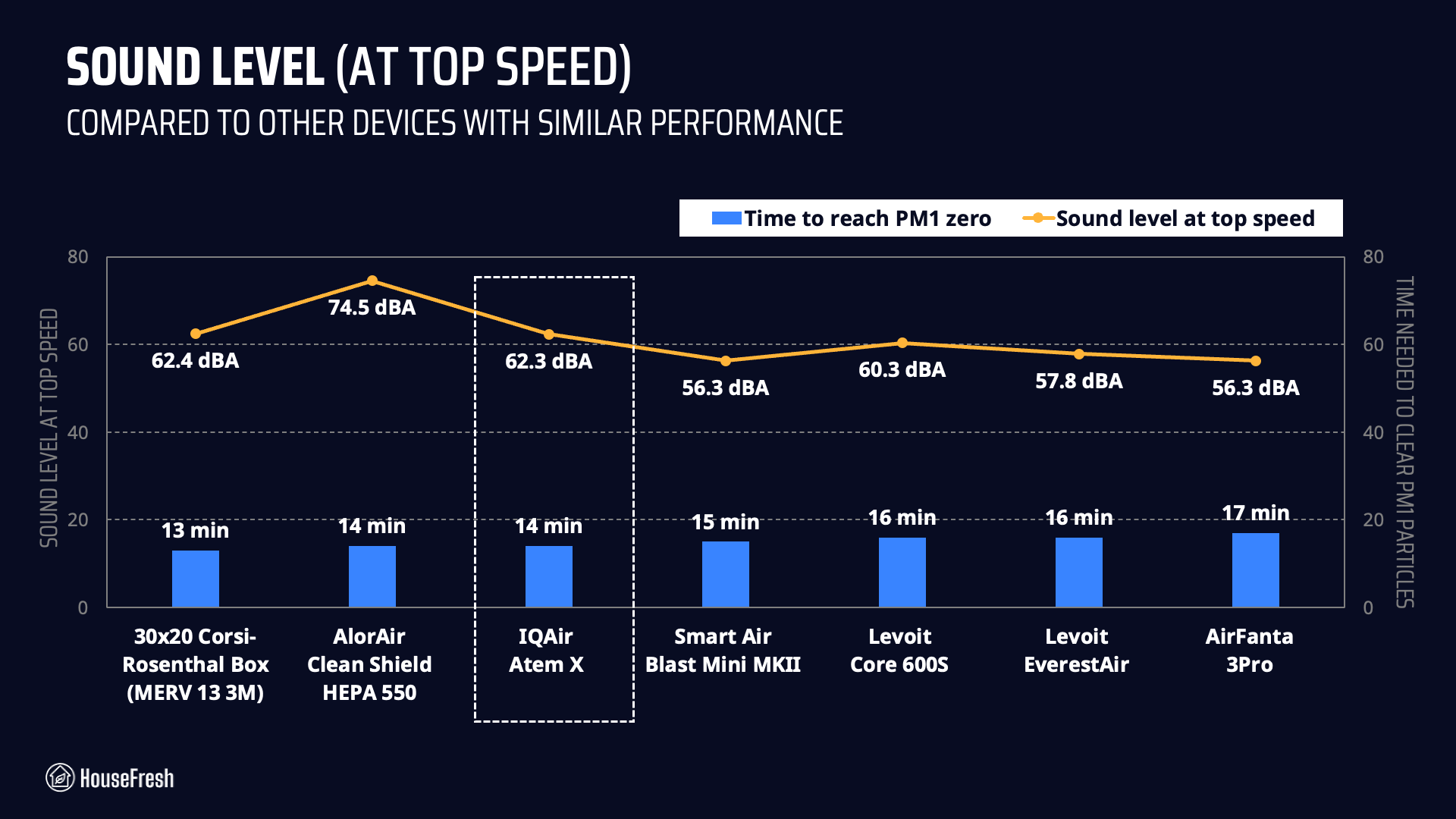
IQAir Atem X Performance VS Sound

PROS

It doesn’t come cheap at one cent under $1400.
It doesn’t come with a carbon filter for removing gases and odors from the air, so you only get particle filtration.
It runs louder at top speed (62.3 dBA) than other highly-powered traditional air purifiers.
Genuine IQAir filters are not cheap, selling for $199.99.

CONS

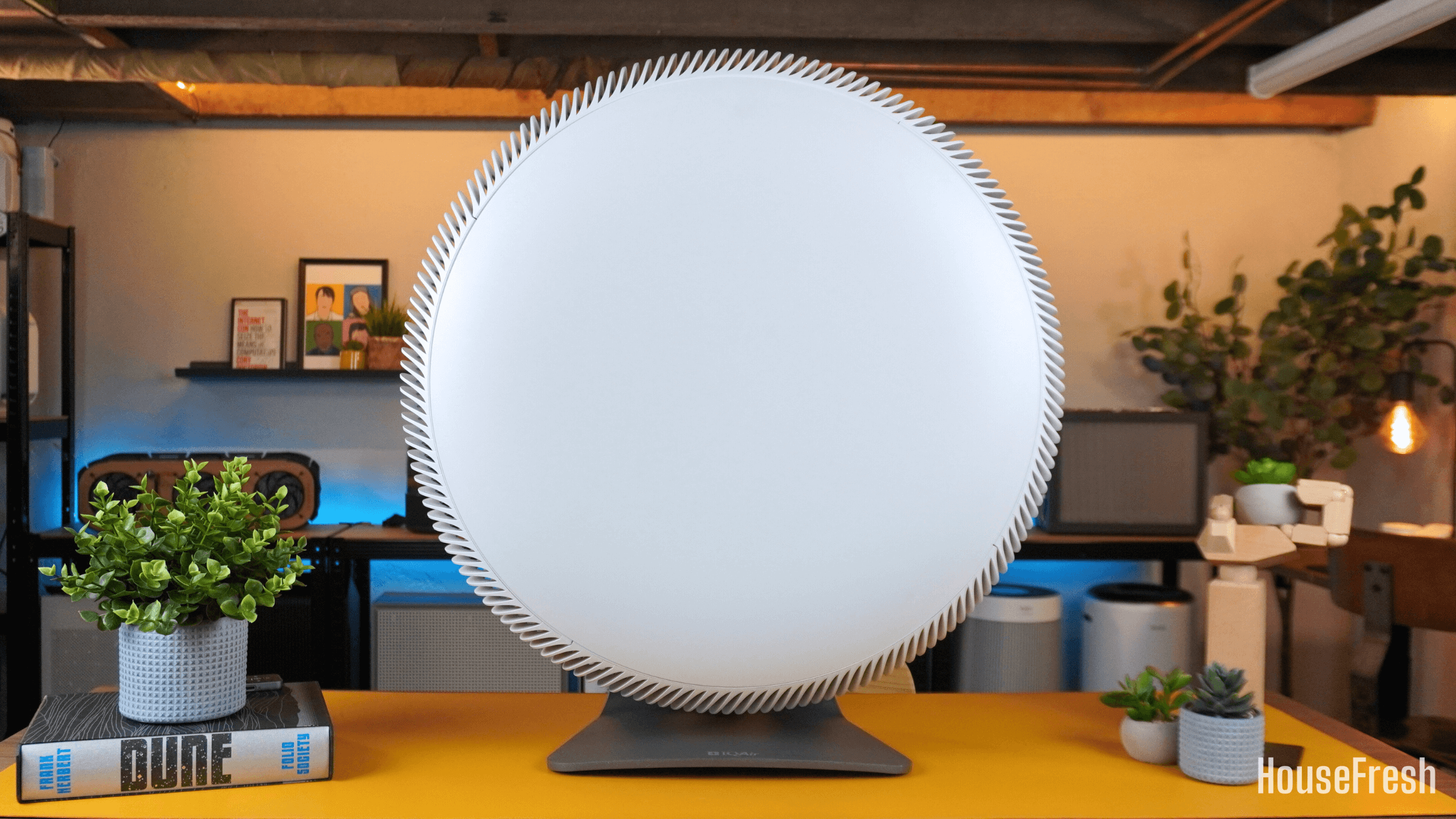
The design looks incredible and even though it is a big device, it has a footprint smaller than two sheets of A4 paper.
When running at speed 5, it reaches 44.5 dBA and offers similar performance to PC fan-powered air purifiers from AirFanta, CleanAirKits, NorthBox Systems and Nukit.
It comes with IQAir’s 10-year warranty, which certainly inspires confidence.
The app has a good UX, useful functions, and you even get a web dashboard with additional air quality data.
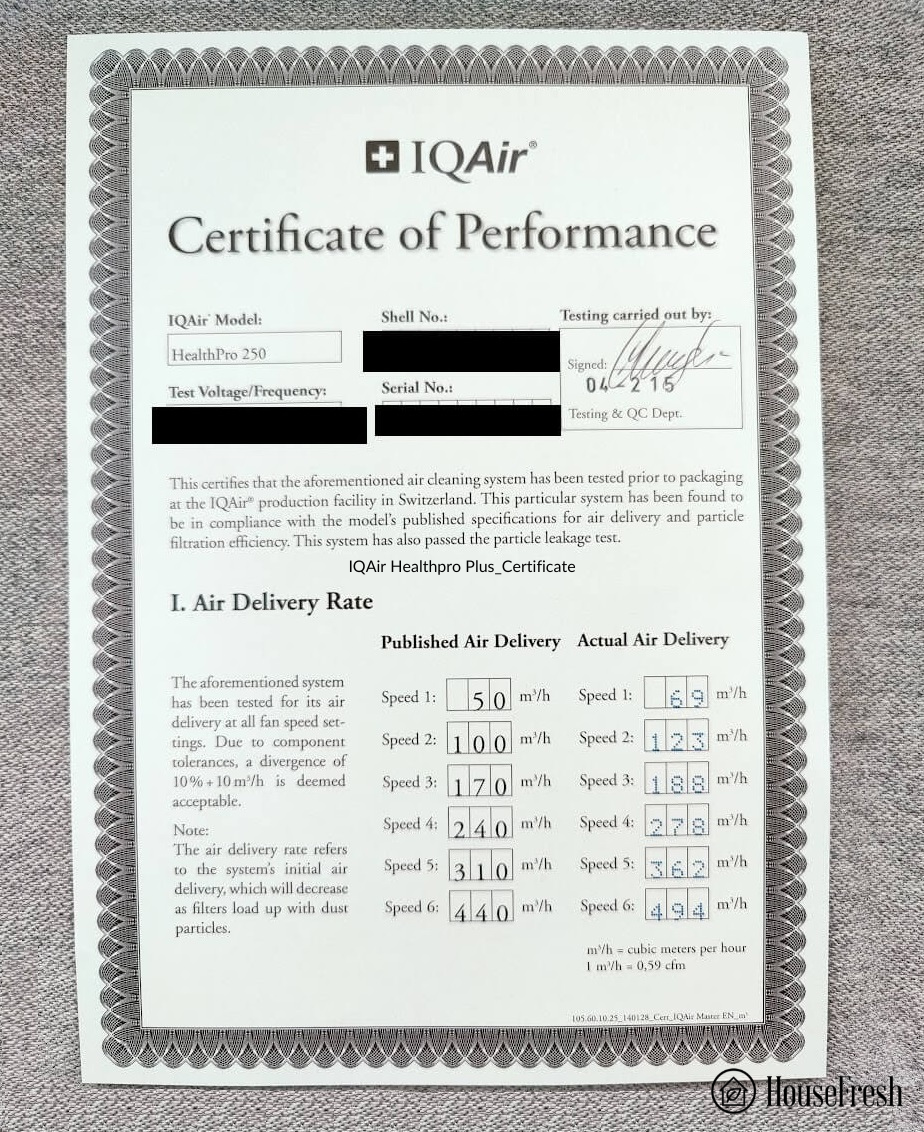
Transparent specs: IQAir made available factory-tested airflow reports and detailed HEPA filter grades at each fan speed.

Clean air delivery rate (CADR):– Top speed PM1 CADR: 429 cfm
– Sub-45 dBA PM1 CADR: 229 cfm
– AHAM PM2.5 CADR: 435 cfm (dust)
Filter technology:HyperHEPA filtration.
Recommended room size:643 sq. ft. (5 air changes per hour)
Dimensions:27.08H x 25.19W x 10D inches (68.8H x 64W x 25.4D cm)
Weight:28.66 lbs (13 kg)
Noise level in decibels from 3 ft. away:Speed 1: 35.6 dBA
Speed 2: 36.9 dBA
Speed 3: 40.7 dBA
Speed 4: 44.5 dBA
Speed 5: 49.5 dBA
Speed 6: 53.6 dBA
Speed 7: 58.4 dBA
Speed 8: 62.3 dBA
Electricity consumption in watts:Standby: 1 watt
Speed 1: 5.3 watts
Speed 2: 7.5 watts
Speed 3: 10.5 watts
Speed 4: 15.5 watts
Speed 5: 24.2 watts
Speed 6: 35.9 watts
Speed 7: 57.2 watts
Speed 8: 85.5 watts
Filter lifespan:12 months
Manufacturer’s warranty:10 years
Country of origin:Switzerland
Country of manufacture:Germany

READ MY FULL REVIEW ➜ 

WATCH MY VIDEO REVIEW ➜

Special mentions

These air purifiers were very close to making this list.

The units above are my top picks, but there are other excellent models that nearly made the cut. Depending on your budget and availability in your location, it could be worth checking them out.
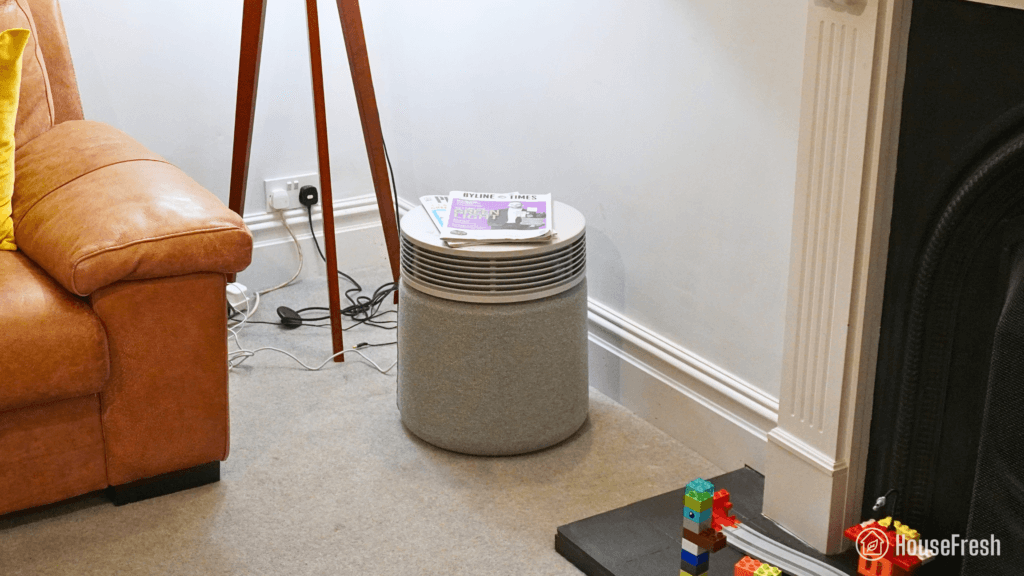
Blueair Signature Corner

Blueair Blue Signature

At top speed (59.6 dBA), we estimate a PM1 CADR of 400 cfm and at speed 2 (40 dBA), we estimate 229 cfm, which would be good enough for rooms up to 286 sq. ft. The design is beautiful and it doubles as a table, but I didn’t shortlist it because it comes with an ionizer function that cannot be disabled.

READ MY FULL REVIEW ➜

WATCH MY VIDEO REVIEW ➜

Blast Mini MKII Kids Room

Smart Air Blast Mini MKII

It has a PM1 CADR of 400 cfm at top speed (56.3 dBA) and 272 cfm at speed 1 (44.9 dBA). It comes with optional carbon, so if your allergies are triggered by particles, you can stick to HEPA H13 only. It didn’t make the list because the ProX offers better performance at a quieter level (299 cfm at 44.4 dBA) and has a sensor.
READ MY FULL REVIEW ➜ 

WATCH MY VIDEO REVIEW ➜

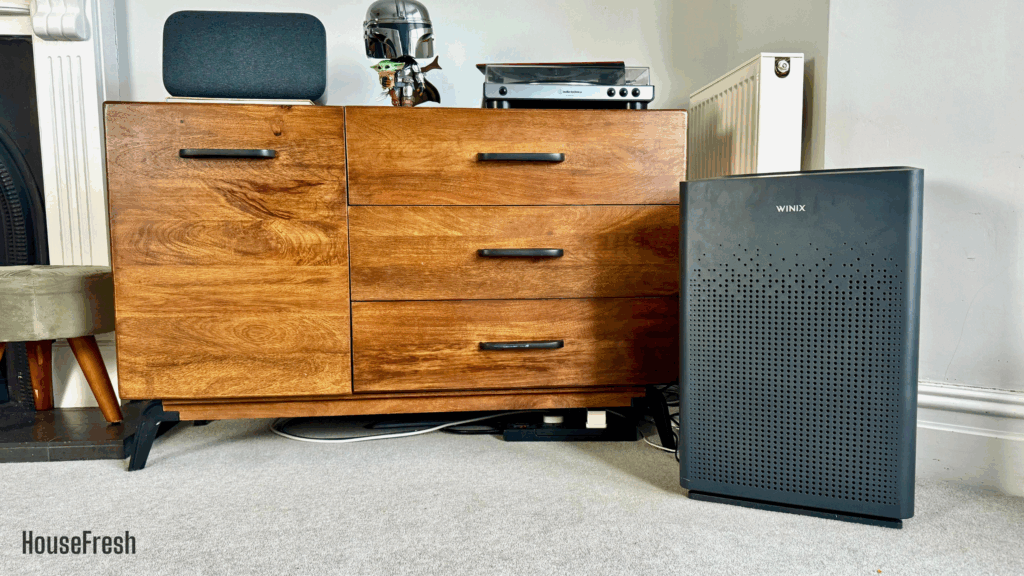
Winix AM80 Zero S

Winix AM80 (or Zero S)

It can be regularly found for $190 and will deliver 134 cfm at speed 3 (43.3 dBA), which is good for 6 ACH in spaces no larger than 167 sq. ft. It is no match for the cheaper AirFanta 3Pro, but it could be a good alternative to the Smart Air SA600.

WATCH MY VIDEO REVIEW ➜

Levoit Vital 200S Living Room

Levoit Vital 200S

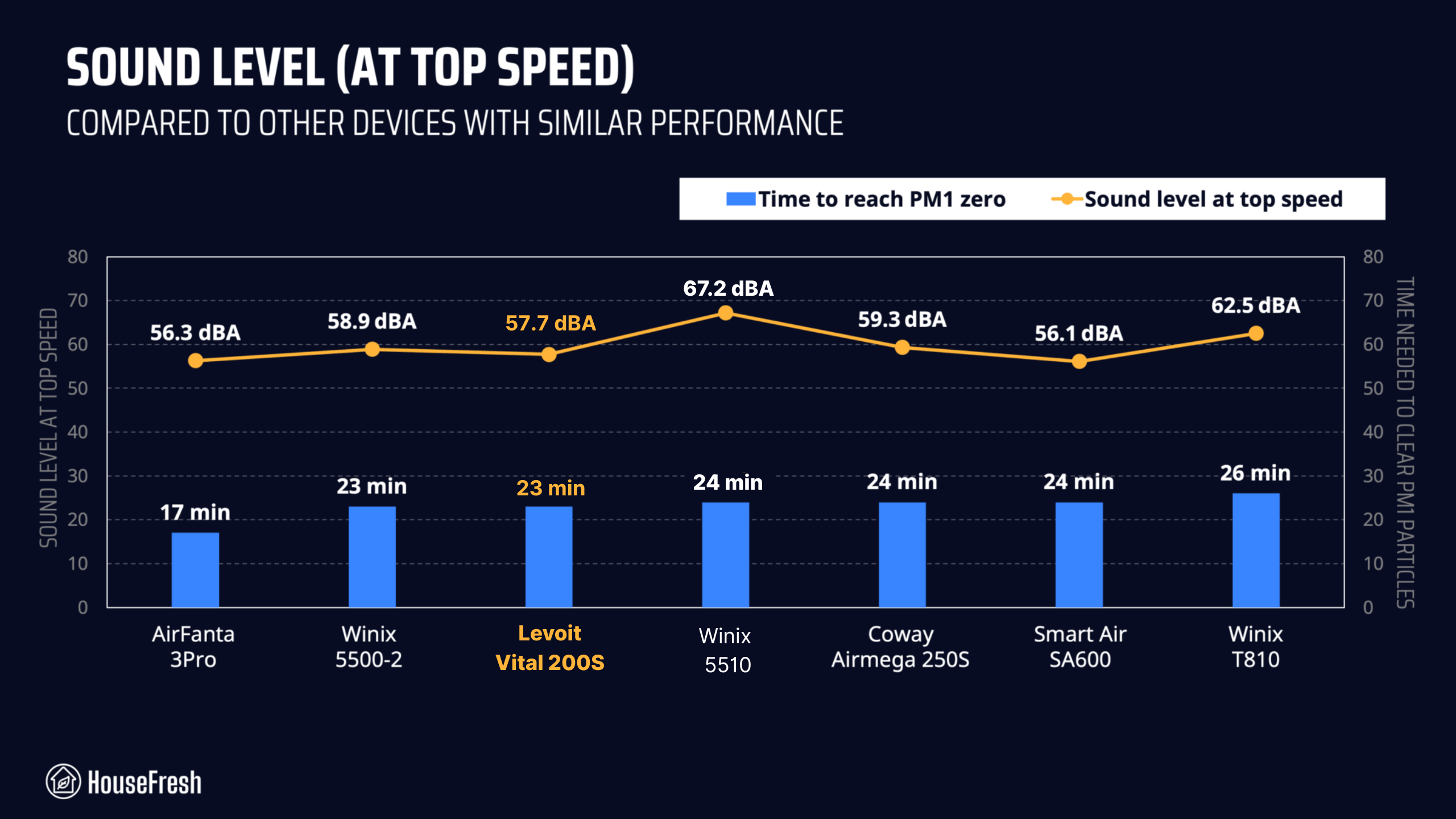
This is a solid performer under $200 with app support, smart functions and a sensor. It didn’t make the list because its raw air cleaning power at top speed (260 cfm at 57.7 dBA) is not nearly as good as what you’ll get with the AirFanta 3Pro (353 cfm at 56.3 dBA).
READ OUR FULL REVIEW ➜ 

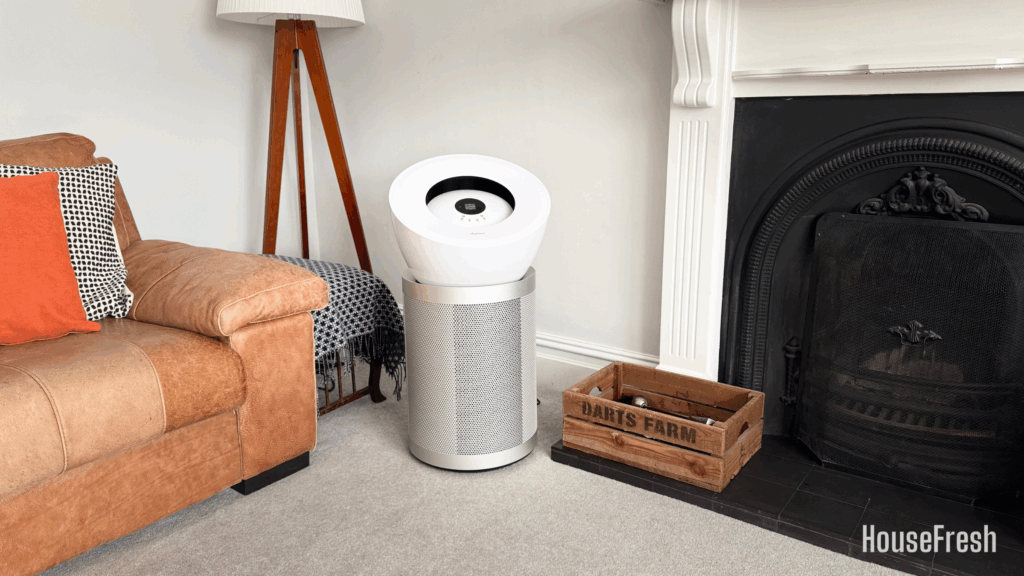
Dyson BP06

Dyson Big+Quiet BP06

This is not only the cheapest Dyson’s Big+Quiet model ($899.99) but also the best-performing Dyson purifier we tested. It will give you 198 cfm at top speed (51.4 dbA) and 128 cfm at speed 1 (40.4 dBA), which makes it good enough for rooms up to 160 sq. ft. However, its performance is comparable to models that cost a third of its price.
WATCH OUR VIDEO REVIEW ➜

Smart Air Blast HouseFresh

Smart Air Blast MKII

It has a PM1 CADR of 547 cfm at top speed (54.7 dBA) and 375 cfm at speed 1 (41.9 dBA). It comes with a HEPA H13 filter and you can choose to add pelleted activated carbon, if your allergies are triggered by chemicals or gases in the air.

It didn’t make the list because it will be too big and too heavy for most homes, although it would be my top pick if you’re looking for a device for high traffic areas like classrooms or offices.

WATCH MY VIDEO REVIEW ➜

What to look for when buying an air purifier to help with allergies

There are three key factors you should be aware of when selecting an air purifier for allergies.

1. Air changes per hour and room sizes

The most critical number for allergy sufferers is Air Changes Per Hour, or ACH.

ACH indicates how many times an air purifier can completely filter the air in a specific room within one hour.

Walk through Amazon, and you’ll see tiny purifiers claiming to clean 1,000 sq. ft. rooms, but they’re usually quoting that based on just ONE air change per hour. For your allergies? That’s like trying to empty a sinking boat with a teaspoon. Sure, it eventually cleans the old pollen, but in that same hour, a whole new batch of allergens will make their way into the room.

Industry experts at AHAM (that’s the Association of Home Appliance Manufacturers) say you need at least 4.8 ACH. For severe allergies? We recommend aiming for 6 ACH. Six air changes per hour means that the air in a room will be cleaned of all pollutants every 10 minutes.

This means that many small purifiers with a low Clean Air Delivery Rate (or CADR) aren’t up to the task for serious allergy relief.

Let’s take the popular Levoit Core Mini as an example: The Levoit Core Mini has a dust CADR of 41 CFM. We plug that into our HouseFresh CADR calculator for six ACH, and what do we get? A maximum room size of just 51 sq. ft. That’s barely a walk-in closet, not your bedroom.

You can use our CADR calculator to find out how much CADR an air purifier will need to provide 4-6 air changes per hour, depending on the size of the room where you plan to use it:

2. The importance of sound

But high ACH isn’t the only piece of the puzzle. If your purifier sounds like a 747 taking off, you won’t use it, especially at night when allergies can be the worst.

Let’s use the Molekule Air Mini+ as an example: At top speed, it has a PM1 CADR of 96 CFM, which could give you six ACH in a 120 sq. ft. room. The catch? It does this blasting out 67.4 decibels… That’s louder than a vacuum cleaner – try sleeping next to that!  When we tested it at a more livable 45 dBA, the CADR plummeted to 36 CFM, that’s six ACH in a room smaller than what the tiny Levoit Core Mini could manage at its top speed.

Look for units with good air cleaning performance at low fan speeds that generate less than 45 decibels.

Check out our leaderboard to see which air purifier models offer the best performance, based on particle removal tests at top speed and at sub-45 dBA speeds:

3. Particle vs gas filtration

If you are allergic to pollen, dust, or pet dander, focus on finding a device with a high-quality particle filter.

Activated carbon filters are only necessary in cases where your allergies are tied to chemical sensitivities, where you need to remove triggers such as cigarette smoke, perfume, insecticide, new carpet smell, paint fumes, etc.

So, the magic formula for most allergy sufferers is six air changes per hour at under 45 decibels with a solid particle filter. 

Wrapping up

So there you have it, four excellent air purifiers that will actually offer solid particle removal performance and good value for allergy sufferers. If you are unsure of which one to get, feel free to drop me an email to danny@housefresh.com and I can help you find the best option for your specific situation. 

I hope you found my guide useful, and if you decide to buy any of the air purifiers I mentioned today, please use the links in the buttons to help support the work we do here at HouseFresh. It won’t cost you anything extra and we will get a small affiliate commission that will allow us to keep buying and testing air purifiers in the future.

Do you have any questions about air filters for allergies that I haven’t answered? Leave them in the comments below and I’ll get back to you as soon as I can.

March 29th, 2026

  • Replaced the CleanAirKits Luggable XL-7 with the Luggable XL Ultra because it offers better particle removal performance and the XL-7 has been discontinued.
  • Removed the Nukit Tempest Euro because it has been discontinued.
  • Replaced the Smart Air SA600 with the Levoit Core 400S as the best for small spaces, due to the higher CADR that provides more air changes per hour.
  • Added the Nukit Tempest Pro as the best buy-it-for-life option for those looking for a highly durable PC fan-powered air purifier.
  • Added the IQAir Atem X as the best money can buy for those without budget constraints who want the best air purifier for allergy sufferers.
  • Added the Smart Air Blast MKII and the Blueair Blue Signature to the ‘Special mentions’ list.

September 2nd, 2025

  • Added a ‘Special mentions’ section at the end of the article with models that didn’t make the shortlist.

July 1st, 2025

  • Added a link to YouTube video reviews for all the models on the list.

June 12th, 2025

  • Added the North Box Systems 6XL and the Nukit Tempest Euro as alternatives to the CleanAirKits Luggable XL-7.
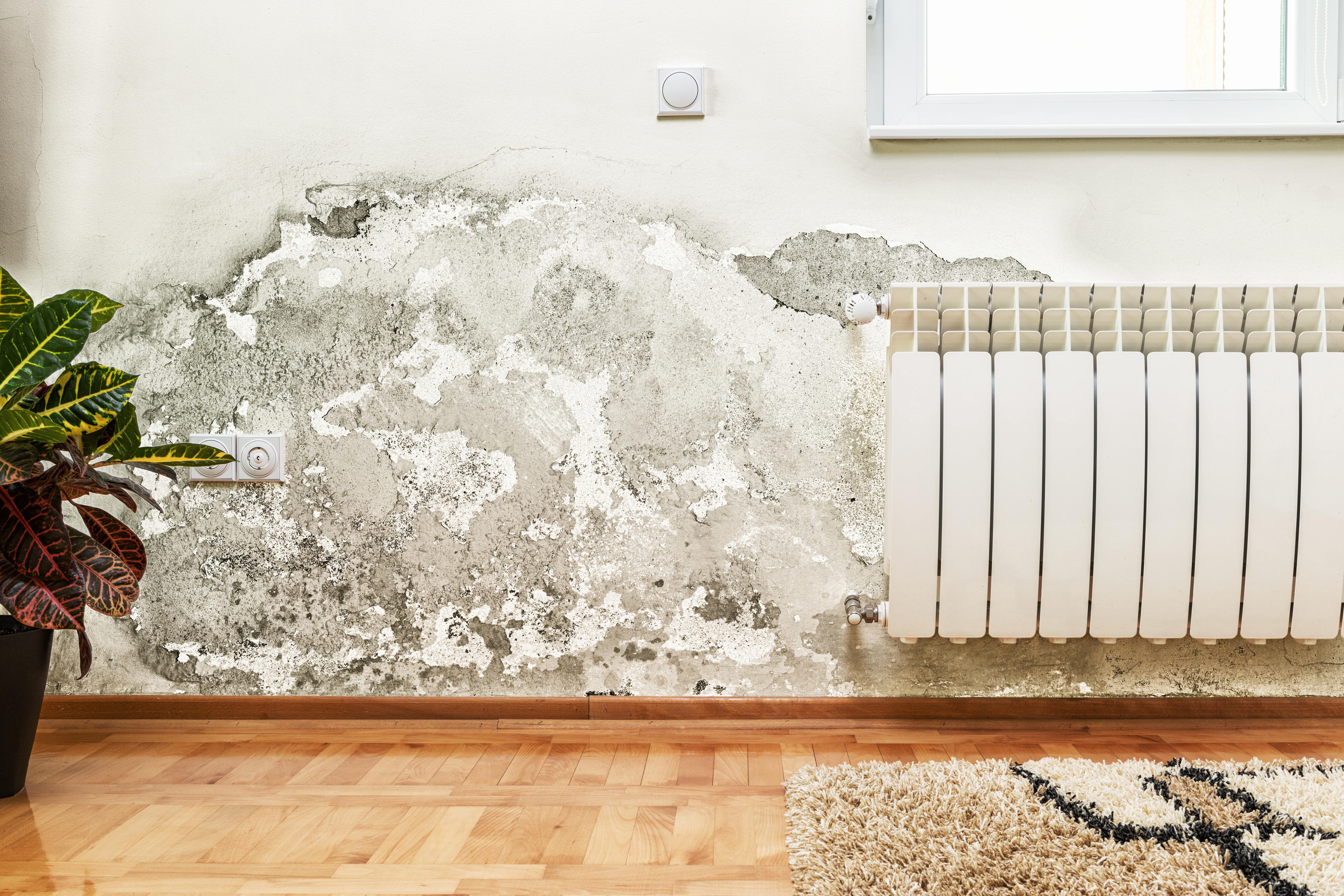
The best air purifiers for mold aren’t enough. Here’s why.

mold living room

“What if I told you that a silent, invisible threat in your home is becoming more deadly every year?”

“Back in 1969, only 450 deaths in the U.S. were linked to mold and fungal infections. By 2021, the figure had skyrocketed to over 7,000 deaths, according to data from the CDC.”

Stories like these are terrifying. And this fear of a hidden danger in your home is exactly the kind of thing some air purifier manufacturers use to sell you overpriced machines with promises they can’t always keep.

In this article, we’re cutting through all that marketing hype as I’ll explain what you need to know about mold, air purifiers and humidity before you waste your money. Let’s start with a very important question.

Do you need an expensive HEPA filter to remove mold?

Before you start shopping for an air purifier, you need to understand what you’re trying to catch.

The airborne spores from molds such as Aspergillus measure 2 to 5 microns wide, so they can be easily removed from the air using many different types of particle filters.

While marketing materials attached to specific air purifier models suggest you need HEPA H13 or even H14, the reality is that a higher-grade filter can actually reduce the speed at which you can remove mold spores from the air because the filter itself is much denser and restricts airflow.

Your house is not an operating theater, so instead of trying to remove the most particles in a single pass with a medical-grade HEPA filter, focus on finding an air purifier powerful enough to provide multiple air changes in the room with the mold issue. To do this, focus on Clean Air Delivery Rate (CADR), which is the volume of filtered air the air purifier can deliver.

So instead of obsessing over filter grades, I suggest you focus on whether the air purifier you are considering has a high enough CADR to provide 4-6 air changes per hour in your room. You can use our CADR calculator to figure out what CADR you need for your room.

Three more points:

  1. Avoid those small, popular air purifiers with a CADR below 100 cfm. Unless you’re planning to use the air purifier in a tiny closet, small units simply won’t have the strength needed to clean the air quickly enough.

  2. For most people, an air purifier with a CADR of at least 200 cfm will do. A 200 cfm air purifier can provide 4 air changes in spaces up to 375 sq. ft. or 6 air changes in rooms up to 250 sq. ft.

  3. CADR can be maximized with a lower-grade filter, such as MERV 13 or E11. However, moving to lower filter grades, such as MERV 8, will lead to lower CADR because, even though airflow is higher, the filter efficiency is not high enough.

Alright, that’s enough theory. Let’s get into my recommendations…

Best for basements: Levoit Core 600S

Most people who reach out asking for a mold recommendation mention their basement. My top pick is this $300 air purifier from Levoit.

Levoit Core 600S Room 5

💡exclusive code for HouseFresh for 10% off a single purchase on Levoit.com: HOUSE10

If you’re looking for a unit for a damp basement with humidity levels above 60%, I recommend looking for a high-CADR model with a hardy case that can be wiped down regularly to remove moisture and minimize the risk of mold growth on the filter. My pick is the largest air purifier from Levoit: the Core 600S.

I bought my 600S back in 2022, and it’s still going strong.

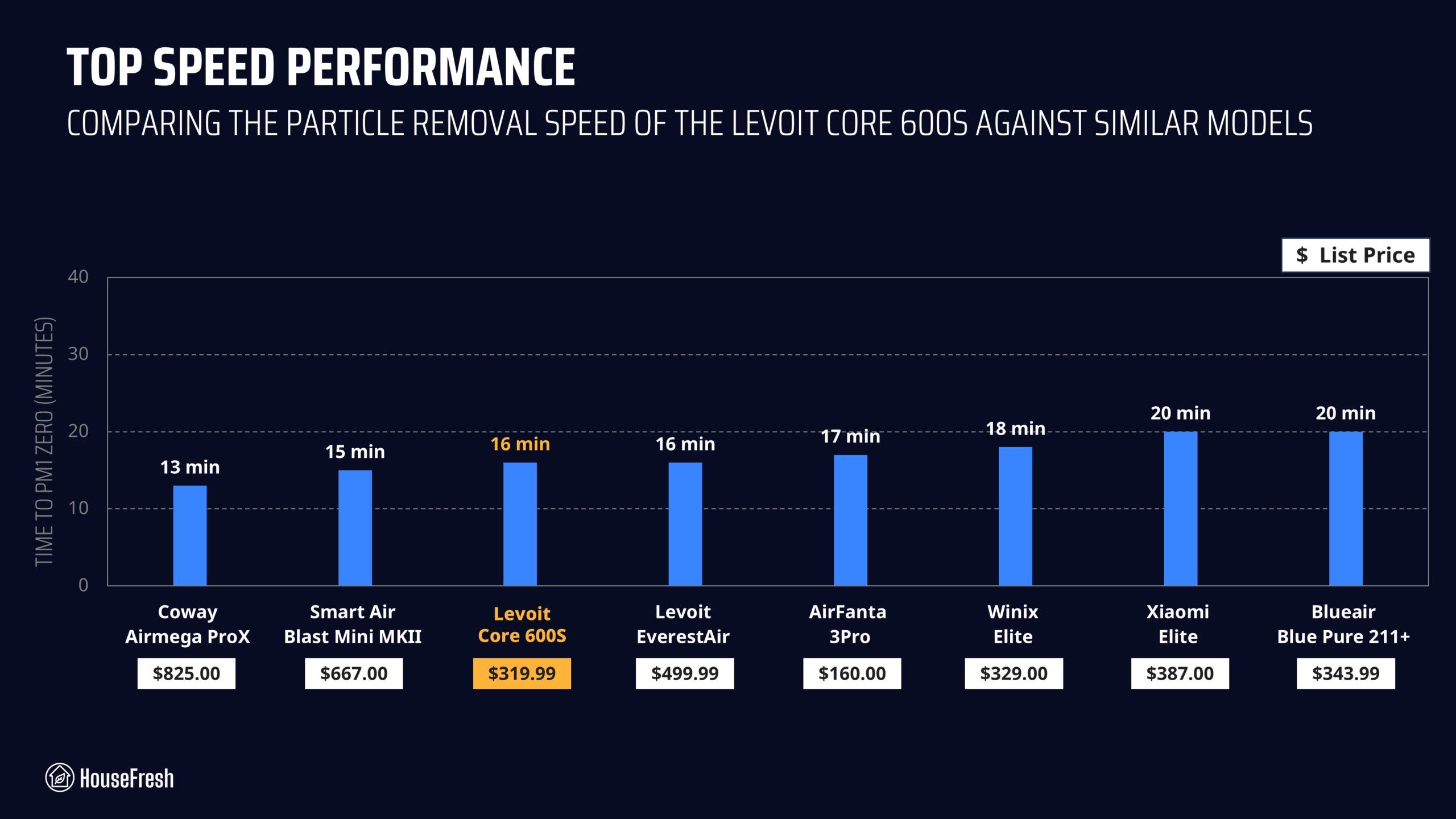
In fact, I recently retested everything about it, and it cleaned our test room faster than more expensive models like the Xiaomi Elite or the Winix 9800.

Levoit Core 600S HouseFresh Performance scaled

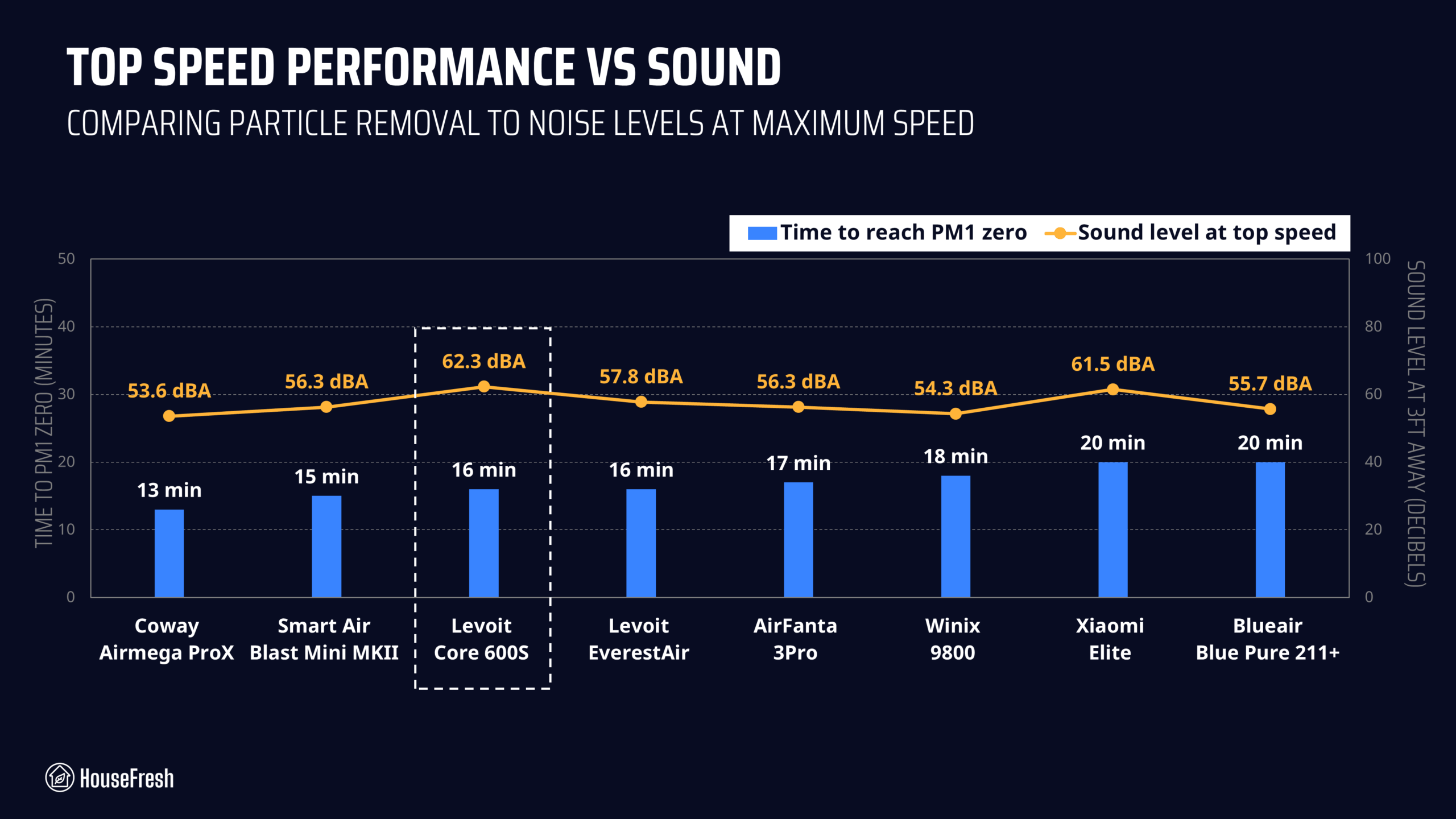
The only issue is that it runs loud at top speed, hitting 62.3dBA, but this shouldn’t be an issue in most basements – unless you’re spending a lot of time down there.

Levoit Core 600S HouseFresh Performance VS Sound scaled

The device itself is made entirely out of plastic, so it’s easy to clean.

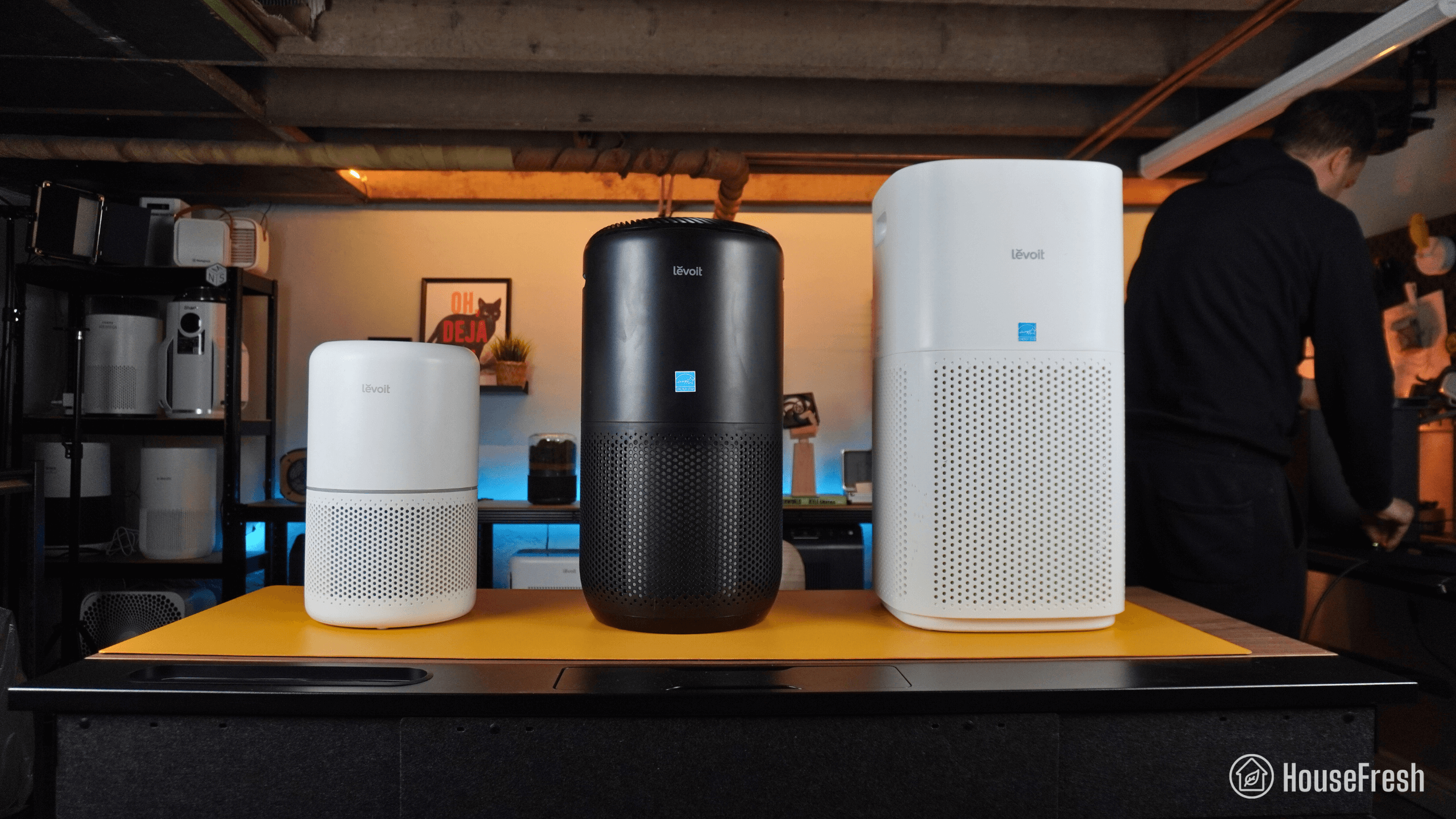
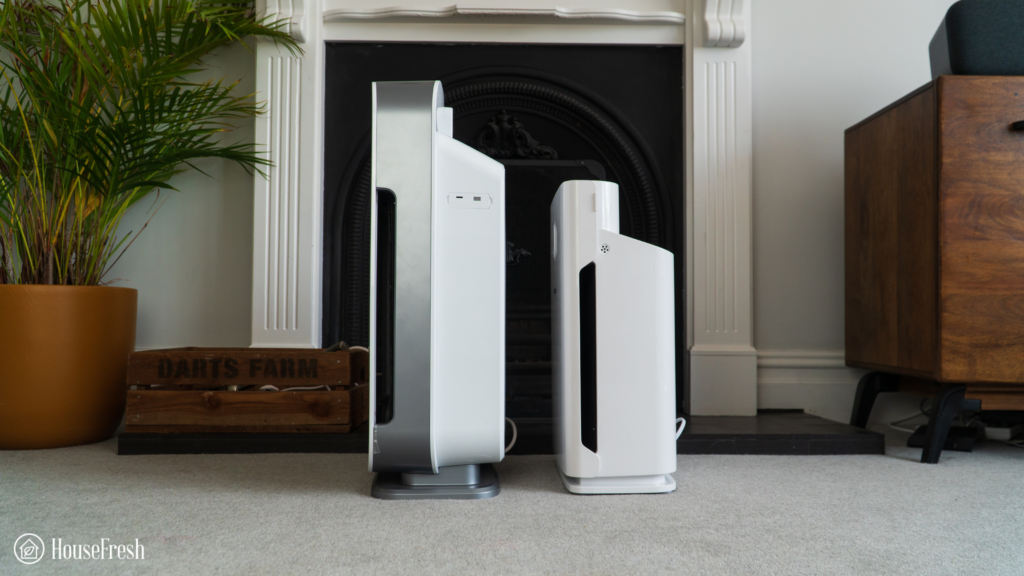
Be aware that, at 23.6 inches (60 cm) tall, it is the largest model in Levoit’s Core range of air purifiers—see how it compares to the Core 300S (left) and the Core 400S (middle).

Levoit Core 300S VS 400S VS 600S

When buying filters, you can choose from Standard, Pet Allergy, Smoke Remover, or Toxin Absorber. The main difference between them is the amount of carbon they have. For mold, stick with the Standard filter.

levoit core 600s filter options

You can also connect the 600S to your phone via the VeSync app to control it remotely, set automations, and even customize the auto-mode. 

Clean air delivery rate (CADR):– Top speed PM1 CADR: 375 cfm
– Sub-45 dBA PM1 CADR: 156 cfm
– AHAM PM2.5 CADR: 398 cfm (dust)
Filter technology:Bonded particle filter with a layer of pelleted activated carbon and a pre-filter mash wrap.
Recommended room size:562 sq. ft. (5 air changes per hour)
Dimensions:12.3 x 12.3 x 23.6 inches (31.3 x 31.3 x 60 cm)
Weight:13.7 lbs (6.2 kg)
Noise level in decibels from 3 ft. away:Sleep: 37.9 dBA
Speed 1: 44.4 dB
Speed 2: 45.9 dB
Speed 3: 53.8 dBA
Speed 4: 62.3 dBA
Electricity consumption in watts:Standby mode: 1.3 watts
Sleep: 4.33 watts
Speed 1: 7.46 watts
Speed 2: 10.7 watts
Speed 3: 20.29 watts
Speed 4: 48.1 watts
Filter lifespan:6-12 months
Manufacturer’s warranty:2 years
Country of origin:United States
Country of manufacture:China

READ OUR FULL REVIEW ➜

Best budget option: Corsi-Rosenthal Box 

If you don’t care about smart features and want to save some money, you can just build your own large CADR air purifier.

30x20 Corsi Rosenthal

BUY BOX FAN

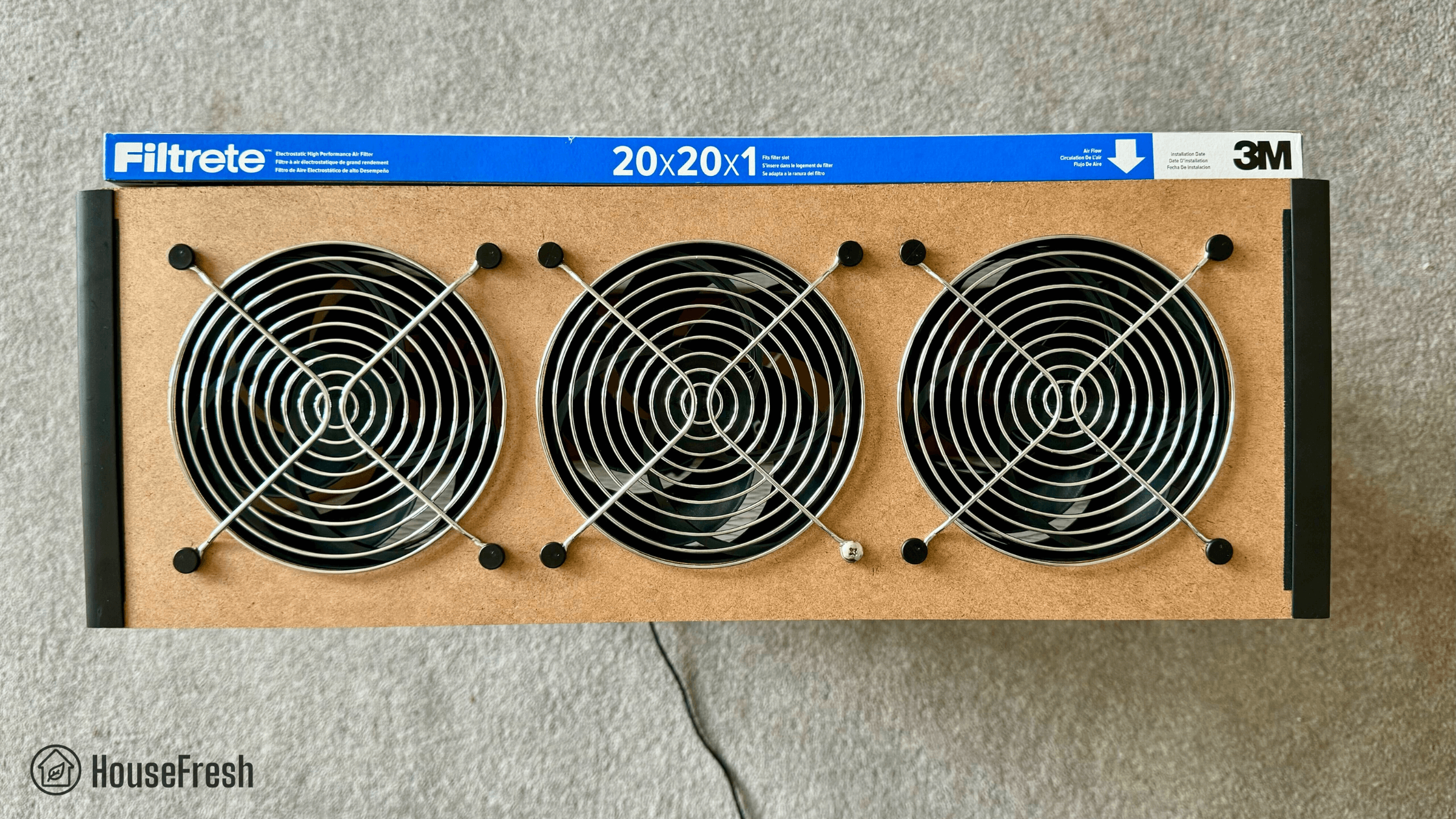
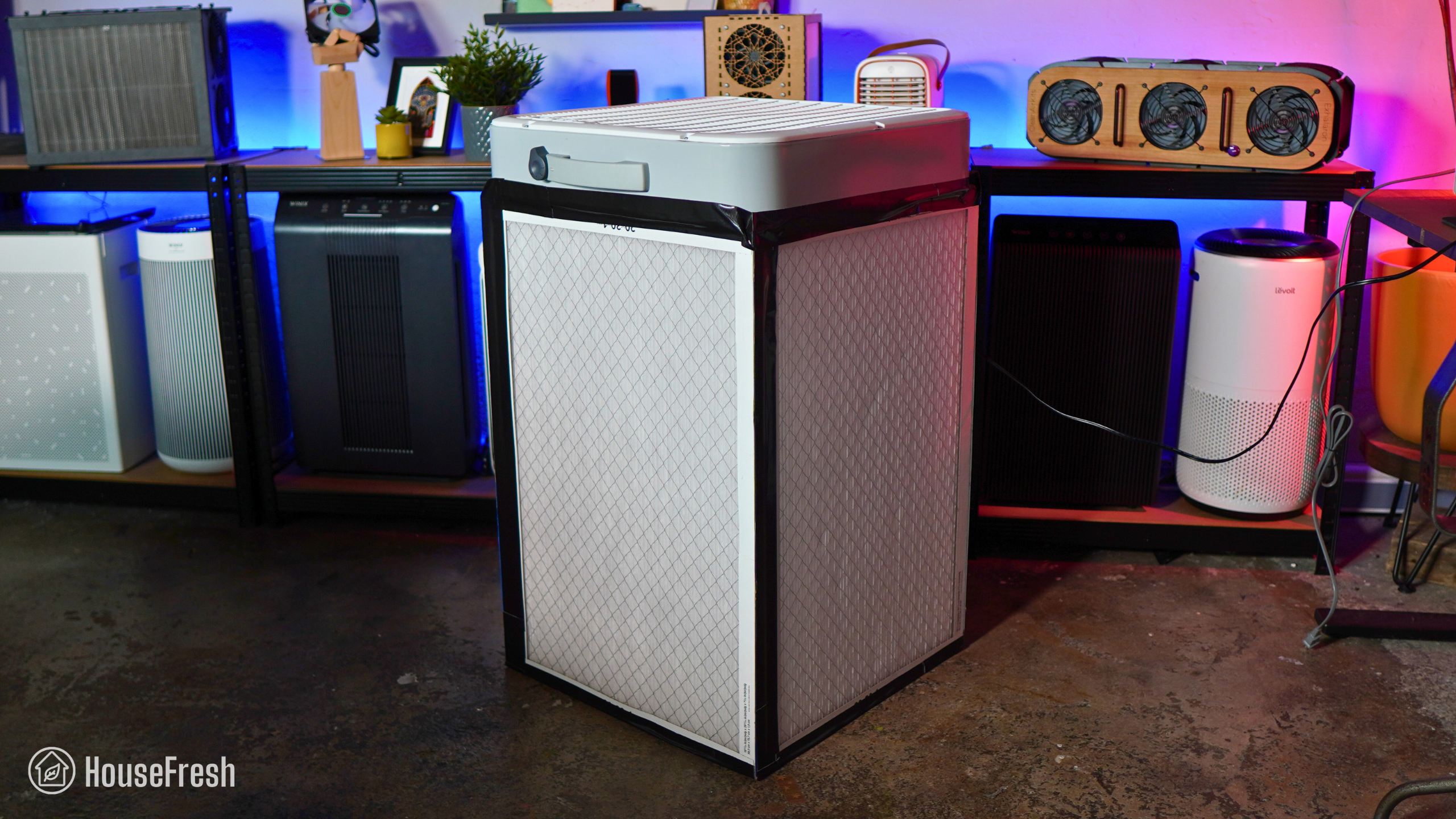
My top budget pick for large spaces is the Corsi-Rosenthal Box, a DIY device you can build yourself using a box fan, four MERV 13 filters, and a cardboard base. The combination yields a high CADR at a very low cost.

We tested two versions of the Corsi-Rosenthal Box, and the design with larger 3M 30×20 MERV 13 filters reached the top of our leaderboard as one of the fastest air purifiers in our particle removal test.

30x20 Corsi Rosenthal

Based on the natural ventilation of our test room, we estimated a PM1 CADR of 462 cfm for our 20×30 CR box, which is incredible for something that costs less than $140.

To build it, we used a Lasko box fan and four 20X30 3M Filtrete MPR1900 filters.

Now, there are some issues with Corsi-Rosenthal boxes: they run loudly and can be power-hungry. Plus, they take up a lot of space — this is especially true for our 20×30 CR box.

30x20 Corsi Rosenthal

However, the Corsi-Rosenthal Box is hard to beat for raw performance for the least amount of money upfront. And any savings you make can be put towards a long-term solution that I will discuss later in the article.

Tip: By the way, if you’re building a CR box for a very damp basement, I recommend adding some legs so the cardboard base doesn’t end up sitting on a wet floor.

Clean air delivery rate (CADR):– Top speed PM1 CADR: 462 cfm
Filter technology:3M Filtrete 20x30x1 MERV 13 MPR 1900 filters
Recommended room size:693 sq. ft. (5 air changes per hour)
Dimensions:20 x 20 x 35 in (51D x 51W x 89H cm)
Weight:11.26 lbs (5.1 kg)
Noise level in decibels from 3 ft. away:Speed 1: 51.5 dBA
Speed 2: 58.3 dBA
Speed 3: 62.4 dBA
Electricity consumption in watts:Standby: 0 watts
Speed 1: 72.57 watts
Speed 2: 88.55 watts
Speed 3: 103.28 watts
Filter lifespan:6-12 months

Best for bedrooms: PC fan air purifiers

For those looking to remove mold spores from the air in their bedroom, I highly recommend considering air purifiers powered by PC fans.

PC fan air purifiers HouseFresh

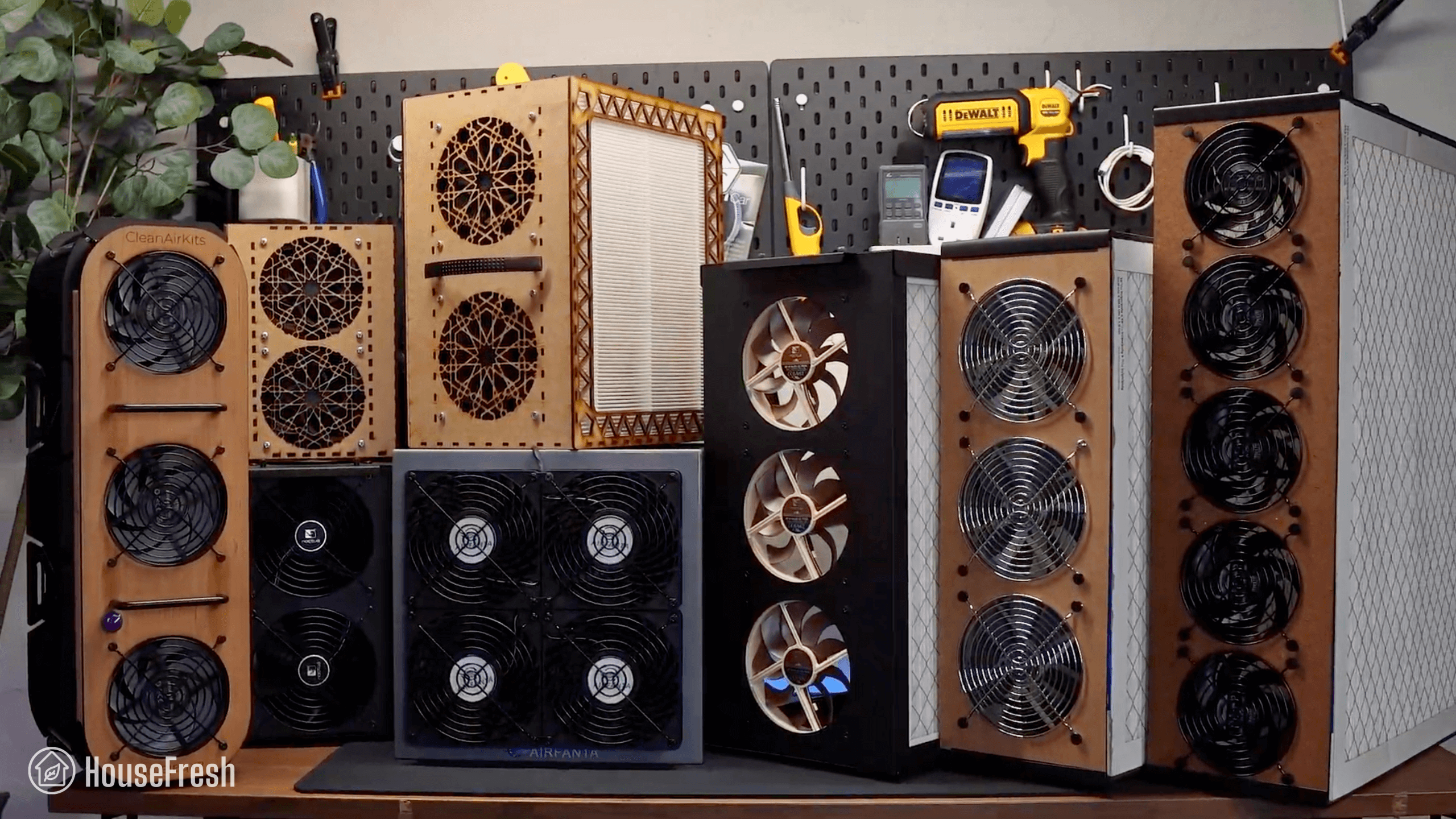
PC fan air purifiers revolutionized the air purifier market by providing high CADR at low noise levels. Unlike the loud box fans used in CR boxes, these devices use the same ultra-quiet, high-airflow fans found in gaming PCs, designed to move a lot of air without making much noise.

  • If you’re in the U.S. or the UK, you have the Luggable XL-7 from CleanAirKits.
  • If you’re in Canada, there’s the team at Northbox Systems with their 6XL.
  • And if you live in Australia or around Asia, there’s the AirFanta 3Pro.

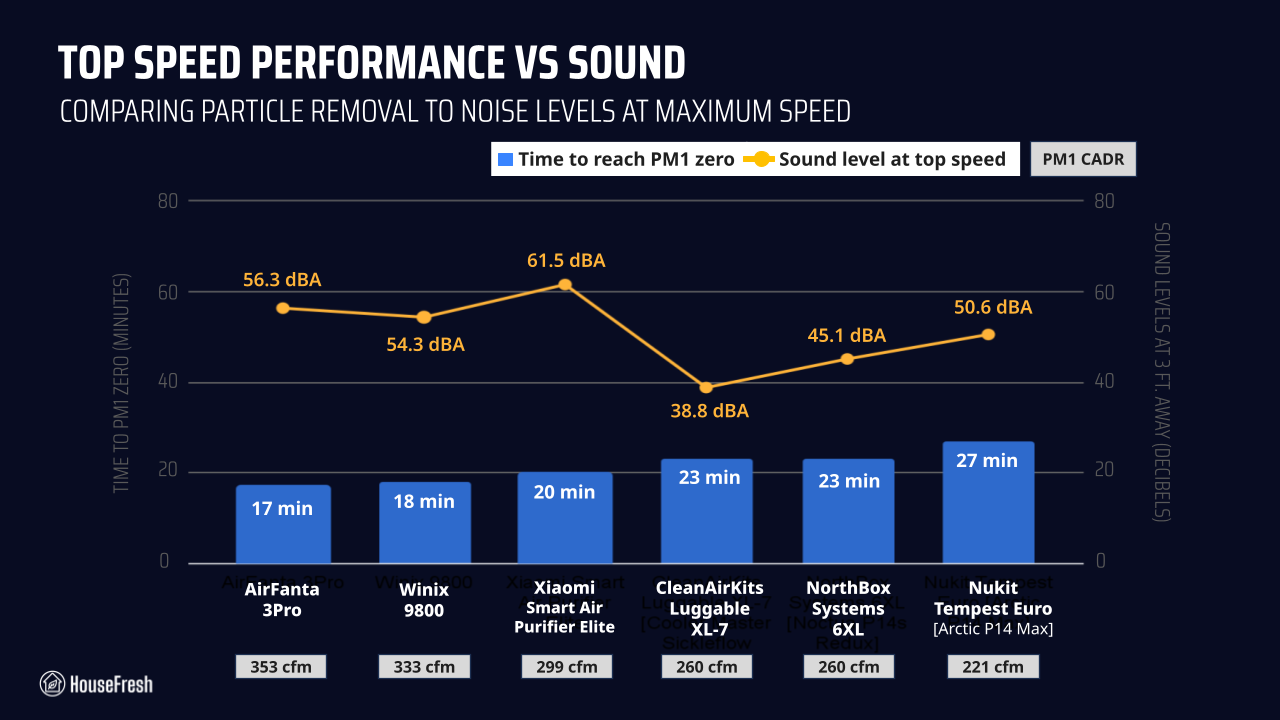
All the models I recommend above performed very well in our particle removal test, in many cases outperforming units double their size and double their price:

PC fan air purifiers Performance

Another advantage of PC fan air purifiers is their low running costs, thanks to the combination of energy-efficient PC fans and affordable filters. 

To build CleanAirKits and NorthBox PC fan kits, you can use any type of MERV 13 filter. The Nukit Tempest Euro uses Starkvind E11 filters you can buy at IKEA. And the 3Pro uses proprietary (and fairly priced) filters from AirFanta — you can choose between HEPA-only or HEPA and carbon.

Something to keep in mind: these are DIY kits you will need to build yourself, unless you want to pay extra for a pre-built version, which might not even be available where you live.

If you like the idea of a PC fan-powered device but are not comfortable building one, consider the AirFanta 3Pro, as the assembly process takes just a few minutes and doesn’t require any cable management.

AirFanta 3Pro Open

Use the discount code HOUSEFRESH for 5% off when buying directly from AirFanta.

Best for most people: Levoit Vital 200S

If you are looking for a standard air purifier under $200 to help with mold in a medium-sized room, check out the Levoit Vital 200S.

Levoit Vital 200S Bedroom

The Vital 200S from Levoit offers good particle removal performance, has a PM1 CADR of 260 cfm that can provide five air changes per hour in rooms up to 375 sq. ft., doesn’t cost an arm and a leg to run, comes with an on-board sensor that unlocks smart features, and has app support. This combination makes it the best option for most people.

In our tests, the Vital 200S performed as well (or better) than air purifier models that are more expensive and have similar features:

Levoit Vital 200S HouseFresh Test Data

This is a quiet little beast. At speed 2, the Vital 200S generates just 41 dBA of noise while offering a PM1 CADR of 128 cfm. This means it could clean the air in a room up to 192 sq. ft. five times per hour, without disturbing you.

In addition to the particle filtration you’ll need to remove mold spores from the air, the 200S also has a layer of carbon to tackle damp odors.

Levoit Vital 200S Activated Carbon Filter

You can connect the Vital 200S to your phone through Levoit’s VeSync app. From the app, you can operate the air purifier remotely, schedule routines, customize auto modes, keep track of filter life, and more.

Clean air delivery rate (CADR):– Top speed PM1 CADR: 249 cfm
– Sub-45 dBA PM1 CADR: 128 cfm
– AHAM PM2.5 CADR: 254 cfm (dust)
Filter technology:Bonded particle filter with a layer of pelleted activated carbon and a removable pre-filter
Recommended room size:373 sq. ft. (5 air changes per hour)
Dimensions:15.6D x 8.5W x 19.8H inches (39.3D x 21.5W x 50.2H cm)
Weight:13.2 lbs (5.9 kg)
Noise level in decibels from 3 ft. away:Speed 1: 38.3 dB
Speed 2: 41.9 dB 
Speed 3: 53.8 dB
Speed 4: 57.7 dB
Electricity consumption in watts:Standby mode: 0.97 watts
Speed 1: 5.71 watts
Speed 2: 8.01 watts
Speed 3: 31.96 watts
Speed 4: 44.55 watts
Filter lifespan:12 months
Manufacturer’s warranty:2 years
Country of origin:United States
Country of manufacture:China

READ OUR FULL REVIEW ➜

WATCH OUR VIDEO REVIEW ➜

Special mentions

Two good-performing air purifiers that didn’t make the cut, but that could be a good choice for you.

The models above are my top picks BUT it’s also worth mentioning some other air purifiers with solid air cleaning performance that can help with mold, as I know that everyone has different needs and likes.

Winix 9800 Living Room

Winix 9800

A medium-sized device with a HEPA filter, an activated carbon filter and a removable pre-filter. With a PM1 CADR of 333 cfm at 54.3 dBA, it offers excellent particle removal performance and app connectivity in a stylish design for $329.

It didn’t make the list because it was outperformed by the Core 600S (PM1 CADR of 375 cfm), which comes at a cheaper list price ($319.99).

WATCH OUR VIDEO REVIEW 

Aloreair Air Scrubber Filter

AlorAir Clean Shield HEPA 550

If you’re looking for a powerful air purifier to help remove mold spores in a very damp basement or a damp construction area, then the Clean Shield HEPA 550 might be just the thing.

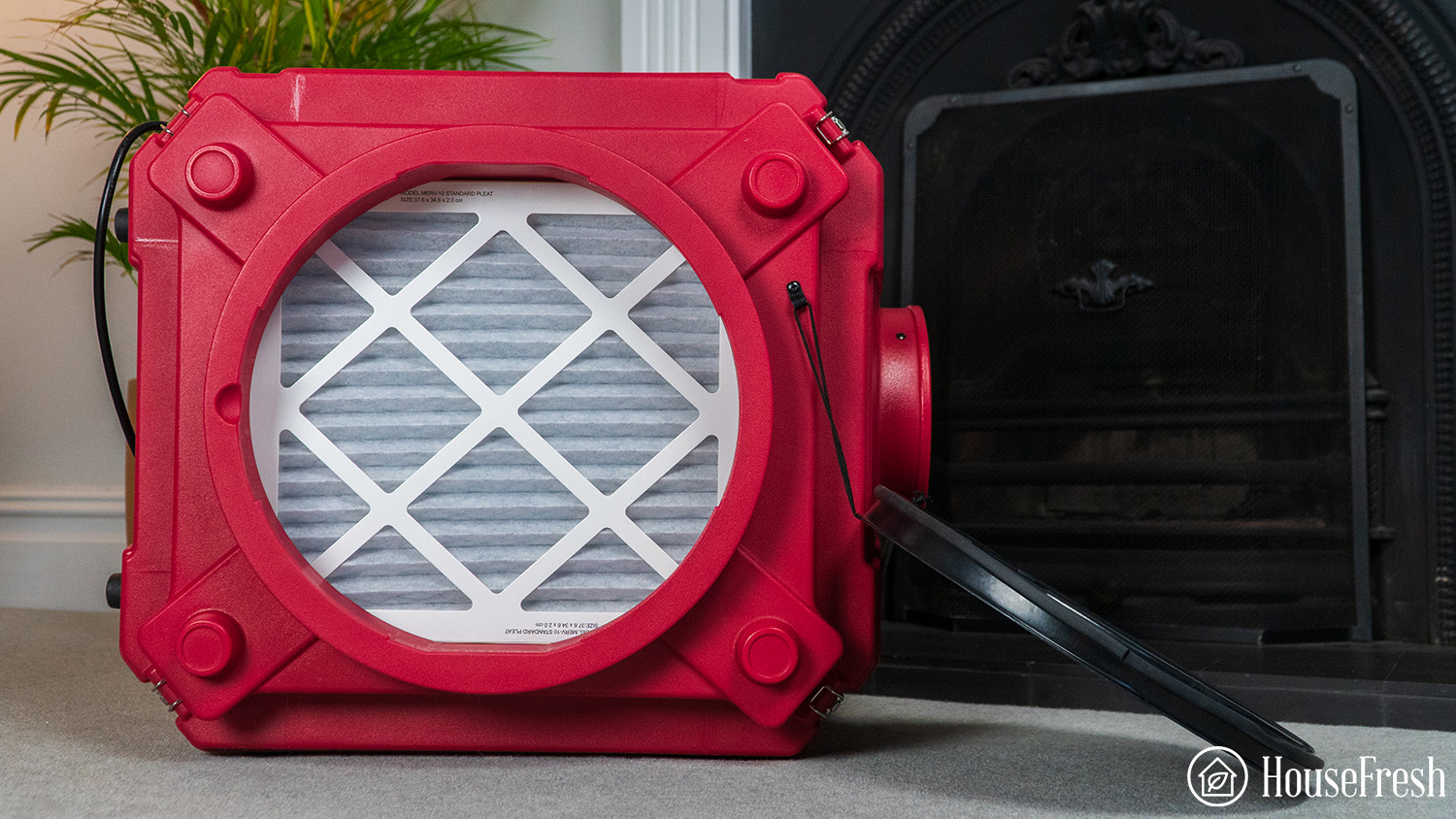
It has a PM1 CADR of 429 cfm so it can clean the air in spaces as large as 643 sq. ft. five times per hour. But it will do it while generating 74.5 dBA of noise, so it is not suitable for home rooms.

READ OUR FULL REVIEW ➜

A long-term solution to mold

Understanding why an air purifier alone won’t solve your mold issue.

Okay, you’ve picked the perfect air purifier with the right CADR for your room. It’s removing mold spores from your air 24/7. But if you stop here, you will be fighting this battle forever.
An air purifier removes the symptom, not the cause. To win the war against mold, you must control the one thing it needs to survive: water.

Mold spores are everywhere, all the time, just lying dormant. They only become a problem when the humidity in your home rises, giving them the water they need to wake up and grow. This is why the most important tool in your arsenal isn’t an air purifier; it’s a dehumidifier.

In fact, research has shown that using a dehumidifier in combination with an air purifier has significant effect on overall mold levels.

My number one tip is to avoid mini dehumidifiers and small Peltier devices that cost less than $100, as they are just not effective, so they end up being a waste of money. Instead, stick to refrigerant dehumidifiers and stay away from models with pumps, as they are a common cause of failure. If you want to read more, read my quick guide on how to choose a good dehumidifier.

In my experience, dehumidifier sensors are not always accurate and they generally just measure humidity levels only directly next to the unit. That is why I recommend getting a hygrometer (a relatively cheap humidity sensor) so you can place it in the moldiest corner, and then set the dehumidifier to high until you have been able to bring the humidity below 50%, as research shows that mold starts to grow at 68% relative humidity.

  • For those with damp basements, I highly recommend the Midea Cube dehumidifier. It comes with a gravity hose that empties the bucket without needing me to do anything.
  • In terms of hygrometers, I’m a big fan of the HT.w from SensorPush. This is the same sensor we use in our dehumidifier tests for tracking levels of humidity every minute.

If you have a limited budget, my tip is to build your own Corsi-Rosenthal box, so you can save some money to buy yourself a dehumidifier as well.

Tackling both the airborne spores AND the humidity is the only way you’ll solve the problem long-term.

I hope this article helped cut through some of the confusion around mold and air purifiers. If you have any questions or if you’ve had your own success story dealing with mold, please drop a comment below, as I’ll reply as soon as I can.

The best air purifiers for dust, based on 100+ tests

HEADER How to Remove Dust in the Air

Whether you struggle with dust allergies or you’re trying to reduce the amount of dust flying around your home, an air purifier can help.

The fans in air purifiers draw air that then passes through a series of filters, where pollutants are removed. In the case of dust, you need to choose a device with a good particle filter and shouldn’t worry about carbon filtration.

However, not all air purifiers are created equal and some devices won’t pack the power to circulate the air fast enough so it stays clean. That is why, I recommend you to look for an air purifier that will be able to provide at least five air changes per hour, based on how much clean air it can deliver.

And as dust is an ongoing issue in most houses, I suggest to focus on finding an air purifier that runs quietly at top fan speeds and that offers good particle removal performance even at its lowest fan speeds. That way you will be able to run your purifier 24/7 without disruptive noise in the background.

I kept all those points in mind when shortlisting the models I’ll share with you today. As always, all my recommendations are based on first-hand testing of over 100 air purifiers, which we have bought with our own money to remain unbiased and experience the customer journey as you would.

how we test
How we test air purifiers

Read our full testing methodology.

As no two homes are the same, I made sure to include options for various budgets, room sizes and different features.

1. Best dust filtration at whisper-quiet operation: CleanAirKits Luggable XL-7

An air purifier that uses seven Cooler Master SickleFlow 120 PC fans and 20×25 3M MERV 13 MPR1900 filters to quickly remove dust particles from the air without loud noises.

CleanAirKits Luggable XL Living Room

The Luggable XL-7 is part of a new generation of air purifiers that combine PC fans with HVAC filters. This is a device you can build yourself ($189) or buy pre-assembled ($259), and that is powerful enough to clean the air five times per hour in rooms up to 484.5 sq. ft.

The Luggable XL-7 is the quietest high-CADR air purifier we have ever tested thanks to the use of PC fans that are quiet and energy-efficient.

luggable xl7 quiet performance

It uses any 20×25×1 filters, but we recommend 3M Filtrete MPR1900.

CleanAirKits Luggable XL Open

CONS

It’s made out of hardboard panels so the body is not as sturdy as a traditional air purifier made from plastic or metal.
MERV 13 filters are hard to find outside of the U.S. and Canada, so it might not be the right choice for you if you live elsewhere.

PROS

Incredible performance to sound ratio: Dust CADR of 323 cfm (Intertek) with a max sound level of 38.8 dBA!
You get the option of buying the DIY kit (which comes with everything bar the filters) or you can buy it pre-built if you’re not a DIY kind of person.
This is the best-performing air purifier we have ever tested under 40 dBA.
It comes with a metal handle and is lightweight so you can easily move it from room to room.

Clean air delivery rate (CADR):– Top speed PM1 CADR: 260 cfm
– Sub-45 dBA PM1 CADR: 260 cfm
– Intertek PM2.5: 323 cfm (dust)
Filter technology:MERV 13 (20×25)
Recommended room size:390 sq. ft. (5 air changes per hour)
Dimensions:7D x 25W x 20H in (18D x 64W x 51 cm)
Weight:8 lbs (3.63 kg)
Noise level in decibels from 3 ft. away:Only speed: 38.8 dBA
Electricity consumption in watts:Only speed: 10.5 watts
Filter lifespan:6-12 months
Manufacturer’s warranty:1 year
Country of origin:United States
Country of manufacture:United States

  • If you live in Canada, check out Northbox Systems 6XL. Northbox Systems is a Canadian company that produces PC fan-powered air purifiers that use HVAC filters locally.
  • For those in Europe and Asia, check out the AirFanta 3Pro, which costs just $159.99 but still offers 353 cfm at quiet operation. The design is inspired by the Corsi-Rosenthal Box but it is much smaller, and unlike the Luggable XL-7, it uses filters you can buy on Amazon.

READ OUR FULL REVIEW ➜ 

WATCH OUR VIDEO REVIEW 

2. Best under $200: Levoit Vital 200S

For those looking for a traditional air purifier that will remove dust without costing an arm and a leg to buy and run.

Levoit Vital 200S Living Room

This is a solid air purifier you can buy for $189.99, although it usually goes on sale for less than that. Even though its filter is not HEPA-grade, the particle filtration of the Vital 200S is better than more expensive models.

At top speed (57.7 dBA), it offers a dust CADR of 254 cfm (AHAM), so it can provide five air changes per hour in rooms as large as 381 sq. ft.

Levoit Vital 200S Sound Performance

It has an app, an onboard air quality sensor and smart functions that automatically adjust fan speeds based on the level of dust in the air.

Levoit Vital 200S Top

CONS

Levoit originally marketed the filter as H13 HEPA but they were forced to remove the label after Dyson challenged this claim through the National Advertising Division.
It is not available in many countries.

PROS

It offers good air cleaning at top and bottom fan speeds: at speed 2, it generates 41.9 dBA and still offers a CADR of 128 cfm.
It comes with pelleted activated carbon, so it will not only help with dust but also with odors.
In our particle removal test, it outperformed popular models like the Winix 5510, the Coway Airmega AP-1512hh, the Rabbit Air A3 and the Dyson BP06.
The VeSync app from Levoit is pretty good and they regularly roll out updates that add new functions across all models.

Clean air delivery rate (CADR):– Top speed PM1 CADR: 249 cfm
– Sub-45 dBA PM1 CADR: 128 cfm
– AHAM PM2.5 CADR: 254 cfm (dust)
Filter technology:Bonded particle filter with a layer of pelleted activated carbon and a removable pre-filter
Recommended room size:373 sq. ft. (5 air changes per hour)
Dimensions:15.6D x 8.5W x 19.8H inches (39.3D x 21.5W x 50.2H cm)
Weight:13.2 lbs (5.9 kg)
Noise level in decibels from 3 ft. away:Speed 1: 38.3 dB
Speed 2: 41.9 dB 
Speed 3: 53.8 dB
Speed 4: 57.7 dB
Electricity consumption in watts:Standby mode: 0.97 watts
Speed 1: 5.71 watts
Speed 2: 8.01 watts
Speed 3: 31.96 watts
Speed 4: 44.55 watts
Filter lifespan:12 months
Manufacturer’s warranty:2 years
Country of origin:United States
Country of manufacture:China

READ OUR FULL REVIEW ➜ 

WATCH OUR VIDEO REVIEW 

3. Best for small spaces: Xiaomi 4 Compact

To deal with dust, you should buy the larger air purifier you can live with. But if you don’t have much space, then the 4 Compact is the best option right now.

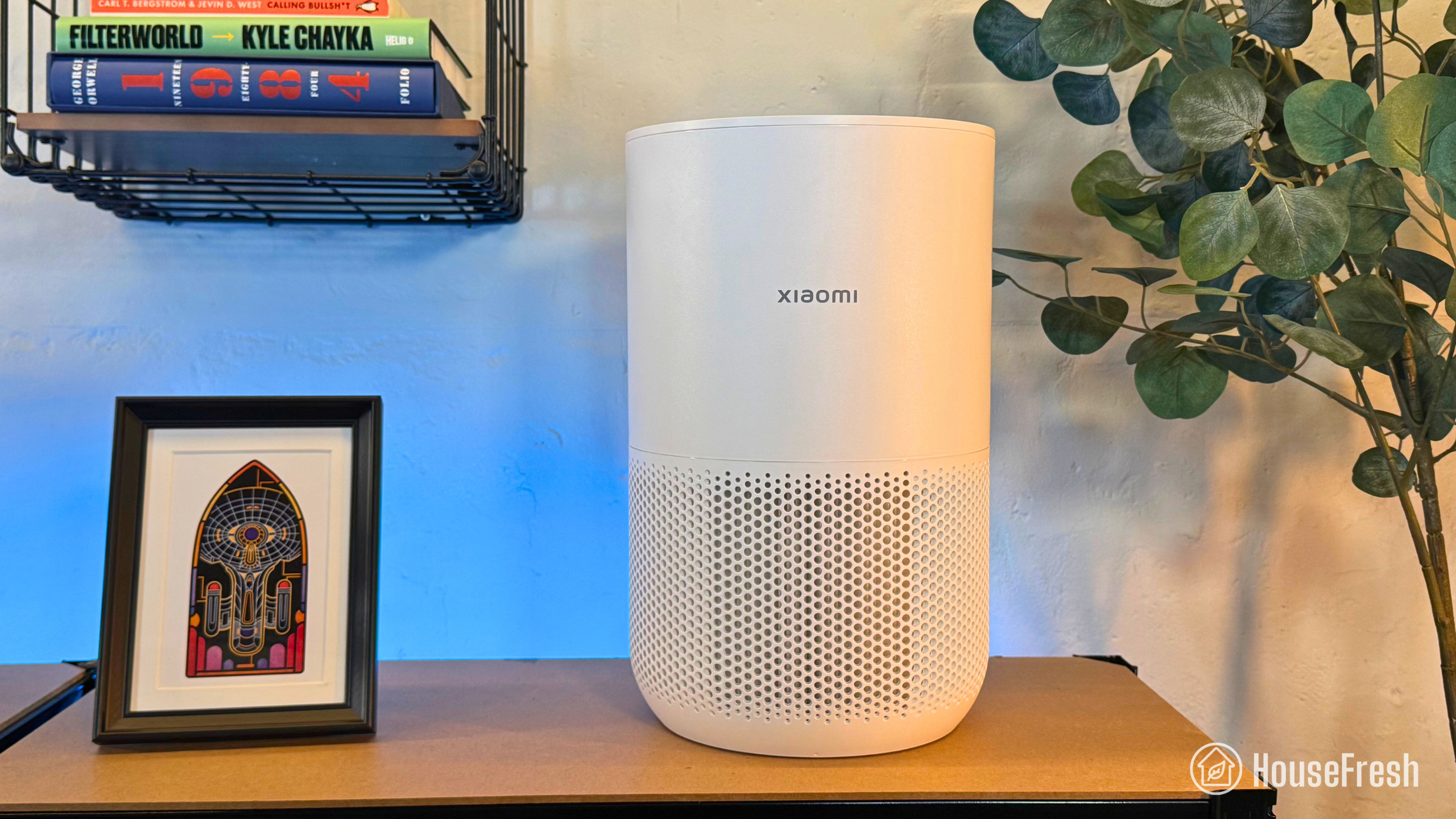
Xiaomi 4 Compact Closeup

FIND IT ON AMAZON FIND IT ON THE MI STORE

For those looking for a purifier capable of removing dust from the air in very small rooms, my recommendation is the Xiaomi 4 Compact. For most people, I would suggest not going smaller than the Vital 200S (above) but if space is tight, then this $99 air purifier from Xiaomi is my top pick.

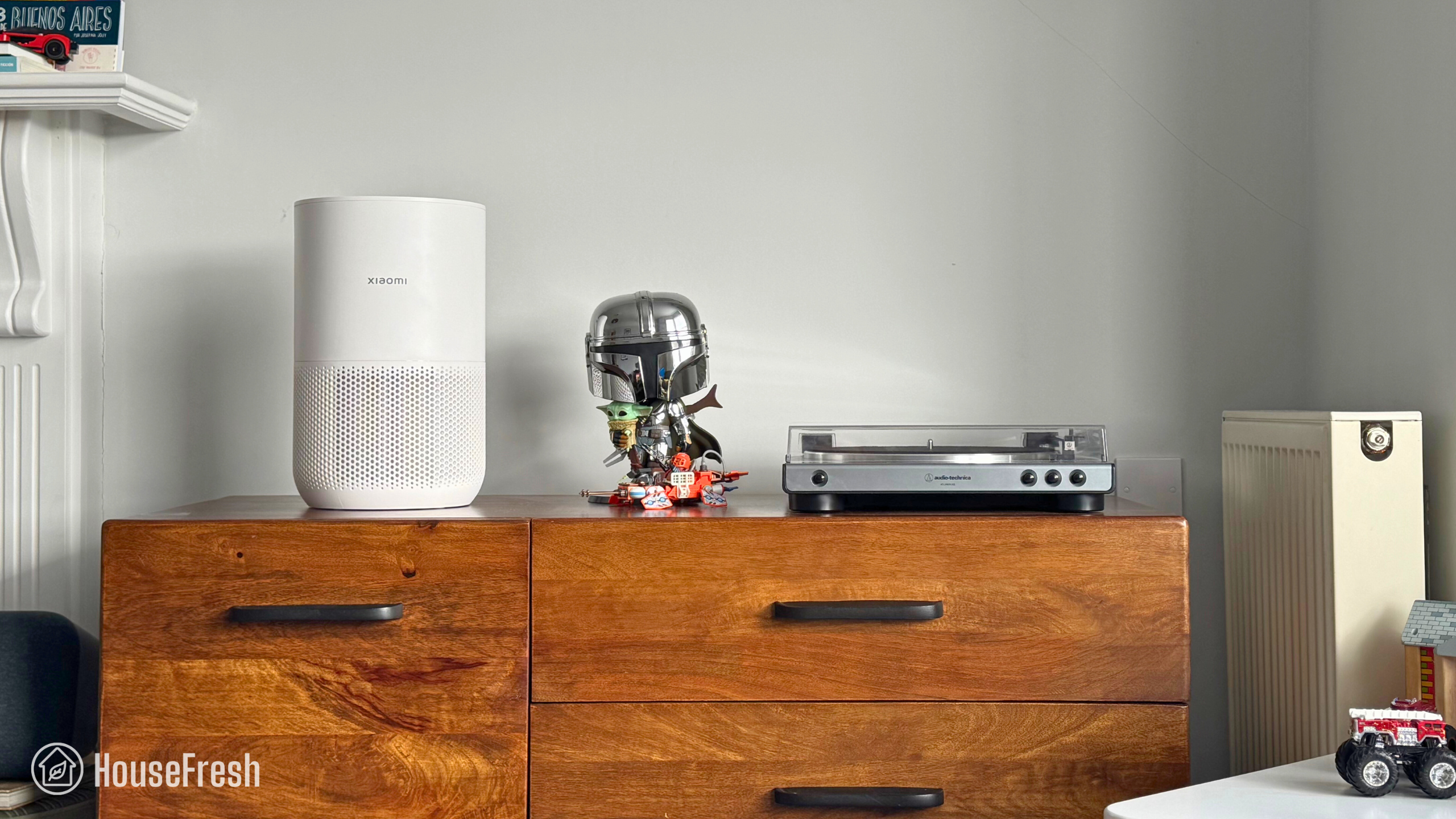
Xiaomi 4 Compact Sidetable

It is a small cylindrical air purifier that doesn’t take up too much floor space with a size similar to what you get with other small air purifiers like the Airmega 100, the Core 300S and the Winix A231.

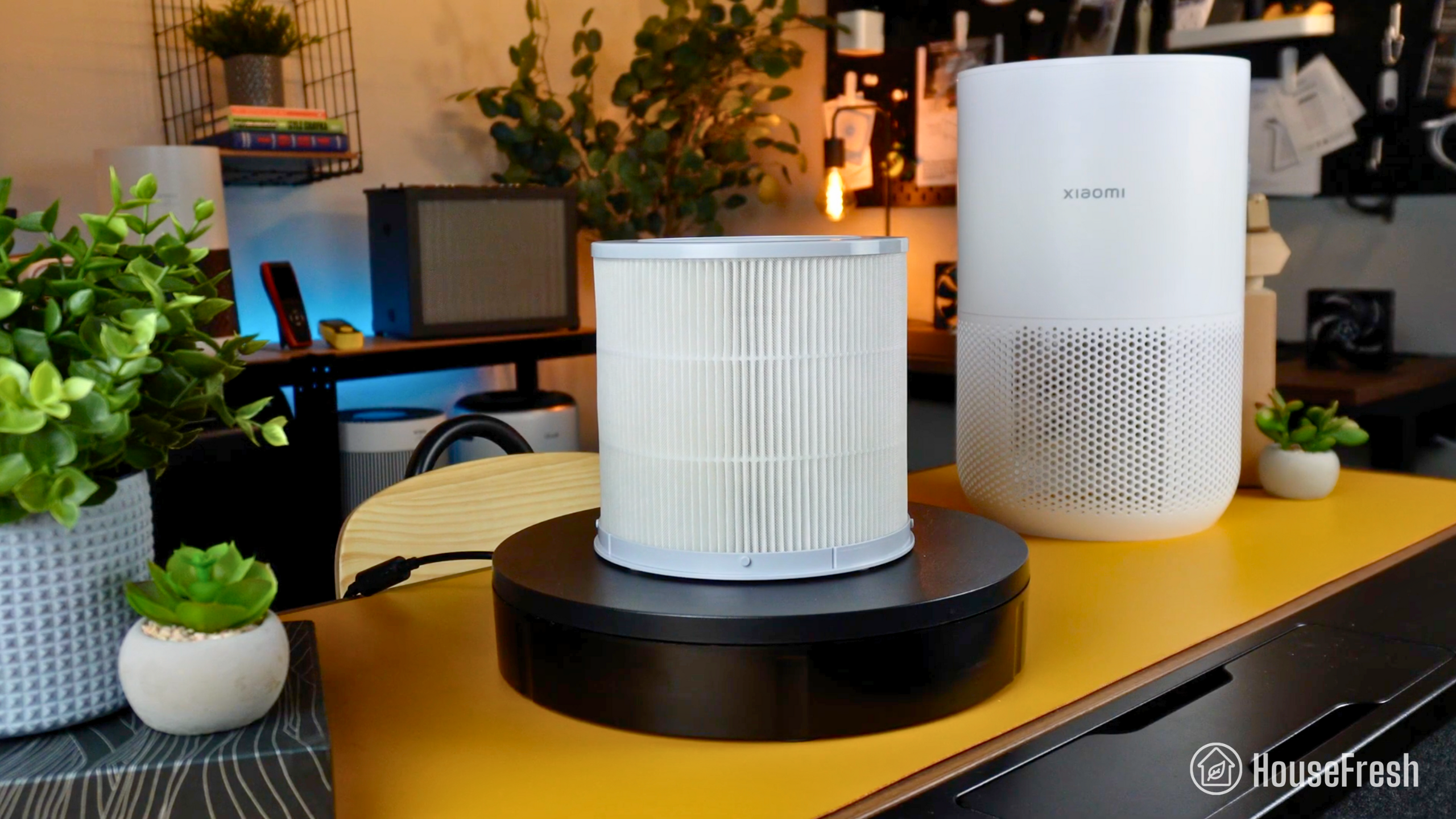
Xiaomi 4 Compact Filter

The filter inside has three levels of filtration: a pre-filter mesh cover for larger dust particles, a non-HEPA grade particle filter for smaller dust particles and a layer of activated carbon to tackle smells.

CONS

Top speed performance is not as good as what we saw with other small air purifiers like the Levoit Vital 100S or the Coway Airmega 100.
The mode button on the control panel only circles between sleep, auto and manual mode but in order to use the device on manual mode, you need to adjust fan speeds through the app.
It is a small device so it won’t be powerful enough to make a meaningful difference in spaces larger than 175 sq. ft.

PROS

It offers the best performance at sub-45 dBA fan speeds across all small purifiers we tested.
It is cheap to buy and cheap to run thanks to low priced OEM filters and low electricity consumption.
The design is small and lightweight, and you can have it on top of shelves, desks or sidetables.
It comes with a great app that is easy to use and unlocks a wide range of fan speed options.

Clean air delivery rate (CADR):– Top speed PM1 CADR: 117 cfm
– Sub-45 dBA PM1 CADR: 77 cfm
– Manufacturer provided CADR: 135 cfm
Filter technology:Bonded cylindrical particle filter with a layer of pelleted activated carbon and a pre-filter mesh cover.
Recommended room size:175 sq. ft. (5 air changes per hour)
Dimensions:8.6 x 14 inches (21.8 x 35.5 cm)
Weight:4.85 lb (2.2 kg)
Noise level in decibels from 3 ft. away:Sleep mode: 35.6 dBA
Speed 1: 35.3 dBA
Speed 2: 35.6 dBA
Speed 3: 42.2 dBA
Speed 4: 44.5 dBA
Speed 5: 46.4 dBA
Top speed: 56.1 dBA
Electricity consumption in watts:Standby: 1.4 watts
Sleep mode: 2.2 watts
Speed 1: 2.4 watts
Speed 2: 3.6 watts
Speed 3: 8.1 watts
Speed 4: 9.5 watts
Speed 5: 11.3 watts
Top speed: 26 watts
Filter lifespan:6 months
Manufacturer’s warranty:1 year
Country of origin:China
Country of manufacture:China

WATCH OUR VIDEO REVIEW 

4. Best for large spaces: Coway Airmega ProX

A large air purifiers that can clean the air five times per hour in spaces as large as 879 sq. ft. based on its dust CADR of 586 cfm (AHAM).

Coway Airmega ProX Kids room

This is the fastest residential air purifier we have ever tested: at top speed, the ProX completed our particle removal test in 13 minutes while generating just 53.6 dBA of noise — this is incredibly quiet considering that the next model in our ranking (IQAir Atem X) reached 62.3 dBA to offer similar performance.

The ProX is the largest device in Coway’s Airmega range. It weighs 51 lbs (23kg) but it comes with wheels and handles at each side that make it easier to move it around the house.

Coway Airmega ProX Handle

It has an air quality sensor, particle readings on screen and four smart modes that adjust fan speeds automatically based on the level of dust particles in the air.

Coway Airmega ProX Controls

CONS

This air purifier is not cheap, with a list price just over $800.
The positioning of the handles means that when pulling the device upwards, you sometimes end up removing the plastic sheet that covers the filters.
There is no app connectivity, which is something you might expect to get when paying upwards of $800.

PROS

It is officially the fastest residential air purifier we tested – we estimate a PM1 CADR of 462 cfm.
It comes with four smart modes so you can set it to adjust fan speeds automatically, based on sound levels generated and energy consumption.
It comes with an onboard air quality sensor and an LED light that changes color depending on the level of pollutants in the air + accurate particulate matter readings at the top of the device.
It is very stylish and is made of high-quality materials.

Clean air delivery rate (CADR):– Top speed PM1 CADR: 462 cfm
– Sub-45 dBA PM1 CADR: 299 cfm
– AHAM PM2.5 CADR: 586 cfm (dust)
Filter technology:Green True HEPA filter with pelleted activated carbon
Recommended room size:693 sq. ft. (5 air changes per hour)
Dimensions:18.9 x 36.6 x 24.3 in (48 x 93 x 62 cm)
Weight:51 lbs (23kg)
Noise level in decibels from 3 ft. away:Speed 1: 37.4 dBA
Speed 2: 44.4 dBA
Speed 3: 53.6 dBA
Electricity consumption in watts:Standby: 0 watts
Speed 1: 11.76 watts
Speed 2: 26.09 watts
Speed 3: 58.88 watts
Filter lifespan:12 months
Manufacturer’s warranty:3 years
Country of origin:South Korea
Country of manufacture:South Korea

Special mentions

These air purifiers nearly made my list. Depending on your budget and availability in your location, it could be worth checking them out.

Smart Air SA600 Sofa area

Smart Air SA600

With a dust CADR of 287 cfm (AHAM), this mid-sized air purifier from Smart Air will give you five air changes per hour in rooms up to 430 sq. ft. This is a unique air purifier that uses two sets of H13 HEPA filters, two pelleted carbon filters and two pre-filters.

I didn’t include it in my main list because it offers similar performance to the Vital 200S without any smart functions — if you are not bothered, then definitely look into the SA600.

READ OUR FULL REVIEW ➜ 

IQAir Atem X

IQAir Atem X

Based on its AHAM report, the Atem X has dust CADR of 435 cfm which will be powerful enough to clean the air five times per hour in rooms no larger than 652 sq. ft.

I didn’t shortlist the Atem X due to its high price tag ($1,399.99), which makes it hard to recommend over the $800 Airmega ProX.

WATCH OUR VIDEO REVIEW ➜

Dyson BigQuiet BP06 Home

Dyson Big+Quiet BP06

The BP06 is the cheapest model in Dyson’s Big+Quiet range and its performance is good – especially compared to other Dyson units I’ve tested. It has a dust CADR of 190.8 cfm (AHAM) which will clean the air give times per hour in rooms no larger than 286.2 sq. ft. when running at top speed and while generating just 51.4 dbA of noise.

I didn’t include it because it costs the same as the Airmega ProX but it has a third of the air cleaning power.

READ OUR FULL REVIEW ➜ 

Winix 5510 Sofa

Winix 5510

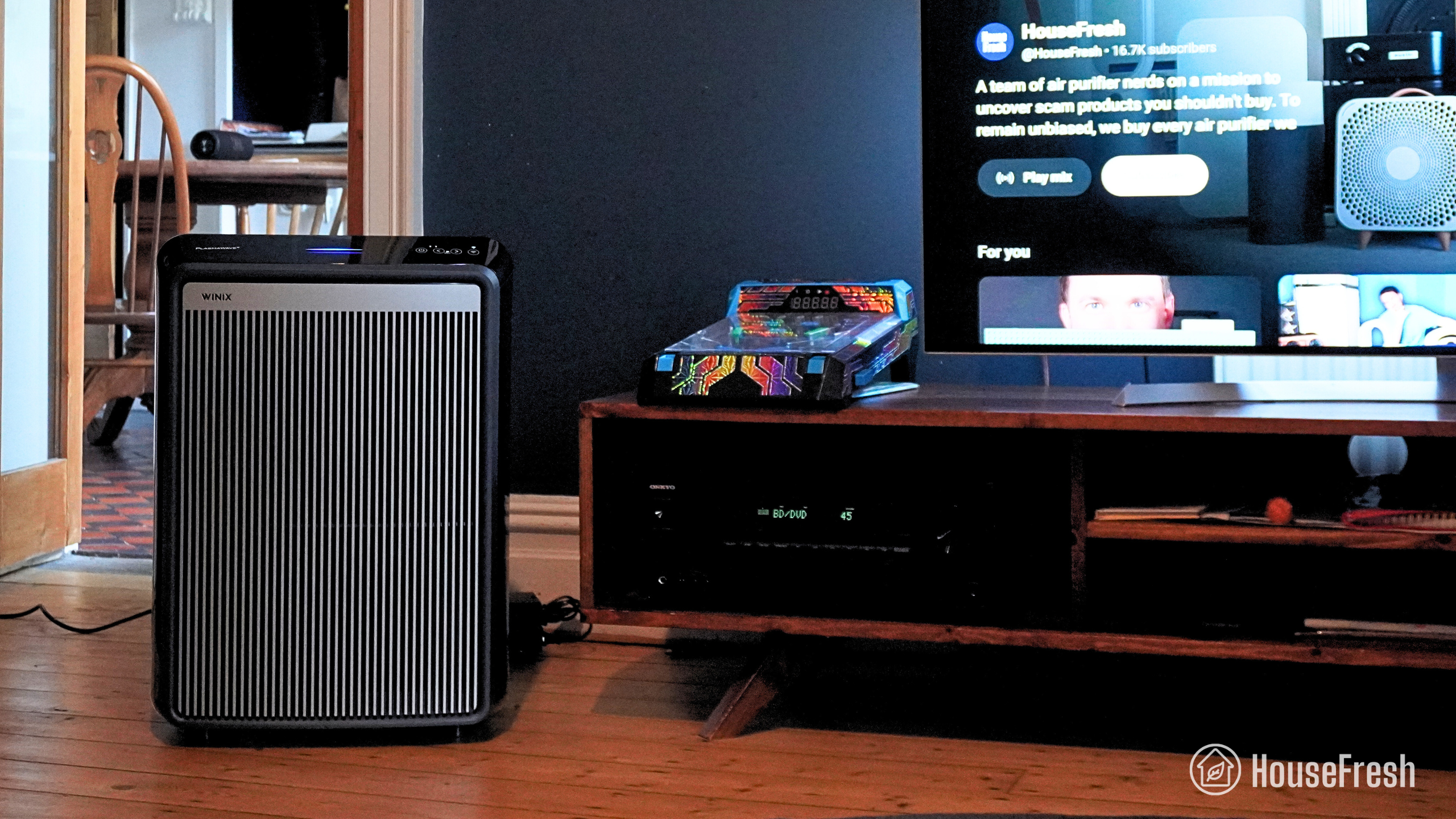
With a list price $249.99, the 5510 usually goes on deal for less than $200. It offers a dust CADR of 252 cfm (AHAM) at top speed while generating 67.2 dBA. This means it can clean the air five times per hour in spaces up to 378 sq. ft.

I didn’t shortlist it because it can be loud at full speed, but it comes with app connectivity and looks great so you might like it.

READ OUR FULL REVIEW ➜ 

WATCH OUR VIDEO REVIEW ➜

Common questions about dust and air purifiers

Yes! Using an air purifier with a high quality particle filter will help remove dust from the air before it settles on your furniture and home surfaces but it won’t completely get rid of dust.

A regular home cleaning routine paired with a good performing air purifier can help keep dust under control but you will still need to dust, vacuum and mop. Here are some quick tips to help you reduce dust in your home:

Dust with a microfiber cloth. Microfiber will trap dust particles instead of just moving the dust around.
Vacuum beyond the floor, always starting with upholstery and curtains. Consider getting a vacuum with a HEPA filter.
Mop uncarpeted floors after vacuuming. Try mopping your floors with a wet microfiber mop to remove any dust leftovers and crud spots.
Wash bed sheets, duvet covers, pillow covers, blankets and bed throws weekly. Use water over 120°F to kill any dust mites.
Clean vents and replace air filters regularly. Vacuum everything and scrub removable parts with soapy water.

Dust comprises many different pollutants, from pet dander to pollen, many of which can contribute to allergies. However, when people refer to a specific dust allergy, they usually refer to dust mites. 

Dust mites are microscopic critters that feed off dust particles and excess moisture in the air, and they are one of the most common allergens found in the home. When those with allergies to dust inhale or come into contact with dust mites or the proteins they leave behind, they experience symptoms such as sneezing, wheezing, itching, or developing a runny or stuffy nose. 

Dust mites will exist in every home worldwide, and although they are nigh-on impossible to eradicate, they can be curtailed and symptoms can be managed. The best way to keep on top of dust mites is to frequently dust your home, keeping the space ventilated and an air purifier running and keeping humidity levels low.     

Inhaling small quantities of dust will happen from time to time. Fortunately, our immune system is well equipped to deal with foreign pollutants, such as dust, entering our bodies. 

When we inhale dust regularly, however, we may see our immune system kicking into overdrive to help resolve the issue. When this happens, you may recognize having a stuffy nose, itchy eyes or other common allergy symptoms that flair while the dust is in your system. 

Being exposed to vast quantities of dust every day over prolonged periods (usually through work rather than domestic exposure) can lead to more serious conditions such as:

  • Silicosis
  • Lung cancer
  • Chronic obstructive pulmonary disease (COPD)
  • Kidney disease

If you work in a dusty environment, such as a building or industrial site, then your employer should ensure the necessary PPE and safety precautions are provided. 

As dust comprises hundreds of pollutant particles such as skin cells, cloth fibers, and dirt from the earth, it is simply impossible to escape. 

Certain homes may be more susceptible to dust build-ups. Sometimes based on what’s inside, such as pets or lots of soft furnishings, sometimes based on the house itself, with gaps by old doors or windows, an old HVAC system, or your local environment being key factors, and sometimes down to having a poor dusting and vacuuming regime.

 Be sure to check out our tips for reducing dust in your home.

Wrapping up

Dust is a problem we all have to deal with that is not going away anytime soon. Vacuuming and cleaning your house thoroughly and regularly can help, but you can supercharge your dust-busting routine by introducing an air purifier to capture dust particles flying into the air before they settle on surfaces.

But, before buying an air purifier, remember the key factors to consider:

  • Look for a device that uses high quality particle filters – you don’t need to worry about carbon
  • Make sure its CADR can provide five air changes per hour, based on the size of your room
  • Find a model that is quiet enough for you to run it 24/7

If you have any questions about any of the air purifiers on the list or have recommendations of your own, please drop them in the comments below.

The best air purifiers to get rid of litter box smell

cat at home

Having a cat as a pet is pretty awesome. But despite being relatively low maintenance, there are a few cat caregiving duties many cat owners would rather do without. And having to deal with their litter box often takes the top spot as the worst thing about owning a cat. 

In fact, according to a survey published on the Las Vegas Review Journal, 44% of cat owners polled said that the biggest concern they have is how their cat’s litter box affects their home’s general hygiene.

The good news is that an air purifier with good filters packed with activated carbon can help remove unwanted litter box smells, while removing the amount of cat hair and dander in the air. Read on for my top picks, based on over 100 tests I’ve conducted since 2020.

how we test
How we test air purifiers

Read our full testing methodology.

1. Best for large spaces: Levoit EverestAir

A large air purifier with a powerful fan and 400g of activated carbon to capture odors from the litter box.

Levoit EverestAir Front Design

💡exclusive code for HouseFresh for 10% off a single purchase on Levoit.com: HOUSE10

Based on our particle removal test, we estimate a PM1 CADR of 375 cfm at top speed for the EverestAir and 205 cfm at speed 2, while generating just 43.2 dBA of sound. This is a powerful air purifier that will provide five air changes per hour in spaces up to 562 sq. ft.

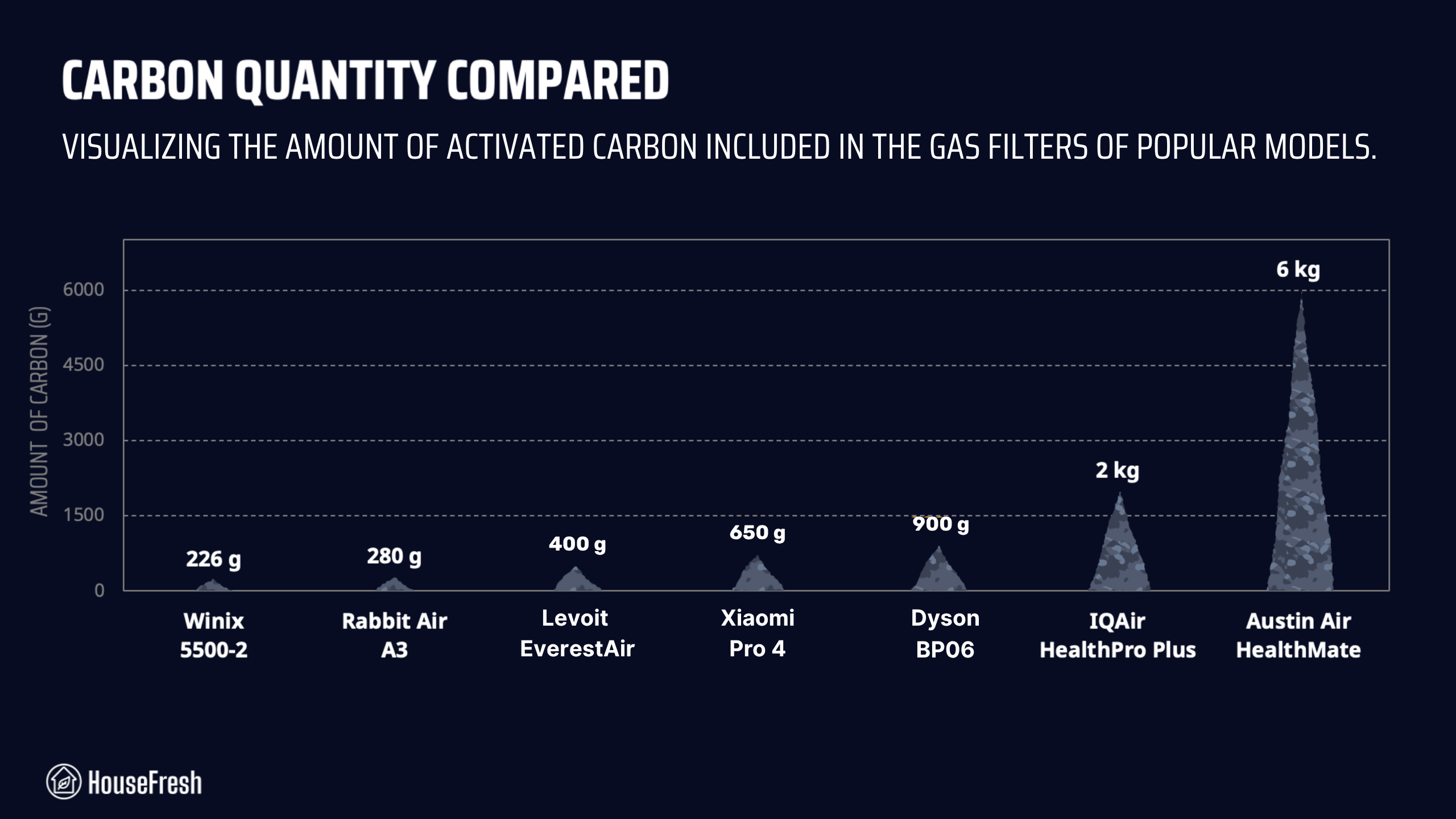
The EverestAir comes with 400g of pelleted activated carbon, which will adsorb unwanted smells while the air circulates through the device.

carbon quantity everestair

It comes with an onboard air quality sensor that displays readings on screen and on the smartphone app.

Levoit EverestAir AQI Working

CONS

It doesn’t come cheap at $499.99 but often goes on sale for Prime Day and Black Friday.
The particle filter is not HEPA grade. This doesn’t affect the performance but it was initially sold as H13 HEPA.
It uses a bonded filter so you will need to replace the entire thing once the carbon is full, even if the particle filter still has life in it.

PROS

It outperformed more expensive devices such as the $700+ Rabbit Air A3 and the $800+ Dyson BP06.
The design stands out and looks like something Apple would create.
It comes with 400g of activated carbon as standard, which is a good amount for tackling litter box odors.
It has wheels to move it around the house without having to lift it.
You can adjust the angle of the vents on top.

This is a large air purifier that sits solidly on its base, so it can withstand a curious cat jumping on top of it. The wheels at the bottom only move in one direction, so it won’t slide around the floor easily unless you push it in the right direction.

Clean air delivery rate (CADR):– Top speed PM1 CADR: 375 cfm
– Sub-45 dBA PM1 CADR: 205 cfm
– AHAM PM2.5 CADR: 365 cfm (dust)
Filtration technology:Removable pre-filter, particle filter and 400g of pelleted activated carbon.
Recommended room size:562 sq. ft. (5 air changes per hour)
Dimensions:18.9L x 8.5W x 23.2H inches (48L x 21.6W x 58.9H cm)
Weight:20.7 lbs (9.39 kg)
Filter lifespan:12-15 months
Noise level in decibels from 3 ft. away:Speed 1: 39.1 dB
Speed 2: 43.2 dB
Speed 3: 48.6 dB
Turbo: 57.8 dB
Electricity consumption in watts:Standby mode: 1.26 watts
Speed 1: 9.85 watts
Speed 2: 15.59 watts
Speed 3: 26.6 watts
Turbo: 69.8 watts
Manufacturer’s warranty:2 years
Country of origin:United States
Country of manufacture:China

READ OUR FULL REVIEW ➜

WATCH OUR VIDEO REVIEW ➜

2. Best under $200: AirFanta 3Pro (with activated carbon filters)

This PC fan-powered air purifier is the most powerful budget-friendly model we have tested.

AirFanta 3Pro Living Room

Use the discount code HOUSEFRESH for 5% off when buying directly from AirFanta.

The 3Pro is a mini Corsi-Rosenthal box with a base at the bottom, four low resistance H11 particle filters packed with pelleted activated carbon at each side and an array of four PC fans on top. The result? An air purifier that offers a PM1 CADR of 353 cfm at top speed for less than $200.

You get a speed controller to set fan speeds. I recommend setting it to 6.54V, where it generates just 43.3 dBA of noise that won’t disturb your cat but still offers solid air cleaning performance.

This is the only high CADR air purifier that you can disassemble and fit inside a carry-on bag or backpack to take with you when you travel.

AirFanta 3Pro with Osprey backpack

To deal with litter box smells you will need to buy the version of the 3Pro that comes with pelleted activated carbon, which will set you back $175.99 at the moment of writing this.

CONS

It looks nothing like traditional air purifiers and this will put some people off.
It doesn’t come with any smart features, app connectivity or an onboard air quality sensor. This is a device for you to set and forget.

PROS

It is the most powerful air purifier you can buy for under $200, outperforming devices from Levoit, Winix, Coway, Xiaomi and Dyson.
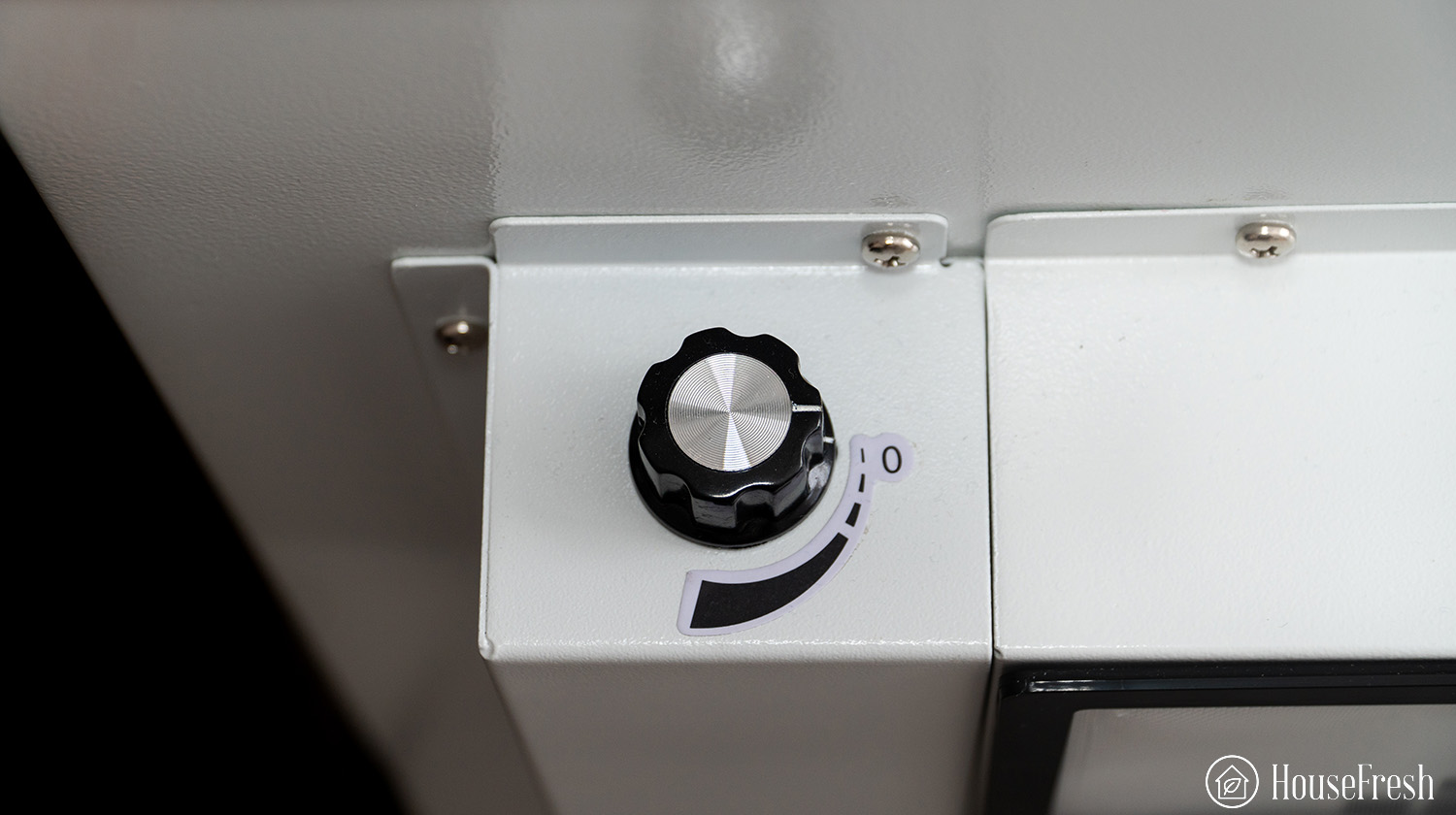
Instead of buttons, you get speed controller to set the speed of the fans and the noise output.
PC fans are whisper quiet compared to most traditional air purifiers, so this device won’t disturb your cat.
It can be assembled and disassembled in just a few minutes.
When taken apart, the parts are small enough to fit inside a large backpack or small suitcase.

Clean air delivery rate (CADR):– Top speed PM1 CADR: 353 cfm
– Sub-45 dBA PM1 CADR: 213 cfm
Filter technology:True HEPA H11 and optional pelleted activated carbon
Recommended room size:529 sq. ft. (5 air changes per hour)
Dimensions:12.6D x 12.6W x 12.6H inches (32D x 32W X 32H cm)
Weight:7.7 lbs (3.49 kg)
Noise level in decibels from 3 ft. away:3.63 volts: 36.1 dB
4.19 volts: 36.9 dB
5.24 volts: 39.7 dB
6.54 volts: 43.3 dB
7.44 volts: 46.7 dB
8.56 volts: 49.1 dB
12.6 volts: 56.3 dB
Electricity consumption in watts :43.23 watts
Filter lifespan:6 – 12 months
Manufacturer’s warranty:1 year
Country of origin:China
Country of manufacture:China

READ OUR FULL REVIEW ➜

WATCH OUR VIDEO REVIEW ➜

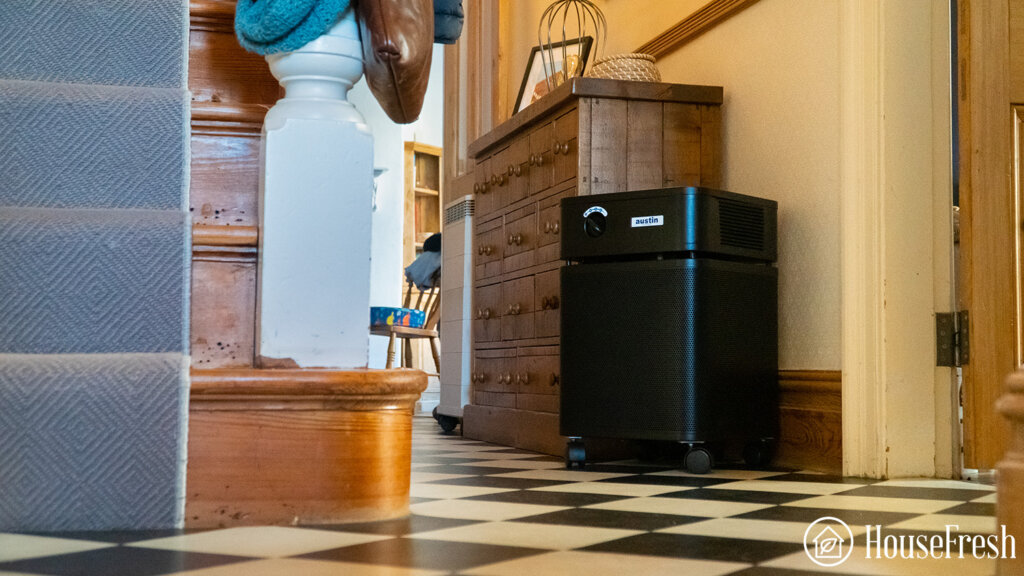
3. Best for very bad litter box smells: Austin Air HealthMate 

With a colossal gas filter packed with 15 lbs of activated carbon and zeolite, the HealthMate is the best air purifier for VOCs we have tested.

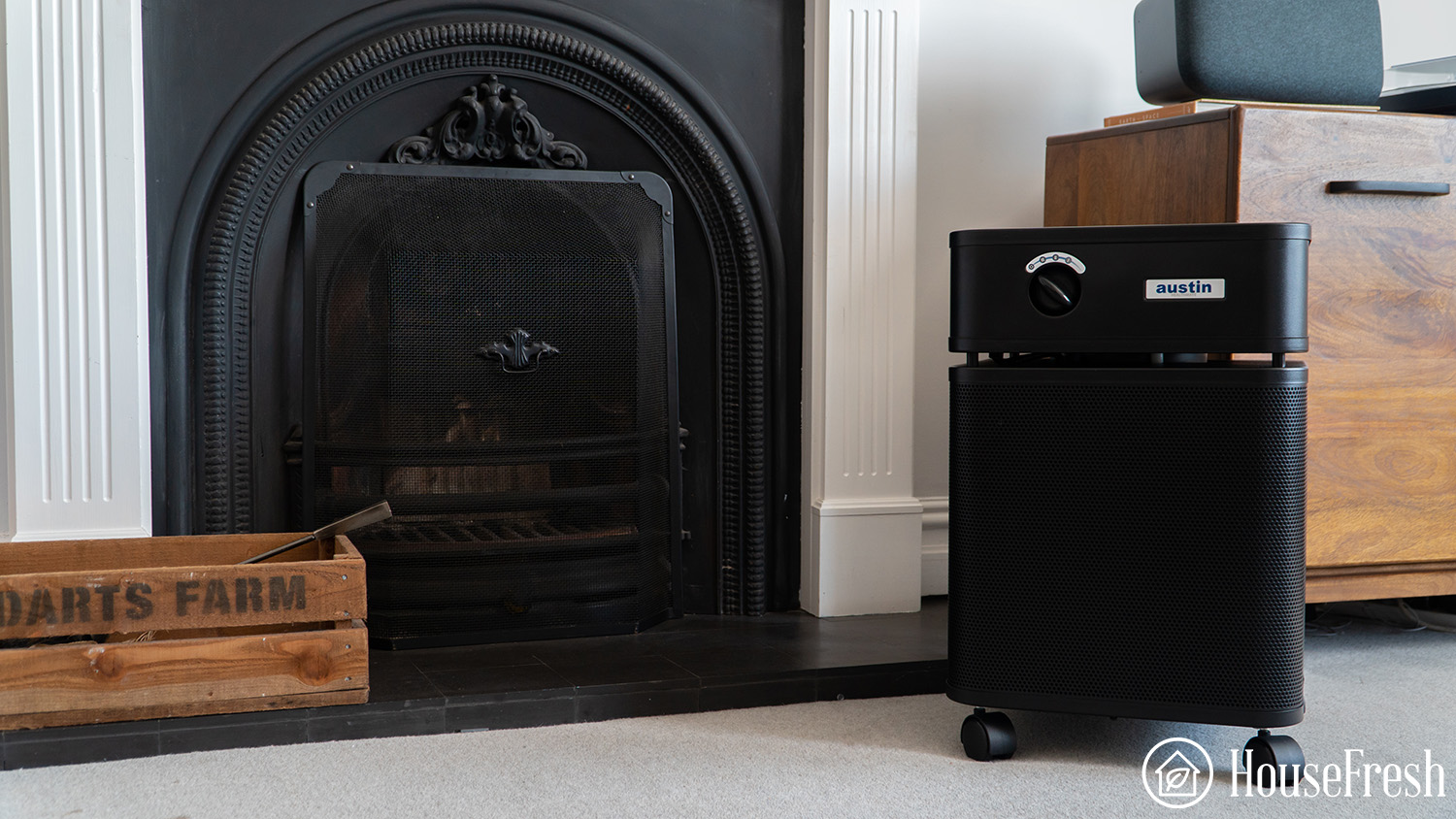
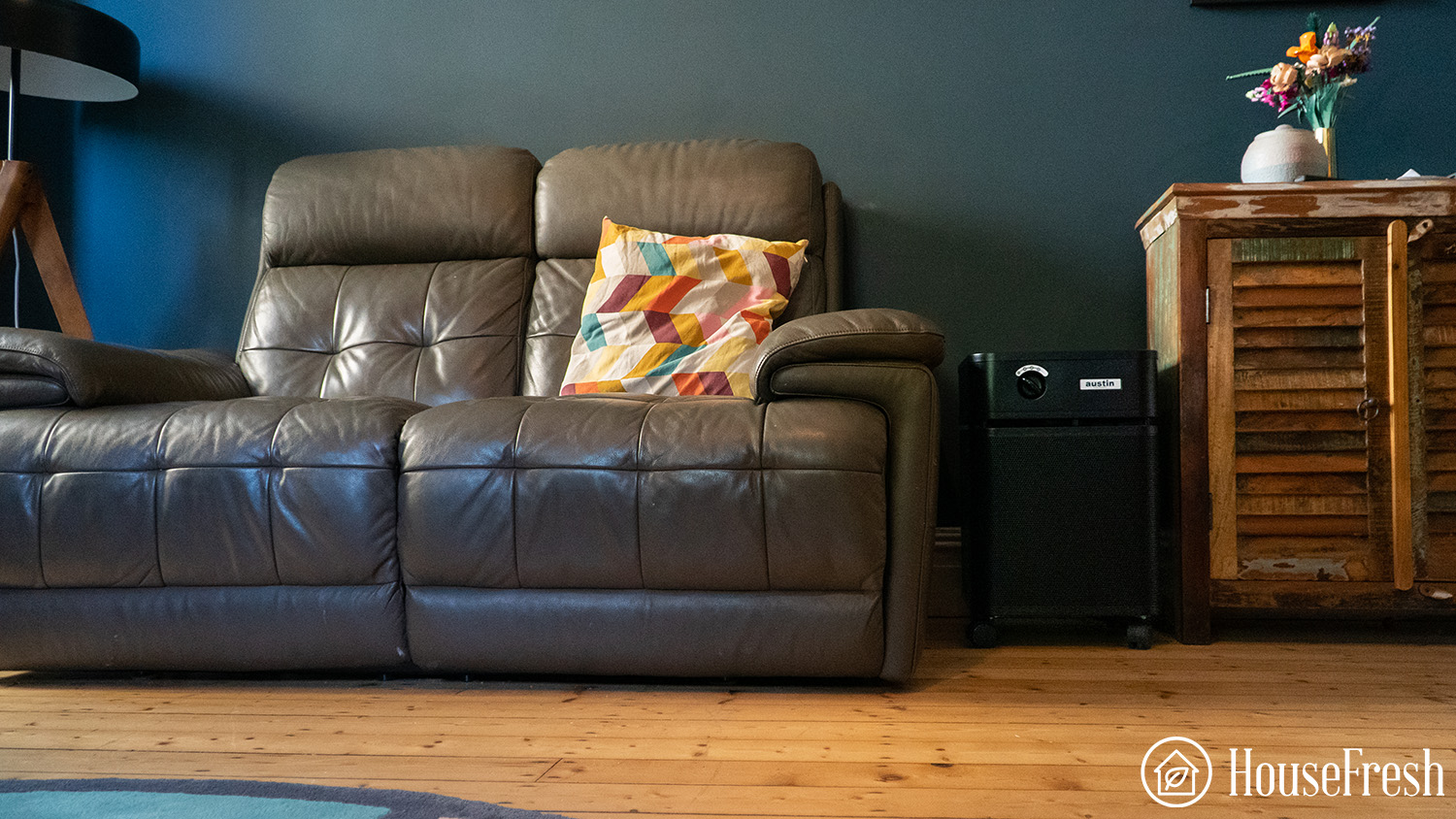
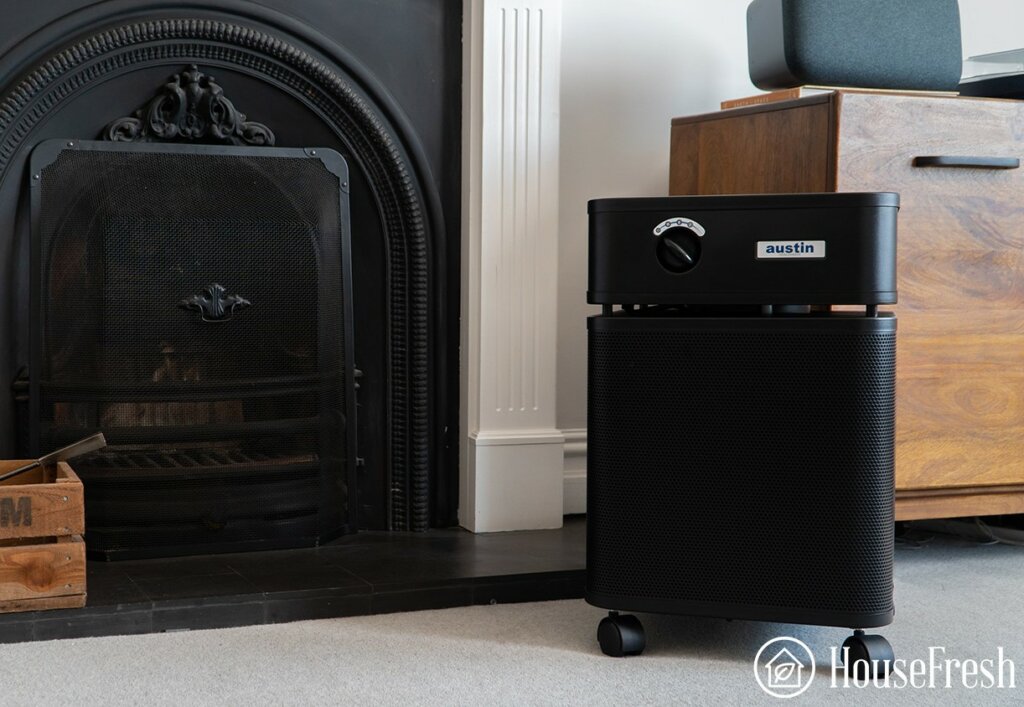
Austin Healthmate Living Room

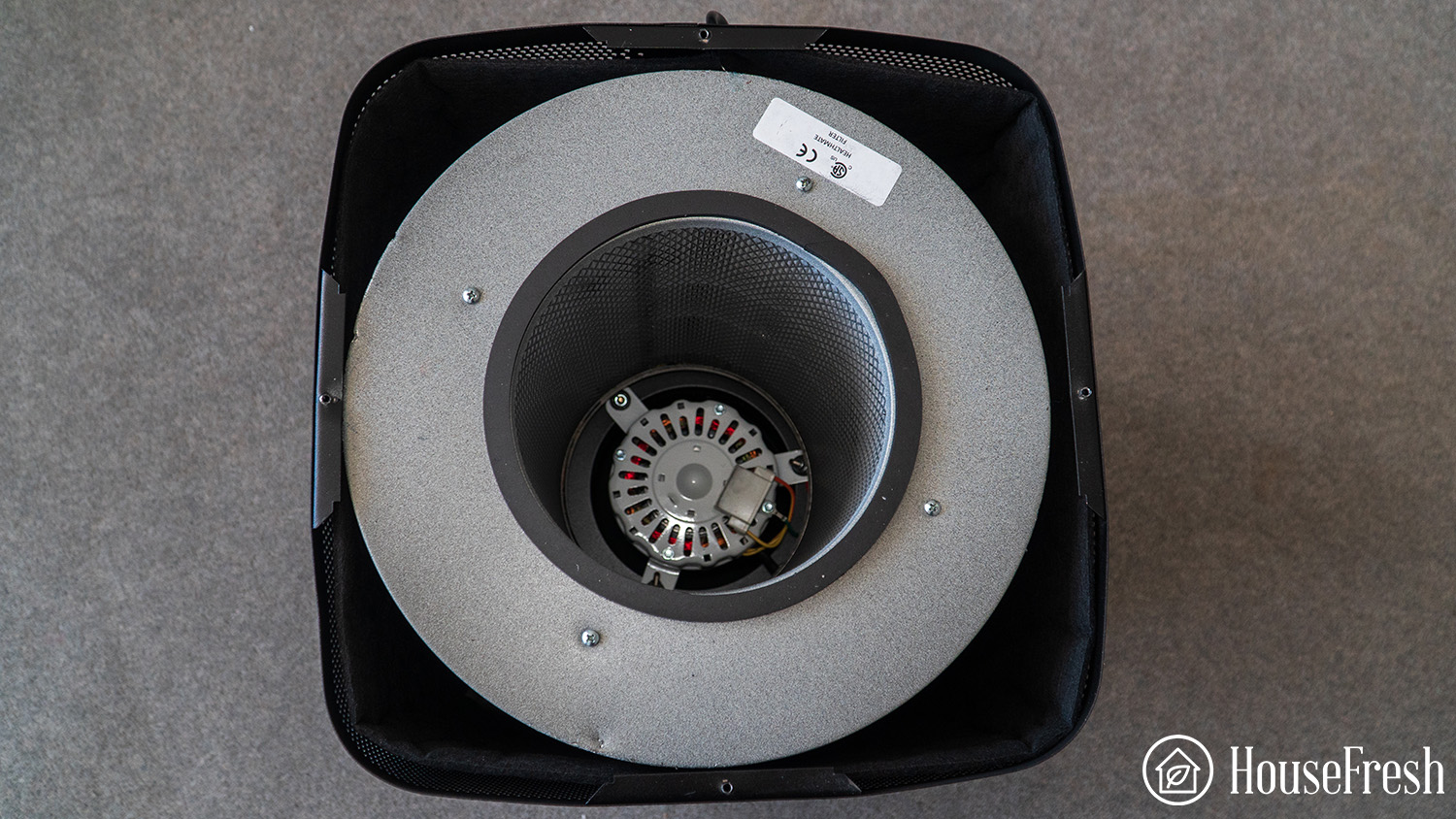
The HealthMate from Austin Air is the air purifier with the largest amount of carbon in its filter and that is exactly what you will need if you have multiple cats and litter boxes at home, or if you want to tackle very bad litter box smells.

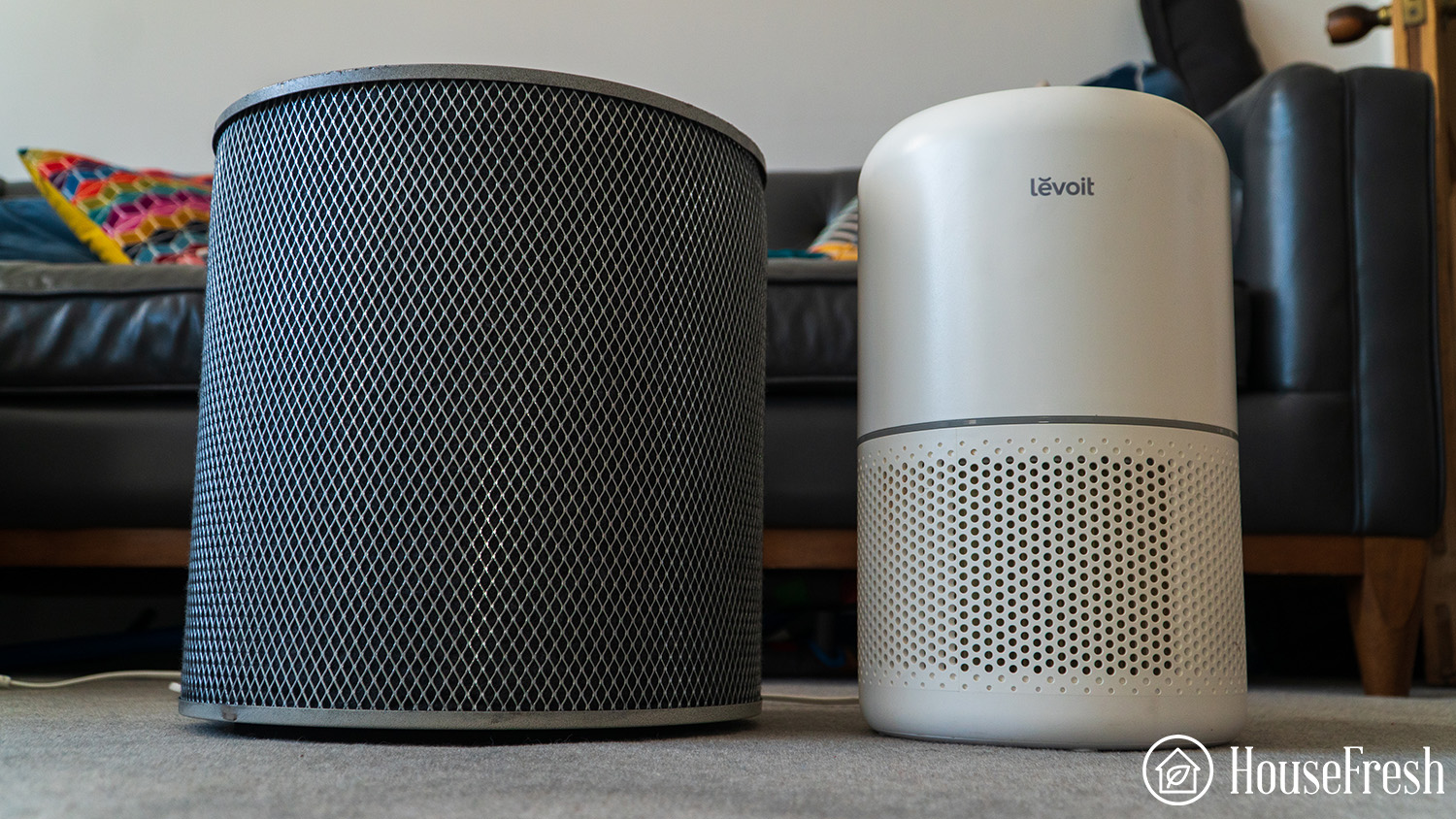
It filter is larger than most small air purifiers. In this photo you can see how its size compares next to the popular Levoit Core 300S. This is what 15 lbs of activated carbon look like!

Austin Healthmate Filter VS Core 300

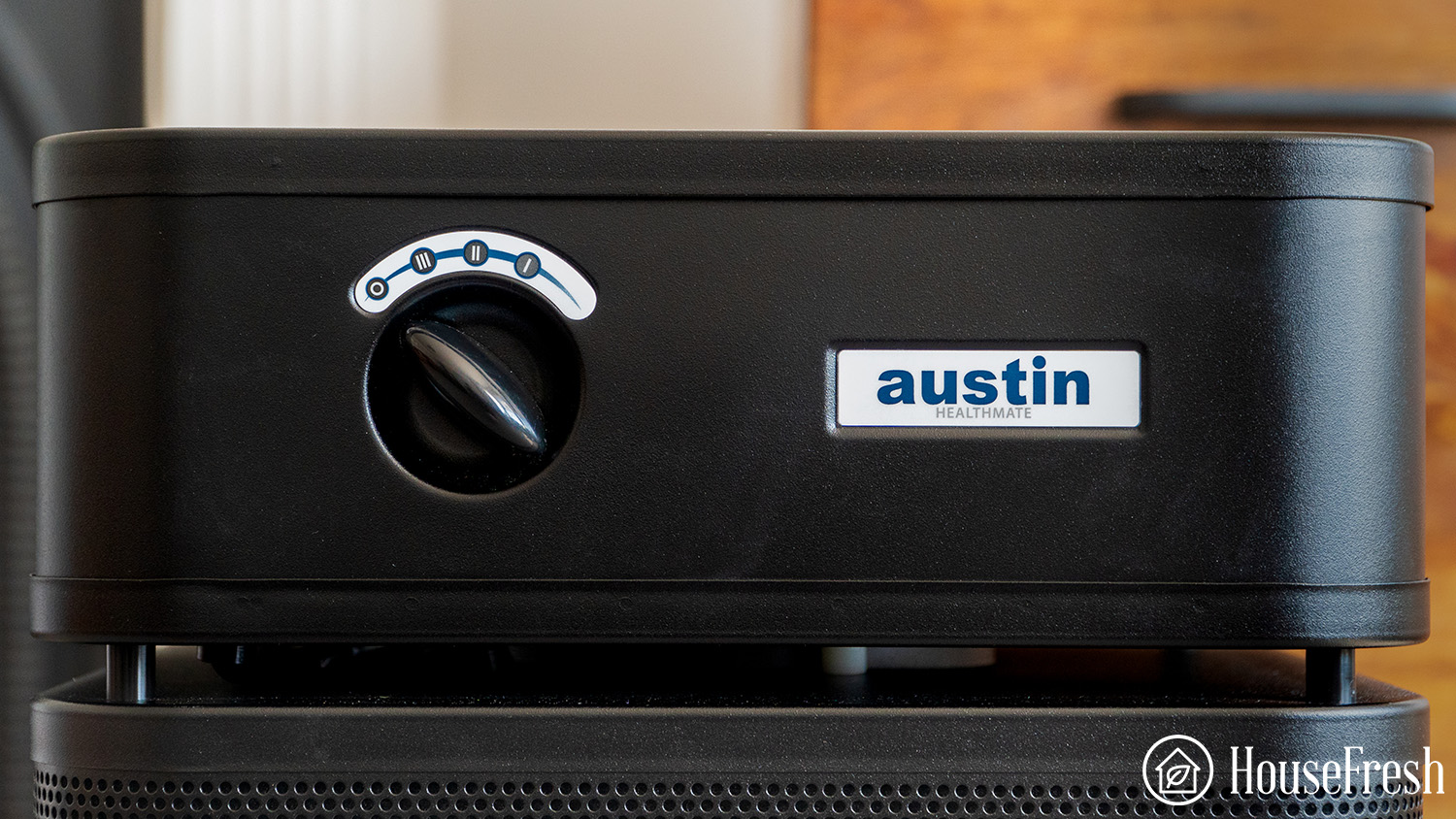
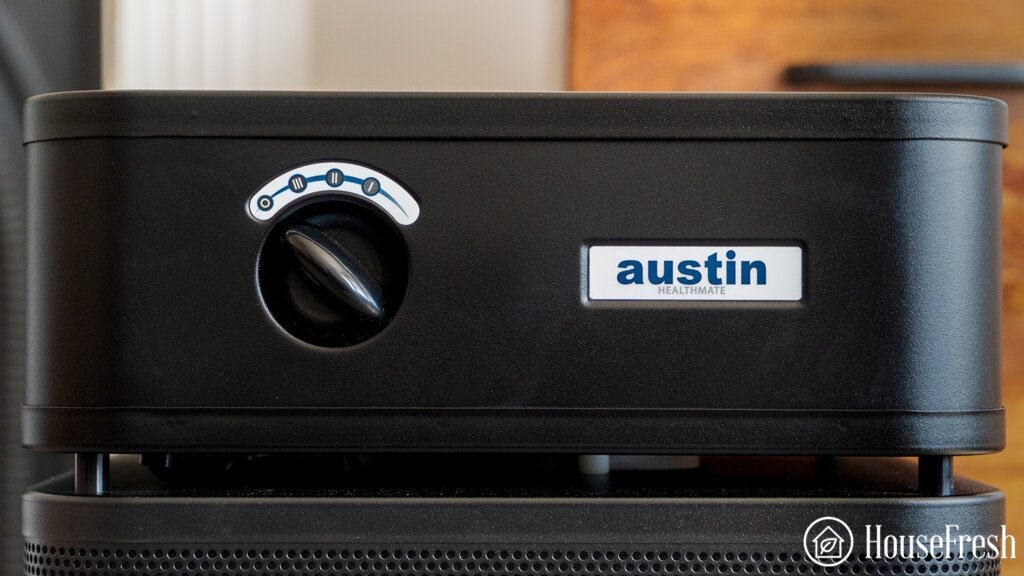
It comes with a one-dial operation and a smooth top surface, so you can rest assured that your cat won’t accidentally change the settings when jumping on top of it.

Austin Healthmate Front

CONS

It is one of the most power-hungry units we have tested, pulling 147.6 watts when running at top speed.
It doesn’t have any smart features or smartphone app controls. Similarly to the 3Pro above, the HealthMate is a set-and-forget unit.
Excellent at removing odors but its particle filtration is as good as much smaller devices like the Levoit Core 300 or the Xiaomi 4 Compact.

PROS

It comes with the largest carbon filter in the household purifier market.
The filter is packed with a carbon and zeolite mix that increases odor adsorbency.
This device is made in the USA and comes with a 5-year warranty.
The filters can last up to five (5!) years before needing to be replaced, which is a lot more than the usual 6-12 months.

Clean air delivery rate (CADR):– Top speed PM1 CADR: 156 cfm
– Sub-45 dBA PM1 CADR: 77 cfm
– AHAM PM2.5 CADR: 154 cfm (dust)
Filter technology:HEPA particle filter with 15 lb of activated carbon and zeolite mix gas filter
Recommended room size:234 sq. ft. (5 air changes per hour)
Dimensions:23H x 14.5W x 14.5D inches (58.4H x 36.8W x 36.8D cm)
Weight:20.41 lbs (9.26 kg)
Noise level in decibels from 3 ft. away:Speed 1: 42.5 dB
Speed 2: 53.2 dB
Speed 3: 61.5 dB
Electricity consumption in watts:Standby mode: 0 watts
Speed 1: 61.1 watts
Speed 2: 85.05 watts
Speed 3: 147.6 watts
Filter lifespan:5 years
Manufacturer’s warranty:5 years
Country of origin:United States
Country of manufacture:United States (Buffalo, New York)

READ OUR FULL REVIEW ➜

4. Best for small spaces: Levoit Core 400S (with Smoke Remover filter)

A medium-sized cylindrical air purifier that will fit inside smaller rooms while still offering powerful air cleaning performance.

Levoit 400s pets

💡exclusive code for HouseFresh for 10% off a single purchase on Levoit.com: HOUSE10

In our tests, the 400S performed well with an estimated PM1 CADR of 213 cfm at top speed, which will be powerful enough to provide five air changes per hour in spaces as large as 319 sq. ft. If place in a room smaller than 300 sq. ft., the Core 400S will be able to circulate and clean the air a lot more often.

The Core 400S is a mid-sized device in Levoit’s Core range. It is larger than the popular Core 300S (left) but smaller than the Core 600S (right).

Levoit Core 300S VS 400S VS 600S

You get multiple filter options. Go for the Smoke Remover filter and you’ll get 450g of carbon — the highest amount across all options.

Core 400s Carbon Filter chart

CONS

The European version of the 400S is less powerful than the U.S. version, so keep that in mind if you’re in Europe. Learn more about this on this video.
It uses a bonded filter so you will need to replace the entire thing once the carbon is used up, even if the particle filter still works.
The particle filter was initially sold as H13 HEPA but it isn’t HEPA. This won’t affect performance but you need to know.

PROS

The cylindrical design takes up less floor space while still offering good air cleaning performance.
It comes with an onboard sensor, an LED air quality indicator and auto-mode.
You get smartphone connectivity through the VeSync app.
The 400S with the Smoke Remover filter comes with the largest amount of carbon (450 g) in the entire Levoit range of air purifiers.

Clean air delivery rate (CADR):– Top speed PM1 CADR: 213 cfm
– Sub-45 dBA PM1 CADR: 134 cfm
– AHAM PM2.5 CADR: 247 cfm (dust)
Filtration technology:Pre-filter for large particles, main filter for airborne particles and activated carbon filter for odors and gasses
Recommended room size:319 sq. ft. (5 air changes per hour)
Dimensions:10.8L x 10.8W x 20.5H inches (27.4L x 27.4W x 52H cm)
Weight:11.2 lbs (5 kg)
Filter lifespan:6 months
Noise level in decibels from 3 ft. away:Sleep mode: 35.5 dBA
Speed 1: 38.3 dBA
Speed 2: 43.2 dBA
Speed 3: 51.2 dBA
Speed 4: 60.3 dBA
Electricity consumption in watts:Standby: 0.93 watts
Sleep mode: 3.05 watts
Speed 1: 5.28 watts
Speed 2: 8.51 watts
Speed 3: 16.41 watts
Speed 4: 39.64 watts
Manufacturer’s warranty:2 years
Country of origin:United States
Country of manufacture:China

READ OUR FULL REVIEW ➜

WATCH OUR VIDEO REVIEW ➜

Special mentions: The air purifiers that nearly made the cut

Alen BreatheSmart Flex Bedroom

Alen BreatheSmart Flex

The only air purifier in Alen’s BreatheSmart line that doesn’t come with an ionizer, making it safer for pets. It also lacks smart features and app connectivity.

We estimate a PM1 CADR of 198 cfm at top speed, which will be good enough for five air changes per hour in rooms up to 297 sq. ft. It has a H13 HEPA filter and for litter box smell, I suggest going for the Odor Neutralizer option as it comes with more carbon than other filters in the Flex range.

READ OUR FULL REVIEW ➜

Dyson BigQuiet BP06 Corner

Dyson Big+Quiet BP06

The BP06 is the best air purifier I’ve tested from Dyson. It lacks smart functions and app support but is more affordable than other models in the Big+Quiet range.

Based on our tests, it has a PM1 CADR of 198 cfm at top speed and will provide five air changes per hour in rooms up to 297 sq. ft. It has an innovative wraparound fabric with 900g of carbon on top of the H13 HEPA filter to tackle litter box smells.

READ OUR FULL REVIEW ➜

Smart Health S

Smart Air Squair (with activated carbon filter)

This is a small air purifier with a simple one-dial operation and no smart functions. It offers a PM1 CADR of 185 cfm at top speed, which will be good enough to provide five air changes per hour in spaces no larger than 277 sq. ft.

If you think it could be a good option for your home, make sure to opt for the additional activated carbon filter as it otherwise the HEPA alone won’t be able to remove litter box smells from the air.

READ OUR FULL REVIEW ➜

What to look for when buying an air purifier for litter box smell

1. To remove odors, you will need a gas filter with a good amount of activated carbon

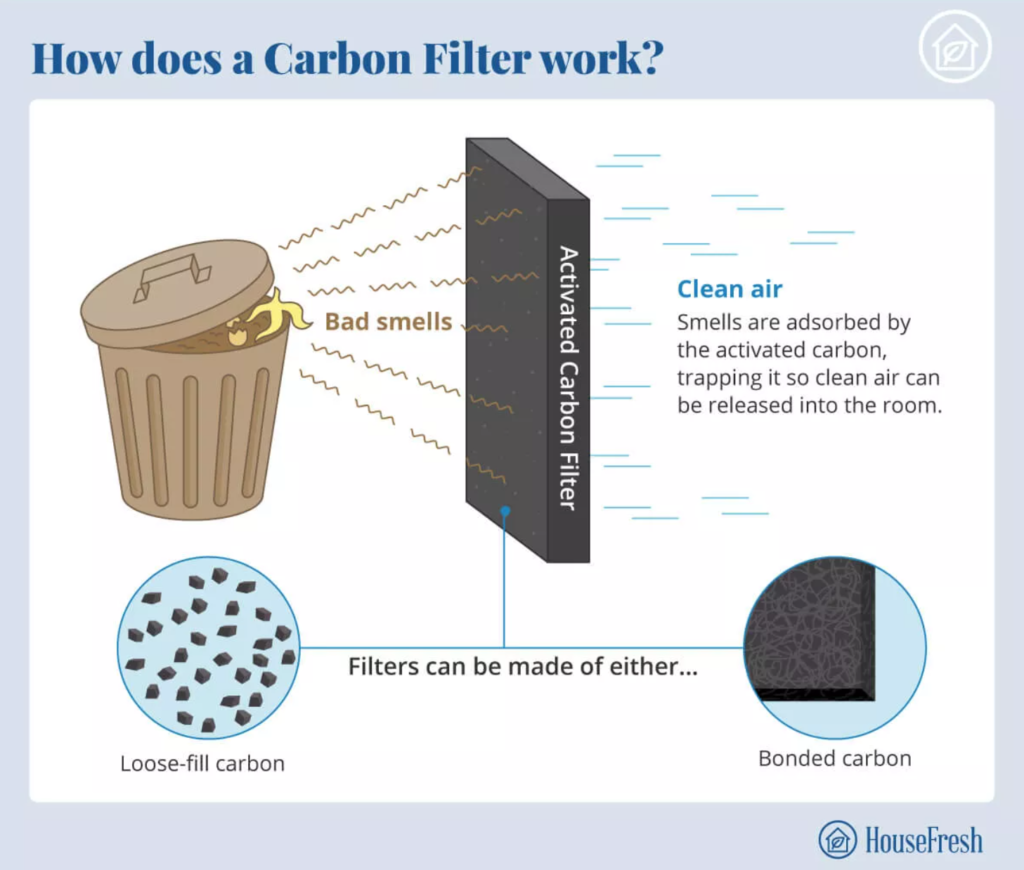
For an air purifier to capture unwanted odors, it must utilize activated carbon filters. These filters work by locking gasses (known as VOCs) into the pores of a carbon substrate in a process called adsorption. The filter’s more carbon equates to a larger surface area to lock in odors. 

Bot all air purifiers use this type of filter as standard. Be sure to check whether the air purifier you are considering comes with a carbon filter and always favor those models with large amounts of pelleted carbon.

2. You might want to avoid units with ionizers

Many air purifiers use a bipolar ionization process to negatively charge particles in order to attract them to the filter so they can be removed from the air. The problem is that, in the process, these devices can generate small amounts of ozone which can be detrimental to the health of those with pre-existing respiratory conditions.

Ozone is a lung irritant, so if you worry about the health of your cat then you should stick to air purifiers without ionizers, like the ones on my list of recommendations.

3. Find an air purifier with a CADR that matches the size of your room

In order for an air purifier to be useful, it has to be able to provide at least five air changes per hour inside the room where you need it.

For litter box smell, you should aim at placing the air purifier close to the source of smells. If that is possible, then measure the room where you’ve placed the cat litter tray and use our CADR calculator to find out how much CADR you will need to ensure the device is powerful enough:

Common questions about litter box smell

Living in a smelly environment is a surefire way to induce stress and anxiety. Cats themselves are particularly fussy when it comes to toilet time and, if their litter box is unpleasant or dirty, they may find new places around the home to do their business, further compounding the issue. 

But beyond unwanted smells spreading throughout your space, cat litter can threaten your health.  As well as odor, ammonia will also be circulating throughout your air and exposure to this toxic gas can cause a raft of health complications — from headaches to nausea and, in severe cases, pneumonia.

Other health issues linked with human exposure to cat litter include cat scratch disease, roundworms and toxoplasmosis

Having more than one cat can create more odor around the litter box. If you live in a multi-cat household, you should consider getting the largest air purifier you can handle to make sure it will circulate the air quickly and have enough carbon to adsorb unwanted smells — the Austin Air HealthMate is my top pick for these cases.

And if you have multiple litter boxes spread around the home, then you should consider having an air purifier in each space like the affordable AirFanta 3Pro.

THINGS TO TRY

Increase ventilation around the affected area. If you can, move the litter box near an open window or doorway. 
Hang an activated charcoal bag near the tray if you do not have the space or budget for an air purifier.
Be mindful of your cat’s diet. Protein-rich foods given to kittens can cause a real stink, so switch to adult-appropriate foods when right.  

THINGS TO AVOID

Avoid using air fresheners or scented products near the litter box. Although this might help mask the smell of human noses, cats can be sensitive to new scents and some chemical fragrances can even be toxic.
Don’t let the contents of the litter box fester. Cat waste should be cleared as soon as possible and the litter should be changed at least once a week.

On top of the initial purchase cost of your air purifier, you can expect two ongoing costs: filter replacements and energy consumption.

  • Depending on the device, you will need to replace the filter between 6-12 months with some devices (like the Austin Air HealthMate) having filters that last up to five years. Always look for the cost of the filter replacement so you can estimate how much money you’ll need to spend each year.
  • Most modern air purifiers come ENERGYSTAR certified, meaning using them regularly won’t cost the earth. That said, you can use this energy cost calculator to check how much you can expect to spend based on the energy consumption of the device — check the SPECS table I put together for each device, as I added in there how much electricity in watts each air purifier pulls at each fan speed.

If you have any other questions about air purifiers you could use to help reduce the smell of your cat’s litter box, please drop them in the comments below and I will get back to you as soon as I see your question. Or if you prefer to contact me privately, just send me an email to danny@housefresh.com and I’ll do my best to reply when I get a chance.

Top performing air purifiers for wildfire smoke (+ DIY units)

Wildfires Dominate Newspapers

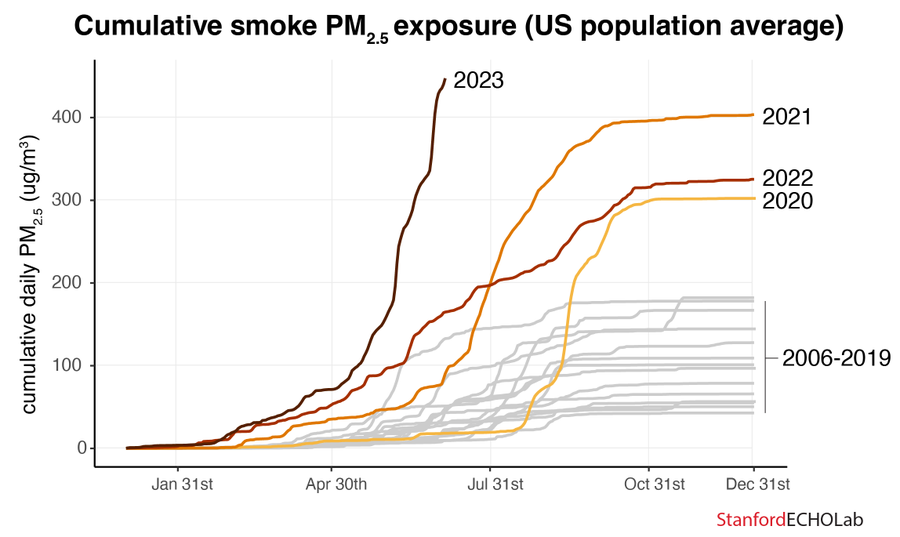
As the tinted red skyline of New York City showed the world during Canada’s wildfire season, even areas that are not at high risk of wildfires can be impacted many hundreds of miles away. In fact, Americans breathed more wildfire smoke in the first eight months of 2023 than they had during any previous full year since 2016. 

stanford study cumulative PM2.5 for americans in 2023

Wildfire smoke generates tiny particulate pollution (PM1, PM2.5 and PM10), odor (VOCs), and other gasses. The most dangerous pollutants are tiny particles measuring 1-10 microns, which are small enough to pass through lung tissue and get into the bloodstream. The good news is that high-performing air purifiers with the right filters can remove these particles from the air before we breathe them into our bodies.

My recommendations today are based on more than 90 air purifier tests, where we assessed the air cleaning performance of different brands and models to find the units powerful enough to quickly clear wildfire smoke from the air without breaking the bank.

how we test
How we test air purifiers

Read our full testing methodology.

Let me point out that I included two air purifiers that you can build at home: the Corsi-Rosenthal Box and a simple fan+filter DIY air purifier. I did this because wildfire smoke can accumulate very quickly, so the best solution is to get a device to clean your air ASAP.

If you suffer from regular issues with indoor air quality or live in an area prone to wildfires, investing in a high-performing air purifier will make the most sense in the long term. But not everyone has the means to buy a powerful air purifier, so these DIY alternatives are definitely worth considering if that’s you.

HouseFresh picks: The best air purifiers for wildfire smoke

Below, you’ll find a more detailed yet compact overview of each unit in my shortlist for this type of smoke pollution.

DIY OPTIONBUDGET OPTIONLARGE SPACESSMALL SPACES
Corsi-Rosenthal boxAirFanta 3ProSmartAir Blast MiniLevoit Vital 200S
Corsi RosenthalAirFanta 3Pro CornerBlast Mini MKII Kids RoomLevoit Vital 200S Bedroom
Air cleaning speed30 minutes14 minutes12 minutes18 minutes
CADR274 CFM430 CFM435 CFM242 CFM
Filter techMERV 13True HEPA H11 + carbonH13 HEPA filter + carbonBonded particle + carbon
Filter life6-12 months6-12 months13 months12 months
Max room size680 sq. ft.671 sq. ft.703 sq. ft.375 sq. ft.
Sound levels49-60 dB36-56 dB44-56 dB38-57 dB
Long-term running costs$110.88 / year$125.23 / year$311.89 / year$127.94 per year
Upfront cost$85.00$159.99$599.00$189.99

Read on to learn more about each of my top picks. Make sure to scroll down to find out which air purifiers I definitely don’t recommend for wildfire smoke.

Right, without further ado, these are my recommendations.

1. DIY option: Corsi-Rosenthal Box 

For those reacting to the immediate threat of wildfire smoke, you can build your own Corsi-Rosenthal Box with a box fan, four HVAC MERV 13 filters, cardboard and duct tape.

Corsi-Rosenthal box in a corner

The main reason this air purifier is the one on my list is that it can be built using items you already have in the home. Engineers Richard Corsi and Jim Rosenthal popularized the Corsi-Rosenthal box during the COVID-19 pandemic to reduce the viral particles in indoor environments. While designed for airborne viruses, the CR box can still help remove the dangerous tiny particles created by wildfire smoke. 

What we really like

You can build your own Corsi-Rosenthal box with four HVAC filters, a box fan, some cardboard and tape. Easy and affordable.
It is relatively easy to put together and can be an activity to do with kids at home.
Despite being a DIY air purifier, it cleaned our test room in 30 minutes — that’s more than twice as fast as the average speed across all units we tested.
It’s highly customizable. You can choose the fan and filters you want to use to build it.

What we think could be better

There is no option to add activated carbon, so the CR box will only be able to clear the air from particles but it won’t be effective against the odors and gases generated by wildfires.
It has a large footprint, so it will take up a fair share of space.
Box fans can be loud. The noise levels vary from fan to fan, so make sure to find one that is comfortably quiet.
To change the filters, you’ll need to remove the duct tape and re-tape the new ones. Make sure to have MERV 13 stock available during wildfires, as the filters will need regular replacement.

The Corsi-Rosenthal box does require you to put it together, but it’s relatively simple, and while it takes up a large amount of floor space, its performance at removing pollutants is worth it. Be sure to use HVAC filters that are at least MERV-13. I used the BNX Tru filters MERV 13 and the Hurricane 20-inch box fan in our CR Box, but you can use any 20-inch box fan and filters as long as they are MERV-13 or higher grade.

As with all the air purifiers we review here at HouseFresh, we tested our 20×20 Corsi-Rosenthal box in the same 728-cubic-ft test room where we have tested nearly 100 air purifiers to date. The CR box impressed me: it was able to bring down the levels of PM1 to zero in 30 minutes. This is eight minutes faster than the $850 Austin Air HealthMate HM400 and 14 minutes faster than the Intellipure Compact device used in NYC schools.

Clean air delivery rate (CADR):– Top speed PM1 CADR: 198 cfm
– Sub-45 dBA PM1 CADR: n/a
Filter technology:MERV 13
Recommended room size:297 sq. ft. (5 air changes per hour)
Dimensions:20L x 20W x 20H inches (50L x 50W x 50H cm)
Weight:10 lbs (4.5 kg)
Noise level in decibels from 3 ft. away:Speed 1: 49 dB
Speed 2: 55.1 dB 
Speed 3: 60.7 dB
Electricity consumption in watts:Standby mode: 0 kWh
Speed 1: 40.5 kWh
Speed 2: 44.5 kWh
Speed 3: 46.7 kWh
Filter life:6-12 months
Manufacturer’s warranty:n/a

Read our full review

DIY fan and filter air purifier

Air purifiers are essentially just a fan and a filter, and that is exactly what this DIY air purifier is.

You can read our full guide and review of this simple DIY Air Purifier, but in simple terms, you just attach a MERV-13 filter to a box fan and voilà.

In terms of air cleaning performance, it needed more than twice as much time to clear our small test room of PM1 smoke particles but when dealing with wildfire smoke, this simple DIY device is most definitely better than having no air purifier at all.

Alternatively, you can look for a ready-made fan and filter device in the Lasko AirFlex 2-in-1. A pro tip for those who choose for this option: we swapped the Lasko filter for a 3M Filtrete 20×20 filter and this doubled its air cleaning performance:

2. Best budget option: AirFanta 3Pro

At under $150, the AirFanta 3Pro boasts outstanding air cleaning performance thanks to four 140mm PC fans — plus, it can cover areas as big as 671 sq. ft.

AirFanta 3Pro on bench

Use the discount code HOUSEFRESH for 5% off when buying directly from AirFanta.

The design of the AirFanta 3Pro is inspired by the Corsi-Rosenthal box (above): a cube with a filter on each side, fans on top and a base at the bottom. But here’s the main difference: the 3Pro uses four PC cooling fans instead of a regular box fan.

The AirFanta 3Pro comes with four low-resistance H11 filters, which quickly remove smoke particles from the air with each pass. I recommend you to choose the filters that combine HEPA + activated carbon to clear your air from particles AND the gases and odors that come with wildfire smoke.

What we really like

With an estimated CADR of 430 CFM and a price of $149.99, this is the most affordable high CADR air purifier on the market today.
It offers outstanding air cleaning performance — it cleared all incense smoke from our test room in 17 minutes, which is only two minutes slower than the fastest air purifier we have tested.
It is easy to build in just a few minutes. Once disassembled, you can fit it inside a carry-on bag or small suitcase to take with you.
It is a small 12.6×12.6 inches (32×32 cm) box, so it will fit most spaces — especially when compared to a Corsi-Rosenthal box.

What we think could be better

Running at 56.3 dBA, it is louder than other PC fan powered-air purifiers we have tested when running at full speed, but it is also A LOT cheaper.
It is less energy-efficient than other (much more expensive) PC fan air purifiers.

Unlike other air purifiers on this list, the AirFanta 3Pro is quite small, and there is a reason for that: once disassembled, the 3Pro is the only high-CADR air purifier that can fit inside a carry-on bag. This can be particularly handy during wildfires, as you will be able to pack your air purifier to bring it with you wherever you go.

Clean air delivery rate (CADR):– Top speed PM1 CADR: 353 cfm
– Sub-45 dBA PM1 CADR: 213 cfm
Filter technology:True HEPA H11 and optional pelleted activated carbon
Recommended room size:529 sq. ft. (5 air changes per hour)
Dimensions:12.6D x 12.6W x 12.6H inches (32D x 32W X 32H cm)
Weight:7.7 lbs (3.49 kg)
Noise level in decibels from 3 ft. away:3.63 volts: 36.1 dB
4.19 volts: 36.9 dB
5.24 volts: 39.7 dB
6.54 volts: 43.3 dB
7.44 volts: 46.7 dB
8.56 volts: 49.1 dB
12.6 volts: 56.3 dB
Electricity consumption in watts :43.23 watts
Filter lifespan:6 – 12 months
Manufacturer’s warranty:1 year
Country of origin:China
Country of manufacture:China

Read our full review

Watch our video review

3. Best for large spaces: Smart Air Blast Mini

A fast and quiet powerhouse that can achieve five air changes per hour in spaces as large as 675 sq. ft.

Smart Air Blast Mini MKII in kids room

PRICE AT SMART AIR U.S.
£432 AT SMART AIR UK

Speedyness is key when there’s a wildfire nearby. At $650, the Blast Mini is not as affordable as the AirFanta 3Pro, but it comes with such a powerful fan that it bested all 94 units we tested so far, completing our particle removal test in just 15 minutes. 

The massive size of the medical-grade HEPA filter in the Blast Mini is perfect for capturing the fine particles (PM2.5) produced by wildfires. Although the activated carbon filter is not included in the standard purchase, I strongly recommend getting one, even if it means an extra $90. The 2.6 lbs of loose-fill carbon will remove VOCs and gasses produced by wildfires, and it will also help with the pervasive smoke odors.

What we really like

For such a powerful unit, the Blast Mini noise output tops at 56 dB when running at full speed. A significant advantage, considering during wildfire season you’ll be running the air purifier 24/7. 
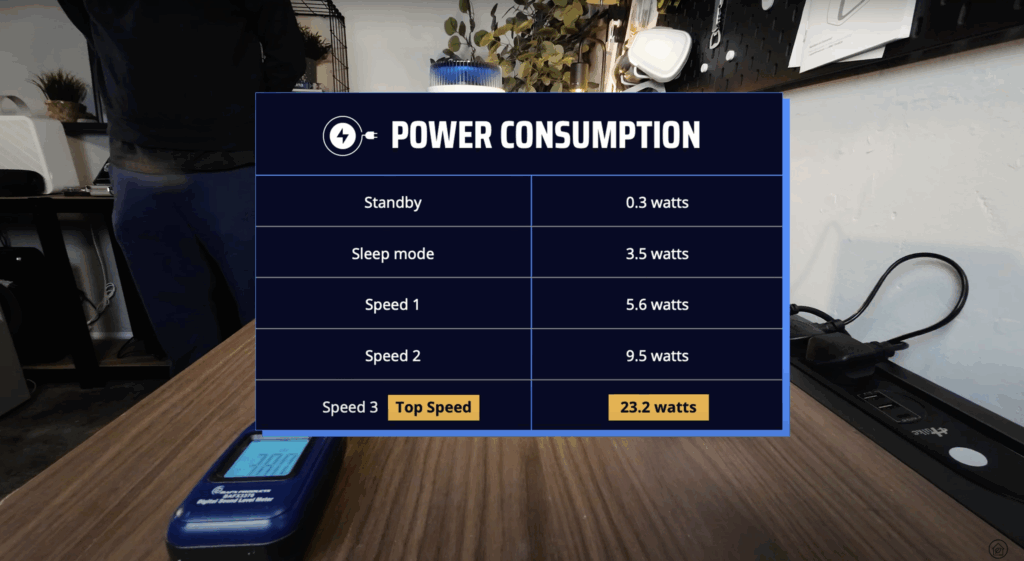
It comes with one of the largest H13 HEPA filters available on the market, which can also last longer than the average (13 months).
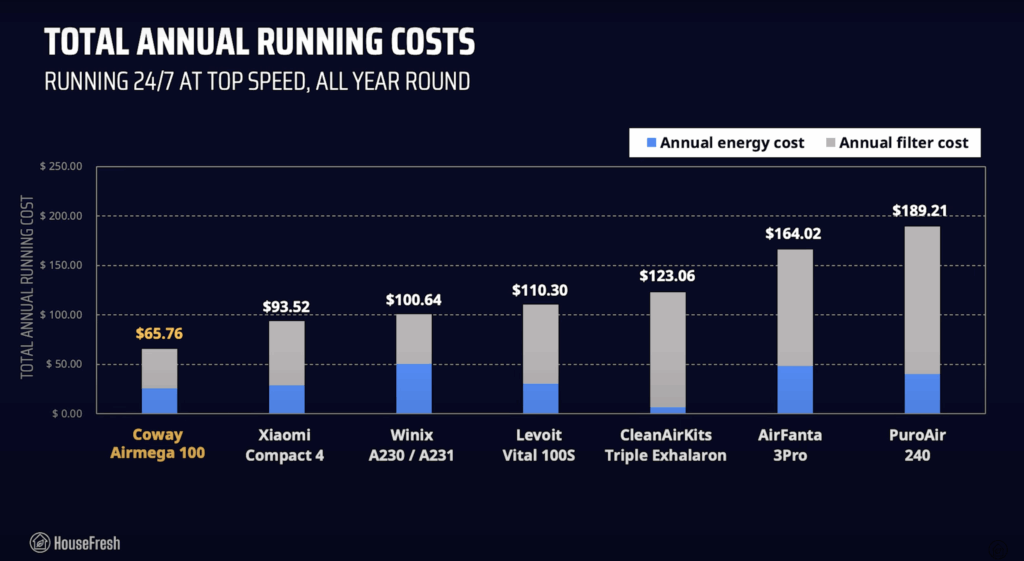
Super simple to operate, with no more than a dial to choose between three fan speed levels.
Top-notch lockable, metal castor wheels to move around in any direction.
It is made of metal, which makes it a more sustainable and long-lasting choice than most plastic air purifiers.

What we think could be better

A powerful fan comes at a cost. This power-hungry unit will add $130 to your annual energy bill.
Filter replacements don’t come cheap, costing $236.99 per year if you get both HEPA and activated carbon filters.
It’s not exactly mini, but rather a big, heavy unit weighing 59 lbs. However, it comes on four caster wheels that make it easy to move around the house.

The reliable Blast Mini doesn’t just stand out for its air cleaning speed and large filters. It is also designed for large spaces and is able to provide five air changes per hour in rooms as big as 675 sq. ft. It has a high price tag but if you are looking for outstanding air cleaning power, then the Blast Mini won’t disappoint.

Clean air delivery rate (CADR):– Top speed PM1 CADR: 400 cfm
– Sub-45 dBA PM1 CADR: 272 cfm
– Manufacturer provided CADR: 437 cfm
Filter technology:H13 HEPA filter (and optional pelleted activated carbon filter)
Recommended room size:600 sq. ft. (5 air changes per hour):
Dimensions:22.6L x 13W x 24.8H inches (57.5L × 33W × 63H cm)
Weight:59 lbs (26.8 kg)
Noise level in decibels from 3 ft. away:Speed 1: 44.9 dB
Speed 2: 51.2 dB
Speed 3: 56.3 dB
Electricity consumption in watts:Standby mode: 0 watts
Speed 1: 51.9 watts
Speed 2: 87.4 watts
Speed 3: 122.7 watts
Filter lifespan:13 months
Manufacturer’s warranty:1 year
Country of origin:China
Country of manufacture:China

Read our full review

4. Best for small spaces: Levoit Vital 200S

This is our top recommendation for those looking for a smart air purifier with particle and carbon filters for under $200.

Levoit Vital 200S in our living room

You don’t need ultra-powerful air purifiers for smaller spaces. However, I strongly recommend choosing a unit with a minimum CADR of 200 CFM, even more so if you need to deal with wildfire smoke pollutants. That is why I am recommending the Vital 200S as it has a smoke CADR of 242 CFM and will be able to clean the air five times per hour in rooms as large as 395 sq. ft.

The Vital 200S comes with a removable pre-filter (which makes washing far easier and can extend the filter’s lifespan for up to 12 months), and a bonded particle and activated carbon filter. The 200S is also powered by an energy-efficient yet powerful fan, making it possible for it to complete our particle removal test in 23 minutes, which is three minutes faster than the popular Coway Airmega AP-1512hh and seven minutes faster than the $400 Alen BreatheSmart 45i.

It’s worth noting that the filters are no longer advertised as True HEPA after Dyson complained to the BBB. Instead, according to Energy Star, it uses a HEPA-type main particle filter. However, as we’ve seen with the outstanding performance of Corsi-Rosenthal box and the CleanAirKits Luggable XL-7 (both of which use MERV 13 filters), HEPA filters are not a requirement for optimal particle filtration.

What we really like

Outstanding cleaning power for under $200, with an efficient $ per CADR ratio and affordable long-term running costs.
Despite being budget-friendly, the Vital 200S features a top-tier control panel with air quality readings and a light detection mode to react to ambient light.
It runs quietly at its top speed (57 dB). This is Turbo mode, or Speed 4, which is not a common feature in budget units like this one. At Speed 3, the noise output lowers to 53 dB (equal to the sound of a quiet suburb).
It is a compact unit with a reduced footprint, so it’s easy to find a spot for it in small rooms. It is as sleek as a budget-friendly air purifier can get.
It comes with smart features such as an air quality indicator on-screen, auto-mode and smartphone connectivity.

What we think could be better

It is more expensive than small air purifiers, such as the Winix A230, but it will give you enough CADR to achieve safe indoor air quality levels in small rooms during wildfires.
The air quality sensors need periodic cleaning (every two months) to work properly. Dust and particulates accumulated in the sensors will affect this unit’s auto-mode performance.
Levoit advertised medical-grade HEPA filters for this unit at launch, but they removed all mentions of HEPA after being challenged by Dyson. Not great.

Intensive use during wildfires won’t break the bank, if you consider the long-term running costs: it will cost less than $130 a year to run the Vital 200S 24/7, including the added cost to your electricity bill and the price of filter replacements.

Clean air delivery rate (CADR):– Top speed PM1 CADR: 249 cfm
– Sub-45 dBA PM1 CADR: 128 cfm
– AHAM PM2.5 CADR: 254 cfm (dust)
Filter technology:Bonded particle filter with a layer of pelleted activated carbon and a removable pre-filter
Recommended room size:373 sq. ft. (5 air changes per hour)
Dimensions:15.6D x 8.5W x 19.8H inches (39.3D x 21.5W x 50.2H cm)
Weight:13.2 lbs (5.9 kg)
Noise level in decibels from 3 ft. away:Speed 1: 38.3 dB
Speed 2: 41.9 dB 
Speed 3: 53.8 dB
Speed 4: 57.7 dB
Electricity consumption in watts:Standby mode: 0.97 watts
Speed 1: 5.71 watts
Speed 2: 8.01 watts
Speed 3: 31.96 watts
Speed 4: 44.55 watts
Filter lifespan:12 months
Manufacturer’s warranty:2 years
Country of origin:United States
Country of manufacture:China

Read our full review

Watch our video review

Only three minutes slower than the Blast Mini, the Core 600S will remove wildfire smoke from your home quickly for just $299. It has a high CADR for the price – 410 CFM overall and 377 CFM for smoke — and still boasts a solid amount of smart features usually seen in similarly powerful units that are twice as expensive.

Like most high-performing units, the Core 600S is big. Inside, you’ll find Levoit’s three-in-one filters, featuring a pre-filter, a large particle filter and, if you opt for the Smoke Remover filter, 0.79 lbs of pelletized activated carbon. Be aware, though, that the Core 600S needs filter replacements every six months.

Our Levoit Core 600S in our front room

💡exclusive code for HouseFresh for 10% off a single purchase on Levoit.com: HOUSE10

For those looking for cost-effective, high-quality air purification for spaces that the Vital 200S will struggle in, the Core 600S is a solid option:

What we really like

It is the most affordable option for large spaces: for $299, the Core 600S can perform 4.8 air changes per hour in areas as big as 584 sq. ft.
It completed our speed test in only 15 minutes. You get similar results with units like the Levoit EverestAir ($500) or the AirDoctor 3000 ($519).
It tracks PM2.5 levels in your home, with a numeric display on the control panel (not just the regular color-coded indicator) and the app – which also showcases PM2.5 levels.
It only weighs 13.70 lbs, so it’s not too heavy to move between rooms.

What we think could be better

At top speed, it will get a tad loud. The Core 600S’s 61 dB noise output is equivalent to the sound of a normal conversation.
The air quality sensor is at the back of the unit, so it won’t work accurately if the unit is placed too close to a wall.
While the three-in-one filter is straightforward to replace, a removable pre-filter would be a better option for cleaning.

Four other solid air purifiers that didn’t make the cut

If none of the options above seem like the right fit, consider the devices in this section.

We have thoroughly tested and reviewed 94 air purifiers (and counting) so when we shortlisted our picks for this list, we had to make some tough cuts. Below I’ll tell you about three devices that are worth considering as well.

IQAir Healthpro Plus Entrance

IQAir HealthPro Plus

The HealthPro Plus has been in the market since the 90s and it’s still one of the most recommended air purifiers due to its powerful fan, HyperHEPA filter and impressive gas filter with 5 lbs of activated carbon and zeolite.

These features make this device an excellent choice for wildfire smoke but the reason why I didn’t include it in my short list is that this is an expensive option for the vast majority of people. The HealthPro Plus comes with an upfront cost of $949.99, plus an additional $300 per year in electricity and filter replacement costs.

That said, if budget is not a concern to you, then the IQAir HealthPro Plus is a solid air purifier that will be able to clear your air from both particles and the VOCs associated with wildfire smoke thanks to its combination of high quality filters.

Levoit EverestAir Front Design

Levoit EverestAir

The EverestAir is the top of the range for Levoit air purifiers and is one of the fastest (16 minutes) air purifier we have tested — the EverestAir reached PM1 zero in our 728 cubic feet test room in just 16 minutes, which is just one minute slower than the Smart Air Blast Mini.

It comes with a removable pre-filter, a high quality HEPA-like particle filter and pelleted activated carbon. It also has an in-built air quality sensor, auto-mode, adjustable vents, an LED air quality indicator, and smartphone connectivity.

The EverestAir comes with all the bells and whistles, but as with the IQAir above, I left it out because it is quite expensive at $499.99.

Winix 5500 2 TV Room

Winix 5500-2

This is a reliable air purifier with a washable pre-filter, a washable pelleted activated carbon filter and a True HEPA filter.

The 5500-2 cleaned our test room in 23 minutes, which is the exact same time it took the Levoit Vital 200S. The difference, however, is that the 5500-2 reached this result with PlasmaWave enabled, which is Winix’s ionizer technology.

For those looking to keep a room up to 364 square feet clean, the 5500-2 is definitely worth of your consideration. I opted for the Vital 200S instead because it offers the same performance for a cheaper price.

Smart Air SA600 Bedroom

Smart Air SA600

The Smart Air SA600 has two sets of removable pre-filters, HEPA H13 filters and activated carbon filters, two at each side of the device. This combination of filters paired with a powerful fan motor allowed the SA600 to clear the air in our 729 cubic feet test room in 24 minutes, which is just one minute slower than the Vital 200S.

All of this means that the SA600 is an excellent option for dealing with wildfire smoke, as it comes at a good price ($279.95). However, the yearly running costs are higher than most devices ($198.02) due to the use of twice as many filters. That’s why I didn’t shortlisted it.

Other units we tested but don’t recommend for wildfire smoke

If you can’t find what you’re looking for in the list above, email me before you end up buying a useless air purifier.

The five air purifiers below are on my do-not-buy list for those looking to clear the air from wildfire smoke:

  • Levoit Core 300 We love this budget air purifier, but it will be too underpowered to deal with a severe issue like wildfire smoke. You are much better off spending a little more for the Levoit LV-H133, which still has the same air-cleaning power as the Corsi-Rosenthal box.
  • Austin Air HealthMate This air purifier has a large amount of carbon (15 lbs), but its particle removal could be better considering its price of over $700. Wildfire smoke generates a ton of particulate matter, so you need better performance than the estimated 150 CFM, which took 37 minutes to remove all PM1 particles from our test room. 
  • Blueair Blue Pure 211+ Big media sites regularly recommend this air purifier, but it uses an ionizer that you can’t turn off that potentially can bring ozone into your environment. Considering that many non-ionizer units are available, there is no need to recommend this device for wildfire smoke.
  • AROEVE MK01 This popular cheap air purifier on Amazon could not fully clean our air of incense smoke even when we left it for 5 hours, so it would be useless with the particulates generated by a major wildfire.
  • PuroAir 240 – This air purifier is too underpowered to deal with wildfire smoke effectively. Not only that: you will find it discounted on Amazon all year round, but even with a discount, it is overpriced considering its performance.

Tips for protecting yourself from wildfire smoke

As we saw in New York in 2023, wildfire smoke can travel hundreds of miles from the source of the fire, so it’s important to be aware of the problem even if you don’t live in a high-risk zone. 

Using a DIY air purifier like the Corsi-Rosenthal box or buying a unit like the Smart Air Blast Mini is a great way to remove particulate pollution, but there are other things you can do to reduce the risk of wildfire smoke in your home.

  1. Seal Up: Wildfire smoke can pass through any gaps in your home, so seal up any spaces around windows and doors. Close any vents and outdoor intake dampers if you have a central AC. 
  1. Mask up: If you have to leave your home or use any rooms that don’t have air purifiers, then be sure to use an approved face mask and, if possible, also wear goggles as wildfire smoke can irritate your eyes. 
  1. Recirculate: You will still want to use your AC as temperatures will rise due to wildfire smoke, but you will want to enable the “recirculate mode” as this will mean it won’t pull polluted air from outside. 
  1. Run air purifiers 24/7: Wildfire smoke is a severe issue, so you will want to ensure that this smoke is continuously removed from your home air, as even when you seal windows and doors, it will still find a way to enter your home air.  Smart Air showed in their experiment that pollutants will increase when you switch your unit off, so be sure to keep it running until the wildfire risk is over.  

Tip

Be sure to check out our full guide for more tips on how to protect your home from wildfire, including how to clean up afterward.

Why should you trust me on this?

Most guides for air purifiers are written by freelance writers working for large media companies who say all the right things but often don’t perform in-depth performance tests. Instead, they often recommend air purifiers for commercial reasons, focusing solely on those units that will earn the highest affiliate commissions.

That is not us.

HouseFresh is 100% independent and not part of a large media company. We don’t do this to maximize our profits, we do it because we care about clean air. We are a husband and wife team, and buy the air purifiers we review with our own money to ensure we will be free to tell you which ones to avoid. We spend a lot of time gathering data on air purifier performance and share all our findings via our in-depth reviews.

If you have any questions that we haven’t covered in this wildfire smoke guide, then be sure to email me directly: danny@housefresh.com

The best air purifiers for cigarette smoke

Cigarette smoke

According to the CDC, 11.6% of all adults in the U.S. smoke cigarettes and 3.7% smoke cigars; if that’s you, then you most likely don’t mind the odor, but that potent smoke can travel far.

Cigar and cigarette smoke can enter your home from neighbors or even from one person smoking as they walk by. The smell is pervasive and can make it hard to sleep or spend time in a room where the smoke has invaded.

We all know the dangers of secondhand smoke. Still, smoke particles from cigarettes can even cause thirdhand smoke, a residue of toxic particles that becomes embedded in furniture, carpet or walls. Thirdhand smoke particles can last for years and remain toxic as long as they are in your home. 

While there are things you can do to clear smoke from a room, a long-term, effective solution is to get an air purifier. This will allow you to remove smoke particles and odors before they cause harm.

Cigarette smoke is one of the hardest pollutants to remove, so I included only air purifiers that excelled across all our tests and contained larger amounts of pelleted activated carbon.

The best air purifiers for cigarette and cigar smoke

For those who don’t want to read the whole thing, here is a quick recap of all the models I shortlisted with a top-level view of the specs for each one:

BEST OVERALLFOR LARGE SPACESFOR SMARTBUDGET OPTIONTHE MOST CARBON
IQAir HealthPro PlusSmart Air Blast MiniAlen 45iLevoit Core 600SAustin Air HealthMate
IQAir Healthpro Plus EntranceBlast Mini MKII Kids Room
Alen BreatheSmart Flex VS 45i
Levoit Core 600S FireplaceAustin Healthmate Hallway
Time to PM1 zero28 minutes15 minutes30 minutes22 minutes38 minutes
CADR250 CFM450 CFM209 CFM410 CFM150 CFM
Filter techHyperHEPA + V50-CELL carbonH13 HEPA w/ optional carbon filterHEPA + carbon filter with odor catalystBonded particle + carbon filterHEPA + carbon filter
Carbon Amount5lbs1.56lbs2.38lbs0.79 lbs15lbs
Max room size (5 ACH)375 sq. ft.703 sq. ft.297 sq. ft.584 sq. ft.234 sq. ft.
Long-term running costs$421.47 / year$311.89 / year$136.64 / year$125.23 / year$283.03 / year
List price$1,199.99$599.00$498.00$299.99$765.00
how we test
How we test air purifiers

Read our full testing methodology.

Tip

You should know that no consumer air purifier can reduce the risk of lighting a cigarette in your room. There are many dangers of this beyond just the particles and odors, and we recommend you always go outside or, if you have the funds, look at a commercial smoke eater device, but be aware that you are looking at costs of $3k and up.

Be sure to check out the full article below for a more comprehensive guide to the five recommended air purifiers and why they’re good options against cigarette smoke. 

1. Best overall: IQAir HealthPro Plus (with V5 Cell Filter: 5.5 lbs carbon)

Powered by a HyperHEPA filter and more than five pounds of activated carbon to deal with smoke particles and odors.

The IQAir HealthPro Plus is big. It needs to be big to accommodate three stages of air filtration: a thick pre-filter for large particles and debris, a lab-certified HyperHEPA for fine and ultra-fine particles, and a massive gas filter with activated charcoal and zeolite for VOCs and unwanted smells. 

Even with such a dense set of filters, it still managed to clean our test room in 28 minutes in our particle removal test. This showcases how powerful its fan is at drawing the air in, which could translate to a noisy air purifier, but luckily, it doesn’t: the HealthPro Plus only generates 36.9 dB of noise output at its lowest fan speed and 61.2 dB when operating at top speed (which is the mode you should run it in to remove cigar or cigarette smoke effectively).

What we really like

It comes with 5 lbs of activated carbon/zeolite mix for dealing with odors and gases, but this doesn’t get in the way of effective particle removal — in our test, it removed the tiniest smoke particles (PM1) in just 24 minutes.
It comes with a 10-year warranty and a hand-signed certificate from the factory specifying how much airflow it can at each fan speed.
You only need to replace the HyperHEPA filter every four years and the V5-Cell gas filter every two. That’s more than double the average filter lifespan across all other units I’ve tested.
IQAir tests every single unit before it leaves Switzerland to be delivered to you. They go the extra mile to ensure the air purifier is the best before reaching your home.

What we think could be better

It costs nearly $900 to buy, which will be out of most people’s budget. However, it is well worth the investment if you are looking to remove smoke particles and odors.
Long-term costs are high due to the expensive price of the filters (approximately $200 per year) and the eye-watering 145.2 watts it consumes when running at its top fan speed.
It is big and bulky, so you must consider space before buying it.

The HealthPro Plus is a long-term investment, costing nearly $900. If I were forced to choose one air purifier, this is the device I would pick — especially when dealing with any type of smoke. IQAir has so much trust in its unit that they locked their CEO inside a smoke chamber with just the HealthPro Plus to clean the air as he breathed.

Clean air delivery rate (CADR):– Top speed PM1 CADR: 213 cfm
– Sub-45 dBA PM1 CADR: 86 cfm
Filter technology:HyperHEPA and V50-CELL with 5lbs of activated carbon + zeolite mix
Recommended room size:319 sq. ft. (5 air changes per hour)
Dimensions:28H x 18W x 16D inches (71H x 38W x 41D cm)
Weight:35 lbs (15.88 kg)
Noise level in decibels from 3 ft. away:Speed 1: 36.9 dB
Speed 2: 37.2 dB
Speed 3: 40.9 dB
Speed 4: 47.2 dB
Speed 5: 53.9 dB
Speed 6: 61.2 dB
Electricity consumption in watts:Standby mode: 1 watts
Speed 1: 16.5 watts
Speed 2: 32.7 watts
Speed 3: 47.3 watts
Speed 4: 69 watts
Speed 5: 94.3 watts
Speed 6: 145.2 watts
Filter lifespan:4 years
Manufacturer’s warranty:10 years
Country of origin:Switzerland
Country of manufacture:Germany

Read our full review

2. Best for large spaces: Smart Air Blast Mini (with Carbon Filter: 1.56 lbs carbon)

Unmatched in speed, the Blast Mini can quietly clean the air of rooms of up to 700 sq. ft.

As the fastest unit we tested, Smart Air’s Blast Mini only needed 15 minutes to bring PM1 levels down to zero in our test room. The exact kind of air cleaning performance you need, considering how fast tobacco smoke and toxic particles spread through entire homes.

Blast Mini MKII Corner

The Blast Mini also has one of the biggest HEPA filters ever. The H13 grade filter can trap fine and ultra-fine particles on its large surface, lasting up to 13 months. It also features a removable pre-filter but you’ll need to purchase the optional activated carbon filter to tackle cigar/cigarette smells and chemicals. Considering the 1.56 lbs of loose-fill activated carbon packed in the filter, it’s worth the while.

What we really like

Its impressive CADR of 435 CFM (740 m3/h) combined with a powerful fan made it the fastest air purifier we tested.
Unlike most air purifiers, the Blast Mini outer case is made of durable and sustainable metal, as are the four high-end, lockable caster wheels that move the unit around.
It’s incredibly quiet for such fan power, not exceeding 56 dB of noise output at top speed—five decibels quieter than the IQAir HealthPro Plus (61 dB).
The pre-filter is secured with an easy-to-remove screw. There’s no need for a screwdriver to remove it, but it keeps it well fastened to the unit.

What we think could be better

You need to pay $89 extra for the activated carbon filter. The massive HEPA filter replacements, at $140, aren’t cheap either.
It is a power-hungry unit, drawing its fair share of energy when running at full speed (122 watts) and at its lowest speed (52 watts).
It is big and heavy (metal is heavier than plastic), so it will take up its fair share of space.

Despite being a considerably large air purifier, the Blast Mini’s design is modern and can blend in easily. It may lack the bells and chimes of other top-tier units. Instead, it has just a straightforward one-dial command to navigate between speeds. The Smart Air team focused on outstanding air cleaning performance, and the Blast Mini simply excels. 

Clean air delivery rate (CADR):– Top speed PM1 CADR: 400 cfm
– Sub-45 dBA PM1 CADR: 272 cfm
– Manufacturer provided CADR: 437 cfm
Filter technology:H13 HEPA filter (and optional pelleted activated carbon filter)
Recommended room size:600 sq. ft. (5 air changes per hour):
Dimensions:22.6L x 13W x 24.8H inches (57.5L × 33W × 63H cm)
Weight:59 lbs (26.8 kg)
Noise level in decibels from 3 ft. away:Speed 1: 44.9 dB
Speed 2: 51.2 dB
Speed 3: 56.3 dB
Electricity consumption in watts:Standby mode: 0 watts
Speed 1: 51.9 watts
Speed 2: 87.4 watts
Speed 3: 122.7 watts
Filter lifespan:13 months
Manufacturer’s warranty:1 year
Country of origin:China
Country of manufacture:China

Read our full review

3. Best for smart features: Alen 45i (with VOC/Smoke Filter 2.38lbs)

Alen brings a high-end laser sensor with a sizeable standard carbon filter

The Alen 45i is the mid-size model in the Breathsmart range. When you choose the VOC/Smoke filters, you can get 2.38 lbs/1079g of activated carbon to deal with the gases that come from smoke and the particles that the H13 HEPA filters will pick up.

We can compare these carbon amounts to other air purifier models:

Air Purifier ModelCarbon Amount
Winix 5510 (Filter Q)226g
Alen 45i (Fresh Filter)299g
Levoit Core 400S (Basic Filter)240±10g
Levoit Vital 400S (Smoke Filter)450g
Dyson Big+Quiet BP06900g
Alen 45i (VOC/Smoke Filter)1079g

Be aware that the VOC/Smoke filter will reduce overall particle removal performance compared to particle-only. Still, as you can see from the table above, this is the most significant amount of carbon you can get with a standard mid-size air purifier.

We are featuring it in this list of the best innovative models for smoke because it comes with a high-end Plantower sensor, the PMS-7003, which can detect pollutants within seconds and enable the air purifier to move to higher fan speeds to remove the contaminants quickly.

What we really like

It has low energy costs compared to similar-performing units, which translates to lower long-term running costs..
It generates pink noise, which is less intrusive than the usual noise from most other air purifiers.
You get multiple filter options, depending on the issue you want to tackle (Pure, Fresh, Odor, VOC/Smoke).
It features the well-respected Plantower PMS7003M sensors, an upgrade from most consumer air purifiers.

What we think could be better

It is more expensive than models from Levoit, Winix and Coway
The lifetime warranty requires you to use OEM filters or have a subscription with Alen

When testing particle performance with the Pure filter, it managed to clean our test room in 30 minutes and even when running on speed 2 it was less than 45dBA at 3 feet away, yet still managed to clean our test room of all PM1 in 30 minutes.

Clean air delivery rate (CADR):– Top speed PM1 CADR: 198 cfm
– Sub-45 dBA PM1 CADR: 123 cfm
– AHAM PM2.5 CADR: 207.9 cfm (dust)
Filter technology:True HEPA H13 filter with activated carbon pellets + Ionizer technology
Recommended room size:297 sq. ft. (5 air changes per hour)
Dimensions:25H x 15W x 8.5D inches (63.5H x 38.1W x 21.6D cm)
Weight:15 lbs (6.80 kg)
Noise level in decibels from 3 ft. away:Speed 1: 36.2 dB
Speed 2: 42.2 dB
Speed 3: 51.1 dB
Speed 4: 56.1 dB
Electricity consumption in watts:Standby: 0.8 watts
Speed 1: 4.4 watts (5.1 w/ionizer)
Speed 2: 9.3 watts (10.1 w/ionizer)
Speed 3: 22.3 watts (22.8 w/ionizer)
Speed 4: 38.5 watts (38.7 w/ionizer)
Filter lifespan:9-12 months
Manufacturer’s warranty:Lifetime (with product registration & active filter subscription)
Country of origin:United States
Country of manufacture:China

Read our full review

4. Best budget option: Levoit Core 600S (with Smoke Removal filter: 0.79 lbs carbon)

Ideal for medium to large-sized rooms, the Levoit Core 600S has all the smart features of top-tier air purifiers, a good amount of activated carbon and a budget-friendly price tag.

The Core 600 is a speedy unit that finished our cleaning speed test in only 15 minutes. As the biggest unit in Levoit’s Core range, it is also suitable for large spaces up to 600 sq. ft. rooms. Yet, its energy consumption is among the lowest on this list ($75 per year), only bested by the smart Mila ($58). 

Levoit Core 600S Room 5

💡exclusive code for HouseFresh for 10% off a single purchase on Levoit.com: HOUSE10

Levoit’s three-stage filters feature a non-removable pre-filter and the primary filter for fine particles and activated carbon. I recommend the Smoke Remover filter for cigar and cigarette smoke, as it has the highest amount of carbon in the Core series range. It is more expensive than regular filters—it will cost $160 a year, considering they last 6 months—but you get 0.79 lbs of pelleted carbon.

What we really like

It boasts a great CADR: It cleaned our test room in 15 minutes. As a reference, the average speed across all the air purifiers we have tested is 65 minutes.
The control panel displays PM2.5 levels in the environment, not just color-coded readings like most budget air purifiers.
It is a very popular air purifier, so many generic filters are available to keep running costs low. A set of two regular generic filters can cost less than $70.
The intuitive VeSync app offers a lot of information and otherwise unavailable but useful setting options.

What we think could be better

It would be nice to have independently tested HEPA filters. Levoit’s homepage and Amazon listing now just say 3-stage filtration; HEPA’s not mentioned.
It’s not small; it will take its fair share of space without being the sleekest. However, it is not as heavy as other large units.
The pre-filter adheres to the main filter, so it can’t be removed for thorough cleaning.

The Core 600S is one of the best high-performing air purifiers in the budget range. Compared to other large units, it has an outstanding cost-per-CADR ratio and offers a solid mix of cleaning power and smart features for less than $300.

Clean air delivery rate (CADR):– Top speed PM1 CADR: 375 cfm
– Sub-45 dBA PM1 CADR: 156 cfm
– AHAM PM2.5 CADR: 398 cfm (dust)
Filter technology:Bonded particle filter with a layer of pelleted activated carbon and a pre-filter mash wrap.
Recommended room size:562 sq. ft. (5 air changes per hour)
Dimensions:12.3 x 12.3 x 23.6 inches (31.3 x 31.3 x 60 cm)
Weight:13.7 lbs (6.2 kg)
Noise level in decibels from 3 ft. away:Sleep: 37.9 dBA
Speed 1: 44.4 dB
Speed 2: 45.9 dB
Speed 3: 53.8 dBA
Speed 4: 62.3 dBA
Electricity consumption in watts:Standby mode: 1.3 watts
Sleep: 4.33 watts
Speed 1: 7.46 watts
Speed 2: 10.7 watts
Speed 3: 20.29 watts
Speed 4: 48.1 watts
Filter lifespan:6-12 months
Manufacturer’s warranty:2 years
Country of origin:United States
Country of manufacture:China

Read our full review

5. Best carbon filter: Austin Air HealthMate (with 15 lbs of carbon)

One of the few (and best) USA-made air purifiers with an activated carbon filter like no other, perfect for removing VOCs and toxic chemicals.

Although you’ll miss some perks with the Austin Air HealthMate, such as smart features or an auto mode, it has a seriously robust filter with four stages of pure mechanical filtration. With no more than one dial to navigate through fan speeds, this heavy-duty unit is straightforward to the core.

Austin Healthmate TV Room

The real substance is in the medical-grade HEPA filter and massive activated carbon filter, ideal for tackling the finest particles and VOCs of cigar and cigarette smoke. Then, unlike other air purifiers, the Austin Air HealthMate has two pre-filtering stages, one for large-sized and the other for medium-sized particles that would otherwise clog the main filter faster — as a matter of fact, the HealthMate filter has an impressive lifespan of five years.

What we really like

The 780 cubic inches thick VOC/GAS filter is the largest on the market and mixes activated carbon with zeolite, another absorbent mineral that boosts the unit’s ability to remove toxic fumes.
The long-lasting filters outperform the average 6-12 months filter lifespan by at least four years.
The caster wheels are essential to move it around, as heavy as this unit is.
It is one of the few 100% USA-made air purifiers available.

What we think could be better

The thickness of the four-stage filters makes particle removal much slower. Considering the price tag, seeing some optimizations on the cleaning speed would be nice.
Pulling the air through the filters requires a powerful fan that consumes at least 132 watts at full speed, which could add up to $225 to the annual energy bill.
Replacing the filter is far from straightforward: You’ll need to turn the 47-lb unit upside down, unscrew the bolts and lift the hefty replacement filter to install it.

During performance tests, the Austin device removed all PM from our room in 37 minutes. True, it could sound unimpressive compared to the speedy and budget-friendly Levoit Core 600. But, then, there’s no comparison to the activated carbon filter this unit is packed with — not even the IQAir Healthplus Pro has as much. No air purifier beats the Health Mate in dealing with VOCs.

Clean air delivery rate (CADR):– Top speed PM1 CADR: 156 cfm
– Sub-45 dBA PM1 CADR: 77 cfm
– AHAM PM2.5 CADR: 154 cfm (dust)
Filter technology:HEPA particle filter with 15 lb of activated carbon and zeolite mix gas filter
Recommended room size:234 sq. ft. (5 air changes per hour)
Dimensions:23H x 14.5W x 14.5D inches (58.4H x 36.8W x 36.8D cm)
Weight:20.41 lbs (9.26 kg)
Noise level in decibels from 3 ft. away:Speed 1: 42.5 dB
Speed 2: 53.2 dB
Speed 3: 61.5 dB
Electricity consumption in watts:Standby mode: 0 watts
Speed 1: 61.1 watts
Speed 2: 85.05 watts
Speed 3: 147.6 watts
Filter lifespan:5 years
Manufacturer’s warranty:5 years
Country of origin:United States
Country of manufacture:United States (Buffalo, New York)

Read our full review

Units we don’t recommend for cigarette and cigar smoke:

  • PuroAir 240 This is a hyped unit that simply lacks the performance to back it up. Smaller devices like this have very low CADR and small amounts of carbon so will lose effectiveness quickly with a pollutant like cigarette smoke.
  • Levoit LV-H132 – I was shocked to see this device recommended for smoke by a well-known magazine. While it’s cheap, its performance in our particle removal test was very poor. It took 1 hour and 38 minutes to make our test room clean. It is underpowered for most situations, but it would be dangerous if you relied on it to remove smoke.
  • Okaysou AirMax 10L ProA super popular air purifier thanks to its slick use of TikTok influencers, but it failed to match our expectations. It cleaned our test room in 4 minutes, longer than the much cheaper Core 300, and it made claims about its 5-in-1 filter technology that weren’t true.
  • Dyson HP04 – A high price for a good-looking device, but it has a very small CADR, and it took 1 hour and 24 minutes to clean all pollutants measuring 1 micron in our test room. This will be nearly useless for smoke issues unless you like the fan function.
  • Levoit LV-H128 – At less than $40, this is a great price but a terrible air purifier as it took 2 hours and 42 minutes to clean our test room of 728 cubic feet of particle pollutants measuring at least 1 micron. It will be totally useless for any-sized room to deal with smoke from cigarettes and cigars.
  • Molekule Air Mini+ – You have probably seen adverts for this good-looking device from Molekule. We were a little suspicious of its PECO technology, and it took almost an hour to bring down the levels of PM1 to breathable levels. At this price level, it’s just a total waste of money, and you are better off with any of the other air purifiers we recommend. There is even a class action settlement in progress for devices sold by this brand.

What to look for when buying an air purifier for smoke

1. 4.8 air changes per hour in your room

Many air purifier manufacturers overstate the room size they can work in. While AHAM requires room sizes to be based on 4.8 air changes per hour, many brands will give the room size for 1 air change. 

Be very wary of manufacturers who don’t provide a CADR rating or don’t send their devices to AHAM for testing, as we have seen many of these devices exaggerate their performance when we test them ourselves.

Measuring room for air purifier

One air change is almost useless, especially with something as pervasive as cigarette or cigar smoke. 

That is why when we list room sizes, we always base them on their reported CADR and the maximum size when providing at least 4.8 air changes per hour. 

To make things simpler, we produced a tool that tells you the CADR in CFM you need for your room size – enter your room size and adjust the ceiling height if required and our tool will let you know what CADR is needed:

2. Large Carbon is necessary for gas and odors

You will want to look at HEPA-grade filters to deal with tiny particles that can measure as small as 0.1 microns. HEPA H13 filters are tested to be 99.97% efficient at capturing particles 0.3 µm in size. HEPA H13 is used extensively in marketing material, but most manufacturers don’t share third-party testing. One of the reasons I am a big fan of IQAir is that they share all their third-party lab data, so you can be confident that all of their filters have been tested to this grade. 

Besides, other types of filter technology can sometimes make the air quality worse, but in nearly all cases, they promise a lot but fail to deliver. Just stick with HEPA, it’s backed by decades of research and has no chemical byproducts.

IQair Healthpro plus HEPA vs Levoit EverestAir

While HEPA does a great job of removing the tiniest particles from the air, odors and gases will pass through. You will need a good-sized activated carbon filter to deal with gases and odors such as those from cigarette or cigar smoke. 

When it comes to activated carbon, bigger is better, which is why the top two choices we recommend for dealing with smoke are to measure their carbon filters in lbs. 

Look for activated carbon filters that use pellets of actual carbon. They will last much longer and are much more effective at removing odors. 

Be wary of the fabric carbon filters you see on devices from Blueair, as they will quickly lose effectiveness. 

3. Decide on what features you need

Many newer air purifiers have app support, onboard sensors and auto-modes that kick in when the sensor detects pollutants like particles or gases. If you want auto-mode, try to choose a model that uses a laser sensor vs cheaper optical sensors, as they don’t need maintenance and will kick in within seconds of detecting particles in your air. The Alen 45i and Core 600S on our list have a high-end laser sensor.

You will have to leave your device running continuously for regular smoke issues, so these features might not be as helpful as those who want an air purifier for occasional cooking odors. 

For those who like their devices to be smart, our current top favorite is the 45i. It has a high-end app combined with a laser sensor and you also get a lifetime warranty if you use your Alen filters with your device.

How we test air purifiers

Saying we tested 104 air purifiers in the last four years sounds great, doesn’t it? But what does testing mean for HouseFresh?

It’s definitely not just getting the units out of their boxes to take some cool editorial pictures for our articles. On the contrary, it is a thorough process that involves reliable testing devices to cover the many aspects of air purifier evaluation.

Air cleaning performance is key, for sure. But we go further. When you decide to invest in an air purifier that will be constantly running at home, things like long-term costs and noise output are also important in a real-world context. 

Our testing process includes the following steps: 

Step 1. We conduct a particle removal test

how we test

First, we burn some incense to pollute the air. Using our PurpleAir indoor sensor (which we’ve chosen after thorough research), we measure how fast each unit can remove PM10, PM1 and PM2.5 at top fan speed. The PurpleAir sensor provides regular updates on particulate matter levels, allowing us to create graphs showing the evolution of air quality in the room. 

Step 2. We assess the power of the fan

how we test fan power

We also measure the unit’s fan power with the Testo 410i anemometer. It’s interesting to see the variation in airflow coming out of the unit at every fan speed. Especially considering the AHAM Verified program measures CADR at the highest speed setting

Step 3. We measure sound levels generated

sound test

For noise levels, we use a commercial sound meter from 3 ft. away to measure how much noise in decibels (dB) is generated by the air purifier at each fan speed. Like other measurements, the data is displayed in our reviews, but we also share the results on HouseFresh YouTube channel.

Step 4. We measure electricity consumption

power test

We use a power meter to record how much electricity (in watts) the air purifier consumes when running at each of its fan speeds, including sleep mode and stand-by mode.

Step 5. We estimate yearly maintenance costs

long term costs

We also calculate the long-term costs you can expect to spend each year to run the air purifier. First, we use the appliance energy calculator from the U.S. Department of Energy to calculate how much money running the air purifier will add to your yearly energy bill. Next, we conduct desk research to determine the costs of genuine and generic replacement filters, using filter lifespan information stated by the manufacturer.

Step 6. Real-life experience

All four steps comprise the core performance evaluation we run on every unit. We know the data is solid. However, there’s something about everyday use that cannot be measured in a lab-test situation. That is why our “final step” is using the air purifier regularly at home in an ordinary context. You can learn a lot by just living with a device.

Wrapping up

I’ve intentionally selected various air purifiers for cigar or cigarette smoke. It’s a serious issue and you should be able to find a unit to fit your circumstances, budget and needs. 

Whether you found the unit that sounds right for you in this guide or will keep browsing the internet for other options, make sure to check if the one that catches your eye is powerful enough, has the right CADR to clean your space, has a high-performance primary filter and features an activated carbon filter (the more, the better) for fumes and VOCs.   

My goal is to help more people improve their indoor air quality. So, if you have any doubts about our testing process or have a question that I haven’t covered in this guide, please feel free to email me directly: danny@housefresh.com

June 23rd, 2025:

  • Fixed typos
  • Added ‘Jump to’ sections

May 12th, 2025:

  • We removed the Mila air purifier because we found the performance and overall design of the Alen Breathsmart 45i to be of better value.
  • Updated data points with our latest test results
  • Improved guide to focus on carbon filter sizes
  • Added performance data charts from Flourish
  • Added detail on how we test air purifiers

These air purifiers can get rid of weed smoke (and its smell)

How to Smoke Weed 04

Whether you smoke marijuana for health, to relax, or to socialize, it can’t be denied that the smell lingers, with odors sticking to clothes, hair and furniture. Not only that, but cannabis smoke can also travel, reaching roommates and next-door neighbors.

Smoking cannabis inside has been found to dramatically increase the level of PM2.5 particulate matter — including carcinogens and toxic chemicals, which can result in serious health effects for smokers and second-hand smokers alike. Some tests found that air quality levels worsened 100-fold, even when no tobacco was used.

Thankfully, a high-powered air purifier fitted with a HEPA filter and an activated charcoal filter can remove particles and gases generated from weed smoke.

Since 2020, we have tested and reviewed nearly 100 different popular air purifiers, so we have comparable data to identify the best units for specific use cases, such as tackling marijuana smoke. These are my picks right now:

TOP PICKFOR SERIOUS SMELLSUNDER $250PC FAN POWERED
IQAir Healthpro PlusAustin Air HealthmateWinix 5500-2AirFanta 3Pro
IQair Healthpro plus CornerAustin Healthmate HallwayWinix 5500 2 Close UpAirFanta 3Pro Sidetable
Time to PM1 zero28 minutes37 minutes23 minutes17 minutes
CADR250 CFM150 CFM243 CFM430 CFM
Filter techHyperHEPA + V50-CELL carbonTrue HEPA + carbonTrue HEPA + carbonH11 HEPA + carbon
Max room size (5 ACH)375 sq. ft.234 sq. ft.360 sq. ft.671 sq. ft.
Long-term running costs$421.47 / year$283.03 / year$161.53 / year$125.23 / year
Upfront cost$1,199.99$765$205.99$159.99

Burning cannabis produces a vast number of particles and gasses that need to be removed, so you need to go for a large device with large filters and a powerful fan. Unfortunately, many air purifiers that fit those characteristics don’t come cheap. However, I did my best to shortlist options for all budgets based on our first-hand data collected across 105 tests (and counting!).

how we test
How we test air purifiers

Read our full testing methodology.

1. Top pick: IQAir Healthpro Plus 

IQAir is the oldest air purification company, and the IQAir Healthpro Plus has all you need to deal with both particles and odors from weed smoke.

The air purifier industry is full of many fly-by-night brands, but IQAir has been here since 1963 and is one of the most trusted names in the industry. 

IQAir Healthpro Plus Entrance

The IQAir Healthpro Plus has a large HyperHEPA filter and 5 lbs. of activated charcoal with zeolite for dealing with weed smoke odors. In our air cleaning performance test, it brought the level of PM1 particles down to zero in 24 minutes, which is impressive considering it’s also pushing the air through one of the largest activated charcoal filters on the market.

What we really like

Large V-50 cell gas and odor filter has 5 lbs of activated carbon and zeolite.
Good level of particle removal – 28 minutes to bring the level of PM1 to zero in our test room.
Made in Switzerland, each device is tested before it’s sent out and includes a certificate with the results.
No use of ionizers, so zero chemical byproducts like ozone.
Remote control enables you to use the device without having to use the buttons.
10-year warranty, so total peace of mind that this big investment won’t let you down.

What we think could be better

The initial price of $899 is high, but you will have one of the best air-cleaning devices on the market.
Filter costs can be up to $200 per year.
High sound level at its highest speed.
There are no smart functions or app support, and it’s a large device.

If you are serious about dealing with odors and particles from weed smoke, the IQAir Healthpro Plus is worth the investment. While this air purifier might not be affordable for everyone, its performance in dealing with both gasses and odors is why it is our top choice for dealing with weed smoke in 2024. 

Clean air delivery rate (CADR):– Top speed PM1 CADR: 213 cfm
– Sub-45 dBA PM1 CADR: 86 cfm
Filter technology:HyperHEPA and V50-CELL with 5lbs of activated carbon + zeolite mix
Recommended room size:319 sq. ft. (5 air changes per hour)
Dimensions:28H x 18W x 16D inches (71H x 38W x 41D cm)
Weight:35 lbs (15.88 kg)
Noise level in decibels from 3 ft. away:Speed 1: 36.9 dB
Speed 2: 37.2 dB
Speed 3: 40.9 dB
Speed 4: 47.2 dB
Speed 5: 53.9 dB
Speed 6: 61.2 dB
Electricity consumption in watts:Standby mode: 1 watts
Speed 1: 16.5 watts
Speed 2: 32.7 watts
Speed 3: 47.3 watts
Speed 4: 69 watts
Speed 5: 94.3 watts
Speed 6: 145.2 watts
Filter lifespan:4 years
Manufacturer’s warranty:10 years
Country of origin:Switzerland
Country of manufacture:Germany

READ OUR full review

2. Best for intense weed odors: Austin Air Healthmate

With 15 lbs. of activated carbon, you’ll struggle to find a better air purifier to deal with the VOCs and odors from weed smoke. 

The filter of the Austin Air Healthmate is so big that it can rid the air of marijuana smoke even in the largest of spaces. Not only that, the filter will also last for an epic five years, so you don’t need to worry about replacing it too often.

Austin Healthmate Living Room

As well as a colossal carbon filter, you’ll find a True HEPA and two separate pre-filters to tackle smoke particles and other household pollutants. Plus, this unit is straightforward to use; plug it in and cycle through its one-dial control panel to find the right fan speed for your needs. 

What we really like

Austin Air offers the largest activated carbon filter on the market, with 15 lbs. of odor-eliminating substrate.
The carbon filter also uses Zeolite, improving the absorbency of harmful gasses found in weed smoke.
Easy to install and operate, with a single-dial design appealing to those who simply want to capture pollutants when required.
Castor wheels help users maneuver this large air purifier with ease. 

What we think could be better

The downside of having such a large carbon filter is limiting the purifier’s airflow the Healthmate archives a CADR of approximately 150 CFM, much lower than other units in its price range.
For $700, it would be nice to see some smart features, app support or air quality measurements. 
This air purifier is HEAVY and not easy to maneuver (the wheels help, but it is still worth mentioning this).

It doesn’t quite make our top spot as its particle removal performance was much worse than the IQAir Healthpro Plus, but for those who want to primarily deal with a serious odor issue from weed smoke – the Austin Air Healthmate won’t disappoint.

Clean air delivery rate (CADR):– Top speed PM1 CADR: 156 cfm
– Sub-45 dBA PM1 CADR: 77 cfm
– AHAM PM2.5 CADR: 154 cfm (dust)
Filter technology:HEPA particle filter with 15 lb of activated carbon and zeolite mix gas filter
Recommended room size:234 sq. ft. (5 air changes per hour)
Dimensions:23H x 14.5W x 14.5D inches (58.4H x 36.8W x 36.8D cm)
Weight:20.41 lbs (9.26 kg)
Noise level in decibels from 3 ft. away:Speed 1: 42.5 dB
Speed 2: 53.2 dB
Speed 3: 61.5 dB
Electricity consumption in watts:Standby mode: 0 watts
Speed 1: 61.1 watts
Speed 2: 85.05 watts
Speed 3: 147.6 watts
Filter lifespan:5 years
Manufacturer’s warranty:5 years
Country of origin:United States
Country of manufacture:United States (Buffalo, New York)

READ OUR full review

3. Best for less than $250: Winix 5500-2 

The Winix 5500-2 is an air-cleaning powerhouse from a trusted manufacturer.

Considering that this air purifier can often be bought for less than $160, I was shocked to see how fast it performed in our air cleaning speed test, taking just 23 minutes to remove all traces of pollutants from the testing lab. 

Winix 5500 2 Living Room

The air filtration of the 5500-2 is supercharged by combining a granular activated carbon filter (which nips weed odors in the bud) and a HEPA-certified primary filter. And that’s not all. The ionizer function in the Winix 5500-2 can help improve performance compared to HEPA alone, but the good news is that you can turn the ionizer off if you’re concerned about potentially dangerous byproducts, such as ozone. 

What we really like

With an independently verified CADR of 232 CFM against smoke, this unit offers powerful performance without the premium price tag.
You’ll find useful features like an Auto mode, adjustable timers and even a remote control with the 5500-2, which simplifies air cleaning.
Filters last for up to a year and are fairly priced, with options found on Amazon for less than $50.
Air cleaning performance remains consistent without using PlasmaWave – taking just two minutes longer to clear our test space without the ionizer function.

What we think could be better

Without a memory setting, you must check that the ionizer is switched off whenever the unit is disconnected from the power (should you wish to avoid this feature). 
There is no app support with this purifier, making it harder to operate it remotely and limiting your air quality feedback to the color indicator on the control panel. 


The 5500-2 is faster at cleaning the air than air purifiers, which cost twice its price. An example is the $900 IQAir HealthPro Plus, which took 28 minutes (five minutes longer) to clear the same space.

HouseFresh rating:★★★★★
Time to clean our 728 cubic feet test room (with the device running at top speed):23 minutes (with PlasmaWave)
Air purifier technology:PlasmaWave, removable pre-filter, washable activated carbon filter and True HEPA filter
Recommended room size (4.8 air changes per hour):360 sq. ft.
Clean air delivery rate (CADR):Dust:  243 CFM
Smoke: 232 CFM
Pollen: 246 CFM
Dimensions (in inches / cm):15W x 8.2D x 23.6H inches (38W x 21D x 60H cm)
Weight (in pounds / in kg):14.8 lbs (6.7kg)
Filter life:12 months
Noise level in decibels (measured from 3 ft. away with a sound level meter):Speed 1: 38.8 dB
Speed 2: 42.5 dB 
Speed 3: 47.5 dB
Speed 4: 58.9 dB
Electricity consumption in watts (recorded with an electricity usage monitor):Standby mode: 0.34 watts
Speed 1: 6.5 watts
Speed 2: 9.11 watts
Speed 3: 14.80 watts
Speed 4: 53.46 watts
Estimated running cost (electricity consumption + official filter replacement):$161.53 per year
Cost per CADR cfm (based on dust CFM as reported by AHAM):$0.66
Manufacturer’s warranty:2 year
Country of manufacture:South Korea

READ OUR full review

4. Best DIY option: AirFanta 3Pro (with HEPA + carbon filters)

Most choices above cost $500+ and while they are still my top options for weed smoke, I also wanted to include an affordable device powered by PC fans.

The AirFanta 3Pro is part of a new generation of air purifiers designed off the back of PC fan technology. With a design inspired by the DIY Corsi-Rosenthal box, you will need to assemble the 3Pro yourself but it’s fairly straightforward: you place four filters on each side on top of a plastic base and secure with a 4-PC fan array on top.

AirFanta 3Pro Sidetable

Use the discount code HOUSEFRESH for 5% off when buying directly from AirFanta.

The AirFanta 3Pro is one of the fastest air purifiers we have ever tested, and was able to complete our particle removal test in a speedy 17 minutes when running at its top speed (12V). That is right, this 12.6×12.6-inch box packs an unbelievable 430 CFM!

What we really like

Outstanding value for money. The HEPA + carbon version costs $230, offering one CADR cfm for every 53 cents.
It can be disassembled and reassembled in a few minutes, making it the only high-CADR air purifier you fit in a backpack.
Thanks to its compact design, you can easily lift and move this unit around the house.
It has been designed to be affordable yet powerful, which is not something we can say for the vast majority of the air purifiers we have tested.

What we think could be better

It is louder and less energy efficient when running at top speed compared to other PC fan-powered air purifiers we have tested. However, the 3Pro comes with a power adapter with a dial for adjusting the voltage and the sound level: we recommend 6.45V as a sweet spot of power, energy consumption and sound.
There are no generic filter replacements for the AirFanta 3Pro. You have to go with OEM filters, but they are very fairly priced.
It doesn’t come with any type of smart filters, such as auto-mode.

When buying an AirFanta 3Pro, you can choose between particle filters only or particle AND activated carbon filters. For tackling weed smoke, you will need carbon as it will help trap the smell. AirFanta’s carbon filter is a bonded filter that combines a 15mm thick HEPA 11 filter with a 10mm layer of activated carbon. You will get four of them to fit at each side of the 3Pro.

Clean air delivery rate (CADR):– Top speed PM1 CADR: 353 cfm
– Sub-45 dBA PM1 CADR: 213 cfm
Filter technology:True HEPA H11 and optional pelleted activated carbon
Recommended room size:529 sq. ft. (5 air changes per hour)
Dimensions:12.6D x 12.6W x 12.6H inches (32D x 32W X 32H cm)
Weight:7.7 lbs (3.49 kg)
Noise level in decibels from 3 ft. away:3.63 volts: 36.1 dB
4.19 volts: 36.9 dB
5.24 volts: 39.7 dB
6.54 volts: 43.3 dB
7.44 volts: 46.7 dB
8.56 volts: 49.1 dB
12.6 volts: 56.3 dB
Electricity consumption in watts :43.23 watts
Filter lifespan:6 – 12 months
Manufacturer’s warranty:1 year
Country of origin:China
Country of manufacture:China

READ OUR full review

Three other good air purifiers for weed smoke

The four air purifiers above are my top picks for weed smoke, but these are other units with solid performance that nearly made the list.

Levoit Core 400S Living Room 2 logo

Levoit Core 400S

The Core 400S is the one air purifier that comes with the highest amount of carbon across the entire Levoit range. For tackling weed smoke, make sure to choose the Smoke Remover filter, as it comes with 450 grams of pelletized activated carbon to adsorb smells and gases.

This Core 400S comes with smartphone connectivity through Levoit’s VeSync app, which is my favorite app across all the air purifiers I have tested. With the app, you’ll be able to control your Core 400 remotely. I recommend you set the auto mode to its maximum sensitivity through the app to ensure the fan speeds reach the highest levels to get rid of smoke quickly, compared to the normal auto mode which never quite hits top fan speeds.

READ OUR FULL REVIEW

Alen BreatheSmart 45i Fireplace

Alen BreatheSmart 45i

The 45i comes with a medical-grade H13 HEPA filter and a choice of carbon filters. For dealing with weed smoke, I recommend getting the VOC/Smoke filter, which comes with 2 lbs. of pelleted activated carbon. On top of mechanical filtration, this device comes with an ionizer function that can be switch on and off for some extra power (if you’re happy with using an ionizer).

Alen is a trusted air purifier manufacturer, and the 45i is a good example of why, as its build quality is excellent. This air purifier will give you 4.8 air changes per hour in rooms of up to 512 sq. ft., so it’s a solid pick.

READ OUR FULL REVIEW

Levoit EverestAir Front Design

Levoit EverestAir

The EverestAir comes with a ton of bells and whistles. It has an auto-mode that will kick in within seconds of detecting weed smoke and also offers full app support with the VeSync app.

This air purifier completed our particle removal test in 16 minutes when running at top speed, ranking as one of the fastest units we have ever tested. It has a powerful fan and comes with a highly efficient primary filter and an activated carbon filter with ARC Formula™ — although it comes with only 0.88 lbs of activated charcoal, which is less than other units on this list.

READ OUR FULL REVIEW


Other units we tested but don’t recommend for weed smoke

This list was supported by the same data we used to find the best air purifiers overall, but some devices are not well suited to weed smoke, so we identified them here:

  • Levoit Core 300: The Core 300 is one of the most recommended air purifiers since 2019. It comes with a compact design and a bonded particle and carbon filter, but it doesn’t pack the power or air filtration needed to clear the air from marijuana smoke and odors.

  • Medify MA-25: The MA-25 is another decent air purifier that packs a lot of power for its size. But what really lets this option down is its filter replacement costs. They cost almost double what you’d find from other manufacturers like Levoit or Winix, which is an expense that will soon mount up if you smoke indoors frequently. 

  • Molekule Air Mini: Molekule is the brand that promised so much yet delivered so little. Their so-called revolutionary filter technology, PECO, failed to remove polluting particles when we tested the Air Mini for ourselves. It is no surprise that Molekule is now on the verge of bankruptcy, so this is definitely a brand to steer clear of. 

  • PuroAir 240: The 240 is a highly advertised model that you will often find ranking at the top of Amazon searches for air purifiers. However, with a CADR of 183 CFM, the 240 is highly underpowered to deal with weed smoke and the lingering smells that come with it.


What to look for when buying an air purifier for weed smoke

Armed with the right air purifier, you can transform a stale and smelly environment and mitigate the dangers of secondhand smoke, creating a healthier and happier home. 

But before you take the plunge on purchasing a new purifier, consider these five key factors to find the right unit for your needs and ensure you’ll be best protected from weed smoke. 

1. Look for certified filters to clear weed smoke particles

Without quality filters, you’ve essentially got an expensive but useless fan. 

Look out for a high-quality primary filter to protect you from the harmful pollutants of weed smoke – if possible, choose at least HEPA grade H13.

This HEPA filter removes particulate matter that can enter the lungs and contribute to severe health conditions. Studies have shown that weed smoke contains up to four times the amount of PM2.5 as cigarette smoke, so this is something you really don’t want to skimp on.   

Any air purifier worth its salt will have a primary filter capable of removing minuscule particles as small as 0.3 microns.

Variations of HEPA Filtration

Manufacturers will share data on how well their filters perform against particulate matter, but it’s a good idea to read third-party reviews, too.  

2. Prioritize units with pelleted activated carbon to adsorb weed smells

While a primary filter captures particulate matter, it won’t remove all toxins from the air. You’ll need an activated carbon filter to tackle odor and other gasses – known as VOCs. Activated Carbon filters work by locking gasses into the porous surface of charcoal in a process called adsorption:

do air purifiers help with bad smells

This means that the more carbon a filter possesses, the larger the surface area to lock in VOCs. Filters using carbon pellets are more effective than pleated carbon filters, so keep an eye out for what’s inside and the weight of each carbon filter. Many cheaper air purifiers will use very small amounts of carbon that will be ineffective in dealing with serious odors like weed smoke.

3. Match CADR ratings with the size of your space

Air purifiers are designed to work at their best in different-sized spaces. Bigger units can usually clean the air in a much larger room than a smaller, budget unit. Manufacturers will often provide a recommended room size for each air purifier, which is a great starting point for consumers. If you do have a very small space, you may want to look into our guide to the best small air purifiers, but make sure to still choose a device that includes a carbon filter for dealing with weed odors.

But be wary of

Once you have measured the space where you want to use your air purifier, you can use our calculator below to find out which CADR rating you will need for your specific space, telling you how much air (measured in cubic feet) a purifier can clean in a minute (CFM).

Remember that weed smoke is thick and full of pollutants, so you’ll need a more powerful unit than if you were to tackle everyday pollutants like dust or cooking smells. Likewise, if you smoke every day, consider purchasing a larger, more powerful unit.

If you are struggling with weed smoke and smells coming through your doors and windows, you will be happy to learn that you won’t need an incredibly high CADR unit to help, but it also depends on how much weed is being smoked. 

4. Consider if you want to have smart features

Modern air purifiers come with many handy Smart features that can make cleaning the air a doddle. From Auto modes to smartphone apps or even Alexa smart speaker compatibility for voice-activated controls, there is plenty to streamline how you control your unit or even trust it to work all by itself.  

This can all make life much easier and result in you having to do less after settling in after a smoke. However, these units can also come with a premium price tag, so if your budget is tight, prioritize cleaning capability over fancy features. 

A few common questions about weed smoke and air purifiers

I compiled a few questions we have received from some of our readers about weed smoke and air filters. If you have any question I haven’t covered in this article, please email us to hello@housefresh.com and we will get back to you within a day.

Weed smoke can be divided into two pollutant types: particulate matter (PM) and volatile organic compounds (VOC) so you must utilize two types of air filters to remove both from your environment:

  • A primary or HEPA-certified mechanical filter will take care of the smallest particulates suspended in the air.
  • An activated carbon filter will capture gaseous pollutants such as chemical fumes and odors. 

An ionizer may help the purifier remove PM particles faster, but they do pose a risk of emitting ozone into your space.

If you’re growing a weed crop, you will benefit from an air purifier that quickly circulates huge amounts of air and contains high-quality carbon filters to reduce the spread of VOCs such as terpenes.

I recommend looking into a specialist unit with large amounts of carbon designed for use in grow tents like AC Infinity’s Air Filtration Kit 4”.

When smoking indoors, you should increase ventilation as much as possible. Without an air purifier, you must rely solely on natural ventilation.

Opening your windows and doors can help to air out smoke. But be warned, it won’t help to remove the odor that is ingrained into furnishings and upholstery, nor capture harmful toxins that linger inside the space for hours, weeks and months at a time. 

If you are affected by a neighbor or previous occupier of your home, check out the full guide on removing weed odor, with lots of natural and handy tips.

Most people believe weed smoke is less harmful than cigarette smoke. Yet new studies show this may not be the case:

One recent study found that smoking a joint indoors creates 3.5x more emissions than a Marlboro cigarette. 

Scientists have discovered there are 2,575 different compounds found in marijuana smoke, including ammonia, mercury, hydrogen, lead and cyanide – all of which are more prevalent in weed smoke than tobacco smoke. 

Exposure to these toxins can contribute to a raft of health issues, such as:

  • Respiratory conditions including COPD, lung infection and asthma
  • Cardiovascular conditions, with increased risk of a heart attack or stroke
  • Increased risk of cancer
  • Irritation of the nose, throat and eyes

Although smoking a joint creates the most emissions, using a bong or vape still creates high volumes of particulates.  

Even once the initial smoke has cleared, dangers from thirdhand smoke still pose a threat. As pollutants are released back into your environment from smoke deposits on walls, furniture and upholstery over time.

Wrapping up 

Whether you are a full-blown blunt lover or just partake in the occasional bong hit with friends, having an air purifier to help you rid the air in your home of lingering odors and harmful toxins will be a worthwhile investment. 

Knowing which air purifier is the best option for you will vary from person to person, but in general, you should make sure to choose one that utilizes high-quality particle and VOC filtration to achieve the best level of protection.

If you’ve reached this point in the guide and are still unsure which air purifier to get, just email Danny at danny@housefresh.com, and he will help you.

Tip

HEPA will remove the particles related to weed smoke, but you need a lot of activated charcoal to deal with odors. For those with major concerns with odors, such as heavy-smoking neighbors, you will want to look at the IQAir Healthpro Plus or Austin Air Healthmate, as both have very large carbon filters.

December 22nd, 2024:

  • Added the PC fan-powered AirFanta 3Pro to the list.
  • Moved the Alen 45i and the EverestAir outside of the main ranking to a new section with other good options that didn’t make it as top picks.

October 4th, 2024:

  • Updated the layout of the article to incorporate a list of air purifiers we don’t recommend for weed smoke.

May 29th, 2024:

  • Added a new reader question to the FAQ section of the guide.

May 16th, 2024:

  • Updated the introduction and removed a few broken links.
  • Added more detail to each of the top picks, focusing mainly on the activated carbon filters.

January 29th, 2024:

  • We rolled out a new design for the site, so we had to make lots of adjustments to the layout of this page to fit with the new design elements.

January 10th, 2024:

  • Updated the list of units, based on our data from tests we conducted in 2023. The Levoit EverestAir entered the ranking.

Vaping indoors? These air purifiers will reduce secondhand vape exposure

air purifiers for vaping header 1

An increasing number of countries across the globe are banning e-cigarettes. In the US, more than 7 states, including Washington and New York, have banned the use of e-cigarettes in public places. As the crackdown on e-cigarettes intensifies, it leaves fewer options for vapers to find a secluded place to light up. 

This makes vaping at home a more viable option since you can vape when and where you want. But indoor vaping has one drawback—nicotine build-up and smell. 

Although vaping is considered a healthier alternative to smoking, it creates smelly fumes containing chemicals and compounds that pollute the indoor air. In this guide, we’ll explore how you can get that vape smoke out of your home and what are the best air purifiers on the market for people who vape indoors.

While many agree that vaping is much better for your health than cigarette smoke, it’s not without problems. That’s why we decided to produce a buying guide that outlines the best air purifiers on the market today with the performance required to deal with chemicals from all sorts of vaping devices.

It’s often wrongly assumed that vape pens produce water but include many chemicals based on the original liquid formula that you use. Before using your e-cig inside a closed room you share with others, you must consider that whatever you put in your vape pen will be converted to gas in your surrounding area. 

Our previous guide on the best air purifier for cigarette smoke is one of the most visited on HouseFresh, so we want to ensure vape users can also find advice on our site. 

Staff picks: Top 3 air purifiers for vaping

If you don’t have time to read the whole article, you can see my top three picks in the table below.

👑 BEST OVERALL💰 FOR TIGHT BUDGETS🛋️ FOR LARGE SPACES
Levoit Core 300SLevoit Core 200SCoway Airmega 1512HH
Levoit Core 300S Dining RoomLevoit Core 200S Kitchen Close UpCoway Airmega AP 1512HH Corner
AIR CLEANING SPEED ⚡32 minutes61 minutes26 minutes
CADR 👩‍🔬141 CFM118 CFM247 CFM
FILTER TECHNOLOGY 💨3-Stage Filtration3-Stage Filtration
Pre-filter, True HEPA, Activated Carbon, and Bipolar Ionizer
MAX ROOM SIZE 📏Up to 219 sq. ft.Up to 183 sq. ft.Up to 362 sq. ft.
WEIGHT ⚖️5.95 lbs (2.7 kg)6.6 lbs (3 kg)12.34 lbs (5.60 kg)
OUR REVIEW 🔍Core 300S reviewCore 200S reviewCoway Airmega 15122hh review
PRICE 💵No products found.$68.94$229.99

how we test
How we test air purifiers

Read our full testing methodology.

When we tested a dry herb vaporizer, we also found significant amounts of particle pollution of all sizes from PM1, PM2.5 and PM10. This isn’t as bad as cigarette smoke or incense, but it still creates particles of considerable size that need to be removed from the air.

Read on to find out what my top recommendations are for those who want to clean the air from vaping chemicals.

1. Top pick: Levoit Core 300S

The most affordable smart air purifier with excellent air cleaning performance for rooms of up to 219 sq. ft.

Levoit Core 300S Dining Room

💡exclusive code for HouseFresh for 10% off a single purchase on Levoit.com: HOUSE10

I fell in love with the Levoit Core 300 when it came out in 2019. This air purifier singlehandedly leveled up the market for affordable air purifiers. The old sub $100 budget air purifiers used to be units that didn’t perform well for most people, so I used to tell readers to avoid them at all costs. This all changed with the Levoit Core 300.

The Core 300S is the upgraded model, including smart mode and, more importantly, an auto function 🤩 All that extra for an additional fifty bucks. This is our number one pick because we believe the auto mode is perfect for a use case like vaping. Unlike air pollution (where you need continuous cleaning), when vaping, you want your air purifier to kick in and quickly remove pollutants without you having to do a thing.

I tested the Levoit Core 300S in our test room and found that this unit could clear the room of all vaping pollutants in less than 20 minutes. The auto mode kicked on within seconds of the first vapor creation and made short work of the pollutants.

What we really like

Auto mode is the perfect feature for those who vape
High performance to $$ spend
Great efficiency gains over the Core 300 – same power for less electricity
Size is perfect for most rooms

What we think could be better

Filter costs can be high if you go with genuine filters — luckily there’s plenty of unofficial replacement options on Amazon
App has a lot of extra stuff not required

Paying a bit extra instead of choosing the Levoit Core 300 (which I’ll tell you more about further down this list) will be easily outweighed by the fact that the Core 300S will use less energy and require fewer filter changes due to only being used when needed. Pay the extra $50; your energy bill will thank me later.

HouseFresh rating:★★★★☆
Time to clean our 728 cubic feet test room (with the device running at top speed):54 minutes
Air purifier technology:Pre-filter, non-HEPA grade particle filter and activated carbon pellets
Recommended room size (4.8 air changes per hour):219 sq. ft.
Clean air delivery rate (CADR):Dust: 134 CFM
Smoke: 126 CFM
Pollen: 154 CFM
Dimensions (in inches / in cm):8.7L x 8.7W x 14.2H inches (22L x 22W x 36H cm)
Weight (in pounds / in kg):7.48 lbs (3.39 kg)
Filter life:6 months
Noise level in decibels (measured from 3 ft. away with a sound level meter):Speed 1: 38.9 dB
Speed 2: 45.7 dB
Speed 3: 50.2 dB
Electricity consumption in watts (recorded with an electricity usage monitor):Standby mode: 0.1 watts
Speed 1: 19.7 watts
Speed 2: 24 watts
Speed 3: 35.5 watts
Estimated running costs (electricity consumption + OEM filter replacements):$109.14 per year
Cost per CADR cfm (based on dust CFM as reported by AHAM): $0.63
Manufacturer’s warranty:2 years
Country of manufacture:China

Read our full review

2. Best for small rooms: Levoit Core 200S

A capable air purifier that can handle the pollutants generated by a vape pen but is probably not enough for a dry herb vaporizer.

Levoit Core 200S Living Room

💡exclusive code for HouseFresh for 10% off a single purchase on Levoit.com: HOUSE10

After testing this air purifier in my home lab, I can say that the Core 200S is a solid option for vaping indoors in small rooms as it has Levoit’s famous 3-Stage Filtration, including an activated charcoal filter. It’s smaller than the 300S and the Smart Mode doesn’t go as far as it doesn’t have an in-built sensor, but it will do the trick for a fraction of the price. It’s one of the best affordable air purifiers with a low purchase cost and fairly priced filters. Due to its small size, it also draws less power than bigger models.

What we really like

A powerful unit in a small package
App support and smart mode for easy day-to-day management
Great looking screen on its control panel
Low power draw

What we think could be better

Filter costs are similar to Core 300S, so you might spend what you save if you are a heavy vaper
Smart mode isn’t as good as the auto feature on the Core 300S

You can connect the unit to the VeSync app to manage the air purifier’s activity from anywhere. Not only that, you can also activate it using voice commands if you set it up with Alexa or Google Home. And last but not least, you can set a timer so the Core 200S gets to work exactly when you need it

HouseFresh rating:★★★☆☆
Time to clean our 728 cubic feet test room (with the device running at top speed):61 minutes
Air purifier technology:3-Stage Filtration (Pre-filter for large particles, main filter for airborne particles, high-efficiency activated carbon filter for odors and gasses)
Recommended room size (4.8 air changes per hour):152 sq. ft.
Clean air delivery rate (CADR):Dust: 109 CFM
Smoke: 98 CFM
Pollen: 104 CFM
Dimensions (in inches / in cm):12.6H x 8.07W x 8.07D inches (32H x 20.5W x 20.5D cm)
Weight (in pounds / in kg):6.59 lbs (2.99 kg)
Filter life:6 – 8 months
Noise level in decibels (measured from 3 ft. away with a sound level meter):Speed 1: 39.6 dB
Speed 2: 43.7 dB
Speed 3: 49.1 dB
Electricity consumption in watts (recorded with an electricity usage monitor):Standby mode: 1.1 watts
Speed 1: 19.3 watts
Speed 2: 22.6 watts
Speed 3: 28.4 watts
Estimated running cost (electricity consumption + official filter replacement):$97.83 per year
Cost per CADR cfm (based on dust CFM as reported by AHAM):$0.83
Manufacturer’s warranty:2 years
Country of manufacture:China

Read our full review

3. Best for large rooms: Mila

A smart air purifier with seven different filters to choose from depending on your specific air quality need.

Mila Air Purifier Waiting Area

When I unboxed the Mila, I was pleasantly surprised by how well this air purifier fits with the décor of my house – the world doesn’t need another boring white box air purifier. But what surprised me the most was the Mila’s air cleaning capabilities, matching the performance we have seen on the Levoit 400S: both units cleaned our home lab from smoke pollutants in under 35 minutes.

What we really like

Smart home features and the on-board sensor
Seven different filters to choose from depending on your specific air quality need
Good looking design that won’t stand out like an eyesore at home
Pleasant user experience from the moment you turn on the air purifier

What we think could be better

When running at its highest speed, it is as loud as a washing machine or a dishwasher (60 dB)
The replacement filters are expensive compared to other units, especially as they need changing twice a year

It is worth mentioning that when buying a Mila, you will get the choice to pick from seven different filters designed to address seven specific use cases. Considering you are meaning to tackle the chemicals, pollutants and odors associated with vaping indoors, you have two options: The Rookie Parent or The Critter Cuddler. Both filters contain a solid HEPA filter and a good amount of pure granular carbon.

HouseFresh rating:★★★★☆
Time to clean our 728 cubic feet test room (with the device running at top speed):35 minutes
Air purifier technology:HEPA (ranges from H12-H14) and ganular activated carbon filter
Recommended room size (4.8 air changes per hour):217 sq. ft.
Clean air delivery rate (CADR):Dust: 146 CFM
Smoke: 140 CFM
Pollen: 152 CFM
Dimensions (in inches / in cm):12L x 12W x 15H inches (30.48L x 30.48W x 38.1H cm)
Weight (in pounds / in kg):18 lbs (8.16 kg)
Filter life:6 months 
Noise level in decibels (measured from 3 ft. away with a sound level meter):Speed 1: 37.5 dB
Speed 3: 42.2 dB
Speed 6: 54.8 dB
Speed 8: 58.8 dB
Speed 10: 59.2 dB
Electricity consumption in watts (recorded with an electricity usage monitor):Standby mode: 5.62 watts
Speed 1: 8.42 watts
Speed 3: 10.1 watts
Speed 6: 20.45 watts
Speed 8: 36.2 watts
Speed 10: 38.32 watts
Estimated running cost (electricity consumption + official filter replacement):$208.45 per year
Cost per CADR cfm (based on dust CFM as reported by AHAM):$3.22
Manufacturer’s warranty:1 year
Country of manufacture:Designed in the U.S., assembled in China

Read our full review

4. Cheapest option: Levoit Core Mini

This might not be right for people with large rooms, but it does a lot right and it costs less than $50.

Core Mini 2 1

💡exclusive code for HouseFresh for 10% off a single purchase on Levoit.com: HOUSE10

Its shape is small enough to sit on a car dashboard and could be used on the go for vacations. When we tested the Levoit Core Mini, we were pleasantly surprised by its performance, considering it is such a small unit. I tested the Levoit Core Mini in our test room (728 cubic ft) and found that this unit could clear the room of all vaping pollutants in less than 113 minutes. Bear in mind that it took a similar amount of time for the overhyped but poor-performing Aroeve MK01.

What made me happy about the Levoit Core Mini is its power usage. On our tests with a power meter, we saw this air purifier reaching no more than 6.4 watts while functioning at high power – incredible for this level of cleaning power!

What we really like

Great performance to initial cost
Size is easy to use on the go
One of the quietest air purifiers we have tested
It comes with a diffuser functionality — a nice addition for those who are into essential oils

What we think could be better

There is no auto mode or app support
Size might be an issue for larger rooms

The only potential downside with the Core Mini is the price of filters. I would be concerned that the smaller size means that filters need replacing more regularly, so you might need to drop $24.99 every four months on filters alone. This could add up if you plan to use the unit continuously.

But if you are looking for a solid air purifier for an RV or a car air purifier, this is the unit you should take a long look at.

Clean air delivery rate (CADR):– Top speed PM1 CADR: 41 cfm
– AHAM PM2.5 CADR: 41 cfm (smoke)
Filter technology:Bonded filter including a pre-filter mesh, a particle filter and a carbon layer.
Recommended room size:28 sq. ft. (5 air changes per hour)
Dimensions:10.4H x 6.5D x 6.5W inches (26.4H x 16.4D x 16.4W cm)
Weight:2.2 lbs (1 kg)
Noise level in decibels from 3 ft. away:Speed 1: 37 dB
Speed 2: 38 dB
Speed 3: 44.5 dB
Electricity consumption in watts:Standby mode: 1.2 watts
Speed 1: 2.8 watts
Speed 2: 5.9 watts
Speed 3: 6.4 watts
Filter lifespan:4 – 6 months
Manufacturer’s warranty:2 years
Country of origin:United States
Country of manufacture:China

Read our full review

5. Best on/off ionizer function: Coway Airmega AP-1512HH Mighty

Solid air cleaning performance enhanced by its on/off ionizer function — a good option for those who don’t care about smart functionalities.

Coway AP 1512HH Front 1

This air purifier looks like a thing out of a sci-fi movie. It I’m honest, that is probably the main reason why I bought it as quickly as I did once I saw it. The second reason was that it’s the number one air purifier recommended by the New York Time’s Wirecutter team. If they said it was so good, I wanted to test if for myself. Coway is one of the top air purifier manufacturers out there and has been around since 1989, so I had big expectations for it.

The Airmega AP-1512HH Mighty is a little old now, but it still compares well against some of the most modern units. It comes with smart features we have now grown accustomed to such as a timer, auto mode, eco mode and an onboard air quality monitor (with a visual indicator), so one could say Coway were visionaries. Once you open up the unit, you will find a powerful motor and fan that will require a lot of electricity to run at its top speed.

What we really like

Great air cleaning performance per $ spent
Accurate onboard air quality sensor, allowing for the always handy auto mode
It’s very quiet considering its power — 60dB at its top fan speed is as loud as a dishwashing working in the background
A unique design that some will love and other will hate but you can’t argue is unique to this specific model

What we think could be better

At HouseFresh, we are not big fans of ionizers, but I appreciate you can switch it on and off
It is a dated unit, but on the upside, customers who had it for many years report it’s still working well

Now, this isn’t the best air purifier we have reviewed but it’s far from the worst. When we tested its air cleaning performance speed, the AP-1512HH managed to clean the air in our home lab from all incense smoke pollutants in 25 minutes — that’s two minutes faster than Winix 5300-2 and 9 minutes faster than the Alen BreatheSmart 45i.

HouseFresh rating:★★★★☆
Time to clean our 728 cubic feet test room (with the device running at top speed):26 minutes
Air purifier technology:Pre-filter, True HEPA, Activated Carbon, and Bipolar Ionizer
Recommended room size (4.8 air changes per hour):362 sq. ft.
Clean air delivery rate (CADR):Dust: 247.7 CFM
Smoke: 233.6 CFM
Pollen: 232.2 CFM
Dimensions (in inches / in cm):18.3H x 16.8W x 9.6D inches (46.5H x 42.7W x 24.4D cm)
Weight (in pounds / in kg):12.34 lbs (5.60 kg)
Filter life:6 months
Noise level in decibels (measured from 3 ft. away with a sound level meter):Speed 1: 38.9 dB
Speed 2: 44.4 dB
Speed 3: 60.1 dB
Electricity consumption in watts (recorded with an electricity usage monitor):Standby mode: 0.3 watts
Speed 1: 3.7 watts
Speed 2: 8.7 watts
Speed 3: 75.3 watts
Estimated running cost (electricity consumption + official filter replacement):$123.63 per year
Cost per CADR cfm (based on dust CFM as reported by AHAM):$0.77
Manufacturer’s warranty:3 years
Country of manufacture:South Korea

Read our full review

Common questions about vaping and air purifiers

In general, it takes around 30 minutes for the smell to dissipate. However, if you’re vaping in a small room with poor ventilation, the smell may linger in the space longer—sometimes even up to 6 hours before it clears.

The main reason smoke stays in a room for a long time is the vegetable glycerin or propylene glycol in most vape liquids. These substances are usually thick and sticky, which makes the smoke difficult to clear easily. 

Additionally, the flavors used in the vapes can contribute to the problem and are typically responsible for the odor. Also, if you use a dry-herb vaporizer, then the oil in the cannabis will add to the odor and pollutants in the air. When we tested using a dry-herb vaporizer in our test room, we found a combination of gasses and PM1, PM2.5 and PM10.

In a word, yes, they do. Any air purifier will help to clean the air of pollutants, and depending on your type of vaporizer, there will be chemicals released into the air that will stick around. Most units are aimed at allergens or cigarette smoke. Still, any unit that uses a HEPA filter will clean the air from vape and electronic cigarette usage. If the odor is an issue, then be sure to look at those units that also use activated charcoal – the larger amount, the better, as this has been shown in numerous studies to remove odor-causing particles from the air.

There are many ways to eliminate vape smoke in your house, but we recommend using a budget-friendly HEPA air purifier.

Here, we’ll share three effective ways to remove vape and cigarette smoke from your house:

Buy an air purifier with a HEPA filter + an activated carbon filter
As mentioned above, the best way to remove vape (and smell) from your home is to use a HEPA air purifier combined with activated carbon. An air purifier with HEPA and charcoal will suck the air, filter it, and remove vape smoke and smells before sending it back into circulation. It will also improve the quality of your air. 

HEPA with activated charcoal is recommended as these block nearly all the particles vaping creates, especially if you use dry herb vaporizers. These purifiers do a stellar job of eliminating vape and cigarette smoke. Under lab conditions and in our home tests, HEPA filters with activated charcoal can remove 100% of the hardest-to-filter particles and quickly remove all air pollutants caused by vaping indoors.
Ventilate all rooms in your house daily
Make a habit of opening the windows daily. Even if it’s just a few minutes a day, opening the windows allows fresh air to flow in, and the bad odor dissipates. As mentioned above, the best way to remove vape (and smell) from your home is to use a HEPA air purifier combined with activated carbon. An air purifier with HEPA and charcoal will suck the air, filter it, and remove vape smoke and smells before sending it back into circulation. It will also improve the quality of your air. 
Clean furniture with a steam cleaner
Vacuuming a carpet can easily get rid of the unpleasant odor.  However, dispelling the smell from the furniture is an entirely different story. So, how do you go about it? Steam cleaning can do the trick! 

Steam cleaners shoot hot vaporized water into the furniture, which helps to clean persistent stains and remove odor. The reason steam cleaning removes odor is that the particles dissolve in vapor. But you’ll need to invest in a steam cleaner. 

As with any situation, it will depend on individual usage and the size of the air purifier. Smaller air purifiers have smaller filters so they require filter changes more often, and this is one of the reasons why we suggest spending a bit more if you are a heavy vape user, as the costs of filters may be less with larger units. 

Vaping, unlike cigarette smoke, is far less intensive on the filters so you should be able to get away with changing it less often; we recommend at least every three months for a regular vape user. Always clean the pre-filter with a vacuum cleaner at least once a month, as any dust caught here can impede the unit, and it will perform at reduced efficiency.

Many air purifiers that deal with cigarette smoke need to be in the $300+ range to make much of a difference as cigarettes produce a ton of smoke, and you need a lot of filter power to remove it. If you want your air purifier to do more than remove vape smoke, then be sure to check out our other use case reviews.

So, if you are considering buying a $1000 air purifier to deal with vaping, save money with one of the units we recommend, as it would be overkill.

Wrapping up 

Vaping is becoming the standard when it comes to alternatives to tobacco and with the legalization of cannabis in some states, cannabis vapor is also becoming more of an issue. Thankfully, vapor from electronic cigarettes or herb vaporizers is far less intensive than the smoke created from cigarettes, so you shouldn’t have to spend significant amounts on an air purifier to remove it from the air. 

For most people, we would recommend the Levoit Core 300S but the Mila would also be at the top of our list if you had a much larger room than average.

If you want to use an air purifier for weed smoke, read our dedicated article, as vaping and smoking weed create very different air pollutants.

At HouseFresh, we have been reviewing air quality products since 2010. In all these years, we learned not to rely on manufacturers’ claims and the ever-so-glowing marketing materials. That is why we buy products with our own money, so we can write unbiased reviews after we’ve had enough time to evaluate air quality products in our home lab. Every unit we recommend has been thoroughly tested to assess its performance, energy consumption, and noise levels emitted in real-life environments. If you have any questions about our testing process for different types of air quality products, just drop us an email at danny@housefresh.com.

The best air purifiers for removing VOCs from the air

IQAir Healthpro Plus VS Austin Healthmate

The term ‘VOC’ stands for volatile organic compounds, which are gases that can contain various chemicals, some of which will be harmful to your health. 

Many VOCs are human-made chemicals used and produced in the manufacture of pharmaceuticals, paints and refrigerants. But VOCs can also be created through chlorination in water treatments and contained in industrial solvents, pesticides, building materials and fuel.

These gases can enter your home through common household products you use daily, such as paints, cleaning products, and even beauty products like perfumes and nail polish, among many others. They can also enter your place of work through equipment like printers and photocopiers.

According to the U.S. Environmental Protection Agency, VOC concentrations can be up to ten times higher indoors than outdoors. Outside, VOCs usually dissipate without causing harm. But indoors, these chemicals can linger and cause adverse health effects ranging from headaches and throat irritation to kidney and liver damage.

If you don’t want to read my full article, have a look at the table below with my recommendations for the best air purifiers to deal with VOCs based on data from nearly 100 tests:

BEST OVERALLHEAVY VOCs OPTIONBUDGET OPTIONSMART OPTIONLARGE ROOM OPTION
IQAir HealthPro PlusAustin HealthMateAirFanta 3 ProLevoit Core 400SSmart Air Blast Mini
IQair Healthpro plus CornerAustin Healthmate HallwayAirFanta 3Pro Living RoomLevoit Core 400S Living Room 2 logoBlast Mini MKII Kids Room
Time to PM1 zero28 minutes52 minutes17 minutes24 minutes15 minutes
HouseFresh CADR213 cfm156 cfm413 cfm213 cfm400 cfm
Filter techHyper HEPA + V5-Cell carbonHEPA + carbonE11 HEPA and Pelleted CarbonBonded particle + carbonH13 HEPA + carbon
Activated carbon amount5 lbs15 lbs0.5 lbs0.99 lbs1.56 lbs
Max room size319 sq. ft.234 sq. ft.671 sq. ft.319 sq. ft.600 sq. ft.
Yearly running costs$421.47$283.03$125.23$157.94$285.29
List price$1,199.99$845.00$175.99$189.99$709.00

If you are dealing with serious VOCs, try to ventilate your house as much as possible by opening windows and doors.

This is especially important when using VOC-heavy chemicals like paint stripping or cleaning products. Always perform this type of activity with your windows open to let more air move inside your home.

It’s important to clarify that many of the most popular air purifiers you will find online or at your local appliance shop are designed to tackle other types of pollutants, such as pollen, dust or cigarette smoke. These devices may have excellent particle filters (such as medical-grade H13 HEPA), but you need to look for gas filters with large amounts of activated carbon.

With those disclaimers out of the way, let me tell you about the air purifiers we recommend to tackle VOCs indoors.

1. Best for most people: IQAir HealthPro Plus (5.5 lbs carbon)

With a high-quality HyperHEPA filter and packed with 5 lbs of activated carbon and zeolite, the HealthPro Plus is our top pick for dealing with VOCs.

IQair Healthpro plus Corner

The HealthPro Plus from IQAir looks like a device from the 90s because it is: it was first released in 1998, and all those decades later, it is still one of the most recommended air purifiers in the world. This is a result of excellent build quality, a trustworthy brand, a very powerful fan, a unique HyperHEPA filter to capture the smallest of particles and an impressive gas filter for VOCs with 5 lbs of activated carbon and zeolite.

What we really like

IQAir has been creating air purifiers since WW2, so it is a trusted brand in the air purification space.
An expert team tests every unit in person before it gets shipped to the customer.
No ionizer function, meaning the HyperHEPA technology + real activated charcoal pellets do the job without generating ozone.
Great choice for those with medium to large-sized rooms.
It comes with a 10-year warranty.

What we think could be better

It is a large device, but it has wheels, so you can move it from room to room without much hassle.
Long-term running costs are high due to the filters’ price and this device’s high energy consumption.

If you are looking for an air purifier that can clear the air from not only chemical gases and smells but also dust, smoke, pollen and allergens, then you should consider getting an IQAir HealthPro Plus.

Clean air delivery rate (CADR):– Top speed PM1 CADR: 213 cfm
– Sub-45 dBA PM1 CADR: 86 cfm
Filter technology:HyperHEPA and V50-CELL with 5lbs of activated carbon + zeolite mix
Recommended room size:319 sq. ft. (5 air changes per hour)
Dimensions:28H x 18W x 16D inches (71H x 38W x 41D cm)
Weight:35 lbs (15.88 kg)
Noise level in decibels from 3 ft. away:Speed 1: 36.9 dB
Speed 2: 37.2 dB
Speed 3: 40.9 dB
Speed 4: 47.2 dB
Speed 5: 53.9 dB
Speed 6: 61.2 dB
Electricity consumption in watts:Standby mode: 1 watts
Speed 1: 16.5 watts
Speed 2: 32.7 watts
Speed 3: 47.3 watts
Speed 4: 69 watts
Speed 5: 94.3 watts
Speed 6: 145.2 watts
Filter lifespan:4 years
Manufacturer’s warranty:10 years
Country of origin:Switzerland
Country of manufacture:Germany

➜ Read our full review

2. Best for serious VOCs: Austin HealthMate (with 15 lbs carbon)

This air purifier boasts the highest amount of activated carbon (15 lbs) of any device currently on the market.

Austin Healthmate Top 3 Table

Austin Air has been manufacturing air purifiers from its factory in Buffalo, New York, since 1990. The HealthMate is Austin Air’s most popular device, and it has been designed to effectively remove VOCs and chemicals from the air thanks to a MASSIVE carbon filter packed with 15 lbs of activated carbon and zeolite.

What we really like

It offers the most carbon you can get in an air purifier at this price.
The 5-year warranty is not something you see often.
The filters last a lot longer than the 6-12 months we see with most other air purifiers (60 months).
With a one-dial operation, this is an easy-to-operate air purifier you can use right out of the box without a long setup process.

What we think could be better

Its metal body and massive filter make this a big and heavy device. The good news is that it comes on wheels.
It reaches 61.5 decibels when running at its top speed, which is louder than a refrigerator but quieter than a vacuum cleaner.
It is power-hungry. When running at its top speed, it pulls 147.6 watts, so if you were to run this device 24/7 all year, it would add $163.95 to your electricity bill.

You need to know that this large quantity of carbon will restrict airflow, impacting the HealthMate’s HEPA filter’s ability to quickly remove particles from the air. In our particle removal test, the HealthMate needed 52 minutes to reach PM1 zero — this is 24 minutes slower than what we saw with the IQAir HealthPro Plus at the top of this list. That said, if you’re looking for the best device to remove chemical gases and unwanted odors from the air, then Austin Air HealthMate is the best option for you.

Clean air delivery rate (CADR):– Top speed PM1 CADR: 156 cfm
– Sub-45 dBA PM1 CADR: 77 cfm
– AHAM PM2.5 CADR: 154 cfm (dust)
Filter technology:HEPA particle filter with 15 lb of activated carbon and zeolite mix gas filter
Recommended room size:234 sq. ft. (5 air changes per hour)
Dimensions:23H x 14.5W x 14.5D inches (58.4H x 36.8W x 36.8D cm)
Weight:20.41 lbs (9.26 kg)
Noise level in decibels from 3 ft. away:Speed 1: 42.5 dB
Speed 2: 53.2 dB
Speed 3: 61.5 dB
Electricity consumption in watts:Standby mode: 0 watts
Speed 1: 61.1 watts
Speed 2: 85.05 watts
Speed 3: 147.6 watts
Filter lifespan:5 years
Manufacturer’s warranty:5 years
Country of origin:United States
Country of manufacture:United States (Buffalo, New York)

➜ Read our full review

3. Best for less than $200: AirFanta 3 Pro (HEPA+Carbon filters)

The AirFanta 3 Pro was a game-changer when we first tested it with its HEPA E11 filters, but now it also comes with four bonded filters that also include pelleted carbon

AirFanta 3Pro Sofa

Use the discount code HOUSEFRESH for 5% off when buying directly from AirFanta.

With most cheaper air purifiers coming with only an impregnated fabric carbon filter or tiny amounts, I’m glad to see a good amount of carbon used with the new filters for the AirFanta 3Pro. Unlike most standard HEPA retail designs, the AirFanta allows you to adjust the voltage so you can set the sound level at a rate you are happy with. Adam Wong, Founder of AirFanta got a VOC CADR test that showed it achieved 68 CFM for VOC and gasss and 365 CFM for Particles.

What we really like

The highly affordable price ($175.99).
It’s incredible air cleaning performance — it took just 17 minutes to clean our test room, which is two minutes slower than the almighty Smart Air Blast Mini.
It is A LOT easier to put it together than a standard DIY PC fan air purifier kit.
When taken apart, the parts are small enough to fit inside a backpack or a small suitcase.

What we think could be better

Carbon filters cost $20 more to buy vs the particle only filters
It is much louder (56.3 dBA) than other PC fan kits we have tested when running at full speed.

I have heard good things from HouseFresh readers who have even used the carbon version of the AirFanta 3Pro with serious issues with weed smoke, and they found it worked well. For those on a budget who want to deal with VOC, the AirFanta 3 Pro with the carbon filters is currently the best option without building your own air purifier.

➜ Read our full review

➜ Watch our video review

4. Best smart option: Levoit Core 400S (with 0.99 lbs carbon)

If you pair the Core 400S with Levoit’s Smoke Remover filter, you will get 450 grams (0.99 lbs) of pelleted activated carbon.

Levoit Core 400S Living Room 2 logo

💡exclusive code for HouseFresh for 10% off a single purchase on Levoit.com: HOUSE10

The Levoit Core 400S is a medium-sized air purifier that can move a lot of air through its cylindrical filter quite fast, completing our particle removal test in 24 minutes (or one minute slower than the 5500-2 above). Levoit made a few different filters for the 400S, each with different amounts of carbon inside. For those looking to tackle VOCs in rooms no larger than 319 sq. ft., I recommend going for the Smoke Remover filter, as it comes with 450 grams of carbon. Alternatively, you can go for the Toxin Absorber filter, as it has 400 grams of carbon inside.

What we really like

The app has a ton of useful features and it is constantly updated and improved
Great air cleaning performance even at quiet fan speeds.
The cylindrical design will take up less floor space than all of the other air purifiers on this list.
It comes with a screen connected to the onboard sensor that displays air quality data in real time.

What we think could be better

It uses a bonded filter, so the pre-filter is attached to the main filter, making it inconvenient to clean it regularly.
Levoit removed all mentions of HEPA from their marketing materials after Dyson complained to the BBB. The particle filter in the 400S is not HEPA grade but that doesn’t affect its performance — it is just a bad look for Levoit.

But the reason why I included the Core 400S in this list is because I know some of you will be looking for an air purifier you can manage from your smartphone and connect to your smart home setup. The 400S comes with smartphone connectivity through Levoit’s VeSync app, which is, in my opinion, the best app out there across the nearly 100 air purifiers I have tested here at HouseFresh.

Clean air delivery rate (CADR):– Top speed PM1 CADR: 213 cfm
– Sub-45 dBA PM1 CADR: 134 cfm
– AHAM PM2.5 CADR: 247 cfm (dust)
Filtration technology:Pre-filter for large particles, main filter for airborne particles and activated carbon filter for odors and gasses
Recommended room size:319 sq. ft. (5 air changes per hour)
Dimensions:10.8L x 10.8W x 20.5H inches (27.4L x 27.4W x 52H cm)
Weight:11.2 lbs (5 kg)
Filter lifespan:6 months
Noise level in decibels from 3 ft. away:Sleep mode: 35.5 dBA
Speed 1: 38.3 dBA
Speed 2: 43.2 dBA
Speed 3: 51.2 dBA
Speed 4: 60.3 dBA
Electricity consumption in watts:Standby: 0.93 watts
Sleep mode: 3.05 watts
Speed 1: 5.28 watts
Speed 2: 8.51 watts
Speed 3: 16.41 watts
Speed 4: 39.64 watts
Manufacturer’s warranty:2 years
Country of origin:United States
Country of manufacture:China

➜ Read our full review

5. Best for large spaces: Smart Air Blast Mini (1.56 lbs carbon)

A good choice for those looking for an air purifier for a room of up to 600 sq. ft. BUT make sure to also buy the optional activated carbon filter to tackle VOCs and unwanted odors.

Blast Mini MKII Kids Room

The Blast Mini from Smart Air is a truly powerful air purifier that sits at the top of our leaderboard in terms of its air cleaning performance, completing our particle removal test in just 15 minutes. However, VOCs are not particles, so if you like what the Blast Mini has to offer, then you need to buy the version that comes with 1.5 lbs of pelleted activated carbon.

What we really like

It can clean a lot of air, but it is also quiet, generating just 56.3 dBA of noise at its top fan speed.
The filters boast a longer life compared to most other brands (13 months).
It has been built to last thanks to the use of metal over plastic.
Easy to use with its one-dial operation to switch between three fan speeds.
Based on our test, we estimate a CADR of 400 cfm, which allows it to clean the air five times per hour in rooms as large as 600 sq. ft.

What we think could be better

At 59 lbs, it’s a heavy unit. However, as we saw with the IQAir and the Austin Air devices, the Blast Mini also comes on wheels.

Similarly to the Austin Air HealthMate above, the Blast Mini’s body is entirely made of metal, and the controls have been simplified to a one-dial operation without any bells or whistles. This is a no-nonsense device with a BIG H13 medical-grade HEPA filter inside and a very powerful fan.

Clean air delivery rate (CADR):– Top speed PM1 CADR: 400 cfm
– Sub-45 dBA PM1 CADR: 272 cfm
– Manufacturer provided CADR: 437 cfm
Filter technology:H13 HEPA filter (and optional pelleted activated carbon filter)
Recommended room size:600 sq. ft. (5 air changes per hour):
Dimensions:22.6L x 13W x 24.8H inches (57.5L × 33W × 63H cm)
Weight:59 lbs (26.8 kg)
Noise level in decibels from 3 ft. away:Speed 1: 44.9 dB
Speed 2: 51.2 dB
Speed 3: 56.3 dB
Electricity consumption in watts:Standby mode: 0 watts
Speed 1: 51.9 watts
Speed 2: 87.4 watts
Speed 3: 122.7 watts
Filter lifespan:13 months
Manufacturer’s warranty:1 year
Country of origin:China
Country of manufacture:China

➜ Read our full review

Other good air purifiers for VOCs that didn’t make the cut

These devices didn’t make the shortlist but are worth mentioning due to their good performance and solid carbon filters.

Alen BreatheSmart 75i Dining Room

Alen BreatheSmart 75i

Alen has been manufacturing air purifiers since 2005, and the Alen BreatheSmart 75i is their flagship model.

When buying a 75i, you will be prompted to choose a filter from three options designed to tackle different air quality issues. For VOCs, you have to go for Alen’s B7-Fresh True HEPA Filter, which comes with a True HEPA filter plus a good amount of activated carbon.

As with most of the air purifiers on this list for VOCs, the Alen BreatheSmart 75i doesn’t come cheap at $750. It didn’t make the list because we have two other similarly priced units at the top of the shortlist that offer a better warranty for this high price. However, you can get a lifetime warranty for your 75i as long as you set up a filter replacement subscription directly with Alen.

Read our full review of the 75i to find out more about this device.

If you like the look of the 75i but feel it will be too big and bulky for your mid-sized room, then look no further than the Alen 45i.

The highest amount of activated carbon is inside the VOC/Smoke filter, which costs an extra $50 but will be well worth it for those needing to tackle VOCs and odors in spaces no larger than 297 sq. ft. Make sure to read our full review of the Alen 45i to find out more about it.

What to look for when buying an air purifier for VOCs

From irritating your eyes and throat to damaging your organs and nervous system, the dangers of VOCs can be severe and must be addressed. Your best option is to pick an air purifier specifically designed to absorb these chemicals. But not all air purifiers are made equal…

1. Choose an air purifier with a large amount of activated carbon

Activated carbon is simply carbon that has been oxidized to create millions of ultra-wide pores that can absorb gas molecules effectively. You can mainly remove VOCs with the help of powerful activated carbon filters, as these will trap gasses and vapors in addition to smells associated to smoke, pets and cooking.

How carbon filters work

The downside to this type of filtration is that the amount of gases an activated carbon filter can deal with is directly connected to the quantity of activated carbon in the filter itself. That is why you should aim for an air purifier with as much activated carbon as possible.

2. Ensure the air purifier will be powerful enough to clean a space as big as your room

Even though it might feel like a drag, take the time to measure the space where you will be placing your air purifier to ensure that the space is not too big for the air purifier to clean.

The best way to know whether a unit will do a good job in the room you intend to use it in is to use our calculator to see what CADR rating you should look for:

3. Consider noise levels if you’re sensitive to sound

Since your device will likely run at full speed 24/7 while dealing with VOCs in the air, you must consider the associated noise level before purchasing it.

If you can, buy the biggest, most powerful air purifier you can live with. Run it at lower fan speeds, where it will generate less noise while still effectively cleaning the air.

There are quiet air purifiers, but sadly most of them don’t use a large amount of activated charcoal, so they are not a good fit for removing VOCs.

4. Keep upfront costs in mind but also calculate replacement filter costs

These air purifiers are costly, especially the ones that use large amounts of activated carbon. And the thing with carbon filters is that they will become full eventually and you will need to replace them (except for the Winix 5500-2, where you can just wash, dry and reuse the carbon).

As a rule of thumb, always check the price of the air purifier itself and the price of the replacement filter(s). That way you will be able to calculate how much you will need to spend each year to run the device in your home. Air purifier manufacturers include filter lifespan figures on their websites, and we also include this information it the tables with specifications you will find throughout this page.

How we test air purifiers

Saying we tested 104 air purifiers in the last four years sounds great, doesn’t it? But what does testing mean for HouseFresh?

It’s definitely not just getting the units out of their boxes to take some cool editorial pictures for our articles. On the contrary, it is a thorough process that involves reliable testing devices to cover the many aspects of air purifier evaluation.

Air cleaning performance is key, for sure. But we go further. When you decide to invest in an air purifier that will be constantly running at home, things like long-term costs and noise output are also important in a real-world context. 

Our testing process includes the following steps: 

Step 1. We conduct a particle removal test

how we test

First, we burn some incense to pollute the air. Using our PurpleAir indoor sensor (which we’ve chosen after thorough research), we measure how fast each unit can remove PM10, PM1 and PM2.5 at top fan speed. The PurpleAir sensor provides regular updates on particulate matter levels, allowing us to create graphs showing the evolution of air quality in the room. 

Step 2. We assess the power of the fan

how we test fan power

We also measure the unit’s fan power with the Testo 410i anemometer. It’s interesting to see the variation in airflow coming out of the unit at every fan speed. Especially considering the AHAM Verified program measures CADR at the highest speed setting

Step 3. We measure sound levels generated

sound test

For noise levels, we use a commercial sound meter from 3 ft. away to measure how much noise in decibels (dB) is generated by the air purifier at each fan speed. Like other measurements, the data is displayed in our reviews, but we also share the results on HouseFresh YouTube channel.

Step 4. We measure electricity consumption

power test

We use a power meter to record how much electricity (in watts) the air purifier consumes when running at each of its fan speeds, including sleep mode and stand-by mode.

Step 5. We estimate yearly maintenance costs

long term costs

We also calculate the long-term costs you can expect to spend each year to run the air purifier. First, we use the appliance energy calculator from the U.S. Department of Energy to calculate how much money running the air purifier will add to your yearly energy bill. Next, we conduct desk research to determine the costs of genuine and generic replacement filters, using filter lifespan information stated by the manufacturer.

Step 6. Real-life experience

Mila Air Purifier Bedroom

All four steps comprise the core performance evaluation we run on every unit. We know the data is solid. However, there’s something about everyday use that cannot be measured in a lab-test situation. That is why our “final step” is using the air purifier regularly at home in an ordinary context. You can learn a lot by just living with a device.

Common questions about VOCs and air purifiers

When we speak about VOCs, many of them are ubiquitous pollutants that can be found in any home. You will have a higher chance of being exposed to these while sitting inside your home than you ever will be while going outside. 

Many of them can vaporize at room temperature, but they can potentially harm your health if they are in high concentrations. How harmful also depends on how long the exposure has been going on.

The Environmental Protection Agency reports regular or prolonged exposure to these volatile organic compounds or VOCs can have nasty health implications.

They may include:

  • Eye, nose and throat irritation
  • Headaches, loss of coordination and nausea
  • Damage to the liver, kidney and central nervous system
  • Some organics can cause animal cancer, while others are suspected or known to cause cancer in humans.

Common sources of VOCs in the home include:

🚧 Building materialsVOCs can be found in paint, caulks, adhesives, vinyl flooring, insulation materials, and composite wood products.
🧴 Household ProductsCommon household products such as air fresheners, fuel and cleaning products emit VOC compounds in the air.
💅 Personal Care ProductsFormaldehyde is the most common type of VOC. It is found in many products we use daily at home, including nail polish!
🍳 Daily ActivitiesSome daily activities and habits like cooking, dry cleaning, photocopying, burning wood, and smoking also release VOCs into the air.

If an air purifier has a large enough amount of activated charcoal, then it will be able to remove VOCs from the air. Our current favorite is the IQAir Healthpro Plus and Levoit Everest.

HEPA can only remove particulate pollutants from the air like dust, dirt or pollen. VOCs are gas, so activated charcoal is the best current technology for removing them from the air. Be wary of technology like UV-C as it has been shown to generate chemical byproducts like ozone during cleaning.

Yes, activated charcoal has been used for decades to remove gas pollutants. The particles inside the activated charcoal trap the gas and eventually become full. This means activated charcoal filters will need replacing every 6 months to a year, especially when used in highly polluted spaces.

The easiest way to test for VOCs is with an air quality monitor – we found the QP Lite performs well, has a respected sensor, and won’t cost more than $100. For our performance tests, we use the latest Purple air indoor sensor that includes a gas sensor from Bosch for detecting VOCs.

Wrapping up

Air purifiers aren’t difficult to find, but when you want them to handle volatile organic compounds (VOCs), you must pay extra attention to what type of filters the device comes with.

HEPA filters are popular but unable to clear odors and chemicals from the air, so you want to choose an air purifier with a gas filter that comes with a large amount of activated carbon.

If you can afford it, then our top choice is the IQAir HealthPro Plus, hands down.

May 12th, 2025

  • Swapped out the discontinued Winix 5500-2 for the AirFanta 3 Pro with Carbon
  • Added more detail on how we test air purifiers