9 common Dyson air purifier problems (and how to fix them)

Dyson PH03 Comparison

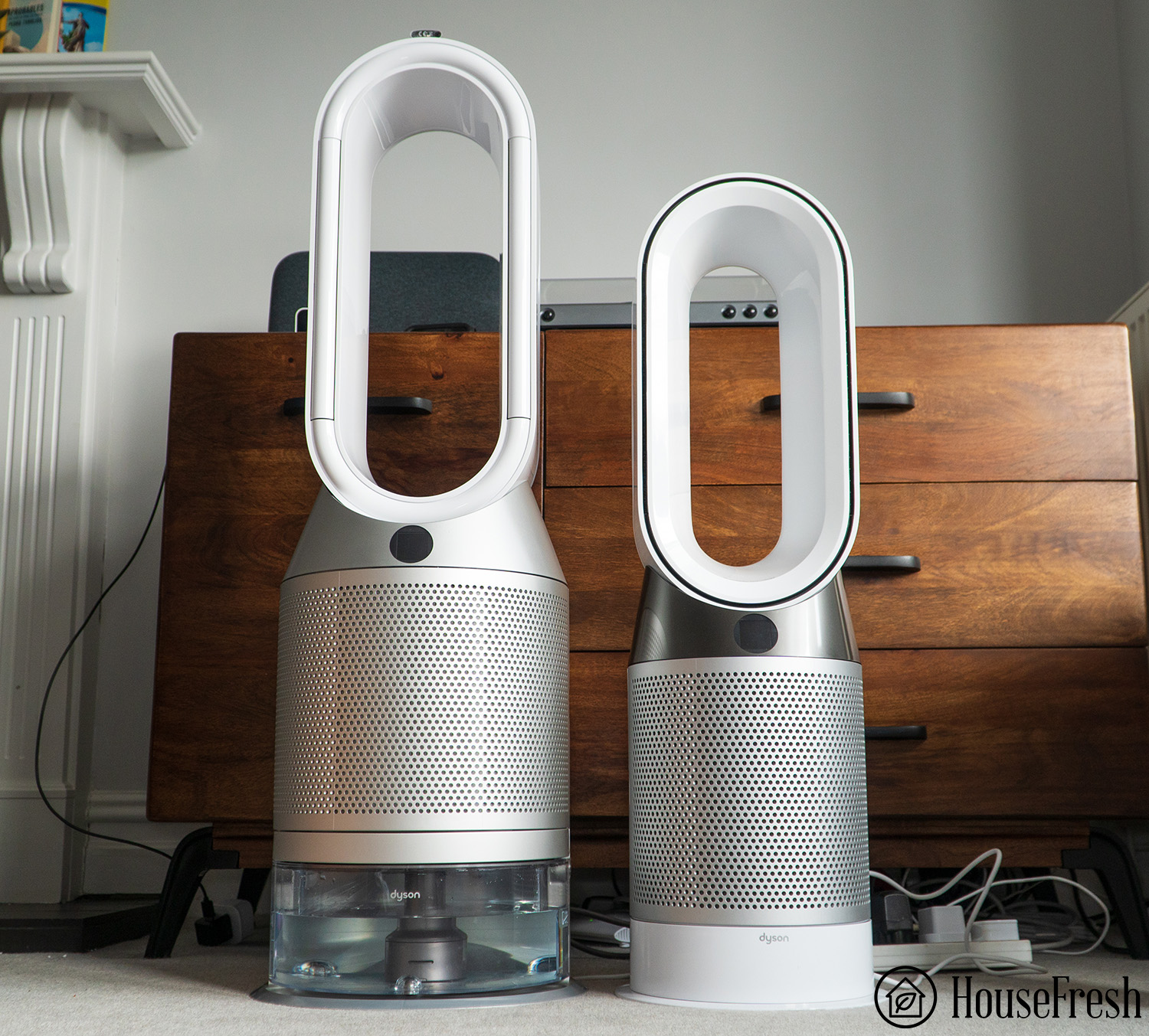
Launched in the UK in the early 90s, Dyson may be most well-known for their vacuum cleaners, but they’ve also been producing air purifiers since 2015. Many of their units don’t just clean the air, however. For example, their HP04 Hot + Cool also works as a fan and heater and their PH03 unit is a premium combo of humidifier, fan, plus purifier. 

Yet while all of this sounds amazing, Dyson purifiers don’t always work perfectly. Luckily, we’ve listed the most common issues, such as the purifier not turning on. Most importantly, we’ve provided helpful tips on how to resolve these problems.

You’ll also find links to manuals, plus info about the correct power rating and room size for each device and how to contact Dyson directly.

Problem 1: My Dyson air purifier isn’t turning on

While this is frustrating, you should be able to fix it once you know the cause.

❓ Have you checked the power source?

Be sure to double-check the unit is plugged into an outlet. If so, it’s possible that the outlet itself is faulty, so try unplugging it and using a different outlet.

❓ Have you looked at the power switch on the purifier itself?

If you can see that the switch is in the “On” position, the issue may be with the internal wiring of the purifier. It’s best to contact Dyson customer support for further help if this is the case.

❓ Is the Power Rating inaccurate?

If the power rating is incorrect, your cleaner is unlikely to work properly. Check out our table below to find your device’s power supply.

Dyson Air Purifier ModelPower Supply Rated Power 
Pure Cool Link TP02100V / 50/60Hz 6 — 56 W
Humidify + Cool Autoreact PH3A120 V 40 W
Humidify + Cool PH03120 V6 — 40 W
Cool Formaldehyde TP09120 V6-40 W
Cool Autoreact TP7A120 V40 W
Humidify+Cool Formaldehyde PH04120 V120 W
Hot+Cool Formaldehyde HP09120 V40 — 1400 W
Hot+Cool HP07120 V40 — 1400 W
Hot+Cool Link HP02120 V6W – 40W (fan) 1500 W (heater mode)
Hot+Cool HP01120 V6W — 40W (fan) 1500 W (heater mode)
Hot + Cool HP04120 V6W — 40W (fan) 1500 W (heater mode)
Purifier Cool TP07120 V6 — 40 W

Problem 2: My Dyson air purifier isn’t rotating

Dyson fans are made with high-quality oscillation features that usually work effortlessly. If you’re having this particular problem, you can do several things.

❓ Is the filter clean?

The filter needs to be clean for the fan to rotate effectively. It’s a good idea always to check the filter first when you’re having issues. Dyson recommends changing filters every 12 months as they become clogged with pollutants. 

Here’s how to change a Dyson Pure Hot + Cool filter:

  1. Make sure the unit is switched off and unplugged from the outlet.
  2. Press both catches on either side of the unit simultaneously and lift this off the main body.
  3. Using the arrow indicators, press and release the filter.
  4. Dispose of the filter in a sealed garbage bag to ensure harmful particles won’t get dispersed back into the air.
  5. Remove the new filter from its packaging.
  6. Secure the new filter inside the filter casing.
  7. Place the filter casing onto the unit’s main body and push down until you hear it click into place.
  8. Locate the sensor hatch on the side of the machine and use a cotton swab to clean the inside.
  9. Refit the sensor hatch until you hear it click shut.
  10. Plug the purifier in at the outlet and press the On/Off button.
  11. Press and hold the On/Off button on the remote for approximately six seconds. You should notice a loading pattern rotating clockwise on the LED display.
  12. Once the pattern is complete, your purifier should work normally.

❓ Are there any obstructions? 

Be sure to remove any obstructions that could be blocking the rotation of the unit. 

❓ Could it be the power supply?

The unit needs to be securely plugged into an outlet. Also, double-check that the outlet is functioning properly. 

❓ Is the switch in the “On” position?

If you’ve checked this and tried all of the above solutions, there may be an internal wiring issue with the unit. Be sure to contact Dyson customer support for additional help.

Problem 3: My Dyson air purifier is displaying a warning sign

It can be a bit worrying if you see a warning sign. Let’s take a closer look.

❓ Is the filter attached correctly?

A warning triangle might show on your screen if this doesn’t fit properly. Be sure to reattach the filters securely.

❓ Have you checked the user manual?

The manual should help you diagnose the problem so you can fix it yourself. But if this is tricky, you can contact Dyson directly for more help and information.

Problem 4: My Dyson air purifier isn’t connecting to wi-fi

There are a few things you can try if you have connection issues.

❓ Have you checked the connection between the unit and the router?

Your purifier must be placed within the router’s range and connected to a 2.4GHz network. Also, make sure there aren’t any obstructions between the unit and the router. 

❓ Are the Wi-Fi settings correct?

Double-check that the Wi-Fi is turned on and you’ve selected the correct network.

Problem 5: My Dyson Air Purifier Isn’t Cleaning the Air Effectively

The most important thing about a purifier is that it cleans the air properly. Here’s what to do if you’re experiencing problems.

❓ Is the filter clean?

Be sure to check this and replace it if necessary. Also, clear any obstructions that might block airflow through the purifier.

❓ Do you need to clean the fan?

You can vacuum around the front of the fan, the controls and the main fan head. You can also try wiping the fan with a damp microfiber cloth. Remember to clean around the sensor ports and avoid sticking anything through them, as this could damage the sensors.

❓ Is it the power supply?

Ensure the purifier is plugged into an outlet and that this is working properly. If there aren’t any problems with the outlet, look at the power switch. Again, if this is set to “On,” there may be an internal issue with the unit, so it’s best to contact customer support.

❓ Is the air purifier in the ideal room size as specified by Dyson? 

To work effectively, your Dyson purifier needs to be placed in the right room for its capacity. Check your device below. 

Dyson Air Purifier ModelIdeal Room Size in Square FeetIdeal Room Size in Square Meters
Pure Cool Link TP0240037
Humidify + Cool Autoreact PH3A29027
Humidify + Cool PH0329027
Cool Formaldehyde TP0929027
Cool Autoreact TP7A29027
Humidify+Cool Formaldehyde PH0429027
Hot+Cool Formaldehyde HP0929027
Hot+Cool HP0729027
Hot+Cool Link HP0229027
Hot+Cool HP0129027
Hot + Cool HP0440037
Purifier Cool TP0729027

Problem 6: My Dyson air purifier isn’t responding to the remote

The Dyson remote helps ensure your purifier’s smooth running. Here’s what to look for if there are any problems. 

❓ Have you checked the batteries?

It’s important to make sure these are fresh and installed correctly.

❓ Do you need to change the settings?

Double-check that your purifier is set to respond to the remote.

❓ Are there any obstructions between the purifier and the remote?

This may also affect the connection so remove anything that could get in the way.

Problem 7: The continuous monitoring function isn’t working

When continuous monitoring is turned on, your Dyson purifier can gather information about the air quality, temperature and humidity in your environment. If this isn’t working properly, it could be one of these causes:

❓ Do you need to reset your Dyson air purifier?

You can try resetting the unit if the manual doesn’t describe a set procedure. Follow these steps:

  1. Find the standby On/Off button.
  2. Press and hold the button for 20 seconds.
  3. You should notice that the Wi-Fi symbol will flash white and green. This indicates that your network settings have been removed, and your purifier is reset.

❓ Have you checked the manual?

This will let you know if there’s a specific troubleshooting process for your model.

Problem 8: The air quality sensor isn’t working

The sensor measures temperature, humidity levels and volatile organic compounds (VOCs) to establish the kind of pollutants in the air. It’s a super helpful feature because the sensor uses this information to adjust your purifier’s settings accordingly. But what if it’s not working properly? Let’s take a look.

❓ Does the sensor need cleaning?

In most cases, the sensor has simply begun to malfunction because of dust. Follow our guide on how to clean it effectively:

  1. Locate your purifier’s sensor. On most units, this is on the left of the LCD display. You’ll be able to spot the sensor by its two tiny sensor holes.
  2. Once you’ve found the sensor, turn off the unit.
  3. Dust the sensor holes by using a dry dusting brush. 
  4. You can also vacuum debris out of the holes (using the correct attachments). A HEPA vacuum will help to ensure the complete capture of dust particles.
  5. Another option is to use a blow dryer in a cool setting, as the high pressure should quickly remove debris.
  6. Switch the purifier back on; the sensor should give you an accurate reading.

❓ Is the filter dirty?

This can also be another reason why the sensor isn’t working properly. Be sure to check the filter regularly and change it if it seems damaged or is due to be replaced. 

❓ Is your room too small?

A small room can mean poor airflow, which means the sensor feels too confined to function correctly. You can quickly fix this by opening a window or door to get the air circulating.

❓ Is the sensor blocked?

If there’s furniture in front of your purifier, the sensor may become blocked and unable to detect the surrounding air correctly. Simply make sure that nothing is obstructing its view.

❓ Is the setting correct?

Be sure to check that you’re using the correct setting on your purifier so that it knows how to filter the air efficiently. Each Dyson model has different settings for airborne pollutants, such as VOCs and humidity. 

❓ Is the sensor damaged?

If you’ve tried all the above solutions with no luck, then it may be that the sensor itself is damaged. In this instance, it’s best to contact Dyson customer support for more advice.

Problem 9: My Dyson air purifier is making a strange noise

According to Dyson’s own troubleshooting advice, you may hear such sounds as clicking,  whining or whistling. Here’s what to do: 

❓ Have you checked around the base?

If your device clicks when oscillating, some obstructions or debris may be around the base. Be sure to remove anything like this.

❓ Have you removed the loop amplifier?

If you can hear a whining or whistling sound, try removing the loop amplifier and refitting it. Ensure there isn’t an uneven gap between the loop and the main body.

How to get in touch with Dyson

If you’re still experiencing problems, there are various ways you can get in touch with Dyson. You can call them at 8447054777 and their phone lines are open 8:00 am — 8:00 pm CST Monday to Friday and 9:00 am — 6:00 pm CST Saturday. 

You can also use their live chat function via their website. The chat button appears on the bottom right corner of the site as soon as a Dyson Expert becomes available. You can also click this button at any time for helpful troubleshooting advice and information.

If you want to use social media, you can follow them on… 

You can also join the Dyson community to connect with other owners and share your Dyson experience.

Find the manual for your Dyson air purifier

Click on the link below for your device.

Dyson Air Purifier ModelUser Manual
Pure Cool Link TP02Manual
Humidify + Cool Autoreact PH3AManual
Humidify + Cool PH03Manual
Cool Formaldehyde TP09Manual
Cool Autoreact TP7AManual
Humidify+Cool Formaldehyde PH04Manual
Hot+Cool Formaldehyde HP09 Manual
Hot+Cool HP07Manual
Hot+Cool Link HP02Manual
Hot+Cool HP01Manual
Hot + Cool HP04Manual
Purifier Cool TP07Manual

SOURCES

12 common Winix air purifier problems (and how to fix them)

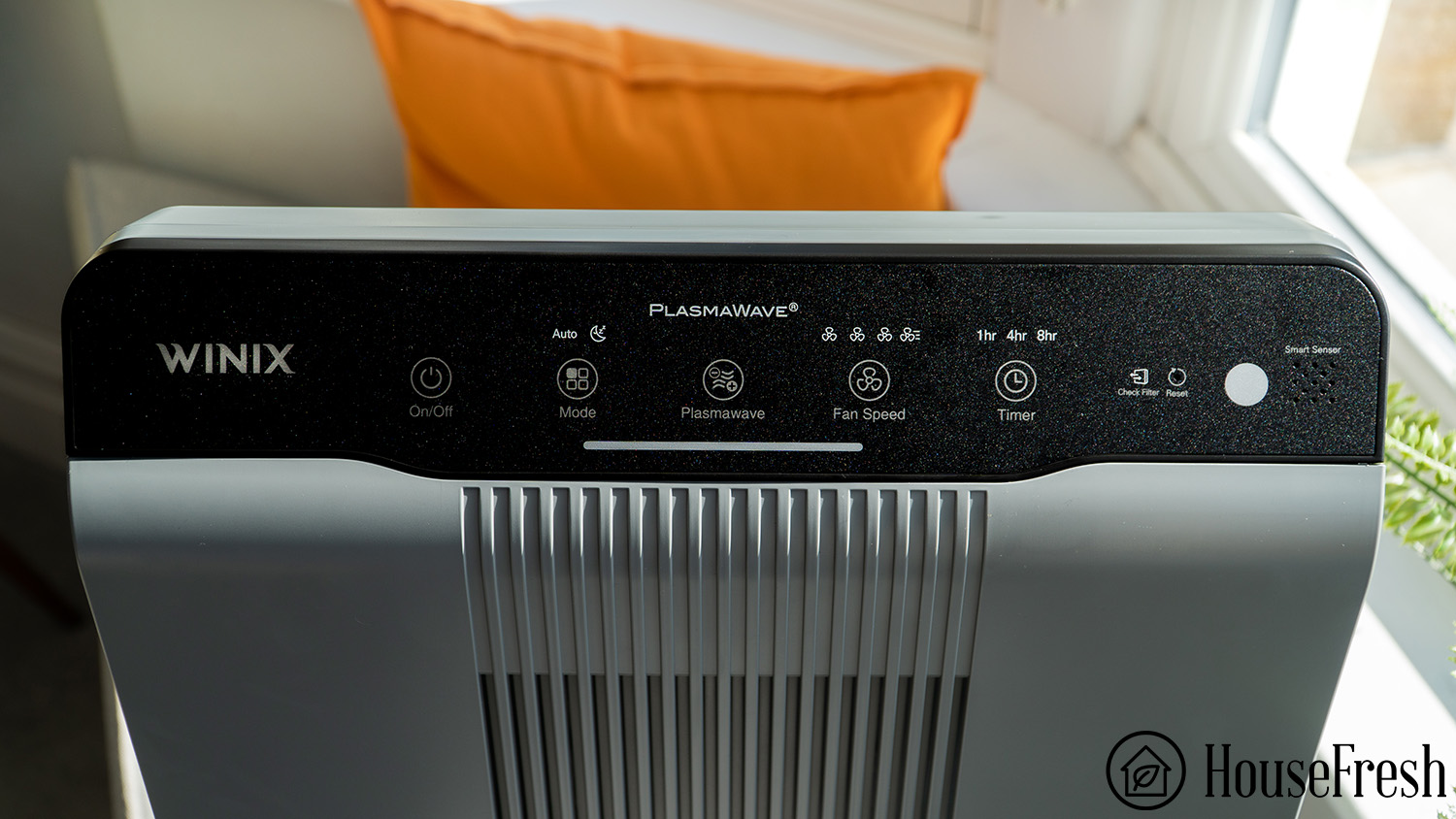
Winix 5300 2 Control Panel logo

The South Korean company Winix has been producing quality home appliances such as air purifiers for almost fifty years. Their purifiers come with HEPA, activated carbon filters and their unique PlasmaWave® technology designed to reduce contaminants without producing any toxic ozone. We’ve written a detailed review of their 5300-2 unit and it’s among our top six best air purifiers under $200.

As with all devices, however, problems can arise. But don’t worry because we’ve got some top tips on how to fix the most common issues, such as what to do if your purifier is stuck in sleep mode. 

You’ll also find advice about the correct rated power and ideal room size for each unit and how to contact Winix customer support.

Problem 1: My Winix air purifier won’t turn on

This is one of the most common problems, yet it can be easily fixed in most cases. 

❓ Have you examined the power cord?

This must be properly plugged into the outlet. Occasionally, the cord itself can become damaged, needing to be replaced.

❓ Are you using the right outlet?

One of your wall sockets may be faulty, so try unplugging the cord and using a different outlet.

❓ Is the power rating correct?

The power rating is often the main reason your Winix purifier won’t turn on. This rating is how much electricity is required for the purifier to work. If the power outlet isn’t rated to handle the purifier, you may not have any power. 

Use our handy table below to find your purifier’s power supply.

Winix Air Purifier ModelPower Supply Rated Power 
C535120V/60Hz70 W
A231120V/60Hz55 W
A230120V/60Hz55 W
5500-2120V/60Hz70 W
9800120V/60Hz95 W
5300-2120V/60Hz70 W
AM80120V/60Hz65 W
AM90120V/60Hz65 W
HR900120V/60Hz90 W
D360120V/60Hz65 W
XLC120V/60Hz90 W
XQ120V/60Hz90 W
6300-2120V/60Hz70 W

Once you know the power outlet of the device, simply plug it into an outlet that’s able to provide that amount of power. Turn on the purifier again; hopefully, you’ll be good to go. 

❓ Are there lots of devices plugged into one circuit?

If too many appliances or devices are plugged into one circuit, your purifier may not turn on. It’s best to avoid using extension cords and just plug the purifier directly into the power outlet. 

Equally, if you use the wrong extension cord, it may overheat and potentially lead to a fire.

Problem 2: My Winix air purifier is stuck in sleep mode

Sleep mode is one of the best things about Winix purifiers and allows you to save energy (and money). But it can be frustrating when your device is always stuck in that mode. Luckily, there’s often a simple solution.

❓ Have you turned the unit off and on?

Follow these steps:

  1. Turn off the purifier and unplug it from the power outlet
  2. Wait five minutes before plugging it into the wall socket 
  3. Turn the purifier back on and leave it in sleep mode for another five minutes
  4. Set the unit to your preferred mode, e.g., auto 

Problem 3: My Winix air purifier keeps turning off by itself

There could be a few reasons your device keeps doing this…

❓ Is the power cord securely plugged into the outlet?

The purifier may shut off if the cord is loosely plugged in.

❓ Is there a power outage in your area?

Be sure to check that there is power going to and from your outlet, as there may be a power outage in your neighborhood. 

❓ Is the purifier set to sleep mode?

It’s pretty common to put your air purifier in sleep mode accidentally. You must press the Mode function to return it to your preferred setting, such as low, medium, high, or auto. And, of course, sleep mode for when you want it to sleep! 

If you’ve tried all of the above solutions with no joy, you may need to contact customer support to resolve the issue fully. 

Problem 4: My Winix air purifier produces an unpleasant smell

It’s normal for a plasticky smell for a couple of days when your purifier is brand new. Yet If it starts smelling like burning plastic or produces any other strange, nasty odor, check these causes:

❓ Does the pre-filter need cleaning?

Unpleasant odors can indicate the pre-filter is dirty. Follow these steps for effective cleaning:

  1. Open the front panel
  2. Remove the pre-filter
  3. Use a soft brush to loosen the dirt
  4. Use a vacuum cleaner to get rid of the dirt
  5. Reinstall the pre-filter back inside your device
  6. Close the front panel

❓ Do you need to replace the filters?

When filters absorb as much dirt and other substances as possible, they’ll produce a dusty smell. Replacing them should eliminate any odors. Here’s how to do it:

  1. Remove the air intake cover by placing your hand on top and pulling it away from the purifier 
  2. Clean the air intake screen with a vacuum, then gently detach it from the device by placing your fingers on top of the hinges 
  3. Pull away the activated carbon pre-filter from the purifier 
  4. Remove the True HEPA filter similarly and throw both in the garbage 
  5. Insert a new HEPA filter, making sure that the arrow on the top of the filter points away from you and towards the purifier
  6. Insert a new activated carbon pre-filter into the space before the HEPA filter
  7. Finally, reattach the air intake screen and cover it by pressing them firmly back into position

Problem 5: The air quality indicator stays red

The Winix indicator shows various lights to mean different things:

  • Green = air quality is good
  • Orange/Amber = air quality is fair and there are increasing airborne pollutants
  • Red = air quality is poor

If the red light is always on, check for these issues:

❓ Is the red color at the center of the control panel?

If this is the case, the air in your room is unhealthy. Simply leave the purifier on and increase the fan speed to its maximum settings. This will ensure that the purifier treats the toxic air faster. Once the air stabilizes, the indicator light should change to green.

❓ Have you replaced the filter?

More often than not, a permanent red light means it’s time to change the filter. After doing so, be sure to reset the purifier. Hold the reset button next to the filter indicator light down for five seconds until you hear a beep. 

The red light should go off, but if this doesn’t work, try unplugging the unit for a few minutes, then plug it back in and try the reset button again.

Problem 6: My Winix air purifier has two blinking lights

There are probably a couple of reasons for this:

❓ Is there a fault with the filter?

Sometimes the purifier starts working in auto mode when you turn it on before flashing two fan lights. Yet then it stops working all of a sudden. This is due to either a faulty white inner HEPA filter or an outer black carbon pre-filter.

Once you’ve identified which filter is defective, you can replace it. After changing the filter, don’t forget to hold the filter light reset button for about five seconds.

❓ Is the purifier malfunctioning?

This is the worst-case scenario; unfortunately, you’ll have to return the unit and request a replacement.

Problem 7: My Winix air purifier makes an unusual sound

If your unit makes a noise such as ticking, crackling or buzzing, it’s likely because of one of these causes:

❓ Is it the PlasmaWave® function?

The occasional chirping or buzzing sound is from large particles passing through the PlasmaWave®. Don’t worry, though, because this is normal, and your device is working correctly. But if you don’t like the sound, you can always turn this function off via the control panel.

❓ Is there something inside the unit?

Turning the purifier upside down should enable you to remove anything that might have been caught inside (avoid opening the unit, though).

❓ Are the filters dirty?

If it’s simply that the filters need replacing, the strange noises should stop after you’ve done this. 

Problem 8: The fan of my Winix air purifier isn’t working

Many users have experienced problems with the fan on the C545 model. The filters are the most common reason it isn’t working or is functioning at a slower speed. However, this isn’t always the case, so let’s look closer.

❓ Do the filters need replacing?

If the filters are clogged with dirt or damaged in some way, this could affect the fan’s functionality. Be sure to change them asap.

❓ Has a fuse blown?

A power surge can damage the fuse, so your device will stop receiving power. Take care to inspect the fuse for any kind of damage. If so, you’ll need to replace the fuse.

❓ Are there issues with the motor?

Occasionally, the motor used to rotate the fan blades can become damaged. If this is the case, it’s best to organize replacement components. Be sure to get the ones that are compatible with your purifier.

❓ Have you set the purifier to automatic mode?

Simply press down the manual fan button and set it to your preferred speed. The fan should then go back to working manually.

❓ Is the unit faulty?

Sometimes, the purifier itself is faulty. You can contact Winix customer support for advice, although you’ll likely need a replacement unit. 

Problem 9: My Winix air purifier won’t turn off

This can be just as frustrating as when your device doesn’t turn on. 

❓ Have you unplugged the unit from the power outlet?

Rather than trying to press the off button multiple times (and getting more frustrated!), it’s best to unplug it directly from the outlet. Be sure to wait a few minutes and plug the unit back in. Next, turn on the purifier but set it to sleep mode for approximately two to five minutes. Finally, run the purifier as normal and hopefully, you’ll be able to turn it off in the usual way. 

Problem 10: The remote control isn’t working

The remote helps you control multiple settings of your Winix purifier. If this has stopped working, it’s likely to do with the batteries.

❓ Are the batteries inserted correctly?

Make sure you’ve properly fitted the batteries inside the remote.

 ❓ Do the batteries need replacing?

Yes, it may seem like a no-brainer, but it could just be that you need to replace those old batteries. 

Problem 11: The Winix smart app isn’t connecting

The Winix app enables you to track, monitor and control your device, but you may experience connection problems. 

❓ Have you tried closing and reopening the app?

You can try uninstalling and reinstalling the app if this doesn’t work.

❓ Are there too many Bluetooth devices around the location of your purifier?

This may also cause connectivity issues.

❓ Is the operating system supported?

For iOS this should be 10.0 and up and on Android 5.0 and up.

❓ Have you disabled any VPN networks?

Be sure to do this before connecting your device.

❓ Is your smartphone and router in the best location?

These should be placed within a 32 ft. radius of the purifier.

Hopefully, you should be good to go after trying these methods. Check out the Winix troubleshooting page for any other app problems. 

Problem 12: My Winix air purifier isn’t working effectively

You might find harmful particles like smoke and unpleasant odors floating around your space, even after using the purifier for the recommended time. 

❓ Are the blades clogged with dust?

If there is excessive dust, clean the blades with a cloth and leave to dry.

❓ Do you need to change the airflow settings?

Try setting the unit to high airflow. 

❓ Could it be the filter?

As with most Winix problems, it may simply be that you need to replace the filter.

Is Your Winix Air Purifier in the Ideal Room Size? 

Check your device to determine the best room size for your purifier.

Winix Air Purifier ModelIdeal Room Size in Square FeetIdeal Room Size in Square Meters
C53536033.44
A23123021.36
A23023021.36
5500-236033.44
980050046.45
5300-236033.44
AM8036033.44
AM9036033.44
HR90030027.87
D36036033.44
XLC62057.59
XQ69864.84
6300-2360 33.44

Contacting Winix air

You can get in touch with Winix in various ways to access their customer support. They’re open Mon-Fri 9:00am – 6:00pm CST, and you can reach them by phone on (877) 699-4649 or email at info@winixinc.com. You can also fill out their online form.

If you prefer postal mail, you can write to them at Winix America Inc. 220 North Fairway Drive, Vernon Hills, Illinois 60061.

For general questions about your purifier, check out their FAQ section.

Find the manual for your Winix air purifier

Click on the link for your particular model.

Ideal Room Size in Square MetersUser Manual
C535Manual 
A231Manual
A230Manual 
5500-2Manual 
9800Manual 
5300-2Manual
AM80Manual
AM90Manual 
HR900Manual
D360Manual
XLCManual
XQManual
6300-2Manual

SOURCES


A jargon-free guide to air purifiers

HouseFresh Air Purifiers Tests

You’ve undoubtedly landed on this page because you have a critical question on your lips… What exactly does an air purifier do? You may have even seen one in a friend’s house, in your child’s classroom, in a waiting room, on the news or in a store and thought, “Do I need one of those?”

Studies by the EPA show how running an air purifier in your home will drastically increase air quality. In simple terms, an air purifier cleans the air by removing harmful airborne pollutants.

Danny explains it nicely in the video below:

@thishousefresh

What does an air purifier do? An air purifier is simply a fan and a filter If I attached this mask to this tiny fan, I could create my own tiny little air purifier – its probably not going to do much good but you get the idea. Most air purifiers you can buy use a combination of filters with a pre-filter, HEPA and activated carbon. The Pre-filter is the first stage of cleaning the air and catches the large dust and hair particles that are easy to see. Next, we have the HEPA filter, designed in 1950 to catch tiny particles so small you can’t see them. HEPA filters pick up tiny dust particles, pollen, bacteria, and viruses and do the bulk of the air cleaning work. A HEPA-grade filter alone won’t mean you will have clean air; you still need a device to push enough air through the filter. For large spaces, you will need a big HEPA filter with a big fan as this will clean the air multiple times in an hour. Smaller rooms can work with smaller devices but don’t go too small. Many small air purifiers are bestsellers on Amazon, but when we tested them, we found them to be too weak for even the smallest of rooms. Finally, we get to the activate carbon filter. While HEPA can deal with tiny particles in the air, it can’t remove any type of gas like VOCs or odors. Its why you can still smell a fart even when wearing a mask. Activated charcoal helps to trap any gasses as the air flows through them. As with HEPA, size matters, so if you have a serious issue with any VOC, Odors or gasses, you will want to get an activated carbon filter measured in lbs. A really simple way to understand what an air purifier does is to build one yourself. With an HVAC filter, a box fan, some cardboard and duct tape you can create your own air purifier that can remove particles from the air in your home. At HouseFresh we have tested over 60 different air purifier models so If your looking for an air purifier Google housefresh to find out what we think are the best devices right now. #airpurifier #airpurifierrecommendation #hepafilter #airfilter

♬ original sound – HouseFresh

Now we know the fundamentals, let’s look further into how an air purifier cleans the air.

Understanding how air purifiers work

Air purifiers comprise two essential components: a fan and a filter. The fan draws in air, passing it through one or a series of filter(s), then pushes the air back into the room. The filters trap particles and gasses, removing them from the air.

It’s as simple as that.

How air purifiers work

The filters found most commonly in air purifiers are engineered to remove microscopic particles from your air, with the strength and type of filter being determined by the size of the particles it can trap.

Modern air purifiers commonly utilize a combination of air filters, including a pre-filter, a main particle filter and an activated carbon filter. Let’s look at each component more closely.

  • Pre-filter: The pre-filter works like a sieve and picks up the large stuff you can see, such as hair or large dust particles – it will help reduce the number of particles that go into the main filters to prolong their life.

  • Main particle filter: The main filter is usually made of synthetic materials or fiberglass and does the majority of the air cleaning particles of different sizes:
    • Particles measuring up to 10 microns become stuck in the filter fibers as they can’t pass through the holes.
    • Particles less than 10 microns down to 0.3 microns could pass through the holes in the filter, but due to Inertial Impaction, these particles can’t change direction as quickly as the airflow, so they bump into the filter medium and get stuck.
    • As tiny particles less than 0.03 microns are so small, they constantly bump into air particles. Due to this constant movement, they also keep bumping into the filter material, increasing the chance of being stuck each time as they take a zig zap pattern through the filter. This process is called Brownian Motion, so even non-HEPA-grade filters can block these microscopic particles.
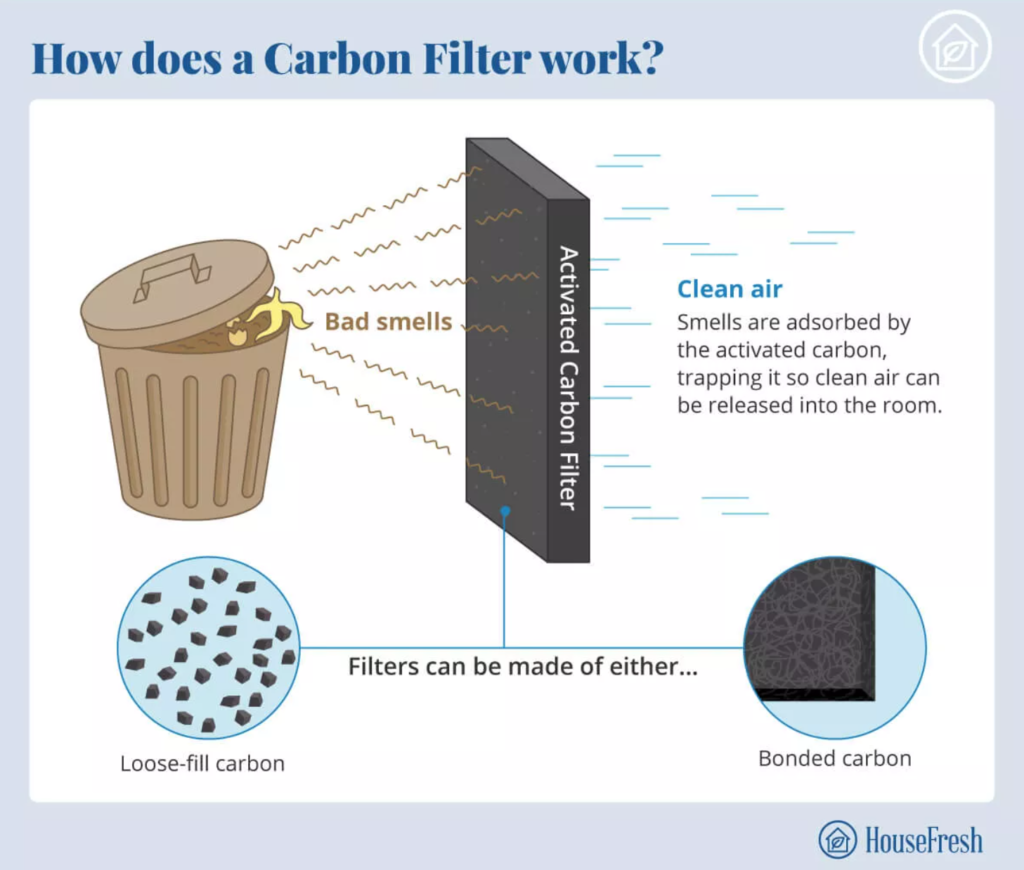
  • Activated carbon filter: While particles of all sizes can be blocked with a particle filter, gasses will just pass through, which is why many air purifiers also use activated carbon filters. Activated carbon has many tiny holes that can trap gasses and remove them from the air through a process called Adsorption. Eventually, the carbon will become full, so you need to replace it regularly for it to continue to be effective.

This combination of filters allows air purifiers to capture pet hair, dust, mold spores, pollen, pet dander, mold spores, smoke, viruses, bacteria, odors and chemical gases. What is more, studies have shown that running an air purifier in your home can even prevent transmission of the virus that causes COVID-19.

Maintaining air filters

Pre-filters need to be vacuumed regularly to extend the life of particle and activated carbon filters. Many air purifiers, come with removable and washable pre-filters to make it even easier to stay on top of cleaning them.

The main particle filters need replacing periodically. When these filters trap pollutants, those particles have nowhere to go. This means over time, the filter becomes full and ineffective. You must replace this filter when prompted to keep your air purifier working to its full potential. Most modern air purifiers will have a filter replacement indicator light, which will illuminate when it’s time to change filters.

The carbon in the activated carbon filters will eventually become full with gases and will start to smell bad. That is the sign that you need to replace the carbon filter so it can continue to trap gases and odors.

What types of particles can air purifiers remove from the air?

Air purifiers are the most effective way of removing particles from the air, but there are some things that they can’t do. Let’s look at some of the most prevalent.

Particles air purifiers can remove

Allergens. An air purifier will trap small particles that cause allergic reactions. For example, pollen, dust, mold and pet dander.
Pollution. It’s all around us, especially in towns and cities, from cars and factories to the plague of wildfire smoke in rural areas. Air purifiers will remove these harmful particles from your indoor air.
Gasses and VOCs. The activated carbon filter in air purifiers is designed to adsorb gasses and VOCs, such as odors, extracting them from the air.

Particles air purifiers can’t remove

CO2. A standard air purifier won’t be able to remove CO2 from the air. It’s much easier to ventilate for a short period to let this gas escape than try to use filters to remove it.
Non-airborne particles. Air purifiers can only remove airborne particles. When particles settle on furniture and carpets, use a vacuum cleaner with HEPA-certified filtration.
Moisture. Air purifiers cannot add or remove humidity and water particles from your air. You need either a humidifier (add moisture) or a dehumidifier (remove moisture).

Other questions you may have about air purifiers

So now you know what an air purifier does and how it can improve the air quality in your home. But you probably have a few more follow-up questions.

No. You will still need ventilation in your home. 

Whether that’s opening doors and windows or running an HVAC system, ventilation is key to keeping air circulating throughout your space alongside your air purifier. HVAC systems can even be fitted with pleated filters (the same found in most air purifiers).

A pleated filter could be HEPA grade, but it doesn’t need to be, as lower grade filters can still do a good job of removing pollutants as you can pass the air through the filters multiple times. 

Whilst HEPA is required in scenarios like an operating theatre or a nuclear plant as you don’t want any particles to escape, for cleaning the air in the home, a non-HEPA grade filter can handle a higher airflow and will actually clean your room of particles quicker as more air can pass through the filters.

It all depends on the air purifier. Air purifiers are often expensive because they are either high-performance units for larger spaces or use sophisticated technology like AQI sensors and smart functions.

Unfortunately, this isn’t always the case, as some brands have been known to bump up their prices simply because of their brand status. Others make exaggerated claims about their air purifier’s performance to warrant a higher price tag.

Don’t rely on an air purifier’s price; find the right unit that matches your space.

Overall, air purifiers don’t use large amounts of electricity to run. On average, they contribute less than 1% to household energy consumption.

Air purifiers are manufactured to be energy-efficient, but some are more efficient than others. Many units are tested by a third party, Energy Star and given certification to show their efficiency.

So… Do you need an air purifier?

Air purifiers are amazing yet simple devices. With only a few components, an air purifier can radically change the air quality in your home. 

They are scientifically proven to improve air quality by removing harmful pollutants. All those particles in our air caused by traffic, factories, cigarette and wildfire smoke (the list goes on) make their way into our homes, where we breathe them in.

Introducing an air purifier into your home gives you a better quality of life with clean air. That’s why I strongly recommend that every household has at least one.

But it’s not only pollution particles an air purifier can remove. If you suffer from allergies like pollen, pets, dust or mold, the right unit will trap these allergens in its filters, relieving your symptoms.

Even though air purifiers may seem like an extra expense, they don’t cost much to run, and the benefits far outweigh the cons. You can even make your own air purifier with a box fan, an HVAC filter and some duct tape.

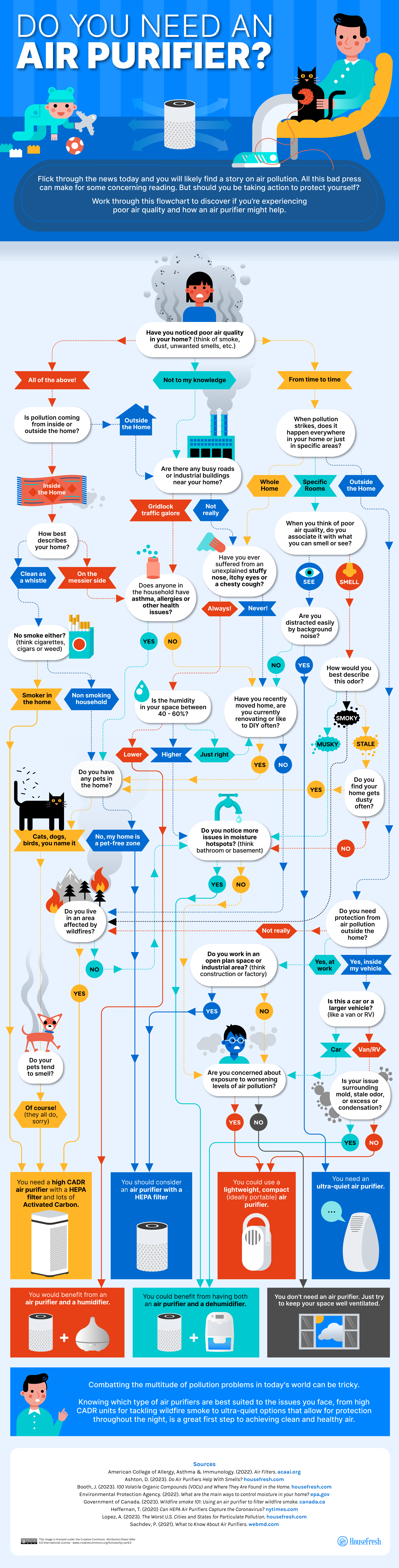
And if you’re still unsure about whether you should get an air purifier or not, give our flowchart a try:

Do you need an air purifier Flowchart

Before I leave you, it is worth mentioning that many air purifiers are tested by the Association of Home Appliance Manufacturers to test the efficacy of air filters in removing dust, pollen and smoke from the air. If you’re in the market for an air purifier, I highly recommend you check out the list of certified units on the AHAM Verifide website, as it is a great way to ensure whatever unit you’re buying has been tested by a third party.

If you have any further questions or comments, just drop us an email and someone from our team will get back to you.

SOURCES

12 Common Alen Air Purifier Problems (and How To Fix Them)

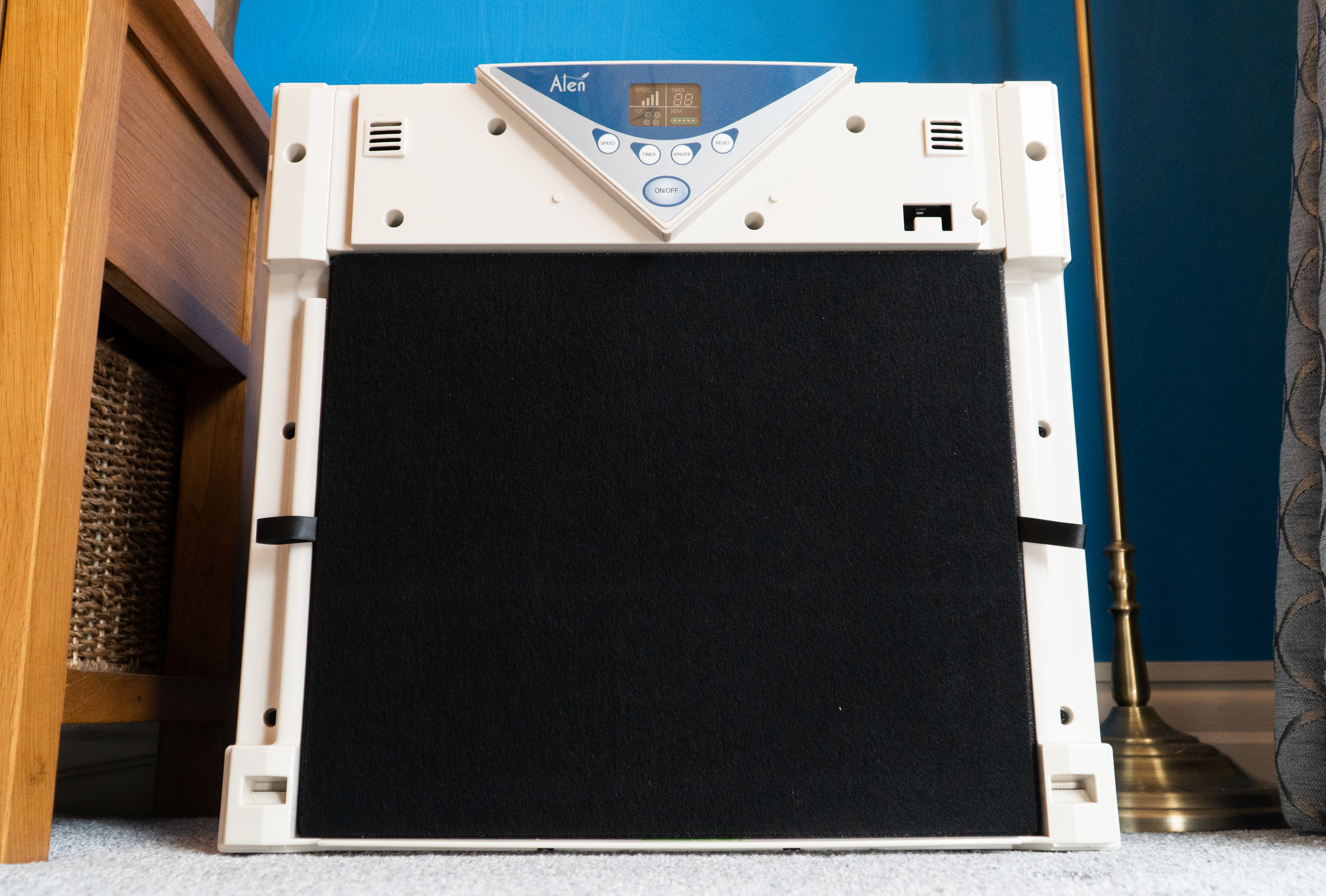
AlenA350 3

Based in Austin, Texas, the Alen Corporation is one of the most trusted producers of high-quality air purifiers. We’ve long been fans of their units, including the BreatheSmart 75i for large spaces and the BreatheSmart 45i for smaller rooms. There’s also the a350 which is sadly no longer for sale, although you can still buy their filter replacements

However, Alen units don’t always work perfectly, as with all mechanical devices. But the good news is that most problems can be easily solved. We’ll give you top tips on how to fix the most common issues, such as what to do if the red light won’t turn off. 

You’ll also find guidance about the correct power supply and ideal room size for each unit and how to contact Alen directly when all else fails.

Problem 1: My Alen Air Purifier Won’t Turn On

There can be many reasons your purifier won’t turn on. Be sure to check for the following:

Is the cord plugged in correctly?

Ensure this is plugged in well and that you use the right outlet.

Is the power cord faulty?

If this is the case, you will need to replace it. You should be able to buy this direct from the Alen website.

Is there a blown fuse?

If the fuse is blown, it will need to be replaced. It’s possible to do this yourself, but we recommend contacting customer support on the Alen website for guidance. 

Is there a problem with the wall socket?

There may not be any issues with your unit; the wall socket might be the problem. Try plugging the purifier into another outlet; hopefully, this should work. 

Is the power rating correct?

Be sure to check that the power rating of your unit is the same as your wall socket. If not, your cleaner won’t turn on. 

Check using our handy table below:

Air PurifierPower Supply Rated Power 
Alen BreatheSmart 75i True HEPA 120 AV, 60HZ (3 Prong Power Cord)1.8 to 45 watts
Alen BreatheSmart 45i True HEPA120 AV, 60HZ (2 Prong Power Cord)1.1 to 50 watts
Alen BreatheSmart Classic True HEPA120 AV, 60HZ (2 Prong Power Cord)1.6 to 105 watts
Alen BreatheSmart FIT50 True HEPA120 AV, 60HZ (3 Prong Power Cord)1.2 to 60 watts
Alen BreatheSmart FLEX True HEPA 120 AV, 60HZ (2 Prong Power Cord)0.8 to 50 watts
Alen T500 True HEPA Tower Air Purifier120 AV, 60HZ (2 Prong Power Cord)0.8 to 53 watts

Note: It’s also possible that you may have accidentally bought the wrong version of the cleaner. For example, the European model won’t work in the U.S. 

Problem 2: Air Purification Isn’t Working 

❓ Is the room coverage too large?

Using the purifier in a room larger than 300 square feet can lead to persistent poor air quality. Be sure only to use it in the recommended room size.

Air PurifierIdeal Room Size in Square FeetIdeal Room Size in Square Meters
Alen BreatheSmart 75i True HEPA 1,300 120.77
Alen BreatheSmart 45i True HEPA80074.32
Alen BreatheSmart Classic True HEPA1,100102.19
Alen BreatheSmart FIT50 True HEPA90083.61
Alen BreatheSmart FLEX True HEPA 70065.03
Alen T500 True HEPA Tower Air Purifier50046.45

Is the filter installed correctly?

To check this, you need to open the unit and ensure the filter is correctly pushed until you hear a clicking sound. This tells you that the filter is in place and your purifier should work as expected.

❓ Is there a lack of clearance?

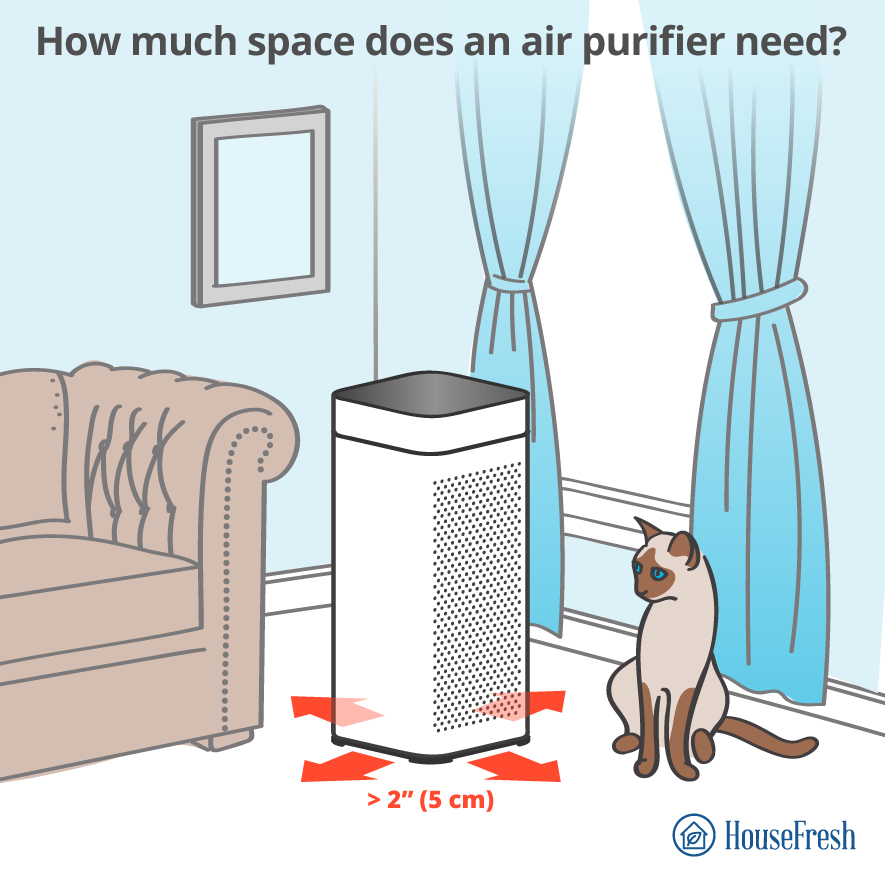
Reduced airflow can occur if the air intake and outlet are too close to objects. Simply change your purifier’s location to leave more space around it. 

Air Purifier distance 1

Problem 3: The Red Light Is Always On

A red light often indicates a maintenance issue and is often connected to the purifier’s filter. Let’s take a closer look.

Is it time to replace the filter?

It’s recommended to replace HEPA filters every six months as they can become clogged with debris. Here’s our step-by-step guide on changing the filter for a model such as the Alen BreatheSmart FIT50:

  1. Make sure your purifier is unplugged.
  2. With both hands, pull on the cover near the intake vents (ensure the unit is upright). This will release the magnets and remove the cover from the unit.
  3. To remove the used filter, pull the white tab gently. It’s a good idea to place this in a plastic bag as it’ll help to prevent harmful particles from re-entering the air.
  4. Remove the packaging from the replacement filter. Carefully insert the bottom of the filter first before pushing the top into the air purifier. Be sure to do this until the filter fits snugly.
  5. Put the cover back on.
  6. The final step is to reset the filter indicator. Turn on the purifier and hold the filter button for five seconds. The light above the filter should now reset to green.

Problem 4: My Alen Air Purifier Keeps Beeping

While it can be a nuisance if your unit keeps making noises, it’s usually something that can easily be rectified.

Does the unit need resetting?

In most cases, resetting the device will stop the beeping. Here’s how to do it:

  1. Find the filter button (usually located near the power button).
  2. Press and hold the filter button for at least 5 seconds. 
  3. Now turn the purifier back on; hopefully, the beeps will be gone.

Alen reset

Does the filter need replacing?

If resetting didn’t work, then it could be that you simply need to change the filter. Follow our guide on how to do this from above.

Problem 5: The Fan Isn’t Working

If the unit’s fan isn’t working correctly, it will impact the whole purification process.

Is there a problem with the motor or the blades?

If you suspect this is the case, contacting Alen customer support for advice and help is best.  Call them on +1-800-630-2396, use their chat function via their website, or fill out their online form.

Is the fan working at all?

If the fan has stopped working, you may need to replace the unit entirely. Again, you can contact customer support for their guidance.

Has a fuse blown?

You can test this by unplugging the unit, waiting a minute or so and then plugging it back in. If there is a blown fuse, this will need to be replaced, as we mentioned earlier.

Problem 6: The Filter Light Keeps Blinking

If there’s an issue with the filter light, don’t worry, as it’s usually nothing too serious.

Have you inserted the replacement filter correctly?

Remove the filter and try replacing it again. If it’s still blinking after you’ve tried this, there may be a problem with the new filter. Be sure to contact customer service for help.

Is your purifier showing an error code?

In this instance, it’s best to contact Alen customer support, who can help you troubleshoot the problem.

Problem 7: My Alen Air Purifier Isn’t Circulating Air

Your purifier must be able to circulate the air properly, yet sometimes this feature can malfunction. 

Is there a problem with the fan?

Firstly, check to see if the fan is spinning. If it seems to be running too slowly, you may need to adjust the speed. If the fan isn’t spinning, unplug the unit and check for any blockages. This includes in and around your unit where the air blows out.

Is there an issue with the motor?

You’ll need to contact customer support if this is the cause, as they can arrange a replacement.

Is there anything covering the fan?

You should always ensure that nothing is covering the fan, as this can lead to overheating and potentially damage your purifier.

Problem 8: The Air Quality Monitor Isn’t Working

It’s essential to monitor the air quality in your home via your device. But if this feature isn’t working correctly, the reasons are often quite simple.

Is there something blocking the sensor?

Be sure to check if anything is obstructing the sensor, and don’t forget to remove any dust or debris that may have been collected. 

Problem 9: My Alen Air Purifier Won’t Connect to Wi-Fi

To ensure your device runs smoothly, it’s essential to have good connectivity. 

Are you using the right network for your unit?

As Alen states, “the BreatheSmart 75i and 45i only support 2.4 GHz (not 5 GHz) Wi-Fi networks.” 

There are a few ways to identify your network’s GHz for Android and Mac devices.

  • Android: Go to the ‘Settings’ app, tap the Wi-Fi network name and locate the ‘Frequency’ value. 
  • Apple: Hold down the ‘Option’ and ‘Command’ keys, then click on the Wi-Fi icon in your top menu bar. Select the ‘Channel’ value.

Problem 10: The SmartLife Hotspot Isn’t Showing in Wi-Fi Settings

This is another problem you might encounter when adding your Alen device, but it’s often easily resolved.

Have you checked that the SmartLife network is available?

To do this, simply exit the Alen Air app, then go to ‘Settings’ on your phone to check if the ‘SmartLife-XXXX network is available. If it is, follow these steps:

  1. Hold the ‘Auto’ button on your purifier until the Wi-Fi light blinks.
  2. Continue to hold the button to allow the Wi-Fi light to blink for approximately two minutes i.e. until it stops blinking.
  3. Try to add your device again.

Problem 11: An ‘Onboarding Failed’ Message Is Showing When Adding the Device

There could be a few reasons for this, so be sure to ask…

Have you confirmed you want to connect to the right network?

This should be 2.4 GHz and not 5 GHz, as we mentioned above.

Have you checked the Wi-Fi password?

Make sure that the password you entered for the Wi-Fi network is accurate.

Have you selected the ‘SmartLife-XXXX’ as the temporary Wi-Fi network?

This should mean you can successfully onboard your device.

Problem 12: My Alen Air Purifier Isn’t Working At All

Finally, you may find that your unit just isn’t working at all. As frustrating as this is, it can often be easily fixed.

Does the device need resetting?

Resetting your unit can often work wonders and resolve the problem quickly. As mentioned above, hold the filter button for at least five seconds; this should get your purifier back up and running.

Is your power source working?

Simply unplug your device and swap it for a different one to check your power source. If your other device works perfectly, you may need to contact customer support for advice.

Is the Power Rating Inaccurate?

As we already discussed, your purifier won’t turn on if the power rating is incorrect. Check out our handy table above to find your device’s power supply. 

Contacting Alen Air

There are various ways to get in touch with Alen to access their customer support. You can phone them at +1-800-630-2396, use their chat function via their website, or fill out their online form

Their online and phone opening hours are Monday through Friday, 8 AM—6 PM CST.

And if you prefer to contact Alen via postal mail, you can send a letter to: Alen Corporation, 9200 Waterford Center Blvd. Suite 600, Austin, Texas 78758.

Alen also has a detailed FAQ section that gives helpful advice, such as how often you should run your purifier. You can check this out here

Find the Manual for Your Alen Air Purifier

Sometimes, you just need a good old-fashioned manual. Click on the link below for your particular model.

Model Manual
Alen BreatheSmart 75i True HEPA  PDF
Alen BreatheSmart 45i True HEPA PDF
Alen BreatheSmart Classic True HEPA PDF
Alen BreatheSmart FIT50 True HEPA PDF
Alen BreatheSmart FLEX True HEPA  PDF
Alen T500 True HEPA Tower Air Purifier PDF

Sources

Alen. (2022). Alen Air Purifiers and Filters Frequently Asked Questions (FAQ). alen.com

Alen. (2022). Alen Air App FAQs. alen.com

Allen, P. (2022). HouseFresh. Alen BreatheSmart 45i Review. housefresh.com
Ashton, D. (2022). HouseFresh. Alen a350 Air Purifier Review. housefresh.com
Booth, D. (2022). HouseFresh. Alen BreatheSmart 75i Review. housefresh.com
Herron, B. (2022). Air Purifiers.Company Review: Alen Air Purifiers. airpurifiers.com
Evans, A. (2022). Air Purifiers Reviews. Alen Air Purifier Won’t Turn On: How to Fix? moaablogs.org

Mills, I. (2022). Fresh Air Devices. Alen Air Purifier Troubleshooting (13 Issues Solved). freshairdevices.com 
Walker, P. (2022). Air Caring. Why Is My Alen Air Purifier Beeping? aircaring.com
Price, A. (2019). Filter Monster. How-To: Replacing your Alen Air Filter. filter-monster.com

How does an activated carbon filter work?

HF Charcoal Filter logo

If you’ve looked into purchasing an air purifier you will have come across the term “activated carbon”. If this has left you with questions, you’re in the right place.

But, first things first: what is carbon, and how is it activated?

Carbon is made when a chemical reaction is introduced to materials such as bamboo, willow peat, wood, and coal. Think of burning wood on a fire. After the fire goes out, you’re left with a black substance and pieces of blackened wood. The char that remains is mainly carbon (otherwise known as charcoal). This is left because all the combustible material in the wood has burned away.

Carbon can also be made in an industrial process. This involves heating substances in a vacuum chamber until all the VOCs (volatile organic compounds) are released, leaving only carbon behind. This is then collected and used for all kinds of things, from removing odors to purifying liquids.

For carbon to be effective at trapping VOCs, it needs to go through a process of activation, which is usually performed in a high-temperature kiln. During this activation process, the carbon is injected with hot air, carbon dioxide, or steam to create a lattice of tiny pores to increase the surface area of the carbon. 

By making the carbon larger, it makes more room to capture harmful molecules, making it far more effective as a filter. After the carbon is activated, it is treated with chemicals to enhance its ability to filter specific harmful molecules, making it the ideal substance to use in an air purifier.

How do activated carbon filters work?

Now we know what activated carbon is, let’s look at how it works as a filter.

Most air purifiers come with an activated carbon filter as standard, claiming they will remove odors from your home. They come in all shapes, sizes, and weights, some are filled with loose carbon, and some use a sheet of bonded carbon. Whichever form they come in, they are there to do the same job.

Once the carbon has been activated, it’s ready to do its job. 

How carbon filters work

Here’s what the process looks like:

  1. Contaminated air enters the filtration system
  2. The air passes through the activated carbon air filter
  3. The process of adsorption takes place to remove the contaminants
  4. Purified air flows out of the activated carbon filter and back into the room

You will notice the word adsorption when we talk about how activated carbon removes harmful contaminants from the air. This is different from absorption, which you may be more familiar with:

  • Adsorption = contaminants stick to the outside of the carbon substrate
  • Absorption = contaminants are absorbed inside the structure, like a sponge

Absorption is best used when collecting liquid, like using a paper towel to soak up a water spill from a surface. Adsorption, on the other hand, is the most effective way of removing pollutants from the air, like activated carbon, in an air purifier filter.

What they can remove from the air

Cooking odors
Cigarette, cigar and weed smoke
Burnt smells
Pet odors
Formaldehyde
Benzene
Naphthalene
Chloroform
Acetaldehyde

What they won’t remove from the air

Dust and dust mites
Mold spores
Pollen
Pet dander and hair
Bacteria
Airborne viruses

How much activated carbon should you aim for?

Introducing the air purifiers we’ve tested with the biggest amount of activated carbon in their filters.

You might be wondering, ‘Does the amount of carbon matter?’ And the answer is, yes, it absolutely does. The most effective filters are the ones that contain the most carbon. The more carbon there is, the more substance there is to adsorb airborne pollutants.

Plus, filters with higher amounts of activated carbon will have a longer lifespan meaning fewer replacements, saving you money in the long term.

So if you want to get the most out of a filter, go for an air purifier with a filter with at least two lbs of activated carbon.

These are the top choices based on our testing:

IQAir HealthPro Plus (5 lbs of activated carbon)

The V5-Cell filter in the HealthPro Plus is packed with over 5 lbs of activated carbon and zeolite mix, making it one of the most powerful air filters on the market to deal with odors and VOCs. However, be aware that this power comes at a cost: this device is power-hungry and the filter replacements are more expensive than the vast majority of filters from other brands. That said, filters will last for up to four years, so this helps reduce yearly maintenance costs.

$1,199.99 at IQAIR U.S. $1,199.99 at amazon

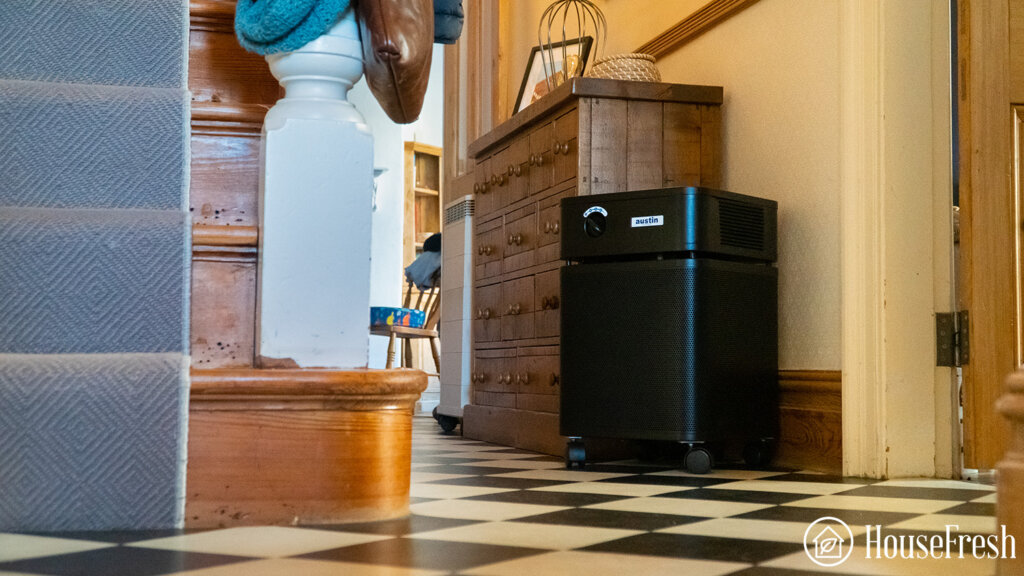
Austin Air HealthMate (15 lbs of activated carbon)

With its 15 lbs of carbon, the Austin Air HealthMate is the best air purifier on the market for dealing with severe air quality issues connected to chemical gasses, unwanted odors and VOCs. However, with a price that surpasses $700, this device is overkill for those looking to keep dust and pollen levels low due to its high initial and running costs.

Austin Healthmate Hallway

Dyson Big+Quiet BP06 (2 lbs of activated carbon)

The BP06 from Dyson comes with 900g of activated carbon, which doesn’t seem like much compared to the IQAir HealthPro Plus or the Austin Air HealthMate, but it’s still A LOT compared to most other air purifiers you will find on Amazon. This is a good amount of carbon and will help with removing unwanted odors from the air but it won’t be enough for those of you who need to deal with serious VOC issues.

I hope my article helped you clarify any doubts you mad had about activated carbon filtration. If you have any questions that I didn’t answer along the way, please drop them in the comments section below and Danny will get back to you right away.

12 common Levoit air purifier problems [including red light fix]

Levoit Core 600S 300S Comparison

Levoit air purifiers are widely regarded as among the best purification devices in terms of both price and performance and are popular throughout the world. However, this doesn’t mean that they’re perfect. 

As with all mechanical devices, problems can sometimes occur. These can range from strange noises to the unit being unable to connect to Wi-Fi. Luckily, we’re on hand to break down the most common complaints. 

Most importantly, we’ll give you top tips on how to solve them. If after you’ve tried our suggestions you are still experiencing an issue, we’ll provide advice on how to get hold of their user manuals and contact Levoit themselves.

Problem 1: My Levoit air purifier won’t turn on

It can be really frustrating when your system won’t turn on at all, but there are often some simple explanations. 

❓ Is the power turned on?

Make sure the power is definitely on at the outlet. If not, turn it on.

❓ Is the electrical cord faulty?

Although tough, the power cord can wear out over time. Be sure to test this and replace it if it’s faulty.

❓ Is the outlet damaged?

Try using another outlet to plug in your purifier.

❓ Is the back cover placed incorrectly?

Double check that you’ve placed the cover well to see if the air purifier works.

❓ Is the power rating inaccurate? 

If the power rating is incorrect, your purifier won’t turn on. Check the outlet to make sure that the power rating is right.

Levoit air purifier modelPower SupplyRated Power 
Core Mini12V 1A7W
Core 200SAC 120V, 60Hz37W
Core 300AC 120V, 60Hz45W
Core 300SAC 120V, 60Hz26W
Core 400SAC 120V, 60Hz38W
Core 600SAC 120V, 60Hz49W
Core P350AC 120V, 60Hz45W
EverestAirAC 120V, 60Hz70W, 1A
LV-H126AC 120V, 60Hz35W
LV-H128AC 120V, 60Hz6W
LV-H132AC 120V, 60Hz28W
LVH133AC 120V, 60Hz47W
LV-H134AC 120V, 60Hz45W
LV-H135AC 120V, 60Hz40W
LV-PUR131AC 120V, 60Hz40W
LV-PUR131SAC 120V, 60Hz40W
PlasmaPro 400SAC 120V, 60Hz38W
Vista 200AC 120V, 60Hz24W
Vital 100AC 120V, 60Hz55W
Vital 200SAC 120V, 60Hz50W

Problem 2: How to reset the Levoit air purifier red light?

This is one of the most common problems with Levoit air purifiers, and is generally connected to the filter. When it’s time to replace the filter, the indicator light on your purifier will turn red. Sometimes, however, it can stay on or even blink after you’ve inserted a new filter.

❓ Is the filter installed correctly?

If your unit is making weird noises, chances are the filter is installed incorrectly. Unplug the purifier and remove the filter from the system to ensure that it is correctly installed. Then re-insert the filter to check the issue has been resolved.

❓ Does the filter indicator need resetting?

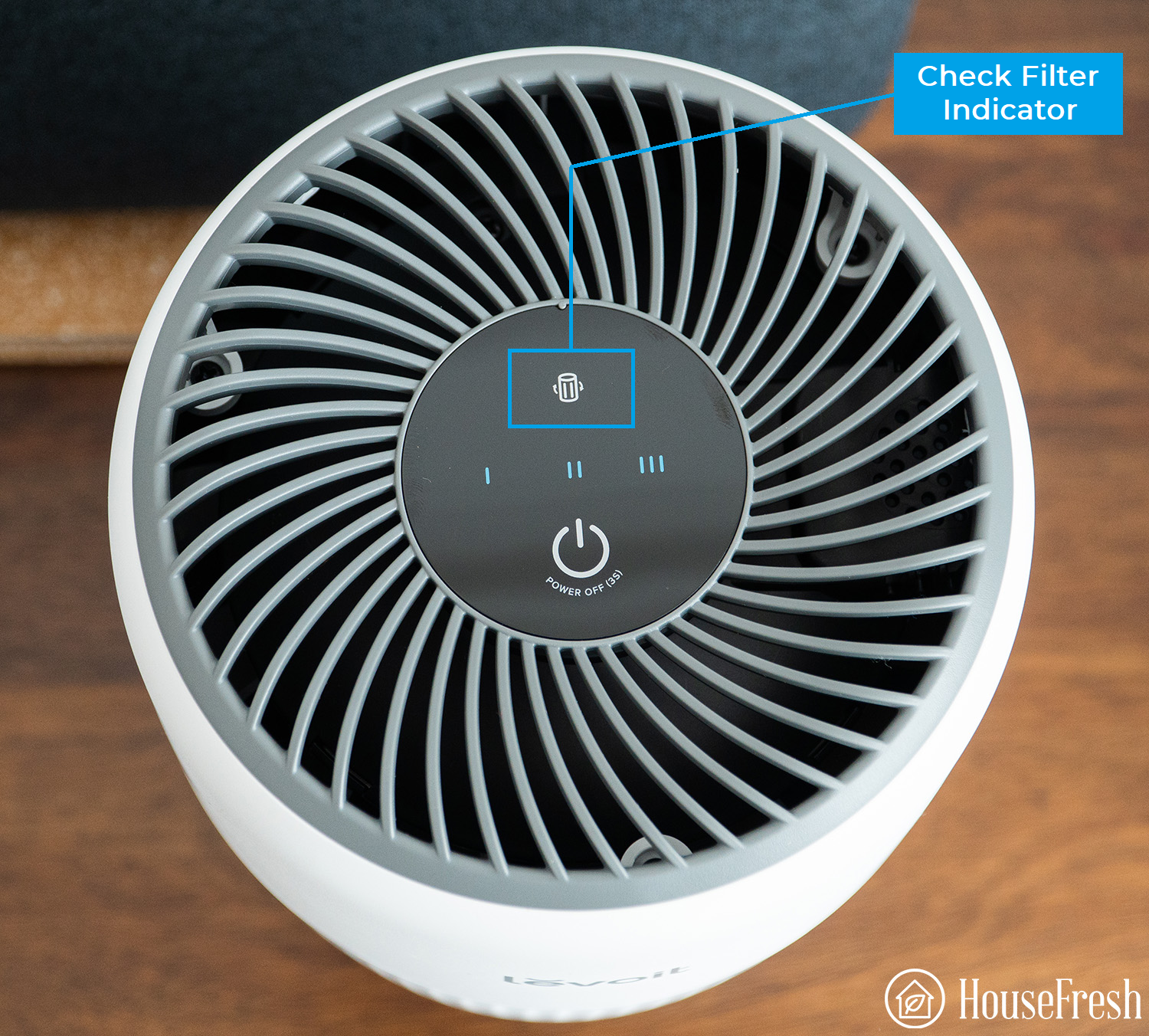
Turn off the purifier and press the filter indicator reset button for three to five seconds.

Levoit Problems Filter indicator needs resetting

For the Levoit PUR-131 and PUR-131S, it’s a little more complicated as you need to use a small screwdriver to hold the internal button for 5 seconds.

Levoit PUR131 Red Light On

Recently our Levoit PUR131 showed the red light, so we got to show you how to fix this issue.

With the air purifier running, you will need to use the reset button on the side of the air purifier and using a small screwdriver, you will hold that button down for at least 5 seconds or until the unit beeps.

Check out the video of me resetting our Levoit PUR131:

Once the button has made a beep, the red light will disappear, and no light will greet you at the top of the air purifier. 

Levoit PUR141 Red Light Off

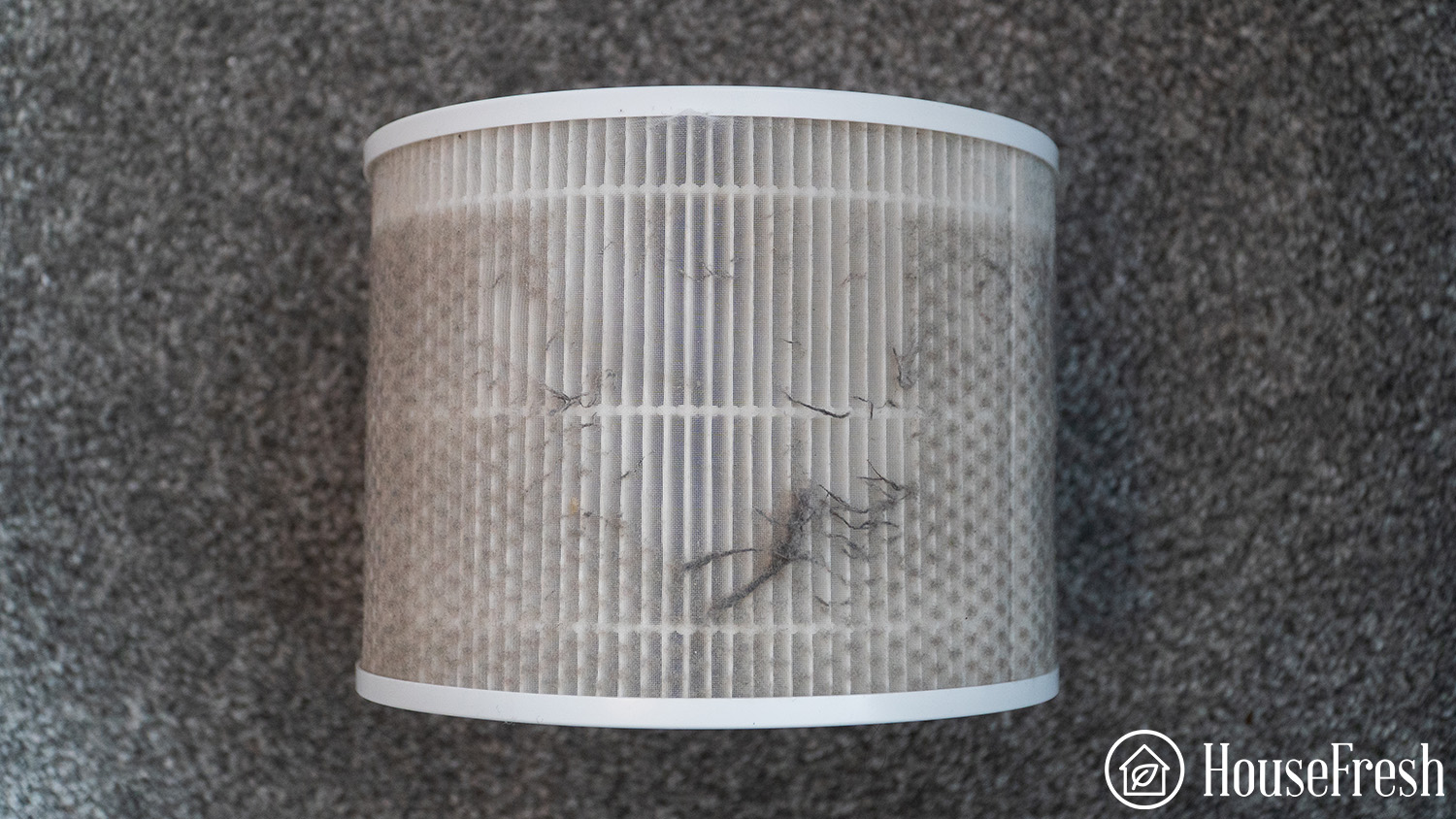
❓ Are the filters clogged?

Check and replace clogged filters with new filters, if necessary. 

Instructions: 

  1. Open the filter cover and remove the old filter.
  2. It’s a good idea to vacuum the inside of the unit and remove accumulated dust particles, hair, and similar dirt.
  3. Unpack the new filter, insert it into the device and close the lid.
  4. Finally, just reset the filter indicator.

❓ Is there excessive debris in the filter compartment?

Levoit Problems Debris filter compartment

Remove the filter and then remove excess debris from the compartment using a gentle brush or vacuum.

❓ Are there programming issues with the Levoit air purifier?

If you’re still having problems, your air purifier may be running into programming issues. 

Try these steps:

  1. Simply remove power from your unit for around 30 seconds.
  1. Turn on the unit one more time.
  1. Hold down on the check filter status for three seconds and then monitor the response from the purifier.
Check filter indicator Levoit

Problem 3: I notice reduced airflow

One of the most important things with your purifier is to have optimal airflow, but occasionally this can be diminished for a variety of reasons. 

❓ Is the fan speed set to Low? 

Change the fan speed by tapping the fan speed button and move up from 1 to two or three. 

Tip

Try using the auto mode function to increase the fan speed, this will detect and remove pollutants.

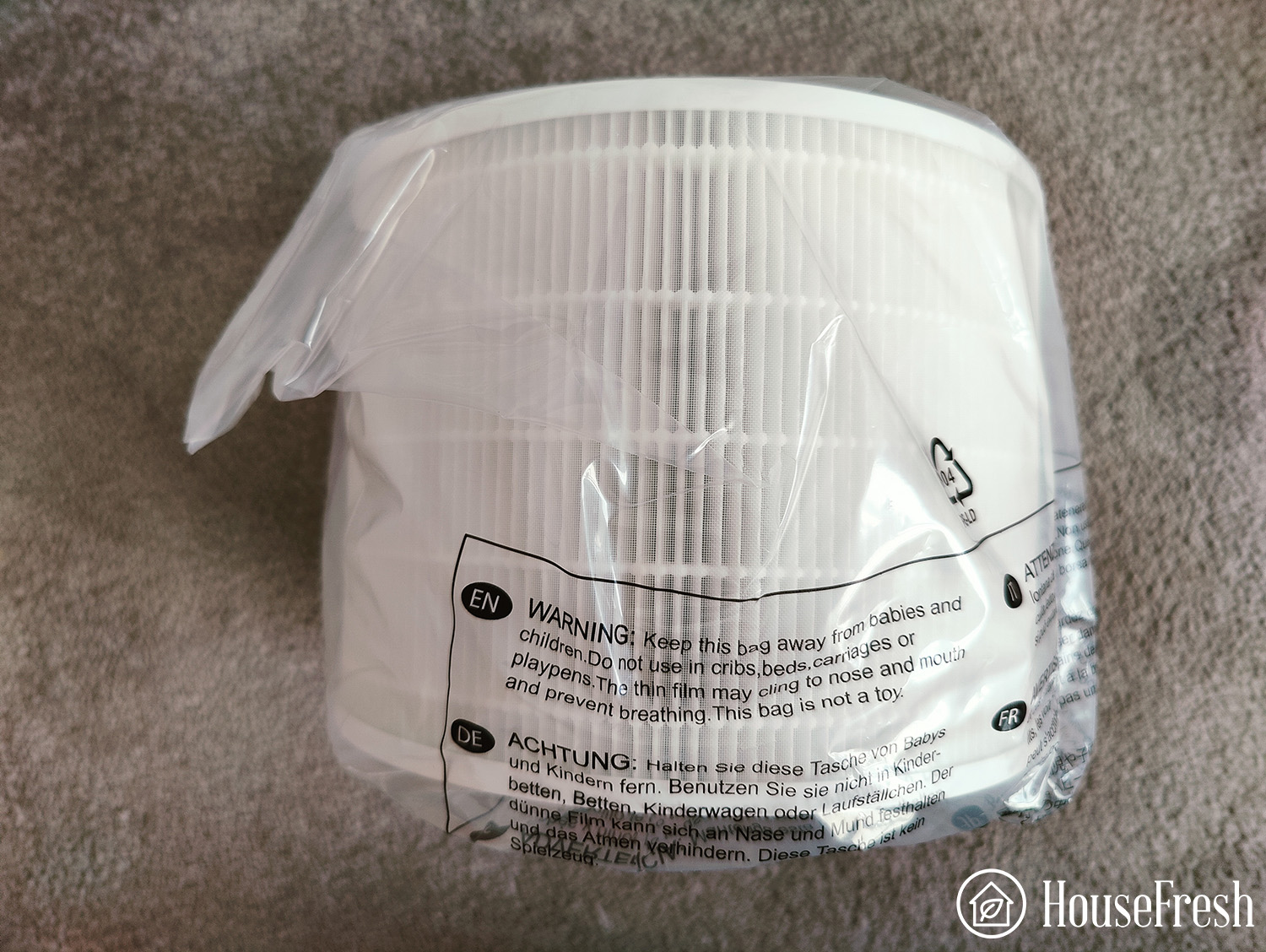
❓ Has the filter packaging been removed?

If you don’t remove all packaging, this can significantly reduce the airflow. Make sure you’ve removed it before operating your unit.

Levoit Core 200S filter in bag

❓ Is there a lack of clearance?

Reduced airflow can occur if the air intake and outlet are placed too close to objects. Simply change your purifier’s location to leave more space around it. 

Air Purifier distance 1

You might feel that the unit isn’t cleaning the air properly when in fact you’re using it in a room that’s too large. Be sure to use the purifier in the recommended room size. This info can be found in the manual. 

Tip

You can access all the user guides and manuals for Levoit units on https://levoit.com/user-manuals 

Problem 4: My Levoit air purifier is making unusual noises or beeping

If you tend to use your purifier while sleeping or resting, you certainly don’t want it to be making strange noises.

❓ Does the filter need changing?

Your Levoit instructions manual can help to ensure you get the correct filter replacement. See our instructions above for detailed guidance on how to change your filters. 

❓ Is there a foreign object inside?

If you find something that shouldn’t be there, turn off the unit and unplug it from the outlet. 

Be sure that you don’t open the air purifier. Instead, contact the support team by phone on 1-888-726-8520 or by email via support@levoit.com, they can help you solve the issue.

❓ Is the back cover placed incorrectly?

Make sure that this is fitted properly.

Levoit 600S Change filter 1

❓ Is there too much dust inside the purifier?

If this is the case, unplug your unit, turn it off and get rid of the excess dust using a vacuum cleaner. 

❓ Does your Levoit air purifier need to be reset?

If you hear a beeping noise while your air purifier is running, it likely needs to be reset. 

Follow these steps:

  1. Ensure the device is plugged in but switched off.
  2. Press and hold the filter reset button for three seconds.
  3. The reset is complete when the light turns off after releasing the button.

If the beeping continues, repeat this process a second time. If you can still hear it, contact customer service as there may be a malfunction. See the bottom of this article for how to contact Levoit Customer Care. 

Problem 5: My Levoit air purifier produces an unpleasant smell during usage

If you can detect an unwanted aroma in the same room as your purifier then the system may be faulty. Yet this isn’t always the case. Sometimes, strong odors and heavy smoke can affect the performance of a unit’s filtration. When this happens, the over-polluted filter gives off a nasty smell.

❓ Does the filter need cleaning?

As Levoit air purifier filters aren’t waterproof, you should never wash and reuse them. Instead, try gently blowing compressed air on the unit. 

Levoit Problems Filter needs cleaning

If the filter has been in the system for over six-to-eight months, it’ll be time to replace it.

❓ Is the room adequately ventilated?

To eliminate any strong odors or smoke, be sure to air out the room before running the purifier. 

Tip

Install a vent hood or a ceiling fan in areas such as the kitchen where there are often intense cooking smells and smoke.

❓ Is the filter causing the smell?

Remember that new filters have just left the factory. They haven’t been ventilated, and are immediately packed, so the unpleasant smell lingers in them. 

To combat this problem, leave the unit running for at least 24 hours in an area where you’re not around. This will help to ventilate the filter and make it fresh.

Problem 6: Air purification isn’t working 

When you’ve bought an air purifier, it can be pretty annoying if the unit isn’t cleaning your air effectively. You might be eager to get your system up and running, but it’s vital to read the user manual thoroughly to ensure correct setup. This is often the most common reason why the unit isn’t purifying the air. 

❓ Has dust built up on the filters?

Dust can build up and can cause problems, as we’ve already seen. Remember, you should never wash and resume a HEPA filter

Vacuuming them can cause damage and stop them working. If you really want to try cleaning your filter, be very gentle. But we really do recommend replacing them. 

❓ Is the room coverage too large?

If you use the purifier in a room larger than 300 square feet, it can lead to poor air quality. Be sure to only use it in the recommended room size.

Levoit Air Purifier ModelIdeal Room Size In Square FeetIdeal Room Size in Square Meters
Core 200S≤ 183 ft² ≤ 17 m²
Core 300219 ft² 20 m²
Core 300S219 ft² 20 m2
Core 400S403 ft² 37 m²
Core 600S635 ft² 59 m²
Core Mini178 ft² 17 m²
Core P350≤ 219 ft²≤ 20 m²
EverestAir558 ft² 52 m²
LV-H126158 ft² 14.7 m²
LV-H128≤ 161 ft² ≤ 15 m²
LV-H132129 ft² 12 m²
LVH133442 ft² 41 m²
LV-H134≤ 710 ft² ≤ 66 m²
LV-H135463ft²43 m²
LV-PUR131360 ft² 33 m²
LV-PUR131S360 ft² 33 m²
PlasmaPro 400S403 ft² 37 m²
Vista 200172 ft² / 16 m²
Vital 100≤ 300 ft²  ≤ 28 m²

❓ Is the interior air quality poor?

Air out the room before running your unit. Once the room is well ventilated, close all doors and windows and then run your purifier. 

❓ Is the air inlet or outlet blocked? 

Allow enough clearance around the purifier and remove objects that may block the inlet and outlet.

Is the air inlet or outlet blocked

❓ Is the purifier in the corner of the room?

The instruction manual advises setting up the purifier around the middle of the room for optimum performance. Simply reposition the device and the purification should start working.

Problem 7: My Levoit air purifier isn’t connecting to the app

Successful app connectivity is essential for the smooth running of your purifier, but unfortunately this can sometimes be a problem. 

❓ Are there network problems?

Check that your internet modem is supported and make sure it works at 2.4GHZ. If it works on 5GHz, switch it to 2.4GHz and try connecting again.

❓ Have you entered the wrong Wi-Fi password?

Be sure to check this and also that you haven’t left any spaces at the beginning or end of the password.

❓ Is your VPN turned on during setup?

Ensure that you turn off your VPN throughout this process.

❓ Is the unit too far from the modem?

Make sure that your modem is close enough to the unit to work correctly.

❓ Do you need to use a hotspot?

If none of the above work, try using a hotspot from another smart device as a modem. This should enable you to connect the VeSync app with the purifier.

Problem 8: My Levoit air purifier isn’t connecting to wi-fi

As well as the app, sometimes there can be connectivity issues with the Wi-Fi. It may be that your purifier simply needs rebooting. You can try this, as well as following these tips.

❓ Does the system need restarting?

Unplug it from the outlet for 30 seconds, then plug the unit back in. You should hopefully be able to connect again.

❓ Does the VeSync app need an update?

Open the VeSync app and check if there’s a firmware update available. If so, follow the instructions to update the software. Deleting the VeSync app and reinstalling again can also do the trick.

Levoit Core 600S App 2

❓ Are small appliances creating interference?

Be sure to keep your air purifier a good five feet away from small appliances to avoid interference. 

❓ Is your phone too far away from the purifier?

Ensure that your phone is close to the system. An iPhone has to be within about 33 feet of the air purifier to work. 

Problem 9: The display in my Levoit air purifier isn’t working

While it’s fairly uncommon, issues with the display can occur. The worst outcome is that there’s a malfunction in the system, and a replacement is the only solution. 

❓ Are there power issues with the unit? 

Firstly, connect a different appliance to the outlet and check the response. If the outlet is faulty, all you need to do is to find a different spot for your purifier. 

Tip

It’s best not to leave defective connections unattended when you’re using smart units, so if you can, hire an electrician to help with the wiring connections. 

❓ Is the cord damaged?

If a different appliance works fine with the outlet, then you need to check the power cord for possible damage. When this happens, it’s best to contact Levoit to secure a replacement. 

If you want the issue fixed quickly, taking your unit to a repair center is another option.

❓ Are there programming issues?

Try power-cycling (turn it off and on again) the purifier and then judge the response from the display.

If there aren’t any hardware issues with the control board, shut down the purifier for a few minutes and turn it back on.

❓ Is there water damage?

Levoit units don’t operate well when there’s water damage. In this instance, you’ll have to claim the warranty.

  1. Make sure your product is within the specified warranty period.
  2. Make sure you have a copy of the invoice and order ID or proof-of-purchase.
  3. Make sure you have your product. DO NOT dispose of your product before contacting us.
  4. Contact Levoit Customer Support team via support@levoit.com.
  5. Once the Customer Support team has approved your request, return the product with a copy of the invoice and order ID. 

❓ Does your air purifier need to be reset?

Reset the unit – you could even go back to factory settings – and then try using your display one more time. 

  1. While the unit is on standby, press and hold the filter reset button for 3 seconds. The filter reset button will light up.
  2. Press and hold the filter reset button again for 3 seconds, the filter reset button will now turn off. 

The reset is now complete.

Problem 10: All the lights are on

If you notice that all the purifier’s lights are on simultaneously, this indicates that the device isn’t working effectively. Most likely, it’s a malfunction within the system which can be resolved quite quickly.

❓ Does the unit need resetting?

Hold the power switch down for at least three seconds. Release the button then press down on it once again for a few more seconds. 

If this doesn’t work, hold down the power switch button for five seconds each time.

❓ Does the purifier needs to be unplugged?

Try unplugging the air purifier from its power source for at least 30 minutes and plugging it back in.

Problem 11: The fan in my Levoit air purifier isn’t working

The fan inside the purifier is an integral part of its functioning. If this isn’t working properly, it can affect the purification process. Often, the reason for a defective fan is something to do with the filter. 

❓ Has the plastic packaging been removed?

It may seem obvious but make sure that you’ve removed all plastic packaging from the filter. Similarly, it’s important to check that you’ve installed the filter correctly.

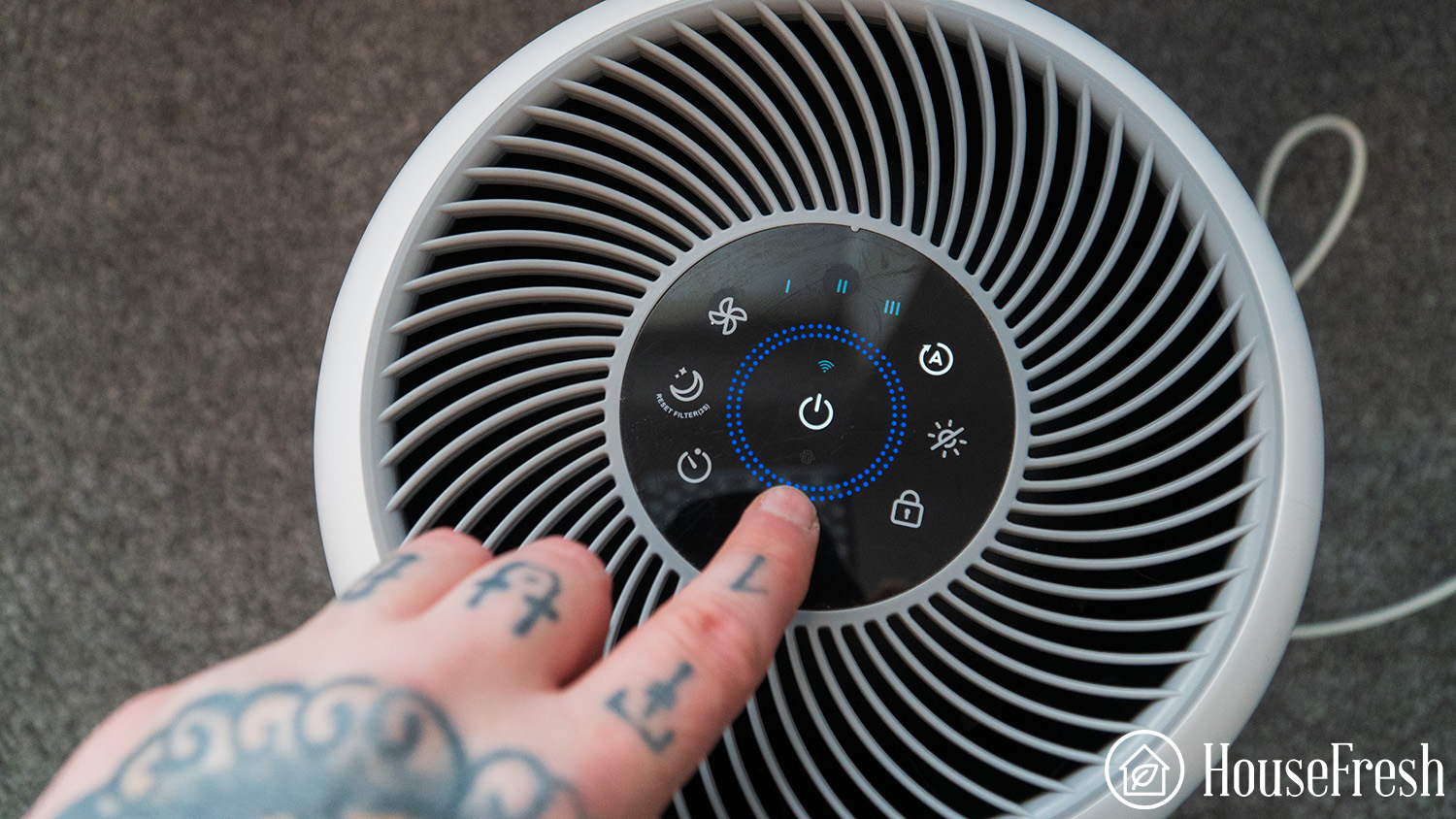
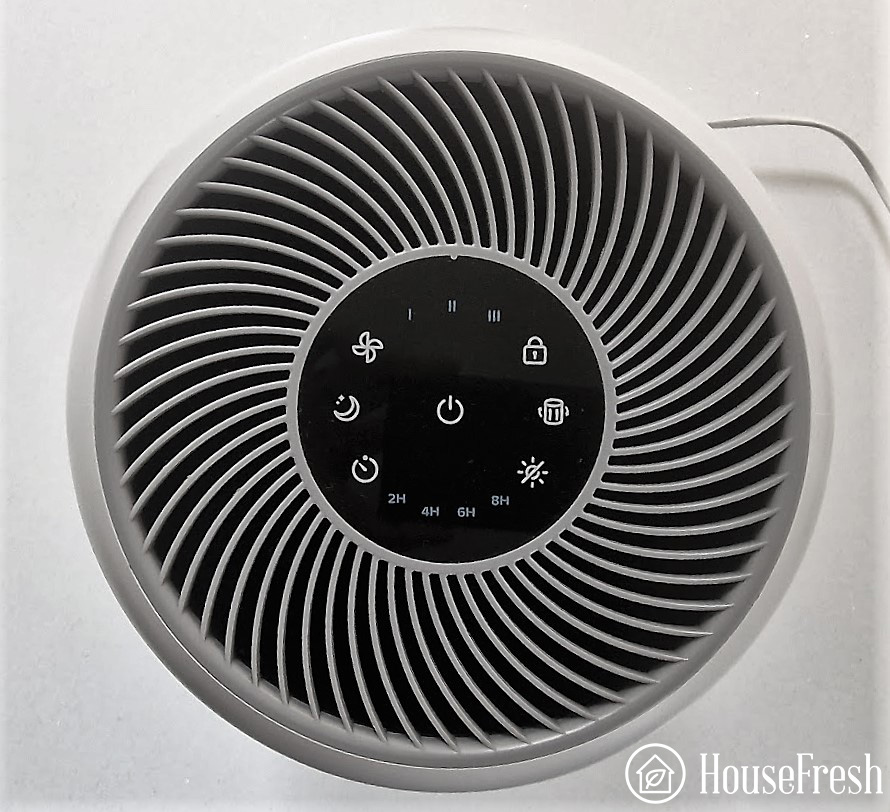
❓ Do you need to touch the fan icon?

Again, this may feel like a no-brainer but double-check that you’ve touched the fan icon on the display. Doing so means you will increase the speed of the fan.

Levoit Core 300 Control panel

❓ Is the Levoit air purifier in sleep mode?

This means that the fan will work as quietly as possible. To turn this off, simply press the sleep mode button icon.

❓ Are there any objects blocking the sides of the purifier?

It’s important to remove all existing things and objects from the sides of the purifier. As we mentioned earlier, this can prevent the device from working properly.

Problem 12: The air quality indicator shows the wrong status

It’s quite common for users to find that the air quality indicator displays the incorrect status, so don’t worry. Most of the time, the indicator is malfunctioning because there’s a problem with the dust sensor.

❓ Does the dust sensor need cleaning?

If the indicator keeps showing the red light, this is supposed to tell you that the air quality is bad. Yet if you’re running the purifier at full capacity, it probably means you need to clean the dust sensor. 

Follow our step-by-step guide:

  1. Firstly, open the sensor cover to access the air quality sensor.
  2. Using a damp cotton swab, clean the sensor lens.
  3. Dry the sensor lens thoroughly with a dry cotton swab.
  4. Close the sensor cover.

How to contact Levoit 

If you’ve tried our suggestions to fix your problem but are still experiencing issues, then don’t worry because Levoit customer support is ready to help. 

Their experts are available Monday through Friday, from 9am to 5pm PST. You can reach them by phone on 1-888-726-8520 or by email via support@levoit.com. You can also use their instant chat function which will enable you to describe the problem as well as submit attachments such as photos. 

Alongside these options, you can simply send a message on their Contact Us page. You’ll be asked to input things like your order number and what you’d like to discuss. 

Find the manual for your Levoit air purifier 

You may have purchased your Levoit purifier some time ago and now the manual seems to have disappeared… But never fear because Levoit has got your back. Download the manual for your unit below. 

Air purifier Manual
Core 200SDownload here
Core 300Download here
Core 300SDownload here
Core 400SDownload here
Core 600SDownload here
Core MiniDownload here
Core P350Download here
EverestAirDownload here
LV-H126Download here
LV-H128Download here
LV-H132Download here
LVH133Download here
LV-H134Download here
LV-H135Download here
LV-PUR131Download here
LV-PUR131SDownload here
PlasmaPro 400SDownload here
Vista 200Download here
Vital 100Download here

Final thoughts

If you want to improve the air quality inside your home, you won’t go far wrong with buying a Levoit purifier. However, there are some common problems that users experience from time to time. For example, the unit won’t turn on, or there’s a continuous beeping sound. 

Fortunately, and in many cases, the issue can be resolved through simple actions such as changing and/or cleaning the filter, and moving the unit to a different part of the room. In more serious instances, however, help is always on hand from Levoit themselves, either via their user manual, or from their dedicated customer support services.

SOURCES

Air purifier vs ionizer: key differences 

Air purifier vs ionizer Header

It’s widely known that the air inside our homes contains pollutants of all sorts. From dust, pollen, pet dander, and mold spores (all allergy triggers) to viruses, bacteria, and volatile organic compounds (VOCs). The greater our understanding of indoor air pollution, the more popular air purifiers become. 

These appliances are an effective solution to deal with pesky contaminants, especially when ventilation proves insufficient or when unable to remove the source of pollutants, like when living next to a busy road. 

On top of all that, there are so many devices and technologies on the market that make things super confusing.

Purely mechanical air purifiers (HEPA and activated carbon filters) and electronic air cleaners (ionizers) have the same function: they remove airborne pollutants. But their mechanisms differ greatly — and so do their cleaning capabilities.

In a nutshell:

  •  Mechanical air purifiers use a fan to pull in air, pass it through the HEPA and activated carbon filters that trap the pollutants, and release a clean airflow into your space.
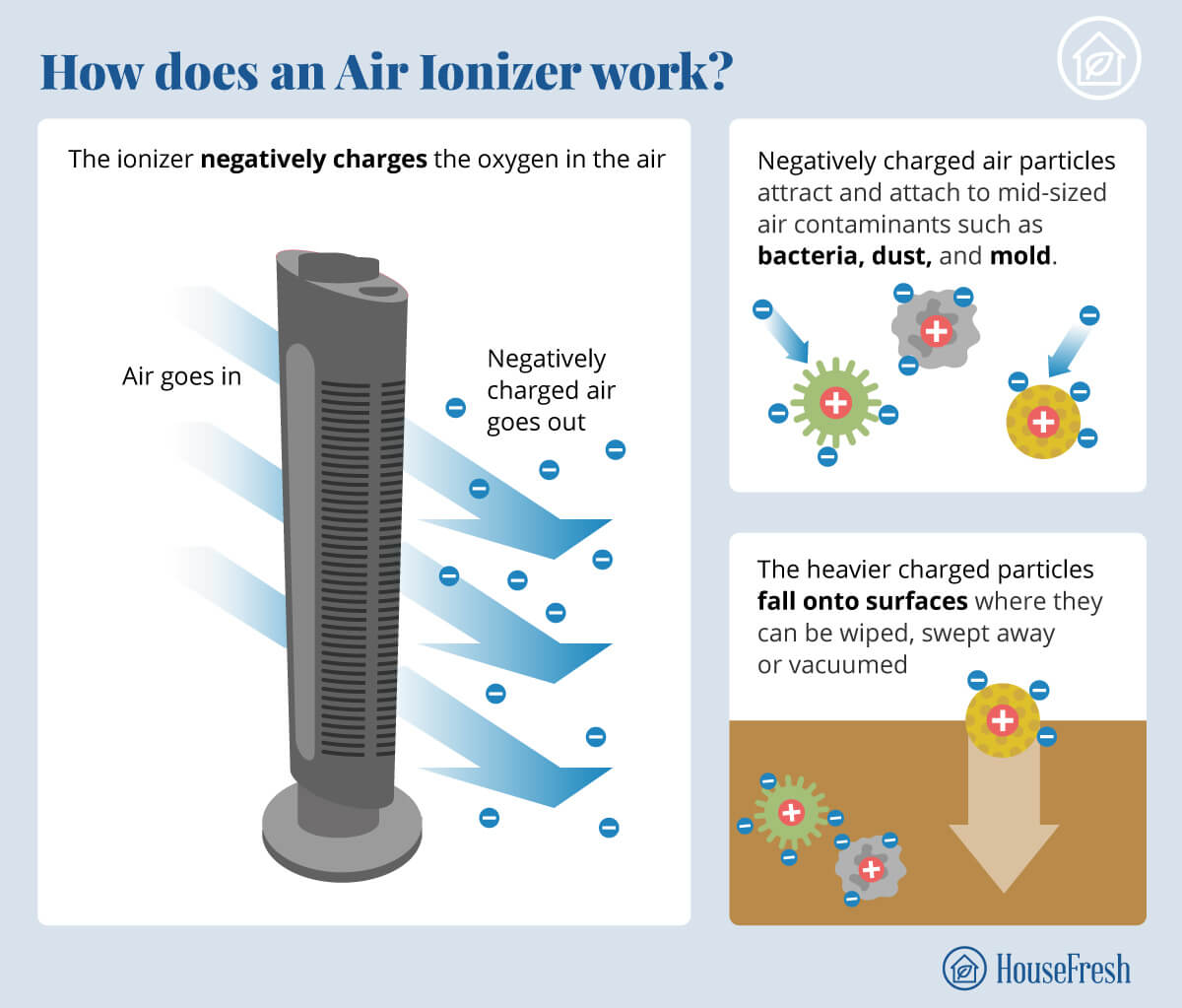
  • Ionizers release an electrostatic discharge into the air that alters the particles’ structure, which forces them to drop out of the air.

The key differences between an air purifier and an ionizer

While both types of air cleaners may look similar from the outside, their mechanisms are nothing alike. Let’s find out why.

1. Air purifiers trap airborne pollutants through filtration and adsorption

As briefly explained above, mechanical purifiers pull the air from the environment and pass it through their filters before releasing clean air. Filters are made of different fibrous media, meaning they can trap pollutants on their surface.

How air purifiers work Diagram 1024x957 1

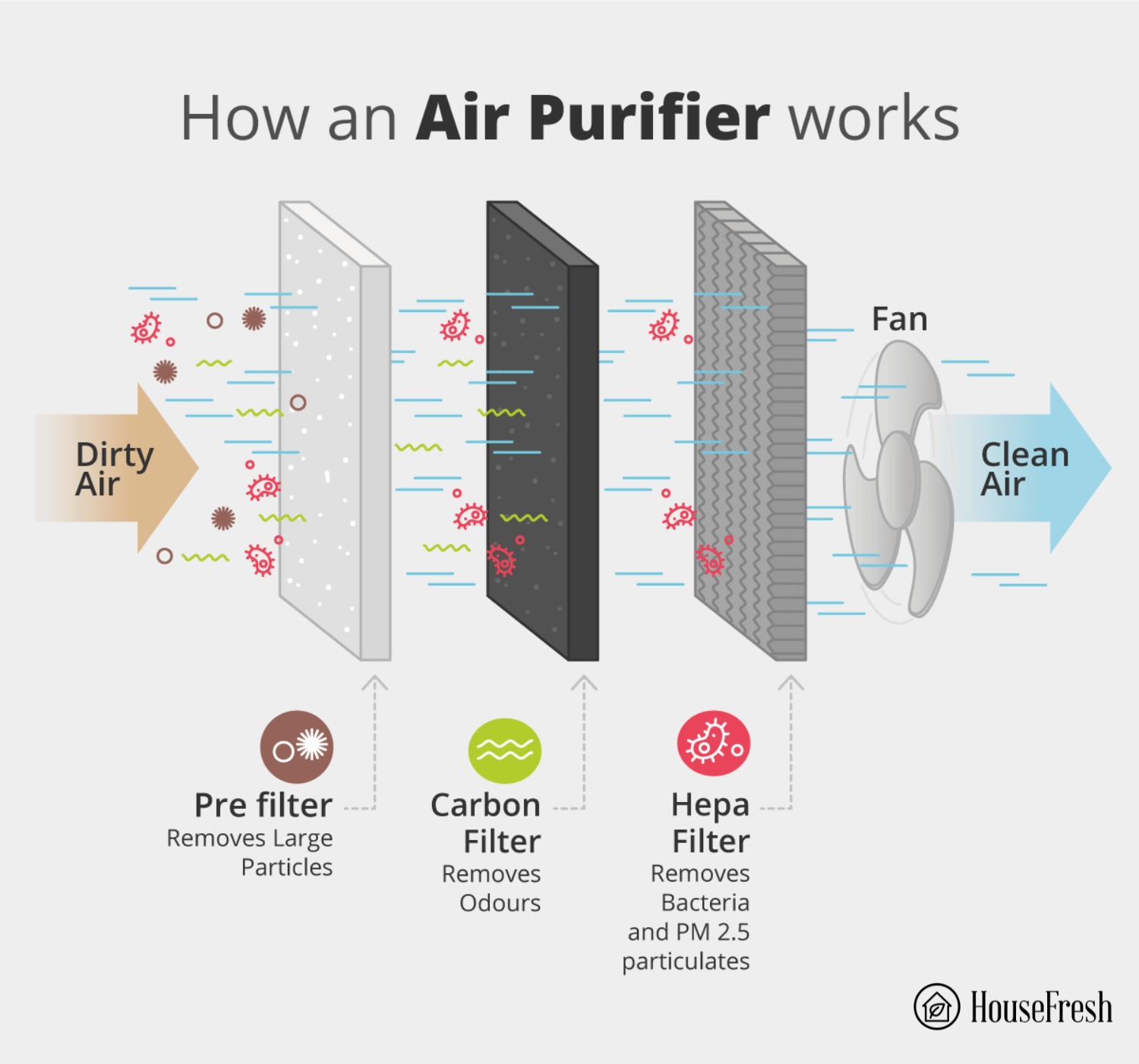
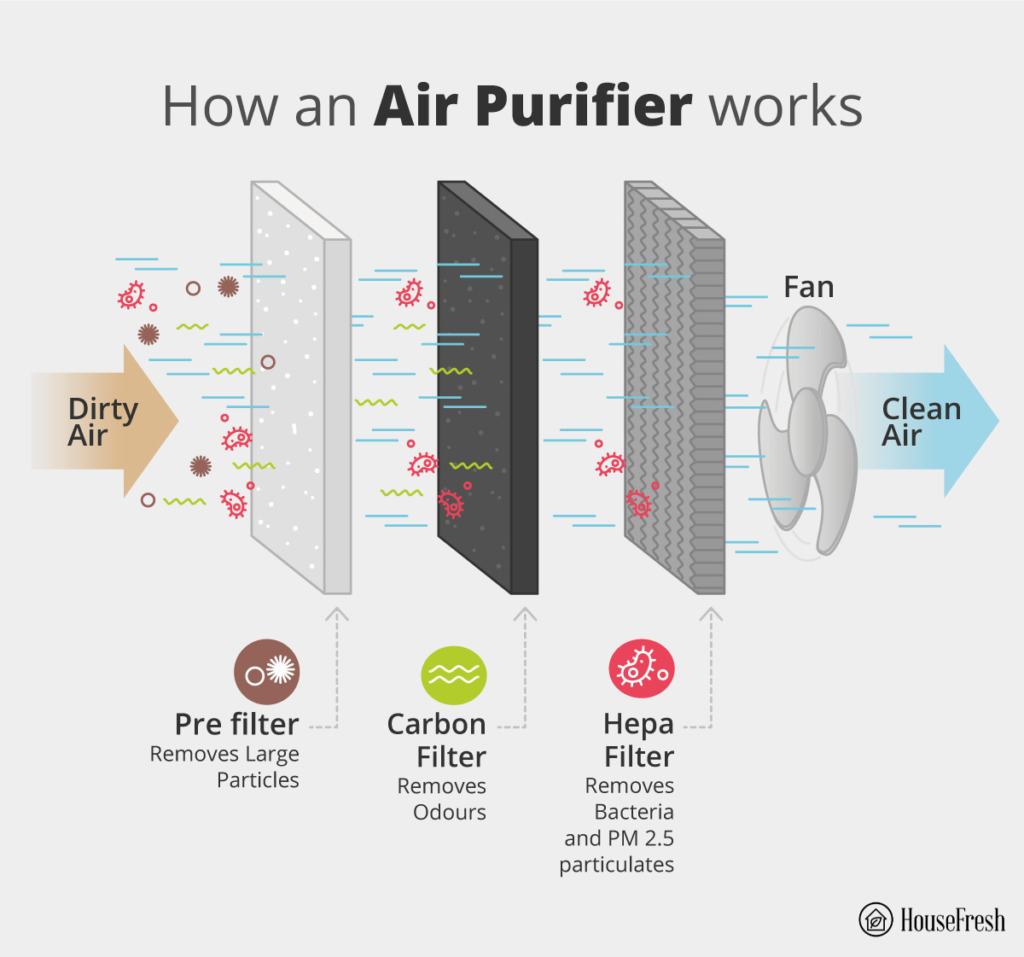
As shown in the illustration, most mechanical air purifiers have a three-stage filtration process: a pre-filter, an activated carbon filter, and a HEPA (or HEPA-type) filter. Each stage tackles different types and sizes of contaminants. 

Pre-filter: The first layer of protection. It prevents large particles (such as lint, coarse dust, or hair) from getting to the main filter. Prefilters need regular cleaning and upkeep to maintain efficiency.

Activated carbon: This layer tackles pollutants in their gas form. The carbon adsorbs odors, VOCs, and other toxic fumes, which get trapped on the porous surface of the charcoal, making them unable to reenter the air. 

HEPA (high-efficiency particulate air) filter: This main filter is made of randomly assorted fine fibers in the form of pleated sheets. It’s constructed like a maze to capture even the tiniest particles (as small as 0.1 microns) like smoke. When the airflow passes through the filter, over 99% of fine particles get tangled in the fibers, accumulating on the filter’s surface. 

Just like with HEPA filters, gaseous pollutants accumulate on the activated carbon’s surface. So, the bigger the surface area, the longer the filter will last to remain efficient at removing VOCs and odors.

Not all air purifiers have an activated carbon filter — some have a carbon-impregnated fiber. The best ones have charcoal pellets and are capable of adsorbing larger amounts of harmful fumes or unwanted smells.

2. Ionizers induce particle deposition but don’t trap pollutants.

Although ionizers do remove particles from the airstream, they don’t collect them.

As the name suggests, ion generators use imperceptible electrical discharges to release ions into the air. Some devices produce only negative ions and are known as unipolar ionizers. Bipolar ionizers, on the other hand, produce and release both positive and negative ions. Despite this difference, they use the same principle: electrically charging pollutants to force them to drop from the airstream. 

The ions become airborne in air or water vapor molecules, which are then attracted to oppositely charged pollutants, such as bacteria, mold spores, and other small to mid-sized particles that inhabit our indoor air. These clusters of ions, attached to pollutants, become heavier and fall down, depositing on oppositely charged surfaces around us: furnishings, curtains, beds, couches, tabletops, walls, or floors. 

how does an air ionizer work logo

Once the clusters land on these surfaces, they’ll stay there for some time, which you can vacuum or sweep. In fact, when using an ionizer, you’ll probably see more dust deposits around. Be mindful, however, that you’ll have to remove them periodically before the clusters break apart and the particles become airborne again.

ESPs and ionizers are often found under the same category: electronic air cleaners. Both technologies use an electrostatic process to charge and remove pollutants from the air. 

However, ESP units have built-in oppositely charged plates that collect the heavily charged particles by pulling air into the device.

In contrast, ionizers only release negative ions into the air, altering the particles that then linger in your living space until you remove them. And still, they can easily disperse. Even vacuuming could disturb and resuspend them.

3. Ionizers produce potentially dangerous by-products. HEPA and activated carbon are harmless

One huge downside of ionizers is that they generate harmful by-products. The electrical discharges and artificial introduction of ions into the environment produce multiple chemical reactions besides particle deposition. They can alter molecules in our homes, turning them into toxic fumes such as ozone, acetone, ethanol, toluene, and aldehydes.

CARB has tested many ionizers, and the agency found them to produce ozone concentrations as low as 0.05 parts per million (the maximum ozone level set by the FDA). However, the EPA states that, even at those levels, ozone can react with common household chemicals. Fumes from cleaning products, polishes, and wood flooring, among others, can react with ozone and produce further VOCs.

But that’s not all. Ozone can also react with compounds such as terpene, found in air fresheners, and create ultrafine particles, adding secondary harmful aerosols instead of removing them. 

Now, when it comes to mechanical air purifiers, both HEPA filters and activated carbon are harmless — they produce zero by-products. These devices operate with one goal in mind: to remove pollutants from your environment.

4. Research backs HEPA filters, but the verdict is still out there for ionizers.

HEPA filters were developed during World War II to control the spread of radioactive pollutants and remove them from the air. Since then, they’ve evolved into the commercial filters we now know, used in an array of air cleaners. Their filtering mechanism, however, remains pretty much the same. 

Performance-wise, filters must meet strict quality standards. In the U.S., a HEPA filter has to be capable of removing at least 99.97% of pollutants as small as 0.3 microns. Meanwhile, the scientific literature suggests that they have multiple health benefits, such as:

  • Enhancing overall respiratory health and lung function
  • Reducing allergy and asthma symptoms
  • Improving cardiovascular health by decreasing blood pressure and oxidative stress

In contrast, academic research on ionizers is controversial, to say the least. For quite some time, there was a lot of hype about negative ions’ positive physical and mental health benefits. They became even more popular after claiming to kill viruses such as COVID. And yet, when you dig just a little deeper, most papers conclude that these claims don’t hold up.

But it’s not only dishonest advertising we should worry about. Besides the risks of ionizers’ by-products, the EPA warns about the dangers of particle deposition. The rates of fine particle deposition in the lungs and respiratory tract are higher for charged particles than uncharged ones. According to CARB, fine particulate matter, such as PM2.5, is considered to cause the most health issues associated with air pollution.

In line with this article by Colorado State University, as long as the industry sets parameters for testing standards and blocks peer-reviewed research, paid-for reviews on ionizers will continue to be commonplace.

The pros and cons of air purifiers

When it comes to mechanical air purifiers, it’s easy to pinpoint the advantages, although it’s harder to identify drawbacks.

Pros

HEPA filters remove and trap different-sized pollutants, from coarse particles such as pollen to fine ones like smoke.
Alleviates allergy and asthma symptoms by removing triggers.
Improves your home’s air quality, perfect for if you live in a polluted area.
Activated carbon filters adsorb harmful VOCs and gases produced indoors (cleaning products, solvents, some cosmetics) and outdoors (smog, car exhaust fumes)
Charcoal can also remove unwanted smells, such as pet odor.

Cons

Filters (both HEPA and activated carbon) need regular replacements.
Some air purifiers, like the Austin Air HealthMate, are power-hungry devices.
Each unit offers different performance and CADR, so you need to make sure the air purifier you buy suits your room’s specifications.

Still wondering if you should get an air purifier? This infographic could have the answer you are looking for.

The pros and cons of ionizers

Identifying the strengths of ionizers is not as easy, to be honest. There are some perks and benefits, for sure. But there are far more cons.

Pros

Reduce the number of airborne particles – at least to a certain extent.
Positive and negative ions hinder bacteria growth.
Ionization breaks down some VOCs, which can then be cleaned from surfaces, but the process can also create toxic fumes.

Cons

Produce dangerous by-products, including ozone, aldehydes, and fine particles — especially hazardous for people with asthma.
Ineffective against large particles, such as pollen or coarse dust.
Poor at removing smells, according to the EPA.
Unable to trap pollutants. Instead, particles settle on household surfaces and require cleaning. However, vacuuming or sweeping may disrupt them, causing them to re-enter your air.
Ionizers can harm your health. This study found that exposure to negative ions increases oxidative stress levels.

A case for air purifiers with an on/off ionizer function

You may have come across air purifiers with built-in ionizers. We’ve tested several of these units here at HouseFresh, such as the Winix 5500-2, the Coway Airmega AP-1512HH Mighty, and the Alen BreatheSmart 45i/75i, to name a few. Unlike Blueair units, these units come with a handy on/off button for the ionizer. 

These devices combine technologies to offer an alternative to traditional unipolar and bipolar ion generators. For starters, true HEPA filters can remove fine particles, such as those produced by ionization reactions. At the same time, electrostatically charged particles are stickier than uncharged ones, which makes them adhere to the HEPA fibrous media, enhancing the filter’s efficiency.

Additionally, activated carbon filters can adsorb ozone emissions, sometimes before it even leaves the unit  (if the output is low). If the filter is robust enough, which is the case with Winix and Alens units, it can also adsorb other VOCs produced by the ionization reaction. 

However, neither unipolar nor bipolar ionization is something to take lightly. Despite genuine and trustworthy certifications, such as those carried out by CARB or other approved entities, most experiments are conducted in laboratory chambers. These tests cannot emulate accurate real-world conditions nor guarantee that an air cleaner will produce zero by-products.

That’s why we’re supporters of air purifiers with an ionizer function that can be disabled, so you can choose when to activate it, if at all. If you’re ever unsure or feel uncomfortable with the ionizer on, you can simply switch it off and still enjoy the benefits of a mechanical air purifier.

Wrapping up

Throughout the article, we’ve explored the risks and (partial) benefits of ionization. In truth, ionizers alone fall short of expectations. 

I’d think twice before investing in an ion generator. But I will say, air purifiers with an optional ionizer function are a different story. Hybrid air cleaners can be more efficient. And I prefer choosing when to boost the purifier’s performance with the ionizer.

On the other hand, mechanical air purifiers are both reliable and safe devices for improving indoor air. They are, without a doubt, my go-to choice.

SOURCES

The happiest cities and states in the United States

happy family ph jimmy dean 1

Instagram can tell you what’s new, what’s cool, and what’s for dinner. But can you use it to find happiness? The data analysts at HouseFresh reckon so, and we’ve processed thousands of Instagram selfies to find the happiest places in the U.S. – and those places where intense smiles are more common than genuine joy.

Happiness may be hard to find, but it’s even harder to fake. A generation of internet users has grown up with everyone always looking happy on Instagram, and they’ve figured out how to tell the difference. No matter how much you rehearse or how many discarded snaps end up in your phone’s trash, people have learned to piece together the clues from your selfies and figure out how you really feel.

Thankfully, robots are selfie-literate, too. Artificial intelligence can identify every face in a crowd, but it can also identify every emotion in a selfie. So, we put technology to the test.

What we did

We used Microsoft’s face recognition API, Azure, to analyze a database of Instagram selfies from every state and the 100 biggest U.S. cities to see which are the happiest places to live.

This facial recognition tool places numerical estimates on emotions based on characteristics and expressions. To work out the happiest cities and states, we used the FaceAPI happiness score, averaging all the scores in each location. For the smiliest cities and states, we considered that a face has a smile if its smile score was greater than 0.75. The locations were ranked by the percentage of people smiling.

Key findings

  • Utah, is the happiest and smiliest state in the US, with a happiness score of 74.4 out of 100 and 70.7% of photos containing a cheery grin.
  • Location matters – 8 of the 10 most cheerful states lie west of the Mississippi River.
  • America’s happiest city is Concord, California, with a happiness score of 79.1 out of 100. With nearly three-quarters of residents (74.4%) grinning in their photos, it’s also the smiliest.

How happy is America, according to AI?

We compared both “happiness” and “smiliness” because not every smile indicates happiness, and not every happy person smiles. After all, plenty of perfectly happy men choose not to smile in selfies because they suffer from man selfie face (lips in, eyebrows up, earnest). And some of the world’s most successful people ration their smiles in favor of pouting like an actual sparrow (parting your lips slightly, like a baby bird waiting to be fed).

01 Say Cheese Happiest Cities and States Mini IG

Click here to see this image in full size

And then, there are the Hide Your Pain Harolds (named after the famous stock photo actor/meme whose forced smile fails to mask profound existential discomfort). The average Harold pic would probably hit 100% for intensity but not fare so well on actual happiness. A city full of Hide Your Pain Harolds might not be very happy, but it would be incredibly smiley. Would you like to live in a place like that?

Utah is happiest U.S. state – and boasts the most intense smiles

First, we mapped the happiest and smiliest states. Utah is number one in both regards, suggesting that when someone in Utah smiles, they really mean it! Surprisingly, California has the least happiness and the fewest smiles – maybe those Hollywood celebs are saving their best smiles for the silver screen. But between Utah and California, several states show some disparity between their placing for happiness and their position in the smiliest charts.

02 The Happiest States in the US Map

Click here to see this image in full size

Michigan ranks 23rd for smiles (average 57.63% smile intensity) but is actually the 14th happiest state in the U.S., according to a full emotion analysis of the state’s selfies (average 64.92% happiness score). The difference might be explained by the nature of happiness in Michigan. A happiness less defined by ‘delight and joy’ and more by resilience, faith, and… proximity to water?

03 The Smilest States in the US Map

Click here to see this image in full size

Meanwhile, all is not well in Massachusetts – but they’re putting a brave face on it. Only four states have lower happiness ratings than the Bay State: Pennsylvania, Indiana, New Jersey, and California. But nine rank lower than Massachusetts for the intensity of their smiles. The famous ‘yellow smiley face’ icon-turned-emoji was (probably) invented in Massachusetts in 1963. The designer, Harvey Ross Ball, was paid just $45 for his work, and if he were alive today, his smile would probably be more “Hide Your Pain Harold” than “face with tears of joy.”

Concord, CA, is U.S. capital of the genuine smile

04 The Happiest Cities in the US Map

Click here to see this image in full size

On a citywide scale, Concord reverses the trend of its home state California, boasting both the highest average happiness rating and most intense smiles. The hometown of Tom Hanks is said to be a quiet and pleasant place to live: moderately wealthy, moderately liberal, and more affordable than similar cities nearby.

05 The Happiest Cities in the US Top 20

Click here to see this image in full size

The top 20 happiest cities in the U.S. closely match the top 20 smiliest – there’s little disparity between those that smile and those that appear genuinely happy. Exceptions are Denver and Pittsburgh, which make the top 20 for happiness without forcing the smiles necessary to rate among those with the most intense smiles.

06 The Smilest Cities in the US Map

Click here to see this image in full size

The two unique entries among the 20 smiliest cities are Worcester, MA, and Denton, TX. Massachusetts again? Yep – Worcester is the city where Harvey Ball invented the smiley face. Worcester has nicknamed itself Smile City and even issues Smile City Passports offering discounts and offers at local businesses. No smile required, although the odds are you’ll be smiling intensely anyway.

07 The Smilest Cities in the US Top 20

Click here to see this image in full size

Leonardo da Vinci vs. the Robots

Instagram’s most popular faces have learned the places that get the most Likes and headed there one after another to get a smiley selfie. It makes it harder to discern the happiest places to live or visit, which is why we’ve provided the results of our full AI analysis in the interactive table below.

From the Mona Lisa to Hide Your Pain Harold, a smile goes furthest when it hides more than it shows. In the case of the Mona Lisa, the painter Leonardo da Vinci understood more about the subtlety of human facial expression than perhaps the robots ever will. Perhaps it’s just as well he’s not around to comment on Instagram selfies from Worcester or anywhere else in Massachusetts today.

Methodology and sources

To calculate the happiest cities and states in the U.S., we used Microsoft Azure’s Face API. This facial recognition tool places numerical estimates on emotions based on characteristics and expressions.

We analyzed images from each state’s Instagram page, as well as from the top 100 U.S. cities by population.

To work out the happiest cities and states, we used the FaceAPI happiness score, averaging all the scores for the faces detected by FaceAPI in each location.

For the smiliest cities and states, we considered that a face has a smile if its smile score was greater than 0.75. The locations were ranked by the percentage of people smiling.

Air purifier vs humidifier: key differences

Air purifier vs Humidifier

Often, air purifiers and humidifiers are lumped together in the same category. It can be confusing which one you need for your home. Granted, they can both improve your indoor air quality, but that’s where the similarities end.

You’re probably asking yourself, “What’s the difference?” and maybe more importantly, “Which one do I need?” 

In this post, I’ll take you through the key differences between air purifiers and humidifiers, what they do, how they do it, and which device would suit your situation best.

Key differences between air purifiers and humidifiers

Before we go any further, I want to address the major difference between an air purifier and a humidifier as simply as possible.

Air purifiers clean the air, humidifiers add moisture to the air.

It may sound simple, but what exactly does that mean? Let’s examine each product closely to establish the key differences.

1. Air purifiers clean the air in your home

Coway Airmega 150 Corner Room

According to the EPA, the average American spends around 90% of their time indoors, where the air is full of pollutants. If not removed, these pollutants can have adverse immediate and long-term effects on our health.

Air purifiers pull air into the unit using a fan, pass it through a series of filters, and then push the clean air out. The filters trap microscopic pollutant particles (allergens, odors, dust, VOCs, etc.), leaving you with clean air.

How air purifiers work

There are thousands of air purifiers on the market. Some great and some not. So, it’s worth doing a little research before choosing the right one for your home. Check out our guide: What size air purifier do I need? to help with your journey.

If my extremely simplified explanation hasn’t satisfied your curiosity, don’t worry.

Here at HouseFresh, we’re dedicated to providing informative yet easy-to-read articles to help you understand the science behind a healthy home environment.

If you want to delve into the world of air purifiers, check out our blog, where you’ll find:

2. Humidifiers add moisture to the air

LEVOIT CLASSIC 300S Side Table

Low humidity can be an issue in your home, especially in the winter months. It’s not only uncomfortable to live in, but it can cause dry skin, eye irritation, and also make it hard to breathe. Studies have shown that introducing a humidifier into your room can relieve respiratory symptoms, alleviate dry skin, and even decrease the survival of influenza viruses.

Humidifiers draw in air from your room, introducing it to moisture from a water tank through a wick or mixing it with steam. The wet air is then released into the environment, mixing in with your air.

How a Humidifier Works

There are three main types of humidifier:

  • Evaporative humidifier – This unit has a reservoir that stores cold water and empties it into a basin. The water is absorbed from the water using a wicking filter. It then blasts air through the wet filter with the help of a fan.
  • Ultrasonic humidifier – This type of humidifier generates water droplets using a metal diaphragm. This component vibrates at an ultrasonic frequency (similar to a high-frequency speaker). An ultrasonic humidifier is usually quiet to run and creates a cool fog.

  • Vaporizer humidifier – AKA a vaporizer, heats water and distributes it into the room as warm steam. This is the most basic and least expensive way of introducing moisture to the air.

I’ve gone and done it again. Given the bare bones of what a humidifier is and how it works.

This is where the HouseFresh team comes into play with a host of articles to guide you:

When to choose an air purifier over a humidifier

Air purifiers can be costly investments, so understanding when to buy one over a humidifier will save you a lot of frustration and money.

✔️ What an air purifier can help with

If you suffer from allergies. An air purifier will remove allergens from the environment, relieving symptoms.
Living in a polluted area. Air purifiers trap fine particulate matter in their filters, removing them from the air.
Mold issues. HEPA filters easily capture airborne mold particles.
Relieving pet allergies. Air purifiers remove pet dander and odors from your room.

❌ What an air purifier won’t do

Change the humidity of your room. Air purifiers won’t add or remove moisture to your home.
Heat your room. A unit won’t add heat to your room unless you have an air purifier/heater combo.
Scent the air. Air purifiers remove odors from your space, and they won’t add a nice scent — that is unless they come with a diffuser feature like the Levoit Core Mini.

When to choose a humidifier over an air purifier

Humidifiers can be a great addition to your room, allowing you to maintain a healthy humidity in the air. But, there are some things a humidifier cannot do.

✔️ What a humidifier can help with

Dry skin. More moisture in the air will alleviate symptoms of dry skin, eyes, and hair.
Living in a dry climate. Prolonged exposure to dry air can cause problems to your health.
Snoring. Dry air can cause throat irritation and inflammation that worsen snoring.
Sinus issues. Humidifiers help loosen mucus in your throat and chest.

❌ What a humidifier won’t do

Remove allergens. They simply cannot remove them and are not recommended for allergy sufferers.
Remove pollutants. Humidifiers can create fine particulate matter, making your indoor air more contaminated.
Keep you hydrated. Humidifiers don’t add enough water to the air that you can stop drinking it. Sorry!

To conclude

Even though they look similar and deal with air quality, air purifiers and humidifiers have very different roles in your household. Remember the golden rule: air purifiers clean the air, humidifiers add moisture.

The good thing is you can run both in the same room simultaneously. You can have clean and moist air as they perform different tasks.

There is a third alternative. Brands have started combining air purifiers and humidifiers in the same unit. But I always air on the side of caution when I see combo units. If a device tries to do two jobs, it probably doesn’t do either to an acceptable standard. 

Check out our review of the Dyson PH03 Air Purifier and Humidifier to see Danny’s verdict on one of the best-selling purifier/humidifier combos on the market.

SOURCES

Do air purifiers help with smells?

Levoit Core 300S Kitchen Smells

Our sense of smell is one of the most acute senses we have. Surprisingly, we can distinguish more than one trillion scents.

Now, sensitivity to smell varies from person to person. But when it comes to the place we call home, all living spaces have a distinguished smell (or a mix of them). Some can make us feel safe and at ease. Others, like the infamous old house smell, pet urine, or dog smell, are unwelcome, to say the least.  

Good ventilation and proper cleaning make a world of difference. But air purifiers also offer a practical solution for those unwanted stenches.

However, you’ll need a unit that has an activated carbon filter. HEPA filters can help to some extent, such as getting rid of moldy odors. But the true hero is an activated carbon filter.

Understanding how activated carbon filters remove smells

Activated carbon is a sorbent material that can deal with molecules that HEPA filters can’t.

Unlike the solid particles HEPA filters can capture (such as pollen, dust, or mold spores), smell molecules are in a gaseous state. Gas plumes, like odor, move at much higher speeds than solid particles. Besides, the molecules are much smaller and capable of slipping through the fiber maze of HEPAs.

How activated carbon filters work

The activated carbon filter on air purifiers removes gaseous pollutants (and odors) through physical adsorption. The gas molecules drawn into the air purifier get trapped on the surface of the activated carbon filter as they pass through. 

Physical adsorption also means no added electronic processes, such as ionization or UV light cleaners, that could generate hazardous chemical by-products. 

However, the bounded pollutants accumulate in the charcoal. So, regarding activated carbon, the amount of sorbent area available is important. The larger the surface, the better. More molecules can be trapped in the material before reaching saturation. 

This is why the carbon is “activated,” meaning it’s injected with oxygen to create countless microscopic pores. The process maximizes the sorbent capacity of the carbon while minimizing pellet size so it can fit in the filter.

Winix 5500 2 Activated Carbon close up

This brings us to the difference between granular or pelleted carbon filters and carbon-impregnated fabrics. The latter is cheaper and more common in air purifiers, but the available surface for adsorption is limited.

Comparing Carbon Filters Winix 5500 VS Winix 5300

What activated carbon filters can and cannot help with

Activated carbon can filter more than smells —but not everything: 

What activated carbon filters can remove from the air

All kinds of odors from cooking,  smoking, pet smells, etc.
Volatile organic compounds (VOCs) such as formaldehyde, benzene, ethylene glycol, toluene, and xylene (among others).
Ambient harmful gases like carbon monoxide, nitrogen oxides, methane, and ozone.

What activated carbon filters can’t remove from the air

Dust, dust mites, or lint.
Indoor biological particles such as pet dander, viruses, and bacteria.
Outdoor biological particles, such as pollen and mold.

A safety note on cigarette smoke

Activated carbon can reduce the lingering stench of cigarette smoke. There are various techniques to clear the smoke out of a room. However, it’s worth noting that no consumer air purifier can eliminate all traces of third-hand smoke produced by smoking indoors and the risks it poses.

As activated carbon is so efficient at removing gasses such as VOCs (volatile organic compounds), an air purifier with a charcoal filter comes in handy against gaseous contaminants if you:

  • Made renovations at home
  • Want to remove burnt smells
  • Live near construction sites, industrial areas, or busy roads
  • Painted your home recently and want to reduce exposure to paint fumes.
Best air purifiers for dealing with smells

We’ve selected three units based on our hands-on performance tests and data. From over 50 air purifiers we’ve reviewed, our top three choices (with pelleted carbon) are:

  • The Winix 5500-2 as our best overall choice. It boasts an impressive CADR for its price, it’s fast (22 minutes to clean our test room without an ionizer), and comes with an auto mode so you can set and forget it. 
  • The IQAir HealthPro Plus is unbeatable for larger spaces. Packed with 5lb of activated carbon, the HealthPro Plus can tackle odors, VOCs, and all kinds of airborne pollutants. Its immediate downside is the price, but the company tests every unit in Switzerland to ensure its performance meets the IQAir standards. Worth every penny.

  • The Levoit Core 300 is a basic yet reliable small unit for those on a budget. Besides, for under $100, this is one of the only budget air purifiers equipped with pelleted activated carbon.

Should you use an ozone generator to remove odors?

Ozone generators are advertised as miraculous fix-all solutions for severe odor issues. Promotion of such devices is based on the ozone (O3) capacity to react with other chemicals, deteriorating particles and gas molecules to eliminate the source of smell.

Ozone can sound like an efficient air cleaner, but it’s actually the opposite. O3 is highly reactive. While it can deal with some molecules, it’ll also create other toxic and dangerous byproducts. Not to mention that, on its own, it’s a potent lung irritant and a health hazard. 

For odors, when ozone concentrations are kept below public health standards (0.005 ppm), it’s ineffective against odor-causing chemicals. In addition, ozone can alter your sense of smell and mask unwanted stenches instead of eliminating them. Or even worse, transform them into more toxic compounds. 

But then, it’s not just the research that discourages ozone generators. Real users have shared their dangerous and hazardous experiences. 

Even if you used an ozone generator for a short time in an empty home, there’s still little information available about the by-products ozone could leave behind.

Besides, I find it hard to understand the logic of pumping ozone into the air. Why pollute our environment with more of this toxic gas?

Wrapping up

The bottom line is air purifiers can help with unwanted smells, but they need to have activated carbon. 

However, if you’re considering investing in a robust air purifier, make sure it features these three filtration stages: a pre-filter that removes large particles such as hair, lint, and dust, a HEPA filter that traps fine particulates as small as 0.3 microns, and the activated carbon filter to remove harder-to-eliminate contaminants, such as odor molecules and toxic fumes.

SOURCES

The one where Monica’s apartment goes green

Header Biophillic Design

Monica Geller: Neat. Practical. Energetic. Biophilic?

Biophilia is our innate love of nature. Biophilic design embraces the idea that our inner cave person still longs for the natural environments through which we evolved. Adapting natural shapes, materials, and principles to create “habitats for humans” may help us relax, heal, and even (ahem) mate.

On a subconscious level, deep below the control freakery, Monica was just as biophilic as the rest of us (as biophilic as a beaver, according to Phoebe). But the interior design of Monica’s apartment? Absolutely not. A pity, because the Friends apartment looks forever trapped in the 1990s, while biophilic design is, naturally, timeless.

HouseFresh wanted to take you on a practical exploration of biophilic design’s potential in the home. So, we decided to biophilia-up Monica’s apartment, room by room, according to principles identified by the leading thinkers in the field. Because if you’re torn between the city and the sticks, you might just need to bring that stream and maple tree indoors.

Kitchen

As a Head Chef by trade and regular host to her friends, the room with which Monica is most associated is the kitchen. We think she’d be happy that we’ve led with the principle of “dynamic balance and tension,” as the phrase kind of personifies her.

In practical terms, we’ve achieved this balance by contrasting the white marble countertops with the darker wood-paneled cabinets to mimic the inconstant light and shadow of nature.

01 Biophilic Design Monicas Kitchen

The herb garden above the sink is a multisensory feature. If you don’t have a window to gaze through while doing the dishes, the infinite randomness of the greenery is something to meditate on. And home herbs bring a scent to your kitchen and a kick to your recipes.

Tip

Herbs are simple to grow and can help you reconnect with the food you eat. These are the top 10 easiest herbs to grow, according to House Beautiful: basil, thyme, bay leaf, lemongrass, oregano, mint, sage, rosemary, chives, and cilantro.

Living room

The living room… where you just want to kick back and laugh with your friends and idiot brother. Science shows that patterns that change unpredictably in time – a water fountain in Monica’s case – have a positive effect on heart rate, blood pressure, attention, and exploration.

Biophilic design isn’t all about the wild of the jungle, and refuge is a key element of the concept. When your job’s a joke, you’re broke, and you just want to hide from the sarcasm, an egg-shaped chair will be there for you. Refuge is defined as “a place for withdrawal from environmental conditions or the main flow of activity, in which the individual is protected from behind and overhead.” However, in this case it could just be “a science-backed excuse to get that rattan cocoon chair you’ve always wanted.”

02 Biophilic Design Monicas Living Room

Tip

Have you considered using non-rhythmic sensory stimuli to relax? This design element is particularly effective if you’re stuck indoors working online all day.

Bathroom

Who doesn’t hanker for a bathroom that feels like a return to paradise without the worry of shriveling in the cold? It is in the bathroom that biomorphic forms and patterns (i.e., natural shapes and textures) find their ideal expression. A pebble-shaped tub or stone basin will redefine your connection to water. Embrace botanical motifs, seashells, and the Fibonacci sequence; reject straight lines, right angles, and – of course – the dingy.

03 Biophilic Design Monicas Bathromm

Natural light offers the simplest pleasures, but daylight itself is anything but simple. The human animal evolved in diffuse natural lighting, and our hormones are hardwired to the subtle change of light through the day from yellow to blue to red. Disruptions to this flow, in turn, disrupt our well-being. But we are also attuned to the drama of shifting shadows and patterns.

Tip

The wide LED bar lights in Monica’s biophilic bathroom create warm light pools, while a windowless bathroom benefits from Lightglass or a portal to a natural light/smart lighting beyond.

Monica’s bedroom

How did rattan ever go out of fashion? Somehow, vine furniture went AWOL through much of the 1980s and 1990s, and it took the combined forces of eco-awareness, biophilic design, and downright good taste to put it back in our homes. In biophilic terms, rattan promises a material connection with nature. And a rattan bed is as close as you can get to sleeping in nature without being cold, uncomfortable, or bitten.

04 Biophilic Design Monicas Bedroom

And yes, Monica’s nightstand is basically a tree stump. Because how else will the bluebirds and chipmunks know how to find you?

Tip

You don’t need to go full tree (Target has a number of more table-like tree tables), but the idea is to embrace the irregular natural shape and strong structure of the stump and not just the texture.

Rachel’s bedroom (2nd bedroom)

Nature has sense and logic. When you design with biophilic principles, you want to do more than simply fill your home with random vegetation. Rachel’s circular marble side tables reflect her personality and offer a pleasing through-line from the marble tops of the kitchen, bringing a little of that “dynamic balance and tension” into the bedroom.

05 Biophilic Design Rachels Bedroom

Earth and water tones act as ‘natural analogs – the replication of nature’s effect in artificial features. And nature finds its way home in a literal form through the hanging plant canopy over the bed. The natural canopy also speaks to the importance of refuge, particularly in a ‘second bedroom,’ which may be the occupier’s only personal space.

Tip

Philodendron cordatum and Epipremnum are among the plants that are hardy and agile enough to scale your canopy bed.

Interior hallway

People aren’t perfect geometric shapes (not even the cast of Friends), so why are our mirrors always round, ovular, or right-angled? The wooden, organic-shaped mirror in Monica’s biophilic entrance hall is wonky, charming, and natural, just like the best of us. Psychologists have shown how biomorphic shapes like these can reduce human stress and promote physiological well-being.

06 Biophilic Design Monicas Hallway

The thought of 1990s Chandler roasting Monica’s plant walls might make the most hardened Friends fan cringe. But it’s true that the plant wall, or living wall, has been slow in making its way from the Roman garden to the corporate setting to the home. A plant wall brings a dead space or blocked view to life. It offers a natural palette, texture, pattern, and even scent, on an efficient vertical plane.

Tip

Considering a plant wall in your home? Keep it near a window or, better yet, a reflective water feature to enjoy the calming effect of infinite light playing across the foliage.

Making friends with nature

Biophilic design is a sophisticated art and science that reconnects us with our most fundamental selves. To achieve a truly biophilic home, harness your instincts to the three types of ‘user experience’ identified by experts:

  • Nature in the Space. Bring natural elements into your home design.
  • Natural Analogues. Learn from and replicate nature through the artificial design features of your interior.
  • Nature of the Space. Build and connect spaces that offer perspective, protection, and playfulness.

Don’t be bewildered by the scope of the project. Just bringing houseplants home or turning your sofa from the TV to the window can make a good start. And, if your inner Monica flinches at a touch of the wild, just hand the mic to your inner Phoebe.

How to smoke weed inside without leaving a smell

How to Smoke Weed 04

Nothing beats rolling one up and taking a hit after a long day. But for some of us, smoking weed is more akin to a covert operation than the relaxing experience it should be. Despite a recent wind of change bringing in new, more open-minded attitudes and laws surrounding smoking pot, it’s still far from being widely accepted in mainstream society. 

Whether you are concerned about your neighbors, family, or even law enforcement catching the scent of your joint, or perhaps you’re just tired of your home smelling stale after smoking weed, we’ve put together some top tips on how to smoke indoors without leaving a trace. 

In order to smoke weed indoors without leaving a smell, you will need to take a few precautionary steps before and after lighting a joint. By finding the ideal space, preparing the room, and removing smoke once you’ve finished, you can be confident you will eradicate any unwanted odor and keep your space feeling fresh.  

Before you smoke: How to choose the best area for smoking weed indoors

How to Smoke Weed 03

First things first, you’ll need to find the perfect pot-smoking spot. Now I know most of you will be heading straight to the comfiest seat in the house, ready to relax in style within close proximity to both the TV and fridge. However, this probably isn’t going to help keep your space odor-free. 

In order to prevent smells from traveling around the house, follow these tips to find the best area for smoking weed indoors.

1. Consider the location of the room and who else might use it

If you’re trying to smoke without affecting other people in your household or alerting an angsty neighbor, avoid communal areas or places where smoke will travel into other people’s personal space. This common courtesy is rule number one when smoking as the last thing you want to do when getting high is annoy the people around you.

Tip

Designate a specific smoke-friendly room and only light up in there to limit the smell of weed taking over the whole house.

2. Be aware of your surroundings

Scan any potential room and avoid areas with lots of soft furnishings or pristine white walls. Carpets, drapes or throws will absorb odors over time and will begin to stink of weed smoke. While walls and ceilings that are painted white can soon become discolored, which is the first thing your landlord will notice, so you can kiss your security deposit goodbye.  

3. Head to the bathroom

This room is almost tailor-made for smoking indoors. As most bathrooms have tiled walls or a linoleum floor, you can rest assured these surfaces won’t absorb odors. As bathrooms have excellent ventilation too, just switch on the extractor fan or open the window and you’re good to go.

Tip

Run the shower and allow the room to steam up, this will help quash smoke and minimize any odor.

While you smoke: How to prepare the room before lighting a joint inside

How to Smoke Weed 02

Once you’ve found the ideal spot, it’s now time to take a couple of precautionary measures to minimize the spread of smoke and ensure you don’t give the game away. 

1. Ventilate the space

Nothing rids odors as effectively as flooding the room with fresh air. Open any windows and doors within your immediate vicinity to increase airflow and allow smoke to dissipate.

Tip

When smoking, try to be as close to the window or door as possible and exhale directly outside.

2. Close interior air vents 

Your HVAC system is responsible for circulating air throughout your home. So when smoke is present indoors, it can enter the duct system and travel from room to room. By closing the vent in the specific room where you are smoking, you will isolate any odor to that room. Most vents have a small sliding mechanism, which allows you to easily open and close the vent. 

3. Seal gaps between doorways

If you want to stop smoke from spreading from one room to another, temporarily place a rolled-up towel at the base of your doorway. This will block a good section of space where smoke and odors would otherwise pass through.

Tip

Damp the towel slightly before placing it at the door for extra odor absorption.

After you smoke: How to get rid of weed smells after smoking indoors

How to Smoke Weed 01

Admittedly, the last thing you’ll want to do is carry out more precautionary steps once you’ve smoked your joint. But it’s important to rid the room of any smoke before it spreads, or seeps into any soft furnishings. So, before you relax, follow these quick, final steps to rid your room of weed smoke.  

1. Turn on your air purifier

When it comes to removing traces of weed smoke, an air purifier recommended for weed should be your first port of call. Ensure it comes with a heavy-loaded Activated Carbon filter, which targets volatile organic compounds (VOCs), such as odors, along with a HEPA filter which helps remove harmful smoke toxins.

In our study of the best air purifiers for weed smoke, we found that the Airfanta 3Pro with carbon filters provides great support for a really good price.

airfanta 3pro video housefresh
Tip

Be sure to leave the purifier running for an hour or two so it can carry out multiple air cycles.

2. Invest in Activated Charcoal bags

Much like the filter in your air purifier, Activated Charcoal bags are filled with carbon that adsorbs gasses and odors, eradicating them from your space. These offer an excellent, budget-friendly alternative, however, they are only effective in an immediate range as they have no means to circulate the air.

Tip

Place numerous bags around the room and target desk fans towards them to increase their efficiency.

3. Remove the evidence

Leaving the end of joints to sit in your ashtray will only continue to emit odors into your home. Ensure they are stubbed out and thrown away as soon as you’re finished to cut smells off at the source. Likewise, pack away all your weed in airtight containers to stop smells spreading.

Tip

Invest in a sealable ashtray so all you have to do is pop the lid on until you are ready to dispose of any waste.

4. Light a scented candle or use an essential oil diffuser

Although these will only temporarily mask the smell, they offer a short-term solution to covering up the smell of weed, which is especially useful if you are expecting visitors.

Frequently asked questions about smoking weed indoors

Trying to secretly smoke in your room is probably going to end in you getting busted, despite how good our odor-eliminating advice is 😉. So it’s best to be open and honest from the outset or smoke elsewhere. 

However, if you are hell-bent on secretly smoking indoors, ensure you maximize ventilation and airflow in your space, either by opening a window or utilizing an air purifier. Remember smoke travels easily and its odor can become absorbed by your bedding, carpet or drapes so be sure to block any spaces where smoke could escape into the rest of the home and eradicate any reminisce of smoke right away. It’s probably best to avoid masking the odor with air freshener too, as this might draw unwanted attention. 

This will vary depending on the room you are in and how you smoke weed. If your space is full of soft furnishings and you’ve smoked with the windows closed, you can expect the odor to linger a lot longer than if you smoked in a well-ventilated kitchen or bathroom. 

Whether you smoke a joint, bong, or pipe will also affect the longevity of lingering odors too. A pipe or bong uses relatively small amounts of combustible material, so they will emit less odor than a joint (especially if rolled using tobacco).

Generally speaking, if you smoke a joint or two indoors without following our odor-busting advice, the smell can remain for a day or two before returning back to normal. Regular smoking indoors will contribute to a constant odor in your home, which smokers often become nose blind to. 

Vaping is much more odor-friendly than smoking combustible joints, bongs or pipes. Providing a more discreet way to smoke. As vapor is less dense than smoke, it dissipates far quicker so won’t leave as much of a lingering smell in your home. However, over time it can attach to soft furnishings and belongings and may pose more of an odor issue in the long run. Be sure to check out our top air purifiers for vaping to keep your home smelling fresh for longer. If its cigarette smoke as well then look at higher powered units in our list of the best air purifiers for smokers.

Final thoughts

The lingering odor left from smoking weed can turn your home into a stale, smelly environment. Not to mention it can be a nuisance to your family, roommates or neighbors. By increasing natural ventilation or investing in an air purifier loaded with Activated Carbon filters, you can dramatically reduce any unwanted odor and create a fresher environment. 

It’s important to state that the smoke produced from burning weed has been shown to contain many of the same toxins, irritants, and carcinogens as tobacco smoke. Prolonged exposure or persistent inhalation of weed smoke can result in serious health complications, where the smell it creates will be the last of your worries. However, if you are going to continue smoking weed, by following each of our top 10 tips, you will not only reduce the odor but lower the risk of secondhand smoke for those around you. 

Are paint fumes bad to inhale in your home?

brush paint fumes

Just as we can’t see the wind, we can’t always see the chemicals in our homes and surrounding us in the environment. But just because you can’t see them, it doesn’t mean they aren’t there. Solvents and other volatile organic compounds are released by many products, including paints, and can cause health problems when inhaled over time. In fact, paint fumes are known to contain numerous VOCs that have been associated with serious health risks like cancer, neurological disorders, and even damage to unborn children.

What makes paint fumes dangerous to inhale?

Many paint companies have taken steps toward lowering VOCs in their products; however, there is currently no federal regulation on how many VOCs can be included in paints sold in the United States. Because of this lack of regulation, it’s important that you take proper precautions before painting your home—and this doesn’t mean just opening windows and doors!

To determine whether a product contains VOCs, look for a symbol on its label. If you see the letters “VOC” with a number next to it, you know that it emits at least some VOCs when used. The lower the number, the lower the risk of off-gassing from that product. Some of the most hazardous solvents found in paint include Toluene, Xylene, Acetone, Formaldehyde, and Benzene. 

  • Toluene affects the central nervous system and causes nausea and headaches. It can also cause liver and kidney damage. 
  • Xylene affects the central nervous system and can cause liver and kidney damage. 
  • Acetone is dangerous to inhale because it is extremely flammable. 
  • Formaldehyde is a known carcinogen that has been linked to lung cancer. 
  • Benzene is highly flammable, affects the central nervous system, damages the blood cells, causes leukemia and bone marrow damage, and can be fatal in large amounts.

The amount of VOCs released depends on the type of paint used. The less-toxic options include latex paints, which generally contain fewer chemicals than oil-based alternatives and contain a lower VOC content. In comparison to traditional paints, zero-VOC options emit fewer pollutants into the air and are thus better for the environment.

7 tips to paint your home safely

So, now that we’ve gone over the many risks associated with breathing in paint fumes let’s get to the good news. There are a number of steps you can take to paint your home safely while greatly reducing the risk of inhaling harmful fumes and VOCs. Here are the steps you should take before, during, and after painting your home so that you can minimize the risks.

Paint Home Safely

1. Use indoor paint 

The first step in making your home safe is choosing an indoor paint. Indoor paints contain virtually no VOCs (volatile organic compounds) and are typically free of harmful chemicals. Although a bit more expensive, indoor paints are well worth it for their health benefits and can often be found at discounted rates.

2. Use a respirator mask

Everyone should use a respirator mask when painting; even if you’re using low-VOC or zero-VOC paint, you should still take precautions to protect yourself from inhaling the fumes. Some products used on interior surfaces can cause irritation and damage your lungs over time, even if they don’t contain VOCs. There are several kinds of respirators available, but for painting inside your home, a basic face mask that covers your nose and mouth should do the trick. 

3. Keep your home ventilated 

The next step is to keep your home ventilated. Painting safely requires good airflow, so you need to open the windows and use fans in order to make sure that the air circulates well. By keeping your home well-ventilated, you can significantly reduce the level of VOCs in the air. Plus, because there will be more air circulating, having good ventilation can also help the paint dry quicker. 

4. Take frequent breaks 

Remember to take frequent breaks, as well. Paints are a mixture of solvents, pigments, and additives, and it is important to keep your body in mind as you paint. In order to remain safe and healthy, it is good practice to work in short bursts and allow yourself time away from the fumes. Use this time to get some fresh air or grab a quick glass of water before resuming your task.

5. Stay ventilated 

Once you’ve finished painting, don’t assume it’s safe to breathe in the air again. Just because you no longer smell paint fumes doesn’t mean they’re not there. In fact, even once you’ve moved your furniture back into place and the paint has dried, the VOCs will continue to off-gas for several weeks. So be sure to keep the windows open and fans running until at least a full month has passed since you completed the painting job.

6. Use an air purifier 

The last thing you want to do is put your health at risk when painting your home, so don’t forget to use an air purifier. In addition to removing VOCs, a good air purifier can also remove other particles and contaminants from the air. This will create a healthier environment for you to breathe in while you and your family are painting and after you’ve finished painting. 

Tip

Interested in buying an air purifier but not sure where to start? Check out our top six favorite air purifiers for VOCs. Not keen on doing research? You can’t go wrong with the IQAir HealthPro Plus or the Coway Airmega 400.

7. Put paint away when finished 

After you’re done painting, and the paint is dry, make sure to put it away where it won’t be exposed to sunlight. Just like how plastic can degrade over time when it’s left in the sun, so too will paints that are left uncovered. Also, don’t forget to clean your equipment properly after you’ve finished painting. If you leave brushes or rollers dirty with paint, they’ll be very difficult to clean later on. It’s best to wash them immediately after you’re finished.

Frequently asked questions about paint fumes at home

Well, that depends on what you mean by high. Some people use the word to describe a feeling of euphoria or elation. Others may be referring to a state of drunkenness. Still, others may be using the term to refer to a condition of dizziness or disorientation. 

So, let’s try to clear up some of the confusion! The short answer is yes; painting can sometimes make you feel “high.” But it has nothing to do with the paint itself and everything to do with how our bodies react when we inhale volatile organic compounds (VOCs).

There’s a good reason to be concerned about paint fumes getting into food. If you’re painting a room where food is present, your children or pets may be exposed to toxic chemicals. 

When oil-based paints are being used, the vapors can condense on surfaces and react with the oxygen in the air. This creates acids that can taint food or leach into it. 

Fortunately, these conditions are rare. For example, you would have to leave wet paint open for many days before it could react with oxygen and create enough acid to affect food or beverages.

Yes, it is absolutely possible for paint fumes to travel through walls. In fact, it’s not even a question of whether they can; the truth is that they will. The fumes can’t go through the solid part of the walls, but they can go through very small openings or cracks in the wall, the tiny spaces between the wall and its trim or molding, as well as any gaps around your vents, air ducts, and pipes.

Check out our best tips to help you stop paint fumes and smells traveling through walls.

What to do when your dehumidifier ices up

Frozen Dehumidifier 3 1

By now, we all know how much a dehumidifier can help our home environment. It is particularly  effective when used on a daily basis to prevent the spread of dampness and mold. One significant feature in a dehumidifier is the cooling coils, which, unfortunately, can sometimes freeze. This can result in your unit lacking in general performance. Luckily, there are a few tips and tricks to fix this problem instead of throwing the whole unit away and buying a new one.

Why does a dehumidifier ice up?

When it comes to dehumidifiers, most units give us a warning sign or indication that something’s not quite right, letting us know a bit of TLC may be required. One big sign is when the coils on your unit start to freeze up.

Frozen dehumidifier

Freezing can be a particularly common issue among dehumidifiers, so here are a few key factors that might be causing the problem:

Factor 1: Room temperature

The temperature of your room can be the most common reason for your unit to freeze. Coils are extremely important in a dehumidifier, they operate by condensing water that drips into the water tank or is pumped away via a hose. However, this all works well as long as the temperature is high enough to do so. If the air is too cold, the water freezes instead of condenses, causing the coils to ice up and cause the problem. Most dehumidifiers tend to work efficiently at 65 degrees or above, anything lower could cause icing so you may have to keep a close eye on it.

Factor 2: Airflow 

One of the less common reasons, but still probable, is that your machine isn’t getting enough air flowing through it. This usually means that the fan isn’t operating properly. With air not passing through fluently, it can cause the machine to freeze up. Whilst this issue is noticeable and can be caught early, it may require new parts. 

Factor 3: Clogs or blockages 

Build-up from dust and dirt is a common hindrance for dehumidifiers. If your unit is not sufficiently maintained, over time it can cause your unit to ice up. Giving the exterior, fan, coils, and filter a good clean will release a lot of the pressure these machines get put under. By allowing air to flow through more smoothly, you will decrease the risk of icing.

How to fix an iced-up dehumidifier

HouseFresh Fix a dehumidifier

Here are a few troubleshooting ways to fix your iced-up dehumidifier. We’re not electricians and probably neither are you. If you feel like you’re out of your depth, please, call an expert. 

Before attempting to fix any problem, first things first, always switch off and unplug your dehumidifier. Remember, your dehumidifier is frozen; moisture, water, and electricity do not mix.

STEP 1️: Clean the filter, blower wheel, and fan blade

Cleaning your unit’s filter is a very simple but necessary process. If your blower wheel and fan blade are blocked or damaged in any way your unit will suffer a huge airflow problem. 

💧 Find the safest way to remove the panel covering the filter, slot the filter out carefully, and run it under hot water until you see the dirt and dust begin to disappear.

🧽 Locate the fans or blower fins within the core of your machine and give them a good clean using a slightly damp cloth.

🔍 Check for any obstruction or debris and assess that the wheel / fan spins freely and everything is firmly attached. 

Tip

If there do appear to be defects within the machine, do not keep running it. Parts may need to be replaced so running it will be a waste of time and potentially hazardous to your home. 

STEP 2: Check the humidity control & sensor

Humidity control operates by sensing relative humidity levels. If there is a fault with the humidity control then there are a few simple ways to detect a problem. If a humidistat doesn’t recognize or sense the correct level of humidity, the compressor in your unit will continue to run which can cause the dehumidifier coils to ice over. 

🔌 Unplug your unit and open it up carefully.

🔍 Check your humidity sensor is connected to the humidity control. If the connection is slightly apart or has come apart altogether, the sensor will not be able to give the right information to the thermostat which may cause the unit to freeze.

🙌 Simply re-attach the connection and re-apply the cover.

HouseFresh Dehumidifier Sensor

STEP 3: Check the fan motor

In order for the fan motor to operate effectively, it needs to have an adequate amount of air blowing across the evaporator and condenser coils. If the coils are deprived of a healthy amount of air it can cause an ice build-up, therefore ceasing operation. 

🧽 Remove the outer panel of your unit and inspect the coils, they may be riddled with dirt, lint, and dust build-up, so be sure to give them a good clean if required. 

🤚 By placing your hand inside the core of your dehumidifier, check to see that the fan motor spins without obstruction and see if the blower wheel or the fan blade is firmly attached. You should give these features a good clean as well as it should be easy to access. 

👀 Another great way to test to see if it is an internal issue is to operate the fan-only mode on the control panel and observe the fan motor.

Tip

If there is an unpleasant noise or strange hum it may be a sign that your unit is defective and might need replacing and should contact a specialist.

The most beautiful gardens in the world, according to tourists

Bushart Gardens Victoria Canada

“Upon my life, I believe handsome public grounds, with music, would have the happiest influence in allaying riots and debauchery, crime and secret vices,” declared landscape designer Andrew Jackson Downing in 1848. 

The public garden was late to the U.S. In Europe, the Italian Renaissance had ushered in a culture of open grounds of variously scientific or aesthetic appeal. But it took until the 19th century for the U.S. to notice the benefits that the grand garden could have on the soul of both the individual and the nation.

The romance flourished as urbanization put a tighter squeeze on our natural spaces. A public garden immerses you into a world of landscape design and natural wonder. It offers education if you want it and meditation if you need it, a short pedal or stroll from your door. And when you travel, the gardens on show harbor local history, design, and indigenous plant life away from the bustle of the city or beach.

Andrew Downing had earlier raved that public gardens provide “room and space enough for pleasant little groups or circles of all tastes and sizes, and no one is necessarily brought into contact with uncongenial spirits.” Sadly, this social appeal of the public garden caused most to politely close during lockdown. So, as these gardens re-open for human visitors, HouseFresh analyzed Tripadvisor reviews of nearly 1,000 landmarks to find the most picturesque public gardens that are overdue for your contemplation: the gardens that the most reviewers called “beautiful.”

Key Findings

  • Gardens by the Bay in Singapore is the most beautiful public park in the world, with 12,385 “beautiful” mentions on Tripadvisor.
  • Bellagio Conservatory & Botanical Garden is the most beautiful public park in the U.S., with 5,706 mentions.
  • Seven out of the top 20 most beautiful public parks in our study are in Europe.
  • Luxembourg Gardens in France is Europe’s most beautiful public park (6,818 mentions).

Futuristic Singapore landscape is the world’s loveliest public garden

A public garden offers a restful escape from the touristic thoroughfare. Your host city might boast a variety of public garden types, such as the botanical garden (offering a more scientific angle or a collection of rare or exotic plants), arboretum (tree garden), or gardens with a different design principle or cultural emphasis. We found the most beautiful one in each country and mapped them below.

01 The Most Beautiful Gardens World Map

Click to see full-size image

There is a good spread of top-rated public gardens around the world. Our top ten includes landscapes in Asia, Africa, North America, Europe, and Oceania. However, seven of the top 20 are in Europe, indicating the importance of European royal and pleasure gardens. These have long alternated between the Baroque-tinged geometrics (such as Luxembourg Gardens, France (below)) and a wilder landscaped layout.

The world’s most beautiful public garden boasts three waterfront landscapes and the world’s largest glass greenhouse. Since opening in 2011, Gardens by the Bay has been the cornerstone of Singapore’s claims to be the premier tropical garden city. An aerial walkway through the ‘Cloud Forest’ and a cascade of orchids down the futuristic walls of the greenhouse are among the hypermodern features of this blissful resort.

“Stay for the sound and light show,” recommends one reviewer, “where many of the sculptures are lit up with varying colours and patterns to the background of beautiful opera and music.”

Glam Las Vegas Conservatory is the most eautiful in the U.S.

A wander around a public garden, taking your phone from your pocket only for a discreet Instagram moment, has a whiff of the Victorian wellness retreat. But it has come of age as we’re driven to add gardens to roofs and interior walls in an attempt to save our planet and our mental health. Wherever you are in the U.S., there’s probably a secret paradise a short trip away. This map pinpoints the most beautiful in every state.

02 The Most Beautiful Gardens US States Map

Click to see full-size image

The most beautiful public garden in the U.S. is rated 53% more beautiful than the second-placed Boston Public Garden. Bellagio Conservatory & Botanical Garden is a key feature of the eponymous Las Vegas hotel, delivering curated flora from around the world. Granted, the heavily-designed gardens offer a space more suited for entertainment than meditation. But, this being Vegas, every last detail is attended to your satisfaction.

“It is so beautiful and such a pleasant way to spend some time away from the noise and chaos that is Vegas,” testifies one visitor. “A happy place and time!”

You only need to utter the words “Japanese garden” to lull some horticulturalists into a state of meditation. A visit to Portland Japanese Garden will show you why. Rather than strict rules, a Japanese garden harnesses a mindful sense of proportion, grace, and mutability, with attention to local needs and materials rather than a zoo-like import of exotic plants and techniques. 

Portland Japanese Garden achieves this while embracing core values of “Inspiration, serenity, tranquility, and the aestheticism of nature.” The Japanese ambassador once described it as “the most beautiful and authentic Japanese garden in the world outside of Japan.”

A sense of enormous well-being

The joys of the public garden are many: “health and spirits,” suggests Andrew Downing, “exercise in the pure open air, amid the groups of fresh foliage and flowers, with a chat with friends, and pleasures shared with them, as compared with a listless lounge upon a sofa at home, over the last new novel or pattern of embroidery!”

So, rise up, “fair countrywomen” (and everyone else), from your embroidery station or hotel bed, and breathe in the colorful wonders of a nearby botanical park. You can search our full data below to find one. You’ve nothing to lose but your cobwebs.

METHODOLOGY 

Throughout December 2021, we used Tripadvisor to gather data on the most beautiful gardens in the world by searching Things To Do using the keyword “beautiful” in each country of the world and each U.S. state. Then, we extracted the attractions labeled as gardens.

We deemed the places with the highest number of mentions of “beautiful” in their reviews were deemed the most beautiful gardens.

How air pollution could ruin our most beloved views

Header Tainted Views 1

For a moment, every neighborhood radiated the glamor of a picture postcard landmark.

When the first 2020 lockdown struck, a temporary bonus was the drop in air pollution. The view through our windows seemed freshly polished. Tourist attractions shone with an intensity unseen for decades. Environmentalists keenly told us that this was a wake-up call, not a turning point. Despite decades of campaigning and policy change, air pollution is still worsening for more than half the world’s population.

You might not notice the worsening effect in your daily, hometown life. But when you travel, the sight of industrial smog has a sobering effect. As part of our mission to draw attention to the quality of the air you breathe, HouseFresh wanted to show you how 10 famous views could look if local human-made air pollution levels increase.

We found iconic photos of the views and, on each one, emulated the visual effect that air pollution has on the skyline of Ghaziabad, India, frequently ranked as the “most polluted city worldwide.” At the time of writing, the PM2.5 level in Ghaziabad is 18.2 times the WHO annual air quality guideline value, with an Air Quality Index (AQI) of 169. A ‘Good’ rating is 0-50 AQI.

Use the sliders below to reveal ten of the world’s loveliest views now and how they could eventually look if air pollution levels rise unchecked to Ghaziabad levels.

Rockefeller Center (New York, USA)

In the 20th century, New York City was the poster child for the modern city. And the 1939 Rockefeller Center was an art deco emblem of American sophistication. But, as early as the 1960s, the eroding effect of air pollution on its buildings was cause for concern. Today, the Department of Environmental Protection suggests that 6% of NYC deaths are connected with air pollution.

The Shard (London, UK)

The “imposing and majestic” Tower Bridge, seen here from up in the Shard, was built to facilitate urban commerce in the late 19th century – just a few years before a London doctor, Harold Des Veaux, invented the word ‘smog’ (smoke + fog). But the pollution of London air by the burning of coal predates the Victorian bridge by at least six centuries. In 2021, the city’s mayor unveiled a 10-point plan to reduce air pollution, pointing out that “there is a significant peak in concentrations during the morning school run.”

Christ the Redeemer (Rio de Janeiro, Brazil)

It took nine years to build the 130-foot concrete Christ into Rio de Janeiro’s skyline. But that skyline has since been tainted by the fumes of Brazil’s main steel complex as well as numerous other industrial sites. And the city failed to reduce air pollution “within the limits recommended by the World Health Organization” as promised ahead of the 2016 Olympics. 

“A lot of attention has been paid to Rio’s water pollution, but far more people die because of air pollution than the water,” declared Paulo Saldiva, a University of Sao Paulo pathologist and WHO committee member. “You are not obligated to drink water from Guanabara Bay but you must breathe Rio’s air.”

Victoria Peak (Hong Kong)

Victoria Peak is a must-visit when in Hong Kong, offering contrasting views from the hills to the cyberpunk cityscape – and a rare breath of fresh air. Unfortunately, the air down in the city is1n’t as fresh. The annual hours of reduced visibility in the city near-quadrupled from 295 to 1,100 in the two decades leading up to 2008, seriously reducing your chances of an Instagram moment. By 2016, the city’s largest coal and gas power stations were churning out 8,020 tons of sulphur dioxide and 310 tons of PM2.5 pollution.

Centre Island (Toronto, Canada)

Centre Island is one of the world’s largest car-free (or at least car-resistant) urban areas. As a veritable Ontario oasis, the Toronto Islands are the site of hearty, outdoor pastimes and sunset selfies. Unfortunately, the air from nearby forest fires drives the region up as high as second place in the ‘world’s worst air’ challenge – with the altered skyline almost grotesquely beautiful.

Mrs. Macquarie’s Point (Australia)

Elizabeth, wife of Governor Macquarie, had a seat chiseled into the peninsula that has borne her name since 1810. The chair remains today, but the view has changed, first with the iconic expressionist ‘shells’ of the Sydney Opera House, and later with the onset of headline-grabbing smog levels. In addition to motor vehicle exhausts, bushfire smoke has been known to drive the Sydney air 11 times over the ‘hazardous’ limit, obscuring the Opera House and Harbour Bridge from view. Power station fumes and occasional dust storms also contribute to Sydney’s smog problem.

Montparnasse Tower (Paris, France)

In addition to the beauty and romance of the Eiffel Tower, the industrial revolution introduced serious air pollution to Paris, which is now the second most polluted city in France. A 2019 court case found that the state was taking insufficient measures to protect Parisians from poor air quality, with a contemporaneous study suggesting it will take 20 years for the measures to bring Parisian air quality under the European Limit Value. Local efforts to hasten improvements include the pedestrianization of city center roads, adding protected bike lanes, and banning cars made before 1997.

St. Peter’s Basilica (Rome/Vatican City, Italy)

This 400-year-old Renaissance-style church is a beacon for pilgrims of Catholicism, history, and architecture alike. But, until a recent renovation, a closer look at the walls of St. Peter’s Basilica would reveal black crusts, white erosion patches, and other discoloration due to air pollution. Rome is not an industrial city, but packed roads and a high proportion of diesel vehicles have blighted its historic views. Pope Francis has attributed the effects of pollution to our “predatory attitude, which makes us feel that we are masters of the planet and its resources, and authorizes us to make irresponsible use of the goods God has given us.”

Kerry Park (Seattle, USA)

Kerry Park is a popular spot for photographers seeking a shot of Elliot Bay, the Space Needle, and even Mount Rainier when the sky is particularly clear. But pollution from motor vehicles, outdoor burning, and wood smoke is now a common blight on Seattle’s views and breathability. While outdoor fires are discouraged – lately with regard to aggravating Covid-linked respiratory conditions – wildfires remain a serious issue. Air conditioning is rare in the city but becoming more common as homeowners try to alleviate the effects of wildfires and heatwaves. 

Tokyo Skytree (Japan)

The world’s tallest tower is used for television broadcasts and observation – including monitoring local air quality. You will also find a sky restaurant, “the world’s highest skywalk,” and observation decks with dizzying views of one of our most iconic cityscapes. Tokyo has monitored air quality since 1927 and regulated towards the offset of industrial and vehicular pollution since World War II through urban planning, traffic control, and even canceling of a planned petrochemical complex. However, today Tokyo’s PM2.5 levels remain two points above the WHO’s guideline figure.

Ultimately, the effects of air pollution on our beloved views may be a gift in disguise. Poor air quality tends to go unnoticed day-to-day, and it takes events such as Beijing’s orange skies – or the unusually blue skies of lockdown life – to draw attention to the air we breathe.

But seven million people still die each year from air pollution-related causes. The World Health Organization recently warned that bad air is more dangerous than previously thought, reducing its maximum safe levels and suggesting that “almost 80% of deaths related to PM2.5 could be avoided in the world if the current air pollution levels were reduced to those proposed in the updated guideline.”

Even in areas where air quality is improving, there is a long and smoggy road ahead to reaching safe levels of PM2.5. On a personal level, you probably can’t do much to redeem these beloved and tragically obscured views, but you can regulate the air quality in your immediate environment. While house plants may have some limited effect (and are lovely all the same), the most effective way to do so is with a home air purifier.

METHODOLOGY & SOURCES

We curated a list of the most beautiful city views around the world, pulling examples from articles from Insider, RTE, and The Times

The air pollution levels for each city with regards to PM2.5 concentration were sourced from IQAir.

The sliders show how the views in each city might look if pollution levels reached that of Ghaziabad, India, the second-most polluted city in the world, according to IQAir. The most polluted city in the world is Hotan, China, which reports air pollution predominantly as a result of desert dust storms rather than man-made pollution, which is why we chose the second-most polluted city.

To replicate the visibility levels, we sourced images that convey the smog levels experienced in Ghaziabad.

The data was collected in February 2022.

How to clean a dehumidifier filter

Featured Image

Dehumidifiers are extremely effective at improving indoor air quality. They reduce the level of humidity and have become difficult to live without in the home. But did you know that dehumidifiers need cleaning and maintaining on a regular basis, especially those that have an air filter? 

An air filter plays a fantastic role in tackling mold and condensation, but after a while, your unit may not be as effective as it was from the start. This is probably because your filter is in need of a good clean. Your filter can be removed and washed easily, allowing your unit to perform to its maximum potential once again.

Why could a filter need cleaning?

An air filter’s purpose is to pull contaminants out of the air, so as you can imagine the filter can get very dirty in a short space of time. Failing to keep your machine’s filter clean will evidently result in poor performance, lack of general efficiency, and will waste energy which, in turn, will cost you more money to run. 

A dehumidifier filter’s lifespan will be determined greatly on how well you take care of it. You wouldn’t let your plants go without water, or have your car run without engine oil, so be sure to clean your filter to give you the best possible results and improve your home environment. 

How to clean a dehumidifier filter: A step by step guide

If your home is starting to show signs of dampness, rot, or evidence of dust mites again, don’t be so quick to dispose of your dehumidifier to buy a new one. It could simply be a case that the air filter needs cleaning.

Here are some useful tips that will help you maintain your product’s filter to put a stop to any problematic development.

1. Unplug your dehumidifier

The very first thing you need to do is to switch off and unplug your dehumidifier. Remember, a dehumidifier deals with moisture and water, which doesn’t exactly mix well with electricity. You want to exclude any risk of being launched across the room from an electric shock, or permanently damaging your unit by exposing its circuits to any moisture contained in the filter when removing.

How to Clean Dehumidifier Filter Step by Step 1

2. Find the filter cover panel

A lot of dehumidifiers are different but most have the same setup for cleaning the air filter. Seek out the panel at the back of your unit that covers the air filter and carefully remove it. The filter should be staring right at you, however, be sure to check the unit’s instructions or look for a guide on YouTube to find the best approach for your model to avoid any damage.

How to Clean Dehumidifier Filter Step by Step 2

3. Remove the filter

Depending on the unit, the filters are usually located within the core of the dehumidifier. You may need to remove the water tank in order to slot the filters out. Generally, dehumidifier filters have a tassel that is found towards the top, simply pull on the tassel and the filter should become loose, making them easy to remove. Be wary of any hanging wires and electrics when removing the filter. We always suggest consulting the manual first.

How to Clean Dehumidifier Filter Step by Step 3

4. Washing your filter

If this is the first time cleaning your filter it can appear filthy. Don’t worry, that just means your dehumidifier is doing its job. Place the filter dust side down in your sink and rinse with hot water,  move the filter around in your hands under the tap in order to remove the dust and dirt efficiently (if you have access to a flexible spray tap, it makes everything much easier). Dehumidifier filters are washable and reusable so keep an eye out for any breaks or tears in the material, this may be an indication that you need a new one.

How to Clean Dehumidifier Filter Step by Step 4

5. Drying your filter

Once you have removed all the dust and dirt from your filter you need to leave it to dry for around half an hour before giving it a thorough dry with a dry cloth or dish towel. Again, be careful not to rip or tear the filter whilst drying. With all the moisture removed, your air filter is now ready to place back into the dehumidifier.

How to Clean Dehumidifier Filter Step by Step 5
Tip

Some units come with filters on both the front and back. Be sure to check your manual so you’re not doing half a job. 

6. Placing the filter back in your dehumidifier

Placing your filter back into your machine is as simple as it was to remove. Slot the filter into its place, making sure it’s in the right position making sure it isn’t loose or wobbly. Don’t force anything and risk damaging your unit. 

How to Clean Dehumidifier Filter Step by Step 6

You will probably notice that your filter is now sparkling but your unit isn’t. You’ve already come this far, you might as well give the whole dehumidifier a clean to fully maximize its efficiency. Follow our step-by-step guide on how to clean and maintain your unit to avoid any further moisture issues or having to shell out for a new one.

Final thoughts

Cleaning your air filter is paramount. If you want your dehumidifier to work to its maximum potential, it is recommended that the filter(s) are cleaned once every 2-3 weeks. This can vary depending on how high humidity levels are, or how frequently your unit is used, but as long as you keep on top of the maintenance you should not be concerned about performance.

Dehumidifiers are put under a lot of pressure, tackling excess moisture on a daily basis which takes its toll. Keeping your unit well maintained doesn’t only improve performance but will save you from buying a new one whenever there is a problem. 

How much electricity does an air purifier use?

enery meter

When you buy an air purifier, it’s not only the initial price of the unit you need to keep in mind. They come with additional running costs that can add up if you choose the wrong air purifier for your space.

That’s why it’s crucial you research how much energy an air purifier needs before you purchase.

In this post, I’ll examine the factors that affect an air purifier’s energy consumption and teach you how to optimize its energy usage.

electricity consumption test air purifiers

First, let’s look at the data collected from the air purifiers we purchased and tested for our HouseFresh product reviews.

As well as testing each air purifier’s cleaning performance, features, and sound levels, we use an energy meter to measure precisely how much electricity a unit uses at its lowest and highest fan speeds.

With all this data, we’ve calculated that the average electricity pull of the 60 air purifiers we tested on their highest fan speed is 57.69 watts.

The most energy-efficient unit we’ve tested so far is the Nukit Tempest. This DIY air purifier uses six PC cooling fans to pull air through two MERV 13 filters and when running at its top (and only) speed, it only consumes 8.8 watts!

Factors that affect an air purifier’s energy consumption

Specific factors determine how much energy an air purifier uses to remove contaminants from your home effectively. If you’re not using your air purifier correctly, it’ll use more energy than it needs and cost more to run.

1. Size matters

Air purifiers are designed to work in specific-sized spaces. Brands will generally use this specification as a selling point and market it. This specification is determined by measuring an air purifier’s cleaning performance, AKA Clean Air Delivery Rate (CADR).

The general rule is the higher the CADR, the more powerful the unit. However, not all rooms need an air purifier with a high CADR.

Larger units use more power, so introducing an air purifier that’s too big for your room will waste energy and cost you more to run than a unit suited to your space. On the other hand, running an air purifier that’s too small for your room means it won’t be able to clean your environment as intended.

HouseFresh Air Purifiers Reviews

In order to determine the performance of an air purifier, they’re tested to measure their clean air delivery rate. This standard measurement shows how much air a unit can clean over a period of time. The results are displayed in CFM (Cubic Feet per Minute).

If you want to know more about CADR, check out our in-depth post, “What is CADR rating?” where we go through everything you need to know about the metric in-depth.

Tip

You can use our CADR calculator to find out what type of air purifier you should be looking for depending on the size of the room where you are planning on using it.

2. Energy efficiency

Now you know what size air purifier you need for your room, it’s time to look at how much electricity each unit needs to run. The more electricity an air purifier uses, the more it costs, naturally.

Luckily, we live in an age where energy efficiency is a hot topic, and air purifier manufacturers compete to make their units as energy-efficient as possible. There are also strict criteria set by the U.S. Department of Energy that products need to follow.

If an air purifier passes these criteria, they’re awarded with an Energy Star certification. I highly recommend checking a unit’s Energy Star status before purchasing it so you don’t get stuck with a costly investment.

Levoit 600S Front
Levoit Core 600S Energy Star Certified

Tip

Every certified air purifier is listed on the Energy Star website, where you can check a unit’s specifications and compare them with others.

3. Filter type

To compete in the merciless air purifier market, brands need to be the best. This means engineering the latest advancements in filter technology to remove pollutants from your home.

Air purifiers constantly work to remove airborne contaminants. If the filter isn’t trapping them, the unit has to move more air for multiple passes, which means using more energy to power its fan.

The more effective the filter, the more energy-efficient the air purifier.

When choosing an air purifier for your home, be sure to research what type of filters it uses. I personally advise you find an air purifier that contains HEPA filters, as they’re highly effective at eliminating microscopic pollutants.

How to optimize your air purifier’s energy usage

So, you’ve bought the right-sized, Energy Star-certified, and high-grade HEPA filter air purifier. Woo-hoo! Go you. Now, read these do’s and don’ts to ensure your air purifier isn’t unnecessarily siphoning electricity.

What you should do

Use auto mode if available. Auto mode will adjust your unit’s fan speed to correspond with how many pollutants are in the air.
Replace the filter when instructed. HEPA filters need replacing periodically to ensure they remain effective.
Keep the pre-filter clean. A clean pre-filter will ensure your HEPA can work without hindrance.
Monitor your air quality. Using an air quality monitor will allow you to adjust your unit’s fan speed for maximum efficiency.
Maintain your air purifier. Performing regular maintenance will keep your unit working efficiently.

What you should avoid

Leave your unit on full fan speed all the time. This will use an unnecessary amount of electricity.
Ignore the filter replacement indicator. A dirty filter will cause the unit to use more energy.
Create more indoor pollution. This will make your unit work harder and increase running costs.
Turn your air purifier off. You should run your unit 24/7/365 at a fan speed to match your air quality.
Hide your air purifier. An air purifier can’t work effectively if it’s hidden away.

Replacing a filter is generally a painless task. 

We have step-by-step instructions on our product review pages and have an entire playlist on the HouseFresh YouTube channel dedicated to this process.

Many units have a filter replacement indicator light that will illuminate when your unit needs a new filter (some even have a filter lifespan monitor if your product has an app). As soon as you see this light, buy a new filter and install it as soon as possible.

Wrapping up

Doing a little research into which specifications you need from an air purifier will save you $$$ when that bill comes in.

  • Find an air purifier with a CADR that matches your space
  • Check how much electricity it uses on Energy Star
  • Pick a unit that contains HEPA-type filters
  • Take steps to optimize the energy usage of your air purifier

SOURCES

Every country’s most popular houseplant

V2 Header Most Popular Houseplants

It’s the romance of the century: the houseplant has wrapped its tendrils around humanity’s heart, and it won’t let go.

The millennials started the affair. Filling their rental properties with greenery. Taking ‘shelfies’ to supplement their Instagram selfies. Then, annual gardening revenue in the US grew by 4.62% in 2018, as Gen Z left home and joined the houseplant craze. And just like any other relationship, the pandemic intensified things. In 2020, growth nearly doubled to 8.79%, with stores swamped by ten times the daily orders they expected.

Along with the pandemic, plant passion went… well, if not viral, then rhizomatic, spreading and sprouting in countries around the world. An indoor plant is a hobby, a shoulder to cry on, a rosary for our existential fears, and an interiors flex on Zoom. So the world bought houseplants.

But some houseplants get more love than others. HouseFresh analyzed Google search data for the 230 most-Instagrammed houseplants to find out which one is the most popular in every country around the world. And we mapped every one, lining each territory with its most-searched houseplant.

Key findings

  • The Monstera deliciosa (Swiss Cheese Plant) is the number one plant in Europe, Asia & Oceania, and a joint favorite in North America.
  • The colorful Passiflora caerulea (Blue Passion Flower) is most popular in South America. This semi-evergreen climber is the national flower of Paraguay.
  • Africa’s favorite houseplant is the Lantana camara, an evergreen flowering shrub within the verbena family.
  • In the Middle East and Rest of Asia, they favor the Nerium oleander, an evergreen ornamental shrub that has been cultivated since ancient times and features in many of the Roman wall paintings in Pompeii.

North America

A monster is stomping all over North America. Monstera deliciosa is the most popular houseplant in Canada, Costa Rica, and the United States. The giant, hole-ridden leaves covering much of the continent map below have earned Monstera the nickname Swiss cheese plant. The fruit is indeed edible – tasting of paradise if ripe and bleach-like if unripe. (And not of cheese.)

01 Most Popular Houseplants North America

Mimosa pudica is also favorite in three countries: Jamaica, Trinidad and Tobago, and Belize. Known as the sensitive plant, its grey-green leaflets will shy away if touched, and its alternative nickname – shame plant – makes it the perfect confidant for your own festering self-hate. Plus, the pudica’s lilac pom-pom flower is quietly stunning.

South America

The blue passionflower is a multi-story bloom with tremendous architectural flair. The aerial view of Passiflora caerulea covering Argentina, Colombia, Uruguay, and Venezuela below cannot do justice to the manner in which the passionflower reinvents itself from leaf to petal base to reflex circle to coronal filament. The plant’s name is inspired by the suffering and death of Jesus Christ, and its tendrils cling to walls and trellises, making for a serious welcoming party at your front door.

02 Most Popular Houseplants South America

Although the blue passionflower is Paraguay’s national flower, it is not the nation’s top houseplant. Paraguay and Puerto Rico both search for Kalanchoe daigremontiana more than any other greenery. The “unique and undemandingmother of thousands is nicknamed for the endless plantlets that appear along its leaves. This ribbed effect also earns the plant the name of Devil’s backbone or alligator plant.

Europe

Much of Europe has been conquered by the Swiss cheese plant. Ten countries, including Switzerland itself, search for this houseplant more than any other. Which is a good chance to add a factoid on North America and Europe’s favorite shelf candy: its Swiss cheese holes evolved to filter sunlight through the rainforest canopy onto each leaf more or less equally, keeping the plant healthy all over and not just at the top. Try it with your Anglepoise lamp!

03 Most Popular Houseplants Europe

The second-most common favorite plant in Europe is the Hedera helix, the most-searched in four Balkan countries (Bosnia and Herzegovina, Macedonia, Moldova, Montenegro). Well known as Common or English ivy, it makes a great indoor plant since it tolerates moderate light, clears the air, and there is an enchanting range of leaf varieties to enjoy close-up. Plus, common ivy can be cultivated to fill a range of spaces and interior terrains.

Middle East & Central Asia

It looks Asian, the Romans painted it all over ancient Pompeii, and it grows magnificently in the cooler temperate climates of the UK or New Zealand – but Nerium oleander is so popular that nobody knows where it began. Simply known as oleander, this evergreen shrub is an eyecatcher in red, pink, purple, or white, but it’s highly toxic, so best kept away from cats, dogs, and toddlers. Oleander is favorite in Jordan, Kuwait, and Oman, the highest number of countries for a houseplant in this region.

05 Most Popular Houseplants Middle East And Central Asia

Palestine favors an unusual succulent called Pachypodium lamerei. Translating as ‘thick-footed,’ the plant’s stems swell with water storage tissue protected by sharp spines up to 5cm long. It also photosynthesizes through these stems. Should it be damaged, the lamerei bleeds white sap profusely. Way up over its impressive foot-trunk, joyful leaves sprout, which – along with the plant’s exotic origins – wins it the common name, Madagascar palm.

Rest of Asia & Oceania

The top houseplant in this region is again the Monstera deliciosa, which is the most popular in 11 countries. But the pandemic has fueled a growing passion for searching out rarer plants, as one Thai nursery owner explains: “It varies from person to person. Some people like to have something a bit different, others just love the thrill of the chase.”

06 Most Popular Houseplants Rest of Asia And Oceania

Japan is the only country in the world to favor the Kalanchoe tomentosa. It’s a cute one. The perennial succulent’s furry green leaves have dabs of brown on the end, earning it the name panda plant or chocolate soldier. The chocolate soldier (yes, we’re going with that one) originates from Madagascar, and in cooler climates, it actually needs you to have it indoors with you to keep it warm.

Africa

Lantana camara is the number one houseplant in 12 African countries. Its flower explodes in shades of red, orange, yellow, blue, white, and pink, releasing a scent that divides audiences into two camps – those that think it smells pleasantly fruity versus those who detect cat pee-like undertones. Lantana is considered by many to be a weed as it has spread eagerly through areas where it is unwelcome. But this fecundity just shows how easy it can be to grow from scratch.

07 Most Popular Houseplants Africa

The island country of Cape Verde takes a pretty dwarf tree, Polyscias fruticosa, as its favorite houseplant. Known also as Ming Aralia, the perennial can grow to a couple of meters in height but lends itself to the art of bonsai trees (pot plant ‘training’). Its fern-like leaves more than make up for the fact that the Ming Aralia rarely flowers indoors.

Love life, love plants

The present houseplant boom reflects the times in which today’s young adults have grown up – and the future that we face. An instinct has kicked in to surround ourselves with greenery and to ‘nurture nature.’ However, the trend can backfire when the same capitalistic forces that got us here manifest in the houseplant ‘industry.’

To keep indoor plants responsibly, experts suggest:

  • Buying local to reduce ‘plant miles.’
  • Rejecting plastic pots in favor of recycled and recyclable materials.
  • Avoiding retailers who use peat.

With that in mind, here’s the full data on the favorite houseplant of every country around the world… dig in!

METHODOLOGY & SOURCES

We curated a list of popular houseplant species based on a seed list of the 230 most-Instagrammed houseplants across the globe, according to research from NeoMam Studios for Budget Direct Home Insurance.

We then gathered the monthly Google search volumes for each botanical name in each country using Ahrefs Keyword Explorer. Where several species had the same number of searches in a country, we picked one with the lowest global search volume.

The data was collected in October and November 2021.

These are the most humid cities in the world

Header Humid cities

Extreme heat events are becoming more common as the climate warms. Cities around the world, but particularly in the Global South, are scrambling to cope, their buildings and infrastructure not designed to counter such dangerous temperature levels. This heat leads to humidity. And humidity — the amount of water vapor in the air, or that muggy feeling — can lead to fatigue, fainting or worse.

“If you’re sitting in the shade with unlimited drinking water in California’s Death Valley, conditions may not be pleasant, but they’re survivable,” says Colin Raymond, a climate scientist at NASA’s Jet Propulsion Laboratory in Southern California. “But in humid regions, once you approach wet-bulb temperatures of 34-to-36 degrees Celsius (93-to-97 degrees Fahrenheit), it doesn’t matter what you’re doing. You can’t survive for extended periods of time.”

Heat and humidity can feel particularly intense in the city. And the World Economic Forum predicts that the percentage of the world population living in cities will rise from 55% now to 80% by 2050. With more dramatic steps needed by both urban institutions and city-dwellers, we identified the most humid cities in the world and ranked every major city by the number of days per year that each major city is humid.

Key findings

  • Honolulu (Hawaii) is the most humid major U.S. city, with 337.1 uncomfortably humid days per year.
  • Singapore, Macapa (Brazil) and Cartagena (Colombia) are among the most humid global cities, with 365 uncomfortably humid days per year.
  • Portsmouth is the most humid UK city, with 11.7 uncomfortably humid days each year.
  • Hamilton is Canada’s most humid city, with 52.7 uncomfortably humid days per year.
  • Cairns is Australia’s most humid city, with 315 uncomfortably humid days each year.

We analyzed Weather Spark’s humidity data for 14,657 major cities to find how many days in 2023 each experienced a dew point of at least 16°C (60°F). We ranked cities with the most days above this level as the most humid.

Dew point is the temperature at which perspiration evaporates from the skin, cooling the body, so higher dew points feel more humid. This makes it a more accurate measure of how muggy it feels on a given day compared to relative humidity.

Before we dive into the results of our study, have a read at the mini-infographic below to learn more about the difference between relative humidity and dew point:

Difference between dew point and humidity

The most humid cities in the United States

We ranked America’s top 20 most humid places, based on the number of uncomfortably humid days they experience each year.

We found that Honolulu in Hawaii is the most humid major U.S. city, with 337.1 days per year when the dew point is 16°C (60°F) or over. However, Florida is the state with the most major cities among America’s most humid. There are seven Florida cities in the top ten, each with over 208 days per year of high humidity.

02 Humid cities US ranking

Honolulu is significantly more humid than any major U.S. city outside of Hawaii. The island state is more than 2,000 miles from the main continent and is surrounded by sea with a surface temperature that rarely dips below 22 degrees, causing moisture to rise from the ocean and contributing to humidity.

However, the humidity is far from uniform in Hawaii. The dramatic lay of the land plays a major part in modulating weather effects, and winds rushing down from the mountains can dry the air, worsening another climate-related threat: wildfires, such as those that engulfed Maui last summer.

The most humid city in every state

We mapped the city in each U.S. state that experiences the most uncomfortably humid days annually, with Kailua in Hawaii taking the top spot.

Our study shows that the most humid Hawaiian cities eclipse mainland humidity levels. For the map below, we expanded from major cities to include all U.S. cities with a population of more than 10,000 people. We found that Kailua, to the north-east of Honolulu on the island of Oʻahu, is the most humid city of this scale in America, suffering from 342.9 humid days per year.

03 Humid cities US map

The second most humid city with a population of over 10,000 is Homestead, joining its larger Florida neighbors Miami, Orlando and Sarasota among America’s muggiest places. Homestead suffers from 301.5 humid days per year. Local farmworker Efraín López García died at work in Homestead on July 6, 2023 — the hottest day on record — having suffered “symptoms consistent with heat illness,” according to NBC News.

“All of this could have been prevented with the right legislation,” said Yvette Cruz, Farmworker Association of Florida spokesperson. “All we ask is for four basic things: water, shade, breaks and to work with somebody — not to be left alone.”

The most humid cities around the world

We analyzed worldwide humidity data to identify the city in every country that experiences the highest number of uncomfortably humid days each year.

There are seven countries worldwide with cities that have constantly high humidity (365 days per year). Four of these are in Asia, and two are in South America, with Libreville in Gabon, Africa, the seventh.

04 Humid cities World Map 1

The most humid cities in North America

We ranked the top 10 places across North America that experience the most uncomfortably humid weather.

No North American countries are among the global top 20. But San Pedro Sula in Honduras suffers uncomfortably high humidity 363.5 days a year, so it is not far behind. The city is hot throughout the year but may be a little less humid in April when it tends to rain less.

05 Humid cities North America

There are two Mexican cities among North America’s most humid. Cancun suffers from 348.3 uncomfortably humid days per year. The tropical climate and location on the Caribbean Sea combine to create a warm, damp atmosphere, particularly between June and October when it is rainier. To the west of the continent, Acapulco suffers even worse humidity, with Pacific Coastal conditions exacerbated by harsh trade winds.

The most humid cities in Europe

These 10 European cities experience the highest number of uncomfortably humid days each year.

Next, we looked at Europe, where the humidity level among the most humid major cities is lower than on any other continent. Nine out of the top ten cities are in Spain or Italy, where the climate and moisture from the Mediterranean combine to keep things muggy through the summer months.

06 Humid cities Europe

The south of Europe also feels the knock-on effects of African weather events. “The bubble of hot air that has inflated over Southern Europe has turned Italy and surrounding countries into a giant pizza oven,” explained Hannah Cloke, a University of Reading climate scientist, during the European heatwave last summer. “The hot air, which pushed in from Africa, is now staying put with settled high-pressure conditions meaning that heat in warm sea, land and air continues to build.”

The most humid cities in Asia

We ranked the top 10 most humid places across Asia, with Balikpapan in Indonesia taking the crown.

Our data shows that Asian cities are the most humid of all. In fact, the entire top ten suffers from humidity 365 days per year. In order to rank them, we calculated the number of days each city spent at an extreme level of humidity (24°C/75°F dew point or more). By this metric, Balikpapan in Indonesia is the most humid, suffering 365.0 humid days and 268.8 extremely humid days per year.

07 Humid cities Asia

Asia is particularly susceptible to humidity due to its geographical layout, with vast mountainous regions, proximity to warm seas and intense monsoon seasons creating a “hothouse atmosphere.” Four of the most humid major Asian cities are in the Philippines. Humidity levels reached as high as 97% in May 2023. A 2019 report from the Institute for Economics and Peace suggested that the Philippines is the country most at risk from the climate crisis.

The most humid cities in South America

Below you’ll find a ranking of the South American cities with the highest number of uncomfortably humid days per year.

All of South America’s ten most humid major cities are in Colombia or Brazil, and all suffer 365 humid days per year. (As described above, we separated them based on how many days each city spent at an extreme level of humidity of 24°C/75°F dew point or more.)

08 Humid cities South America

Cartagena in Colombia is South America’s most humid major city, with 365 days of humidity, of which 248.91 are extreme. The city has plans to construct six embankments and four breakwaters to defend against the onslaught of climate change. Researchers at the Niels Bohr Institute predict that the median sea level will rise by one meter over the next 100 years, which will affect 93% of Cartagena’s tourism zone, according to the Center for Caribbean Oceanographic Research.

The most humid cities in Oceania

We also uncovered the top 10 most humid places across Oceania, based on the number of uncomfortably humid days they experience yearly.

The bulk of Oceania’s most humid major cities are in Australia, partly because this is where the majority of the region’s major cities are. However, the Fijian capital, Suva, stands out as the most humid by far, with 356.6 uncomfortably humid days per year.

09 Humid cities Oceania

Fiji’s position puts it on the front line of climate change. “[M]any children in the region have already experienced firsthand the impacts of severe cyclonic events which are happening with greater frequency,” says Milika Sobey, Pacific Islands program manager at The Asia Foundation. “They are experiencing firsthand the warmer ocean, the sea level rise, the destructive storm surges, the eroding coastlines and the trauma of relocation.”

The most humid cities in Africa

Libreville in Gabon tops the list of the 10 most humid places across Africa, according to the number of uncomfortably humid days they experience annually.

The most humid major African cities barely get a day without uncomfortable humidity each year; all among the top 20 most humid have more than 361 days per year of humidity. Cities from eight different countries are among the top ten, with diverse conditions contributing to local humidity, including proximity to the sea or dense forest cover and a tropical climate induced by closeness to the equator.

10 Humid cities Africa

Libreville, the capital of Gabon, is the only city where the dew point is always at least 16°C. Gabon is mainly covered by forests and is considered “probably the most carbon-positive country in the world due to its strong environmental conservation and longstanding political commitment to preserving the country’s untouched natural environment.” However, weather patterns are already changing drastically in Gabon, and an increase in heat waves and coastal flooding is likely to impact the country’s biodiversity and the health of locals in cities and rural areas.

The effects of high humidity on our health

In addition to feeling muggy and uncomfortable, high humidity levels can have several effects on human health. This is particularly the case for older people, those with pre-existing conditions and those who are on medication — although young, healthy people are also vulnerable to severe, ongoing humidity.

The effects of dangerous levels of humidity include:

Difficulty regulating body temperature: Humidity can slow the evaporation of sweat so that the body fails to cool — which can lead to heat stroke.
Skin issues: Trapped sweat can cause heat rash and worsen existing conditions such as eczema.
Breathing problems: Increased moisture in the air can cause the body’s airways to tighten, worsening the symptoms of asthma and other respiratory issues.
Aggravation of heart issues: Humidity increases blood flow to the skin, putting additional strain on the heart and circulatory system. Pre-existing damage from a heart attack can make it harder for your heart to keep up with demands.
Tip

To learn more about the effects of humidity on our health and our homes, check out our guide on how uncomfortable you’ll feel at different levels of humidity.

How to stay safe in high humidity

These are the best steps you can take to protect your family’s health if you’re planning on visiting any of the destinations highlighted in our study:

  1. Check the weather before you go: If the weather report suggests high humidity levels, plan to take it easy and not venture too far from well-air-conditioned areas.
  2. Dress to stay cool: Wear loose clothes to stay comfortable and a hat to keep the sun off your head and face. Light, breathable fabrics in pale, reflective colors will help your body stay cool.
  3. Drink plenty of fluids: “Drinking enough fluids is one of the most important things you can do to prevent heat illness,” according to the Centers for Disease Control and Prevention  (CDC). The CDC recommends drinking water before, during and after activity.
  4. Be aware of the symptoms: Sweating, cramps, dizziness, an itchy rash, nausea and headaches can all be symptoms of heat or humidity-induced sickness.

Sadly, humidity is an issue that is going to get worse in cities all around the world, particularly in parts of South Asia and the Persian Gulf and states including Arkansas, Missouri and Iowa.

While the sick, the elderly, and those who work most outdoors are among the most vulnerable to humidity, those “without access to air conditioning” are also vulnerable, according to NASA. “Air conditioning removes humidity from the air and is the best solution when wet-bulb temperatures get too high. Fans can help sweat evaporate more efficiently, but they’re less effective.”

Final thoughts from our founder

“Humidity in the home can cause problems ranging from discomfort to serious health issues and from moldy walls to severe structural issues. Here are some ideas on how to counter it:

1. Use a dehumidifier. Dehumidifiers pull moisture out of the air and collect it in a tank. Choose an energy-efficient one, and you’ll find it uses far less energy than many other household appliances.

2. Use electric fans. An electric fan creates a breeze to keep you cool but also prevents moisture from settling and improves evaporation levels.

3. Open doors and windows. The simplest solution to keep air flowing through your home and let moisture escape is to give it somewhere to go. If keeping external doors and windows open isn’t possible, keeping interior ones open can still help.

4. Take shorter showers and dry laundry outdoors. Consider ways that your daily routine may contribute to humidity in the home, and take steps to reduce the amount of warm moisture that you create indoors.

5. Get dehumidifying houseplants. Plants such as Baby Rubberplant, Golden Pothos and Aloe Vera are excellent at removing moisture from the air in a room.

For more tips, check out our extensive guide with advice to help you naturally dehumidify a room without a dehumidifier.”

Danny Ashton HouseFresh
Danny Ashton
Founder of HouseFresh

METHODOLOGY

To identify the cities worldwide with the most humid days annually, we pulled humidity comfort data from 14,657 major cities from https://weatherspark.com/.

Our study ranks cities based on the number of days each in 2023 with a dew point of 16°C (60°F) or above (the dew point at which the air stops feeling comfortable and starts feeling humid).

For cities that were tied on 365 annual humid days in the South America and Asia rankings, we separated them based on the number of days spent at an extreme level of humidity (24°C/75°F dew point or above).

For the U.S. map, we lowered the threshold to 10k population cities to dive deeper into the most humid cities by state beyond just the largest settlements.

The dew point defines humidity comfort levels. Dew point temperature determines when perspiration evaporates from the skin, cooling the body. Lower dew point temperatures feel drier, and higher dew points feel more humid.

Dew point better represents how humid a city feels than relative humidity. This is explained here and here.

How clean is the air at your college?

joel danielson k5Y0kpekCyU unsplash

You can get a real brain fog trying to decide what college to attend.

There are so many variables to consider. Does your college have inspiring teachers? Impressive grades? A supportive community?

How about the air quality? You want your brain to be at its best when you study. But studies have linked air pollution with poorer cognitive performance, impaired memory, reduced attention span, anxiety, and depression.

“Polluted air can cause everyone to reduce their level of education by one year, which is huge,” according to Professor Xi Chen, author of a study at Yale School of Public Health. Researchers associate high levels of pollution with oxidative stress, neuroinflammation, and neurodegeneration.

There’s nothing like gulping great breaths of leafy air on your way to class in the morning. So, HouseFresh decided to highlight the college campuses with the best air quality. We used IQ Air’s database to find the Air Quality value (AQI) of the areas around every university in the US. We’ve created an interactive tool so you can compare colleges and ‘top 20’ tables revealing the colleges with the cleanest air in every region.

AQI is the United States Environmental Protection Agency’s tool for measuring air quality, giving a score from 1 (low) to 500 (high). An AQI of 50 or lower is ‘good,’ while an AQI value over 300 indicates ‘hazardous air quality.

Adams State University in Alamosa, Colorado, has the best air quality in America 

Adams State University is the only Colorado university out of America’s 100 most breathable colleges – but it’s right in there at number one. With an AQI of just seven points, the area of Alamosa immediately surrounding the college carries barely a trace of pollution – although asthma rates along the San Luis Valley are higher than average due to natural grit and sand, and possibly worsened by climate change.

01 How Clean is the Air at Your College Top 20 Overall

New York is the most-represented state in the top 20, with five colleges among those with the best air quality in the land. A handful of New York colleges lay just off the table on equal AQI points – we split tied places using the percentage of “good” air quality days in each area. 

Hamilton College in Clinton is the best-ranked New York college, with students reporting that they “often sit outside for meals or in Adirondack chairs scattered around campus doing work.”

Alaska and Washington Colleges have best air in America’s West

A Colorado college takes number one place for air quality in the west (and the whole US), but the top 20 is most populated by Alaska and Washington state universities. Despite concerns that cruise ships are polluting the area, the Juneau campus of University of Alaska Southeast is that state’s most breathable college.

02 How Clean is the Air at Your College Top 20 West 1

Washington’s Columbia Basin College equals Juneau’s AQI score. But Columbia Basin pips Alaska Southeast to second place by virtue of having a fraction of a percent more ‘good’ days. Sadly, the good local air is regularly compromised by the effects of climate change. “I feel like every year during the summer, the air quality becomes bad from wildfire, and the heat makes it worse,” says local fruit-picker Luis Cisneros.

Shawnee State University in Portsmouth has the best air quality in the Midwest

Shawnee State University in Portsmouth, Ohio, takes top spot in the region. Portsmouth is ranked among the cities with the cleanest air in the US. Southern Ohio’s newest public university is well-positioned to breathe in the best of the Ohio and Scioto rivers’ air with minimal effect from the rust belt pollution that troubles the broader area.

03 How Clean is the Air at Your College Top 20 Midwest 1

The air is nice in Bemidji, “amid the lakes and forests of northern Minnesota.” The next top two universities for good air in the Midwest are both found in this Beltrami County town. Pollution is generally low, but smoke from wildfires leads to occasional alerts to stay inside, particularly for asthma sufferers.

Texas Tech University in Lubbock is the Southern City with the best air quality

You might expect Texas Tech University to have good air quality. After all, the school has its own Climate Center specializing in air pollution. Some TTU boffins even think they can teach Alaska a thing or two about “differing effects of woodburning and electrical thermal storage heating.” Others have developed their own mobile air pollution monitoring system – that fits on the back of a bicycle.

04 How Clean is the Air at Your College Top 20 South

Lubbock colleges account for the three most breathable in the south of the US. But a special mention goes out to Bethany College in West Virginia, which ties with the Lubbock colleges on an AQI score of 20. However, Bethany achieves a ‘good’ air rating on just 90.98% of the days when measurements are taken, so it is edged out by the Lubbock trinity, where you can expect good air 93.47% of the time.

Hamilton College in Clinton, New York, is the Northeastern college with the best air

New York state colleges take the top 18 spots for clean air in the northeast of the US. SUNY Polytechnic Institute and Utica College in Oneida County both tie with Hamilton with identical figures for AQI and number of “good” air days (95.7%).

05 How Clean is the Air at Your College Top 20 Northeast

Even the relatively urban Brooklyn makes a mark, with seven schools among the region’s top 20 for best air. As a suburban spot bordering the sprawling metropolis, Brooklyn offers the best of both worlds for students who want to party but also, you know, to breathe. “Living in Brooklyn means more space and sky exposure than what you get in Manhattan,” as one real estate agent explains the recent population boom. “You’re also closer to parks. Basically, it offers the things that have become a priority for people since COVID.”

You don’t need to live in China (or watch Spaceballs) to know that “good air” is a political issue. Across your lifetime, you are most at risk of breathing damaging levels of polluted air if you are Black, Hispanic, or from a low-income family. College is an opportunity to change the pattern – which is why the air quality on-campus should be one more factor to consider when choosing where to study.

Use the interactive table below to find out which colleges enjoy the cleanest air, and which ones have the highest percentage of days when the air is deemed unhealthy according to EPA data:

METHODOLOGY & SOURCES

We used uniRank to compile a list of all US Colleges and their counties. Then we pulled annual county air pollution data from the United States Environmental Protection Agency. We ranked counties by their median annual AQI and removed counties without at least 50 days of AQI sensors. Colleges tied with AQI were split by the % of “good” air quality days in that county.

53 indoor air quality statistics

43 Indoor Air Quality Statistics 1 1

Throughout history, man has become an increasingly indoor animal. According to the EPA, the average American now spends 90% of his time indoors, breathing in a stew of airborne pollutants that scientists and the public know relatively little about. 

While shelters are designed to keep environmental hazards out, indoor spaces can be hotbeds of pollution. Pollutants from outside air can become trapped inside a home, along with molds, fungi, dust, and toxic gases that can harm and even kill their human occupants. 

Common household activities like cleaning and cooking can also release harmful compounds that reduce air quality and have negative effects on human health. In some experiments, indoor air has been found to have concentrations of fine particle pollutants several times greater than outdoor air. 

With the average human breathing approximately 10,000 liters of air per day, it is of utmost importance to ensure healthy air quality indoors. 

While, as a field of research, indoor air quality is relatively overlooked in comparison to outdoor air, increased concern over the airborne transmission of disease during the COVID-19 pandemic has resulted in an uptick in interest in indoor air quality. 

According to the Verdantix Global Corporate Survey 2020, 59% of real estate executives are planning to make new investments in air quality sensors and analytics in the wake of COVID-19

As more workers return to the office, proper ventilation and air quality will become all the more important.

Below is our roundup of the most important statistics you should be aware of when it comes to indoor air quality.

The COVID-19 pandemic saw more people working from home than ever before. While many companies made investments in home office equipment for their workers, most homes lack the well-designed ventilation systems of office buildings, leaving many remote workers in indoor environments with poorer air quality than before the pandemic. 

In one study, 100% of home offices were shown to have unacceptable levels of air pollution.

While indoor air quality remains relatively low in many homes, COVID-19 has also led to a surge in interest in the subject. Google searches for indoor air quality spiked in 2020 and 2021, and the market for indoor ventilators skyrocketed. 

Indoor Air Quality Trend Air purifier market

We identified some of the biggest trends in indoor air quality from the last few years:

  1. Research on air quality control has shifted from outdoor to indoor environments, as more people around the world move to dense urban areas. (International Journal of Environmental Research and Public Health)
  2. Air quality in home offices is often worse than in office buildings – In one recent study, particulate matter was found to exceed the recommended maximum of 12 µg/m3 in 100% of home offices used for remote work during the COVID-19 pandemic. (Atmosphere)
  3. Google searches for indoor air quality in the United States rose 65% during the pandemic, and peaked in September 2021. (Google Trends)
  4. Finland searches for “indoor air quality” way more than any other country — Hong Kong and Ethiopia follow, but with notable fewer searches. (Google Trends)
  5. The global residential air purifier market grew to 21 million in 2021— That’s up from roughly 6 million units in 2015.  (Statista)
  6. Just 27% of families experiencing indoor breathing issues will attempt to improve them by introducing an air purifier. (Current Allergy and Asthma Reports)
  7. 40% of consumers will spend more than $200 on an air purifier for their home. (Kaz, Inc.)
  8. 46% of two-parent homes have an air purifier — while just 3% of single-parent homes have one. (Kaz, Inc.)
  9. Consumer products account for 38% of smog-forming emissions — more than the 33% caused by gas and diesel combustions. (Science News)
  10. Concentrations of volatile organic compounds (VOC’s) are at least 10 times higher indoors than outdoors. (International Journal of Environmental Research and Public Health)

6 key indoor air quality facts and statistics 

According to a number of public health specialists, public awareness around indoor air quality is relatively low. While laws controlling outdoor air pollution have been around for decades, there are relatively few regulations dealing with the indoor environments in which we spend the majority of our time. 

There is voluminous research on how different natural processes and human activities affect outdoor air quality, but there is comparatively little research on what causes indoor air pollution or even how best to measure it. 

Key Indoor Air Quality Statistics

In light of this gap in public health information, it is important to know some of the basic facts about indoor air quality and its effects on health.

  1. Indoor air pollution is responsible for the deaths of 3.8 million people annually. (International Journal of Environmental Research and Public Health)
  1. Mortality due to indoor air pollution is 50% higher in women than men — Women spend more time indoors on average, and are exposed to more indoor irritants. (Archives of Public Health)
  1. According to air quality researchers, minimum ventilation rate standards (the minimum number of times the air in a room should be replaced by a ventilator) are rarely met in the United States. (Nature)
  1. Breath circulates in small spaces – in a crowded room with no windows, one in every seven breaths a person breathes is air another person had breathed out. (RNZ)
  1. Exposure to household air pollution almost doubles the risk for childhood pneumonia. (WHO)
  1. Outdoor pollution events like wildfires and 4th of July fireworks can increase indoor air pollution two to three-fold. (The University of Utah)

6 facts about indoor air pollution sources

Some of the most ubiquitous household products are also some of the biggest contributors to indoor air pollution. Everyday activities like cooking, cleaning, and even petting your dog or cat have been shown to result in statistically significant increases in indoor air pollution. 

Facts About Indoor Air Pollution Sources

Knowing the numbers behind the causes and effects of indoor air pollution can be a critical step towards controlling it.

  1. Smoking is a major source of indoor particulate matter, and is associated with an increase in PM2.5 concentration of 25 to 45 µg /m3. (International Journal of Environmental Research and Public Health)
  1. Cooking is a common source of indoor air pollution — According to researchers, articles emitted from cooking account for approximately 30% of indoor fine particulate matter. (International Journal of Environmental Research and Public Health)
  1. Different styles of cooking emit different levels of particulate matter — In one experiment, fine particulate matter emitted from cooking Chinese stir fry was roughly seven times greater than that emitted from cooking Italian pasta. (International Journal of Environmental Research and Public Health)
  1. Consumer products like hairspray, cleaning liquids, and air fresheners on average contribute 10% to 20% of volatile organic compounds in indoor environments. (GreenFacts)
  1. Everyday chores can create indoor air pollution A few minutes of mopping with cleaning products can generate as many airborne particles as vehicles on a city street. (Science)
  1. Major sources of indoor air pollution include exhaust from gas stoves and fireplaces, candles, air fresheners, tobacco smoke, laser printers, household cleaning products, pollen, mold spores, and dust mites. (University of Massachusetts Amherst)

10 U.S. household air quality statistics 

America invented the modern office building, and introduced many of the innovations that are now standard regulation for public indoor spaces. But while the United States has been at the vanguard of indoor air quality innovation, many Americans are relatively uninformed about ventilation and proper maintenance of indoor spaces, according to a recent survey. 

Still, the degree of awareness varies across the country, with the volume of Google searches for “indoor air quality” in some states outnumbering others by more than 10 to 1.

U.S. Household Air Quality Statistics

These statistics help paint a picture of indoor air quality and awareness in the United States.

  1. 87% of U.S. homeowners are not aware that the air quality inside their home may be less than the air quality outside their home. (American Lung Association)
  1. $75 billion a year is lost in productivity due to adverse health effects caused by poor air quality in buildings in the United States. (Atmosphere)
  1. 29% of Americans never change the air filter in their home. (The Zebra)
  1. 82% of Americans fail to change their air filter monthly. (The Zebra)
  1. 1 in 5 Americans say it’s not important to change their air filter. (The Zebra)
  1. In the United States, Google searches for indoor air quality are greatest in Oregon, and lowest in Iowa. (Google Trends)
  1. New York is the state with the most premature deaths due to indoor air pollution from fuel combustion in buildings — followed by Pennsylvania, California, Illinois, and New Jersey. (RMI)
  1. The air purifier manufacturing industry is worth about $7 billion in the United States. (IBIS World)
  1. There are about 474 businesses involved in the manufacturing of air purification equipment in the United States. (IBIS World)
  1. In the United States, the average cost of a whole-home air purification system ranges from $400 to $4,000. (HomeGuide)

9 U.K. household air quality statistics 

In 1952, a number of natural and man-made factors combined to envelop London in a thick layer of smog for several days. The pollution event – known as the Great Smog – resulted in thousands of deaths, and ultimately led to the passage of the UK’s Clean Air Act 1956. 

But while the UK’s mix of urbanization and industry has put it at the center of the regulatory debate over clean air, much of the country still suffers from poor air quality, indoors and out. 

U.K. Household Air Quality Statistics

By some estimates, Britons spend even more of their day inside than Americans, making knowing the facts about indoor air quality in the United Kingdom all the more important. 

  1. Britons spend on average 95% of their time indoors on weekends. (Ribble Cycles)
  1. In the UK, more than 97% of homes are located in areas where air pollution exceeds WHO-recommended limits. (The Guardian)
  1. The UK’s legal limit for fine particulate matter is five times higher than the World Health Organization limit. (The Guardian)
  1. In the UK, Plymouth is the city with the worst air qualitywhile Llangefni has the best air quality. (AQI)
  1. It is estimated that tobacco smoke in the home causes 11,000 deaths every year in the UK. (UK Government)
  1. Residents of the United Kingdom search “indoor air quality” on Google at about one-third the rate of Americans. (Google Trends)
  1. In the United Kingdom, Google searches for indoor air quality are greatest in Northern Ireland, and least in Wales. (Google Trends)
  1. Residential radon exposure contributes to about 3% of lung cancer deaths in the UK. (UK Government)
  1. In the United Kingdom, ultrafine particle pollution levels are on average 3.5 times higher inside than outside. (Air Quality News)

8 indoor air quality and health statistics

While the COVID-19 pandemic brought indoor air quality into the spotlight, indoor air pollutants have long been a serious public health issue, causing serious health problems and costing billions in health care spending. 

Researchers have yet to quantify the exact health toll of breathing indoor air for 90% of the day, but some statistics help shine a light on the public health situation. 

Indoor Air Quality and Health Statistics

We’ve rounded up several statistics showing the effects of indoor air quality on health.

  1. The WHO estimates that indoor air pollution is responsible for 2.7% of the years of life lost to early death worldwide. (MIT)
  1. Particulate matter is mostly generated from combustion activities and cleaning activities — they can lead to premature death in people with heart or lung disease, irregular heartbeats, and aggravated asthma. (International Journal of Environmental Research and Public Health)
  1. Volatile organic compounds are generated from paints, fuels, plastics, and cleaning products — they can cause eye, nose, and throat irritation, headaches, and liver damage. (International Journal of Environmental Research and Public Health)
  1. Exposure to indoor radon can cause an increase in lung cancer risk from 3% to 14%. (International Journal of Environmental Research and Public Health)
  1. Indoor air pollution increases the risk of childhood acute lower respiratory infections by 78%. (International Journal of Environmental Research and Public Health)
  1. Indoor air quality problems cost an estimated $15 billion a year in direct medical costs. (Burroughs and Hansen)
  1. Air pollution is a major cause of hospitalization — An estimated 15% of admissions to hospital emergency rooms could be attributed to dust mites and other airborne allergens. (Burroughs and Hansen)
  2. Air pollution has been shown to be associated with negative effects on cognitive function — A 25% increase in particulate matter has been associated with a 0.82% decrease in response times in office workers. (Environmental Research Letters)

4 facts about the history of air purification

While there are few comprehensive regulations dealing with indoor air quality, concerns over how to control pollution in indoor environments date back to antiquity. 

Facts About The History Of Air Purification

We rounded up the most interesting facts on the history of air purification to see how concerns over indoor air quality have evolved over the years.

  1. Egyptian historians have found evidence of modern social attitudes toward indoor air quality dating back to 1500 B.C. Burroughs and Hansen)
  1. The first air purification systems appeared in the 1850s in the form of charcoal-based masks worn by coal miners. (IQAir)
  1. Modern ventilation technology began with the development of high-efficiency particulate arrestance (HEPA) in the 1940s, as part of an effort to shield soldiers from atomic radiation during World War II. (IQAir)
  1. Workplace standards for indoor air quality are roughly three decades old — OSHA first announced its intention to regulate indoor air quality in April 1994. (Burroughs and Hansen)

9 authoritative air quality reports you should read

COVID-19 is not the first time indoor air quality became a hot topic in the research world. Environmental regulations in the 1970s and concerns over ambient air pollution in the wake of the September 11th terrorist attacks both inspired new research in the field, resulting in a number of new insights and landmark studies on indoor quality. 

To help you stay informed, we rounded up some of the most authoritative air quality reports you should read. 

  1. Indoor Particulate Matter (EPA)
  2. The Inside Story: A Guide to Indoor Air Quality (EPA)
  3. Air Cleaners and Air Filters in the Home (EPA)
  4. Care for Your Air: A Guide to Indoor Air Quality (EPA)
  5. Guide to Air Cleaners in the Home (EPA)
  6. Indoor Air Quality and Health Outcomes in Employees Working from Home during the COVID-19 Pandemic: A Pilot Study
  7. Measurement of Ultrafine Particles and Other Air Pollutants Emitted by Cooking Activities
  8. Indoor Air Pollution, Related Human Diseases, and Recent Trends in the Control and Improvement of Indoor Air Quality
  9. Overview of HOMEChem: House Observations of Microbial and Environmental Chemistry

A cleaner future

Concerns over indoor air quality are not new. Historians speculate that early humans likely struggled to contain combustion contamination from fires in caves, and have found notations documenting the effects of airborne dust on health dating back thousands of years.

While the dwellings have changed since antiquity, the basic facts around indoor air quality have not. Indoor spaces are complex habitats, consisting of a physical building, environmental setting, HVAC system, and air pathways, as well as occupants and their activities. COVID-19 has made apparent the lack of proper ventilation infrastructure in public and private buildings, but has also placed air quality issues at the center of the public health conversation. As indoor air quality becomes more relevant, staying informed becomes all the more important.

Air Quality Reports You Should Read

SOURCES

6 science-backed benefits of air purifiers

Levoit 600S VS Levoit 300S

According to manufacturer estimates, roughly one in four households in the USA own an indoor air purifier. This will come as no surprise because indoor air quality has become a concern for many of us in recent years. 

Plenty of scientific research shows that air purifiers significantly improve air quality. But some are still not sure. So, we hope to shed some light on the science to help you make an informed decision regarding this technology.

Read on to find out what we have discovered about the benefits of air purifiers.

1. Air purifiers help allergy sufferers by capturing allergens in the air, according to a study published in the Yonsei Medical Journal

Air Purifiers Benefit 1

The study revealed that an air purifier in the home reduced the amount of nitrogen dioxide and carbon dioxide by 60%. And these days, that’s crucial in the fight for cleaner air. 

A review article published in Frontiers in Environmental Science discovered that living in heavily populated areas can result in many outdoor contaminants inside the home, irritating anyone with respiratory problems. Moreover, a study in Environmental Health Perspectives shows that living close to main highways or airports can be linked to increases in respiratory illnesses and infectious diseases. 

An air purifier can help reduce the number of pollutants indoors by cycling the polluted air through multiple filters and expelling cleaner air back into the room.

Tip

When looking for a quiet air purifier, try purchasing one designed as recently as possible! The technology used to reduce noise has improved significantly over the last few years.

2. According to the EPA, HEPA filters can remove at least 99.97% of airborne particles with a size of 0.3 microns (µm)

This means they can easily remove pet dander and dust.

Air purifiers can help remove pet dander and dust, triggering allergies and potentially irritating respiratory systems. Dust and dust mites are two main causes of asthma attacks and although an air purifier can deal with airborne dust, it should be noted that they have minimal effect on dust mites, which live in bedding and carpets, not in the air. Pet dander is fairly large, so if you need to see what air purifier is best for pet dander.

They will, however, help reduce the number of enzymes and waste in the air that the dust mites produce.

According to a study in Allergy and Asthma Proceedings, pet dander is one of the major triggers for most people who suffer from allergies and asthma. Since most dust particles are less than five microns in size and pet dander measures roughly 2.5 microns, both are of such a size that any air purifier equipped with a HEPA filter can trap and filter them out.

3. Research in Plos Pathogens suggests that mold spores floating in the air can be as small as 4 microns, meaning an air purifier equipped with a HEPA filter can remove them

If you suspect mold in your home, having a HEPA-filtered air purifier should reduce the number of airborne mold spores. If you are treating the source of the suspected mold, then an air purifier may prevent further mold from growing by trapping any spores in the air before they can land and develop.

To find out more about how air purifiers can help with mold, check out what we think is the best air purifier for mold currently.

4. Research from Yonsei Medical Journal and the National Library of Medicine concluded that air purifiers could positively affect asthma patients’ health by filtering fine dust and microbes from indoor air

Smoke, dust and pollen can all trigger an asthma attack. In children, this can prove to be fatal. Smoke is hazardous for people living with asthma. Still, an air purifier should help monitor your home’s air quality and help limit exposure to harmful contaminants in the household air. Click here to read about suitable air purifiers.

The Environmental Protection Agency (EPA) has recommended that anyone with asthma avoid air purifiers that produce ozone. Ozone can irritate the lungs and make any asthma symptoms worse. We also do not recommend air purifiers that use this technology

5. Research from Cambridge University Hospitals shows that air purifiers help reduce infection

At the height of the second wave of the Covid pandemic in January 2021, they found that when air purifiers were installed in the Covid wards, almost all traces of any airborne Covid virus along with other viruses, fungi, and bacteria known to cause infections had been removed.

Air Purifiers Benefit 5

A consultant with Cambridge University Hospitals, Dr. Matthew Butler stated: 

We know now that air filter machines can reduce the number of infectious particles in the air. We don’t know how much that reduction translates into our risk of getting sick. For instance, how much of any pathogen must be inhaled or exposed to infect us?

The air purifiers used in the research were all equipped with medical-grade HEPA filters. Home users can obtain similar filters for many air purifiers available today as long as the specifications show that HEPA filters are installed or can be used.

6. A study published in the National Library of Medicine recommends Activated Carbon filters to remove odors

We all know that occasionally there will be times when our noses pick something up that shouldn’t be there. Odors can build up in the home for no apparent reason. For example, if you live close to an airport, you may get the occasional whiff of aircraft fuel inside the home. Leftover food, kitchen sink drains and, let’s not forget, the bathroom can all produce strange or unpleasant odors.

Luckily, a good-quality air purifier can get rid of them. Units that have activated-carbon or charcoal are the best for removing odors. A bonus with these filters is that they are often washable, so you can renew their “odor-removing properties” and reuse them to keep the air in the home fresh.

Final thoughts

If you are weighing up the pros and cons of having an air filter in your home, remember that different air purifiers will produce varied results and benefits based on their specifications and the filter(s) incorporated in them. True HEPA filters remove more airborne particles from the indoor air and should help reduce allergy and asthma symptoms.