The best air purifiers for allergies → Powerful, quiet and energy-efficient

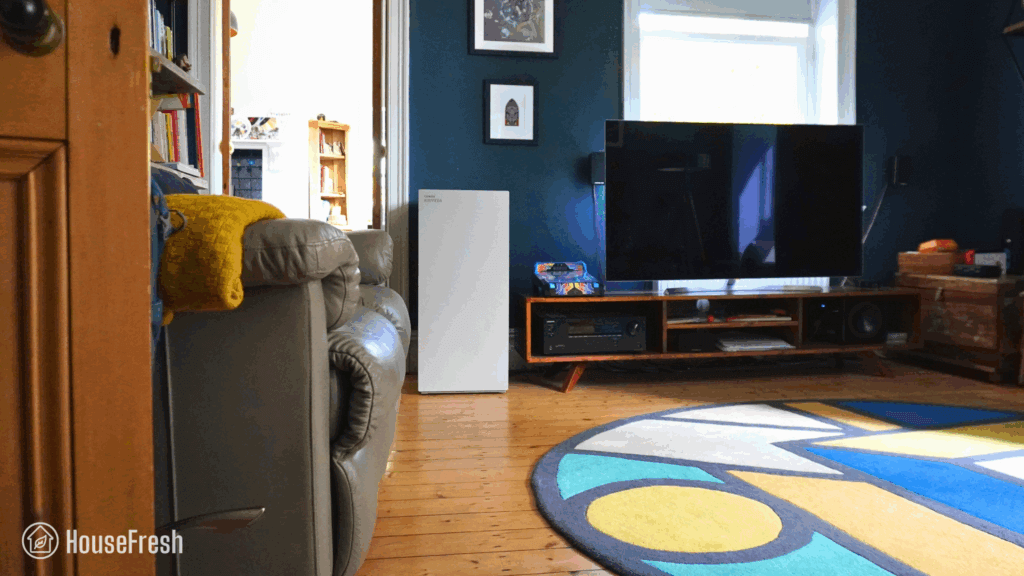
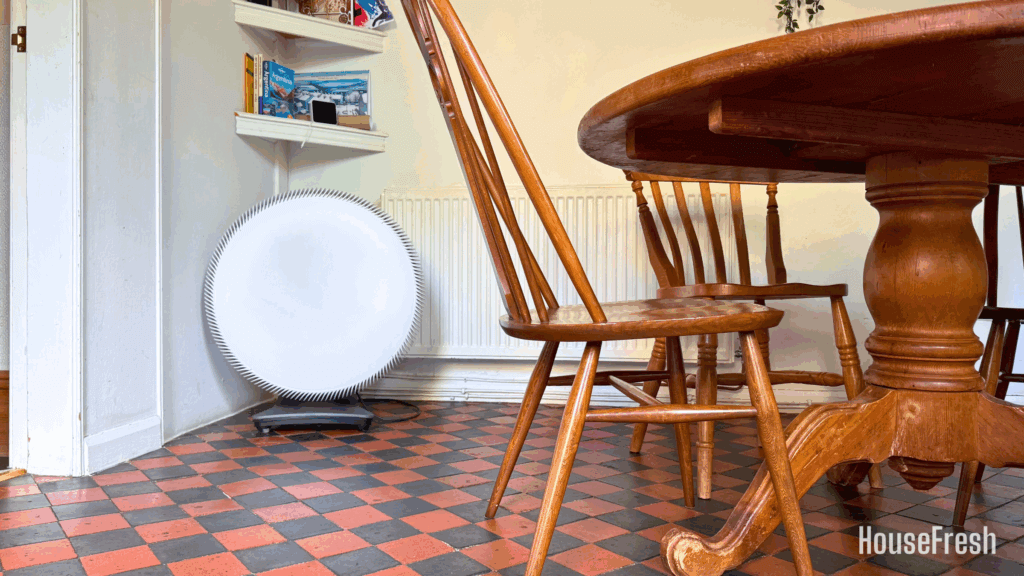
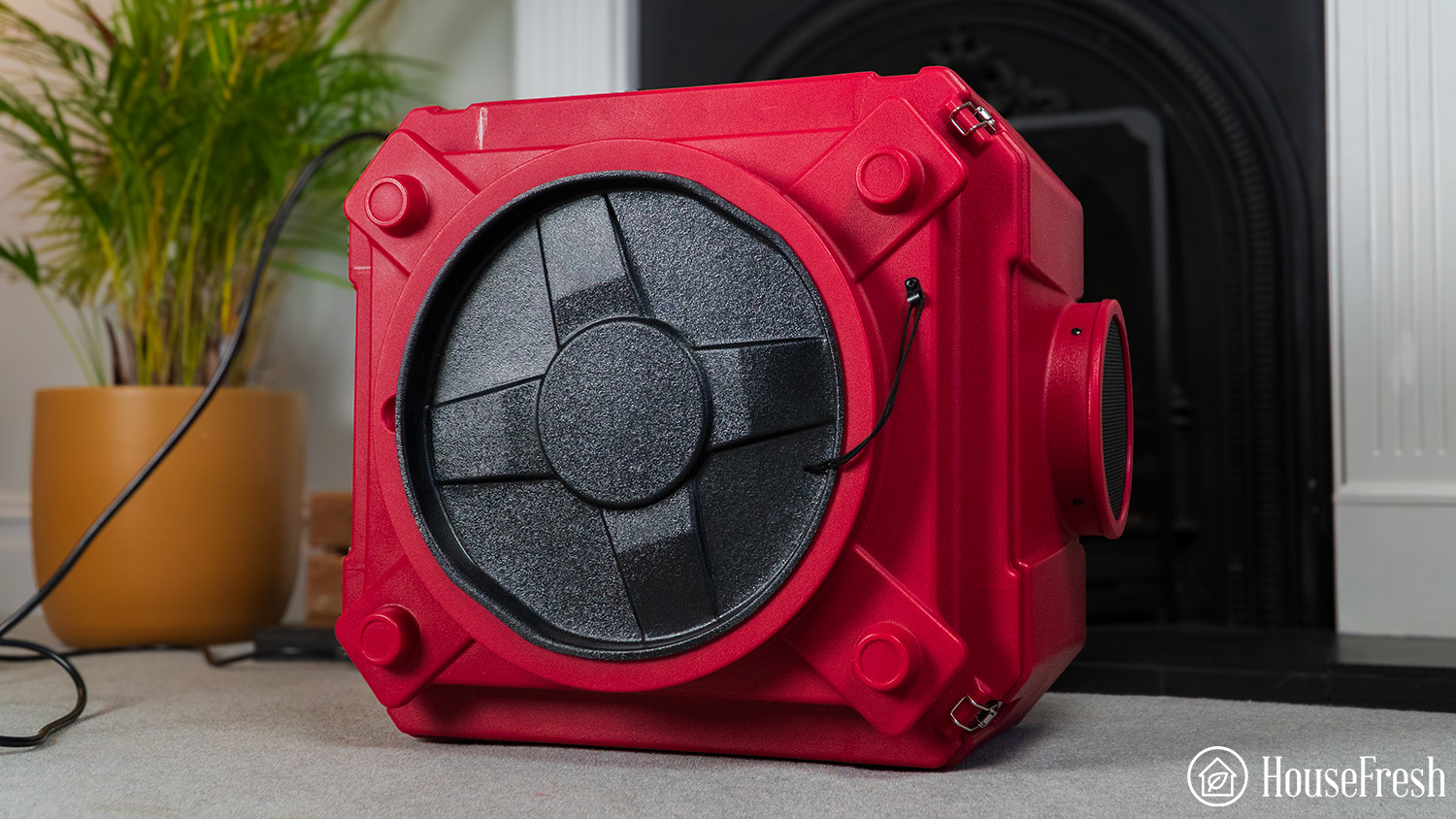
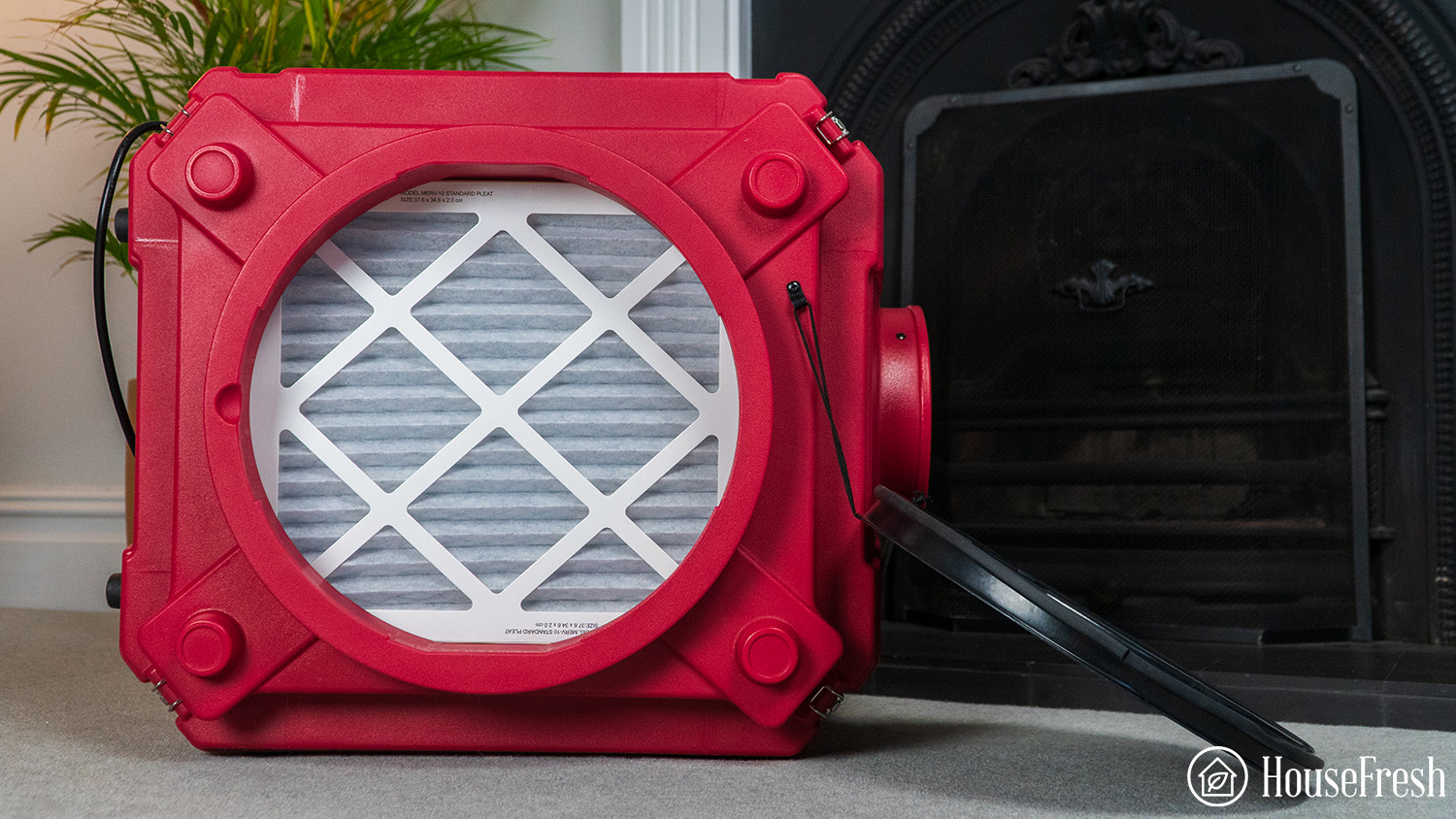
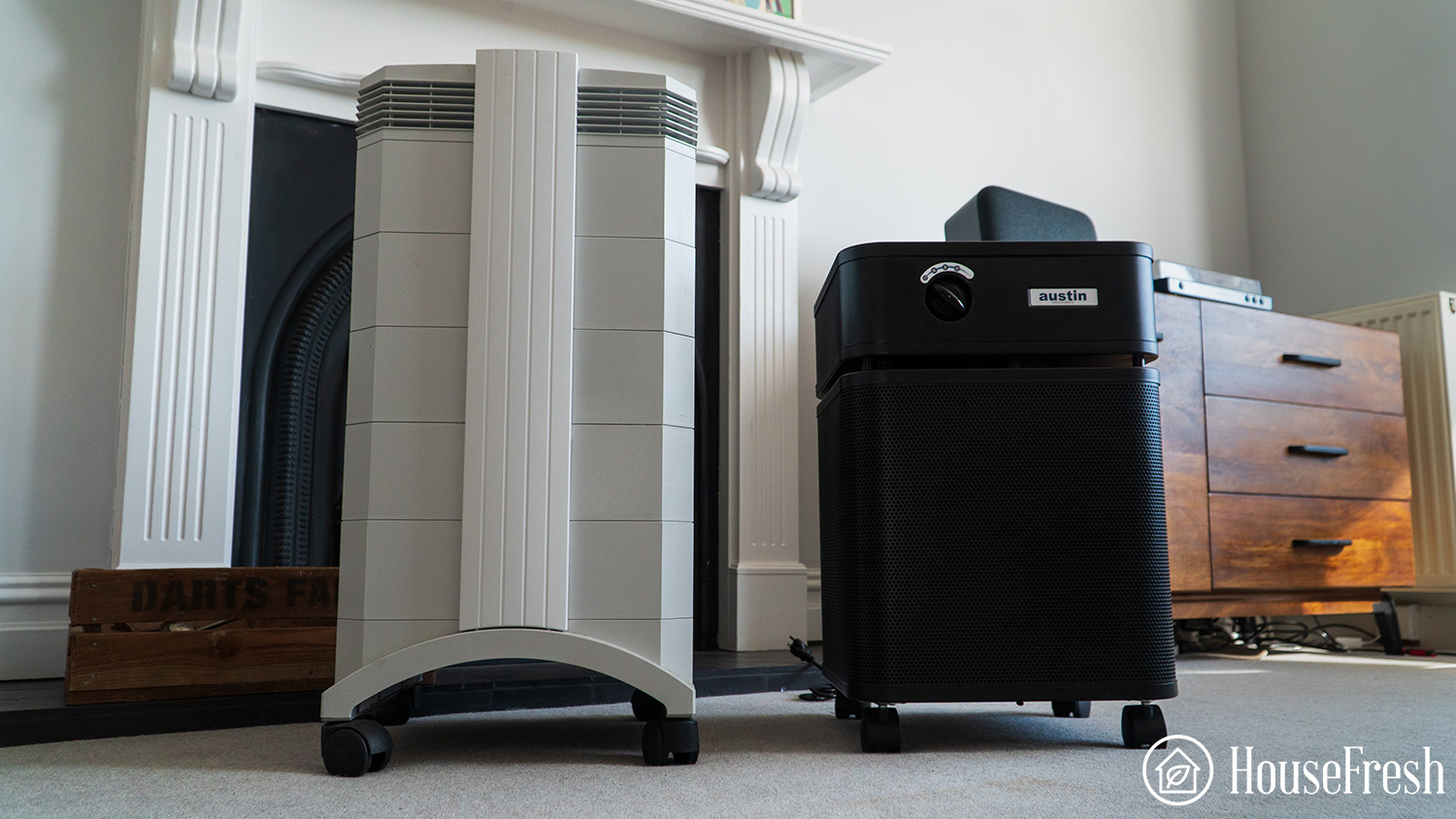
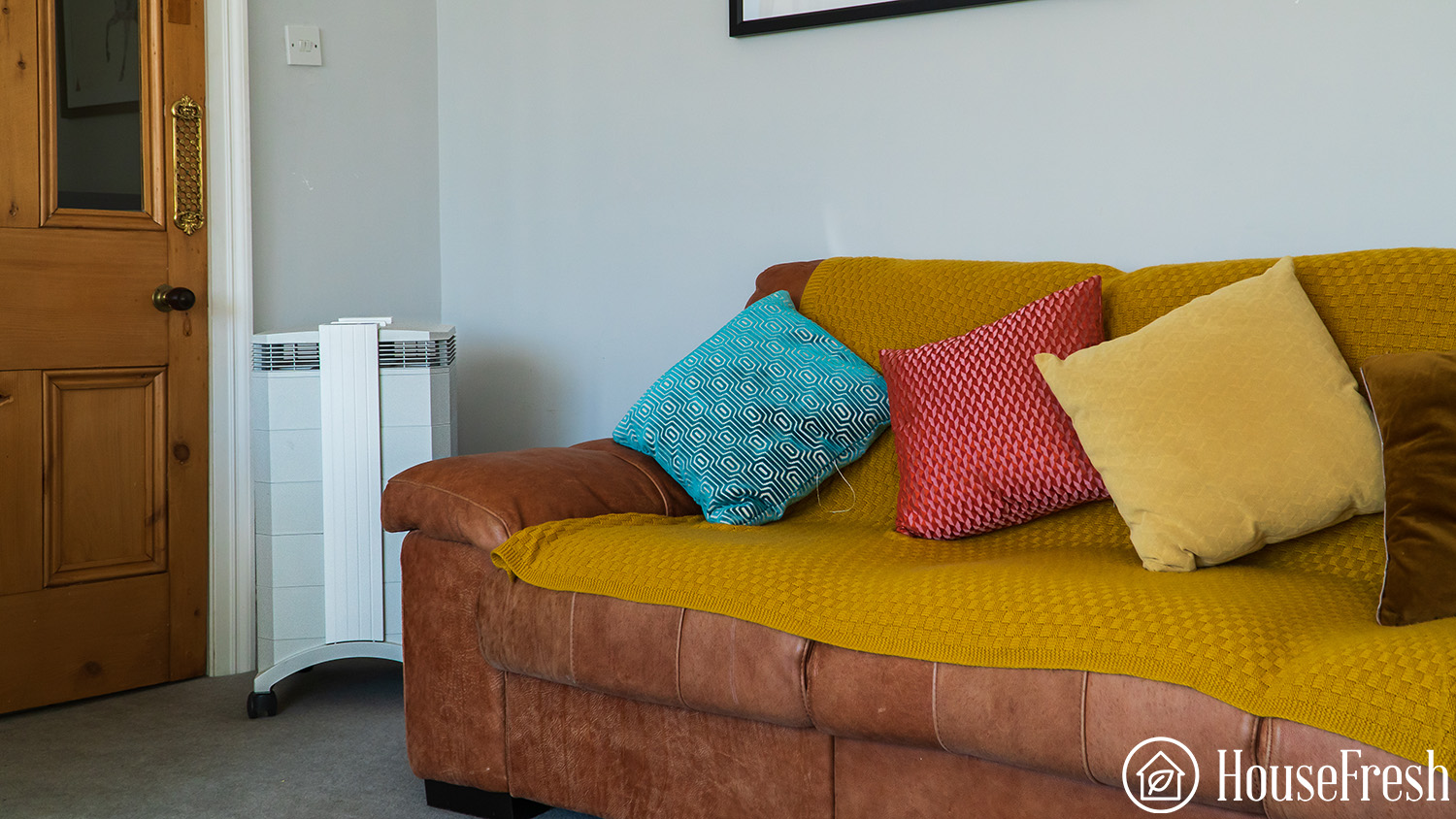
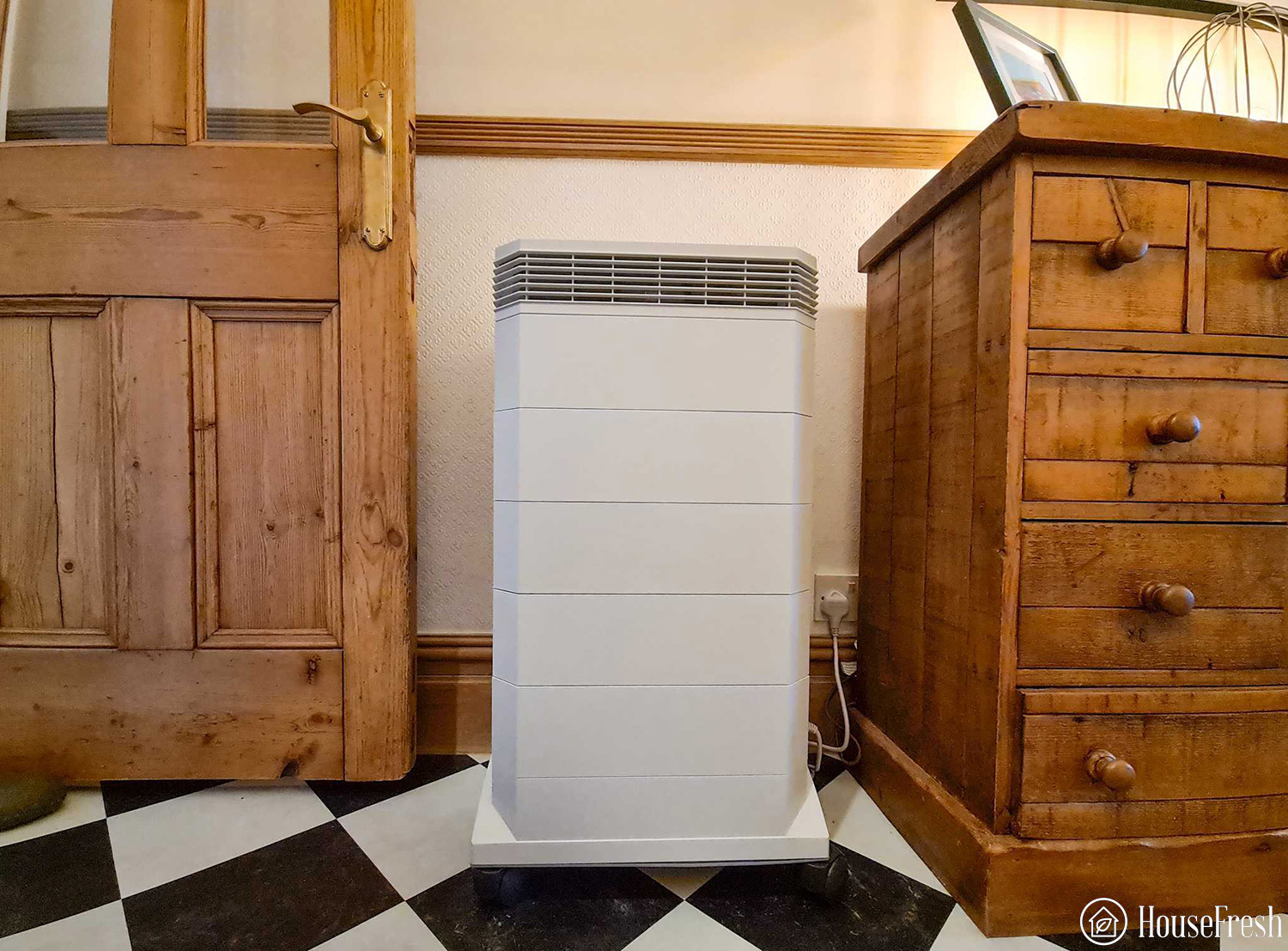
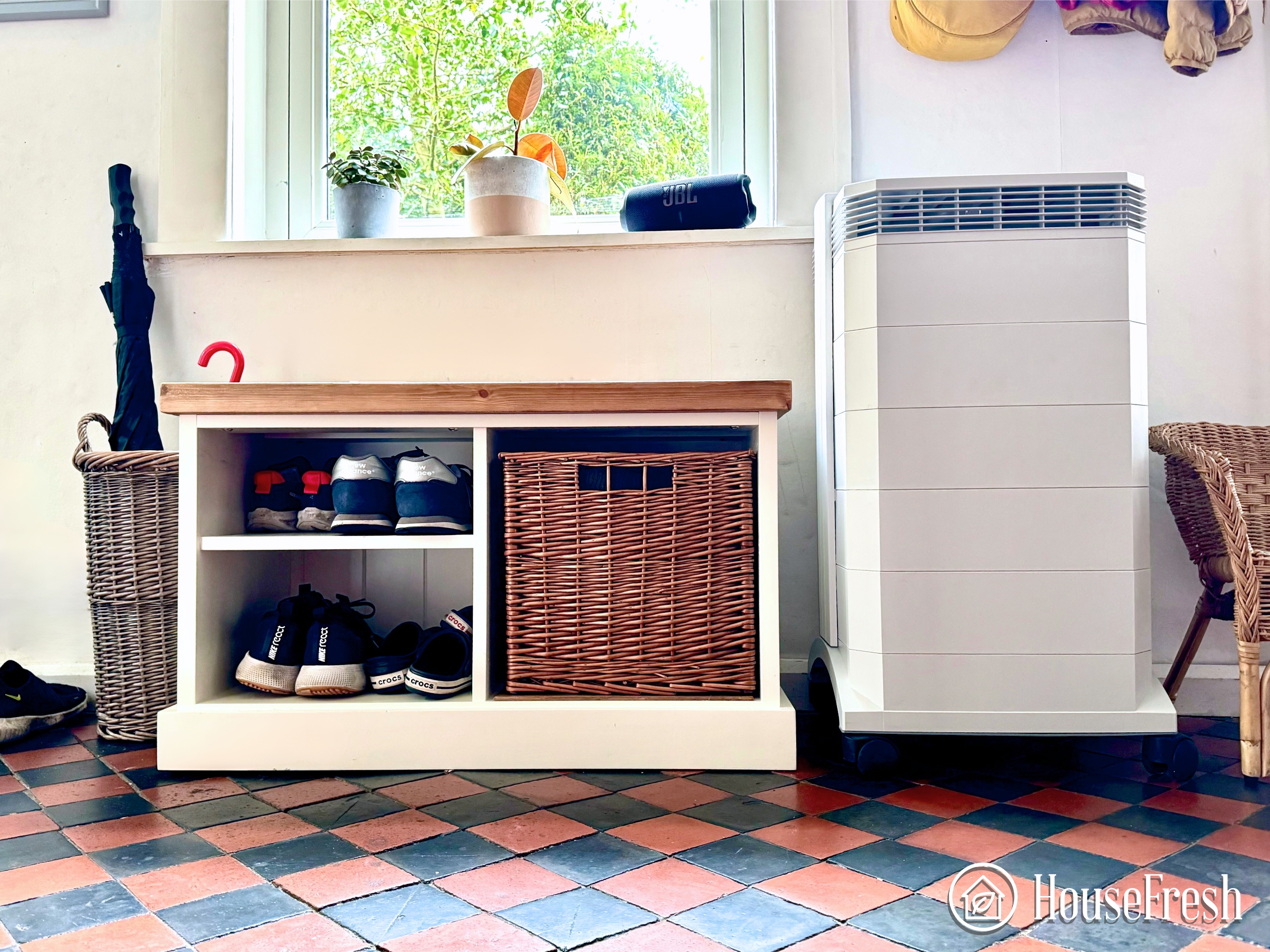
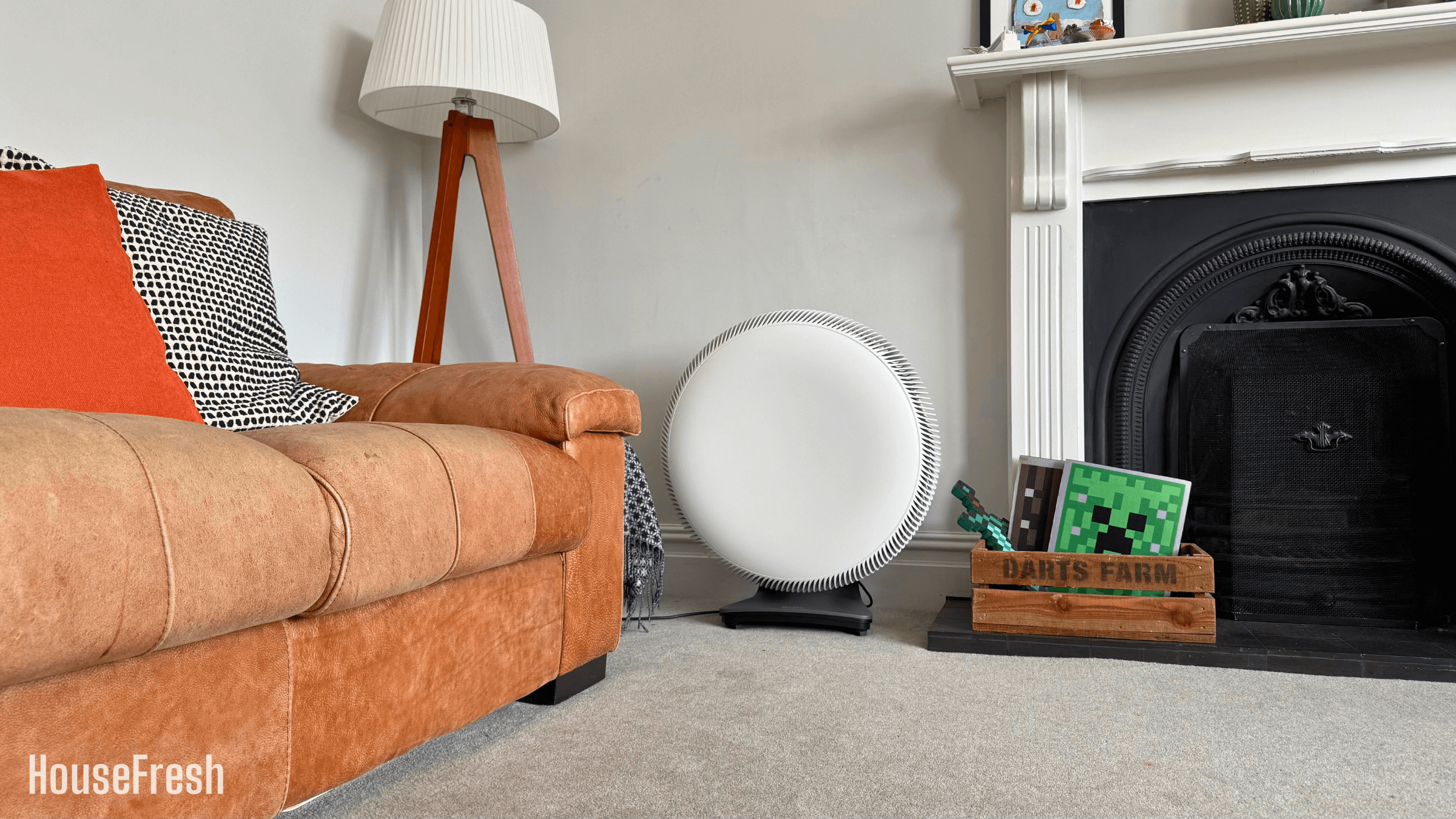
IQAir Atem X Living Room

Most air purifiers claim to clear large rooms, but for allergy sufferers, that’s often a dangerous lie.

Since 2020, I have tested over 130 air purifiers using the same methodology to gather comparable data, and I have found that only a handful of models pack enough power to effectively remove allergens from the air without sounding like a jet engine or costing an arm and a leg to run.

Because the thing with allergies is that you will need to run your air purifier 24/7.

That is why I’ve shortlisted the only units that deliver excellent performance even at low fan speeds, so you can keep them running in the background without generating much noise or consuming much energy.

1. Best overall: CleanAirKits Luggable XL Ultra

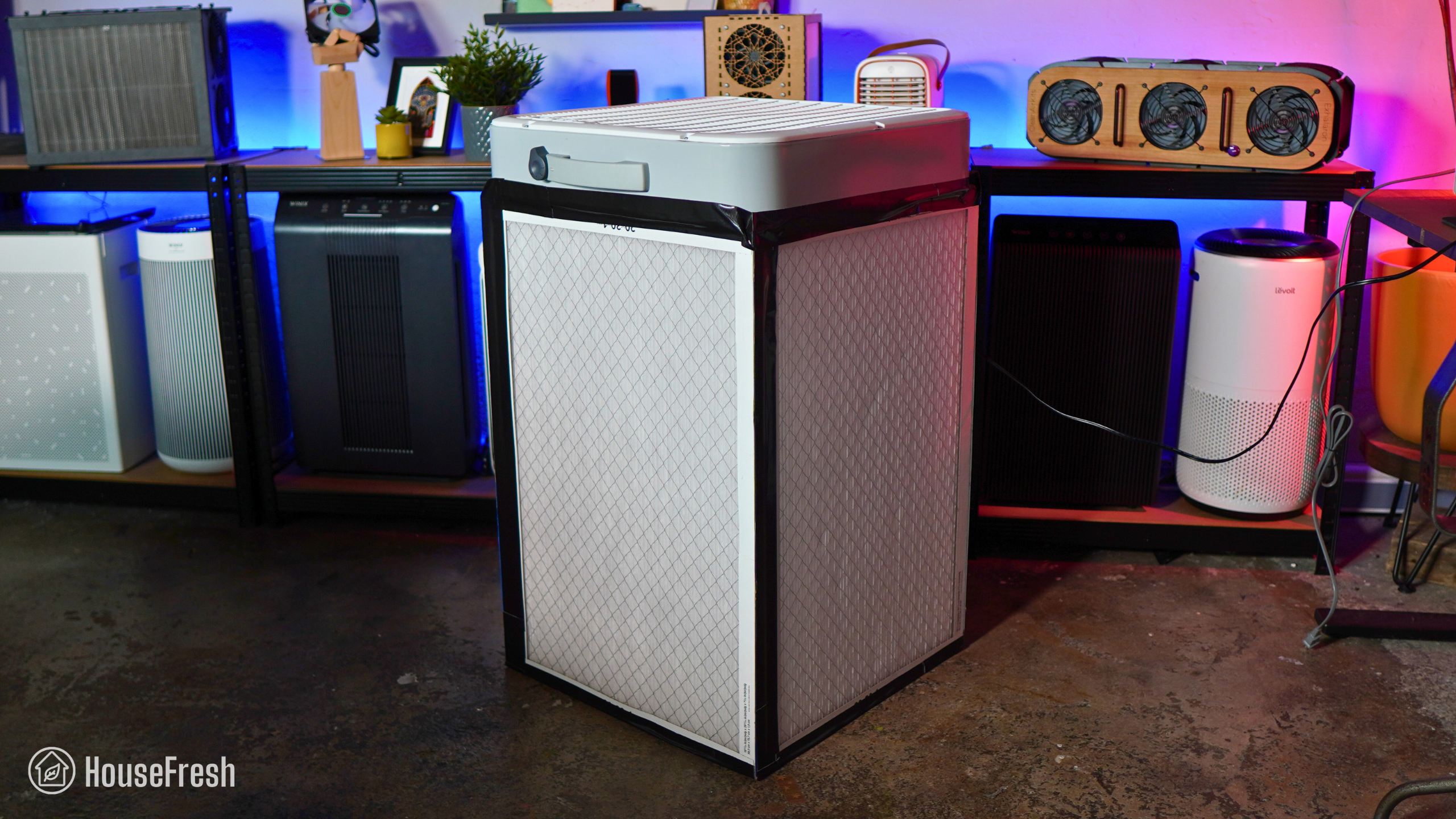
This DIY air purifier uses PC fans and HVAC filters, offering exceptional performance with whisper-quiet operation.
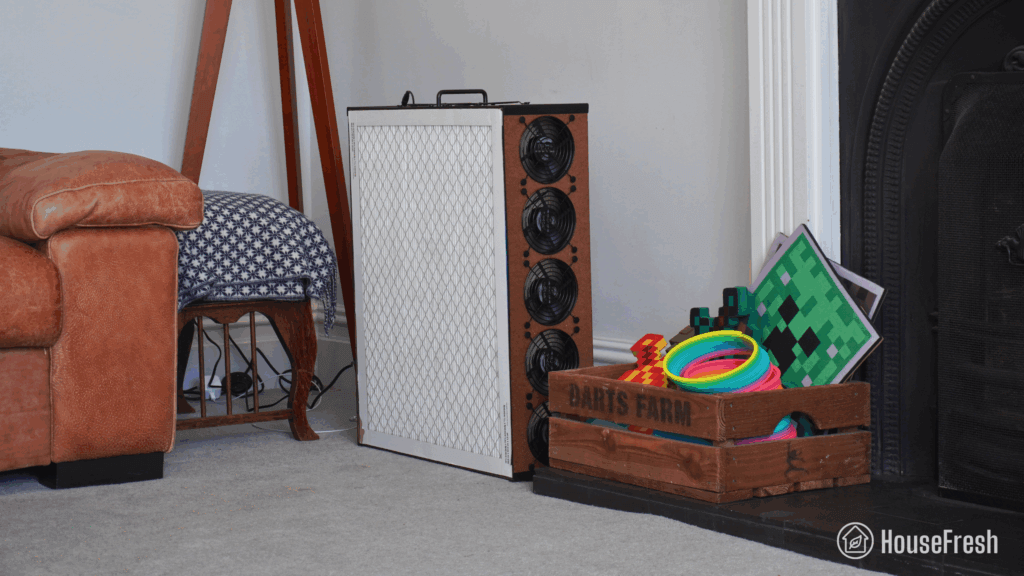
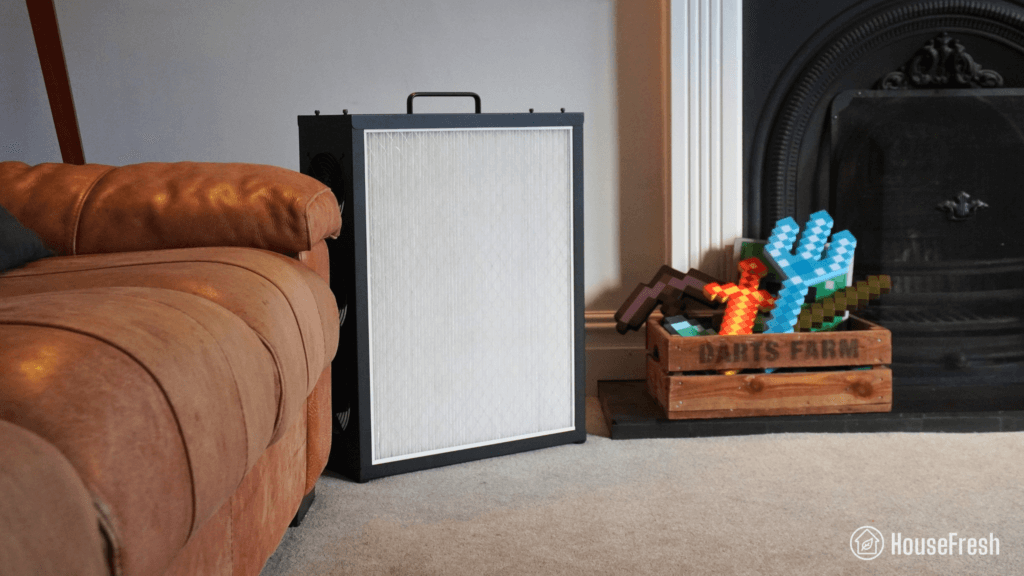
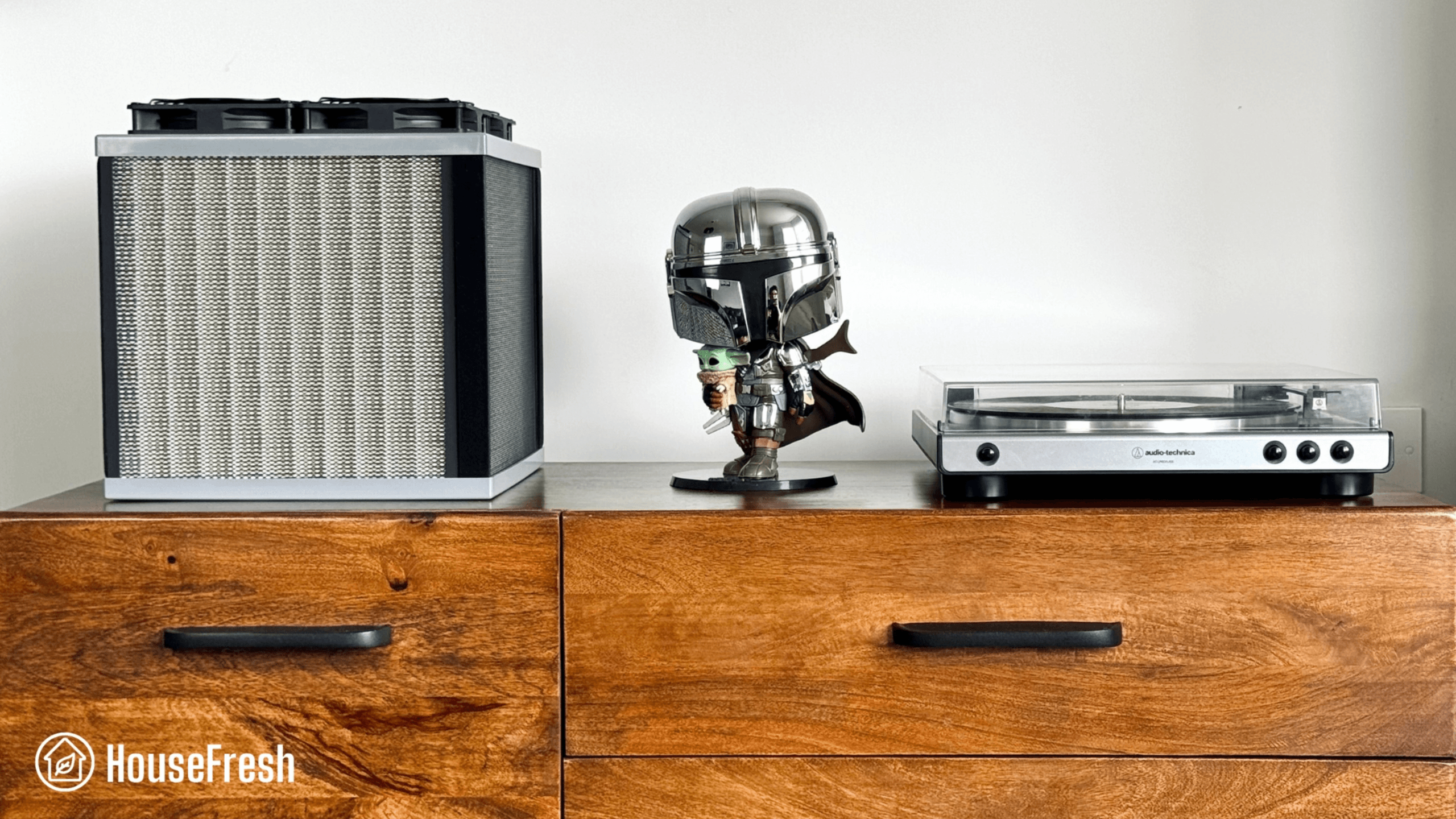
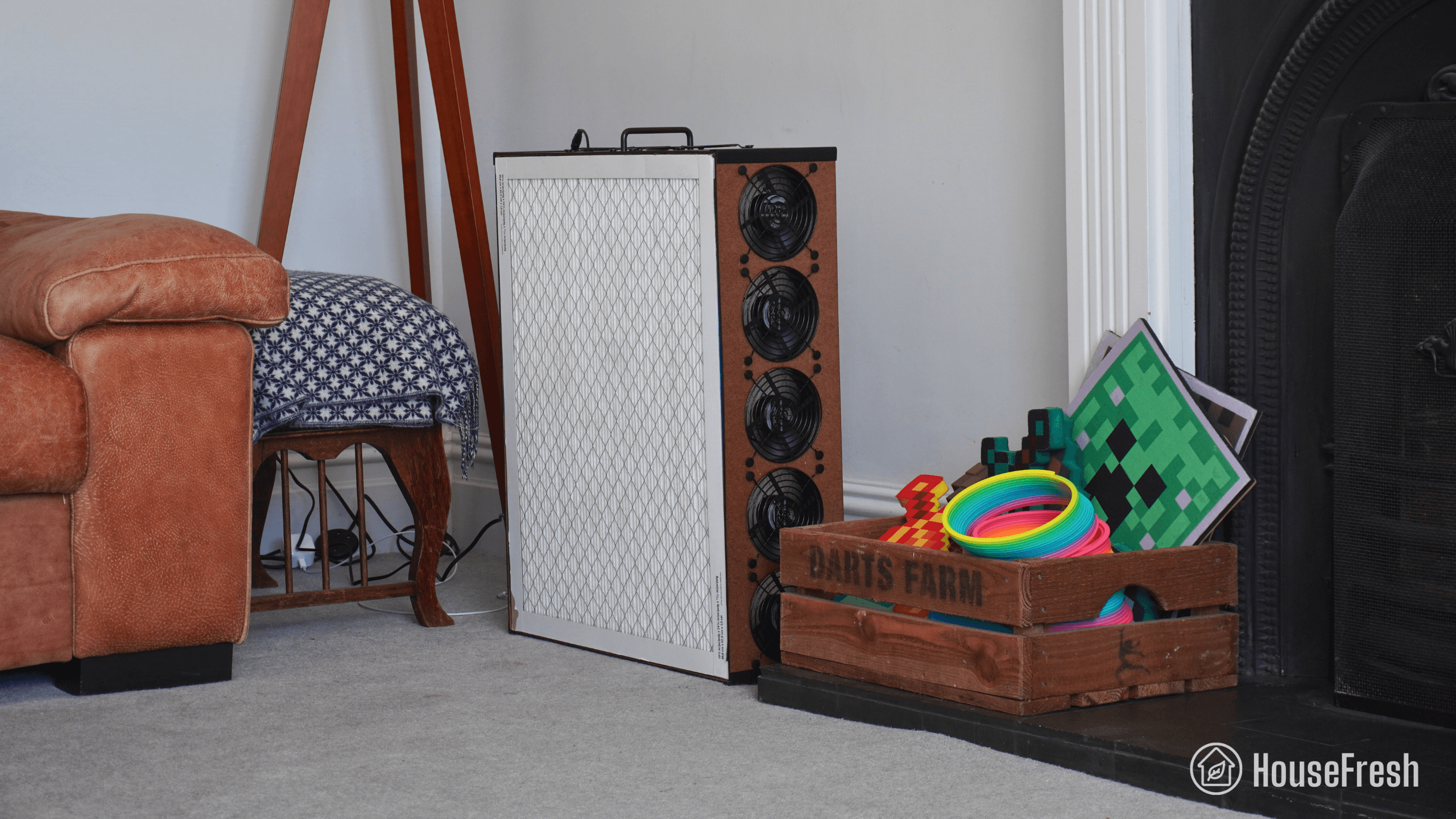
CleanAirKits Luggable XL7 Corner

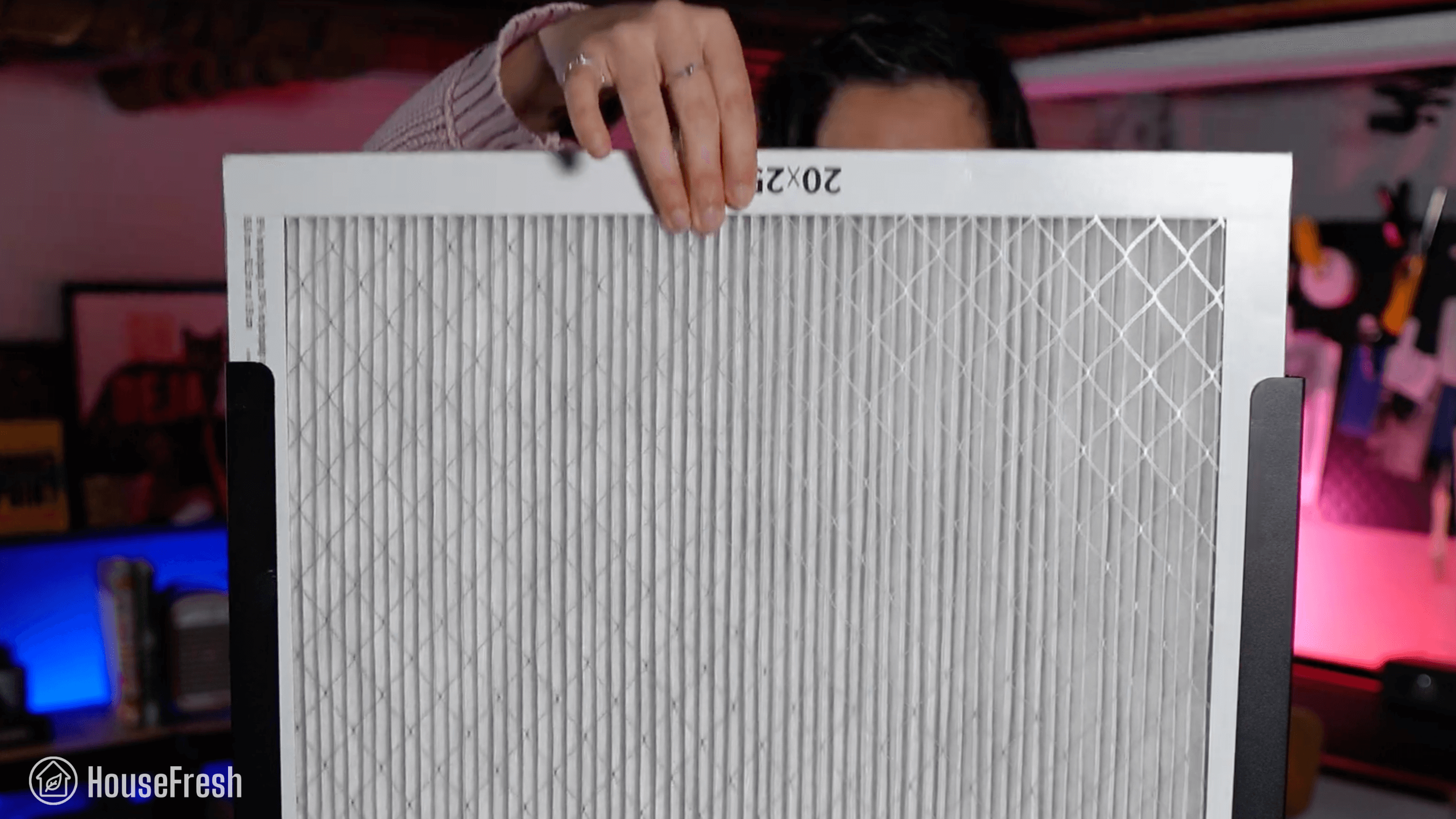
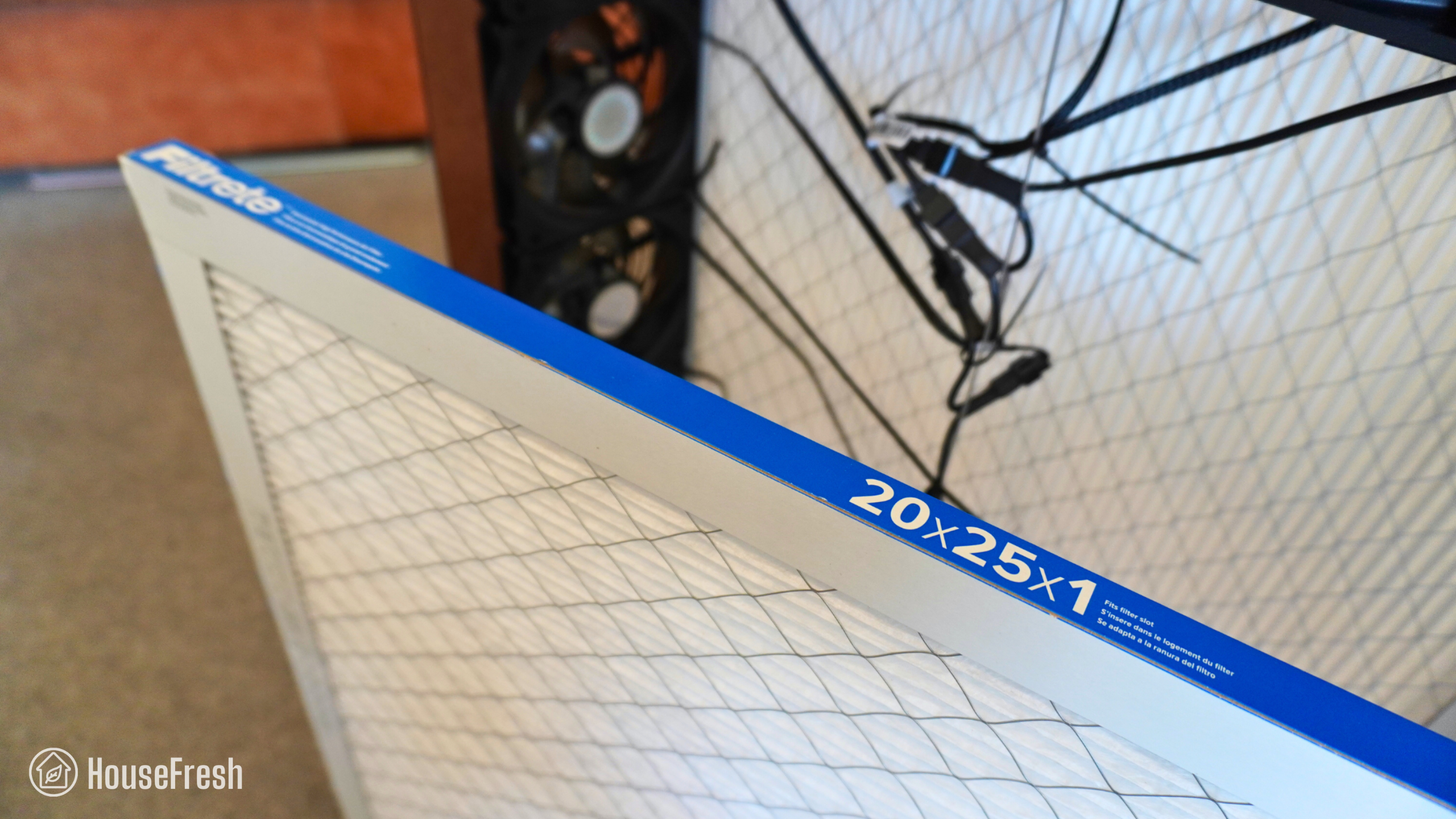
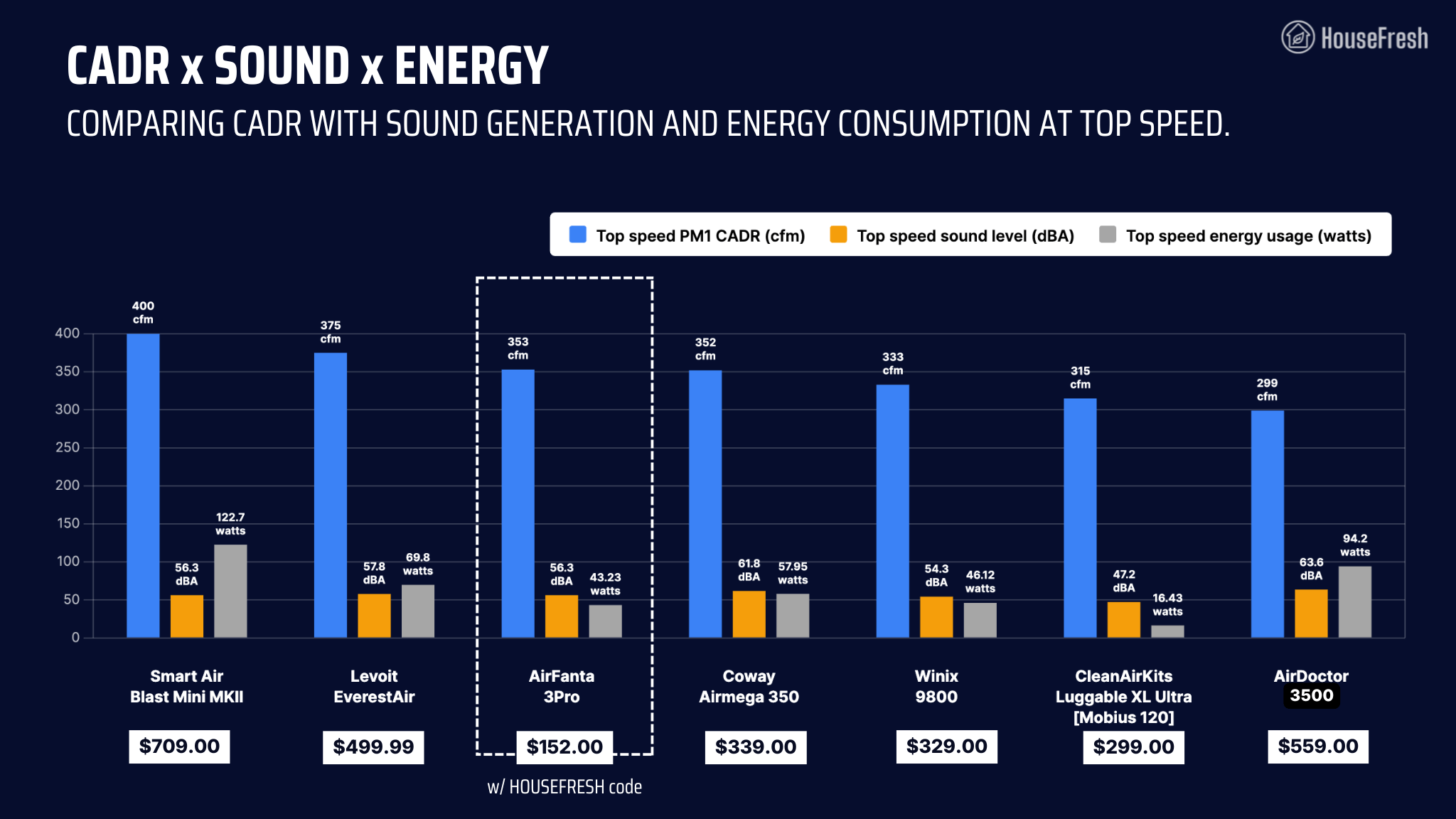
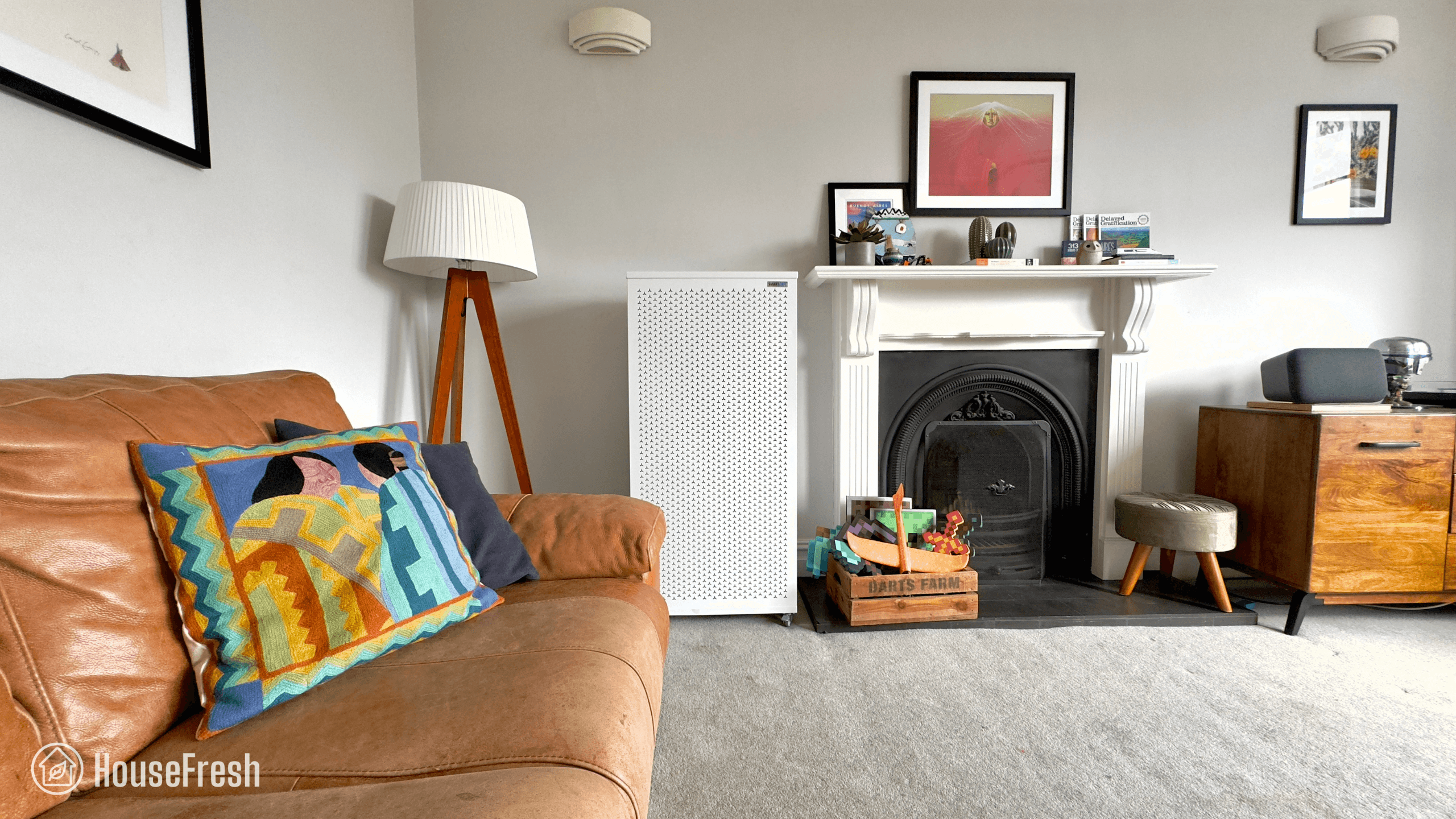
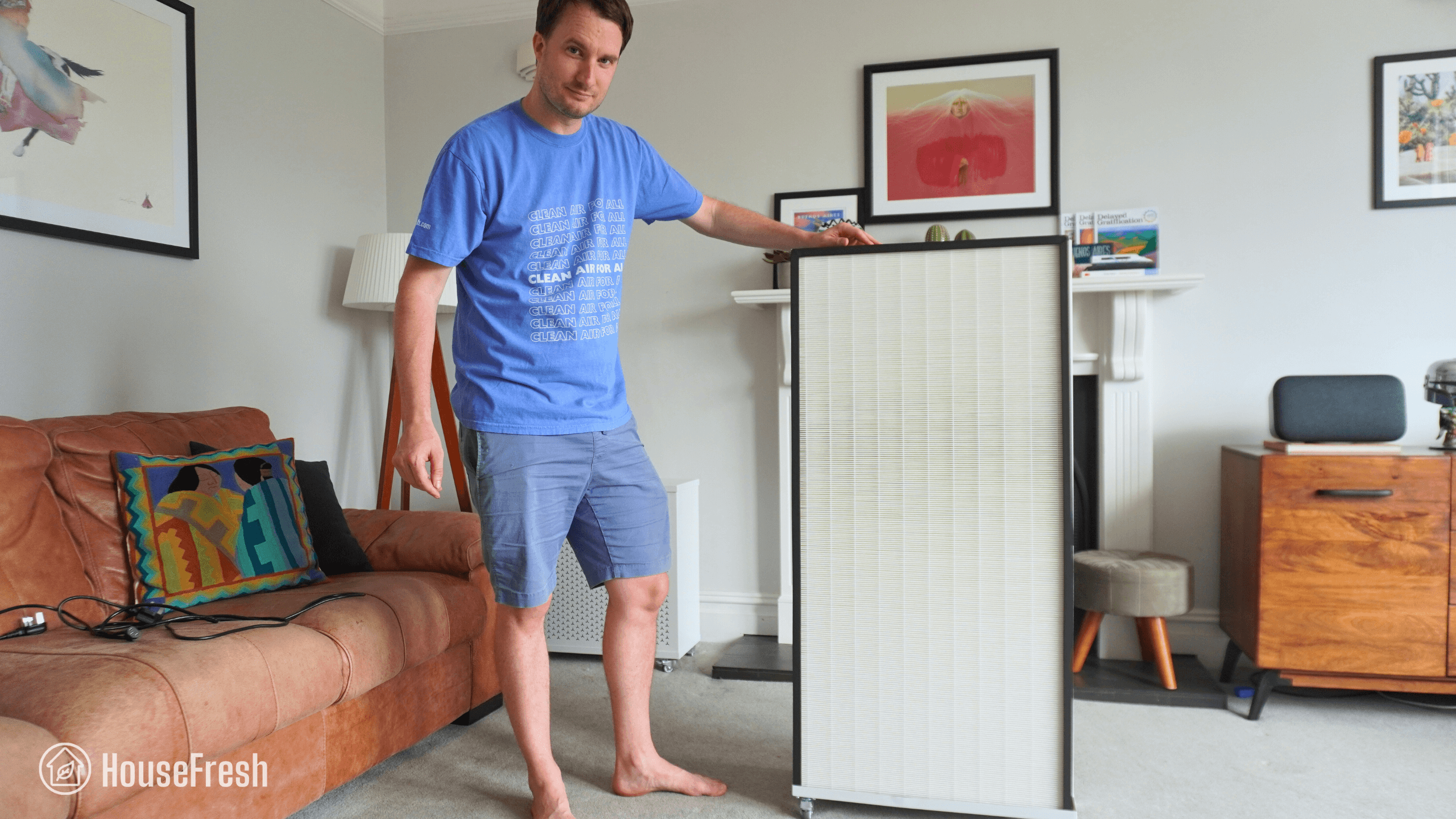
The Luggable XL Ultra uses seven Cooler Master Mobius 120 PC fans that pull air through two 20×25 MERV 13 filters. This combination results in a dust CADR of 315 cfm with a max sound level of 47.2 dBA! Excellent for those with dust or pollen allergies.
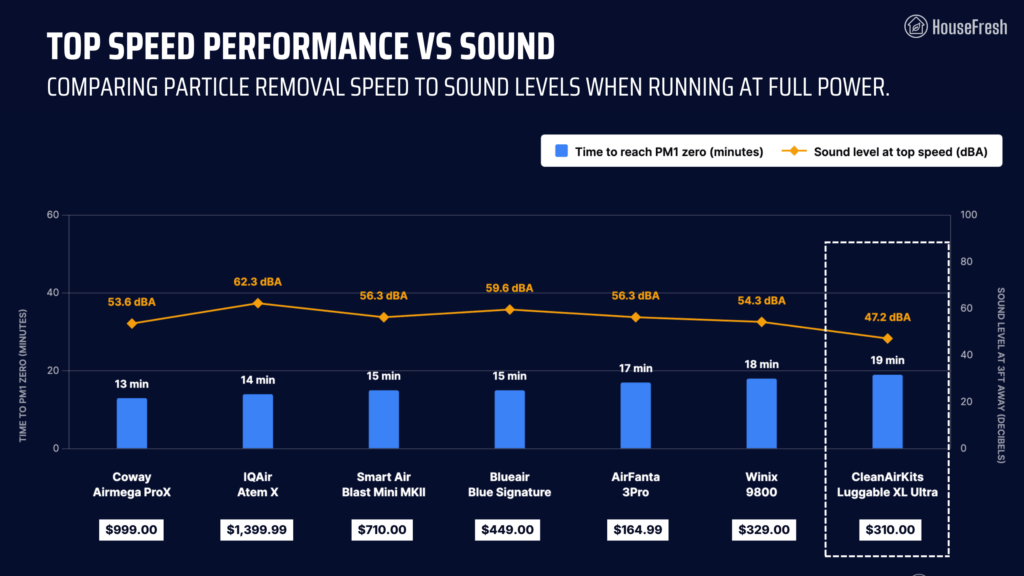
CleanAirKits Luggable XL Ultra HouseFresh Test Data

The Luggable XL Ultra is the quietest high-CADR air purifier I’ve tested so far, yet it’s powerful enough to provide six air changes per hour in rooms up to 393.7 square feet.

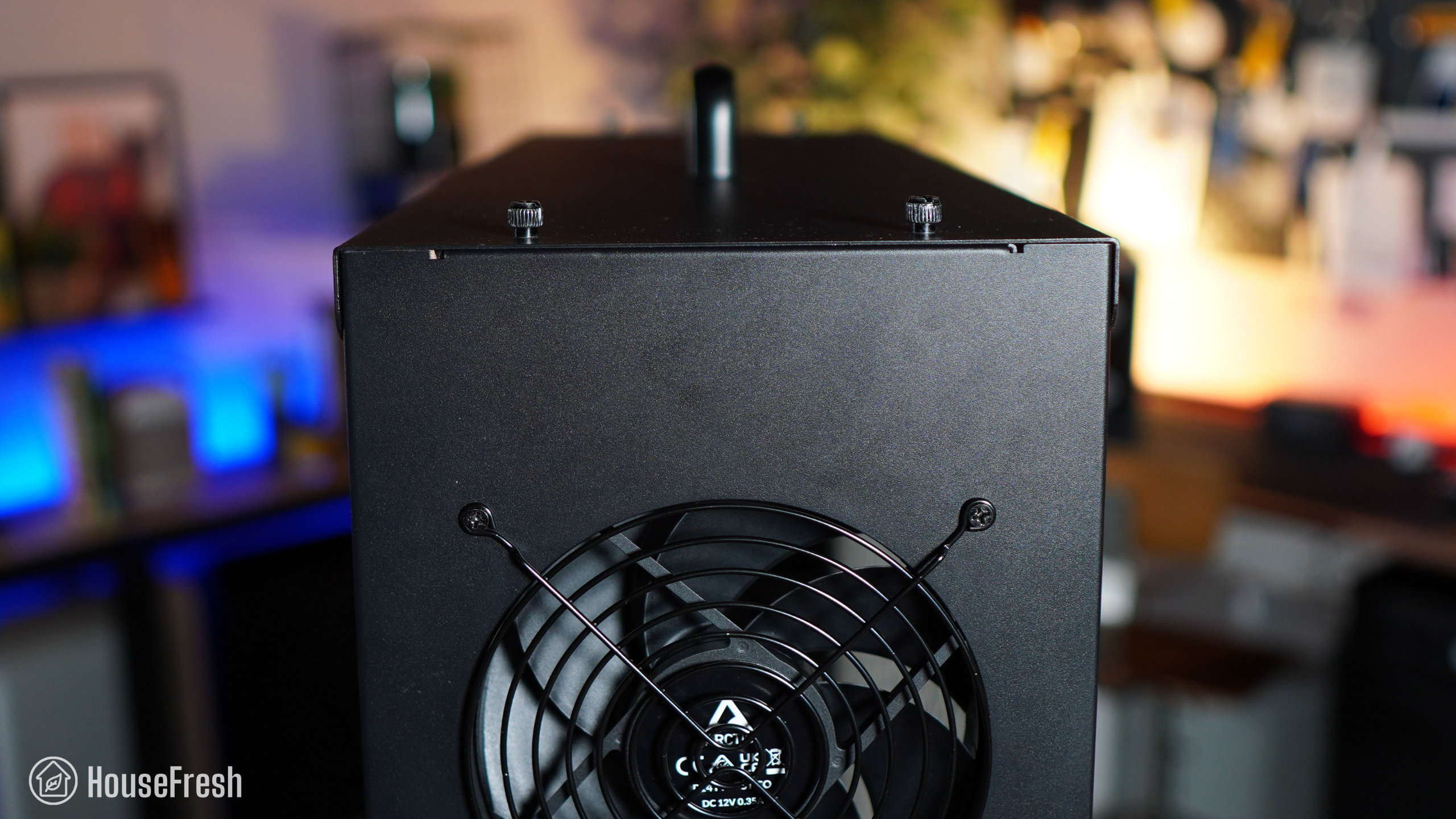
CleanAirKits Luggable XL Handle
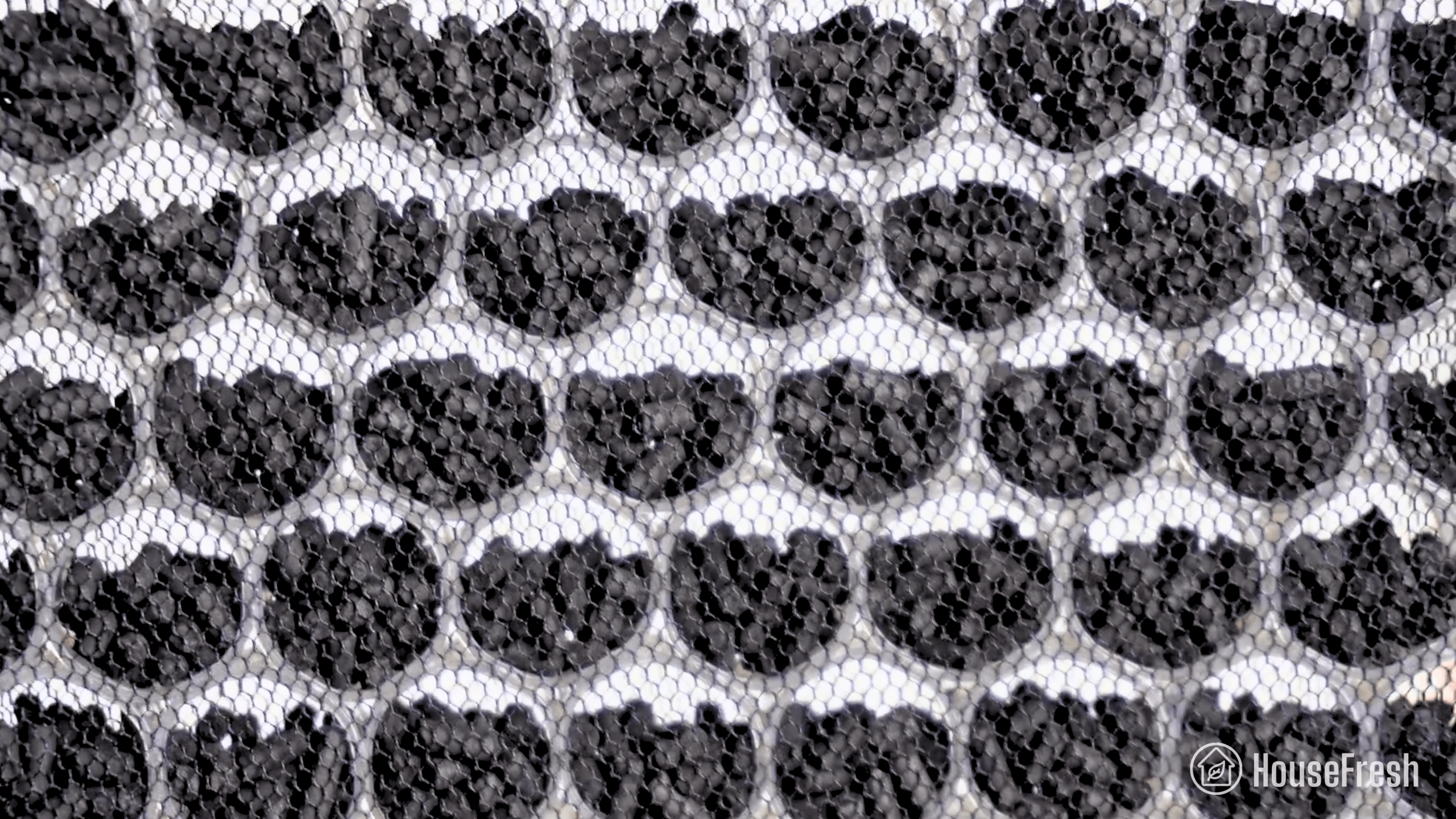
CleanAirKits Luggable XL Filter inside

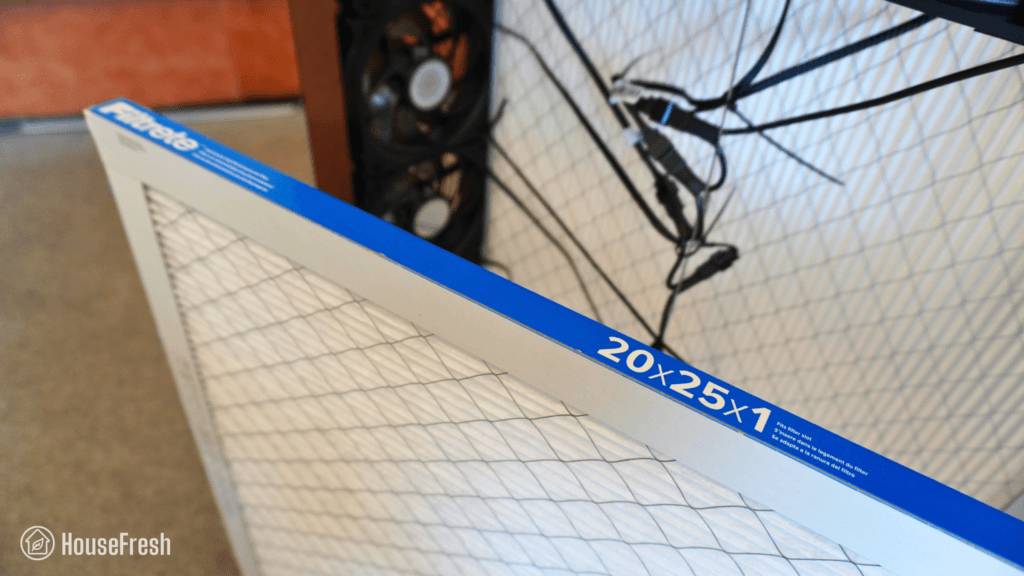
The long-term costs are generally low because it’s energy-efficient AND you can choose any 20×25 MERV 13 filters, but we recommend the 3M Filtrete MPR1900. To make the body sturdier, you might want to consider adding CleanAirKit’s filter guards.
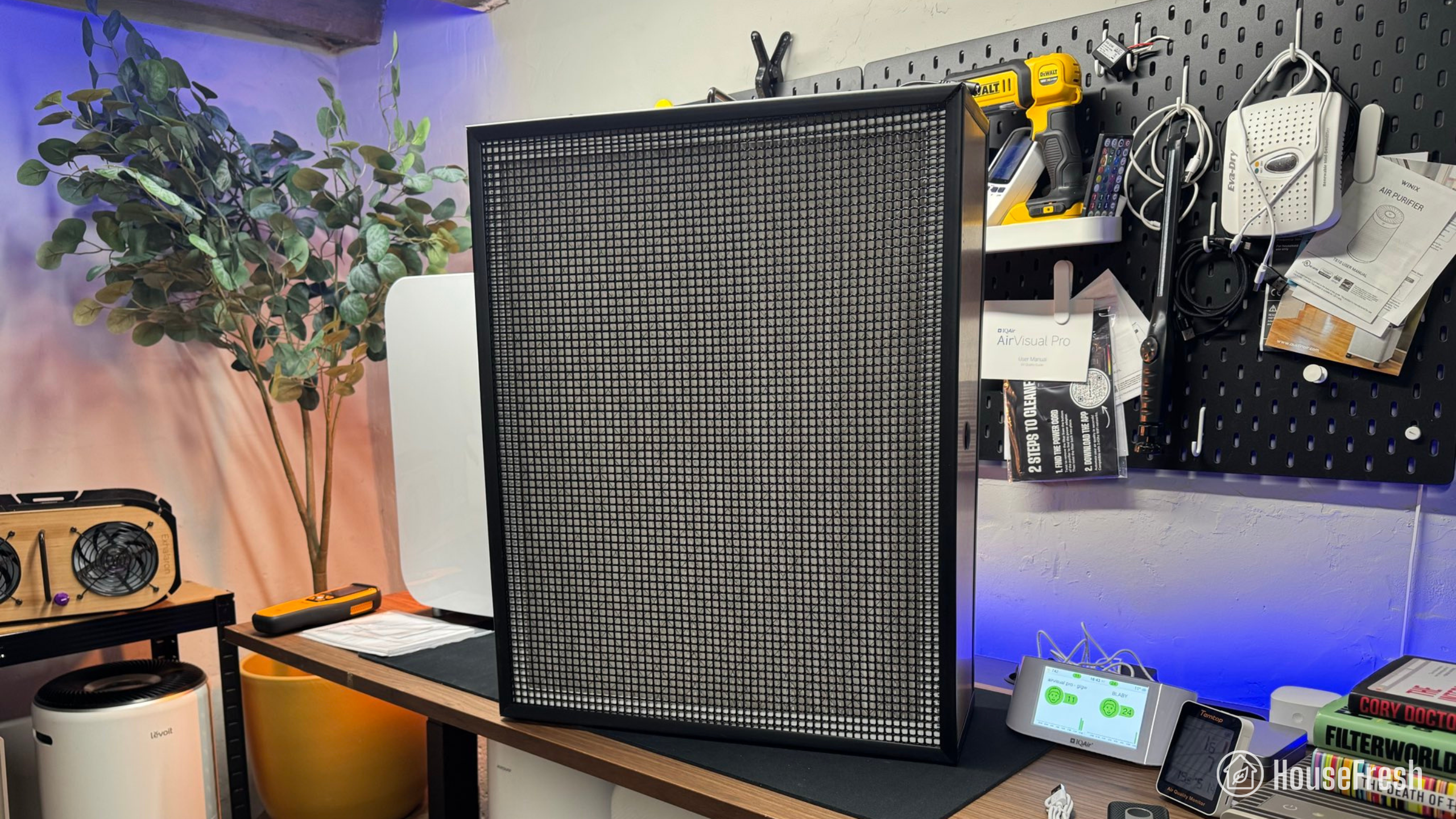
CleanAirKits Luggable XL Ultra Filter Guard

CONS

Its body is not as sturdy as a traditional air purifier made from plastic or metal. If durability is a concern, you can go instead with the cherry wood Aerating End Table.
It is a large device, so you will need space. But if you worry about size, then you can choose the 5-fan version of the Luggable.
You don’t get any smart features or the usual controls you may expect from a traditional air purifier.

PROS

For the vast majority of allergy sufferers who get triggered by pollen, dust, and pet dander, the absence of a carbon filter is a plus — it means more airflow dedicated to particle removal without affecting particle capture efficiency.
It’s the most energy-efficient high CADR air purifier I have tested and will add just $19.76 to your energy bill each year.
The DIY kit comes with everything you need to build it, except for the filters. You can buy it pre-built if DIY is not your thing.
It is lightweight and comes with a handle to move it from room to room.

Clean air delivery rate (CADR):– Top speed PM1 CADR: 315 cfm
– Sub-45 dBA PM1 CADR: 260 cfm
– EnergyStar PM2.5: 402 cfm (dust)
Filter technology:MERV 13 (20×25)
Recommended room size:390 sq. ft. (5 air changes per hour)
Dimensions:7D x 25W x 20H in (18D x 64W x 51 cm)
Weight:8 lbs (3.63 kg)
Noise level in decibels from 3 ft. away:47.2 dBA
Electricity consumption in watts:16.43 watts
Filter lifespan:6-12 months
Manufacturer’s warranty:1 year
Country of origin:United States
Country of manufacture:United States

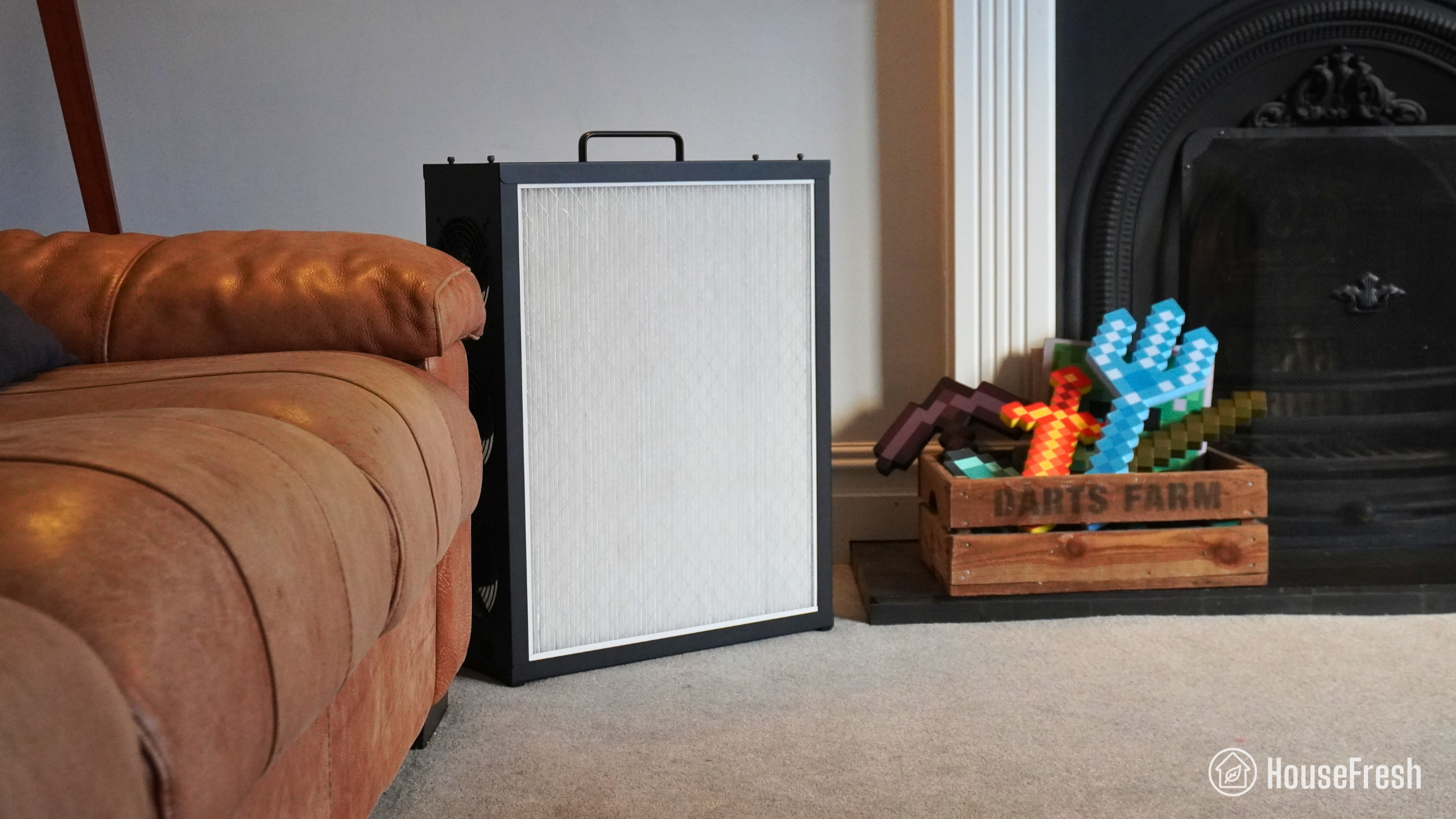
Northbox Systems is a Canadian manufacturer that produces PC fan-powered air purifier kits that use HVAC filters. We tested the 6XL and its air cleaning performance is outstanding. 
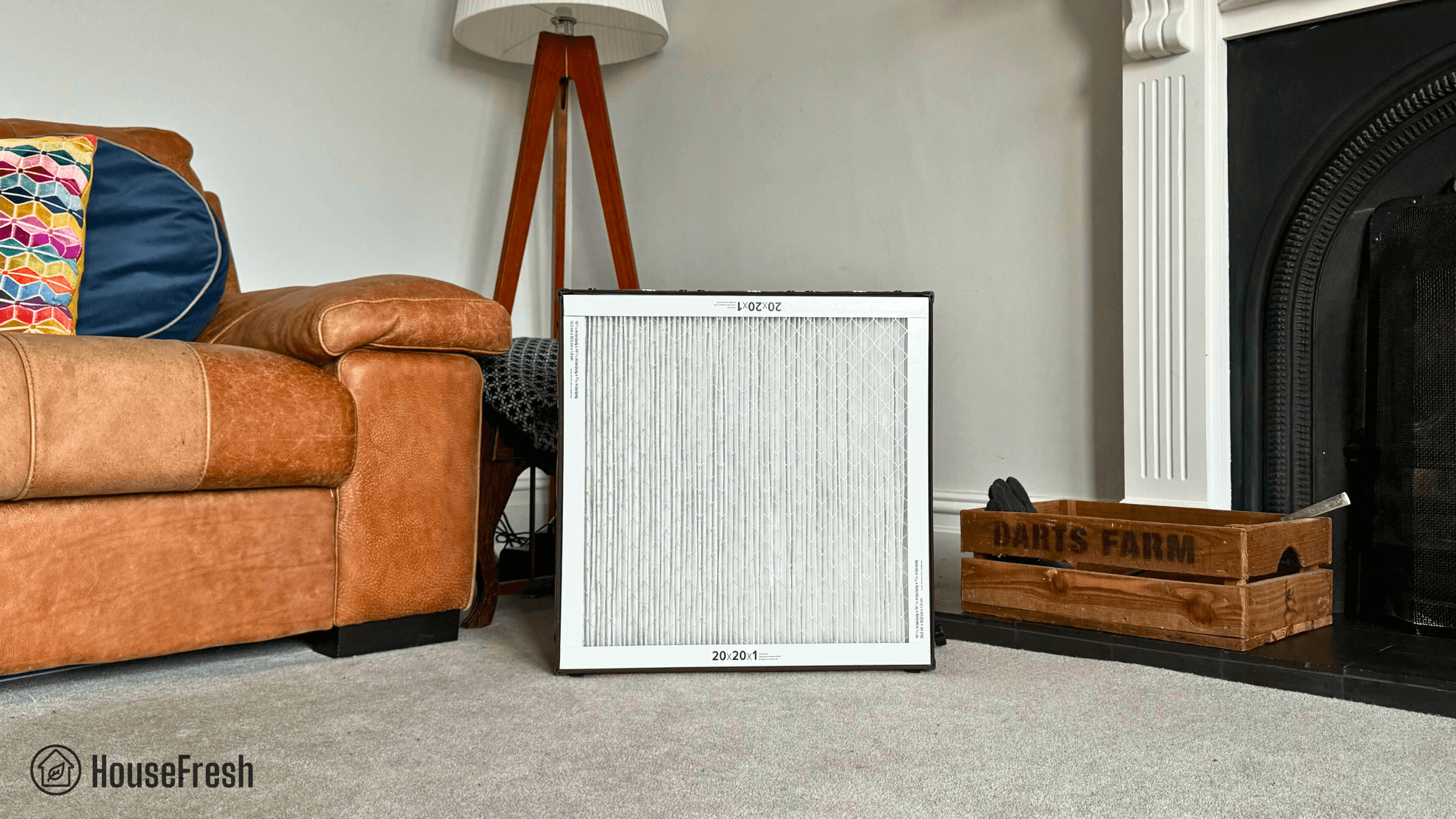
North Box 6XL Corner
North Box 6XL Top Down Filter

WATCH MY VIDEO REVIEW

3. Best under $200: AirFanta 3Pro

With a top speed CADR of 353 cfm and a low price of $164.99, there is a lot to like about the AirFanta 3Pro. 

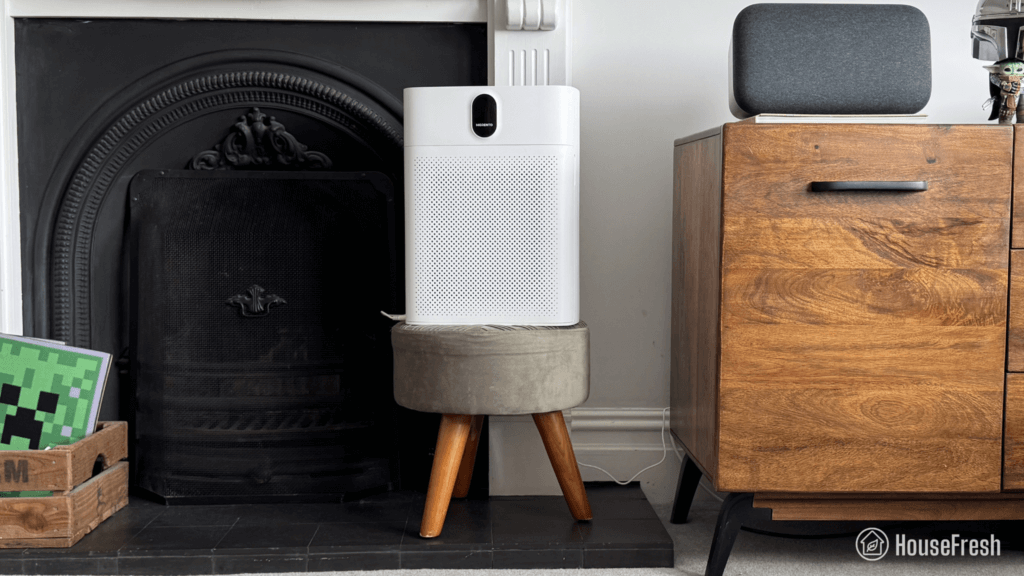
AirFanta 3Pro Sidetable

Use the discount code HOUSEFRESH for 5% off when buying directly from AirFanta.

With a top speed CADR of 353 cfm and a low price of $164.99, there is a lot to like about the AirFanta 3Pro.  For those with allergies, the big benefit of this device is its excellent air cleaning performance at quiet sound levels.

CR Box VS AirFanta 3Pro Top

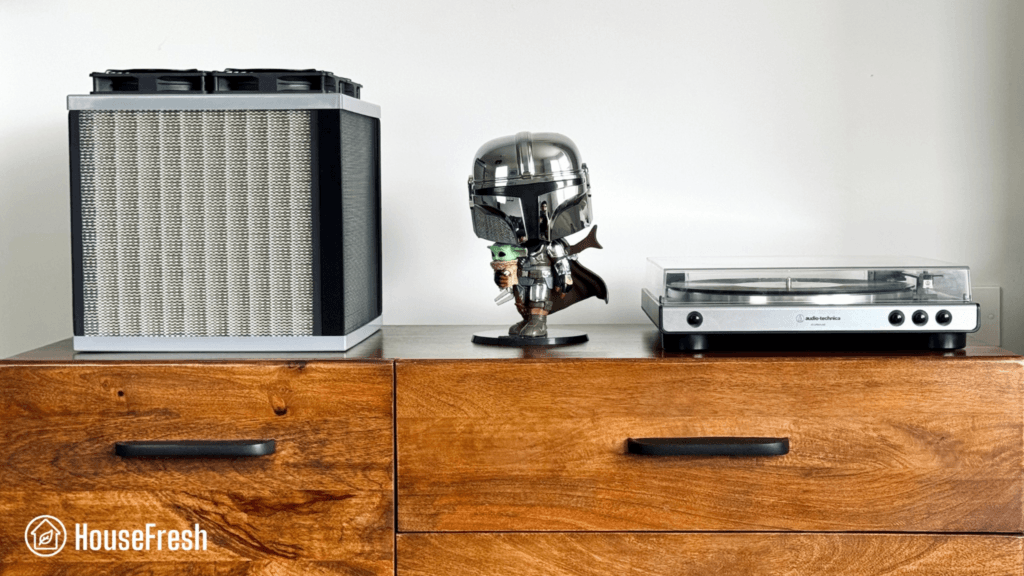
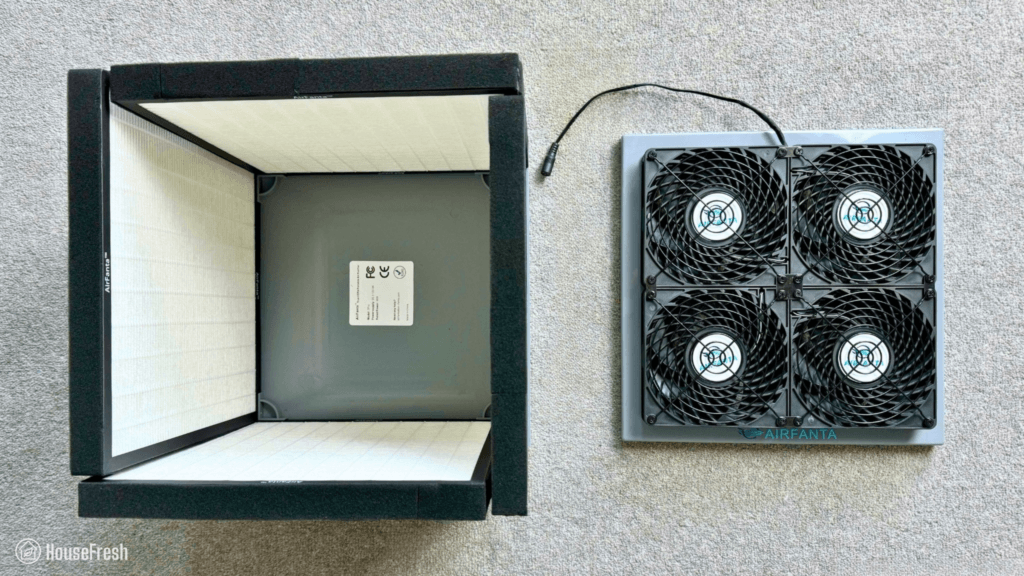
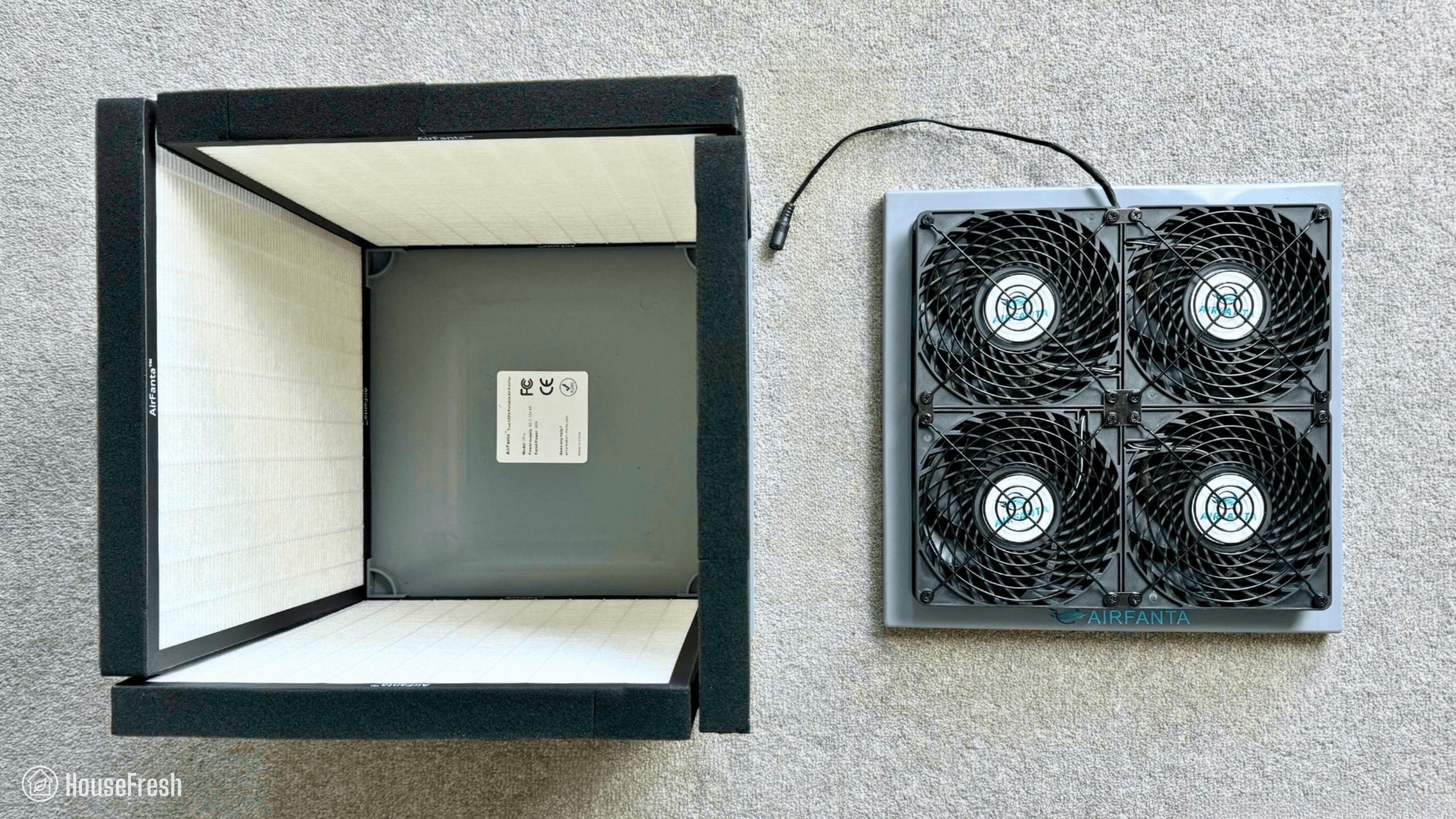
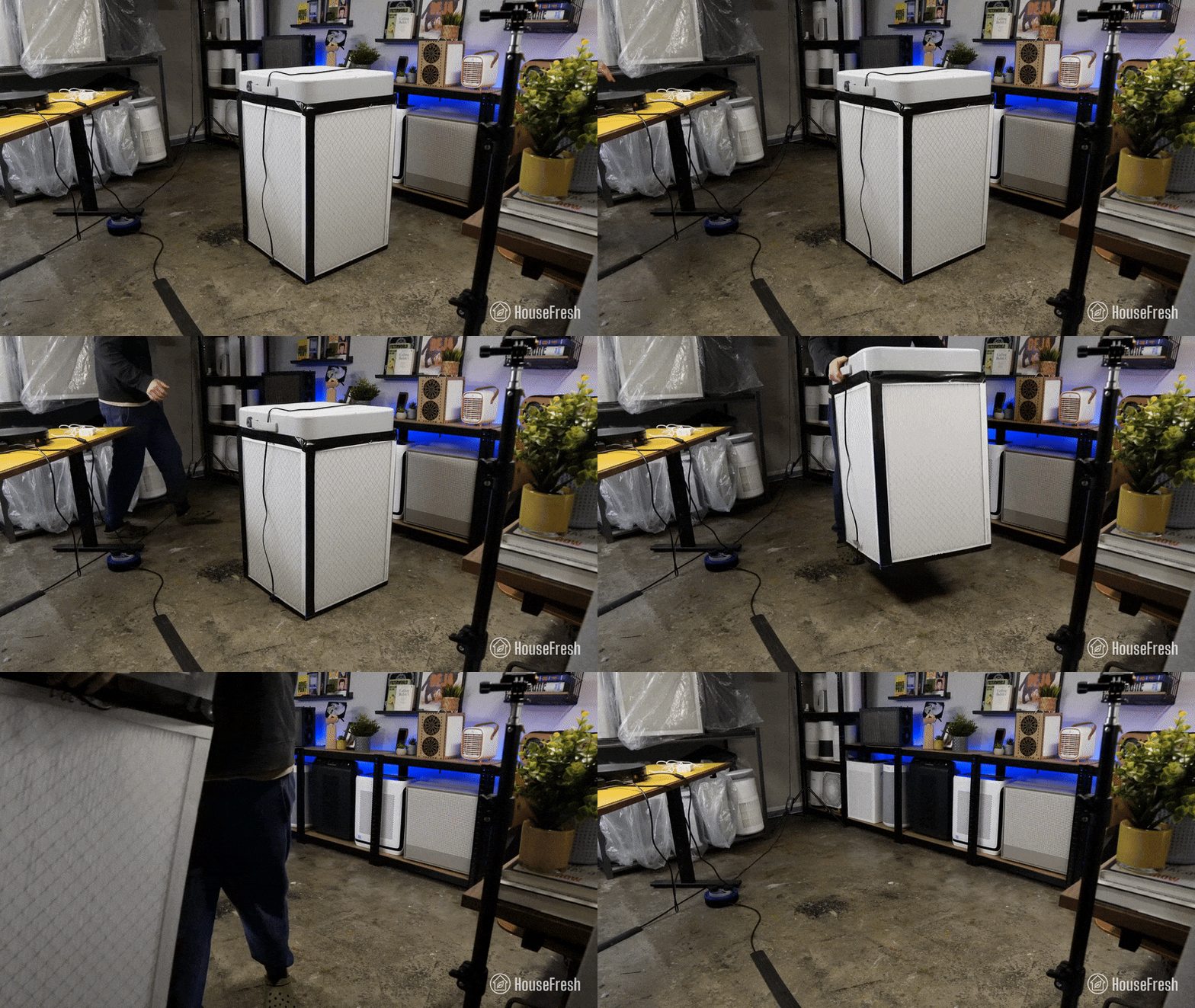
The 3Pro is a small box with a base at the bottom, one filter at each side, and a PC fan array on top—making a much compact version of the bulky Corsi-Rosenthal box (left).

AirFanta 3Pro HouseFresh Data

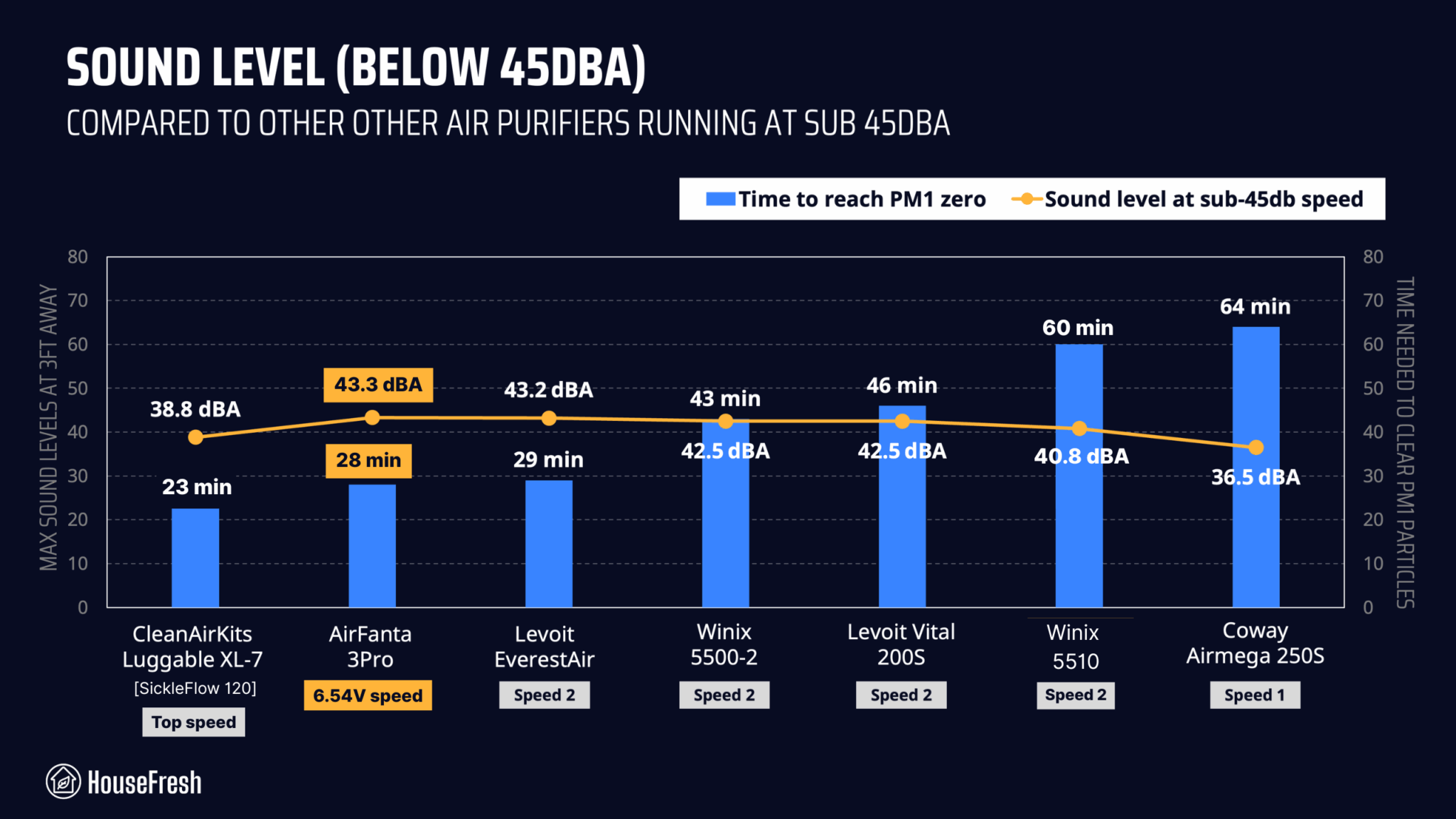
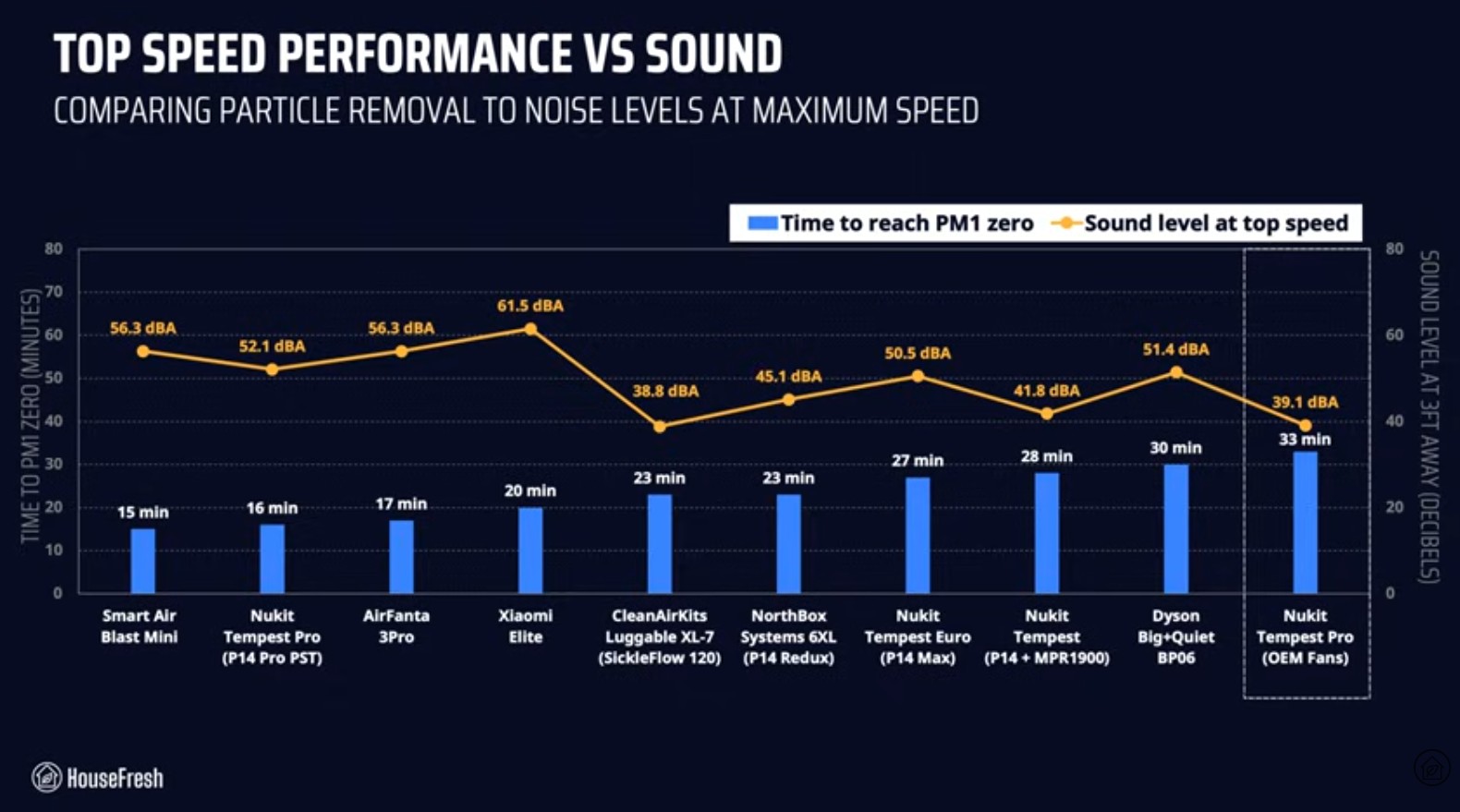
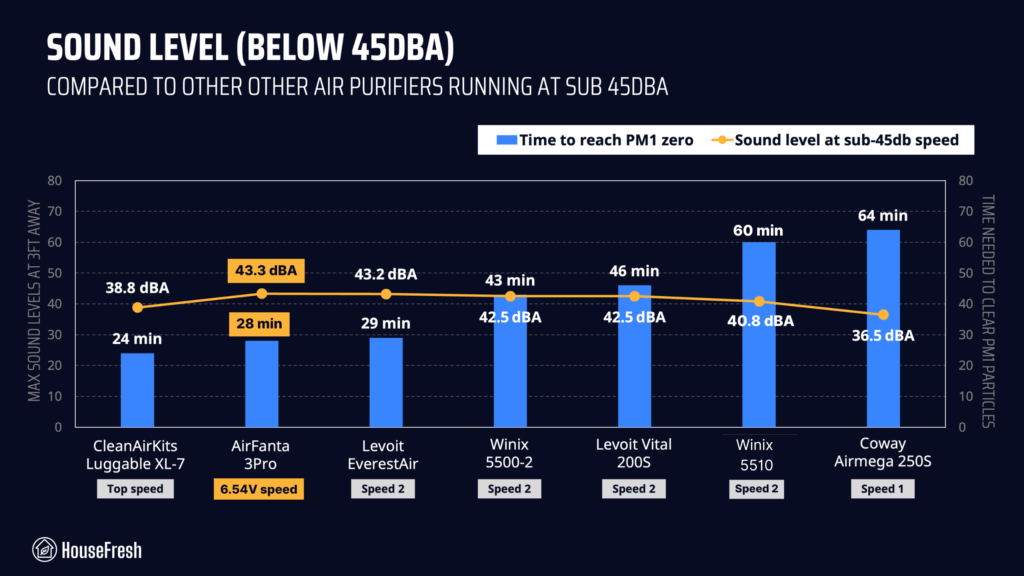
In testing, we identified a fan speed that generates less than 45 dBA (6.54 V) and has an estimated CADR PM1 of 213 cfm, which is higher than what we saw with the much larger (and much more expensive) Levoit EverestAir.

CONS

Even though it uses PC fans, energy costs are similar to traditional air purifiers when running at full speed.
It doesn’t come with the usual control panel or any smart features you might expect from an air purifier.

PROS

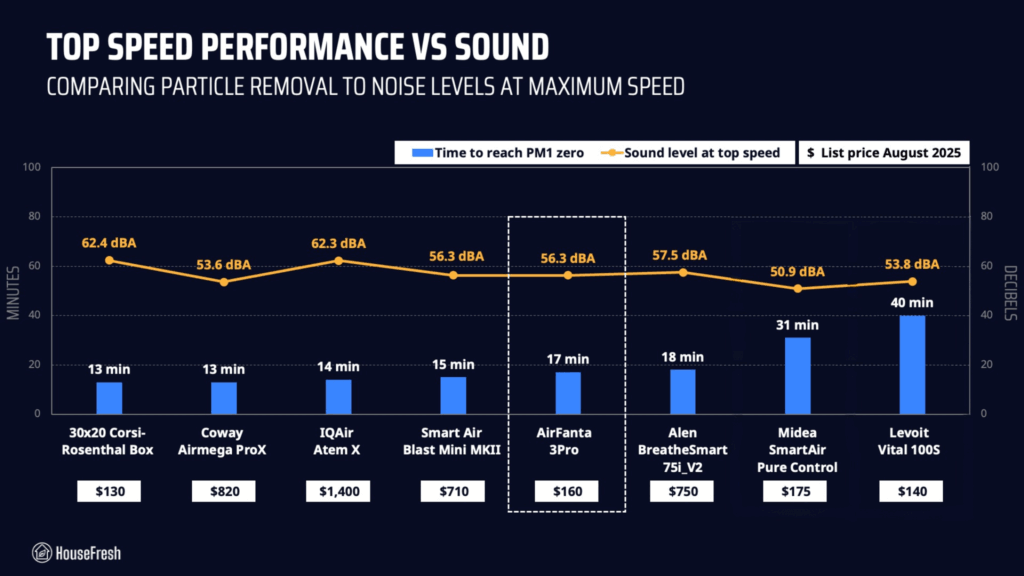
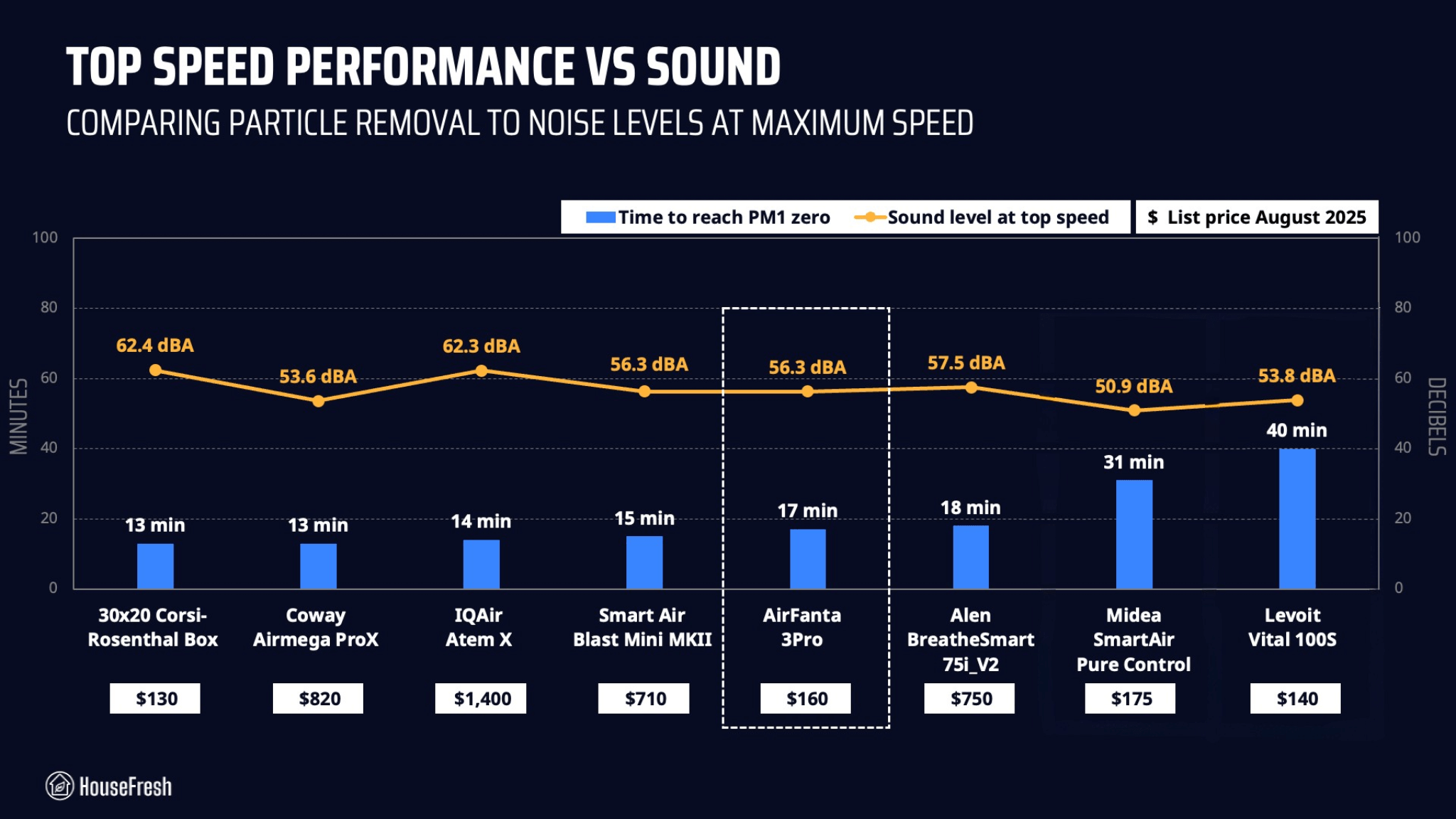
Its incredible air cleaning performance — it took just 17 minutes to clean our test room, which is two minutes slower than the almighty Smart Air Blast Mini.
It is A LOT easier to put it together than a standard DIY PC fan air purifier kit.
It can be assembled and disassembled in just a few minutes.
You get a choice of HEPA H11 filters only or HEPA with activated carbon, but I recommend sticking with the standard HEPA filters as you get higher CADR at a lower price.
It is quite small and will sit comfortably on top of a sidetable or window sill.

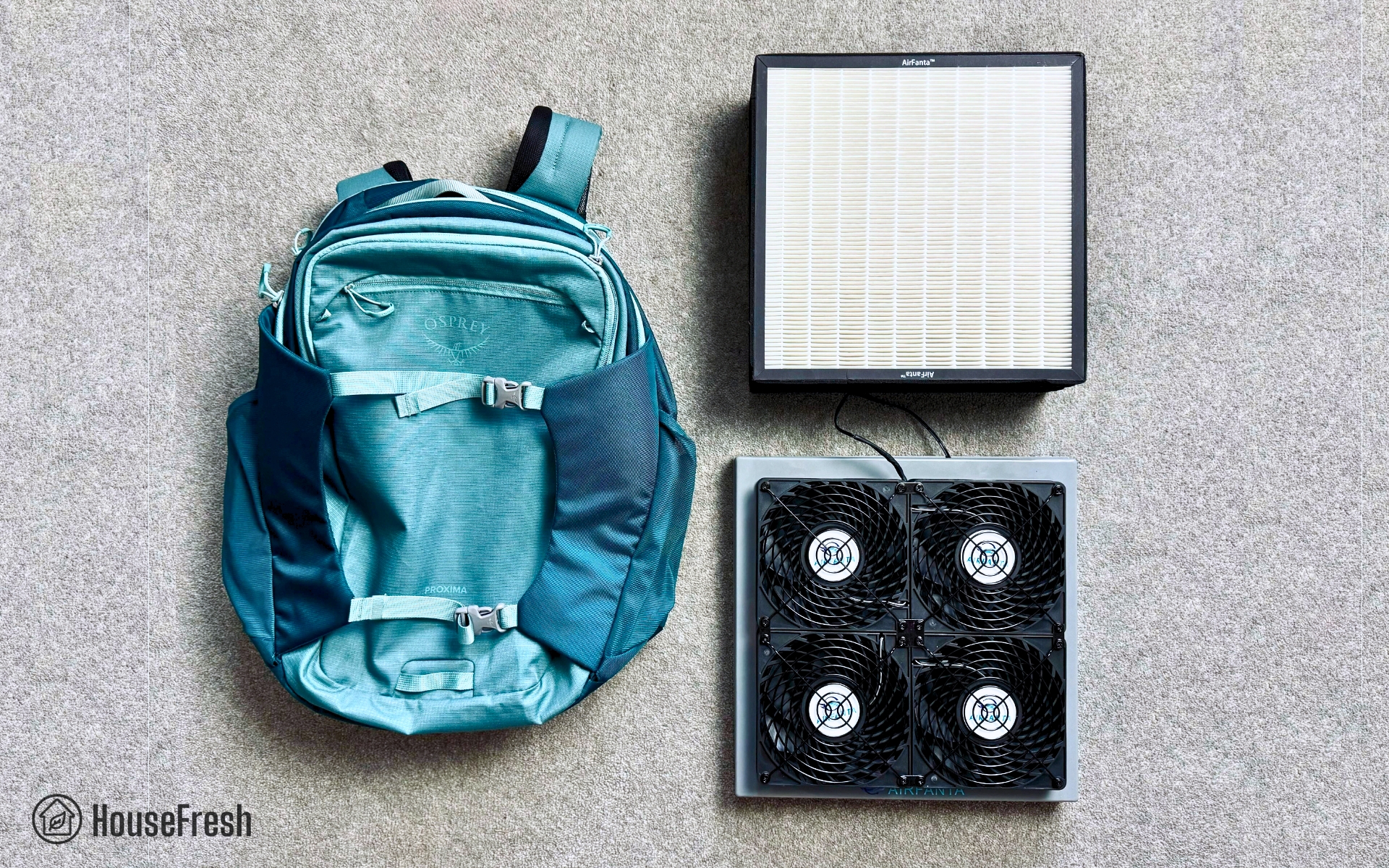
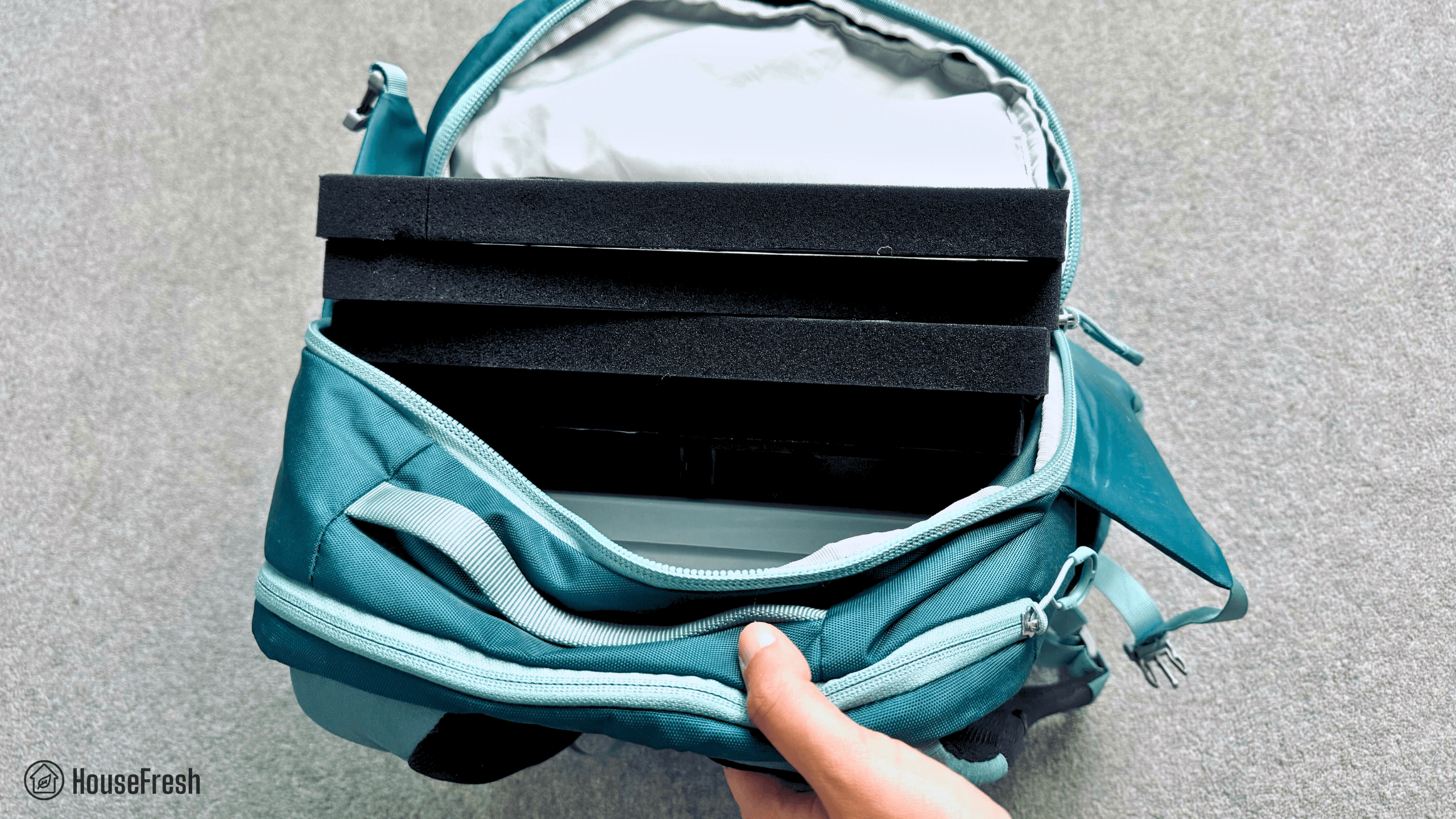
Another feature to highlight is that the 3Pro is the only high CADR air purifier that fits inside a backpack. This device can be disassembled and reassembled in just a few minutes, so could be a great solution for those wanting to have protection from allergens when traveling to a new place.

Clean air delivery rate (CADR):– Top speed PM1 CADR: 353 cfm
– Sub-45 dBA PM1 CADR: 213 cfm
Filter technology:True HEPA H11 and optional pelleted activated carbon
Recommended room size:529 sq. ft. (5 air changes per hour)
Dimensions:12.6D x 12.6W x 12.6H inches (32D x 32W X 32H cm)
Weight:7.7 lbs (3.49 kg)
Noise level in decibels from 3 ft. away:3.63 volts: 36.1 dB
4.19 volts: 36.9 dB
5.24 volts: 39.7 dB
6.54 volts: 43.3 dB
7.44 volts: 46.7 dB
8.56 volts: 49.1 dB
12.6 volts: 56.3 dB
Electricity consumption in watts :43.23 watts
Filter lifespan:6 – 12 months
Manufacturer’s warranty:1 year
Country of origin:China
Country of manufacture:China

READ OUR FULL REVIEW ➜ 

WATCH OUR VIDEO REVIEW ➜

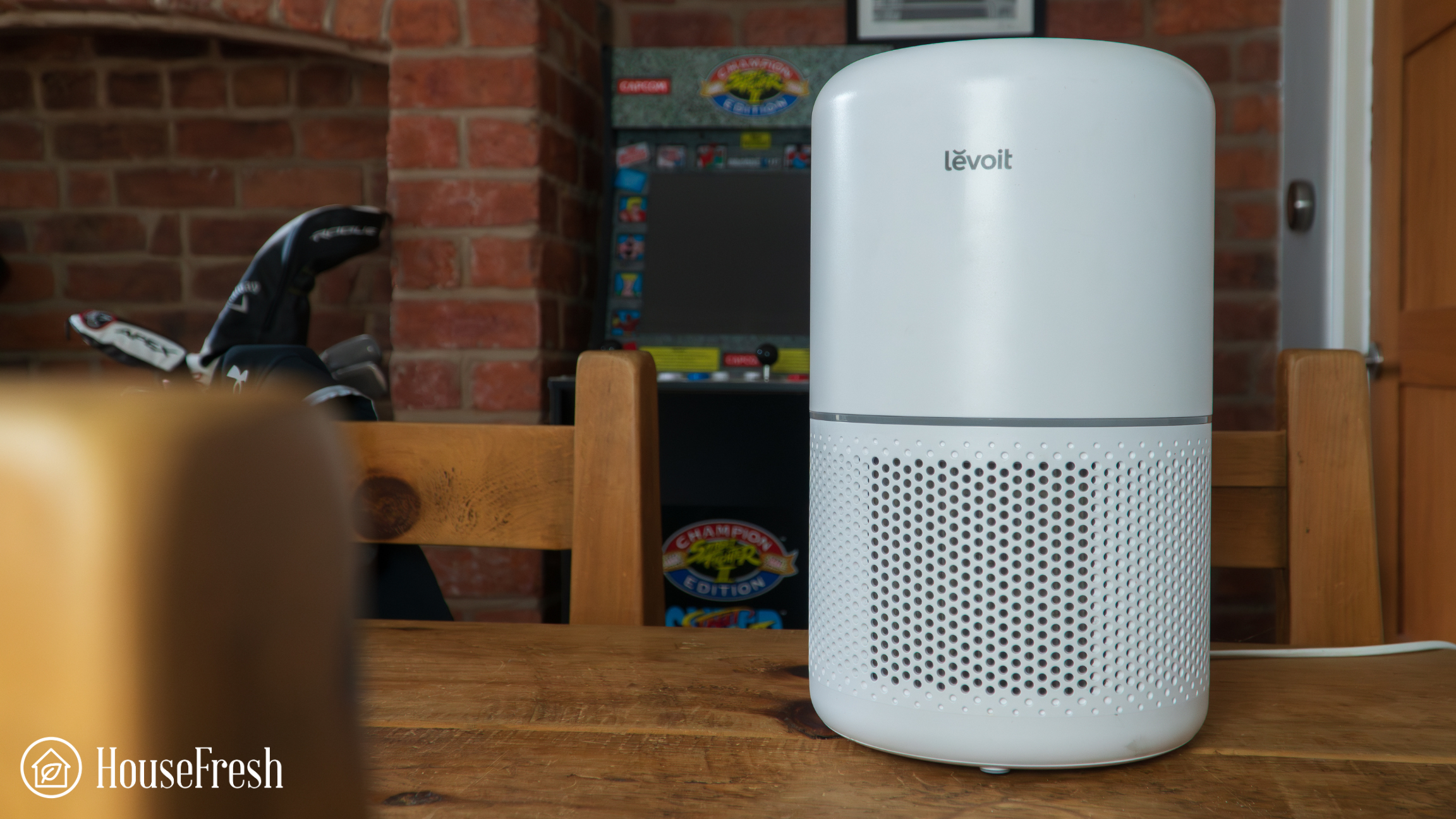
3. Best for small spaces: Levoit Core 400S

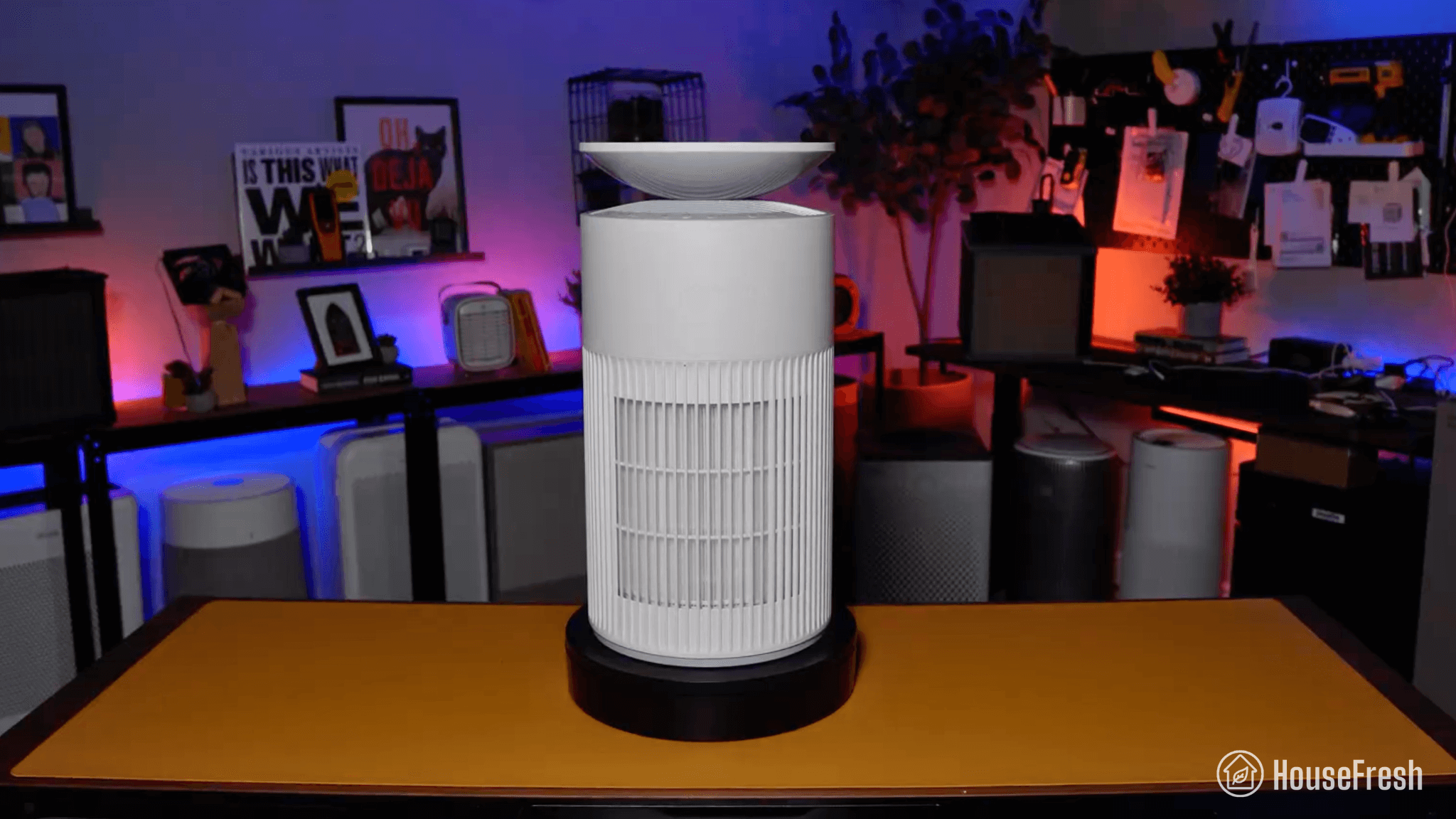
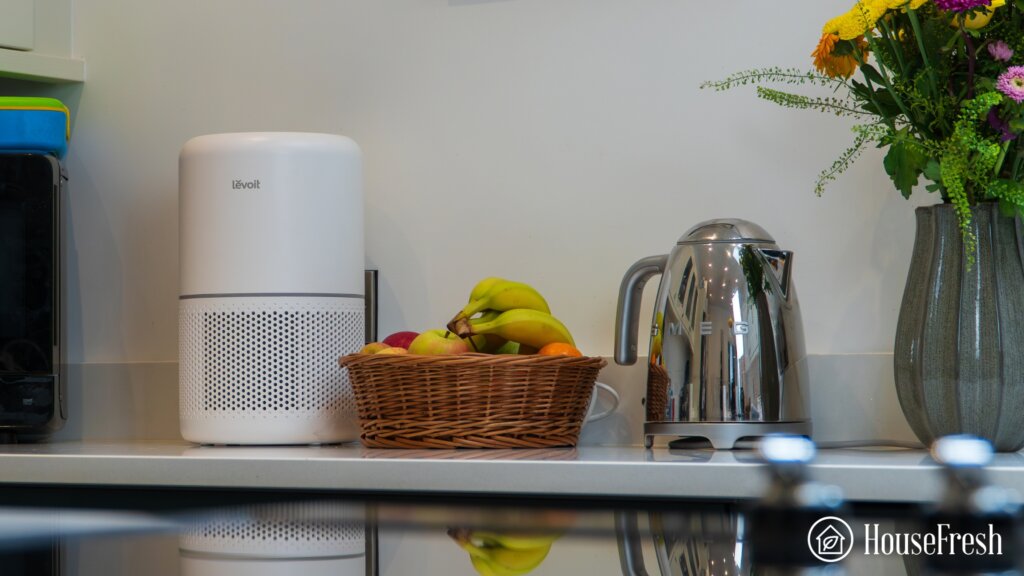
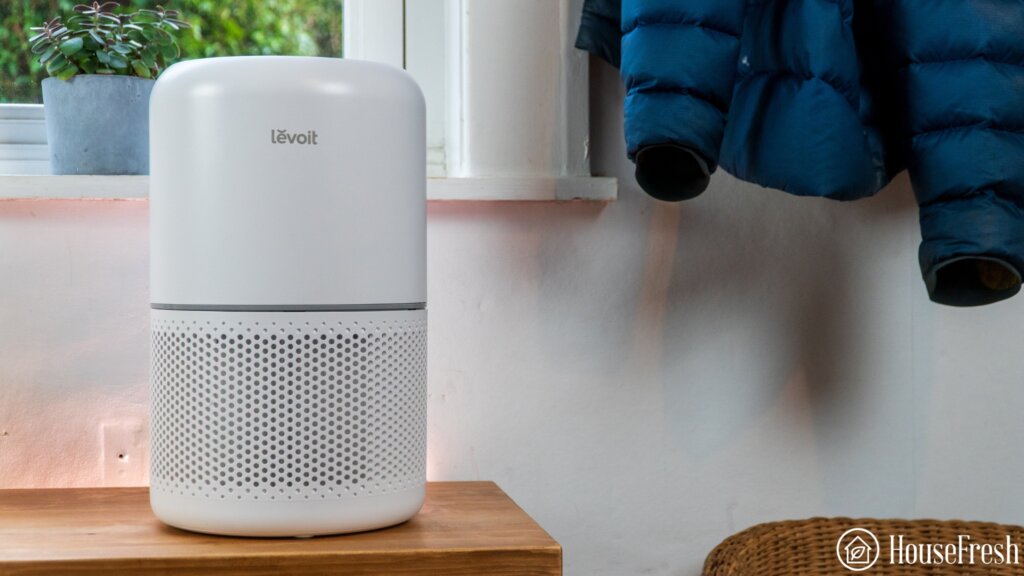
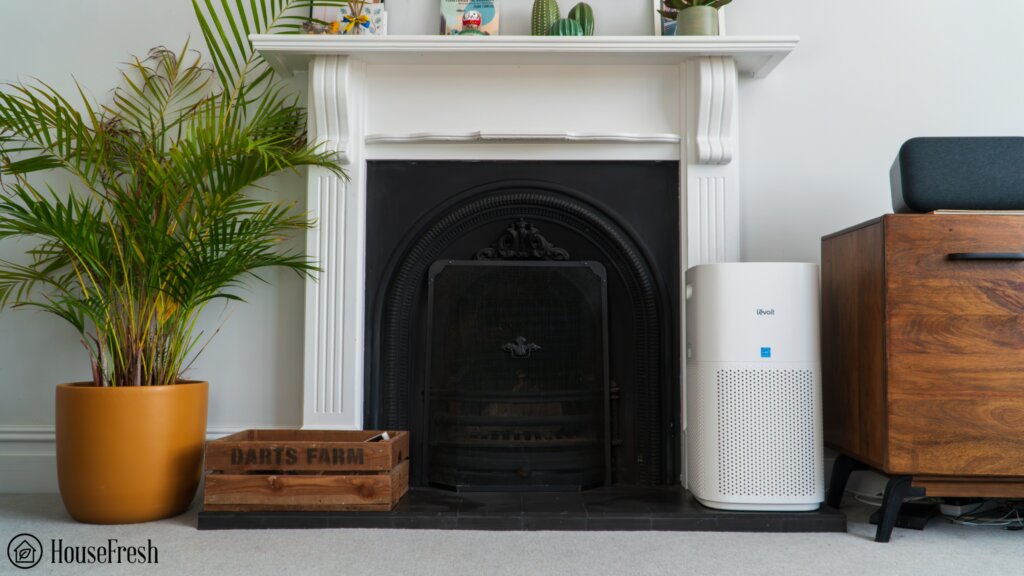
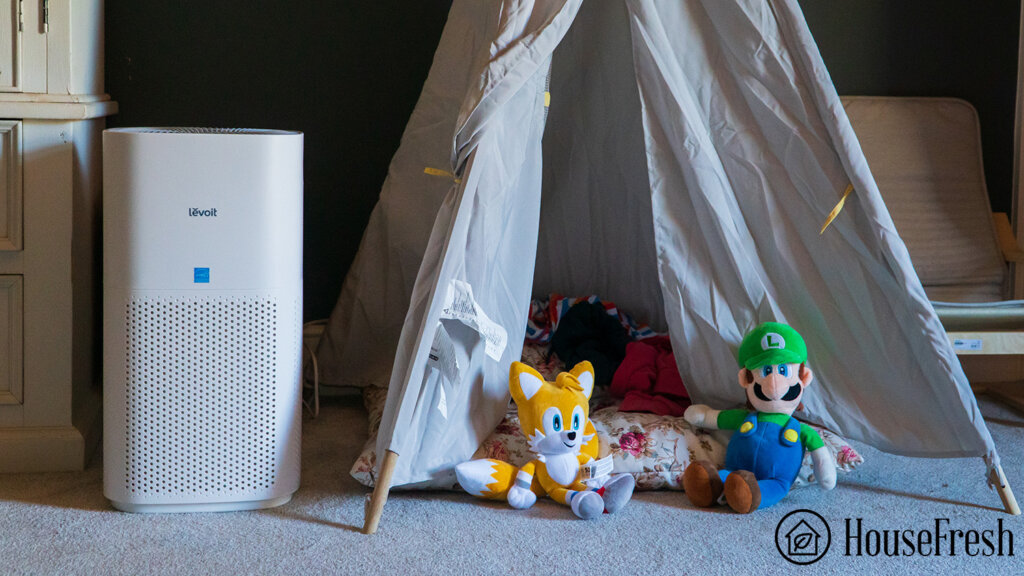
The Core 400S is a cylindrical air purifier that can provide six air changes per hour in rooms up to 167 sq. ft. at fan speeds under 45 decibels.

Levoit Core 400S Living Room

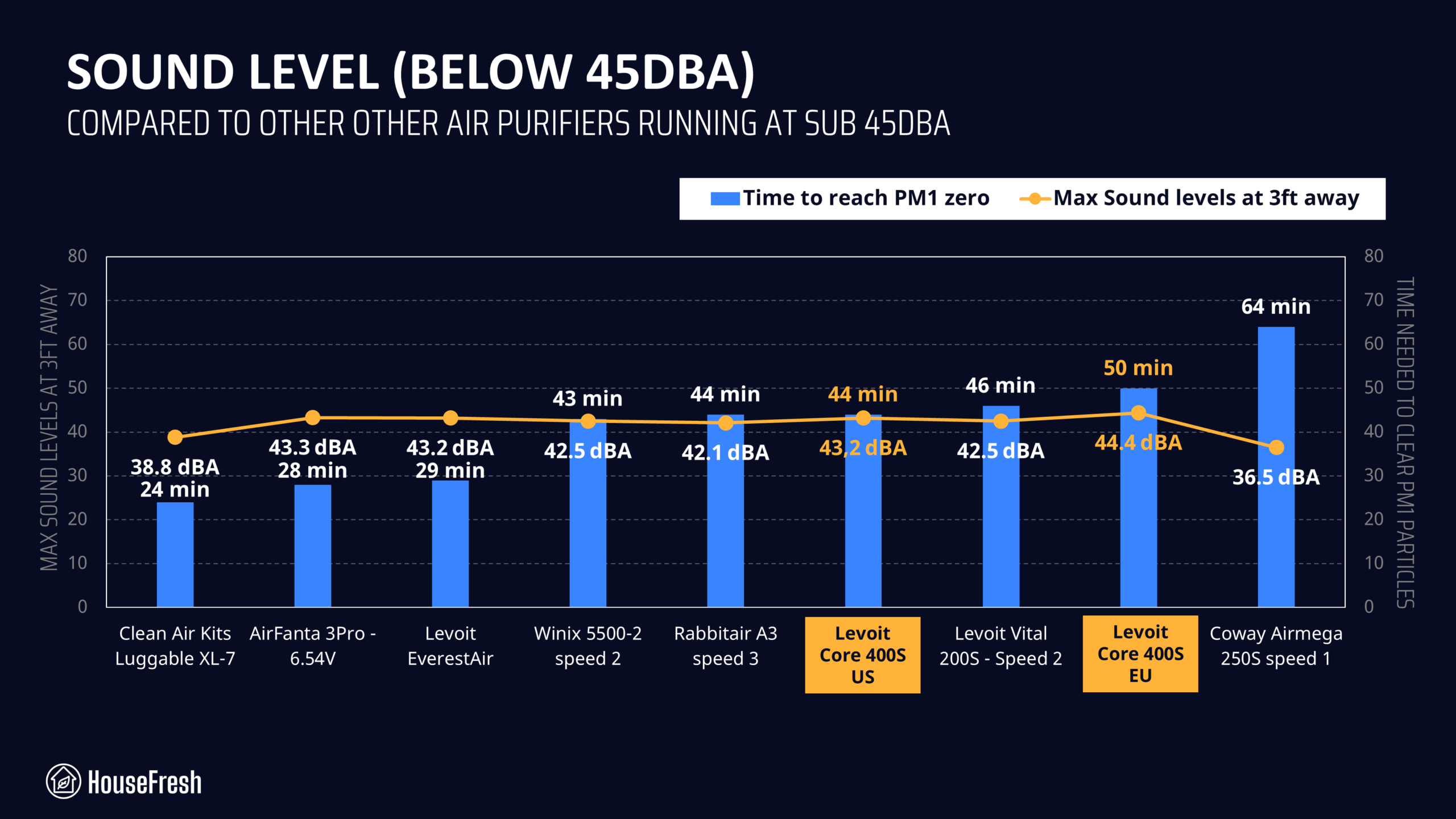
When running at speed 2, the Core 400S generates just 43.2 dBA and based on our particle removal test, we estimated a PM1 CADR of 134 cfm, which is good enough for six air changes in spaces up to 167 square feet.

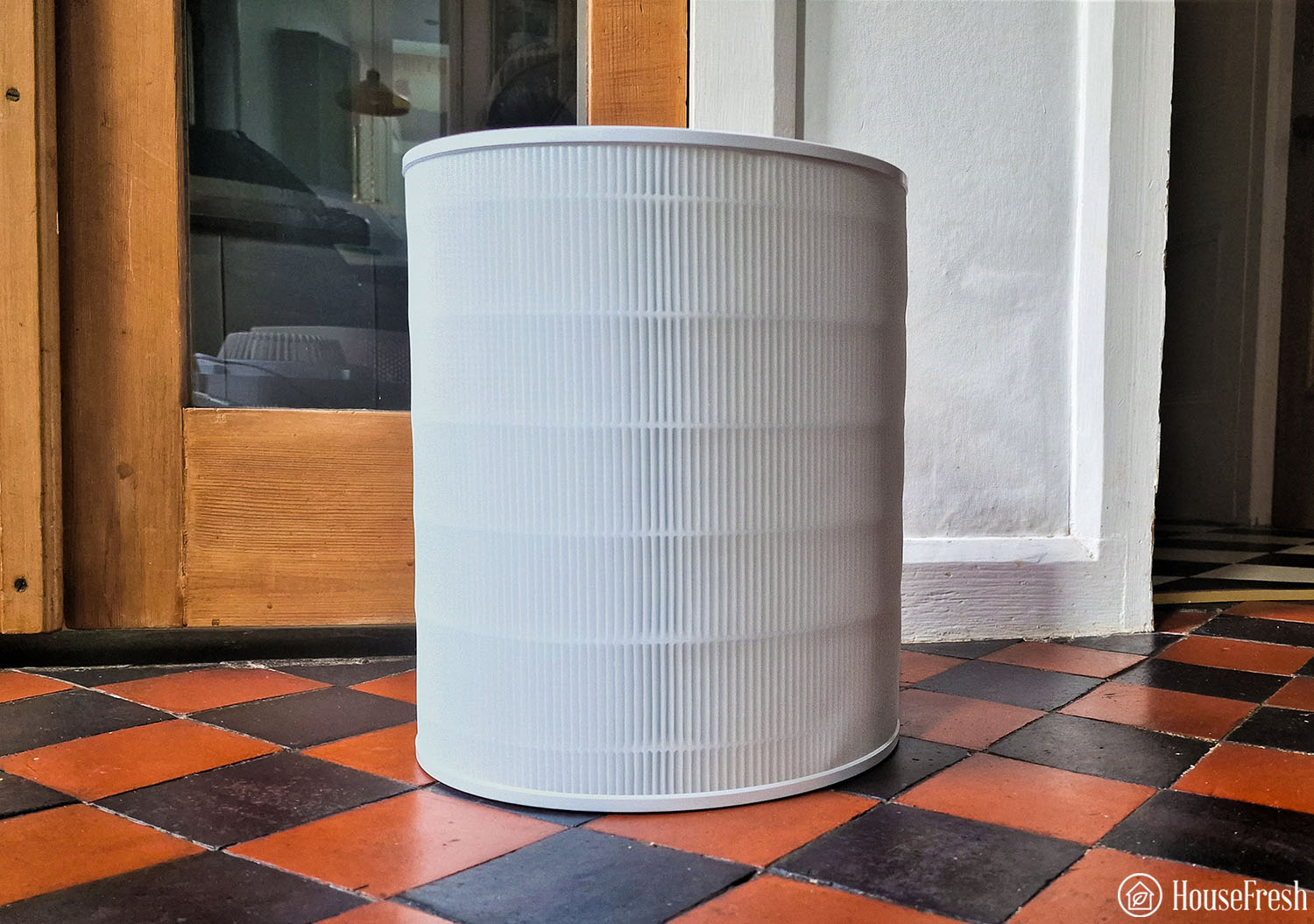
The Core 400S has a cylindrical filter with a pre-filter mesh that wraps around the particle filter and a layer of pelleted activated carbon.

Core 400S filter

There are multiple filter options available, but if your allergies aren’t triggered by VOCs, I’d suggest sticking to the standard filter that doesn’t include additional carbon for better particle filtration.

When running at speed 2, it matched the particle filtration of the $750 Rabbit Air A3 and it outperformed the popular Vital 200S.

core 400s quiet performance scaled

However, if you’re in Europe, you should know that the European version of the Core 400S uses a different fan motor that is less powerful than the American version of this model.

PROS

The filter was originally advertised as HEPA, but Levoit stopped marketing it as such after Dyson challenged HEPA claims before the BBB.
The filter is bonded, so you will need to replace the entire thing once the carbon is full, even if the particle filter still has life in it.

CONS

The cylindrical design takes up less floor space than the traditional boxy air purifier design.
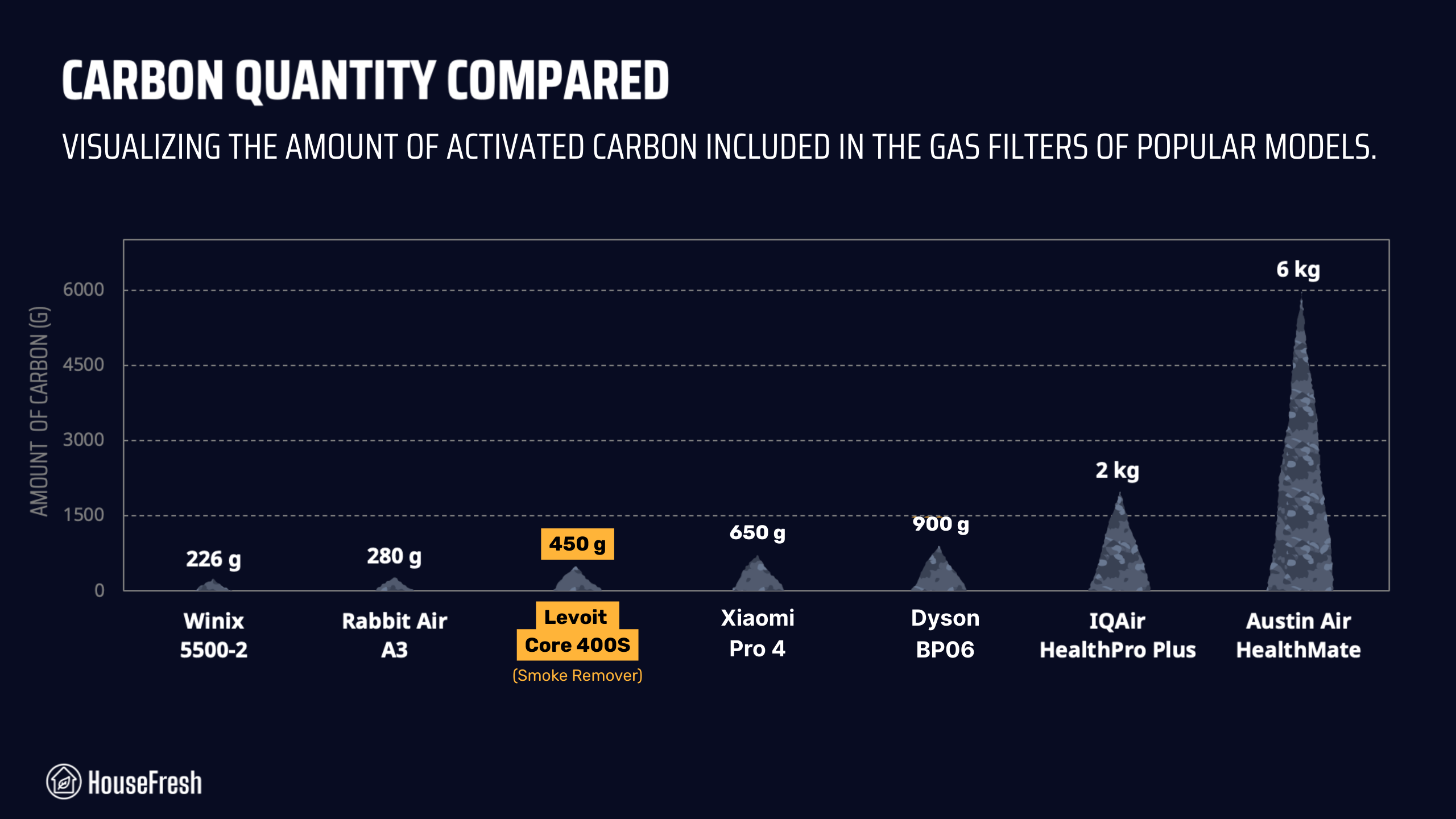
You get filter options with different amounts of carbon, with the top one being 450 grams (Smoke Remover), which is the most you will get with any Levoit device.
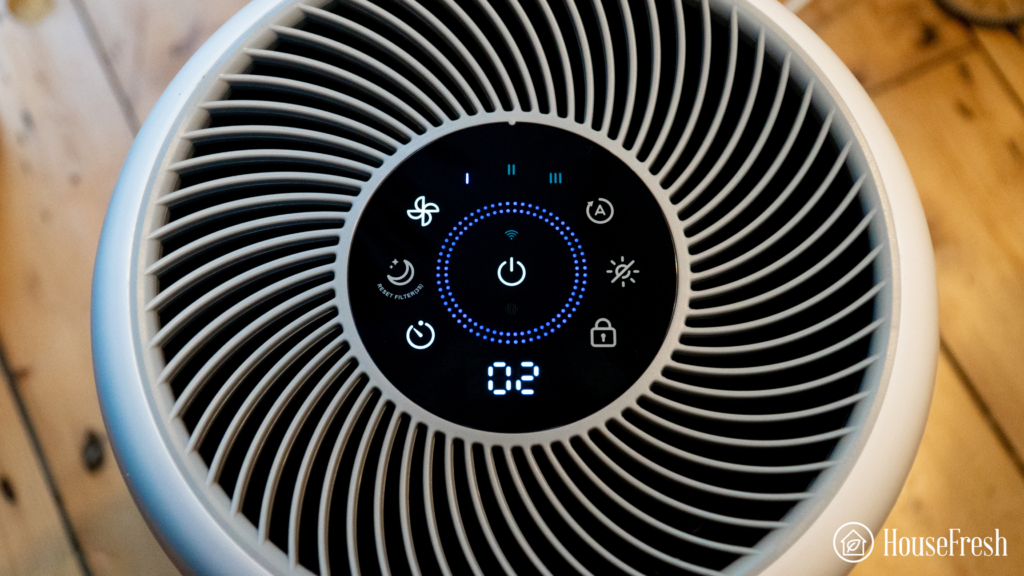
It has a laser particle sensor that unlocks smart modes and you get real-time PM2.5 readings at the top of the device.
It comes with app support via the VeSync app, which has great UX, useful features, and is constantly updated and improved.

Clean air delivery rate (CADR):– Top speed PM1 CADR: 213 cfm
– Sub-45 dBA PM1 CADR: 134 cfm
– AHAM PM2.5 CADR: 247 cfm (dust)
Filtration technology:Pre-filter for large particles, main filter for airborne particles and activated carbon filter for odors and gasses
Recommended room size:319 sq. ft. (5 air changes per hour)
Dimensions:10.8L x 10.8W x 20.5H inches (27.4L x 27.4W x 52H cm)
Weight:11.2 lbs (5 kg)
Filter lifespan:6 months
Noise level in decibels from 3 ft. away:Sleep mode: 35.5 dBA
Speed 1: 38.3 dBA
Speed 2: 43.2 dBA
Speed 3: 51.2 dBA
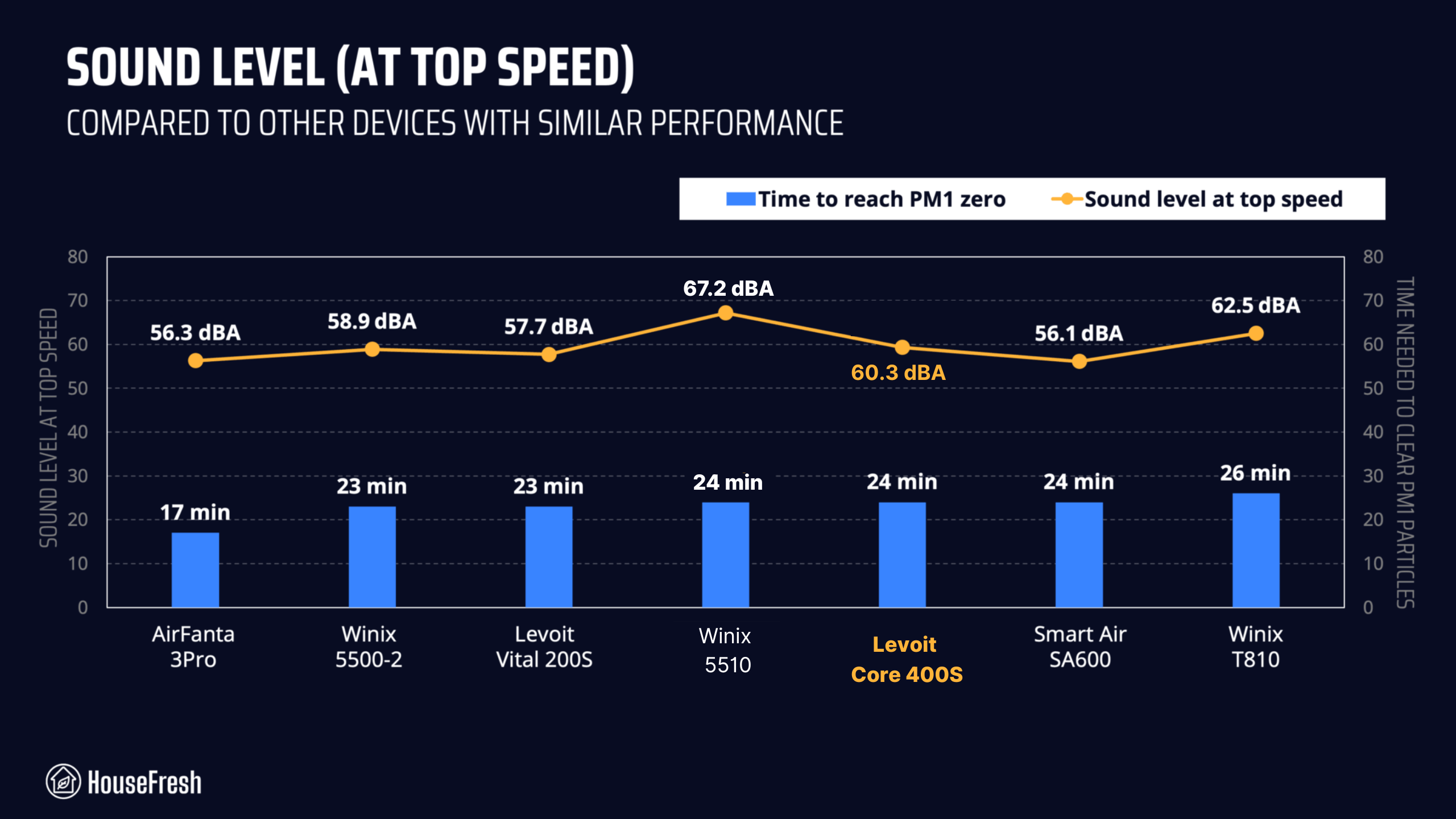
Speed 4: 60.3 dBA
Electricity consumption in watts:Standby: 0.93 watts
Sleep mode: 3.05 watts
Speed 1: 5.28 watts
Speed 2: 8.51 watts
Speed 3: 16.41 watts
Speed 4: 39.64 watts
Manufacturer’s warranty:2 years
Country of origin:United States
Country of manufacture:China

READ MY FULL REVIEW ➜ 

WATCH MY VIDEO REVIEW ➜

4. Best for large spaces: Coway Airmega ProX

If the DIY look isn’t for you and you need serious power to clean the air in a large space, then look no further than the ProX.

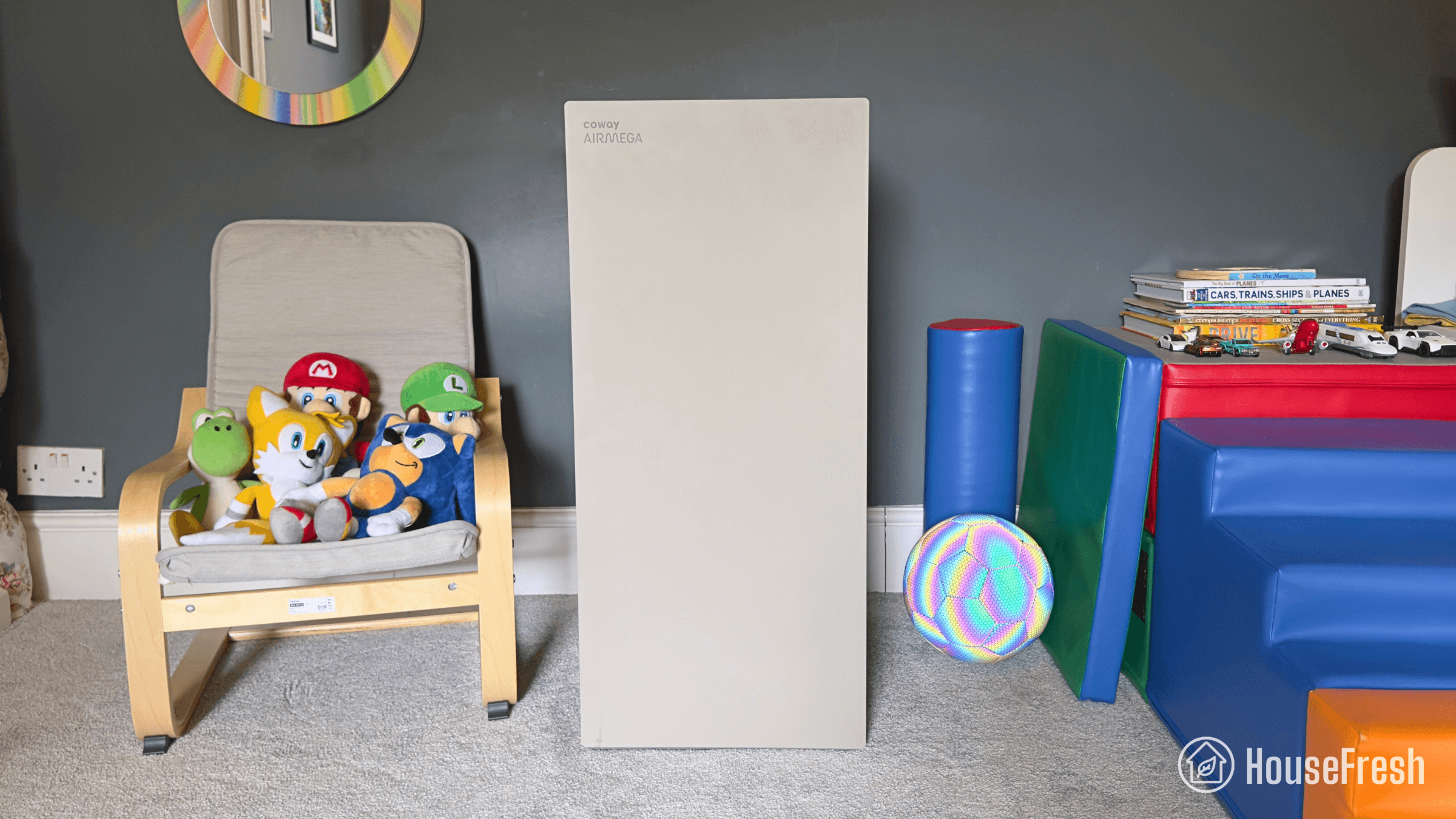
Coway Airmega ProX TV Room

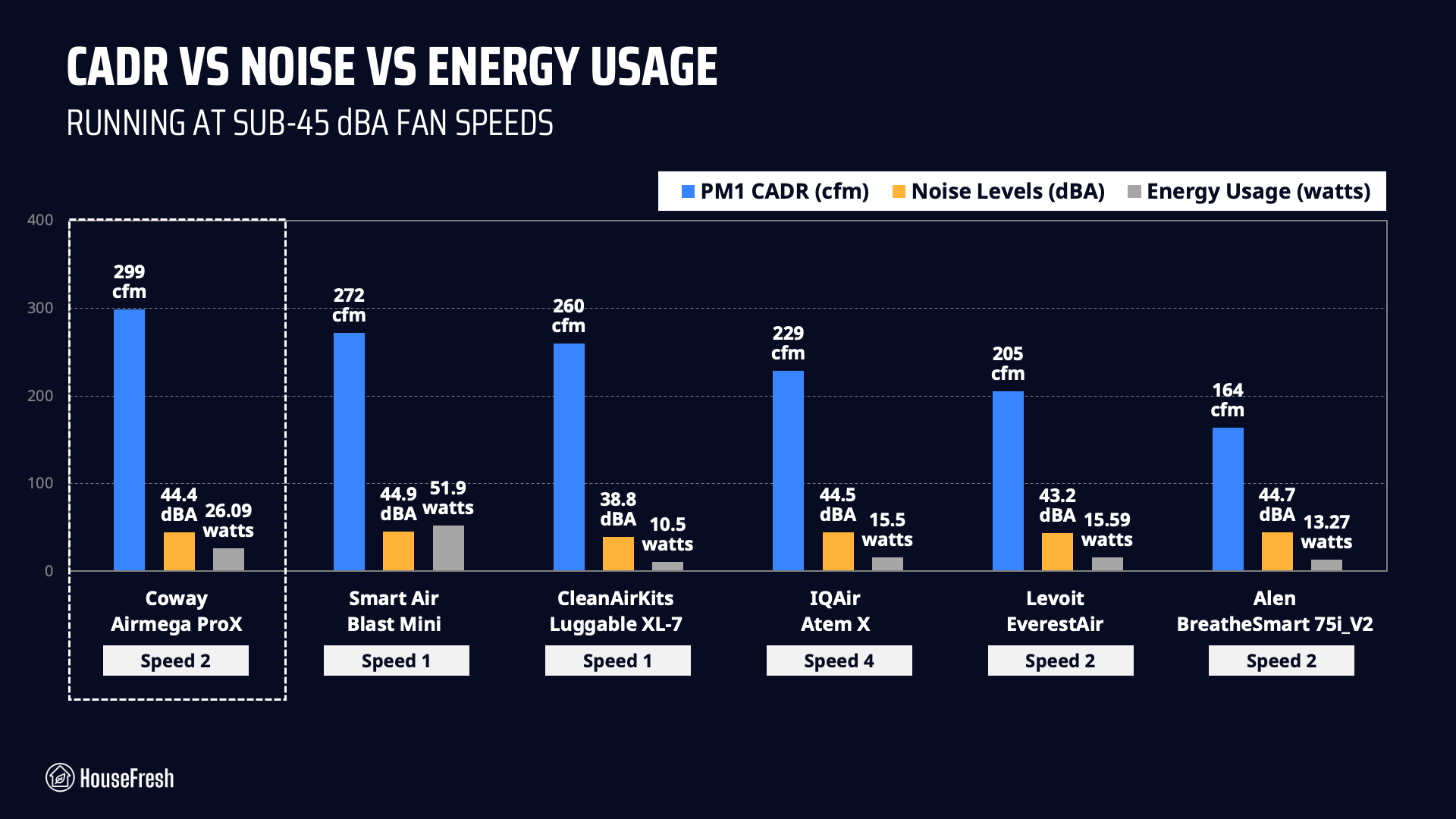
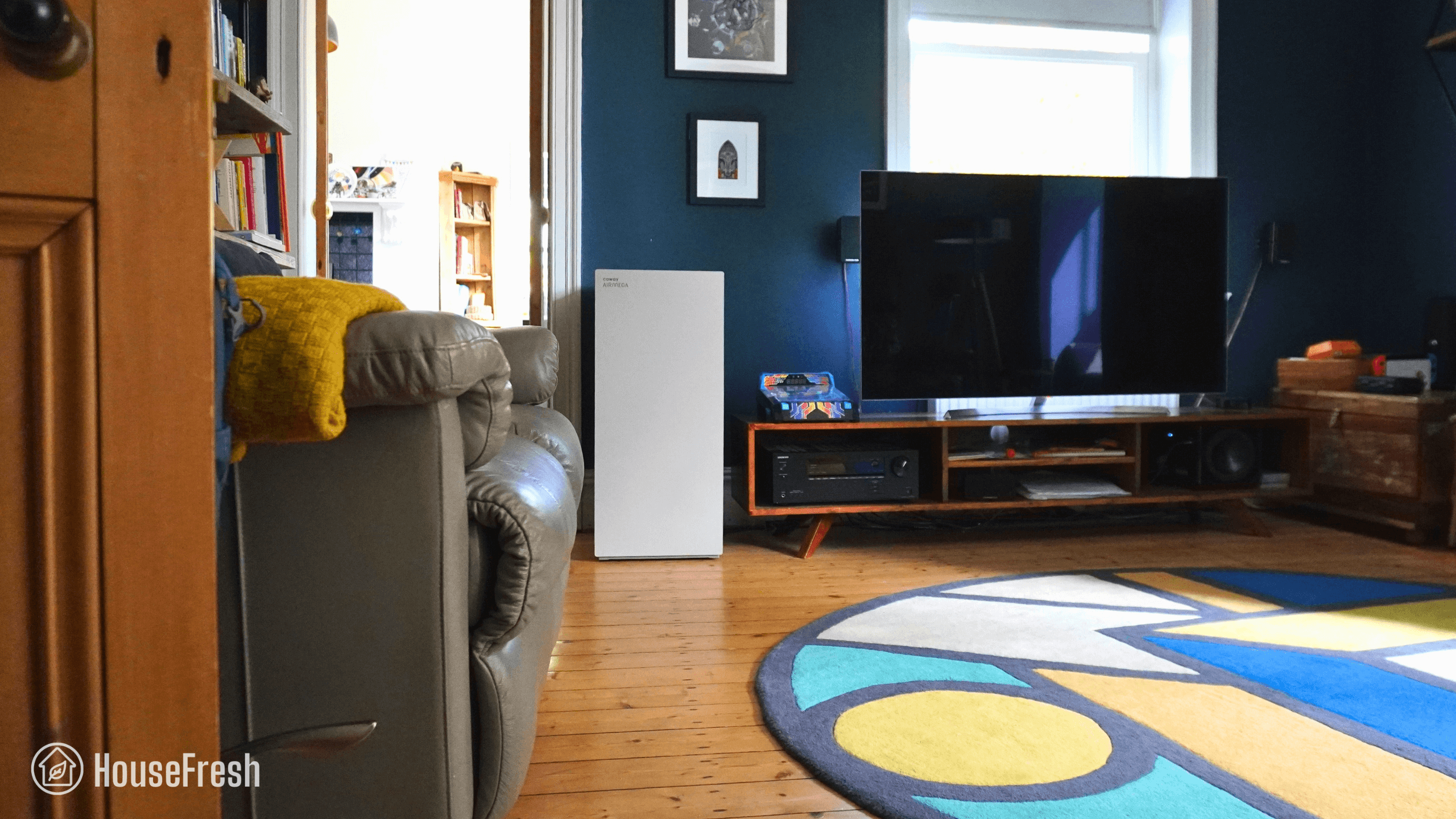
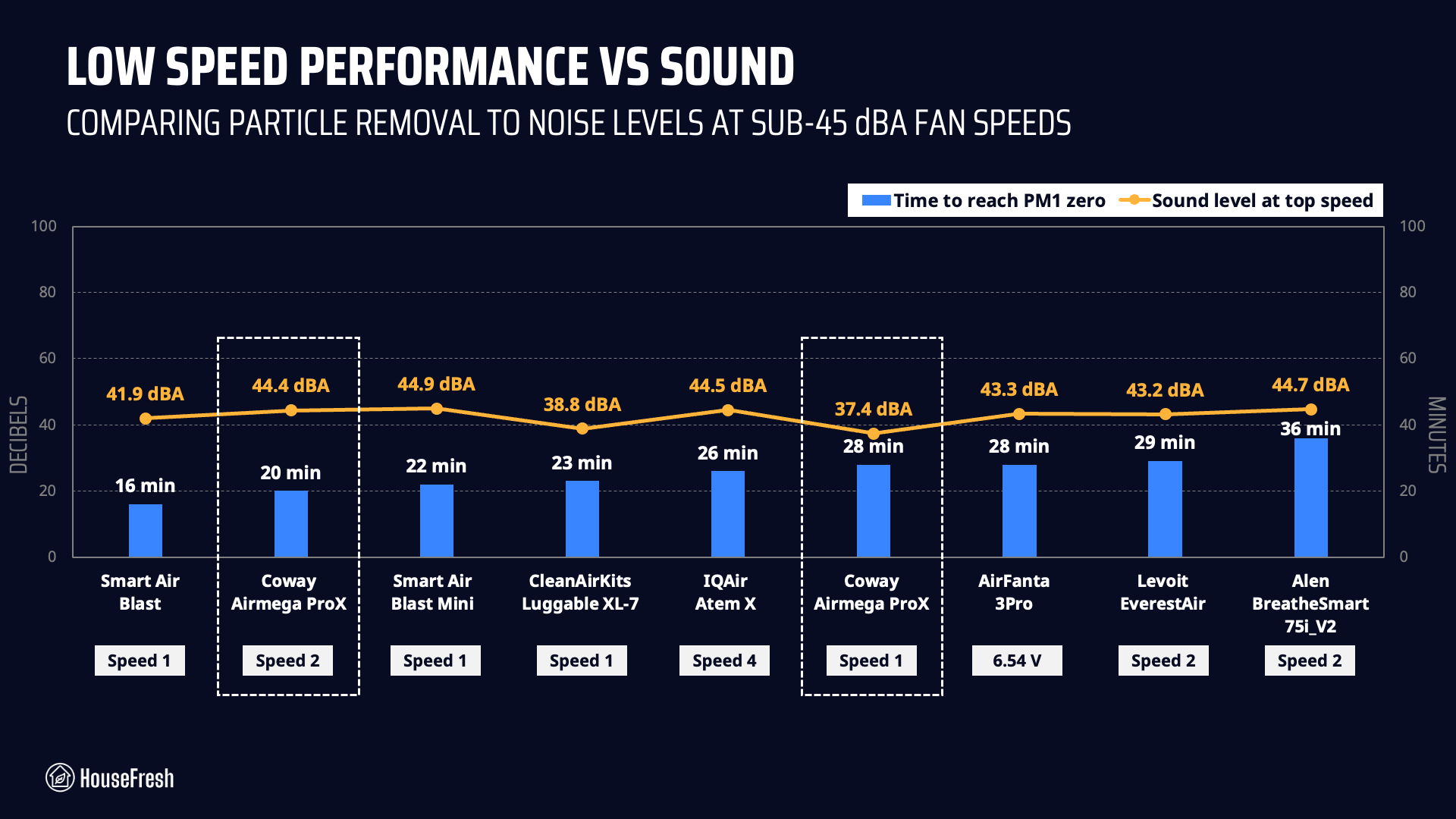
With an estimated PM1 CADR of 299 cfm at sub-45 dBA fan speeds, the Coway Airmega ProX can provide six air changes per hour in spaces up to 373 square feet.

Coway ProX CADR energy sound

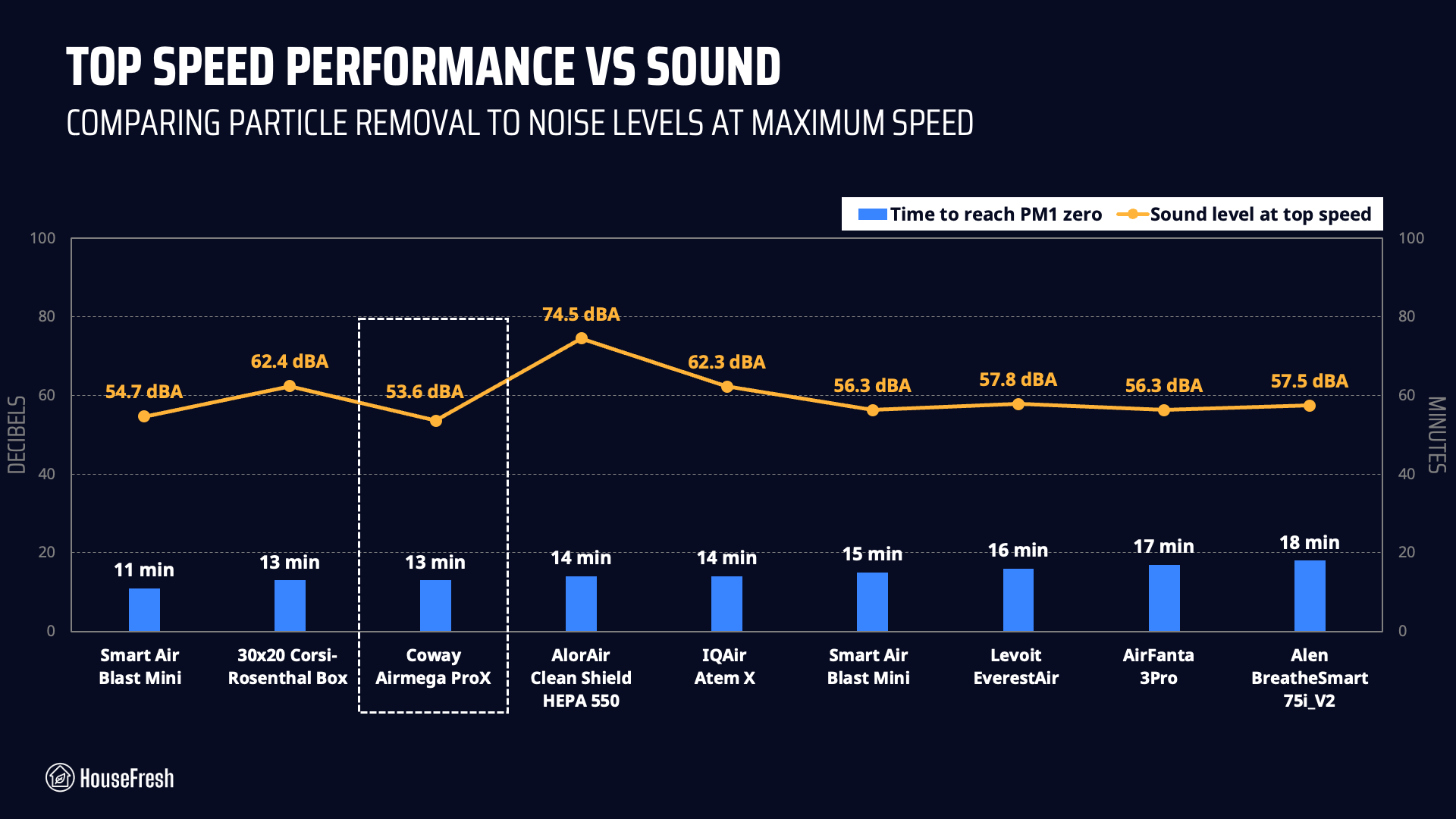
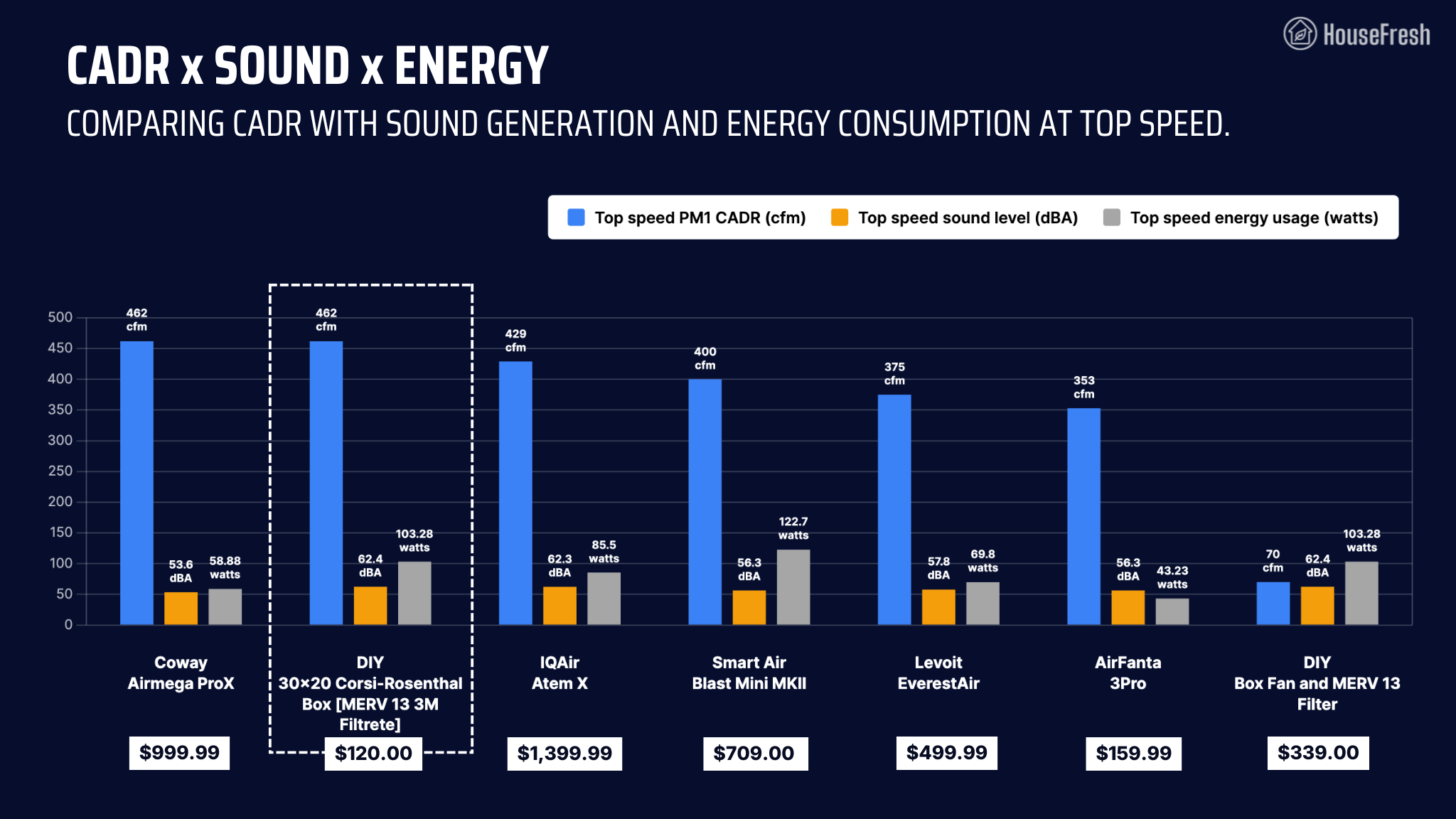
When running at full speed, we estimate a PM1 CADR of 462 cfm. This means it’s powerful enough to clean the air six times per hour in rooms as large as 577 square feet while generating just 53.6 dBA of noise.

Coway Airmega ProX Top speed sound
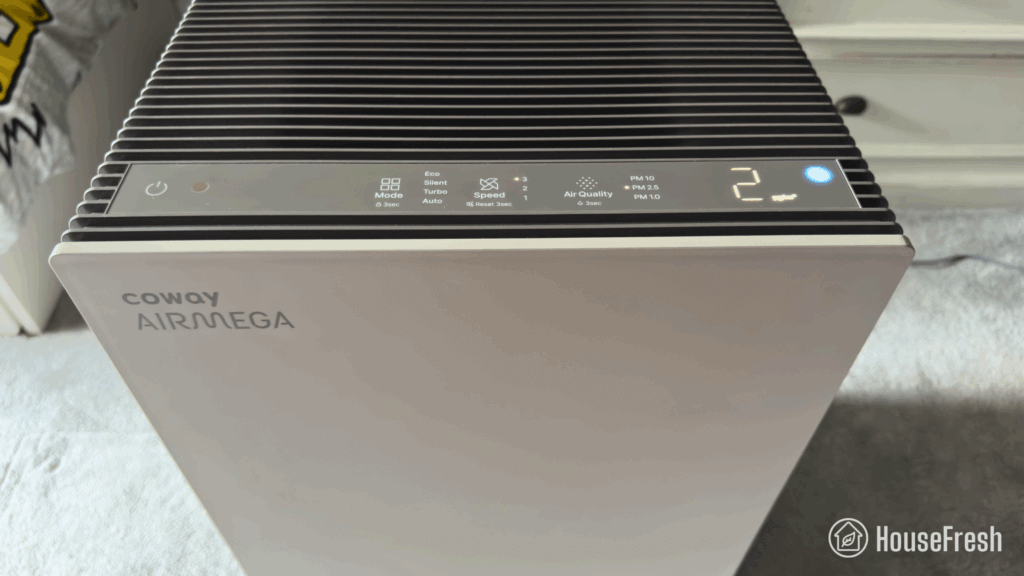
Coway Airmega ProX Controls

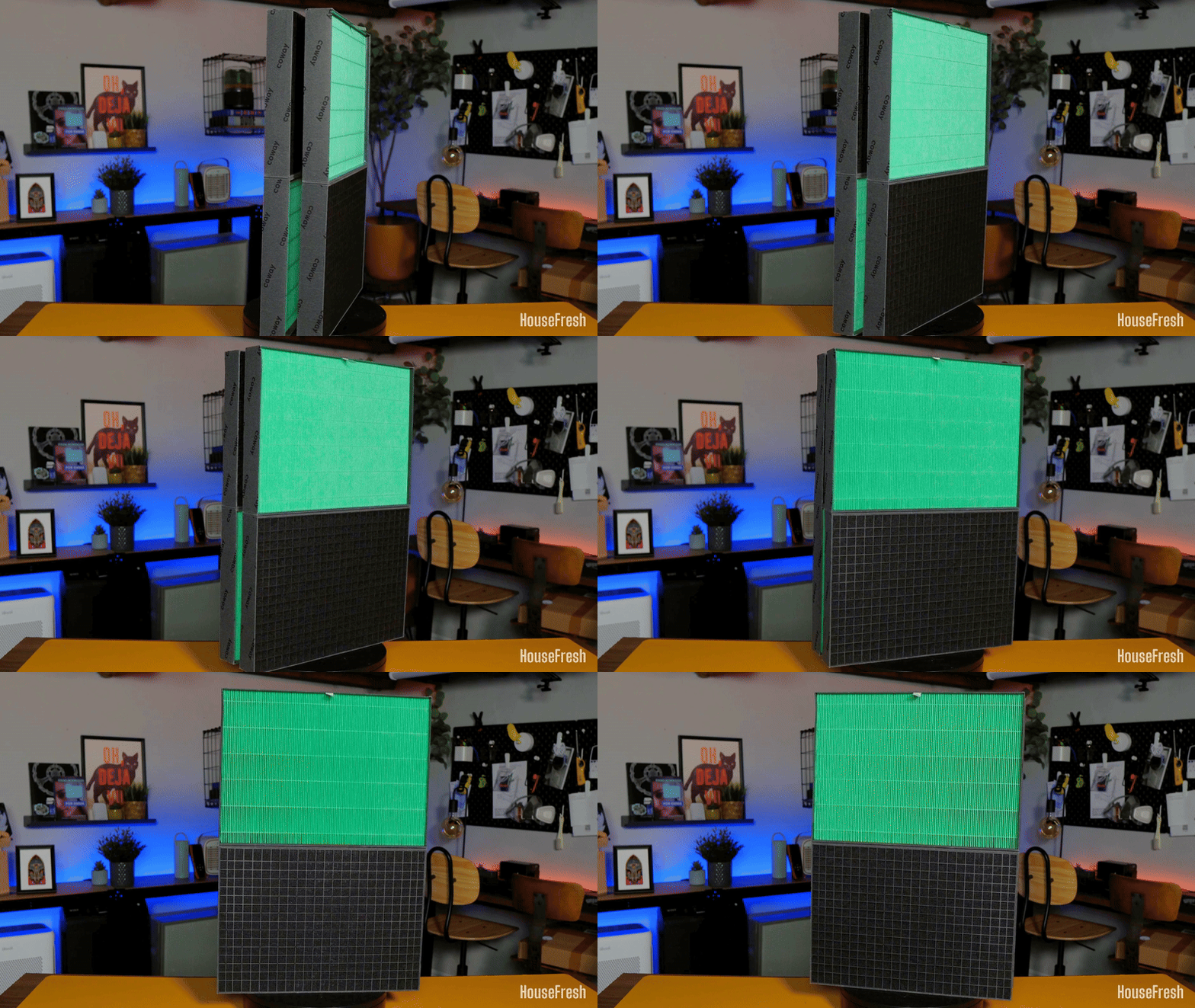
Unlike the rest of the air purifiers on this list, the ProX comes with an onboard air quality sensor that unlocks auto mode and provides real-time PM2.5 readings. It also comes with two particle + carbon filters.

Coway Airmega ProX Filters

CONS

Retailing at just over $900, the ProX isn’t cheap.
It’s not small either, weighing 50 lbs or 22.67 kg.
It doesn’t have app support, which we would expect at this price point.

PROS

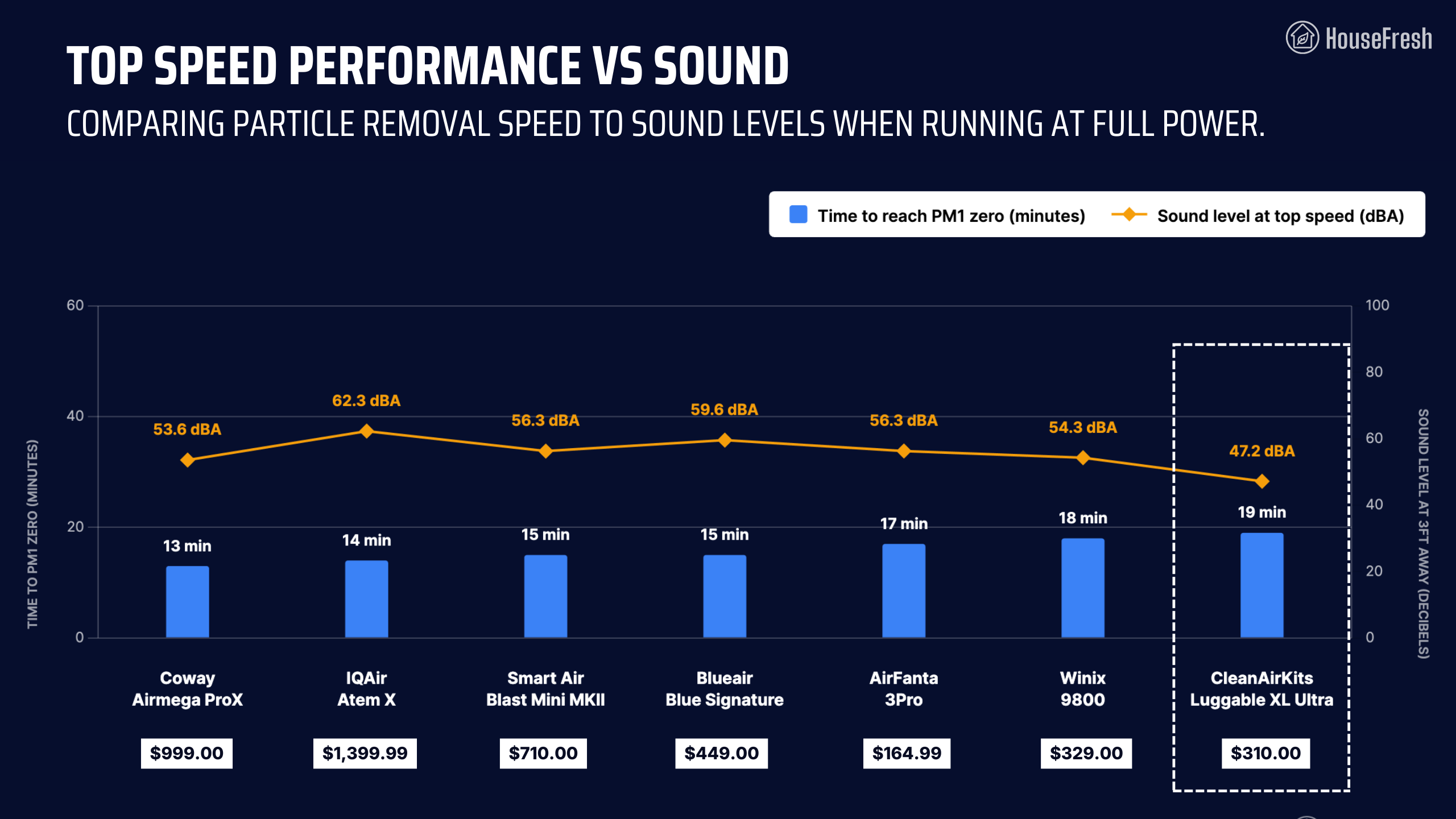
It is officially the fastest HEPA air purifier we tested – at top speed, the ProX completed our particle removal test in 13 minutes.
Even though it is heavy, it comes with deep handles at each side and wheels at the bottom.
You can adjust the sensibility of the air quality sensor.
You can also adjust the power of the auto mode, rotating between eco, silent and turbo.
It looks incredible and is made of high-quality plastic.

Clean air delivery rate (CADR):– Top speed PM1 CADR: 462 cfm
– Sub-45 dBA PM1 CADR: 299 cfm
– AHAM PM2.5 CADR: 586 cfm (dust)
Filter technology:Green True HEPA filter with pelleted activated carbon
Recommended room size:693 sq. ft. (5 air changes per hour)
Dimensions:18.9 x 36.6 x 24.3 in (48 x 93 x 62 cm)
Weight:51 lbs (23kg)
Noise level in decibels from 3 ft. away:Speed 1: 37.4 dBA
Speed 2: 44.4 dBA
Speed 3: 53.6 dBA
Electricity consumption in watts:Standby: 0 watts
Speed 1: 11.76 watts
Speed 2: 26.09 watts
Speed 3: 58.88 watts
Filter lifespan:12 months
Manufacturer’s warranty:3 years
Country of origin:South Korea
Country of manufacture:South Korea

READ MY FULL REVIEW ➜ 

WATCH MY VIDEO REVIEW ➜

5. Best buy-it-for-life PC fan kit: Nukit Tempest Pro

The Tempest Pro is a PC fan air purifier with excellent particle removal performance and a metal body that will last a lifetime.

Nukit Tempest Pro Living Room

When running at top speed, the Nukit Tempest Pro is whisper-quite, generating 39.1 dBA of noise while providing an estimated PM1 CADR of 188 cfm, which is good enough for six air changes in rooms no larger than 235 sq. ft.

Nukit Tempest Pro Handle

If your allergies are not triggered by VOCs, you can run it without the activated carbon filters to reduce long-term costs.

Nukit Tempest Pro Filters

Much like the Luggable XL Ultra, the Tempest Pro also uses any type of 20×25 MERV 13 filters you can buy. Based on my tests, I recommend the 3M Filtrete MPR1900 filters.

PROS

The 3-speed version is not as quiet as the 5-speed version, so look for the SA600 with five fan speeds.
If you want a smart air purifier, this is not the device for you.

CONS

The control panel is intuitive and the lights switch off automatically, without the need to press any button or activate any special mode.
It restarts automatically following a power cut or after being unplugged, which is something most models don’t do.
It can be mounted to the wall and comes with screw holes on the bottom, but you will need to source the fixtures to do this. 

Clean air delivery rate (CADR):– Top speed PM1 CADR: 188 cfm
– Sub-45 dBA PM1 CADR: 188 cfm
Filter technology:MERV 13 (20×25)
Recommended room size:282 sq. ft. (5 air changes per hour)
Dimensions:26.65 x 20.27 x 7.55 in (67.7 x 51.5 x 19.2 cm)
Weight:18.7 lbs (8.5 kg)
Noise level in decibels from 3 ft. away:Top speed: 39.1 dBA
Electricity consumption in watts:Standby: 0 watts
Top speed: 16.44 watts
Filter lifespan:12 months
Manufacturer’s warranty:1 year
Country of origin:China
Country of manufacture:China

READ MY FULL REVIEW ➜ 

WATCH MY VIDEO REVIEW ➜

6. Best money can buy: IQAir Atem X

If money is no object, the Atem X from IQAir is the best air purifier for allergy sufferers wanting to remove pollen, dust, mold and other particles from the air.

IQAir Atem X Dining Room

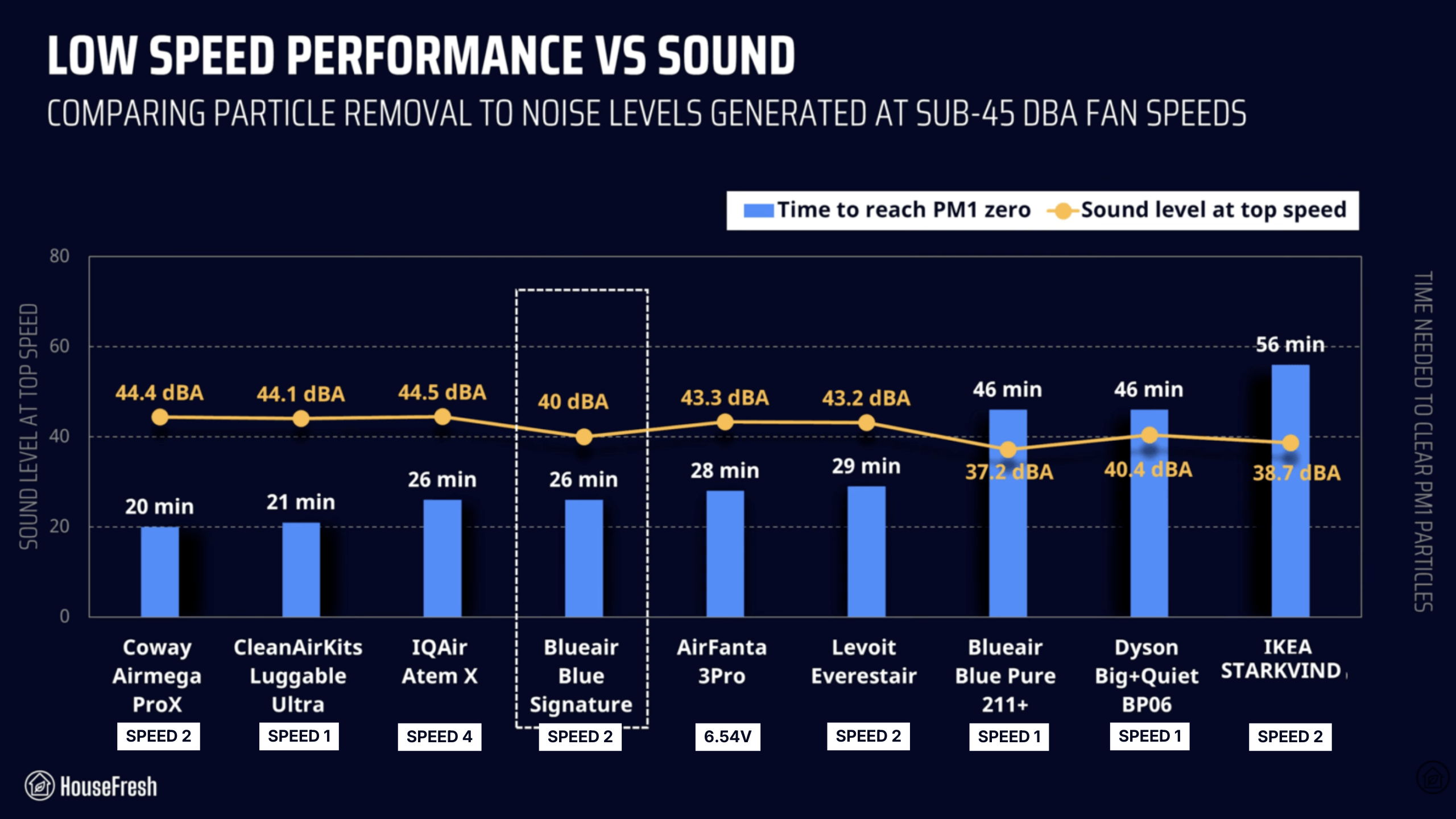
The Atem X is the most expensive air purifier we have tested at HouseFresh and its performance, features and design blew me away. At speed 4, it generates 44.5 dBA while providing a PM1 CADR of 229 cfm, which is powerful enough to clean the air six times per hour in rooms up to 286 sq. ft.

It comes with three HEPA filters, but it doesn’t come with a gas filter or any form of carbon filtration as standard, so it won’t be suitable for those with allergies triggered by chemical gases.

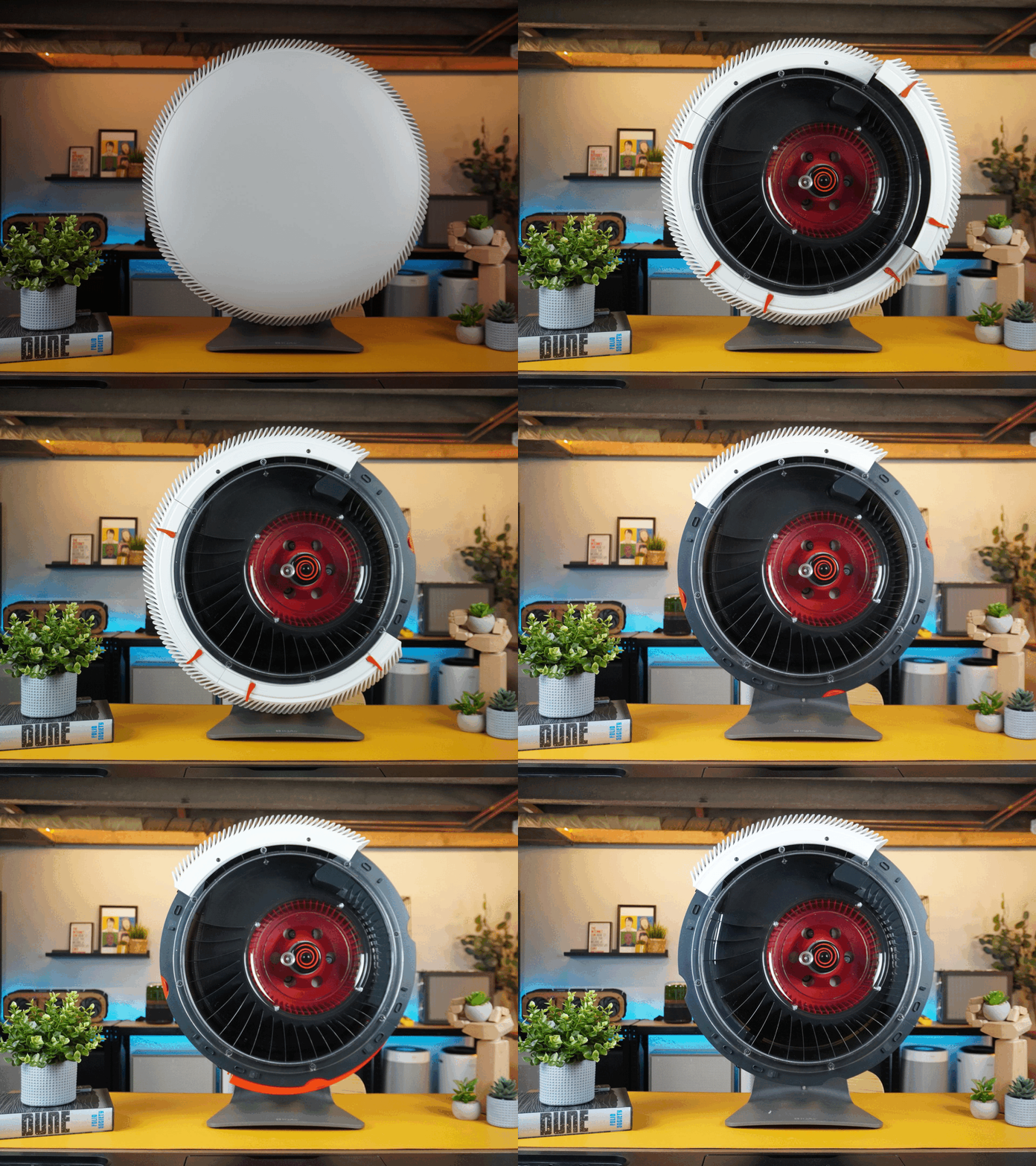
IQAir Atem X Filters

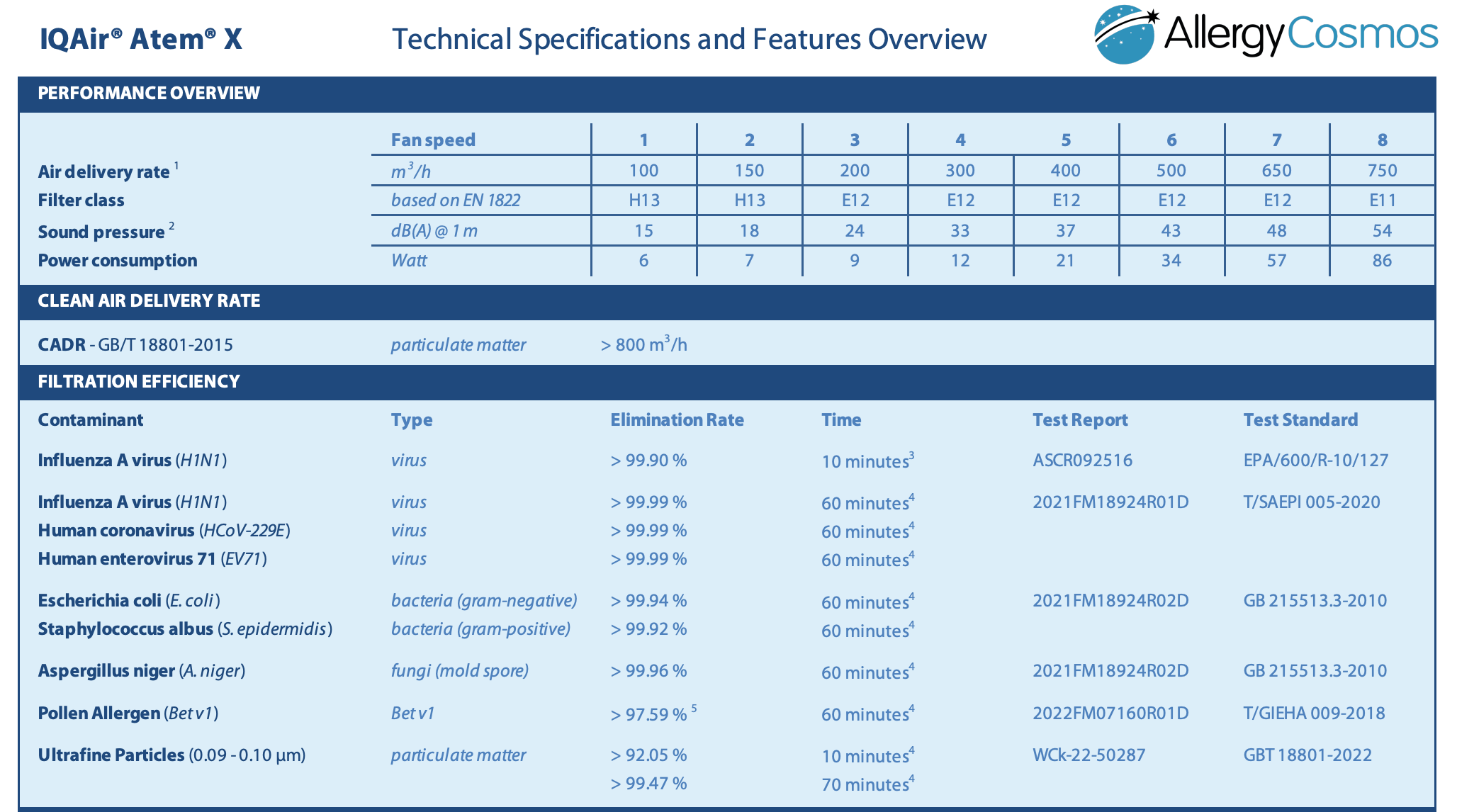
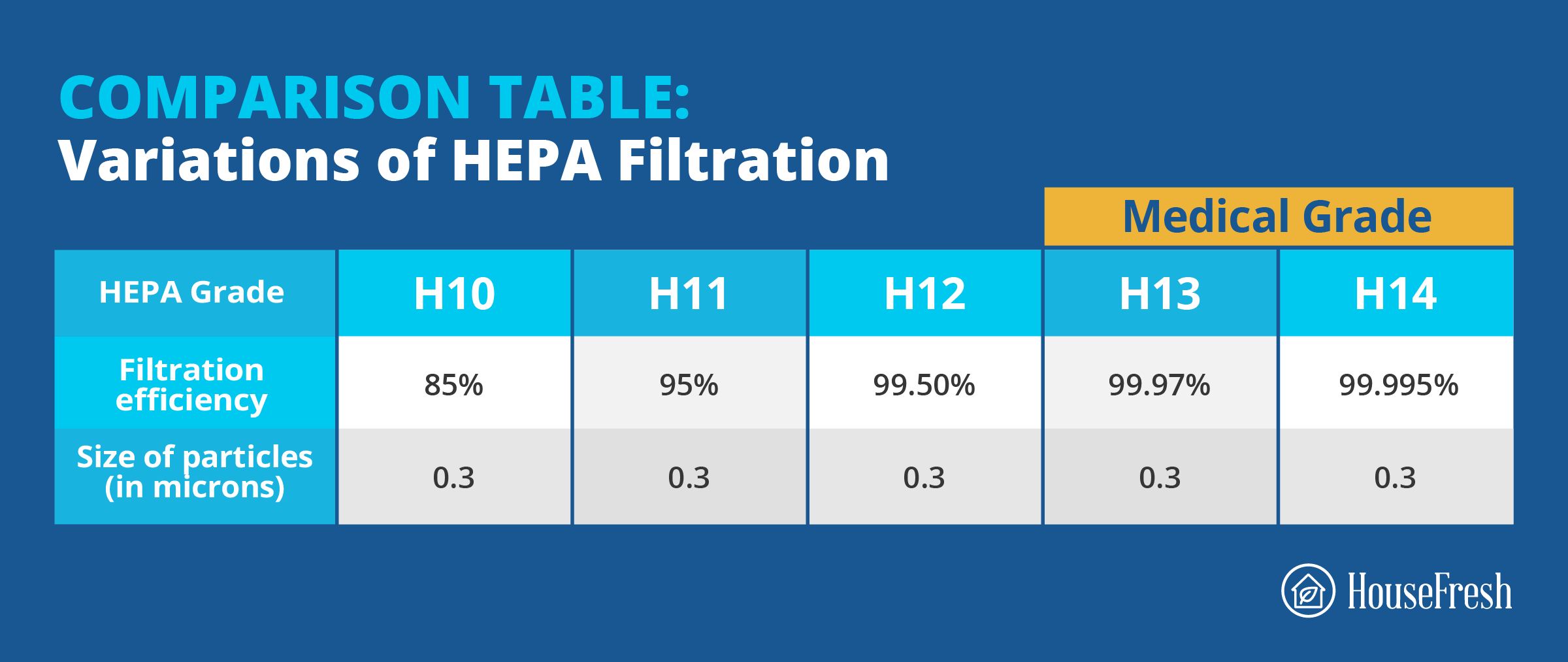
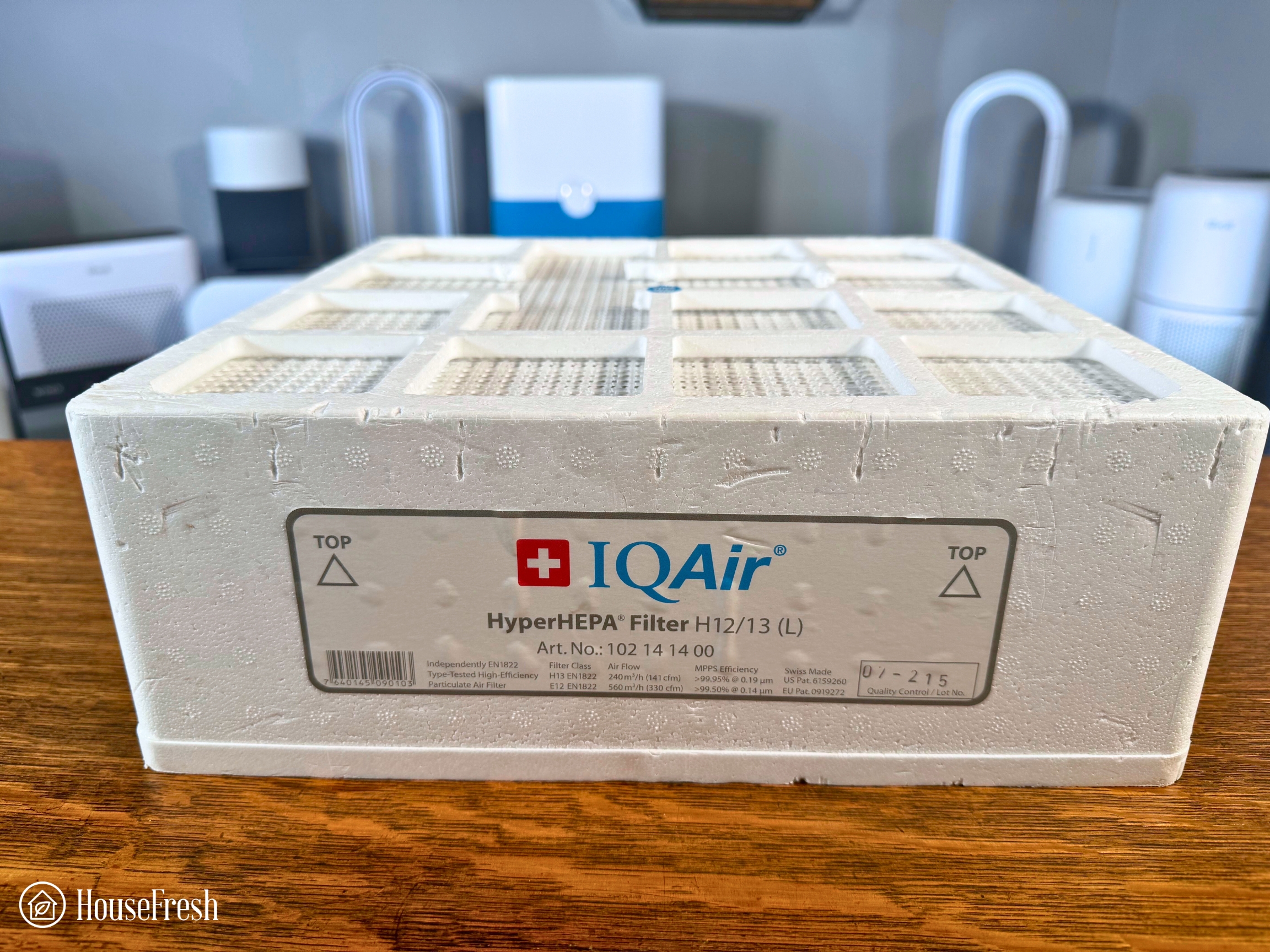
IQAir’s signature HyperHEPA filter offers excellent particle filtration. The HEPA grade will depend on the level of airflow and ranges from H13 to E11, as you can see in the full technical specifications below:

IQAir Atem X HyperHEPA Specs

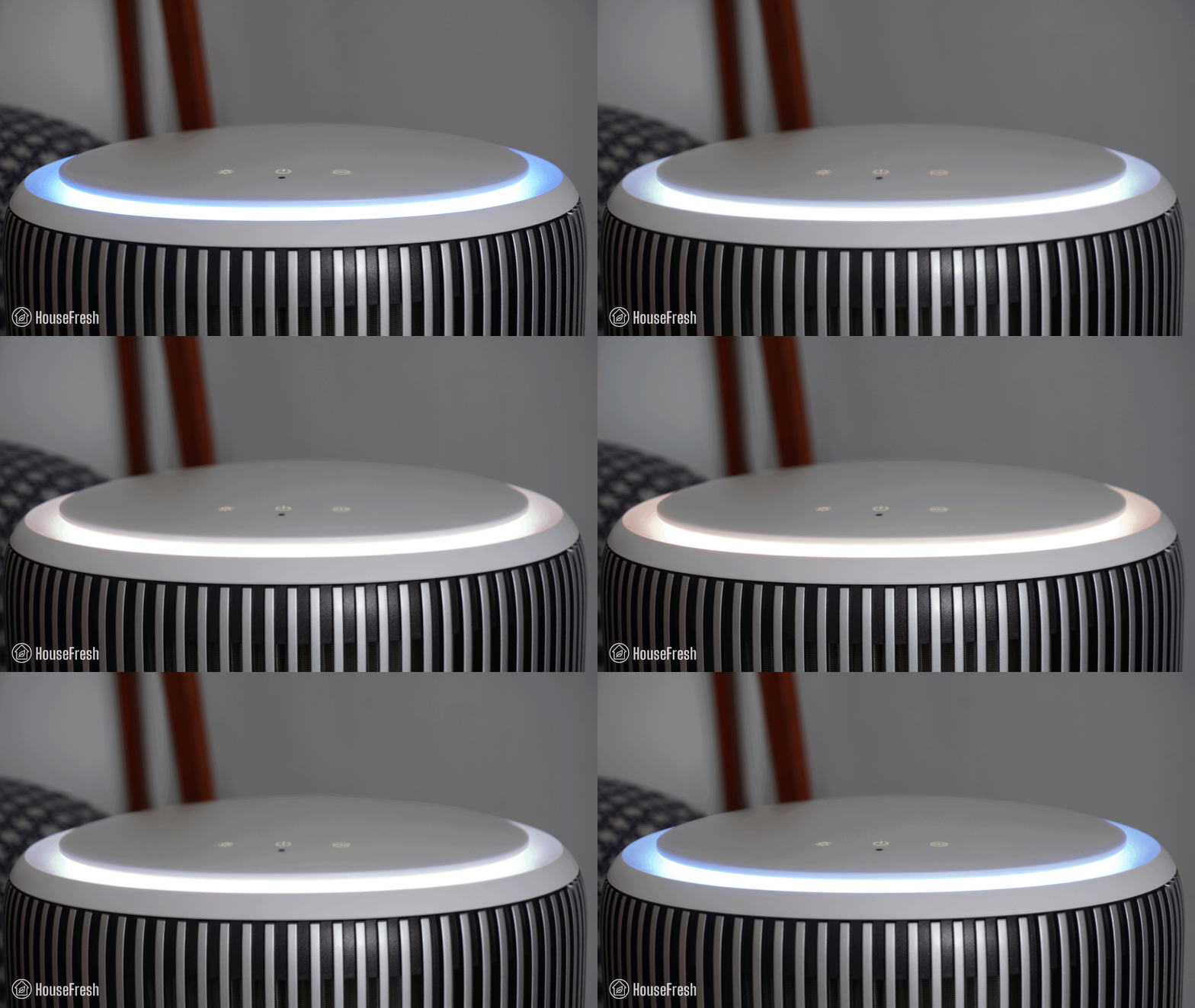
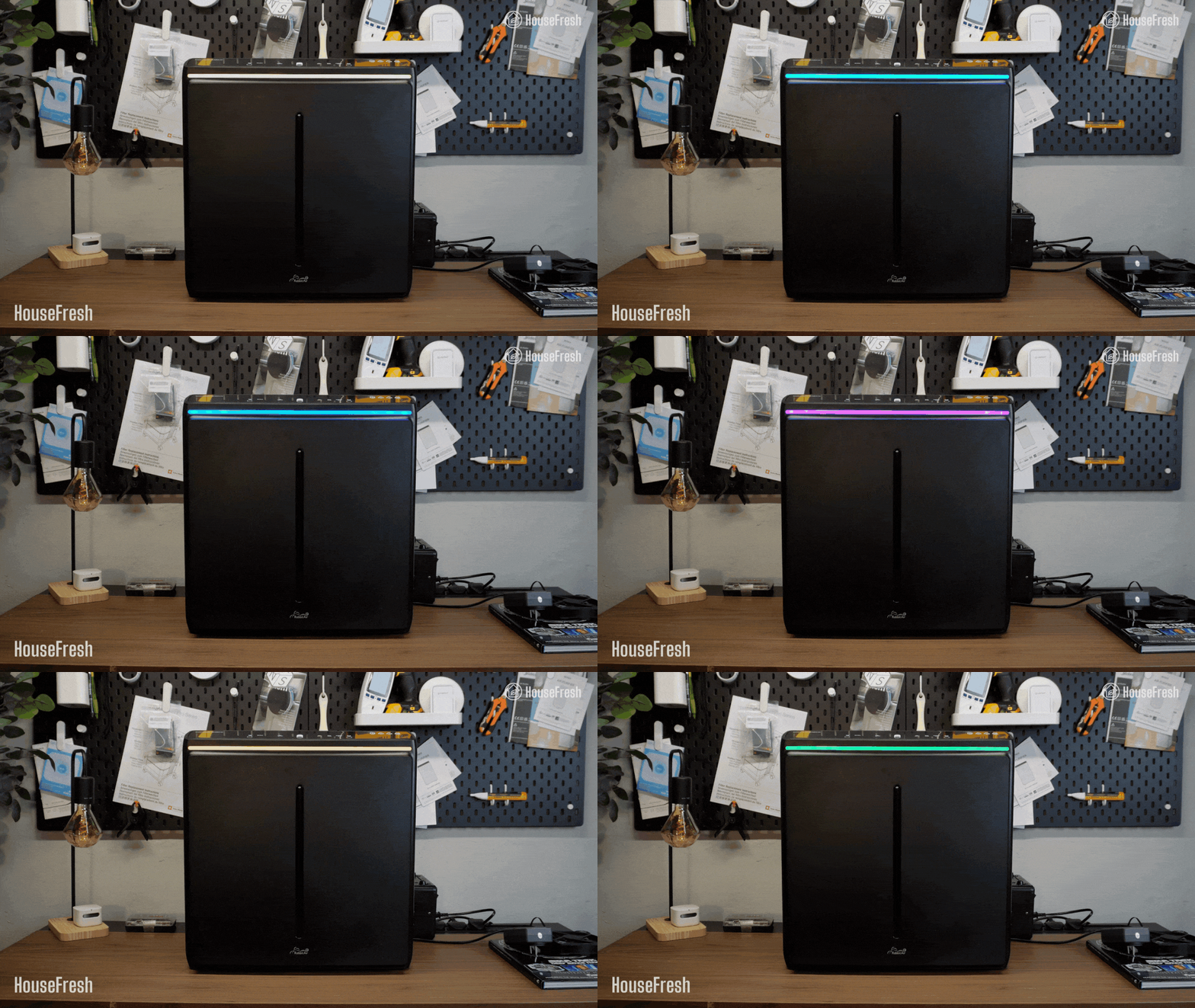
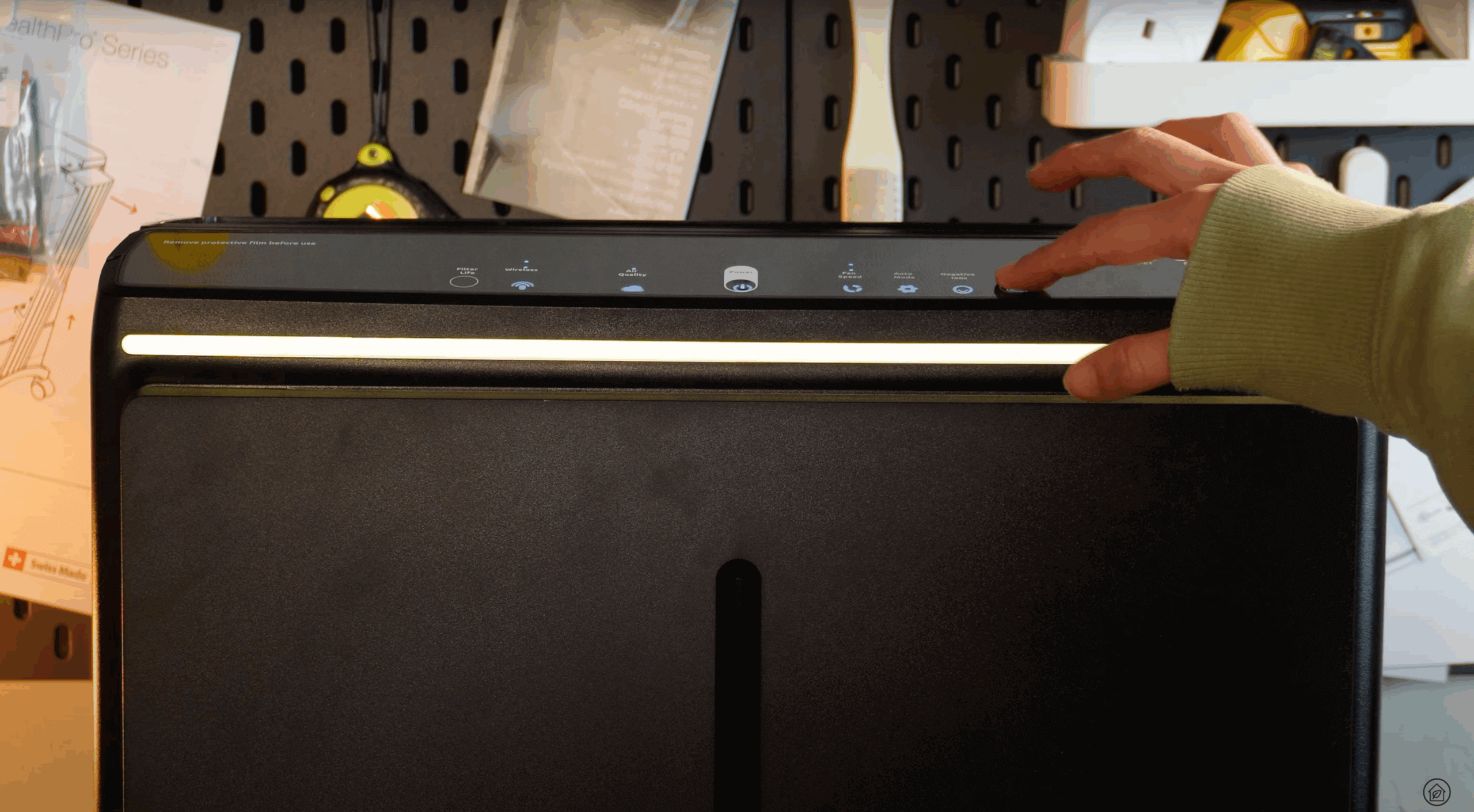
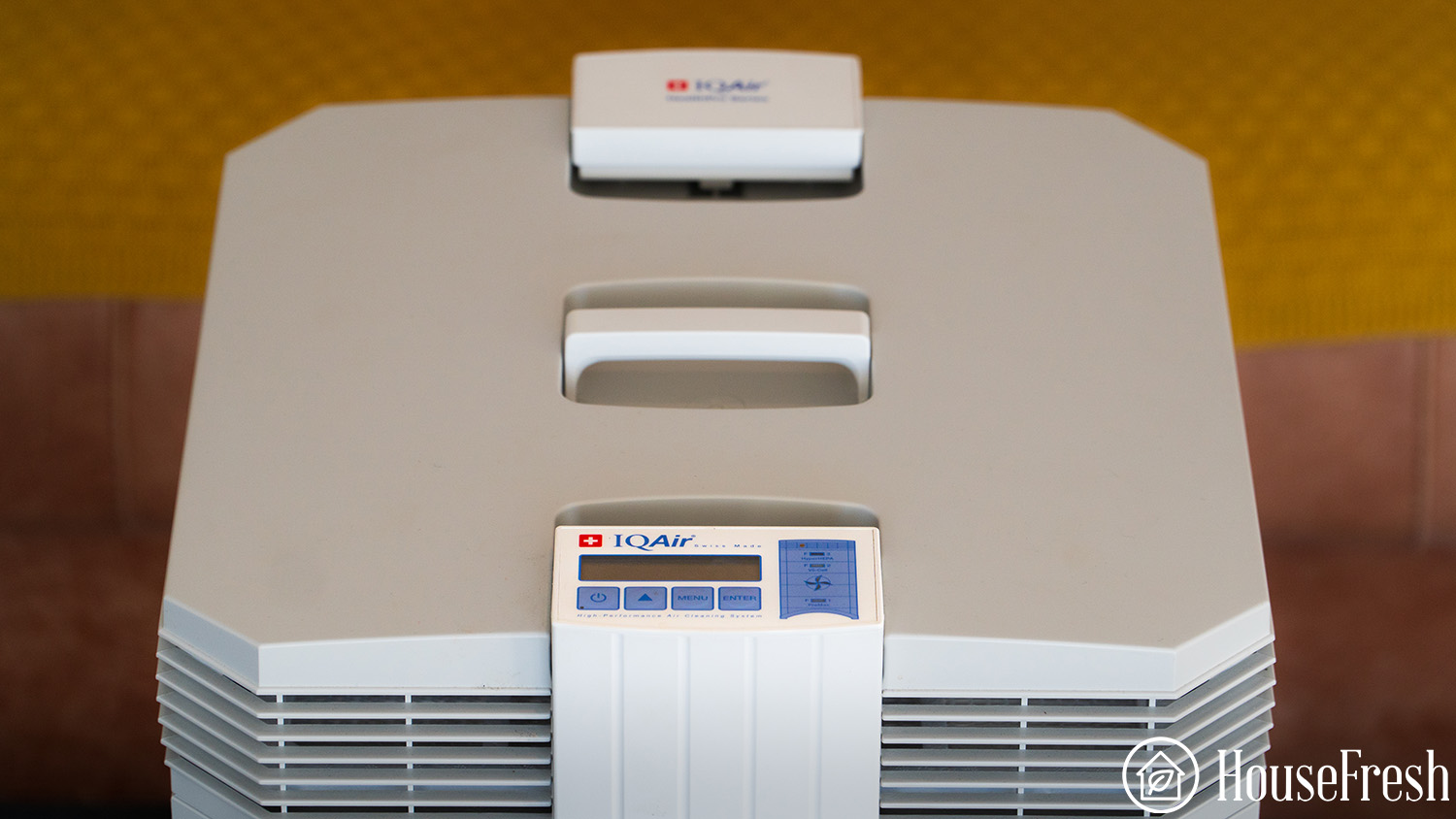
The control panel sits at the back and, unlike most other air purifiers, it doesn’t have any screens – instead, you get a few different lights, a fan speed slider and a color-coded air quality indicator.

IQAir Atem X Controls

The Atem X also comes with full app support via the IQAir AirVisual App, which unlocks many features that are not available on the control panel.

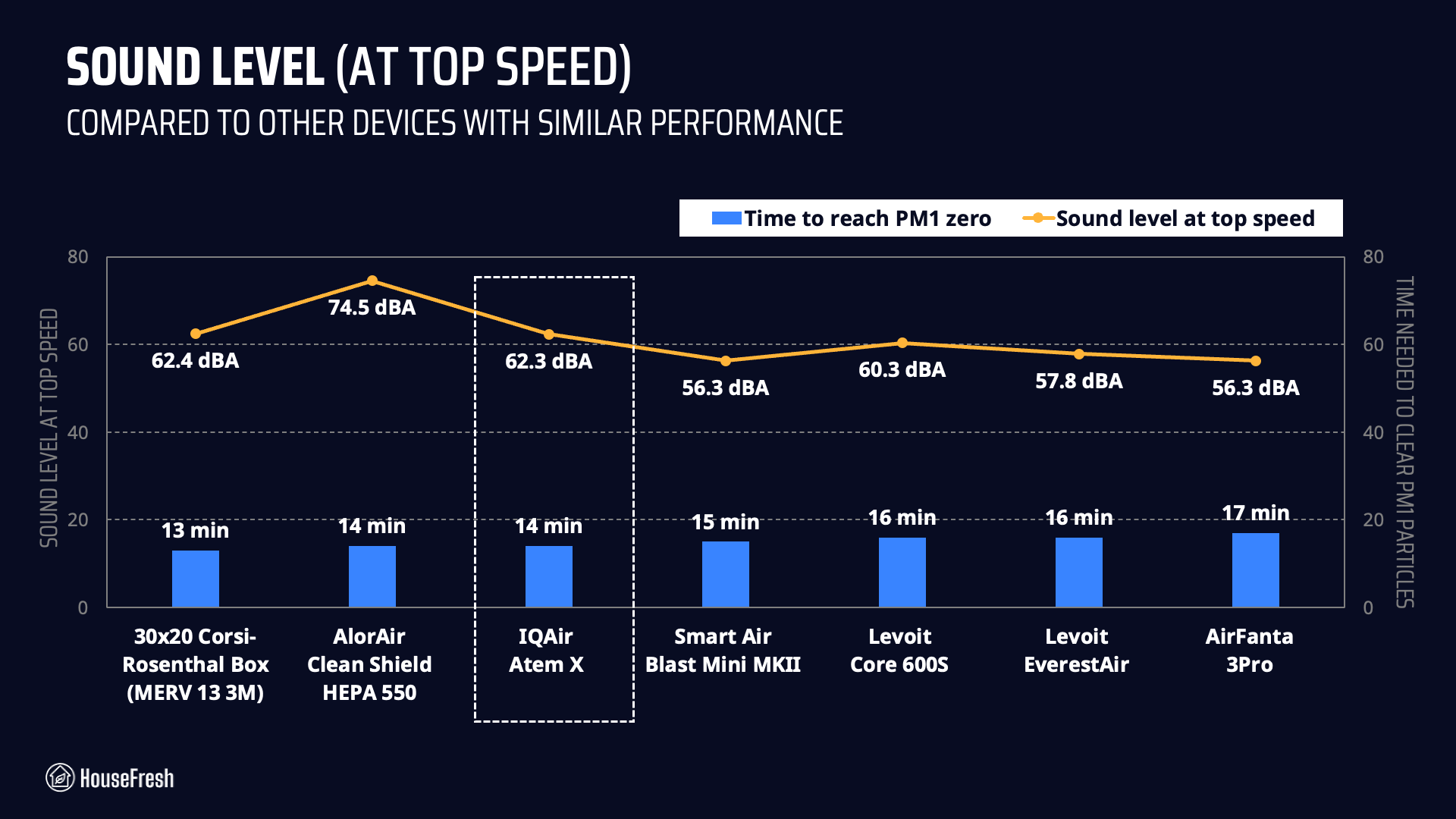
At top speed, it delivers excellent particle removal performance. This was great to see, as the Atem X was by far the most expensive air purifier we tested.

IQAir Atem X Performance VS Sound

PROS

It doesn’t come cheap at one cent under $1400.
It doesn’t come with a carbon filter for removing gases and odors from the air, so you only get particle filtration.
It runs louder at top speed (62.3 dBA) than other highly-powered traditional air purifiers.
Genuine IQAir filters are not cheap, selling for $199.99.

CONS

The design looks incredible and even though it is a big device, it has a footprint smaller than two sheets of A4 paper.
When running at speed 5, it reaches 44.5 dBA and offers similar performance to PC fan-powered air purifiers from AirFanta, CleanAirKits, NorthBox Systems and Nukit.
It comes with IQAir’s 10-year warranty, which certainly inspires confidence.
The app has a good UX, useful functions, and you even get a web dashboard with additional air quality data.
Transparent specs: IQAir made available factory-tested airflow reports and detailed HEPA filter grades at each fan speed.

Clean air delivery rate (CADR):– Top speed PM1 CADR: 429 cfm
– Sub-45 dBA PM1 CADR: 229 cfm
– AHAM PM2.5 CADR: 435 cfm (dust)
Filter technology:HyperHEPA filtration.
Recommended room size:643 sq. ft. (5 air changes per hour)
Dimensions:27.08H x 25.19W x 10D inches (68.8H x 64W x 25.4D cm)
Weight:28.66 lbs (13 kg)
Noise level in decibels from 3 ft. away:Speed 1: 35.6 dBA
Speed 2: 36.9 dBA
Speed 3: 40.7 dBA
Speed 4: 44.5 dBA
Speed 5: 49.5 dBA
Speed 6: 53.6 dBA
Speed 7: 58.4 dBA
Speed 8: 62.3 dBA
Electricity consumption in watts:Standby: 1 watt
Speed 1: 5.3 watts
Speed 2: 7.5 watts
Speed 3: 10.5 watts
Speed 4: 15.5 watts
Speed 5: 24.2 watts
Speed 6: 35.9 watts
Speed 7: 57.2 watts
Speed 8: 85.5 watts
Filter lifespan:12 months
Manufacturer’s warranty:10 years
Country of origin:Switzerland
Country of manufacture:Germany

READ MY FULL REVIEW ➜ 

WATCH MY VIDEO REVIEW ➜

Special mentions

These air purifiers were very close to making this list.

The units above are my top picks, but there are other excellent models that nearly made the cut. Depending on your budget and availability in your location, it could be worth checking them out.

Blueair Signature Corner

Blueair Blue Signature

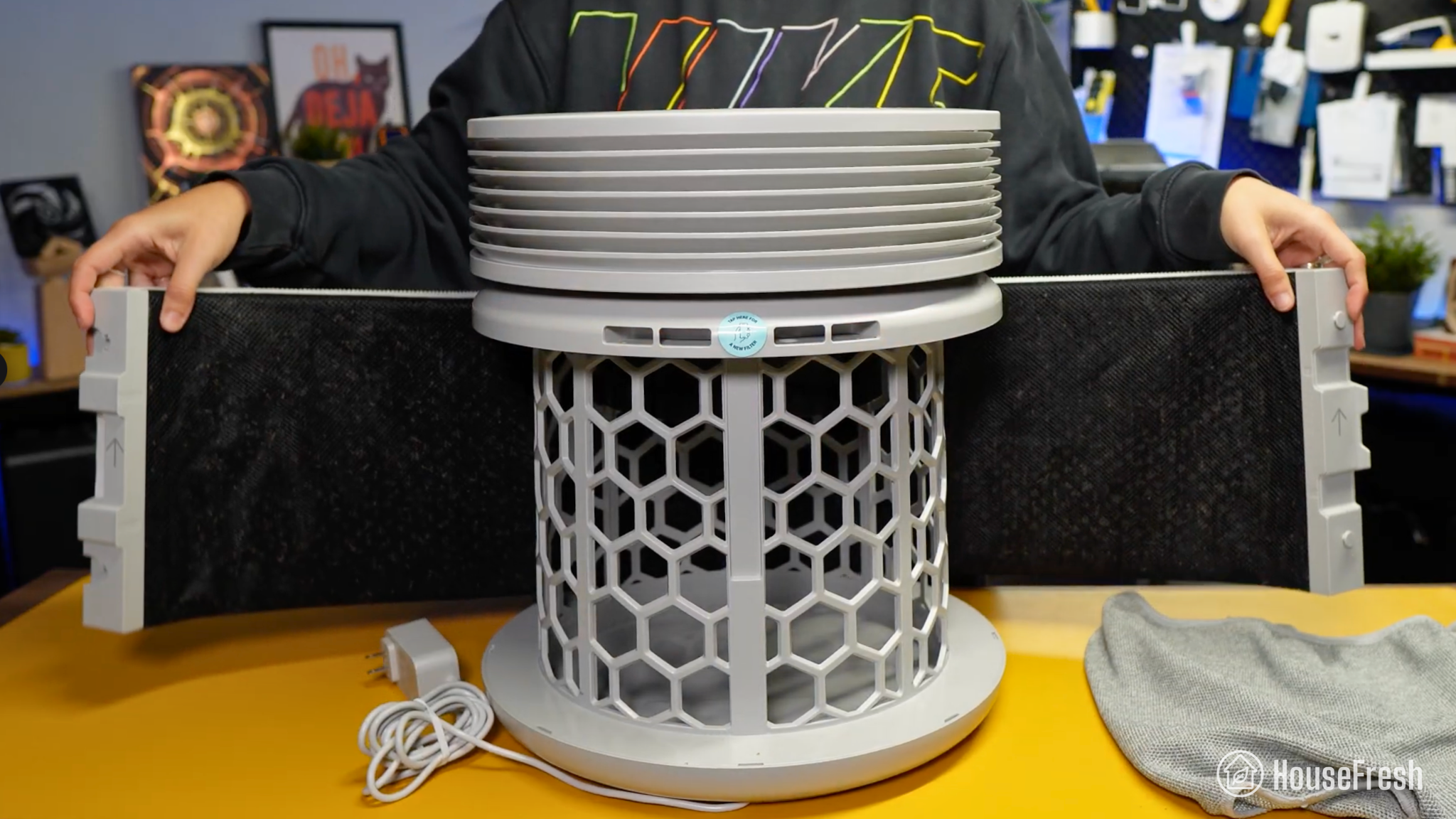
At top speed (59.6 dBA), we estimate a PM1 CADR of 400 cfm and at speed 2 (40 dBA), we estimate 229 cfm, which would be good enough for rooms up to 286 sq. ft. The design is beautiful and it doubles as a table, but I didn’t shortlist it because it comes with an ionizer function that cannot be disabled.

READ MY FULL REVIEW ➜

WATCH MY VIDEO REVIEW ➜

Blast Mini MKII Kids Room

Smart Air Blast Mini MKII

It has a PM1 CADR of 400 cfm at top speed (56.3 dBA) and 272 cfm at speed 1 (44.9 dBA). It comes with optional carbon, so if your allergies are triggered by particles, you can stick to HEPA H13 only. It didn’t make the list because the ProX offers better performance at a quieter level (299 cfm at 44.4 dBA) and has a sensor.

READ MY FULL REVIEW ➜ 

WATCH MY VIDEO REVIEW ➜

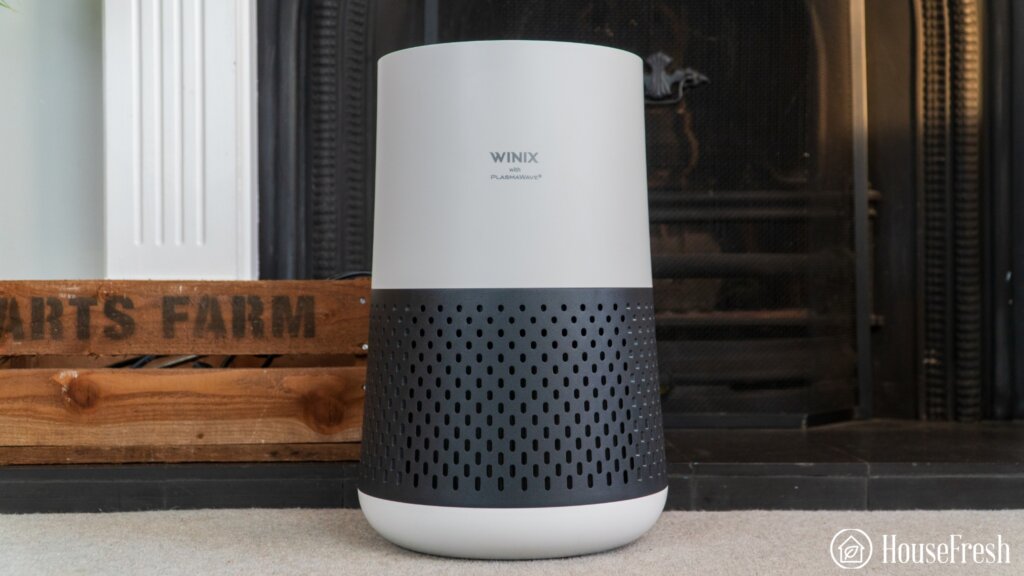
Winix AM80 Zero S

Winix AM80 (or Zero S)

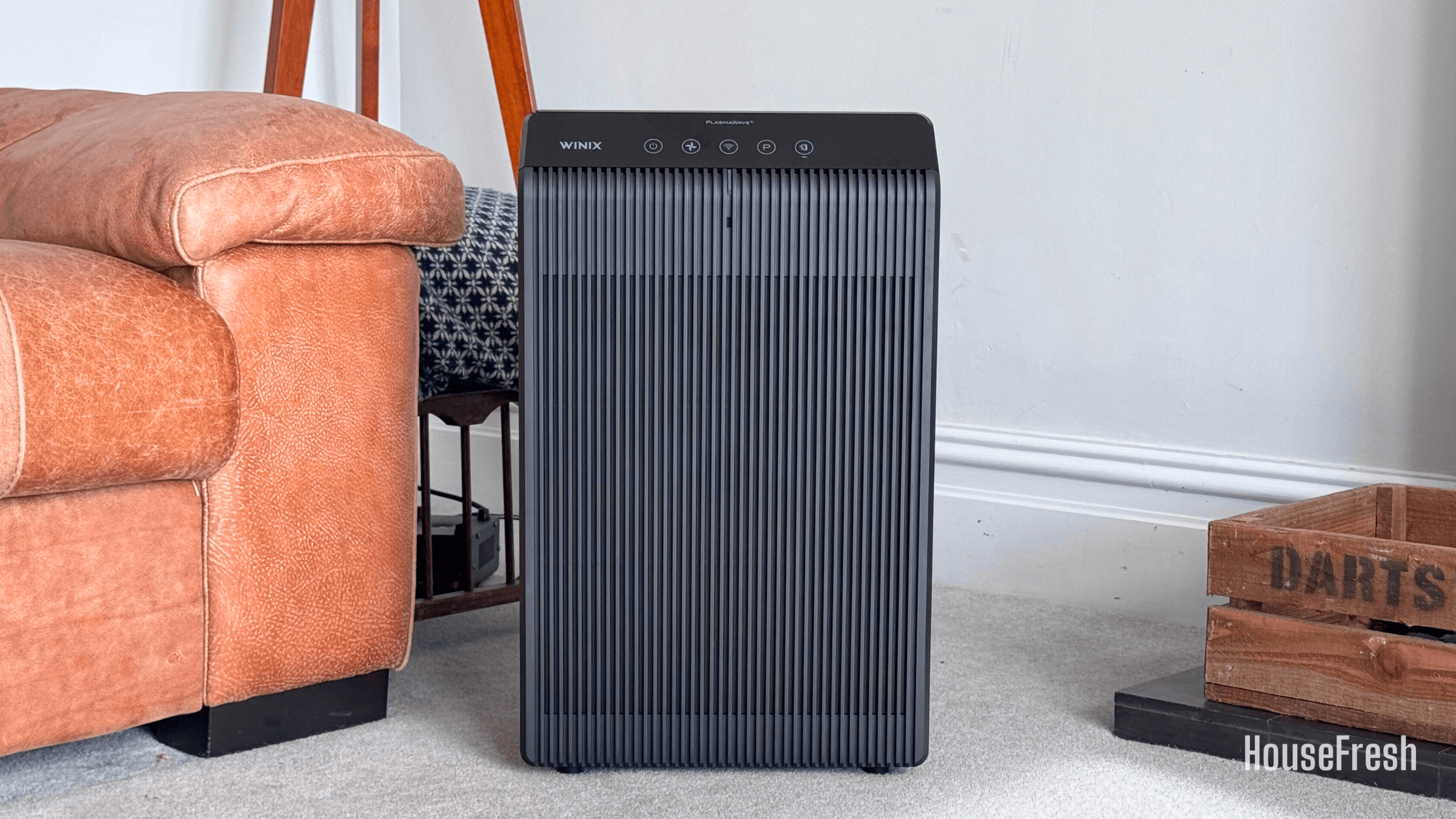
It can be regularly found for $190 and will deliver 134 cfm at speed 3 (43.3 dBA), which is good for 6 ACH in spaces no larger than 167 sq. ft. It is no match for the cheaper AirFanta 3Pro, but it could be a good alternative to the Smart Air SA600.

WATCH MY VIDEO REVIEW ➜

Levoit Vital 200S Living Room

Levoit Vital 200S

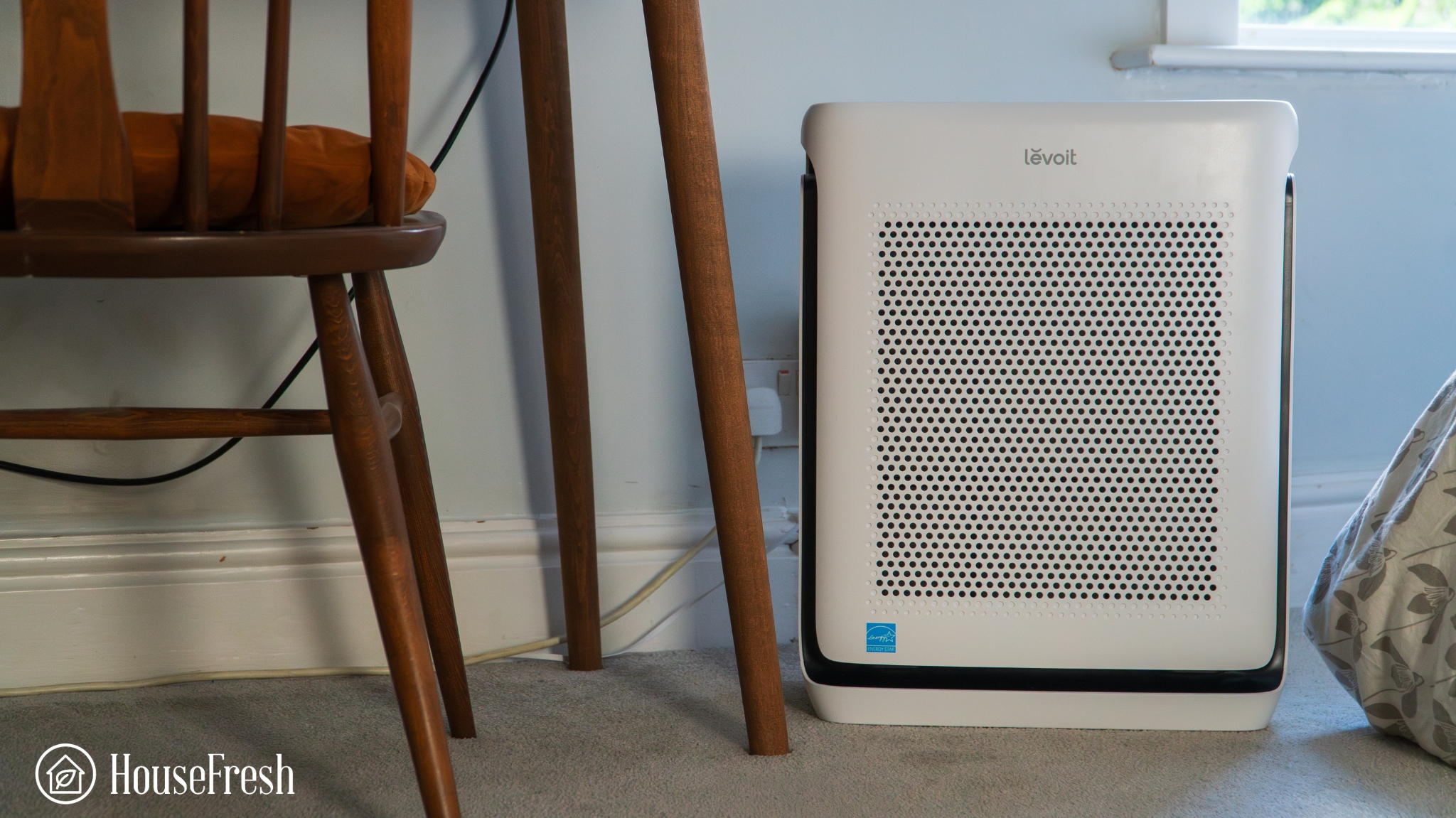
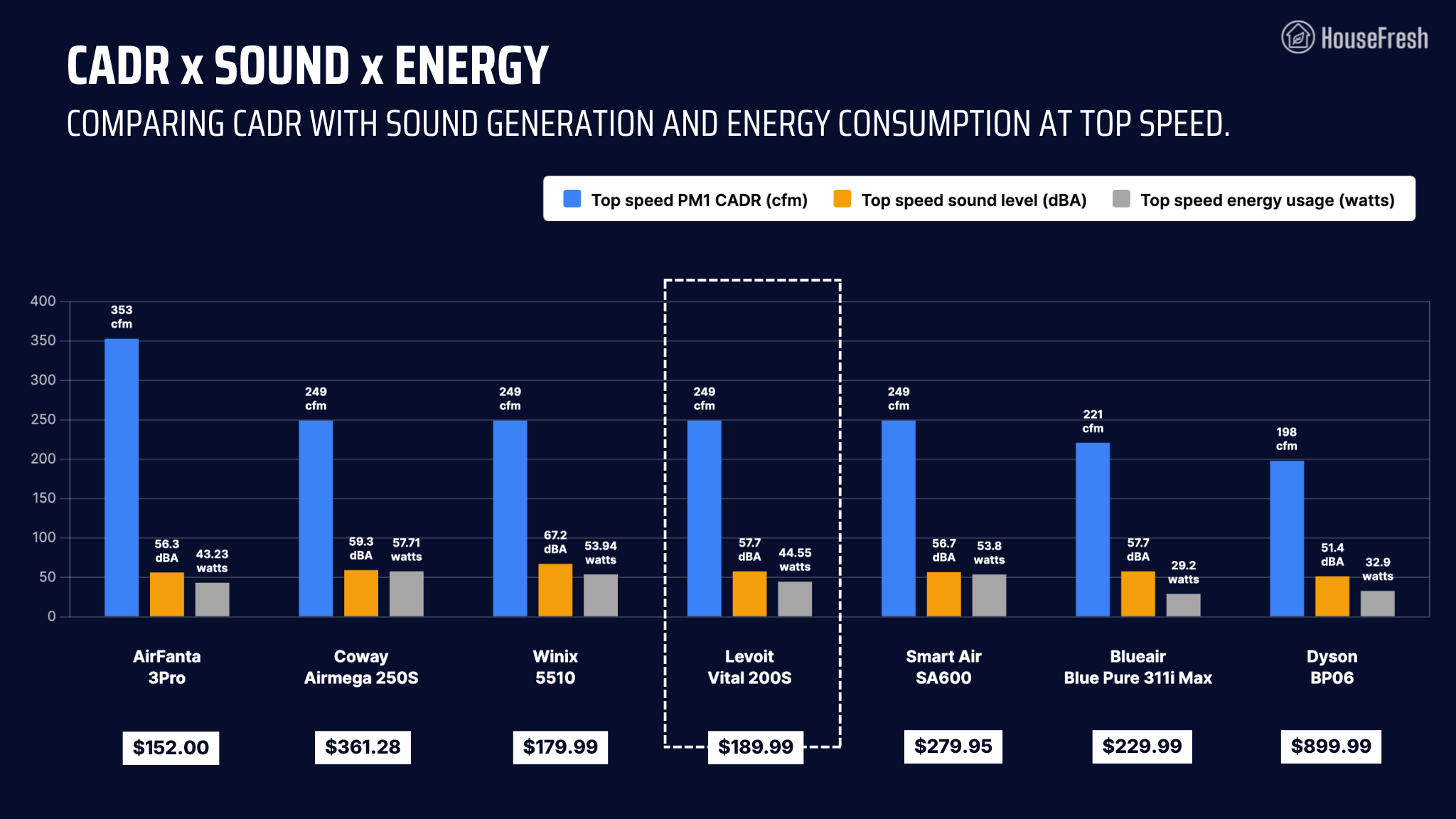
This is a solid performer under $200 with app support, smart functions and a sensor. It didn’t make the list because its raw air cleaning power at top speed (260 cfm at 57.7 dBA) is not nearly as good as what you’ll get with the AirFanta 3Pro (353 cfm at 56.3 dBA).

READ OUR FULL REVIEW ➜ 

Dyson BP06

Dyson Big+Quiet BP06

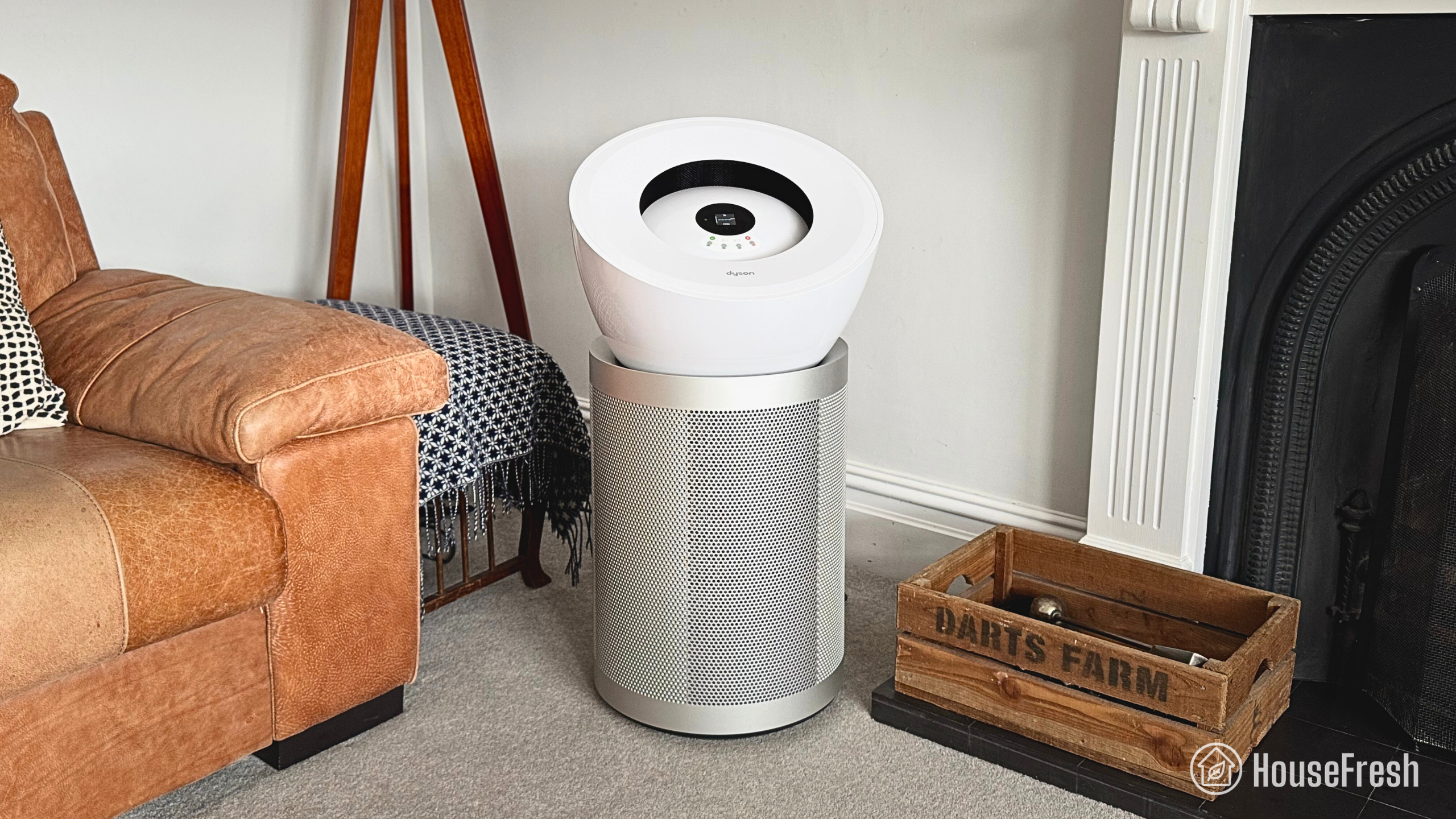
This is not only the cheapest Dyson’s Big+Quiet model ($899.99) but also the best-performing Dyson purifier we tested. It will give you 198 cfm at top speed (51.4 dbA) and 128 cfm at speed 1 (40.4 dBA), which makes it good enough for rooms up to 160 sq. ft. However, its performance is comparable to models that cost a third of its price.

WATCH OUR VIDEO REVIEW ➜

Smart Air Blast HouseFresh

Smart Air Blast MKII

It has a PM1 CADR of 547 cfm at top speed (54.7 dBA) and 375 cfm at speed 1 (41.9 dBA). It comes with a HEPA H13 filter and you can choose to add pelleted activated carbon, if your allergies are triggered by chemicals or gases in the air.

It didn’t make the list because it will be too big and too heavy for most homes, although it would be my top pick if you’re looking for a device for high traffic areas like classrooms or offices.

WATCH MY VIDEO REVIEW ➜

What to look for when buying an air purifier to help with allergies

There are three key factors you should be aware of when selecting an air purifier for allergies.

1. Air changes per hour and room sizes

The most critical number for allergy sufferers is Air Changes Per Hour, or ACH.

ACH indicates how many times an air purifier can completely filter the air in a specific room within one hour.

Walk through Amazon, and you’ll see tiny purifiers claiming to clean 1,000 sq. ft. rooms, but they’re usually quoting that based on just ONE air change per hour. For your allergies? That’s like trying to empty a sinking boat with a teaspoon. Sure, it eventually cleans the old pollen, but in that same hour, a whole new batch of allergens will make their way into the room.

Industry experts at AHAM (that’s the Association of Home Appliance Manufacturers) say you need at least 4.8 ACH. For severe allergies? We recommend aiming for 6 ACH. Six air changes per hour means that the air in a room will be cleaned of all pollutants every 10 minutes.

This means that many small purifiers with a low Clean Air Delivery Rate (or CADR) aren’t up to the task for serious allergy relief.

Let’s take the popular Levoit Core Mini as an example: The Levoit Core Mini has a dust CADR of 41 CFM. We plug that into our HouseFresh CADR calculator for six ACH, and what do we get? A maximum room size of just 51 sq. ft. That’s barely a walk-in closet, not your bedroom.

You can use our CADR calculator to find out how much CADR an air purifier will need to provide 4-6 air changes per hour, depending on the size of the room where you plan to use it:

2. The importance of sound

But high ACH isn’t the only piece of the puzzle. If your purifier sounds like a 747 taking off, you won’t use it, especially at night when allergies can be the worst.

Let’s use the Molekule Air Mini+ as an example: At top speed, it has a PM1 CADR of 96 CFM, which could give you six ACH in a 120 sq. ft. room. The catch? It does this blasting out 67.4 decibels… That’s louder than a vacuum cleaner – try sleeping next to that!  When we tested it at a more livable 45 dBA, the CADR plummeted to 36 CFM, that’s six ACH in a room smaller than what the tiny Levoit Core Mini could manage at its top speed.

Look for units with good air cleaning performance at low fan speeds that generate less than 45 decibels.

Check out our leaderboard to see which air purifier models offer the best performance, based on particle removal tests at top speed and at sub-45 dBA speeds:

3. Particle vs gas filtration

If you are allergic to pollen, dust, or pet dander, focus on finding a device with a high-quality particle filter.

Activated carbon filters are only necessary in cases where your allergies are tied to chemical sensitivities, where you need to remove triggers such as cigarette smoke, perfume, insecticide, new carpet smell, paint fumes, etc.

So, the magic formula for most allergy sufferers is six air changes per hour at under 45 decibels with a solid particle filter. 

Wrapping up

So there you have it, four excellent air purifiers that will actually offer solid particle removal performance and good value for allergy sufferers. If you are unsure of which one to get, feel free to drop me an email to danny@housefresh.com and I can help you find the best option for your specific situation. 

I hope you found my guide useful, and if you decide to buy any of the air purifiers I mentioned today, please use the links in the buttons to help support the work we do here at HouseFresh. It won’t cost you anything extra and we will get a small affiliate commission that will allow us to keep buying and testing air purifiers in the future.

Do you have any questions about air filters for allergies that I haven’t answered? Leave them in the comments below and I’ll get back to you as soon as I can.

March 29th, 2026

  • Replaced the CleanAirKits Luggable XL-7 with the Luggable XL Ultra because it offers better particle removal performance and the XL-7 has been discontinued.
  • Removed the Nukit Tempest Euro because it has been discontinued.
  • Replaced the Smart Air SA600 with the Levoit Core 400S as the best for small spaces, due to the higher CADR that provides more air changes per hour.
  • Added the Nukit Tempest Pro as the best buy-it-for-life option for those looking for a highly durable PC fan-powered air purifier.
  • Added the IQAir Atem X as the best money can buy for those without budget constraints who want the best air purifier for allergy sufferers.
  • Added the Smart Air Blast MKII and the Blueair Blue Signature to the ‘Special mentions’ list.

September 2nd, 2025

  • Added a ‘Special mentions’ section at the end of the article with models that didn’t make the shortlist.

July 1st, 2025

  • Added a link to YouTube video reviews for all the models on the list.

June 12th, 2025

  • Added the North Box Systems 6XL and the Nukit Tempest Euro as alternatives to the CleanAirKits Luggable XL-7.

The best air purifiers for pet odor, hair and dander

Best air purifiers for pet hair and pet dander 1

Living with a pet means coexisting with any allergies, hair everywhere and unwanted smells — from litter boxes to bad breath.

Pet odors, hair and dander can linger, even with regular grooming and cleaning. That’s when an air purifier can become a valuable investment.

But that is only the case if you buy the right air purifier.

You should focus on finding a model that comes with a removable pre-filter (ideally washable), activated carbon filtration (for odors), a high quality particle filter (for allergens), good performance at quiet fan speeds, a control panel with the option to lock all buttons, and enough power to change the air 4-5 times per hour.

I kept all that in mind when shortlisting the air purifiers for this list. As always, I have bought and tested all these devices myself, so everything I’ll share is based on my experience and first-hand data.

how we test
How we test air purifiers

Read our full testing methodology.

I also made a point of sticking to air purifiers without an ionizer or with bipolar ionization technologies that could be disabled without negatively impacting air cleaning performance.

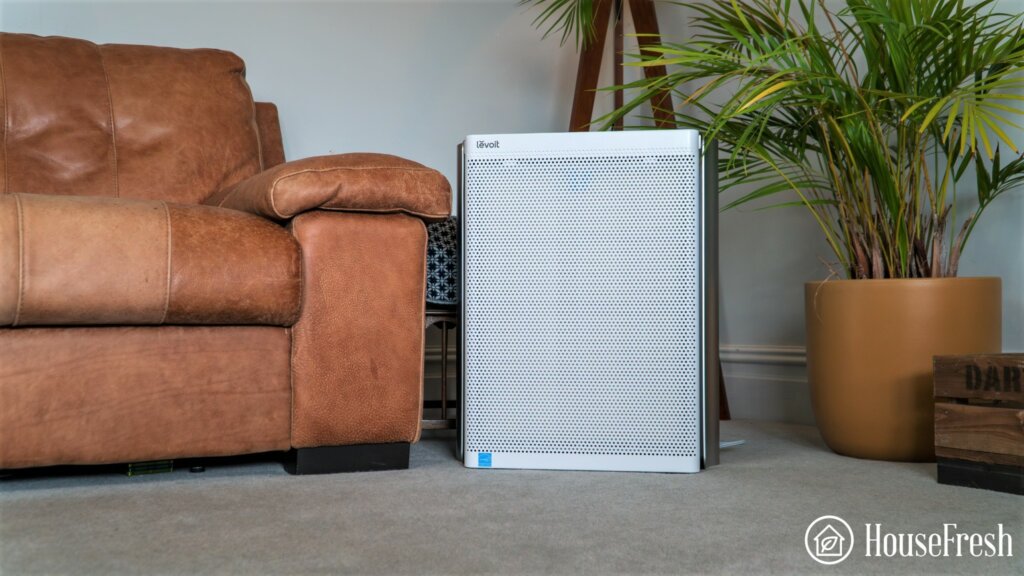
1. Best for large spaces: Levoit EverestAir

The EverestAir boosts power and smart features in a sleek white and silver design that makes it stand out from the crowd.

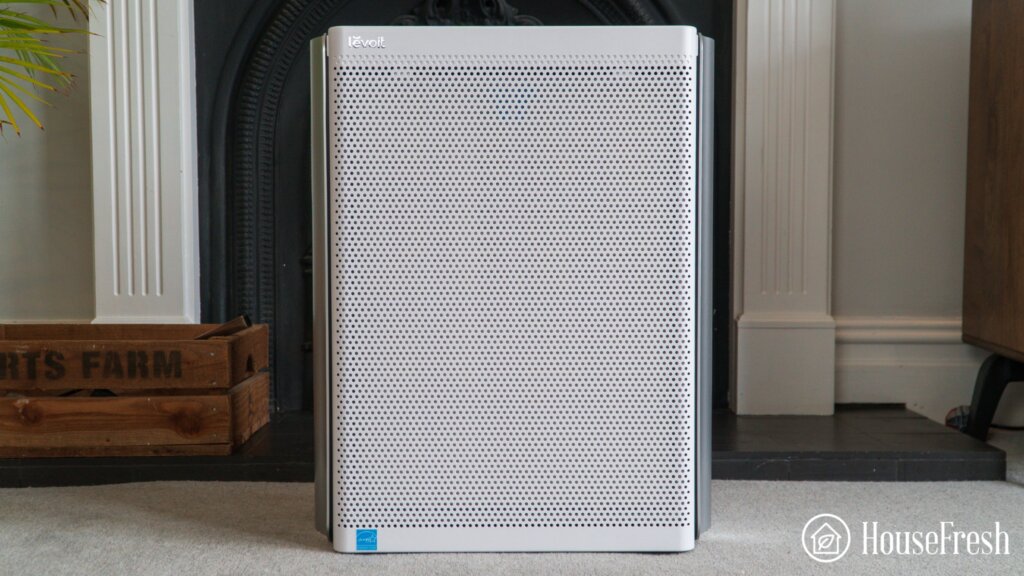
Levoit EverestAir Front Design

💡exclusive code for HouseFresh for 10% off a single purchase on Levoit.com: HOUSE10

For $499.99, you get a good looking air purifier with enough air cleaning power (PM1 CADR of 375 cfm) to provide five air changes per hour in rooms up to 562 sq. ft. when running at top speed (57.8 dBA).

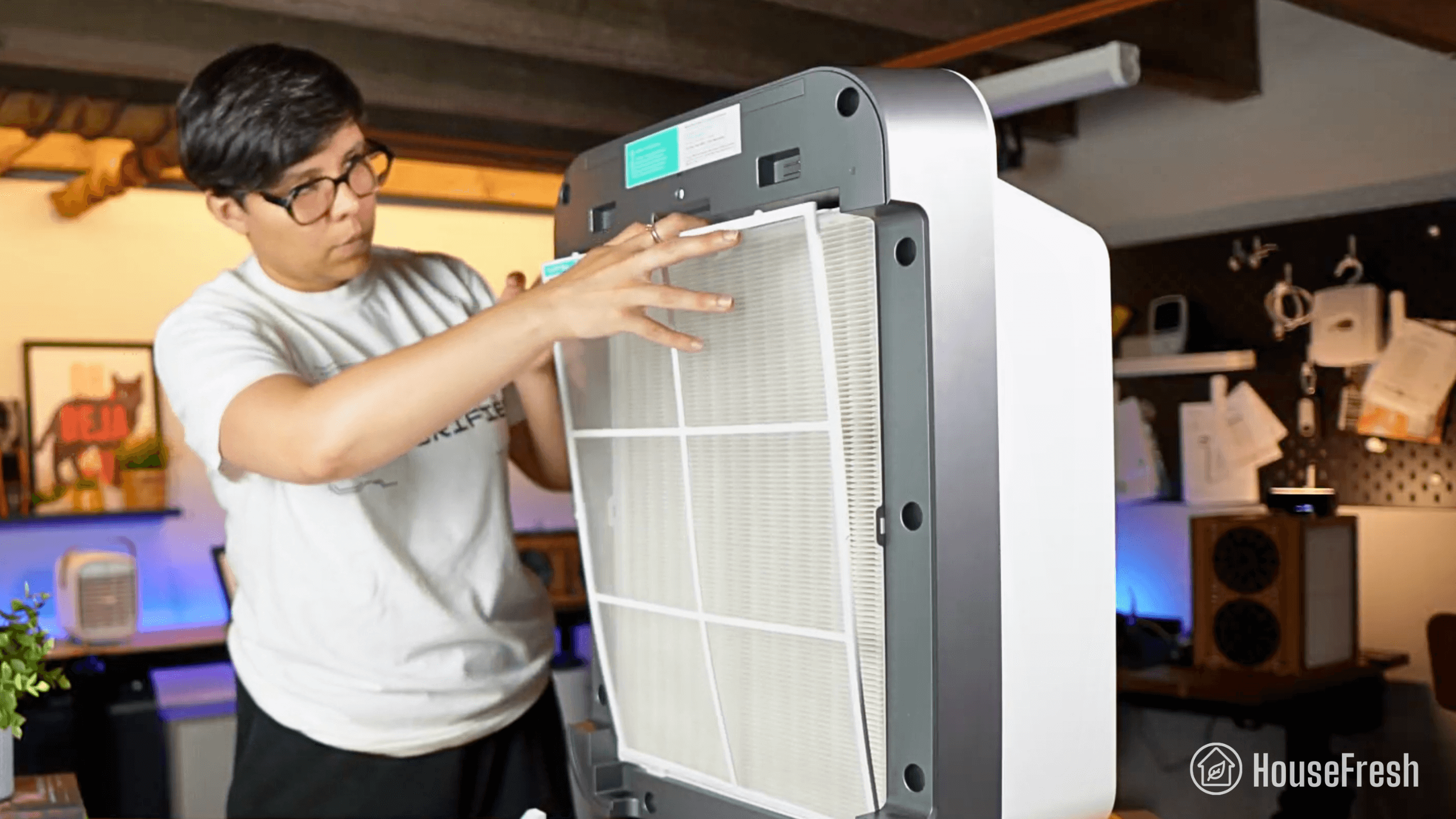
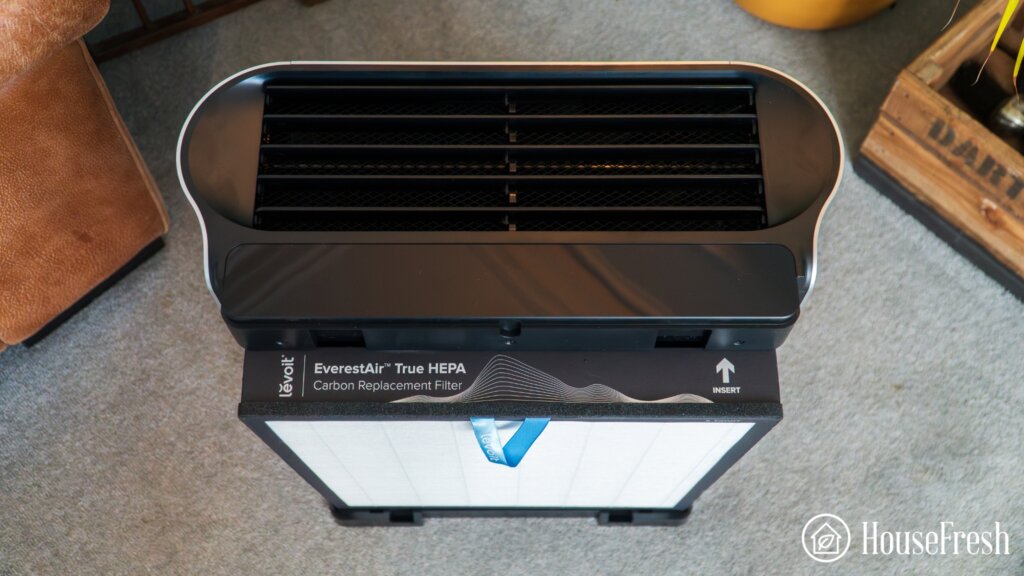
The pre-filter is easy to remove so you can vacuum pet hairs and extend the life of the main particle filter that sits behind it.

Levoit EverestAir UnitFilter

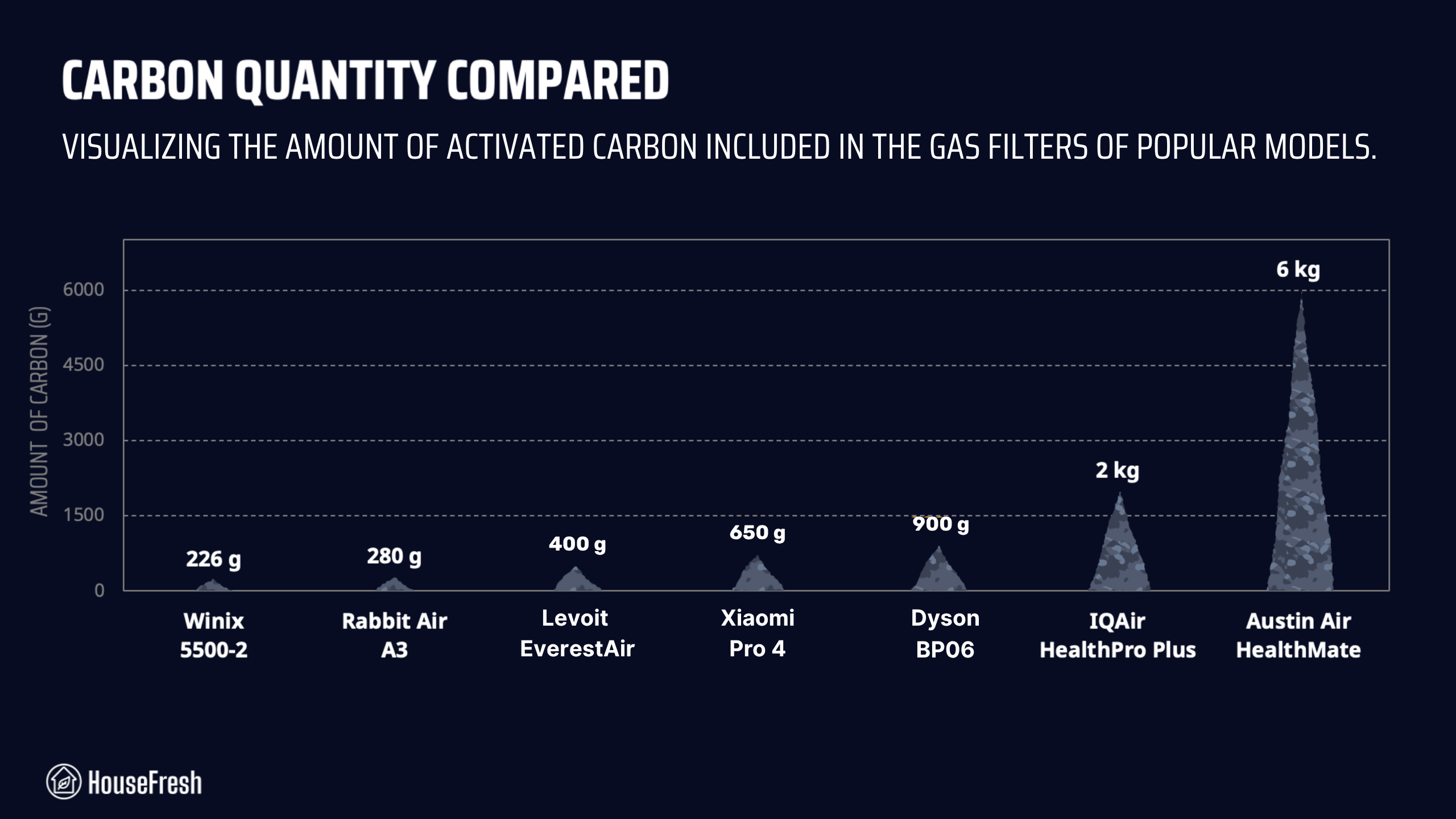
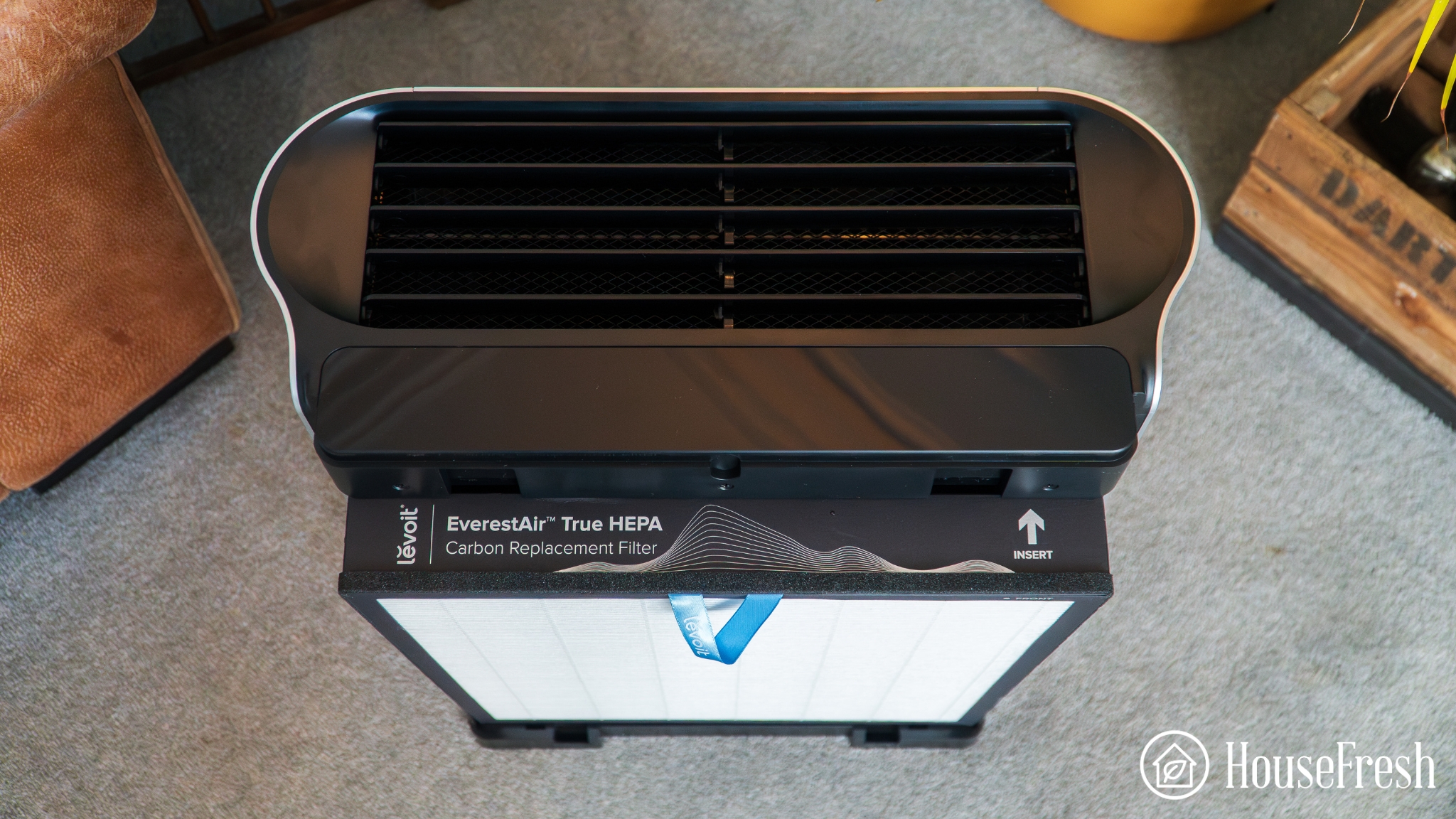
The bonded filter has a high quality particle filter on one side (to remove the smallest of particles from the air) and a gas filter on the other with 400g of pelleted activated carbon (to adsorb odors and gases).

Levoit EverestAir Activated Carbon Filter

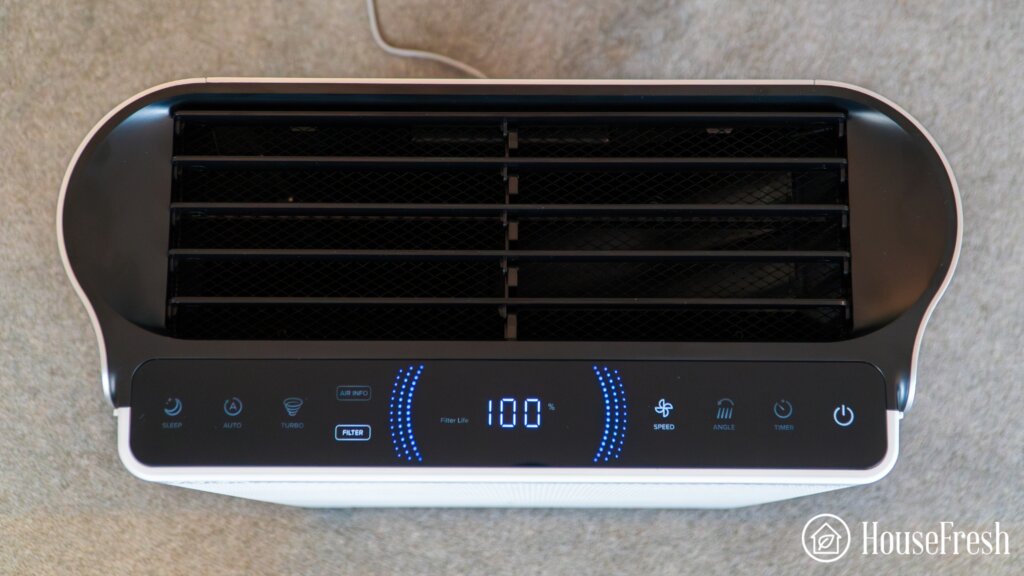
The air quality sensor displays particle readings on screen and it unlocks a smart mode where it adjusts fan speeds automatically.

Levoit EverestAir Controls

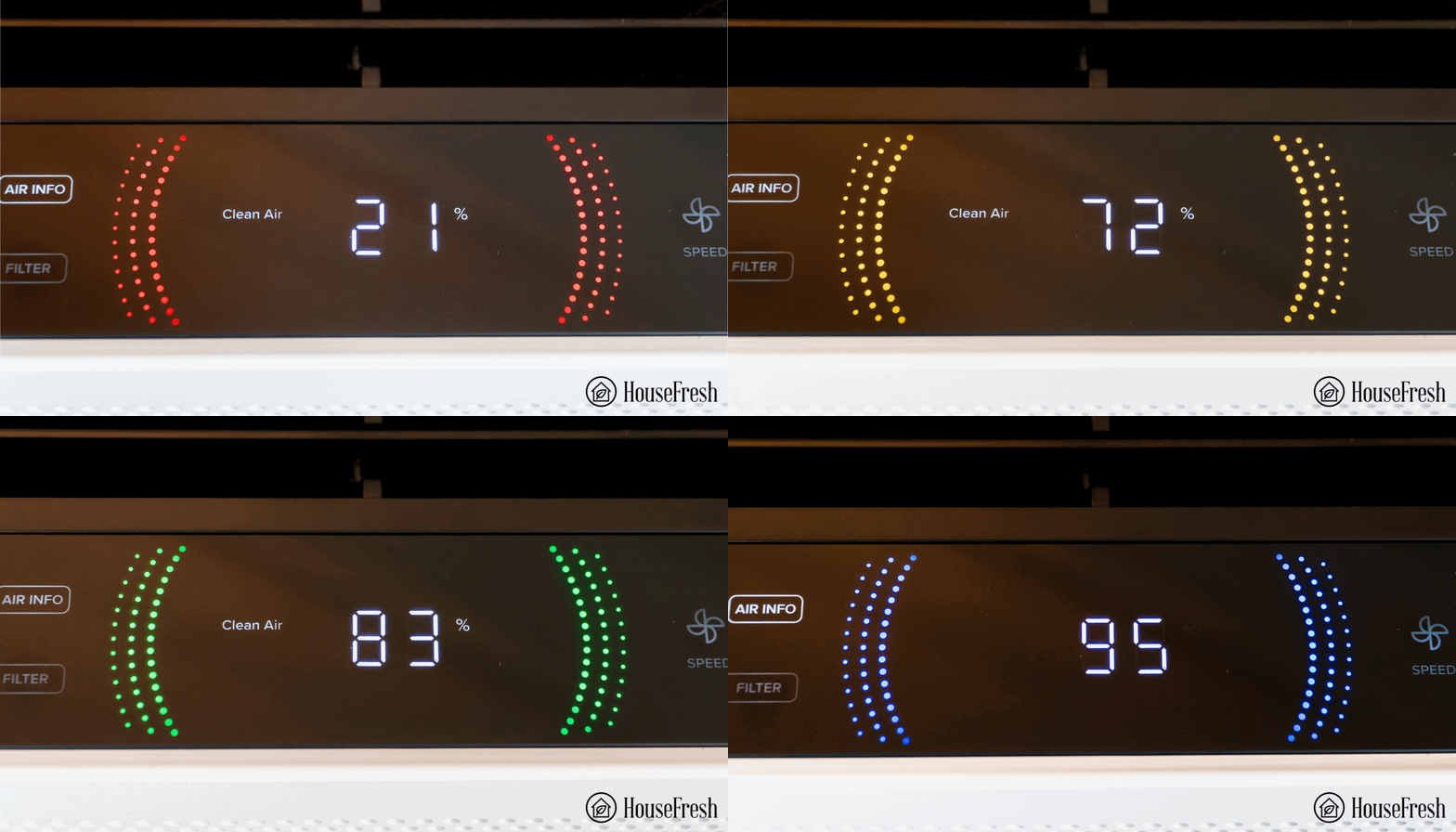
The color-coded LED lights on the display show the percentage of clean air in the room.

Levoit EverestAir AQI Working

And the VeSync app unlocks features like scheduling and display lock to ensure curious pets don’t change settings.

CONS

Levoit originally advertised it as having H13 HEPA filter but they removed all mentions of HEPA from their marketing.
There is no child lock button on the device and you will need to use the app to lock the display.
The air vents can move, but you can set the angle so they are not fully open if you expect your cat to lie on top.

PROS

At speed 2, it cleaned the air in our test room in 29 minutes while generating just 43.2 decibels – we estimate a CADR of 205 cfm.
It is the fastest Levoit air purifier we have tested, reaching PM1 zero in 16 minutes at top speed.
Its large filter comes with 400 g of pelleted activated carbon to deal with pet odors.
The VeSync app is easy to use and it is compatible with Amazon Alexa and Google Home for voice control.
It doesn’t have an ionizer so it doesn’t generate ozone as part of the air cleaning process.

Clean air delivery rate (CADR):– Top speed PM1 CADR: 375 cfm
– Sub-45 dBA PM1 CADR: 205 cfm
– AHAM PM2.5 CADR: 365 cfm (dust)
Filtration technology:Removable pre-filter, particle filter and 400g of pelleted activated carbon.
Recommended room size:562 sq. ft. (5 air changes per hour)
Dimensions:18.9L x 8.5W x 23.2H inches (48L x 21.6W x 58.9H cm)
Weight:20.7 lbs (9.39 kg)
Filter lifespan:12-15 months
Noise level in decibels from 3 ft. away:Speed 1: 39.1 dB
Speed 2: 43.2 dB
Speed 3: 48.6 dB
Turbo: 57.8 dB
Electricity consumption in watts:Standby mode: 1.26 watts
Speed 1: 9.85 watts
Speed 2: 15.59 watts
Speed 3: 26.6 watts
Turbo: 69.8 watts
Manufacturer’s warranty:2 years
Country of origin:United States
Country of manufacture:China

READ MY FULL REVIEW ➜

WATCH MY VIDEO REVIEW ➜

2. Best for smelly pets: Alen BreatheSmart 75i (with the Fresh Filter)

A large air purifier with an H13 HEPA filter and 3.6 lbs of pelleted activated carbon to remove unwanted pet smells from the air.

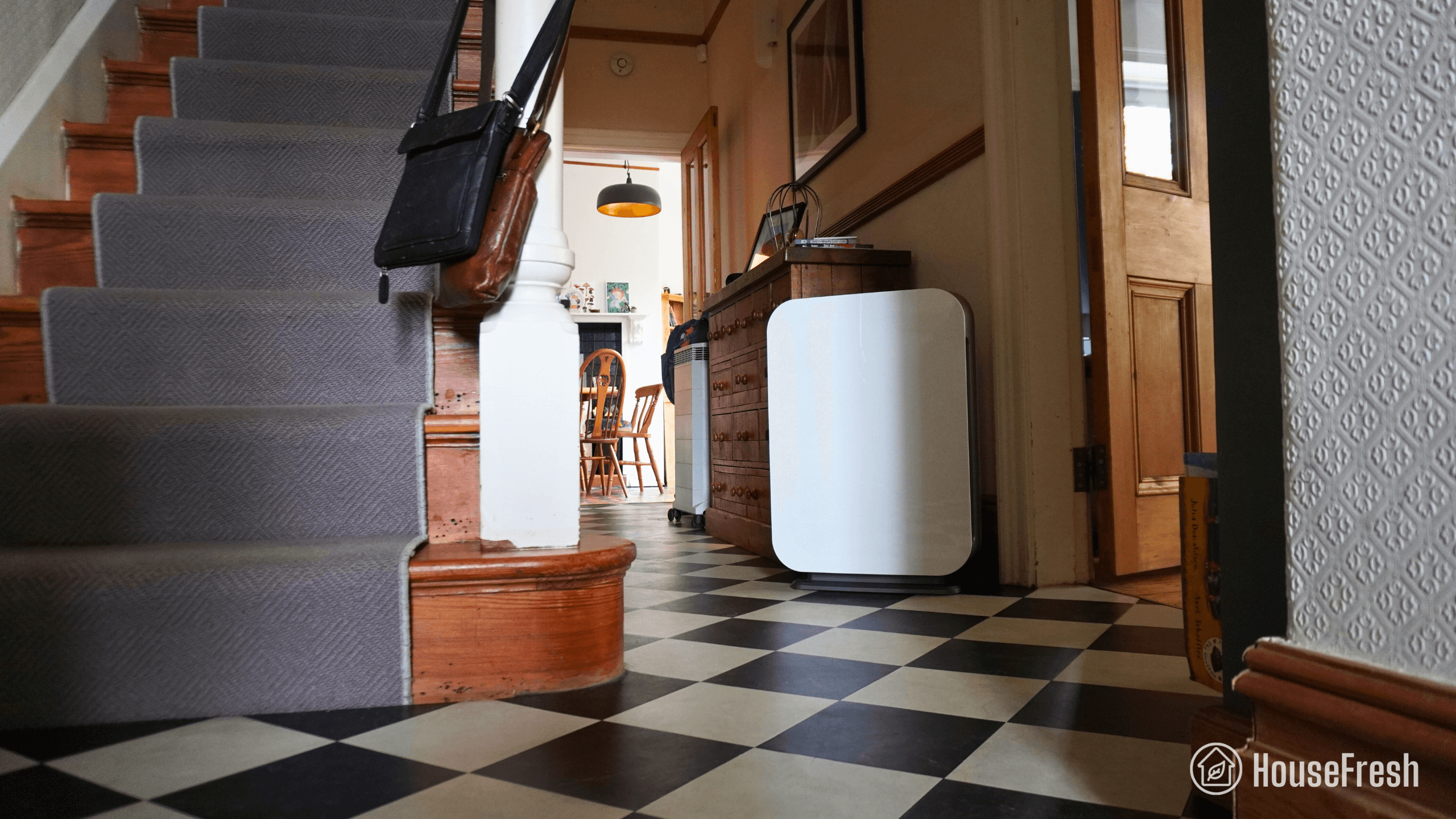
Alen 75i V2 Hallway

The 75i is Alen’s largest and most powerful air purifier. With an estimated PM1 CADR of 333 cfm, it can provide five air changes per hour in rooms as large as 448 sq. ft.

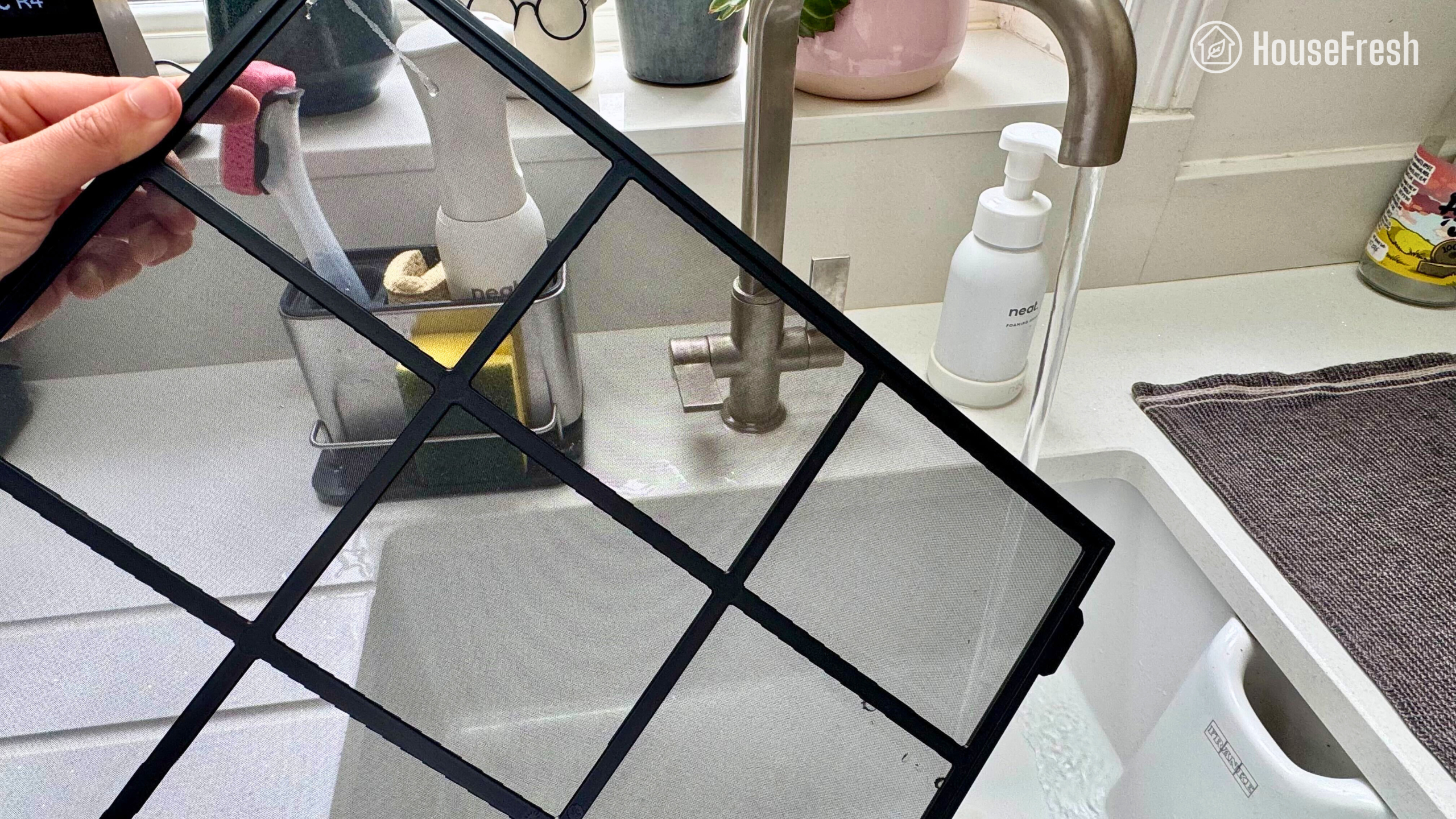
Similarly to the EverestAir (above), the 75i comes with a removable pre-filter, which is easy to access and keep clean regularly.

Alen 75i V2 Pre filter

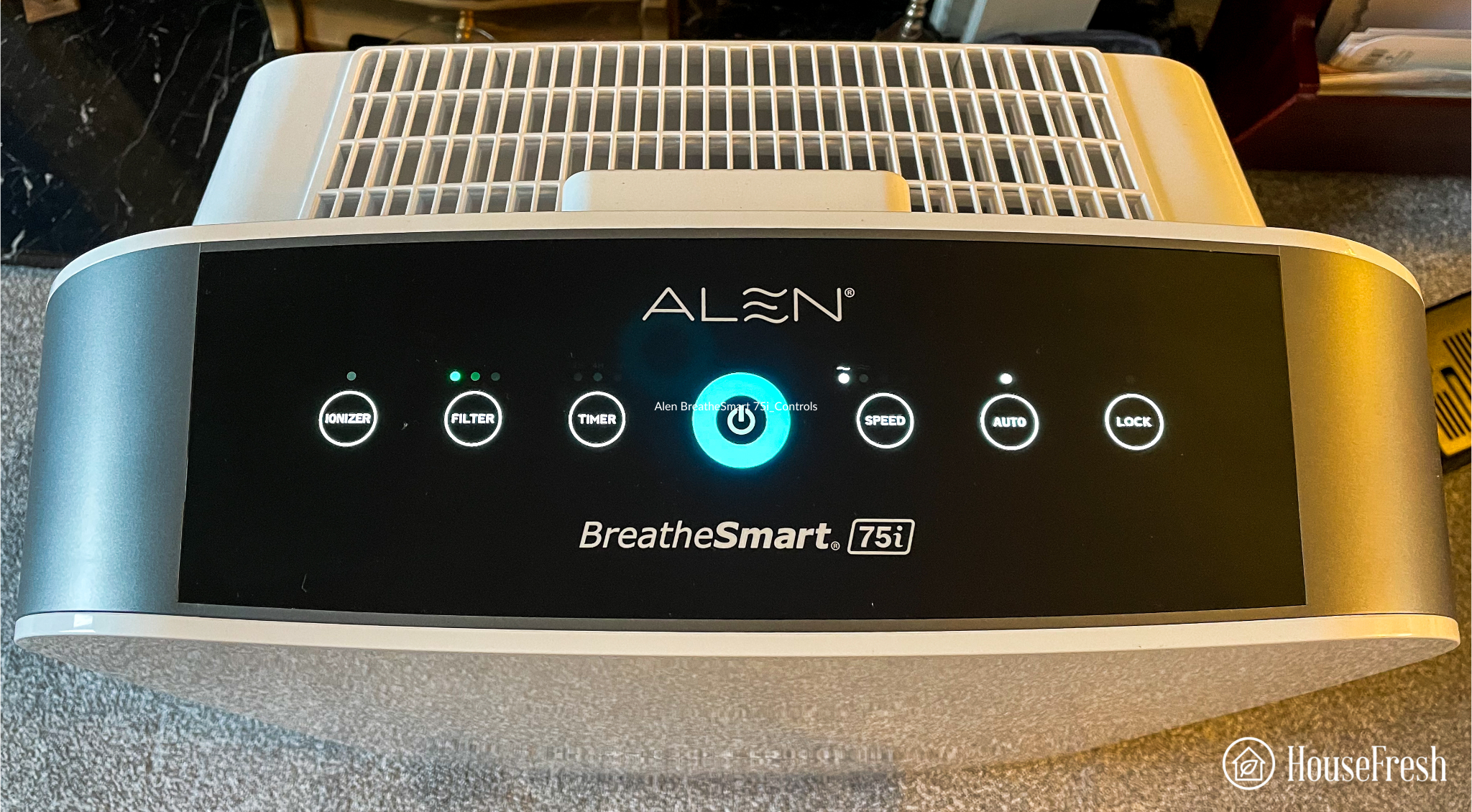
It also has a laser particle sensor (which you won’t need to clean regularly) and you get an air quality indicator on screen.

Alen BreatheSmart 75i Controls

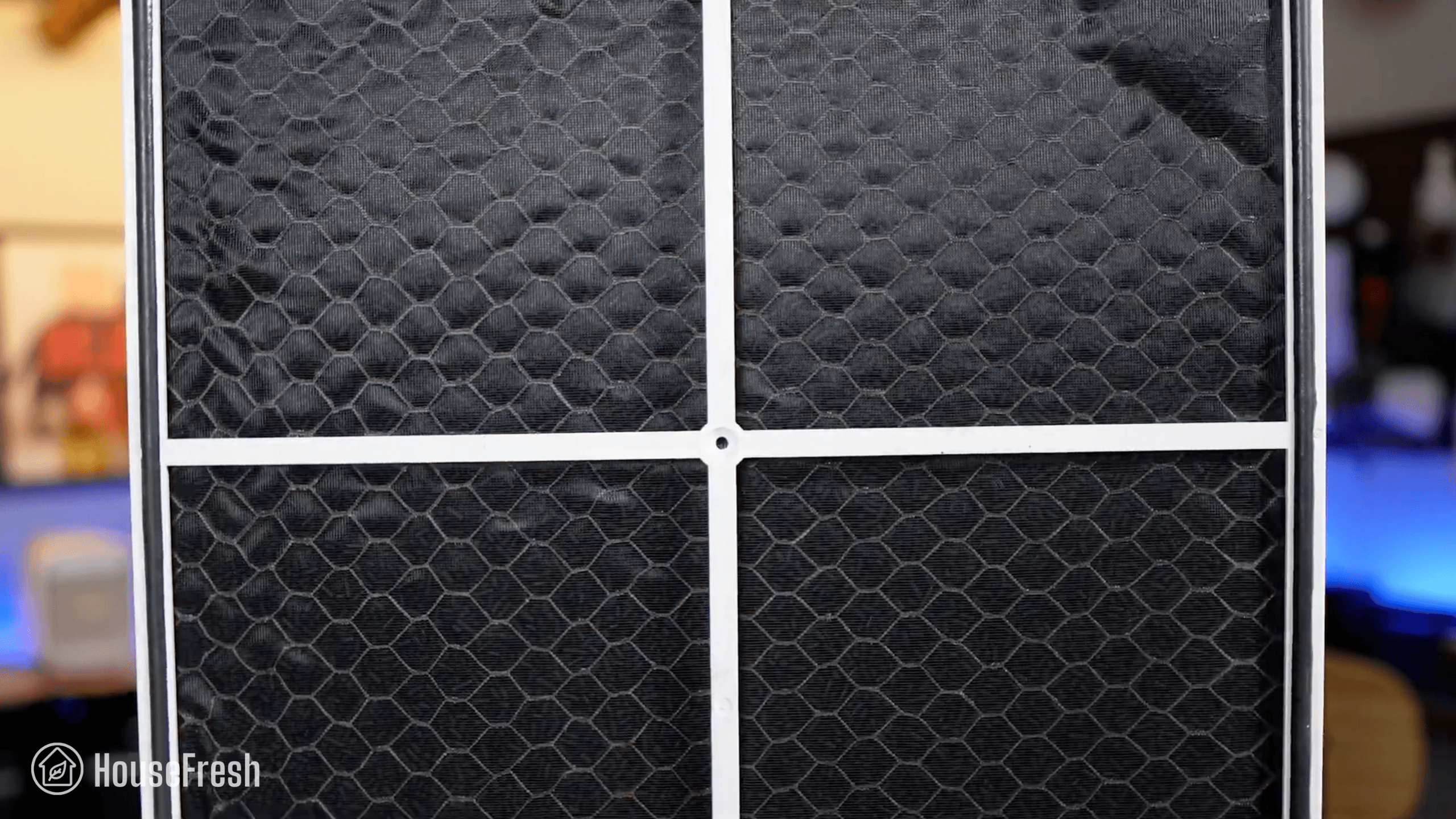
There are multiple filter options available. For pets, I recommend the Fresh filter, which comes with a HEPA H13 and a carbon filter.

Alen 75i V2 Carbon filter

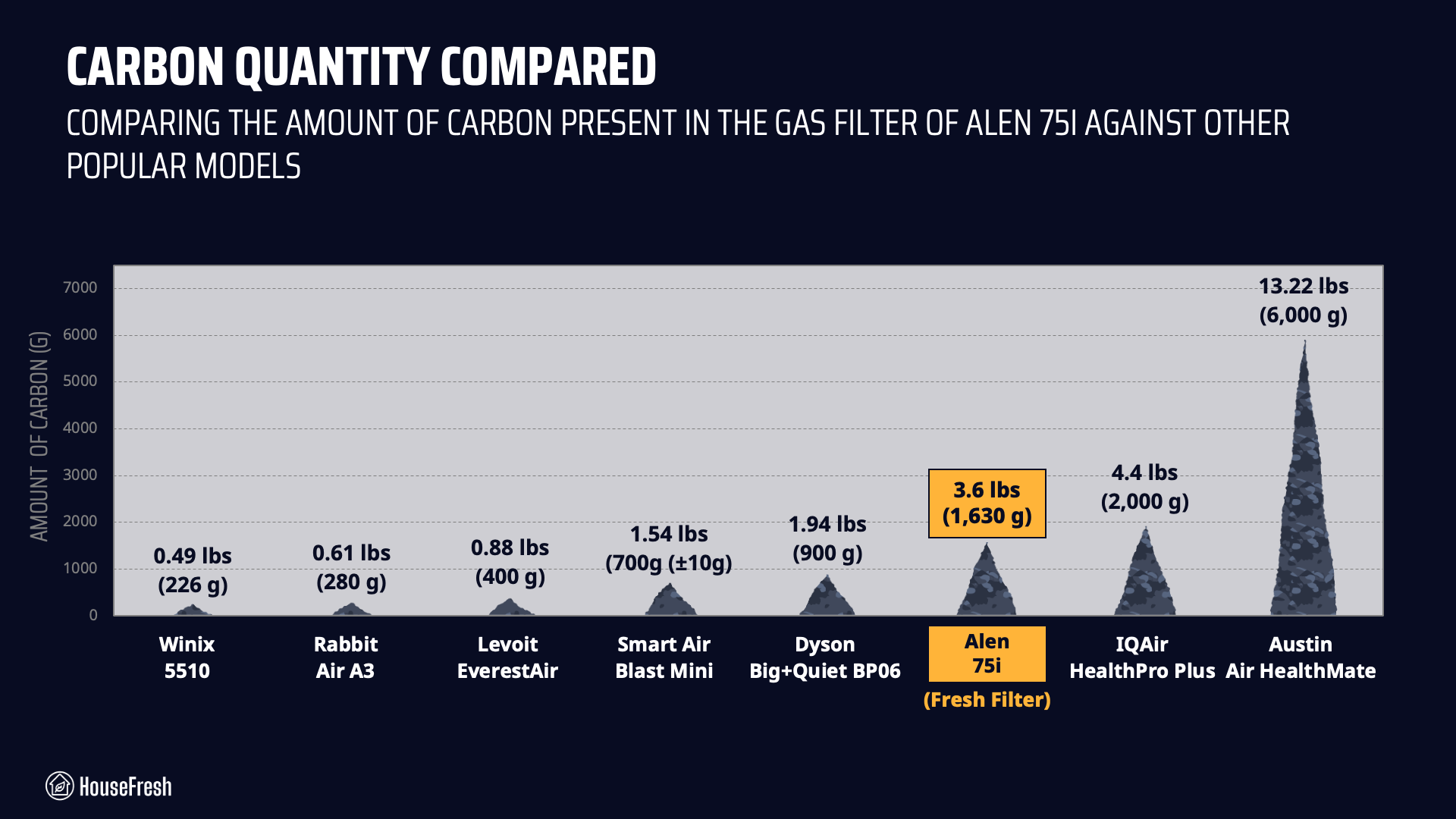
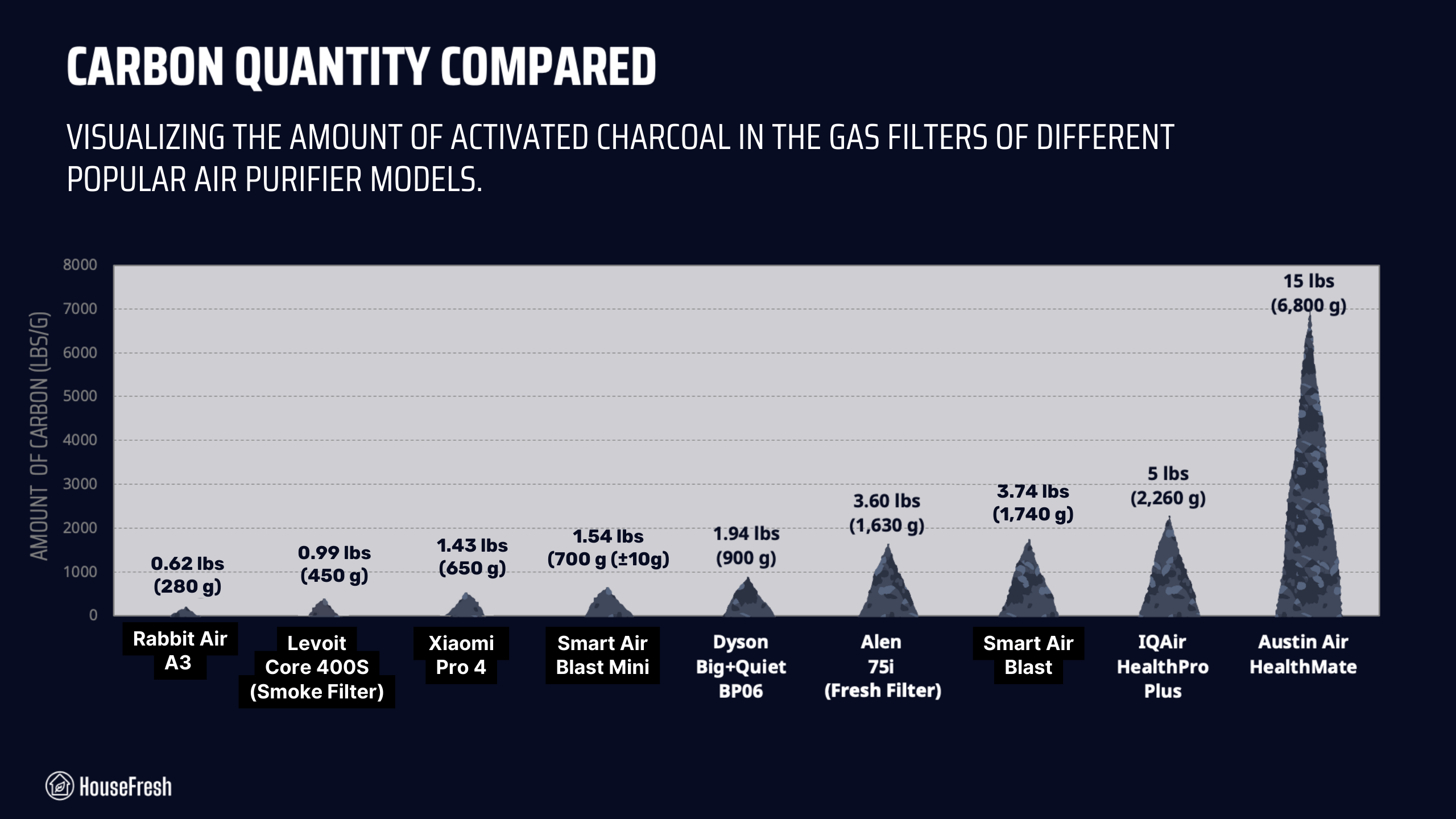
Alen’s Fresh filter is packed with 3.6 lbs of pelleted activated carbon, which is a lot more than what you get with most other devices.

Alen 75i Carbon Chart

CONS

The cheapest filter option (Pure) doesn’t have activated carbon so make sure to choose the Fresh or Odor filters.
It’s a large and heavy unit that won’t fit in small spaces.
It comes with an ionizer function, but you can switch it off and this won’t impact the performance of your 75i.

PROS

It is the tenth fastest air purifier at completing our particle removal test – reached PM1 Zero in 18 minutes at top speed (57.5 dBA).
Excellent quiet performance with 164 cfm when running at speed 2 – this is more powerful than the Coway Airmega 150 running at top speed.
The control panel has a color-coded air quality indicator that provides real-time readings.
The pre-filter can be easily removed and washed.
It comes with a lifetime warranty from Alen, as long as you buy filter replacements directly from them.

Clean air delivery rate (CADR):– Top speed PM1 CADR: 333 cfm
– Sub-45 dBA PM1 CADR: 164 cfm
– AHAM PM2.5 CADR: 351 cfm (dust)
Filter technology:True HEPA H13 filters with activated carbon pellets + Ionizer technology
Recommended room size:448 sq. ft. (5 air changes per hour)
Dimensions:27H x 18.5W x 11.5D inches (68.58H x 46.99W x 29.21D cm)
Weight:27 lbs (12.2 kg)
Noise level in decibels from 3 ft. away:Speed 1: 36.5 dBA
Speed 2: 44.7 dBA
Speed 3: 51.9 dBA
Speed 4: 54.6 dBA
Speed 5: 57.5 dBA
Electricity consumption in watts:Standby: 0.75 watts
Speed 1: 5.19 watts
Speed 2: 13.27 watts
Speed 3: 25.85 watts
Speed 4: 33.99 watts
Speed 5: 47.4 watts
Filter lifespan:12 – 15 months
Manufacturer’s warranty:Lifetime (with product registration & active filter subscription)
Country of origin:United States
Country of manufacture:China

READ MY FULL REVIEW ➜ 

WATCH MY VIDEO REVIEW 

3. Best under $200: Levoit Vital 200S

For less than $190, you can get an excellent air purifier with a removable pre-filter, carbon filtration, quiet operation and smart features.

Levoit Vital 200S Bedroom

This has been my top recommendation for most people since 2024 because it is affordable, performs as well as much more expensive units and comes with all the smart features readers ask about. It also has an estimated PM1 CADR of 260 cfm, it can provide five air changes per hour in rooms no larger than 390 sq. ft.

The Vital 200S comes with a washable pre-filter that will make it a lot easier to regularly remove pet hairs before they obstruct airflow.

Vital 200s washable prefilter

You also get a bonded particle and carbon filter, which has enough carbon to help with mild pet smells but won’t be enough in cases where you’re dealing with serious odors.

Levoit Vital 100S Pelleted carbon closeup

In terms of air cleaning, it outperformed more expensive devices like the Winix 5510 and the Coway Airmega 250S, while generating less noise.

Levoit Vital 200S Sound Performance

The control panel is simple and easy to figure out without reading the manual. You get a button to activate the child lock and you will also see a color-coded ring that shows air quality in real-time.

Levoit Vital 200S Top

CONS

You need to clean the air quality sensors every two months, which is something you might forget to do, leading to a less efficient Auto Mode.
Levoit was forced to remove mentions of HEPA from other units it produces by the BBB National Programs National Advertising Division, which means they are using shady advertising practices we don’t condone.

PROS

It offers a high level of air cleaning performance to $ spent — cleaned our test room in 23 minutes and costs less than $200!
It comes with an in-built air quality sensor that allows for smart functions like Auto Mode.
You can control it from your phone through the Vesync app.
There are many options for generic filter replacements, which helps keep long-term costs low.
It doesn’t have an ionizer so it doesn’t generate ozone as part of the air cleaning process.

Clean air delivery rate (CADR):– Top speed PM1 CADR: 249 cfm
– Sub-45 dBA PM1 CADR: 128 cfm
– AHAM PM2.5 CADR: 254 cfm (dust)
Filter technology:Bonded particle filter with a layer of pelleted activated carbon and a removable pre-filter
Recommended room size:373 sq. ft. (5 air changes per hour)
Dimensions:15.6D x 8.5W x 19.8H inches (39.3D x 21.5W x 50.2H cm)
Weight:13.2 lbs (5.9 kg)
Noise level in decibels from 3 ft. away:Speed 1: 38.3 dB
Speed 2: 41.9 dB 
Speed 3: 53.8 dB
Speed 4: 57.7 dB
Electricity consumption in watts:Standby mode: 0.97 watts
Speed 1: 5.71 watts
Speed 2: 8.01 watts
Speed 3: 31.96 watts
Speed 4: 44.55 watts
Filter lifespan:12 months
Manufacturer’s warranty:2 years
Country of origin:United States
Country of manufacture:China

READ MY FULL REVIEW ➜ 

WATCH MY VIDEO REVIEW 

4. Best for small spaces: Levoit Core 400S (with Smoke Remover filter)

A smart and quiet air purifier with a filter packed with 450 grams of pelleted activated carbon to help with pet smells.

Levoit Core 400S dog

💡exclusive code for HouseFresh for 10% off a single purchase on Levoit.com: HOUSE10

There are many other much smaller devices than the 400S, but if you want to keep your air clean of pet hair, dander and odors, then you shouldn’t go smaller than this. The cylindrical design will make it easier to find a spot for it even in the smallest of rooms.

Even though you’ll see there’s a Pet Allergy filter, I recommend choosing the Smoke Remover filter as it comes with 50 grams more of carbon.

Core 400s Carbon Filter chart

The filter itself is a cylindrical filter, so vacuuming the pre-filter won’t be as easy as with rectangular models like the Vital 200S.

Core 400S filter

Size-wise, the Core 400S is similar to the Winix T810 but it offers better air cleaning performance at quiet fan speeds that won’t disturb your pet.

T810 VS Core 400S

Based on our tests, we estimate a PM1 CADR of 213 cfm, it can provide five air changes per hour in rooms up to 319 sq. ft.

Core 400s air cleaning

CONS

The European version of the 400S is less powerful than the U.S. version, so keep that in mind if you’re in Europe. Learn more about this on this video.
The filter is bonded (like with other Levoit devices on this list) so so you will need to replace the entire thing once the carbon is used up, even if the particle filter still works.
The particle filter was initially sold as H13 HEPA but it isn’t HEPA. This won’t affect performance but you need to know.

PROS

The cylindrical design takes up less floor space while still offering solid air cleaning performance.
It comes with an onboard sensor, an LED air quality indicator and auto-mode.
You get smartphone connectivity through the VeSync app.
The 400S with the Smoke Remover filter comes with the largest amount of carbon (450 g) in the entire Levoit range of air purifiers.
The Core 400S doesn’t have an ionizer but stay away from the PlasmaPro 400S, which looks the same but does have an ionizer.

Clean air delivery rate (CADR):– Top speed PM1 CADR: 213 cfm
– Sub-45 dBA PM1 CADR: 134 cfm
– AHAM PM2.5 CADR: 247 cfm (dust)
Filtration technology:Pre-filter for large particles, main filter for airborne particles and activated carbon filter for odors and gasses
Recommended room size:319 sq. ft. (5 air changes per hour)
Dimensions:10.8L x 10.8W x 20.5H inches (27.4L x 27.4W x 52H cm)
Weight:11.2 lbs (5 kg)
Filter lifespan:6 months
Noise level in decibels from 3 ft. away:Sleep mode: 35.5 dBA
Speed 1: 38.3 dBA
Speed 2: 43.2 dBA
Speed 3: 51.2 dBA
Speed 4: 60.3 dBA
Electricity consumption in watts:Standby: 0.93 watts
Sleep mode: 3.05 watts
Speed 1: 5.28 watts
Speed 2: 8.51 watts
Speed 3: 16.41 watts
Speed 4: 39.64 watts
Manufacturer’s warranty:2 years
Country of origin:United States
Country of manufacture:China

READ MY FULL REVIEW ➜

WATCH MY VIDEO REVIEW ➜

5. Best for homes with multiple smelly pets: Austin Air Healthmate

An air purifier made in the USA with a filter packed with 15 lbs. of carbon that can remove the most stubborn, pungent pet odors from the air.

Austin Healthmate TV Room

If you have multiple pets at home, you’re likely to need a lot more carbon than what you usually get with most air purifiers you’ll find in stores. For those cases, I recommend the Austin Air HealthMate and its filter packed with 15 lbs. of activated carbon and zeolite.

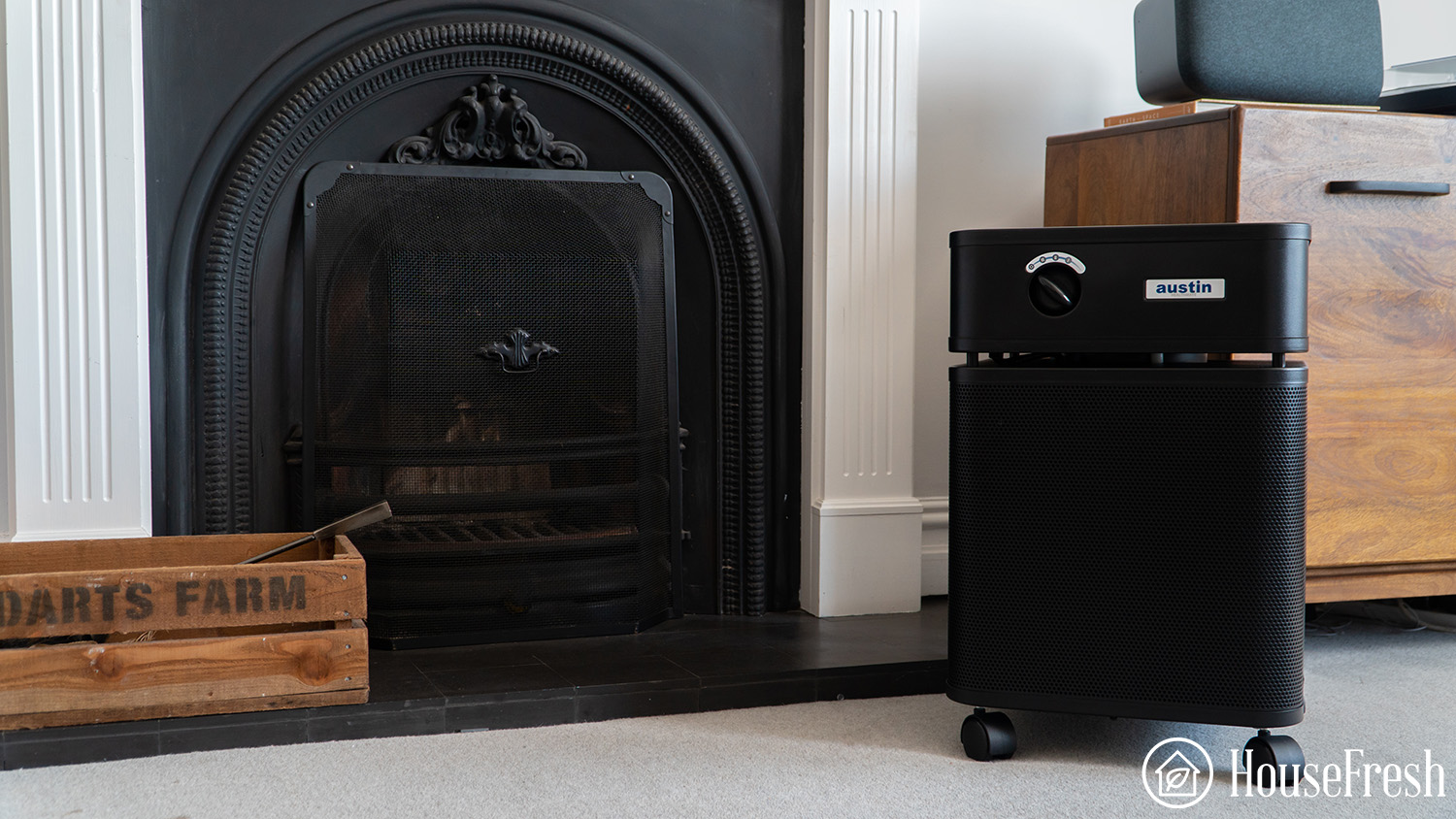
Its metal body is heavy but durable, with a flat top that many cats will enjoy sleeping on.

Austin Healthmate Front

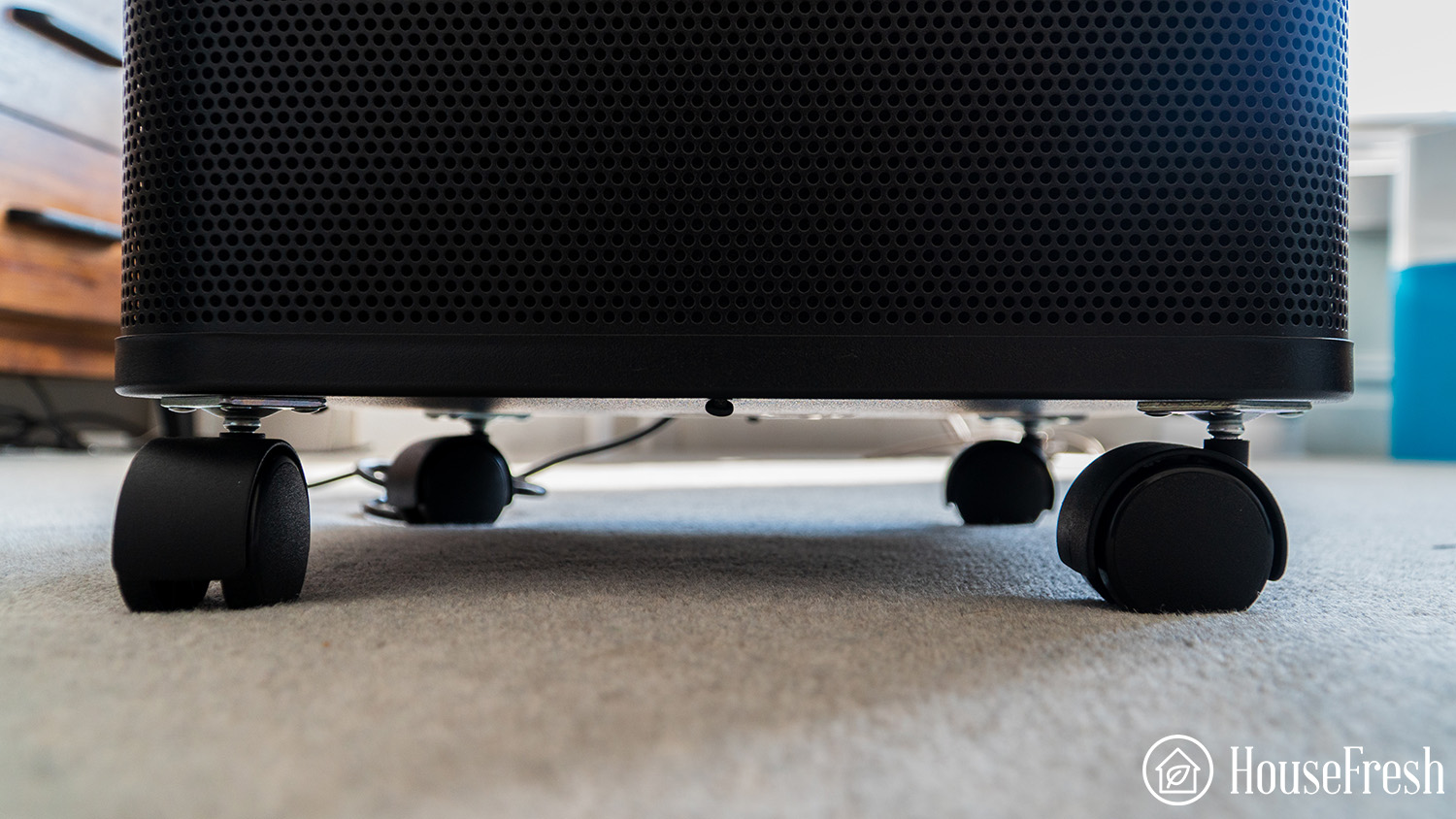
Even though it’s heavy, it comes on wheels so you can easily move it around your house as needed. It’s one of the only devices I’ve tested with wheels that roll well on carpets.

Austin Healthmate Wheels

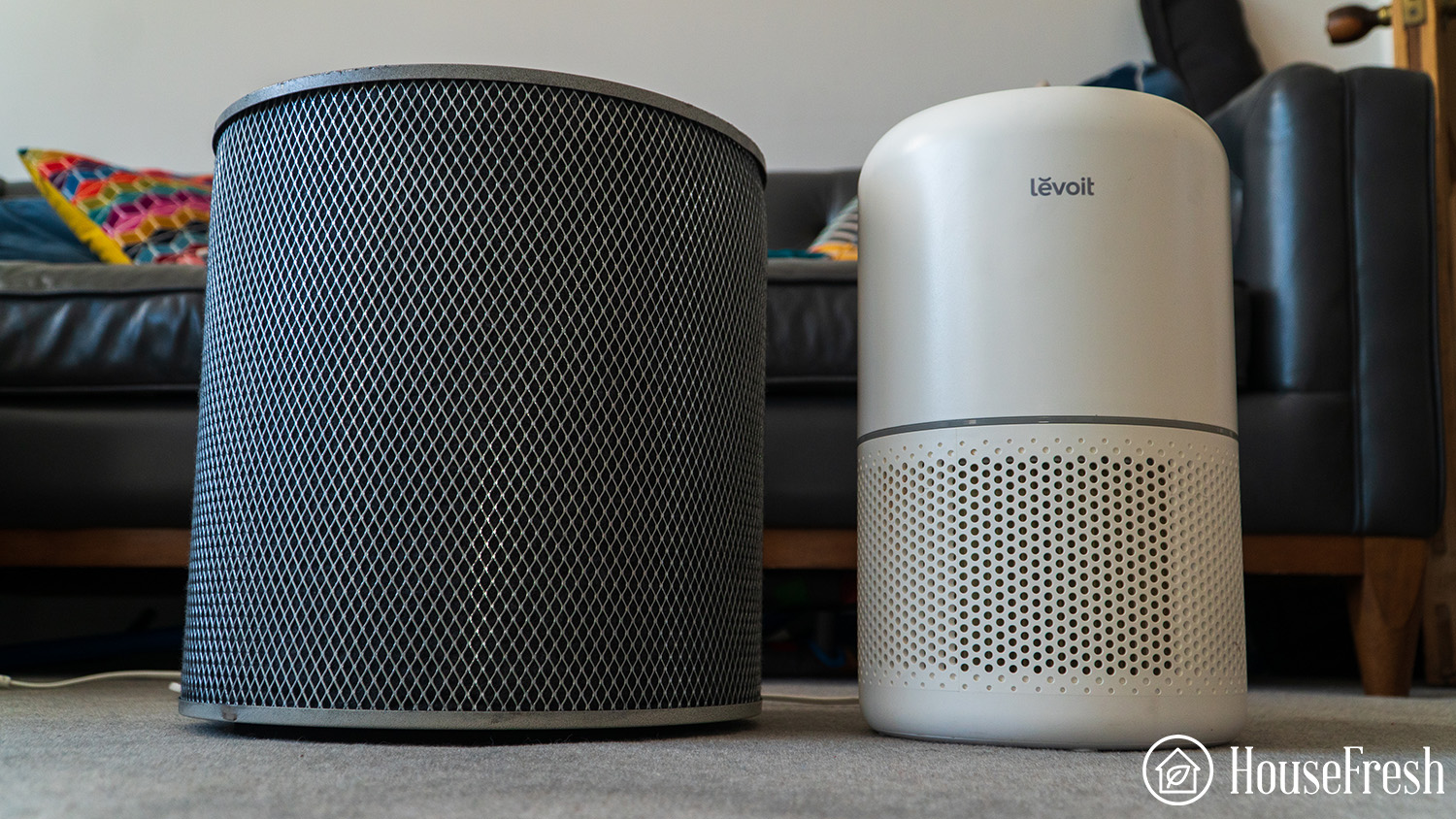
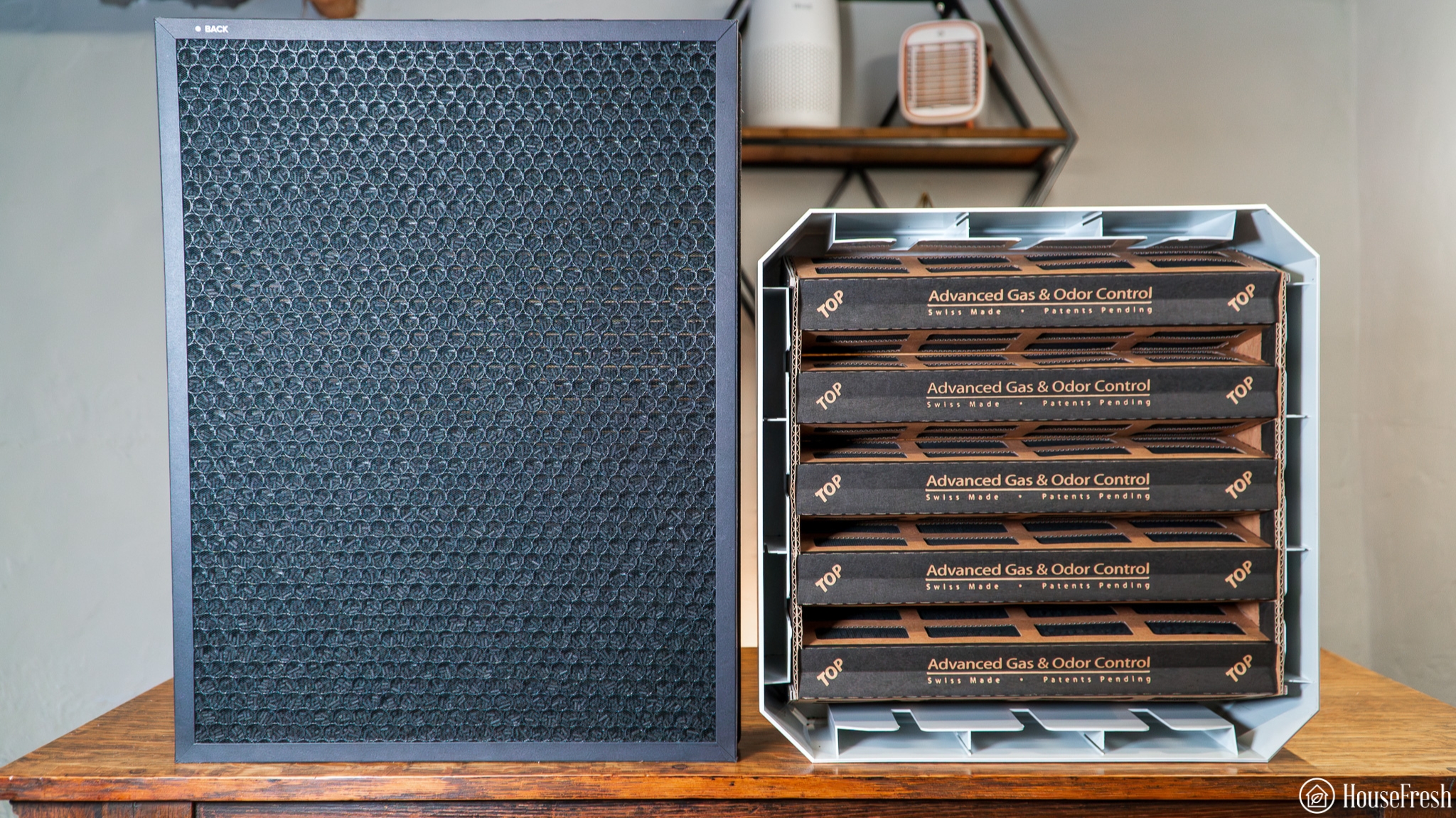
The filter inside the HealthMate is bigger than most small air purifiers you’ll see recommended online.

Austin Healthmate Filter VS Core 300

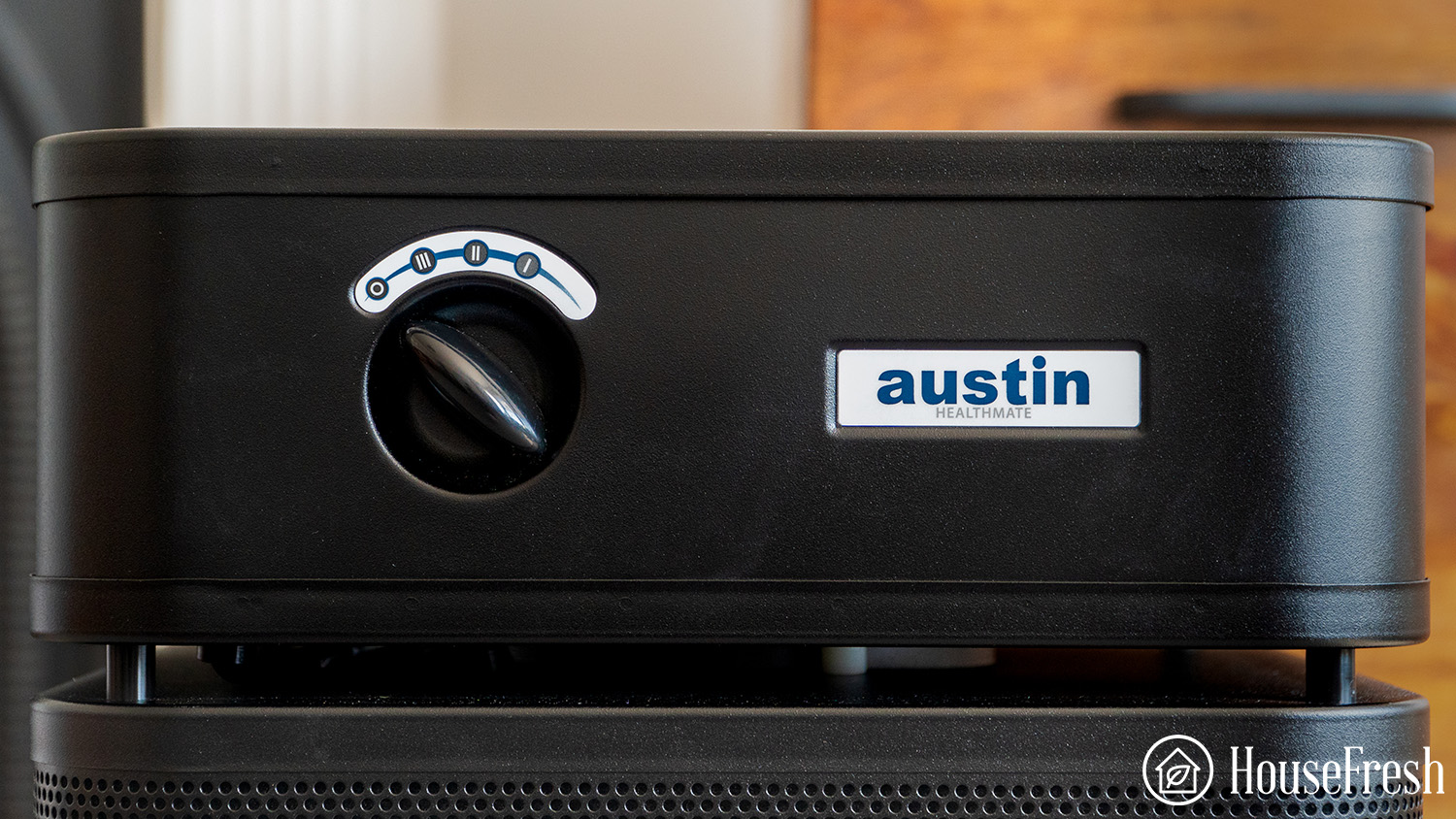
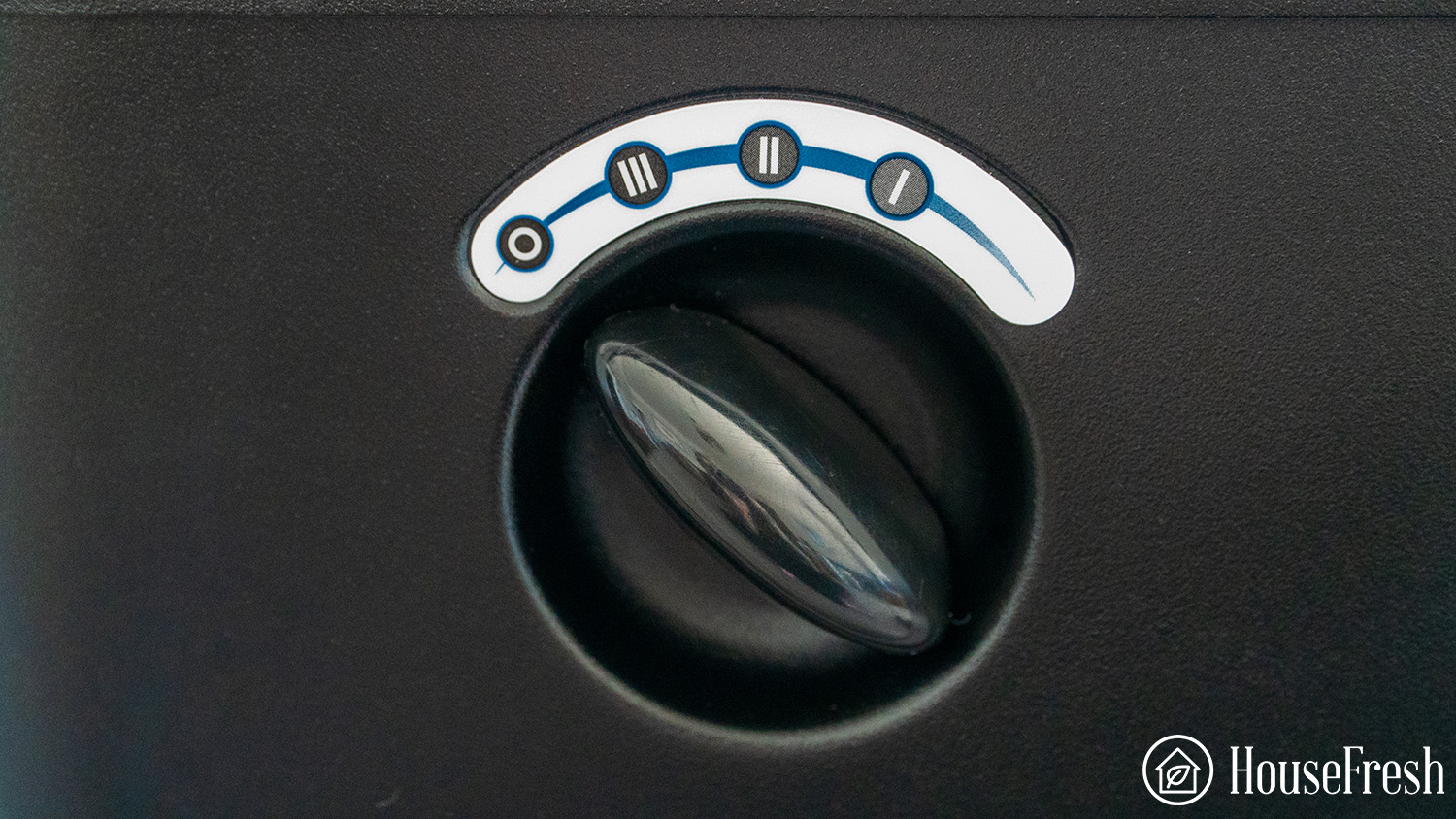
Instead of a touchscreen display or colorful buttons, the HealthMate comes with a dial to switch between three fan speeds — no risk of your pet accidentally switching the device off.

Austin Healthmate Controls

CONS

It is great at removing odors and VOCs from the air but its particle filtration is as good as much smaller devices like the Xiaomi 4 Compact or the Levoit Core 300.
It is power hungry, pulling 147.6 watts at top speed. It would add $164.39 to your energy bill each year to run it 24/7.
The filter replacement is expensive ($315) but you only need to replace it every five years.
It doesn’t have any smart features or smartphone app controls. 

PROS

It comes with the largest carbon filter in the household purifier market.
The filter is packed with a carbon and zeolite mix that increases odor adsorbency.
It is made in the USA and comes with a 5-year warranty.
It doesn’t have an ionizer so it doesn’t generate ozone as part of the air cleaning process.

Clean air delivery rate (CADR):– Top speed PM1 CADR: 156 cfm
– Sub-45 dBA PM1 CADR: 77 cfm
– AHAM PM2.5 CADR: 154 cfm (dust)
Filter technology:HEPA particle filter with 15 lb of activated carbon and zeolite mix gas filter
Recommended room size:234 sq. ft. (5 air changes per hour)
Dimensions:23H x 14.5W x 14.5D inches (58.4H x 36.8W x 36.8D cm)
Weight:20.41 lbs (9.26 kg)
Noise level in decibels from 3 ft. away:Speed 1: 42.5 dB
Speed 2: 53.2 dB
Speed 3: 61.5 dB
Electricity consumption in watts:Standby mode: 0 watts
Speed 1: 61.1 watts
Speed 2: 85.05 watts
Speed 3: 147.6 watts
Filter lifespan:5 years
Manufacturer’s warranty:5 years
Country of origin:United States
Country of manufacture:United States (Buffalo, New York)

READ MY FULL REVIEW ➜

WATCH MY VIDEO REVIEW

Special mentions

These are the air purifier models that nearly made the cut

I have tested over 130 different air purifiers and have found many excellent options for pet owners. Not all of them made my shortlist, but perhaps they will be a good choice for you.

Smart Air SA600 Bedroom

Smart Air SA600

The SA600 has two H13 HEPA filters, two activated carbon filters, and two removable pre-filters. With a PM1 CADR of 249 cfm at top speed, it can change the air five times per hour in rooms up to 373 sq. ft.

It didn’t make this list because it’s too large for small spaces and too expensive ($279.95) for the under $200 category.

READ MY FULL REVIEW ➜

WATCH MY VIDEO REVIEW ➜

Alen 35i

Alen BreatheSmart 35i

With a PM1 CADR of 162 cfm at top speed, the 35i cleans the air five times per hour in 247 sq. ft. rooms. You get different filters but for pet owners, I recommend the Fresh filter (H13 HEPA + carbon pellets).

Even though its performance is top-notch, it is more expensive than the Core 400S, which is my top pick for small spaces.

READ MY FULL REVIEW ➜

WATCH MY VIDEO REVIEW ➜

Dyson BigQuiet BP06

Dyson Big+Quiet BP06

It has a PM1 CADR of 198 cfm at top speed, so it can provide five air changes per hour in rooms up to 297 sq. ft. It has an H13 HEPA filter for pet allergies and a wraparound filter with 900g of carbon for pet odors.

The BP06 is the best Dyson air purifier I’ve tested, but I haven’t included it because it’s expensive ($800+) and keeps going out of stock.

READ MY FULL REVIEW ➜

WATCH MY VIDEO REVIEW ➜

Coway Airmega 150 Corner Room

Coway Airmega 150

The Coway 150 has the most convenient pre-filter design for pet hair: you can remove it without opening the device AND is washable.

With a top speed PM1 CADR of 156 cfm, it can clean the air five times per hour in 234 sq. ft. spaces. It has solid particle and carbon filters, but the Core 400S offers higher performance and more carbon.

READ MY FULL REVIEW ➜

WATCH MY VIDEO REVIEW ➜

AirFanta 3Pro Sidetable

AirFanta 3Pro

This PC fan-powered air purifier offers incredible value for money, costing $164.99 and offering an impressive PM1 CADR of 353 cfm. At top speed, it can clean the air five times per hour in spaces up to 529 sq. ft.

It didn’t make the cut because the fans on top are too exposed and the design might not survive being pushed around by curious pets.

READ MY FULL REVIEW ➜

WATCH MY VIDEO REVIEW ➜

Coway Airmega 250S Living room

Coway Airmega 250S

This is a beautiful device from Coway that doesn’t have an ionizer and comes with a smart, easy-release pre-filter like the Coway 150.

We estimate a PM1 CADR of 249 cfm, which can provide five air changes per hour in rooms up to 373 sq. ft. I didn’t include it because it costs upwards of $400 but offers less power than the cheaper Vital 200S.

READ MY FULL REVIEW ➜

WATCH MY VIDEO REVIEW ➜

What to look for when buying an air purifier for pets

To find out if the unit you are considering is the right one for the job, these are a few questions that will guide you in your search:

1. Does the air purifier have the right filters? 

When it comes to pets, a three-stage filtration system is the most comprehensive option, as it includes a pre-filter, an activated carbon filter, and a particle filter.

three stage filtration air purifiers

  • Stage 1: Pre-filter. These are designed to pick up larger particles (such as pet hair) before they reach the main filter. Their key function is to prevent fur from clogging the main filters, thus extending their lifespan. Removable pre-filters are more straightforward to clean; some are washable to rinse the shed fur effortlessly.

  • Stage 2: Activated carbon filter. This is the layer that clears the air from unwanted pet odors — the carbon works by absorbing odors (and VOCs) that pass through the filter, removing them from the air.

  • Stage 3: Main particle filter. Particle filters are made of pleated sheets that create a maze of randomly assorted fibers capable of capturing the smallest of airborne particles, including pet dander, dust, and pollen.

2. Is the air purifier capable of dealing with your room size?

This is a key issue when choosing the right air purifier for you. A unit suited for smaller rooms won’t be able to make the air changes per hour (ACH) needed to clean the air in large spaces. Therefore, it won’t be efficient at removing the odors and lacks the power to remove all airborne pollutants.

This is where the unit’s CADR (Clean Air Delivery Rate) comes in, indicating its cleaning performance in CFM (Cubic Feet Per Minute). We’ve included each unit’s CADR and room size recommendation in our spec tables.

But you can use our calculator to find the exact CADR you need based on the size of the space where you want to use the air purifier:

3. Does the unit produce any chemical by-products?

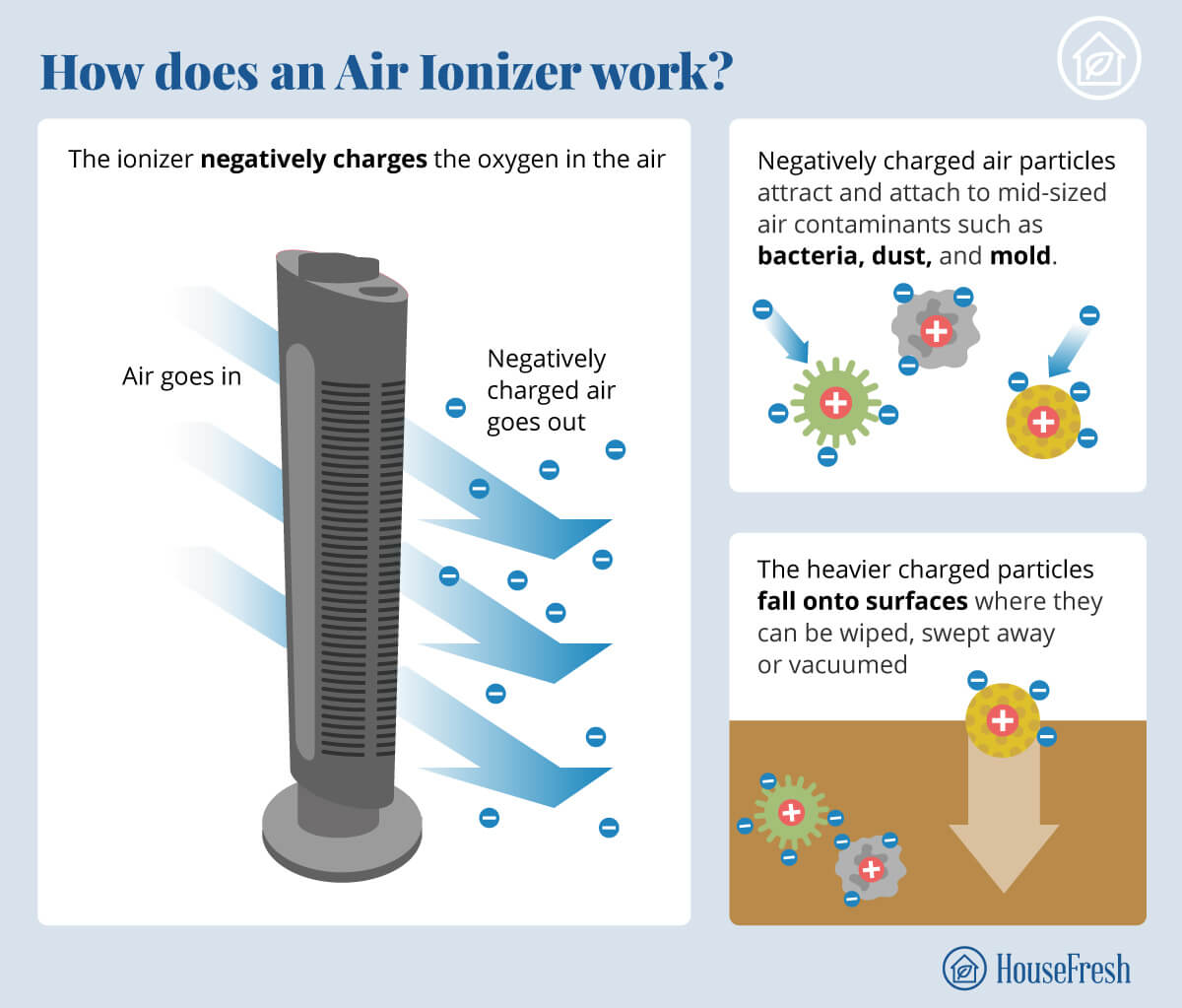
Ionization features are often found in air purifiers to enhance their performance. Air purifiers with ionizer functions release ions into the air that attach to airborne particles, forcing them to drop onto surfaces so you can vacuum and wipe them.

how does an air ionizer work logo

The problem is that, in the process, these devices can generate small amounts of ozone, which can be detrimental to the health of those with pre-existing respiratory conditions.

If you worry about the health of your pet, then you should stick to air purifiers without ionizers or with ionizer functions that can be disabled, like the ones on my list of recommendations.

To wrap it up

Taking good care of your pets (with frequent grooming, healthy food and periodic visits to the vet) is a solid step forward in reducing their odor and the amount of hair floating around in the air. Regular home cleaning makes for another important element in the equation, but that’s not always enough.

Introducing the right air purifier to your home can make a BIG difference. Just make sure you are buying a device powerful enough for the space where you will place it with a high quality particle filter, a pre-filter that is easy to clean, and a good amount of pelleted activated carbon to deal with odors. Pay attention to sound levels too, as pets are sensitive to noise, and stay away from ionizer functions that cannot be disabled.

If you have any questions about your specific situation, just drop them in the comments below, and I’ll get back to you as soon as I can.

March 28th, 2026

  • Added the Coway Airmega 150 and the Alen BreatheSmart 35i to the ‘Special mentions’ section as potential contenders for small rooms.
  • Added links to the YouTube video reviews for the Austin Air HealthMate and the units under ‘Special mentions’.

October 4th, 2025

  • Added the Coway Airmega 250S to the ‘Special mentions’ section as a potential pick for medium-sized spaces.

August 12th, 2025

  • Added the Dyson BP06 to the ‘Special mentions’ section as a potential pick for rooms with smelly pets.

April 28th, 2025

  • Added links to the YouTube videos of all the units shortlisted.
  • Created a section with a list of solid devices that didn’t make the cut (Special mentions).

August 190th, 2024

  • Updated the criteria for the shortlist, including specific features needed for the filters, the design and the number of air changes required to help with pet-related allergies and odor issues.
  • Removed the Mila air purifier because it didn’t meet the criteria for the minimum CADR required for 4-5 air changes per hour.
  • Replaced the Levoit Core 300S with the Levoit Core 400S as the best for small spaces, due to the higher CADR that provides more air changes per hour.
  • Added the Smart Air SA600 as the best option for those who don’t care about smart features.

February 14th, 2024

  • Updated the sections for all Levoit air purifiers to include information about VeSync removing all mentions of HEPA from their marketing materials after being challenged by Dyson in front of the BBB.

January 13th, 2024

  • Updated the formatting across all sections of the article.

November 30th, 2023

  • Added a summary table at the top.

The best quiet air purifiers → Clean air without noise

CleanAirKits Triple

Sounds above 85 decibels are considered harmful to human hearing, so we should avoid prolonged exposure to them. This can become a problem when you consider that the fans inside air purifiers can get really freaking loud – especially if you have more than one device inside a room.

All this is to say that sound matters when it comes to air purifiers, and unfortunately, sound levels in product listings and marketing materials cannot be trusted.

In fact, if you click on a random air purifier on Amazon, you will likely see very low sound levels (around 20 dB) mentioned. But you should know that these incredibly low decibel figures are generally what you can expect when running the air purifier on sleep mode…

sleep mode db

Sadly, it’s now common for air purifier manufacturers to only share the sound level at the lowest fan speed. The problem is that at this low fan speed, any small air purifier will not be able to provide multiple air changes per hour in even the smallest of rooms.

That is why we not only test the air cleaning performance of air purifiers at top speed but also at fan speeds below 45 dBA, which is the limit set by Clean Air Stars for noisy classrooms and offices.

My recommendations today are based on benchmark testing of over 130 different air purifiers running at fan speeds that generate less than 45 decibels of sound.

TL;DR: These are the best quiet air purifiers

If reading is not your thing, you can just watch the video version of this article.

I’ve also put together a table with information about each of the air purifiers I recommend for those looking for solid performance with quiet operation:

BEST OVERALLBUDGETSMARTSMALLLARGEBUY-IT-FOR-LIFE
CleanAirKits Luggable XL UltraAirFanta 3ProBlueair Blue SignatureCleanAirKits Triple ExhalaronCoway Airmega ProXNukit Tempest Pro
CleanAirKits Luggable XL7 CornerAirFanta 3Pro CornerBlueair Signature CornerCleanAirKits TripleCoway Airmega ProX Kids roomNukit Tempest Pro Living Room
Top speed performance315 cfm @ 47.2 dB353 cfm @ 56.3 dB400 cfm @ 59.6 dB128 cfm @ 40.5 dB462 cfm @ 53.6 dB462 cfm @ 53.6 dB
Quiet speed performance
284 cfm @ 44.1 dB213 cfm @ 43.3 dB229 cfm @ 40 dB128 cfm @ dB299 cfm @ 44.4 dB462 cfm @ 53.6 dB
Filter techMERV 13HEPA H11 + carbonParticle + carbon + ionizerHEPA H10 + carbonTrue HEPA + carbonMERV 13
Max room size472.5 sq. ft.529 sq. ft.600 sq. ft.192 sq. ft.693 sq. ft.693 sq. ft.
Long-term running costs$65.70 / year$169.99 / year$179.81 / year$123.62 / year$269.82 / year$269.82 / year
List price$310.00$164.99$449.00$359.00$999.00$999.00

Read on to learn more about my top picks for the best-performing quiet air purifiers you will find today. If none of them is right for you, scroll down to my list of excellent devices that nearly made the list or drop us a message on Reddit.

1. Best overall: CleanAirKits Luggable XL Ultra

It is honestly so quiet that the first week we had it, I found myself walking up to it now and again to check if it was running.

The Luggable XL Ultra cleaned our 728 cubic ft. test room of all PM1 pollutants in 19 minutes while generating only 47.2 dB of sound. Just to put this into perspective, that is around the same time it took the larger Winix 9800 and the Coway Airmega 350 — incredible air cleaning performance below 50dB!

It’s super quiet because it’s powered by seven Cooler Master Mobius 120 PC fans, which combined with two Filtrete MPR 1900 MERV 13 filters lead to excellent performance at whisper-quiet operation.

CleanAirKits Luggable XL Ultra Filter inside

With the Luggable Ultra you’ll get 315 cfm under 50 dB, which will be powerful enough for five air changes in spaces of up to 472.5 sq. ft.

CleanAirKits Luggable XL Ultra HouseFresh Test Data

CONS

If you go with the DIY kit, know that building it can be tricky – I made a video to show how it works.
The lightweight wood looks great, but the body is more delicate than plastic or metal you’ll find in other air purifiers. If durability is a concern, check out the Nukit Tempest Pro at the end of this list.
It doesn’t come with carbon, so it won’t help with odors and chemical gases.
It’s a large device that won’t fit in smaller spaces. But if you like the look of the Luggable, then you can choose the 5-fan version.
It doesn’t come with any smart functions or app support.

PROS

It offers excellent air cleaning power even under the 45 dBA limit we set for quiet performance tests (284 cfm).
You can use any brand of 20×25 MERV 13 filters, which leads to lower running costs.
It’s lightweight and comes with a handle for easy movement from room to room.
The body is made of lightweight wood, making it more sustainable than traditional plastic air cleaners.
You can buy the DIY kit, which is cheaper and includes everything you need to build it at home (except the filters).
If anything breaks, you will be able to fix it yourself.

Clean air delivery rate (CADR):– Top speed PM1 CADR: 315 cfm
– Sub-45 dBA PM1 CADR: 260 cfm
– EnergyStar PM2.5: 402 cfm (dust)
Filter technology:MERV 13 (20×25)
Recommended room size:390 sq. ft. (5 air changes per hour)
Dimensions:7D x 25W x 20H in (18D x 64W x 51 cm)
Weight:8 lbs (3.63 kg)
Noise level in decibels from 3 ft. away:47.2 dBA
Electricity consumption in watts:16.43 watts
Filter lifespan:6-12 months
Manufacturer’s warranty:1 year
Country of origin:United States
Country of manufacture:United States

Northbox Systems is a Canadian manufacturer that produces PC fan-powered air purifier kits that use HVAC filters. We tested the 6XL and its air cleaning performance is outstanding. 
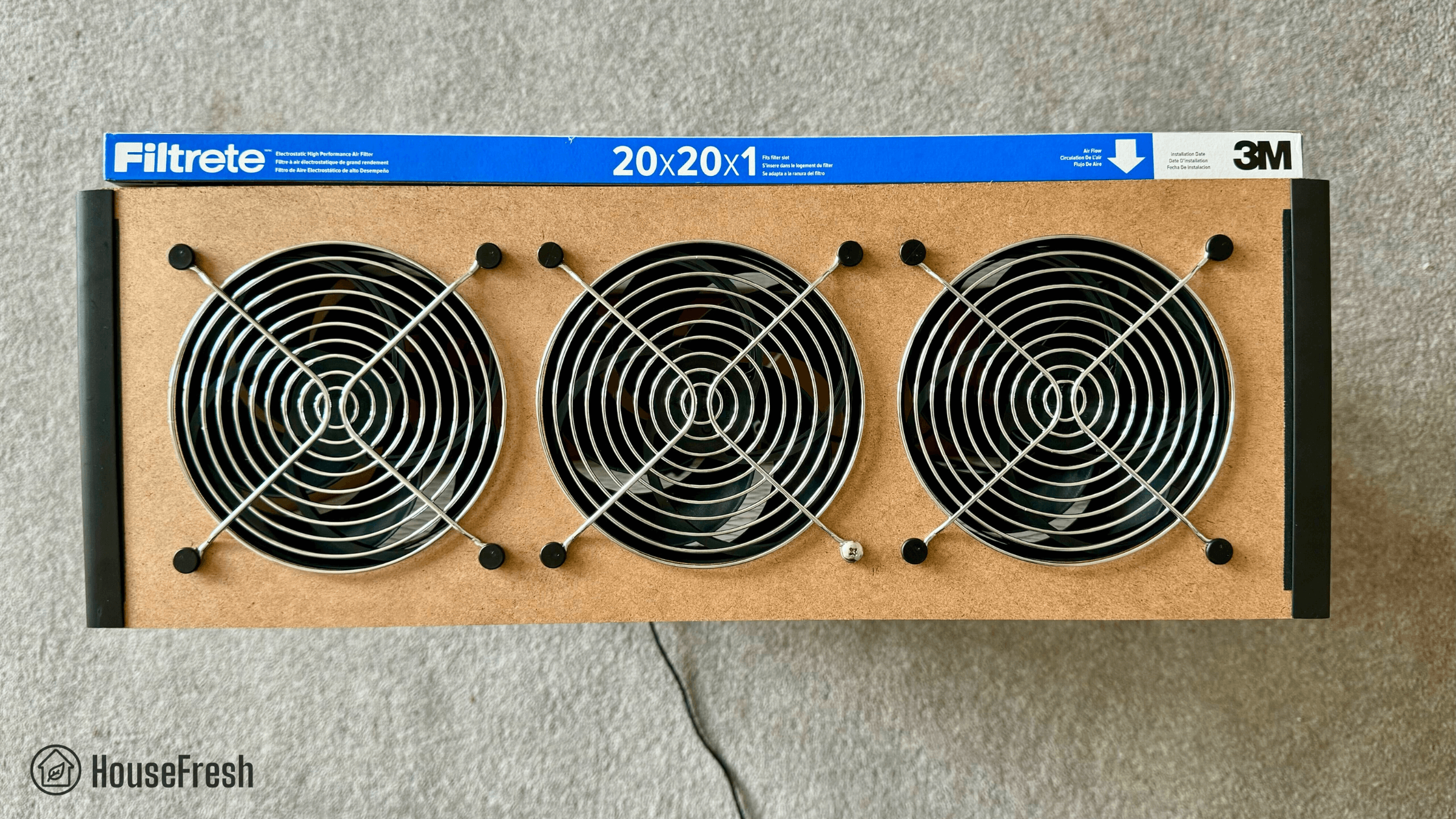
North Box 6XL Corner
North Box 6XL Top Down Filter

WATCH MY VIDEO REVIEW ➜

2. Best budget option: AirFanta 3Pro

More than just quiet: this is the only air purifier with a CADR above 350 cfm that you can fit inside a carry-on bag.

AirFanta 3Pro Sidetable

Use the discount code HOUSEFRESH for 5% off when buying directly from AirFanta.

This is another PC fan-powered air purifier like the Luggable XL Ultra (above) but this one is much easier to build and cheaper to buy. Based on our tests, we estimate a CADR of 353 cfm (56.3 dB), which will provide five air changes per hour in rooms up to 529 sq. ft for just $164.99.

The 3Pro arrives in parts, so you’ll need to build it yourself but it’s super easy: you get plastic square-shaped base, four H11 HEPA filters (carbon is optional) and four PC fans on top.

AirFanta 3Pro Open

It has a speed controller, so you can set it to 6.54V and it will offer 213 cfm while generating just 43.3 dB of noise – excellent quiet performance at an affordable price!

airfanta quiet performance

CONS

The design is not for everyone, with a subscriber describing it to me as “a sci-fi toaster”.
It has no smart features, no air quality sensor, and no app support.
It’s in high demand, so it is often out of stock on Amazon. If you can’t find it on Amazon, check the official AirFanta shop.
You will have to build it yourself, but it takes just a couple of minutes to do so.

PROS

It offers the best performance for $ spent across the 130+ air purifiers we tested.
It is the only high-CADR air purifier you can fit in a backpack.
The use of PC fans makes it quieter and more energy-efficient than most traditional retail air purifiers.
It comes with an AC-to-DC power adapter that includes a dial to adjust the voltage and sound levels.
You can choose between HEPA-only or HEPA with activated carbon. If you need to tackle odors or VOCs, get the filters with carbon.

Clean air delivery rate (CADR):– Top speed PM1 CADR: 353 cfm
– Sub-45 dBA PM1 CADR: 213 cfm
Filter technology:True HEPA H11 and optional pelleted activated carbon
Recommended room size:529 sq. ft. (5 air changes per hour)
Dimensions:12.6D x 12.6W x 12.6H inches (32D x 32W X 32H cm)
Weight:7.7 lbs (3.49 kg)
Noise level in decibels from 3 ft. away:3.63 volts: 36.1 dB
4.19 volts: 36.9 dB
5.24 volts: 39.7 dB
6.54 volts: 43.3 dB
7.44 volts: 46.7 dB
8.56 volts: 49.1 dB
12.6 volts: 56.3 dB
Electricity consumption in watts :43.23 watts
Filter lifespan:6 – 12 months
Manufacturer’s warranty:1 year
Country of origin:China
Country of manufacture:China

READ MY FULL REVIEW ➜

WATCH MY VIDEO REVIEW 

3. Best smart option: Blueair Blue Signature

A quiet option for those who want a more traditional air purifier with an onboard sensor, smart features and app connectivity.

Blueair Signature Corner

The Blue Signature is a cylindrical air purifier that doubles as a table with powerful air cleaning performance, a laser PM2.5 sensor, smart modes and app connectivity. At top speed, it will give you 400 cfm while generating 59.6 dB of noise. This will be enough to clean the air five times per hour in spaces up to 600 sq. ft.

When set to speed 2, the Signature will reach 40 dB while still being able to provide a CADR of 229 cfm – pretty impressive quiet performance!

Blueair Blue Signature Quiet Performance HouseFresh

It comes with wraparound filter that combines particle filtration with a layer of pelleted activated carbon and Blueair’s HEPASilent ionizer technology.

Blueair Blue Signature Main Filter

CONS

It is more expensive to buy and run than other table air purifiers from IKEA and SwitchBot.
There is no option to disable the electrostatic ionization function, unlike what we see from other manufacturers like Winix, Coway and Xiaomi.
The wooden legs and the chrome base to turn it into a table are not included, so you’d need to pay up to $100 more to elevate your Blue Signature.
The Blueair app has a clean UX and is easy to use.

PROS

It doubles as a side table that will fit most living rooms and bedrooms – you can even buy legs to give it more height.
It matches the air cleaning performance of high-end units that cost twice its price and are twice its size.
It comes with a laser sensor on board that is highly accurate and doesn’t need to be cleaned regularly.
The Blueair app has a clean UX and is easy to use.
You can customize the design with multiple pre-filter fabric colors and two leg design options.

Clean air delivery rate (CADR):– Top speed PM1 CADR: 400 cfm
– Sub-45 dBA PM1 CADR: 229 cfm
– AHAM PM2.5 CADR: 434 cfm (dust)
Filter technology:HEPASilent particle filter with pelleted activated carbon and a removable pre-filter fabric.
Recommended room size:600 sq. ft. (5 air changes per hour)
Dimensions:17.3 x 15.7 x 15.7 in (44 x 40 x 40 cm)
Weight:13.2 lbs (5.98 kg)
Noise level in decibels from 3 ft. away:Sleep mode: 34.8 dBA
Speed 1: 35.3 dBA
Speed 2: 40 dBA
Speed 3: 51.9 dBA
Speed 4: 59.6 dBA
Electricity consumption in watts:Standby: 0.96 watts
Sleep mode: 2.63 watts
Speed 1: 2.95 watts
Speed 2: 6.63 watts
Speed 3: 19.08 watts
Speed 4: 38.65 watts
Filter lifespan:9 months
Manufacturer’s warranty:1 year (3 years with product registration)
Country of origin:Sweden
Country of manufacture:China

READ MY FULL REVIEW ➜

WATCH MY VIDEO REVIEW 

4. Best for small spaces: CleanAirKits Triple Exhalaron

An air purifier with a CADR of 120 cfm that has been designed to be used as a table centerpiece.

As much as I would like every person to buy the largest, most powerful air purifier they can live with, I know that not everyone has the space for a full-sized device. If this is you and you find yourself looking for a small and quiet air purifier with good air-cleaning performance, you should definitely consider the Triple Exhalaron from CleanAirKits. 

At its highest fan speed, it hit 40.5 dB while having a CADR of 128 cfm so it can clean the air five times per hour in small areas no larger than 192 sq. ft.

CleanAirKits Triple Exhalaron Closeup

In terms of design, the Exhalaron consists of three cylindrical filters covered by a washable pre-filter mesh with a wooden base and three CoolerMaster Mobius PC fans at the top.

CleanAirKits Triple Exhalaron Hallway

CONS

This quiet sound level doesn’t come cheap, as the Triple Exhalaron will set you back $359.
If you don’t need portability or tabletop usage, you get much better CADR to $ with the Luggable Ultra from CleanAirKits or the AirFanta 3Pro.
It has no smart features, no air quality sensor, and no app support – just a dial to adjust fan speeds.

PROS

It is designed to be powered by a battery pack (with a male USBC pigtail), so you can use it on the go or inside your car. You get up to 10 hours of use with a 20,000 mAh battery.
It is a lot more durable than other PC fan-powered kits thanks to its sturdy wooden parts and the use of cylindrical filters over exposed HVAC filters.
It looks cool – I know it’s a personal preference, but I like the steampunk feel of the Exhalaron.
The filters comes with activated carbon for odors and gasses

Clean air delivery rate (CADR):– Top speed PM1 CADR: 128 cfm
– Sub-45 dBA PM1 CADR: 128 cfm
– Intertek PM2.5 CADR: 120 cfm
Filter technology:HEPA H11 with a layer of carbon-impregnated fabric
Recommended room size:192 sq. ft. (5 air changes per hour)
Dimensions:22W x 7.25D x 8.5H in (56W x 14D x 22 cm)
Weight:6 lbs (2.72 kg)
Noise level in decibels from 3 ft. away:Speed 1: 35.2 dBA
Speed 2: 37.7 dBA
Speed 3: 40.5 dBA
Electricity consumption in watts:Standby: 0.1 watts
Speed 1: 1.1 watts
Speed 2: 2.8 watts
Speed 3: 6 watts
Filter lifespan:6 months
Manufacturer’s warranty:1 year
Country of origin:United States
Country of manufacture:United States

WATCH MY VIDEO REVIEW 

5. Best for large spaces: Coway Airmega ProX

The ProX offers an impressive CADR of 586 cfm (dust) for large rooms without generating excessive noise.

Coway Airmega ProX TV Room

The ProX is the largest air purifier in the Coway Airmega line and can provide five air changes per hour in rooms of up to 693 sq. ft. (CADR of 462 cfm) when running at top speed (53.6 dB). It lacks app support but comes with an onboard air quality sensor that unlocks smart modes.

It’s the only traditional air purifier that comes close to the quiet performance of PC fan models like those from CleanAirKits, Nukit and AirFanta.

Coway Airmega ProX Sound

It uses two filters, each combining a Green HEPA filter with a pelleted carbon filter to help with both particles and VOCs.

Coway Airmega ProX Filters

CONS

It is not cheap, with a list price just over $800.
Occasionally, you may accidentally open the side covers when using the side handles to lift the ProX, if you need to move it around the house in areas where the wheels may get stuck.
It doesn’t come with app connectivity, which some people might expect to get when paying upwards of $800.

PROS

It’s the fastest residential air purifier we tested, ranking 2nd after the commercial beast that is the Smart Air Blast – we estimate a PM1 CADR of 462 cfm.
It comes with an onboard air quality sensor and shows real-time particle readings on screen paired with a color-coded LED light at the top of the device.
It features four smart modes, giving you more flexibility based on how much power, noise, or energy consumption you want.
It is made of high-quality materials and looks great.

Clean air delivery rate (CADR):– Top speed PM1 CADR: 462 cfm
– Sub-45 dBA PM1 CADR: 299 cfm
– AHAM PM2.5 CADR: 586 cfm (dust)
Filter technology:Green True HEPA filter with pelleted activated carbon
Recommended room size:693 sq. ft. (5 air changes per hour)
Dimensions:18.9 x 36.6 x 24.3 in (48 x 93 x 62 cm)
Weight:51 lbs (23kg)
Noise level in decibels from 3 ft. away:Speed 1: 37.4 dBA
Speed 2: 44.4 dBA
Speed 3: 53.6 dBA
Electricity consumption in watts:Standby: 0 watts
Speed 1: 11.76 watts
Speed 2: 26.09 watts
Speed 3: 58.88 watts
Filter lifespan:12 months
Manufacturer’s warranty:3 years
Country of origin:South Korea
Country of manufacture:South Korea

READ MY FULL REVIEW ➜

WATCH MY VIDEO REVIEW 

6. Best buy-it-for-life: Nukit Tempest Pro

The Tempest Pro is the latest PC fan powered air purifier from Nukit and it’s entirely made out of metal.

Nukit Tempest Pro Living Room

The design of the Tempest Pro is similar to other Nukit models, with panels made out of black steel that will last a lifetime. But unlike the Euro and the original Tempest, the Pro uses six fans placed in two rows of three and 25×20 MERV 13 filters, so its body is larger — the same size as the Luggable XL Ultra from CleanAirKits.

With its OEM fans, it reached 38.1 dB at top speed with a CADR of 188 cfm – powerful enough for five air changes per hour in rooms up to 282 sq. ft.

Nukit Tempest Pro Performance Test HouseFresh

it isn’t cheap but I honestly think it’s an investment for the long term, for those looking for an air purifier that will last a lifetime and are happy to pay extra for it.

Nukit Tempest Pro Handle

CONS

It is more expensive than other PC fan kits on the market.
There is no option to buy it pre-built, so you will have to build it yourself.
Daisy-chaining the PC fans is a little trickier than with the other kits I’ve built.

PROS

A steel chassis means long-term durability – even when using it in busy areas.
It has low running costs thanks to low energy usage and the use of commonly found HVAC filters.
It comes with all the extra parts, including a PWM controller, a mesh guard and a wall-mount.
It uses any kind of 25X20 MERV 13 filters, so you get a good choice of brands to pick from. I recommend the 3M Filtrete MPR 1900 filters.
It comes with a set of fans but you can upgrade them for increased performance.

Clean air delivery rate (CADR):– Top speed PM1 CADR: 188 cfm
– Sub-45 dBA PM1 CADR: 188 cfm
Filter technology:MERV 13 (20×25)
Recommended room size:282 sq. ft. (5 air changes per hour)
Dimensions:26.65 x 20.27 x 7.55 in (67.7 x 51.5 x 19.2 cm)
Weight:18.7 lbs (8.5 kg)
Noise level in decibels from 3 ft. away:Top speed: 39.1 dBA
Electricity consumption in watts:Standby: 0 watts
Top speed: 16.44 watts
Filter lifespan:12 months
Manufacturer’s warranty:1 year
Country of origin:China
Country of manufacture:China

WATCH MY VIDEO REVIEW 

Special mentions

These air purifiers also offer solid performance at quiet fan speeds, even though the didn’t make my final list. Perhaps one of them could be a better choice for you, depending on what you’re looking for:

Alen 45i kids room

Alen BreatheSmart 45i (36.2 – 51.1 dB)

A medium-sized air purifier with touchscreen controls, a H13 HEPA filter with pelleted activated carbon, and an ionizer function that you can turn on and off.

With a PM1 CADR of 198 cfm, it used to be my top recommendation but its 51 dB is too loud compared to what we see today from the new generation of PC fan-powered air purifiers.

READ MY FULL REVIEW ➜

WATCH MY VIDEO REVIEW 

Levoit Vital 200S TV room

Levoit Vital 200S (38.3 – 57.7 dB)

Considering it has smart functions, pelleted carbon and a PM1 CADR of 249 cfm, this was my top budget option thanks to its list price of $189.99.

It hits 41.9 dB at speed 2 with a PM1 CADR of 128 cfm but this result was blown out of the water by the highly affordable and quiet AirFanta 3Pro.

READ MY FULL REVIEW ➜

WATCH MY VIDEO REVIEW 


Blast Mini MKII Kids Room

Smart Air Blast Mini (44.9 – 56.3 dB)

Unlike most air purifiers, the Blast Mini is made from metal instead of plastic, which makes it super durable. It’s large and powerful,, with a PM1 CADR of 400 cfm and 56.3 dB at top speed.

When running at its lowest speed, it hit 44.9 dB and 272 cfm. This is a great option for large spaces, but it didn’t make the cut because the ProX hit 299 cfm at 44.4 dB.

READ MY FULL REVIEW ➜

WATCH MY VIDEO REVIEW 

What to look for when buying a quiet air purifier

If you want to ensure the air in your home is clean, you should run your air purifier 24/7/365. That means that if your air purifier is noisy, it will affect the quality of life of those who live in your home… or even worse, you will likely turn it off sooner or later.

That is why you could say that the Holy Grail of air purifiers is a high CADR unit powered by a quiet fan, but these units are not easy to find, so I rounded up some tips to help you navigate the world of sound when looking for a quiet air purifier:

1. Don’t get duped by reported noise levels

Most air purifier guides on the Internet are nothing more than a repetition of manufacturers’ claims and data, and the thing with manufacturers is that it is in their interest to show you the best numbers, even if they had to jump through hoops to achieve them in a controlled test environment that won’t be reflective of day-to-day use.

That is why you will often see articles about quiet air purifiers quoting very low decibel figures, as manufacturers tend to promote noise levels of their units running at its lowest fan speeds.

When buying an air purifier for your home, be sure to check how much noise it produces at both low AND high fan speeds. Ideally, look for third-party data like the one we publish here at HouseFresh.

Tip

Check out this tool from Clean Air Stars, where you can enter the desired noise levels to find devices that will fit that criteria.

2. Pay attention to the CADR rating

By checking the air purifier’s clean air delivery rate (CADR) rating, you can determine how effectively the device filters pollutants within a given room size.

For example, a device with a 250 CADR rating for dust will be more effective than one with a 200 CADR rating for the same room size. The 250 rating means the air purifier can produce 250 cubic feet of fresh air per minute to remove dust from the room. Therefore, the higher the CADR rating, the faster the air purifier will clean a room’s air.

You can use our handy calculator to find out what CADR rating you should be looking for depending on the size of the room where you will be using the air purifier:

3. Check whether the air purifier has a Sleep Mode

If you are looking for an air purifier for your bedroom, don’t just focus on noise levels; choose one with a sleep mode option.

The sleep mode option not only sets the device to run at the lowest fan speed possible but also turns off the lights on the display, minimizing the chances of the air purifier disturbing the darkness of your room.

4. Beware of small air purifiers that promise whisper-quiet operation

Most lists you will find ranking on Google for “quiet air purifiers” will recommend tons of tiny air purifiers because they operate super quietly at low fan speeds. The problem is that these small devices won’t be able to clean enough air even when running at their top fan speeds (which are usually a lot noisier), so they will offer even worse performance at low fan speeds.

Take the popular Levoit Core Mini, for example. In our test, its top fan speed hit just 44.5 dB, which is below the 45 dB limit we set for this list of recommendations. The reason why this air purifier didn’t make the list is that when running at its highest speed, it took 1 hour and 53 minutes for the Core Mini to clean our fairly small test room of PM1 pollutants. Compare this to the 17 minutes it took the AirFanta 3Pro to complete the exact same test, and you’ll understand why I’m not recommending devices like the Levoit Core Mini.

If you choose the traditional air purifier route over PC fan-powered devices, the best option is to buy a big unit that is powerful enough to clean your air even when running at its lowest fan speeds.

Wrapping up

Our motto at HouseFresh is that our tests reveal what manufacturers won’t tell you. To fulfill that promise, we buy all our devices with our own money to avoid any bias and we spend months testing them thoroughly.

If you buy one of the air purifiers I recommended today by clicking the buttons throughout this page, you will be supporting our work so we can keep testing and reviewing air quality products. In simple terms, when you buy a device through our website, we will get a 3% commission on the sale at no extra cost to you. 

These funds will help us continue testing and reviewing air purifiers, so we can identify more devices that offer exceptional air cleaning performance without generating too much noise.

As always, if you have any questions about any of the air purifiers I mentioned in this article, then let me know in the comments.

March 17th, 2026

  • Replaced the CleanAirKits Luggable XL-7 with the CleanAirKits Luggable XL Ultra now that the XL-7 has been discontinued in the U.S.
  • Replaced the Levoit EverestAir with the Blueair Blue Signature, which offers more powerful quiet performance.
  • Added two new categories: best for large rooms and best buy-it-for-life.
  • Trimmed the text in the Special Mentions section to make it easier to digest.

April 28th, 2025

  • Updated the list of devices under ‘Special mentions’.
  • Updated the buttons with new designs that include real-time pricing data.

December 12th, 2024

  • Updated the entire article, from the intro to the conclusion.
  • Replaced the Alen 45i as the best overall pick with the CleanAirKits Luggable XL-7.
  • Replaced the Levoit Vital 200S as the best budget pick with the AirFanta 3Pro.
  • Replaced the Levoit Core 300S as the best small for the CleanAirKits Triple Exhalaron.
  • Added the Levoit EverestAir as the best smart option.

June 26th, 2024

  • Updated the Okaysou section to update readers: the brand entered Chapter 4 bankruptcy procedures.

April 29th, 2024

  • Updated my picks with embedded Flourish graphs showing test data.

February 18th, 2024

  • Added a summary table at the top.

The best budget air purifiers I tested – cheap but good

air purifier dark patterns

I spent HOURS browsing lists of ‘the best air purifiers’ from big media sites and found that the average cost of the models they recommend is $400!

cost of air purifiers recommended online

But you most definitely don’t need to spend $400 to get a good air purifier. To prove it, I have compiled a list of the best air purifiers I’ve tested that will clean the air without breaking the bank.

Since 2020, I have reviewed 133 different air purifiers (and counting!), and I used the data we collected from our tests to select the best-performing options you can buy for less than 190 bucks:

UNDER $50UNDER $90UNDER $100UNDER $152UNDER $180UNDER $190
DIY Fan + FilterCorsi-Rosenthal BoxSwitchBot Air PurifierAirFanta 3ProWinix 5510Levoit Vital 200S
How To Make a DIY Air Purifier Side30x20 Corsi RosenthalSwitchBot air purifierAirFanta 3Pro Living RoomWinix 5510 SofaLevoit Vital 200S Bedroom
TOP SPEED CADR 70 cfm462 cfm198 cfm353 cfm 249 cfm249 cfm
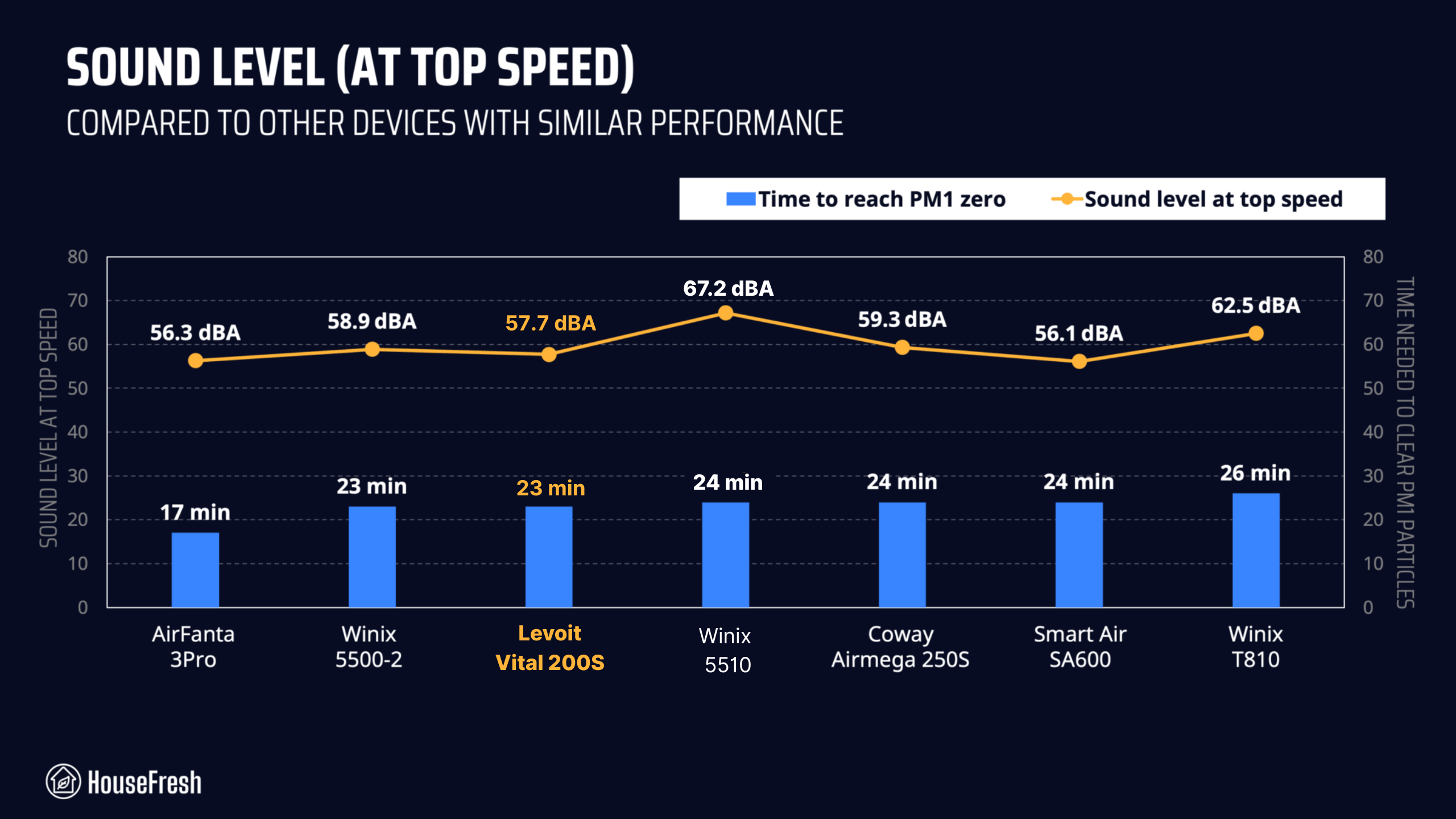
TOP SPEED SOUND62.4 dBA62.4 dBA59.2 dBA56.3 dBA67.2 dBA57.7 dBA
FILTER TECHMERV 13MERV 13Bonded HEPA with carbon + removable pre-filterE11 particle filter + optional carbon filterSeparate HEPA + carbon + removable pre-filterBonded particle with carbon + removable pre-filter
ROOM SIZE
(5 ACH)
105 sq. ft.693 sq. ft.297 sq. ft.529 sq. ft. 373 sq. ft.373 sq. ft.

If you prefer to watch a video version of this article, I’ve got you covered:

Tip

When you’re on a budget, the best way to get the best cleaning power is to use multiple air purifiers instead of just one. If your unit has a CADR of 150 CFM, two units working together will have a CADR of 300 CFM.

1. Under $50: DIY Fan + Filter

For around $50, you will be able to buy a good Lasko fan (on eBay) and a 20×20 MERV 13 filter to build your own air purifier.

How To Make a DIY Air Purifier Kitchen

You can build it at home with a 20’’ box fan, a 20×20 HVAC filter, some duct tape, and a pair of scissors. It won’t be able to help with odors and VOCs, but in terms of particle filtration, it will give you a CADR of around 70 cfm, which will provide 3-5 air changes per hour in spaces between 105-175 sq. ft.

If you already have a box fan at home, it will cost you just $30.99, which is the price of two 3M Filtrete MPR1900 filter.

How To Make a DIY Air Purifier Attach

It offers a much higher CADR than the $45 AROEVE MK01 (34 cfm) and the $50 Levoit Core Mini (41 cfm). But it’s loud and power-hungry.

DIY air purifier CADR sound energy

CONS

It’s just a fan and a filter, so you won’t get any fancy features.
It can be loud at top speed, depending on how loud the box fan is that you use.
Box fans tend to consume a lot of energy too.
You don’t get any carbon to help with unwanted smells or VOCs.

PROS

You can build it yourself with materials you probably already have at home.
It offers much better performance than all the other models I’ve tested under $50.
You can use any type of 20″ x 20″ MERV 13 filter, so you will be able to find good deals.

Clean air delivery rate (CADR):70 cfm
Filter technology:MERV 13
Recommended room size:105 sq. ft. (5 air changes per hour)
Dimensions:4.5L x 20W x 20H inches (11.4L x 51W x 51H cm)
Weight:8 lbs (3.4 kg)
Noise level in decibels from 3 ft. away:Speed 1: 51.5 dB
Speed 2: 58.3 dB 
Speed 3: 62.4 dB
Electricity consumption in watts :Standby mode: 0 kWh
Speed 1: 72.57 kWh
Speed 2: 88.55 kWh
Speed 3: 103.28 kWh
Filter lifespan:6 months

READ OUR FULL REVIEW

2. Under $90: 30×20 Corsi-Rosenthal Box

You can supercharge the DIY fan + filter air purifier above by turning it into a Corsi-Rosenthal box for an additional $40.

30x20 Corsi Rosenthal Box

BUY BOX FAN

If you combine your 20″x20″ box fan with four 20″x30″ Filtrete MPR 1900 filters ($90), you’ll get a much bigger DIY air purifier called a Corsi-Rosenthal box (or CR box). It will be MUCH bigger than the fan + filter air cleaner from before, but with the size comes incredible power.

In our particle removal test, it cleared the air in 13 minutes – that’s as fast as the Coway Airmega ProX, which costs just under $1,000. Not bad for a thing you can build yourself…

30x20 corsi rosenthal box cadr sound energy

But be aware, that box fans are not quiet and they aren’t known for is their energy efficiency. Another thing to consider is that the 30×20 CR box is pretty big.

30x20 Corsi Rosenthal

CONS

It’s very big so it can take up quite a bit of floor space.
You will only get the fan speed controller, so no smart controls or features.
It can be loud and power-hungry, as most box fans are.
You don’t get any carbon to help with unwanted smells or VOCs.

PROS

At top speed, it completed our removal test as fast as the much more expensive Coway Airmega ProX (13 minutes).
You can use any type of 20″ x 20″ MERV 13 filter, so you will be able to find good deals. But I recommend the Filtrete MPR 1900.
It’s the best performing air purifier you will be able to build yourself with materials you can buy at the store.
It outperformed 134 air purifier models we have tested at HouseFresh.

Clean air delivery rate (CADR):462 cfm
Filter technology:MERV 13
Recommended room size:693 sq. ft. (5 air changes per hour)
Dimensions:20 x 20 x 30 inches (51 x 51 x 76 cm)
Weight:8 lbs (3.4 kg)
Noise level in decibels from 3 ft. away:Speed 1: 51.5 dB
Speed 2: 58.3 dB 
Speed 3: 62.4 dB
Electricity consumption in watts :Standby mode: 0 kWh
Speed 1: 72.57 kWh
Speed 2: 88.55 kWh
Speed 3: 103.28 kWh
Filter lifespan:6 months

3. Under $100: SwitchBot Air Purifier

An air purifier for small spaces that costs less than $100, comes with smart features and doubles up as a small side table.

SwitchBot air purifier

There are MANY options for air purifiers under $100 on Amazon, but after testing 21 different models at that price point, I only recommend the SwitchBot Air Purifier. It has a list price of $99.99, but can be found on Amazon for as low as $75 on deal days.

It completed our particle removal test in 30 minutes, which is 10 minutes faster than the more expensive Winix A231, Levoit Vital 100S, and Coway Airmega 100.

SwitchBot air purifier CADR sound energy

It has an bonded HEPA and carbon cylindrical filter, with a removable, washable pre-filter mesh on the outside. This makes it easier to clean and vacuum — especially good design for pet owners.

SwitchBot air purifier FIlter

CONS

It will be too underpowered for spaces larger than 297 sq. ft.
The amount of carbon in the filter won’t be enough to tackle serious issues with odors and chemical gases.
SwitchBot is new to the air purifier game compared to manufacturers like Coway, Levoit, Winix or IQAir.

PROS

It’s the only air purifier under $100 with a CADR of 198 cfm — this is the same as the more expensive Dyson BP06, PuroAir 400 and Alen 45i.
It’s doubles as a side table with a built-in light that changes color based on the air quality readings from the onboard PM2.5 sensor.
It has an aroma pad, where you can drop essential oils for a diffuser effect. This is not my cup of tea, but I know some might appreciate it.
It comes with an app and is also Matter-certified, so you can connect it to your existing smart home system if you prefer.

Clean air delivery rate (CADR):198 cfm
Filter technology:HEPA filter with pelleted activated carbon and a removable pre-filter mesh
Recommended room size:297 sq. ft. (5 air changes per hour)
Dimensions:9.84 × 9.84 × 19.29 inches (25 × 25 × 49 cm)
Weight:9.7 lbs (4.43 kg)
Noise level in decibels from 3 ft. away:Sleep mode: 36.9 dBA
Speed 1: 41.9 dBA
Speed 2: 53.3 dBA
Speed 3: 59.2 dBA
Electricity consumption in watts :Standby mode: 0.5 kWh
Sleep mode: 1.7 kWh
Speed 1: 6.6 kWh
Speed 2: 20.7 kWh
Speed 3: 36.7 kWh
Filter lifespan:6 months
Manufacturer’s warranty:1 year
Country of origin:China
Country of manufacture:China

4. Under $152: AirFanta 3Pro

If you could stretch your budget to $152, you could buy one of the best air purifiers I’ve ever tested – powerful enough for large rooms up to 529 sq. ft.

AirFanta 3Pro Living Room

Use the discount code HOUSEFRESH for 5% off when buying directly from AirFanta.

Out of the 133 air purifiers I’ve tested since 2020, the AirFanta 3Pro stands out thanks to its incredible value for money. The HEPA-only version sells for $160, but you can get it for $152 if you use the HOUSEFRESH discount code.

The 3Pro is inspired by the Corsi-Rosenthal box: it’s basically a cube with a plastic base at the bottom, a filter on each side, and a fan array on top with four 140mm PC fans.

AirFanta 3Pro Open

At top speed, the 3Pro cleaned our test room as fast as the $339 Coway Airmega 350 and faster than the $559 AirDoctor 3500. And thanks to its four PC fans, it’s relatively quiet and energy efficient compared to traditional air purifiers with comparable air cleaning power.

airfanta 3pro CADR sound energy

CONS

You have to assemble it as it arrives disassembled, but it is quick and easy.
Even though it uses PC fans, its long-term energy costs ($51.99 per year) align with “normal,” retail air purifiers.
It doesn’t have any smart features, no timers, no app support, and no on-board sensors that you are likely to find in a traditional air purifier.

PROS

It offers outstanding air cleaning power at a very low price — an estimated CADR of 353 cfm, which is in line with what we see in air purifiers that cost upwards of $500.
Its small footprint makes it easy to use around the house, both in rooms big and small.
You can take it apart and rebuild it in just a couple of minutes, and when broken down, it fits inside a medium size carry bag.
You can choose the HEPA-only filters to remove particles from the air, or you can choose the HEPA + carbon filters to also deal with odors and gases.

Clean air delivery rate (CADR):– Top speed PM1 CADR: 353 cfm
– Sub-45 dBA PM1 CADR: 213 cfm
Filter technology:True HEPA H11 and optional pelleted activated carbon
Recommended room size:529 sq. ft. (5 air changes per hour)
Dimensions:12.6D x 12.6W x 12.6H inches (32D x 32W X 32H cm)
Weight:7.7 lbs (3.49 kg)
Noise level in decibels from 3 ft. away:3.63 volts: 36.1 dB
4.19 volts: 36.9 dB
5.24 volts: 39.7 dB
6.54 volts: 43.3 dB
7.44 volts: 46.7 dB
8.56 volts: 49.1 dB
12.6 volts: 56.3 dB
Electricity consumption in watts :43.23 watts
Filter lifespan:6 – 12 months
Manufacturer’s warranty:1 year
Country of origin:China
Country of manufacture:China

READ OUR FULL REVIEW

WATCH OUR VIDEO REVIEW

5. Under $180: Winix 5510

A modern air purifier for medium-sized rooms with smart features and app support that will set you back $179.99.

Winix 5510 Sofa

The 5510 is a new air purifier from Winix that has come to replace the now discontinued Winix 5500-2. It has excellent air cleaning performance, especially for its price, and comes with an onboard sensor, smart features and app support.

When it comes to performance, the Winix 5510 completed our particle removal test in 24 minutes – that’s six full minutes faster than the $900 Dyson Big+Quiet BP06.

winix 5510 CADR sound energy

The 5510 comes with separate filters: a removable pre-filter, a True HEPA filter and a pelleted activated carbon filter. It also has bipolar ionization technology (PlasmaWave), which can be disabled.

Winix 5510 Filters Separate

CONS

It can get loud when set to top speed, hitting 67.2 dBA.
The Winix app is still quite bare and lacks features you see in apps from Levoit, Philips and Xiaomi.

PROS

The separate filters mean that you can throw away the carbon when it runs out (within 6 months) and still use the True HEPA filter.
Its body is compact and takes up less space compared to the older Winix 5500-2.
The removable pre-filter is easy to vacuum and keep clean.
Yearly running costs are fair (around $145) thanks to affordable filter replacements.

Clean air delivery rate (CADR):– Top speed PM1 CADR: 248 cfm
– Sub-45 dBA PM1 CADR: 125 cfm
– AHAM PM2.5 CADR: 252 cfm (dust)
Filter technology:True HEPA filter with pelleted activated carbon and a removable pre-filter
Recommended room size:372 sq. ft. (5 air changes per hour)
Dimensions:15.9 x 11 x 25.2 in (40.3 x 27.9 x 64 cm)
Weight:13.03 lbs (5.9 kg)
Noise level in decibels from 3 ft. away:Sleep mode: 35.2 dBA
Speed 1: 36.8 dBA
Speed 2: 40.8 dBA
Speed 3: 51.6 dBA
Speed 4: 67.2 dBA
Electricity consumption in watts:Standby: 0.65 watts
Sleep mode: 3.51 watts (3.77 with PlasmaWave)
Speed 1: 4.59 watts (4.87 with PlasmaWave)
Speed 2: 6.58 watts (6.89 with PlasmaWave)
Speed 3: 15.68 watts (15.98 with PlasmaWave)
Speed 4: 52.62 watts (53.94 with PlasmaWave)
Filter lifespan:12 months
Manufacturer’s warranty:2 years
Country of origin:South Korea
Country of manufacture:South Korea

READ OUR FULL REVIEW

WATCH OUR VIDEO REVIEW

6. Under $190: Levoit Vital 200S

An alternative to the Winix 5510 that will cost $10 more but doesn’t use bipolar ionization and offers quieter operation.

Levoit Vital 200S Bedroom

The Vital 200S completed our particle removal test as fast as the Winix 5510 (above). That said, it was one minute faster to clean the air in our test room when both models were running at speed 2 (sub 45-dBA).

It is more energy-efficient that other air purifier models with comparable CADR and this leads to the lowest running costs in the bunch.

levoit vital 200s CADR sound energy

Just like the 5510, it comes with an air quality sensor, an air quality indicator light, auto-mode and app connectivity.

Levoit Vital 200S Top

CONS

It has a bonded filter, so once the carbon runs out (which usually happens within 6 months), you’ll have to replace the whole thing, even if the particle filter still has life in it.
Levoit initially advertised the filters as HEPA H13 but have changed their marketing, now stating the filter is H13 only on sleep mode.
The air quality sensor is an optical sensor so you need to keep it clean for it to report accurate readings.

PROS

It offers a high level of air cleaning performance to $ ratio, completing our particle removal test as fast as units double its price.
You get smart features and smartphone connectivity through Levoit’s VeSync app.
It remembers settings and modes, so if you unplug it and plug it back in, the Vital 200S will still remember what it was last doing.
It comes with a removable pre-filter that is easy to vacuum, and you can also rinse and dry.

Clean air delivery rate (CADR):– Top speed PM1 CADR: 249 cfm
– Sub-45 dBA PM1 CADR: 128 cfm
– AHAM PM2.5 CADR: 254 cfm (dust)
Filter technology:Bonded particle filter with a layer of pelleted activated carbon and a removable pre-filter
Recommended room size:373 sq. ft. (5 air changes per hour)
Dimensions:15.6D x 8.5W x 19.8H inches (39.3D x 21.5W x 50.2H cm)
Weight:13.2 lbs (5.9 kg)
Noise level in decibels from 3 ft. away:Speed 1: 38.3 dB
Speed 2: 41.9 dB 
Speed 3: 53.8 dB
Speed 4: 57.7 dB
Electricity consumption in watts:Standby mode: 0.97 watts
Speed 1: 5.71 watts
Speed 2: 8.01 watts
Speed 3: 31.96 watts
Speed 4: 44.55 watts
Filter lifespan:12 months
Manufacturer’s warranty:2 years
Country of origin:United States
Country of manufacture:China

READ OUR FULL REVIEW

WATCH OUR VIDEO REVIEW

Two good air purifiers under $100 that didn’t make the final cut

The models above are my top picks for those on a tight budget, but there are other air purifiers that narrowly made the list:

GoveeLife Smart Air Purifier 2 H7124

GoveeLife Smart Air Purifier 2 H7124

With a PM1 CADR of 148 cfm, the GoveeLife Smart Air Purifier 2 was able to complete our particle removal test in 40 minutes while generating 57.6 dBA of noise, which is quieter than other models with equal power like the Winix A231.

This is good performance for an air purifier you can buy for less than $100, but it was outshined by what we saw with the SwitchBot Air Purifier.

Morento HY4866 Living Room

MORENTO HY4866

The HY4866 has a PM1 CADR of 174 cfm at top speed, which will be powerful enough to clean the air five times per hour in rooms no larger than 261 sq. ft. It has a list price of $120 but you will regularly find it on deal for less than $90.

It didn’t make the list because it was no match for the SwitchBot Air Purifier and its CADR of 198 cfm.

The cheap air purifiers that we don’t recommend

We test many air purifiers here at HouseFresh and while we are continually looking for units like the Taotronics AP-003 that move the performance needle forward, we also come across a lot of duds. This is especially true at the sub $100 level, and so we felt it our duty to also point out those air purifiers you should avoid in this budget range. 

  • AROEVE MK01 – I could not find a published CADR for this unit, which would make sense as when we tested it, we found it took 163 minutes to clean our room to the levels recommended by the WHO guidelines. Remember that our test room (728 cubic feet) is the smallest in our house, so we can assume that this unit will be underpowered for most home use cases and should be avoided. The budget doesn’t have to be the thing that holds you back from having clean air in your home. Pay $20 extra and get the TaoTronics.

  • Levoit Core Mini – The Core Mini is the smallest air purifier in the Levoit Core line. It comes with the same three-stage filtration (pre-filter, main filter and activated carbon filter) and it doubles down as a diffuser for essential oils. It only pulls 6.4 watts and generates just 44 dB of sound at its highest fan speed, but it took one hour and 53 minutes to remove all the pollutants in our relatively small test room. This budget unit is too underpowered for most rooms, but if you are looking for a way to clean the air in your RV or campervan, then this could be the one.

  • GermGuardian AC482e – This air purifier seems awesome on the surface, especially as you will find glowing reviews from well-respected media organizations if you decide to Google it. There is only one problem — it’s not good at all. It might have been an OK choice a few years back, but the AC4825e failed to perform well in our home lab tests with a poor performance of 104 minutes. When the Levoit Core 300 can achieve this in 40 minutes, you must wonder what you are paying for with the GermGuardian AC4825e.

  • Levoit Core 200S – The Core 200S is not bad, it is just not good enough for you to spend $89.99 on it. it comes with app support, emits a maximum of 49dB of sound when running at its top speed and doesn’t pull too much power (28.4 watts max) but it took a full hour to clean the air in our test room. You could get a TaoTronics AP003 or a Winix A231 for that money and they would offer you much better air cleaning performance.

How to avoid wasting money when buying a budget air purifier

Air purifiers offer an excellent way to remove harmful particles and improve indoor air quality, but many high-end models come with a hefty price tag. You need to know what to look for in a quality air purifier, and you’ll discover many high-performance units that are affordably priced. And we’re here to help! 

Our guide for the best budget air purifiers outlines the critical things to consider when buying an air purifier.

1. Take the time to calculate how much it will cost you to replace the filters

Manufacturers usually specify the estimated lifespan of the filters on the product page. They will usually give you a range (like 6-12 months or 3-6 months), so I recommend taking the lowest estimate for your calculation.

Once you know the lifespan, check out the cost of a filter replacement. You will then be able to calculate how much you can expect to spend to replace the filter each year:

Filter list price
————— x 12 = Yearly filter cost
Filter lifespan

Doing this will help you avoid models with disproportionate filter costs where, within a year, you might end up spending the same (or more) than the price of the air purifier.

cheap air purifiers filter costs

2. Find an air purifier with enough CADR to clean your specific room

Room size is another critical factor when buying an air purifier, as not all air purifiers aren’t created equal. Based on the size of your room, you can estimate how much CADR the air purifier will need to provide a minimum of 4.8 air changes per hour, which is what the EPA recommends.

CADR, or clean air delivery rate, measures the air volume an air purifier can clean in a given time. You can use our calculator to find out what CADR you should be looking for:

3. Don’t be duped into buying one of those small, cheap air purifiers at the top of Amazon

Seeing a $50 price tag might help you make a quick decision, but in the end, it will only lead you to a false economy.

Small air purifiers usually need their filters replaced every 3 to 6 months, compared to the 9-12 months of lifespan you get with mid-sized filters. So in the end, you might end up spending double!

cheap air purifiers long term costs

4. Before you hit the ‘Buy’ button, double-check that you’re not also being tricked into signing up for a filter subscription

I’ve seen multiple examples of online stores that use dark patterns to trick users into signing up for filter subscriptions.

These could be options already selected for you with a checkbox to opt out greyed out or simply not as prominent. And in some extreme cases, just a tiny legend that tells you that you’re also signing up for automatic replacements with your purchase.

air purifier dark patterns

If you’re only going to take one thing from this article, let it be this: when buying anything online, be vigilant of the dark patterns that end up signing you up for newsletters you don’t want to receive, add-ons you don’t care about buying, or subscriptions you most definitely don’t need.

Wrapping up

Clean air shouldn’t be something only the 1% can afford. You can make your budget go further by going down the DIY route with a Corsi-Rosenthal box or trying out some of the newer designs that utilize PC fans, like the AirFanta 3 Pro.

To keep running costs low, look into generic filters, as they can be much lower in price. Just be aware that carbon quality might not be the same as with OEM filters, but in our testing, particle removal performance is on par.

But whatever unit you decide to go for, if you are on a tight budget but need an air purifier for your home, make sure to do your research BEFORE you buy. You don’t want to end up like this Redditor, who bought two different air purifiers before realizing they didn’t work and had to buy a third one to help with her cat allergies.


March 8th, 2026:

  • Replaced the Levoit Vital 100S with the SwitchBot Air Purifier, as it achieved faster particle removal results.
  • Replaced the 20×20 Corsi-Rosenthal Box with the 30×20, as it’s much faster at cleaning the air.
  • Added the Winix 5510 as an alternative for medium-sized spaces.
  • Replaced the Winix A231 with the DIY Fan + Filter Air Purifier.

January 10th, 2025:

  • Added the Levoit Vital 100S.

December 23rd, 2024:

  • We decided to raise the budget to be $150 in order to include the highly powerful and affordable AirFanta 3Pro.
  • Moved the TaoTronics AP-003 outside of the top picks as it has been discontinued and other models built on its same OEM design are currently out of stock across the U.S.

August 24th, 2024: 

  • Removed the TaoTronics AP-005 as it is consistently out of stock everywhere.

May 25th, 2024:

  • Embedded the video version of the article.

May 10th, 2024:

  • Updated long-term running costs calculations.

March 16th, 2024:

  • Replaced the Levoit Core 300 with the Winix A230/A231 as the top recommendation overall.
  • Removed mentions of HEPA filtration for Levoit devices after a challenge from Dyson through the BBB National Programs National Advertising Division (NAD) let to Levoit removing mentions of a “True HEPA filter”.

November 26th, 2023:

  • Upfront and long-term running costs were added prominently next to the names of the devices.

The best air purifiers for COVID-19, according to our tests

Smart Air Blast Filter

When we first wrote this post, the World Health Organization didn’t accept that the COVID-19 virus was airborne, though they did recommend ventilation in healthcare facilities

But by the summer of 2023, the WHO finally announced that COVID-19 is actually airborne. At that point, the U.S. CDC added the following guidelines for American schools, recommending ventilation to reduce the spread of COVID-19.

CDC Covid19 Guidelines for Schools HEPA
A screenshot of the guidelines on the website of the CDC

Dr. Richard Corsi (Dean of Maseeh College of Engineering) recommends that all classrooms install HEPA air purifiers with a CADR of at least 250-300 CFM. Most of us don’t live in classrooms, but it’s wise to err on the side of caution and get a similarly spec’d model for home use.

Buying an air purifier won’t replace Coronavirus prevention methods such as social distancing, mask usage, and keeping indoor areas well ventilated – these have all been shown to significantly reduce the risk of catching and spreading COVID.

I have bought and tested all the air purifiers I’m recommending today, and I use them at home every day. If you have any questions about any of them, please drop them in the comments section. And if you want to read more about our testing process, check out this page.

If you don’t want to read our full article, check out my recommendations in the table below:

BEST CHEAPSMALL SPACESMEDIUM SPACESLARGE SPACESVERY LARGE SPACES
AirFanta 3ProSmart Air SA600CleanAirKits Luggable XL UltraCoway Airmega ProXSmart Air Blast
AirFanta 3Pro Living RoomSmart Air SA600 BedroomCleanAirKits Luggable XL7 CornerCoway Airmega ProX Kids roomSmart Air Blast MKII scaled
TOP SPEED
PM1 CADR
353 cfm
(600 m³/h)
249 cfm
(423 m³/h)
315 cfm
(535 m³/h)
462 cfm
(785 m³/h)
547 cfm
(929 m³/h)
SUB-45 dBA
PM1 CADR
213 cfm
(362 m³/h)
128 cfm
(217 m³/h)
284 cfm
(482 m³/h)
299 cfm
(508 m³/h)
375 cfm
(637 m³/h)
FILTER TECHE11 particle filter + optional carbon filterH13 HEPA filter + optional carbonMERV 13 filterGreenHEPA filter + carbon filterH13 HEPA filter + optional carbon
ROOM SIZE
(5 ACH)
529 sq. ft.
(49 m²)
373 sq. ft.
(34 m²)
472.5 sq. ft.
(44 m²)
693 sq. ft.
(64 m²)
820.5 sq. ft.
(76 m²)
PRICE$164.99$279.95$299$999.00$1,094.00
FULL REVIEW3Pro reviewSA600 reviewLuggable reviewProX reviewBlast review

The best budget option: AirFanta 3Pro

With a low price of $159.99 and a PM1 CADR of 353 cfm at top speed, there is no other cheap air purifier that can beat the power of the AirFanta 3Pro. 

AirFanta 3Pro Living Room

Use the discount code HOUSEFRESH for 5% off when buying directly from AirFanta.

This PC fan-powered air purifier can clean the air five times per hour in rooms up to 529 sq. ft. (49 m²) when running at top speed. This is the minimum number of air changes you want to achieve to reduce the risk of COVID-19 and other airborne viruses.

Inspired by the DIY Corsi-Rosenthal box, the 3Pro is a small box with a base at the bottom, a filter at each side, and four PC fans on top.

AirFanta 3Pro Open


It can be disassembled and reassembled in just a few minutes, and once you’ve taken it apart, it fits inside a large carry bag.

You don’t get any buttons or control panel, but it comes with a speed controller to adjust the fan speed and noise levels.

AirFanta 3pro quiet performance

If you set it to 6.54 V, it will generate less than 45 dBA but will still be able to provide an estimated CADR PM1 of 213 cfm (362 m³/h).

CONS

You don’t get any fancy features, a touchscreen or smart functions — this is just four fans and four filters.
Some people don’t like the look of it, but that’s just subjective. I personally quite like it.

PROS

Its air cleaning performance is incredible, considering its price and its size.
It is A LOT easier to put it together than a standard DIY PC fan air purifier kit.
It’s the only high-CADR air purifier that you can bring with you when you travel.
For COVID-19, you can just go with E11 particle filters only. If you also want to help with odors, get the filters with activated carbon.
It’s the smallest air purifier on the list and will fit most rooms, and it even sits comfortably on top of a side table.

Clean air delivery rate (CADR):– Top speed PM1 CADR: 353 cfm
– Sub-45 dBA PM1 CADR: 213 cfm
Filter technology:True HEPA H11 and optional pelleted activated carbon
Recommended room size:529 sq. ft. (5 air changes per hour)
Dimensions:12.6D x 12.6W x 12.6H inches (32D x 32W X 32H cm)
Weight:7.7 lbs (3.49 kg)
Noise level in decibels from 3 ft. away:3.63 volts: 36.1 dB
4.19 volts: 36.9 dB
5.24 volts: 39.7 dB
6.54 volts: 43.3 dB
7.44 volts: 46.7 dB
8.56 volts: 49.1 dB
12.6 volts: 56.3 dB
Electricity consumption in watts :43.23 watts
Filter lifespan:6 – 12 months
Manufacturer’s warranty:1 year
Country of origin:China
Country of manufacture:China

READ OUR FULL REVIEW ➜ 

WATCH OUR VIDEO REVIEW ➜

The best for small rooms: Smart Air SA600

A mid-sized air purifier from Smart Air that will give you five air changes per hour in rooms up to 373 sq. ft.

Smart Air SA600 Sofa area

For small rooms up to 373 sq. ft. (or 34 m²), I’d suggest you don’t go smaller than the SA600 from Smart Air. It doesn’t have any smart features, but all lights automatically shut off after a few seconds and it works with a smart plug.

The SA600 uses two sets of filters: two H13 HEPA filters, two pelleted carbon filters, and two pre-filters.

Smart Air SA600 HEPA Filter

To tackle viruses and bacteria from the air, you can run it without the activated carbon filters for maximum particle removal performance.

The controls are pretty straightforward. I’ve got the 5-speed SA600 and keep it running in the background at speed 3.

Smart Air SA600 Controls

At speed 3, it generates just 41.5 dBA of noise, so it’s quiet enough to blend into the background but still provides 128 cfm (217 m³/h).

PROS

Running costs are higher than those of other similarly powered air purifiers, but you can save money if you run it without the carbon.
The 3-speed version is not as quiet as the 5-speed version, so look for the SA600 with five fan speeds.

CONS

The control panel is intuitive and the lights switch off automatically, without the need to press any button or activate any special mode.
It restarts automatically after a power cut or when unplugged, which many other models don’t do.
It can be mounted to the wall and comes with screw holes on the bottom, but you will need to source the fixtures to do this. 

Clean air delivery rate (CADR):– Top speed PM1 CADR: 249 cfm
– Sub-45 dBA PM1 CADR: 128 cfm
– AHAM PM2.5 CADR: 287 cfm (dust)
Filter technology:H13 TrueHEPA filter with a removable pre-filter and pelleted activated charcoal filter (set of two)
Recommended room size:373 sq. ft. (5 air changes per hour)
Dimensions:20 x 13.8 x 9 inches (51 x 35 x 23 cm)
Weight:15.5 lbs (7 kg)
Noise level in decibels from 3 ft. away:Speed 1: 35.2 dBA
Speed 2: 37.2 dBA
Speed 3: 41.5 dBA
Speed 4: 46.1 dBA
Speed 5: 56.7 dBA
Electricity consumption in watts:Standby: 0.1 watts
Speed 1: 2.4 watts
Speed 2: 4.3 watts
Speed 3: 7.1 watts
Speed 4: 12.9 watts
Speed 5: 53.8 watts
Filter lifespan:18 months
Manufacturer’s warranty:1 year
Country of origin:China
Country of manufacture:China

READ OUR FULL REVIEW ➜ 

WATCH OUR VIDEO REVIEW ➜

The best for medium-sized rooms: CleanAirKits Luggable XL-7

A PC fan-powered air purifier that uses any type of MERV 13 HVAC filters and seven PC fans that offer exceptional air cleaning performance at whisper-quiet operation.

CleanAirKits Luggable XL7 Corner

The Luggable XL Ultra uses seven PC fans that pull the air through two 20×25 MERV 13 filters. I recommend the 3M Filtrete MPR1900 filters — based on my tests, these are the best performing HVAC filters.

The Cooler Master Mobius 120 PC fans made it one of the quietest high-CADR air purifiers I’ve tested, and it’s also highly energy efficient.

CleanAirKits Luggable XL Closeup

You can save money by buying the DIY kit, which includes everything you need to build it yourself. Otherwise, you can buy it pre-built.

CleanAirKits Luggable XL Open

CONS

Its body is not as sturdy as a traditional air purifier made from plastic or metal.
It doesn’t come with any fancy features. No app support, no touchscreen, no sensor.

PROS

It is the most energy-efficient high-CADR air purifier I’ve ever tested.
The DIY kit comes with everything you need to build it, except for the filters. You can buy it pre-built if DIY is not your thing.
It is lightweight and comes with a handle to move it from room to room.
It’s powerful and incredibly quiet thanks to the use of PC fans.
You can use any 25×20 MERV 13 filters you can get hold of.

Clean air delivery rate (CADR):– Top speed PM1 CADR: 260 cfm
– Sub-45 dBA PM1 CADR: 260 cfm
– Intertek PM2.5: 323 cfm (dust)
Filter technology:MERV 13 (20×25)
Recommended room size:390 sq. ft. (5 air changes per hour)
Dimensions:7D x 25W x 20H in (18D x 64W x 51 cm)
Weight:8 lbs (3.63 kg)
Noise level in decibels from 3 ft. away:Only speed: 38.8 dBA
Electricity consumption in watts:Only speed: 10.5 watts
Filter lifespan:6-12 months
Manufacturer’s warranty:1 year
Country of origin:United States
Country of manufacture:United States

Northbox Systems is a Canadian manufacturer that produces PC fan-powered air purifier kits that use HVAC filters. We tested the 6XL and its air cleaning performance is outstanding. 

North Box 6XL Corner
North Box 6XL Top Down Filter

The Tempest Pro is a PC fan-powered air purifier that also uses 20×25 MERV 13 filters but comes with a metal body, so it’s more durable than the Luggable XL Ultra.

Nukit Tempest Pro Living Room
Nukit Tempest Pro Handle

READ OUR FULL REVIEW ➜ 

WATCH OUR VIDEO REVIEW

The best for large spaces: Coway Airmega ProX

If you are looking for a powerful air purifier to remove airborne viruses like COVID-19 from the air in a large space, then the Coway Airmega ProX is the one I recommend.

Coway Airmega ProX TV Room

With an estimated PM1 CADR of 462 cfm (785 m³/h) at top speed, the Airmega ProX can provide five air changes per hour in large rooms up to 693 sq. ft. (or 64 m²).

You get a filter on each side of the device. They are bonded GreenHEPA particle filters with a section of pelleted activated carbon.

Coway Airmega ProX Filters

It has an onboard air quality sensor, so it can automatically react to changes in air quality when set to one of its smart modes.

Coway Airmega ProX Controls

CONS

Retailing at just over $900, the ProX isn’t cheap.
It is a large air purifier, weighing 22.67 kg (around 50 lbs).
It doesn’t have app support, which you might expect at this price point.
Sometimes, when carrying the device by its handles, you may end up removing the filter covers due to where the handles are positioned.

PROS

At top speed, the ProX completed our particle removal test in 13 minutes. The only model that was faster is the Blast (see next).
Even though it is heavy, it comes with deep handles at each side and wheels at the bottom.
You can adjust the sensibility of the air quality sensor.
You can also adjust the power of the auto mode, rotating between eco, silent and turbo.
It looks great, and the build quality is excellent.

READ OUR FULL REVIEW ➜ 

WATCH OUR VIDEO REVIEW ➜

The best for very large spaces: Smart Air Blast

A large air purifier made out of metal that can be fixed to the wall and is powerful enough to clean the air in large, high traffic spaces like offices and classrooms.

Smart Air Blast HouseFresh

The Blast MKII from Smart Air is a powerful commercial air purifier with an estimated PM1 CADR of 547 cfm (929 m³/h) at top speed, which can clean the air five times per hour in big spaces no larger than 820.5 sq. ft. (or 76 m²).

The H13 HEPA filter inside is massive and has a long lifespan of up to 19 months. You can also buy an activated carbon filter to go with it.

Smart Air Blast Danny

The body is fully made out of metal with wheels to move it around. You can also fix it to the wall, when using it in high traffic areas.

Smart Air Blast Brackets

CONS

It costs over $1000, so it’s a big investment.
It is very, very big, so it might be overkill for most homes.
You don’t get any smart features or app support.

PROS

It’s currently the fastest air purifier at completing our particle removal test (11 minutes).
It’s big and heavy but comes with high quality wheels that make it easy to move around.
You can set it at speed 1 and it will generate just 41.9BA, while still providing a CADR of 375 cfm (637 m³/h). Impressive!

Clean air delivery rate (CADR):– Top speed PM1 CADR: 547 cfm
– Sub-45 dBA PM1 CADR: 375 cfm
– Manufacturer provided CADR: 559 cfm
Filter technology:H13 HEPA filter (and optional pelleted activated carbon filter)
Recommended room size:820.5 sq. ft. (5 air changes per hour):
Dimensions:15D x 25W x 50H inches (38.1D × 63.5W × 127H cm)
Weight:84 lbs (38 kg)
Noise level in decibels from 3 ft. away:Speed 1: 41.9 dB
Speed 2: 49.4 dB
Speed 3: 54.7 dB
Electricity consumption in watts:Standby mode: 0 watts
Speed 1: 56.3 watts
Speed 2: 94.5 watts
Speed 3: 133.5 watts
Filter lifespan:19 months
Manufacturer’s warranty:1 year
Country of origin:China
Country of manufacture:China

WATCH OUR VIDEO REVIEW ➜

Some notable mentions

These seven air purifiers were very close to making this list. Depending on your budget and availability in your location, it could be worth checking them out.
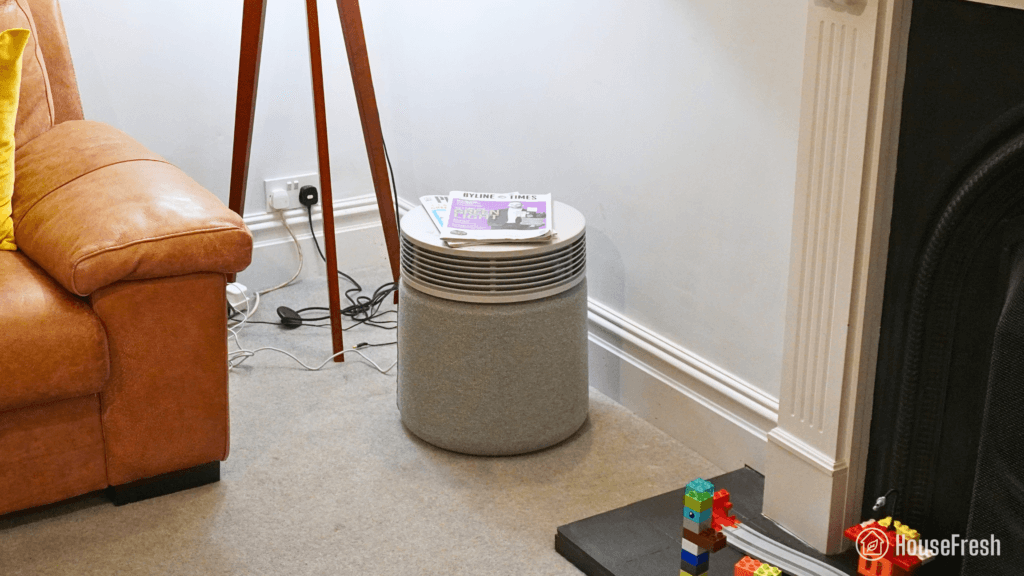
Blast Mini MKII Corner

Smart Air Blast Mini MKII

It has a PM1 CADR of 400 cfm at top speed (56.3 dBA) and 272 cfm at speed 1 (44.9 dBA). It comes with optional carbon, so for tackling Coronavirus, you can stick to HEPA H13 only. It didn’t make the list because the ProX offers better performance at a quieter level (299 cfm at 44.4 dBA) and has a sensor.
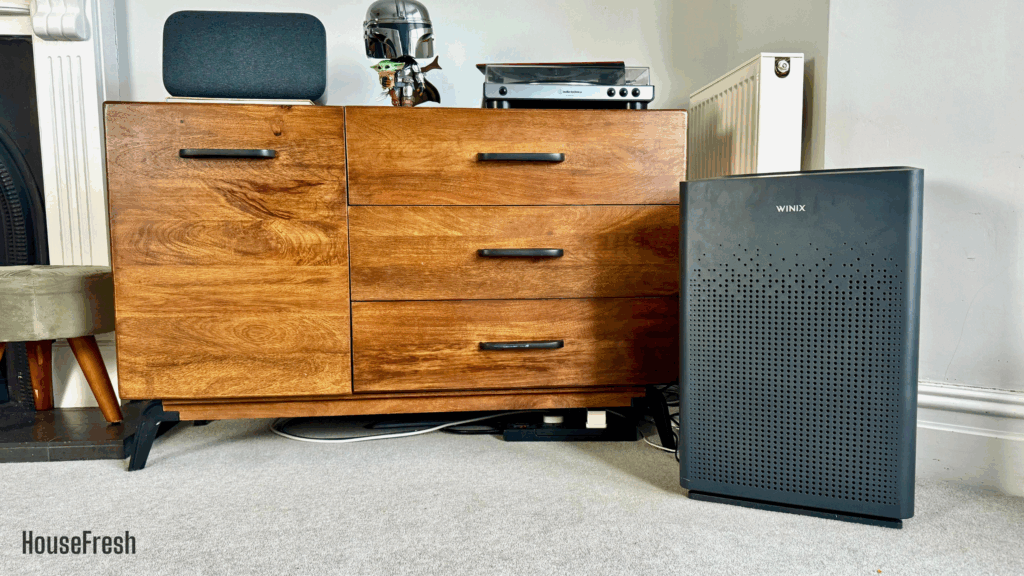
READ OUR FULL REVIEW ➜ 

IQAir Atem X Dining Room

IQAir Atem X

At top speed (62.3 dBA), we estimate a PM1 CADR of 429 cfm and at speed 4 (44.5 DBA) we estimate 229 cfm, which would be good enough for rooms up to 286 sq. ft. I didn’t shortlist the Atem X due to its high price tag ($1,399.99), which makes it hard to recommend over the cheaper Airmega ProX and Smart Air Blast.

READ OUR FULL REVIEW ➜

Levoit Vital 200S Living Room

Levoit Vital 200S

This is a solid performer under $200 with app support, smart functions and a sensor. It didn’t make the list because its raw air cleaning power at top speed (260 cfm at 57.7 dBA) is not nearly as good as what you’ll get with the AirFanta 3Pro (353 cfm at 56.3 dBA).
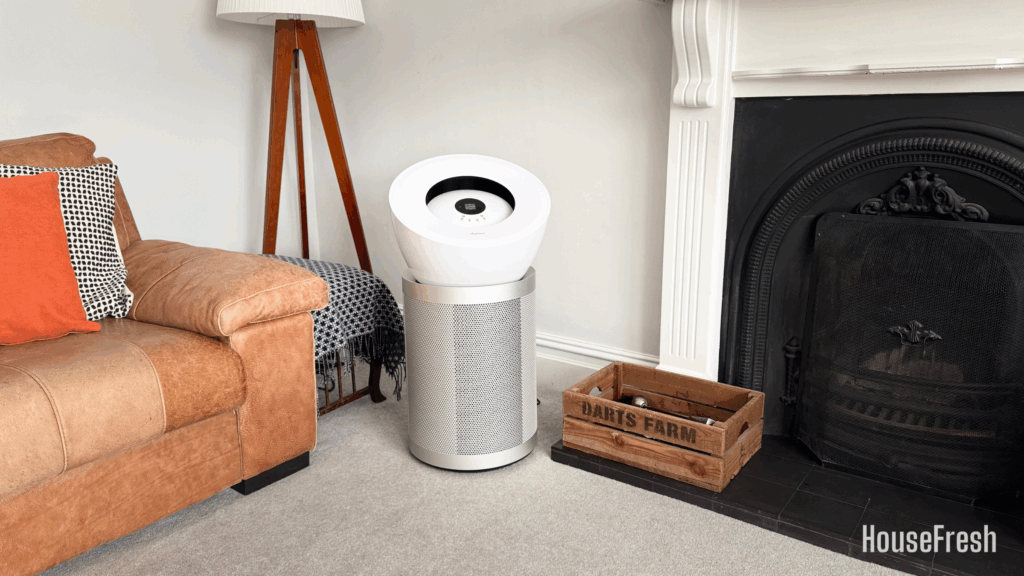
READ OUR FULL REVIEW ➜ 

Dyson BP06

Dyson Big+Quiet BP06

This is not only the cheapest Dyson’s Big+Quiet model ($899.99) but also the best-performing Dyson purifier we tested. It will give you 198 cfm at top speed (51.4 dbA) and 128 cfm at speed 1 (40.4 dBA), which makes it good enough for rooms up to 160 sq. ft. However, its performance is comparable to models that cost a third of its price.
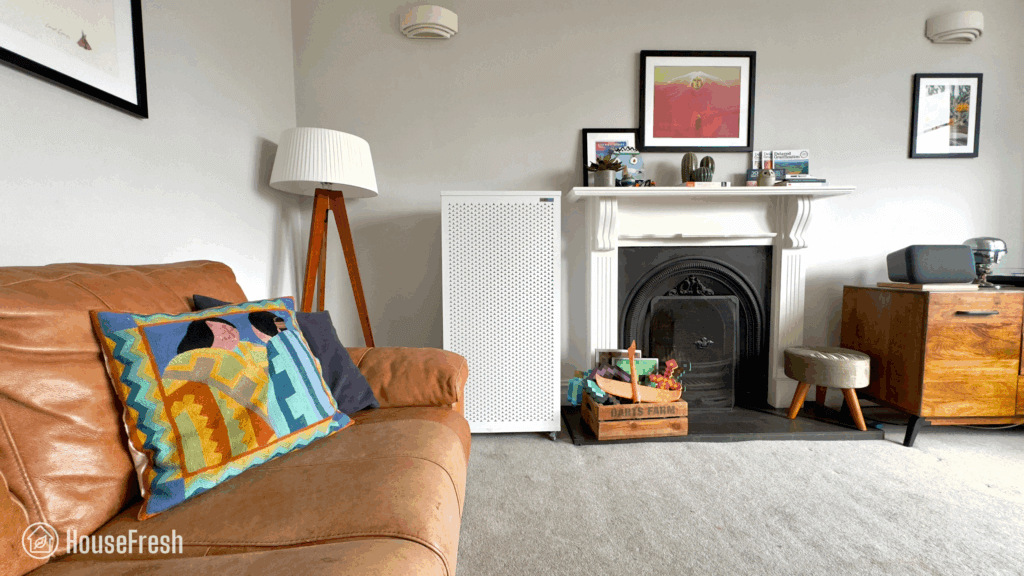
WATCH OUR VIDEO REVIEW ➜

Check out our air purifier leaderboard

Since 2020, I have tested and reviewed over 130 air purifiers. Explore the interactive table low to see which models come on top for performance, value for money, and overall features:

What to look for when buying an air purifier for COVID-19

The EPA states that air purifiers can help reduce airborne contaminants, including viruses, in a building or small space.

The way that the virus spreads makes it especially hard to tackle, as it is emitted from infected persons through tiny droplets, which attach to particulate matter and remain in the air for several hours, depending on factors like ambient humidity, ventilation, wind rates, and the amount of particulate matter pollution in the air. 

When choosing an air purifier, it’s essential to keep the main goal of your purchase in mind. Dr. Corsi keeps it simple:

“No need to purchase gimmicky add-ons that sometimes do little and sometimes emit ozone. HEPA is fine.”

richard corsi
Richard Corsi, PhD, PE

Don’t be swayed by new virus-killing technology. HEPA has been shown to be very capable of removing COVID-19 particles. HEPA is backed up by decades of research.

Most new technologies like ionizers, PECO, UV, PCO, etc. are sold as doing something new, but in most cases, perform very poorly. They also have the potential to make the air worse as they can lead to harmful byproducts created when they interact with other chemicals in the air.

Tip

Whatever air purifier you pick, make sure to ventilate your home well by opening windows to allow fresh air in — increasing ventilation is another way of reducing the risk of COVID-19 transmission.

Common questions about COVID-19 and air purifiers

With the sheer amount of COVID-19 research published, we asked consultant scientist Bharti Sharma who has published several academic COVID-19 papers published, to help us understand the latest research when it comes to COVID-19 and air quality:

Using a fan within an enclosed space during COVID-19 infection can increase the transmission of the infection, particularly if there is no ventilation. Portable and ceiling fans just circulate the air inside a room, but they do not exchange, purify, or replace the air. 

A limited number of research studies have shown that HEPA filters can remove viruses in droplet form in the air as the size of the airborne droplets is big and permits the HEPA filters to remove them. 


Yes, they have shown high efficiency in capturing the COVID-19 virus and research studies. High-efficiency particulate air (HEPA) filters or air purifiers are universally used in medical institution wards for filtering the air. 

The CDC recommends ventilation through portable or built-in high-efficiency particulate air (HEPA) filtration systems for filtering air in higher-risk areas like medical institutions or areas used by individuals suffering from COVID-19 infection or other viral infections.

Using ventilation within public buildings, like hospitals, malls, office complexes, schools, libraries, eateries, cruise ships and elevators, can minimize airborne transmission of COVID-19 indoors together with isolation, social distancing and masking.

The sampling of air samples from hospital rooms in several research studies has proven that, yes, it is possible to detect SARS-CoV-2 PCR-positive particles of sizes >4 μm and 1–4 μm from air samples.

Wrapping up 

Whatever air purifier you decide to buy, remember that ventilation, social distancing and masking are also all essential in the fight against Coronavirus.

If you have any questions about the models I recommended in this article, please drop them below and I’ll reply personally as soon as I can. Or if you prefer to ask me something in private, you can always email me at danny@housefresh.com.

The best air purifiers in the UK right now

Best air purifiers HouseFresh scaled

After testing over 120 air purifiers, I feel we finally have enough data from models available in the UK to recommend the best options for different room sizes and use cases.

Even though they might look similar at a glance (it’s basically an appliance, right?), not all air purifiers are created equal. So whether you’re looking for an air purifier to help you through allergy season, or a device to remove unwanted odours from the air, I’ve got a recommendation for you.

By the way, every air purifier you’ll read about on this list has gone through our full testing process, so you can rest assured I’m not just paraphrasing manufacturer specifications or retailer talking points here – – I bought all of these units with my own money and have no special deals or sponsorships with any brands.

1. Best for most people: Winix Zero S

A medium-sized air purifier (for rooms up to 35 m2) that outperformed models sold for twice its price.

WINIX ZERO SE scaled

Selling at £185, the Winix Zero S is my top pick for most people because it offers excellent particle removal performance without any fancy bells and whistles that would add to the price.

Its removable pre-filter is easy to clean: you can simply vacuum it, or if it gets too gunky, you can just take it out to rinse under water and let it dry.

Winix Zero S Filters

The Zero S uses Winix Filter H sets, which come with a HEPA filter and a pelleted activated carbon filter. A set costs £69 and will last up to 12 months.

There’s no app support, but it has a sensor that triggers automatic mode to kick in when air quality drops. It also has an air quality indicator light.

Winix Zero S Controls

It features PlasmaWave bipolar ionization, which charges airborne particles, making them easier to remove from the air. If you prefer to avoid potential ozone byproducts, you can simply disable it.

CONS

I wish the handle at the back were a little deeper to make it easier to move it around the house. But, hey, at least it has a handle!
I know some people prefer to avoid air purifiers with ionizer functions. But you can disable PlasmaWave if that’s you.
The controls are bare-bones: just a power button, a PlasmaWave button, and two arrows to switch between speeds and auto mode.
There is no app support.

PROS

It completed our particle removal test in 24 minutes, so we estimate a CADR of 423 m3/h – it can provide five air changes per hour in spaces up to 35 m2.
Running at speed 3, it’s whisper-quiet at 43.3 dBA and still cleaned our test room 16 mins faster than the fancier Winix 5510.
If you’ve got pets, you’ll appreciate the removable pre-filter, which is easier to clean than all-in-one pre-filters in cylindrical models.
It has separate filters, so you don’t need to throw away a perfectly good HEPA filter after the carbon runs out.

Clean air delivery rate (CADR):– Top speed PM1 CADR: 423 m3/h
– Sub-45 dBA PM1 CADR: 228 m3/h
– AHAM CADR: 404 m3/h (dust)
Filter technology:HEPA filter with pelleted activated carbon and a removable pre-filter
Recommended room size:35 m2 (5 air changes per hour)
Dimensions:37.9 x 19.9 x 60 cm
Weight:7.5 kg
Noise level in decibels from 3 ft. away:Speed 1: 35.6 dBA
Speed 2: 38.4 dBA
Speed 3: 43.3 dBA
Speed 4: 57.4 dBA
Electricity consumption in watts:Standby: 1.2 watts
Speed 1: 5.2 watts (4.8 with PlasmaWave)
Speed 2: 7.6 watts (7.2 with PlasmaWave)
Speed 3: 11.5 watts (11.1 with PlasmaWave)
Speed 4: 52.6 watts (52.6 with PlasmaWave)
Filter lifespan:12 months
Manufacturer’s warranty:2 years
Country of origin:South Korea
Country of manufacture:South Korea

WATCH MY VIDEO REVIEW ➜

Philips 3200 Series

Philips 3200 HouseFresh

The Philips 3200 offers the same level of performance as the Winix Zero S (CADR of 423 m3/h), but in a more modern, cylindrical body. It uses two 3-in-1 filters: pre-filter mesh, particle filter, and carbon filter.

Philips 3200 Ring light

It has an optical sensor, auto mode, and you also get PM2.5 readings on the touchscreen at the top. It also has an LED ring that changes colour based on the air quality, or that you can set as a lamp (warm white glow).

Philips 3200 App

It connects to the Philips Air+ App, so you can set schedules, adjust the light, and receive filter change alerts. You can also enable the Allergy Sleep mode, which supercharges the normal sleep mode.

READ OUR FULL REVIEW ➜

2. Best value for money: AirFanta 3Pro

A PC fan-powered air purifier that offers a very high CADR of 600 m3/h, suitable for rooms up to 49 m2.

AirFanta 3Pro Living Room

The AirFanta 3Pro offers the best value for money out of all the air purifiers I’ve tested to date. Based on our particle removal tests, we estimate a PM1 CADR of 600 m3/h, which is outstanding considering its low price of £118. With this power, the 3Pro can provide five air changes per hour in rooms up to 49 m2.

The 3Pro is a relatively small box inspired by the Corsi-Rosenthal Box design. It has a plastic base, four HEPA filters at each side, and four 140 mm PC fans on top.

AirFanta 3Pro Open

You can even disassemble and reassemble the 3Pro to bring it with you inside a carry-on suitcase or large backpack wherever you go.

It outperforms air purifiers twice its size that cost three times as much. That’s why it’s my value pick as you’ll get incredible power for less than 120 quid.

AirFanta 3Pro HouseFresh Data

If you also want to remove odours and chemical gases from the air, you can upgrade to the HEPA + carbon filters for £130 to add a layer of pelleted activated carbon on top of the HEPA filtration.

CONS

It comes disassembled, so you’ll have to build it yourself, but it only takes just a couple of minutes.
You don’t get the usual controls or app support. Instead, you will receive a speed controller to control fan speeds and noise levels.
There are no generic filters, so you have to use OEM AirFanta filters (but they are well-priced and usually in stock).

PROS

It offers the best performance per £ spent across the 120+ air purifier models I’ve tested.
It is the only high-CADR air purifier you can fit in your favourite supermarket chain’s bag for life (once disassembled).
The PC fans are quieter and more energy-efficient than the big fans inside traditional air purifiers.
You can choose between HEPA-only or HEPA + activated carbon. If you need to tackle odors or VOCs, get the filters with carbon.
Clean air delivery rate (CADR):– Top speed PM1 CADR: 600 m3/h
– Sub-45 dBA PM1 CADR: 362 m3/h
Filter technology:E11 particle filter with optional pelleted activated carbon
Recommended room size:49 m2 (5 air changes per hour)
Dimensions:32 x 32 X 32 cm
Weight:3.49 kg
Noise level in decibels from 3 ft. away:3.63 volts: 36.1 dBA
4.19 volts: 36.9 dBA
5.24 volts: 39.7 dBA
6.54 volts: 43.3 dBA
7.44 volts: 46.7 dBA
8.56 volts: 49.1 dBA
12.6 volts: 56.3 dBA
Electricity consumption in watts :43.23 watts
Filter lifespan:6 – 12 months
Manufacturer’s warranty:1 year
Country of origin:China
Country of manufacture:China

READ MY FULL REVIEW ➜

WATCH MY VIDEO REVIEW ➜

Midea SmartAir Pure Control

Midea SmartAir Pure Control Living Room

The Midea SmartAir Pure Control doesn’t have the raw power of the AirFanta 3Pro BUT it offers excellent value for its £99.99 price tag.

Midea SmartAir Pure Control Filter scaled

It completed our particle removal test in 31 minutes, so we estimate a PM1 CADR of 326 m3/h – powerful enough to provide five air changes per hour in spaces up to 27 m2.

Midea SmartAir Pure Control Controls scaled

It comes with a sensor and an air quality indicator on top. Plus, it connects to the Midea SmartHome app so you can control it remotely from your phone.

WATCH OUR VIDEO REVIEW ➜

3. Best for large spaces: Coway Airmega 350

A cylindrical air purifier with a CADR of 598 m3/h – powerful enough to clean the air in 49 m2 rooms.

Coway Airmega 350 Living Room scaled

The Airmega 350 from Coway is a medium-sized, cylindrical air purifier that can deliver five air changes per hour in spaces up to 49 m2. Running at top speed, it completed our particle removal test in 17 minutes (PM1 CADR of 598 m3/h), matching the performance of the Levoit Core 600S and even outperforming the more expensive Xiaomi Elite.

The cylindrical filter has a pre-filter mesh on the outside (that you’ll need to vacuum regularly), Green True HEPA in the middle, and a layer of pelleted activated carbon on the inside.

Coway Airmega 350 Filter scaled

The filter replacement costs £69.99 and can last up to 12 months, so you can expect to spend that much on replacements each year.

The control panel is straightforward but comprehensive. I love the granular light control: you can turn off the display, the air quality ring, or both, which is perfect for a bedroom.

Coway Airmega 350 Controls scaled

It can get loud at top speed (61.8 dBA), but we found that running at speed 2, it generates 49 dBA and still provides 263 m3/h.

CONS

It only has one fan speed below 45 decibels (speed 1) and its performance at this speed is weak (170 m3/h).
There is a big jump in how loud this thing gets when you go from speed 1 to speed 2.
It comes with an optical sensor rather than a laser sensor, so you can’t forget to clean it regularly.

PROS

It offers excellent performance at top speed, outmatching large units like the Winix 9800 and the Xiaomi Elite.
You can use it with any smart plug, so you can connect it to your smart home system or set simple automations.
The filter replacements are fairly priced and can last up to 12 months.
It looks like a million bucks – I know design is subjective, but I think most people will like the look of the 350.
Clean air delivery rate (CADR):– Top speed PM1 CADR: 598 m3/h
– Sub-45 dBA PM1 CADR: 170 m3/h
– AHAM CADR: 642 m3/h (dust)
Filter technology:Green HEPA filter with pelleted activated carbon
Recommended room size:49 m2 (5 air changes per hour)
Dimensions:30.5 x 30.5 x 59.1 cm
Weight:7.8 kg
Noise level in decibels from 3 ft. away:Sleep mode: 35.2 dBA
Speed 1: 37.6 dBA
Speed 2: 49.4 dBA
Speed 3: 55.4 dBA
Speed 4: 61.8 dBA
Electricity consumption in watts:Standby: 0 watts
Sleep mode: 3.1 watts
Speed 1: 4.89 watts
Speed 2: 17.04 watts
Speed 3: 32.65 watts
Speed 4: 57.95 watts
Filter lifespan:12 months
Manufacturer’s warranty:2 years
Country of origin:South Korea
Country of manufacture:China

WATCH MY VIDEO REVIEW ➜

Levoit Core 600S

Levoit Core 600S Front Room

The 600S is the largest air purifier in Levoit’s Core range and, in our tests, it outperformed my top pick for large spaces by one full minute – but it’s more expensive, with a list price of £299.99.

Levoit Core 600S Controls

It completed our particle removal test in 16 minutes, so we estimate a PM1 CADR of 637 m3/h – powerful enough to provide five air changes per hour in spaces up to 52.3 m2.

Levoit Core 600S Sound Test

It has a sensor, an air quality indicator ring and PM2.5 particle readings on top. And it connects to Levoit’s VeSync app, so you can control it remotely from your phone, set routines, and a lot more.

READ OUR FULL REVIEW ➜

4. Best for small spaces: Philips 900 Series

A cylindrical air purifier small enough to fit on top of a side table that actually cleans the air for £130.

Philips 900 Series Side Table

The Philips PureProtect Mini 900 Series is a small, cylindrical air purifier that surprised me. It sits in the same category as the popular Levoit Core 300S and the Winix A231, but it outperformed both of them in our particle removal tests.

It cleaned our test room of PM1 pollutants in 39 minutes (at top speed), so we estimate a CADR of 250 m3/h. This makes it powerful enough to provide five air changes per hour in spaces up to 20 m2.

Philips 900 Series Filters

As with other cylindrical air purifiers, you need to tip it upside down to access the filter. The filter has a pre-filter mesh on the outside, a particle filter layer in the middle, and a carbon layer on the inside.

The 900 Series comes with a sensor that unlocks auto mode and also informs the air quality indicator light AND the PM2.5 particle counter in the middle of the touchscreen control panel.

Philips 900 Series Controls

You also get app support through the Philips Air+ App, so you can control your 900 remotely, set schedules, access historical air quality data, adjust the lights on the screen, and customize smart modes.

CONS

It is too small to be helpful in spaces larger than 20 m2, so don’t even think about buying one of them for a medium-sized room.
The filter comes with a small amount of pelleted activated carbon, so it won’t help with serious issues with odours or VOCs.
I wish there were an in-between fan speed with more power than speed 1 (155 m3/h) but less noisy than speed 2 (54.5 dBA).

PROS

It outperformed excellent models from Levoit, Winix, Xiaomi and Coway.
It comes in two colours: white and black. The white version is cheaper (£130) than the black (£149.99).
It’s highly energy efficient! It would add around £47 to your yearly energy bill if you left it running 24/7.

Clean air delivery rate (CADR):– Top speed PM1 CADR: 250 m3/h
– Sub-45 dBA PM1 CADR: 155 m3/h
Filter technology:Outer pre-filter mesh, particle filter and pelleted activated carbon layer
Recommended room size:20.5 m2 (5 air changes per hour)
Dimensions:36.4 x 24 x 23.8 cm
Weight:2.5 kg
Noise level in decibels from 3 ft. away:Sleep mode: 34.7 dBA
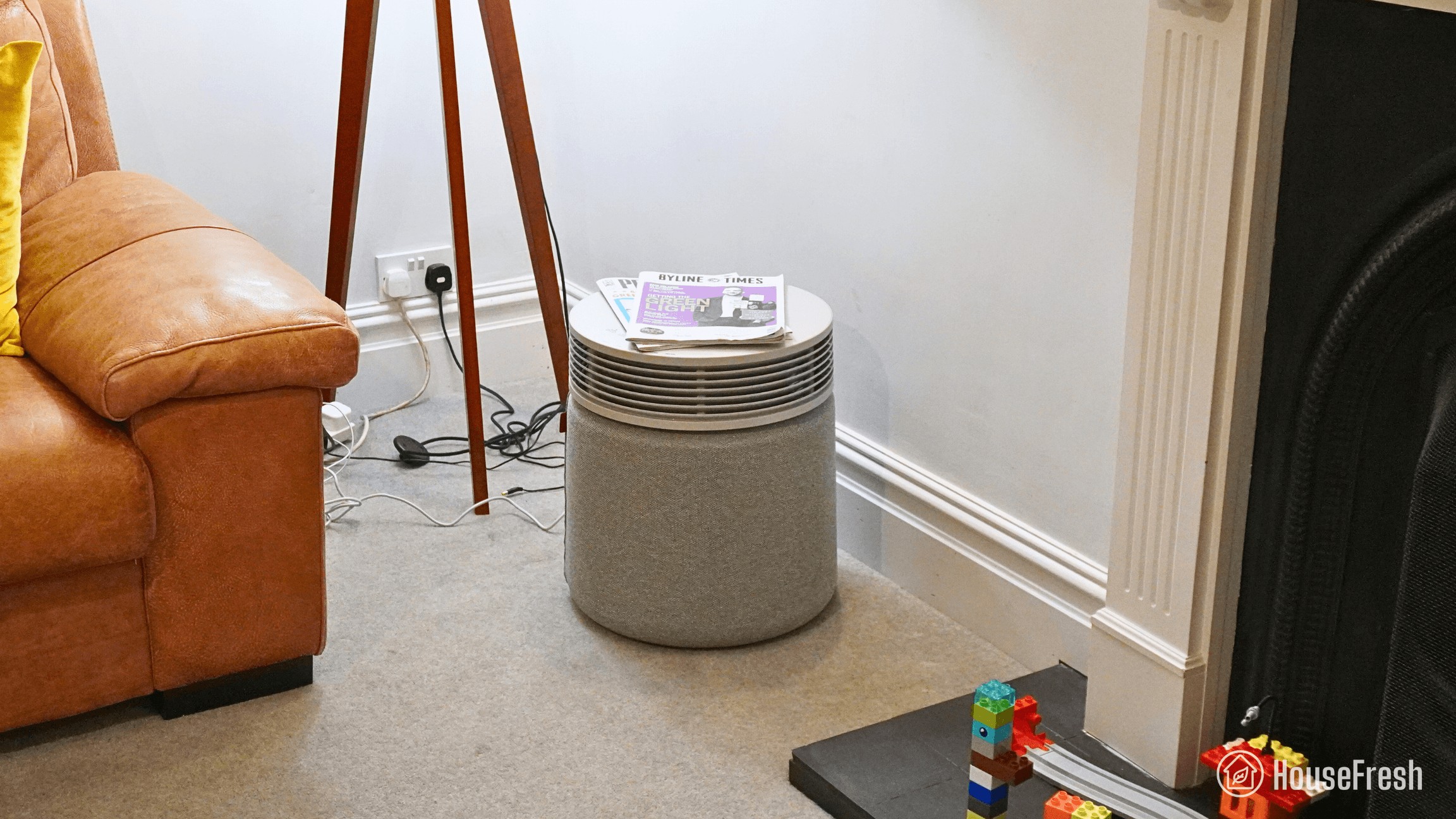
Speed 1: 42.3 dBA
Speed 2: 54.5 dBA
Electricity consumption in watts:Standby: 1.2 watts
Speed 1: 6.9 watts
Speed 2: 19.8 watts
Filter lifespan:12 months
Manufacturer’s warranty:2 years
Country of origin:Netherlands
Country of manufacture:China

GoveeLife Smart Air Purifier 2

GoveeLife Smart Air Purifier 2 H7124 Desk

The GoveeLife Smart Air Purifier 2 is a small, rectangular unit that fits most desks and tabletops. A good small pick for those of you who don’t like the sound and/or look for cylindrical models.

GoveeLife Smart Air Purifier 2 H7124 Controls

It comes with an onboard sensor, air quality indicator light and app connectivity through the Govee Home app. It’s also a Matter-certified device, so you will be able to connect it to your smart home system.

GoveeLife Smart Air Purifier 2 H7124 Filters

It comes with a bonded particle and carbon filter, and completed our particle removal test in 40 minutes, so we estimate a PM1 CADR of 249 m3/h – can provide five air changes per hour in spaces up to 20.3 m2.

5. Best for quiet spaces: CleanAirKits Luggable XL Ultra

An eco-friendly PC-fan powered air purifier with incredible performance-to-noise ratio and the lowest long-term running costs I’ve seen.

CleanAirKits Luggable XL7 Corner

The Luggable XL Ultra is an eco-friendly air purifier, powered by seven PC fans and two MERV 13 filters, resulting in an estimated PM1 CADR of 535 m3/h with a sound level of 47.2 decibels! That means this air purifier can clean the air five times per hour in rooms up to 43.9 m2.

The DIY kit comes with nearly everything you’ll need to build it at home, including seven CoolerMaster Mobius 120P PC fans.

CleanAirKits Luggable XL Handle

These PC fans are the secret behind the incredible quiet performance of the Luggable. For a traditional air purifier to match this level of quiet performance, you have to buy a much larger, much more expensive machine and run it on its lowest settings.

You’ll only need to buy two 20×25×1 MERV 13 filters. You could use any brand, but we recommend the 3M Filtrete MPR1900.

CleanAirKits Luggable XL Filter inside

This combination of energy-efficient PC fans and 25×20 non-branded filters leads to incredibly low long-term running costs. Over a period of 12 months, you can expect to spend £34.72 on filter replacements and £40.15 on electricity costs.

CONS

The lightweight wood looks great, but the body is more delicate than plastic or metal you’ll find in other air purifiers.
It doesn’t come with carbon, so it won’t help with unwanted odours or VOCs.
It’s narrow but long, so it won’t fit in very tight spaces. A tip: you can stand it to save some floor space.
It doesn’t come with smart functions or app support.

PROS

It cleaned our test room of all PM1 in 19 minutes – this is faster than my pick for most people (Winix Zero S @ 24 minutes) and nearly as fast as my pick for large spaces (Coway 350 @ 17 minutes).
You can use any brand of 20×25×1 MERV 13 filters.
It’s lightweight and comes with a handle so you can move it from room to room with ease.
The body is made of lightweight wood, so it’s way more sustainable than traditional air purifiers made out of plastic.
If anything breaks, you can fix it yourself.

Clean air delivery rate (CADR):– Top speed PM1 CADR: 535 m3/h
– Sub-45 dBA PM1 CADR: 482 m3/h
Filter technology:MERV 13 filter (20x25x1)
Recommended room size:43.9 m2 (5 air changes per hour)
Dimensions:50.8 x 63.5 x 17.7 cm
Weight:3.6 kg
Noise level in decibels from 3 ft. away:Speed 1: 44.1 dBA
Speed 2: 47.2 dBA
Electricity consumption in watts:Speed 1: 12.06 dBA
Speed 2: 16.43 dBA
Filter lifespan:12 months
Manufacturer’s warranty:1 year
Country of origin:United States
Country of manufacture:United States

READ MY FULL REVIEW ➜

WATCH MY VIDEO REVIEW 

Nukit Tempest Pro

Nukit Tempest Pro Living Room

Unlike the lightweight wooden frame of the Luggable Ultra (above), the Nukit Tempest Pro features a steel body. As I said in my review, it takes one look at this thing to know that you’re buying it for life.

Nukit Tempest Pro Handle

It uses six PC fans that come in the box with everything else you need to build the air purifier, except the filters. You can place it on the floor, or you can mount it on the wall – you get the wall mounts inside the box, too.

Nukit Tempest Pro Filters

It uses the same 20×25 MERV 13 filters as the Luggable Ultra, and completed our particle removal test in 33 minutes while generating just 39.1 dBA of noise! We estimate a PM1 CADR of 319 m3/h and can provide five air changes per hour in spaces up to 26.2 m2.

WATCH OUR VIDEO REVIEW ➜

What to look for when buying an air purifier

My top tips on what you should consider before you buy your first air purifier.

The specific features you should look for when buying an air purifier depend on why you’re buying it and the room where you’d like to use it. But, regardless of the use case and your budget, there are some things that will ALWAYS be important to consider.

1. The size of the room and the CADR (clean air delivery rate) of the air purifier. 

According to the EPA, for an air purifier to be truly effective, it should provide at least 4.8 air changes per hour (ACH) in a room. However, many air purifier brands overstate the cleaning performance of their units, advertising room size coverage based on just one air change per hour.

We made a handy CADR calculator so you can enter the size of your room to find out how much CADR (in cfm or m3/h) an air purifier needs to clean the air in that specific room size 4.8 times per hour:

NOTE: The room size recommendations in the SPECS tables beneath each of the air purifiers I recommended in this article are calculated based on five (5) air changes per hour.

2. The types of filters

The most common types of filters in an air purifier include three stages of air filtration:

PRE-FILTERPre-filters trap larger particles that would otherwise clog the main filter faster (like pet hair).> TIP: The best units feature a removable pre-filter, making it easier to vacuum, rinse, and keep in top shape. This is a must for pet owners!
ACTIVATED CARBON FILTERActivated carbon filters adsorb chemical gases and odours.> TIP: If you need to deal with serious VOCs or unwanted odours, look out for pelleted or granular activated carbon, which has a wider surface to collect pollutants compared to impregnated carbon fabric.
PARTICLE FILTERParticle filters remove microscopic particles from the airstream. They could have different grades, such as HEPA H13 or MERV 13.> TIP: You don’t need to buy an air purifier with a HEPA filter to get good particle filtration. In fact, sometimes a denser filter like HEPA H13 won’t lead to better performance.

It’s better to focus on CADR figures to decide whether a particular air purifier model will be good enough for your specific space.


3. Noise output

The fan that powers your air purifier can generate a lot of noise, and you are unlikely to want to use your unit regularly if this noise becomes too much. That is why it’s worth factoring in how noisy the model you want to buy will be, especially if you want to use it in your bedroom or home office. 

Two things to consider:

  • Smaller units won’t make much of a difference to the air when running at the slowest fan speed, and they tend to be noisier than larger ones at top speed. 
  • Some air purifiers suited for big spaces can be whisper-quiet at their lowest fan speeds, so it is worth going bigger to get a unit that runs quieter.

4. Long-term costs

In addition to the upfront cost of buying an air purifier, you should also consider associated maintenance costs, such as electricity use and filter replacements. Here are some tips to estimate long-term running costs:

  • Manufacturers usually provide electricity usage in watts (approximation to real-life), so you can use this Electricity Cost Calculator to find out how much the model you’re interested in could add to your electricity bill.

  • Filter replacement costs vary by brand and model, and so does the filter lifespan you can expect. Use the lowest estimate suggested by the manufacturer on their website as your base to calculate how much you can expect to pay per year:

( £ of the filter / 12 months ) x filter lifespan = yearly filter cost

  • The longer a unit has been on the market, the more likely that you’ll find good-quality generic filters that will be cheaper than branded ones.

5. Extra features

A comprehensive control panel with smart functions, app support, onboard air quality sensors or remote controls are handy perks that can make life easier. A no-lights mode for the bedroom, for example, is definitely something worth considering. 

However, if asked, I would recommend not sacrificing CADR or performance for fancier tech-y bonuses. After all, the purpose of an air purifier is to clean the air.

How we test air purifiers

Saying we tested over 120 air purifiers in the last five years sounds great, doesn’t it? But what does testing mean for HouseFresh?

HouseFresh is fully data-driven, and our findings are openly published on the site.

Since 2020, I’ve been conducting particle removal, sound, energy and features tests in the same space to gather comparable data. Performing all these tests in the same location, under the same conditions, allows me to compare air purifiers like-for-like and draw consistent conclusions.

We don’t blindly repeat manufacturers’ specifications and marketing claims without further research or hands-on testing. In fact, we don’t have any special relationships and don’t accept any form of sponsorship from brands.

I buy every device with my own money to remain unbiased, and I’m confident that our tests reveal what manufacturers won’t tell you.

Common questions people have about air purifiers

Many mechanical air purifiers also feature a built-in ionizer that can boost the units’ CADR and efficiency by electrostatically charging particles in the air, making them easier to capture. This process has been proven to generate chemical byproducts, such as ozone, which can be detrimental to the health of those with pre-existing respiratory conditions.

Although ionizing technology is continuously evolving, at HouseFresh, we prefer to recommend air purifiers without ionizer functions or those where the ionizer can be disabled at the touch of a button, such as the PlasmaWave technology in Winix devices.

It depends. More often than not, expensive air purifiers get boosted because the associated commissions are higher than those for budget-friendly air purifiers. There are plenty of overpriced units out there with shockingly low cleaning performance that are best to avoid, such as the Molekule Air Mini+

Smart features also build up in a unit’s price tag, so if you are into auto modes, air quality readings, or remote app control, you might consider chipping in an extra quid.

Usually, one powerful air purifier is more convenient than two or more smaller units. Although a larger, high-performing unit will have a larger footprint and take up more space, the long-term costs (filters, energy bills) and noise output would double or triple with more than one air purifier running constantly. 

That being said, if you have a very large space (think 75+ m2.), then you might be better off placing multiple air purifiers around the room. In this thorough guide to ventilation and air purifiers, you will find an example of someone who chose multiple units to clean the air in her large loft.

Finding the right spot to place an air purifier is key. Height is only one variable, but ensuring the unit is far enough from the wall or furnishing to draw in enough air is as important. And so it is that the air purifier has the right CADR to effectively achieve enough ACH in the room. 

Now, in terms of height, the ideal placement will depend on how you’ll use the air purifier. In bedrooms, for example, it is best to place the unit 2-3 ft off the ground to take advantage of the clean airflow near your face while you sleep. But if the unit will be in the kitchen, it’s best to place it near the source of pollutants.

The idea is to keep the air outlet close to the source of pollutants and to your breathing zone.

Short answer: yes, air purifiers definitely remove dust. 

The woven fiber maze of particle filters captures larger, coarse particles (such as pollen, dead skin flakes, dust mites, mold spores, pet fur or dander) and tiny ones as small as 0.3 and sometimes 0.1 microns (fine dust, soot, smoke, viruses and bacteria). 

As this particulate matter (usually called PM10 and PM2.5, referring to the particle sizes) is trapped by the filter, it’s permanently removed, unable to reenter your indoor air. 

There are a few things to consider:

  • Placement: Finding the right spot for your unit is of super important. To ensure good airflow, avoid obstructions at both the inlet and outlet.
  • Maintenance: Replace the filters when needed and keep the unit clean, removing any particle or dust debris on the device. A not-so-demanding routine will help keep your air purifier in top shape for longer.
  • CADR: Make sure to choose a unit with the right CADR for the room where you’ll place it. If the CADR is too low, it will make little difference to your air. Try to stick to 340 m3/h as a minimum if you can afford it.

Wrapping up

My goal when launching HouseFresh was (and continues to be) to help consumers find the right air purifier to fit their needs and, most importantly, their budget.

I want our readers to find actual, helpful solutions. If you haven’t found a model that suits your space or meets your requirements, feel free to drop a comment below or send me an email to danny@housefresh.com, and I’ll reply personally as soon as I can.

February 17th, 2026

  • Published our first edition of this guide, shortlisting the best air purifiers in the UK. No edits to report yet 🙂

The best wall-mounted air purifiers we tested

RabbitAir A3 LED

Air purifiers are scientifically proven to make our homes healthier. They use highly engineered filters to capture harmful microscopic particles from your rooms and replace them with clean, pollutant-free air.

But an air purifier can take up much-needed room if you’re limited on floor space. Luckily, there are air purifiers on the market that have been designed to be mounted onto your wall.

In this article, I will share my top picks based on our own tests. We bought every air purifier on this list with our own money to remain unbiased and to experience the customer journey the same way you would.

how we test
How we test air purifiers

Read our full testing methodology.

Ok, let’s get into our full list of the best wall-mounted air purifiers on the market today. 

1. Best overall: RabbitAir A3 SPA-1000N

A powerful air purifier that can be mounted to the wall straight out of the box.

RabbitAir A3 LED

PRICE on amazon

The A3 is a high-end air purifier from RabbitAir that offers excellent air cleaning performance, with an estimated PM1 CADR of 249 cfm when running at top speed, where it generates 57.9 dBA of noise. This makes the A3 powerful enough to provide five (5) air changes per hour in rooms up to 373 sq. ft.

Unlike other devices that can be mounted but share zero instructions on how to do it, Rabbit Air made sure you get everything you need to wall-mount your A3 from day one. Inside the box you will find a wall-mount bracket and a clear step-by-step guide on how to do it.

Tip

The MinusA3 can be mounted right side up or upside down. If you are planning on mounting the device higher than 6 ft., you should consider doing it upside down so you can access the control panel, which otherwise will sit at the top of the device and could be hard to reach.

CONS

Selling at $749.99, the A3 has a much higher initial price compared to models from Winix, Levoit and Coway BUT neither of those brands offers devices that could be wall-mounted.
The LED light is cool but it doesn’t connect to the air quality sensor, so it can be confusing if you’re used to the usual color-coded LED lights you get with other units.
It comes with 280 grams of carbon, which is good but isn’t much considering its high price.

PROS

It is a great looking design and you get the option to have beautiful works of art in the cover, if that is something you’d like.
It can be mounted to the wall straight out of the box, and it comes with clear instructions on how to it and everything you need to mount it.
Running at fan speed 3, it provided a good amount of air cleaning at a sub-45 dBA level of sound.
It comes with an app that allows you to schedule routines and also gives you access to all the other functions that you get on the main control panel.
Usage without the ionizer didn’t have a significant effect on performance, so you can confidently turn the ionizer off and you’ll get solid ozone-free air cleaning.

Now, if you decide to having the A3 on the floor, know that this thing is HEAVY. I haven’t mounted it on the wall at home because I’m constantly running tests and need to move my air purifiers up and down the basement, so I really feel the heavy weight and the lack of deep handles.

RabbitAir A3
rabbit air a3 video scaled

Clean air delivery rate (CADR):– Top speed PM1 CADR: 249 cfm
– Sub-45 dBA PM1 CADR: 134 cfm
– AHAM PM2.5 CADR: 262 cfm (dust)
Filter technology:BioGS® HEPA filter and a separate pelleted activated carbon filter with 280 grams of carbon
Recommended room size:373 sq. ft. (5 air changes per hour)
Dimensions:19.7H x 18.9W x 8.4D inches (50H x 48W x 21D cm)
Weight:20.3 lbs (9.2 kg)
Noise level in decibels from 3 ft. away:Speed 1: 35.7 dBA
Speed 2: 36.2 dBA
Speed 3: 42.1 dBA
Speed 4: 49.1 dBA
Speed 5: 57.9 dBA
Electricity consumption in watts:Standby: 0.39 watts
Speed 1: 6.6 watts (7.08 watts w/ionizer)
Speed 2: 7.31 watts (7.86 watts w/ionizer)
Speed 3: 12.39 watts (12.84 watts w/ionizer)
Speed 4: 21.55 watts (22.21 watts w/ionizer)
Speed 5: 57.18 watts (59.45 watts w/ionizer)
Filter lifespan:12 months
Manufacturer’s warranty:5 years
Country of origin:United States
Country of manufacture:South Korea

WATCH OUR VIDEO REVIEW ➜

2. Best under $300: Smart Air SA600

A high-performing air purifier from a trusted brand that can be mounted on the wall and offers excellent air cleaning power.

Smart Air SA600 Sofa area

U.S. PRICE on SMART AIR UK PRICE on SMART AIR

The SA600 from Smart Air is a no-nonsense air purifier that will give you an estimated PM1 CADR of 249 cfm when running at top speed, while generating just 56.7 dBA of noise. This is powerful enough to provide 5 air changes per hour in spaces up to 373 sq. ft. just like the RabbitAir A3 above BUT it does so without charging an arm and a leg for it.

While not sold as a wall-mounted design, it includes spaces on its chassis for mounting brackets on any wall or surface. We wish more air purifier brands would offer this choice as wall-mounted can be especially useful in classrooms or any room many people use.

CONS

No auto-mode or smart features.
You need additional brackets to wall mount it and there are no instructions in the box on how to do it.

PROS

Great performance at cleaning our test room both at full speed and at quiet fan speeds, especially considering it’s price.
Only 52dB at its highest fan speed, which is much less than the average, especially for larger devices.
It comes with two H13 HEPA filters and two gas filters with pelleted activated carbon + two removable pre-filters for easy cleaning.
Lights automatically switch off every time.

Smart Air SA600 Controls
Smart Air SA600 Filter Tag

Clean air delivery rate (CADR):– Top speed PM1 CADR: 249 cfm
– Sub-45 dBA PM1 CADR: 128 cfm
– AHAM PM2.5 CADR: 287 cfm (dust)
Filter technology:H13 TrueHEPA filter with a removable pre-filter and pelleted activated charcoal filter (set of two)
Recommended room size:373 sq. ft. (5 air changes per hour)
Dimensions:20 x 13.8 x 9 inches (51 x 35 x 23 cm)
Weight:15.5 lbs (7 kg)
Noise level in decibels from 3 ft. away:Speed 1: 35.2 dBA
Speed 2: 37.2 dBA
Speed 3: 41.5 dBA
Speed 4: 46.1 dBA
Speed 5: 56.7 dBA
Electricity consumption in watts:Standby: 0.1 watts
Speed 1: 2.4 watts
Speed 2: 4.3 watts
Speed 3: 7.1 watts
Speed 4: 12.9 watts
Speed 5: 53.8 watts
Filter lifespan:18 months
Manufacturer’s warranty:1 year
Country of origin:China
Country of manufacture:China

READ OUR FULL REVIEW ➜

WATCH OUR VIDEO REVIEW ➜

3. Best money can buy: IQAir Atem X

If money is not an issue, then the Atem X from IQAir is the best air purifier you can mount on your wall.

IQAir Atem X Filters

CHECK PRICE NEAR YOU

The Atem X sits at the top of the IQAir line of air purifiers, with a unique design that is guaranteed to get the attention of anyone who comes into contact with it. But this is not just a pretty device: with a dust CADR of 435 cfm certified by AHAM, the Atem X is officially the highest CADR device we have ever tested.

The only downside of this air purifier is its high price ($1,399.99) and the fact that it doesn’t come with activated carbon as standard. And if you want to mount it, you will need to buy a separate wall mount kit. However, if money is not an option, then this is the best air purifier you can mount on your wall.

CONS

Rolls Royce-tier design doesn’t come cheap at 1 cent under $1400.
OEM filters are not cheap and there are no generic filters available that could help lower the yearly costs.
It runs louder at top speed than other highly-powered HEPA retail air purifiers.
It doesn’t come with a carbon filter for dealing with gases and odors, so you only get particle filtration.

PROS

The design looks incredible and even though it is a big device, it has a footprint smaller than two sheets of A4 paper.
Performance at top speed is one minute faster than the beast that is the Smart Air Blast Mini MKII and nearly 10 minutes faster than the highly popular Winix 5500-2.
At quiet fan speeds, it offers similar performance to the PC fan powered air purifiers from AirFanta and CleanAirKits, which isn’t normal for a traditional HEPA device.
The app has a good UX, useful functions and you even get a web dashboard with a ton of air quality data to explore.
It comes with IQAir’s 10-year warranty, which certainly inspires confidence.

In our particle removal test, the Atem X outperformed every other HEPA retail air purifier we have tested to date. The only device that cleared our test room of PM1 particles faster was our 30×20 DIY Corsi-Rosenthal Box, but you can’t mount that on the wall, unfortunately.

IQAir Atem X Controls
IQAir Atem X HyperHEPA Filter

Clean air delivery rate (CADR):– Top speed PM1 CADR: 429 cfm
– Sub-45 dBA PM1 CADR: 229 cfm
– AHAM PM2.5 CADR: 435 cfm (dust)
Filter technology:HyperHEPA filtration.
Recommended room size:643 sq. ft. (5 air changes per hour)
Dimensions:27.08H x 25.19W x 10D inches (68.8H x 64W x 25.4D cm)
Weight:28.66 lbs (13 kg)
Noise level in decibels from 3 ft. away:Speed 1: 35.6 dBA
Speed 2: 36.9 dBA
Speed 3: 40.7 dBA
Speed 4: 44.5 dBA
Speed 5: 49.5 dBA
Speed 6: 53.6 dBA
Speed 7: 58.4 dBA
Speed 8: 62.3 dBA
Electricity consumption in watts:Standby: 1 watt
Speed 1: 5.3 watts
Speed 2: 7.5 watts
Speed 3: 10.5 watts
Speed 4: 15.5 watts
Speed 5: 24.2 watts
Speed 6: 35.9 watts
Speed 7: 57.2 watts
Speed 8: 85.5 watts
Filter lifespan:12 months
Manufacturer’s warranty:10 years
Country of origin:Switzerland
Country of manufacture:Germany

READ OUR FULL REVIEW ➜

WATCH OUR VIDEO REVIEW ➜

Other wall-mounted air purifiers we have tested

Rabbit Air MinusA2 Front 1 1

Rabbit Air MinusA2

The MinusA2 is the first air purifier we reviewed from Rabbit Air. It is as sleek as the A3 but with a top speed dust CADR of 193 cfm, it is not as powerful as the A3 (262 cfm for dust) when it comes to air cleaning performance.

It can be a good option for those who need to clean spaces no larger than 289 sq. ft., based on the MinusA2 providing at least 5 air changes per hour.

READ OUR FULL REVIEW ➜

IKEA FORNUFTIG Living Room

IKEA FÖRNUFTIG

An affordable air purifier from IKEA that can be mounted on the wall and will cost you just $79.99 for the HEPA only version. If you have a limited budget, then this could be a good option. However, you will need to spend an additional $23 if you want to get the gas filter to tackle odors.

In terms of air cleaning, the FÖRNUFTIG is not the most powerful device with a PM1 CADR of 80 cfm, which will only be good enough for small spaces up to 120 sq. ft.

READ OUR FULL REVIEW ➜

What to look for when buying an air purifier to mount on your wall

First, let’s address the question many of you are probably asking yourselves: Can all air purifiers be wall mounted?

The simple answer is no.

For air purifiers to be able to be wall-mounted, they need the right holes to attach brackets that then attach to your wall. We would strongly advise against making your own incisions as this could compromise the effectiveness of your air purifier.

The most important features you need to consider BEFORE choosing a wall-mounted air purifier are:

1. Is it really wall mountable?

Remember you should never attach a unit to your wall if this unit doesn’t already come with the right holes in the right places and with brackets for you to use when pinning it to the wall.

Each unit featured in this list can be both wall-mounted or floor-standing, and instructions on how to mount are easily accessible, like this instructional video for the Rabbit Air A3.

2. What is the size of the room?

Measuring your room and purchasing an air purifier suited to that space is essential. For example, there’s no point using the IKEA FÖRNUFTIG in a 500 sq. ft. room as it won’t clean the air effectively.

That is why we tried to be inclusive in our shortlist by recommending products suitable for different-sized rooms.

You can use our handy calculator to find out what CADR score you should be looking for in order to guarantee that the air purifier you buy is powerful enough for the room:

3. Is the unit built with high-quality materials? And does it come with a warranty?

When mounting an air purifier on the wall, you want to be sure that it will not crash to the floor or, even worse, fall on somebody’s head. Look for units build with reinforced materials or those that come with a manufacturer’s warranty that covers accidental damage.

Every air purifier we included in this list has been built to high standards and has a warranty.

4. What filtration technology do you need?

The filters are arguably the most important part of any air purifier. However, your filter requirements will depend on whether you want to remove particles and/or gases from the air.

If you don’t have an issue with odors or VOCs, then an air purifier with a particle filter alone will do the trick. The HyperHEPA filter in the Atem X, for example, will do an excellent job at removing dust, pollen and smoke particles.

Now, if you are looking for an air purifier to help remove unwanted smells or chemical gases from the air, then you need to look for units with activated carbon – ideally, pelleted. Both the RabbitAir A3 and the Smart Air SA600 offer this, in addition to particle filtration.

What you need to know when mounting an air purifier on the wall

Placing your air purifier in the right place can make a big difference to the air quality in your home.

An air purifier works best when it isn’t pressed up against a surface; that’s why it’s recommended that you keep your unit at least six inches away from the wall. In the case of wall-mounted purifiers, they are (usually) designed so that the air intake is far enough away from your wall to maximize efficiency.

Make sure you read the installation instructions properly and follow them so that your air purifier doesn’t work harder than it should due to how it’s been mounted.

Here are a few do’s and don’ts when it comes to positioning your unit:

Do

DO place your air purifier close to the source of pollution
DO check the inlets and outlet are not blocked or confined
DO keep it away from traffic (don’t place it where it could get knocked or damaged)
DO try to keep it away from doors and windows

Don’t

DON’T position your unit in the corner of the room
DON’T install your unit so high you can’t reach it

Lastly, here’s a common question we’ve received from a few readers:

We strongly advise against installing your air purifier next to your TV.

Air purifiers can create an electrical disturbance known as Radio Frequency Interference (or RFIs), which can affect the picture on your television. If this happens, you may notice the picture jumping or looking wavy.

I hope you found my guide helpful. If you have any questions I didn’t cover or want to know more about any of the mountable air purifiers I recommended above, please drop a comment below and I’ll get back to you as soon as I can.

The only small air purifiers we recommend

AirFanta 3Pro Sidetable

We generally recommend most people to go for the biggest air purifier they can live with to get the most power (and, ultimately, the most value) for their money.

Having a slightly more powerful air purifier than you need will allow you to run it at lower fan speeds and still get solid air cleaning performance without generating a lot of noise. Plus, in the long run, you will find that small-sized air purifiers will cost you nearly as much to maintain than larger devices due to the fact that you will need to replace their filters a lot more often.

However, I know that sometimes people just want a small air purifier. So, to help those of you who are in the hunt for a small-sized device, I have dug through our data to find small air purifiers that weigh less than 11 lbs (5 kg) and ranked them based on air cleaning performance and value for money.

If you don’t want to read my full article, you can watch the video version below:

BEST OVERALLBUDGET OPTIONQUIETEST OPTIONSMART OPTIONSTYLISH OPTION
AirFanta 3ProWinix A231/A230CleanAirKits Triple ExhalaronLevoit Core 300SSmart Air Sqair
AirFanta 3Pro SidetableWinix A231 Side tableCleanAirKits TripleLevoit Core 300S Dining RoomSmart Air S Design
Time to PM1 zero17 minutes40 minutes46 minutes45 minutes32 minutes
HouseFresh CADR353 cfm148 cfm128 cfm131 cfm185 cfm
Filter techH11 HEPA + carbonTrue HEPA + carbon + ionizerHEPA H10 + carbonBonded particle + carbonH12 HEPA + carbon
Max room size529 sq. ft.231 sq. ft.180 sq. ft.196 sq. ft.277 sq. ft.
Dimensions12.6 x 12.6 x 12.6 inches9.5 x 9.5 x 14.6 inches22 x 7.25 x 8.5 inches8.66 x 8.66 x 14.17 inches13 x 13 x 14.3 inches
Weight7.7 lbs7.1 lbs6 lbs6 lbs10.7 lbs
Yearly running costs$125.23$119.54 $110.88$79.43$120.10
List price$159.99$75.99$359.00$149.99$179.95

By the way, none of the devices on this list was gifted to us in exchange of a glowing review. We bought each device on this list with our own money so that we could run tests to assess their air cleaning performance, sound generation, electricity consumption, yearly running costs and long-term user experience. You can read more about our testing process here.

1. The best small air purifier overall: AirFanta 3Pro

The 3Pro is the only high-CADR air purifier that you can fit inside a carry-on suitcase or large backpack.

The AirFanta 3Pro is one of the most powerful and affordable air purifiers I tested in 2024. This relatively small 12.6 x 12.6 inch box starts at $159.99 and it was still able to clear our 728 cubic feet test room of incense smoke pollutants in 17 minutes — this is a mere two minutes slower that the $500 Blast Mini from Smart Air.

Use the discount code HOUSEFRESH for 5% off when buying directly from AirFanta.

You can assemble (and disassemble) the 3Pro yourself in just a few minutes. It has a plastic base with clear lines that show where to place the four HEPA filters at each side before you can close the box with an array of four PC fans on top. It has no control panel but you get a 110-220v AC to 3-12v DC power adapter to control the speed of the fans and adjust the noise output.

What we really like

It offers excellent value for your money — we estimate a CADR of 353 cfm and you can buy it for less than $160 versus the $500 you can expect to pay for most air purifiers this powerful.
You get the option of buying it with H11 HEPA filters only. But if you’re looking for a device that can deal with odors and gases, then you can buy the HEPA + carbon filters for $75.
You can assemble it and disassemble it in just a couple of minutes, so you can take it with you wherever you go inside a small suitcase or big backpack.
It uses PC fans, so it is quieter and more energy-efficient than most traditional retail air purifiers.

What we think could be better

It is very popular so you’ll find that it’s often out of stock on Amazon. If that happens to you, head over to the official AirFanta store and use the discount code HOUSEFRESH to get a 5% off while you’re at it.
It won’t be everyone’s cup of tea. The overall design is fairly utilitarian, looking like a mini Corsi-Rosenthal box. There is no app support or auto-mode, although you should be able to use this device with smart plugs.

If you’re looking for a small air purifier that can clean a lot of air while fitting nicely on top of a side table, a wide shelf, a countertop or a wide-ish window sill (or that you can take with you wherever you go), then you can’t go wrong with the AirFanta 3Pro.

Clean air delivery rate (CADR):– Top speed PM1 CADR: 353 cfm
– Sub-45 dBA PM1 CADR: 213 cfm
Filter technology:True HEPA H11 and optional pelleted activated carbon
Recommended room size:529 sq. ft. (5 air changes per hour)
Dimensions:12.6D x 12.6W x 12.6H inches (32D x 32W X 32H cm)
Weight:7.7 lbs (3.49 kg)
Noise level in decibels from 3 ft. away:3.63 volts: 36.1 dB
4.19 volts: 36.9 dB
5.24 volts: 39.7 dB
6.54 volts: 43.3 dB
7.44 volts: 46.7 dB
8.56 volts: 49.1 dB
12.6 volts: 56.3 dB
Electricity consumption in watts :43.23 watts
Filter lifespan:6 – 12 months
Manufacturer’s warranty:1 year
Country of origin:China
Country of manufacture:China

Read our full review

Watch our video review

2. The best for tight budgets: Winix A231/A230 (a.k.a. Zero Compact)

The smallest air purifier from Winix offers solid air cleaning performance in a small package and you can regularly find it on Amazon for less than $80.

For those looking for spend as little as possible in a small sized air purifier that will fit on top of a desk, a bedside table or a narrow surface, my top budget-friendly choice is the Winix A231/A230.

Winix A231 Side table

While the A231 is the cheapest air purifier on this list, it was still able to clean our test room in 40 minutes, outperforming many other similarly sized devices like the Philips 800 Series, the Xiaomi 4 Compact, the PuroAir 240 and even the much more expensive Molekule Air Mini+.

We estimate a CADR of 148 cfm, which means that the A231 can provide five air changes per hour in dorm rooms up to 222 sq. ft. In terms of design, the A231 comes with a bonded True HEPA filter with activated carbon, an onboard air quality sensor and auto-mode. You will also get Winix’s signature PlasmaWave bipolar ionizer technology but you can disable it if you have concerns about ionization and ozone.

What we really like

It’s small and compact cylindrical design doesn’t take up too much floor space.
It cleaned our test room of PM1 pollutants in 40 minutes, which is 14 minutes faster than the similarly priced Levoit Core 300.
You can expect to spend $49.99 per year in filter replacements if you choose OEM filters, which is cheaper than most small air purifiers.
There are generic filters available on Amazon, which would bring long-term filter replacement costs down to under $20 per year.

What we think could be better

As with most small air purifiers, it can get loud at its top fan speed, reaching 57.9 dB.
Unlike most other Winix air purifiers, the A231 doesn’t automatically go into sleep mode when it detects darkness.
If it loses power, the A231 will go back to default, with Plasmawave enabled.

You might find the same small Winix design under different names depending on where you live or what color options you’re looking at. The A231 is white and grey, the A230 is black and the Zero Compact is the name used outside of America. I will be referring to the A231 as that is the option we bought and tested but the design (and expected performance) is exactly the same across all the model names.

Clean air delivery rate (CADR):– Top speed PM1 CADR: 148 cfm
– Sub-45 dBA PM1 CADR: 67 cfm
– AHAM PM2.5 CADR: 154 cfm (dust)
Filter technology:Fine mesh pre-filter, True HEPA filter, activated carbon filter, PlasmaWave technology
Recommended room size:222 sq. ft. (5 air changes per hour)
Dimensions:9.5D x 9.5W x 14.6H inches (24.13D x 24.13W x 37H cm)
Weight:7.1 lbs (3.2 kg)
Noise level in decibels from 3 ft. away:Speed 1: 35.2 dB
Speed 2: 48.3 dB 
Speed 3: 57.9 dB
Electricity consumption in watts:Standby mode: 0.06 watts
Speed 1: 35.4 watts
Speed 2: 37.7 watts
Speed 3: 45.6 watts
Filter lifespan:12 months
Manufacturer’s warranty:2 years
Country of origin:South Korea
Country of manufacture:Thailand

Read our full review

3. The quietest portable option: CleanAirKits Triple Exhalaron

The Triple Exhalaron is a PC fan-powered air purifier with a CADR of 131 cfm that can be used in small spaces no larger than 196 sq. ft. and has been designed to be used as a table centerpiece.

Like the AirFanta 3Pro at the top of this list, the Triple Exhalaron by CleanAirKits is powered by PC fans: it uses three CoolerMaster Mobius argb (2400 rpm) that are particularly quiet, hitting just 40.5 dBA of sound at top speed from 3ft away.

The design of the Exhalaron is truly unique, with three cylindrical HEPA H10 filters (with activated carbon) that sit on top of a thin wooden base and are covered by a thick wooden top that houses the PC fans. It comes with two handles to easily grab and move the air purifier around, and a colorful knob to adjust the fan speeds.

If you are looking for a small air purifier that can clean the air in rooms no larger than 192 sq. ft. and that you can place on a table, then you should consider the Triple Exhalaron. This is the only air purifier we have tested that has been designed to be used as a table centerpiece ensuring it will reduce viral load.

What we really like

It is super quiet. In our sound test, we measured from 35.2 dB to 40.5 dB from its lowest to its highest fan speeds.
It is compatible with generic PUREBURG filters, which will reduce the yearly running costs if you prefer not go with the OEM filters sold by CleanAirKits.
It looks cool. I know this is just personal preference, but I really like the industrial feel of the Exhalaron.

What we think could be better

Retailing at $359, it is the most expensive of all the small air purifiers on our list.

Unlike most other air purifiers, the Exhalaron has been designed to be powered by a USB-C power bank, so you can take it with you on the go. You should be able to get around 10 hours of use with a 20,000 mAh battery.

Clean air delivery rate (CADR):– Top speed PM1 CADR: 128 cfm
– Sub-45 dBA PM1 CADR: 128 cfm
Filter technology:HEPA H11 with a layer of carbon-impregnated fabric
Recommended room size:192 sq. ft. (5 air changes per hour)
Dimensions:22W x 7.25D x 8.5H in (56W x 14D x 22 cm)
Weight:6 lbs (2.72 kg)
Noise level in decibels from 3 ft. away:Speed 1: 35.2 dBA
Speed 2: 37.7 dBA
Speed 3: 40.5 dBA
Electricity consumption in watts:Standby: 0.1 watts
Speed 1: 1.1 watts
Speed 2: 2.8 watts
Speed 3: 6 watts
Filter lifespan:6 months
Manufacturer’s warranty:1 year
Country of origin:United States
Country of manufacture:United States

Watch our video review

4. The best smart option: Levoit Core 300S

The Core 300s is a smart air purifier suitable for rooms no larger than 196 sq. ft. with an on-board air quality sensor that connects to your smartphone for $149.99.

Even though it costs less than $150, the Core 300S comes in an inbuilt air quality sensor that makes it possible for the device to run on auto-mode, automatically adjusting fan speeds based on the quality of your air. Not only that; you can also connect your 300S to your smartphone using Levoit’s VeSync app. So if you’re looking for a small air purifier with smart functions, then the Core 300S should be on your list.

Levoit Core 300S Kitchen Counter

💡exclusive code for HouseFresh for 10% off a single purchase on Levoit.com: HOUSE10

Based on our first-hand testing data, the Levoit Core 300S has a CADR of 131 and will be able to give you five air changes per hour in small spaces no larger than 196 sq. ft. It comes with a bonded cylindrical filter that includes a pre-filter mesh, a HEPA-like particle filter (to tackle pollen, dust and other small particles) and a layer of activated carbon (to remove odors and gases).

What we really like

It has on on-board air quality sensor and an LED ring on its control panel that shows the quality of the air in the room in real time.
It comes with an auto-mode and a smartphone app, which is rare in air purifiers selling for less than $150.
There are lots of generic filters available, so you can rest assured you won’t find it difficult to find filters in stock when the time comes to replace them

What we think could be better

It has a bonded filter so the particle and carbon filters are stuck together, meaning you will need to replace the whole when the carbon runs out — which has a shorted lifespan than the particle filter.
Levoit initially marketed the Core 300S as having a HEPA filter but after Dyson complained to the BBB, they removed all mentions of HEPA without any explanation to the public. This doesn’t affect the real-life performance of this device but it’s not a good look for Levoit.

The Core 300S is more energy efficient than its non-smart older brother, the Core 300. This leads to cheaper yearly running costs, which is always something you need to account for when buying an air purifier filters and electricity don’t come cheap. The OEM filters for the Core 300S cost $29.99 but you will find lots of generic options at half the price.

HouseFresh rating:★★★★☆
Time to clean our 728 cubic feet test room (with the device running at top speed):45 minutes
Air purifier technology:3-Stage Filtration (pre-filter, main particle filter, high-efficiency activated carbon filter)
Recommended room size (4.8 air changes per hour):219 sq. ft.
Clean air delivery rate (CADR):Dust: 134 CFM
Smoke: 126 CFM
Pollen: 154 CFM
Dimensions (in inches / in cm):8.7L x 8.7W x 14.2H inches (22L x 22W x 36H cm)
Weight (in pounds / in kg):5.95 lbs (2.7 kg)
Filter life:6 – 8 months
Noise level in decibels (measured from 3 ft. away with a sound level meter):Speed 1: 38.9 dB
Speed 2: 45.7 dB
Speed 3: 54.5 dB
Electricity consumption in watts (recorded with an electricity usage monitor):Standby mode: 1.7 watts
Speed 1: 5.9 watts
Speed 2: 9.8 watts
Speed 3: 21.8 watts
Estimated running cost (electricity consumption + official filter replacement):$79.43 per year
Cost per CADR cfm (based on dust CFM as reported by AHAM):$1.12
Manufacturer’s warranty:2 years
Country of manufacture:China

Read our full review

Tip

If space is not too tight, you should check out the Levoit Vital 100S — the little sibling of the popular Vital 200S. The Vital 100S cleared our small 728 cubic feet test room of all PM1 particles eight minutes faster than the Core 300S (37 minutes). It takes up a little more floor space than the 300S due to its rectangular design BUT you also get a separate pre-filter that can be removed and washed to extend the life of the main filter.

5. The most stylish option: Smart Air Sqair

A small air purifier for those who don’t just care about performance but also want a device that looks like a piece of furniture.

The Sqair (or Smart Health S, as it’s known in some countries) is a small-ish air purifier manufactured by Smart Air with an estimated CADR of 185 cfm, making it a good choice for rooms no larger than 277 sq. ft. As with other air purifiers from Smart Air we have reviewed, the Sqair comes with a HEPA filter as default but if smells and chemical gases are an issue, then you can buy the optional activated carbon filter separately.

Smart Air S Fireplace

$189.95 AT SMART AIR U.S. £132.00 AT SMART AIR UK

Personally, I think this is one of the best looking air purifiers on the market. It has a small white body, four wooden legs and a black grill on top with a simple dial to switch between fan speeds.

But the Sqair is more than just a pretty thing. This is a solid air cleaner that managed to complete our particle removal test in just 32 minutes, which is faster than what we saw with medium-sized devices like the Mila (38 minutes), the Coway Airmega 150 (38 minutes) and the Shark NeverChange5 150 (66 minutes).

What we really like

It offers great mechanical filtration thanks to a high-quality H12 HEPA filter and a compact but powerful fan.
Beautifully designed to fit into even the most stylish of homes. I particularly like the European Beechwood legs.
Simple and intuitive controls, with a single dial on top of the device that you can use to switch between fan speeds.
It only pulls 39.4 watts when running at top speed, so it will add only $43.68 to your annual energy bill if you had it running 24/7 for a year.

What we think could be better

It doesn’t have any fancy features like auto-mode, an onboard sensor or smartphone connectivity. If you care about those things, you should look into the Levoit Core 300S or the Levoit Vital 100S.
It does not come with an activated carbon filter as standard, so you need to buy one separately if you want the Sqair to help with VOCs and odors.

HouseFresh rating:★★★★☆
Time to clean our 728 cubic feet test room (with the device running at top speed):32 minutes (without carbon)
Air purifier technology:H12 HEPA and optional activated charcoal filter
Recommended room size (4.8 air changes per hour):163 sq. ft. 
Clean air delivery rate (CADR):Dust: 127 CFM
Smoke: 105 CFM
Pollen: 144 CFM
Dimensions (in inches / in cm):13H x 13W x 14.3D inches (33.02H x 33.02W x 36.32D cm)
Weight (in pounds / in kg):10.1 lbs (4.58 kg)
Filter life:6 months
Noise level in decibels (measured from 3 ft. away with a sound level meter):Speed 1: 35.5 dB
Speed 2: 49.1 dB
Speed 3: 58.2 dB
Electricity consumption in watts (recorded with an electricity usage monitor):Standby mode: 0 watts
Speed 1: 5.6 watts
Speed 2: 19.7 watts
Speed 3: 39.4 watts
Estimated running cost (electricity consumption + official filter replacement):$120.10 per year
Cost per CADR cfm (based on dust CFM as reported by AHAM):$1.42
Manufacturer’s warranty:1 year
Country of manufacture:China

Read our full review

Other small-sized air purifiers we tested but don’t recommend

  • Levoit Core Mini – Weighing just 2.3 lbs (1.06 kg) and selling for just $49.99 on Amazon, the Core Mini might seem like the perfect small air purifier. However, it is too underpowered to make any meaningful difference to the air in even the smallest of rooms. Plus, if you go with the Core Mini, you will end up spending the same amount of money you’ll need to run a larger device like the Core 300S due to the fact that the small filters need to be replaced every three months or so.
  • Molekule Air Mini+ – This is undoubtedly a very good looking small-sized air purifier but it doesn’t come cheap at $359.99 and our test data showed that its air cleaning performance is seriously lacking considering this high price. Not only did the Air Mini+ take a full hour to complete our particle removal test but it is also way too loud: when we measured the noise levels from 3 ft. away, we recorded 67.4 dBA when running at top speed.
  • PuroAir 240 – When we reviewed and tested this device in early 2024, it was called the PuroAir HEPA 14 240 but the name has now changed and all references to HEPA 14 have been removed without any clarification on what the grade of the filter actually is. But the main reason why we don’t recommend this small air purifier is that it’s not good value considering its list price of $199.00 on Amazon, especially when compared to the $75 Winix A231 which completed our particle removal test 11 minutes faster than the PuroAir 240.

Final thoughts

If space is not as tight, then I still recommend you to go for the biggest air purifier you can live with. By going bigger, you will be able to run your device at lower fan speeds that generate less noise, while still getting good air cleaning perfomance. Also, if the need arises, you will have an air purifier that packs some extra power. AND you are likely to spend the same amount of money each year to replace the filters, compared to small devices with filter that cost nearly the same but need to be replaced more often.

If you are looking for a small device because you have a small budget available, then please check out my list of recommendations ranking the best air purifiers you can buy for less than $150. You will find some DIY options in there that will cost you as little as $80 but will offer you powerful air cleaning performance nevertheless.

Now, if space is a serious concern, then I hope you were able to find a good option for your specific situation in the list above.

If you have any questions about the air purifiers featured on this list or about buying a small air purifier, just drop a comment below and I’ll get back to you as soon as I read it.

The best air purifiers to get rid of litter box smell

cat at home

Having a cat as a pet is pretty awesome. But despite being relatively low maintenance, there are a few cat caregiving duties many cat owners would rather do without. And having to deal with their litter box often takes the top spot as the worst thing about owning a cat. 

In fact, according to a survey published on the Las Vegas Review Journal, 44% of cat owners polled said that the biggest concern they have is how their cat’s litter box affects their home’s general hygiene.

The good news is that an air purifier with good filters packed with activated carbon can help remove unwanted litter box smells, while removing the amount of cat hair and dander in the air. Read on for my top picks, based on over 100 tests I’ve conducted since 2020.

how we test
How we test air purifiers

Read our full testing methodology.

1. Best for large spaces: Levoit EverestAir

A large air purifier with a powerful fan and 400g of activated carbon to capture odors from the litter box.

Levoit EverestAir Front Design

💡exclusive code for HouseFresh for 10% off a single purchase on Levoit.com: HOUSE10

Based on our particle removal test, we estimate a PM1 CADR of 375 cfm at top speed for the EverestAir and 205 cfm at speed 2, while generating just 43.2 dBA of sound. This is a powerful air purifier that will provide five air changes per hour in spaces up to 562 sq. ft.

The EverestAir comes with 400g of pelleted activated carbon, which will adsorb unwanted smells while the air circulates through the device.

carbon quantity everestair

It comes with an onboard air quality sensor that displays readings on screen and on the smartphone app.

Levoit EverestAir AQI Working

CONS

It doesn’t come cheap at $499.99 but often goes on sale for Prime Day and Black Friday.
The particle filter is not HEPA grade. This doesn’t affect the performance but it was initially sold as H13 HEPA.
It uses a bonded filter so you will need to replace the entire thing once the carbon is full, even if the particle filter still has life in it.

PROS

It outperformed more expensive devices such as the $700+ Rabbit Air A3 and the $800+ Dyson BP06.
The design stands out and looks like something Apple would create.
It comes with 400g of activated carbon as standard, which is a good amount for tackling litter box odors.
It has wheels to move it around the house without having to lift it.
You can adjust the angle of the vents on top.

This is a large air purifier that sits solidly on its base, so it can withstand a curious cat jumping on top of it. The wheels at the bottom only move in one direction, so it won’t slide around the floor easily unless you push it in the right direction.

Clean air delivery rate (CADR):– Top speed PM1 CADR: 375 cfm
– Sub-45 dBA PM1 CADR: 205 cfm
– AHAM PM2.5 CADR: 365 cfm (dust)
Filtration technology:Removable pre-filter, particle filter and 400g of pelleted activated carbon.
Recommended room size:562 sq. ft. (5 air changes per hour)
Dimensions:18.9L x 8.5W x 23.2H inches (48L x 21.6W x 58.9H cm)
Weight:20.7 lbs (9.39 kg)
Filter lifespan:12-15 months
Noise level in decibels from 3 ft. away:Speed 1: 39.1 dB
Speed 2: 43.2 dB
Speed 3: 48.6 dB
Turbo: 57.8 dB
Electricity consumption in watts:Standby mode: 1.26 watts
Speed 1: 9.85 watts
Speed 2: 15.59 watts
Speed 3: 26.6 watts
Turbo: 69.8 watts
Manufacturer’s warranty:2 years
Country of origin:United States
Country of manufacture:China

READ OUR FULL REVIEW ➜

WATCH OUR VIDEO REVIEW ➜

2. Best under $200: AirFanta 3Pro (with activated carbon filters)

This PC fan-powered air purifier is the most powerful budget-friendly model we have tested.

AirFanta 3Pro Living Room

Use the discount code HOUSEFRESH for 5% off when buying directly from AirFanta.

The 3Pro is a mini Corsi-Rosenthal box with a base at the bottom, four low resistance H11 particle filters packed with pelleted activated carbon at each side and an array of four PC fans on top. The result? An air purifier that offers a PM1 CADR of 353 cfm at top speed for less than $200.

You get a speed controller to set fan speeds. I recommend setting it to 6.54V, where it generates just 43.3 dBA of noise that won’t disturb your cat but still offers solid air cleaning performance.

This is the only high CADR air purifier that you can disassemble and fit inside a carry-on bag or backpack to take with you when you travel.

AirFanta 3Pro with Osprey backpack

To deal with litter box smells you will need to buy the version of the 3Pro that comes with pelleted activated carbon, which will set you back $175.99 at the moment of writing this.

CONS

It looks nothing like traditional air purifiers and this will put some people off.
It doesn’t come with any smart features, app connectivity or an onboard air quality sensor. This is a device for you to set and forget.

PROS

It is the most powerful air purifier you can buy for under $200, outperforming devices from Levoit, Winix, Coway, Xiaomi and Dyson.
Instead of buttons, you get speed controller to set the speed of the fans and the noise output.
PC fans are whisper quiet compared to most traditional air purifiers, so this device won’t disturb your cat.
It can be assembled and disassembled in just a few minutes.
When taken apart, the parts are small enough to fit inside a large backpack or small suitcase.

Clean air delivery rate (CADR):– Top speed PM1 CADR: 353 cfm
– Sub-45 dBA PM1 CADR: 213 cfm
Filter technology:True HEPA H11 and optional pelleted activated carbon
Recommended room size:529 sq. ft. (5 air changes per hour)
Dimensions:12.6D x 12.6W x 12.6H inches (32D x 32W X 32H cm)
Weight:7.7 lbs (3.49 kg)
Noise level in decibels from 3 ft. away:3.63 volts: 36.1 dB
4.19 volts: 36.9 dB
5.24 volts: 39.7 dB
6.54 volts: 43.3 dB
7.44 volts: 46.7 dB
8.56 volts: 49.1 dB
12.6 volts: 56.3 dB
Electricity consumption in watts :43.23 watts
Filter lifespan:6 – 12 months
Manufacturer’s warranty:1 year
Country of origin:China
Country of manufacture:China

READ OUR FULL REVIEW ➜

WATCH OUR VIDEO REVIEW ➜

3. Best for very bad litter box smells: Austin Air HealthMate 

With a colossal gas filter packed with 15 lbs of activated carbon and zeolite, the HealthMate is the best air purifier for VOCs we have tested.

Austin Healthmate Living Room

The HealthMate from Austin Air is the air purifier with the largest amount of carbon in its filter and that is exactly what you will need if you have multiple cats and litter boxes at home, or if you want to tackle very bad litter box smells.

It filter is larger than most small air purifiers. In this photo you can see how its size compares next to the popular Levoit Core 300S. This is what 15 lbs of activated carbon look like!

Austin Healthmate Filter VS Core 300

It comes with a one-dial operation and a smooth top surface, so you can rest assured that your cat won’t accidentally change the settings when jumping on top of it.

Austin Healthmate Front

CONS

It is one of the most power-hungry units we have tested, pulling 147.6 watts when running at top speed.
It doesn’t have any smart features or smartphone app controls. Similarly to the 3Pro above, the HealthMate is a set-and-forget unit.
Excellent at removing odors but its particle filtration is as good as much smaller devices like the Levoit Core 300 or the Xiaomi 4 Compact.

PROS

It comes with the largest carbon filter in the household purifier market.
The filter is packed with a carbon and zeolite mix that increases odor adsorbency.
This device is made in the USA and comes with a 5-year warranty.
The filters can last up to five (5!) years before needing to be replaced, which is a lot more than the usual 6-12 months.

Clean air delivery rate (CADR):– Top speed PM1 CADR: 156 cfm
– Sub-45 dBA PM1 CADR: 77 cfm
– AHAM PM2.5 CADR: 154 cfm (dust)
Filter technology:HEPA particle filter with 15 lb of activated carbon and zeolite mix gas filter
Recommended room size:234 sq. ft. (5 air changes per hour)
Dimensions:23H x 14.5W x 14.5D inches (58.4H x 36.8W x 36.8D cm)
Weight:20.41 lbs (9.26 kg)
Noise level in decibels from 3 ft. away:Speed 1: 42.5 dB
Speed 2: 53.2 dB
Speed 3: 61.5 dB
Electricity consumption in watts:Standby mode: 0 watts
Speed 1: 61.1 watts
Speed 2: 85.05 watts
Speed 3: 147.6 watts
Filter lifespan:5 years
Manufacturer’s warranty:5 years
Country of origin:United States
Country of manufacture:United States (Buffalo, New York)

READ OUR FULL REVIEW ➜

4. Best for small spaces: Levoit Core 400S (with Smoke Remover filter)

A medium-sized cylindrical air purifier that will fit inside smaller rooms while still offering powerful air cleaning performance.

Levoit 400s pets

💡exclusive code for HouseFresh for 10% off a single purchase on Levoit.com: HOUSE10

In our tests, the 400S performed well with an estimated PM1 CADR of 213 cfm at top speed, which will be powerful enough to provide five air changes per hour in spaces as large as 319 sq. ft. If place in a room smaller than 300 sq. ft., the Core 400S will be able to circulate and clean the air a lot more often.

The Core 400S is a mid-sized device in Levoit’s Core range. It is larger than the popular Core 300S (left) but smaller than the Core 600S (right).

Levoit Core 300S VS 400S VS 600S

You get multiple filter options. Go for the Smoke Remover filter and you’ll get 450g of carbon — the highest amount across all options.

Core 400s Carbon Filter chart

CONS

The European version of the 400S is less powerful than the U.S. version, so keep that in mind if you’re in Europe. Learn more about this on this video.
It uses a bonded filter so you will need to replace the entire thing once the carbon is used up, even if the particle filter still works.
The particle filter was initially sold as H13 HEPA but it isn’t HEPA. This won’t affect performance but you need to know.

PROS

The cylindrical design takes up less floor space while still offering good air cleaning performance.
It comes with an onboard sensor, an LED air quality indicator and auto-mode.
You get smartphone connectivity through the VeSync app.
The 400S with the Smoke Remover filter comes with the largest amount of carbon (450 g) in the entire Levoit range of air purifiers.

Clean air delivery rate (CADR):– Top speed PM1 CADR: 213 cfm
– Sub-45 dBA PM1 CADR: 134 cfm
– AHAM PM2.5 CADR: 247 cfm (dust)
Filtration technology:Pre-filter for large particles, main filter for airborne particles and activated carbon filter for odors and gasses
Recommended room size:319 sq. ft. (5 air changes per hour)
Dimensions:10.8L x 10.8W x 20.5H inches (27.4L x 27.4W x 52H cm)
Weight:11.2 lbs (5 kg)
Filter lifespan:6 months
Noise level in decibels from 3 ft. away:Sleep mode: 35.5 dBA
Speed 1: 38.3 dBA
Speed 2: 43.2 dBA
Speed 3: 51.2 dBA
Speed 4: 60.3 dBA
Electricity consumption in watts:Standby: 0.93 watts
Sleep mode: 3.05 watts
Speed 1: 5.28 watts
Speed 2: 8.51 watts
Speed 3: 16.41 watts
Speed 4: 39.64 watts
Manufacturer’s warranty:2 years
Country of origin:United States
Country of manufacture:China

READ OUR FULL REVIEW ➜

WATCH OUR VIDEO REVIEW ➜

Special mentions: The air purifiers that nearly made the cut

Alen BreatheSmart Flex Bedroom

Alen BreatheSmart Flex

The only air purifier in Alen’s BreatheSmart line that doesn’t come with an ionizer, making it safer for pets. It also lacks smart features and app connectivity.

We estimate a PM1 CADR of 198 cfm at top speed, which will be good enough for five air changes per hour in rooms up to 297 sq. ft. It has a H13 HEPA filter and for litter box smell, I suggest going for the Odor Neutralizer option as it comes with more carbon than other filters in the Flex range.

READ OUR FULL REVIEW ➜

Dyson BigQuiet BP06 Corner

Dyson Big+Quiet BP06

The BP06 is the best air purifier I’ve tested from Dyson. It lacks smart functions and app support but is more affordable than other models in the Big+Quiet range.

Based on our tests, it has a PM1 CADR of 198 cfm at top speed and will provide five air changes per hour in rooms up to 297 sq. ft. It has an innovative wraparound fabric with 900g of carbon on top of the H13 HEPA filter to tackle litter box smells.

READ OUR FULL REVIEW ➜

Smart Health S

Smart Air Squair (with activated carbon filter)

This is a small air purifier with a simple one-dial operation and no smart functions. It offers a PM1 CADR of 185 cfm at top speed, which will be good enough to provide five air changes per hour in spaces no larger than 277 sq. ft.

If you think it could be a good option for your home, make sure to opt for the additional activated carbon filter as it otherwise the HEPA alone won’t be able to remove litter box smells from the air.

READ OUR FULL REVIEW ➜

What to look for when buying an air purifier for litter box smell

1. To remove odors, you will need a gas filter with a good amount of activated carbon

For an air purifier to capture unwanted odors, it must utilize activated carbon filters. These filters work by locking gasses (known as VOCs) into the pores of a carbon substrate in a process called adsorption. The filter’s more carbon equates to a larger surface area to lock in odors. 

Bot all air purifiers use this type of filter as standard. Be sure to check whether the air purifier you are considering comes with a carbon filter and always favor those models with large amounts of pelleted carbon.

2. You might want to avoid units with ionizers

Many air purifiers use a bipolar ionization process to negatively charge particles in order to attract them to the filter so they can be removed from the air. The problem is that, in the process, these devices can generate small amounts of ozone which can be detrimental to the health of those with pre-existing respiratory conditions.

Ozone is a lung irritant, so if you worry about the health of your cat then you should stick to air purifiers without ionizers, like the ones on my list of recommendations.

3. Find an air purifier with a CADR that matches the size of your room

In order for an air purifier to be useful, it has to be able to provide at least five air changes per hour inside the room where you need it.

For litter box smell, you should aim at placing the air purifier close to the source of smells. If that is possible, then measure the room where you’ve placed the cat litter tray and use our CADR calculator to find out how much CADR you will need to ensure the device is powerful enough:

Common questions about litter box smell

Living in a smelly environment is a surefire way to induce stress and anxiety. Cats themselves are particularly fussy when it comes to toilet time and, if their litter box is unpleasant or dirty, they may find new places around the home to do their business, further compounding the issue. 

But beyond unwanted smells spreading throughout your space, cat litter can threaten your health.  As well as odor, ammonia will also be circulating throughout your air and exposure to this toxic gas can cause a raft of health complications — from headaches to nausea and, in severe cases, pneumonia.

Other health issues linked with human exposure to cat litter include cat scratch disease, roundworms and toxoplasmosis

Having more than one cat can create more odor around the litter box. If you live in a multi-cat household, you should consider getting the largest air purifier you can handle to make sure it will circulate the air quickly and have enough carbon to adsorb unwanted smells — the Austin Air HealthMate is my top pick for these cases.

And if you have multiple litter boxes spread around the home, then you should consider having an air purifier in each space like the affordable AirFanta 3Pro.

THINGS TO TRY

Increase ventilation around the affected area. If you can, move the litter box near an open window or doorway. 
Hang an activated charcoal bag near the tray if you do not have the space or budget for an air purifier.
Be mindful of your cat’s diet. Protein-rich foods given to kittens can cause a real stink, so switch to adult-appropriate foods when right.  

THINGS TO AVOID

Avoid using air fresheners or scented products near the litter box. Although this might help mask the smell of human noses, cats can be sensitive to new scents and some chemical fragrances can even be toxic.
Don’t let the contents of the litter box fester. Cat waste should be cleared as soon as possible and the litter should be changed at least once a week.

On top of the initial purchase cost of your air purifier, you can expect two ongoing costs: filter replacements and energy consumption.

  • Depending on the device, you will need to replace the filter between 6-12 months with some devices (like the Austin Air HealthMate) having filters that last up to five years. Always look for the cost of the filter replacement so you can estimate how much money you’ll need to spend each year.
  • Most modern air purifiers come ENERGYSTAR certified, meaning using them regularly won’t cost the earth. That said, you can use this energy cost calculator to check how much you can expect to spend based on the energy consumption of the device — check the SPECS table I put together for each device, as I added in there how much electricity in watts each air purifier pulls at each fan speed.

If you have any other questions about air purifiers you could use to help reduce the smell of your cat’s litter box, please drop them in the comments below and I will get back to you as soon as I see your question. Or if you prefer to contact me privately, just send me an email to danny@housefresh.com and I’ll do my best to reply when I get a chance.

The best air purifiers for construction dust, according to our data

Best Air Purifiers for Construction Dust

Anyone who has spent time on a construction site will know just how dusty they can be. From small jobs such as DIY home improvements to large renovation projects, dust can quickly accumulate once work gets underway. 

Dust is a big issue for many people, contributing to allergies and respiratory conditions if inhaled. Dust particles are usually microscopic, making them especially tricky to control – this is particularly challenging on a building site where airborne particles are constantly created and circulated.

While many tradespeople or clients will chalk this up to an occupational hazard or a necessary evil to get the job done, no one should compromise their health to fit that new kitchen or replaster old walls. 

Combatting construction dust is much easier than you might imagine. Equipped with the right tool for the job — a powerful air purifier fitted with quality filters — you can eradicate dust quickly. Creating a clean, healthy environment for all on-site.

To find the best air purifiers for construction dust, we use data that we’ve collected through our performance tests to compare the units we own side-by-side. By doing this, we can find which units stand up to the challenge of effectively and efficiently clearing dust from rooms.

how we test
How we test air purifiers

Read our full testing methodology.

Staff picks: Top 3 air purifiers for construction dust

For those looking to clean up your construction site quickly, here’s a sneak peek at our top three air purifiers.

👑 BEST OVERALL💰 FOR TIGHT BUDGETS🛋️ FOR LARGE SPACES
AlorAir CleanShield HEPA 550 Air ScrubberHoneywell HPA300Levoit Core 600S
Aloreair Air Scrubber FireplaceHoneywell HPA300 Editorial logoLevoit Core 600S Front Room
CADR 👩‍🔬550 CFM300 CFM410 CFM
FILTER TECHNOLOGY 💨MERV 10, HEPA and Activated Carbon filtersDual Activated Carbon Pre-Filter and True HEPA filterH13 True HEPA filter with Activated Carbon
MAX ROOM SIZE 📏900 sq. ft.465 sq. ft.465 sq. ft
WEIGHT ⚖️39.6 lbs (16.7 kg)17 lbs (7.7 kg)13.7 lbs (6.2 kg)
PRICE 💵$497.00Price not available$269.99

Learn more about each of these air purifiers below. I explained. why I picked each one and covered what you need to know before you decide which one is best for you.

1. Best for construction sites: AlorAir CleanShield HEPA 550 Air Scrubber

An air purifier made specifically for dusty environments — see why this unit is the ideal addition to your construction tools.

Aloreair Air Scrubber Fireplace

For any construction worker concerned about the air they breathe while at work, the ALORAIR should be your first port of call. This powerful, robust and straightforward option makes it easy to transform air quality on-site. 

Equipped with a MERV 10 filter (traditionally found in commercial units), alongside a HEPA and Activated Carbon filter, this air scrubber will leave no dust particles behind. It’s capable of cleaning 550 cubic feet of dirty air per minute.

What we really like

Most powerful unit on this list with a CADR score of 550 CFM
Well designed for use in a construction zone
It can be used with special ducts to target dust at the source
Large HEPA filters which can store plenty of particulate matter and are easily available on Amazon

What we think could be better

It will be overkill for everyday use at home
It makes a lot of noise

This is the toughest air purifier on this list too. It comes with rotomolded polyethylene (LLDPE) housing, making it able to withstand the demands of any construction site. While the anti-slip feet and stackable design add versatility, allowing you to use multiple units in conjunction for even greater cleaning capability.

Clean air delivery rate (CADR):– Top speed PM1 CADR: XX cfm
– Sub-45 dBA PM1 CADR: XX cfm
– AHAM PM2.5 CADR: XX cfm (dust)
Filter technology:Bonded particle filter with a layer of pelleted activated carbon and a removable pre-filter
Recommended room size:XXX sq. ft. (5 air changes per hour)
Dimensions:20.87 x 24.8 x 14.96 in (53D x 63W x 38H cm)
Weight:13.2 lbs (5.9 kg)
Noise level in decibels from 3 ft. away:Speed 1: 73.7 dB
Speed 2: 74.5 dB
Electricity consumption in watts:Standby: 1.12 watts
Speed 1: 213 watts
Speed 2: 224 watts
Filter lifespan:6 months
Manufacturer’s warranty:10 years
Country of origin:China
Country of manufacture:China

2. Best budget option: Honeywell HPA300 

Small and light with a high cleaning performance — there’s more to this air purifier than its budget price.

Honeywell HPA300 Living Room 2

PRICE on amazon PRICE on EBAY

Costing just over $200, the Honeywell HPA300 is punching well above its weight. For this price, you’ll get an air purifier with colossal power and long-lasting HEPA filters that will make light work of construction dust. 

Despite being an older model, the HPA300 still competes with the latest and greatest air purifiers on the market. Primarily because it’s an out-and-out workhorse. With fans powerful enough to clean 300 cubic meters a minute within a medium to large-sized space, this purifier is an excellent addition to your toolbox.

What we really like

It’s super simple to use with a fool-proof control panel
It packs a punch thanks to its 300 CFM CADR score
Sturdy design and generous warranty will be helpful in construction areas
HEPA filters last longer than many rival alternatives

What we think could be better

It would be great to see a separate activated carbon filter to tackle VOCs
It runs a little loud on higher speed settings

As well as cutting costs when you initially purchase this purifier, you can also expect to save money on filter replacements. The readily available replacements come in three sets, setting you back just $23 per filter. This saving will come in handy on a building site, where high quantities of construction dust may see you needing to replace your HEPA filters more often than in a domestic setting.

HouseFresh rating:★★★☆☆
Time to clean our 728 cubic feet test room (with the device running at top speed):20 minutes
Air purifier technology:Activated Carbon pre-filter and True HEPA filter
Recommended room size (4.8 air changes per hour):465 sq. ft.
Clean air delivery rate (CADR):Dust: 320 CFM
Smoke: 300 CFM
Pollen: 300 CFM
Dimensions (in inches / in cm):20.8L x 10.83W x 22.38H inches (52.8L x 27.5W x 56.8H cm)
Weight (in pounds / in kg):17 lbs (7.7 kg)
Filter life:HEPA every 12 months, Pre-filters every 3 months
Noise level in decibels (measured from 3 ft. away with a sound level meter):Speed 1: 43.6 dB
Speed 2: 48.8 dB 
Speed 3: 53.9 dB
Speed 4: 59.5 dB
Electricity consumption in watts (recorded with an electricity usage monitor):Standby mode: 0 watts
Speed 1: 28.35 watts
Speed 2: 42.92 watts
Speed 3: 55.8 watts
Speed 4: 76.2 watts
Estimated running cost (electricity consumption + official filter replacement):$205.22 per year
Cost per CADR cfm (based on dust CFM as reported by AHAM):$0.84
Manufacturer’s warranty:5 years
Country of manufacture:China

3. Best for large rooms: Levoit Core 600S 

With a massive CADR, smart functions and app connectivity — Levoit reminds us you can’t judge a book by its cover.

Levoit Core 600S Front Room

💡exclusive code for HouseFresh for 10% off a single purchase on Levoit.com: HOUSE10

The longer construction dust is left to linger in the air, the higher the likelihood of it being inhaled. That’s why it’s vital to act fast and remove particles as quickly as possible. This is where the Levoit Core 600S comes into play; being the fastest air purifier we’ve ever tested, clearing all traces of air pollutants in just 15 minutes. 

Levoit has stacked this purifier full of air-cleaning capabilities. From their trademarked VortexAir fans that whip up a storm to the highly efficient H13, medical-grade HEPA filters can capture the tiniest dust particles in a single pass.

What we really like

It is a powerful air purifier, with a CADR of 410 CFM
It works wonders in larger-sized or open-plan spaces
It comes with lots of smart features that may come in handy when concentrating on other jobs
Highly energy efficient for such a powerful unit

What we think could be better

I wish the filters had a longer lifespan
Clean and modern design may not last for long on a construction site

The 600S is simple to use and relatively easy to maneuver too. You’ll find an Auto mode that monitors air quality and changes the fan speed accordingly, a Smartphone app that enables remote operation and a lightweight design that simply requires you to pop in a filter and hit the on switch to transform your air quality. 

Clean air delivery rate (CADR):– Top speed PM1 CADR: 375 cfm
– Sub-45 dBA PM1 CADR: 156 cfm
– AHAM PM2.5 CADR: 398 cfm (dust)
Filter technology:Bonded particle filter with a layer of pelleted activated carbon and a pre-filter mash wrap.
Recommended room size:562 sq. ft. (5 air changes per hour)
Dimensions:12.3 x 12.3 x 23.6 inches (31.3 x 31.3 x 60 cm)
Weight:13.7 lbs (6.2 kg)
Noise level in decibels from 3 ft. away:Sleep: 37.9 dBA
Speed 1: 44.4 dB
Speed 2: 45.9 dB
Speed 3: 53.8 dBA
Speed 4: 62.3 dBA
Electricity consumption in watts:Standby mode: 1.3 watts
Sleep: 4.33 watts
Speed 1: 7.46 watts
Speed 2: 10.7 watts
Speed 3: 20.29 watts
Speed 4: 48.1 watts
Filter lifespan:6-12 months
Manufacturer’s warranty:2 years
Country of origin:United States
Country of manufacture:China

What to look for in an air purifier for construction dust

When you’re working on construction indoors, all that dust that’s launched into the air when you drill, hammer and saw can really affect your breathing. The CCOHS states that breathing in dust can lead to inflammation of your nose and throat, affect your breathing and even lead to diseases like pneumoconiosis.

An air purifier can eliminate those harmful contaminants from your air, but it has have certain specifications to do the job effectively.

When looking to buy an air purifier for construction dust, you have to ask yourself some questions so that you choose the right air purifier for your needs.

1. Does your chosen air purifier utilize HEPA filters?

When it comes to construction dust, particles range in size between 0.5 and 10.0 microns, so to remove them from the air you breathe, you’ll need filters that can capture minuscule particles efficiently. 

Yale University recommends HEPA filters for eradicating dust. These filters are certified to capture at least 99.7% of particles as small as 0.3 microns, making them highly effective control measures. Some units may not use the word HEPA, like the Levoit Core 600S, but they still contain high-grade, quality filters capable of removing these tiny particles.

Levoit 600S Filter

2.  How large is the construction space you’ll be using the purifier on? 

Air purifiers are designed to work at their optimum in a specific-sized space. Some units cater to larger, open-plan spaces and others aimed toward smaller rooms.

It’s paramount that you measure your space before you buy an air purifier so that you know what specifications to need from a unit. That’s why we built our CFM Calculator that will show you what clean air delivery rate (CADR) you will need to look for in an air purifier.

3. Do you move to various spaces throughout the day?

Those of you who move around while on the site to complete different parts of a project will require an air purifier that is easy to move and simple to set up. 

While larger air purifiers may be helpful if working in an open-plan space, they are awkward to carry. This is where smaller units, such as the Honeywell HPA300 or Levoit Core 300, are more efficient, providing targeted protection in specific rooms or tighter spaces. 

Be sure to check out the dimensions and weight of any purifier, as listed in our purifier specification table, to understand better how easy it is to transport. 

4. Do you require protection for other airborne pollutants other than construction dust?

Construction sites are known to be dust magnets but are also a hotbed for other airborne pollutants that arise on the job. Solvents, adhesives, paints and cleaning supplies emit harmful gasses known as Volatile Organic Compounds (VOCs), which can result in serious health complications if exposed regularly. 

To combat VOCs and construction dust, you must look for a purifier that utilizes Activated Carbon filters alongside your trusted HEPA. 

Common questions about construction dust

Air purifiers are an incredibly effective way of eliminating construction dust from your space. Using a fan, air purifiers pull in air (including its contaminants) through filters that trap dust particles, removing them and leaving you with fresh clean air to breathe.

The best filter for removing any airborne pollutants like pollen, mold, bacteria and dust is a HEPA filter. These high efficiency filters use tightly woven fibers to form a maze that trap contaminants as they pass through.

The EPA backs us up stating that a HEPA filter is capable of removing 99.97% of dust from your air.

Drywall dust is larger and denser than normal household dust, so when you’re using an air purifier I would recommend a unit with a thick, removable pre-filter. Depending on how much drywall dust becomes airborne, it’s good practice to clean the pre-filter regularly with a damp cloth and/or vacuum to make sure it doesn’t become blocked.

There are a few methods to get rid of construction dust when you’re done.

  • Remove any airborne dust by running your air purifier at its highest fan speed
  • Get as much ventilation as possible by opening windows and doors
  • Use a vacuum cleaner that contains a HEPA filter
  • Wash any fabrics that were not covered

Wrapping up

Construction dust is one of the most prevalent sources affecting air quality around the world. Fine particles that accumulate from an array of construction processes become suspended in the air and can enter your respiratory system, contributing to health problems if left unchecked. 

Cleaning the air and eradicating dust particles is simpler than you may think. A well-powered air purifier that uses quality HEPA filters will capture the vast quantities of particulate matter and help create a healthier environment for you to live or work in. 

At HouseFresh, we have been reviewing air quality products since 2010. In all these years, we learned not to rely on manufacturers’ claims and the ever-so-glowing marketing materials. That is why we buy products with our own money, so we can write unbiased reviews after we’ve had enough time to evaluate air quality products in our home lab. Every unit we recommend has been thoroughly tested to assess its performance, energy consumption, and noise levels emitted in real-life environments. If you have any questions about our testing process for different types of air quality products, just drop us an email at danny@housefresh.com.

The best Blueair air purifiers we have tested

Comparison Photo Blueair Blue Pure 211 VS 411 VS 311

When researching air purifiers for your home, you can’t help but come across Blueair. This well-known brand produces high-performance air purifiers designed and engineered by their Swedish team.

Pioneering the latest purification technology since 1996, Blueair offers units that not only clear the air of harmful pollutants using their unique HEPASilent™  filters, but they are designed and styled to fit into any modern home.

HEPASilent™ dual filtration technology allows BlueAir air purifiers to provide maximum cleaning performance on a lower power setting, which, in turn, means they use up to 29% less energy and emit up to 67% less noise (hence “HEPASilent”).

In this guide, I’m going to focus on air purifiers from Bluair’s Blue range. 

This range offers a selection of units to suit a variety of room sizes and costs. For example, if you have a larger space to clean, the Blue Pure 211+ is the unit for you. if you’re on a tighter budget Blueair has you covered with the Blue Pure 411+, but be aware this can only be used in small spaces.

how we test
How we test air purifiers

Read our full testing methodology.

By collecting all this data on each air purifier, we can find the best recommendations for your various needs and wants. For this guide, I compared all of the Blueair units we’ve tested side-by-side to pick four of the best. 

Here are the considerations I made when choosing these recommendations:

  • HEPASilent™ Technology – Blueair states that this is the best filter they’ve ever produced, so we wanted all our recommendations to contain their leading tech.
  • Washable Pre-filters – Pre-filters trap larger particles that pass through an air purifier. Removing and washing a pre-filter is proven to prolong the life of a unit’s HEPA filter.
  • Energy Efficiency – The costs don’t end with the initial price of an air purifier. We wanted units that wouldn’t have you asking for a loan to run.

Staff picks: Top 3 Blueair air purifiers

Here are my top three recommendations out of Blueair’s vast range of air purifiers.

👑 BEST OVERALL💰 FOR TIGHT BUDGETS🛋️ FOR LARGE SPACES
Blueair Blue Pure 311 AutoBlueair Blue Pure 411+Blueair Blue Pure 211+
Blueair Blue 311 Kids BedroomBlueair Blue Pure 411 UnitBlueair Blue Pure 211 plus Living Room
Air cleaning speed21 minutes43 minutes18 minutes
CADR rating250 CFM 120 CFM 350 CFM
Filter technologyTrue HEPASilent filter with activated charcoalTrue HEPASilent filter with activated charcoalTrue HEPASilent filter with activated charcoal
Max room size388 sq. ft.185 sq. ft.540 sq. ft.
Weight6.8 lbs (3.1 kg)3.4 lbs (1.54 kg)12.5 lbs (5.67 kg)
Our reviewBlueair Blue Pure 311 Auto reviewBlueair Blue Pure 411+ reviewBlueair Blue Pure 211+ review
PriceCheck NowCheck NowCheck Now

Last update on 2026-04-04 / Affiliate links / Images from Amazon Product Advertising API


Now you’re familiar with Blueair as a brand, the performance tests we conduct, what we’re looking for in a Blueair purifier and my top three recommendations, check out the rest of the guide, where I go into more detail about each unit I’ve selected.

1. Best overall: Blueair Blue Pure 311 Auto

A high performing Blueair unit that looks good, doesn’t cost a bomb and will perform well in medium-sized rooms.

Blueair Blue 311 Kids Bedroom

My favorite Blueair air purifier that we’ve tested is the Blue Pure 311 Auto. When we tested this unit, we were pleasantly surprised with its cleaning performance clearing our 728 cubic feet home lab in 21 minutes. It’s not a large unit, but it sure acts like one. It is also quiet, easy to use and it definitely looks cool.

It doesn’t look like the conventional white boxes we’re used to reviewing (see the Levoit 600S) with its fabric pre-filter that you can customize to suit your home. Ours came in the Arctic Trail, but you can choose from four other colors: Night Waves, Archipelago Sand, Winter Reed or Aurora Light.

What we really like

A substantial step up in CADR from the 411+ — we’re talking 250 CFM from 120 CFM
It only uses 34.5 watts of power when running at full fan speed
The pre-filters are more muted colors with 4 options to choose from
It is extremely simple to operate — one button does everything

What we think could be better

Putting on the pre-filter takes patience and sometimes the filter can fall out when moving
I would like to see an integrated air quality sensor like we see in units from brands such as Levoit and Alen

Blueair doesn’t like to overcomplicate their products, so they’ve fitted the 311 Auto with one button that sits centrally on top of the unit to turn it on/off, control fan speed and engage auto mode.

When you twist off the top, it reveals the circular HEPASilent™ filter inside. Not only will the tightly woven maze of fibers trap harmful pollutants trying to pass through, but the 311 Auto also gives particles an electrical charge that makes them adhere to the fibers.

The 311 Auto cleared all the contaminants from our performance testing home lab in just 21 minutes. That’s pretty impressive when you compare it to much larger units like Alen’s BreatheSmart 75i (24 minutes) and the Healthpro Plus from IQAir (25 minutes), which is why it’s at the top of our list.

HouseFresh rating:★★★★☆
Time to clean our 728 cubic feet test room (with the device running at top speed):21 minutes
Air purifier technology:True HEPASilent filter with activated charcoal
Recommended room size (4.8 air changes per hour):388 sq. ft.
Clean air delivery rate (CADR):Dust: 250 CFM
Smoke: 250 CFM
Pollen: 244 CFM
Dimensions (in inches / in cm):20.5H x 10.2W x 10.2D inches (52.1H x 25.9W x 25.9D cm)
Weight (in pounds / in kg):6.8 lbs (3.08 kg)
Filter life:6 months
Noise level in decibels (measured from 3 ft. away with a sound level meter):Speed 1: 35.8 dB
Speed 2: 40.2 dB
Speed 3: 59.4 dB
Electricity consumption in watts (recorded with an electricity usage monitor):Standby mode: 0 watts
Speed 1: 2.61 watts
Speed 2: 5.74 watts
Speed 3: 32.01 watts
Estimated running cost (electricity consumption + official filter replacement):$128.79 per year
Cost per CADR cfm (based on dust CFM as reported by AHAM):$0.96
Manufacturer’s warranty:1 year (can be extended to 2 years by creating a Blueair account and registering the unit within 60 days of purchase)
Country of manufacture:Designed and engineered in Sweden, assembled in China

2. Best budget option: Blueair Blue Pure 411+

The 411+ is a serious upgrade on its predecessor, cleaning the air in our home lab 25 minutes faster than the 411. It’s also quiet, energy efficient and good looking.

Blueair Blue Pure 411 Kitchen

Your budget is a crucial consideration to have when looking to buy an air purifier. Not only do you have to think about the initial cost, but also the cost of running the unit over time. Luckily, Blueair has the ideal solution with their Blue Pure 411+.

The 411+ is a substantial upgrade on the 411 (Blueair’s former release) with its vastly improved cleaning performance that cleared our room in 43 minutes, a whole 25 minutes faster than its predecessor.

What we really like

Excellent air cleaning performance for $ spent
Low noise — even when running at its top fan speed, the 411+ is one of the quietest air purifiers we have tested
A significant improvement on the previous generation model, the Blueair Blue Pure 411
It includes a magnet to keep the wire tidy

What we think could be better

It doesn’t have an auto mode but you can upgrade at a cost
The filter doesn’t contain activated carbon pellets, it is just impregnated carbon fabric — not as good as it could be against smells and VOCs

The size of the 411+ means you can place it on the floor or a tabletop, making it ideal for use in your kitchen, bathroom, bedroom or home office. As with other units in the Blue range, the 411+ has a washable pre-filter available in various colors, so you can choose which looks best with your decor. Another feature of the Blue range is its one-button operation that adjusts the fan speed.

Blueair has included their HEPASmart™ filter (for more info, see FAQs) in the 411+, allowing it to achieve its full CADR of 120 CFM on a mere 10 watts of electricity. This means the fan doesn’t have to work as hard, which is why this air purifier is so quiet.

HouseFresh rating:★★★★☆
Time to clean our 728 cubic feet test room (with the device running at top speed):43 minutes
Air purifier technology:3-stage True HEPASilent filter with activated charcoal
Recommended room size (4.8 air changes per hour):184 sq. ft.
Clean air delivery rate (CADR):Smoke: 119 CFM
Dust: 121 CFM
Pollen: 131 CFM
Dimensions (in inches / in cm):17H x 7.8W x 7.8D inches (43.18H x 19.812W x 19.812D cm)
Weight (in pounds / in kg):3.4 lbs (1.54 kg)
Filter life:6 months
Noise level in decibels (measured from 3 ft. away with a sound level meter):Speed 1: 35.8 dB
Speed 2: 41.9 dB
Speed 3: 52.3 dB
Electricity consumption in watts (recorded with an electricity usage monitor):Standby mode: 0 watts
Speed 1: 0.4 watts
Speed 2: 2.42 watts
Speed 3: 7.65 watts
Estimated running cost (electricity consumption + official filter replacement):$57.49 per year
Cost per CADR cfm (based on dust CFM as reported by AHAM):$0.60
Manufacturer’s warranty:1 year
Country of manufacture:Designed and engineered in Sweden, assembled in China

3. Best for larger spaces: Blueair Blue Pure 211+

This chic, rectangular air purifier is optimal at eliminating airborne contaminants in rooms around 540 sq. ft., making it the best choice for large rooms or open plan spaces.

Blueair Blue Pure 211 Front Room

Let’s start with its cleaning power. When we put the 211+ in our performance testing room, it made light work of clearing the pollutants from the air in 18 minutes with its high CADR of 350 CFM (Cubic Feet per Minute), which is only 1 minute longer than the huge Blast Mini air purifier from Smart Air.

Included is Blueair’s extremely effective HEPASmart™ filter that combines the traditional HEPA technology with an electrostatic charge and a sheet of bonded activated carbon to remove VOCs and tackle odors like cooking smells or that lovely aroma of wet dog.

What we really like

High CADR and performance in our home test lab
Customizable pre-filter selection
One-button operation makes it easy to use
It takes in air from 360 degrees, so it doesn’t matter if you have it against a wall

What we think could be better

After you’ve moved the 211 around your house, you might find that the top falls off when lifted — that’s because the movement detaches it
Lack of activated carbon pellets as it also uses impregnated carbon fabric like the 411+

We bought our 211+ in the bold Diva Blue pre-filter, but you can choose which color suits your home: Lunar Rock, Crystal Pink, Dark Shadow or Buff Yellow (my favorite, but I was outvoted).

Another positive feature in Blueair devices is that the filters are super easy to replace; the 211+ is no different. As you can see from my video, it takes less than 25 seconds to remove the old filter and put a new one in.

The running costs are higher with this unit compared to the 311 Auto above, but the 211+ is a larger air purifier that requires more energy to run, so factor this into your budget. 

HouseFresh rating:★★★★☆
Time to clean our 728 cubic feet test room (with the device running at top speed):20 minutes
Air purifier technology:HEPASilent™ Technology and Activated Charcoal Filter + Ionizer technology
Recommended room size (4.8 air changes per hour):540 sq. ft.
Clean air delivery rate (CADR):Dust: 350 CFM
Smoke: 350 CFM
Pollen: 350 CFM
Dimensions (in inches / in cm):20H x 13W x 13D inches (51H x 33W x 33D cm)
Weight (in pounds / in kg):12.98 lbs (5.89 kg)
Filter life:6 – 8 months
Noise level in decibels (measured from 3 ft. away with a sound level meter):Speed 1: 37.2 dB
Speed 2: 45.8 dB
Speed 3: 55.7 dB
Electricity consumption in watts (recorded with an electricity usage monitor):Standby mode: 0.1 watts
Speed 1: 16.9 watts
Speed 2: 40.5 watts
Speed 3: 54.5 watts
Estimated running cost (electricity consumption + official filter replacement):$197.27 per year
Cost per CADR cfm (based on dust CFM as reported by AHAM):$0.71
Manufacturer’s warranty:1 year
Country of manufacture:Designed and engineered in Sweden, assembled in China

4. Best air purifier + fan combo: Blueair Pure Fan Auto

The best air purifier and fan combo in our tests, the Pure Fan Auto cleared the air in our home lab 45 minutes faster than the fastest Dyson combo unit we’ve tested.

Blueair Pure Fan Auto Hallway

PRICE on amazon PRICE on BLUEAIR

So, you need an air purifier to clean your air and a fan to keep you cool, but don’t want to pay for two separate devices? Well, the Pure Fan Auto is Blueair’s introduction into the combo market and they haven’t skimped out on cleaning prowess.

The Pure Fan Auto may be a short, boxy unit, but it towers over the rest of the competition in the fan/purifier combo market, including the two units we own from Dyson, the PH03 and the HP04, both of which cost significantly more to buy.

What we really like

It offers a powerful air cleaning performance, considering it’s also a fan
The design is super cool and portable — it will fit any room in your house and not look out of place
It comes with the always handy auto-mode
It is a lot smaller than other combo units with similar cleaning power

What we think could be better

It doesn’t contain any activated carbon so won’t be able to deal with any odors or gasses
The fan is not as effective as the Dyson combo units

In our performance testing room, the Pure Fan Auto cleared all the airborne pollutants we created in 26 minutes, while the PH03 took 70 minutes and the HP04 had a staggering time of 84 minutes.

This performance is attributed to a combination of the powerful motor inside the Pure Fan Auto and its thick HEPASilent™ filter. This filter is hugely efficient at trapping and removing microscopic particles that can harm your and your family’s health.

Blueair has included some cool extra features on this unit with a sleep mode that brings the fan down to its quietest fan speed and turns off all of the display lights and an auto mode that reacts to your air quality using a sensor and adjusts the fan accordingly.

If you’re looking for a highly efficient air purifier/fan combo with excellent performance and a stylish design, you should seriously consider the Pure Fan Auto

HouseFresh rating:★★★★☆
Time to clean our 728 cubic feet test room (with the device running at top speed):26 minutes
Air purifier technology:HEPASilent™ filtration technology
Recommended room size (4.8 air changes per hour):326 sq. ft.
Clean air delivery rate (CADR):Dust: 220 CFM
Smoke: 210 CFM
Pollen: 250 CFM
Dimensions (in inches / in cm):15.5 x 12.9 x 11.2 inches (39 x 33 x 29cm)
Weight (in pounds / in kg):11.6lbs (5.26kg)
Filter life:6 months
Noise level in decibels (measured from 3 ft. away with a sound level meter):Speed 1: 37.8 dB
Speed 2: 47.9 dB
Speed 3: 59.6 dB
Electricity consumption in watts (recorded with an electricity usage monitor):Standby mode: 0 watts
Speed 1: 3.16 watts
Speed 2: 12.17 watts
Speed 3: 40.9 watts
Estimated running cost (electricity consumption + official filter replacement):$89.84 per year
Cost per CADR cfm (based on dust CFM as reported by AHAM):$1.21
Manufacturer’s warranty:2-year warranty when you register your air purifier
Country of manufacture:Designed and engineered in Sweden, assembled in China

What to look for when buying a Blueair air purifier

According to the World Health Organization, in 2020, an estimated 3.2 million deaths were attributed to household air pollution. It’s not just your mortality compromised by indoor contaminants, as exposure can lead to strokes, heart disease and respiratory diseases.

Air purifiers are the ideal solution for removing pollutants from the air in your home. Whether you want to avoid what I’ve mentioned above, suffer from allergies, have issues with traffic pollution or wildfire smoke, or even just want to keep litterbox odors at bay, there’s an air purifier that is right for the job.

Unfortunately, not all air purifiers are created equal, so it’s important you look for the right unit that matches your space and suits your needs. Here are a few things to consider when buying a Blueair air purifier.

Comparison Photo Blueair Blue Pure 211 VS 411 VS 311

1. The size of your room

Different Blueair air purifiers are engineered to work in different-sized spaces, so measuring your room beforehand is particularly important. If you buy an air purifier that’s too small, it won’t be effective, yet buying one that’s too big will be a waste of money and energy.

You can use our CADR calculator to find out how much CADR you need to thoroughly clean the air in your room:

2. The desired functionalities

Modern air purifiers can come with a multitude of extra features, from simple timers to wireless phone chargers. Some of Blueair’s units come with an auto mode where air purifier sensors measure the air quality and adjust the fan accordingly without you needing to touch anything. 

If this is something you need/want, look for a Blueair unit that has “auto” in the title. 

The latest models of the Blue Pure range are called Max. Some have an ‘i’ at the end, which indicates they have an onboard air quality sensor and app support. But be aware that all these extra features (such as auto and smart modes) come at an extra cost.

3. The long term running costs

When calculating your budget, it’s not just the unit’s initial cost you need to consider. Air purifiers need electricity to run, which costs money. Different Blueair units need different amounts of energy to run; that’s why we calculate the average annual cost per unit and put it on our ‘Specs & Features’ table.

Another additional cost to consider is replacing the filter in your air purifier. HEPA filters are the most effective way of removing particles from the air, but they have a shelf life. Once they become full of pollutants, they will no longer be effective.

Check out the ‘Specs & Features’ table to see how long the filter in each unit lasts so that you can factor this into your budget.

Common questions about Blueair

Blueair has pioneered this “genius” technology in order to get maximum effectiveness from a HEPA filter with less sound coming from the air purifier’s fan (the noise comes from the fan working at top speed). 

This is done by combining an electrostatic charge with the traditional HEPA filter. The electrostatic charge makes particles stick to the maze of fibers in the HEPA-like magnets, so they have more chance of becoming trapped, removing them from the air.  

Both Blueair and Levoit are known worldwide for their high-performance air purifiers. After our indepth performance tests and reviews, the team at HouseFresh regulary reccomend the Levoit range over the Blueair models. The main reason is that HEPASilent™  uses an ionizer that you can’t disable and potentially could bring chemical byproducts into your airspace. Blueair units are CARB certified but none of their Blue Pure range apart from the Pure Fan Auto have 0 levels of ozone. 

As we test all of the air purifiers we review, we can compare them side-by-side. We pit the Levoit Core 600S VS Blueair Blue Pure 211+ in a battle royal to see which of these two cleaning giants comes out on top. Click the link to see which comes out on top.

HEPA filters work by trapping particles from the air when it passes through. As the particles don’t go anywhere, over time, the filter becomes full, restricts airflow and eventually becomes ineffective. At this point, it’s time to replace your filter with a new one so that you can continue to trap harmful contaminants from the air in your home. 

Tip

All of the Blueair air purifiers I’ve recommended in this guide come with washable fabric pre-filters. By removing and cleaning your pre-filter, you will prolong the life of the HEPA filter.

Wrapping up

If it’s a Blueair air purifier you’re looking for, you’ve come to the right place. These recommendations have been made because of their cleaning power, filtration efficiency, price point and ease of use.

Follow our suggestions on what to look for in a Blueair unit, make certain considerations concerning room size, budget and functionality and read our ‘Specs & Features’ tables for each product to find the right air purifier for your home.

The best activated charcoal air purifiers

Alen BreatheSmart 45i the look logo

People have used activated carbon for centuries to filter impurities from drinking water, as it removes dissolved organic molecules, chloramines, chlorine, and some heavy metals. But did you know that it is also used to remove chemicals from the air?

Activated carbon is derived from charcoal and is a form of carbon that has been processed to increase its surface area. When carbon is activated, it has small, low-volume pores that make it possible for a larger number of atoms or molecules to adhere to it.

The process through which activated carbon removes chemical gases from the air is called adsorption and it is not be be confused with absorption.

Through adsorption, odors and VOCs adhere to the carbon surface, effectively being removed from the air. This leads the carbon to become full over time so you need to replace the carbon filter as it becomes unable to continue to remove chemical gases from the air.

The right air purifier with a good amount of activated carbon will be able to rid your air from fumes from household cleaners, cooking and organic odors. Specialist models containing large amounts of carbon can also remove volatile organic chemicals (or VOCs), solvents, radon, THM (trihalomethane), benzene, Nitrogen dioxide, chlorine, herbicides, pesticides, and many other manmade gasses.

Many low-quality air purifiers contain only a tiny amount of activated carbon, which won’t be enough to thoroughly remove unwanted smells and chemicals from the air. That is why on this list, we will only recommend devices with large amounts of pelleted activated carbon.

best activated charcoal air purifiers 1

As always, we bought every model on this list with our own money so that we could test it in the same way we have tested over 100 air purifiers since 2020. Our ultimate goal is to allow you to look beyond marketing hype so you can find the right air purifier for your home.

how we test
How we test air purifiers

Read our full testing methodology.

1. Austin Air HealthMate (15 lbs. of activated carbon)

This air purifier comes with a mix of activated carbon and zeolite, and it’s one of the few models made in the U.S.

Austin Healthmate Hallway

This is the most powerful air purifier you could get for dealing with VOCs as it contains the largest amount of activated carbon you will find in a residential air purifier (15 lbs). That said, in terms of particle removal, it will only be able to provide five air changes in spaces up to 234 sq. ft. with a PM1 CADR of 156 cfm.

The filter in the HealthMate is larger than most small air purifier models you’ll see ranking highly as best-sellers on Amazon.

Austin Healthmate Filter VS Core 300

Its body is made completely out of metal and you don’t get any fancy features other than a dial to rotate through the different fan speeds.

Austin Healthmate Front

CONS

It’s great at removing odors and VOCs but its particle filtration is on par with much smaller devices like the Levoit Core 300.
It’s a power hungry unit, pulling 147.6 watts at top speed. It would add $164.39 to your energy bill each year to run it 24/7.
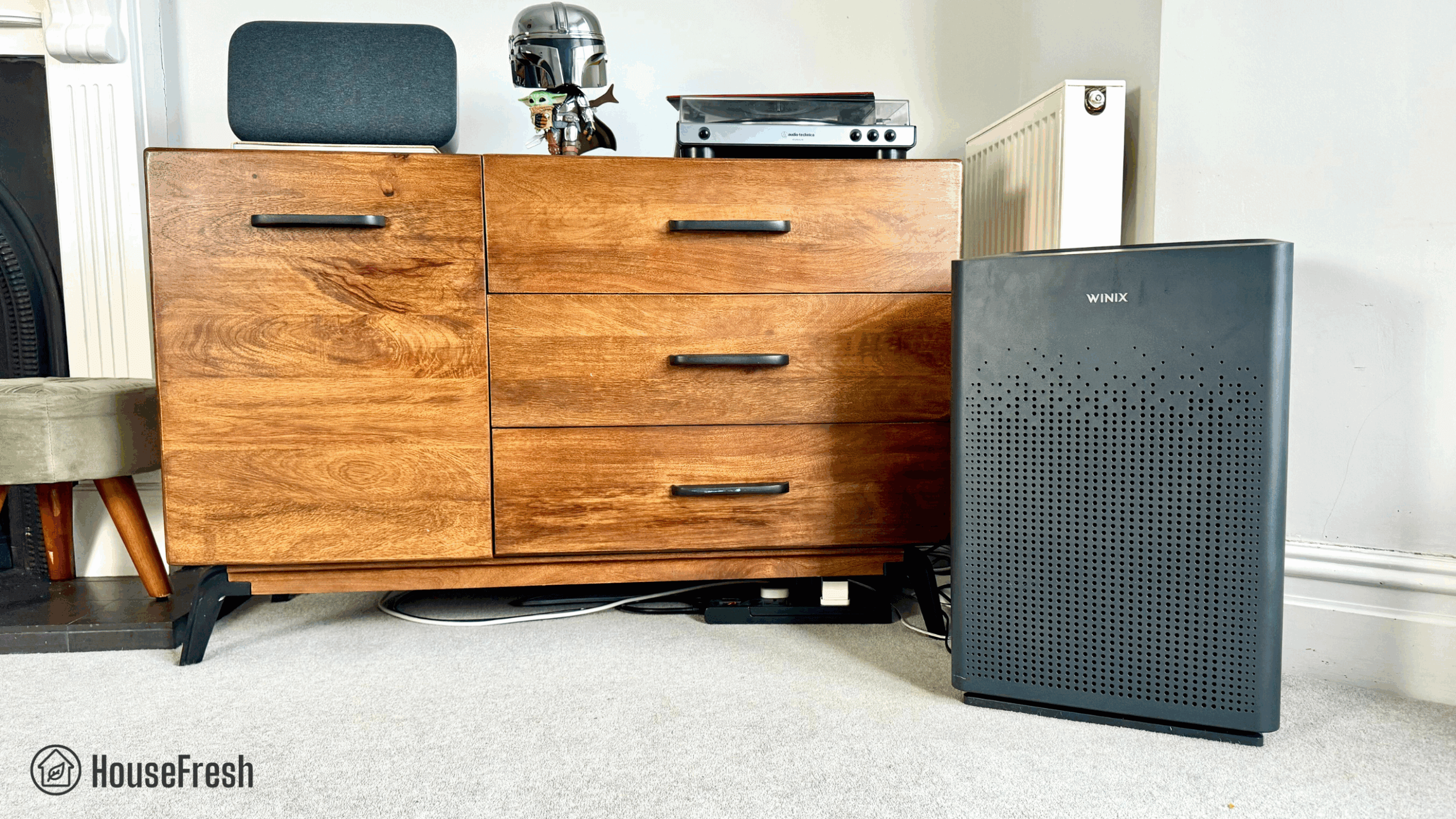
The filter replacement is expensive and will set you back $315, but you only need to replace it every five years.
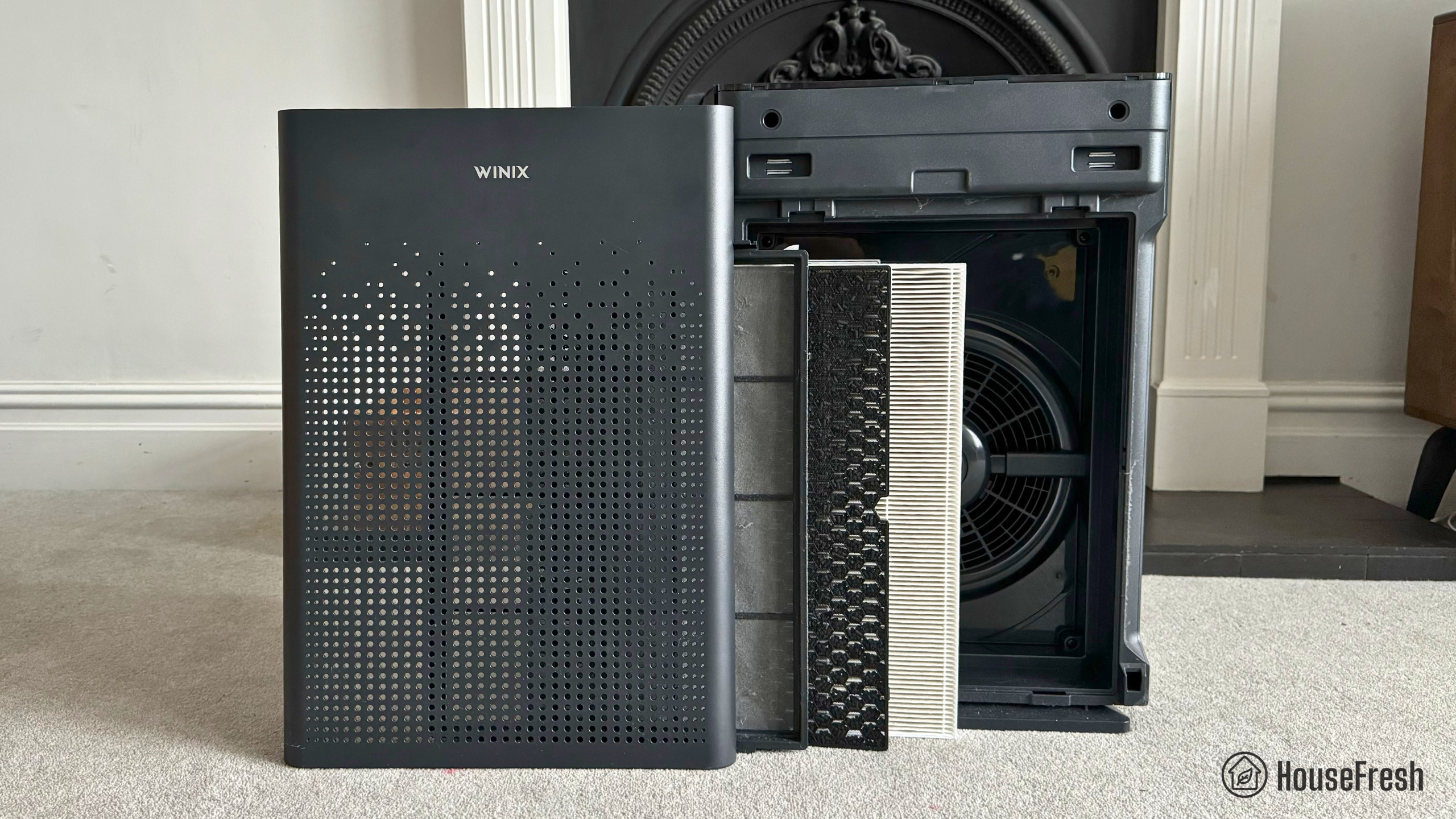
It doesn’t have any smart features or smartphone app connectivity.

PROS

It comes with the largest amount of carbon of all the residential air purifiers we have tested.
The filter has a combination of activated charcoal and zeolite, which increases its efficiency.
It comes with a 5-year warranty.
It’s made in the USA.

Clean air delivery rate (CADR):– Top speed PM1 CADR: 156 cfm
– Sub-45 dBA PM1 CADR: 77 cfm
– AHAM PM2.5 CADR: 154 cfm (dust)
Filter technology:HEPA particle filter with 15 lb of activated carbon and zeolite mix gas filter
Recommended room size:234 sq. ft. (5 air changes per hour)
Dimensions:23H x 14.5W x 14.5D inches (58.4H x 36.8W x 36.8D cm)
Weight:20.41 lbs (9.26 kg)
Noise level in decibels from 3 ft. away:Speed 1: 42.5 dB
Speed 2: 53.2 dB
Speed 3: 61.5 dB
Electricity consumption in watts:Standby mode: 0 watts
Speed 1: 61.1 watts
Speed 2: 85.05 watts
Speed 3: 147.6 watts
Filter lifespan:5 years
Manufacturer’s warranty:5 years
Country of origin:United States
Country of manufacture:United States (Buffalo, New York)

READ OUR FULL REVIEW ➜

2. IQAir HealthPro Plus (5 lbs. of activated carbon)

An air purifier manufactured in Germany with a large filter packed with 2.26 kg of carbon and KMnO4-impregnated alumina.

IQAir Healthpro Plus Entrance

$1,199.99 at IQAIR U.S. $1,199.99 at amazon

In addition to a large HyperHEPA filter, the HealthPro Plus comes with a V5-Cell, which contains 5.5 lbs of activated carbon and KMnO4-impregnated alumina to increase the effectiveness of the charcoal. We estimate a PM1 CADR of 213 cfm which will provide five changes per hour in rooms up to 319 sq. ft.

The gas filter inside this device is very different from the usual honeycomb rectangular filter you get with most residential air purifiers.

IQair Healthpro plus Activated carbon vs Levit EverestAir

You need to know that this device is large — here you can see how its size compares to the Austin Air HealthMate (above).

IQAir Healthpro Plus VS Austin Healthmate

CONS

It comes at a high price of $1,199.99 but you get a 10-year warranty.
You can also expect to spend $161.28 each year in electricity costs — we measured the HealthPro Plus pulling 145.2 watts at top speed.
It is big and heavy but it comes on wheels and a large handle on top that make it easy to move around the house.

PROS

Even though it comed with 5 lbs of activated carbon, it still offers solid particle removal performance thanks to its large HyperHEPA filter.
It is manufactured in Germany and the performance of each unit is manually tested before it’s delivered to your home.
It comes with a 10-year warranty, compared to the 1-year warranty you get with most other air purifiers.
The filters can last up to 4 years, when most units come with filters that need to be replaced every 6-12 months.

Clean air delivery rate (CADR):– Top speed PM1 CADR: 213 cfm
– Sub-45 dBA PM1 CADR: 86 cfm
Filter technology:HyperHEPA and V50-CELL with 5lbs of activated carbon + zeolite mix
Recommended room size:319 sq. ft. (5 air changes per hour)
Dimensions:28H x 18W x 16D inches (71H x 38W x 41D cm)
Weight:35 lbs (15.88 kg)
Noise level in decibels from 3 ft. away:Speed 1: 36.9 dB
Speed 2: 37.2 dB
Speed 3: 40.9 dB
Speed 4: 47.2 dB
Speed 5: 53.9 dB
Speed 6: 61.2 dB
Electricity consumption in watts:Standby mode: 1 watts
Speed 1: 16.5 watts
Speed 2: 32.7 watts
Speed 3: 47.3 watts
Speed 4: 69 watts
Speed 5: 94.3 watts
Speed 6: 145.2 watts
Filter lifespan:4 years
Manufacturer’s warranty:10 years
Country of origin:Switzerland
Country of manufacture:Germany

READ OUR FULL REVIEW ➜

WATCH OUR VIDEO REVIEW ➜

3. Smart Air Blast MKII (3.74 lbs. of activated carbon)

A commercial air purifier with excellent particle removal performance and a large H13 HEPA filter with optional pelleted activated carbon.

Smart Air Blast MKII scaled

The Blast is a commercial air purifier completely made out of metal that can handle the bumps and scrapes of a busy environment, making it perfect for classrooms, offices, event venues and gyms. Based on our tests, we estimate a PM1 CADR of 547 cfm so it can clean the air five times per hour in large spaces up to 820 sq. ft.

The Blast has the third largest amount of carbon (3.74 lbs) we have seen after the IQAir HealthPro Plus and Austin Air HealthMate.

Smart Air Blast Carbon Filter

Whether you choose to go with HEPA only or HEPA + Carbon, the filters in the Blast is much larger than what you’ll see in a standard air purifier.

Smart Air Blast Danny

CONS

It comes at a high price (costing nearly $1,000) but doesn’t have any smart functions.
This unit is extremely heavy, weighing 38 kg — the good news: it comes on wheels.
The design feels quite utilitarian so it won’t be a good fit for everyone.
It will add $136.29 to your yearly energy bill.

PROS

It has unmatched raw air cleaning power: the Blast is the fastest air purifier we’ve ever tested (PM1 CADR 547 cfm).
It offers great performance even at its quietest speeds — we estimate 375 cfm at speed 1 while generating just 41.9 dBA.
The stainless steel body makes it durable in the long run.
It’s a set-and-forget air purifier without any apps or fancy modes, and you can use it with a smart plug.

Clean air delivery rate (CADR):– Top speed PM1 CADR: 547 cfm
– Sub-45 dBA PM1 CADR: 375 cfm
– Manufacturer provided PM2.5 CADR: 559 cfm
Filter technology:H13 HEPA particle filter with optional activated carbon filter (3.74 lbs)
Recommended room size:820.5 sq. ft. (5 air changes per hour)
Dimensions:22.6L x 14.4W x 25.3H inches
Weight:59 lbs (38 kg)
Noise level in decibels from 3 ft. away:Speed 1: 41.9 dB
Speed 2: 49.4 dB
Speed 3: 54.7 dB
Electricity consumption in watts:Standby mode: 0 watts
Speed 1: 56.3 watts
Speed 2: 94.5 watts
Speed 3: 133.5 watts
Filter lifespan:19 months
Manufacturer’s warranty:1 year
Country of origin:China
Country of manufacture:China

WATCH OUR VIDEO REVIEW ➜

4. Alen Breathsmart 75i (3.6 lbs of activated carbon)

An air purifier with a H13 HEPA filter and 1.63 kg of pelleted activated carbon that comes with smartphone connectivity.

Alen 75i Corner

The 75i is the largest and most powerful air purifier from Alen’s BreatheSmart line. Based on our particle removal tests, we estimated a PM1 CADR of 333 cfm, which will be able to provide five air changes per hour in rooms no larger than 448 sq. ft.

There are multiple filter options available but the one that has the largest amount of activated charcoal is the Fresh filter, which comes with a HEPA H13 filter and 3.6 lbs of carbon.

Alen 75i V2 Carbon filter

It also has a high quality laser particle sensor onboard, an air quality indicator in the form of an LED ring in the control panel and smartphone connectivity through the Alen app.

Alen BreatheSmart 75i Controls

CONS

It’s a large and heavy unit that won’t fit in small spaces. That said, it is MUCH smaller than the IQAir HealthPro Plus and the Smart Air Blast (above).
It comes with an ionizer function, but you can switch it off and this won’t impact the performance of your 75i.

PROS

It removed all PM1 particles in our test room in 18 minutes at top speed, while generating a relatively quiet 57.5 dBA.
It offers good quiet performance with 164 cfm when running at speed 2, while generating just 40.2 dBA.
You get real-time air quality readings at the top of the device through a color-coded air quality indicator light.
It comes with a lifetime warranty from Alen, as long as you buy filter replacements directly from them.

Clean air delivery rate (CADR):– Top speed PM1 CADR: 333 cfm
– Sub-45 dBA PM1 CADR: 164 cfm
– AHAM PM2.5 CADR: 351 cfm (dust)
Filter technology:True HEPA H13 filters with activated carbon pellets + Ionizer technology
Recommended room size:448 sq. ft. (5 air changes per hour)
Dimensions:27H x 18.5W x 11.5D inches (68.58H x 46.99W x 29.21D cm)
Weight:27 lbs (12.2 kg)
Noise level in decibels from 3 ft. away:Speed 1: 36.5 dBA
Speed 2: 44.7 dBA
Speed 3: 51.9 dBA
Speed 4: 54.6 dBA
Speed 5: 57.5 dBA
Electricity consumption in watts:Standby: 0.75 watts
Speed 1: 5.19 watts
Speed 2: 13.27 watts
Speed 3: 25.85 watts
Speed 4: 33.99 watts
Speed 5: 47.4 watts
Filter lifespan:12 – 15 months
Manufacturer’s warranty:Lifetime (with product registration & active filter subscription)
Country of origin:United States
Country of manufacture:China

READ OUR FULL REVIEW ➜

WATCH OUR VIDEO REVIEW ➜

Final thoughts

Many cheap air purifiers include carbon, such as the Levoit Vital 200S and Winix 5510. However, while these will be fine to deal with the mild odors created in a home, they will be unable to deal with major issues with VOCs and gasses such as Nitrogen dioxide.

If you have a serious issue with chemical gasses, you will need an air purifier with a large filter packed with as much pelleted activated carbon as possible to ensure the carbon doesn’t become saturated too soon.

I hope the above guide is helpful and be sure to email me if you have any specific questions or issues that you need help with.

The best air purifiers for bacteria and viruses, based on 80+ tests

IQair Healthpro plus Corner

Bacteria and viruses are one set of pollutants you really want to keep at bay.

While other pollutants, be it dust mites or cooking odors, are inconvenient, bacteria and viruses can wreak havoc on your health in no time at all.

We have all witnessed the devastating effects viruses and bacteria can have on our society. As recent global events like the COVID-19 pandemic showed us the importance of stopping the spread of infection in our homes and workplaces. 

Guidance from health authorities like the CDC and NHS now recommends using HEPA-equipped air purifiers to curb the spread of airborne viruses like COVID-19. Advice that, if shared earlier, could have helped save lives and open up public spaces sooner.

Microscopic bacteria and virus particles can be introduced into a space by an infected person or recirculated as you clean down surfaces and vacuum flooring. 

Once inside, they can remain suspended in the air for hours and soon start accumulating in an enclosed space.

UVGI devices 1

To reduce this build-up of particles, you should aim to change the air inside your space as often as possible. This can be achieved by opening doors and windows and by utilizing a fan or HVAC system. However, the average home only manages to complete 0.5 air changes per hour. 

Air purifiers, on the other hand, can achieve much better air circulation. With the right unit, you should be able to see as many as 5 air changes per hour. Plus, if equipped with medical grade H13 filters, it can remove the smallest bacteria and virus particles, leaving clean and healthy air to be redistributed throughout your space.

Bacteria and virus particles will exist in every home. Whether the cold and flu virus, mold, E. coli, salmonella, or even super viruses such as MRSA. If left unchecked, exposure to these particles can have severe health implications.

As these particles are so small, they can remain airborne for hours. This is where an air purifier can help keep your home free from viruses and bacteria. When compiling this list, I’ve paid close attention to units utilizing HEPA filters (ideally H13 certified) to guarantee the removal of the smallest virus particles. 

how we test
How we test air purifiers

Read our full testing methodology.

Having analyzed our testing data, I have selected the best air purifiers for bacteria and viruses available on the market right now.

Staff pick: IQAir HealthPro Plus

With industry-leading filter technology, the HeathPro Plus is trusted in hospitals around the world.

IQAir Healthpro Plus Hallway logo

IQAir has been in the air purification business since 1963, making it a leader in the industry. It is a family-owned business headquartered in Switzerland with offices in Germany, the U.S. and China. All their air purifiers are developed in Switzerland, with manufacturing facilities located in Switzerland and Germany.

The IQAir HealthPro Plus is a powerful air purifier perfect for large rooms up to 1,125 square feet, winning several awards for its performance in cleaning indoor air, including the top air purifier award from the Evening Standard in the UK. 

IQair Healthpro plus Corner

What we really like

Each unit is tested in a lab before being sent to customers
High-grade filters combined with a large amount of activated carbon
Independently tested filters that can remove 99.5% of particles as small as 0.003 microns 
The filters can last up to four years
It comes with a 10-year warranty

What we think could be better

The price is quite high for 300 CFM performance
It requires extra space due to its large size
With no smart features and a plain appearance, the design of this unit is a little dated

Part of the reason why the IQAir HealthPro Plus is so well regarded is due to the powerful filtration under the hood. The HealthPro Plus employs what the company calls HyperHEPA filtration technology, which is independently verified to capture ultra-fine particles that are ten times smaller than a virus.

When we tested this air purifier in our home lab, we weren’t surprised to see how fast it could clear the air from incense smoke pollutants and the associated smells. You can see the speed at which the HealthPro Plus works in the video below:

The filter of the HealthPro Plus also contains a powerful V5 Cell activated carbon filter that removes odor, VOCs and other gaseous pollutants from the air in your home.

Unfortunately, all this high-performing technology comes at a cost. With each unit made and tested meticulously in IQAirs’ Swiss factory, the HealthPro Plus is the most expensive unit on our list. Having tried this unit in my home for a while, I can testify that it is worth the price.

Clean air delivery rate (CADR):– Top speed PM1 CADR: 213 cfm
– Sub-45 dBA PM1 CADR: 86 cfm
Filter technology:HyperHEPA and V50-CELL with 5lbs of activated carbon + zeolite mix
Recommended room size:319 sq. ft. (5 air changes per hour)
Dimensions:28H x 18W x 16D inches (71H x 38W x 41D cm)
Weight:35 lbs (15.88 kg)
Noise level in decibels from 3 ft. away:Speed 1: 36.9 dB
Speed 2: 37.2 dB
Speed 3: 40.9 dB
Speed 4: 47.2 dB
Speed 5: 53.9 dB
Speed 6: 61.2 dB
Electricity consumption in watts:Standby mode: 1 watts
Speed 1: 16.5 watts
Speed 2: 32.7 watts
Speed 3: 47.3 watts
Speed 4: 69 watts
Speed 5: 94.3 watts
Speed 6: 145.2 watts
Filter lifespan:4 years
Manufacturer’s warranty:10 years
Country of origin:Switzerland
Country of manufacture:Germany

Read our full review

Best for less than $200: Winix 5500-2 

The Winix 5500-2 provides comprehensive cover from bacteria and viruses without costing a fortune.

Winix 5500 2 TV Room

Winix has been making air purifiers since the 70s, so it’s fair to say they know a thing or two about keeping indoor spaces free from pollutants like bacteria and viruses. Each of their units is designed and made in South Korea to meet the needs of the modern user in a complex, modern world.  

Despite its wallet-friendly price tag, the Winix 5500-2 ticks all the right boxes. It provides powerful air circulation in rooms up to 360 sqt ft. and high-quality filters to remove tiny particles, which we saw firsthand during our air cleaning speed test, where it cleared all traces of simulated pollutants in just 19 minutes. Another key stat to take away is the excellent CADR score of 240 CFM. This figure is AHAM verified and really drives home the great value on offer.   

What we really like

Performs just as well as units twice its price
The units Plasmawave technology (ionizer) can be switched off
Without its ionizer, it completed our speed test just 3 minutes slower than with it switched on. (22 vs 19 mins)
It uses True HEPA filters that are independently tested
You’re able to remove and clean the unit’s pre and carbon filter

What we think could be better

When comparing the speed performance without an ionizer, the Levoit Vital 200S is slightly faster
Important to remember to switch off the Plasmawave if you are immunocompromised
No Winix app for remote operation

The 5500-2 uses a True HEPA filter that, according to Winix, is capable of capturing 99.99% of the particles as small as 0.003 microns. This means even the most minuscule virus particles will be removed from the air. The 5500-2 also comes with a pre-filter and activated carbon filter. both of which are removable and washable to keep them performing at their best for longer.

This unit also uses Plasmawave, which is just a fancy name for an ionizer. For those who have respiratory conditions, the good news is that this function can be switched off completely. And even without it, you won’t see a drop off in air cleaning functionality either — we ran two tests with this unit, and without its ionizer, it completed our speed test just three minutes slower.  

HouseFresh rating:★★★★★
Time to clean our 728 cubic feet test room (with the device running at top speed):23 minutes (with PlasmaWave)
Air purifier technology:PlasmaWave, removable pre-filter, washable activated carbon filter and True HEPA filter
Recommended room size (4.8 air changes per hour):360 sq. ft.
Clean air delivery rate (CADR):Dust:  243 CFM
Smoke: 232 CFM
Pollen: 246 CFM
Dimensions (in inches / cm):15W x 8.2D x 23.6H inches (38W x 21D x 60H cm)
Weight (in pounds / in kg):14.8 lbs (6.7kg)
Filter life:12 months
Noise level in decibels (measured from 3 ft. away with a sound level meter):Speed 1: 38.8 dB
Speed 2: 42.5 dB 
Speed 3: 47.5 dB
Speed 4: 58.9 dB
Electricity consumption in watts (recorded with an electricity usage monitor):Standby mode: 0.34 watts
Speed 1: 6.5 watts
Speed 2: 9.11 watts
Speed 3: 14.80 watts
Speed 4: 53.46 watts
Estimated running cost (electricity consumption + official filter replacement):$161.53 per year
Cost per CADR cfm (based on dust CFM as reported by AHAM):$0.66
Manufacturer’s warranty:2 year
Country of manufacture:South Korea

Read our full review

Best for large spaces: Smart Air Blast Mini

The Blast Mini is a behemoth air purifier that will surprise you with its super quiet operating volume.

Blast Mini Living room

£432 AT SMART AIR UK

Smart Air is relatively new to the market, but their Blast Mini air purifier is a force to be reckoned with despite its “Mini” title. The Smart Air Blast Mini is a high-capacity, quiet HEPA air purifier effective for schools, hospitals and homes. This unit can deliver 820 cubic feet per minute (CFM) of air, making it excellent for use in large spaces of up to 915 sq. ft. 

What we really like

True HEPA 13 filters and activated carbon filters
Despite being the most powerful unit on this list, it remains the quietest we’ve tested when used at its top speed
Simple design, which makes it easier to operate
High-capacity purifier can deliver 820 CFM
It comes on castor wheels for easier maneuverability

What we think could be better

A very heavy unit, weighing a whopping 59 lbs
It doesn’t include an activated carbon filter as a standard
It may prove to be overkill for the average home

The Blast Mini comes equipped with a True H13 HEPA filter, capable of capturing both 0.3-micron and 0.07-micron particles. These filters can effectively eliminate dangerous airborne viruses, bacteria and other pollutants from the indoor air. A heavyweight activated carbon filter also traps gaseous pollutants such as radon, smoke and volatile organic compounds (VOCs). 

The Blast Mini is easy to operate as it lacks intelligent controls. It only features one dial that allows you to select between its three-speed settings. While you won’t find a smart sensor or digital display, you’ll appreciate its power and ability to deliver clean air in extra-large rooms. 

Clean air delivery rate (CADR):– Top speed PM1 CADR: 400 cfm
– Sub-45 dBA PM1 CADR: 272 cfm
– Manufacturer provided CADR: 437 cfm
Filter technology:H13 HEPA filter (and optional pelleted activated carbon filter)
Recommended room size:600 sq. ft. (5 air changes per hour):
Dimensions:22.6L x 13W x 24.8H inches (57.5L × 33W × 63H cm)
Weight:59 lbs (26.8 kg)
Noise level in decibels from 3 ft. away:Speed 1: 44.9 dB
Speed 2: 51.2 dB
Speed 3: 56.3 dB
Electricity consumption in watts:Standby mode: 0 watts
Speed 1: 51.9 watts
Speed 2: 87.4 watts
Speed 3: 122.7 watts
Filter lifespan:13 months
Manufacturer’s warranty:1 year
Country of origin:China
Country of manufacture:China

Read our full review

Other air purifiers that can help with bacteria and viruses

  • Honeywell HPA300 – With a CADR of 300 CFM (509 m³/h), the HPA300 is a powerful air purifier for rooms as large as 465 sq. ft. that will cost you less than $250. It uses True HEPA filters, so you can rest assured that virus and bacteria particles as small as 0.3 microns will be removed. This unit didn’t make our staff picks because it is a little dated (no smart functions) and, despite being Energy Star certified, it is power-hungry in comparison to more modern air purifiers.
  • Alen BreatheSmart 75i – The Alen 75i is an excellent air purifier for large rooms up to 1,300 sq. ft. It boasts a CADR of 347 CFM and comes equipped with a True HEPA filter and large amounts of activated carbon, meaning it can remove 99.99% of airborne contaminants down to 0.1 microns as well as odors and VOCs. The 75i didn’t make the staff picks because it is bulky and it comes at a high price tag, considering its performance.
  • Mila Air Purifier – Packed full of high-tech air sensors, the Mila is the smartest purifier on the market, with a CADR of 263 CFM (447 m³/hr) and a selection of seven customizable HEPA filters to tackle the main indoor pollution issues the average household is likely to experience. It looks like a beautiful piece of furniture but it didn’t make it to our staff picks list because it is really expensive due to the eight sensors that make the smart magic happen.

  • Levoit Vital 200S – With a CADR of 245 CFM, the Levoit Vital 200S is capable of delivering 5 air changes an hour in a room as large as 375 sq. ft. This makes it one of the best-performing air purifiers on the market for less than $200. Levoit currently advertises that the Vital 200S comes with a medical grade H13 HEPA filter, but this unit didn’t make the staff picks because we can’t 100% trust that claim after Levoit had to stop advertising the use of True HEPA H13 filters in other units after being challenged by Dyson through the BBB National Programs National Advertising Division (NAD).

The units we tested but don’t recommend for bacteria and viruses

  • Austin Air HealthMate – With one of the biggest carbon filters out there, the Austin Air certainly has its merits. When it comes to bacteria and viruses, however, I found it lacks the air cleaning speed to capture particles before they pose a threat. 
  • Levoit EverestAir – Despite being the fastest air purifier we’ve ever tested, we wanted to focus our top picks for bacteria and viruses on units that use medical grade HEPA filters, which are guaranteed to remove the smallest particles.

  • Levoit Core 300SFor everyday use, the 300S is a great, cost-effective unit. Yet as a small unit with less powerful fan speeds, it’ll struggle to make a dent if pitted against a room with a high viral load.

  • Blueair Blue Pure 211+Blueair makes a range of excellent air purifiers, with the 211+ being the pick of the bunch. But their stellar performance is seriously let down by the fact you can’t switch off the unit’s ionizer function. This feature is far from ideal for any users with immunodeficiency disorders or respiratory issues.

What to look for when buying an air purifier for bacteria and viruses 

1. Does the air purifier use high-quality filters? 

Air entering the air purifier will pass through a series of filters responsible for removing pollutants such as bacteria and viruses. 

To remove these particles effectively, the air purifier must use high-quality filters. A great rule of thumb is to look for the HEPA certification. This guarantees the filter will be able to remove 99.97% of particles as small as 0.3 microns – the average particle size of a virus. 

Variations of HEPA Filtration

Many other types of filters exist, including HEPA-type, UV-C, Ionizoer and PECO. After reviewing each of these types of filters, I advise you to steer well clear of any unit that relies on these technologies. 

HEPA-type and PECO are simply not good enough to remove the smallest particles. While Ionizers and UV-C technology, which is often described as a bacteria neutralizer, can be even more problematic as they have both been found to emit ozone into the atmosphere. Which in turn can trigger respiratory conditions and exacerbate illness and disease. 

2. Is the air purifier powerful enough for your space?

As the CDC recommends a minimum of 5 air changes per hour to reduce the risk of viruses such as COVID-19, you’ll need to ensure the air purifier you choose is powerful enough to achieve such results. 

Manufacturers often share a recommended room size for each of their units to allow consumers to gauge if the purifier can adequately circulate the air in their space. 

This is a good starting point to help you narrow down options, but I recommend looking into each option’s CADR score for a better (and independently verified) picture of how powerful an air purifier is. 

Use our easy-to-use calculator below to find the minimum CADR requirements an air purifier will need to circulate air effectively in your specific space.

3. Is the air purifier easy to live with?

Bacteria and viruses exist in our homes around the clock, so in order to remove particles and limit your exposure, you’ll likely need to use your air purifier 24/7 too. 

This means you need to consider how much the purifier will cost to run and whether or not it will create sound volumes that will disturb your day-to-day life.

During our hands-on air purifier reviews, we measure the watts consumed on each speed setting as well as the volumes an air purifier creates. Be sure to check out our findings on your chosen air purifier’s in-depth review or take a peek at the Specs and Features table found below each unit in this article. 

Common questions about air purifiers, bacteria and viruses

Studies have found that approximately 60% of respiratory and gastrointestinal infections affecting humans are contracted indoors.

The most common viruses found indoors are:

  • The common cold is characterized by sneezing, a runny or congested nose, sore throat, coughing, watery eyes and sometimes fever.
  • The flu is marked by fever, cough, sore throat, nasal congestion, muscle or body aches, headaches and fatigue.
  • Bronchitis presents with chest congestion, wheezing, coughing, headaches, body aches, fever and fatigue.
  • Gastrointestinal infections lead to symptoms like gastroenteritis, diarrhea and vomiting.

Common bacteria found in homes include:

  • Staphylococcus can induce skin infections ranging from minor boils to severe antibiotic-resistant or flesh-eating conditions, depending on the strength and depth of the infection.
  • Bacillus is associated with two forms of food poisoning — a rapid-onset variation with nausea and vomiting and a slower-onset version with diarrhea.
  • Micrococcus can provoke skin infections with intense itching, occasionally escalating to severe conditions like septic shock and pneumonia.
  • Mycobacterium tuberculosis triggers TB disease, and the symptoms depend on where TB bacteria are growing in the body. Typically, TB bacteria grow in the lungs and can cause bad cough, pain in the chest, coughing up blood or phlegm, fatigue, fever and lack of appetite.

Germs spread through direct and indirect contact. Through direct contact, germs can spread person-to-person through a handshake, hugs, or kissing. As for indirect contact, they move around via people touching a surface with germs and then touching their face (e.g., eyes, nose, mouth). They can spread through saliva as well from sharing drinks.

Germs can also be airborne. When someone coughs or sneezes, the droplets fly into the air, containing contagious bacteria and virus particles. They can travel up to 6ft away, remaining airborne for hours at a time, before landing on either a surface or another person.

Understanding the difference between bacteria and viruses requires some biological insight. With bacteria, they are free-living cells. They can survive as quickly outside a body as they can inside it. On the other hand, viruses are a collection of non-living molecules. So, they need a host to live.

Viruses are some of the smallest airborne particles found inside the home, measuring as small as 0.1 micron. So in order to remove them, you’ll need an air purifier with dense enough filters.

Filters are made up of tightly woven fiberglass strands. How well they perform correlates to how dense these strands are packed, which creates a tighter net to catch particles. 

Look out for a HEPA certification to identify a quality filter that will work against the smallest virus particles. This sliding scale determines how effective a filter is, ranging from H10 HEPA, which is guaranteed to remove 85% of particles as small as 0.3 microns, to H14 HEPA, which can remove 99.995% of particles:

Variations of HEPA Filtration

In the wake of the COVID-19 pandemic, studies have looked into how effective HEPA filters are at removing coronavirus particles, which can measure as small as 0.1 micron. Results showed that HEPA filters were highly effective at removing the microscopic virus, with increased air changes leading to a 99.97% removal rate.

Portable air purifiers have seen an increase in popularity following the COVID-19 pandemic. Designed to be worn on a necklace by the user, they claim to offer protection from viruses in the wearer’s immediate airspace.

Although this sounds like a great idea in practice, in reality, the technology isn’t there just yet. 

As these are super small devices, they lack the powerful fans and filters required to circulate air and remove pollutants before being inhaled by the user. Instead, manufacturers are opting for ionizer technology to achieve better results. 

Besides running the risks of exposure to ozone with this filtration method, it can also act as a magnet for harmful pollutants. As the ions attach to the virus particles, they then land on your clothing, skin or face without being drawn into the personal purifier device – actually increasing the risk of being exposed to a viral pathogen.  

An independent study looked into personal purifier effectiveness, with pretty dismal results. Having tested four different options, each utilizing an ionizer to enhance performance, three units only managed to clear 10% of particles from the controlled space. With even worse performance expected in the real world.

Similar to viruses, air purifiers can work wonders against bacteria if they possess powerful fans and quality filters. 

Bacteria particles range between 1 and 10 microns, meaning they fall within the size range that HEPA filters can remove.  

Remember that an air purifier can only remove bacteria particles that are airborne. Bacteria that exist on surfaces like handrails, cell phones and tables will continue to pose a threat. Use your air purifier in conjunction with regular sanitizing of surfaces for comprehensive protection.

Wrapping up

Bacteria and viruses are sadly a part of life, and each time you go outside, there’s a chance you or your family can bring them back home. So, one of the best ways to combat this situation is by installing a high-quality air purifier in your rooms.

Air purifiers can reduce contaminants like germs, as they contain HEPA filters of different gradients. Household air purifiers’ most effective HEPA filters are H13 or medical grade. These will clear 99.99% of pollutants like bacteria and viruses from the air in your home.

You must choose the right air purifier for the size of your room. Choosing one too large or too small won’t work as efficiently as it should. So make sure to measure your space before shopping.

At HouseFresh, we have been reviewing air quality products since 2010. In all these years, we learned not to rely on manufacturers’ claims and the ever-so-glowing marketing materials. That is why we buy products with our own money, so we can write unbiased reviews after we’ve had enough time to evaluate air quality products in our home lab. Every unit we recommend has been thoroughly tested to assess its performance, energy consumption, and noise levels emitted in real-life environments. If you have any questions about our testing process for different types of air quality products, just drop us an email at danny@housefresh.com.

The best-performing air purifiers that won’t generate ozone

Levoit EverestAir Front Design

Many air purifiers on the market boast about a different kind of air cleaning technology, that supercharges (or outperforms) the ability of the usual filters to remove harmful pollutants from your air. When reading in between the lines, you will find mentions of ‘negative ions’ or ‘electrostatic precipitation.’ You guessed it, I’m talking about air purifiers with ionizer functions.

Ionizers were more popular in the early 2000s, right up to the point when they were found to produce dangerous ozone levels. In 2010, rules were put in place that meant all air purifiers had to be tested and meet CARB-certified standards of less than 0.050 parts per million (ppm) or 50 parts per billion (ppb).

Even when air purifiers meet these standards, units with ionizers can still produce levels of ozone as a byproduct that can be harmful to those sensitive to this gas. For context, the modern air purifier that produces the highest amount of ozone (as per Energy Star) is the AirDog X5, which produces 28 ppb. 

So, while an ionizer can help eliminate contaminants from your room, is it really worth the risk? 

At HouseFresh, we believe that anyone with respiratory issues should avoid ionizers. Our data shows that the right air purifier (with high quality particle and activated carbon filters) will help keep your air clean and safe without generating any harmful byproducts.

In this guide, I will take you through our shortlist of the best ozone-free air purifiers, based on our first-hand data from buying and testing nearly 100 units since 2020.

The 4 best performing ozone-free air purifiers

If you don’t want to read the full list, you can check out the table below where I added quick stats so you can compare my top picks at a glance:

LARGE SIZEMEDIUM SIZESMART OPTIONBUDGET OPTIONVOCs OPTION
Smart Air Blast MiniLevoit Vital 200SEverestAirAirFanta 3ProIQAir HealthPro Plus
Blast Mini MKII Kids RoomLevoit Vital 200S FireplaceLevoit EverestAir Close UpAirFanta 3Pro SidetableIQAir Healthpro Plus Entrance
Time to PM1 zero15 minutes23 minutes16 minutes17 minutes28 minutes
CADR450 CFM263 CFM360 CFM430 CFM250 CFM
Filter techH13 HEPA w/ optional carbon filterBonded particle + carbon filterBonded particle + carbon filterH11 HEPA + carbonHyperHEPA + V50-CELL carbon
Max room size (5 ACH)703 sq. ft.375 sq. ft.558 sq. ft.671 sq. ft.375 sq. ft.
Long-term running costs$311.89 / year$96.82 / year$173.57 / year$125.23 / year$421.47 / year
List price$599.00$189.99$499.99$149.99$1,199.99

how we test
How we test air purifiers

Read our full testing methodology.

Read on to find out more about each of these excellent mechanical-based air purifiers that will clean your air without using any form of ionizer technology and, more importantly, without generating ozone.

1. Best for large spaces: Smart Air Blast Mini

A robust air purifier engineered for performance – no apps, no sensors, no ozone… no nonsense.

Blast Mini MKII Corner

Smart Air may not be as well known as long-standing manufacturers such as IQAir or Alen, but the units we’ve tested proved that they really know what they’re doing. The engineers at Smart Air are focused on building high-performing air purifiers without the dangers of producing ozone.

The Blast Mini is a big air purifier with a robust metal shell. Underneath its tank-like exterior is a large powerful fan and a huge H13 HEPA filter. Its high CADR of 435 CFM can quickly filter the air in large spaces up to 703 sq. ft. (room size calculated based on its ability to provide five air changes per hour).

What we really like

It’s made from metal rather than plastic — long-lasting and environmentally friendly.
With an estimated CADR of 435 CFM, it completed our particle removal test in 15 minutes. This is faster than all other residential air purifiers we have tested to date.
The filter can last up to four years, which is something we only see with more expensive units like the IQAir HealthPro Plus.
It is easy to use thanks to its one-dial operation.

What we think could be better

It is heavy and not as easy to move between rooms — luckily it comes with wheels
It doesn’t come with an activated carbon filter as standard, so you will have to add it as an extra.
You don’t get any smart functions such as auto-mode or smartphone connectivity, but you can use a smart plug to connect it to your smart home hub.


The HEPA filters in the Blast Mini is MASSIVE and can last up to 4 years (in comparison, most air purifier filters need to be replaced within 6-12 months). Unfortunately, the Blast Mini doesn’t come with an activated carbon filter as standard, but I highly recommend spending that bit extra and getting one.

Clean air delivery rate (CADR):– Top speed PM1 CADR: 400 cfm
– Sub-45 dBA PM1 CADR: 272 cfm
– Manufacturer provided CADR: 437 cfm
Filter technology:H13 HEPA filter (and optional pelleted activated carbon filter)
Recommended room size:600 sq. ft. (5 air changes per hour):
Dimensions:22.6L x 13W x 24.8H inches (57.5L × 33W × 63H cm)
Weight:59 lbs (26.8 kg)
Noise level in decibels from 3 ft. away:Speed 1: 44.9 dB
Speed 2: 51.2 dB
Speed 3: 56.3 dB
Electricity consumption in watts:Standby mode: 0 watts
Speed 1: 51.9 watts
Speed 2: 87.4 watts
Speed 3: 122.7 watts
Filter lifespan:13 months
Manufacturer’s warranty:1 year
Country of origin:China
Country of manufacture:China

Read our full review

2. Best for medium-sized spaces: Levoit Vital 200S

Everything you expect from a premium-priced air purifier rolled into a budget-friendly, ozone-free unit.

Levoit Vital 200S Living Room

We already got our hands on the Levoit Vital 100, so we knew we had to test the next model up. The Levoit Vital 200S is a more advanced air purifier for medium-sized rooms that performs better than its little brother and comes with a high CADR, smart features and low running costs — all for under $200.

When you buy an air purifier in this price range, you don’t necessarily expect it to have all the bells and whistles that come with more expensive units. Well, the Vital 200S comes packed with all of them: sleep mode, auto mode, timer, display lock and an air quality indicator. Plus, you can monitor and control everything from Levoit’s VeSync smartphone app.

What we really like

Excellent CADR to $ ratio — this is the best performing unit you can buy for less than $200.
It comes with the same smart features as you see in premium-priced air purifiers.
It comes with an onboard air quality sensor, auto-mode and smartphone connectivity.
There are many generic filter replacements available that keep running costs low.

What we think could be better

Levoit dropped the use of the word HEPA in promotional materials after Dyson complained to the BBB. Not a great look for Levoit.
The air quality sensor needs cleaning periodically and if you forget, this will impact the unit’s performance.

We also didn’t expect an air purifier in this price range would come with all those features AND  would have outstanding air cleaning performance. We were surprised to see the Vital 200S completing our particle removal test in just 23 minutes — extremely impressive and on par with what we saw with more expensive units like the Winix 5500-2 and the Smart Air SA600.

Levoit has pushed its engineers to create a unit that both performs impeccably, is easy to control and looks modern and stylish. All with zero ozone emitted into your air. Bravo, Levoit.

Clean air delivery rate (CADR):– Top speed PM1 CADR: 249 cfm
– Sub-45 dBA PM1 CADR: 128 cfm
– AHAM PM2.5 CADR: 254 cfm (dust)
Filter technology:Bonded particle filter with a layer of pelleted activated carbon and a removable pre-filter
Recommended room size:373 sq. ft. (5 air changes per hour)
Dimensions:15.6D x 8.5W x 19.8H inches (39.3D x 21.5W x 50.2H cm)
Weight:13.2 lbs (5.9 kg)
Noise level in decibels from 3 ft. away:Speed 1: 38.3 dB
Speed 2: 41.9 dB 
Speed 3: 53.8 dB
Speed 4: 57.7 dB
Electricity consumption in watts:Standby mode: 0.97 watts
Speed 1: 5.71 watts
Speed 2: 8.01 watts
Speed 3: 31.96 watts
Speed 4: 44.55 watts
Filter lifespan:12 months
Manufacturer’s warranty:2 years
Country of origin:United States
Country of manufacture:China

Read our full review Watch our video review

3. Best smart option: Levoit EverestAir

Everything you need from an ozone-free air purifier, including the looks and all the smart functions you can think of.

Levoit EverestAir Living Room

💡exclusive code for HouseFresh for 10% off a single purchase on Levoit.com: HOUSE10

Recommending yet another Levoit air purifier might seem a bit controversial with the recent claims from Dyson that led to Levoit removing the use of the word ‘HEPA’ from all their marketing materials. The reason why the EverestAir (and other Levoit units) made this list is their air cleaning performance. Even without a H13 True HEPA filter, the EverestAir was still able to complete our particle removal test in 16 minutes, making it one of the fastest air cleaners we tested, second only to the Blast Mini (#1 recommendation on this list).

What we really like

It’s the most powerful Levoit unit we’ve tested — it cleaned the air in our home lab in just 16 minutes.
It is easy to use, thanks to its intuitive controls.
Ability to adjust the vent angles, something unique to this model.
It displays PM1.0, PM2.5 and PM10 levels on its air quality sensor display.
If Apple designed air purifiers — incredibly modern, cool design.

What we think could be better

It is on the expensive side for a Levoit air purifier, with a list price of $499.99.
The wheels only move in one direction, making it a little more challenging to move around than you would like for a large device like this one.

The EverestAir looks very different from other Levoit air purifiers both in terms of what’s going on in the outside (air quality display, adjustable air vents, front panel, wheels) and on the inside (large and thick 3-stage air filter). Levoit has also packed the EverestAir with all the smart features you’ll need in the modern home, including auto mode, sleep mode, turbo mode, timer, air quality indicator and app connectivity. 

The EverestAir incorporates a powerful motor and large fan to achieve its high CADR of 360 CFM, without producing a hint of harmful ozone.

Clean air delivery rate (CADR):– Top speed PM1 CADR: 375 cfm
– Sub-45 dBA PM1 CADR: 205 cfm
– AHAM PM2.5 CADR: 365 cfm (dust)
Filtration technology:Removable pre-filter, particle filter and 400g of pelleted activated carbon.
Recommended room size:562 sq. ft. (5 air changes per hour)
Dimensions:18.9L x 8.5W x 23.2H inches (48L x 21.6W x 58.9H cm)
Weight:20.7 lbs (9.39 kg)
Filter lifespan:12-15 months
Noise level in decibels from 3 ft. away:Speed 1: 39.1 dB
Speed 2: 43.2 dB
Speed 3: 48.6 dB
Turbo: 57.8 dB
Electricity consumption in watts:Standby mode: 1.26 watts
Speed 1: 9.85 watts
Speed 2: 15.59 watts
Speed 3: 26.6 watts
Turbo: 69.8 watts
Manufacturer’s warranty:2 years
Country of origin:United States
Country of manufacture:China

Read our full review Watch our video review

Tip

If you like the sound of a Levoit air purifier but your budget doesn’t quite stretch to the EverestAir, then check out the Levoit Core 600S. It’s powerful, packed with smart features, and only costs around $300.

💡exclusive code for HouseFresh for 10% off a single purchase on Levoit.com: HOUSE10

4. Best budget option: AirFanta 3Pro

This PC fan-powered air purifier proves that you can have excellent air cleaning power at a budget price.

AirFanta 3Pro Living Room

Use the discount code HOUSEFRESH for 5% off when buying directly from AirFanta.

The AirFanta 3Pro is one of my favorite budget air purifiers we have tested. The upfront and long-term running costs of air purifiers can start to stack up when you start adding up electricity consumption and filter replacement costs. Luckily, there are a few units out there that won’t cost you an arm and a leg to buy (and to run!) but will still offer solid air cleaning performance. That is the case with the 3Pro.

What we really like

It rivals the performance of air purifiers that cost north of $400, completing our particle removal test in just 17 minutes!
You can disassemble it and reassemble it in just a couple of minutes, if you want to take it with you inside a carry-on bag.
It is powered by four powerful PC fans, so it offers excellent airflow without pulling too much electricity or generating too much noise.
It comes with power adapter which will allow you to control the speed of the fans and the noise output.

What we think could be better

You won’t be able to find generic filter replacements for the AirFanta 3Pro yet, but OEM filters are fairly priced.
It is not always in stock on Amazon, but it’s always good to check the AirFanta store.

The design of the AirFanta 3Pro was inspired by the DIY Corsi-Rosenthal box with a base at the bottom, four HEPA H11 filters standing on each side and an array of four PC fans that fits tightly on top.

You will have to build the 3Pro yourself but the process takes just a couple of minutes. You also get a long piece of cable management Velcro that you can use to wrap all the parts neatly once you have disassembled your AirFanta 3Pro, so you can bring it with you when you travel.

Clean air delivery rate (CADR):– Top speed PM1 CADR: 353 cfm
– Sub-45 dBA PM1 CADR: 213 cfm
Filter technology:True HEPA H11 and optional pelleted activated carbon
Recommended room size:529 sq. ft. (5 air changes per hour)
Dimensions:12.6D x 12.6W x 12.6H inches (32D x 32W X 32H cm)
Weight:7.7 lbs (3.49 kg)
Noise level in decibels from 3 ft. away:3.63 volts: 36.1 dB
4.19 volts: 36.9 dB
5.24 volts: 39.7 dB
6.54 volts: 43.3 dB
7.44 volts: 46.7 dB
8.56 volts: 49.1 dB
12.6 volts: 56.3 dB
Electricity consumption in watts :43.23 watts
Filter lifespan:6 – 12 months
Manufacturer’s warranty:1 year
Country of origin:China
Country of manufacture:China

Read our full review Watch our video review

5. Best for VOCs and odors: IQAir Healthpro Plus

Engineered, manufactured and tested in Switzerland – an air purifier made for those who are serious about air quality.

IQair Healthpro plus Corner

VOCs and odors aren’t the easiest pollutants to remove from the air, especially in large rooms. In order to clear chemical fumes, gasses and smells from the air, you will need an air purifier with a filter packed with activated carbon — the more, the better. That’s exactly what you get with the IQAir Healthpro Plus.

What we really like

Its filter contains 5 lbs of activated charcoal.
Its HyperHEPA technology is the best around, supercharging the filtration efficiency of the HEPA filter.
It comes with a 10-year warranty.
The filters can last up to 4 years before they need to be replaced.

What we think could be better

There is no auto mode function (but you will get a handy remote control).
The price is at the top end of air purifiers — this unit is built to last.

When it comes to ozone and the technology generating it, IQAir takes a firm stance. They often highlight the danger ozone can pose to our health and oppose using ionizers and other active technologies, questioning the long-term benefits they offer. So much so, that they have disassociated themselves from the industry-standard CADR ratings, partly because ozone-emitting purifiers often score highly, despite the dangers they pose.

I have been running my HealthPro Plus in his home since 2021, and it is still performing as well as it did on day one. Considering this air purifier was released in 1998, this is the only air purifier I own that was released over 20 years ago and still runs smoothly today.

Clean air delivery rate (CADR):– Top speed PM1 CADR: 213 cfm
– Sub-45 dBA PM1 CADR: 86 cfm
Filter technology:HyperHEPA and V50-CELL with 5lbs of activated carbon + zeolite mix
Recommended room size:319 sq. ft. (5 air changes per hour)
Dimensions:28H x 18W x 16D inches (71H x 38W x 41D cm)
Weight:35 lbs (15.88 kg)
Noise level in decibels from 3 ft. away:Speed 1: 36.9 dB
Speed 2: 37.2 dB
Speed 3: 40.9 dB
Speed 4: 47.2 dB
Speed 5: 53.9 dB
Speed 6: 61.2 dB
Electricity consumption in watts:Standby mode: 1 watts
Speed 1: 16.5 watts
Speed 2: 32.7 watts
Speed 3: 47.3 watts
Speed 4: 69 watts
Speed 5: 94.3 watts
Speed 6: 145.2 watts
Filter lifespan:4 years
Manufacturer’s warranty:10 years
Country of origin:Switzerland
Country of manufacture:Germany

Read our full review

Two other good air purifiers that don’t generate ozone

The five air purifiers above are my top picks for those looking for a powerful ozone-free unit, but these are other units with solid performance that nearly made the list.

Mila

The Mila is a good-looking air purifier that comes with a ton of filter options, depending on the specific air quality issue you want to tackle.

Not only that, it also comes with eight different smart sensors that allow the unit to scan the room and adjust automatically to what’s needed.

The reason why the Mila didn’t make our top picks has to do with costs. The Mila is not cheap (list price: $419.99) and long-term costs can get expensive due to the high price of filter replacements.

Smart Air SA600 Sofa area

Smart Air SA600

Unlike the vast majority of air purifiers, the SmartAir SA600 pulls air from both sides of the device and has two sets of filters (HEPA H13 + carbon) through it’s dual inlets.

Like other Smart Air devices, there is no ionizer or smart functions in the SA600, so it is all about air cleaning power. In our particle removal test, the SA600 was able to reach PM1 zero in 24 minutes — just one minute slower than the Winix 5500-2 using its PlasmaWave ionizer function.

Other ozone-free air purifiers we tested but don’t recommend

  • Austin Air HealthMate – This USA-made air purifier is great for tackling VOCs and gasses in the home with its enormous filter, but it’s a little overpriced for the air cleaning speed results we got from our testing. 
  • AROEVE MK01 – Even though this smaller air purifier doesn’t produce harmful ozone that could affect your health, its cleaning performance was sub-par in our home lab tests.  I don’t understand how it’s such a big seller on Amazon.
  • Honeywell HPA300 – This air purifier is ozone free and a great solution for cleaning airborne contaminants from large rooms. But, for me, it’s a bit too old and is missing lots of features that are basic in most modern units.
  • Dyson HP04 Pure Hot + Cool – It looks good, doesn’t emit any ozone and has the brand name associated with innovation, but it’s seriously overpriced for the air cleaning performance. Nice fan, though!

What to look for when buying an ozone-free air purifier 

If you want your air to be free of harmful ozone and your home to be pollutant-free, you’re gonna need an air purifier with (and without) certain features. Let me take you through my top priorities.

1. Avoid ionizers, UV-C, needle-point ion generators, bi-polar ions, electrostatic precipitation and plasma technology

The technology inside air purifiers that creates ozone can come in different names, but it’s usually known as air ionization. This type of technology can produce harmful ozone as a byproduct, and no matter how little of a byproduct it is, it can still have an adverse effect on your health.

In my opinion, you should steer clear of any air purifier with this technology, or to be honest, any technology that isn’t HEPA and activated carbon filtration.

2. Measure your room

The size of your room heavily dictates which air purifier you will need. If you introduce an air purifier that doesn’t have an appropriate CADR (Clean Air Delivery Rate) will either be ineffective or a waste of space and electricity.

The basic rule is: the bigger the room, the higher CADR you will need. 

We’ve taken all the guesswork out of it for you with our tool that allows you to see what CADR you’ll need for your room (in accordance with EPA guidelines of 4.8 changes per hour).

3. Look for high performance particle filters (bonus points for activated carbon)

The most effective way to keep your air clean is to use an air purifier that uses a high quality particle filter to remove particulates from the air and, ideally, uses activated carbon to tackle gases and smells.

Every air purifier I recommended in this list comes with a high grade particle filter and has the option of upgrading it to include activated carbon as well.

4. Decide whether you really need smart features

In our tech driven age, brands are adding more and more smart features to their air purifiers (unless you’re Smart Air).

From air quality indicators and auto modes, to sleep modes and smartphone connectivity, you will need to consider which (if any) you will use.

Smart features usually come at an extra cost (ahem, Mila), so you’ll need to factor this into your budget.


Common questions about ozone and air purifiers 

You may have to do a little research to find your answer. If you go to the California Air Resources Board list of approved air purifiers, you can search for the brand and model of your air purifier. When you’ve found the right unit, look at the ‘Type’ column. If it says “Electrical,” then the product may generate ozone. But if it says “Mechanical,” it does not.

The simple is yes, 100%. Ozone-free air purifiers that contain HEPA filters and activated carbon filters are capable of removing 99.97% of pollutants from your air. They are the most effective way of making sure you have clean, uncontaminated air to breathe in your home.

Air purifiers can remove ozone and other gasses from your air, but only if they contain a filter packed with activated carbon. I suggest finding a unit that contains activated carbon pellets and as much as possible. If the presence of ozone is an issue in your home, I recommend you check out the IQAir Healthpro Plus.

Blueair air purifiers often come with ‘HEPASilent™ filtration technology’ that uses a combination of electrostatic and mechanical filtration. Electrostatic filtration can produce ozone as a byproduct, but Blueair states that “All Blueair air purifiers are CARB certified, which means that they are considered safe and do not exceed ozone emission limits”.

No. Just like Blueair (see FAQ above) some air purifiers use a combination of HEPA filtration and ionizer technology. This is usually stated by the manufacturer, but if you’re unsure, check out the California Air Resources Board list of approved air purifiers

Wrapping up

With all the contaminants that can pollute the air in your home, you don’t want to add ozone to that list. The harmful effects caused by ozone are no joke. Prolonged exposure to these chemicals can be seriously damaging to your health and the health of your family.

To be sure that you’re not being exposed to harmful ozone, you will need an air purifier that doesn’t use ionizer (or similar electrostatic) technology. 

There are plenty of air purifiers on the market that don’t use this technology, and some will actually remove any ozone in the air. This guide highlights the best of those that we have personally tested.

Happy hunting.

December 26th, 2024

  • Updated the list to include a new budget option (the AirFanta 3Pro) after we learned that the mighty TaoTronics AP-003 has been discontinued.

May 25th, 2024

  • Added links to our video reviews, where YouTube videos were already available.

April 24th, 2024

  • Updated our SPECS & FEATURES tables with noise levels and electricity consumption at each fan speed.

January 25th, 2024

  • We rolled out a new design for the site, so we had to make lots of adjustments to the layout of this page to fit with the new design elements.

November 21st, 2023

  • Updated our top picks based on data from air purifiers we tested in 2023.
  • The Levoit EverestAir entered the ranking.

The only high CADR air purifiers you should consider buying

Blast Mini MKII Kids Room

CADR stands for Clean Air Delivery Rate. The CADR rating indicates how well an air purifier will perform, and in the United States, it is certified by a third-party test conducted by the Association of Home Appliance Manufacturers (or AHAM).

The CADR score is calculated by measuring the volume of clean air produced when a purifier is used against the three most common pollutants: dust, pollen and smoke. The score is given as a measurement of cubic feet per minute (CFM) and the maximum CADR value certified by AHAM is 450 CFM for pollen/smoke and 400 CFM for dust.

In simple terms, the higher the CADR score for each pollutant, the faster the air purifier filters the air. That means that you can use CADR values to make a confident and informed decision, knowing that a higher score means greater efficiency and ensuring that you are choosing an air purifier with enough power to clean your specific room.

High CADR devices are the best choice for large rooms, open-plan spaces, classrooms, office and homes with high ceilings.

However, CADR is just one of many important metrics for evaluating air purifiers. That’s why here at HouseFresh, we also perform our own experiments and tests to benchmark and compare the performance of all the units we recommend.

how we test
How we test air purifiers

Read our full testing methodology.

Staff picks: Top performing, high CADR air purifiers

If you’re short on time, here is our short list of the high CADR air purifiers we recommend, based on our own testing:

Smart Air Blast MiniAirFanta 3ProLevoit Core 600SLevoit EverestAirCleanAirKits Luggable XL-7Corsi-Rosenthal Box
Blast Mini MKII Kids RoomAirFanta 3Pro SidetableLevoit Core 600S FrontLevoit EverestAir Front DesignCleanAirKits Luggable XL Living RoomCR Box Shroud front
Time to PM1 zero15 mins17 mins15 mins16 mins23 mins30 mins
CADR435 CFM430 CFM373 CFM 365 CFM323 CFM274 CFM
Filter techH13 HEPA + optional carbonH11 HEPA + optional carbonParticle + carbonBonded particle + carbon MERV 13 filtersMERV 13 filters
Max room size (5 ACH)703 sq. ft.671 sq. ft.615 sq. ft.547 sq. ft.485 sq. ft.411 sq. ft.
Noise levels44-56 dB36-56 dB40-61 dB39-57 dB38.8 dB49-60 dB
Yearly running costs$311.89$125.23$195.13$206.36$58.16$110.88
List price$599.00$159.99$299.99$499.99$299.00$85.00

There’s something for everyone on this list, with air cleaners across a range of budgets — although we ensured that each purifier has a CADR score of at least 270 CFM.

1. Smart Air Blast Mini (435 CFM)

The Blast Mini is the most powerful air purifier we have ever tested.

Blast Mini MKII Corner

The Blast Mini from Smart Air is a beast of an air purifier suitable for large spaces of up to 703 sq. ft. This unit can draw a lot of air, cleaning it quickly as it passes through its combination of H13 HEPA filters and optional activated charcoal (an option we recommend).

What we really like

Its huge HEPA filter lasts 13 months, which is double most other HEPA filters from other manufacturers.
The powerful motor behind the high-performing fan runs quiet, hitting 56.3 dB at top speed. For air cleaning at much quieter levels, you can run the Blast Mini at speed 1 (44.9 dB) and it will still offering excellent performance.
It has space for an optional activated carbon filter. This is great because not everyone needs carbon, but you get the option if you do want to tackle odors and VOCs.
It’s made out of metal, making it more durable and sustainable in the long run.

What we think could be better

The high-powered performance means it does drain a lot more power than other high-CADR units on this list.
It’s very heavy but it comes on wheels to make it easier to move it from room to room.

The Smart Air Blast Mini will likely be overkill for many homes, but if you the $599 price tag doesn’t put you off and you want the most power you can get, then this is the air purifier we recommend.

Clean air delivery rate (CADR):– Top speed PM1 CADR: 400 cfm
– Sub-45 dBA PM1 CADR: 272 cfm
– Manufacturer provided CADR: 437 cfm
Filter technology:H13 HEPA filter (and optional pelleted activated carbon filter)
Recommended room size:600 sq. ft. (5 air changes per hour):
Dimensions:22.6L x 13W x 24.8H inches (57.5L × 33W × 63H cm)
Weight:59 lbs (26.8 kg)
Noise level in decibels from 3 ft. away:Speed 1: 44.9 dB
Speed 2: 51.2 dB
Speed 3: 56.3 dB
Electricity consumption in watts:Standby mode: 0 watts
Speed 1: 51.9 watts
Speed 2: 87.4 watts
Speed 3: 122.7 watts
Filter lifespan:13 months
Manufacturer’s warranty:1 year
Country of origin:China
Country of manufacture:China

➜ Read our full review

2. AirFanta 3Pro (430 CFM)

An air purifier powered by PC fans that can be disassembled to fit inside a carry-on suitcase or large backpack.

Use the discount code HOUSEFRESH for 5% off when buying directly from AirFanta.

We tested the AirFanta 3Pro in 2024 and it blew my mind. The 3Pro is a truly affordable, high CADR air purifier that you can find on Amazon for less than $160. This is unheard of for an air purifier with a CADR above 400 CFM!

What we really like

Its price. At the risk of sounding like a broken record, the fact that you can buy the 3Pro for less than $160 is incredible and goes to show how much Adam Wong (the creator of AirFanta) cares about ensuring everyone has clean and safe air indoors.
Its excellent air cleaning performance — it took just 17 minutes to clean our test room, which is two minutes slower than the almighty Smart Air Blast Mini (our top option in this list).
It can be assembled and disassembled in a few minutes. Plus, it is easier to build than the standard DIY PC fan air purifier kit.
When taken apart, each of the components that make up the 3Pro are small enough to fit inside a large backpack or small suitcase.
You get the option to buy HEPA filters alone, or HEPA with carbon filters.

What we think could be better

Even though it uses PC fans, when running at full speed (12V), it consumes as much electricity as standard HEPA devices when running at full speed.
There are no generic filter replacements for the 3Pro, so you need to go with the OEM filters. That said, the filters are fairly priced.

The design of the AirFanta 3Pro is inspired by the Corsi-Rosenthal box, with filtration across four sides of the cube with HEPA H11 filters (with the option to add activated carbon), a base and four powerful PC fans arranged as an array at the top.

You will get to build the 3Pro yourself and you can also take it apart to bring it with you when you travel to use in spaces up to 559 sq. ft.

Clean air delivery rate (CADR):– Top speed PM1 CADR: 353 cfm
– Sub-45 dBA PM1 CADR: 213 cfm
Filter technology:True HEPA H11 and optional pelleted activated carbon
Recommended room size:529 sq. ft. (5 air changes per hour)
Dimensions:12.6D x 12.6W x 12.6H inches (32D x 32W X 32H cm)
Weight:7.7 lbs (3.49 kg)
Noise level in decibels from 3 ft. away:3.63 volts: 36.1 dB
4.19 volts: 36.9 dB
5.24 volts: 39.7 dB
6.54 volts: 43.3 dB
7.44 volts: 46.7 dB
8.56 volts: 49.1 dB
12.6 volts: 56.3 dB
Electricity consumption in watts :43.23 watts
Filter lifespan:6 – 12 months
Manufacturer’s warranty:1 year
Country of origin:China
Country of manufacture:China

➜ Read our full review ➜ Watch the video review

3. Levoit Core 600S (410 CFM)

The Core 600S provides powerful performance in a large package for a budget-friendly price.

Levoit Core 600S Front

💡exclusive code for HouseFresh for 10% off a single purchase on Levoit.com: HOUSE10

With an overall CADR rating of 410 CFM, the Core 600S will be able to clean the air five times per hour in rooms up to 615 sq. ft. Powered with Levoit’s signature 3-stage filtration system, the 600S has a bonded cylindrical filters inside that includes a pre-filter you can vacuum, a non-HEPA particle filter and a layer of pelleted activated carbon to tackle odors and gases.

What we really like

It has a powerful fan motor that can move a lot of air quite fast — the Core 600S completed our air cleaning performance test in just 22 minutes.
It has two fan speeds below 45 dB, so you get two different speed levels where it will generate minimal noise while still cleaning the air.
It pulls a low 6.2 watts of power in sleep mode
It’s easily transportable between rooms as it weighs just 13.7 lbs

What we think could be better

The pre-filter can’t be removed 
If it’s too close to the wall it doesn’t work as effectively as the sensor is on the back

Costing $299.99, the Levoit Core 600S offers excellent bang for your buck. Equipped with a 4-speed fan setting and an auto mode, the 600S also connects to an app to control the device from your phone or tablet.

Clean air delivery rate (CADR):– Top speed PM1 CADR: 375 cfm
– Sub-45 dBA PM1 CADR: 156 cfm
– AHAM PM2.5 CADR: 398 cfm (dust)
Filter technology:Bonded particle filter with a layer of pelleted activated carbon and a pre-filter mash wrap.
Recommended room size:562 sq. ft. (5 air changes per hour)
Dimensions:12.3 x 12.3 x 23.6 inches (31.3 x 31.3 x 60 cm)
Weight:13.7 lbs (6.2 kg)
Noise level in decibels from 3 ft. away:Sleep: 37.9 dBA
Speed 1: 44.4 dB
Speed 2: 45.9 dB
Speed 3: 53.8 dBA
Speed 4: 62.3 dBA
Electricity consumption in watts:Standby mode: 1.3 watts
Sleep: 4.33 watts
Speed 1: 7.46 watts
Speed 2: 10.7 watts
Speed 3: 20.29 watts
Speed 4: 48.1 watts
Filter lifespan:6-12 months
Manufacturer’s warranty:2 years
Country of origin:United States
Country of manufacture:China
➜ Read our full review

4. Levoit EverestAir (360 CFM)

The EverestAir is the most expensive air purifier in the Levoit range, and it shows. It’s stylish, smart and powerful.

💡exclusive code for HouseFresh for 10% off a single purchase on Levoit.com: HOUSE10

The EverestAir is a powerful air purifier that quickly became a favorite at HouseFresh after we first reviewed it back in 2023. With a CADR of 360 CFM, it can clean the air in rooms up to 547 sq. ft. five times in one hour. To put this into context, the EverestAir cleaned our test room in 16 minutes, placing it right between the Blast Mini and the AirFanta 3Pro.

What we really like

Sleek touchscreen control panel that also displays PM1.0, PM2.5 and PM10 readings.
It connects to the Levoit’s VeSync app, which is an easy-to-use and intuitive app.
When running at sub-45 decibels, it was able to complete our particle removal test in 29 minutes.
The design is definitely high end and feels as if this was an air purifier designed by Apple.
It comes with adjustable vents so you can customize the flow of the purified air to improve its circulation within your home.

What we think could be better

Its price. At $499.99, the EverestAir is not an affordable air purifier, costing twice as much as the Core 600S.
It comes on wheels but the wheels only move side ways, so they are not as good as good old caster wheels.

It comes with an on-board air quality sensor that makes it possible for you to run the EverestAir in automatic mode, adjusting fan speeds autonomously based on the air quality readings of the sensor.

Clean air delivery rate (CADR):– Top speed PM1 CADR: 375 cfm
– Sub-45 dBA PM1 CADR: 205 cfm
– AHAM PM2.5 CADR: 365 cfm (dust)
Filtration technology:Removable pre-filter, particle filter and 400g of pelleted activated carbon.
Recommended room size:562 sq. ft. (5 air changes per hour)
Dimensions:18.9L x 8.5W x 23.2H inches (48L x 21.6W x 58.9H cm)
Weight:20.7 lbs (9.39 kg)
Filter lifespan:12-15 months
Noise level in decibels from 3 ft. away:Speed 1: 39.1 dB
Speed 2: 43.2 dB
Speed 3: 48.6 dB
Turbo: 57.8 dB
Electricity consumption in watts:Standby mode: 1.26 watts
Speed 1: 9.85 watts
Speed 2: 15.59 watts
Speed 3: 26.6 watts
Turbo: 69.8 watts
Manufacturer’s warranty:2 years
Country of origin:United States
Country of manufacture:China

➜ Read our full review ➜ Watch the video review

5. CleanAirKits Luggable XL-7 (323 CFM)

The Luggable XL from CleanAirKits is officially the quietest high CADR air purifier we have tested.

The Luggable XL-7 from the team at CleanAirKits is a high CADR air purifier that can clean the air five times in an hour in rooms up to 485 sq. ft. It uses seven Cooler Master SickleFlow 120 PC fans and two 20×25 MERV 13 filters. We chose the 7-fan version of the Luggable XL but you can also go for a model with five PC fans instead.

What we really like

Generating just 38.8 decibels of sound when running at its only fan speed, this is the best-performing quiet air purifier I have tested.
You can save yourself $70 opting for the DIY kit to build the Luggable XL at home, and the kit comes with everything you need minus the filters.
I found it easier to build the Luggable XL compared to other PC fan DIY kits like the Nukit Tempest or the NorthBox 6XL.
It is lightweight and looks great, thanks to its wooden body.

What we think could be better

The mesh filter guard comes as an optional extra so if you want to add it, you will need to spend an additional $100.
It is more delicate than the usual shop-bought, plastic-made air purifier.

As I said before in my review of this device, once I finished testing the particle removal speed of the Luggable XL, I became convinced that PC fans might be the future of air purifiers. When you consider air cleaning performance to sound ratio (or energy consumption ratio), the Luggable XL-7 can out-clean even the best traditional HEPA air purifiers sold in retail stores.

Clean air delivery rate (CADR):– Top speed PM1 CADR: 260 cfm
– Sub-45 dBA PM1 CADR: 260 cfm
– Intertek PM2.5: 323 cfm (dust)
Filter technology:MERV 13 (20×25)
Recommended room size:390 sq. ft. (5 air changes per hour)
Dimensions:7D x 25W x 20H in (18D x 64W x 51 cm)
Weight:8 lbs (3.63 kg)
Noise level in decibels from 3 ft. away:Only speed: 38.8 dBA
Electricity consumption in watts:Only speed: 10.5 watts
Filter lifespan:6-12 months
Manufacturer’s warranty:1 year
Country of origin:United States
Country of manufacture:United States

➜ Read our full review ➜ Watch the video review

6. Corsi-Rosenthal Box (274 CFM)

An air purifier you can build yourself at home with four HVAC filters, a box fan, a piece of cardboard, some duct tape and scissors.

CR Box Corner

The Corsi–Rosenthal Box is a DIY air purifier that was popularized during the early days of the COVID-19 pandemic. You can build this box air filters in less than 10 minutes using components you might already have in your house: four 20-inch MERV 13 filters, a box fan, two pieces of cardboard and duct tape.

What we really like

The 20×20 CR box offers the best ratio of air cleaning performance to dollar spent we have seen.
It is powerful enough to provide five air changes per hour in rooms as large as 411 sq. ft.
It is super easy to build your own CR Box if you just follow these instructions.
Outstanding performance as it cleaned our test room in 30 minutes, which is much faster than expensive devices like the Mila (38 minutes) and the Dyson TP07 (62 minutes).

What we think could be better

It takes up a lot of space compared to similarly powered HEPA retail air purifiers we have tested.
It is loud and pulls a lot of electricity when running at top speed, as box fans are noisy and power-hungry.

When testing the particle removal speed of our 20×20 Corsi-Rosenthal box, we found that this $85 DIY air purifier was able to remove all PM1 pollutants in the air as quickly as $500+ devices. That is wild and goes to show that you don’t need HEPA filters to achieve a high CADR and get access excellent air cleaning performance of MERV 13 filters.

Clean air delivery rate (CADR):– Top speed PM1 CADR: 198 cfm
– Sub-45 dBA PM1 CADR: n/a
Filter technology:MERV 13
Recommended room size:297 sq. ft. (5 air changes per hour)
Dimensions:20L x 20W x 20H inches (50L x 50W x 50H cm)
Weight:10 lbs (4.5 kg)
Noise level in decibels from 3 ft. away:Speed 1: 49 dB
Speed 2: 55.1 dB 
Speed 3: 60.7 dB
Electricity consumption in watts:Standby mode: 0 kWh
Speed 1: 40.5 kWh
Speed 2: 44.5 kWh
Speed 3: 46.7 kWh
Filter life:6-12 months
Manufacturer’s warranty:n/a

➜ Read our full review

Four high CADR air purifiers that nearly made the list

These devices will offer powerful air cleaning performance. If none of the options above feels right for you, one of these units might be a good pick.

As of 2025, we have bought, tested and reviewed 94 air purifiers. When shortlisting the best high CADR units in our collection, we had to make some tough calls and some models didn’t make the cut. However, these four air purifiers are solid choices.

Aloreair Air Scrubber Fireplace

Alorair Clean Shield HEPA 550

The Clean Shield HEPA 550 from Alorair is a good choice for those looking for a high CADR air cleaner for a construction site or to use during a home renovation.

With a CADR of 410 CFM, this device comes with a MERV 10 (pre)filter, a HEPA filter and an activated carbon filter, and is capable of cleaning 550 cubic feet of dirty air per minute.

The reason it didn’t make the list is because this device is way too loud (74.5 dB) and way too power-hungry (224 watts) to be used at home.

Blueair Blue Pure 211 Front Room

Blueair Blue Pure 211+

With a CADR of 350 CFM, the 211+ is one of the more powerful air purifiers in the Blueair range.

Equipped with a HEPA filter and activated carbon, this air purifier can clean the air in rooms up to 525 sq. ft. five times in one hour. The 211+ completed our particle removal test in 20 minutes, which is faster than the Levoit Core 600S.

This air purifier didn’t make our short list because it comes with an ionizer (HEPASilent technology) that cannot be disabled. If ozone or ionization are not a concern for you, then the 211+ might be just what you have been looking for.

AirDoctor AD3500 Sofa Area

AirDoctor 3000

The AirDoctor 3000 has a CADR of 339 CFM thanks to its powerful fan, a chunky UltraHEPA filter and an equally chunky carbon filter packed with pelleted activated carbon.

It comes with an ionizer function but, unlike what we see with Blueair devices, AirDoctor included a button to turn the ionizer on and off. It also has an in-built air quality sensor that makes it possible for the device to run in automatic, autonomously adjusting fan speeds when the quality of the air in the room declines.

We didn’t include the AirDoctor 3000 in our final list because it costs $519 but it doesn’t come with any smart functions or design elements. We opted for including the Levoit EverestAir in its place because it’s $20 cheaper but it offers a lot more value.

1 Honeywell HPA300 Living Room

Honeywell HPA300

What it lacks in looks, the veteran HPA300 makes up for in performance, fueled by a cost-effective CADR of 300 CFM.

Featuring three HEPA filters and a carbon filter, the Honeywell HPA300 is a high-powered air purifier with four fan speeds and straightforward controls. Unfortunately, these days, it is hard to get hold of the HPA300 on Amazon but you could find it on eBay for less than $100 if you go hunt for it.

The reason why this unit didn’t make the cut is that in 2025, the Honeywell HPA300 is now too dated, too loud and too power-hungry compared to newer air purifiers. However, we still recommended to those looking for a high CADR air purifier for a space like a basement, where a sturdy, hard-wearing device is the best option.

What to look for when buying a high CADR air purifier

Before taking the plunge on a new air purifier, there are a few things you should consider first.

1. Look for a high-quality particle filter

Despite how powerful an air purifier is, it will struggle to remove the smallest of pollutants without high-quality filters. 

Of course, a high CADR score is a great indication that a purifier will perform well, but it’s also wise to look for quality filters. Keep an eye out for certifications such as HEPA 13 or MERV, as these show that a filter has been tested by an independent body.

2. Decide if you need activated carbon to tackle odors and VOCs

Clean Air Delivery Rate refers to an air purifier’s ability to remove particulate matter, tested against dust, pollen and smoke. If you’re looking for a unit to tackle gaseous pollutants such as smells, chemical fumes and VOCs, then you’ll need to double up on filtration, combining a particulate filter with an activated carbon filter, too.

Remember, the more carbon a filter has, the more effective it will be.

3. Measure the room where you will use the device

Many people use CADR as a gauge for buying a quality air purifier. After all, the higher the number, the better it will be at removing pollutants.

While there’s nothing wrong with this approach, you may find that you will buy a larger unit than you actually require, taking up valuable living space and incurring higher running costs.

It’s always advisable to measure the size of the room in which you intend to use the purifier so you have an idea of how powerful it will need to be. Remember that to really reap the rewards, a purifier will have to be able to circulate the air 4.8 times an hour in your specific space.

Use our CFM calculator to see what the minimum CADR your purifier will have to be to make an impact.

Common questions about High CADR air purifiers

This metric means the unit has been independently tested and verified to clean a certain amount of air per minute, so, generally speaking, the higher the CADR an air purifier has, the better it will be at cleaning the air. 

Purifiers designed for large spaces will normally have higher CADR scores, so relying on this alone may leave you with a huge unit that uses a lot of power. Be sure to assess all your options in order to find the best unit for your needs.

It’s easy to say to purchase an air purifier with the highest CADR score you can afford. After all, can you really have too much of a good thing? 

However, this may result in you paying over the odds for a powerful purifier you don’t really need.

Determining what makes a good CADR level will depend entirely on the space you plan to use the unit in. 

  • For a small room measuring up to 120 square feet, your purifier would need a CADR of 100 CFM.
  • The average primary bedroom size in the U.S. is 225 square feet, so you would need a more powerful unit with a CADR between 180-200 CFM.
  • For an open-plan living space, you’ll need to go even bigger, looking toward air purifiers with a CADR over 300 CFM.

There are some pretty beastly air purifiers out there for use in commercial, public and domestic settings.

The most powerful air purifier we’ve tested is the Smart Air Blast Mini, which clocks a colossal CADR of 435 CFM. Making it a versatile option for open-plan homes, or even schools and offices. 

A purifier’s Clean Air Delivery Rate is an independent verification of how well it can clean the air, carried out by the Association of Home Appliance Manufacturers.

As this is a third-party test, it can be trusted and used to compare similar air purifiers side by side.

It’s worth noting that CADR is tested against the three most common pollutants: dust, pollen and smoke. This will provide a good indication of how well an air purifier combats particulate matter, but not against VOC pollutants.

The ⅔’s rule is a rough guide to finding the minimum CADR your air purifier will need to work within a given space. 

For example, if your space measures 150 square feet, you’ll need an air purifier with a CADR of 100 CFM. 

When combating severe issues that pose a health danger, like wildfire smoke or allergens, it’s advisable to match the CADR to your square footage.

Jargon like CADR and Merv can often trip consumers up. 

These are simply two terms that indicate how well an air purifier will perform.

Clean Air Delivery Rate (CADR) is an independent metric from AHAM, measuring how many cubic feet of air a purifier can clean per minute.

Minimum Efficiency Reporting Values (Merv), on the other hand, looks at how effective the filters inside the purifier are at removing airborne particles between 0.3 and 10 microns in size. This can range from Merv 1-4, which captures 20% of particles 10 microns in size, to Merv 17 (aka HEPA), which captures 99.97% of particles as small as 0.3 microns. 

CADR and airflow are often mistaken for the same thing.

While an air purifier’s airflow measures how much air it can intake and expel, CADR looks at how well it cleans the air it has drawn in from its surroundings.

While airflow tells you how powerful the fan inside the purifier is, CADR tells you how well it will perform.

Wrapping up

An air purifier that has a higher CADR rating will help clean rooms faster and work to remove pollutants in the air. My personal rule of thumb is to look for air purifiers with a CADR of at least 200 cfm as that will offer enough power to clean the air multiple times per hour. However, your room size will determine the CADR rating you should look for.

If you can’t find an air purifier that fits your needs in my short list above, just shoot me an email to danny@housefresh.com and I will do my best to help!

The best medical-grade air purifiers, based on over 100 tests

Alen 75i Corner

For an air purifier to be considered medical-grade, it must have a HEPA filter classified as H13 or H14 under EN 1822 or ISO 29463 (to ensure it can remove 99.95% to 99.995% of MPPS—most penetrating particle size—particles) that has been individually leak-tested using aerosol challenge methods (to ensure there are no performance defects or bypasses).

A medical-grade air purifier can be a great help to people suffering from asthma or COPD, are immunocompromised or have any medical issue requiring clean air that is free of viruses, bacteria or tiny harmful particles.

how we test
How we test air purifiers

Read our full testing methodology.

Let’s look a little deeper into my top recommendations, along with four more high-performing air purifiers and a couple of units that you should avoid at all costs.

1. Staff pick: IQAir Healthpro Plus

When it comes to medical grade HEPA filters, IQAir is top of the game — the Healthpro Plus offers the highest grade HEPA on the market today.

If you’re serious about air quality, suffer from severe allergies and/or respiratory disease(s) or live in a highly polluted area, the IQAir Healthpro Plus is a unit you should look into. This robust air purifier is engineered and built in Switzerland, and each unit is rigorously tested before being sent out into the world.

What we really like

Cleaned our performance room in 25 minutes
HyperHEPA is the best in its class
V5-Cell filter contains over 5 lbs of activated carbon
The HyperHEPA filters can last up to 4 years

What we think could be better

It takes up quite a bit of floor space
The price is at the high end
There’s no app support or auto mode

When you look under the hood of the Healthpro Plus, you’ll find its three carefully engineered filters that maximize its efficiency at removing airborne particles. IQAir’s HyperHEPA filter is the main attraction, which removes 99.5% of particles down to 0.003 microns. To put that into context, the size of SARS-CoV-2 ranges from 0.07 microns to 0.09 microns.

Although the IQAir Healthpro Plus may look intimidating, it’s simple to operate and has a clear screen to navigate through its settings. Plus, there’s a remote control if you need it. There are no smart functions like an auto mode or app connectivity; the Healthpro Plus strictly concentrates on air quality over gadgetry.

If you’re looking for an extremely high-performance medical-grade air purifier…you’ve just found one.

Clean air delivery rate (CADR):– Top speed PM1 CADR: 213 cfm
– Sub-45 dBA PM1 CADR: 86 cfm
Filter technology:HyperHEPA and V50-CELL with 5lbs of activated carbon + zeolite mix
Recommended room size:319 sq. ft. (5 air changes per hour)
Dimensions:28H x 18W x 16D inches (71H x 38W x 41D cm)
Weight:35 lbs (15.88 kg)
Noise level in decibels from 3 ft. away:Speed 1: 36.9 dB
Speed 2: 37.2 dB
Speed 3: 40.9 dB
Speed 4: 47.2 dB
Speed 5: 53.9 dB
Speed 6: 61.2 dB
Electricity consumption in watts:Standby mode: 1 watts
Speed 1: 16.5 watts
Speed 2: 32.7 watts
Speed 3: 47.3 watts
Speed 4: 69 watts
Speed 5: 94.3 watts
Speed 6: 145.2 watts
Filter lifespan:4 years
Manufacturer’s warranty:10 years
Country of origin:Switzerland
Country of manufacture:Germany

Read our full review

2. The best performance per $ spent: AirDoctor AD3000 

If you’re looking for a fast-acting medical-grade air purifier that won’t drain your bank balance – the doctor is in.

AirDoctor AD3500 HouseFresh

PRICE on amazon PRICE ON AIR DOCTOR

A lot of marketing hype surrounds the AD3000, making big claims about its performance. And, if I’m honest, the hype is justified. The performance of this air purifier leaves many of its rivals in the dust (pun intended) with its UltraHEPA (medical grade) filter, auto mode, AQI and a CADR of 340 CFM.

What we really like

It cleared our performance room in just 14 minutes 
Auto mode is fast to react to air quality changes
Its UltraHEPA filter can last up to 12 months
Has an AQI on the front that is bright and easy to see

What we think could be better

Wish it had app connectivity to monitor air quality
Filter replacements are quite expensive compared to Levoit
Would be better if it had physical buttons on the control panel

Danny (HouseFresh founder) has the AirDoctor 3000 running in his bedroom over all the air purifiers we have because of its high performance and awesome effectiveness of its UltraHEPA filter at removing airborne pollutants down to 0.003 microns (100 times smaller than a standard HEPA filter).

As well as a medical grade filter, the AD3000 comes with the usual features we expect from modern air purifiers, like an auto mode, timer and light dimmer. It also features an ionizer that can be switched on and off (if you don’t like it).

Even though the price is slightly on the higher side, you’re paying for medical grade UltraHEPA filters and it’s one of the best performance per $ spent on the market today.

HouseFresh rating:★★★★☆
Time to clean our 728 cubic feet test room (with the device running at top speed):14 minutes (with ionizer function enabled)
16 minutes (without ionizer function)
Air purifier technology:UltraHEPA filter and dual-action Carbon/Gas Trap/VOC filter
Recommended room size (4.8 air changes per hour):521 sq. ft.
Clean air delivery rate (CADR):Dust: 339 CFM
Smoke: 336 CFM
Pollen: 356 CFM
Dimensions (in inches / in cm):19.87D x 27.16W x 12.38H inches (50.4D x 69W x 31.4H cm)
Weight (in pounds / in kg):18 lbs (8 kg)
Filter life:UltraHEPA filter: 12 months
Carbon/Gas Trap/VOC filter: 6 months
Noise level in decibels (measured from 3 ft. away with a sound level meter):Speed 1: 40.2 dB
Speed 2: 50.5
Speed 3: 58.2 dB
Speed 4: 63.6 dB
Electricity consumption in watts (recorded with an electricity usage monitor):Standby mode: 0.5 watts
Speed 1: 9.6 watts
Speed 2: 17.6 watts
Speed 3: 39.9 watts
Speed 4: 93.2 watts
Estimated running cost (electricity consumption + official filter replacement):$267.16 per year
Cost per CADR cfm (based on dust CFM as reported by AHAM):$1.53
Manufacturer’s warranty:1 year
Country of manufacture:China

Read our full review

3. The quietest option: Smart Air Blast Mini

A medical grade air purifier built like a tank – This powerful unit delivers a CADR of 450 CFM with ninja-like sound.

Blast Mini Living room

Smart Air doesn’t make air purifiers like other brands. You won’t find smart features, an AQI or control screens; they believe in the core science. 

The Blast Mini is a testament to these beliefs. There’s just one dial to control the fan speed…that’s it. But that’s not a bad thing, as they put all their efforts into engineering the Blast Mini into a high-powered air-cleaning beast.

What we really like

Cleaned our performance room in 12 minutes
Made from metal – built to last 
It has a high CADR of 435 CFM
It only produces 49 dB at its highest fan speed

What we think could be better

It’s a large and heavy unit
The control dial is on the back of the unit
Not as energy efficient as other units

Even though this large air purifier uses a high-performance fan, Smart Air has managed to keep its sound output to a minimum. The average maximum noise produced across all air purifiers we’ve tested is 64 dB; the Blast Mini kicks out just 56 dB at its highest fan speed and 45 dB at its lowest.

The medical-grade HEPA filter in the Blast Mini is enormous. Smart Air has wasted no room in this unit, as the filter takes up the whole front. This huge filter has a lot of surface area to capture pollutants so that it can last 12 months over the usual 6 months. This, combined with a large fan, makes the Blast Mini an excellent option for a medical-grade air purifier.

For many consumers, the main benefit of the Smart Air over the IQAir Healthpro Plus will boil down to price; it costs $600 vs $899 for the IQAir HealthPro Plus. All while providing faster results in our clean air test.

Clean air delivery rate (CADR):– Top speed PM1 CADR: 400 cfm
– Sub-45 dBA PM1 CADR: 272 cfm
– Manufacturer provided CADR: 437 cfm
Filter technology:H13 HEPA filter (and optional pelleted activated carbon filter)
Recommended room size:600 sq. ft. (5 air changes per hour):
Dimensions:22.6L x 13W x 24.8H inches (57.5L × 33W × 63H cm)
Weight:59 lbs (26.8 kg)
Noise level in decibels from 3 ft. away:Speed 1: 44.9 dB
Speed 2: 51.2 dB
Speed 3: 56.3 dB
Electricity consumption in watts:Standby mode: 0 watts
Speed 1: 51.9 watts
Speed 2: 87.4 watts
Speed 3: 122.7 watts
Filter lifespan:13 months
Manufacturer’s warranty:1 year
Country of origin:China
Country of manufacture:China

Read our full review

4. Best wall-mounted option: Smart Air SA600 

Smart Air proves that medical-grade air purifiers don’t need bells and whistles to be effective.

Smart Air SA600 Sofa area

Smart Air has solidified itself as a trustworthy brand in the world of air purifiers. Their no-nonsense approach to engineering over gadget ingenuity has proven highly effective. With a dual-inlet comprising two medical-grade HEPA filters and two activated carbon filters, the SA600 is no different.

What we really like

Cleaned our performance room in 33 minutes
Simple controls
Has filters on both sides of the unit
Very quiet throughout fan speeds

What we think could be better

No smart features like AQI or timer
Higher price tag than other units of this size
You have to replace 2 filters instead of 1

Compared to the Blast Mini, the SA600 couldn’t be more different on the outside, but it’s the inside that counts, right? This smaller unit still packs a punch and earned its spot in this guide with its dual H13 grade HEPA filters at the forefront of its cleaning performance.

These two medical-grade filters are engineered and tested to remove 99.97% of airborne particles in your home, like dust, pet dander, allergens and even viruses smaller than COVID-19. Combine that with Smart Air’s powerful fans and you have a strong deterrent against pollution.

Clean air delivery rate (CADR):– Top speed PM1 CADR: 249 cfm
– Sub-45 dBA PM1 CADR: 128 cfm
– AHAM PM2.5 CADR: 287 cfm (dust)
Filter technology:H13 TrueHEPA filter with a removable pre-filter and pelleted activated charcoal filter (set of two)
Recommended room size:373 sq. ft. (5 air changes per hour)
Dimensions:20 x 13.8 x 9 inches (51 x 35 x 23 cm)
Weight:15.5 lbs (7 kg)
Noise level in decibels from 3 ft. away:Speed 1: 35.2 dBA
Speed 2: 37.2 dBA
Speed 3: 41.5 dBA
Speed 4: 46.1 dBA
Speed 5: 56.7 dBA
Electricity consumption in watts:Standby: 0.1 watts
Speed 1: 2.4 watts
Speed 2: 4.3 watts
Speed 3: 7.1 watts
Speed 4: 12.9 watts
Speed 5: 53.8 watts
Filter lifespan:18 months
Manufacturer’s warranty:1 year
Country of origin:China
Country of manufacture:China

Read our full review

What to look for when buying a medical-grade air purifier

Medical-grade air purifiers use a HEPA grade filter known as H13, which can trap 99.97% of particles sized 0.3 microns or bigger. While this type of medical-grade filter will be able to capture tiny particles such as viruses, you will still need to ensure that you can provide enough airflow to clean the air in your room.

But, with so many medical-grade air purifiers on the market, it can be tough to decide which is right for your home. Luckily, there are guidelines to follow to make sure you get the most out of your new air purifier.

Here are the top things to consider when choosing a medical-grade air purifier that are often overshadowed, yet more important than the initial cost and design of the unit.

1. Has the HEPA H13 received confirmation by independent evaluation?

The use of the term HEPA H13 is not regulated, so it’s easy for air purifier manufacturers to use this terminology even when they haven’t tested their filters through an independent body.

With Levoit recently removing the HEPA term from their marketing, it’s not just smaller brands you need to worry about.

To avoid risking buying a device that isn’t HEPA H13, you need to stick to companies that prove that they have had their HEPA filters tested by an independent body. The EU rules are BS EN 1822-1:2019; for the rest of the world, you will want to look for ISO29463.

For those with serious medical issues, you are better off spending more money on a brand like IQAir or Smart Air that are very open about their independent testing and avoiding cheaper brands that seem to offer the same features at a far cheaper price.

2. How big is your room?

It’s not just the grade of the filter that counts; it’s also the air purifier’s performance. The size of your room heavily dictates which air purifier will work effectively in it. Using the measurement CADR (Clean Air Delivery Rate), we can calculate how effective an air purifier will be at cleaning the air in different-sized rooms.

The general rule is the larger the room, the higher the CADR is needed.

As well as CADR, you also need to consider ACH (Air Changes per Hour). While first-pass filtration is helpful, it’s even more critical that an air purifier can clean enough air to provide at least 4.8 air changes per hour.

For example, for a 350 sq ft room, you would need an air purifier with at least a CADR of 224 to provide 4.8 ACH (what the EPA recommends for portable air purifiers.) This is much lower than the 98 CFM that the Dyson combo units provide, meaning a room that size would still suffer from particulate pollutants.

It is essential that you accurately measure your room first, then work out what CADR you will need to clean it effectively. Feel free to enter your room size in our CFM calculator tool to see the CADR needed to keep the air clean in your room:

3. What are the long-term costs of running an air purifier?

For those wanting to keep the air clean all the time, you will need to ensure your air purifier runs 24/7, 365 days a year. If your air purifier is inefficient, it can end up adding a higher cost to your electricity bill.

It’s not just the cost of energy you need to consider, as all HEPA filters need replacing once they become full of particles. Eventually, airflow gets restricted so that they cannot clean as efficiently so you need to buy a new filter periodically to keep your air purifier performing to its highest standard. 

Some air purifier brands prey on consumers not thinking about the long-term costs when buying, so they offer cheaper units that cost much more in the long term in filter replacement costs.

There are now a lot of generic filters available for different models of air purifiers that cost much less, but if you are concerned about HEPA H13, be sure to stick to the genuine filters that will have been independently tested.

Common questions about issue

Most hospital buildings will use large air distribution systems incorporating MERV 8 pre-filters and MERV 14 final filters. High-risk areas like operating theatres will utilize medical-grade HEPA filters to achieve at least 15 air changes per hour to reduce the risk of infection. Other rooms will have different air change targets depending on the level of risk; you can see a full list of air change requirements at the CDC.

The filters that we find in air purifiers are rigorously tested beforehand. Each is rated on its ability to capture particles of different sizes. This is known as a Minimum Efficiency Reporting Values (MERV) rating, which ranges from a low H1 to a high H20.

According to NHS England, ionizers should be avoided as they have the potential to create chemical byproducts via secondary reactions. Currently, there needs to be more evidence of their efficacy in reducing microbial loads in the air.

According to the team at Commercial Air Filtration, HEPA H13 is better as it doesn’t restrict airflow as much, has a better filtration-to-airflow ratio and is less likely to suffer from air leakages.

For those with a medical issue, investing in an air purifier that uses filters with HEPA H13 is worth investing in. However, you still need to make sure that the air purifier has enough cleaning power to provide regular air changes for the space you are in.  Any type of air purifier will still be able to keep the air clean eventually, even if the grade of HEPA is lower as the airflow will be increased so the devices can move air quicker so even the MERV 13 of the Corsi-Rosenthal box can still remove the tiniest of particles from the air even though the filter it uses is lower than HEPA grade.

As air purifiers have become more of a requirement than a luxury item, doctors will most likely point out how running a unit in your home is a much healthier option than not. But it all comes down to your insurance plan. Many companies like Medicaid only cover DME (Durable Medical Equipment) which air purifiers (at time of writing) don’t currently fall under.

Wrapping up

Running an air purifier in your home is the best way to remove harmful airborne pollutants from your air. The scientific data to back this up is ample and well-documented. Air purifiers that contain a medical-grade filter will stop more particles in a single pass than low grade filters.

The trick is to find an air purifier that is right for your space and has enough power to utilize its high-grade filters efficiently and effectively. Each unit I have featured in this article is high-performing; some have more brains than brawn, and vice versa.