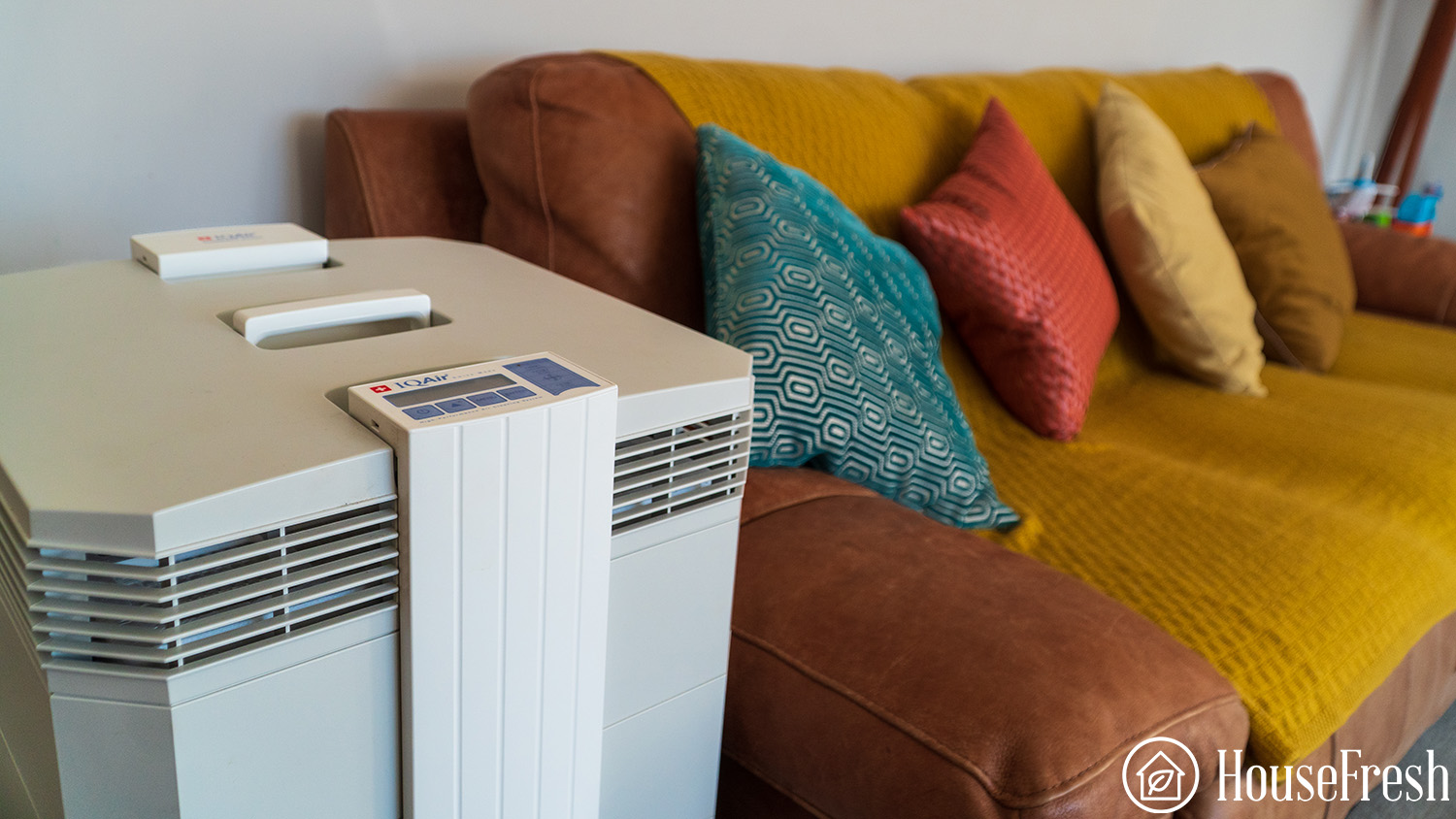
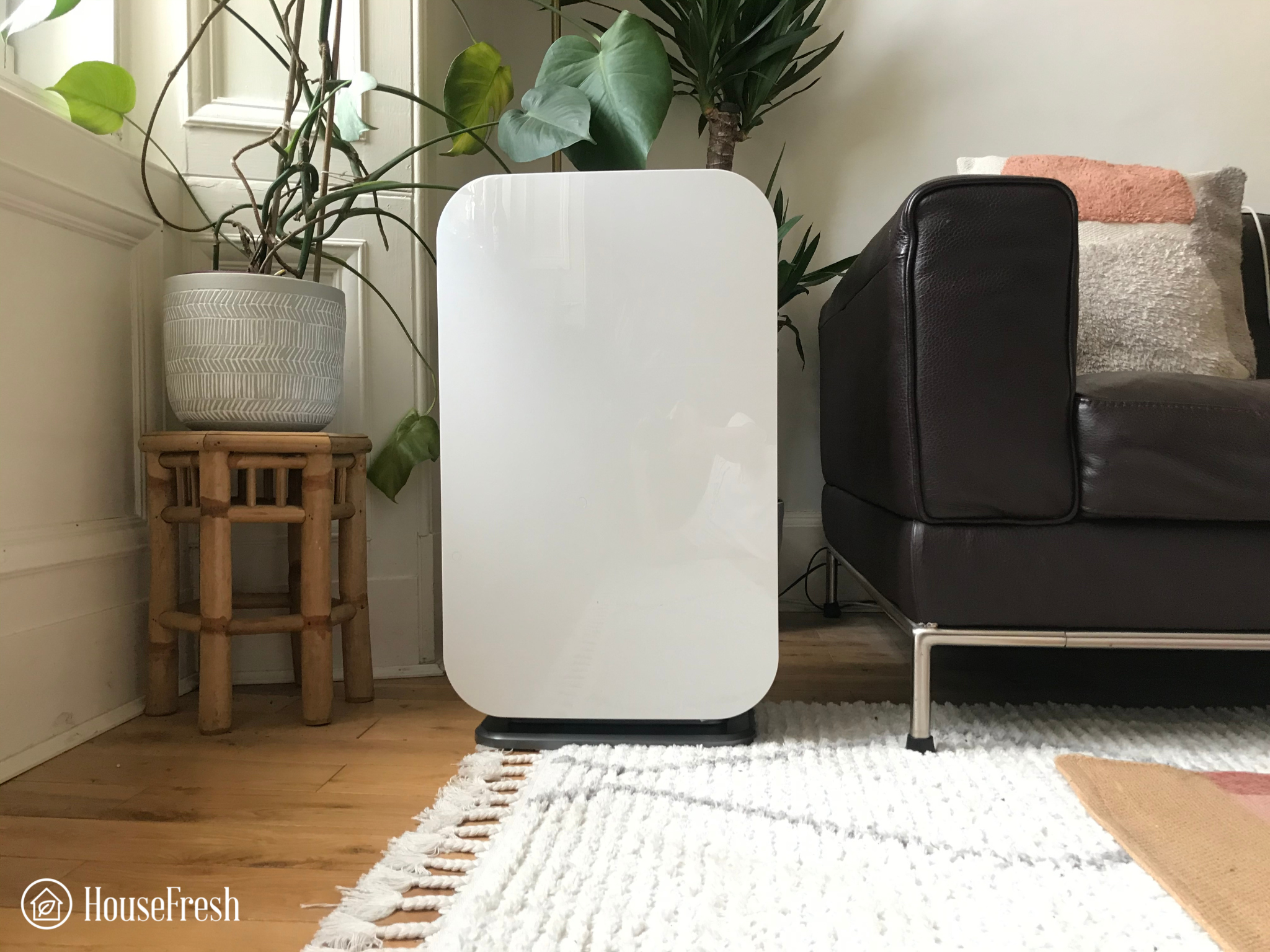
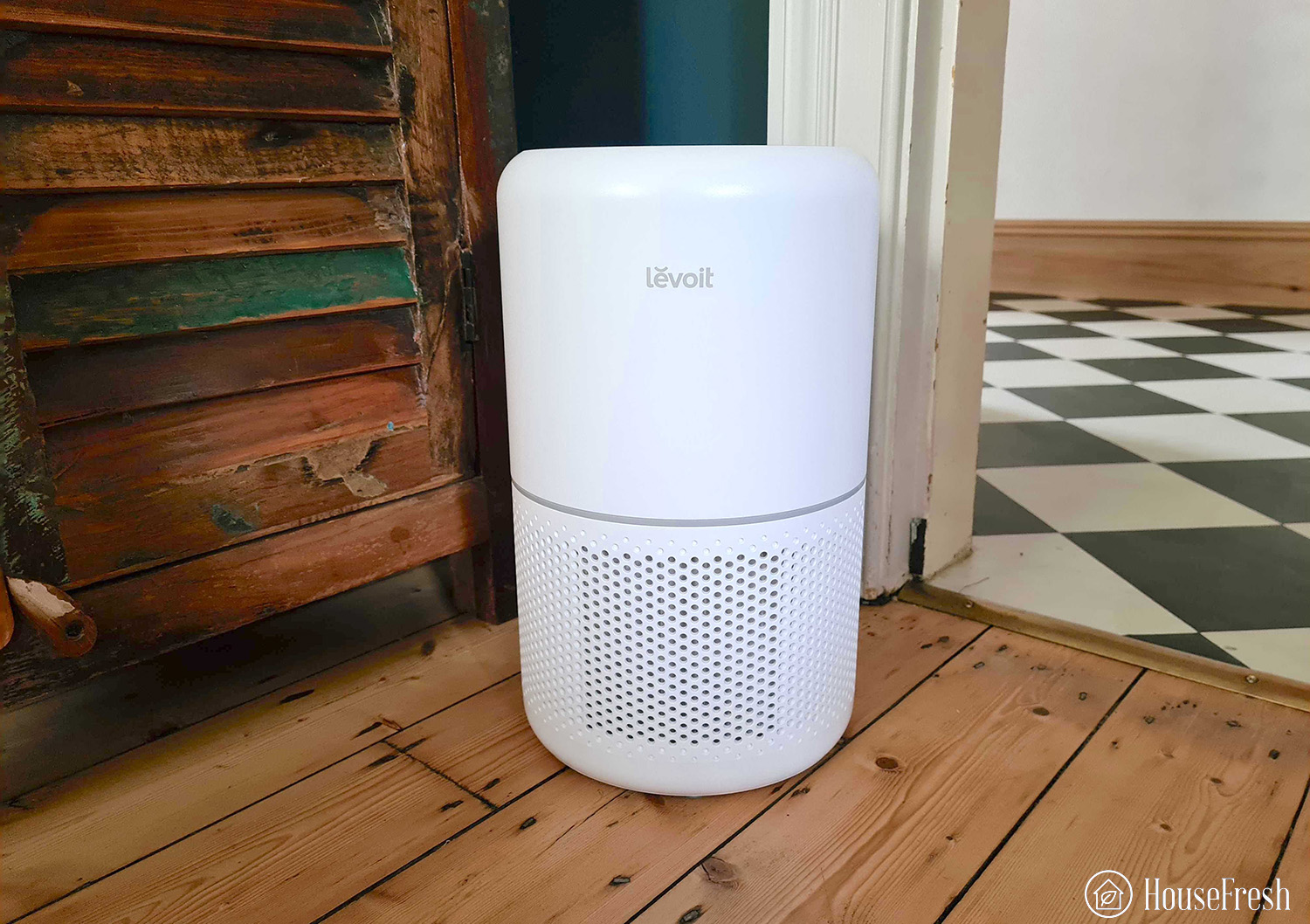
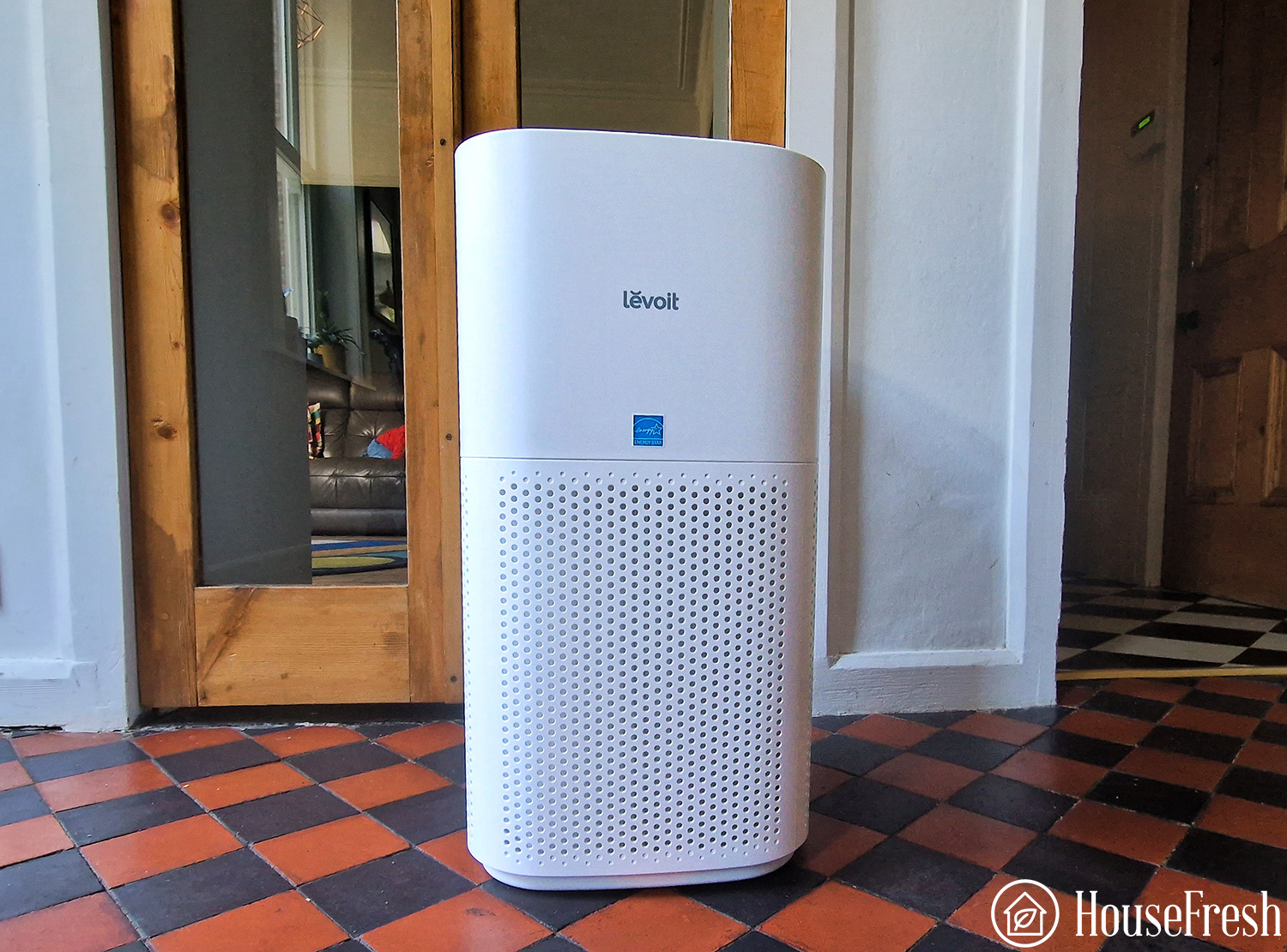
How to choose an air purifier: 10 things you need to know

HouseFresh Air Purifiers Tests

Are you looking for an air purifier for your home?

First, I want to let you into a secret: Many of the air purifiers available on the market right now are underpowered and overpriced.

With this guide, I will help you avoid the thousands of duds on Amazon, so you can find a device that works for your budget and air quality issues.

Since 2020, I have tested over 70 air purifiers and performed in-house experiments, looking at air cleaning performance, sound level generation and energy usage.

That is how I have uncovered 10 tips that will help you choose the right air purifier for your home.

1.  CADR, CADR, CADR

Unlike most appliances, an air purifier’s work is hidden from the naked eye. This allows manufacturers to say all sorts of things to make you choose them over competitors, but the main thing you need to look out for is the CADR score.

CADR stands for Clean Air Delivery Rate and is the result of a lab test result from the Association of Home Appliance Manufacturers. They test how well each device does removing dust, pollen and smoke and provide a score from 0-400 cfm 

You could say that CADR is the gold standard for testing air purifiers. 

As a very rough guide:

  • Small rooms of less than 200 sq. ft. will need a CADR of at least 150 CFM
  • Medium-sized rooms of up to 400 sq. ft. will need around 260 CFM
  • Larger spaces over 400 sq. ft. will need more than 300 CFM

Use our calculator to find out what CADR score you should be looking at depending on the size of your room:

The largest of spaces will need devices with very high CADR scores, like the Smart Air Blast with a whopping 559 CFM. 

Tips
  • You can use multiple devices in a large space. You just need to add their CADR scores together.
  • EnergyStar hosts a directory of publicly available AHAM test results. Before buying an air purifier, check out their website to confirm CADR scores for any air purifier.

2. Bigger is generally better

While it’s good to focus on finding an air purifier with the right CADR score for your space, you should know that CADR tests are run on the device working at full speed. 

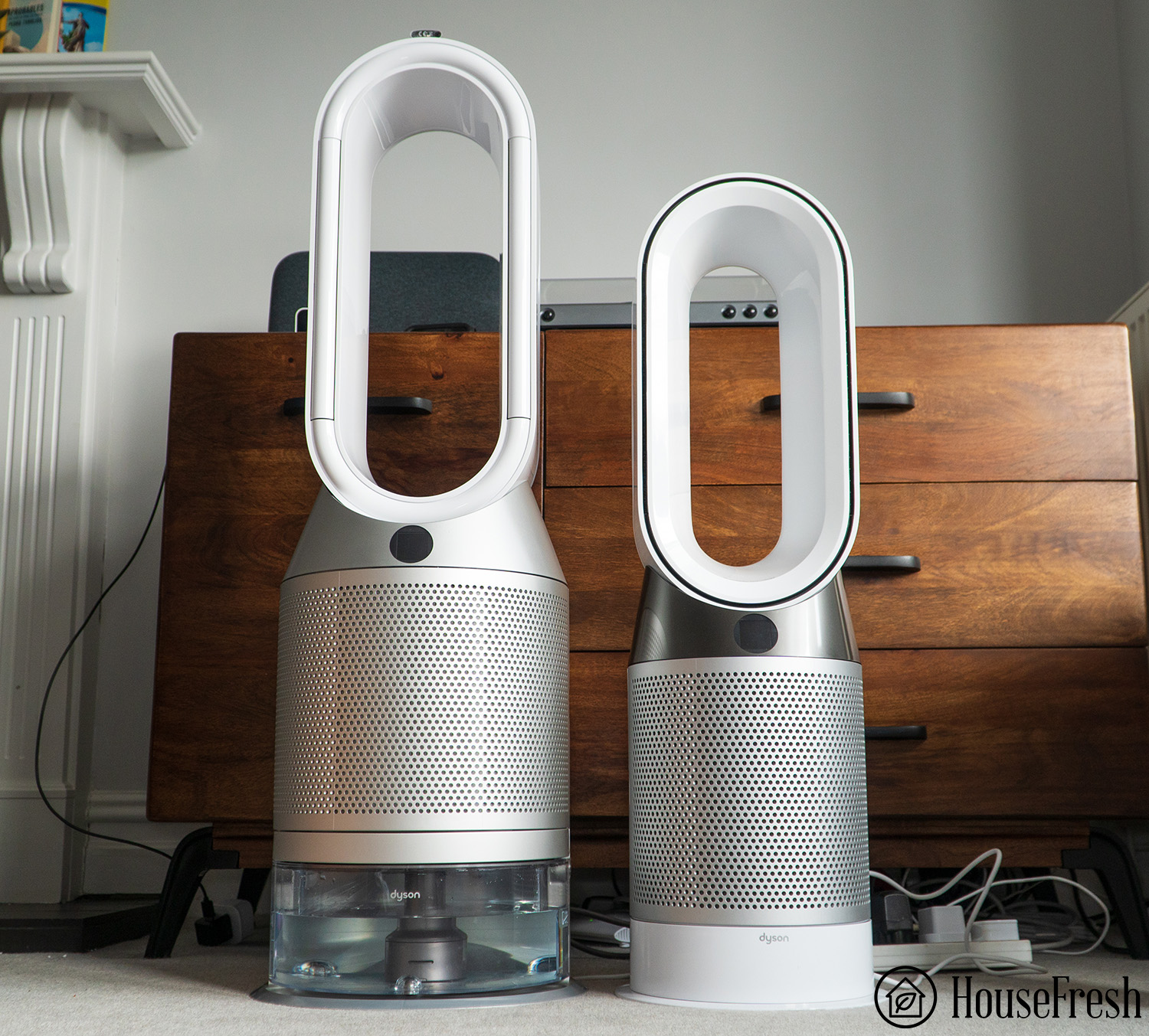
When running at full speed, the vast majority of air purifiers are loud, generating 55 to 65 decibels of noise. That is why, in most cases, you are better off getting the biggest device you can live with so you can use it at lower fan speeds instead. Mechanical filters like HEPA work by pushing air through them using a fan. The bigger the fan and filter, the higher the air-cleaning performance.

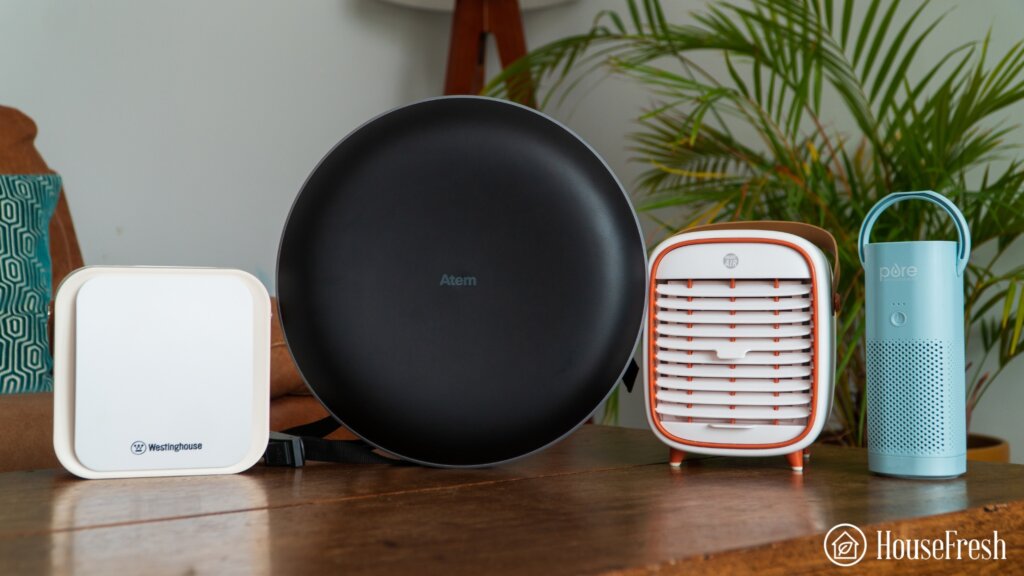
While smaller devices might seem like a better choice for your budget, you will need to run them at their highest fan speeds for them to do a good job. And when running at top speed, these small devices will be louder than you would like.

Not only that, we find that smaller air purifiers often have the same or higher long-term running costs as larger units due to how often you need to replace the filters and how much electricity they pull when running at top speeds.

Tip

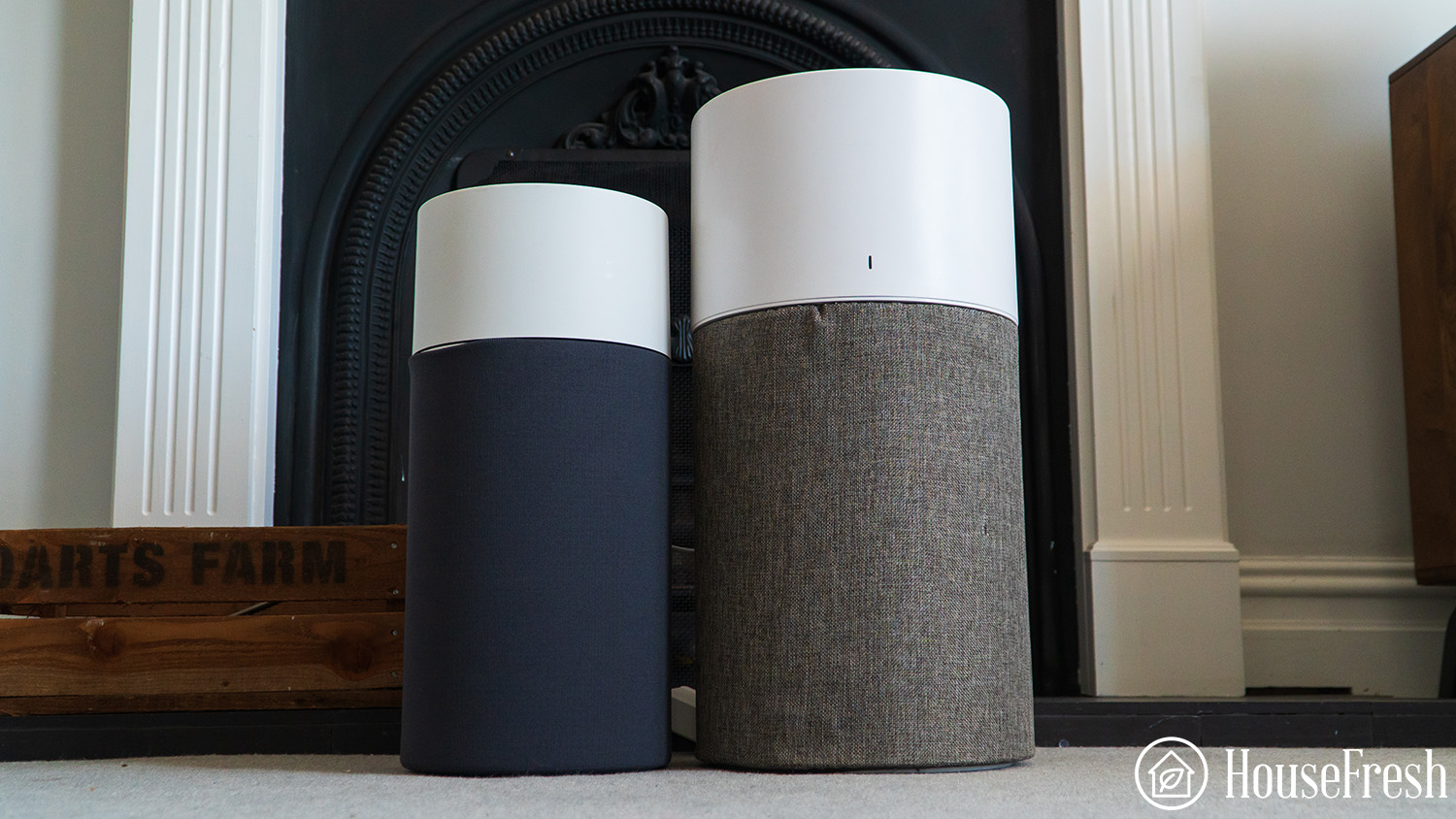
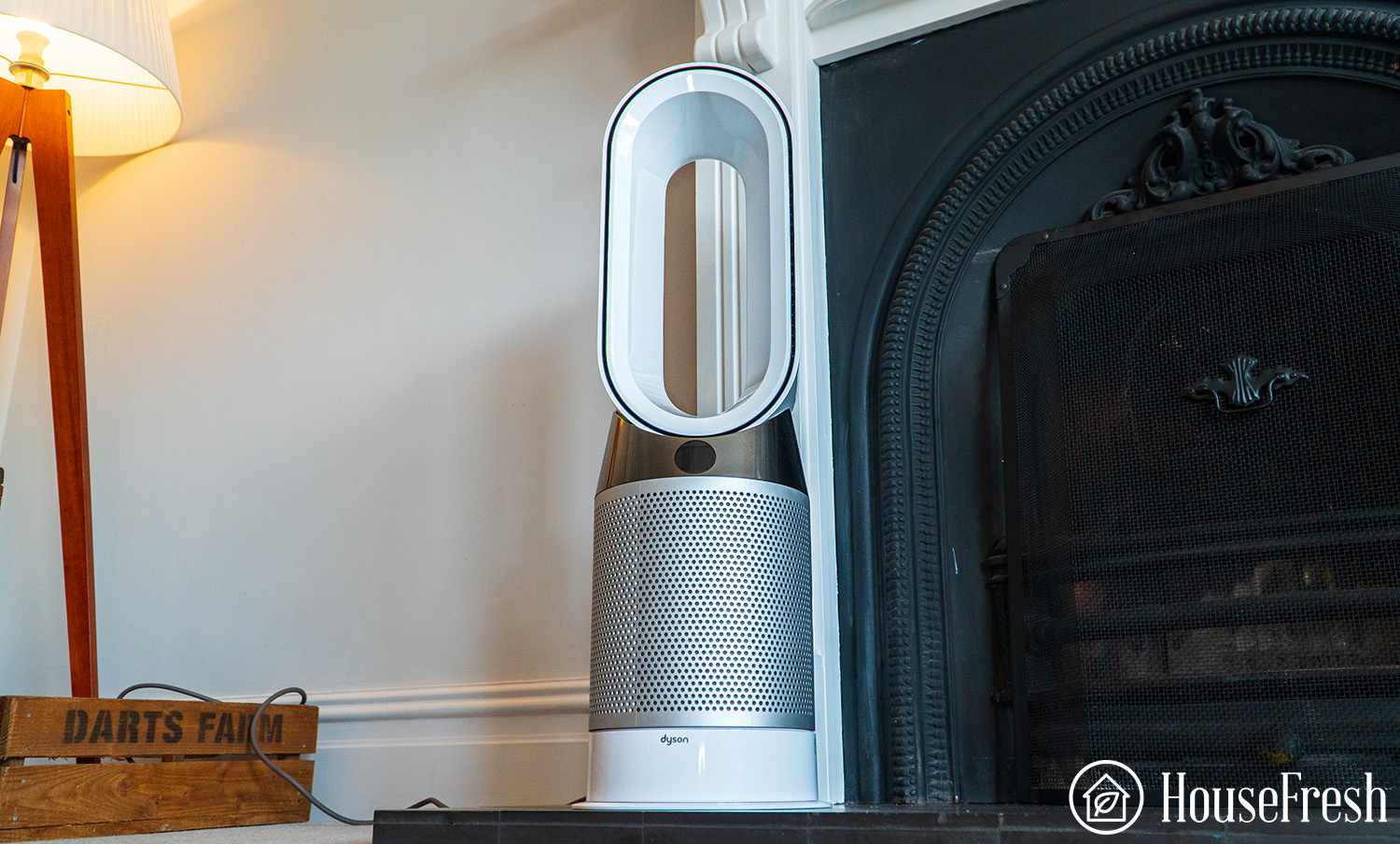
If you can, try to get at least a medium-sized device like the Levoit Vital 200S or the Winix 5500-2 with a dust CADR of 240-260 CFM. While they cost a little more to buy, you can run them at lower speeds in smaller rooms – and they will cost the same or even less to run over the long term.

3. Don’t trust room size recommendations

If you visit Amazon or any retailer’s website, you will see that every air purifier seems to be able to clean the air in rooms bigger than 1000 sq. ft.

You might think you can just get one of these cheaper, smaller devices to keep a large room clean, trusting ‘recommended room size’ figures from manufacturers. The problem is that they are using a marketing trick.

The room sizes quoted by retailers (and parroted by big media sites in their best-of lists) will be based on calculations the manufacturer did based on just one air change per hour, but cleaning the air once per hour just isn’t useful in the real world. 

In fact, the EPA recommends 4.8 air changes per hour, which will result in a much smaller room size than the one quoted in manufacturers’ marketing materials.

There are no regulations on room size recommendations, so brands can do this without getting into trouble.

Tip

When looking at product specifications here at HouseFresh, you can be confident that recommended room sizes are based on 4.8 air changes per hour. The same can be said for the Association of Home Appliance Manufacturers, so be sure to check with them before trusting if an air purifier is powerful for your room size. 

4. Look for models with a removable pre-filter

All air purifiers come with pre-filters that capture the largest particles, such as pet hair and fluff floating in the air.

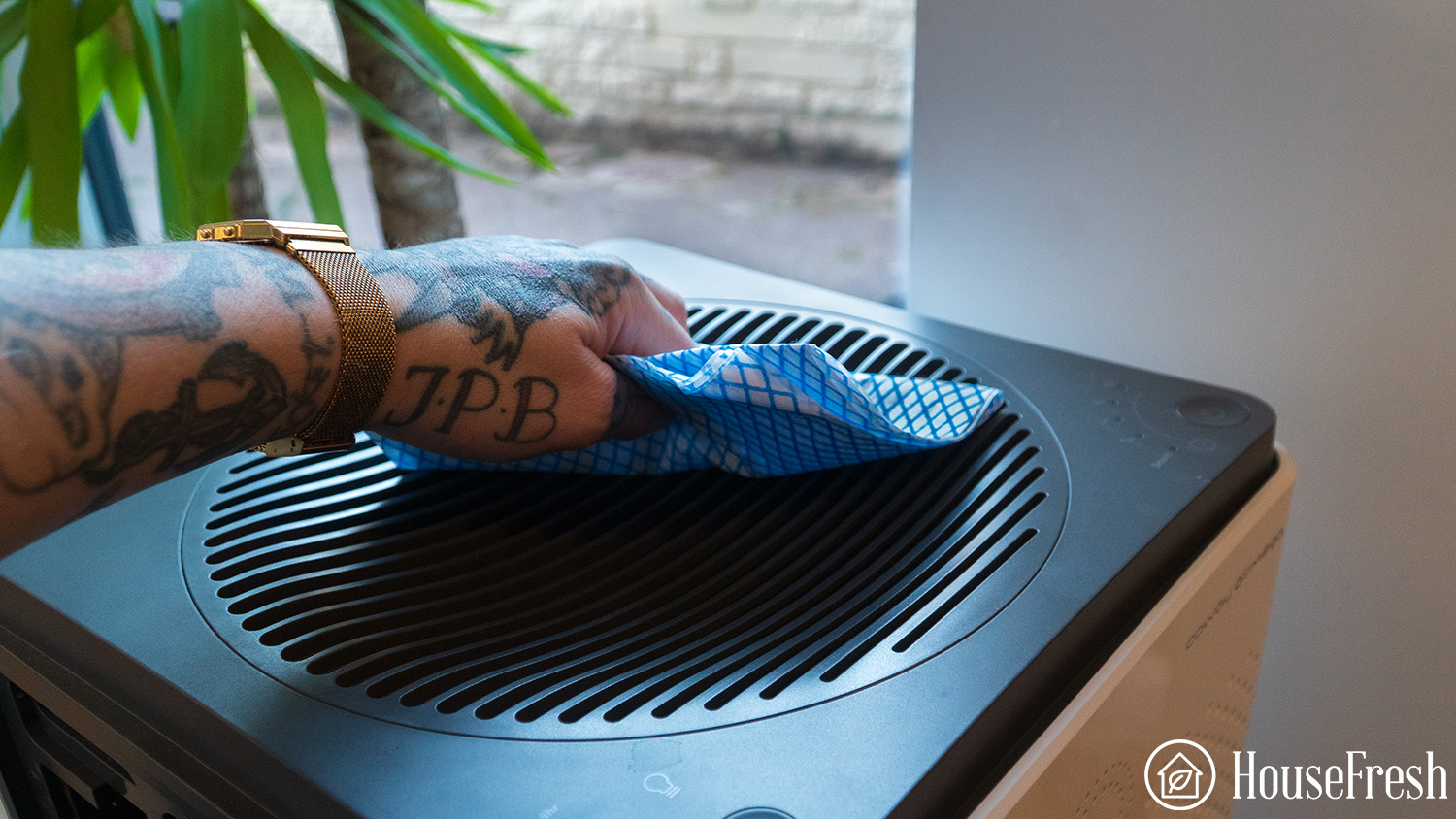
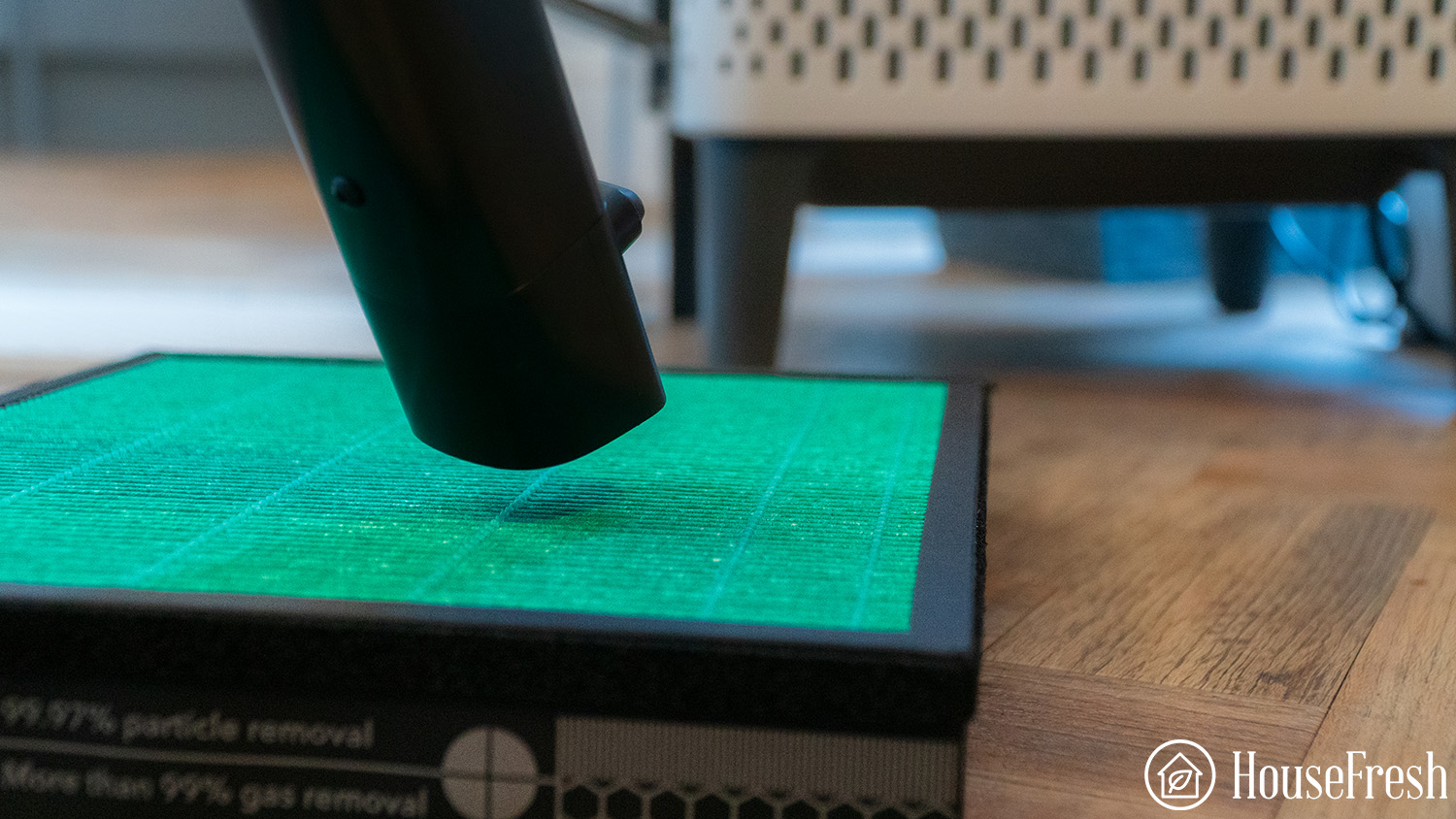
The pre-filter protects the main filters, so if you vacuum and clean your pre-filter regularly, you will extend the life of your main filters AND you will ensure they keep cleaning the air as efficiently as possible.

A dirty pre-filter can make a HUGE difference to the performance of your air purifier. Believe it or not, it can reduce air cleaning efficiency by 40%!

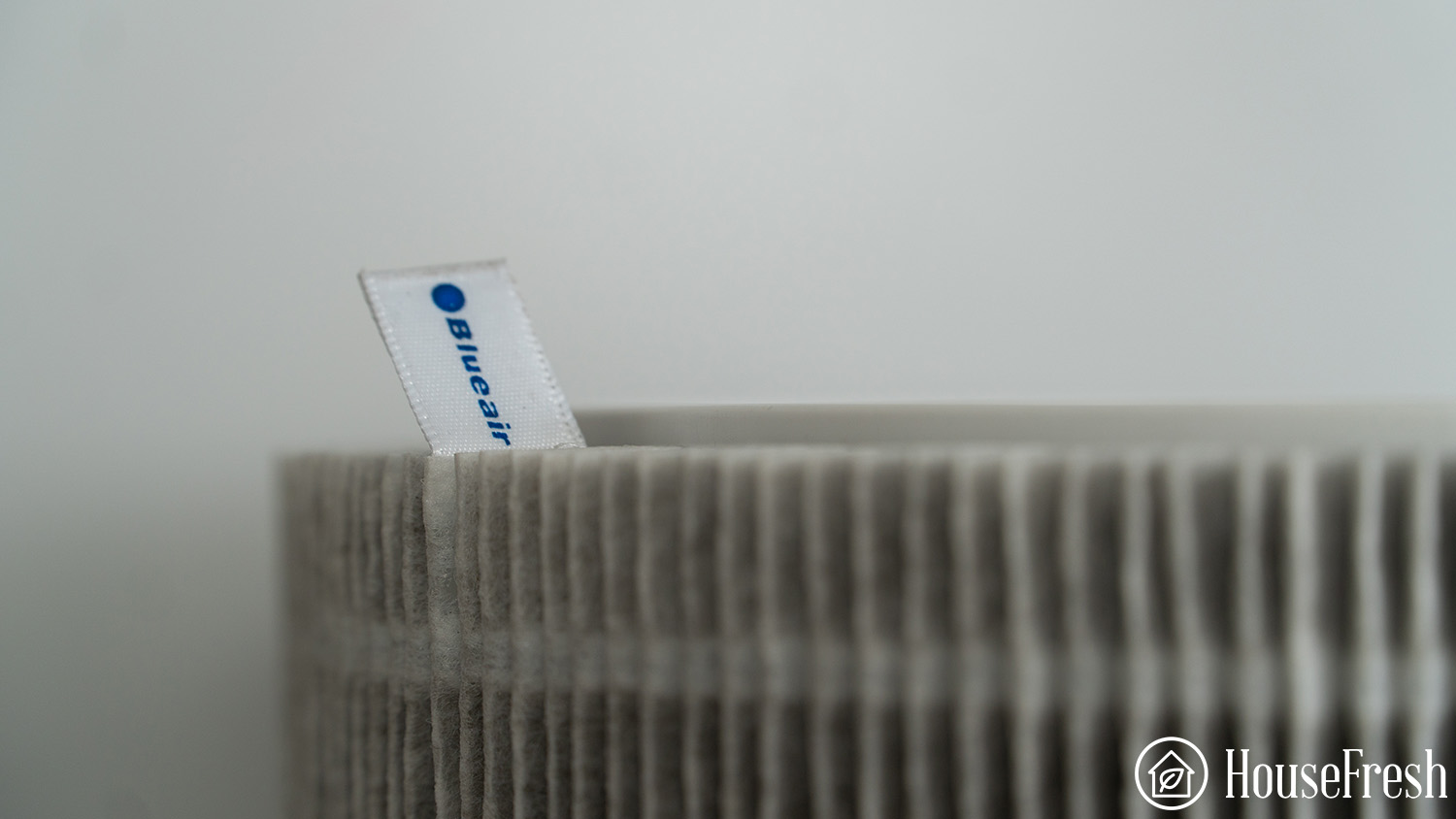
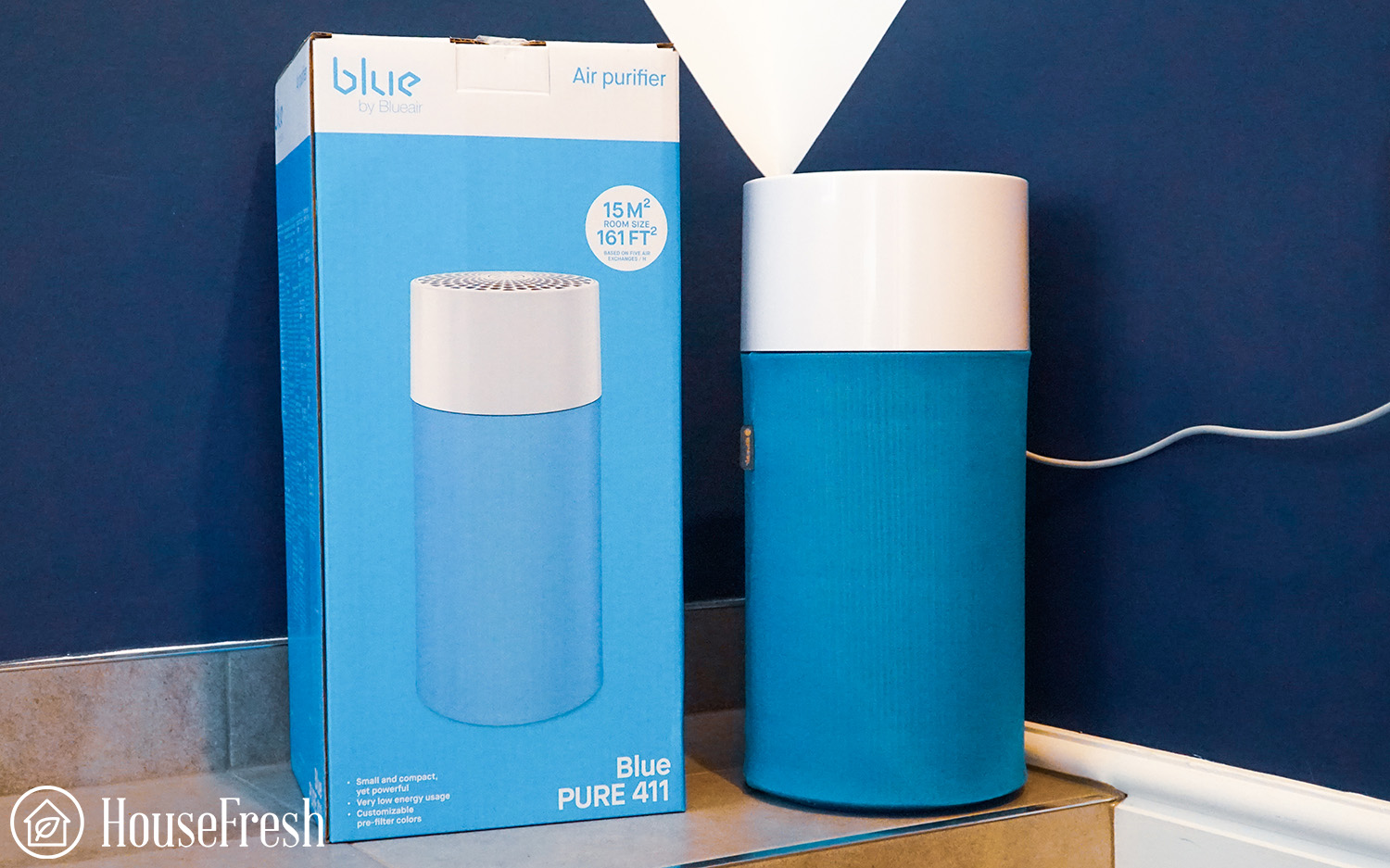
The problem is that many air purifiers (like those from the Levoit Core series) have the pre-filter attached to the main filter.  This makes them difficult to clean, leading to needing to replace the whole filter sooner than you’d like.

So try to find an air purifier with a removable pre-filter instead so you can stay on top of cleaning it regularly without hassle. Devices that allow you to remove the pre-filter make the job much easier and increase your likelihood of doing it. 

Tip

If you’re reading this and you can’t remember when you last cleaned your pre-filter, then give it a clean now! Your lungs will thank you for it.

5. Don’t worry too much about activated carbon 

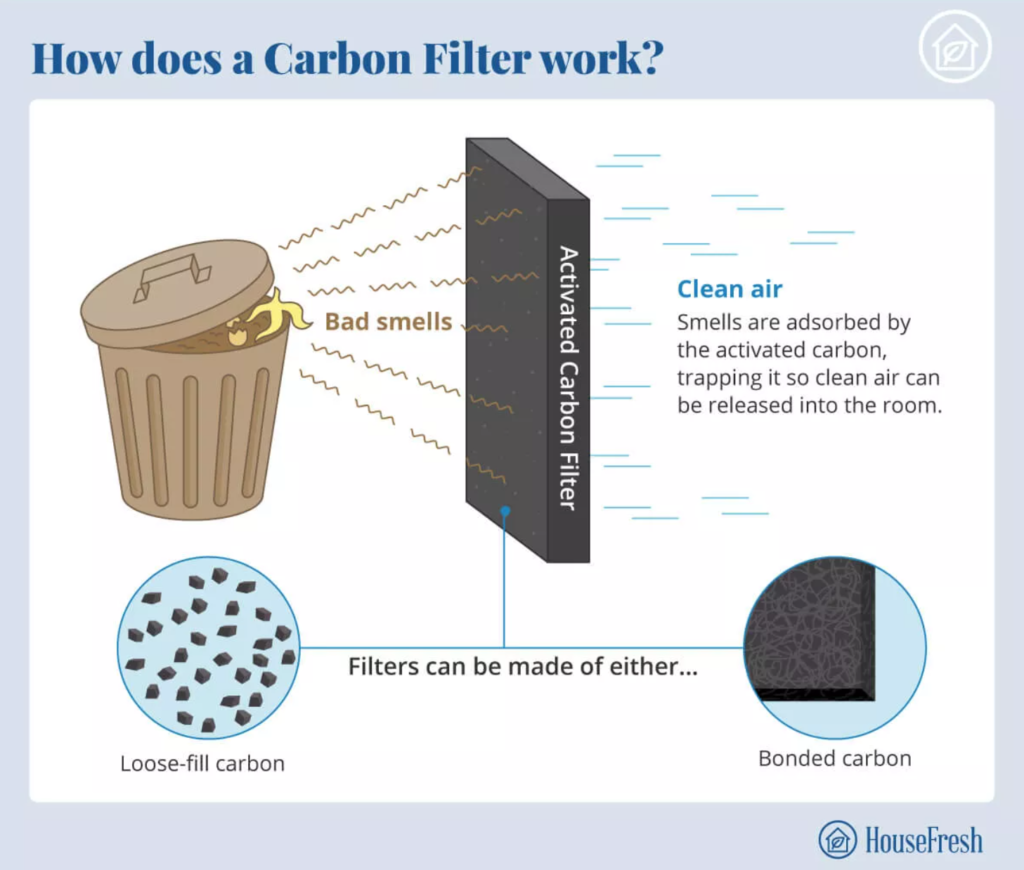
The particle filter in an air purifier can address the main issues most people face, such as pet dander, pollen or dust. This means that you don’t need to get an activated carbon filter unless you have an issue with chemical gasses like formaldehyde and unwanted odors.

Now, you will notice that most air purifiers come with activated carbon filters anyway…

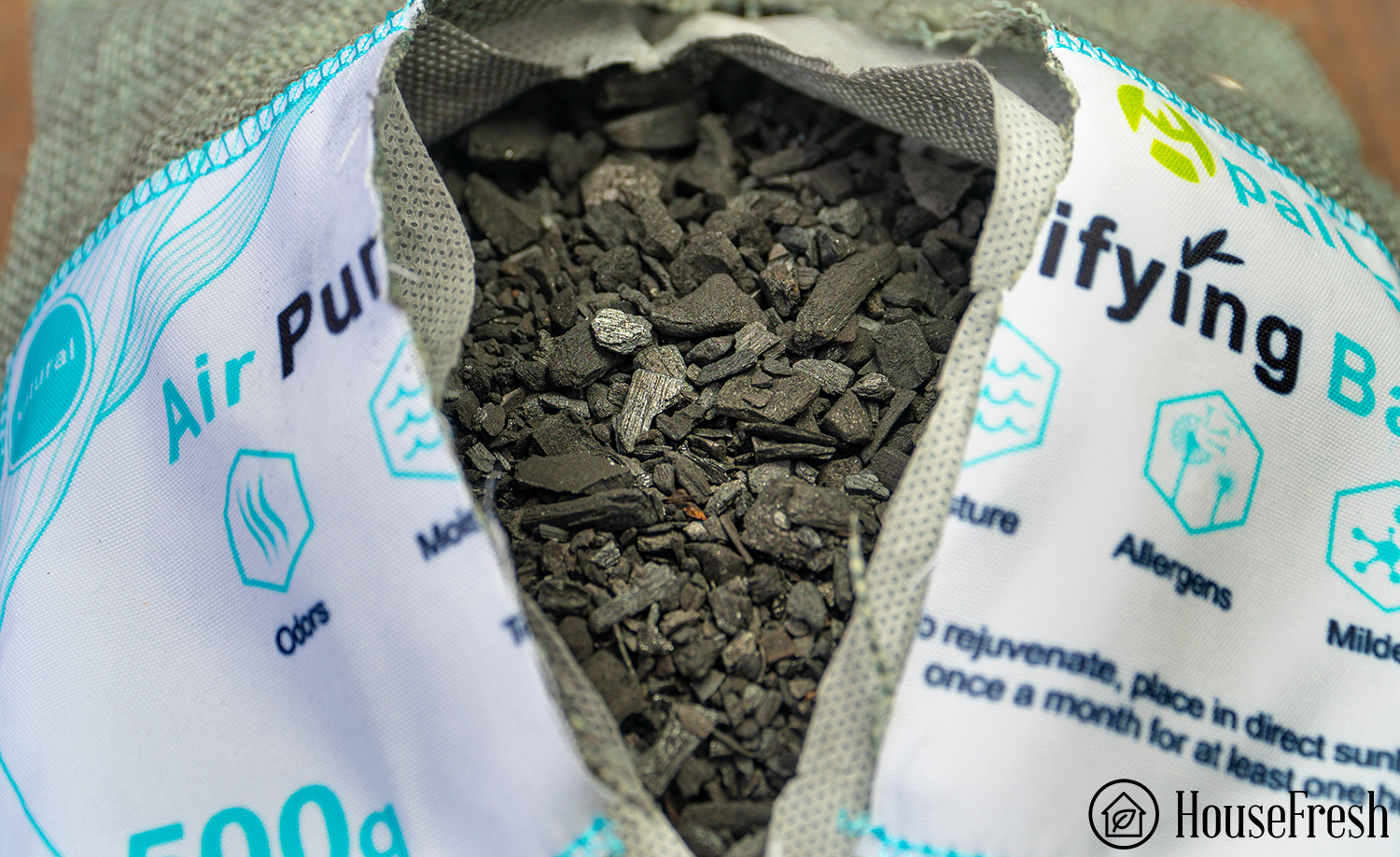
While cheap carbon filters can remove mild, everyday unwanted smells, most have such small amounts of carbon that they will quickly become saturated if you have a serious issue with VOCs.

So if you have a serious issue with odors, you should look for air purifiers with very large carbon filters, like: 

However, be aware that replacement filters for both of these units cost A LOT. Also, these are both energy-hungry devices, AND they are not needed for most uses.

Carbon filters reduce particle removal efficiency, so if you don’t need them, you should just stick to the particle filter. 

  • Smart Air is great for this, as the carbon filter is always optional.
  • Levoit bonds its carbon filter to its particle filter, which is one of the major downsides of its devices. Once the carbon stops working, you will be forced to replace the whole filter.
  • Winix and AirDoctor units work with separate filters for particles and carbon. 
Tip

The best cheap device with decent carbon filters we have seen is the Winix 5500-2. This unit has washable carbon filters that use pelleted activated carbon, but it only comes with 0.5 lbs of carbon, so it is not enough for serious issues with odors and gases.

6. HEPA is not a requirement for a good air purifier

HEPA is a rating system for measuring the efficiency of air filters, but it is not the only rating system. You also have MERV, MPR, FPR and ISO ratings.

However, the vast majority of commercial air purifiers have adopted HEPA ratings, so that is why you will probably have heard about HEPA way more than the other acronyms.

Here’s the thing though:

The efficiency of an air purifier has less to do with the grade of its filter and more to do with its CADR (remember the first point in this guide?).

The highest the CADR rating, the more efficient the air purifier is at cleaning the air – this explains why a Levoit air purifier can clean the air super fast even though its filters are not HEPA-grade.

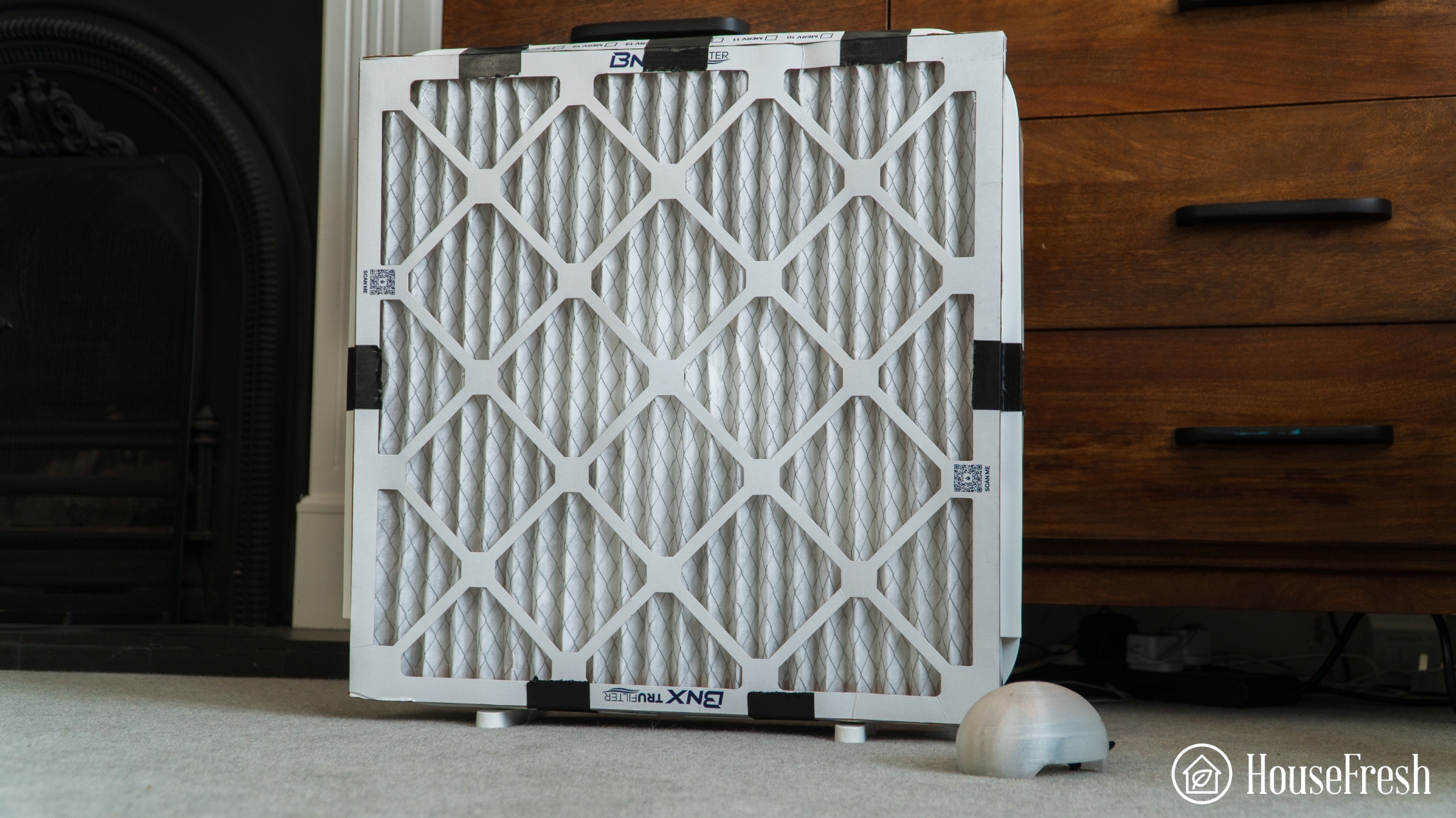
What is more, we have recently started testing DIY air purifier kits that use non-HEPA-grade HVAC filters, and we have been blown away by their performance! Both the Corsi-Rosenthal box and the Nukit Tempest use MERV 13 filters and outperform many HEPA-grade air purifiers we tested that cost much more.

So, don’t get caught up in whether an air purifier comes with True HEPA or H14 HEPA filter. Instead, pay attention to its CADR rating.

7. Don’t forget to check noise levels

If you are like me, you don’t want a noisy turbine running when you’re watching a movie, concentrating in your home office or, more importantly, when you’re trying to sleep.

That is why I always recommend paying attention to noise levels generated, as you are unlikely to want to use your air purifier all the time if it’s too noisy.

However, you need to be wary of manufacturer specifications because many brands will just state noise levels at the lowest fan speed, which, in the case of small air purifiers, is a fan speed that will take FOREVER to clean the air.

I have also been especially impressed by the new generation of DIY air purifiers that use PC fans. In our testing, we found that they perform much better than standard air purifiers running at a similar sound level and cost much less over the long term.

While they are not yet plug-and-play, if you are open to putting in the time to build them, you will end up with a device that cleans the air well at a much lower sound than you would get with a traditional air purifier.

Tip

Some of the quietest shop-bought air purifiers we have tested are those produced by Smart Air, Levoit and Alen.

8. Decide if you want an ionizer 

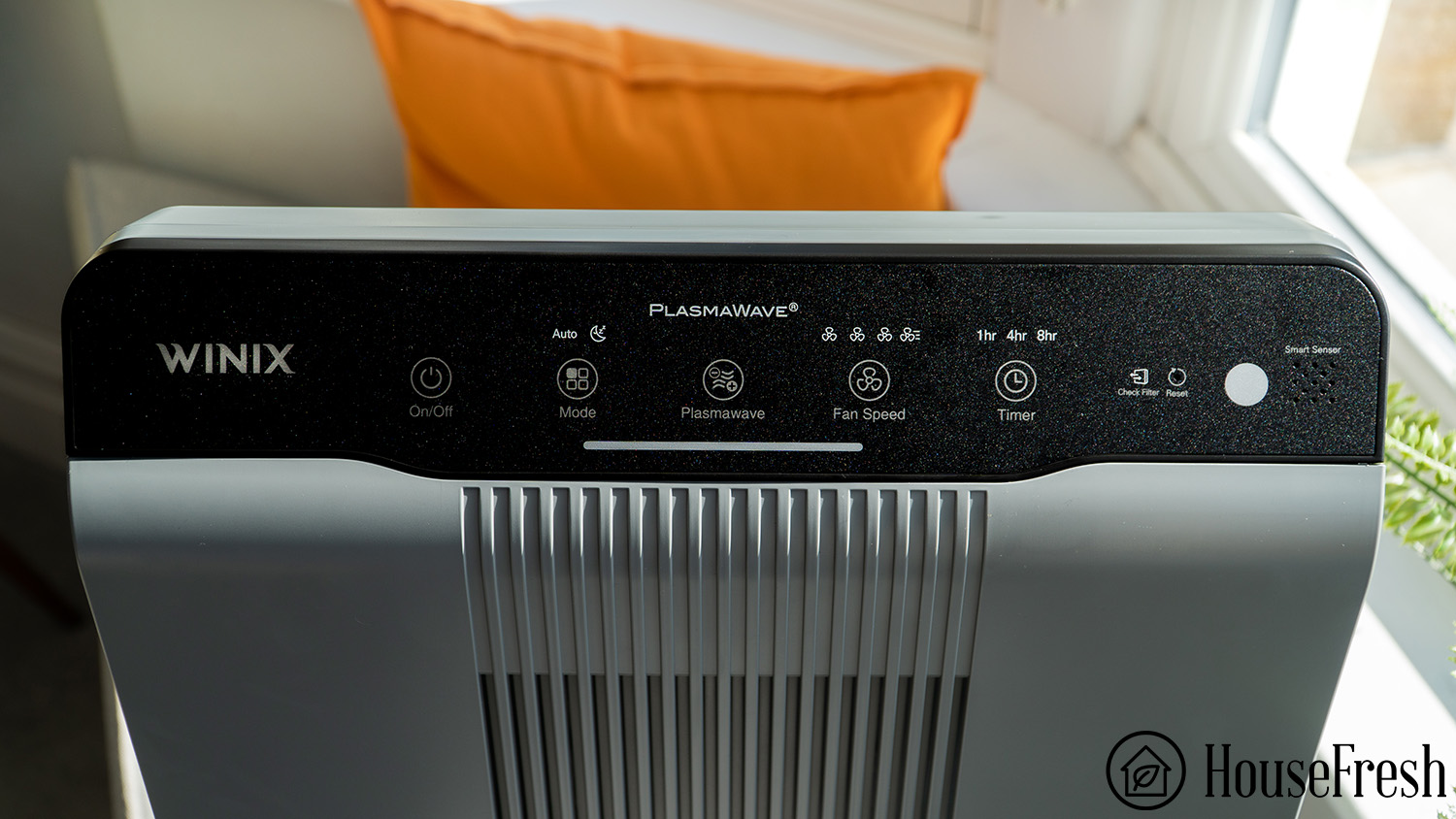
Ionizer air purifiers have a bad reputation after companies in the early 2000s sold devices like the Sharper Image Ionic Breeze, which was shown to lead to ozone and VOC build-up. Perhaps that’s why air purifier manufacturers have opted for renaming ionizer technology under different brandable terms such us PlasmaWave by Winix or HEPASIlent by Blueair.

The good news is that in 2010, the CARB certification was introduced in California to guarantee that new air purifiers with ionizers are being tested for ozone emissions. This means that modern air purifiers with ionizers shouldn’t emit ozone and make the quality of your air worse.

However, ionizers can lead to dust buildup around the air purifier and there are people who have sensitivities to negative ions. I have also received emails from multiple readers who found their respiratory issues getting worse after introducing an ionizer air purifier into their homes.

Tips
  • If you want to choose a unit with an ionizer to boost the work of the filters, I recommend choosing a model with an on/off ionizer function. Manufacturers like WInix, Coway and Alen offer this. 
  • Blueair units don’t allow you to switch off the ionizer, so avoid Blueair devices if you believe negative ions could affect you.

9. You might not need smart features

Modern air purifiers come with all sorts of bells and whistles and, in the majority of cases, these bells and whistles add up to the price.

Before buying a pricey smart unit with app support and all sort of modes, take some time to decide if you will truly need all those extra features.

Features like auto-mode and scheduling can be useful in some situations and use cases. Personally, I prefer having an auto-mode in my kitchen air purifier, for example. But when dealing with serious issues such as outside pollution, you should keep your device running all the time, so these smart features are likely not worth paying extra for. 

The same can be said for those wanting to tackle air quality issues related to wildfire smoke, allergies or reducing the risk of airborne transmission of viruses. In all those cases, you will want to keep your air purifier constantly running at a sound level that doesn’t create a problem.

10. Stick to brands that have been around for a while

If you don’t want to build your own DIY device, a good rule of thumb is to stick to brands that have been around for a while.

Since 2020, many new brands have entered the market, promising the world, but many have failed to live up to the hype in our testing.

To make things simple, stick to long-standing brands like IQAir, Coway, Winix, Smart Air, Alen, Levoit, Austin Air and Honeywell. These brands have been making air purifiers for many years and are far less risky than one of the new brands that have yet to prove themselves. 

Sadly, the fact that you can’t assess whether an air purifier is doing its job with your naked eye means that bad actors can get away with selling underpowered, overhyped devices that most consumers won’t realize are ineffective. 

Final thoughts

I hope these tips help you choose the right air purifier for your specific situation and budget. 

If I had to condense all these tips into just three key takeaways:

  1. Use the AHAM directory to find air purifiers that have been independently tested by them. Check the CADR and room size recommendation for 4.8 air changes per hour before you buy an air purifier.
  2. Don’t get caught up in whether a device comes with a HEPA filter or an activated carbon filter. There are many other effective particle filters besides HEPA, and you might not need activated carbon unless you are dealing with gases and VOCs.
  3. Get the biggest air purifier you can afford. You will be able to run it at lower fan speeds, and it will do a much better job than a small unit without generating a ton of noise.

If you want to know which specific models I think are the best this year, be sure to check out our list of the best air purifiers you can buy right now.

Let me know what you think, or share any other tips I missed in the comments below. 

How to clean your air without an air purifier

Aranet4 Home Sensor Room2 1

At some point in everyone’s life, your home will smell stale or musty like an old locker room. You might also have concerns about pollutants in the air or odors from mysterious sources.

An air purifier with a HEPA filter is still the best way to clear pollutants from your home. However, if you don’t have an air purifier and need to banish the stink fast, there are some ways you can instantly freshen up the air. Most of these involve ways to increase airflow and reduce pollutants, but we’ll also look at common clean air “hacks” you have to avoid.

7 ways to keep home air clean without an air purifier

You might think you need an air purifier to keep your home environment clean. While it’s still the best tool in your arsenal to combat pollutants, here are a few tips you can employ for a breath of (literal) fresh air.

1. Open windows and use fans

To reduce indoor air pollutants, the EPA recommends opening windows and doors and running window or attic fans to increase the amount of outdoor air coming in. 

If you have a window AC with open vent control, perfect. Use that. The World Health Organization states that natural ventilation is more economical and better for the environment. You save money and the Earth!

Natural ventilation is opening windows and doors, or installing solar chimneys, wind towers, and trickle ventilators to let air in naturally. Mechanical ventilation involves installing fans in windows or walls, or putting them into air ducts. Note that air purifiers complement ventilation — they’re not a type of ventilation themselves.

Tip

Be mindful of anyone in the home with allergies or asthma, as opening windows could invite allergens or asthma triggers like pollen. Use a different method to clean the air in this case, ideally an air purifier. 

2. Reduce infection risk with HVAC systems and exhaust fans 

The CDC recommends turning on exhaust fans in the bathroom or kitchen and keeping your HVAC system fans on when guests are over. This reduces the risk of infection from things like the flu or COVID-19.

According to the CDC, using pleated filters in your HVAC system can also mean more efficient air ventilation. Make sure you install the filter properly and change it every three months or according to manufacturer instructions.  

3. Control outdoor sources of pollution by weatherizing 

Open windows are effective and all, but in today’s polluted world, there are times when it’s actually better to keep them shut. For example, if there’s wildfire smoke outside, you’ll need to seal up. This is what the EPA calls “weatherizing.

Weatherization is the process of making your home ready for the winter. Most of it focuses on reducing the strain on your HVAC system by reducing the energy transfer between the indoors and outdoors. 

Weatherizing also works to keep your air clean, though. Put adhesive barrier tape around window and door frames for an extra seal against outdoor air pollutants. You might also want to use door draft stoppers.

4. Clean your home regularly, avoid biological contaminants

Biological contaminants like mold, bacteria, dust mites, pollen, and pet dander thrive in dirty homes.    

  1. The EPA recommends drying out and cleaning up any water damage immediately to avoid mold growth.    
  2. Vacuum and dust regularly.  
  3. Use allergen-proof mattress encasements for those with allergies.  
  4. Wash bedding in hot water, which is known for killing dust mites and other allergens.

5. Use fewer burning products

The EPA states that burning products are a large contributor to indoor pollutants like carbon monoxide, nitrogen dioxide, and smoke particles. Try to avoid or cut down on using candles, incense, wood stoves, fireplaces, or gas stoves. Use exhaust fans in the kitchen when cooking. Also, if you’re still smoking indoors and reading about how to keep air clean… take it outside.     

Tip

Make sure to measure radon and carbon monoxide in the home using home-based readers, as recommended by the EPA. 

A tabletop air quality sensor such as the Qingping Air Quality Monitor Pro can help you keep an eye on the levels of VOCs, particulate matter (PM2.5, PM10), CO2, and humidity at home.

6. Don’t use dangerous cleaning chemicals

Many cleaning products exude fumes that aren’t safe to breathe in, according to the Agency for Toxic Substances and Disease Registry. The agency recommends several ways to clean the home safely:    

  1. Open a window or use a fan to ventilate the area while cleaning.
  2. Store cleaning products in a safe place with the original container tightly sealed.
  3. Never mix cleaning products and follow instructions. 
  4. Try using natural cleaners like white vinegar and baking soda.

7. Be especially careful with new carpets

The EPA reports that some people are sensitive to new carpets. A number of issues could cause this, like the chemicals used during manufacturing, pollutants picked up on the way, or any number of things.

  1. Choose carpets carefully, reviewing possible emissions and low-emitting adhesives.  
  2. Ventilate the area during and right after installation.
  3. Leave the area during installation if possible. 
  4. Unroll the carpet in a well-ventilated area.
  5. Talk to the carpet retailer if there are persistent odors from the new carpet.

Online advice that’s a waste of time

Cleaning “hacks” are usually sensationalized for views and don’t actually clean your home environment properly. Not all hacks, but these ones in particular are pretty popular:

1. Using plants as a purifier. Plants are great at sprucing up your home, but plants do not clean air.

2. Masking scents with candles. People use candles for pretty fragrances, but they can actually emit chemicals that are more harmful than helpful.  

3. Spraying scented air fresheners. Air fresheners are go-to for masking scents quickly, but the University of Massachusetts Amherst states that they can release VOCs. Air fresheners can cause headaches and nausea, and irritate the eyes, nose, and throat. If you want a better-smelling home, try these green air freshener ideas instead.

4. Putting scented items in creative places. There’s a curious hack going around that states you can freshen up your home by putting dryer sheets in your air vents. Michigan State University states that certain chemicals in dryer sheets can cause allergic reactions, asthma, migraines, and trigger dermatitis in some people. Oh, and they’re also a fire hazard, according to ACE Home Services.

While these tips don’t work, getting an air purifier probably will. 

Should you get an air purifier?

Even with all these tips, you should still consider an air purifier, especially one with a HEPA filter. They’re designed to filter pollutants right out of the air and help take care of dust, pollen, mold, bacteria, and other small particulates. Follow this flow chart to see if you need an air purifier and which kind:

Do you need an air purifier Flowchart

Wrapping up

If you don’t have an air purifier, there are a number of ways you can still get clean air yourself. They mostly involve ventilating your home, but also using natural cleaning products, weatherizing the home, using fewer burning products, measuring harmful pollutants, and maintaining a regular cleaning schedule. 

If you’re short on cash, you can also put together do-it-yourself devices, like a CR Box or a DIY air purifier. These allow you to make your own air purifier with filters, duct tape, and a box fan. In this video, Danny explains how:

@thishousefresh A cheap air purifying hack that works as well as a $500 Dyson air purifier. With just a box fan, screwdriver, scissors, duct tape and any HVAC filter you can make your own air purifier than can remove dust, pollen, mold spores and bacteria. #airpurifier #cleanair #lifehack #easydiy #homediyideas #cleantok #diyprojects ♬ original sound – HouseFresh

SOURCES

How to fix the most common Coway air purifier problems

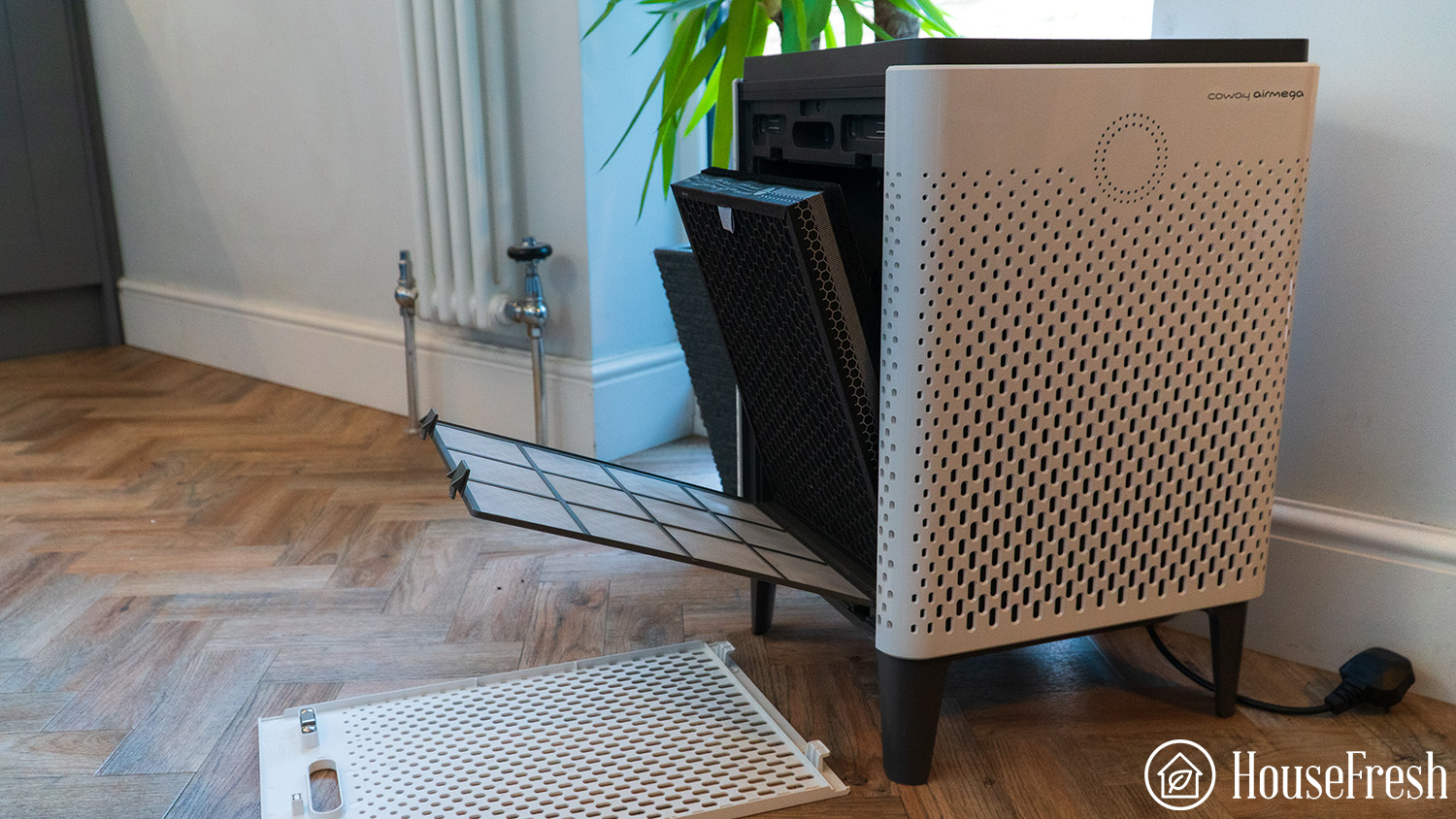
How to Clean an Air Purifier Remove interior parts and filters

Coway is a South Korean brand that’s been in the purifying business since 1989. It began manufacturing water and air purifiers because the company believes “water and air are the most essential components of our life,” according to its website. They’re onto something, aren’t they?

When it comes to its air purifier, Coway has an ample portfolio of functional yet elegant units that have granted them several design awards. One of their latest air purifiers, the Airmega 150, is even sold in the MoMa’s Design Store

But its aesthetics don’t compromise the air purifiers’ performance. One of their insignia units, the Airmega AP 1512HH Mighth, is still a strong player among the air purifiers we’ve tested at HouseFresh. Another one of our favorites is the Airmega 300.

However, your Coway air purifier can eventually malfunction like any other appliance.

Luckily, Coway’s units have the user in mind and are easy to fix when they malfunction. Below are some issues you might face and how to troubleshoot and fix them.

Problem 1: My Coway air purifier won’t turn on

This is a fairly all-encompassing problem we may encounter with all sorts of home appliances.

Of course, we implore you to check if the unit is actually plugged in first.

If it is, then here are some things to consider checking:

❓Is the outlet working correctly? 

It’s more common than you think to have an old, faulty outlet that affects power output. Also, using a power strip with too many plugged devices could overcharge the circuits and damage your Airmega. Whenever possible, use a dedicated outlet for the unit.

❓Are the air purifier covers firmly closed?

As a safety precaution, the unit won’t turn on if any cover isn’t closed properly. Make sure it’s well-fastened. 

Coway Airmega 250 Logo

❓Is the power cord in good condition? 

Maybe a mischievous pet decided to chew on it. Or the cable was excessively bent or twisted for a while. Accidental tripping over it could also lead to wear and tear. 

Inspect the cord and check the sections where it attaches to the unit on one end and the plug on the other. If it’s damaged, you’ll probably need to replace it.

Problem 2: The unit keeps turning off by itself

Air purifiers keep our indoor air clean and free of any harmful pollutants. They’re designed to run continuously, so a unit that keeps turning off can be problematic and annoying. If your Coway Airmega is acting up like this, here are a few things to try out.

❓Is the ECO mode on?

In Smart or ECO mode, the unit will automatically turn off after its sensors detect constant healthy air quality. Coway units do this to reduce energy consumption; the time may vary from 10 to 30 minutes of good air quality, depending on the unit. Switch to a different program if you rather have the air purifier working constantly. 

Remember that some models have smart and eco modes combined. For example, the Coway Airmega 400 has no way to turn off eco mode while also keeping the unit on auto. 

❓Is the cover lid in place?

If the unit’s covers are loose for over two seconds, it’ll stop operating. Make sure the cover (or covers, depending on the model) is properly attached. 

❓Is the unit plugged into the correct power rating?

Your air purifier might randomly turn off if it’s receiving the wrong voltage from the outlet. Any values higher or lower than what the model is designed for will cause malfunctioning. Here’s a list of the Coway units and their rated voltage:

Coway Airmega modelPower supplyRated voltage
Coway Airmega AP-1216L120 V – 60 Hz55 W
Coway Airmega AP-1512HH120 V – 60 Hz77 W
Coway Airmega AP-1512HHS120 V – 60 Hz80 W
Coway Airmega 200M AP-1518R 120 V – 60 Hz82 W
Coway Airmega 150120 V – 60 Hz35 W
Coway Airmega 160120 V – 60 Hz35 W
Coway Airmega 230120 V – 60 Hz60 W
Coway Airmega 240120 V – 60 Hz60 W
Coway Airmega 250 / 250S 120 V – 60 Hz64 W
Coway Airmega 300 / 300S120 V – 60 Hz57 W 
Coway Airmega 400 / 400S120 V – 60 Hz66 W                
Coway Airmega ProX120 V – 60 Hz65 W
Coway Airmega Aim120 V – 60 Hz33 W

❓Is the air purifier overheating?

If your air purifier is warm or hot to the touch, it could be overheating. Clogged filters, wrong voltage, extreme weather conditions, blocked air intake or outlet, or placing the air purifier close to a heat source can all cause overheating.

  1. Turn off your Coway Airmega and unplug it. Let it cool off for a while until it’s no longer hot. 
  2. Check the filter to see if it needs replacement and clean the pre-filter.
  3. Make sure no obstructions are near the air intake or objects placed over the air outlet.
  4. Also, check for nearby heating sources and ensure the unit isn’t near one.
  5. Examine the power cord to see if it’s faulty.

If everything seems in order after a thorough inspection, plug the unit back in and run it for a while.

If the problem persists, contact Coway’s customer support center; there could be a problem with the engine or motherboard.   

Problem 3: My Coway is making unusual or loud noises

Your brand-new air purifier comes with filters wrapped in plastic to protect them. If you’ve never bought one before, you may not know this. That’s why this is our starting point:

❓Did you remove the filter’s packaging?

If you didn’t, it’s not the end of the world. According to Coway, one customer used their unit for a whole year without removing it. 

The drawn air hitting the plastic wrapping will make a loud noise, yes, and the polluted air won’t be able to pass through the filter for cleaning. But the good news is the solution is as simple as removing the wrapping and replacing the filter in the unit.

❓Did anything fall inside the unit?

Small objects that accidentally drop into the unit could make a rattling sound. Air purifiers have a fair share of slots and orifices where tiny items could easily fall in.

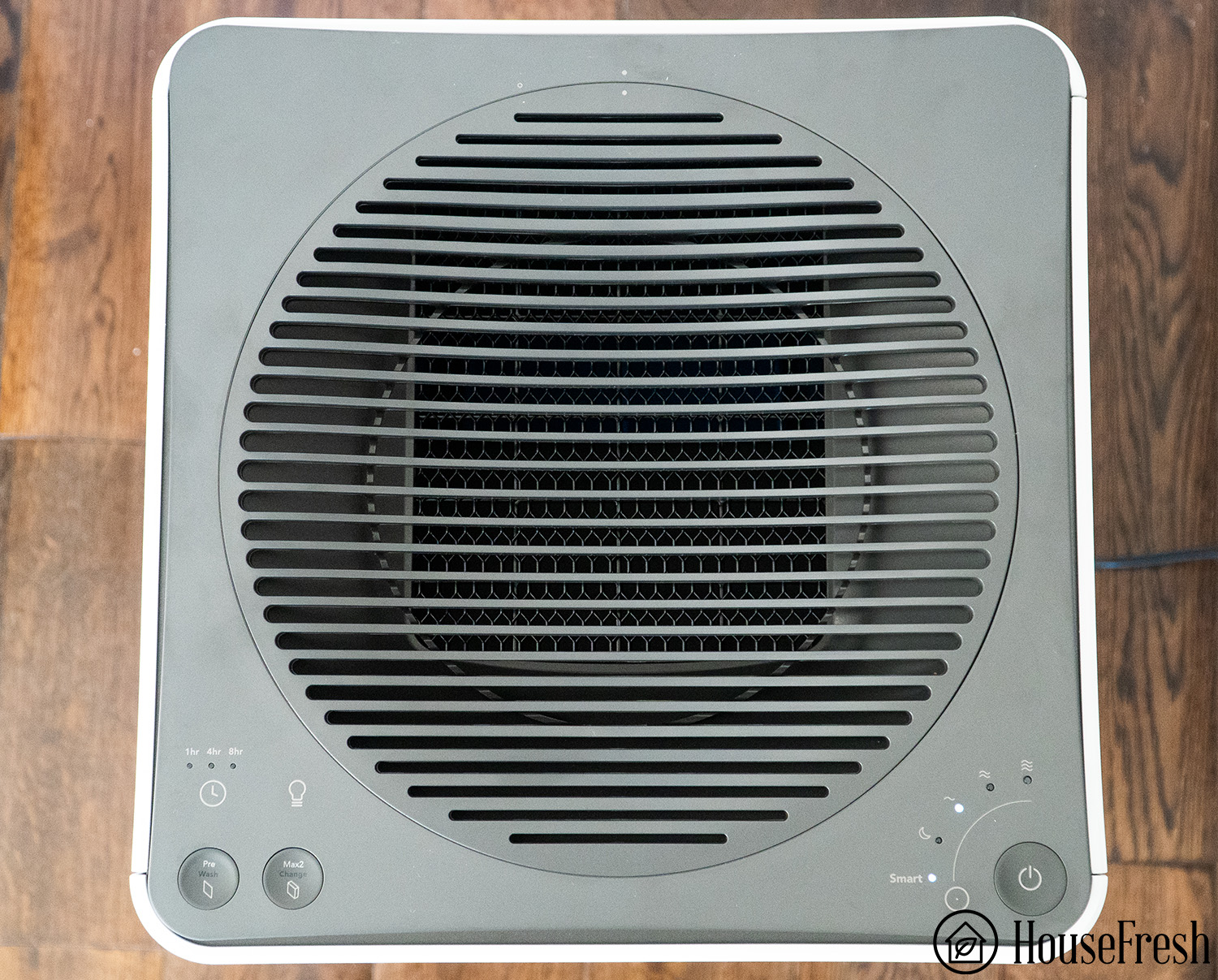
Coway Airmega 300 Top Down

In particular, the Coway Airmega 300 and 400 have a widely spaced grid to cover the air outlet where something like a coin could easily slip through. The same can be said for the Coway AP-1512hh Mighty, which you can see below:

Coway AP 1512HH Control Panel

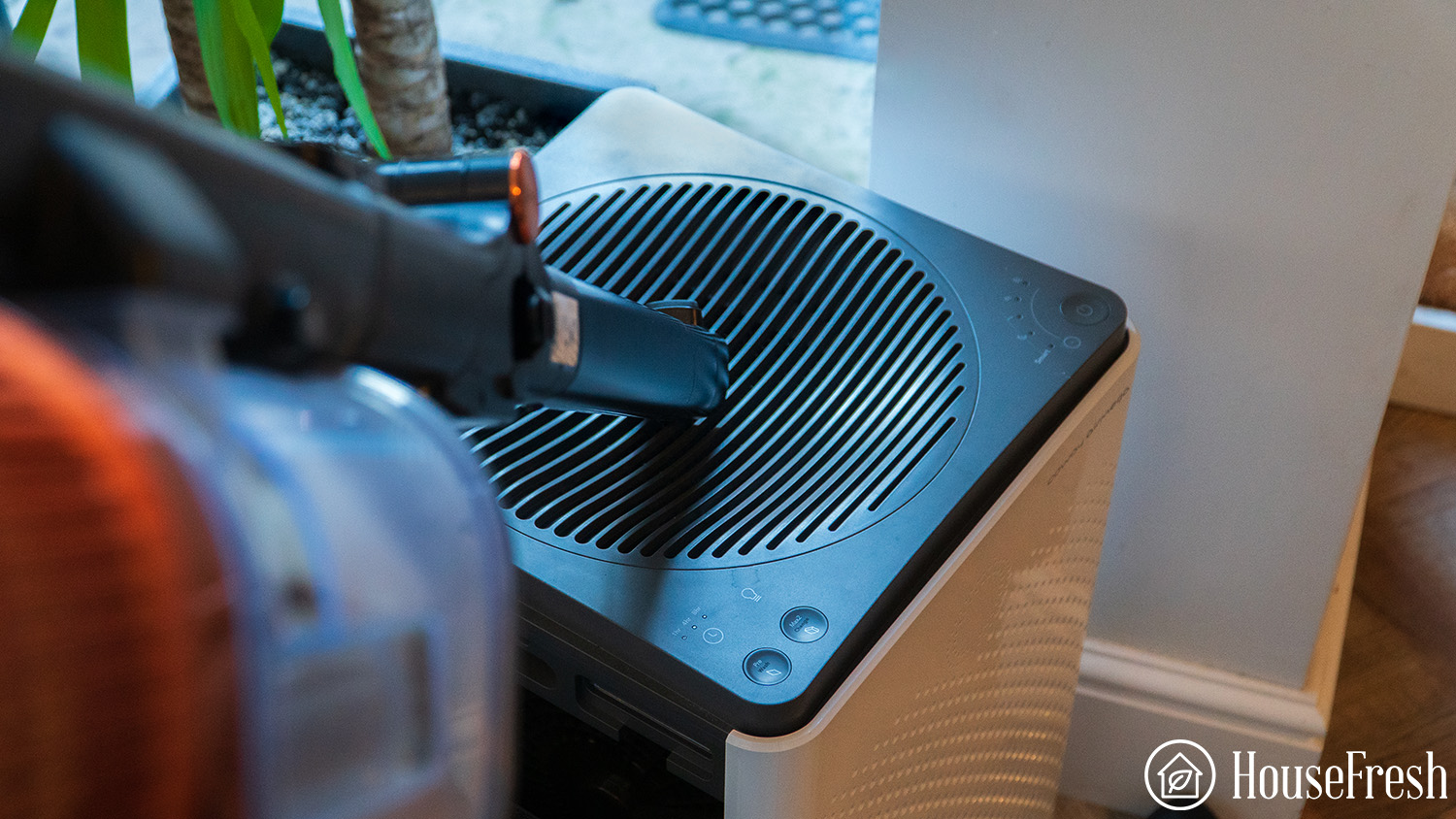
You can remove some grids or covers. Try to see if you can access any lodged items inside when you do so. If they’re out of reach, try vacuuming the air purifier thoroughly. If that doesn’t work, turn off and unplug the unit. Then, hold it upside down, gently wiggle it, and let gravity do the job.

❓Are the filters clogged? 

The pre-filter and filter trap airborne particles, dust, and other debris. As these accumulate, the unit’s motor works harder to draw air into the unit, making a louder sound than usual.

Remove the pre-filter to vacuum and then rinse. If it isn’t time to change the HEPA filter yet and you’d like to extend its lifespan a little longer, you can vacuum that, too, to remove dust buildup. 

Problem 4: There’s a red light on my air purifier that won’t turn off

The red lights are a reminder to take care of the filters. The red indicator will turn on when it’s time to replace the filters and/or wash the pre-filter. 

❓Do you need to change the filters?

Replacing Coway’s filters, either the Max2 Filter or the HEPA and odor filters, is a straightforward process. So is cleaning the pre-filter. 

The filter lifespan varies between models, but usually, the pre-filter needs cleaning every two to four weeks.

Coway Airmega 150 Pre filter 2

  1. First, switch the unit off and unplug it from the outlet.
  2. Next, remove the covers to access the pre-filter and filter compartment. 
  3. Take out the pre-filter. It’ll probably be full of dust and lint, so handle it gently. Vacuum and rinse it. Make sure it’s completely dry before replacing it in the unit. 
  4. Once you remove the pre-filter, you can access the HEPA and odor filter or the Max2 filter, depending on the unit. These are not washable or reusable. Dispose of them in a plastic bag.
  5. Now it’s time to put the new filters into your Coway Airmega. Remember to remove the plastic wrapping before doing so. 
  6. Lastly, reassemble the unit by putting the covers back in place. Make sure they’re firmly attached to the unit.

For more visual instructions, check out our videos on how to replace the Airmega AP-1512HH Mighty and Coway Airmega 300 filters.

❓Did you reset the filter indicator?

After replacing the filters, you’ll need to reset the indicators to turn off the red lights. Otherwise, the filter lifespan won’t be counted properly, and the red lights will stay on.

You can easily reset the filter status indicator by holding the button down for a few seconds. Make sure the air purifier is on for this step.

Problem 5: The air quality indicator light is stuck and won’t change color

Coway Airmegca air quality indicators change colors in real-time according to indoor air pollution levels. However, sometimes they may get stuck and not change even when you know the air quality varies in the environment. If that’s the case, there are a few things to consider: 

Coway Airmega 150 AQI Red

❓Does the sensor sensitivity need adjusting? 

New Coway Airmeg purifiers are set to the standard sensitivity. You may need to adjust the sensitivity if the unit notices no changes in the air quality after a few hours of running. The scale is the same in all Coway units:

  1. Sensitive
  2. Normal (default)
  3. Insensitive

The steps to modify the sensitivity vary depending on whether the unit has app support or not. If your air purifier is a smart model with app support, follow these steps:

  1. Open the Coway IoCare app and select the unit you want to adjust to AQi sensitivity.
  2. Go to the “Device Management” tab and select “Product Settings” at the end of the screen.
  3. Next, select “Smart Mode Sensitivity.” Once again, the option is at the bottom of the page.
  4. Finally, select the sensitivity of your choosing and hit Save.

For units without app support, the process varies between models, although it can be done by pressing and holding a combination of keys while the unit is running:

Coway Airmega ModelInstructions to adjust AQI 
Coway Airmega 230 / 240 / Icon1. Do a long hold on the Mode and Light buttons simultaneously. 
2. Press the Mode button to choose the desired sensor sensitivity once the speed indicator flashes.
3. Press the Mode and Light button simultaneously for at least two seconds. 
Coway Airmega 250 1. Hold down the Mode and Fan speed buttons simultaneously for at least two seconds. 
2. Press the Mode button to choose the desired sensitivity once the speed indicator blinks on the current sensor sensitivity. 
3. Press the Mode and Fan speed buttons simultaneously again for at least two seconds. 
Coway Airmega 400 / 3001. Press and hold the Light and Smart or Air speed / Mode buttons simultaneously. 
2. Press one of the air speeds to select the sensor’s sensitivity on the Airmega 400 or the Air speed / Mode button to navigate the different options on the Airmega 300. 
3. Hold down the Light and Smart or Air speed / Mode buttons simultaneously again. Once settings have been saved, the unit will produce a sound.
Coway Airmega 150 / 1601. Hold down the Power and Fan speed buttons simultaneously for at least two seconds. 
2. Press the Fan speed button to choose the desired sensor sensitivity once the fan speed indicator flashes.
3. Press the Power and Fan speed buttons simultaneously again for at least two seconds. 
Coway Airmega 1512HH / 200M / AP-1216L1. Do a long hold on the Ionizer button and Fan speed button simultaneously. 
2. Press the Fan speed button to choose the desired sensor sensitivity once the speed indicator flashes.
3. Press the Ionizer button and Fan speed buttons simultaneously one last time for at least two seconds. 

❓Do the sensors need cleaning?

All air purifiers with air quality sensors need periodic sensor maintenance, and Coways are no exception.

Coway Airmega 150 AQ Sensor

Simply access the sensors compartment and gently wipe out any accumulated dust or lint that could mess with the air quality readings and AQI light. Vacuum the socket and use a dry cotton swab or a soft brush to remove the debris from the lens and any hard-to-reach places. 

❓Is the air purifier appropriate for the size of your space?

Every air purifier has a specific air cleaning capacity. If placed in a room that’s too big, the unit may struggle to clean the air and be unable to achieve good air quality. 

Besides, overworking could lead to more severe damage to your air purifier. Find out what square footage your model is suited for in the list below: 

Coway Airmega ModelRoom Coverage
Coway Airmega AP-1216L330 sq. ft.
Coway Airmega AP-1512HH 361 sq. ft.
Coway Airmega AP-1512HHS361 sq. ft.
Coway Airmega 200M AP-1518R 361 sq. ft.
Coway Airmega 150214 sq. ft.
Coway Airmega 160214 sq. ft.
Coway Airmega 230403 sq. ft.
Coway Airmega 240403 sq. ft.
Coway Airmega 250 / 250S 465 sq. ft.
Coway Airmega 300 / 300S628 sq. ft.
Coway Airmega 400 / 400S1,560 sq. ft.
Coway Airmega Aim264 sq. ft.
Coway Airmega Icon324 sq. ft.
Coway Airmega ProX2,126 sq. ft.

Problem 6: There’s a weird smell coming from my Coway Airmega

❓Is the filter clogged?

If you don’t replace your dirty filter promptly, it can release a dusty odor as dirt, dust, and other particulates accumulate on the filter’s surface.

If an unpleasant smell comes out of your air purifier but the filter replacement indicator isn’t on, remove it from the unit and vacuum gently before putting it back. 

How to Clean an Air Purifier Vacuum HEPA filter

However, if you notice no change after vacuuming, replace the filter with a new one.

❓Did you let the pre-filter dry completely before placing it back?

A damp pre-filter could be the source of the foul smell from the unit. Remove and wash it gently with soap. 

Rinse thoroughly and let it air dry until any trace of moisture is gone. Then, put the pre-filter back onto the air purifier.

Problem 7: The airflow is weaker than it used to be

❓Do you need to replace the filter?

If you read this far, you may have noticed that a clogged filter is a common culprit behind several issues and malfunctions. 

As for airflow, a clogged filter with too much dirt and dust will affect the cleaning power of your air purifier, hindering its capacity to circulate clean air. 

On top of replacing the filters, if you’ve noticed a weaker airflow, it could be worth giving the whole air purifier a deep clean to boost its performance. You can find tips for that in our step-by-step guide.

❓Are there any blockages near the air intake?

Where you put your air purifier is important to optimize performance. Ideally, place it where it can draw the most air possible from the room, away from large objects, furniture, or walls.

Problem 8: The unit isn’t responding to the remote control from the IoCare app

❓Have you paired the unit to your phone? 

If you haven’t done this already, you won’t be able to interact with your Coway Airmega remotely through the IoCare app.

Follow these steps to pair your Coway air purifiers to your phone:

  1. Open the IoCare app and create an account if you haven’t already.
  2. Turn on your air purifier and select the “Register product” option.
  3. Scan the barcode on the back of your Coway Airmega. If you prefer not to grant the app access to your camera, you can type the code number manually.
  4. Android users only: turn off mobile data on your phone before the next step.
  5. Press and hold the Wi-Fi and Light buttons for over three seconds to activate the Wi-Fi configuration mode. The Wi-Fi LED light will blink, and you’ll hear a chime or beep. Press Next on the IoCare app.
  6. Wait for a second chime and press Next again; you’ll be asked to set a nickname for the unit and agree to the Wi-Fi connection.
  7. Select the network and type in your password. The Wi-Fi light will stay on the air purifier. That’s how you know you’ve paired your Coway Airmega with your phone.

Coway’s app pairing video guide is also very thorough and is useful if it’s your first time connecting your air purifier to your phone.

❓Is the unit connected to the right Wi-Fi frequency?

Nowadays, it’s common to have two bands on Wi-Fi home networks: 2.4GHz and 5GHz. Older Airmega air purifiers only support the 2.4GHz band, so your phone needs to be on that frequency when pairing the unit.

Coway Airmega 250 Controls 1

❓Is the Wi-Fi LED light on your air purifier?

A blinking Wi-Fi LED light indicates an issue with your internet connection. No light means the unit isn’t connected to the Wi-Fi network. 

To re-establish the connection, check that the router is on and that your home network is steady and running. Then, go to the IoCare app and recheck if the unit is still correctly paired to your mobile and home Wi-Fi. If not, follow the steps above to pair the devices.

Tip

Coway performs server upgrades occasionally. These updates could lead to your unit disconnecting from the Wi-Fi network and suddenly appearing offline on the IoCare app. There’s not much to do in such cases but wait for updates to finish.

Find your Coway air purifier manual

Manuals are underappreciated guides, forgotten until we need them. Let’s be honest, not many of us keep them around. If you ever need to reference information from your purifier’s manual, you can find digital links to them below:

Coway Airmega ModelLink to the user manual 
Coway Airmega AP-1216LUser manual
Coway Airmega AP-1512HHUser manual
Coway Airmega AP-1512HHSUser manual
Coway Airmega 200M AP-1518R User manual
Coway Airmega 150User manual
Coway Airmega 160User manual
Coway Airmega 230User manual
Coway Airmega 240User manual
Coway Airmega 250 / 250S User manual
Coway Airmega 300 / 300S / 400 / 400SUser manual
Coway Airmega AimUser manual
Coway Airmega Icon / IconSUser manual
Coway Airmega ProXUser manual

How to contact Coway customer service

Sometimes, air purifiers can malfunction beyond our skills to fix them. In such cases, it’s best to contact Coway directly. 

Coway offers a toll-free customer service center that you can reach at 1-800-285-0982 from Monday to Friday, 10 AM to 8 PM CST. 

If, like me, you prefer assistance via email, you can contact the company at info@cowaymega.com

Final thoughts

For first-time users, air purifiers may seem like complicated devices with a lot of buttons and settings. However, they’re quite straightforward once you understand them a bit more. 

Similar to any other appliance, air purifiers might occasionally malfunction. While some issues may be more complex and require customer support from professionals, more often than not, there’s an easy fix. Keeping your Coway Airmega running smoothly shouldn’t be a daunting task.

SOURCES

Coway air purifier red light: What it means and how to fix it

Coway Airmega 150 Red Light

Coway is one of the most popular purifier brands out there. The South Korean outfit offers a range of innovative air purifiers, with the likes of the AP-1512HH (Wirecutter’s top pick since 2015 🤯) and Airmega 300 being trusted by millions of users around the world. 

But like any air purifier, they are not immune from the occasional hiccup that leaves owners scrambling for their long-lost manuals.  

One of the most common issues is the red warning light. If this appears, you can easily begin to fear the worst. But red lights are common on air purifiers and usually act as an alert to take action rather than a sign your unit has given up the ghost. 

What does the red light mean on my Coway air purifier? 

Seeing a red light appear on your air purifier could boil down to a few different reasons. Below, I’ll unpack each potential problem.

1. Your filter needs to be replaced

Coway units use mechanical filters such as HEPA and activated carbon. These work by trapping pollutants inside as dirty air passes through. Meaning that over time, they will become saturated and lose efficiency. 

Coway Airmega 150 Red Light

Once this happens, you will see the red warning light informing you that it’s time to change your filter. 

2. There are high concentrations of airborne pollutants in the room

Some Coway air purifiers have an in-built air quality sensor that monitors indoor air pollution and relays information through a color-coded display. 

Coway Airmega AP 1512HH AQI Red

If the air is particularly dirty in your space, this will show as red. 

Coway Airmega 150 AQI Red

3. Restricted airflow due to incorrect filter placing or blocked intake

A warning light might appear if the purifier struggles to intake air from your space. 

Coway Airmega 150

This could occur if the ducts become clogged with large particles such as hair, lint or dust or because the filter has been incorrectly installed.

4. WiFi connectivity issues

If the WiFi light blinks, the purifier may have lost its connection to your network. 

Coway Airmega 250 Controls 1

This can unexpectedly happen from time to time and is usually a result of your router being down or the unit attempting to connect at the wrong frequency. 

8 steps to fix the Coway air purifier red light warning

Now you’ve identified the problem, here are 8 simple steps to get your purifier back to its prime.

Step 1: Increase the fan speed

If your air quality display is showing red, ramp up the power of your unit to its highest speed setting to circulate more air and reduce the amount of particles affecting your space.

Coway Airmega AP 1512HH Control Panel Close Up

After an hour or so, the color should change to display better air quality (blue/green). If not, see step 8.

Step 2: Check your internet connection

If the WiFi light is flashing red, you’ll need to reestablish your connection. First, check your router and test your internet connection on a different device. 

If everything works as it should, head to the IoCare app and see if your purifier is still paired with your phone and router. 

Coway App Screenshot

If it has disconnected, select “Register Product” and scan the barcode on the back of your purifier.

Next, activate the pairing mode on the purifier itself by holding the Light and WiFi buttons simultaneously for three seconds. 

You should then hear a beep and be prompted to advance on the app.

Hit ‘Next’ then create a nickname for your unit and agree to connect to WiFi, selecting your network and entering the password. The light should then become solid, indicating you’ve successfully connected your device.  

Step 3: Ensure the filters are installed properly

Ensure that it’s installed correctly, fitting snugly inside the unit with the pre-filter facing you.  

How to Clean an Air Purifier Remove interior parts and filters

Try to gauge whether the filter has approached the end of its lifespan by gently inspecting the between the HEPA pleats. It may be time to order a replacement if it is noticeably dirty. 

Tip

New filters come in a plastic wrapper. Ensure you have removed this before installing.

Step 4: Clean your pre-filter

The pre-filter captures large particles which can restrict airflow if left to accumulate. Aim to clean the pre-filter once every two weeks to keep your purifier in tip-top shape.

Coway Airmega 150 Pre filter 2

To do so, remove the pre-filter from the unit and either use a vacuum cleaner to remove light particle buildup or use a mild detergent and warm water to clean a dirty pre-filter more thoroughly. 

Remember to allow the pre-filter to dry completely before reinserting it into the purifier. 

Step 5: Deep clean your air purifier

Cleaning and maintaining your purifier will clear particle build-ups and improve airflow.

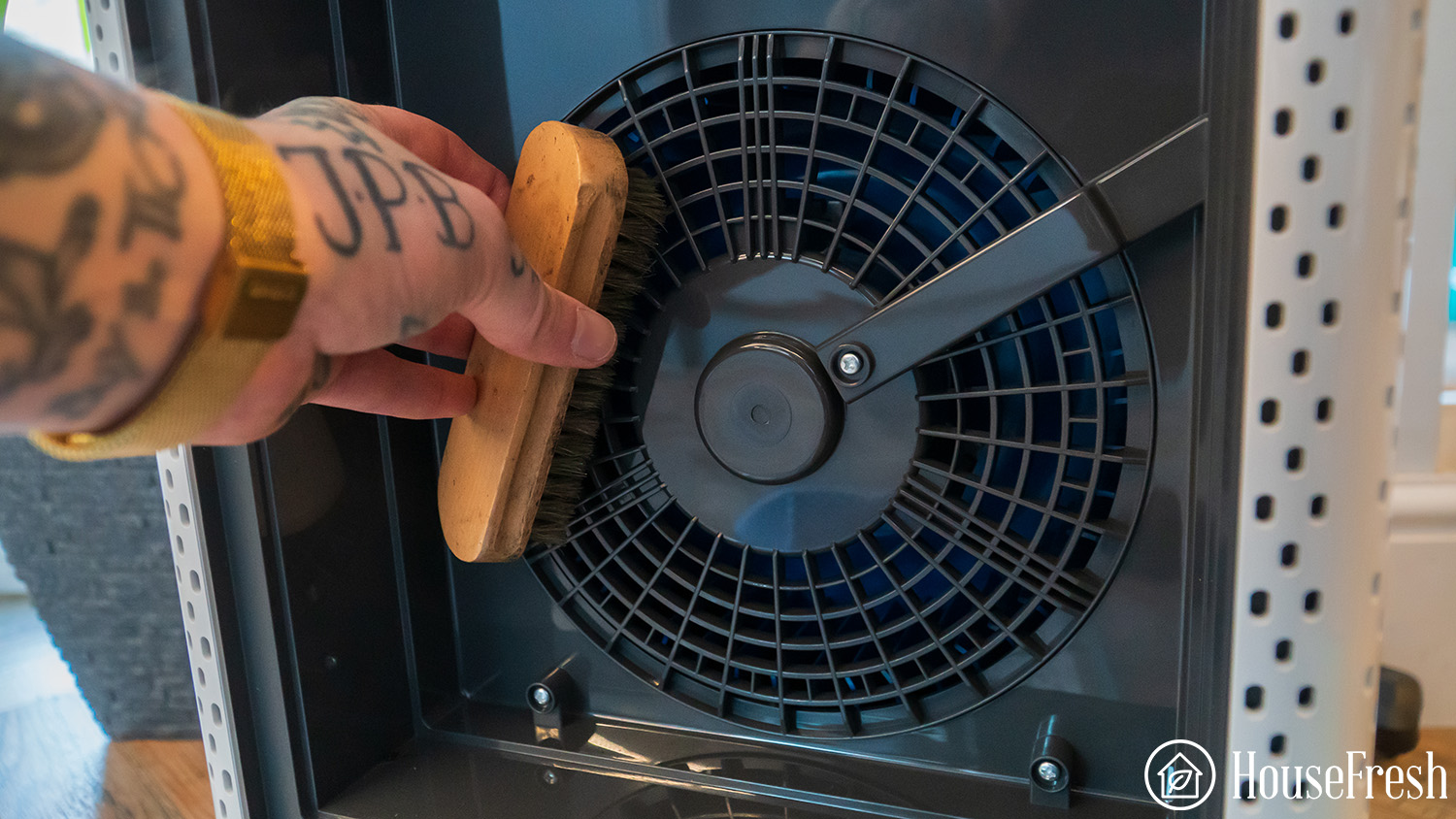
While the pre-filter is drying, use this opportunity to clean the rest of the unit. Using a brush, vacuum or a slightly damp cloth, wipe down the internal fan, air outlet grill and external body of the purifier. 

Step 6: Replace your filter

Coway states that their filters last between 6-12 months, but this can vary depending on how often you use the purifier and the concentration of polluting particles in your home environment. 

Coway Airmega 150

If your filter has reached the end of its lifespan, start by disconnecting your unit from the power source before opening the panel to reveal the filter.

Remove and discard the old filter before replacing it, making sure to orientate the new filter correctly. 

Finally, securely refit the front panel, and you’re good to go.

Step 7: Reset the filter warning red light

After replacing your filter, it’s important to remember to reset the filter warning light. This alerts the unit that you’ve replaced the filter and resets the reminder function.

Coway Airmega 300 Controls 2 1

To do so, simply turn on the purifier and hold down the filter button for 5-7 seconds. 

Step 8: Clean the air sensor and adjust settings

If your air quality indicator continues to show red after prolonged use at the unit’s top speed setting, there may be dust, dirt or debris on the sensor itself. 

To clean the sensor, shut off the unit and open the sensor cover.

Using a dry cotton swab, gently brush the lens and the surrounding area to remove any particles.

Coway Airmega 150 AQ Sensor

If the problem persists for no clear reason, you can adjust the sensor’s sensitivity to airborne pollutants.

To select between the three sensor settings, open the IoCare app and select your unit. Hit the ‘Device Management’ tab and continue to the settings page.

Here you can select ‘Smart Mode Senstivity’ and opt for sensitive/normal/insensitive. If the unit is continually showing red, you’ll probably want to switch to insensitive to see a change. 

How to change AQI sensitivity IoCare Coway

Tip

If your purifier isn’t WiFi compatible, don’t worry; you can still adjust the sensor manually. Check out Coway’s detailed instructions for all applicable air purifiers here.

Wrapping up

Maintaining your air purifier is vital to keeping your home a pollutant-free environment. So if an ominous red light appears, it’s handy to know how to solve the problem yourself. 

If your Coway starts to display a red warning light, work your way through this troubleshooting guide and you should be back on track to breathing clean and healthy air. If the problem persists, it’s advisable to reach out to Coway directly for more tailored technical support.  

SOURCES

How to humidify a room without a humidifier

Header Humidify room without humidifier

When discussing the relative humidity of your home, it’s usually in terms of high humidity. While living in humid, heavy air can be a miserable experience, having air that’s too dry is just as uncomfortable — and just as dangerous. Low humidity levels can result in:

If the air in your home is too dry, you can use something like an ultrasonic humidifier to raise the humidity levels in the home (don’t use a diffuser, as they don’t do much to increase humidity levels). But if you don’t have (or want) a humidifier, you have other options.

Three DIY ways to humidify the air

If the air in your house is too dry, you don’t necessarily need to invest in a humidifier to improve the situation. Here are three ways you can increase the humidity without a trip to the store.

1. Existing sources of humidity

Your home generates a lot of humidity. An easy way to get more water vapor into the air is to harness these existing sources.

  1. Take longer showers. Take a longer shower than usual and leave the bathroom door open to release humidity further throughout your home.
  2. Air dry laundry. Instead of putting clothes in the dryer, hang them on a drying rack inside. 
  3. Air out dishwashers. Skip the drying cycle, open the dishwasher door, and let that humid air circulate.

2. Add more sources of water vapor

An easy way to increase humidity is to increase the number of sources of water vapor.

  1. Heat water. Fill a pot with water and boil it on your stovetop, or place a container of water on radiators or sunny window sills to evaporate.
  2. Get some houseplants. Many plants add moisture to the air via a process known as transpiration. Adding the right varieties can increase the humidity in a room noticeably.
  3. Place water vessels. Standing water increases humidity through the process of evaporation. Adding a fish tank or flower vases to your home’s decor will make an impact.
Tip

If you have a wood-burning stove, consider investing in a stovetop humidifier. These kettle-like devices add humidity to all spaces.

3. Make a DIY humidifier

A humidifier is a very simple machine — you can easily make one yourself with a water container (like a bucket or a bowl), a sponge and a fan. 

  1. Place the bucket or pan on a flat surface like the floor, a chair, or a table.
  2. Place the fan behind the bucket or pan so that it blows air across the surface. 
  3. Place your sponge in the container:
    1. If using a shallow container like a baking pan, lay the sponge flat on the bottom. 
    2. If using a taller container like a bucket, use a skewer, chopstick, or other material to pierce the top of the sponge and lay it across the top of the container.
  4. Fill the container so that the sponge is about half immersed in the water. 
  5. Turn the fan on low.

The sponge will wick up water, which then evaporates. The fan then blows that moisture across the room, raising the humidity.

The ideal humidity levels at home

Relative humidity in the home should be maintained between 30% and 50% for your comfort, personal health, and home environment. There are two easy ways to measure humidity in your home: using a hygrometer, or via the “wet/dry bulb” method.

A hygrometer is an electronic device that measures the amount of water vapor in the air. After calibration, it’s very easy to use:

  1. Place the hygrometer on a flat surface a few feet off the ground
  2. Turn it on
  3. Wait 3-5 minutes
  4. Read the humidity level on the screen

Common questions about dry air and humidity at home

Dry air and low humidity in your home can be caused by many factors, such as low temperatures, poor insulation or failing weather seals, excessive use of heating, air conditioners, or dehumidifiers, and external climate factors.

Common symptoms of sleeping in a dry room include Dry and itchy skin, irritated eyes, morning coughs or uncomfortable congestion, nosebleeds, and exacerbated symptoms of respiratory conditions like asthma.

There are several ways to quickly increase a room’s humidity:

  • If you have an en suite bathroom, run a warm shower with the door open
  • Open or close windows depending on the weather
  • Use spray bottles to mist the air in the room
  • Place a bowl of water on a heat source
  • Soak some towels in water and hang them in the room to dry

Both cool-mist and warm-mist humidifiers can be effective at relieving cold symptoms including congestion, sinus pressure, and a sore throat. Cool-mist humidifiers may be slightly more effective in relieving swollen sinuses but also carry a greater risk of contamination and the spread of diseases.

The CDC recommends that you use only distilled, boiled, or disinfected water in any humidifier. Using other water sources (tap water, bottled water, or collected water) can introduce organisms and other materials to your home environment, potentially making you sick and reducing the quality of the air.

Final thoughts

A dry home is an uncomfortable and unhealthy one. If you frequently suffer from symptoms related to dry air, there are some fixes you can employ right now. It’s easy to raise your home’s humidity levels, and it doesn’t require any expensive equipment. A few simple steps can turn your home back into the comfortable oasis it was meant to be.

Tip

If you’re experiencing respiratory symptoms, also consider using an air purifier with your humidifier to reduce dust and other allergens in the room.

SOURCES

Blueair air purifier red light: What it means and how to fix it

Blueair Pure Fan Auto Red Light

Blueair is one of the main players in the U.S. when it comes to air filtration. Founded in Sweden with the belief that the freedom to breathe clean, healthy air is a basic right, the company offers a wide range of affordable units equipped with filters to remove at least 99.97% airborne particles from the air.

Since Unilever bought the company, the one-button control became the key to a simple and straightforward interaction with the units, making it Blueair’s signature trait. The simple controls present few or no issues when setting it up and choosing between programs and fan speeds. 

And yet, when a red light comes on, we naturally get worried and start to think something may be the matter. 

The red light is a useful feature, actually. Air purifiers are designed to run 24/7 and to clean our air without much maintenance. However, they do need some attention every once in a while to make sure they are still capable of cleaning the air. That’s where the red light comes in.

It doesn’t mean it’s the end of life for your air purifier. But it could be for the filter. 

What does the red light mean on my Blueair air purifier? 

There are two different types of red lights when it comes to Blueair purifiers, the filter replacement light and the LED light indicating poor air quality. I will cover what both of them mean in this section of the article.

1. Filter replacement red light

Blueair Pure Fan Auto Red Light

All Blueair units have a built-in red light to indicate it’s time to change the filter. The average filter lifespan is 6 to 12 months, slightly varying among lines: 

LineFilter’s lifespan (months in operation) 
Blue Pure Max6 to 9 months, depending on usage and air quality conditions
Blue Pure6 months
DustMagnet6 to 12 months, depending on usage and air quality conditions
Protect6 to 12 months, depending on usage and air quality conditions
Classic6 months
Pro6 months

As a good rule of thumb, Blueair recommends replacing the filter after 6 months of continual use. That’s why many units will show the red light after six months of running the air purifier, indicating it’s time for a filter replacement.

Blueair Blue 311 Red Light

In some units, however, the filter light will turn yellow before turning red. The yellow light indicates the filter will need replacing after one more month of continual use. That’s the cue to order the replacement filter in due time and have it prepared before the light goes red.

You may be wondering, however, why some units have a fixed period of air filter longevity (6 months) while others don’t. That’s because some Blueair units factor in the air quality readings from the built-in sensors to calculate the remaining lifetime of the filter more efficiently. 

In those cases, the filter replacement red light might turn on before six months of continual use, especially during wildfire season or if you live in an area with high levels of air pollutants. Or, on the contrary, the filter may last longer.

Usually, those units also have wifi connectivity and Blueair app support, which provides additional and useful information on the filter status. Some models, such as the Classic and Pro lines, however, offer app support but have a fixed 6-month air filter lifespan. 

2. LED light indicating poor air quality

The auto mode of some Blueair units will automatically adjust the purifier’s fan speed based on the real-time air conditions detected by the built-in air quality sensors.

Blueair Blue 411 VS 311 Auto Comparison

When you fluff your duvet, light an incense, or while you prepare your next meal, the air purifier will ramp up the fan. 

Meanwhile, the LED light on the front of the unit will turn red: 

Blueair Air Purifier Red Light

In other words, the LED red light is activated when more pollutants are in the air. Fan speed will increase so that the air purifier can remove all those pesky particles from the environment. As the air gets cleaner, the LED light should switch to orange and eventually blue, indicating your air is good again. 

However, we’ve seen the red light getting stuck and not changing as the air improves. That’s because the sensor, usually in the back of the unit, is dirty. 

Blueair Blue 311 Air Quality Sensor

It’s a common issue and easy to fix, too. Simply open up the sensor compartment and wipe out any accumulated dust with a cotton swab. Just remember to unplug the unit before cleaning the sensors. 

Tip

If both red lights pop on your air purifier at the same time, don’t worry. Each light is reporting a different issue; the air purifier is not breaking apart. Check if there’s an unusual source of pollutants, clean the air sensors and follow the steps below to replace the filter.

Four steps to fix the Blueair air purifier red light warning

Safety precautions always come first: before trying any of the following steps, start by turning off the air purifier and disconnecting it from the power source. 

Step 1: Remove the old filter.

Depending on the model, you’ll need to remove the top cover of the unit by gently pushing down and rotating the top cylinder, pressing the release buttons to lift the top cover, or opening the lid to access the filter compartment. 

If the unit has a fabric prefilter covering the filter, you’ll need to remove it as well.

Take out the old filter and dispose of it appropriately.

Blueair Blue 311 HEPA Filter

Tip

An old filter will be a dirty thing. It will have collected all the dust, debris and particles the air purifier removed from the air. So, handle it with care and avoid any blunt movement that could stir all the pollutants back into the air. Bag it as soon as possible and dispose of it. 

If the filter wasn’t in contact with any toxic chemicals, such as asbestos, the HEPASilent filters —which are made of polypropylene— can be recycled.

Step 2: Clean the inside of the unit.

After removing the old filter, it’s the perfect moment to thoroughly clean the rest of the air purifier. Use a microfiber cloth to wipe out any dust, dirt or debris that may have accumulated inside over time.

Blueair Blue Pure 411 With FIlter

For units with a fabric prefilter, such as Blueair Pure and Blueair Pure Max, it’s also good practice to clean these on a regular basis. Being removable, they can be easily thrown into the washing machine or vacuumed. Especially if you have pets, the prefilter will probably accumulate a lot of fur and shed hair. 

The same thing goes for DustMagnet’s pre-filters, which need weekly cleaning. Use a dry dustcloth to remove the accumulated dust or vacuum them with a soft brush attachment. Clean prefilters will ensure the unit’s optimal performance.

Tip

In need of more tips on how to clean your air purifier? Check out this guide.

Step 3: Place the new filter in the unit.

Now that the air purifier is neat and clean, it’s time to place the new filter and reassemble the unit with all its parts in due places (this includes properly closing all lids if there are any in your unit). 

Make sure the filter is installed correctly and fits neatly. All Blueair filters have visible signs for the direction in which they should be placed, such as the branded handles or written instructions.

Blueair Blue 311 Filter Tag
Blueair Pure Fan Auto HEPA top

If the filter is not properly installed, the red light could go off again before it’s time to replace it.

Tip

New filters come in plastic wrapping for protection. Always remove it before inserting the filter into the unit.

Step 4: Reset the filter replacement timer.

This step is very important, as it lets the air purifier know you have changed the filter and will prevent the red light from going off again before it’s time to replace it. The Protect line is the only one that doesn’t need resetting.

Plug the unit and turn it on. Next, press the reset button for a few seconds to restart the timer. Each unit varies a bit in how long you need to press before it turns white again:

LineButtonPress button for (according to manufacturer’s manuals)
Blue Pure Max (all units)Fan speed15 seconds
Blue Pure AutoOne-button control7 seconds
Blue PureOne-button control511 unit: 15 seconds
411, 411+ units: 5 seconds
121, 211, Fan units: 3 seconds
DustMagnet (all units)Fan speed15 seconds
Classic (all units)Filter button5 seconds
Pro (all units)Filter button3 seconds

Common questions about the red light in Blueair units

Blueair air purifiers don’t have a master reset button. You can (and should) reset the filter replacement timer every time you change the filter, though.

If you are looking for the reset button because of other issues with your Blueair air purifier, you can find the fixes to the 10 most common Blueair air purifier problems in this guide.

Like any other appliances, air purifiers can have manufacturing defects you might not be able to solve on your own. 

If that’s the case, the best option is to contact Blueair customer support or the retailer you bought the unit from.

It does. Here’s why: filters trap airborne particles on its surface as the purifier draws the air in. 

When the filter becomes clogged with dust, particles and other pollutants after months of use, it decreases the airflow and its capacity to trap new particles. The air purifier will need more power to cycle the air through the filter and its efficiency at cleaning your indoor air will be reduced.

Regularly replacing filters is very important to ensure the air purifier delivers clean air into your home.

Blueair’s filters lifespan can vary slightly between models. Still, on average, the company recommends changing the filters every six months to ensure their air purifiers function properly. 

Some Blueair models factor in the air quality of your home to indicate the need for a replacement. Other models base the calculation solely on continuous use time, which means the unit’s red filter light will go off after six months of running the unit. 

However, it is advisable to replace the filter more often if you live in an area with frequent days of poor air quality, during wildfires and monsoon seasons or any other event that would worsen air pollution in your location.

 With more contaminants in the air, the filter will become clogged faster.

The air purifier will continue to work with the red light on. But it’s not advisable to run your air purifier if it needs a filter replacement because:

  • It won’t be as efficient at removing harmful particles from your indoor air
  • It will consume more energy than usual 
  • It could overwork and put a strain on the unit

Most brands of air purifiers, including Blueair, display their air quality reading based on the U.S. Air Quality Index.

Blueair units can have either a scale of three or six colors to indicate the air quality in your home:

Red: polluted

Orange: moderate

Blue: good

Red: very polluted

Orange: slightly polluted

Yellow: moderate

Green: good

Blue: excellent

White: data not available

The unit uses these readings to optimize fan speed in auto mode, ramping up the fans when the air quality is bad and lowering it when the air is fairly good.

Final thoughts

Red is well associated with alerts and warnings; it will make us stop and pay attention to the matter at hand. 

Air purifiers are designed to be simple devices that run continuously to keep air pollutants out of our homes. Every once in a while, they need some cleaning or a filter change and it’s a good thing the unit warns us about it. That’s how we make sure our air purifier lasts and maintains its top performance to have clean, healthy air to breathe in our homes.

Blueair’s red light has an easy fix. If you still find issues with your Blueair purifier after reading this guide, check our list of common Blueair problems (and fixes) to get your unit up and running again.

How to measure humidity in your house

how to measure humidity

Being comfortable and safe in our own home is paramount. One of the most crucial aspects of that safety and comfort is the humidity (the amount of water vapor in the air) inside your home. While most people think of the stuffy, heavy feeling of high humidity (especially when combined with high temperatures), low humidity can be just as damaging to your comfort, health, and property.

Ideally, your home should have an indoor relative humidity (RH) level between 30 and 60 percent. Above that range will not only make the interior of your house uncomfortable, but can cause mold to grow, with a negative health impact, encourage pests, and potentially damage wood and other materials. Low humidity can cause nosebleeds, sore throats, dry skin, and exacerbate asthma and other respiratory illnesses.

If you are concerned about the humidity in your, here’s how to measure it.

Three ways to measure humidity in your house

You can’t always rely on the “feel” of the air when it comes to relative humidity; higher dew points can make high humidity feel less uncomfortable, so it’s best to measure the humidity to determine if you need to install a dehumidifier or find other ways to lower the relative humidity in the house. There are three ways you can measure humidity on your own.

1. The ice cube method

A very simple method to determine whether your humidity is high or low requires nothing more than a glass of water and some ice cubes. This won’t be a very informative test, but it can broadly determine whether your relative humidity is high or low.

  1. Put three or four ice cubes inside a glass of water
  2. Place the glass in the room you want to measure and leave the room 
  3. After four minutes have passed, check to see if there is condensation on the outside of the glass
  4. If there is, the humidity is high. If there’s no condensation, then your humidity is on the lower side.
Good to know

Measuring the humidity levels in wet areas like kitchens and bathrooms can be challenging because the humidity will naturally spike (like when you’re taking a shower) and then drop.

2. The wet/dry bulb method

Another easy DIY method of measuring the humidity in your home is a bit of a science project called the Wet/Dry Bulb Method

You’ll need:

  • Two standard thermometers
  • A piece of gauze or cloth
  • A small fan
  1. Wrap the bulb of one thermometer in gauze or cloth
  2. Wet the cloth
  3. Arrange both thermometers so the fan can blow air over their bulbs
  4. Measure the temperature they report:

    – The dry thermometer should remain stable
    – The wet thermometer will show lower temperatures over time as the water evaporates
  5. When the temperature of the wet thermometer stops changing, note both temperatures
  6. Subtract the dry reading from the wet reading 
  7. Use the chart here or the calculator here to determine the relative humidity

3. Use a hygrometer

The easiest way to measure the humidity in your home is to purchase a digital tool called a hygrometer. You can buy devices with built-in hygrometers for less than $10, or buy more sophisticated smart devices

Using a hygrometer to measure humidity is very simple: Set up the device according to instructions and note the result displayed on the device’s screen.
While most hygrometers are relatively accurate, it’s best to test and calibrate a new unit before relying on its results.

  1. Fill a bowl about 2/3 of the way with water
  2. Add salt and stir until no more salt dissolves; there should be a small amount of undissolved salt at the bottom
  3. Place bowl and hygrometer in a plastic bag together and seal the bag
  4. Wait six hours and read the hygrometer:

– If the RH reading on the hygrometer is about 75%, it is accurate.
– If the reading is higher or lower, the difference is your calibration factor.

For example, if it reads 70%, you should add 5% to all future readings

What to do if your house is too humid

If your home is consistently measured to have relative humidity over 60% you should act to reduce the humidity before it negatively affects your health or your property. Here’s what to do and not do.

What to do

DO Increase ventilation. Air movement and exchange is crucial to humidity control indoors. Running air conditioning, fans, or opening windows can reduce humidity dramatically.
DO Install a demhumidifier. A dehumidifier reduces excess moisture in the home.
DO Add houseplants. Plants such as aloe vera or lilacs absorb moisture from the air, dehumidifying a space naturally.
DO Clean filters. Clogged filters on HVAC equipment or dehumidifiers can impair their performance.
DO Locate and repair leaks. Any signs of water intrusion should be investigated and repaired.

What not to do

DON’T Delay. High humidity can result in house-wide damage if left unchecked.
DON’T Take long showers. Any activity that produces steam will increase humidity. Shorter, cooler showers will help reduce it.
DON’T Run the dryer. Hanging clothes outside to dry will prevent excess moisture from being pumped into the air.
DON’T Cook. Avoiding simmering pots on a stovetop can reduce the amount of moisture in the air.

What to do if your house is too dry

If your home’s humidity levels are below 30%, take steps to bring it up to more comfortable levels. Here’s what to do, and what not to do.

What to do

DO Use a whole-house humidifier. The increased capacity of a whole-house humidifier can improve the humidity levels throughout the house.
DO Add houseplants. Due to a process known as transpiration, houseplants can both increase or decrease humidity depending on environmental conditions.
DO Use water. Placing open containers of water near heating vents or boiling water on the stove can release moisture into the air.
DO let dishes and clothes air-dry. Laying out wet clothes and opening the dishwasher after running it will release that moisture into the air, increasing humidity levels.

What not to do

DON’T ignore symptoms. Dry, itchy skin, irritated throat or nasal passages, dry eyes, and increased static electricity should be investigated.
DON’T run the AC. Air conditioning will lower the humidity even further.
DON’T use dirty water. Ensure the water used in any humidifier or open container is purified and fresh, and clean your humidifier regularly.

Wrapping up

The relative humidity inside your home can have a negative impact on your health, your enjoyment of the home, and the property itself. Taking steps to measure, monitor, and manage the humidity in your home requires a few simple tools and some easy lifestyle adjustments—adjustments that will pay off with a more comfortable and healthier home.

SOURCES

How to make a DIY air purifier

How To Make a DIY Air Purifier Dining Room

Air purifiers have become essential in the battle for good air quality in our homes. With so many pollutants in the air like dust, pollen, dander, bacteria and viruses, wildfire smoke and traffic pollution, to name a few, your home could be negatively affecting your health without you even knowing. That’s where air purifiers come in.

The price is one of the biggest turn-offs of buying an air purifier. Ranging from <$50 up to >$1000, it’s money out of your pocket on a device that does one thing, and you can’t even see it working.

Even if money isn’t the issue, what do you do when smoke fills your home when wildfire suddenly rips through your town, state, or even blown from another country altogether, and you need a quick solution so your health isn’t at risk?

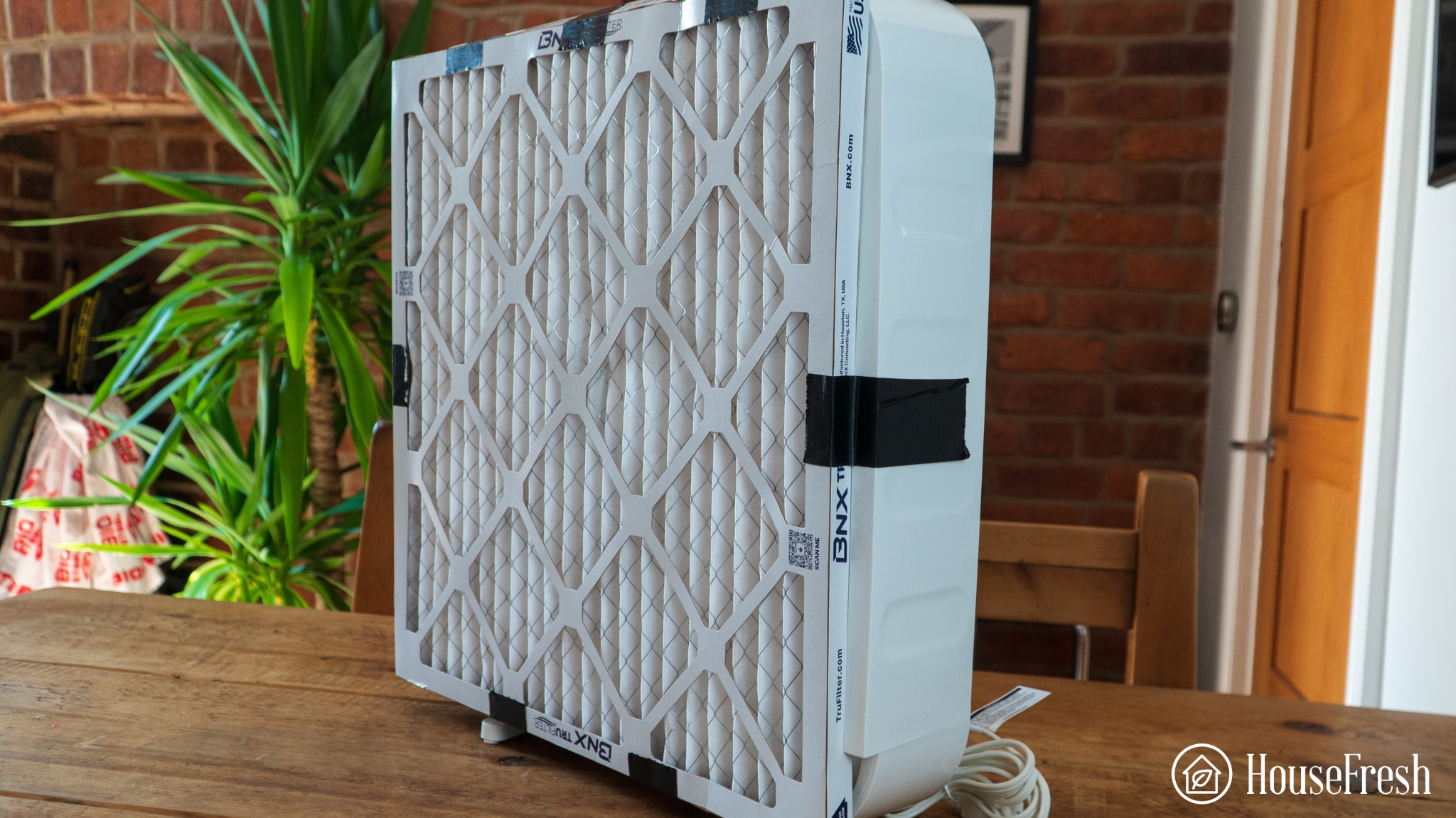
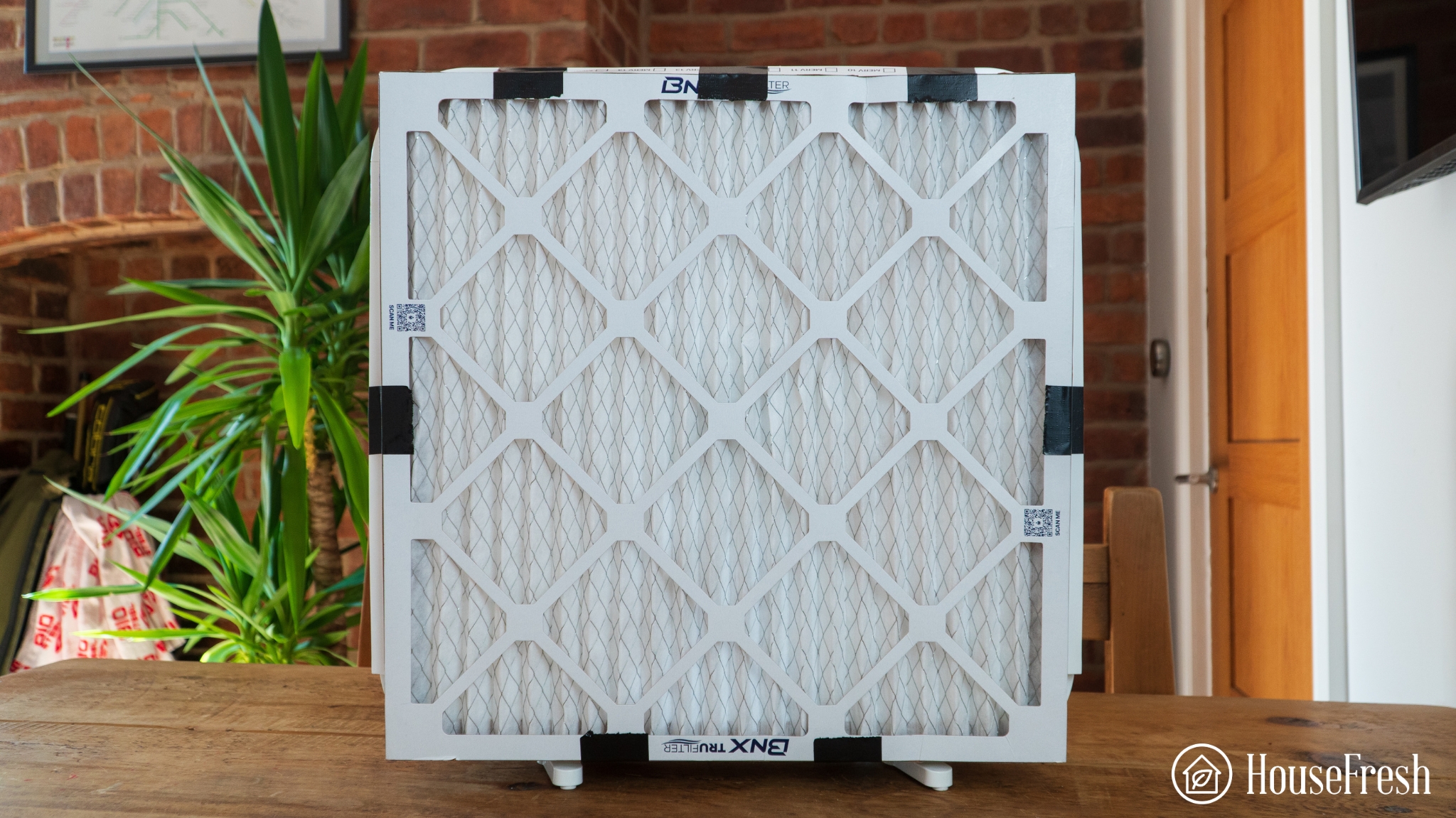
An air purifier is a fan (which most of us will already have in our homes) plus a filter. With all the engineering that goes into manufacturing air purifiers, can you make your own DIY unit? Will it be cheaper? And most importantly, will it be as effective as a store-bought purifier?

In this guide, we answer those burning questions by building our own DIY air purifier.

Stay tuned, and wish me luck. 🤞

Don’t worry; you won’t need a clean room laboratory, specialty tools or a master’s in engineering to make your own DIY air purifier. All you need are a few items you could find either lying around your home or down at your local hardware store and a little aptitude:

✔️ BOX FANHow To Make a DIY Air Purifier Fan
✔️ MERV 13 FILTERHow To Make a DIY Air Purifier Filter placement
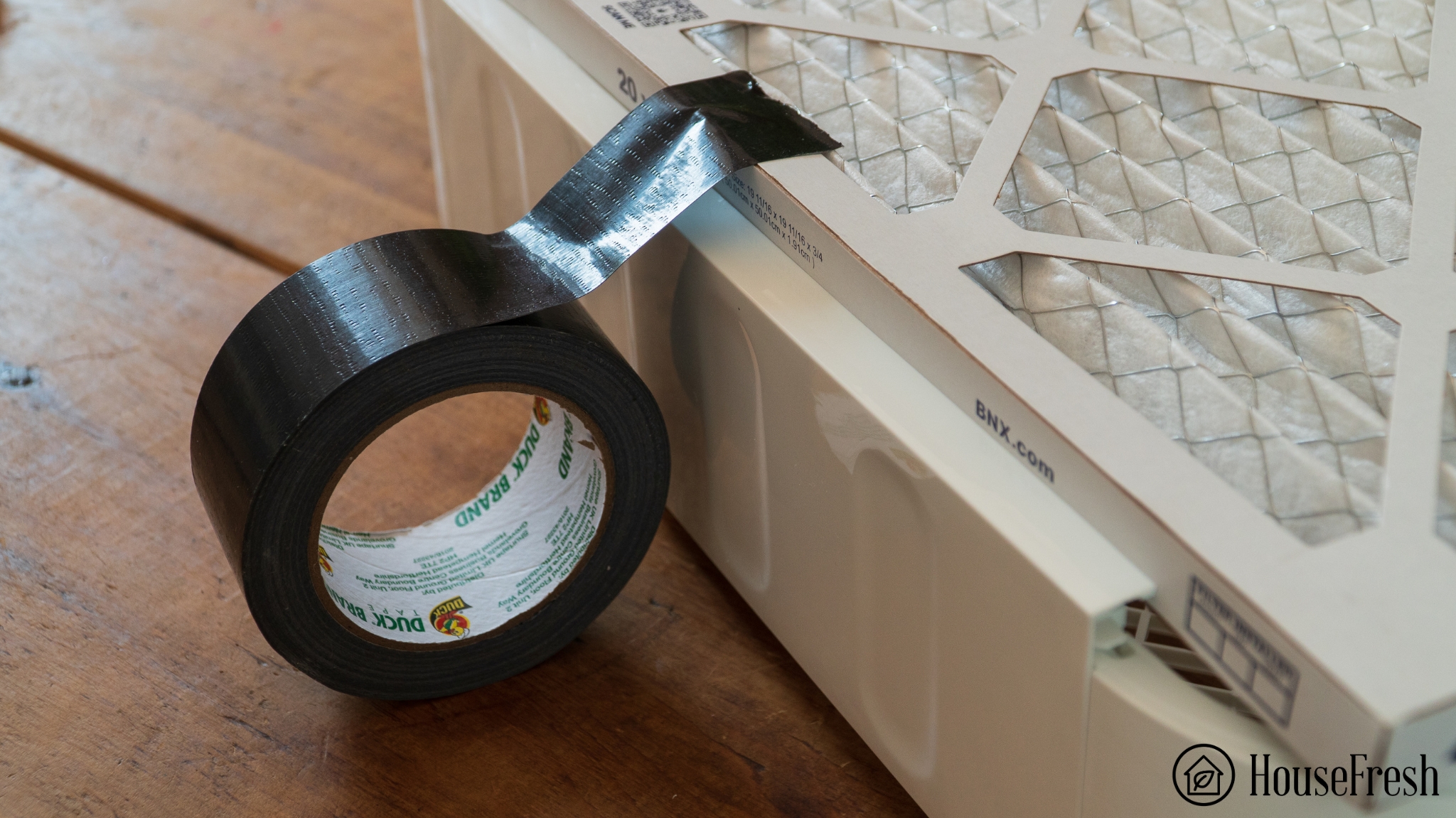
✔️ STRONG TAPEHow To Make a DIY Air Purifier Tape
✔️ SCISSORSHow To Make a DIY Air Purifier Scissors
✔️ SCREWDRIVERHow To Make a DIY Air Purifier Screwdriver

How to build your DIY air purifier 

Okay, I’m not gonna lie to you; this is the first time I’ve attempted to build my own air purifier, but I’ve used them (and taken them apart) for our reviews for a while now, so I have a firm grasp on how they work.

On that note, let’s delve in and build ourselves an air purifier.

Step 1: Buy your materials

How To Make a DIY Air Purifier Fan

BUY MERV 13 FILTER
BUY FAN BOX

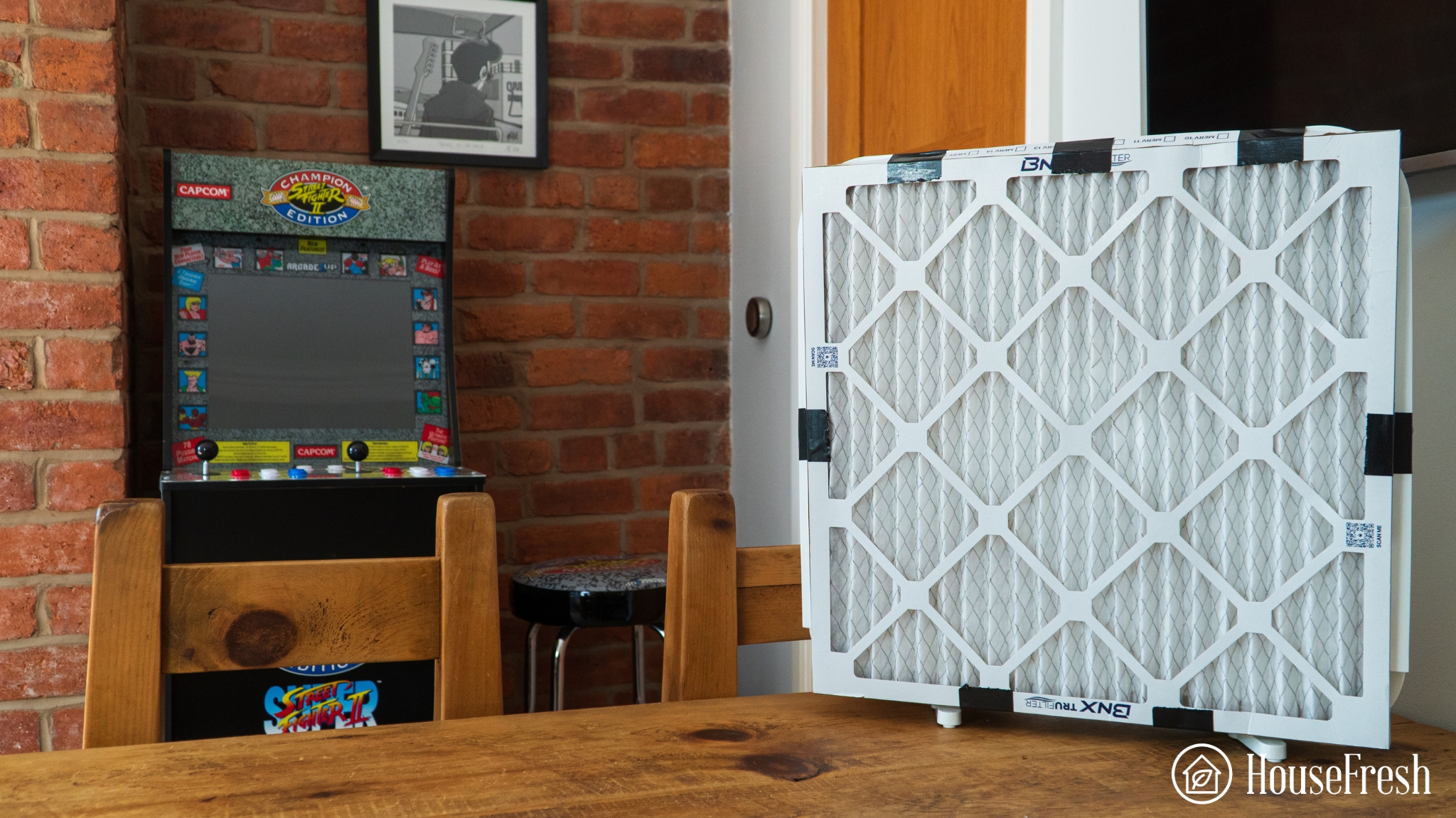
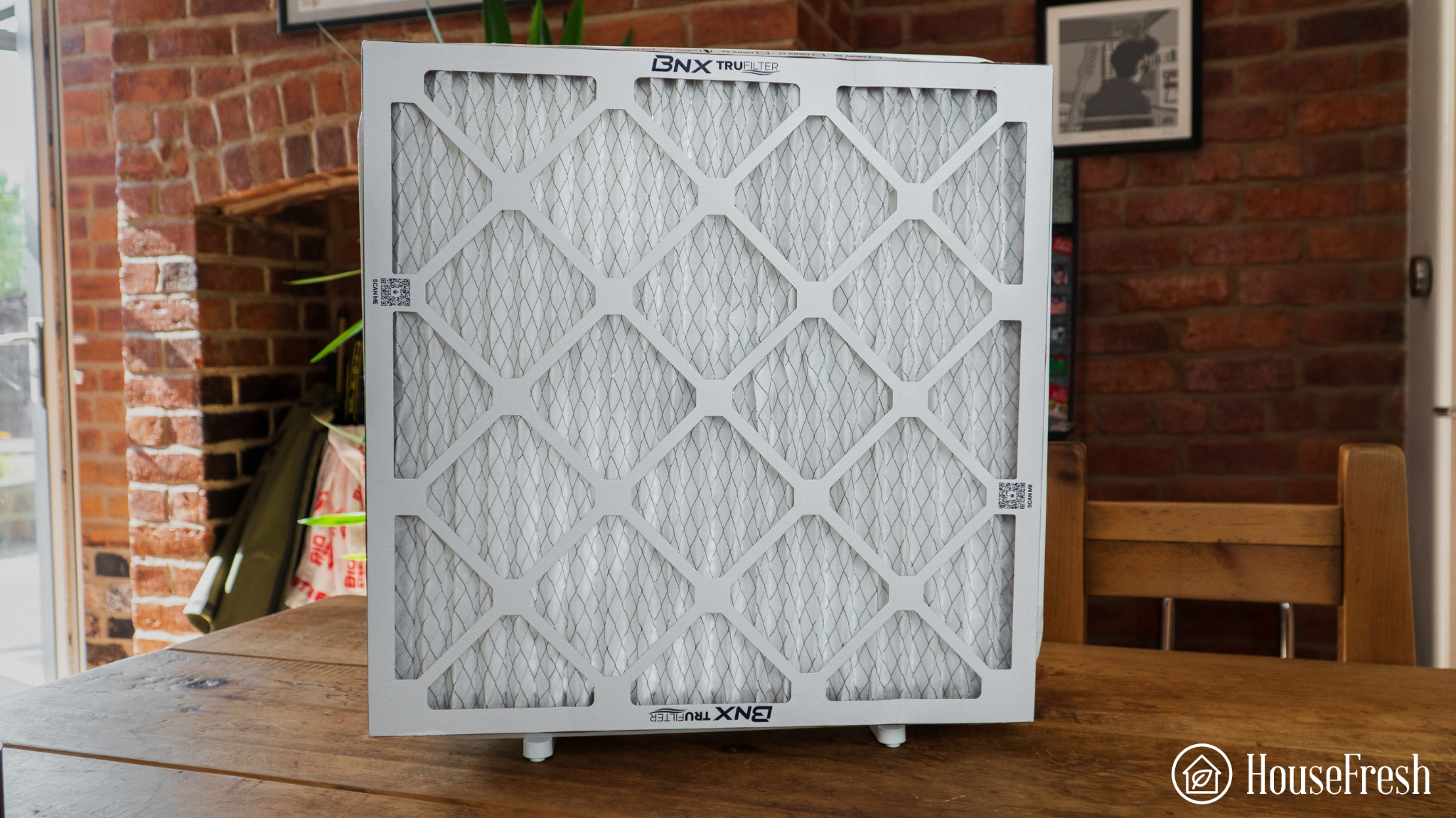
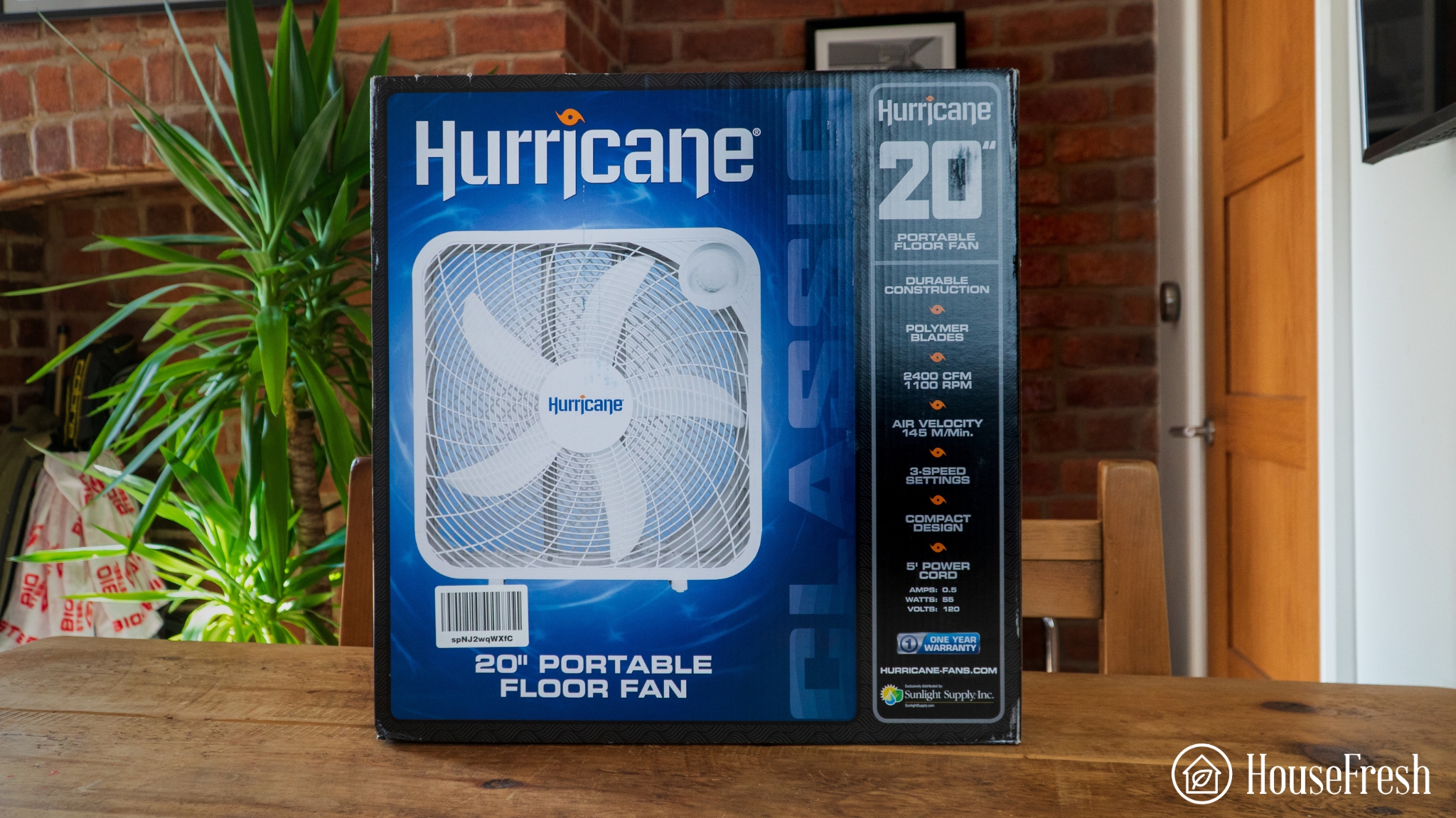
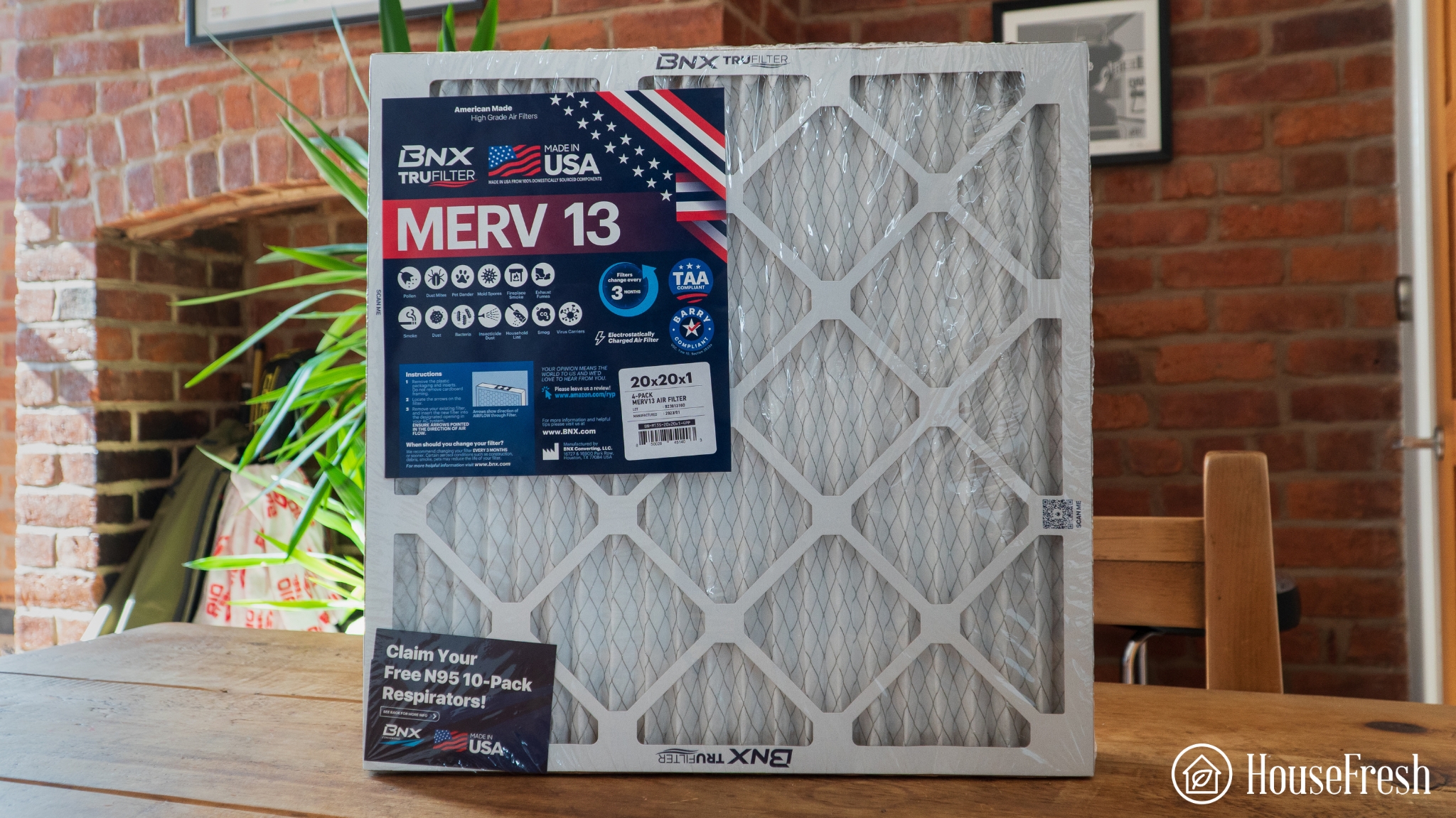
This is the easy part; I went to Amazon.com to find my materials so you can get the same fan and MERV 13 filter and follow this guide step-by-step with me. For the fan, I went for this unit from Hurricane as it was a good size, had good reviews and didn’t look too tricky to take apart. For the filter, I went with a BNX TruFilter 20x20x1 as you can see below:

How To Make a DIY Air Purifier Filter

You may have a few spare filters hanging around for the HVAC system in your home.

The primary consideration before you purchase is the size of the filter. You need a filter covering the whole fan, but not so big that it sticks over the sides.

Tip: Check your materials 

The worst thing that can happen is that you put everything together, turn on the fan and it doesn’t work, or find a big hole in the filter that lets all those harmful particles through, rendering your hard work useless.

Unpack all your materials, check them and test them before you do anything else.

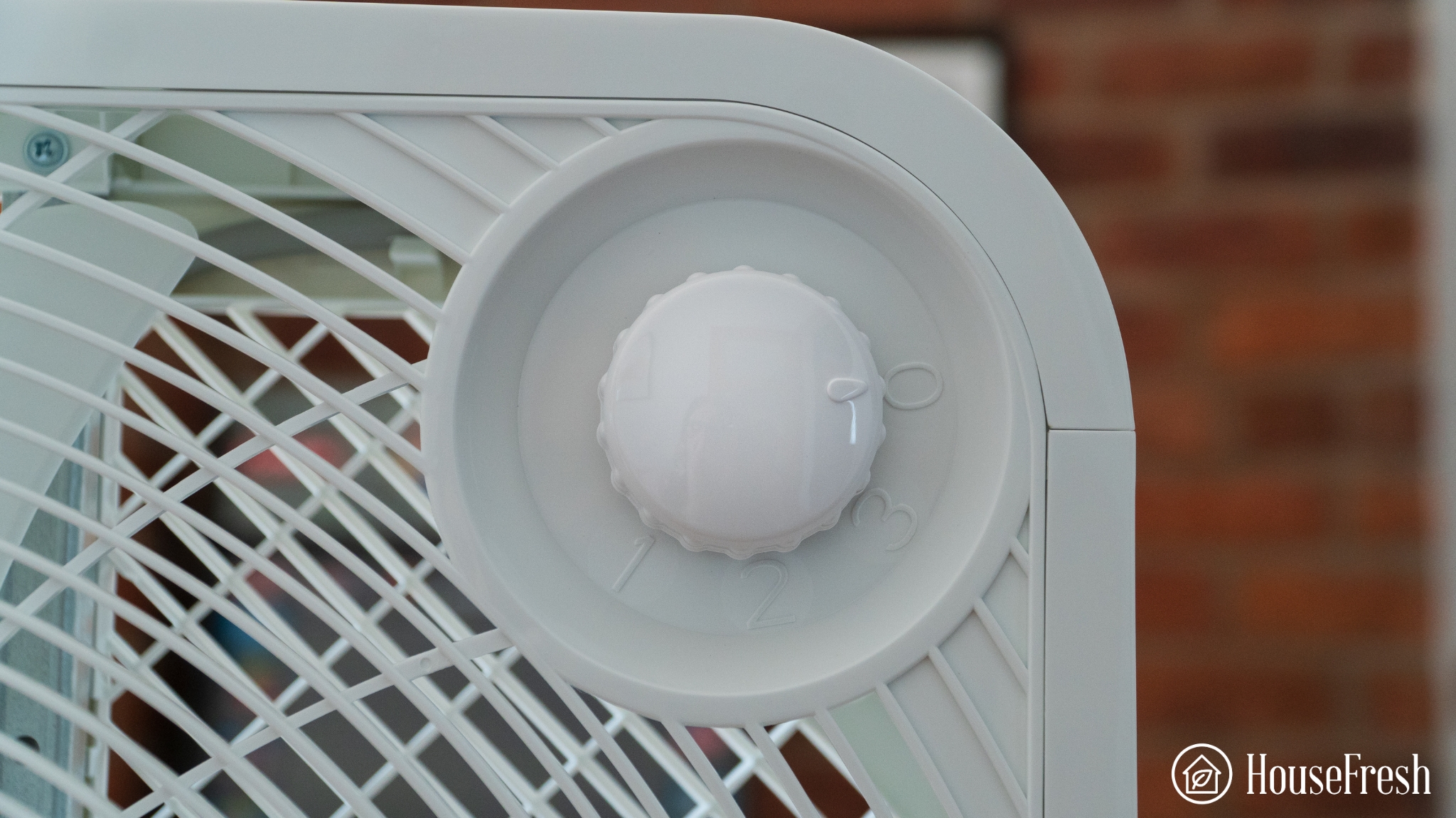
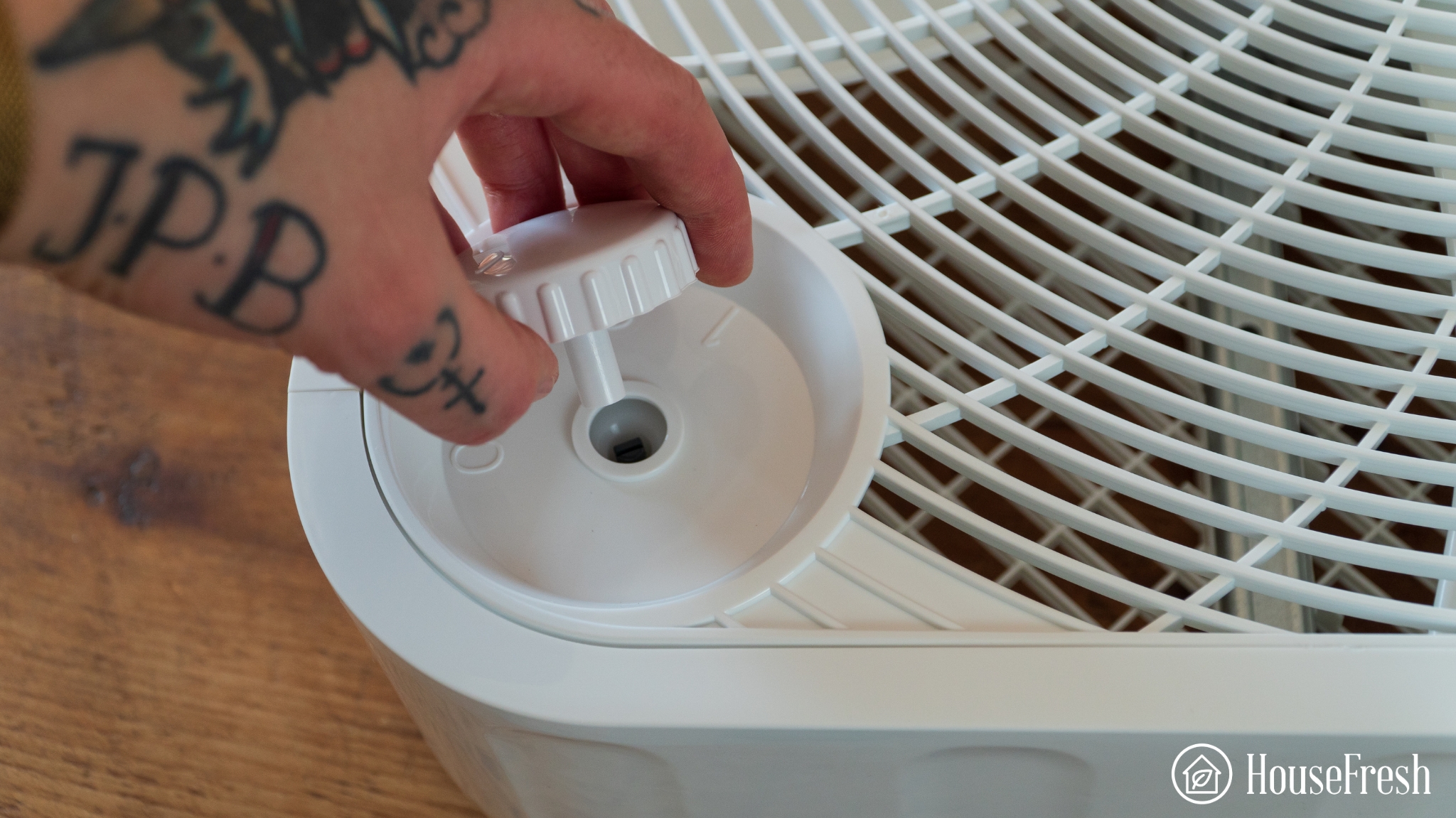
Step 2: Remove the fan speed dial

You need to remove the dial for two reasons:

  1. So you can remove the grill easily.
  1. So it doesn’t create a gap in the filter.
How To Make a DIY Air Purifier Dial

Before pulling the dial away, ensure it is set to the fan’s highest speed. This way, turning your DIY air purifier on will be set to its most effective speed. With The Hurricane, pulling the dial straight off using my hands was easy, but with other fans, you may need some pliers to grip and remove them.

How To Make a DIY Air Purifier Remove dial

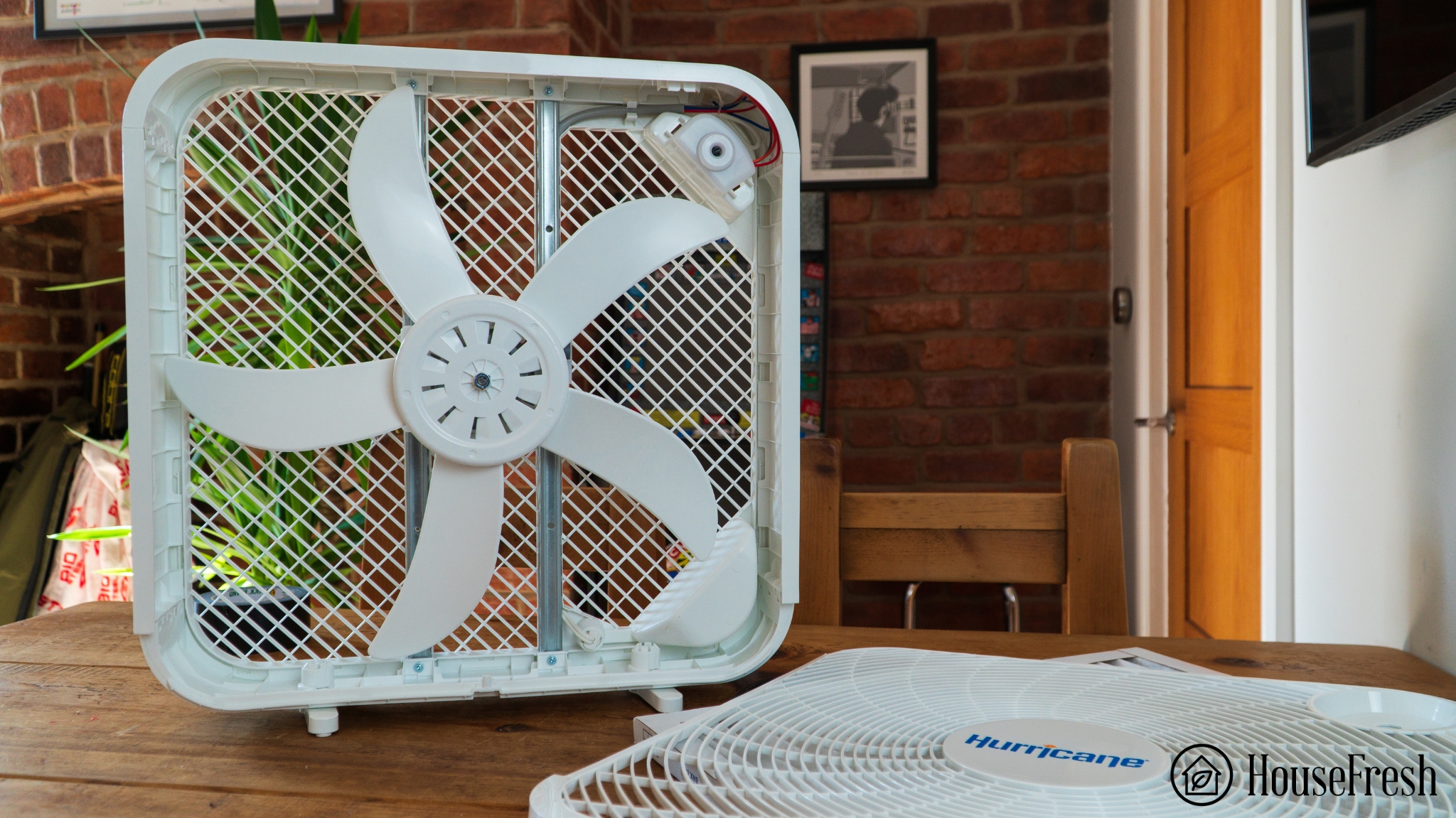
Step 3: Remove the front grate from your fan

This is where the fun begins. Firstly, make sure your fan isn’t plugged in before you start.

How To Make a DIY Air Purifier Remove Grill

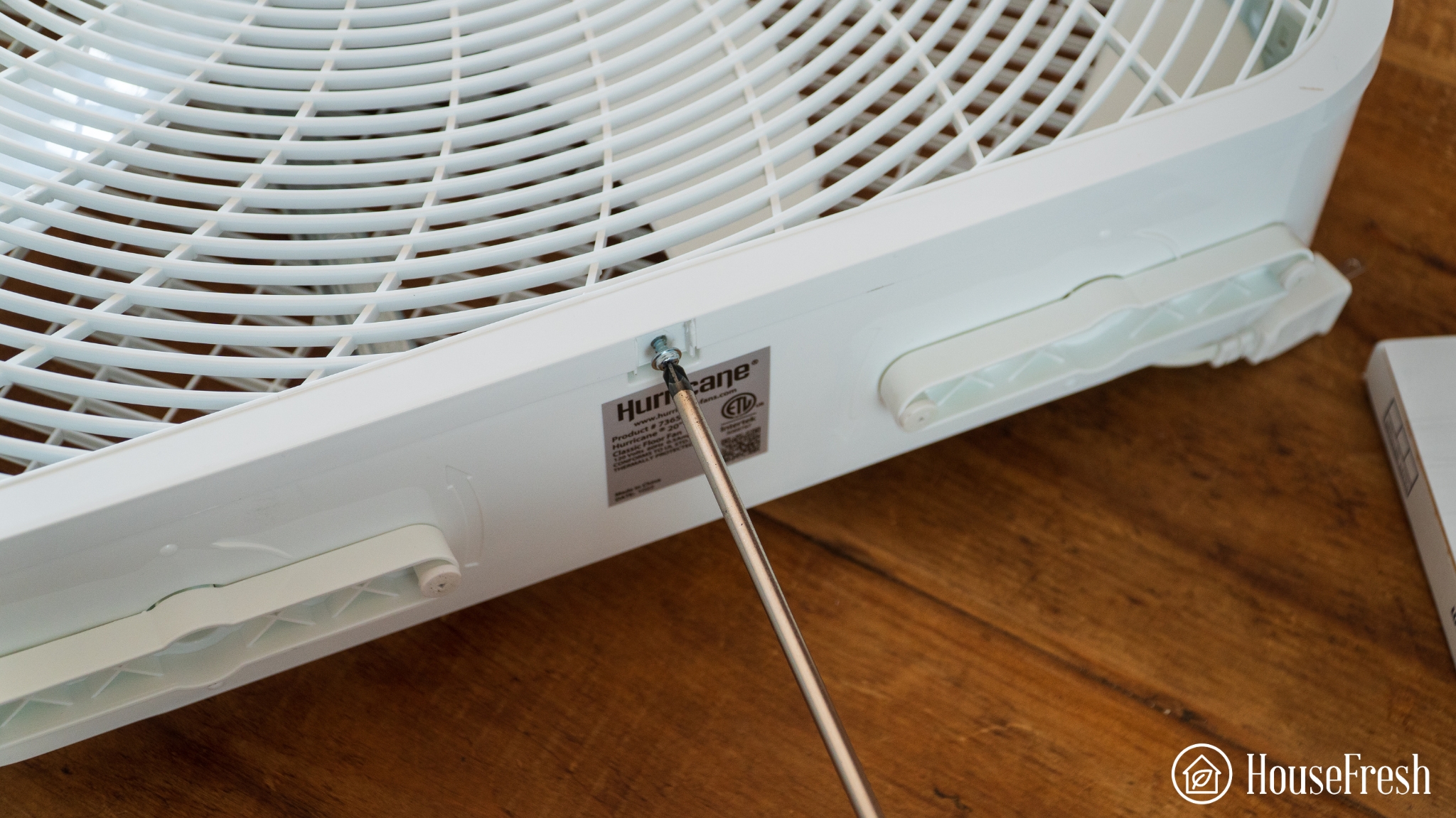
With some fans, you’ll find that the grill is permanently attached to the unit; you may have to purchase some tinsnips. I would advise wearing goggles if it’s made of plastic, as plastic tends to fly when cut. 

Another reason I went for the Hurricane fan is because it has a removable grill. You simply have to remove a screw at the bottom of the unit and slide the grill out. 

How To Make a DIY Air Purifier Unscrew
Tip: “A light touch is the right touch”

Remember this golden rule when deconstructing anything, if you start pulling things apart that you don’t want to be, you’re likely to damage it and maybe even yourself. 

Step 4: Attach the filter to the fan

With the hard part over with, now you just need to attach the MERV 13 filter to the front of the fan where the grill used to be.

How To Make a DIY Air Purifier Filter placement

Because I did my measurements first, the filter I purchased fits perfectly over the fan with no overhang.

How To Make a DIY Air Purifier Attach
Tip

Before attaching the filter, you must double-check that there are no gaps where particles can escape into the air.

How To Make a DIY Air Purifier Side

After those final checks, you can attach the filter to the fan. I used duct tape around different points of the fan as it’s durable and easily removed if you make a mistake, but feel free to use whatever you like, as long as it keeps the filter tightly attached and doesn’t leave any gaps.

How To Make a DIY Air Purifier Front

Step 5: Turn on your DIY air purifier and enjoy your clean air

If you’ve followed our guide correctly, your DIY air purifier should fire up immediately on its highest speed setting. It may not look like the prettiest unit on the block like the Smart Air S or have any cool smart features like the Mila, but hey, you made it and you’ve saved yourself a bundle.

How To Make a DIY Air Purifier Kitchen

I will name it… TeddAir Max!

The TeddAir Max cleared our test room in 84 minutes

Just because I put this air purifier together doesn’t mean it can escape our performance testing room. To see if our TeddAir Max affects air quality, we wanted to put it through the same rigorous tests we subject to all the other units we review.

How To Make a DIY Air Purifier Test

Our TeddAir Max air purifier cleared the simulated contaminants (incense smoke) from our performance testing room in 84 minutes. Even though it’s stuck together with tape, its performance was fair. It may not have outperformed units like the Alen BreatheSmart Flex, Smart Air S, Levoit Core 600S, Mila or the Blueair Blue Pure 311 Auto, which are all a similar size. 

Still, it did clear all our simulated pollutants from the air at the same time as the Dyson PH04 (a unit that costs around $750!)

By putting the unit through this performance test, we can also estimate a CADR (Clean Air Delivery Rate). We calculate its CADR to be around 90 CFM (Cubic Feet per Minute) which (if it was a manufactured unit) isn’t great for the size of the fan and HEPA.

Air PurifierTime To Clean Our Test Room
Levoit Core 600S
Levoit Core 600S Fireplace
15 minutes
Blueair Blue Pure 311 Auto
Blueair 311 Bedroom
21 minutes
Smart Air S
Smart Health S
29 minutes
Alen BreatheSmart Flex
Alen BreatheSmart
34 minutes
Shark HP102
Shark HP102 Side Table
38 minutes

Levoit Core 300
Levoit Core 200S Kitchen Close Up
40 minutes
Dyson HP04
Dyson HP04 Pure Hot Cool Fire Place
84 minutes
TeddAir Max
How To Make a DIY Air Purifier Dining Room
84 minutes

One issue I did find while testing was the noise. Because we removed the speed dial from the fan, it’s stuck on max speed, which is, unfortunately, pretty noisy.

Final thoughts

It may not be the most stylish-looking air purifier or the most efficient, but it shows that instead of spending hundreds of dollars on a unit, you can simply make your own at a fraction of the cost.

How To Make a DIY Air Purifier Dining Room

It’s not just about price; more and more areas in the U.S. are being affected by wildfire smoke, which can travel at an alarming rate, leaving you no time to get online to order an air purifier. You can assemble these components as a first-response action to protect yourself and your family.

There are no extra features like an auto mode, air quality sensors or an app to control your unit, but an air purifier in its purest form is still an air purifier

At the end of the day, it’s a fan and a filter and this is the message the folks at Smart Air are trying to get across with their range of units that boast high efficiency over extra functions. And as we know from our air purifier reviews, more expensive doesn’t necessarily mean better.

At HouseFresh, we have been reviewing air quality products since 2010. In all these years, we learned not to rely on manufacturers’ claims and the ever-so-glowing marketing materials. That is why we buy products with our own money, so we can write unbiased reviews after we’ve had enough time to evaluate air quality products in our home lab. Every unit we recommend has been thoroughly tested to assess its performance, energy consumption, and noise levels emitted in real-life environments. If you have any questions about our testing process for different types of air quality products, just drop us an email at danny@housefresh.com.

How to reduce dust in your apartment

HEADER How to Remove Dust in the Air

Dust never sleeps; that’s a well-known fact. 

The reality is that dust is a typical household issue that we must deal with pretty much every day. You can probably relate to the frustration that comes with finding dust in the places you cleaned just the day before.

Thart’s why the key is to clean often, and to clean properly.

A proactive approach will prevent grime buildups, nasty dust bunnies under the couch and crud nooks and crannies. 

But what and where should you pay the most attention? And what can you do to keep dust at reasonable levels? I bring you some tricks and tips to keep on top of the problem. 

As I mentioned above, regular cleaning is paramount. Yet, how to do it is as important as the frequency. So, why not press play on your favorite podcast and dive into a cleaning session following my top ten tips.

Tip 1: Dust with a microfiber cloth

Start by wiping dust off every surface in your apartment: tables, counters, shelves, knickknacks and electronics with a slightly damp microfiber cloth. 

Microfiber is known to trap dust particles better than other fabrics thanks to the super tiny threads and synthetic nature that work like a magnet for dirt, oil and grease. Microfiber cloths will grab the dust instead of just pushing it off objects and stirring it into the air to resettle in other surfaces.

Add the following ingredients to a spray bottle:

  • 2 cups of water,
  • 1 cup of vinegar 
  • 2 tablespoons of olive oil 
  • Optional: a few drops of your favorite essential oil

The vinegar will help cut through grime; the olive oil will polish and keep dust away longer. Spray the surfaces (except for electronics) and then wipe them clean with the rag. Always shake before using.

Tip 2: Clean places you don’t usually dust

Dust will accumulate on all sorts of surfaces, including those you don’t regularly reach in your everyday routine. Remove lint build ups from forgotten spots either with a microfiber cloth or vacuum them with suitable vac attachments. The more diligently you clean these overlooked areas, the less dust will circulate throughout your home. 

Here’s a list of usually overlooked spots, but get creative! Try to tackle as many dust-hiding places in your apartment as possible:

  • Windows (glasses, ledges, sills and blinds) 
  • Ceiling fans
  • Above doors and frames 
  • Kitchen cabinets (inside and above)
  • Above the fridge
  • Light fixtures and light switches
  • Baseboards
  • Mirrors
  • Wall corners
  • Bookshelves (including the books)
  • Plants (their leaves accumulate dust that’s not just bad for you but also for them. Wipe them gently with a wet cloth)
Tip

As these are quite different surfaces if you switch cleaners to suit the needs of each one better, use another cloth to avoid mixing cleaners.

Look for high-quality cloths that will degrade less quickly and shed fewer microplastics. Or consider using a slightly damp Swedish dishcloth if you prefer a more natural option. These are made of organic materials and compostable.

Tip 3: Vacuum beyond the floor, always starting with upholstery and curtains

You want to vacuum in the right order to cut down on dust efficiently. Start with the couch, upholstered furniture, curtains and drapery. Textiles don’t just accumulate unseen debris but also decay into textile dust, producing unwanted stuff on their own. 

After dusting and vacuuming fabrics, move on to the floors. Follow this sequence so that if anything redeposits on the floors, you’ll get it at the end. You’ll be preventing dust fallouts on already-cleaned surfaces.

Tip

Follow these tips to make vacuuming even more efficient:

  • Empty the canister of your bagless vac after every use. Wrap a disposable bag around the lid before opening it to make sure the dust falls directly into it.
  • Take the trash outside immediately after emptying your vacuum cleaner’s contents inside of it. Dust may reenter your living space if it sits in the trash can.
  • Keep your vacuum clean and unclogged; otherwise, the suction power could get compromised.

Consider getting a vacuum with a HEPA filter. They are way more efficient than regular ones, which usually shoot dust out the back end.

Tip 4: Use a rake on carpets and rugs

Carpets accumulate great amounts of dust that settles deep into the fibers and is hard to remove by just vacuuming —  even if you do so regularly. A rake will shake loose a lot of lint, hair and debris, making it much easier for the vacuum to suck it all up.

Tip

This is more of a deep-clean, hands-on monthly task. However, bear in mind this will blow dirt into the air. Don’t save it for the end; you’ll get dust all over the recently cleaned room again.

Tip 5: Mop uncarpeted floors after vacuuming

A swift mopping with a microfiber mop is the perfect final touch. It will remove any dust leftovers and crud spots. Use warm water and your favorite cleaner to leave your apartment smelling fresh. 

Just remember to wring the mop thoroughly until it’s just slightly damp; otherwise, dirty water can seep between cracks and under baseboards.

Tip

If you’re looking for more natural and safer floor cleaners, the EPA has a database with their Safer Choice Standard products.

Tip 6: Change the bedclothes weekly

We spend one-third of our lives in bed on average. No wonder mattresses, blankets, pillows and duvets accumulate our (and our pets) dead skin cells, dander and stray hairs. All of these are food for dust mites, microscopic bugs that nest in four out of five homes in the U.S. and are known to be one of the most common indoor allergens.

Once a week, remove the bed linen and shake out pillows and duvets to reduce dust and debris buildups. Vacuum the mattresses after allowing the bed to air out. Use essential oils for a final scented touch before making it up again.

Tip

Tea tree oil and lavender are fine options for a bed freshen-up that will also kill dust mites. Fill a spray bottle with cereal alcohol or vodka and a few drops of essential oil to splash on the mattress and pillows before putting in fresh sheets.

Make sure to wash the following with hot water:

  • Bed sheets, duvet covers, pillow covers.
  • Stuffed toys
  • Blankets and bed throws

Also, you can throw them into the washer every once in a while for an extra heat boost. Even if you’re not in contact with them, all fabrics will collect dust, dead skin cells and dander.

Tip 7: Clean vents and air filters

Vents and air filters are most susceptible to dust. If you happen to notice more lint and dirt than usual in your apartment, it’s probably time to change the filters. More than often, air filters get replaced every six months, but depending on the type of filter and area you live in, they might need replacement sooner. 

When cleaning the vents, vacuum away as much dust as possible first. Then, take down all the removable parts and soak them in soapy water to loosen any grime. Scrub gently with a brush and let it dry completely before returning it. While it dries, use the vacuum to clean the dust from the vent inside as well.

Tip

You may as well check the exhaust fans from the kitchen and bathroom for crud buildups. Vacuum the units to remove as much debris as possible.

Tip 8: Use an air purifier

An air purifier will drastically reduce the amount of dust floating in the air and settling around your apartment. Air purifiers with high quality particle filters can remove dust particles from the air before they set on top of surfaces. 

Our top recommendation for dust in a large apartment is the Coway Airmega ProX, a beautifully designed unit with a powerful fan and a two sets of True HEPA filters. If you’re on a budget, check out the Levoit Vital 200S, which offers excellent particle removal performance for less than $189.99. And if you’re concerned about sound, then nothing beats the PC fan-powered Luggable XL-7 from CleanAirKits. To find out more about these or other options, read our guide to the best air purifiers for dust.

Tip

An air purifier is an excellent ally for dusting chores. Have it on and running in the room you are cleaning; it will reduce the amount of lint flying into the air and resettling in already cleaned surfaces.

Tip 9: Clean your dryer machine

Dryers have a lint trap to prevent all that debris from getting blown outside the machine and into your apartment. The trap is not more than a screen mesh inside the dryer, but when clogged, the pressure of the cycle itself will make it renter the drum, leaking all the lint into your clothes and the surrounding air.

Tip

Check the dryer’s manual for instructions on how to clean the lint trap. Make sure to clean it regularly. The frequency will vary based on the pace at which lint accumulates.

Tip 10: Brush your pets in an easy-to-clean room

Regularly brushing and grooming your pets is a proactive way to keep up with their hair and dander circulating throughout your apartment, especially during the shedding seasons. However tempting as it may seem to brush them on the living room or bedroom, any fluff that escapes the brush will land on your couch, bed or rug and stick to the fabrics’ fibers. 

Tip

If possible, choose a space with no carpet to groom your pets. Otherwise, take your pet-brushing sessions to the room in your apartment with as little fabric or textile as possible around.

Why is your apartment so dusty?

Dust does not come from just one source. It’s not uniform, nor is its composition universal. Instead, multiple elements could be building onto the dust you see in your apartment — which also varies based on the local environment and your home biome. 

In a regular home, dust is usually made up of a combination of the following:

  • Skin cells and hair: our skin is constantly regenerating and fully renews every four weeks. Humans also lose over 50 to 100 hairs a day in normal circumstances. That means a lot of dead skin cells and hair are naturally shed into the environment regularly.
  • Pet dander: just like us humans, our pets also shed their fair amount of microscopic bits of dead skin and fur that will accumulate in your apartment if you don’t vacuum and clean upholstery regularly.
  • Textile fibers: this includes your clothes as well as bedroom linen, couches and upholstered furniture, curtains, carpets and rugs. Textiles are all over our homes, making them cozier. However, with time, all textiles naturally degrade and shed fibers that contribute to the dust forming around us.
  • Paper fibers: even toilet and tissue paper, as well as paper towels, are contributing to your household dust.
  • Food and cooking activities: while you are cooking, tiny food particles are released into the air and become airborne, eventually depositing and adding to the duts. Food debris, like crumbs, may also end up on the floor.
  • Insects: household dust also includes bits of insect remains, including those of dust mites, cockroaches and even the bug pests in your plants. When they die, these microscopic, creepy-crawly housemates end up building up on the airborne and settled dust around your apartment. 
  • Pollen: an outdoor biological pollutant, pollen is produced by trees, grasses, flowers and weeds. One of the main components of household dust, the wind stirs and carries the airborne pollen particles into your apartment. It’s more intense during spring when trees and other plants pollinate. Yet, depending on the local vegetation, pollen season can go year-round.
  • Dirt and other outdoor particles: When you walk into your home wearing outdoor shoes, you’ll be inadvertently introducing small particles of soil. Soot from nearby streets, stirred-up street dust from passing cars and debris from nearby construction sites are also prone to enter through doors, cracks and windows.
  • Mold spores: mold is everywhere, even if there are no leaks in your apartment and it is well-maintained mold and mildew-wise, spores can enter your home through windows and doors.

Final thoughts

I guess there’s a subtle charm to dust. It’s in the fact that it tells the story of those who inhabit a home; it has trails of our habits, our feeding patterns and our ways of living. 

That being said, and in a much more grounded sense, we are all in the big fight against dust. A dust-free apartment with no allergy triggers and a healthy environment to spend our day looks and feels better. 

Luckily, that is absolutely achievable. Just keep up your regular dusting routine and take the time to make a deep-cleaning session once in a while.

SOURCES


How to remove burnt smells from your house

Burnt Food

Burnt smells can be tough to remove as VOCs (or volatile organic compounds) like smoke and burnt food odors cling to your walls, curtains, furniture, and more.  

Luckily, there are a few steps you can follow to get rid of burnt smells for good.

Make sure that the burnt smell you’re sensing is not coming from anything that is actively on fire, and please call 911 if you cannot locate a source.

1. Take whatever you’ve burnt outside the house

If you’ve burnt some food, you may be tempted to simply place it in the trash, but this can cause the smell to linger in your home. The best practice is to take the burnt food outside and place it in a garbage bin.

2. Open your windows and doors to let fresh air in

By opening your windows and doors and allowing fresh air to circulate, you’ll be able to get rid of most bad odors, including burnt smells. Sometimes the simplest things work wonders. 

3. Thoroughly clean burnt pans and pots

First, fill the pan/pot/skillet with white vinegar until all stains are covered and let it sit for two hours before scrubbing. Next, bring to a boil a mixture of equal parts of water and white vinegar before letting it cool down so you can scrub off all remaining traces of burnt residue.

4. Spray white vinegar on surfaces

Wipe down countertops, cabinets, stovetops and other surfaces after spraying them with a mix of one cup of white vinegar and one cup of water. If available, you can add 10-15 drops of essential oil (lemon or grapefruit are great) for an additional scent boost.

5. Wash your fabrics and furnishings

Washing your clothes, kitchen apron, and curtains is relatively easy, but if the smell has seeped into your furniture, you’ll need a steam cleaner to completely eliminate the burnt smell. 

If you don’t have a steam cleaner, you can spray the vinegar-based cleaner you made for step 4 on your sofa, cushions, and fabrics. You’ll definitely smell the vinegar for a little while, but the smell will dissipate relatively quickly.

6. Spread some baking soda

Baking soda can be very effective at absorbing odors. Simply spread a generous amount of baking soda around the worst impacted area in terms of smells. For bad cases of burnt smells, you can try placing small containers of baking soda throughout the room.

7. Place a jar with used coffee grounds

Just like baking soda, coffee does a fantastic job of absorbing odors. First, dry wet coffee grounds by spreading a thin layer on a baking sheet and placing it in a 250-degree oven until dry. Next, move the dried coffee grounds to a jar and leave it open near the spot where burnt smells are an issue.

8. Get some charcoal bags

Charcoal is surprisingly good at absorbing foul odors, so something you can try is placing some charcoal bags near the source of the burnt smell.

9. Spray some lemon water

Pour two cups of hot water into a spray bottle and add 1/8 cup of baking soda and 1/2 cup of fresh-squeezed lemon juice. One mixed, simply spray it in the air wherever you notice the burnt smell.

10. Get an air purifier with a good activated carbon filter 

By far the best way to eliminate a burnt smell from your home is by using an air purifier with a filter packed with activated carbon because this is the only type of air filter that can remove odors and gases from the air.

How carbon filters work

When looking for an air purifier, also look for a device with a high Clean Air Delivery Rate or CADR. CADR is a measure of how efficiently an air purifier can cycle and clean the air, so the higher the CADR count, the quicker the smell will be removed. 

For burnt smells in the kitchen, my recommendations would be going for something like the Levoit Core 400S (with a Smoke Remover filter). For large kitchens, check out the Dyson Big+Quiet BP06 or the IQAir HealthPro Plus. And if you are struggling with burnt smells from chemicals, then you will need a lot more activated carbon so check out the Austin Air HealthMate.

I hope my tips today help! And if you have any questions about using air purifier to remove unwanted smells from the air, please drop them in the comments below.

How to test for mold in your house

Mold 02

There’s a reason people react with horror when they see mold growing in their homes—mold is bad news. 

Mold spores in the air can harm your health, and both ‘white’ and ‘black’ mold can be dangerous. Mold can reduce your quality of life and cause real damage, eating away at wood, drywall, and other materials. Mold cleanup and repair can be financially devastating, costing $5,000 on average.

Mold spores are always in the air, and the right environmental conditions will result in mold growth. The key to fighting mold is being proactive:

  • Control the humidity. Relative humidity below 50% inhibits mold growth. 
  • Ventilate. A good-quality air purifier can be effective at reducing mold spores in the air. 
  • Maintenance. Repair leaks promptly and clean the home regularly.

Testing for mold can confirm its presence, identify the species, and pinpoint its source.

Three ways to test for mold in your house

If you suspect you have mold growing in your home, there are several ways to test for it.

1. DIY testing

Mold is often difficult to distinguish from simple dirt, and it can hide behind paint. If you think a discolored spot on your wall might be mold, you can conduct two simple, free tests immediately:

  • Diluted bleach. Mix one part bleach with 16 parts water, then dab some (don’t scrub) on the stained portion of the wall. If the discoloration fades away immediately, it’s probably mold. If it comes back a few days later, it’s definitely mold
  • Screwdriver. Take a screwdriver and push the blade against the surface. If it goes in very easily, your wood has likely been chewed up by mold.

2. Test kits

DIY tests can’t identify the type of mold you’re dealing with or reveal mold you can’t see. For that, you’ll need to purchase a testing kit, which comes in two basic varieties:

  • Surface testing. These test kits require you to scrape or swab surfaces, seal the samples into containers, and then either wait for a reaction or send the samples to a lab for professional testing.

The drawback of these tests is that they only determine the presence of mold on the specific surfaces you test.

  • Air quality kits. These mold tests sample the air to determine whether mold spores are present. Some utilize a petri dish, others utilize an air pump that samples the air in the home and routes it to an internal testing medium.

All these kits can tell you on their own is whether some kind of mold is present in high enough concentrations to be worrying. You will need to send the samples to a lab to discover what kind of mold it is.

Sometimes the lab costs are included in the purchase price of the kits, but you should make sure of this before purchase.

3. Professional testers

A third option is a mold testing professional. They will take air and surface samples and conduct lab tests on them—basically, they do everything a test kit does but on a house-wide scale and with trained, professional experience.

These inspections can be pricey, ranging from $600 to $1,000, depending on the size of your home. See below for more detailed information on mold testing costs.

When to consider professional mold testing

Both the Centers for Disease Control (CDC) and the Environmental Protection Agency (EPA) consider mold testing unnecessary if you can see obvious signs of mold; you should simply clean and treat the affected areas. It is often not worth the price of testing to identify the mold, and there are no standards for evaluating whether mold levels are dangerous.

There are some circumstances where professional mold testing may be needed:

  • After treatment, to ensure that mold regrowth has not occurred. 
  • If you need to identify the species due to a severe health reaction. 
  • If you have not been able to the presence of mold.

If you do contact a professional mold testing service, there are several different kinds of tests they can perform, each with its own price tag:

Type of testWhat’s involvedAverage cost
Swab testSamples collected from surfaces.$200-300
Air cellAir samples collected to determine the presence of spores.$240-$360
HVAC testing addition
An additional air test targeting HVAC ducts and returns.$50-$75
Tip

Something to keep in mind. Any lab work required will typically be an additional cost ranging from $50 to $150.

What are the signs of mold (and where to look for them)

Knowing the signs of dangerous mold growth in your home can alert you to a potential problem before it impacts your health and property. Here’s what to look for:

  • Staining. Dark spots on walls, darkened grout (caused by mildew, a form of mold), fuzzy or slimy discolorations on surfaces. 
  • Smell. Musty, earthy smells that are very unpleasant. 
  • Damp areas. Mold requires moisture to grow. 
  • Odd tastes. If food and beverages taste “off” it may be due to mold in your appliances. 
  • Health issues. Sudden respiratory problems or skin rashes may be allergic reactions to mold.

Often, mold manages to grow out of sight in hidden places. There are specific areas of your home you should check:

  • Bathrooms and kitchens are damp spaces where ventilation is often problematic. 
  • Mattresses and upholstery can be ideal breeding grounds for mold because our bodies sweat and provide a warm, moist environment. 
  • Windows with failed caulking and weather stripping allow moisture to build up. 
  • Attics, basements, and crawlspaces tend to be damp and “out of sight, out of mind.” 
  • HVAC and laundry ducting can provide the ideal humid conditions for mold.

Wrapping up

Getting rid of mold starts with being aware of its presence. Testing for mold can be inexpensive and testing kits or professional testing can give you the information you need to protect your property and family.

Once you determine that mold is present, don’t panic! Follow this guide to getting rid of mold and you’ll soon be living a mold-free life.

How to get rid of mold complete 1

SOURCES

How to get rid of cat odors in the house

Cat Odors in the House

Unlike other pets, cats aren’t smelly. They are naturally clean creatures and can spend about half their day grooming themselves.

But here’s the thing: despite their cleanliness, some “cat smells” tend to accumulate around the house. Even if you have a regular cleaning routine, it’s not always enough. 

It’s actually more common than you’d think; some cat parents don’t even notice mild cat odors. Noses can get used to smells and “go blind.” 

The good news is the extra steps you could add to your household chores are quite manageable. So, without further ado, let’s get to some simple tips to boost your current routine and enjoy a fresh-smelling home.

6 instant hacks to get rid of cat odors in the house

A regular and sustainable routine that will keep cat odors at bay includes: 

1. Increase airflow and let fresh air in 

When your indoor air stagnates, any unwanted smell intensifies. Odors will linger and stick around on all kinds of surfaces. Opening windows and allowing outdoor air to circulate throughout your home will freshen up your living space, dissipating odors and pet allergens.

2. Keep the litter box clean

Litter boxes are a common source of foul smell. Regular cleaning and maintenance are paramount for a fresh-smelling home and a happy, healthy kitty. 

Follow these tips to ensure an odor-free litter box:

1. Scoop out solids and clumped litter at least once a day; twice will be even better, especially if you have multiple cats.

2. Once a week, remove all the contents from the litter box and clean it thoroughly using soap and water. Refill it with fresh litter.

You should choose a fragrance-free soap because strong chemicals, like ammonia or bleach, can be harmful to cats. 

Also, keep in mind that cats have a powerful sense of smell and can perceive even the slightest residual scent from heavily perfumed soaps. If your cat doesn’t like how their litter box smells, they might choose to relieve themselves elsewhere.

3. Vacuum and mop the floors under and around the box every time you deep clean the litter box.

4. Always seal the bag where you collected the waste and take it outdoors as promptly as possible.

5. Wash the litter scoop every time you use it to keep it clean.

Tip
  • Opt for unscented cat litter; most cats dislike scented ones.
  • Choose a convenient location for the litter box. It should be placed in a moderately active area of your home:
    • Placing it too far from social spaces might make it hard for your cat to find or unappealing to use.
  • Placing the litter box near noisy or vibrating appliances, like a washing machine, can stress them out.
  • Ensure the litter box setup offers your cat both privacy and tranquility while remaining easily accessible. Boxes with low sides and no lids are generally better. They allow your cat to see around and provide an escape route if needed, making them feel secure and in control.
  • Consider a robot litter box that will activate automatically after your cat uses them. However, you’ll need to empty the waste at least twice daily.
  • The number of litter boxes also matters. According to the Humane Society, you should have one litter box per cat in the household, plus one extra.

3. Vacuum, mop and dust regularly

In cat-friendly households, a great deal of dust is made of cat dander and hair. Those furry buildups that tend to accumulate in corners or fly around the room are adding to the cooped-in smell. Remove those unseen dusty odors by keeping surfaces clean: 

  1. Vacuum floors, carpets and hard surfaces at least once a week. Use a vacuum equipped with a HEPA filter; they are more effective at removing dust and dunder without recirculating it back into the air.
  2. Mop all non-carpet floors at least once a week. Use pet-safe floor cleaners; avoid strong chemicals that release toxic fumes, like ammonia.
Tip

Focus on vacuuming and mopping your cat’s play areas, favorite hideouts, nap spots and any surface they frequent. This routine will reduce hair buildup and the resulting odors if performed weekly.

For those pesky hair spots on couches and upholstered furniture, either sprinkle a pair of rubber gloves with clean water to wipe the fabric and remove accumulated hair or use an efficient and reusable pet hair remover. To give your textiles a final deodorizing touch, spray them with the water and vinegar mix.

3. Clean hard surfaces with a 50/50 mix of white vinegar and water. Spray the mix and give your furniture a good wipe. The vinegar will clean and deodorize at the same time.  Don’t worry about the vinegar smell; once the cleaner air dries, the scent will evaporate.

Tip

This cleaner is safe to use on many different surfaces like metal, plastics, wood (as long as it isn’t waxed), glass and leather.

Don’t use vinegar on natural stone surfaces; the acidity will eat away the stone. Instead, for those surfaces, make a cleaner with

  • 2 cups of water
  • 1 tablespoon of dishwashing soap
  • 1 tablespoon of rubbing alcohol.

The rubbing alcohol will avoid any sope residue on the surfaces that, otherwise, would accumulate over time.

4. Pamper your pet with regular grooming and quality food

Although cats take good care of themselves, regular brushing will remove considerable amounts of loose hair, dirt and dander from their coat. A weekly brushing session for short-haired cats and daily brushing for long-haired ones will result in fewer hair build-ups floating around and sticking to clothes and couches.

When it comes to choosing their food, a nutritious, balanced diet will reduce hair shedding and lead to less strong-smelling waste. Discuss with the vet your cat’s specific needs to find the best-suiting food for them.

Tip

Even when high-quality, the food in your cat’s feeding bowl can cast a pungent smell. 

Automatic feeders that release the right portion only at mealtime would avoid the constant odors coming from your cat’s bowl, and you’ll be fostering healthier routines for your kitty. 

Also, keep the stored food properly sealed for a double benefit: no cat food smells in the pantry and fresh meals for your pet.

5. Clean your cat’s bedding 

Keep their bedding, everyday blankets or wall hammocks clean to avoid smell and hair building up on the fabrics. Machine washing them once a week is a good rule of thumb, as the amount of hair won’t be too much for the washing machine. 

For cushions or bedding with non-removable covers, handwash them with hot water and soap. Rinse thoroughly before putting them to dry.

Avoid any heavily scented detergent. Cats have a strong sense of smell.

Tip

All washing machines have filters or traps to collect hair and other debris during washing cycles. You should regularly clean these, or your laundry will be forever linty. 

If in doubt about how to clean the filters, just search for the model’s manual on Google to find cleaning instructions.

You can also use a pet hair remover in your laundry to minimize the amount of hair stuck to your clothes.

6.  Use an air purifier 

Air purifiers with HEPA filters are known for helping with pet allergy symptoms, as they remove dander, dust, hair and a wide variety of airborne pollutants as small as 0.3 microns. 

But they can help with smells, too. As long as an air purifier has activated carbon filters, it will remove odor particles through a process known as adsorption. 
Besides, ozone-free and non-ionic air purifiers are completely safe for pets.

Tip

When choosing an air purifier to place in the room with your cat’s litter box, opt for quieter ones to avoid any noise-related stress. Most manufacturers specify the noise levels in decibels (dB). 
If in doubt about which one you should get, check out our recommended air purifiers for litter box smells and air purifiers for pet odors.

Where to clean if the cat odors persist

Sometimes, cat smells linger on unexpected surfaces — this is particularly true for places that are not getting the attention needed in an everyday cleaning routine. And that’s completely normal considering there is just a limited amount of time we can dedicate to keeping our homes tidy and clean. 

But if you are up for it, here are some suggestions to nail a thorough cleaning and get rid of those more persistent odors.

Step 1: Freshen up carpets with baking soda and vinegar

Every once in a while, on top of regular vacuuming, carpets need a good deep clean to freshen them up. Start by removing stubborn cat hair with a carpet rake. Then sprinkle a thin layer of baking soda and spray with white vinegar to get the bubbly, fizzing reaction. Let it act for at least 30 minutes, and finally, vacuum thoroughly.

Tip

Find useful tips in my guide on how to deal with (fresh and old) pet urine stains on the carpet

Step 2: Clean hard surfaces that often go overlooked

Clean blinds, fans, light fixtures, shelves, drawers, woodwork and baseboards (below and behind them). All these items will collect dander and dust over time. Spray them with 50/50 vinegar and water mix and wipe them with a rug to make sure there is no lint left on any of them.

Tip

Pay attention to places your cat likes to rub against. Cats have scent glands they use to mark their territory with pheromones. Although these are almost imperceptible to humans, they can leave a scent behind, especially when they rub frequently against specific furniture, fabrics, or walls.

  • Use an enzymatic cleaner to wipe out any residue your cat may have left on the surfaces they rub against.

Step 3: Wash curtains and refresh upholstery with baking soda

Curtains and upholstered furniture absorb and trap odors, including those from your pet. That is why it’s imperative that you wash your curtains and pillow covers:

  • Anything that can be laundered should be.
  • Use white vinegar instead of softener; it will help neutralize the smells. Plus, it’s eco-friendly and your fabrics will still be soft when they dry.
  • For upholstered furniture, sprinkle baking soda, leave it overnight to soak up the odor and vacuum it up the next day. Spray them regularly with the 50/50 water and white vinegar solution.
  • Also clean your cat’s tree and carpeted cat shelves if you have any around the house. As cats spend so much time playing around these and napping in high spots where they feel safe and in control, hair and smells will undoubtedly build upon those carpeted surfaces. 
Tip

For stubborn odors, use an enzymatic cleaner instead of baking soda. Spray a fine mist on the surfaces (don’t soak them) and let them air dry.

Step 4: Wash your walls and ceiling with vinegar

Over time, odors will soak into paint. So, at least once a year, give your walls and ceilings a deep clean. Make an all-purpose cleaner made of vinegar and warm water (in equal parts) and a tablespoon of dishwashing soap. Use a mop for hard-to-reach areas.

Step 5: Replace HVAC filters and check vent covers

Filters and vent covers collect dust, pet dander and hair. Your indoor air flows right through them, so when they are not regularly cleaned or replaced, the accumulated lint and debris will be recirculated throughout the house.  

Filters and vent covers collect dust, pet dander and hair. Your indoor air flows right through them, so any accumulated lint and debris will be recirculated throughout the house. Make sure to replace HVAC filters periodically and keep vent covers free of hair and dust.

Step 6: Clean the fridge

As unexpected as this may seem, fridges are magnets for cat hair and dander. Unplug and separate it from the wall to vacuum and mop behind and under it.

Also, check the coils at the back and the slotted grate on the bottom that leads to the dripping pan. Vacuum and wipe clean both.

Tip

To further remove pet odors from the kitchen, clean or replace filters from appliances that have them.

Final thoughts

Maintaining a fresh and clean-smelling home requires some ongoing care, it’s true. But it’s worth it. With a boosted routine and a deep-cleaning session every once in a while, your home should be free from unwanted cat smells.

A balanced and nutritious diet, a clean litter box and regular grooming sessions will reduce one of the main sources of the smell: pet hair and dander. Your home will feel tidier and fresher; your kitty will definitely enjoy it as much as you.

SOURCES

How to keep a crawl space dry

Best Crawl Space Dehumidifiers

Crawl spaces are easy to ignore. Without the utility of a basement, they’re often literally “out of sight, out of mind” for homeowners unless there’s an obvious problem. But if you want to protect your home from trouble down the road, there’s one aspect of your crawl space you should pay close attention to: Its humidity levels.

High humidity in a crawl space can result in problems like

  • Mold 
  • Dry rot in floor joists 
  • Foundation damage 
  • Pests like cockroaches

To avoid these problems, your crawl space should consistently have humidity below 60% and above 30%. About 55% relative humidity is ideal in most cases.

5 tips for keeping your crawl space dry

Humidity can be a challenge in your crawl space because there are many factors that contribute to higher levels of water vapor in the air. There are several ways to combat the problem.   

1. Install a vapor barrier

One of the easiest ways to reduce crawl space humidity is to install a vapor barrier (a plastic sheet that lays over the ground) blocking moisture from rising up. 

A plastic sheet with a minimum thickness of 6 mil (0.006 inches) is laid over the dirt and run up the foundation walls to a height of 6 inches, fastened in place, and sealed with tape and caulk.

2. Install a sump pump

A sump pump is a pumping system utilizing a shallow pit where water collects until it reaches a prescribed level and is pumped out, preventing water levels from rising above the ground. 

A qualified plumbing professional can install a sump system in less than a day.

3. Use a dehumidifier or fan

Humidity in a crawl space can be the result of overall climate conditions. A high-quality dehumidifier rated for the size of your crawl space can keep humidity levels lower via continuous operation.

 Alternatively, you can improve ventilation in a windowless area like a crawl space with the addition of an extractor fan or a transfer fan.

4. Seal the crawl space

Crawl spaces can be vented for passive air exchange or non-vented; older homes tend to have vented crawl spaces. Venting a crawl space can reduce humidity if the humidity levels outside are low, but can have the opposite effect in very humid climates. If your home is located in a very humid area, closing the vents and sealing off other openings can be effective at reducing humidity levels.

Tip

Consider encapsulating a crawl space.

If you want to seal off your crawl space from exterior humidity, consider encapsulating it. This is an augmented form of vapor barrier that seals the space off entirely, keeping outside air (and pests) from infiltrating.

5. Check the grade and gutters

A properly designed home will divert water away from the foundation when it rains, but clogged gutters and incorrect grading of the ground around a house may be allowing water to pool near the home. Cleaning out the gutters and inspecting the drainage around the home can help prevent water from entering the crawl space.

Uncovering the source of water in your crawl space

Knowing where the moisture is coming from in the first place will help you choose a strategy to battle humidity in a crawl space. 

Most humidity issues in a crawl space can be traced to some common causes:

  • Plumbing leaks. If you notice water puddling in your crawl space under pipes, inspect them for leaks. These are most commonly found at connections where two or more pipes meet. 
  • Groundwater or runoff. If the water table under your house rises, the dirt can become saturated, raising overall humidity levels. A sump pump can help dry out the ground. 
  • Condensation. High humidity in your crawlspace causes water vapor to condense on colder surfaces, like ductwork or pipes. This water then drips down onto the floor.
  • Infiltration. If water pools against your house after rainfall, it can seep through the foundation walls and leak into your crawlspace. Inspecting and repairing gutters and re-grading landscaping can alleviate this.

Common questions about crawl space humidity

Crawl spaces can be claustrophobic, mysterious places filled with dirt and spiderwebs. Many homeowners don’t know much about what’s normal in a crawl space. In this section, I will try to answer some of the most frequently asked questions about crawl space humidity.

Your crawl space should be dry. A well-maintained crawl space will have no standing water, no condensation issues, and moderate humidity levels. Any spikes in humidity or signs of standing water should be investigated and dealt with immediately.

The ideal humidity level for a crawl space is about 55%. The acceptable range is between 30% and 60%. Crawl space humidity can also be too low; levels below 30% can lead to wood shrinkage, which can also damage your home.

If your crawl space is experiencing higher-than-normal humidity due to a specific event—a plumbing leak or local flooding, for example—it may dry out over time. Most humidity issues in crawl spaces will require more direct interventions to rectify the source of the moisture.

Absolutely. A damp crawlspace is an ideal breeding ground for mold, and easily transmits mold spores to the living areas of the home. Mold can cause a wide range of negative health issues, including allergic reactions, upper respiratory issues, fever, and possibly more severe conditions. If your crawl space is damp, it’s imperative that you locate the source of the moisture and make repairs and changes as needed to reduce the humidity.

Final thoughts

It’s easy to ignore your crawl space if there are no overt problems. But even something as seemingly minor as high or low humidity in the space below your main floor can have a devastating effect on your property and even your health. Monitor the humidity levels in your crawl space regularly, and take action to repair leaks and reduce those levels as needed.

SOURCES

How to get rid of that old house smell

old house smell

The “old house” smell is something we all know about and probably have felt at some time or another. However,  there is no universal definition of it: 

  • Some may describe it as a ‘musty’, ‘funky’ or ‘stale’ stench
  • Others might refer to it as a ‘dusty’ or ‘stuffy’ odor
  • There are those who would compare it to ‘BO’ or ‘smoker-house’ smell

The list goes on, but you get the idea. 

For what it’s worth, there are many possible reasons for a house to smell “old.” Depending on the sources, the odor will vary. And the means to tackle the issue will, too. 

Living with that smell can be tiring. The good news is that there are simple things you can do today to help you remove that old lingering smell. Let’s get to it!

6 quick-fire tips to get rid of old house smell

When houses are not properly ventilated, dampness and odors become trapped inside, lingering. In addition to dealing with high humidity levels and more structural fixes, you should address some common causes of stale smell. 

Step 1: Ventilate the space to allow fresh air into the house

Increasing airflow is a straightforward and highly effective way of reducing humidity levels. Fresh air and sunlight will prevent home spaces from becoming damp,  reducing the presence of mold and lingering odors in the long run.

To boost airflow, consider using fans to create cross-breezes, ensuring the air circulates into the darker corners of the house. 

Tip

The sun’s UV rays are natural deterrents for microorganisms like bacteria, viruses and, most importantly, mold. Regular window glass filters out UV rays, so letting in the actual light is key.

Step 2: Thoroughly clean soft goods

Furniture and soft fabrics, like carpets, curtains or even the blanket you use to get cozy in front of the TV, hold onto odors. If these are not regularly cleaned, they will contribute to the stuffy smell in the house because over time, moisture can get trapped in the fibers of the fabric.

Give your furniture, upholstery and carpets a deep clean: 

  1. Sprinkle baking soda over your furniture and carpets
  2. Leave it overnight to soak up the odor 
  3. Vacuum it up the next day

It usually takes at least 24 hours to do its job, but it might need a few days for stubborn smells. If the odor persists, you can repeat the process. 

Tip

Mold spores are airborne and easily spread all over a room, including furnishings and upholstery. To clean the mold you must follow these steps:

  1. Wear a mask and open the window of the room where you will be cleaning
  2. Spray your furniture with 50% white vinegar, 50% water and a few drops of Tea Tree Oil mix
  3. Scrub lightly any visible mold or mildew. Don’t get the furniture too wet in the process and make sure it dries completely. Otherwise, moisture will build up again.
  4. Vacuum the surfaces with a HEPA filter vacuum. Regular vacuums will only spread the spores into the air.

Pro tip: For machine-washable items, adding borax and vinegar to the wash will help eliminate any spores.

Step 3: Deep-clean old appliances

Over time and with regular use, everyday appliances can unknowingly become reservoirs of old bits of food, grease and dirt. Leaks can also be hiding behind them. Vent hoods can get old and smelly and fail at removing odors from the air while you cook.

A thorough cleaning will go a long way:

  1. Pull out your stove, fridge, washing machine and dryer to clean under and behind them. Make sure there are no leaks.
  2. Vaccum the fridge’s coils and clean the top as well.
  3. Keep vents clean and replace old filters.

Step 4: Clean your floors, baseboards and fixtures

Unwanted odors can come from dust accumulating in floors and corners. If you have pets, pet dander and fur around the house will also cause smells to linger for longer. Dust, mop and vacuum frequently to maintain a clean and fresh environment.

Even seemingly overlooked areas like baseboards, light fixtures, ceiling fans and hard window treatments (such as blinds or shades) can absorb odors. Make sure to give these areas a thorough cleaning as well.

Tip

You can make your own natural DIY cleaner using:

✅ ½ cup of borax
✅ 2 cups of distilled white vinegar
✅ 16 ounces of hydrogen peroxide

  1. Mix the borax with 32 ounces of hot water
  2. Add the rest of the ingredients and mix
  3. Use a sponge to apply the mixture to your walls and ceilings 
  4. Open a window and let it air dry
  5. If there are still some areas where the smell lingers, just give them a touch-up

If you prefer a more radical take on walls and paint them anew, you can try using an odor-blocking primer.

Step 6: Clean and maintain your drains

Regular maintenance of drains will make a notable difference. Baking soda and white vinegar make an efficient, pipe-safe cleaner:

  1. Put two tablespoons of baking soda down the drain
  2. Pour ¼ cup of vinegar
  3. Let it fizz for a few minutes
  4. Pour hot water into the drain
  5. Don’t use the sink for a couple of hours
  6. Bonus: You can add a few drops of Tea Tree Essential Oil. It will give the drain a fresh-smelling scent and it also has an inhibitory effect on mold.
Tip

Regularly unclog kitchen and bathroom drains to reduce funky smells due to clogged p-traps or pipes.

  • In the kitchen, throwing greasy materials down the drain is rather common.
  • In the bathroom, soap residue can react to calcium in the water forming “soap scum” that will deposit in the lines. 

Step 6: Use smell neutralizers

It takes time to completely banish lingering smells from a home. While you’re working on repairs and a whole house deep clean, from cupboards to furnaces and upholstery, having some natural odor absorbers distributed around the house can make a huge difference. 

These absorbents will reduce the odor and freshen up your living space:

  1. Place small bowls with baking soda, distilled white vinegar or coffee grounds in unintrusive spots around your home.
  2. Slip dryer sheets into built-in cabinets and closets to help absorb excess humidity.
  3. Place activated charcoal bags in enclosed spaces like kitchen drawers or closets.

What to do if the old house smell persists

A thorough clean will go a long way. It will improve your indoor air and eliminate more than a few lingering odors. However, more often than not, some stubborn smells are related to structural issues. While these may seem challenging to address, there are specific and actually manageable steps to take.

1. Check for pests

Rodents and roaches are not uncommon in old houses and buildings. They can hide and nest in walls, attics, crawl spaces and behind baseboards. Any small crack or damaged insulation is an entry to your home. Roach infestations produce a nutty, ugly odor, while rat pee and droppings will smell like musty ammonia. 

You need to deal with the intruders to get to the root of the smell. However, you can use natural odor absorbers to ease the issue.

💡 Pro Tip: Looking for a pest control specialist in your area? Check out Angi’s database of certified professionals. If you are positive about having pests in your home, call a few different companies to compare budgets and proposed solutions. Good technicians should do a full inspection before issuing a quote. 

2. Clean the air ducts and pipes of your HVAC system

The heating, ventilation and air conditioning (HVAC) system removes moisture from the air before redistributing it through the whole house or building. As the system dries the inside air,  water vapor is removed through the condensate drain line. However, pipes can get clogged with dirt and debris, accumulating moisture and potentially leading to mold and mildew growth inside the system or the walls. 

In particularly old houses, air ducts may accumulate dust, cigarette smoke residues, mold, grease and even the remnants of possible pest infestations. As a result, the air coming from the HVAC will smell stuffy, and the system will distribute the unwanted smell throughout the whole house.

Make sure the HVAC system works properly by doing regular maintenance. Check air intakes and replace filters every 60 to 90 days. With old, stuffy air filters, the HVAC unit needs to work harder and is more susceptible to malfunction. 

💡 Pro Tip: Duct cleaning is not something to take lightly. If you plan to have the air ducts clean, take these EPA suggestions into consideration.

3. Uncover the most humid corners of your home

One of the most frequent causes of bad smell in a house is dampness, which can, in turn, lead to mold and mildew. According to the EPA, the ideal relative humidity in a home should be between 30% and 50%. 

Fixing excessive humidity should be a top priority, as it can ruin your floors, paint or carpet and lead to mold lurking around the house and eventually to structural problems. 

Here are some places you should check with the help of a humidity sensor:

Area of the HouseHumidity CausesHow to Reduce Humidity
Foundations & CrawlspacesIf not well insulated or air-sealed, the base of your home will release an earthy, musty odor known as a “rising floor smell” that will soon impregnate the whole house from beneath.Fix problems with seals and insulation. If the relative humidity is higher than 55%, a crawl space dehumidifier can help keep moisture levels in check.
Attics & RoofsLeaky roofs, condensation, deficient insulation, or poor ventilation can cause excess moisture in your attic.Fix any leaks and insulation issues. Consider getting a dehumidifier as it will extract water vapor and recirculate dryer air. 
Pipes & DrainsSlow but constant drips under the sink or within the pipe chases will create a perfect humid, dark environment for mold and mildew to thrive, releasing a musty smell in the space. Check the whole house for leaky pipes and fix them.
Walls When walls are under-insulated or have no insulation, air can leak and condense inside, leading to moisture and dampness. Air leaks in the wall frequently lead to mold growth.Keep an eye out for these common signs to detect mold growing inside a wall:
🚩 Yellow or brown water stains or discolorations
🚩 A cooler feeling on the wall compared to the surrounding areas
🚩 ‘Weeping’ walls (condensation)
🚩 Discolored spots, often mistaken for cooking oil splatters
🚩 Cracking, peeling, or bubbling paint 

4. Call the chimney sweep

If your house has a chimney, make sure to get it swept at least once a year. This will ensure there are no dead animals, leaves or other debris clogging the chimney, leading to unpleasant smells in the room.

💡 Pro Tip: Look for certified, insured chimney sweeps to do the job. There are no licensing requirements for chimney sweeps in most U.S. states, so the safest way is to call a certified professional. The NCSG is the largest US chimney guild, with a comprehensive list of trusty sweepers. 

5. Treat old wooden furniture and fixtures

A somewhat unexpected source of musty smell is old wood that, with time, has accumulated moisture and potentially developed mold to some extent. 

All of these are oftentimes overlooked and yet a common source of unpleasant odors:

  • Doors
  • Trim around windows
  • Window treatments (such as blinds or shades)
  • Cupboards and cabinets

When it comes to these items, the best course of action will depend on the state of the wood. If it’s too degraded, it may be best to replace it. If that’s not the case, a fresh coat of paint will eliminate the musty smell stemming from them. 

6. Get an air purifier

Air purifiers are efficient at removing airborne pollutants from your home air. Think dust, pollen, pet dander, mold spores and toxins. But they are also quite capable of dealing with the old house smell. 

However, not all air purifiers are designed to tackle odors. When it comes to combating stubborn smells, air purifiers equipped with HEPA filters (which can trap over 99% of airborne particles) and activated carbon filters (which neutralize and eliminate odors) are your go-to choice. 

Here are some tips to help you find the right unit for you:

  • Look for filters with a minimum of 5 lbs of loose-fill activated carbon to get the best results. Two large air purifiers that have large amounts of activated carbon are the Austin Healthmate and IQAir Healthpro Plus.
  • Get the right air purifier for your room size, guaranteeing 4.8 air changes per hour which is what the EPA recommends. If you have your floor space figure, you can use our CFM calculator to find what CADR you will need:

Final thoughts 

The ill-famed old house smell is something we all want to avoid in our homes. Besides, it can be a sign of structural problems — the more reason to deal with it sooner than later. While finding the root cause is essential to address the issue, there are many DIY steps you can try to tackle the smell.

Dehumidifiers and air purifiers are efficient devices to consider. However, if you choose to get any of them, remember to keep your dehumidifier clean and regularly empty the water collection bin. For air purifiers, change the filter regularly, according to the manufacturer’s instructions and be sure to check that the CADR matches the room site you want to use it in.

SOURCES

How to lower the humidity in your house

humid house

When we think about being comfortable in our homes, we often focus on the temperature. While it’s true that an uncomfortably hot house makes it difficult to enjoy our home, high humidity also has a powerful impact on our comfort. 

High indoor humidity can also cause a long list of negative effects on our health and the health of our property, even if the temperature is maintained at a comfortable level. Luckily, if the humidity in your house is too high, there are several steps you can take to reduce it, from lifestyle changes to technological solutions like dehumidifiers.

How to reduce humidity room by room

If your humidity problems are centered on one specific area of your house, you can apply more targeted solutions:

🛁 Reducing humidity in your bathroom

Bathrooms are naturally humid spaces. If your bathroom doesn’t have a ventilation fan or window, consider installing one to improve ventilation, or a bathroom dehumidifier that is designed to keep a smaller room clean without being very large and running without making too much noise.

If it does have a ventilation fan, inspect it to see where it vents to; many older homes vented these fans into attics or crawl spaces instead of outside the home. If that’s the case, you may need to install ductwork to direct humid air outside the house. 

🍳 Reducing humidity in your kitchen

If your kitchen has a vented hood over the stove, running it more often or at a higher setting can help pull moisture out of the air. Try to fix leaky pipes or taps as soon as you uncover them to keep kitchen moisture under control.

🚪Reducing humidity in your basement

Moisture rises from the ground under your home and can infiltrate your foundation walls. Inspect for water intrusion, looking for staining, damp areas, or persistent puddling and repair as needed. A vapor barrier on the ground will block moisture.

Tip
  • A dehumidifier designed specifically for basements can be a worthwhile investment.

🏠 Reducing humidity in your attic

The hot, moist air in your home will rise into your attic, where it can be trapped. Roof leaks can also contribute to the humidity levels in an attic. Repairing leaks and sealing air gaps can improve humidity levels. A dehumidifier can also be very helpful. 

🧦 Reducing humidity in your laundry

One of the main culprits for humidity in a laundry room is inadequate venting of the dryer. Check your dryer to make sure that the vent hose is connected properly and is not blocked by excess lint or other obstructions.

How to reduce moisture levels in the air

If your home experiences high humidity regularly, you can take some general steps to reduce the moisture levels in the air:

  • Improve ventilation and repair leaks. Consider replacing caulk around windows or weather stripping on doors. If you discover a water leak, have it repaired before tackling the humidity issues. You can also run fans and open windows to push humid air out of the house.
  • Alter behaviors. Shorter showers and not drying laundry inside the home can reduce humidity levels noticeably.
  • Air conditioning. Running air conditioners even when the temperature is not too high outside will help dry out the air in your home. Some AC systems also come with a specific dehumidifying setting.
  • Baking soda or rock salt. Many substances absorb moisture from the air naturally, but baking soda or rock salt will be the most effective. Fill a container with the material and leave it in the area you need to dry out.
  • Get a dehumidifier. A high-quality dehumidifier can be very effective at reducing humidity in a home. The key is to ensure the dehumidifier’s capacity is appropriate for the space you need to dry out. 

It can be challenging to figure out what’s causing high humidity levels in your house because several things can contribute to humidity levels, including:

  • Activity. Any activity you engage in that produces steam or evaporating water can increase the humidity in the house. These activities include showering, cooking, or hanging laundry to dry inside the home.
  • Poor ventilation. If your house is closed up and air cannot move through the interior, humidity levels can rise because the moisture in the air cannot escape. 
  • Inadequate seal. If the humidity is coming from outside the house, a poorly sealed “building envelope” can be the cause. Checking the seals around windows and doors and repairing old, failing caulk can help keep dry air in and moist air out. 
  • Houseplants. Plants can add beauty to a home and freshen the air—but some houseplants can increase the humidity in your home as they release moisture into the air, while others can reduce humidity by absorbing it. Take stock of your indoor plants and make changes as needed. 
  • Inadequate moisture barriers. A lot of the moisture that finds its way into your home comes up from the ground. 
  • Water leaks. If the high humidity in your home is a new phenomenon, inspect your home for water intrusion. Roof leaks, plumbing leaks inside cabinets or walls, and foundation leaks are common areas of the home where water gets in, damaging the home and raising humidity.

The negative impact of high humidity in your house 

High humidity levels in your home can have several unpleasant impacts on:

1. Your comfort level

Humidity is measured in two ways: Relative humidity and the dew point of the air. The dew point is the best reference for how humidity will feel for you, and anything over 50° will feel increasingly uncomfortable.

2. Your health

High, sustained humidity can have a negative impact on our health. When humidity is high, the sweat on our skin doesn’t easily evaporate, compromising our ability to regulate temperature (this is the heat index—a measurement of what the air temperature actually feels like). 

-Cramps 
-Rash 
-Dehydration 
-Fatigue 
-Fainting and dizziness 
Heat exhaustion and heat stroke

3. Your property 

Almost all of the materials used to construct and finish your home are designed to function in moderate humidity. High humidity in your home can cause a wide range of damage, including:

  • Discoloration
  • Mold growth 
  • Deformed or rotted wood 
  • Peeling or blistering paint 
  • Cracked and crumbling masonry

It’s imperative that you deal with high humidity in your home, even if you aren’t concerned about your comfort.

Final thoughts

High humidity in your home can make what should be a place of enjoyment into an unpleasant experience—and it can put your health and your investment in danger. Managing humidity levels requires a combination of proactive maintenance and repair, mindfulness about water usage, and technologies such as dehumidifiers.

SOURCES

How to get weed smell out of your car

weed insider car

Hopping into the driver’s seat, you may be met by a multitude of smells. Whether it’s that new car smell or less desirable odors such as last night’s takeaway. 

But for weed smokers, the overpowering aroma is usually the skunky, earthy or even citrus odor that ignites the senses at first whiff. 

While some pot smokers may be partial to weed’s lasting scent, most drivers would prefer their day-to-day vehicle not to honk of lemon haze. That’s why we’ve devised a five-step plan to remove stubborn odor and offered some top tips to keep your car smelling fresher for longer.

5 steps to get rid of weed smell in your car

Need to eliminate the lingering smell of weed in your car? Follow these five simple steps and you’ll have a brand-new smelling car in a flash. 

Step 1: Let the breeze tackle the bud

Let’s get you started with an easy one. Roll down the windows and take a trip around the block. 

Flooding your car with fresh air can work wonders at removing weed’s smell. While it might get chilly, aim to ventilate the car for at least 15-30 minutes to notice a difference.

Step 2: Clear junk out of the cabin

If your car looks anything like mine, it’s probably scattered with rolling papers, candy wrappers, empty cups and more. 

Grab a trash can and clear all the rubbish out of the car. Don’t forget to look in all compartments, cup holders, door panels or anywhere else where litter could be hiding.

Once you’ve cleared out all the junk, it’s time to clean.

Using your preferred cleaning solution, freshen up your car’s interior, removing any dust, debris and any odour along with it.

Scents can cling to hard surfaces such as plastic, so don’t cut corners. Be sure to wipe down the dash, steering wheel and trim thoroughly.

Step 3: Vacuum the upholstery

The odor particles found in weed are notoriously clingy. As a result, fibrous materials, such as carpets, floor mats or seats, are likely to stink.

Start by vacuuming each section of upholstery. Don’t be afraid to get deep between the cracks, seek out any crevices and target under the front seats, too. 

For leather seating, start by gently vacuuming, then move to a specialist cleaner and conditioner so not to cause any permanent damage.

Tip

Use a steam cleaner to remove stubborn, deep-rooted smells. (but try step 4 first)

Step 4: Absorb unwanted weed odors

At this point, you may not even recognize your shiny new car. But if weed smell persists, it is time to turn up the odor-busting ante.

Activated charcoal, baking soda and even coffee granules help eradicate odor. Liberally sprinkle these substances onto the floor and seating of your car and leave them overnight to absorb weed’s persistent smell. The next day, simply vacuum the granules away. 

HF CharBag 3 logo

Step 5: Spray away smells

If you need fast results in a pinch, you can turn to deodorizing sprays or air fresheners.

Bear in mind that these will merely mask the scent of lingering weed. Whether you use essential oils, perfume or cleaning solutions, applying fragranced products to your car’s interior will achieve temporary rest bite from unwanted odor. 

Air fresheners are filled with chemicals known as VOCs, which can be harmful to breathe.

Instead, consider using natural solutions such as lemon juice or vinegar. Or create your own potpourri using herbs, flowers and spices. 

How to prevent weed smell in your car

Having spent time, energy and money removing the smell of weed from your car, it’s a good idea to keep it odor-free. 

To help you do so, here are the 10 commandments of keeping weed’s smell at bay.

1. Don’t roll up a joint without rolling the windows down first. In an ideal world, you wouldn’t be smoking weed inside your car. If you’re just hanging out in your car and decide to roll a joint, remember that weed odor can spread fast. Don’t allow it to sink into your seats or carpets by simply increasing ventilation. 

2. Cast away disused joints, papers and other paraphernalia. Leaving a roach or other pieces of trash in the car is sure to smell when you return.

3. Keep weed sealed. Storing your weed in an airtight container or resealable bags will lock away smells and prolong the quality of your buds.

4. Seek out alternative weed products. Enter any dispensary and you’ll find tons of odor-free products, from mojito-inspired mocktails to vapes or classic edibles, each of which is sure to get you high without leaving a scent. 

5. Switch off the air recirculation feature. Air recirculation is great when using your car’s AC. But by switching it off, you’ll allow for extra airflow to enter from outside.

6. Deploy activated charcoal. A secret weapon for anyone looking to eradicate unwanted smells, activated charcoal captures odor particles in the porous substrate inside.

7. Reach for a dryer sheet. Can’t get your hands on activated charcoal? Raid the laundry room for dryer sheets, which can capture odors effectively, too.

8. Replace your car’s air filter. These filters suck up dust and debris, along with countless other odors. Replace them every six months, which can be done quickly at home or by a local mechanic. 

9. Invest in ambiance. Smoking weed should be a relaxing and pleasurable experience. Why not utilize your favorite essential oil or look into Weed Odor Eliminators while smoking in your car?

10. Use an air purifier. Last but not least is one of the most effective methods to eradicate weed’s smell. Using a portable air purifier will improve airflow and capture odor particles as they pass through the unit. 

Portable Air Purifiers Comparison

Wrapping up

One of the downsides of weed is the lingering smell it leaves, long after the last joint has been smoked. 

This smell can be made ten times worse when smoked or stored in a confined space like a car. 

Be sure to keep your car clean, increase ventilation whenever smoking and invest in some odor-busting material such as activated carbon bags or, better yet, an air purifier with carbon filters. 

SOURCES

How to get a musty smell out of a room

get musty smells out of a room

When a room in your house has that stale, earthy odor it’s not just unpleasant, it’s potentially hazardous to your health. That’s because a “musty” smell is often caused by mold and mildew growth, which release microbial volatile organic compounds (mVOCs) that cause that distinctive smell. Mold can be dangerous, causing allergic reactions and respiratory problems that can worsen with extended exposure.

If you smell that distinctive musty odor, covering it up might make the room more pleasant, but won’t protect you and your family from potential health risks. It’s essential that you discover the source of the odor and eliminate it.

Step 1: Track down the musty smell

Your first step in the war against musty smells is to find out where it’s coming from. The areas where you should focus your search include:

1. Bathrooms and kitchens

The wet rooms in your house are the most obvious culprits when it comes to mold growth and stale air. Look for

  • Leaking pipes under sinks
  • Damp showers or walls
  • Forgotten spills under appliances
  • Kettles or pitchers that weren’t drained properly
  • Trash areas where dampness can proliferate under plastic bags

If you have leaky pipes, call a plumbing professional and have them repaired or shut off the water to that area. Mop up any dampness or standing water, clean out trash receptacles, and clean visible mold or mildew stains from walls.

2. Basements, garages, and crawl spaces

Dark and infrequently visited, these areas often hide water leaks or general dampness that inspires mold growth.

Look for a leaky roof, leaking pipes, or exterior water incursion. Soak up any standing water and make repairs as necessary. If there is visible mold, call a professional mold remediation professional to have it treated.

3. Water damaged areas

If your home has experienced flooding or roof failure, look for signs of water damage including stains on walls or ceilings or warped wood flooring.

Water-damaged materials should be removed and replaced. If replacement isn’t possible immediately, a short-term fix is to clean the area thoroughly using bleach, vinegar, or a commercial mold cleaning product.

4. Laundry rooms

Laundry rooms are often damp and humid. Add in the regular influx of stinky clothes and damp towels, and your odds of finding the source of your musty smell here are pretty good.

Start by giving your washing machine a deep clean. Look for forgotten piles of dirty clothes or gym bags. Ensure that none of the pipes or drains in the area are leaking, and repair as needed if they are.

5. Pet beds

Pets can be a source of musty odors in your home. These odors aren’t linked to mold, but pet dander can cause allergic reactions and other health problems as well.

Thoroughly vacuum and wash your pet’s beds and blankets on a regular basis, and use a vacuum designed for pet hair when cleaning the house.

6. Garbage

Moisture can become trapped between the plastic garbage bag and the interior of your garbage can, creating the precise dark, damp conditions that mold loves. Add in a leaking garbage bag, and you have a recipe for musty odors.

Clean your garbage cans regularly, and use high-quality, tear-resistant garbage bags.

Step 2: Get rid of the musty smell

Once you’ve identified the source of musty smells, making your home free of these unpleasant odors requires a little elbow grease.

1. Thorough cleaning

Start by cleaning the whole house. Even though you’ve already cleaned up the affected area, mold spreads by releasing spores that travel through the air, so more mold might grow in the house. Pay special attention to carpets and upholstery, where odors can become trapped. Use baking soda to make them smell fresh again.

2. Air out the home

If the weather is warm and dry, opening windows and letting fresh air and sunlight into the home will help push the lingering musty odor out and discourage further mold growth. Change the filters on your heating and cooling systems as well, and run them on fan mode to help circulate the fresh air throughout the whole space.

3. Use a dehumidifier

Often, damp conditions exist in your basement or crawl space. One good way to reduce humidity and the potential for mold to grow that causes musty smells is to use a basement dehumidifier or a crawl space dehumidifier. Be aware that if you have a very serious issue with dampness or mold, you may need to contact a professional contractor.

4. Use air fresheners

If the musty smell continues even after you’ve removed the source, using air fresheners until it fades away naturally can be helpful. Just be aware that this might be masking the problem in the short term.

5. Use an air purifier with HEPA and activated carbon filters

Lingering dampness and staleness in the air can be effectively dealt with using an air purifier that combines HEPA filtration technology and activated carbon filtration. Air purifiers with HEPA + activated carbon effectively remove bad smells from a room’s air because they remove the musty smells and mold spores in the air.

Tip

To help deal with musty smells and mold particles, our number one recommendation for small budgets and rooms is the Core 300S. If you have a room larger than 219 sq. ft., then our top pick is the Levoit EverestAir.

Step 3: Prevent musty smells from coming back

Don’t let all that effort go to waste! Once you’ve eliminated those musty odors from the house, you’ll want to ensure they don’t return.

1. Repair leaks and water damage

Suppose you elected to use a short-term solution to deal with water-damaged areas of your home. In that case, the only way to ensure that the musty smell doesn’t return is to remove the damaged materials replace them and have any plumbing issues addressed by a professional.

2. Improve ventilation and reduce humidity

High humidity and poor ventilation conspire to make your home a welcoming space for mold and mildew. Increasing the air circulation in the home can help prevent its return:

  • Change HVAC air filters
  • Install or run ceiling fans or other types of fans to keep air moving
  • Open windows to let fresh air enter the home, and raise blinds or shades to let sunlight in
  • Use a dehumidifier and air purifier regularly
Tip

Are you trying to get a musty smell out of a room without windows? Read my guide on how to ventilate a windowless room.

3. Regular cleaning

Now that you’ve cleaned the odor-causing mold and dirt out of your house, make sure it doesn’t return by setting up a regular cleaning schedule. Make certain to focus on the areas in your home where you discovered mold or other odor-generating problems when tracking down the source of your musty smells.

Wrapping up

Fresh, clean air is something we often take for granted. A musty, damp smell is a warning that something isn’t right in your house. The good news is that dealing with stale air and that musty smell is often straightforward: Perform a deep cleaning of the house, improve air circulation, and use tools like air purifiers to keep things fresh.

SOURCES

How to remove pet urine smells from a carpet

Levoit Core 400S Dog logo

Most pet parents are no strangers to pee accidents around their home. A puppy in toilet training can have an occasional mishap, or a territorial cat may want to spray a corner to mark it as its own. Sometimes, you move to a home with old urine stains and just need to remove that ammonia-like odor from your life.

When pets pee on the carpet, and the spot is not properly treated in time, the urine penetrates deep into the carpet fibers; it can soak into the padding and subflooring before drying. The longer it sits, the farther it will expand, and the more deeply it will bind to the fibers.

That’s why, in this article, we’ll explore some natural cleaners and methods to treat pet urine stains. So that if an accident does happen, it becomes less stressful to deal with.

Three cleaning solutions for neutralizing pet urine smells

One key thing to understand about pet urine is that it’s not fresh pee that smells bad. Instead, the foul smell is produced by bacteria decomposing the urine. With time, urine crystallizes, sticking into the carpet’s fibers as it dries. Urine crystals trap bacteria that transform the urea contained in the urine into ammonia, gaining that pungent, irritating odor.

So, the quicker you act, the better, as you won’t give bacteria time to produce the stale, old urine smell. Your best bet is to use one of the following cleaning solutions:

1. Enzymatic cleaners

Efficient stain and odor removers, these cleaners have a bacteria-based formula capable of breaking down the organic compounds found in pet urine and droppings. The protease-based bacteria can break up new and old urine molecules, dissolve lingering odors and remove carpet stains without toxic chemicals.

Tip

You’ll need a good amount of enzymatic cleaners to remove urine from your carpet so opt for galon-sizede bottles of brands like Nature’s Miracle or unscented Anti Icky Poo.

2. Vinegar and baking soda 

This miracle-maker duo is widely praised by the internet for dealing with unwanted smells. Pet-safe, eco-friendly, affordable and easy to find, vinegar and baking soda are great odor neutralizers. However, their efficiency largely depends on how they are used. 

Vinegar is acidic (its main component is acetic acid) and neutralizes the alkaline salts in dried urine. On the other hand, baking soda is alkaline, hence an anti-acid capable of neutralizing acidic odors, like urine. However, when mixed, they produce a chemical reaction (the fizzing bubbling) that will cancel the properties of each, producing salted water as a result.

If used properly, each one will play its role in removing urine odors by neutralizing the bacteria in the urine, while the fizzy reaction will act on the carpet stains.

3. Hydrogen peroxide

Although widely known for its first aid uses, hydrogen peroxide is also a powerful cleaner capable of removing stubborn stains through an oxidation process (the same chemical reaction as bleach). Commonly found at a 3% H2O2 dilution, hydrogen peroxide is safe for many household uses and very efficient when dealing with stained fabrics. 

Tip

Hydrogen peroxide is less aggressive than regular bleach but can still bleach out the dye of darker carpets. Try it in a corner to see how your carpet reacts before applying it on a wider surface. 

Do not use hot water or steam cleaners. Heat can bind urine proteins into the carpet fibers, permanently setting the stain and odor. Besides, steam cleaners will introduce more moisture to the area and can drive the urine down into the carpet padding and subflooring, even if dry. 

How to clean fresh pet urine from your carpet

As mentioned before, the sooner you get to deal with the pee on your carpet, the more manageable it will be. Taking swift action will greatly lessen the hassle, sparing you from long-term struggles with stubborn stains and lingering odors. 

Upon finding pee on the carpet, follow these steps:

Step 1: Use paper towels or rags to soak up as much moisture as possible, fast

You want to avoid the pee from filtrating into the padding and subflooring. Start by soaking up as much urine as possible from the carpet surface with the help of paper towels or rags. Press down gently to help the paper towels blot down the moisture, but don’t scrub or press down too hard to avoid working the urine further down into the carpet.

Replace the paper towels with new ones and repeat the process until the area is barely damp.

Tip

If you can lift the carpet, put some paper towels under the soiled area to avoid further filtration. 

Step 2: Use tape to delineate the problematic area

Once you have soaked as much liquid as possible and the stain starts to dry up, it can be tricky to see or remember the whole area that needs to be thoroughly cleaned. That’s why delimitating it can come in really handy for the whole process. You can use tape, display objects around it or even draw a circle on the carpet surface with your fingers.

Tip

Make a circle slightly bigger than the stain, as urine can spread through the fibers. Once you are at it, you want to make sure no patch is left untreated or that some drops of pee go unnoticed, only to develop a foul smell over time. 

Step 3: Cover the area with baking soda and scrub the carpet

Sprinkle a generous amount of baking soda and let it stick to any remaining dampness. Scrub and rub the powder onto the carpet, as far down as possible, ideally to the bottom of the carpet backing. Add a tad more baking soda and let it absorb the smell as long as possible, at least a few hours. After that, vacuum the carpet to remove the baking soda.

Tip

It can take a couple of vacuuming sessions to fully remove all the leftovers. Empty and clean the vacuum’s bin once you are finished; don’t let the urine-smelling grime to sit on it.

Step 4: Clean any remaining stains with hydrogen peroxide or white vinegar

Once you have removed the urine and neutralized the odor, check for any remaining darker spots on the carpet. It is best to address them sooner rather than later; otherwise, they will be harder to eliminate. 

  1. Pour a small amount of hydrogen peroxide over the stains and gently dab them. 
  2. If hydrogen peroxide is too strong for your carpet, sprinkle more baking soda and spray white vinegar over it for the fizzing reaction. 
  3. Let it sit for about an hour, and then scrub it. 
  4. Lastly, vacuum the area to remove any leftover residue.

Bonus Tip: If an hour has passed, soak urine with an enzymatic cleaner

If the urine has been sitting there for longer than an hour, it probably got into the carpet padding. It’s best to bring in an enzymatic cleaner or white vinegar to soak the area with either of the two.

If you go for an enzymatic cleaner:

  1. You want to completely soak the area with it. Enzymatic cleaners work better on damp, humid surfaces. 
  2. Keep spraying for as long as the manufacturers’ instructions say it takes the cleaner to eradicate stains and odors.
  3. Make sure the cleaner penetrates the carpet fibers by rubbing it in.
  4. After applying, let it dry naturally.

Caustic chemicals and detergents will kill the bacteria of the enzymatic cleaners, so if you choose to treat the urine using this type of cleaner, don’t apply any other product beforehand.

If you go for white vinegar: 

  1. Fill a spray bottle with a mix of 50% vinegar and 50% water.
  2. Spray the delimited area with a generous amount of the vinegar mix. 
  3. While you spray, rub the area to help the liquid penetrate the fibers and get deep down.
  4. Once applied, let it air dry. The smell of white vinegar will evaporate in a few days. 
Tip

If you are trying to clean a pet urine stain in a carpet with tough fibers that won’t decolorate, you can spray 100% vinegar without the water. 

How to get old cat urine smell out of your carpet

When urine has had time sitting on your carpet, it likely soaked through the carpet into the padding and subflooring, so you’ll have to clean deep. Besides, the smell will get more intense over time. 

There are a few tricks to try before considering reflooring the room:

Step 1: Use a black light to uncover the dried urine spot(s)

Dried urine may not be visible to the naked eye. You’ll know it’s there because it smells, but the tricky part is finding the actual spot that needs cleaning. 

Use a black light to track down the stain; the damaged areas will glow with a greenish or yellowish light thanks to the phosphorus in the urine. Once you’ve spotted it, make sure to mark it. 

Tip

You don’t want to skimp here: urine may have soaked into the carpet pad, spreading through an area at least twice as large as it appears on the surface.

Step 2: Vacuum and rehydrate the area 

Start by vacuuming the area thoroughly to remove as much soil as possible. It will make the cleaning process easier, with no debris or dirt interfering. Then, spray a small amount of cold water to rehydrate the urine. 

At this point, the smell will probably intensify; that’s normal. As it gets moist, the urine will smell worse. But no cleaner will be able to break down the dried, crystallized urine either.

Step 3: Apply an enzymatic cleaner directly on the carpet

The protease enzymes will work their way through the slightly humid fiber and break down the urine molecules. 

  1. Instead of spraying, directly pour the enzymatic cleaner liberally into the carpet surface.
  2. Rub it in to help the cleaner reach the underside of the carpet and the padding.
  3. Let it sit for as long as the manufacturer’s instructions recommend.
  4. Cover the area to keep it from completely drying out while the cleaner does its job.
  5. Finally, let it air dry.
Tip

The urine smell is persistent; it probably won’t go away on the first try. Make a second and third application if necessary. However, let the spot dry between enzyme treatments. 

Step 4: Clean the carpet with baking soda and vaccum

Once the enzymatic cleaner is dry, sprinkle the area with baking soda and let it neutralize any remaining odors. Vacuum the whole area. If the spot is near any walls or baseboards, wash those as well with the enzymatic cleaner.  

If the smell lingers after this thorough cleaning, then the urine probably leached onto the subflooring. 

Subfloorings are generally made of materials like wood that can absorb liquids, including urine. So, to completely eradicate the smell, you’ll need to neutralize it down there.

A professional can help eradicate smells by treating the subfloor and replacing the padding.

If you are up to doing it yourself, follow these steps:

  1. Pull up the carpet and pad to get to the subfloor and find the stain. 
  2. Pour enzymatic cleaner into the stained area as you did in the carpet and then let it dry
  3. Seal the area with a layer of oil-based, stain-blocking primer. 
  4. Check the padding condition; if it retains even a mild odor, it would be best to replace that bit.
  5. Reinstall the carpet in the treated area. 

How an air purifier can help remove pet urine smells

The best way to deal with cat urine smell around the house is to address any recent or old mishap and remove all traces from the carpet. Introducing an air purifier can help deal with the smell while the cleaning process is underway.

If you are planning on investing in an air purifier to tackle urine smell, make sure the unit you choose fits the following criteria:

Activated carbon filtration — The only way an air purifier can help deal with unwanted smells is by filtrating odors with a layer of activated carbon that can adsorb contaminants in a gaseous state.

✅ HEPA filtration — While activated carbon is excellent for odor control, we still want to remove any particles generated from pet hair and dander, which can add to odor issues.

✅ Enough power to clean the air in your room — You need to choose an air purifier that will be able to effectively clean the air in a room as big as yours. If you have your floor space figure, you can use our CFM calculator to find what CADR you will need to look for before buying a unit:

At HouseFresh, we believe in providing honest air purifier reviews, even if a unit falls short of our expectations (or exceeds them). That is why we buy and test the units’ real-world performance in our own home lab. 

Tip

Based on our results and hands-on experience, we’ve selected three air purifiers capable of combating urine smells effectively:

  • Our top pick is the EverestAir. The fastest air purifier we have ever tested, the EverestAir looks as good as it cleans the air.
  • Our budget pick is the Levoit Core 300. Excellent air cleaning performance for less than $100.
  • Our pick for large rooms is the Alen BreatheSmart 75i. This powerful air purifier will be supercharged by Alen’s B7-Fresh filter with 3.6 lbs of activated carbon.

Check out our full list to find the best air purifier for pet odor.

Final thoughts

Dealing with pet urine stains and their lingering odors may feel like a daunting task. Yet, with the right knowledge and cleaners, you can tackle the problem and get rid of the unwanted smells. 

Besides, if your pet is repeatedly urinating in a particular spot, eliminating any trace of it will also discourage them from any potential reoffending. 

The sooner you address the stains, the better your chances of completely eliminating the smell. But while you are at it, an air purifier with HEPA and activated carbon filters will freshen up the air until you get to the root of it. 

SOURCES

How to ventilate a room without windows

How to Ventilate a Room Without Windows

When you buy a house, you’re also purchasing an unexpected education in the systems that support it. Chief among these systems is the home’s ventilation and airflow, which most of us don’t think about until we deal with the challenge of ventilating a room without windows. 

Whether it’s a finished basement that smells … unfinished or a bonus space converted into an unofficial bedroom, a windowless room can be challenging to ventilate correctly, especially in modern homes that are much more airtight than older ones.

And ventilation is essential for both your comfort and your health. Luckily, you have many options for ventilating a room without windows, ranging from no-cost, no-work alternatives to more ambitious projects.

Every space is different. Depending on the room’s location in the house and access to exterior walls, you can pursue a few different strategies for improving its airflow.

1. Improve airflow inside

The first step in improving ventilation is to improve the airflow within the space:

  • Open doors – The easiest thing to do is to open up (or remove) the door to the space, allowing the air from the rest of the house to flow into it and the stale air to flow out.
     
  • Declutter – If the room is packed full of stuff, air won’t be able to move. Removing extra furniture and storing everything out of the way will help improve ventilation.
     
  • Add fans – A doorway fan, ceiling fan, or even an inexpensive pedestal fan can create a healthier airflow.

2. Introduce fresh air

Improving airflow is critical, but a more comprehensive solution will involve bringing fresh air into the space. If the room has an exterior wall, you should consider finding a way to get outside air into the room:

  • Extractor fan – An in-wall air conditioner with a fan setting or an exhaust fan (sometimes called an extractor fan) can help bring fresher air into the room. 
  • Transfer fan – Adding this to an interior wall can help bring air in from the rest of the house or a room with an exterior wall with a fan or AC unit installed.

If an air conditioner or exhaust fan is out of the question, consider more passive ventilating materials:

  • Air bricks: These bricks contain ventilation holes that allow air to pass through them. Installing one in an exterior wall will allow outside air to circulate.
  • Passive vents: Resembling a heating or cooling vent, these are air inlets with louvers that rely on natural air movement and pressure to ventilate a space. 
  • Mechanical ventilation system: Installing a mechanical system is the most effective way to ventilate a windowless room. A Mechanical Ventilation with Heat Recovery (MVHR) or Single Room Heat Recovery (SRHR) system pulls stale, hot air from the room, extracts the heat, and then introduces fresh air back into the space. However, these systems can be expensive and complex to install, especially when retrofitted.

The best solution for ventilating a windowless room is to find ways to bring fresh air into the space—but if that’s not possible, or if passive ventilation techniques aren’t moving enough air, you can improve the situation with an air purifier. 

Even if your solution adequately ventilates a windowless room, an air purifier can improve the air quality in the room even more.

That’s because passive ventilation systems and interior-mounted fans aren’t removing pollutants from the air—they’re just moving them around. Even if you’re pulling air from the rest of the house, you’re likely simply shifting a set of particulates from one space to another because they have nowhere to go. 

It’s also worth mentioning that when bringing fresh air into a space, unless your ventilation system includes a filtering component, you’re probably bringing new pollutants into the room as well, exacerbating the situation.

An appropriately sized air purifier equipped with a high-efficiency particulate air (HEPA) filter combined with a passive ventilation system or some fans will capture those allergens and other particles and help ensure the mood you’re moving into your windowless room is clean and healthy.

Not sure which air purifier to get? We have ranked the best air purifiers based on hours of testing in our home lab. If you’re still unsure after reading that article, email Danny at danny@housefresh.com; he can help.

Why is ventilation so important?

One of the primary motivations for improving room ventilation is to eliminate damp or bad smells. Stale air has a scent caused by carbon dioxide (CO2) buildup and mold and mildew growth. 

And air that isn’t moving can amplify other smells in the space, making it unpleasant to be in the room, which reduces its usefulness.

But a room lacking ventilation and fresh air isn’t just uncomfortable—it’s unhealthy. Contaminants like germs and dust can’t be filtered out without proper ventilation, which can help spread diseases and exacerbate conditions like asthma. 

 A windowless room can lead to a buildup of harmful gases like CO2 or radon, a carcinogen. And poor indoor air quality can result in a long list of health issues, including

  • Fatigue
  • Fever
  • Nausea and digestive problems
  • Loss of concentration
  • Chronic headaches
  • Airway irritation
  • Respiratory disease
  • Heart disease
  • Cancer
  • Liver and kidney damage

Just as important as your health is the health of the house itself. Poor ventilation can make a room more humid, leading to uncontrolled mold growth. Indoor mold can have a substantial and negative impact on your health, causing breathing difficulty, skin rashes and other allergic reactions. 

Airflow is crucial in reducing humidity, as it allows the humid air to be vented outside and encourages drier air into the space.

Final thoughts 

A windowless room can be an obstacle to getting the most enjoyment and use out of your home if it’s stuffy and unpleasant—not to mention the potentially negative impact on your health.

But you have a range of options for improving the situation, some of which cost very little money and time, so there’s no reason to put up with a lack of ventilation. 

A few dollars, some creativity and an understanding of the vital importance of proper airflow are all you need to make a windowless room not just usable but enjoyable.

SOURCES

How to clean an activated carbon air filter

drying activated charcoal

When you buy an air purifier, it’s not just the initial cost of the unit you need to consider. The filters inside the unit need to be replaced periodically for the unit to clean the air effectively. 

But, instead of spending money (not to mention the waste) on new filters every time they become ineffective, can’t we simply clean and reuse them?

Over time, the activated carbon air filter becomes saturated as more contaminants get stuck to the carbon, reducing its ability to remove odors and harmful gasses. It’s always recommended that you replace your carbon filter with a new one. 

But does that mean you can’t wash and reuse them?

Smart Air states that this is due to two factors:

1.Carbon filters absorb water – As carbon filters soak up water, it can take some time for them to dry out. If they are not completely dry (and quickly) when reinstalled, you risk mold growing.

2. May not remove all contaminants – 
Washing carbon filters will get rid of any dust that is sitting on the surface. Still, there is no evidence to suggest whether it will remove any VOCs that have been adsorbed onto the carbon.

5-step guide on how to clean an activated carbon air filter

In most cases, we recommend replacing your used activated carbon filter with a brand-new one periodically. Many air purifiers will alert you when a fresh filter is needed.

Now, if this is not possible, then you should follow these five steps to clean your activated carbon filter.

Step 1: Turn off and unplug the purifier

How to Clean an Air Purifier Unplug your air purifier

Step 2: Remove the filter from your device

How to Clean an Air Purifier Remove interior parts and filters

Step 3: Shake the filter to remove any accumulated dust

Cleaning activated carbon filter

Tip

A vacuum cleaner will help remove any surface dust or dirt lodged in the filter.

Step 4: Wash the filter using warm running water

Activated carbon filter being washed

Tip

Use a dime-sized amount of liquid detergent and a sponge to scrub the filter gently and circularly.

Step 5: Leave to air dry before reassembling

⚠️ As activated charcoal soaks up water, to avoid it being damaged by dampness and/or mold you must ensure the filter is completely dry before returning it to your air purifier.

drying activated charcoal

Tip

As you’re already washing your activated carbon filter, this is the perfect time to clean the rest of your air purifier to ensure it runs effectively and efficiently.  Check out our guide on how to clean an air purifier to learn how.

How does an activated charcoal filter work?

Now, let’s talk about what activated charcoal/carbon is

Making charcoal starts when a chemical reaction is introduced to a particular material, such as coal, wood, willow peat or bamboo. Much like when a fire goes out and leaves burnt wood behind, the charred remains formed from the chemical reaction is known as charcoal or carbon.

The activation process is when carbon is injected with hot air, carbon dioxide or steam to increase its surface area. With a larger surface area, the activated carbon can now capture more harmful molecules using absorption. 

This means that pollutants such as odors and other VOCs (Volatile Organic Compounds) stick to the surface of the charcoal.

Because activated carbon effectively removes pollutants from the air, it is the perfect ingredient for an air purifier filter. Filter manufacturers use carbon in two forms for air purifiers: loose-fill carbon or a bonded carbon sheet.

Our research found that the filters containing loose-fill activated carbon are more effective at removing contaminants from the air than bonded sheet filters. The basic rule of thumb is the the more activated carbon a filter has, the more effective it is.

Check out our page How Does an Activated Carbon Filter Work? for an in-depth look into all things activated carbon.

The best air purifiers with activated carbon

Here at HouseFresh, we’ve reviewed many air purifiers and know which units include high-performing activated carbon filters. 

Through our performance testing, we’ve found that filters that contain high levels of loose-fill carbon are more effective at removing harmful gasses than air purifiers that use bonded carbon sheets.

Here are our recommendations for air purifiers with high-performing activated carbon filters for various needs and room sizes.

📱 BEST SMART OPTION🔥 FOR WILDFIRE SMOKE🛋️ FOR LARGE SPACES
Mila Air Purifier
(with The Overreactor filter)
Alen BreatheSmart 75iIQAir Healthpro Plus
Mila Air Purifier Waiting AreaAlen BreatheSmart 75i Editorial logoIQair Healthpro plus Corner
AIR CLEANING SPEED ⚡35 minutes24 minutes25 minutes
CADR 👩‍🔬263 CFM347 CFM300 CFM
FILTER TECHNOLOGY 💨H14 HEPA + 1.25 lb of modified granular carbonPre-filter, H13 True HEPA and activated carbon pellets (B4-Fresh option)HyperHEPA and V50-CELL gas and odor filter
MAX ROOM SIZE 📏up to 1000 sq. ft.up to 1,300 sq. ft.up to 1,125 sq. ft.
WEIGHT ⚖️18 lbs (8 kg)27 lbs (12.2 kg)35 lbs (16 kg)
OUR REVIEW 🔍Mila reviewAlen 75i reviewIQAir Healthpro Plus review
PRICE 💵Price not availablePrice not availablePrice not available


Final thoughts

Running an air purifier with a packed activated carbon filter is one of the most effective ways of removing odors and other VOCs from the air in your home. But their effectiveness lowers over time as they adsorb more harmful gasses.

It’s highly recommended that, when your carbon filter is full, you buy and install a replacement. 

You can, if you want, clean the filter, but be careful, follow our guide and make sure the filter is fully dry before you re-install it into your air purifier.

How to protect your home from wildfire smoke

Wildfire smoke

There are more and more intense wildfires than ever before, and they’re appearing in areas that were once deemed low-risk. Everyone should have a wildfire evacuation plan in place to protect their family. 

Still, even wildfires that don’t directly threaten your home can be dangerous because of their main byproduct: Smoke.

All homes “breathe,” and smoke can get in via joints, cracks and tiny gaps via a process known as infiltration. Wildfire smoke contains tiny, invisible particles and other contaminants that can cause many potentially dangerous health problems, including:

❌ Bronchitis

❌ Asthma attacks

❌ Heart attack

❌ Stroke

❌ Lung cancer

❌ Decline in cognitive function

The best defense is a good offense: Learn how to smoke-proof your home.

The three-step strategy to smoke-proof your home

If you have wildfires, check the AirNow website to anticipate air quality dangers. 

Then follow our three-part strategy to smoke-proof your home — Seal, Circulate, Clean:

  • Seal. Shut windows and doors, and inspect and repair caulking and weather stripping to eliminate gaps. Close outdoor intake dampers or vents on your central air conditioning systems as well as any window-mounted ACs. If you have portable ACs installed, check the seal around the exhaust mounts in the windows—or remove them altogether and close the window.

    If there are gaps under doors or anywhere else in the house—places where you can feel a draft on windy days—fill them in as best you can. Expanding foam, window and door caulk, or even old rags or leftover insulation can be used as short-term solutions to stop smoke from entering the home.
     
  • Circulate. It’s best to keep air moving inside the house to keep it fresh and to maintain climate control—if wildfires are nearby, staying cool inside the house is essential for your health and safety. If you can’t cool down the house, it’s best to evacuate if you possibly can because heat is a serious threat during a wildfire. 

    A key caveat here is to make sure your air conditioning systems are set to “recirculate mode” so they only cycle the air inside the house. If your system doesn’t have this setting, or if there is an outdoor damper or vent that you can’t close (or if it’s a single-hose portable air conditioner, which can pull air (and thus, smoke) into the room from the outside), don’t use your AC.
     
  • Clean. No matter how well you insulate and prepare your home for wildfires, there’s a chance some smoke will get inside. The EPA recommends creating a “clean room” that’s free from all air contaminants, including cooking or smoking, that can be used to reduce your exposure to wildfire smoke. Using an air purifier or air cleaner to keep the air inside a clean room or elsewhere in your home free from the fine particles that travel in wildfire smoke is a very good idea. Make sure your air cleaner has a high-efficiency filter, and run it at the highest setting as much as you can—remember, you may not be aware of particles in the air because they are so small.
Tip

If you don’t own an air purifier, it is possible to make one from a few common materials for a short-term DIY solution. While this DIY setup won’t be as effective as a commercial air purifier or cleaner, it will help improve indoor air quality.

Additionally, having some N95 respirator masks on hand is also an excellent idea if you’re going to ride out a wildfire in your home. This way if your efforts to keep the indoor air clean and circulating aren’t sufficient, or if you need to go outside for any reason, you will be protected from smoke and particles in the air.

Protecting your home during a wildfire

Wildfires move very fast and your home represents a rich fuel source. Most houses that burn down during wildfires ignite due to embers and burning debris carried by the wind, which means you can take steps to help protect your home.

This starts with understanding what the National Fire Protection Association (NFPA) calls the Home Ignition Zone, which is divided into three main categories:

  1. Immediate Zone: 0-5 feet (this includes the home itself) 
  2. Intermediate Zone: 5-30 feet
  3. Extended Zone: 30-100 feet

The Immediate Zone is crucial because embers can land on your home and start a fire. If wildfires are approaching your property, it’s best to start with the structure of your home itself and then work outwards from there to reduce flammable materials.

– Trim tree branches that overhang the home and trim branches within six feet of the ground.

– Inspect roof shingles and replace them as needed; embers penetrating the roof are common causes of home fires during wildfires.

– Inspect attics for openings allowing embers to enter the home and add 1/8th-inch metal screens to all vents. Adding wire mesh to screened-in areas like porches to resist embers is also a good idea.

– Remove all plants from the Immediate Zone, including landscaping. If there’s a lawn, make sure it is hydrated. If it’s dry and brown, cut it as low to the ground as possible.

– Clear dead leaves and other debris from under decks and porches and between boards.Remove any materials that could ignite from floating embers.

– Instead of mulch, use crushed stone or gravel in your landscaping.

– Replace your roof with fire-rated products such as composite, clay, concrete shingles, or metal.- Replace siding and exteriors with fire-resistant materials like concrete siding, brick, plaster, or stucco.

– Replace your windows with dual-pane windows utilizing tempered glass in at least one pane. 

– Single-pane windows can crack and shatter in extreme heat, allowing ember and smoke penetration.

The Intermediate Zone is where you can slow down a wildfire’s advance. While the immediate zone is about eliminating combustible materials, this area is more about spacing and maintenance.

– Replace soft landscaping with hardscaping where possible to reduce potential fuel sources.

– Ensure any structures are built using fire-resistant materials.

– Create fire “breaks” with non-flammable materials, e.g., pavement, pavers, or gravel at regular intervals.

– Clear vegetation under trees to prevent the spread of flames to branches and canopies.- If possible, maintain a minimum space between trees of 18 feet.

The Extended Zone will be your first opportunity to minimize a wildfire’s impact on your property. The goal here isn’t to eliminate a fire but to interrupt the fire’s path and keep flames to a minimum. 

– Regularly clear ground of flammable materials, including dead vegetation, to reduce fuel.

– Keep any buildings or structures clear of ground plants or climbing plants.

– Ensure any structures in the Extended Zone are built using fire-resistant materials.

– If possible, maintain a minimum space between trees of 12 feet (within 30-60 feet from home) or 6 feet  (within 60-100 feet from the home).

The best air purifiers for wildfire smoke

No matter how well you seal your home, smoke and dangerous particles can enter. A high-quality air purifier is vital to protecting your home and your family from the dangers of wildfire smoke. 

HouseFresh performs exhaustive in-house performance testing on different air purifier models, collecting a wide range of data. 

Using the data from these hands-on tests, we’ve compiled our top three recommendations (including a Best Overall selection) for air purifiers that are most effective at removing wildfire smoke from your home’s air depending on the size of the room being serviced, your budget, filter life and overall performance. 

For a deeper dive into your air purifier choices, read our complete findings and recommendations.

👑 BEST OVERALL💰 FOR TIGHT BUDGETS🛋️ FOR LARGE SPACES
EverestAirBlueair Blue Pure 211+IQAir Healthpro Plus
Levoit EverestAir TestingBlueair Blue Pure 211 CornerIQair Healthpro Plus Living Room
AIR CLEANING SPEED ⚡13 minutes18 minutes25 minutes
CADR 👩‍🔬360 CFM (612 m3/h)350 CFM330 CFM
FILTER TECHNOLOGY 💨3-Stage Filtration (Pre-filter, H13 HEPA and activated carbon)HEPASilent™ Technology (electrostatic filtration with HEPA),  
Activated Charcoal Filter
Pre-max filter, V5-Cell Filter, HyperHEPA filter
MAX ROOM SIZE 📏558 sq. ft.540 ft²450 ft² to 1125 ft²
WEIGHT ⚖️20.7 lbs (9.38 kg)12.5 lbs (5.67 kg)35 lbs / 15.88 kg
OUR REVIEW 🔍Levoit EverestAir ReviewBlueair Blue Pure 211+ reviewIQAir Healthpro Plus Review
PRICE 💵$269.99$269.99Price not available

Last update on 2026-04-04 / Affiliate links / Images from Amazon Product Advertising API


Final thoughts 

Wildfires are frightening and destructive, burning anything in their path indiscriminately. If your home could be in the path of wildfires, you can take steps now to reduce the fire risk from floating embers by using suitable fire-resistant materials. 

Remember you can protect your family by devising an evacuation plan that can be implemented without delays. But smoke is just as dangerous as the flames, so you also need a plan to keep the air inside your home safe and breathable. 

Make your house as smoke-proof as possible by sealing gaps and ensuring the interior air is circulated and cleaned aggressively.

SOURCES

Natural ways to dehumidify a room without a dehumidifier

Natural Ways to Dehumidify a Room Without a Dehumidifier Cover Header

Americans spend roughly 90% of their time indoors each day, so the quality of the air in our homes is crucial. Humidity levels are just as important as particulate pollution (especially if you live in Florida). 

Relative humidity inside a house typically exceeds relative humidity outside, mostly due to indoor activities such as washing, cooking, drying, and bathing. 

However, if the humidity in your house is too high or too low, it can make your environment uncomfortable and cause building damage:

  • A study from the Building Science Corporation concluded that humidity levels of 70% or greater may cause substantial damage to homes.
  • Research from Environmental Health Perspectives shows that humidity levels between 40 and 60 percent maintain the efficacy of our immune defenses while limiting the transmission of viruses in the air.
  • A study from the U.S. Institute of Medicine found an association between exposure to damp indoor environments and detrimental health effects such as upper respiratory symptoms, asthma and wheezing.

In this article, you will learn some tricks and pro tips to keep humidity under control naturally without spending your hard-earned money on a dehumidifier.

Six ways to naturally dehumidify your home

Humidity is unavoidable but there are several natural ways through which you can lessen indoor moisture without having to invest in a dehumidifier. 

1. Get the right houseplants

Plants are excellent dehumidifiers because their leaves collect water from their environment and expel it through transpiration. 

Baby Rubber Plant
(Peperomia)
Its thick and glossy leaves help reduce the humidity indoors. It thrives in low-light or indirect bright light.
Golden Pothos
(Epipremnum aureum)
Its heart-shaped, thick, glossy leaves help absorb moisture. Also called “Devil’s Ivy,” this plant is easy to care for and thrives indoors.
Aloe Vera
(Aloe barbadensis miller)
Often used for medicinal purposes, this cactus-like plant will reduce moisture indoors all year round, requiring very little attention.
English Ivy
(Hedera helix)
If you’re looking for something more tropical, Bamboo Palms get to work on absorbing moisture while giving your room that lush charm.
Lilac
(Syringa vulgaris)
Lilacs not only bring a wonderful scent to your room but are also effective at reducing humidity. 
Windmill Palm
(Chrysalidocarpus lutescens)
This larger houseplant is a natural dehumidifier that thrives in poor soil conditions and requires little maintenance.
Bamboo Palm
(Chamaedorea seifrizii)
This ornamental plant is attractive to look at and lowers humidity by absorbing nutrients and moisture from the air.
Air Plant
(Tillandsia)
This ornamental plant is attractive to look at AND lowers humidity by absorbing nutrients and moisture from the air.

2. Open doors and windows regularly

Ventilation is essential, period. It is the easiest and most common solution to high humidity issues. Let the fresh air in while allowing the stagnant, humid air to go out. 

Having your windows and doors open during the day (where possible) will allow fresh air to circulate throughout the room and let excess moisture escape. Even if you can only crack a small window, every little bit helps.

Tip

If the weather doesn’t permit exterior doors to be open, leave your internal doors open to allow excess moisture to disperse between rooms.

3. Target problem areas with baking soda

Not only can baking soda help remove unwanted odors from your home, but it also has a high water absorption capacity, which can remove moisture in wet air.

Simply leave a bowl of baking soda in a room with excess humidity. The bigger the room, the more baking soda you’ll need.

Tip

Try this tip in smaller spaces first, like a cupboard or wardrobe, to gauge how much you’ll need for the moisture in your problem room.

4. Fix leaks

As the water from a leaky faucet evaporates, it contributes to the moisture in the air. Repairing leaks as soon as they appear will help reduce humidity levels in your house.

Start by looking for the source of humidity by checking the pipes and taps around your home. As a rule of thumb, if the air feels damper around a pipe, it will most likely be a leak. 

Tip

If you’re handy at DIY, you can use foam pipe insulation tubes to cover sweating pipes. However, if the job looks beyond you, call in a professional, as you don’t want to create a bigger issue by messing up the pipes in your home.

5. Take shorter showers

A lengthy hot water shower generates a lot of steam, raising humidity levels. Shorter showers, on the other hand, can significantly decrease the humidity in your bathroom. 

Aim to shower for no more than 10-15 minutes on average each day. If you’re used to long showers, this might seem like a big sacrifice, but remember you will also be saving water, electricity and, ultimately, money.

Tip

If you can’t wash up in under 15 minutes, try taking cooler showers, as they will create less humidity. And, of course, when you can make sure to open a door and/or window.

6. Dry clothes outside

When you hang up your freshly washed clothes indoors or use a dryer, all that moisture is returned to the air. Hang up your clothes outside whenever possible to reduce humidity, save on energy and give your clothes that wonderful outdoor smell.

Tip

If the weather isn’t good enough to hang your clothes outside, try installing a washing line in your car garage.

6 natural ways to dehumidify a room

Wrapping up

Simple daily activities, such as cooking and running the dishwasher, can increase the amount of water vapor and moisture in the air. Building-related factors, such as porous walls, leaky faucets, broken pipes, weak joints and even cracked roof tiles, can also lead to dampness and rising humidity levels in your home.

However, it’s important to remember that too little moisture in the air can also become a problem. This study revealed that microbes thrive in environments with extremely low or extremely high humidity levels because molds flourish in high humidity AND with low humidity levels, the mucous membranes that keep hazardous substances from entering our bodies do not execute their protective function.

Research shows that maintaining air relative humidity around 40 and 60 percent offers considerable health advantages. This humidity range is optimal for maintaining our immune system’s efficacy while limiting the transmission of viruses in the air.

So, whether there’s too much or too little humidity, it needs to be corrected before it starts affecting your home and your health.

How to get rid of dog smells in the house

Levoit 400s pets

Here are five things you should do regularly to remove dog smells throughout your home.

1. Use enzymatic cleaners 

You can use these on upholstery, carpets and fabrics and clothing. The enzymes break down the molecules that create odors and can eradicate dog smells without leaving harsh chemicals or fragrances behind, making them safe to use around both pets and children. 

The cleaners come in both spray and liquid forms and you can buy them at most major stores.

Step 1: Spray or pour the liquid cleaner onto the affected area
Step 2: Let it sit for a few minutes
Step 3: Wipe the area clean with a damp cloth

2. Vacuum with a HEPA device

While your dog may not be too keen on the sight and sound of the vacuum cleaner, it’s essential to hoover carpets and rugs frequently.  Devices that use a HEPA (High-Efficiency Particulate Air) filter are the most effective for eliminating odors. This is because they capture dog fur, dander and odor particles rather than recirculate them back into the air like regular vacuums. 

Alongside rugs and carpets, don’t neglect other areas in your home, such as curtains and furniture. Anything that can be vacuumed should be.

3. Sweep and mop floors

If you have wood, laminate or tile floors, give them a good sweep to remove dirt and dust and then get to work with your mop. But before you reach for the store-bought floor cleaner, consider using vinegar instead. Due to its high acidic content, vinegar is excellent for breaking down and neutralizing odor particles, thus obliterating dog smells.  

Step 1: Mix ½ cup of vinegar with 1 gallon of warm water for the solution
Step 2: After each dip in the bucket, ring out the mop thoroughly and let the floors air dry when finished

4. Freshen up with baking soda

The various chemicals within the soda neutralize and absorb other smells. Unlike vinegar, which has its own pungent smell, baking soda is odorless.

Step 1: Sprinkle baking soda onto your carpets
Step 2: Let it sit for a few minutes
Step 3: Vacuum it up

💡 You can also pour baking soda into shallow bowls and place these around areas of your home.

5. Wash your dog’s bedding and toys

A dog’s bed is often a significant odor source due to all that fur, dander and saliva.  And when their saliva gets all over their toys, the odor can permeate your home.

Step 1: Shake out the bedding to remove as many hairs as possible
Step 2: Place both the bedding and toys in the wash — you can add half a cup of white vinegar to your usual detergent to eliminate smells
Step 3: Hang the bedding to dry

Why does my house smell of dog? (and how to prevent it) 

Now, let’s look at the potential causes of that dog smell and how you can fix each one.

Odor Cause 1: Poor hygiene

If your dog gets wet from the rain or has rolled about in muddy patches and puddles, this can lead to a very pungent “wet dog smell.” When your dog’s coat gets wet, microorganisms in dog hair effectively break free as the water evaporates. Waste products in the dog’s skin, like bacteria and yeast, fill your home with odors.

Equally, some dogs’ fur can become matted with dirt and bacteria, causing unpleasant smells.

Step 1: Gently coax or place your dog carefully in the tub (you might need a treat to encourage them)
Step 2: Dilute the special dog shampoo by adding some to a bowl full of water
Step 3: Check the water is warm, then wet your dog
Step 4: Shampoo your dog twice. The first time removes dirt and the second means you can properly wash their skin
Step 5: Ensure you clean areas like the pads of their feet, armpits and stomachs
Step 6: Next, use the dog conditioner. Be sure to leave it on for a few minutes before rinsing away
Step 7: Give your dog another rinse to ensure no soap is left on their fur
Step 8: Dry them thoroughly with a towel and blower

Odor Cause 2: Skin infections 

If you notice that your hand smells after stroking the dog, their skin could be to blame. Microbes, including bacteria and yeast, cover the skin and injury or disease can affect the skin’s natural barrier, leading to smelly infections. Skin infections can also result from poor hygiene, so bathing regularly, as described above, will help. 

Chafing is another cause of odors and often affects parts of the dog where there’s enfolded skin. For example, skin folds on their face, particularly the ears and body, such as the feet, anus and vulva. 

Be sure to check, clean and dry these areas regularly and notice if the skin looks inflamed or sore. You might need to visit the vet if you spot blemishes or if your dog’s skin is itchy and uncomfortable.

Odor Cause 3: Ear infections 

Dog ears are often warm, moist environments, yet certain breeds may be more prone to problems. For example, Springer Spaniels and Basset Hounds have notably hairy and floppy ears. This could make them more susceptible to ear infections, commonly caused by increased bacteria and yeast. 

Similarly, if your dog has allergies or experiences hormonal imbalances, this can create a bacterial surge, leading to a toxic smell. 

If you suspect your dog might have an ear infection, be sure to visit your vet

Do not attempt to put anything inside the ear; this can be dangerous if the eardrum is damaged.

Odor Cause 4: Bad breath 

Poor dental health is often the cause of bad breath, particularly the build-up of tartar and plaque. All mouths contain bacteria, but when plaque and tartar form on the teeth, the bacteria rise. Dental infections can then occur, which results in a putrid smell. Hair and food can also get caught in the tartar and inflamed gums, exacerbating the stench.

An underlying condition or disease can sometimes cause strong doggy breath, so visit your vet if you’re worried.

Brushing your dog’s teeth is the best way to prevent plaque formation. Use suitable canine toothpaste, and toothbrushes and brush daily (or at least weekly).

Odor Cause 5: Flatulence and poor diet

As much as we love them, dogs can be pretty disgusting regarding some of the things they consume. They can also eat very quickly, which may trigger digestive issues. Usually, however, if they ingest rotten food, any flatulence (aka farting) will be temporary. But the odor can still be a real problem. 

Avoid letting your dog scavenge and feed them a plain, easily digestible diet to ease flatulence. If it continues, visit your vet if they have an underlying condition affecting their digestion.

Encourage your dog to eat more slowly using a food mat or dispensing toy.

Odor Cause 6: Anal glands 

The anal glands are a natural part of your dog’s anatomy and are two tiny sacs on both sides of the rectum. They fill with pheromones to mark your dog’s territory and then empty again when the dog passes feces. However, they can become impacted and infected if they don’t empty. 

It’s not just a terrible smell you’ll notice because the dog will probably also be very uncomfortable, dragging their bottom on the floor and scratching and licking their anus.

Visit your vet as soon as possible, as they can empty the anal glands. A higher fiber diet or fiber supplement can also help prevent this problem in the long term.

Can air purifiers ged rid of dog odors?

In a word: Yes

The best air purifiers can sanitize the air inside your home while eliminating odors like dog smells. However, choosing a device with both a HEPA filter (just like with a vacuum) and an activated carbon filter is essential. 

The HEPA can capture and trap tiny, airborne particles like pet dander, while the activated carbon (sometimes called charcoal) removes smells. The latter uses adsorption, meaning that odor particles stick to the carbon. Note that the more activated carbon a filter contains, the better it will be at removing odors.

The top 3 air purifiers for dog smells 

We’ve tested many air purifiers at HouseFresh. We have our own testing room, which we fill with incense smoke and track how fast and effectively the purifier cleans the air. 

Here’s our pick of the best air purifiers for dog smells.

🛋️ FOR LARGE SPACES💰 FOR TIGHT BUDGETS👑 BEST OVERALL
Alen BreatheSmart 45iLevoit Core 300SLevoit Core 600S
Alen BreatheSmart 45i FrontLevoit Core 300S Living Area LogoLevoit Core 600S Dining Room
AIR CLEANING SPEED ⚡33 minutes40 minutes15 minutes
CADR 👩‍🔬245 CFM141 CFM410 CFM
FILTER TECHNOLOGY 💨True HEPA H13 filters with activated carbon pelletsH13 True HEPA filter with Activated CarbonH13 True HEPA filter with Activated Carbon
MAX ROOM SIZE 📏Up to 800 sq. ft.Up to 219 sq. ft.Up to 635 sq. ft.
WEIGHT ⚖️20.1 lbs (9.1 kg)5.95 lbs (2.7 kg)13.7 lbs (6.2 kg)
PROS 👍There are four different filters to choose from including OdorPlus.Can be placed on a countertop and out of the way of dogs.Uses AIRSIGHT™ Plus technology to detect contaminants in real-time
CONS 👎It uses a lot of power when running at its max speed.It won’t be as effective in larger rooms.The Levoit smartphone app could be improved.
OUR REVIEW 🔍Alen BreatheSmart 45i reviewLevoit Core 300S reviewLevoit Core 600S review
PRICE 💵Price not availableNo products found.$269.99

Last update on 2026-04-04 / Affiliate links / Images from Amazon Product Advertising API

Final thoughts 

It’s important to know what might be causing dog smells, and sometimes there can be a serious cause. Generally, however, simple things like regular bathing and teeth brushing can solve the problem. 

If dog smells are a particular issue in your house, you can do many things to eliminate the odor. On top of methods such as vacuuming and utilizing vinegar and baking soda, an air purifier is one of the most effective ways to eliminate smells.

SOURCES

How to fix the most common Blueair air purifier problems

Blueair Blue Pure 411 With

The Blueair company is one of the best in manufacturing high-performance air purifiers. Based in Sweden, they have 19 models of purifiers in their arsenal, like the Blue Pure 211+. Each one is designed to suit various budgets and different room sizes.

Air purifiers are designed to run continuously, so their components will undergo a certain amount of wear and tear. Eventually, something will inevitably become a problem. 

The unit doesn’t work as expected, or it won’t switch on. It may be power related or, as is most common, clogged or dirty filters cause units to malfunction. 

However, following a few simple steps can solve most issues easily and quickly. We have listed below the most common complaints, operational issues and possible solutions for each.

Problem 1: Your Blueair air purifier won’t turn on

It can be annoying and frustrating when your air purifier just won’t turn on, but there could be a simple explanation.

Is the unit plugged into the outlet?

Check that you have plugged the power cord into a wall outlet. It may have been dislodged or pulled out by accident. If the power cord is not connected to an outlet, plug it in.

Is the switch in the ON position?

Check the switch and make sure it is in the ON position. It is pretty easy to accidentally knock the switch OFF without realizing it.

Is the filter clogged?

Check to see if the filter is clogged. A clogged filter may cause problems and prevent the unit from turning on. To solve the problem, clean or replace it.

Could it be a tripped breaker?

Look at your breaker panel to see if any breakers have tripped. If one is not in the ON position, switch it to OFF and then back to ON.

Is the cover in place?

If you have previously removed the covers or grilles, check that they’re seated properly on the unit. Many cleaners will not run as a safety device if the covers or grilles are not securely seated.

❓ Is the power rating inaccurate? 

If the power rating is incorrect, your purifier won’t turn on. Check the outlet to make sure that the power rating is right.

Air purifier Power SupplyRated Power 
DustMagnet™ 5240i100-240VAC 50/60Hz5-22W 
DustMagnet™ 5440i100-240VAC 50/60Hz7-42W 
DustMagnet™ 5410i100-240VAC 50/60Hz7-42W 
DustMagnet™ 5210i100-240VAC 50/60Hz5-22W 
Blue Pure 211+ Auto100-240VAC 50/60Hz4-38W
Blue Pure 311 Auto100-240VAC 50/60Hz3-35W
Blue Pure 411 Auto100-240VAC 50/60Hz2-10W
Blue Pure 311100-240VAC 50/60Hz3-36W
Blue Pure 411100-240VAC 50/60Hz1.5-10W
Blue Pure 211+100-240VAC 50/60Hz30-61W
Blue Pure 121100-240VAC 50/60Hz31-61W
Classic 605100-240VAC 50/60Hz15-100W
Classic 480i100-240VAC 50/60Hz15-90W
Pro M100-240VAC 50/60Hz11-85W
Protect 7770i 100-240VAC 50/60Hz8-76W
Protect 7470i100-240VAC 50/60Hz8-48W

Problem 2: Your Blueair air purifier won’t draw air 

Are the filters dirty? 

One cause of this problem could be the filters. If the filters are dirty, they will restrict the airflow, so make sure they are clean. If not, then either clean them or replace them. 

Is there a blockage?

Make sure no obstructions are blocking the airflow into the unit. Something may have fallen in front of the intake grille, or something behind the grille inside the purifier is causing a blockage. 

Remove the grille and check it is clean and free from obstructions.

Problem 3: No air blowing out your Blueair air purifier 

❓ Are the filters clogged?

If the filter is clogged or severely dirty, then that will affect the airflow. Clean or replace the filters as needed.

❓ Is the exhaust grille blocked?

A blockage to the exhaust grille could be another cause, as air cannot get out without a clear pathway. Remove the exhaust grille to see if there is an obstruction. Make sure it is clean and put it back in place. 

Try running the purifier once you have done these two checks.

❓ Is there a lack of clearance?

Reduced airflow can occur if the air intake and outlet are placed too close to objects. Simply change your purifier’s location to leave more space around it.

Air Purifier distance 1

Problem 4: No noise coming from your Blueair air purifier

There could be a few reasons for no noise coming from the cleaner.

Is it switched on?

If not, then that’s the problem. If it is plugged in and switched on, then it may be a problem with the filter.

❓ Is the filter dirty?

Dirty or clogged filters will limit the unit’s airflow and cause it not to make a noise, so clean or replace them.

Problem 5: Weird noises coming from your Blueair air purifier

If you hear weird noises coming from the purifier, there may be a couple of reasons.

❓ Are the filters clean? 

Check the filters to ensure they are clean and replace them.

❓ Are the intake or exhaust grilles blocked?

Remove both to see if anything is blocking them. Clean them as necessary.

❓ Are filters installed incorrectly?

If the filters haven’t been installed correctly, they can produce a noise when the unit is running. Check them for correct installation and rectify them if needed.

Problem 6: Your Blueair air purifier isn’t cleaning air

If you feel the air in your home isn’t being purified, then it could be a couple of things. 

❓ Is there dirt or debris inside the unit?

Any dirt or debris entering the purifier will get trapped in the filters. As a result, it won’t clean the air as efficiently as it should. If so, you must replace the filters as soon as possible.

❓ Are the grilles blocked?

Grilles that have become blocked will prevent the air from flowing through the purifier resulting in the air not being cleaned. Make sure both the intake and exhaust grilles are free from obstructions.

❓ Is the room coverage too large?

Be sure only to use your unit in the recommended room size.

Air purifier Ideal Room Size In Square FeetIdeal Room Size in Square Meters
DustMagnet™ 5240i212 ft² 19.6 m²
DustMagnet™ 5440i356 ft² 33 m²
DustMagnet™ 5410i356 ft² 33 m²
DustMagnet™ 5210i212 ft² 19.6 m²
Blue Pure 211+ Auto550 ft² 51 m²
Blue Pure 311 Auto388 ft² 36 m²
Blue Pure 411 Auto190 ft² 17.6 m²
Blue Pure 311340 ft² 31.5 m²
Blue Pure 411161 ft² 15 m²
Blue Pure 211+540 ft² 50 m²
Blue Pure 121620 ft² 57.5 m²
Classic 605775 ft² 72 m²
Classic 480i434 ft² 40.3 m²
Pro M390 ft² 36.2 m²
Protect 7770i 674 ft² 62.6 m²
Protect 7470i418 ft² 38.8 m²

Problem 7: There are no lights on your Blueair air purifier

If no lights are being displayed, the cause is usually to do with power or the lack of it.

❓ Is the power off?

Is it plugged in and switched on? If the answer to both questions is yes, it may be the fuse.

❓ Is there a blown fuse?

Look to see if the fuse has blown, and if necessary, replace it with an identical fuse and see if that solves the problem.

❓ Is the cover in place properly?

Double-check that the cover is back in place if you have opened the purifier to change the filter. A wrongly fitted cover will stop the unit from running and no lights will be displayed.

Problem 8: The sensor isn’t functioning on your Blueair air purifier

❓ Is the sensor blocked sensor?

If the sensor itself becomes blocked, it will not function correctly. Clean the sensor with a vacuum cleaner and see if that solves the problem.

❓ Are the filters dirty? 

If the filters are dirty, that can prevent or restrict the airflow, which can cause the sensor to malfunction. Ensure all the filters in the purifier are clean, or replace them if you’ve had them for a while. 

Problem 9: An orange/red light is showing on your Blueair air purifier

Does the filter need to be replaced?

If your Blueair model has a red or orange alert light, it is time to replace your air filter. This will usually happen after about six months of use. 

Problem 10: A strange smell coming from your Blueair air purifier

❓ Is the filter clogged? 

If you experience a strange smell coming from your air purifier, the first thing to check is the filter. If you haven’t cleaned or replaced the filter in some time, it may be clogged with dirt or debris, causing the smell.

Dirt or other pollutants could block the exhaust or intake grilles. Remove them, clean them and see if that solves the problem.

How to contact Blueair customer service

If you experience any issues with your Blueair air purifier and the solution cannot be found in the user manual or this guide, you should contact Blueair customer service. You can email them or submit an online contact form.

Finding the manual for your Blueair purifier

If you have misplaced the operating manual for your Blueair purifier, you can visit the Blueair website to track it down or just click on the relevant link below.

Air purifier Manual
DustMagnet™ 5240iDownload here
DustMagnet™ 5440iDownload here
DustMagnet™ 5410iDownload here
DustMagnet™ 5210iDownload here
Blue Pure 211+ AutoDownload here
Blue Pure 311 AutoDownload here
Blue Pure 411 AutoDownload here
Blue Pure 311Download here
Blue Pure 411Download here
Blue Pure 211+Download here
Classic 605Download here
Classic 480iDownload here
Pro MDownload here
Protect 7770i Download here
Protect 7470iDownload here

Final thoughts 

Air purifiers are pretty simple devices, and they can have a huge impact on your air quality. But, as with any electrical item, they can go wrong sometimes. Luckily there is usually a quick fix. If you have a problem with your Blueair purifier, follow the steps in this guide to get it up and running again. 

How to fix the most common GermGuardian air purifier problems

GermGuardian AC4825 Open Filter logo

Owning a GermGuardian air purifier can bring about some incredible improvements to your air quality. But despite their easy-to-use controls and fast-acting performance, like any other electrical appliance, they’re not immune from encountering issues from time to time.

From unexplained and irritating beeping to units that won’t power up, we’ve covered every issue fellow GermGuardain users have experienced and how you might be able to resolve them yourself at home. 

If all else fails, we’ve also included some handy information for each GermGuardian unit, including manuals, warranty details and who to contact if you require additional support. 

Problem 1: My GermGuardian air purifier won’t turn on

GermGuardian AC4825 Close Up logo

The ultimate headscratcher often occurs when you can’t get your appliance to switch on in the first place. Although it may seem catastrophic, there is usually a simple solution. 

❓ Is the power turned on?

We’ve all done it – Installed everything correctly and spent hours wondering what’s wrong, only to find you forgot to hit the switch at the socket or that the cord is loose at the unit. Simply switch it on and ensure the cable is securely connected and you’re good to go. 

❓ Is the filter installed correctly? 

If the filter isn’t in place, facing the right way, or the back cover isn’t properly closed, the unit’s safety function will prevent the purifier from powering up. Ensure your HEPA filter is fitted with the arrows facing the right way and make sure the back panel is closed flush to rectify the problem.

❓ Is the power cable faulty?

Now and then, power cables can give up the ghost. There isn’t much you can do other than check the fuse or replace the cable entirely. 

❓ Is the power rating inaccurate? 

If the power rating is incorrect, your purifier won’t turn on. Check the outlet to make sure that the power rating is right.

GermGuardian ModelPower SupplyRated Power 
CDAP4500AC 110-120V, 60Hz 55 W
AC4825 AC 110-120V, 60Hz 62 W
AC5350AC 110-120V, 60Hz 58 W
AC5250PTAC 110-120V, 60Hz 58 W
AC5900WCAAC 110-120V, 60Hz 78 W
AC5000EAC 110-120V, 60Hz 58 W
AC4300AC 110-120V, 60Hz 55 W
AC4900CAAC 110-120V, 60Hz 55 W
CDAP5500AC 110-120V, 60Hz 55 W
AC5300BAC 110-120V, 60Hz 58 W
AC4200WAC 110-120V, 60Hz 26 W
AC4150AC 110-120V, 60Hz 45 W
AC9400WAC 110-120V, 60Hz 60 W
AC4700BDLAC 110-120V, 60Hz 55 W
AP2200CAAC 110-120V, 60Hz 55 W
AP5800WAC 110-120V, 60Hz 30 W
AC4870AC 110-120V, 60Hz 55 W
AC4711WAC 110-120V, 60Hz 55 W
AC5109WAC 110-120V, 60Hz 55 W
AC5600WDLXAC 110-120V, 60Hz 44 W
AC4820AC 110-120V, 60Hz 42 W
AC9600WAC 110-120V, 60Hz 30 W
AC4250BAC 110-120V, 60Hz 55 W
PureGuardian APH406WAC 110-120V, 60Hz 55 W
GG3000BCAAC 110-120V, 60Hz 10 W

Problem 2: My GermGuardian air purifier is making too much noise

Experiencing better air quality shouldn’t compromise on your day-to-day life. So if your air purifier is making a racket and becoming a nuisance, follow these simple steps that may help to reduce the volume.  

❓ Has the HEPA or carbon filter become blocked?

Over time your filters will become blocked with larger particles such as hair, lint or dust. Once this layer becomes thick, it can affect the airflow through the filter, creating more and more noise as the motor has to work overtime. Using a vacuum cleaner, you can gently remove this blockage and help ease airflow. 

❓ Are the fan blades misaligned?

This issue can occur if loose screws or bolts have allowed the motor fan to slip out of place. When this happens, the noise originates from the mechanics of the unit coming into contact with one another. 

By unplugging the unit and removing the filters, you should be able to tighten any screws, which will solve the issue. If the problem persists, it’s worth contacting GermGuardian directly rather than opening up the internal unit yourself. 

❓ Is there something lodged inside the unit?

Purifiers have plenty of openings and vents, so small items can often get lodged inside. Check whether this item is easily accessed by removing the back panel and removing the filters. If you still haven’t located the object, try slowly tipping the unit upside down to tip the item out again. 

Problem 3: My GermGuardian air purifier isn’t improving my air quality 

After investing in an air purifier, you should expect to see a difference in your air quality. Many modern units now come with an in-built air sensor to help you track pollutant levels in your space. However, if you don’t see a change, you can check a few things: 

❓ Can the unit circulate air effectively?

A common problem with air purifiers occurs when the unit can’t maximize airflow. For a purifier to work effectively, it needs to be placed away from the wall or any other pieces of large furniture, allowing it to draw in and expel air freely. Leaving a clearance of at least five cm will improve efficiency, but the greater the distance between a purifier and the surface will yield the best results.

Air Purifier distance 1

❓ Are the filters obstructed or do they need replacing? 

A blockage to your filters can result in decreased performance and less efficient cleaning. Assess your filters and try to remove any particle build-up from the exterior of your filter. If this doesn’t help, it is probably time to replace your filters. 

❓ Is the purifier appropriate for your space?

Before purchasing a purifier, it is vital that you first measure your space and identify a purifier that is capable of working effectively in your desired room. The manufacturer will provide a square foot area where the unit will work at its best so you can easily match a unit to your space. 

We’ve listed each unit’s room size suitability below so you can see if your unit is adequately powerful.  

GermGuardian ModelRoom Size Suitability
CDAP4500148 sq. ft.
AC4825 153 sq. ft.
AC5350167 sq. ft.
AC5250PT189 sq. ft.
AC5900WCA365 sq. ft.
AC5000E189 sq. ft.
AC4300153 sq. ft.
AC4900CA150 sq. ft.
CDAP5500171 sq. ft.
AC5300B167 sq. ft.
AC4200W105 sq. ft.
AC415054 sq. ft.
AC9400W402 sq. ft.
AC4700BDL150 sq. ft.
AP2200CA153 sq. ft.
AP5800W298 sq. ft.
AC4870153 sq. ft.
AC4711W150 sq. ft.
AC5109W394 sq. ft.
AC5600WDLX151 sq. ft.
AC4820153 sq. ft.
AC9600W395 sq. ft.
AC4250B102 sq. ft.
PureGuardian APH406W384 sq. ft.
AP6100837 sq. ft.

Problem 4: My GermGuardian air purifier makes unexpected noises or flashing lights

Unexplained beeping and flashing lights coming from your purifier can indicate something is wrong, or that there is something that needs to be addressed. 

❓ Does the UV bulb need to be replaced?

If you notice a blue LED light flashing on your unit, this will indicate that the UV-C bulb needs to be replaced. To do so, follow these simple steps:

  1. Disconnect the unit from the power 
  2. Remove the back panel and take out the HEPA filter 
  3. Behind this, you will find the UV compartment. A metal casing will protect the bulb and UV rays from escaping. You will need to unscrew this before removing it safely. 
  4. Behind the casing, you can easily slide out the bulb using a glove or cloth to protect your skin. 
  5. Slot in the replacement bulb and ensure you reinstall the metal cover before using the purifier again.  

❓ Is it time to change the filters?

When the red LED light starts to blink, you’ll know it’s time to replace your filters. This is simple to resolve. Simply order your chosen replacement, remove the back panel and discard the old filter before inserting the replacement. Pay close attention to directional arrows, which indicate the filter’s orientation. 

❓ Have you installed everything correctly and reset the unit?

So you’ve changed filters or bulb, yet the lights are still blinking, or the unit is now beeping? This could be a result of two issues. 

The first is that the filter or back panel is not installed correctly. To rectify this, retrace the steps and ensure everything is in place correctly. 

The other issue requires you to reset the unit. How to do this varies between models but will be resolved by pressing and holding a certain control down for five to eight seconds. 

See below to find out which button resets your purifier:

GermGuardian Air Purifier ModelReset Instructions
AP2200CA, AP2800CA, AC4820, AC4825, AC5000, AC5900WCAHold down the HEPA filter reset button for five seconds after inserting the new filter.
AC4700B, AC4900CA, AC4300, AC5300Hold down the UV button on the unit for five seconds after inserting the new filter.
CDAP4500, CDAP5500, AC5350Hold down the timer button for five seconds after inserting the new filter.
AC4200WHold down the power button for five seconds after inserting the new filter.
AC5250PTInsert a pen tip into the HEPA Reset area on the control panel to restart the system.
AC5600WReset the filter indicator by holding the fan speed button for five seconds.
AC9200WOn the right side of the unit, use a paper clip and hold down the small reset for five seconds.
AC9400WHold down the filter control for eight seconds; the unit will beep before resetting.

Problem 5: There’s a funny odor coming from my GermGuardian air purifier

When using an air purifier, you should expect odors and pollutants to get better, not worse. If strange or unpleasant odors are emanating from your unit, there’s probably something wrong that you should investigate. 

❓ Have you removed the filter from its plastic wrapping? 

Buying your first purifier and setting it all up is no easy task. One of the most common issues people encounter is leaving the filter in its plastic wrapping. 

If this has been done, you can expect an unpleasant odor and not much purification. Simply remove the filter and ensure the wrapping has been removed before re-installing.  

Suppose the smell persists, despite it being a new filter. In that case, it’s advisable to place the purifier in a room you infrequently use and allow the unit to run on a high-speed setting for 24 hours to allow the filter to air out and eradicate any unpleasant odors from its manufacture.

❓ Is there a strong odor originating from inside your space?

Air purifiers fitted with an Activated Carbon filter will work well against household odors and help create a fresher feel in your room. That being said, they aren’t miracle workers. The filter can only do so much if your space’s odor source is persistent. 

A great tip is to adequately ventilate your room when smoking or cooking; this will give the purifier a head start on any strong odors and help maintain a more pleasant atmosphere. 

❓ Do the filters need replacing?

Once your filters become clogged with polluting particles and debris, they will remain in the unit until replaced. After a while, when the unit is running, it might start spreading a musky or stale odor into your space. If you have noticed this, it may be time to replace and discard your old filters. 

Problem 6: My GermGuardian air purifier won’t connect to the GermGuardian app or Wifi

Being able to connect your purifier to your smartphone or tablet is supposed to make life much simpler. This development can offer untold benefits, from checking the current air quality to operating the appliance remotely. However, things can quickly become very stressful when technology decides it will not play ball.  

❓ Can you access the app on your device?

Often, users struggle to access the app on their phones or tablet. Without the app, you won’t be able to connect remotely to the purifier, let alone operate its controls or check air quality reports. To install the app successfully, you must have a compatible device and ensure that it has the latest software update installed. 

❓ Is the device in range of the purifier?

The next step to connect your device successfully is to ensure it is powered on and in the range of your purifier. Plug in the purifier and double check the ‘Linking’ setting is activated (the light will be flashing blue when looking for nearby devices). 

GermGuardain advises holding your device within a meter of the purifier to connect initially. Once in range, the purifier should appear on your device, where you can opt to connect. 

❓ Is a red light flashing in the center of the control panel?

This red light may indicate that the Wifi connection has been lost. To re-establish the connection, open the GermGuardian app on your smart device and look for the Wifi Settings page through the menu in the top right-hand corner. From here, you can reconnect your purifier to the Wifi. 

Problem 7: The air sensor is providing inaccurate results 

Many modern air purifiers now include an air sensor to help you keep track of pollutant levels and adjust your purifier settings accordingly. GermGuardian utilizes a three-color traffic light system to illustrate how good or poor your air is. 

Green indicates a good and healthy level, Orange signals average quality, while Red shows us the air quality is poor and requires attention. 

❓ The sensor may be dirty 

With air flowing in and around your purifier, carrying many particles along the way, these particles can often build up and affect the unit’s efficiency. If particles lodge onto the air sensor, this will cause your appliance to provide inaccurate readings. 

To solve this problem, locate the sensor using the diagrams in the manual and gently clean using a vacuum cleaner or by applying compressed air. 

❓ Have you changed the settings to combat pollutants effectively? 

The color-coded air quality feedback is a great tool for users to know how much pollutants are in the space. GermGuardian suggests that you adjust the unit’s fan speed to match the level of pollutants. 

Green indicates a low fan speed will suffice, while you should ramp up the speed when the light shows red. If your light consistently shows red, turn the purifier to its turbo setting and allow it to work for a few hours to combat the pollutant build-up.

Problem 8: My GermGuardian air purifier has suddenly stopped working

Perhaps the most perplexing issue you may encounter is when the unit simply stops working. Whether it’s powered down unexpectedly or gone from being fine one day to broken the next, we’ve uncovered a few issues that may have arisen. 

❓ Has the purifier lost power due to a loose cable or power cut? 

The first port of call if your purifier suddenly stops working is to double-check the power source. 

Ensure the cable is securely in place and hasn’t come loose from the socket. If this is all correct, you may wish to try a different socket or ensure that the other electrical appliances in your home are still operational. 

❓ Has the purifier overheated? 

Suppose the purifier has been left on continuously for a long period. In that case, the motor protection circuit may have kicked in to prevent the unit from overheating and frying the motor. This safety feature found on most GermGuardian purifiers will save you from costly damage. 

To get the unit up and running again, unplug and leave the device to cool for a couple of hours before reconnecting to the power. The appliance should have now reset itself and will work as normal. 

If this happens, remember to adjust the fan speeds to lower levels if using for a prolonged period and ensure adequate airflow around the appliance so it can dispel hot air. 

❓ Has the back panel been opened?

If the panel housing the filters has been opened while in use, the purifier may shut down automatically. Reinstate the panel securely and switch the purifier off and on again to resume operation. 

How to contact GermGuardian 

Now and then, an issue can occur that a home remedy won’t fix. If your air purifier issues still stump you, contact GermGuardian directly for further assistance.  

GermGuardain can be contacted online using their contact form or by emailing the support team directly at support@guardiantechnologies.com

Alternatively, you can contact the company by telephone, dialing 1.866.603.5900 between 8am to 9pm EST, Monday to Friday. 

GermGuardian offers a warranty of up to three years on most of their products. However, you must ensure that you register your product using proof of purchase to be able to claim and resolve any issues that may occur. 

Registering your product can be done here: https://www.guardiantechnologies.com/pages/product-registration 

If your product’s warranty has expired, GermGuardian can still assist with product repairs for $30. Simply fill out this form and follow the instructions to return your product for maintenance.

Find the manual for your Germguardian air purifier

It’s always worth consulting the manual before resolving an issue yourself. To save you from rummaging through old boxes to locate it, we’ve attached each model’s manual as a PDF file for you to access digitally. 

GermGuardian ModelManual
CDAP4500PDF 
AC4825 PDF
AC5350PDF
AC5250PTPDF
AC5900WCAPDF
AC5000EPDF
AC4300PDF
AC4900CAPDF
CDAP5500PDF
AC5300BPDF
AC4200WPDF
AC4150PDF
AC9400WPDF
AC4700BDLPDF
AP2200CAPDF
AP5800WPDF
AC4870PDF
AC4711WPDF
AC5109WPDF
AC5600WDLXPDF
AC4820PDF
AC9600WPDF
AC4250BPDF
PureGuardian APH406WPDF
AP6100PDF
GG3000BCAPDF

Final thoughts

If you want to improve the air quality inside your home, you won’t go far wrong with buying an air purifier. However, as with any other product, you might experience common problems from time to time. 

Fortunately, the issue can usually be resolved quickly and easily. Sometimes you might have to consult the user manual or dedicated customer support services.

8 common Holmes air purifier problems (and how to fix them)

Header Holmes Air Purifiers

Founded in 1982, Holmes is an American company that produces various appliances, including humidifiers, fans and air purifiers. With their carbon and HEPA filtration systems, Holmes’ purifiers, such as the HAP625 model, can reduce odors and eliminate harmful, airborne particles. 

However, some customers have experienced problems with these devices, such as the unit and fan not working and reduced airflow. Luckily, we’re on hand to help you fix any issues. You’ll find some of the most common problems in Holmes air purifiers, along with our solutions. We’ll also educate you about your unit’s correct power rating and room size, and explain how to contact Holmes directly.

As with all electrical devices, ensure your air purifier is unplugged before trying to perform any of these solutions, especially when opening up the unit. Always consult the manual before doing anything.

Problem 1: My Holmes air purifier isn’t working

If your device won’t switch on or isn’t functioning, you can try these solutions:

Is the unit properly plugged in?

Ensure the air purifier is well plugged in, and there is power coming from the outlet (120V). 

Is the power switch on?

Double-check that the power button is set to the “On” position. You can then select a speed to turn on the unit.

Is the door firmly closed?

The purifier’s door needs to be fully closed to operate efficiently.

Have you checked the front grille?

If the front grill doesn’t fit properly, your purifier won’t operate. Be sure that the front grill is seated correctly and also that the filters are properly installed.

Is the purifier in the ideal room size? 

Your Holmes purifier needs to be placed in a room that’s suitable for its capacity. Check your device below. 
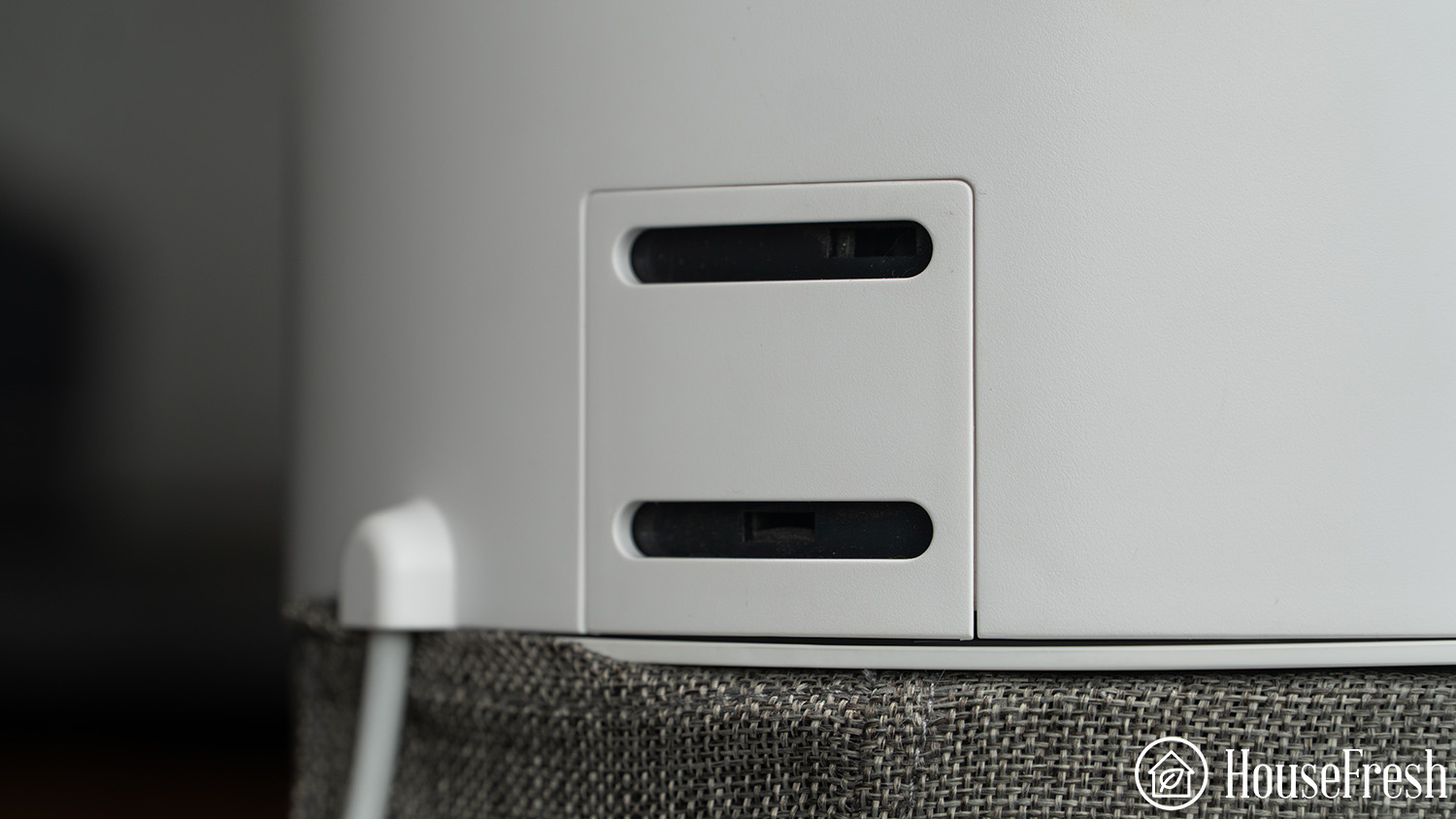
Holmes Air Purifier ModelIdeal Room Size in Square FeetIdeal Room Size in Square Meters
True HEPA ConsoleHAP865034932.4
Mini Tower HEPAHAP941311610.7
Personal Air Purifier HAP120SmallSmall
Tower True HEPA HAP942319217.8
Desktop HEPAHAP924110910.1
Smoke Grabber Ashtray and Odor Eliminator HAP75SmallSmall
HEPA Type TowerHAP120318817.4
Tower True HEPA HAP943518817.4
Small Room HEPAHAP600746.8
Desktop HEPAHAP242SmallSmall
True HEPA Allergen Remover HAP706857.8
True HEPA 360° Air PurifierHAP36015514.4
Desktop True HEPAHAP924313212.2
Mini Tower True HEPAHAP941513812.8
Tower HEPAHAP942520218.7
Personal Space 2-Speed HAP116SmallSmall
Germ-Reducing True HEPAHAP53725023.2
Allergen Remover True HEPAHAP208120118.6

Problem 2: The orange light is flashing

Generally, there’s one primary reason why this is happening, and it’s to do with the filters…

Have you checked the carbon filter?

When the orange light flashes, the carbon filter needs to be replaced. It’s recommended that you change this filter every one-three months. Here’s how to do it:

  1. Firstly, switch off the purifier and unplug it from the outlet.
  2. Next, you need to access the filter compartment: open the front air inlet grill door by pressing the “Door Release Button”.
  3. Remove the old carbon filter from the unit by pulling it towards you carefully.
  4. Using the plastic tab as a guideline, insert the new carbon filter (be sure to remove the plastic wrapping/bag). 
  5. Close the front air inlet grill door.
  6. Finally, you need to reset the filter life indicator. To do this, insert a small object such as a paperclip into the tiny hole under the light. Then hold down the “Filter Reset Button” for three seconds. You should see the green light indicating that the filter monitor has been reset successfully.

Problem 3: The red light stays on

In most cases, you’ll find that this problem is also connected to the filter.

Have you checked the HEPA filter?

Although these can last between 12-18 months, a red light means that you’ll need to replace the HEPA filter. 

Simply follow the first two steps from problem two then: 

  1. Remove the carbon and HEPA filters by pulling them towards you gently.
  2. Dispose of the old HEPA filter carefully (don’t attempt to clean it). 
  3. Place the carbon filter back on the new HEPA filter. 
  4. Insert the new HEPA filter into the unit by sliding it onto the hang tabs. 
  5. Close the front air inlet grill door.
  6. Reset the filter life indicator as above.

Problem 4: The fan isn’t working

If you’re experiencing this problem, you can try a couple of troubleshooting methods:

Have you attempted to spin the fan blade by hand?

Spinning the fan blade by hand will let you know if you need to replace the motor because the blade won’t be able to spin freely. However, if the blade does spin easily, you can test the motor for continuity using a multimeter — a device that can measure such things as voltage, current and resistance. 

You might need to replace the motor if it doesn’t have continuity. Be sure to contact Holmes customer service if you need any assistance.

If the motor does spin freely and it has continuity, the next thing you can do is make sure that it’s getting enough power. If the motor isn’t getting power, you’ll have to replace it.

Does the fan need cleaning?

It’s possible that the fan simply needs a good cleaning. Follow our step-by-step guide on how to do this:

  1. Switch off and unplug the purifier from the outlet, then place it on a table.
  2. Remove the front grill from inside the unit. 
  3. Hold the indentation on the right side of the purifier’s front cover and pull it open gently. Then grab the top area of the grill and pull it up and out of the unit slowly.
  4. Fill a sink with warm, soapy water using two tsp of mild liquid dish soap. Place the grill into the water. Using an old rag, gently wipe the grill to remove dust and dirt. Rinse the grill thoroughly in warm water and dry with a dish towel.
  5. Wipe the cover of the purifier with a soft, clean cloth, using an old toothbrush to remove any dirt in the air vents. Then wipe the inside of the device with a cloth.
  6. Dry the grill completely and place it back inside the purifier.
  7. Close the purifier door, ensuring it snaps shut.

❓ Is the power rating inaccurate?

It’s important to use the correct power rating for your purifier so that it works successfully. Use our table below to find the right wattage for your device.

Holmes Air PurifierPower Source Rated Power 
True HEPA ConsoleHAP86502-Prong Plug (Polarity type)100W
Mini Tower HEPAHAP94132-Prong Plug (Polarity type)38W
Personal Air Purifier HAP120USB4.5W
Tower True HEPA HAP94232-Prong Plug (Polarity type)95W
Desktop HEPAHAP92412-Prong Plug (Polarity type)38W
Smoke Grabber Ashtray and Odor Eliminator HAP75D BatteriesNA
HEPA Type TowerHAP12032-Prong Plug (Polarity type)High: 87 – 102W Medium: 63 – 80W Low: 50 – 60W
Tower True HEPA HAP94352-Prong Plug (Polarity type)90W
Small Room HEPAHAP6002-Prong Plug (Polarity type)38W
Desktop HEPAHAP2422-Prong Plug (Polarity type)45W
True HEPA Allergen Remover HAP7062-Prong Plug (Polarity type)43W
True HEPA 360° Air PurifierHAP3602-Prong Plug (Polarity type)30W
Desktop True HEPAHAP92432-Prong Plug (Polarity type)37W
Mini Tower True HEPAHAP94152-Prong Plug (Polarity type)37W
Tower HEPAHAP94252-Prong Plug (Polarity type)90W
Personal Space 2-Speed HAP1162-Prong Plug (Polarity type)36W
Germ-Reducing True HEPAHAP5372-Prong Plug (Polarity type)60W
Allergen Remover True HEPAHAP20812-Prong Plug (Polarity type)High: 30W Medium: 26W Low: 22W

Problem 5: The air flow has decreased

It’s super important that your purifier has sufficient airflow. Let’s have a look at why this might not be working properly.

Have you checked for blockages?

Be sure to check the air inlets for any blockages obstructing the flow of air and clear them away.

❓ Does the air inlet grill need cleaning?

Washing the air inlet grill in warm soapy water (after removing it from the purifier first) should improve the airflow and remove dust and dirt build-up. Remember to let the grill dry thoroughly before putting it back. Tip: You can also clean the outlet grills with a soft brush if you notice lots of dirt or dust.

Does the pre-filter need cleaning?

For your device to work effectively, it’s recommended that you check the washable foam pre-filter every 2-3 weeks and wash it at least every 30 days. Here’s how to clean it well:

  1. Make sure the unit is switched off and unplugged from the outlet
  2. Examine the pre-filter. To do this, open the front door and remove the pre-filter frame.
  3. If there’s a lot of dust, lint or particulate accumulation, wash the pre-filter by hand in warm soapy water. Do not attempt to wash it in an automatic washer. If the pre-filter is damaged or worn out, it’s best to replace it. 
  4. Rinse and dry the pre-filter thoroughly and then replace it with the purifier’s door. Avoid drying it in an automatic dryer; simply dab the pre-filter gently using a dry, cloth hand towel.
  5. Close the door and reattach the pre-filter frame.

Have you checked the condition of the permanent filter?

For optimal performance of the unit, regularly cleaning the permanent filter is recommended and you should check its condition every few weeks. 

Follow our guide on how to clean it effectively:

  1. Switch off the purifier and unplug it from the outlet.
  2. Carefully remove the air inlet grill by pulling on the tab.
  3. Inspect the foam pre-filter and follow the steps from above if it needs cleaning.
  4. Now check the condition of the permanent filters and remove them.
  5. Using your vacuum cleaner, run the brush attachment along both sides of the filter and clean between the pleated layers. Use only this method and do not attempt to clean with water, household cleaners, or detergents.
  6. Don’t worry if the filter appears discolored after vacuuming. This is normal and doesn’t affect the filter’s performance or mean that you need a new one.

Problem 6: The ionizer isn’t working

Many Holmes air purifiers include an ionizer that binds negative ions to help trap dust, smoke, pet dander, pollen, etc. Let’s have a look at why this might have stopped working.

Is the purifier switched on and running?

The ionizer simply won’t work if the unit isn’t running. After switching it on, press the ionizer button to activate this feature. The outer ring of the button should then illuminate in blue, which lets you know it’s working. 

Problem 7: The ionizer is causing a static charge

You might notice that the ionizer has caused a static charge to build up on the air outlet grill. Here’s what to look out for when this happens:

❓ Is the purifier grounded properly?

In electrical terms, grounding happens when there’s a fault in the wiring, and extra power is sent away from your devices and into the ground. This helps to prevent a power surge that could overload your purifier.

To avoid a static charge, you can make sure that the unit is grounded well. To do this, plug the 3-prong plug of the purifier into a grounded outlet. Or you can try installing a grounding adaptor. The static charge shouldn’t occur if the ionizer is switched off.

Problem 8: My Holmes air purifier is producing excessive noise

An unusually loud purifier can be a real nuisance, especially if you’re resting or want to sleep. Try these troubleshooting methods: 

Have you removed the plastic packaging from the filters?

It may seem obvious but this can easily happen when you’re eager to fit new filters. Checking for this should hopefully eradicate excess noise.

Are all the parts firmly in place?

Be sure that all the device’s components are secure and in place.

How to contact Holmes

If you need more assistance with your Holmes purifier, there are lots of ways you can get in touch. For all appliances queries, you can call them on 1-800-546-5637 and they’re available Mon-Fri, 9AM – 5PM ET.

You can also use their chat function by filling out the form on their Contact Us page. It’s recommended that you upload an image of your model to the form so that they can help you as quickly as possible. They’re available to chat Mon – Fri, 8AM – 12 AM EST every day, seven days a week.

Find the manual for your holmes air purifier

For more help with your device, click on the link below to access the manual.

Holmes Air Purifier ModelUser Manual
True HEPA ConsoleHAP8650Manual
Mini Tower HEPAHAP9413Manual
Personal Air Purifier HAP120Manual
Tower True HEPA HAP9423Manual
Desktop HEPAHAP9241Manual
Smoke Grabber Ashtray and Odor Eliminator HAP75Manual
HEPA Type TowerHAP1203Manual
Small Room HEPAHAP600Manual
Desktop HEPAHAP242Manual
True HEPA Allergen Remover HAP706Manual
Desktop True HEPAHAP9243Manual
Tower HEPAHAP9425Manual
Personal Space 2-Speed HAP116Manual

How to fix the most common Honeywell air purifier problems

Honeywell HPA300 Close Up

As with all electrical devices, ensure your air purifier is unplugged before trying to perform any of these solutions, especially when opening up the unit. Always consult the manual before doing anything.

Honeywell is a big name in the air purifier game, and if you have one of their units, you’ll know why. Honeywell is on a mission to manufacture air purifiers to provide clean air for our homes at prices that won’t break the bank. 

And with over 25 years of making units, they are doing a great job at achieving this. Check out our list of the 9 Best Honeywell Air Purifiers Available In 2023 to see why.

Honeywell has earned their title as ‘The Doctors choice’ as the high-efficiency fans and filters they use in their units are proven highly effective at drastically improving air quality in homes, offices and doctor surgeries.

But, as with any electrical device in the home, these units can sometimes falter. It can be frustrating when things don’t work as they should, so we wanted to look at the most common problems in Honeywell air purifiers and give you tips on solving them.

Tip

Have you turned the unit off and back on?

Sometimes all it takes is turning the unit off and back on again. It doesn’t take much time, so it’s always worth a shot before looking into other solutions.

Problem 1. My Honeywell air purifier won’t turn on

The most common problem with any device is when it just won’t turn on in the first place. Here are some things to try before buying a new unit.

❓ Is the unit plugged in?

Admit it; we’ve all made this mistake before, so you first need to check that the unit is plugged in properly and that the power to your outlet is switched on.

❓ Has it blown a fuse?

Any device that uses electricity is usually fitted with a fuse as a safety precaution. The fuse blows when too much electrical current passes through it, stopping it from setting on fire. If the fuse has blown, the unit will no longer work. It’s fairly easy to replace with a new fuse; just consult the manual first.

❓ Are you using the correct power rating?

Ensure that the power rating on your Honeywell unit matches the power of your wall socket. If they’re not the same, the unit won’t turn on.

ModelPower SupplyRated Power
HPA300110-120 V87W
HPA200110-120 V70W
HPA100110-120 V62W
HPA5300110-120 V62W
HFD320110-120 V38W
HPA8350B110-120 V62W
HPA030110-120 V54W
HPA080110-120 V40W

Problem 2. There’s no air coming out of my Honeywell air purifier

When an air purifier works as it should, it will discharge clean, filtered air into your home. If you notice that the unit isn’t doing this, it means there is a fault. Luckily there are a few solutions to try before you jump online to buy a new unit.

❓ Is there a problem with the fan?

If no air is coming out, it usually means the fan has a fault. It can sometimes become lodged with dust, hair and/or other larger particles from the air. Is the fan spinning free without any blockages? If something is in the way, give it a good clean so the fan spins without hindrance.

❓ Is the motor running correctly?

The motor powers the fan, so the unit won’t push air out if there’s a fault here. You can usually tell if there is a fault with the motor if:

  1. You cannot hear it working
  2. It’s making an unusual noise
  3. There is a burning smell coming from the motor

Now, unless you know what you’re doing, we suggest you contact Honeywell customer service before trying to fix the motor yourself.

❓ Do the filters need changing?

Often, when no air is coming out of the unit, it’s because no air can pass through the filters. This is usually caused by the filters being blocked with dust and other larger particles. If the pre-filter looks clogged, you can remove it and vacuum the dust. If the HEPA filter is full, it will need replacing.

❓ Is there enough air getting into the unit?

Make sure that your air purifier isn’t too close to other objects or walls which may be blocking air from getting into the unit in the first place.

Problem 3. There’s a flashing light on my Honeywell air purifier display

There’s nothing more annoying than a flashing light when you don’t know why it’s blinking. The lights are there to show you which function on your air purifier is active, and none of them should be flashing unless necessary.

❓ Do the filters need changing?

On most Honeywell air purifiers, the unit will let you know when the filters need replacing by displaying an indicator light on the control panel. This light won’t go off until you replace the filters and reset the function. 

Once you’ve installed new filters, simply follow this process to reset:

  1. Press the reset button
  2. Hold down for at least five seconds
  3. Release the button and wait for the light to go out

If the light doesn’t go out, check you’ve installed the replacement filters properly before trying our next solution.

❓ Is one of the buttons stuck?

If one of the buttons is stuck, it might be causing the lights to malfunction. Press all the buttons individually and give them a wiggle to ensure they’re not jammed. Also, give them a clean to ensure no dirt or dust is causing them to stick.

❓ There could be a fault with the electrics

If none of these solutions work, there might be a fault with the circuit board in your control panel. 

Don’t open up the electrics on your air purifier for your safety. It’s always best to contact Honeywell customer service.

Problem 4. My Honeywell air purifier is making a strange noise

Air purifiers aren’t meant to be noisy; when they are, it should sound like the gentle whirring of a fan spinning and the motor powering it. When your Honeywell is functioning normally, it will sound like this:

If you notice any other strange noises coming from your unit, try one of these solutions. 

❓ Is there something caught in the fan?

If there is a rattling sound coming from your air purifier or you can hear something moving around when it’s turned on, something may be caught in the fan area. Luckily, you can try a few things:

  1. Spin the fan manually and remove any object caught in there
  2. Pick your Honeywell up and give it a shake. If there’s something in there that shouldn’t be, you’ll be able to hear it. Locate and remove.

❓ Is it the motor?

The motor is the only other part of your air purifier that should be making a noise. If there is a strange noise coming from this, we suggest contacting Honeywell customer service over trying to fix it yourself.

Problem 5. My air isn’t getting any cleaner

If your air isn’t getting any cleaner, your Honeywell isn’t doing its job. You can easily test the air quality in your home with devices like the QingPing Lite or the Huma HI-120. There are a few simple solutions to get your air purifier back to work.

❓ Is the HEPA filter full?

The filters in your Honeywell need to be changed periodically as they get full of particles over time. Once the filters are full, they will no longer clean the air passing through them. A light on the control panel will indicate when your filters need replacing, but it’s always best to check for yourself when your air purifier isn’t performing as it should.

❓ Is the pre-filter dirty?

The pre-filter is designed to capture larger particles from the air in your home, like dust and dander prolonging the life of your HEPA filter. Over time, the pre-filter will become visibly dirty; when this happens, air won’t pass through, affecting how much clean air comes out.

If the pre-filter can be removed, it can also be cleaned. Try using a vacuum cleaner to remove the captured particles or a moist cloth to wipe down the pre-filter.

Problem 6. There’s a strange smell coming from my Honeywell purifier

The purpose of your purifier is to clean the air in your room, which includes removing odors. Something is wrong if the unit itself starts to produce a smell.

❓ Have you removed all of the packaging?

When you get your new Honeywell air purifier home, you must remove all the packaging. It’s not only the exterior packaging you must remove, as manufacturers usually wrap each filter in plastic to keep them clean. 

If you don’t remove this packaging, two things will happen:

  1. Air won’t be able to pass through the filters rendering them useless
  2. The plastic will start to produce a burning smell

❓ Has the motor burnt out?

As with any electrical device that runs on a motor, sometimes it can burn out. This produces a smokey/burning smell and can even produce smoke. If you notice this smell, it’s best practice to turn the device off immediately and contact Honeywell customer service.

Problem 7. My Honeywell air purifier keeps turning itself off

Air purifiers are designed to be turned on and left alone; there’s no reason you should have to “check-up” on it throughout the day. If your unit keeps turning itself off, this is not only a fault but is also extremely annoying.

❓ Is the unit working too hard?

When purchasing an air purifier, it’s paramount that you get one that’s suitable for the size of the room you’re operating it in. If the room is too big for the unit, it may shut itself down as it’s working too hard. 

Check that your unit’s specifications match the size of the room you’re using it in. If they don’t match, you may have to consider getting a secondary unit suited to your space. 

Honeywell ModelRecommended Room Size
HPA300465 sq. ft
HPA200310 sq. ft
HPA100155 sq. ft
HPA5300500 sq. ft
HFD320250 sq. ft
HPA8350B600 sq. ft
HPA030170 sq. ft

❓ Is the unit on Auto mode?

Some of the newer models contain an Auto mode which controls the fan speed depending on the air quality. When the unit senses the air quality is maximized, it will switch off until the quality drops again.

Check if your unit is set to Auto mode; it will indicate if this is the case on the control panel.

Problem 8. My Honeywell air purifier won’t turn off

It’s frustrating when your air purifier won’t turn on, but it’s equally frustrating when it won’t turn off. 

❓ Are the buttons jammed?

With all that dust and dirt being pulled into your air purifier, you’ll get some of it on the unit. Some of these particles may get stuck in the control buttons, making them jam and become inoperable. 

Give your unit a thorough clean with a wet cloth and wipe on and around the control buttons.

❓ Is the unit unplugged?

We’ve all made this mistake at least once in our lives (I know I have more than once), so it’s always best to check this before anything else. 

How to contact Honeywell

If non of these top tips solve your problem, the Honeywell Store website contains loads of information, including FAQs on specific products and instructional videos. Also, it has product manuals that can be downloaded.

If you need to get in touch with Honeywell about any problems with your air purifier, you can contact them through their online technical support form or call them 12 a.m. Monday through 9 p.m. Friday (EST) on 1 (877) 841-2840.

Find the manual for your Honeywell air purifier

Honeywell ModelManual
Honeywell HPA300Manual
Honeywell HPA200
Honeywell HPA100
Honeywell HPA5300Manual
Honeywell HFD320Manual
Honeywell HPA8350BManual
Honeywell HPA030Manual

9 common Dyson air purifier problems (and how to fix them)

Dyson PH03 Comparison

Launched in the UK in the early 90s, Dyson may be most well-known for their vacuum cleaners, but they’ve also been producing air purifiers since 2015. Many of their units don’t just clean the air, however. For example, their HP04 Hot + Cool also works as a fan and heater and their PH03 unit is a premium combo of humidifier, fan, plus purifier. 

Yet while all of this sounds amazing, Dyson purifiers don’t always work perfectly. Luckily, we’ve listed the most common issues, such as the purifier not turning on. Most importantly, we’ve provided helpful tips on how to resolve these problems.

You’ll also find links to manuals, plus info about the correct power rating and room size for each device and how to contact Dyson directly.

Problem 1: My Dyson air purifier isn’t turning on

While this is frustrating, you should be able to fix it once you know the cause.

❓ Have you checked the power source?

Be sure to double-check the unit is plugged into an outlet. If so, it’s possible that the outlet itself is faulty, so try unplugging it and using a different outlet.

❓ Have you looked at the power switch on the purifier itself?

If you can see that the switch is in the “On” position, the issue may be with the internal wiring of the purifier. It’s best to contact Dyson customer support for further help if this is the case.

❓ Is the Power Rating inaccurate?

If the power rating is incorrect, your cleaner is unlikely to work properly. Check out our table below to find your device’s power supply.

Dyson Air Purifier ModelPower Supply Rated Power 
Pure Cool Link TP02100V / 50/60Hz 6 — 56 W
Humidify + Cool Autoreact PH3A120 V 40 W
Humidify + Cool PH03120 V6 — 40 W
Cool Formaldehyde TP09120 V6-40 W
Cool Autoreact TP7A120 V40 W
Humidify+Cool Formaldehyde PH04120 V120 W
Hot+Cool Formaldehyde HP09120 V40 — 1400 W
Hot+Cool HP07120 V40 — 1400 W
Hot+Cool Link HP02120 V6W – 40W (fan) 1500 W (heater mode)
Hot+Cool HP01120 V6W — 40W (fan) 1500 W (heater mode)
Hot + Cool HP04120 V6W — 40W (fan) 1500 W (heater mode)
Purifier Cool TP07120 V6 — 40 W

Problem 2: My Dyson air purifier isn’t rotating

Dyson fans are made with high-quality oscillation features that usually work effortlessly. If you’re having this particular problem, you can do several things.

❓ Is the filter clean?

The filter needs to be clean for the fan to rotate effectively. It’s a good idea always to check the filter first when you’re having issues. Dyson recommends changing filters every 12 months as they become clogged with pollutants. 

Here’s how to change a Dyson Pure Hot + Cool filter:

  1. Make sure the unit is switched off and unplugged from the outlet.
  2. Press both catches on either side of the unit simultaneously and lift this off the main body.
  3. Using the arrow indicators, press and release the filter.
  4. Dispose of the filter in a sealed garbage bag to ensure harmful particles won’t get dispersed back into the air.
  5. Remove the new filter from its packaging.
  6. Secure the new filter inside the filter casing.
  7. Place the filter casing onto the unit’s main body and push down until you hear it click into place.
  8. Locate the sensor hatch on the side of the machine and use a cotton swab to clean the inside.
  9. Refit the sensor hatch until you hear it click shut.
  10. Plug the purifier in at the outlet and press the On/Off button.
  11. Press and hold the On/Off button on the remote for approximately six seconds. You should notice a loading pattern rotating clockwise on the LED display.
  12. Once the pattern is complete, your purifier should work normally.

❓ Are there any obstructions? 

Be sure to remove any obstructions that could be blocking the rotation of the unit. 

❓ Could it be the power supply?

The unit needs to be securely plugged into an outlet. Also, double-check that the outlet is functioning properly. 

❓ Is the switch in the “On” position?

If you’ve checked this and tried all of the above solutions, there may be an internal wiring issue with the unit. Be sure to contact Dyson customer support for additional help.

Problem 3: My Dyson air purifier is displaying a warning sign

It can be a bit worrying if you see a warning sign. Let’s take a closer look.

❓ Is the filter attached correctly?

A warning triangle might show on your screen if this doesn’t fit properly. Be sure to reattach the filters securely.

❓ Have you checked the user manual?

The manual should help you diagnose the problem so you can fix it yourself. But if this is tricky, you can contact Dyson directly for more help and information.

Problem 4: My Dyson air purifier isn’t connecting to wi-fi

There are a few things you can try if you have connection issues.

❓ Have you checked the connection between the unit and the router?

Your purifier must be placed within the router’s range and connected to a 2.4GHz network. Also, make sure there aren’t any obstructions between the unit and the router. 

❓ Are the Wi-Fi settings correct?

Double-check that the Wi-Fi is turned on and you’ve selected the correct network.

Problem 5: My Dyson Air Purifier Isn’t Cleaning the Air Effectively

The most important thing about a purifier is that it cleans the air properly. Here’s what to do if you’re experiencing problems.

❓ Is the filter clean?

Be sure to check this and replace it if necessary. Also, clear any obstructions that might block airflow through the purifier.

❓ Do you need to clean the fan?

You can vacuum around the front of the fan, the controls and the main fan head. You can also try wiping the fan with a damp microfiber cloth. Remember to clean around the sensor ports and avoid sticking anything through them, as this could damage the sensors.

❓ Is it the power supply?

Ensure the purifier is plugged into an outlet and that this is working properly. If there aren’t any problems with the outlet, look at the power switch. Again, if this is set to “On,” there may be an internal issue with the unit, so it’s best to contact customer support.

❓ Is the air purifier in the ideal room size as specified by Dyson? 

To work effectively, your Dyson purifier needs to be placed in the right room for its capacity. Check your device below. 
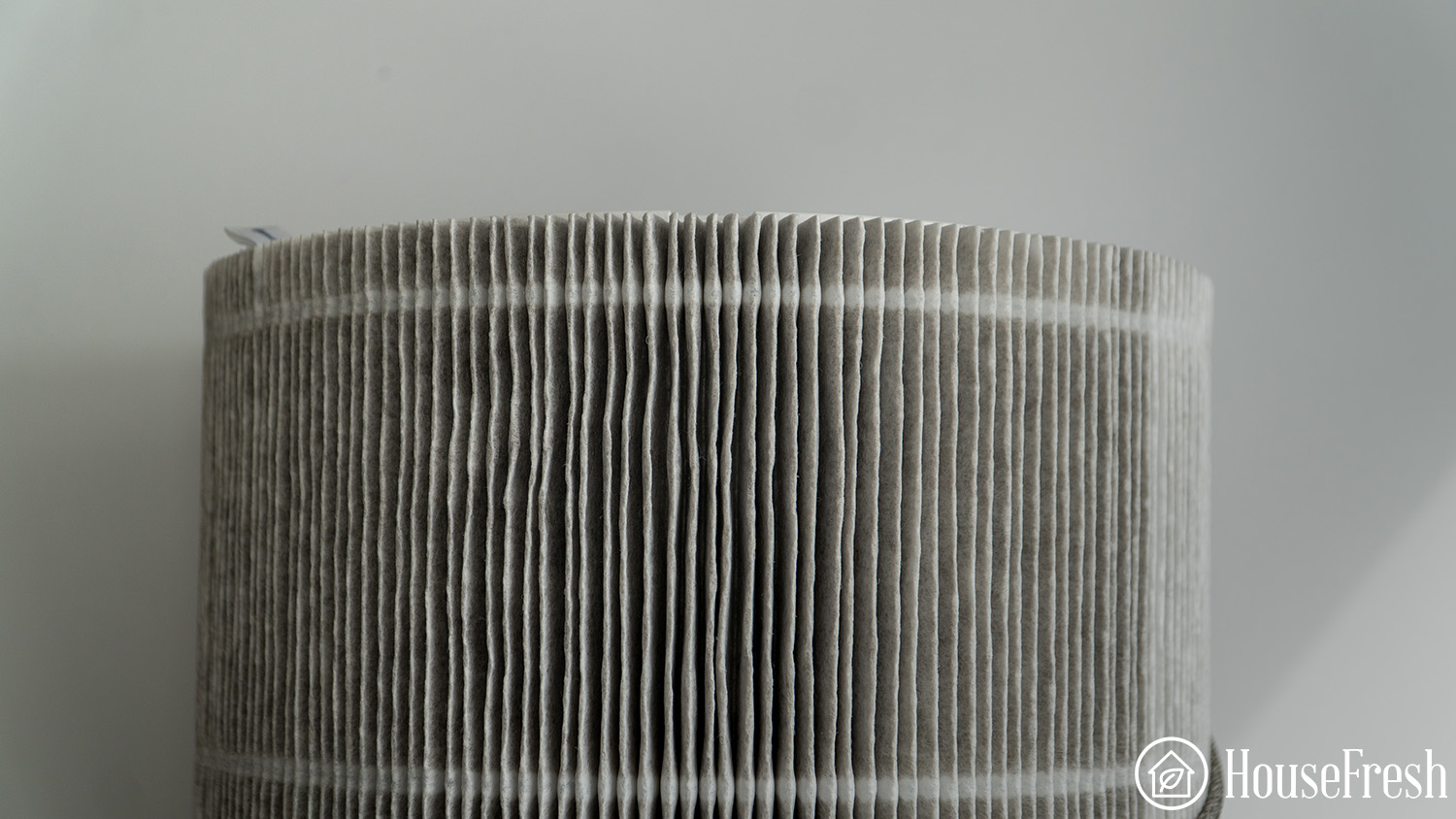
Dyson Air Purifier ModelIdeal Room Size in Square FeetIdeal Room Size in Square Meters
Pure Cool Link TP0240037
Humidify + Cool Autoreact PH3A29027
Humidify + Cool PH0329027
Cool Formaldehyde TP0929027
Cool Autoreact TP7A29027
Humidify+Cool Formaldehyde PH0429027
Hot+Cool Formaldehyde HP0929027
Hot+Cool HP0729027
Hot+Cool Link HP0229027
Hot+Cool HP0129027
Hot + Cool HP0440037
Purifier Cool TP0729027

Problem 6: My Dyson air purifier isn’t responding to the remote

The Dyson remote helps ensure your purifier’s smooth running. Here’s what to look for if there are any problems. 

❓ Have you checked the batteries?

It’s important to make sure these are fresh and installed correctly.

❓ Do you need to change the settings?

Double-check that your purifier is set to respond to the remote.

❓ Are there any obstructions between the purifier and the remote?

This may also affect the connection so remove anything that could get in the way.

Problem 7: The continuous monitoring function isn’t working

When continuous monitoring is turned on, your Dyson purifier can gather information about the air quality, temperature and humidity in your environment. If this isn’t working properly, it could be one of these causes:

❓ Do you need to reset your Dyson air purifier?

You can try resetting the unit if the manual doesn’t describe a set procedure. Follow these steps:

  1. Find the standby On/Off button.
  2. Press and hold the button for 20 seconds.
  3. You should notice that the Wi-Fi symbol will flash white and green. This indicates that your network settings have been removed, and your purifier is reset.

❓ Have you checked the manual?

This will let you know if there’s a specific troubleshooting process for your model.

Problem 8: The air quality sensor isn’t working

The sensor measures temperature, humidity levels and volatile organic compounds (VOCs) to establish the kind of pollutants in the air. It’s a super helpful feature because the sensor uses this information to adjust your purifier’s settings accordingly. But what if it’s not working properly? Let’s take a look.

❓ Does the sensor need cleaning?

In most cases, the sensor has simply begun to malfunction because of dust. Follow our guide on how to clean it effectively:

  1. Locate your purifier’s sensor. On most units, this is on the left of the LCD display. You’ll be able to spot the sensor by its two tiny sensor holes.
  2. Once you’ve found the sensor, turn off the unit.
  3. Dust the sensor holes by using a dry dusting brush. 
  4. You can also vacuum debris out of the holes (using the correct attachments). A HEPA vacuum will help to ensure the complete capture of dust particles.
  5. Another option is to use a blow dryer in a cool setting, as the high pressure should quickly remove debris.
  6. Switch the purifier back on; the sensor should give you an accurate reading.

❓ Is the filter dirty?

This can also be another reason why the sensor isn’t working properly. Be sure to check the filter regularly and change it if it seems damaged or is due to be replaced. 

❓ Is your room too small?

A small room can mean poor airflow, which means the sensor feels too confined to function correctly. You can quickly fix this by opening a window or door to get the air circulating.

❓ Is the sensor blocked?

If there’s furniture in front of your purifier, the sensor may become blocked and unable to detect the surrounding air correctly. Simply make sure that nothing is obstructing its view.

❓ Is the setting correct?

Be sure to check that you’re using the correct setting on your purifier so that it knows how to filter the air efficiently. Each Dyson model has different settings for airborne pollutants, such as VOCs and humidity. 

❓ Is the sensor damaged?

If you’ve tried all the above solutions with no luck, then it may be that the sensor itself is damaged. In this instance, it’s best to contact Dyson customer support for more advice.

Problem 9: My Dyson air purifier is making a strange noise

According to Dyson’s own troubleshooting advice, you may hear such sounds as clicking,  whining or whistling. Here’s what to do: 

❓ Have you checked around the base?

If your device clicks when oscillating, some obstructions or debris may be around the base. Be sure to remove anything like this.

❓ Have you removed the loop amplifier?

If you can hear a whining or whistling sound, try removing the loop amplifier and refitting it. Ensure there isn’t an uneven gap between the loop and the main body.

How to get in touch with Dyson

If you’re still experiencing problems, there are various ways you can get in touch with Dyson. You can call them at 8447054777 and their phone lines are open 8:00 am — 8:00 pm CST Monday to Friday and 9:00 am — 6:00 pm CST Saturday. 

You can also use their live chat function via their website. The chat button appears on the bottom right corner of the site as soon as a Dyson Expert becomes available. You can also click this button at any time for helpful troubleshooting advice and information.

If you want to use social media, you can follow them on… 

You can also join the Dyson community to connect with other owners and share your Dyson experience.

Find the manual for your Dyson air purifier

Click on the link below for your device.

Dyson Air Purifier ModelUser Manual
Pure Cool Link TP02Manual
Humidify + Cool Autoreact PH3AManual
Humidify + Cool PH03Manual
Cool Formaldehyde TP09Manual
Cool Autoreact TP7AManual
Humidify+Cool Formaldehyde PH04Manual
Hot+Cool Formaldehyde HP09 Manual
Hot+Cool HP07Manual
Hot+Cool Link HP02Manual
Hot+Cool HP01Manual
Hot + Cool HP04Manual
Purifier Cool TP07Manual

SOURCES

12 common Winix air purifier problems (and how to fix them)

Winix 5300 2 Control Panel logo

The South Korean company Winix has been producing quality home appliances such as air purifiers for almost fifty years. Their purifiers come with HEPA, activated carbon filters and their unique PlasmaWave® technology designed to reduce contaminants without producing any toxic ozone. We’ve written a detailed review of their 5300-2 unit and it’s among our top six best air purifiers under $200.

As with all devices, however, problems can arise. But don’t worry because we’ve got some top tips on how to fix the most common issues, such as what to do if your purifier is stuck in sleep mode. 

You’ll also find advice about the correct rated power and ideal room size for each unit and how to contact Winix customer support.

Problem 1: My Winix air purifier won’t turn on

This is one of the most common problems, yet it can be easily fixed in most cases. 

❓ Have you examined the power cord?

This must be properly plugged into the outlet. Occasionally, the cord itself can become damaged, needing to be replaced.

❓ Are you using the right outlet?

One of your wall sockets may be faulty, so try unplugging the cord and using a different outlet.

❓ Is the power rating correct?

The power rating is often the main reason your Winix purifier won’t turn on. This rating is how much electricity is required for the purifier to work. If the power outlet isn’t rated to handle the purifier, you may not have any power. 

Use our handy table below to find your purifier’s power supply.

Winix Air Purifier ModelPower Supply Rated Power 
C535120V/60Hz70 W
A231120V/60Hz55 W
A230120V/60Hz55 W
5500-2120V/60Hz70 W
9800120V/60Hz95 W
5300-2120V/60Hz70 W
AM80120V/60Hz65 W
AM90120V/60Hz65 W
HR900120V/60Hz90 W
D360120V/60Hz65 W
XLC120V/60Hz90 W
XQ120V/60Hz90 W
6300-2120V/60Hz70 W

Once you know the power outlet of the device, simply plug it into an outlet that’s able to provide that amount of power. Turn on the purifier again; hopefully, you’ll be good to go. 

❓ Are there lots of devices plugged into one circuit?

If too many appliances or devices are plugged into one circuit, your purifier may not turn on. It’s best to avoid using extension cords and just plug the purifier directly into the power outlet. 

Equally, if you use the wrong extension cord, it may overheat and potentially lead to a fire.

Problem 2: My Winix air purifier is stuck in sleep mode

Sleep mode is one of the best things about Winix purifiers and allows you to save energy (and money). But it can be frustrating when your device is always stuck in that mode. Luckily, there’s often a simple solution.

❓ Have you turned the unit off and on?

Follow these steps:

  1. Turn off the purifier and unplug it from the power outlet
  2. Wait five minutes before plugging it into the wall socket 
  3. Turn the purifier back on and leave it in sleep mode for another five minutes
  4. Set the unit to your preferred mode, e.g., auto 

Problem 3: My Winix air purifier keeps turning off by itself

There could be a few reasons your device keeps doing this…

❓ Is the power cord securely plugged into the outlet?

The purifier may shut off if the cord is loosely plugged in.

❓ Is there a power outage in your area?

Be sure to check that there is power going to and from your outlet, as there may be a power outage in your neighborhood. 

❓ Is the purifier set to sleep mode?

It’s pretty common to put your air purifier in sleep mode accidentally. You must press the Mode function to return it to your preferred setting, such as low, medium, high, or auto. And, of course, sleep mode for when you want it to sleep! 

If you’ve tried all of the above solutions with no joy, you may need to contact customer support to resolve the issue fully. 

Problem 4: My Winix air purifier produces an unpleasant smell

It’s normal for a plasticky smell for a couple of days when your purifier is brand new. Yet If it starts smelling like burning plastic or produces any other strange, nasty odor, check these causes:

❓ Does the pre-filter need cleaning?

Unpleasant odors can indicate the pre-filter is dirty. Follow these steps for effective cleaning:

  1. Open the front panel
  2. Remove the pre-filter
  3. Use a soft brush to loosen the dirt
  4. Use a vacuum cleaner to get rid of the dirt
  5. Reinstall the pre-filter back inside your device
  6. Close the front panel

❓ Do you need to replace the filters?

When filters absorb as much dirt and other substances as possible, they’ll produce a dusty smell. Replacing them should eliminate any odors. Here’s how to do it:

  1. Remove the air intake cover by placing your hand on top and pulling it away from the purifier 
  2. Clean the air intake screen with a vacuum, then gently detach it from the device by placing your fingers on top of the hinges 
  3. Pull away the activated carbon pre-filter from the purifier 
  4. Remove the True HEPA filter similarly and throw both in the garbage 
  5. Insert a new HEPA filter, making sure that the arrow on the top of the filter points away from you and towards the purifier
  6. Insert a new activated carbon pre-filter into the space before the HEPA filter
  7. Finally, reattach the air intake screen and cover it by pressing them firmly back into position

Problem 5: The air quality indicator stays red

The Winix indicator shows various lights to mean different things:

  • Green = air quality is good
  • Orange/Amber = air quality is fair and there are increasing airborne pollutants
  • Red = air quality is poor

If the red light is always on, check for these issues:

❓ Is the red color at the center of the control panel?

If this is the case, the air in your room is unhealthy. Simply leave the purifier on and increase the fan speed to its maximum settings. This will ensure that the purifier treats the toxic air faster. Once the air stabilizes, the indicator light should change to green.

❓ Have you replaced the filter?

More often than not, a permanent red light means it’s time to change the filter. After doing so, be sure to reset the purifier. Hold the reset button next to the filter indicator light down for five seconds until you hear a beep. 

The red light should go off, but if this doesn’t work, try unplugging the unit for a few minutes, then plug it back in and try the reset button again.

Problem 6: My Winix air purifier has two blinking lights

There are probably a couple of reasons for this:

❓ Is there a fault with the filter?

Sometimes the purifier starts working in auto mode when you turn it on before flashing two fan lights. Yet then it stops working all of a sudden. This is due to either a faulty white inner HEPA filter or an outer black carbon pre-filter.

Once you’ve identified which filter is defective, you can replace it. After changing the filter, don’t forget to hold the filter light reset button for about five seconds.

❓ Is the purifier malfunctioning?

This is the worst-case scenario; unfortunately, you’ll have to return the unit and request a replacement.

Problem 7: My Winix air purifier makes an unusual sound

If your unit makes a noise such as ticking, crackling or buzzing, it’s likely because of one of these causes:

❓ Is it the PlasmaWave® function?

The occasional chirping or buzzing sound is from large particles passing through the PlasmaWave®. Don’t worry, though, because this is normal, and your device is working correctly. But if you don’t like the sound, you can always turn this function off via the control panel.

❓ Is there something inside the unit?

Turning the purifier upside down should enable you to remove anything that might have been caught inside (avoid opening the unit, though).

❓ Are the filters dirty?

If it’s simply that the filters need replacing, the strange noises should stop after you’ve done this. 

Problem 8: The fan of my Winix air purifier isn’t working

Many users have experienced problems with the fan on the C545 model. The filters are the most common reason it isn’t working or is functioning at a slower speed. However, this isn’t always the case, so let’s look closer.

❓ Do the filters need replacing?

If the filters are clogged with dirt or damaged in some way, this could affect the fan’s functionality. Be sure to change them asap.

❓ Has a fuse blown?

A power surge can damage the fuse, so your device will stop receiving power. Take care to inspect the fuse for any kind of damage. If so, you’ll need to replace the fuse.

❓ Are there issues with the motor?

Occasionally, the motor used to rotate the fan blades can become damaged. If this is the case, it’s best to organize replacement components. Be sure to get the ones that are compatible with your purifier.

❓ Have you set the purifier to automatic mode?

Simply press down the manual fan button and set it to your preferred speed. The fan should then go back to working manually.

❓ Is the unit faulty?

Sometimes, the purifier itself is faulty. You can contact Winix customer support for advice, although you’ll likely need a replacement unit. 

Problem 9: My Winix air purifier won’t turn off

This can be just as frustrating as when your device doesn’t turn on. 

❓ Have you unplugged the unit from the power outlet?

Rather than trying to press the off button multiple times (and getting more frustrated!), it’s best to unplug it directly from the outlet. Be sure to wait a few minutes and plug the unit back in. Next, turn on the purifier but set it to sleep mode for approximately two to five minutes. Finally, run the purifier as normal and hopefully, you’ll be able to turn it off in the usual way. 

Problem 10: The remote control isn’t working

The remote helps you control multiple settings of your Winix purifier. If this has stopped working, it’s likely to do with the batteries.

❓ Are the batteries inserted correctly?

Make sure you’ve properly fitted the batteries inside the remote.

 ❓ Do the batteries need replacing?

Yes, it may seem like a no-brainer, but it could just be that you need to replace those old batteries. 

Problem 11: The Winix smart app isn’t connecting

The Winix app enables you to track, monitor and control your device, but you may experience connection problems. 

❓ Have you tried closing and reopening the app?

You can try uninstalling and reinstalling the app if this doesn’t work.

❓ Are there too many Bluetooth devices around the location of your purifier?

This may also cause connectivity issues.

❓ Is the operating system supported?

For iOS this should be 10.0 and up and on Android 5.0 and up.

❓ Have you disabled any VPN networks?

Be sure to do this before connecting your device.

❓ Is your smartphone and router in the best location?

These should be placed within a 32 ft. radius of the purifier.

Hopefully, you should be good to go after trying these methods. Check out the Winix troubleshooting page for any other app problems. 

Problem 12: My Winix air purifier isn’t working effectively

You might find harmful particles like smoke and unpleasant odors floating around your space, even after using the purifier for the recommended time. 

❓ Are the blades clogged with dust?

If there is excessive dust, clean the blades with a cloth and leave to dry.

❓ Do you need to change the airflow settings?

Try setting the unit to high airflow. 
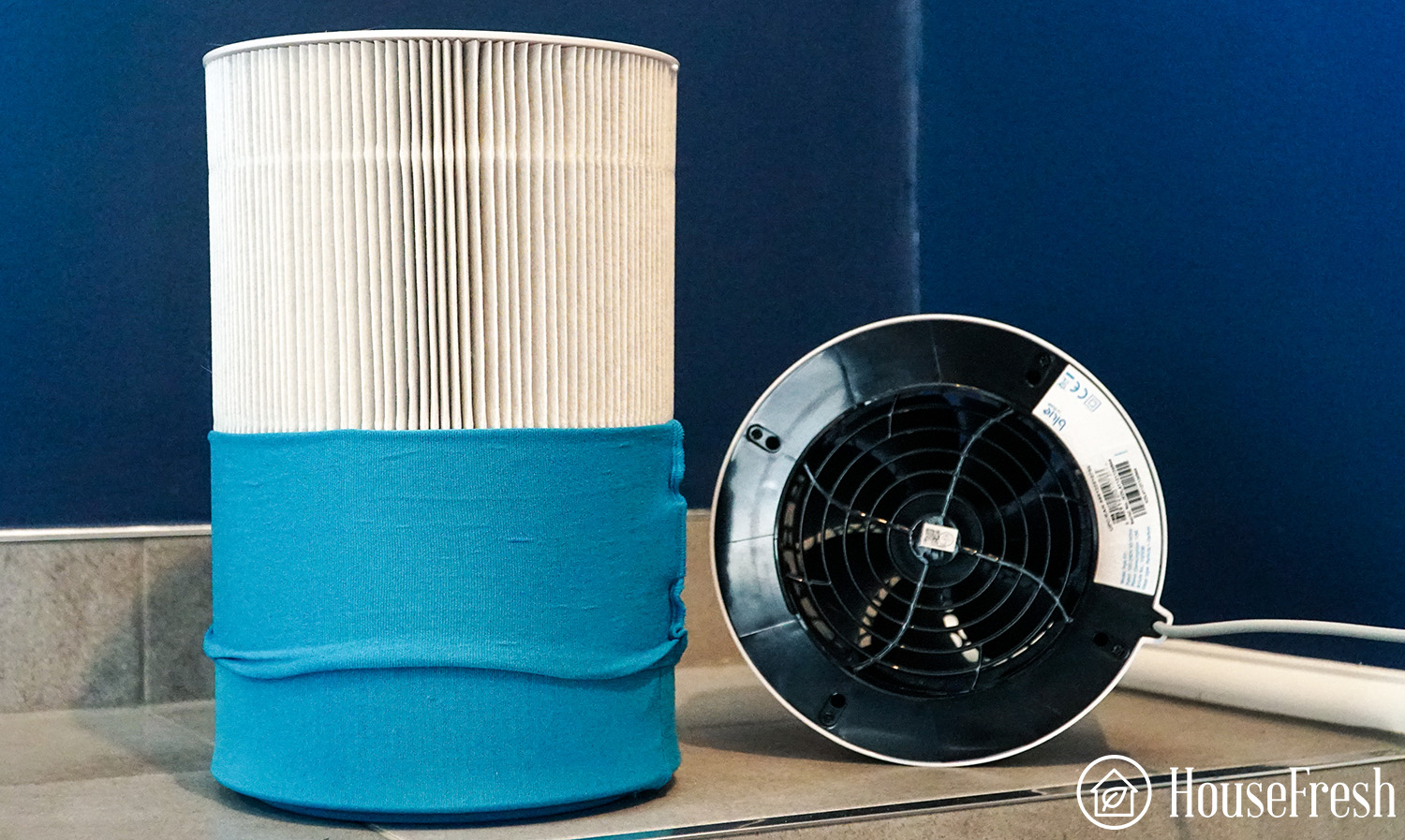
❓ Could it be the filter?

As with most Winix problems, it may simply be that you need to replace the filter.

Is Your Winix Air Purifier in the Ideal Room Size? 

Check your device to determine the best room size for your purifier.
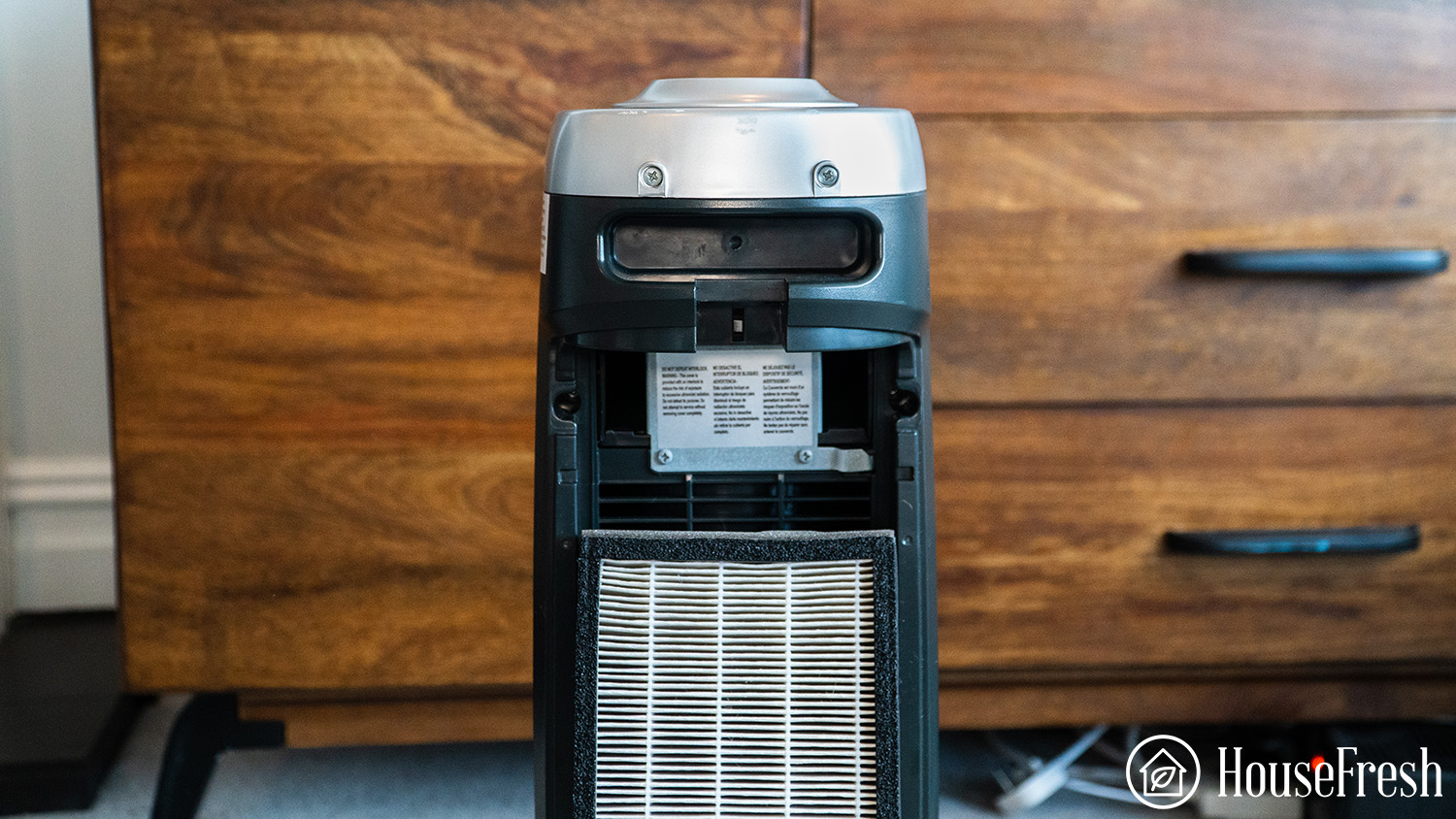
Winix Air Purifier ModelIdeal Room Size in Square FeetIdeal Room Size in Square Meters
C53536033.44
A23123021.36
A23023021.36
5500-236033.44
980050046.45
5300-236033.44
AM8036033.44
AM9036033.44
HR90030027.87
D36036033.44
XLC62057.59
XQ69864.84
6300-2360 33.44

Contacting Winix air

You can get in touch with Winix in various ways to access their customer support. They’re open Mon-Fri 9:00am – 6:00pm CST, and you can reach them by phone on (877) 699-4649 or email at info@winixinc.com. You can also fill out their online form.

If you prefer postal mail, you can write to them at Winix America Inc. 220 North Fairway Drive, Vernon Hills, Illinois 60061.

For general questions about your purifier, check out their FAQ section.

Find the manual for your Winix air purifier

Click on the link for your particular model.

Ideal Room Size in Square MetersUser Manual
C535Manual 
A231Manual
A230Manual 
5500-2Manual 
9800Manual 
5300-2Manual
AM80Manual
AM90Manual 
HR900Manual
D360Manual
XLCManual
XQManual
6300-2Manual

SOURCES


16 ways to get rid of cooking smells

How to Get Rid of Fish Smell After Cooking Washing up

There’s nothing finer than a home-cooked meal. But all of your hard work can easily be ruined if all those cooking smells linger around afterward. Yes, a delicious meal can result in a pong that lives on throughout your household for days, if not dealt with correctly. 

So, we’ve put together a multitude of tips and tricks to help you get rid of those unwanted odors. 

Before you cook: How to prevent smells from leaving the kitchen

More often than not, what you do before you start cooking can affect the aroma you create. So why not give yourself a head start?

1. Close doors 

When ingredients are thrown into a boiling pan over a pool of olive oil, scents will burst into life, quickly filling the room with flavorsome steam. That steam, like any cooking odor, really wants to escape the kitchen and take over the rest of your house. 

So this one is simple — closing your kitchen, dining, and living room doors will trap the odors.

Tip

Place a towel down at the bottom of the kitchen door to fully block in the smells and stop them from spreading to the rest of your home.

2. Sprinkle baking soda into your trash can  

Occasionally, we get lucky and the bin is full of remnants, ingredients, and leftovers so we can take out the trash immediately. But not always. If the meal you’ve just cooked has a particularly potent smell, then your trash will stink. 

Sprinkling baking soda into the trash before cooking will absorb odors and minimize the smell from spreading. Baking soda is composed of a sodium cation and a bicarbonate anion. With most kitchen odors being acidic, it’s perfect for eradicating these smells.

Tip

If you’re a cat owner and don’t have baking soda to hand, kitty litter will also do the odorizing trick.

3. Boil vinegar and water on the stove

Simply add half a cup of vinegar and half a cup of water to a saucepan and slowly boil it before you begin cooking. The mixture of both will create a steam that absorbs scents and prevents them from spreading around your kitchen. The acetic acid in white vinegar has been proven to absorb odors very effectively.

Other things you can simmer and leave to boil whilst you cook include:

  • Orange skins
  • Lemon peels
  • Cinnamon sticks
  • Potpourri

4. Ventilate the kitchen

Most kitchens these days have an extractor fan — we suggest you use it while you’re cooking up a stinky storm. Also, if your kitchen door is closed and the rest of your home is relatively shut off, open some windows and back doors. Doing this will improve your kitchen scent by allowing the outdoor air in, and once the cooking starts, it will feel much fresher. Leave that ventilator fan on for at least an hour after cooking. 

5. Put lemons in your garbage disposal 

Throwing lemon bits and peels into your garbage disposal (that blade mechanism located inside your sink) will release the lemony aroma around your kitchen, killing odors and breaking up blockage through the power of citric acid. 

Lemons and limes contain citric acid, which can act as an odor eliminator and a cleanser. It can also dissolve small pieces of food and grease from your drains.

Tip

Soda crystals are another great product to break up food and disperse odor in the kitchen:

  1. Sprinkle a handful of crystals down your garbage disposal
  2. Leave for 10 minutes
  3. Wash away with hot water

While you cook: How to keep odors at bay

Many foods and dishes give off different smells that can be approached differently when it comes to dispersing them from your kitchen. Other than waiting for the smell to simply disappear, these tips will help tackle them before they have the chance to spread around your home. 

From the smell of burnt toast to a heavily spiced-up curry, we’ve got you covered.

1. Use vinegar and lemon peels to minimize fish smells

Seafood, more often than not, is considered to be one of the worst odors when cooking. Although lighting a chef’s candle and opening windows while cooking will help the stench a little, you can also try these tried and tested hacks: 

  • Hack # 1: Leave a bowl of white vinegar out overnight — Vinegar’s acetic acid content has the ability to absorb unwanted odors.
  • Hack # 2: Simmer lemon peels or ground ginger — The steam produced releases the odor of the lemons into the air, acting as a natural air freshener. 

2. Try the potato hack to minimize curry smells

Opening spice jars, chopping herbs, crushing garlic, and spilling ingredients over your countertops. Yes, cooking a curry is often an action-packed process with an assortment of herbs and spices — all of which are great at leaving lingering odors around your home for days. 

Try this, it’s what we like to call: The Potato Hack: 

  1. Rinse some potatoes and chop them in half
  2. Place them in a dish on your counter-top 
  3. Sprinkle them with table salt and leave them there as you cook 

Unlike other common vegetables, potatoes contain multiple microscopic starch granules, which can soak up all types of cooking flavors, water, and even odors. 

Tip

Place potatoes into the pan you have just cooked curry in and leave it for a few hours. The smell will be absorbed into the potatoes.

3. Make a homemade spray to minimize bacon smells

One great tip for dispersing the smell of bacon grease is to make your own aromatherapy spray. 

Spraying your countertops and stove after cooking with a homemade spray will reduce the unwanted food smells from multiplying. 

It’s super simple to make a spray: 

  1. Fill three-quarters of a spray bottle with water 
  2. Add 2-3 teaspoons of rubbing alcohol
  3. Add 10-15 drops of essential oils
Tip

These essential oil flavors will work well as they are all-natural aromas with pungent scents:

  • Eucalyptus
  • Lavender
  • Lemon
  • Peppermint
  • Orange

4. Boil this herb mix to minimize smells from Italian cuisine

Fresh garlic, onions, peppers, and tomatoes will all burst with flavorsome aromas as soon as the cooking begins. 

  1. Add half a lemon and some fresh rosemary to boiling water
  2. Allow the steam to fill your indoor kitchen space

Rosemary, similar to eucalyptus, has a beautiful pinewood-type scent that, when boiled alongside lemons, releases a nice aroma.

5. Use coffee grounds to minimize smells from burnt toast

The stink of burnt toast can linger around the house for some time. A great way to tackle this particular odor is simply to leave an open cup or bowl of coffee grounds out on your countertop for a couple of hours.

Aromatic compounds can be broken down by acidic java, making coffee grounds a handy odor eliminator.

This one works for any dish. Cleaning as you go will diminish the odor of lingering smells, so here are five cleaning hacks to implement next time you hit the kitchen. 

  • Use towels – Paper towels are great for soaking up spills and avoiding mess around the kitchen, but re-useable towels are better for the environment and just as effective. I use bamboo ones, and they work great! 
  • For preparation, use a garbage bowl – Grab yourself a large bowl in the kitchen and save multiple trips to the garbage can by having a mini version right by your side. 
  • Clean up spills and mess instantly – If you crack an egg and it goes all over the stove or spill some Italian sauce all down your cooker, deal with it right away. Don’t give stains a chance! Wipe them up instantly. 
  • Use a splatter screen – Some food, when cooking, can split all over the place. Using a splatter screen over your cooking pots will help prevent that.
  • Soak your utensils in hot water – Soaking your utensils after use will only benefit the process. More often than not, you need to reuse your utensils, so plan ahead and let them soak. 

After you cook: How to eliminate cooking odors

The most important part of fully getting rid of cooking odors depends on what you do after you cook. Taking out the trash for sure will eliminate the stench of leftovers, but is that enough? 

More often than not, when we’re cooking, we become a little immune to the smell of food due to constant exposure. Here are some great tips on how to get rid of food odor after you cook. Oh, and these tips also apply to other mysterious odors that may be lingering around your home. 

1. Turn on an air purifier 

Air purifiers are a fantastic way to eliminate odor! But, not all models are designed to tackle this issue. From being a bit of a geek in the air purification world, you learn which units do what and for odor elimination, you want a product that features an activated charcoal carbon filter. 

Carbon filters will trap cooking odors and, after time, help disperse the smell altogether. The odor will attach to loose pieces of bonded carbon and be broken up through filtration.

In this video, Danny shares the top three air purifiers for cooking odors, based on our tests:

2. Clean your oven, cooking surfaces and countertops with an antibacterial spray 

Wipe down your kitchen surfaces. We all know that after a meal, the kitchen can be a bit messy. Spray your surfaces and stove with antibacterial spray and give it a thorough clean to prevent any odors from sticking around longer than you’d like them to. 

You can also use homemade sprays infused with odor-elimination ingredients such as lemons or lavender.

Tip

If there’s an odor lingering inside your cooker from a previous meal, place some lemons on a baking tray and bake for an hour to help keep your oven smelling fresh.

3. Wash your pots and pans properly

Sometimes either during or after a meal, your pots and pans can burn. The combination of these two smells will create a whole new scent that is not nice to have around your home. 

So be sure to soak your pots and pans thoroughly with hot water and use specific household products that remove grease effectively. Dishwasher detergent is designed to remove stains and burn marks from particular cooking materials, so this will help tremendously to loosen these staining problems.

Tip

Soda crystals are another great way to remove stains from kitchen materials — the alkaline neutralizes all things greasy combined with hot water.

4. Use aromatherapy and scented candles 

Oil diffusers and scented candles work super effectively (as long as you’ve cleaned up too). However, cleaning your kitchen by removing grease or leftover food is very important. When the candle burns out, you don’t want old food odor kicking back in.

Look for products containing geranium or basil extracts to ignite a powerful floral aroma to replace the cooking odors.

5. Open kitchen windows and doors 

Allowing the fresh air in will only increase the chances of helping with the smell. Give your room some outdoor fresh air after you’ve cleaned, taken out the trash, and removed other unwanted odors. 

Tip

If you own an air purifier, don’t open the windows and doors while it’s running. Either use an air purifier before you introduce fresh air, or after to maximize both tips effectively.

6. Bake yourself a dessert

This is a great excuse to treat yourself to something sweet after a nice dinner. After a long and exotic spicy meal, introducing the smell of a freshly baked pie or a tray of double chocolate brownies will no doubt cancel out previous odors and replace them with something divine. 

🍰 The smell of baked bread or cocoa powder oven cooking releases a malty or caramelized aroma as opposed to an allicin odor foursome savory meals. 

Commonly asked questions about cooking smells

Using heat or cold treatments often helps with dispersing odors when they linger on fabric. Washing clothes with fabric softener and setting them outside to blow dry will have great results. However, pretreating fabrics with baking soda is also a great way to protect your clothes from cooking odors. Place your clothes in the sink or a bucket with hot water and add baking soda. 

If you’re experiencing a bad smell on your dishes and glasses, try the following:

  1. Fill your sink with glass water until the glasses and dishes are relatively submerged
  2. Add ⅔ cups of white vinegar
  3. Remove the items after 30 minutes
  4. Scrub them with a clean sponge
  5. Dry them with a clean dish towel

In most cases, dishwasher odors are usually caused by some form of buildup or blockage, so a bit of maintenance may be required.

Check the filter for any sign of blockage and clean it, if necessary
The spray arm is usually detachable, so check to see if everything is running smoothly and clean it, if necessary
Clean around the edges of the seals to see if there is any build-up of any kind
Run a rinse wash with vinegar or baking soda

Final thoughts 

For many people, cooking during the Covid lockdown became a fun and experimental pastime. The odor that lingers after we cook is a problem we would all like to eradicate, so don’t get put off by the thought of your home smelling after a nice meal. These steps above will help diminish any unwanted smells, keeping your home smelling fresh and full of life.