Winix T810 review

Winix T810 Header

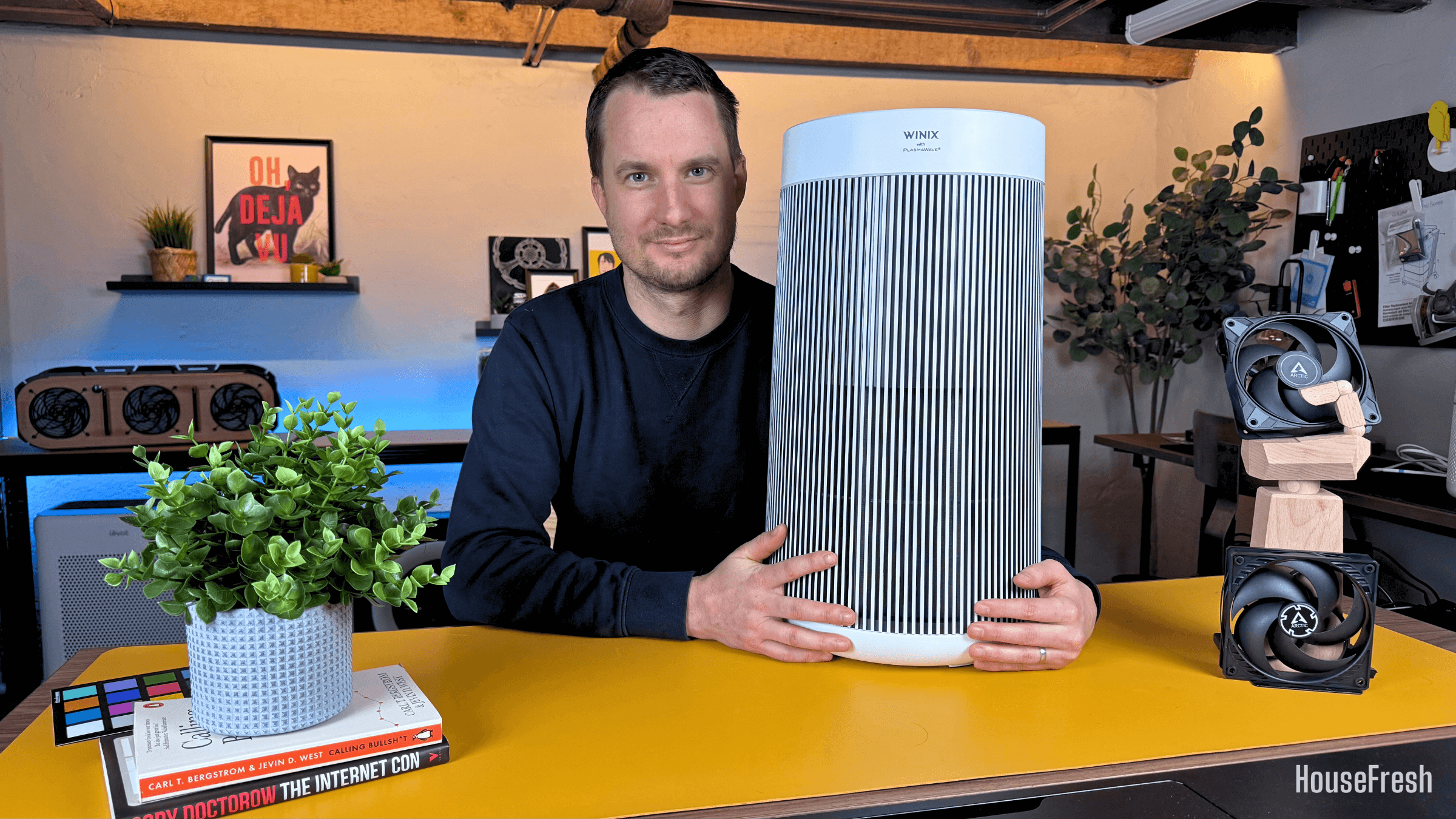
After having tested multiple Winix air purifiers, I have grown to become a fan of their brand. 

In fact, their trusted and affordable Winix 5500-2 is one of my top recommendations for most people. So you can imagine my excitement with the release of the new Winix line in 2023.

The Winix T810 was first announced in September 2023 as a โ€œcutting-edgeโ€ air purifier with โ€œunparalleled 360ยฐ air care capability.โ€ These big promises were paired with photos of a sophisticated, โ€œInstagrammableโ€ design that weโ€™ve never seen from Winix.

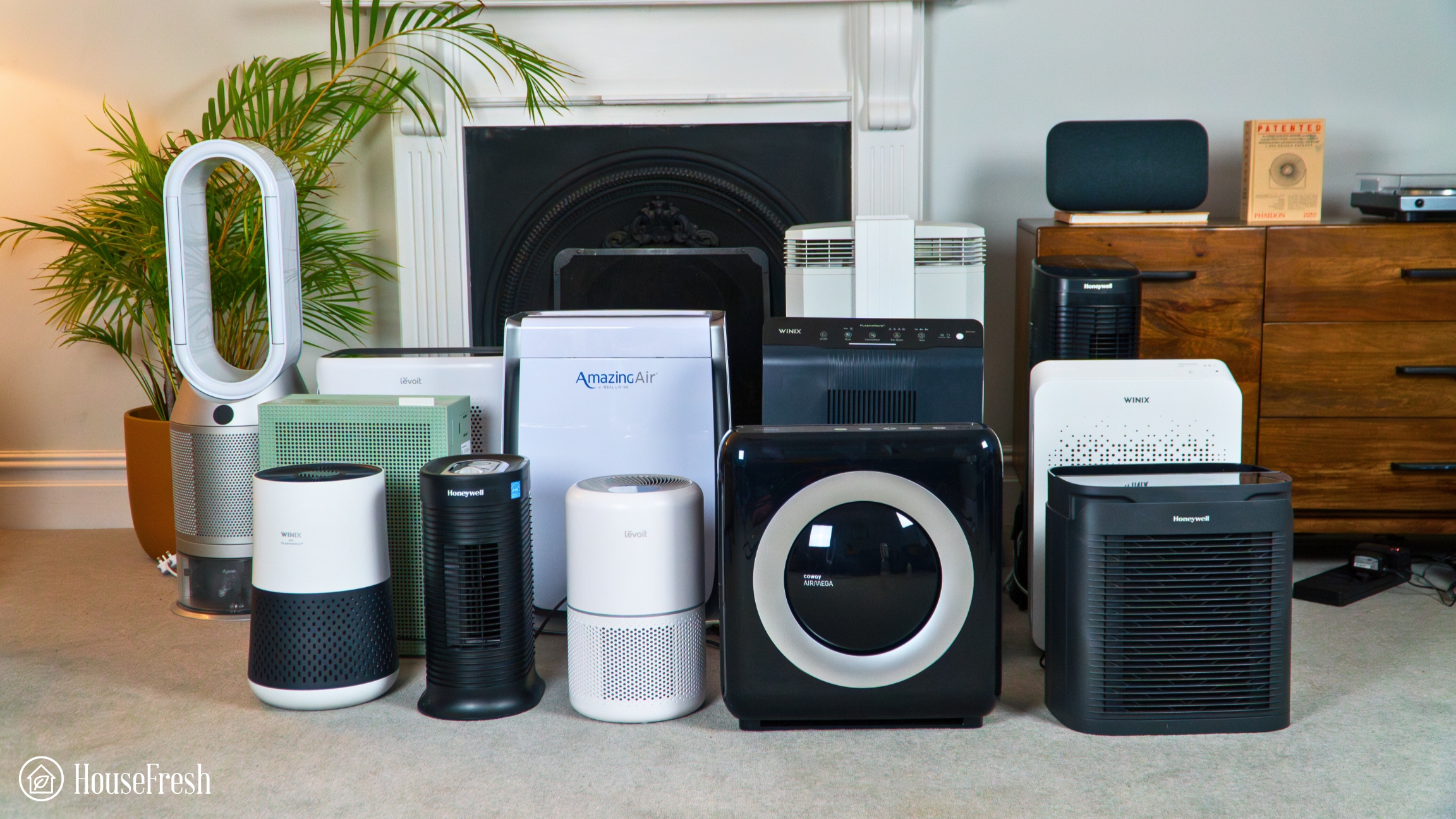
In this review, I will compare the T810 to the more than 100 air purifiers we have tested at HouseFresh since 2020. 

My observations are based on our first-hand data on air cleaning performance, sound generation, energy efficiency, real-life user experience and long-term running costs. You can read more about how we test air purifiers here.

By the way, I bought our T810 for $421.66 on Amazon.com, including the shipping and import fees needed to get it sent to us here in the UK. If you are buying it from the U.S. you will only need to pay $215.

The lowdown on the Winix T810

Danny Ashton HouseFresh
โ€œThe Winix T810 offers good air cleaning performance in a relatively small package. 

To put it into perspective, the T810 offers better particle removal performance than what you will get from the popular Coway Airmega AP-1512hh, which has a bigger footprint and costs around the same.โ€
โ€” Danny Ashton, HouseFresh Founder & Product Tester

If you donโ€™t want to read my full review of the Winix T810, here are the three things I like about it, and the three things I donโ€™t:

What we really like

I love the design. I have 105 air purifiers (and counting!) at home right now, and the T810 stands out because it looks like a million bucks.
It offers solid air cleaning performance in a relatively small package. The T810 offers better performance than many devices with a bigger footprint.
The Winix app has clean UX without invasive ads. Plus, the smart features work well and the onboard sensor is quick to detect changes in air quality.

What we think could be better

It can get loud. When running at turbo speed, the T810 runs louder than many similar performing air purifiers.
It has a bonded filter. The all-in-one filter is cumbersome to clean regularly and will need replacing once the carbon is full, even if the HEPA filter is perfectly fine.
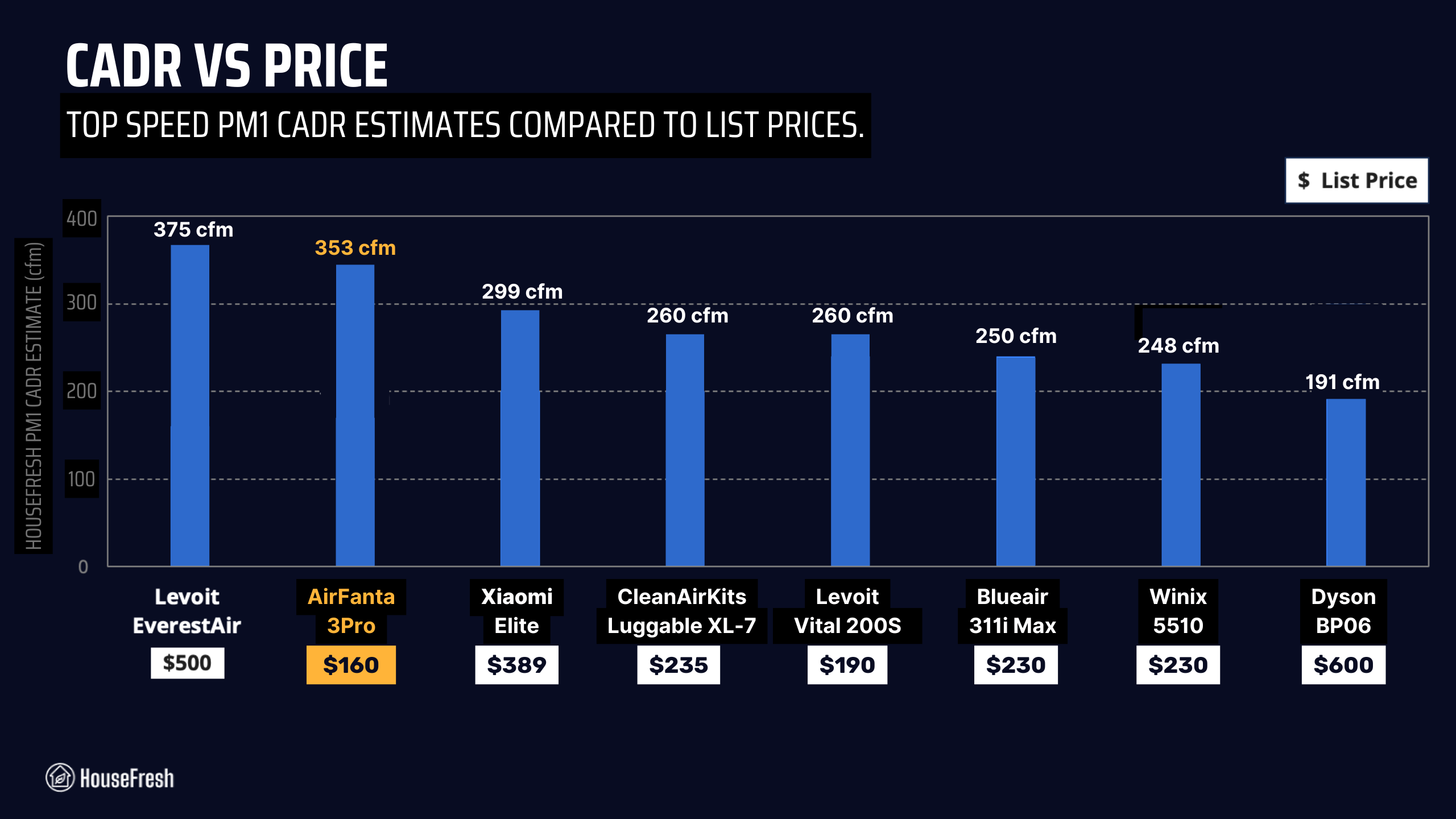
It is not cheap. The T810 sells for over $200, so it’s more expensive than high-performing devices like the AirFanta 3Pro ($160) and the Levoit Vital 200S ($190).

HouseFresh rating:โ—ผ๏ธโ—ผ๏ธโ—ผ๏ธโ—ผ๏ธโ—ผ๏ธโ—ผ๏ธโ—ผ๏ธโ—ป๏ธโ—ป๏ธโ—ป๏ธ 7/10
Time to reach PM1 zero (running at top speed in our 728 cubic feet test room):– 26 minutes (top speed)
– 46 minutes (sub-45 dB speed)
Air filtration technology:True HEPA particle filter with carbon and pre-filter mesh
Ionization technology:PlasmaWave bipolar ionization that can be disabled
Recommended room size (5 air changes per hour):343 sq. ft.
Clean air delivery rate (CADR):– HouseFresh PM1: 229 cfm
– AHAM PM2.5: 267 cfm (dust)
Dimensions (in inches / in cm):11.3 x 11.3 x 20.4 in (28.7 x 28.7 x 51.8 cm)
Weight (in pounds / in kg):10.4 lbs (4.7 kg)
Filter life:12 months
Noise level in decibels (measured from 3 ft. away with a sound level meter):– Sleep mode: 35.1 dBA
– Speed 1: 37.4 dBA
– Speed 2: 44.8 dBA
– Speed 3: 50.3 dBA
– Speed 4: 62.5 dBA (top speed)
Electricity consumption in watts (recorded with an electricity usage monitor):– Standby: 0.52 watts
– Sleep more: 2.2 watts
– Speed 1: 4.40 watts (4.72 w/PlasmaWave)
– Speed 2: 8.23 watts (8.47 w/PlasmaWave)
– Speed 3: 12.30 watts (13.42 w/PlasmaWave)
– Speed 4: 41.92 watts (42.59 w/PlasmaWave)
Estimated running cost (electricity consumption + official filter replacement):– Energy consumption: $47.31 per year
– Filter replacement: $79.99 per year
Manufacturerโ€™s warranty:2 years
Country of manufacture:Thailand

The best T810 feature: A design that will make you look twice

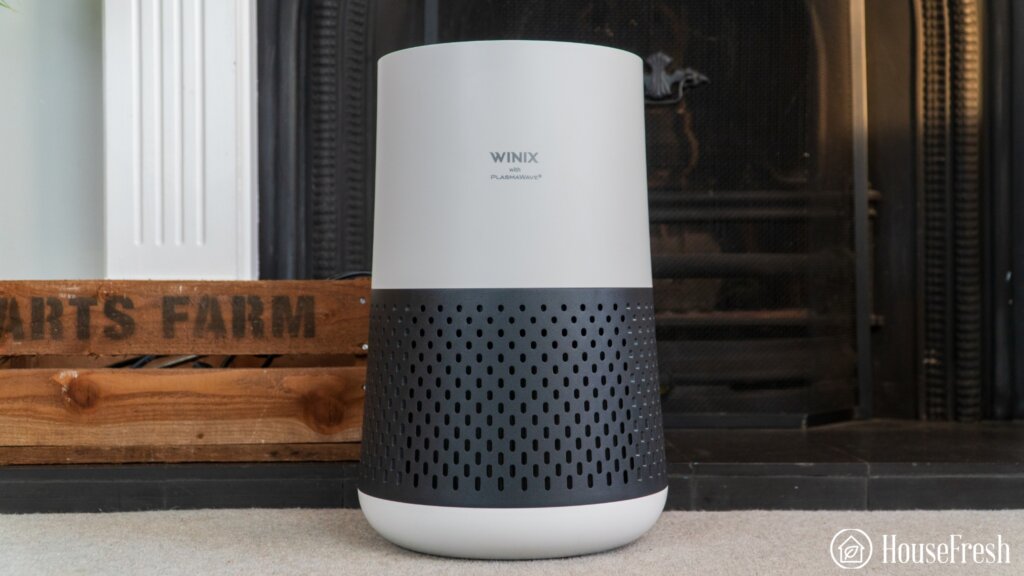
The Winix T810 wonโ€™t look out of place in the most stylish of spaces.
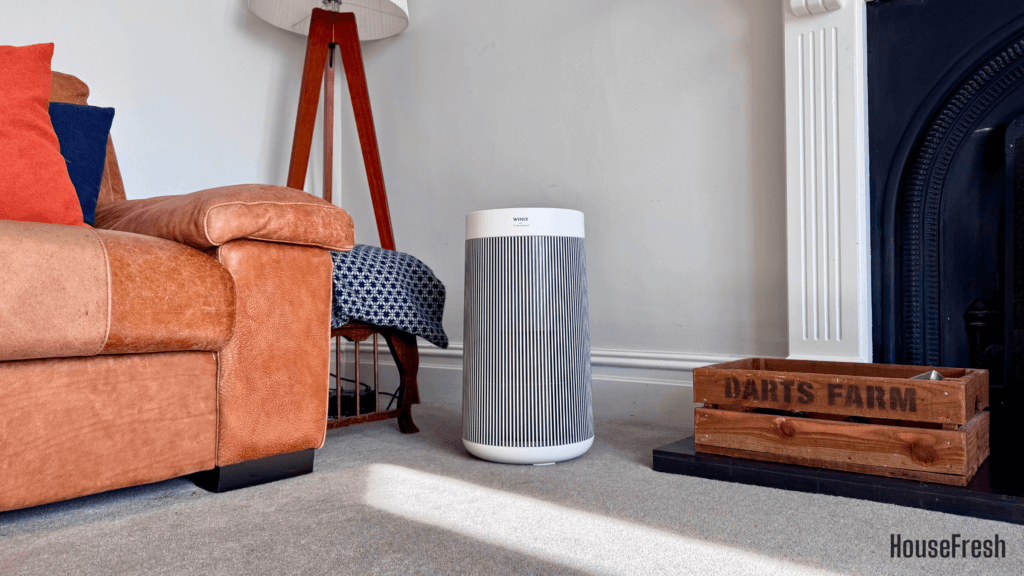
Winix T810 Living room

I know looks have nothing to do with air cleaning performance, but itโ€™s hard not to comment on how beautiful the design of the T810 โ€” especially compared to other Winix air purifiers we have tested.

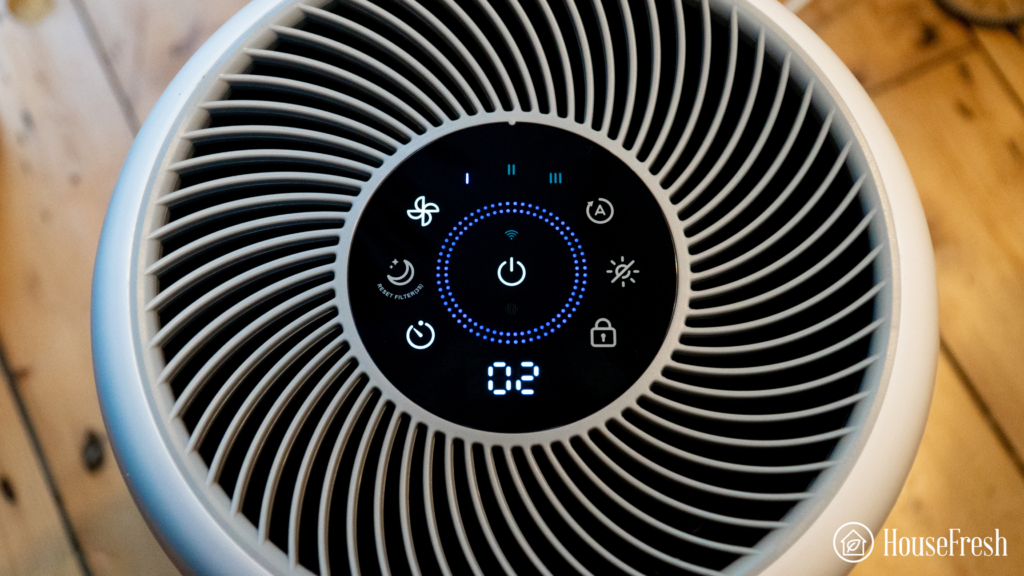
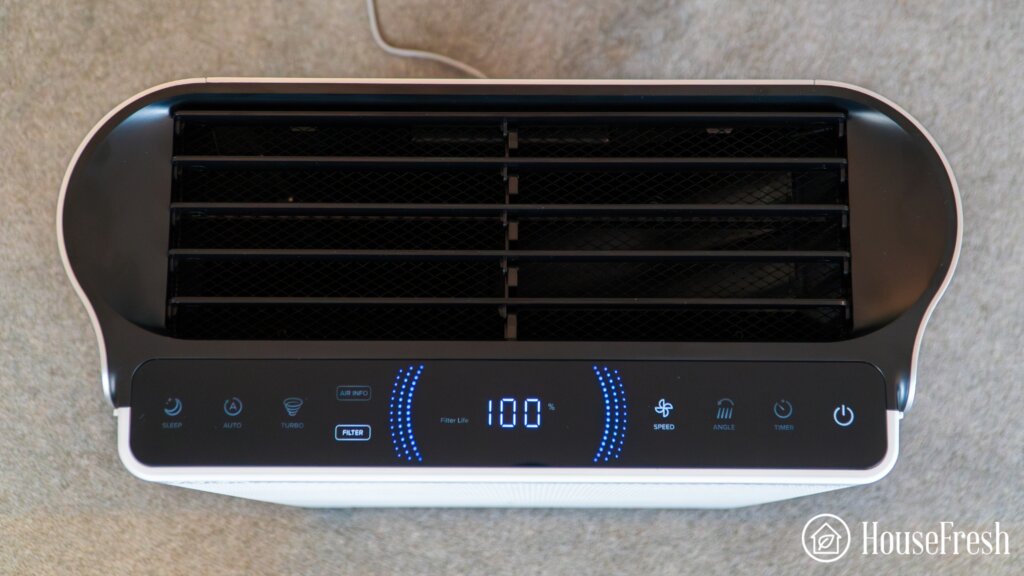
The Winix T810 is easy on the eye thanks to its sleek medium-sized cylindrical design with vertical lines topped by a high-end touchscreen control panel. 

If you asked me to choose the best looking air purifier out of the 104 devices Iโ€™ve got now in my home, the T810 would be my pick.

A modern and sophisticated device, packed with smart features

The T810 is one of the few air purifiers from Winix with smartphone connectivity.
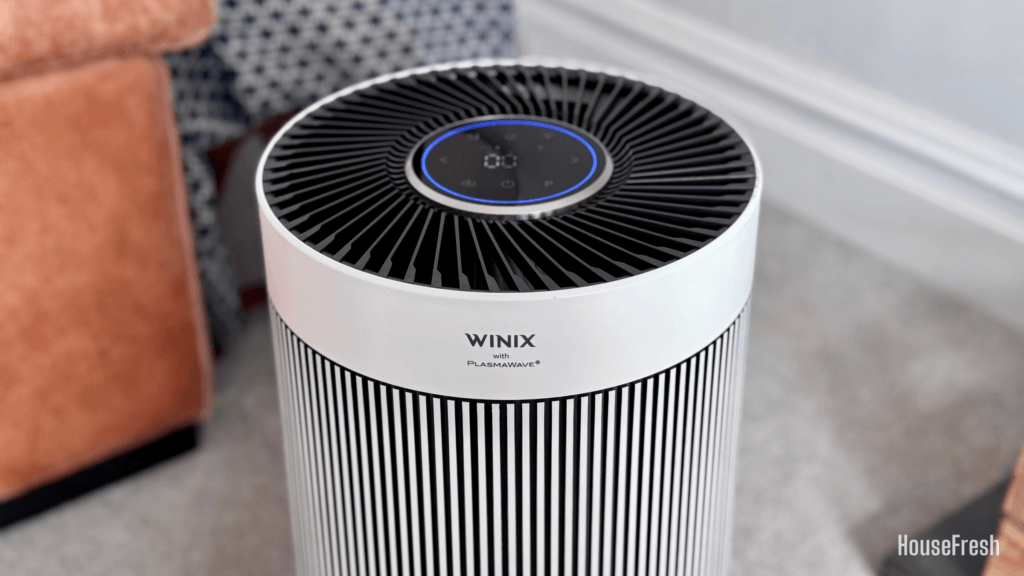
Winix T810 Close Up

Normally, my wife and I disagree on what we like and dislike about the design of air purifiers, but for once, we are both in agreement that the T810 is a seriously good-looking device.

While design aesthetics shouldnโ€™t be your primary concern when shopping for an air purifier, I understand itโ€™s an important thing to consider because you will need to have the device on show all the time.

If having a better-looking design means more people are more likely to use air purifiers, then I am all for it.

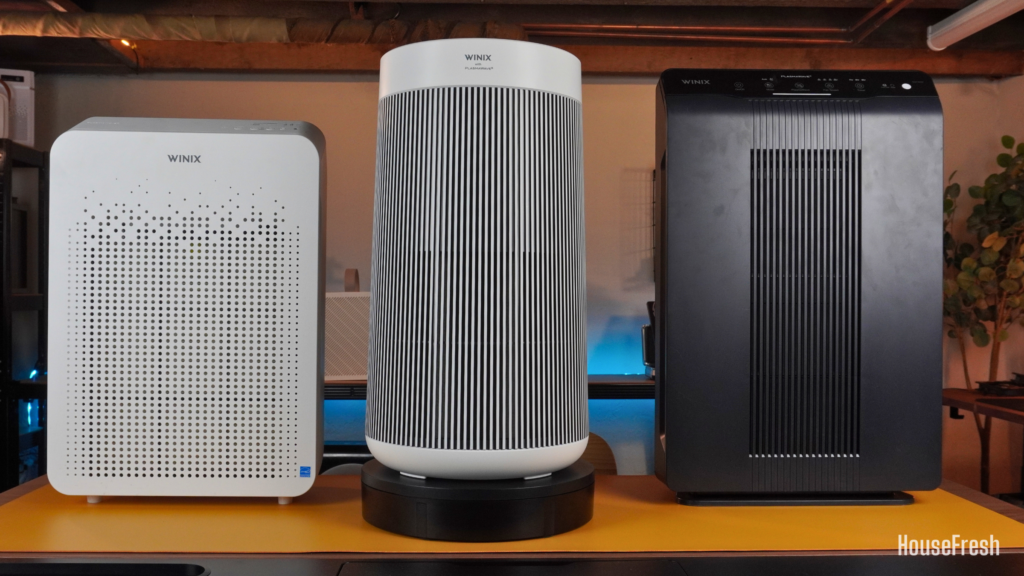
The big difference over other popular Winix devices is the use of a cylindrical design vs the rectangular box we see with the 5500-2, C545, Zero Pro, 5510, Zero Sโ€ฆ etc.

T810 Winix Comparison

However, there are some downsides to the T810โ€™s cylindrical design.

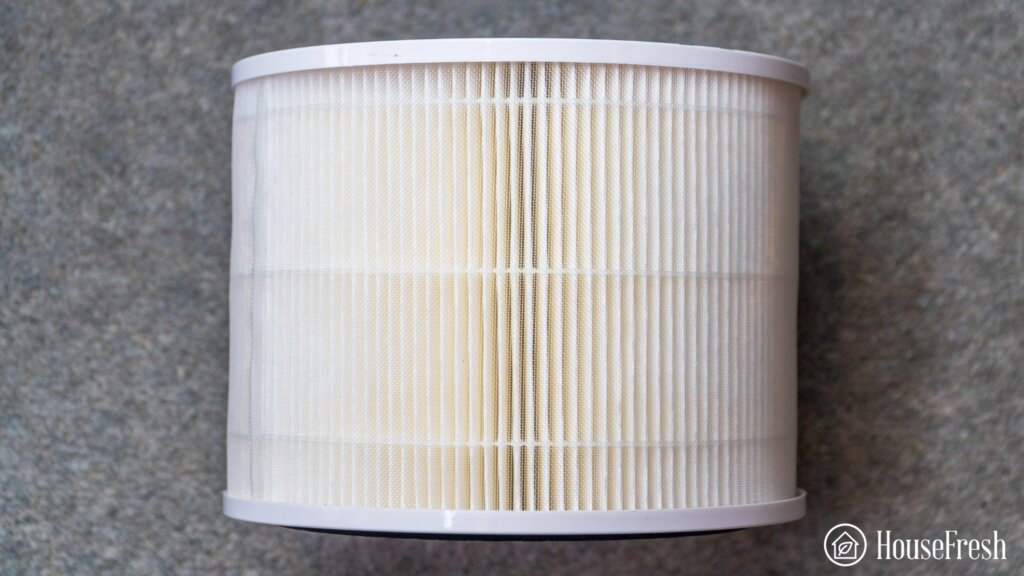
The 360-degree filter combines all filters into one, so you will have to throw away the entire filter once the carbon layer is fullโ€”even if the HEPA filter is perfectly fine.

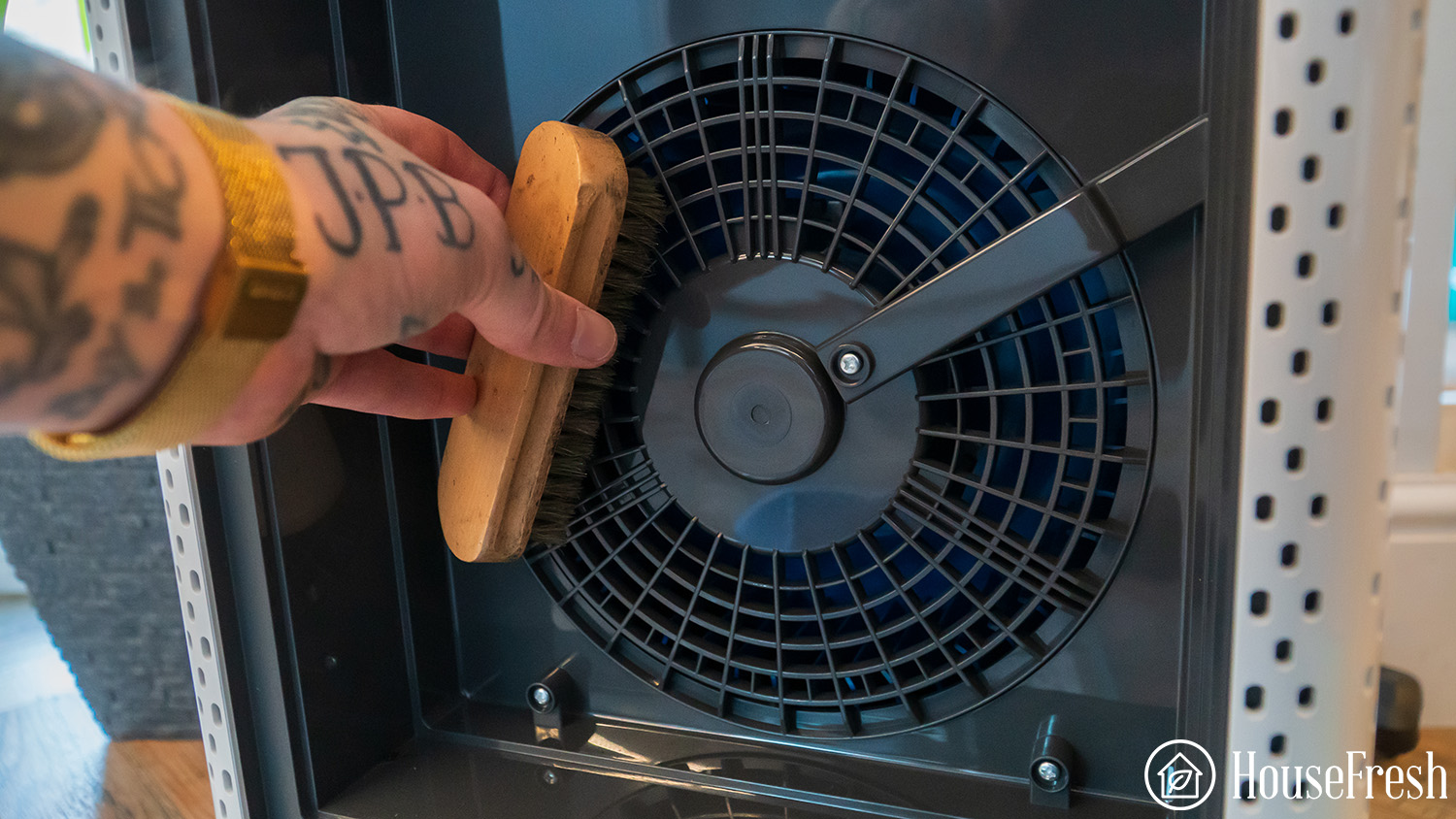
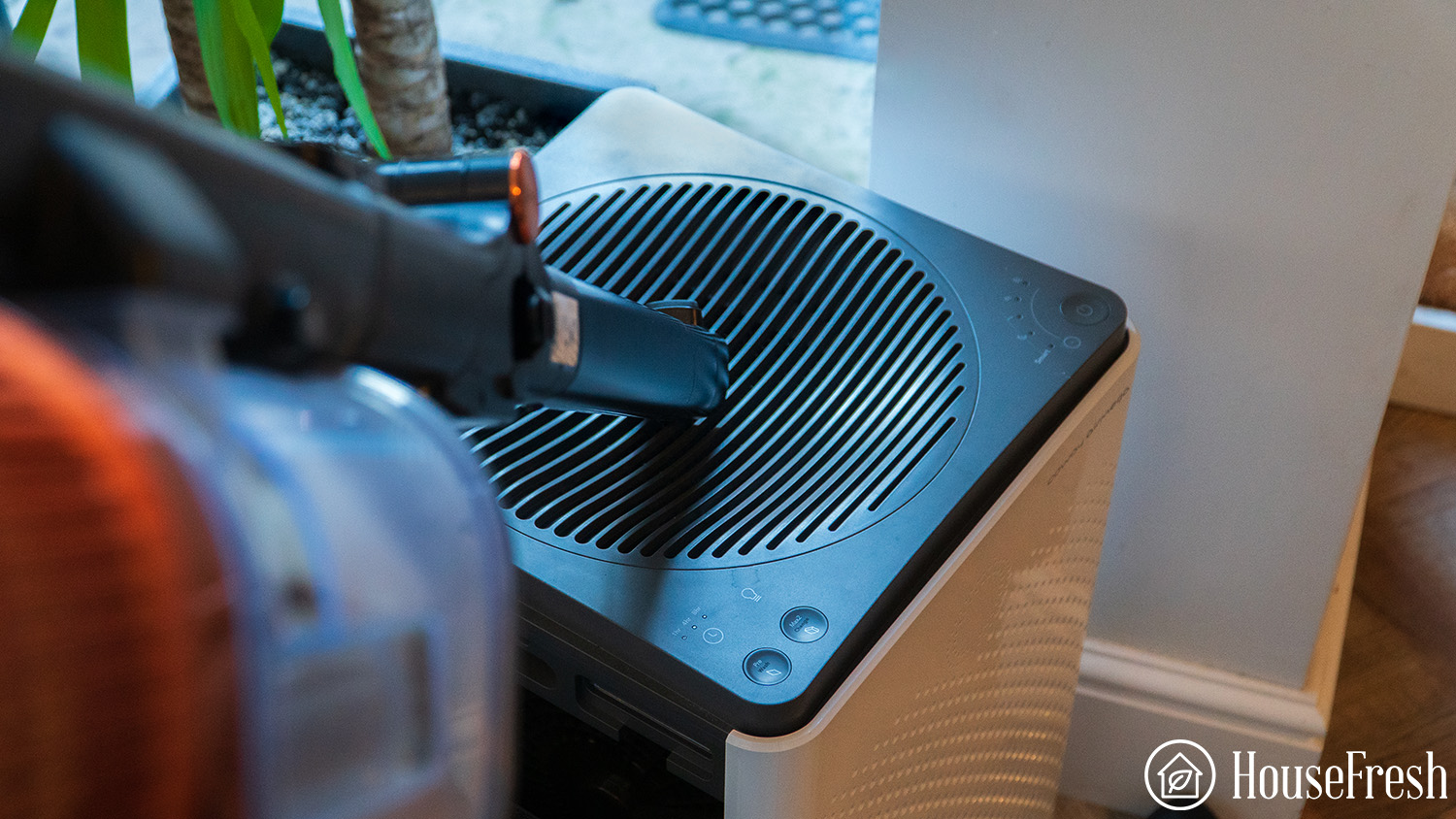
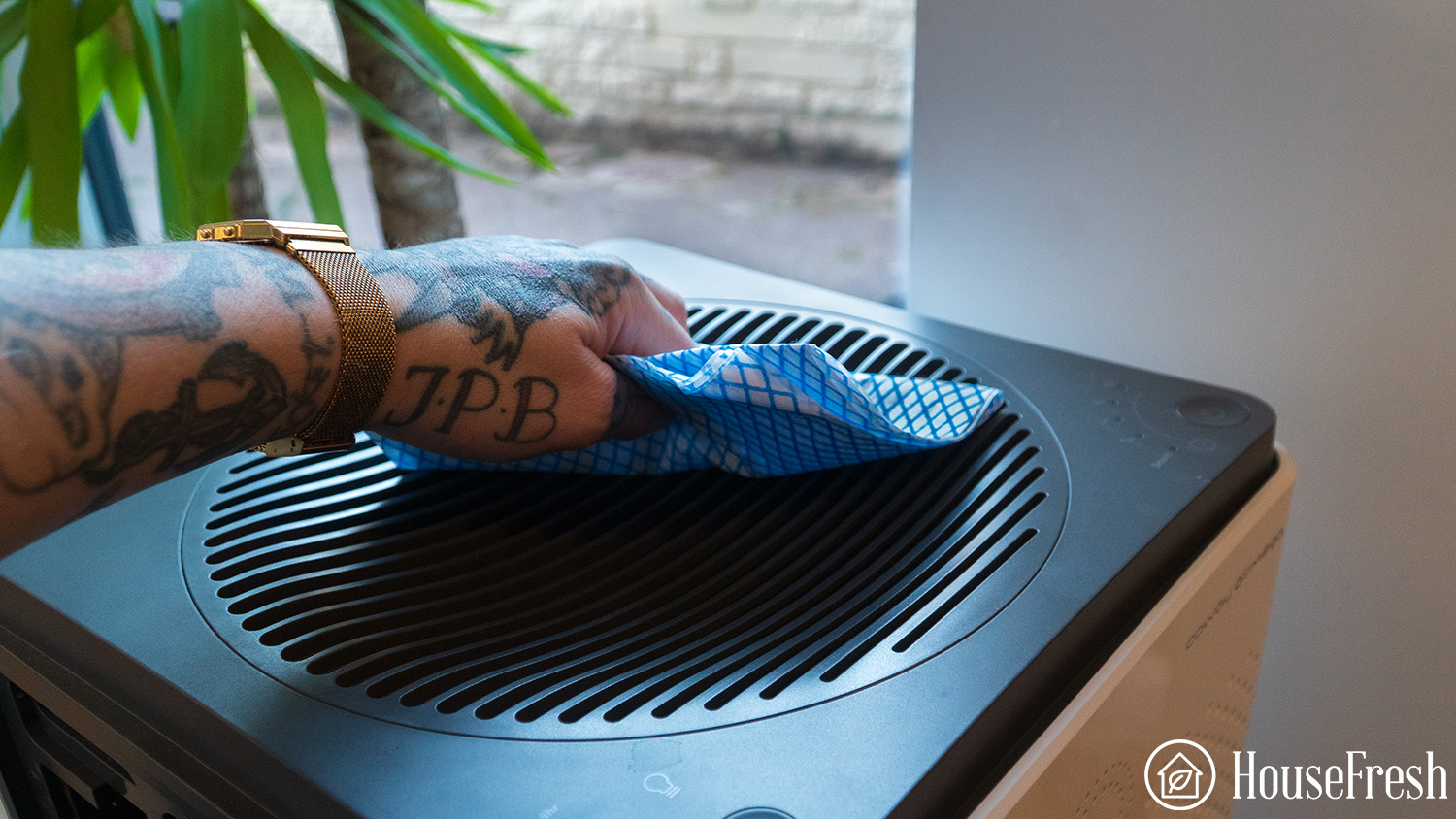
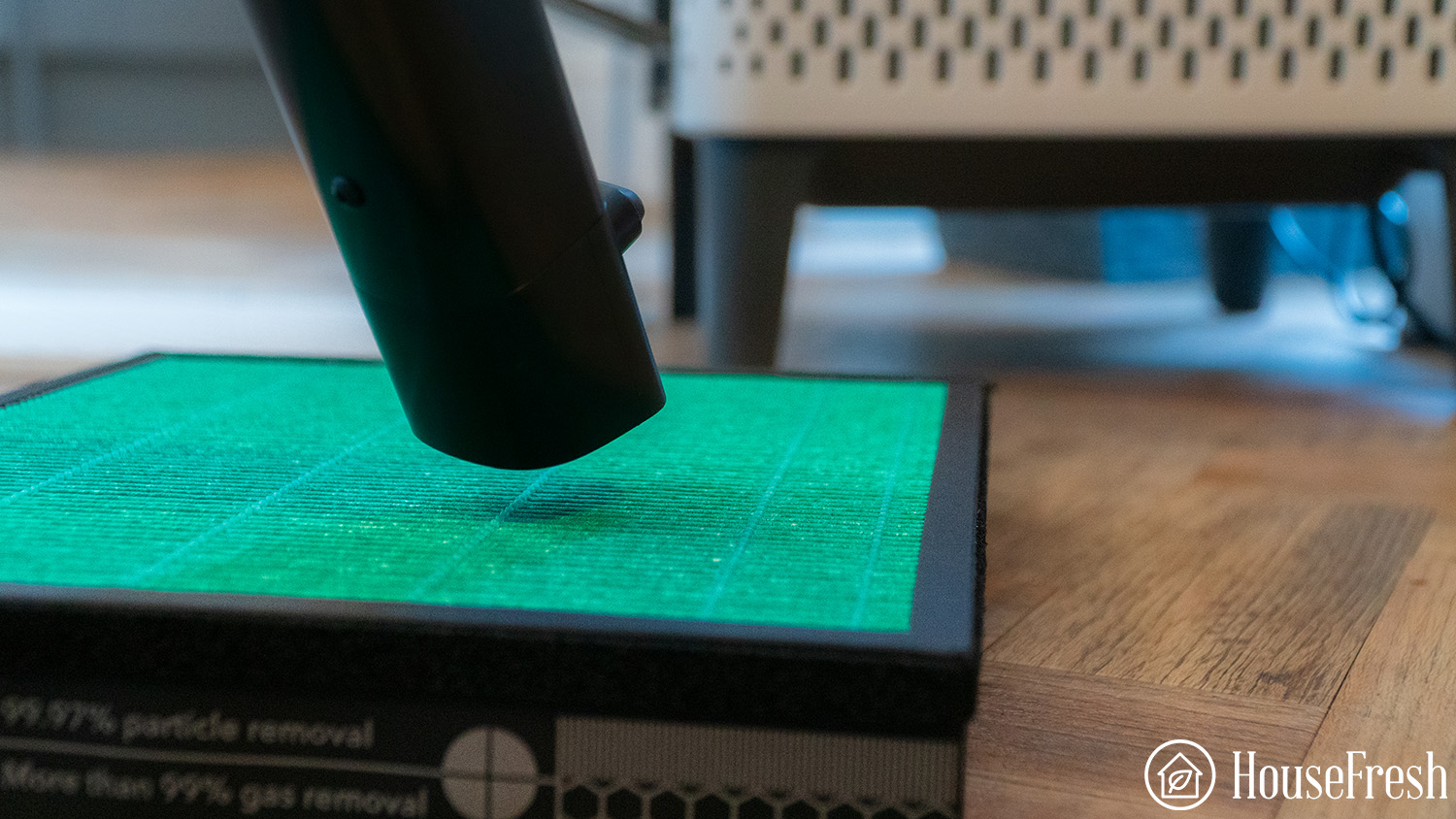
You have to remove the full filter to vacuum and clean the pre-filter cover. The process is more cumbersome compared to devices with washable removable pre-filters.

That said, the big benefit to the cylindrical design is that the T810 is less bulky and takes up less floor space than other medium-sized air purifiers with similar levels of performance.

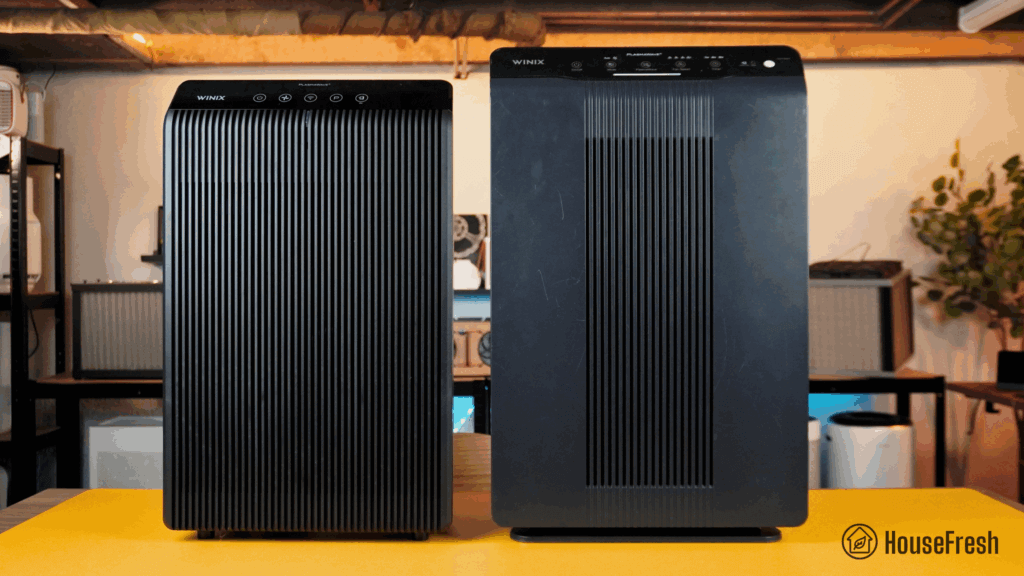
You can see in the photo below how the T810 compares to two of our most recommended air purifiers since 2023: the 5500-2 also from Winix (right)  and the Levoit Vital 200S (left):
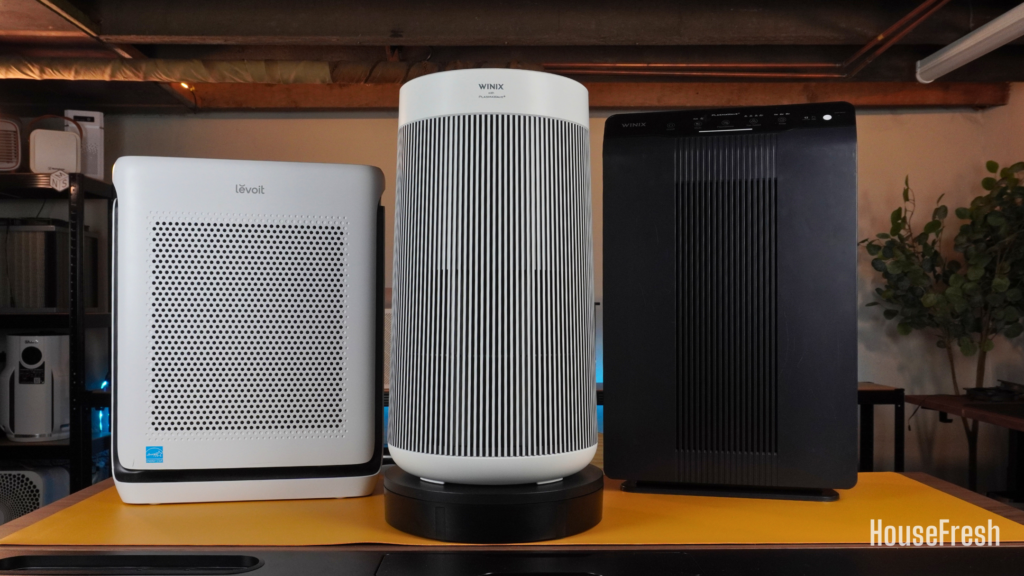
Winix T810 Vital 200s Winix 5500

Rather than pulling air from just the front, the T810 pulls air in from all sides of the device, which means you have higher CADR without the usual large size.

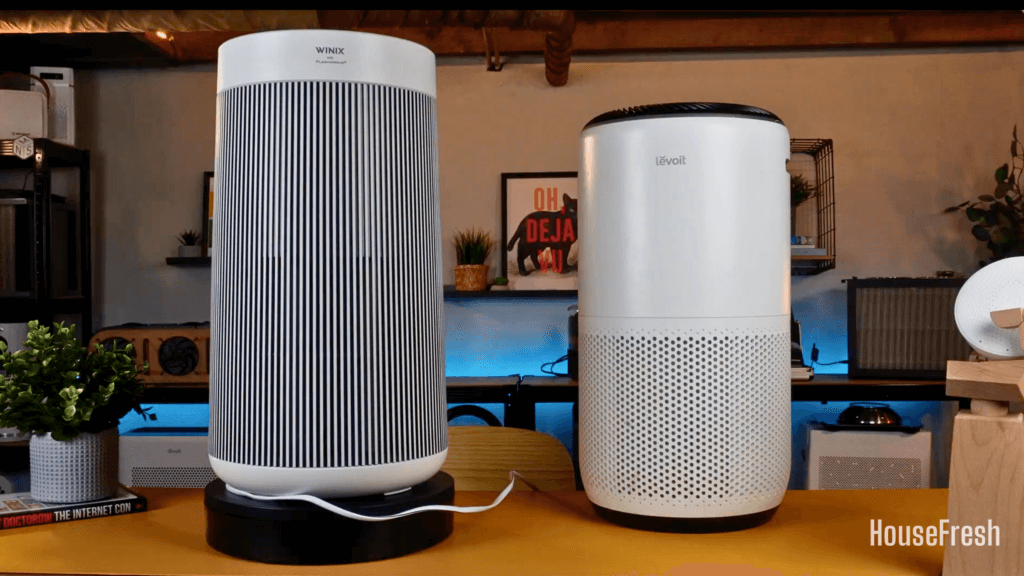
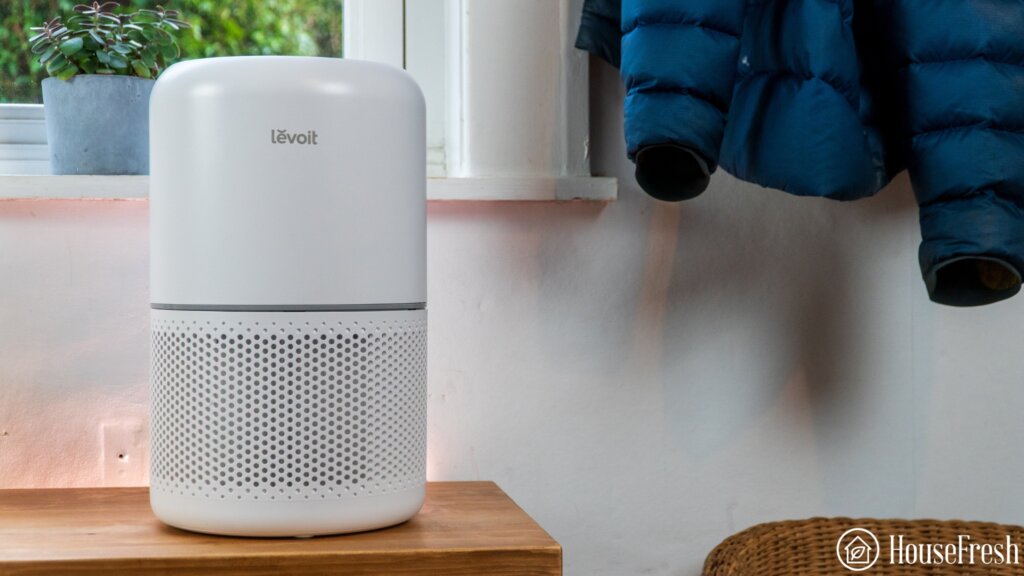
Compared to other cylindrical air purifiers such as the Levoit Core series, I much prefer the design choices that Winix has made. 

The vertical lines make the T810 feel much more stylish and sophisticated than the usual all-white cylinder shape used by many other air purifier manufacturers.

We chose to go with the Silver design, but you can also choose Blue stripes instead if you go for the T830:
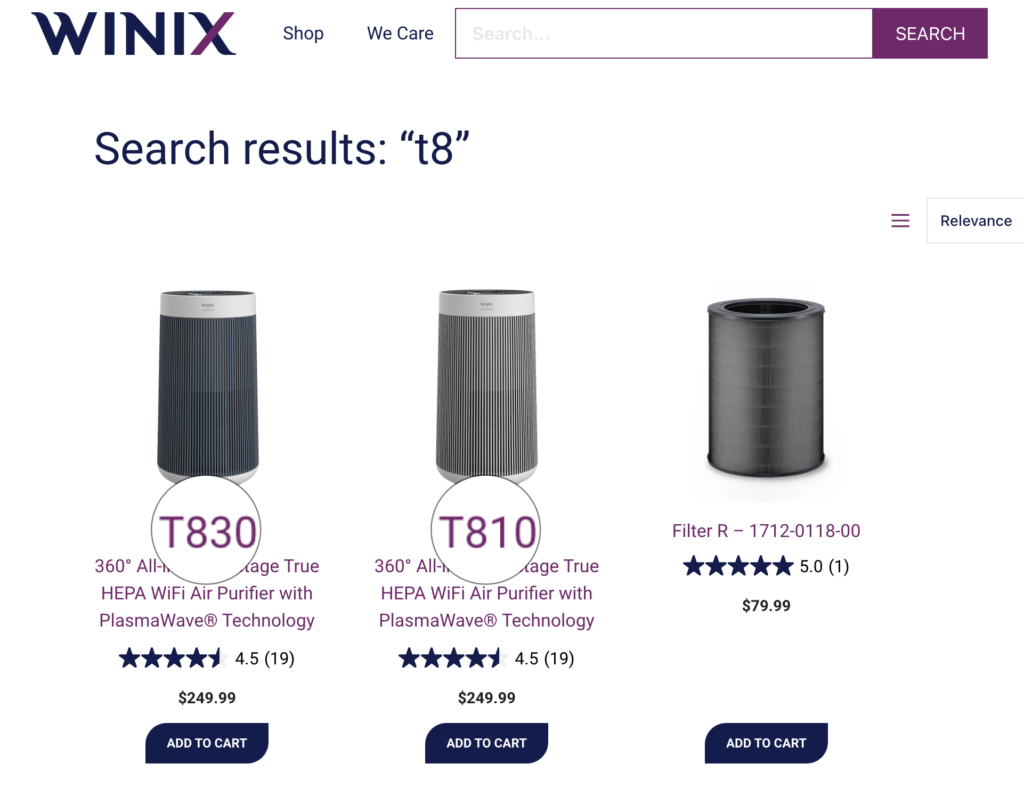
Winix T810 vs T80

The one thing I dislike about some cylindrical air purifiers is having to access the filter through the bottom of the device. Sadly, this is what Winix decided to do with the T810.

So to access the filter of your T810, you will have to tip the device upside down and turn the handle counter-clockwise to release the cover:
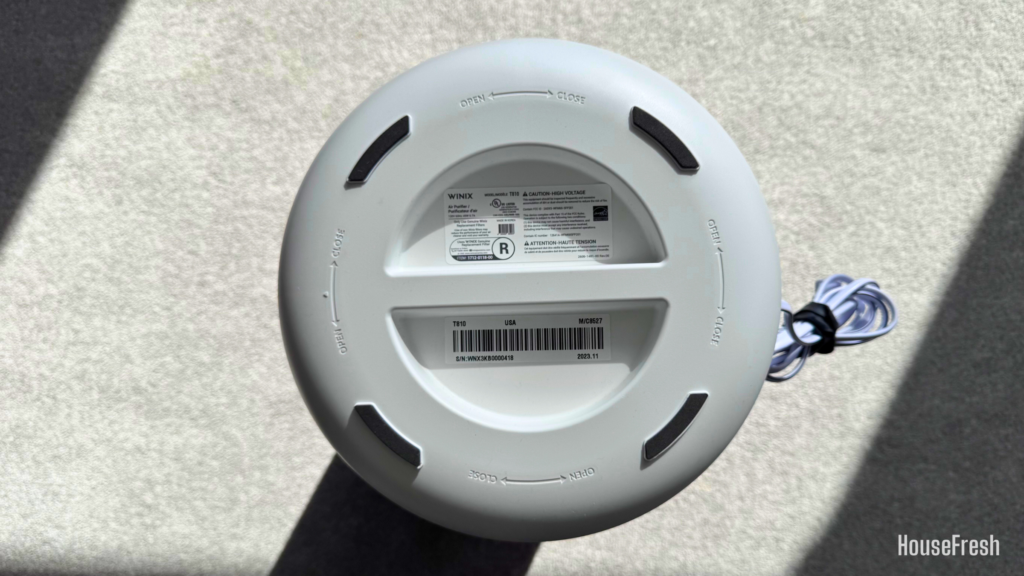
Winix T810 Bottom Cover

Something my wife reported experiencing a few times, which is a common issue with this type of cover: if you slide the air purifier on the ground from one side to another for some reason (e.g. you’re sweeping the floor), then you might end up unintentionally opening the cover.

Moving on from the design aesthetic, one of the big differences between the T810 and most other Winix air purifiers is the inclusion of an onboard screen and app support.

Not only that.

Like the Winix ZERO Pro, the T810 also comes with two sensors: one for particles and one for gases.  This makes the T810 more responsive to air quality changes. 

Plus, people often forget to clean the particle sensor and this can negatively affect the reliability of the auto-mode. The addition of the gas sensor is a welcomed inclusion for those cases. 

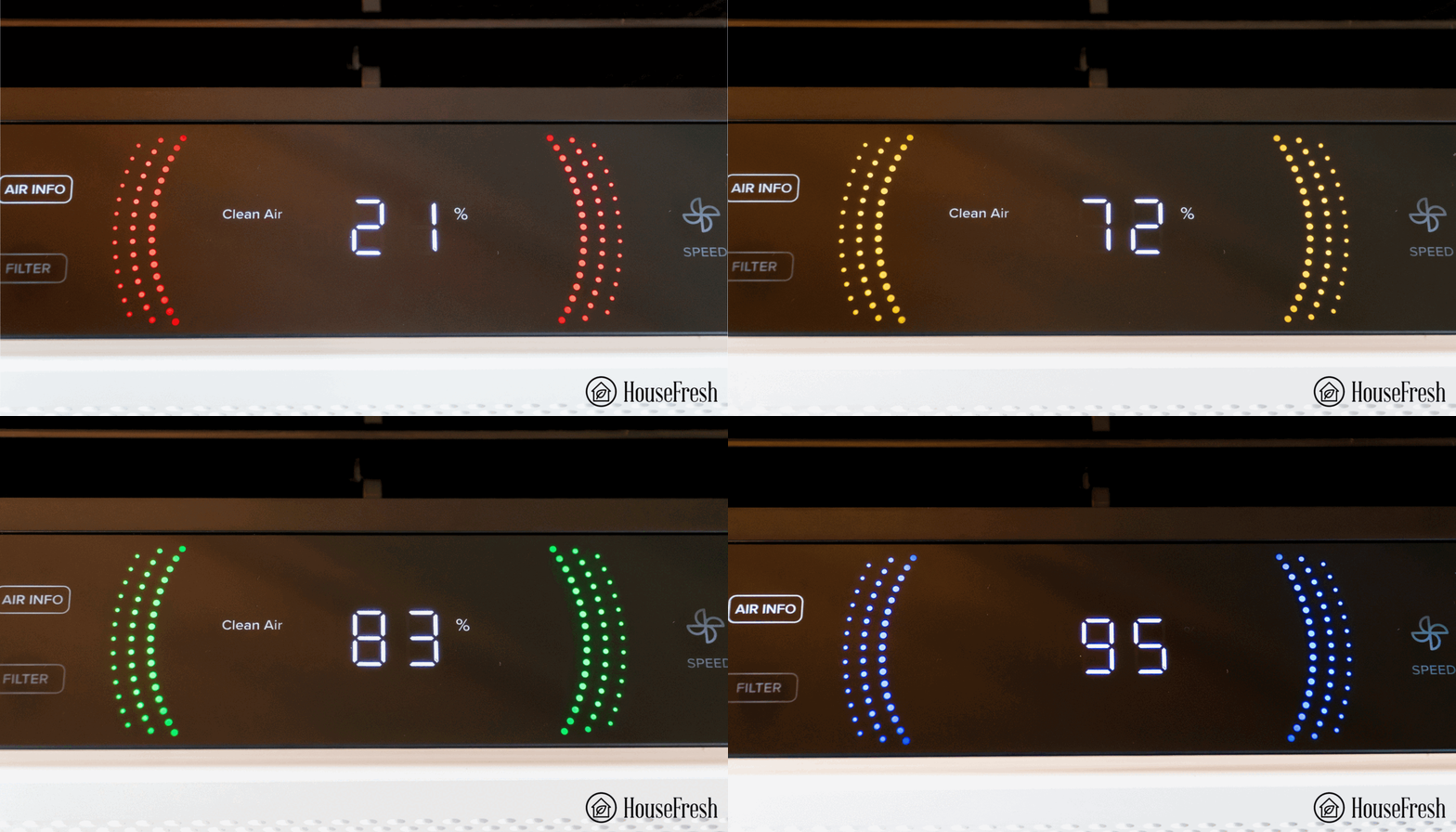
The screen takes a few moments to kick in, but once it does, it shows the level of PM2.5 detected on screen.

You also get an LED light that adjusts its color based on the level of air quality, moving through red (poor) to amber (fair) to green (average) to blue (good).
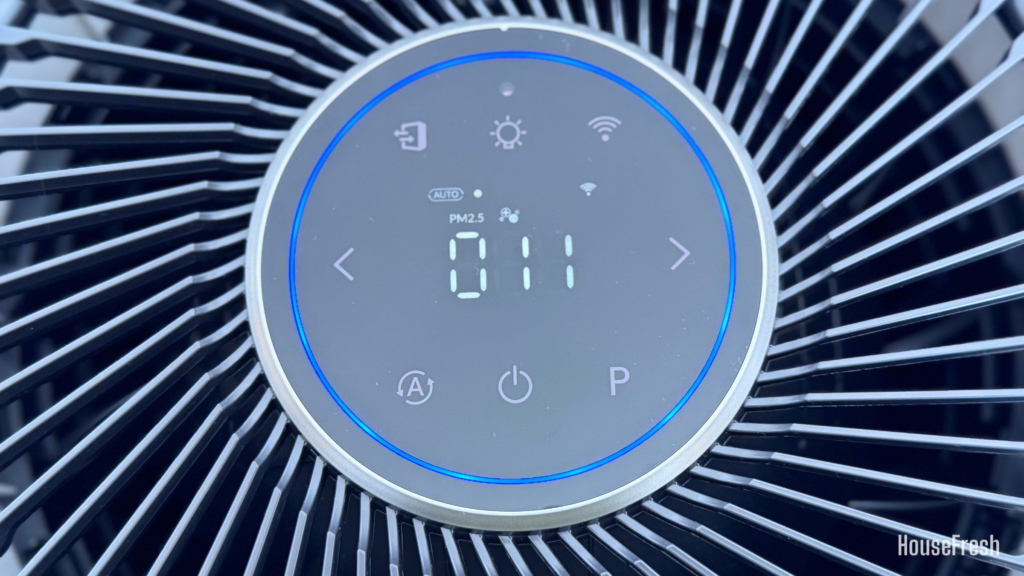
Winix T810 Touchscreeh

Another innovation from Winix is the inclusion of app connectivity.

The T810 can be paired to the Winix Smart app, which I found easy to install and navigate. The app has a clean UX, without the product ads or content marketing we see with other manufacturer apps such as Levoit.

I tested the Apple app, which has better ratings (4.6 stars) than the Android app (3.3 stars), so perhaps I am one of the lucky ones but I didnโ€™t encounter any issues and I am happy with the appโ€™s functionality. The scheduling function is easy to use, and every other feature can be also controlled from the touchscreen on top of the device and the remote control.

Something I really liked about the app is having the ability to store historical air quality data from the device, but I am a data nerd so it might not be something youโ€™ll care about. I’m also glad Winix didnโ€™t move all the features to the app (as we see with Xioami) because not everyone wants another app.

An all-in-one 360ยฐcylindrical True HEPA filter with an activated carbon coating

It offers good particle filtration but doesnโ€™t come with enough carbon to be effective against serious VOCs or strong smells like cigarette smoke.
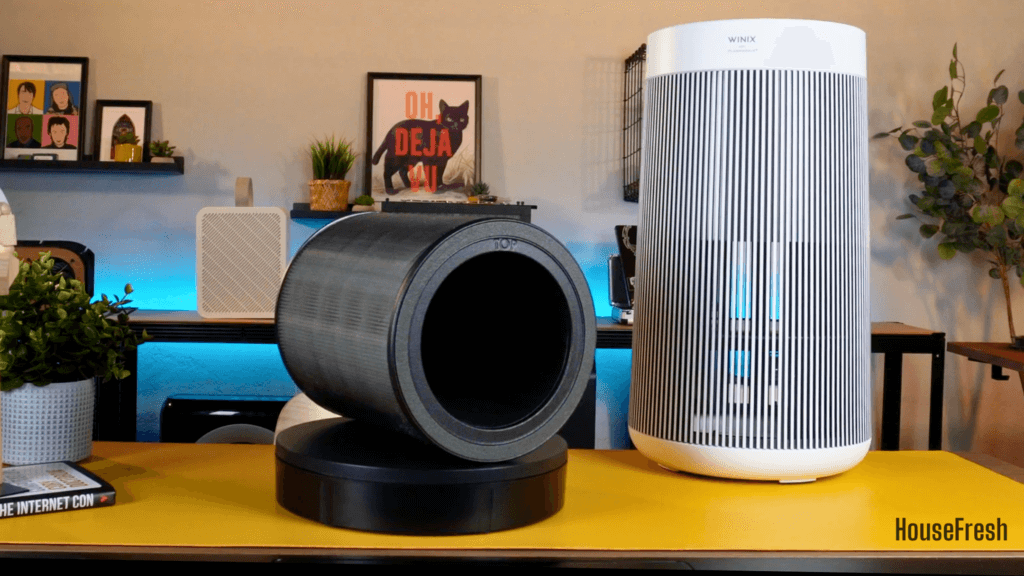
Winix T810 Filter

Overall, the filter you’ll get with the Winix T810 is very similar to other cylindrical filters we see with many other brands:
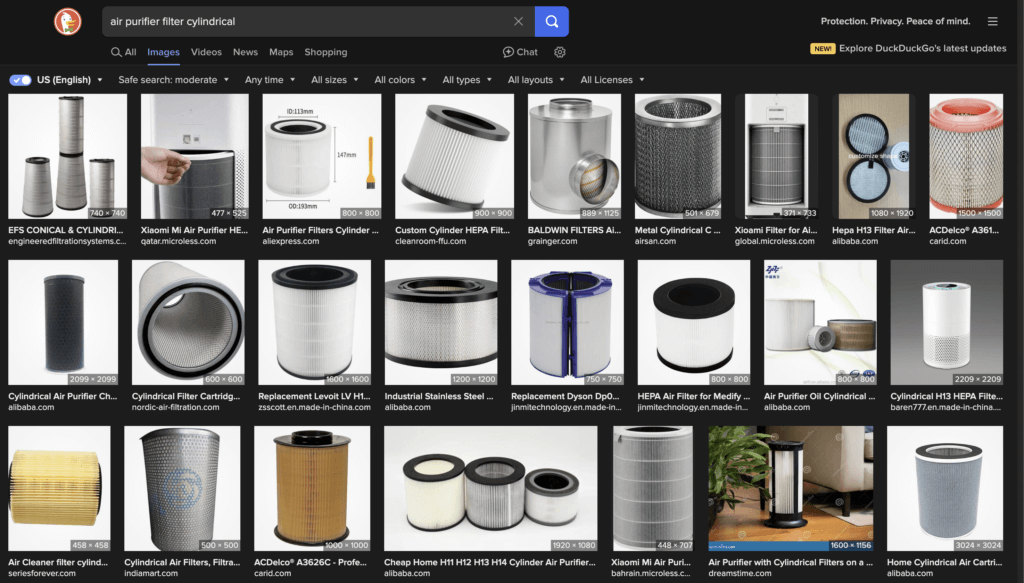
Cylindrical Filter Replacement 1

But this all-in-one bonded filter is very different from what we expected from Winix.

You see, most Winix air purifiers come with separate filters for carbon and particles. These non-bonded filters from Winix usually come with a removable (and often washable) pre-filter, which makes it easier to quickly clean the pre-filter to help extend the life of the HEPA filter.
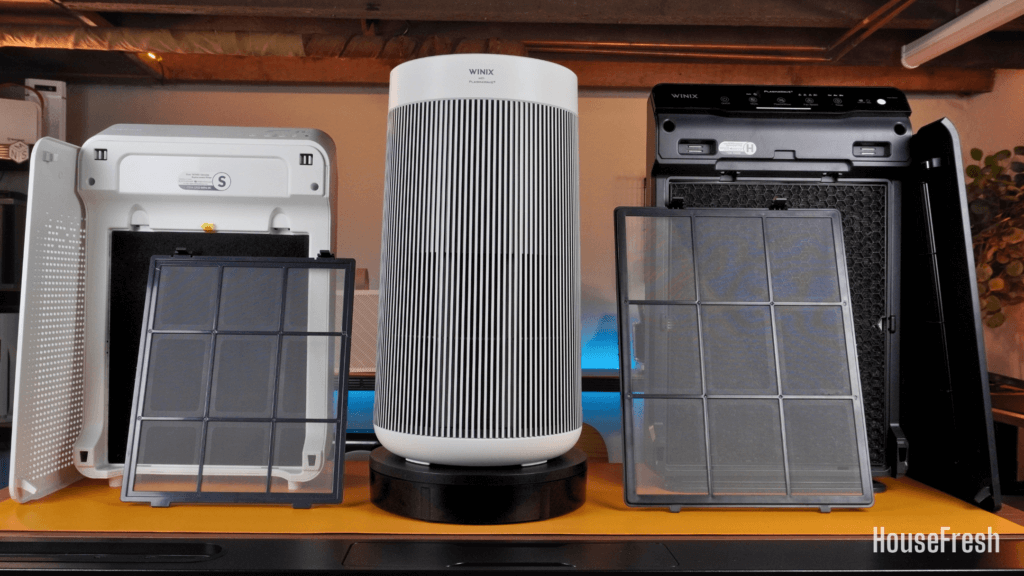
Winix T810 Comparison Winix Filters

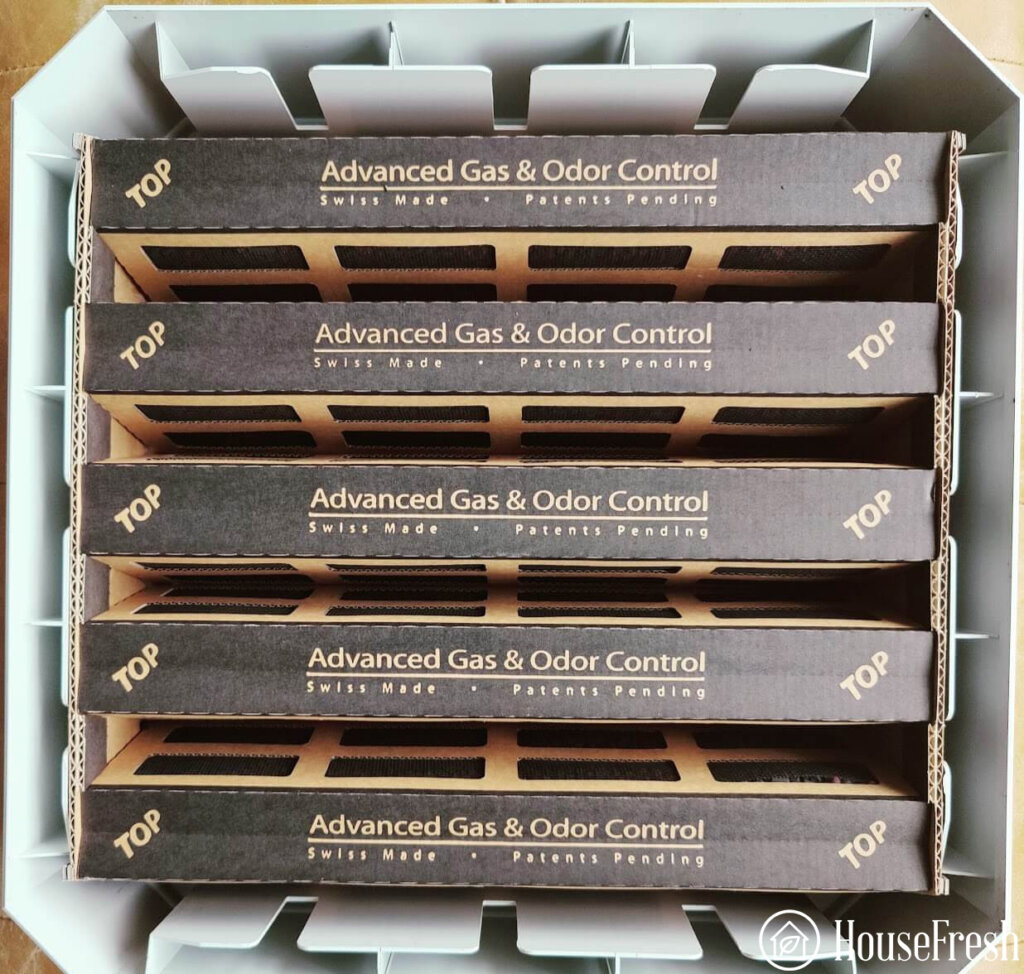
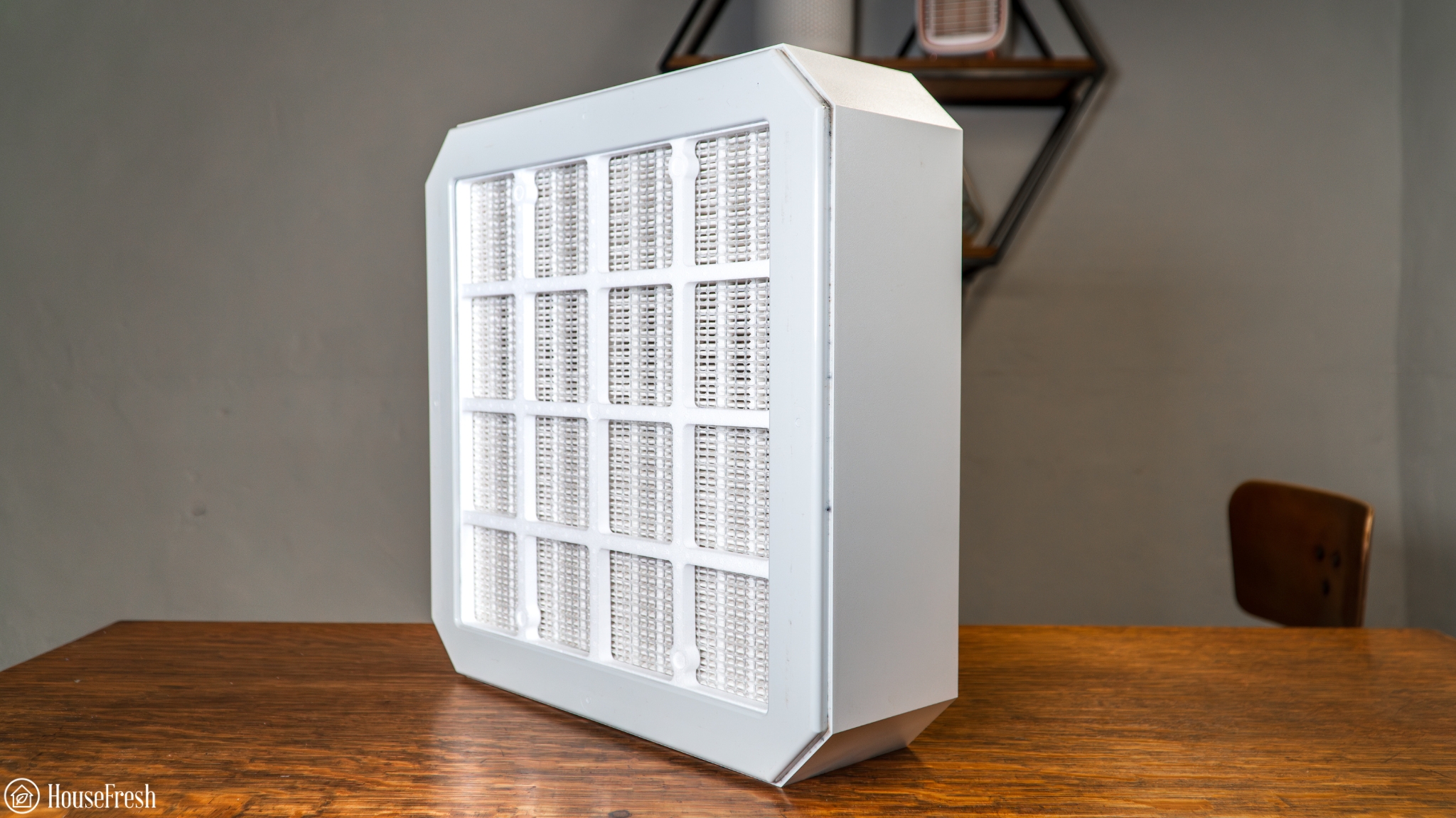
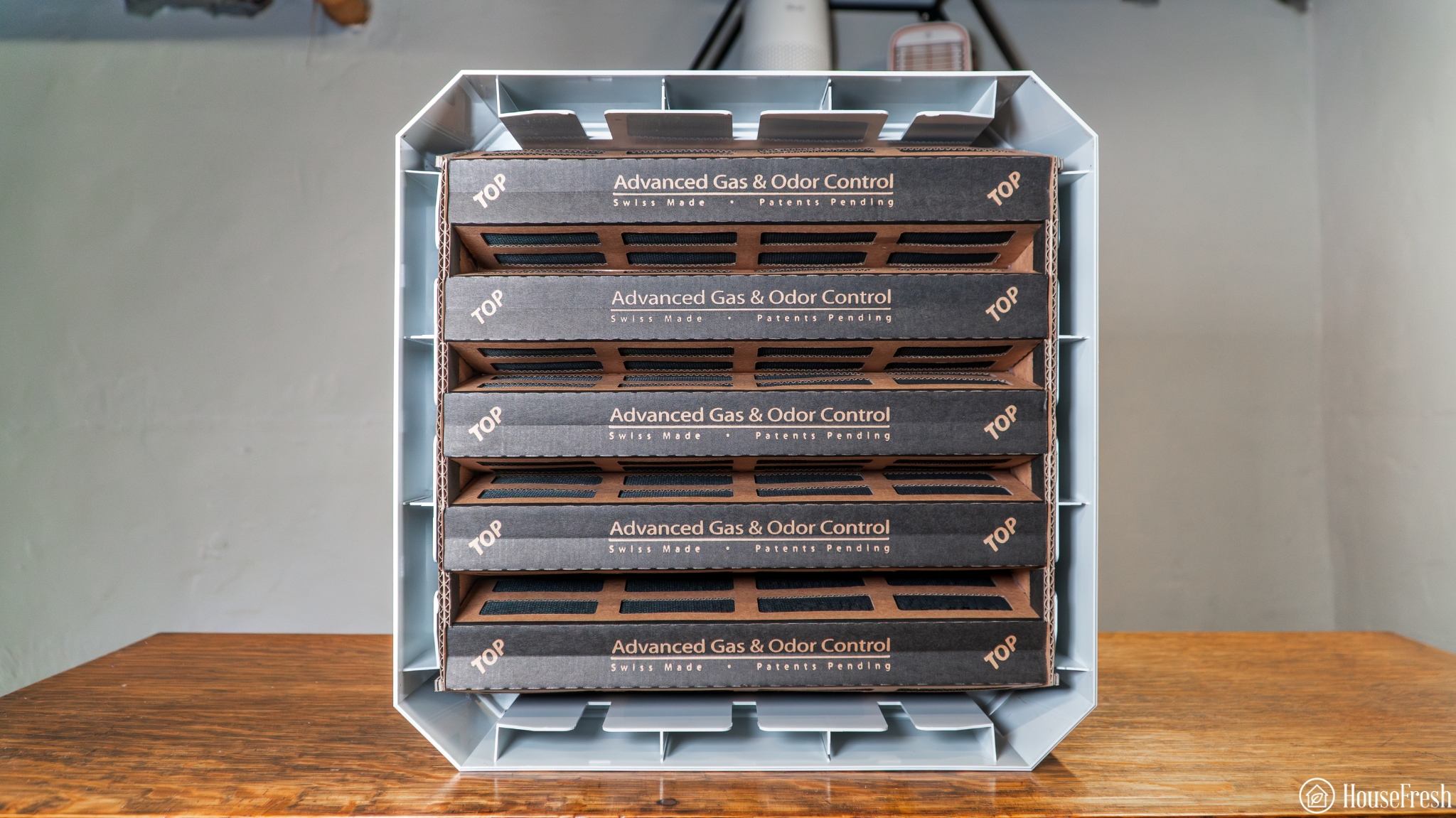
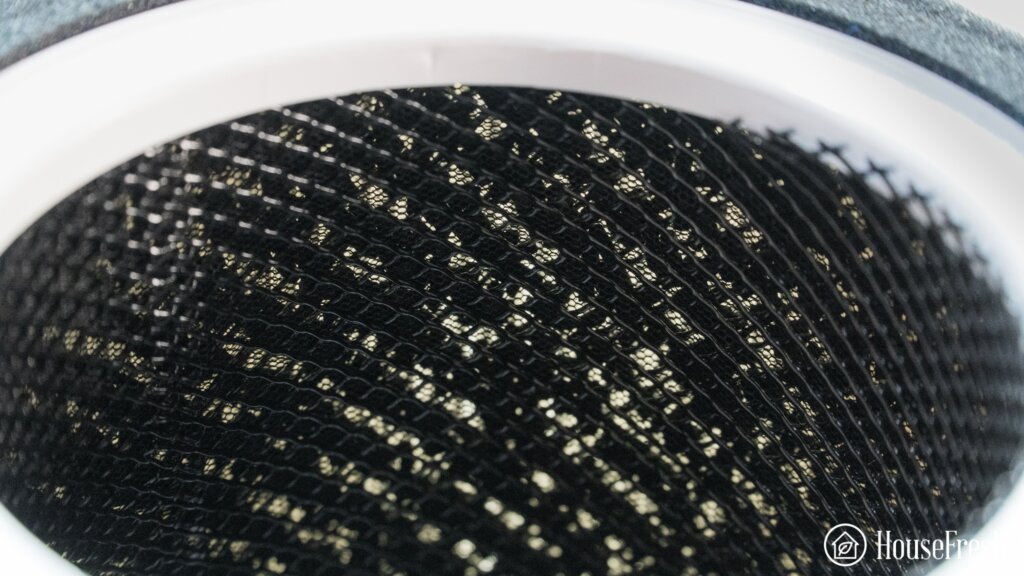
However, the T810 comes with an all-in-one cylindrical filter that includes a pre-filter mesh, a carbon coated layer and a True HEPA filter.

As is the case with every other Winix device, the particle filter of the T810 is HEPA-graded, which means it was independently tested and certified by a lab as True HEPA grade.

And the gas filter consists of a carbon coated layer, which is likely not going to be as effective at tackling chemical gasses and odors compared to a filter with a good amount of pelleted activated carbon.

The Winix T810 cleared our test room in 26 minutes

It matches the performance of the Coway Airmega AP-1512hh, but it was slower than the Levoit Core 400S.
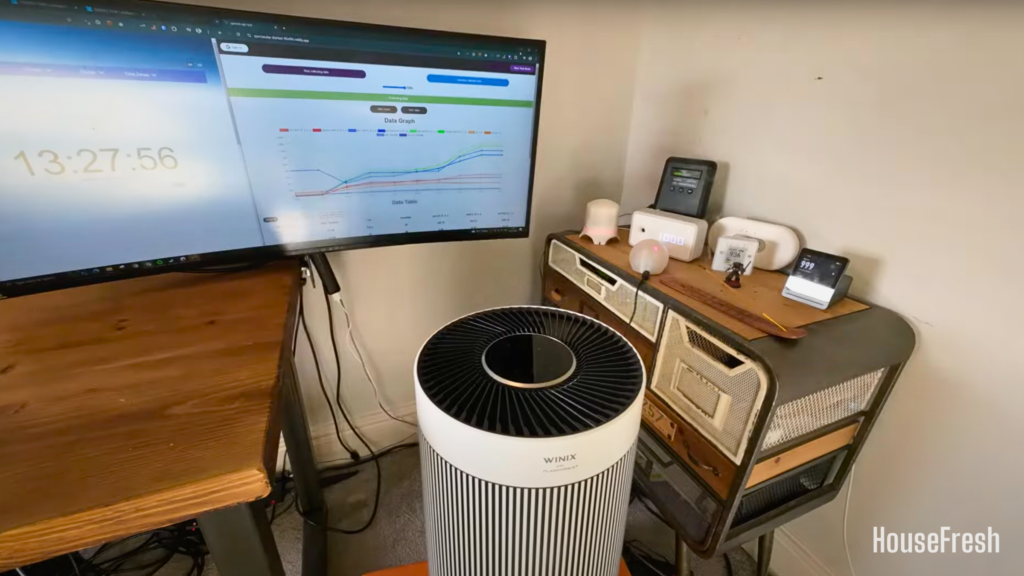
Winix T810 HouseFresh Performance Test

First, we tested the particle removal speed of the Winix T810 running at top speed with PlasmaWave enabled. 

According to our PurpleAir Zen sensor, the T810 needed 26 minutes to achieve PM1 zero in our 728 cubic ft. test room:

We can compare this to other similarly-priced devices running at their top speed:
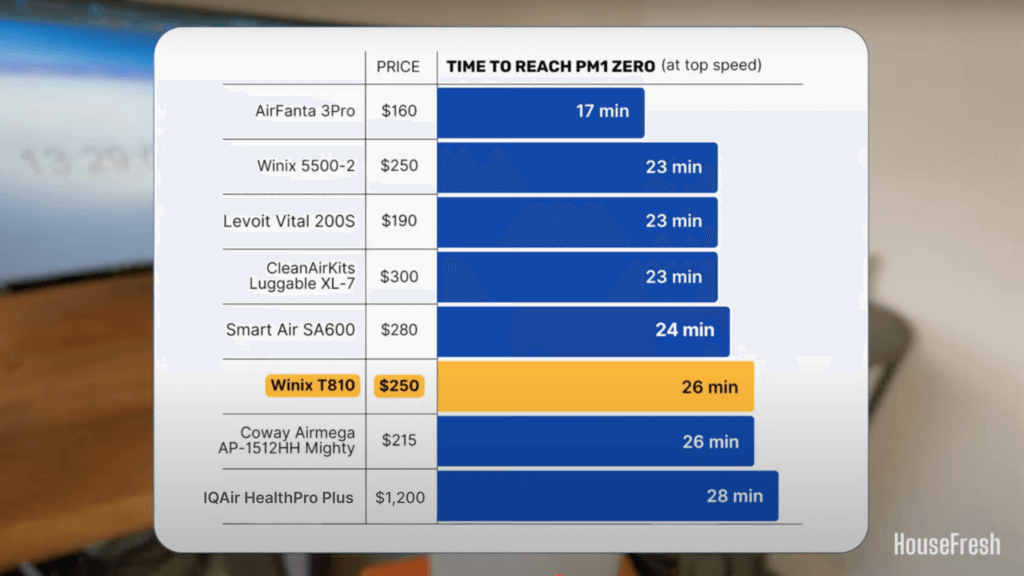
Winix T810 Top Speed Performance Compared

Considering AHAMโ€™s high CADR ratings for this device (267 cfm for dust), I was surprised that it wasnโ€™t quicker than the Winix 5500-2 and Vital 200S.

Itโ€™s also fair to say that while the list price ($250) is similar to that of other devices, many (like the Winix 5500-2) are often sold for much less so you are likely to get better value from this older Winix device.

But, these are the results with PlasmaWave enabled, which is not something everyone will want to have as many people avoid ionizers. That is why we disabled PlasmaWave and re-tested the air cleaning performance of this device.

Without using Plasmawave, the T810 needed 27 minutes to achieve PM1 zero โ€“ that is just one additional minute from our previous test. This is how this result compares to other air purifiers with and without their ionizers enabled:
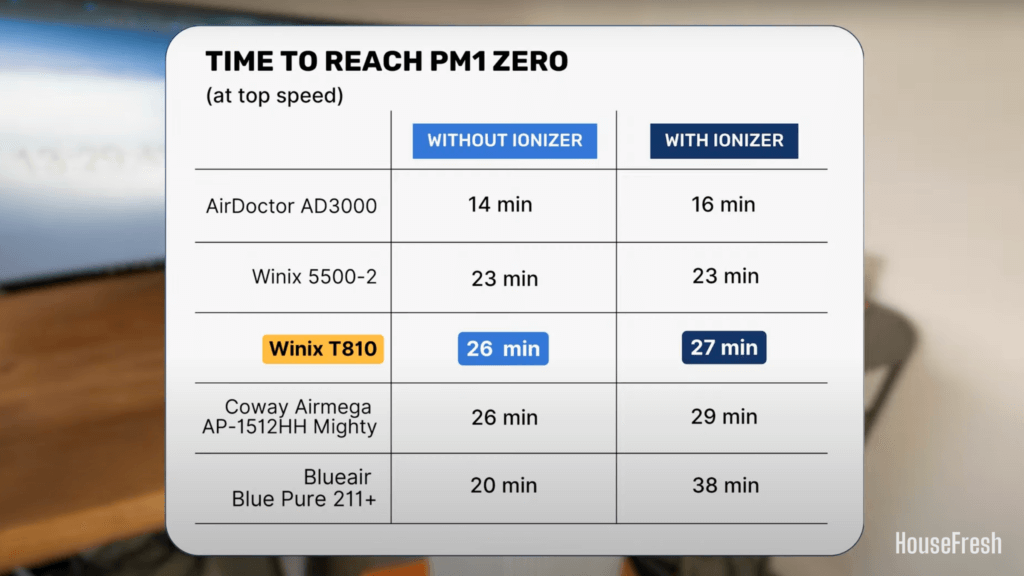
Ionizer On Off Comparison

Our data shows that the T810โ€™s PlasmaWave has a fairly low effect on overall air cleaning performance hereโ€•especially when compared with what we saw with the Blueair 211+ or the Coway AP-1512HH. So, I see no downside to running your T810 without PlasmaWave enabled if you want to avoid bipolar ionization.

It is louder at top speed than other mid-sized air purifiers we recommend

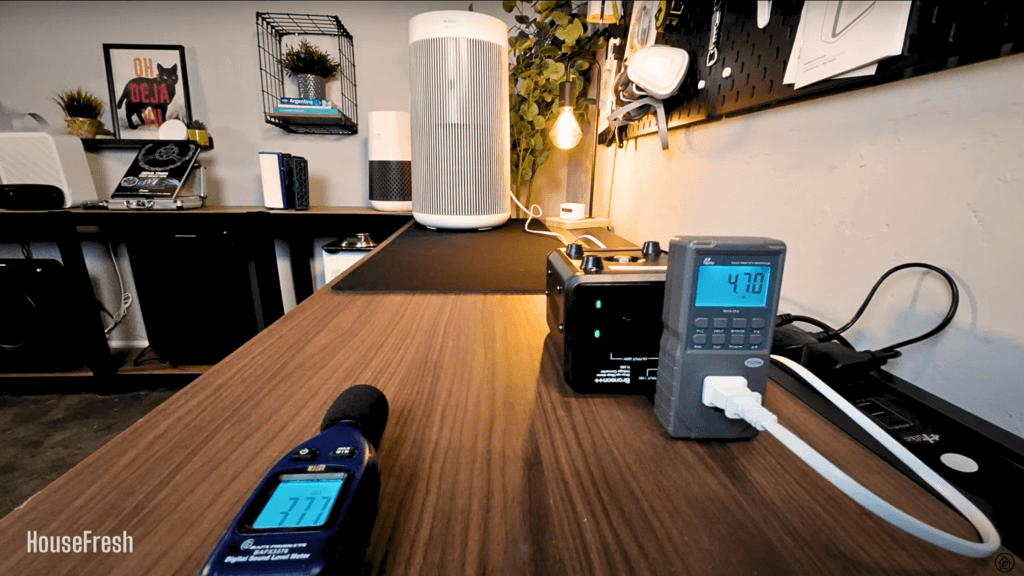
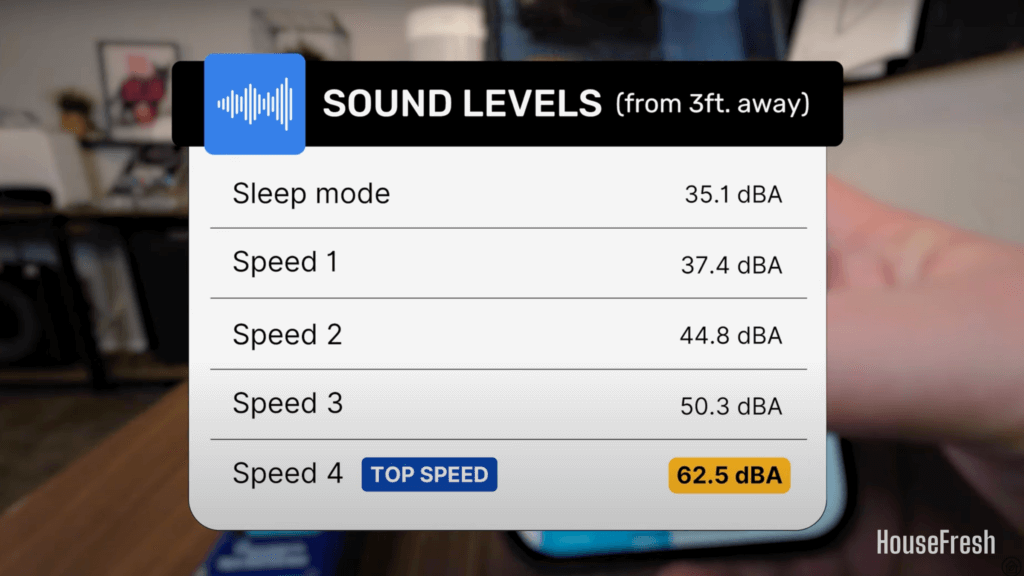
In our testing, the sound levels of the Winix T810 ranged from 35.1 dBA to 62.5 dBA.
Winix T810 Sound Electricity Test

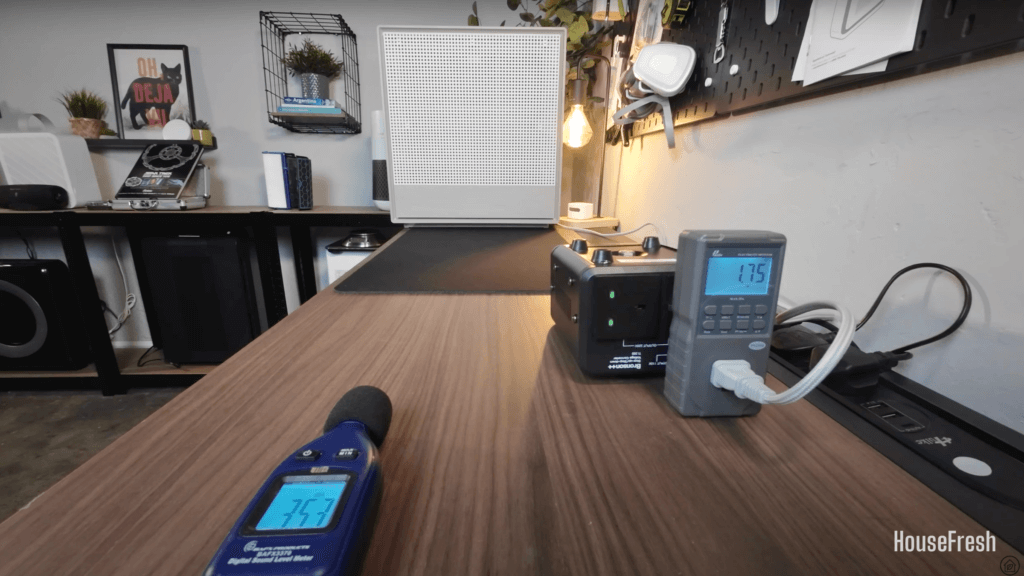
If an air purifier is too loud, you will find yourself turning it off eventually. That is why we always measure how much sound they generate from 3 ft. away with a sound monitor.

These are the results for the T810:
Winix T810 Sound Test

Tip

Be aware our background noise is 35 dBA, so the T810 running at speed one (1) is likely to generate less sound if you could measure it in a silent room.

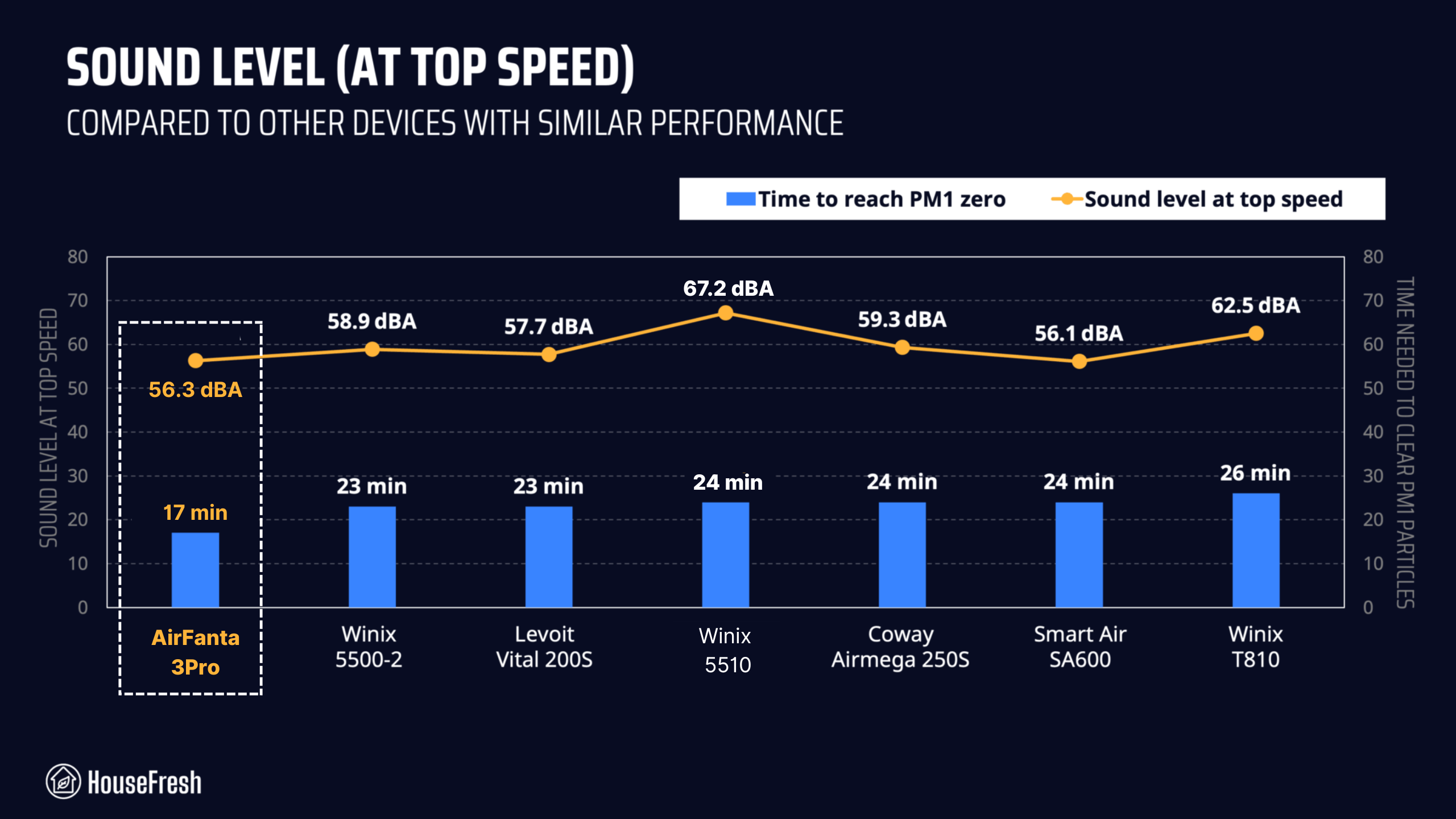
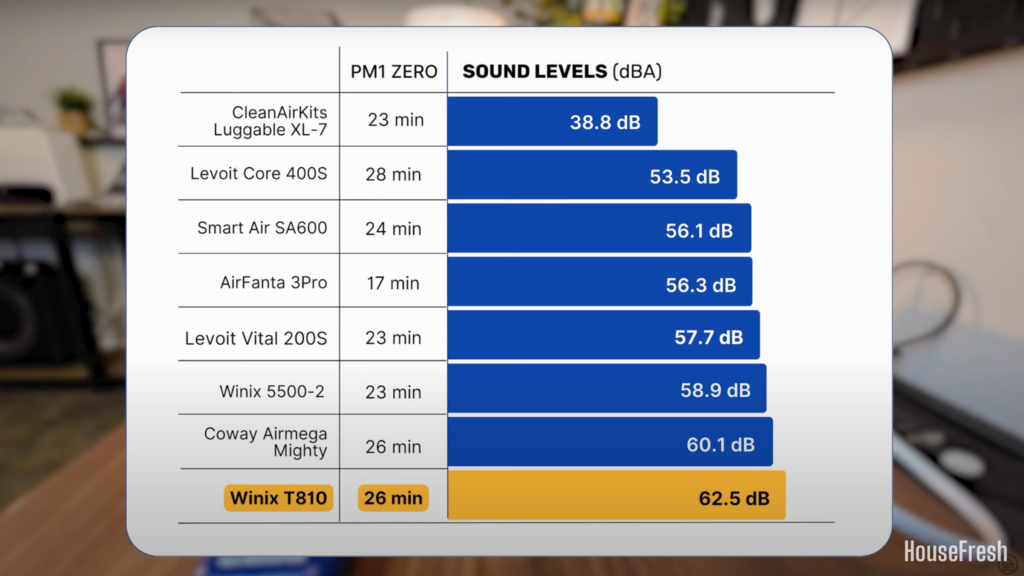
As you can see from the table below, the T810 does run louder than many of the other similar-performing air purifiers we have benchmarked:
Winix T810 Noise Levels Compared

Next, we re-tested the particle removal performance of the T810 when running at its lower fan speeds.

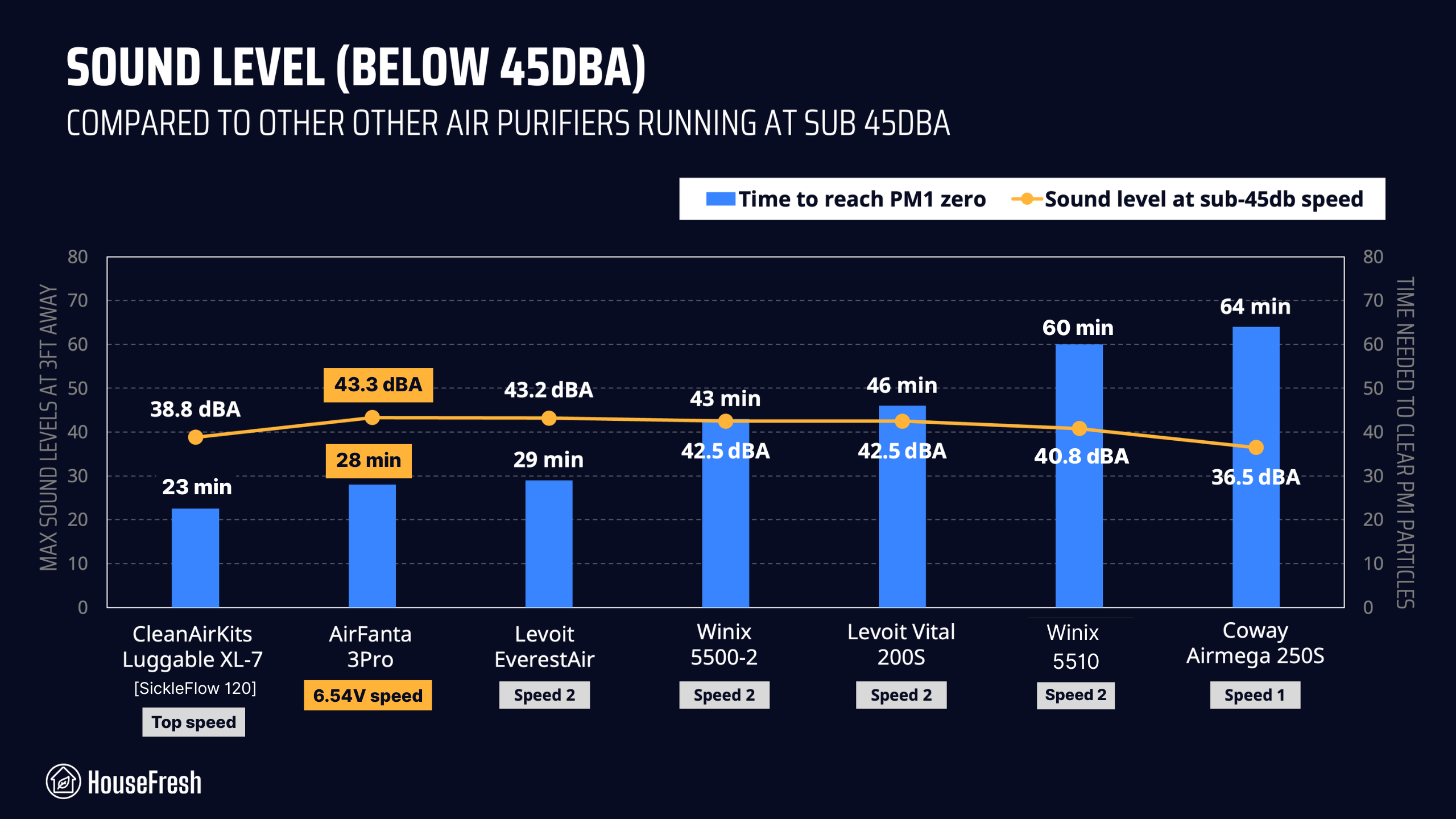
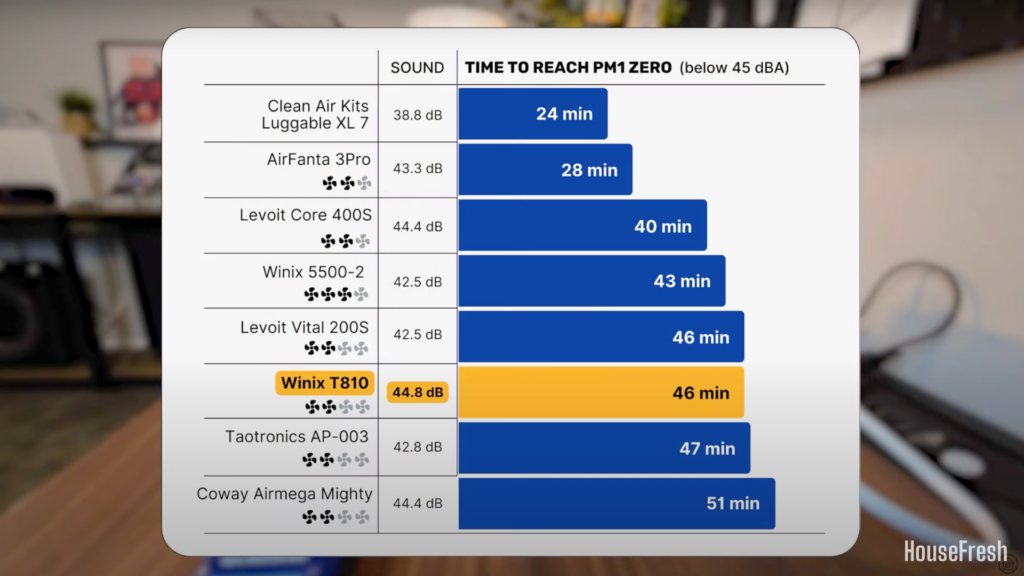
Running at speed two (2), it generates 44.8 dBA, which is just below the 45 dBA limit that CleanAirStars recommends for noisy classrooms or offices. At this speed, the T810 managed to reach PM1 zero in 46 minutes.

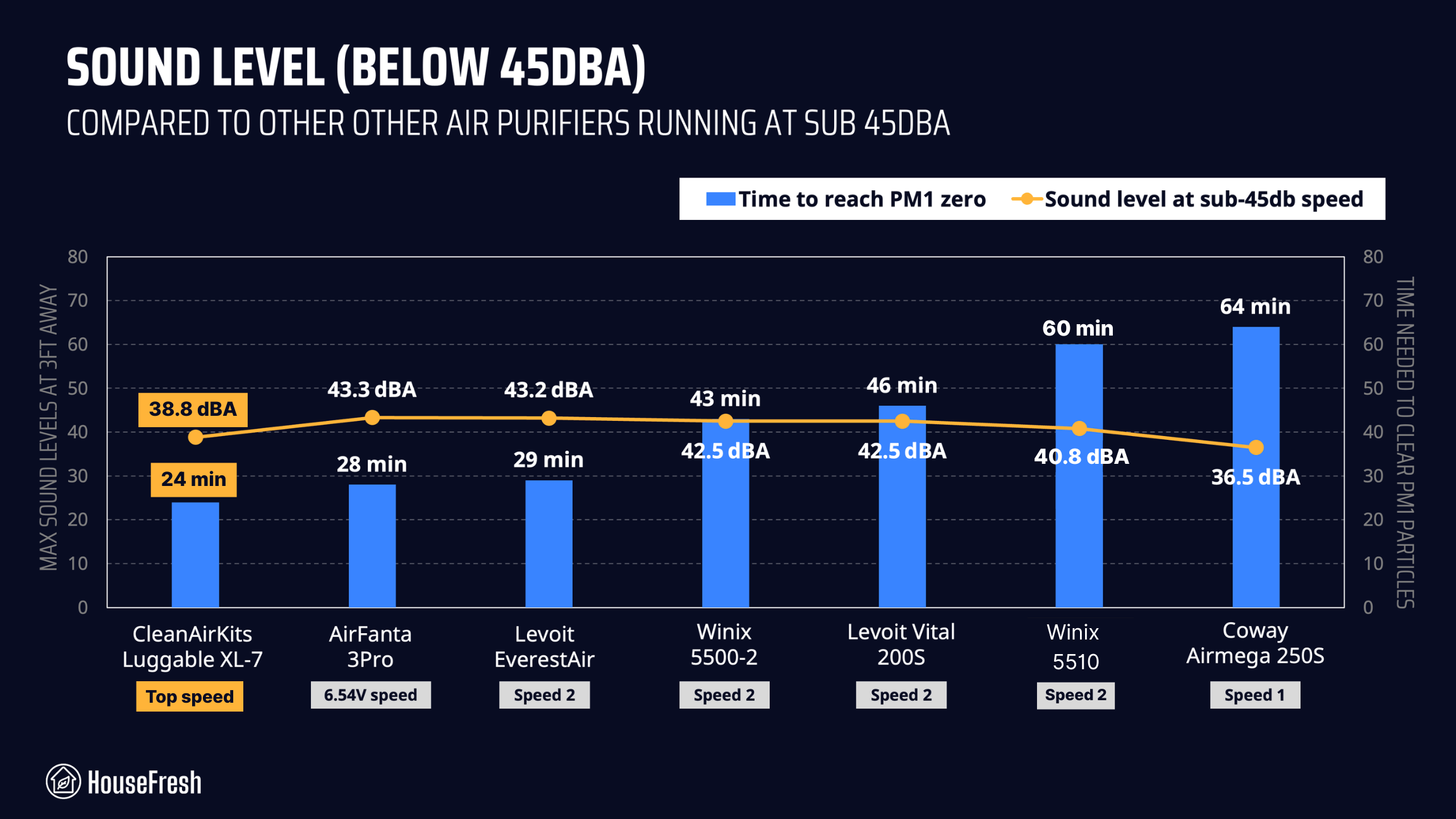
When running at sub 45 dBA, the T810 performs similarly to other popular devices, such as the Levoit Vital 200S and Winix 5500-2 although you do get better performance at the same sound level with the Levoit Core 400S:
Winix T810 Sub 45dB Comparison

As I expected, our data shows that the T810 is completely outmatched by PC fan-powered devices like the CleanAirKits Luggable XL-7 and the AirFanta 3Pro. But this makes sense as PC fans are whisper quiet.

The cost to run a Winix T810: $126.64 per year

We look at how much the T810 will cost you in the long term, including your energy bill and filter replacement costs.

1. Electricity costs = $46.65 per year

As always, we used our energy meter to record how much energy the T810 uses when running at each fan speed and also while on standby.

I also made sure to measure how much power was used once I disabled PlasmaWave:
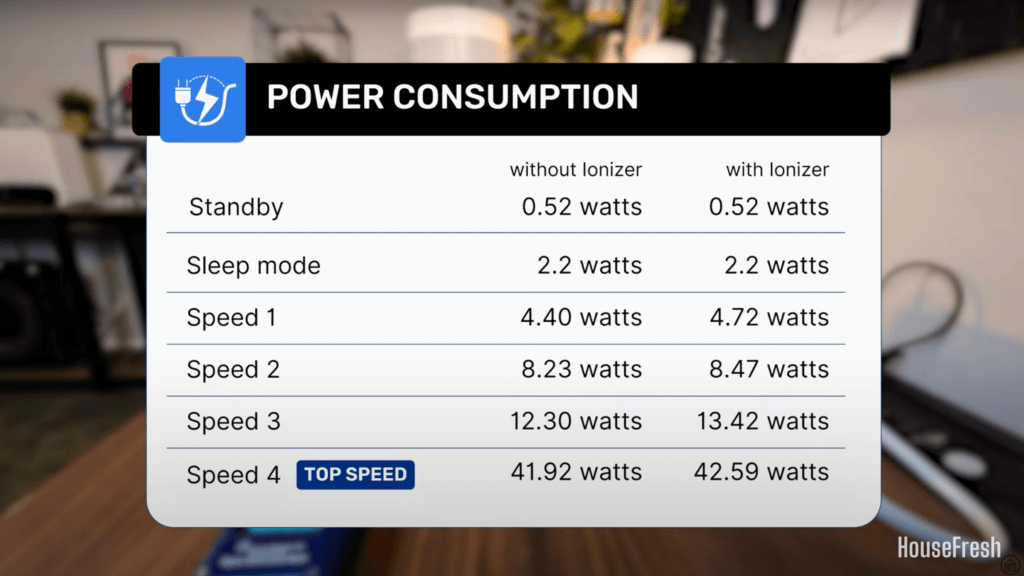
T810 Power Consumption

If you were to leave your Winix T810 running 24/7 at its top speed with PlasmaWave enabled, it would add $46.65 to your energy bill within a year.

With this calculation in mind, we can compare the annual energy costs you can expect from the T810 to other devices we have tested.
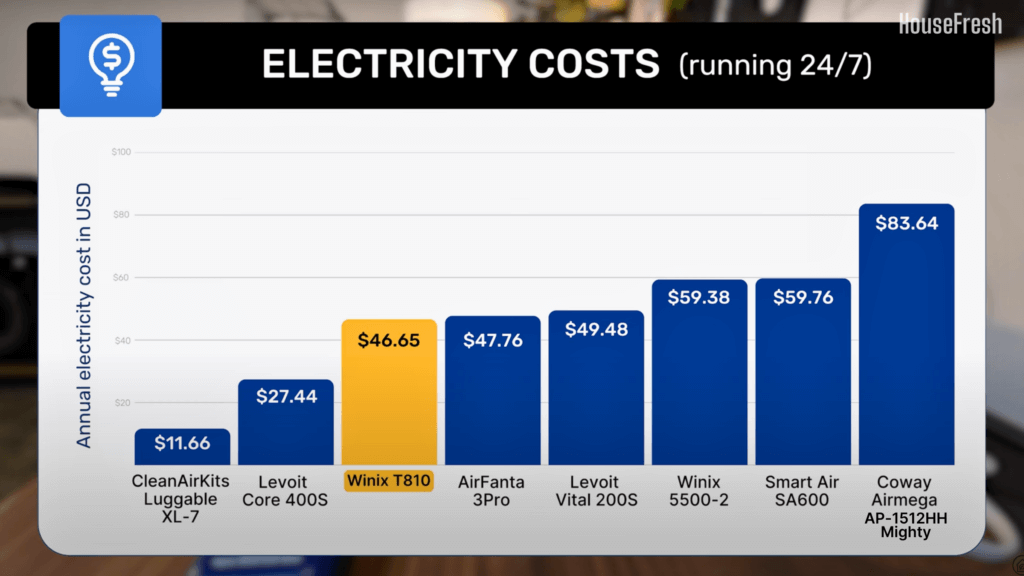
Winix T810 Electricity Costs Comparison

At this point, we can see the improvements WInix has made as the T810 is more energy-efficient than the popular 5500-2.  That said, if youโ€™re looking for a cheaper alternative to run, you might want to consider the Levoit Core 400S or the CleanAirKits Luggable XL-7.

2. Filter costs = $79.99 per year

Itโ€™s not just energy costs that add to the running cost of an air purifier, you will also need to replace the filters eventually. 

Winix says that you need to replace the filters for the T810 every 12 months and their OEM Filter R filter costs $79.99

Sale
Winix Genuine Replacement Filter R for T810 Air Purifier
  • Compatible with Winix air cleaner model T810
  • Fine Mesh Pre-Filter: The first line of defense against the largest airborne particles found indoors
  • True HEPA Filter: Captures 99.99%* of airborne allergens including pollen, dust, pet dander, and smoke (particles as small as 0.01 microns in size)
  • Activated Carbon Filter: Reduces VOCs and household odors from cooking, pets, and smoke. It is designed to catch airborne particles found indoors
  • Genuine Winix one year replacement filter set. For optimal performance, it is recommended to change the All-in-one True HEPA Canister Filter once every 12 months

So you can expect to pay $79.99 each year on filter replacements for the T810. 

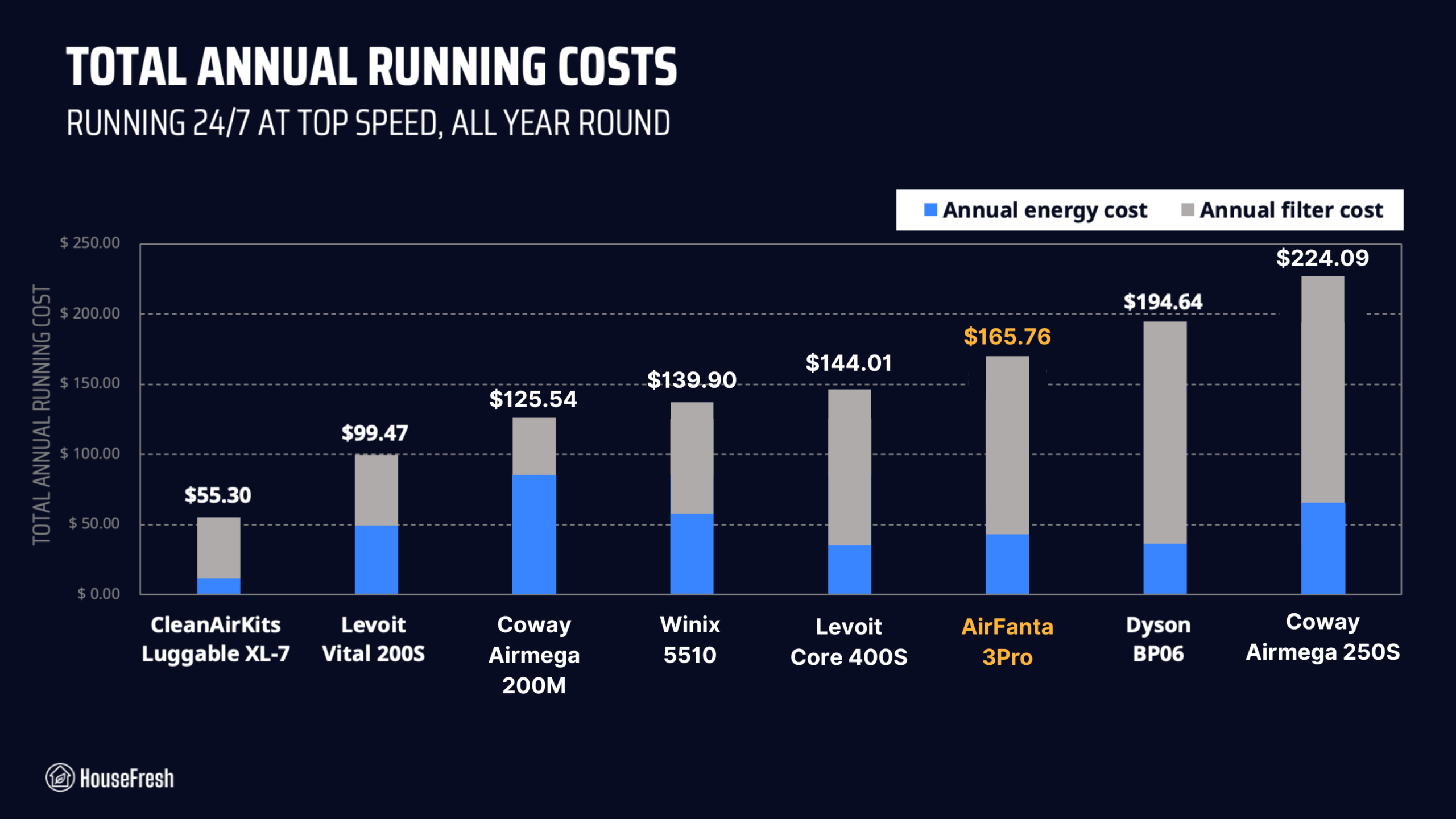
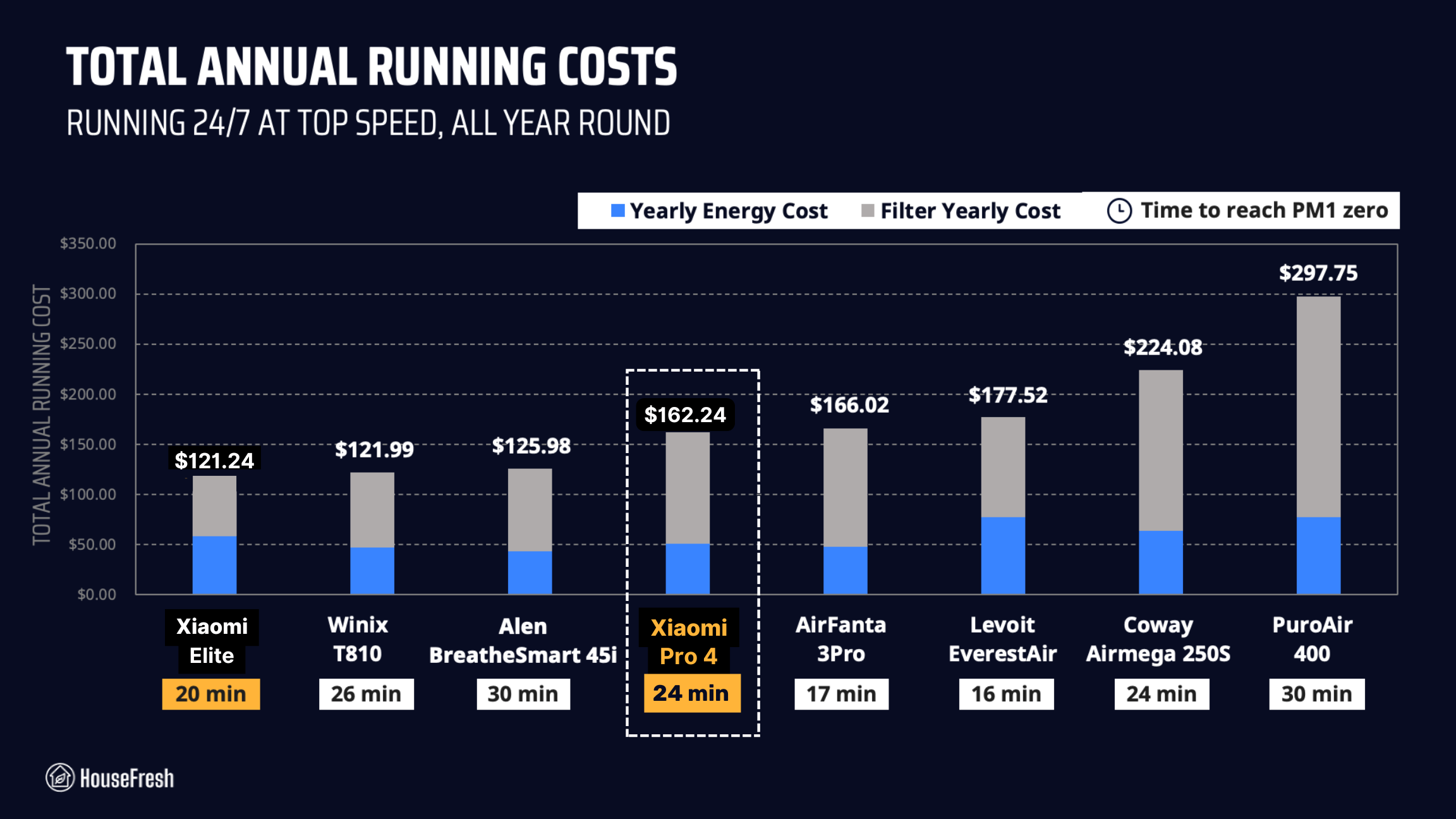
As you can see from the chart below, the annual running costs of the T810 are higher than what you can expect from units like the Levoit Vital 200S or the Coway Airmega Mighty.
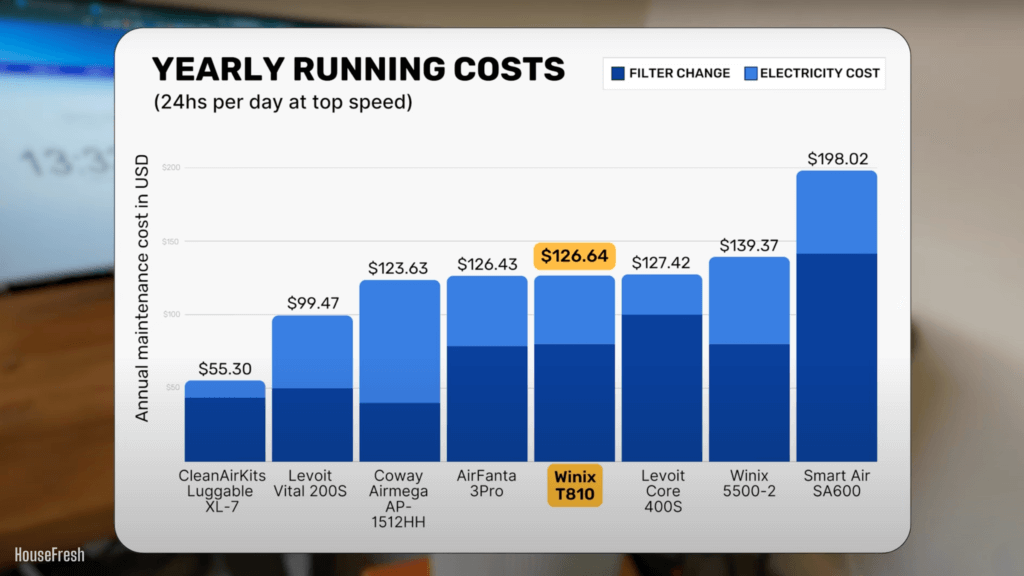
Winix T810 Yearly running costs

As this air purifier is fairly new, I was happy to see that you can already get generic filters from PUREBURG for $29.22 for one filter.

Now, I wasnโ€™t able to buy a PUREBURG filter from the UK to test it with the T810, but based on tests Iโ€™ve run with other air purifiers, I have found PUREBURG filters usually offer similar performance to genuine filters.

PUREBURG Replacement R Filter Compatible with Winix T810 T820 T830 Air Purifier 1712-0118-00,H13 HEPA Activated Carbon 3-Stage Filtration
  • H13 3-Stage Filtration True HEPA Filter,1-Pack
  • Compatible with Winix T810 T820 T830 Large Room Air Purifier 1712-0118-00 (Filter R)
  • H13 HEPA capture up to 99.97% of PM2.5 particles as small as 0.3 microns. This includes dust, pet dander and other minute particles ,Activated Carbon reduce Chemicals VOCs, tobacco smoke,PM2.5,common household bad smell,Fine Mesh Layer Prevents large particles such as dander,Pet hair
  • Please replace regularly to keep your machine fresh and clean. For the best performance, clean the filter once a month with a soft brush gently or with a vacuum cleaner.
  • Top Notch Quality Used for Maximum Customer Satisfaction Guaranteed. Every Product made by PUREBURG is Tested through Rigid Examinations and QC Procedures.

However, performance will vary depending on the amount of carbon included in the filter and the grade of HEPA you get with the particle filter. 

Tip

I will be running some experiments with my Winix T810 for our Patreon supporters, and Iโ€™ll make sure to test its performance using generic filters from PUREBURG as soon as I can buy them here in the UK.

Bottom line: Should you get the Winix T810?

Well, for most people, the older Winix 5500-2 will be a better choice.
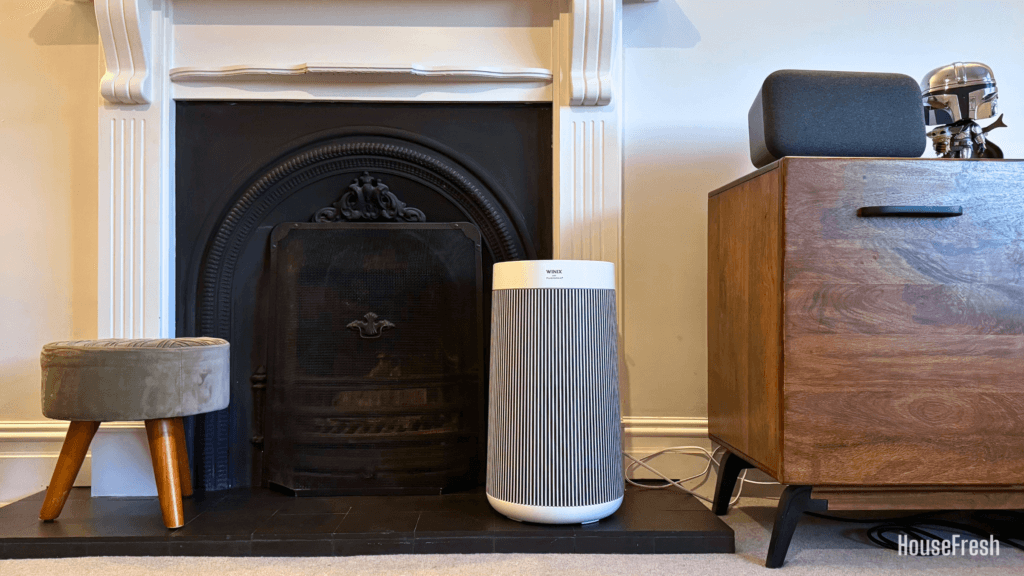
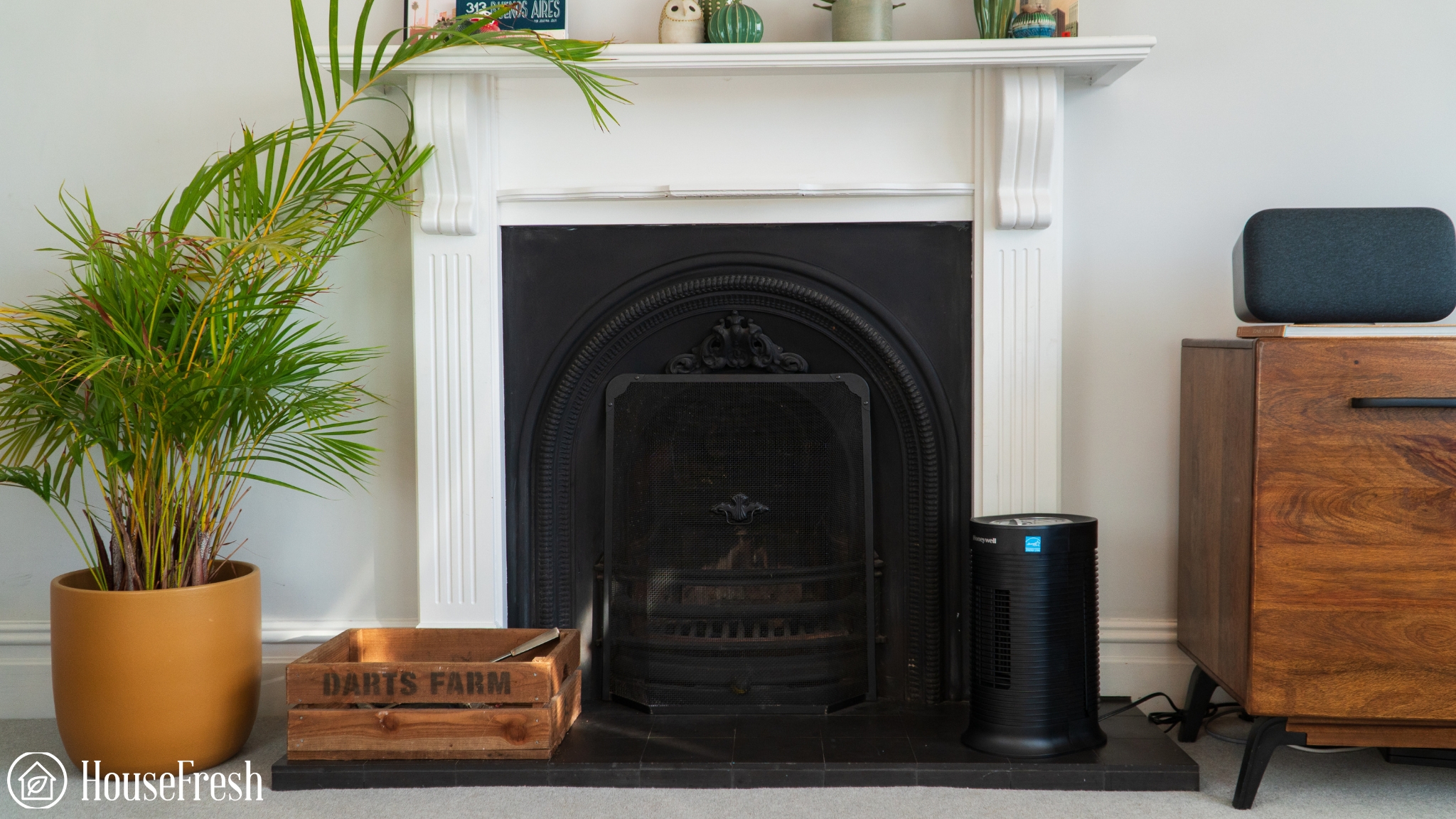
Winix T810 Fireplace

If what you want is an air purifier with above-average air cleaning performance, then the T810 isnโ€™t it. 

You will get a better air purifier in the older Winix 5500-2 as it provides better air-cleaning performance, comes with pelleted activated carbon (which will be better for odors in the long term) and also has a removable pre-filter that you will find easier to clean regularly.

However, the 5500-2 is a big black box without app support. So, considering design and features, Iโ€™d say the main competitor to the T810 is the Levoit Core 400S, which has a similar design, comes with app support and sells for $219.99 (although youโ€™ll usually find it cheaper than that).

Now, does the Core 400S look as sleek as the Winix T810? Wellโ€ฆ no.

T810 VS Core 400S

If you are looking for a stylish air purifier that wonโ€™t look out of place in even the most well decorated spaces, then the Winix T810 is the best-looking air purifier you can buy for less than $220. I even prefer it to the also new Winix 5510, which is louder and bulkier compared to the T810.

If you end up deciding that the Winix T810 is the right air purifier for you and want to support the work we do here at HouseFresh, please make sure to use this link to make your purchase โ€” you wonโ€™t pay anything extra but we will get a 3% commission from Amazon.

Do you have any questions about the Winix T810? Have you bought the T810 and are using it at home? Please drop your question or share your experience in the comments below, and Iโ€™ll get back to you as soon as I can.

SOURCES

We calculated energy consumption costs with the help of the Department of Energyโ€™s appliance energy calculator. We calculated yearly costs associated with running the Winix T810 for 24hs a day for 365 days. We ran this calculation utilizing the U.S. average utility rate of $0.1268/kWh as of March 17th, 2025.
The only small air purifiers we recommend

AirFanta 3Pro Sidetable

We generally recommend most people to go for the biggest air purifier they can live with to get the most power (and, ultimately, the most value) for their money.

Having a slightly more powerful air purifier than you need will allow you to run it at lower fan speeds and still get solid air cleaning performance without generating a lot of noise. Plus, in the long run, you will find that small-sized air purifiers will cost you nearly as much to maintain than larger devices due to the fact that you will need to replace their filters a lot more often.

However, I know that sometimes people just want a small air purifier. So, to help those of you who are in the hunt for a small-sized device, I have dug through our data to find small air purifiers that weigh less than 11 lbs (5 kg) and ranked them based on air cleaning performance and value for money.

If you don’t want to read my full article, you can watch the video version below:

BEST OVERALLBUDGET OPTIONQUIETEST OPTIONSMART OPTIONSTYLISH OPTION
AirFanta 3ProWinix A231/A230CleanAirKits Triple ExhalaronLevoit Core 300SSmart Air Sqair
AirFanta 3Pro SidetableWinix A231 Side tableCleanAirKits TripleLevoit Core 300S Dining RoomSmart Air S Design
Time to PM1 zero17 minutes40 minutes46 minutes45 minutes32 minutes
HouseFresh CADR353 cfm148 cfm128 cfm131 cfm185 cfm
Filter techH11 HEPA + carbonTrue HEPA + carbon + ionizerHEPA H10 + carbonBonded particle + carbonH12 HEPA + carbon
Max room size529 sq. ft.231 sq. ft.180 sq. ft.196 sq. ft.277 sq. ft.
Dimensions12.6 x 12.6 x 12.6 inches9.5 x 9.5 x 14.6 inches22 x 7.25 x 8.5 inches8.66 x 8.66 x 14.17 inches13 x 13 x 14.3 inches
Weight7.7 lbs7.1 lbs6 lbs6 lbs10.7 lbs
Yearly running costs$125.23$119.54 $110.88$79.43$120.10
List price$159.99$75.99$359.00$149.99$179.95

By the way, none of the devices on this list was gifted to us in exchange of a glowing review. We bought each device on this list with our own money so that we could run tests to assess their air cleaning performance, sound generation, electricity consumption, yearly running costs and long-term user experience. You can read more about our testing process here.

1. The best small air purifier overall: AirFanta 3Pro

The 3Pro is the only high-CADR air purifier that you can fit inside a carry-on suitcase or large backpack.

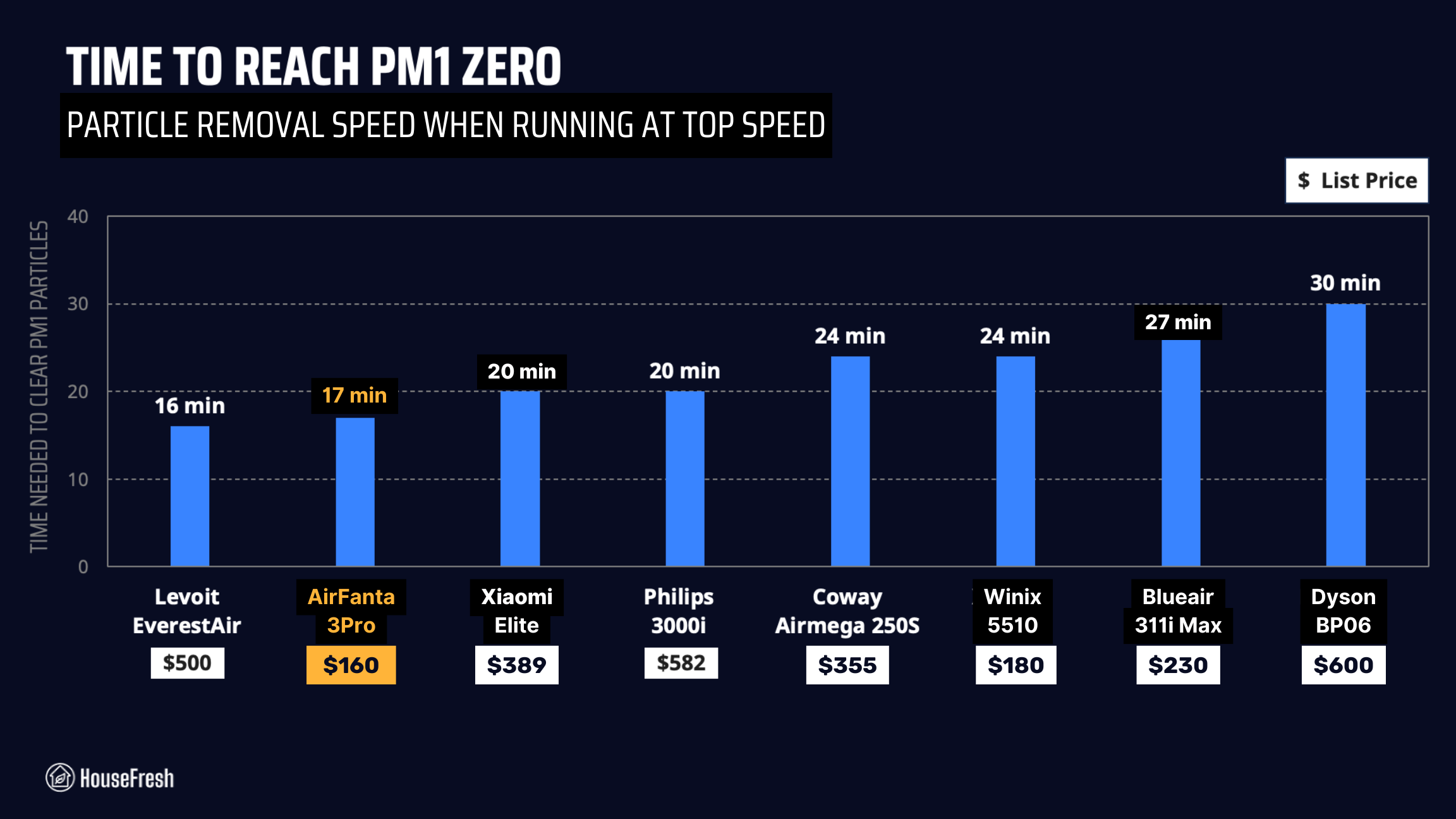
The AirFanta 3Pro is one of the most powerful and affordable air purifiers I tested in 2024. This relatively small 12.6 x 12.6 inch box starts at $159.99 and it was still able to clear our 728 cubic feet test room of incense smoke pollutants in 17 minutes โ€” this is a mere two minutes slower that the $500 Blast Mini from Smart Air.

Use the discount code HOUSEFRESH for 5% off when buying directly from AirFanta.

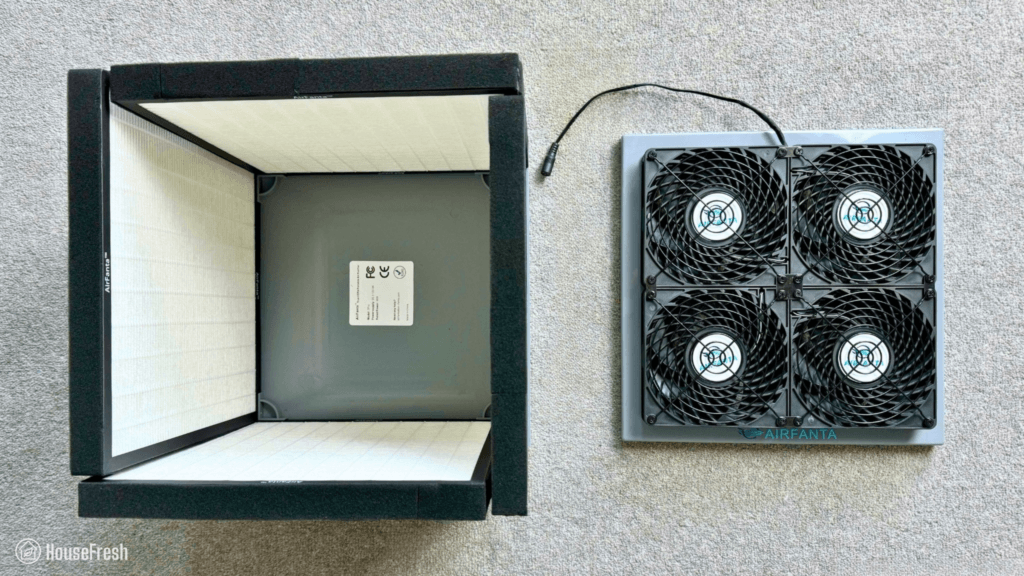
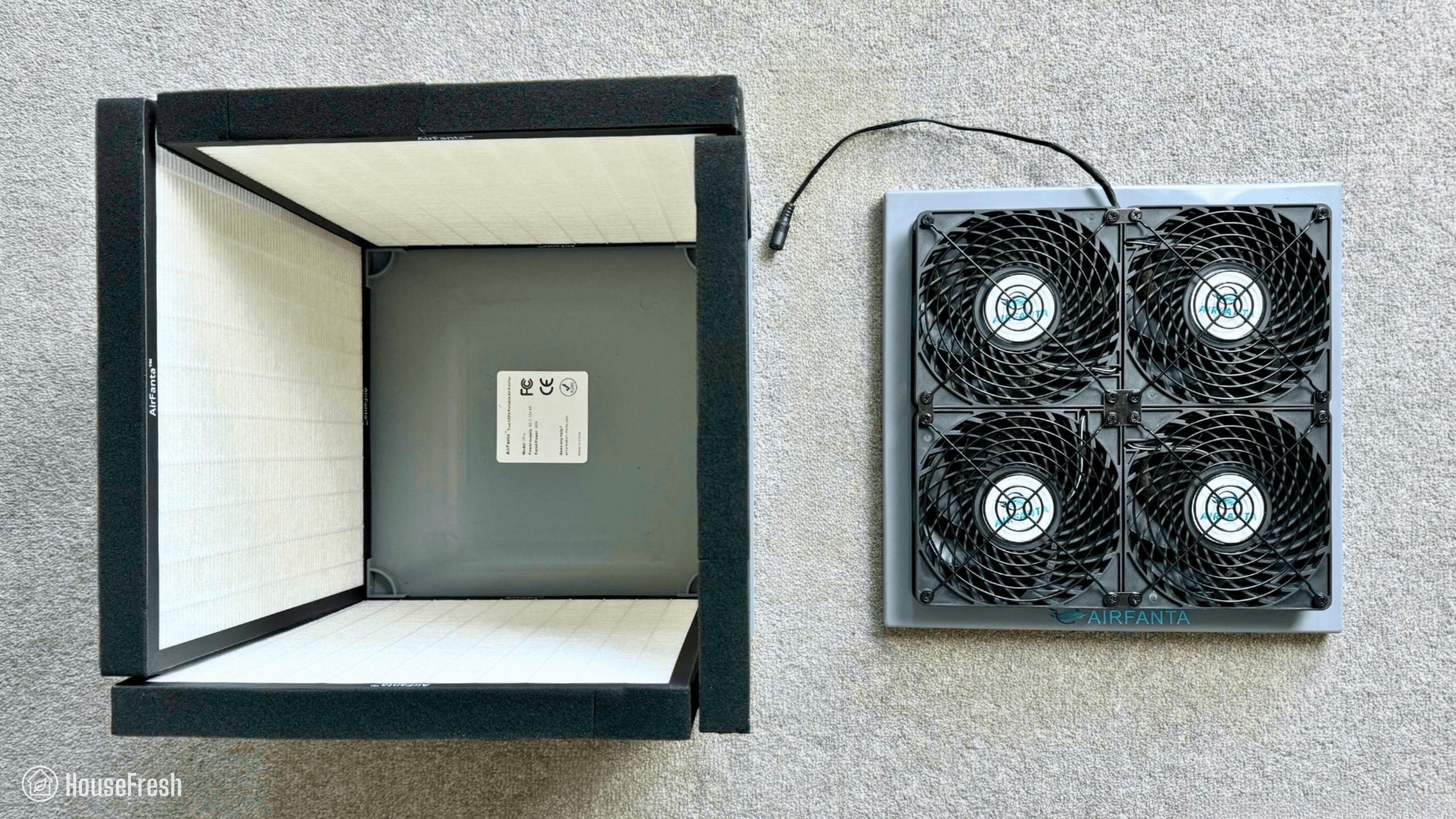
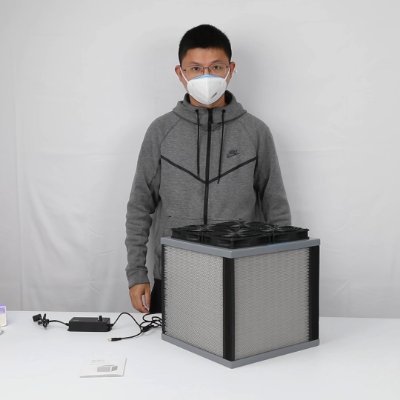
You can assemble (and disassemble) the 3Pro yourself in just a few minutes. It has a plastic base with clear lines that show where to place the four HEPA filters at each side before you can close the box with an array of four PC fans on top. It has no control panel but you get a 110-220v AC to 3-12v DC power adapter to control the speed of the fans and adjust the noise output.

What we really like

It offers excellent value for your money โ€” we estimate a CADR of 353 cfm and you can buy it for less than $160 versus the $500 you can expect to pay for most air purifiers this powerful.
You get the option of buying it with H11 HEPA filters only. But if you’re looking for a device that can deal with odors and gases, then you can buy the HEPA + carbon filters for $75.
You can assemble it and disassemble it in just a couple of minutes, so you can take it with you wherever you go inside a small suitcase or big backpack.
It uses PC fans, so it is quieter and more energy-efficient than most traditional retail air purifiers.

What we think could be better

It is very popular so you’ll find that it’s often out of stock on Amazon. If that happens to you, head over to the official AirFanta store and use the discount code HOUSEFRESH to get a 5% off while you’re at it.
It won’t be everyone’s cup of tea. The overall design is fairly utilitarian, looking like a mini Corsi-Rosenthal box. There is no app support or auto-mode, although you should be able to use this device with smart plugs.

If you’re looking for a small air purifier that can clean a lot of air while fitting nicely on top of a side table, a wide shelf, a countertop or a wide-ish window sill (or that you can take with you wherever you go), then you can’t go wrong with the AirFanta 3Pro.

Clean air delivery rate (CADR):โ€“ Top speed PM1 CADR: 353 cfm
โ€“ Sub-45 dBA PM1 CADR: 213 cfm
Filter technology:True HEPA H11 and optional pelleted activated carbon
Recommended room size:529 sq. ft. (5 air changes per hour)
Dimensions:12.6D x 12.6W x 12.6H inches (32D x 32W X 32H cm)
Weight:7.7 lbs (3.49 kg)
Noise level in decibels from 3 ft. away:3.63 volts: 36.1 dB
4.19 volts: 36.9 dB
5.24 volts: 39.7 dB
6.54 volts: 43.3 dB
7.44 volts: 46.7 dB
8.56 volts: 49.1 dB
12.6 volts: 56.3 dB
Electricity consumption in watts :43.23 watts
Filter lifespan:6 – 12 months
Manufacturerโ€™s warranty:1 year
Country of origin:China
Country of manufacture:China

โžœ Read our full review

โžœ Watch our video review

2. The best for tight budgets: Winix A231/A230 (a.k.a. Zero Compact)

The smallest air purifier from Winix offers solid air cleaning performance in a small package and you can regularly find it on Amazon for less than $80.

For those looking for spend as little as possible in a small sized air purifier that will fit on top of a desk, a bedside table or a narrow surface, my top budget-friendly choice is the Winix A231/A230.

Winix A231 Side table

While the A231 is the cheapest air purifier on this list, it was still able to clean our test room in 40 minutes, outperforming many other similarly sized devices like the Philips 800 Series, the Xiaomi 4 Compact, the PuroAir 240 and even the much more expensive Molekule Air Mini+.

We estimate a CADR of 148 cfm, which means that the A231 can provide five air changes per hour in dorm rooms up to 222 sq. ft. In terms of design, the A231 comes with a bonded True HEPA filter with activated carbon, an onboard air quality sensor and auto-mode. You will also get Winix’s signature PlasmaWave bipolar ionizer technology but you can disable it if you have concerns about ionization and ozone.

What we really like

It’s small and compact cylindrical design doesn’t take up too much floor space.
It cleaned our test room of PM1 pollutants in 40 minutes, which is 14 minutes faster than the similarly priced Levoit Core 300.
You can expect to spend $49.99 per year in filter replacements if you choose OEM filters, which is cheaper than most small air purifiers.
There are generic filters available on Amazon, which would bring long-term filter replacement costs down to under $20 per year.

What we think could be better

As with most small air purifiers, it can get loud at its top fan speed, reaching 57.9 dB.
Unlike most other Winix air purifiers, the A231 doesn’t automatically go into sleep mode when it detects darkness.
If it loses power, the A231 will go back to default, with Plasmawave enabled.

You might find the same small Winix design under different names depending on where you live or what color options you’re looking at. The A231 is white and grey, the A230 is black and the Zero Compact is the name used outside of America. I will be referring to the A231 as that is the option we bought and tested but the design (and expected performance) is exactly the same across all the model names.

Clean air delivery rateย (CADR):โ€“ Top speed PM1 CADR: 148 cfm
โ€“ Sub-45 dBA PM1 CADR: 67 cfm
โ€“ AHAM PM2.5 CADR: 154 cfm (dust)
Filter technology:Fine mesh pre-filter, True HEPA filter, activated carbon filter, PlasmaWave technology
Recommended room size:222 sq. ft.ย (5 air changes per hour)
Dimensions:9.5D x 9.5W x 14.6H inches (24.13D x 24.13W x 37H cm)
Weight:7.1 lbs (3.2 kg)
Noise level in decibels from 3 ft. away:Speed 1: 35.2 dB
Speed 2: 48.3 dBย 
Speed 3: 57.9 dB
Electricity consumption in watts:Standby mode: 0.06 watts
Speed 1: 35.4 watts
Speed 2: 37.7 watts
Speed 3: 45.6 watts
Filter lifespan:12 months
Manufacturerโ€™s warranty:2 years
Country of origin:South Korea
Country of manufacture:Thailand

โžœ Read our full review

3. The quietest portable option: CleanAirKits Triple Exhalaron

The Triple Exhalaron is a PC fan-powered air purifier with a CADR of 131 cfm that can be used in small spaces no larger than 196 sq. ft. and has been designed to be used as a table centerpiece.

Like the AirFanta 3Pro at the top of this list, the Triple Exhalaron by CleanAirKits is powered by PC fans: it uses three CoolerMaster Mobius argb (2400 rpm) that are particularly quiet, hitting just 40.5 dBA of sound at top speed from 3ft away.

$359 AT CLEAN AIR KITS

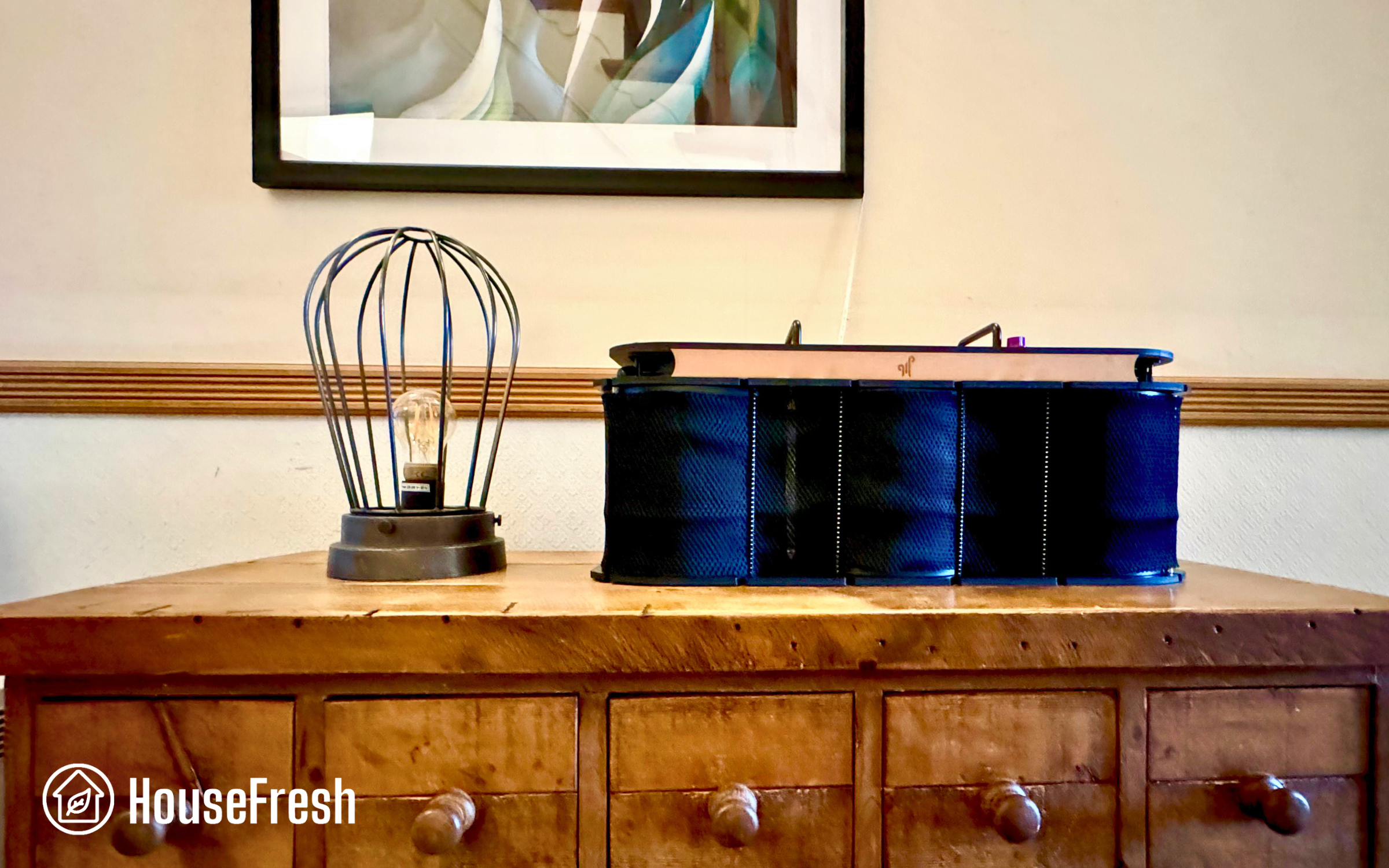
The design of the Exhalaron is truly unique, with three cylindrical HEPA H10 filters (with activated carbon) that sit on top of a thin wooden base and are covered by a thick wooden top that houses the PC fans. It comes with two handles to easily grab and move the air purifier around, and a colorful knob to adjust the fan speeds.

If you are looking for a small air purifier that can clean the air in rooms no larger than 192 sq. ft. and that you can place on a table, then you should consider the Triple Exhalaron. This is the only air purifier we have tested that has been designed to be used as a table centerpiece ensuring it will reduce viral load.

What we really like

It is super quiet. In our sound test, we measured from 35.2 dB to 40.5 dB from its lowest to its highest fan speeds.
It is compatible with generic PUREBURG filters, which will reduce the yearly running costs if you prefer not go with the OEM filters sold by CleanAirKits.
It looks cool. I know this is just personal preference, but I really like the industrial feel of the Exhalaron.

What we think could be better

Retailing at $359, it is the most expensive of all the small air purifiers on our list.

Unlike most other air purifiers, the Exhalaron has been designed to be powered by a USB-C power bank, so you can take it with you on the go. You should be able to get around 10 hours of use with a 20,000 mAh battery.

Clean air delivery rate (CADR):โ€“ Top speed PM1 CADR: 128 cfm
โ€“ Sub-45 dBA PM1 CADR: 128 cfm
Filter technology:HEPA H11 with a layer of carbon-impregnated fabric
Recommended room size:192 sq. ft. (5 air changes per hour)
Dimensions:22W x 7.25D x 8.5H in (56W x 14D x 22 cm)
Weight:6 lbs (2.72 kg)
Noise level in decibels from 3 ft. away:Speed 1: 35.2 dBA
Speed 2: 37.7 dBA
Speed 3: 40.5 dBA
Electricity consumption in watts:Standby: 0.1 watts
Speed 1: 1.1 watts
Speed 2: 2.8 watts
Speed 3: 6 watts
Filter lifespan:6 months
Manufacturerโ€™s warranty:1 year
Country of origin:United States
Country of manufacture:United States

โžœ Watch our video review

4. The best smart option: Levoit Core 300S

The Core 300s is a smart air purifier suitable for rooms no larger than 196 sq. ft. with an on-board air quality sensor that connects to your smartphone for $149.99.

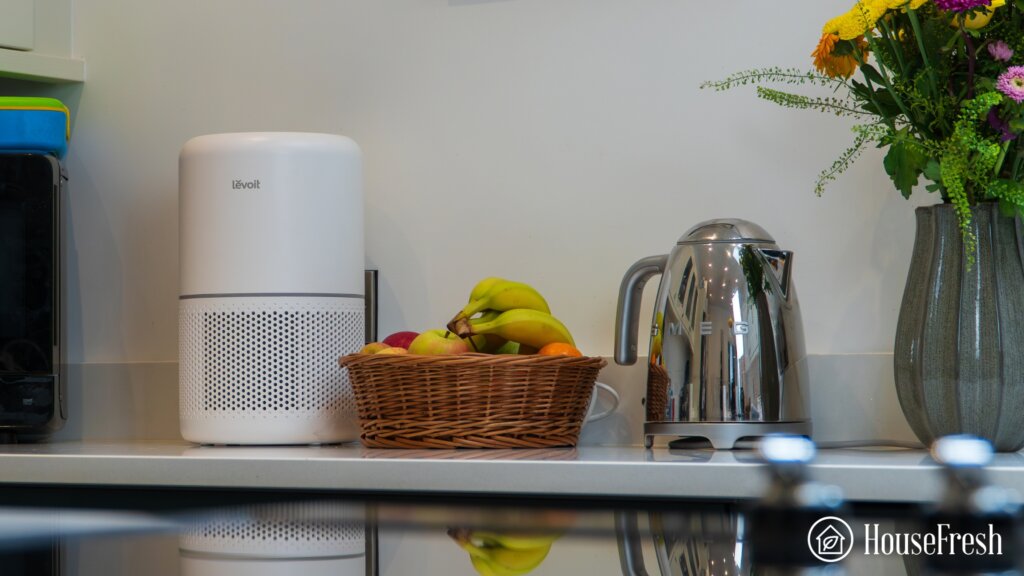
Even though it costs less than $150, the Core 300S comes in an inbuilt air quality sensor that makes it possible for the device to run on auto-mode, automatically adjusting fan speeds based on the quality of your air. Not only that; you can also connect your 300S to your smartphone using Levoit’s VeSync app. So if you’re looking for a small air purifier with smart functions, then the Core 300S should be on your list.

Levoit Core 300S Kitchen Counter

๐Ÿ’กexclusive code for HouseFresh for 10% off a single purchase on Levoit.com: HOUSE10

Based on our first-hand testing data, the Levoit Core 300S has a CADR of 131 and will be able to give you five air changes per hour in small spaces no larger than 196 sq. ft. It comes with a bonded cylindrical filter that includes a pre-filter mesh, a HEPA-like particle filter (to tackle pollen, dust and other small particles) and a layer of activated carbon (to remove odors and gases).

What we really like

It has on on-board air quality sensor and an LED ring on its control panel that shows the quality of the air in the room in real time.
It comes with an auto-mode and a smartphone app, which is rare in air purifiers selling for less than $150.
There are lots of generic filters available, so you can rest assured you wonโ€™t find it difficult to find filters in stock when the time comes to replace them

What we think could be better

It has a bonded filter so the particle and carbon filters are stuck together, meaning you will need to replace the whole when the carbon runs out โ€” which has a shorted lifespan than the particle filter.
Levoit initially marketed the Core 300S as having a HEPA filter but after Dyson complained to the BBB, they removed all mentions of HEPA without any explanation to the public. This doesn’t affect the real-life performance of this device but it’s not a good look for Levoit.

The Core 300S is more energy efficient than its non-smart older brother, the Core 300. This leads to cheaper yearly running costs, which is always something you need to account for when buying an air purifier filters and electricity don’t come cheap. The OEM filters for the Core 300S cost $29.99 but you will find lots of generic options at half the price.

HouseFresh rating:โ˜…โ˜…โ˜…โ˜…โ˜†
Time to clean our 728 cubic feet test room (with the device running at top speed):45 minutes
Air purifier technology:3-Stage Filtration (pre-filter, main particle filter, high-efficiency activated carbon filter)
Recommended room size (4.8 air changes per hour):219 sq. ft.
Clean air delivery rate (CADR):Dust: 134 CFM
Smoke: 126 CFM
Pollen: 154 CFM
Dimensions (in inches / in cm):8.7L x 8.7W x 14.2H inches (22L x 22W x 36H cm)
Weight (in pounds / in kg):5.95 lbs (2.7 kg)
Filter life:6 – 8 months
Noise level in decibels (measured from 3 ft. away with a sound level meter):Speed 1: 38.9 dB
Speed 2: 45.7 dB
Speed 3: 54.5 dB
Electricity consumption in watts (recorded with an electricity usage monitor):Standby mode: 1.7 watts
Speed 1: 5.9 watts
Speed 2: 9.8 watts
Speed 3: 21.8 watts
Estimated running cost (electricity consumption + official filter replacement):$79.43 per year
Cost per CADR cfm (based on dust CFM as reported by AHAM):$1.12
Manufacturerโ€™s warranty:2 years
Country of manufacture:China

โžœ Read our full review

Tip

If space is not too tight, you should check out the Levoit Vital 100S โ€” the little sibling of the popular Vital 200S. The Vital 100S cleared our small 728 cubic feet test room of all PM1 particles eight minutes faster than the Core 300S (37 minutes). It takes up a little more floor space than the 300S due to its rectangular design BUT you also get a separate pre-filter that can be removed and washed to extend the life of the main filter.

5. The most stylish option: Smart Air Sqair

A small air purifier for those who donโ€™t just care about performance but also want a device that looks like a piece of furniture.

The Sqair (or Smart Health S, as it’s known in some countries) is a small-ish air purifier manufactured by Smart Air with an estimated CADR of 185 cfm, making it a good choice for rooms no larger than 277 sq. ft. As with other air purifiers from Smart Air we have reviewed, the Sqair comes with a HEPA filter as default but if smells and chemical gases are an issue, then you can buy the optional activated carbon filter separately.

Smart Air S Fireplace

$189.95 AT SMART AIR U.S. ยฃ132.00 AT SMART AIR UK

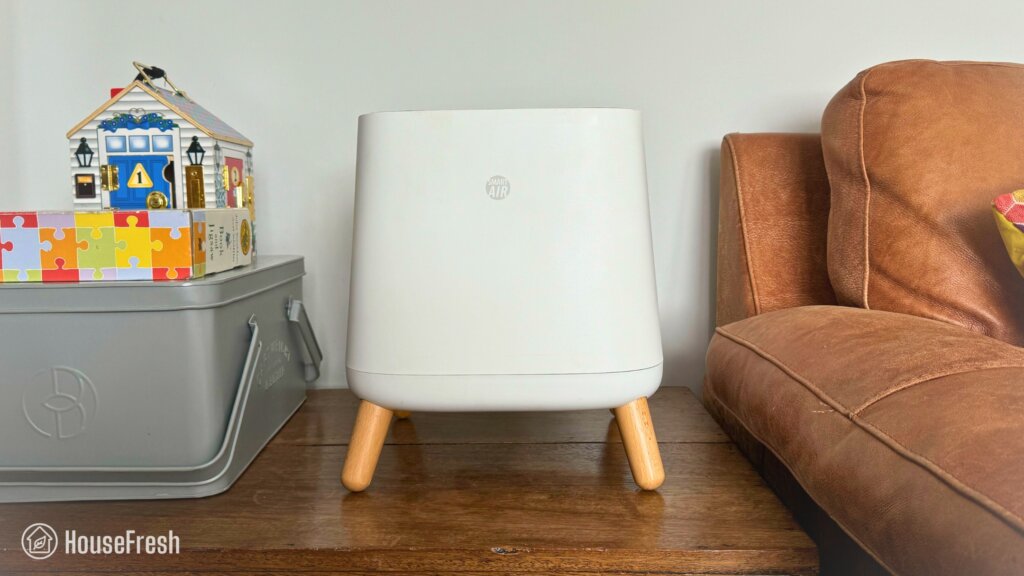
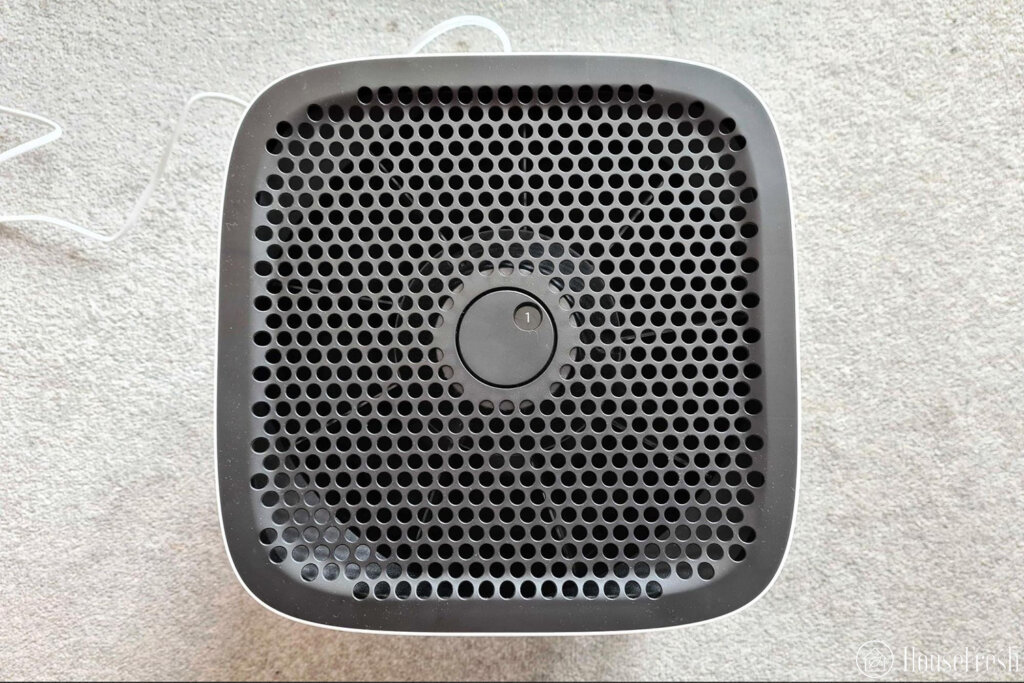
Personally, I think this is one of the best looking air purifiers on the market. It has a small white body, four wooden legs and a black grill on top with a simple dial to switch between fan speeds.

But the Sqair is more than just a pretty thing. This is a solid air cleaner that managed to complete our particle removal test in just 32 minutes, which is faster than what we saw with medium-sized devices like the Mila (38 minutes), the Coway Airmega 150 (38 minutes) and the Shark NeverChange5 150 (66 minutes).

What we really like

It offers great mechanical filtration thanks to a high-quality H12 HEPA filter and a compact but powerful fan.
Beautifully designed to fit into even the most stylish of homes. I particularly like the European Beechwood legs.
Simple and intuitive controls, with a single dial on top of the device that you can use to switch between fan speeds.
It only pulls 39.4 watts when running at top speed, so it will add only $43.68 to your annual energy bill if you had it running 24/7 for a year.

What we think could be better

It doesn’t have any fancy features like auto-mode, an onboard sensor or smartphone connectivity. If you care about those things, you should look into the Levoit Core 300S or the Levoit Vital 100S.
It does not come with an activated carbon filter as standard, so you need to buy one separately if you want the Sqair to help with VOCs and odors.

HouseFresh rating:โ˜…โ˜…โ˜…โ˜…โ˜†
Time to clean our 728 cubic feet test room (with the device running at top speed):32 minutes (without carbon)
Air purifier technology:H12 HEPA and optional activated charcoal filter
Recommended room size (4.8 air changes per hour):163 sq. ft. 
Clean air delivery rate (CADR):Dust: 127 CFM
Smoke: 105 CFM
Pollen: 144 CFM
Dimensions (in inches / in cm):13H x 13W x 14.3D inches (33.02H x 33.02W x 36.32D cm)
Weight (in pounds / in kg):10.1 lbs (4.58 kg)
Filter life:6 months
Noise level in decibels (measured from 3 ft. away with a sound level meter):Speed 1: 35.5 dB
Speed 2: 49.1 dB
Speed 3: 58.2 dB
Electricity consumption in watts (recorded with an electricity usage monitor):Standby mode: 0 watts
Speed 1: 5.6 watts
Speed 2: 19.7 watts
Speed 3: 39.4 watts
Estimated running cost (electricity consumption + official filter replacement):$120.10 per year
Cost per CADR cfm (based on dust CFM as reported by AHAM):$1.42
Manufacturerโ€™s warranty:1 year
Country of manufacture:China

โžœ Read our full review

Other small-sized air purifiers we tested but donโ€™t recommend

  • Levoit Core Mini – Weighing just 2.3 lbs (1.06 kg) and selling for just $49.99 on Amazon, the Core Mini might seem like the perfect small air purifier. However, it is too underpowered to make any meaningful difference to the air in even the smallest of rooms. Plus, if you go with the Core Mini, you will end up spending the same amount of money you’ll need to run a larger device like the Core 300S due to the fact that the small filters need to be replaced every three months or so.
  • Molekule Air Mini+ – This is undoubtedly a very good looking small-sized air purifier but it doesn’t come cheap at $359.99 and our test data showed that its air cleaning performance is seriously lacking considering this high price. Not only did the Air Mini+ take a full hour to complete our particle removal test but it is also way too loud: when we measured the noise levels from 3 ft. away, we recorded 67.4 dBA when running at top speed.
  • PuroAir 240 – When we reviewed and tested this device in early 2024, it was called the PuroAir HEPA 14 240 but the name has now changed and all references to HEPA 14 have been removed without any clarification on what the grade of the filter actually is. But the main reason why we donโ€™t recommend this small air purifier is that itโ€™s not good value considering its list price of $199.00 on Amazon, especially when compared to the $75 Winix A231 which completed our particle removal test 11 minutes faster than the PuroAir 240.

Final thoughts

If space is not as tight, then I still recommend you to go for the biggest air purifier you can live with. By going bigger, you will be able to run your device at lower fan speeds that generate less noise, while still getting good air cleaning perfomance. Also, if the need arises, you will have an air purifier that packs some extra power. AND you are likely to spend the same amount of money each year to replace the filters, compared to small devices with filter that cost nearly the same but need to be replaced more often.

If you are looking for a small device because you have a small budget available, then please check out my list of recommendations ranking the best air purifiers you can buy for less than $150. You will find some DIY options in there that will cost you as little as $80 but will offer you powerful air cleaning performance nevertheless.

Now, if space is a serious concern, then I hope you were able to find a good option for your specific situation in the list above.

If you have any questions about the air purifiers featured on this list or about buying a small air purifier, just drop a comment below and I’ll get back to you as soon as I read it.

The best Levoit air purifiers we have tested

Levoit Air Purifiers Together

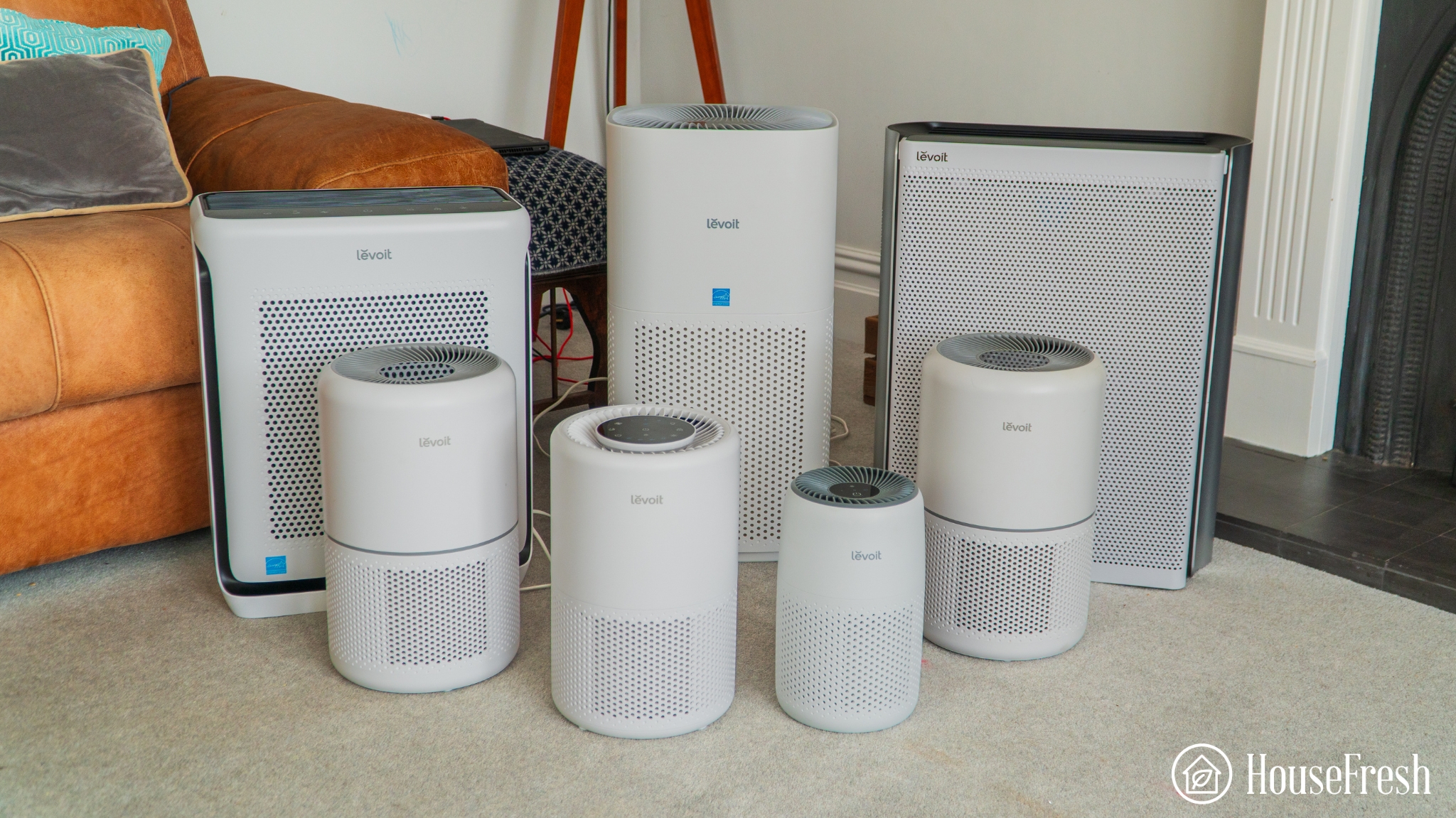
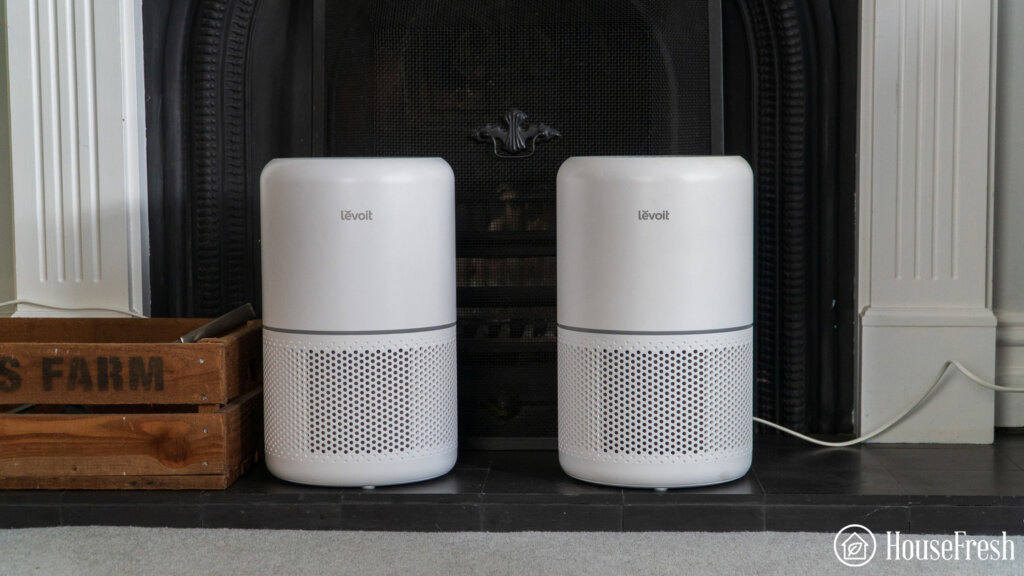
We started testing and reviewing air purifiers in 2020, and Levoit stood out for its solid performance without a large price tag. They have released many units so if you have been researching air purifiers for a while, you are likely to have seen their brand more than once. From their popular Core range to their newer Vital models, Levoit covers all bases.

The Core 300 was the first air purifier under $100 that we were happy to recommend, but since then, Levoit has released many new devices, and we have had a chance to test the vast majority of them.

Hereโ€™s the thing though: Not all Levoit air purifiers are created equal. Some models should be avoided, and I will discuss them at the end of the article. 

As always, we bought every device on the list with our own money so we could run our usual battery of tests to gather comparable data in order to benchmark each Levoit air purifier against the more than 90 units we have reviewed to date.

how we test
How we test air purifiers

Read our full testing methodology.

Staff picks: The Levoit air purifiers we recommend

The TL:DR of the article, including the video version of what you’re about to read if you keep scrolling.

These are our recommendations at a glance, including some key facts and figures so you can quickly compare the air purifiers against one another:

FOR MOST PEOPLEFOR LARGE SPACESBUDGET OPTIONTOP OF THE RANGE
Levoit Vital 200SLevoit Core 600SLevoit Vital 100SLevoit EverestAir
Levoit Vital 200S FireplaceLevoit Core 600S FrontLevoit Vital 100S CornerLevoit EverestAir Front Design
Time to PM1 zero23 mins15 mins37 mins16 mins
CADR263 CFM373 CFM 146 CFM365 CFM
Filter techBonded particle + carbonBonded particle + carbonBonded particle + carbonBonded particle + carbon
Max room size (5 ACH)394 sq. ft.559 sq. ft.219 sq. ft.547 sq. ft.
Noise levels38-57 dB40-61 dB37-53 dB39-57 dB
Yearly running costs$96.82$195.13$81.98$206.36
List price$189.99$299.99$139.99$499.99

If you want to learn more about any (or all!) the units on the table above, read on to find my notes based on my experience using all of them at home.

1. Best for most people: Levoit Vital 200S

Retailing at $189.99, the Vital 200S is one of the latest models from Levoit and it comes with a lot of upgraded features.

The Vital 200S has a dust CADR of 263 CFM and comes with a removable pre-filter and a bonded particle and pelleted activated carbon filter, which can remove tiny particles, smells and gases from the air.

But all this info means nothing until you test the air cleaning performance of the device, so I’m happy to report that this unit lives up to its specifications.

The Vital 200S took 23 minutes to clear our 728 cubic feet test room of PM1 pollutants from incense smoke, which is impressive considering this is faster than more expensive air purifiers such as the $750 Rabbit Air A3 (24 minutes), the $275 Coway Airmega 250S (24 minutes) and the $250 PuroAir 400 (30 minutes).

What we really like

Even when running at sub-45 dB (speed 2), it still managed to clean our test room in 46 minutes โ€” which is eight minutes faster than the Levoit Core 300 when running at full speed.
At its top speed, it will only add $49.48 per year to your energy bill, which is impressive considering the level of air cleaning power it provides.
You will need to replace the filters in your Levoit Vital 200S every 12 months, which is double the lifespan you will get with filters in the Levoit Core range.
It has an in-built air quality sensor and you can see the quality of your air in the LED ring on top of the control panel.
It comes with auto-mode (which adjusts fan speeds automatically based on air quality readings) so you can set it and forget it.
You can connect it to the Vesync app to control it directly from your phone.

What we think could be better

The particle filter is no longer sold as True HEPA after Dyson challenged Levoitโ€™s advertising. That said, HEPA is not required for an effective air purifier and the CADR report (and our own testing) shows that the particle filter in the Vital 200S is a solid filter. 
As with all the other Levoit devices, the particle filter and carbon filter are bonded together, which means you need to replace the whole filter when the carbon is full even if the HEPA is still working well.

One simple thing I really like about the Vital 200S that makes me choose it over the Levoit Core series is the fact that it comes with a removable pre-filter. Dirty pre-filters can make a big difference to air cleaning performance, so having something that you can remove makes the job much easier compared to the cylindrical all-in-one filters.

Clean air delivery rate (CADR):โ€“ Top speed PM1 CADR: 249 cfm
โ€“ Sub-45 dBA PM1 CADR: 128 cfm
โ€“ AHAM PM2.5 CADR: 254 cfm (dust)
Filter technology:Bonded particle filter with a layer of pelleted activated carbon and a removable pre-filter
Recommended room size:373 sq. ft. (5 air changes per hour)
Dimensions:15.6D x 8.5W x 19.8H inches (39.3D x 21.5W x 50.2H cm)
Weight:13.2 lbs (5.9 kg)
Noise level in decibels from 3 ft. away:Speed 1: 38.3 dB
Speed 2: 41.9 dB 
Speed 3: 53.8 dB
Speed 4: 57.7 dB
Electricity consumption in watts:Standby mode: 0.97 watts
Speed 1: 5.71 watts
Speed 2: 8.01 watts
Speed 3: 31.96 watts
Speed 4: 44.55 watts
Filter lifespan:12 months
Manufacturerโ€™s warranty:2 years
Country of origin:United States
Country of manufacture:China

โžœ Read our full review

โžœ Watch our video review

2. Best for large spaces: Levoit Core 600S

For just under $300 you get a powerful air purifier with a CADR rating of 373 CFM that can clean large rooms of up to 559 sq. ft. 

Levoit Core 600S Fireplace

๐Ÿ’กexclusive code for HouseFresh for 10% off a single purchase on Levoit.com: HOUSE10

Based on the CADR report from the Association of Home Appliance Manufacturers, the Levoit Core 600S is the most powerful air purifier in the Levoit range. With a dust CADR of 373 CFM, the 600S can provide five air changes in spaces up to 559 sq. ft..

When we tested the Core 600S’s particle removal performance, it cleaned all PM1 pollutants in our test room in just 22 minutes, which is faster than the popular Coway Airmega AP-1512hh (26 minutes) and even more expensive air purifiers such as the $900 IQAir HealthPro Plus and the $430 Alen BreatheSmart 45i (30 minutes).

What we really like

You normally have to pay much more than $299.99 for this level of air cleaning power.
Even though it’s big, the design includes two deep handles (one at each side), which make it easy to move the 600S from room to room.
It comes with an on-boad air quality sensor and has an LED ring at the top of the device that shows the quality of the air in the room.
It features smart features (like auto-mode) and you can connect it to your smartphone through the VeSync app.

What we think could be better

When running at its top fan speed, the Core 600S was louder than most other high-performing units (61.4 dB).
The pre-filter canโ€™t be removed to clean, so you need to take the entire cylindrical filter out of the device to vacuum the pre-filter.
The particle filter is not HEPA-grade, even though Levoit advertised it as such for many years until Dyson complained to the BBB.

As with all of the Core S range, you can monitor and control the Core 600S using Levoitโ€™s VeSync app. The features include a timer, sleep mode display lock and the option to turn the display lights off to help you sleep. It also has an AQI (Air Quality Indicator) that displays the state of your air in both numerical form and a color-coded light wheel.

Clean air delivery rateย (CADR):โ€“ Top speed PM1 CADR: 375 cfm
โ€“ Sub-45 dBA PM1 CADR: 156 cfm
โ€“ AHAM PM2.5 CADR: 398 cfm (dust)
Filter technology:Bonded particle filter with a layer of pelleted activated carbon and a pre-filter mash wrap.
Recommended room size:562 sq. ft. (5 air changes per hour)
Dimensions:12.3 x 12.3 x 23.6 inches (31.3 x 31.3 x 60 cm)
Weight:13.7 lbs (6.2 kg)
Noise level in decibels from 3 ft. away:Sleep: 37.9 dBA
Speed 1: 44.4 dB
Speed 2: 45.9 dB
Speed 3: 53.8 dBA
Speed 4: 62.3 dBA
Electricity consumption in watts:Standby mode: 1.3 watts
Sleep: 4.33 watts
Speed 1: 7.46 watts
Speed 2: 10.7 watts
Speed 3: 20.29 watts
Speed 4: 48.1 watts
Filter lifespan:6-12 months
Manufacturerโ€™s warranty:2 years
Country of origin:United States
Country of manufacture:China

โžœ Read our full review

3. Best budget option: Levoit Vital 100S

The best-performing Levoit air purifier you can buy for less than $140.

The Vital 100S retails at $139.99, but it can usually be found for $109.99, making it the best option for those on a tight budget. With a dust CADR of 146 CFM, this air purifier will be able to clean the air in spaces up to 219 sq. ft. five times in one hour. It cleared our test room of PM1 smoke pollutants in 37 minutes โ€” which is 17 minutes faster than our previous budget Levoit recommendation, the Core 300.

What we really like

The Vital 100S one of the most energy-efficient Levoit air purifiers we tested, pulling just 27.3 watts at top speed.
It has low long-term running costs, both in terms of filter replacement and energy consumption. Running at top speed 24/7, it will only add $30.32 to your electricity bill each year.
It comes with all the same smart features as the larger Vital 200S, such as smartphone connectivity, on-board sensor and auto mode.
It has a removable pre-filter, which makes it easier to quickly vacuum or rinse the pre-filter regularly to incrase the lifespan of the main filter.

What we think could be better

The particle and the carbon filters are stuck together, so you will need to replace both once the carbon is full, which will usually happen in just a few months if you are tackling issues with unwanted odors or VOCs..
As with all the other devices on this list, we don’t appreciate Levoit initially marketing the particle filter as TrueHEPA just to remove all mentions of HEPA once Dyson complained to the Better Business Bureau.

It also comes with features that make your life easier, like a child lock, four-timer settings, and you can also switch off the display lights to ensure a sound night’s sleep. If budget is on your mind, the Levoit Vital 100S will give you plenty of bang for your buck.

HouseFresh rating:โ˜…โ˜…โ˜…โ˜…โ˜†
Time to clean our 728 cubic feet test room (with the device running at top speed):37 minutes
Air filtration technology:Pre-filter and bonded particle + activated carbon filter.
Recommended room size (4.8 air changes per hour):219 sq. ft. 
Clean air delivery rate (CADR):Smoke: 134 cfm
Dust: 146 cfm
Pollen: 186 cfm
Dimensions (in inches / in cm):6.4 x 12.8 x 16.1 in (16.3D x 32.5W x 40.8H cm)
Weight (in pounds / in kg):7.28 lbs (3.3 kg)
Filter life:9 months
Noise level in decibels (measured from 3 ft. away with a sound level meter):Speed 1: 37.5 dB
Speed 2: 42.6 dB
Speed 3: 48.7 dB
Speed 4: 53.8 dB
Electricity consumption in watts (recorded with an electricity usage monitor):Standby: 1.6 watts
Sleep mode: 3.2 watts
Speed 1: 5 watts
Speed 2: 8.7 watts
Speed 3: 15.4 watts
Speed 4: 27.3 watts
Estimated running cost (electricity consumption + official filter replacement):$81.98 per year
Cost per CADR cfm (based on dust CFM as reported by AHAM):$0.96
Manufacturerโ€™s warranty:2 years
Country of manufacture:China

โžœ Watch our video review

4. Best Levoit money can buy: Levoit EverestAir

If you want the best Levoit air purifier money can buy, look no further than the $499.99 Levoit EverestAir. 

๐Ÿ’กexclusive code for HouseFresh for 10% off a single purchase on Levoit.com: HOUSE10

As soon as we unboxed the Levoit EverestAir, I knew it would be special. Not only does it look like something Apple might design, but it also has all the features you need from an air purifier AND its air cleaning performance blew us away. However, it is not cheap, with an RRP of $499.99.

It has a dust CADR of 365 CFM and it was able to complete our particle removal test in a speedy 16 minutes when running at its top speed and in just 29 minutes when running at sub-45 dB (speed 2). This is one powerful air purifier.

What we really like

I know this is subjective, but I think the EverestAir looks like a million bucks. The adjustable vents on top are something I had never seen in an air purifier.
It comes with an on-board air quality sensor, an LED air quality indicator on screen and smart features such as auto-mode and smartphone connectivity via the Vesync app.
Sound levels are very similar to the Vital 200S but somehow the EverestAir can move A LOT more air through its filters.
Its high-performing motor is not just quiet, itโ€™s also energy-efficient, pulling just 69.8 watts when running at its turbo speed.
You can remove the pre-filter to clean it without having to take out the entire filter, which is a plus.

What we think could be better

Not a fan of the bonded particle and activated carbon filter approach, as you will need to replace the whole thing even if the only filter that needs changing is the carbon.
It is big and comes on wheels to move it from room to room but the wheels only move sideways… It would be better to have some good old caster wheels.
As with other devices on this list, I think Levoit shouldn’t have advertised the particle filter in the EverestAir as TrueHEPA if this wasn’t true.

Most air purifiers look the same: white boxes with rounded or sharp edges and dotted patterns all around. But it’s clear that Levoit tried to do something different with the EverestAir, and along the way they ended up creating an air purifier that will make many Dyson lovers turn their heads. If you are willing to pay a little more, you can get a very powerful air purifier that looks great and you can run quietly at lower fan speeds without worrying about it not doing a good job.

Clean air delivery rateย (CADR):โ€“ Top speed PM1 CADR: 375 cfm
โ€“ Sub-45 dBA PM1 CADR: 205 cfm
โ€“ AHAM PM2.5 CADR: 365 cfm (dust)
Filtration technology:Removable pre-filter, particle filter and 400g of pelleted activated carbon.
Recommended room size:562 sq. ft. (5 air changes per hour)
Dimensions:18.9L x 8.5W x 23.2H inches (48L x 21.6W x 58.9H cm)
Weight:20.7 lbs (9.39 kg)
Filter lifespan:12-15 months
Noise level in decibels from 3 ft. away:Speed 1: 39.1 dB
Speed 2: 43.2 dB
Speed 3: 48.6 dB
Turbo: 57.8 dB
Electricity consumption in watts:Standby mode: 1.26 watts
Speed 1: 9.85 watts
Speed 2: 15.59 watts
Speed 3: 26.6 watts
Turbo: 69.8 watts
Manufacturerโ€™s warranty:2 years
Country of origin:United States
Country of manufacture:China

โžœ Read our full review

โžœ Watch our video review

Two other solid Levoit air purifiers that nearly made the list

These two units didn’t make the cut but they might be just what you are looking for, so they are worthy of your consideration.

Levoit Core 400S Living Room 2 logo

Levoit Core 400S

With a CADR rating of 260 CFM, the Core 400S is best suited to medium-sized rooms of up to 370.5 sq. ft. It comes with a bonded, cylindrical filter that includes a pre-filter mesh, a main particle (HEPA-like) filter and an activated carbon filter to tackle smells and VOCs.

As with other air purifiers in the Levoit Core S line, the 400S comes with an on-board air quality sensor, an LED ring that shows air quality in real life, auto-mode, sleep mode and smartphone connectivity through the VeSync app. This is great considering its price of $219.99.

However, this device didn’t make our short list because the Levoit Vital 200S outperformed it and you can buy it for just $189.99 so we didn’t feel the 400S offered as good a deal as it once did when you compare it to the new Levoit Vital line.

Levoit Core 300S VS Core 300S Comparison

Levoit Core 300 and Core 300S

The Core 300 doesnโ€™t come with any bells and whistles but itโ€™s a solid air cleaner you can buy for $99.99. In our tests, it outperformed much more expensive units like the AROEVE MK04, the Dyson TP07 and the Molekule Air Mini.

The Core 300S is the smart sibling of the 300. It comes with an on-board air quality sensor, auto-mode and smartphone connectivity. It is also more energy efficient than the Core 300 and has improved air cleaning performance.

These two are some of my favorite air purifiers from previous years. In fact, they both used to be featured on this very same list up to this point. But in 2025 and with the release of the Levoit Vital range, the Core 300 and the Core 300S no longer offer the value they once did.

Other Levoit units we tested but donโ€™t recommend

As I mentioned in the introduction not all Levoit models are worth it. These are the models you should avoid:

  • Levoit Core Mini – This little device is a big seller but it is way too underpowered to clean the air in even the smallest of rooms. You are better off getting the Core 300 or the Core 300S instead of the Core Mini.

  • Levoit Vital 100 – This is not a bad air purifier, but in 2025, you will get better value for your money with the upgraded Levoit Vital 100S.

  • Levoit LV-PUR131 – This is an older Levoit unit that took 52 minutes to clean our test room, but considering it costs $189.99, you are much better off choosing the Levoit Vital 200S for the same price.

  • Levoit LV-H132 – A very popular air purifier from Levoit that is hard to recommend as it took 98 minutes to clean our 728 cubic feet test room of smoke particles, making it close to useless for most rooms.

  • Levoit LV-H128 – One of the cheapest Levoit models on the market, but as with other small units, it doesn’t have enough power to keep even the smallest room clean and took a whooping 162 minutes to clean our test room.

  • Levoit Core 200S – Selling for $89.99, the Core 200S might seem like a great catch but our performance tests show it is not powerful enough. It took 56 minutes to reach PM1 zero in our small test room, which is not useless as the LV-H128, but you’d be better off spending an extra $10 and get better performance with the Levoit Core.

What to look for when buying a Levoit air purifier

Air purifiers are the ideal device for removing pollutants from the air in your home. The EPA states that the average American spends about 90% of their time indoors, making you susceptible to the short and long-term adverse health effects of indoor air pollution.

When choosing a Levoit air purifier, you need to ensure itโ€™s the right unit for your home. Looks and cleaning power are all well and good, but other factors must be considered. 

1. How big is your room?

When it comes to air purifiers, size matters; buying a unit that is too small for your room wonโ€™t be very effective. On the other hand, buying one thatโ€™s too big will be overkill and a waste of energy and money.

Thatโ€™s why weโ€™ve chosen air purifiers to suit a variety of room sizes so that you can find the right unit for your space. Check out our SPECS & FEATURES table to see what size room each unit is most effective in.

You can also use our CFM calculator to see what minimum CADR you would need to achieve 4.8 air changes per hour (which is the rate recommended by the EPA):

2. What is your budget? 

Itโ€™s not just the initial cost of the air purifier you need to consider; itโ€™s also the unitโ€™s running costs.

All of these air purifiers need electricity to run and itโ€™s recommended that you run your unit 24/7; this costs money in energy bills. Some air purifiers are more efficient than others, so check their โ€˜Estimated energy consumptionโ€ before making your decision.

Also the HEPA filters that Levoit air purifiers use need to be replaced periodically so that they can remain effective at all times. Replacement filters come at a cost, so check how much they are and how often they need replacing to factor into your budget.

3. What features do you need/want?

In our selection, there are different features that each unit includes (and some are the same). Think about which of these you need/want on your air purifier.

Levoit EverestAir AQI Working

Some people prefer to get an air purifier with auto mode so that they can switch it on and forget about it. Others, want to have air purifiers with app connectivity to connect to their smart home routines.

4. How much noise do they make?

All air purifiers make noise from the motor running and fan spinning, getting louder at high fan speeds. But they donโ€™t all emit the same level of noise. If youโ€™re like me and you work with your air purifier running, youโ€™ll want a unit thatโ€™s as quiet as possible.

Thatโ€™s why we give you noise level data in our SPECS & FEATURES table and as noise is subjective, we record the sound of each unit on all fan speeds so that you can get an idea of the noise it makes. 

Tip

Check out our YouTube channel for all sound tests.

Common questions about Levoit air purifiers

In August, Vesync (the owners of the Levoit brand) have voluntarily stopped using True HEPA in their advertising. While this doesnโ€™t confirm that Levoit didnโ€™t use True HEPA accreditation, it is a little worrying that they didnโ€™t fight their case with Dyson, the company that challenged them via the BBB National Advertising Division.

According to CleanAirStars, Levoit still uses CADR under AHAM AC-1 and those CADR scores are much higher than what we find with Dyson units for $ spent. We also confirmed that Levoit units are much better at removing pollutants in our home lab performance tests, the $99 Levoit Core 300 took 40 minutes to remove particles compared to the Dyson HP04, which took 84 minutes to do the same.

In a post on X (formerly Twitter), Smart Air stated that this change doesn’t affect the CADR score associated with Levoit units. The post also said, “The Corsi-Rosenthal boxes with MERV filters are proof of fast filtration with non-HEPA filters.”

Levoit is an American-based company with its headquarters located in California. Here, they conduct all the research and development for their range of purifiers, designing them to the highest specification to meet US standards. Once the purifier has been designed, it is then manufactured in China. 

Levoit air purifiers are all 100% ozone-free. By using high-grade mechanical filters (rather than Ionizer or UV technology), Levoit offers excellent purifier performance without the risk of emitting harmful ozone. 

Levoit is a relatively new brand, having launched in 2017. Despite their tender years, they have rapidly gained popularity thanks to their excellent product performance and very reasonable prices. 

Levoit products often rank highly amongst independent product reviews and each unit weโ€™ve tested has impressed us. From gauging customer feedback online, Levoit are often praised for their helpful customer support, with centers in the US, Europe, and Asia. What’s more, Levoit offers special discounts through VerifyPass to active military personnel, veterans, medical staff, first responders, and teachers, which is a big plus from our point of view.  

Wrapping up

If youโ€™re looking for an air purifier to use in your home, Levoit has a vast range for you to choose from. 

Each unit made by Levoit is well-engineered to remove pollutants from the air in your home, is easy to use and doesnโ€™t cost an arm and a leg to run.

They have units for a variety of room sizes and budgets. Some come with cool features like auto mode, AQI and app connectivity, and some are there for those who like things a little simpler.

But if you can’t find what you’re looking for, or if you have questions about any of the air purifiers on this list, please leave a comment below and I’ll get back to you right away.

The only air purifiers made in the USA we recommend

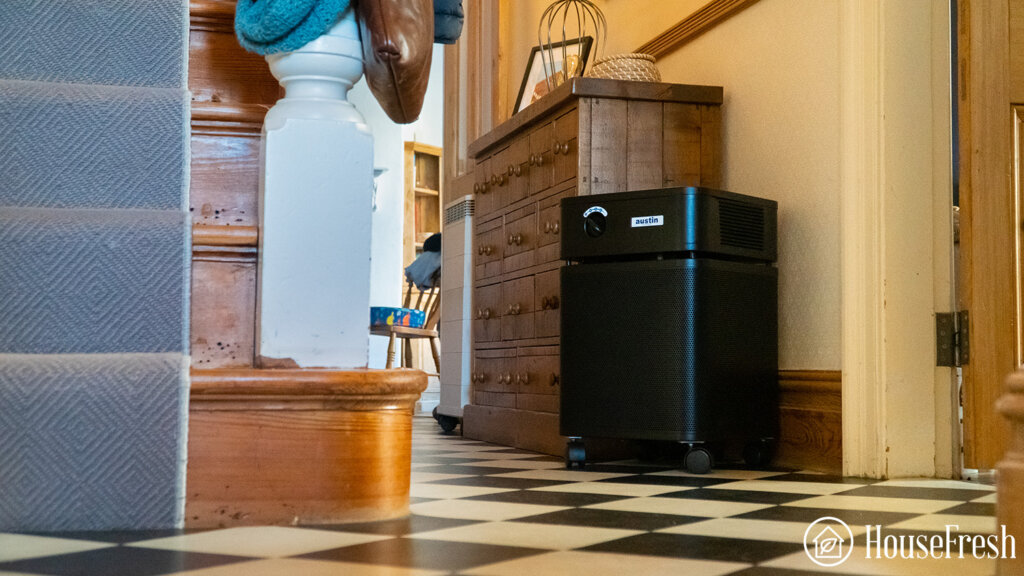
Austin Healthmate Hallway

The ‘great tariff war’ of 2025 led many people to look for U.S.-made alternatives to products they would usually source from Asia and Europe. And, like many consumer products, most air purifiers are built in China and Korea, with a good number of them being manufactured in Thailand, Malaysia, Sweden and Germany.

Whether you’re looking for a device made in the USA to avoid overpaying in fees or you’re buying American-made products to support manufacturing jobs in the United States, this list is for you.

I am the lead tester here at HouseFresh, so my job is to review and test air purifiers. I only recommend units I have tested and that I have had enough time to use at home, sharing data I’ve gathered myself and insights from my first-hand experience. If you want to learn more about how I test air purifiers, I’ve broken down the full process on this methodology page.

Intro out of the way, let me share the best air purifiers I have tested that are built in the United States.

1. Best for allergies and dust: CleanAirKits Luggable XL-7

All CleanAirKits devices are hand-assembled in and shipped from Missouri, United States.

CleanAirKits Luggable XL Dining Room

CleanAirKits is a family business founded in 2022 with the goal of finding a quiet, cheap and efficient air purifier to keep the air in classrooms across America clean and safe after COVID-19 mask mandates were dropped. Every DIY kit sold by CleanAirKits is assembled by hand in Missouri, and that is why they earned a spot on this list.

CleanAirKits Luggable XL Handle

The Luggable XL-7 is not your traditional air purifier. Inspired by the Corsi-Rosenthal box, the Luggable XL is part of the next generation of air purifiers powered by PC fans.

CleanAirKits Luggable XL Open

In terms of the filters, you can choose any 20ร—25 HVAC filters. CleanAirKits recommends 3M MERV 13 Filtrete MPR1900+ filters and I agree as they are excellent.

CleanAirKits Luggable XL Front room

Based on my tests, I estimate a PM1 CADR of 323 cfm. This level of air cleaning power allows the Luggable XL-7 can clean the air five (5) times per hour in rooms of up to 390 sq. ft.

luggable xl7 quiet performance

The biggest benefit of the Luggable XL-7 is that it uses PC fans, which are not only whisper quiet but also energy efficient and incredibly powerful. This makes the Luggable a high-CADR device you won’t even hear working in the background, even when at top speed.

What we really like

It is best-performing air purifier we have ever tested that generates less than 40dB of sound when running at top speed.
It completed our particle removal test in 23 minutes, which is the exact time we recorded when testing the Winix 5500-2 and the Levoit Vital 200S.
You can buy it as a DIY kit to build it yourself at home, or pre-built so you can just plug it in and use it right out of the box.
It is nearly silent on its only fan speed: 38 decibels.

What we think could be better

It is not cheap, but you can shave off some dollars by choosing the DIY kit.
It doesn’t come with any activated carbon, so not a good option if you want to deal with odors and gases.

Clean air delivery rate (CADR):โ€“ Top speed PM1 CADR: 260 cfm
โ€“ Sub-45 dBA PM1 CADR: 260 cfm
โ€“ Intertek PM2.5: 323 cfm (dust)
Filter technology:MERV 13 (20×25)
Recommended room size:390 sq. ft. (5 air changes per hour)
Dimensions:7D x 25W x 20H in (18D x 64W x 51 cm)
Weight:8 lbs (3.63 kg)
Noise level in decibels from 3 ft. away:Only speed: 38.8 dBA
Electricity consumption in watts:Only speed: 10.5 watts
Filter lifespan:6-12 months
Manufacturerโ€™s warranty:1 year
Country of origin:United States
Country of manufacture:United States

โžœ Read the full review

โžœ Watch my video review

If you opt for the DIY kit to assemble your Luggable XL at home, you will receive a box with everything you need other than the filters. You will get Cooler Master SickleFlow 120 PC fans, four hardboard panels (one with an integrated handle), a power supply, internal pre-tensioner cords, foam tape strips and seven fan guard grills. Check out this video where I show you the steps to build it yourself.

2. Best for smoke and VOCs: Austin Air HealthMate

All Austin Air devices are built at Austin Air System’s manufacturing facility in Buffalo, New York.

Austin Healthmate Top 3 Table

The Austin Air HealthMate has an estimated CADR of 150 CFM, making it suitable for rooms of up to 234 sq. ft. (5 air changes per hour). It comes with a medical-grade HEPA filter to remove particles from the air and it’s packed with 15 lbs of activated carbon and zeolite to remove VOCs and odors.

Austin Healthmate Filter VS Core 300

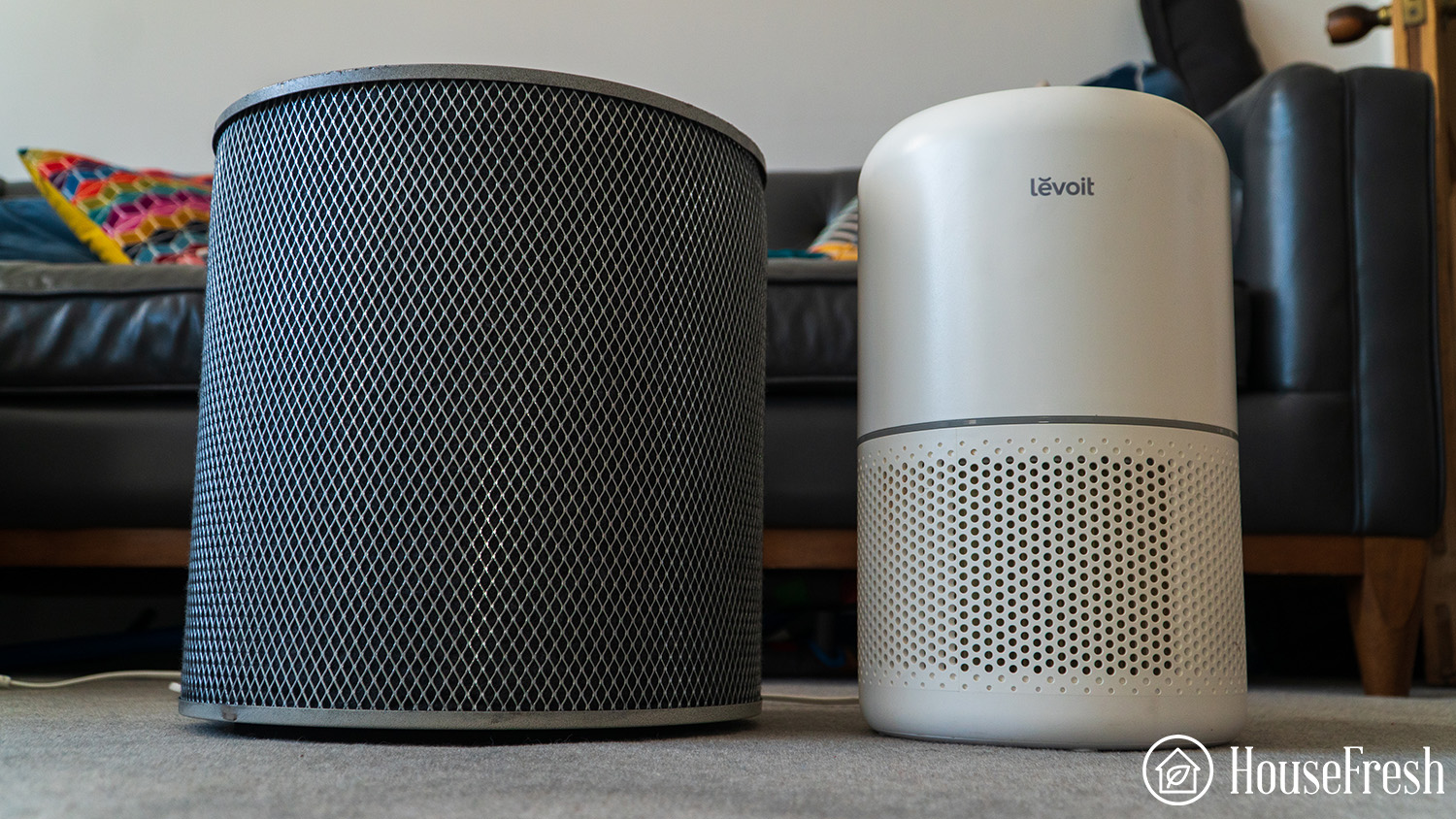
The filter of the HealthMate is bigger than most small air purifiers. However, it’s important to mention that the 15 lbs of carbon restrict airflow and impact this device’s ability to remove particles quickly.

That is why I recommend the Luggable XL-7 if you need an air purifier to remove allergens, as it will be faster at that than the HealthMate.

Austin Healthmate Front

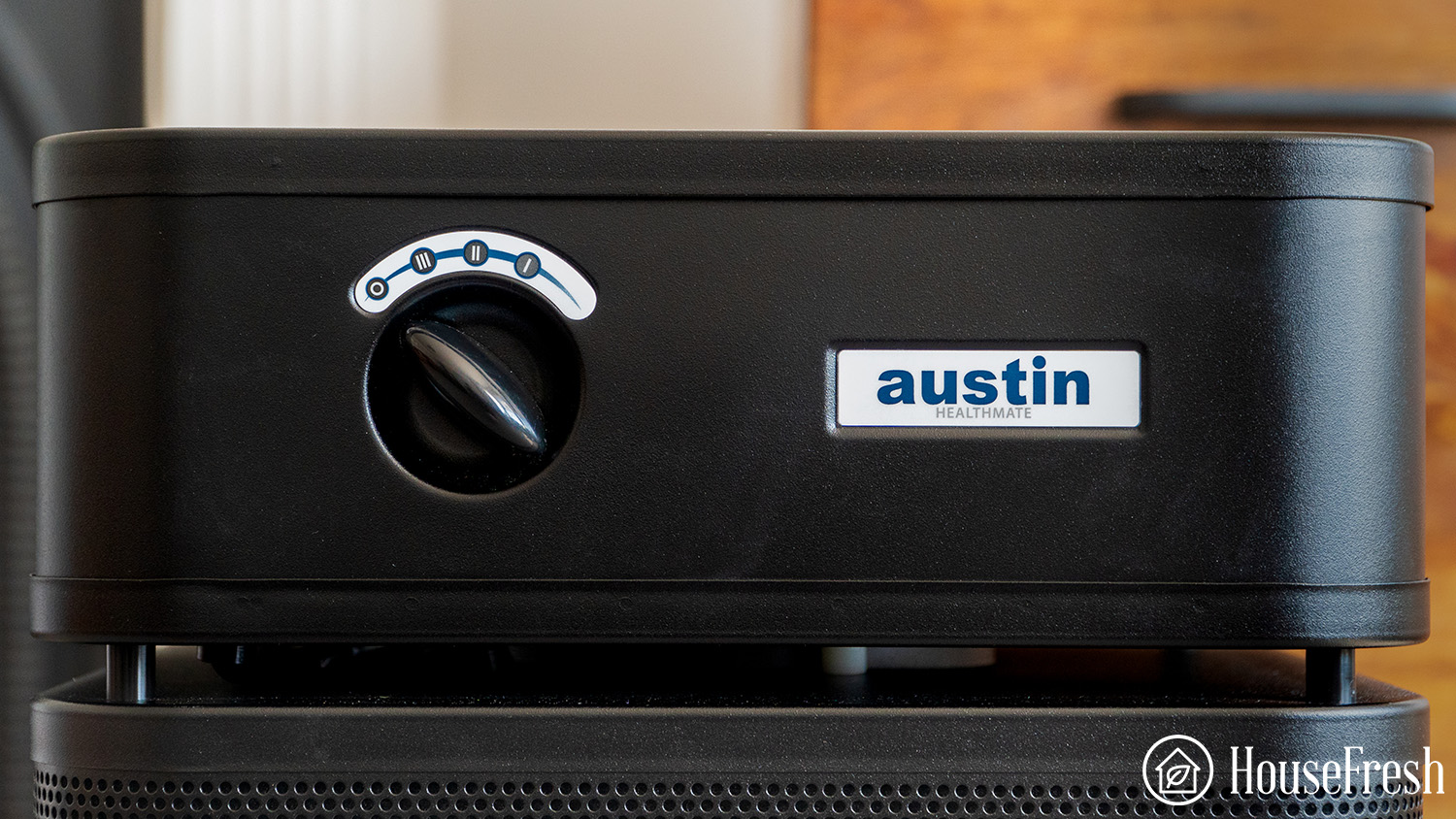
In terms of the control panel of this device, Austin Air decided to include just a single dial for fuss-free operation. This is perfect for those looking for a functional unit without smart functions or app connectivity.

The dial matches the body of the HealthMate, which is completely made out of metal and feels quite industrial.

What we really like

It is made out of metal, making it not only durable but also sustainable.
It boasts the longest-lasting filter
Good air cleaning performance โ€” cleaned our test room from all smoke pollutants in 38 minutes.
It comes in a variety of color options.

What we think could be better

It gets very loud at its top speed, reaching 61.5 decibels, which is equivalent to the sound made by an air conditioner.
It is very power-hungry. When running at its highest fan speed, the HealthMate pulled 147.6 watts, so if you were to run this device 24/7 all year, it would add $163.95 to your electricity bill.

As all Austin Models are made in the USA, you could also look at the following other air purifier models, such as the Austin Air HealthMate Plus, the Austin Air Bedroom Machine and the Austin Air Allergy Machine.

Clean air delivery rate (CADR):โ€“ Top speed PM1 CADR: 156 cfm
โ€“ Sub-45 dBA PM1 CADR: 77 cfm
– AHAM PM2.5 CADR: 154 cfm (dust)
Filter technology:HEPA particle filter with 15 lb of activated carbon and zeolite mix gas filter
Recommended room size:234 sq. ft. (5 air changes per hour)
Dimensions:23H x 14.5W x 14.5D inches (58.4H x 36.8W x 36.8D cm)
Weight:20.41 lbs (9.26 kg)
Noise level in decibels from 3 ft. away:Speed 1: 42.5 dB
Speed 2: 53.2 dB
Speed 3: 61.5 dB
Electricity consumption in watts:Standby mode: 0 watts
Speed 1: 61.1 watts
Speed 2: 85.05 watts
Speed 3: 147.6 watts
Filter lifespan:5 years
Manufacturerโ€™s warranty:5 years
Country of origin:United States
Country of manufacture:United States (Buffalo, New York)

โžœ Read the full review

3. Best small and portable option: CleanAirKits Triple Exhalaron

All CleanAirKits air purifiers are assembled by hand at their headquarters located in Missouri, USA

CleanAirKits Triple Exhalaron

The Triple Exhalaron is another device from the team at CleanAirKits, hand-assembled and shipped from their headquarters in MIissouri.

This small air purifier has a CADR of 120 cfm and it is powerful enough to give you five (5) air changes per hour in rooms of up to 192 sq. ft. When we tested its air cleaning performance when running at its highest fan speed, it cleaned our test room in 46 minutes, which is faster than the popular Levoit Core 300, the PuroAir 240 and the Aroeve MK04.

CleanAirKits Triple

The Triple Exhalaron comes with three CoolerMaster Mobius argb (2400 rpm) PC fans and a purple variable-speed knob you can use to adjust fan speeds.

When running at full power, it generates just 40.5 dBA of noise, which will barely audible in most homes.

CleanAirKits Triple

It uses three cylindrical HEPA H11 filters, which don’t restrict airflow as much as a higher HEPA grade like H13 would โ€” this means the air will pass through the filter more times and can lead to higher CADR.

It also comes with two handles at the top, which make it easy to move around the house or take with you in the car.

What we really like

You can use it with a battery pack (with a male USBC pigtail) inside your car or take it with you wherever you go. You will get up to 10 hours of use with a 20,000 mAh battery.
It is the most interesting-looking air purifier I have tested. Sure, this is personal preference, but I know many will agree.
The filters comes with activated carbon for odors and VOCs.
At its highest fan speed, it hit just 40.5 dB of noise.

What we think could be better

If you donโ€™t need portability or tabletop usage, you get much better CADR to $ with the Luggable XL-7 from CleanAirKits.

Clean air delivery rate (CADR):โ€“ Top speed PM1 CADR: 128 cfm
โ€“ Sub-45 dBA PM1 CADR: 128 cfm
Filter technology:HEPA H11 with a layer of carbon-impregnated fabric
Recommended room size:192 sq. ft. (5 air changes per hour)
Dimensions:22W x 7.25D x 8.5H in (56W x 14D x 22 cm)
Weight:6 lbs (2.72 kg)
Noise level in decibels from 3 ft. away:Speed 1: 35.2 dBA
Speed 2: 37.7 dBA
Speed 3: 40.5 dBA
Electricity consumption in watts:Standby: 0.1 watts
Speed 1: 1.1 watts
Speed 2: 2.8 watts
Speed 3: 6 watts
Filter lifespan:6 months
Manufacturerโ€™s warranty:1 year
Country of origin:United States
Country of manufacture:United States

โžœ Watch my video review

What to look for when buying an air purifier

Consider these key factors to make sure you’re choosing the right unit for your needs

1. Look for high quality particle filters

We have seen excellent performance from MERV 13 filters and HEPA filters. However, it’s important to mention that lower grade HEPA (H10, H11) can offer higher CADR than higher grade HEPA (H13) as it doesn’t restrict airflow as much.

2. Decide if you also need to tackle gases and odors

Whether you live near a busy road affected by traffic fumes or share the house with a smoker, then you should look into an air purifier that can tackle gases as well as particles.

In order to remove gases and VOCs, you will need to find a device that comes with filters packed with activated carbon, ideally pelleted. The higher the amount of carbon, the better the air purifier will be at removing gases and smells from the air.

3. Determine the size of the space your air purifier will need to clean

You need to find an air purifier that will be able to circulate the air multiple times per hour in the room where you want to use it. The Association of Home Appliance manufacturers recommends a minimum of 4.8 air changes per hour and the EPA recommends a minimum of 5.

Once you’ve measured the room where you will place the air purifier, you can use our calculator to find out what CADR you should be looking for to ensure the device you buy will be able to clean the air multiple times per hour:

4. Consider how opting for a made-in-USA device will impact its price

Like many goods, air purifiers made in the United States often have a premium price tag. You must opt for a unit that meets the minimum requirement for your space without compromising on room coverage or filtration. 

If you find that no suitable options are made in the USA within your budget, look for options that may be designed here yet are manufactured overseas, as this will usually reduce the cost considerably.   

5. Beware of how much energy the air purifier consumes

As the cost of living rises and energy prices continue to fluctuate, itโ€™s important to understand what you will expect to pay when using an air purifier before taking the plunge. Using our energy cost calculator, you can enter the unit’s wattage and receive an approximate cost to avoid any nasty surprises when your energy bills arrive. 

Common questions about American-made air purifiers

Regarding manufacturing, China has very high-quality factories and lower production costs, making it hard for US companies to build their goods on US soil. This has been happening across various industries for some time, but if you want to read more about it, check out this Proquest study. 

Youโ€™ll also find that eastern technology hubs such as Beijing and Seoul are somewhat ahead of the game regarding air quality, having needed a solution to polluted air due to their increasing industrialization and booming populations over the years. 

Most air purifiers are made in China due to lower costs associated with production. Levoit, Blueair, Medify and Honeywell are headquartered in the United States, but their factories are based in China. 

Air pollution is increasingly on the radar for many people in the USA. And for good reason, too. Whether affected by high traffic or industrial areas that emit harmful fumes, the toxic smoke created when wildfires strike or simply the desire for a healthier environment in your home, free from dust, allergens or odor. There are plenty of factors that negatively impact air quality in American homes.

Using an air purifier in your home will protect yourself and your loved ones from breathing in these harmful pollutants daily. Many of which can contribute to health concerns in the long run.

Air pollution is usually invisible to the naked eye, so it can be easy to turn our attention elsewhere. However, the particulate matter from burning fossil fuels, agriculture, construction and wildfires contribute to 100,000 deaths in the USA annually. Other common pollutants found in the home, such as bacteria, viruses, mold and allergens, directly affect millions more, all of which can kill any vulnerable person.

Wrapping up

Opting for a purifier made in the USA is a great way to guarantee youโ€™ll be purchasing a purifier made and designed to tackle the challenges we experience in the United States, while being made to the highest standard by American workers. 

If the options on these page are outside of your budget or if you couldn’t find a device that matches what you were looking for, just drop a comment below and I’ll get back to you with more recommendations as soon as I can.

CleanAirKits Luggable XL-7 review

CleanAirKits Luggable XL Living Room

Today, I am excited to review another PC fan-powered air purifier: the Luggable XL from CleanAirKits, a business operating out of Missouri.

CleanAirKits came about in 2022 as an online community of engineers from around the world experimenting with PC fan-powered Corsi-Rosenthal boxes. The goal was to design a solution that could offer air cleaning in a quiet, cheap and efficient way to keep classroomsโ€™ air clean and safe after mask mandates were dropped.

The result? A series of snap-together kits that aim to bring energy-efficient and super quiet PC fan-powered air purifiers to as many people as possible. 

We received tons of messages from readers after we published our review of the Nukit Tempest asking us to test a DIY air purifier kit from CleanAirKits, so I hope you will find this review insightful and helpful in your search for the best PC fan-powered unit for your home.

It was great to see that CleanAirKits offers several different options with each device they sell on their online shop: you can choose the number of fans, the type of wood, the size, and even whether you want your kit pre-built. 

As with all the air purifiers we reviewed here at HouseFresh, we bought the device from CleanAirKits ourselves. We do this for two reasons: Firstly, we want to remain unbiased, without any special relationship or deal with the manufacturer. Secondly, we like to experience the full customer journey just as you would.

If you buy a CleanAirKits Luggable XL through one of the links on this page, we will earn a small commission at no extra cost to youโ€”this is how we can afford to spend months testing air purifiers like this one.

how we test
How we test air purifiers

Read our full testing methodology.

Iโ€™m based in the UK, so I chose to go with one of the kits available for international customers: the CleanAirKits Luggable XL-7 Sickleflow. We paid ยฃ176 for the kit that includes everything except for the filters, and then we added two Filtrete 20x25x1 MERV 13 for ยฃ88.47. 

If you are in the U.S., you can get the same kit for $227, and the filters will be much cheaper at around $45. If youโ€™d like to go with the pre-built option with filters included, that figure will go up to $299.

The lowdown on the CleanAirKits Luggable XL-7

Danny Ashton HouseFresh
โ€œThis DIY PC fan-powered air purifier reached the top tier of our ranking with two MERV 13 filters and without any ionization or electrostatic filtration technology.

The CleanAirKits Luggable XL-7 has convinced me that PC fans are the future of air purification.โ€
โ€” Danny Ashton, HouseFresh Founder & Senior Writer

What we really like

This air purifier is the best-performing air purifier we have ever tested under 40dB.
It offers solid air cleaning performance, making it a good choice for spaces as large as 485 sq. ft.
The DIY kit comes with everything you need, except for the filters.
It was relatively easy to build, compared to other DIY kits like the Tempest or the NorthBox.
It is lightweight and looks pretty good, considering itโ€™s a thing you can build yourself at home.

What we think could be better

The mesh filter guard is an optional extra that will set you back $100.
My wife (who is 5’2″) reported not being able to use the handle to move the Luggable from room to room without dragging the device on the floor.
The case is built with lightweight wood, which looks great but is not as durable as harder materials like the metal in the Tempest.

Clean air delivery rate (CADR):โ€“ Top speed PM1 CADR: 260 cfm
โ€“ Sub-45 dBA PM1 CADR: 260 cfm
โ€“ Intertek PM2.5: 323 cfm (dust)
Filter technology:MERV 13 (20×25)
Recommended room size:390 sq. ft. (5 air changes per hour)
Dimensions:7D x 25W x 20H in (18D x 64W x 51 cm)
Weight:8 lbs (3.63 kg)
Noise level in decibels from 3 ft. away:Only speed: 38.8 dBA
Electricity consumption in watts:Only speed: 10.5 watts
Filter lifespan:6-12 months
Manufacturerโ€™s warranty:1 year
Country of origin:United States
Country of manufacture:United States

The best Luggable XL-7 feature: Only 38.8 dB of noise without compromising on air cleaning power

The Luggable XL is a great choice for classrooms, offices and rooms where a quiet environment is important.

CleanAirKits Luggable XL Living Room

One would think Iโ€™d get used to quiet operation after having tested and reviewed five different PC fan-powered air purifiers, but the CleanAirKits team really pushed the limits with the Luggable XL. 

When running at top speed (which is also the only speed), the Luggable XL-7 hit 38.8 dB(A). That is as quiet as leaves rustling, and it compares incredibly well against other air purifiers we have tested:

As you can see, CleanAirKitsโ€™ choice of Cooler Master SickleFlow 120 fans paid off: the Luggable XL is the quietest air purifier we have tested to date even when compared against other PC fan-powered devices (in red).

A lightweight, thin, good-looking CR box

Combining a lightweight wood case, seven PC fans and two 20x25x1 MERV 13 filters.

CleanAirKits Luggable XL Front

The design of the CleanAirKits Luggable XL is inspired by the Corsi-Rosenthal box, but looks a lot slicker and is easier to move from room to room.

The Luggable XL’s body is made of hardboard panels and houses only two filters (versus four in the CR box), one on each side. We bought the XL-7 model, which has seven PC fans on top and two more on one of its sides.

One of the big downsides of the original Corsi-Rosenthal Box is that they are very big, take up a lot of floor space and can potentially look pretty ugly if you suck at DIY as much as I do. 

CR

However, you canโ€™t say the same about the CleanAirKits Luggable XL.

While itโ€™s certainly less durable than the steel used for the Nukit Tempest, the Luggable XL is truly lightweight, and it looks modern and cleanโ€”especially when compared to the CR box:

CR Box VS CleanAirKits Luggable Front

However, keep in mind that even though itโ€™s not as deep as the CR Box, the Luggable will be wider than other similarly-powered air purifiers if you use it with the five filters on top. 

That said, you can turn it on its side to have the shorter side on top and this will reduce its width. See how it compares to the Smart Air SA600 in the photo below:

CleanAirKits Luggable XL Smart Air SA600

When it was time to buy the Luggable XL, I chose the DIY kit to assemble it at home. I was pleased to see that it came with clear instructions. 

Inside the box, I received seven Cooler Master SickleFlow 120 PC fans, four hardboard panels (one with an integrated handle), a power supply, internal pre-tensioner cords, foam tape strips and seven fan guard grills. The whole process took me around 45 minutes but bear in mind that Iโ€™m not great at building stuff.

The internal pre-tensioner cord helped me neatly connect all the PC fans, while keeping the cables out of the way of the filters for when the time comes to replace them.

CleanAirKits Luggable XL Open

I particularly like the side suitcase handle as it makes it easy for me to grab my Luggable to move it around the house. That said, my wife (who is much shorter than me) mentioned that it would be great to have a handle on the longer side of the Luggable as the current placement means that she will drag the device on the floor.

CleanAirKits Luggable XL Handle

If you prefer, you can get a mesh filter guard, which may improve durability and looks. Personally, I quite like the open filter design, but if you want the mesh, it’s another $85.

For a more interesting look, they sell versions that are higher priced but made with Cherry wood, starting at $285 without filters.

cherry wood cleanairkits

Tip

If you choose to buy the DIY kit, be aware that it doesnโ€™t come with any filters.

Two widely available MERV 13 filters

You can choose any 20×25 MERV 13 filters. CleanAirKits recommends 3M Filtrete MPR1900+, and I agree with their recommendation.

CleanAirKits Luggable XL Fireplace

On their website, CleanAirKits recommends two 3M Filtrete MPR1900+ filters, but you can use any other brand of MERV 12 or MERV 14 filters, which is the beauty of PC fan kits like this one.

However, be aware that if you donโ€™t go with Filtrete, you will need to use 2-inch thick filters to get the same level of performance. This means that the filters will stick out a little more compared to how they look when you use the Filtrete MPR1900 or MPR2200 filters.

CleanAirKits Luggable XL Fans

After testing multiple MERV filters with other DIY air purifiers, I have to say I really like how well-constructed the filters from Filtrete are. They are sturdier and hold their shape incredibly well, thanks to the thick cardboard border.

CleanAirKits Luggable XL Filter inside

Tip

At the moment, there are no carbon filters available for the Luggable XL-7, so if you are looking for a PC fan-powered air purifier to help you deal with odors and gases, then I recommend you check out the AirFanta 3Pro instead.

The Luggable XL-7 cleared our test room in 23 minutes

As fast as the Winix 5500-2, the Levoit Vital 200S and the Smart Air SA600.

CleanAirKits Luggable XL Closeup

After some controversy with the r/AirPurifiers subreddit, CleanAirKits sent the Luggable to Intertek for AHAM AC-1 CADR testing. The report is here and shows the following figures:

  • Smoke: 259 cfm
  • Dust: 323 cfm
  • Pollen: 370 cfm

Based on dust CADR figures, I expected our performance results for the Luggable XL-7 to be somewhere between the Levoit Core 400S (247 cfm, 28 minutes in our test) and the Levoit EverestAir (365 cfm and 18 minutes in our test).

We tested the Clean Air Kits Luggable in the same 728 cubic feet test room where we tested 90+ different air purifier models since 2020. By testing every device in the same room doing the same job (removing incense smoke), we can quickly compare performance across devices.

Our trusted PurpleAir Zen laser particle counter shows that the CleanAirKits Luggable XL-7 reached PM1 zero in 23 minutes.

I knew CleanAirKits had built something special with the Luggable, but I didnโ€™t know it would be so special.

This DIY PC fan-powered air purifier reached the top tier of our air purifier ranking with two MERV 13 filters and without any type of ionization technology.

Check out how its performance compares to other air purifiers in its same price range:

AIR PURIFIER MODELTIME TO CLEAN OUR TEST ROOMPRICE
Levoit Vital 200S23 minutes$189.99
Smart Air SA60023 minutes$279.95
AirFanta 3Pro17 minutes$159.99
Winix 5500-2 (with ionizer)23 minutes$249.99
CleanAirKits Luggable XL-723 minutes$299.00
Corsi-Rosenthal Box32 minutes$85.00
Nukit Tempest31 minutes$300.00
Coway Airmega AP-1512HH (with ionizer)26 minutes$229.99

The Luggable XL-7 performs as well as popular retail HEPA air purifiers coming from well-known brands such as Levoit, Winix, Coway and Smart Air. 

Noise levels, compared

While air cleaning performance is very important, if the air purifier sounds like a jet engine then it will be turned off. That is why we use a sound level monitor from 3 ft. away to record the sound levels generated by air purifiers at each fan speed.

Now, the CleanAirKits Luggable XL-7 has made my job easier as it has only one speed. In our test, I recorded 38.8 dB on average, which is incredible.

The first PC fan air purifier we ever reviewed was the Nukit Tempest with Artic P14 fans and it generated 41.8 dBA of noise โ€” super quiet! However, the Luggable XL-7 with its 120 SickleFlow fans is even quieter.

AIR PURIFIER MODELSOUND LEVEL AT TOP SPEED (dBA)TIME TO CLEAN OUR TEST ROOMPRICE
Levoit Vital 200S57.7 dB(A)23 minutes$189.99
AirFanta 3Pro56.3 dB(A) 17 minutes$159.99
Smart Air Blast Mini56.3 dB(A)15 minutes$599.00
CleanAirKits Luggable XL-738.8 dB(A)23 minutes$299.00
Winix 5500-258.9 dB(A)23 minutes$249.99
Levoit EverestAir57.8 dB(A)16 minutes$499.99
Corsi-Rosenthal box60.7 dB(A)32 minutes$85.00

The background noise in our house is around 35.5 dBA, so I would often forget that the Clean Air Kits Luggable XL was runningโ€”which is exactly what you want from an air purifier.

But listen for yourself:

Most air purifiers we test sit between 50-60 dBA at their highest fan speed, could be considered too loud for some use cases such as a classroom, an office or any other space where you need quiet. That’s why we recommend that most people choose bigger devices than they need and run them at lower fan speeds. 

When comparing the Luggable XL-7 to popular air purifiers running at fan speeds that generate less than 45 dBA (suitable for classrooms and offices), we found that even at these lower speeds, other devices canโ€™t compete with the low level of sounds generated by the CleanAirKits device:

AIR PURIFIER MODELSOUND LEVEL AT LOWEST SPEED (dBA)TIME TO CLEAN OUR TEST ROOM AT LOWEST SPEED
Levoit Vital 200S - Speed 241.9 dB(A)40 minutes
AirFanta 3Pro - 4.84v38.1 dB(A)31 minutes
AirFanta 3Pro - 8.01v47.2 dB(A)17 minutes
Smart Air Blast Mini - Speed 144.9 dB(A)16 minutes
CleanAirKits Luggable XL-738.8 dB(A)20 minutes
Winix 5500-2 - Speed 2 (no ionizer)42.5 dB(A)43 minutes
Levoit EverestAir - Speed 139.1 dB(A)25 minutes
TaoTronics AP-003 - Speed 242.8 dB(A)39 minutes
Air Doctor 3000 - Speed 140.2 dB(A)43 minutes

As you can see from the table, some of our most highly recommended air purifiers running at sub-45dBA fan speeds are still louder than the Luggable XL-7 running at its main fan speed.

The only device that got close to the Luggable XL-7 in terms of noise levels generated was the $500+ Levoit EverestAir. However, running at this low speed, the EverestAir couldnโ€™t match the air cleaning performance of the Luggable, and needed five additional minutes to complete our particle removal test.

So, when you account for sound levels, the CleanAirKits Luggable XL-7 offers just incredible air cleaning performance.

The cost to run a CleanAirKits Luggable XL-7: $58.16 per year

The use of PC fans and HVAC filters leads to lower long-term running costs, compared to traditional HEPA retail devices.

CleanAirKits Luggable XL Dining Room

1. Electricity costs = $12.22 per year

We used a power meter to measure how much energy is pulled by the Luggable XL-7 when running at its only fan speed. Similarly to what we saw with noise levels, the energy consumption of the Luggable XL is also very low: 10.55 watts with all seven PC fans running.

Energy consumption figures are even more impressive when we compare the Luggable XL-7 with other devices running at their top speed:

AIR PURIFIER MODELENERGY CONSUMPTION AT TOP SPEED (watts)TIME TO CLEAN OUR TEST ROOM AT TOP SPEED
AirFanta 3Pro43.2 watts17 minutes
PuroAir 24036.2 watts51 minutes
NorthBox 6XL [P14Max Build]15.4 watts22 minutes
Levoit Vital 200S44.5 watts23 minutes
Smart Air SA60053.8 watts24 minutes
Winix 5500-2 53.8 watts23 minutes
CleanAirKits Luggable XL-710.5 watts23 minutes
Corsi-Rosenthal box46.7 watts32 minutes
Nukit Tempest [P14 Build]8.8 watts39 minutes

The only air purifier I have tested that pulls less energy than the Luggable XL-7 is the Tempest by Nukit.

When compared with other devices running at lower fan speeds, the energy difference is less pronounced in itself but it becomes clear how powerful the Luggable XL is in terms of air cleaning:

When you account for energy usage and air cleaning speed at sub-45 dBA fan levels, the Luggable XL-7 from CleanAirKits is much more efficient than mostโ€”especially when compared to standard retail HEPA devices.

Clearly, CleanAirKits made a solid choice going for the super energy-efficient Cooler Master SickleFlow 120 fans. 

If you were to leave your Luggable XL-7 running 24/7 all year around, it would add $12.22 to your energy bill in a year. This is one of the lowest we have seen!

The Luggable XL-7 uses a 12V power supply, so you can connect its cable directly to a battery pack using a USB-C adapter.

CleanAirKits Luggable XL Cable

This means you can use this air purifier on the go and in locations where you might not have an easily accessible power outlet. 

According to the CleanAirKits website, a 20,000mAh battery can last 12 hours. Just be aware that not all battery packs work at full voltage. My Anker PowerBank worked well, if you want to try it.

2. Filter costs = $45.94 per year

As with any air purifier, the filters for the CleanAirKits Luggable XL-7 will need to be replaced eventually.

CleanAirKits recommends replacing the filters every 12 months, but filter life will be dependent on the air quality in your area and the severity of the issues youโ€™re tackling with your air purifier.

The recommended Filtrete MPR1900 filters cost $45.94 for two, so this is how much youโ€™d need to spend on filters each year.

Sale
3M Filtrete MPR 1900 20x25x1
  • MAKE YOUR HOME YOUR SANCTUARY: 2-pack of 3-month pleated 1โ€ Filtrete 20x25x1 MPR 1900 AC Furnace Air Filter helps capture unwanted particles from your household air to contribute to a cleaner, fresher home environment
  • DIFFERENT FROM NOMINAL SIZE: Slightly different from the nominal size, this air filterโ€™s exact dimensions are 19.69 x 24.69 x 0.78
  • TOP PICK: Selected by The New York Times Wirecutter for its ability to clean the air of ultrafine particles without straining your HVAC system.
  • EXCLUSIVE TECHNOLOGY: HVAC filter designed with Filtrete 3-in-1 technology to pull in and trap unwanted particles, allowing cleaner air to flow through

The total cost of running your CleanAirKits Luggable XL-7 all year is $58.16. This also compares favorably with other air purifiers we have tested: 

AIR PURIFIER MODELESTIMATED ELECTRICITY COST (per year) FILTER REPLACEMENT COST (per year)YEARLY MAINTENANCE COST
Nukit Tempest$9.25$40.86$50.11
CleanAirKits Luggable XL-7$12.22$45.94 $58.16
Levoit Vital 200S$46.83$49.99$96.82
Corsi-Rosenthal box$50.56$60.32$110.88
AirFanta 3Pro$46.56$78.67$125.23
Winix 5500-2$57.82$79.99$137.81
Smart Air SA600$63.07$54.99$118.06

With its significantly reduced energy costs and the ability to use HVAC filters, this air purifier offers excellent performance at much lower running costs than a traditional HEPA retail device.

Bottom line: Is the Luggable XL from CleanAirKits worth it?

When you take into account sound levels generated and energy consumption, the Luggable XL-7 can out-clean anything sold in retail. 

The Luggable XL-7 is the quietest, most cost-effective high CADR air purifier we have tested. This is a highly contended spot in our rankings as we believe that the Holy Grail of air purification is a device that can move a lot of air quickly without excessive noise or long-term running costs.

CleanAirKits Luggable XL Front room

I appreciate that CleanAirKits has been making kits for a while, and it shows. They are continually improving their designs to make them easier to construct. The Luggable is easier to put together compared to the other DIY kits like the Nukit Tempest. However, it is worth mentioning that the Tempest’s steel material will likely be more durable than the Luggableโ€™s hardboard body, That said, the fact that the case material is more flexible makes adding the filters easier compared to the inflexible metal case of the Tempest. So you get pros and cons with both.

With the Luggable XL, CleanAirKits has convinced me that the PC fan DIY kit movement is the future of air purifiers. The big benefit of DIY air purifier kits like the Luggable XL is that they are repairable and much more environmentally friendly than a traditional shop-bought air purifier. These devices have been designed with easily available parts and filters. 

CleanAirKits Luggable XL Open

If you donโ€™t want to build anything, you can buy the pre-made version, and the kit itself is easy to put together. And if you are based in Canada, I highly recommend you check out what the team at NorthBox Systems is doing over there with the NorthBox 6XL.

Just to wrap this up, I want to touch upon the unwarranted controversy around CleanAirKits over at Reddit in the past year or so. After some negative comments made about CleanAirKits on Reddit by a former moderator of the popular r/AirPurifiers subreddit, CleanAirKits have invested into getting their device CADR tested by an independent third-party and these results match our in-house tests.

I hope that our air cleaning performance data will add to the body of work that supports the high levels of air cleaning performance you can expect from a CleanAirKits Luggable XL, compared to even the best retail HEPA devices on the market.

If you have any questions about this PC fan-powered air purifier DIY kit, please drop a comment below and I will reply as soon as possible. Thank you for reading!

SOURCES

We calculated energy consumption costs with the help of the Department of Energyโ€™s appliance energy calculator. We calculated yearly costs associated with running a CleanAirKits Luggable XL-7 for 24hs a day for 365 days. We ran this calculation utilizing the U.S. average utility rate of $0.1268/kWh as of December 2024.

AirFanta 3Pro review

AirFanta 3Pro Living Room

If you like the idea of a Nukit Tempest but you worry about the process of building it yourself from scratch with multiple PC fans, parts and screws, then this device by AirFanta might be the perfect option for you.

The AirFanta 3Pro is a creation of Adam Wong, someone who is very active on social media platforms โ€” you might recognize him by his handle: @Engineer_Wong. Wong started his journey developing air purifiers in 2022, right after China left the Covid Zero policy. His beginnings involved assembling Corsi-Rosenthal boxes for friends and family, powered by his engineering background. Over time, he started receiving CR box requests from the local Covid Cautious community. This led to him designing and developing a new kind of DIY box that could be assembled and disassembled easily.

As with all the air purifiers we tested, we paid for the AirFanta 3Pro with our own money to experience the entire customer journey, conduct various tests and write an honest (and unbiased) review. If you decide to buy an AirFanta 3Pro after clicking on a link from this review, you will be supporting our work, as we will get a small commission at no extra cost to you.

The overall score for the AirFanta 3Pro incorporates first-hand data results from our battery of tests, as well as our ratings for customer service, brand transparency and design & UX. Check out the full scorecard below to see the split of categories.

The pros and cons of the AirFanta 3Pro

A summary of our top-level findings after testing this air purifier following our methodology.

Use the discount code HOUSEFRESH for 5% off when buying directly from AirFanta.

This is the only high CADR air purifier that you can disassemble and bring along wherever you go inside a backpack or suitcase.

The AirFanta 3Pro blew me away with its air cleaning performance, which is powered by a smart CR box-inspired design and the choice of combining four low-resistance H11 filters with four PC fans.

The market for PC fan air purifiers is booming, and AirFanta has made its mark with a device you can buy for a fraction of the price of its competitors ($160).โ€

Danny Ashton HouseFresh
Danny Ashton
HouseFresh Founder
& Lead Tester

If you donโ€™t want to read my full review, here are the six things we like about the AirFanta 3Pro and the three things we donโ€™t.

CONS

It is louder (56.3 dBA) than other PC fan kits we have tested (>45 dBA) when running at full speed.
Unlike other PC fan kits, the 3Pro doesnโ€™t use standard HVAC (MERV 13) filters โ€” you have to use OEM filters.
Energy costs are similar to traditional HEPA devices when running at full speed.

PROS

The highly affordable price ($159.99).
Its incredible air cleaning performance โ€” it took just 17 minutes to clean our test room, which is two minutes slower than the almighty Smart Air Blast Mini.
It is A LOT easier to put it together than a standard DIY PC fan air purifier kit.
It’s small in size, especially when compared to a Corsi-Rosenthal box.
It can be assembled and disassembled in just a few minutes.
When taken apart, the parts are small enough to fit inside a backpack or small suitcase.

Clean air delivery rate (CADR):โ€“ Top speed PM1 CADR: 353 cfm
โ€“ Sub-45 dBA PM1 CADR: 213 cfm
Filter technology:True HEPA H11 and optional pelleted activated carbon
Recommended room size:529 sq. ft. (5 air changes per hour)
Dimensions:12.6D x 12.6W x 12.6H inches (32D x 32W X 32H cm)
Weight:7.7 lbs (3.49 kg)
Noise level in decibels from 3 ft. away:3.63 volts: 36.1 dB
4.19 volts: 36.9 dB
5.24 volts: 39.7 dB
6.54 volts: 43.3 dB
7.44 volts: 46.7 dB
8.56 volts: 49.1 dB
12.6 volts: 56.3 dB
Electricity consumption in watts :43.23 watts
Filter lifespan:6 – 12 months
Manufacturerโ€™s warranty:1 year
Country of origin:China
Country of manufacture:China

The best feature: it fits inside a carry-on bag

This is the only high-CADR air purifier you can bring with you wherever you go.

AirFanta 3Pro Travel Backpack

Adam Wong designed the AirFanta 3Pro to be not only highly powered but also portable. You will not find any other air purifier with a CADR above 400 that you will be able to fit inside a large backpack or small suitcase.

The 3Pro can be disassembled and reassembled in just a few minutes, making it the best option for those looking for devices they can travel with.

You also get a long piece of cable management Velcro that you can use to wrap all the parts neatly once you have disassembled your AirFanta 3Pro:

Filtration technology

Four HEPA 11 filters (with the option of activated carbon) with an expected life of 6-12 months. Wong stated that they can last a full nine months before they need to be replaced.

AirFanta 3Pro Filters

HEPA ONLY FILTERS HEPA + CARBON FILTERS

Unlike actual DIY air purifier kits, you wonโ€™t be able to simply pick up some HVAC filters for your AirFanta 3Pro, so you will need to buy the official AirFanta filters. You can choose between HEPA 11 filters only or HEPA 11 with activated carbon. We have both because we wanted to test the performance of the 3Pro with and without activated carbon.

AirFanta 3Pro HEPA

When it comes to the HEPA 11 design, AirFanta states they developed a new pleating technology in order to produce powerful filters in such a small package. The 126×11.4โ€œ particle filter material has been pleated eleven times into a much smaller 11.4×11.4×1″ area.

AirFanta 3Pro Cover

Whether you choose to go with the particle filter only or the particle+gas filter, you will find that AirFanta filters come with an aluminium cover on the outside that protects the air filter and serves as a (sort of) pre-filter for large dust particles.

For those needing to tackle odors and gases, the best option is the carbon filter. It is a bonded filter (similar to those we see in Levoit devices) that combines a 15mm thick HEPA 11 filter with a 10mm layer of activated carbon. 

Tip

Remember to remove the filters from the plastic bag they come in before you switch on your AirFanta 3Pro.

Design and controls

The 3Pro is a small and light with a design inspired by the Corsi-Rosenthal box.

AirFanta 3Pro Fireplace

Use the discount code HOUSEFRESH for 5% off when buying directly from AirFanta.

The AirFanta 3Pro is basically a box with a base at the bottom, one filter at each side and a fan array on top โ€” much like the design of the Corsi-Rosenthal box.

The thing with the AirFanta 3Pro is that it is A LOT smaller than a CR box and that other PC fan kits using large HVAC filters:

CR Box VS AirFanta 3Pro Front CR Box VS AirFanta 3Pro Top
DIY air purifiers Size comparison

Now, while this is not a DIY kit like the Nukit Tempest or the CleanAirKits Luggable XL-7, you still need to put the AirFanta 3Pro together, but it’s a lot easier to do compared to the Tempest and the Luggable.

You just need to put the four filters in place on the sides of the base, which are clearly marked.

AirFanta 3Pro Open Corner

Once the four filters are in place at each side, you just need to clip the fan array on top.

AirFanta 3Pro Open

As I mentioned briefly above, the AirFanta 3Pro has been designed to be cheap and portable: when you take it apart, you will be able to fit it neatly inside a standard carry-on bag. It even fits snuggly inside Gisele’s Osprey Proxima backpack:

In terms of controls, the AirFanta 3Pro comes with a 110-220v AC to 3-12v stepless DC power adapter which will allow you to control the speed of the fans and the noise output.

AirFanta recently launched a new edition of the 3Pro, which is certified by CARB and is the only option if you live in California. 

This new edition has an independent speed controller that allows you to control the speed even when it is connected to a power bank of 12v/3A (or higher current) DC 5.5mm x 2.1 mm port.

Something that I really appreciate about AirFanta and Adam Wong is how committed they are to keep improving their devices based on customer feedback.

A few days after we ordered our 3Pro, I saw a tweet from Wong in which he announced the introduction of a handy Velcro strap in response to an idea from @ParentMishmash:

As mentioned at the top of this review, you can use this very same Velcro strip to strap the filters + fan array + base together once you have disassembled your 3Pro to ensure all parts fit nicely inside your suitcase or backpack. Simple yet effective!

Air cleaning performance

The AirFanta 3Pro cleared our test room in 17 minutes โ€” it is nearly as fast at cleaning the air as the MUCH larger Smart Air Blast Mini.

AirFanta 3Pro Sidetable

Iโ€™ve been really keen to test the AirFanta 3Pro because there has been a lot of hype around it โ€” especially after it was independently tested by Rob Wissmann and David Elfstrom. These are the results of their CADR tests:

  • CADR: at 13V: 436 CFM
  • CADR at 12V: 413 CFM 
  • CADR at 9V: 328 CFM 
  • CADR at 6V: 213 CFM 

Iโ€™m happy to report that the hype is completely warranted. Let me walk you through how the 3Pro performed in our tests.

According to our PurpleAir Zen sensor, the AirFanta 3Pro needed 17 minutes to achieve PM1 zero in our 728 cubic ft. test room running at top speed (12.6v). We estimate a PM1 CADR of 353 cfm, which would allow the 3Pro to provide five air changes per hour in rooms no larger than 529 sq. ft.

Swapping the filters for the HEPA + activated carbon option added three more minutes to the test, bringing the time to clean all traces of PM1 smoke pollutants to 20 minutes:

This matches the incredible CADR score tests performed by David Elfstrom and Rob Wiss, and compares quite favorably with other air much more expensive air purifiers.

As you can see in the table below, the AirFanta 3Pro is not only affordable but also incredibly fast at cleaning the air:

12v performance airfanta 3pro

Our air cleaning performance test showed that at its highest fan speed (12.6v), the AirFanta 3Pro is as powerful as devices costing upwards of $450 and more effective at removing particles from the air than much more expensive air puriifers like the Dyson BP06.

Sound levels

In our testing, the sound levels of the 3Pro ranged from 36.1 dBA to 56.3 dBA. It is much quieter than the new Winix T810 (62.5 dBA) and the Coway AIrmega 200M (64.3 dBA)

The second most important thing to look at when choosing an air purifier is the amount of sound it generates. A device that is too loud is unlikely to be used regularly or, even worse, is likely to be switched off.

That is why we record (from 3 ft. away) the sound levels generated by every air purifier we test running at each fan speed in the same location (our basement). 

The AirFanta 3Pro comes with an AC-to-DC power adapter, which includes a dial for adjusting the voltage and the sound level generated by the air purifier. Here are the results at each fan speed we measured:

VOLTAGESOUND LEVELS (decibels)
3.63 v.36.1 dBA
4.19 v.39.7 dBA
5.24 v.36.9 dBA
6.54 v.43.3 dBA
7.44 v46.7 dBA
8.56v49.1 dBA
12.6 v. (top speed)56.3 dBA

At top speed, the AirFanta 3Pro reaches 56.3 dBA, which is quieter than most mind-sized popular traditional air purifiers available on the market today:

sound top speed airfanta 3pro

However, you may be wondering how this compares to other devices, especially other PC fan-powered air purifiers. Check out our table below:

PC FAN KITSOUND AT TOP SPEED (decibels)
CleanAirKits Luggable XL-7 [Cooler Master SickleFlow 120]38.8 dBA
CleanAirKits Luggable XL-7 Ultra [Cooler Master Mobius 120]47.2 dBA
Nukit Tempest41.8 dBA
NorthBox Systems 6XL [ARCTIC P14 Max]50.2 dBA
Nukit Tempest Euro50.5 dBA
NorthBox Systems 6XL [Noctua P14s Redux]45.1 dBA
AirFanta 3Pro56.3 dBA

Compared to other PC fan devices from Nukit, CleanAirKits and NorthBox Systems, the AirFanta 3Pro is much louder at its highest fan speed. However, itโ€™s still in line with the top-speed sound levels of the traditional retail HEPA devices we have tested. 

However, sound levels at top fan speeds are not as important as air cleaning performance at lower fan speeds.

That is why we always identify a fan speed where the air purifier generates less than 45 dBA of noise to assess its quiet performance. In the case of the AirFanta 3Pro, we repeated the particle removal test multiple times across different voltages:

My recommendation is to go for 6.54V for top performance at sub-45 dB noise levels. Running at this speed, the 3Pro generates 43.3 dB of noise while still being able to clean our test room in 28 minutes.

airfanta quiet performance

When we account for sound levels, we see the performance of the AirFanta 3Pro getting beat by the CleanAirKits Luggable XL-7, which managed to clean our test room in 23 minutes even when running at only 38.8 dBA. However, the Luggable XL-7 costs upwards of $200 (plus filters), so considering the low cost of the AirFanta 3Pro ($159.99 including filters), I am super impressed. 

What impresses me the most is how incredibly well the AirFanta 3Pro compares to the shop-bought HEPA air purifiers I have tested. At its top speed, it is faster and quieter than most of the devices we have reviewed here at HouseFresh.

Tip

If youโ€™re considering getting an AirFanta 3Pro, I suggest experimenting with the voltages to find a sound level that works for you. Personally, I have stuck to having my 3Pro running at the 8-volt mark as I find it offers an excellent performance-to-sound ratio.

Long-term running costs

Running an AirFanta 3Pro will cost you $165.76 per year, combining energy consumption costs ($47.76) and filter replacement costs ($118).

AirFanta 3Pro Corner

Use the discount code HOUSEFRESH for 5% off when buying directly from AirFanta.

As always, I calculated the long-term costs associated with running your AirFanta 3Pro all day, every day at its top high speed for a full year โ€” an unlikely scenario as youโ€™ll probably want to have it running at a lower fan speed, but itโ€™s a good baseline for running costs.

I started by using our energy meter to measure how much electricity the 3Pro uses at different voltages and, when running at top speed (12.6V), it pulled 43.23 watts.

VOLTAGEENERGY CONSUMPTION (watts)
Standby0 watts
3.63 v.2.19 watts
5.24 v.5.02 watts
6.54 v.8.98 watts
7.63 v.13.31 watts
8.56 v17.46 watts
12.6 v. (top speed)43.23 watts

This means that if you had to leave your 3Pro running 24/7 at top speed, it would cost $47.76 in energy costs for a year, using average U.S. energy rates as of July 7th, 2025.

Considering you need to replace the filter every six months and that the replacement costs $59 (HEPA only), you can expect to also spend $118 per year on filters.

When compared to other similar-performing air purifiers, the 3Pro has low energy consumption costs but it’s the OEM filter replacement costs that drive the yearly running costs up.

airfanta long term costs scaled

At 43.2 watts, the AirFanta 3Pro is more energy-efficient than many popular units, such as the Winix 5510 or the Levoit Vital 200S. However, compared with another PC fan-powered air purifier like the Luggable XL-7 from CleanAirKits, itโ€™s clear that the 3Pro consumes more electricity at its maximum speed of 2900 RPM. 

That said, running costs for the 3Pro are similar to those of standard HEPA retail devices, but you do get much higher performance levels especially when you consider the much lower initial purchase cost.

cadr vs price airfanta

Tip

For a more efficient operation of the AirFanta 3Pro, I recommend going for 6.54V.

At this fan speed, the 3Pro consumes just 8.97 watts, so it will just add 10 bucks to your energy bill in a year while still being able to clean the air effectively as Levoit Core 400S or the IQAir HealthPro Plus running at full speed.

AirFanta’s creator, Adam Wong, explains how this big drop in energy consumption is possible:

“The power consumption of a fan is proportional to the cube of its RPM, while the airflow is proportional to the first power of the RPM. So higher RPM will result in less efficient of electricity consumption. The fan in the AirFanta 3Pro has a maximum speed of 2900 RPM, which is much higher than other PC-fan-based air purifiers, making it look less energy-efficient.

In fact, running it at 9V or lower would significantly improve energy efficiency. It still has a quite good CADR at lower voltage.”

โ€” Adam Wong, Founder of AirFanta

All AirFanta products come with a 1-year warranty. AirFanta will send you a new 3Pro and you won’t need to return the faulty device.

If you experience issues with your AirFanta 3Pro, all you need to do is email the AirFanta team at airfanta@air-fanta.com.
Make sure to include photos and/or videos of the issue you are experiencing.

Bottom line: Should you get the AirFanta 3Pro?

It’s totally worth it. This is the only air purifier with a a high CADR that you can travel with.

Hereโ€™s the thing: if you were to have come to me selling an air purifier with a CADR of 353 cfm for $159.99, I would have assumed it was some sort of a scam. The sheer power of such a device would surely cost a lot more, right? 

Adam Wong says no.

The AirFanta 3Pro can provide large rooms with multiple air changes for a price that is three times cheaper than what you normally pay for a standard, shop-bought HEPA air purifier. That is an incredible achievement that goes to show how brilliant Wong is and how much he actually cares about creating truly affordable solutions to clean the air. 

AirFanta 3Pro Sofa

Use the discount code HOUSEFRESH for 5% off when buying directly from AirFanta.

While the 3Pro is not totally plug-and-play (as you need to fit the filters and put the fans in place), it is MUCH easier to put together than all the other PC fan-powered DIY air purifier kits I have tested. That said, the 3Pro is also louder than all of them, so that is something to keep in mind.

For those looking for an air purifier they bring along when traveling or to events, there isnโ€™t anything on the market right now that matches the high CADR of the AirFanta 3Pro. You can simply disassemble the device and pack it in your suitcase or backpack just to reassemble it wherever you need it. 

For those wanting a quiet and energy-efficient air purifier, they can leave running in the background even when having work calls or meetings at the office, then a PC fan kit like the Luggable XL by CleanAirKits or the Tempest by Nukit will be a better choice โ€” just know that they will both cost over $100 more than the 3Pro.

Now, is sound is a concern but your budget canโ€™t stretch beyond $160, then remember you can run your AirFanta 3Pro at lower fan speeds. It will be much quieter and still outperform the standard retail HEPA air purifier you can find online, costing you less upfront and in the long run.

I really love this device, so I expect you will find it across many of our lists of recommended devices. 

One last thought before I leave you: I believe everyone living outside the U.S. will really benefit from the AirFanta 3Pro, especially those living in places like the UK, where finding box fans and HVAC filters to build your own Corsi-Rosenthal box is virtually impossible. As if that wasnโ€™t good enough, the 3Pro has a much smaller footprint than the standard CR box, is definitely quieter and offers much more adjustable fan speed options.

Do you have any questions about this device that I didnโ€™t cover in my review? Drop a comment below, and Iโ€™ll reply right away.

SOURCES

We calculated energy consumption costs with the help of the Department of Energyโ€™s appliance energy calculator. We calculated yearly costs associated with running an AirFanta 3Pro for 24hs a day for 365 days. We ran this calculation utilizing the U.S. average utility rate of 0.1235/kWh as of September 17, 2024.

How to choose an air purifier: 10 things you need to know

HouseFresh Air Purifiers Tests

Are you looking for an air purifier for your home?

First, I want to let you into a secret: Many of the air purifiers available on the market right now are underpowered and overpriced.

With this guide, I will help you avoid the thousands of duds on Amazon, so you can find a device that works for your budget and air quality issues.

Since 2020, I have tested over 70 air purifiers and performed in-house experiments, looking at air cleaning performance, sound level generation and energy usage.

That is how I have uncovered 10 tips that will help you choose the right air purifier for your home.

1.  CADR, CADR, CADR

Unlike most appliances, an air purifier’s work is hidden from the naked eye. This allows manufacturers to say all sorts of things to make you choose them over competitors, but the main thing you need to look out for is the CADR score.

CADR stands for Clean Air Delivery Rate and is the result of a lab test result from the Association of Home Appliance Manufacturers. They test how well each device does removing dust, pollen and smoke and provide a score from 0-400 cfm 

You could say that CADR is the gold standard for testing air purifiers. 

As a very rough guide:

  • Small rooms of less than 200 sq. ft. will need a CADR of at least 150 CFM
  • Medium-sized rooms of up to 400 sq. ft. will need around 260 CFM
  • Larger spaces over 400 sq. ft. will need more than 300 CFM

Use our calculator to find out what CADR score you should be looking at depending on the size of your room:

The largest of spaces will need devices with very high CADR scores, like the Smart Air Blast with a whopping 559 CFM. 

Tips
  • You can use multiple devices in a large space. You just need to add their CADR scores together.
  • EnergyStar hosts a directory of publicly available AHAM test results. Before buying an air purifier, check out their website to confirm CADR scores for any air purifier.

2. Bigger is generally better

While itโ€™s good to focus on finding an air purifier with the right CADR score for your space, you should know that CADR tests are run on the device working at full speed. 

When running at full speed, the vast majority of air purifiers are loud, generating 55 to 65 decibels of noise. That is why, in most cases, you are better off getting the biggest device you can live with so you can use it at lower fan speeds instead. Mechanical filters like HEPA work by pushing air through them using a fan. The bigger the fan and filter, the higher the air-cleaning performance.

While smaller devices might seem like a better choice for your budget, you will need to run them at their highest fan speeds for them to do a good job. And when running at top speed, these small devices will be louder than you would like.

Not only that, we find that smaller air purifiers often have the same or higher long-term running costs as larger units due to how often you need to replace the filters and how much electricity they pull when running at top speeds.

Tip

If you can, try to get at least a medium-sized device like the Levoit Vital 200S or the Winix 5500-2 with a dust CADR of 240-260 CFM. While they cost a little more to buy, you can run them at lower speeds in smaller rooms – and they will cost the same or even less to run over the long term.

3. Donโ€™t trust room size recommendations

If you visit Amazon or any retailer’s website, you will see that every air purifier seems to be able to clean the air in rooms bigger than 1000 sq. ft.

You might think you can just get one of these cheaper, smaller devices to keep a large room clean, trusting ‘recommended room size’ figures from manufacturers. The problem is that they are using a marketing trick.

The room sizes quoted by retailers (and parroted by big media sites in their best-of lists) will be based on calculations the manufacturer did based on just one air change per hour, but cleaning the air once per hour just isnโ€™t useful in the real world. 

In fact, the EPA recommends 4.8 air changes per hour, which will result in a much smaller room size than the one quoted in manufacturers’ marketing materials.

There are no regulations on room size recommendations, so brands can do this without getting into trouble.

Tip

When looking at product specifications here at HouseFresh, you can be confident that recommended room sizes are based on 4.8 air changes per hour. The same can be said for the Association of Home Appliance Manufacturers, so be sure to check with them before trusting if an air purifier is powerful for your room size. 

4. Look for models with a removable pre-filter

All air purifiers come with pre-filters that capture the largest particles, such as pet hair and fluff floating in the air.

The pre-filter protects the main filters, so if you vacuum and clean your pre-filter regularly, you will extend the life of your main filters AND you will ensure they keep cleaning the air as efficiently as possible.

A dirty pre-filter can make a HUGE difference to the performance of your air purifier. Believe it or not, it can reduce air cleaning efficiency by 40%!

The problem is that many air purifiers (like those from the Levoit Core series) have the pre-filter attached to the main filter.  This makes them difficult to clean, leading to needing to replace the whole filter sooner than youโ€™d like.

So try to find an air purifier with a removable pre-filter instead so you can stay on top of cleaning it regularly without hassle. Devices that allow you to remove the pre-filter make the job much easier and increase your likelihood of doing it. 

Tip

If you’re reading this and you canโ€™t remember when you last cleaned your pre-filter, then give it a clean now! Your lungs will thank you for it.

5. Donโ€™t worry too much about activated carbon 

The particle filter in an air purifier can address the main issues most people face, such as pet dander, pollen or dust. This means that you donโ€™t need to get an activated carbon filter unless you have an issue with chemical gasses like formaldehyde and unwanted odors.

Now, you will notice that most air purifiers come with activated carbon filters anyway…

While cheap carbon filters can remove mild, everyday unwanted smells, most have such small amounts of carbon that they will quickly become saturated if you have a serious issue with VOCs.

So if you have a serious issue with odors, you should look for air purifiers with very large carbon filters, like: 

However, be aware that replacement filters for both of these units cost A LOT. Also, these are both energy-hungry devices, AND they are not needed for most uses.

Carbon filters reduce particle removal efficiency, so if you donโ€™t need them, you should just stick to the particle filter. 

  • Smart Air is great for this, as the carbon filter is always optional.
  • Levoit bonds its carbon filter to its particle filter, which is one of the major downsides of its devices. Once the carbon stops working, you will be forced to replace the whole filter.
  • Winix and AirDoctor units work with separate filters for particles and carbon. 
Tip

The best cheap device with decent carbon filters we have seen is the Winix 5500-2. This unit has washable carbon filters that use pelleted activated carbon, but it only comes with 0.5 lbs of carbon, so it is not enough for serious issues with odors and gases.

6. HEPA is not a requirement for a good air purifier

HEPA is a rating system for measuring the efficiency of air filters, but it is not the only rating system. You also have MERV, MPR, FPR and ISO ratings.

However, the vast majority of commercial air purifiers have adopted HEPA ratings, so that is why you will probably have heard about HEPA way more than the other acronyms.

Here’s the thing though:

The efficiency of an air purifier has less to do with the grade of its filter and more to do with its CADR (remember the first point in this guide?).

The highest the CADR rating, the more efficient the air purifier is at cleaning the air โ€“ this explains why a Levoit air purifier can clean the air super fast even though its filters are not HEPA-grade.

What is more, we have recently started testing DIY air purifier kits that use non-HEPA-grade HVAC filters, and we have been blown away by their performance! Both the Corsi-Rosenthal box and the Nukit Tempest use MERV 13 filters and outperform many HEPA-grade air purifiers we tested that cost much more.

So, donโ€™t get caught up in whether an air purifier comes with True HEPA or H14 HEPA filter. Instead, pay attention to its CADR rating.

7. Donโ€™t forget to check noise levels

If you are like me, you don’t want a noisy turbine running when youโ€™re watching a movie, concentrating in your home office or, more importantly, when youโ€™re trying to sleep.

That is why I always recommend paying attention to noise levels generated, as you are unlikely to want to use your air purifier all the time if itโ€™s too noisy.

However, you need to be wary of manufacturer specifications because many brands will just state noise levels at the lowest fan speed, which, in the case of small air purifiers, is a fan speed that will take FOREVER to clean the air.

I have also been especially impressed by the new generation of DIY air purifiers that use PC fans. In our testing, we found that they perform much better than standard air purifiers running at a similar sound level and cost much less over the long term.

While they are not yet plug-and-play, if you are open to putting in the time to build them, you will end up with a device that cleans the air well at a much lower sound than you would get with a traditional air purifier.

Tip

Some of the quietest shop-bought air purifiers we have tested are those produced by Smart Air, Levoit and Alen.

8. Decide if you want an ionizer 

Ionizer air purifiers have a bad reputation after companies in the early 2000s sold devices like the Sharper Image Ionic Breeze, which was shown to lead to ozone and VOC build-up. Perhaps thatโ€™s why air purifier manufacturers have opted for renaming ionizer technology under different brandable terms such us PlasmaWave by Winix or HEPASIlent by Blueair.

The good news is that in 2010, the CARB certification was introduced in California to guarantee that new air purifiers with ionizers are being tested for ozone emissions. This means that modern air purifiers with ionizers shouldnโ€™t emit ozone and make the quality of your air worse.

However, ionizers can lead to dust buildup around the air purifier and there are people who have sensitivities to negative ions. I have also received emails from multiple readers who found their respiratory issues getting worse after introducing an ionizer air purifier into their homes.

Tips
  • If you want to choose a unit with an ionizer to boost the work of the filters, I recommend choosing a model with an on/off ionizer function. Manufacturers like WInix, Coway and Alen offer this. 
  • Blueair units don’t allow you to switch off the ionizer, so avoid Blueair devices if you believe negative ions could affect you.

9. You might not need smart features

Modern air purifiers come with all sorts of bells and whistles and, in the majority of cases, these bells and whistles add up to the price.

Before buying a pricey smart unit with app support and all sort of modes, take some time to decide if you will truly need all those extra features.

Features like auto-mode and scheduling can be useful in some situations and use cases. Personally, I prefer having an auto-mode in my kitchen air purifier, for example. But when dealing with serious issues such as outside pollution, you should keep your device running all the time, so these smart features are likely not worth paying extra for. 

The same can be said for those wanting to tackle air quality issues related to wildfire smoke, allergies or reducing the risk of airborne transmission of viruses. In all those cases, you will want to keep your air purifier constantly running at a sound level that doesnโ€™t create a problem.

10. Stick to brands that have been around for a while

If you donโ€™t want to build your own DIY device, a good rule of thumb is to stick to brands that have been around for a while.

Since 2020, many new brands have entered the market, promising the world, but many have failed to live up to the hype in our testing.

To make things simple, stick to long-standing brands like IQAir, Coway, Winix, Smart Air, Alen, Levoit, Austin Air and Honeywell. These brands have been making air purifiers for many years and are far less risky than one of the new brands that have yet to prove themselves. 

Sadly, the fact that you canโ€™t assess whether an air purifier is doing its job with your naked eye means that bad actors can get away with selling underpowered, overhyped devices that most consumers wonโ€™t realize are ineffective. 

Final thoughts

I hope these tips help you choose the right air purifier for your specific situation and budget. 

If I had to condense all these tips into just three key takeaways:

  1. Use the AHAM directory to find air purifiers that have been independently tested by them. Check the CADR and room size recommendation for 4.8 air changes per hour before you buy an air purifier.
  2. Don’t get caught up in whether a device comes with a HEPA filter or an activated carbon filter. There are many other effective particle filters besides HEPA, and you might not need activated carbon unless you are dealing with gases and VOCs.
  3. Get the biggest air purifier you can afford. You will be able to run it at lower fan speeds, and it will do a much better job than a small unit without generating a ton of noise.

If you want to know which specific models I think are the best this year, be sure to check out our list of the best air purifiers you can buy right now.

Let me know what you think, or share any other tips I missed in the comments below. 

Nukit Tempest review

Nukit Tempest Living Room

We have already built and tested two DIY units at HouseFresh, the Corsi-Rosenthal box and the more basic DIY Air purifier. We were impressed by their air cleaning performance and straightforwardness to build. So, when I saw CR Box creator Jim Rosenthalโ€™s tweet on the Nukit Tempest, I knew we had to give the Tempest a try.

I am a big fan of the CR box as it is incredibly reliable and can be built with just a few readily available components. However, it doesnโ€™t come without its downsides: the fan is noisy, the box itself takes up a lot of space, and the build is not as robust.

After some discussion on X (formerly Twitter) on how these setbacks could be improved, PC fans were suggested as a suitable alternative for the bigger, louder box fan. It was Zack Deis who designed the first PC Fan Corsi-Rosenthal Box before donating his design so that the Nukit Tempest could be developed.

The Tempest is produced by Nukit, a Shenzhen-based startup on a mission to produce high-quality products at a fair price backed by third-party testing and supported by honest marketing and excellent customer service. Nukit has developed a small selection of products and is well known for the Nukit Torch Far-UVC Lights, which are increasingly popular online. They are always working to improve their products, and if you follow them on X, you will quickly learn that they are not shy when it comes to sharing the behind-the-scenes of their work, including new products they are developing right now.

When purchasing the Nukit Tempest kit, you get all the parts required to build the frame for $179.95. However, you still need to buy the MERV filters, DC power supply and PC fans (with fan guards, if you want them) โ€” all of which are transparently listed on The Cyber-Night Market, which is the online store were you can buy Nukit products. We estimate a total cost of $300 to get all the items. 

As always, we bought the Nukit Tempest kit and the parts with our own money to ensure we have the freedom to say what we really think after conducting the same performance tests we run on every air purifier we review.

how we test
How we test air purifiers

Read our full testing methodology.

That was a long intro, so I hope youโ€™re still with me. Letโ€™s jump into the review.

The lowdown on the Nukit Tempest

Danny Ashton HouseFresh

โ€œI am super impressed by the Nukit Tempest. This new type of air purifier uses PC fans to offer great air cleaning power without high levels of sound. While this is the first generation, Iโ€™m super excited to see where this new approach to air purifiers takes us.

Be aware that this is a kit and does need some time and effort to build, but those who do will have a great air purifier that is also incredibly quiet.โ€

โ€” Danny Ashton, HouseFresh Founder & Senior Writer

TEMPEST DIY KIT ARCTIC P14 PC FAN MERV 13 FILTERS

Before jumping into my full review, I have distilled the key strengths and weaknesses of the Tempest into pros and cons below:

What we really like

It has the best cleaning-power-to-noise ratio we have ever seen on an air purifier.
Filters are far easier to replace when compared to the CR box โ€” you donโ€™t need to rip your air purifier apart to change them.
You can choose any 20x20x2″ MERV filters you want to use, from any brand you want.
This is a truly buy-it-for-life device: all parts can be easily replaced at a low cost, allowing you to fix and maintain your unit yourself.
It is highly customizable. You can choose the 20x20x2″ MERV filters, PC fans, power switch and fan guards you want.

What we think could be better

Without activated carbon filters, it wonโ€™t be able to help with unwanted smells and gasses.
It is a hot product right now, so it might not always be available for purchase. However, you can sign up for Nukit’s mailing list on The Cyber Night-Market to get notified as soon as itโ€™s back in stock.
While most items are readily available worldwide, 20x20x2″ MERV filters may be harder (or more expensive) to find outside the U.S.
It is not a โ€œplug and playโ€ air purifier, so it will not be suitable for those who are not comfortable building it. PC building experience is highly useful.

HouseFresh rating:โ˜…โ˜…โ˜…โ˜…โ˜†
Time to clean our 728 cubic feet test room (with the device running at top speed):Without fan grills: 31 minutes
With mesh fan grills: 43 minutes
Air filtration technology:MERV 13
Recommended room size (4.8 air changes per hour):385 sq. ft. (estimated)
Clean air delivery rate (CADR):247 CFM (estimated by @VentiloAngel)
Dimensions (in inches / in cm):21.25L x 20.25W x 9.6H inches (54L x 51.5W x 24.2H cm)
Weight (in pounds / in kg):14.7lbs (6.65 kg)
Filter life:12 months
Noise level in decibels (measured from 3 ft. away with a sound level meter):41.8 dB
Electricity consumption in watts (recorded with an electricity usage monitor):8.8 watts
Estimated running cost (electricity consumption + official filter replacement):$50.11 per year
Cost per CADR cfm (based on dust CFM as reported by AHAM):$1.20
Country of manufacture:China

The best Tempest feature: Quiet yet powerful

Youโ€™ll barely notice itโ€™s running thanks to the PC cooling fans โ€” and it can still effectively cover rooms up to 385 sq. ft.

Nukit Tempest Front Room

The Nukit Tempest not only looks cool but it also offers excellent performance with cleaning power comparable to many medium-to-large air purifiers we have tested. 

Yet, despite its capacity to draw in considerable amounts of air through its filters, the Tempest runs far quieter than most.

But you donโ€™t need to take my word for it. Check out the chart below comparing the max sound levels VS air cleaning speed of the Tempest against various popular air purifiers:

A PC case-inspired design that fits two large MERV filters and six fans

Assembling the Tempest is not particularly easy, but the end result is a cool-looking device with a gamer vibe.

Nukit Tempest Design

The Nukit Tempest looks nothing like a regular air purifier. In fact, if you walked into a room with a Tempest, you are more likely to think itโ€™s a desktop computer than a DIY air cleaner. Similarly to PC building, the appearance of your Tempest will vary slightly depending on the items you choose to assemble it.

Nukit Tempest Top

It has six PC cooling fans on top and six more on one of the sides. As I have small children at home, I decided to also get 140mm mesh guards, which will protect the fans from dust but, most importantly, keep little fingers out of the way. However, it’s worth mentioning that the mesh grill restricted airflow, thus affecting the performance of the Tempest but I will tell you more about this further down the review.

Nukit Tempest Mesh Covers

140mm MESH FAN GUARDS 140mm WIRE FAN GUARDS

Another important point to consider with my kids in mind: the metal is sturdy yet smooth, and it has no sharp edges or imperfections that could cut you while moving it from room to room. Speaking of which, it was great to see all the clever little design details that improve usability, such as the two handles at the top.

Nukit Tempest Handle

The Tempest comes with wire mesh side grills to guard the filters, making the device more resistant than other DIY air purifiers, including the CR Box. Plus, it conceals a bit the fact that it is an air purifier, avoiding the attention-grabbing white filters to be the center of attention.

Nukit Tempest Pre Filter

Speaking of the Corsi-Rosenthal Box, I took a photo of the Tempest next to my CR Box to show you just how small and stylish the Tempest looks next to the bulky cube. 

CR Box vs Nukit Tempest

As you can see, the footprint of the Nukit Tempest is much smaller, making it a great choice for spaces where the CR Box couldnโ€™t quite fit. It is also super lightweight, weighing no more than 14.7lbs.

Nukit Tempest VS CR Box Top

Another thing worth mentioning is that the Tempest does not have a control panel. It is either plugged in and running, or unplugged. That said, you could buy a power supply with an on-off switch.

Nukit Tempest Plug

DC POWER SUPPLY

The Tempest was created with homes AND public spaces (such as schools and businesses) in mind, where air purifiers should be running 24/7 but are often not. This is the quietest unit Iโ€™ve tested able to clean the air effectively โ€” for example, the Core Mini is super quiet, but it wonโ€™t be useful in most rooms.

Another example of quiet power is the Smart Air Blast Mini. I took a photo of both devices next to each other so you can see how they compare to one another in terms of size:

SmartAir Blast Mini VS Nukit Tempest

The Tempest kit comes with four metal panels, screws, a cardboard tube containing the side grills, four square, self-adhesive feet and 3mm rubber hole plugs, a 19mm rubber plug, a PWM connector, a 12v DC power connector AND zip-ties. 

What you will need thatโ€™s not included is the following:

ITEMRECOMMENDED WHAT WE BOUGHT
6 x PC cooling fansArctic P14Amazon
6 x Fan guards140mm mesh or metalAmazon
1 x DC power supply12v, 2A with 5.5x2.1mm barrel connectorAmazon
2 x FiltersMERV 13 filters, 20x20x2 inchAmazon

While assembling the Tempest might seem a tad daunting for those not so comfortable with their DIY skills, thereโ€™s a thorough step-by-step guide on The Cyber Night-Market website with photos and detailed instructions. You can also watch my video:

All pieces, screws and cables come in separate bags to make assembling easier. It is kind of building a huge Lego โ€“โ€“ a fun STEM project to be sure. 

Two 20x20x2″ MERV filters protected by side grills

The Tempest is proof that you donโ€™t actually need HEPA to achieve exceedingly good air filtration results.

Nukit Tempest Fireplace

Thatโ€™s right: HEPA is not the failsafe many manufacturers want us to believe. 

Certified HEPA filters are considered an assurance for many for their single-pass filtration efficiency, or in simpler terms, the capacity of a filter to trap particles in just one pass of air.  The thicker the filter (HEPA 12, 13 and even 14), the more particles it can catch on the fibers in a single pass. 

On their part, MERV filters have a lower single-pass filtration rate compared to HEPA filters. But air purifiers are designed to run continuously, circulating air and trapping particles on the filters in every cycle. As David Elfstrom, an engineer who has shed light on many key discussions related to indoor air pollution, puts it:

So, with no real need for HEPA, the Nukit Tempest uses affordable and readily available MERV 13 filters just like the Corsi-Rosenthal Box and the simpler DIY air purifiers. 

As MERV filters are less dense than HEPA, they allow for increased airflow. That means that they can move a lot more air than units with HEPA or HEPA-type filters, capturing more particles from the air.

Nukit Tempest MERV 13 filter

The Nukit Tempest hasnโ€™t been sent to the Association of Home Appliance Manufacturers for a CADR test, but that doesnโ€™t mean that itโ€™s not been tested by third-parties. David Elfstom estimated a CADR of 280 CFM and Nathalie Roussay (known as L’ร‰vangรฉliste de la Ventilation on X) estimated 247 CFM โ€“ all of these using the Artic P14 fans, which are the same weโ€™ve used in our own Tempest. 

I will go deeper into air cleaning performance comparisons in the next section but, with these numbers, the Nukit Tempest and its MERV 13 filters could offer similar performance than air purifiers such as the Blueair Blue Pure 311+ and the Alen BreatheSmart 45i โ€“ both good, reliable units much liked by many users.

It’s worth noting that replacing the filters in your Tempest will be much easier than disassembling your CR Box and other DIY units before you can rebuild them with the new ones. With the Tempest, you just have to unscrew the sides, remove the old filters, place the new filters and screw them back.

Tip

If you buy MERV filters in bulk, make sure each one is sealed separately or at least in twos. You donโ€™t want the filters in contact with the air before use, or they will start accumulating particulates as they are stored in a cupboard.

The Nukit Tempest cleared our test room in 31 minutes

The Tempest has the best performance-to-noise ratios across all 70+ air purifiers we have tested, and the six PC cooler fans have a lot to do with that.

Nukit Tempest Fans Close Up

To assess the real-world performance of the Nukit Tempest, we run the same tests we perform on all the air purifiers we review, including particle removal speed, noise output and energy usage.

For the speed test, we filled our 728 sq. ft. test room with incense smoke and used our two PurpleAir sensors (the Touch and the Zen) to monitor how long the Tempest took to clean the air, bringing the PM1 levels to zero.

As you will see on the chart above, it took the Nukit Tempest 31 minutes to complete our particle removal test. 

This number changes when we add the mesh guards on top of the PC fans. I wasnโ€™t expecting such a big difference, but it turned out that the mesh guards added 12 minutes to the test:

Without fan grillsWith mesh fan grills
Nukit Tempest31 minutes43 minutes

This is something to consider when building your Nukit Tempest. We havenโ€™t tested it using wire fan grills, but I imagine it will be better than the mesh grill as, clearly, the ultrafine nylon restricts airflow:

Nukit Tempest Mesh Cover Closeups

A reader shared this report on the effects of different grill patterns on fan performance. It shows that the mesh grill does, in fact, restrict airflow. The report also shows that opting for a wire grill can achieve performance results nearly as good as running your Tempest without a grill.

Air cleaning performance, compared

With an average estimated CADR of 247 CFM, the Nukit Tempestโ€™s cleaning speed definitely met our expectations.

Compared with units that boast similar CADR, the Tempest sits in the middle: the Blueair Blue Pure 311+ (250 CFM) was 10 minutes faster, but it outpaced the $428 Alen BreatheSmart 45i (207 CFM) by three minutes.

There is also a six-minute difference with the Corsi-Rosenthal Box (estimated 274 CFM). I cannot deny that Iโ€™m still a huge fan of the CR Box; it is such a practical solution for so many people and different contexts. However, if we factor in the noise output of the two, the CR Box’s speedyness becomes somewhat relative.

Let’s see how the Tempest performed noise-wise. 

Noise levels, compared

This is one of the Nukit Tempestโ€™s highlights: how quiet it runs. To measure the noise output, we used a commercial sound meter to record sound levels in dB(A) emitted by the Tempest from 3 ft. away.

As we saw in the first section, the Tempest has only one speed. When running, it emits 41.8 dB(A) of noise, which is equivalent to the (almost imperceptible) noise of a suburban area at night. 

The chart below shows how the Tempest compares to other air purifiers.

If we focus on the lowest fan speeds, the Tempest might not be the quietest unit, but it is not the loudest, either. However, the comparison changes completely when we look at the top speed values: no purifier runs as quietly as the Tempest. 

We were so impressed with these results that we decided to push our tests further. So, we compared the Tempest’s performance (speed and sound) versus some of the best units we tested but running at a similar sound level (in most cases, in Speed 2). Hereโ€™s what we found out:

AIR PURIFIER MODELSOUND LEVEL AT TOP SPEED (dBA)TIME TO CLEAN OUR TEST ROOMPRICE
Levoit Vital 200S - Speed 242.5 dB(A)40 minutes$189.99
Winix 5300-2 - Speed 2 without ionizer42.5 dB(A)43 minutes$199.99
Taotronics AP-003 - Speed 242.8 dB(A)39 minutes$99.99
Nukit Tempest41.8 dB(A)31 minutes$179.95 (plus parts)
Air Doctor 3000 - Speed 1 40.2 dB(A) 43 minutes $519.00

When noise output is the primary variable, the Nukit Tempest air cleaning performance amply outperforms all others.

I mean it when I say you will often forget the unit is running in the background. But still, donโ€™t take my word for it; listen to the Tempest running for yourself:

The cost to run a Nukit Tempest: $50.11 per year

1. Electricity costs = $9.25 per year

When choosing an air purifier, long-term costs are worth considering, especially with rising electricity prices worldwide. So, as part of all our reviews, we measure electricity consumption using an energy meter.  

Nukit Tempest Energy Test

The PC fans in the Nukit Tempest mean less noise and less energy usage. In our testing, the Tempest pulled a mere 8.8 watts. Running it 24/7 uninterruptedly would add up to less than $10 a year to your electricity bill.

As a reference, the Blueair Blue Pure 411 has an energy usage of 10 watts at top speed, and it was featured among the 2024 most efficient air purifiers at Energy Star. However, the Blue Pure 411 needed over an hour to remove all PM1 pollutants from our 728 sq. ft. room.

As with noise levels, the energy consumption of the Nukit Tempest matches the same figures you can expect from some of my favorite air purifiers when running at low fan speeds. The problem is that low fan speeds mean slower air cleaning performance, so when comparing these great devices against the Tempest, we see the Tempest win again:

AIR PURIFIER MODELENERGY CONSUMPTION AT TOP SPEED (watts)TIME TO CLEAN OUR TEST ROOM
Air Doctor 3000 - Speed 19.6 watts43 minutes
Nukit Tempest8.8 watts31 minutes
Taotronics AP-003 - Speed 210.5 watts39 minutes
Levoit Vital 200S - Speed 28.0 watts40 minutes
Winix 5300-2 - Speed 2 without ionizer 6.7 watts43 minutes

The performance-to-energy usage ratio of the Nukit Tempest is just incredible.

2. Filter costs = $40.86 per year

Filter costs are the second ongoing expense to factor in. With store-bought units, you can choose between original, branded filters (which tend to be expensive) or generic ones (for which thereโ€™s not always enough information online).

The Nukit Tempest uses standard, non-proprietary 20x20x2 MERV 13 filters. Availability may vary depending on your location, but in the U.S., there are plenty of options at a varied range of prices. 

We used Filterbuyโ€™s set of two for a little over $40. Considering filters need to be replaced about every 12 months, the Tempest has one of the lowest long-term costs weโ€™ve seen in the industry: around $50 a year. 

There are simply too many reasons to love this device.

AIR PURIFIER MODELESTIMATED ELECTRICITY COST (per year) FILTER REPLACEMENT COST (per year)YEARLY MAINTENANCE COST
Coway Airmega 150$48.12$49.99$98.11
Smart Air S$41.00$73.98$114.98
Levoit Vital 200S$67.95$59.99$127.94
Winix 5500-2$81.54$79.99$161.53
Nukit Tempest$9.25$40.86$50.11
Mila$58.45$150$208.45

Bottom line: Is the Nukit Tempest worth it?

The short answer: yes, but be aware that building it might be tricky if youโ€™re not comfortable with cables and tiny parts

The Nukit Tempest has definitely impressed us with its clear advantages over shop-bought devices: it is super quiet, cleans the air pretty fast, can cover large spaces (385 sq. ft.), and its long-term running costs are as low as they get.

One of my favorite things about it is the environmentally conscious buy-it-for-life concept that defies a whole industry of devices with built-in planned obsolescence. Say the PC fans get old and start malfunctioning; you can replace those, and thatโ€™s it. The same applies if you want to upgrade the PC fans for newer, quieter ones or if you want to add an on/off switch or Nukitโ€™s own power loss alarm. Most components in your Nukit Tempest could be swapped, upgraded and fixed at home. Besides, with standard MERV filters, you are not tied to any brand.

Nukit Tempest Design

But I get it. Sometimes a ready-to-use solution is all you want or need, and thatโ€™s understandable. There are plenty of great store-bought air purifiers that will do a fine job. But if you are at all curious about the use of PC fans or fancy a STEM project you can carry out with your kids, then I strongly suggest giving the Nukit Tempest a try.

You wonโ€™t just get an amazing air purifier; you’ll also be supporting a worthwhile project with a genuine interest in indoor air quality that is affordable and powered by honest marketing โ€” two things that the world really needs.

Iโ€™m currently testing other PC fan DIY air purifiers (the Luggable by Clean Air Kits, Adam Wongโ€™s AirFanta 3 Pro and the NorthBox Systemsโ€™ 6XL), so make sure to subscribe to our YouTube channel to watch my review without having to wait for it to be published on our site.

Tip

If you want to take the DIY spirit further, the instructions to build the Nukit Open Air Purifierโ€™s enclosure are available on GitHub (thereโ€™s even an app).

SOURCES

We calculated yearly costs associated with running the Nukit Tempest 24 hours a day, 365 days per year utilizing the latest average energy prices as reported by the Bureau of Labor Statistics of $0.174/kWh as of June 2024.

Winix C545 review

Winix C545 Living Room

With a trajectory of over 50 years, Winix has a solid background in indoor air cleaning.

During the COVID pandemic, the South Korean brand gained a foothold in the U.S. market, attaining a solid place among the most preferred brands to improve Americansโ€™ home air quality.

Winix produces budget-friendly, well-built, and high-performing air purifiers, with the corporate mission as its compass: โ€œTo deliver perfect products that are superior in Innovation, Performance and Style.โ€ 

The Winix C545 is not the brandโ€™s latest model (it was Energy Star-certified in 2019). In fact, the unit is only available as refurbished on the U.S. Winix website. But it is still trending and hyped by Costco, so we got curious about its performance. 

Besides traditional mechanical filtration, all Winix units have the built-in PlasmaWaveยฎ function, a by-polar ionizer that boosts cleaning efficiency. Ionization is a known controversial topic, so youโ€™ll be pleased to know Winix units emit less than 0.01 ppm of ozone and are CARB-certified. However, one of the highlights of these air purifiers is that the function can be easily disabled. 

We have previously reviewed three Winix units, the 5300-2, 5500-2 and A231 and found solid results. So, we decided to get the C545 and put it to the test.

how we test
How we test air purifiers

Read our full testing methodology.

As always, we bought the C545 with our own money like regular consumers โ€” no special treatment for us, no free Winix for HouseFresh. We prefer it this way. We are free to write unbiased reviews with an honest take on every unit we test.

The lowdown on the Winix C545

Danny Ashton HouseFresh
โ€œThe C545 is very similar to other Winix devices, like the 5300-2, and itโ€™s just as good for removing particles. One thing that stands out is its app support, which you donโ€™t find in other Winix models.
The fact that this device is sometimes sold cheaply at $99-$139 at Costco makes it an easy choice for those wanting a good air purifier on a budget.โ€
โ€” Danny Ashton, HouseFresh Founder & Senior Writer

Winix C545 Living Room

Before we dive into the detailed analysis of the unit, Iโ€™ve condensed the C545 highs and lows:

What we really like

All-round budget-friendly unit: low initial price and affordable long-term running costs.
Faster than more expensive units and still competitive, even when compared to newer models.
There are plenty of smart features, including app support for remote control, air quality readings and a light sensor.
An easy-to-navigate control panel that lets you switch off the ionizer at any time.

What we think could be better

It lacks a sturdy activated carbon filter. Instead, the C545 comes with carbon-impregnated fabric that needs to be replaced every three months.
Considering its size, it is not the quietest air purifier. When running at top speed, it generates 59 dB of sound.
The Winix Smart app could be improved.

HouseFresh rating:โ˜…โ˜…โ˜…โ˜…โ˜†
Time to clean our 728 cubic feet test room (with the device running at top speed):PurpleAir Touch: 19 minutes
PurpleAir Zen: 27 minutes
Air purifier technology:Washable pre-filter, activated carbon filter, True HEPA filter and Plasmawave technology
Recommended room size (4.8 air changes per hour):360 sq. ft.
Clean air delivery rate (CADR):– Smoke: 232 CFM 
– Dust: 243 CFM 
– Pollen: 246 CFM
Dimensions (in inches / in cm):13.7W ร— 8.4D ร— 20.5H inches (35W x 21D x 52H cm)
Weight (in pounds / in kg):11 lbs (5kg)
Filter life:– HEPA filter: 12 months
– Odor filter: 3 months
Noise level in decibels (measured from 3 ft. away with a sound level meter):Speed 1: 36.1 dB
Speed 2: 39.2 dB
Speed 3: 43.1 dB
Speed 4: 59.2 dB
Electricity consumption in watts (recorded with an electricity usage monitor):Standby: 0.27 watts
Speed 1: 4.15 watts (4.46 with ionizer)
Speed 2: 6.6 watts (6.9 with ionizer)
Speed 3: 10.15 watts (10.49 with ionizer)
Speed 4: 51.30 watts (51.01 with ionizer)
Estimated running cost (electricity consumption + official filter replacement):$113.6 per year
Cost per CADR cfm (based on dust CFM as reported by AHAM):$0.53
Manufacturerโ€™s warranty:2 years
Country of manufacture:

The best feature of the Winix C545: good $ to CADR ratio

Impressive 232 CFM (smoke) for $90 if you get it refurbished from Winix

As mentioned in the introduction, the Winix C545 can be bought refurbished at the manufacturerโ€™s website for a mere $89.99. At Costco, on the other hand, youโ€™ll find the new unit for $129.99. At the time of writing this review, I wouldnโ€™t recommend buying from Amazon, as the C545 rises to over $170.

This price disparity makes my job harder when trying to compare the C545 with other units in the same price and cleaning power range. But I will try my best anyway.

The TaoTronics TT-AP003, for example, has a CADR of 226 CFM for $80 and features a pelleted activated carbon filter instead of the carbon-impregnated fabric. The same goes for the Levoit Vital 200S, which outperforms both the TT-AP003 and the C545 BUT it doubles in price ($190).

Now, things are more favorable to the C545 when comparing it against the Winix C535 and 5300-2, which can be found at $140 and $135, respectively. While neither of them have smart features, they share similar CADR and are all suited for 360 sq. ft. rooms. With those numbers in mind, it is clear that the  C545 offers a great $ to CADR ratio with extra smart features, not bad.

An old design thatโ€™s compensated with a few aces up its sleeve

The Winix C545 wonโ€™t stand out from the crowd for its looks, but it remains functional and offers smart features.

Winix C545 Front

Iโ€™d venture to say classic rectangular-shaped air purifiers are making a comeback; they seem to be regaining protagonism after cylindrical units occupied the central stage for some time. Take, for example, the bold-looking Coway Airmega 150 or the sober and stylish SmartAir SA600

While the C545 is not among the latest releases in the industry, its rectangular body with a front air intake benefits from this trend.

The C545 comes in an all-white matte style with curbed edges, and is shorter and somewhat chunkier than the larger (and darker) 5500-2 and the 5300-2.

Winix 5300 2 C545 5500 2

While newer Winiexes come with a magnetized tab to fasten the front cover, the front panel on the C545 is only attached to the body by clips. True, many units on the market rely solely on tabs (take the TaoTronics TT-AP003, for example, although it has an extra clip compared to the Winix). Still, it is worth pointing out the magnet feature ensures a more secure attachment.

Winix 5300 2 C545 5500 2 Pre Filter

The controls on the Winix C545 are straightforward and self-explanatory, so you can set it up and have it running without browsing the manual – although I usually take a look when unboxing a new unit. 

Winix C545 Close Up Top

Instead of having just one button to cycle through the four different fan speeds, the C545 comes with arrow buttons to go back and forth between Auto Mode, four different fan speeds and Sleep Mode. 

The P – 3SEC legend stands for PlasmaWaveยฎ. To toggle the PlasmaWaveยฎ function, youโ€™ll need to press the two arrows for three seconds simultaneously. The white LED light will indicate when itโ€™s activated (light on) or deactivated (light off). By default, the unit will turn on with PlasmaWave enabled โ€” Iโ€™m not a fan of that.

Winix C545 Control Panel

The Auto-mode in the C545 is possible thanks to the onboard air quality sensors, which will adjust the fan speed to tackle the level of pollutants detected. The LED light on the control panel will indicate the air quality in the room with a color-coded scale:

LED indicatorFan speed
๐Ÿ”ด red for polluted airTop fan speed
๐ŸŸ  amber for fair airMedium fan speed
๐Ÿ”ต blue for good air qualityLow fan speed

Thatโ€™s the industry-standard Auto mode, but the Winix C545 has an extra perk: it has a built-in light sensor that detects the amount of ambient light in the room. 

So, when in Auto mode, the moment you turn off the lights, the unit will turn to Sleep mode automatically. It will adjust the fan speed to the lowest, reducing noise output, and turn off all LED lights (except for the night mode light, though).

Winix C545 Top Down

The Winix Smart app is usually reserved for top-tier air purifiers, such as the 9800 ($329). However, for tech enthusiasts on a budget, the C545 fits the bill โ€” at least for North American users. 

Tip

As of January 2021, the Winix Smart app is no longer available in Europe or the UK due to the EU general data protection regulation. 

Therefore, for those based in Europe or the UK to whom app support was a key driver to getting the C545, Iโ€™d suggest checking out the Winix 5500-2, which comes with a remote control and a more robust pelleted activated carbon filter.

Or check out the Levoit Vital 200S, which offers remote access to the unit through the user-friendly Vesync app.

The Winix Smart app will let you create schedules, monitor indoor and outdoor air quality, track the filter’s life (and get alerts when itโ€™s time to replace it), and logically control the unit remotely from wherever you are. As a bonus, youโ€™ll also be able to command the Winix C545 with Amazonโ€™s Alexa.

Manage Filter
In out Indoor
AQ History 1
Control Device 1

Although you get useful features and an enhanced experience with the app, I must say that itโ€™s not the most intuitive one:

  • The signing-up process is tedious and a bit of a maze. Luckily, you just need to do this once.
  • Youโ€™ll have to grant the app access to your exact location. Winix claims this is just to provide outdoor air quality readings, but it wonโ€™t let you go through the pairing process without it.
  • The app sometimes loses connection with the unit. This can be easily fixed by closing and reopening the app, but it would be nice to see the Winix team permanently solve the issue.

Winix four-stage filtration: mechanical filters boosted by PlasmaWaveยฎ

The C545 comes with a robust True HEPA filter for particles but a weak activated carbon filter that falls short when dealing with serious VOCs.

Winix C545 GIF

Almost every air purifier comes with a single set of filters for you to get the unit up and running the moment you take it out of the box. Well, Winix went the extra mile with the C545 and added an additional set (which could last up to 12 months!) That’s right, when you buy a C545, you get two years’ worth of indoor air cleaning. Nice touch, Winix!

But then, there are some highs and lows to the C545 filters worth considering before making up your mind. Letโ€™s start with the good. 

Like all Winix air purifiers, the C545 features AHAM-verified True HEPA filters capable of removing 99.97% of particulate air pollutants from the air as small as 0.3 microns. The filter traps dust, pollen, mold spores, dander, smoke particles, bacteria and more, boosted by the unitโ€™s 246 CFM Clean Air Delivery Rate.

Winix C545 HEPA Filter

A second advantage of the C545 four-stage filtration is the removable pre-filter. Picking up on the rectangular-shaped air purifiers’ comeback, Iโ€™d say this type of pre-filter is one good reason behind it.

In budget cylindrical units, like the Leoivt Core series (200S, 300, 400S and 600S) or the Shark HP102, you usually find pre-filters fitted into the HEPA, which makes maintenance a lot trickier. But when you get a removable pre-filter, you will find that it’s much easier to stay on top of vacuuming and washing the mesh.

Winix C545 Pre filter

Winix suggests cleaning their pre-filters every two weeks. Itโ€™s pretty often, for sure. But by doing this, you extend the life of your HEPA, as the pre-filter traps larger particles such as lint, hair and pet fur that would otherwise clog the main filter faster.

The greatest downside of the C545 is the activated carbon filter.

Activated carbon filters trap VOCs and odors through adsorption: the gas molecules stick to the carbon, accumulating on its surface. The Winix C545 comes with a thin fabric impregnated with activated carbon, which is less effective when compared to a filter with pelleted activated charcoal.

Winix C545 Activated carbon filter

Utilizing carbon-impregnated filters means there is a far smaller surface for the pollutants to adhere to. This leads to filters that become full (and ineffective) way faster than you’d like.

You can see how flimsy the activated carbon filter in the Winix 5300-2 and the C545 look when compared to the sturdier pelleted activated carbon on the Winix 5500-2 (right):

Winix 5300 2 C545 5500 2 Carbon Filter

Tip

The C545 carbon filter needs replacement every three months. As mentioned above, you are covered for two years as the air purifier comes with eight of these. But while the unit and app show the HEPA filterโ€™s lifespan, youโ€™ll have to keep track of the activated carbon filterโ€™s life cycle.

What you need to know about PlasmaWaveยฎ

The last stage of Winix filtration is the PlasmaWaveยฎ function. To put it in (very) plain terms, bipolar ionizers on Winix units alter the composition of airborne gas molecules and particles. These are either neutralized and turned into water (H2O) molecules or regroup into bigger, heavier clusters that are thus drawn into the ground (or any other surfaces in the house). 

As a disclaimer, Iโ€™m not 100% into ionization, no matter if it is unipolar or bipolar. Even when the air purifiersโ€™ ozone emission is tested, such as in the case of the Winix units, introducing ions into the air can alter all kinds of airborne molecules and particles, such as fumes from ordinary cleaning products, and potentially produce dangerous by-products. In my view, compensating a weak activated carbon filter with an ionizer is not the smartest (nor safest) choice. 

Besides, those re-formed ion-particle clusters will deposit all around you, the HEPA filter wonโ€™t trap them all. As proof, youโ€™ll notice more dust around the air purifier when the PlasmaWaveยฎ is on.

Tip

New filters always come in plastic wrappings. When you open the C545โ€™s front panel, youโ€™ll find the 2-years worth of filter supply, each individually packed. 

Remember to remove the plastic before placing the filters in the unit, but do so only for the set youโ€™ll be using first. Put away the remaining ones with their packaging intact: the plastic protects the filters and prevents them from trapping any airborne particles while stored.

The Winix C545 cleared our test room in 26 minutes

Although somewhat old, the C545 can still compete with newer units.

At HouseFresh, we run a series of performance tests for every single unit we review. We like taking matters into our own hands to contrast manufacturers’ specs. We evaluate the air purifiersโ€™ performance in real-life situations – mirroring the use youโ€™d give the unit at home. 

Our first step is the air cleaning performance test. We light incense to generate particulate pollution in the same 728 cubic feet we test all units. Then, we measure the time it takes to remove the smallest PM1.0 particles using two Purple Air sensors: the Touch and Zen.

These were the results of the Winix C545:

Air cleaning performance results, compared

The C545 took 26 minutes to remove all PM1 particles from our 728 cubic ft. test room. This is above average on the spectrum of mid-sized affordable air purifiers.

With such speedy results, the Winix C545 outpaced more powerful and costly units like the Mila and Levoit Core 400S

While it didnโ€™t outbeat the Levoit Vital 200S, it was three minutes faster than the TaoTronics AP-003. Similarly, upon comparison with other Winixes, the C545 felt behind the 5500-2 but trimmed off a whole minute of the non-smart but otherwise almost identical 5300-2. 

Noise levels results, compared

Cleaning efficiency is undoubtedly a key indicator of an air purifierโ€™s performance. However, considering the air purifier will be running in the background for most of your time at home, the noise output can also be a decisive factor. 

By measuring the noise levels of the Winix C545, we found out the output was:

Itโ€™s not the quietest Sleep mode weโ€™ve come across, but it is still silent enough to let you rest unbothered. At top speed, though, the C545 gets noisy. On the bright side, it comes with app support and the Winix Smart App allows you to create custom schedules. You can program or command the unit to do a deep air clean before you get home. 

Hereโ€™s how the Winix C545 compares to other units:

AIR PURIFIER MODELSOUND LEVEL AT TOP SPEED (dB) TIME TO CLEAN OUR TEST ROOM
Coway Airmega 15055.6 dB33 minutes
TaoTronics AP-00354.2 dB26 minutes
Winix C54559.2 dB19 minutes
Levoit Vital 200S57.7 dB18 minutes
Smart Air SA60052.5 dB33 minutes

I know from personal experience that noise levels are subjective. Have a listen at our full sound test to see whether the C545 is too noisy for you:

The cost to run a Winix C545: $190.52 per year

An affordable air purifier with average long-term running costs.

ElectricityTest Winix C545

1. Electricity costs = $77.79 per year

Air purifiers are like any other appliance: they add to the electricity bill. Energy costs are rising worldwide and are a pressing matter for some households. Knowing your energy consumption will help you plan your monthly expenses and decide if a unit is right for your home. 

Winix units have the PlasmaWaveยฎ feature; common sense would suggest that with the ionizer on, the unit would need more power to operate. However, we found no significant difference after measuring the energy consumption with the PlasmaWaveยฎ on and off. 

However, there is a leap when comparing the energy consumption at the bottom and top fan speeds, which range from 4.15 to 51 watts. Thereโ€™s no mystery here: the fan needs more energy to pull in extra air at the top speed than on the lowest setting.

The C545 is the most efficient than other Winix devices, such as the 5500-2 (51 watts) and 5300-2 (53.46 watts) when running at top speed. 

However, units at a similar price point and similar CADR, like the Levoit Vital 200S or the all-affordable TaoTronics TT-AP003, consume far less energy annually ($37.84 and $30.48, respectively).

AIR PURIFIER MODELENERGY CONSUMPTION AT TOP SPEED (watts)TIME TO CLEAN OUR TEST ROOM
Coway Airmega 15031.55 watts33 minutes
TaoTronics AP-00336.5 watts26 minutes
Smart Air SA60060 watts33 minutes
Levoit Vital 200S44.55 watts18 minutes
Winix C54551.30 watts19 minutes

2. Filter costs = $59.99 per year

While you get replacement filters to last for two years with the Winix C545, air purifiers are built to last longer. 

The C545 uses the S Filters. Itโ€™s worth noting that, as an older unit, genuine replacement filters are not always easy to come by. When writing this review, for example, the genuine S Filters are missing from the  Winix Store at Amazon. However, they are available on the Winix web at $60 for a year’s worth. 

On the other handโ€”and for the same reasonโ€”plenty of generic Winix S filters are available on Amazon for $34.99, which is $17.50 a year for two HEPA and four odor filters.

PUREBURG Replacement Filter Compatible with WINIX PlasmaWave P150 & B151 C545 Air Purifiers, Filter C & S,H13 HEPA Activated carbon 2+8
  • 2-Pack High efficiency Replacement True HEPA Filter Set ( 2 True HEPA + 8 Carbon Pre-Filters)
  • Compatible with WINIX PlasmaWave P150 and B151, C545 Air Purifiers , Part Number Filter C / 113050 , Filter S / 1712-0096-00
  • H13 HEPA capture 99.97% of dusts PM2.5 down to 0.3 microns in size. Remove large and airborne particles, including dust, common pollutants ,Activated carbon Pre-Filter reduce Chemicals VOCs, tobacco smoke, PM2.5,common household bad smell
  • Please replace regularly to keep your machine fresh and clean,For best results, remove the filter once a month and clean with a soft brush or gently vacuum.
  • Top-Notch Quality Used for Maximum Customer Satisfaction Guaranteed,Change the PUREBURG replacement filter in minutes, no tools required; note: please remove the new filter from the plastic bag before placing it into it.

The C545โ€™s replacement filters are not among the most expensive, but considering the odor/activated carbon filter is not exceptional, I wouldnโ€™t consider them the most affordable either. Once again, when comparing with similar units, a two-set of filters for the TaoTronics TT-AP003 costs only $35, while the Levoit Vital 200S filter price rises no further than $60 a year.

Bottom line

With affordable long-term costs and featuring app support, the C545 is a solid option.

The Costco hype that is turning the old Winix C545 into a popular unit once again is not unfunded. 

It boasts a fine CADR score and a better cost-per-CADR ratio when compared to similar air purifiers. Besides, the unobtrusive design, removable pre-filter and a fair share of smart features make the unit very easy to live with.

Winix C545 Corner Room

As for the C545 shortcomings, I would point out two. First (and most significant to me), is the lack of pelleted activated carbon on the odor filters. Having to replace these every three months just to get subpar VOCs and odor filtration in return is not great.

It would be nice to see some improvements done to the Winix Smart App, especially in terms of UI and UX as it would be good to have an app that is more intuitive for the user. Needless to say, the company should also review the appโ€™s privacy policy to comply with European and UK legislation.

SOURCES

We calculated yearly costs associated with running the Winix C545 for 24 hours a day, 365 days per year utilizing the latest average energy prices as reported by the Bureau of Labor Statistics of $0.174/kWh as of April 29th, 2024.

No schema found.

The price of clean indoor air in every country

Header The Price of Clean Indoor Air in Every Country and State

The home should be the safest place a family can be. But no lock and key can keep out the effects of air pollution. Aside from the unbound nature of motor and industrial pollution, one-third of the worldโ€™s population uses air-polluting stoves and fuels to cook meals. This latter pollution alone causes around 3.2 million deaths each year, including nearly a quarter of a million children under five.

While deaths of this nature are in slight decline, air pollution from fossil fuels and industrialization continue to take a bigger toll. And while the effects are more pronounced in other parts of the world, the U.S. is no exception. Americans spend around 90% of their time indoors, where pollution is often up to five times as dense as outdoors.

But another level of inconsistency exists in the cost of coping with bad air. The price and accessibility of air purifiers and electricity vary considerably around the world. To find where itโ€™s cheapest or least affordable to keep indoor air fresh, the team here at HouseFresh identified an affordable, effective and widely available air purifier and calculated the cost of buying and running it in every country for a year.

We found the cost of buying or importing three Levoit Core 300 air purifiers in every country (with these units, one could filter the air of a three-room, 680-square-foot home). And then, we added the local cost of running these three units 24/7 for 365 days a year for each territory by using the unitโ€™s energy consumption rate and the average local electricity prices.

Key findings

  • Clean indoor air is most expensive in Ghana, where it costs $1,852 to maintain clean air in a home for one year.
  • Keeping the air clear of pollutants at home is the cheapest in Thailand ($434/year).
  • The U.S. has the cheapest clean indoor air in North America ($482/year).
  • In the UK, keeping the air clean in a home for one year could cost up to $815 (ยฃ655).

How much does each country pay for clean air at home?

We found that six of the ten countries with the most expensive clean air are in Africa and two (Cambodia and Afghanistan) are in Asia. Moreover, 23 of the 30 most expensive countries are in either Africa or Asia. 

However, Asian countries also comprise eight of the ten lowest-cost markets for fresh household air. The United States ($539) and Serbia ($515) are also among the ten cheapest spots.

01 The Price of Clean Indoor Air in Every Country

The most expensive place of all is Ghana in Africa. Here, it costs $1,852 for one year of clean air; thatโ€™s 3.8 times as expensive as in the U.S. This is mainly due to the cost of buying the air purifier in the first place. Of the ten most expensive countries, Burkina Faso and Belize stand out for earning their places with high energy costs rather than expensive hardware.

As our next graphic illustrates, Ghanaians are also coping with high levels of PM2.5 โ€” fine particulate matter. This matter can come from industrial, automobile or domestic sources and consists of particles that are under 1/30th the diameter of a strand of human hair. Desert dust is a particular issue during the dry season in Ghana, but motor vehicles are also to blame. A policy shifting car users significantly towards public transport, walking and cycling could save up to 5,500 premature deaths every year.

02 Air Pollution vs Price of Clean Indoor Air

Iraq has the worldโ€™s highest PM2.5 levels and is among the 26 most expensive countries for clean indoor air. Iceland has the lowest PM2.5 levels (from countries with available data). However, volcanic activity can make matters worse โ€” spewing ash and gasses that break down to PM2.5 scale within a month. Unfortunately, we found that Iceland also is one of Europeโ€™s most expensive countries for air purifiers.

The most and least expensive countries for indoor clean air by continent

The annual cost of purifying the air at home varies by at least $600 on every continent. Our following maps reveal the cost disparity across the Americas, Europe, Asia and Africa.

North America

The Caribbean countries of Belize ($1,534) and the Cayman Islands ($1,300) stand out as North Americaโ€™s most expensive markets for home air purification. The set-up costs are over $100 higher in Belize, but Cayman Islanders pay $0.42/ kWh for electricity โ€” nearly twice Belizeโ€™s rate ($0.22).

Fortunately, Belize has relatively low PM2.5 levels of around 5.6 ฮผg/mยณ. By comparison, the North American country with the highest PM2.5 levels is Mexico, with Mexico 19.5 ฮผg/mยณ.

03 The Most and Least Expensive Countries for Clean Indoor Air in North America

The United States ($482) has the cheapest air purifier costs on the continent and the sixth cheapest globally. A decent purifier can cost as little as $100 in the U.S., although with electricity costing $0.17/kWh, the process isnโ€™t as cheap as it might be. Americaโ€™s PM2.5 concentration averages around 8.9 ฮผg/mยณ.

The effects of air pollution in the U.S. are far from even. One study found that โ€œthe harmful effect of fine particulate matter on life expectancy is especially pronounced in states with both very high levels of income inequality and very large black populations.โ€

South America

We found three South American states with a four-figure price tag on that first year of clean indoor air: Argentina ($1,328), Colombia ($1,228) and Brazil ($965). Argentina suffers from particularly expensive set-up costs, while Colombian families pay around 3.4 times as much for electricity.

Particulate levels are notably higher in Colombia. Around 8% of deaths in Colombia are linked to water and air pollution, with parts of โ€‹โ€‹the Aburrรก Valley and the Bogotรก towns of Puente Aranda, Carvajal and Kennedy among the worst affected.

04 The Most and Least Expensive Countries for Clean Indoor Air in South America

Venezuela ($554) is the cheapest South American country for clean indoor air. The country benefits from low set-up costs and modest electricity prices of $0.09/kWh. However, climate change-induced extreme weather events, illegal mining and deforestation contribute to an ongoing environmental crisis in the country.

Europe

Substantial energy costs and an air cleaner price thatโ€™s around twice or more that of the U.S. push several European countries into the four-figure area. Liechtenstein ($1,055) has the highest overall price for clean indoor air. This can be attributed to electricity costs of $0.51/kWh โ€” the second highest in the world next to Ireland.

Sandwiched between Austria and Switzerland, Liechtenstein has a permanent population of just 40,000 people. Although Liechtensteinโ€™s fine particulate levels are towards the lower end of the scale (8.3 ฮผg/mยณ), levels of atmospheric ammonia โ€” an agricultural byproduct โ€” continue to outpace efforts at reduction.

05 The Most and Least Expensive Countries for Clean Indoor Air in Europe

The UK ($815) has the 14th highest price of clean indoor air in Europe. As with Liechtenstein, this is mostly due to phenomenally high electricity costs ($0.44/kWh – the 4th highest in the world). The UKโ€™s PM2.5 levels slightly outstrip Liechtensteinโ€™s at 8.9 ฮผg/mยณ.

The UK governmentโ€™s air pollution targets (10 ยตg/mยณ) are twice as high as the World Health Organization (WHO) recommends (5 ยตg/mยณ) – and the target is not set to be met until 2040. In 2020, nine-year-old Ella Adoo-Kissi-Debrah became the first person in the UK to have her cause of death listed as air pollution. She died from an asthma attack in 2013, having grown up just 25 meters from the busy South Circular Road in south-east London.

Asia

Countries across different Asian regions are among the worldโ€™s most expensive for clean indoor air. But the most expensive by a significant leap is Cambodia ($1,645). Cambodia has among the highest set-up costs in the world and not insignificant electricity rates of $0.15/kWh.

The Cambodian government launched a โ€œBlue Sky Campaignโ€ in 2023 and has reduced the number of wildfires while introducing cleaner fuels. The countryโ€™s rural population has long suffered from the effects of agricultural fires and waste incineration, and 95% of the rural population uses harmful cooking methods and fuels.

06 The Most and Least Expensive Countries for Clean Indoor Air in Asia

However, Asia is also home to some of the cheapest countries for clean indoor air. Home air conditioning set-up costs in the United Arab Emirates, Saudi Arabia, Thailand and Malaysia are among the lowest in the world, and with low-moderate electricity costs, too.

Thailand ($434) is the cheapest country in the world overall for clean indoor air. This is fortunate as the country suffers from severe air pollution, with over 10 million Thais seeking treatment for pollution-related illnesses in 2023.

Africa

Africa is home to the two most expensive countries for clean indoor air: Ghana ($1,852, see The price of clean indoor air around the world, above) and the Democratic Republic of the Congo ($1,801). Ghana is expensive primarily due to the cost of air purifiers, while Congo has the most expensive filters in our study.

Congo is Africaโ€™s most polluted country. Air pollution alone reduces life expectancy in Congo by 2.9 years, compared to what it would be if the country met World Health Organization guidelines.

07 The Most and Least Expensive Countries for Clean Indoor Air in Africa

Despite ongoing poverty across much of Africa, there are no African countries among the cheapest in the world for clean indoor air. Africaโ€™s cheapest countries are Algeria ($568) and Angola ($556), but there are 11 Asian countries that are cheaper, as well as the United States, Canada, Venezuela, Luxembourg and Serbia.

Angola has cheap purifier set-up costs and electricity at just $0.02/kWh. However, Angolaโ€™s cheap energy is available to only a few homes. Some 57% of urban homes and 90% of rural homes are not connected to the grid.

How to make your own air purifier

A decent, shop-bought air purifier will combine engineering know-how with dependable materials and expert awareness of the scientific and regulatory factors at play. But if you prefer to build your own hardware, or find yourself at home on a bad air day with no working purifier to hand, it isnโ€™t too hard to put your own basic machine together. Hereโ€™s how.

  • Box fan
  • MERV 13 filter
  • Strong tape     
  • Scissors
  • Screwdriver

Step 1: Buy materials

The main things you might not have at home are a box fan, HEPA filters and strong duct or gaffer tape. Make sure the filters you buy are large enough to cover the whole fan without stretching past the edges.

Screenshot 2024 04 25 at 11.32.22โ€ฏAM

Step 2: Remove the speed dial from the fan

Needless to say, make sure to unplug the fan before you start removing parts. Turn the dial to the fastest speed setting before pulling it off with your hand or pliers.

How To Make a DIY Air Purifier Remove dial

Step 3: Remove the front grill from the fan

With most box fans, you should be able to unscrew the grill โ€” but if itโ€™s molded, use metal cutters.

How To Make a DIY Air Purifier Remove Grill

Step 4: Stick the MERV 13 filter on

Place the filter carefully on the front of the fan and make sure there are no gaps around the edges. Stick it down with the duct tape.

How To Make a DIY Air Purifier Attach

Step 5: Switch it on

The fan will suck air through, catching pollutants in the HEPA filter. You should change this filter at least twice a year.

How To Make a DIY Air Purifier Kitchen

Tip

If you want to build your own DIY air purifier, you can find more detailed instructions here.

The increase in wildfires and other air pollutants makes an air purifier more than an annoying expense โ€” they are an essential part of the modern home. Thatโ€™s why itโ€™s important to ensure youโ€™re getting the best one for your needs (for example, one that deals with construction dust well) and that can keep your indoor air as clean as possible for the minimum necessary price.

SOURCES

To determine the cost of clean indoor air worldwide, we calculated the cost of buying and running three Levoit Core 300 air purifiers (with two filter changes per unit) for a year in every country.

To research the cost of Levoit 300 units and filters, we first sourced prices for countries that Levoit operates in and hence could order directly from their website. For other countries, we sourced prices from local popular online marketplaces. For the remaining countries (particularly the African countries), we manually gathered data on the cost to import a Levoit Core 300 air purifier using local importers.

The cost to run these three units 24/7 for 365 days a year was calculated by factoring in energy consumption (35.5 watts per hour at speed level 3) and the average electricity prices in every country, sourced from globalpetrolprices.com.

These prices are in USD and are correct as of April 2024.

We decided to use the Core 300 for this research because it is a widely available air purifier (with a significant CADR of 145 CFM) that we can confidently say will be able to clean the air in rooms as large as 219 sq. ft. According to the performance tests we conducted when reviewing the Levoit Core 300, this is one of the best-performing low-priced air purifiers available on the market right now.

We accounted for three Levoit Core 300 units in order to cover an entire household, guaranteeing clean air in important areas such as the kitchen (where cooking generates particulate matter), the bedroom (where having an air purifier can remove allergens and improve sleep) and the living room or other living areas (where air purifiers can remove pet hair, dust, pollen, allergens and reduce the risk of exposure to airborne viruses).

How we test air purifiers

HouseFresh air purifier performance test

Unlike most consumer products, the work an air purifier does is hidden from the naked eye. 

You could think that an air purifier has cleaned the air in your bedroom, but unless you have a high-quality laser sensor, you could still be breathing in harmful tiny particles.

It would be great if you could trust manufacturer claims, but sadly manufacturers want you to buy their product and will say what they need to say to make it so.

That is why HouseFresh exists.

Objective performance testing

We use incense smoke and an optical particle counter sensor to track how fast air purifiers clean the air in our test room.

Blueair 311i

Since 2021, we have been testing the air cleaning power of air purifiers with the help of PurpleAir laser sensors. We built our own tool to connect to the PurpleAir API, so we can pull regular readings of PM1.0, PM2.5, and PM10.0 particle levels in our 728 cubic ft. test room while we are running a test, which allows us to produce performance graphs like this:

We upgraded to the PurpleAir Zen sensor in 2024 after using their Touch sensor for three years. We re-tested all our air purifiers with the new Zen sensor, which took us a few months but it allowed us to collect fresh particle removal data.

We moved to the PurpleAir Zen sensor because it is more accurate than the Touch as it utilizes PurpleAirโ€™s PA-II sensors and has two PMS6003 optical particle counter sensors for improved accuracy. Smart Air recently confirmed the PA-II to be the most accurate sensor in a study that compared accuracy across 55 different sensors. 

In addition to upgrading the sensor, we also moved to filming all our particle removal tests, making sure to include the creation of the graph in real-time on screen. 

Comprehensive sound testing

We use a sound level monitor to measure the decibels of noise the air purifiers generate when running at each fan speed.

Winix T810 Sound Electricity Test

While air cleaning performance is the most important feature of an air purifier, we also consider sound levels generated because we know that noisy devices are likely to gather dust in a corner without being used regularly.

Many air purifier manufacturers include sound in decibels when running the device at the highest fan speed based on their own tests. Unfortunately, we have found that some brands will understate these figures, so we know itโ€™s important to gather our own data.

We use our trusted sound level monitor to record noise levels in decibels generated by the air purifier when running at every fan speed from 3 ft. away.

As with our air cleaning performance test, each device is tested for sound in the same location and using the same tools, so results can be compared across different brands and models.

Since 2024, we have moved to film this test as well and in 2025 we started uploading all tests as soon as they are ready to our Patreon, for those who don’t want to wait till the full review is out.

Accurate energy consumption testing

We use our energy meter to record how much electricity the air purifiers consume in watts when running at each fan speed.

Coway Airmega 250S Sound energy test

Air purifiers generally need to be left running 24/7, especially when dealing with issues such as allergies or outdoor air pollution. However, some of these devices have power-hungry motors and fans that can result in hefty energy bills.

That is why we test each device with an energy meter to measure how much wattage is pulled at each fan speed, including sleep mode and standby functions.

Since 2024, we started conducting sound and energy consumption tests at the same time and all tests are recorded in video, so readers can see how much electricity is pulled. 

Associated long-term costs

We calculate how much money you will spend replacing HEPA and activated carbon filters across 12 months.

Another cost that consumers buying an air purifier for the first time might not be fully aware of is the cost of replacing filters. Small air purifiers might require two filter changes per year, and since filters range from $50 to $100 per filter, the costs can add up quickly.

That is why we always calculate filter replacement costs for every air purifier we review, sharing both genuine and generic filter prices.

We use manufacturer data on filter lifespan and always stick to the shortest estimate (e.g. if the manufacturer states 6-12 months, we will calculate filter replacement costs with 6 months as our base).

Once we have the latest filter price data and the added costs to your energy bill, we can estimate yearly running costs so this information can easily be compared across devices.

Xiaomi Pro 4 Yearly costs

Quality-of-life features, materials and first-hand experience

We use the air purifiers in our home, putting all the features to the test in real-life scenarios.

RabbitAir A3 LED

If you have never used an air purifier before, you are likely unaware of the many features that can benefit you in the long term.

By using these devices in our homes, we can test out auto-modes in real time, use their smartphone apps from our phones, run them at night with sleep mode on, experience how easy (or hard) it is to move them around the house, and test how straightforward it is to clean and maintain the filters.

This allows us to write comprehensive reviews of what itโ€™s like to live with these air purifiers day in and day out. It also gives us enough time to uncover faults and issues that wonโ€™t show up during a simple photoshoot of the unit.

But we donโ€™t stop there. We are happy to open the air purifier to explore its internals when something doesn’t sit right. 

This is how we can identify the different parts and materials being used, highlighting issues that you wonโ€™t see when looking at the air purifier from the outside.

Estimating PM1 CADR scores at different fan speeds

We use the data from our particle removal tests to estimate the clean air delivery rate of each air purifier at different fan speeds.

CADR tests completed by the Association of Home Appliance Manufacturers are conducted at full power, so those CADR scores you see in specs tables and marketing materials only apply if you are going to use the air purifier a top speed.

The reality, however, is that most air purifiers are very loud at top speed so you are unlikely to use them at full power in your day-to-day.

That is why, in 2025, we have started estimating PM1 CADR figures based on the data from our particle removal tests, taking into account the natural ventilation of our 728 cubic feet test room.

Calculating the HouseFresh score

We have developed a weighted scoring system that turns all our data into a scorecard for each air purifier.

housefresh scoring

In 2025, we started calculating an overall score for each air purifier we review that incorporates first-hand data results from our battery of tests, as well as our ratings for customer service, brand transparency and design & UX. This is a weighted score so not all categories have equal importance and, in some cases, the lack of certain features could lead to points being taken away.

Here is a breakdown of each of the categories:

  • Performance: How well a model cleared our 728 cubic feet test room of PM1 particles when running at its highest and sub-45dBA speeds. A model that scores well for performance offers excellent air cleaning performance even at low fan speeds.

  • Value for money: How much air cleaning power the model offers per dollar spent both when running at top speed and its highest sub-45 dBA speed. A model that scores well for value for money has a low cost per CADR.

  • Ongoing costs: How expensive it is to run the model in the long term, based on annual electricity and filter replacement costs. A model that scores well for ongoing costs has lower yearly maintenance costs.

  • User experience & design: This score includes multiple aspects of UX and design, such as noise levels, filter quality, features, maneuverability, filter lifespan and usability.

  • Brand transparency & trust: How trustworthy the manufacturer behind this model is, based on how well established the company is, how easy it is to track down the organization behind the brand, and how informative and accurate they are in their website and marketing. This factor is not included in the scoring calculations of DIY purifiers, as it would be unfair for it to affect the overall score.

  • Customer service: How good the experience is as a customer, based on customer service response times, availability of FAQs and manuals on the manufacturer’s website, ease of return process and refund policy. This factor is not included in the scoring calculations of DIY purifiers, as it would be unfair for it to affect the overall score.

You can explore our leaderboard in the chart below:

We are still refining our scoring system and our interactive ranking, so if you have any feedback, please drop a comment below.


Assessing the value of a device with comparable data

We use our first-hand data and long-term experience with every unit we have ever tested to decide whether a device will be good value for your money.

Since the start of the COVID-19 pandemic, the air purifier industry has been flooded by overpriced devices sold to unsuspecting customers with clever marketing tactics.

Consumers today are being duped into buying useless gimmicks with the help of untested claims and even outright lies, massively overpaying for what is basically just a fan and a filter. 

By using a repeatable and comparable approach to testing, we hope to let the data guide more people away from these overhyped devices and toward those that effectively clean the air for a fair price and without excessive noise or energy usage.

We also understand that not everyone has hundreds of dollars to spend on an air purifier, so we are always on the lookout for devices that cost less but still perform well, including DIY options like the CR Box.

Continual improvements

We started testing air purifiers at the end of 2020 and are always looking at ways to improve. If you have any suggestions for how we can improve our testing and reviews, then be sure to reach out to me directly danny@housefresh.com

The countries and states most concerned about indoor air quality

Header Air purifier capital

Itโ€™s easy to think that air pollution is only a problem for smog-filled cities, but the sad truth is that air pollution is all around, with one study finding that 99.82% of the planetโ€™s land is exposed to unsafe levels of particulate matter 2.5 (PM2.5). Depending on where you live, your local air quality might be negatively affected by factors like local industry, heavy traffic and even wildfires.

Getting home might seem like a breath of fresh air compared to the outside, but unfortunately, there can be allergy-triggering pollutants there, too, like pet dander, dust, mold spores and harmful gasses like radon and tobacco smoke. With the average American spending 90% of their time indoors, itโ€™s no wonder that the EPA calls indoor air pollution one of the top five environmental risks to public health.

Itโ€™s a pressing issue, but how much of a concern is indoor air quality across the U.S. and around the world? And is that concern growing at all? Guided by online searches for air purifiers โ€” which work by removing tiny particles and odors from the air โ€” HouseFresh went to find out. 

We recorded the average monthly Google search volume in 2023 for โ€œair purifiersโ€ (translated into the local language where applicable) in 150 countries and in every U.S. state. For each country and U.S. state, we then calculated how often air purifiers are searched for locally per 100k of the population (i.e., the higher the search volume, the higher the concern for indoor air quality). To track the change in indoor air quality concerns, we then calculated the % change in monthly search volume between 2018 and 2023 (2022 and 2023 for U.S. states).

KEY FINDINGS

  • Sweden is the most concerned country about indoor air quality: an average of 168 monthly online searches for air purifiers are made per 100k people.
  • But Croatia has gotten more concerned over time: between 2018 and 2023, average monthly searches increased by +507%.
  • In the U.S., Illinois is the most concerned state about indoor air quality, with an averageof 98.2 online searches for air purifiers made per month per 100k people. 
  • New Hampshire has seen concerns about indoor air quality increase the most over time: between 2022 and 2023, online searches for air purifiers jumped by +29.7%.

Sweden leads as the most concerned country about indoor air quality

Our map below reveals the countries that are most concerned about indoor air quality, based on the average monthly number of online searches carried out for air purifiers per 100k of the population. Sweden comes top, with an average of 168 monthly searches made. Locals neednโ€™t be as concerned as in other countries: outdoors, the Nordic countryโ€™s air is among the cleanest of any country in the world (based on PM2.5 levels), and looking indoors, Sweden has Europeโ€™s lowest proportion of smokers

01 Air purifier capital world map

Among the other most concerned countries is Australia (138.7 searches), where bushfires happen regularly. During bushfires, locals are often advised to keep their windows and doors sealed to prevent smoke from getting into the house. But one government report cites that โ€” depending on the age and quality of a house โ€” these actions only offer a level of protection between 12% to 76%. Air purifiers in these homes would offer extra protection from harmful airborne particles.

The United States is not so worried about air quality (39.7 searches), despite over a third of Americans living somewhere with unhealthy levels of air pollution. 

02 Air purifier capital countries

Croatia leads in as having seen the biggest year-on-year increase (+507%) between 2018 and 2023 in searches for air purifiers. Perhaps locals are eager to control the air they can, given that Croatiaโ€™s average PM2.5 concentration in 2022 was 4.7 times the WHOโ€™s guideline value.

Illinois residents are the most concerned about the air quality indoors

In the U.S., Illinois ranks as the most concerned state about indoor air quality, with 98.2 online searches for air purifiers carried out per month for every 100k people. Itโ€™s no wonder that air quality is a concern for Illinois residents: in 2023, the Chicago-Naperville, IL-IN-WI area ranked among the most polluted cities in the country for ozone and year-round particle pollution. 

03 Air purifier capital states map concerned

Massachusetts comes next with 97 online searches per 100k people, where air pollution is responsible for an estimated 2,780 deaths a year. Other states in New England also place highly: Rhode Island, New Hampshire, Vermont and Connecticut. It could be that locals are reacting to last yearโ€™s localized increase in outdoor air pollution due to wildfires in Canada; wildfire smoke can enter the home through open windows and doors and ventilation units.

West Virginia โ€” where 20% of adults smoke (more than any other state) โ€” ranks somewhere in the middle of all the U.S. states, with an average 73.2 searches made per month for air purifiers.

04 Air purifier capital states increased

When it comes to increased concern over indoor air quality, New Hampshire leads, having seen a +29.7% jump in the average monthly number of searches for air purifiers in 2023 compared to 2022. As well as the aforementioned wildfires in Canada, three in five households in the state use petroleum products as their primary heating fuel (a rate seven times higher than the national average). Burning fuel oil releases emissions like sulfur dioxide and nitrogen oxide. 

Nevada comes second (+26.4%), where (like New England) wildfires in neighboring areas โ€” combined with ozone โ€” are contributors to poor air quality.

Understanding the causes of poor indoor air quality

Weโ€™ve gone over some of the contributors to poor indoor air quality, but take a look at our infographic below to find out how different types of pollutants can affect different rooms in your home. 

05 Air purifier capital infographic

Easy ways you can improve indoor air quality

If youโ€™re concerned about indoor air quality, here are our five top tips to help improve the health of the air in your own home. 

1. Let fresh air in

The American Lung Association advises opening your windows for ten minutes every day to let fresh air circulate in your home (unless you live near a busy highway or pollution-emitting factory). 

Tip

Make sure to check what the local air quality is like each day; if the air is particularly polluted (perhaps from a local wildfire), itโ€™s best to keep your windows shut. 

2. Install a carbon monoxide alarm

Carbon monoxide is a deadly, odorless gas that is produced when fuel is burned. It can leak out of appliances like stoves, fireplaces and furnaces. Make sure you have a working carbon monoxide alarm in your home to ensure your indoor air is safe to breathe. 

3. Stop smoking

According to the Environmental Protection Agency: โ€œThere is no known safe level of exposure to secondhand tobacco smoke.โ€ If someone in your household smokes, encourage them to give up the habit completely, cut down or smoke outside if they have to. 

Tip

For those who share a home with a smoker, I suggest reading our advice on how to minimize secondhand smoke

4. Get a dehumidifier

Too much moisture in the home (e.g., from condensation in the bathroom) can cause mold to form, which can worsen asthma and cause respiratory issues. A dehumidifier works by extracting moisture from the air, lowering the chance of mold forming.

5. Stay on top of cleaning

Make sure you remove mold thoroughly if you find it in your home. You can make cleaning solutions using low-cost ingredients. Pet dander and dust in the air can trigger allergies, too, so try to vacuum your home at least once or twice a week (more regularly if you have pets) and keep surfaces free of dust with a microfiber cloth.

Tip

You may also want to consider investing in an air quality sensor to monitor the health of the air in your home and an air purifier, which works by removing pollutants from the air and filtering them safely out. 

Methodology

To generate these tables, we started by translating the phrase โ€œair purifierโ€ into 136 different languages. 

Then, using the Ahrefs Keyword Explorer, we logged the average monthly Google search volume in 2023 for every country. We repeated this process with the DataForSEO tool to retrieve 2023 data for every U.S. State.

(Note that country search volumes were adjusted based on each country’s Google market share, sourced from gs.statcounter.com/search-engine-host-market-share/)

We then calculated the search volume per 100,000 people in every country and state to assess the relative concern for each region.

To monitor the change in indoor air quality concerns by country, we calculated the % change in monthly search volume from 2018 to 2013.

To monitor the change in indoor air quality concerns by state, we calculated the % change in monthly search volume from 2022 to 2023.

The data is correct as of January 2024.

SOURCES

AirDoctor 3000 reviewย 

AirDoctor AD3500 Fireplace scaled

AirDoctor is a brand launched in 2016 by Peter Spiegel. It is part of Ideal Living, which has been in business since 1999 and has 146 employees, according to Linkedin

AirDoctor air purifiers are designed in the USA and made in China, which is a common combo followed by many other manufacturers, such as Alen and Honeywell.

The unique selling point of the AD3000 is the use of UltraHEPA, which AirDoctor says performs 100 times better than standard HEPA:

airdoctor hepa claim

The website mentions that this statistic was based on a study by LMS Technologies that showed the AirDoctor 3000 model removed particles as small as 0.003 microns. If true, this would mean that these UltraHEPA are similar in filter grade to the HyperHEPA used by IQAir. 

As always, we bought the AirDoctor 3000 with our own money and performed a series of tests to find out how effective their UltraHEPA is, how loud this unit can get and how much electricity it pulls. 

how we test
How we test air purifiers

Read our full testing methodology.

If this air purifier sucks, I will tell you. If itโ€™s great, I will tell you. I have no connection with AirDoctor, so I can be completely honest. 

Right, letโ€™s get to it.

The lowdown on the AirDoctor 3000

Danny Ashton HouseFresh

โ€œI assumed the AirDoctor 3000 was all marketing hype, but I decided to test this air purifier because I was impressed by its AHAM CADR report.

Iโ€™m happy to report that the AHAM CADR report matched the data from our in-house tests. 

Right now, the 3000 is the air purifier I am using in our large-sized bedroom because it runs at medium speeds on auto-mode, cleaning the air without much noise or management on my part.โ€

โ€” Danny Ashton, HouseFresh Founder & Senior Writer

AirDoctor AD3500 Living Room scaled

PRICE on amazon PRICE ON AIR DOCTOR

If you donโ€™t have time to read my full review, here is everything you need to know about the AirDoctor 3000:

What we really like

High level of particle removal with a pollen CADR of 377 CFM.
It was fast at removing particles measuring 1 micron in our in-house test โ€” cleaning our test room in just 14 minutes!
Auto-mode was quick to kick in, and you can easily see the LED sensor from across the room.
The UltraHEPA filter lasts for up to 12 months compared to most other units with a 6-month filter life.
It reaches 63.6 dB when running at its top fan speed โ€” equivalent to a normal conversation and quieter than a hair dryer.
It is not too big and can easily be used in smaller rooms, providing a lot more than 4.8 ACH.
There is a good amount of generic filters available that bring down annual filter costs to only $40 per year.

What we think could be better

It comes at a high initial price (over $500), but this cost is comparable to similarly powered devices like the Levoit EverestAir or the Alen BreatheSmart 75i.
No access to smartphone app connectivity unless you pay an extra $200 for the 3000i model โ€” not worth it IMO.
Genuine filter costs are higher than what you get with the Levoit EverestAir, but you do get more activated carbon.

HouseFresh rating:โ˜…โ˜…โ˜…โ˜…โ˜†
Time to clean our 728 cubic feet test room (with the device running at top speed):14 minutes (with ionizer function enabled)
16 minutes (without ionizer function)
Air purifier technology:UltraHEPA filter and dual-action Carbon/Gas Trap/VOC filter
Recommended room size (4.8 air changes per hour):521 sq. ft.
Clean air delivery rate (CADR):Dust: 339 CFM
Smoke: 336 CFM
Pollen: 356 CFM
Dimensions (in inches / in cm):19.87D x 27.16W x 12.38H inches (50.4D x 69W x 31.4H cm)
Weight (in pounds / in kg):18 lbs (8 kg)
Filter life:UltraHEPA filter: 12 months
Carbon/Gas Trap/VOC filter: 6 months
Noise level in decibels (measured from 3 ft. away with a sound level meter):Speed 1: 40.2 dB
Speed 2: 50.5
Speed 3: 58.2 dB
Speed 4: 63.6 dB
Electricity consumption in watts (recorded with an electricity usage monitor):Standby mode: 0.5 watts
Speed 1: 9.6 watts
Speed 2: 17.6 watts
Speed 3: 39.9 watts
Speed 4: 93.2 watts
Estimated running cost (electricity consumption + official filter replacement):$267.16 per year
Cost per CADR cfm (based on dust CFM as reported by AHAM):$1.53
Manufacturerโ€™s warranty:1 year
Country of manufacture:China

At the time of writing this review, the 3000 is being sold for $519 and based on its CADR, this is a powerful device on par with the $500 Levoit EverestAir and the Blueair Blue Pure  211+.

Simple design that doesnโ€™t take up too much space

The AD3000 has none of the bells and whistles other manufacturers add to make their units stand out

AirDoctor AD3500 Fireplace scaled

The design of the AirDoctor 3000 is definitely what you expect when you think of an air purifier. It has its own look but sticks to the standard โ€˜household appliance aestheticโ€™ used in many other air purifier models.

AirDoctor AD3500 Front scaled

Personally, I prefer the look of the EverestAir, with its high-end perforated front panel and the little wheels at the bottom to move the device from room to room.

AirDoctor AD3500 VS EverestAir scaled

But I do appreciate that the AirDoctor 3000 doesnโ€™t take up a ton of floor space, considering how powerful the air performance is (more on that later). 

Another thing I really like about the AD3000 is the positioning of the LED light that displays air quality readings as it can be seen from anywhere, without the need to walk to the unit to look from above.

AirDoctor AD3500 AQI scaled

The LED light will show three distinctive colors depending on the quality of the air in the room:

๐Ÿ”ต Good air quality

๐ŸŸ  Moderate air quality

๐Ÿ”ด Poor air quality

The control panel in the AD3000 is well-designed and clearly labeled, so you donโ€™t really need to read through their manual to figure out how to operate the air purifier. That said, I always recommend reading the manual because many manufacturers add lots of useful tips to help increase the efficiency of their devices.

In the photo below, you can see what the AirDoctor 3000 looks like from above:

AirDoctor AD3500 Top

From left to right, the control panel houses the on/off button, the fan speed control (low, medium, high, boost), the Auto mode button, the Dim mode button (to turn the LED lights off), a timer (each press adds one hour up to the total of 24 hours), and a button to turn the ionizer function on and off. 

AirDoctor AD3500 Controls

When pressing the Timer and the Ion buttons together for three seconds, the control panel will be locked to prevent kids or pets from changing the settings by mistake.

To the far right of the panel, you will see two lights that will alert you when it’s time to replace the UltraHEPA and Activated Carbon filters. 

Tip

AirDoctor has a smart version of this device called the AirDoctor 3000i, but comes at a $200 premium, which seems a little high for WiFi connection and app support. If youโ€™re unsure about which one to get, I would suggest you save yourself the $200 and stick to the AD3000.

Whatโ€™s the deal with UltraHEPA filtration?

AirDoctor states that their UltraHEPA captures particles 100 times smaller than standard HEPA

AirDoctor AD3500 Open panel

On their homepage, AirDoctor states that their UltraHEPA filter has been third-party lab tested, with the tests showing the AD3000 removed particles down to 0.003 microns. This is why they make the claim that their UltraHEPA filter is capable of capturing particles a hundred times smaller than standard HEPA filters. In reality, any type of HEPA will still remove these small particles, although it might require multiple air passes.

It would have been good to see the lab report, but AirDoctor at least mentions the company behind the tests: LMS Technologies. After doing some digging, I learned that LMS Technologies do, in fact, provide this type of testing as a service, so I assume their findings are correct.

The UltraHEPA filter is a good size, and I appreciate that they have kept the carbon filter separate, as this will require changing more often in most home situations.

AirDoctor AD3500 Filter stack

One thing I particularly liked about the design of AirDoctorโ€™s UltraHEPA filter is the use of rubber around the edges. This added bit of rubber creates a seal that will make the performance of the filter more efficient as it will prevent air from moving around the filter.

AirDoctor AD3500 HEPA filter

Good to know

While the HEPA filter is bigger than the Levoit EverestAir, itโ€™s much smaller when compared to the IQAir Healthpro Plus.

But itโ€™s not just a HyperHEPA filter, the AD 3000 comes with an activated carbon filter too, which allows the unit to deal with gases and odors.

AirDoctor AD3500 Activated carbon filter

I was glad to see pelleted activated carbon in the AirDoctor 3000 filter. You can see in the photo below that you do get a sizable amount of carbon:

AirDoctor AD3500 Activated carbon filter pellets

That said, itโ€™s not comparable to the 5 lbs you see with the IQAir Healthpro Plus or the 15 lbs you get with the AustinAir Healthmate.

When the time comes to replace the filter, the AirDoctor 3000 will flash the lights on the control panel. Replacing the filter is easy: you just need to remove the front case and you will get direct access to the pre-filter, the carbon filter and the UltraHEPA filter. 

To reset the filter replacement indicator, you just need to press the Auto and Dim buttons together for three seconds.

Tip

As with all HEPA-based air purifiers, the AirDoctor 3000 filters will come in a plastic bag you must remove before turning the device on. If you forget to do this, you will just move dirty air around your room and not clean it. 

AirDoctor AD3500 Instructions

The AirDoctor 3000 cleared our test room in 14 minutes

Impressive particle removal performance that matched its CADR report

At HouseFresh, we know we canโ€™t blindly trust what air purifier manufacturers tell us. We have seen too many situations of bold marketing claims that donโ€™t match up to real-world performance. That is why we run our own performance tests to see how well an air purifier can remove tiny particles from the air. 

AirDoctor AD3500 Air cleaning test

We use one of the most accurate sensors on the market from PurpleAir, which continually tracks PM1, PM2.5 and PM10 levels. To test a device, we first fill our test room of 728 cubic feet with smoke from incense sticks and then track how long it takes to bring the level of PM1 down to zero. 

Because we test all our air purifiers in the same room doing the same test, we can then compare models and brands with each other even when there is no reported CADR. 

Air cleaning performance test results

We first tested the AirDoctor 3000 running at its highest speed with the ionizer function enabled. Within 14 minutes, the air in our test room had reached a count of zero for PM1.0 and PM2.5 particles. As always, I ran this test twice in order to double-check these results, and in the second test, I recorded 14 minutes for the AD3000 to remove all PM1 particles.

This result was one full minute quicker than the Levoit Core 600S and three minutes quicker than the massive AlorAir CleanShield HEPA 550 Air Scrubber that is used for construction sites.

The first mode we tested was using the AirDoctor 3000 at its highest fan speed along with its ionizer function enabled. While ionizers have a bad rep due to their problematic use in older devices (Iโ€™m looking at you, Sharper Image), most modern use of ionization technology does not release ozone. I used our ozone detector to track ozone levels while running the AirDoctor 3000 all day and they oscillated between 0PPM to 0.1PPM with the ionizer function running for many hours.

However, I know some people can be very sensitive to ozone, so I appreciate that AirDoctor allows you to run the device without this feature. When I repeated the test with the ionizer off, the AirDoctor 3000 performed slightly slower, taking 16 minutes to remove all PM1 particles. 

I also wanted to see how well this device performed when running at its lowest fan speed, which is much quieter (40.2 dB), so it is perfect for those wanting to use the purifier at night or while they work. I was pleased to see that even at its lowest fan speed, the AirDoctor 3000 still managed to clean our test room in 35 minutes, which is similar to the Mila air purifier running at its highest speed:

Another thing I liked about this device was how powerful it runs at fan speed its lowest fan speed. This means that when the auto-mode doesnโ€™t detect any pollutants, it still can provide a decent level of continuous air cleaning and yet can still move higher if it detects any issues.

Air cleaning performance compared

The AirDoctor 3000 was two minutes slower than the Smart Air Blast Mini, which managed the same test in 12 minutes without ionization. That said, this still is one of the fastest results we have ever recorded, earning the AD3000 the title of the second-fastest device we have tested.

Not bad at all.

Noise levels test results

As we do with all our reviews, we used a sound meter standing 3ft away from the device to record how much sound was emitted by the AD3000 at each fan speed:

  • Fan speed one: 40.2 dB
  • Fan speed two: 50.5 dB
  • Fan speed three: 58.2 dB
  • Fan speed four: 63.6 dB
AirDoctor AD3500 Sound test scaled

You can check the table below to see how this compares to other air purifiers we have tested:

At its highest speed, the 3000 is noisier than larger devices like the IQAir Healthpro Plus (61 dB), but on lower fan speed it runs quieter than the Smart Air Blast Mini (45 dB). I was glad to see a good range of sound variance for each fan speed, so you can adjust it to match your preference. 

We know that sound can be very subjective, so we made sure to record the AirDoctor 3000 running at each fan speed so you can listen for yourself:

The cost to run an AirDoctor 3000: $282.63 per year

As well as initial purchase price, itโ€™s always wise to understand what you might pay in the long run

1. Electricity costs = $104.63 per year

We used an energy meter to track energy consumption. At its highest speed, the AirDoctor 300 pulled a maximum of 93.2 watts, which equates to $104.63 a year if you ran it at this speed every day of the year all the time. 

While this is much higher than what we see with smaller devices, you get much more air-cleaning power. Compared with similarly powered devices, it was a little higher than the 69.8 watts we saw with the EverestAir but less than the Smart Blast Mini (122.7 watts) and Healthpro Plus (145.2 watts).

2. Filter costs = $178.00 per year

All HEPA and activated charcoal filters need replacing as they become full of particles and gasses that they remove from your homeโ€™s indoor air. 

The carbon filters and prefilter for the AirDoctor 3000 need replacing every 6 months, and the UltraHEPA has a lifespan of 12 months.  

I like that AirDoctor provides a set that lasts you one year, and it costs $157 per year. This is higher than the Levoit Everest Air, which costs $99 but has less activated carbon. Itโ€™s still a lot less expensive than the $367 per year for the IQAir Healthpro Plus, but this also comes with much more activated carbon.

Official AIRDOCTOR AD3000 / AD3500 Replacement Filter Combo Pack
Each set contains 2 x genuine AirDoctor UltraHEPA filters, 2 x genuine AirDoctor Carbon VOC filters with pre-filters attached,

Overall, itโ€™s not a bad price for genuine filters, and when you look at generic filters, which there are many, the price comes down to around $99 per year. 

No products found.

Bottom line: Is the AirDoctor 3000 worth it?

The 3000 by AirDoctor is a powerful air purifier that is capable of keeping large rooms free of ultra-fine particles

I didnโ€™t expect to like this product as I was a little put off by the term โ€œAirDoctorโ€ and their claims about their UltraHEPA filter being able to capture particles 100 times smaller than the standard HEPA. Iโ€™ve seen my fair share of gaslighting from manufacturers, so I went into this review wary and ready to uncover the truth.

However, after running multiple tests and living with the AD3000 in my own home for a few months, I can confidently say that this is an excellent air purifier for medium to large spaces of up to 500 sq. ft.

AirDoctor AD3500 Sofa Area scaled

I remain impressed by this air purifier’s performance and its overall build quality. While filter costs are slightly higher than those you see with budget brands like Levoit, AirDoctorโ€™s filters are HEPA-certified and hold more activated carbon. And while itโ€™s still a much smaller carbon filter than we see with a device like the IQAir Healthpro Plus, its running costs and initial price are also lower.

It was great to see that even when running at its lowest fan speed, the AirDoctor3000 was able to remove all PM1 particles in our test room in just 35 minutes, so it has an effective CADR of around 240 CFM even when left in Auto Mode. 

This air purifier competes with the Alen BreatheSmart 75i, Blueair Blue Pure 211+ and Levoit EverestAir. Iโ€™d say that the AD3000 is a better option for cases where space is an issue as it is smaller than the 75i and the 211+, and it also offers a better filter design than the integrated filter of the EverestAir.

Be aware that there is now a new model called AirDoctor 3500, which, according to its CADR lab report, has the same level of air cleaning performance and features as the AirDoctor 3000 however, it is unable to use older generic filters due to a change they made in the design. To ensure you can access the cheapest possible filters, I recommend choosing the AD3000 as this model can use any generic filter, so it has a lower running cost as you are not forced to choose only genuine filters from AirDoctor.

SOURCES

We calculated yearly costs associated with running the AirDoctor 3000 for 24 hours a day, 365 days per year utilizing the Appliance Energy Calculators from the U.S. Department of Energy as of June 2024.

IQAir HealthPro Plus review

IQair Healthpro plus Corner

IQAir was founded in 1963 by Klaus and lifelong asthmatic Manfred Hammes to reduce indoor air pollution from coal smoke from ovens that people used in their homes at the time. All IQAir air purifiers are manufactured in Switzerland and southern Germany, which makes IQAir stand out against its competitors, who mainly produce devices in China.

The Hammes family still owns the company and is now a significant player in the air purifier markets across the U.S. and China. You can even watch Frank Hammes step into a smoke chamber with only the IQAir HealthPro Plus to protect him!

This particular model that I am reviewing is the IQAir HealthPro Plus 250, which is priced at $899 and is at the higher end of the budget for most home users. That is why I will try to uncover whether the HealthPro Plus is worth its significant price tag โ€” I donโ€™t want anybody to buy this expensive air purifier and then regret it.

As with all the air purifiers we review here at HouseFresh, we bought the IQAir HealthPro Plus with our money to test its performance, noise levels generated and electricity consumption. We don’t run ads on our site or accept freebies, so all our reviews are impartial, and we have no issues saying when a product sucks or doesn’t provide value. We do all this to compare different air purifiers side by side.

how we test
How we test air purifiers

Read our full testing methodology.

In addition to running all these experiments in our test room, I have been using the unit in my home since 2022, so I can share my impressions of having an IQAir HealthPro Plus in real-life situations.

โ€‹

The lowdown on the IQAir Healthpro Plus

Danny Ashton HouseFresh
โ€œThe IQAir HealthPro plus is one of the best pure HEPA + Activated charcoal air purifiers on the market, BUT its outstanding performance doesnโ€™t come cheap. It costs much more electricity and filter costs, which might be overkill for many household use cases.โ€
โ€” Danny Ashton, HouseFresh Founder & Senior Writer

If you donโ€™t have time to read my full review, you can just go through my pros and cons for a quick snapshot of my findings:

CONS

It comes at a high price of $1,199.99 but you get a 10-year warranty.
You can also expect to spend $161.28 each year in electricity costs — we measured the HealthPro Plus pulling 145.2 watts at top speed.
I found the wheels were challenging to fit, and a quick search on Google showed me that I wasnโ€™t the only one.
This specific model has no app or auto-mode but if you want smartphone connectivity, you can get the HealthPro Plus XE.

PROS

The gas filter has 5 lbs of activated carbon but it’s still offers solid particle removal performance.
It comes with a large HyperHEPA filter to remove allergens such as pollen, dust and other particles from the air.
It comes with a 10-year warranty and the filters can last up to 4 years, when most units come with a 1-year warranty and filters that need to be replaced every 6-12 months.
It is manufactured in Germany and the performance of each unit is manually tested before itโ€™s delivered to your home.
It doesnโ€™t use an ionizer nor generates harmful byproducts such as ozone gas.

Before we jump into the stats, itโ€™s worth taking the time to talk a little about CADR and CFM. The team at IQAir is not a fan of CADR as they believe it is biased in favor of hybrid units (those that use ionizer and HEPA). You can read more about their argument on IQAir’s blog.

In simple terms, IQAir doesnโ€™t use any ionizer technology compared to others in this space (Blueair and Alen) due to health concerns and efficiency decreases from particle charging. While hybrid technology could clean the air quicker, if you have similar concerns about ozone or ionizers, you should look closely at something like the IQAir HealthPro Plus.

Clean air delivery rateย (CADR):โ€“ Top speed PM1 CADR: 213 cfm
โ€“ Sub-45 dBA PM1 CADR: 86 cfm
Filter technology:HyperHEPA and V50-CELL with 5lbs of activated carbon + zeolite mix
Recommended room size:319 sq. ft. (5 air changes per hour)
Dimensions:28H x 18W x 16D inches (71H x 38W x 41D cm)
Weight:35 lbs (15.88 kg)
Noise level in decibels from 3 ft. away:Speed 1: 36.9 dB
Speed 2: 37.2 dB
Speed 3: 40.9 dB
Speed 4: 47.2 dB
Speed 5: 53.9 dB
Speed 6: 61.2 dB
Electricity consumption in watts:Standby mode: 1 watts
Speed 1: 16.5 watts
Speed 2: 32.7 watts
Speed 3: 47.3 watts
Speed 4: 69 watts
Speed 5: 94.3 watts
Speed 6: 145.2 watts
Filter lifespan:4 years
Manufacturerโ€™s warranty:10 years
Country of origin:Switzerland
Country of manufacture:Germany

Okay, maybe it does look like an 80s printer

โ€œIs it a printer?โ€ That was the first thing my wife said when she saw it.

IQair Healthpro plus Corner

The IQAir HealthPro Plus gives off office printer/copier vibes, but that might not be a bad thing if you are into vintage electronics.

Once I saw the IQAir HealthPro Plus box, I knew a huge unit was inside, and you would need two people to help move the box. The IQAir HealthPro Plus comes well packaged in a large box and includes a remote, wheels, and power cable packed separately.

IQAir Healthpro

Inside the box, you can also find a certificate of performance. 

IQAirโ€™s team in Switzerland ensures that every unit is tested before it goes out to you. As you can see from the certificate, my unit performed better than the published rate, with Speed 6 providing 494 m3/h vs 440 m3/h.

IQAir Healthpro Plus Certificate

As I mentioned above, inside the box, you will also find the wheels, which you must attach to your HealthPro Plus yourself. You just need to connect the wheels to the brackets at the bottom of the unit, so it should be a straightforward job, right?

IQAir Healthpro Plus Accessories

Unfortunately, it wasnโ€™t a straightforward job for me. 

Unlike most castor wheels, these didnโ€™t just click into place with the brackets. I could only make the wheels click into place by putting my entire body weight onto the unit. Throughout this process, I was very worried about the possibility of breaking the whole thing.

This was the only complication I encountered when using the IQAir HealthPro Plus. I hope I donโ€™t need to remove the wheels for whatever reason, as I worry they are now latched on super tightly and might break apart if I force them out. This is something that IQAir could improve in future versions.

Once the wheels were on, I could move the IQAir HealthPro Plus around the house to test its portability and closely inspect the unit.

IQair Healthpro Plus Living Room

The main case is a thick plastic shell housing each filter with a fan at the bottom that draws air through the pre-filter and into the other filters. 

Once I finished testing the air cleaning speed, electricity consumption and noise levels generated by the IQAir HealthPro Plus, I had to find a spot for it in my home as I was assigned to use this air purifier long-term to assess potential issues that could arise. 

IQAir Healthpro Plus Hallway logo

Right now, I have the HealthPro Plus in my hallway, and while it did get a strange look from my wife the first morning I set it up, itโ€™s now a part of the house and doesnโ€™t get in the way. 

The positioning is great because it sits in the middle of the house, and it catches any cooking smells from the kitchen or the smoke from the wood burner in the TV room before they travel to the rest of the house.

Simple controls without smart functions

The buttons on the control panel at the top of the IQAir HealthPro Plus are easy to use, without unnecessary options or cryptic icons.

IQair Healthpro plus Controls

This reasonably simple system offers users the ability to increase fan speed with the touch of a button, and also check out the amount of time left in the filters before they need to be replaced. Itโ€™s a straightforward system compared to many more modern air purifiers with multiple screens and touch buttons.

IQAir Healthpro Plus Remote

I was a little disappointed the IQAir HealthPro Plus doesnโ€™t include a smart mode that would allow it to come on automatically when it senses pollutants in the air, but this is a technology that requires an onboard air quality sensor, and that isnโ€™t available on this model.

IQAir has launched a smart air purifier model that includes an in-built air quality sensor and app support: the Atem X. It doesnโ€™t come cheap at $1,399, but we are excited to test and review it before the end of this year. 

That being said, the controls on the IQAir HealthPro Plus do include a timer button to program a routine for the air purifier to switch itself off at night or when you leave the house, for example. However, you have to set this manually daily, setting hours for the air purifier to turn on and off. Not ideal by any stretch.

Another thing that would be nice to have is a child lock. My youngest loves buttons, so it is not uncommon to find him turning the IQAir HealthPro Plus on and off.

On the plus side, the IQAir HealthPro Plus comes with a remote control that is a portable version of the control panel embedded at the top of the unit.  

IQAir HealthPro Plus Remote

Itโ€™s a super simple remote, with buttons for all six fan speeds and to set the timer. I quickly stored it because I have small children who like to play with (and misplace) remote controls. I prefer to use the buttons on the control panel anyway.

Outstanding filter technology

A beast of an activated carbon filter with over 5 lbs of carbon and zeolite mix.

IQair Healthpro V5 Cell 01

IQAirโ€™s HyperHEPA filter is a beast.

The IQAir HealthPro Plus is heavy at 46Ibs, and I was worried about how much of that weight was wasted as part of the chassis. I was wrong.

This is not a large air purifier full of empty space. When I opened the top cover of the HealthPro Plus, I could see that the engineers at IQAir had used every inch to fill it with filters. This means that we will be getting a good amount of performance for the floor space it takes up.

The initial pre-filter stops large particles like pet dander and dust particles:

IQair Healthpro plus Pre filter

The air continues to be pulled into the fan, and as it passes through the V5-Cell, this next layer of filtration removes gas and odors:

IQair Healthpro plus Activated carbon front

Upon closer inspection, one can see the individual pellets of activated carbon inside the V5-Cell Filter:

IQAir Healthpro Plus V5 Cell Close Up

The V5-Cell filter is packed with over 5 lbs of activated carbon and KMn05 alumina, making it one of the most powerful air filters on the market to deal with odors and VOCs.

You can see here how it compares with the activated carbon filter on the Levoit EverestAir:

IQair Healthpro plus Activated carbon vs Levit EverestAir

Once the air passes through the V5-Cell filter, it reaches the last layer of filtration, where the air is finally pushed through the primary HyperHEPA filter.

IQair HealthPro Plus HEPA front

Using a high-grade filter like HyperHEPA adds to the device’s cost and means more energy is required to push enough air. But this is an excellent feature for those who want to ensure that only clean air is released from the device, such as those with serious health issues or in a hospital setting.

IQair HealthPro Plus HEPA side

The benefit of this layout is that only pre-cleaned air passes through the most expensive HyperHEPA filter, which can be found for around $200 (the pre-filter is half that price.)

According to IQAir, you must replace the pre-filter every 18 months. Still, you only have to replace the HyperHEPA every four years, which compares favorably to other high-end air purifiers.

You can see in the video below how the process for replacing the filters goes:

As the case with Levoit showed us, many manufacturers will say that a filter is HEPA grade but often do prove it with third-party lab reports. We have no worries about the IQAir HealthPro Plus as Interbasic Resources, Inc. did third-party testing on it and made the report available to the public.

IQAIR third party lab report filter efficiency

They compared the effectiveness of the HyperHEPA filters with other air cleaning technologies (synthetic HEPA, fan-powered electronic air cleaners and electronic air cleaners without a fan) across a range of different particles, from viruses to pollen. IQAirโ€™s HyperHEPA was able to sustain 99-100% removal efficiency.

That said, this is not a requirement for most consumers just looking to reduce the number of particles in the air, as standard synthetic filtered devices can eventually clean the air in the room with multiple passes through the filter.

The IQAir HealthPro Plus cleared our test room in 28 minutes

Considering the amount of carbon this air purifier uses, its particle removal is impressive.

As I mentioned at the beginning of this review, we always test every air purifier performing the same job (cleaning the air from pollutants emitted by a powerful incense stick) under the same conditions in the same test room of 728 cubic feet and tracking PM1, PM2.5 and PM10 using two PurpleAir air quality sensors.

We do this because it allows us to compare different air purifiers like-for-like and calculate estimates of CADR even when manufacturers donโ€™t provide it, which is the case with IQAir. 

The IQAir HealthPro Plus took 28 minutes to return the room to a reading of zero PM1 when tracked using the PurpleAir indoor sensor and 28 minutes to achieve PM1 zero with our newer Purple Zen sensor.

From an air cleaning performance perspective, the IQAir HealthPro Plus performed as well as I expected, especially when we consider the high-grade HEPA and large amounts of activated carbon used. I can now understand why IQAir CEO Frank Hammes was so confident about using this air purifier as his primary air supply in this video, where he is locked in a smoke chamber.

The table below allows you to compare the performance of the IQAir HealthPro Plus against similarly priced or sized units, including the fastest air purifiers we have tested:

AIR PURIFIER MODELTIME TO REACH PM1 ZERO AT FULL SPEEDLIST PRICE
Smart Air Blast Mini MKII15 minutes$649.00
Levoit EverestAir16 minutes$499.99
Alen BreatheSmart 45i30 minutes$429.00
Winix 5500-223 minutes$249.99
Rabbit Air A324 minutes$749.95
Coway Airmega AP-1512hh Mighty26 minutes$229.99
IQAir HealthPro Plus28 minutes$1000.00
AirDoctor 300030 minutes$519.00
Austin Air HealthMate52 minutes$756.00

The HeathPro Plus completed our particle removal test 27 minutes faster than the Austin Air HealthMate when removing PM incense smoke pollutants inside our small 728 cubic feet test room.

Airflow test results

We also used our Testo 410i anemometer to measure directly from the air outlet how fast the airflow is at each fan speed when taken directly from the device.

We found that at speed one, airflow averaged 0.5 m/s, and at speed six, it achieved 3.65 m/s. It is worth mentioning that I measured the airflow one year after setting up the HealthPro Plus in my hallway to ensure it would perform at its best as the filters have been โ€˜broken intoโ€™.

You can see the sheer power of the IQAir HealthPro Plus by looking at how quickly the air sensor changes when put close to the airflow exit on this air purifier in the video below:

Noise levels test results

These are the results for each fan speed from 3ft away:

SpeedSound Level
136.9 dB
237.2 dB
340.9 dB
447.2 dB
553.9 dB
661.2 dB

Here is how the IQAir HealthPro Plus compares against units with a similar air-cleaning performance in regards to noise output:

AIR PURIFIER MODELSOUND LEVEL AT TOP SPEED (dB) TIME TO CLEAN OUR TEST ROOM
Coway Airmega AP-1512hh Mighty60.1 dB25 minutes
Austin Air HealthMate HM40061.5 dB37 minutes
Okaysou AirMax10L Pro55.6 dB44 minutes
Levoit Vital 200S57.7 dB18 minutes
IQAir Healthpro Plus61.2 dB26 minutes

If you are interested in hearing the noise to find out just how loud the IQAir Health Pro Plus is, then be sure to check out the video below, which shows noise levels generated by the unit as you move from the lowest to the highest speed levels:

The cost to run an IQAir HealthPro Plus: $421.47 per year

The powerful fan and high-quality filters donโ€™t come cheap.

A big unit like this does cost a lot more in the initial outlay, but another thing to consider is the extra costs for electricity and filters. 

1. Electricity costs = $221.47 per year

IQAir energy test

Rather than take the averages from the manufacturerโ€™s website, I tested the electricity usage for each different speed for this air purifier.

Fan speedEnergy consumed
116.5 watts
232.7 watts
347.3 watts
469 watts
594.3 watts
6145.2 watts

This air purifier will cost $221.47 per year at its highest fan speed, based on my calculations using the latest average electricity price per kWh reported by the U.S. Bureau of Labor Statistics and assuming you would run the HealthPro Plus 24/7.

Compared to other devices, the IQAir Healthpro is more power-hungry than many of the devices we have tested:

AIR PURIFIER MODELENERGY CONSUMPTION AT TOP SPEED (watts)TIME TO CLEAN OUR TEST ROOM
Coway Airmega AP-1512hh Mighty77.3 watts25 minutes
Austin Air HealthMate HM400147.6 watts37 minutes
Okaysou AirMax10L Pro58.05 watts44 minutes
Levoit Vital 200S44.55 watts18 minutes
IQAir Health Pro Plus145.5 watts26 minutes

2. Filter costs = $200 per year

Another area to consider is the costs associated with replacing the filters. 

  • The original IQAir pre-filter is available for $155.78. Remember, it needs to be changed every 18 months.
  • The genuine IQAir HyperHEPA costs $199.00, but it only needs to be replaced every four years.
  • IQAir’s V5-Cell Gas and Odor Control Filter lasts up to two years, and it costs $99 when writing this review.

The good news is that generic filters that fit the IQAir HealthPro Plus, with packages of all three, including V5 and HyperHEPA, come in at $249.95.

That said, IQAir does not build these filters, so their performance may differ, and they will likely not put these through the same lab tests to certify the HEPA grade.

While you would hopefully not have to change all the filters every year, you would expect to budget at least $200 per year for filter running costs on top of the unitโ€™s costs, which is at the highest level compared to other air purifiers we have reviewed.

Now, let’s compare the running costs of the HealthPro Plus against the costs we estimate for other units:

AIR PURIFIER MODELESTIMATED ELECTRICITY COST (per year) FILTER REPLACEMENT COST (per year)YEARLY MAINTENANCE COST
Coway Airmega AP-1512hh Mighty$83.64$39.99$123.63
Winix 5500-2$57.82$79.99$137.81
Levoit EverestAir$73.58$99.99 $173.57
Smart Air SA600$56.55$141.47$198.02
AirDoctor 3000$104.63 $178.00$282.63
Austin Air HealthMate$164.39$57.90$283.03
Smart Air Blast Mini MKII$136.29$236.99 $373.28
IQAir HealthPro Plus$221.47 $200.00$421.47

Bottom line: Is the IQAir HealthPro Plus worth it?

I had high expectations for the IQAir HealthPro Plus, and its performance in our real-world tests didnโ€™t disappoint.

Yes, it isnโ€™t cheap, but any level of performance of 250 CFM doesnโ€™t come cheap with comparable high-performance units such as the Blueair Classic 605 at $799.99 and the Alen BreatheSmart 75i at $749. These units can perform at this level for less money due to their hybrid use of an ionizer combined with a HEPA filter. 

IQAir Healthpro Plus Entrance

IQAir is clear that they donโ€™t recommend ionizer technology, but I could understand situations where you would benefit from this extra power without the extra cost of a pure HEPA and activated charcoal system, such as cases when you are dealing with large amounts of smoke.

Whether you should get a unit like the IQAir HealthPro Plus depends on your position on using hybrid systems that utilize ionizers and your health issues. If you have any concerns about ionizers or specific health concerns, then the HealthPro Plus is currently the most powerful HEPA + Activated Charcoal air purifier on the market.

Suppose you donโ€™t want to get the odor and VOC filter. In that case, you can buy a version that has a more powerful HyperHEPA performance at $50 less, which is the IQAir HealthPro (no plus) and IQAir HealthPro Compact โ€” both of them might make more sense, depending on your specific use case.

SOURCES

We calculated yearly costs associated with running the IQAir HealthPro Plus for 24 hours a day, 365 days a year utilizing the latest average energy prices as reported by the Bureau of Labor Statistics of $0.174/kWh as of April 2024.

Honeywell HPA060 review

Honeywell HPA060 Living Room

If youโ€™ve researched air purifiers, youโ€™ve most likely come across the name Honeywell. This big brand has earned its reputation as a trustworthy household name and prides itself on producing no-nonsense, powerful air purifiers and dehumidifiers.

Itโ€™s worth noting that, according to the manual, the HPA60 is not made directly by Honeywell. It turns out that the HPA060 comes out of a company called Kaz USA (part of Helen of Troy Limited), which licenses the Honeywell trademark. 

image1

Helen of Troy Limited made over two billion dollars in sales last year, so it is not a small company. However, it is still worth making consumers aware that this product is being sold under a license because the marketing materials donโ€™t make it clear that Honeywell International Inc does not manufacture this air purifier. 

We have a few Honeywell products in HouseFresh HQ, including the popular Honeywell HPA300 and the questionable Air Genius 5 HFD320

The Honeywell HPA060 is a smaller air purifier, which is a big market to be in. With popular units like the Levoit Core 300, Winix A231 and the Shark HP102, does the HPA060 stand tall next to the competition?

In this review, I will take you through the data we collected from using and testing the HPA060, look at its controls, features and functions, offer my opinions on the design and see how it compares to other air purifiers of similar size and CADR. 

The lowdown on the Honeywell HPA060

Danny Ashton HouseFresh
โ€œA solid, basic small air purifier from Honeywell but likely too underpowered for most use cases. I recommend our readers to spend a little extra for a device with at least 140 CFM.”
โ€” Danny Ashton, HouseFresh Founder & Senior Writer
Honeywell HPA060 Shelf

PRICE on amazon PRICE on EBAY

With all the air purifiers to consider, you may not have time to read the full review. So, Iโ€™ve condensed it down to the main points from our performance test of this unit.

What we really like

Itโ€™s lightweight and easy to move between rooms, making it possible to keep the HPA060 on a ledge or shelf.
The controls are simple and straightforward thanks to its one-dial operation.
It is small enough to fit on a desk in your home office or on the countertop in your kitchen.
The filters are easy to replace.

What we think could be better

It is lacking in power to effectively clean the air even in the smallest of rooms โ€” it took 74 minutes to complete our air cleaning performance test, compared to the 39 minutes we saw with the Levoit Core 300S.
The pre-filters only last three months.
It doesnโ€™t offer any smart features (such as Auto Mode) or an on-board air quality sensor. 

The specifications

The HPA060 is a smaller unit, so its size and performance should match its price tag. This unit retails for around $100, which is ballpark for air purifiers of this size with no smart functions. The issue comes with the performance per $ spent, and with a CADR of just 61 CFM, it is a poor result for a Honeywell unit.

HouseFresh rating:โ˜…โ˜…โ˜†โ˜†โ˜†
Time to clean our 728 cubic feet test room (with the device running at top speed):74 minutes
Air purifier technology:Pre-filter, True HEPA filter and activated carbon sheet
Recommended room size (4.8 air changes per hour):75 sq. ft. (5 ACH)
Clean air delivery rate (CADR):Dust: 61 CFM
Smoke: 48 CFM
Pollen: 75 CFM
Dimensions (in inches / in cm):10.69 x 7.72 x 15.16 inches (27.15 x 19.61 x 38.51 cm)
Weight (in pounds / in kg):6.39 lbs (2.90 kg)
Filter life:B Genuine Pre-Filter: 3 months
H Certified True HEPA Filter: 12 months
Noise level in decibels (measured from 3 ft. away with a sound level meter):Speed 1: 42.1 dB
Speed 2: 48.2 dB
Speed 3: 54.5 dB
Electricity consumption in watts (recorded with an electricity usage monitor):Standby mode: 0.01 watts
Speed 1: 11.44 watts
Speed 2: 16.13 watts
Speed 3: 21.21 watts
Estimated running cost (electricity consumption + official filter replacement):$98.34 per year
Cost per CADR cfm (based on dust CFM as reported by AHAM):$1.15
Manufacturerโ€™s warranty:5-year limited warranty
Country of manufacture:China

It looks like a Honeywell

Theyโ€™re not straying from the path of design or operation โ€” thatโ€™s not a bad thing

Honeywell HPA060 Corner

If you’re looking for a stylish air purifier to fit the aesthetic of your modern home, Honeywell isnโ€™t the usual choice. They like to stick to their black, oval-like design, but thatโ€™s because they keep their air purifiers with no-frills. 

Honeywell HPA060 Top

A smaller version of the HPA300 looks wise; the HPA060 is made of plastic with grill-like lines around the body. Thereโ€™s a handle on the pack so you can move it easily from room to room (itโ€™s also not heavy, weighing in at just over 6 lbs).

Honeywell HPA060 Back

The HPA060 is intended for those who donโ€™t have use for smart functions like an auto mode, AQI, sensors or app connectivity. The basic functionality means itโ€™s easy to use and not much can go wrong.

The controls sit nicely on the top of the unit, with the fan speed setting built into a dial instead of the usual button format. There are three fan speeds to choose from low, medium and high. There are also two filter check lights, one for the main particle filter and one for the pre-filter (Iโ€™ll get into the filters in a second).

Honeywell HPA060 Controls

When you place the HPA060 next to other units of similar size, like the Levoit Core 300, Winix A231(A230) and Coway Airmega 150, you can see that it has a different style than the others. It also doesnโ€™t take up much space, which is a big plus when running it in a small room.

Honeywell HPA060 Group

Something I donโ€™t understand about the design of the HPA060 is the position of the inlet panel. Why have they limited the airflow to a narrow section when they could have used the side area like the HPA300?

Narrow, but still HEPA

Honeywellโ€™s HEPA filters are ok, but the pre-filter is a letdown

Honeywell HPA060 Filters

Because the inlet is located where it is, the filters must also be narrow. Inside is a True HEPA filter, which is highly effective at removing microscopic contaminants from your air down to 0.3 microns. But Honeywell has restricted itself by making it so narrow with minimal surface area.

Honeywell HPA060 HEPA Instructions

The HEPA filter in the HPA060 is sturdy and well-built, with a plastic shell to keep it rigid. Honeywell says that it should last around a year before it needs to be replaced, which is a plus as itโ€™s usually half that time in other units.

Honeywell HPA060 HEPA filter

The pre-filter that Honeywell has opted for in this unit doubles as an activated carbon filter and is a disappointment. 

It is basically a wafer-thin sheet that โ€œhelps capture large particles such as dust, lint, fibers and pet fur and helps to reduce VOCs & odors from cooking, smoke, bathrooms and pets,โ€ according to their marketing.

Honeywell HPA060 Activated carbon filter

This sheet may be able to capture large particles, but there is not enough activated carbon embedded in this filter to tackle VOCs and odors. 

You can see plenty of holes when you hold the pre-filter up to a light. And it only has a lifespan of 3 months, an extra cost that could have been avoided by installing a washable pre-filter instead.

Honeywell HPA060 Activated carbon see through

I promise Iโ€™m not being unnecessarily harsh here. I am pointing out all these issues with the filters because they will significantly impact how well the HPA060 will remove pollutants and odors from the air.

You can see how flimsy the filters in the HPA060 are just by looking at the results of the CADR test in the unitโ€™s AHAM Verifide Performance Verification Certificate:

HoneywellHPA060 2024 02 21

Once the filters are ready to be replaced, an indicator light on the control panel will illuminate. Changing either of the filters is painless, but it could get annoying when you have to do it every 3 months.

Hereโ€™s what you need to do:

  1. Switch off the unit and unplug it
  2. Remove the panel at the back of the unit
  3. The pre-filter is located on the inside of the back panel; remove and replace
  4. Pull the HEPA filter out and replace it with a new one
  5. Click the back panel back into place

See how simple it is with our filter replacement video:

Tip

When you purchase a new air purifier, itโ€™s common for the HEPA filter to be wrapped in plastic packaging inside the unit. Be sure to remove all of the packaging from the HEPA filter otherwise, it wonโ€™t be able to perform its duties effectively.

The Honeywell HPA060 cleared our test room in 74 minutes

A disappointing result from a Honeywell air purifier, even for a small unit

Honeywell HPA060 Testing

We donโ€™t just rely on manufacturer numbers. We test every unit we review in our HouseFresh home lab (a room at HQ) under the same conditions. Doing this allows us to compare results with other units and share our data with you.

how we test
How we test air purifiers

Read our full testing methodology.

First, we measured the performance of the HPA060 by recording how long it took to remove incense smoke from our home lab using our indoor sensor from Purpleair. This provides us with updates on airborne PM1.0ug/m3, PM2.5ug/m3 and PM10.0 ug/m3 particles in real-time.

Once Danny exported the data, he used Flourish to visualize it so you can clearly see how long it took in an easy-to-digest way:

It took around one hour and 15 minutes for the HPA060 to reduce PM1.0 levels down to zero. 

I would say that the combination of a weak fan and a subpar HEPA filter is not working out well for this unit. Even for a small air purifier, it doesnโ€™t possess the same kick as some of its rivals. 

Air cleaning speed compared

The Honeywell HPA060 cleared our room in 74 minutes, but how does that compare to other air purifiers in the same price range or with similar capabilities? Explore the chart below to find out:

When we put this unit next to others of the same size and cost, you can see how much the HPA060 falls behind. 

To continue my previous comparison, the Levoit Core 300 took 40 minutes to clear our room, and the Winix A231(A230) took 36 minutes. All in all, it seems to take the Honeywell HPA060 around 40 minutes longer to clean the air than small units from competitor brands.

Airflow test results

More powerful fans will result in faster and more effective air cleaning. That is why, as part of this test, Danny used the Testo 410i Anemometer to measure the fan speed levels directly from the air outlet of the device at each of the three fan speeds.

At its lowest fan speed, the HPA060 averaged 2.5 m/s. When moving to its second fan speed, it averaged 3.23 m/s. When reaching its highest fan speed, the HPA060 averaged 3.88 m/s.

Noise levels test results

Air purifiers make a sound; thereโ€™s no avoiding that, but some units make more noise than others. It can mean the difference between not being able to hear the TV and having to turn the air purifier off at night because you canโ€™t sleep with the noise.

For a smaller air purifier, the HPA060 isnโ€™t as quiet as some other units, but it also wonโ€™t make your room shake like youโ€™re watching Apocolypse Now. We measured it at its lowest fan speed, producing 42.1 dB of sound and 54.5 dB at its highest.

Sound level is subjective. The volume I choose to listen to Motorhead may not be the same level my neighbors wished I listened to Motorhead. Thatโ€™s why we made this video of the HPA060 running at all of its fan speeds so that you can get an idea of volume for yourself.

The cost to run a Honeywell HPA060: $98.34 per year

The HPA060 is an energy-efficient air purifier with costly filter replacements

1. Electricity costs = $32.35 per year

A cost you must consider when buying an air purifier is how much energy it uses. Itโ€™s recommended that you run your unit 24/7 in order to effectively clean the air in your home, but that also means pulling electricity non-stop. An air purifier that pulls a lot of power can become expensive pretty quickly.

This air purifier by Honeywell is a small unit, so it doesnโ€™t require too much energy to run. When Danny used his electricity monitor during the test, he measured the HPA060 pulling 11.4 watts at its lowest fan speed and 21.2 watts at its highest.

I used the latest average electricity price per kWh reported by the U.S. Bureau of Labor Statistics to calculate how much you would spend if you were to run the HPA060 all day, every day. The total cost would come to $35.33 per year in associated energy costs.

2. Filter costs = $65.99 per year

Another running cost you need to consider is the price of replacement filters AND how often they need to be replaced. If you donโ€™t buy new filters when the air purifier indicates it wonโ€™t work effectively.

Honeywellโ€™s certified true HEPA filters must be replaced every 12 months, and they cost $25.99:

Honeywell HRF-H1 HEPA Air Purifier Filter H, 1-Pack โ€“ for HPA050/150, HPA060 & HPA160 Series โ€“ Airborne Allergen Air Filter Targets Wildfire/Smoke, Pollen, Pet Dander, and Dust
  • AIR PURIFIER FILTER REPLACEMENT โ€“ This Honeywell HEPA Air Purifier H Filter helps capture up to 99.97% of the following molecules: pollen, pet dander, debris and smoke.
  • WORKS WITH HONEYWELL AIR PURIFIERS FOR HOME โ€“ These Honeywell HEPA Filters are designed exclusively to fit Honeywell HEPA Air Purifier models HPA050 150, HPA 060 160 and HHT055 155 Series.
  • EFFECTIVE AIR CLEANING & CIRCULATION โ€“ A Honeywell Air Purifier with a Honeywell Certified filter will filter and circulate air up to 4.8x an hour in stated room size. Replace HEPA Filters 1x per year. Pre-filters used with this filter are sold separately.
  • COMPATIBLE DOESNโ€™T MEAN COMPARABLE โ€“ For best performance, use only genuine Honeywell air purifier filters. Compatible air purifier filter replacements are not guaranteed to offer the same performance or efficiency.
  • A BRAND YOU CAN TRUST โ€“ Improve your air quality and neutralize unpleasant smells for a cleaner breathing experience year round with Honeywell air cleaners, purifiers and humidifiers.

When it comes to their B pre-filters, Honeywell recommends they should be replaced every three months. The cost of swapping out filters this often will rack up over time, especially considering an official B pre-filter costs nearly $10:

Honeywell Odor-Reducing Air Purifier Replacement Pre-Filter HRF-B1/Filter (B)
  • ODOR & GAS REDUCING PRE-FILTER: This replacement filter deodorizes the air, reducing odors & helping capture harmful gases from the air that passes through the filters with activated carbon & zeolite.
  • TRAP LARGER PARTICLES: This pre-filter traps larger particles like dust, lint, fibers & pet fur from the air that passes through the filters & reduces odors more effectively than standard carbon filters.
  • FILTER & CIRCULATE: Honeywell Air Purifiers filter & circulate air in the stated room size up to 5 times an hour. Breathe easy knowing the air in your home is fresher & cleaner with fewer allergens.
  • HONEYWELL QUALITY REPLACEMENT FILTERS: For best performance use only genuine Honeywell Replacement filters. Each air purifier’s performance is tested as a system with the filters for best efficiency.
  • HONEYWELL QUALITY: Improve your air quality & neutralize odors for a clean & healthy breathing experience year round with Honeywell replacement filters for air cleaners, purifiers & humidifiers.

The good news is that you could save some money by buying non-genuine filters, but we havenโ€™t tested these, so we canโ€™t speak to their performance. You can find a 4-pack of generic HEPA filters and pre-filters for the HPA060 retailing at around $40:

Fette Filter – Filter H with Pre-Filter for Model HPA-050 HPA-060 HPA-061 HPA-150 HPA-160 HHT-055 HHT-155 (QTY4) Part # HRF-H1 HRF-H2 HRF-B1 HRF-B2 H (4+4)
  • Includes 4 (four) Premium Filter & 4 (four) Pre Filter Replacement for Select Tower Air Purifer Models.
  • Compatiable with Filter H Filter B+ Part Number HRF-H1 HRF-H2 HRF-B1 HRF-B2 (Check for Your Model Below)
  • Compatiable with Tower Air Purifer Model HPA-050 HPA-060 HPA-061 HPA-150 HPA-160 HHT-055 HHT-155
  • Replacement Filter is able to remove all of airborne particles from the air that passes through the filter.
  • Easy to Install No Tools Requried. We recommend to change your filters every 4 months to maintain your machine at optimal performance.

Bottom line

If you are looking for a small but powerful air purifier, there are better air purifiers out there than the Honeywell HPA060.

With so many great small air purifiers on the market, Honeywell hasnโ€™t hit the mark with the HPA060. 

It is relatively small and light, which makes it easy to move from room to room. It is easy to use, thanks to its one-dial control. It looks different in black and doesnโ€™t follow the โ€œwhite boxโ€ aesthetic. But the performance isn’t there when it comes to cleaning the air.

Honeywell HPA060 Fireplace

With a CADR (Clean Air Delivery Rate) of 75 CFM for pollen, the HPA060 doesnโ€™t match up to the CADR you can get with the Levoit Core 300 (145 CFM) or the Winix A231โ€™s (149 CFM).

If youโ€™re looking for an air purifier for a small room, you can find higher-performing units with additional features at the same price or for a few extra dollars.

SOURCES

We calculated yearly costs associated with running Honeywell HPA060 for 24 hours a day for 365 days utilizing the U.S. average utility rate of $0.174/kWh as of May 2024.

The U.S. wildfire index: How and where wildfires spread across America

Header The US Wildfire Index How and Where Wildfires Spread Across America

Wildfires in the U.S. are becoming more destructive, and it isnโ€™t only the land that suffers โ€” itโ€™s the air.

Fine particulates in the air rose by 55% and black carbon by 86% in the western U.S. between 2010 and 2020, adding 670 premature deaths per year to the toll, according to one study. These pollutants can cause strokes, heart attacks and asthma attacks, and wildfire smoke can cause recurring respiratory illnesses in children.

Conditions will worsen as climate change intensifies. โ€œClimate change, including increased heat, extended drought, and a thirsty atmosphere, has been a key driver in increasing the risk and extent of wildfires in the western United States during the last two decades,โ€ says the National Oceanic and Atmospheric Administration, noting that the drying of organic matter โ€œdoubled the number of large fires between 1984 and 2015.โ€

Global warming exceeded 1.5C for a full year for the first time in the 12 months to February 2024. But how has the land responded? We analyzed wildfire data for 2023 to find the most common causes of wildfires, the states and counties where they are most common and where theyโ€™ve increased the most.

How we collected this data

The HouseFresh data team analyzed National Interagency Fire Center data to determine the size, number and causes of wildfires across the United States. Looking at figures for 2023, we then ranked the causes of wildfires by number of occurrences. In addition to this, we also ranked states and counties based on total acres of land burned, year-on-year increase in land burned and the average number of acres burned per wildfire.

Key findings

  • The biggest human cause of wildfires in the U.S. is debris and open burning, which caused 38.67% of fires in 2023.
  • Humans directly caused 72.6% of wildfires in 2023, the second-highest proportion in a decade.
  • California is the state with the most burned land in 2023 (344,878 acres).
  • Arizona is the state with the largest increase in annual land damage in 2023 (+70,733 acres).

The most common human causes of wildfires in America

Climate change exacerbates the conditions for wildfires. But it is usually a particular human or humans that provide the spark. Humans caused nearly three-quarters (72.6%) of wildfires in 2023. We found that the most common human cause of wildfires is debris and open burning, which is the case in 38.67% of human-caused fires โ€” up from 33.53% in 2022.

01 The Most Common Ways People Spark Wildfires in America

โ€˜Debris and open burningโ€™ refers to yard fires, pest control and open trash burning, among other open fires. This category does not include campfires, which come under โ€˜recreation and ceremony.โ€™ To prevent open fires from spreading, the National Interagency Fire Center (NIFC) says they โ€œmust be in small 4 feet by 4 feet pilesโ€ and that you should clear โ€œall flammable material and vegetation within 10 feet of the outer edge of pile.โ€ Weather and wind conditions, and local permit requirements, should also be accounted for.

Not only are human wildfires preventable, but they were the main threat to 97% of wildfire-threatened homes between 1992-2015, according to one study. Another found that human-caused fires spread twice as quickly and, since they burn more intensely, kill two to three times more trees in the affected area. So, we looked at how the balance between natural and human-caused wildfires has shifted over the past decade.

02 What percentage of Wildfires Are Caused by Humans In America

We found that the balance between human and natural fires has almost reversed since 2014, although the trend has not been smooth. The proportion of human-caused wildfires grew significantly in 2015, 2016 and 2020, peaking at 77.2% in 2020. This may have been connected to the lockdown period, with more people meeting outdoors or burning trash and renovation waste; the small reduction in human-caused fires since then may be attributed, in part, to education campaigns that arose in the wake of those incidents.

Visualizing the scale of wildfires by state

California suffered the greatest acreage of wildfire destruction in 2023. The amount of damage rose by 29,487 acres to 344,878 acres year-on-year, the fifth largest increase of any state in this period. We found ten states where upwards of 100,000 acres burned in 2023, mostly to the west but also including Texas (168,764 acres) and Oklahoma (152,902 acres).

03 Visualizing the Scale of Wildfires by State in 2023

Drought has been a consistent condition in California across much of the century so far; however, the extreme wet conditions of 2023 and forecasted, in 2024 are not unconditionally good news. Rain is good for wildfire resistance in the short term but encourages the growth of grasses and brush that will become more dangerous when drought returns.

Next, we looked at the overall change in land burned between 2022-23 from state to state. Arizonaโ€™s wildfire footprint grew by 70,733 to 218,286 acres, the biggest leap, making it the third hardest-hit state in 2023.

04 The States With the Biggest Change in Acres Burned by Wildfire

Alaska suffered the second most land damage in 2023, despite the largest annual reduction by acre โ€” down 2,818,744 acres from 3,113,849 in the previous, record-breaking year. โ€œSince the 1970s, summer temperatures in Alaska have risen over four degrees Fahrenheit in regions where wildfire is prevalent,โ€ explains Science Communication Specialist Zav Grabinski. โ€œAs the air temperature rises, the air holds more moisture, leading to more convective storms.โ€

Unfortunately, many places where fires burn are hard to reach; at the same time, permafrost and surface fuels make Alaskaโ€™s wildfires particularly pollutive.

Visualizing the scale of wildfires by county

Finally, we looked at which U.S. counties were worst hit and saw the largest increases in 2023. Southeast Fairbanks, Alaska, suffered the largest wildfire footprint in 2023: 141,399 acres, up 115% from 2022. Neighboring Denali was the fifth-worst hit in the U.S. (97,007 acres). In one 24-hour period, the state recorded an incredible 18,600 lightning strikes.

05 The 20 Counties With the Most Acres Burned by Wildfires in 2023

Catron in New Mexico was the second worst-hit county in 2023 despite a 61% reduction in affected acreage from 2022. Most of the countyโ€™s 2022 footprint burned in just one wildfire incident: the 325,000-acre Black Fire. The fire was so extreme that despite containing it in July, the Forest Service decided to wait for the next snow โ€” predicted to be November at the earliest โ€” before declaring the fire extinguished.

The biggest increase of any county was for Del Norte, California, whose wildfire footprint rose 11,165 times over from 10 acres in 2022 to 110,534 in 2023. Governor Gavin Newsom declared a state of emergency in August after lightning strikes sparked over two dozen fires and knocked out the entire countyโ€™s power.

06 The 20 Counties With the Biggest Increase in Acres Burned by Wildfire

โ€œWe do have a rich fire history, but the intensity we saw this year and the rate of growth was not something we usually deal with,โ€ said Rachel McCain, natural resources director for the Tolowa Dee-niโ€™ Nation in Del Norte County. โ€œThis is definitely the biggest fire weโ€™ve dealt with in about 30 years.โ€ The smoke and poor air from Del Norteโ€™s Smith River Complex fires reached as far as San Francisco.

How bad is wildfire smoke for your health?

Flames and destruction may grab the headlines, but wildfire smoke has devastating effects. Not only does it further compound the very issue โ€” climate change โ€” that contributed to the fire in the first place, but it spreads far from its source and into homes and schools, apparently safe from the primary effects of the fire.

Here are five ways that wildfire smoke can affect your and your loved ones’ health.

Respiratory illnessInhaling fine particles irritates your lungs and airways. This can cause coughing or difficulty breathing, and worsen issues such as asthma or chronic obstructive pulmonary disease (COPD).
Cardiovascular issuesParticles can get into your bloodstream, triggering inflammation that can lead to heart failure, heart attack or stroke.
Developmental damageBreathing poor air, including wildfire smoke, can slow a babyโ€™s development and increase the risk of asthma. One study suggests that wildfire exposure can cause cell damage to first- and second-trimester placentas.
Higher risk of infectionInhaled particles from wildfire smoke may impact your bodyโ€™s ability to expel โ€œinhaled foreign materials,โ€ including viruses and bacteria.
Impaired cognitionLike traffic pollution, wildfire smoke has been linked with poorer learning outcomes for children, possibly due to changed breathing rates.

How to protect your home from wildfire smoke

Now that wildfire smoke is an inevitable part of life across much of the country, it pays to prepare your home, maintain supplies and know what to do before the smoke from wildfires spreads close to your neighborhood.

Danny Ashton HouseFresh

โ€œYour home should be a sanctuary, and it is possible to significantly reduce the impact of wildfire smoke on those inside it. The strategy you can take to protect your home can be summed up in these three steps:

Seal it up. On bad air days, close all windows and doors and the intake dampers or vents on your air conditioning units.

Circulate good air. Keep the air fresh and cool by keeping it moving indoors. Set your AC to โ€˜recirculateโ€™ so as not to suck in bad air from outdoors. Evacuate, if possible, if you canโ€™t keep your home cool.

Create a โ€œclean room.โ€ Maintain one sealable room free from contaminants such as cigarette smoke and cooking smells. Install an air purifier with a high-efficiency filter, and use this room to sit out the worst episodes.

Make a DIY air purifier. You can build your own Corsi-Rosenthal Box with a box fan, four HVAC filters (ideally MERV 13), scissors and duct tape.

Stock up on N95 respirator masks. N95 respirator masks will offer you an extra layer of protection, particularly when you need to go outdoors.ย 

You can read our full guide to protecting your home from wildfire smoke and what to do when a bad air day arises for more details.โ€

โ€” Danny Ashton, HouseFresh Founder & Senior Writer

At any moment, you can check the Fire, Weather & Avalanche Center to see where wildfires are burning right now. But preparation is more powerful than response. 

METHODOLOGY

To determine the size, number and causes of wildfires across the United States, we reviewed data from the National Interagency Fire Center. The causes of wildfires were ranked based on the number of wildfire incidents in 2023. States and counties were ranked based on total acres of land burned due to wildfire in 2023, the increase in acres of land burned due to wildfire from 2022 to 2023 and the average number of acres burned per wildfire in 2023. Data was collected in January 2024.

Honeywell Air Genius 5 HFD320 review

Honeywell Air Genius 5 HFD320 Corner

Honeywell has been a trusted brand worldwide for a long while, and itโ€™s easy to see why. They use their extensive engineering knowledge to design a variety of consumer products, including high-performance air purifiers.

We reviewed the Honeywell HPA300 two years ago and were impressed with its performance but not so happy with its running costs. With the Air Genius range, Honeywell has done something a little different by using a permanent/washable particle filter instead of one you need to replace periodically. 

But does this filter stand up next to tried and tested HEPA technology? Has Honeywell given this the same power weโ€™ve seen in previous models? Is it any good? 

I will answer all these questions as I take you through every aspect of the Air Genius 5.

how we test
How we test air purifiers

Read our full testing methodology.

The lowdown on the Honeywell Air Genius 5 HFD320

Danny Ashton HouseFresh

โ€œA washable filter seems like the perfect solution to avoid paying for costly filter replacements, but the technology is just not there yet. 

A high initial price and poor particle removal performance make it hard to recommend the Honeywell Air Genius 5.โ€

โ€” Danny Ashton, HouseFresh Founder & Senior Writer
Honeywell Air Genius 5 HFD320 Room

PRICE on amazon PRICE ON EBAY

Donโ€™t have time to read my full review? Donโ€™t worry, Iโ€™m not offended. Check out my concise list of what I liked about the Air Genius 5 and what I think could be better.

What we really like

It is easy to operate.
The washable filter means lower running costs in the long term.
It is quiet, even when running at high fan speeds.

What we think could be better

Lousy air cleaning performance.
No auto mode.
Lack of on-board air quality sensors.
The lifespan of its pre-filter is short (only three months).

The specs

Weโ€™ve come to expect more from air purifiers over $250, and this unit doesnโ€™t hit the mark for performance or smart features.

HouseFresh rating:โ˜…โ˜…โ˜†โ˜†โ˜†
Time to clean our 728 cubic feet test room (with the device running at top speed):93 minutes
Air purifier technology:True HEPA Filter K
Recommended room size (4.8 air changes per hour):250 sq. ft.
Clean air delivery rate (CADR):Dust: 160 CFM
Smoke: 161 CFM
Pollen: 170 CFM
Dimensions (in inches / in cm):9.97 x 9.92 x 26.81 inches (25.3 x 25.2 x 68 cm)
Weight (in pounds / in kg):13.05 lbs (5.91 kg)
Filter life:Pre-filter: 3 months
ifDยฎ particle filter: washable 
Noise level in decibels (measured from 3 ft. away with a sound level meter):Speed 1: 41.8 dB
Speed 2: 44.8 dB
Speed 3: 45.9 dB
Electricity consumption in watts (recorded with an electricity usage monitor):Standby mode: 0 watts
Speed 1: 26.11 watts
Speed 2: 27.2 watts
Speed 3: 28.83 watts
Speed 4: 30.75 watts
Speed 5: 35.12 watts
Estimated running cost (electricity consumption + official filter replacement):$111.57 per year
Cost per CADR cfm (based on dust CFM as reported by AHAM):$1.22
Manufacturerโ€™s warranty:5 years
Country of manufacture:China

Typical tower air purifier 

It may not be groundbreaking, but Honeywell has designed clear, easy-to-use controls and a light feature.

Animation Honeywell Air Genius 5 HFD320

Honeywell has an aesthetic they tend not to deviate from, which means you know what youโ€™re gonna get when it comes to design. With its glossy black casing and large vented grill, the Air Genius 5 sticks to this trendโ€ฆbut in a tower format.

Honeywell Air Genius 5 HFD320 Top

Donโ€™t get me wrong, in the air purifier world, itโ€™s no Elephant Man, but itโ€™s also no [insert current attractive celebrity] either. 

I feel that itโ€™s time for Honeywell to take design into the new era, especially now that other manufacturers are releasing air purifiers with innovative and modern designs like the Airmega 150 from Coway and Levoitโ€™s EverestAir.

But all is not lost, as Honeywell has added a little flare to the Air Genius 5 in the form of a blue accent light on the bottom of the unit.

Honeywell Air Genius 5 HFD320 Bottom

This blue hue matches the color of the control buttons and gives the unit a futuristic look.

Honeywell Air Genius 5 HFD320 Control panel

There are not a lot of buttons on the Air Genius 5, but they make use of the space by making them large and descriptive. Instead of โ€˜fan speed,โ€™ it says โ€˜cleaning levelโ€™ where you can choose from [1] Sleep to [5] Max. There is also a timer you can set in 2-hour increments from 2 to 12 hours, turn on the oscillation and a button to illuminate the accent light.

Honeywell Air Genius 5 HFD320 Buttons

Honeywell has also added something Iโ€™d like to see more ofโ€ฆ a filter status gauge. This gives you an idea of how full of particles your filter is so you know when itโ€™s time to clean it.

I really appreciated the quick access guide that comes with the Air Genius 5 to remind the user of what each of the modes does, as well as instructions to reset the filter replacement warning light.

Honeywell Air Genius 5 HFD320 Guide

In my view, the Air Genius 5 is lacking in smart functions. There is no auto mode, no sensors and no AQI (Air Quality Indicator). If you want/need your air purifier with extra features, you can upgrade to the Air Genius 6. But I wouldnโ€™t recommend that as there are plenty of more powerful and cheaper units available. 

Check out the TaoTronics TT-AP003, the Winix 5500-2 or the Levoit Core 300S for better performance for a fraction of the price.

Honeywell Air Genius 5 HFD320 Comparison

Washable particle filter

It makes environmental sense to use a permanent filter, but the ifDยฎ filter in this unit doesnโ€™t show much promise.

Honeywell Air Genius 5 HFD320 Unit HEPA

Honeywell has opted for something a little different for the Air Genius range. Instead of using HEPA filters that need replacing periodically, theyโ€™ve installed a permanent, washable particle filter they call the ifDยฎ. 

Honeywell Air Genius 5 HFD320 HEPA filter

ifDยฎ (intense field dielectric) technology has been described as โ€œlight-years ahead of anything else out there.โ€ Instead of using fibers to capture particles like in HEPA, these types of filters contain thin electrode sheets to generate electrical fields. When pollutants pass through, they become electrically charged, forcing them to be drawn to the filter’s surfaces.

Honeywell Air Genius 5 HFD320 Air filter

As well as the ifDยฎ filter, the Air Genius 5 has a separate โ€˜K Pre-Filterโ€™ to trap larger particles like dust and dander. Honeywell claims this filter can also remove VOCs (Volatile Organic Compounds) and โ€œodors from cooking, smoke, bathrooms and pets.โ€

In order to effectively remove odors and VOCs from the air, you need a substantial amount of activated carbon. The K Pre-Filter In this unit is a thin slice of material with little hope of removing odors and gasses. Sorry, Honeywell, thatโ€™s a poor effort.

Honeywell Air Genius 5 HFD320 Activated carbon filter

When prompted by the filter check lights, youโ€™ll need to remove the filter before you can wash it. Removing the filter is the easy part:

  1. Unplug your air purifier
  2. Detach the back panel
  3. Remove the filters
  4. Wash, leave to dry completely and put them back the same way

Hereโ€™s a quick video to show you how easy it is to remove and re-insert the filter.

Full washing instructions are printed on the side of the air purifier.

Honeywell Air Genius 5 HFD320 Replacement instructions

Tip

Filters are often wrapped in plastic and placed into the air purifier when bought new from the store. Always remember to remove all packaging from the filter before switching on your unit.

If you donโ€™t remove this packaging, the filter will not operate correctly, and youโ€™ll probably start to detect a burning smell coming from your new air purifier.

The Honeywell Air Genius 5 HFD320 cleared our test room in 93 minutes

Our air cleaning speed test showed subpar performance from a trusted brand.

The Honeywell Air Genius HFD320 was sent to the AHMA VERIFIDE program, which puts the device through a series of tests to see how well it performs at removing dust, pollen and smoke. Public results are available at the EnergyStar directory

image1

The dust CADR of 161 CFM would make me expect that it would be a little quicker than the Winix A230 (36 minutes) or the Taotronics AP 005 (36 minutes) as they have similar CADR scores. Based on this CADR rating, we would expect a result of around 36 minutes, give or take three minutes.

In order to get accurate data, we test every unit we review under the same conditions. We light an incense stick inside our 728 cubic ft. test room and use our trusted PurpleAir sensor to measure the levels of PM1.0, PM2.5, PM10 and VOCs while the air purifier is working at its highest fan speed. This allows us to see how quickly the device can clear smoke pollutants from the air in the room.

Honeywell Air Genius 5 HFD320 Air cleaning test

At its highest fan speed, the Air Genius 5 cleared our home lab of incense smoke in 93 minutes. This was a disappointing result, not only for an air purifier of this size and cost but also for a Honeywell unit, which prides itself on cleaning performance. 

I am also surprised that the AHAM CADR score is so far off from the results we found in our in-house test. I tested this device again and got the same results, which were far from what we would expect based on the reported CADR from AHAM. Itโ€™s a little worrying as AHAM is the gold standard when evaluating air cleaners’ performance, but it shows us the importance of our in-house experiments. 

Air cleaning performance results, compared

When you compare this performance to other air purifiers similar in size or cost, you see how this unit falls short. 

Two air purifiers that spring to mind are the Levoit Core 300S and the Winix A231(A230). These units are over half the size, cost a lot less $$$ to buy, have more features like an auto mode, AQI and app connectivity (Core 300S only) and cleared our home lab of contaminants over 70 minutes faster than the Air Genius 5.

Other units that surpass the Air Genius 5 on performance to consider are the Winix 5500-2, Levoit Vital 200S, TaoTronics TT-AP003, Blueair Blue Pure 311, the list goes on.

Noise levels results, compared

I need to mention one positive that the Air Genius 5 has over many other units on the market: it is VERY quiet. 

When you compare this to some of the other units weโ€™ve tested, the Honeywell shows that you can be a larger unit and still make the same sound as a ninja on a mission.

As you cycle through its fan speeds, the noise created is barely noticeable. At its highest fan speed, the Air Genius 5 produces 46dB (comparable to a refrigerator running), and at its lowest, it only makes 42dB (comparable to light rainfall).

Sound is subjective, so hereโ€™s a video of me cycling through its five fan speeds so you can hear its output for yourself.

The cost to run a Honeywell Air Genius 5 HFD320: $111.57 per year

You save money not replacing the particle filter, but the pre-filter only lasts three months.

1. Electricity costs = $53.57 per year

Unfortunately, the costs of clean air donโ€™t stop at the initial purchase of an air purifier. You need to run this electrical device, and that means energy costs. With the cost of energy continually on the rise, it pays to know a unit’s running costs (pun intended).

On paper, the Air Genius 5 comes across as a highly energy-efficient air purifier that should cost less than $60 a year to run. But, as weโ€™ve seen from our performance tests, this is because itโ€™s not exactly working as hard as other units out there.

2. Filter costs = $58 per year

Another consideration to factor into your budget is how much it costs to replace the filters when needed. This is where I usually talk about how HEPA filters need replacing periodically because of how they work, but the Air Genius 5 doesnโ€™t use a HEPA filter.

Having a washable filter may require more effort than simply ordering a new one, but you save a heck of an amount of money over time. That would be true for the AG5 if the pre-filters lasted longer than 3 months.

Why have a washable particle filter but not a washable pre-filter? 

At around $30 for a pack of two genuine Honeywell pre-filters, replacing them is the biggest expense here.

You can opt to buy unofficial filters from other brands at a cheaper price, but I canโ€™t testify to how effective they are.

CoreCarbon 4-Pack Exact Fitment Carbon Pre-Filter Designed to Fit Honeywell Air Genius 3, 4, 5, 6 Purifier – Models HFD300, HFD310, HFD314, HFD320, HD320, HFD323CV1, HFD323-TGT, HFD324, HFD360B
  • NOTICE ***** PRE-FILTERS ARE DESIGNED TO BE LARGER THAN AND PROPERLY COVER THE HEPA FILTER. NOT TO COVER THE HOUSING GRILL. NO AIR WILL BYPASS THE PRE-FILTER. REFERENCE IMAGE #2
  • DESIGNED TO FIT: Honeywell* Air Genius 3, 4, 5, 6 Air Purifier – Models HFD300, HFD310, HFD314, HFD320, HD320, HFD323CV1, HFD323-TGT, HFD324, HFD360B
  • NO SCISSORS REQUIRED: Pre-Cut for Exact Fitment 5-3/4″ x 20-5/8″
  • MADE IN USA: High Grade Powdered Activated Carbon for Superior Performance, Odor Reduction, Includes Resealable Bag To Maintain Carbon Freshness
  • PERFORMACE: Proper balance of Air Flow and Performance

Bottom line

This is a poor-performing air purifier considering its price, I suggest you look elsewhere.

Honeywell has a strong position in the air purifier world. Their products are trusted and held in high regard amongst consumers. So, why have they let this one out into the wild?

There are some redeeming features on the Air Genius 5. It doesnโ€™t look ugly, the controls are easy to use and it is seriously quiet, but none of these can outweigh the sheer lack of performance compared to its price tag. 

Honeywell Air Genius 5 HFD320 Room

Iโ€™ve never been this negative about an air purifier before, it’s probably because Iโ€™m so disappointed. I would expect this type of performance from a cheap mini-unit, not a tower unit from one of the best brands in the game.

Do yourself a favor, forget all about the Air Genius 5 and check out the long list of better air purifiers that weโ€™ve tested and reviewed, like the Winix 5500-2, Levoit Vital 200S, TaoTronics TT-AP003, Blueair Blue Pure 311.

SOURCES

We calculated yearly costs associated with running the Honeywell Air Genius 5 HFD320 24 hours a day, 365 days per year utilizing the latest average energy prices as reported by the Bureau of Labor Statistics of $0.174/kWh as of May 2024.

Winix A231 (Zero Compact) review

Winix A231 Corner

Winix is a South Korean company that has been producing air quality devices since 1973. We have previously tested and reviewed the Winix 5300-2 and 5500-2 with good results, so we know Winix knows how to produce air purifiers with excellent performance at affordable prices.

The Winix A230 comes in all black, and the A231 โ€” the device we are reviewing โ€” is white and grey. Besides the color, the Winix A230 and A231 have all the same features and functions. This same device is known as the Winix Zero Compact in Europe.

The Winix A231 is aimed at those with smaller spaces of up to 230 square feet and is a much smaller device than the popular Winix 5500-2.

All Winix devices are sent for independent CADR testing as part of AHAM/ANSI AC-1-2002, to see how well the device can remove dust, smoke and pollen. After years of testing air purifiers, I recommend you always choose a device with an AHAM CADR lab result, as this will help you get an adequately powered air purifier to keep your room clean.

All Winix devices use PlasmaWave, a bi-polar ionization technology that can improve particle removal performance beyond HEPA filtration alone. One big thing I like about Winix is that their Plasmawave technology is optional and easily switched off. I wish more air purifiers with an ionizer would offer this.

As with all the reviews we perform here at HouseFresh, we bought the Winix A230 with our own money and have no relationship with Winix. We aim to share the results of our hands-on testing, including a performance test, sound levels, long-term costs and energy usage.

When writing this review, the Winix A231 was $81.22, and the all-black A230 was $78.99 โ€” this is even cheaper than the popular Levoit Core 300, and the Winix device has a better Clean Air Delivery Rate (CADR). 

I am excited to see if Winix can offer their usual high cleaning performance in an air purifier that can be found regularly for less than $99.

The lowdown on the Winix A231

Danny Ashton HouseFresh
โ€œThe Winix A231 is an impressive small air purifier that does a good job considering its low cost.

While I would still recommend that most people choose a bigger air purifier, for those needing a smaller device, this is at the top of my list of recommendations.โ€
โ€” Danny Ashton, HouseFresh Founder & Senior Writer
Winix A231 Living room

Some people just want to know the key findings without reading the entire review, so I distilled the review down to the seven most important things to be aware of with the Winix A230/A231.

What we really like

It was five (5!) minutes quicker at cleaning our test room of PM1 particles than the Levoit Core 300.
Small design that doesnโ€™t take up too much space.
Auto-mode means it can add value in cases where there are occasional issues with air quality, like a kitchen.
Fair pricing from Winix for genuine filters, some of the cheapest on the market.
Generic filters bring filter costs down to $15 per year.

What we think could be better

No settings memory, so if the device loses power, it will go to default (with PlasmaWave enabled.
It is a small air purifier, so it will struggle to clear the air in spaces larger than 219 sq. ft.

Clean air delivery rateย (CADR):โ€“ Top speed PM1 CADR: 148 cfm
โ€“ Sub-45 dBA PM1 CADR: 67 cfm
โ€“ AHAM PM2.5 CADR: 154 cfm (dust)
Filter technology:Fine mesh pre-filter, True HEPA filter, activated carbon filter, PlasmaWave technology
Recommended room size:222 sq. ft.ย (5 air changes per hour)
Dimensions:9.5D x 9.5W x 14.6H inches (24.13D x 24.13W x 37H cm)
Weight:7.1 lbs (3.2 kg)
Noise level in decibels from 3 ft. away:Speed 1: 35.2 dB
Speed 2: 48.3 dBย 
Speed 3: 57.9 dB
Electricity consumption in watts:Standby mode: 0.06 watts
Speed 1: 35.4 watts
Speed 2: 37.7 watts
Speed 3: 45.6 watts
Filter lifespan:12 months
Manufacturerโ€™s warranty:2 years
Country of origin:South Korea
Country of manufacture:Thailand

A small air purifier that takes little space

The Winix A231 is light, bright and easy to the eye

Winix A231 Side table

This small device takes up very little space in the home and could easily be used in smaller rooms like a bedroom or office. It’s a good-looking device with a flared design that makes it stand out from the standard white cylindrical designs of other manufacturers. 

Winix A231 Front top

In terms of size and weight, the Winix A231/Zero Compact is similar to the Levoit Core 300 โ€” small and easy to move around. But similar โ‰  the same: the A231 comes with a flared design that makes it a little shorter than the Core 300. That being said, both units have a similar floor footprint.

Levoit Core 300 VS Winix A231

The control panel of this air purifier sits at the top. It is a touchscreen surrounded by the air quality indicator: a circular light that changes color depending on the current air quality (red = poor, amber = fair and blue = good).

Winix A231 Living room

In terms of buttons, you will see that there is a filter alert at the top (to let you know when itโ€™s time to change the filter) and then three buttons for enabling auto mode, sleep mode and switching PlasmaWave on and off. There are also two arrows to switch through the three fan speeds available (low, medium and high). Finally, you have a power button at the bottom of the screen.

Winix A231 Control panel

One minor issue I found with the control panel of the Winix A231 is that the arrow buttons donโ€™t light up, so it can be tricky to see them in the night or when using this unit in darker spaces.

This air purifier comes with an on-board air quality sensor, which powers the AQI light indicators and the possibility of running the unit on automatic. The sensor sits at the back of the device and you should always make sure that it is not blocked by anything.

Winix A231 AQI sensor

While this device comes with an auto-mode, it doesnโ€™t come with a smartphone app or smart speaker connectivity. This limits your ability to operate your A231 remotely. Not everyone cares about this but I always like to clarify for those who do.

H13 HEPA, carbon and an integrated pre-filter

The Winix A231 (Zero Compact) offers great CADR for less than $80!

Winix A231 Fire place

With the recent fiasco of Levoit falsely claiming their filters were HEPA-certified, we are paying close attention to other air purifier brands who might be overselling their features.

It’s reassuring that all Winix devices are third-party tested by Aham Verifide. These tests pit purifiers against the most common air pollutants, and we can see below the impressive results backing up Winixโ€™s performance claims for the A231.  

Winix A231 ENERGY STAR

Winix uses HEPA H13 for their Winix A231/Zero Compact. These filters are considered medical-grade, which means they can remove 99.99% of particles as small as 0.3 microns โ€” the equivalent of ultra-fine pet dander, dust mites and bacteria particles. 

Winix A231 HEPA filter

The Winix A231 also uses activated carbon, but itโ€™s the same impregnated fabric we saw we testing the 5300-2 rather than the pelleted carbon we saw in the latest 5500-2. As this is a small air purifier, the amount of carbon will still be tiny, so itโ€™s unlikely to make much of a difference in daily usage against gasses and odors.

Winix A231 Activated carbon filter

Tip

If you have a severe issue with VOCs or odors, you should look at specialist air purifiers that utilize high quantities of activated carbon.

Like the Levoit Core 300, you can remove the filter from the bottom of the device by twisting it in the direction of the arrows.

Winix A231 Bottom

One benefit of the A231/Zero Compact over the Levoit Core 300 is that it’s much harder to remove the base by accident when the device is standing on the floor. This is an issue that my wife uncovered: sometimes, when cleaning the floors, she will pick up the Core 300, and the filter falls out because the base of the device was unlocked. The Core 300โ€™s base can easily unlock when moving the air purifier around the floor. With the Winix A231, the base stays on unless you intentionally twist it with your hands, so it is a much better design.

Tip

Most HEPA filters will arrive in a sealed plastic bag, so be sure to remove them before you start your device, or you will fail to remove any particles from the air.

The Winix A231 cleared our test room in 40 minutes

For our performance test, we used the Purpleair Indoor Sensor with an additional BM680 gas filter that allows us to continually track the levels of PM1, PM2.5 PM10 and VOCs in our 728 cubic feet room.

At top speed and with PlasmaWave enabled, the Winix A231/Zero Compact cleared all traces of pollutants from our home test lab in 40 minutes

Without the PlasmaWave, the Winix A231 reached PM1 zero in 46 minutes, just one minute slower than the Levoit Core 300:

This is how it compares to other small air purifiers we have tested:

AIR PURIFIER MODELTIME TO CLEAN OUR TEST ROOMLIST PRICE
AirFanta 3Pro17 minutes$159.99
Levoit Vital 200S23 minutes$189.99
Coway Airmega AP-1512HH (with ionizer)26 minutes$229.99
Corsi-Rosenthal Box32 minutes$85.00
Levoit Vital 100S37 minutes$139.99
Winix A231 (with ionizer)40 minutes$99.99
Levoit Core 300S45 minutes$149.99
PuroAir 24051 minutes$199.00

Although the Winix A230/A231 is still only suitable for smaller rooms, I was very impressed by its air cleaning performance, considering its low price.

Noise levels

The final test is to see how much sound is generated at each of the three fan speeds.

Air cleaning performance is essential, but if you donโ€™t want to use the device due to the level of sound, then it wonโ€™t matter.

We recorded that the Winix A231 produced 57.9 dBA at the highest fan speed, similar to other Winix devices we reviewed. 57.9 dBA is not quiet enough to use during sleep or work, but it wasnโ€™t excessively high compared to other air purifiers we tested.

At the second fan speed, noise levels peaked at 48.3 dBA. And at the lowest speed, sound levels dropped to 35.2 dBA. This is very quiet, but we wouldn’t recommend using such a small device at its lowest speed as it just wouldnโ€™t be able to clean enough air, even in a tiny space.

We re-tested the particle removal speed of the A231 at this sub-45 dB speed and it reached PM1 zero in 86 minutes โ€• a whole 46 minutes slower than when running at its top speed:

The cost to run a Winix A231/Zero Compact: $119.54 per year

Low energy draw and affordable filters keep annual costs feasible. 

1. Electricity costs = $69.55 per year

Itโ€™s advisable to keep your air purifier running constantly to improve the number of air changes in your room. This means you must be aware of the energy costs because they can add up when running inefficient devices. 

Assuming that Winix A231 was on 24/7 every day of the year at its highest speed, it would add $69.55 to your electricity bill. This level of electricity usage aligns with other small air purifiers and is fair, considering how well it can clean the air. 

2. Filter costs = $49.99 per year

Winix states that you should change the filter every 12 months for the A231, but this will depend on how you use it and how bad the air is. Thankfully, it also includes an alert to tell you when to change the filter at the top of the device. 

Genuine filters are $20 cheaper than those from Levoit for similar-sized devices, so these filters are some of the best value on the market. 

If you want to keep costs even lower, you can also go for generic filters that bring the yearly filter costs down to just over $15 if you buy a 2-pack.

Winix Genuine Replacement Filter for A230 and A231
  • Compatible with Winix air cleaner models A230 and A231
  • Genuine up to 12 months of filtration! Longer lasting than generic compatible filters
Sale
Generic Replacement Filter for Winix A230 and A231 (2-Pack)
  • Optimized Air Filtration: This package includes 2 Premium True HEPA H13 Replacement Filters specifically designed for Winix Air Cleaner Model A230 and A231. Enjoy cleaner, healthier air in your home.
  • Perfect Compatibility: These filters are tailored to fit your air cleaner with precision. They compare to Filter Size O Part # 1712-0110-00 and 1712011000, ensuring a hassle-free replacement process.

Bottom line: Is the Winix A231 (A230 or Zero Compact) worth it?

The A231 is a great performing small air purifier for an equally small price.

I always recommend readers who email me asking for advice to oversize their air purifiers because larger devices can run at lower fan speeds without loss in performance, which means they are quieter but still pack some power for moments when you need it. 

That being said, there are times when you just need a small device or when space is limited, and those big units will be impossible to fit in. The Winix A230/A231 is a great unit for those cases โ€” for example, for a small bedroom or the top of a desk in a small home office.

Winix A231 Editorial

When it comes to competitor units, I have to compare the A231/Zero Compact to the Levoit Core 300 and the Core 300S. After our testing, itโ€™s clear that the A231 beats both of them:

  • The Winix A231 was quicker to clean our test room of PM1 than the $99 Levoit Core 300
  • It comes with an onboard air quality sensor and auto-mode, which are features you would get with the Levoit Core 300S after paying $50 extra

I recommend looking at bigger Winix devices like the 5500-2 for serious air cleaning performance, including odors and VOC-busting capabilities. However, if you are short on space or budget, the Winix A230/231 is one of the best small air purifiers I have tested.

SOURCES

We calculated yearly costs associated with running the Winix A230/231 for 24 hours a day, 365 days per year utilizing the latest average energy prices as reported by the Bureau of Labor Statistics of $0.174/kWh as of April 2024.

CADR calculator: What size air purifier do I need?

HouseFresh Danny Air Purifiers

Running an air purifier can drastically improve the quality of air in your home, especially as we spend around 90% of our time indoors. However, not all air purifiers are created equal, and not all models will be a good fit for your space.

For an air purifier to be effective, you need a unit capable of cleaning the air multiple times per hour in the space where you will be using it. And the best way to assess how effective a specific model will be is to pay attention to its CADR in relation to the size of your room.

CADR stands for Clean Air Delivery Rate. It is a score calculated by measuring the volume of clean air produced by the air purifier when used to remove dust, pollen and smoke. In simple terms, the higher the CADR score for each pollutant, the faster the air purifier filters the air. When you combine this score with the size of your space, you can find out whether a unit is powerful enough to effectively clean the air based on how big the space is.

Unfortunately, most air purifier manufacturers will inflate the room size recommendations by looking at how large a space the air purifier can cover based on it offering just one air change per hour. That is why you will find very small devices on Amazon that are recommended for spaces as large as 1,000 sq. ft.

Ignore the room recommendations you see in marketing materials and Amazon listings.

Always run the calculations yourself.

Calculate the CADR you need in an air purifier based on the size of your space

If you buy an air purifier that is too underpowered for your space, it will struggle to deliver clean air fast enough to make a positive difference.

That is why, before you buy, you need to find out what CADR you should be looking for in a unit to make sure it will perform well in your particular room.

Step 1. Measure the size of the room

First, you need to measure your room accurately to know how much air your purifier needs to clean.

Whether youโ€™re using a laser measure or good old-fashioned tape, you will need measurements for the length, width and height of your room:

Measuring room for air purifier

With these three figures, you can work out your space’s square footage and volume.

Step 2. Calculate the CADR needed to effectively clean the room

To calculate the required CADR for a room, multiply the room volume you worked out on step 1 by the desired air changes per hour (typically, at least three).

Alternatively, you can simply fill in the dimensions of your room and our calculator below will automatically work out what CADR is required to clean your space.

Step 3. Do your research into the air purifier you like

Now that you know which specifications you need from an air purifier, it’s time to find out what else you should be looking for.

This is where a little research goes a long way:

  1. Find the CADR certificate of the air purifier you’re considering by searching the ENERGYSTAR database.
  1. Check the CADR of the unit matches the minimum you need based on the size of your room.
  1. Aim at getting a unit that will offer a higher CADR than you require so you can run it at lower fan speeds for quieter and less power-hungry operation.

  • Air purifiers can come with different types of filters to remove pollutants from your air. If you want to remove dust and pollen from the air, look for a good quality particle filter (HEPA or MERV will do). If you want to tackle smoke, viruses and bacteria, look for medical grade HEPA (H13). If you want to rid the air from unwanted smells or VOCs, then look for devices that also come with an activated carbon filter.
  • The fans inside air purifiers can be noisy, so be sure to check the air purifier’s noise output before buying one. Here, too, manufacturers tend to tweak figures to make them look better than they are, so check our reviews to see what the real-life sound levels are. If noise is an issue for you, check out the new generation of PC fan-powered air purifiers.

  • Air purifiers can be power-hungry. Considering you should be running yours 24/7, it is important that you calculate how much they will add to your electricity bill. You can use this calculator from the U.S. Department of Energy to get an idea based on how much power the device consumes.

  • Many modern-day air purifiers come packed with smart features like air quality indicators, auto mode and app connectivity. Consider if these features are worth paying extra for, based on your specific lifestyle and how you use appliances at home.

Tip

Read our guide on ten things you need to know before you buy an air purifier – or watch Danny’s video:

Find out if the air purifier you want is powerful enough for your space

If you’ve been researching air purifiers for a while, you’re likely to have come across the acronym ACH, which stands for Air Changes per Hour.

ACH refers to how many times the air is replaced in a room during one hour of an air purifier running. If you see 4 ACH, for example, it means the air will be fully filtered and replaced with clean air four times an hour.

The minimum number of air changes per hour we recommend is 4.8 ACH, as this is the minimum recommended by AHAM. However, you can amp that up to 5 ACH (following CDC advice for workplaces) or take it up to 6 ACH (as recommended by ASHRAE for schools).

We created another calculator so you can find out whether the air purifier you want will be able to offer enough air changes per hour in the space where you want to place it.

Simply fill in the CADR of the unit youโ€™re looking to purchase and our tool will tell you what is the maximum size of the room it can clear based on the specific number of air changes per hour that you want to get โ€” the calculator uses 4.8 ACH as standard:

Common questions about choosing the right size of air purifier

Yes, it can. Both in size and power.

If you have limited space in your room, the last thing you want to do is waste it on an unnecessarily big air purifier. Plus, having a large device in a small room can be a giant waste of energy and youโ€™ll be subjecting yourself to expensive long-term running costs when a smaller, less powerful unit will do the ideal job.

That is why looking at the CADR of an air purifier over its sheer size is a better way to go about it.

Having multiple air purifiers can be the most cost-effective choice for very large spaces.

But before you decide, ask yourself the following questions:

  • Is there an air purifier capable of cleaning your whole room based on your CADR calculations?
  • Do you suffer from severe allergies?
  • Is your home located in an area susceptible to wildfire smoke?
  • Do you live in an area with severe air pollution?

If you couldn’t find a device that can clean the air in your space by itself, then you will definitely need to look at getting more than one unit.

If you suffer from severe allergies or live in an area prone to wildfire smoke/bad air pollution, then choosing to have more than one device in a room will give you the option to ramp up the air cleaning power whenever you need it.

Air purifiers are designed to clean the space they are in, not your whole home. 

If your house is prone to pollution e.g. you live next to a busy road or are affected by wildfire smoke, or suffer from bad allergies from pet dander, dust or mold spores, then having an air purifier in every room in your house, will give you the most protection.

Closing thoughts

Not all air purifiers are created equal. To avoid choosing the wrong device for your space, run your own calculations before you settle on a specific model based on the recommended room size stated in the marketing materials or the Amazon listing.

If you have any other questions I haven’t answered in this article or need more help to make a decision over which model you should get, please drop a comment below and I will try to reply as soon as I read it.

How to clean your air without an air purifier

Aranet4 Home Sensor Room2 1

At some point in everyoneโ€™s life, your home will smell stale or musty like an old locker room. You might also have concerns about pollutants in the air or odors from mysterious sources.

An air purifier with a HEPA filter is still the best way to clear pollutants from your home. However, if you donโ€™t have an air purifier and need to banish the stink fast, there are some ways you can instantly freshen up the air. Most of these involve ways to increase airflow and reduce pollutants, but weโ€™ll also look at common clean air โ€œhacksโ€ you have to avoid.

7 ways to keep home air clean without an air purifier

You might think you need an air purifier to keep your home environment clean. While itโ€™s still the best tool in your arsenal to combat pollutants, here are a few tips you can employ for a breath of (literal) fresh air.

1. Open windows and use fans

To reduce indoor air pollutants, the EPA recommends opening windows and doors and running window or attic fans to increase the amount of outdoor air coming in. 

If you have a window AC with open vent control, perfect. Use that. The World Health Organization states that natural ventilation is more economical and better for the environment. You save money and the Earth!

Natural ventilation is opening windows and doors, or installing solar chimneys, wind towers, and trickle ventilators to let air in naturally. Mechanical ventilation involves installing fans in windows or walls, or putting them into air ducts. Note that air purifiers complement ventilation โ€” theyโ€™re not a type of ventilation themselves.

Tip

Be mindful of anyone in the home with allergies or asthma, as opening windows could invite allergens or asthma triggers like pollen. Use a different method to clean the air in this case, ideally an air purifier. 

2. Reduce infection risk with HVAC systems and exhaust fans 

The CDC recommends turning on exhaust fans in the bathroom or kitchen and keeping your HVAC system fans on when guests are over. This reduces the risk of infection from things like the flu or COVID-19.

According to the CDC, using pleated filters in your HVAC system can also mean more efficient air ventilation. Make sure you install the filter properly and change it every three months or according to manufacturer instructions.  

3. Control outdoor sources of pollution by weatherizing 

Open windows are effective and all, but in todayโ€™s polluted world, there are times when itโ€™s actually better to keep them shut. For example, if thereโ€™s wildfire smoke outside, youโ€™ll need to seal up. This is what the EPA calls โ€œweatherizing.

Weatherization is the process of making your home ready for the winter. Most of it focuses on reducing the strain on your HVAC system by reducing the energy transfer between the indoors and outdoors. 

Weatherizing also works to keep your air clean, though. Put adhesive barrier tape around window and door frames for an extra seal against outdoor air pollutants. You might also want to use door draft stoppers.

4. Clean your home regularly, avoid biological contaminants

Biological contaminants like mold, bacteria, dust mites, pollen, and pet dander thrive in dirty homes.    

  1. The EPA recommends drying out and cleaning up any water damage immediately to avoid mold growth.    
  2. Vacuum and dust regularly.  
  3. Use allergen-proof mattress encasements for those with allergies.  
  4. Wash bedding in hot water, which is known for killing dust mites and other allergens.

5. Use fewer burning products

The EPA states that burning products are a large contributor to indoor pollutants like carbon monoxide, nitrogen dioxide, and smoke particles. Try to avoid or cut down on using candles, incense, wood stoves, fireplaces, or gas stoves. Use exhaust fans in the kitchen when cooking. Also, if youโ€™re still smoking indoors and reading about how to keep air cleanโ€ฆ take it outside.ย  ย  ย 

Tip

Make sure to measure radon and carbon monoxide in the home using home-based readers, as recommended by the EPA. 

A tabletop air quality sensor such as the Qingping Air Quality Monitor Pro can help you keep an eye on the levels of VOCs, particulate matter (PM2.5, PM10), CO2, and humidity at home.

6. Donโ€™t use dangerous cleaning chemicals

Many cleaning products exude fumes that arenโ€™t safe to breathe in, according to the Agency for Toxic Substances and Disease Registry. The agency recommends several ways to clean the home safely:    

  1. Open a window or use a fan to ventilate the area while cleaning.
  2. Store cleaning products in a safe place with the original container tightly sealed.
  3. Never mix cleaning products and follow instructions. 
  4. Try using natural cleaners like white vinegar and baking soda.

7. Be especially careful with new carpets

The EPA reports that some people are sensitive to new carpets. A number of issues could cause this, like the chemicals used during manufacturing, pollutants picked up on the way, or any number of things.

  1. Choose carpets carefully, reviewing possible emissions and low-emitting adhesives.  
  2. Ventilate the area during and right after installation.
  3. Leave the area during installation if possible. 
  4. Unroll the carpet in a well-ventilated area.
  5. Talk to the carpet retailer if there are persistent odors from the new carpet.

Online advice thatโ€™s a waste of time

Cleaning โ€œhacksโ€ are usually sensationalized for views and donโ€™t actually clean your home environment properly. Not all hacks, but these ones in particular are pretty popular:

1. Using plants as a purifier. Plants are great at sprucing up your home, but plants do not clean air.

2. Masking scents with candles. People use candles for pretty fragrances, but they can actually emit chemicals that are more harmful than helpful.  

3. Spraying scented air fresheners. Air fresheners are go-to for masking scents quickly, but the University of Massachusetts Amherst states that they can release VOCs. Air fresheners can cause headaches and nausea, and irritate the eyes, nose, and throat. If you want a better-smelling home, try these green air freshener ideas instead.

4. Putting scented items in creative places. Thereโ€™s a curious hack going around that states you can freshen up your home by putting dryer sheets in your air vents. Michigan State University states that certain chemicals in dryer sheets can cause allergic reactions, asthma, migraines, and trigger dermatitis in some people. Oh, and theyโ€™re also a fire hazard, according to ACE Home Services.

While these tips donโ€™t work, getting an air purifier probably will. 

Should you get an air purifier?

Even with all these tips, you should still consider an air purifier, especially one with a HEPA filter. Theyโ€™re designed to filter pollutants right out of the air and help take care of dust, pollen, mold, bacteria, and other small particulates. Follow this flow chart to see if you need an air purifier and which kind:

Do you need an air purifier Flowchart

Wrapping up

If you donโ€™t have an air purifier, there are a number of ways you can still get clean air yourself. They mostly involve ventilating your home, but also using natural cleaning products, weatherizing the home, using fewer burning products, measuring harmful pollutants, and maintaining a regular cleaning schedule. 

If youโ€™re short on cash, you can also put together do-it-yourself devices, like a CR Box or a DIY air purifier. These allow you to make your own air purifier with filters, duct tape, and a box fan. In this video, Danny explains how:

@thishousefresh A cheap air purifying hack that works as well as a $500 Dyson air purifier. With just a box fan, screwdriver, scissors, duct tape and any HVAC filter you can make your own air purifier than can remove dust, pollen, mold spores and bacteria. #airpurifier #cleanair #lifehack #easydiy #homediyideas #cleantok #diyprojects โ™ฌ original sound – HouseFresh

SOURCES

The New York City ZIP codes with the most air quality and mold complaints

Header The New York Zip Codes With the Most Air Quality and Mold Complaints

New Yorkโ€™s 311 helpline sees it all. In 311โ€™s 20-year history, New Yorkers have called the number over 500 million times to get help and information from non-emergency City services. The 311 call records database has become a virtual portrait of New York City โ€” from the point of view of what its inhabitants feel the need to complain about.

As often as not, the bizarre 311 calls make the headlines. These quirky inquiries capture the unique character of the Big Apple and its inhabitants. But 311โ€™s true purpose is to improve home and street life for locals. And so it becomes the battleground for more serious issues, from a police parking abuse case that remains unresolved after 232 calls or a decline in reports of rat sightings that may be down to New Yorkers โ€œjust getting used to them.โ€

In a tight and industrious city like New York, health issues like mold and air quality have the potential to impact every area of life. But all of New York City is not the same, and the 311 calls database reveals a very uneven spread of air quality and mold complaints from borough to borough. To see which ZIP codes are the worst hit, we at HouseFresh analyzed call volume from the 311 database to rank and map the neighborhoods with the most complaints in New York.

What we did

We analyzed data from the NYC Open Data website about 311 calls in the 12 months from November 2022 to October 2023. We used this data to identify the New York boroughs and ZIP codes with the most complaints (per 10,000 people) about mold, indoor air quality and outdoor air quality. We then compared these to the equivalent figures from November 2017 to October 2018 to see how the level of complaints has changed in the past five years.

Key findings

  • The Bronx has the most mold complaints, with 73.31 calls per 10,000 inhabitants per year.
  • Manhattanites make 12.12 indoor air quality complaints per 10,000 people per year, the most of any borough.
  • Manhattanites also make the most outdoor air quality complaints: 13.47 per 10,000 people per year.
  • However, indoor air quality complaints in Queens have risen by 82.28% over five years, the biggest change in our study.

The places in New York City with the most and least mold complaints

Molds are a type of fungus, and they thrive on moisture. They reproduce by spreading spores in the air and can damage the surfaces on which they grow.

Although molds are an important part of the natural environment, when they spread indoors, they can lead to allergic reactions such as sneezing, rashes and dizziness. Molds can also lead to more severe reactions, such as asthma, and are particularly harmful to children, the elderly and those with respiratory problems.

Worried about mold in your home? There are easy ways to test for it.

First, we mapped the New York boroughs with the most mold complaints per 10,000 inhabitants. The Bronx is way ahead with 73.31 complaints, practically twice that of second-placed Manhattan. This is despite complaints in Manhattan rising by 32.59% over the past five years.

01 The New York City Boroughs With the Most Mold Complaints

The Bronx is home to a dense level of public housing, an area where mold management can be slow and inconclusive. Some 8% of children living in the Bronx are living with chronic lung disease, and in the South Bronx, asthma rates are eight times the national average. The Bronx has long been New York Cityโ€™s leading borough for mold, and mold reports have risen by 17.12% over the past five years.

Next, we zeroed in on the precise neighborhood ZIP codes where mold reports are most and least common. Sure enough, the two outliers are in Manhattan โ€” specifically, in the 10030 ZIP code of Harlem โ€” and 10474 in the Bronx, at Hunts Point.

02 The New York City ZIP Codes With the Most and Least Mold Complaints

Hunts Point has become known for a number of buildings kept in a poor state of repair, although much of this is the responsibility of landlords rather than the city. โ€œIt is draining to have to fight for something thatโ€™s really just the right that should be given to you,โ€ says Grace Medico Cuapio, a Hunts Point organizer for Banana Kelly, a community improvement association.

The neighborhood with the tenth most complaints about mold is NYC 10040, covering parts of Washington Heights and Inwood in Manhattan. Some 99.25 complaints per 10,000 people were made here last year, an increase of 200% from 2017 to 18 figures. This makes it the ZIP code where complaints have risen most dramatically over the past five years.

03 The New York City ZIP Codes Where Mold Complaints Have Changed the Most

Washington Heights resident Jose Jimenez has had mold growing in his apartment for 20 years, with a succession of landlords either ignoring the damage or painting over it temporarily. โ€œIt is no secret there are landlords who neglect units occupied by long-term tenants, as part of a broader strategy to increase turnover and displacement,โ€ claims Jason Wu, the attorney representing Jimenez in court. Painting over mold covers the problem, but if moisture remains, the mold will reappear and continue to grow.

The places in New York City with the most and least indoor air quality complaints

Indoor air quality is affected by a number of issues that New York residents can complain about, including:

  • Dust from building work.
  • Chemical odors, including soot and vapors, when originating in the building.
  • Dry cleaning odors from a neighboring home or business.
  • Sewage, feces and poor ventilation.
  • Smoke, dust and airborne debris from a neighborhood fire.

Manhattan is the leading district for indoor air quality complaints, with 44.6% more complaints per 10,000 inhabitants than second-placed Brooklyn. And this is despite complaints from Queens, the Bronx and Brooklyn rising significantly more than Manhattan over the past five years. There were 12.12 complaints per 10,000 people in Manhattan last year.

04 The New York Boroughs With the Most Indoor Air Quality Complaints

Governor Kathy Hochul announced a $3.5 million boost in state funding for environmental justice initiatives in November 2023, with substantial investment in air quality monitoring and improvement. โ€œBoth the community impact and air monitoring grants support the crucial work of not-for-profit, community-based organizations that develop a wide variety of projects that drive positive change and improved environmental outcomes in their communities,โ€ said Environmental Conservation Commissioner Basil Seggos.

The 10282 ZIP code, representing the area between Battery Park and Rockefeller Park, just north of the 9/11 memorial in Manhattan, is New Yorkโ€™s worst area for indoor air quality complaints. Here, complaints are made at just over double the citywide average rate. While developers in this area pioneered green building in New York, Battery Park remains known for its high-density population. The contrast between the areaโ€™s famed green spaces and busy living spaces may draw attention to poor air quality when it occurs.

05 The New York City ZIP Codes With the Most and Least Indoor Air Quality Complaints

Meanwhile, residents in the New Hyde Park area at ZIP code 11040 made just 0.23 per 10,000 people last year. In a previous study, HouseFresh discovered that New Hyde Park also receives the fewest sanitation-related 311 complaints, suggesting that the area is kept very clean โ€” or that the locals donโ€™t like to complain.

Two ZIP code areas have seen an increase of well over 1,000% in complaints made about indoor air quality. Complaints in Woodhaven (ZIP 11421) rose by 4100%, while in Middle Village (11379) they rose by 1480%. Ironically, Woodhaven nestles up alongside the Ozone Park neighborhood โ€” the area was named before the ozone gas was properly understood, back when it was associated with fresh, healthy air. In fact, ozone โ€” the gas, not the place โ€” smells somewhat bleach-like.

06 The New York City ZIP Codes Where Indoor Air Quality Complaints Have Changed the Most

Additionally, the Glendale Superfund site, just north of the Woodhaven neighborhood, โ€œhas been known to send a plume of toxic tetrachloroethyleneโ€ skywards due to industrial activity when a knitting mill occupied the site nearly sixty years ago. Although the Department of Health has insisted there is no continued danger, the issue continues to rear its head due to an ongoing remediation process with locals.

The places in New York City with the most and least outdoor air quality complaints

Outdoor air quality can affect the whole city at once. The Department of Environmental Conservation uses the Air Quality Index (AQI) to measure safety levels. 

Citywide Air Quality Action Days are when the AQI is between 101-150. This can be due to:

  • Neighborhood fires.
  • Incoming wildfire smoke.
  • Chemical odors.
  • Vehicle emissions.

As with indoor air quality, Manhattan is the leading borough for outdoor air quality complaints โ€” in this case, with 52.42% more than Brooklyn. While the Bronx is the third worst area for indoor air complaints, Bronx residents make the fewest complaints (per 10,000 people) about outdoor quality out of any of the five boroughs.

07 The New York City Boroughs With the Most Outdoor Air Quality Complaints

Amidst the June 2023 wildfires, New York City reached an AQI of 342, making it temporarily the worst city in the world for air quality. โ€œThis may be the first time weโ€™ve experienced something like this of this magnitude,โ€ said Mayor Eric Adams. โ€œClimate change is accelerating these conditions. We must continue to draw down emissions and improve air quality and build resiliency.โ€

Multiple lower Manhattan ZIP codes are among those making the most complaints of all. The Tribeca Festival organizers provided masks to its staffers and considered postponing events in June 2023 as worsening conditions impacted incoming flights.

08 The New York City ZIP Codes With the Most and Least Outdoor Air Quality Complaints

SoHo occupies much of the 10012 ZIP code, where the fourth-highest number of complaints were made. Workers at the SoHo branch of outdoor retail chain REI โ€œsuccessfully pressured management to close,โ€ but only after the AQI levels reached over 400, according to a union Instagram post. โ€œBefore that, they held our reduced wages over our heads, forcing workers to choose between our own safety and our livelihoods,โ€ claimed the workers.

A Bronx ZIP code, 10462, has shown the most significant growth in complaints over the past five years. This ZIP covers Parkchester, Westchester Square and Castle Hill. Across the Bronx, the Co-op City area has seen the largest reduction in complaints.

09 The New York City ZIP Codes Where Outdoor Air Quality Complaints Have Changed the Most

Some four out of five Parkchester homes have air conditioners installed, according to the New York City Department of Health and Mental Hygiene. The air in Parkchester was found to contain 7.6 micrograms of fine particulate matter (PM2.5) per cubic meter โ€” a little over the city average and a little under the Bronx average.

How to protect yourself from mold and common air quality issues at home

Mold and poor air quality can significantly damage your health, and researchers have shown air pollution to have a negative impact on the academic performance of children. Many issues that arise require civic or corporate intervention on a grand scale. But there are achievable steps you can take around the home to protect your family from the effects of these public health issues.

1. Control indoor humidity. Keep humidity levels well below a dew point of 50ยฐ by installing a dehumidifier of an appropriate size and capacity for the room where mold is an issue. Take short, cool showers when possible.

2. Ventilate. Use exhaust fans in the bathroom and kitchen when possible. Ensure that the HVAC system is turned on (or windows opened) following cleaning activities such as mopping or during humid weather conditions.

3. Clean moldy areas. Routinely clean areas where mold builds up, such as shower curtains, bath mats and the areas around them. However, bear in mind that a professional contractor may be a better choice for cleaning up significantly moldy areas.

1. Limit exertions and excursions. Try not to go outside on Air Quality Action Days, and avoid strenuous activities to minimize bad air intake.

2. Wear a mask. City officials and health experts suggest wearing an N95 or KN95 face mask to filter out dangerous particles.

3. Avoid polluting activities. NYC 311 recommends that you donโ€™t mow your lawn, use aerosol products, use a fireplace or drive a car on bad air days.

1. Use natural cleaning products. Keeping a clean home helps maintain clean air levels, but using products that contain certain chemicals and gasses can worsen things. Try to choose EPA Safer Choice products where possible.

2. Maintain your HVAC system. Hire a pro or learn how to clean air vents, and be sure to check them at least once a year.

3. Choose the right air purifier. Purifiers with HEPA (high-efficiency particulate arresting) filters are more effective at trapping dangerous particles.

METHODOLOGY & SOURCES

To identify the New York neighborhoods and ZIP codes with the highest number of 311 complaints per 10k population for mold, indoor air quality and outdoor air quality, we analyzed 311 data for the most recent 12 months from the NYC Open Data website (November 2022 to October 2023).

For each complaint type, we recorded complaint counts for each borough and ZIP code between November 2022 and October 2023. We then repeated this process for the corresponding time period five years prior (November 2017 to October 2018).

This allowed us to calculate the boroughs and ZIP codes with the most and fewest complaints per 10k population for each metric and the five-year change in complaints per 10k.

Dyson Purifier Cool TP07 review

Dyson TP07 Editorial

Dyson is a major player in the air quality appliance space. With a revenue of over $8 billion, they are a goliath compared to other air purifier manufacturers. 

Most of Dysonโ€™s business is from its vacuum cleaner range, but in March 2015, the company entered the air purification space, releasing its first air purifier: the Dyson Pure Cool Link.

Over the years, Dyson has focused on developing multifunctional appliances, with the Dyson Purifier Cool TP07 being the latest iteration of their air purifier and fan combo. We have already reviewed the Dyson PH03 and Dyson HP04, which offer humidifier and heating features but failed to wow us with their pure air cleaning power ratio to the high unit price. 

At first glance, the Dyson Cool TP07 ticks a lot of boxes, providing a fan and air purifier feature with third-party lab-approved HEPA H13 filters, odor-adsorbing activated charcoal, app support and auto-mode. But question marks remain over Dysonโ€™s air cleaning power, so I will be super keen to see how it performs in our PM1 particle removal test. 

Dyson doesnโ€™t value CADR (clean air delivery rate), so they donโ€™t list it on their site, but based on my experience with Dyson vacuum cleaners, they have a habit of improving performance with each new model so Iโ€™m keen to see how the Dyson Purifier Cool TP07 performs in our tests.

how we test
How we test air purifiers

Read our full testing methodology.

The lowdown on the Dyson Purifier Cool TP07

Danny Ashton HouseFresh

“Dyson does what Dyson does, and the TP07 shows major improvements in air cleaning performance and fan speed compared to earlier models. It is a high-priced device, considering its air cleaning capabilities when compared to other cheaper air cleaners.

But if you need a fan AND an air purifier with best-in-class smart features, then the Dyson TP07 is worth considering.”

โ€” Danny Ashton, HouseFresh Founder & Senior Writer

Dyson TP07 Living Room

We cover a lot of detail in our review, so if you are short on time, these are the key takeaways that you need to know about the Dyson TP07.

What we really like

Great UX for the smart app that can be used with other Dyson appliances you already have. 
Auto-mode was super quick to respond to a vape pen โ€” switching into high mode very quickly.
The design is much more attractive than most other air purifier models you find.
Fan performance was improved over previous generations โ€” the TP07 was able to push a lot more air.
Remote control attaches magnetically to the top โ€” a small item but a great way of making it easier to use the device and not lose the remote.

What we think could be better

It needed 62 minutes to clear the air in our small 728 cubic feet test room โ€” this is longer than what we saw with the Levoit Core 300 (54 minutes), which is an air purifier that costs under $100.
As with Dyson, the initial unit cost is high at $649, but this does come with a two-year warranty, and you wonโ€™t find fan features on devices only used for air purification.
Genuine filter costs are high at $80, but plenty of lower-priced generic versions are available.

Clean air delivery rate (CADR):โ€“ Top speed PM1 CADR: 94 cfm
โ€“ Sub-45 dBA PM1 CADR: 58 cfm
โ€“ AHAM PM2.5 CADR: 89.8 cfm (dust)
Filter technology:HEPA H13 and activated carbon filter
Recommended room size:141 sq. ft. (5 air changes per hour)
Dimensions:7.7 x 8 x 41 inches (19.56 x 20.32 x 104.14 cm)
Weight:11 lbs (4.99 kg)
Noise level from 3 ft. away:Speed 1: 38.9 dB
Speed 2: 44.9 dB
Speed 3: 50.2 dB
Speed 4: 56 dB
Electricity consumption in watts:Standby mode: 0.9 watts
Speed 1: 3.5 watts
Speed 2: 4.9 watts
Speed 3: 10 watts
Speed 4: 22.3 watts
Speed 5: 28.9 watts
Filter life:12 months
Manufacturerโ€™s warranty:2-year parts and labor warranty
Country of origin:UK
Country of manufacture:Malaysia

Eye-catching Dyson design

A small footprint with a design style that looks as good as any other Dyson appliance

Dyson TP07 Front

The TP07 has a modern white and silver design that looks great. Plus, there is the option to get a nickel and black colored โ€” unit only if you buy directly from Dyson. The main body contains the filter units, while the tall top section is the bladeless fan. 

The main design feature I like is that the device can rotate up to 350 degrees to circulate clean air all around the room. 

Dyson TP07 Fireplace

Compared to previous generations and variants, you can see that the Dyson TP07 is the tallest Dyson model we have reviewed. Yet it has the smallest floor space due to its smaller base compared to the variants offering heating or humidification. 

Dyson TP07 VS Dyson Combo Units

Even though there is a simple power button on the front of the unit, you will use either the remote control or the app to operate the purifier and adjust its settings. 

Dyson TP07 Controls

The remote provides options to change fan speed, degree of rotation, auto mode, night mode, change air flow direction and even check air quality and filter life. 

Dyson TP07 Remote control

With all Dyson units, the remote control can attach magnetically to the top of your Dyson Cool TP07. This is super convenient as it gives you a clear (and handy) spot where to keep the remote, guaranteeing you wonโ€™t lose it around the house.

Dyson TP07 Remote control 2

The Dysol Cool TP07 comes with onboard air quality sensors, which make it possible for the air purifier to detect pollutants in the air and get to work automatically when set to Auto mode.

Dyson TP07 AQ Sensor

When on Auto mode, the TP07 will intelligently adjust the settings according to the air quality in the room, increasing airflow speed until the target air quality has been reached. At that point, the TP07 switches the fan to low speed, running in the background until the time comes to switch on to full speed again when the air quality levels drop.

The LCD display screen on the Dyson Cool TP07 shows information about air quality, temperature, humidity, function modes and filter levels:

Dyson TP07 Screen

Thereโ€™s a lot of info in there, so itโ€™s handy to see a simple and clear explainer as part of the manual of the TP07:

Dyson Cool TP07 Screen Symbols

When it comes to smartphone connectivity, the Dyson TP07 uses the same MyDyson app you get for managing all your Dyson devices.

The MyDyson app is super simple to set up and, after a minute or so, I could check my space’s air quality levels and adjust all the same features as the remote control.

02Tev1q7QmAh8qmH3iXnCnW 11.v1621349489

Many apps from other air purifier brands are a little clunky to set up, and you can tell that Dyson invested a lot of thought into making the app user-friendly. 

Currently, the Dyson Link app is the best app we have used for any air-quality appliance we have reviewed. 

A medical grade and HEPA-certified air filter

The same H13 HEPA filter we have seen in other Dyson combo air purifiers

Dyson TP07 Filter top

I like that Dyson utilizes the same filter across its air purifier product range, unlike some brands that continually introduce new filters. When manufacturers continue to launch new filters, each new filter increases the probability that filters you need for your particular unit will become obsolete in the future.

Dyson calls its filter the 360 Combi Glass HEPA+Carbon Air, which uses a medical grade  HEPA H13 independently tested in a lab to confirm itโ€™s up to the required quality.

Itโ€™s reassuring that Dyson publishes their third-party lab test result, making it available for anyone to see. Especially as Dyson was behind the recent complaint against Levoit, forcing them to remove HEPA H13 in the marketing for several different models.

Dyson TP07 Filter front

Filter grade is just one element, but I appreciate that Dyson uses its power to improve the industry as a whole – no manufacturer should mislead consumers when it comes to harmful air quality.

Dysonโ€™s filter also contains activated charcoal designed to remove gas pollutants like chemical fumes or odor.  However, it contains a relatively small amount of carbon and will struggle to remove strong odors. If you have this issue, you should look at devices that list their carbon in lbs, such as the air purifiers we recommend for VOCs.

Dyson TP07 Filter back

Tip

Most HEPA filters come inside a plastic bag, so be sure to remove them, or you will just move particles around the room without removing them.

The Dyson TP07 has a button on each side of the device that you push down to release the filter case and filter. The filter is then removed from the casing with a push of a button and swapped out for a new one when needed. 

Dyson TP07 No filter

Iโ€™ve also given the unit design marks for encasing the filter in a rubber seal; this prevents air from escaping and increases cleaning efficiency. 

However, I donโ€™t like that so much plastic and rubber is thrown away with each filter replacement. It would be good to reduce the waste to only the filter material. Dyson seems aware of this issue and states that the material used on the filter is recycled. But for future versions, I hope Dyson could improve the design so that less waste is created when you replace the filter.

Press and hold the Night mode button (๐ŸŒ™) on the remote control. The display will countdown from five before resetting the filter life indicator.

The Dyson TP07 cleared our test room in 62 minutes

This is slower than devices that cost a fraction of its price, such as the $99 Core 300 (54 minutes) or the $150 AirFanta 3Pro (17 minutes).

As part of this review, I checked out the current ENERGY STAR certificate for the TP07 and the older generation the Dyson TP04, and I was surprised to see that both devices had the same CADR figures. 

CADR is a lab test that provides a figure for the removal of Smoke, Dust and Pollen and helps you to get the right-sized air purifier for your space. 

I was surprised that both devices had the same CADR, as my experience with Dyson is that they tend to improve with each new generation. 

Based on these CADR figures, we expect the Dyson TP07 to perform as well as the Dyson HP04 that we tested last year, which took 92 minutes to clear our test room of 728 cubic feet of particles sized 1 micron or more. 

Unlike most air purifier reviews you read, we test all our devices in the same room doing the same job. This means we can compare models, brands and even DIY options. 

We first fill our test room with incense smoke and then switch on the Dyson TP07 to its highest fan speed (10) and track the levels of PM1, PM2.5 and PM10 to see how long it takes the air purifier to remove these tiny pollutants from the air. 

The Dyson TP07 took 62 minutes to clean our test room, 30 minutes quicker than the previous generation Dyson HP04:

Itโ€™s worth noting that whilst the performance is much better than the previous generation, it still took eight minutes more than the Levoit 300 – a $99 device – so itโ€™s still not a purifier that I would recommend if you want the best bang for your buck. 

I am looking forward to finding out if Dyson can keep on improving performance with future generations as they have done with their other range of appliances, from vacuum cleaners to hair dryers. 

Noise levels test results

The reported sound levels for the Dyson TP07 at the lowest speed using air purification was 35.5 dB and went up to  54.4 dB at speed 10.  When compared with similarly powered air purifiers, this device runs considerably quiet, particularly considering its fan function. 

We know that sound levels can be personal, so we included a video of the Dyson TP07 running at its lowest and highest fan speed: 

Fan performance test results

As part of this review, we used the Testo 410i anemometer, and we compared it to one of our favorite air purifier fan combos from last year, the Blueair Pure Fan Auto.


Blueair Pure Fan Auto Dyson TP07
Overall average0.74 m/s3.03 m/s
Minimum total0.51 m/s2.90 m/s
Maximum total0.99 m/s3.16 m/s

In comparison, the Dyson Cool TP07 has a much more powerful fan function, moving more than 3 times the amount of air. 

Although it still performs worse at air cleaning, taking 49 minutes to clear our test lab compared to the 26 minutes it took for the Blueair Pure Fan Auto to do the same job.

The cost to run a Dyson Cool TP07: $124.07 per year

1. Electricity costs = $44.08 per year

When using an energy meter, we saw that the Dyson pulled a maximum of 28.9 watts on its top speed setting, which is low compared to other brands on the market. Assuming we left it running at high speed 24/7 every day of the year, it would add just under $50 to your annual electricity bill.

2. Filter costs = $79.99 per year

Dyson recommends changing the filters every 12 months, but this will depend on your particular air quality situation. The genuine filters are more expensive than other models, but we were pleased to see that Amazon now has many generic filters to choose from, bringing the price down. These generic filters may not be third-party lab tested, but as we saw with non-HEPA grade Levoit filters, they will likely still do a good job of removing particles from the air at a lower cost than going with genuine filters. 

Choosing non-genuine filters will bring the yearly filter cost down to $35-40.

Sale
Dyson TP07 Replacement Filter (2-Pack )
  • ใ€COMPATIBIE MODELSใ€‘- This TP04 HP04 filter replacement are fully compatible with Dyson Air Purifier Fan TP04 HP04 DP04 TP05 and DP05 models, for Dyson Tower Fan Sealed Two Stage 360ยฐ Air Purifier and Pure Cool Air Purifier Fan. Compared to Part # 968707-04, 968708-04, 969048-01. Please double check your model is TP04 HP04 DP04 TP05 and DP05 before order.
  • ใ€HIGH EFFICIENCY TRUE HEPA FILTERใ€‘- Our TP04 DP04 filter replacements come with Dual-Layer Filtra-tion. This HEPA replacement filter helps for attaching 99.7% of the airborne particels as small as 0.3 microns, and the activated carbon filter helps you solve the problem of unpleasant odors and gases.

Bottom line: Is the Dyson TP07 worth it?

A big upgrade over previous generations of Dyson fan air purifiers but still lacking in air quality performance

Dyson has managed to upgrade the air cleaning performance over the previous generation, shaving off 30 minutes in our air cleaning performance test. Yet this device is still only as good at removing tiny particles as a $99 air purifier. 

Dyson TP07 Living Room

If you want a good-looking fan that can clean the air in a smaller space, this is likely the best option, but it comes with a high price tag. 

I am excited to see if Dyson can continue making big improvements with future generations of the air purifier to justify the costly purchase price. 

Unless youโ€™re only in the market for a combo unit, for the same price as the Dyson Cool TP07, you can get a much more powerful air purifier such as the Levoit EverestAir โ€” and you would still have $150 left over to spend on a separate fan. 

SOURCES

We calculated yearly costs associated with running the Dyson TP07 24 hours a day, 365 days per year utilizing the latest average energy prices as reported by the Bureau of Labor Statistics of $0.174/kWh as of April 2024.

How to fix the most common Coway air purifier problems

How to Clean an Air Purifier Remove interior parts and filters

Coway is a South Korean brand thatโ€™s been in the purifying business since 1989. It began manufacturing water and air purifiers because the company believes โ€œwater and air are the most essential components of our life,โ€ according to its website. Theyโ€™re onto something, aren’t they?

When it comes to its air purifier, Coway has an ample portfolio of functional yet elegant units that have granted them several design awards. One of their latest air purifiers, the Airmega 150, is even sold in the MoMaโ€™s Design Store

But its aesthetics don’t compromise the air purifiersโ€™ performance. One of their insignia units, the Airmega AP 1512HH Mighth, is still a strong player among the air purifiers weโ€™ve tested at HouseFresh. Another one of our favorites is the Airmega 300.

However, your Coway air purifier can eventually malfunction like any other appliance.

Luckily, Cowayโ€™s units have the user in mind and are easy to fix when they malfunction. Below are some issues you might face and how to troubleshoot and fix them.

Problem 1: My Coway air purifier wonโ€™t turn on

This is a fairly all-encompassing problem we may encounter with all sorts of home appliances.

Of course, we implore you to check if the unit is actually plugged in first.

If it is, then here are some things to consider checking:

โ“Is the outlet working correctly? 

Itโ€™s more common than you think to have an old, faulty outlet that affects power output. Also, using a power strip with too many plugged devices could overcharge the circuits and damage your Airmega. Whenever possible, use a dedicated outlet for the unit.

โ“Are the air purifier covers firmly closed?

As a safety precaution, the unit won’t turn on if any cover isnโ€™t closed properly. Make sure itโ€™s well-fastened. 

Coway Airmega 250 Logo

โ“Is the power cord in good condition? 

Maybe a mischievous pet decided to chew on it. Or the cable was excessively bent or twisted for a while. Accidental tripping over it could also lead to wear and tear. 

Inspect the cord and check the sections where it attaches to the unit on one end and the plug on the other. If itโ€™s damaged, youโ€™ll probably need to replace it.

Problem 2: The unit keeps turning off by itself

Air purifiers keep our indoor air clean and free of any harmful pollutants. Theyโ€™re designed to run continuously, so a unit that keeps turning off can be problematic and annoying. If your Coway Airmega is acting up like this, here are a few things to try out.

โ“Is the ECO mode on?

In Smart or ECO mode, the unit will automatically turn off after its sensors detect constant healthy air quality. Coway units do this to reduce energy consumption; the time may vary from 10 to 30 minutes of good air quality, depending on the unit. Switch to a different program if you rather have the air purifier working constantly. 

Remember that some models have smart and eco modes combined. For example, the Coway Airmega 400 has no way to turn off eco mode while also keeping the unit on auto. 

โ“Is the cover lid in place?

If the unitโ€™s covers are loose for over two seconds, itโ€™ll stop operating. Make sure the cover (or covers, depending on the model) is properly attached. 

โ“Is the unit plugged into the correct power rating?

Your air purifier might randomly turn off if itโ€™s receiving the wrong voltage from the outlet. Any values higher or lower than what the model is designed for will cause malfunctioning. Hereโ€™s a list of the Coway units and their rated voltage:

Coway Airmega modelPower supplyRated voltage
Coway Airmega AP-1216L120 V – 60 Hz55 W
Coway Airmega AP-1512HH120 V – 60 Hz77 W
Coway Airmega AP-1512HHS120 V – 60 Hz80 W
Coway Airmega 200M AP-1518R 120 V – 60 Hz82 W
Coway Airmega 150120 V – 60 Hz35 W
Coway Airmega 160120 V – 60 Hz35 W
Coway Airmega 230120 V – 60 Hz60 W
Coway Airmega 240120 V – 60 Hz60 W
Coway Airmega 250 / 250S 120 V – 60 Hz64 W
Coway Airmega 300 / 300S120 V – 60 Hz57 W 
Coway Airmega 400 / 400S120 V – 60 Hz66 W                
Coway Airmega ProX120 V – 60 Hz65 W
Coway Airmega Aim120 V – 60 Hz33 W

โ“Is the air purifier overheating?

If your air purifier is warm or hot to the touch, it could be overheating. Clogged filters, wrong voltage, extreme weather conditions, blocked air intake or outlet, or placing the air purifier close to a heat source can all cause overheating.

  1. Turn off your Coway Airmega and unplug it. Let it cool off for a while until itโ€™s no longer hot. 
  2. Check the filter to see if it needs replacement and clean the pre-filter.
  3. Make sure no obstructions are near the air intake or objects placed over the air outlet.
  4. Also, check for nearby heating sources and ensure the unit isnโ€™t near one.
  5. Examine the power cord to see if itโ€™s faulty.

If everything seems in order after a thorough inspection, plug the unit back in and run it for a while.

If the problem persists, contact Cowayโ€™s customer support center; there could be a problem with the engine or motherboard.   

Problem 3: My Coway is making unusual or loud noises

Your brand-new air purifier comes with filters wrapped in plastic to protect them. If youโ€™ve never bought one before, you may not know this. Thatโ€™s why this is our starting point:

โ“Did you remove the filterโ€™s packaging?

If you didnโ€™t, itโ€™s not the end of the world. According to Coway, one customer used their unit for a whole year without removing it. 

The drawn air hitting the plastic wrapping will make a loud noise, yes, and the polluted air wonโ€™t be able to pass through the filter for cleaning. But the good news is the solution is as simple as removing the wrapping and replacing the filter in the unit.

โ“Did anything fall inside the unit?

Small objects that accidentally drop into the unit could make a rattling sound. Air purifiers have a fair share of slots and orifices where tiny items could easily fall in.

Coway Airmega 300 Top Down

In particular, the Coway Airmega 300 and 400 have a widely spaced grid to cover the air outlet where something like a coin could easily slip through. The same can be said for the Coway AP-1512hh Mighty, which you can see below:

Coway AP 1512HH Control Panel

You can remove some grids or covers. Try to see if you can access any lodged items inside when you do so. If theyโ€™re out of reach, try vacuuming the air purifier thoroughly. If that doesnโ€™t work, turn off and unplug the unit. Then, hold it upside down, gently wiggle it, and let gravity do the job.

โ“Are the filters clogged? 

The pre-filter and filter trap airborne particles, dust, and other debris. As these accumulate, the unitโ€™s motor works harder to draw air into the unit, making a louder sound than usual.

Remove the pre-filter to vacuum and then rinse. If it isnโ€™t time to change the HEPA filter yet and youโ€™d like to extend its lifespan a little longer, you can vacuum that, too, to remove dust buildup. 

Problem 4: Thereโ€™s a red light on my air purifier that won’t turn off

The red lights are a reminder to take care of the filters. The red indicator will turn on when itโ€™s time to replace the filters and/or wash the pre-filter. 

โ“Do you need to change the filters?

Replacing Cowayโ€™s filters, either the Max2 Filter or the HEPA and odor filters, is a straightforward process. So is cleaning the pre-filter. 

The filter lifespan varies between models, but usually, the pre-filter needs cleaning every two to four weeks.

Coway Airmega 150 Pre filter 2

  1. First, switch the unit off and unplug it from the outlet.
  2. Next, remove the covers to access the pre-filter and filter compartment. 
  3. Take out the pre-filter. Itโ€™ll probably be full of dust and lint, so handle it gently. Vacuum and rinse it. Make sure itโ€™s completely dry before replacing it in the unit. 
  4. Once you remove the pre-filter, you can access the HEPA and odor filter or the Max2 filter, depending on the unit. These are not washable or reusable. Dispose of them in a plastic bag.
  5. Now itโ€™s time to put the new filters into your Coway Airmega. Remember to remove the plastic wrapping before doing so. 
  6. Lastly, reassemble the unit by putting the covers back in place. Make sure theyโ€™re firmly attached to the unit.

For more visual instructions, check out our videos on how to replace the Airmega AP-1512HH Mighty and Coway Airmega 300 filters.

โ“Did you reset the filter indicator?

After replacing the filters, you’ll need to reset the indicators to turn off the red lights. Otherwise, the filter lifespan won’t be counted properly, and the red lights will stay on.

You can easily reset the filter status indicator by holding the button down for a few seconds. Make sure the air purifier is on for this step.

Problem 5: The air quality indicator light is stuck and wonโ€™t change color

Coway Airmegca air quality indicators change colors in real-time according to indoor air pollution levels. However, sometimes they may get stuck and not change even when you know the air quality varies in the environment. If thatโ€™s the case, there are a few things to consider: 

Coway Airmega 150 AQI Red

โ“Does the sensor sensitivity need adjusting? 

New Coway Airmeg purifiers are set to the standard sensitivity. You may need to adjust the sensitivity if the unit notices no changes in the air quality after a few hours of running. The scale is the same in all Coway units:

  1. Sensitive
  2. Normal (default)
  3. Insensitive

The steps to modify the sensitivity vary depending on whether the unit has app support or not. If your air purifier is a smart model with app support, follow these steps:

  1. Open the Coway IoCare app and select the unit you want to adjust to AQi sensitivity.
  2. Go to the โ€œDevice Managementโ€ tab and select โ€œProduct Settingsโ€ at the end of the screen.
  3. Next, select โ€œSmart Mode Sensitivity.โ€ Once again, the option is at the bottom of the page.
  4. Finally, select the sensitivity of your choosing and hit Save.

For units without app support, the process varies between models, although it can be done by pressing and holding a combination of keys while the unit is running:

Coway Airmega ModelInstructions to adjust AQI 
Coway Airmega 230 / 240 / Icon1. Do a long hold on the Mode and Light buttons simultaneously. 
2. Press the Mode button to choose the desired sensor sensitivity once the speed indicator flashes.
3. Press the Mode and Light button simultaneously for at least two seconds. 
Coway Airmega 250 1. Hold down the Mode and Fan speed buttons simultaneously for at least two seconds. 
2. Press the Mode button to choose the desired sensitivity once the speed indicator blinks on the current sensor sensitivity. 
3. Press the Mode and Fan speed buttons simultaneously again for at least two seconds. 
Coway Airmega 400 / 3001. Press and hold the Light and Smart or Air speed / Mode buttons simultaneously. 
2. Press one of the air speeds to select the sensor’s sensitivity on the Airmega 400 or the Air speed / Mode button to navigate the different options on the Airmega 300. 
3. Hold down the Light and Smart or Air speed / Mode buttons simultaneously again. Once settings have been saved, the unit will produce a sound.
Coway Airmega 150 / 1601. Hold down the Power and Fan speed buttons simultaneously for at least two seconds. 
2. Press the Fan speed button to choose the desired sensor sensitivity once the fan speed indicator flashes.
3. Press the Power and Fan speed buttons simultaneously again for at least two seconds. 
Coway Airmega 1512HH / 200M / AP-1216L1. Do a long hold on the Ionizer button and Fan speed button simultaneously. 
2. Press the Fan speed button to choose the desired sensor sensitivity once the speed indicator flashes.
3. Press the Ionizer button and Fan speed buttons simultaneously one last time for at least two seconds. 

โ“Do the sensors need cleaning?

All air purifiers with air quality sensors need periodic sensor maintenance, and Coways are no exception.

Coway Airmega 150 AQ Sensor

Simply access the sensors compartment and gently wipe out any accumulated dust or lint that could mess with the air quality readings and AQI light. Vacuum the socket and use a dry cotton swab or a soft brush to remove the debris from the lens and any hard-to-reach places. 

โ“Is the air purifier appropriate for the size of your space?

Every air purifier has a specific air cleaning capacity. If placed in a room thatโ€™s too big, the unit may struggle to clean the air and be unable to achieve good air quality. 

Besides, overworking could lead to more severe damage to your air purifier. Find out what square footage your model is suited for in the list below: 

Coway Airmega ModelRoom Coverage
Coway Airmega AP-1216L330 sq. ft.
Coway Airmega AP-1512HH 361 sq. ft.
Coway Airmega AP-1512HHS361 sq. ft.
Coway Airmega 200M AP-1518R 361 sq. ft.
Coway Airmega 150214 sq. ft.
Coway Airmega 160214 sq. ft.
Coway Airmega 230403 sq. ft.
Coway Airmega 240403 sq. ft.
Coway Airmega 250 / 250S 465 sq. ft.
Coway Airmega 300 / 300S628 sq. ft.
Coway Airmega 400 / 400S1,560 sq. ft.
Coway Airmega Aim264 sq. ft.
Coway Airmega Icon324 sq. ft.
Coway Airmega ProX2,126 sq. ft.

Problem 6: Thereโ€™s a weird smell coming from my Coway Airmega

โ“Is the filter clogged?

If you donโ€™t replace your dirty filter promptly, it can release a dusty odor as dirt, dust, and other particulates accumulate on the filterโ€™s surface.

If an unpleasant smell comes out of your air purifier but the filter replacement indicator isnโ€™t on, remove it from the unit and vacuum gently before putting it back. 

How to Clean an Air Purifier Vacuum HEPA filter

However, if you notice no change after vacuuming, replace the filter with a new one.

โ“Did you let the pre-filter dry completely before placing it back?

A damp pre-filter could be the source of the foul smell from the unit. Remove and wash it gently with soap. 

Rinse thoroughly and let it air dry until any trace of moisture is gone. Then, put the pre-filter back onto the air purifier.

Problem 7: The airflow is weaker than it used to be

โ“Do you need to replace the filter?

If you read this far, you may have noticed that a clogged filter is a common culprit behind several issues and malfunctions. 

As for airflow, a clogged filter with too much dirt and dust will affect the cleaning power of your air purifier, hindering its capacity to circulate clean air. 

On top of replacing the filters, if youโ€™ve noticed a weaker airflow, it could be worth giving the whole air purifier a deep clean to boost its performance. You can find tips for that in our step-by-step guide.

โ“Are there any blockages near the air intake?

Where you put your air purifier is important to optimize performance. Ideally, place it where it can draw the most air possible from the room, away from large objects, furniture, or walls.

Problem 8: The unit isnโ€™t responding to the remote control from the IoCare app

โ“Have you paired the unit to your phone? 

If you havenโ€™t done this already, you wonโ€™t be able to interact with your Coway Airmega remotely through the IoCare app.

Follow these steps to pair your Coway air purifiers to your phone:

  1. Open the IoCare app and create an account if you havenโ€™t already.
  2. Turn on your air purifier and select the โ€œRegister productโ€ option.
  3. Scan the barcode on the back of your Coway Airmega. If you prefer not to grant the app access to your camera, you can type the code number manually.
  4. Android users only: turn off mobile data on your phone before the next step.
  5. Press and hold the Wi-Fi and Light buttons for over three seconds to activate the Wi-Fi configuration mode. The Wi-Fi LED light will blink, and youโ€™ll hear a chime or beep. Press Next on the IoCare app.
  6. Wait for a second chime and press Next again; youโ€™ll be asked to set a nickname for the unit and agree to the Wi-Fi connection.
  7. Select the network and type in your password. The Wi-Fi light will stay on the air purifier. Thatโ€™s how you know youโ€™ve paired your Coway Airmega with your phone.

Cowayโ€™s app pairing video guide is also very thorough and is useful if itโ€™s your first time connecting your air purifier to your phone.

โ“Is the unit connected to the right Wi-Fi frequency?

Nowadays, itโ€™s common to have two bands on Wi-Fi home networks: 2.4GHz and 5GHz. Older Airmega air purifiers only support the 2.4GHz band, so your phone needs to be on that frequency when pairing the unit.

Coway Airmega 250 Controls 1

โ“Is the Wi-Fi LED light on your air purifier?

A blinking Wi-Fi LED light indicates an issue with your internet connection. No light means the unit isnโ€™t connected to the Wi-Fi network. 

To re-establish the connection, check that the router is on and that your home network is steady and running. Then, go to the IoCare app and recheck if the unit is still correctly paired to your mobile and home Wi-Fi. If not, follow the steps above to pair the devices.

Tip

Coway performs server upgrades occasionally. These updates could lead to your unit disconnecting from the Wi-Fi network and suddenly appearing offline on the IoCare app. Thereโ€™s not much to do in such cases but wait for updates to finish.

Find your Coway air purifier manual

Manuals are underappreciated guides, forgotten until we need them. Let’s be honest, not many of us keep them around. If you ever need to reference information from your purifierโ€™s manual, you can find digital links to them below:

Coway Airmega ModelLink to the user manual 
Coway Airmega AP-1216LUser manual
Coway Airmega AP-1512HHUser manual
Coway Airmega AP-1512HHSUser manual
Coway Airmega 200M AP-1518R User manual
Coway Airmega 150User manual
Coway Airmega 160User manual
Coway Airmega 230User manual
Coway Airmega 240User manual
Coway Airmega 250 / 250S User manual
Coway Airmega 300 / 300S / 400 / 400SUser manual
Coway Airmega AimUser manual
Coway Airmega Icon / IconSUser manual
Coway Airmega ProXUser manual

How to contact Coway customer service

Sometimes, air purifiers can malfunction beyond our skills to fix them. In such cases, itโ€™s best to contact Coway directly. 

Coway offers a toll-free customer service center that you can reach at 1-800-285-0982 from Monday to Friday, 10 AM to 8 PM CST. 

If, like me, you prefer assistance via email, you can contact the company at info@cowaymega.com

Final thoughts

For first-time users, air purifiers may seem like complicated devices with a lot of buttons and settings. However, theyโ€™re quite straightforward once you understand them a bit more. 

Similar to any other appliance, air purifiers might occasionally malfunction. While some issues may be more complex and require customer support from professionals, more often than not, thereโ€™s an easy fix. Keeping your Coway Airmega running smoothly shouldnโ€™t be a daunting task.

SOURCES

Corsiโ€“Rosenthal Box review

CR

The Corsiโ€“Rosenthal Box is the brainchild of Dr. Richard Corsi and Jim Rosenthal and it was developed to create an affordable and effective DIY air cleaner during the COVID-19 pandemic. It was designed to use common MERV-13 HVAC filters (that are easily available in the United States) in combination with a box fan. Unlike the other devices we have reviewed here at HouseFresh, it is an air purifier that you can build yourself.

After recent controversy around the use of the term ‘CR Box’ to refer to variations of the DIY filter and fan box, it is worth mentioning that the Corsiโ€“Rosenthal Box was an improvement on the DIY box fan air purifiers that have been around for many years.

The Corsi-Rosenthal Box is sometimes referred to as the Comparetto Cube. The main difference between the two is that the CR-Box uses five MERV-13 filters, whereas the Comparetto Cube uses four filters with the bottom side covered by cardboard. Rosenthal devised a further improvement by adding a “fan shroud” made of cardboard to cover the corners of the box fan, improving its performance.

Most CR Boxes you will see these days doing the rounds on Reddit or X (formerly Twitter) are what could be called Corsi-Rosenthal Boxes with a Comparetto Cube configuration.

Several studies have supported the effectiveness of the Corsiโ€“Rosenthal Box, including research by the EPA, which tested the device and showed it could be very effective at removing the tiniest particles of 0.01 ยตm โ€“ 0.6 ยตm. A study from researchers at Brown University also showed that a Corsiโ€“Rosenthal Box can help reduce PFAS and phthalate levels, which are common indoor air pollutants. The Corsiโ€“Rosenthal Box was also tested by researchers at UC Davis Energy and Efficiency Institute, who found that this DIY device performs similarly to residential portable air purifiers in terms of estimated clean air delivered, even though it costs about three times less.

As this concept aligns with our core mission of helping deliver clean air, affordable for all, we were keen to build our own Corsi-Rosenthal Box with a Comparetto Cube configuration.

But we didnโ€™t stop there. We also tested the Corsiโ€“Rosenthal Box following the exact same process we followed with every other air purifier we have reviewed to date so we could compare its performance like-for-like.

how we test
How we test air purifiers

Read our full testing methodology.

The lowdown on the Corsiโ€“Rosenthal Box

Danny Ashton HouseFresh
โ€œThe Corsiโ€“Rosenthal Box with a Comparetto Cube configuration offers the best ratio of $ spent to air cleaning performance we have seen. A simple design that even children can build, which can be a massive help in removing tiny particles from indoor air.โ€
โ€” Danny Ashton, HouseFresh Founder & Senior Writer

CR Box Living Room

BUY BOX FAN

If you donโ€™t have time to read the full review, you can just read my top-line summary of the findings when testing the CR Box:

What we really like

It offers the best air cleaning performance per dollar spent of any air purifier we have tested.
It uses items you might already have in the house (four MERV 13 filters, a box fan and duct tape).
It is powerful enough to provide five air changes per hour for rooms as large as 411 sq. ft.
Outstanding performance โ€” cleaned our test room in 30 minutes! That is faster than the much more expensive Mila and the Austin Air HealthMate.
It is super easy to build your own CR Box with the help of online instructions.

What we think could be better

It has a fairly large footprint compared to similar powered traditional shop-bought air purifiers we have tested. The CR box is not ideal for small spaces.
Box fans can be loud when running at their top speeds.
It does require you to put it together, there is no way around it.

Considering you can build this air purifier yourself, the fact that our CR Box managed to clean the air as fast as pricey shop-bought devices is impressive.

Clean air delivery rateย (CADR):โ€“ Top speed PM1 CADR: 198 cfm
โ€“ Sub-45 dBA PM1 CADR: n/a
Filter technology:MERV 13
Recommended room size:297ย sq. ft. (5 air changes per hour)
Dimensions:20L x 20W x 20H inches (50L x 50W x 50H cm)
Weight:10 lbs (4.5 kg)
Noise level in decibels from 3 ft. away:Speed 1: 49 dB
Speed 2: 55.1 dBย 
Speed 3: 60.7 dB
Electricity consumption in watts:Standby mode: 0 kWh
Speed 1: 40.5 kWh
Speed 2: 44.5 kWh
Speed 3: 46.7 kWh
Filter life:6-12 months
Manufacturerโ€™s warranty:n/a

A bulkier design compared to shop-bought units

The final look will depend on how good you are at handling duct tape โ€” Iโ€™m not great.

CR

There is no escaping that this is a box fan with a bunch of HVAC filters taped to it.

Compared to a shop-bought unit, the Corsiโ€“Rosenthal Box is fairly utilitarian, and if you are not very crafty (like me), it can look a little messy.

CR Box Shroud front

Something to keep in mind as well is that, due to the design, the Corsiโ€“Rosenthal Box takes up quite a bit of floor space โ€” you can get a better performance-to-size ratio from retail units.

Naturally, you wonโ€™t find a fancy control panel with a touchscreen display or hi-tech buttons. Personally, I love the simplicity of the controls in our CR Box. You will only need to focus on the dial of the box fanโ€”simply adjust the fan speed to match the air cleaning power you need.

Corsi Rosenthal

This is to say that if you are looking for a stylish unit, the Corsi Rosenthal Box might not be the right air purifier for you. You can see in the image below how it compares in size and in looks with other air purifiers we have around the house:

CR Box Comparison Other Units

However, many of these are devices you can buy at any retail store. So a better comparison could be looking at the CR box next to some of the trendy PC fan-powered DIY kits, such as the AirFanta 3Pro, the Nukit Tempest and the CleanAirKits Luggable XL:

DIY air purifiers Size comparison

While some of these devices use 20-inch MERV 13 filters, the fact that they are not cubes REALLY helps reduce the floorspace you will need to have one at home:

CR Box VS AirFanta 3Pro Top

A great example of why HEPA is not a requirement for clean air

The Corsiโ€“Rosenthal Box uses four MERV 13 filters, and they work like a charm.

CR Box Top view

HEPA H13 is regularly touted as an important aspect of an air purifier, but the Corsiโ€“Rosenthal Box can clean even the tiniest of particles with MERV-13. This goes to show that HEPA grade is not an absolute requirement for clean air. 

Jim Rosenthal regularly discusses that itโ€™s all about filter, fit and flow

A Corsiโ€“Rosenthal Box can move A LOT of air through each of the four MERV-13 filters. This means that this device can continue to remove even the tiniest of particles as the air passes through the filters multiple times.

Corsi Rosenthal

Another way to explain this is by sharing my experience when testing small air purifiers that use HEPA H13 filters, but that fail to clean the air in our test room โ€” hello, AROEVE MK01. The reason this happens is that these small air purifiers cannot push enough air through the filters quickly enough to make a meaningful difference to indoor air quality, no matter how high the grade of its HEPA filter.

When building your own CR Box, you need to make sure that you use at least MERV 13, as tests with lower-grade filters have shown to be less effective. Unlike a retail air purifier, you can use any MERV 13 HVAC filter brand.

CR Box Side view

Tip

When the time comes for you to replace the filters in your CR Box, you will need to remove the duct tape around the filters before you can replace them. The last step will be for you to re-tape the new filters. 

I am looking forward to the moment when I need to replace the filters in our CR Box so I can ask my wife to help me do a better job at re-retaping them โ€” V2 will look a lot tidier!

The Corsiโ€“Rosenthal Box cleared our test room in 30 minutes

I am blown away by the performance of an air purifier you can put together in 10 minutes with materials that will cost you $85.

CR

We tested the Corsiโ€“Rosenthal Box in the same test room where we tested all the air purifiers we reviewed. Our test room measures 728 cubic feet, and we use the PurpleAir Zen that can track PM1.0ug/m3, PM2.5ug/m3 and PM10.0 ug/m3 and VOCs using the additional Bosch gas sensor.

We lit an incense stick to simulate indoor pollution and then tracked how long it took the Corsi-Rosenthal Box to clean the air to the point that the PurpleAir sensor showed zero PM1.0ug/m3. It is worth mentioning that we tested our CR box with and without a cardboard shroud at the top.

The CR box without the cardboard shroud cleared all PM1 pollutants from our test room in 30 minutes:

Adding a cardboard shroud at the top of our CR box, shaved off two full minutes at no extra cost:

The Corsiโ€“Rosenthal Box compared very favorably to much costlier retail devices.

It cleaned the air nearly as fast as the $900 IQAir Healthpro Plus and was faster than the much more expensive (and super smart) Mila. However, we found it to be minutes slower than the latest budget-friendly purifier from Levoit, the Vital 200S.

Noise levels

Noise is a concern for any air cleaner as it must run consistently to be effective. If a device is too loud, then it will not be used as often. We used a sound level monitor to measure how much noise the Corsiโ€“Rosenthal Box generated when running at different fan speed levels.

Creating 60.7dB at its highest speed, the Corsiโ€“Rosenthal Box makes similar volumes to many commercially available devices but is MUCH louder than other DIY air purifiers such as the CleanAirKits Luggable XL or the AirFanta 3Pro.

Now, I know that noise can be very subjective, so after our performance test was complete, we recorded a video of our CR Box running at each fan speed.

The cost to run a Corsiโ€“Rosenthal Box: $110.88 per year

1. Electricity costs = $50.56 per year

I plugged our Corsiโ€“Rosenthal Box through an electricity usage monitor to record how many watts it pulled when running at different fan speeds. For the sake of this calculation, I am using the readings from the top speed.

When running at the highest fan speed, we saw that our CR Box pulled 46.7 watts, which adds $50.56 to your electricity bill if you use it 24 hours per day. 

2. Filter costs = $60.32 per year

Filter replacement will depend on how much use your CR Box and how dirty the air is in your specific location, but a good rule of thumb is to replace your filters every 6-12 months. 

Assuming the filter achieves a 12-month lifespan, you can get a new set of four filters every year for $60.32:

Aerostar 20x20x1 MERV 13 Air Filter, 6 Count, ACTUAL SIZE (19.75 x 19.75 x 0.75), HVAC, Air Conditioning & Furnace Filter for Allergies, Dust, Pet Dander & Smoke (MPR 1500 / FPR 10), Made in USA
  • UNIVERSAL COMPATIBILITY: Fits most standard residential and commercial HVAC systems with a standard 1-inch filter slot. Including Carrier, Bryant, Payne & Honeywell. Actual size 19.75 x 19.75 x 0.75 Comparable to Filtrete MPR 1500-1900 and Honeywell FPR 10 filters.
  • ADVANCED MERV 13 (MPR 1500 - 1900 / FPR 10) PERFORMANCE: High-efficiency filter media captures up to 98% of airborne particles including dust, pollen, pet dander, bacteria, smoke, and microscopic allergens for cleaner, healthier indoor air.
  • ELECTROSTATICALLY CHARGED DESIGN: Premium synthetic pleated fibers attract and trap more particles without restricting airflowโ€”helping maintain optimal HVAC system performance and energy efficiency.
  • LONG-LASTING, DURABLE DESIGN: Heavy-duty beverage board frame with moisture-resistant backing and reinforced pleats provides up to 3 months of reliable filtrationโ€”outlasting traditional fiberglass filters.
  • PROUDLY MADE IN THE USA: Manufactured using high-quality materials in American facilities to ensure dependable performance, sustainable production, and cleaner indoor air you can trust.

Tip

If you spot visible dirt on the filters, donโ€™t panic, as it doesnโ€™t mean your MERV-13 filters need to be replaced. Tests have shown that a Corsiโ€“Rosenthal Box will still clean the air even if the filters โ€œlookโ€ dirty.

You should wait till the soiling is noticeable or if you feel the CR box is not as effective following AQI sensor metrics.

Bottom line: Is the Corsi-Rosenthal box worth building?

The short answer: Yes! The long answer: The CR box offers powerful air cleaning performance for $85 and some duct tape!

Many air purifier brands like to overstate how complicated it is to clean the air, but the Corsiโ€“Rosenthal Box is living proof that you just need a fan and filter โ€” literally. 

Thanks to the support and knowledge of the clean air community, we can now clean the air in our homes with easily available parts that wonโ€™t require much time or money. Who knows, you may even have the required components lying around your house already!

CR

While I still think that a specially designed air purifier will make more sense to people who can invest in the right unit for the specific job they need, the Corsiโ€“Rosenthal Box is perfect for those on a tight budget or who need to deal with an unexpected (and serious) indoor air quality problem like wildfire smoke or another pandemic from an airborne virus.

It might be hard for you to trust me when I tell you that a fan, a bunch of HVAC filters and some duct tape are all you need to clean the air in your home. In fact, this might be the first time you hear about the Corsi-Rosenthal Box.

Unfortunately, in the age of big newspapers and magazines recommending the best air purifiers to their readers, you wonโ€™t see many big media companies talking about the Corsiโ€“Rosenthal Box.

Big publishers affiliate marketing

The reason none of these publications are recommending the Corsi-Rosenthal Box is that having you build your own air purifier wonโ€™t help them boost their bottom line. But here at HouseFresh, we think itโ€™s important to help you breathe clean air, even if that wonโ€™t make us rich. We wouldnโ€™t be serious about what we do if we hadnโ€™t taught you how to build a DIY air purifier or if we werenโ€™t spreading the word about how AWESOME the CR Box is.

If you have any questions about the Corsiโ€“Rosenthal Box, shoot me an email at danny@housfresh.com, and Iโ€™ll try to help. In the meantime, here is a step-by-step guide on how to build your own CR Box:

There are many people from the COVID cautious and clean air communities who are constantly innovating in the search for cost-effective air cleaners that will perform as well as shop-bought devices. I will continue to test and review these devices under the same conditions in which we test branded units, so you can decide what is best for you.

Two excellent DIY air purifiers we have tested that are inspired by the design of the Corsi-Rosenthal box are the $149 AirFanta 3Pro and the $227 CleanAirKits Luggable XL-7. Both designs are powered by PC fans, which make the devices much quieter and less energy-hungry than the CR box. If budget is not an impediment, then check out those two options as they took everything that is right about the Corsi-Rosenthal box and made it even better.

SOURCES

We calculated yearly costs associated with running the Corsiโ€“Rosenthal Box for 24 hours a day, 365 days per year utilizing the latest average energy prices as reported by the Bureau of Labor Statistics of $0.174/kWh as of January 2025.
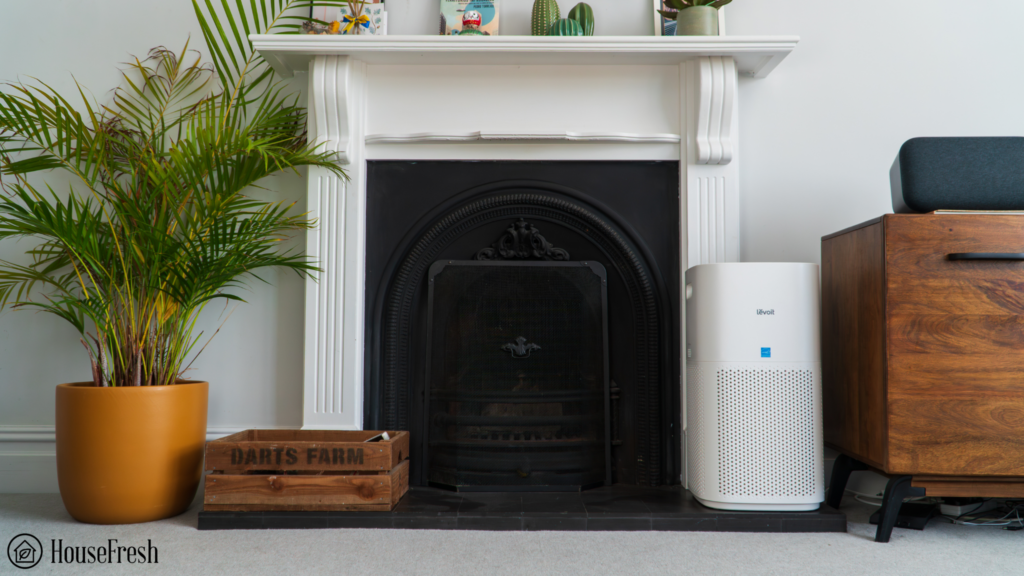
At HouseFresh, we have been reviewing air quality products since 2010. In all these years, we learned not to rely on manufacturers’ claims and the ever-so-glowing marketing materials. That is why we buy products with our own money, so we can write unbiased reviews after we’ve had enough time to evaluate air quality products in our home lab. Every unit we recommend has been thoroughly tested to assess its performance, energy consumption, and noise levels emitted in real-life environments. If you have any questions about our testing process for different types of air quality products, just drop us an email at danny@housefresh.com.

Winix 5500-2 review

Winix 5500 2 TV Room

The Winix 5500-2 is an upgraded version of their super popular Winix 5300-2, which we reviewed in 2021. Itโ€™s a device that has many fans online, from the team from NYtimes Wirecutter to the Redditors over at r/AirPurifiers.

Winix is one of the OG air purifier manufacturers, producing air quality devices since 1973. They are a South Korean company known for creating budget-friendly products that still perform effectively. Itโ€™s worth also mentioning that all Winix devices are made in Korea rather than China (the usual manufacturing country of most air purifier brands).

Another highlight of Winix is that they send all their devices for independent testing with AHAM (Association of Home Appliance Manufacturers) Verifide, which means that a third party has confirmed the unitโ€™s CADR results. 

As always, let me clarify that we bought the 5500-2 with our own money and have no relationship with Winix. We do this because we want to be as unbiased as possible, letting our first-hand data guide us. That is why my review focuses on how this unit performed in our set of tests, including its air cleaning performance, long-term costs, energy usage and sound generation.

how we test
How we test air purifiers

Read our full testing methodology.

A few weeks ago, we started hearing rumors about the 5500-2 being discontinued so we reached out to Winix America for confirmation.

Unfortunately, the rumors are true: both the Winix 5500-2 and the 5300-2 will be discontinued in the U.S. and in Canada once their inventory comes to an end.

The lowdown on the Winix 5500-2

Danny Ashton HouseFresh
โ€œI am pleased to see that Winix made some major improvements with the 5500-2, including a new type of activated carbon filter and a remote, but the best thing about it is its air cleaning performance: I ended up testing this device a few times as I didnโ€™t expect it to clean the PM1 pollutants as quickly as it did.
It was disappointing to learn that Winix has discontinued the 5500-2 in favor of the newer Winix 5510, but depending on where you live, you might still be able to find a 5500-2 and there are lots of OEM and generic filters still available.โ€
โ€” Danny Ashton, HouseFresh Founder & Lead Tester

What we really like

With PlasmaWave enabled, the 5500-2 cleaned our test room in 23 minutes โ€” without the ionizer, it still managed to clean the air in 24 minutes
A great price-to-CADR ratio, with 1 CADR cfm costing 74 cents!
Improved activated carbon filter that uses pelleted carbon instead of the impregnated fabric we saw in the older Winix 5300-2 
Affordable filter replacements, with genuine filters available for $50 and generic filters for $15 per year 
It comes with an auto-mode and timers, so you donโ€™t have to continually adjust the settings โ€” you also get a remote control for adjusting the settings from afar
AHAM Verifide, so it has been tested by a third party to confirm CADR scores and has an EnergyStar rating

What we think could be better

Energy usage is fairly high due to this being an older model
No memory setting, so if you lose power, you lose your current settings โ€” including the PlasmaWave function, which could generate ozone without you knowing if you donโ€™t switch it off

HouseFresh rating:โ˜…โ˜…โ˜…โ˜…โ˜…
Time to clean our 728 cubic feet test room (with the device running at top speed):23 minutes (with PlasmaWave)
Air purifier technology:PlasmaWave, removable pre-filter, washable activated carbon filter and True HEPA filter
Recommended room size (4.8 air changes per hour):360 sq. ft.
Clean air delivery rate (CADR):Dust:  243 CFM
Smoke: 232 CFM
Pollen: 246 CFM
Dimensions (in inches / cm):15W x 8.2D x 23.6H inches (38W x 21D x 60H cm)
Weight (in pounds / in kg):14.8 lbs (6.7kg)
Filter life:12 months
Noise level in decibels (measured from 3 ft. away with a sound level meter):Speed 1: 38.8 dB
Speed 2: 42.5 dB 
Speed 3: 47.5 dB
Speed 4: 58.9 dB
Electricity consumption in watts (recorded with an electricity usage monitor):Standby mode: 0.34 watts
Speed 1: 6.5 watts
Speed 2: 9.11 watts
Speed 3: 14.80 watts
Speed 4: 53.46 watts
Estimated running cost (electricity consumption + official filter replacement):$161.53 per year
Cost per CADR cfm (based on dust CFM as reported by AHAM):$0.66
Manufacturerโ€™s warranty:2 year
Country of manufacture:South Korea

The best feature: it comes with an ionizer that can be disabled

It may seem like a small thing, but unfortunately, there are many air purifiers on the market that come with hidden ionizers that cannot be turned off.

Winix 5500 2 Controls

The Winix 5500-2 uses a bipolar ionization technology called PlasmaWave, but you can switch it off and still use the air purifier without this ionizer function. This is great to see because not everyone wants to use this type of technology due to the potential risks associated with it, such as ozone generation and the potential for it to introduce VOCs into the air.

Now, this is the point where Winix would correct me and say that I shouldn’t use the word ‘ionizer’ because, unlike normal ionizers that generate negative ions, their PlasmaWave technology produces both negative AND positive ions. However, even bipolar ionization technology can potentially introduce unwanted chemicals into the air.

The good news is that the Winix 5500-2 has been certified by the California Air Resource Board, meaning that this unit meets the ozone emission concentration limit of 0.050 parts per million (50 ppb). That being said, some people report negative reactions to PlasmaWave, which is why it is great to have the option to disable it.

Timeless style that fits anywhere

The twin brother of the 5300-2 for those who prefer black over grey.

Winix 5500 2 Living Room

While the older 5300-2 is gray, the 5500-2 is black. I prefer this color as it doesnโ€™t stand out as much, but then again I have a black phone, black car and black laptop โ€” so I must really like black.

Iโ€™m a fan of the dark color but if you prefer lighter colors, the C545 could be worth a look as itโ€™s a very similar device but in white. 

Whilst itโ€™s not a small device, its design means that it doesnโ€™t take up too much floor space. 

But apart from the color, the 5500-2 looks very similar to its predecessor and has the same product dimensions and floor space requirements.

Winix 5500 2 VS Winix 5300

Like the 5300-2, the 5500-2 keeps the useful removable pre-filter, which makes it super easy to remove to clean as you can quickly vacuum it or rinse it under the tap. Winix recommends you do this every three months to remove particle build-up and keep the unit running smoothly. Data from CleanAirStars has shown that HEPA particle removal efficiency can drop up to 40% when you fail to keep the pre-filter clean.

Another thing worth mentioning about the pre-filter in the 5500-2 is that it is much better than the fitted pre-filters seen on the Levoit Core devices, which are part of the main filter.

Winix 5500 2 Pre filter

The control panel is similar to the 5300-2 with a button for auto mode and sleep mode, a button to switch on PlasmaWave, a button to cycle through the 4 fan speeds and a timer button to set 1 hour, 4 hours or 8 hours running time. There is a light underneath the buttons that adjust color depending on the current air quality levels.

Winix 5500 2 Controls

One annoying thing about the older unit was that when you lost power, it would default back to using the PlasmaWave even if you had switched it off before. Sadly, the 5500-2 still has this issue, so you must adjust the settings again whenever you lose power. We have seen that Alen has managed to build in a setting memory, so it would be great to see this in place for future Winix devices.

One little thing I think is cute is the sound it makes when you switch it on and off. It seems to be a thing with Korean devices as my LG washing machine also does the same thing.

One benefit over the Winix 5300-2 is that the Winix 5500-2 comes with remote control, so you have that as an option:

Winix 5500 2 Remote Control

Be aware if you have small children that the batteries used in these remotes can be deadly if ingested.

Three-stage air cleaning filter system

The 5500-2 comes with three separate filters, including a washable pre-filter, a washable pelleted activated carbon filter and a True HEPA filter.

Winix 5500 2 3 Stage Filtration

Following the big issue of Levoit removing HEPA from their marketing after Dyson complained to the BBB National Programs National Advertising Division (NAD), I am definitely wary of manufacturers’ claims of HEPA.

WInix 5500 2 AHAM Verifide

One reason to trust the Winix 5500-2’s performance is that itโ€™s been independently tested by AHAM as part of their Verifide process.

AHAM is the gold standard when it comes to air cleaning testing and I really like that  Winix always sends their devices for a CADR test and the results for the 5500-2 are impressive. 

  • Dust CADR of 243 cfm
  • Smoke CADR: 232 cfm
  • Pollen CADR 246 cfm

Based on these results this device will provide 4.8 air changes per hour in spaces up to 360 square feet. So if you have a large space you might need a larger device or need to use multiple units.

Winix states that their True HEPA filter can remove 99.99% of particles of 0.3 microns. This is a big claim, but Winix brought receipts: their True HEPA filter has been tested by a third-party lab, so I am not worried that they are not using the filters they say.

Winix 5500 2 HEPA filter

One of my biggest issues with the older Winix was the material they used for the activated carbon filter. Winix chose to use impregnated carbon fabric, which is much cheaper and fine for light-duty issues with odors and gasses. However, ASHRAE recommends that granular media filters are better for medium-duty issues, which most homeowners will face.

I am glad to report that the 5500-2 has removed the impregnated media-infused carbon filter in favor of the granular type with activated carbon pellets.

Winix 5500 2 Activated Carbon filter

I asked Teddy to take a close-up shot of the filter so you can clearly see the activated carbon pellets:

Winix 5500 2 Activated Carbon close up

Tip

Winix states that you can clean these new activated carbon filters every three months by running them under water and then making sure to let them dry completely before putting them back into the device.

You can see the difference between the carbon filters in the Winix 5300-2 compared to that of the Winix 5500-2 in the image below:

Comparing Carbon Filters Winix 5500 VS Winix 5300

As with many air purifiers, the filters for the Winix 5500-2 come inside plastic packaging that must be removed before use. If you donโ€™t remove the plastic bags, the air purifier will move dirty air around your room without cleaning it, potentially worsening allergies.

Removing filters for the Winix 5500-2 is super easy once you have removed the pre-filter from the tabs. Be sure to always put the activated carbon filter in first and then the True HEPA filter.

The Winix 5500-2 cleaned our test room in 23 minutes

The Winix 5500-2 has one the best bang for your buck when it comes to top speed air cleaning performance

Testing air cleaning performance at top speed

For our test, I used the PurpleAir Zen sensors with an additional BM680 gas filter, which allows us to track PM1, PM2.5, PM10 and VOC levels continually. 

I first filled our 728 cubic feet test room with smoke from burning an incense stick and then switched on the Winix 5500-2 in its highest mode with PlasmaWave enabled.

We tested the Winix 5500-2 in the same area where we tested 90 other air purifier models, all of which do the same job of removing particles from incense smoke. 

By testing every air purifier in the same room doing the same job we make it much easier to compare performance across different brands and models.

We have a program that connects to Purple Air air quality sensors and creates a graph showing the levels of PM1, PM2.5 and PM10.

One of the main questions we see online is how well the Winix 5500-2 can clean the air without using the PlasmaWave ionizer function.

We decided to test this ourselves and were pleased with the results as it was still able to clean our test room of PM1 particles in 24 minutes without the PlasmaWave, which is three minutes faster than Wirecutterโ€™s top recommended air purifier: the Coway AP-15122hh Mighty (with its ionizer enabled).

I created a table to compare how the Winix 5500-2 compares with other air purifier models we have benchmarked:

AIR PURIFIER MODELTIME TO REACH PM1 ZERO AT FULL SPEEDLIST PRICE
AirFanta 3Pro17 minutes$159.99
Levoit Vital 200S23 minutes$189.99
Winix 5500-2 (with ionizer)23 minutes$249.99
CleanAirKits Luggable XL-723 minutes$299.00
Smart Air SA60024 minutes$279.95
Coway Airmega AP-1512HH (with ionizer)26 minutes$229.99
PuroAir 40030 minutes$249.00
Corsi-Rosenthal Box32 minutes$85.00

Testing air cleaning performance at sub-45 dB

Since we first published this review, we have received many requests for information on air cleaning performance at low fan speeds. This makes sense, as the top speed is unlikely to be used regularly, as most people will find it too loud. We used the 45 dBA limit that CleanAirStars sets for noisy classrooms.

For the Winix 5500-2, fan speed 2 is under 45 dBa (42.5 dBA). When we tested the Winix 5500-2 using Plasmwave at clearing incense smoke from our 728 cubic feet test room at speed 2, it needed 45 minutes to achieve PM1 zero, according to our Purpleair Zen sensor.

If you were wondering the effect Plasmwave had on the air cleaning performance, we tested again at Speed 2 with Plasmwave disabled it managed to achieve PM1 zero in 46 minutes so only 1 minute slower.

Noise level test results 

The last test is to see how much sound is generated when using the purifier, especially at its highest and lowest fan speeds.  The quieter an air purifier, the more likely you will use it, which will mean cleaner air in your home. 

Here are the sound level results from 3ft away:

ModeSound Level
Speed 138.8 dBA
Speed 242.5 dBA
Speed 347.5 dBA
Speed 458.9 dBA

Check out how this compares to other air purifiers we tested in the table below:

AIR PURIFIER MODELSOUND LEVEL AT TOP SPEED (dB) TIME TO CLEAN OUR TEST ROOM
Smart Air Blast Mini MKII56.3 dB15 minutes
Levoit EverestAir57.8 dB16 minutes
Coway Airmega AP-1512hh Mighty60.1 dB25 minutes
IQAir Healthpro Plus61.2 dB28 minutes
Winix 5500-258.9 dB23 minutes
AirDoctor 300063.6 dB20 minutes

We know the sound is highly subjective, so be sure to listen to the sound test we produced after testing the Winix 5500-2:

The cost to run a Winix 5500-2: $137.81 per year

1. Electricity costs = $57.82 per year

At the lowest fan speed, the Winix 5500-2 only pulled 6.5 watts per our energy meter and reached a maximum of 53.46 watts on its turbo speed with Plasmawave enabled.

Assuming energy prices of $0.174/kWh, running the 5500-2 continuously 24 hours per day for every day of the year would add $57.82 to your annual electricity bill. Most people will find that they will use the unit for less time than in our scenario, but others with issues with allergies might need to keep it running continuously.

Fan speedEnergy consumed (ionizer enabled)
Standby0.34 watts
Sleep3.43 watts
166.5 (7.1) watts
29.11 (9.2) watts
314.80 (15.00) watts
453.46 (53.8) watts

2. Filter costs = $79.99 per year

The genuine True HEPA and activated charcoal filters will need replacing every 12 months and have an RRP of $79.99 but are regularly available for close to $50 with sales and discounts. When I wrote this review, you could buy filters from Winix for $49.99 and Amazon for $43.99.

There are plenty of generic filters that bring the price down even more, with a year’s worth of filters costing close to $15 per year if you buy in a pack of four or $19 for a pack of two.

In the table below, we compare running costs with other similar performing air purifiers we have tested:

AIR PURIFIER MODELESTIMATED ELECTRICITY COST (per year) FILTER REPLACEMENT COST (per year)YEARLY MAINTENANCE COST
CleanAirKits Luggable XL-7$12.22$45.94 $58.16
Levoit Vital 200S$46.83$49.99$96.82
Coway Airmega AP-1512hh Mighty$83.64$39.99$123.63
AirFanta 3Pro$46.56$78.67$125.23
Levoit Core 400S$27.44$99.98$127.42
Winix 5500-2$57.82$79.99$137.81
PuroAir 400$77.75$89.00$166.75
Smart Air SA600$56.55$141.47$198.02

Bottom line: Is the Winix 5500-2 worth it?

The 5500-2 impressed me with its improved performance and use of pelleted activated carbon instead of the fabric we saw in the 5300-2.

The 5500-2 comes with an ionizer via its PlasmaWave technology that helps deal with odors and gases. However, it still offers great air cleaning performance even without using this function, as it removed all PM1 in our test in under 23 minutes without PlasmaWave enabled.

Winix 5500 2 Close Up

Filter prices are fair, considering the use of activated carbon pellets. Due to the device’s popularity, there are many choices for generic filters if you want to save more money in the long term. I much prefer the 5500-2’s removable pre-filter, which makes it much easier to clean and vacuum, than Levoit Core devices like the 400S and the 600S, which have the pre-filter integrated into the main filter.

It is worth mentioning that this air purifier doesn’t have app support, but it does have auto-mode. Just remember to keep the sensor clean of dust to ensure it works effectively. 

For the price, the Winix 5500-2 is one of the top air purifiers – especially considering the amount of pelleted activated carbon it comes with. It offers excellent air cleaning performance, relatively low long-term costs and minimal noise generated. If you prefer different colors, you may be interested in the Winix C545, and if you donโ€™t care about the particle filters, you can save a little money with the grey Winix 5300-2, which is usually sold cheaper but has a less effective gas filter. 

It is unfortunate to learn that Winix has decided to discontinue this air purifier as it was one of my top recommendations due to the incredible value for money that it offers. If you like what the 5500-2 has to offer, make sure to check out the Winix 5510 (left).

Winix 5510 VS 5500 2 Front

This new model from Winix packs the same air cleaning power as the 5500-2 in a smaller and better-looking package, with app connectivity and an on-board air quality sensor. Read my full review of the 5510 to find out more.

If you have the Winix 5500-2 or have any other questions I haven’t covered, be sure to let me in the comments section below.

SOURCES

We calculated the yearly costs associated with running the Winix 5500-2 for 24 hours a day, 365 days per year, utilizing the latest average energy prices reported by the Bureau of Labor Statistics of $0.17/kWh as of November 2024.

How Google is killing independent sites like ours

Header Google is killing independent sites

Google regularly launches updates to its algorithm to continuously improve search results quality. Think of these updates as a refresh of the system where rankings change: some websites see an improvement while others see a decline.

At HouseFresh, we keep an eye on Googleโ€™s news and documentation because these updates can literally make or break our website. That said, we donโ€™t write for Googleโ€™s robots and always make editorial decisions with our readers in mind.

We know that at the end of the day, Google will reward us if our readers find our articles useful.

Helpful content HouseFresh

Or thatโ€™s what we thought.

You might have noticed that no matter what you google, thereโ€™s always a selection of the same publishers showing up at the top of the results:

What do BuzzFeed, Rolling Stone, Forbes, Popular Science, and Better Homes & Gardens have in common? 

They all know which are the best air purifiers for pet hair:

best air purifier results

Another thing theyโ€™ve got in common is that they all also seem to know the best cooling sheets for hot sleepers:

best cooling sheets

You could play this game yourself. Other searches you could try are: best gifts for mom, best home saunas, best beard products, best gifts for teens, best cocktail kitsโ€ฆ the list goes on.

The problem is, for the most part, these publishers recommend products without firsthand testing and simply paraphrase marketing materials and Amazon listing information.

In the last year, we have waited patiently for the many, many, MANY Google algorithm updates to impact these results. 

We were hopeful when Google introduced its reviews system with the Products Review Update back in 2021. It seemed they were finally doing something about one of the worst aspects of the modern internet: searching for information about products only to have to wade through countless reviews from people who had never even seen the thing.

Two years later, SEO professional Lily Ray mentioned that (big media) publishers were hit hard by Googleโ€™s Product Review updates, prompting a response from Google itself:

publishers dont want to test

In our experience, each rollout of the Products Review Update has shaken things up, generally benefitting sites and writers who actually dedicated time, effort, and money to test products before they would recommend them to the world.

That said, most searches for specific product models donโ€™t just magically start with users searching for specific devices off the top of their heads. There is an immediate step before this: the hours of research reading through lists of product recommendations.

If you have been reading HouseFresh for a while, your first encounter with us was likely a list like this one or this one recommending the best devices for a specific issue you were trying to solve. That is how most of our readers find us.

Unfortunately, weโ€™re getting less and less traffic from those pages, and itโ€™s endangering the future of our site. 

Thatโ€™s why weโ€™re writing this article.

Big media publishers are inundating the web with subpar product recommendations you canโ€™t trust

Savvy SEOs at big media publishers (or third-party vendors hired by them) realized that they could create pages for โ€˜best ofโ€™ product recommendations without the need to invest any time or effort in actually testing and reviewing the products first.

So, they peppered their pages with references to a โ€˜rigorous testing process,โ€™ their โ€˜lab team,โ€™ subject matter experts โ€˜they collaborated with,โ€™ and complicated methodologies that seem impressive at a cursory look. 

Sometimes, they even added photos of โ€˜testsโ€™ with products covered in Post-it notes, someone holding a tape measure, and people with very โ€˜scientificโ€™ clipboards. 

Thereโ€™s nothing wrong with wanting to show youโ€™re doing the thing youโ€™re supposed to be doing, but what happens when thatโ€™s as far as you go?

Letโ€™s look at one example. 

These are the current top 10 results on Google.com for a query we have completely given up on โ€” Best Air Purifier for Pets:

best air purifiers for pets top10

Right now, the magazine Better Homes & Gardens is ranking at the top of the first page of results.

At a glance, the article shows all the right things:

bhg best list bs EEAT signals

If you were to keep scrolling, youโ€™d also find photos of an air purifier inside of a tent, two more mentions of the expert Kenneth Mendez, and four mentions of their lab in Des Moines, Iowa. 

They say all the right things on the page and are a perfect example of a big media publisher with 40 different pages of โ€˜best ofโ€™ product recommendations in the house cleaning section alone without a single in-depth product review:

bgh best of pages

They mention that they have tested 67 air purifiers in their lab in Des Moines, Iowa, but somehow, they have published zero product reviews and they donโ€™t make their test data available anywhere. 

They do have photos, with the majority of them being credited to Henry Wortock. Remember that name.

โ€œBut how do you know they didnโ€™t test these devices?โ€

Better Homes & Gardens never mentioned conducting tests prior to the Google Product Review Update in July 2022. You can see clearly here how, on July 6th, there were no mentions of air purifiers being tested. Fast forward to July 26th (one day before the announcement of the Google update), and theyโ€™re now saying theyโ€™ve tested 38 air purifiers. Zero to over 30 devices in just a few weeks without any prior mention of any sort of testing. This is also the first time we see some original photos.

Thatโ€™s not all. 

Their air purifier recommendations are generally plagued by high-priced and underperforming units, Amazon bestsellers with dubious origins (that also underperform), and even subpar devices from companies that market their products with phrases like โ€˜the Tesla of air purifiers.โ€™ Any actual product testing would show these air purifiers to be a bad pick. What you hardly ever see in their recommendations are truly affordable and high-performing options, which should be a priority if youโ€™re trying to help people clean the air in their homes.

For example, Better Homes & Gardens recommends the Molekule Air Mini+ as their best option for small rooms:

bhg recommends molekule

We have no idea how this device made the list considering that Molekule recently filed for bankruptcy, has active class action lawsuits for false advertising, has been recognized by Wirecutter as the worst air purifier they tested, and received the honor of being labeled as โ€œnot living up to the hypeโ€ by Consumer Reports.

When we reviewed this device, we also found it to be one of the worst air purifiers we have ever tested for multiple reasons: 

  • It took 3x as long to clear our test room of smoke compared to units sold for a third of its price.
  • Itโ€™s incredibly noisy, generating 68 dB when running at its top fan speed โ€” equivalent to the sound of a freeway or a vacuum cleaner.
  • The filter replacement costs A LOT ($99.99), and you need to change it every six months, so you need to spend an additional $199.98 to use this air purifier for a year
  • It pulls 50 watts at its top speed, which might not seem like a lot but it is considering you could buy units for a third of the price that wonโ€™t consume more than 21 watts.

We could go on forever. But we can also show you actual firsthand data to back up each of our reasons not to recommend this air purifier. 

Even some shallow desk research powered by Google would show that this product shouldnโ€™t be recommended, but, hey, itโ€™s $360, so it comes with a juicy commission compared to other better quality yet budget products.

But letโ€™s go back to the search results for Best Air Purifier for Pets and give Google the chance to rank a truly reliable list of recommendations that live up to their guidelines.

Ranking below Better Homes & Gardens, we have Real Simple, another magazine most people would immediately trust due to their longstanding brand.

When landing on Real Simple, the first thing youโ€™ll notice is how similar the site looks to Better Homes & Gardens. It uses the same template and has all the right signals to communicate that they test products for real:

real simple best list bs EEAT signals

Another interesting thing is that the photos on this page are credited to the same photographer, Henry Wortock (remember him?)

It even looks like the photos were taken in the same space:

Now, Real Simple doesnโ€™t mention a lab in Des Moines, Iowa, but they do say they acquired 56 air purifiers to test AND they named the same expert: Kenneth Mendez. 

Similarly to Better Homes & Gardens, there are no air purifier reviews on the entire site. Thatโ€™s 56 devices that we just have to trust they actually tested and assessed.

Many of you wonโ€™t be surprised by all this because youโ€™ll know that both companies are owned by the same media giant: Dotdash Meredith.

Thatโ€™s probably why both sites have the same design and feature photos from the same freelance photographer (Henry Wortock). Itโ€™s also probably why they couldnโ€™t really be bothered with sourcing another expert to satisfy that specific point in their E-E-A-T checklist (more on that later).

A deeper look inside Google Images shows how Dotdash Meredith is using photos clearly taken at the same time across different publications:

dotdash photoshoot

Perhaps Dotdash Meredith did pay some lab to test all those devices across all those different websites, and itโ€™s not just a collection of photoshoots their commerce writers can tap into when writing best-of lists.

Whatever the case, itโ€™s clear the team at Dotdash Meredith has worked out what Google needs to see in order to rank best-of lists in top positions without the need to actually publish insightful product reviews or share any evidence of original test data. 

But itโ€™s not just Dotdash Meredith that we need to outrank if we want to recommend the actual best air purifiers for pets.

Letโ€™s scroll down to position number six and see whoโ€™s ranking right below Amazon and Reddit: 

buzzfeed best air purifiers for pets

Hello, BuzzFeed.

Thereโ€™s a lot wrong with this list, starting with the fact that it includes a whopping 22 air purifiers and clearly hasnโ€™t even been curated. Similarly to most big media publisher recommendations, BuzzFeed also lists the Molekule Air Mini+. 

Reading through the list, we found the BuzzFeed team doesnโ€™t even pretend to test the air purifiers. Thereโ€™s no firsthand research other than curating a list of devices and images from Amazon.com:

BuzzFeed Amazon images

And then pulling in some reviews from Amazon.com as the bulk of their reasoning behind why they picked one air purifier over another:

BuzzFeed Amazon reviews

Some of you might be shocked to see BuzzFeed recommending air purifiers, considering this is far from what BuzzFeed is all about. Others might rightfully think this list must be some sort of joke, expecting to see AI-generated images of air purifiers hugging and feeding cats and dogs. 

The truth is that BuzzFeed has been struggling to maintain the ranking of this particular page, so it will probably drop off the first page of Google results eventually:

buzzfeed traffic graph


But until that day comes, searchers will continue to land on that Amazon.com copy-and-paste page when searching for an air purifier to help with pet odor and dander.

But hey, itโ€™s BuzzFeed. Theyโ€™re publicly listed and are the parent company of Huffington Post and Complex, so they obviously deserve to be there. 

Right after BuzzFeed, weโ€™ve got a Reddit thread that someone opened four months ago and has good discussions between Redditors: 

Reddit search results

There are also lots of spammy replies, with this specific one at the top right now for those landing on that page without being logged into Reddit:

Reddit spam reply

When clicking on that link, users will then land on this incredibly sketchy website:

Site it leads to

Those of you with high attention-to-detail will notice that this introduction is a word-by-word copy of Real Simpleโ€™s article:

Real Simple intro copy

Clicking on the profile of the Redditor behind this โ€˜recommendationโ€™ will lead you to a suspended account page:

Reddit suspended user

Somehow the user has been banned from Reddit, but their comment is still at the top of the thread โ€” we wonder how many other comments this user has published across different subreddits.

Tip

After Google’s latest Helpful Content Update, Reddit and LinkedIn started ranking heavily in Google search results. If you want to find out more about Reddit specifically, you should read this article from Glen Allsopp.

Private equity firms are utilizing public trust in long-standing publications to sell every product under the sun

In a bid to replace falling ad revenue, publishing houses are selling their publications for parts to media groups that are quick to establish affiliate marketing deals

At position #8, we have Popular Science, a magazine from 1872 that was sold to a private equity firm, North Equity LLC, in 2020. A year later, North Equity introduced Recurrent Ventures, a new arm of their business that runs all the media brands they acquired. A few months later, PopSci switched to an all-digital format. Two years later, in 2023, PopSci stopped being a magazine altogether.

Of course, most people wonโ€™t know that because the site still feels like the PopSci we all know and trust:

popsci best air purifiers for pets

It doesnโ€™t help that they have a โ€˜Why trust usโ€™ section at the end of all their โ€˜Best ofโ€™ lists that says:

PopSci Why Trust Us 1

The vast majority of readers donโ€™t know that the teams behind these product recommendations are far from the team of journalists and editors who built the brand behind the site.

Itโ€™s unfortunate because many people will click on that Popular Science article expecting a trustworthy list of products only to find a list of units that havenโ€™t even been tested by PopSciโ€™s team:

Pop Sci methodology

After reading the article, it quickly becomes clear that every air purifier on the list was selected (and ranked) based on anecdotal experience.

popsci anecdotal product recommendations

Another thing worth mentioning about this PopSci list of air purifiers is that itโ€™s a completely new page on their site that went live on December 29th, 2023. 

PopSci wayback machine

This makes it all the more strange for them to be recommending not one but two (2!) Molekule air purifiers. Surely, the writer who researched each device ran into the news of Molekule going bankrupt โ€” or the ridiculous reasons why they supposedly filed Chapter 11.

Shouldnโ€™t โ€˜best ofโ€™ lists be treated as product reviews?

Hint: yes, they should, but somehow theyโ€™re not 

In theory, โ€˜best ofโ€™ product recommendation lists should be treated the same as any product review.

Googleโ€™s documentation clearly states that:

google logo
โ€œReviews can be about a single thing, or head-to-head comparisons, or ranked-lists of recommendations.โ€
google review system documentation

So, shouldnโ€™t Google be rewarding ranked lists of recommendations โ€œthat provide insightful analysis and original research [โ€ฆ] written by experts or enthusiasts who know the topic wellโ€? 

Shouldnโ€™t the reviews system ensure that people donโ€™t end up landing on โ€œthin content that simply summarizes a bunch of products, services, or other thingsโ€?

Perhaps weโ€™re mistaken here, but we think the documentation says it plainly and clearly.

Sadly, these are just empty words because Google has a clear bias towards big media publishers.

Their Core and Helpful Content updates are heavily focused on something they call E-E-A-T, which is an acronym that stands for Experience, Expertise, Authoritativeness, and Trustworthiness. 

The SEO world has been obsessed with E-E-A-T for a few years now, to the point where there is always someone on X (formerly Twitter) discussing how to show experience, expertise, authoritativeness, and trustworthiness. Many of the examples come from dissecting big media publishers like the ones weโ€™ve been discussing in this article. 

The reason why SEOs look up to these sites is that Google rewards those sites:

And people have been pointing this out for months:

Every single big media company (a.k.a. Digital Goliaths) is currently pumping up their bottom line with affiliate earnings. 

The strategy of Recurrent Ventures for Popular Science seems to be to squeeze as much money as possible from this type of ranked list of recommendations before things start to go south.

You can see here how they have ramped up the pages inside of their โ€˜Gearโ€™ section, which is where they house the bulk of their โ€˜best ofโ€™ articles โ€” you can also see how their traffic has been declining since the latest Product Review update:

PopSci affiliate marketing

The strategy of Dotdash Meredith for their publications seems to be to optimize resources and maximize profit.

We might one day see the first page of Google results full of copycat recommendations once they roll out their hacks across all their websites, including Verywell, People.com, Health.com, Travel + Leisure, Byrdie, MyDomaine, The Spruce, Lifewire, Southern Living, TreeHugger, Parents.comโ€ฆ and so many other top tier publications.

Oh, wait, thatโ€™s already happening:

dotdash meredith affiliate hacks 1

So, where do we go from here?

Google is killing independent sites like ours through inaction

While this happens, investment firms and โ€˜innovative digital media companiesโ€™ are selling you bad products 

HouseFresh has published over 60 hands-on reviews that were written on the basis of multiple performance tests. 

We can tell you that testing and reviewing products takes a lot of time, money, and effort. 

But if our small team can publish real reviews, then these big publishers and private equity surely have the resources to do the same. 

Unfortunately, right now, these companies are using all their resources to publish more and more pages peppered with the right โ€˜ingredientsโ€™ to dish up a tasty E-E-A-T meal for Google.

We have no doubt that these big publications could build their own labs, where they could run actual tests in order to make product recommendations backed by actual firsthand data. 

CNET bought an entire smart home back in 2015 in order to test products. That was before they were acquired by Red Ventures and found themselves selling the house after reporters told The Verge they were feeling pressured to change their reviews to be more favorable to brands that were being advertised on CNET. 

How many other โ€˜parent companiesโ€™ are using commerce or shopping editors to pass off promotional articles as editorial content?

It turns out that what weโ€™re seeing now is a result of the brainchild of Alicia Navarro, the founder and CEO of Skimlinks, a content monetization platform for online publishers. Navarro wrote a series of opinion articles and provided quotes to industry publications, who started introducing the concept of โ€˜comtentโ€™ in 2016:

comtent ecommerce editors

Someone who voiced their discomfort with the idea of e-commerce editors publishing โ€˜comtentโ€™ at the time was Brian Lam, founder of The Wirecutter. 

Months before being acquired by The New York Times, Lam explained that the Wirecutter had grown to become one of the most successful independent tech sites by publishing 20 to 30 articles a month that would take 30 to 200 hours to research and produce. 

He said he didnโ€™t believe in a role like that of an e-commerce editor who would be pushing products. โ€œI believe in talented editors on a beat who help people find related gear, not someone specifically meant to find things to push to readers,โ€ Lam added.

We are big fans of The Wirecutter, but we wonder whether their content would be as successful in the eyes of Google today if they were still an independent website. Luckily, they donโ€™t need to worry about it because their site now sits inside the nytimes.com domain โ€” a trusted and well-established media brand.

And itโ€™s not just newer independent sites like HouseFresh that are losing traffic to big media publishers and their e-commerce editors.

Long-standing websites such as GearLab have also seen their traffic decline in recent months even though they publish product reviews based on objective, independent testing:

independent site traffic loss

We canโ€™t speak for the GearLab team, but this situation just isnโ€™t sustainable. 

Many independent sites will go out of business if this trend continues.

We hope to still be here to see things change

Thatโ€™s the reason why weโ€™re writing this article

A few months ago, Futurism uncovered how Sports Illustrated was publishing โ€˜best ofโ€™ articles by fake, AI-generated writers. The magazine’s publisher, The Arena Group, washed their hands of it by stating that the โ€œarticles in question were product reviews and were licensed content from an external, third-party company, AdVon Commerce.โ€

We wonder how many of these big media companies and investment firms are hiring intermediaries to develop their โ€˜affiliate marketingโ€™ arm, whatever the cost.

These Digital Goliaths are utilizing their websites’ authority and the public’s trust in their brands to sell every product under the sun.

Theyโ€™re buying magazines we love, closing their print operations, turning them into digital-only, laying off the actual journalists who made us trust in their content in the first place, and hiring third-party companies to run the affiliate arm of their sites.

And while they do all this, theyโ€™re telling you to buy: 

  • Products from brands that are bankrupt and have class action lawsuits for false advertising against them
  • Outdated, inefficient, and underpowered air purifiers that wonโ€™t actually clean the air in your home
  • Overpriced devices powered by fancy marketing tactics that will perform as well as units half the price

We appreciate how much information Google has shared about what a high-quality review is and about helpful content in general, but these guidelines need to be applied to everyone.

These Digital Goliaths shouldnโ€™t be able to use product recommendations as their personal piggy bank, simply flying through Google updates off the back of โ€˜the right signals,โ€™ an old domain, or the echo of a reputable brand that is no longer.

As a team that has dedicated the last few years to testing and reviewing air purifiers, itโ€™s disheartening to see our independent site be outranked by big-name publications that havenโ€™t even bothered to check if a company is bankrupt before telling millions of readers to buy their products.

That isnโ€™t helpful content. Especially considering the work of air purifiers canโ€™t be assessed by the naked eye.

Users wonโ€™t be able to tell if their air purifier is actually working without subject-matter knowledge and the help of tools to measure air quality. Thatโ€™s when actual testing and firsthand data become indispensable.

If a magazine they trust tells them the Molekule Air Mini+, the PuroAir HEPA 14 240, and the Okaysou AirMax 10L Pro will help with their pet allergies, their asthma flare-ups, the air pollution that gets through the windows, the wildfire smoke blowing in their direction, the mold spores in their damp apartment, or recurring flu outbreaks in their school, then theyโ€™ll go and buy one of those useless, overpriced units.

Everybody loses but the investment firm.

Weโ€™re talking about only one product here, but we imagine the issues highlighted in this article are rampant across every consumer tech product being recommended by these big media sites.

Google wonโ€™t be the gatekeeper forever, but they are the gatekeeper now. 

The ball is in their court.

UPDATE

If you want to find out what happened since we published this article, head over to HouseFresh has virtually disappeared from Google Search results. Now what?

The U.S. real estate markets most vulnerable to climate change

Header The US Real Estate Markets Most Vulnerable to Climate Change

The immediate effects of climate change, already being felt around the world, include extreme weather events, unpredictable crop yields and increased health risks from harmful air and insect-borne diseases. And the knock-on effects can be just as impactful.

One key area for homeowners and investors is the falling value of properties at high risk of damage from weather events and other conditions brought on by global warming. One recent study found that U.S. homes exposed to flood risk are overvalued by $121โ€“$237 billion and that lower-income households suffer โ€œgreater risk of losing home equity from price deflation.โ€

More positively, a 2022 report from McKinsey suggests that climate change โ€œnot only creates new responsibilities for real-estate players to both revalue and future-proof their portfolios but also brings opportunities to create fresh sources of value.โ€ Such opportunities might include redeveloping and โ€œclimate-proofingโ€ at-risk properties and areas.

Whatever your perspective, if you are a homeowner or have interests in real estate, it is essential to understand the turbulence ahead. That is why the HouseFresh team has identified the cities and states with the highest proportion of home listings at high risk from climate change-related fire, flood, wind or heat in the next thirty years. To do this, we analyzed risk data for each property market using Risk Factorโ„ข and Redfin, ranking cities and states based on the percentage of property listings that carry a major risk.

You can find our full methodology at the foot of the article.

  • In Wyoming, 90% of listed properties have a major fire risk โ€” more than in any other state.
  • St. Petersburg, Fla. (42.7%), and Honolulu (34.4%) are the cities with the most properties at extreme risk of flood.
  • We found eight states and 14 cities where 100% of properties have an extreme wind risk.
  • Miami and New Orleans are among 11 cities where 100% of properties have an extreme heat risk.

The states and cities with the highest percentage of home listings with a major fire risk

Wildfires are not just a result of increasing heat but climate-related factors, such as increased droughts and tree-killing beetles, that make woodland more susceptible to fire.

Before we jump into the findings of our study, we have created a mini-infographic to explain the wildfire risk factor:

01 Understanding the Fire Risk Factor

Every year, news of wildfires and associated losses hits our screens and re-ignites debates over climate change. Yet from 1990-2010, the areas where wildfires were most pronounced experienced 41% growth in the number of houses built (33% growth by area).

This made wildfire-prone land โ€œthe fastest-growing land use type in the conterminous United Statesโ€ during that period, according to the study that produced those figures. According to Timothy Collins, a geography professor at the University of Utah, โ€œpeople are drawn to those environments because of the amenities associated with forest resources.โ€

02 The States With The Highest percentage of Home Listings With a Major Fire Risk

We found that Wyoming is the state with the highest proportion of listings with a major fire risk, by a significant leap. Not only are many houses built with high-risk materials in high-risk areas, but Wyoming has a โ€œsignificantly disproportionate land-to-resource ratio,โ€ meaning a low proportion of firefighters and other resources compared to the extent of the fires it suffers.

โ€œIn my experience, Wyoming has had wildfires that started to burn in one county on private lands and over the next several days, spread across three different counties, burning private, state, and BLM [Bureau of Land Management] lands,โ€ Kelly Norris, Interim Wyoming State Forester, told a recent senate committee hearing, noting that Wyomingโ€™s forests provide $26 billion of value per year.

Unsurprisingly, Wyoming is also home to the city whose property is most vulnerable to wildfire. As the chart above shows, 62% of listed properties in Cheyenne are high-risk. However, Riverside, Calif., is not far behind, at 59.2%.

03 The Cities With The Highest percentage of Home Listings With an Extreme Fire Risk

Colorado Springs joins the leading pack with 46.4%, but other big cities have a significantly lower proportion of high-risk properties. This overall lower risk to city properties compared to the state-wide figures is partly due to the lower proportion of flammable vegetation in built-up areas.

The states and cities with the highest percentage of home listings with a major flood risk

Global warming leads to increased water evaporation, which intensifies rainfall. According to the Environmental Defense Fund (EDF), a rise of one degree Fahrenheit can lead to 4% more vapor in the air โ€” meaning there may be as much as 9% more moisture in the air now than in 2023. And the effects of intensified rainfall are exacerbated by the urban environment, which has โ€œeliminated many natural landscape features that would otherwise slow rainwaterโ€™s path across the land and absorb it deeply underground.โ€ Meanwhile, rising sea levels pose an ever-greater threat to coastal areas.

Hereโ€™s how flood risk is measured:

04 Understanding the Flood Risk Factor

Hawaiian properties are most at risk of flooding. As an archipelago, the state is at risk of rising sea levels, coastal erosion and storms, hurricanes and tsunamis. At Hilo Bay, the sea level has risen by 10 inches since 1950 and now rises by one inch every four years.

05 The States With The Highest percentage of Home Listings With a Major Flood Risk

Louisiana (55.30%) and Florida (32.73%) complete the top three states for flood risk. According to McKinsey, โ€œthe value of homes in Florida exposed to changing climate-related risks are depressed by roughly $5 billion relative to unexposed homes.โ€ In Florida, as elsewhere, this risk disproportionately affects minority communities.

We also found that the cities with the most homes at risk of flooding are in these states. St. Petersburg (42.7%) is on Florida’s Gulf Coast, while the Hawaiian capital, Honolulu, is second-most at risk (34.4%), as our following chart shows.

06 The Cities With The Highest percentage of Home Listings With an Extreme Flood Risk

Twelve of the cities with the highest proportion of property listings at high risk of flooding are coastal. The real estate market is particularly sensitive to the threat of coastal flooding following Hurricane Sandy, which killed 182 people and caused more than $70 billion in damage โ€” making it Americaโ€™s second costliest storm after Katrina. In New York City, the price of flood zone properties not damaged by Hurricane Sandy fell by 8% in the wake of the disaster.

The states and cities with the highest percentage of home listings with a major wind risk

โ€œ[M]ajor hurricanes have caused more damage to local populations and ecosystems than any other natural disaster,โ€ according to researchers. And they are on the increase, energized by warmer sea surface temperatures and intensified by higher sea levels.

The visual guide below explains how Wind Risk is measured:

07 Understanding the Wind Risk Factor

Hurricane winds cover large distances at high speeds and are often connected to intense rainfall โ€” hence the flooding described above. But the wind itself affects buildings in multiple ways, from cutting power lines to lifting roofs, tilting structures and even overturning whole homes.

We found eight states where 100% of listed property is considered at high risk of wind damage. The list is dominated by Atlantic Coast states, from Florida all the way up to Massachusetts.

08 The States With The Highest percentage of Home Listings With a Major Wind Risk

Climate change is โ€œpoised to bring hurricanes that intensify quicker and, with them, a heightened risk of flooding to the U.S. Atlantic Coast,โ€ reports the Department of Energyโ€™s Pacific Northwest National Laboratory. Researchers at the lab discovered a โ€œunique coastal phenomenon lies at the heart of the bustling hurricane activityโ€ and that โ€œthe same mix of hurricane-favoring conditions doesnโ€™t appear in the Gulf of Mexico.โ€

We also found that 100% of the listings in the top 14 cities are flagged for high wind risk. But in this case, the balance is more in the direction of the Gulf Coast. These cities include Corpus Christi, Texas, which was the point of entry for Storm Harold in August. That storm achieved wind speeds of 45-50 mph in the area; winds are given tropical storm status when they hit 39 mph.

09 The Cities With The Highest percentage of Home Listings With an Extreme Wind Risk

Being a way back from the coast doesnโ€™t guarantee protection either. The Louisiana cities in our chart are dozens of miles from the coast.

In 2020, Louisiana suffered its strongest hurricane in 150 years, with gusts up to 137 mph. โ€œThe hurricane severely damaged residential and commercial buildings, knocked mobile homes off their platforms and blew out windows from the cityโ€™s tallest building,โ€ reports Climate360.

Many have found themselves displaced for months to hotels, trailers or even tents while awaiting insurance payouts and home repairs.

The states and cities with the highest percentage of home listings with a major heat risk

The risk of extreme heat levels is measured according to an areaโ€™s hottest month of the year. Extreme heat levels can unsettle a home from its very foundations, drying out the soil beneath the concrete and causing walls to crack and floors to slope. The materials that homes and the surrounding infrastructure are made from can buckle and warp, and heat can also cause further damage and disruption to home sensors and devices such as solar panels.

The short infographic below covers what you need to know about Heat Risk:


10 Understanding the Heat Risk Factor

Once more, states on or near the Atlantic Ocean or the Gulf of Mexico are most at risk. In the case of heat risk, 100% of the properties in 13 states are flagged, while Alabama and Tennessee are not far behind on 99% each.

On the other hand, there are 13 states where no listed properties are considered at high risk from extreme heat. These are almost all inland, and the majority are in or around the Midwest.

11 The States With The Highest percentage of Home Listings With a Major Heat Risk

Oklahoma stands out among the highest-risk states for being positioned some distance from the Gulf of Mexico. By the mid-2080s, Oklahoma will likely experience three to four times as many days above 100ยฐF as it has now.

Unlike the majority of states, Oklahoma actually cooled over the last century. This was โ€œdue to natural cycles and sulfates in the air,โ€ according to the U.S. Environmental Protection Agency, but โ€œ[n]ow sulfate emissions are declining, and the factors that once prevented parts of the state from warming are unlikely to persist.โ€

In contrast, the 15 most at-risk cities are all in the southeast and towards the coast. These include Norfolk, Va., where an $8.1 million building has recently been constructed to deliberately suffer the effects of climate change โ€” and thus โ€œshowcase strategies to stay longer in harmโ€™s way.โ€

12 The Cities With The Highest percentage of Home Listings With an Extreme Heat Risk

In our city rundown, Chandler, Ariz., is the outlier, being positioned in the southwest and in a landlocked state. Heat is already the leading weather-related cause of death in Arizona, and Chandlerโ€™s position in the Sonoran Desert, compounded by the urban heat island effect, makes the city particularly vulnerable to dangerous temperatures. Just this summer, the city made the news when a local librarian reported that his shoes had melted while guiding children across a hot street.

Preparing for the Unknown

We know that climate change is coming and that conditions will become more difficult. However, the extent of the change is not yet known and depends greatly on the steps taken by international governments and corporations.

Homeowners, developers and other parties with interests in real estate can already take steps to mitigate the risk, damage and costs to property in the coming months and years. However, the precise risk faced by a property is not a simple issue to estimate: โ€œThe challenge with these perils is that you donโ€™t see identical damage to each house,โ€ says Tom Larsen, an insurance and spatial solutions specialist at data analytics firm CoreLogic. โ€œSo we use our spatial modeling to look on a granular level at every house. We can look at the elevation above the sea level of the first floor of a house and follow wildfire patterns property by property.โ€

Be it fire, flood, wind or heat โ€” or, more likely, a combination of the above โ€” forewarned is forearmed.

METHODOLOGY

To determine how climate risk factors affect house values, we reviewed data on flood, fire, wind and heat risk from Risk Factorโ„ข and Redfin. States were ranked based on the percentage of Redfin property listings in each state that carry a major risk of 5 or above on Risk Factorโ€™s 10-strata risk scale, while cities were ranked based on the percentage of property listings that carry an extreme risk of 9 or above on Risk Factorโ€™s 10 strata scale. Only cities with at least 100 properties listed on Redfin were considered.

According to Risk Factorโ„ข:ย 

  • A โ€œmajorโ€ Fire Factorยฎ score of 5 or higher means a property has a 6%+ chance of being exposed to wildfire in the next 30 years. An โ€œextremeโ€ factor score of 9 or higher means a property has a 26%+ chance of being exposed to wildfire in the next 30 years.
  • A โ€œmajorโ€ Flood Factorยฎ score of 5 or higher means a property has a major risk of being reached by flood waters in the next 30 years. An โ€œextremeโ€ flood risk factor of 9 or higher means a property has an extreme risk of being reached by flood waters in the next 30 years.
  • A โ€œmajorโ€ Wind Factorยฎ score of 5 or higher means that the wind speed during extreme wind events at that property will average to 41 mph or greater over the next 30 years. An โ€œextremeโ€ factor score means that the wind speed during extreme wind events at that property will average to 77 mph or greater over the next 30 years.
  • A โ€œmajorโ€ Heat Factorยฎ score of 5 or higher means that the average heat index during the hottest month of the year will be 89ยฐF or higher over the next 30 years. An โ€œextremeโ€ heat factor score of 9 or higher means that the average heat index during the hottest month of the year will be 104ยฐF or higher over the next 30 years.

The data was collected in December 2023 and January 2024.

PuroAir HEPA 14 240 review

PuroAir HEPA 14 240 Sofa

I had never heard of the PuroAir HEPA 14 air purifier until the last quarter of 2023.

None of the several experts in air quality I follow on X (formerly Twitter) had mentioned this device. Even the excellent Clean Air Stars database, which has comprehensive data on 680 devices, has no record of PuroAir models. Yet, when analyzing sales figures on Amazon product research tool AMZScout, I saw this device listed as the best-selling air purifier of 2023 on Amazon.

According to this data, the two-device set (with a retail price of $349.99) sold an estimated $34 million in a single year. while the one-device option pulled in an estimated $22 million. Between the two listings, the PuroAir HEPA 14 240 sold an estimated $56 million worth of air purifiers in one year!=, according to data from AMZScout.

These estimations might not mean much in isolation, so I compared them to another device that usually tops the best-seller lists: the popular Levoit Core 300. The Core 300 has been on the market since 2019, and AMZScout figures show it has only sold an estimated $33 million on Amazon.com in 2023 โ€” that is $23 million less than the estimations for PuroAir 240 devices.

This fact left me wondering, How could a new brand come out of nowhere and grow to become the hottest air purifier in the United States?

As we do for all our reviews, I conducted in-depth desk research into PuroAir (and the company behind it) before writing my review.

Typically, this is a fairly straightforward exercise where I read through company websites, check social media profiles (especially LinkedIn), and trawl public business databases. However, the job wasnโ€™t as straightforward when I sat down to learn more about the company behind this air purifier.

After researching PuroAir for over a week, I couldnโ€™t find any clear information about who owns the company, their background, their connection to air quality, or the location of factories and offices.

The one thing I did find was a collection of outstanding quotes from big media publishers highlighted on the homepage of PuroAirโ€™s website, so I followed that lead.

puroair quotes

Now, I couldnโ€™t find those exact quotes on the sites of those three publishers:

puroair big media quotes

Odd. 

But, when searching for PuroAir on Google.com, I found recommendation upon recommendation as part of โ€œbest air purifierโ€ lists published by some of the largest newspapers and magazines in the world.

puroair google news

This air purifier must be incredible to receive such praise from some of the worldโ€™s most well-renowned publishers. This could be the kind of advertising that led to the PuroAir 240 becoming the best-selling air purifier of 2023.

So, naturally, I was super excited to see how this unit performed in our collection of tests designed to assess air cleaning performance (removing PM1.0 particles), energy usage, noise levels at each fan speed, and long-term running costs.

how we test
How we test air purifiers

Read our full testing methodology.

The PuroAir HEPA 14 240 retailed for $229.99 when it was first launched. At the time of writing this review, it has a retail price of $159 on Amazon.com.

The pros and cons of the Puroair 240

A summary of our top-level findings after testing this air purifier following our methodology.

PuroAir HEPA 14 240 Sofa

PRICE on amazon PRICE on EBAY

“Our hands-on tests show that the PuroAir 240 is too underpowered for the recommended room size and its air cleaning performance is worse than that of units sold for half its price.

I donโ€™t understand why journalists from big-name publishers have regularly recommended this air purifier to their readers. But thanks to this push from these trusted brands Google chooses to rank at the top of its search results, thousands of consumers have paid double for an air purifier that wonโ€™t be effective in most rooms.

Danny Ashton HouseFresh
Danny Ashton
HouseFresh Founder
& Lead Tester

Due to many issues I encountered when testing this air purifier, this is a 4000-word review. I totally understand if you donโ€™t want to read it all. Below are the key things you need to know about the PuroAir HEPA 14 240:

CONS

It took 51 minutes to clean the air in our 728 cubic ft. test room. A Winix A230 offers better performance (40 minutes) for $80.
The build quality is poor. It feels like a cheap rip-off of the Levoit Core 300.
Marketing materials state that this unit can be used in a room of up to 1,115 sq. ft, but this would allow for only one (1) air change per hour.
Filter has a sticker stating that the HEPA 14 has been lab-tested, but I canโ€™t find any evidence. 
Claims the HEPA 14 performs 10x better than HEPA H13, but the PuroAir with a H13 filter actually performed quicker in our particle removal test.
Filter costs are much higher than Levoit and Winix for what seems like the exact same filter.

PROS

Rubber pads at the bottom of the unit prevent the bottom cover from accidentally opening up when moving the device around on the floor. This is an improvement on the Core 300โ€™s design.
The black finish. Of course, this is subjective as I really like black.

HouseFresh rating:โ˜…โ˜†โ˜†โ˜†โ˜†
Time to clean our 728 cubic feet test room (with the device running at top speed):48 minutes
Air purifier technology:H14 HEPA and activated carbon filter
Recommended room size (4.8 air changes per hour):284 sq. ft.
Clean air delivery rate (CADR):Dust: 183 CFMย 
Smoke: 181 CFM
Pollen: 204 CFM
Dimensions (in inches / in cm):8.5D x 8.5W x 14.25H inches (22 x 22 x 36cm)
Weight (in pounds / in kg):8 lbs. (3.6kg)
Filter life:12 months
Noise level in decibels (measured from 3 ft. away with a sound level meter):Speed 1: 36.9 dB
Speed 2: 42.2 dB 
Speed 3: 52.2 dB
Electricity consumption in watts (recorded with an electricity usage monitor):Sleep mode: 11.6 kWh
Speed 1: 15 kWh
Speed 2: 22.3 kWh
Speed 3: 36.2 kWh
Estimated running cost (electricity consumption + official filter replacement):$135.53 per year
Cost per CADR cfm (based on dust CFM as reported by AHAM):$1.15
Manufacturerโ€™s warranty:30-day home trial with 100% refund and 1-year warranty
Country of manufacture:China

The design

PuroAir HEPA 14 240 Top

I like black, so I was instantly attracted to it when I opened the box. 

The branding is also quite sleek, which is something you donโ€™t always see when buying a new air purifier.

It didnโ€™t take long for me to start noticing all the little details that now remind me of the Levoit Core range.

PuroAir HEPA 14 240 Front

The design of the PuroAir HEPA 14 240 is reminiscent of the Levoit Core 300: there is a twist-off cover to remove the filter at the bottom of the device and the filter itself is a small tube with a handle, too.

This means that the PuroAir filter has some of the same design issues I didn’t like about the Core 300, such as an integrated pre-filter you canโ€™t easily clean. With the PuroAir 240, you must remove the filter whenever you want to clean the pre-filter, which you should do every few weeks, depending on usage.

At the top of the unit, youโ€™ll find the control panel. In the middle, thereโ€™s an on/off button. To the right is a timer button you can use to set a timer for two, four, six, and eight hours. On the left, you have an auto mode button to control the three fan speeds and switch on sleep mode. You also get a child lock and a filter replacement indicator.

PuroAir HEPA 14 240 Controls

The PuroAir HEPA 14 240 comes with an onboard air quality sensor. The red light you see in the photo above is the air quality indicator. This LED light changes color depending on the quality of your indoor air.

This air purifier has no other smart features besides auto-mode and sleep mode. It also doesnโ€™t come with app support for your phone.

Right, let me show you how much this unit looks like a Levoit Core 300โ€ฆ 

In the photo below, you can see how similar the design of the PuroAir device is to the Levoit Core 300 on the outside:

PuroAir 240 VS Levoit Core 300

When removing the filter, you can see how the chamber inside of the body looks pretty much identical for both units:

I went as far as to open up both devices, but Iโ€™ll tell you more about it in the next section of my review.

The PuroAir HEPA 14 did improve one aspect of the Levoit Core 300 design. It has added rubber feet to the base of the unit.

PuroAir HEPA 14 240 Bottom

With the Levoit Core 300, if you move the device too much, you can accidentally open up the filter, which can be annoying. With the PuroAir HEPA 14, movement doesnโ€™t open up the case, so this never happens. 

Filtration technology

It is an all-in-one filter similar to those we see in devices such as the Levoit Core 300S or the Winix A230.

PuroAir 240 HEPA filter above

PuroAirโ€™s website and marketing materials state that this is the โ€œworldโ€™s first HEPA H14 air purifier.โ€ The company also says that its filters have been lab-tested to remove 99.99% of particles, but they donโ€™t state the particle size. If itโ€™s a H14 filter, I assume it must be particles measuring 0.3 microns. I couldnโ€™t find any reports or data confirming a third-party lab had tested PuroAirโ€™s HEPA filter or that it complied with the requirements to be classed as H14. However, the company mentioned it plenty of times in its marketing materials, and even on the filter itself.

PuroAir 240 HEPA filter side

The particle filter is covered by a layer of fabric that functions as a pre-filter to filter out large particles like pet hair.

PuroAir HEPA 14 240 Activated carbon filter

On the inside of the filter, you get a small amount of activated carbon to help remove odors from the air.

PuroAir 240 HEPA 14 filter

Dyson shares third-party lab reports, but in the case of PuroAir, we have to take them at their word. 

One of the main reasons other manufacturers have not used H14 filters in portable air purifiers is that they cost a lot more, restrict airflow, and take longer to clean the air. The team at Smart Air showed that choosing a lower grade HEPA can actually improve performance, and the fact that the Corsiโ€“Rosenthal box performs so well even though it uses non-HEPA grade filters (MERV 13) shows us that HEPA grade is not a requirement when it comes to household air cleaning performance.

Iโ€™m sure H14 sounds like a shiny upgrade compared to H13 for the average consumer, but for anyone who understands air filtration, H14 is seen as sub-optimal when the goal is to remove airborne particles as quickly as possible.

Thatโ€™s why itโ€™s strange to see claims like these on the PuroAir 240 product page like: 

puroair filter lab claims

If you didnโ€™t know how these classifications work, you would think that HEPA H14 is offering 10x the performance of HEPA H13. Yet when we tested the PuroAir HEPA 14 240 using HEPA 14 filters, it was three (3) minutes quicker to clean our test room when using the HEPA 13 filters vs. the OEM HEPA 14 filters.

I contacted Harvard University and MIT to enquire about the tests they performed on the PuroAir filters, considering the company features them as organizations that backed this project. I didnโ€™t hear back from either of them. But, I did notice that the Harvard and MIT logos have been removed from some sections of the PuroAir site (see before and after) since I started working on this review in November 2023.

Another strange thing I noticed when inspecting the PuroAir 240โ€™s filter was how similar it is to the Levoit Core 300โ€™s. Check them out for yourself:

PuroAir 240 VS Core 300 Filter top

Both filters have the same dimension, the same design on the handle to remove it from the device, and even the same type of soft foam at the bottom. 

PuroAir 240 VS Core 300 Filter side

While the dimensions are practically the same, the quality of materials in the PuroAir filter is much lower, with thinner plastic and sharper edges all around. It seems as if someone sent the filter of the Core 300 to a factory and asked them to create a cheaper clone.

This got me wondering. If the filter has the exact same dimensions as Levoit filters what about the main device?

While we donโ€™t usually open devices up as part of our review process, this is something that Iโ€™ve done in the past in cases where a deep dig felt essential (looking at you, Westinghouse 1804).

So, I went one step further (once again) and opened up both air purifiers to explore the PuroAir 240 further.

Opening PuroAir 240 and Core 300

After exploring the different layers of the PuroAir 240 and the Levoit Core 300, I could clearly see how similar their internals are.

Similar to the filter, I kept finding parts that looked like a rip-off of the Levoit design with a much cheaper build quality when looking at the different elements inside the device.

PuroAir vs Levoit Fan Inside


While looking through the internal components of the PuroAir 240, I was able to find the particulate matter sensor: a PM1006 V1.1 from Cubic. This is the same sensor used in the IKEA VINDRIKTNING air quality sensor that sells for $12. So, we can assume the sensor itself costs just under $3. Itโ€™s not as accurate as a laser counter, but itโ€™s good for the price. 

If you are interested to see how you can change the filter for the PuroAir 240, see below:

I was glad to see that PuroAir added a sticker at the top of the HEPA filter warning users to remove it from the plastic bag before using the device.

Air cleaning performance

The PuroAir 240 cleared our test room 11 minutes slower than the Winix A230, which costs half the price ($78 VS $159).

PuroAir sent the 240 to the AHAM VERIFIDE program, which puts the devices through an ANSI/AHAM AC 1 2020 CADR test, and its results are publicly available on the EnergyStar directory.

Puroair 240 CADR report from Energystar website

The first thing that struck me when I saw this CADR report is that they note the recommended room size as 284 sq. ft. This is a fraction of the 1,115 sq. ft. advertised on the Amazon listings and marketing materials for the PuroAir HEPA 14 240.

puroair 240 1115 sq ft

In my opinion, PuroAir is knowingly overstating the capabilities of this air purifier. 

The marketing materials mention that it โ€œcleans rooms up to 1,115 sq ft in just 67 minutes,โ€ meaning that the 240 can provide only one air change in an hour in such a large room. Considering that the EPA recommends at least 4.8 air changes in an hour, itโ€™s clear that this device is much more suited to small rooms, as per the CADR report.

To be clear, PuroAir isnโ€™t the only brand that overstates the recommended room size like this. However, while other brands also include room size recommendations based on one air change per hour, they make this clearer in their marketing materials. For example, this is how Coway does it:

Coway mighty air changes mairketing material

I imagine many of the consumers who have bought these devices based on this marketed room size recommendation are likely to be breathing in airborne pollutants, unaware that one air change per hour is not enough to keep the air in their large rooms clean.

The other thing that shocked me about the CADR scores of the PuroAir HEPA 14 240  is how low the CADR was considering the price:

  • At $159, the PuroAir HEPA 14 240 will provide one CADR cfm for $1.15 โ€” one of the highest costs per CADR CFM we have seen with a small air purifier.

I made a little table to compare against other small and/or budget units:

AIR PURIFIERAHAM CADR (dust)COST PER CADR CFM
Taotronics AP003 202 cfm$0.49
Winix A231154 cfm$0.64
Levoit Core 300141 cfm$0.68
PuroAir 240181 cfm$1.15

A month after this review went live, a new AHAM report was published for PuroAir 240 with higher CADR ratings (181 CFM for dust) and a larger room recommendation 284 sq. ft. (still much smaller than the advertised 1,115 sq. ft.).

Without even doing any performance testing, itโ€™s clear that this device isnโ€™t good value compared to other similar models. I donโ€™t understand why so many well-known publications and magazines recommend this as the โ€œbest air purifier.โ€

As usual, I tested the air cleaning performance of the PuroAir 240 inside our 728 cubic ft. test room by measuring how long it takes to clear the air of PM1.0, PM2.5, and PM10 particles from burning a powerful incense stick with the help of our PurpleAir Touch and PurpleAir Zen sensors.

I tested this device twice. On both occasions, it took 48 minutes to bring the PM1.0 level down to zero according to the PurpleAir Touch readings and 51 minutes based on the PurpleAir Zen sensor.

Looking at our test data, the PuroAir 240’s performance-to-price ratio was much higher than that of other devices we had tested. I will come back to this later in the review.

Itโ€™s worth noting that it was still quicker to clean our test room than the Molekule Air Mini+, which costs nearly twice as much.

However, Iโ€™m shocked at how often the PuroAir 240 is chosen as the โ€œbest air purifier,โ€ considering it costs twice as much as more powerful devices.

MODELTIME TO CLEAN OUR TEST ROOM (minutes)LIST PRICE
AirFanta 3Pro17$159.99
CleanAirKits Luggable XL23$299.00
Levoit Vital 200S23$189.99
Blueair 311i Max27 $229.99
Coway Airmega 15038$189.99
Winix A23140$99.99
Levoit Core 300S45$149.99
PuroAir 24051$199.00
Molekule Air Mini+61$359.99

It seems that referring to themselves as โ€œthe Tesla of air purifiers,โ€ proclaiming they invented HEPA 14 air cleaners, and name-dropping world-renowned universities has allowed PuroAir to sell a low powered device for $159.

Either the journalists who recommend this device donโ€™t test or evaluate the performance of the products they tell you to buy, or they have chosen to include the PuroAir HEPA 14 240 for reasons unknown.

Sound levels

In our testing, the sound levels of the PuroAir 240 ranged from 36.9 dBA at speed 1 to 52.2 dBA at top speed.

PuroAirโ€™s marketing materials only show the sound level at its lowest speed. This is another unethical marketing trick, as the CADR test would have been done at the highest speed, and using the lowest speed with a small device like this will be of no value, even for a tiny room.

We used our sound meter to measure the level of noise the unit generated from three feet away, and it registered 36.9 dB at the first fan speed, 42.2 dB at the second speed and 54 dB at its highest fan speed.

This sound level is very similar to what we saw with the Levoit Core 300, which doesnโ€™t surprise me considering how many other features are similar to the Core 300.

Be aware that our location for testing has a high degree of background noise, so the lower fan speeds are likely lower than our test results show.

All in all, the PuroAir 240 is a quiet air purifier, but it is also too expensive considering its air cleaning performance.

AIR PURIFIER MODELSOUND LEVEL AT TOP SPEEDTIME TO CLEAN OUR TEST ROOMPRICE
Levoit Vital 200S57.7 dBA23 minutes$189.99
AirFanta 3Pro56.3 dBA17 minutes$159.99
Coway Airmega 15055.6 dBA38 minutes$189.99
PuroAir 24052.2 dBA51 minutes$199.00
Smart Air Sqair58.2 dBA32 minutes$179.95
Winix A23157.9 dBA40 minutes$99.99
CleanAirKits Luggable XL-738.8 dBA23 minutes$299.00

We repeated our particle removal test with the PuroAir 240 running at speed 2, where it generates 42.2 dBA of noise, which is below the 45 dBA limit we set for our quiet performance tests.

We know sound levels can be personal, and some people can hear things others canโ€™t, so we included a video of the PuroAir 240 running at each fan speed.

Long-term running costs

Running a PuroAir HEPA 14 240 will cost you $231.99 per year, combining energy consumption costs and filter replacement prices.

As always, I calculated the long-term costs you can expect when running a PuroAir 240 for 12 months.

First, I used an energy meter to measure the amount of electricity the PuroAir 240 consumes when running at each fan speed.

Sleep mode11.6 watts
Fan speed 116 watts
Fan speed 223.2 watts
Fan speed 337.6  watts

Assuming you run this air purifier at its highest speed for 24 hours every day of the year, itโ€™ll add just $39.99 to your electricity bill, using average U.S. energy rates.

Considering you need to replace the filter every three months and that the replacement costs $48, you can expect to also spend $192 per year on filters.

At $48 per filter, this is $8 more than what Levoit charges, but we assume this must be due to the use of HEPA 14. A tip: youโ€™d be better off buying the 4-filter bundle as it costs $149.

This is how the long-term costs of running a PuroAir 240 compare to other units that can be found for a similar price:

AIR PURIFIER MODELANNUAL ENERGY COST (USD) ANNUAL FILTER COST (USD)ANNUAL MAINTENANCE COST (USD)
Levoit Vital 100S30.3279.98$110.30
Xiaomi 4 Compact28.8864.64$93.52
AirFanta 3Pro48.02118.00$166.02
Coway Airmega 10025.7737.52$63.29
Winix A23150.6549.99$100.64
PuroAir 24039.99192.00$231.99
Philips 800 Series22.2238.78$61.00
Smart Air Sqair43.7689.30$133.06

Compared to small devices that can be bought for a fraction of the price, the PuroAir 240 has higher running costs: 

I saw that generic filters were available, but interestingly, they state that theyโ€™re HEPA 13 grade and bring down the replacement cost to just under $40 per year. 

Bottom line: Is the PuroAir 240 worth it?

An underperforming air purifier that highlights how big media publishers are blindly recommending Amazon best-sellers without any first-hand testing

I assumed this air purifier was another TikTok sensation that used influencer marketing to push an overpriced product. Sadly, it was much worse than I feared. The PuroAir HEPA 14 240 is a device with worse performance than the $78 Winix A23 that is sold for $159. 

In order to sell this overpriced device, PuroAir has exaggerated room size recommendations, hinted at lab tests without making them available to the public, name-dropped universities without citing actual data from these collaborations, and stated that HEPA 14 has 10x better performance than HEPA H13 (which is untrue).

I only needed to take one look at their AHAM CADR results to know that this was an overpriced air purifier that would perform worse than units you can find for less than $100, such as the A230 or the Levoit Core 300.

PuroAir HEPA 14 240 Living room

Sadly, at no point did any of the journalists from Money.com, LA Times, Popular Science or USA Today who raved about this air purifier seem to have conducted any level of basic research to compare CADR lab reports. This is especially surprising, considering these publishers go to great lengths to highlight their testing process and even include quotes from physicians and other experts in their articles. Sadly, right now, Google has no idea who is really testing products, and it gives these publishers a free pass to rank highly in their search engine on their name alone.

Our industry has seen its fair share of unethical manufacturers taking advantage of consumers with overpriced devices, such as the current class action lawsuit against Molekule for false advertising (in 2023) or the case of Sharper Image and their ionizer devices that worsened indoor air (going back more than 10 years).

Unlike vacuum cleaners or air fryers, an air purifierโ€™s work is hidden from the consumer. Brands can say that it works, and without lots of extra equipment, you wouldnโ€™t know better. Itโ€™s easy to think that you are breathing in clean air when it might still be full of particles too small to see with the naked eye.

That is why AHAM developed an air cleaning test with the latest update ANSI/AHAM AC 1 in 2006, allowing consumers to see exactly how well an air cleaner performed.

If you still like the idea of a small air purifier that is similar to the PuroAir 240, then youโ€™re much better off going with the Levoit Core 300S, which is cheaper (saves you $20), has better build quality and includes smart features like app support. Alternatively, you can save even more money and get the Core 300 or the Winix A230, both of which offer better air-cleaning performance for less than $100.

However, for most people, I recommend spending up to $180 and going for a larger device like the Vital 200S or Winix 5500 2, both of which provide significantly better air cleaning performance, more pelletized activated charcoal, and improvements like a removable pre-filter for easy cleaning.

Cases like the PuroAir 240 show how important it is for independent third parties like HouseFresh to thoroughly test and research products, going beyond the marketing materials and investigating the too-good-to-be-true claims from top-selling brands.

Coway air purifier red light: What it means and how to fix it

Coway Airmega 150 Red Light

Coway is one of the most popular purifier brands out there. The South Korean outfit offers a range of innovative air purifiers, with the likes of the AP-1512HH (Wirecutter’s top pick since 2015 ๐Ÿคฏ) and Airmega 300 being trusted by millions of users around the world.ย 

But like any air purifier, they are not immune from the occasional hiccup that leaves owners scrambling for their long-lost manuals.  

One of the most common issues is the red warning light. If this appears, you can easily begin to fear the worst. But red lights are common on air purifiers and usually act as an alert to take action rather than a sign your unit has given up the ghost.ย 

What does the red light mean on my Coway air purifier? 

Seeing a red light appear on your air purifier could boil down to a few different reasons. Below, Iโ€™ll unpack each potential problem.

1. Your filter needs to be replaced

Coway units use mechanical filters such as HEPA and activated carbon. These work by trapping pollutants inside as dirty air passes through. Meaning that over time, they will become saturated and lose efficiency. 

Coway Airmega 150 Red Light

Once this happens, you will see the red warning light informing you that it’s time to change your filter. 

2. There are high concentrations of airborne pollutants in the room

Some Coway air purifiers have an in-built air quality sensor that monitors indoor air pollution and relays information through a color-coded display. 

Coway Airmega AP 1512HH AQI Red

If the air is particularly dirty in your space, this will show as red. 

Coway Airmega 150 AQI Red

3. Restricted airflow due to incorrect filter placing or blocked intake

A warning light might appear if the purifier struggles to intake air from your space. 

Coway Airmega 150

This could occur if the ducts become clogged with large particles such as hair, lint or dust or because the filter has been incorrectly installed.

4. WiFi connectivity issues

If the WiFi light blinks, the purifier may have lost its connection to your network. 

Coway Airmega 250 Controls 1

This can unexpectedly happen from time to time and is usually a result of your router being down or the unit attempting to connect at the wrong frequency. 

8 steps to fix the Coway air purifier red light warning

Now youโ€™ve identified the problem, here are 8 simple steps to get your purifier back to its prime.

Step 1: Increase the fan speed

If your air quality display is showing red, ramp up the power of your unit to its highest speed setting to circulate more air and reduce the amount of particles affecting your space.

Coway Airmega AP 1512HH Control Panel Close Up

After an hour or so, the color should change to display better air quality (blue/green). If not, see step 8.

Step 2: Check your internet connection

If the WiFi light is flashing red, youโ€™ll need to reestablish your connection. First, check your router and test your internet connection on a different device. 

If everything works as it should, head to the IoCare app and see if your purifier is still paired with your phone and router. 

Coway App Screenshot

If it has disconnected, select โ€œRegister Productโ€ and scan the barcode on the back of your purifier.

Next, activate the pairing mode on the purifier itself by holding the Light and WiFi buttons simultaneously for three seconds. 

You should then hear a beep and be prompted to advance on the app.

Hit โ€˜Nextโ€™ then create a nickname for your unit and agree to connect to WiFi, selecting your network and entering the password. The light should then become solid, indicating youโ€™ve successfully connected your device.  

Step 3: Ensure the filters are installed properly

Ensure that it’s installed correctly, fitting snugly inside the unit with the pre-filter facing you.  

How to Clean an Air Purifier Remove interior parts and filters

Try to gauge whether the filter has approached the end of its lifespan by gently inspecting the between the HEPA pleats. It may be time to order a replacement if it is noticeably dirty. 

Tip

New filters come in a plastic wrapper. Ensure you have removed this before installing.

Step 4: Clean your pre-filter

The pre-filter captures large particles which can restrict airflow if left to accumulate. Aim to clean the pre-filter once every two weeks to keep your purifier in tip-top shape.

Coway Airmega 150 Pre filter 2

To do so, remove the pre-filter from the unit and either use a vacuum cleaner to remove light particle buildup or use a mild detergent and warm water to clean a dirty pre-filter more thoroughly. 

Remember to allow the pre-filter to dry completely before reinserting it into the purifier. 

Step 5: Deep clean your air purifier

Cleaning and maintaining your purifier will clear particle build-ups and improve airflow.

While the pre-filter is drying, use this opportunity to clean the rest of the unit. Using a brush, vacuum or a slightly damp cloth, wipe down the internal fan, air outlet grill and external body of the purifier. 

Step 6: Replace your filter

Coway states that their filters last between 6-12 months, but this can vary depending on how often you use the purifier and the concentration of polluting particles in your home environment. 

Coway Airmega 150

If your filter has reached the end of its lifespan, start by disconnecting your unit from the power source before opening the panel to reveal the filter.

Remove and discard the old filter before replacing it, making sure to orientate the new filter correctly. 

Finally, securely refit the front panel, and youโ€™re good to go.

Step 7: Reset the filter warning red light

After replacing your filter, it’s important to remember to reset the filter warning light. This alerts the unit that youโ€™ve replaced the filter and resets the reminder function.

Coway Airmega 300 Controls 2 1

To do so, simply turn on the purifier and hold down the filter button for 5-7 seconds. 

Step 8: Clean the air sensor and adjust settings

If your air quality indicator continues to show red after prolonged use at the unit’s top speed setting, there may be dust, dirt or debris on the sensor itself. 

To clean the sensor, shut off the unit and open the sensor cover.

Using a dry cotton swab, gently brush the lens and the surrounding area to remove any particles.

Coway Airmega 150 AQ Sensor

If the problem persists for no clear reason, you can adjust the sensor’s sensitivity to airborne pollutants.

To select between the three sensor settings, open the IoCare app and select your unit. Hit the โ€˜Device Managementโ€™ tab and continue to the settings page.

Here you can select โ€˜Smart Mode Senstivityโ€™ and opt for sensitive/normal/insensitive. If the unit is continually showing red, youโ€™ll probably want to switch to insensitive to see a change. 

How to change AQI sensitivity IoCare Coway

Tip

If your purifier isnโ€™t WiFi compatible, donโ€™t worry; you can still adjust the sensor manually. Check out Cowayโ€™s detailed instructions for all applicable air purifiers here.

Wrapping up

Maintaining your air purifier is vital to keeping your home a pollutant-free environment. So if an ominous red light appears, it’s handy to know how to solve the problem yourself. 

If your Coway starts to display a red warning light, work your way through this troubleshooting guide and you should be back on track to breathing clean and healthy air. If the problem persists, itโ€™s advisable to reach out to Coway directly for more tailored technical support.  

SOURCES

Coway Airmega 150 review

Coway Airmega 150 Living Room

Developing products since the late 80s, Coway has been at the forefront of performance and design. With their large range of products, they aim to challenge the boundaries of conventional air purifiers by adding innovation without compromising performance.

I was impressed with both the Airmega 300 and the Airmega AP-1512HH Mighty when we tested them in our home lab, and theyโ€™re both unique compared to the traditional looks of other boring air purifiers. (Iโ€™ve been pestering Danny to buy the Airmega IconS to review. Feel free to help me out and email him to request it.)

Another addition to the Airmega range is the 150, which Coway says is โ€œcompact, quiet, and powerful combined with unique design.โ€ This bold air purifier is available in three colors, has built-in air quality sensors, and features a color-coded AQI.

But is this a case of style over substance? In this review, I delve into the Airmega 150 to look at its design, features, filters, and, most importantly, how it performs compared to rival units on the market.

The lowdown on the Coway Airmega 150

Danny Ashton HouseFresh
โ€œItโ€™s not a bad device, and some might like its unique aesthetic, but at this price point, I much prefer the Winix 5500-2 as itโ€™s got more activated charcoal and was much faster in our test at removing particles.โ€
โ€” Danny Ashton, HouseFresh Founder & Senior Writer

Coway Airmega 150 Fireplace

Donโ€™t want to read the full review? Check out what I like about the Airmega 150 and what Coway could have done better. 

What we really like

Comes in different colors to suit your tastes
Has an auto mode and air quality indicator (AQI)
Pre-filter is easy to remove to clean
Energy-efficient with low running costs

What we think could be better

The plastic casing feels a little thin.
Iโ€™d like to see app connectivity.

HouseFresh rating:โ˜…โ˜…โ˜…โ˜†โ˜†
Time to clean our 728 cubic feet test room (with the device running at top speed):33 minutes
Air purifier technology:HyperCaptiveโ„ข GreenHEPAโ„ข filtration system
Recommended room size (4.8 air changes per hour):237 sq. ft.
Clean air delivery rate (CADR):Dust: 161.1 CFM
Smoke: 152.8 CFM
Pollen: 219.8 CFM
Dimensions (in inches / in cm):6.5 x 13.4 x 18.5in (16.5 x 34 x 46.9cm)
Weight (in pounds / in kg):12.1 lbs (5.5 kg)
Filter life:1 year
Noise level in decibels (measured from 3 ft. away with a sound level meter):Speed 1: 35.2 dB
Speed 2: 39.5 dB
Speed 3: 55.6 dB
Electricity consumption in watts (recorded with an electricity usage monitor):Standby mode: 0 watts
Speed 1: 2.38 watts
Speed 2: 6.04 watts
Speed 3: 31.55 watts
Estimated running cost (electricity consumption + official filter replacement):$98.11 per year
Cost per CADR cfm (based on dust CFM as reported by AHAM):$1.18
Manufacturerโ€™s warranty:3 months
Country of manufacture:South Korea

A new generation of air purifier design

Coway discards tradition for a look that suits a bold and modern home

Coway Airmega 150 Front

Forget bland white appliances. Get some color into your home. We at HouseFresh take our interior design quirks seriously, and it seems as if Coway caught onto that. The 150 comes in three colors: Sage Green, Peony Pink, and Dove White (I guess you canโ€™t completely dismiss the classics).

We went for Sage Green because it matched the color of my couch, and although I like pink, Peony is a little too bold for my taste.

Coway Airmega 150 Top

The unit overall is quite sparse. You could easily mistake it for a heater or a speaker from the front. 

Thereโ€™s no obnoxious branding plastered over the grill, just a tag on the top with the Coway name embossed. This tag isnโ€™t just ornamental. Pulling it upwards, youโ€™ll find itโ€™s actually attached to the pre-filter, making it especially easy to remove and clean. Nice feature, Coway.

Coway Airmega 150 Close Up

Looks are subjective, but for me, the 150 looks great. Itโ€™s modern, stylish and unassuming. My only gripe is that the whole unit feels a little thin and plasticky. I wish they had used thicker casing like most of the other air purifiers in the Airmega range.

Even then, when you compare it side-by-side with plain, white devices like the Levoit Core 300S, you can clearly see how much Coway has invested in the design stage of this unit:

Coway Airmega 150 Comparison Levoit

However, I will say that the Airmega 150โ€™s design doesnโ€™t look totally unique, as other models like the SA600 from Smart Air have similar designs. But it definitely stands out if you compare the 150 to other more traditional air purifiers.

HouseFresh Air Purifiers Reviews

Some brands pack their control panels with smart technology, touch screens, and settings on settings (check out the Mila, for example), but that wasnโ€™t what Coway wanted with the Airmega 150.

Theyโ€™ve kept it super simple with only three buttons. One controls your unitโ€™s power, another allows you to select fan speed or auto mode, and the last one allows you to configure the machineโ€™s display lights. There arenโ€™t any other notable smart features on the 150, so if you want a timer, display lock, or app connectivity, this isnโ€™t the air purifier for you.

Coway Airmega 150 Control Panel

If you look on the side of the Airmega 150, youโ€™ll notice two slots. This is where the air quality sensor lives.

Coway Airmega 150 AQ Sensor

The air quality sensor in the Airmega 150 monitors the number of pollutants present in your room in real-time. The data collected is then relayed to the unit’s auto mode, which adjusts the fan speed according to your present air quality.

Coway Airmega 150 AQI Red

When the quality of the air changes, the sensor sends this information to the color-coded AQI on top of the unit. 

๐Ÿ”ต Blue = Good air

๐ŸŸข Green = Moderate air

๐ŸŸก Yellow = Unhealthy air

๐Ÿ”ด Red = Very unhealthy air

3-stage HEPA filter that lasts

Coway covers the bases with their GreenHEPAโ„ข technology and a removable pre-filter.

Coway Airmega 150

When brands engineer their own filters, they like to give them catchy names… In the case of Coway, their team has developed the HyperCaptiveโ„ข Max2, which has three filtration stages: pre-filter, deodorization filter and

Pre-filter

The pre-filter is the first line of defense, capturing larger particles from the air, like dust and dander. Trapping these larger particles early on means the HEPA filter can focus on the microscopic particles.

Coway Airmega 150 Pre filter

I appreciate when brands let you remove the pre-filter so that you can clean it. By periodically cleaning this filter, you can prevent clogging and prolong the HEPA’s lifespan.

Coway Airmega 150 Pre filter 2

Deodorization filter

Coway’s Deodorization filter is basically the carbon layer that removes odors, gasses, and other VOCs from your room. The general rule is the more activated carbon it includes, the more effective it is. Unfortunately, in the case of the Airmega 150, Coway opted for an impregnated fabric that sticks to the front of the HEPA filter to add a layer of odor filtration.

Coway Airmega 150 Activated carbon filter

Impregnated carbon fabric is not as effective as activated carbon pellets. You can see in the photo below how flimsy the filter is:

Coway Airmega 150 See through carbon filter

Green True HEPAโ„ข Filter

HEPA filters use a tightly woven maze of tiny fibers that trap microscopic particles like flies in a spider web. HEPA filters are made in different grades. The higher the grade, the smaller the particles they can capture.

Coway states that its Green True HEPAโ„ข filter captures 99.97% of airborne pollutants, such as bacteria, viruses, fungi, and pollen. By applying an antimicrobial treatment to its HEPA filters, these pollutants are thwarted and unable to spread.

Coway Airmega 150 HEPA filter

Like all Coway devices, the Airmega 150 has been sent for third-party lab testing as part of the AHAM VERIFIDE program. You can see the lab report on the ENERGY STAR Certificate tool. Here are the CADR results:

Smoke CADR152.8 CFM
Dust CADR161.1 CFM
Pollen CADR219.8 CFM

Based on these CADR scores, it should clean our test room in around 34 minutes, give or take a couple minutes.

Tip

Find everything you need to know about HEPA filters here, including:

HEPA filters may be the most effective way of trapping pollutants in your air, but hereโ€™s the catch: they can get congested and become less effective after a while. This means you need to replace the filters in your air purifier periodically.

When itโ€™s time to replace your filters, a red light will appear on your control panel:

  • When the red light illuminates next to the PRE symbol, itโ€™s time to clean your pre-filter.
  • When it illuminates next to MAX2, itโ€™s time for a replacement HEPA filter.
Coway Airmega 250 Controls 1

Replacing the filter on the Airmega 150 takes less than a minute. Hereโ€™s how:

  1. Switch off and unplug the unit
  2. Pull the front panel open and reveal the filter
  3. Remove the old filter and replace it
  4. Click the front panel back into place

Tip

Before installing the replacement filter, make sure you remove all packaging

If you donโ€™t, the filter will not remove any contaminants from your air, and youโ€™ll probably notice a burning smell coming from your air purifier. Not cool.

The Coway Airmega 150 cleared our test room in 33 minutes

Worthy performance for a unit of this size

To make our reviews as fair and even as possible, we test all the units we review (no matter what size) in the same 728 cubic ft room.  

how we test
How we test air purifiers

Read our full testing methodology.

We start by lighting an incense stick in our home lab until the room fills with thick smoke and turn on our air purifier to the highest speed. Next, we sat back to monitor and record how long it took for the Airmega 150 to clear all pollutants from the air using our PurpleAir indoor sensor.

Coway Airmega 150 Air Cleaning Test

The Coway Airmega 150 took 33 minutes to clear all generated PM1.0 ug/m3, PM2.5 ug/m3, and PM10.0 ug/m3 pollutants from our home lab. This is about what we expected for the size of the unit. However, we would have liked to have seen it perform a little faster for an air purifier thatโ€™ll set you back over $160 from a top brand like Coway.

Air cleaning performance test results

Iโ€™m not writing this Airmega off, but when you compare it to the Levoit Vital 200S or the Winix 5500-2, you can see why we expected more.

It may not look as good, but the Winix 5500-2 is cheaper and outperformed the Airmega 150 by a massive 13 minutes. So, if youโ€™re looking for performance over design, the 5500-2 might suit you better.

Noise levels test results

A big advantage of running a smaller air purifier is that the fan is usually a lot quieter as the fan and motors are smaller. The Airmega 150 is quiet at its lowest fan speed, notching out just 35 dB, which is the same level as someone whispering nearby. At its highest fan speed, the 150 hits a respectable 55.6 dB, which is the same as moderate rainfall.

When you compare it to other air purifiers of similar size and spec, you see that it falls nicely into its size category without deviating in any particular way.

Noise is subjective; whatโ€™s quiet to some is loud to others; thatโ€™s why we video air purifiers running at each fan speed so that you have an idea of sound levels for yourself.

Cost of running a Coway Airmega 150: $98.11 per year

Energy-efficient with affordable running costs in the long-term.

When buying an air purifier, itโ€™s not only the unit’s initial cost you need to consider. You also need to look at the unit’s long-term running costs.

1. Electricity costs: $48.12 per year

The first cost you need to look at is the amount of energy the air purifier uses, as some units are more energy-efficient than others. And with energy prices ever rising, itโ€™s an important factor to consider.

Coway knows this and engineers their air purifiers to make them as energy-efficient as possible.

The Airmega 150 is a testament to this, as our energy tests show. We calculated that it should cost around $48.12 to run at full speed, 24/7, 365. This is impressive for its size. Especially when you compare it with the Winix 5500-2, which we calculated to cost almost $35 more annually.

We calculated this cost using the average price of energy in the U.S., as reported by the Bureau of Labor Statistics.

2. Filter costs: $49.99 per year

Another additional expense you canโ€™t avoid is replacing the HEPA filters in the 150. HEPA filters are so effective at trapping particles that the pollutants have nowhere to go, filling the filter up until they become blocked.

How often you change them depends on how hard it works (the amount of pollutants the filter removes). Coway advises replacing the filter in the Airmega 150 every 12 months. But you donโ€™t have to keep an eye on the calendar. Youโ€™ll know when your HEPA is full when a red light pops up on the control panel.

You can purchase an official Coway replacement for $49.99.

Coway Airmega 150 Genuine Air Purifier Replacement Filter Set, HEPA Filter and Active Carbon Filter, AP-1019C-FP
  • Coway Airmega 150 Replacement Filter
  • Only fits Airmega 150 (AP-1019C)
  • Number of pieces: 2
  • Package Dimensions: 1.0 L x 14.5 H x 11.0 W (inches)

Unofficial replacement filters are cheaper, but I canโ€™t testify to their effectiveness.

Bottom line: Should you get the Coway Airmega 150?

The 150 looks like a thousand bucks, but is it worth it when compared to other units?

Coway is never one to shy away from designing their air purifiers with a little extraโ€ฆ flare. As soon as they released the Airmega 150, I loved that they were pushing boundaries again. And the fact that theyโ€™ve made it available in different colors makes it more appealing to those who care about the style of their home appliances.

Coway Airmega 150 Corner Room

Overall, the Coway 150 is a good-looking air purifier built for a small room that will clean the air as effectively as units like the Levoit Core 300.

I do have a few reservations about 150, though. My main complaint is the lack of pelleted activated carbon. It seems odd when the Amazon listing from the official Coway store includes an image like this one that will make consumers think the filter includes pelletized activated carbon when, in fact, you only get two sheets of impregnated fabric.

If you suffer from allergies or live in a highly polluted area, you will be better off with more powerful units such as the Smart Air Blast Mini or the more affordable Winix 5500-2. However, if youโ€™re just looking to generally improve your air quality without having an ugly white box in the corner, the Airmega 150 will suit your needs.

SOURCES

We calculated yearly costs associated with running the Coway Airmega 150 24 hours a day, 365 days per year utilizing the latest average energy prices as reported by the Bureau of Labor Statistics of $0.174/kWh as of April 2024.