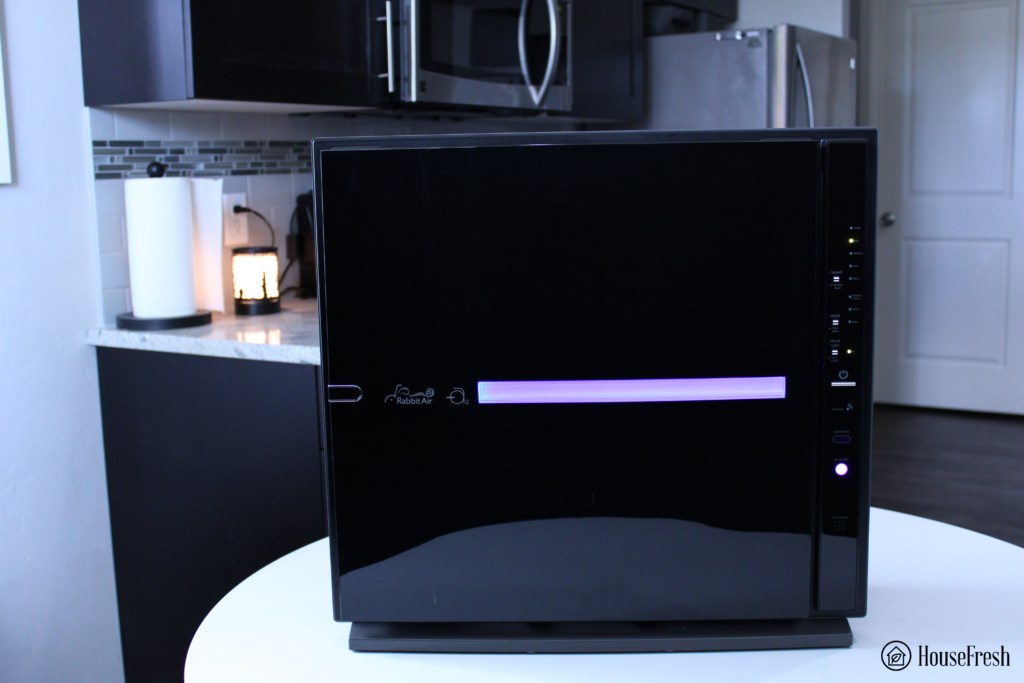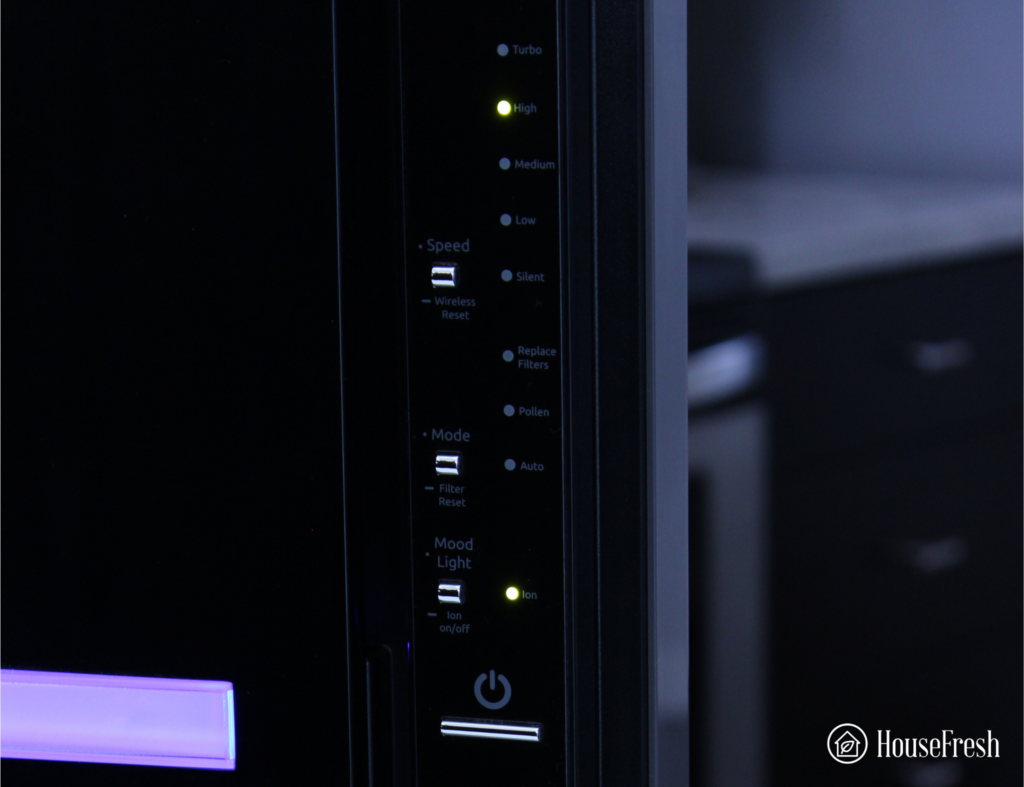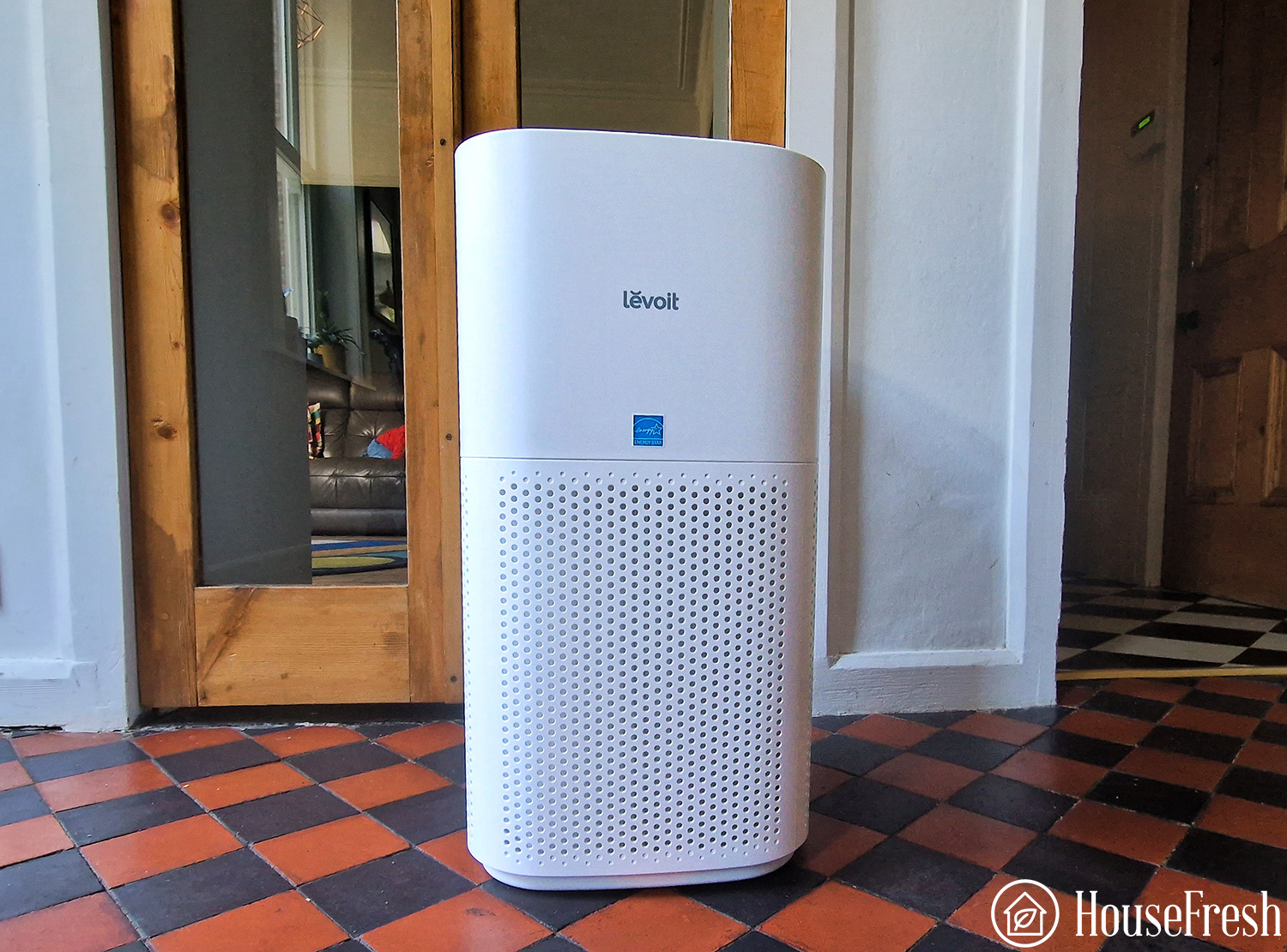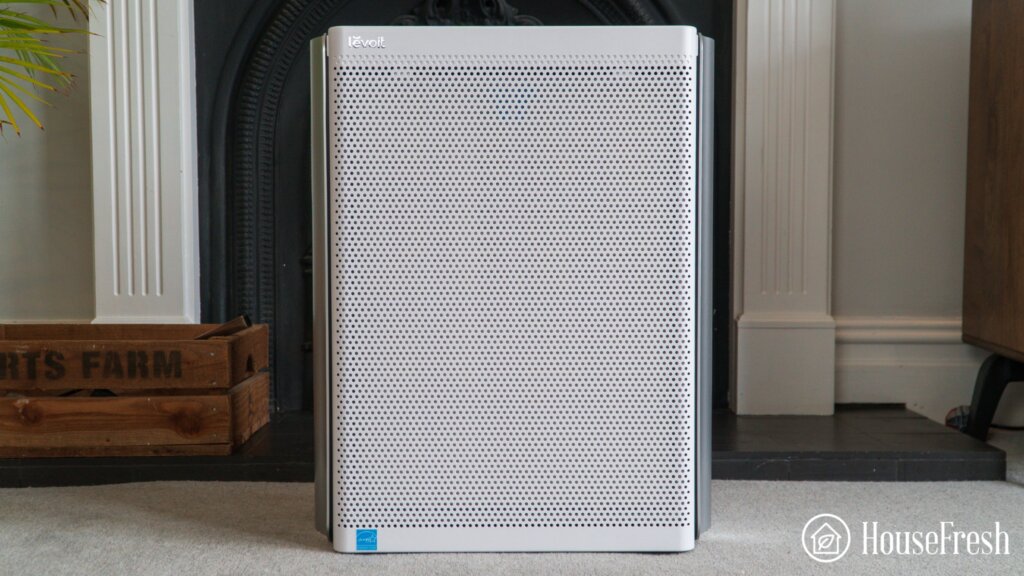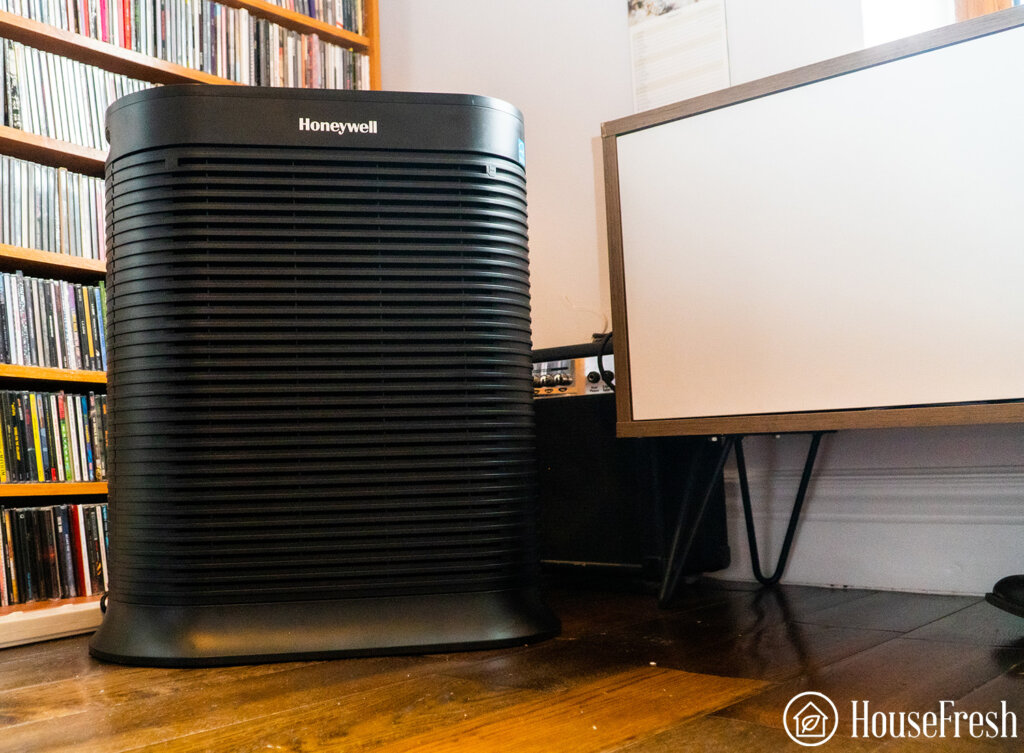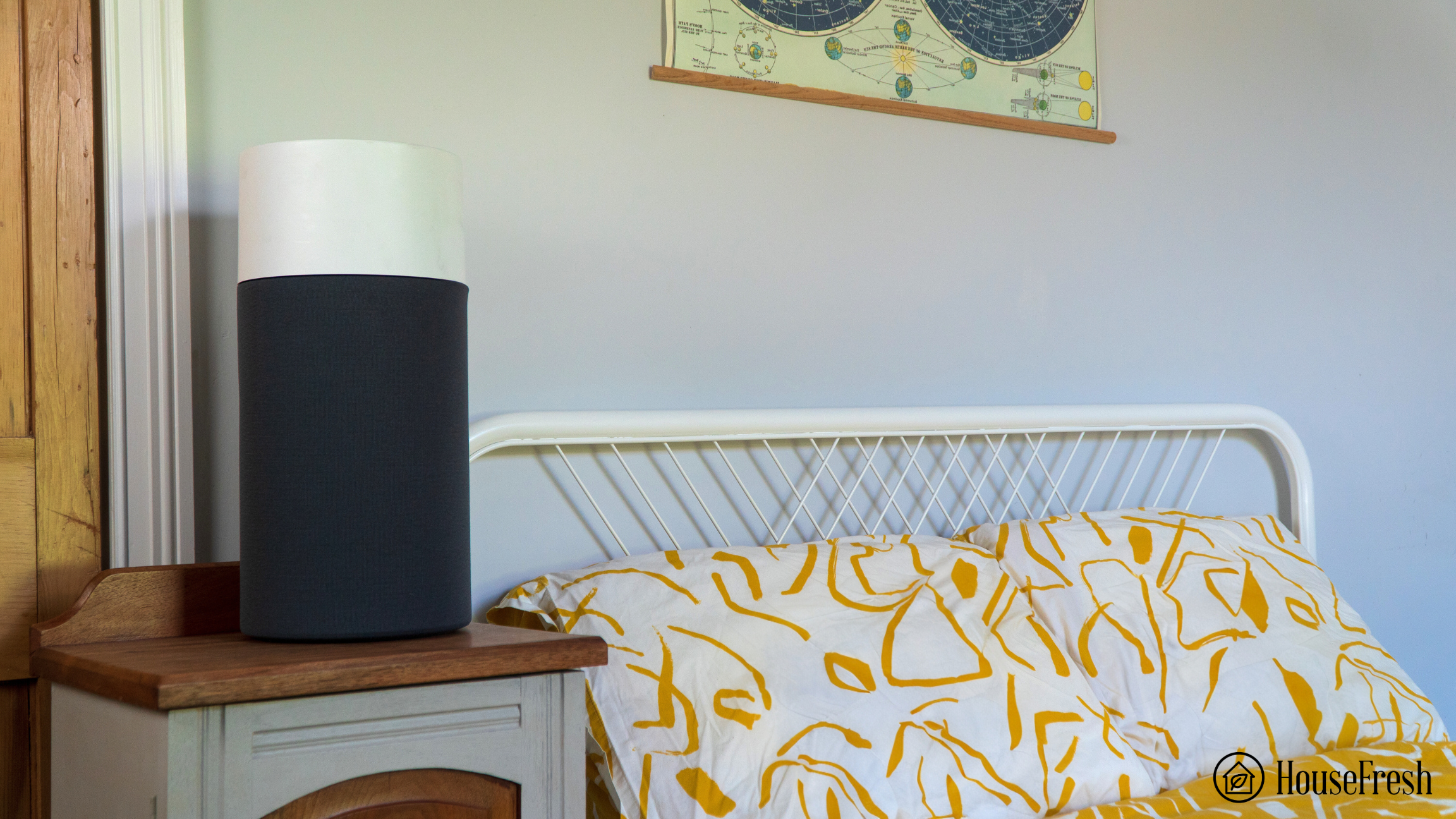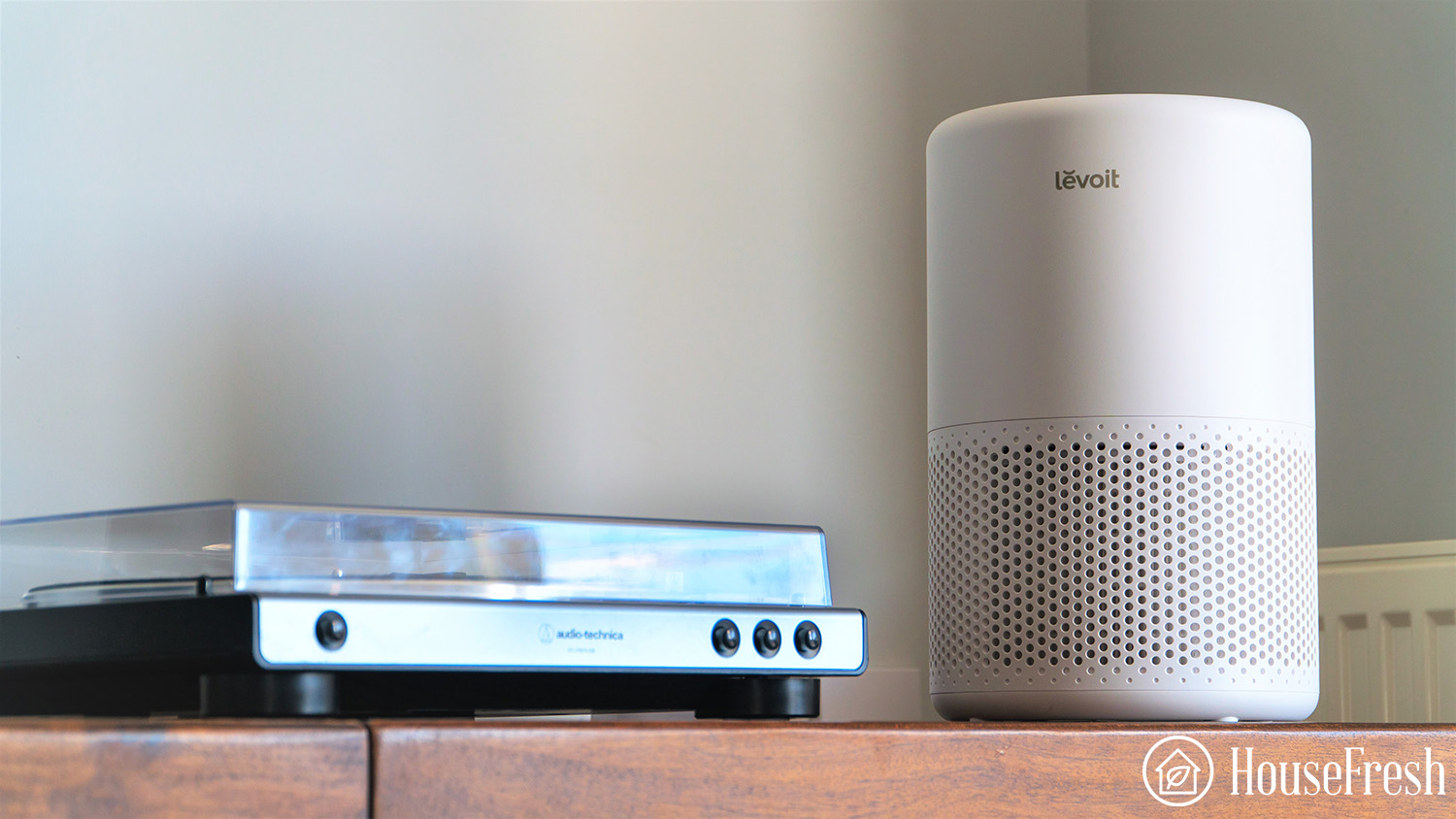
Levoit Core 200S review

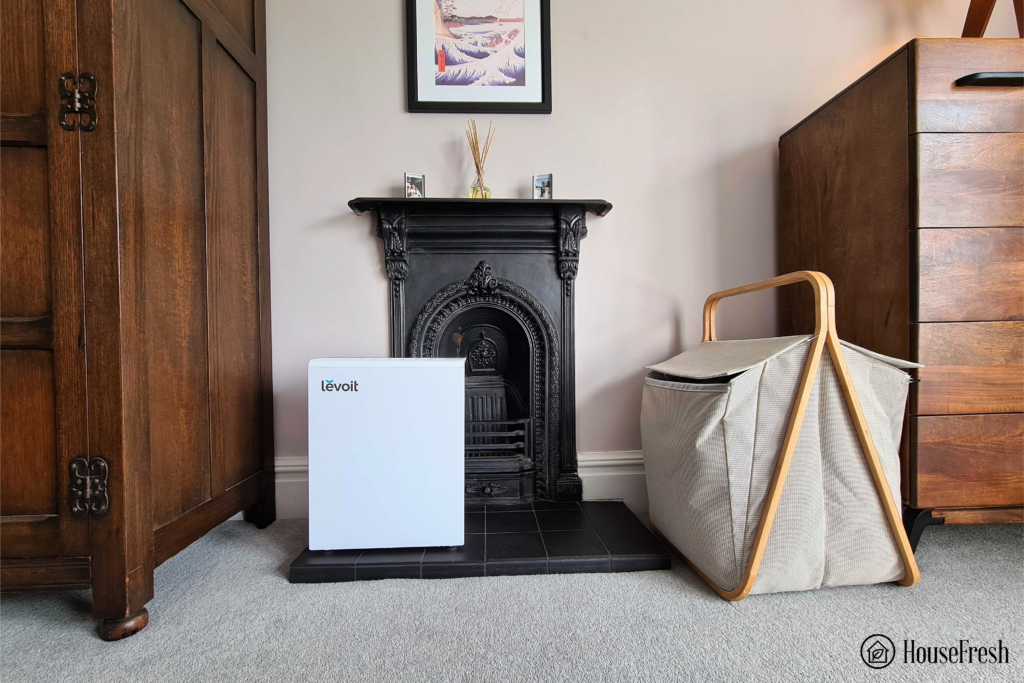
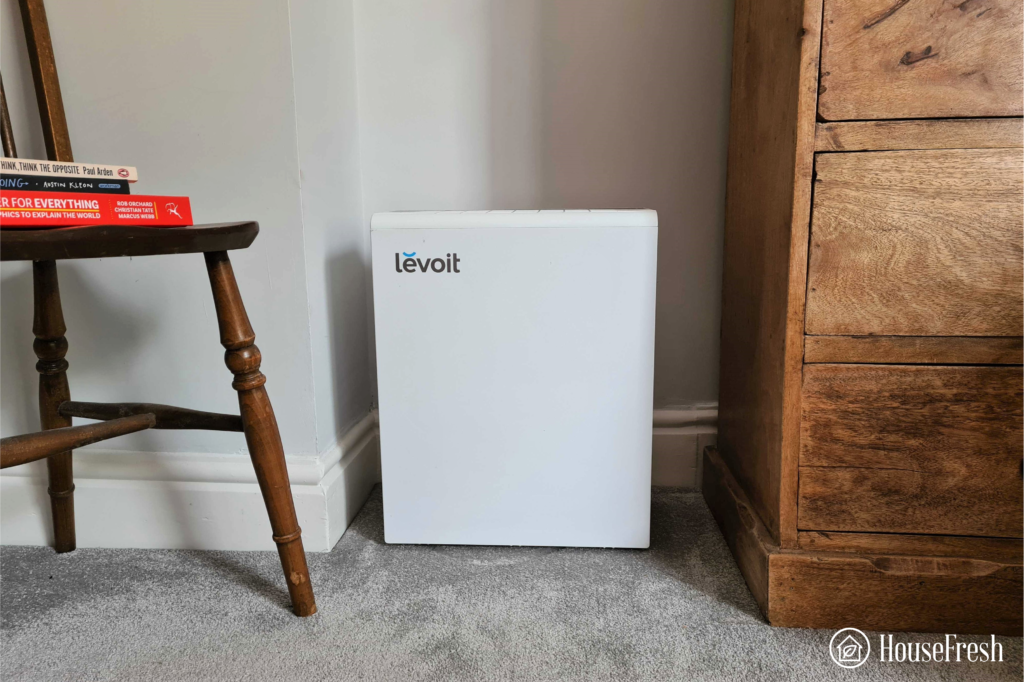
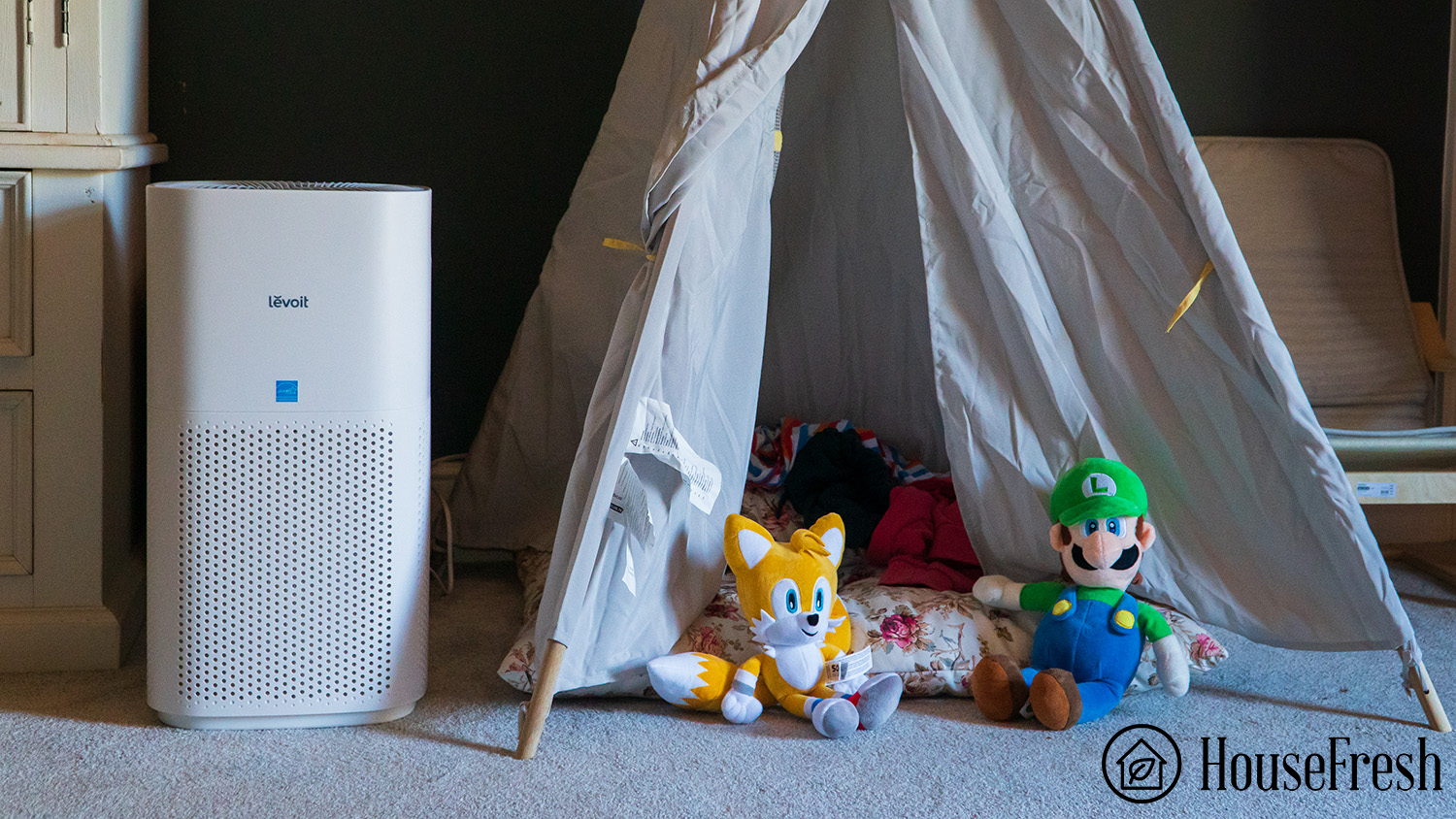
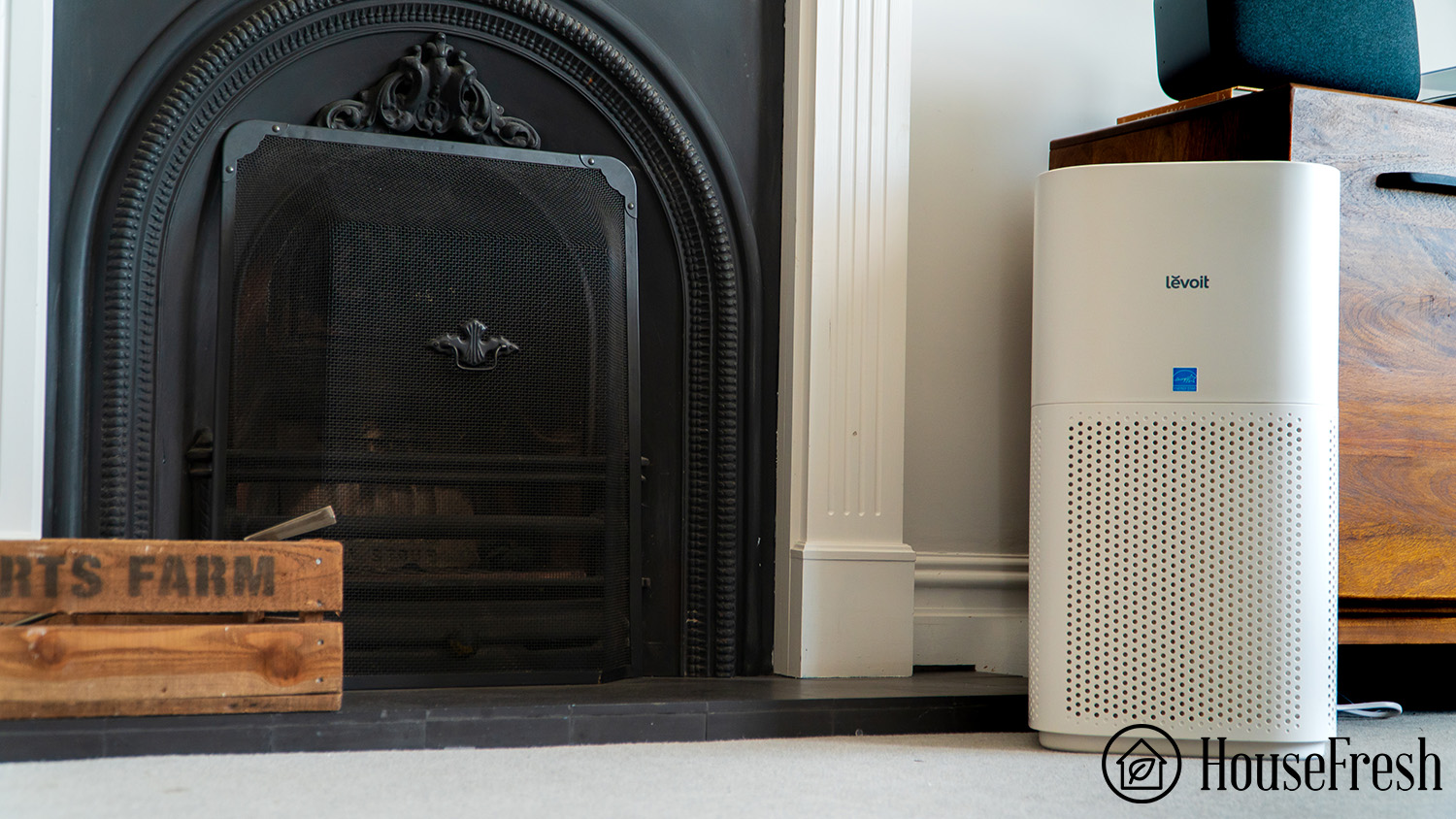
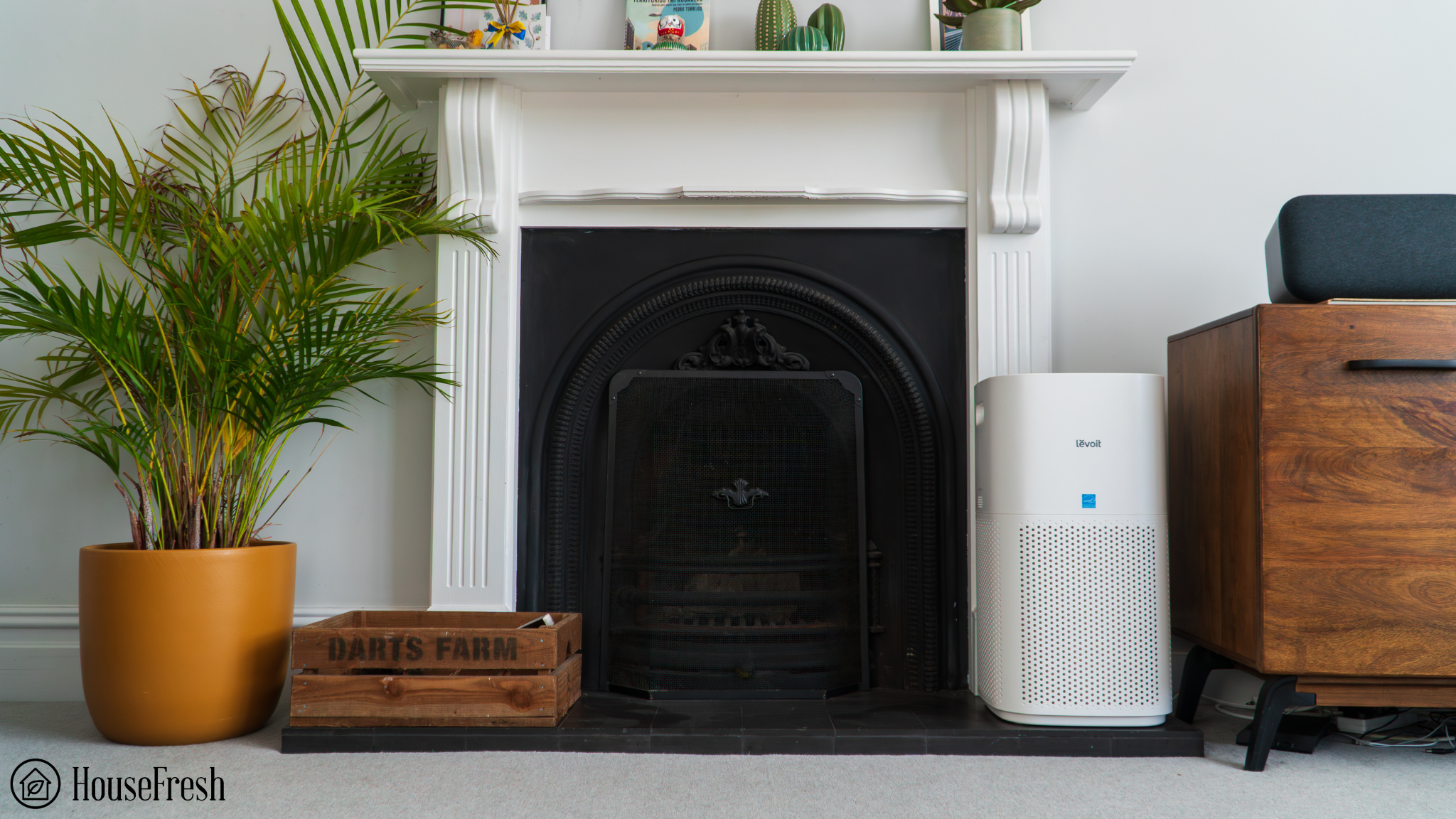
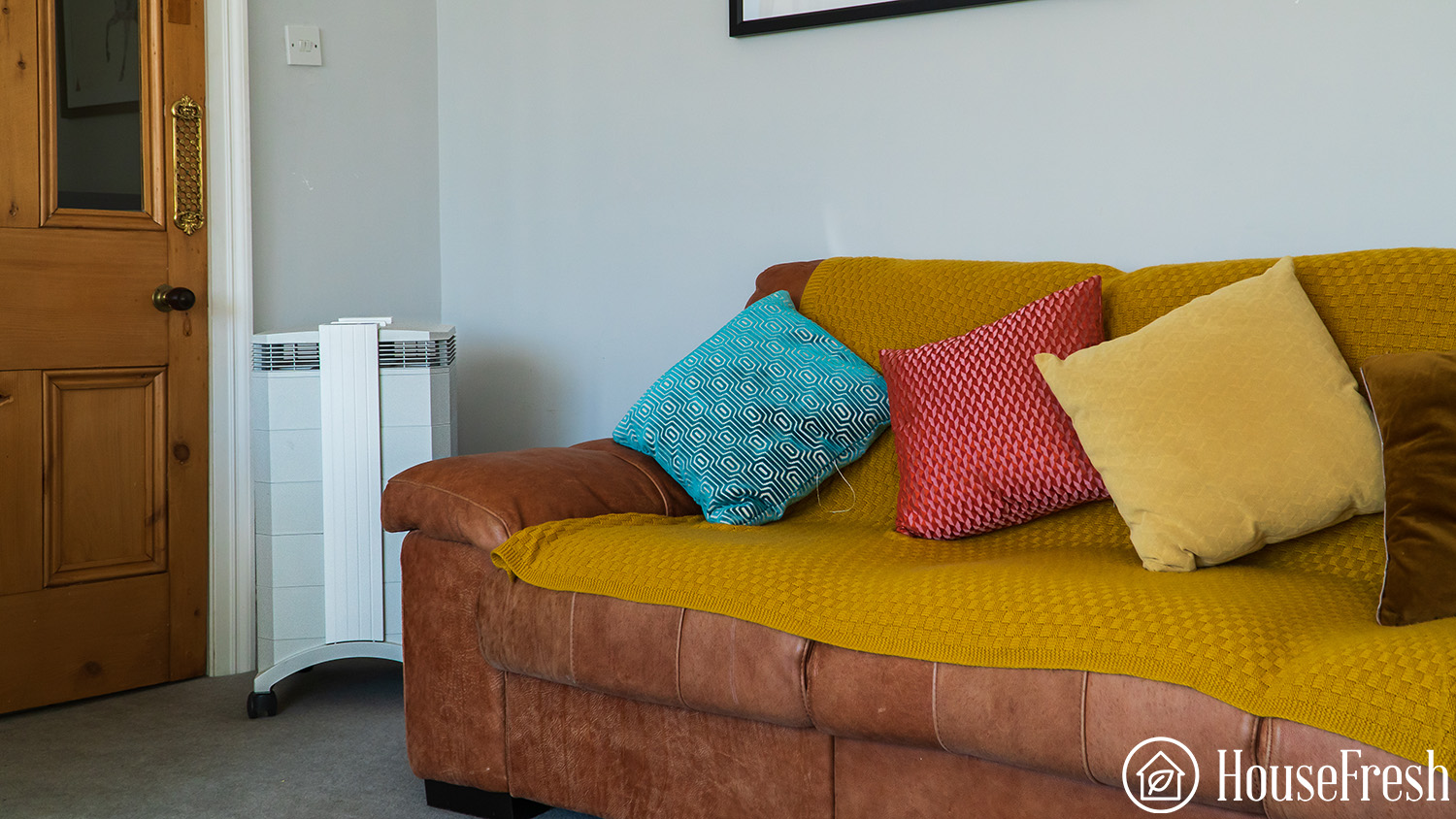
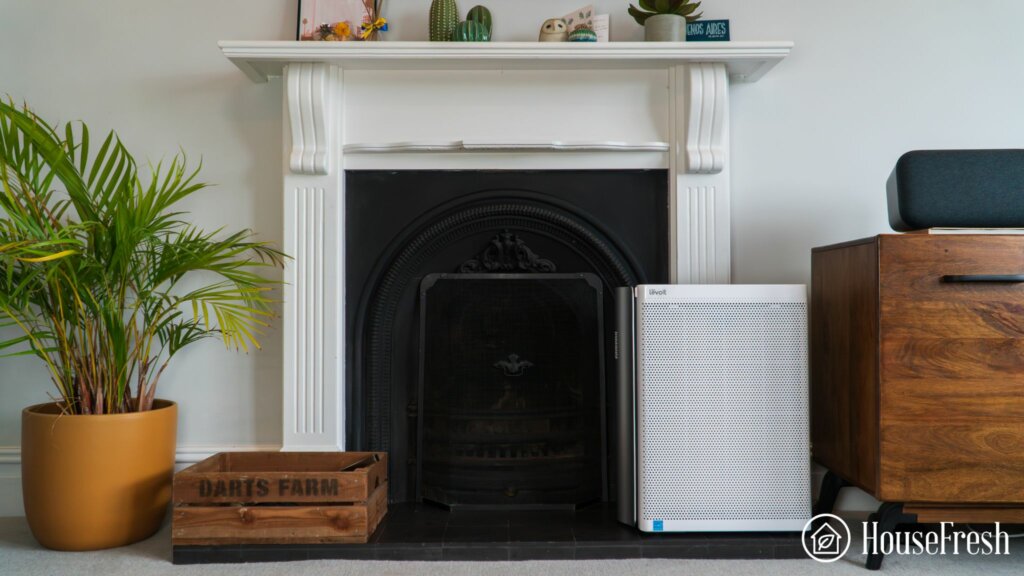
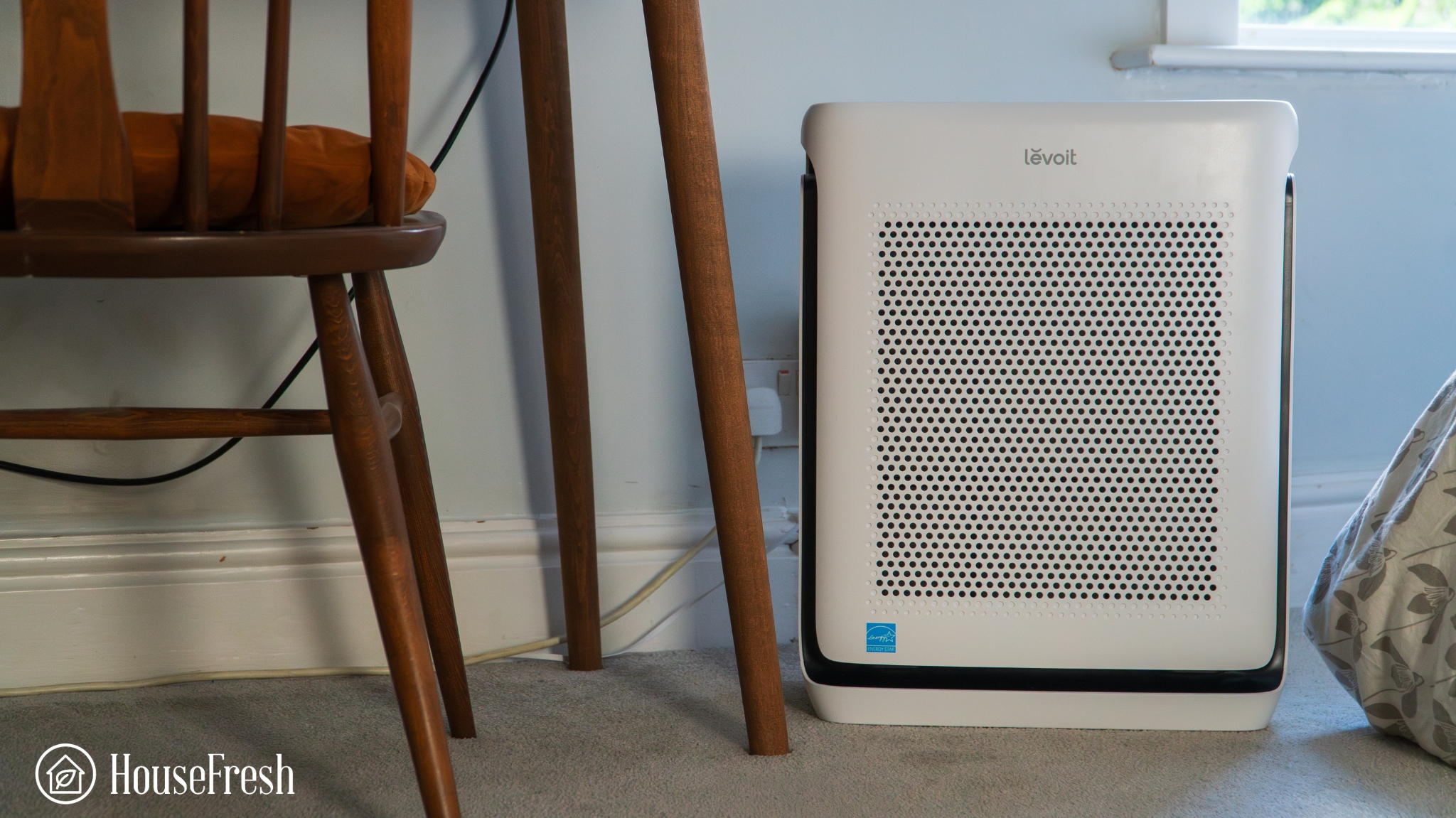
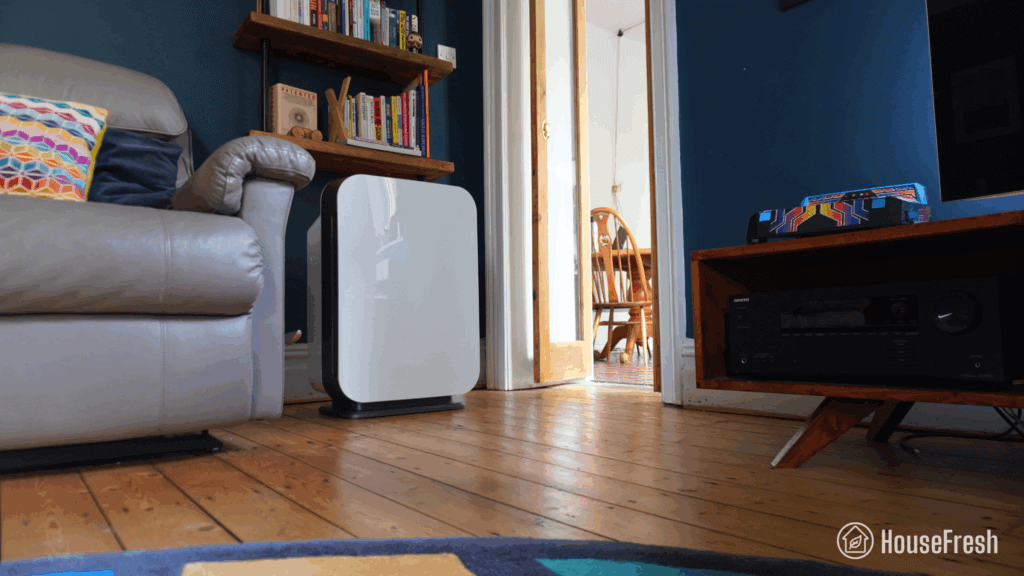
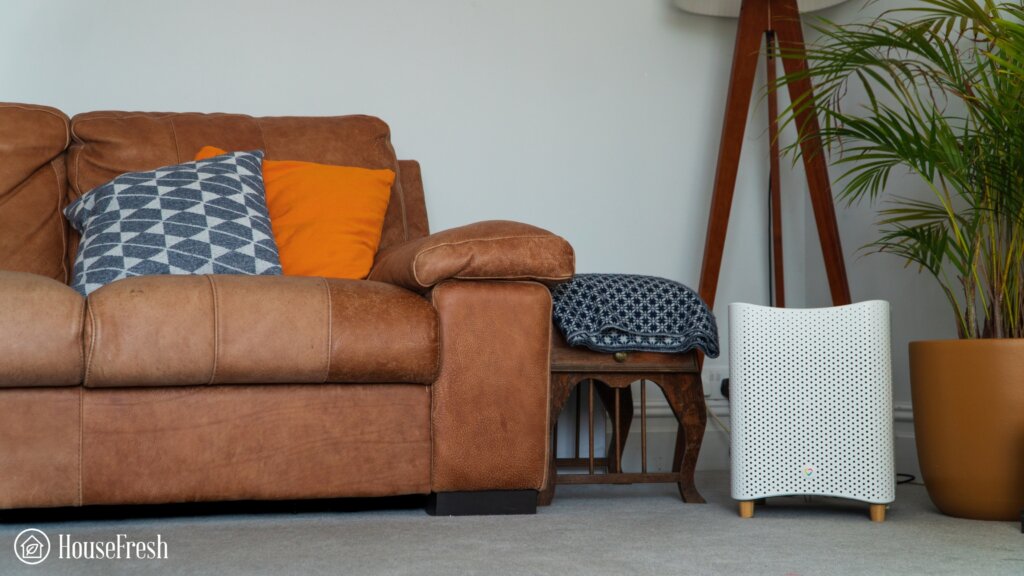
Levoit Core 200S Living Room

Levoit is a brand launched in 2016 by Vesync Co., a company originally called Etekcity that began trading in the U.S. in 2011 as an Amazon seller of small home appliances.

If you look through our air purifier reviews, you’ll notice a few different models from Levoit pop up. This is no coincidence. Since 2016, Levoit has proven that high-performing air purifiers, with plenty of smart features, can be produced at a price we consumers love.

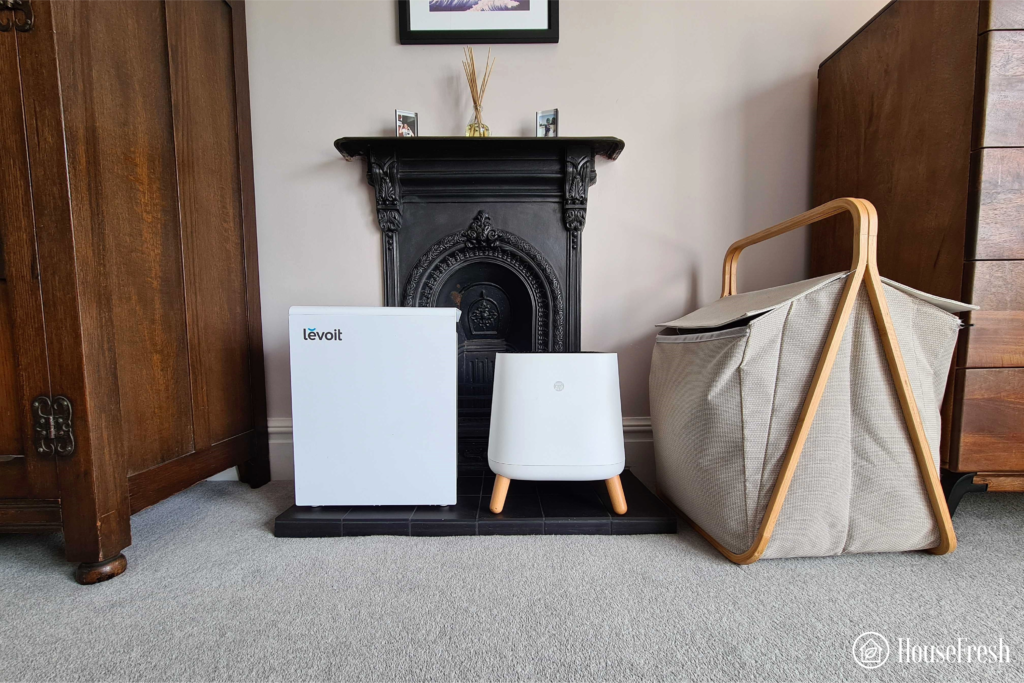
The Levoit Core 200S is aimed toward a new generation of mini air purifiers, a trend that the Molekule Mini propelled. Even though the Core 200S outperforms the Molekule without it even being switched on, it still doesn’t do quite enough for us.

These are our opinions

We don’t take bribes.

The lowdown on the Levoit Core 200S


Danny Ashton HouseFresh
“If you hace a small room and want a unit that is easy to use and looks quite stylish, then the Core 200S will take care of your needs without breaking the bank.”
— Danny Ashton, HouseFresh Founder & Senior Writer
Levoit Core 200S Living Room

💡exclusive code for HouseFresh for 10% off a single purchase on Levoit.com: HOUSE10

HouseFresh rating:★★★★☆
Time to clean our 728 cubic feet test room (with the device running at top speed):25 minutes
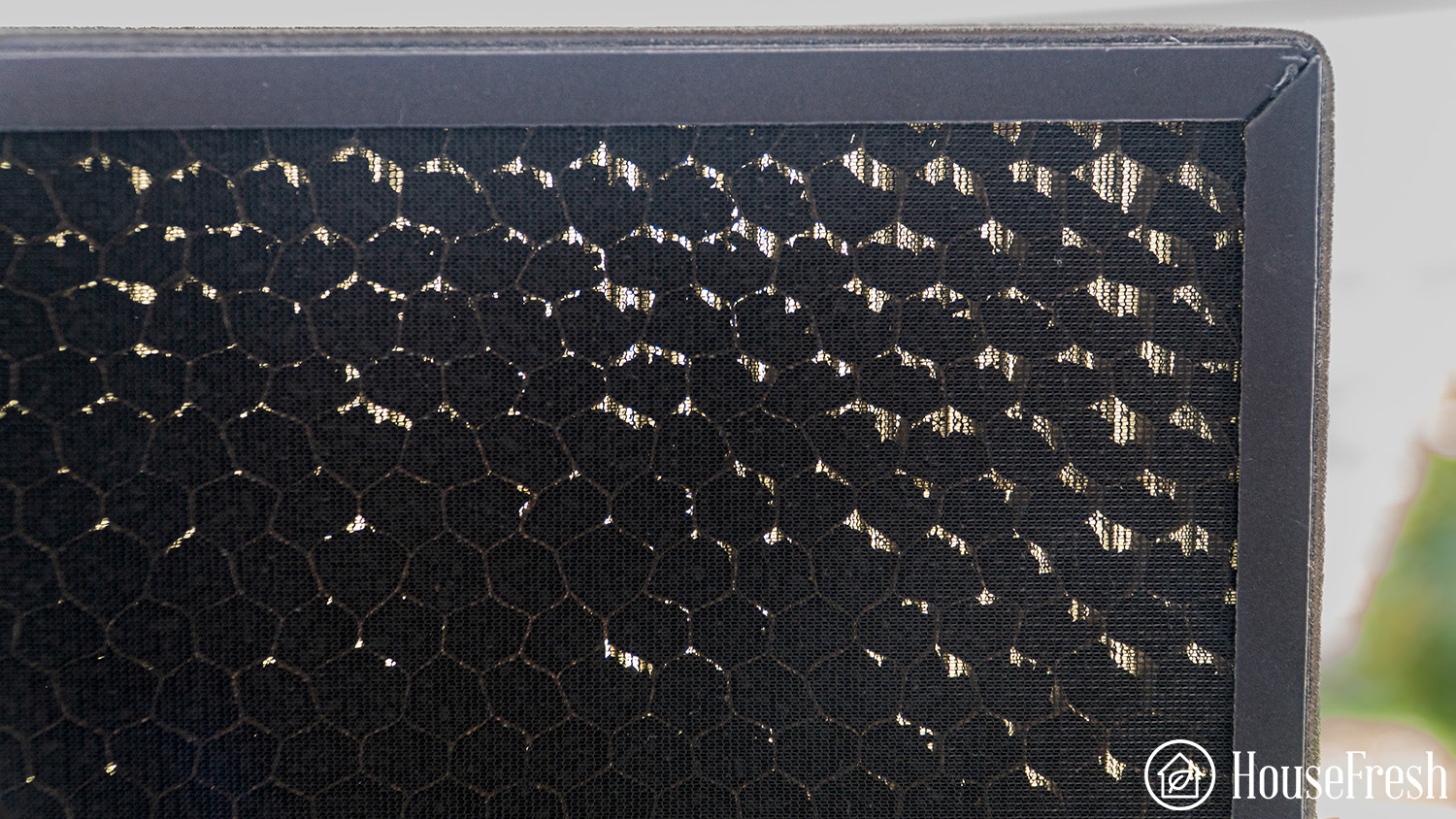
Air purifier technology:3-Stage Filtration (Pre-filter for large particles, main filter for airborne particles, high-efficiency activated carbon filter for odors and gasses)
Recommended room size (4.8 air changes per hour):360 sq. ft.
Clean air delivery rate (CADR):Dust: 274 CFM
Smoke: 284 CFM
Pollen: 287 CFM
Dimensions (in inches / in cm):12.5L x 12.5W x 23.6H in (31.8 x 31.8 x 60 cm)
Weight (in pounds / in kg):6.6 lbs (3kg)
Filter life:6 months
Noise level in decibels (as reported by manufacturer):Speed 1: 28 dB
Speed 2: 36 dB
Speed 3: 46 dB
Speed 4: 54 dB
Electricity consumption in watts (as reported by manufacturer):Lowest fan speed: 0.8 watts
Highest fan speed: 28.1 watts
Estimated running cost (electricity consumption + official filter replacement):$155.43 per year
Cost per CADR cfm (based on dust CFM as reported by AHAM):$0.91
Manufacturer’s warranty:2 years
Country of manufacture:China

Don’t want to read the full review? Here are the main pointers from our performance test of the Levoit Core 200S.

What we really like

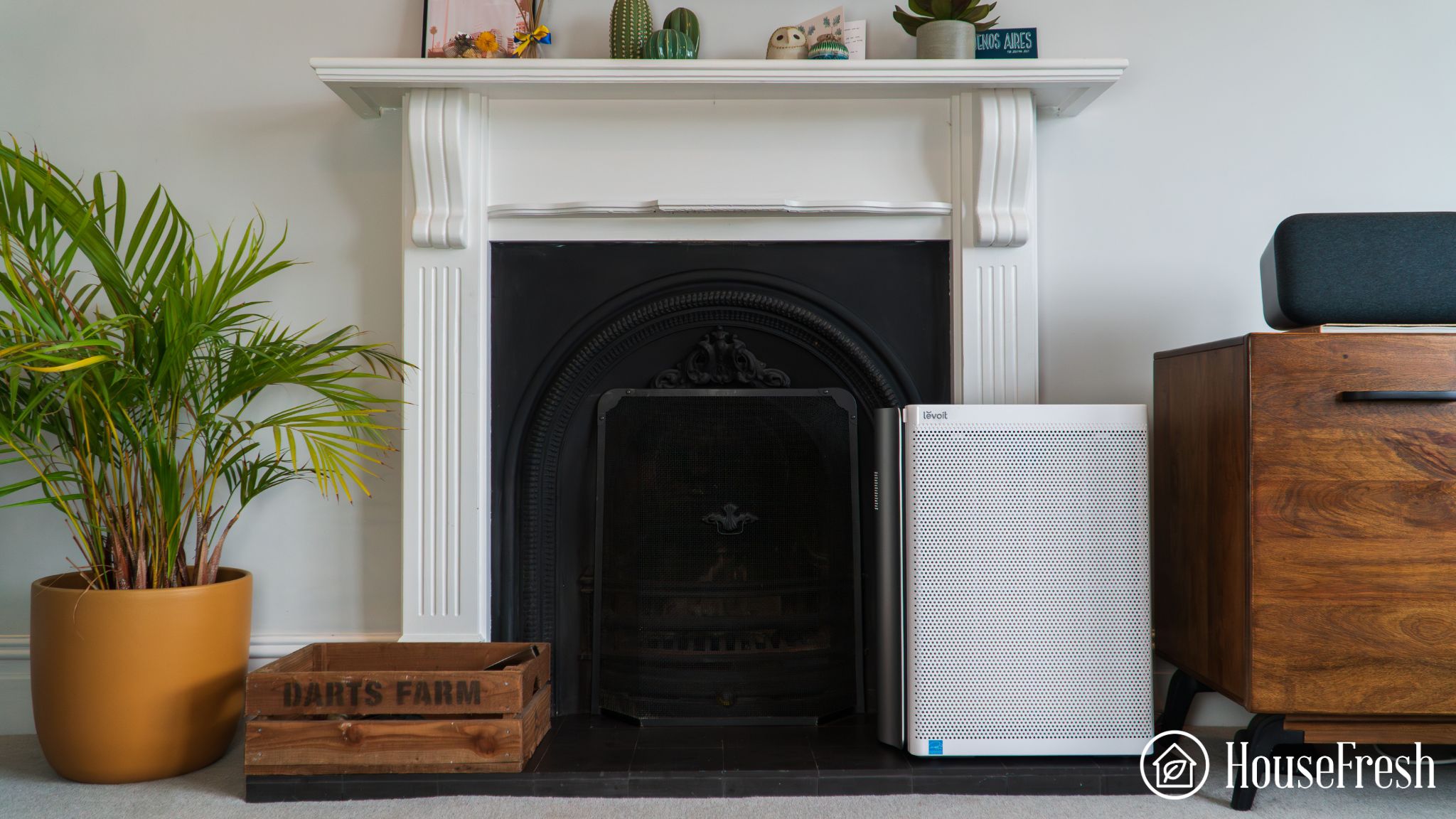
It’s not big so can fit snug in the corner of an office or bedroom.
The control panel is easy to navigate.
The app is simple to set up.
The fan sound is barely noticeable on sleep mode.
It’s incredibly light at just 6.6 lbs.

What we think could be better

I’d like to see it with an air quality sensor.
Would look cool if it came in different colors.
There are better-performing units from Levoit at a little extra cost. 

The specifications

One reason why Levoit is one of the market leaders is because of its price point. They manage to cover all bases with units for different-sized rooms whilst keeping costs down. The 200S retails at $89.99*, which, compared to other units catering for the same room size like the Medify MA-15 at $129* or Blueair’s Blue Pure 411 at $119.99*, makes this unit very attractive.

HouseFresh Rating:★★★☆☆
Time to clean our test room:61 Minutes
Air purifier technology:Levoit 3-Stage Filtration (Pre-filter for large particles, main filter for airborne particles, high-efficiency activated carbon filter for odors and gasses)
Recommended room size:183 sq. ft.
Clean air delivery rate (CADR):118 CFM
Dimensions (in inches / in cm):12.6H x 8.07W x 8.07D inches (32H x 20.5W x 20.5D cm)
Weight (in pounds / in kg):6.6 lbs (3 kg)
Filter life:6 – 8 months
Noise level (low – high):Speed 1: 39.6 dB
Speed 2: 43.7 dB
Speed 3: 49.1 dB
Estimated energy consumption:$43.32

Sleek and modern design

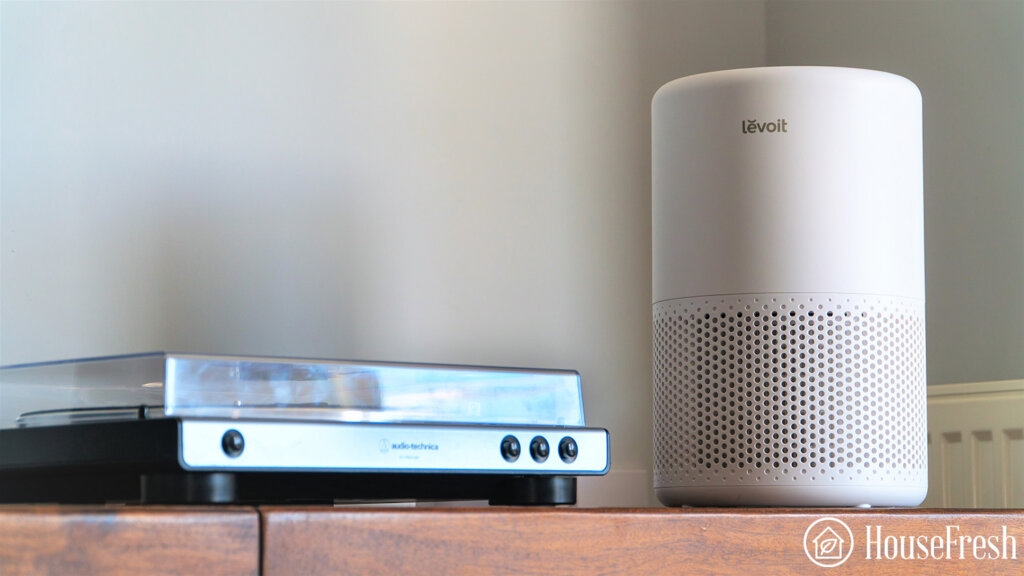
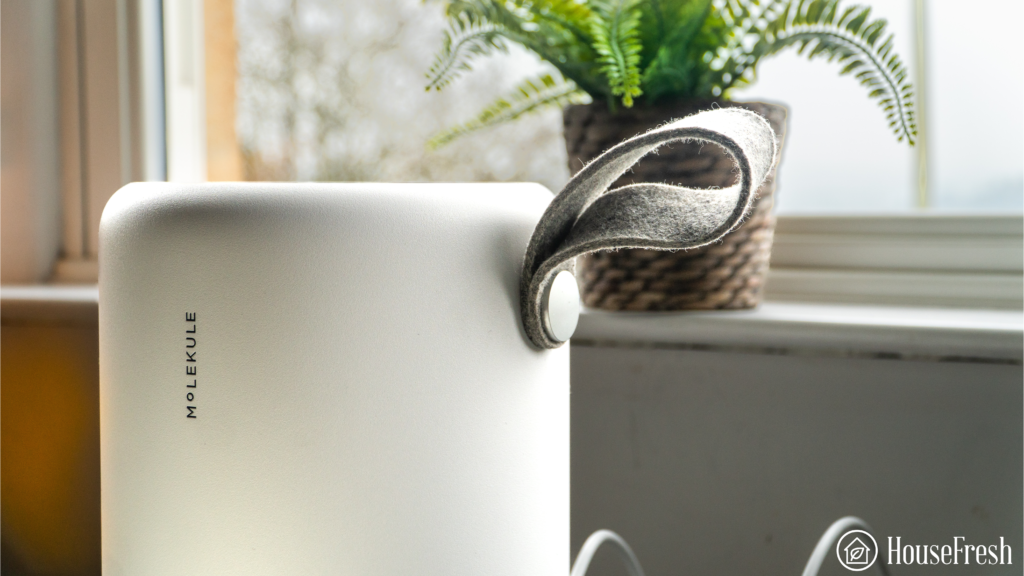
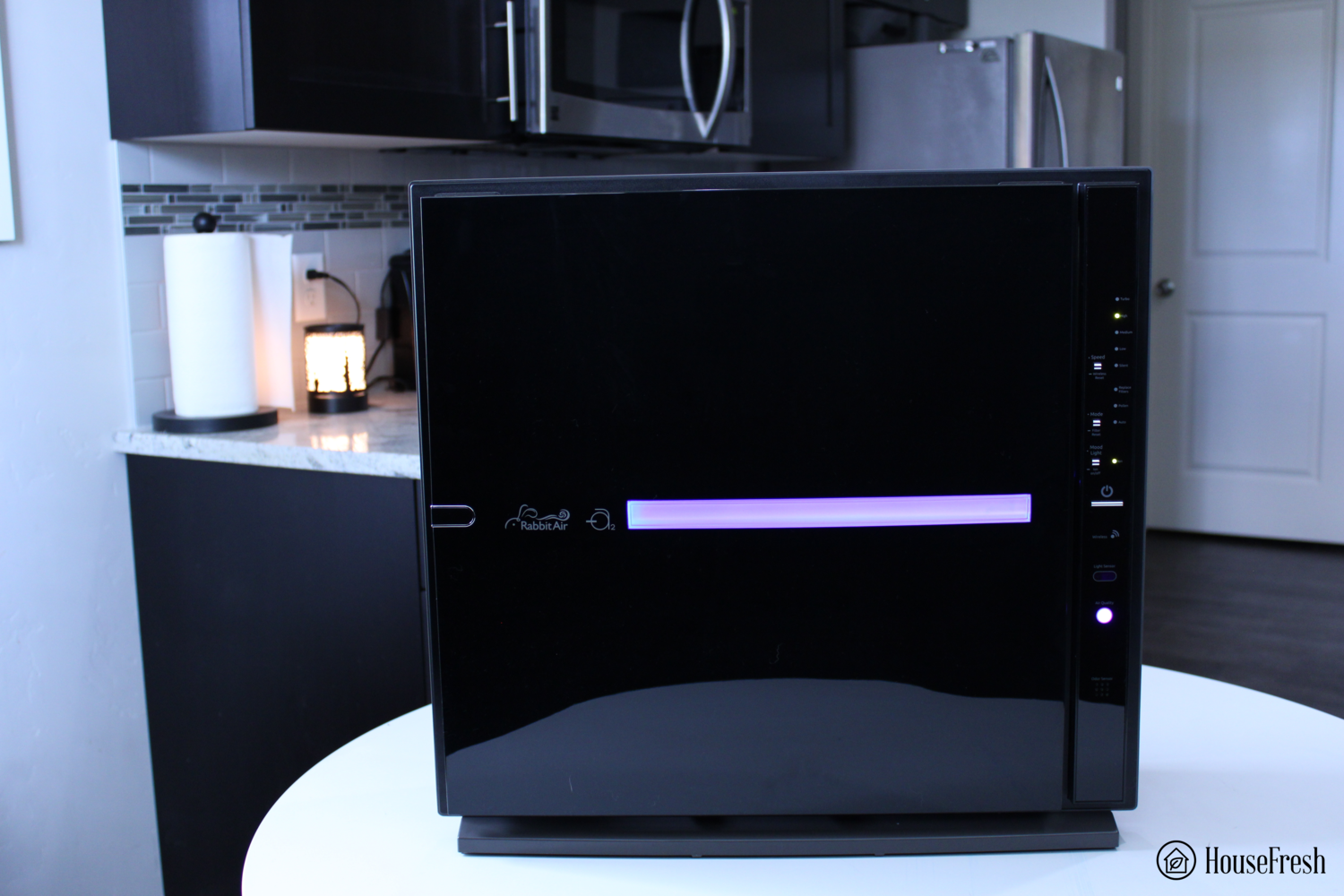
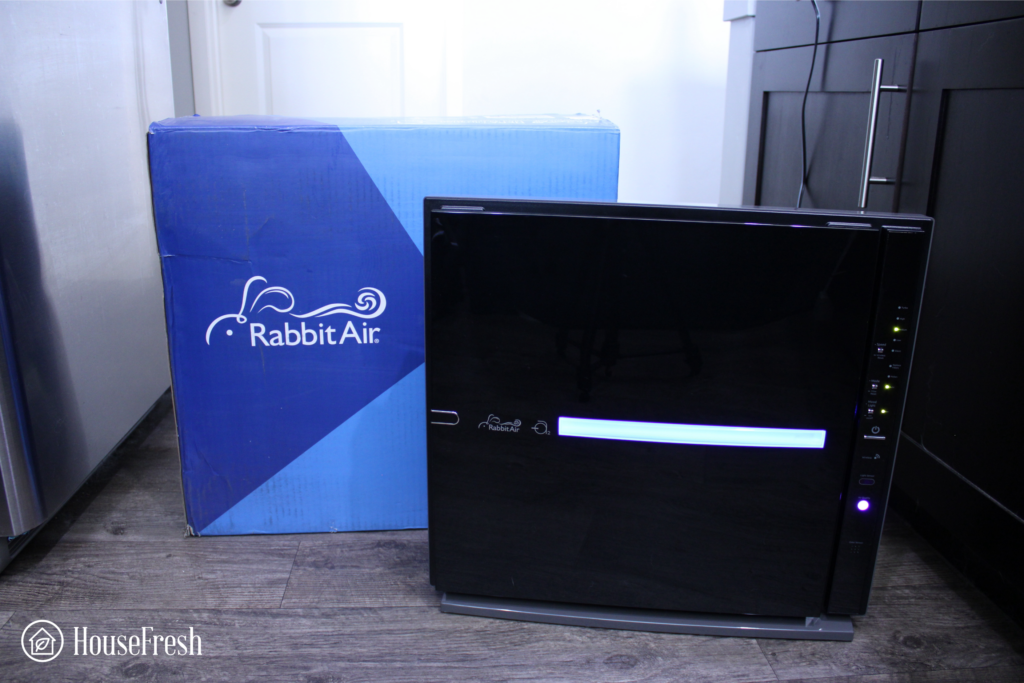
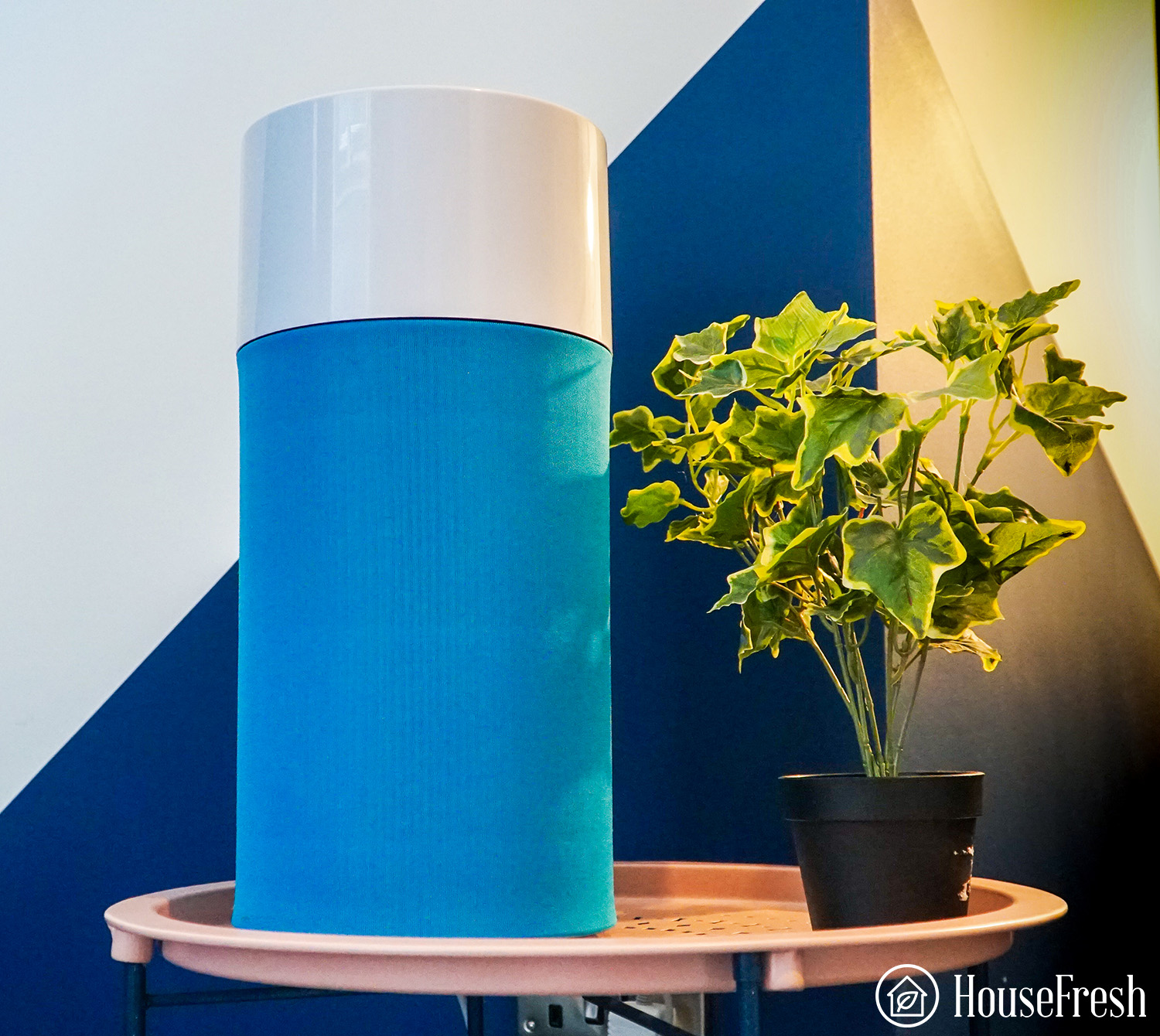
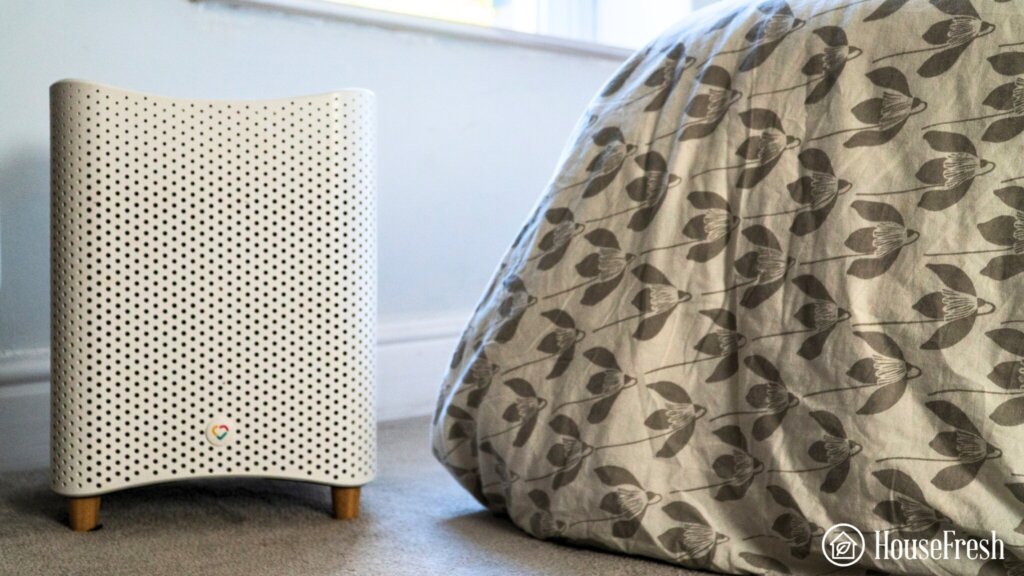
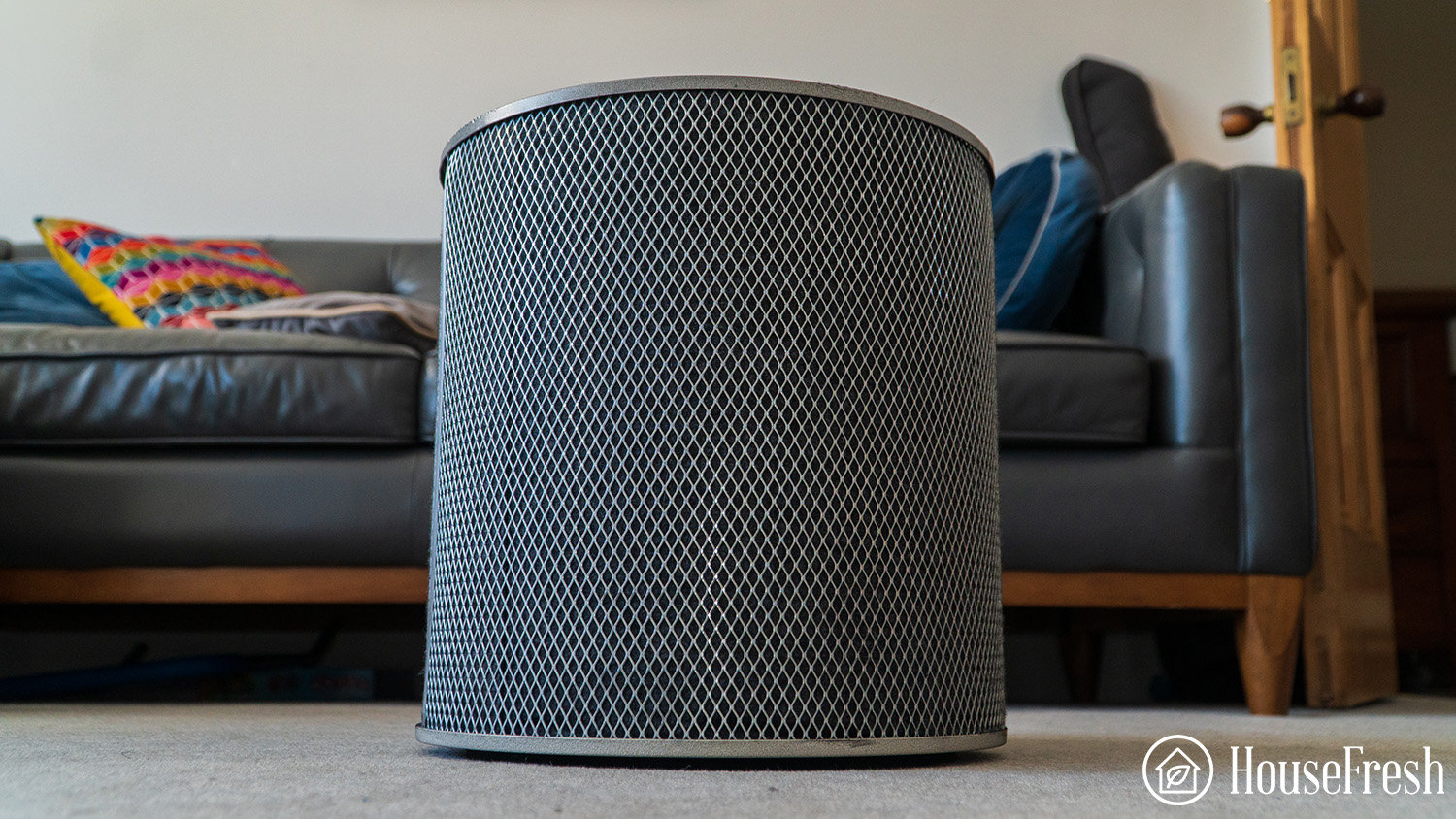
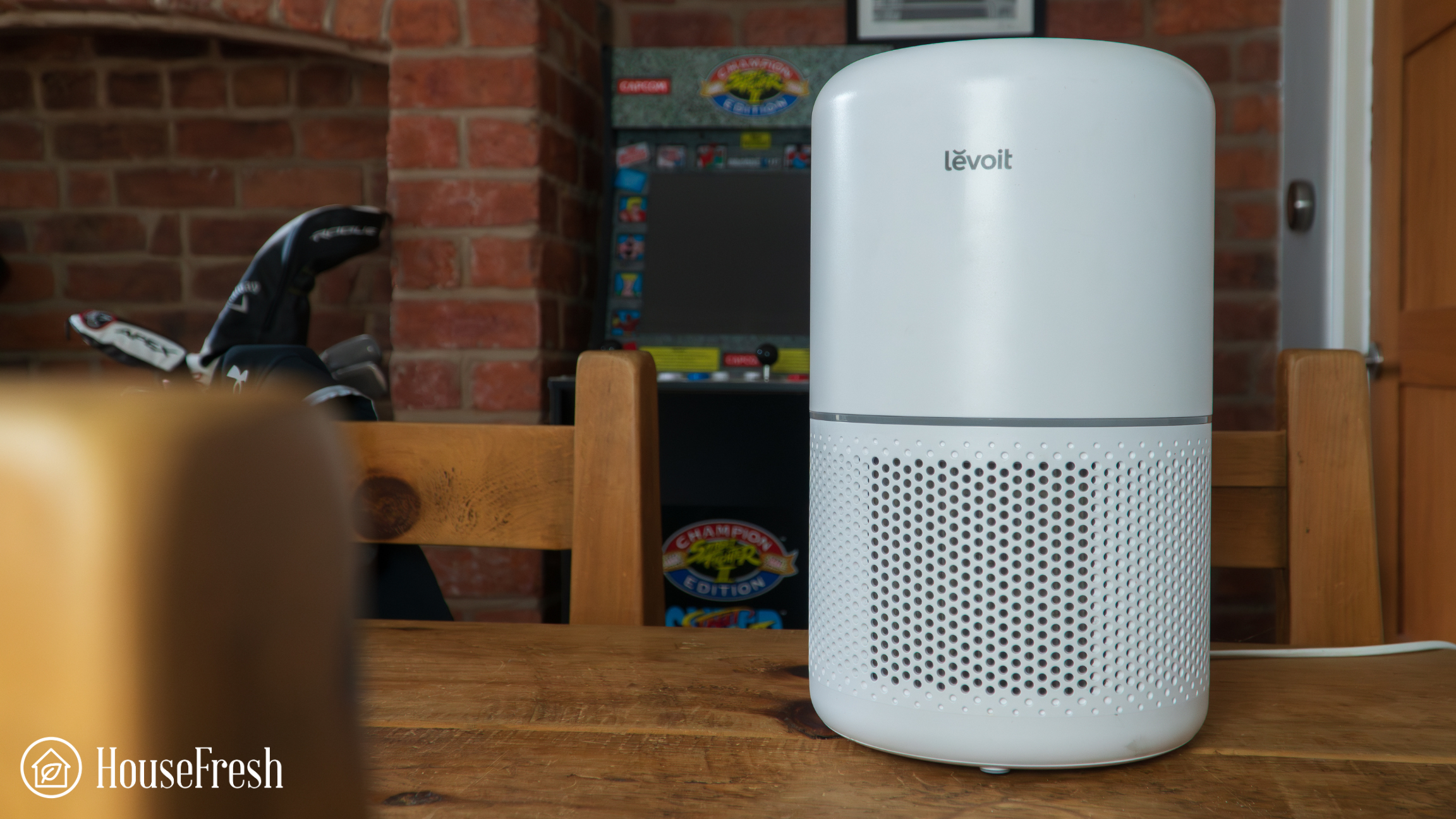
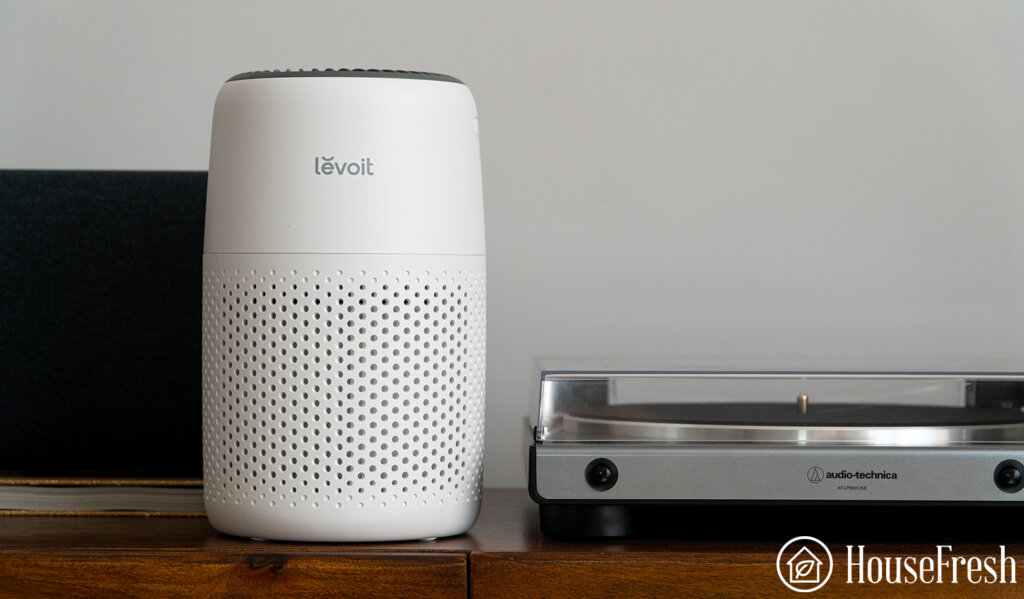
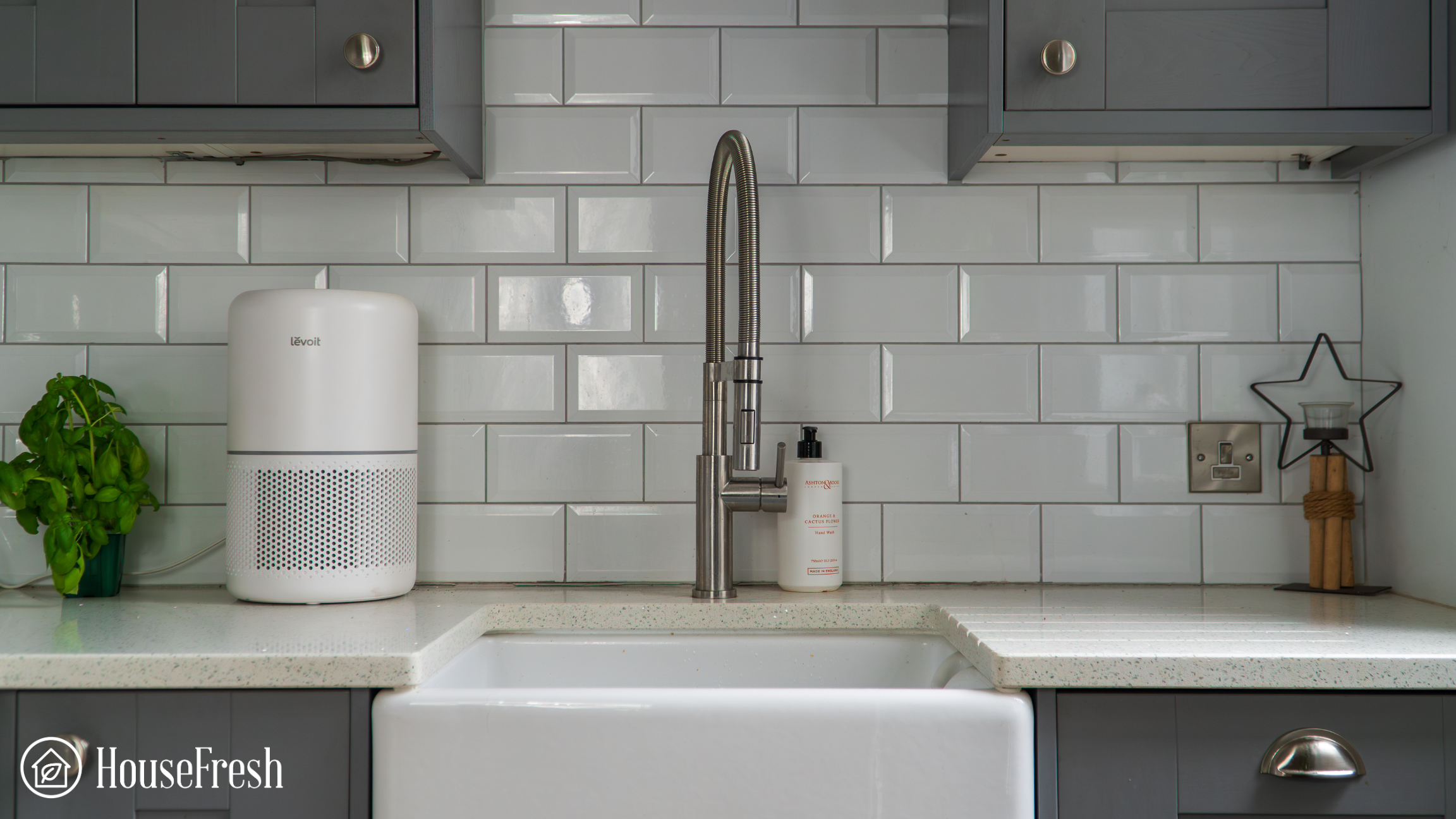
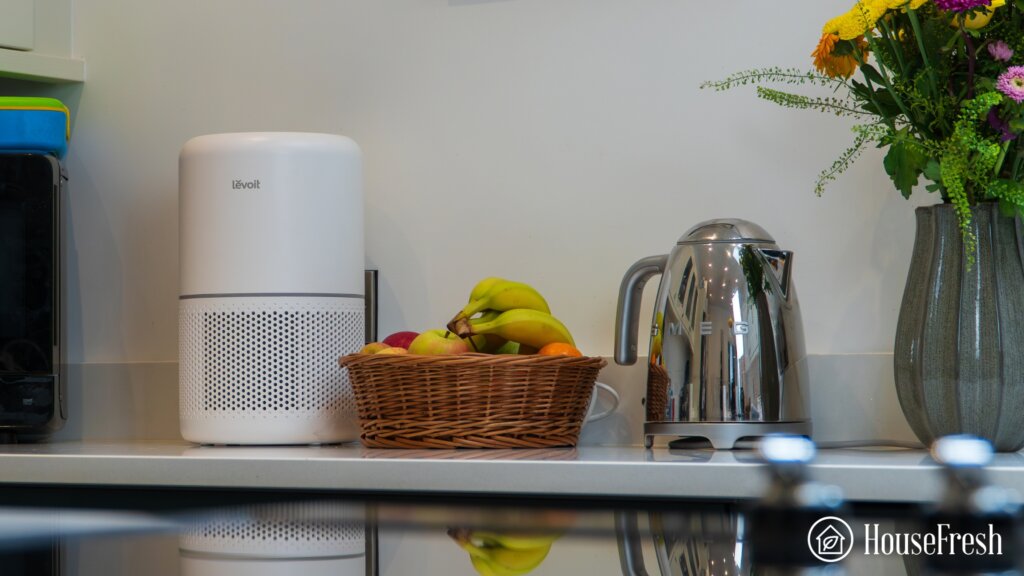
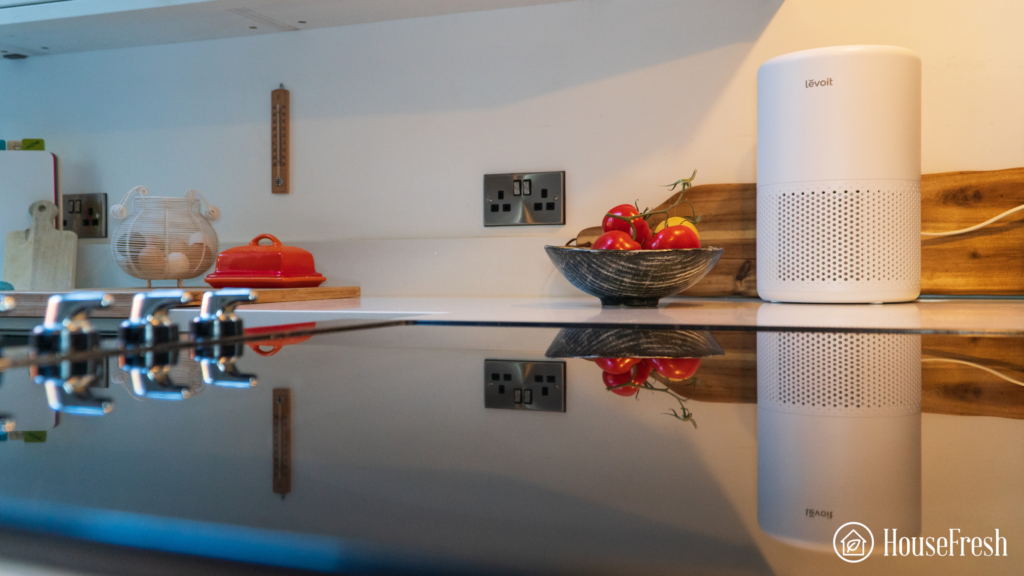
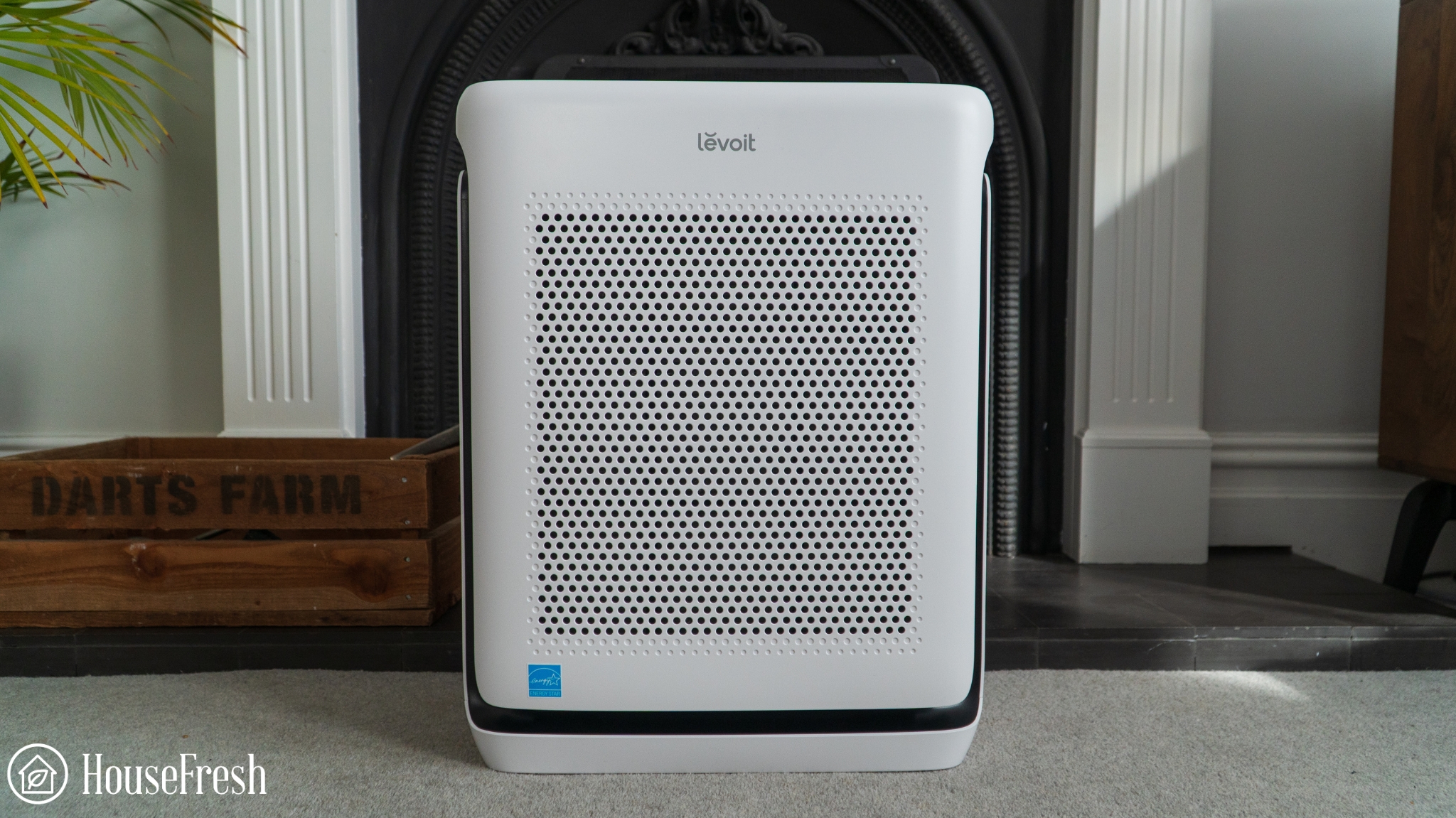
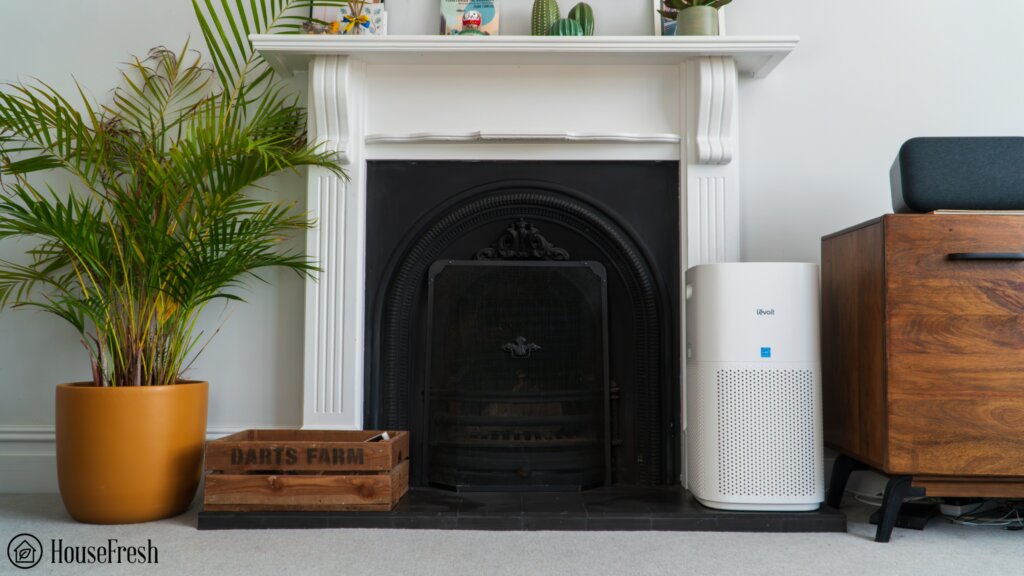
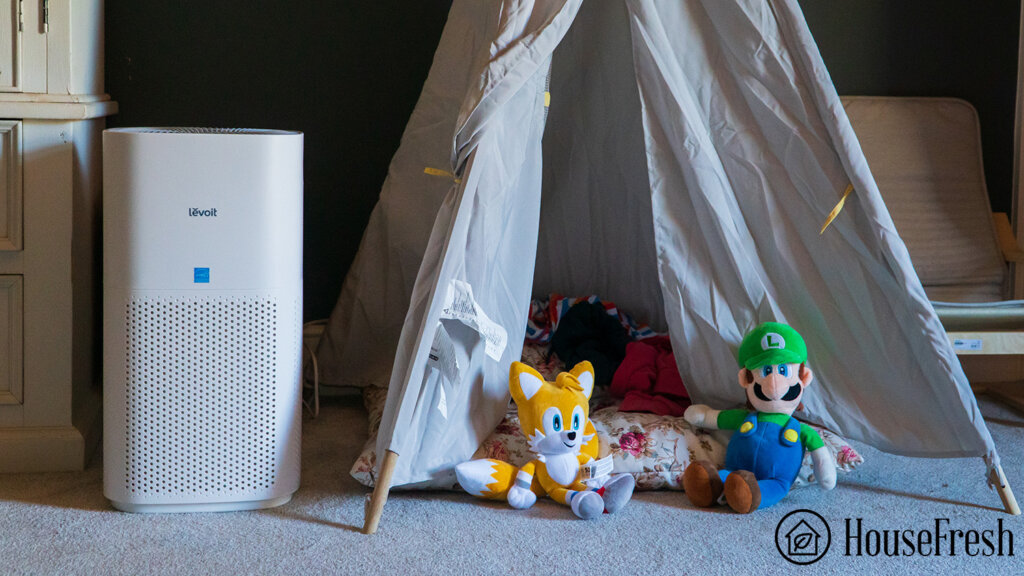
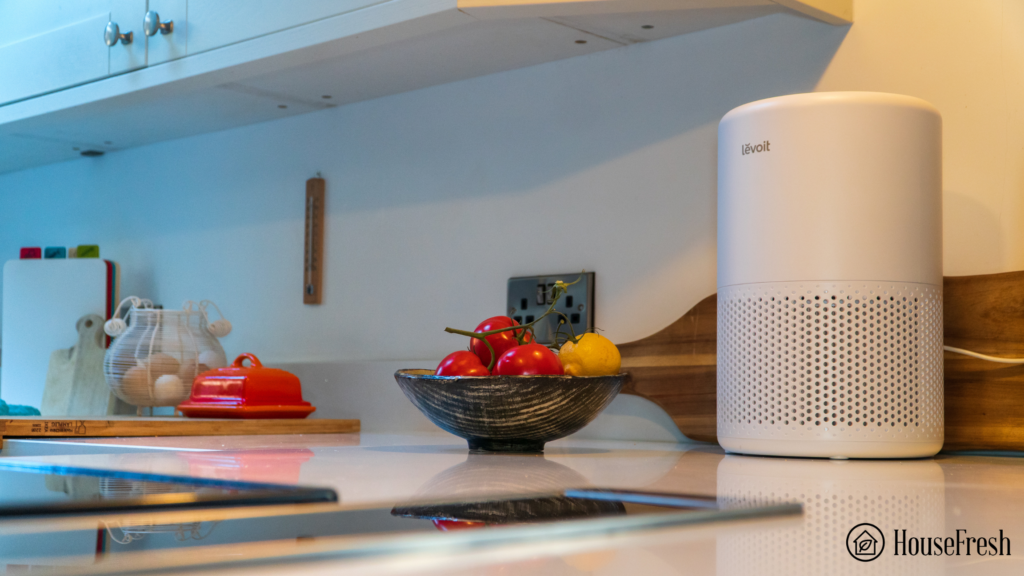
If you’ve seen any other units in the Core range like the 300 or 400S, you’ll notice that they nearly all have a cylindrical design. The Core 200S is no different. 
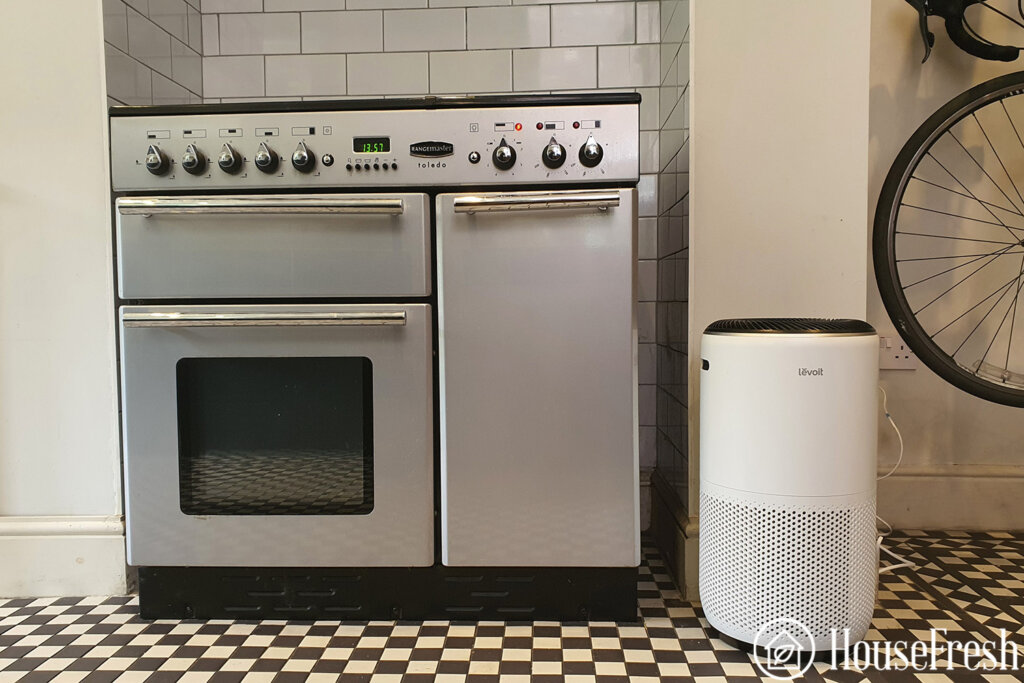
Levoit Core 200S Kitchen Close Up

💡exclusive code for HouseFresh for 10% off a single purchase on Levoit.com: HOUSE10

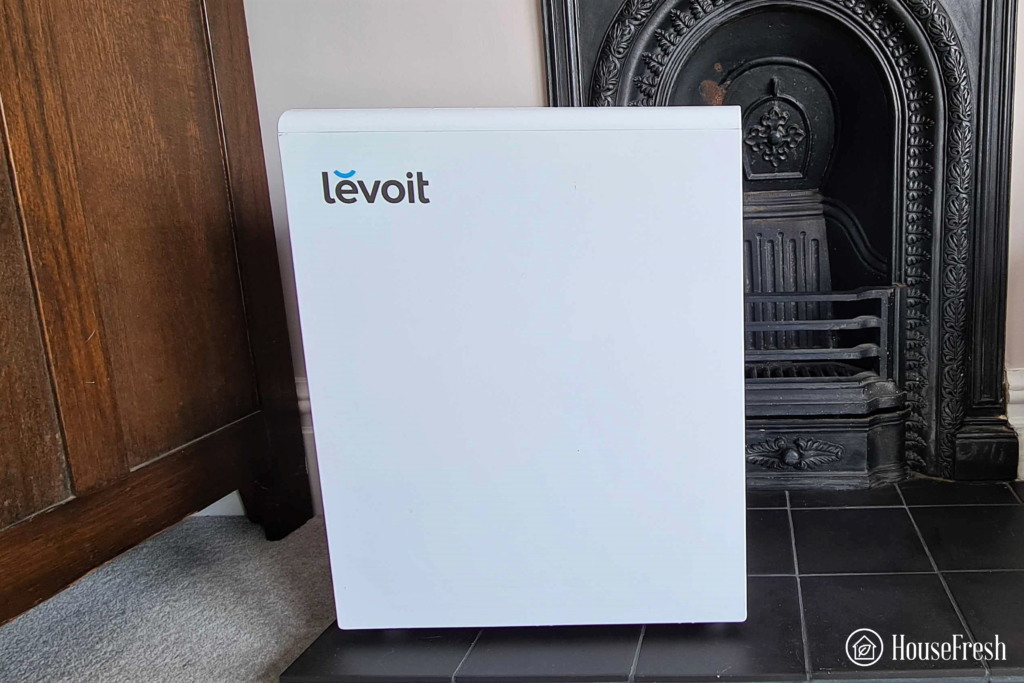
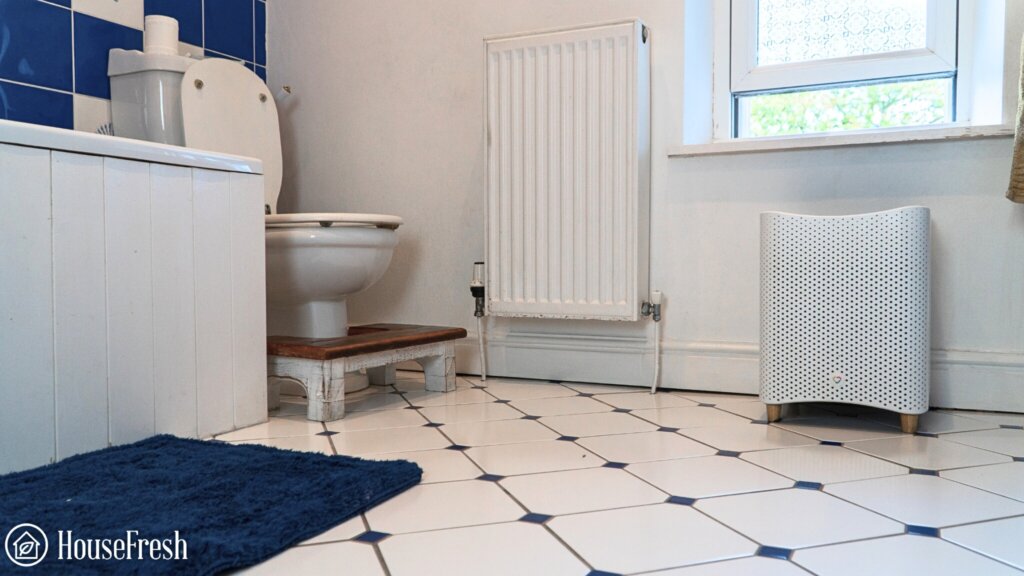
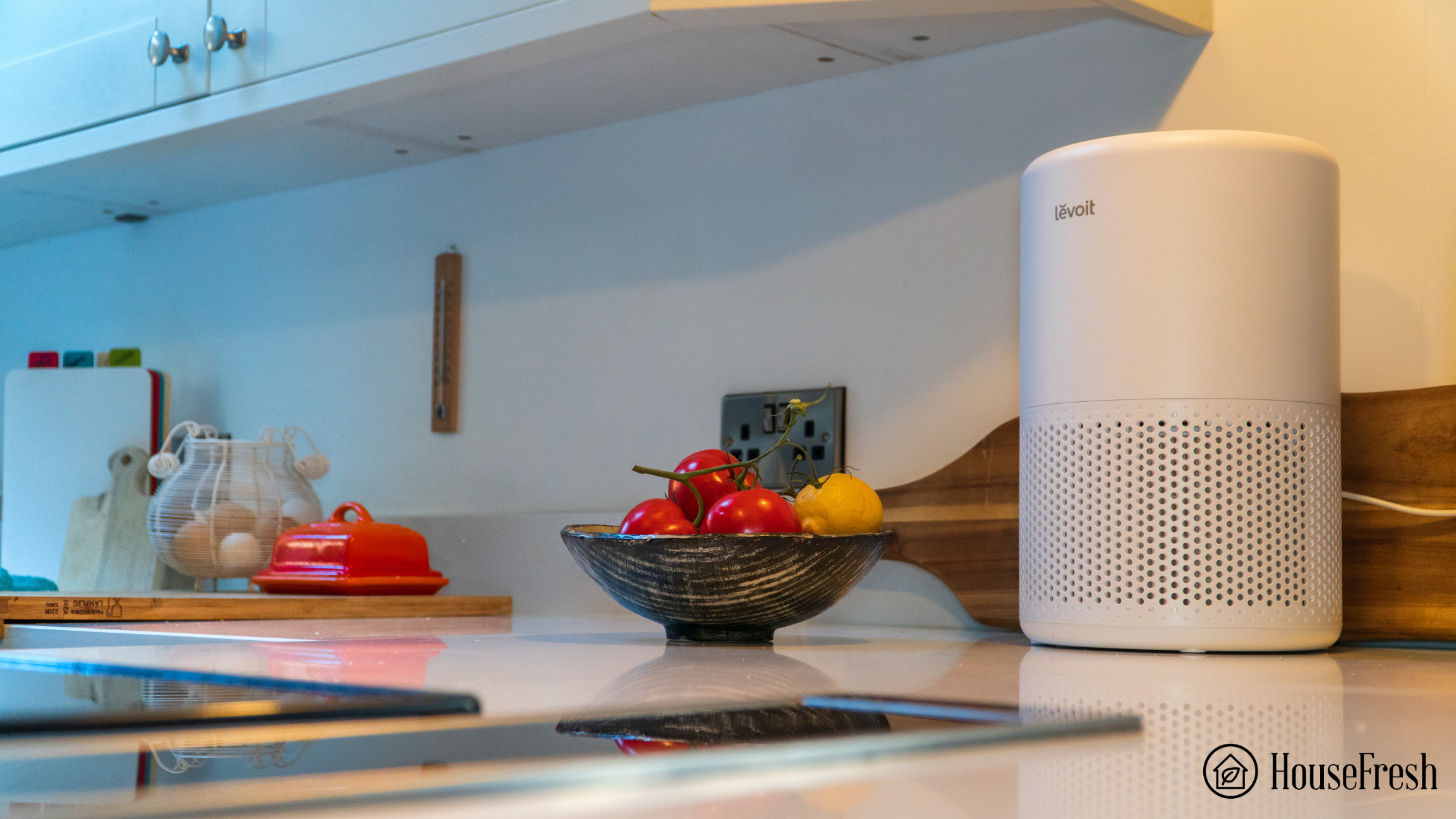
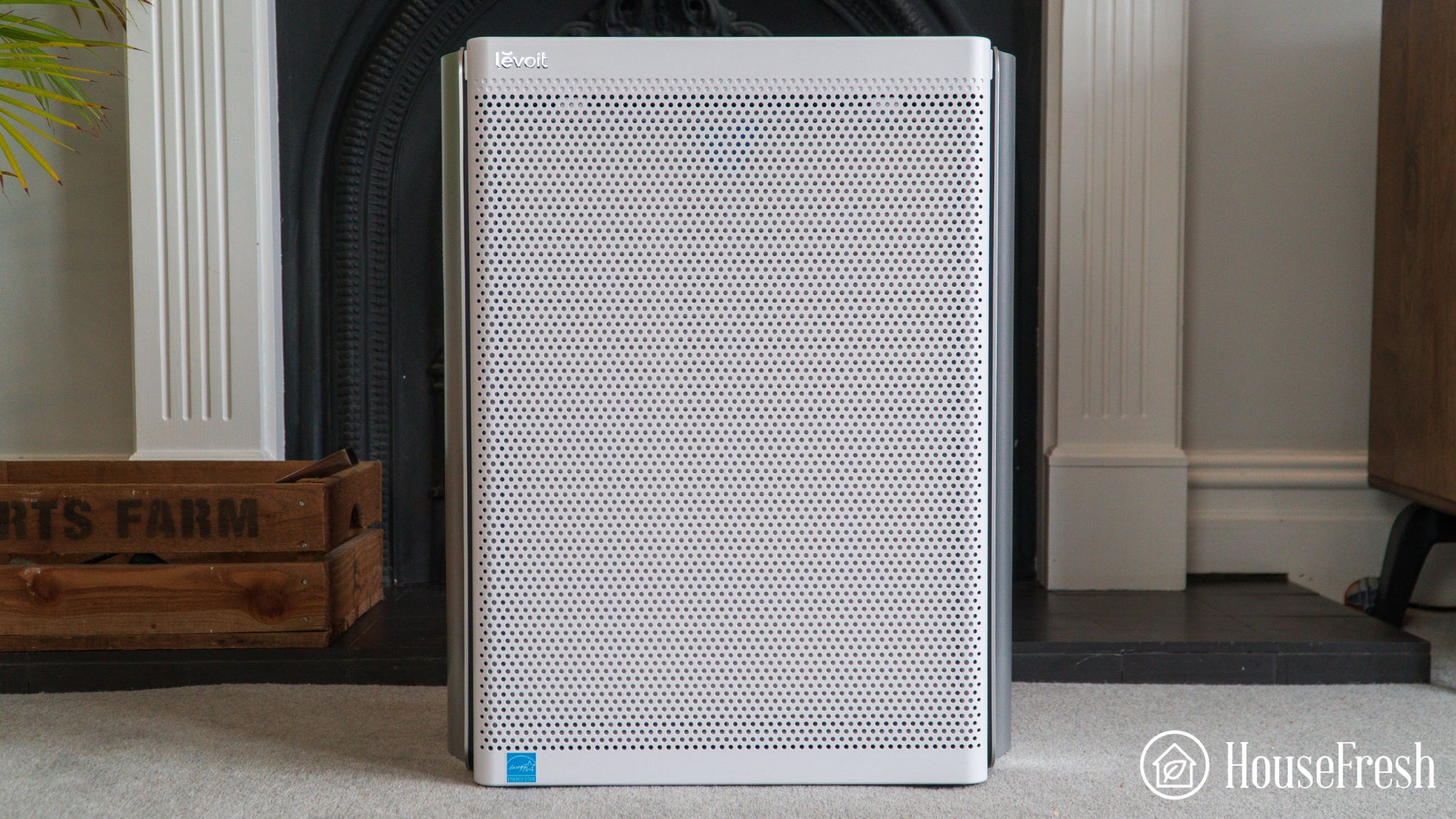
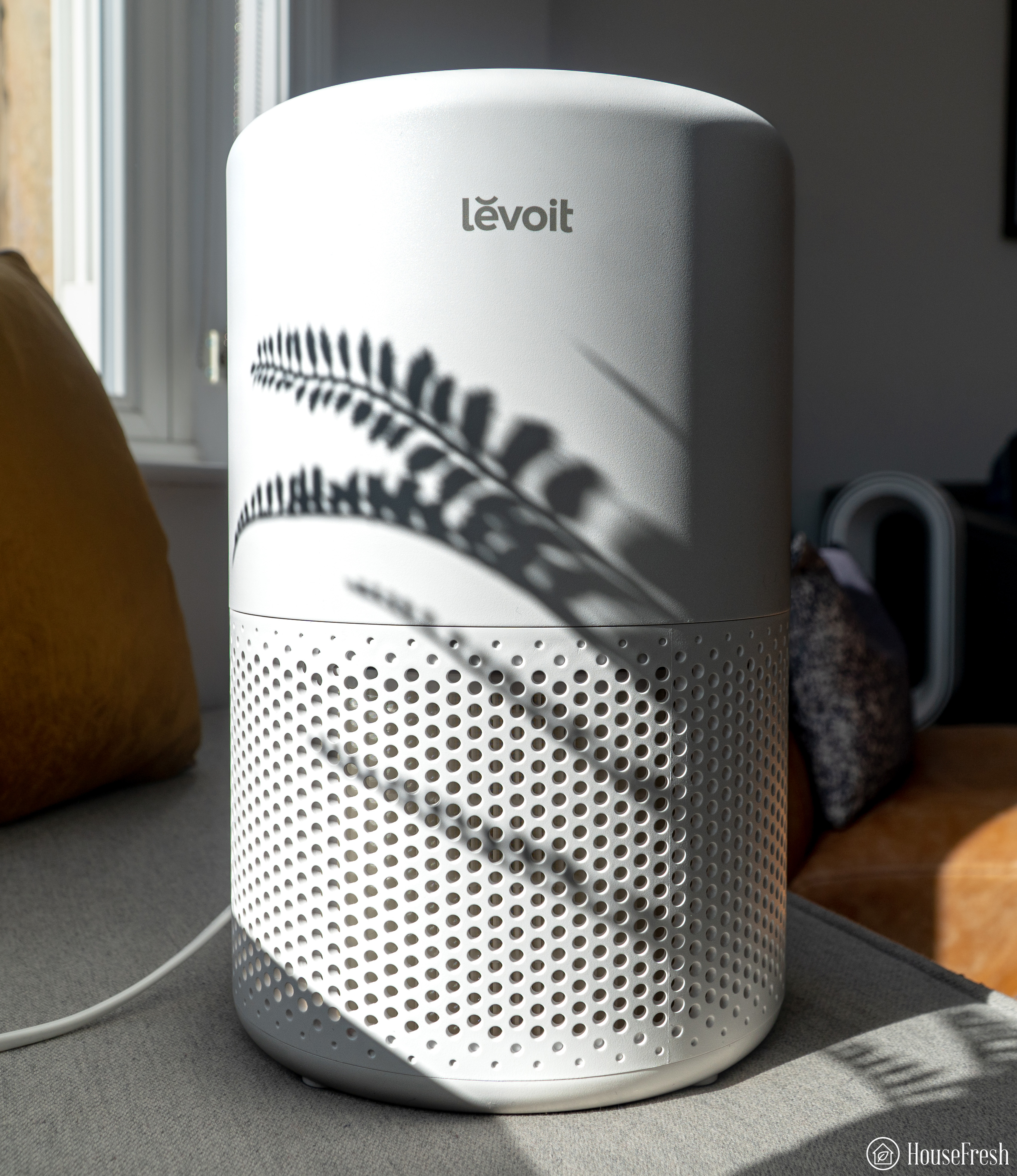
It’s sleek, it’s modern, and it’s unintrusive, but it still only comes in white and can’t be disguised as anything other than an air purifier.

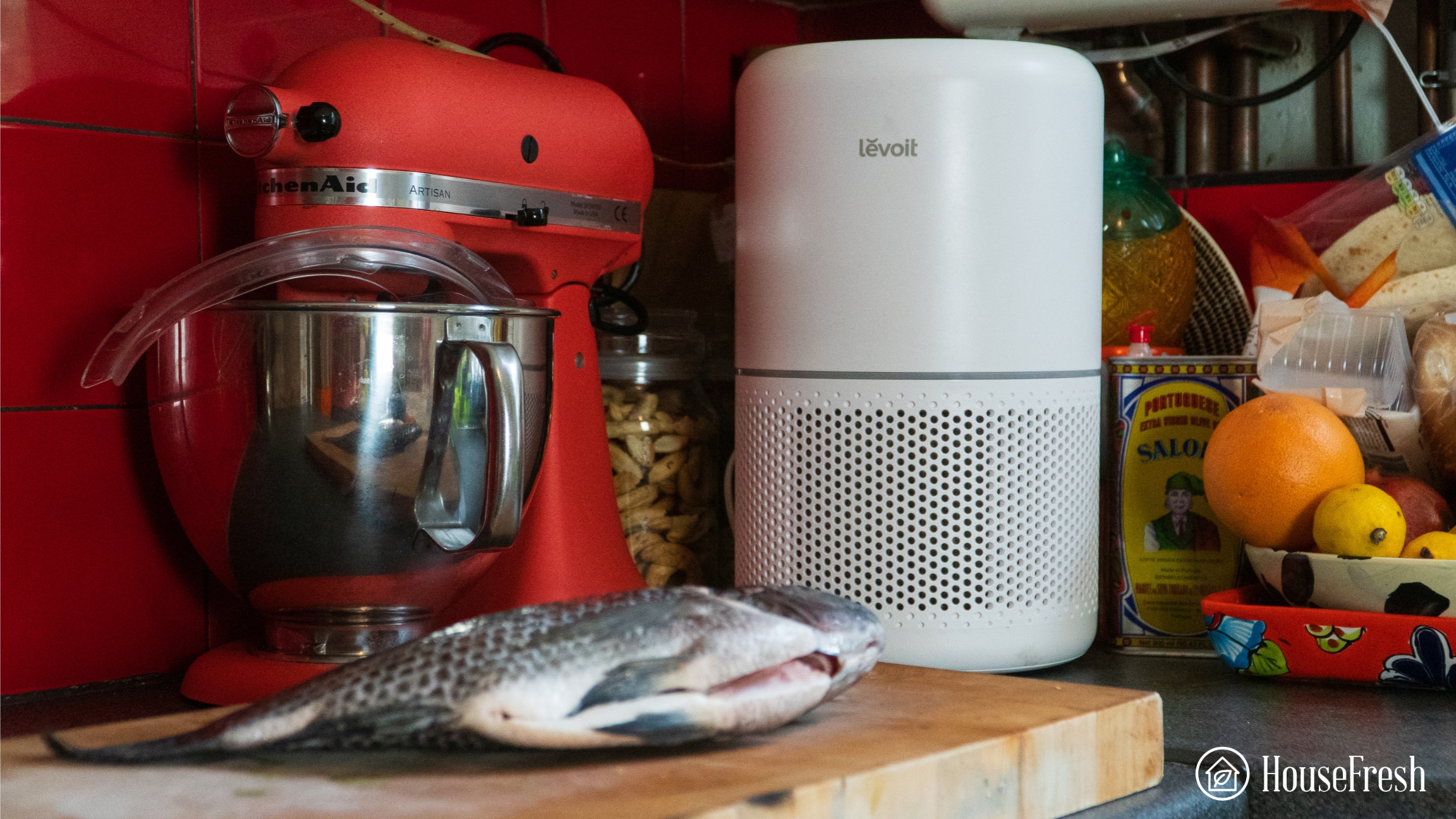
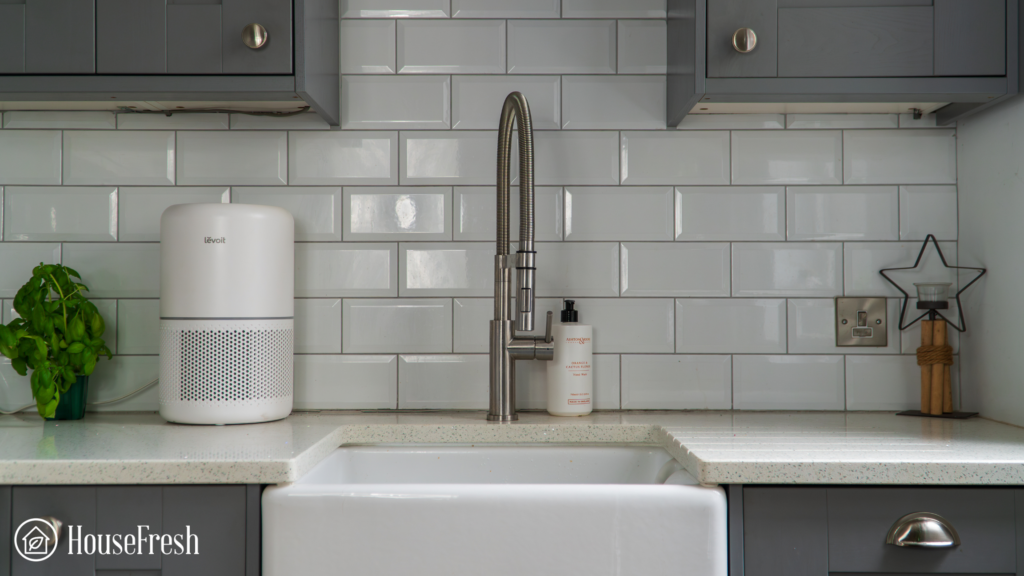
I know it’s only a budget unit but, for me, Levoit could put a little more effort into making their units more attractive to the eye (hence why I’ve tried to be a little arty with the pictures).
Levoit Core 200S Front logo 2

It’s not a bad-looking air purifier by any means. This is only my humble opinion. But if you had a little more money to spend, and design is a key factor, I would go for BlueAir’s Blue Pure 411 or the Medify MA-25.

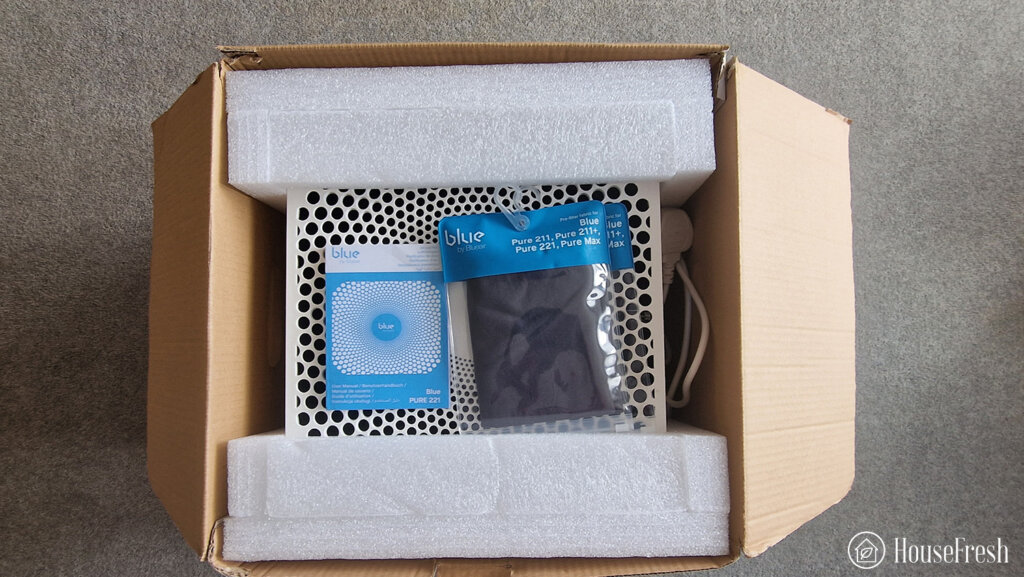
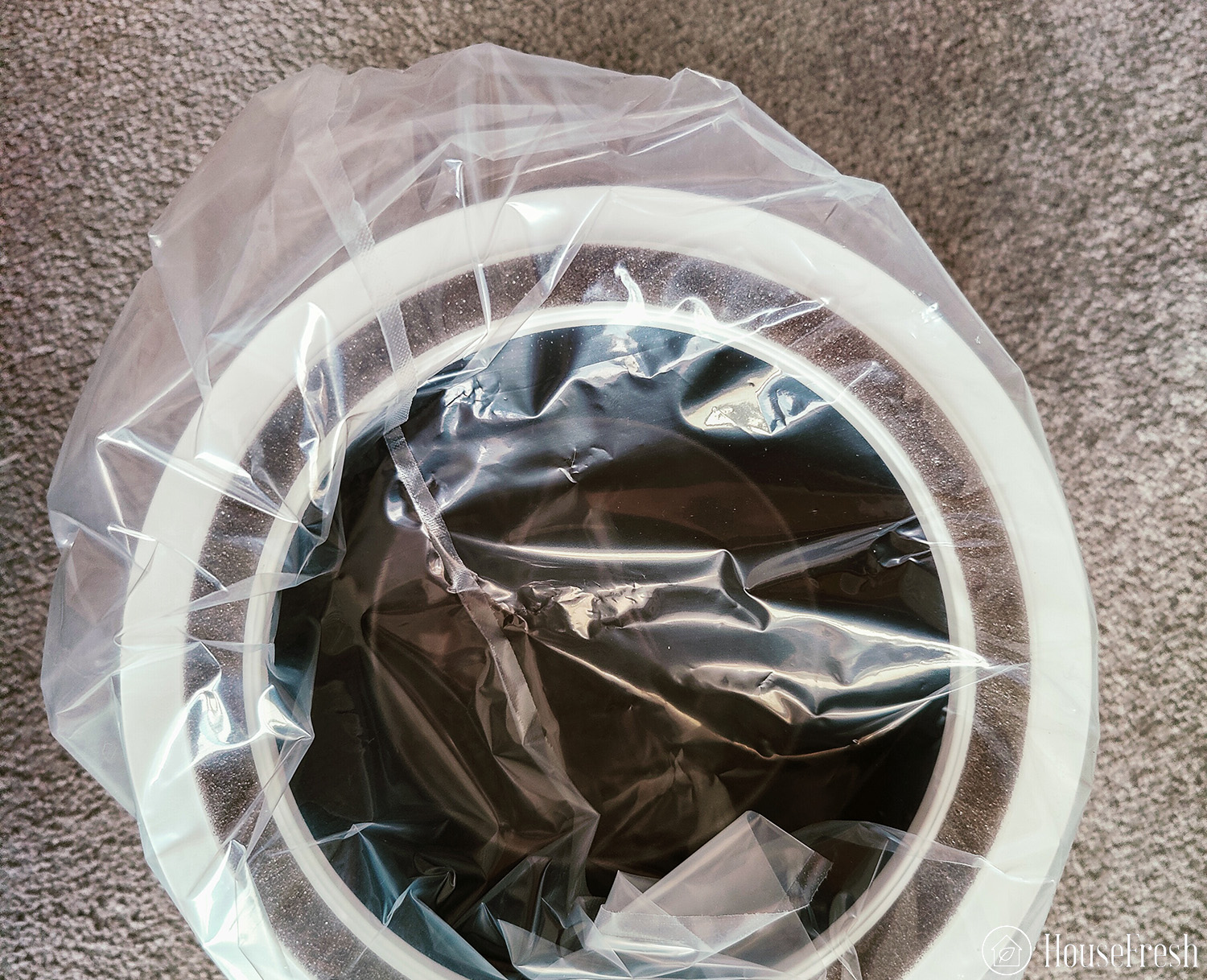
The 200S comes well packaged. Levoit has ensured that it won’t suffer any damage at the hands of cavalier delivery drivers when shipped. My only objection is that each component is wrapped in a lot of plastic which isn’t particularly needed. Come on Levoit, think of the turtles!
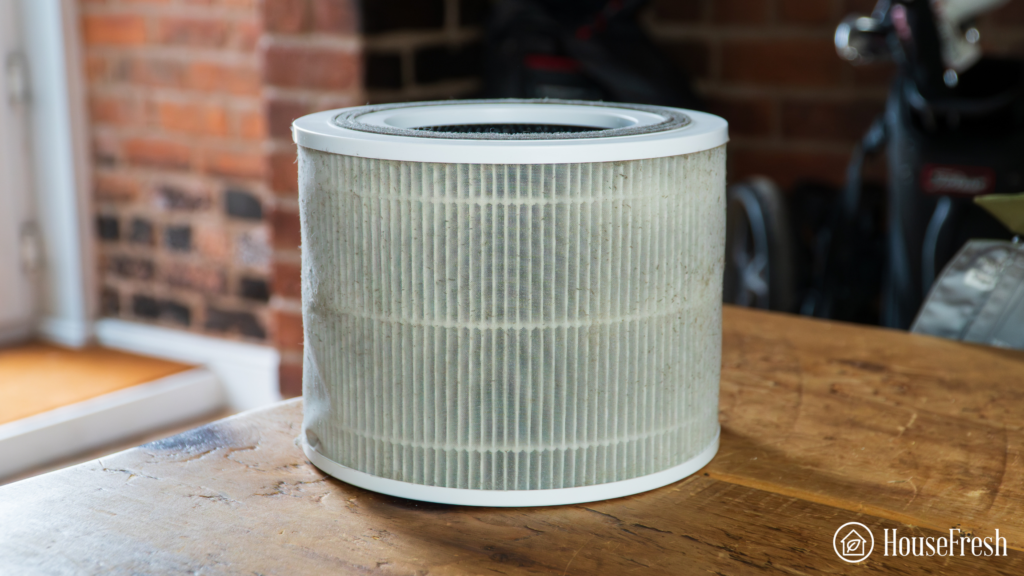
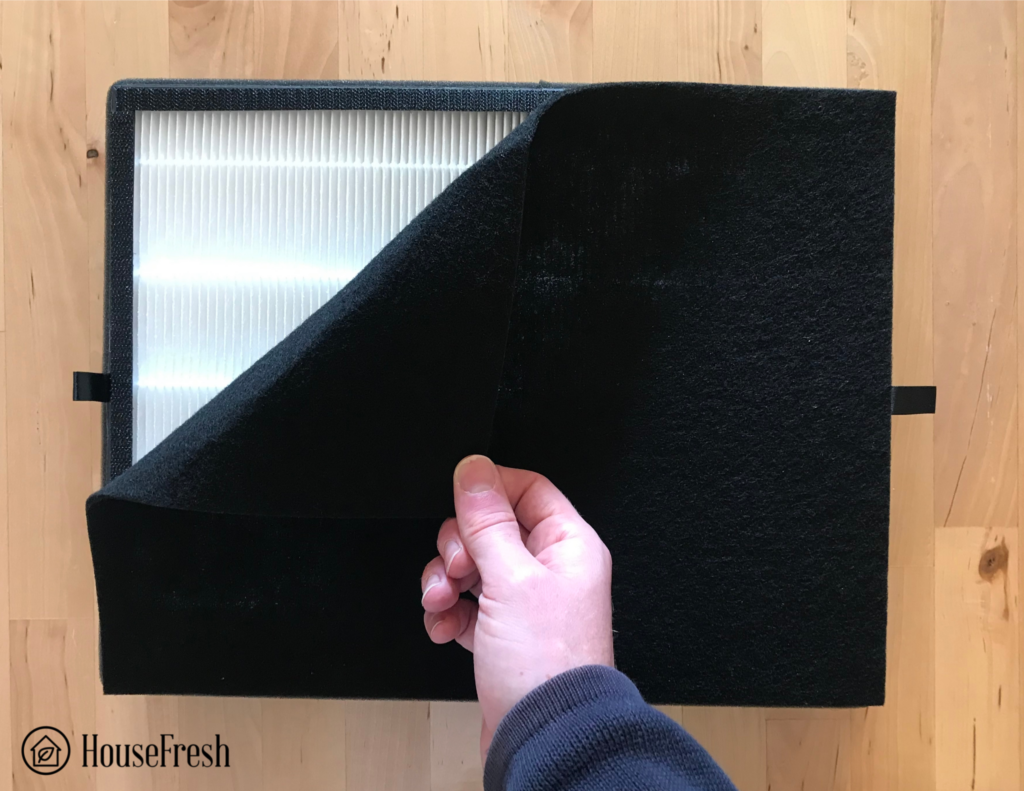
Levoit Core 200S Filter inside bag logo 1

3-stage filtration technology

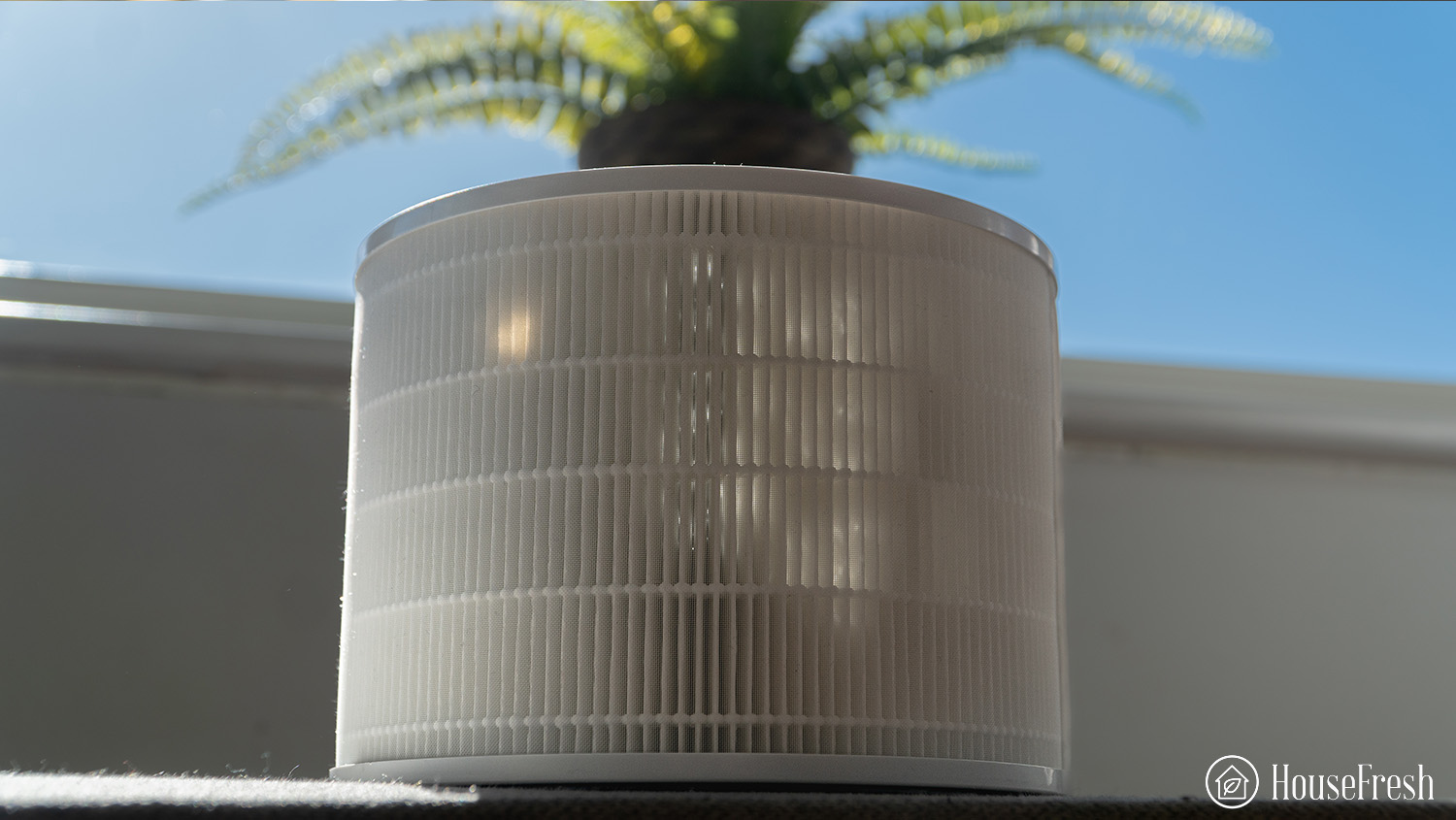
The filters and the fan are the key components in every air purifier; bad filters = bad air. Luckily, you don’t have to worry about filter technology when buying a Levoit Core 200S.
Levoit Core 200S Filter logo

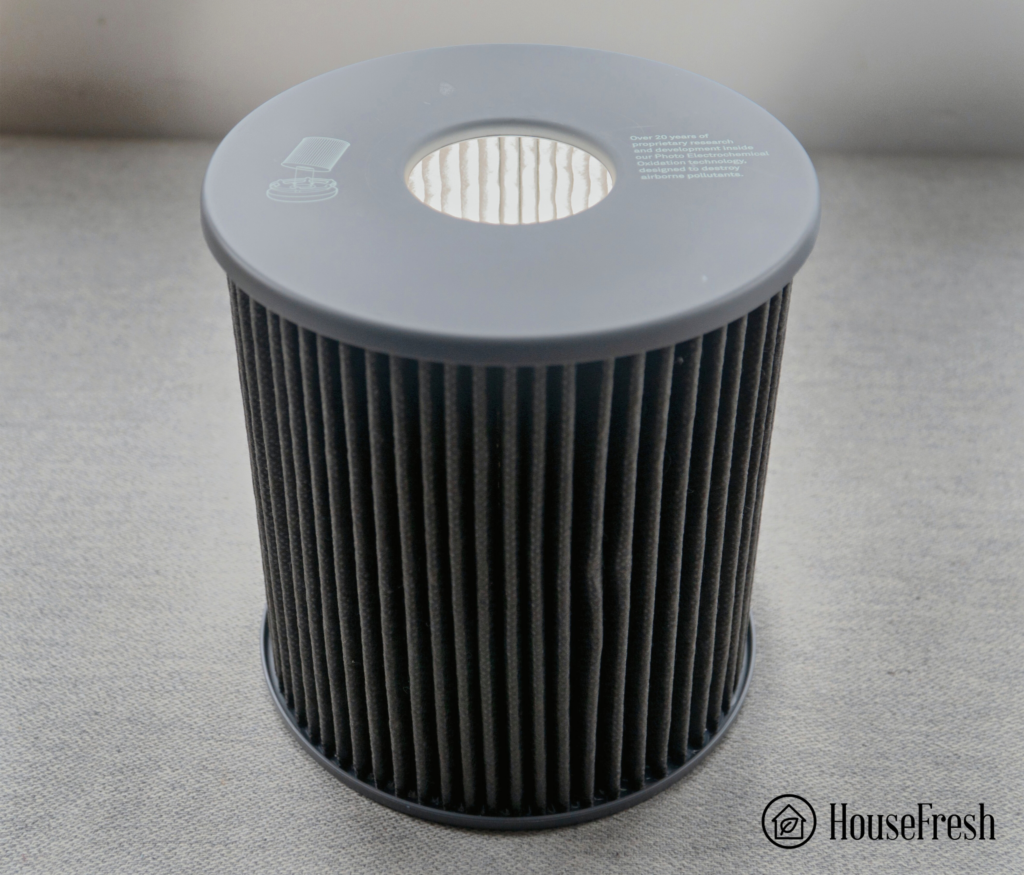
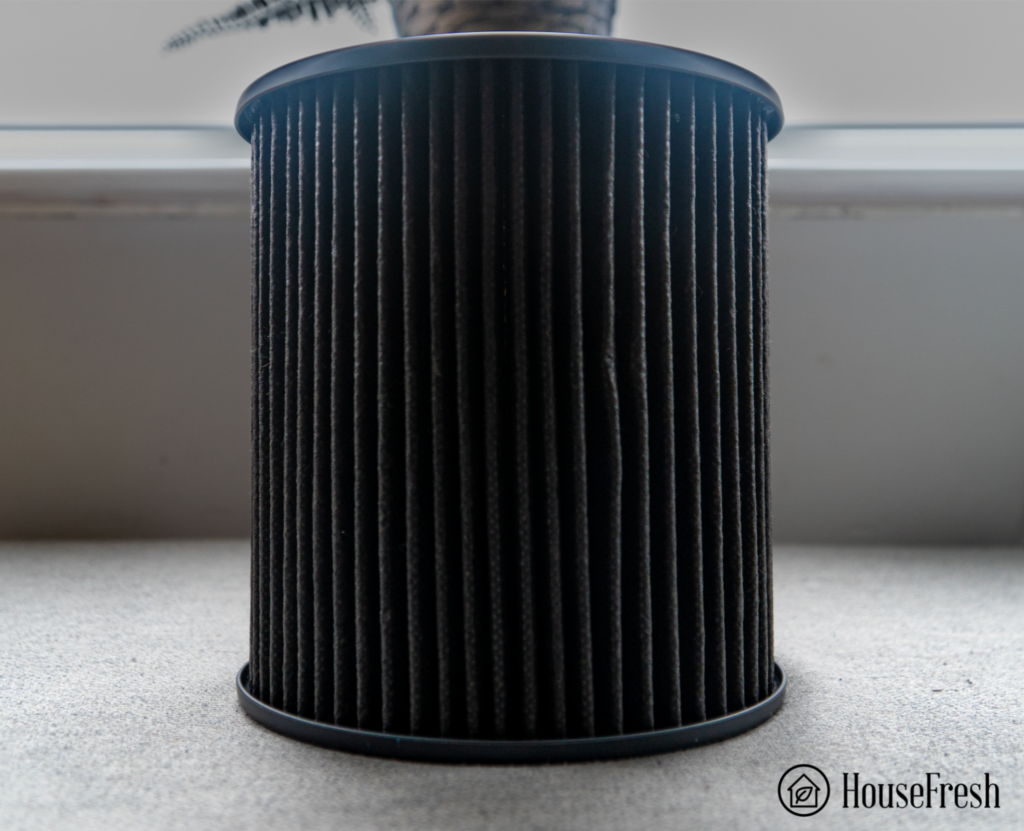
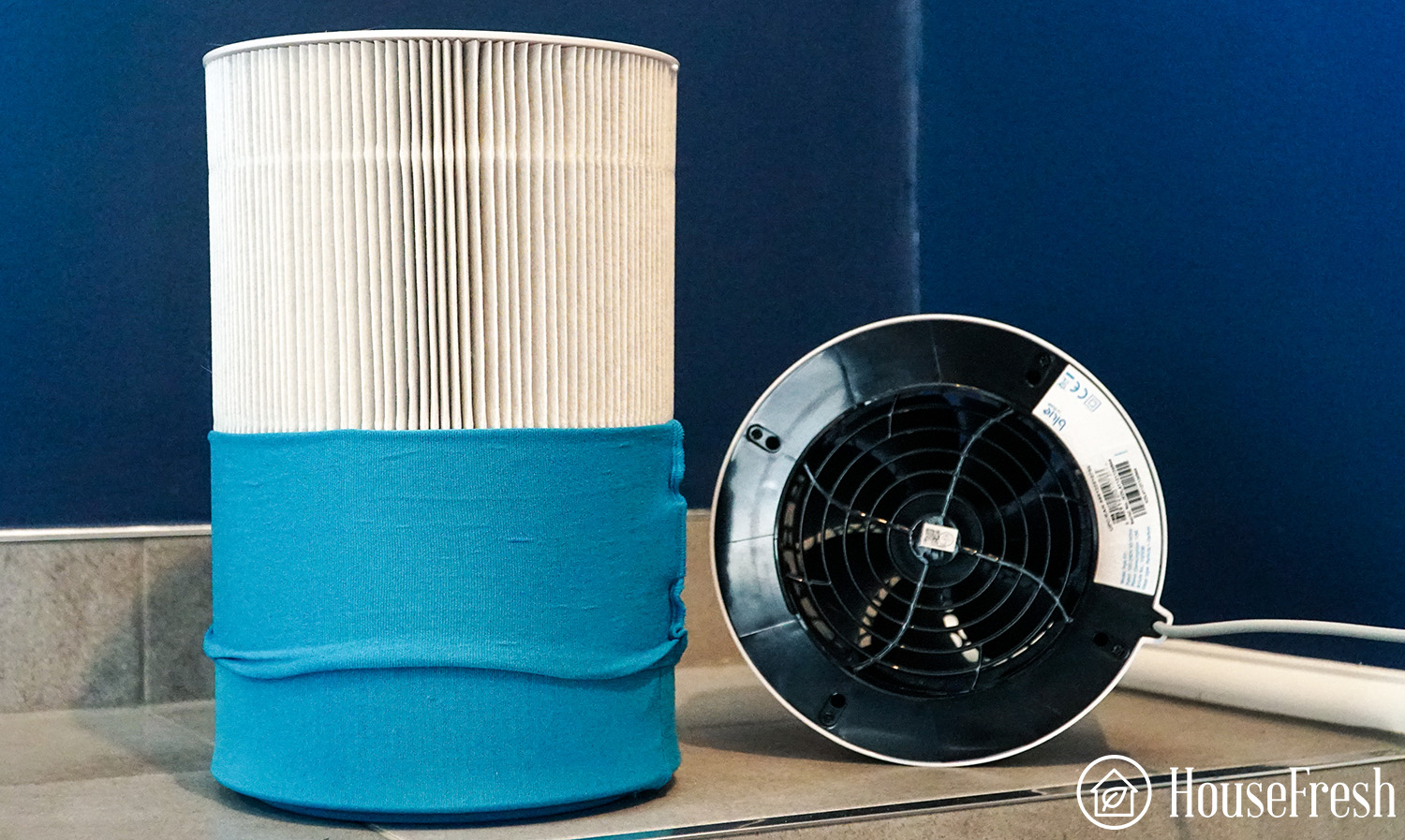
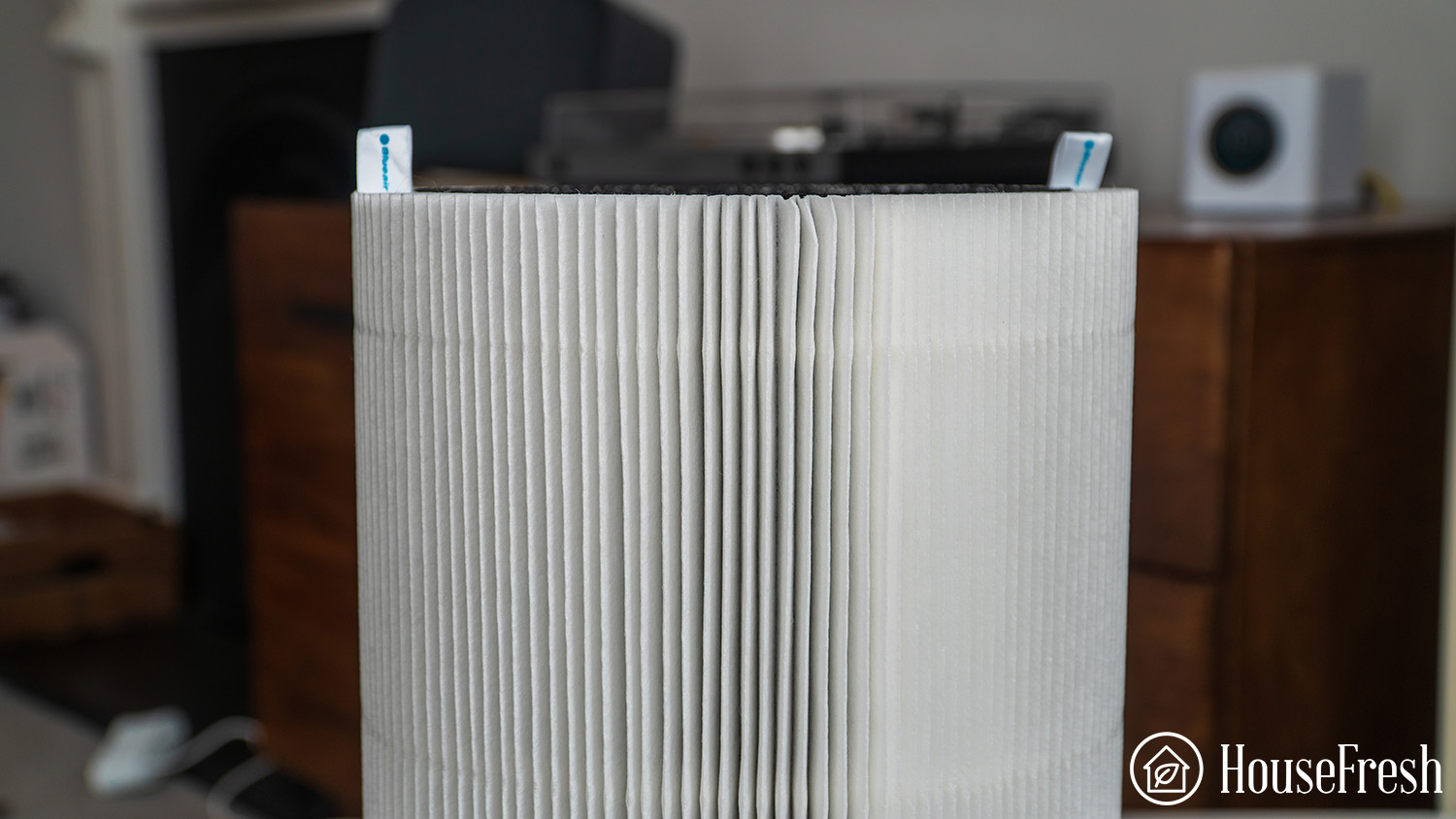
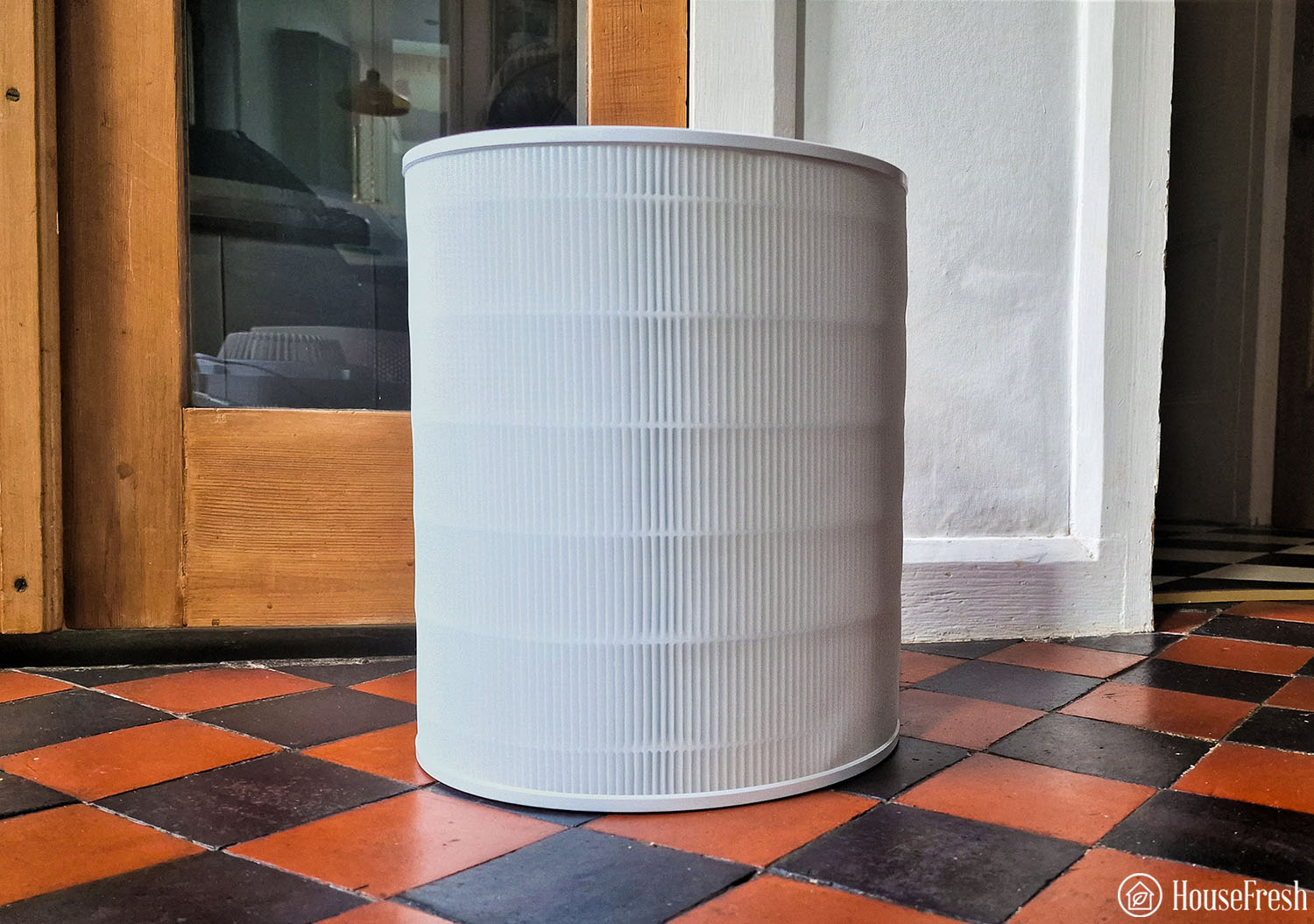
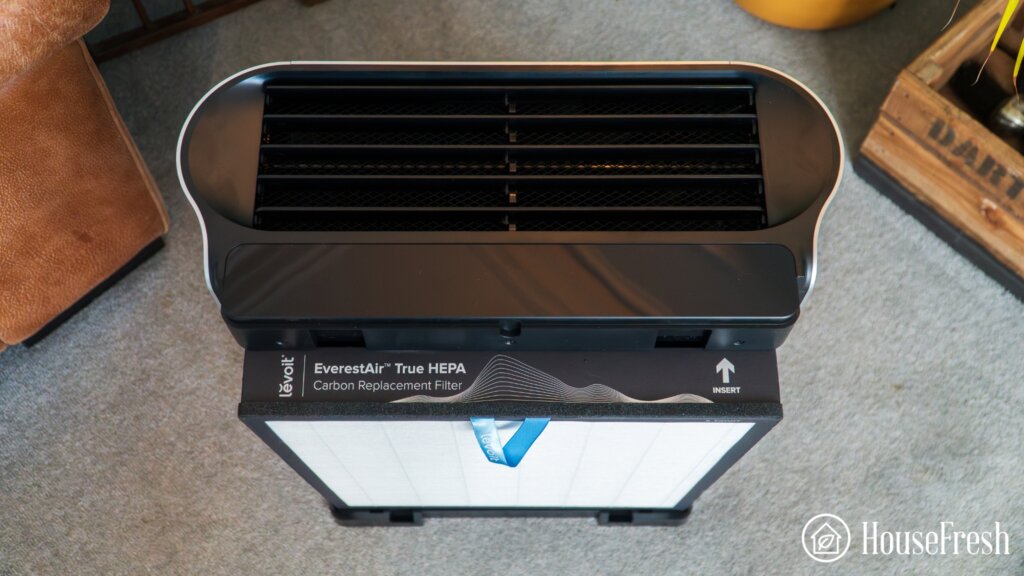
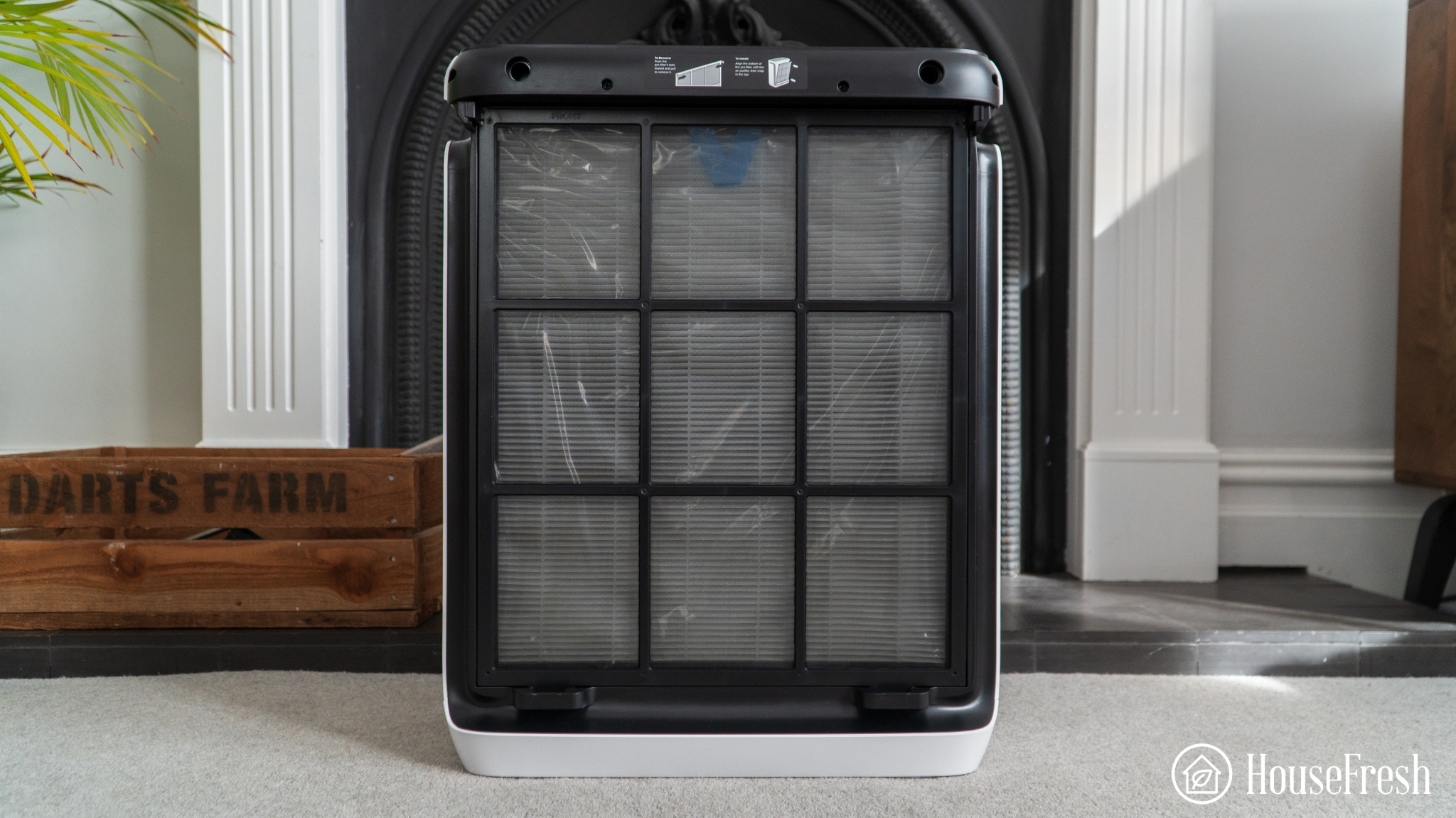
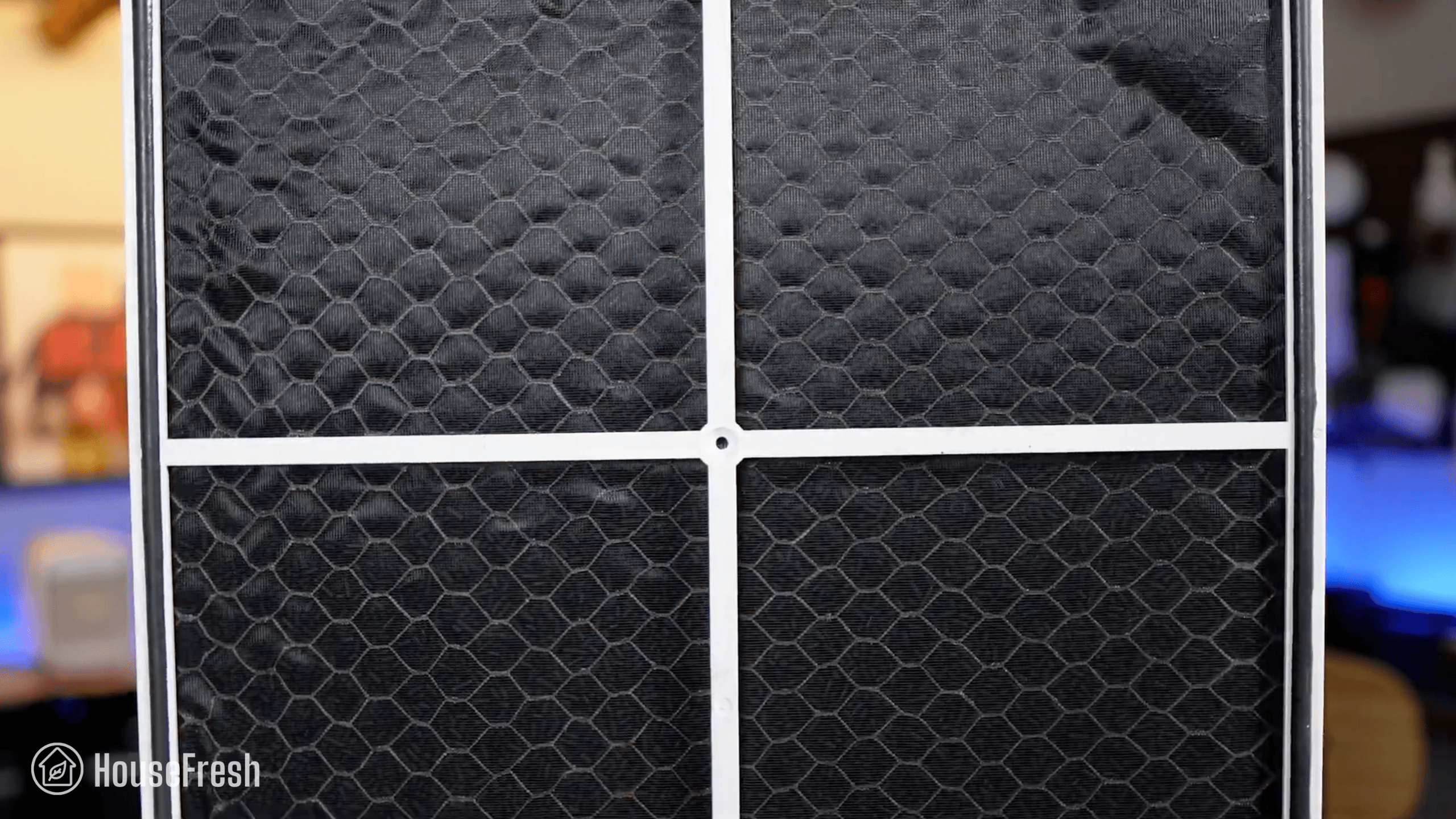
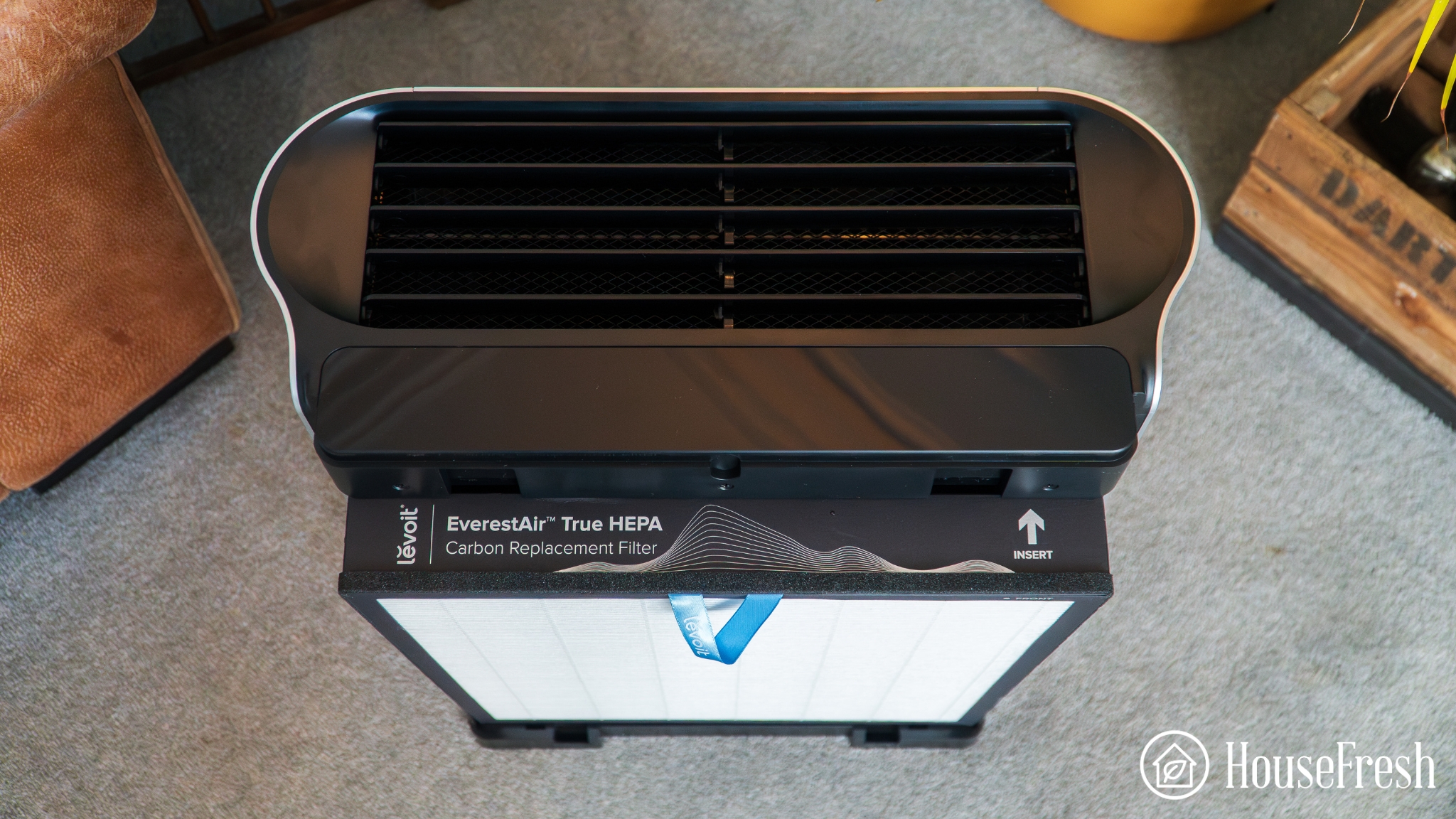
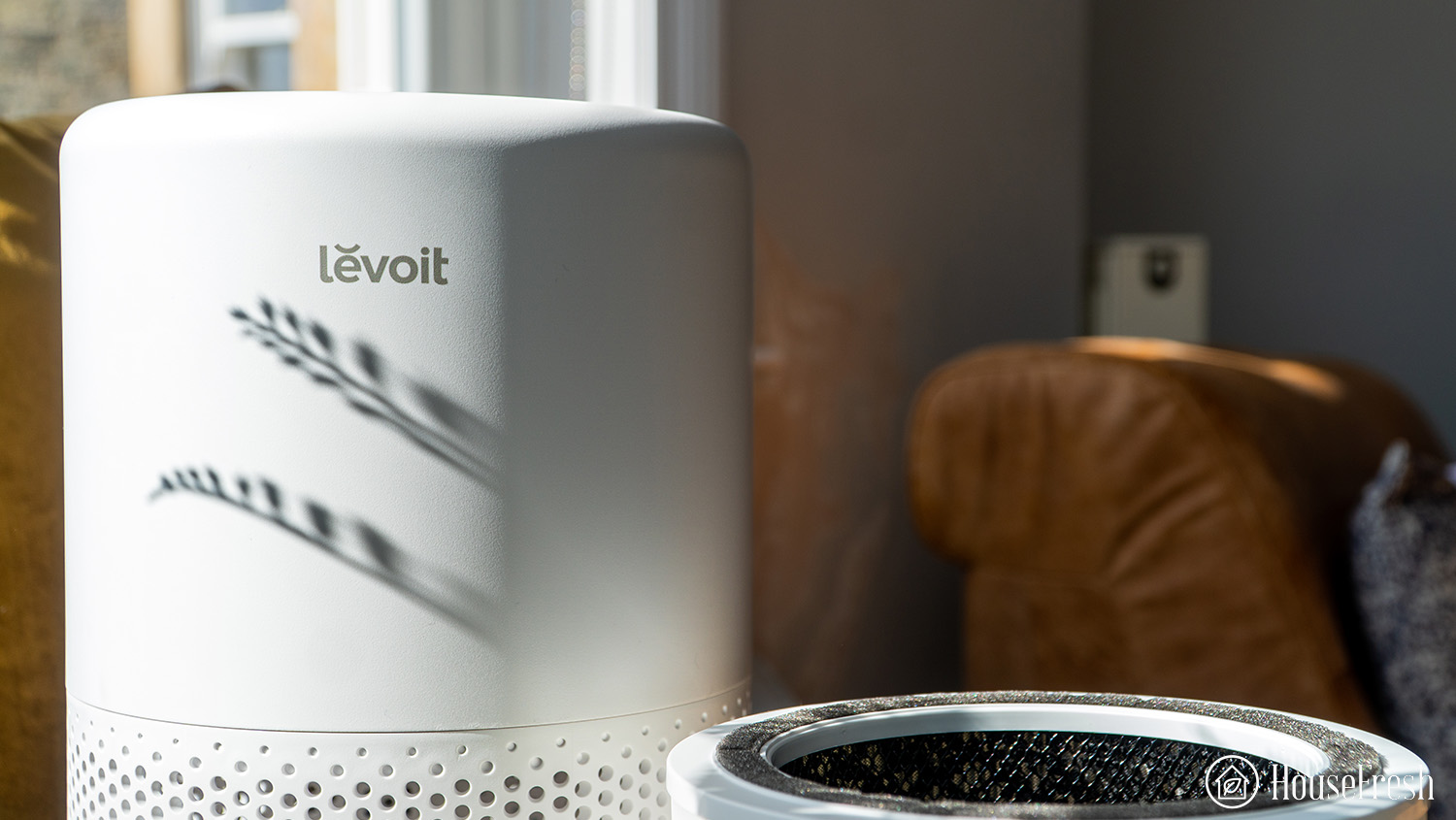
Each of Levoit’s units in the Core range comes equipped with a 3-stage filter to maximize the filtration of nasty airborne pollutants nobody wants in their home:

  • Stage one: Nylon pre-filter
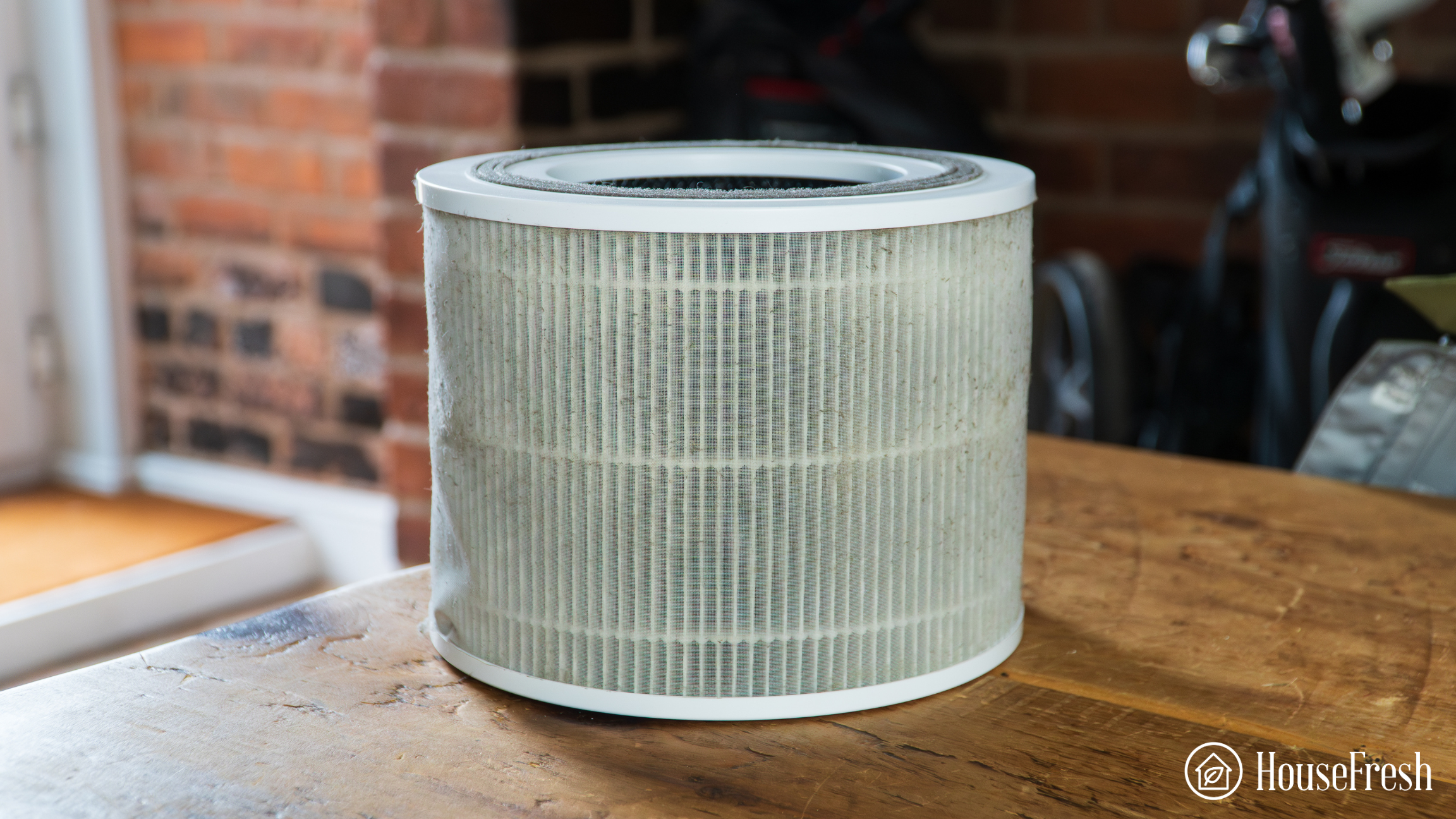
    The pre-filter is designed to be the first line of defense. It captures the larger particles that float around your home like dust, hair, pet dander, and lint. Not only is it trapping these particles, but it’s also prolonging the life of the main filter allowing it to concentrate on smaller particles instead of being bombarded by everything.
  • Stage two: Main filter
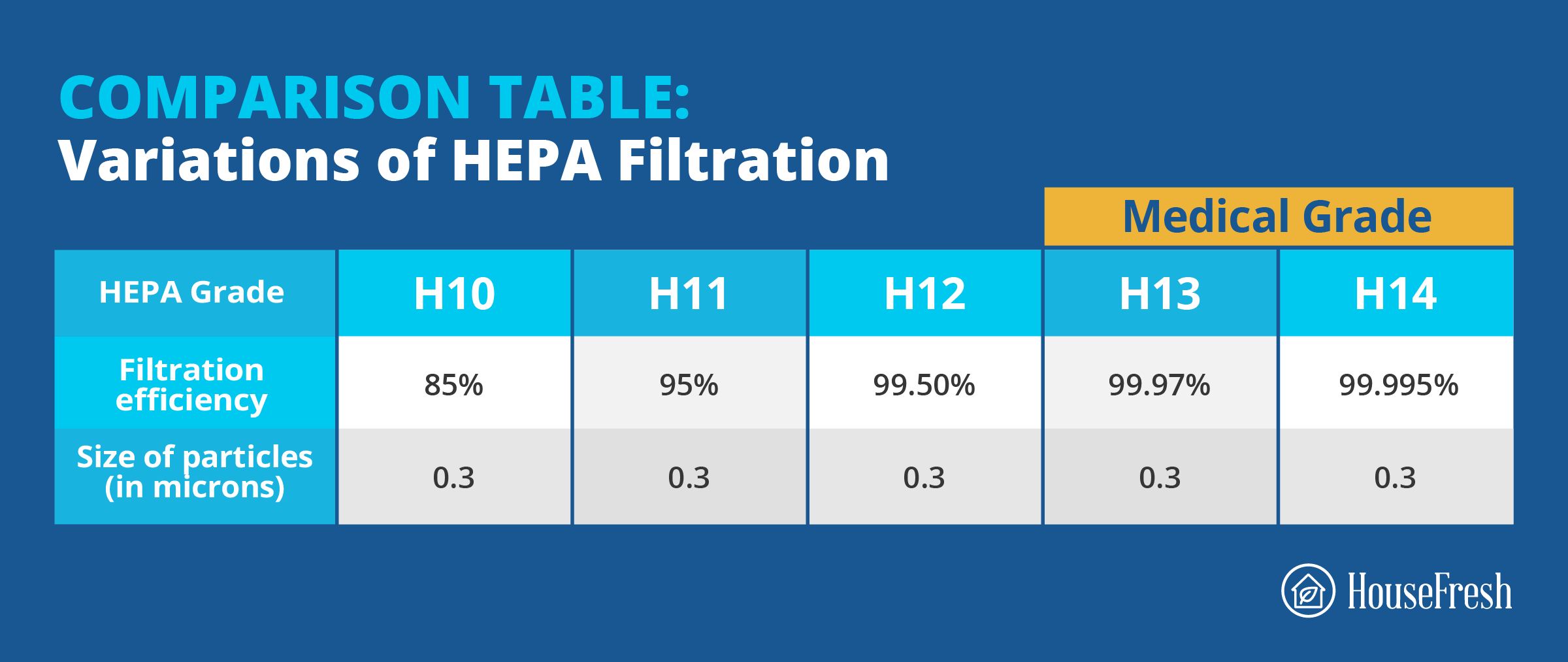
    This is where the magic happens. Levoit’s Main Filter captures at least 99.97% of particles 0.3 microns in size (one micron is equivalent to one one-thousandth of a millimeter, so yeah, small). This takes care of fine dust, smoke particles, and pollen for all you fellow hay fever sufferers.
  • Stage three: High-efficiency activated carbon filter
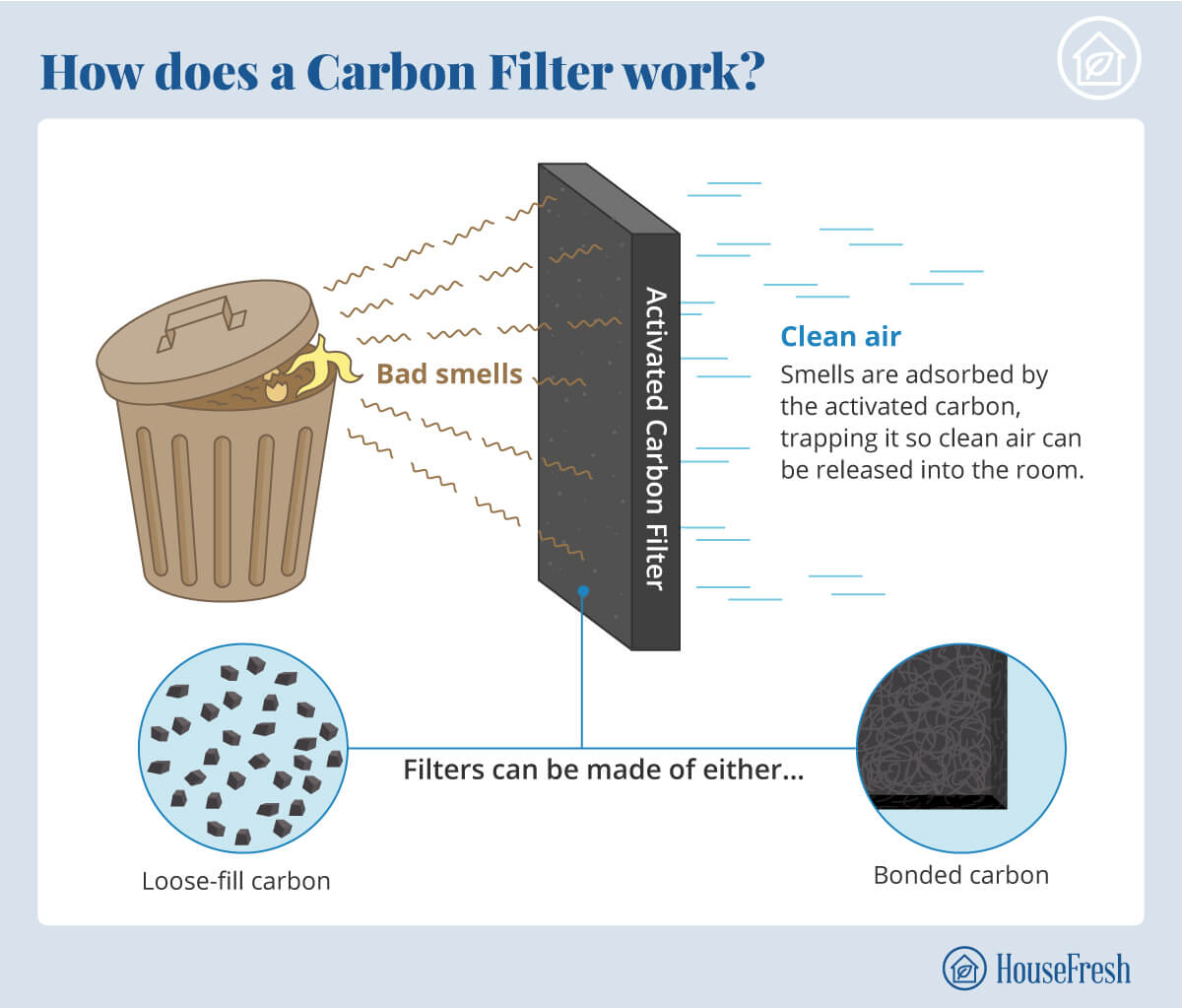
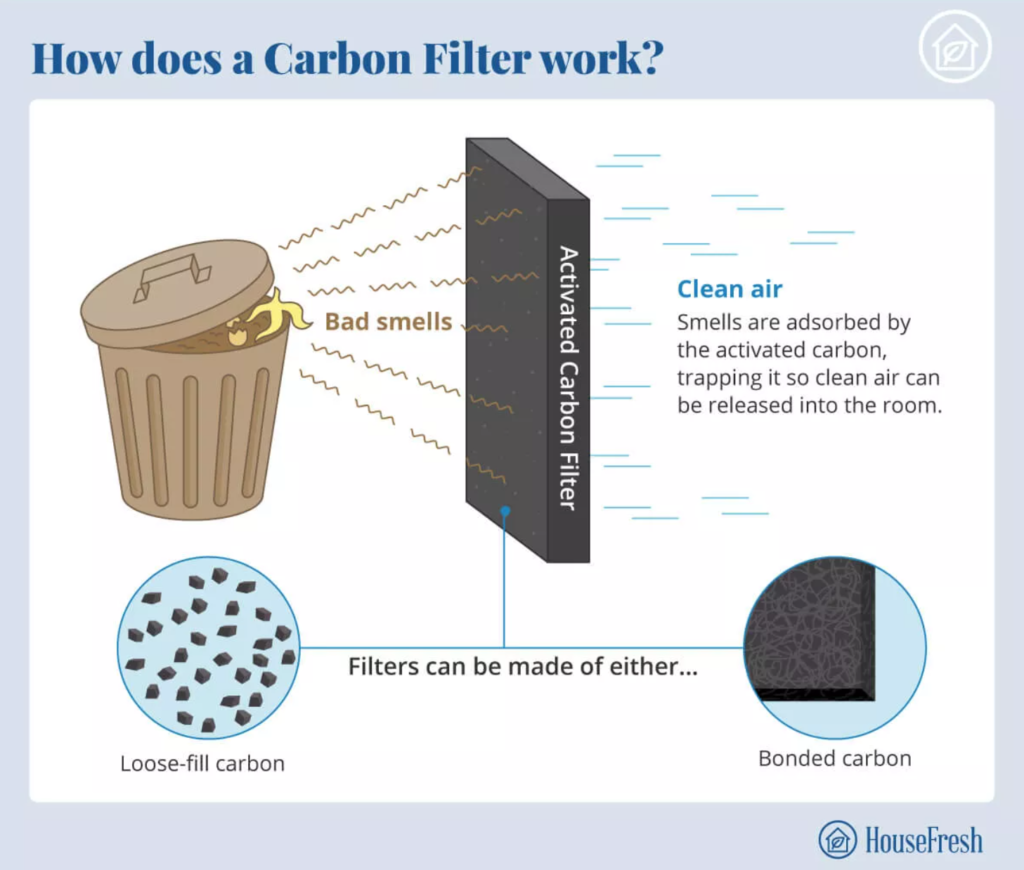
    This is the part of the filter that takes care of odors. To remove odors like smoke, cooking smells, and other ominous smells from your home, you’ll need an activated carbon filter that’s packed full of charcoal to adsorb those VOCs.

Levoit has shown us that they can do filters right… very right; just check out our review of the Core 600S.

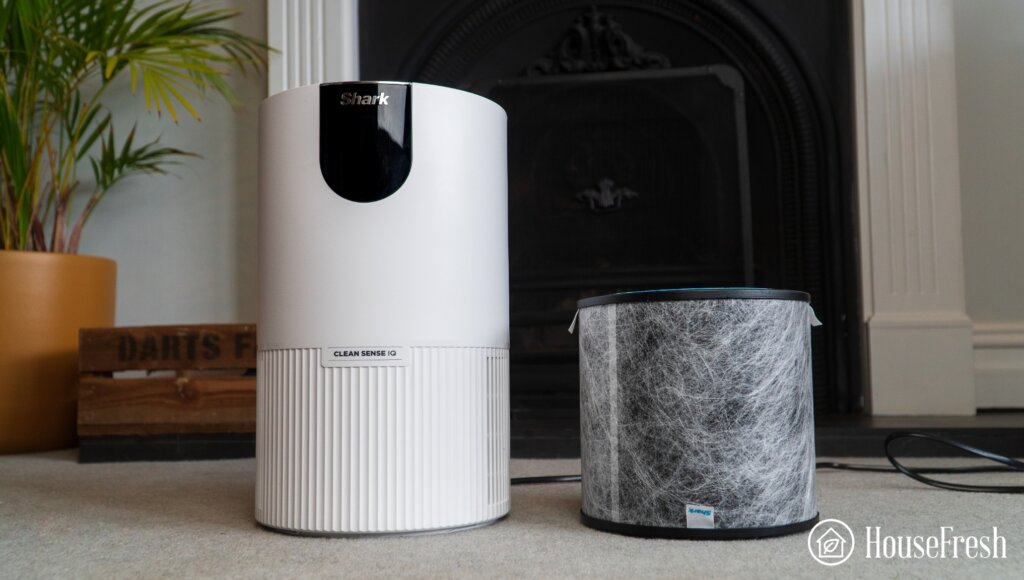
The 200S contains the exact same filter as the 600S, but there is a big difference. This comes down to size rather than the filter itself.

In this smaller unit, the Core filters don’t have nearly the same cleaning ability.
Levoit Core 200S Filter 2 logo

💡exclusive code for HouseFresh for 10% off a single purchase on Levoit.com: HOUSE10

I’m sure you will have worked it out, but I still need to remind you. Remember to remove all the packaging from the filter before turning the air purifier on. If you don’t, you’ll notice two things;

  1. The air in your home won’t get any cleaner
  2. After a while there’ll be a strange burning smell coming from the unit, that’s plastic your smelling… not cool

Controls that are easy to navigate

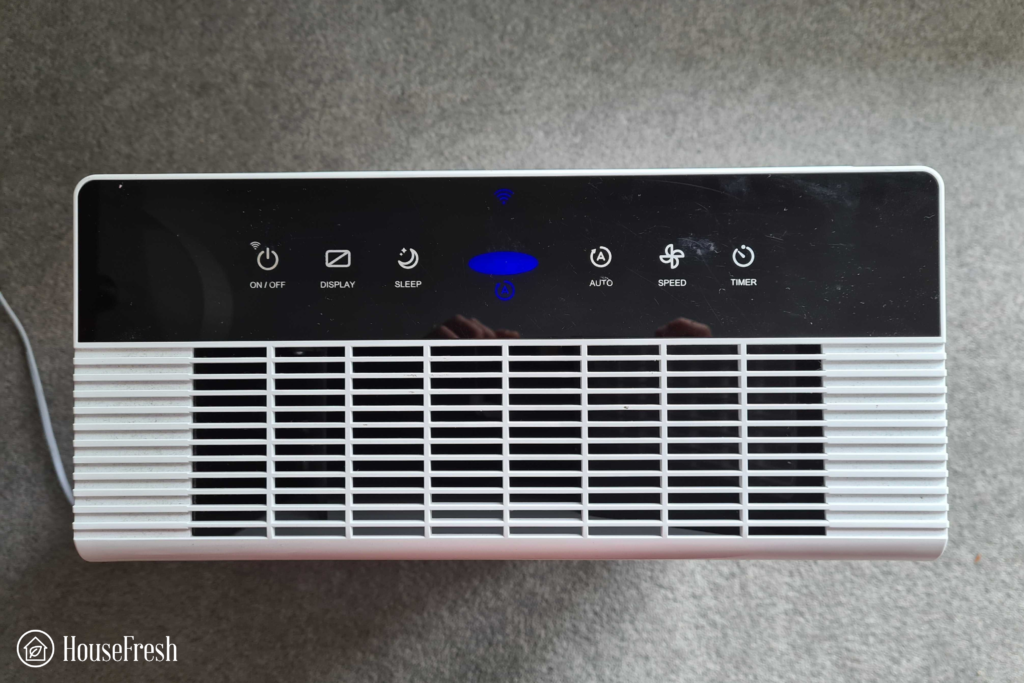
After you’ve unwrapped everything, you’re pretty much ready to go. Simply plug the 200S into a wall socket and switch it on. The controls are really easy to navigate.
Levoit Core 200S Controls logo 1

When I look at an air purifier, I’m always thinking about how easy it is to use. Not just changing the fan speed but also navigating its features. Levoit has always been great at setting out its controls to maximize space and usability. 

The 200S keeps this tradition alive.

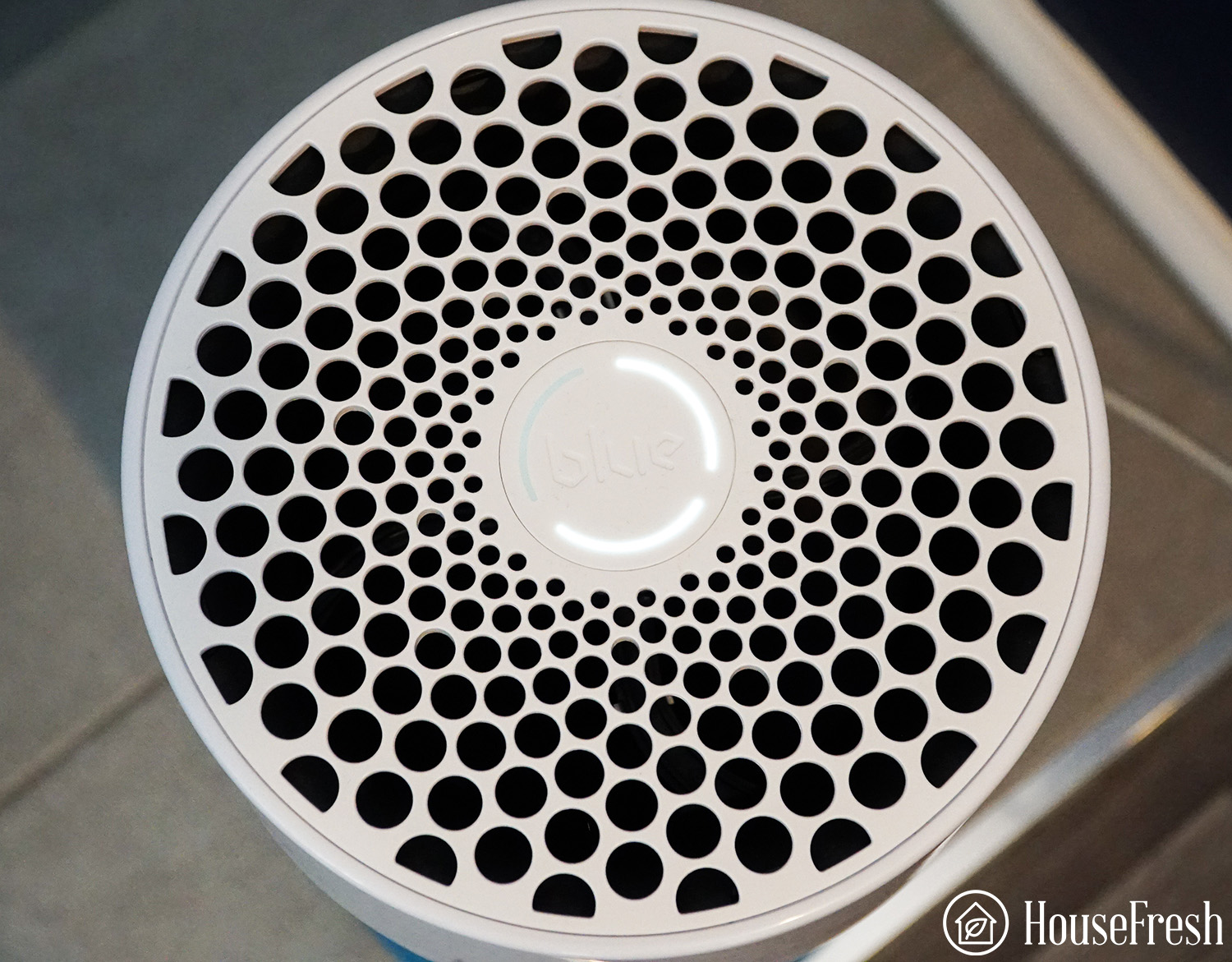
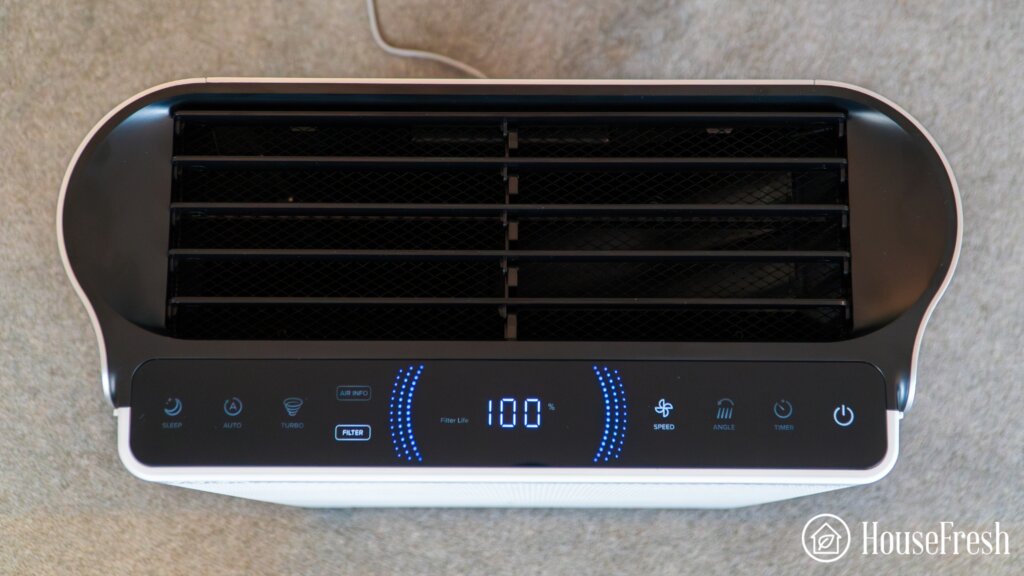
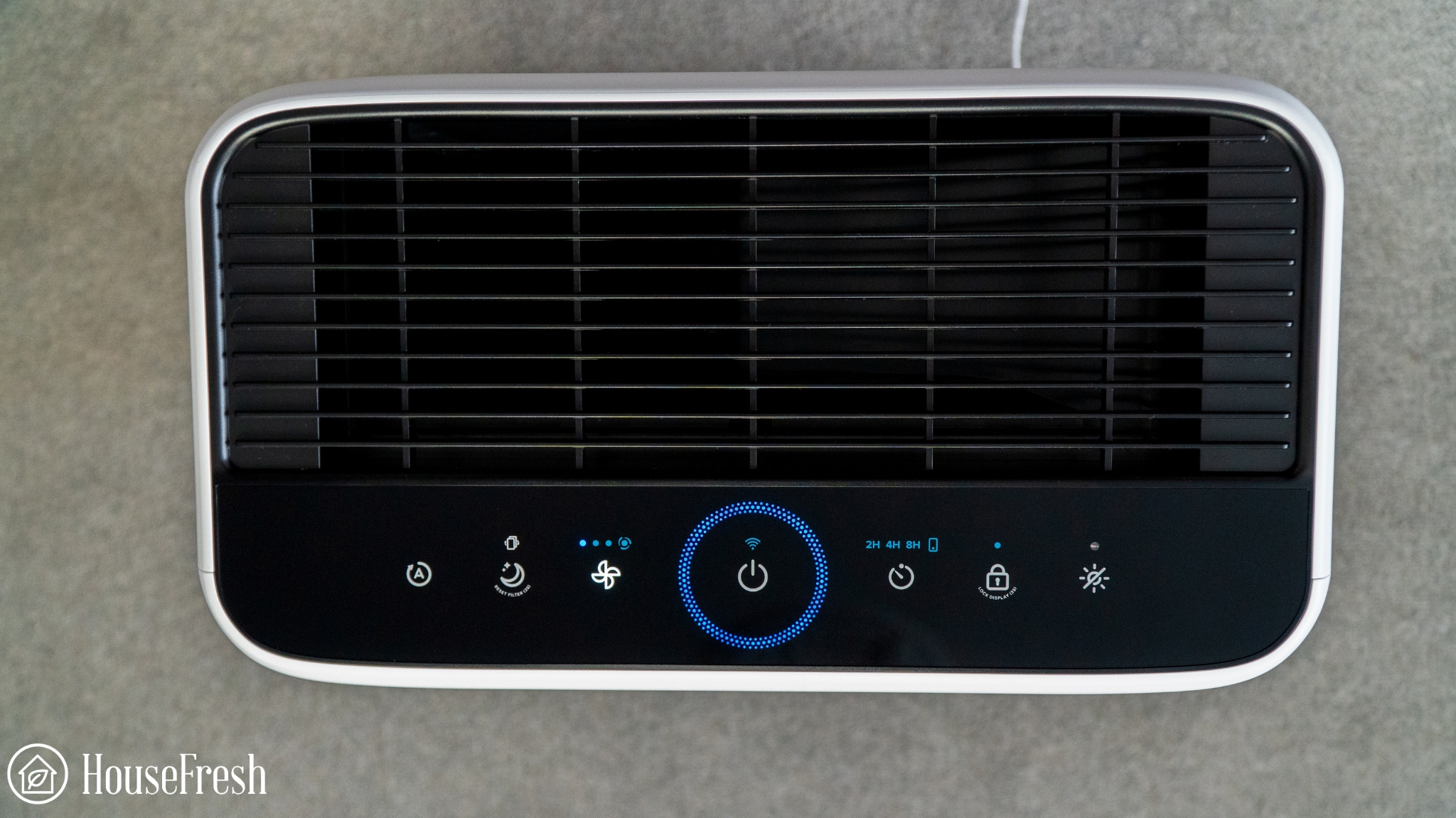
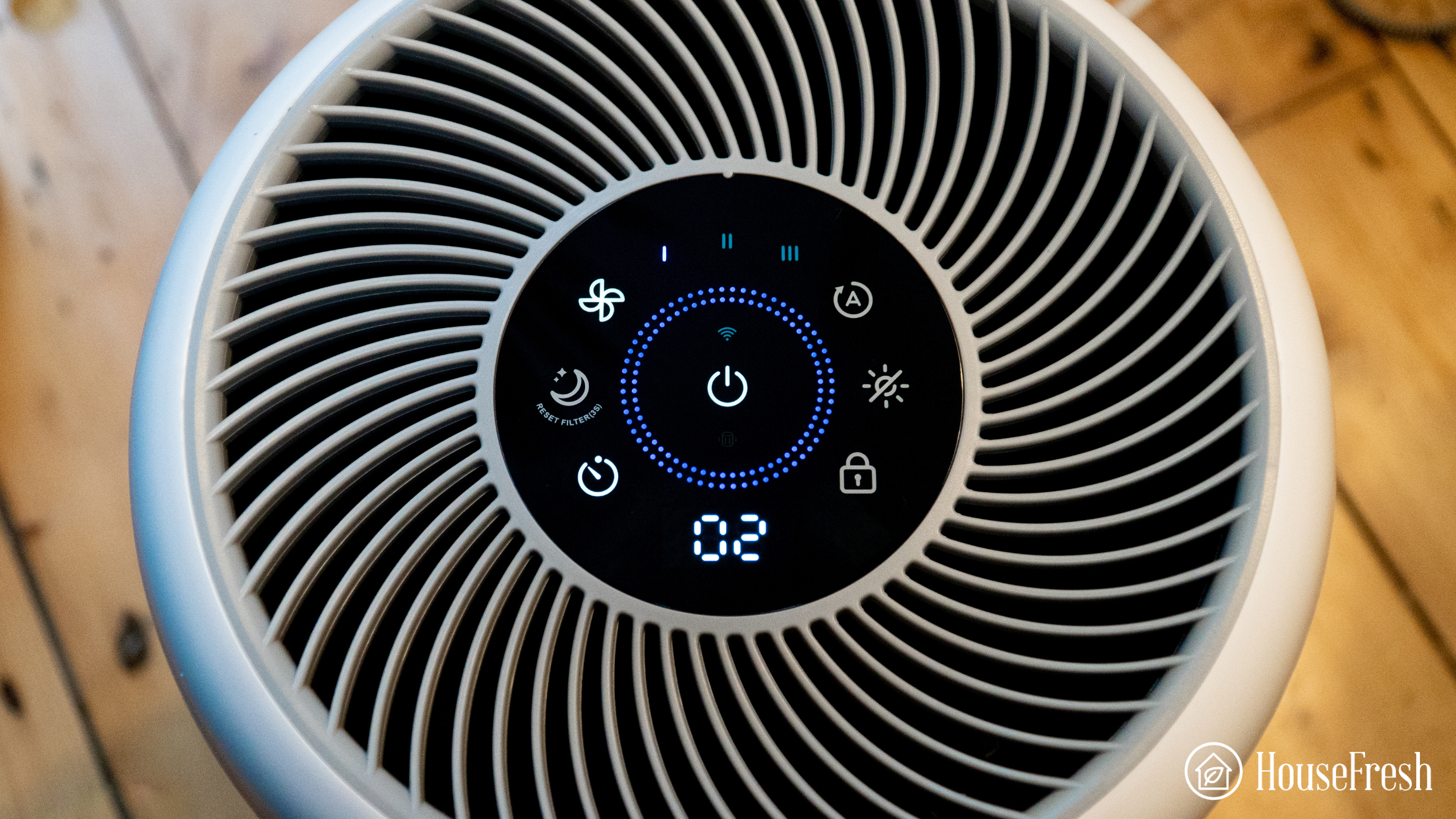
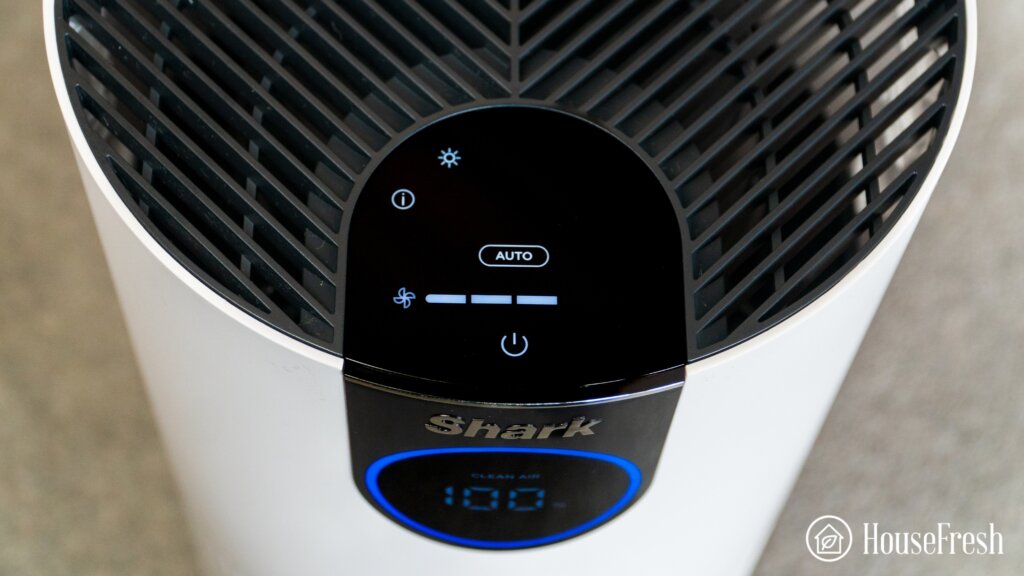
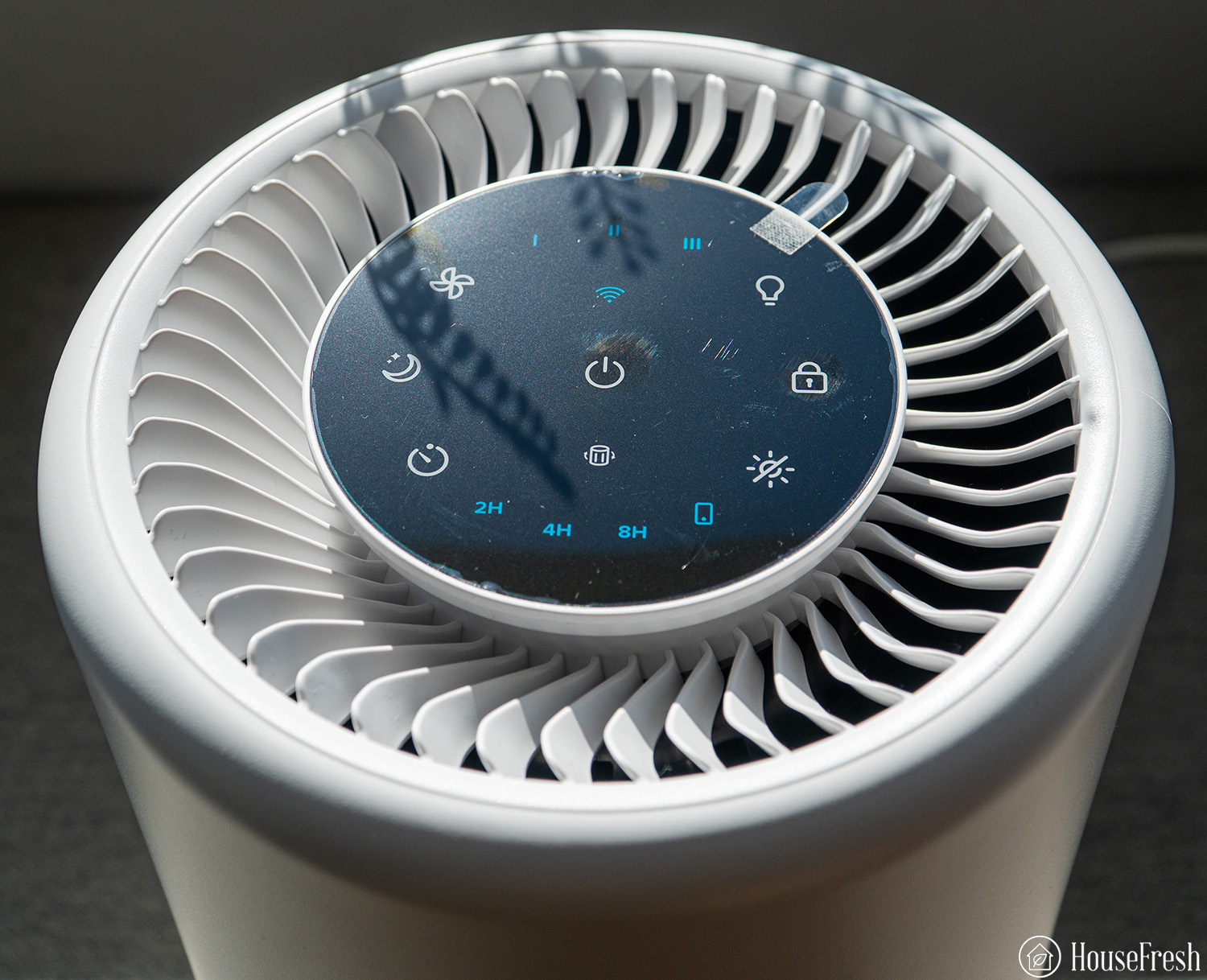
The circular touch panel is very user friendly and is set out with clear icons for each function. There are no physical buttons that tend to stick over time, and each setting is spaced out enough that you’re not hitting the wrong one by accident.

Here’s what each one does:

ButtonFunction
IwEU0Wf6NlNtdIpQXUL09xCJJ4B57nV4cDa7zBT4bFjdFDjEy37EP1mb6aFi6znkKR091BeKAjnN2ztB8Eym1L8utq8hUl w6DZ3Turns the air purifier on/off. Press and hold to configure the air purifier.
Y6BQwDGLFblVck31A6RM8Ioj9oBJIH ajSD X8hkeRrf3QB3H uAyL4uQlVjo R6bW Kcilq9GSxu8BKHDTRUVEHq eW2aU5CjiRI rclELa7HX gR1Y87Nf6zScPgOY4erWWp2O6Xhrpmi3dgTurns on, off, or blinks to indicate configuration status.
m33VZAloCr32ZphijJ5AFykGipj3U4owyvHPYMySJlc4X59gOsLREIO3813Gaw8GSg6Cycles through fan speeds: I (low), II (medium), and III (high). Tapping the Fan Speed Button while the air purifier is in Sleep Mode will exit Sleep Mode
v8 Ad4AAMPLKzstXtaWL5Kn5 DzpKo3pZk7MKTnyXrk9suk qO9X2Tch8L0F DZ6UiQaHFTTF3yn3KYoiYgK7YLIsQpNLzz9UYJ7q6Gt6WyFNoUJy744Turns Sleep Mode on. Press and hold for 3 seconds to reset the Check Filter Indicator.
Wmipac7AfpIkoemo6je2Dh2PCO4XpqsECHdVBwdkYsUHMwG8SpG9KikFlxnudHxRPZZ9PerGgO2AIicic9GvsUBiF2RWZsePrU 1zMNCycles through timer options.
aTTl0vnVHYGh3B48d6sFJ0EjDUHVK63At85bqStlkyWulW8FDWvhZ9DdnUoy5D0SRYt7TU9lcMzp76Pdh40fs6 jDXc3kOGzIBKnl4774CI2XoMTIcG3NSuzdkUZHqjLelN1RDfogq9kttn8cATurns the night light on/off.
ADmTn5opZeJFurCKAQrbMwMrXfmgFC7Zhvq3qs4DUEDtVm6wFFdCvhMAKbCR0YBGMa5kG4fy3oocag2XAZBGDpXTFUaLG gNjtWaAaTlEJDqSZkJVzRN0SWGSWKJP4rD7LoqZtHnS hJp9ED gTurns the display off (not including the night light).
Prevents current settings from being changed. Blinks when any other button is tapped to indicate that Display Lock is on.
VjDS5zu4rVv1FnlJP7 B1132ehe7ba1ykmP7X23TAC6HijEkI3KM3x hrhjVD9ta0xLolx1X0fEqrkJ 7oKpfgHq7Wp5nvVBJF4kYUarheTHFLDcbhzAqcNmvwH1KJkEi1PwVpvDoCHmzB86ywLights up when the filter should be checked.  Reset the Check Filter Indicator light by pressing and holding the Sleep Mode button for 3 seconds.

You’re in luck if you’re anything like me and like to use an app wherever possible. 

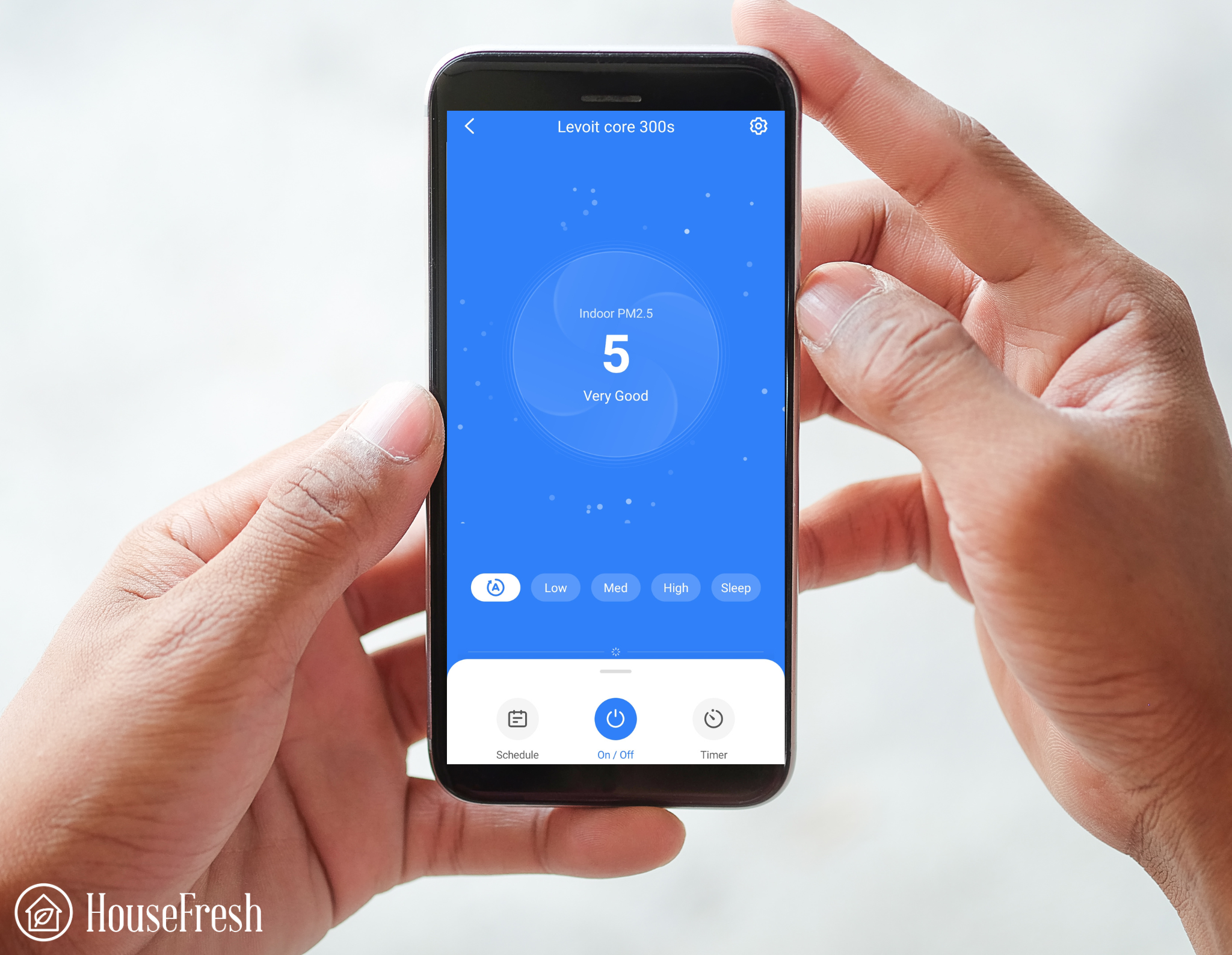
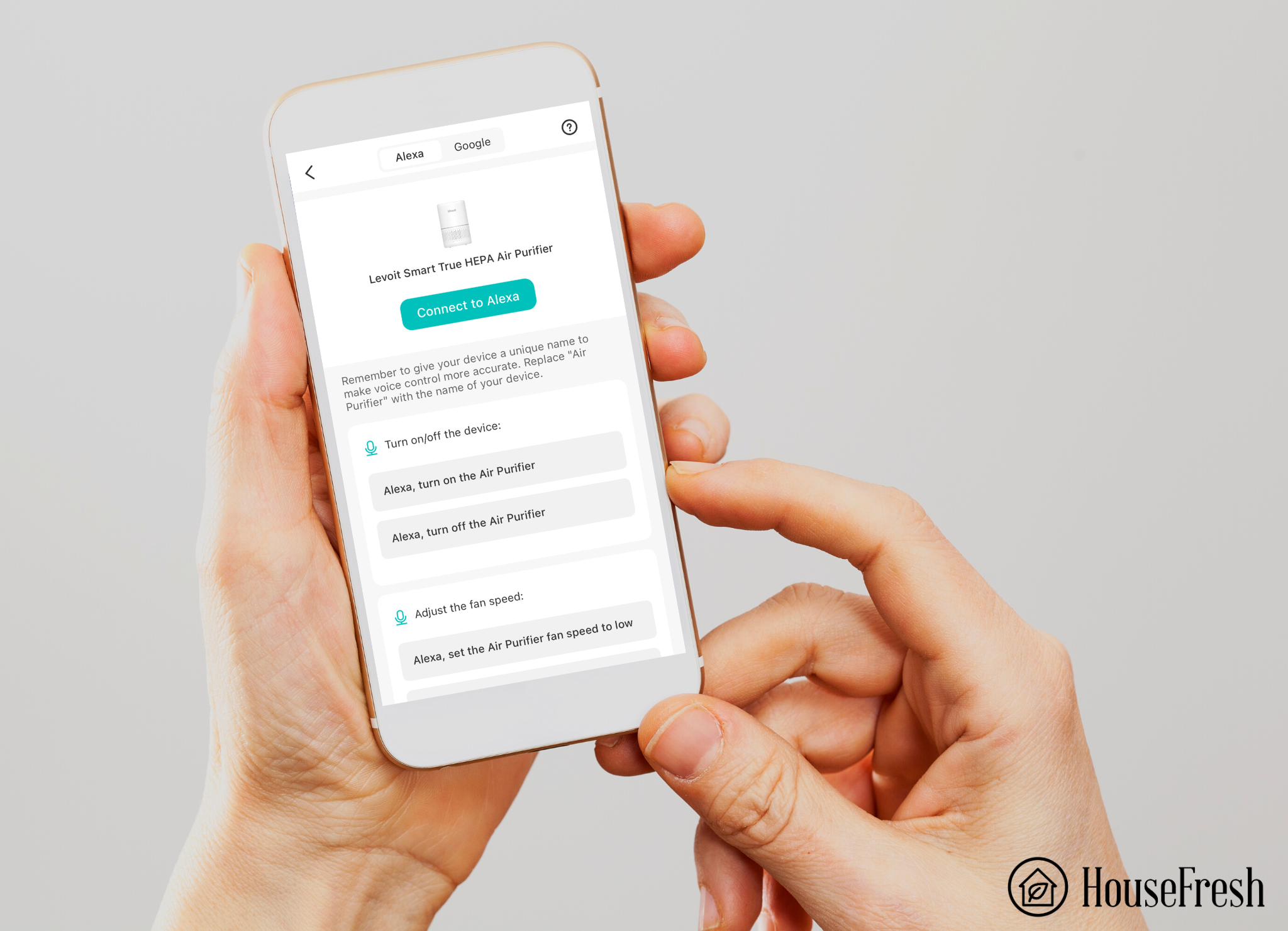
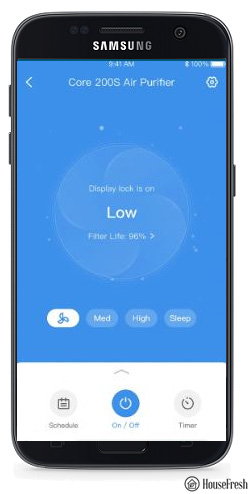
You can connect the 200S to the Levoit smartphone app through Wi-Fi. It’s the same app Levoit uses for all their units, so if you’ve already used it on a previous device, you’ll know your way around. If you’re new, don’t worry. The app is easy to navigate and doesn’t take too long to set up.
Levoit Core 200S App logo

Here, you can control fan speed, set the timer, monitor the filter life, and turn the unit on/off, as well as schedule it to come on when needed. Unfortunately, as the 200S doesn’t have the AirSight Plus™ air quality sensor like the 600S, you cannot monitor the air quality in your room from another location.

After testing it with the Android version, I found it handy, but there is no real smart tech. It’s just a remote control you can take anywhere. Also, they try and sell you stuff on the app, which lets it down for me.

The Levoit Core 200S cleared our test room in 61 minutes

We put every air purifier we buy through the same set of tests. We do this so we can get accurate results of how well it performs in a real-world scenario and also so we can measure it against other units we’ve tested.
Levoit Core 200S Performance test logo 2

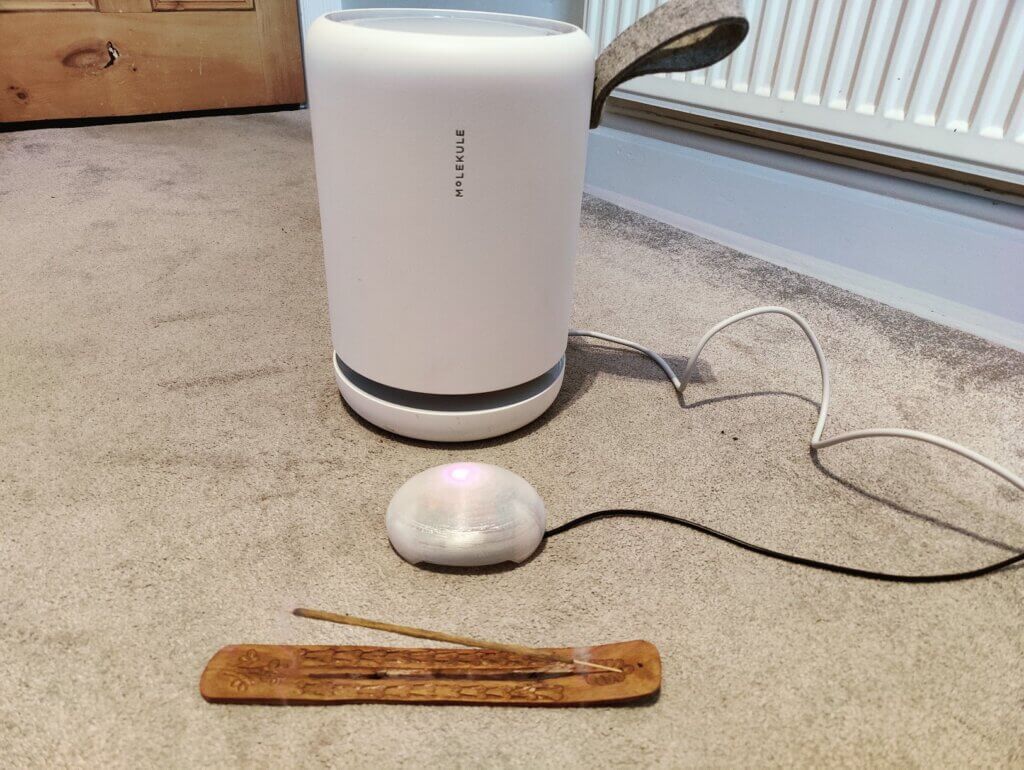
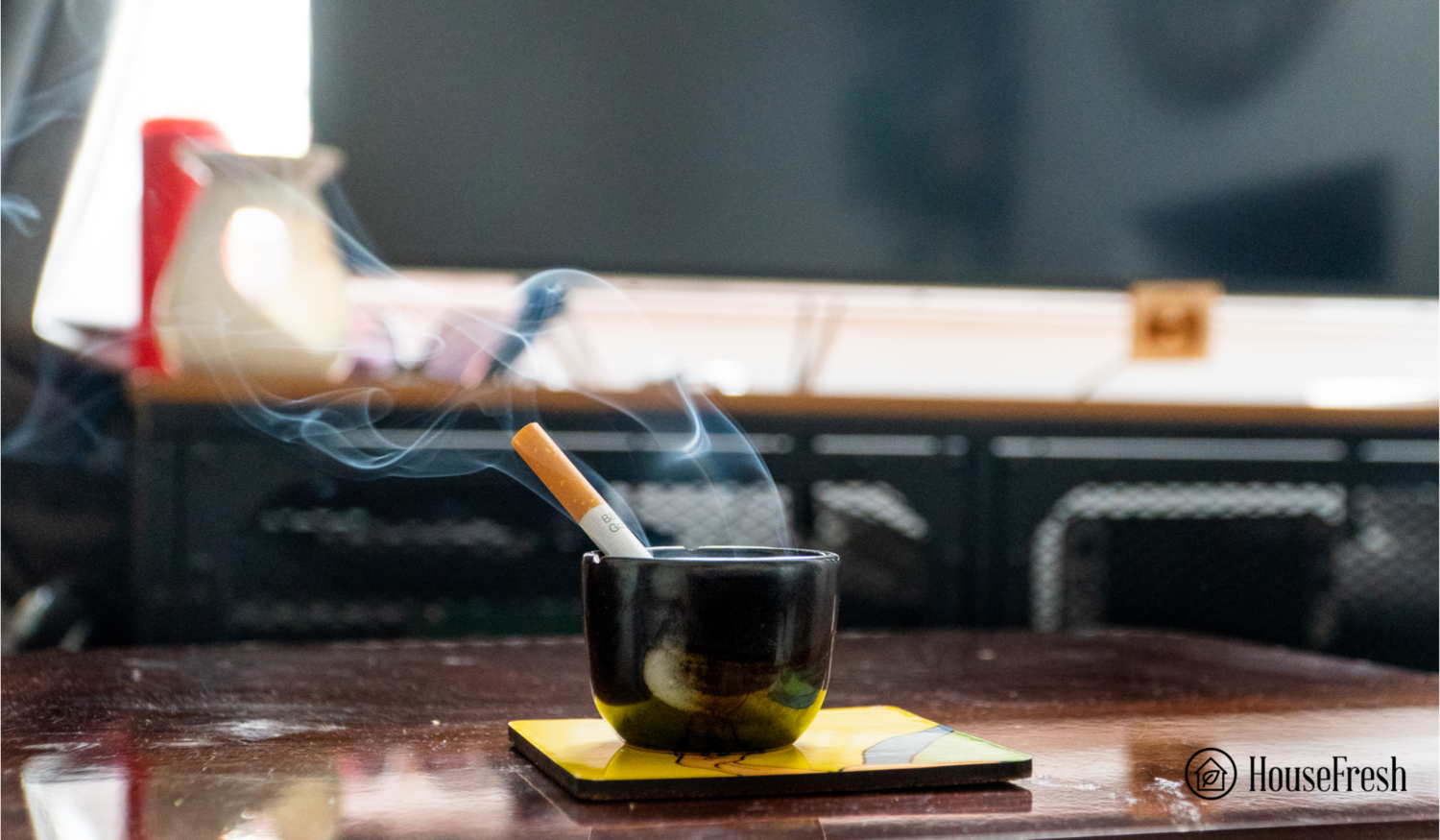
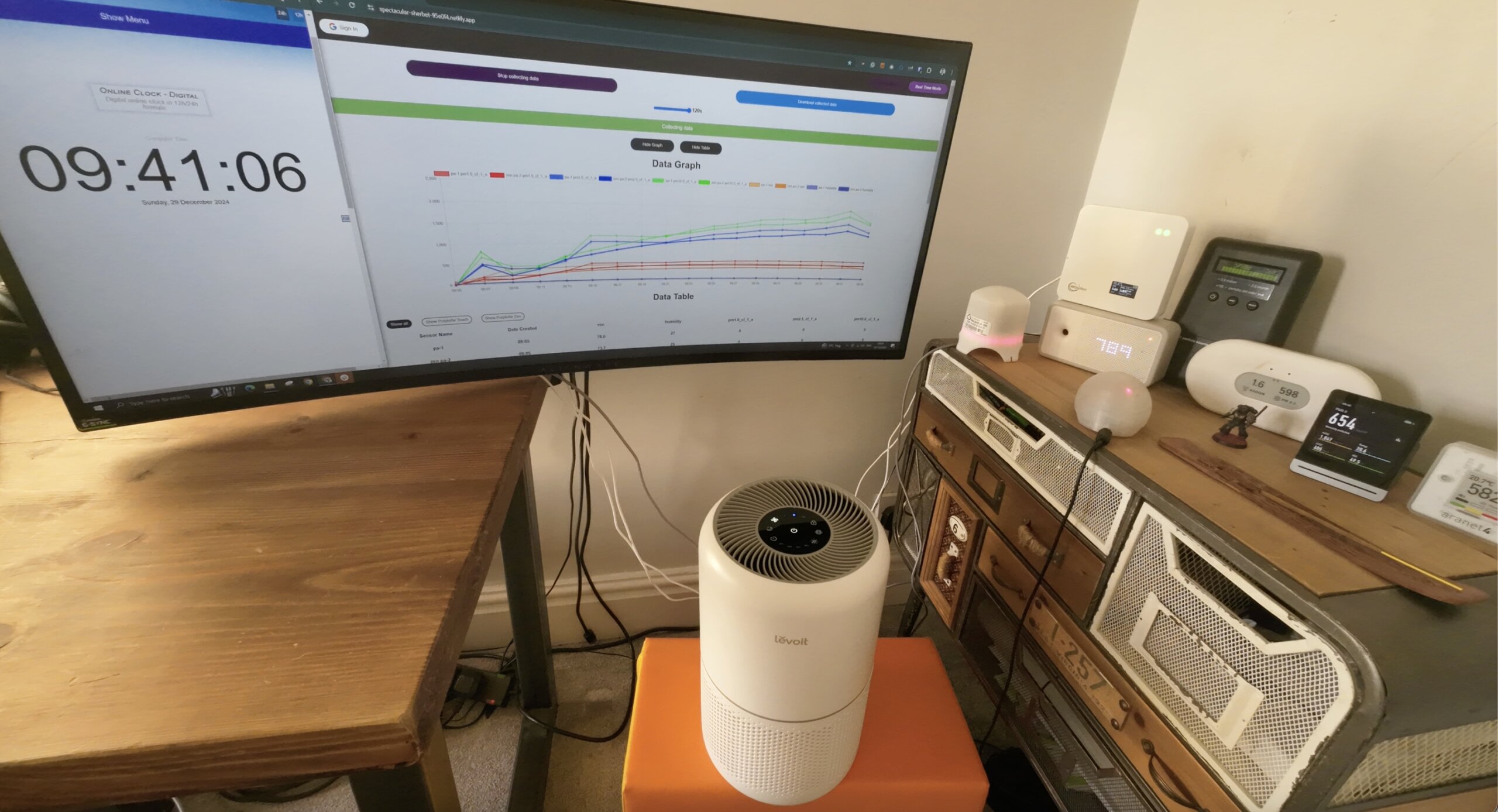
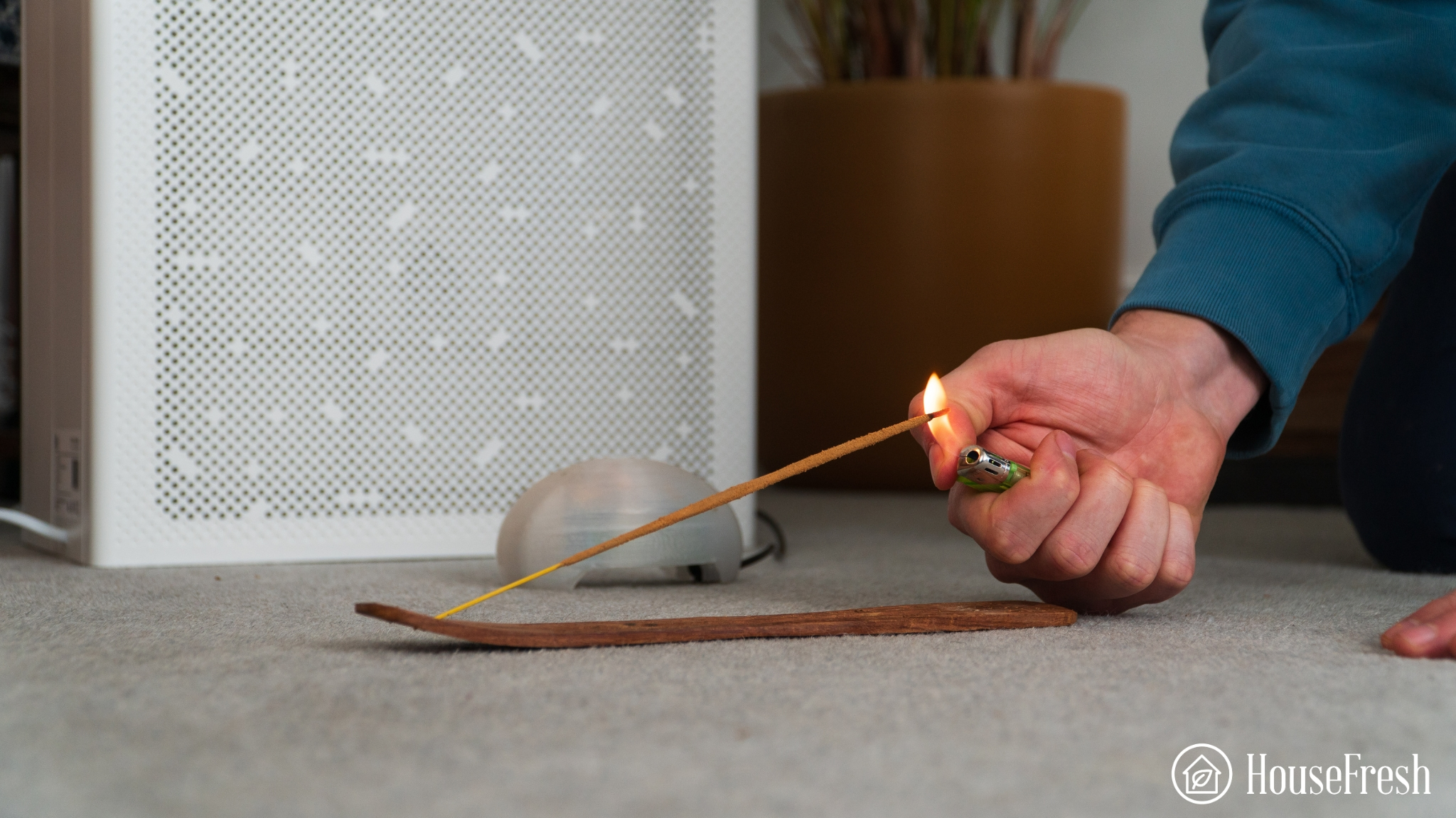
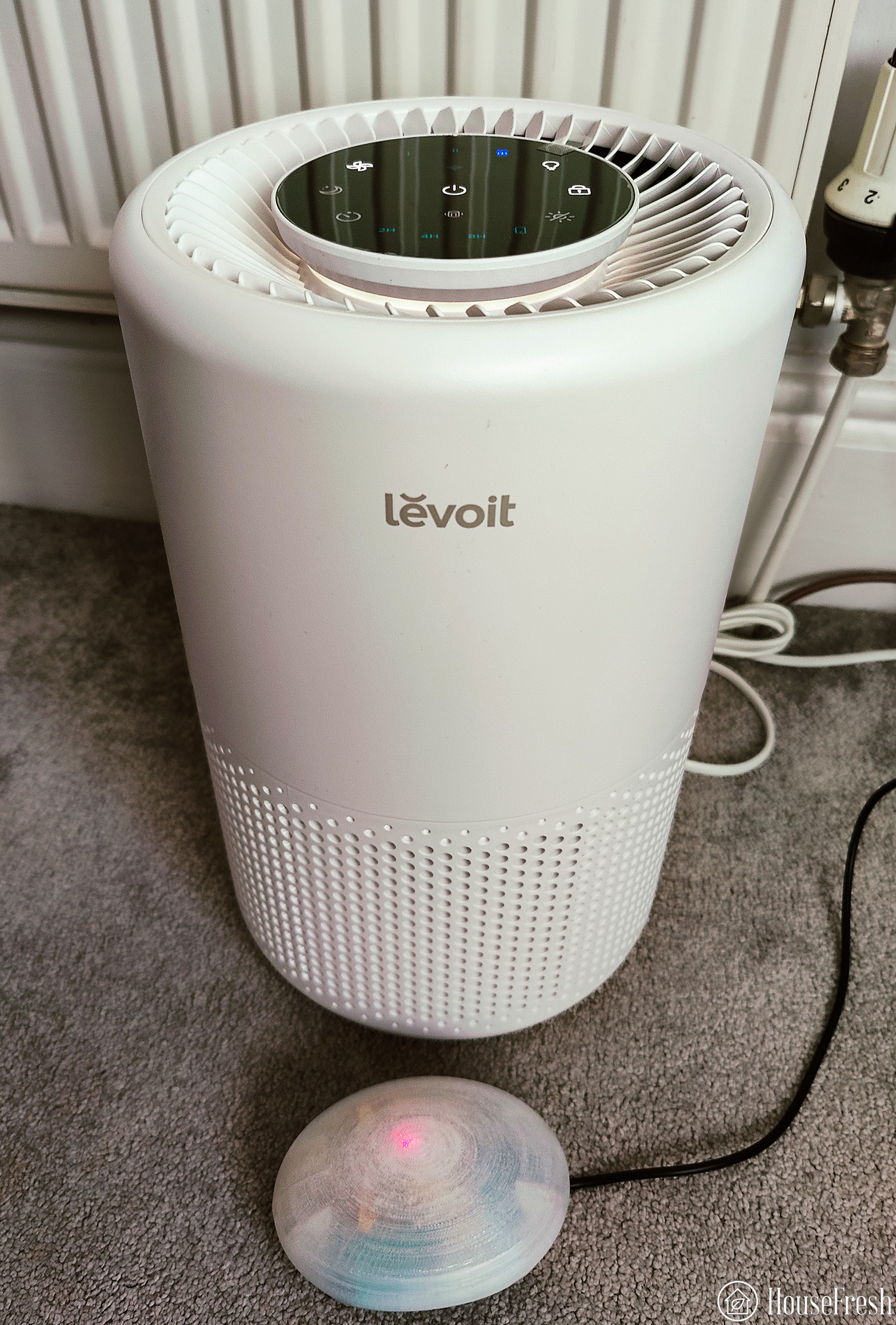
When it comes to air cleaning performance, the test is simple: we placed the Core 200S in our 728 cubic ft test room and filled that room with incense stick smoke so we could measure how long it takes this specific unit to clear the room of those contaminants when running at its highest fan speed.

Here’s what we found out about the Core 200S:

As you can see from the graph, it took 61 minutes for the Core 200S to clean the air in our testing room.

Air cleaning performance compared

Because of the size of the 200S, we were never expecting it to outperform our top-tested units like Levoits powerhouse 600S or Blueair’s Blue Pure 211+ as they’re in completely different leagues. So we would need to compare it to similar-sized units.

Looking at the 200S side by side with similar air purifiers shows that this isn’t a bad-performing little unit, especially for the price.

Noise levels test results

As for noise, Levoit is pretty good at keeping their purifiers to a reasonable level. The Core 200S at its highest level hits 49.1 dB and 39.6 dB at its lowest. This means noise levels are pretty average, which is not a bad thing in itself.

The cost to run the Levoit Core 200S: $95.3 per year

1. Electricity costs = $43.32

When buying an air purifier, you have to consider the extra costs that come with it. One is how much it costs to plug it in and use it daily. With rising energy prices hitting households, it’s paramount that clean air in your home isn’t going to make a dent in your wallet.

Luckily, most air purifiers on the market are specially built to be energy efficient. Energy Star is a company that tests each unit for efficiency and offers a seal of approval to appliances that pass their tests which the 200S wears with pride.

We used the latest average energy prices reported by the U.S. Bureau of Labor Statistics Department to calculate the annual cost of using the Core 200S daily. On full power, this unit pulls 28.4 watts which will cost you around $43.32 annually.

This is okay for a unit of this size but not amazing. You are unlikely to have your air purifier on 24 hours a day, all year round, so it shouldn’t cost you that much. 

2. Filter costs = $51.98

Another running cost to consider is replacing the filters in the unit.

Air purifier filters work best when they are brand new. Over time they begin to get blocked with all the particles they’re trapping and become less efficient. To counter this, you need to replace the old filters with new ones to keep efficiency high.

Different units use filters with different life spans, so it’s good practice to check how often you’ll need to replace them when looking to purchase an air purifier.

The filter life for the 200S is 6-8 months, depending on how often you use it. Don’t worry about checking the filter every day, there’s a light indicator on the unit which will tell you when yours needs replacing.

A new filter will set you back around $25.99, which is average for purifiers of this size. You can purchase filters for this model made by different brands, but we can’t vouch for their performance. 

Levoit Core 200S-P Air Purifier Genuine Replacement Filter, AHAM VERIFIDE, Supports HEPA Sleep Mode, High-Efficiency Activated Carbon, Removes Smoke, Odors, Allergens, Core 200S-RF, 1 Pack
Technology
3-in-1 True HEPA, High-Efficiency Activated Carbon, Core 200S-RF
More information
Price
$21.34
Levoit Core 200S-P Air Purifier Genuine Replacement Filter, AHAM VERIFIDE, Supports HEPA Sleep Mode, High-Efficiency Activated Carbon, Removes Smoke, Odors, Allergens, Core 200S-RF, 1 Pack
Technology
3-in-1 True HEPA, High-Efficiency Activated Carbon, Core 200S-RF
More information
Price
$21.34


Bottom line

At the end of the day, Levoit is a great brand to invest in when it comes to air purifiers. They have the technology, the performance power and, to top it off, a great price point.
Levoit Core 200S Close up logo

💡exclusive code for HouseFresh for 10% off a single purchase on Levoit.com: HOUSE10

While the 200S showcases many things that make Levoit units great, it’s hard to see why you would choose this air purifier over other Levoit Core models. I get that they want a unit in their line-up to reflect the “mini purifier” trend, but looking at the performance levels, you could get so much more out of the Core 300S for a little extra cost.

This unit would fit your home if you have a small bedroom or office with little room to place a larger unit. It connects to the Levoit app so can be controlled from anywhere and doesn’t cause a nuisance with noise levels. 

Any air purifier with these features and the reliability of the Levoit brand name at under $100 should never be sniffed at.


SOURCES

We calculated yearly costs associated with running the Levoit Core 200S for 24 hours a day, 365 days per year utilizing the latest average energy prices as reported by the Bureau of Labor Statistics of $0.174/kWh as of April 2024.

Molekule Air Mini review — Will you regret buying it?

Molekule mini review

Molekule is relatively new to the world of air purifiers. Dharendra Yogi developed a photo-voltaic technology called PECO or photoelectrochemical oxidation which is meant to be able to eliminate pollutants at a molecular level instead of using mechanical filters that trap pollutants like the rigorously tested, scientifically proven, industry-standard HEPA.

In the early days, it got a ton of great press with awards from Popular Science, SXSW, and even a design award from Fast Company.

Since then, the press hasn’t been so kind, with both Consumer Reports and The Wirecutter giving poor reviews of their units. In 2019, after a complaint from Dyson, the Better Business Bureau National Advertising Division recommended that Molekule stop 26 advertising claims, including the discontinuance of superiority claims vs. HEPA filters. Molekule removed all these false advertising claims from their marketing materials. 

You can see this by checking their corporate website from 2018 on Archive.org and comparing it with their current homepage at Molekule.com. You will notice that many of the previous scientific claims are now totally missing from the website.

Following this controversy, it’s safe to say I wasn’t particularly excited about any of the air purifiers from Molekule. Still, it’s only fair that we test these units in the same way we test all air purifiers at HouseFresh. 

As always, we paid with our own money for the Molekule Air Mini to avoid any biases and we don’t have any existing relationships with Molekule or any air purifier manufacturer. Our ultimate goal is to move beyond the marketing jargon to share our experience using these units in our home, running our own tests on them so we can compare them with other available units on the market.

We put the Molekule Air Mini through a three-stage test we designed to evaluate the performance of air purifiers:

how we test
How we test air purifiers

Read our full testing methodology.

Right, let’s get to it.

The lowdown on the Molekule Air Mini


danny

“The Molekule Air Mini is the worst air purifier I have tested. It uses a ton of energy, is painfully loud, and takes forever to clean the air. With so many great units on the market, there is no reason to buy this air purifier.”

— Danny Ashton, Founder & Senior Writer

Molekule Air Mini Living Room

PRICE on amazon PRICE on EBAY

On a rush? Here are the main pros and cons you need to keep in mind before considering investing your money on the Molekule Air Mini.

What we really like

When I forget everything else, I can say that the Molekule Mini is a good-looking gadget
Fairly simple touchscreen that works
Small, portable size
PECO is an interesting technology — maybe there are some health benefits beyond removing particulate matter efficiently, but I fail to see an obvious one

What we think could be better

I found the performance-to-price ratio aligned with what The Wirecutter found — even a very cheap sub $100 HEPA unit will perform better
The Android app just didn’t connect
It uses a lot of electricity, compared to other units, such as the Levoit Core 300S
It is very loud, it was uncomfortable for me at the highest level
High filter costs mean you would need to spend $199.98 to ensure your Molekule Air Mini is cleaning the air efficiently

The specs

This Molekule Air Mini has an RRP of $329.99.

It doesn’t have a published CADR with is annoying, but not to worry as we will test this unit in the same room we test all our units so we can compare its air cleaning performance with similar units that do have a published CADR. Molekule suggests the Air Mini is suitable for rooms size of 250 square feet so we would assume it has a CADR of 160-180 to be able to clean the air in the room four times in an hour. 

As a fan/air purifier, we would expect a much lower CADR score for the price, and as expected, this unit is really designed for smaller spaces or those not needing to clean a lot of air quickly. Although at this budget, I’m expecting a better performance than Honeywell HPA300 or the Levoit Core 400S which are both available for less money.

HouseFresh rating:★☆☆☆☆
Time to clean our 728 cubic feet test room (with the device running at top speed):53 minutes
Air purifier technology:PECO Air Purification Filter Technology
Recommended room size (4.8 air changes per hour):Up to 250 sq. ft.
Clean air delivery rate (CADR):Not available
Dimensions (in inches / in cm):12H x 8.26W x 8.26D inches (30.48H x 21W x 21D cm)
Weight (in pounds / in kg):11.8 lbs (5.35 kg)
Filter life:6 months
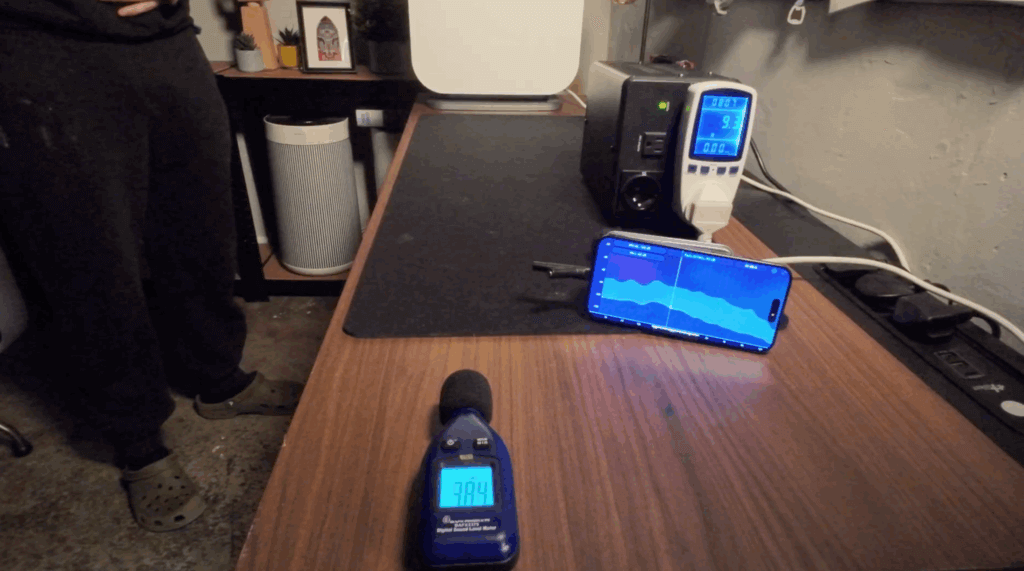
Noise level in decibels (measured from 3 ft. away with a sound level meter):Speed 1: 35.6 dB
Speed 2: 38.3 dB 
Speed 3: 46.4 dB
Speed 4: 57.8 dB
Speed 5: 68.2 dB
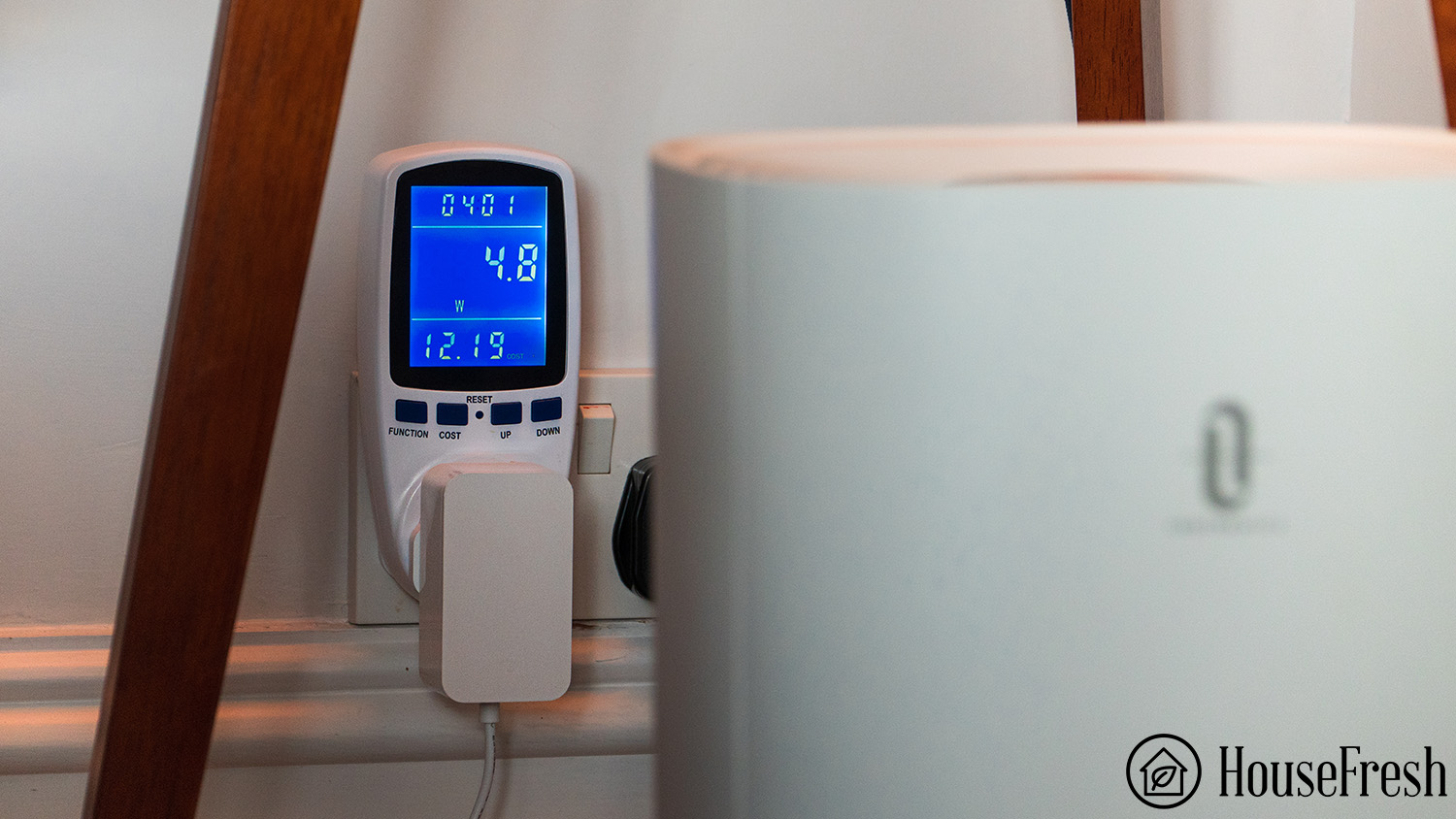
Electricity consumption in watts (recorded with an electricity usage monitor):Standby mode: 0 watts
Speed 1: 15.38 watts
Speed 2: 16.78 watts
Speed 3: 18.7 watts
Speed 4: 24 watts
Speed 5: 49.62 watts
Estimated running cost (electricity consumption + official filter replacement):$275.66 per year
Cost per CADR cfm (based on dust CFM as reported by AHAM):$6.10
Manufacturer’s warranty:2 years
Country of manufacture:U.S. and Malaysia


The Molekule Air Mini looks the part

You can totally understand why this device has won design awards

The Molekule Air Mini is small, cute, and wouldn’t look out of place in any high-end modern-designed home. 

Molekule Mini Close Up

The size is something that really stands out when compared to traditional “mechanical air filters” which are often much bigger, as filter size directly equates to their performance. The assumption is that the PECO technology is able to achieve similar efficacy but without the requirement for large filters that you find with HEPA and activated charcoal. 

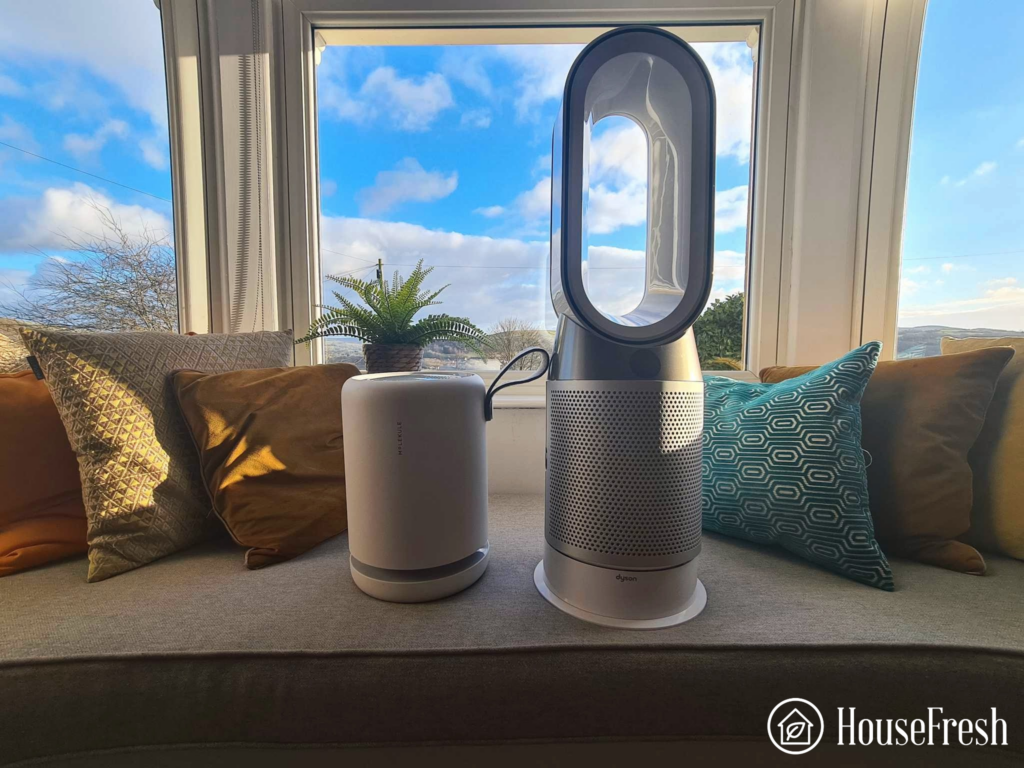
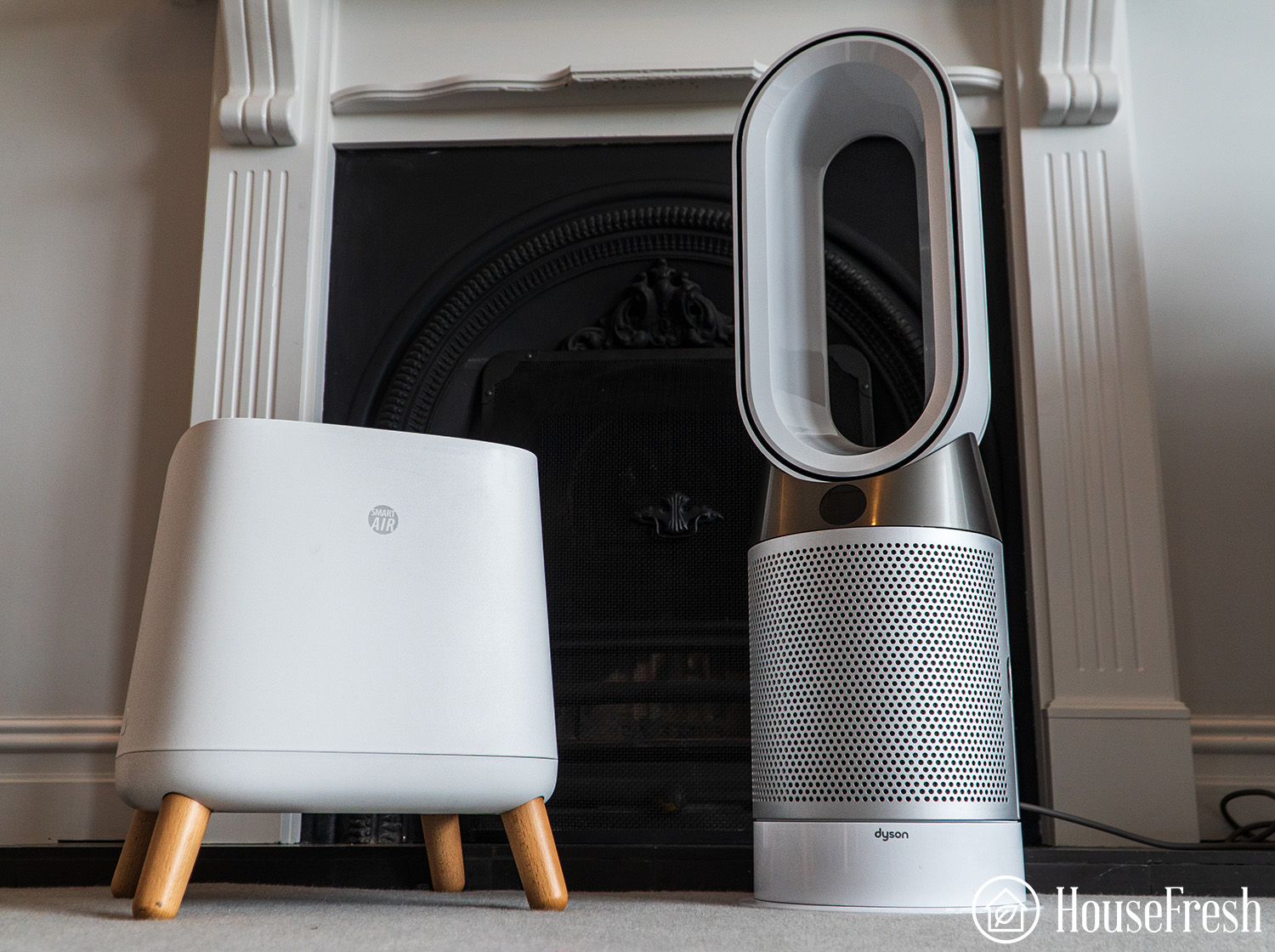
You can see a big difference in size when we compare it with the Dyson HP04, and you could easily hide a unit of this size without taking over the room. 

Molekule Mini vs Dyson HP04

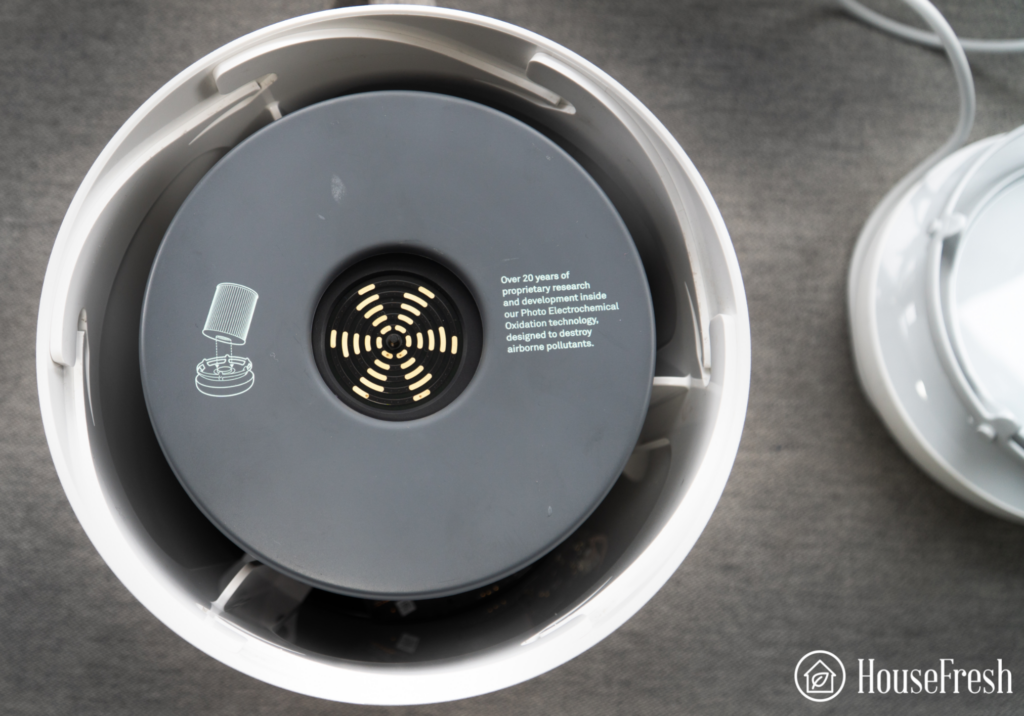
Similar to the Levoit Core series of air purifiers, the Molekule is a cylindrical shape that you turn to reveal the PECO filter unit.

It’s worth noting that the bulk of the filtering doesn’t happen inside the filter but instead, it uses UV-A light that interacts with the chemicals inside the filter to destroy pollutants. 

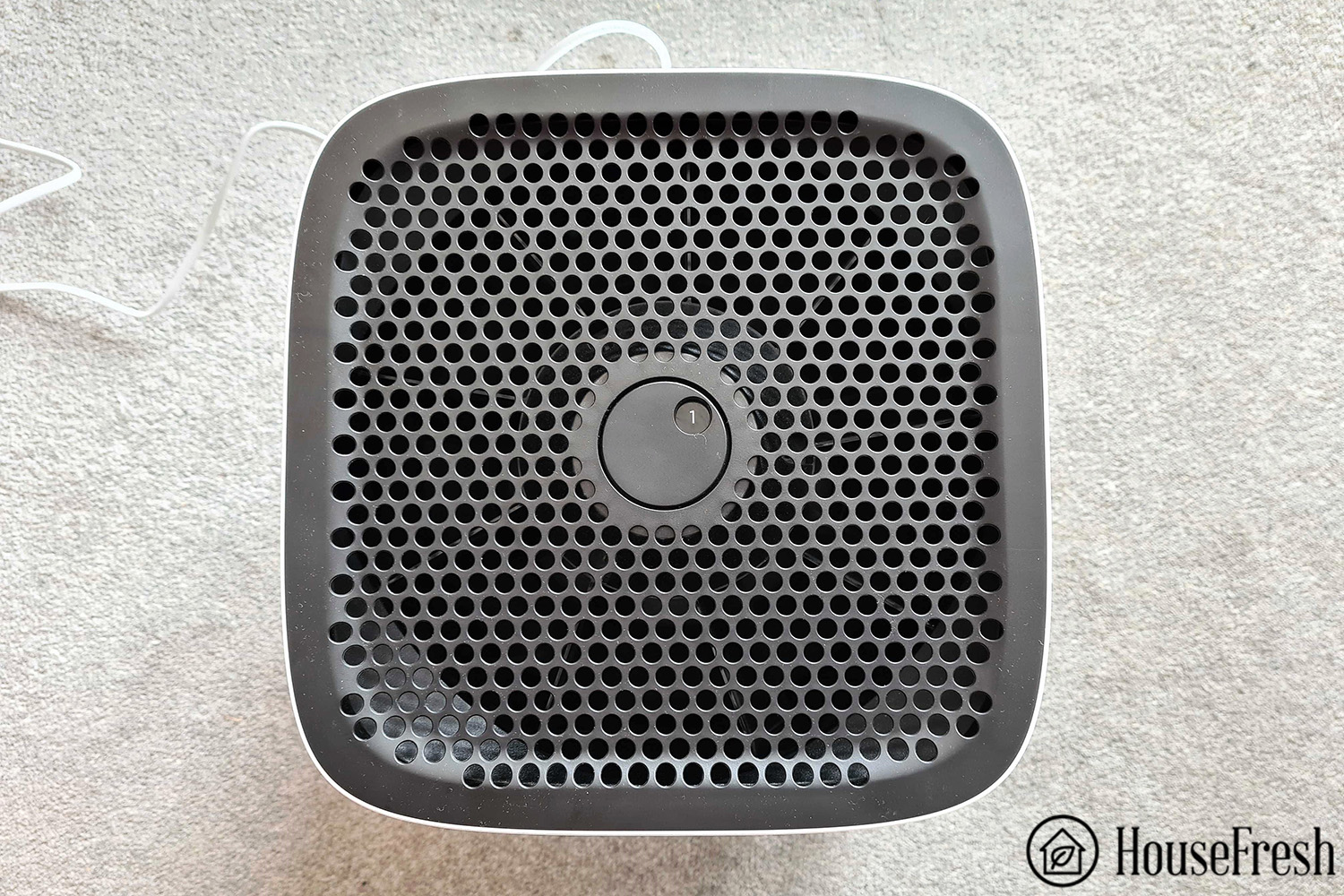
Molekule Mini Top Down

The filter was easy to remove, as you can see in the video below:

The controls are easy enough to use

If buttons aren’t your thing, the Molekule Air Mini also comes with app support

The Molekule Air Mini comes with touchscreen buttons on the top of the unit, making them a little hard to see in bright light. That said, the controls are easy to use.

If buttons aren’t your thing, it also comes with app support for Google Play and Apple. I only got a chance to test the Android version of the Molekule app. 

Similar to the Dyson Link App, you need to sign up for an account before you can use it. Getting my account set up and the app installed was simple – the challenge started when I tried to connect Molekule Air Mini…

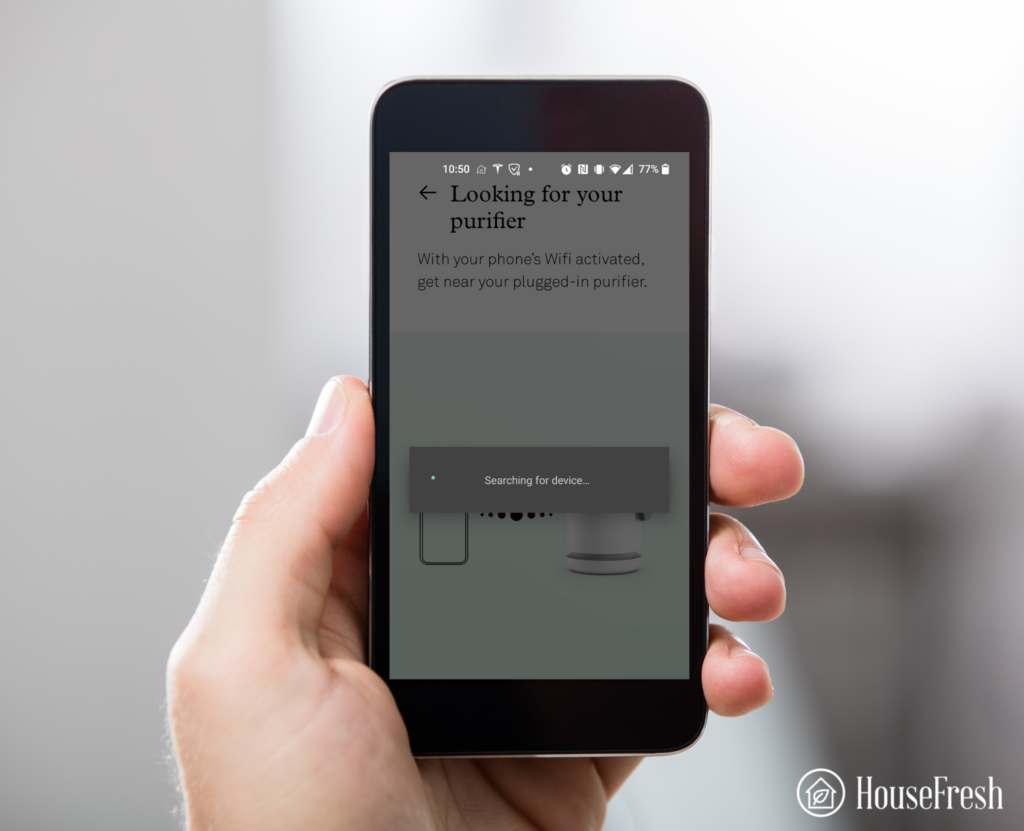
Molekule Mini App

I’m by no means a technophobe and have a solid Wi-Fi connection around the house, but I just couldn’t get the air purifier to connect to my Wi-Fi, rendering the app pretty useless in my experience. 

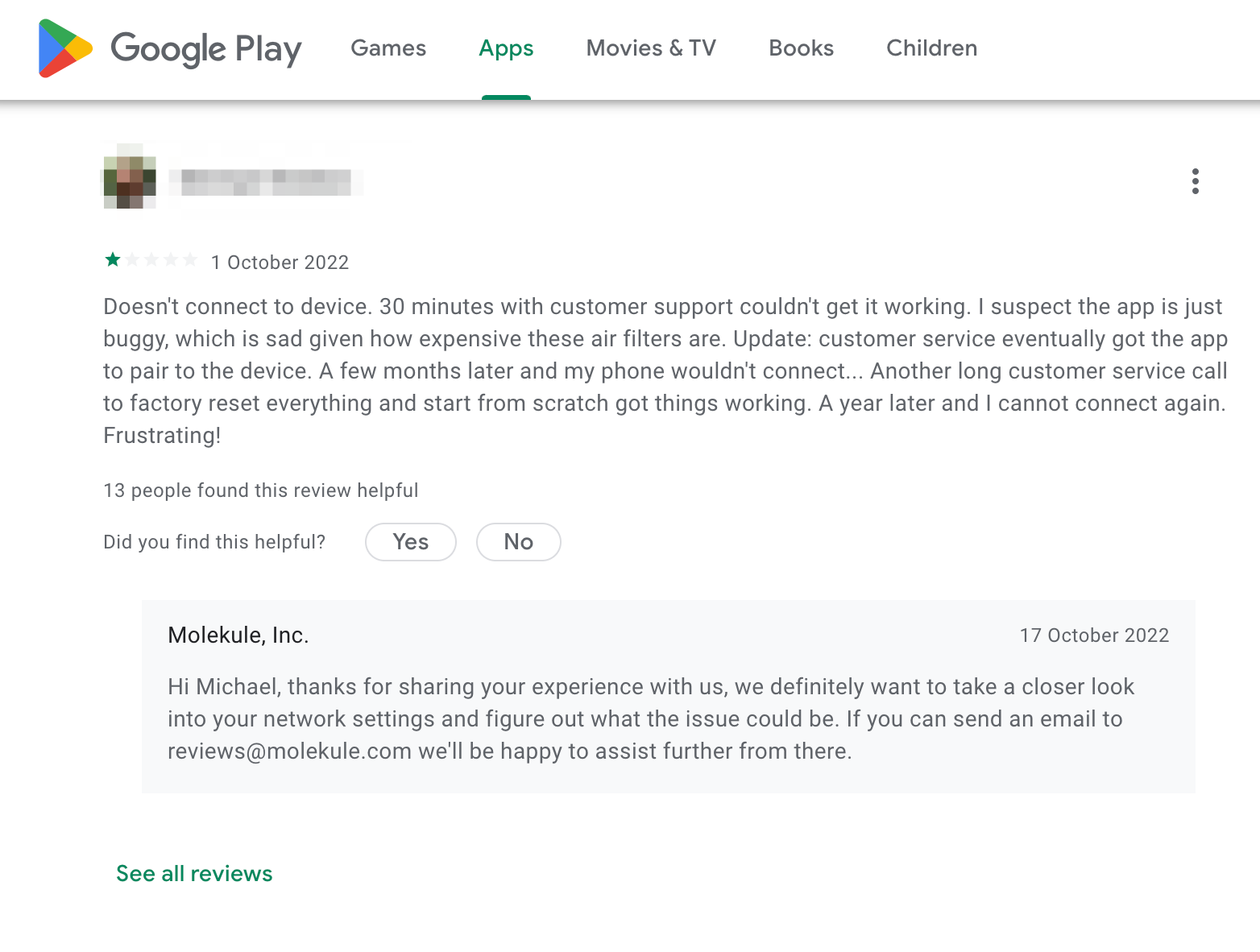
I saw that I wasn’t alone when I looked at the Google Play reviews. The app has many reviews complaining about this very issue:

Molekule Air Puriifier App Review Android


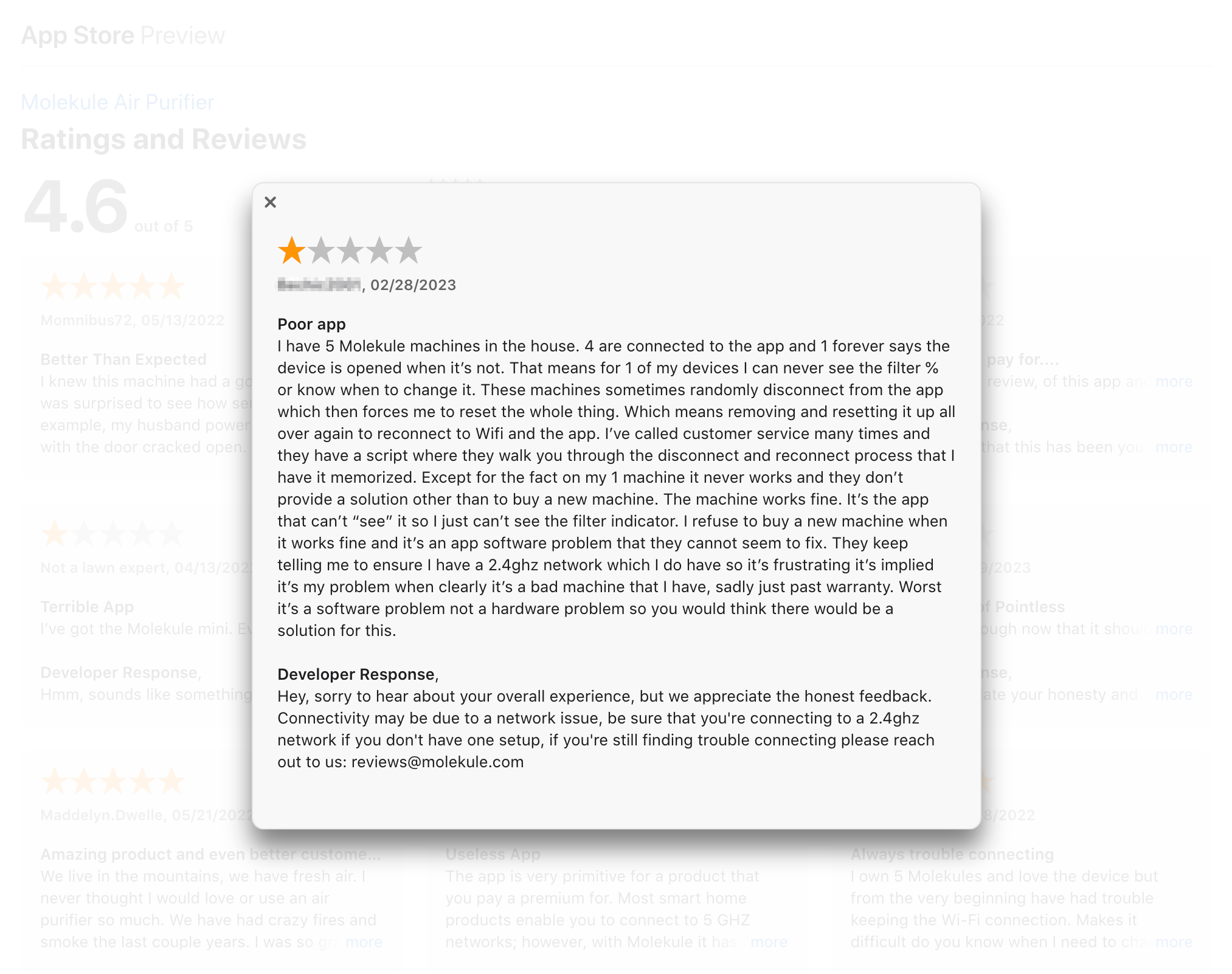
A quick search through app user reviews on Apple’s App Store made it clear that this is not an isolated issue or a problem with the Android app:

Molekule Air Puriifier App Review iPhone

Considering the price of the Molekule Air Mini, it’s unfortunate that the app is failing the users and that these smart features are not working as well as they do for other air purifier brands.

That said, I was still able to use the unit using the touch buttons, but it’s a little concerning that a company supposedly at the forefront of a new type of technology (PECO) can’t create an app that works.

A non-mechanical filter: PECO Technology

This is the first non-mechanical filter that we have reviewed here at HouseFresh. The reason is fairly simple; we generally avoid new technologies that have not had the level of peer review analysis compared to HEPA and activated charcoal. 

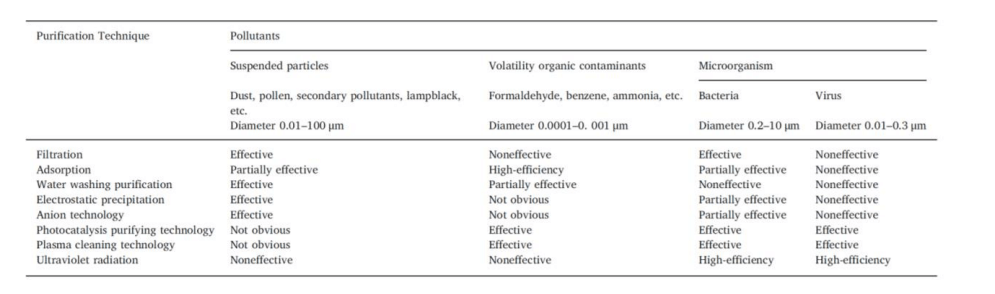
Mechanical filters have been in use since WW2, and there is a ton of scientific analysis and performance testing that we can trust. In a review of the academic literature, the team at Reading University showed the effectiveness of different filter technologies: 

Air purifier filter technology

Filtration and adsorption stood as clear winners for particles and VOCs of the filter technologies analyzed.

It’s worth noting that PECO was not included in the Reading University study, but it was included in an MIT study and was shown to be less effective than Adsorption when dealing with VOCs.

Molekule Mini Filter PECO

Over the years, there have been numerous air purifier technologies that have been brought to market with the hype that their technology is far better than mechanical-based filters, but they often lead to disappointment. Such as the Sharper Image Ionic Breeze that promised so much with its electrostatic precipitation but failed to do anything apart from releasing small amounts of ozone (if you didn’t know, ozone = bad). 

So you can understand that I might be cynical of another new technology that promises:


It destroys pollutants regardless how small, incl. those 1000x times smaller than what HEPA can collect.”

– Molekule*

*Taken from the Molekule.com homepage from 2018 that has now been removed after the complaint from Dyson to the BBB

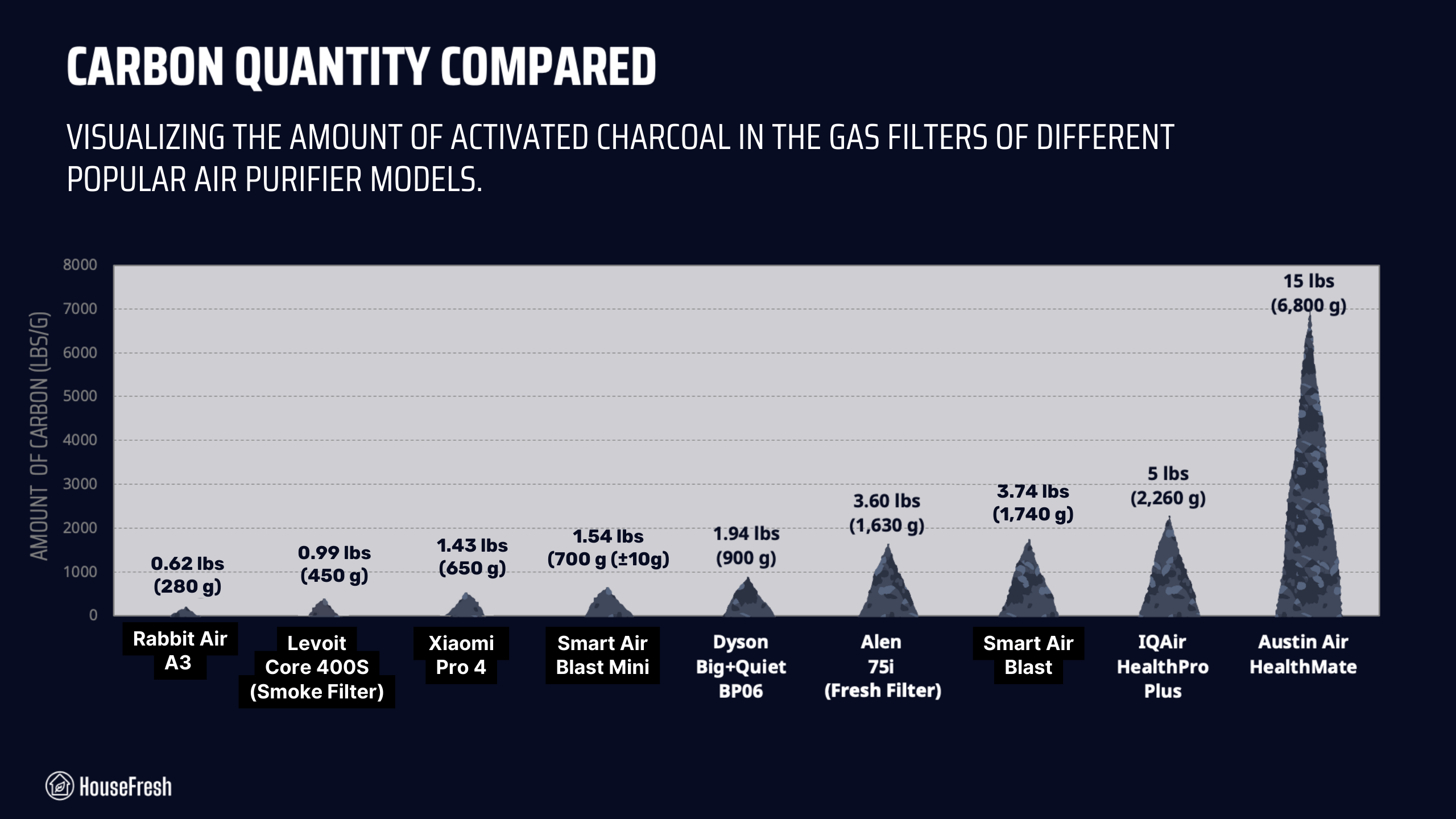
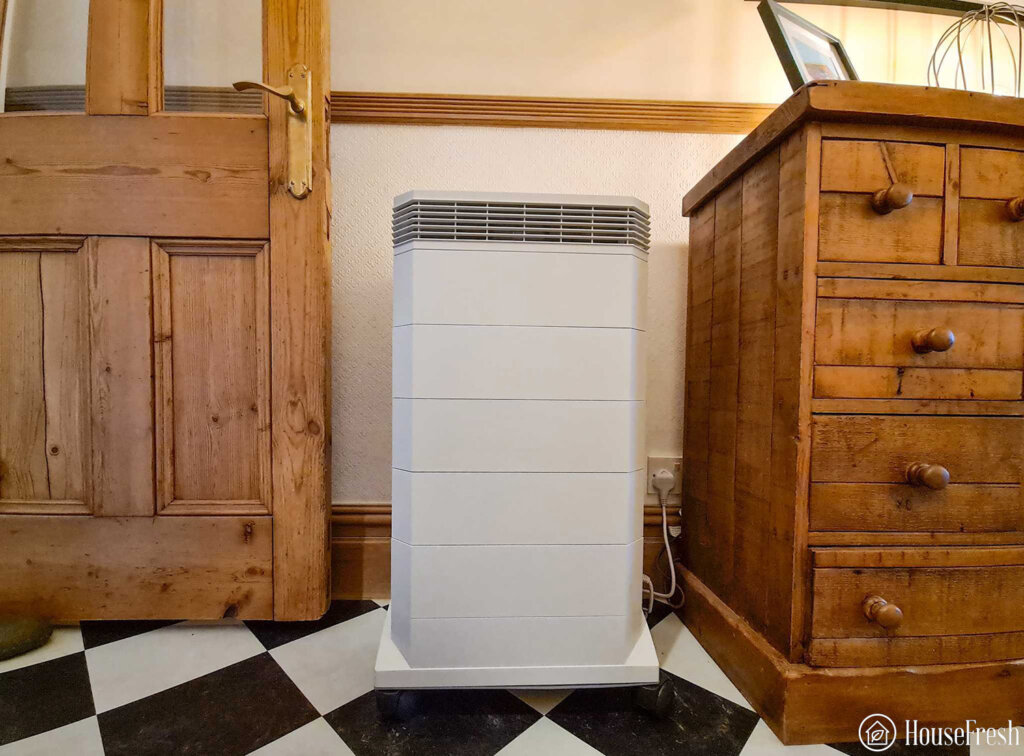
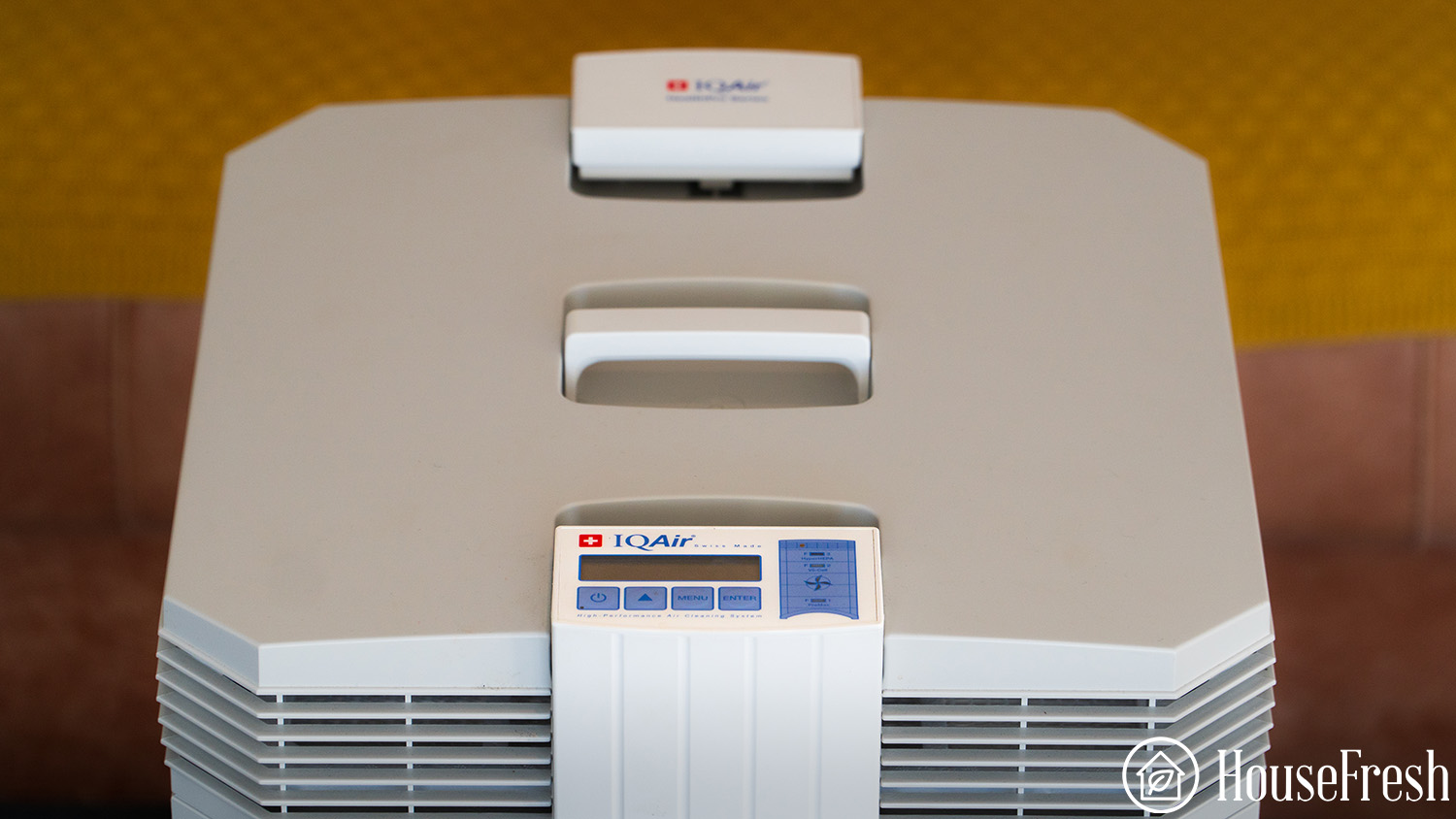
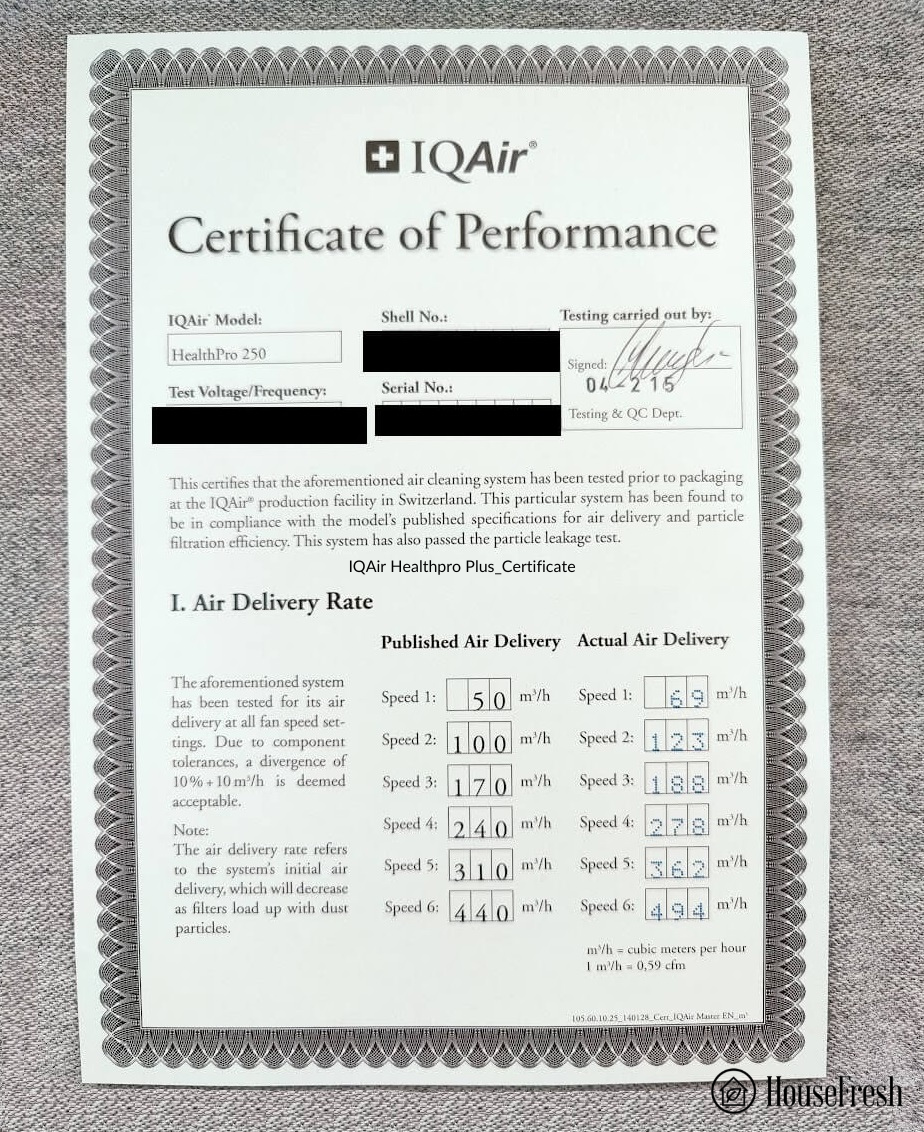
But it’s totally true that HEPA systems are pretty much useless against VOCs, chemicals and odors. This is the reason why the vast majority of air purifiers use other technologies like activated carbon (adsorption). These have been shown in many peer-review papers to be highly effective, and activated charcoal has been in use since the Egyptian era. The downside to activated carbon is that you need a lot to make a big difference which is why the $1000 IQAir Health Pro Plus has 15lbs of carbon pellets as part of its filtration system. 

PECO promises that it can achieve better results without the downsides of size and weight that come with HEPA filters and with the added benefit that it destroys pollutants vs. just trapping them, so we can also assume it will require a less costly filter replacement.

Molekule Mini Filter 1

Sounds too good to be true? 

Well, let’s find out.

The Molekule Air Mini cleared our test room in 53 minutes

The Molekule Air Mini needed almost an hour to remove all the pollutants from the air in our small testing room.

Molekule Mini Performance Test

At HouseFresh, we test all our units in the same room of 728 cubic ft, which is my home office. The reason we use this room is so we can compare the performance of different air purifiers in the same environment.

Before I take you through the results of my test, let me walk you through the process:

  1. I burnt a powerful incense stick to create smoke pollutants.
  2. Once the room is filled with pollutants, I switch the Molekule Air Mini to full speed.
  3. I used the Purple Air Indoor sensor to evaluate how long it takes the air purifier to remove PM1, PM2.5, and PM10 pollutants from the air.

We clocked the Molekule Mini in 53 minutes, which is not impressive for the price nor lives up to the expectations generated by the cool looks. 

Air cleaning performance compared

Frankly, we expected more. Especially considering there are much more affordable units in the small-sized range that can outbeat the Molekule with ease. 

With a similar room coverage as reported by Molekule, the Levoit Core 300 (219 sq. ft.) cleaned the air in our test room 13 minutes faster and can be found at under $100. Or the Smart sibling Core 300S, which only took 32 minutes, was a whopping 21 minutes quicker. 

Meanwhile, the similarly priced but more powerful Blueair Blue Pure 211+ outperformed the Air Mini by no less than 43 minutes. 

The unit was, in fact, 10 minutes apart from being below the cleaning speed average. The data speaks for itself.

Based on this performance, I couldn’t, in my right mind, recommend this air purifier to anyone, as incense smoke is a fairly minor pollutant when compared to significant outside pollution or wildfire smoke.

Noise levels test results

But we didn’t just test the performance in terms of cleaning pollutants from the air. We also tested noise levels, and I’ve got to say, here it’s where it gets worse.

At the highest speed, the sound level is high at 68.2 dB, which compares poorly to competitors, with the Blueair Blue Pure 211+  having a maximum of 56 dB. 

To put things into perspective, the American Academy of Audiology considers 70 dB to be Loud noises and the CDC establishes 70 dB as the threshold for noises capable of producing hearing damage. The Molekule is not at all far from that.

In comparison, many of the quiet air purifiers we tested have a maximum of 55dB and some run as low as 49dB at the highest speed!

Feel free to have a listen yourself, check out the video below:

It really did sound like a jet plane and it makes me think that they are trying to use extra power to push more air through the unit to overcompensate for filters that are not effective at removing pollutants.

According to our testing, the Molekule Air Mini has some of the highest values for both electricity usage and noise levels generated, which means significant costs and negative externalities to consider when looking at use 24/7 over the long term. 

The cost to run a Molekule Air Mini: $275.66 per year

The cost to run an air purifier is a significant concern as you will want to run your air purifier on most of the time if you have any issues with your outside air. So we always want to consider the price of the unit at its highest speed 24/7.

1. Electricity costs = $75.68 per year

As always, I tested the Molekule mini with one of my trusty power meters:

  • Speed 1: 15.38 watts
  • Speed 2: 16.78 watts
  • Speed 3: 18.7 watts
  • Speed 4: 24 watts
  • Full power: 49.62 watts

This means that running a Molekule Air Mini in your room 24/7 could cost up to $75.68 per year in electricity bills only calculating with the average energy prices in the U.S. as reported by the Bureau of Labor Statistics, assuming you’d need to run the unit for 24 hours per day 365 days per year.

2. Filter costs = $199.98 per year

Another long-term cost to consider is regular filter replacements. With mechanical filter technology like HEPA, the filters get full of pollutants and if you don’t change them, they will become less effective. 

But, I wasn’t sure if this also applied to PECO. 

Looking at their site, I see that they recommend changing filters every 6 months to make sure that you are using the latest technology and to avoid performance issues with dirty filters.  

The Molekule air has filters available for $99.99* and they suggest replacing them every 6 months, so a filter replacement cost of $199.98 per year or $160 as part of a subscription. This is on the high side when compared with Levoit Core 400S, which has a HEPA and Activated Charcoal filter for $49.99 that also needs replacing every 6 months, so a $100 per year. It is a little less than the $250-300 that the IQAir Healthpro Plus requires on a yearly basis but that is spent over 3 different filters with heavy activated carbon filters that don’t come cheap.


Bottom line

Overall the running costs for the Molekule Air Mini per year, assuming you change the filters every 6 months and use it 24/7 as recommended, will be $264.10 per year, which is much higher than competitors that perform significantly better at keeping a room clear of particle-sized matter of PM1.0ug/m3, PM2.5ug/m3 and PM10.0ug/m3 which have been proven to be the worst type of particles to breath in for human health.

On top of this, its performance is extremely poor across the board to the point where even the very cheapest of HEPA filter-powered units, like the Levoit Core 300 or the TaoTronics AP003, perform much much better but a fraction of the cost.

2 Molekule Mini.jpg 2

Don’t get caught up in the hype – look elsewhere for a good air purifier.

SOURCES

We calculated yearly costs associated with running the Molekule Air Mini 24 hours a day, 365 days per year utilizing the latest average energy prices as reported by the Bureau of Labor Statistics of $0.174/kWh as of May 2024.

How air pollution could ruin our most beloved views

Header Tainted Views 1

For a moment, every neighborhood radiated the glamor of a picture postcard landmark.

When the first 2020 lockdown struck, a temporary bonus was the drop in air pollution. The view through our windows seemed freshly polished. Tourist attractions shone with an intensity unseen for decades. Environmentalists keenly told us that this was a wake-up call, not a turning point. Despite decades of campaigning and policy change, air pollution is still worsening for more than half the world’s population.

You might not notice the worsening effect in your daily, hometown life. But when you travel, the sight of industrial smog has a sobering effect. As part of our mission to draw attention to the quality of the air you breathe, HouseFresh wanted to show you how 10 famous views could look if local human-made air pollution levels increase.

We found iconic photos of the views and, on each one, emulated the visual effect that air pollution has on the skyline of Ghaziabad, India, frequently ranked as the “most polluted city worldwide.” At the time of writing, the PM2.5 level in Ghaziabad is 18.2 times the WHO annual air quality guideline value, with an Air Quality Index (AQI) of 169. A ‘Good’ rating is 0-50 AQI.

Use the sliders below to reveal ten of the world’s loveliest views now and how they could eventually look if air pollution levels rise unchecked to Ghaziabad levels.

Rockefeller Center (New York, USA)

In the 20th century, New York City was the poster child for the modern city. And the 1939 Rockefeller Center was an art deco emblem of American sophistication. But, as early as the 1960s, the eroding effect of air pollution on its buildings was cause for concern. Today, the Department of Environmental Protection suggests that 6% of NYC deaths are connected with air pollution.

The Shard (London, UK)

The “imposing and majestic” Tower Bridge, seen here from up in the Shard, was built to facilitate urban commerce in the late 19th century – just a few years before a London doctor, Harold Des Veaux, invented the word ‘smog’ (smoke + fog). But the pollution of London air by the burning of coal predates the Victorian bridge by at least six centuries. In 2021, the city’s mayor unveiled a 10-point plan to reduce air pollution, pointing out that “there is a significant peak in concentrations during the morning school run.”

Christ the Redeemer (Rio de Janeiro, Brazil)

It took nine years to build the 130-foot concrete Christ into Rio de Janeiro’s skyline. But that skyline has since been tainted by the fumes of Brazil’s main steel complex as well as numerous other industrial sites. And the city failed to reduce air pollution “within the limits recommended by the World Health Organization” as promised ahead of the 2016 Olympics. 

“A lot of attention has been paid to Rio’s water pollution, but far more people die because of air pollution than the water,” declared Paulo Saldiva, a University of Sao Paulo pathologist and WHO committee member. “You are not obligated to drink water from Guanabara Bay but you must breathe Rio’s air.”

Victoria Peak (Hong Kong)

Victoria Peak is a must-visit when in Hong Kong, offering contrasting views from the hills to the cyberpunk cityscape – and a rare breath of fresh air. Unfortunately, the air down in the city is1n’t as fresh. The annual hours of reduced visibility in the city near-quadrupled from 295 to 1,100 in the two decades leading up to 2008, seriously reducing your chances of an Instagram moment. By 2016, the city’s largest coal and gas power stations were churning out 8,020 tons of sulphur dioxide and 310 tons of PM2.5 pollution.

Centre Island (Toronto, Canada)

Centre Island is one of the world’s largest car-free (or at least car-resistant) urban areas. As a veritable Ontario oasis, the Toronto Islands are the site of hearty, outdoor pastimes and sunset selfies. Unfortunately, the air from nearby forest fires drives the region up as high as second place in the ‘world’s worst air’ challenge – with the altered skyline almost grotesquely beautiful.

Mrs. Macquarie’s Point (Australia)

Elizabeth, wife of Governor Macquarie, had a seat chiseled into the peninsula that has borne her name since 1810. The chair remains today, but the view has changed, first with the iconic expressionist ‘shells’ of the Sydney Opera House, and later with the onset of headline-grabbing smog levels. In addition to motor vehicle exhausts, bushfire smoke has been known to drive the Sydney air 11 times over the ‘hazardous’ limit, obscuring the Opera House and Harbour Bridge from view. Power station fumes and occasional dust storms also contribute to Sydney’s smog problem.

Montparnasse Tower (Paris, France)

In addition to the beauty and romance of the Eiffel Tower, the industrial revolution introduced serious air pollution to Paris, which is now the second most polluted city in France. A 2019 court case found that the state was taking insufficient measures to protect Parisians from poor air quality, with a contemporaneous study suggesting it will take 20 years for the measures to bring Parisian air quality under the European Limit Value. Local efforts to hasten improvements include the pedestrianization of city center roads, adding protected bike lanes, and banning cars made before 1997.

St. Peter’s Basilica (Rome/Vatican City, Italy)

This 400-year-old Renaissance-style church is a beacon for pilgrims of Catholicism, history, and architecture alike. But, until a recent renovation, a closer look at the walls of St. Peter’s Basilica would reveal black crusts, white erosion patches, and other discoloration due to air pollution. Rome is not an industrial city, but packed roads and a high proportion of diesel vehicles have blighted its historic views. Pope Francis has attributed the effects of pollution to our “predatory attitude, which makes us feel that we are masters of the planet and its resources, and authorizes us to make irresponsible use of the goods God has given us.”

Kerry Park (Seattle, USA)

Kerry Park is a popular spot for photographers seeking a shot of Elliot Bay, the Space Needle, and even Mount Rainier when the sky is particularly clear. But pollution from motor vehicles, outdoor burning, and wood smoke is now a common blight on Seattle’s views and breathability. While outdoor fires are discouraged – lately with regard to aggravating Covid-linked respiratory conditions – wildfires remain a serious issue. Air conditioning is rare in the city but becoming more common as homeowners try to alleviate the effects of wildfires and heatwaves. 

Tokyo Skytree (Japan)

The world’s tallest tower is used for television broadcasts and observation – including monitoring local air quality. You will also find a sky restaurant, “the world’s highest skywalk,” and observation decks with dizzying views of one of our most iconic cityscapes. Tokyo has monitored air quality since 1927 and regulated towards the offset of industrial and vehicular pollution since World War II through urban planning, traffic control, and even canceling of a planned petrochemical complex. However, today Tokyo’s PM2.5 levels remain two points above the WHO’s guideline figure.

Ultimately, the effects of air pollution on our beloved views may be a gift in disguise. Poor air quality tends to go unnoticed day-to-day, and it takes events such as Beijing’s orange skies – or the unusually blue skies of lockdown life – to draw attention to the air we breathe.

But seven million people still die each year from air pollution-related causes. The World Health Organization recently warned that bad air is more dangerous than previously thought, reducing its maximum safe levels and suggesting that “almost 80% of deaths related to PM2.5 could be avoided in the world if the current air pollution levels were reduced to those proposed in the updated guideline.”

Even in areas where air quality is improving, there is a long and smoggy road ahead to reaching safe levels of PM2.5. On a personal level, you probably can’t do much to redeem these beloved and tragically obscured views, but you can regulate the air quality in your immediate environment. While house plants may have some limited effect (and are lovely all the same), the most effective way to do so is with a home air purifier.

METHODOLOGY & SOURCES

We curated a list of the most beautiful city views around the world, pulling examples from articles from Insider, RTE, and The Times

The air pollution levels for each city with regards to PM2.5 concentration were sourced from IQAir.

The sliders show how the views in each city might look if pollution levels reached that of Ghaziabad, India, the second-most polluted city in the world, according to IQAir. The most polluted city in the world is Hotan, China, which reports air pollution predominantly as a result of desert dust storms rather than man-made pollution, which is why we chose the second-most polluted city.

To replicate the visibility levels, we sourced images that convey the smog levels experienced in Ghaziabad.

The data was collected in February 2022.

Smart Air Sqair review

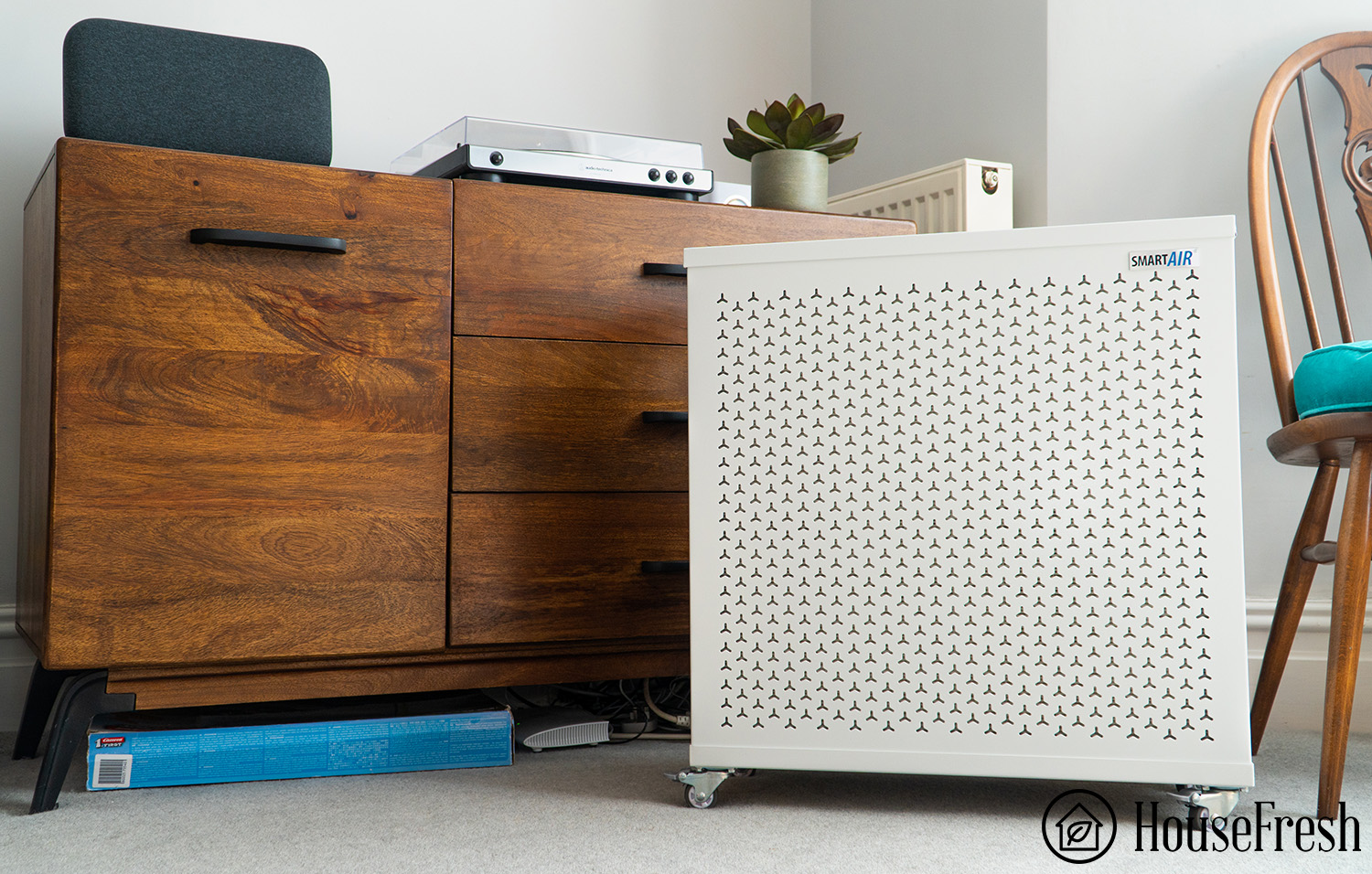
Smart Air S Corner

The creators of the Smart Air Sqair have an interesting backstory.

Back in 2013, the founder of Smart Air (Thomas) was working on his PhD in Beijing and, affected by the terrible outdoor pollution in the area, he looked into buying an air purifier. He was shocked when he saw how much air purifiers were retailing for. Instead of buying a pricey device, he created his own DIY purifier using just a fan and a filter

Realizing the potential, Thomas got together with some friends to start his own company focusing on no-nonsense, affordable air purifier DIY kids: a HEPA filter, a box fan and a strap to tie it all together. Smart Air also started to host workshops all over Beijing, showing attendees how to build their own DIY air purifiers.

smart air 2013

Since then, they have perfected their HEPA filters and started developing their own air purifier models. Their main goal remains the same from day one: excellent air cleaning performance without the high price tag that most models come with.

I like sharing this story whenever I discuss Smart Air because I think their ethos is remarkable and rare in this day and age. Their mission is one of the reasons why so many consumers are die-hard fans of Smart Air, and you will often find them recommending the Blast Mini or the SA600 to others on social media platforms.

This Smart Air Sqair air purifier only reached the U.S. in 2020. It is Smart Air’s response to small units like the Levoit Core 300 or the Winix A230.

As with all the air purifiers we review here at HouseFresh, we bought the Sqair with our own money to ensure we can be unbiased and completely transparent about what it’s like to have this device in our home. But, of course, we didn’t stop there.

We put the Smart Air Sqair to the test, completing a series of experiments to assess its particle removal capabilities, its energy consumption levels and the noise it generates. You can read more about each test below.

how we test
How we test air purifiers

Read our full testing methodology.

It is worth clarifying that this review was written AFTER we conducted all these tests. You can rest assured I didn’t just grab some numbers off an Amazon listing or Smart Air’s website like most other review sites would.

Right, enough with the intro.

The lowdown on the Smart Air Sqair

Danny Ashton HouseFresh
“The Smart Air Sqair might be the perfect option for those looking for a stylish air purifier with solid air cleaning performance for less than $200.

This unit surprised us in our performance tests and quickly found a permanent place in our home.”
— Danny Ashton, HouseFresh Founder & Senior Writer

Smart Air S Close up

$189.95 AT SMART AIR U.S. £132.00 AT SMART AIR UK

These are my main pros and cons suitable for even the lightest of skim readers:

What we really like

Smart Air’s ethos. Other air purifier manufacturers have been selling overpriced machines for years, but Smart Air drew a clear line.
Powerful mechanical filtration thanks to a high-quality H12 HEPA filter and an efficient fan.
Long-term cost savings for both electricity usage and filter replacements.
Beautifully designed to fit into even the most stylish of homes. I particularly like the European Beechwood legs.

What we think could be better

It does not have smart features or an auto-mode that automatically adjusts fan speeds, which is common in modern air purifiers. That said, these features would have an impact on the price of this air purifier without necessarily improving its air cleaning performance.
It does not come with an activated carbon filter as standard, so you need to buy one separately if you want the Sqair to help with VOCs and odors.

HouseFresh rating:★★★★☆
Time to clean our 728 cubic feet test room (with the device running at top speed):32 minutes (without carbon)
Air purifier technology:H12 HEPA and optional activated charcoal filter
Recommended room size (4.8 air changes per hour):163 sq. ft. 
Clean air delivery rate (CADR):Dust: 127 CFM
Smoke: 105 CFM
Pollen: 144 CFM
Dimensions (in inches / in cm):13H x 13W x 14.3D inches (33.02H x 33.02W x 36.32D cm)
Weight (in pounds / in kg):10.1 lbs (4.58 kg)
Filter life:6 months
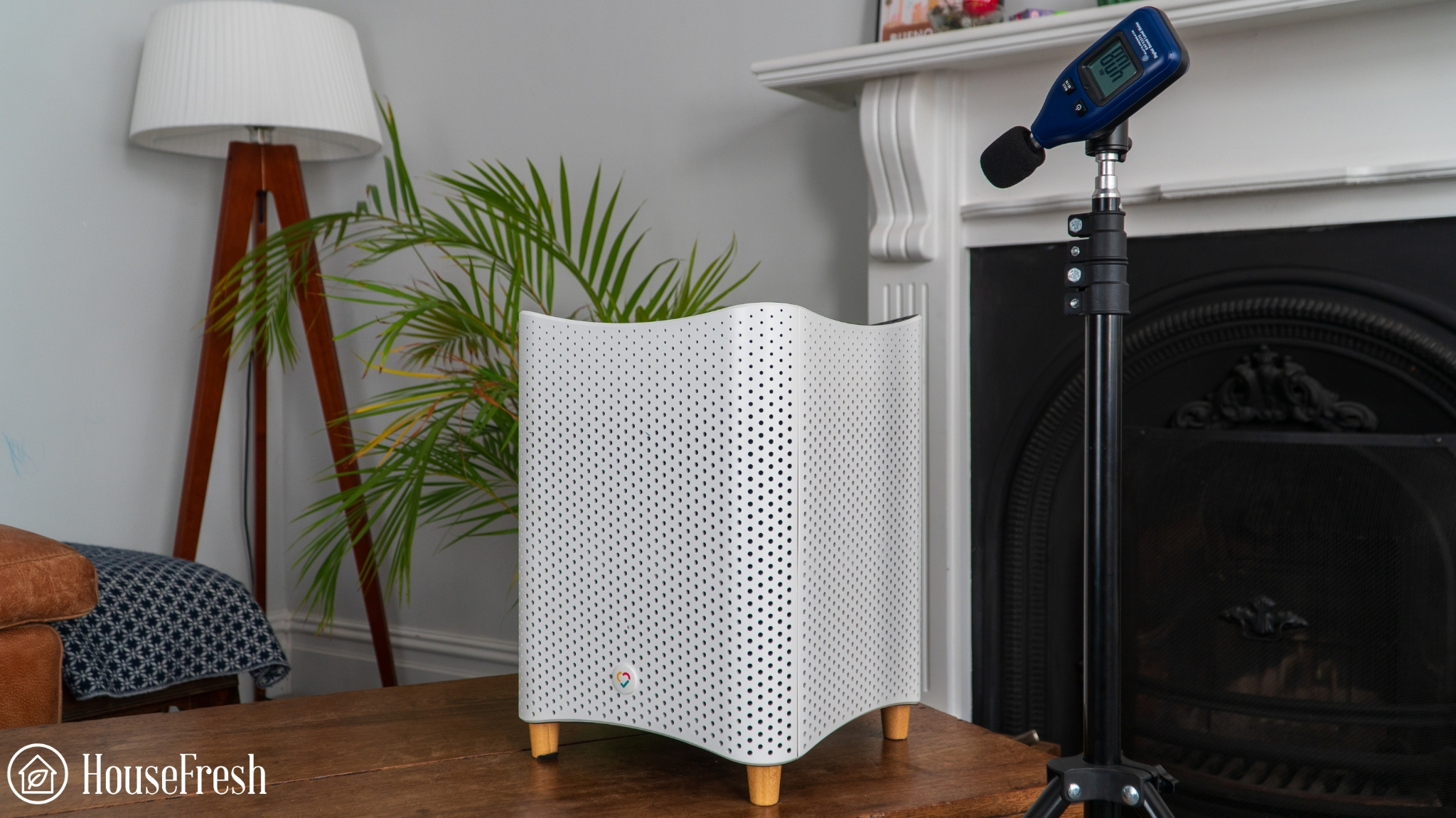
Noise level in decibels (measured from 3 ft. away with a sound level meter):Speed 1: 35.5 dB
Speed 2: 49.1 dB
Speed 3: 58.2 dB
Electricity consumption in watts (recorded with an electricity usage monitor):Standby mode: 0 watts
Speed 1: 5.6 watts
Speed 2: 19.7 watts
Speed 3: 39.4 watts
Estimated running cost (electricity consumption + official filter replacement):$120.10 per year
Cost per CADR cfm (based on dust CFM as reported by AHAM):$1.42
Manufacturer’s warranty:1 year
Country of manufacture:China

The best Smart Air Sqair feature: it is compact and stylish yet powerful

Excellent air cleaning speed that will look good in your home.

The Smart Air Sqair hides a powerful motor that allows it to move air through the filters at the same speed as much larger (and bulkier) air purifiers.

I will walk you through our particle removal test later down in the review, but let me mention here how the Sqair completed the test 10 full minutes faster than the much more expensive Mila and 15 minutes faster than the popular Levoit Core 300.

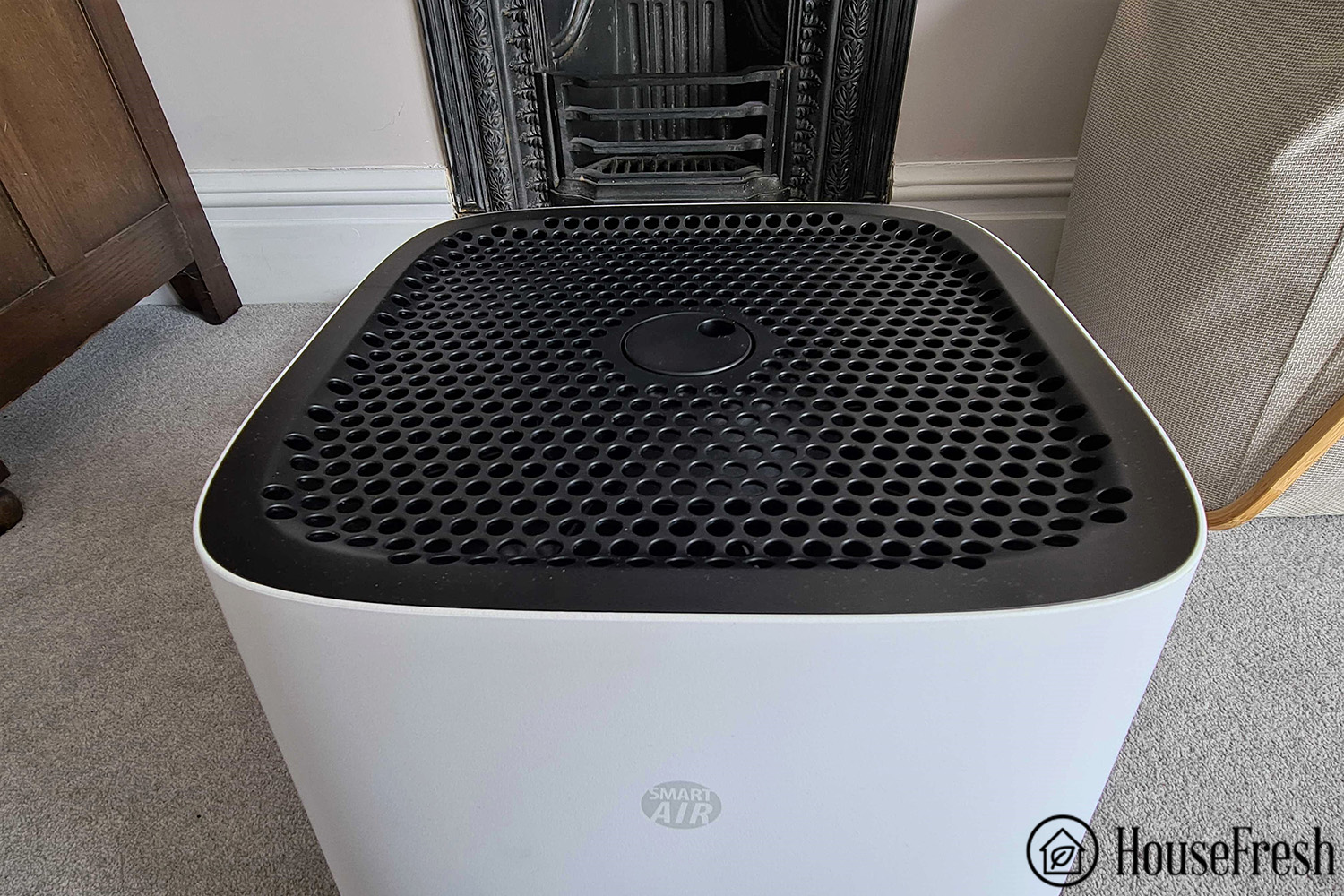
It truly surprised me with its air cleaning power because it looks like a small stool. I can’t begin to understand how Smart Air managed to fit in such a powerful motor inside this cute little thing.

Elegant design that will stand out for the right reasons

“Oh wow… This one is cute!” was the first thing my wife said when the Smart Air Sqair arrived.

Smart Air S Design

My wife is not normally so positive about the many air purifiers I bring to our home, but she immediately fell in love with the design of the Smart Air Sqair. This might not seem like an important point (and it’s definitely subjective), but she spends a lot of time choosing furniture and décor for the house, so she is a tough critic.

Another element she liked was the lack of lights on the control panel. This makes the Sqair a great option for a bedroom, as it won’t disturb your sleep — this is where we have kept this air purifier since the moment I finished running all the tests:

Smart Health S Top down logo

But it’s not just about this air purifier fitting into a trendy home.

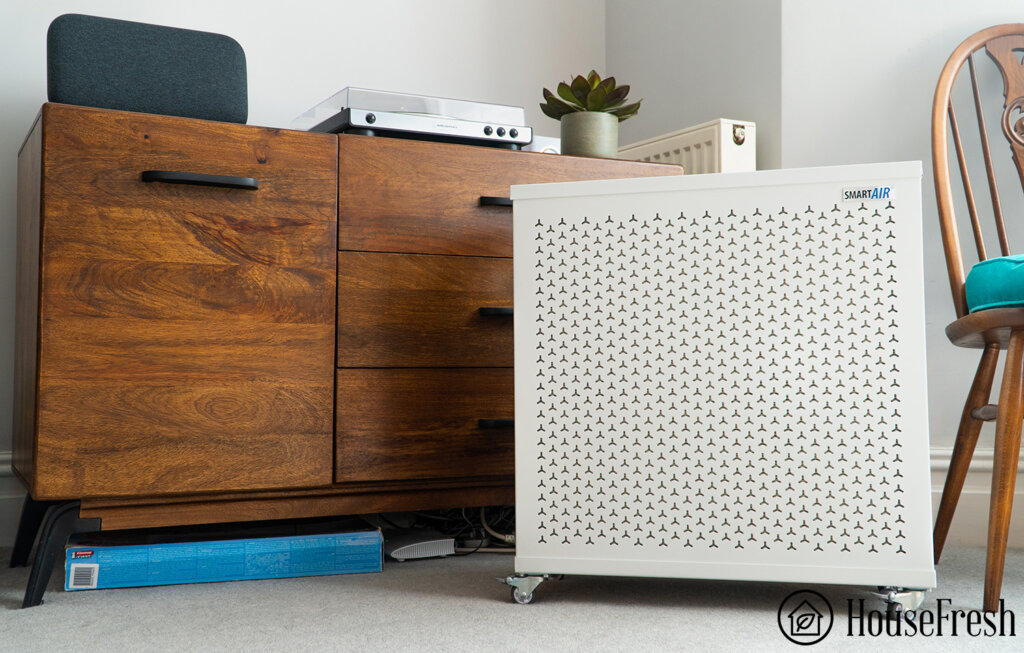
Another design aspect worth mentioning is that the Smart Air Sqair is a fairly small unit. It doesn’t take up too much space and could easily be placed in small rooms or tight spaces.

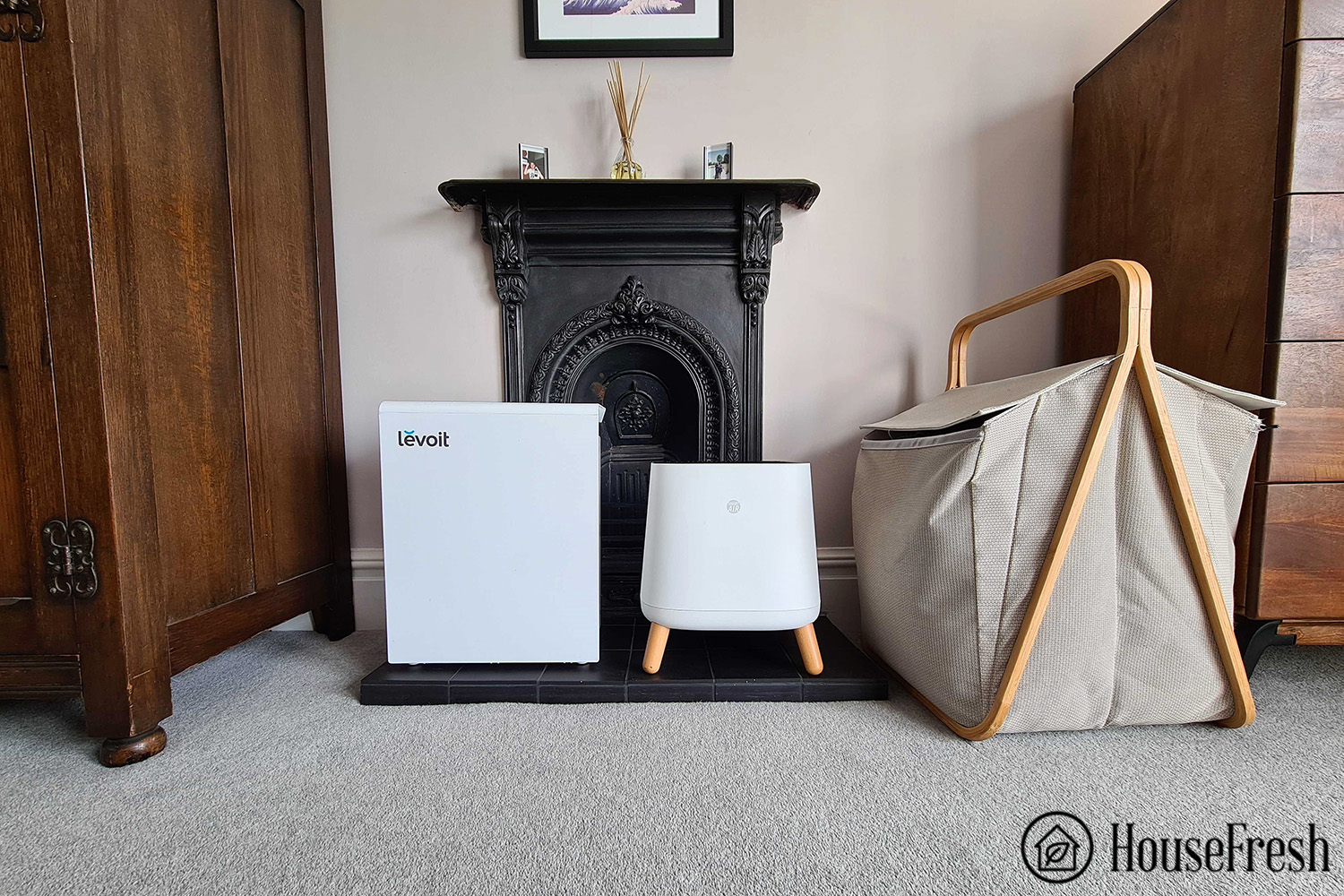
You can see here how small it is compared to the Levoit LV-PUR131 (which has the same size of units such as the Levoit Vital 200S, the Winix C545 and the Coway Airmega 150) and the dirty laundry basket in our room.

Levoit LV PUR131 VS Smart Air Sqair Air logo

Undoubtedly, this little unit looks a hell of a lot better than your “normal” air purifier. Its cute, short body and Beachwood legs blend into the room instead of looking like something you would find in a science lab.

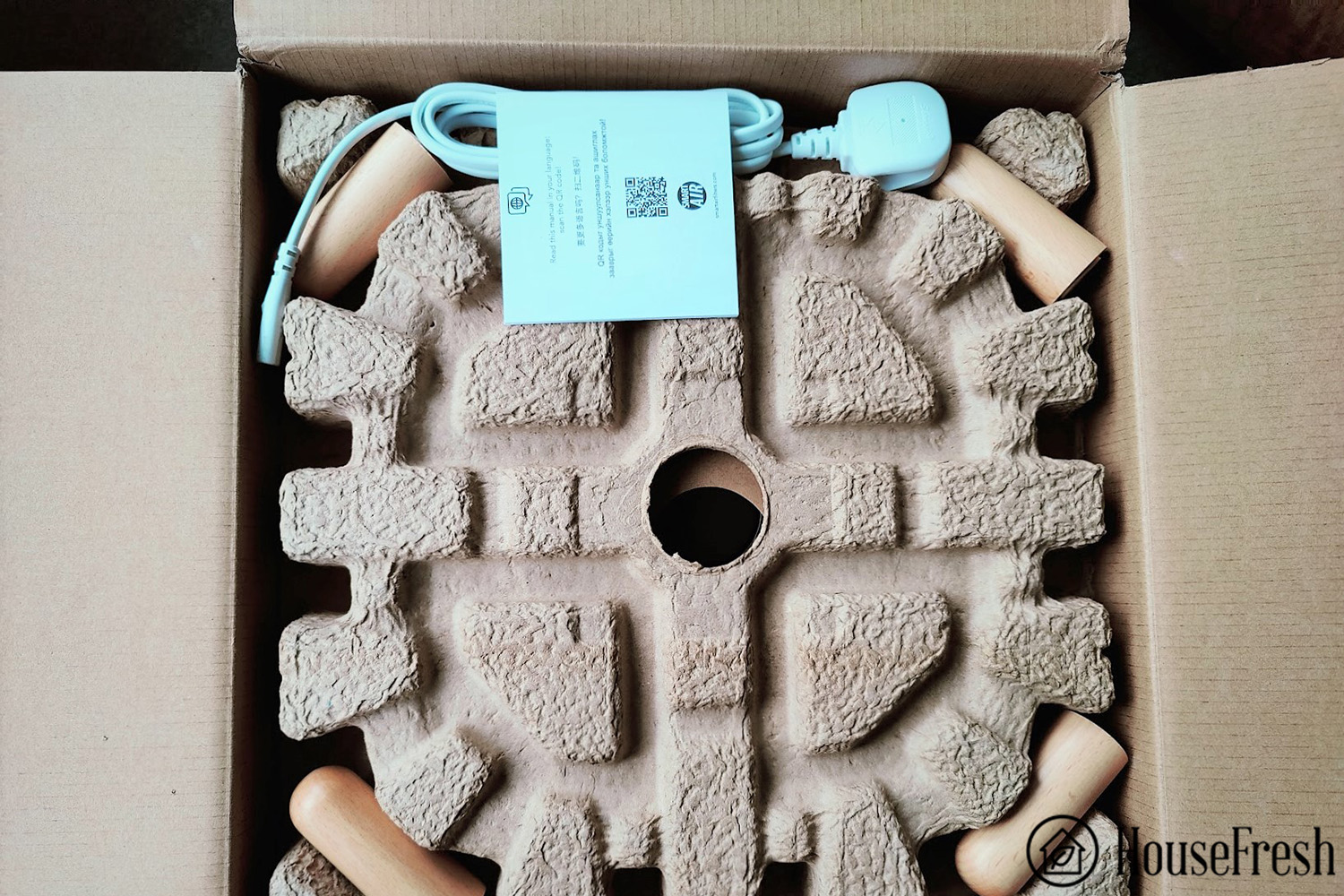
Speaking of the legs, you will find them packed separately inside the box and must be screwed on before switching the unit as you would with the legs of an IKEA chair:

Smart Health S Box setup logo

I experienced one build quality issue when screwing the legs: one of the screws had become loose, so I had to re-screw it before securing the final leg. It’s definitely a minor thing, but I’m mentioning it here to make the Smart Air team aware of it.

Smart Health S Missing screw issue logo

The control panel of the Sqair is incredibly straightforward. You get three fan speed settings and can switch between them with a giant dial that sits at the top of the device. That’s as simple as it gets!

Smart Health S Controls logo

Now, if you are looking for smart features, this is not the right air purifier for you.

I personally like the simplicity, but I also appreciate that there are cases where having smart features such as auto-mode makes sense. For example, I wouldn’t want to use the Sqair in my kitchen as I would rather not have to drop everything while cooking just to set the dial on three or bring it back down to one. But that could be just me.

However, there is a reason why this unit doesn’t have such features. The team at Smart Air thinks auto-features are a waste of time, as built-in air quality monitors could be inaccurate, and air purifiers might not thoroughly clean the air before the auto-mode switches them back to speed one.

Just high-quality filters and a powerful fan

The Smart Air offers H12 HEPA filtration with an optional activated carbon filter.

This air purifier is one of the simplest units I have come across. As you can see in the video below, it’s simply a large fan combined with a HEPA filter housed in plastic. 

The Smart Air Sqair comes with an H12-type HEPA as standard rather than the trendier medical-grade H13 HEPA. The reason for this is airflow.

H12 allows more air to pass through the filter, meaning that the air purifier can clean more air without working as hard. This not only makes it more efficient at cleaning the air but also reduces the amount of electricity it consumes.

That said, you can choose to get your Sqair with a H13 filter, but you need to be aware that using a stronger grade of HEPA will reduce the airflow.

Tip

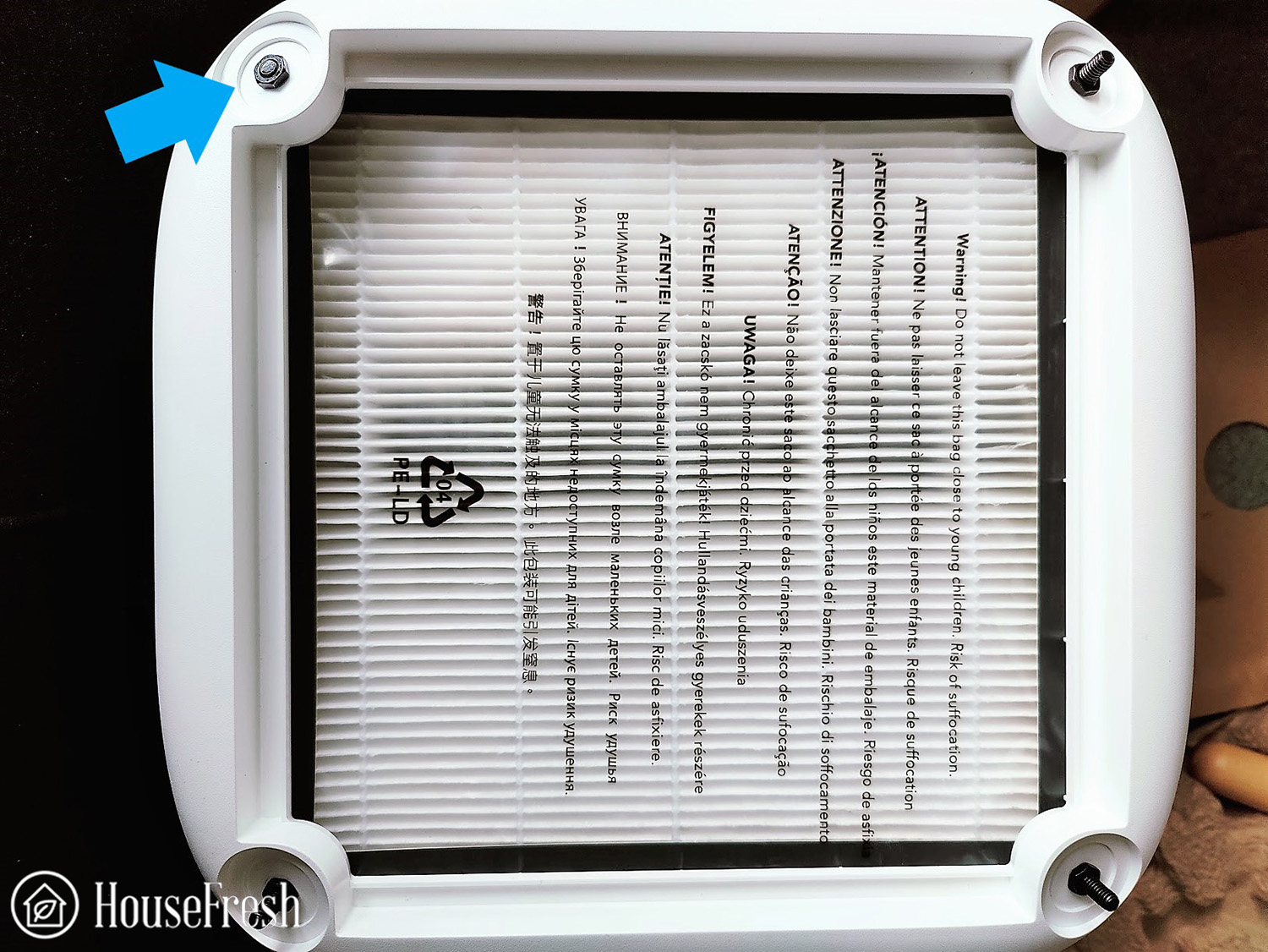
The HEPA filter for the Sqair arrived wrapped in plastic packaging to ensure it doesn’t start filtering air until you use it.

Make sure to remove the filter from the bag BEFORE you switch on the air purifier.

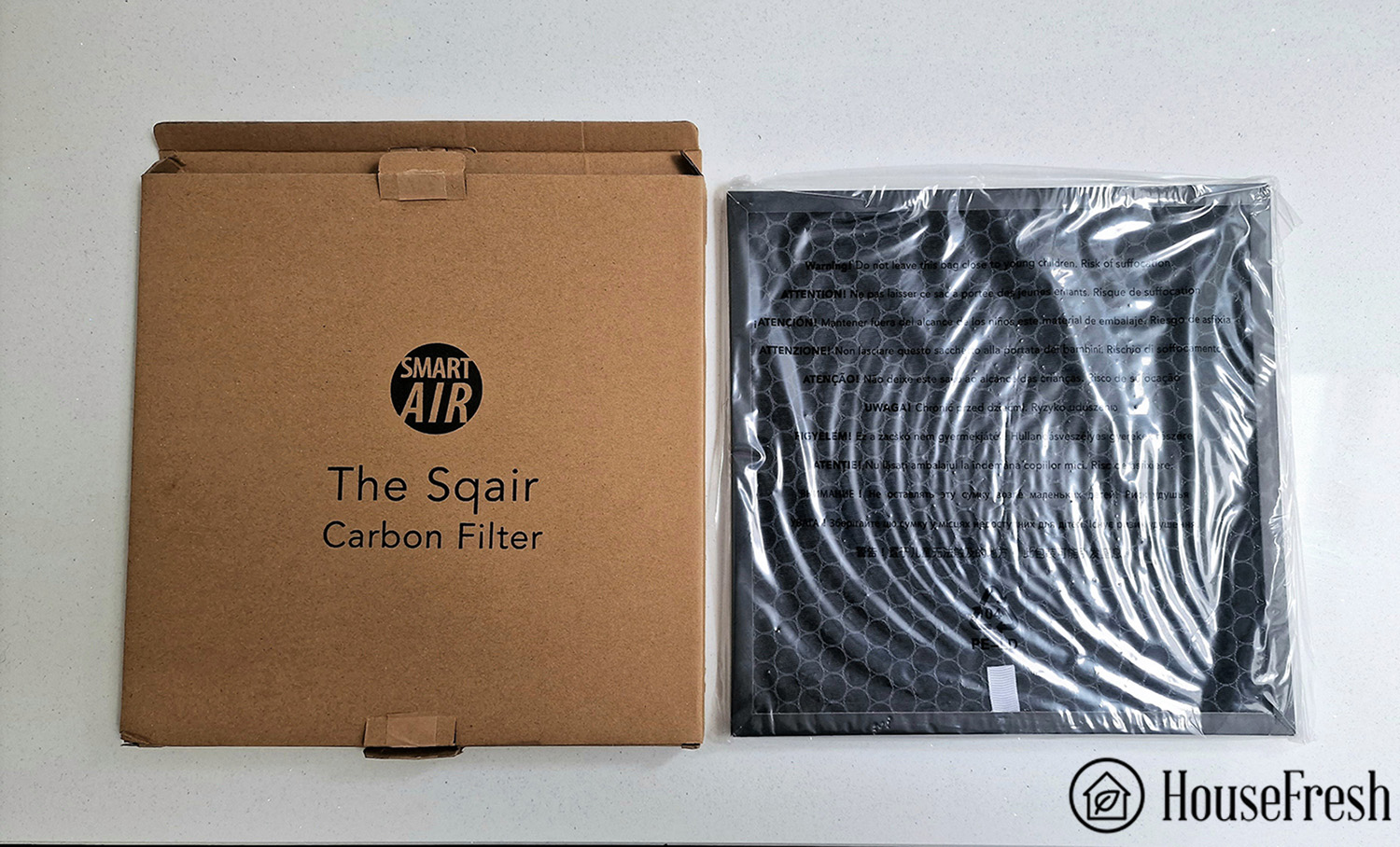
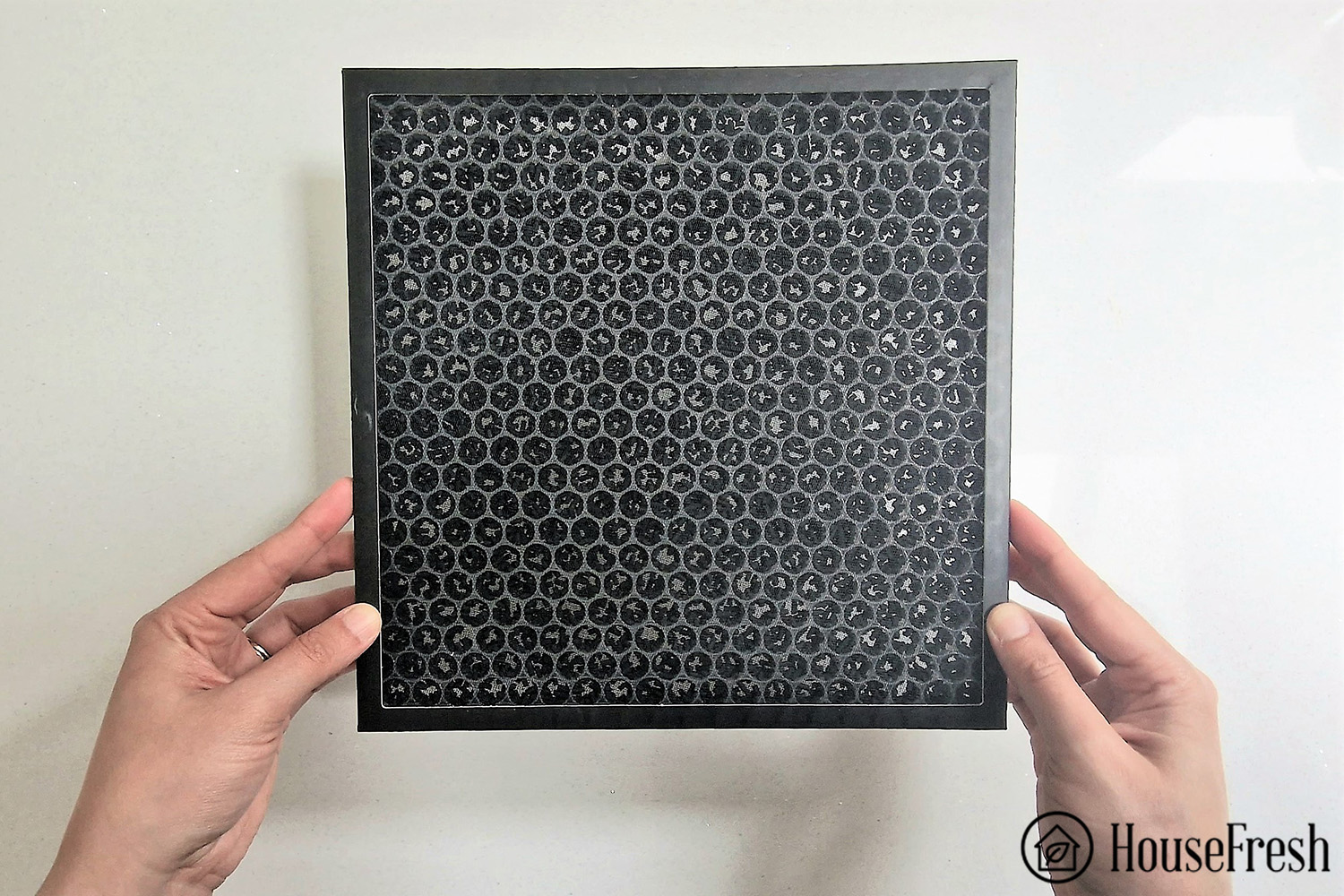
The Smart Air Sqair comes with a HEPA filter, but you will need to buy the activated carbon filter separately (for an extra $29.99).

Smart Health S Carbon filter logo

Most manufacturers include both HEPA and activated carbon as standard, partly because it makes for a more well-rounded air-cleaning solution and partly because it will keep you buying more filters.

But Smart Air doesn’t include these filters as standard because the truth is that not everyone needs an activated carbon filter, and using one will reduce airflow.

I highly recommend you buy the activated carbon filter only if you want to use your air purifier to remove unwanted smells, gases and VOCs, as HEPA won’t be able to help with that.

Activated Carbon Filter logo

Installing the activated carbon filter is super easy. There are no fiddly, twisty mechanics or screws to find the right tool for. You just need to follow three easy steps:

Step 1: Turn it upside down and remove the bottom cover by pressing in the sides and lifting.

Smart Health S Open bottom logo


Step 2: Remove the filter from the bag and place it in the unit. Don’t force it, it will sit comfortably.

Smart Health S Place filter logo

Step 3: Secure the bottom cover back on top of the filter, and turn the device upside down.

Smart Health S Close bottom logo

Told you it was easy. Want to get one for your Sqair, too? Here you go:

Smart Air (aka Smart Health) Sqair Genuine Replacement Carbon Filter (1 Pack) |Verified VOC & Odor Reduction| Activated Carbon Pellets for Smoke, Chemical Fumes & Pet Odors
  • ✔ 𝐕𝐄𝐑𝐈𝐅𝐈𝐄𝐃 𝐕𝐎𝐂 & 𝐎𝐃𝐎𝐑 𝐑𝐄𝐌𝐎𝐕𝐀𝐋: Scientifically tested with an Industrial Scientific MX6 iBrid gas detector, this activated carbon filter has been proven to reduce harmful VOCs such as formaldehyde and benzene from cigarette smoke and household sources. Ideal for homes concerned with chemical or smoke exposure.
  • ✔ 𝐆𝐄𝐍𝐔𝐈𝐍𝐄 𝐒𝐌𝐀𝐑𝐓 𝐀𝐈𝐑 𝐒𝐐𝐀𝐈𝐑 𝐑𝐄𝐏𝐋𝐀𝐂𝐄𝐌𝐄𝐍𝐓 𝐅𝐈𝐋𝐓𝐄𝐑: Engineered for a precision fit in the Smart Air Sqair Air Purifier, ensuring proper airflow and maximum adsorption efficiency. Maintains your purifier's tested clean air delivery rate for gas pollutants.
  • ✔ 𝐇𝐈𝐆𝐇-𝐒𝐔𝐑𝐅𝐀𝐂𝐄-𝐀𝐑𝐄𝐀 𝐀𝐂𝐓𝐈𝐕𝐀𝐓𝐄𝐃 𝐂ARBON 𝐏𝐄𝐋𝐋𝐄𝐓𝐒: Each pellet enabling strong adsorption of odor molecules, toxic gases, and VOCs. Designed in a durable honeycomb mesh for stable air distribution and long-term performance.
  • ✔ 𝐃𝐔𝐀𝐋 𝐅𝐈𝐋𝐓𝐑𝐀𝐓𝐈𝐎𝐍 𝐅𝐎𝐑 𝐂𝐎𝐌𝐏𝐋𝐄𝐓𝐄 𝐀𝐈𝐑 𝐏𝐔𝐑𝐈𝐅𝐈𝐂𝐀𝐓𝐈𝐎𝐍: When paired with the True H13 HEPA filter, this carbon layer captures odors, fumes, and gases while allowing the HEPA to focus on fine particles. Together, they deliver cleaner, fresher, and odor-free air across your living spaces.
  • ✔ 𝐓𝐄𝐒𝐓𝐄𝐃 𝐅𝐎𝐑 𝐂𝐋𝐄𝐀𝐍𝐄𝐑, 𝐇𝐄𝐀𝐋𝐓𝐇𝐈𝐄𝐑 𝐀𝐈𝐑: Independently lab tested for VOC reduction under controlled conditions, including cigarette smoke and formaldehyde. Helps reduce throat irritation, dizziness, and odors from volatile organic compounds.

The Smart Air Sqair cleared our test room in 32 minutes

As with every air purifier we review here at HouseFresh, I tested the Sqair in our 728 cubic ft. test room (a fairly small home office) and used an incense stick to create airborne pollutants. I then used two different Purple Air indoor sensors (Touch and Zen) to track how quickly the Smart Air could reduce PM1 pollutants down to zero while running at its top fan speed.

The Smart Air Sqair removed all PM1 pollutants in 32 minutes.

Air cleaning speed, compared

Let’s put these results into perspective by comparing the Sqair to other units we have tested. So, here’s how it compares to other air purifiers in terms of noise output, air cleaning speed and initial price. 

AIR PURIFIER MODELSOUND LEVEL AT LOWEST SPEED (dB) SOUND LEVEL AT TOP SPEED (dB)TIME TO CLEAN OUR TEST ROOMPRICE
Shark HP10236.1 dB52.2 dB58 minutes$179.99
Coway Airmega 15035.2 dB55.6 dB38 minutes$189.99
Levoit Vital 200S38.3 dB57.7 dB23 minutes$189.99
Winix A23039.1 dB57.8 dB40 minutes$99.99
Smart Air S35.5 dB58.2 dB32 minutes$179.95
Mila37.5 dB59.2 dB38 minutes$419.99

Noise levels, compared

When you compare noise levels generated by the Sqair to other units, it’s perfectly average. Yes, you’ll hear it when it’s on full power, but it won’t command the whole room.

Now, I always explain that sound can be subjective, so I shot a video so you can listen to the noise levels it generates:

The cost to run a Smart Air Sqair: $114.98 per year

The costs associated with running air purifiers in the long term are usually overlooked, but they are an important factor to consider — especially if you’re planning on actually using your air purifier regularly enough to keep the air in your home clear of pollutants.

Smart Air S Front

1. Electricity costs = $41.00

As part of my testing, I used a power meter to measure how much electricity in watts the Smart Air Sqair pulls at each fan speed.

  • Power 1 – 5.6 watts
  • Power 2 – 19.7 watts
  • Power 3 – 39.4 watts

The team at Smart Air has created something very special with the Sqair, a good-looking air purifier with a decent CADR that also uses less energy than most other similarly sized units. 

AIR PURIFIER MODELENERGY CONSUMPTION AT TOP SPEED (watts)TIME TO CLEAN OUR TEST ROOM
Coway Airmega 15031.55 watts33 minutes
Smart Air S39.4 watts25 minutes
Mila38.32 watts35 minutes
Levoit Vital 200S44.55 watts18 minutes
Winix A23045.6 watts35 minutes

The energy savings might be down to the fact that the Smart Air Sqair uses a H12 filter instead of a H13, no-pre filter, and (what I assume to be) a more efficient fan.

2. Filter costs = $73.98

Another long-term cost to consider is filter replacement. With mechanical filter technology like HEPA, the filters get full of pollutants and need to be replaced regularly.

The Sqair has filters available for $36.99, and they suggest replacing them every 6 months. Running a Sqair will cost you $73.98 per year on HEPA filters alone.

Here is how that compares to other units:

Smart Air (aka Smart Health) Sqair Genuine Replacement HEPA Filter | High-Efficiency Particle Filter for Dust, Smoke & Pollen | Compatible Genuine HEPA Replacement Filter (1 Pack)
Smart Air (aka Smart Health) Sqair Genuine Replacement Carbon Filter (1 Pack) |Verified VOC & Odor Reduction| Activated Carbon Pellets for Smoke, Chemical Fumes & Pet Odors
Technology
Smart Health S HEPA Filter
Smart Health S Activated Carbon Filter
More information
Price
Price not available
$29.99
Smart Air (aka Smart Health) Sqair Genuine Replacement HEPA Filter | High-Efficiency Particle Filter for Dust, Smoke & Pollen | Compatible Genuine HEPA Replacement Filter (1 Pack)
Technology
Smart Health S HEPA Filter
More information
Price
Price not available
Smart Air (aka Smart Health) Sqair Genuine Replacement Carbon Filter (1 Pack) |Verified VOC & Odor Reduction| Activated Carbon Pellets for Smoke, Chemical Fumes & Pet Odors
Technology
Smart Health S Activated Carbon Filter
More information
Price
$29.99

When it comes to long-term costs, the Smart Air Sqair is not the cheapest air purifier to run 24/7 but close: the S is the second cheapest option when comparing its running costs to those of units in the same price range or the same size:

AIR PURIFIER MODELESTIMATED ELECTRICITY COST (per year) FILTER REPLACEMENT COST (per year)YEARLY MAINTENANCE COST
Coway Airmega 150$48.12$49.99$98.11
Smart Air S$41.00$73.98$114.98
Winix A230$69.55$49.99$119.54
Levoit Vital 200S$67.95$59.99$127.94
PuroAir HEPA 14 240$57.35$96.00$153.35
Mila $58.45$150$208.45

Bottom line: Is the Smart Air Sqair worth it?

Smart Air is a brand on a mission and with the Sqair, they’re showing us they mean business. 

By taking a simplistic approach to air purification, they have achieved amazing air cleaning performance without the energy consumption and filter replacement costs you can expect from competitors. 

Its a good device for smaller spaces and benefits from the simple controls and attractive design.

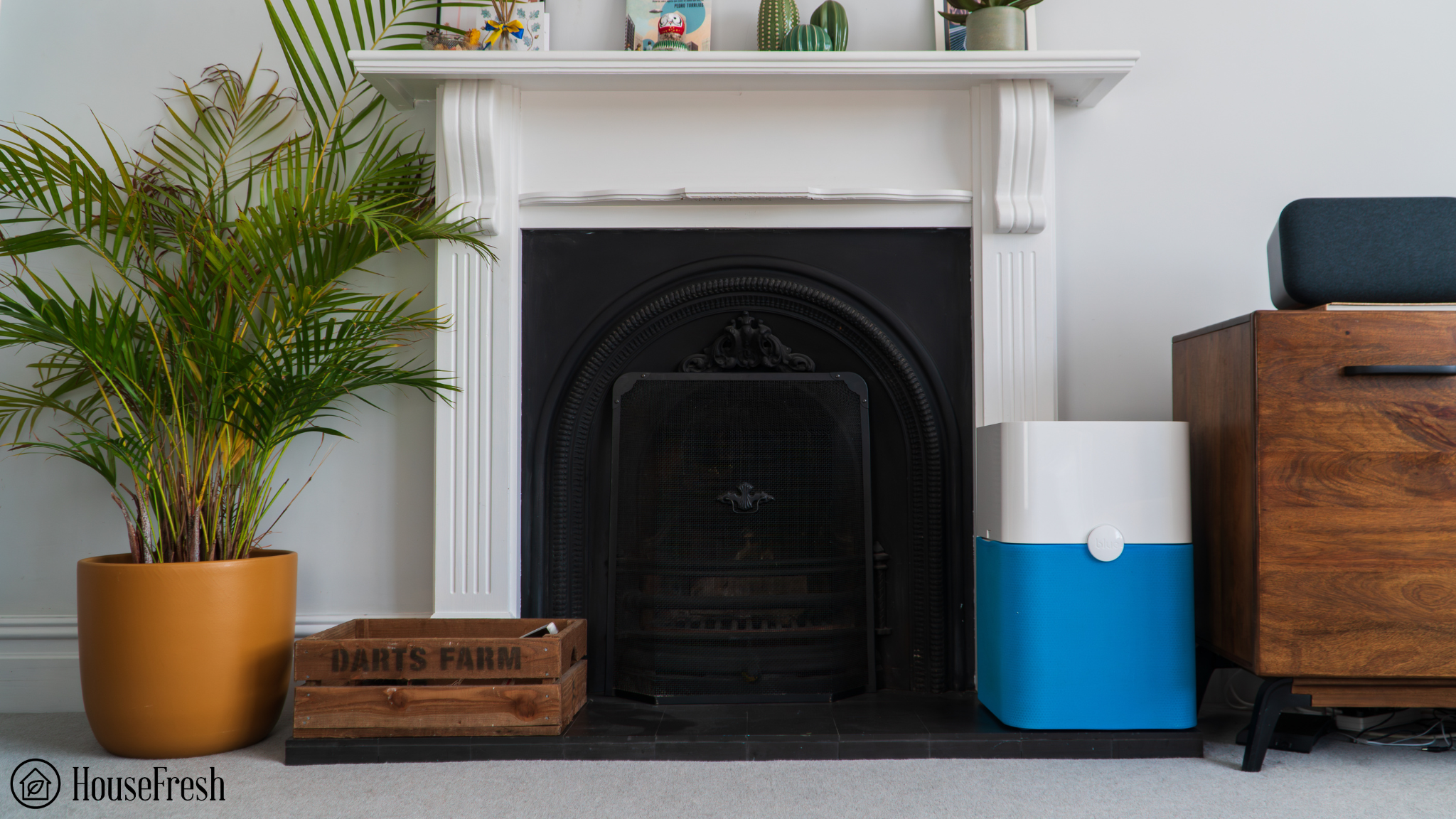
Smart Air S Fireplace

The Smart Air Sqair is not the right air purifier for you if you care about smart features and are looking for an air purifier with a fancy touchscreen or an on-board air quality sensor. If those are the kind of things you want in your device, then you should check out my review of the Levoit Vital 200S.

However, if you are on the market for a good looking device that will blend into the decor of your home and STILL be able to clean the air as efficiently as units priced upwards of $200, then the Sqair might just be the thing. Just remember to buy the additional activated carbon filter if you are wanting to rid your home of unwanted smells and VOCs.

SOURCES

We calculated yearly costs associated with running the Smart Air Sqair 24 hours a day, 365 days per year, utilizing the latest average energy prices as reported by the Bureau of Labor Statistics of $0.174/kWh as of May 2024.

Blueair Blue Pure 211+ review

Blueair Blue Pure 211 Front Room

I will review one of the most popular air purifiers of the last few years: the Blue Pure 211+ from Blueair.

Since we started housefresh.com, we have tested and reviewed a few Blueair air purifiers.

Looking at Google Trends to gauge popularity, we can see that the 211+ first arrived in 2016 and reached its peak popularity in 2021 – too late for a review?

AD 4nXfClpaPVrU3UKCZyX4ATcY6cjdf36gpJcMq1tD7AFDwjfBd7a1wI7xyENc ZJGErp zXmpIGlVcX96li3gipp0z2lU9o5 eNiyEyEaOQFiaJhf8E PAKzQ7wjuPzPoCMW9RQTlv9A?key=k7QPQ4lqIn6RCyMevo QS27K

I don’t think so…

Although Blueair has now replaced the 211+ with the new Blue Pure Max 211i, many people are still looking to buy a 211+ as it’s still widely available, and many others own a 211+ and are wondering if it’s time to upgrade it, so this review is for them.

As always, we bought the Blue Pure 211+ with our own money. I paid £110 for our 211+ in early 2022, but you can find the 211+ on Amazon today for $319.99 — or you can get the latest Pure Max 211i in the U.S. for $349.99.

AD 4nXcUd5Bl3xIiLcFtrihArGGZfeRXUE4tloXumTrMV9bRmUKhtfffPGg2gt9esZyiTvZopyW EFte 69 qI1H7P54vQz2KqJNf45G hxmuYoloGP8gpCOQfTKaKB0bfte6WRuK c70w?key=k7QPQ4lqIn6RCyMevo QS27K

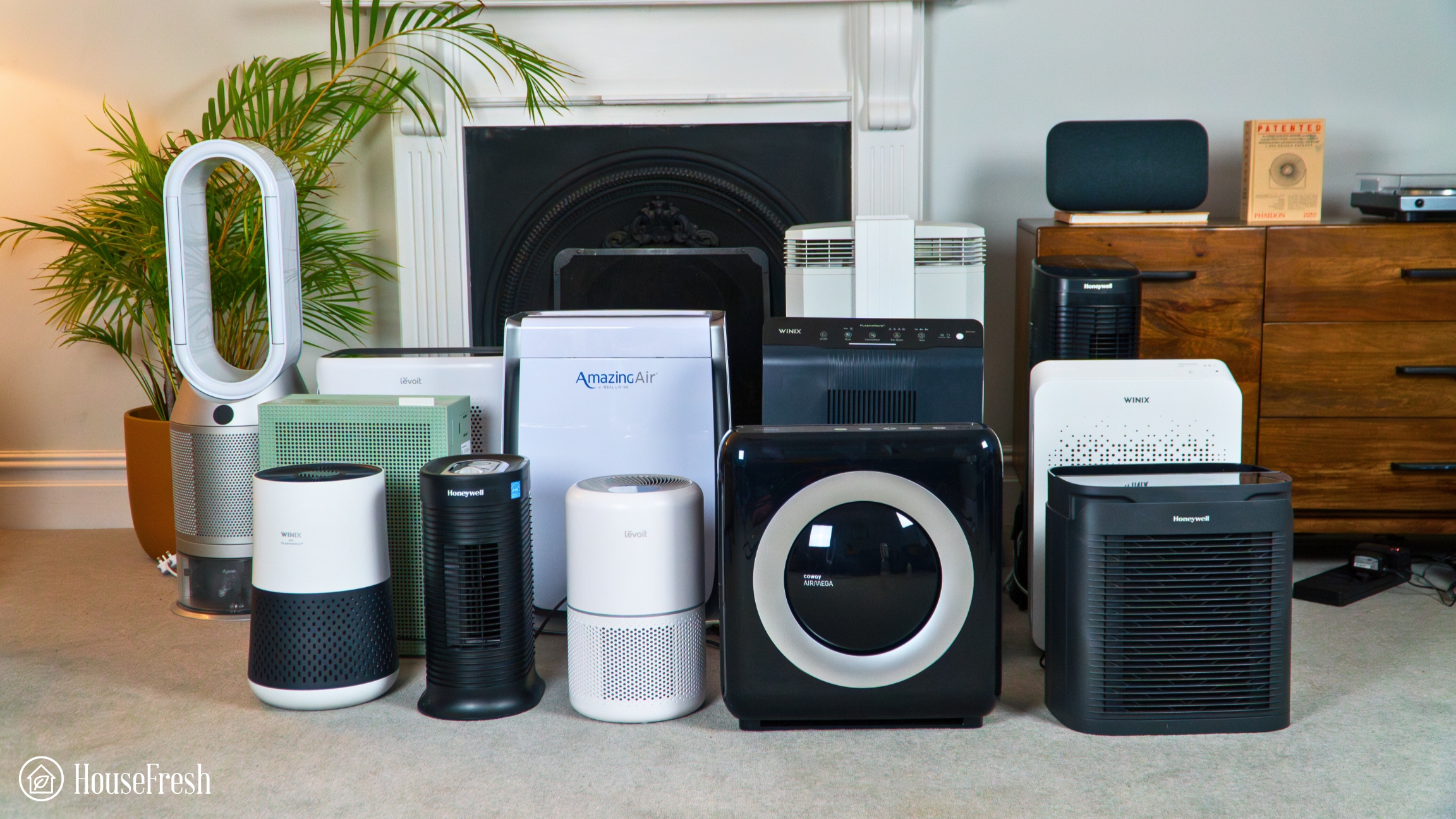
In this review, I will compare the Blue Pure 211+ to the more than 100 air purifiers we have tested at HouseFresh, based on our first-hand data on air cleaning performance, sound generation, energy efficiency, real-life user experience and long-term running costs. If you want to know more about how we test our air purifiers, please read this article or watch this video.

The lowdown on the Blue Pure 211+

Danny Ashton HouseFresh

“When I first tested the Blue Pure 211+ in 2022, I was blown away by its performance as it was a fairly cheap device yet could clean air very effectively.

As our new data shows, even when running at speed 2, the 211+ has an estimated CADR of around 230 cfm, and at speed 1 you will get the same performance as the Levoit Core 300 running at top speed (140 cfm).

So why do Blueair air purifiers never make it on my list of the best air purifiers?

Well, the Blueair Blue Pure range uses an ionizer process to help clean the air, which you will find in devices from Coway, Winix and Alen.

However, and unlike Coway, Winix and Alen, with the Blueair 211+ the user has no way of switching off this function. “

— Danny Ashton, HouseFresh Founder & Senior Writer

Looking for the quick-fire facts? Here are my main pros and cons of the Blueair Blue Pure 211+.

What we really like

It is a powerful air purifier that offers solid performance at top speed
Air cleaning is still good when running at fan speeds sub-45 and sub-40 dBA 
It has a simple yet stylish, with color options for the pre-filter
One-touch operation make this air purifier easy to use right out of the box

What we think could be better

When we disconnected the ionizer, performance dropped significantly
It is big and bulky, without any handles or wheels
The top can easily disconnect from the base when moving the device around
Filter costs are higher compared to other air purifiers with similar performance
You can’t disable the ionizer.

HouseFresh rating:★★★★☆
Time to clean our 728 cubic feet test room (with the device running at top speed):20 minutes
Air purifier technology:HEPASilent™ Technology and Activated Charcoal Filter + Ionizer technology
Recommended room size (4.8 air changes per hour):540 sq. ft.
Clean air delivery rate (CADR):Dust: 350 CFM
Smoke: 350 CFM
Pollen: 350 CFM
Dimensions (in inches / in cm):20H x 13W x 13D inches (51H x 33W x 33D cm)
Weight (in pounds / in kg):12.98 lbs (5.89 kg)
Filter life:6 – 8 months
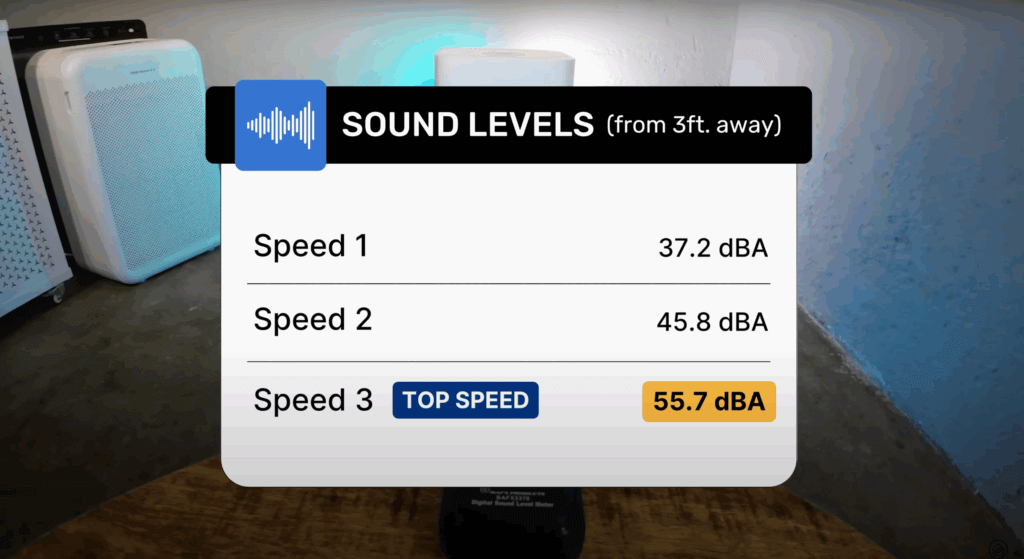
Noise level in decibels (measured from 3 ft. away with a sound level meter):Speed 1: 37.2 dB
Speed 2: 45.8 dB
Speed 3: 55.7 dB
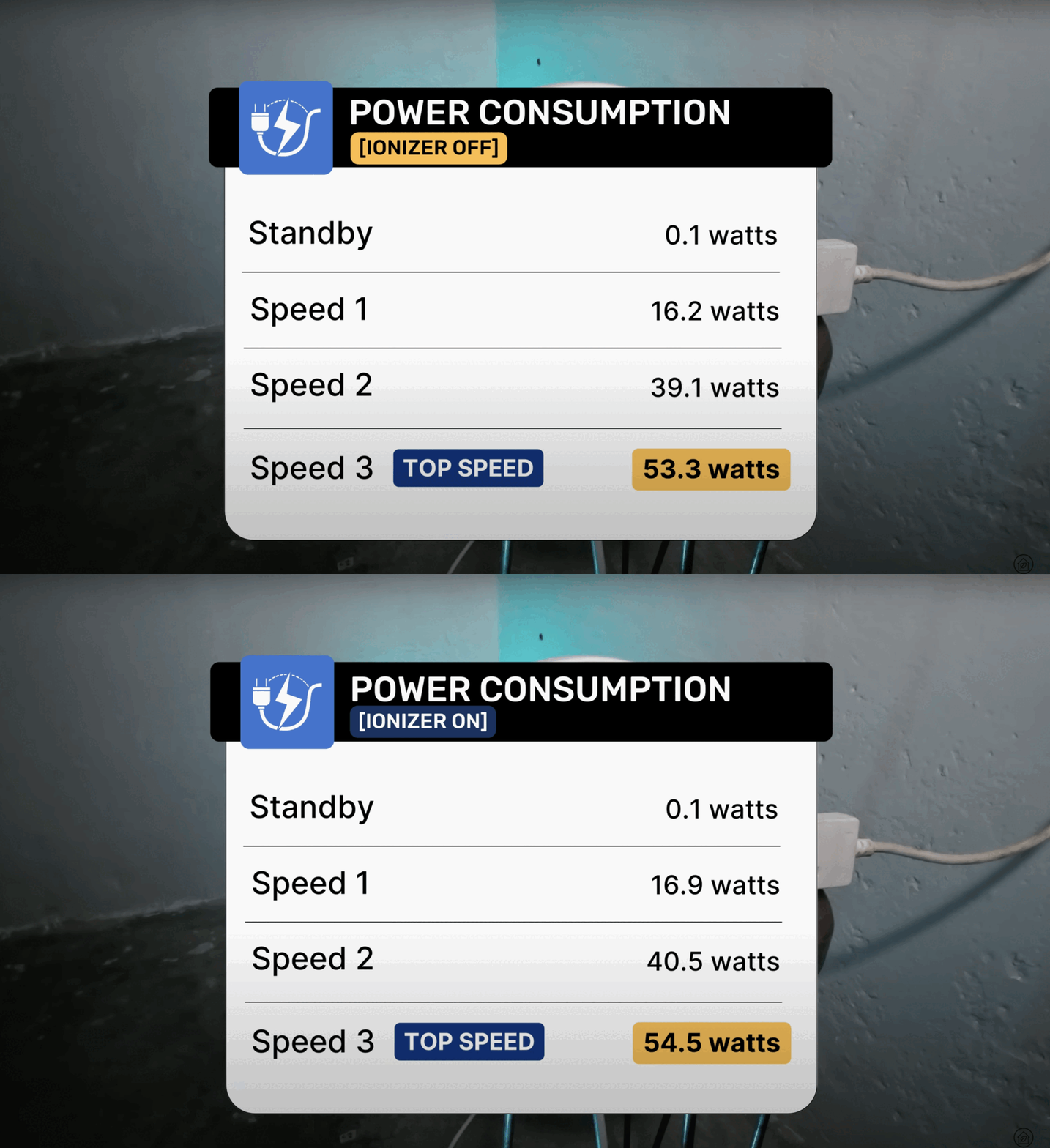
Electricity consumption in watts (recorded with an electricity usage monitor):Standby mode: 0.1 watts
Speed 1: 16.9 watts
Speed 2: 40.5 watts
Speed 3: 54.5 watts
Estimated running cost (electricity consumption + official filter replacement):$197.27 per year
Cost per CADR cfm (based on dust CFM as reported by AHAM):$0.71
Manufacturer’s warranty:1 year
Country of manufacture:Designed and engineered in Sweden, assembled in China

Blueair’s signature Scandi design with one-button operation

A bulkier Blueair device with a removable pre-filter fabric you can replace and customize, similar to other models in their range.

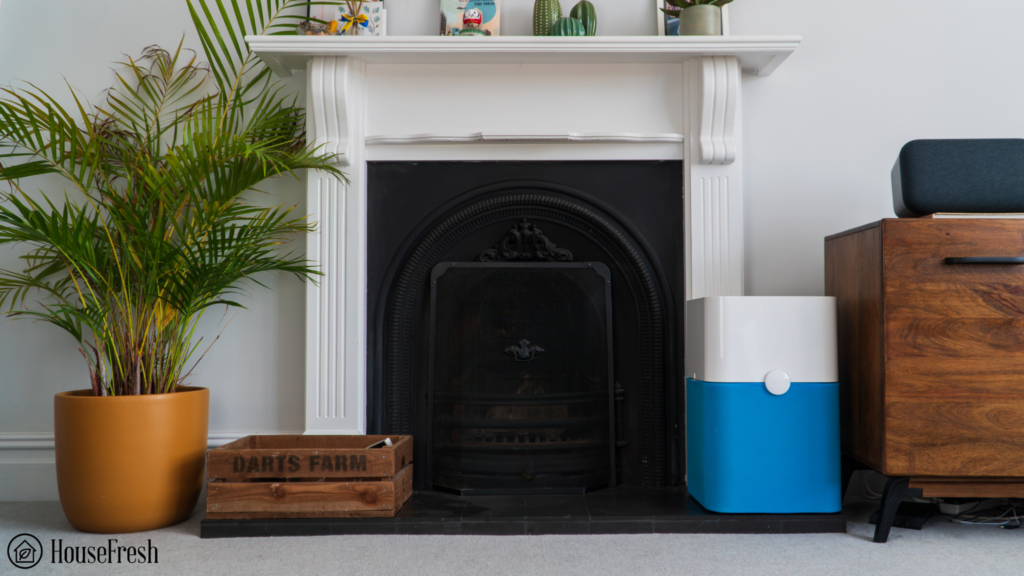
Blueair Blue Pure 211 plus Living Room

Before jumping into the performance data, let’s look at the design of the 211+.

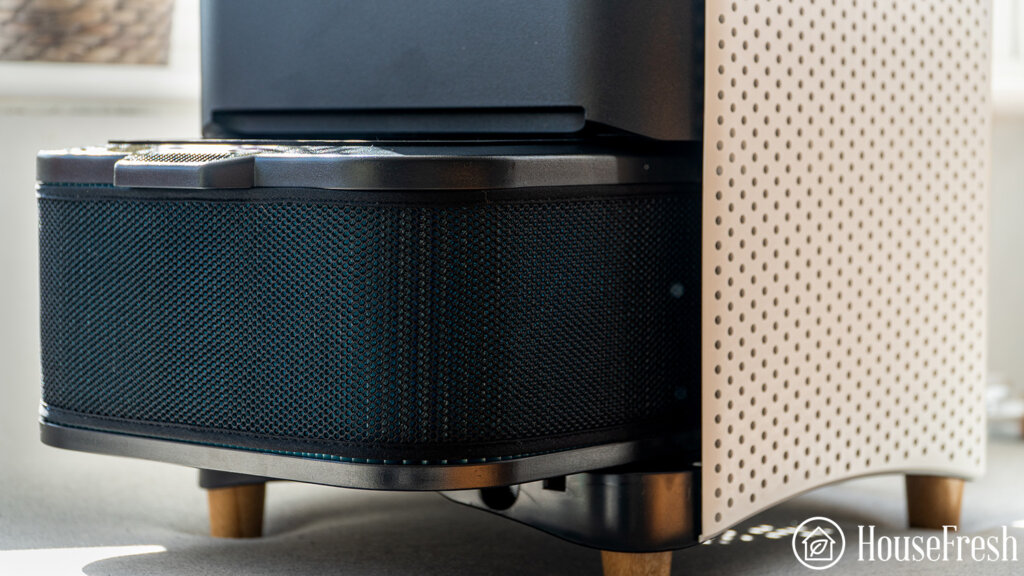
Blueair’s Blue Pure range has a distinctive aesthetic. The fan sits at the top of the device and the filter is tucked in underneath, covered by a colorful pre-filter fabric.

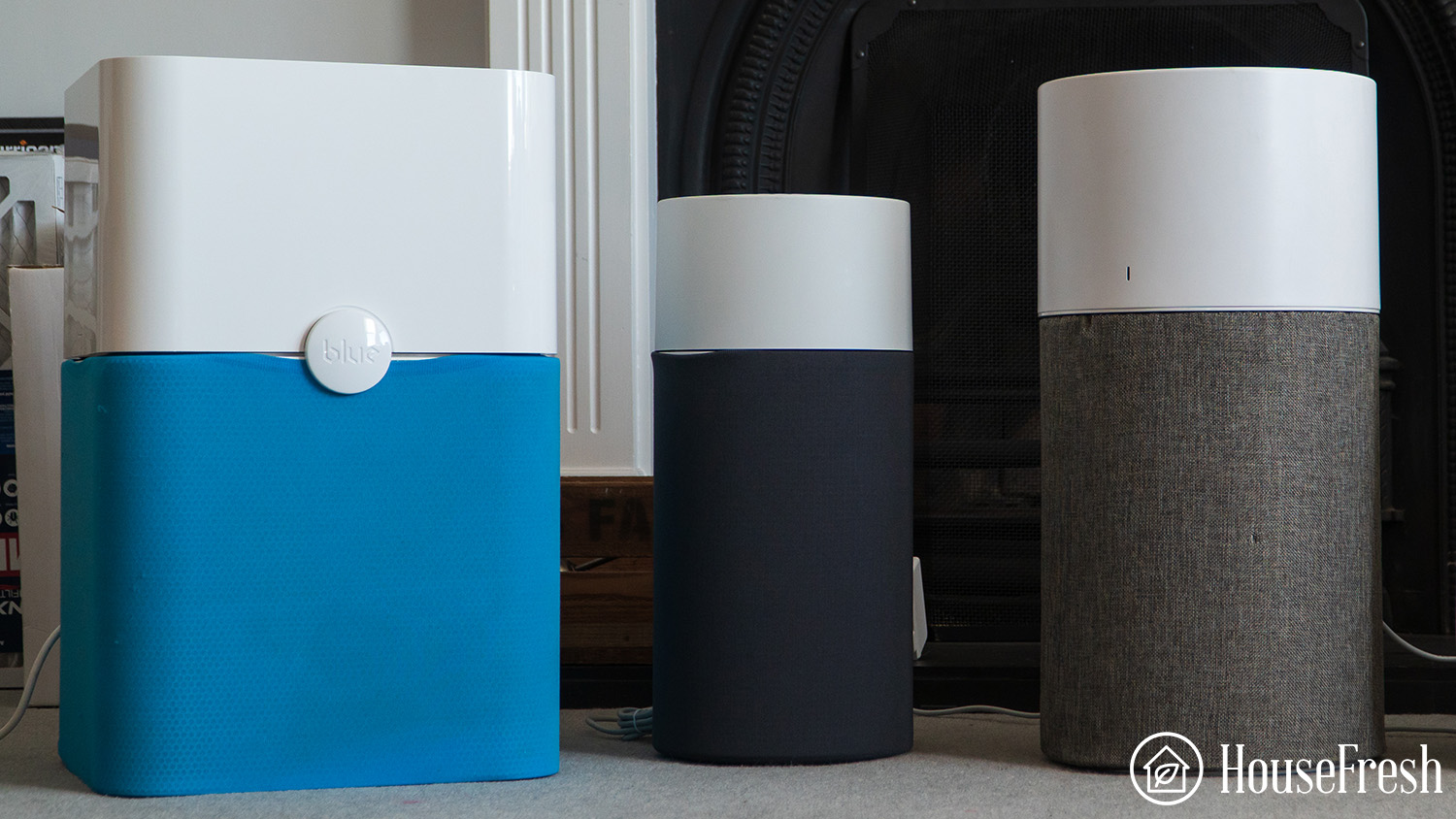
Comparison Photo Blueair Blue Pure 211 VS 411 VS 311

The 211+ is the largest unit in the Blue Pure range, and it takes up much space. 

It takes up as much floor space as the Levoit Core 600S but it doesn’t come with any handles, so you need to carry it around in your arms to move it.

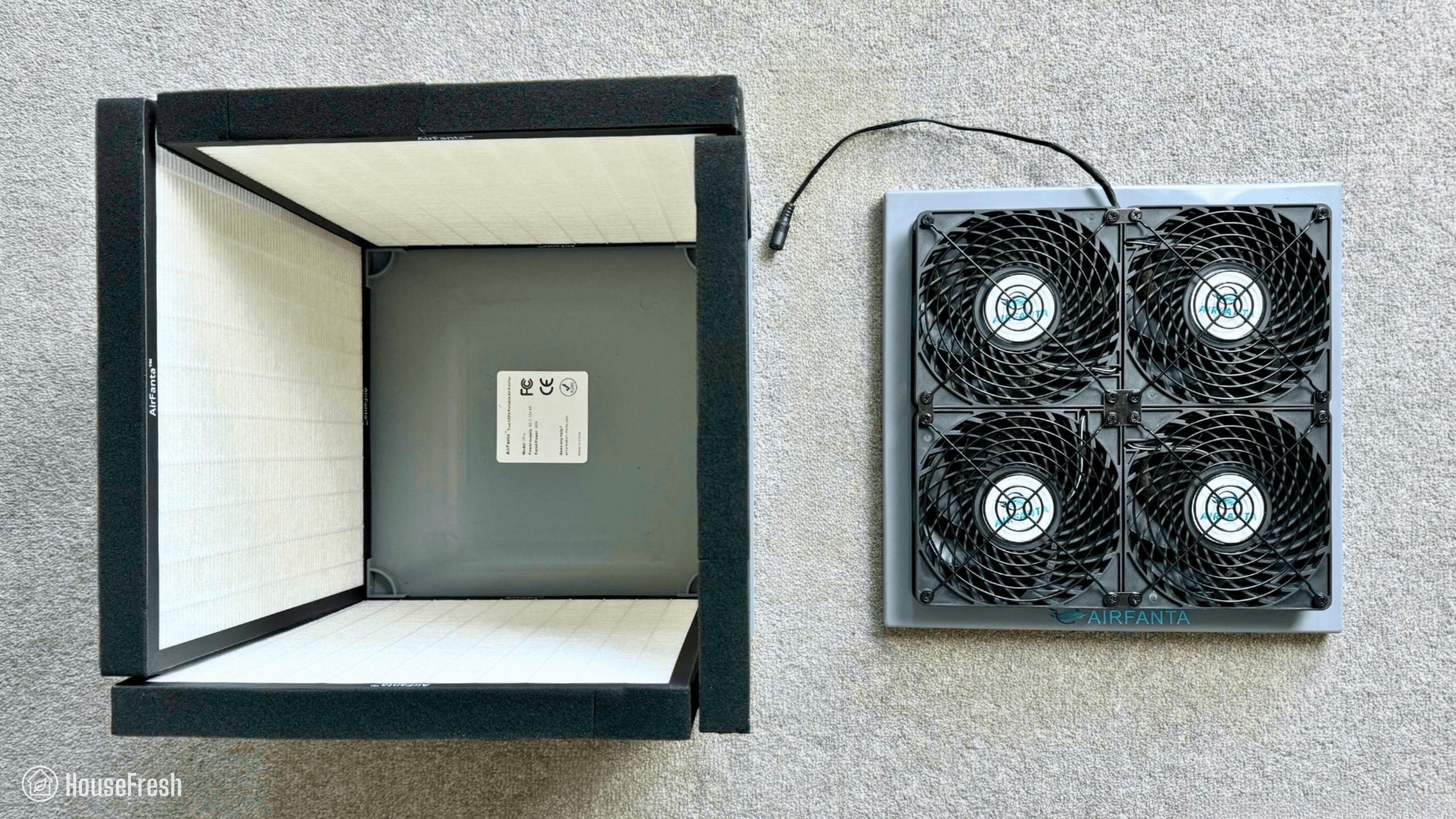
It is much bulkier than the AirFanta 3Pro, which has a higher CADR (430) and costs half the price. 

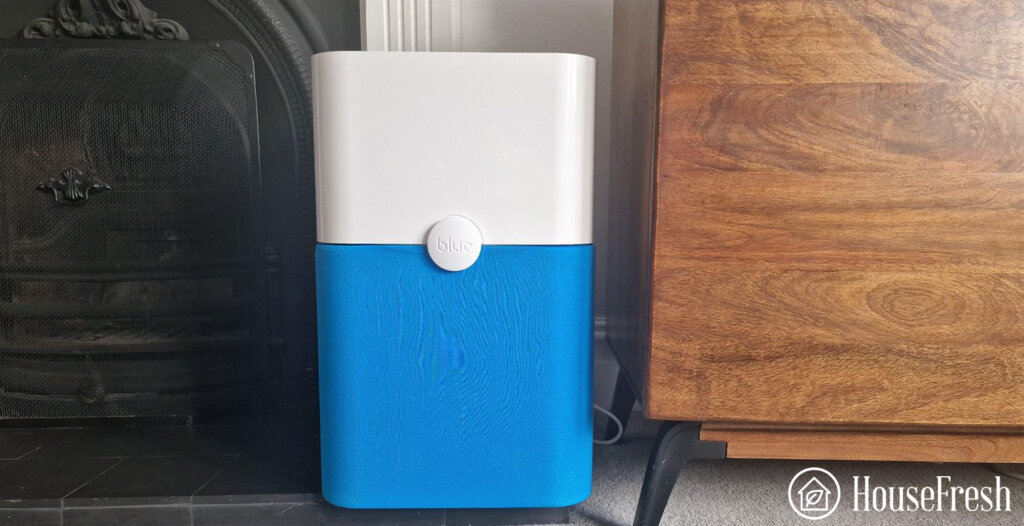
Blueair Blue Pure 211 plus Close up

The filter sits underneath the top half of the 211+ and is covered by a fabric pre-filter that comes in 5 color options to match your decor. 

The controls for the Blue Pure 211+ couldn’t be simpler. There is one large circle button at the front that you can tap to move across three fan speeds and the on/off switch.

This makes the 211+ super easy to use right out of the box, but you don’t get any extra features like child lock, timers, disabling the ionizer, or any of the other buttons we see on other air purifiers as standard. As an older model, it also doesn’t have any app support.


One annoying aspect of the 211+’s design is that when you pick it up to move it, the bottom half may or may not detach from the fan and fall to the ground. This doesn’t happen every time but it definitely has gotten worse over the years for my device, after each time I replace the filter.

Which brings me to the filter.

Tip

If, like me, you simply can’t live without smart mod-cons, it’s worth checking the 211+ Auto or 211i Max.

A particle filter with a layer of carbon that is supercharged with bipolar ionization

The 211+ uses Blueair’s trademarked HEPASilent filters to remove microscopic particles without noise.

Blueair Blue Pure 211 plus Filters

The filter in the 211+ consists of four layers of filtration:

First, you get the pre-filter which is made out of fabric and comes in different colors. 

As with any pre-filter, you will need to keep it clean by vacuuming it regularly. Blueair has made it easy to remove it for cases when it needs a deeper clean, so you can wash it in a washing machine using cold water.

Then, you get an ultra-thin polypropylene filter, which is the main particle filter. 

As shown by the new generation of PC fan kits that use MERV 13 filters, lower-grade particle filters are not a bad thing for air purifiers, as air will pass multiple times through the filters and the higher airflow helps to improve the speed of cleaning.

Blueair Blue Pure 211 plus No filter

Going deeper, you get a carbon filter for odors and gases.

Unfortunately, this is just a layer of carbon-impregnated fabric, so it will be less effective for VOCs and bad odors compared to the pelleted activated carbon we see in other models of air purifiers. 

Tip

Looking for more protection from VOCs? Supercharge the carbon quantity in your filter by upgrading to the SmokeBlock filter.

Lastly, you get Blueair’s trademarked HEPASilent technology.

According to Blueair, its HEPASilent technology “electrically charges particles that are drawn into the device, causing them to adhere to the particle filter, where viruses and bacteria are inactivated.” The marketing materials also state that “HEPASilent filtration can deliver up to 45% more clean air faster than HEPA H13.”

What Blueair is describing sounds a lot like ionization.

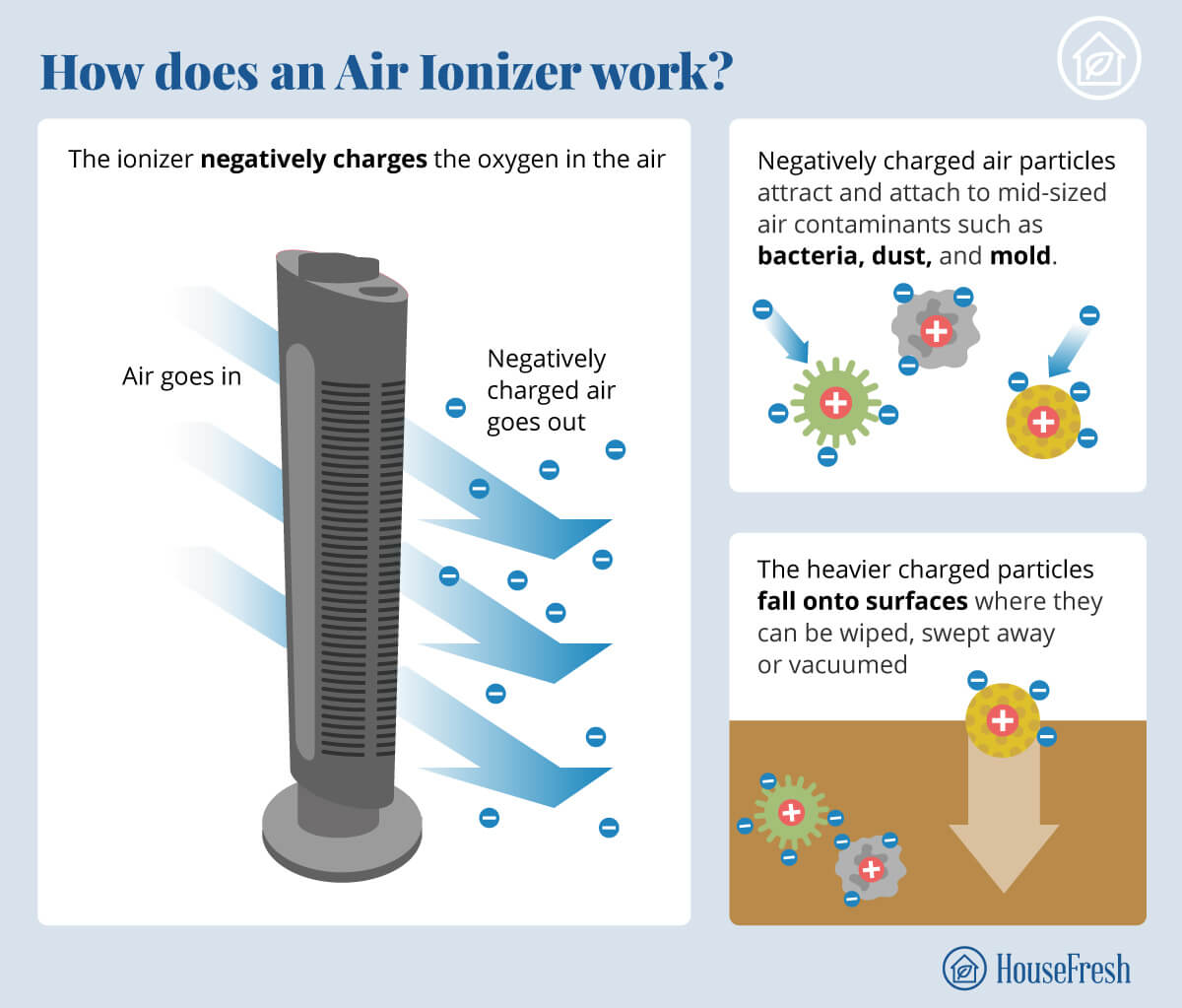
Air ionizers emit electrostatic discharges into the air that alter the particles’ structure, making them heavier and forcing them to drop onto surfaces or within the device itself so they can be cleaned.

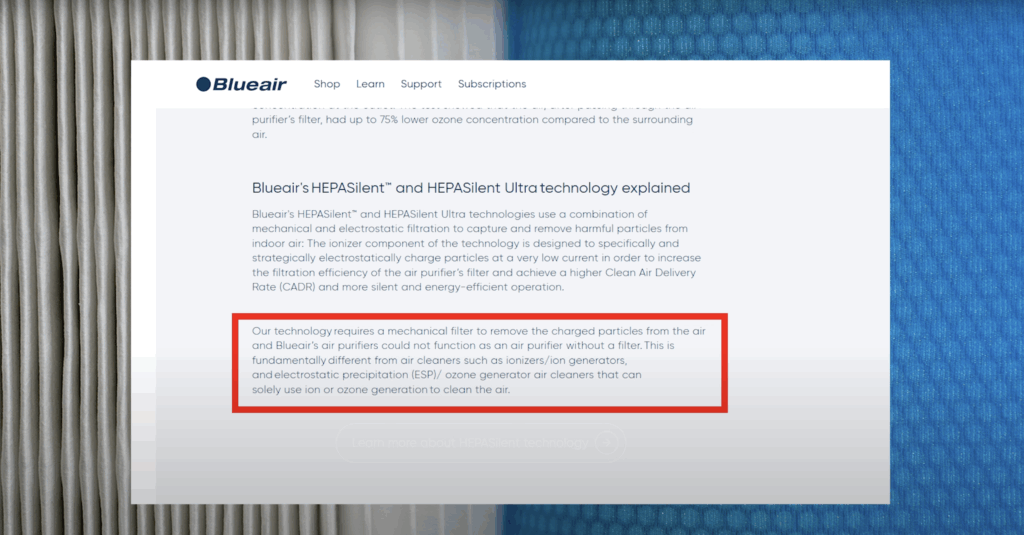
However, Blueair’s marketing materials do not mention ionization. Instead, they mention “electrostatic filtration.” 

This makes sense as ionizers don’t have a great reputation because they can produce potentially dangerous by-products, including ozone, aldehydes, and fine particles, which can negatively affect the health of those with respiratory conditions.

It is worth mentioning here that Blueair air purifiers sold in the U.S. are CARB-certified, which means that their ozone emissions have been tested and proven not to surpass 50 parts per billion (ppb). They are also certified by Intertek as ozone-free…

After digging deep into their website, I found a page where they clearly explain the difference between ionizers and HEPASilent technology:

hepasilent blueair

Blueair states that HEPASilent technology can’t be associated with ionizers because their devices combine electrostatic filtration with mechanical filtration. 

It’s important to note that the ionizer feature cannot be turned off on this device. Many people wrongly assume it will generate ozone, but a third-party lab test by Intertek provides a certificate for zero ozone (≤ 0.005 ppm).

In terms of the filter itself, it is straightforward to install; simply twist the body of the purifier and slot it inside with the carbon filter facing upwards.  Here’s a video on how to do it.

Tip

As with all new filters, remember to remove the filters from the plastic wrapper before turning on the air purifier.

The Blue Pure 211+ cleared our test room in 20 minutes

Blueair Blue Pure 211 look

We first tested the Blueair 211+ back in 2022 using our PurpleAir Indoor sensor, so before I started working on this video review, I re-tested the 211+ using our new PurpleAir Zen sensor:

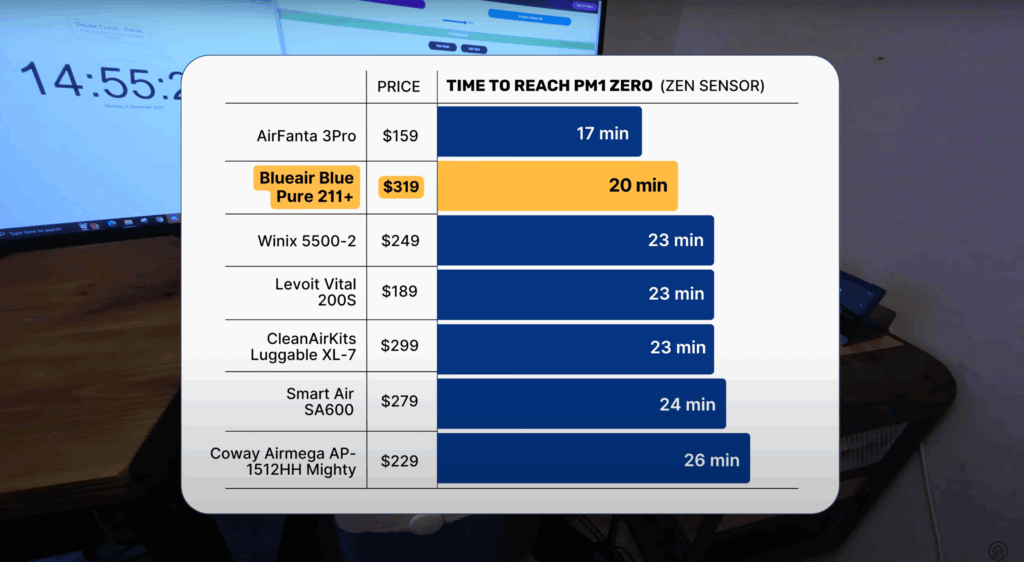
According to our Zen sensor, the 211+ needed 20 minutes to achieve PM1 zero in our 728 cubic ft. test room:

We can compare this to other similarly-priced devices running at their top speed:

blueair 211 performance housefresh

Considering this air purifier was released in 2016, the results at top speed are impressive. 

As I mentioned above, the Blueair Blue Pure 211+ comes with electrostatic filtration through their HEPASilent technology but (unlike manufacturers such as Winix, Alen and Coway) Blueair doesn’t allow you to turn off the HEPASilent in the 211+.

Smart Air has long stated that “adding an ionizer is an extremely cheap way for an air purifier company to increase its purifier’s CADR,” so I was intrigued to see how much of an effect Blueair’s HEPASilent has on the 211+’s performance.

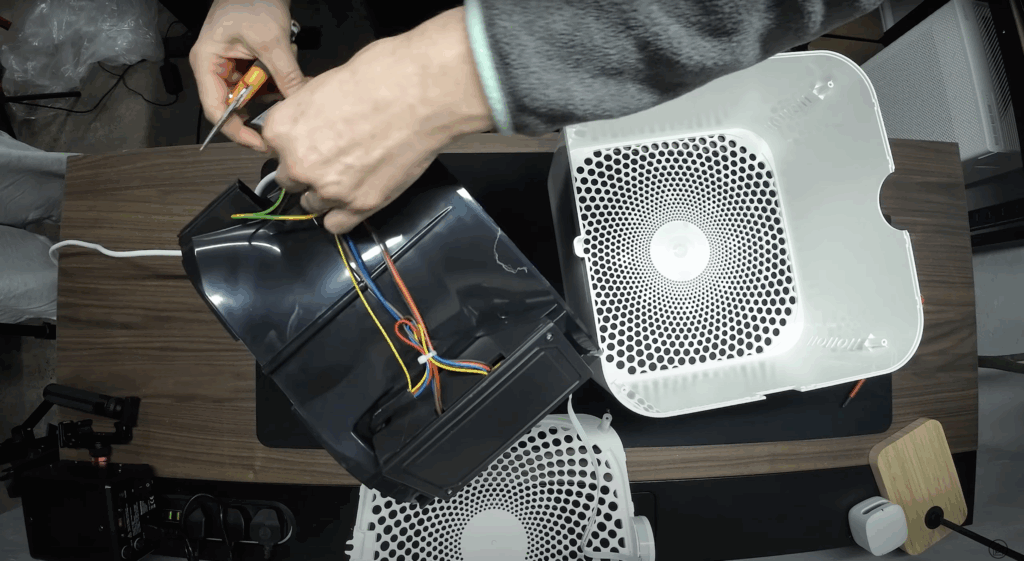
After much deliberation, I made the drastic decision to remove the ionizer:

blueair remove ionizer

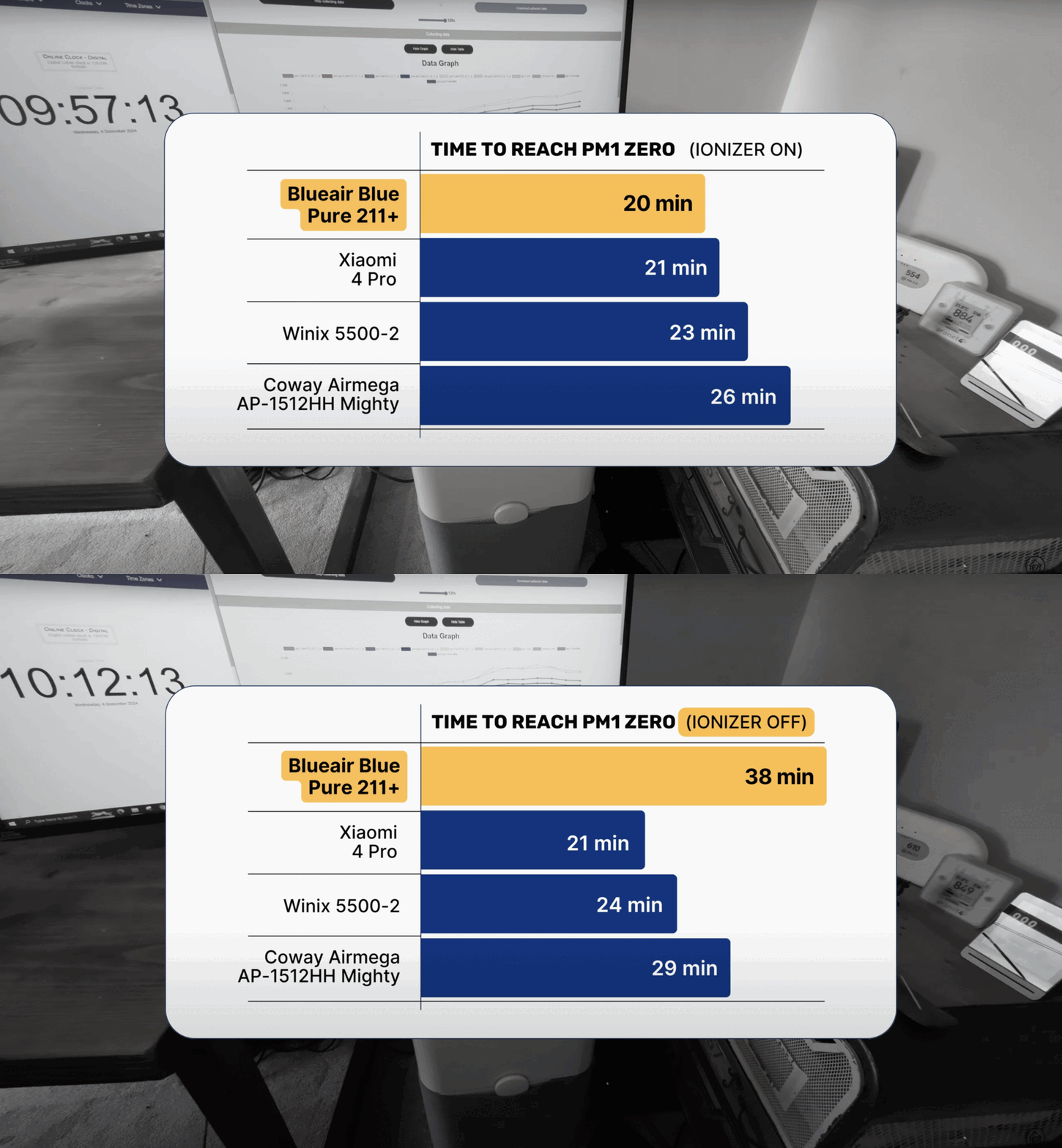
With HEPASilent enabled, the Blue Pure 211+ completed our air cleaning test in 20 minutes. Without HEPASilent, the same test took a whooping 38 minutes.

Before running the test, I assumed that HEPASilent would boost air cleaning performance a little, helping the 211+ complete our particle removal test just a few minutes faster than without HEPASilent as this is what we usually see with other air purifiers when we disable their ionizers.

blueair 211 ionizer on off

However, as the table above shows, removing the ionizer in the 211+ had a much bigger impact on air cleaning performance compared to other air purifiers.

In fact, our test shows that removing the ionizer in this Blueair device led to a 62% drop in performance.

So if you were considering removing the ionizer inside your Blue Pure 211+, keep in mind that you will significantly reduce its air cleaning performance.

I believe this explains why Blueair doesn’t include an option to disable HEPASilent in the same way other manufacturers do.

Incredibly quiet considering its size

In our testing, the sound levels of the 211+ ranged from 37.2 dBA to 55.7 dBA

If an air purifier is too loud, you will find yourself turning it off eventually.

That is why we always measure how much sound they generate from 3 ft. away. 

These are the results for the 211+:

blueair 211 sound levels

Be aware our background noise is 35 dBA, so the 211+ running at speed 1 is likely to generate less sound if you could measure it in a silent room.

But feel free to have a listen for yourself:

As these figures won’t tell you much in isolation, I made a comparison with other devices that have similar performance:

Blueair 211 sound compare

The 211+ is quieter than most when compared to other similarly powered HEPA retail devices. However, it is out-matched when we compare it to PC fan-powered devices like the Luggable XL-7 from CleanAirKits. 

One of the benefits of a high-CADR air purifier is that you can use it on a lower fan speed and still achieve a good level of air cleaning performance.

So we retested the particle removal performance of the 211+ when running at its lowest fan speeds.

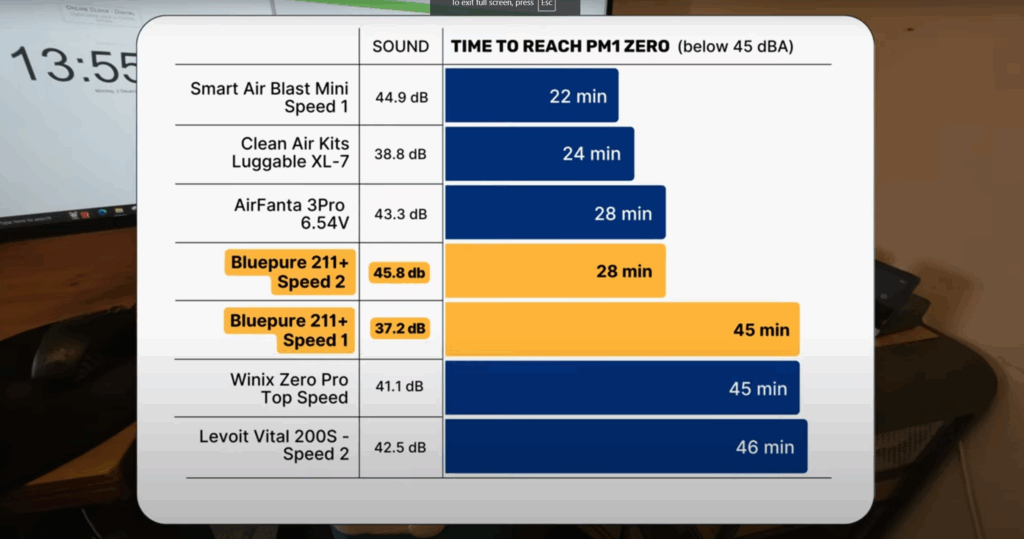
Running at speed 2 it generates 45.8 dBA, which is just above the 45 dBA limit that CleanAirStars recommends for noisy classrooms or offices. it managed to reach PM1 zero in 28 minute

When running at speed 1, it generates 37.2 dBA, which is below the 40 dBA recommended for quiet classrooms and offices. At speed 1, the 211+ reached PM1 zero in 45 minutes.

We can compare these results with other air purifiers running at sub-45dBA:

Blueair 211 performance test sub 45dbA compare

Running at lower fan speeds, the Blue Pure 211+ performs well when benchmarked against other similarly powered devices we have tested at low speeds. This is likely to be thanks to its HEPASilent technology.

However, concerning performance at low sound levels, the 211+ is still no match to PC fan-powered air purifiers like the AirFanta 3Pro or the CleanAirKits Luggable XL-7.

Let’s look at how much the 211+ will cost you in the long term, starting with your energy bill.

The cost to run a Blueair Blue Pure 211+: $197.27 per year

1. Electricity costs = $57.29 per year

As always, we used our energy meter to record the 211+’s energy use when running at each fan speed and also while on standby.

I also measured how much power was used once I removed the ionizer.

blueair 211 energy consumption

If you had to leave your Blueair 211+ running 24/7, it would cost $57.29 per year in energy costs.

With this calculation in mind, we can compare the annual energy costs you can expect from the Blueair 211+ to other devices we have tested:

blueair 211 energy consumption costs

Energy usage compared to performance is very fair with the Blue Pure 211+, which must be due to the combination of a lower-grade particle filter and electrostatic filtration.  

2. Filter costs = $139.98 per year

It’s not just energy costs that add to the running cost of an air purifier and you will also need to replace the filters eventually. 

Blueair says you need to replace the filters for the Blue Pure 211+ every 6 months. The recommended OEM filters cost $69.99 for the standard filters, but they do offer options with extras that go up to $89.99.

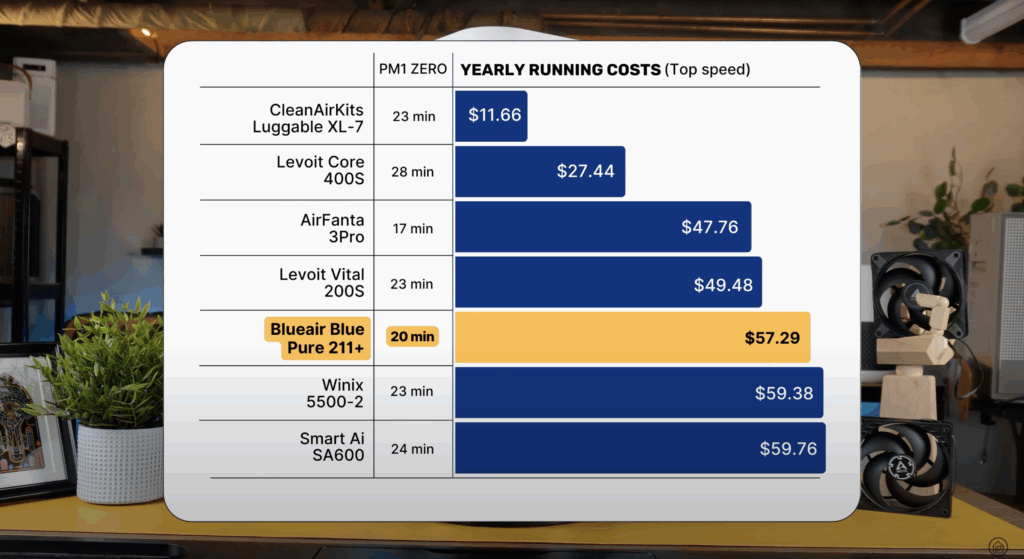
This means the total filter costs for one year for the Blue Pure 211+ is $139.98; We can combine that with energy costs and compare with other similar performing air purifiers:

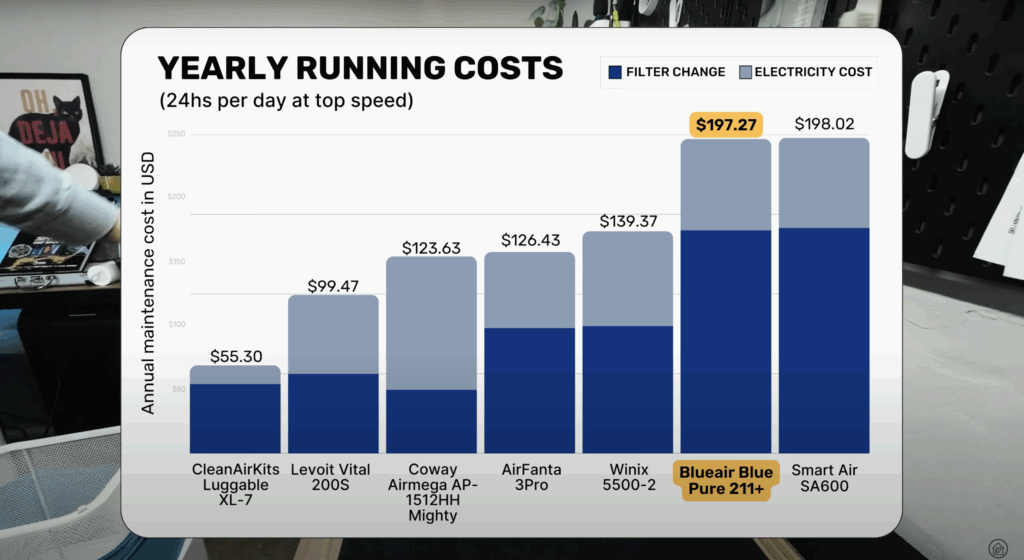
blueair 211 yearly running costs

The Blue Pure 211+ is this group’s second most expensive air purifier, costing over three times more than the Luggable XL-7 and nearly twice as much as the Vital 200S. 

This is likely due to the lower filter life, as the filter needs replacing every 6 months, compared to 12 months for the Levoit Vital 200S.

Bottom line: Is the Blueair Blue Pure 211+ worth it?

Its combination of a lower-grade filter and ionization function provides good air cleaning power at lower fan speeds.

Blueair Blue Pure 211 Front Room

When I first reviewed the Blue Pure 211+ in 2022, I was blown away by its performance because it was a relatively cheap air purifier, yet it could effectively clean the air. 

As our new data shows, even when running at speed 2, the 211+ has an estimated CADR of around 230 cfm, and at speed 1 you will get the same performance as the Levoit Core 300 running at top speed (140 cfm). 

Blueair Blue Pure 211 plus Living Room logo

So why did Blueair air purifiers never make it to my list of the best air purifiers?

Well, the Blueair Blue Pure range uses an ionizer process to help clean the air, which is also found in devices from Coway, Winix and Alen. 

However and unlike Coway, Winix and Alen, with the Blueair 211+, the user has no way of switching off this function. 

To be clear, I don’t believe that the Blue Pure 211+ creates large amounts of ozone. I was unable to detect any with my ozone detector after leaving it running and it also has a certificate from Intertek to state it creates less than 0.005pm of ozone.

If you do have one, the performance is good as long as you have no issue with the ionizer, and know it can be very effective even when running on lower quiet fan speeds.  

SOURCES

We calculated yearly costs associated with running the Blueair Blue Pure 211+ 24 hours a day, 365 days per year, utilizing the Appliance Energy Calculator developed by the U.S. Department of Energy as of March 2025.

Dyson HP04 Pure Hot + Cool Review

Dyson HP04 Pure Hot Cool Fire Place

Dyson was started in 1991 by James Dyson in the UK who originally brought the cyclonic vacuum technology or bagless vacuum cleaner to the mainstream. I personally have the Dyson Outsize Absolute and we are super happy with it.  

Since then, Dyson has released several products, including the Dyson bladeless fan in 2009 and then their first air purifier in 2015. Air purifiers are just fans connected to filters. Hence, with indoor pollution becoming more and more of an issue around the world it makes total sense that Dyson would make the move into air purifier manufacturing.

This particular model that I am reviewing is the Dyson HP04 Hot + Cool, which is priced at $690*, not cheap when you compare it with other air purifiers on the market. But then again, no other devices offer fan cooling and heating. 

In general, the technological improvements in the air purifier world relate to the filter types. Still, Dyson is bringing something very new with its bladeless fan, and I’m excited to see how this unit compares with other air purifiers.

As with all the air purifiers we review here at HouseFresh, we bought the Dyson HP04 Pure Hot + Cool with our own money to ensure we can share our unbiased opinion. We also performed a series of tests on this unit that allow us to compare it like for like against all the other air purifiers we have reviewed over the years.

how we test
How we test air purifiers

Read our full testing methodology.

Right, let’s get into it.


The lowdown on the Dyson HP04 Pure Hot + Cool

Danny Ashton HouseFresh
“Unless you really need a combo unit with a fan, heater, and air purifier, then we would suggest passing on the Dyson HP04 as the air cleaning performance doesn’t match the large price tag.”
— Danny Ashton, HouseFresh Founder & Senior Writer
Dyson HP04 Pure Hot Cool Fire Place

PRICE on amazon PRICE on DYSON
PRice on SYlvANE

Let’s get down to the nitty-gritty. Here are the key points we found when reviewing the Dyson HP04. 

What we really like

The design of the unit and app is excellent
The fan mode is great, and I can see myself using this a lot as the temperature increases
Auto mode works well and detects pollutants as quickly as my air quality sensor
Dyson has good after-service support, based on my existing Dyson gadgets
The ability to rotate and move air up to 350 degrees around the room

What we think could be better

The price is very high for a unit with this level of air-cleaning performance
Genuine filters cost a lot for a fairly small surface area.
Dyson is not as transparent about their own performance data in their marketing aimed at English-speaking countries

The specifications

At $745, the Dyson HP04 doesn’t come cheap. For around this price, you could look to buy the Alen BreathSmart 75i with a CADR rating of 347 ($636.65) or the Mila Air Purifier with a CADR score of 263 CFM ($408). As the Dyson only scores a lowly 89 CFM, it’s fair to say that on paper, it doesn’t cut the mustard. But let’s see how it got on in our real-world review. 

HouseFresh rating:★★★☆☆
Time to clean our 728 cubic feet test room (with the device running at top speed):1 hour and 24 minutes
Air purifier technology:HEPA and activated carbon filter
Recommended room size (estimated by HouseFresh to achieve 4.8 air changes per hour):139 sq. ft. 
Clean air delivery rate (CADR):Estimated: 89 CFM
Dimensions (in inches / in cm):30.1H x 8.1W x 5.1D inches (76.5H x 20.7W x 13D cm)
Weight (in pounds / in kg):12.36 lbs (5.6 kg)
Filter life:12 months
Noise level in decibels (measured from 3 ft. away with a sound level meter):Speed 1: 37.2 dB
Speed 2: 43.5 dB
Speed 3: 49.1 dB
Speed 4: 54.6 dB
Electricity consumption in watts (recorded with an electricity usage monitor):Standby mode: 0.5 watts
Speed 1: 4.6 watts
Speed 2: 9.1 watts
Speed 3: 16.8 watts
Speed 4: 25.5 watts
Estimated running cost (electricity consumption + official filter replacement):$81.88 per year
Cost per CADR cfm (based on dust CFM as reported by AHAM):$4.59
Manufacturer’s warranty:2 years
Country of manufacture:Malaysia

Futuristic design fit for modern homes

Intuitive controls, high-tech features and smart capabilities

Air purifiers these days can come in all shapes and sizes, but for the most part, they are usually a box-type design that pulls in air from either the front and back or the sides. Dyson is known for their innovative designs, and the HP04 is no different. 

Dyson HP04 Pure Hot Cool Top Close

This has to be one of the best-looking air purifiers I have ever encountered. It would fit perfectly with the interior design of the modern home without taking up too much space as you would find with a box unit like the Coway Airmega 300.

The top half of this air purifier combo is the fan whilst the bottom section is where the filters sit. Simply put, it pulls air from the bottom through the two filters and then blows it out via the air outlets at the top. 

Dyson HP04 Pure Hot Cool Above

The bladeless fan is great for homes with curious kids who like to put their fingers into anything (as mine tend to do) and whilst it’s tall, it doesn’t feel intrusive to the room. 

When comparing the Dyson HP04 to the Smart Air S, you notice the contrast in design styles. Although the Smart Air S is still a cute-looking unit with its own charming features, the HP04 takes on a futuristic aesthetic that challenges the everyday design of household appliances. 

Dyson HP04 Pure Hot Cool Comparison Smart Health S

As we’ve come to expect from Dyson products, the HP04 comes well-packaged in a branded box. There’s still a little too much plastic for my liking, but they’re getting better at reducing their carbon footprint with their packaging. 

If you have used a Dyson before, you’ll know that they provide a great user experience; the same is true of the HP04. 

It has a digital display on the front that tells you the quality of the air in the room and which fan speed it’s currently set to. Using the remote control, you have ten different speeds to use, allowing you to harmonize the unit with the air quality or temperature.

Dyson HP04 Pure Hot Cool Control Panel

In older models, you could only use both functions simultaneously. If you wanted to clean the air, you would also have to put up with the fan cooling/heating the room. With the HP04 you can set the unit to purify the air and not use the fan, which is certainly useful for those living in colder climates. 

The fan can turn at varying degrees from 90 to a maximum of 350 which I would use during the summer to get as much cool air around me as possible. 

Auto mode allows the unit to only come on when it detects pollutants in the air and is a useful feature for those who have occasional issues with air pollutants like rush hour traffic on the adjacent road or dinner-time cooking odors.

The remote comes in its own box with the function of each button printed on it, making it so much easier to learn what each one does without spending time surveying the manual. However, you still do receive a physical manual with the unit. Like a lot of people now, I instantly lose any manual because I know everything I need is online. With a progressive company like Dyson, I expected them to not waste paper.

Dyson HP04 Pure Hot Cool Bottom Close

The remote is pretty small but very functional. You can control each function of the unit including fan speed, heating or cool mode, sleep timer, and the direction you want the air to flow. It even has a magnetic element so it can easily be stored on the top of the air purifier without it falling and being lost. 

The next step is to set up the app which is super simple once you’ve downloaded it from the Android or Apple app store.

Dyson Link App

Not only can you control the unit’s functions, but you can also monitor the air quality of your room, the air quality outside, see your unit’s activity, and get reports on temperature, humidity, and filter life. 

Once it’s set up you get a big tick and the air purifier is ready to work its magic.

Button 1

Small filters leave question marks over purifying capability

A round filter comprised of two separate halves that clip together in place, similar to other Dyson air purifiers

The one thing I was surprised about was the size of the filters. They are a lot smaller than I expected for such a big machine. This probably goes to explain why the CADR scores are so low when compared to other smaller units with bigger filters.

Dyson HP04 Pure Hot Cool Unit Filters

The activated carbon filters are fairly narrow, and I just can’t imagine that this amount of activated charcoal is going to be able to remove much beyond minor odors in small rooms. In comparison, the Austin Air Healthmate Pro comes with 15 lbs of activated carbon – this unit weighs 12.36 lbs in total.

Dyson HP04 Pure Hot Cool Carbon Filter

A lot of new units come with a washable pre-filter. These act as the first line of defense as they are able to stop bigger particles before they hit the HEPA filter. Being washable prolongs the life of the other filters, saving you from having to replace them more often. 

Dyson HP04 Pure Hot Cool HEPA Filter

However, there is no pre-filter here, which is disappointing as you’ll notice decreased performance relatively soon once hair, lint, and fur start to clog up your HEPA.

When it comes to changing the filter, the first thing you need to do with this unit is take off the covers and attach the charcoal filters. There is a big warning sign on the unit so you’re not going to forget. The activated charcoal filters clip in easily and you can see that the seal is airtight thanks to the rubber elements around both filters.

The filters then clip into the unit in two halves. Once you’ve removed the outer panels of the purifier section of the unit, they fit in as two semi-circles that make up the 360-degree air intake. 

The Dyson HP04 cleared our test room in 1 hour and 24 minutes

That’s 14 minutes longer than the Dyson PH03 and more than double the time than the Dyson Cool TP07

To test this unit I used our home office and generated smoke using an incense stick. I used the Purple Air Indoor Sensor to evaluate the change in air quality over time.

I wanted to know how quickly the Dyson HP04 could reduce the amount of PM2.5 and PM10 particles in the air. These tiny particles are the most important to remove as they can get deep into the lungs and cause long-term health issues.

The room was 728 cubic ft. I started the air purifier once 50% of the incense had burned, and my air quality sensor showed 500 PM10 and 500 PM2.5.

Similar to the team at IQAir, but for different reasons, the Dyson team are not big fans of CADR methods.

They argue that their fan air purifier can move more air around the room than standard air purifiers, so they use their own POLAR test. 

Like any test, CADR has its limitations, but I still think it’s a good benchmark to allow consumers to compare units. 

Unlike the US, China has strict rules around air purifiers, so Dyson does reveal the details for the slightly upgraded HP07 unit on their site in China.

image1

A CADR of 151.m3/h equated to 88.9341 CFM for a unit costing $700 is not great, considering you can purchase a unit that is less than $100 that achieves a higher CADR of 140 with the Levoit Core 300.

Air cleaning performance compared

While this unit does have way more features than the Levoit 300 (such as a fan, heating element and a smartphone app), I still expected this unit to perform a lot better than the Levoit 300 during our tests.

Noise levels test results

A concern for many with air purifiers is the amount of sound generated. In our tests, it clocked up to 54.5 dB on its highest setting, which is fairly low when compared to other units. It even matches some SilentHEPA Blueair units, such as the Blue Pure 411.

But I know that sound can be very subjective, so I created a video to show the sound at each speed level from 1-10.

The cost to run a HP04 Pure Hot + Cool: $81.88 per year

1. Electricity costs = $38.89

The running costs of an air purifier are something you should always consider, both in the costs of electricity usage and the required amount of filter replacements. 

This unit has a recorded power consumption of 36-44 watts, but when I tested it using a power meter, I found that on the maximum setting, it only pulled 25.5 watts.

Speed settingWattage used
13.5
23.8
34.6
45.2
56.5
69.1
711.7
816.8
920.2
1025.5

Using the average energy prices as registered by the U.S. Bureau of Labor Statistics, we can see that at its highest setting, this air purifier will cost $38.89 a year if left to run 24/7, which is excellent efficiency for a larger unit. 

When I used the heating element – the power wattage jumped significantly, with an average of 2500 watts which shows how energy-intensive space heaters are, so ensure you are aware of the incurred costs ($3.813 per year) if you’re planning to use the heater feature regularly.

2. Filter costs = $42.99

Replacing filters is another cost that many don’t think about. However, this can get costly, so it’s best to know what you’re committing yourself to. 

The genuine HEPA and activated carbon filters are $65, which is above average for a unit with this level of performance. There are also generic filters available on Amazon for $42.99 which may not perform as well as the original Dyson filters, but it’s good to know that there are cheaper options out there. 

Dyson recommends you replace the filters every 12 months, but based on their size and lack of pre-filter, I would expect this to be more like 6 months. We will keep an eye on this as we use it over the long term and report back on how long they lasted. 

2-Pack TP04 Filter Replacement Compatible with Dyson TP04 / HP04 / DP04 Air Purifier, 360 Combi Glass High-Efficiency Carbon Filter
  • 【Less Cost】 H13 True HEPA filter which fits and works as good as the original but cost by half.
  • 【Breath Clean Air】 Great for pet owners or people sensitive to the air. Our filters are capable of filtering the smoke produced by wildfires, rendering the indoor air pure and delightful.
  • 【Effortless Setup】 Just take the original filter out, and fit the new one in.
  • 【Fit Perfectly】 Compatible with Dyson HP04, TP04 and DP04 Air Purifier and Tower Fan, TP05 and DP05 models. All manufacturers' names and part numbers are used for compatibility information only.
  • 【Long Lasting】 It is recommended to replace filters for every 12 months. All manufacturers' names and part numbers are used for compatibility information only.


Bottom line

If you want an air purifier that works as a fan and a heater, then you don’t have any other options apart from the Dyson HP04. 

I’m a big fan of the innovation that Dyson is bringing to the air purifier market. Still, its air cleaning performance has a long way to go before I would recommend this unit over getting a separate fan and a much cheaper air purifier. 

Dyson HP04 Pure Hot Cool Living Room

I dislike that they don’t make the CADR clear for consumers and hope that they update their marketing material to align with what they have for China.

It’s certainly a great-looking machine, and the auto-mode and app work as well as you would expect for a $700 unit. But, for those looking for the best bang for the buck for cleaning the air – there are far better options. 

If you’re looking for a top-end unit, you’d be much better off going for the superior AlenBreathSmart 75i, the ‘godfather’ IQAir Healthpro Plus, or save yourself some cash and opt for the quickest purifier to undertake our real-world tests the Levoit Core 600S.

SOURCES

We calculated yearly costs associated with running the Dyson HP04 Pure Hot + Cool 24 hours a day, 365 days per year utilizing the latest average energy prices as reported by the Bureau of Labor Statistics of $0.174/kWh as of April 2024.

Rabbit Air MinusA2 review

Rabbit Air MinusA2 Front 1 1

Rabbit Air has gone full-on making this air purifier either blend into your home or be the centerpiece of any room. Boasting a 5-stage BioGS® HEPA filtration system, highly sensitive odor and particle sensors, WiFi compatibility, app control, and cutting-edge Brushless Direct Current (BLDC) motors, this unit covers most bases when it comes to purifying the air in the home.

With one look at the MinusA2, you’ll realize that Rabbit Air is trying to do something different. In a market full of white boxes, the MinusA2 takes air purifier design to the next level with its innovative way of living comfortably with a unit in the home.

Coming in at just over $600, the MinusA2 is aimed at an audience who appreciate the finesse of design and those who love their gadgets with features… lots of features.

Rabbit Air MinusA2 alongside its box

As with all our hands-on reviews here at HouseFresh, we bought this unit with our own money, so we have no biases to give a better review than we would under normal circumstances.

how we test
How we test air purifiers

Read our full testing methodology.

Will this futuristic unit triumph? Or is it style over substance?

The lowdown on the Rabbit Air MinusA2

Danny Ashton HouseFresh
The wall-mountable Rabbit Air MinusA2 may not be the simplest to set up and get your head around, but once you do, you’ll see why it’s worth the price tag.”
— Danny Ashton, HouseFresh Founder & Senior Writer

ed sherbenou
“RabbitAir SPA-780A is a modern, attractive, automatic, ultra quiet, quality air purifier, suitable for living and sleeping areas up to 270 square feet.

MinusA2 SPA-780A could be improved by doubling the weight of the carbon filter.

Rabbit Air has come a long way, in just a few years, achieving a reputation for good customer service and innovative high quality products.”

— Ed Sherbenou, Air-Purifier-Power Founder
Rabbit Air MinusA2 Front 1

PRICE on amazon PRICE on RAbbitAir

What we really like

Its design is modern and customizable, with different design covers that transform the MinusA2 into a functional piece of wall art
You can leave it freestanding or mount it on the wall (and it comes with everything you need for wall mounting)
Rabbit Air offers different filter options for the MinusA2 that cover all cases: Germ Defense, Toxin Absorber, Pet Allergy or Odor Remover
It comes with a 5-year warranty in case of any mishaps, which isn’t a standard
It features an onboard air quality sensor, which allows it to include an Auto mode

What we think could be better

The filter replacement indicator is located on the side of the control panel and is small, so it wouldn’t be hard to miss it
The app needs work: it was incredibly challenging to get it to connect to the wifi and even when it did, it kept randomly disconnecting

The specs

HouseFresh rating:★★★☆☆
Air purifier technology:BioGS HEPA filter with an activated carbon filter
Recommended room size:815 sq. ft.
Clean air delivery rate (CADR):Pollen 200 CFM
Dust 193 CFM
Smoke 180 CFM
Dimensions (in inches / in cm):20H x 21.4W x 7D inches (50.8Hx 54.4W x 17.8D cm)
Weight (in pounds / in kg):19.4 lbs (8.8 kg)
Filter life:12 months
Noise level (low – high):25dB – 51dB
Estimated energy consumption:$64.12 per year
Warranty:5 years
Country of manufacture:South Korea

Customizable look and simple operation

Five different cover designs to personalize your MinusA2

Okay, so I’ve already gone on about the design of the MinusA2, but let’s take a closer look. We opted for the black version over the normal white model because, let’s face it, it looks so much cooler.

The shiny gloss front panel holds a Knight Rider-esque light bar stretching most of the unit. Down the front right-hand side is where the controls live, along with more lights and indicators.

Rabbit Air MinusA2 Close up

But if you’re more into decorative aesthetics, Rabbit Air has you covered, as it offers five different designs to choose from that will transform your air purifier into a functional piece of wall art.

Webp.net gifmaker

A great feature of this unit is its free-standing or wall-mounted ability. You receive all the parts you’ll need for both options without buying any extras. If you choose to have it freestanding, it measures just 19.25 inches in height, which means it won’t be towering over anything, and (size permitting) you could even have it on a desk or table. The MinusA2 has a remote control; super handy when mounting the unit to the wall.

The control panel is clearly labeled and extremely easy to navigate. There are four buttons: Speed (to control fan speeds), Mode (to switch modes + to reset the filter indicator), Mood Light (to turn the light on and off + to turn the Negative Ion Generation on and off) and Power button.

Rabbit Air MinusA2 Control Panel

Here are some notes on the buttons:

  • You must press and hold the Power button for two seconds to turn the unit on or off. 
  • There are five speeds, so pressing the Speed button takes you through Silent > Low > Medium > High > Turbo.
  • The Mode button is a dual control button: pressing it briefly allows you to change between Pollen Mode and Auto Mode. But when you press and hold this button, it will reset the Replace Filters Indicator.
  • The Mood Light button is also a dual control button. When pressing it briefly, it turns the mood light on and off. Pressing it and holding it for three seconds allows you to turn the Negative Ion Generator on and off.

We found that for general use, Auto mode worked better for us. When you set it to Auto, you can forget about it and let it do its job. We noticed the fan speed and air quality sensor changing when cooking and moving around the apartment more than usual. 

A great feature of the Rabbit Air is the light sensor. When testing the unit in the bedroom overnight, we noticed that when you turn the lights out, the A2 will turn its light out so it won’t disturb your sleep. This happens because when the room is dark for three minutes, the MinusA2 goes into Sleep Mode. It’s worth mentioning that Sleep Mode doesn’t override Pollen Mode or the fan speed you have set manually.

Rabbit Air MinusA2 Sensors

Something I like about the MinusA2 is that it comes with an air quality sensor onboard, allowing you to track air quality levels in your home — by the way, this makes the air purifier capable of offering Auto Mode in the first place!

The Air Quality Indicator light indicates the air quality in the room the air purifier is in. Depending on the amount of pollutants in the air, the colors shift from blue (good air quality) to purple to pink to red (bad air quality).

Another thing I like about the onboard air quality sensors is that you can adjust the sensitivity levels. All you need to do is press and hold both the Speed and Mode buttons for three seconds. Afterward, you will see the Air Quality Indicator and Auto Mode Indicator blinking. This means that you can now use the Speed button to set the sensitivity level you prefer: low (Replace Filters), standard (Pollen Mode) and high (Auto Mode). Press and hold the Speed and Mode buttons for three seconds to save the new sensitivity level.

Unfortunately, the RabbitAir app is not great.

You’d think it would be standard practice to have wireless capabilities with air purifiers by now, but it still seems to be an extra feature (I hope this changes soon). The MinusA2 has these capabilities, and Rabbit Air has created its own app for their units. 

Screenshot 2022 02 03 at 10.04.20

You can connect to the MinusA2 from the comfort of your couch or before you get to your house to remotely turn your unit on/off, check the room’s current air quality, change fan speeds, and engage Auto Mode.

The app is probably great… when it’s working. At first, the unit wouldn’t connect to my wifi at all. Eventually, when it did connect, it would work for a while, then disconnect by its own free will.

This continued until I got to the point where I didn’t use it all. I hope Rabbit Air updates the app to improve its UX and functionality as being able to access the air purifier remotely would be extremely useful.

Tip

There is an option to use Alexa if you like shouting commands from across the room.

6-stage filtration system

This is where Rabbit Air stands tall over other brands.

The MinusA2 comes with a large six-stage filter to battle airborne contaminants, which fits snugly in the front of the unit.

Minus A2 6 filter visual

Here’s a breakdown of the six stages:

Stage 1: Pre-filterThe pre-filters main task is to capture larger airborne particles like dust mites, pet hair, and pollen. This filter is hand washable, which means it not only doesn’t have to be replaced with the other filters, but it prolongs its lifespan (if you wash it regularly, of course).
Stage 2: Medium filterYou don’t commonly find a medium filter on a lot of units, so this is a bonus. It’s designed to care for particles larger than 1 micron, like bacteria, mold, and dust particles. Having a medium filter means the HEPA filter doesn’t have to work as hard and should last longer.
Stage 3: BioGS® HEPA filterA HEPA filter has the most critical role in any air purifier: it removes the tiniest particles out of the air to make it clean. Rabbit Air’s BioGS® version traps 99.97% of allergens and particles 0.3 microns in size. Basically, whatever sneaks through stages 1 and 2 will be caught here.
Stage 4: Customized filterThe MinusA2 allows you to tailor the unit to match your needs. Each of the 4 customized filters is engineered to tackle different contaminants. You can choose from Germ Defense, Toxin Absorber, Pet Allergy, or Odor Remover.
Stage 5: Activated carbon filterRabbit Air claim that its filter is more effective than typical Activated Carbon filters. It reduces chemicals and odors in the home, like vape/cigarette smoke, VOCs, and cooking odors by trapping them in its activated carbon layer.
Stage 6: Negative ionsNot strictly a layer of the filter, these invisible molecules released from the unit latch onto contaminants, weighing them down. This makes it easier for the filters to trap these particles.

Something I didn’t like as much is that the (dreaded) filter replacement indicator is located on the side of the control panel and is pretty small, making it easy to miss. This means that you’ll have to keep an eye on it. Rabbit Air states that you should replace the filter every 12 months if you’re operating the unit 24 hours a day. 

Tip

You can prolong the filter life by regularly cleaning the pre-filter and making sure you vacuum and dust more regularly.

Air Cleaning Performance [CADR]

The Rabbit Air SPA-780A was sent for an AHAM CADR test and certified in 2011. You can see the full CADR report at Energystar.gov:

Rabbitair A2 CADR report

Noise levels test results

Noise is a key factor for me. As the fan spins around, collecting all those harmful toxins, it starts to generate noise, and if it’s too loud, it’ll deter me from turning the unit on. 

On Silent mode, you can hear the fan gently hum away, which is great if you have it in the bedroom as it won’t keep you awake. Turbo mode, on the other hand, is where the MinusA2 ramps noise levels up. Unfortunately, it does get quite loud and noticeable even over the TV. It’s no jet engine though!

Here’s a video so you can hear it by yourself:

The full Air-purifier-power.com noise to airflow specification for the Rabbit Air SPA-780A (decibels per cubic foot per minute) is:


Speed 1 – 25.6 dBA @ 58 CFM
Speed 2 – 31.1 dBA @ 80 CFM
Speed 3 – 37.4 dBA @ 112 CFM
Speed 4 – 44.5 dBA @ 159 CFM
Speed 5 – 51.3 dBA @ 218 CFM

Air purifiers are engineered around the motor.

The current state-of-the-art engine is the Brushless Direct Current Motor (BLDC) motor.

These produce no sparks, no ozone, less heat, low noise, low vapor emissions, weaker electromagnetic fields, and last longer than the older designs prevalent in the industry.

With the ionizer on and the fan on low, there are trace ozone emissions, approximately .002 parts per million.

This is very low ozone, comparable to many other air purifiers which may claim “zero” ozone emissions.

Rabbit marketing is up to date with published specifications—many builders hide noise and other emissions behind vague platitudes.

MinusA2 has roughly the same noise emissions as its predecessor, the near-silent 582A.

Cost to run the Rabbit Air MinusA2: $169.12 per year

1. Electricity costs = $64.12 per year

At its minimum fan speed, the Rabbit Air MinusA2 only recorded 7 watts, the same as a compact fluorescent. Compared to competitors, it pulls much less power; the Honeywell HPA300, for example, recorded 30 watts when running at its lowest fan speed. When setting the MinusA2 at its top fan speed, however, the unit pulls 61 watts. If you were to run this air purifier at its top speed non-stop for a full year, it would cost you $64.12 per year.

Over the life of the MinusA2 low power consumption will offset some of the higher purchase price.

2. Filter costs = $105 per year

The filter costs are not cheap, but luckily, you shouldn’t need to replace the filters sooner than 12 months. The good news is that generic replacement filters are easily available online if the official MinusA2 replacement is too expensive for your wallet.

Rabbit Air,Genuine Original Air Purifier Filter - MinusA2 Filter Replacement Kit and HEPA Filter Replacement Compatible with Models SPA-700A and SPA-780A/N (with Toxinn Absorber Customized Air Filter)
Filter-Monster – Odor Reduction Air Filter Replacement Kit - Replacement Compatible with Rabbit Air MinusA2 Air Purifier
Technology
Medium Filter, BioGS HEPA Filter, Customized Filter, Charcoal-Based Activated Carbon Filter
True HEPA filter, medium filter, customized filter and activated carbon filter
More information
Price
$105.00
$62.99
Rabbit Air,Genuine Original Air Purifier Filter - MinusA2 Filter Replacement Kit and HEPA Filter Replacement Compatible with Models SPA-700A and SPA-780A/N (with Toxinn Absorber Customized Air Filter)
Technology
Medium Filter, BioGS HEPA Filter, Customized Filter, Charcoal-Based Activated Carbon Filter
More information
Price
$105.00
Filter-Monster – Odor Reduction Air Filter Replacement Kit - Replacement Compatible with Rabbit Air MinusA2 Air Purifier
Technology
True HEPA filter, medium filter, customized filter and activated carbon filter
More information
Price
$62.99


Bottom line

The Rabbit Air MinusA2 is a hard worker and looks great.

Its six-stage filter system makes light work of airborne pollutants, and you can see it working with its air quality indicator. 

Yes, the app can be a little problematic, and the buttons are small, but it makes up for these issues when cleaning the air in rooms up to 815 sq. ft.

Rabbit Air MinusA2 Front 1 1

The Rabbit Air MinusA2 fits perfectly well into creative spaces, apartments with little floor space (thanks to its mountable nature), and those who want their gadgets with a little more style.

SOURCES

We calculated the monthly energy consumption costs with the help of the Department of Energy’s appliance energy calculator. We calculated the yearly costs associated with running the Rabbit Air MinusA2 24 hours a day for 365 days. We chose to run this calculation utilizing the U.S. average utility rate of $0.12/kWh as of February 13th, 2024.

Updated on Dec 17, 2024: Links to eBay were removed and replaced with Rabbitair.com, and a broken image was replaced.

Alen BreatheSmart 45i review

Alen BreatheSmart 45i Fireplace

Alen is one of the most respected names in the air purifier business. Based out of Austin, Texas, the company has been making top-of-the-range air-cleaning solutions for over 15 years.

In fact, the Alen 350 was one of the first air purifiers I tested over a decade ago and is still a device that stands up to many modern appliances. 

Alen has built on this pedigree to develop powerful purifiers for both commercial and residential settings. Their most popular product line is the BreatheSmart range, which includes the Flex, 45i and 75i

The BreatheSmart 45i is the mid-size model in the BreatheSmart series, sitting between the 35i and 75i.

I picked mine up for £279.99 ($375.67) on eBay in 2023, but it sold on Alen.com and Amazon for around $428 when I published this review.

how we test
How we test air purifiers

Read our full testing methodology.

The lowdown on the Alen BreatheSmart 45i


danny

“So… is the Alen 45i good for you?

Considering only the initial price and top-speed CADR, it’s difficult to argue that the Alen 45i will ever be a top budget pick.

However, the Alen 45i does have some interesting benefits that could make it worth the extra price.

It has the same quiet fan speed performance as some of the best mid-sized air purifiers and fairly low energy usage, which means running costs are also on par with some of the best models out there.”

—Danny Ashton, Founder & Senior Writer

Alen BreatheSmart 45i Front

If you don’t want to watch my full review of the Alen Breathsmart 45i, here are the 4 things I like and the 2 things I don’t

What we really like

Alen makes high-quality units that come with a lifetime warranty (but you need an active filter subscription).
Great air cleaning performance even on quieter fan speeds
Low energy costs compared to similar-performing units, which means low overall running costs
Filter options at purchase (Pure, Fresh, Odor, Smoke)
A less intrusive overall sound, thanks to pink noise output 

What we think could be better

A higher purchase price than models from Levoit, Winix and Coway
The lifetime warranty requires you to use OEM filters or have a subscription

The BreatheSmart 45i currently retails for $419.00. It has a CADR test report on the EnergyStar Website, and the device was certified in 2018.

For this dust CADR score of 207.9 cfm, we would expect it to clean the HouseFresh test room of all PM1 particles in a similar time to the Dyson Big and Quiet BP06, which managed to clean our test room in 30 minutes.

We will also examine its effectiveness at lower fan speeds, as sadly, CADR only tests at top speed.

This device has 0 ppb of ozone, which suggests it uses a low-power ionization process. According to Alen, it releases only 0.001 ppm. In comparison, the background level in the United States is 0.015 and 0.045 ppm. I do appreciate that Alen allows you to disable the ionizer for those who might have a sensitivity. When disabled, it will mean zero ozone, and I appreciate that it’s easy to do via a button on the control panel.

Clean air delivery rate (CADR):– Top speed PM1 CADR: 198 cfm
– Sub-45 dBA PM1 CADR: 123 cfm
– AHAM PM2.5 CADR: 207.9 cfm (dust)
Filter technology:True HEPA H13 filter with activated carbon pellets + Ionizer technology
Recommended room size:297 sq. ft. (5 air changes per hour)
Dimensions:25H x 15W x 8.5D inches (63.5H x 38.1W x 21.6D cm)
Weight:15 lbs (6.80 kg)
Noise level in decibels from 3 ft. away:Speed 1: 36.2 dB
Speed 2: 42.2 dB
Speed 3: 51.1 dB
Speed 4: 56.1 dB
Electricity consumption in watts:Standby: 0.8 watts
Speed 1: 4.4 watts (5.1 w/ionizer)
Speed 2: 9.3 watts (10.1 w/ionizer)
Speed 3: 22.3 watts (22.8 w/ionizer)
Speed 4: 38.5 watts (38.7 w/ionizer)
Filter lifespan:9-12 months
Manufacturer’s warranty:Lifetime (with product registration & active filter subscription)
Country of origin:United States
Country of manufacture:China

The 45i is a serious unit with sophisticated features

Alen has managed to give a white box appliance a sleek style that shows off its quality.

Alen BreatheSmart 45i Fireplace

Before we jump into the design, the Alen 45i was released in November 2019, so it is 6 years old at this point.

The reason I share this historical tidbit is that many air purifiers look mightily similar to the Alen 45i.

Like we have seen with Levoit’s popular models, I believe the Alen 45i has been a big inspiration for other air purifier designers over the years.

It uses a front cover that can be changed to 5 colors/textures for an extra cost. 

Alen BreatheSmart 45i Bedroom


The rectangular design’s benefit is that the filter can be easily accessed. The cover is held shut by magnets.

There is a solid handle underneath the control panel at the back. 

Alen BreatheSmart 45i Control Panel

From left to right, you get an ionizer button,then a  filter light that shows green, yellow and red, and a light button for low, high, and off.

The on/off button is in the middle, and it includes a light that adjusts color depending on the level of air quality detected by the sensor from Blue (low) to Purple (very significant.) This is based on data from the sensor at the side of the device; The onboard sensor is a PMS7003—one of the more accurate laser sensors used in purifiers. It’s the same sensor tech in our lab testing setups.

PupleAir Zen Sensors

Most sensors used for auto-modes in air purifiers are optical sensors, which are much cheaper. The benefit of laser sensors is that they react quickly to particle-level changes and don’t need continual cleaning, as you can see with cheaper optical sensors.

From here, you can cycle through the 45i’s four fan speeds, turn the LED lights on or off, and lock the controls from meddling kids or pets.

Alen BreatheSmart 45i AQI

Depending on your preference, You can switch on or off the unit’s ionizer function. This technology releases positive and negative charges into the air, which causes particles to lump together, making capturing the HEPA filter easier and also helping to slightly reduced VOC’s.

The downside is that this technology can create ozone as a byproduct. Alen states that the 45i emits less than 0.001 PPM, which is less than what is naturally found in the atmosphere, so it shouldn’t cause too much of an issue. However, unlike manufacturers such as Blueair, I’m glad they still gave users the choice to use or not to use.

Those looking for more technical features will be glad to hear that the 45i is compatible with the Alen Air app.

The unit I’m testing here was purchased as a UK version, so it doesn’t have app support. However, if you have an older 45i, you should still be able to use the app even if it wasn’t sold as having app support. Alen installed Wi-Fi functionality in many of the older 45is years before they rolled out the app, so if you do have an older 45i, be sure to try to connect to the new Alen app. 

I plan to when we test the latest Alen 35i later in the year, so I will be sure to update my thoughts on the web version of this review.

For the app, Apple had 2.6 out of 5, and Android had 3.2 out of 5. After reading the reviews, I noticed that there is no standout issue as of mid 2025, but some customers complain that it’s a very simple app. It looks like Alen has been upgrading the app, as it now has historical data from the sensor and the ability to schedule when it comes on and off.

High-quality H13 HEPA filters to tackle tiny particles

Alen offers some of the best filters on the market, with different options to suit different needs.

Alen BreatheSmart 45i Filter

One unique feature of the Alen range of air purifiers is that you can choose your filter when you buy from them directly. 

The Pure uses only a medical-grade HEPA filter and no gas carbon element. For $15 more, you can get the Fresh filter, including 0.66 lbs of pelleted carbon.

Although we’ve seen a few rival manufacturers being called out for improperly advertising H13 filters without actually using them, it’s great to see that Alen has sent theirs to be independently verified by LMS Technologies.

Alen BreatheSmart Flex HEPA Filter

The odor filter, which includes a carbon pellet and a specific catalyst to more effectively neutralize specific gases that cause odors, costs $30. 

For $50, you can choose the VOC/Smoke filters with the most pelletized carbon, which gives you 2.38 lbs of activated carbon.

We can compare these carbon amounts to other air purifier models:

Air Purifier ModelCarbon Amount
Winix 5500-2226g
Levoit Core 400S (Basic Filter)240±10g
Levoit Vital 400S (Smoke Filter)450g
Alen 45i Fresh Filter299g
Alen 45i VOC/Smoke Filter1079g
Dyson Big+Quiet BP06900g

The Alen VOC/Smoke filter has much more carbon than what we generally see from other air purifier brands, with even more than the much larger and pricier Dyson BP06.

Alen BreatheSmart Flex Activated Carbon Filter CloseUp

This filter choice at the point of purchase allows you to customize it to your specific needs.

Another highlight of Alen is that they have a lifetime warranty if you have an active filter subscription or can prove that you only used OEM filters for your device.

The pre-filter used is a black mesh layer connected with Velcro, which Alen recommends keeping in place for cleaning with a vacuum. However, I still prefer having a separate pre-filter that can be removed for cleaning, making life a little easier.

One final thing about Alen and filters is that I have a 2010 Alen model, the Alen A350. I was pleased to see that even though it’s been 15 years, you can still buy new filters directly from Alen! While the A350 is much more energy-hungry than modern devices, it can still clean the air well.

Installing the filter couldn’t be simpler. Open the front panel and slot in the filter with the pre-filter facing you.

Alen BreatheSmart 45i Back Panel

Tip

New filters will be delivered in a plastic wrapper. Be sure to remove this before installing it into your unit.

The Alen BreatheSmart 45i cleared our test room in 30 minutes

The results of our air cleaning performance, noise levels and airflow speed tests.

According to our Zen sensor, the Alen 45i needed 30 minutes to achieve PM1 zero in our 728 cubic ft. test room. We estimate a PM1 CADR of 198 cfm, which matches up well with the AHAM DUST CADR result.

how we test
How we test air purifiers

Read our full testing methodology.

The first test is the air cleaning performance test. We fill our 728 cubic foot office with incense smoke and time how long it takes for the purifier to reduce all levels of PM1.0ug/m3, PM2.5ug/m3 and PM10.0 ug/m3 pollutants to zero, with the help of two PurpleAir air quality sensors: the PurpleAir Touch and the PurpleAir Zen.

It took 30 minutes for the Alen BreatheSmart 45i to clean the air in our test room:

Air cleaning speed test results compared

We can compare this to other similar performing devices running at their top speed:

Time to PM1 ZeroList Price
Levoit Vital 200S23 minutes$189.99
Winix 5500-223 minutes$249.99
IQAir Healthpro Plus28 minutes$999.99
Alen 45i30 minutes$429
Dyson BP0630 minutes$899.99
Core 400S [European]30 minutes$292.79

The table shows that for raw speed at top speed, the Vital 200S and Winix 5500-2 offer more CADR at a lower unit price.

I also made sure to test the Alen 45i without the ionizer, and it also managed to remove all PM1 in 30 minutes. The ionizer function might be helpful for gases and odors, but according to our tests, it doesn’t seem to improve particle removal performance.

Noise levels test results

Of course, performance means nothing if it’s too loud to use. Here’s how the 45i stacks up in our noise tests.

If an air purifier is too loud, you will turn it off eventually.

Image 28 04 2024 at 11.40

When recording the decibel levels created by the 45i from 3ft away, we got the following results:

This compares well with other devices we have tested:

I also made a comparison with other devices that have similar performance:

Time to PM1 ZeroSound level at top speed
Levoit Vital 200S23 minutes57.7 dBA
Winix 5500-223 minutes58.9 dBA
IQAir Healthpro Plus28 minutes61.2 dBA
Core 400S [European]30 minutes55.9 dBA
Alen 45i30 minutes56.1 dBA
Dyson BP0630 minutes51.4 dBA

The Alen 45i is the fourth quietest on our list, but it is still 5 decibels higher than the Dyson BP06.

At speed two it hits 42.2dBA, which is below the 45dBA limit we use for our quiet test, and when we tested it again in our test room, is cleared all PM1 in 48 minutes, which we estimate a CADR of 123 cfm

We can compare these results with other air purifiers running at sub-45dBA:

Time to PM1 ZeroSound level at top speed
CleanAirKits Luggable XL23 minutes38.8 dBA
Winix 5500-2 [speed 2]43 minutes41.5 dBA
Levoit Vital 200S [Speed 2] 46 minutes41.9 dBA
Dyson BP06 [Speed 1]46 minutes40.4 dBA
Alen 45i [Speed 2]48 minutes42.2 dBA 
Core 400S [European]50 minutes44.4 dBA
IQAir Healthpro Plus [Speed 3]68 minutes40.9 dBA

When accounting for lower sound usage, the Alen 45i is on par with the best-performing midsize air purifiers.

But as with many HEPA retail devices, it just can’t compete at low sound levels with devices like the Luggable XL, which use PC fans.

I also tested PM removal performance for the Alen 45i at Speed 3.

At Speed 3 it hit 51.1 dBA and cleaned our test room of PM1 in 36 minutes with an estimated PM1 CADR of 165 cfm.

You can see the results for all the different fan speeds here: 

Sound levels at 3ft awayTime to PM1 zeroHouseFresh CADR estimate
Alen 45i Speed 136.2 dBA144 minutes38 cfm
Alen 45i Speed 242.2 dBA48 minutes122 cfm
Alen 45i Speed 351.1 dBA36 minutes165 cfm
Alen 45i Speed 456.1 dBA30 minutes198 cfm

Alen claims it uses ‘pink noise,’ which should sound smoother than regular white noise, especially when sleeping. But does it really sound better? I used a calibrated mic and audio analyzer to find out.”

Screenshot 2025 05 05 at 15.26.11

Using the spectrometer, I wasn’t able to differentiate between the other models, but to my ears, the Alen 45i did have a smoother fan sound than the Winix 5500-2, which seemed to oscillate a little at lower fan speeds and top speed.

But have a listen for yourself:

The cost to run an Alen BreatheSmart 45i: $136.64

1. Electricity costs = $43.32 per year

As energy prices soar around the world, it’s never been more important to check how much electricity your new appliance will use. 

Image 28 04 2024 at 11.40 1

We used our energy meter to record how much energy the Alen 45i  uses when running at each fan speed and with and without its ionizer, and also while on standby.

Energy in Watts WITH IONIZEREnergy in Watts without Ionizer
Standby0.8 watts0.8 watts
15.1 watts4.4 watts
210.1  watts9.3 watts
22.8 watts22.3 watts
4 Top Speed38.7 watts38.5 watts

This compares well with other devices with similar air cleaning power levels, especially when looking at the amount of energy used.

Time to PM1 ZeroYearly energy usage at top speed
CleanAirKits Luggable XL23 minutes$11.66
Levoit Vital 200S23 minutes$49.48
Winix 5500-223 minutes$59.38
IQAir Healthpro Plus28 minutes$152.83
Alen 45i30 minutes$43.32
Core 400S [European]30 minutes$44.03
Dyson BP0630 minutes$36.66

2. Filter costs = $93.32 per year

Energy costs are not the only costs that add to an air purifier’s running cost; eventually, you will need to replace the filters.

Alen says you need to replace the filters for the 45i between 9 and 12 months, and as always, we will use the lowest estimate.

The recommended OEM Pure Filters cost: $69.99

This means the total filter costs for 1 year for the Alen 45i are $93.32

We can combine that with energy costs and compare it with other similar performing air purifiers:

Annual Energy Cost Annual Filter CostTotal Annual Running Cost
CleanAirKits Luggable XL-7$11.66$43.64$55.30
Levoit Vital 200S$49.48$49.99$99.47
Alen 45i$43.32$93.32$136.64
Coway Airmega 200M$85.56$39.98$125.54
Winix 5500-2$59.38$79.99$139.37
Levoit Core 400S [Europe]$43.32$99.98$144.01
Dyson BP06$36.66$157.98$194.64
IQAir Healthpro Plus$152.83$244.53$397.36

With OEM filters, the Alen is more affordable than the Dyson BP06, IQAir Healthpro Plus, and Winix 5500-2. However, it is more expensive than the Levoit Vital 200S, Coway Airmega 200M, and, as expected, the Luggable XL-2 from Clean Air Kits.

Be aware that these costs are based on the standard Pure filter that contains no carbon. I expect this particle-only filter to last at least 12 months in the average home environment.

Generic filters are available, and we had a chance to test the Pureburg version of the B4-Fresh, which does contain some carbon and paid £29.30 or ($39) for one filter and 4 pre-filters.

When testing top speed performance with the Pureburg filters, it took 40 minutes to achieve PM1 Zero. We know that using carbon with a particle filter will reduce the top speed CADR, but we don’t know the total amount of carbon that Pureburg uses in this filter.

For most people, I recommend sticking with the OEM filters as Alen backs them, and it will also mean you keep the lifetime warranty. If you can, I would choose the subscription for 1 filter every 12 months, as you will also save 10% compared to buying when you need them.

So… is the Alen 45i good for you?

Considering only the initial price and top-speed CADR, it’s difficult to argue that the Alen 45i will ever be a top budget pick.

However, the Alen 45i does have some interesting benefits that could make it worth the extra price.

It has the same quiet fan speed performance as some of the best mid-sized air purifiers and fairly low energy usage, which means running costs are also on par with some of the best models.

The noise itself is also worth talking about.

Alen BreatheSmart 45i Bedroom

Many good-performing devices sometimes have strange whirring, especially when running on lower sound levels.

To my hearing, the Alen 45i has a more stable fan speed, which might be preferable to some people.

Another big plus for Alen is that they have been manufacturing air purifiers for over 20 years and are still providing filter support for their older models today. A big worry is that you buy a great-performing device that loses filter support in just a few years, and I don’t have this worry with Alen.

Their lifetime warranty is also unique, but be aware that you must register and then use OEM filters via the subscription, or be able to prove that you have only used Alen filters on your device.

If you are looking for a more premium model and care about the type of sound produced, then the Alen 45i is well worth your consideration for rooms up to 300 square feet. Those with bigger spaces will need to upgrade to the Alen Breathsmart 75i with its dust CADR 351 cfm and I am looking to review the latest 75i very soon.

SOURCES

We calculated yearly costs associated with running Alen BreatheSmart 45i for 24 hours a day for 365 days. We ran this calculation utilizing the U.S. average utility rate of $0.1268/kWh as of May 5th, 2025

How much electricity does an air purifier use?

enery meter

When you buy an air purifier, it’s not only the initial price of the unit you need to keep in mind. They come with additional running costs that can add up if you choose the wrong air purifier for your space.

That’s why it’s crucial you research how much energy an air purifier needs before you purchase.

In this post, I’ll examine the factors that affect an air purifier’s energy consumption and teach you how to optimize its energy usage.

electricity consumption test air purifiers

First, let’s look at the data collected from the air purifiers we purchased and tested for our HouseFresh product reviews.

As well as testing each air purifier’s cleaning performance, features, and sound levels, we use an energy meter to measure precisely how much electricity a unit uses at its lowest and highest fan speeds.

With all this data, we’ve calculated that the average electricity pull of the 60 air purifiers we tested on their highest fan speed is 57.69 watts.

The most energy-efficient unit we’ve tested so far is the Nukit Tempest. This DIY air purifier uses six PC cooling fans to pull air through two MERV 13 filters and when running at its top (and only) speed, it only consumes 8.8 watts!

Factors that affect an air purifier’s energy consumption

Specific factors determine how much energy an air purifier uses to remove contaminants from your home effectively. If you’re not using your air purifier correctly, it’ll use more energy than it needs and cost more to run.

1. Size matters

Air purifiers are designed to work in specific-sized spaces. Brands will generally use this specification as a selling point and market it. This specification is determined by measuring an air purifier’s cleaning performance, AKA Clean Air Delivery Rate (CADR).

The general rule is the higher the CADR, the more powerful the unit. However, not all rooms need an air purifier with a high CADR.

Larger units use more power, so introducing an air purifier that’s too big for your room will waste energy and cost you more to run than a unit suited to your space. On the other hand, running an air purifier that’s too small for your room means it won’t be able to clean your environment as intended.

HouseFresh Air Purifiers Reviews

In order to determine the performance of an air purifier, they’re tested to measure their clean air delivery rate. This standard measurement shows how much air a unit can clean over a period of time. The results are displayed in CFM (Cubic Feet per Minute).

If you want to know more about CADR, check out our in-depth post, “What is CADR rating?” where we go through everything you need to know about the metric in-depth.

Tip

You can use our CADR calculator to find out what type of air purifier you should be looking for depending on the size of the room where you are planning on using it.

2. Energy efficiency

Now you know what size air purifier you need for your room, it’s time to look at how much electricity each unit needs to run. The more electricity an air purifier uses, the more it costs, naturally.

Luckily, we live in an age where energy efficiency is a hot topic, and air purifier manufacturers compete to make their units as energy-efficient as possible. There are also strict criteria set by the U.S. Department of Energy that products need to follow.

If an air purifier passes these criteria, they’re awarded with an Energy Star certification. I highly recommend checking a unit’s Energy Star status before purchasing it so you don’t get stuck with a costly investment.

Levoit 600S Front
Levoit Core 600S Energy Star Certified

Tip

Every certified air purifier is listed on the Energy Star website, where you can check a unit’s specifications and compare them with others.

3. Filter type

To compete in the merciless air purifier market, brands need to be the best. This means engineering the latest advancements in filter technology to remove pollutants from your home.

Air purifiers constantly work to remove airborne contaminants. If the filter isn’t trapping them, the unit has to move more air for multiple passes, which means using more energy to power its fan.

The more effective the filter, the more energy-efficient the air purifier.

When choosing an air purifier for your home, be sure to research what type of filters it uses. I personally advise you find an air purifier that contains HEPA filters, as they’re highly effective at eliminating microscopic pollutants.

How to optimize your air purifier’s energy usage

So, you’ve bought the right-sized, Energy Star-certified, and high-grade HEPA filter air purifier. Woo-hoo! Go you. Now, read these do’s and don’ts to ensure your air purifier isn’t unnecessarily siphoning electricity.

What you should do

Use auto mode if available. Auto mode will adjust your unit’s fan speed to correspond with how many pollutants are in the air.
Replace the filter when instructed. HEPA filters need replacing periodically to ensure they remain effective.
Keep the pre-filter clean. A clean pre-filter will ensure your HEPA can work without hindrance.
Monitor your air quality. Using an air quality monitor will allow you to adjust your unit’s fan speed for maximum efficiency.
Maintain your air purifier. Performing regular maintenance will keep your unit working efficiently.

What you should avoid

Leave your unit on full fan speed all the time. This will use an unnecessary amount of electricity.
Ignore the filter replacement indicator. A dirty filter will cause the unit to use more energy.
Create more indoor pollution. This will make your unit work harder and increase running costs.
Turn your air purifier off. You should run your unit 24/7/365 at a fan speed to match your air quality.
Hide your air purifier. An air purifier can’t work effectively if it’s hidden away.

Replacing a filter is generally a painless task. 

We have step-by-step instructions on our product review pages and have an entire playlist on the HouseFresh YouTube channel dedicated to this process.

Many units have a filter replacement indicator light that will illuminate when your unit needs a new filter (some even have a filter lifespan monitor if your product has an app). As soon as you see this light, buy a new filter and install it as soon as possible.

Wrapping up

Doing a little research into which specifications you need from an air purifier will save you $$$ when that bill comes in.

  • Find an air purifier with a CADR that matches your space
  • Check how much electricity it uses on Energy Star
  • Pick a unit that contains HEPA-type filters
  • Take steps to optimize the energy usage of your air purifier

SOURCES

How clean is the air at your college?

joel danielson k5Y0kpekCyU unsplash

You can get a real brain fog trying to decide what college to attend.

There are so many variables to consider. Does your college have inspiring teachers? Impressive grades? A supportive community?

How about the air quality? You want your brain to be at its best when you study. But studies have linked air pollution with poorer cognitive performance, impaired memory, reduced attention span, anxiety, and depression.

“Polluted air can cause everyone to reduce their level of education by one year, which is huge,” according to Professor Xi Chen, author of a study at Yale School of Public Health. Researchers associate high levels of pollution with oxidative stress, neuroinflammation, and neurodegeneration.

There’s nothing like gulping great breaths of leafy air on your way to class in the morning. So, HouseFresh decided to highlight the college campuses with the best air quality. We used IQ Air’s database to find the Air Quality value (AQI) of the areas around every university in the US. We’ve created an interactive tool so you can compare colleges and ‘top 20’ tables revealing the colleges with the cleanest air in every region.

AQI is the United States Environmental Protection Agency’s tool for measuring air quality, giving a score from 1 (low) to 500 (high). An AQI of 50 or lower is ‘good,’ while an AQI value over 300 indicates ‘hazardous air quality.

Adams State University in Alamosa, Colorado, has the best air quality in America 

Adams State University is the only Colorado university out of America’s 100 most breathable colleges – but it’s right in there at number one. With an AQI of just seven points, the area of Alamosa immediately surrounding the college carries barely a trace of pollution – although asthma rates along the San Luis Valley are higher than average due to natural grit and sand, and possibly worsened by climate change.

01 How Clean is the Air at Your College Top 20 Overall

New York is the most-represented state in the top 20, with five colleges among those with the best air quality in the land. A handful of New York colleges lay just off the table on equal AQI points – we split tied places using the percentage of “good” air quality days in each area. 

Hamilton College in Clinton is the best-ranked New York college, with students reporting that they “often sit outside for meals or in Adirondack chairs scattered around campus doing work.”

Alaska and Washington Colleges have best air in America’s West

A Colorado college takes number one place for air quality in the west (and the whole US), but the top 20 is most populated by Alaska and Washington state universities. Despite concerns that cruise ships are polluting the area, the Juneau campus of University of Alaska Southeast is that state’s most breathable college.

02 How Clean is the Air at Your College Top 20 West 1

Washington’s Columbia Basin College equals Juneau’s AQI score. But Columbia Basin pips Alaska Southeast to second place by virtue of having a fraction of a percent more ‘good’ days. Sadly, the good local air is regularly compromised by the effects of climate change. “I feel like every year during the summer, the air quality becomes bad from wildfire, and the heat makes it worse,” says local fruit-picker Luis Cisneros.

Shawnee State University in Portsmouth has the best air quality in the Midwest

Shawnee State University in Portsmouth, Ohio, takes top spot in the region. Portsmouth is ranked among the cities with the cleanest air in the US. Southern Ohio’s newest public university is well-positioned to breathe in the best of the Ohio and Scioto rivers’ air with minimal effect from the rust belt pollution that troubles the broader area.

03 How Clean is the Air at Your College Top 20 Midwest 1

The air is nice in Bemidji, “amid the lakes and forests of northern Minnesota.” The next top two universities for good air in the Midwest are both found in this Beltrami County town. Pollution is generally low, but smoke from wildfires leads to occasional alerts to stay inside, particularly for asthma sufferers.

Texas Tech University in Lubbock is the Southern City with the best air quality

You might expect Texas Tech University to have good air quality. After all, the school has its own Climate Center specializing in air pollution. Some TTU boffins even think they can teach Alaska a thing or two about “differing effects of woodburning and electrical thermal storage heating.” Others have developed their own mobile air pollution monitoring system – that fits on the back of a bicycle.

04 How Clean is the Air at Your College Top 20 South

Lubbock colleges account for the three most breathable in the south of the US. But a special mention goes out to Bethany College in West Virginia, which ties with the Lubbock colleges on an AQI score of 20. However, Bethany achieves a ‘good’ air rating on just 90.98% of the days when measurements are taken, so it is edged out by the Lubbock trinity, where you can expect good air 93.47% of the time.

Hamilton College in Clinton, New York, is the Northeastern college with the best air

New York state colleges take the top 18 spots for clean air in the northeast of the US. SUNY Polytechnic Institute and Utica College in Oneida County both tie with Hamilton with identical figures for AQI and number of “good” air days (95.7%).

05 How Clean is the Air at Your College Top 20 Northeast

Even the relatively urban Brooklyn makes a mark, with seven schools among the region’s top 20 for best air. As a suburban spot bordering the sprawling metropolis, Brooklyn offers the best of both worlds for students who want to party but also, you know, to breathe. “Living in Brooklyn means more space and sky exposure than what you get in Manhattan,” as one real estate agent explains the recent population boom. “You’re also closer to parks. Basically, it offers the things that have become a priority for people since COVID.”

You don’t need to live in China (or watch Spaceballs) to know that “good air” is a political issue. Across your lifetime, you are most at risk of breathing damaging levels of polluted air if you are Black, Hispanic, or from a low-income family. College is an opportunity to change the pattern – which is why the air quality on-campus should be one more factor to consider when choosing where to study.

Use the interactive table below to find out which colleges enjoy the cleanest air, and which ones have the highest percentage of days when the air is deemed unhealthy according to EPA data:

METHODOLOGY & SOURCES

We used uniRank to compile a list of all US Colleges and their counties. Then we pulled annual county air pollution data from the United States Environmental Protection Agency. We ranked counties by their median annual AQI and removed counties without at least 50 days of AQI sensors. Colleges tied with AQI were split by the % of “good” air quality days in that county.

Blueair Blue Pure 411 review

Blueair Blue Pure 411 Living Room

Founded in Sweden by Bengt Rittri, Blueair has been around for over 20 years. Rittri wanted his children to breathe the same clean Stockholm Archipelago air while they spent time in the city. Thus, faithful to this vision, he started the company, creating simple and efficient air purifiers inspired by nature.

Back in 2016, Blueair became a Unilever brand. According to Rittri, the global company would help expand Bluair’s capability to reach more people in need of simple and affordable solutions for air pollution. The brand obtained a B Corp certification in 2023 with a clear mission of improving air quality in homes, schools and offices worldwide, focusing on children’s right to clean air.

I love the social and environmental commitment of the brand, as well as Rittri’s belief that freedom to breathe is a basic right. But we’re not here for the charms and chimes of brand positioning and marketing. 

When it comes to cleaning power, Blueair mixes simplicity with efficiency and offers an array of models for different space sizes. All units, however, feature the trademark HEPASilent™ Technology that combines electrostatic and mechanical filtration. I’m not a big fan of ionization, but we’ll get into that later.

As for the Blue Pure 411, it’s better suited for small rooms. It’s worth noting, though, that since Blueair became part of the Unilever family, its product range has broadly expanded. The launching of the Pure Max line in 2023 replaced some of the older models, including the Blue Pure 411. 

With such a prolific portfolio, navigating models can be a bit confusing, especially regarding filter replacements. Blue Pure 411, 411 Auto, and 411+ are three separate models but share the same filter; the 411a Max, on the other hand, use different ones. In a core comparison, however, they are not that far apart: the CADR rating, filter mechanism and Blueair’s HEPASilent™ Technology are scarcely different when not the same. As of 2025, Blueair has released a smaller Blue Pure 511i Max ‘s that is cheaper and has a lower CADR.

how we test
How we test air purifiers

Read our full testing methodology.

But if you’re here, you probably want to know more about the Pure 411 and its performance. So, let’s get to it.

The lowdown on the Blueair Pure 411

Innovative concept but has no outstanding cleaning power.

Danny Ashton HouseFresh
“A very efficient device thanks to its HEPASilent™ process that combines an ionizer with a lower-grade filter than HEPA. This means it can clean the air quickly and with a low level of noise generation. The only downside is that you can’t disable the ionizer; something to be aware of if you just want mechanical filtration. A little outdated now with much lower air cleaning performance ratio when compared with the latest budget devices.”
— Danny Ashton, HouseFresh Founder & Senior Writer
Blueair Blue Pure 411 Drawers

PRICE on BlueAIR

We’ll delve into a detailed analysis of the Blue Pure 411, covering design, performance and noise output, among other things. But if you want to know black over white, our take on the pros and cons of the unit, check out the chart below:

What we really like

Made the 2024 Energy Star Most Efficient list, for its low energy consumption.
The washable (and interchangeable) pre-filter is functional and stylish.
Straightforward operation with the one-button control.
It’s lightweight and compact.

What we think could be better

It is not a fast unit, nor does it have a high CADR.
There’s no option to turn off the ionizer.
Not having a protecting grill for the filter makes it somewhat fragile.

The specs

The range of small air purifiers was much more limited when the Blueair Blue Puro 411 was launched. It wasn’t the most budget-friendly air purifier back then, but its CADR was ok (120 CFM) compared to other popular small units, such as the Levoit Core 200S (118 CFM). 

However, the standout point of the Puro 411 was the original design that disrupted the scene with lively colors and scandic aesthetics.
Since the newer Max Pro line became the key product Bluair focuses its communication on, the Puro 411 can now be found at $119 on Amazon — although still more expensive than the reliable Levoit Core 300 or newer and highly efficient units like the Winix A230.

HouseFresh rating:★★★☆☆
Time to clean our 728 cubic feet test room (with the device running at top speed):1 hour and 8 minutes
Air purifier technology:Washable pre-filter, activated carbon filter, HEPASilent™ filter + Ionizer technology
Recommended room size (4.8 air changes per hour):161 sq. ft.
Clean air delivery rate (CADR):Dust: 120 CFM
Smoke: 105 CFM
Pollen: 120 CFM
Dimensions (in inches / in cm):16.7H x 8W x 8D inches (42H x 20W x 20D cm)
Weight (in pounds / in kg):5.3 lbs (2.4 kg)
Filter life:6 months
Noise level in decibels (measured from 3 ft. away with a sound level meter):Speed 1: 36.2 dB
Speed 2: 42.1 dB
Speed 3: 53.1 dB
Electricity consumption in watts (recorded with an electricity usage monitor):Standby mode: 0 watts
Speed 1: 0.9 watts
Speed 2: 2.9 watts
Speed 3: 7.8 watts
Speed 4: 10 watts
Estimated running cost (electricity consumption + official filter replacement):$57.03 per year
Cost per CADR cfm (based on dust CFM as reported by AHAM):$0.49
Manufacturer’s warranty:1 year
Country of manufacture:Designed and engineered in Sweden, assembled in China

Minimalistic build, playful design

A thoughtfully engineered structure with customizable looks, although somewhat on the flimsy side.

Blueair Blue Pure 411 Side Table 1

Blueair was created with children in mind. It only makes sense that the original Blue Pure line is so colorful and lively yet has straightforward controls. I opted for the Diva Blue fabric pre-filter (which brings this iconic Diva to mind), but there are six colors to choose from, ranging from buff yellow to a sober dark gray for those who prefer a more subtle approach.

Blueair Blue Pure 411 vs 411

The top white cylinder houses the fan and ionizer, crowned by an organic-shaped control panel. The lower body accommodates the pre-filter and main filter, which fit neatly into a plastic honeycomb structure. The rounded body allows for an efficient 360 air inlet, while the clean air is then released from the top grill.

Blueair Blue Pure 411 With FIlter

Designed for ergonomic efficiency with the minimum amount of elements, the Pure 411 is both compact and lightweight (5.3 lbs). As the smallest unit of the Blue Pure line, it will easily fit even in tiny rooms, not using up too much space, while it weighs close to nothing to move around. 

Comparison Photo Blueair Blue Pure 211 VS 411 VS 311

However, this also means the structure requires gentle handling as there’s no outer casing or grill to protect the filer when manipulating the unit. Besides, most of the weight is at the top cylinder, so it’s somewhat flimsy and easier to tip over. 

Simplicity peaks with the control panel. There’s only one button on the Blue Pure 411 to switch on and off and cycle through three fan speeds. That’s right, even the young members of the family could operate it. 

Blueair Blue Pure 411 Control panel

Press the big round button once to start the air purifier at the lowest speed; a second and third press will step up the unit to the following fan speeds. One last touch will switch it off. The white LED lights around the button indicating the speed it’s on will dim after seven seconds of no interaction. 

This is one of those nice touches that show how thoughtful Blueair designers are, especially if you’ll be placing the unit in the bedroom. For that matter, however, it would be nice to have a no-lights function.

Although the one-button control is modest and straightforward, the Pure 411 has a built-in memory, so if you unplug the unit, the unit will remember your settings once replugged. Yet, this is the only “smart” feature, as there’s no auto mode, timer or app support. 

Blueair’s trademark HEPASilent™ filtration system

What’s this technology all Blueair purifiers feature? 

In short, HEPASilent™ technology is no more than a HEPA-type filter boosted by an ionizer. It’s a bit misleading, as the filter is not a real HEPA. But many brands coin creative names for their products using keywords we look out for to feel secure about our purchases. With this trademark, brand communications can use the word without the certification required for it to be real HEPA.

Blueair Blue Pure 411 HEPA Filter

Blueair filters are less dense than HEPA. This is not all bad, as a thinner filter media requires less power to create an airflow capable of passing through it. That’s how their units can clean the air with low energy consumption and more silently —hence the HEPASilent™.

But to remove 99.97% of airborne pollutants, this type of filter is not enough. That’s why Blueair combines mechanical (HEPA-type) with electrostatic filtration. An ionizer within the fan’s hood produces an electrostatic discharge, releasing ions that attach to airborne pollutants making them stickier and heavier, thus easier for the unit to capture and filter.

The downside of this technology is that it produces ozone as a byproduct. According to Blueair’s website:

All Blueair air purifiers are CARB certified which means that they are considered safe and do not exceed ozone emission limits.

Not exceeding ozone emission limits isn’t the same as not producing ozone at all. And then, even a slight amount of ozone can react with common gasses found in every home (including fumes from cleaning products) and produce further VOCs such as formaldehyde.  

However this type of combination device is unlikely to introduce any ozone as the particle and carbon filters will help to remove the ozone from the ionizer before it leaves the device. The larger 211 of the Blue Pure series has a certificate showing that it produces zero ozone emissions —check the certificate at Intertek— so we can assume the same with this smaller device in the series.

Sadly, the ionizer cannot be switched off on Blueair purifiers. Both technologies are engineered to work together, unlike other units that have an ionizer as a plus (such as the Winix Plasmawave).

Blueair Blue 311 Activated Carbon Filter

The filters also feature an activated carbon layer, although it’s an impregnated fabric instead of granular or pelleted charcoal.

Blueair Blue Pure 411 Carbon Filter

This media is not robust enough to deal with serious odor or VOC issues, but it will help with mild everyday smells.  

Lastly, there’s the outer pre-filter that traps bigger particles such as lint, dust and pet fur before they reach the mail filter. Washable prefilters are a functional upgrade as they can be thrown into the washing machine or vacuumed easily. Blueair recommends cleaning the pre-filter every three months to extend the lifespan of the main filter.

Now, the steps to change the Blue Pure 411 filter are somewhat different compared to other more traditional air purifiers. But the process is still pretty straightforward. 

After six months of continuous use, the LED lights on the one-button control will turn red, indicating it’s time for a filter replacement. After unplugging the unit, unscrew the top cap with a gentle twist. Remove the fabric pre-filter and pull out the main filter using the tabs on the sides. Place the new filter on the plastic structure, then the pre-filter and finally, replace the cap.

Tip

Like with most air purifiers, Blueair filters come sealed in a plastic bag to protect them until it’s time they get to work. When unboxing your new Blue Pure 411, make sure to remove any packaging from the inside of the unit before running it. The same applies to filter replacements. Otherwise, the unit won’t be able to operate properly.

The Blueair Blue Pure 411 cleared our test room in 68 minutes

Silent and easy to look at, but far from being the fastest.

Blueair Blue Pure 411 Test

We often find that brands claim (and big publishing companies spread all over the internet) far more than their products actually deliver. That’s why, at HouseFresh, we like to take things into our own hands. 

We conduct our performance tests in our 728 cubic ft. home laboratory. What does the HouseFresh testing process involve? We first generate pollutants by burning incense sticks. The PurpleAir Touch Indoor Air Quality Monitor —one of the most accurate sensors in the market— then helps us track how fast (or slow) each unit removes the PM1, PM2.5 and PM10 produced by the incense smoke.

As all of our tests are conducted in the same space, we can easily compare results across units. 

Now, without further ado, let’s get a look at the data:

Air cleaning performance, compared

Cleaning speed is a good indicator to asses an air purifier’s performance. Knowing the Blue Pure 411 took 68 minutes already gives us an idea of its efficiency. But it’s usually not as graphic as comparing it with other units. 

Let’s start by saying the Blue Pure 411 is an air purifier designed for small rooms. According to the Energy Star testing, it can achieve five air changes per hour in spaces of 163 sq. ft, with a CADR rating of 120 CFM. 

It’s only fair, then, to compare its performance with other small air purifiers. The most straightforward comparison is with its upgraded version, the Blue Pure 411+ (which is not the 411 Auto nor the 411 Max models). The 411+ is not only 25 minutes faster, but it also comes with smart features and app support. 

The Levoit Core 200S is another similar unit that, with a lower CADR (118 CFM) and for less money, cleaned our lab seven minutes faster than the Blue Pure 411. Besides, Levoit units only use mechanical filtration.

It’s not all bad news, though. There are slower air purifiers on the market, such as the Aroeve MK01 or the $700 Dyson PH03. In truth, neither of these are air purifiers we recommend. But, then, speed is not the only determining factor in choosing an air purifier. Other aspects of the Blue Pure 411 make it a suitable option for small rooms— take the noise output, for example.

Noise levels test results, compared

Using a commercial sound meter, we registered the decibels (dB) emitted by the Blue Pure 411 at every fan speed from three ft. away. 

The HEPASilent ™ technology is indeed quiet, at least to a certain extent: at its lowest fan speed, the noise output was 36.2 dB — which is equivalent to a soft whisper. Plus it gets quieter in Sleep Mode. In fact, you need to be really close to the unit to hear its hum in this setting. 

But then, at top speed, there’s a noticeable change. The dB rises to 53.1 dB at its fastest. For reference, 50 dB sounds like a quiet office.

With these results, I can only say the Blue Pure 411 delivers the Silent promise to a limited extent. Yes, at 36.2 dB is fairly quiet. But then, we should factor in the fan’s power at each speed.

As you can see, the airflow changes drastically among speeds. It can be quiet at the lowest, alright, but the cleaning power is significantly reduced. With that fan power, the small Blue Pure 411 would make little changes to your air. 

Besides, the AHAM CADR testing is always done at an air purifier’s highest speed, meaning that the unit should be running at top speed to achieve the 120 CFM and five air changes per hour in a small room.

But decibels are a rather abstract measurement. And perception of sound varies from person to person. That’s why we’ve recorded the unit’s noise output. Hear the Blue Pure 411 in action for yourself.

The cost to run a Blueair Blue Pure 411: $57.03 per year

An outstandingly energy-efficient unit with affordable replacement filters.

1. Electricity costs = $15.25 per year

The initial purchase price is only one variable to determine if an air purifier is a good investment. Then there’s the fixed costs you’ll be facing in the long run, including energy consumption and filter replacements.

In terms of electricity costs, Blueair’s HEPASilent™ technology is remarkably efficient. The Blue Pure 411 is no exception: it made the 2024 Energy Star Most Efficient list, which features the year’s most energy-conscious appliances. For a somewhat old model, this is saying a lot.

The 411’s power consumption ranges from 0.1 W to 10 W at the lowest and fastest speeds, respectively. This means that if you were to use the unit all year round, 24/7, at top speed, the cost would be $1.3 a month. To put it into perspective, an average LED light bulb uses about 10 watts. Not bad at all.

2. Filter costs = $41.78 per year

In addition to energy usage, it’s important to factor in the filter costs. Eventually, all HEPA (and HEPA-type) filters need replacement. The airborne pollutants trapped by the air purifier accumulate on the filter’s surface — which, in the long run, becomes clogged with those same filtered particles. 

Now, the frequency of filter replacement depends on how much you use the unit and the level of air pollution in your area. But as a general rule, Blueair recommends changing the Pure 411 filters every six months. This brings us to two filters per year, summing up to $41.78 if you buy the original ones.

When compared to similar units, Blueair’s filters are reasonably priced. The Levoit Core 200S and 300S filters, for example, cost between $25 and $30, slightly varying on the unit. Then, the Winix A230 replacement filters can be found at $49.99, although you need to replace these only once a year.

Blueair Blue Pure 411 Auto, 411, 411+ Genuine Replacement Filter
  • Genuine Blueair replacement filter designed for Blue Pure 411 Auto, 411, and 411+
  • Particle + activated carbon filtration helps reduce allergens, dust, and odors

Besides, as the Blue Pure 411 has been around for quite a long time, there are plenty of generic, cheaper options available. Although we’ve only tested the unit with genuine Blueair filters, so we cannot vouch for their performance.

Sale
Blueair Blue Pure 411 Auto, 411, 411+ Generic Replacement Filter
  • Compatible : Premium PARTICLE and ACTIVATED CARBON filter Fits the Blue Pure 411, 411+ and Mini Air Purifier.Get back to having a clean air to breathe again!
  • Particle Filters :PARTICLE filters can remove large and airborne particles, including dust, pet dander, common pollutants, and fabric fibers.

Bottom line

There’s a playfulness about the Blue Pure 411 that makes it unique.

The simple one-button control adds the perfect touch to that lively flair I miss in the new Blueair Max line. The brand has taken a more sober turn on the latest designs, aligning with current trends that demand desaturated colors and textures. But I kind of miss the old cheerfulness. 

Blueair Blue Pure 411 Hallway

In terms of performance and functionality, the Blue Pure 411 is compact, has low running costs and operates reasonably well. All these features make it a good choice for small rooms like bedrooms. 

However, if you prefer pure mechanical filtration, then the Levoit Core 300 (or 300S if you would like to upgrade to a smart unit) is one reliable unit I know I can trust. Then, if you are looking for an air purifier for bigger rooms, I’d take a look at the Levoit Vital 200S, which can achieve five air changes per hour in 375 sq. ft. in 21 minutes.

SOURCES

We calculated yearly costs associated with running the Blueair Blue Pure 411 24 hours a day, 365 days per year utilizing the latest average energy prices as reported by the Bureau of Labor Statistics of $0.174/kWh as of April 2024.
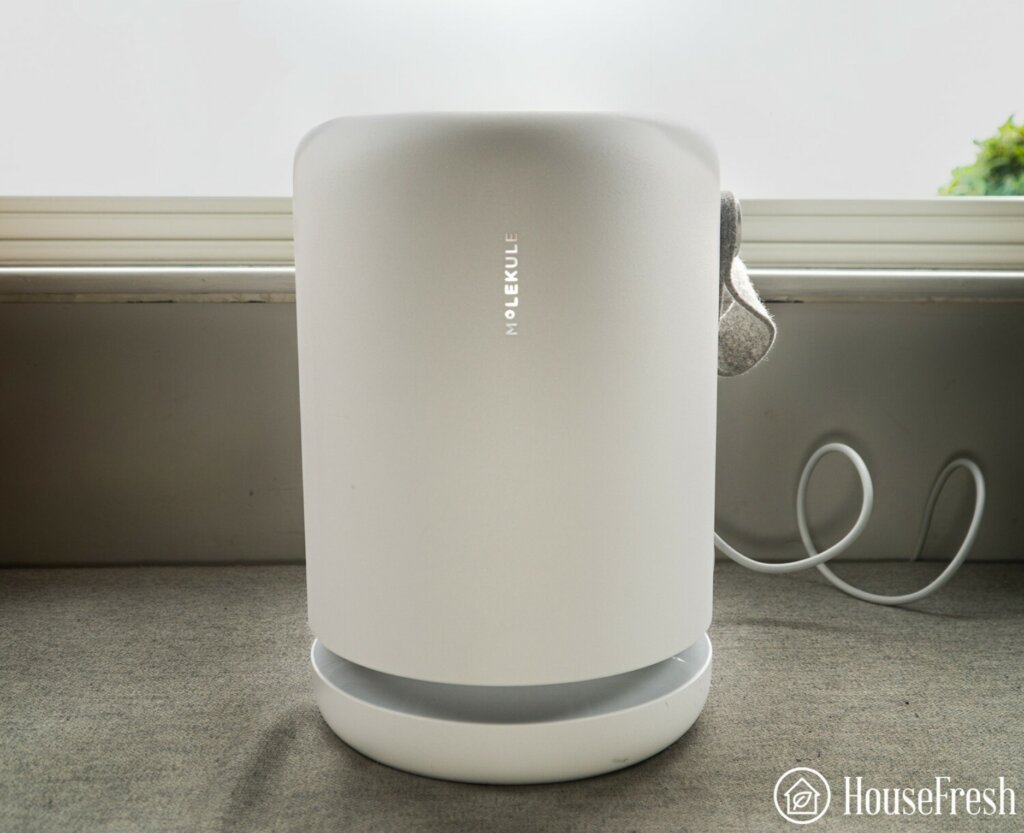
Levoit LV-PUR131 review

Levoit LV PUR131 Hallway

Levoit has been making waves in the air purifier market since they first arrived in 2017 thanks to the quality of their air purifying technology at an accessible price. Levoit’s air purifiers perform at the level of much more expensive units from older, more well-known brands.

Levoit changed my view on “cheap” air purifiers with their Core 300, so I was VERY excited to test a larger unit: the LV-PUR131. 

At $180, the Levoit LV-PUR131 seems like an excellent option for cleaning the air in a medium-sized room with a unit that includes features like automatic mode, which are normally only found on units that cost well over $200. After seeing glowing reviews for this unit on Amazon, I decided it was time to test it.

As with all our reviews here at HouseFresh, we bought the Levoit LV-PUR131 with our own money to make sure we would be free to give our unbiased opinion.

We also bought the unit so we could test its air cleaning performance in our home lab. That’s right, unlike the vast majority of air purifier reviews you will read from ‘reputable’ lifestyle magazines or even tech sites, I actually tested the LV-PUR131 as opposed to just describing it based on the marketing materials from Levoit.

how we test
How we test air purifiers

Read our full testing methodology.

This is to say that you can rest assured that this review is impartial and that you will read an accurate account of the unit’s pros and cons. 

The lowdown on the Levoit LV-PUR131

Danny Ashton HouseFresh
“At this point in the history of Levoit, there are better options than the Levoit PUR131.
The LV-PU131 is underpowered, it pulls a lot of energy (which will add to long-term costs), and I have received reports from readers who explained various issues they experienced with this unit outside the warranty.
My Levoit PUR131 hasn’t broken yet, but it lives in my basement, so it doesn’t get used as often as other units I’ve got in my home.”
— Danny Ashton, HouseFresh Founder & Senior Writer
Levoit LV PUR131 Bedroom

PRICE on amazon PRICE on LEVOIT

Don’t want to read the full review? If you can find the Levoit PUR131 in stock and have a room size of 500 sq. ft, this is the best performance air purifier you can get without spending more than $180.

What we really like

The simple touchscreen control panel is easy to understand and use.
It comes with an on-board air quality sensor and an LED air quality indicator (but it will only work when on auto mode).
It’s light and easy to move around the house.
It is one of the few Levoit units you could find today with a separate set of filters — the particle filter is separate from the activated carbon filter.

What we think could be better

It is underpowered compared to other more modern Levoit devices, such as the Levoit Vital 200S.
It doesn’t come with a pre-filter for capturing larger particles. This is unfortunate as pre-filters extend the life of main particle filters.
Something small, but that matters to me as I have two young children in the house: the controls don’t include a child lock.

HouseFresh rating:★★☆☆☆
Time to clean our 728 cubic feet test room (with the device running at top speed):60 minutes
Air purifier technology:Main particle filter and activated carbon filter
Recommended room size (4.8 air changes per hour):152 sq. ft.
Clean air delivery rate (CADR):Dust: 102 CFM
Smoke: 98 CFM
Pollen: 138 CFM
Dimensions (in inches / in cm):18.5H x 14.6W x 7.2D inches (47H x 37.1W x 18.3D cm)
Weight (in pounds / in kg):11.22 lbs (5.1 kg)
Filter life:6 months
Noise level in decibels (measured from 3 ft. away with a sound level meter):Sleep mode: 37.5 dB
Speed 1: 39.9 dB
Speed 2: 45.2 dB
Speed 3: 50.5 dB
Electricity consumption in watts (recorded with an electricity usage monitor):Standby mode: 1.9 watts
Speed 1: 11 watts
Speed 2: 18.8 watts
Speed 3: 29.7 watts
Estimated running costs (electricity consumption + filter replacements):$108.58 per year
Cost per CADR cfm (based on dust CFM as reported by AHAM):$2.89
Manufacturer’s warranty:1 year
Country of manufacture:China

A boxy and dated design from Levoit

When it comes to design, the LV-PUR131 is more of a plain Jane than a showstopper. 

Levoit LV PUR131 Close up

The LV-PUR131 is a simple-looking, white and boxy air purifier that stands just under half a meter tall and has oversized branding across the top corner. It certainly looks like what most people probably think of when they think of an air purifier.

It isn’t the worst-looking unit I’ve seen but it definitely looks plain and boring compared to the Smart Air S, which combines different materials, design lines and textures.

Levoit LV PUR131 VS Smart Air Sqair Air 1

The Levoit LV-PUR131 has an easy-to-navigate touchscreen control panel on top of the unit. Each button has a clearly labelled icon, so you will quickly figure out how to operate the air purifier straight out of the box with little instruction.  

You can turn the machine on/off through the control panel and cycle through its three fan speed settings:

Levoit LV PUR131 Controls

For use during the night, you can hit the Display button to turn off the LED lights and press Sleep to switch the fan speed to its lowest fan speed, which only emits a whisper-like sound at 27dB. 

The unit also comes with a programmable 12-hour timer so you can leave the unit to run without worrying about switching it off again. 

While the Auto setting utilizes the inbuilt air quality sensor to monitor for pollutants and automatically adjust the fan speeds for minimal fuss and maximum peace of mind. 

Three stages of filtration

The LV-PUR131 is one of the few Levoit units with separate particle and gas filters. We wish they did this for more devices.

Levoit LV PUR131 Filter change

Before purchasing an air purifier, it is important to know what filters the unit uses and what effect they will have. The LV-PUR131 comes with a main HEPA-like particle filter and a large pelletized activated carbon filter.

The primary filter will capture ultra-fine particles commonly found indoors, such as dust, pollen and mold spores. It is worth mentioning here that Levoit has removed all mentions of HEPA from its advertising and marketing materials after Dyson complained to the BBB National Programs National Advertising Division.

As I briefly mentioned above, the LV-PUR131 also comes with an activated carbon filter. This layer of filtration will tackle volatile organic compounds (VOCs) such as chemical fumes, smoke, and household odors. 

My favorite thing about the filters in the LV-PUR131 is that they are two separate filters, which means that you won’t need to throw away both filters if you only need to replace one. Most other Levoit units come with bonded filters, where you get one chunky filter with one side for particles and another for gasses. The biggest issue with this is that activated carbon filters generally have a shorter lifespan, so in many cases with units like the Levoit Core 400S or the Vital 200S, you will need to get rid of the entire thing, even when the particle filter might still be effectively removing particles.

All this to say, the filter setup in the LV-PUR131 is definitely a pro.

Tip

At the risk of stating the obvious, we always like to remind readers that the filters will come in plastic wrapping that needs to be removed before using the air purifier. As the filters usually come delivered pre-fitted, this often trips users up as they think they are ready to use. 

Simply remove the filters, remove any packaging and re-fit, and then you’re good to go.

The Levoit LV-PUR131 cleared our test room in 60 minutes

This was impressive when we first tested it, but four years later, the air cleaning speed of the LV-PUR131 is not good enough.

To put an air purifier through its paces, we utilize our home office, which measures up to 728 cubic ft, so it is roughly the same as a small to medium-sized bedroom. 

We burn incense sticks to fill the room with airborne pollutants and measure how quickly the purifier can remove all PM1.0ug/m3, PM2.5ug/m3, and PM10.0 ug/m3 particles using our indoor sensor from Purpleair

We keep these conditions the same for each test, allowing us to compare and contrast different purifiers and see which unit performs the best in a home setting against common pollutants. 

Let’s see how the LV-PUR131 did:

Once the incense had finished burning at 12:15pm, we recorded the number of pollutants in the room, with levels reaching:

  • PM10.0 – 1847.99 ug/m3 
  • PM2.5 – 1577.53 ug/m3
  • PM1.0 – 581.41 ug/m3

We then fired up the LV-PUR131 at its highest speed, allowing it to tackle the airborne pollutants head-on. 

Within 60 minutes, each particle reading had reached 0.0, showing that within one hour, the unit had performed three air cycles and removed all traces of pollutants.

Air cleaning performance, compared

When comparing these results to alternative purifiers within a similar price range, we found the Levoit eradicated all pollutants faster than the Blueair Blue Pure 411, which took 1 hour and 8 minutes and the GermGuardian AC4825, which took 1 hour and 44 minutes. 

However, the Levoit Core 300 (which is $100 cheaper than the LV-PUR131( completed the same test in just 40 minutes, proving that there are other better alternatives. The one I would suggest is the Levoit Vital 200S, which is being sold for the same price as the LV-PUR131, yet it can clean the air A LOT faster as our air cleaning speed shows (the Vital 200S completed the test in just 18 minutes).

Noise levels, compared

Alongside purifying performance, it’s essential to gauge how loud this unit is when operating on its various fan speeds. 

When cycling between the three standard fan speeds, this unit runs between 52.2 – 65.6 dB, which is louder than most of the other air purifiers we have tested. However, when set to the Sleep setting, this comes down to a much more tolerable 27 dB. 

Check out our sound guide below to hear the LV-PUR131 for yourself. 

The cost to run a Levoit LV-PUR131: $108.58 per year

1. Electricity costs = $32.59 per year

Many of us are feeling the pinch as soaring energy prices affect the cost of living. So it’s a good idea to figure out what you’re likely to pay across the lifetime of your air purifier. 

We used the Department of Energy’s appliance energy calculator to estimate how this unit might impact your electricity bill to save you the headache of doing the math. 

This unit uses 30.5 watts of power on its highest speed setting, which is pretty efficient. If we imagine you run the air purifier on this setting 24 hours a day, 365 days a year, the LV-PUR131 will set you back $32.59 a year. 

Bearing in mind as you’re more likely to run the unit on its lowest speed for around 8 hours a day, it won’t cost much at all to operate this air purifier. 

2. Filter costs = $75.99 per year

Over time, as your HEPA and Activated Carbon filters work their magic, they will become clogged with pollutant particles and eventually lose efficiency. 

To keep your purifier performing at its peak, you must replace the filters, adding another additional cost to consider before you purchase.  

The LV-PUR131 has two filters that need replacement every 6 months (both the Activated Charcoal and the HEPA filter). They are both available in replacement packs for $45.99 but the 2-pack will set you back $75.99 per year.

However, several filters available from third-party manufacturers on Amazon are cheaper than the official Levoit filters (which are often out of stock across the U.S.)  These alternative filters come with great reviews from fellow users who claim there is no difference in performance when used.

LEVOIT LV-PUR131 Replacement Filter, Genuine Air Purifier Filter, High-Efficiency Activated Carbon for Removal of Odor, Smoke, Pollen, Allergens, LV-PUR131-RF, 1 Pack
isinlive LV-PUR131 Replacement Filters Compatible with Levoit LV-PUR131 & LV-PUR131S Air Purifier, LV-PUR131-RF
Technology
H13 HEPA and Activated Carbon Filter
2-Pack Replacement H13 HEPA and Activated Carbon Filter
More information
Price
$45.88
$28.49
LEVOIT LV-PUR131 Replacement Filter, Genuine Air Purifier Filter, High-Efficiency Activated Carbon for Removal of Odor, Smoke, Pollen, Allergens, LV-PUR131-RF, 1 Pack
Technology
H13 HEPA and Activated Carbon Filter
More information
Price
$45.88
isinlive LV-PUR131 Replacement Filters Compatible with Levoit LV-PUR131 & LV-PUR131S Air Purifier, LV-PUR131-RF
Technology
2-Pack Replacement H13 HEPA and Activated Carbon Filter
More information
Price
$28.49

Comparing the Levoit LV-PUR131 to the LV-PUR131S

Shortly after releasing the LV-PUR131, Levoit launched the LV-PUR131S to offer users a purifier with enhanced smart features. 

In addition to the Auto mode found on the original model, the S includes the option to connect your purifier to your phone or smart device such as Alexa. 

This enables the user to operate the purifier remotely using voice activation or at your fingertips through your phone. 

The app also allows you to remotely set timers and create schedules, providing updates on the current air quality in your space.

FeaturesLevoit LV-PUR131Levoit LV-PUR131S
Purifier technology:H13 HEPA and Activated Carbon FilterH13 HEPA and Activated Carbon Filter
Recommended room size:360 sq. ft. 360 sq. ft. 
Filter life:6 months6 months
Weight (in pounds / in kg):11.22 lbs / 5.1 kg11.22 lbs / 5.1 kg
Energy consumption:$66.26 per year$66.26 per year
Auto Mode
Smartphone Functionality
User reviews
List Price$179.99$189.99

So, should you pay more for the S? 

In reality, these two units are identical. The only difference is that the S is compatible with Levoit’s smartphone app and can be connected to smart devices such as Alexa for voice control. 

At only $10.00 more, it seems reasonable to pay the extra if you feel these additional features will be of use. However, if you can’t see yourself utilizing such features, then why not save yourself 10 bucks?


Bottom line: Is the LV-PUR131 worth it?

A good choice for those who want a Levoit unit with separate particle and carbon filters — but look at newer models if you want better air cleaning performance.

Your particular use case will depend on your situation. The team at Levoit produced a unit with top performance at an affordable price compared to most other air purifiers on the market. 

That being said, the Levoit LV-PUR131 doesn’t have the power to deal with serious air pollutants, such as those from traffic pollution or cigarette smoke. The reality is that there are many other devices that are currently available for cheaper prices that will do a much better job of cleaning the air.

Levoit LV PUR131 Hallway

If you like the rectangular look, I suggest you check out the Levoit Vital series instead. The Levoit Vital 200S performed much better than the LV-PUR131 in our tests (cleaning the air in our test room in just 18 minutes), and it costs roughly the same. Alternatively, you can save yourself $60 and go with the smaller Levoit Vital 100S, which still managed the clean the air in our small test room in 28 minutes — that’s 32 minutes faster than the PUR131.

And if you’re not specifically looking for a Levoit unit, then you should definitely check out the Winix 5500-2, which can be found for $159.99 (around $30 less than the PUR131), has separate filters and was 40 minutes quicker at completing our air cleaning performance test.

The Levoit LV-PUR131 doesn’t have the power to deal with serious air pollutants, such as those from traffic pollution or cigarette smoke. And the reality is that there are many other devices that are currently available for cheaper prices that will do a much better job at cleaning the air.


SOURCES

We used the Department of Energy’s appliance energy calculator to calculate yearly costs associated with running the Levoit LV-PUR131 24 hours a day for 365 days. We ran this calculation utilizing the U.S. average utility rate of $0.12/kWh as of May 9th, 2023.

Medify MA-40 Review

DSC08168

The Medify MA-40 could be your new go-to unit for air quality control in rooms up to 840 sq. ft.

[verdict]

DSC08173 1

Specifications:

Air Purifier
Medify MA-40
CADR
380 Dust/380 Smoke/380 Pollen
Technology
H-13 True HEPA + Activated Carbon
Recommended Room Size
840 sq. ft
Weight
15 Ibs
More information
Price
$249.99
Air Purifier
Medify MA-40
CADR
380 Dust/380 Smoke/380 Pollen
Technology
H-13 True HEPA + Activated Carbon
Recommended Room Size
840 sq. ft
Weight
15 Ibs
More information
Price
$249.99

The Look 

The body sports a glossy premium-feeling finish, and it won’t look out of place in a modern apartment or house. 

On the front, you have the larger air outlet, and on the back, there is a large air inlet and a handle, which comes in handy when moving the unit around. It was super easy to install the composite 3-in-1 filter, and the back cover has magnets for easy locking. So far so convenient. 

The top is very handsome indeed, with classy minimal looking tempered glass and an easy-to-navigate display panel. 

DSC08175

The controls feature the latest capacitive touch technology, but if you don’t know what that means don’t worry, just press the power switch, timer, fan speed, and ionizer switches and you’re good to go. Oh, and there’s a child lock too to stop the little ones meddling with the settings and giving the whole family a cold (the Medify MA-40 pumps out cool air, which is awesome in summer, but leave it on too long and you’ll end up with a freezer for a living room).

There are 3 manual fan speeds settings and a sleep mode. It’s nice to see a filter replacement indicator on the top panel too, meaning you shouldn’t forget to replace the filter when the time comes. 

All in all, it’s a slick-looking unit with a solid feel. 

Filtration 

Now for the technical bits — the filtration system on any air purifier is basically the single most important thing to look at if you want to know how well it’s going to work. The Medify MA-40 comes with a pre-filter, an H13-grade True HEPA filter, and an activated carbon filter. 

DSC08163

Let’s take a closer look at the numbers: the removal efficiency of this filter is 99.9% at 0.1microns (MPPS). That means it can capture tiny airborne pollutants such as fine dust, smoke particles, and microorganisms like bacteria, fungi, archaea, or protists. The first line of defense is a pre-filter net, which traps larger pollutants such as lint, pet dander, mold spores, and dust. It also stops the core HEPA filter from getting clogged up. 

DSC08164

Next, we have the pellet-based Activated carbon filter, which takes care of all your odor and gas filtration needs. The honeycomb-shaped filter is filled with activated carbon pellets, which adsorb odors and VOCs from the air including smoke, pet smells, and all those odors that come from cooking. 

This filter needs to be replaced every six months or after 3000 hours of usage. These are easy to come by online and do cost a little more than some smaller units. Medify does offer a service they call Filter Club. If you sign up, they will send replacement filters to your door every six months and you save 10% on the list price plus free shipping. This isn’t only a money-saving tip but will make sure you’re never left without a new filter.

Medify MA-40 Air Purifier with True HEPA H13 Filter | 1,793 ft² Coverage in 1hr for Smoke, Wildfires, Odors, Pollen, Pets | Quiet 99.9% Removal to 0.1 Microns | White, 1-Pack
  • EXTENDED FILTER LIFE & COST-EFFICIENCY: Our long-lasting filters deliver up to 3,000 hours or 4-5 months of continuous, high-quality air purification. With fewer filter changes needed, enjoy cost savings and a healthier, cleaner home environment.
  • EFFORTLESS FILTER REPLACEMENT: Our user-friendly design ensures a hassle-free filter change. Keep every room in your home, school, or office filled with fresh, irritant-free air. Regularly updated filters effectively neutralize lingering odors.
  • SUPERIOR TRUE HEPA H14 FILTRATION: Our advanced HEPA H14 filters capture 99.99% of airborne particles as small as 0.1 microns. Breathe easier with effective removal of dust, pollen, allergens, smoke, and pet dander—better than HEPA H11.
  • 3-STAGE PURIFICATION PROCESS: The MA-40 boasts a three-layer filtration system—pre-filter for large particles, HEPA H14 for microscopic contaminants, and activated carbon for odor elimination. Ideal for pet owners, allergy sufferers, and smokers.
  • EXTENDED FILTER LIFE & COST-EFFICIENCY: Our long-lasting filters deliver up to 3,000 hours or 4-5 months of continuous, high-quality air purification. With fewer filter changes needed, enjoy cost savings and a healthier, cleaner home environment.

The Medify MA-40 has an optional ionizer — when it’s turned on, it releases charged particles that attach to any dust floating in the air. Then the heavy particles fall to the ground, just like magic! Beware though, you shouldn’t use this feature if someone has asthma or breathing difficulties at home.

Noise 

Aside from the filter, noise is probably the next most important thing to consider if you’re in the market for an air purifier. Clean air is essential, but noise pollution is a thing too, especially in a small flat. 

The Medify MA-40’s noise level is 46 decibels on the lowest fan speed and 66 decibels on the top fan speed. 70 decibels is the level of noise generated by a vacuum cleaner, so, this thing can seem pretty loud on its highest setting, but will only take around 30 minutes to completely clean the air then you can knock it down a speed or two. 

Cost of running

Another worry I had was with energy consumption. Clean, pollution-free air must come at a price, right?

Wrong. Running the Medify MA-40 eight hours a day can cost as little as $24 a year. This sets top models like the MA-40 apart from the cheaper units on the market.

Combine that with the initial cost of the unit and replacement filters and you’ve got a great deal for clean, fresh air in your home keeping you and your family healthy and allergen-free.

What I love:

  •  Easy to navigate, responsive touch panel controls
  •  Replacement filters are easy to come by, especially with Filter Club
  •  It’s lightweight and super easy to move between rooms

What I don’t like as much:

  • Its flat top does collect surface dust
  • I would prefer a longer power cable 
DSC08152

Bottom Line

When purchasing an air purifier, a little research is required. With so many on the market right now, it’s paramount that you find one for your needs. 

I chose the Medify MA-40 because it fit the size of my apartment perfectly. I was concerned with both pollution and VOCs coming in from the busy traffic outside and with my open plan kitchen/living room, I didn’t want to be smelling of my cooking whilst I chill on the sofa.

The filters in this unit promised to address these issues and they didn’t fail to deliver. 

I can now cook the most fragrant of dishes without worry of stinking out the place and whilst I can still hear the hustle and bustle of the city streets, I no longer fear what it might be doing to my health.

To be honest, I’m sure how I ever lived without it.

Medify MA-40 Air Purifier with True HEPA H13 Filter | 1,793 ft² Coverage in 1hr for Smoke, Wildfires, Odors, Pollen, Pets | Quiet 99.9% Removal to 0.1 Microns | White, 1-Pack
  • MAXIMUM COVERAGE: Cleans large spaces up to 1,793 sq ft in one hour, 896 sq ft in 30 minutes (CADR 406). Ideal for homes, apartments, bedrooms, living rooms, offices, schools, universities, classrooms, hospitals, restaurants, and other businesses.
  • HEPA H13 FILTRATION: Trusted to remove 99.9% of harmful particles including allergens, odors, VOCs, smoke, pollen, pet dander, dust, smog, contaminants, and more down to 0.1 microns in size. Captures finer particles than HEPA H11 (0.3 microns).
  • ULTRA QUIET: Choose from 3 fan speeds, with the lowest setting operating virtually silent. Runs at 110 Volts at a min noise level of 46dB and max of 66dB. For the most discreet operation, enable sleep mode to completely dim the unit's panel lights.
  • EASY TO USE FEATURES: Includes a sleek touch screen operation panel with 0-8 hour timer, fan speed, sleep mode, filter replacement indicator, and child lock, great for both kids and pets.
  • QUALITY TESTED & BACKED: CARB, ETL, and Energy Star certified. Backed by a USA registered Lifetime Warranty. The replacement filter (B07MTQFFNT) lasts 3,000 hours or about 6 months.

53 indoor air quality statistics

43 Indoor Air Quality Statistics 1 1

Throughout history, man has become an increasingly indoor animal. According to the EPA, the average American now spends 90% of his time indoors, breathing in a stew of airborne pollutants that scientists and the public know relatively little about. 

While shelters are designed to keep environmental hazards out, indoor spaces can be hotbeds of pollution. Pollutants from outside air can become trapped inside a home, along with molds, fungi, dust, and toxic gases that can harm and even kill their human occupants. 

Common household activities like cleaning and cooking can also release harmful compounds that reduce air quality and have negative effects on human health. In some experiments, indoor air has been found to have concentrations of fine particle pollutants several times greater than outdoor air. 

With the average human breathing approximately 10,000 liters of air per day, it is of utmost importance to ensure healthy air quality indoors. 

While, as a field of research, indoor air quality is relatively overlooked in comparison to outdoor air, increased concern over the airborne transmission of disease during the COVID-19 pandemic has resulted in an uptick in interest in indoor air quality. 

According to the Verdantix Global Corporate Survey 2020, 59% of real estate executives are planning to make new investments in air quality sensors and analytics in the wake of COVID-19

As more workers return to the office, proper ventilation and air quality will become all the more important.

Below is our roundup of the most important statistics you should be aware of when it comes to indoor air quality.

The COVID-19 pandemic saw more people working from home than ever before. While many companies made investments in home office equipment for their workers, most homes lack the well-designed ventilation systems of office buildings, leaving many remote workers in indoor environments with poorer air quality than before the pandemic. 

In one study, 100% of home offices were shown to have unacceptable levels of air pollution.

While indoor air quality remains relatively low in many homes, COVID-19 has also led to a surge in interest in the subject. Google searches for indoor air quality spiked in 2020 and 2021, and the market for indoor ventilators skyrocketed. 

Indoor Air Quality Trend Air purifier market

We identified some of the biggest trends in indoor air quality from the last few years:

  1. Research on air quality control has shifted from outdoor to indoor environments, as more people around the world move to dense urban areas. (International Journal of Environmental Research and Public Health)
  2. Air quality in home offices is often worse than in office buildings – In one recent study, particulate matter was found to exceed the recommended maximum of 12 µg/m3 in 100% of home offices used for remote work during the COVID-19 pandemic. (Atmosphere)
  3. Google searches for indoor air quality in the United States rose 65% during the pandemic, and peaked in September 2021. (Google Trends)
  4. Finland searches for “indoor air quality” way more than any other country — Hong Kong and Ethiopia follow, but with notable fewer searches. (Google Trends)
  5. The global residential air purifier market grew to 21 million in 2021— That’s up from roughly 6 million units in 2015.  (Statista)
  6. Just 27% of families experiencing indoor breathing issues will attempt to improve them by introducing an air purifier. (Current Allergy and Asthma Reports)
  7. 40% of consumers will spend more than $200 on an air purifier for their home. (Kaz, Inc.)
  8. 46% of two-parent homes have an air purifier — while just 3% of single-parent homes have one. (Kaz, Inc.)
  9. Consumer products account for 38% of smog-forming emissions — more than the 33% caused by gas and diesel combustions. (Science News)
  10. Concentrations of volatile organic compounds (VOC’s) are at least 10 times higher indoors than outdoors. (International Journal of Environmental Research and Public Health)

6 key indoor air quality facts and statistics 

According to a number of public health specialists, public awareness around indoor air quality is relatively low. While laws controlling outdoor air pollution have been around for decades, there are relatively few regulations dealing with the indoor environments in which we spend the majority of our time. 

There is voluminous research on how different natural processes and human activities affect outdoor air quality, but there is comparatively little research on what causes indoor air pollution or even how best to measure it. 

Key Indoor Air Quality Statistics

In light of this gap in public health information, it is important to know some of the basic facts about indoor air quality and its effects on health.

  1. Indoor air pollution is responsible for the deaths of 3.8 million people annually. (International Journal of Environmental Research and Public Health)
  1. Mortality due to indoor air pollution is 50% higher in women than men — Women spend more time indoors on average, and are exposed to more indoor irritants. (Archives of Public Health)
  1. According to air quality researchers, minimum ventilation rate standards (the minimum number of times the air in a room should be replaced by a ventilator) are rarely met in the United States. (Nature)
  1. Breath circulates in small spaces – in a crowded room with no windows, one in every seven breaths a person breathes is air another person had breathed out. (RNZ)
  1. Exposure to household air pollution almost doubles the risk for childhood pneumonia. (WHO)
  1. Outdoor pollution events like wildfires and 4th of July fireworks can increase indoor air pollution two to three-fold. (The University of Utah)

6 facts about indoor air pollution sources

Some of the most ubiquitous household products are also some of the biggest contributors to indoor air pollution. Everyday activities like cooking, cleaning, and even petting your dog or cat have been shown to result in statistically significant increases in indoor air pollution. 

Facts About Indoor Air Pollution Sources

Knowing the numbers behind the causes and effects of indoor air pollution can be a critical step towards controlling it.

  1. Smoking is a major source of indoor particulate matter, and is associated with an increase in PM2.5 concentration of 25 to 45 µg /m3. (International Journal of Environmental Research and Public Health)
  1. Cooking is a common source of indoor air pollution — According to researchers, articles emitted from cooking account for approximately 30% of indoor fine particulate matter. (International Journal of Environmental Research and Public Health)
  1. Different styles of cooking emit different levels of particulate matter — In one experiment, fine particulate matter emitted from cooking Chinese stir fry was roughly seven times greater than that emitted from cooking Italian pasta. (International Journal of Environmental Research and Public Health)
  1. Consumer products like hairspray, cleaning liquids, and air fresheners on average contribute 10% to 20% of volatile organic compounds in indoor environments. (GreenFacts)
  1. Everyday chores can create indoor air pollution A few minutes of mopping with cleaning products can generate as many airborne particles as vehicles on a city street. (Science)
  1. Major sources of indoor air pollution include exhaust from gas stoves and fireplaces, candles, air fresheners, tobacco smoke, laser printers, household cleaning products, pollen, mold spores, and dust mites. (University of Massachusetts Amherst)

10 U.S. household air quality statistics 

America invented the modern office building, and introduced many of the innovations that are now standard regulation for public indoor spaces. But while the United States has been at the vanguard of indoor air quality innovation, many Americans are relatively uninformed about ventilation and proper maintenance of indoor spaces, according to a recent survey. 

Still, the degree of awareness varies across the country, with the volume of Google searches for “indoor air quality” in some states outnumbering others by more than 10 to 1.

U.S. Household Air Quality Statistics

These statistics help paint a picture of indoor air quality and awareness in the United States.

  1. 87% of U.S. homeowners are not aware that the air quality inside their home may be less than the air quality outside their home. (American Lung Association)
  1. $75 billion a year is lost in productivity due to adverse health effects caused by poor air quality in buildings in the United States. (Atmosphere)
  1. 29% of Americans never change the air filter in their home. (The Zebra)
  1. 82% of Americans fail to change their air filter monthly. (The Zebra)
  1. 1 in 5 Americans say it’s not important to change their air filter. (The Zebra)
  1. In the United States, Google searches for indoor air quality are greatest in Oregon, and lowest in Iowa. (Google Trends)
  1. New York is the state with the most premature deaths due to indoor air pollution from fuel combustion in buildings — followed by Pennsylvania, California, Illinois, and New Jersey. (RMI)
  1. The air purifier manufacturing industry is worth about $7 billion in the United States. (IBIS World)
  1. There are about 474 businesses involved in the manufacturing of air purification equipment in the United States. (IBIS World)
  1. In the United States, the average cost of a whole-home air purification system ranges from $400 to $4,000. (HomeGuide)

9 U.K. household air quality statistics 

In 1952, a number of natural and man-made factors combined to envelop London in a thick layer of smog for several days. The pollution event – known as the Great Smog – resulted in thousands of deaths, and ultimately led to the passage of the UK’s Clean Air Act 1956. 

But while the UK’s mix of urbanization and industry has put it at the center of the regulatory debate over clean air, much of the country still suffers from poor air quality, indoors and out. 

U.K. Household Air Quality Statistics

By some estimates, Britons spend even more of their day inside than Americans, making knowing the facts about indoor air quality in the United Kingdom all the more important. 

  1. Britons spend on average 95% of their time indoors on weekends. (Ribble Cycles)
  1. In the UK, more than 97% of homes are located in areas where air pollution exceeds WHO-recommended limits. (The Guardian)
  1. The UK’s legal limit for fine particulate matter is five times higher than the World Health Organization limit. (The Guardian)
  1. In the UK, Plymouth is the city with the worst air qualitywhile Llangefni has the best air quality. (AQI)
  1. It is estimated that tobacco smoke in the home causes 11,000 deaths every year in the UK. (UK Government)
  1. Residents of the United Kingdom search “indoor air quality” on Google at about one-third the rate of Americans. (Google Trends)
  1. In the United Kingdom, Google searches for indoor air quality are greatest in Northern Ireland, and least in Wales. (Google Trends)
  1. Residential radon exposure contributes to about 3% of lung cancer deaths in the UK. (UK Government)
  1. In the United Kingdom, ultrafine particle pollution levels are on average 3.5 times higher inside than outside. (Air Quality News)

8 indoor air quality and health statistics

While the COVID-19 pandemic brought indoor air quality into the spotlight, indoor air pollutants have long been a serious public health issue, causing serious health problems and costing billions in health care spending. 

Researchers have yet to quantify the exact health toll of breathing indoor air for 90% of the day, but some statistics help shine a light on the public health situation. 

Indoor Air Quality and Health Statistics

We’ve rounded up several statistics showing the effects of indoor air quality on health.

  1. The WHO estimates that indoor air pollution is responsible for 2.7% of the years of life lost to early death worldwide. (MIT)
  1. Particulate matter is mostly generated from combustion activities and cleaning activities — they can lead to premature death in people with heart or lung disease, irregular heartbeats, and aggravated asthma. (International Journal of Environmental Research and Public Health)
  1. Volatile organic compounds are generated from paints, fuels, plastics, and cleaning products — they can cause eye, nose, and throat irritation, headaches, and liver damage. (International Journal of Environmental Research and Public Health)
  1. Exposure to indoor radon can cause an increase in lung cancer risk from 3% to 14%. (International Journal of Environmental Research and Public Health)
  1. Indoor air pollution increases the risk of childhood acute lower respiratory infections by 78%. (International Journal of Environmental Research and Public Health)
  1. Indoor air quality problems cost an estimated $15 billion a year in direct medical costs. (Burroughs and Hansen)
  1. Air pollution is a major cause of hospitalization — An estimated 15% of admissions to hospital emergency rooms could be attributed to dust mites and other airborne allergens. (Burroughs and Hansen)
  2. Air pollution has been shown to be associated with negative effects on cognitive function — A 25% increase in particulate matter has been associated with a 0.82% decrease in response times in office workers. (Environmental Research Letters)

4 facts about the history of air purification

While there are few comprehensive regulations dealing with indoor air quality, concerns over how to control pollution in indoor environments date back to antiquity. 

Facts About The History Of Air Purification

We rounded up the most interesting facts on the history of air purification to see how concerns over indoor air quality have evolved over the years.

  1. Egyptian historians have found evidence of modern social attitudes toward indoor air quality dating back to 1500 B.C. Burroughs and Hansen)
  1. The first air purification systems appeared in the 1850s in the form of charcoal-based masks worn by coal miners. (IQAir)
  1. Modern ventilation technology began with the development of high-efficiency particulate arrestance (HEPA) in the 1940s, as part of an effort to shield soldiers from atomic radiation during World War II. (IQAir)
  1. Workplace standards for indoor air quality are roughly three decades old — OSHA first announced its intention to regulate indoor air quality in April 1994. (Burroughs and Hansen)

9 authoritative air quality reports you should read

COVID-19 is not the first time indoor air quality became a hot topic in the research world. Environmental regulations in the 1970s and concerns over ambient air pollution in the wake of the September 11th terrorist attacks both inspired new research in the field, resulting in a number of new insights and landmark studies on indoor quality. 

To help you stay informed, we rounded up some of the most authoritative air quality reports you should read. 

  1. Indoor Particulate Matter (EPA)
  2. The Inside Story: A Guide to Indoor Air Quality (EPA)
  3. Air Cleaners and Air Filters in the Home (EPA)
  4. Care for Your Air: A Guide to Indoor Air Quality (EPA)
  5. Guide to Air Cleaners in the Home (EPA)
  6. Indoor Air Quality and Health Outcomes in Employees Working from Home during the COVID-19 Pandemic: A Pilot Study
  7. Measurement of Ultrafine Particles and Other Air Pollutants Emitted by Cooking Activities
  8. Indoor Air Pollution, Related Human Diseases, and Recent Trends in the Control and Improvement of Indoor Air Quality
  9. Overview of HOMEChem: House Observations of Microbial and Environmental Chemistry

A cleaner future

Concerns over indoor air quality are not new. Historians speculate that early humans likely struggled to contain combustion contamination from fires in caves, and have found notations documenting the effects of airborne dust on health dating back thousands of years.

While the dwellings have changed since antiquity, the basic facts around indoor air quality have not. Indoor spaces are complex habitats, consisting of a physical building, environmental setting, HVAC system, and air pathways, as well as occupants and their activities. COVID-19 has made apparent the lack of proper ventilation infrastructure in public and private buildings, but has also placed air quality issues at the center of the public health conversation. As indoor air quality becomes more relevant, staying informed becomes all the more important.

Air Quality Reports You Should Read

SOURCES

These are the air purifiers we recommend for a basement

we buy every air purifier

Basements are usually the most neglected space in the house. The “ugly duckling” room — filled with pipes, exposed walls, and limited natural light (if any). It can feel like a dingy dungeon, an outlier compared to the rest of the home.

There are many reasons why your basement can turn out this way, from external factors such as radon or rising damp to dusty old belongings stored away. All of these are made much worse by the fact that the basement has restricted ventilation, which intensifies pollutants.

One good way to ensure your basement is free from particulates, gasses, and odors is to install an air purifier with HEPA and activated carbon filters. 

An air purifier in the basement means airborne particulates like mold will be trapped in the filter instead of on your walls. Additionally, the activated charcoal filter catches nasty odors to boost freshness.

But knowing which air purifier is best for you isn’t simple. So, the HouseFresh team tested over 80 different devices to truly understand which devices work and which don’t.

how we test
How we test air purifiers

Read our full testing methodology.

Using our in-house data, I’ve hand-picked the five best air purifiers that can tackle basement maintenance, paying close attention to filters, purification speed, and long-term running costs.

Staff picks: Top 3 air purifiers for basements

For those in a hurry, here’s a look at our top three purifier picks for your basement. 

BEST OVERALLFOR TIGHT BUDGETSFOR LARGE SPACES
Levoit Core 600STaoTronics AP003 or Lago Air PurifierAlen Breathsmart 75i
Levoit Core 600S Room 1 logoTaoTronics AP003 VS Lago Air PurifierAlen BreatheSmart 75i Living Room logo
Air cleaning speed15 minutes26 minutes24 minutes
CADRDust: 373 CFM
Smoke: 377 CFM
Pollen: 437 CFM
Dust: 202 CFM
Smoke: 198 CFM
Pollen: 215 CFM
Dust: 335.3 CFM
Smoke: 330.5 CFM
Pollen: 403.4 CFM
Filter tech3-stage filtration (Pre-filter for large particles, main filter for airborne particles, high-efficiency activated carbon filter for odors and gasses)Pre-filter, H13 HEPA with activated carbon pelletsTrue HEPA H13 filters with activated carbon pellets + Ionizer technology
Max room size635 sq. ft.322 sq. ft.512 sq. ft.
Weight13.7 lbs (6.2 kg)18 lbs (8.16 kg)27 lbs (12.2 kg)
ReviewLevoit Core 600S reviewTaoTronics reviewAlen 75i review
Price$269.99Price not available

Last update on 2026-04-04 / Affiliate links / Images from Amazon Product Advertising API

Of course, all basements are different. So, it’s important to understand your specific needs and assess all available options. Read on to find a range of units that cover different-sized spaces, have multiple features, and fit into various budgets. 

1. Best overall: Levoit Core 600S

The Levoit Core 600S is the best basement air purifier on the market that provides rapid results, even in larger spaces.

Levoit Core 600S Fireplace

💡exclusive code for HouseFresh for 10% off a single purchase on Levoit.com: HOUSE10

The Core 600S is a no-brainer when facing the stubborn pollutants found in basements. Its powerful fans can clean large volumes of air every minute with a CADR of 373 CFM. Another plus is its relatively inexpensive price tag ( just $0.61 per CADR), which means you probably won’t mind keeping it on around the clock. 

Our review shows that Levoit’s filters can remove even the smallest airborne particles. The 600S uses a high-quality 3-in-1 filter consisting of a pre-filter for larger pollutants like dust, a primary filter for smaller particles such as mold spores, and an activated carbon filter for odors and other VOCs rife in the space. 

What we really like

Provides excellent cleaning power without being too costly
Designed for speedy particle removal, even in larger basements
Low energy use and reasonable filter replacements keep costs down
Auto mode and app support give you greater control over your air quality

What we think could be better

Relatively low amount of carbon in the standard filter (160g), so it’s worth upgrading to the Toxin Adsorber (360g) if you want to tackle odor and VOCs
Levoit no longer advertises its filters as being tested to the HEPA standard
The location of the AIRSIGHT sensor is on the back of the unit, so must be placed away from walls and furnishings

During our clean air speed test, the unit removed all traces of pollutants in just 15 minutes — the second-fastest purifier to do so. Although our test space is slightly smaller than the average basement, Levoit designed this unit to perform 4.8 air changes every hour in spaces up to 584 sq. ft., providing plenty of fresh air to larger rooms.  

Despite this powerful performance, this unit is also ultra-energy efficient. This will be particularly useful as you can leave the device to run at its top speed around the clock to ensure it cleans up any pollutants. Once you’re happy that the air is safer to breathe, you can utilize the 600S’s auto mode to operate at lower fan speeds and automatically react snappily whenever pollutant levels rise. 

Clean air delivery rate (CADR):– Top speed PM1 CADR: 375 cfm
– Sub-45 dBA PM1 CADR: 156 cfm
– AHAM PM2.5 CADR: 398 cfm (dust)
Filter technology:Bonded particle filter with a layer of pelleted activated carbon and a pre-filter mash wrap.
Recommended room size:562 sq. ft. (5 air changes per hour)
Dimensions:12.3 x 12.3 x 23.6 inches (31.3 x 31.3 x 60 cm)
Weight:13.7 lbs (6.2 kg)
Noise level in decibels from 3 ft. away:Sleep: 37.9 dBA
Speed 1: 44.4 dB
Speed 2: 45.9 dB
Speed 3: 53.8 dBA
Speed 4: 62.3 dBA
Electricity consumption in watts:Standby mode: 1.3 watts
Sleep: 4.33 watts
Speed 1: 7.46 watts
Speed 2: 10.7 watts
Speed 3: 20.29 watts
Speed 4: 48.1 watts
Filter lifespan:6-12 months
Manufacturer’s warranty:2 years
Country of origin:United States
Country of manufacture:China

Read our full review

2. Less than $100: TaoTronics AP-003

If you want a cost-effective solution to your basement’s poor air quality, look no further than the TaoTronics AP-003.

TaoTronics TT AP003 Room 2

PRICE IN EUROPE PRICE IN THE U.K.

The TaoTronics AP-003 is proof that not all cheap electronics made in China are junk. This unit from a lowkey brand promised a lot in its sales pitch, but boy, did it deliver with performance and specifications to rival units 2-3 times its RRP. 

Setting you back just $79.99, this air purifier has many features to combat basement pollutants. First up is its medical grade H13 HEPA filter. It’s proven to capture 99.97% of particles as small as 0.3 microns, which is far smaller than the average dust or mold particle. Couple this with a granular carbon filter, and the TaoTronics AP-003 will take care of any musky odors, too.  

What we really like

One of the best-value air purifiers for CADR to $ ratio
Comes with a medical-grade filter to capture minuscule particulates
You get carbon pellets, which are much more efficient than other VOC filter types
Features a highly accurate air quality sensor for real-time feedback

What we think could be better

Rarely in stock on Amazon, which is annoying
Shorter filter lifespan, but with cheap replacements
Tricky to gauge customer support and warranty as the unit’s from a newer brand

One of the main features that jumped off the spec sheet for this unit was a CADR of 202 CFM. This is super powerful for a unit costing less than 100 bucks, so we had to see it for ourselves. Lo and behold, the AP-003 made light work of our speed test, removing the smallest PM1 particles in less than half an hour, which is exactly what you’ll need when cleaning a basement. 

With a low energy draw and a highly accurate air sensor to monitor pollutant levels, this purifier continues to prove its worth. You might be wondering what the catch is. Well, it can be tricky to find in stock online (perhaps an indicator of its popularity). Still, we discovered that many other brands use this model as part of ODM, so there are models available that use the same design, and we had a chance to test one of them, the Lago air purifier.

Lago Air Purifier VS TaoTronics AP003

Its performance in our test room was the same as that of the Taotronics AP003, and even the filter that came with it looks to be exactly the same and has the same model number.

The only downside of the Lago is that its price seems a little higher than Taotronics, but it is available on Amazon.com, so if you have trouble getting it from Taotronics.com, then this might be a better option for keeping your basement clean.

BUY FROM EUROPE BUY FROM THE UK

HouseFresh rating:★★★★★
Time to clean our 728 cubic feet test room (with the device running at top speed):26 minutes
Air purifier technology:H13 HEPA with activated carbon pellets
Recommended room size (4.8 air changes per hour):307 sq. ft.
Clean air delivery rate (CADR):Dust: 202 CFM
Smoke: 198 CFM
Pollen: 215 CFM
Dimensions (in inches / in cm):21.8 x 14.1 x 7.9 inches (55.4 x 35.8 x 20cm)
Weight (in pounds / in kg):13.64 lbs (6.19 kg)
Filter life:6 months
Noise level in decibels (measured from 3 ft. away with a sound level meter):Speed 1: 38.4 dB
Speed 2: 42.8 dB
Speed 3: 54.2 dB
Electricity consumption in watts (recorded with an electricity usage monitor):Standby mode: 0.7 watts
Speed 1: 5.9 watts
Speed 2: 10.5 watts
Speed 3: 36.5 watts
Estimated running cost (electricity consumption + official filter replacement):$90.66 per year
Cost per CADR cfm (based on dust CFM as reported by AHAM):$0.49
Manufacturer’s warranty:1 year
Country of manufacture:China

Read our full review

3. Oldie but goodie: Honeywell HPA300

Honeywell’s HPA300 offers powerful performance without the premium price tag. 

Honeywell HPA300 Editorial logo

PRICE on amazon PRICE on EBAY

To put it simply, the HPA300 is a workhorse of an air purifier. It may not come with the latest smart features or a shiny new design, but it clears pollutants quickly thanks to its powerful fan and quality HEPA filters.

What we really like

Super powerful fans make this a stellar choice for large basements
Easy to set up and use straight out of the box
Clear control panel makes operating this unit fool-proof
Timer functions come in handy when using the unit in a basement

What we think could be better

Carbon filter is integrated into the pre-filter, so don’t expect much protection from VOCs
Lacks features like auto mode or app support
Operating volumes do run on the louder side

Available for less than $200, this air purifier offers valuable bang for your buck. With a CADR of 300 CFM, this equates to just 80 cents per CFM, which is incredibly cost-efficient. 

This power makes the HPA300 a great option for use in basements as large as 465 sq. ft, as we saw when reviewing the unit, taking just 14 minutes to clear our test space of all PM1 particles.

Being an older unit, it’s not quite as energy efficient or quiet as its counterparts on this list, but this is traded off by a low initial purchase price and cheap True-HEPA filter replacements that are readily available online and in many stores, allowing you to keep your basement’s air clean and healthy long into the future.

HouseFresh rating:★★★☆☆
Time to clean our 728 cubic feet test room (with the device running at top speed):20 minutes
Air purifier technology:Activated Carbon pre-filter and True HEPA filter
Recommended room size (4.8 air changes per hour):465 sq. ft.
Clean air delivery rate (CADR):Dust: 320 CFM
Smoke: 300 CFM
Pollen: 300 CFM
Dimensions (in inches / in cm):20.8L x 10.83W x 22.38H inches (52.8L x 27.5W x 56.8H cm)
Weight (in pounds / in kg):17 lbs (7.7 kg)
Filter life:HEPA every 12 months, Pre-filters every 3 months
Noise level in decibels (measured from 3 ft. away with a sound level meter):Speed 1: 43.6 dB
Speed 2: 48.8 dB 
Speed 3: 53.9 dB
Speed 4: 59.5 dB
Electricity consumption in watts (recorded with an electricity usage monitor):Standby mode: 0 watts
Speed 1: 28.35 watts
Speed 2: 42.92 watts
Speed 3: 55.8 watts
Speed 4: 76.2 watts
Estimated running cost (electricity consumption + official filter replacement):$205.22 per year
Cost per CADR cfm (based on dust CFM as reported by AHAM):$0.84
Manufacturer’s warranty:5 years
Country of manufacture:China

Read our full review

4. For large basements: Alen BreatheSmart 75i

Big basements meet their match with the Alen BreatheSmart 75i. 

Alen BreatheSmart 75i Dining Room

The 75i is a giant among air purifiers. As the largest of Alen’s BreatheSmart range, it takes on the mantle of the beefy big bro to the average-sized 45i and FLEX. With this added size comes added versatility, as the unit can take on huge spaces and eliminate larger quantities of pollutants thanks to its customizable filters.

What we really like

Perfectly suited for large basements
Comes with highly effective H13 HEPA filters 
Use of Alen’s app or smart features such as auto mode make cleaning the air even simpler
Customizable filters allow you to target the VOCs that affect your space
Comes with a lifetime warranty

What we think could be better

Most expensive option on this list
Giant size makes it stand out (sometimes in a bad way)
Unit’s weight might make moving it to the basement challenging

So just how large of a basement are we talking about? Alen designed this unit to circulate air 4.8 times per hour in a 512 sq. ft. space, with a generous CADR of 335 CFM. Yet somehow, this unit draws a meager 45 watts on its top speed setting, allowing you to run the purifier for longer without racking up higher energy bills. 

What I love about this option is that Alen offers a range of filters to suit your needs. Each option includes an H13 HEPA that captures particles as small as 0.1 microns with impressive effectiveness, but you can also tailor the amount of activated carbon the filter contains. Higher carbon quantities (found in the Odor or Smoke filter) provide enhanced protection from VOCs and odor, which is paramount if your basement is subject to radon or other chemical pollutants.

Clean air delivery rate (CADR):– Top speed PM1 CADR: 333 cfm
– Sub-45 dBA PM1 CADR: 164 cfm
– AHAM PM2.5 CADR: 351 cfm (dust)
Filter technology:True HEPA H13 filters with activated carbon pellets + Ionizer technology
Recommended room size:448 sq. ft. (5 air changes per hour)
Dimensions:27H x 18.5W x 11.5D inches (68.58H x 46.99W x 29.21D cm)
Weight:27 lbs (12.2 kg)
Noise level in decibels from 3 ft. away:Speed 1: 36.5 dBA
Speed 2: 44.7 dBA
Speed 3: 51.9 dBA
Speed 4: 54.6 dBA
Speed 5: 57.5 dBA
Electricity consumption in watts:Standby: 0.75 watts
Speed 1: 5.19 watts
Speed 2: 13.27 watts
Speed 3: 25.85 watts
Speed 4: 33.99 watts
Speed 5: 47.4 watts
Filter lifespan:12 – 15 months
Manufacturer’s warranty:Lifetime (with product registration & active filter subscription)
Country of origin:United States
Country of manufacture:China

Read our full review

5. On/off ionizer function: Winix 5500-2

Sleek style meets speedy performance. The Winix 5500-2 is one of the latest units to light up our clean air speed test.

Winix 5500 2 TV Room

Winix has been making air purifiers for a while. But with the 5500-2, the company has mastered its craft. This air purifier utilizes four stages of purification, including Winix’s trademark PlasmaWave technology (a type of bipolar ionizer), which can help remove particles from the air even faster.

What we really like

It provides excellent value for money, costing just $160
Rapid particle removal and top-quality filtration 
Washable pre-filter and activated carbon filter for extra longevity and cost savings
Auto mode, timers and a remote control make it super user-friendly 
Excellent air cleaning performance even without the ionizer function on — the 5500-2 took just four minutes longer to clean our home lab without ionizer

What we think could be better

It offers fast cleaning in smaller spaces, but it struggles if your basement is larger than 360 sq. ft.
Some users with respiratory conditions may prefer to stay away from the ionizer technology
No memory settings means you have to reset all settings if you lose power, including the ionizer

This unit blends style and function, with impressive qualities under the hood. As well as Plasmawave technology, you’ll find a washable pre-filter ideal for dirty spaces, a granular activated carbon filter for odors and VOCs and a True HEPA filter to remove the smallest dust and mold particulates. 

Boasting a CADR score of 243 CFM when independently tested against dust makes for a highly efficient unit to use in a basement environment. We were blown away by how fast the 5500-2 performed in our speed test, clearing all pollutants in just 20 minutes. 

HouseFresh rating:★★★★★
Time to clean our 728 cubic feet test room (with the device running at top speed):23 minutes (with PlasmaWave)
Air purifier technology:PlasmaWave, removable pre-filter, washable activated carbon filter and True HEPA filter
Recommended room size (4.8 air changes per hour):360 sq. ft.
Clean air delivery rate (CADR):Dust:  243 CFM
Smoke: 232 CFM
Pollen: 246 CFM
Dimensions (in inches / cm):15W x 8.2D x 23.6H inches (38W x 21D x 60H cm)
Weight (in pounds / in kg):14.8 lbs (6.7kg)
Filter life:12 months
Noise level in decibels (measured from 3 ft. away with a sound level meter):Speed 1: 38.8 dB
Speed 2: 42.5 dB 
Speed 3: 47.5 dB
Speed 4: 58.9 dB
Electricity consumption in watts (recorded with an electricity usage monitor):Standby mode: 0.34 watts
Speed 1: 6.5 watts
Speed 2: 9.11 watts
Speed 3: 14.80 watts
Speed 4: 53.46 watts
Estimated running cost (electricity consumption + official filter replacement):$161.53 per year
Cost per CADR cfm (based on dust CFM as reported by AHAM):$0.66
Manufacturer’s warranty:2 year
Country of manufacture:South Korea

Read our full review

Other air purifiers we tested but don’t recommend for basements

Having reviewed and tested over 50 different air purifiers, there were more than many that didn’t quite meet our high standards. To help our readers avoid wasting their money, we’ll happily call out a disappointment when we see one. So, if you’re looking to improve the air quality in your basement, steer clear of these units: 

  • GermGuardian AC4825eGermGuardian has been a staple in the air purifier world for some time. Yet, its products are unfortunately stuck in the past. When we tested the AC4825e, it took almost 2 hours to clear our test space of pollutants. At the same time, its bacteria-killing UV-C technology failed to impress and instead managed to spike electricity use. 
  • AROEVE MK01Billed as a medical-grade air purifier, AROEVE seemingly put all its eggs in the H13 HEPA basket, forgetting that for the filter to work, the purifier must circulate air effectively. With lackluster fans providing a poor CADR of 25 cfm, this unit would always struggle to reduce indoor air pollution, especially in an enclosed basement environment.  

What to look for when buying an air purifier for basements

Basements are usually where you’ll find the worst air quality in your home. 

The reason is simple: basements lack ventilation. This means that excess moisture has nowhere to escape, resulting in mold, mildew, and an unmistakable musky odor. Other pollutants, such as dust, allergens, and VOCs, are left to linger, exacerbating the issue further. 

To fix this, you need to take action by increasing airflow and rooting out the causes of your air pollution problem. Utilizing an air purifier is an easy solution. However, to guarantee you get a device up to the task at hand, be sure to look for the following features: 

1. High-quality filters

It’s vital that your air purifier can remove the smallest particles to improve air quality. It’ll need tightly woven filters to capture minuscule dust, mold, and any other particulate lurking in your basement. 

As a rule of thumb, HEPA filters guarantee results. They’re rigorously tested to show they can remove 99.97% of particles as small as 0.3 microns. The average dust and mold spore particles vary in size between 2 and 10 microns, so they fall comfortably within the HEPA range.

While not all manufacturers use HEPA-certified filters (see Levoit), we’ve tested each option on this list, making sure each unit is a safe choice for you. 

2. Odor-busting activated carbon

As well as an excellent primary or HEPA filter, you’ll need activated carbon to remove VOCs such as musky odor and chemical fumes. 

These filters work by trapping gaseous pollutants in the pores of a carbon substrate found inside the filter in a process known as adsorption. The more carbon a filter possesses, the more effective it will be, so keep an eye out for that when purchasing your device.

3. Energy efficiency

Tackling build-ups of air pollution in your basement is a big task for any air purifier. You’ll need to use your air purifier 24/7 to remove these pollutants as quickly as possible. 

If you opt for a power-hungry unit, this could skyrocket your electricity bill. 

Look for an air purifier with an Energy Star rating, or check out our annual energy expenses for each unit we test, where we measure how many watts a unit uses at its top speed and calculate an estimated cost using the Department of Energy’s appliance energy calculator

4. Room size suitability

Air purifiers are most effective when used in an appropriate-sized space. Some units are effective in smaller rooms, and others can clean the air in much larger rooms, like a basement. 

Ensuring you’ve found a suitably sized air purifier is critical, as an underpowered unit used in a basement will struggle to make a difference in your air quality. 

The advertised space should indicate that the device can perform 4-5 air changes every hour, helping to increase ventilation and deliver much-needed clean air throughout your basement. 

Manufacturers usually share what size room they have developed the unit for, so take a close look at the specifications or check out our specs and features table, where we always list the correct room size. 

Common questions about air purifiers in the basement

Place your air purifier as close as possible to the source of the pollutants. Leave at least five centimeters between your purifier and any wall or large furniture to allow air to flow freely in and out of the unit

Radon is a radioactive gas that seeps through cracks in a building’s foundation or vents. Seal any entry points before using a HEPA and activated carbon filter air purifier.

Air purifiers remove harmful airborne pollutants, while dehumidifiers expel excess moisture from the air. If you have a damp basement, using a quality dehumidifier and air purifier together can eradicate musty air and stop its spread or inhalation.

Using an air purifier if you live in a basement improves airflow and captures pollutants. This means less exposure to allergens, dust particles, and odors, creating a happier and healthier living environment.

Wrapping up

Basements are notorious for their poor air quality, so investing in an air purifier is a surefire way to keep the space cleaner and healthier.

As these spaces have a large footprint, measuring the space and purchasing a purifier that can circulate the air is extra important. Opt for as high a CADR as your budget will allow, even if this means overlooking smart features and operating volumes that are less useful in a basement. Finally, make sure the unit you choose is cheap to run, as you’ll likely use it much more to combat the challenges in a basement setting.

What is the best whole house air purifier?

HVAC Whole House Air Purifier

When we talk about ‘Whole House’ air purifiers, there is often some confusion about which types of units we’re referring to. While most might assume this includes large air purifiers like the IQAir HealthPro Plus or Levoit Core 600S because they can clear contaminants from vast spaces, these are still classified as ‘Portable’ air purifiers.

A whole-house air purifier is a unit that installs directly into your existing HVAC system. When attached, your air purifier will use its filters to remove harmful pollutants that can plague the air you breathe, including dust, pollen and other allergens.

An HVAC (Heating, Ventilation and Air Conditioning) system pulls air through its vents. The air travels through ductwork in your home as it is heated, cooled or simply used like a fan. The air is then blown into your room(s).

When introducing an air purifier into your HVAC system, the air is passed through a series of strong filters that eliminate airborne particles, leaving fresh, clean, unpolluted air circulating throughout your home.

Whole-house air purifiers can feature a combination of filters to remove pollutants:

  • Media Filters: This thick stack of professional-grade filters is installed into the ductwork of your HVAC system. The design of these filters differs from system to system, but all do the same job.

  • Electrostatic Filters: Also known as UV air purification filters or germicidal light filters, they discharge concentrations of charged particles that attach to contaminants and force them to stick to other surfaces, removing them from the air. They are usually installed near the cooling coils of your HVAC system.

  • Electronic Filter: These types of filters use the principle of electrostatic filters. But, instead of releasing a flurry of charged particles, they feature a network of wires that creates a constant electrostatic field to capture contaminants.

What to look for when buying a whole house air purifier 

If you have a suitable space, buying a whole-house air purifier can be more effective than buying a portable one.

  • It will efficiently remove harmful contaminants from all the air in your entire home without boundaries
  • You won’t have to buy an air purifier for each room, which saves on money and floor space
  • The filters will work constantly when your HVAC system is on
  • It doesn’t emit any extra noise

If you live in a home with many rooms, a whole-house air purifier will simultaneously provide clean air to each room so that you don’t need to worry about moving a portable air purifier.

Here’s how to choose the right solution for you:

1. Consider the type of filter you will need

You must choose the kind that best suits your needs. There are three main types of filters to be aware of:

Media FilterCapture pollutants in a maze of tiny fiberglass filaments. They are highly effective but need replacing when they become full of the particles they’ve removed from the air. 👉 Ideal if the air outside your home is contaminated with suspended particles like dust and pet dander.
Electrostatic Filter Ca​​n produce ozone as a by-product, which can be harmful to our health. They don’t need to be replaced periodically; they only require cleaning occasionally. 👉 The most effective at removing bacteria and viruses from the air.
Electronic Filter Great at removing smoke particles that may slip by media filters. They don’t need replacing either, but they do need a lot of energy to run, so the cost to run them is more significant. 👉 Good choice if you live in an area of smoke pollution.

2. Consider the upfront and long-term costs

When you’re in the market for a whole-house air purifier, it’s crucial to factor in the upfront cost and ongoing operating costs. Whole-house air purifiers are commonly more expensive than portable units, so you will need to consider your budget carefully.

According to the latest data from Angi, a new HVAC unit could cost between $3,000 and $16,000. This is without accounting for professional installation costs, which could amount to $1,500 on average. 

But it will all depend on the design of the system, the size of the unit, where in your home you want to install it, and other factors. And as with every other appliance, you will also be paying more or less depending on the brand you go with:

HVAC BrandAverage Price
Amana/Goodman$2,750
American Standard$3,750
Bryant$3,000
Carrier$4,250
Coleman$3,000
Lennox$3,500
Magic Pak$4,750
Mitsubishi$4,500
Trane$6,000
Rheem/Ruud$3,250
York$7,500

It is also worth mentioning that not all units consume the same amount of power; some will have higher energy costs than others. Also, pay attention to the expense of replacing the filters if needed. They don’t all have the same lifespan or carry the same price tag.

3. Consider whether other options could be better suited

Apart from the initial and running costs of a whole-house air purifier, you need to consider whether a whole-house air purifier is right for your home. If the contaminants come from outdoors, a whole-house air purifier is right for you. If the source of your pollution is indoors, you might be better off with a portable air purifier.

Ask yourself: 

  • Do you have an HVAC system installed in your home?
  • Do you have the budget for a whole-house air purifier?
  • Is your home the right size for a whole-house air purifier?

If you’ve checked every box, a whole-house air purifier would be the best way. 

But what if a whole house air purifier is not an option?

If buying a whole-house air purifier isn’t possible for you, I recommend purchasing a portable unit for your home that will still be powerful enough to clean the air in large spaces.

I’ve picked out three of the best high-powered enough to purify the air in a large area: 

BEST OVERALLFOR TIGHT BUDGETSFOR LARGE SPACES
Levoit EverestAirLevoit Core 600SIQAir HealthPro Plus
Levoit EverestAir Front DesignLevoit Core 600S FireplaceIQair Healthpro plus Corner
Air cleaning speed14 minutes15 minutes25 minutes
CADR363 CFM377 CFM250 CFM
Filter technologyPre-filter, particle filter and carbon filterPre-filter, particle filter and carbon filterPre-filter, HyperHEPA and V50-CELL carbon filter
Max room size563 sq. ft.584 sq. ft.1,125 sq. ft
Weight20.7 lbs (9.38 kg)13.7 lbs (6.2 kg)35 lbs (16 kg)
Our reviewEverestAir reviewCore 600S reviewHealthPro Plus review
Price$189.99$99.00Price not available

Last update on 2026-04-04 / Affiliate links / Images from Amazon Product Advertising API

As each of you will have different-sized homes and requirements, I’ve included three excellent options to suit varying needs and budgets. Each unit has the powerful fans, filters and technology required to clean air in large spaces, so check out the complete list below. 

how we test
How we test air purifiers

Read our full testing methodology.

1. Best overall: Levoit EverestAir

The EverestAir is the best Levoit air purifier I’ve tested. It looks good and it cleans the air incredibly fast.

Levoit EverestAir Front Design

💡exclusive code for HouseFresh for 10% off a single purchase on Levoit.com: HOUSE10

On paper, the Levoit EverestAir looks like a powerhouse of an air purifier as it boasts a large fan and a robust Clean Air Delivery Rate (CADR) of 360 CFM, so I was excited to test it in our performance room and it’s safe to say…I was impressed. It cleared the contaminants from the HouseFresh testing room in just 14 minutes, making it the second-best-performing air purifier we’ve ever tested.

I lifted off the front grill to reveal Levoit’s 3-filter setup, which includes a washable pre-filter, a HEPA and an activated carbon filter. This thick H13 True HEPA filter will remove more than 99% of particles as small as 0.3 microns, including allergens, viruses, pollen and bacteria. The activated carbon filter will deal with cooking odors, pet smells, and VOCs.

What we really like

Levoit’s already great Auto Mode is even better on this unit
Features a smart control panel that displays PM1.0, PM2.5 and PM10 readings 
Sleek design
Voice control with Amazon Alexa or Google Assistant 

What we think could be better

The manufacturer’s warranty spans only two years, which seems brief for a premium-level device

One feature I was surprised to see was the ability to change the airflow direction with the touch of a button. With four distinct vent angles, the EverestAir allows you to direct the air output precisely where you need it in your home.

It also includes a timer, sleep mode, turbo mode and an auto mode that automatically adjusts fan speed to counter the amount of pollutants in the air. I tested this out by blowing vape smoke towards the unit. The sensor immediately detected new contaminants, set the fan to a higher speed and showed me how polluted the air was on its AQI (Air Quality Indicator).

SPECS & FEATURES

Clean air delivery rate (CADR):– Top speed PM1 CADR: 375 cfm
– Sub-45 dBA PM1 CADR: 205 cfm
– AHAM PM2.5 CADR: 365 cfm (dust)
Filtration technology:Removable pre-filter, particle filter and 400g of pelleted activated carbon.
Recommended room size:562 sq. ft. (5 air changes per hour)
Dimensions:18.9L x 8.5W x 23.2H inches (48L x 21.6W x 58.9H cm)
Weight:20.7 lbs (9.39 kg)
Filter lifespan:12-15 months
Noise level in decibels from 3 ft. away:Speed 1: 39.1 dB
Speed 2: 43.2 dB
Speed 3: 48.6 dB
Turbo: 57.8 dB
Electricity consumption in watts:Standby mode: 1.26 watts
Speed 1: 9.85 watts
Speed 2: 15.59 watts
Speed 3: 26.6 watts
Turbo: 69.8 watts
Manufacturer’s warranty:2 years
Country of origin:United States
Country of manufacture:China

➜ Read our full review

2. Best budget option: Levoit Core 600S

This is the second best performing air purifier we have tested and it costs less than $300, offering excellent air cleaning speed for spaces of up to 584 sq. ft. 

Levoit Core 600S Dining Room

💡exclusive code for HouseFresh for 10% off a single purchase on Levoit.com: HOUSE10

Before we bought the EverestAir, the Levoit Core 600S was the king of cleaning performance among our units. With its high Clean Air Delivery Rating (CADR) of 410 CFM combined with a powerful motor, the 600S made light work of our performance tests, is easy to use and comes with all the features I’ve come to expect from a modern air purifier.

After filling our performance testing room with simulated contaminants, the 600S managed to eliminate them in an outstanding time of 15 minutes at its highest fan speed. When I compare this to some of the other air purifiers we’ve tested, you can see why it’s so impressive.

Their trademarked VortextAir fans allow the unit to draw in vast air from the room through a top-of-the-line H13 True HEPA filter with activated carbon pellets wrapped in a pre-filter, eradicating even the smallest particles.

What we really like

Three stages of filtration, protecting you from both VOC and Particulate Matter particles
Rapid removal of pollutants, even in large spaces
Ultra-quiet on low fan speeds for round-the-clock purification
Easy to control, with a simple touchscreen panel, along with App and Smartspeaker compatibility

What we think could be better

The design of this unit isn’t the most attractive
It would be great to see longer-lasting filters

With a host of smart features, including a timer, sleep mode, display lock and an auto mode that uses the unit’s in-built sensor to monitor the air quality in your room and automatically adjusts its fan speed accordingly. The 600S also uses this data to display your air quality numerically and through an LED light color wheel.

SPECS & FEATURES

Clean air delivery rate (CADR):– Top speed PM1 CADR: 375 cfm
– Sub-45 dBA PM1 CADR: 156 cfm
– AHAM PM2.5 CADR: 398 cfm (dust)
Filter technology:Bonded particle filter with a layer of pelleted activated carbon and a pre-filter mash wrap.
Recommended room size:562 sq. ft. (5 air changes per hour)
Dimensions:12.3 x 12.3 x 23.6 inches (31.3 x 31.3 x 60 cm)
Weight:13.7 lbs (6.2 kg)
Noise level in decibels from 3 ft. away:Sleep: 37.9 dBA
Speed 1: 44.4 dB
Speed 2: 45.9 dB
Speed 3: 53.8 dBA
Speed 4: 62.3 dBA
Electricity consumption in watts:Standby mode: 1.3 watts
Sleep: 4.33 watts
Speed 1: 7.46 watts
Speed 2: 10.7 watts
Speed 3: 20.29 watts
Speed 4: 48.1 watts
Filter lifespan:6-12 months
Manufacturer’s warranty:2 years
Country of origin:United States
Country of manufacture:China

➜  Read our full review

3. Best for larger spaces: IQAir HealthPro Plus

This Sweadish-made air purifier is one of the top units on the market and is perfect for spaces as big as 1125 sq. ft. 

IQAir Healthpro Plus Hallway logo

$1,199.99 at IQAIR U.S. $1,199.99 at amazon

If you have a larger space to clean, check out the HealthPro Plus from IQAir. This Sweadish-made air purifier is one of the top units on the market and will offer true peace of mind that your home will be protected from pollutants. When Danny (Founder and Senior Writer) saw this beast of a unit, he bought it with zero hesitation.

What we really like

Incredible filters that last for 5 years!
Trusted by hospitals and schools to clean the air from harmful allergens and viruses
Unrivaled particle removal efficiency
320° EvenFlow air distribution  

What we think could be better

It is a huge purifier that will need a designated space
Higher initial cost and long-term operating costs than other units on this list

When I first lifted off the top to take a closer look at the HealthPro Plus’s filters, I found three stages of protection. The first is a Pre-Max Filter tackling larger particles such as hair, dust or lint. 

The second is a V5-Cell Filter that contains over 5 lbs of Activated Carbon, and I’m not talking tiny pieces; there are actual chunks of carbon packed into these filters to capture VOCs, chemicals and odors from the air. HealthPro Plus contains the most activated carbon I’ve ever seen in an air purifier.

This third was IQAir’s patented HyperHEPA filter, whose innovative design goes above and beyond what you will find in other purifiers, removing 99.95% of ultrafine particles down to 0.003 microns in size. 

It may not be as fast at clearing contaminants as the two Levoit units above, but with its vast size, it can clear rooms up to 1125 sq. ft., making it our top recommendation for those of you who have an ample space to clean.

SPECS & FEATURES

Clean air delivery rate (CADR):– Top speed PM1 CADR: 213 cfm
– Sub-45 dBA PM1 CADR: 86 cfm
Filter technology:HyperHEPA and V50-CELL with 5lbs of activated carbon + zeolite mix
Recommended room size:319 sq. ft. (5 air changes per hour)
Dimensions:28H x 18W x 16D inches (71H x 38W x 41D cm)
Weight:35 lbs (15.88 kg)
Noise level in decibels from 3 ft. away:Speed 1: 36.9 dB
Speed 2: 37.2 dB
Speed 3: 40.9 dB
Speed 4: 47.2 dB
Speed 5: 53.9 dB
Speed 6: 61.2 dB
Electricity consumption in watts:Standby mode: 1 watts
Speed 1: 16.5 watts
Speed 2: 32.7 watts
Speed 3: 47.3 watts
Speed 4: 69 watts
Speed 5: 94.3 watts
Speed 6: 145.2 watts
Filter lifespan:4 years
Manufacturer’s warranty:10 years
Country of origin:Switzerland
Country of manufacture:Germany

➜ Read our full review


Wrapping up

Whole house air purifiers are great if you have an HVAC system installed in your home. They have the ability to filter contaminants from the air that gets circulated into your rooms. They are great if you live in a highly polluted area. But they are expensive to buy, install and operate, so make sure you’ve calculated all the running costs first.

The simple answer is no; they have a similar objective but use different methods to achieve it.

An HVAC filter is installed to remove particles from the air that it pumps into your entire home. These filters are designed to stop larger particles from passing through but aren’t the strongest at removing the smallest particles that can enter your home, like bacteria & viruses.

A central air purifier is designed to clean the air of a specific space. Air purifiers that use high-grade HEPA filters can remove up to 99.99% of airborne particles. 

Yes, if you have the budget.

If you live in an area with a high amount of outdoor pollution (e.g., If you live in a city, by a busy road, by a factory), an air purifier in an HVAC system will significantly reduce the number of airborne contaminants that enter your home by removing them with its filters.

It all depends on what you need it for.

Whole house air purifiers are able to filter pollutants from outdoor air blown throughout your home utilizing only one unit installed in an HVAC system. Unfortunately, they are only active when the HVAC system is turned on.

Portable air purifiers concentrate on removing contaminants from indoor air in specific spaces. They usually come with highly efficient HEPA filters, and some have extra features like auto mode and air quality monitoring. The downside is they are designed to work in one room at a time.

Top performing air purifiers for wildfire smoke (+ DIY units)

Wildfires Dominate Newspapers

As the tinted red skyline of New York City showed the world during Canada’s wildfire season, even areas that are not at high risk of wildfires can be impacted many hundreds of miles away. In fact, Americans breathed more wildfire smoke in the first eight months of 2023 than they had during any previous full year since 2016. 

stanford study cumulative PM2.5 for americans in 2023

Wildfire smoke generates tiny particulate pollution (PM1, PM2.5 and PM10), odor (VOCs), and other gasses. The most dangerous pollutants are tiny particles measuring 1-10 microns, which are small enough to pass through lung tissue and get into the bloodstream. The good news is that high-performing air purifiers with the right filters can remove these particles from the air before we breathe them into our bodies.

My recommendations today are based on more than 90 air purifier tests, where we assessed the air cleaning performance of different brands and models to find the units powerful enough to quickly clear wildfire smoke from the air without breaking the bank.

how we test
How we test air purifiers

Read our full testing methodology.

Let me point out that I included two air purifiers that you can build at home: the Corsi-Rosenthal Box and a simple fan+filter DIY air purifier. I did this because wildfire smoke can accumulate very quickly, so the best solution is to get a device to clean your air ASAP.

If you suffer from regular issues with indoor air quality or live in an area prone to wildfires, investing in a high-performing air purifier will make the most sense in the long term. But not everyone has the means to buy a powerful air purifier, so these DIY alternatives are definitely worth considering if that’s you.

HouseFresh picks: The best air purifiers for wildfire smoke

Below, you’ll find a more detailed yet compact overview of each unit in my shortlist for this type of smoke pollution.

DIY OPTIONBUDGET OPTIONLARGE SPACESSMALL SPACES
Corsi-Rosenthal boxAirFanta 3ProSmartAir Blast MiniLevoit Vital 200S
Corsi RosenthalAirFanta 3Pro CornerBlast Mini MKII Kids RoomLevoit Vital 200S Bedroom
Air cleaning speed30 minutes14 minutes12 minutes18 minutes
CADR274 CFM430 CFM435 CFM242 CFM
Filter techMERV 13True HEPA H11 + carbonH13 HEPA filter + carbonBonded particle + carbon
Filter life6-12 months6-12 months13 months12 months
Max room size680 sq. ft.671 sq. ft.703 sq. ft.375 sq. ft.
Sound levels49-60 dB36-56 dB44-56 dB38-57 dB
Long-term running costs$110.88 / year$125.23 / year$311.89 / year$127.94 per year
Upfront cost$85.00$159.99$599.00$189.99

Read on to learn more about each of my top picks. Make sure to scroll down to find out which air purifiers I definitely don’t recommend for wildfire smoke.

Right, without further ado, these are my recommendations.

1. DIY option: Corsi-Rosenthal Box 

For those reacting to the immediate threat of wildfire smoke, you can build your own Corsi-Rosenthal Box with a box fan, four HVAC MERV 13 filters, cardboard and duct tape.

Corsi-Rosenthal box in a corner

BUY BOX FAN

The main reason this air purifier is the one on my list is that it can be built using items you already have in the home. Engineers Richard Corsi and Jim Rosenthal popularized the Corsi-Rosenthal box during the COVID-19 pandemic to reduce the viral particles in indoor environments. While designed for airborne viruses, the CR box can still help remove the dangerous tiny particles created by wildfire smoke. 

What we really like

You can build your own Corsi-Rosenthal box with four HVAC filters, a box fan, some cardboard and tape. Easy and affordable.
It is relatively easy to put together and can be an activity to do with kids at home.
Despite being a DIY air purifier, it cleaned our test room in 30 minutes — that’s more than twice as fast as the average speed across all units we tested.
It’s highly customizable. You can choose the fan and filters you want to use to build it.

What we think could be better

There is no option to add activated carbon, so the CR box will only be able to clear the air from particles but it won’t be effective against the odors and gases generated by wildfires.
It has a large footprint, so it will take up a fair share of space.
Box fans can be loud. The noise levels vary from fan to fan, so make sure to find one that is comfortably quiet.
To change the filters, you’ll need to remove the duct tape and re-tape the new ones. Make sure to have MERV 13 stock available during wildfires, as the filters will need regular replacement.

The Corsi-Rosenthal box does require you to put it together, but it’s relatively simple, and while it takes up a large amount of floor space, its performance at removing pollutants is worth it. Be sure to use HVAC filters that are at least MERV-13. I used the BNX Tru filters MERV 13 and the Hurricane 20-inch box fan in our CR Box, but you can use any 20-inch box fan and filters as long as they are MERV-13 or higher grade.

As with all the air purifiers we review here at HouseFresh, we tested our 20×20 Corsi-Rosenthal box in the same 728-cubic-ft test room where we have tested nearly 100 air purifiers to date. The CR box impressed me: it was able to bring down the levels of PM1 to zero in 30 minutes. This is eight minutes faster than the $850 Austin Air HealthMate HM400 and 14 minutes faster than the Intellipure Compact device used in NYC schools.

Clean air delivery rate (CADR):– Top speed PM1 CADR: 198 cfm
– Sub-45 dBA PM1 CADR: n/a
Filter technology:MERV 13
Recommended room size:297 sq. ft. (5 air changes per hour)
Dimensions:20L x 20W x 20H inches (50L x 50W x 50H cm)
Weight:10 lbs (4.5 kg)
Noise level in decibels from 3 ft. away:Speed 1: 49 dB
Speed 2: 55.1 dB 
Speed 3: 60.7 dB
Electricity consumption in watts:Standby mode: 0 kWh
Speed 1: 40.5 kWh
Speed 2: 44.5 kWh
Speed 3: 46.7 kWh
Filter life:6-12 months
Manufacturer’s warranty:n/a

Read our full review

DIY fan and filter air purifier

Air purifiers are essentially just a fan and a filter, and that is exactly what this DIY air purifier is.

You can read our full guide and review of this simple DIY Air Purifier, but in simple terms, you just attach a MERV-13 filter to a box fan and voilà.

In terms of air cleaning performance, it needed more than twice as much time to clear our small test room of PM1 smoke particles but when dealing with wildfire smoke, this simple DIY device is most definitely better than having no air purifier at all.

Alternatively, you can look for a ready-made fan and filter device in the Lasko AirFlex 2-in-1. A pro tip for those who choose for this option: we swapped the Lasko filter for a 3M Filtrete 20×20 filter and this doubled its air cleaning performance:

2. Best budget option: AirFanta 3Pro

At under $150, the AirFanta 3Pro boasts outstanding air cleaning performance thanks to four 140mm PC fans — plus, it can cover areas as big as 671 sq. ft.

AirFanta 3Pro on bench

Use the discount code HOUSEFRESH for 5% off when buying directly from AirFanta.

The design of the AirFanta 3Pro is inspired by the Corsi-Rosenthal box (above): a cube with a filter on each side, fans on top and a base at the bottom. But here’s the main difference: the 3Pro uses four PC cooling fans instead of a regular box fan.

The AirFanta 3Pro comes with four low-resistance H11 filters, which quickly remove smoke particles from the air with each pass. I recommend you to choose the filters that combine HEPA + activated carbon to clear your air from particles AND the gases and odors that come with wildfire smoke.

What we really like

With an estimated CADR of 430 CFM and a price of $149.99, this is the most affordable high CADR air purifier on the market today.
It offers outstanding air cleaning performance — it cleared all incense smoke from our test room in 17 minutes, which is only two minutes slower than the fastest air purifier we have tested.
It is easy to build in just a few minutes. Once disassembled, you can fit it inside a carry-on bag or small suitcase to take with you.
It is a small 12.6×12.6 inches (32×32 cm) box, so it will fit most spaces — especially when compared to a Corsi-Rosenthal box.

What we think could be better

Running at 56.3 dBA, it is louder than other PC fan powered-air purifiers we have tested when running at full speed, but it is also A LOT cheaper.
It is less energy-efficient than other (much more expensive) PC fan air purifiers.

Unlike other air purifiers on this list, the AirFanta 3Pro is quite small, and there is a reason for that: once disassembled, the 3Pro is the only high-CADR air purifier that can fit inside a carry-on bag. This can be particularly handy during wildfires, as you will be able to pack your air purifier to bring it with you wherever you go.

Clean air delivery rate (CADR):– Top speed PM1 CADR: 353 cfm
– Sub-45 dBA PM1 CADR: 213 cfm
Filter technology:True HEPA H11 and optional pelleted activated carbon
Recommended room size:529 sq. ft. (5 air changes per hour)
Dimensions:12.6D x 12.6W x 12.6H inches (32D x 32W X 32H cm)
Weight:7.7 lbs (3.49 kg)
Noise level in decibels from 3 ft. away:3.63 volts: 36.1 dB
4.19 volts: 36.9 dB
5.24 volts: 39.7 dB
6.54 volts: 43.3 dB
7.44 volts: 46.7 dB
8.56 volts: 49.1 dB
12.6 volts: 56.3 dB
Electricity consumption in watts :43.23 watts
Filter lifespan:6 – 12 months
Manufacturer’s warranty:1 year
Country of origin:China
Country of manufacture:China

Read our full review

Watch our video review

3. Best for large spaces: Smart Air Blast Mini

A fast and quiet powerhouse that can achieve five air changes per hour in spaces as large as 675 sq. ft.

Smart Air Blast Mini MKII in kids room

£432 AT SMART AIR UK

Speedyness is key when there’s a wildfire nearby. At $650, the Blast Mini is not as affordable as the AirFanta 3Pro, but it comes with such a powerful fan that it bested all 94 units we tested so far, completing our particle removal test in just 15 minutes. 

The massive size of the medical-grade HEPA filter in the Blast Mini is perfect for capturing the fine particles (PM2.5) produced by wildfires. Although the activated carbon filter is not included in the standard purchase, I strongly recommend getting one, even if it means an extra $90. The 2.6 lbs of loose-fill carbon will remove VOCs and gasses produced by wildfires, and it will also help with the pervasive smoke odors.

What we really like

For such a powerful unit, the Blast Mini noise output tops at 56 dB when running at full speed. A significant advantage, considering during wildfire season you’ll be running the air purifier 24/7. 
It comes with one of the largest H13 HEPA filters available on the market, which can also last longer than the average (13 months).
Super simple to operate, with no more than a dial to choose between three fan speed levels.
Top-notch lockable, metal castor wheels to move around in any direction.
It is made of metal, which makes it a more sustainable and long-lasting choice than most plastic air purifiers.

What we think could be better

A powerful fan comes at a cost. This power-hungry unit will add $130 to your annual energy bill.
Filter replacements don’t come cheap, costing $236.99 per year if you get both HEPA and activated carbon filters.
It’s not exactly mini, but rather a big, heavy unit weighing 59 lbs. However, it comes on four caster wheels that make it easy to move around the house.

The reliable Blast Mini doesn’t just stand out for its air cleaning speed and large filters. It is also designed for large spaces and is able to provide five air changes per hour in rooms as big as 675 sq. ft. It has a high price tag but if you are looking for outstanding air cleaning power, then the Blast Mini won’t disappoint.

Clean air delivery rate (CADR):– Top speed PM1 CADR: 400 cfm
– Sub-45 dBA PM1 CADR: 272 cfm
– Manufacturer provided CADR: 437 cfm
Filter technology:H13 HEPA filter (and optional pelleted activated carbon filter)
Recommended room size:600 sq. ft. (5 air changes per hour):
Dimensions:22.6L x 13W x 24.8H inches (57.5L × 33W × 63H cm)
Weight:59 lbs (26.8 kg)
Noise level in decibels from 3 ft. away:Speed 1: 44.9 dB
Speed 2: 51.2 dB
Speed 3: 56.3 dB
Electricity consumption in watts:Standby mode: 0 watts
Speed 1: 51.9 watts
Speed 2: 87.4 watts
Speed 3: 122.7 watts
Filter lifespan:13 months
Manufacturer’s warranty:1 year
Country of origin:China
Country of manufacture:China

Read our full review

4. Best for small spaces: Levoit Vital 200S

This is our top recommendation for those looking for a smart air purifier with particle and carbon filters for under $200.

Levoit Vital 200S in our living room

You don’t need ultra-powerful air purifiers for smaller spaces. However, I strongly recommend choosing a unit with a minimum CADR of 200 CFM, even more so if you need to deal with wildfire smoke pollutants. That is why I am recommending the Vital 200S as it has a smoke CADR of 242 CFM and will be able to clean the air five times per hour in rooms as large as 395 sq. ft.

The Vital 200S comes with a removable pre-filter (which makes washing far easier and can extend the filter’s lifespan for up to 12 months), and a bonded particle and activated carbon filter. The 200S is also powered by an energy-efficient yet powerful fan, making it possible for it to complete our particle removal test in 23 minutes, which is three minutes faster than the popular Coway Airmega AP-1512hh and seven minutes faster than the $400 Alen BreatheSmart 45i.

It’s worth noting that the filters are no longer advertised as True HEPA after Dyson complained to the BBB. Instead, according to Energy Star, it uses a HEPA-type main particle filter. However, as we’ve seen with the outstanding performance of Corsi-Rosenthal box and the CleanAirKits Luggable XL-7 (both of which use MERV 13 filters), HEPA filters are not a requirement for optimal particle filtration.

What we really like

Outstanding cleaning power for under $200, with an efficient $ per CADR ratio and affordable long-term running costs.
Despite being budget-friendly, the Vital 200S features a top-tier control panel with air quality readings and a light detection mode to react to ambient light.
It runs quietly at its top speed (57 dB). This is Turbo mode, or Speed 4, which is not a common feature in budget units like this one. At Speed 3, the noise output lowers to 53 dB (equal to the sound of a quiet suburb).
It is a compact unit with a reduced footprint, so it’s easy to find a spot for it in small rooms. It is as sleek as a budget-friendly air purifier can get.
It comes with smart features such as an air quality indicator on-screen, auto-mode and smartphone connectivity.

What we think could be better

It is more expensive than small air purifiers, such as the Winix A230, but it will give you enough CADR to achieve safe indoor air quality levels in small rooms during wildfires.
The air quality sensors need periodic cleaning (every two months) to work properly. Dust and particulates accumulated in the sensors will affect this unit’s auto-mode performance.
Levoit advertised medical-grade HEPA filters for this unit at launch, but they removed all mentions of HEPA after being challenged by Dyson. Not great.

Intensive use during wildfires won’t break the bank, if you consider the long-term running costs: it will cost less than $130 a year to run the Vital 200S 24/7, including the added cost to your electricity bill and the price of filter replacements.

Clean air delivery rate (CADR):– Top speed PM1 CADR: 249 cfm
– Sub-45 dBA PM1 CADR: 128 cfm
– AHAM PM2.5 CADR: 254 cfm (dust)
Filter technology:Bonded particle filter with a layer of pelleted activated carbon and a removable pre-filter
Recommended room size:373 sq. ft. (5 air changes per hour)
Dimensions:15.6D x 8.5W x 19.8H inches (39.3D x 21.5W x 50.2H cm)
Weight:13.2 lbs (5.9 kg)
Noise level in decibels from 3 ft. away:Speed 1: 38.3 dB
Speed 2: 41.9 dB 
Speed 3: 53.8 dB
Speed 4: 57.7 dB
Electricity consumption in watts:Standby mode: 0.97 watts
Speed 1: 5.71 watts
Speed 2: 8.01 watts
Speed 3: 31.96 watts
Speed 4: 44.55 watts
Filter lifespan:12 months
Manufacturer’s warranty:2 years
Country of origin:United States
Country of manufacture:China

Read our full review

Watch our video review

Only three minutes slower than the Blast Mini, the Core 600S will remove wildfire smoke from your home quickly for just $299. It has a high CADR for the price – 410 CFM overall and 377 CFM for smoke — and still boasts a solid amount of smart features usually seen in similarly powerful units that are twice as expensive.

Like most high-performing units, the Core 600S is big. Inside, you’ll find Levoit’s three-in-one filters, featuring a pre-filter, a large particle filter and, if you opt for the Smoke Remover filter, 0.79 lbs of pelletized activated carbon. Be aware, though, that the Core 600S needs filter replacements every six months.

Our Levoit Core 600S in our front room

💡exclusive code for HouseFresh for 10% off a single purchase on Levoit.com: HOUSE10

For those looking for cost-effective, high-quality air purification for spaces that the Vital 200S will struggle in, the Core 600S is a solid option:

What we really like

It is the most affordable option for large spaces: for $299, the Core 600S can perform 4.8 air changes per hour in areas as big as 584 sq. ft.
It completed our speed test in only 15 minutes. You get similar results with units like the Levoit EverestAir ($500) or the AirDoctor 3000 ($519).
It tracks PM2.5 levels in your home, with a numeric display on the control panel (not just the regular color-coded indicator) and the app – which also showcases PM2.5 levels.
It only weighs 13.70 lbs, so it’s not too heavy to move between rooms.

What we think could be better

At top speed, it will get a tad loud. The Core 600S’s 61 dB noise output is equivalent to the sound of a normal conversation.
The air quality sensor is at the back of the unit, so it won’t work accurately if the unit is placed too close to a wall.
While the three-in-one filter is straightforward to replace, a removable pre-filter would be a better option for cleaning.

Four other solid air purifiers that didn’t make the cut

If none of the options above seem like the right fit, consider the devices in this section.

We have thoroughly tested and reviewed 94 air purifiers (and counting) so when we shortlisted our picks for this list, we had to make some tough cuts. Below I’ll tell you about three devices that are worth considering as well.

IQAir Healthpro Plus Entrance

IQAir HealthPro Plus

The HealthPro Plus has been in the market since the 90s and it’s still one of the most recommended air purifiers due to its powerful fan, HyperHEPA filter and impressive gas filter with 5 lbs of activated carbon and zeolite.

These features make this device an excellent choice for wildfire smoke but the reason why I didn’t include it in my short list is that this is an expensive option for the vast majority of people. The HealthPro Plus comes with an upfront cost of $949.99, plus an additional $300 per year in electricity and filter replacement costs.

That said, if budget is not a concern to you, then the IQAir HealthPro Plus is a solid air purifier that will be able to clear your air from both particles and the VOCs associated with wildfire smoke thanks to its combination of high quality filters.

Levoit EverestAir Front Design

Levoit EverestAir

The EverestAir is the top of the range for Levoit air purifiers and is one of the fastest (16 minutes) air purifier we have tested — the EverestAir reached PM1 zero in our 728 cubic feet test room in just 16 minutes, which is just one minute slower than the Smart Air Blast Mini.

It comes with a removable pre-filter, a high quality HEPA-like particle filter and pelleted activated carbon. It also has an in-built air quality sensor, auto-mode, adjustable vents, an LED air quality indicator, and smartphone connectivity.

The EverestAir comes with all the bells and whistles, but as with the IQAir above, I left it out because it is quite expensive at $499.99.

Winix 5500 2 TV Room

Winix 5500-2

This is a reliable air purifier with a washable pre-filter, a washable pelleted activated carbon filter and a True HEPA filter.

The 5500-2 cleaned our test room in 23 minutes, which is the exact same time it took the Levoit Vital 200S. The difference, however, is that the 5500-2 reached this result with PlasmaWave enabled, which is Winix’s ionizer technology.

For those looking to keep a room up to 364 square feet clean, the 5500-2 is definitely worth of your consideration. I opted for the Vital 200S instead because it offers the same performance for a cheaper price.

Smart Air SA600 Bedroom

Smart Air SA600

The Smart Air SA600 has two sets of removable pre-filters, HEPA H13 filters and activated carbon filters, two at each side of the device. This combination of filters paired with a powerful fan motor allowed the SA600 to clear the air in our 729 cubic feet test room in 24 minutes, which is just one minute slower than the Vital 200S.

All of this means that the SA600 is an excellent option for dealing with wildfire smoke, as it comes at a good price ($279.95). However, the yearly running costs are higher than most devices ($198.02) due to the use of twice as many filters. That’s why I didn’t shortlisted it.

Other units we tested but don’t recommend for wildfire smoke

If you can’t find what you’re looking for in the list above, email me before you end up buying a useless air purifier.

The five air purifiers below are on my do-not-buy list for those looking to clear the air from wildfire smoke:

  • Levoit Core 300 We love this budget air purifier, but it will be too underpowered to deal with a severe issue like wildfire smoke. You are much better off spending a little more for the Levoit LV-H133, which still has the same air-cleaning power as the Corsi-Rosenthal box.
  • Austin Air HealthMate This air purifier has a large amount of carbon (15 lbs), but its particle removal could be better considering its price of over $700. Wildfire smoke generates a ton of particulate matter, so you need better performance than the estimated 150 CFM, which took 37 minutes to remove all PM1 particles from our test room. 
  • Blueair Blue Pure 211+ Big media sites regularly recommend this air purifier, but it uses an ionizer that you can’t turn off that potentially can bring ozone into your environment. Considering that many non-ionizer units are available, there is no need to recommend this device for wildfire smoke.
  • AROEVE MK01 This popular cheap air purifier on Amazon could not fully clean our air of incense smoke even when we left it for 5 hours, so it would be useless with the particulates generated by a major wildfire.
  • PuroAir 240 – This air purifier is too underpowered to deal with wildfire smoke effectively. Not only that: you will find it discounted on Amazon all year round, but even with a discount, it is overpriced considering its performance.

Tips for protecting yourself from wildfire smoke

As we saw in New York in 2023, wildfire smoke can travel hundreds of miles from the source of the fire, so it’s important to be aware of the problem even if you don’t live in a high-risk zone. 

Using a DIY air purifier like the Corsi-Rosenthal box or buying a unit like the Smart Air Blast Mini is a great way to remove particulate pollution, but there are other things you can do to reduce the risk of wildfire smoke in your home.

  1. Seal Up: Wildfire smoke can pass through any gaps in your home, so seal up any spaces around windows and doors. Close any vents and outdoor intake dampers if you have a central AC. 
  1. Mask up: If you have to leave your home or use any rooms that don’t have air purifiers, then be sure to use an approved face mask and, if possible, also wear goggles as wildfire smoke can irritate your eyes. 
  1. Recirculate: You will still want to use your AC as temperatures will rise due to wildfire smoke, but you will want to enable the “recirculate mode” as this will mean it won’t pull polluted air from outside. 
  1. Run air purifiers 24/7: Wildfire smoke is a severe issue, so you will want to ensure that this smoke is continuously removed from your home air, as even when you seal windows and doors, it will still find a way to enter your home air.  Smart Air showed in their experiment that pollutants will increase when you switch your unit off, so be sure to keep it running until the wildfire risk is over.  

Tip

Be sure to check out our full guide for more tips on how to protect your home from wildfire, including how to clean up afterward.

Why should you trust me on this?

Most guides for air purifiers are written by freelance writers working for large media companies who say all the right things but often don’t perform in-depth performance tests. Instead, they often recommend air purifiers for commercial reasons, focusing solely on those units that will earn the highest affiliate commissions.

That is not us.

HouseFresh is 100% independent and not part of a large media company. We don’t do this to maximize our profits, we do it because we care about clean air. We are a husband and wife team, and buy the air purifiers we review with our own money to ensure we will be free to tell you which ones to avoid. We spend a lot of time gathering data on air purifier performance and share all our findings via our in-depth reviews.

If you have any questions that we haven’t covered in this wildfire smoke guide, then be sure to email me directly: danny@housefresh.com

The best activated charcoal air purifiers

Alen BreatheSmart 45i the look logo

People have used activated carbon for centuries to filter impurities from drinking water, as it removes dissolved organic molecules, chloramines, chlorine, and some heavy metals. But did you know that it is also used to remove chemicals from the air?

Activated carbon is derived from charcoal and is a form of carbon that has been processed to increase its surface area. When carbon is activated, it has small, low-volume pores that make it possible for a larger number of atoms or molecules to adhere to it.

The process through which activated carbon removes chemical gases from the air is called adsorption and it is not be be confused with absorption.

Through adsorption, odors and VOCs adhere to the carbon surface, effectively being removed from the air. This leads the carbon to become full over time so you need to replace the carbon filter as it becomes unable to continue to remove chemical gases from the air.

The right air purifier with a good amount of activated carbon will be able to rid your air from fumes from household cleaners, cooking and organic odors. Specialist models containing large amounts of carbon can also remove volatile organic chemicals (or VOCs), solvents, radon, THM (trihalomethane), benzene, Nitrogen dioxide, chlorine, herbicides, pesticides, and many other manmade gasses.

Many low-quality air purifiers contain only a tiny amount of activated carbon, which won’t be enough to thoroughly remove unwanted smells and chemicals from the air. That is why on this list, we will only recommend devices with large amounts of pelleted activated carbon.

best activated charcoal air purifiers 1

As always, we bought every model on this list with our own money so that we could test it in the same way we have tested over 100 air purifiers since 2020. Our ultimate goal is to allow you to look beyond marketing hype so you can find the right air purifier for your home.

how we test
How we test air purifiers

Read our full testing methodology.

1. Austin Air HealthMate (15 lbs. of activated carbon)

This air purifier comes with a mix of activated carbon and zeolite, and it’s one of the few models made in the U.S.

Austin Healthmate Hallway

This is the most powerful air purifier you could get for dealing with VOCs as it contains the largest amount of activated carbon you will find in a residential air purifier (15 lbs). That said, in terms of particle removal, it will only be able to provide five air changes in spaces up to 234 sq. ft. with a PM1 CADR of 156 cfm.

The filter in the HealthMate is larger than most small air purifier models you’ll see ranking highly as best-sellers on Amazon.

Austin Healthmate Filter VS Core 300

Its body is made completely out of metal and you don’t get any fancy features other than a dial to rotate through the different fan speeds.

Austin Healthmate Front

CONS

It’s great at removing odors and VOCs but its particle filtration is on par with much smaller devices like the Levoit Core 300.
It’s a power hungry unit, pulling 147.6 watts at top speed. It would add $164.39 to your energy bill each year to run it 24/7.
The filter replacement is expensive and will set you back $315, but you only need to replace it every five years.
It doesn’t have any smart features or smartphone app connectivity.

PROS

It comes with the largest amount of carbon of all the residential air purifiers we have tested.
The filter has a combination of activated charcoal and zeolite, which increases its efficiency.
It comes with a 5-year warranty.
It’s made in the USA.

Clean air delivery rate (CADR):– Top speed PM1 CADR: 156 cfm
– Sub-45 dBA PM1 CADR: 77 cfm
– AHAM PM2.5 CADR: 154 cfm (dust)
Filter technology:HEPA particle filter with 15 lb of activated carbon and zeolite mix gas filter
Recommended room size:234 sq. ft. (5 air changes per hour)
Dimensions:23H x 14.5W x 14.5D inches (58.4H x 36.8W x 36.8D cm)
Weight:20.41 lbs (9.26 kg)
Noise level in decibels from 3 ft. away:Speed 1: 42.5 dB
Speed 2: 53.2 dB
Speed 3: 61.5 dB
Electricity consumption in watts:Standby mode: 0 watts
Speed 1: 61.1 watts
Speed 2: 85.05 watts
Speed 3: 147.6 watts
Filter lifespan:5 years
Manufacturer’s warranty:5 years
Country of origin:United States
Country of manufacture:United States (Buffalo, New York)

READ OUR FULL REVIEW ➜

2. IQAir HealthPro Plus (5 lbs. of activated carbon)

An air purifier manufactured in Germany with a large filter packed with 2.26 kg of carbon and KMnO4-impregnated alumina.

IQAir Healthpro Plus Entrance

In addition to a large HyperHEPA filter, the HealthPro Plus comes with a V5-Cell, which contains 5.5 lbs of activated carbon and KMnO4-impregnated alumina to increase the effectiveness of the charcoal. We estimate a PM1 CADR of 213 cfm which will provide five changes per hour in rooms up to 319 sq. ft.

The gas filter inside this device is very different from the usual honeycomb rectangular filter you get with most residential air purifiers.

IQair Healthpro plus Activated carbon vs Levit EverestAir

You need to know that this device is large — here you can see how its size compares to the Austin Air HealthMate (above).

IQAir Healthpro Plus VS Austin Healthmate

CONS

It comes at a high price of $1,199.99 but you get a 10-year warranty.
You can also expect to spend $161.28 each year in electricity costs — we measured the HealthPro Plus pulling 145.2 watts at top speed.
It is big and heavy but it comes on wheels and a large handle on top that make it easy to move around the house.

PROS

Even though it comed with 5 lbs of activated carbon, it still offers solid particle removal performance thanks to its large HyperHEPA filter.
It is manufactured in Germany and the performance of each unit is manually tested before it’s delivered to your home.
It comes with a 10-year warranty, compared to the 1-year warranty you get with most other air purifiers.
The filters can last up to 4 years, when most units come with filters that need to be replaced every 6-12 months.

Clean air delivery rate (CADR):– Top speed PM1 CADR: 213 cfm
– Sub-45 dBA PM1 CADR: 86 cfm
Filter technology:HyperHEPA and V50-CELL with 5lbs of activated carbon + zeolite mix
Recommended room size:319 sq. ft. (5 air changes per hour)
Dimensions:28H x 18W x 16D inches (71H x 38W x 41D cm)
Weight:35 lbs (15.88 kg)
Noise level in decibels from 3 ft. away:Speed 1: 36.9 dB
Speed 2: 37.2 dB
Speed 3: 40.9 dB
Speed 4: 47.2 dB
Speed 5: 53.9 dB
Speed 6: 61.2 dB
Electricity consumption in watts:Standby mode: 1 watts
Speed 1: 16.5 watts
Speed 2: 32.7 watts
Speed 3: 47.3 watts
Speed 4: 69 watts
Speed 5: 94.3 watts
Speed 6: 145.2 watts
Filter lifespan:4 years
Manufacturer’s warranty:10 years
Country of origin:Switzerland
Country of manufacture:Germany

READ OUR FULL REVIEW ➜

WATCH OUR VIDEO REVIEW ➜

3. Smart Air Blast MKII (3.74 lbs. of activated carbon)

A commercial air purifier with excellent particle removal performance and a large H13 HEPA filter with optional pelleted activated carbon.

Smart Air Blast MKII scaled

The Blast is a commercial air purifier completely made out of metal that can handle the bumps and scrapes of a busy environment, making it perfect for classrooms, offices, event venues and gyms. Based on our tests, we estimate a PM1 CADR of 547 cfm so it can clean the air five times per hour in large spaces up to 820 sq. ft.

The Blast has the third largest amount of carbon (3.74 lbs) we have seen after the IQAir HealthPro Plus and Austin Air HealthMate.

Smart Air Blast Carbon Filter

Whether you choose to go with HEPA only or HEPA + Carbon, the filters in the Blast is much larger than what you’ll see in a standard air purifier.

Smart Air Blast Danny

CONS

It comes at a high price (costing nearly $1,000) but doesn’t have any smart functions.
This unit is extremely heavy, weighing 38 kg — the good news: it comes on wheels.
The design feels quite utilitarian so it won’t be a good fit for everyone.
It will add $136.29 to your yearly energy bill.

PROS

It has unmatched raw air cleaning power: the Blast is the fastest air purifier we’ve ever tested (PM1 CADR 547 cfm).
It offers great performance even at its quietest speeds — we estimate 375 cfm at speed 1 while generating just 41.9 dBA.
The stainless steel body makes it durable in the long run.
It’s a set-and-forget air purifier without any apps or fancy modes, and you can use it with a smart plug.

Clean air delivery rate (CADR):– Top speed PM1 CADR: 547 cfm
– Sub-45 dBA PM1 CADR: 375 cfm
– Manufacturer provided PM2.5 CADR: 559 cfm
Filter technology:H13 HEPA particle filter with optional activated carbon filter (3.74 lbs)
Recommended room size:820.5 sq. ft. (5 air changes per hour)
Dimensions:22.6L x 14.4W x 25.3H inches
Weight:59 lbs (38 kg)
Noise level in decibels from 3 ft. away:Speed 1: 41.9 dB
Speed 2: 49.4 dB
Speed 3: 54.7 dB
Electricity consumption in watts:Standby mode: 0 watts
Speed 1: 56.3 watts
Speed 2: 94.5 watts
Speed 3: 133.5 watts
Filter lifespan:19 months
Manufacturer’s warranty:1 year
Country of origin:China
Country of manufacture:China

WATCH OUR VIDEO REVIEW ➜

4. Alen Breathsmart 75i (3.6 lbs of activated carbon)

An air purifier with a H13 HEPA filter and 1.63 kg of pelleted activated carbon that comes with smartphone connectivity.

Alen 75i Corner

The 75i is the largest and most powerful air purifier from Alen’s BreatheSmart line. Based on our particle removal tests, we estimated a PM1 CADR of 333 cfm, which will be able to provide five air changes per hour in rooms no larger than 448 sq. ft.

There are multiple filter options available but the one that has the largest amount of activated charcoal is the Fresh filter, which comes with a HEPA H13 filter and 3.6 lbs of carbon.

Alen 75i V2 Carbon filter

It also has a high quality laser particle sensor onboard, an air quality indicator in the form of an LED ring in the control panel and smartphone connectivity through the Alen app.

Alen BreatheSmart 75i Controls

CONS

It’s a large and heavy unit that won’t fit in small spaces. That said, it is MUCH smaller than the IQAir HealthPro Plus and the Smart Air Blast (above).
It comes with an ionizer function, but you can switch it off and this won’t impact the performance of your 75i.

PROS

It removed all PM1 particles in our test room in 18 minutes at top speed, while generating a relatively quiet 57.5 dBA.
It offers good quiet performance with 164 cfm when running at speed 2, while generating just 40.2 dBA.
You get real-time air quality readings at the top of the device through a color-coded air quality indicator light.
It comes with a lifetime warranty from Alen, as long as you buy filter replacements directly from them.

Clean air delivery rate (CADR):– Top speed PM1 CADR: 333 cfm
– Sub-45 dBA PM1 CADR: 164 cfm
– AHAM PM2.5 CADR: 351 cfm (dust)
Filter technology:True HEPA H13 filters with activated carbon pellets + Ionizer technology
Recommended room size:448 sq. ft. (5 air changes per hour)
Dimensions:27H x 18.5W x 11.5D inches (68.58H x 46.99W x 29.21D cm)
Weight:27 lbs (12.2 kg)
Noise level in decibels from 3 ft. away:Speed 1: 36.5 dBA
Speed 2: 44.7 dBA
Speed 3: 51.9 dBA
Speed 4: 54.6 dBA
Speed 5: 57.5 dBA
Electricity consumption in watts:Standby: 0.75 watts
Speed 1: 5.19 watts
Speed 2: 13.27 watts
Speed 3: 25.85 watts
Speed 4: 33.99 watts
Speed 5: 47.4 watts
Filter lifespan:12 – 15 months
Manufacturer’s warranty:Lifetime (with product registration & active filter subscription)
Country of origin:United States
Country of manufacture:China

READ OUR FULL REVIEW ➜

WATCH OUR VIDEO REVIEW ➜

Final thoughts

Many cheap air purifiers include carbon, such as the Levoit Vital 200S and Winix 5510. However, while these will be fine to deal with the mild odors created in a home, they will be unable to deal with major issues with VOCs and gasses such as Nitrogen dioxide.

If you have a serious issue with chemical gasses, you will need an air purifier with a large filter packed with as much pelleted activated carbon as possible to ensure the carbon doesn’t become saturated too soon.

I hope the above guide is helpful and be sure to email me if you have any specific questions or issues that you need help with.

The best air purifiers for cigarette smoke

Cigarette smoke

According to the CDC, 11.6% of all adults in the U.S. smoke cigarettes and 3.7% smoke cigars; if that’s you, then you most likely don’t mind the odor, but that potent smoke can travel far.

Cigar and cigarette smoke can enter your home from neighbors or even from one person smoking as they walk by. The smell is pervasive and can make it hard to sleep or spend time in a room where the smoke has invaded.

We all know the dangers of secondhand smoke. Still, smoke particles from cigarettes can even cause thirdhand smoke, a residue of toxic particles that becomes embedded in furniture, carpet or walls. Thirdhand smoke particles can last for years and remain toxic as long as they are in your home. 

While there are things you can do to clear smoke from a room, a long-term, effective solution is to get an air purifier. This will allow you to remove smoke particles and odors before they cause harm.

Cigarette smoke is one of the hardest pollutants to remove, so I included only air purifiers that excelled across all our tests and contained larger amounts of pelleted activated carbon.

The best air purifiers for cigarette and cigar smoke

For those who don’t want to read the whole thing, here is a quick recap of all the models I shortlisted with a top-level view of the specs for each one:

BEST OVERALLFOR LARGE SPACESFOR SMARTBUDGET OPTIONTHE MOST CARBON
IQAir HealthPro PlusSmart Air Blast MiniAlen 45iLevoit Core 600SAustin Air HealthMate
IQAir Healthpro Plus EntranceBlast Mini MKII Kids Room
Alen BreatheSmart Flex VS 45i
Levoit Core 600S FireplaceAustin Healthmate Hallway
Time to PM1 zero28 minutes15 minutes30 minutes22 minutes38 minutes
CADR250 CFM450 CFM209 CFM410 CFM150 CFM
Filter techHyperHEPA + V50-CELL carbonH13 HEPA w/ optional carbon filterHEPA + carbon filter with odor catalystBonded particle + carbon filterHEPA + carbon filter
Carbon Amount5lbs1.56lbs2.38lbs0.79 lbs15lbs
Max room size (5 ACH)375 sq. ft.703 sq. ft.297 sq. ft.584 sq. ft.234 sq. ft.
Long-term running costs$421.47 / year$311.89 / year$136.64 / year$125.23 / year$283.03 / year
List price$1,199.99$599.00$498.00$299.99$765.00
how we test
How we test air purifiers

Read our full testing methodology.

Tip

You should know that no consumer air purifier can reduce the risk of lighting a cigarette in your room. There are many dangers of this beyond just the particles and odors, and we recommend you always go outside or, if you have the funds, look at a commercial smoke eater device, but be aware that you are looking at costs of $3k and up.

Be sure to check out the full article below for a more comprehensive guide to the five recommended air purifiers and why they’re good options against cigarette smoke. 

1. Best overall: IQAir HealthPro Plus (with V5 Cell Filter: 5.5 lbs carbon)

Powered by a HyperHEPA filter and more than five pounds of activated carbon to deal with smoke particles and odors.

The IQAir HealthPro Plus is big. It needs to be big to accommodate three stages of air filtration: a thick pre-filter for large particles and debris, a lab-certified HyperHEPA for fine and ultra-fine particles, and a massive gas filter with activated charcoal and zeolite for VOCs and unwanted smells. 

Even with such a dense set of filters, it still managed to clean our test room in 28 minutes in our particle removal test. This showcases how powerful its fan is at drawing the air in, which could translate to a noisy air purifier, but luckily, it doesn’t: the HealthPro Plus only generates 36.9 dB of noise output at its lowest fan speed and 61.2 dB when operating at top speed (which is the mode you should run it in to remove cigar or cigarette smoke effectively).

What we really like

It comes with 5 lbs of activated carbon/zeolite mix for dealing with odors and gases, but this doesn’t get in the way of effective particle removal — in our test, it removed the tiniest smoke particles (PM1) in just 24 minutes.
It comes with a 10-year warranty and a hand-signed certificate from the factory specifying how much airflow it can at each fan speed.
You only need to replace the HyperHEPA filter every four years and the V5-Cell gas filter every two. That’s more than double the average filter lifespan across all other units I’ve tested.
IQAir tests every single unit before it leaves Switzerland to be delivered to you. They go the extra mile to ensure the air purifier is the best before reaching your home.

What we think could be better

It costs nearly $900 to buy, which will be out of most people’s budget. However, it is well worth the investment if you are looking to remove smoke particles and odors.
Long-term costs are high due to the expensive price of the filters (approximately $200 per year) and the eye-watering 145.2 watts it consumes when running at its top fan speed.
It is big and bulky, so you must consider space before buying it.

The HealthPro Plus is a long-term investment, costing nearly $900. If I were forced to choose one air purifier, this is the device I would pick — especially when dealing with any type of smoke. IQAir has so much trust in its unit that they locked their CEO inside a smoke chamber with just the HealthPro Plus to clean the air as he breathed.

Clean air delivery rate (CADR):– Top speed PM1 CADR: 213 cfm
– Sub-45 dBA PM1 CADR: 86 cfm
Filter technology:HyperHEPA and V50-CELL with 5lbs of activated carbon + zeolite mix
Recommended room size:319 sq. ft. (5 air changes per hour)
Dimensions:28H x 18W x 16D inches (71H x 38W x 41D cm)
Weight:35 lbs (15.88 kg)
Noise level in decibels from 3 ft. away:Speed 1: 36.9 dB
Speed 2: 37.2 dB
Speed 3: 40.9 dB
Speed 4: 47.2 dB
Speed 5: 53.9 dB
Speed 6: 61.2 dB
Electricity consumption in watts:Standby mode: 1 watts
Speed 1: 16.5 watts
Speed 2: 32.7 watts
Speed 3: 47.3 watts
Speed 4: 69 watts
Speed 5: 94.3 watts
Speed 6: 145.2 watts
Filter lifespan:4 years
Manufacturer’s warranty:10 years
Country of origin:Switzerland
Country of manufacture:Germany

Read our full review

2. Best for large spaces: Smart Air Blast Mini (with Carbon Filter: 1.56 lbs carbon)

Unmatched in speed, the Blast Mini can quietly clean the air of rooms of up to 700 sq. ft.

As the fastest unit we tested, Smart Air’s Blast Mini only needed 15 minutes to bring PM1 levels down to zero in our test room. The exact kind of air cleaning performance you need, considering how fast tobacco smoke and toxic particles spread through entire homes.

Blast Mini MKII Corner

The Blast Mini also has one of the biggest HEPA filters ever. The H13 grade filter can trap fine and ultra-fine particles on its large surface, lasting up to 13 months. It also features a removable pre-filter but you’ll need to purchase the optional activated carbon filter to tackle cigar/cigarette smells and chemicals. Considering the 1.56 lbs of loose-fill activated carbon packed in the filter, it’s worth the while.

What we really like

Its impressive CADR of 435 CFM (740 m3/h) combined with a powerful fan made it the fastest air purifier we tested.
Unlike most air purifiers, the Blast Mini outer case is made of durable and sustainable metal, as are the four high-end, lockable caster wheels that move the unit around.
It’s incredibly quiet for such fan power, not exceeding 56 dB of noise output at top speed—five decibels quieter than the IQAir HealthPro Plus (61 dB).
The pre-filter is secured with an easy-to-remove screw. There’s no need for a screwdriver to remove it, but it keeps it well fastened to the unit.

What we think could be better

You need to pay $89 extra for the activated carbon filter. The massive HEPA filter replacements, at $140, aren’t cheap either.
It is a power-hungry unit, drawing its fair share of energy when running at full speed (122 watts) and at its lowest speed (52 watts).
It is big and heavy (metal is heavier than plastic), so it will take up its fair share of space.

Despite being a considerably large air purifier, the Blast Mini’s design is modern and can blend in easily. It may lack the bells and chimes of other top-tier units. Instead, it has just a straightforward one-dial command to navigate between speeds. The Smart Air team focused on outstanding air cleaning performance, and the Blast Mini simply excels. 

Clean air delivery rate (CADR):– Top speed PM1 CADR: 400 cfm
– Sub-45 dBA PM1 CADR: 272 cfm
– Manufacturer provided CADR: 437 cfm
Filter technology:H13 HEPA filter (and optional pelleted activated carbon filter)
Recommended room size:600 sq. ft. (5 air changes per hour):
Dimensions:22.6L x 13W x 24.8H inches (57.5L × 33W × 63H cm)
Weight:59 lbs (26.8 kg)
Noise level in decibels from 3 ft. away:Speed 1: 44.9 dB
Speed 2: 51.2 dB
Speed 3: 56.3 dB
Electricity consumption in watts:Standby mode: 0 watts
Speed 1: 51.9 watts
Speed 2: 87.4 watts
Speed 3: 122.7 watts
Filter lifespan:13 months
Manufacturer’s warranty:1 year
Country of origin:China
Country of manufacture:China

Read our full review

3. Best for smart features: Alen 45i (with VOC/Smoke Filter 2.38lbs)

Alen brings a high-end laser sensor with a sizeable standard carbon filter

The Alen 45i is the mid-size model in the Breathsmart range. When you choose the VOC/Smoke filters, you can get 2.38 lbs/1079g of activated carbon to deal with the gases that come from smoke and the particles that the H13 HEPA filters will pick up.

We can compare these carbon amounts to other air purifier models:

Air Purifier ModelCarbon Amount
Winix 5510 (Filter Q)226g
Alen 45i (Fresh Filter)299g
Levoit Core 400S (Basic Filter)240±10g
Levoit Vital 400S (Smoke Filter)450g
Dyson Big+Quiet BP06900g
Alen 45i (VOC/Smoke Filter)1079g

Be aware that the VOC/Smoke filter will reduce overall particle removal performance compared to particle-only. Still, as you can see from the table above, this is the most significant amount of carbon you can get with a standard mid-size air purifier.

We are featuring it in this list of the best innovative models for smoke because it comes with a high-end Plantower sensor, the PMS-7003, which can detect pollutants within seconds and enable the air purifier to move to higher fan speeds to remove the contaminants quickly.

What we really like

It has low energy costs compared to similar-performing units, which translates to lower long-term running costs..
It generates pink noise, which is less intrusive than the usual noise from most other air purifiers.
You get multiple filter options, depending on the issue you want to tackle (Pure, Fresh, Odor, VOC/Smoke).
It features the well-respected Plantower PMS7003M sensors, an upgrade from most consumer air purifiers.

What we think could be better

It is more expensive than models from Levoit, Winix and Coway
The lifetime warranty requires you to use OEM filters or have a subscription with Alen

When testing particle performance with the Pure filter, it managed to clean our test room in 30 minutes and even when running on speed 2 it was less than 45dBA at 3 feet away, yet still managed to clean our test room of all PM1 in 30 minutes.

Clean air delivery rate (CADR):– Top speed PM1 CADR: 198 cfm
– Sub-45 dBA PM1 CADR: 123 cfm
– AHAM PM2.5 CADR: 207.9 cfm (dust)
Filter technology:True HEPA H13 filter with activated carbon pellets + Ionizer technology
Recommended room size:297 sq. ft. (5 air changes per hour)
Dimensions:25H x 15W x 8.5D inches (63.5H x 38.1W x 21.6D cm)
Weight:15 lbs (6.80 kg)
Noise level in decibels from 3 ft. away:Speed 1: 36.2 dB
Speed 2: 42.2 dB
Speed 3: 51.1 dB
Speed 4: 56.1 dB
Electricity consumption in watts:Standby: 0.8 watts
Speed 1: 4.4 watts (5.1 w/ionizer)
Speed 2: 9.3 watts (10.1 w/ionizer)
Speed 3: 22.3 watts (22.8 w/ionizer)
Speed 4: 38.5 watts (38.7 w/ionizer)
Filter lifespan:9-12 months
Manufacturer’s warranty:Lifetime (with product registration & active filter subscription)
Country of origin:United States
Country of manufacture:China

Read our full review

4. Best budget option: Levoit Core 600S (with Smoke Removal filter: 0.79 lbs carbon)

Ideal for medium to large-sized rooms, the Levoit Core 600S has all the smart features of top-tier air purifiers, a good amount of activated carbon and a budget-friendly price tag.

The Core 600 is a speedy unit that finished our cleaning speed test in only 15 minutes. As the biggest unit in Levoit’s Core range, it is also suitable for large spaces up to 600 sq. ft. rooms. Yet, its energy consumption is among the lowest on this list ($75 per year), only bested by the smart Mila ($58). 

Levoit Core 600S Room 5

💡exclusive code for HouseFresh for 10% off a single purchase on Levoit.com: HOUSE10

Levoit’s three-stage filters feature a non-removable pre-filter and the primary filter for fine particles and activated carbon. I recommend the Smoke Remover filter for cigar and cigarette smoke, as it has the highest amount of carbon in the Core series range. It is more expensive than regular filters—it will cost $160 a year, considering they last 6 months—but you get 0.79 lbs of pelleted carbon.

What we really like

It boasts a great CADR: It cleaned our test room in 15 minutes. As a reference, the average speed across all the air purifiers we have tested is 65 minutes.
The control panel displays PM2.5 levels in the environment, not just color-coded readings like most budget air purifiers.
It is a very popular air purifier, so many generic filters are available to keep running costs low. A set of two regular generic filters can cost less than $70.
The intuitive VeSync app offers a lot of information and otherwise unavailable but useful setting options.

What we think could be better

It would be nice to have independently tested HEPA filters. Levoit’s homepage and Amazon listing now just say 3-stage filtration; HEPA’s not mentioned.
It’s not small; it will take its fair share of space without being the sleekest. However, it is not as heavy as other large units.
The pre-filter adheres to the main filter, so it can’t be removed for thorough cleaning.

The Core 600S is one of the best high-performing air purifiers in the budget range. Compared to other large units, it has an outstanding cost-per-CADR ratio and offers a solid mix of cleaning power and smart features for less than $300.

Clean air delivery rate (CADR):– Top speed PM1 CADR: 375 cfm
– Sub-45 dBA PM1 CADR: 156 cfm
– AHAM PM2.5 CADR: 398 cfm (dust)
Filter technology:Bonded particle filter with a layer of pelleted activated carbon and a pre-filter mash wrap.
Recommended room size:562 sq. ft. (5 air changes per hour)
Dimensions:12.3 x 12.3 x 23.6 inches (31.3 x 31.3 x 60 cm)
Weight:13.7 lbs (6.2 kg)
Noise level in decibels from 3 ft. away:Sleep: 37.9 dBA
Speed 1: 44.4 dB
Speed 2: 45.9 dB
Speed 3: 53.8 dBA
Speed 4: 62.3 dBA
Electricity consumption in watts:Standby mode: 1.3 watts
Sleep: 4.33 watts
Speed 1: 7.46 watts
Speed 2: 10.7 watts
Speed 3: 20.29 watts
Speed 4: 48.1 watts
Filter lifespan:6-12 months
Manufacturer’s warranty:2 years
Country of origin:United States
Country of manufacture:China

Read our full review

5. Best carbon filter: Austin Air HealthMate (with 15 lbs of carbon)

One of the few (and best) USA-made air purifiers with an activated carbon filter like no other, perfect for removing VOCs and toxic chemicals.

Although you’ll miss some perks with the Austin Air HealthMate, such as smart features or an auto mode, it has a seriously robust filter with four stages of pure mechanical filtration. With no more than one dial to navigate through fan speeds, this heavy-duty unit is straightforward to the core.

Austin Healthmate TV Room

The real substance is in the medical-grade HEPA filter and massive activated carbon filter, ideal for tackling the finest particles and VOCs of cigar and cigarette smoke. Then, unlike other air purifiers, the Austin Air HealthMate has two pre-filtering stages, one for large-sized and the other for medium-sized particles that would otherwise clog the main filter faster — as a matter of fact, the HealthMate filter has an impressive lifespan of five years.

What we really like

The 780 cubic inches thick VOC/GAS filter is the largest on the market and mixes activated carbon with zeolite, another absorbent mineral that boosts the unit’s ability to remove toxic fumes.
The long-lasting filters outperform the average 6-12 months filter lifespan by at least four years.
The caster wheels are essential to move it around, as heavy as this unit is.
It is one of the few 100% USA-made air purifiers available.

What we think could be better

The thickness of the four-stage filters makes particle removal much slower. Considering the price tag, seeing some optimizations on the cleaning speed would be nice.
Pulling the air through the filters requires a powerful fan that consumes at least 132 watts at full speed, which could add up to $225 to the annual energy bill.
Replacing the filter is far from straightforward: You’ll need to turn the 47-lb unit upside down, unscrew the bolts and lift the hefty replacement filter to install it.

During performance tests, the Austin device removed all PM from our room in 37 minutes. True, it could sound unimpressive compared to the speedy and budget-friendly Levoit Core 600. But, then, there’s no comparison to the activated carbon filter this unit is packed with — not even the IQAir Healthplus Pro has as much. No air purifier beats the Health Mate in dealing with VOCs.

Clean air delivery rate (CADR):– Top speed PM1 CADR: 156 cfm
– Sub-45 dBA PM1 CADR: 77 cfm
– AHAM PM2.5 CADR: 154 cfm (dust)
Filter technology:HEPA particle filter with 15 lb of activated carbon and zeolite mix gas filter
Recommended room size:234 sq. ft. (5 air changes per hour)
Dimensions:23H x 14.5W x 14.5D inches (58.4H x 36.8W x 36.8D cm)
Weight:20.41 lbs (9.26 kg)
Noise level in decibels from 3 ft. away:Speed 1: 42.5 dB
Speed 2: 53.2 dB
Speed 3: 61.5 dB
Electricity consumption in watts:Standby mode: 0 watts
Speed 1: 61.1 watts
Speed 2: 85.05 watts
Speed 3: 147.6 watts
Filter lifespan:5 years
Manufacturer’s warranty:5 years
Country of origin:United States
Country of manufacture:United States (Buffalo, New York)

Read our full review

Units we don’t recommend for cigarette and cigar smoke:

  • PuroAir 240 This is a hyped unit that simply lacks the performance to back it up. Smaller devices like this have very low CADR and small amounts of carbon so will lose effectiveness quickly with a pollutant like cigarette smoke.
  • Levoit LV-H132 – I was shocked to see this device recommended for smoke by a well-known magazine. While it’s cheap, its performance in our particle removal test was very poor. It took 1 hour and 38 minutes to make our test room clean. It is underpowered for most situations, but it would be dangerous if you relied on it to remove smoke.
  • Okaysou AirMax 10L ProA super popular air purifier thanks to its slick use of TikTok influencers, but it failed to match our expectations. It cleaned our test room in 4 minutes, longer than the much cheaper Core 300, and it made claims about its 5-in-1 filter technology that weren’t true.
  • Dyson HP04 – A high price for a good-looking device, but it has a very small CADR, and it took 1 hour and 24 minutes to clean all pollutants measuring 1 micron in our test room. This will be nearly useless for smoke issues unless you like the fan function.
  • Levoit LV-H128 – At less than $40, this is a great price but a terrible air purifier as it took 2 hours and 42 minutes to clean our test room of 728 cubic feet of particle pollutants measuring at least 1 micron. It will be totally useless for any-sized room to deal with smoke from cigarettes and cigars.
  • Molekule Air Mini+ – You have probably seen adverts for this good-looking device from Molekule. We were a little suspicious of its PECO technology, and it took almost an hour to bring down the levels of PM1 to breathable levels. At this price level, it’s just a total waste of money, and you are better off with any of the other air purifiers we recommend. There is even a class action settlement in progress for devices sold by this brand.

What to look for when buying an air purifier for smoke

1. 4.8 air changes per hour in your room

Many air purifier manufacturers overstate the room size they can work in. While AHAM requires room sizes to be based on 4.8 air changes per hour, many brands will give the room size for 1 air change. 

Be very wary of manufacturers who don’t provide a CADR rating or don’t send their devices to AHAM for testing, as we have seen many of these devices exaggerate their performance when we test them ourselves.

Measuring room for air purifier

One air change is almost useless, especially with something as pervasive as cigarette or cigar smoke. 

That is why when we list room sizes, we always base them on their reported CADR and the maximum size when providing at least 4.8 air changes per hour. 

To make things simpler, we produced a tool that tells you the CADR in CFM you need for your room size – enter your room size and adjust the ceiling height if required and our tool will let you know what CADR is needed:

2. Large Carbon is necessary for gas and odors

You will want to look at HEPA-grade filters to deal with tiny particles that can measure as small as 0.1 microns. HEPA H13 filters are tested to be 99.97% efficient at capturing particles 0.3 µm in size. HEPA H13 is used extensively in marketing material, but most manufacturers don’t share third-party testing. One of the reasons I am a big fan of IQAir is that they share all their third-party lab data, so you can be confident that all of their filters have been tested to this grade. 

Besides, other types of filter technology can sometimes make the air quality worse, but in nearly all cases, they promise a lot but fail to deliver. Just stick with HEPA, it’s backed by decades of research and has no chemical byproducts.

IQair Healthpro plus HEPA vs Levoit EverestAir

While HEPA does a great job of removing the tiniest particles from the air, odors and gases will pass through. You will need a good-sized activated carbon filter to deal with gases and odors such as those from cigarette or cigar smoke. 

When it comes to activated carbon, bigger is better, which is why the top two choices we recommend for dealing with smoke are to measure their carbon filters in lbs. 

Look for activated carbon filters that use pellets of actual carbon. They will last much longer and are much more effective at removing odors. 

Be wary of the fabric carbon filters you see on devices from Blueair, as they will quickly lose effectiveness. 

3. Decide on what features you need

Many newer air purifiers have app support, onboard sensors and auto-modes that kick in when the sensor detects pollutants like particles or gases. If you want auto-mode, try to choose a model that uses a laser sensor vs cheaper optical sensors, as they don’t need maintenance and will kick in within seconds of detecting particles in your air. The Alen 45i and Core 600S on our list have a high-end laser sensor.

You will have to leave your device running continuously for regular smoke issues, so these features might not be as helpful as those who want an air purifier for occasional cooking odors. 

For those who like their devices to be smart, our current top favorite is the 45i. It has a high-end app combined with a laser sensor and you also get a lifetime warranty if you use your Alen filters with your device.

How we test air purifiers

Saying we tested 104 air purifiers in the last four years sounds great, doesn’t it? But what does testing mean for HouseFresh?

It’s definitely not just getting the units out of their boxes to take some cool editorial pictures for our articles. On the contrary, it is a thorough process that involves reliable testing devices to cover the many aspects of air purifier evaluation.

Air cleaning performance is key, for sure. But we go further. When you decide to invest in an air purifier that will be constantly running at home, things like long-term costs and noise output are also important in a real-world context. 

Our testing process includes the following steps: 

Step 1. We conduct a particle removal test

how we test

First, we burn some incense to pollute the air. Using our PurpleAir indoor sensor (which we’ve chosen after thorough research), we measure how fast each unit can remove PM10, PM1 and PM2.5 at top fan speed. The PurpleAir sensor provides regular updates on particulate matter levels, allowing us to create graphs showing the evolution of air quality in the room. 

Step 2. We assess the power of the fan

how we test fan power

We also measure the unit’s fan power with the Testo 410i anemometer. It’s interesting to see the variation in airflow coming out of the unit at every fan speed. Especially considering the AHAM Verified program measures CADR at the highest speed setting

Step 3. We measure sound levels generated

sound test

For noise levels, we use a commercial sound meter from 3 ft. away to measure how much noise in decibels (dB) is generated by the air purifier at each fan speed. Like other measurements, the data is displayed in our reviews, but we also share the results on HouseFresh YouTube channel.

Step 4. We measure electricity consumption

power test

We use a power meter to record how much electricity (in watts) the air purifier consumes when running at each of its fan speeds, including sleep mode and stand-by mode.

Step 5. We estimate yearly maintenance costs

long term costs

We also calculate the long-term costs you can expect to spend each year to run the air purifier. First, we use the appliance energy calculator from the U.S. Department of Energy to calculate how much money running the air purifier will add to your yearly energy bill. Next, we conduct desk research to determine the costs of genuine and generic replacement filters, using filter lifespan information stated by the manufacturer.

Step 6. Real-life experience

All four steps comprise the core performance evaluation we run on every unit. We know the data is solid. However, there’s something about everyday use that cannot be measured in a lab-test situation. That is why our “final step” is using the air purifier regularly at home in an ordinary context. You can learn a lot by just living with a device.

Wrapping up

I’ve intentionally selected various air purifiers for cigar or cigarette smoke. It’s a serious issue and you should be able to find a unit to fit your circumstances, budget and needs. 

Whether you found the unit that sounds right for you in this guide or will keep browsing the internet for other options, make sure to check if the one that catches your eye is powerful enough, has the right CADR to clean your space, has a high-performance primary filter and features an activated carbon filter (the more, the better) for fumes and VOCs.   

My goal is to help more people improve their indoor air quality. So, if you have any doubts about our testing process or have a question that I haven’t covered in this guide, please feel free to email me directly: danny@housefresh.com

June 23rd, 2025:

  • Fixed typos
  • Added ‘Jump to’ sections

May 12th, 2025:

  • We removed the Mila air purifier because we found the performance and overall design of the Alen Breathsmart 45i to be of better value.
  • Updated data points with our latest test results
  • Improved guide to focus on carbon filter sizes
  • Added performance data charts from Flourish
  • Added detail on how we test air purifiers

These air purifiers can get rid of weed smoke (and its smell)

How to Smoke Weed 04

Whether you smoke marijuana for health, to relax, or to socialize, it can’t be denied that the smell lingers, with odors sticking to clothes, hair and furniture. Not only that, but cannabis smoke can also travel, reaching roommates and next-door neighbors.

Smoking cannabis inside has been found to dramatically increase the level of PM2.5 particulate matter — including carcinogens and toxic chemicals, which can result in serious health effects for smokers and second-hand smokers alike. Some tests found that air quality levels worsened 100-fold, even when no tobacco was used.

Thankfully, a high-powered air purifier fitted with a HEPA filter and an activated charcoal filter can remove particles and gases generated from weed smoke.

Since 2020, we have tested and reviewed nearly 100 different popular air purifiers, so we have comparable data to identify the best units for specific use cases, such as tackling marijuana smoke. These are my picks right now:

TOP PICKFOR SERIOUS SMELLSUNDER $250PC FAN POWERED
IQAir Healthpro PlusAustin Air HealthmateWinix 5500-2AirFanta 3Pro
IQair Healthpro plus CornerAustin Healthmate HallwayWinix 5500 2 Close UpAirFanta 3Pro Sidetable
Time to PM1 zero28 minutes37 minutes23 minutes17 minutes
CADR250 CFM150 CFM243 CFM430 CFM
Filter techHyperHEPA + V50-CELL carbonTrue HEPA + carbonTrue HEPA + carbonH11 HEPA + carbon
Max room size (5 ACH)375 sq. ft.234 sq. ft.360 sq. ft.671 sq. ft.
Long-term running costs$421.47 / year$283.03 / year$161.53 / year$125.23 / year
Upfront cost$1,199.99$765$205.99$159.99

Burning cannabis produces a vast number of particles and gasses that need to be removed, so you need to go for a large device with large filters and a powerful fan. Unfortunately, many air purifiers that fit those characteristics don’t come cheap. However, I did my best to shortlist options for all budgets based on our first-hand data collected across 105 tests (and counting!).

how we test
How we test air purifiers

Read our full testing methodology.

1. Top pick: IQAir Healthpro Plus 

IQAir is the oldest air purification company, and the IQAir Healthpro Plus has all you need to deal with both particles and odors from weed smoke.

The air purifier industry is full of many fly-by-night brands, but IQAir has been here since 1963 and is one of the most trusted names in the industry. 

IQAir Healthpro Plus Entrance

The IQAir Healthpro Plus has a large HyperHEPA filter and 5 lbs. of activated charcoal with zeolite for dealing with weed smoke odors. In our air cleaning performance test, it brought the level of PM1 particles down to zero in 24 minutes, which is impressive considering it’s also pushing the air through one of the largest activated charcoal filters on the market.

What we really like

Large V-50 cell gas and odor filter has 5 lbs of activated carbon and zeolite.
Good level of particle removal – 28 minutes to bring the level of PM1 to zero in our test room.
Made in Switzerland, each device is tested before it’s sent out and includes a certificate with the results.
No use of ionizers, so zero chemical byproducts like ozone.
Remote control enables you to use the device without having to use the buttons.
10-year warranty, so total peace of mind that this big investment won’t let you down.

What we think could be better

The initial price of $899 is high, but you will have one of the best air-cleaning devices on the market.
Filter costs can be up to $200 per year.
High sound level at its highest speed.
There are no smart functions or app support, and it’s a large device.

If you are serious about dealing with odors and particles from weed smoke, the IQAir Healthpro Plus is worth the investment. While this air purifier might not be affordable for everyone, its performance in dealing with both gasses and odors is why it is our top choice for dealing with weed smoke in 2024. 

Clean air delivery rate (CADR):– Top speed PM1 CADR: 213 cfm
– Sub-45 dBA PM1 CADR: 86 cfm
Filter technology:HyperHEPA and V50-CELL with 5lbs of activated carbon + zeolite mix
Recommended room size:319 sq. ft. (5 air changes per hour)
Dimensions:28H x 18W x 16D inches (71H x 38W x 41D cm)
Weight:35 lbs (15.88 kg)
Noise level in decibels from 3 ft. away:Speed 1: 36.9 dB
Speed 2: 37.2 dB
Speed 3: 40.9 dB
Speed 4: 47.2 dB
Speed 5: 53.9 dB
Speed 6: 61.2 dB
Electricity consumption in watts:Standby mode: 1 watts
Speed 1: 16.5 watts
Speed 2: 32.7 watts
Speed 3: 47.3 watts
Speed 4: 69 watts
Speed 5: 94.3 watts
Speed 6: 145.2 watts
Filter lifespan:4 years
Manufacturer’s warranty:10 years
Country of origin:Switzerland
Country of manufacture:Germany

READ OUR full review

2. Best for intense weed odors: Austin Air Healthmate

With 15 lbs. of activated carbon, you’ll struggle to find a better air purifier to deal with the VOCs and odors from weed smoke. 

The filter of the Austin Air Healthmate is so big that it can rid the air of marijuana smoke even in the largest of spaces. Not only that, the filter will also last for an epic five years, so you don’t need to worry about replacing it too often.

Austin Healthmate Living Room

As well as a colossal carbon filter, you’ll find a True HEPA and two separate pre-filters to tackle smoke particles and other household pollutants. Plus, this unit is straightforward to use; plug it in and cycle through its one-dial control panel to find the right fan speed for your needs. 

What we really like

Austin Air offers the largest activated carbon filter on the market, with 15 lbs. of odor-eliminating substrate.
The carbon filter also uses Zeolite, improving the absorbency of harmful gasses found in weed smoke.
Easy to install and operate, with a single-dial design appealing to those who simply want to capture pollutants when required.
Castor wheels help users maneuver this large air purifier with ease. 

What we think could be better

The downside of having such a large carbon filter is limiting the purifier’s airflow the Healthmate archives a CADR of approximately 150 CFM, much lower than other units in its price range.
For $700, it would be nice to see some smart features, app support or air quality measurements. 
This air purifier is HEAVY and not easy to maneuver (the wheels help, but it is still worth mentioning this).

It doesn’t quite make our top spot as its particle removal performance was much worse than the IQAir Healthpro Plus, but for those who want to primarily deal with a serious odor issue from weed smoke – the Austin Air Healthmate won’t disappoint.

Clean air delivery rate (CADR):– Top speed PM1 CADR: 156 cfm
– Sub-45 dBA PM1 CADR: 77 cfm
– AHAM PM2.5 CADR: 154 cfm (dust)
Filter technology:HEPA particle filter with 15 lb of activated carbon and zeolite mix gas filter
Recommended room size:234 sq. ft. (5 air changes per hour)
Dimensions:23H x 14.5W x 14.5D inches (58.4H x 36.8W x 36.8D cm)
Weight:20.41 lbs (9.26 kg)
Noise level in decibels from 3 ft. away:Speed 1: 42.5 dB
Speed 2: 53.2 dB
Speed 3: 61.5 dB
Electricity consumption in watts:Standby mode: 0 watts
Speed 1: 61.1 watts
Speed 2: 85.05 watts
Speed 3: 147.6 watts
Filter lifespan:5 years
Manufacturer’s warranty:5 years
Country of origin:United States
Country of manufacture:United States (Buffalo, New York)

READ OUR full review

3. Best for less than $250: Winix 5500-2 

The Winix 5500-2 is an air-cleaning powerhouse from a trusted manufacturer.

Considering that this air purifier can often be bought for less than $160, I was shocked to see how fast it performed in our air cleaning speed test, taking just 23 minutes to remove all traces of pollutants from the testing lab. 

Winix 5500 2 Living Room

The air filtration of the 5500-2 is supercharged by combining a granular activated carbon filter (which nips weed odors in the bud) and a HEPA-certified primary filter. And that’s not all. The ionizer function in the Winix 5500-2 can help improve performance compared to HEPA alone, but the good news is that you can turn the ionizer off if you’re concerned about potentially dangerous byproducts, such as ozone. 

What we really like

With an independently verified CADR of 232 CFM against smoke, this unit offers powerful performance without the premium price tag.
You’ll find useful features like an Auto mode, adjustable timers and even a remote control with the 5500-2, which simplifies air cleaning.
Filters last for up to a year and are fairly priced, with options found on Amazon for less than $50.
Air cleaning performance remains consistent without using PlasmaWave – taking just two minutes longer to clear our test space without the ionizer function.

What we think could be better

Without a memory setting, you must check that the ionizer is switched off whenever the unit is disconnected from the power (should you wish to avoid this feature). 
There is no app support with this purifier, making it harder to operate it remotely and limiting your air quality feedback to the color indicator on the control panel. 


The 5500-2 is faster at cleaning the air than air purifiers, which cost twice its price. An example is the $900 IQAir HealthPro Plus, which took 28 minutes (five minutes longer) to clear the same space.

HouseFresh rating:★★★★★
Time to clean our 728 cubic feet test room (with the device running at top speed):23 minutes (with PlasmaWave)
Air purifier technology:PlasmaWave, removable pre-filter, washable activated carbon filter and True HEPA filter
Recommended room size (4.8 air changes per hour):360 sq. ft.
Clean air delivery rate (CADR):Dust:  243 CFM
Smoke: 232 CFM
Pollen: 246 CFM
Dimensions (in inches / cm):15W x 8.2D x 23.6H inches (38W x 21D x 60H cm)
Weight (in pounds / in kg):14.8 lbs (6.7kg)
Filter life:12 months
Noise level in decibels (measured from 3 ft. away with a sound level meter):Speed 1: 38.8 dB
Speed 2: 42.5 dB 
Speed 3: 47.5 dB
Speed 4: 58.9 dB
Electricity consumption in watts (recorded with an electricity usage monitor):Standby mode: 0.34 watts
Speed 1: 6.5 watts
Speed 2: 9.11 watts
Speed 3: 14.80 watts
Speed 4: 53.46 watts
Estimated running cost (electricity consumption + official filter replacement):$161.53 per year
Cost per CADR cfm (based on dust CFM as reported by AHAM):$0.66
Manufacturer’s warranty:2 year
Country of manufacture:South Korea

READ OUR full review

4. Best DIY option: AirFanta 3Pro (with HEPA + carbon filters)

Most choices above cost $500+ and while they are still my top options for weed smoke, I also wanted to include an affordable device powered by PC fans.

The AirFanta 3Pro is part of a new generation of air purifiers designed off the back of PC fan technology. With a design inspired by the DIY Corsi-Rosenthal box, you will need to assemble the 3Pro yourself but it’s fairly straightforward: you place four filters on each side on top of a plastic base and secure with a 4-PC fan array on top.

AirFanta 3Pro Sidetable

Use the discount code HOUSEFRESH for 5% off when buying directly from AirFanta.

The AirFanta 3Pro is one of the fastest air purifiers we have ever tested, and was able to complete our particle removal test in a speedy 17 minutes when running at its top speed (12V). That is right, this 12.6×12.6-inch box packs an unbelievable 430 CFM!

What we really like

Outstanding value for money. The HEPA + carbon version costs $230, offering one CADR cfm for every 53 cents.
It can be disassembled and reassembled in a few minutes, making it the only high-CADR air purifier you fit in a backpack.
Thanks to its compact design, you can easily lift and move this unit around the house.
It has been designed to be affordable yet powerful, which is not something we can say for the vast majority of the air purifiers we have tested.

What we think could be better

It is louder and less energy efficient when running at top speed compared to other PC fan-powered air purifiers we have tested. However, the 3Pro comes with a power adapter with a dial for adjusting the voltage and the sound level: we recommend 6.45V as a sweet spot of power, energy consumption and sound.
There are no generic filter replacements for the AirFanta 3Pro. You have to go with OEM filters, but they are very fairly priced.
It doesn’t come with any type of smart filters, such as auto-mode.

When buying an AirFanta 3Pro, you can choose between particle filters only or particle AND activated carbon filters. For tackling weed smoke, you will need carbon as it will help trap the smell. AirFanta’s carbon filter is a bonded filter that combines a 15mm thick HEPA 11 filter with a 10mm layer of activated carbon. You will get four of them to fit at each side of the 3Pro.

Clean air delivery rate (CADR):– Top speed PM1 CADR: 353 cfm
– Sub-45 dBA PM1 CADR: 213 cfm
Filter technology:True HEPA H11 and optional pelleted activated carbon
Recommended room size:529 sq. ft. (5 air changes per hour)
Dimensions:12.6D x 12.6W x 12.6H inches (32D x 32W X 32H cm)
Weight:7.7 lbs (3.49 kg)
Noise level in decibels from 3 ft. away:3.63 volts: 36.1 dB
4.19 volts: 36.9 dB
5.24 volts: 39.7 dB
6.54 volts: 43.3 dB
7.44 volts: 46.7 dB
8.56 volts: 49.1 dB
12.6 volts: 56.3 dB
Electricity consumption in watts :43.23 watts
Filter lifespan:6 – 12 months
Manufacturer’s warranty:1 year
Country of origin:China
Country of manufacture:China

READ OUR full review

Three other good air purifiers for weed smoke

The four air purifiers above are my top picks for weed smoke, but these are other units with solid performance that nearly made the list.

Levoit Core 400S Living Room 2 logo

Levoit Core 400S

The Core 400S is the one air purifier that comes with the highest amount of carbon across the entire Levoit range. For tackling weed smoke, make sure to choose the Smoke Remover filter, as it comes with 450 grams of pelletized activated carbon to adsorb smells and gases.

This Core 400S comes with smartphone connectivity through Levoit’s VeSync app, which is my favorite app across all the air purifiers I have tested. With the app, you’ll be able to control your Core 400 remotely. I recommend you set the auto mode to its maximum sensitivity through the app to ensure the fan speeds reach the highest levels to get rid of smoke quickly, compared to the normal auto mode which never quite hits top fan speeds.

READ OUR FULL REVIEW

Alen BreatheSmart 45i Fireplace

Alen BreatheSmart 45i

The 45i comes with a medical-grade H13 HEPA filter and a choice of carbon filters. For dealing with weed smoke, I recommend getting the VOC/Smoke filter, which comes with 2 lbs. of pelleted activated carbon. On top of mechanical filtration, this device comes with an ionizer function that can be switch on and off for some extra power (if you’re happy with using an ionizer).

Alen is a trusted air purifier manufacturer, and the 45i is a good example of why, as its build quality is excellent. This air purifier will give you 4.8 air changes per hour in rooms of up to 512 sq. ft., so it’s a solid pick.

READ OUR FULL REVIEW

Levoit EverestAir Front Design

Levoit EverestAir

The EverestAir comes with a ton of bells and whistles. It has an auto-mode that will kick in within seconds of detecting weed smoke and also offers full app support with the VeSync app.

This air purifier completed our particle removal test in 16 minutes when running at top speed, ranking as one of the fastest units we have ever tested. It has a powerful fan and comes with a highly efficient primary filter and an activated carbon filter with ARC Formula™ — although it comes with only 0.88 lbs of activated charcoal, which is less than other units on this list.

READ OUR FULL REVIEW


Other units we tested but don’t recommend for weed smoke

This list was supported by the same data we used to find the best air purifiers overall, but some devices are not well suited to weed smoke, so we identified them here:

  • Levoit Core 300: The Core 300 is one of the most recommended air purifiers since 2019. It comes with a compact design and a bonded particle and carbon filter, but it doesn’t pack the power or air filtration needed to clear the air from marijuana smoke and odors.

  • Medify MA-25: The MA-25 is another decent air purifier that packs a lot of power for its size. But what really lets this option down is its filter replacement costs. They cost almost double what you’d find from other manufacturers like Levoit or Winix, which is an expense that will soon mount up if you smoke indoors frequently. 

  • Molekule Air Mini: Molekule is the brand that promised so much yet delivered so little. Their so-called revolutionary filter technology, PECO, failed to remove polluting particles when we tested the Air Mini for ourselves. It is no surprise that Molekule is now on the verge of bankruptcy, so this is definitely a brand to steer clear of. 

  • PuroAir 240: The 240 is a highly advertised model that you will often find ranking at the top of Amazon searches for air purifiers. However, with a CADR of 183 CFM, the 240 is highly underpowered to deal with weed smoke and the lingering smells that come with it.


What to look for when buying an air purifier for weed smoke

Armed with the right air purifier, you can transform a stale and smelly environment and mitigate the dangers of secondhand smoke, creating a healthier and happier home. 

But before you take the plunge on purchasing a new purifier, consider these five key factors to find the right unit for your needs and ensure you’ll be best protected from weed smoke. 

1. Look for certified filters to clear weed smoke particles

Without quality filters, you’ve essentially got an expensive but useless fan. 

Look out for a high-quality primary filter to protect you from the harmful pollutants of weed smoke – if possible, choose at least HEPA grade H13.

This HEPA filter removes particulate matter that can enter the lungs and contribute to severe health conditions. Studies have shown that weed smoke contains up to four times the amount of PM2.5 as cigarette smoke, so this is something you really don’t want to skimp on.   

Any air purifier worth its salt will have a primary filter capable of removing minuscule particles as small as 0.3 microns.

Variations of HEPA Filtration

Manufacturers will share data on how well their filters perform against particulate matter, but it’s a good idea to read third-party reviews, too.  

2. Prioritize units with pelleted activated carbon to adsorb weed smells

While a primary filter captures particulate matter, it won’t remove all toxins from the air. You’ll need an activated carbon filter to tackle odor and other gasses – known as VOCs. Activated Carbon filters work by locking gasses into the porous surface of charcoal in a process called adsorption:

do air purifiers help with bad smells

This means that the more carbon a filter possesses, the larger the surface area to lock in VOCs. Filters using carbon pellets are more effective than pleated carbon filters, so keep an eye out for what’s inside and the weight of each carbon filter. Many cheaper air purifiers will use very small amounts of carbon that will be ineffective in dealing with serious odors like weed smoke.

3. Match CADR ratings with the size of your space

Air purifiers are designed to work at their best in different-sized spaces. Bigger units can usually clean the air in a much larger room than a smaller, budget unit. Manufacturers will often provide a recommended room size for each air purifier, which is a great starting point for consumers. If you do have a very small space, you may want to look into our guide to the best small air purifiers, but make sure to still choose a device that includes a carbon filter for dealing with weed odors.

But be wary of

Once you have measured the space where you want to use your air purifier, you can use our calculator below to find out which CADR rating you will need for your specific space, telling you how much air (measured in cubic feet) a purifier can clean in a minute (CFM).

Remember that weed smoke is thick and full of pollutants, so you’ll need a more powerful unit than if you were to tackle everyday pollutants like dust or cooking smells. Likewise, if you smoke every day, consider purchasing a larger, more powerful unit.

If you are struggling with weed smoke and smells coming through your doors and windows, you will be happy to learn that you won’t need an incredibly high CADR unit to help, but it also depends on how much weed is being smoked. 

4. Consider if you want to have smart features

Modern air purifiers come with many handy Smart features that can make cleaning the air a doddle. From Auto modes to smartphone apps or even Alexa smart speaker compatibility for voice-activated controls, there is plenty to streamline how you control your unit or even trust it to work all by itself.  

This can all make life much easier and result in you having to do less after settling in after a smoke. However, these units can also come with a premium price tag, so if your budget is tight, prioritize cleaning capability over fancy features. 

A few common questions about weed smoke and air purifiers

I compiled a few questions we have received from some of our readers about weed smoke and air filters. If you have any question I haven’t covered in this article, please email us to hello@housefresh.com and we will get back to you within a day.

Weed smoke can be divided into two pollutant types: particulate matter (PM) and volatile organic compounds (VOC) so you must utilize two types of air filters to remove both from your environment:

  • A primary or HEPA-certified mechanical filter will take care of the smallest particulates suspended in the air.
  • An activated carbon filter will capture gaseous pollutants such as chemical fumes and odors. 

An ionizer may help the purifier remove PM particles faster, but they do pose a risk of emitting ozone into your space.

If you’re growing a weed crop, you will benefit from an air purifier that quickly circulates huge amounts of air and contains high-quality carbon filters to reduce the spread of VOCs such as terpenes.

I recommend looking into a specialist unit with large amounts of carbon designed for use in grow tents like AC Infinity’s Air Filtration Kit 4”.

When smoking indoors, you should increase ventilation as much as possible. Without an air purifier, you must rely solely on natural ventilation.

Opening your windows and doors can help to air out smoke. But be warned, it won’t help to remove the odor that is ingrained into furnishings and upholstery, nor capture harmful toxins that linger inside the space for hours, weeks and months at a time. 

If you are affected by a neighbor or previous occupier of your home, check out the full guide on removing weed odor, with lots of natural and handy tips.

Most people believe weed smoke is less harmful than cigarette smoke. Yet new studies show this may not be the case:

One recent study found that smoking a joint indoors creates 3.5x more emissions than a Marlboro cigarette. 

Scientists have discovered there are 2,575 different compounds found in marijuana smoke, including ammonia, mercury, hydrogen, lead and cyanide – all of which are more prevalent in weed smoke than tobacco smoke. 

Exposure to these toxins can contribute to a raft of health issues, such as:

  • Respiratory conditions including COPD, lung infection and asthma
  • Cardiovascular conditions, with increased risk of a heart attack or stroke
  • Increased risk of cancer
  • Irritation of the nose, throat and eyes

Although smoking a joint creates the most emissions, using a bong or vape still creates high volumes of particulates.  

Even once the initial smoke has cleared, dangers from thirdhand smoke still pose a threat. As pollutants are released back into your environment from smoke deposits on walls, furniture and upholstery over time.

Wrapping up 

Whether you are a full-blown blunt lover or just partake in the occasional bong hit with friends, having an air purifier to help you rid the air in your home of lingering odors and harmful toxins will be a worthwhile investment. 

Knowing which air purifier is the best option for you will vary from person to person, but in general, you should make sure to choose one that utilizes high-quality particle and VOC filtration to achieve the best level of protection.

If you’ve reached this point in the guide and are still unsure which air purifier to get, just email Danny at danny@housefresh.com, and he will help you.

Tip

HEPA will remove the particles related to weed smoke, but you need a lot of activated charcoal to deal with odors. For those with major concerns with odors, such as heavy-smoking neighbors, you will want to look at the IQAir Healthpro Plus or Austin Air Healthmate, as both have very large carbon filters.

December 22nd, 2024:

  • Added the PC fan-powered AirFanta 3Pro to the list.
  • Moved the Alen 45i and the EverestAir outside of the main ranking to a new section with other good options that didn’t make it as top picks.

October 4th, 2024:

  • Updated the layout of the article to incorporate a list of air purifiers we don’t recommend for weed smoke.

May 29th, 2024:

  • Added a new reader question to the FAQ section of the guide.

May 16th, 2024:

  • Updated the introduction and removed a few broken links.
  • Added more detail to each of the top picks, focusing mainly on the activated carbon filters.

January 29th, 2024:

  • We rolled out a new design for the site, so we had to make lots of adjustments to the layout of this page to fit with the new design elements.

January 10th, 2024:

  • Updated the list of units, based on our data from tests we conducted in 2023. The Levoit EverestAir entered the ranking.

Vaping indoors? These air purifiers will reduce secondhand vape exposure

air purifiers for vaping header 1

An increasing number of countries across the globe are banning e-cigarettes. In the US, more than 7 states, including Washington and New York, have banned the use of e-cigarettes in public places. As the crackdown on e-cigarettes intensifies, it leaves fewer options for vapers to find a secluded place to light up. 

This makes vaping at home a more viable option since you can vape when and where you want. But indoor vaping has one drawback—nicotine build-up and smell. 

Although vaping is considered a healthier alternative to smoking, it creates smelly fumes containing chemicals and compounds that pollute the indoor air. In this guide, we’ll explore how you can get that vape smoke out of your home and what are the best air purifiers on the market for people who vape indoors.

While many agree that vaping is much better for your health than cigarette smoke, it’s not without problems. That’s why we decided to produce a buying guide that outlines the best air purifiers on the market today with the performance required to deal with chemicals from all sorts of vaping devices.

It’s often wrongly assumed that vape pens produce water but include many chemicals based on the original liquid formula that you use. Before using your e-cig inside a closed room you share with others, you must consider that whatever you put in your vape pen will be converted to gas in your surrounding area. 

Our previous guide on the best air purifier for cigarette smoke is one of the most visited on HouseFresh, so we want to ensure vape users can also find advice on our site. 

Staff picks: Top 3 air purifiers for vaping

If you don’t have time to read the whole article, you can see my top three picks in the table below.

👑 BEST OVERALL💰 FOR TIGHT BUDGETS🛋️ FOR LARGE SPACES
Levoit Core 300SLevoit Core 200SCoway Airmega 1512HH
Levoit Core 300S Dining RoomLevoit Core 200S Kitchen Close UpCoway Airmega AP 1512HH Corner
AIR CLEANING SPEED ⚡32 minutes61 minutes26 minutes
CADR 👩‍🔬141 CFM118 CFM247 CFM
FILTER TECHNOLOGY 💨3-Stage Filtration3-Stage Filtration
Pre-filter, True HEPA, Activated Carbon, and Bipolar Ionizer
MAX ROOM SIZE 📏Up to 219 sq. ft.Up to 183 sq. ft.Up to 362 sq. ft.
WEIGHT ⚖️5.95 lbs (2.7 kg)6.6 lbs (3 kg)12.34 lbs (5.60 kg)
OUR REVIEW 🔍Core 300S reviewCore 200S reviewCoway Airmega 15122hh review
PRICE 💵No products found.$68.94$229.99

how we test
How we test air purifiers

Read our full testing methodology.

When we tested a dry herb vaporizer, we also found significant amounts of particle pollution of all sizes from PM1, PM2.5 and PM10. This isn’t as bad as cigarette smoke or incense, but it still creates particles of considerable size that need to be removed from the air.

Read on to find out what my top recommendations are for those who want to clean the air from vaping chemicals.

1. Top pick: Levoit Core 300S

The most affordable smart air purifier with excellent air cleaning performance for rooms of up to 219 sq. ft.

Levoit Core 300S Dining Room

💡exclusive code for HouseFresh for 10% off a single purchase on Levoit.com: HOUSE10

I fell in love with the Levoit Core 300 when it came out in 2019. This air purifier singlehandedly leveled up the market for affordable air purifiers. The old sub $100 budget air purifiers used to be units that didn’t perform well for most people, so I used to tell readers to avoid them at all costs. This all changed with the Levoit Core 300.

The Core 300S is the upgraded model, including smart mode and, more importantly, an auto function 🤩 All that extra for an additional fifty bucks. This is our number one pick because we believe the auto mode is perfect for a use case like vaping. Unlike air pollution (where you need continuous cleaning), when vaping, you want your air purifier to kick in and quickly remove pollutants without you having to do a thing.

I tested the Levoit Core 300S in our test room and found that this unit could clear the room of all vaping pollutants in less than 20 minutes. The auto mode kicked on within seconds of the first vapor creation and made short work of the pollutants.

What we really like

Auto mode is the perfect feature for those who vape
High performance to $$ spend
Great efficiency gains over the Core 300 – same power for less electricity
Size is perfect for most rooms

What we think could be better

Filter costs can be high if you go with genuine filters — luckily there’s plenty of unofficial replacement options on Amazon
App has a lot of extra stuff not required

Paying a bit extra instead of choosing the Levoit Core 300 (which I’ll tell you more about further down this list) will be easily outweighed by the fact that the Core 300S will use less energy and require fewer filter changes due to only being used when needed. Pay the extra $50; your energy bill will thank me later.

HouseFresh rating:★★★★☆
Time to clean our 728 cubic feet test room (with the device running at top speed):54 minutes
Air purifier technology:Pre-filter, non-HEPA grade particle filter and activated carbon pellets
Recommended room size (4.8 air changes per hour):219 sq. ft.
Clean air delivery rate (CADR):Dust: 134 CFM
Smoke: 126 CFM
Pollen: 154 CFM
Dimensions (in inches / in cm):8.7L x 8.7W x 14.2H inches (22L x 22W x 36H cm)
Weight (in pounds / in kg):7.48 lbs (3.39 kg)
Filter life:6 months
Noise level in decibels (measured from 3 ft. away with a sound level meter):Speed 1: 38.9 dB
Speed 2: 45.7 dB
Speed 3: 50.2 dB
Electricity consumption in watts (recorded with an electricity usage monitor):Standby mode: 0.1 watts
Speed 1: 19.7 watts
Speed 2: 24 watts
Speed 3: 35.5 watts
Estimated running costs (electricity consumption + OEM filter replacements):$109.14 per year
Cost per CADR cfm (based on dust CFM as reported by AHAM): $0.63
Manufacturer’s warranty:2 years
Country of manufacture:China

Read our full review

2. Best for small rooms: Levoit Core 200S

A capable air purifier that can handle the pollutants generated by a vape pen but is probably not enough for a dry herb vaporizer.

Levoit Core 200S Living Room

💡exclusive code for HouseFresh for 10% off a single purchase on Levoit.com: HOUSE10

After testing this air purifier in my home lab, I can say that the Core 200S is a solid option for vaping indoors in small rooms as it has Levoit’s famous 3-Stage Filtration, including an activated charcoal filter. It’s smaller than the 300S and the Smart Mode doesn’t go as far as it doesn’t have an in-built sensor, but it will do the trick for a fraction of the price. It’s one of the best affordable air purifiers with a low purchase cost and fairly priced filters. Due to its small size, it also draws less power than bigger models.

What we really like

A powerful unit in a small package
App support and smart mode for easy day-to-day management
Great looking screen on its control panel
Low power draw

What we think could be better

Filter costs are similar to Core 300S, so you might spend what you save if you are a heavy vaper
Smart mode isn’t as good as the auto feature on the Core 300S

You can connect the unit to the VeSync app to manage the air purifier’s activity from anywhere. Not only that, you can also activate it using voice commands if you set it up with Alexa or Google Home. And last but not least, you can set a timer so the Core 200S gets to work exactly when you need it

HouseFresh rating:★★★☆☆
Time to clean our 728 cubic feet test room (with the device running at top speed):61 minutes
Air purifier technology:3-Stage Filtration (Pre-filter for large particles, main filter for airborne particles, high-efficiency activated carbon filter for odors and gasses)
Recommended room size (4.8 air changes per hour):152 sq. ft.
Clean air delivery rate (CADR):Dust: 109 CFM
Smoke: 98 CFM
Pollen: 104 CFM
Dimensions (in inches / in cm):12.6H x 8.07W x 8.07D inches (32H x 20.5W x 20.5D cm)
Weight (in pounds / in kg):6.59 lbs (2.99 kg)
Filter life:6 – 8 months
Noise level in decibels (measured from 3 ft. away with a sound level meter):Speed 1: 39.6 dB
Speed 2: 43.7 dB
Speed 3: 49.1 dB
Electricity consumption in watts (recorded with an electricity usage monitor):Standby mode: 1.1 watts
Speed 1: 19.3 watts
Speed 2: 22.6 watts
Speed 3: 28.4 watts
Estimated running cost (electricity consumption + official filter replacement):$97.83 per year
Cost per CADR cfm (based on dust CFM as reported by AHAM):$0.83
Manufacturer’s warranty:2 years
Country of manufacture:China

Read our full review

3. Best for large rooms: Mila

A smart air purifier with seven different filters to choose from depending on your specific air quality need.

Mila Air Purifier Waiting Area

When I unboxed the Mila, I was pleasantly surprised by how well this air purifier fits with the décor of my house – the world doesn’t need another boring white box air purifier. But what surprised me the most was the Mila’s air cleaning capabilities, matching the performance we have seen on the Levoit 400S: both units cleaned our home lab from smoke pollutants in under 35 minutes.

What we really like

Smart home features and the on-board sensor
Seven different filters to choose from depending on your specific air quality need
Good looking design that won’t stand out like an eyesore at home
Pleasant user experience from the moment you turn on the air purifier

What we think could be better

When running at its highest speed, it is as loud as a washing machine or a dishwasher (60 dB)
The replacement filters are expensive compared to other units, especially as they need changing twice a year

It is worth mentioning that when buying a Mila, you will get the choice to pick from seven different filters designed to address seven specific use cases. Considering you are meaning to tackle the chemicals, pollutants and odors associated with vaping indoors, you have two options: The Rookie Parent or The Critter Cuddler. Both filters contain a solid HEPA filter and a good amount of pure granular carbon.

HouseFresh rating:★★★★☆
Time to clean our 728 cubic feet test room (with the device running at top speed):35 minutes
Air purifier technology:HEPA (ranges from H12-H14) and ganular activated carbon filter
Recommended room size (4.8 air changes per hour):217 sq. ft.
Clean air delivery rate (CADR):Dust: 146 CFM
Smoke: 140 CFM
Pollen: 152 CFM
Dimensions (in inches / in cm):12L x 12W x 15H inches (30.48L x 30.48W x 38.1H cm)
Weight (in pounds / in kg):18 lbs (8.16 kg)
Filter life:6 months 
Noise level in decibels (measured from 3 ft. away with a sound level meter):Speed 1: 37.5 dB
Speed 3: 42.2 dB
Speed 6: 54.8 dB
Speed 8: 58.8 dB
Speed 10: 59.2 dB
Electricity consumption in watts (recorded with an electricity usage monitor):Standby mode: 5.62 watts
Speed 1: 8.42 watts
Speed 3: 10.1 watts
Speed 6: 20.45 watts
Speed 8: 36.2 watts
Speed 10: 38.32 watts
Estimated running cost (electricity consumption + official filter replacement):$208.45 per year
Cost per CADR cfm (based on dust CFM as reported by AHAM):$3.22
Manufacturer’s warranty:1 year
Country of manufacture:Designed in the U.S., assembled in China

Read our full review

4. Cheapest option: Levoit Core Mini

This might not be right for people with large rooms, but it does a lot right and it costs less than $50.

Core Mini 2 1

💡exclusive code for HouseFresh for 10% off a single purchase on Levoit.com: HOUSE10

Its shape is small enough to sit on a car dashboard and could be used on the go for vacations. When we tested the Levoit Core Mini, we were pleasantly surprised by its performance, considering it is such a small unit. I tested the Levoit Core Mini in our test room (728 cubic ft) and found that this unit could clear the room of all vaping pollutants in less than 113 minutes. Bear in mind that it took a similar amount of time for the overhyped but poor-performing Aroeve MK01.

What made me happy about the Levoit Core Mini is its power usage. On our tests with a power meter, we saw this air purifier reaching no more than 6.4 watts while functioning at high power – incredible for this level of cleaning power!

What we really like

Great performance to initial cost
Size is easy to use on the go
One of the quietest air purifiers we have tested
It comes with a diffuser functionality — a nice addition for those who are into essential oils

What we think could be better

There is no auto mode or app support
Size might be an issue for larger rooms

The only potential downside with the Core Mini is the price of filters. I would be concerned that the smaller size means that filters need replacing more regularly, so you might need to drop $24.99 every four months on filters alone. This could add up if you plan to use the unit continuously.

But if you are looking for a solid air purifier for an RV or a car air purifier, this is the unit you should take a long look at.

Clean air delivery rate (CADR):– Top speed PM1 CADR: 41 cfm
– AHAM PM2.5 CADR: 41 cfm (smoke)
Filter technology:Bonded filter including a pre-filter mesh, a particle filter and a carbon layer.
Recommended room size:28 sq. ft. (5 air changes per hour)
Dimensions:10.4H x 6.5D x 6.5W inches (26.4H x 16.4D x 16.4W cm)
Weight:2.2 lbs (1 kg)
Noise level in decibels from 3 ft. away:Speed 1: 37 dB
Speed 2: 38 dB
Speed 3: 44.5 dB
Electricity consumption in watts:Standby mode: 1.2 watts
Speed 1: 2.8 watts
Speed 2: 5.9 watts
Speed 3: 6.4 watts
Filter lifespan:4 – 6 months
Manufacturer’s warranty:2 years
Country of origin:United States
Country of manufacture:China

Read our full review

5. Best on/off ionizer function: Coway Airmega AP-1512HH Mighty

Solid air cleaning performance enhanced by its on/off ionizer function — a good option for those who don’t care about smart functionalities.

Coway AP 1512HH Front 1

This air purifier looks like a thing out of a sci-fi movie. It I’m honest, that is probably the main reason why I bought it as quickly as I did once I saw it. The second reason was that it’s the number one air purifier recommended by the New York Time’s Wirecutter team. If they said it was so good, I wanted to test if for myself. Coway is one of the top air purifier manufacturers out there and has been around since 1989, so I had big expectations for it.

The Airmega AP-1512HH Mighty is a little old now, but it still compares well against some of the most modern units. It comes with smart features we have now grown accustomed to such as a timer, auto mode, eco mode and an onboard air quality monitor (with a visual indicator), so one could say Coway were visionaries. Once you open up the unit, you will find a powerful motor and fan that will require a lot of electricity to run at its top speed.

What we really like

Great air cleaning performance per $ spent
Accurate onboard air quality sensor, allowing for the always handy auto mode
It’s very quiet considering its power — 60dB at its top fan speed is as loud as a dishwashing working in the background
A unique design that some will love and other will hate but you can’t argue is unique to this specific model

What we think could be better

At HouseFresh, we are not big fans of ionizers, but I appreciate you can switch it on and off
It is a dated unit, but on the upside, customers who had it for many years report it’s still working well

Now, this isn’t the best air purifier we have reviewed but it’s far from the worst. When we tested its air cleaning performance speed, the AP-1512HH managed to clean the air in our home lab from all incense smoke pollutants in 25 minutes — that’s two minutes faster than Winix 5300-2 and 9 minutes faster than the Alen BreatheSmart 45i.

HouseFresh rating:★★★★☆
Time to clean our 728 cubic feet test room (with the device running at top speed):26 minutes
Air purifier technology:Pre-filter, True HEPA, Activated Carbon, and Bipolar Ionizer
Recommended room size (4.8 air changes per hour):362 sq. ft.
Clean air delivery rate (CADR):Dust: 247.7 CFM
Smoke: 233.6 CFM
Pollen: 232.2 CFM
Dimensions (in inches / in cm):18.3H x 16.8W x 9.6D inches (46.5H x 42.7W x 24.4D cm)
Weight (in pounds / in kg):12.34 lbs (5.60 kg)
Filter life:6 months
Noise level in decibels (measured from 3 ft. away with a sound level meter):Speed 1: 38.9 dB
Speed 2: 44.4 dB
Speed 3: 60.1 dB
Electricity consumption in watts (recorded with an electricity usage monitor):Standby mode: 0.3 watts
Speed 1: 3.7 watts
Speed 2: 8.7 watts
Speed 3: 75.3 watts
Estimated running cost (electricity consumption + official filter replacement):$123.63 per year
Cost per CADR cfm (based on dust CFM as reported by AHAM):$0.77
Manufacturer’s warranty:3 years
Country of manufacture:South Korea

Read our full review

Common questions about vaping and air purifiers

In general, it takes around 30 minutes for the smell to dissipate. However, if you’re vaping in a small room with poor ventilation, the smell may linger in the space longer—sometimes even up to 6 hours before it clears.

The main reason smoke stays in a room for a long time is the vegetable glycerin or propylene glycol in most vape liquids. These substances are usually thick and sticky, which makes the smoke difficult to clear easily. 

Additionally, the flavors used in the vapes can contribute to the problem and are typically responsible for the odor. Also, if you use a dry-herb vaporizer, then the oil in the cannabis will add to the odor and pollutants in the air. When we tested using a dry-herb vaporizer in our test room, we found a combination of gasses and PM1, PM2.5 and PM10.

In a word, yes, they do. Any air purifier will help to clean the air of pollutants, and depending on your type of vaporizer, there will be chemicals released into the air that will stick around. Most units are aimed at allergens or cigarette smoke. Still, any unit that uses a HEPA filter will clean the air from vape and electronic cigarette usage. If the odor is an issue, then be sure to look at those units that also use activated charcoal – the larger amount, the better, as this has been shown in numerous studies to remove odor-causing particles from the air.

There are many ways to eliminate vape smoke in your house, but we recommend using a budget-friendly HEPA air purifier.

Here, we’ll share three effective ways to remove vape and cigarette smoke from your house:

Buy an air purifier with a HEPA filter + an activated carbon filter
As mentioned above, the best way to remove vape (and smell) from your home is to use a HEPA air purifier combined with activated carbon. An air purifier with HEPA and charcoal will suck the air, filter it, and remove vape smoke and smells before sending it back into circulation. It will also improve the quality of your air. 

HEPA with activated charcoal is recommended as these block nearly all the particles vaping creates, especially if you use dry herb vaporizers. These purifiers do a stellar job of eliminating vape and cigarette smoke. Under lab conditions and in our home tests, HEPA filters with activated charcoal can remove 100% of the hardest-to-filter particles and quickly remove all air pollutants caused by vaping indoors.
Ventilate all rooms in your house daily
Make a habit of opening the windows daily. Even if it’s just a few minutes a day, opening the windows allows fresh air to flow in, and the bad odor dissipates. As mentioned above, the best way to remove vape (and smell) from your home is to use a HEPA air purifier combined with activated carbon. An air purifier with HEPA and charcoal will suck the air, filter it, and remove vape smoke and smells before sending it back into circulation. It will also improve the quality of your air. 
Clean furniture with a steam cleaner
Vacuuming a carpet can easily get rid of the unpleasant odor.  However, dispelling the smell from the furniture is an entirely different story. So, how do you go about it? Steam cleaning can do the trick! 

Steam cleaners shoot hot vaporized water into the furniture, which helps to clean persistent stains and remove odor. The reason steam cleaning removes odor is that the particles dissolve in vapor. But you’ll need to invest in a steam cleaner. 

As with any situation, it will depend on individual usage and the size of the air purifier. Smaller air purifiers have smaller filters so they require filter changes more often, and this is one of the reasons why we suggest spending a bit more if you are a heavy vape user, as the costs of filters may be less with larger units. 

Vaping, unlike cigarette smoke, is far less intensive on the filters so you should be able to get away with changing it less often; we recommend at least every three months for a regular vape user. Always clean the pre-filter with a vacuum cleaner at least once a month, as any dust caught here can impede the unit, and it will perform at reduced efficiency.

Many air purifiers that deal with cigarette smoke need to be in the $300+ range to make much of a difference as cigarettes produce a ton of smoke, and you need a lot of filter power to remove it. If you want your air purifier to do more than remove vape smoke, then be sure to check out our other use case reviews.

So, if you are considering buying a $1000 air purifier to deal with vaping, save money with one of the units we recommend, as it would be overkill.

Wrapping up 

Vaping is becoming the standard when it comes to alternatives to tobacco and with the legalization of cannabis in some states, cannabis vapor is also becoming more of an issue. Thankfully, vapor from electronic cigarettes or herb vaporizers is far less intensive than the smoke created from cigarettes, so you shouldn’t have to spend significant amounts on an air purifier to remove it from the air. 

For most people, we would recommend the Levoit Core 300S but the Mila would also be at the top of our list if you had a much larger room than average.

If you want to use an air purifier for weed smoke, read our dedicated article, as vaping and smoking weed create very different air pollutants.

At HouseFresh, we have been reviewing air quality products since 2010. In all these years, we learned not to rely on manufacturers’ claims and the ever-so-glowing marketing materials. That is why we buy products with our own money, so we can write unbiased reviews after we’ve had enough time to evaluate air quality products in our home lab. Every unit we recommend has been thoroughly tested to assess its performance, energy consumption, and noise levels emitted in real-life environments. If you have any questions about our testing process for different types of air quality products, just drop us an email at danny@housefresh.com.

The best air purifiers for bacteria and viruses, based on 80+ tests

IQair Healthpro plus Corner

Bacteria and viruses are one set of pollutants you really want to keep at bay.

While other pollutants, be it dust mites or cooking odors, are inconvenient, bacteria and viruses can wreak havoc on your health in no time at all.

We have all witnessed the devastating effects viruses and bacteria can have on our society. As recent global events like the COVID-19 pandemic showed us the importance of stopping the spread of infection in our homes and workplaces. 

Guidance from health authorities like the CDC and NHS now recommends using HEPA-equipped air purifiers to curb the spread of airborne viruses like COVID-19. Advice that, if shared earlier, could have helped save lives and open up public spaces sooner.

Microscopic bacteria and virus particles can be introduced into a space by an infected person or recirculated as you clean down surfaces and vacuum flooring. 

Once inside, they can remain suspended in the air for hours and soon start accumulating in an enclosed space.

UVGI devices 1

To reduce this build-up of particles, you should aim to change the air inside your space as often as possible. This can be achieved by opening doors and windows and by utilizing a fan or HVAC system. However, the average home only manages to complete 0.5 air changes per hour. 

Air purifiers, on the other hand, can achieve much better air circulation. With the right unit, you should be able to see as many as 5 air changes per hour. Plus, if equipped with medical grade H13 filters, it can remove the smallest bacteria and virus particles, leaving clean and healthy air to be redistributed throughout your space.

Bacteria and virus particles will exist in every home. Whether the cold and flu virus, mold, E. coli, salmonella, or even super viruses such as MRSA. If left unchecked, exposure to these particles can have severe health implications.

As these particles are so small, they can remain airborne for hours. This is where an air purifier can help keep your home free from viruses and bacteria. When compiling this list, I’ve paid close attention to units utilizing HEPA filters (ideally H13 certified) to guarantee the removal of the smallest virus particles. 

how we test
How we test air purifiers

Read our full testing methodology.

Having analyzed our testing data, I have selected the best air purifiers for bacteria and viruses available on the market right now.

Staff pick: IQAir HealthPro Plus

With industry-leading filter technology, the HeathPro Plus is trusted in hospitals around the world.

IQAir Healthpro Plus Hallway logo

IQAir has been in the air purification business since 1963, making it a leader in the industry. It is a family-owned business headquartered in Switzerland with offices in Germany, the U.S. and China. All their air purifiers are developed in Switzerland, with manufacturing facilities located in Switzerland and Germany.

The IQAir HealthPro Plus is a powerful air purifier perfect for large rooms up to 1,125 square feet, winning several awards for its performance in cleaning indoor air, including the top air purifier award from the Evening Standard in the UK. 

IQair Healthpro plus Corner

What we really like

Each unit is tested in a lab before being sent to customers
High-grade filters combined with a large amount of activated carbon
Independently tested filters that can remove 99.5% of particles as small as 0.003 microns 
The filters can last up to four years
It comes with a 10-year warranty

What we think could be better

The price is quite high for 300 CFM performance
It requires extra space due to its large size
With no smart features and a plain appearance, the design of this unit is a little dated

Part of the reason why the IQAir HealthPro Plus is so well regarded is due to the powerful filtration under the hood. The HealthPro Plus employs what the company calls HyperHEPA filtration technology, which is independently verified to capture ultra-fine particles that are ten times smaller than a virus.

When we tested this air purifier in our home lab, we weren’t surprised to see how fast it could clear the air from incense smoke pollutants and the associated smells. You can see the speed at which the HealthPro Plus works in the video below:

The filter of the HealthPro Plus also contains a powerful V5 Cell activated carbon filter that removes odor, VOCs and other gaseous pollutants from the air in your home.

Unfortunately, all this high-performing technology comes at a cost. With each unit made and tested meticulously in IQAirs’ Swiss factory, the HealthPro Plus is the most expensive unit on our list. Having tried this unit in my home for a while, I can testify that it is worth the price.

Clean air delivery rate (CADR):– Top speed PM1 CADR: 213 cfm
– Sub-45 dBA PM1 CADR: 86 cfm
Filter technology:HyperHEPA and V50-CELL with 5lbs of activated carbon + zeolite mix
Recommended room size:319 sq. ft. (5 air changes per hour)
Dimensions:28H x 18W x 16D inches (71H x 38W x 41D cm)
Weight:35 lbs (15.88 kg)
Noise level in decibels from 3 ft. away:Speed 1: 36.9 dB
Speed 2: 37.2 dB
Speed 3: 40.9 dB
Speed 4: 47.2 dB
Speed 5: 53.9 dB
Speed 6: 61.2 dB
Electricity consumption in watts:Standby mode: 1 watts
Speed 1: 16.5 watts
Speed 2: 32.7 watts
Speed 3: 47.3 watts
Speed 4: 69 watts
Speed 5: 94.3 watts
Speed 6: 145.2 watts
Filter lifespan:4 years
Manufacturer’s warranty:10 years
Country of origin:Switzerland
Country of manufacture:Germany

Read our full review

Best for less than $200: Winix 5500-2 

The Winix 5500-2 provides comprehensive cover from bacteria and viruses without costing a fortune.

Winix 5500 2 TV Room

Winix has been making air purifiers since the 70s, so it’s fair to say they know a thing or two about keeping indoor spaces free from pollutants like bacteria and viruses. Each of their units is designed and made in South Korea to meet the needs of the modern user in a complex, modern world.  

Despite its wallet-friendly price tag, the Winix 5500-2 ticks all the right boxes. It provides powerful air circulation in rooms up to 360 sqt ft. and high-quality filters to remove tiny particles, which we saw firsthand during our air cleaning speed test, where it cleared all traces of simulated pollutants in just 19 minutes. Another key stat to take away is the excellent CADR score of 240 CFM. This figure is AHAM verified and really drives home the great value on offer.   

What we really like

Performs just as well as units twice its price
The units Plasmawave technology (ionizer) can be switched off
Without its ionizer, it completed our speed test just 3 minutes slower than with it switched on. (22 vs 19 mins)
It uses True HEPA filters that are independently tested
You’re able to remove and clean the unit’s pre and carbon filter

What we think could be better

When comparing the speed performance without an ionizer, the Levoit Vital 200S is slightly faster
Important to remember to switch off the Plasmawave if you are immunocompromised
No Winix app for remote operation

The 5500-2 uses a True HEPA filter that, according to Winix, is capable of capturing 99.99% of the particles as small as 0.003 microns. This means even the most minuscule virus particles will be removed from the air. The 5500-2 also comes with a pre-filter and activated carbon filter. both of which are removable and washable to keep them performing at their best for longer.

This unit also uses Plasmawave, which is just a fancy name for an ionizer. For those who have respiratory conditions, the good news is that this function can be switched off completely. And even without it, you won’t see a drop off in air cleaning functionality either — we ran two tests with this unit, and without its ionizer, it completed our speed test just three minutes slower.  

HouseFresh rating:★★★★★
Time to clean our 728 cubic feet test room (with the device running at top speed):23 minutes (with PlasmaWave)
Air purifier technology:PlasmaWave, removable pre-filter, washable activated carbon filter and True HEPA filter
Recommended room size (4.8 air changes per hour):360 sq. ft.
Clean air delivery rate (CADR):Dust:  243 CFM
Smoke: 232 CFM
Pollen: 246 CFM
Dimensions (in inches / cm):15W x 8.2D x 23.6H inches (38W x 21D x 60H cm)
Weight (in pounds / in kg):14.8 lbs (6.7kg)
Filter life:12 months
Noise level in decibels (measured from 3 ft. away with a sound level meter):Speed 1: 38.8 dB
Speed 2: 42.5 dB 
Speed 3: 47.5 dB
Speed 4: 58.9 dB
Electricity consumption in watts (recorded with an electricity usage monitor):Standby mode: 0.34 watts
Speed 1: 6.5 watts
Speed 2: 9.11 watts
Speed 3: 14.80 watts
Speed 4: 53.46 watts
Estimated running cost (electricity consumption + official filter replacement):$161.53 per year
Cost per CADR cfm (based on dust CFM as reported by AHAM):$0.66
Manufacturer’s warranty:2 year
Country of manufacture:South Korea

Read our full review

Best for large spaces: Smart Air Blast Mini

The Blast Mini is a behemoth air purifier that will surprise you with its super quiet operating volume.

Blast Mini Living room

Smart Air is relatively new to the market, but their Blast Mini air purifier is a force to be reckoned with despite its “Mini” title. The Smart Air Blast Mini is a high-capacity, quiet HEPA air purifier effective for schools, hospitals and homes. This unit can deliver 820 cubic feet per minute (CFM) of air, making it excellent for use in large spaces of up to 915 sq. ft. 

What we really like

True HEPA 13 filters and activated carbon filters
Despite being the most powerful unit on this list, it remains the quietest we’ve tested when used at its top speed
Simple design, which makes it easier to operate
High-capacity purifier can deliver 820 CFM
It comes on castor wheels for easier maneuverability

What we think could be better

A very heavy unit, weighing a whopping 59 lbs
It doesn’t include an activated carbon filter as a standard
It may prove to be overkill for the average home

The Blast Mini comes equipped with a True H13 HEPA filter, capable of capturing both 0.3-micron and 0.07-micron particles. These filters can effectively eliminate dangerous airborne viruses, bacteria and other pollutants from the indoor air. A heavyweight activated carbon filter also traps gaseous pollutants such as radon, smoke and volatile organic compounds (VOCs). 

The Blast Mini is easy to operate as it lacks intelligent controls. It only features one dial that allows you to select between its three-speed settings. While you won’t find a smart sensor or digital display, you’ll appreciate its power and ability to deliver clean air in extra-large rooms. 

Clean air delivery rate (CADR):– Top speed PM1 CADR: 400 cfm
– Sub-45 dBA PM1 CADR: 272 cfm
– Manufacturer provided CADR: 437 cfm
Filter technology:H13 HEPA filter (and optional pelleted activated carbon filter)
Recommended room size:600 sq. ft. (5 air changes per hour):
Dimensions:22.6L x 13W x 24.8H inches (57.5L × 33W × 63H cm)
Weight:59 lbs (26.8 kg)
Noise level in decibels from 3 ft. away:Speed 1: 44.9 dB
Speed 2: 51.2 dB
Speed 3: 56.3 dB
Electricity consumption in watts:Standby mode: 0 watts
Speed 1: 51.9 watts
Speed 2: 87.4 watts
Speed 3: 122.7 watts
Filter lifespan:13 months
Manufacturer’s warranty:1 year
Country of origin:China
Country of manufacture:China

Read our full review

Other air purifiers that can help with bacteria and viruses

  • Honeywell HPA300 – With a CADR of 300 CFM (509 m³/h), the HPA300 is a powerful air purifier for rooms as large as 465 sq. ft. that will cost you less than $250. It uses True HEPA filters, so you can rest assured that virus and bacteria particles as small as 0.3 microns will be removed. This unit didn’t make our staff picks because it is a little dated (no smart functions) and, despite being Energy Star certified, it is power-hungry in comparison to more modern air purifiers.
  • Alen BreatheSmart 75i – The Alen 75i is an excellent air purifier for large rooms up to 1,300 sq. ft. It boasts a CADR of 347 CFM and comes equipped with a True HEPA filter and large amounts of activated carbon, meaning it can remove 99.99% of airborne contaminants down to 0.1 microns as well as odors and VOCs. The 75i didn’t make the staff picks because it is bulky and it comes at a high price tag, considering its performance.
  • Mila Air Purifier – Packed full of high-tech air sensors, the Mila is the smartest purifier on the market, with a CADR of 263 CFM (447 m³/hr) and a selection of seven customizable HEPA filters to tackle the main indoor pollution issues the average household is likely to experience. It looks like a beautiful piece of furniture but it didn’t make it to our staff picks list because it is really expensive due to the eight sensors that make the smart magic happen.

  • Levoit Vital 200S – With a CADR of 245 CFM, the Levoit Vital 200S is capable of delivering 5 air changes an hour in a room as large as 375 sq. ft. This makes it one of the best-performing air purifiers on the market for less than $200. Levoit currently advertises that the Vital 200S comes with a medical grade H13 HEPA filter, but this unit didn’t make the staff picks because we can’t 100% trust that claim after Levoit had to stop advertising the use of True HEPA H13 filters in other units after being challenged by Dyson through the BBB National Programs National Advertising Division (NAD).

The units we tested but don’t recommend for bacteria and viruses

  • Austin Air HealthMate – With one of the biggest carbon filters out there, the Austin Air certainly has its merits. When it comes to bacteria and viruses, however, I found it lacks the air cleaning speed to capture particles before they pose a threat. 
  • Levoit EverestAir – Despite being the fastest air purifier we’ve ever tested, we wanted to focus our top picks for bacteria and viruses on units that use medical grade HEPA filters, which are guaranteed to remove the smallest particles.

  • Levoit Core 300SFor everyday use, the 300S is a great, cost-effective unit. Yet as a small unit with less powerful fan speeds, it’ll struggle to make a dent if pitted against a room with a high viral load.

  • Blueair Blue Pure 211+Blueair makes a range of excellent air purifiers, with the 211+ being the pick of the bunch. But their stellar performance is seriously let down by the fact you can’t switch off the unit’s ionizer function. This feature is far from ideal for any users with immunodeficiency disorders or respiratory issues.

What to look for when buying an air purifier for bacteria and viruses 

1. Does the air purifier use high-quality filters? 

Air entering the air purifier will pass through a series of filters responsible for removing pollutants such as bacteria and viruses. 

To remove these particles effectively, the air purifier must use high-quality filters. A great rule of thumb is to look for the HEPA certification. This guarantees the filter will be able to remove 99.97% of particles as small as 0.3 microns – the average particle size of a virus. 

Variations of HEPA Filtration

Many other types of filters exist, including HEPA-type, UV-C, Ionizoer and PECO. After reviewing each of these types of filters, I advise you to steer well clear of any unit that relies on these technologies. 

HEPA-type and PECO are simply not good enough to remove the smallest particles. While Ionizers and UV-C technology, which is often described as a bacteria neutralizer, can be even more problematic as they have both been found to emit ozone into the atmosphere. Which in turn can trigger respiratory conditions and exacerbate illness and disease. 

2. Is the air purifier powerful enough for your space?

As the CDC recommends a minimum of 5 air changes per hour to reduce the risk of viruses such as COVID-19, you’ll need to ensure the air purifier you choose is powerful enough to achieve such results. 

Manufacturers often share a recommended room size for each of their units to allow consumers to gauge if the purifier can adequately circulate the air in their space. 

This is a good starting point to help you narrow down options, but I recommend looking into each option’s CADR score for a better (and independently verified) picture of how powerful an air purifier is. 

Use our easy-to-use calculator below to find the minimum CADR requirements an air purifier will need to circulate air effectively in your specific space.

3. Is the air purifier easy to live with?

Bacteria and viruses exist in our homes around the clock, so in order to remove particles and limit your exposure, you’ll likely need to use your air purifier 24/7 too. 

This means you need to consider how much the purifier will cost to run and whether or not it will create sound volumes that will disturb your day-to-day life.

During our hands-on air purifier reviews, we measure the watts consumed on each speed setting as well as the volumes an air purifier creates. Be sure to check out our findings on your chosen air purifier’s in-depth review or take a peek at the Specs and Features table found below each unit in this article. 

Common questions about air purifiers, bacteria and viruses

Studies have found that approximately 60% of respiratory and gastrointestinal infections affecting humans are contracted indoors.

The most common viruses found indoors are:

  • The common cold is characterized by sneezing, a runny or congested nose, sore throat, coughing, watery eyes and sometimes fever.
  • The flu is marked by fever, cough, sore throat, nasal congestion, muscle or body aches, headaches and fatigue.
  • Bronchitis presents with chest congestion, wheezing, coughing, headaches, body aches, fever and fatigue.
  • Gastrointestinal infections lead to symptoms like gastroenteritis, diarrhea and vomiting.

Common bacteria found in homes include:

  • Staphylococcus can induce skin infections ranging from minor boils to severe antibiotic-resistant or flesh-eating conditions, depending on the strength and depth of the infection.
  • Bacillus is associated with two forms of food poisoning — a rapid-onset variation with nausea and vomiting and a slower-onset version with diarrhea.
  • Micrococcus can provoke skin infections with intense itching, occasionally escalating to severe conditions like septic shock and pneumonia.
  • Mycobacterium tuberculosis triggers TB disease, and the symptoms depend on where TB bacteria are growing in the body. Typically, TB bacteria grow in the lungs and can cause bad cough, pain in the chest, coughing up blood or phlegm, fatigue, fever and lack of appetite.

Germs spread through direct and indirect contact. Through direct contact, germs can spread person-to-person through a handshake, hugs, or kissing. As for indirect contact, they move around via people touching a surface with germs and then touching their face (e.g., eyes, nose, mouth). They can spread through saliva as well from sharing drinks.

Germs can also be airborne. When someone coughs or sneezes, the droplets fly into the air, containing contagious bacteria and virus particles. They can travel up to 6ft away, remaining airborne for hours at a time, before landing on either a surface or another person.

Understanding the difference between bacteria and viruses requires some biological insight. With bacteria, they are free-living cells. They can survive as quickly outside a body as they can inside it. On the other hand, viruses are a collection of non-living molecules. So, they need a host to live.

Viruses are some of the smallest airborne particles found inside the home, measuring as small as 0.1 micron. So in order to remove them, you’ll need an air purifier with dense enough filters.

Filters are made up of tightly woven fiberglass strands. How well they perform correlates to how dense these strands are packed, which creates a tighter net to catch particles. 

Look out for a HEPA certification to identify a quality filter that will work against the smallest virus particles. This sliding scale determines how effective a filter is, ranging from H10 HEPA, which is guaranteed to remove 85% of particles as small as 0.3 microns, to H14 HEPA, which can remove 99.995% of particles:

Variations of HEPA Filtration

In the wake of the COVID-19 pandemic, studies have looked into how effective HEPA filters are at removing coronavirus particles, which can measure as small as 0.1 micron. Results showed that HEPA filters were highly effective at removing the microscopic virus, with increased air changes leading to a 99.97% removal rate.

Portable air purifiers have seen an increase in popularity following the COVID-19 pandemic. Designed to be worn on a necklace by the user, they claim to offer protection from viruses in the wearer’s immediate airspace.

Although this sounds like a great idea in practice, in reality, the technology isn’t there just yet. 

As these are super small devices, they lack the powerful fans and filters required to circulate air and remove pollutants before being inhaled by the user. Instead, manufacturers are opting for ionizer technology to achieve better results. 

Besides running the risks of exposure to ozone with this filtration method, it can also act as a magnet for harmful pollutants. As the ions attach to the virus particles, they then land on your clothing, skin or face without being drawn into the personal purifier device – actually increasing the risk of being exposed to a viral pathogen.  

An independent study looked into personal purifier effectiveness, with pretty dismal results. Having tested four different options, each utilizing an ionizer to enhance performance, three units only managed to clear 10% of particles from the controlled space. With even worse performance expected in the real world.

Similar to viruses, air purifiers can work wonders against bacteria if they possess powerful fans and quality filters. 

Bacteria particles range between 1 and 10 microns, meaning they fall within the size range that HEPA filters can remove.  

Remember that an air purifier can only remove bacteria particles that are airborne. Bacteria that exist on surfaces like handrails, cell phones and tables will continue to pose a threat. Use your air purifier in conjunction with regular sanitizing of surfaces for comprehensive protection.

Wrapping up

Bacteria and viruses are sadly a part of life, and each time you go outside, there’s a chance you or your family can bring them back home. So, one of the best ways to combat this situation is by installing a high-quality air purifier in your rooms.

Air purifiers can reduce contaminants like germs, as they contain HEPA filters of different gradients. Household air purifiers’ most effective HEPA filters are H13 or medical grade. These will clear 99.99% of pollutants like bacteria and viruses from the air in your home.

You must choose the right air purifier for the size of your room. Choosing one too large or too small won’t work as efficiently as it should. So make sure to measure your space before shopping.

At HouseFresh, we have been reviewing air quality products since 2010. In all these years, we learned not to rely on manufacturers’ claims and the ever-so-glowing marketing materials. That is why we buy products with our own money, so we can write unbiased reviews after we’ve had enough time to evaluate air quality products in our home lab. Every unit we recommend has been thoroughly tested to assess its performance, energy consumption, and noise levels emitted in real-life environments. If you have any questions about our testing process for different types of air quality products, just drop us an email at danny@housefresh.com.

The best air purifiers for removing VOCs from the air

IQAir Healthpro Plus VS Austin Healthmate

The term ‘VOC’ stands for volatile organic compounds, which are gases that can contain various chemicals, some of which will be harmful to your health. 

Many VOCs are human-made chemicals used and produced in the manufacture of pharmaceuticals, paints and refrigerants. But VOCs can also be created through chlorination in water treatments and contained in industrial solvents, pesticides, building materials and fuel.

These gases can enter your home through common household products you use daily, such as paints, cleaning products, and even beauty products like perfumes and nail polish, among many others. They can also enter your place of work through equipment like printers and photocopiers.

According to the U.S. Environmental Protection Agency, VOC concentrations can be up to ten times higher indoors than outdoors. Outside, VOCs usually dissipate without causing harm. But indoors, these chemicals can linger and cause adverse health effects ranging from headaches and throat irritation to kidney and liver damage.

If you don’t want to read my full article, have a look at the table below with my recommendations for the best air purifiers to deal with VOCs based on data from nearly 100 tests:

BEST OVERALLHEAVY VOCs OPTIONBUDGET OPTIONSMART OPTIONLARGE ROOM OPTION
IQAir HealthPro PlusAustin HealthMateAirFanta 3 ProLevoit Core 400SSmart Air Blast Mini
IQair Healthpro plus CornerAustin Healthmate HallwayAirFanta 3Pro Living RoomLevoit Core 400S Living Room 2 logoBlast Mini MKII Kids Room
Time to PM1 zero28 minutes52 minutes17 minutes24 minutes15 minutes
HouseFresh CADR213 cfm156 cfm413 cfm213 cfm400 cfm
Filter techHyper HEPA + V5-Cell carbonHEPA + carbonE11 HEPA and Pelleted CarbonBonded particle + carbonH13 HEPA + carbon
Activated carbon amount5 lbs15 lbs0.5 lbs0.99 lbs1.56 lbs
Max room size319 sq. ft.234 sq. ft.671 sq. ft.319 sq. ft.600 sq. ft.
Yearly running costs$421.47$283.03$125.23$157.94$285.29
List price$1,199.99$845.00$175.99$189.99$709.00

If you are dealing with serious VOCs, try to ventilate your house as much as possible by opening windows and doors.

This is especially important when using VOC-heavy chemicals like paint stripping or cleaning products. Always perform this type of activity with your windows open to let more air move inside your home.

It’s important to clarify that many of the most popular air purifiers you will find online or at your local appliance shop are designed to tackle other types of pollutants, such as pollen, dust or cigarette smoke. These devices may have excellent particle filters (such as medical-grade H13 HEPA), but you need to look for gas filters with large amounts of activated carbon.

With those disclaimers out of the way, let me tell you about the air purifiers we recommend to tackle VOCs indoors.

1. Best for most people: IQAir HealthPro Plus (5.5 lbs carbon)

With a high-quality HyperHEPA filter and packed with 5 lbs of activated carbon and zeolite, the HealthPro Plus is our top pick for dealing with VOCs.

IQair Healthpro plus Corner

The HealthPro Plus from IQAir looks like a device from the 90s because it is: it was first released in 1998, and all those decades later, it is still one of the most recommended air purifiers in the world. This is a result of excellent build quality, a trustworthy brand, a very powerful fan, a unique HyperHEPA filter to capture the smallest of particles and an impressive gas filter for VOCs with 5 lbs of activated carbon and zeolite.

What we really like

IQAir has been creating air purifiers since WW2, so it is a trusted brand in the air purification space.
An expert team tests every unit in person before it gets shipped to the customer.
No ionizer function, meaning the HyperHEPA technology + real activated charcoal pellets do the job without generating ozone.
Great choice for those with medium to large-sized rooms.
It comes with a 10-year warranty.

What we think could be better

It is a large device, but it has wheels, so you can move it from room to room without much hassle.
Long-term running costs are high due to the filters’ price and this device’s high energy consumption.

If you are looking for an air purifier that can clear the air from not only chemical gases and smells but also dust, smoke, pollen and allergens, then you should consider getting an IQAir HealthPro Plus.

Clean air delivery rate (CADR):– Top speed PM1 CADR: 213 cfm
– Sub-45 dBA PM1 CADR: 86 cfm
Filter technology:HyperHEPA and V50-CELL with 5lbs of activated carbon + zeolite mix
Recommended room size:319 sq. ft. (5 air changes per hour)
Dimensions:28H x 18W x 16D inches (71H x 38W x 41D cm)
Weight:35 lbs (15.88 kg)
Noise level in decibels from 3 ft. away:Speed 1: 36.9 dB
Speed 2: 37.2 dB
Speed 3: 40.9 dB
Speed 4: 47.2 dB
Speed 5: 53.9 dB
Speed 6: 61.2 dB
Electricity consumption in watts:Standby mode: 1 watts
Speed 1: 16.5 watts
Speed 2: 32.7 watts
Speed 3: 47.3 watts
Speed 4: 69 watts
Speed 5: 94.3 watts
Speed 6: 145.2 watts
Filter lifespan:4 years
Manufacturer’s warranty:10 years
Country of origin:Switzerland
Country of manufacture:Germany

➜ Read our full review

2. Best for serious VOCs: Austin HealthMate (with 15 lbs carbon)

This air purifier boasts the highest amount of activated carbon (15 lbs) of any device currently on the market.

Austin Healthmate Top 3 Table

Austin Air has been manufacturing air purifiers from its factory in Buffalo, New York, since 1990. The HealthMate is Austin Air’s most popular device, and it has been designed to effectively remove VOCs and chemicals from the air thanks to a MASSIVE carbon filter packed with 15 lbs of activated carbon and zeolite.

What we really like

It offers the most carbon you can get in an air purifier at this price.
The 5-year warranty is not something you see often.
The filters last a lot longer than the 6-12 months we see with most other air purifiers (60 months).
With a one-dial operation, this is an easy-to-operate air purifier you can use right out of the box without a long setup process.

What we think could be better

Its metal body and massive filter make this a big and heavy device. The good news is that it comes on wheels.
It reaches 61.5 decibels when running at its top speed, which is louder than a refrigerator but quieter than a vacuum cleaner.
It is power-hungry. When running at its top speed, it pulls 147.6 watts, so if you were to run this device 24/7 all year, it would add $163.95 to your electricity bill.

You need to know that this large quantity of carbon will restrict airflow, impacting the HealthMate’s HEPA filter’s ability to quickly remove particles from the air. In our particle removal test, the HealthMate needed 52 minutes to reach PM1 zero — this is 24 minutes slower than what we saw with the IQAir HealthPro Plus at the top of this list. That said, if you’re looking for the best device to remove chemical gases and unwanted odors from the air, then Austin Air HealthMate is the best option for you.

Clean air delivery rate (CADR):– Top speed PM1 CADR: 156 cfm
– Sub-45 dBA PM1 CADR: 77 cfm
– AHAM PM2.5 CADR: 154 cfm (dust)
Filter technology:HEPA particle filter with 15 lb of activated carbon and zeolite mix gas filter
Recommended room size:234 sq. ft. (5 air changes per hour)
Dimensions:23H x 14.5W x 14.5D inches (58.4H x 36.8W x 36.8D cm)
Weight:20.41 lbs (9.26 kg)
Noise level in decibels from 3 ft. away:Speed 1: 42.5 dB
Speed 2: 53.2 dB
Speed 3: 61.5 dB
Electricity consumption in watts:Standby mode: 0 watts
Speed 1: 61.1 watts
Speed 2: 85.05 watts
Speed 3: 147.6 watts
Filter lifespan:5 years
Manufacturer’s warranty:5 years
Country of origin:United States
Country of manufacture:United States (Buffalo, New York)

➜ Read our full review

3. Best for less than $200: AirFanta 3 Pro (HEPA+Carbon filters)

The AirFanta 3 Pro was a game-changer when we first tested it with its HEPA E11 filters, but now it also comes with four bonded filters that also include pelleted carbon

AirFanta 3Pro Sofa

Use the discount code HOUSEFRESH for 5% off when buying directly from AirFanta.

With most cheaper air purifiers coming with only an impregnated fabric carbon filter or tiny amounts, I’m glad to see a good amount of carbon used with the new filters for the AirFanta 3Pro. Unlike most standard HEPA retail designs, the AirFanta allows you to adjust the voltage so you can set the sound level at a rate you are happy with. Adam Wong, Founder of AirFanta got a VOC CADR test that showed it achieved 68 CFM for VOC and gasss and 365 CFM for Particles.

What we really like

The highly affordable price ($175.99).
It’s incredible air cleaning performance — it took just 17 minutes to clean our test room, which is two minutes slower than the almighty Smart Air Blast Mini.
It is A LOT easier to put it together than a standard DIY PC fan air purifier kit.
When taken apart, the parts are small enough to fit inside a backpack or a small suitcase.

What we think could be better

Carbon filters cost $20 more to buy vs the particle only filters
It is much louder (56.3 dBA) than other PC fan kits we have tested when running at full speed.

I have heard good things from HouseFresh readers who have even used the carbon version of the AirFanta 3Pro with serious issues with weed smoke, and they found it worked well. For those on a budget who want to deal with VOC, the AirFanta 3 Pro with the carbon filters is currently the best option without building your own air purifier.

➜ Read our full review

➜ Watch our video review

4. Best smart option: Levoit Core 400S (with 0.99 lbs carbon)

If you pair the Core 400S with Levoit’s Smoke Remover filter, you will get 450 grams (0.99 lbs) of pelleted activated carbon.

Levoit Core 400S Living Room 2 logo

💡exclusive code for HouseFresh for 10% off a single purchase on Levoit.com: HOUSE10

The Levoit Core 400S is a medium-sized air purifier that can move a lot of air through its cylindrical filter quite fast, completing our particle removal test in 24 minutes (or one minute slower than the 5500-2 above). Levoit made a few different filters for the 400S, each with different amounts of carbon inside. For those looking to tackle VOCs in rooms no larger than 319 sq. ft., I recommend going for the Smoke Remover filter, as it comes with 450 grams of carbon. Alternatively, you can go for the Toxin Absorber filter, as it has 400 grams of carbon inside.

What we really like

The app has a ton of useful features and it is constantly updated and improved
Great air cleaning performance even at quiet fan speeds.
The cylindrical design will take up less floor space than all of the other air purifiers on this list.
It comes with a screen connected to the onboard sensor that displays air quality data in real time.

What we think could be better

It uses a bonded filter, so the pre-filter is attached to the main filter, making it inconvenient to clean it regularly.
Levoit removed all mentions of HEPA from their marketing materials after Dyson complained to the BBB. The particle filter in the 400S is not HEPA grade but that doesn’t affect its performance — it is just a bad look for Levoit.

But the reason why I included the Core 400S in this list is because I know some of you will be looking for an air purifier you can manage from your smartphone and connect to your smart home setup. The 400S comes with smartphone connectivity through Levoit’s VeSync app, which is, in my opinion, the best app out there across the nearly 100 air purifiers I have tested here at HouseFresh.

Clean air delivery rate (CADR):– Top speed PM1 CADR: 213 cfm
– Sub-45 dBA PM1 CADR: 134 cfm
– AHAM PM2.5 CADR: 247 cfm (dust)
Filtration technology:Pre-filter for large particles, main filter for airborne particles and activated carbon filter for odors and gasses
Recommended room size:319 sq. ft. (5 air changes per hour)
Dimensions:10.8L x 10.8W x 20.5H inches (27.4L x 27.4W x 52H cm)
Weight:11.2 lbs (5 kg)
Filter lifespan:6 months
Noise level in decibels from 3 ft. away:Sleep mode: 35.5 dBA
Speed 1: 38.3 dBA
Speed 2: 43.2 dBA
Speed 3: 51.2 dBA
Speed 4: 60.3 dBA
Electricity consumption in watts:Standby: 0.93 watts
Sleep mode: 3.05 watts
Speed 1: 5.28 watts
Speed 2: 8.51 watts
Speed 3: 16.41 watts
Speed 4: 39.64 watts
Manufacturer’s warranty:2 years
Country of origin:United States
Country of manufacture:China

➜ Read our full review

5. Best for large spaces: Smart Air Blast Mini (1.56 lbs carbon)

A good choice for those looking for an air purifier for a room of up to 600 sq. ft. BUT make sure to also buy the optional activated carbon filter to tackle VOCs and unwanted odors.

Blast Mini MKII Kids Room

The Blast Mini from Smart Air is a truly powerful air purifier that sits at the top of our leaderboard in terms of its air cleaning performance, completing our particle removal test in just 15 minutes. However, VOCs are not particles, so if you like what the Blast Mini has to offer, then you need to buy the version that comes with 1.5 lbs of pelleted activated carbon.

What we really like

It can clean a lot of air, but it is also quiet, generating just 56.3 dBA of noise at its top fan speed.
The filters boast a longer life compared to most other brands (13 months).
It has been built to last thanks to the use of metal over plastic.
Easy to use with its one-dial operation to switch between three fan speeds.
Based on our test, we estimate a CADR of 400 cfm, which allows it to clean the air five times per hour in rooms as large as 600 sq. ft.

What we think could be better

At 59 lbs, it’s a heavy unit. However, as we saw with the IQAir and the Austin Air devices, the Blast Mini also comes on wheels.

Similarly to the Austin Air HealthMate above, the Blast Mini’s body is entirely made of metal, and the controls have been simplified to a one-dial operation without any bells or whistles. This is a no-nonsense device with a BIG H13 medical-grade HEPA filter inside and a very powerful fan.

Clean air delivery rate (CADR):– Top speed PM1 CADR: 400 cfm
– Sub-45 dBA PM1 CADR: 272 cfm
– Manufacturer provided CADR: 437 cfm
Filter technology:H13 HEPA filter (and optional pelleted activated carbon filter)
Recommended room size:600 sq. ft. (5 air changes per hour):
Dimensions:22.6L x 13W x 24.8H inches (57.5L × 33W × 63H cm)
Weight:59 lbs (26.8 kg)
Noise level in decibels from 3 ft. away:Speed 1: 44.9 dB
Speed 2: 51.2 dB
Speed 3: 56.3 dB
Electricity consumption in watts:Standby mode: 0 watts
Speed 1: 51.9 watts
Speed 2: 87.4 watts
Speed 3: 122.7 watts
Filter lifespan:13 months
Manufacturer’s warranty:1 year
Country of origin:China
Country of manufacture:China

➜ Read our full review

Other good air purifiers for VOCs that didn’t make the cut

These devices didn’t make the shortlist but are worth mentioning due to their good performance and solid carbon filters.

Alen BreatheSmart 75i Dining Room

Alen BreatheSmart 75i

Alen has been manufacturing air purifiers since 2005, and the Alen BreatheSmart 75i is their flagship model.

When buying a 75i, you will be prompted to choose a filter from three options designed to tackle different air quality issues. For VOCs, you have to go for Alen’s B7-Fresh True HEPA Filter, which comes with a True HEPA filter plus a good amount of activated carbon.

As with most of the air purifiers on this list for VOCs, the Alen BreatheSmart 75i doesn’t come cheap at $750. It didn’t make the list because we have two other similarly priced units at the top of the shortlist that offer a better warranty for this high price. However, you can get a lifetime warranty for your 75i as long as you set up a filter replacement subscription directly with Alen.

Read our full review of the 75i to find out more about this device.

If you like the look of the 75i but feel it will be too big and bulky for your mid-sized room, then look no further than the Alen 45i.

The highest amount of activated carbon is inside the VOC/Smoke filter, which costs an extra $50 but will be well worth it for those needing to tackle VOCs and odors in spaces no larger than 297 sq. ft. Make sure to read our full review of the Alen 45i to find out more about it.

What to look for when buying an air purifier for VOCs

From irritating your eyes and throat to damaging your organs and nervous system, the dangers of VOCs can be severe and must be addressed. Your best option is to pick an air purifier specifically designed to absorb these chemicals. But not all air purifiers are made equal…

1. Choose an air purifier with a large amount of activated carbon

Activated carbon is simply carbon that has been oxidized to create millions of ultra-wide pores that can absorb gas molecules effectively. You can mainly remove VOCs with the help of powerful activated carbon filters, as these will trap gasses and vapors in addition to smells associated to smoke, pets and cooking.

How carbon filters work

The downside to this type of filtration is that the amount of gases an activated carbon filter can deal with is directly connected to the quantity of activated carbon in the filter itself. That is why you should aim for an air purifier with as much activated carbon as possible.

2. Ensure the air purifier will be powerful enough to clean a space as big as your room

Even though it might feel like a drag, take the time to measure the space where you will be placing your air purifier to ensure that the space is not too big for the air purifier to clean.

The best way to know whether a unit will do a good job in the room you intend to use it in is to use our calculator to see what CADR rating you should look for:

3. Consider noise levels if you’re sensitive to sound

Since your device will likely run at full speed 24/7 while dealing with VOCs in the air, you must consider the associated noise level before purchasing it.

If you can, buy the biggest, most powerful air purifier you can live with. Run it at lower fan speeds, where it will generate less noise while still effectively cleaning the air.

There are quiet air purifiers, but sadly most of them don’t use a large amount of activated charcoal, so they are not a good fit for removing VOCs.

4. Keep upfront costs in mind but also calculate replacement filter costs

These air purifiers are costly, especially the ones that use large amounts of activated carbon. And the thing with carbon filters is that they will become full eventually and you will need to replace them (except for the Winix 5500-2, where you can just wash, dry and reuse the carbon).

As a rule of thumb, always check the price of the air purifier itself and the price of the replacement filter(s). That way you will be able to calculate how much you will need to spend each year to run the device in your home. Air purifier manufacturers include filter lifespan figures on their websites, and we also include this information it the tables with specifications you will find throughout this page.

How we test air purifiers

Saying we tested 104 air purifiers in the last four years sounds great, doesn’t it? But what does testing mean for HouseFresh?

It’s definitely not just getting the units out of their boxes to take some cool editorial pictures for our articles. On the contrary, it is a thorough process that involves reliable testing devices to cover the many aspects of air purifier evaluation.

Air cleaning performance is key, for sure. But we go further. When you decide to invest in an air purifier that will be constantly running at home, things like long-term costs and noise output are also important in a real-world context. 

Our testing process includes the following steps: 

Step 1. We conduct a particle removal test

how we test

First, we burn some incense to pollute the air. Using our PurpleAir indoor sensor (which we’ve chosen after thorough research), we measure how fast each unit can remove PM10, PM1 and PM2.5 at top fan speed. The PurpleAir sensor provides regular updates on particulate matter levels, allowing us to create graphs showing the evolution of air quality in the room. 

Step 2. We assess the power of the fan

how we test fan power

We also measure the unit’s fan power with the Testo 410i anemometer. It’s interesting to see the variation in airflow coming out of the unit at every fan speed. Especially considering the AHAM Verified program measures CADR at the highest speed setting

Step 3. We measure sound levels generated

sound test

For noise levels, we use a commercial sound meter from 3 ft. away to measure how much noise in decibels (dB) is generated by the air purifier at each fan speed. Like other measurements, the data is displayed in our reviews, but we also share the results on HouseFresh YouTube channel.

Step 4. We measure electricity consumption

power test

We use a power meter to record how much electricity (in watts) the air purifier consumes when running at each of its fan speeds, including sleep mode and stand-by mode.

Step 5. We estimate yearly maintenance costs

long term costs

We also calculate the long-term costs you can expect to spend each year to run the air purifier. First, we use the appliance energy calculator from the U.S. Department of Energy to calculate how much money running the air purifier will add to your yearly energy bill. Next, we conduct desk research to determine the costs of genuine and generic replacement filters, using filter lifespan information stated by the manufacturer.

Step 6. Real-life experience

Mila Air Purifier Bedroom

All four steps comprise the core performance evaluation we run on every unit. We know the data is solid. However, there’s something about everyday use that cannot be measured in a lab-test situation. That is why our “final step” is using the air purifier regularly at home in an ordinary context. You can learn a lot by just living with a device.

Common questions about VOCs and air purifiers

When we speak about VOCs, many of them are ubiquitous pollutants that can be found in any home. You will have a higher chance of being exposed to these while sitting inside your home than you ever will be while going outside. 

Many of them can vaporize at room temperature, but they can potentially harm your health if they are in high concentrations. How harmful also depends on how long the exposure has been going on.

The Environmental Protection Agency reports regular or prolonged exposure to these volatile organic compounds or VOCs can have nasty health implications.

They may include:

  • Eye, nose and throat irritation
  • Headaches, loss of coordination and nausea
  • Damage to the liver, kidney and central nervous system
  • Some organics can cause animal cancer, while others are suspected or known to cause cancer in humans.

Common sources of VOCs in the home include:

🚧 Building materialsVOCs can be found in paint, caulks, adhesives, vinyl flooring, insulation materials, and composite wood products.
🧴 Household ProductsCommon household products such as air fresheners, fuel and cleaning products emit VOC compounds in the air.
💅 Personal Care ProductsFormaldehyde is the most common type of VOC. It is found in many products we use daily at home, including nail polish!
🍳 Daily ActivitiesSome daily activities and habits like cooking, dry cleaning, photocopying, burning wood, and smoking also release VOCs into the air.

If an air purifier has a large enough amount of activated charcoal, then it will be able to remove VOCs from the air. Our current favorite is the IQAir Healthpro Plus and Levoit Everest.

HEPA can only remove particulate pollutants from the air like dust, dirt or pollen. VOCs are gas, so activated charcoal is the best current technology for removing them from the air. Be wary of technology like UV-C as it has been shown to generate chemical byproducts like ozone during cleaning.

Yes, activated charcoal has been used for decades to remove gas pollutants. The particles inside the activated charcoal trap the gas and eventually become full. This means activated charcoal filters will need replacing every 6 months to a year, especially when used in highly polluted spaces.

The easiest way to test for VOCs is with an air quality monitor – we found the QP Lite performs well, has a respected sensor, and won’t cost more than $100. For our performance tests, we use the latest Purple air indoor sensor that includes a gas sensor from Bosch for detecting VOCs.

Wrapping up

Air purifiers aren’t difficult to find, but when you want them to handle volatile organic compounds (VOCs), you must pay extra attention to what type of filters the device comes with.

HEPA filters are popular but unable to clear odors and chemicals from the air, so you want to choose an air purifier with a gas filter that comes with a large amount of activated carbon.

If you can afford it, then our top choice is the IQAir HealthPro Plus, hands down.

May 12th, 2025

  • Swapped out the discontinued Winix 5500-2 for the AirFanta 3 Pro with Carbon
  • Added more detail on how we test air purifiers

Levoit Core 300 review

Levoit Core 300 Kitchen Counter

The Vesync Corporation launched the Levoit brand in 2016. Since then, Levoit has become a game-changer in the air purifier market. The Core series presented consumers with affordable prices, innovation, and everyday needs in mind. In 2023, they launched the EverestAir, which quickly reached the top of plenty of our Best Guides due to its performance and surprising air cleaning speed.

Now, back to the Core 300. Released in 2019, it quickly became a popular option in the context of the COVID-19 pandemic. It reached the #1 position for Amazon sales in Air Purifiers that year. And even though eradicating viruses from our homes may not be the drive it was a couple of years ago, air pollution is still a rising concern for many of us.

Fast forward to 2025, the air purifying industry has evolved significantly. Many new brands and models have flooded the market, some delivering a high-performance and smart features combo (such as the Shark HP102), some even competing directly with the Core 300 and showing amazing results (hello Winix A230/A231), others turning out to be no more than a disappointing overpromise. Yet, the Levoit Core 300 remains a best-selling unit to this day. 

True, it has no smart features or auto mode, but this was the budget air purifier to beat for a long time. With improvements to other models in the core series I don’t think this is the case as the OG Core 300 uses more energy and has lower performance to the newer models.

The Core 300 is a great entry-level air purifier, and it has been solid and reliable to date, but unless you can get it for very cheap, the Core 300S is a better choice but if you can try to go for a larger model like the Core 400S or Vital 200S as you will get much higher performance at lower fan speeds for similar running costs.

We recently created a video review of the Levoit Core 300, so if you prefer to watch rather than read, be sure to check that out.

The lowdown on the Levoit Core 300

Danny Ashton HouseFresh
“The Core 300 set the bar for what a budget air purifier could do. Still one of the best value small air purifiers, but I recommend that most people pay a little extra and get a device like the Vital 200S that provides higher air cleaning performance, washable pre-filter, app support and auto mode.”
— Danny Ashton, HouseFresh Founder & Senior Writer

💡exclusive code for HouseFresh for 10% off a single purchase on Levoit.com: HOUSE10

So, let’s get straight to it. These are, in a nutshell, the strengths and weaknesses we see on the Levoit Core 300 after putting it to the test:

What we really like

You get good CADR for under $100.
Replacement filters are very affordable.
It’s a small unit, easy to place in small rooms and to move around.
Uncomplicated to set up and navigate, it requires low maintenance.
It’s whisper-quiet in sleep mode.

What we think could be better

It doesn’t feature onboard sensors, therefore no auto mode either. 
It’s not as energy-efficient as the Core 300S.
It would be nice to have a filter with more activated carbon.

For less than $100, the Core 300 has a solid CADR of 145 CFM. This has been the best price-to-CADR ratio in the market for years, although lately, new units like the Winix A230 or the TaoTronics TT-AP003 have surpassed the Core 300 CARD for less than $80.

HouseFresh rating:★★★★☆
Time to clean our 728 cubic feet test room (with the device running at top speed):54 minutes
Air purifier technology:Pre-filter, non-HEPA grade particle filter and activated carbon pellets
Recommended room size (4.8 air changes per hour):219 sq. ft.
Clean air delivery rate (CADR):Dust: 134 CFM
Smoke: 126 CFM
Pollen: 154 CFM
Dimensions (in inches / in cm):8.7L x 8.7W x 14.2H inches (22L x 22W x 36H cm)
Weight (in pounds / in kg):7.48 lbs (3.39 kg)
Filter life:6 months
Noise level in decibels (measured from 3 ft. away with a sound level meter):Speed 1: 38.9 dB
Speed 2: 45.7 dB
Speed 3: 50.2 dB
Electricity consumption in watts (recorded with an electricity usage monitor):Standby mode: 0.1 watts
Speed 1: 19.7 watts
Speed 2: 24 watts
Speed 3: 35.5 watts
Estimated running costs (electricity consumption + OEM filter replacements):$109.14 per year
Cost per CADR cfm (based on dust CFM as reported by AHAM): $0.63
Manufacturer’s warranty:2 years
Country of manufacture:China

Compact, smooth and easy to use

The cylindrical body and rounded edges of the Core 300 allow for a small floor footprint and user-friendly controls. 

Levoit Core 300 Hallway

💡exclusive code for HouseFresh for 10% off a single purchase on Levoit.com: HOUSE10

With a cleaning power suited for 200 sq. ft. spaces, such as average-sized bedrooms, home offices or small kitchens, it only makes sense that this unit is petite enough to fit cozily on desks, kitchen counters or night tables. It doesn’t take up much space, so it can be placed near the source of pollutants without interrupting your activity or needing much setup rearrangement. Besides, weighing only 7.5 lbs, it’s easy to move around.

The tubular design is the same as most of the Core series. With the 360º air intake, all the way around the bottom of the unit, you get air flowing in from all sides and coming out clean at the top. Enhanced by the cylindrical shape, Levoit’s Vortex Air technology produces a swirling airflow to maximize the air circulation on all fanspeeds.

Levoit Core 300 Kitchen Close Up

Among Levoit’s wide range of air purifiers, the Core 300 stands as the middle-sized unit, equal in dimensions to the Core 300S and only slightly bigger than the 200S and the Mini — both suited for smaller spaces. 

Levoit Air Purifiers Together

It’s also very similar in size to the Winix A230/A231, the new contender in town, with an almost identical floor footprint. The Core 300 is slightly taller and somewhat less organic than the conic Winix. On the other hand, it’s entirely white, which I like because it blends easily into the room, allowing for a more unobtrusive presence. 

Levoit Core 300 VS Winix A231

The control panel is a strong point for Levoit. 

It’s a neat white-over-black touchscreen, very responsive yet not overly sensitive. The Core 300 doesn’t have onboard sensors, so the controls could feel a tad basic, but they’re far from it. It’s one of the simplest, most straightforward units that doesn’t lose perspective on what users need. 

Let me explain. On the Core 300 control panel, you’ll see the wheel of self-explanatory icons: the on/off button, a fan button to navigate through three different fan speeds, a lock button that will come in handy for those placing the unit in kids’ rooms, a filter replacement light that will turn red when it needs replacement, a timer to set the unit to run for 2, 4, 6 or 8 hours, a sleep mode that lowers the fan to the minimum, and a lights-off button that will be a blessing for those who use this unit in the bedroom. 

Levoit Core 300 Controls Screen

With no smart features onboard, such as app support or auto mode, the Core 300 is not a unit for technophiles. It’s ideal for those seeking a simple air purifier with an uncomplicated setup and straightforward controls. 

It does come with a built-in memory, so if you unplug the unit to move it to another room, it will remember your last setting as soon as you plug it back in. This may seem trivial, but it’s actually quite helpful, and many brands have been cutting down on costs to make more accessible yet powerful units; the memory is something we’ve often seen removed. 

Plus, there’s no worrying about opaque data sharing consents, which is not just an issue with Vesync’s app. Most apps have never-ending privacy policies many of us never read and usually request access to our phone camera or location. However, we’re often unaware of the many ways big companies use that information.

A comprehensive three-stage filtration system 

An ideal filter for everyday air pollutants.

Levoit Core 300S Filter

💡exclusive code for HouseFresh for 10% off a single purchase on Levoit.com: HOUSE10

Since 2023, Levoit decided to remove all mentions of HEPA filters from the marketing materials for many of their air purifiers, including the Core series and the EverestAir. While other units, such as the Vital 100S and 200S, are advertised as featuring HEPA filters, we haven’t seen any third-party testing yet. 

Despite this issue, which can no doubt create distrust in the brand and the filter’s efficiency, at HouseFresh, we believe in hands-on testing. And our results show that the Core 300 filter performs really well. 

I’ll get to the cleaning efficiency in a bit, but for now, let me say the filter features all three stages that make a robust filtration system:

  1. A pre-filter for larger particles. It’s the outer nylon layer that traps hair, fibers, dust and lint. The pre-filter is not removable like in other Levoit units, but it can be vacuumed to extend the primary filter’s life.
  2. A main filter. The dense fiber maze is designed to capture airborne fine particles such as pollen, dust, mold spores, dander and other microscopic pollutants or allergens.
  3. An activated carbon filter with granular activated carbon —a nice detail compared to other impregnated fabric carbon filters. The charcoal traps VOCs and odors on its surface by adsorption (similar but not entirely the same as absorption), so the higher amount of carbon a filter has, the more gasses and odors it will be able to adsorb.
Tip

There are four genuine Levoit filters to choose from, the main difference being the amount of carbon. The Original filter contains between 40 and 50 grams, while the Pet Allergy, Toxin Absorber and Smoke Remover filters have 90 grams. These also come with Levoit’s ARC Formula, which breaks down particles to make the activated carbon last longer.

But it’s worth noting that this amount of charcoal won’t be enough if you have severe issues with toxic gasses or fumes.

Replacing the filter on the Core 300 is easy to do

The access to the filter compartment is at the bottom of the unit. The lid can be opened by twisting counterclockwise and closed clockwise. In three easy steps, the Core 300 will be ready to start cleaning the air again:

  1. Unscroll the bottom cover of the device.
  2. Remove the old (and dusty) filter; have a bag ready to dispose of it with minimal particles reentering your home.
  3. Place the new one in its place and then put the cap back on. 

Or else, see how easily it is done in this video:

Removing the filter from the unit is fairly easy, and it can be done in three simple steps:

Tip

All new air purifiers come with their filters packed in plastic wrapping. This is common practice in the industry to ensure filters are not already doing their work while inside the box. 

If this is your first air purifier, you may not know about the wrapping and plan to plug and run it right away. So here’s a friendly heads-up: remember to remove the filter’s wrapping before turning on your new Core 300.


The Core 300 cleared our test room in 54 minutes with an estimate PM1 CADR of 109 cfm

This is actually pretty good for a small-to-mid-ranged air purifier released in 2019 and selling for under $100 but is starting to show its age.

how we test
How we test air purifiers

Read our full testing methodology.

The Core 300 has a CADR (clean air delivery rate) of 140 CFM for smoke, 141 CFM for dust and 145 CFM for pollen, according to the Energy Star profile.

Energy Star Rating Levoit Core 300

While it’s becoming common practice to have third-party testing —and it’s actually reassuring, especially after Levoit’s HEPA / not HEPA filters issue— we still carry out our own first-hand evaluation process.

We tested all the units in the same 728-cubic-foot office so we could evaluate each air purifier’s cleaning performance and speed and compare results across all units. 

With the help of our PurpleAir sensors, we measured how long it took the Core 300 to remove all the PM1.0ug/m3, PM2.5ug/m3 and PM10.0 ug/m3 produced by incense smoke. 

The results speak for themselves:

According to our Purpleair Zen sensor it took 54 minutes to remove all particulate matter from our test room, the Core 300 is 38 minutes quicker than the much more expensive Dyson HP04 Pure Hot + Cool ($529.99) and you do get around 17% higher CADR with the pricier 300S 45 minutes to clean our test room of all PM1.

Air PurifierAir Cleaning Performance FULL POWER (in minutes w/ PA Zen)List Price
Levoit Core 3005499.99
Levoit Vital 100S40139.99
Winix A230/A2314099.99
Coway Airmega 10040129.99
Levoit Core 300S45149.99
Levoit Core 200S5689.99
PuroAir 24051199

It’s only fair to say that there are newer units for small or mid-sized rooms that can clean the air faster. While the Core 300 is cheap, usually less than $100, most consumers are better off with some of the newer models like the 300S and 200S for improved performance and access to features like auto-mode and onboard air quality sensors.

Noise levels test results

Whether you work from home or are shopping for an air purifier for your bedroom or study room, noise levels are essential data to consider. All air purifiers produce some noise; engineering hasn’t evolved to create completely silent fans and motors. We’ll probably get there sooner or later, but for now, knowing beforehand how loud a unit can be will help avoid unpleasant surprises. 

That’s why this is the final step of our testing process, we measure every unit’s decibel (dB) output at the lowest and highest fan speeds. 

It is worth clarifying that we do this in a home environment and not a lab, so our measurements might be louder than the manufacturer’s because our noise level meter will pick up the hum of a fridge or a boiler in the background. We do this because we want to test how noisy air purifiers will be when used in the average home, aggregated on top of common household noise levels.

The Core 300 noise levels fall below the average decibels, emitting 37.1 dB in its most silent mode (sleep mode) and topping at 50.2 dB. For reference, Levoit’s marketing materials state 24 dB at the Core 300 lowest fan speed and 50dB at its highest fan speed.

Fan speedHouseFresh noise level measurementsLevoit marketing materials
Speed 137.1 dBA24 dBA
Speed 2 40.5 dBA
Top Speed50.2 dBA50 dBA

This is how the noise levels emitted by the Core 300 compare to other units:

The Blueair 411+ tops the list as one of the quietest units we’ve tested, thanks to Blueair’s trademark HEPAsilent technology that combines mechanical (HEPA) filtration and ionization (electrically charging pollutants to make them weigh more and become easier to trap by the HEPA filter).

While the Core 300 is louder, its filtration system is purely mechanical, with zero chemical by-products entering your space. It’s barely noticeable in speed 1 (37.1B), and I got used to the noise level of speed one pretty quickly and forgot it was running. If you live in a location with very low background noise, it might be more noticeable.

It’s worth noting, though, that you’ll probably be running a small unit like this at the second or highest fan speed to ensure it cleans the air in your space, even if it’s a small room. 

Image 05 05 2025 at 12.54 scaled

At speed two, we ran another performance test and accounted for natural ventilation of our test room to calculate a Usable CADR where the sound levels are sub 45dBA at 3 feet away.

Air PurifierTime to clean room (sub 45dBA)Sound Levelspeed
Levoit Core 3007840.5SPEED 2
Levoit Vital 100S6042.6SPEED 2
Winix A230/A2318635.2SPEED 1
Coway Airmega 10013838.9SPEED 1
Levoit Core 300S6638.9SPEED 1
Levoit Core 200S6643.7SPEED 2
PuroAir 2408443.2SPEED 1

The Levoit Core 300 is now looking a little old compared to the newer, similar-priced models from Levoit, like the Core 200S and Vital 100S, which both have better performance at usable sound levels.

I do like that Levoit has managed to keep the highest sound level at 50.2dB level as above this level is when it can become a problem and irritate those around when in use.

But when it comes to sounds, words usually fall short. That’s why we recorded this video, allowing you to hear the Core 300 at all its speeds. 

The cost to run a Levoit Core 300: $109.14 per year

Even if it’s not the most energy-efficient air purifier, its annual costs are considerably low — a true reflection of the key selling point of the Core 300: a budget-friendly unit.

1. Electricity costs = $54.15 per year

energy test levoit core 300

Understanding the annual operating cost of an air purifier can be a deciding factor in narrowing down your preselection. We understand energy costs are not something to take lightly, especially when these are on the rise worldwide.

We tested the wattage energy usage for the Levoit Core 300 at all fan speeds and recorded the experiment so you can see the results for yourself:

Fan speedHouseFresh energy usage measurements
Standby0.1 watts
Speed 119.7 watts
Speed 224 watts
Speed 3 [Top speed]35.5 watts

Besides, ideally, an air purifier should run continuously to achieve true, clean air. That being said, the Levoit Core 300 pulls 35.5 watts at maximum power. In more understandable terms, that means $54.15 per year or $0.14 a day. You’ll unlikely run the unit at top fan speed 24/7, but it’s good to know the priceiest it can get.

However, compared to other Levoit units, the Core 300 is not the most energy-efficient. With the Core 300S, the manufacturer managed to reduce energy consumption to only 22 watts, while the 400S pulls no more than 38 watts, both at their highest fan speed. While the initial price on these two units is higher, it’s worth noting they are less power-hungry.

2. Filter costs = $54.99 per year

Levoit Core 300 Kitchen Counter

The second fixed cost to consider is the filters, which, in the case of the Core 300, are replaced every six to eight months, but we will use 6 months as this is a fairly small unit.

Regarding filters, Levoit realized that if they wanted to keep leading the budget air purifiers game, they needed to lower the costs. The first genuine replacement filters we got for the Core 300 cost $60; now, you can find the original filter for $29.99 per filter with deals on buying 2 at once that bring it to $54.99

Standard Filters
Pet Allergy
Toxin Absorber
Smoke
LEVOIT Genuine Core 300-P Replacement Filter, Core 300-RF Air Purifier Core300S Filters, Supports HEPA Sleep Mode, High-Efficiency Activated Carbon for Removal of Smoke, Odor, Allergens, Pollen,1 Pack
LEVOIT Core 300-P Replacement Filter Air Purifier Pet Allergy, Genuine Core300S-P Filters, Supports HEPA Sleep Mode, High-Efficiency Activated Carbon, Core 300-RF-PA, Yellow, 1 Pack
LEVOIT Core 300-P Replacement Filter for Toxin Absorber, Genuine Core300S-P Air Purifier Filters, Supports HEPA Sleep Mode, High-Efficiency Activated Carbon, Core 300-RF-TX, Green
LEVOIT Core 300-P Replacement Filter for Air Purifier Smoke Remover, Genuine Core300S-P Filters, Supports HEPA Sleep Mode, High-Efficiency Activated Carbon, Core 300-RF-SR, 1 Pack, Blue
$29.98
$35.99
$35.99
$39.99
Standard Filters
LEVOIT Genuine Core 300-P Replacement Filter, Core 300-RF Air Purifier Core300S Filters, Supports HEPA Sleep Mode, High-Efficiency Activated Carbon for Removal of Smoke, Odor, Allergens, Pollen,1 Pack
$29.98
Pet Allergy
LEVOIT Core 300-P Replacement Filter Air Purifier Pet Allergy, Genuine Core300S-P Filters, Supports HEPA Sleep Mode, High-Efficiency Activated Carbon, Core 300-RF-PA, Yellow, 1 Pack
$35.99
Toxin Absorber
LEVOIT Core 300-P Replacement Filter for Toxin Absorber, Genuine Core300S-P Air Purifier Filters, Supports HEPA Sleep Mode, High-Efficiency Activated Carbon, Core 300-RF-TX, Green
$35.99
Smoke
LEVOIT Core 300-P Replacement Filter for Air Purifier Smoke Remover, Genuine Core300S-P Filters, Supports HEPA Sleep Mode, High-Efficiency Activated Carbon, Core 300-RF-SR, 1 Pack, Blue
$39.99

We were also pleased to see that you can find two generic filters for just $29.99. Considering that the Levoit Core 300 does not have approved HEPA, I see no reason why you shouldn’t save money and go with generics as it brings the running costs down significantly.

These yearly running costs compare well with other small air purifiers:

ModelYearly Cost
Levoit Core 200S$82.46
Levoit Core 300$109.14
Winix A230$95.1
Okaysou AirMax 10L$166.13
Molekule Air Mini$244.10

We tested the Pureburg generic filters that were available for $24 for two filters in our test room and found they slowed air cleaning performance a little but did use pelleted activated carbon like the OEM filters.

The main differences between the Core 300 and the Core 300S

Although quite similar in appearance, the Core 300S has the upper hand in terms of smart features. 

In 2021, Levoit released the Core 300S, an improved and Smart version of the Core 300. On the outside, both units look exactly alike, and they even use the same filters. However, there are some differences worth considering.

1. Performance

If you’ve read my review up at this point, you will know that the Levoit Core 300 took 9 minutes longer to complete our air cleaning performance test, but I’ll say it again in case you just skipped to this section.

2. Auto mode

The Core 300S incorporates air quality sensors that enable the auto mode, a feature loved by many. 

The AirSight™ Plus sensors monitor the air in the environment, scanning for particulate matter. When the auto mode is on, the unit will adjust the fan speed according to the pollutants in your space, ramping up when the air is worse and conserving energy when it’s cleaner.  

The sensor also powers the real-time air quality readings in the control panel. Levoit integrated these smoothly without complicating the user-friendly display with an LED color-scaled wheel, which changes color depending on the air quality of the room. The 300S also uses a laser air quality sensor that is is more accurate than most other small air purifiers that either use gas sensors or cheaper infared sensors that are a little slower to detect and also require regulary cleaning every few months.

The air quality readings are also uploaded and synced with Levoit’s VeSync app, which is the next item on this list.

2. Internet connectivity and app support

While the Core 300 doesn’t include smart features, the user-friendly and comprehensive Vesync app enhances the usability of the Core 300S.

Some useful functions include tracking your home air quality and filter lifespan from wherever you are, navigating through mode settings and fan speed and connecting the unit to Google Home, Alexa and Apple Home.

3. Energy costs

To me, this is one of the most significant strengths the Core 300S has when compared to the Core 300. The Levoit team managed a great efficiency improvement achieving a max draw of 21.8 watts at top speed for the Smart unit. It reduces the yearly cost of running the Core 300S to $33.25 — a whole 40% vs the Core 300.

4. Initial price

Smart features and optimized energy costs do come at a cost. There’s a $50 cost difference between the two models —and so it’s been since the launch of the Core 300S. This may be too pricey for some while, but for others, it will make perfect sense to pay the difference upfront.

Tip

Each unit has clear pros and cons. If you would like to probe deeper into these two units’ comparison, read on in our Levoit Core 300 VS Core 300S review.

Bottom line

Looking a little old compared to the latest and greatest from Levoit

There are many things to like about the Core 300; It was the first “small” air purifier with enough power to be useful. It’s now looking a little old compared to the newer models on the market.

Levoit Core 300 Room 5

💡exclusive code for HouseFresh for 10% off a single purchase on Levoit.com: HOUSE10

The sleek control panel is straightforward and easy to navigate. Plus, maintenance is minimal, only requiring a filter replacement twice a year (although you can go the extra mile to keep the unit in top shape).  

Many years after its release, the Levoit Core 300 was still a great option. Still, as of 2025 I have to suggest you look at the newer models from Levoit and Winix that offer better performance for the money, including the Core 300S (its younger sibling), Core 200S and the Winix A230/Compact Zero.

If budget is not an issue, you might also want to consider upgrading to the Levoit Vital 200S or Core 400S; for less than $200, you will get a CADR of 245 CFM and a much higher amount of pelleted activated carbon. The 400S even comes with a laser air quality sensor.

SOURCES

We calculated yearly costs associated with running the Levoit Core 300 24 hours a day, 365 days per year utilizing the latest average energy prices as reported by the Bureau of Labor Statistics of $0.174/kWh as of May 2024.

Retailer Lowest Ever Highest Ever

These are the kitchen air purifiers you won’t regret buying

Shark HP102 Kitchen Top

There’s nothing quite like the inviting aroma of a homemade meal filling the air, stirring up appetites. Yet, we’ve all had those moments when a little mishap occurs—maybe something got a bit too crispy, or the scent of onions decided to take over the entire house. It’s in these instances that things become a bit problematic.

And yet, undesirable, stubborn smells are only half of the problem. Preparing meals and using kitchen appliances can quietly produce indoor air pollutants. Smoke can disperse, gas stoves may emit substances like carbon monoxide and formaldehyde, and the cooking process itself can release a mix of odorous volatile organic compounds (VOCs), nitrogen dioxide and particles into the air.

To avoid unwanted exposure to these harmful pollutants, finding the right air purifier tailored to your needs is a vital step toward a healthier kitchen atmosphere.

Since 2021, we have performed in-depth, hands-on testing for 72 different air purifiers to obtain unique data on air cleaning performance, sound levels, long-term costs, and features. Using this data, we have identified what we think are the best air purifiers for dealing with cooking odors.

how we test
How we test air purifiers

Read our full testing methodology.

With all this data in hand, we have analyzed all the air purifiers we have tested, looking for the most important features required from an air purifier to tackle cooking smells successfully. 

We chose air purifiers that have the following:

  • Activated carbon filters. Activated carbon will get rid of cooking odors and gases through a process known as adsorption. 
  • HEPA filters or similar primary filters. A HEPA filter can remove the small particles of smoke generated by cooking, roasting, baking and frying.
  • Fast air cleaning performance. The longer cooking smoke is in the atmosphere, the more it will stick to your clothes while cooking and any soft furnishings in the kitchen. 
  • Onboard air quality sensor and auto mode. Sometimes, whatever you are doing occupies both your hands. In those moments, an air purifier that switches on automatically reacting to air quality changes is crucial.
  • Good CADR for the price. Pollutants like kitchen smoke from frying or roasting meals can be difficult to clean, so we looked for powerful air purifiers with a high clean air delivery rate.
  • Fair long-term running costs. We research the price of genuine and generic filters to get a clear idea of the cost of filter replacements and the increase in your electricity bill.

Staff picks: Top 3 air purifiers for kitchens

Time is a precious commodity, indeed. Here are our top three air purifiers to tackle kitchen odors, tried and true.

🍴 BEST OVERALL💰 BEST FOR SMALL BUDGETS🍳 FOR LARGE KITCHENS
Shark HP102Levoit Core 300SAlen BreatheSmart 45i
Shark HP102 Kitchen CounterLevoit Core 300S KitchenAlen BreatheSmart
Air cleaning speed38 minutes32 minutes34 minutes
CADR ratingDust: 91 CFM
Smoke: 80 CFM
Pollen: 94 CFM
Dust: 134 CFM
Smoke: 126 CFM
Pollen: 154 CFM
Dust: 207.9 CFM
Smoke: 193.9 CFM
Pollen: 230.4 CFM
Filter technologyNanoSeal™ filter with activated carbon3-stage filtration with activated carbonTrue HEPA H13 filters with activated carbon + ionizer
Max room size124 sq. ft.219 sq. ft.301 sq. ft.
Weight5.85 lbs (2.7 kg)5.95 lbs (2.7 kg)9.1 kg (20.1 lbs)
Our reviewShark HP102 reviewLevoit Core 300S reviewAlen BreatheSmart 45i review
Price$199.99No products found.$189.99

Last update on 2026-04-04 / Affiliate links / Images from Amazon Product Advertising API

Now that you’ve explored our top recommendations let’s dive into the full list of air purifiers crafted specifically for combatting cooking odors. 

In this detailed guide, we’ve gathered a range of units, each designed to cater to different needs and budgets. From advanced models to more budget-friendly options, there’s a perfect cleaner for every kitchen.

1. Best overall: Shark HP102

The HP102 offers excellent air cleaning performance, an accurate onboard air quality sensor and must-have smart features.

Shark HP102 Kitchen Counter

The HP102 is the first air purifier produced by SharkNinja, the creators of the famous Ninja air fryers and blenders — it is not a surprise to see another excellent kitchen appliance coming from these guys!

With a CADR score on par with the Core 300, an effective auto-mode and just a lightweight body, the Shark HP102 is a new force to reckon with in the world of air purifiers. I instantly liked the look of it when I unboxed it, but what really got me was its air-cleaning performance.

In terms of filtration, the HP102 features a Shark NanoSeal™ filter. This True HEPA filter has a Microban® coating against bacterial growth, which is particularly beneficial in the kitchen. With its pelletized high-efficiency activated carbon, it’s also well-equipped to tackle kitchen odors.

What we really like

Great air cleaning performance — cleaned our test room in 38 minutes, that’s one full minute faster than the Core 300S and two minutes faster than the Core 300.
Both the display and the control panel screens are of excellent quality.
The air quality sensor is highly accurate and adjusts quickly when it detects pollutants.
There are lots of cheaper generic filters available.

What we think could be better

It doesn’t come with smartphone app support.

As you know, we test all the air purifiers we recommend by measuring how fast they can clear the air from thick incense smoke inside our home lab of 728 cubic ft. In that test, the HP102 performed a lot better than I had envisioned based on its CADR rating — the HP102 cleaned the air two full minutes faster than our previous top pick for kitchens, the Core 300.

In addition to excellent air cleaning speed, the Shark HP102 comes with an accurate onboard air quality sensor and two jazzy screens: a display where you can see the air quality in the kitchen at all times and another screen where you can control the different functions of the unit.

The HP102 may not boast app integration, but it compensates with two practical modes: Auto and Eco. When in Auto Mode, the HP102 transitions seamlessly to Eco Mode once it senses the air is clean. This thoughtful feature becomes particularly handy after a cooking session. The HP102 diligently purifies the air, then shifts to Eco Mode, ensuring the filter’s longevity and allowing you to dive right into your meal without a second thought about the purifier.

HouseFresh rating:★★★★☆
Time to clean our 728 cubic feet test room (with the device running at top speed):38 minutes
Air purifier technology:NanoSeal™ Filter (True HEPA Multi-Filter with Microban® antimicrobial coating)
Recommended room size (4.8 air changes per hour):124 sq. ft.
Clean air delivery rate (CADR):Dust: 91 CFM
Smoke: 80 CFM
Pollen: 94 CFM
Dimensions (in inches / in cm):8.66D x 8.66W x 14.56H inches (22D x 22W x 27H cm)
Weight (in pounds / in kg):5.85 lbs (2.65 kg)
Filter life:6-12 months
Noise level in decibels (measured from 3 ft. away with a sound level meter):Speed 1: 36.1 dB
Speed 2: 37.2 dB
Speed 3: 44.6 dB
Speed 4: 52.2 dB
Electricity consumption in watts (recorded with an electricity usage monitor):Standby mode: 0.02 watts
Speed 1: 4.3 watts
Speed 2: 5.6 watts
Speed 3: 10.8 watts
Speed 4: 20.42 watts
Estimated running cost (electricity consumption + official filter replacement):$61.15 per year
Cost per CADR cfm (based on dust CFM as reported by AHAM):$1.65
Manufacturer’s warranty:2 year limited warranty
Country of manufacture:China

Read our full review

2. Best budget option: Levoit Core 300S

The Levoit Core 300S is like a trusty sidekick in the kitchen. Compact yet powerful, it offers a cost-effective solution for improving the air quality in your cooking space. 

Levoit Core 300S Kitchen Smells

💡exclusive code for HouseFresh for 10% off a single purchase on Levoit.com: HOUSE10

During our hands-on test, the Core 300S cleaned the room of airborne particles and pollutants in just under 32 minutes. This feat owes much to the high CADR (Clean Air Delivery Rate) and its powerful fan, especially considering the unit’s size and price.


It can purify the air in an average-sized kitchen, covering areas of up to 219 square feet.

The Core 300S features the familiar three-stage filtration system, a hallmark of the Levoit Core series. It starts with a nylon pre-filter, followed by the main airborne particle filter. This duo diligently can capture cooking-related smoke particles and other small particles like fine dust and pollen. Additionally, it employs a high-performance activated carbon filter to combat persistent cooking odors and VOCs.

What we really like

Use of pelleted carbon in its activated charcoal, which is better than the impregnated fabric we see with other budget brands
Auto-mode is quick to react to any particles in the air created by cooking
360 design means it can pull air from all around the kitchen
Performance to $ is one of the best in the market
A good selection of generic filters available means long-term running costs are very low

What we think could be better

Genuine filters are not cheap at $50, but generic versions are available for less than $30
You can’t remove the pre-filter to clean, and some people find that there is a slight wine at the lower fan speeds. This is less of an issue when you use it on auto-mode, but it is still worth checking out the video of it running in our review

Besides, the 300S features Levoit’s AirSight Plus™ technology, displaying your kitchen’s air quality in an intuitive, color-coded light ring on the control panel. ​The built-in air sensor also allows you to set the auto mode so you can focus on your cooking while the Core 300S automatically adjusts its fan speed to match your kitchen’s needs. When using it long-term in my kitchen, I found that the sensor was very quick to adjust and that you didn’t need to leave it on all the time to deal quickly with issues. 

Likewise, the app support also makes interaction straightforward. You can connect it to Amazon Alexa and Google Assistant and command it even with your hands on dough.

HouseFresh rating:★★★★☆
Time to clean our 728 cubic feet test room (with the device running at top speed):45 minutes
Air purifier technology:3-Stage Filtration (pre-filter, main particle filter, high-efficiency activated carbon filter)
Recommended room size (4.8 air changes per hour):219 sq. ft.
Clean air delivery rate (CADR):Dust: 134 CFM
Smoke: 126 CFM
Pollen: 154 CFM
Dimensions (in inches / in cm):8.7L x 8.7W x 14.2H inches (22L x 22W x 36H cm)
Weight (in pounds / in kg):5.95 lbs (2.7 kg)
Filter life:6 – 8 months
Noise level in decibels (measured from 3 ft. away with a sound level meter):Speed 1: 38.9 dB
Speed 2: 45.7 dB
Speed 3: 54.5 dB
Electricity consumption in watts (recorded with an electricity usage monitor):Standby mode: 1.7 watts
Speed 1: 5.9 watts
Speed 2: 9.8 watts
Speed 3: 21.8 watts
Estimated running cost (electricity consumption + official filter replacement):$79.43 per year
Cost per CADR cfm (based on dust CFM as reported by AHAM):$1.12
Manufacturer’s warranty:2 years
Country of manufacture:China

Read our full review

3. Best for small kitchens: Levoit Core 200S

The little brother of the Core 300S that costs less than $100 and can perform really well inside small kitchens no larger than 150 sq. ft.

Levoit Core 200S Kitchen Close Up

💡exclusive code for HouseFresh for 10% off a single purchase on Levoit.com: HOUSE10

The Levoit Core 200S is like the younger sibling of the Core 300S, sharing many of the same features but with a few differences in size, power, initial costs and electricity usage. It still surprises me how this compact purifier, priced under $100, manages to pack in smart functions usually seen in larger, pricier models.

Despite its smaller size, the 200S doesn’t compromise on performance. Like the Core 300S, this air purifier also features Levoit’s three-stage filtration system, with a nylon pre-filter, a main airborne particle filter and a pellet-based carbon filter — an excellent combination to deal with the cooking pollutants and smells you can expect in a small kitchen.

What we really like

It’s the smallest unit on the list, so it can fit snugly in small kitchens 
It’s very quiet, so it won’t distract you while you’re cooking dinner
The control panel is intuitive and easy to navigate
It comes with smart features that are not usual for this price range, such as app support via the Vesync app

What we think could be better

Doesn’t have an air quality indicator and can’t be used in auto-mode
Filter costs end up being similar to the Levoit Core 300 but with less air-cleaning power

With a slightly lower CADR of 109 CFM compared to the 300S’s 134 CFM, the 200S is tailor-made for cozier kitchens. Its compact frame allows it to find a snug spot on countertops or nearby cooking stations, blending seamlessly with your kitchen setup.

Unfortunately, unlike the 300S, the 200S doesn’t come with an auto mode or air quality sensor. However, it does offer app support and compatibility with Amazon Alexa and Google Assistant, much like the 300S. This means you can give voice commands without stepping away from your cooking. It’s a practical touch and quite convenient while you whip up your dishes.

HouseFresh rating:★★★☆☆
Time to clean our 728 cubic feet test room (with the device running at top speed):61 minutes
Air purifier technology:3-Stage Filtration (Pre-filter for large particles, main filter for airborne particles, high-efficiency activated carbon filter for odors and gasses)
Recommended room size (4.8 air changes per hour):152 sq. ft.
Clean air delivery rate (CADR):Dust: 109 CFM
Smoke: 98 CFM
Pollen: 104 CFM
Dimensions (in inches / in cm):12.6H x 8.07W x 8.07D inches (32H x 20.5W x 20.5D cm)
Weight (in pounds / in kg):6.59 lbs (2.99 kg)
Filter life:6 – 8 months
Noise level in decibels (measured from 3 ft. away with a sound level meter):Speed 1: 39.6 dB
Speed 2: 43.7 dB
Speed 3: 49.1 dB
Electricity consumption in watts (recorded with an electricity usage monitor):Standby mode: 1.1 watts
Speed 1: 19.3 watts
Speed 2: 22.6 watts
Speed 3: 28.4 watts
Estimated running cost (electricity consumption + official filter replacement):$97.83 per year
Cost per CADR cfm (based on dust CFM as reported by AHAM):$0.83
Manufacturer’s warranty:2 years
Country of manufacture:China

Read our full review

4. Best for large kitchens: Alen BreatheSmart 45i

This air purifier has a powerful fan that can pull air from kitchens up to 300 sq. ft. and clean it effectively thanks to its True HEPA filter with activated carbon.
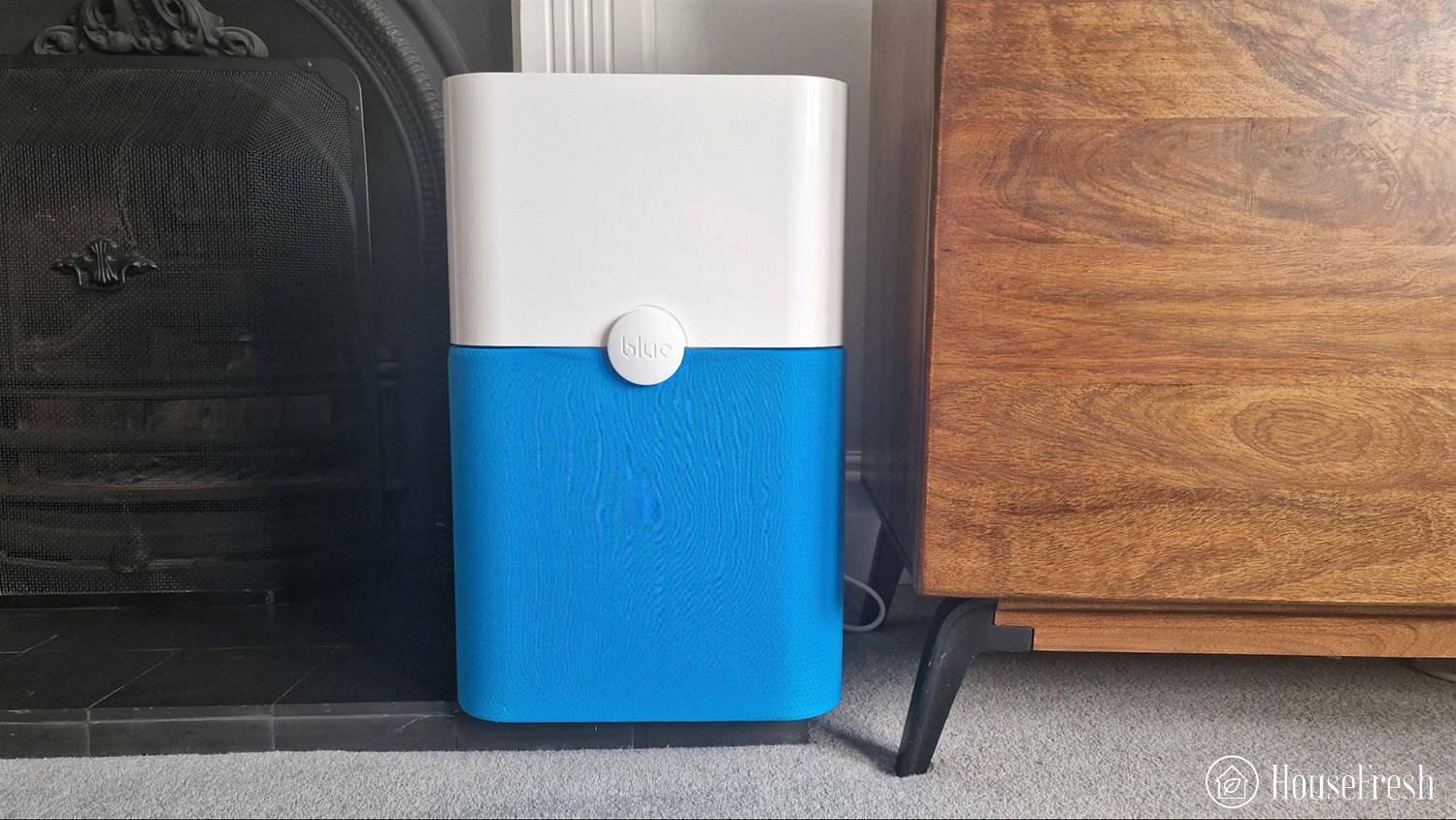
Alen BreatheSmart

If your kitchen is big and spacious, or if you have an open plan kitchen and the smells can spread through the house easily, then the Alen 45i would be my go-to choice. This unit has a powerful fan that can pull air from rooms up to 300 sq. ft.

But despite being powerful, it doesn’t take up too much space. The air intakes are conveniently located along the sides, allowing you to place this unit close to the wall. This is especially handy when you’re bustling around the kitchen; it will spare you the hassle of navigating around a bulky object in the middle of the room. 

What we really like

The intuitive control panel has a color-coded air quality indicator that provides real-time updates on your home’s air condition that is easier to see from anywhere in the kitchen
High level of pelleted activated carbon when you choose the Pure filter option
Setting the mode will save even if you unplug it – we don’t see this with other brands.
Amazing air cleaning performance — cleaned our test room in 34 minutes
Auto-mode that adjusts fans based on the amount of particles detected by the onboard sensor
Lifetime warranty when you have an active filter subscription

What we think could be better

Filters do cost a little more but do last up to 12 months
Higher price for extra features and better build quality than budget air purifier brands

For those new to Alen air purifiers, they have various filter options to choose from: Pure, Fresh, OdorCell and Smoke filters. The Pure filter is the only one without activated carbon, while the Smoke variant may be overkill for everyday kitchen odors. Opting for Fresh or OdorCell filters should suffice. My recommendation, though, would be to go for the OdorCell filter to tackle even the most stubborn kitchen smells. 

The 45i also has built-in ionizing technology, which can further enhance its performance. In our tests, employing the ionizer with HEPA and activated charcoal filters allowed the 45i to clear our test room in just 34 minutes. However, I prefer to trust the 45i’s capabilities without the ionizer, which is more than sufficient on its own.

Clean air delivery rate (CADR):– Top speed PM1 CADR: 198 cfm
– Sub-45 dBA PM1 CADR: 123 cfm
– AHAM PM2.5 CADR: 207.9 cfm (dust)
Filter technology:True HEPA H13 filter with activated carbon pellets + Ionizer technology
Recommended room size:297 sq. ft. (5 air changes per hour)
Dimensions:25H x 15W x 8.5D inches (63.5H x 38.1W x 21.6D cm)
Weight:15 lbs (6.80 kg)
Noise level in decibels from 3 ft. away:Speed 1: 36.2 dB
Speed 2: 42.2 dB
Speed 3: 51.1 dB
Speed 4: 56.1 dB
Electricity consumption in watts:Standby: 0.8 watts
Speed 1: 4.4 watts (5.1 w/ionizer)
Speed 2: 9.3 watts (10.1 w/ionizer)
Speed 3: 22.3 watts (22.8 w/ionizer)
Speed 4: 38.5 watts (38.7 w/ionizer)
Filter lifespan:9-12 months
Manufacturer’s warranty:Lifetime (with product registration & active filter subscription)
Country of origin:United States
Country of manufacture:China

Read our full review

Other units we tested but don’t recommend for kitchens and cooking odors

  • Levoit Core 300We are a big fan of the older Core 300, but its lack of auto-mode means it’s not good for occasional pollutants in the kitchen.
  • AROEVE MK01: This is one of the most popular air purifiers on the market, but in our testing, it was nearly useless at removing pollutants from our fairly small test lab.
  • Molekule Mini: It has a great design, but it failed to perform well in our home lab performance test, and it ran as high as 68dB, so far too loud for use in a kitchen setting.
  • Okaysou AirMax 10L Pro: Another best-seller thanks to its influence on TikTok campaigns, but in our testing, it fell short as it was much slower than we would expect based on its stated CADR. Their marketing for their 5-in-1 filter system is incorrect, making us trust the brand far less than others we have featured.
  • Blueair Blue Pure 411+: This small air purifier was fairly quick at removing pollutants, but we don’t like that you are forced to use an ionizer as part of its HEPASilent technology. We also don’t like that they have created a totally new version that doesn’t use the old filters.

What to look for in an air purifier for your kitchen

Many studies show that kitchens are a significant source of indoor pollution, including smoke, VOCs, nitrogen dioxide and particulate matter. It’s worth taking the time to ensure that the air purifier you choose will do an excellent job of keeping your air clean whenever you cook.

Health experts warn that long-term exposure to poor-quality air can negatively impact your health, so you must prioritize air purification.

To find the right air purifier for your kitchen, you need to consider the size of your cooking space, the type of filter and any features you can’t live without.

1. Go for high-quality HEPA and activated carbon filters

High-efficiency particulate air (HEPA) filters are the gold standard in ultrafine particle filtration. They have been shown to remove 99.97% of air particles within a given area. 

Coway Airmega 250 HEPA Filter

However, HEPA technology won’t filter odors, which are chemicals or gasses in nature. That’s what activated carbon deals with, through a process called adsorption

As such, going for a device that has both filters installed will guarantee maximum efficiency. 

2. Consider the size of your kitchen

One of the most overlooked factors when buying an air purifier is the size of the room where the device will be used. You want to invest in a product that will operate at optimum efficiency, notwithstanding how much energy the device will consume.

Levoit Vital 100 Kitchen

A common mistake is opting for an undersized air purifier for a given space. If the unit is not big or powerful enough, it will consume filters more than necessary, and the area won’t be thoroughly cleaned.

You should consider the air purifier’s Clean Air Delivery Rate (CADR) rating. The CADR rating measures how much clean air the unit can produce within a given time. It’s worth mentioning that CADR is an industry measurement, but some manufacturers don’t share this data, so it’s worth looking at independent tests like those we do here at HouseFresh.

The standard practice is an air purifier with a CADR rating that matches at least two-thirds of the kitchen space. So, for example, if your kitchen has an area of 240 square feet, you can go for a device with a CADR rating of at least 160.

Alternatively, every big brand in the air purifier space will give you a suggested room size for every unit based on two air changes per hour, so ensure it matches your specific needs.

Feel free to input your kitchen size into our calculator below and it will output the CADR you should aim for if you want to achieve 4.8 air changes per hour:

3. Think about an onboard air quality sensor that allows for smart features

If you’re cooking, you are unlikely to be able to move away from the stove to turn on your air purifier or change the fan settings. 

Air purifiers with an inbuilt air quality sensor can get to work automatically in the background as soon as they detect a change in the quality of the air — for example, the moment when you open the oven and a cloud of smoke fills in the kitchen.

Levoit Core 300S Controls

Some smart air purifiers also allow you to control the device from a mobile app, giving you a better understanding of your kitchen’s air quality in real-time.

4. Consider the initial unit cost but factor in replacement filter and running costs 
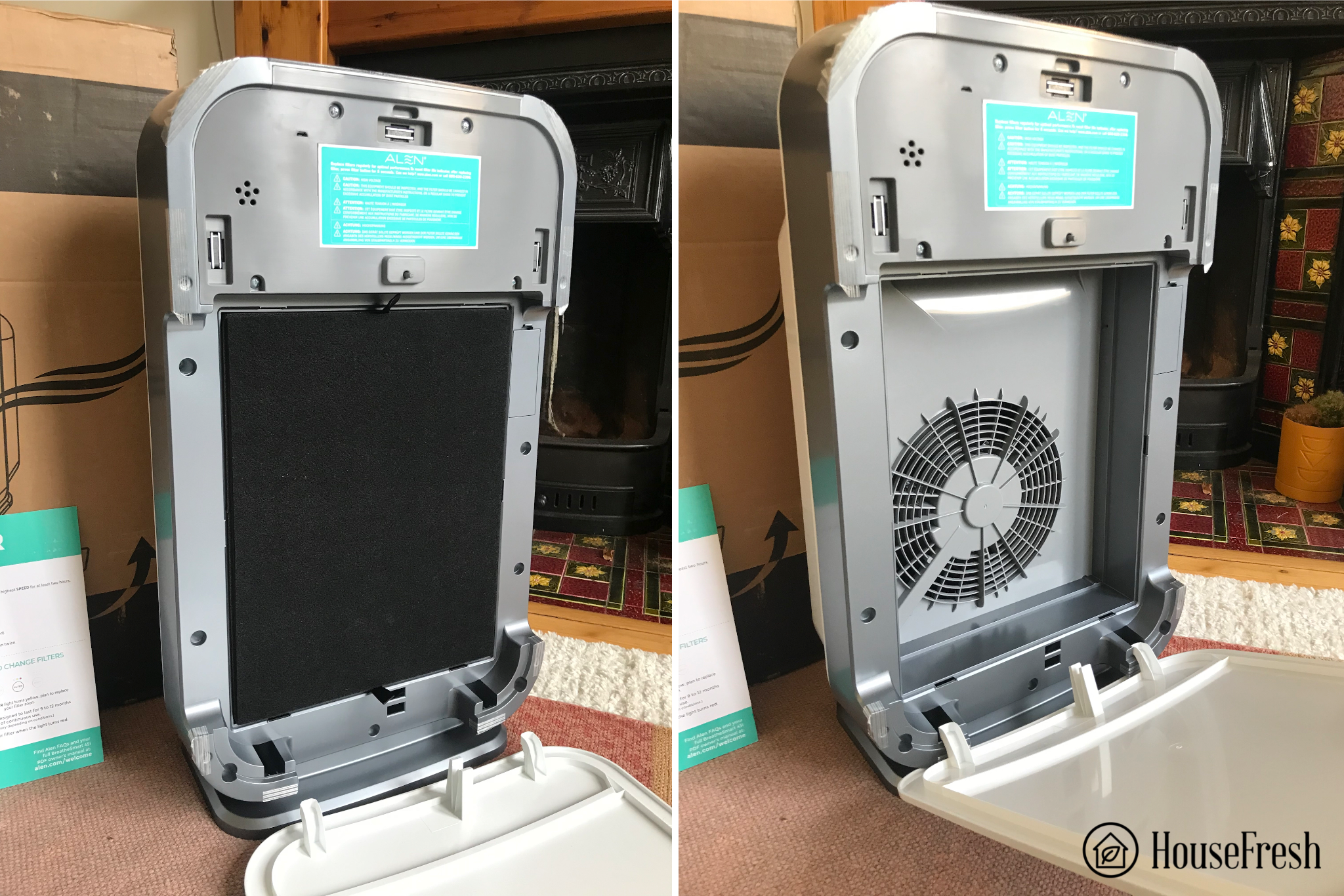
Air purifiers can be a significant investment. So, don’t just focus on the device’s initial price; consider all associated costs. This includes ongoing expenses for replacement filters and the energy required for operation.

Our specifications table details each unit’s recommended filter replacement frequencies and operational expenses.

Common questions about air purifiers for cooking odors

There isn’t a requirement to put your air purifier in a specific location in your kitchen, but make sure the vents are not blocked, so keep it at least two inches from the nearest wall.

We recommend having smaller units on a countertop, but large units must sit on the floor. 

A kitchen hood serves a specific purpose: swiftly removing smoke, steam, grease and cooking odors directly outside. This maintains air quality and helps prevent grease buildup on kitchen surfaces.

A dedicated kitchen hood is a go-to choice when ensuring optimal kitchen ventilation, particularly in heavy smoke and grease situations. In such cases, combining an air purifier with your kitchen hood can offer a comprehensive approach to improving the air quality in your kitchen space.

However, if you don’t have a kitchen hood, an air purifier can step in to assist. It will eliminate lingering cooking odors and smoke particles and capture any airborne contaminants that might be released during cooking. You can also use an air purifier in combination with an existing kitchen ventilation solution to improve how fast you can clean the air of tiny particles.

Of course, you can tailor the use of your air purifier to suit your home’s specific air quality needs. If you’re primarily concerned about managing odors, you can choose to run it only during specific times or even keep it off when not needed. 

However, we recommend running an air purifier continuously for the best results. This ensures that your indoor air remains consistently clean and free from pollutants, enhancing the overall air quality in your home. Especially if you have pets, live in an area with poor air quality, or deal with high pollen levels.

Eliminating unpleasant odors is crucial, but it’s equally important to consider the potential health effects of continuous exposure to Volatile Organic Compounds (VOC) from cooking emissions. These can lead to unwanted side effects, including:

  • Dizziness
  • Fatigue
  • Lack of coordination
  • Chest tightness
  • Rashes
  • Shortness of breath

Numerous academic studies have also shown that chemicals from smoke and cooking on gas can cause significant health issues, especially for those using gas stoves

Why should you trust HouseFresh

I have personally tested over over 70 air purifiers since 2020, and our team uses our recommended air purifiers in their homes so we can provide updates for long-term usage. Unlike most other people writing about air purifiers, we share all our performance data via our in-depth reviews for every single air purifier we include in our best guides for specific issues. In this case, it’s all about what air purifier is the best for the kitchen to remove occasional odors. 

We don’t have a problem saying if a unit fails to live up to the hype or even when a low-priced generic device blows us away with its performance. Our ultimate mission is always to help more people improve their home indoor air quality.

If ever any specific issue we haven’t answered or want to report how one of our recommended units performed in your home, email me directly: danny@neomam.com

The only air purifiers + fan combos we recommend

Dyson TP07 Editorial

As we enter the summer and temperatures begin to soar, you might be tempted to dig your old desk fan out from the cupboard, but with rising temperatures, air pollutants intensify and become more persistent. Whether that’s increased pollen count, rampant wildfire smoke or unwanted odors from sweltering garbage, hotter days significantly affect our air quality.

Luckily, there are some good devices that offer both fan functions with air filtration.

In this article, I will share with you my picks for the best air purifier + fan combination units on the market today, based on hours of testing devices in our 728 cubic feet test room.

how we test
How we test air purifiers

Read our full testing methodology.

Read on to find out which air purifier + fan combos are worth your money — and which ones we tested but didn’t make the cut.

1. Best overall: Dyson TP07

The TP07 cleaned the air in our test room faster than any other air purifier + fan combo devices I have tested to date.

Dyson TP07 Living Room

The Dyson TP07 comes with auto mode and full app support via the Dyson link app. It is a solid fan with good air cleaning performance, but it is nowhere near as effective at cleaning the air as devices that are 100% air purifiers.

Dyson TP07 Screen

The LCD display screen at the front shows information about air quality, temperature, humidity, function modes and filter levels:

Dyson TP07 Remote control 2

To change fan speeds and modes, you need to use the remote control as the only button available is a power button.

Dyson TP07 AQ Sensor

It comes with onboard air quality sensors, which make it possible for the TP07 to react to pollutants in the air.

CONS

With an estimated PM1 CADR of 94 cfm, the TP07 will only give you 5 air changes per hour in rooms no larger than 141 sq. ft.
It comes with a high initial price and filter replacement costs than other combo units.
It doesn’t come with app support but you do have a remote control.

PROS

The filter has been certified as an H13 HEPA and includes a small amount of activated charcoal filter for tackling mild odors.
It is a great looking device that is not too heavy, so you can easily move it from room to room.
It comes with auto-mode and app support that is best in class.
It offers a much better air cleaning performance than other air purifier + fan combos we tested.

Clean air delivery rate (CADR):– Top speed PM1 CADR: 94 cfm
– Sub-45 dBA PM1 CADR: 58 cfm
– AHAM PM2.5 CADR: 89.8 cfm (dust)
Filter technology:HEPA H13 and activated carbon filter
Recommended room size:141 sq. ft. (5 air changes per hour)
Dimensions:7.7 x 8 x 41 inches (19.56 x 20.32 x 104.14 cm)
Weight:11 lbs (4.99 kg)
Noise level from 3 ft. away:Speed 1: 38.9 dB
Speed 2: 44.9 dB
Speed 3: 50.2 dB
Speed 4: 56 dB
Electricity consumption in watts:Standby mode: 0.9 watts
Speed 1: 3.5 watts
Speed 2: 4.9 watts
Speed 3: 10 watts
Speed 4: 22.3 watts
Speed 5: 28.9 watts
Filter life:12 months
Manufacturer’s warranty:2-year parts and labor warranty
Country of origin:UK
Country of manufacture:Malaysia

Read our full review

2. Best budget option: Coway Airmega Aim

For $150, you get a solid fan feature in a compact body with slightly less air cleaning power than the Dyson TP07.

Coway Airmega Aim Sofa

Our expectations for the Airmega Aim were high, considering it’s the first fan and air purifier combo unit from Coway, a Korean manufacturer known for making great air purifiers. We’re pleased to report that its air cleaning performance is fair, especially considering its small size and cheap price (under $150).

The Aim cleaned our 728 cubic feet test room in 72 minutes at full speed. This is only 10 minutes slower than the much pricier Dyson TP07 but faster than the Dyson HP04 (92 minutes).

We estimate a PM1 CADR at top speed of 80 cfm, so it will give you five air changes per hour in small rooms up to 120 sq. ft.

Coway Airmega Aim Rotation reduced

Plus, the base can rotate sideways and the cannon-like fan can be adjusted vertically.

Coway Airmega Aim AQI

It has an air quality sensor, enabling auto-mode if you want your Aim to react to the levels of air pollutants.

What we really like

Auto-mode so it can just use the air purifier function when it detects pollutants in your air
Performance at top speed hit same as the IKEA FÖRNUFTIG.
Low initial price up to $150 for an air purifier and fan function
OEM filters are fairly priced

What we think could be better

Fan function means a higher price so you could get more cadr for the same price if you go for a non combo unit
No smartphone app support.

For those on a budget looking for one device that can provide both a fan and a decent level of air cleaning, the Coway Airmega Aim is worth considering. The price does go up during hotter months, so if you know you will need it in summer, then it’s worth buying it earlier or later on in the year.

Clean air delivery rate (CADR):– Top speed PM1 CADR: 80 cfm
– Sub-45 dBA PM1 CADR: 66 cfm
– AHAM PM2.5 CADR: 95 cfm (dust)
Filter technology:Cylindrical bonded True HEPA filter with activated carbon
Recommended room size:120 sq. ft. (5 air changes per hour)
Dimensions:20.87 x 24.8 x 14.96 in (53D x 63W x 38H cm)
Weight:39.6 lbs (17.96 kg)
Noise level in decibels from 3 ft. away:Speed 1: 36.2 dBA
Speed 2: 47.3 dBA
Speed 3: 61.7 dBA
Electricity consumption in watts:Standby: 0.2 watts
Speed 1: 13 watts
Speed 2: 25.1 watts
Speed 3: 35.1 watts
Filter lifespan:8 months
Manufacturer’s warranty:10 years
Country of origin:South Korea
Country of manufacture:China

3. Best humidifier + fan + air purifier combo: Dyson PH03

Need a humidifier, a fan and an air purifier? Enter the Dyson PH03, which brings all three functions in just one device.

Dyson PH03 Living Room

PRICE on amazon PRICE on DYSON

The Dyson PH03 is a three-in-one device that can be used as a fan, an air purifier and a humidifier. When it comes to its air purifier function, the PH03 will give you the same air cleaning power you will get with the TP07 at the top of this list.

Based on our particle removal test, we estimate a PM1 CADR of 94 cfm, which will be good enough to provide five air changes per hours in rooms no larger 141 cfm.

Dyson PH03 Water Tray

As expected from Dyson, it doesn’t come cheap but for those of you are looking for an air purifier with a fan and a humidifier function, then this is the best option available today.

CONS

It is not cheap, especially considering its air cleaning performance is not nearly as good as that of pure air purifier devices that cost a third of the price.
Filter costs are higher than what you see with other air purifier manufacturers.

PROS

No other combo unit offers a humidifier, fan and air purifier as an all-in-one device.
It is a great-looking devices, as we have come to expect from Dyson.
High-quality HEPA and activated charcoal filters
It comes with a mode to make it easy to clean the water reservoir. 
It offers smartphone connectivity through the Dyson link app, and you also get a remote control.

Clean air delivery rate (CADR):– Top speed PM1 CADR: 141 cfm
– Sub-45 dBA PM1 CADR: 99 cfm
– AHAM PM2.5 CADR: 89.8 cfm (dust)
Filter technology:H13 HEPA with carbon-impregnated fabric
Recommended room size:141 sq. ft. (5 air changes per hour)
Dimensions:36.33H x 11.02W x 12.22D inches (92H x 28W x 31D cm)
Weight:18 lbs (8.16 kg)
Noise level in decibels (measured from 3 ft. away with a sound level meter):Speed 1: 35.1 dB
Speed 3: 37.7 dB
Speed 6: 43.8 dB
Speed 8: 48.4 dB
Speed 10: 54.3 dB
Electricity consumption in watts (recorded with an electricity usage monitor):Standby mode: 0.6 watts
Speed 1: 6.2 watts
Speed 3: 7.1 watts
Speed 6: 12.4 watts
Speed 8: 17 watts
Speed 10: 41.7 watts
Filter life:12 months
Manufacturer’s warranty:2 years
Country of origin:UK
Country of manufacture:Singapore/Malaysia

Read our full review

Other air purifier + fan combos we have tested

Below is a list of combination units I have tested but that haven’t made my shortlist of top recommendations:

ULTTY CR021 Combo logo

ULTTY CR021

The ULTTY CR021 offers some of the features of the Dyson devices without the big price tag.

However, its air cleaning performance is poor compared to its fan performance, needing over two hours (113 minutes) to clear our small test room of pollutants compared to the 62 minutes it took the Dyson TP07.

Read our full review

Dyson HP04 Pure Hot Cool Living Room logo

Dyson Pure Hot + Cool HP04

This is a three-in-one device from Dyson, which features not only both fan and air purifier functions but also a heater function.

Unfortunately, its air cleaning performance lagged behind the other Dyson combos on this list and this can be a deal-breaker, especially considering its high price.

Read our full review

Blueair Pure Fan Auto Front

Blueair Pure Fan Auto

The Blueair Pure Fan Auto is an air purifier and fan combination unit manufactured by Blueair with excellent air cleaning performance and an okayish fan function.

It looks awesome and is compact, so it’s easy to move it around the house. It is a pity that it has been discontinued, to be honest.

Read our full review

What to look for in an air purifier + fan combo unit

There are a few things to consider when finding the right air purifier/fan combo for your home.

1. Does it use HEPA filtration?

The main function of any air purifier is its ability to remove tiny particles measuring less than 10 microns that can enter our body through our lungs. The best technology for removing these tiny particles is HEPA, so you will want to look for a device that utilizes HEPA filters.

Dyson HP04 Pure Hot Cool HEPA Filter

The best grade of HEPA for residential air cleaners is HEPA H13, which can block 99.97% of particles measuring 0.3 microns in a single pass. Be aware that HEPA is often used in marketing without evidence, so be sure to look for independent lab reports like those that Dyson publishes if you are concerned about knowing if HEPA H13 is used or not.

2. Is it powerful enough to clean the air in your room at list multiple times per hour?

A HEPA filter alone won’t be able to keep your room clean unless it can also move enough air through the filter. CADR is the industry standard for understanding how much air can be cleaned, and you need to ensure that the CADR matches the size of your room.

While looking at recommended room sizes is good, you should also use the tool we built to see how much CADR you need for any room size to achieve 4.8 air changes per hour – which the EPA recommends for portable air purifiers.

Just enter your room size and see what CADR you need

You will notice that many of the air purifier fan combos don’t have the required CADR level for larger rooms, so be aware of that if that is your primary reason for getting a device like this. In most cases, it’s much better to get an air purifier-only device that can provide a much higher CADR to keep the air clean in a large space.

3. Do you need activated carbon?

HEPA alone won’t help against gasses and odors. If you just need a device to remove pollen then you will be fine with HEPA only, but if think you might need help with odors and gasses be sure to choose a unit that also includes activated carbon.

Dyson HP04 Pure Hot Cool Carbon Filter

4. Is the fan powerful enough?

One thing we saw during our testing and reviewing is that many of the combo fan air purifiers are either good at air purifying or good at being a fan. Be sure to look at air flow levels for each device as some units, like the Blueair Fan auto, are good at cleaning the air but are not as good when using its fan function.

Blueair Pure Fan Auto Fan speed test

Wrapping up

The main purpose of an air purifier fan combo is to cycle and filter out unhealthy air continuously while also distributing fresher air, so when choosing the right air purifier + fan combo device, you can get the best of both worlds.

I hope you’ve found my guide useful. If you decide to buy any of the devices I mentioned and want to support the work we do here at HouseFresh, please use the links in the buttons for each unit — we will get a small commission at no extra cost to you that will fund future air purifier tests.

If you have any questions about any of the air purifier + fan combos I discussed above, please drop them in the comments below and I will get back to you as soon as I can.

The best car air purifiers, based on our tests inside a Tesla Model 3

Westinghouse 1804 Car Panel

Every ride in your car includes various decisions that protect your health. Putting on your seatbelt, watching your speed and ensuring the vehicle is well-maintained are all prerequisites for a safe journey. But the air you breathe when driving is often overlooked despite roads being a hotspot for air pollution.

It may come as no surprise to hear that burning gas and diesel generates a ton of harmful pollutants. Whether carbon monoxide, ultrafine PM2.5 and PM10 particulates, or even VOCs like benzene and formaldehyde, many nasty particles are emitted by vehicles and make their way into our cars, posing a threat to drivers and passengers.   

And it’s not just direct respiratory health issues that you should be worried about; a study by Lung showed that adults living close to a high-traffic road have increased risks of dementia.

Although some newer models of cars, such as high-end Teslas and Volvos, come with a HEPA filter as part of the system to keep your air clean, most cars only use a pollen filter that will be unable to protect against smaller particles. That’s why I suggest adding an air purifier equipped with HEPA filters to your car’s arsenal. 

You should also invest in a purifier that contains activated carbon to combat VOCs such as formaldehyde and benzene. This adsorbs gaseous pollutants while also removing odors as a secondary benefit. 

Sadly, most lists of the “best car air purifiers” are nothing more than an updated list of the best-selling devices on Amazon.com. But here at HouseFresh, we don’t recommend any device without testing it thoroughly. We bought all the air purifiers on this list with our own money to stay as unbiased as possible.

For each of the car air purifiers we recommend in this list, we tracked how long it took to remove all the PM1 particles of incense smoke from inside our Tesla Model 3, which has a volume of 97 cubic feet. We also recorded electricity consumption and noise levels generated.

If you don’t have much time to go through my full article, then here are the main takeaways:

Staff picks: Top 3 air purifiers for cars

👑 BEST OVERALL💰 FOR TIGHT BUDGETS🛋️ FOR SMALL CARS
IQAir Atem CarSmart Air QT3Westinghouse 1804
IQAir Atem Car 1Smart Air QT3 CarWestinghouse 1804 Car Panel
Air cleaning speed37 minutes43 minutes47 minutes
CADR rating39 CFM (66 m3/h)24 CFM (40.7 m3/h)14.7 CFM (24 m3/h)
Filter technologyHyperHEPA plus activated carbonHEPA filter with an 800-hour lifespan True HEPA and NCCO reactor
Max room size150 sq. ft.12.9 sq. ft.100 sq. ft.
Weight8.25 lbs (3.74 kg)1.375 lbs (0.624 kg)2.12 lbs (0.96 kg)
Our reviewIQAir Atem Car reviewSmart Air QT3 reviewWestinghouse 1804 review
PricePrice not available$44.99 – $47.99$189.99
  1. In our Tesla Model 3, we light an incense stick to generate particle pollution and VOCs.
  2. We set up our trusted Purpleair Indoor Sensor with the latest Bosch gas sensor to track levels of PM1ug/m3, PM2.5ug/m3 and PM10ug/m3 and VOCs in the air.
    Testing QT3 in Tesla
  3. We switch the air purifier to its highest speed and measure how long it takes to get the air quality in the cabin down to PM1 level to 0.
  4. We then repeat this test inside our home lab of 728 cubic ft to see how good the unit is at cleaning the air in a small room.
    purpleair
  5. We use an energy meter to measure precisely how much electricity is used when running the unit at the lowest and highest fan speed settings.
    How Much Energy Does an Air Purifier Use
  6. We track sound levels emitted by the air purifier at different fan speeds with the help of a commercial sound meter.
    sound meter

We used the data from our car experiment to look beyond the marketing hype to truly identify what is the best car air purifier right now.

With a wide range of air purifiers on the market, finding the ideal unit for your car isn’t always easy. In this article, I’ve highlighted four options across a range of budgets, styles and filtration methods:

Portable Air Purifiers Comparison

1. Best option for large vehicles: IQAir Atem

If budget is not a concern, I would recommend the IQAir Atem regardless of the size of your car because it is the best-performing unit we’ve tested that doesn’t use an ionizer function.

IQAir Atem Car 2

PRICE on amazon PRICE on IQAIR

Let’s get the downside of this unit out of the way – it costs $399.99. Yes, this falls in the same price range as many whole-house air purifiers, so it isn’t a budget option. But it is made by Swiss-based IQAir, one of the world’s most well-respected air purifier manufacturers and the Atem takes the mantle as the most powerful unit on this list, with a CADR score of 39 CFM and cleaned our Tesla Model 3 in the fastest time of all the air purifier on the list at 37 minutes.

What we really like

The largest Activated Charcoal and HEPA filters, with no ozone production at all
It can be attached to the back of the driver’s seat to target the breathing zone directly
Manufactured in Germany — I expect this unit to last for many years
A powerful unit considering its portability — it cleaned our Tesla Model 3 in just 37 minutes

What we think could be better

No rechargeable battery pack — so it can’t be used outside the car
Power switches off to save car battery after 30 minutes — I wish there was an option to disable this

I was a big fan of the IQAir’s flagship purifier, the Healthpro Plus, (which is the primary unit I use at home in our large open hallway). This is because their HyperHEPA filters offer the most comprehensive protection on the market and is the same technology that IQAir uses in the Atem Car 

When you open up the IQAir Atem,  you can feel the quality of the HEPA filter, which is also impregnated with activated carbon, so it can also deal with gasses and odors, which is super important for pollution from traffic. 

If you have the funds, I would choose this car air purifier for my car. If $400 exceeds your budget, check out the rest of the units on this list.

HouseFresh rating:★★★★☆
Time to clean our Tesla Model 3 (with the device running at top speed):37 minutes  
Time to clean our 728 cubic feet test room (with the device running at top speed):1 hour and 55 minutes
Air purifier technology:HyperHEPA Plus Filter
Recommended room size (4.8 air changes per hour):150 sq. ft. for car mode
Clean air delivery rate (CADR):Dust: 39 CFM
Dimensions (in inches / in cm):17.7H x 9W x 17.7D inches (29H cm x 29W x 10D cm)
Weight (in pounds / in kg):5.2 lbs (2.4 kg)
Filter life:1 year
Noise level in decibels (measured from 3 ft. away with a sound level meter):Speed 1: 35.5 dB
Speed 2: 40.5 dB
Speed 3: 58.2 dB
Electricity consumption in watts (recorded with an electricity usage monitor):Standby mode: 0.4 watts
Speed 1: 1.7 watts
Speed 2: 3.8 watts
Speed 3: 10.81 watts
Estimated running cost (electricity consumption + official filter replacement):$106.46 per year
Cost per CADR cfm (based on dust CFM as reported by AHAM):$10.23
Manufacturer’s warranty:2 years
Country of manufacture:Switzerland and Germany

Read our full review

2. Best option for small vehicles: Westinghouse 1804

The 1804 boasts a powerful air cleaning power thanks to its combination of HEPA filtration and an NCCO reactor, which utilizes a form of ionization to supercharge its performance.

Westinghouse 1804 Car Panel

PRICE on amazon PRICE on EBAY

The Westinghouse 1804 combines a HEPA H13 filter with their version of an ionizer called an NCCO reactor. In the old days, these ionizers generated a lot of ozone and could lead to further air quality issues. As used by Blueair and other leading manufacturers, this new type removes any ozone before it leaves the unit, and it is certified by CARB. I would still avoid any sort of ionizer if you suffer any issues with asthma, but the Westinghouse 1804 has passed both CARB, cETL and UL867 ozone standard testing. 

The benefit of the HEPA combined with the NCCO means that the Westinghouse 1804 can also deal with VOCs and gasses from traffic pollution, making it a great air purifier for the car. In our tests, it was only 10 minutes slower than the IQAir Atem, removing all pollutants from our Tesla Model 3 in 47 minutes.

What we really like

Portable with up to eight hours of use
Powerful cleaning power with the NCCO and HEPA used in combination
The design comes in a variety of colors
It is easy to move around with the handle

What we think could be better

The NCCO reactor may put off some users who prefer to avoid any sort of ionizer functionality
The charging port is awkward to access 

Although this isn’t the smallest option on our list, this extra size allows more powerful fans to circulate your car’s air more effectively. It is also one of the more stylish portable air purifiers on the market, coming in a range of colors and with a nice finish to the exterior.

The Westinghouse 1804 comes with a 3,000 mAh lithium-ion battery, providing up to eight hours of use on a single charge, which is good enough for even the longest of drives. Filter replacement costs also offer bang for your buck, with a set of 4 HEPA filters costing $31.99, making each filter cost just $8. 

HouseFresh rating:★★★☆☆
Time to clean our Tesla Model 3 (with the device running at top speed):47 minutes  
Time to clean our 728 cubic feet test room (with the device running at top speed):4 hours and 40 minutes
Air purifier technology:True HEPA and NCCO
Recommended room size (4.8 air changes per hour):23 sq. ft.
Clean air delivery rate (CADR):Estimated: 15 CFM
Dimensions (in inches / in cm):6.3L x 6.3W x 3.5H inches ( ‎28.39 x 21.41 x 18.28 cm)
Weight (in pounds / in kg):2.12 lbs (0.96 kg)
Filter life:3-4 months
Noise level in decibels (measured from 3 ft. away with a sound level meter):Speed 1: 36.7 dB
Speed 2: 39.8 dB
Estimated running cost (electricity consumption + official filter replacement):$27.81 per year
Cost per CADR cfm (based on dust CFM as reported by AHAM):$0.37
Manufacturer’s warranty:3 years
Country of manufacture:China

Read our full review

3. Best budget option: Smart Air QT3

With a CADR score of 21 CFM, this air purifier from Smart Air provides high-end performance at a budget price.

Smart Air QT3 Car

U.S. PRICE UK PRICE

The travel version has a battery that lasts up to four hours, perfect for road trips or commuting. It also comes with a USB-C cable, so you can use an existing portable charger to keep it running longer when on the go.

The QT3 is an excellently designed purifier, being both highly portable and easy on the eye. Running costs won’t rack up too much either, with economical airflow keeping energy use down and filter replacements primarying $12.50 per unit when you buy in packs of two. If you have read any of my other reviews of Smart Air purifiers like the Blast Mini or the Smart Health S, you will know I’m a big fan of their devices and what they bring to the industry.

What we really like

Pure HEPA cleaning for less than $50
No ozone production at all 
Great design for use on the move
Battery lasts for up to four hours, plus the USB-C cable can be used to power it on the go

What we think could be better

No way to deal with VOCs and odors as only uses HEPA
Needs more places to purchase, currently missing from Amazon.com

The only major downside is that the Smart Air QT3 only uses HEPA filtration so it won’t protect against odors or VOCs. However, the benefit of this is that you don’t have to worry about any ozone production with just a tried and tested mechanical filter at work. 

Considering the cost, I was impressed that it could clean our Tesla Model 3 of all particulate pollutants in 43 minutes.

HouseFresh rating:★★★★☆
Time to clean our Tesla Model 3 (with the device running at top speed):47 minutes
Time to clean our 728 cubic feet test room (with the device running at top speed):4 hours and 27 minutes
Air purifier technology:HEPA filter made with polypropylene (PP) and polyester (PET) with an 800-hour lifespan 
Recommended room size (4.8 air changes per hour):12.9 sq. ft.
Clean air delivery rate (CADR):Dust: 21 CFM
Smoke: 21 CFM
Dimensions (in inches / in cm):5.9L x 5.7W x 7.1H inches (15cm L x 14.5cm W x 18cm H)
Weight (in pounds / in kg):1.375 lbs (0.624 kg)
Filter life:6 months
Noise level in decibels (measured from 3 ft. away with a sound level meter):Speed 1: 36.3 dB
Estimated running cost (electricity consumption + official filter replacement):$39.72 per year
Cost per CADR cfm (based on dust CFM as reported by AHAM):$0.41
Manufacturer’s warranty:1 year
Country of manufacture:China

Read our full review

4. Pure Enrichment PureZone Mini Air

Pure Enrichment PreZone Mini Air provides HEPA and Activated Carbon filtration for less than $50. A CADR score of 10 CFM will not break any records for air cleaning, but it will provide protection for those in smaller cars.

Pure Enrichment PureZone Mini Car

PRICE on amazon PRICE on EBAY

Thanks to its lightweight and compact design, this unit is undoubtedly an excellent option for air purification on the go. The battery on this air purifier lasts up to 12 hours, depending on the speed you use, so there is plenty of juice for longer commutes. The USB cable also makes charging the battery more convenient, but it’s worth noting this option isn’t compatible with USB-C charging. 

What we really like

Battery allows you to use this air purifier anywhere
No ionization technology — just pure HEPA and Activated Carbon, so zero ozone
Easy handle at the top will enable you to move it around quickly
Filter replacements are cheap, with genuine filters costing just $9.99 

What we think could be better

Underpowered for any space larger than a small-sized car — definitely not suitable for an SUV or RV
Not as quiet as the manufacturer suggests, as you will need to run this unit at higher (and louder) speeds to see results

The PureZone Mini provides clean air in smaller cars. Still, I recommend getting a bigger unit if you want added versatility for public transport, hotel rooms, or home use. 

HouseFresh rating:★★☆☆☆
Time to clean our Tesla Model 3 (with the device running at top speed):3 hours and 41 minutes
Time to clean our 728 cubic feet test room (with the device running at top speed):6 hours and 49 minutes
Air purifier technology:Pre-filter, HEPA filter and Activated Carbon filter 
Recommended room size (4.8 air changes per hour):54 sq. ft.
Clean air delivery rate (CADR):Estimated: 10 CFM
Dimensions (in inches / in cm):8.5H x 2.7D x 3.3W inches / 21.5H x 6.8D x 8.8W cm
Weight (in pounds / in kg):0.27 kg / 0.58 lbs
Filter life:6 months
Noise level in decibels (measured from 3 ft. away with a sound level meter):Speed 1: 35.7 dB
Speed 2: 37.5 dB
Speed 3: 43 dB
Electricity consumption in watts (recorded with an electricity usage monitor):Standby mode: 0 watts
Speed 1: 12.1 watts
Speed 2: 7.5 watts
Estimated running cost (electricity consumption + official filter replacement):$29.44 per year
Cost per CADR cfm (based on dust CFM as reported by AHAM):$0.20
Manufacturer’s warranty:5 years
Country of manufacture:China

Read our full review

What to look for when buying an air purifier for your car

You can’t just use any type of air purifier in a car; it needs to be able to run off its own battery, a CAR 12v DC cable or even USB-powered if you have this feature in your vehicle. 

In most cases, the larger the HEPA filter, the better the performance, and we saw that in our Tesla Model 3 test with the largest unit from IQAir, the Atem was quicked at removing all the PM1 particles from the cabin air. 

What to look for in your air purifier:

1. True HEPA filtration

Does the air purifier you are considering use a True HEPA filter? True HEPA technology is highly effective at removing particles as small as 0.3 microns from the air – much smaller than the average mold spore, around 10 microns.

Variations of HEPA Filtration

2. Say no to ionizers

Avoid the ionizer units that directly plug into your cigarette socket like these:

Car Air Ionizer Recommended By Forbes

They are usually cheap, but they can cost you your health in the long run.

I am shocked to see major publishers and magazines (ahem, Forbes) recommend them, as these plug-in units are actually air ionizers. Ionizer technology is dangerous. Air ionizers emit ozone, harmful VOCs and fine particulate matter as a by-product:

how does an air ionizer work logo

You might be wondering about the Westinghouse 1804. Even though it does use a combination of a HEPA H13 filter and what they call, an NCCO reactor, this type of ionizing technology doesn’t generate ozone at the level plug-in air ionizers will. In the case of 1804, the air purifier itself removes traces of ozone from the air before it gets the chance to leave the unit, and that is why the Westinghouse 1804 achieved a CARB certification.

3. Activated carbon filtration

You will want an activated carbon filter as part of an air purifier for your car, as it is the only type of filtration that can successfully deal with odors. HEPA filtration won’t be enough as smells will pass right through a HEPA filter without being dealt with because they are gases and not particles. 

4. Suitable car cabin size

We tested all the air purifiers we recommended in this list in our Tesla Model 3, which measures around 97 cubic feet. If you have a much larger car and choose too small a unit like the Pure Enrichment PureZone Mini Air, you will find that it takes a very long time to remove pollutants from the air. That is why I recommend the biggest purifier on the list for large vehicles and RVs: the IQAir Atem Car.

5. Power source requirements

12-volt DC plugs are mandatory in all cars in the United States, so you should be able to use them in your vehicle. You need to check what your car will be able to handle better. If you end up buying a unit that plugs into your car via USB but you don’t have a USB port, then you may need an adaptor or a solid battery pack.

We found that having a battery pack to go with your portable air purifier allows for more extended usage once the onboard battery is emptied. Yes, the battery adds extra weight but it also means you can take your portable air purifier with you when commuting or to crowded spaces like an office. 

Here is a quick view of the power source of the four car air purifiers I recommend:

Power SourceTime to clean our tesla of PM1 pollutants*
IQAir Atem CarDC37 minutes
Smart Air QT3Battery-powered and USB 43 minutes
Westinghouse 1804Battery-owered and household plug47 minutes
Pure Enrichment PureZone Mini AirBattery-powered and USB 221 minutes

Common questions about air purifiers for your car

Some of the early air purifiers that plugged into the car’s cigarette lighter gave the industry a bad name as they generated ozone to clean the air, which can lead to health problems. Nowadays, most car air purifiers are as safe as those used in the home, but you will still want to avoid those cheap ozone-emitting ionizers as they are unlikely to do anything good for the air quality in your cabin.

It depends on the specific model, but smaller portable units can be placed in the cup holder, and larger units will need to be attached to the seat, like the IQAir Atem. Whatever you decide to do, ensure that the air vents are not blocked so that the fan in the air purifier can run continuously.

To remove smells, you must choose an air purifier with air filtration technology that can remove gasses like activated carbon or NCCO. A HEPA filter alone will only remove particles and won’t be able to remove odors, gasses or VOCs from the air.

Most cars are similar to rooms in our home but much smaller, so you can use a smaller unit you would need in your bedroom. Our performance tests show that air purifiers using HEPA filters can greatly remove tiny particles.

Cars are small, enclosed spaces that allow air from outside inside the cabin. This results in toxins, fumes and other pollutant particles beginning to fill the space, affecting all passengers and drivers inside. 

So much so, medical scientists advising the UK government have warned that air pollution is worse for children and the vulnerable inside a car than if they were to walk along the street. 

If you’re still not convinced or unsure whether your car is already filtering pollutants (as some newer Teslas do), you can always test your car’s air quality to determine if you need an air purifier. However, an accurate air quality monitor can cost as much as a small portable air purifier. 

Another good reason for getting an air purifier is to handle tobacco, vaping, or cannabis smoke. This helps if you’re a smoker or you ride with smokers and non-smokers alike. Even getting rid of the odor of fast food can make air purifiers worth it in the long run but do look for a unit that can deal with odors using an Activated Carbon filter or another sort of gas filter technology.

While most of us know that cars contribute to air pollution, few fully understand the dangers of these emissions to our health.

With little to no protection installed by car manufacturers, drivers and passengers are exposed to a range of toxic pollutants each time they go for a drive. These pollutants can vary greatly. 

The emissions created when burning fuel include particulate matter, carbon monoxide and nitrogen dioxide

These are fine enough to enter the lungs and play a role in severe respiratory issues and heart conditions

To that ‘new car smell,’ which despite being deemed as desirable, comprises a VOC concoction, including formaldehyde, benzene, toluene, xylene and acetaldehyde, all at levels dangerous to our health

A recent study published in the Cell Reports Physical Science found that exposure to this range of pollutants can increase our cancer risk.

Your car might already have a carbon filter, so upgrading this filter is one simple way to improve air quality. You can search your car model + cabin air filter and find lots of options. Bosch and other large companies make good quality versions that cost a little more but worth it. Be aware if air quality is very bad in your location, this cabin filter will need replacing. The amount of carbon in some of these filters is low, so they are unlikely to be able to do a lot for strong odors/gasses.

For more information, check out advice from the American Lung Association.

When driving, switch to recirculation when near polluting sources and then back to normal to pull in new, clean air.

Remove any car fragrances. They will release VOCs into the cabin, which we want to avoid.

Wrapping up

The average American drives just under an hour daily, so it makes sense that we want to keep the air inside our cars clean of any pollutants. 

With many outdoor pollutants capable of entering the car’s cabin, from poisonous carbon monoxide to irreparable pollen allergens, it’s wise to invest in an air purifier to keep you and your passengers breathing easily. 

To reap the best results, remember to ensure the purifier you choose comes equipped with HEPA and Activated Carbon filters while also being able to cover the space inside your vehicle. 

At HouseFresh, we have been reviewing air quality products since 2010. In all these years, we learned not to rely on manufacturers’ claims and the ever-so-glowing marketing materials. That is why we buy products with our own money, so we can write unbiased reviews after we’ve had enough time to evaluate air quality products in our home lab. Every unit we recommend has been thoroughly tested to assess its performance, energy consumption, and noise levels emitted in real-life environments. If you have any questions about our testing process for different types of air quality products, just drop us an email at danny@housefresh.com.

6 science-backed benefits of air purifiers

Levoit 600S VS Levoit 300S

According to manufacturer estimates, roughly one in four households in the USA own an indoor air purifier. This will come as no surprise because indoor air quality has become a concern for many of us in recent years. 

Plenty of scientific research shows that air purifiers significantly improve air quality. But some are still not sure. So, we hope to shed some light on the science to help you make an informed decision regarding this technology.

Read on to find out what we have discovered about the benefits of air purifiers.

1. Air purifiers help allergy sufferers by capturing allergens in the air, according to a study published in the Yonsei Medical Journal

Air Purifiers Benefit 1

The study revealed that an air purifier in the home reduced the amount of nitrogen dioxide and carbon dioxide by 60%. And these days, that’s crucial in the fight for cleaner air. 

A review article published in Frontiers in Environmental Science discovered that living in heavily populated areas can result in many outdoor contaminants inside the home, irritating anyone with respiratory problems. Moreover, a study in Environmental Health Perspectives shows that living close to main highways or airports can be linked to increases in respiratory illnesses and infectious diseases. 

An air purifier can help reduce the number of pollutants indoors by cycling the polluted air through multiple filters and expelling cleaner air back into the room.

Tip

When looking for a quiet air purifier, try purchasing one designed as recently as possible! The technology used to reduce noise has improved significantly over the last few years.

2. According to the EPA, HEPA filters can remove at least 99.97% of airborne particles with a size of 0.3 microns (µm)

This means they can easily remove pet dander and dust.

Air purifiers can help remove pet dander and dust, triggering allergies and potentially irritating respiratory systems. Dust and dust mites are two main causes of asthma attacks and although an air purifier can deal with airborne dust, it should be noted that they have minimal effect on dust mites, which live in bedding and carpets, not in the air. Pet dander is fairly large, so if you need to see what air purifier is best for pet dander.

They will, however, help reduce the number of enzymes and waste in the air that the dust mites produce.

According to a study in Allergy and Asthma Proceedings, pet dander is one of the major triggers for most people who suffer from allergies and asthma. Since most dust particles are less than five microns in size and pet dander measures roughly 2.5 microns, both are of such a size that any air purifier equipped with a HEPA filter can trap and filter them out.

3. Research in Plos Pathogens suggests that mold spores floating in the air can be as small as 4 microns, meaning an air purifier equipped with a HEPA filter can remove them

If you suspect mold in your home, having a HEPA-filtered air purifier should reduce the number of airborne mold spores. If you are treating the source of the suspected mold, then an air purifier may prevent further mold from growing by trapping any spores in the air before they can land and develop.

To find out more about how air purifiers can help with mold, check out what we think is the best air purifier for mold currently.

4. Research from Yonsei Medical Journal and the National Library of Medicine concluded that air purifiers could positively affect asthma patients’ health by filtering fine dust and microbes from indoor air

Smoke, dust and pollen can all trigger an asthma attack. In children, this can prove to be fatal. Smoke is hazardous for people living with asthma. Still, an air purifier should help monitor your home’s air quality and help limit exposure to harmful contaminants in the household air. Click here to read about suitable air purifiers.

The Environmental Protection Agency (EPA) has recommended that anyone with asthma avoid air purifiers that produce ozone. Ozone can irritate the lungs and make any asthma symptoms worse. We also do not recommend air purifiers that use this technology

5. Research from Cambridge University Hospitals shows that air purifiers help reduce infection

At the height of the second wave of the Covid pandemic in January 2021, they found that when air purifiers were installed in the Covid wards, almost all traces of any airborne Covid virus along with other viruses, fungi, and bacteria known to cause infections had been removed.

Air Purifiers Benefit 5

A consultant with Cambridge University Hospitals, Dr. Matthew Butler stated: 

We know now that air filter machines can reduce the number of infectious particles in the air. We don’t know how much that reduction translates into our risk of getting sick. For instance, how much of any pathogen must be inhaled or exposed to infect us?

The air purifiers used in the research were all equipped with medical-grade HEPA filters. Home users can obtain similar filters for many air purifiers available today as long as the specifications show that HEPA filters are installed or can be used.

6. A study published in the National Library of Medicine recommends Activated Carbon filters to remove odors

We all know that occasionally there will be times when our noses pick something up that shouldn’t be there. Odors can build up in the home for no apparent reason. For example, if you live close to an airport, you may get the occasional whiff of aircraft fuel inside the home. Leftover food, kitchen sink drains and, let’s not forget, the bathroom can all produce strange or unpleasant odors.

Luckily, a good-quality air purifier can get rid of them. Units that have activated-carbon or charcoal are the best for removing odors. A bonus with these filters is that they are often washable, so you can renew their “odor-removing properties” and reuse them to keep the air in the home fresh.

Final thoughts

If you are weighing up the pros and cons of having an air filter in your home, remember that different air purifiers will produce varied results and benefits based on their specifications and the filter(s) incorporated in them. True HEPA filters remove more airborne particles from the indoor air and should help reduce allergy and asthma symptoms. 

The best-performing air purifiers that won’t generate ozone

Levoit EverestAir Front Design

Many air purifiers on the market boast about a different kind of air cleaning technology, that supercharges (or outperforms) the ability of the usual filters to remove harmful pollutants from your air. When reading in between the lines, you will find mentions of ‘negative ions’ or ‘electrostatic precipitation.’ You guessed it, I’m talking about air purifiers with ionizer functions.

Ionizers were more popular in the early 2000s, right up to the point when they were found to produce dangerous ozone levels. In 2010, rules were put in place that meant all air purifiers had to be tested and meet CARB-certified standards of less than 0.050 parts per million (ppm) or 50 parts per billion (ppb).

Even when air purifiers meet these standards, units with ionizers can still produce levels of ozone as a byproduct that can be harmful to those sensitive to this gas. For context, the modern air purifier that produces the highest amount of ozone (as per Energy Star) is the AirDog X5, which produces 28 ppb. 

So, while an ionizer can help eliminate contaminants from your room, is it really worth the risk? 

At HouseFresh, we believe that anyone with respiratory issues should avoid ionizers. Our data shows that the right air purifier (with high quality particle and activated carbon filters) will help keep your air clean and safe without generating any harmful byproducts.

In this guide, I will take you through our shortlist of the best ozone-free air purifiers, based on our first-hand data from buying and testing nearly 100 units since 2020.

The 4 best performing ozone-free air purifiers

If you don’t want to read the full list, you can check out the table below where I added quick stats so you can compare my top picks at a glance:

LARGE SIZEMEDIUM SIZESMART OPTIONBUDGET OPTIONVOCs OPTION
Smart Air Blast MiniLevoit Vital 200SEverestAirAirFanta 3ProIQAir HealthPro Plus
Blast Mini MKII Kids RoomLevoit Vital 200S FireplaceLevoit EverestAir Close UpAirFanta 3Pro SidetableIQAir Healthpro Plus Entrance
Time to PM1 zero15 minutes23 minutes16 minutes17 minutes28 minutes
CADR450 CFM263 CFM360 CFM430 CFM250 CFM
Filter techH13 HEPA w/ optional carbon filterBonded particle + carbon filterBonded particle + carbon filterH11 HEPA + carbonHyperHEPA + V50-CELL carbon
Max room size (5 ACH)703 sq. ft.375 sq. ft.558 sq. ft.671 sq. ft.375 sq. ft.
Long-term running costs$311.89 / year$96.82 / year$173.57 / year$125.23 / year$421.47 / year
List price$599.00$189.99$499.99$149.99$1,199.99

how we test
How we test air purifiers

Read our full testing methodology.

Read on to find out more about each of these excellent mechanical-based air purifiers that will clean your air without using any form of ionizer technology and, more importantly, without generating ozone.

1. Best for large spaces: Smart Air Blast Mini

A robust air purifier engineered for performance – no apps, no sensors, no ozone… no nonsense.

Blast Mini MKII Corner

Smart Air may not be as well known as long-standing manufacturers such as IQAir or Alen, but the units we’ve tested proved that they really know what they’re doing. The engineers at Smart Air are focused on building high-performing air purifiers without the dangers of producing ozone.

The Blast Mini is a big air purifier with a robust metal shell. Underneath its tank-like exterior is a large powerful fan and a huge H13 HEPA filter. Its high CADR of 435 CFM can quickly filter the air in large spaces up to 703 sq. ft. (room size calculated based on its ability to provide five air changes per hour).

What we really like

It’s made from metal rather than plastic — long-lasting and environmentally friendly.
With an estimated CADR of 435 CFM, it completed our particle removal test in 15 minutes. This is faster than all other residential air purifiers we have tested to date.
The filter can last up to four years, which is something we only see with more expensive units like the IQAir HealthPro Plus.
It is easy to use thanks to its one-dial operation.

What we think could be better

It is heavy and not as easy to move between rooms — luckily it comes with wheels
It doesn’t come with an activated carbon filter as standard, so you will have to add it as an extra.
You don’t get any smart functions such as auto-mode or smartphone connectivity, but you can use a smart plug to connect it to your smart home hub.


The HEPA filters in the Blast Mini is MASSIVE and can last up to 4 years (in comparison, most air purifier filters need to be replaced within 6-12 months). Unfortunately, the Blast Mini doesn’t come with an activated carbon filter as standard, but I highly recommend spending that bit extra and getting one.

Clean air delivery rate (CADR):– Top speed PM1 CADR: 400 cfm
– Sub-45 dBA PM1 CADR: 272 cfm
– Manufacturer provided CADR: 437 cfm
Filter technology:H13 HEPA filter (and optional pelleted activated carbon filter)
Recommended room size:600 sq. ft. (5 air changes per hour):
Dimensions:22.6L x 13W x 24.8H inches (57.5L × 33W × 63H cm)
Weight:59 lbs (26.8 kg)
Noise level in decibels from 3 ft. away:Speed 1: 44.9 dB
Speed 2: 51.2 dB
Speed 3: 56.3 dB
Electricity consumption in watts:Standby mode: 0 watts
Speed 1: 51.9 watts
Speed 2: 87.4 watts
Speed 3: 122.7 watts
Filter lifespan:13 months
Manufacturer’s warranty:1 year
Country of origin:China
Country of manufacture:China

Read our full review

2. Best for medium-sized spaces: Levoit Vital 200S

Everything you expect from a premium-priced air purifier rolled into a budget-friendly, ozone-free unit.

Levoit Vital 200S Living Room

We already got our hands on the Levoit Vital 100, so we knew we had to test the next model up. The Levoit Vital 200S is a more advanced air purifier for medium-sized rooms that performs better than its little brother and comes with a high CADR, smart features and low running costs — all for under $200.

When you buy an air purifier in this price range, you don’t necessarily expect it to have all the bells and whistles that come with more expensive units. Well, the Vital 200S comes packed with all of them: sleep mode, auto mode, timer, display lock and an air quality indicator. Plus, you can monitor and control everything from Levoit’s VeSync smartphone app.

What we really like

Excellent CADR to $ ratio — this is the best performing unit you can buy for less than $200.
It comes with the same smart features as you see in premium-priced air purifiers.
It comes with an onboard air quality sensor, auto-mode and smartphone connectivity.
There are many generic filter replacements available that keep running costs low.

What we think could be better

Levoit dropped the use of the word HEPA in promotional materials after Dyson complained to the BBB. Not a great look for Levoit.
The air quality sensor needs cleaning periodically and if you forget, this will impact the unit’s performance.

We also didn’t expect an air purifier in this price range would come with all those features AND  would have outstanding air cleaning performance. We were surprised to see the Vital 200S completing our particle removal test in just 23 minutes — extremely impressive and on par with what we saw with more expensive units like the Winix 5500-2 and the Smart Air SA600.

Levoit has pushed its engineers to create a unit that both performs impeccably, is easy to control and looks modern and stylish. All with zero ozone emitted into your air. Bravo, Levoit.

Clean air delivery rate (CADR):– Top speed PM1 CADR: 249 cfm
– Sub-45 dBA PM1 CADR: 128 cfm
– AHAM PM2.5 CADR: 254 cfm (dust)
Filter technology:Bonded particle filter with a layer of pelleted activated carbon and a removable pre-filter
Recommended room size:373 sq. ft. (5 air changes per hour)
Dimensions:15.6D x 8.5W x 19.8H inches (39.3D x 21.5W x 50.2H cm)
Weight:13.2 lbs (5.9 kg)
Noise level in decibels from 3 ft. away:Speed 1: 38.3 dB
Speed 2: 41.9 dB 
Speed 3: 53.8 dB
Speed 4: 57.7 dB
Electricity consumption in watts:Standby mode: 0.97 watts
Speed 1: 5.71 watts
Speed 2: 8.01 watts
Speed 3: 31.96 watts
Speed 4: 44.55 watts
Filter lifespan:12 months
Manufacturer’s warranty:2 years
Country of origin:United States
Country of manufacture:China

Read our full review Watch our video review

3. Best smart option: Levoit EverestAir

Everything you need from an ozone-free air purifier, including the looks and all the smart functions you can think of.

Levoit EverestAir Living Room

💡exclusive code for HouseFresh for 10% off a single purchase on Levoit.com: HOUSE10

Recommending yet another Levoit air purifier might seem a bit controversial with the recent claims from Dyson that led to Levoit removing the use of the word ‘HEPA’ from all their marketing materials. The reason why the EverestAir (and other Levoit units) made this list is their air cleaning performance. Even without a H13 True HEPA filter, the EverestAir was still able to complete our particle removal test in 16 minutes, making it one of the fastest air cleaners we tested, second only to the Blast Mini (#1 recommendation on this list).

What we really like

It’s the most powerful Levoit unit we’ve tested — it cleaned the air in our home lab in just 16 minutes.
It is easy to use, thanks to its intuitive controls.
Ability to adjust the vent angles, something unique to this model.
It displays PM1.0, PM2.5 and PM10 levels on its air quality sensor display.
If Apple designed air purifiers — incredibly modern, cool design.

What we think could be better

It is on the expensive side for a Levoit air purifier, with a list price of $499.99.
The wheels only move in one direction, making it a little more challenging to move around than you would like for a large device like this one.

The EverestAir looks very different from other Levoit air purifiers both in terms of what’s going on in the outside (air quality display, adjustable air vents, front panel, wheels) and on the inside (large and thick 3-stage air filter). Levoit has also packed the EverestAir with all the smart features you’ll need in the modern home, including auto mode, sleep mode, turbo mode, timer, air quality indicator and app connectivity. 

The EverestAir incorporates a powerful motor and large fan to achieve its high CADR of 360 CFM, without producing a hint of harmful ozone.

Clean air delivery rate (CADR):– Top speed PM1 CADR: 375 cfm
– Sub-45 dBA PM1 CADR: 205 cfm
– AHAM PM2.5 CADR: 365 cfm (dust)
Filtration technology:Removable pre-filter, particle filter and 400g of pelleted activated carbon.
Recommended room size:562 sq. ft. (5 air changes per hour)
Dimensions:18.9L x 8.5W x 23.2H inches (48L x 21.6W x 58.9H cm)
Weight:20.7 lbs (9.39 kg)
Filter lifespan:12-15 months
Noise level in decibels from 3 ft. away:Speed 1: 39.1 dB
Speed 2: 43.2 dB
Speed 3: 48.6 dB
Turbo: 57.8 dB
Electricity consumption in watts:Standby mode: 1.26 watts
Speed 1: 9.85 watts
Speed 2: 15.59 watts
Speed 3: 26.6 watts
Turbo: 69.8 watts
Manufacturer’s warranty:2 years
Country of origin:United States
Country of manufacture:China

Read our full review Watch our video review

Tip

If you like the sound of a Levoit air purifier but your budget doesn’t quite stretch to the EverestAir, then check out the Levoit Core 600S. It’s powerful, packed with smart features, and only costs around $300.

💡exclusive code for HouseFresh for 10% off a single purchase on Levoit.com: HOUSE10

4. Best budget option: AirFanta 3Pro

This PC fan-powered air purifier proves that you can have excellent air cleaning power at a budget price.

AirFanta 3Pro Living Room

Use the discount code HOUSEFRESH for 5% off when buying directly from AirFanta.

The AirFanta 3Pro is one of my favorite budget air purifiers we have tested. The upfront and long-term running costs of air purifiers can start to stack up when you start adding up electricity consumption and filter replacement costs. Luckily, there are a few units out there that won’t cost you an arm and a leg to buy (and to run!) but will still offer solid air cleaning performance. That is the case with the 3Pro.

What we really like

It rivals the performance of air purifiers that cost north of $400, completing our particle removal test in just 17 minutes!
You can disassemble it and reassemble it in just a couple of minutes, if you want to take it with you inside a carry-on bag.
It is powered by four powerful PC fans, so it offers excellent airflow without pulling too much electricity or generating too much noise.
It comes with power adapter which will allow you to control the speed of the fans and the noise output.

What we think could be better

You won’t be able to find generic filter replacements for the AirFanta 3Pro yet, but OEM filters are fairly priced.
It is not always in stock on Amazon, but it’s always good to check the AirFanta store.

The design of the AirFanta 3Pro was inspired by the DIY Corsi-Rosenthal box with a base at the bottom, four HEPA H11 filters standing on each side and an array of four PC fans that fits tightly on top.

You will have to build the 3Pro yourself but the process takes just a couple of minutes. You also get a long piece of cable management Velcro that you can use to wrap all the parts neatly once you have disassembled your AirFanta 3Pro, so you can bring it with you when you travel.

Clean air delivery rate (CADR):– Top speed PM1 CADR: 353 cfm
– Sub-45 dBA PM1 CADR: 213 cfm
Filter technology:True HEPA H11 and optional pelleted activated carbon
Recommended room size:529 sq. ft. (5 air changes per hour)
Dimensions:12.6D x 12.6W x 12.6H inches (32D x 32W X 32H cm)
Weight:7.7 lbs (3.49 kg)
Noise level in decibels from 3 ft. away:3.63 volts: 36.1 dB
4.19 volts: 36.9 dB
5.24 volts: 39.7 dB
6.54 volts: 43.3 dB
7.44 volts: 46.7 dB
8.56 volts: 49.1 dB
12.6 volts: 56.3 dB
Electricity consumption in watts :43.23 watts
Filter lifespan:6 – 12 months
Manufacturer’s warranty:1 year
Country of origin:China
Country of manufacture:China

Read our full review Watch our video review

5. Best for VOCs and odors: IQAir Healthpro Plus

Engineered, manufactured and tested in Switzerland – an air purifier made for those who are serious about air quality.

IQair Healthpro plus Corner

VOCs and odors aren’t the easiest pollutants to remove from the air, especially in large rooms. In order to clear chemical fumes, gasses and smells from the air, you will need an air purifier with a filter packed with activated carbon — the more, the better. That’s exactly what you get with the IQAir Healthpro Plus.

What we really like

Its filter contains 5 lbs of activated charcoal.
Its HyperHEPA technology is the best around, supercharging the filtration efficiency of the HEPA filter.
It comes with a 10-year warranty.
The filters can last up to 4 years before they need to be replaced.

What we think could be better

There is no auto mode function (but you will get a handy remote control).
The price is at the top end of air purifiers — this unit is built to last.

When it comes to ozone and the technology generating it, IQAir takes a firm stance. They often highlight the danger ozone can pose to our health and oppose using ionizers and other active technologies, questioning the long-term benefits they offer. So much so, that they have disassociated themselves from the industry-standard CADR ratings, partly because ozone-emitting purifiers often score highly, despite the dangers they pose.

I have been running my HealthPro Plus in his home since 2021, and it is still performing as well as it did on day one. Considering this air purifier was released in 1998, this is the only air purifier I own that was released over 20 years ago and still runs smoothly today.

Clean air delivery rate (CADR):– Top speed PM1 CADR: 213 cfm
– Sub-45 dBA PM1 CADR: 86 cfm
Filter technology:HyperHEPA and V50-CELL with 5lbs of activated carbon + zeolite mix
Recommended room size:319 sq. ft. (5 air changes per hour)
Dimensions:28H x 18W x 16D inches (71H x 38W x 41D cm)
Weight:35 lbs (15.88 kg)
Noise level in decibels from 3 ft. away:Speed 1: 36.9 dB
Speed 2: 37.2 dB
Speed 3: 40.9 dB
Speed 4: 47.2 dB
Speed 5: 53.9 dB
Speed 6: 61.2 dB
Electricity consumption in watts:Standby mode: 1 watts
Speed 1: 16.5 watts
Speed 2: 32.7 watts
Speed 3: 47.3 watts
Speed 4: 69 watts
Speed 5: 94.3 watts
Speed 6: 145.2 watts
Filter lifespan:4 years
Manufacturer’s warranty:10 years
Country of origin:Switzerland
Country of manufacture:Germany

Read our full review

Two other good air purifiers that don’t generate ozone

The five air purifiers above are my top picks for those looking for a powerful ozone-free unit, but these are other units with solid performance that nearly made the list.

Mila

The Mila is a good-looking air purifier that comes with a ton of filter options, depending on the specific air quality issue you want to tackle.

Not only that, it also comes with eight different smart sensors that allow the unit to scan the room and adjust automatically to what’s needed.

The reason why the Mila didn’t make our top picks has to do with costs. The Mila is not cheap (list price: $419.99) and long-term costs can get expensive due to the high price of filter replacements.

Smart Air SA600 Sofa area

Smart Air SA600

Unlike the vast majority of air purifiers, the SmartAir SA600 pulls air from both sides of the device and has two sets of filters (HEPA H13 + carbon) through it’s dual inlets.

Like other Smart Air devices, there is no ionizer or smart functions in the SA600, so it is all about air cleaning power. In our particle removal test, the SA600 was able to reach PM1 zero in 24 minutes — just one minute slower than the Winix 5500-2 using its PlasmaWave ionizer function.

Other ozone-free air purifiers we tested but don’t recommend

  • Austin Air HealthMate – This USA-made air purifier is great for tackling VOCs and gasses in the home with its enormous filter, but it’s a little overpriced for the air cleaning speed results we got from our testing. 
  • AROEVE MK01 – Even though this smaller air purifier doesn’t produce harmful ozone that could affect your health, its cleaning performance was sub-par in our home lab tests.  I don’t understand how it’s such a big seller on Amazon.
  • Honeywell HPA300 – This air purifier is ozone free and a great solution for cleaning airborne contaminants from large rooms. But, for me, it’s a bit too old and is missing lots of features that are basic in most modern units.
  • Dyson HP04 Pure Hot + Cool – It looks good, doesn’t emit any ozone and has the brand name associated with innovation, but it’s seriously overpriced for the air cleaning performance. Nice fan, though!

What to look for when buying an ozone-free air purifier 

If you want your air to be free of harmful ozone and your home to be pollutant-free, you’re gonna need an air purifier with (and without) certain features. Let me take you through my top priorities.

1. Avoid ionizers, UV-C, needle-point ion generators, bi-polar ions, electrostatic precipitation and plasma technology

The technology inside air purifiers that creates ozone can come in different names, but it’s usually known as air ionization. This type of technology can produce harmful ozone as a byproduct, and no matter how little of a byproduct it is, it can still have an adverse effect on your health.

In my opinion, you should steer clear of any air purifier with this technology, or to be honest, any technology that isn’t HEPA and activated carbon filtration.

2. Measure your room

The size of your room heavily dictates which air purifier you will need. If you introduce an air purifier that doesn’t have an appropriate CADR (Clean Air Delivery Rate) will either be ineffective or a waste of space and electricity.

The basic rule is: the bigger the room, the higher CADR you will need. 

We’ve taken all the guesswork out of it for you with our tool that allows you to see what CADR you’ll need for your room (in accordance with EPA guidelines of 4.8 changes per hour).

3. Look for high performance particle filters (bonus points for activated carbon)

The most effective way to keep your air clean is to use an air purifier that uses a high quality particle filter to remove particulates from the air and, ideally, uses activated carbon to tackle gases and smells.

Every air purifier I recommended in this list comes with a high grade particle filter and has the option of upgrading it to include activated carbon as well.

4. Decide whether you really need smart features

In our tech driven age, brands are adding more and more smart features to their air purifiers (unless you’re Smart Air).

From air quality indicators and auto modes, to sleep modes and smartphone connectivity, you will need to consider which (if any) you will use.

Smart features usually come at an extra cost (ahem, Mila), so you’ll need to factor this into your budget.


Common questions about ozone and air purifiers 

You may have to do a little research to find your answer. If you go to the California Air Resources Board list of approved air purifiers, you can search for the brand and model of your air purifier. When you’ve found the right unit, look at the ‘Type’ column. If it says “Electrical,” then the product may generate ozone. But if it says “Mechanical,” it does not.

The simple is yes, 100%. Ozone-free air purifiers that contain HEPA filters and activated carbon filters are capable of removing 99.97% of pollutants from your air. They are the most effective way of making sure you have clean, uncontaminated air to breathe in your home.

Air purifiers can remove ozone and other gasses from your air, but only if they contain a filter packed with activated carbon. I suggest finding a unit that contains activated carbon pellets and as much as possible. If the presence of ozone is an issue in your home, I recommend you check out the IQAir Healthpro Plus.

Blueair air purifiers often come with ‘HEPASilent™ filtration technology’ that uses a combination of electrostatic and mechanical filtration. Electrostatic filtration can produce ozone as a byproduct, but Blueair states that “All Blueair air purifiers are CARB certified, which means that they are considered safe and do not exceed ozone emission limits”.

No. Just like Blueair (see FAQ above) some air purifiers use a combination of HEPA filtration and ionizer technology. This is usually stated by the manufacturer, but if you’re unsure, check out the California Air Resources Board list of approved air purifiers

Wrapping up

With all the contaminants that can pollute the air in your home, you don’t want to add ozone to that list. The harmful effects caused by ozone are no joke. Prolonged exposure to these chemicals can be seriously damaging to your health and the health of your family.

To be sure that you’re not being exposed to harmful ozone, you will need an air purifier that doesn’t use ionizer (or similar electrostatic) technology. 

There are plenty of air purifiers on the market that don’t use this technology, and some will actually remove any ozone in the air. This guide highlights the best of those that we have personally tested.

Happy hunting.

December 26th, 2024

  • Updated the list to include a new budget option (the AirFanta 3Pro) after we learned that the mighty TaoTronics AP-003 has been discontinued.

May 25th, 2024

  • Added links to our video reviews, where YouTube videos were already available.

April 24th, 2024

  • Updated our SPECS & FEATURES tables with noise levels and electricity consumption at each fan speed.

January 25th, 2024

  • We rolled out a new design for the site, so we had to make lots of adjustments to the layout of this page to fit with the new design elements.

November 21st, 2023

  • Updated our top picks based on data from air purifiers we tested in 2023.
  • The Levoit EverestAir entered the ranking.

The only high CADR air purifiers you should consider buying

Blast Mini MKII Kids Room

CADR stands for Clean Air Delivery Rate. The CADR rating indicates how well an air purifier will perform, and in the United States, it is certified by a third-party test conducted by the Association of Home Appliance Manufacturers (or AHAM).

The CADR score is calculated by measuring the volume of clean air produced when a purifier is used against the three most common pollutants: dust, pollen and smoke. The score is given as a measurement of cubic feet per minute (CFM) and the maximum CADR value certified by AHAM is 450 CFM for pollen/smoke and 400 CFM for dust.

In simple terms, the higher the CADR score for each pollutant, the faster the air purifier filters the air. That means that you can use CADR values to make a confident and informed decision, knowing that a higher score means greater efficiency and ensuring that you are choosing an air purifier with enough power to clean your specific room.

High CADR devices are the best choice for large rooms, open-plan spaces, classrooms, office and homes with high ceilings.

However, CADR is just one of many important metrics for evaluating air purifiers. That’s why here at HouseFresh, we also perform our own experiments and tests to benchmark and compare the performance of all the units we recommend.

how we test
How we test air purifiers

Read our full testing methodology.

Staff picks: Top performing, high CADR air purifiers

If you’re short on time, here is our short list of the high CADR air purifiers we recommend, based on our own testing:

Smart Air Blast MiniAirFanta 3ProLevoit Core 600SLevoit EverestAirCleanAirKits Luggable XL-7Corsi-Rosenthal Box
Blast Mini MKII Kids RoomAirFanta 3Pro SidetableLevoit Core 600S FrontLevoit EverestAir Front DesignCleanAirKits Luggable XL Living RoomCR Box Shroud front
Time to PM1 zero15 mins17 mins15 mins16 mins23 mins30 mins
CADR435 CFM430 CFM373 CFM 365 CFM323 CFM274 CFM
Filter techH13 HEPA + optional carbonH11 HEPA + optional carbonParticle + carbonBonded particle + carbon MERV 13 filtersMERV 13 filters
Max room size (5 ACH)703 sq. ft.671 sq. ft.615 sq. ft.547 sq. ft.485 sq. ft.411 sq. ft.
Noise levels44-56 dB36-56 dB40-61 dB39-57 dB38.8 dB49-60 dB
Yearly running costs$311.89$125.23$195.13$206.36$58.16$110.88
List price$599.00$159.99$299.99$499.99$299.00$85.00

There’s something for everyone on this list, with air cleaners across a range of budgets — although we ensured that each purifier has a CADR score of at least 270 CFM.

1. Smart Air Blast Mini (435 CFM)

The Blast Mini is the most powerful air purifier we have ever tested.

Blast Mini MKII Corner

The Blast Mini from Smart Air is a beast of an air purifier suitable for large spaces of up to 703 sq. ft. This unit can draw a lot of air, cleaning it quickly as it passes through its combination of H13 HEPA filters and optional activated charcoal (an option we recommend).

What we really like

Its huge HEPA filter lasts 13 months, which is double most other HEPA filters from other manufacturers.
The powerful motor behind the high-performing fan runs quiet, hitting 56.3 dB at top speed. For air cleaning at much quieter levels, you can run the Blast Mini at speed 1 (44.9 dB) and it will still offering excellent performance.
It has space for an optional activated carbon filter. This is great because not everyone needs carbon, but you get the option if you do want to tackle odors and VOCs.
It’s made out of metal, making it more durable and sustainable in the long run.

What we think could be better

The high-powered performance means it does drain a lot more power than other high-CADR units on this list.
It’s very heavy but it comes on wheels to make it easier to move it from room to room.

The Smart Air Blast Mini will likely be overkill for many homes, but if you the $599 price tag doesn’t put you off and you want the most power you can get, then this is the air purifier we recommend.

Clean air delivery rate (CADR):– Top speed PM1 CADR: 400 cfm
– Sub-45 dBA PM1 CADR: 272 cfm
– Manufacturer provided CADR: 437 cfm
Filter technology:H13 HEPA filter (and optional pelleted activated carbon filter)
Recommended room size:600 sq. ft. (5 air changes per hour):
Dimensions:22.6L x 13W x 24.8H inches (57.5L × 33W × 63H cm)
Weight:59 lbs (26.8 kg)
Noise level in decibels from 3 ft. away:Speed 1: 44.9 dB
Speed 2: 51.2 dB
Speed 3: 56.3 dB
Electricity consumption in watts:Standby mode: 0 watts
Speed 1: 51.9 watts
Speed 2: 87.4 watts
Speed 3: 122.7 watts
Filter lifespan:13 months
Manufacturer’s warranty:1 year
Country of origin:China
Country of manufacture:China

➜ Read our full review

2. AirFanta 3Pro (430 CFM)

An air purifier powered by PC fans that can be disassembled to fit inside a carry-on suitcase or large backpack.

Use the discount code HOUSEFRESH for 5% off when buying directly from AirFanta.

We tested the AirFanta 3Pro in 2024 and it blew my mind. The 3Pro is a truly affordable, high CADR air purifier that you can find on Amazon for less than $160. This is unheard of for an air purifier with a CADR above 400 CFM!

What we really like

Its price. At the risk of sounding like a broken record, the fact that you can buy the 3Pro for less than $160 is incredible and goes to show how much Adam Wong (the creator of AirFanta) cares about ensuring everyone has clean and safe air indoors.
Its excellent air cleaning performance — it took just 17 minutes to clean our test room, which is two minutes slower than the almighty Smart Air Blast Mini (our top option in this list).
It can be assembled and disassembled in a few minutes. Plus, it is easier to build than the standard DIY PC fan air purifier kit.
When taken apart, each of the components that make up the 3Pro are small enough to fit inside a large backpack or small suitcase.
You get the option to buy HEPA filters alone, or HEPA with carbon filters.

What we think could be better

Even though it uses PC fans, when running at full speed (12V), it consumes as much electricity as standard HEPA devices when running at full speed.
There are no generic filter replacements for the 3Pro, so you need to go with the OEM filters. That said, the filters are fairly priced.

The design of the AirFanta 3Pro is inspired by the Corsi-Rosenthal box, with filtration across four sides of the cube with HEPA H11 filters (with the option to add activated carbon), a base and four powerful PC fans arranged as an array at the top.

You will get to build the 3Pro yourself and you can also take it apart to bring it with you when you travel to use in spaces up to 559 sq. ft.

Clean air delivery rate (CADR):– Top speed PM1 CADR: 353 cfm
– Sub-45 dBA PM1 CADR: 213 cfm
Filter technology:True HEPA H11 and optional pelleted activated carbon
Recommended room size:529 sq. ft. (5 air changes per hour)
Dimensions:12.6D x 12.6W x 12.6H inches (32D x 32W X 32H cm)
Weight:7.7 lbs (3.49 kg)
Noise level in decibels from 3 ft. away:3.63 volts: 36.1 dB
4.19 volts: 36.9 dB
5.24 volts: 39.7 dB
6.54 volts: 43.3 dB
7.44 volts: 46.7 dB
8.56 volts: 49.1 dB
12.6 volts: 56.3 dB
Electricity consumption in watts :43.23 watts
Filter lifespan:6 – 12 months
Manufacturer’s warranty:1 year
Country of origin:China
Country of manufacture:China

➜ Read our full review ➜ Watch the video review

3. Levoit Core 600S (410 CFM)

The Core 600S provides powerful performance in a large package for a budget-friendly price.

Levoit Core 600S Front

💡exclusive code for HouseFresh for 10% off a single purchase on Levoit.com: HOUSE10

With an overall CADR rating of 410 CFM, the Core 600S will be able to clean the air five times per hour in rooms up to 615 sq. ft. Powered with Levoit’s signature 3-stage filtration system, the 600S has a bonded cylindrical filters inside that includes a pre-filter you can vacuum, a non-HEPA particle filter and a layer of pelleted activated carbon to tackle odors and gases.

What we really like

It has a powerful fan motor that can move a lot of air quite fast — the Core 600S completed our air cleaning performance test in just 22 minutes.
It has two fan speeds below 45 dB, so you get two different speed levels where it will generate minimal noise while still cleaning the air.
It pulls a low 6.2 watts of power in sleep mode
It’s easily transportable between rooms as it weighs just 13.7 lbs

What we think could be better

The pre-filter can’t be removed 
If it’s too close to the wall it doesn’t work as effectively as the sensor is on the back

Costing $299.99, the Levoit Core 600S offers excellent bang for your buck. Equipped with a 4-speed fan setting and an auto mode, the 600S also connects to an app to control the device from your phone or tablet.

Clean air delivery rate (CADR):– Top speed PM1 CADR: 375 cfm
– Sub-45 dBA PM1 CADR: 156 cfm
– AHAM PM2.5 CADR: 398 cfm (dust)
Filter technology:Bonded particle filter with a layer of pelleted activated carbon and a pre-filter mash wrap.
Recommended room size:562 sq. ft. (5 air changes per hour)
Dimensions:12.3 x 12.3 x 23.6 inches (31.3 x 31.3 x 60 cm)
Weight:13.7 lbs (6.2 kg)
Noise level in decibels from 3 ft. away:Sleep: 37.9 dBA
Speed 1: 44.4 dB
Speed 2: 45.9 dB
Speed 3: 53.8 dBA
Speed 4: 62.3 dBA
Electricity consumption in watts:Standby mode: 1.3 watts
Sleep: 4.33 watts
Speed 1: 7.46 watts
Speed 2: 10.7 watts
Speed 3: 20.29 watts
Speed 4: 48.1 watts
Filter lifespan:6-12 months
Manufacturer’s warranty:2 years
Country of origin:United States
Country of manufacture:China
➜ Read our full review

4. Levoit EverestAir (360 CFM)

The EverestAir is the most expensive air purifier in the Levoit range, and it shows. It’s stylish, smart and powerful.

💡exclusive code for HouseFresh for 10% off a single purchase on Levoit.com: HOUSE10

The EverestAir is a powerful air purifier that quickly became a favorite at HouseFresh after we first reviewed it back in 2023. With a CADR of 360 CFM, it can clean the air in rooms up to 547 sq. ft. five times in one hour. To put this into context, the EverestAir cleaned our test room in 16 minutes, placing it right between the Blast Mini and the AirFanta 3Pro.

What we really like

Sleek touchscreen control panel that also displays PM1.0, PM2.5 and PM10 readings.
It connects to the Levoit’s VeSync app, which is an easy-to-use and intuitive app.
When running at sub-45 decibels, it was able to complete our particle removal test in 29 minutes.
The design is definitely high end and feels as if this was an air purifier designed by Apple.
It comes with adjustable vents so you can customize the flow of the purified air to improve its circulation within your home.

What we think could be better

Its price. At $499.99, the EverestAir is not an affordable air purifier, costing twice as much as the Core 600S.
It comes on wheels but the wheels only move side ways, so they are not as good as good old caster wheels.

It comes with an on-board air quality sensor that makes it possible for you to run the EverestAir in automatic mode, adjusting fan speeds autonomously based on the air quality readings of the sensor.

Clean air delivery rate (CADR):– Top speed PM1 CADR: 375 cfm
– Sub-45 dBA PM1 CADR: 205 cfm
– AHAM PM2.5 CADR: 365 cfm (dust)
Filtration technology:Removable pre-filter, particle filter and 400g of pelleted activated carbon.
Recommended room size:562 sq. ft. (5 air changes per hour)
Dimensions:18.9L x 8.5W x 23.2H inches (48L x 21.6W x 58.9H cm)
Weight:20.7 lbs (9.39 kg)
Filter lifespan:12-15 months
Noise level in decibels from 3 ft. away:Speed 1: 39.1 dB
Speed 2: 43.2 dB
Speed 3: 48.6 dB
Turbo: 57.8 dB
Electricity consumption in watts:Standby mode: 1.26 watts
Speed 1: 9.85 watts
Speed 2: 15.59 watts
Speed 3: 26.6 watts
Turbo: 69.8 watts
Manufacturer’s warranty:2 years
Country of origin:United States
Country of manufacture:China

➜ Read our full review ➜ Watch the video review

5. CleanAirKits Luggable XL-7 (323 CFM)

The Luggable XL from CleanAirKits is officially the quietest high CADR air purifier we have tested.

$229 AT CLEAN AIR KITS RECOMMENDED FILTERS ($45.94)

The Luggable XL-7 from the team at CleanAirKits is a high CADR air purifier that can clean the air five times in an hour in rooms up to 485 sq. ft. It uses seven Cooler Master SickleFlow 120 PC fans and two 20×25 MERV 13 filters. We chose the 7-fan version of the Luggable XL but you can also go for a model with five PC fans instead.

What we really like

Generating just 38.8 decibels of sound when running at its only fan speed, this is the best-performing quiet air purifier I have tested.
You can save yourself $70 opting for the DIY kit to build the Luggable XL at home, and the kit comes with everything you need minus the filters.
I found it easier to build the Luggable XL compared to other PC fan DIY kits like the Nukit Tempest or the NorthBox 6XL.
It is lightweight and looks great, thanks to its wooden body.

What we think could be better

The mesh filter guard comes as an optional extra so if you want to add it, you will need to spend an additional $100.
It is more delicate than the usual shop-bought, plastic-made air purifier.

As I said before in my review of this device, once I finished testing the particle removal speed of the Luggable XL, I became convinced that PC fans might be the future of air purifiers. When you consider air cleaning performance to sound ratio (or energy consumption ratio), the Luggable XL-7 can out-clean even the best traditional HEPA air purifiers sold in retail stores.

Clean air delivery rate (CADR):– Top speed PM1 CADR: 260 cfm
– Sub-45 dBA PM1 CADR: 260 cfm
– Intertek PM2.5: 323 cfm (dust)
Filter technology:MERV 13 (20×25)
Recommended room size:390 sq. ft. (5 air changes per hour)
Dimensions:7D x 25W x 20H in (18D x 64W x 51 cm)
Weight:8 lbs (3.63 kg)
Noise level in decibels from 3 ft. away:Only speed: 38.8 dBA
Electricity consumption in watts:Only speed: 10.5 watts
Filter lifespan:6-12 months
Manufacturer’s warranty:1 year
Country of origin:United States
Country of manufacture:United States

➜ Read our full review ➜ Watch the video review

6. Corsi-Rosenthal Box (274 CFM)

An air purifier you can build yourself at home with four HVAC filters, a box fan, a piece of cardboard, some duct tape and scissors.

CR Box Corner

The Corsi–Rosenthal Box is a DIY air purifier that was popularized during the early days of the COVID-19 pandemic. You can build this box air filters in less than 10 minutes using components you might already have in your house: four 20-inch MERV 13 filters, a box fan, two pieces of cardboard and duct tape.

What we really like

The 20×20 CR box offers the best ratio of air cleaning performance to dollar spent we have seen.
It is powerful enough to provide five air changes per hour in rooms as large as 411 sq. ft.
It is super easy to build your own CR Box if you just follow these instructions.
Outstanding performance as it cleaned our test room in 30 minutes, which is much faster than expensive devices like the Mila (38 minutes) and the Dyson TP07 (62 minutes).

What we think could be better

It takes up a lot of space compared to similarly powered HEPA retail air purifiers we have tested.
It is loud and pulls a lot of electricity when running at top speed, as box fans are noisy and power-hungry.

When testing the particle removal speed of our 20×20 Corsi-Rosenthal box, we found that this $85 DIY air purifier was able to remove all PM1 pollutants in the air as quickly as $500+ devices. That is wild and goes to show that you don’t need HEPA filters to achieve a high CADR and get access excellent air cleaning performance of MERV 13 filters.

Clean air delivery rate (CADR):– Top speed PM1 CADR: 198 cfm
– Sub-45 dBA PM1 CADR: n/a
Filter technology:MERV 13
Recommended room size:297 sq. ft. (5 air changes per hour)
Dimensions:20L x 20W x 20H inches (50L x 50W x 50H cm)
Weight:10 lbs (4.5 kg)
Noise level in decibels from 3 ft. away:Speed 1: 49 dB
Speed 2: 55.1 dB 
Speed 3: 60.7 dB
Electricity consumption in watts:Standby mode: 0 kWh
Speed 1: 40.5 kWh
Speed 2: 44.5 kWh
Speed 3: 46.7 kWh
Filter life:6-12 months
Manufacturer’s warranty:n/a

➜ Read our full review

Four high CADR air purifiers that nearly made the list

These devices will offer powerful air cleaning performance. If none of the options above feels right for you, one of these units might be a good pick.

As of 2025, we have bought, tested and reviewed 94 air purifiers. When shortlisting the best high CADR units in our collection, we had to make some tough calls and some models didn’t make the cut. However, these four air purifiers are solid choices.

Aloreair Air Scrubber Fireplace

Alorair Clean Shield HEPA 550

The Clean Shield HEPA 550 from Alorair is a good choice for those looking for a high CADR air cleaner for a construction site or to use during a home renovation.

With a CADR of 410 CFM, this device comes with a MERV 10 (pre)filter, a HEPA filter and an activated carbon filter, and is capable of cleaning 550 cubic feet of dirty air per minute.

The reason it didn’t make the list is because this device is way too loud (74.5 dB) and way too power-hungry (224 watts) to be used at home.

Blueair Blue Pure 211 Front Room

Blueair Blue Pure 211+

With a CADR of 350 CFM, the 211+ is one of the more powerful air purifiers in the Blueair range.

Equipped with a HEPA filter and activated carbon, this air purifier can clean the air in rooms up to 525 sq. ft. five times in one hour. The 211+ completed our particle removal test in 20 minutes, which is faster than the Levoit Core 600S.

This air purifier didn’t make our short list because it comes with an ionizer (HEPASilent technology) that cannot be disabled. If ozone or ionization are not a concern for you, then the 211+ might be just what you have been looking for.

AirDoctor AD3500 Sofa Area

AirDoctor 3000

The AirDoctor 3000 has a CADR of 339 CFM thanks to its powerful fan, a chunky UltraHEPA filter and an equally chunky carbon filter packed with pelleted activated carbon.

It comes with an ionizer function but, unlike what we see with Blueair devices, AirDoctor included a button to turn the ionizer on and off. It also has an in-built air quality sensor that makes it possible for the device to run in automatic, autonomously adjusting fan speeds when the quality of the air in the room declines.

We didn’t include the AirDoctor 3000 in our final list because it costs $519 but it doesn’t come with any smart functions or design elements. We opted for including the Levoit EverestAir in its place because it’s $20 cheaper but it offers a lot more value.

1 Honeywell HPA300 Living Room

Honeywell HPA300

What it lacks in looks, the veteran HPA300 makes up for in performance, fueled by a cost-effective CADR of 300 CFM.

Featuring three HEPA filters and a carbon filter, the Honeywell HPA300 is a high-powered air purifier with four fan speeds and straightforward controls. Unfortunately, these days, it is hard to get hold of the HPA300 on Amazon but you could find it on eBay for less than $100 if you go hunt for it.

The reason why this unit didn’t make the cut is that in 2025, the Honeywell HPA300 is now too dated, too loud and too power-hungry compared to newer air purifiers. However, we still recommended to those looking for a high CADR air purifier for a space like a basement, where a sturdy, hard-wearing device is the best option.

What to look for when buying a high CADR air purifier

Before taking the plunge on a new air purifier, there are a few things you should consider first.

1. Look for a high-quality particle filter

Despite how powerful an air purifier is, it will struggle to remove the smallest of pollutants without high-quality filters. 

Of course, a high CADR score is a great indication that a purifier will perform well, but it’s also wise to look for quality filters. Keep an eye out for certifications such as HEPA 13 or MERV, as these show that a filter has been tested by an independent body.

2. Decide if you need activated carbon to tackle odors and VOCs

Clean Air Delivery Rate refers to an air purifier’s ability to remove particulate matter, tested against dust, pollen and smoke. If you’re looking for a unit to tackle gaseous pollutants such as smells, chemical fumes and VOCs, then you’ll need to double up on filtration, combining a particulate filter with an activated carbon filter, too.

Remember, the more carbon a filter has, the more effective it will be.

3. Measure the room where you will use the device

Many people use CADR as a gauge for buying a quality air purifier. After all, the higher the number, the better it will be at removing pollutants.

While there’s nothing wrong with this approach, you may find that you will buy a larger unit than you actually require, taking up valuable living space and incurring higher running costs.

It’s always advisable to measure the size of the room in which you intend to use the purifier so you have an idea of how powerful it will need to be. Remember that to really reap the rewards, a purifier will have to be able to circulate the air 4.8 times an hour in your specific space.

Use our CFM calculator to see what the minimum CADR your purifier will have to be to make an impact.

Common questions about High CADR air purifiers

This metric means the unit has been independently tested and verified to clean a certain amount of air per minute, so, generally speaking, the higher the CADR an air purifier has, the better it will be at cleaning the air. 

Purifiers designed for large spaces will normally have higher CADR scores, so relying on this alone may leave you with a huge unit that uses a lot of power. Be sure to assess all your options in order to find the best unit for your needs.

It’s easy to say to purchase an air purifier with the highest CADR score you can afford. After all, can you really have too much of a good thing? 

However, this may result in you paying over the odds for a powerful purifier you don’t really need.

Determining what makes a good CADR level will depend entirely on the space you plan to use the unit in. 

  • For a small room measuring up to 120 square feet, your purifier would need a CADR of 100 CFM.
  • The average primary bedroom size in the U.S. is 225 square feet, so you would need a more powerful unit with a CADR between 180-200 CFM.
  • For an open-plan living space, you’ll need to go even bigger, looking toward air purifiers with a CADR over 300 CFM.

There are some pretty beastly air purifiers out there for use in commercial, public and domestic settings.

The most powerful air purifier we’ve tested is the Smart Air Blast Mini, which clocks a colossal CADR of 435 CFM. Making it a versatile option for open-plan homes, or even schools and offices. 

A purifier’s Clean Air Delivery Rate is an independent verification of how well it can clean the air, carried out by the Association of Home Appliance Manufacturers.

As this is a third-party test, it can be trusted and used to compare similar air purifiers side by side.

It’s worth noting that CADR is tested against the three most common pollutants: dust, pollen and smoke. This will provide a good indication of how well an air purifier combats particulate matter, but not against VOC pollutants.

The ⅔’s rule is a rough guide to finding the minimum CADR your air purifier will need to work within a given space. 

For example, if your space measures 150 square feet, you’ll need an air purifier with a CADR of 100 CFM. 

When combating severe issues that pose a health danger, like wildfire smoke or allergens, it’s advisable to match the CADR to your square footage.

Jargon like CADR and Merv can often trip consumers up. 

These are simply two terms that indicate how well an air purifier will perform.

Clean Air Delivery Rate (CADR) is an independent metric from AHAM, measuring how many cubic feet of air a purifier can clean per minute.

Minimum Efficiency Reporting Values (Merv), on the other hand, looks at how effective the filters inside the purifier are at removing airborne particles between 0.3 and 10 microns in size. This can range from Merv 1-4, which captures 20% of particles 10 microns in size, to Merv 17 (aka HEPA), which captures 99.97% of particles as small as 0.3 microns. 

CADR and airflow are often mistaken for the same thing.

While an air purifier’s airflow measures how much air it can intake and expel, CADR looks at how well it cleans the air it has drawn in from its surroundings.

While airflow tells you how powerful the fan inside the purifier is, CADR tells you how well it will perform.

Wrapping up

An air purifier that has a higher CADR rating will help clean rooms faster and work to remove pollutants in the air. My personal rule of thumb is to look for air purifiers with a CADR of at least 200 cfm as that will offer enough power to clean the air multiple times per hour. However, your room size will determine the CADR rating you should look for.

If you can’t find an air purifier that fits your needs in my short list above, just shoot me an email to danny@housefresh.com and I will do my best to help!