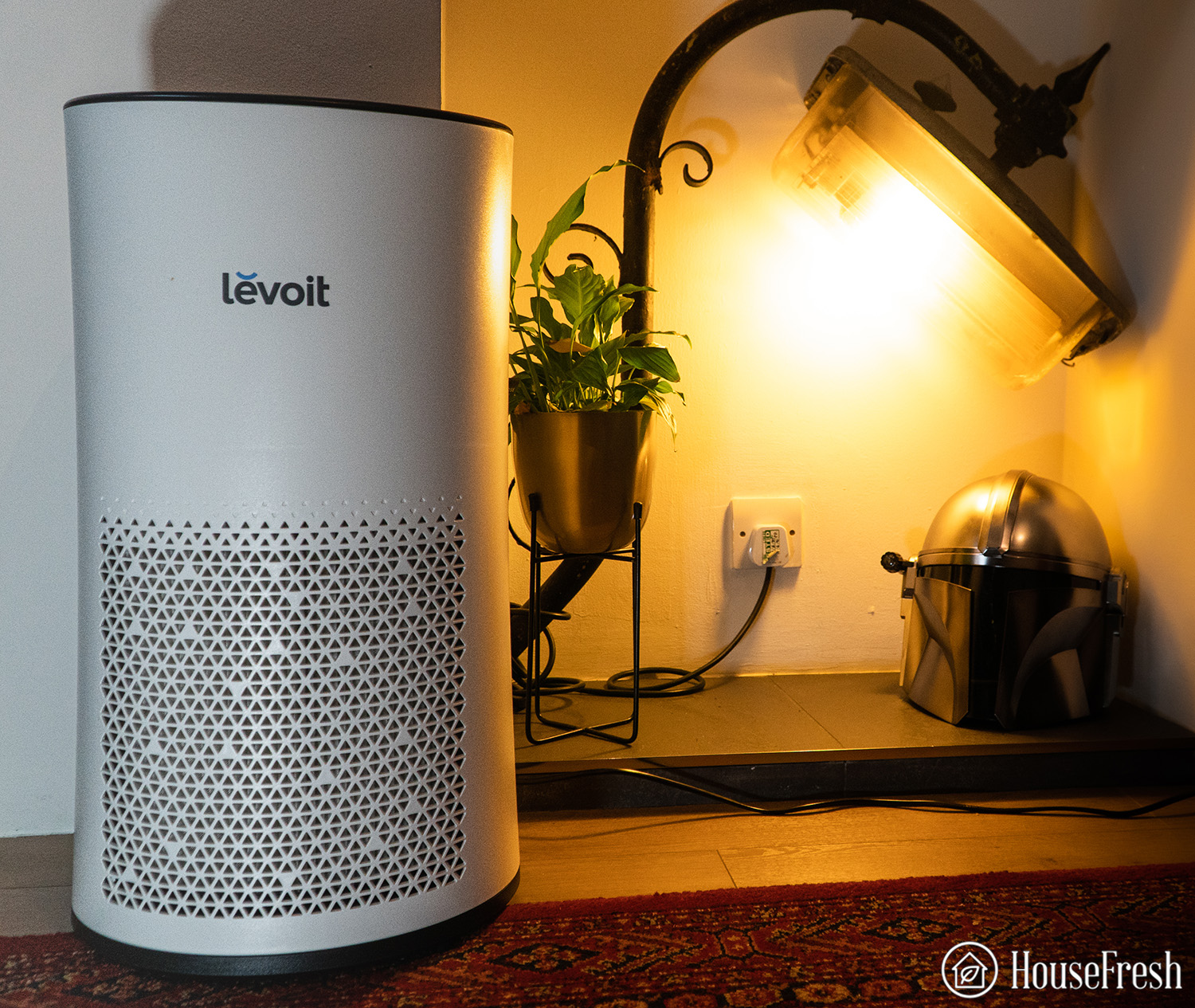
Are air purifiers safe for pets?

Header Are Air Purifiers Safe for Pets

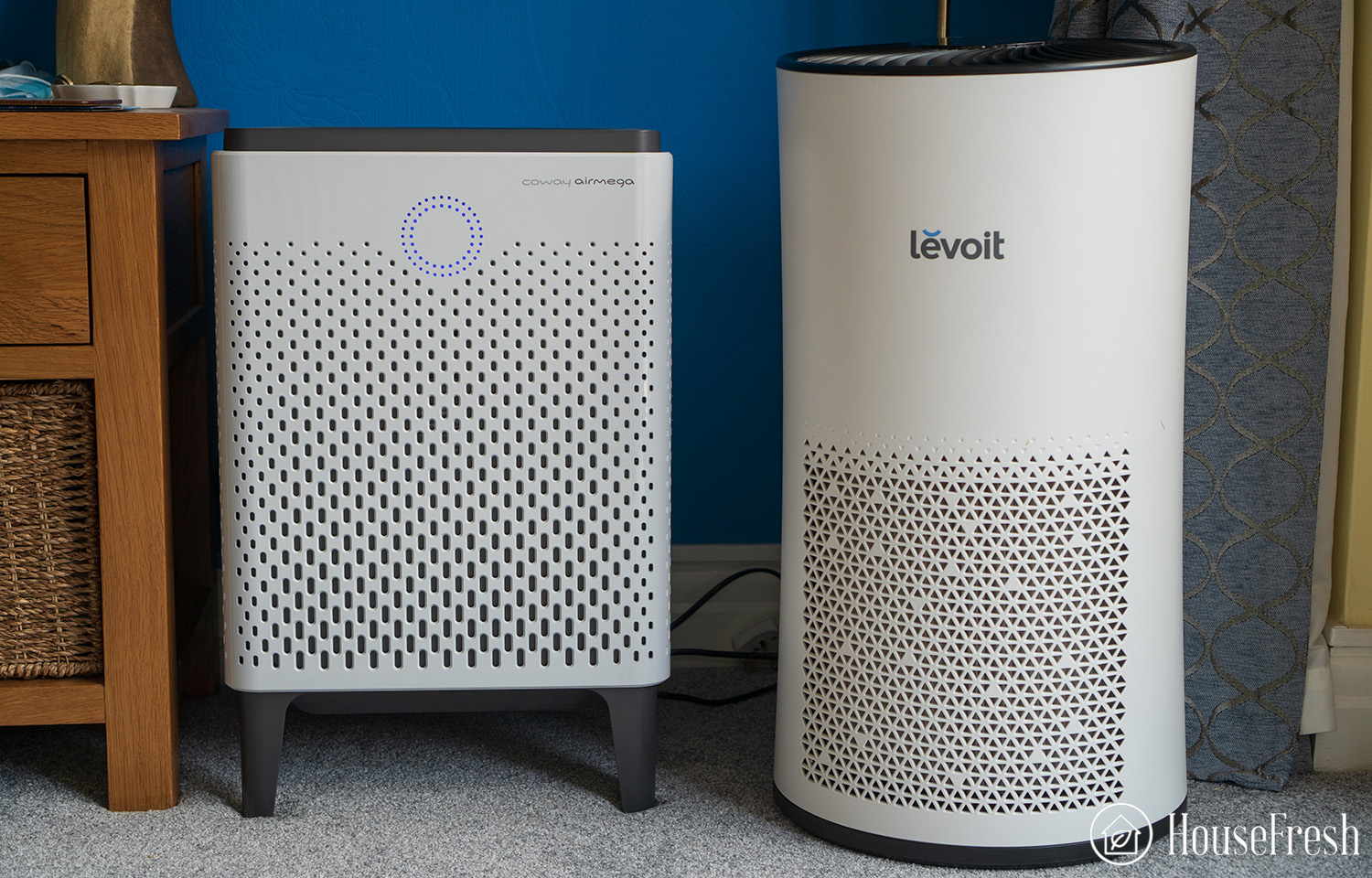
When considering investing in an air purifier to deal with pet odors and allergies, the question may come to mind: are air purifiers safe for pets? 

I’m here to tell you that not all air purifiers are 100% safe for animals or for people. Some air cleaners can produce toxic chemicals as a by-product of their process, introducing harmful gases into your home air that both you and your pet would be exposed to. 

In this article, we’ll go through those types of technology and analyze the dangers they pose. We’ll also explore the benefits of safe air purifiers and the things you should look for if you are considering getting one for you and your loved domestic fauna. 

Dangerous air purifiers pet owners should avoid

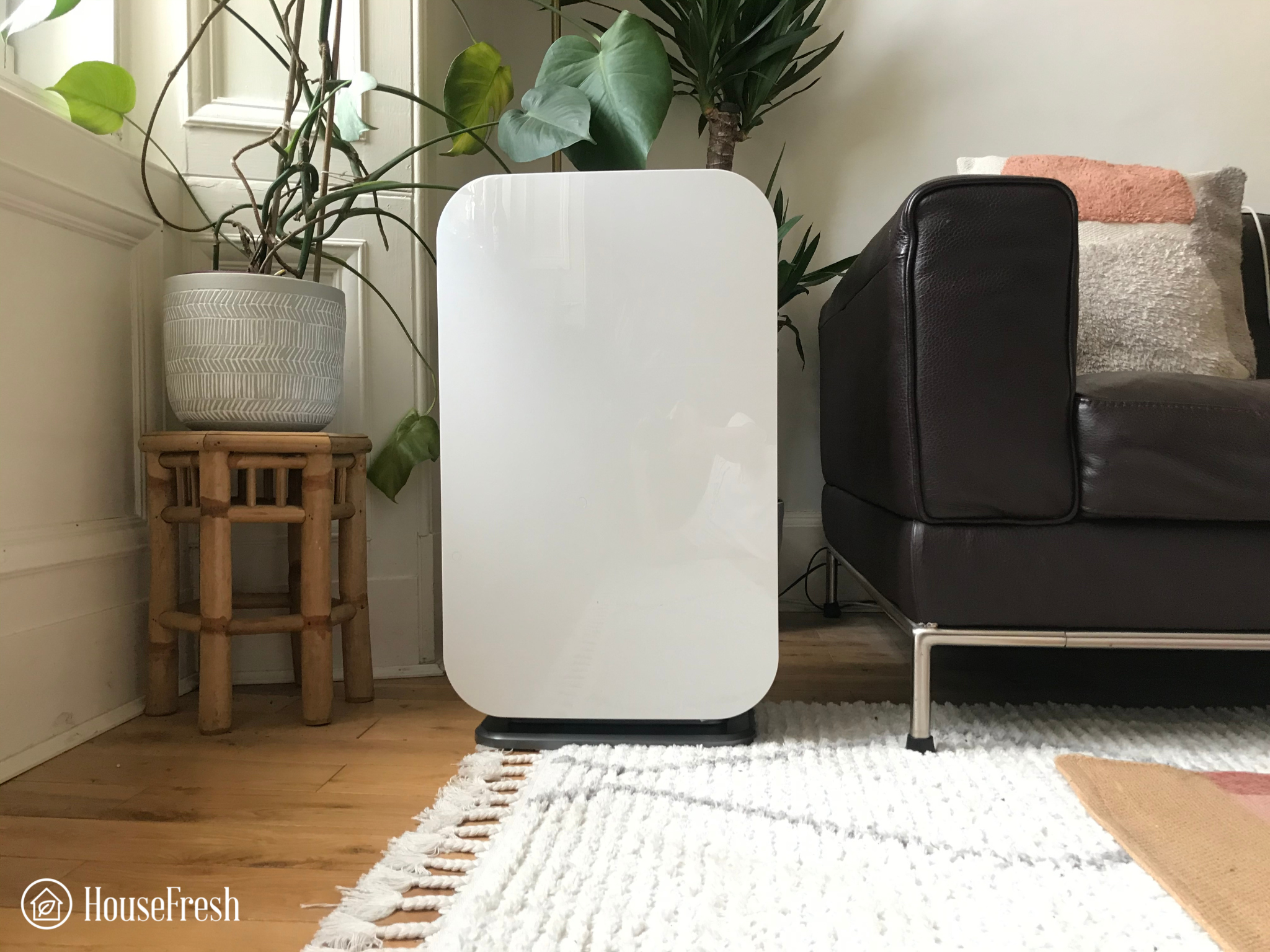
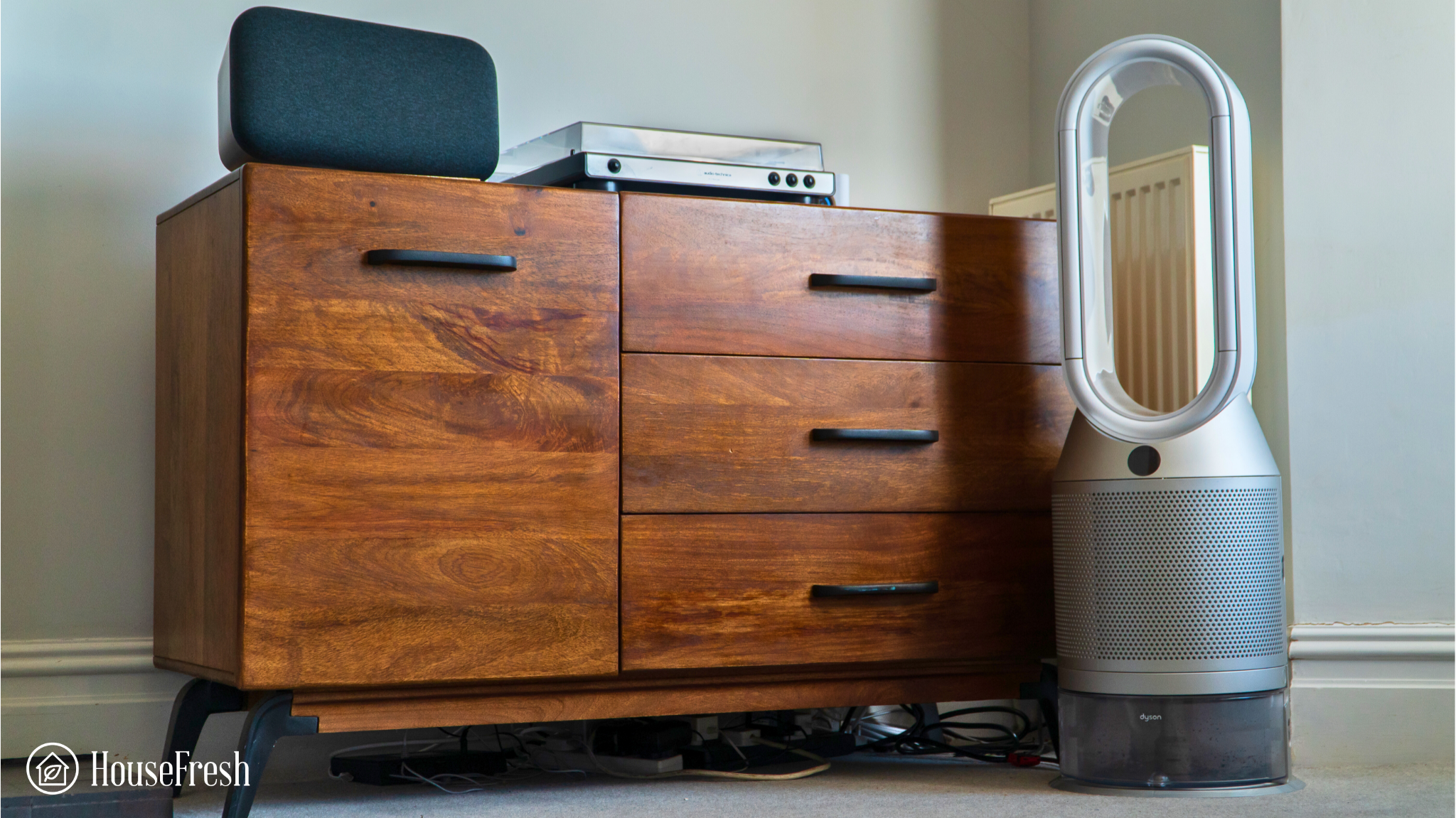
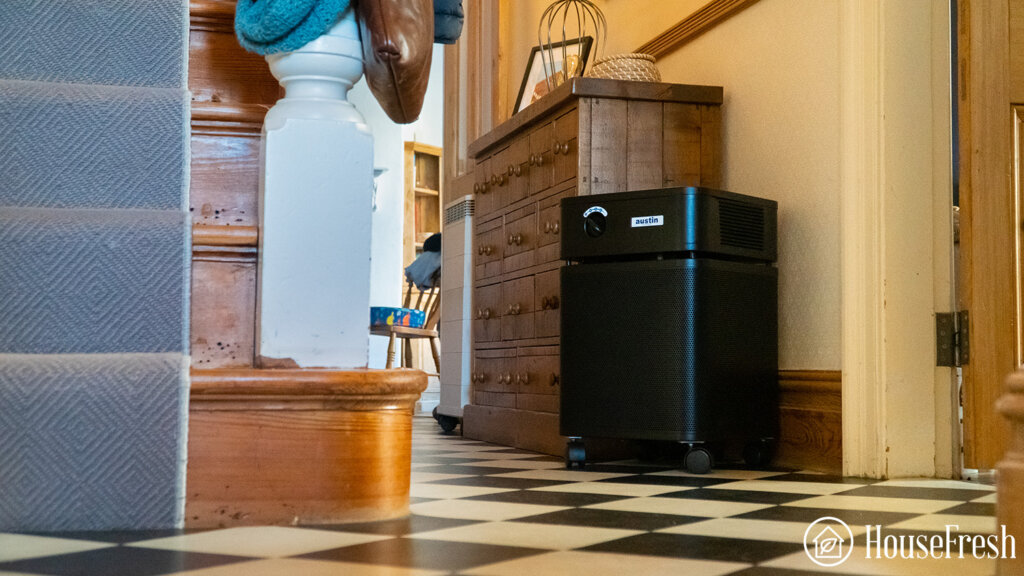
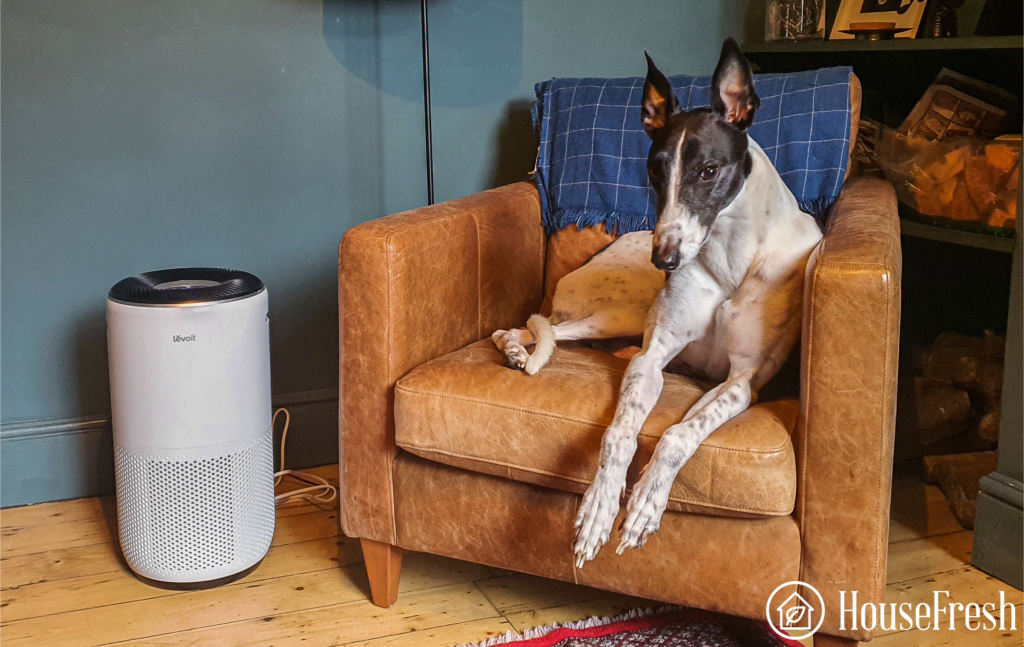
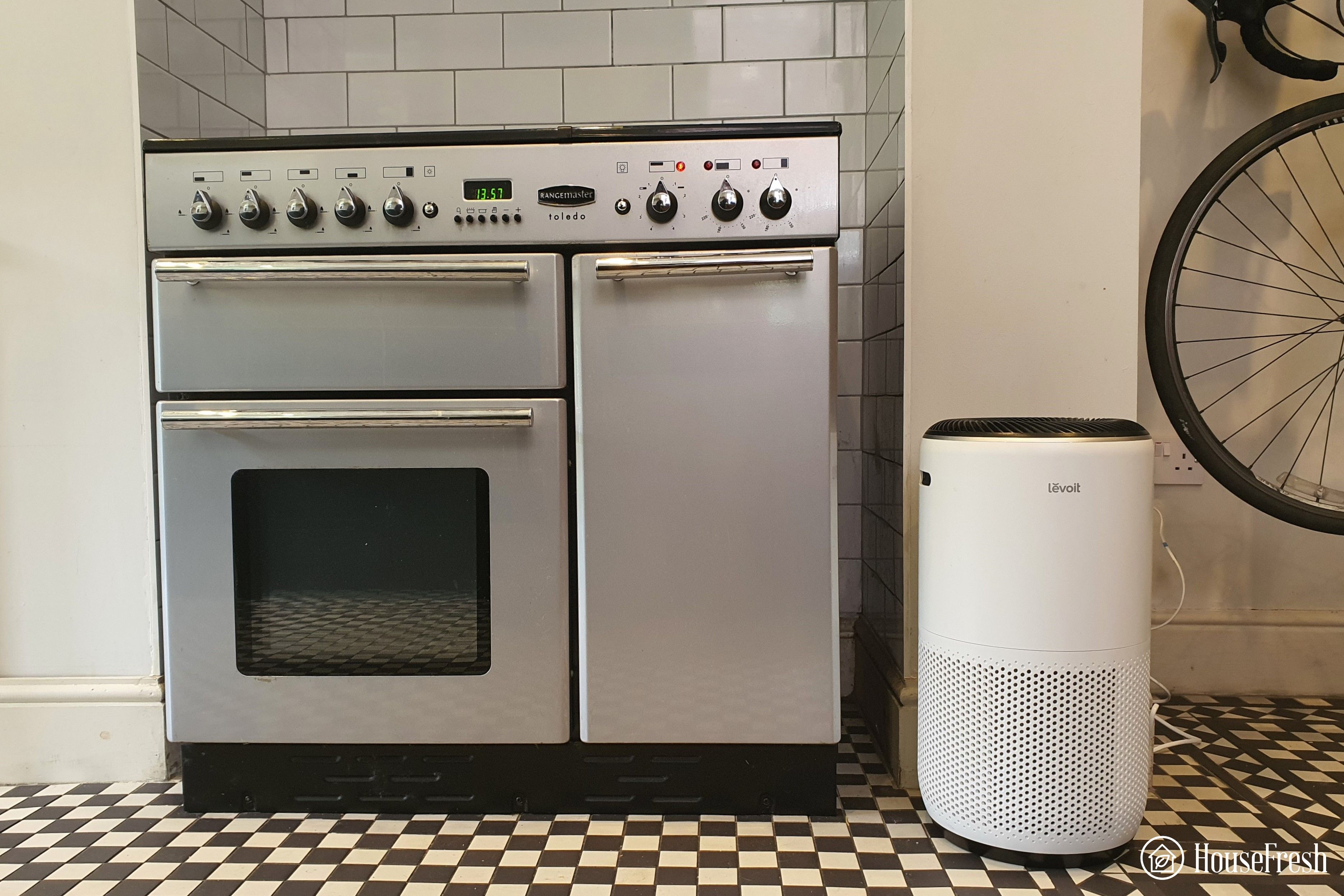
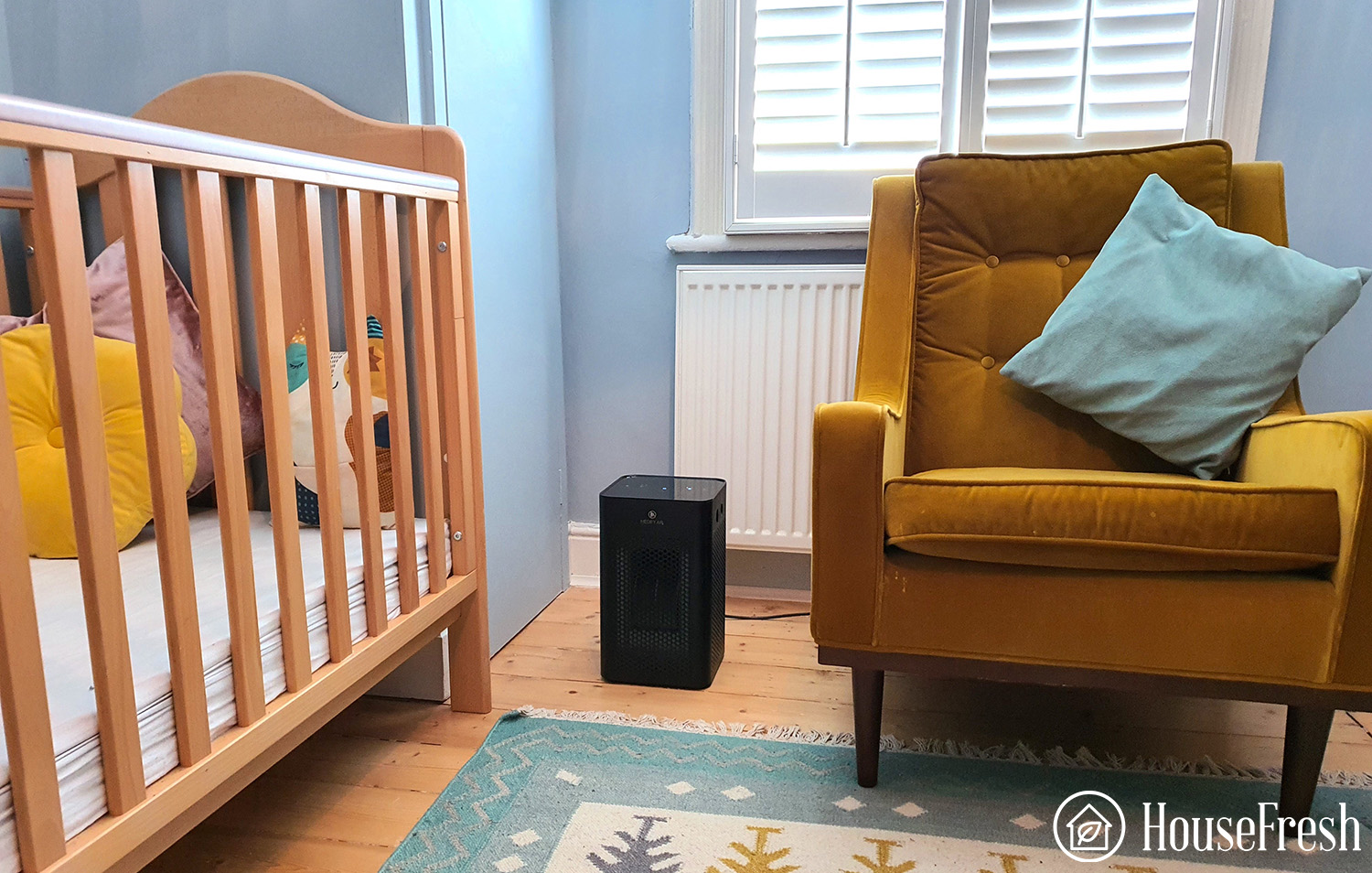
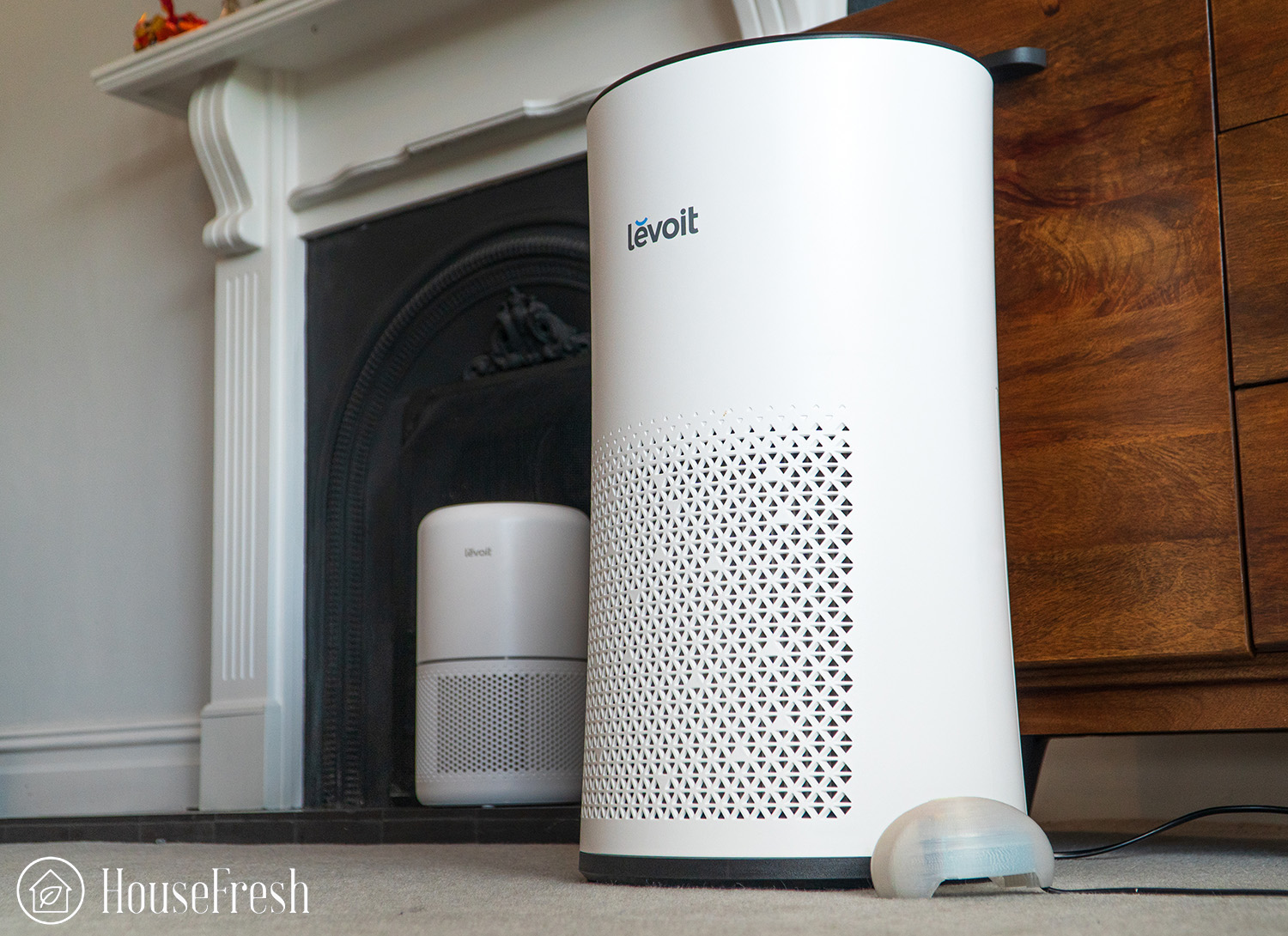
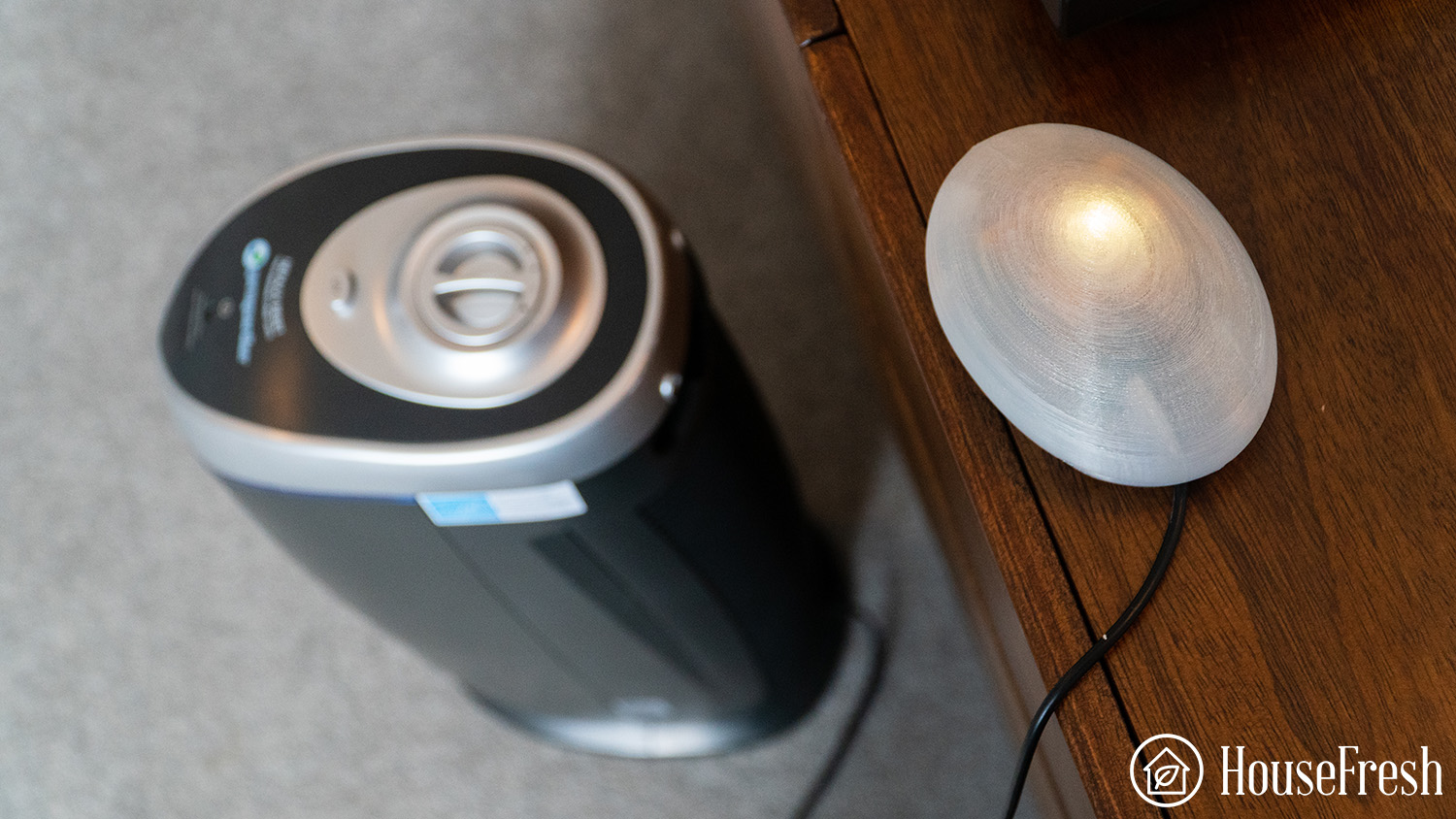
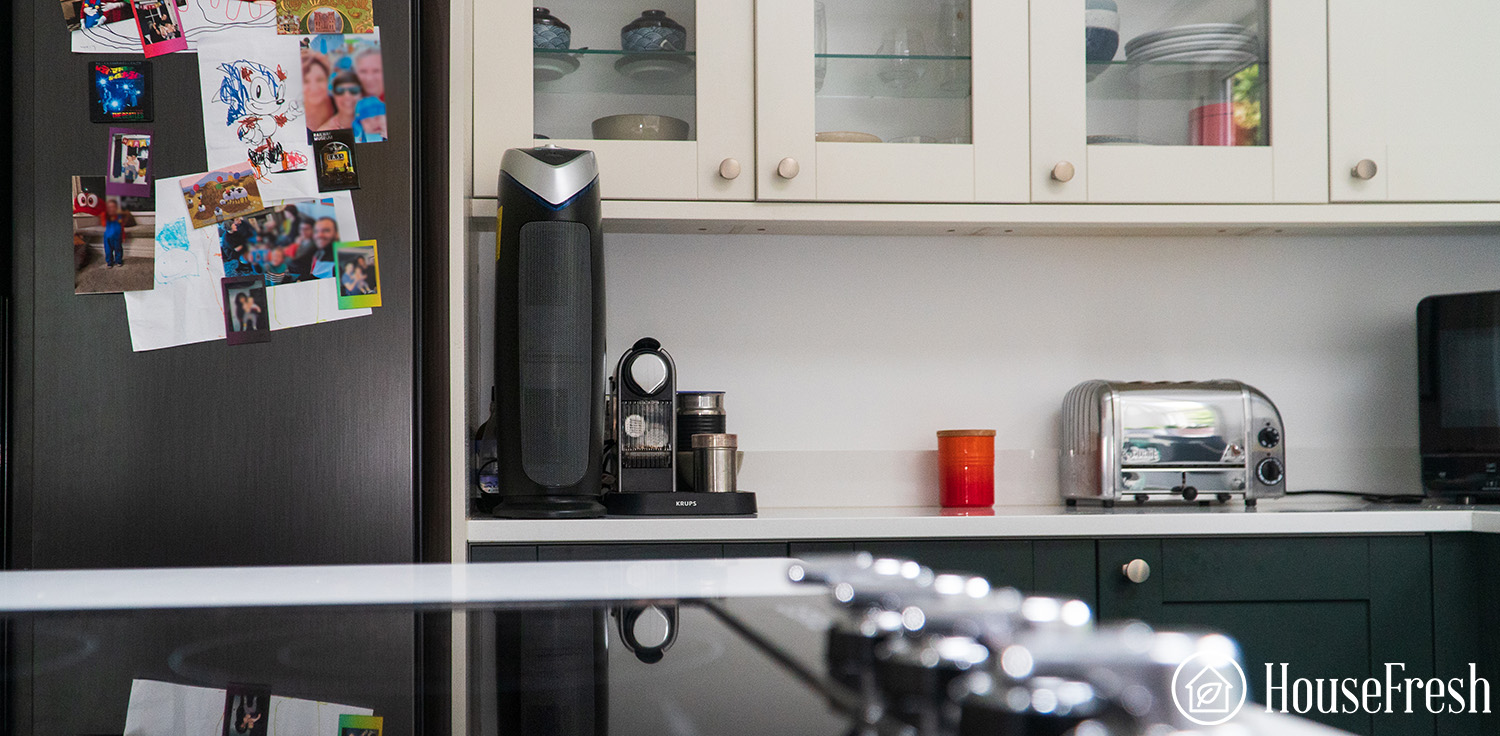
All appliances or electronic devices carry a potential risk and require certain precautions in pet-friendly homes. Some mischievous pets like chewing through power cables and might even get tangled in them, depending on their size. Not only that, electronics can get knocked over in a night burst of zoomies or by clumsy waggy tails (placement is, no doubt, something to consider). 

When it comes to air purifiers, you also need to factor in the technology these gadgets use to clean the air. Not all air purifiers work the same way; some can even pose health hazards. 

For the purpose of this article, we’ll classify air purification technologies into three categories:

MethodTechnologyHow do they work
Mechanical pollutants removal HEPA and activated carbon filters They remove particles and gases (VOCs and odors) from the indoor air by capturing them on the surfaces by filtration (HEPA) and adsorption (activated carbon).
Electronic pollutants removalIonizers and Electrostatic Precipitators (ESP)An electrical charge makes the airborne particles drop out of the air onto any surface or get trapped in the units’ oppositely charged plates.
Pollutant destructionOzone generators and UV Light cleaners (including Ultraviolet Germicidal Irradiation (UVGI) and Photocatalytic Oxidation (PCO) cleaners)Ozone and UV light decompose particles and gas molecules through chemical reactions.

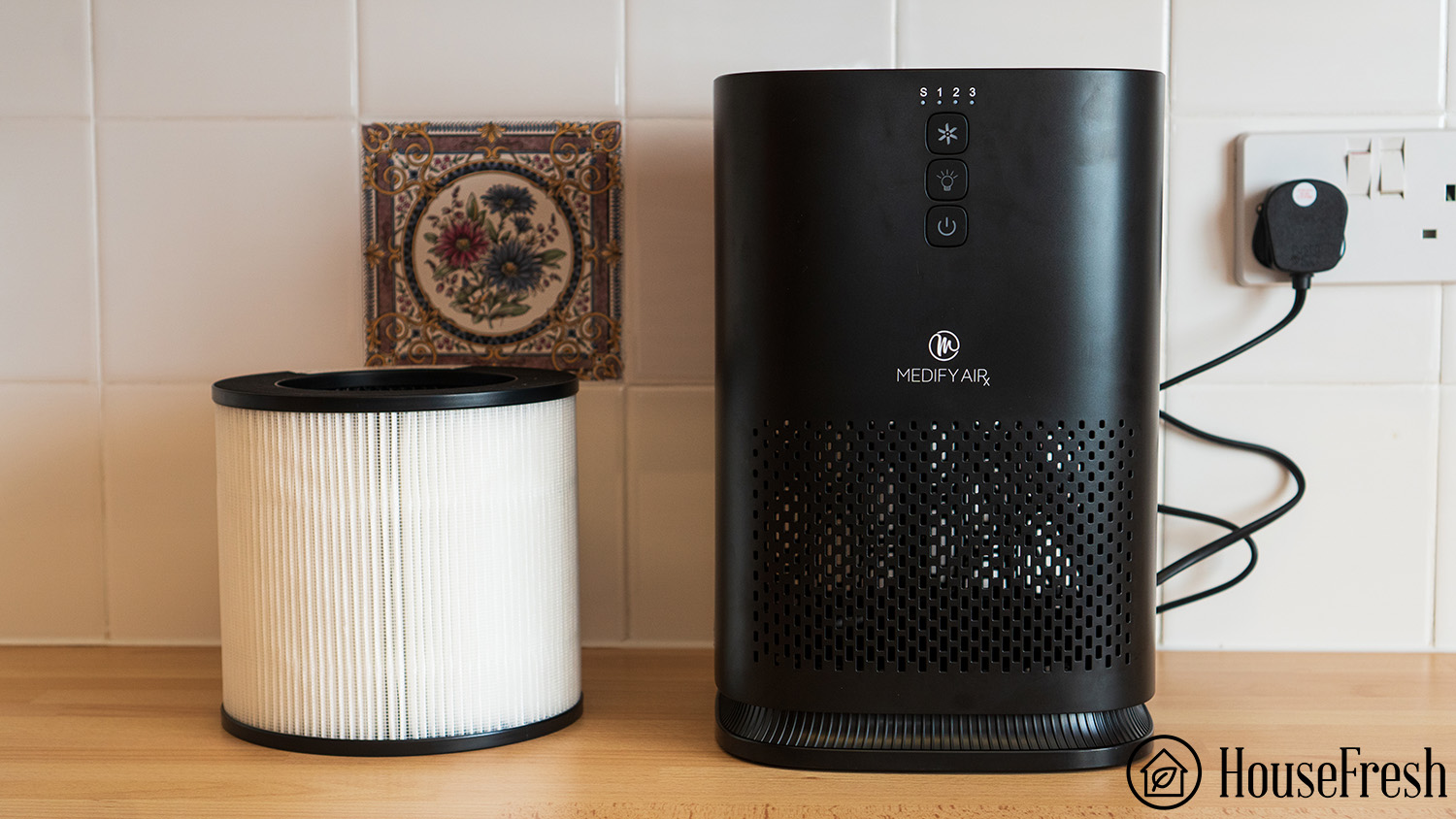
Long story short, air purifiers with mechanical filtration systems are the safest ones. Both HEPA and activated carbon filters are inert and don’t release any chemicals in their process. You and your pets will be safe around them and even benefit from the improved air quality in your home.

On the other hand, ionizers, ozone generators and UV light cleaners all come with their risks. 

These technologies are effective (some more than others) and will remove a certain amount of airborne pollutants. But, in the process, they will also release chemical byproducts, including ozone, into your indoor air, which are harmful to pets and people alike. 

Ozone is a highly toxic air pollutant that affects humans and pets (dogs, cats, rodents, birds) similarly by:

  • irritating the respiratory system
  • causing irreversible lung damage
  • generating metabolic disorders and nervous system issues
  • worsening asthma symptoms (in people and equivalent disorders in animals).

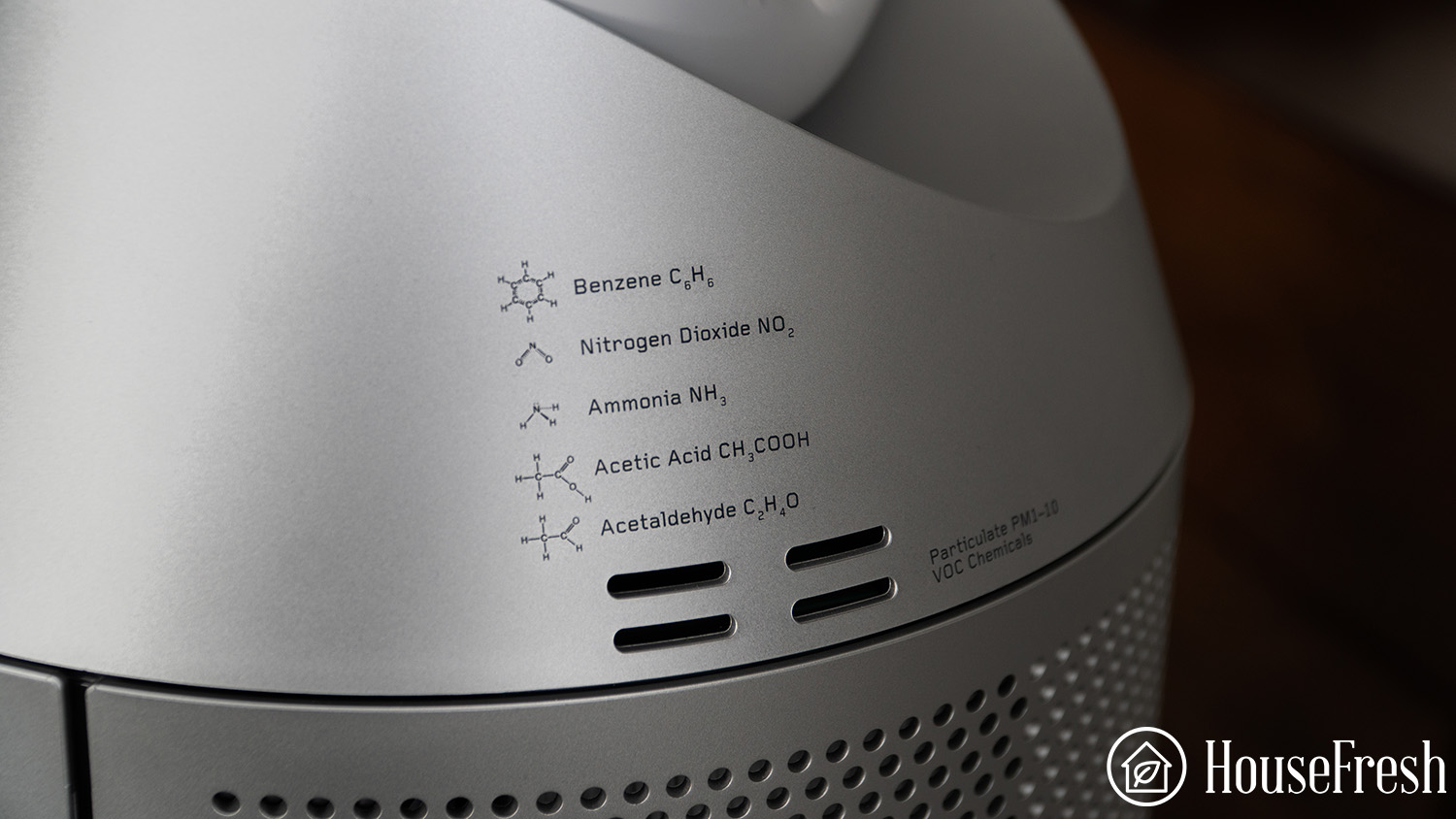
Besides, even at concentrations below public health standards, ozone also reacts with chemicals found in household cleaning products, air fresheners, deodorizers and certain paints, producing ultrafine particles and VOCs (including formaldehyde, peroxides and other harmful gasses).

But let’s dig deeper into each of them to further understand how these technologies work — and what downsides they present.

How ionizers can affect your pet

This type of technology has many names: ion air purifiers, air ionizers, electrostatic precipitation, bipolar needlepoint ionization and plasma technology, to name a few. 

Despite the creative advertising, all of these cleaners use a similar mechanism: they release ions into the air through electrical discharges. The ions attach to airborne particles and either force them to drop into any horizontal surface (including rugs, beds, couches, you get the idea) or are sucked into the unit’s oppositely charged plates to collect them. 

However, pollutants and molecules in the environment react with the electrical discharges. Units with built-in high-voltage coronas or pin/needle ionizers, for example, can alter oxygen molecules, recombining them to form ozone. Acetone, ethanol and toluene are other common byproducts of ionization. 

All these chemicals can trigger an array of health issues in pets, including kidney, liver, retinal and nerve damage. 

Besides, the VOCs generated by ionization can react with other compounds in the air found in any home and produce new fine particles (PM2.5) that are harmful to breathe.

For the cherry on top, according to the EPA, there’s doubt about their efficiency at removing large particles, such as house dust allergens (which includes the pet dander you are probably looking to eradicate if you have pets at home).

Tip

The U.S. Food and Drug Administration’s Code of Federal Regulations limits ozone emission from devices like ionizers at 0.05 ppb. Some units in the market may comply with this regulation and be advertised as safe. But this doesn’t take into consideration that ionizing technology can also produce other toxic chemicals and fine particles. Besides, no matter how small the amount, it’s better to avoid ozone altogether when looking for a device for pets.

How ozone generators can affect your pet

These devices purposefully create ozone, allegedly to remove air pollutants, VOCs, mold, viruses, bacteria and odors from the air. They use UV light or an electrical discharge (just like ionizers) to transform oxygen molecules (O2) into ozone (O3) by breaking them apart and making them available to bind with other molecules in the air. 

As mentioned above, the dangers of ozone are well studied and accounted for. And yet, ozone generators are still recommended on the internet to deal with pet odors (particularly old urine), among other uses. 

Even if used when no people or pets are present, the EPA warns that there’s not much information about the chemical by-products left behind by ozone generators.

Besides, according to the California Air Resources Board, ozone can fiddle with the sense of smell, disguising rather than eliminating odors. What’s more, ozone cannot remove particles (dust, pollen, pet dander) from the air in concentrations below public health standards set by the FDA.

How UV light cleaners can affect your pet

Ultraviolet Germicidal Irradiation (UVGI) air cleaners became very popular during the COVID-19 pandemic due to their capacity to kill or neutralize viruses and bacteria. They can be effective against mold, too. However, their efficiency relies on the use of a particularly dangerous UV light: UV-C.

High-powered UV-C light can damage any living thing —not just viruses, bacteria or mold— and creates ozone as a byproduct. 

To make most portable air purifiers safe to use in homes, the UV-C lights used are not powerful enough to deteriorate any of those biological pollutants to the point of neutralizing them. Yet, they are still capable of introducing ozone into your home. As a result, you’ll end up with the negative effects but without any actual cleaning power.

Besides, UV light does not remove particles. The CDC recommends the use of UVGI technology as long as it is supplemented with an air filtration system. Otherwise, airborne particles (either active or inactive) will remain inhalable in the environment.

Something similar happens with Photocatalytic Oxidation (PCO) air cleaners, which use UV-A, UV-C or UV-V (which produces ozone as a by-product) lights and a catalyst to produce an oxidation process (hence the name) that breaks down VOCs. One of the biggest downsides of this kind of cleaner is that catalytic oxidation can produce dangerous byproducts, including sulfur, phosphorus, formaldehyde and ozone.

The benefits of HEPA (mechanical) air purifiers for pets and their humans

Our home is an essential part of our lives as it is to our pets. They spend most of their time there, dozing off on the couch, playing around or resting in our lap as we remote-work or watch our favorite TV show. And yet, according to the EPA, indoor air pollution can be two to five times higher than outdoors. 

The thing is, air pollutants have a negative effect on people —that’s well documented—but they can also affect our pets. Dogs and cats, for sure, but also the rabbits, birds, mice, guinea pigs and any animal we share our lives with will be adversely affected by poor indoor air quality. 

Just like with humans, younger and older pets, as well as those with preexisting conditions, are more at risk than healthy adults.

But there’s no need to freak out. Thorough and regular cleaning routines with safe cleaning products can boost the air quality in our homes. And for those unavoidable pollutants that enter through our window as we ventilate, an air purifier will do the trick. With a mechanical air filtration system, such as portable HEPA and activated carbon filter air purifiers, you and your dear pets can:

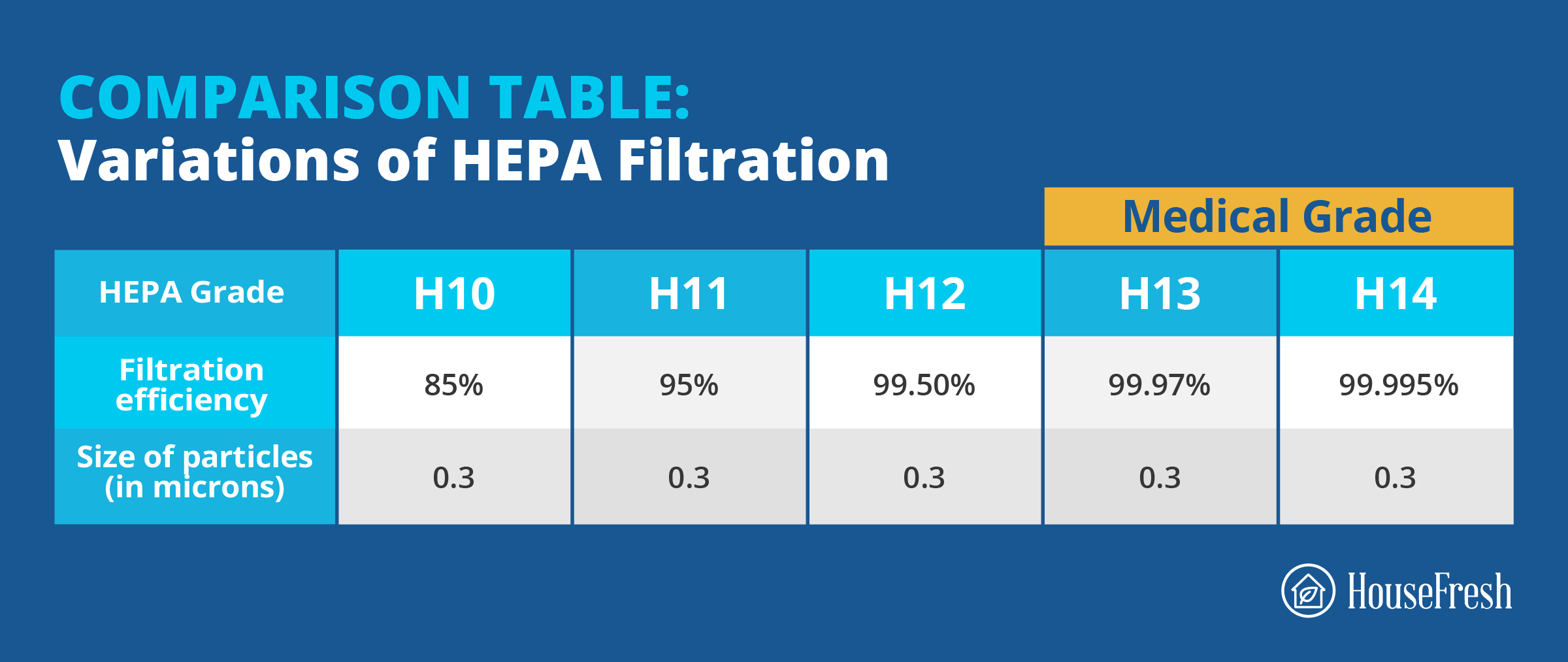
  1. Reduce respiratory problems associated with airborne particles. HEPA filters are capable of removing 99.97% of mold spores, smoke and cooking-related particles, pollen, dust and dander that irritate the whole respiratory tract of people and pets like dogs and cats.
  2. Lessen negative effects of VOCs and gaseous indoor pollutants. Everyday cleaning products, varnishes and paints, furnaces and heating appliances can release a myriad of VOCs harmful to all. Birds, for example, are particularly susceptible to gaseous pollutants, which cause severe respiratory issues, higher stress levels and changes in behavior. Cats also are especially prone to respiratory problems, which worsen in the presence of pollutants. 
  3. Reduce the risk of chronic diseases and immune system damage related to air pollution. Some studies link air pollution to oxidative stress and the over-production of white blood cells, which can point to excessive work of the immune system. Both lead to cell inflammation that affects healthy cells, tissues and organs and can increase the risk of chronic diseases. This study detected a direct connection between PM2.5 from wildfire smoke and high levels of oxidative stress in dogs.
  4. Cut down allergies. Pet fur, dander, saliva and urine can trigger allergies in people. Removing petrelated pollutants from the air with a HEPA filter air purifier can make a huge difference and improve the quality of life in pet-friendly homes. But humans aren’t the only ones who can suffer from allergies: dogs, cats, birds, rabbits and guinea pigs can suffer from allergies as well. These can be triggered by biological pollutants and VOCs in the air. 
  5. Minimize unwanted smells. Pet parents will know how unpleasant the smell of litter boxes, rodent enclosures or bird cages can be. While it’s essential to keep these neat and tidy for our pet’s well-being, sometimes, even with regular cleaning, they can still give off a foul smell. Or maybe you are struggling to get the dog scent out of the couch. Activated carbon filters on air purifiers can adsorb those lingering pet odors.
Tip

If this is one of your main concerns when it comes to your pawsome home, then check out our selection of air purifiers for pet odor and litter-box smells based on our performance testing.

What to look for when buying an air purifier for a home with pets

So, we’ve analyzed the types of air cleaners that aren’t safe for pets (or humans) and should be avoided. Now, let’s go through the things you should look for in an air purifier to make the most of it:

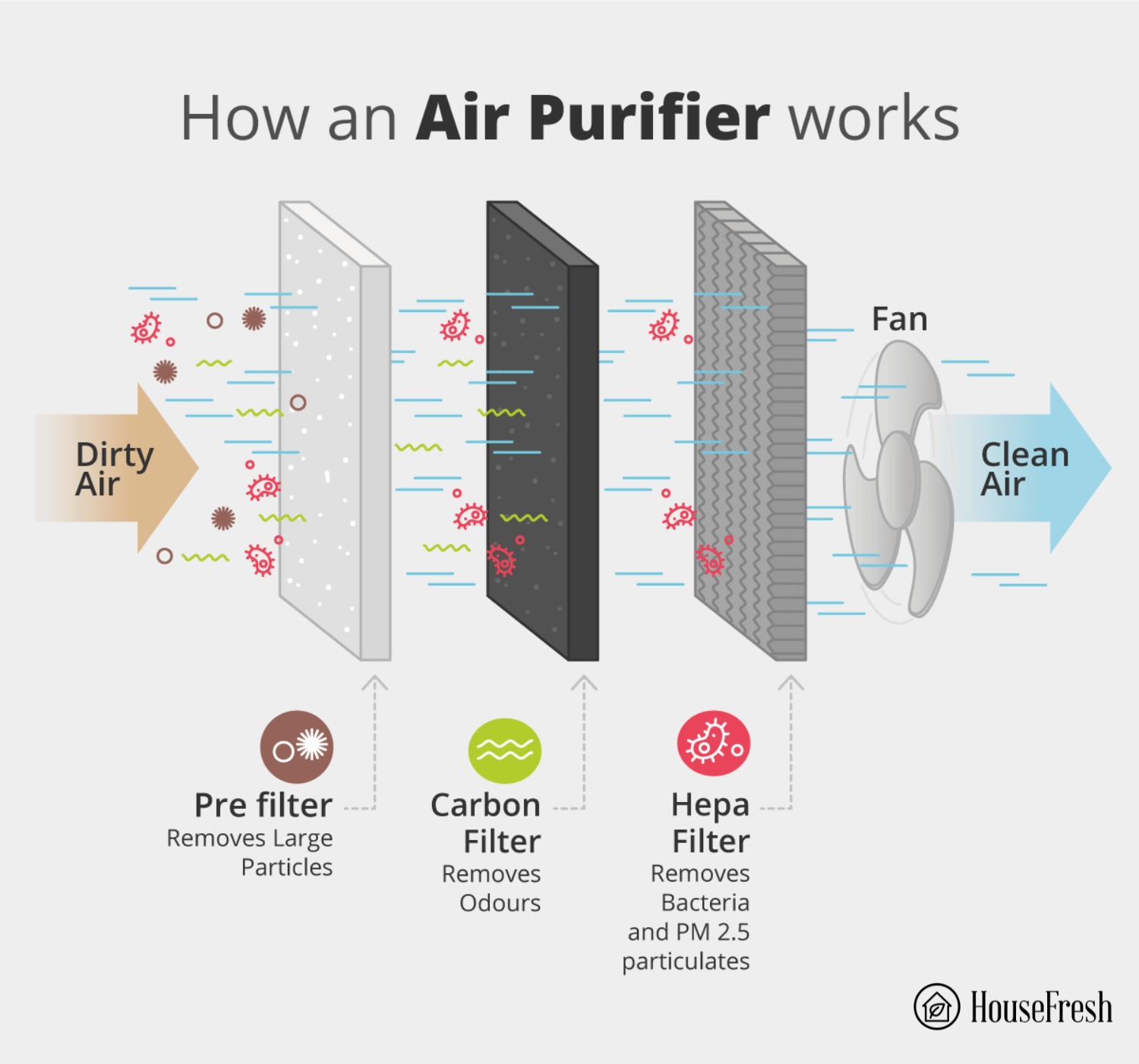
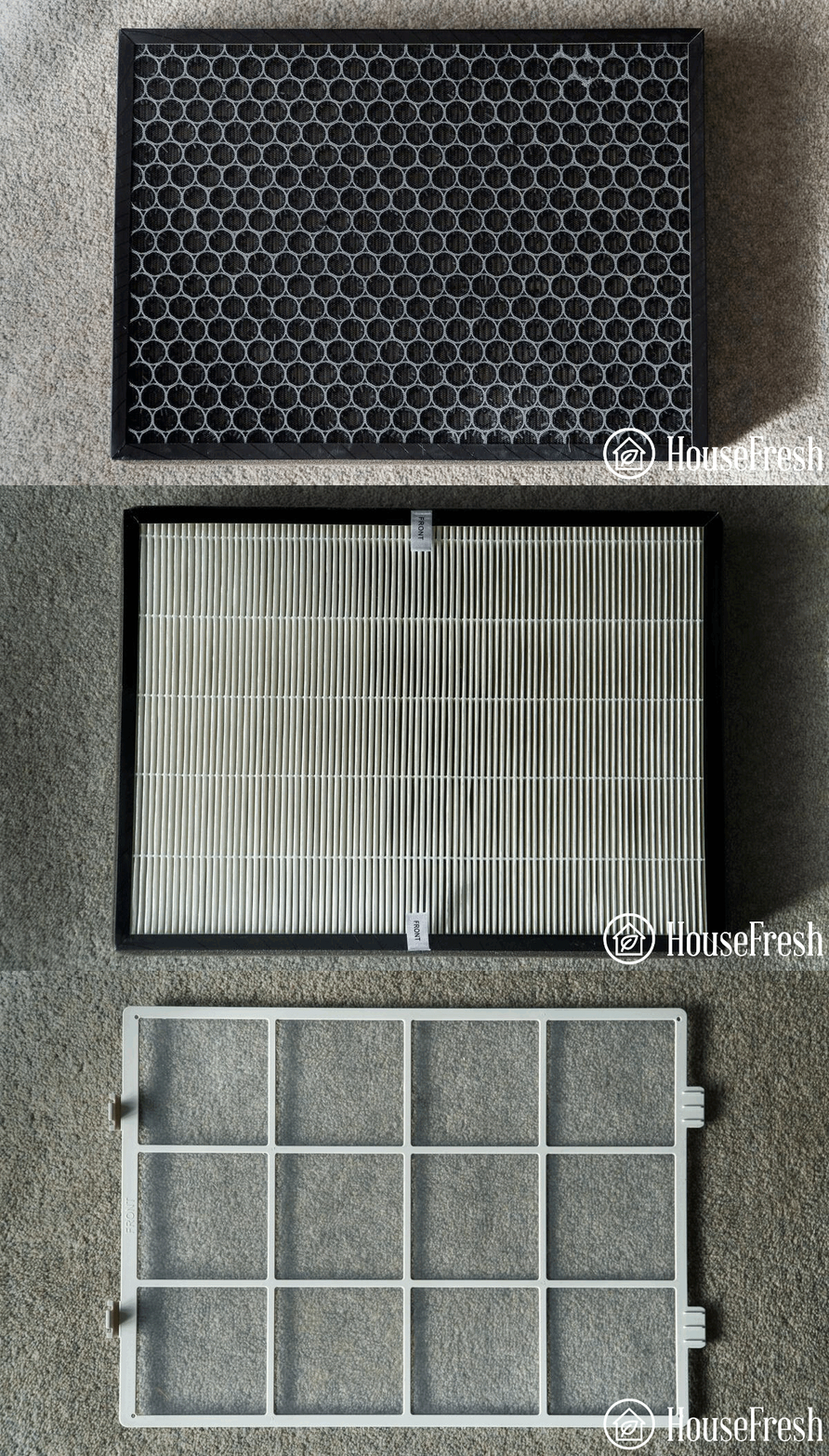
1. Three staged filtration air purifiers 

This comprehensive filtration that can tackle all kinds of indoor airborne pollutants includes:

Pre-filter:

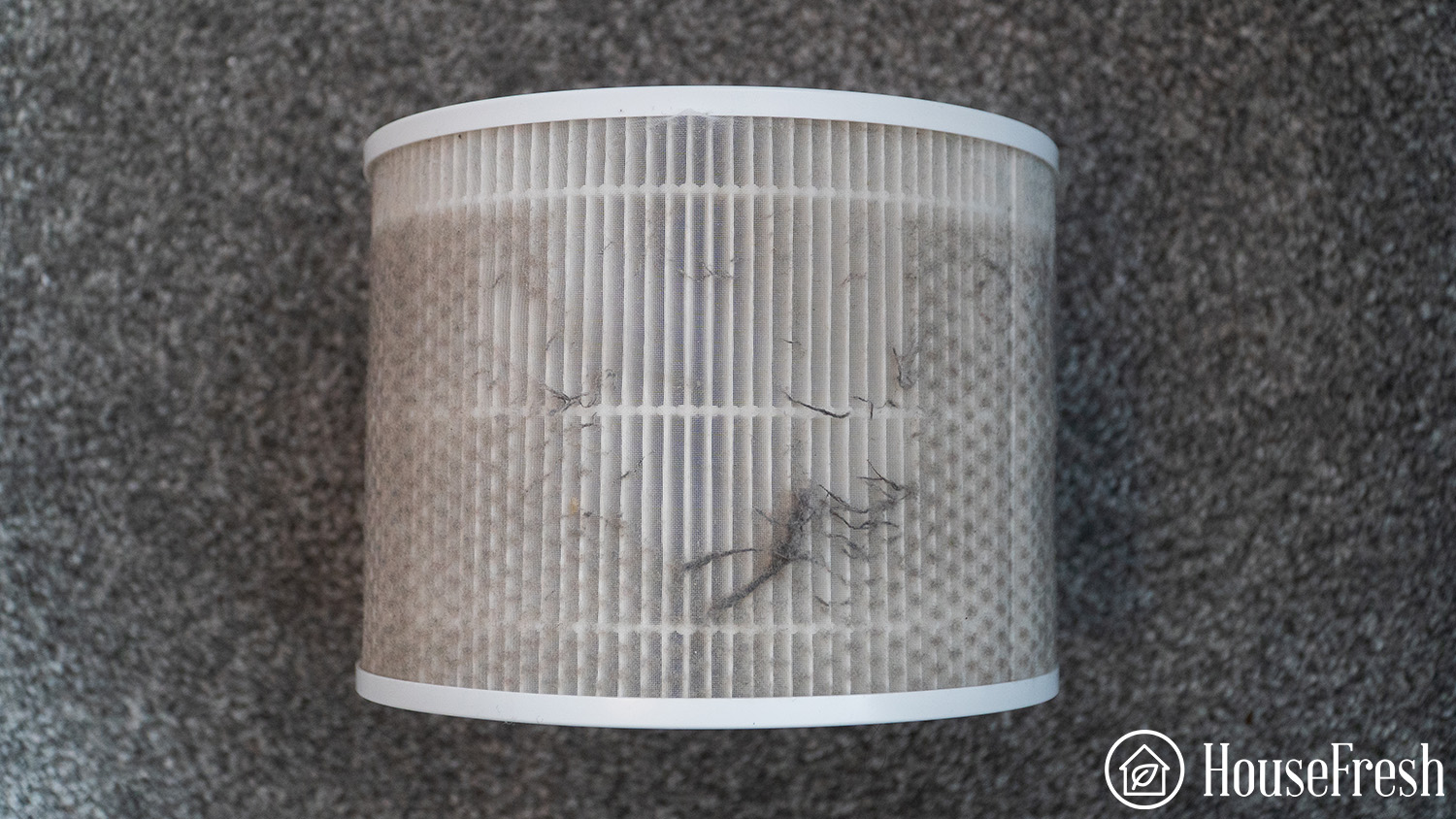
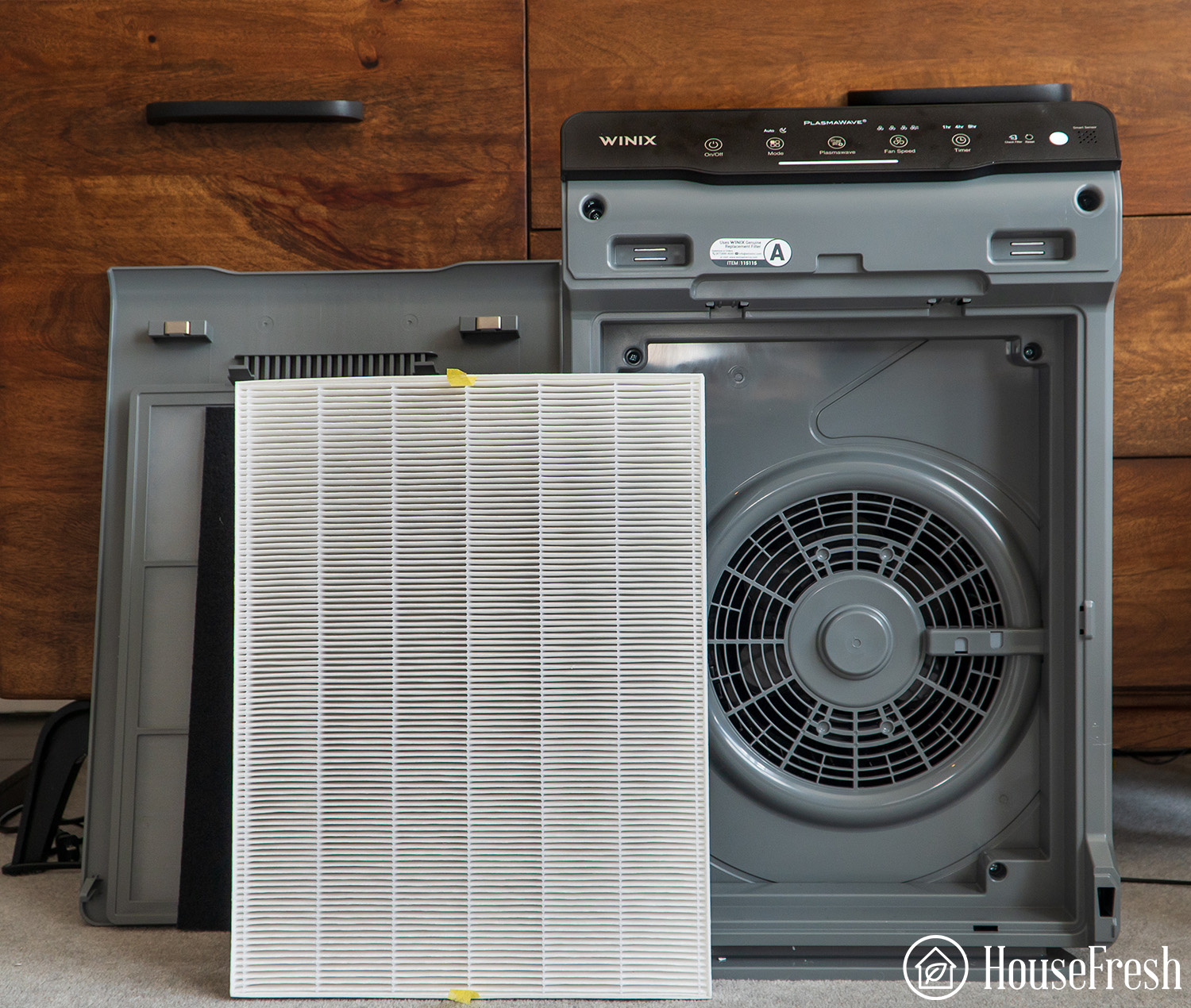
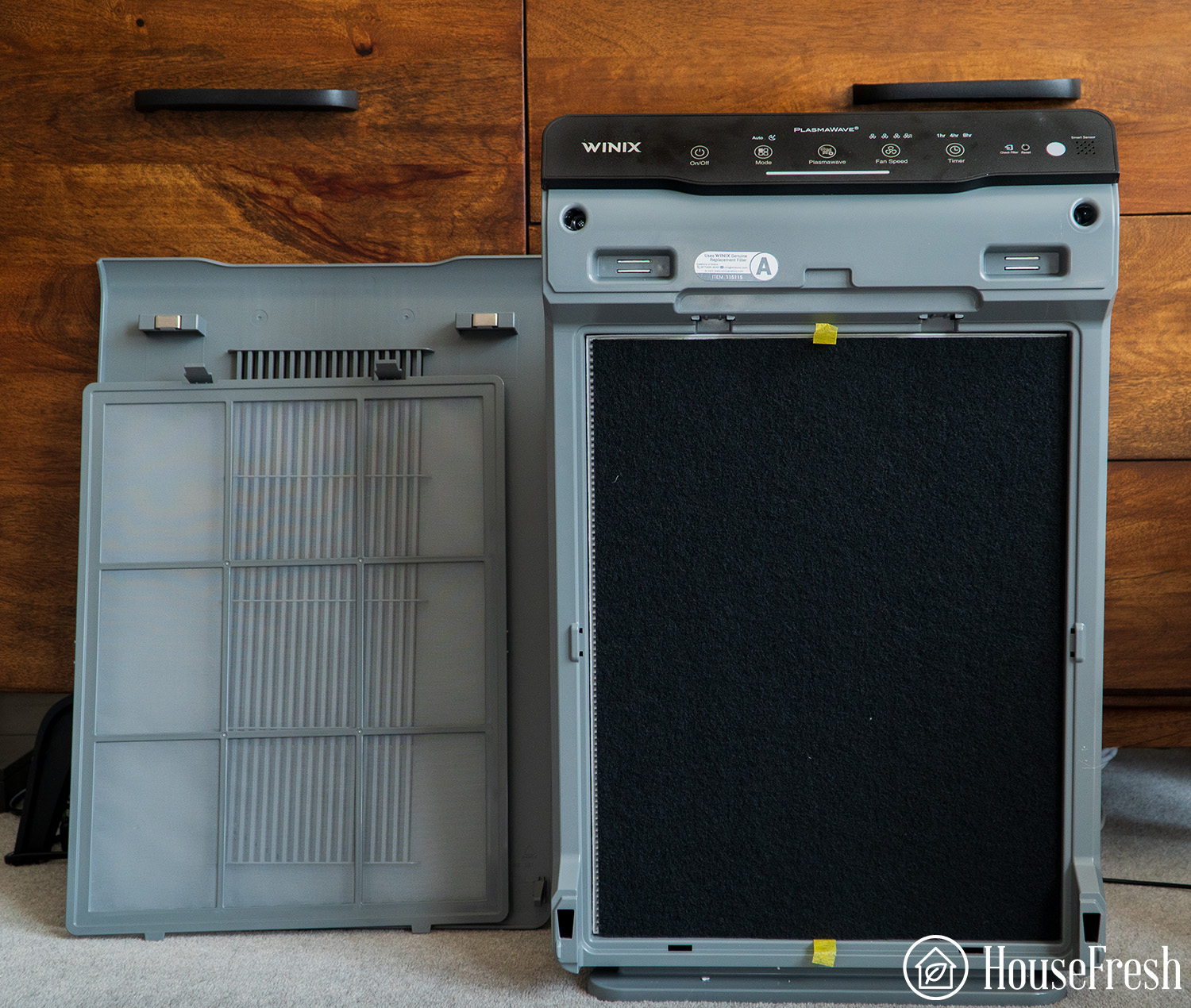
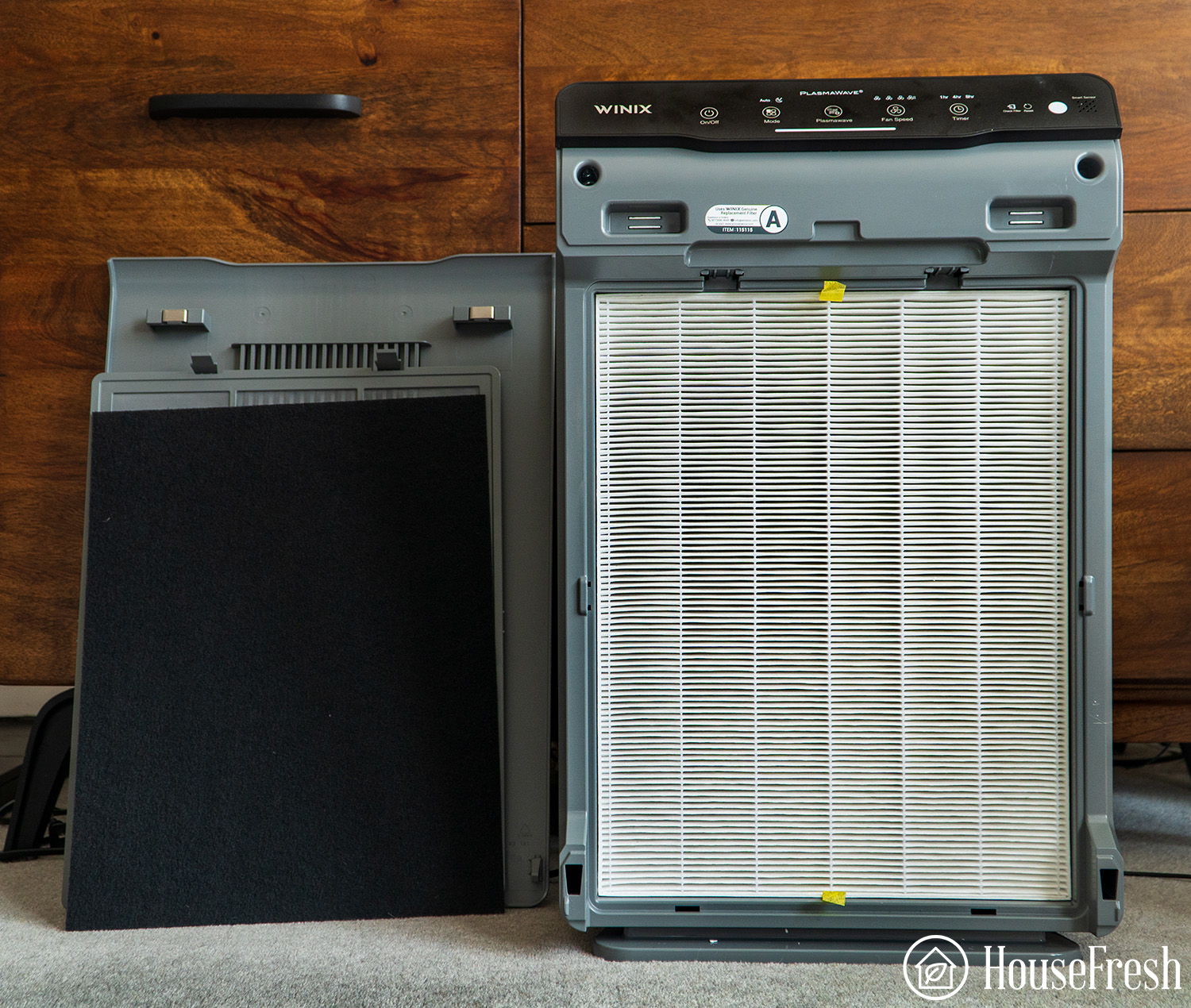
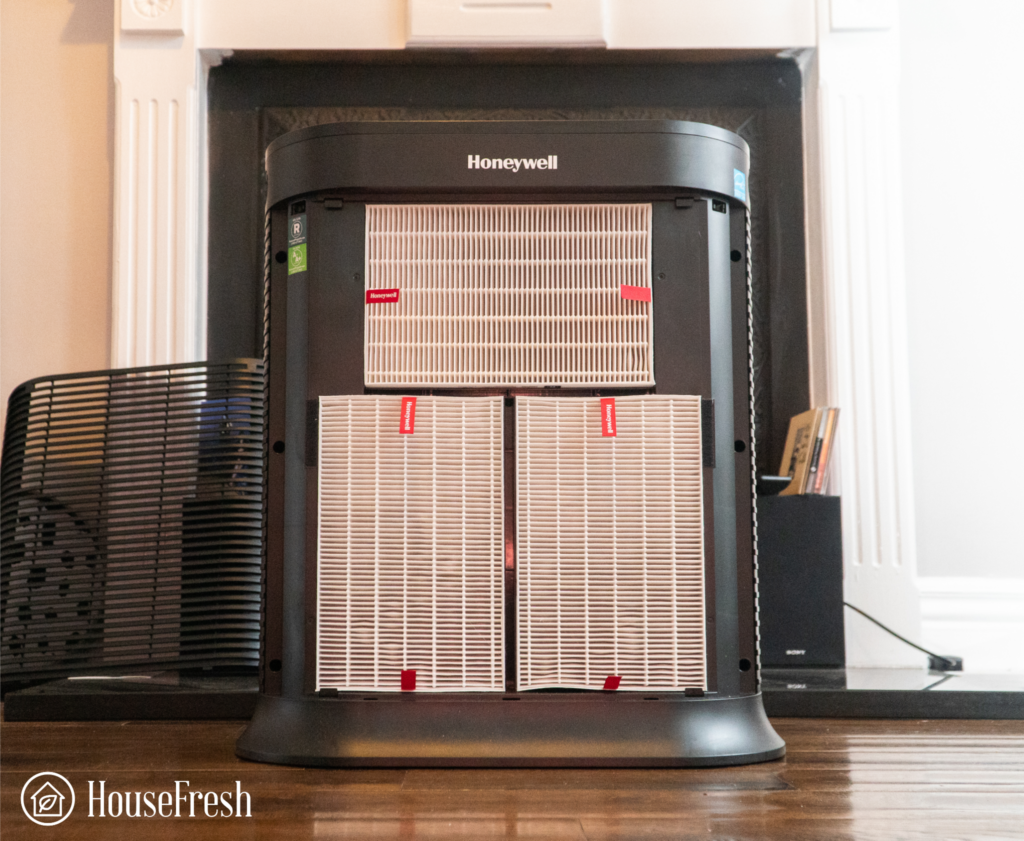
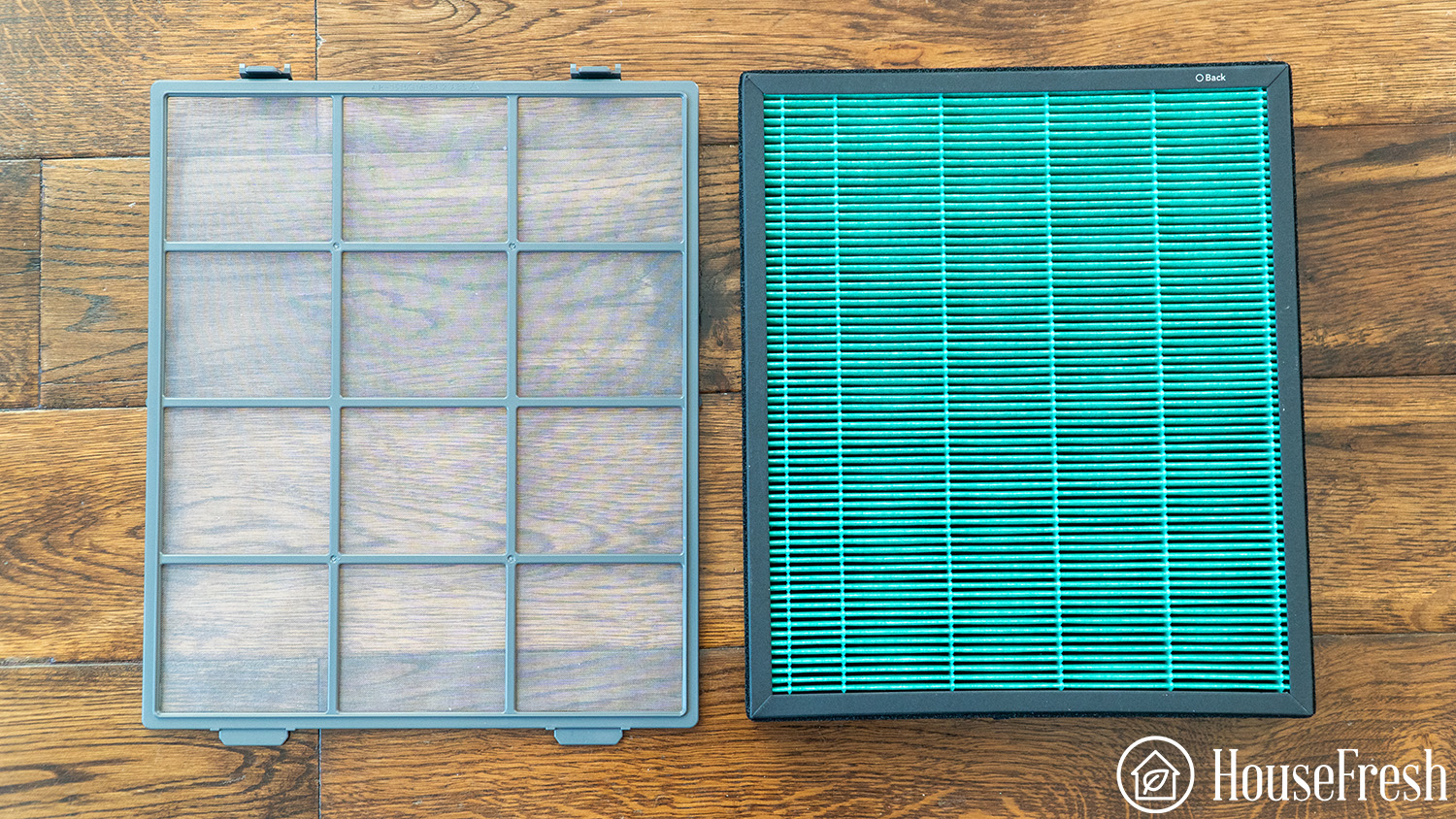
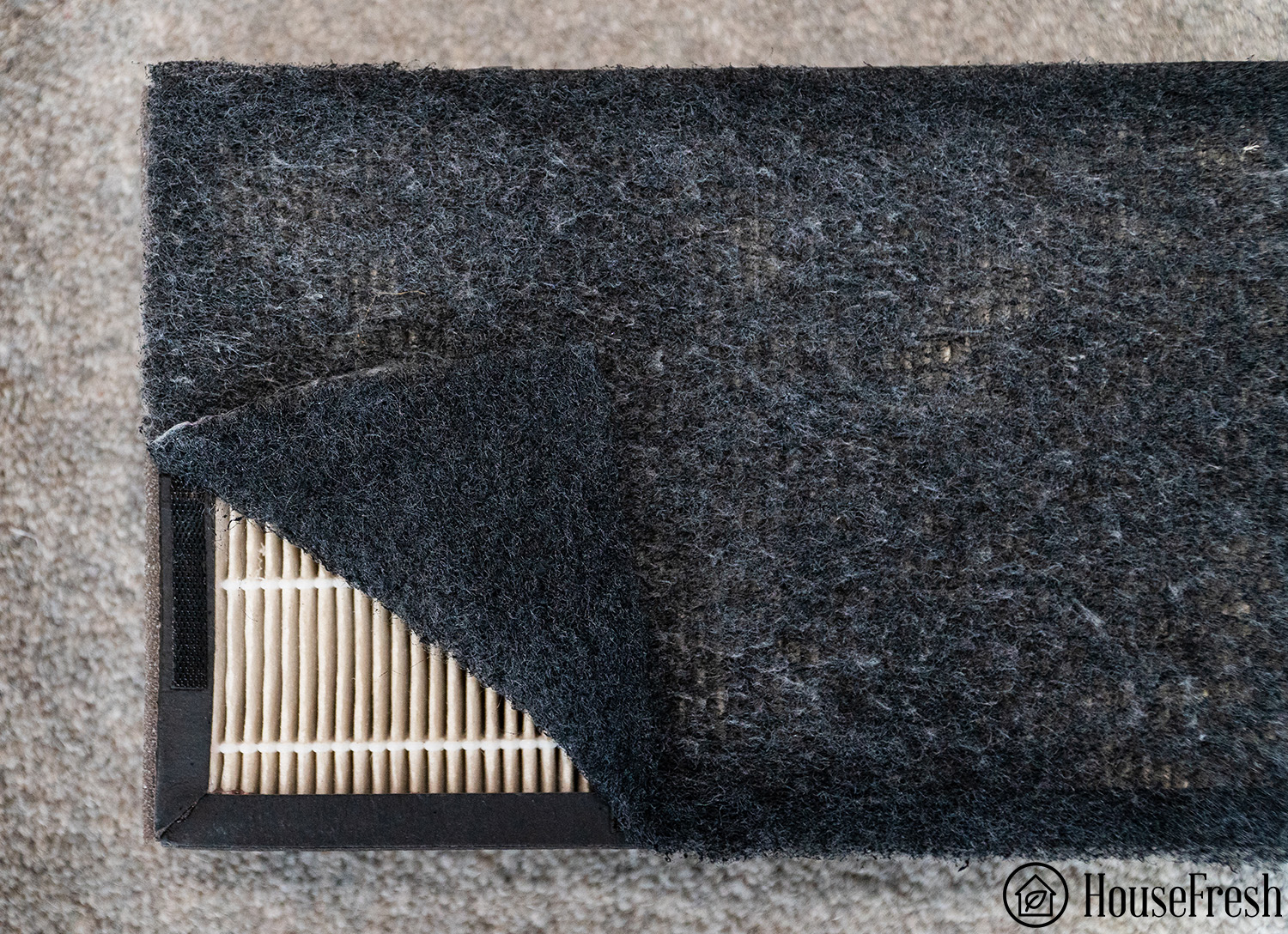
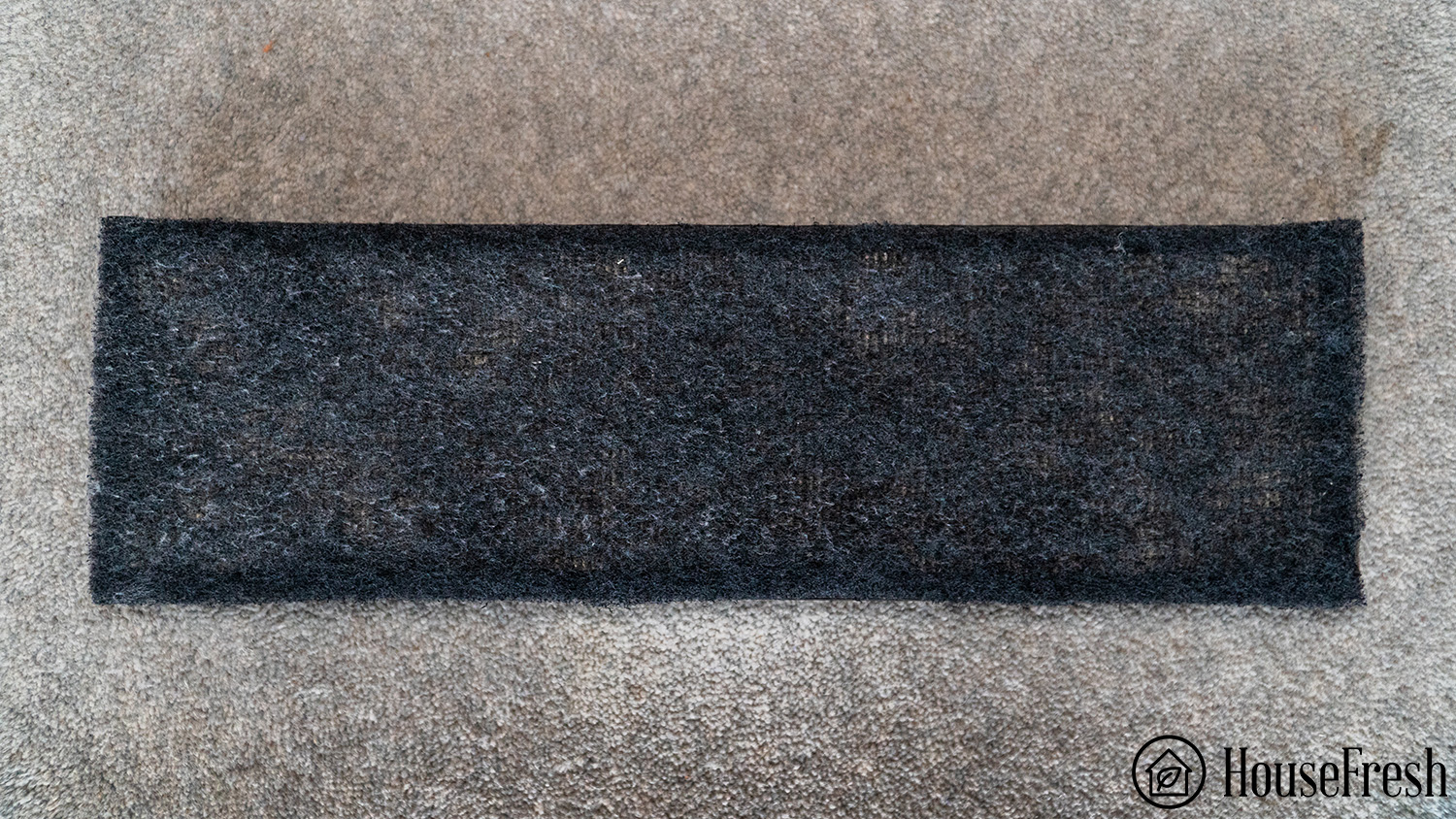
Not all purifiers have pre-filters, but when it comes to homes with furry companions, this filtration stage can make a huge difference. As the name indicates, these come before the HEPA filter to trap larger particles (such as pet hair but feather bits as well) before they reach the main filter. Shed fur and other debris can clog the machine, tampering with its filtration capacity and reducing the life of HEPA filters. The best pre-filters are removable (and washable), as they make the cleaning process much easier for you (either vacuuming or rinsing the particles out).

HEPA Filter:

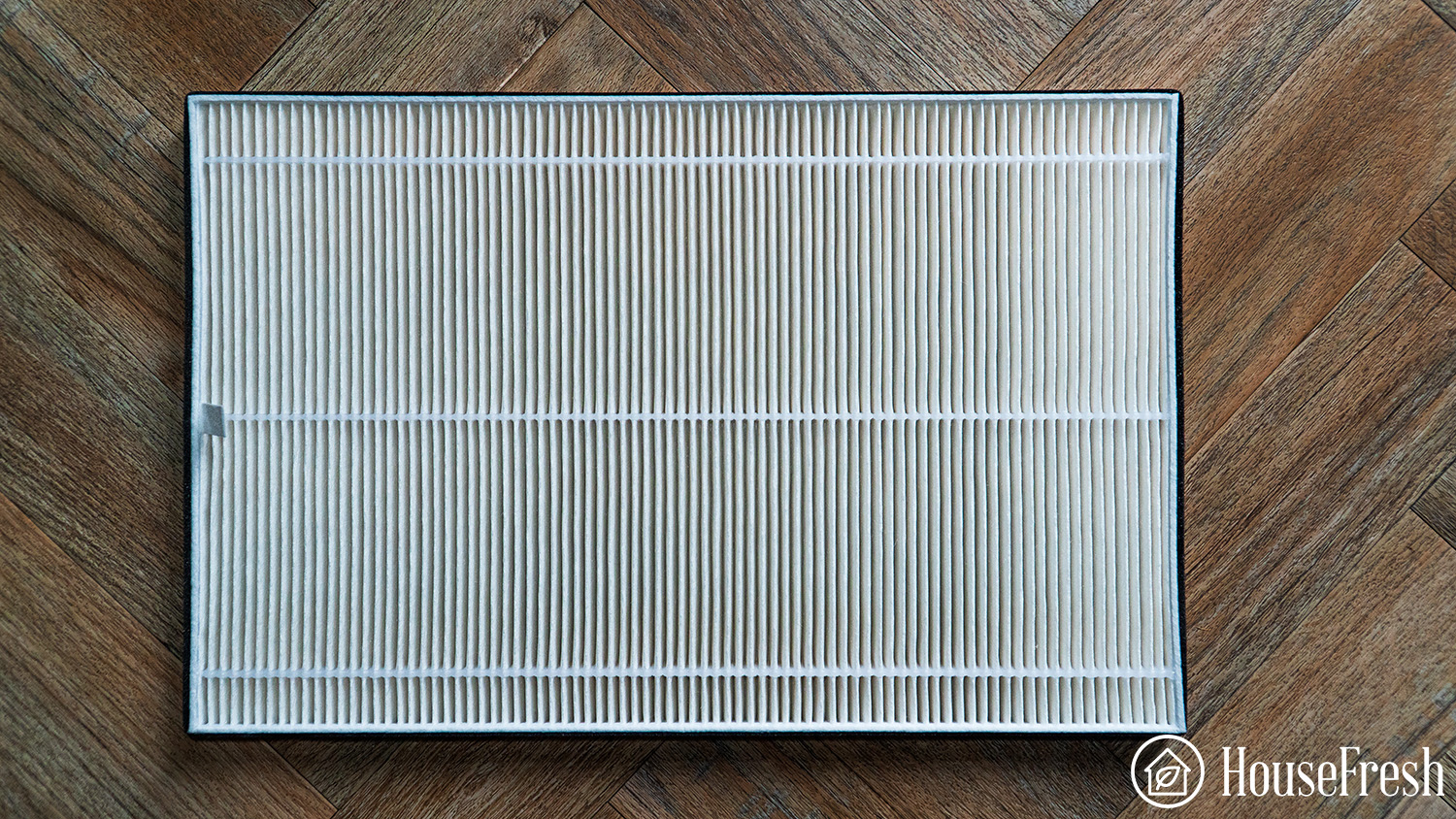
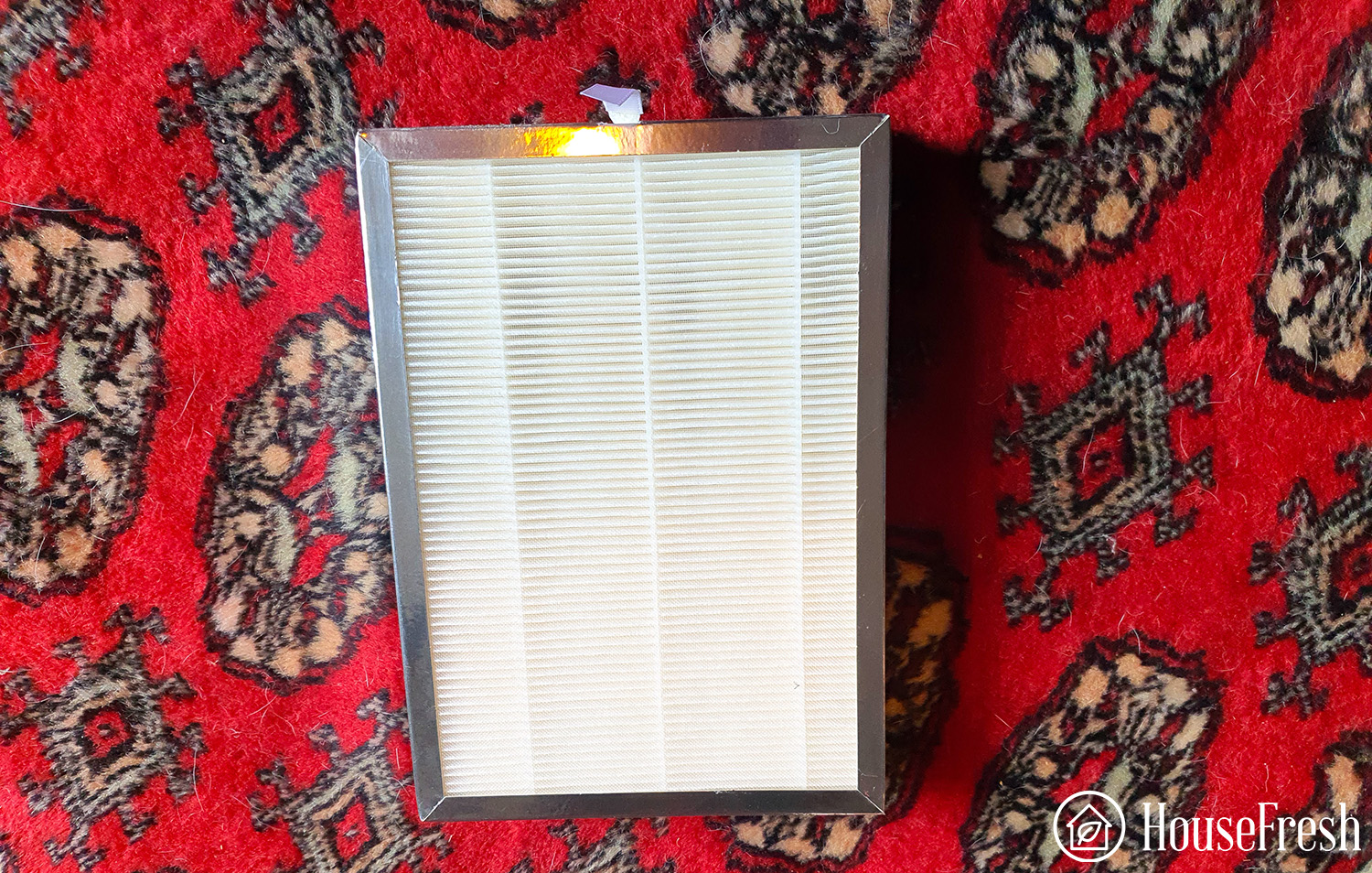
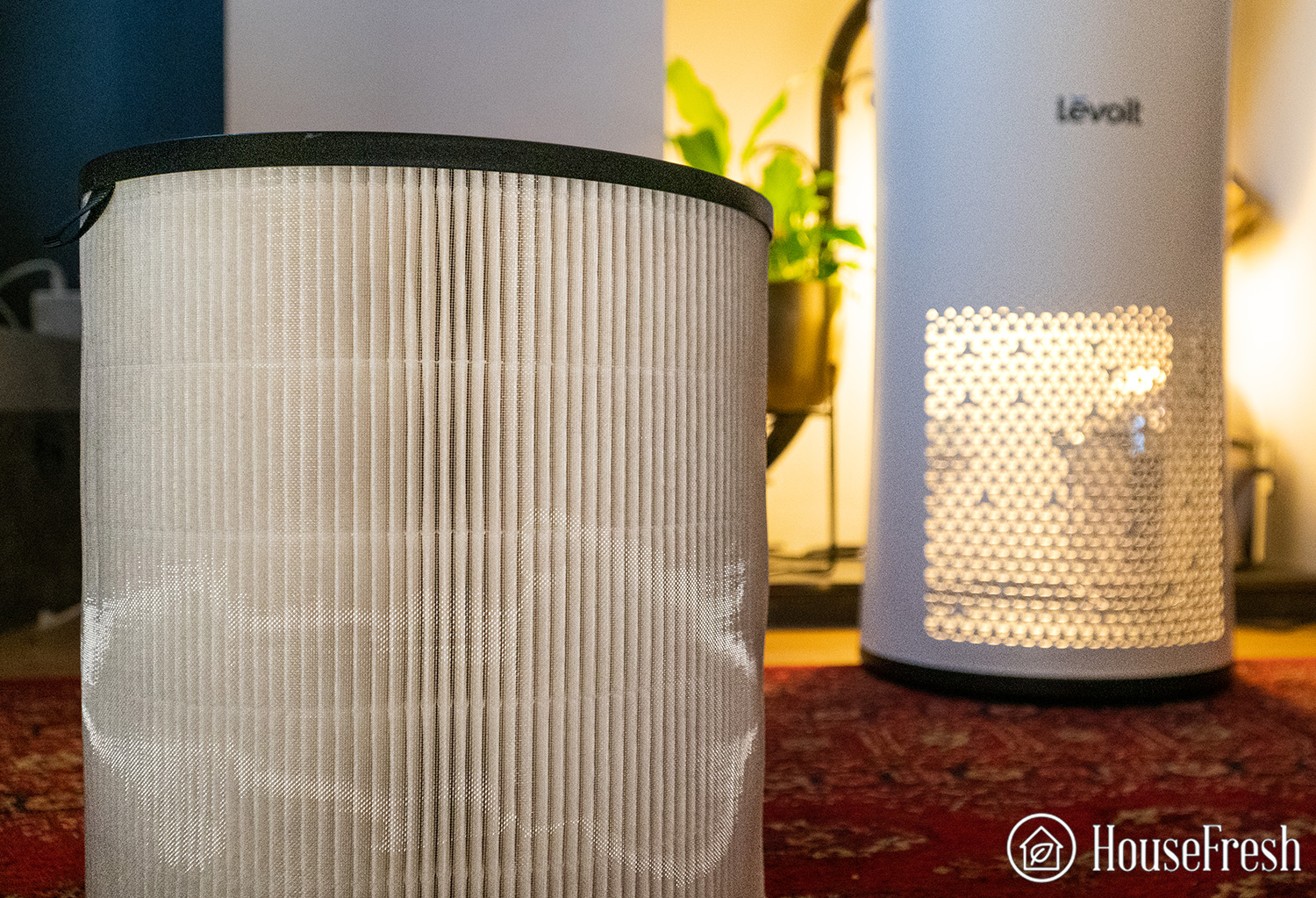
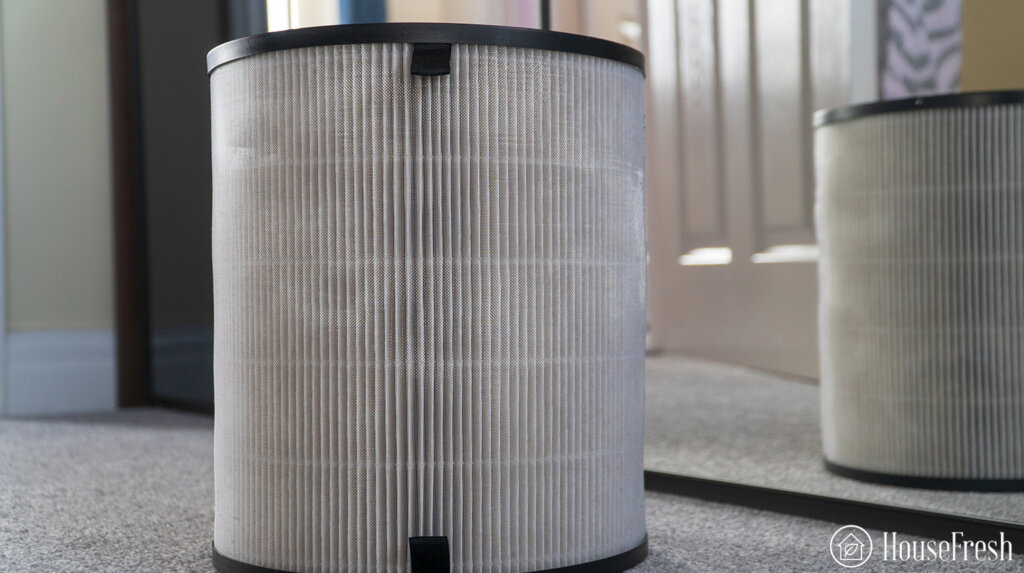
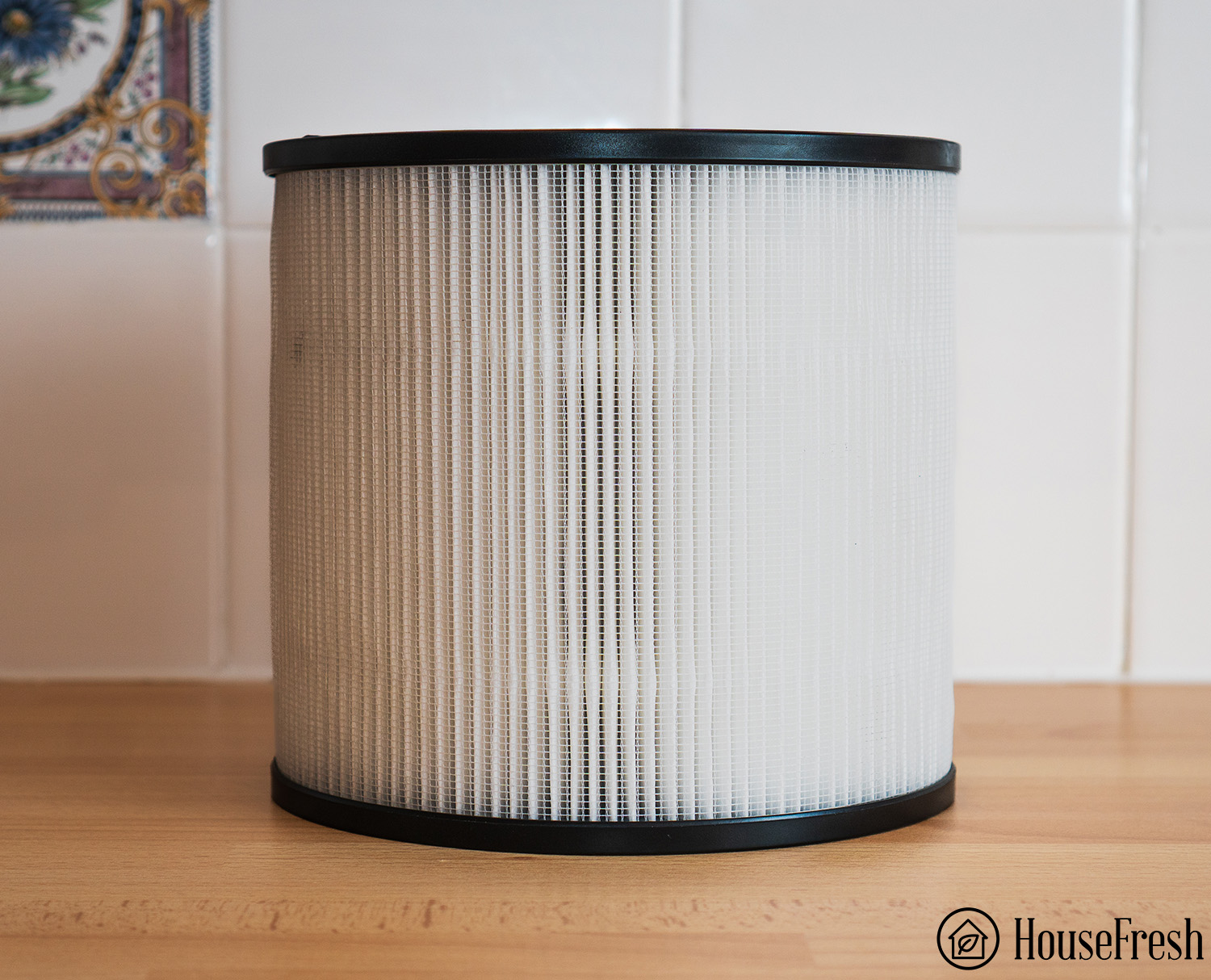
High-efficiency particulate air filters are made of thousands of intertwined glass fibers. They form a maze capable of capturing airborne particles as small as 0.3 microns, including allergens like pollen, mold spores, dander and fine dust. As the air purifier draws air in, the particles go through the filter and get trapped, thus removing them from the home environment.

Activated carbon filter:

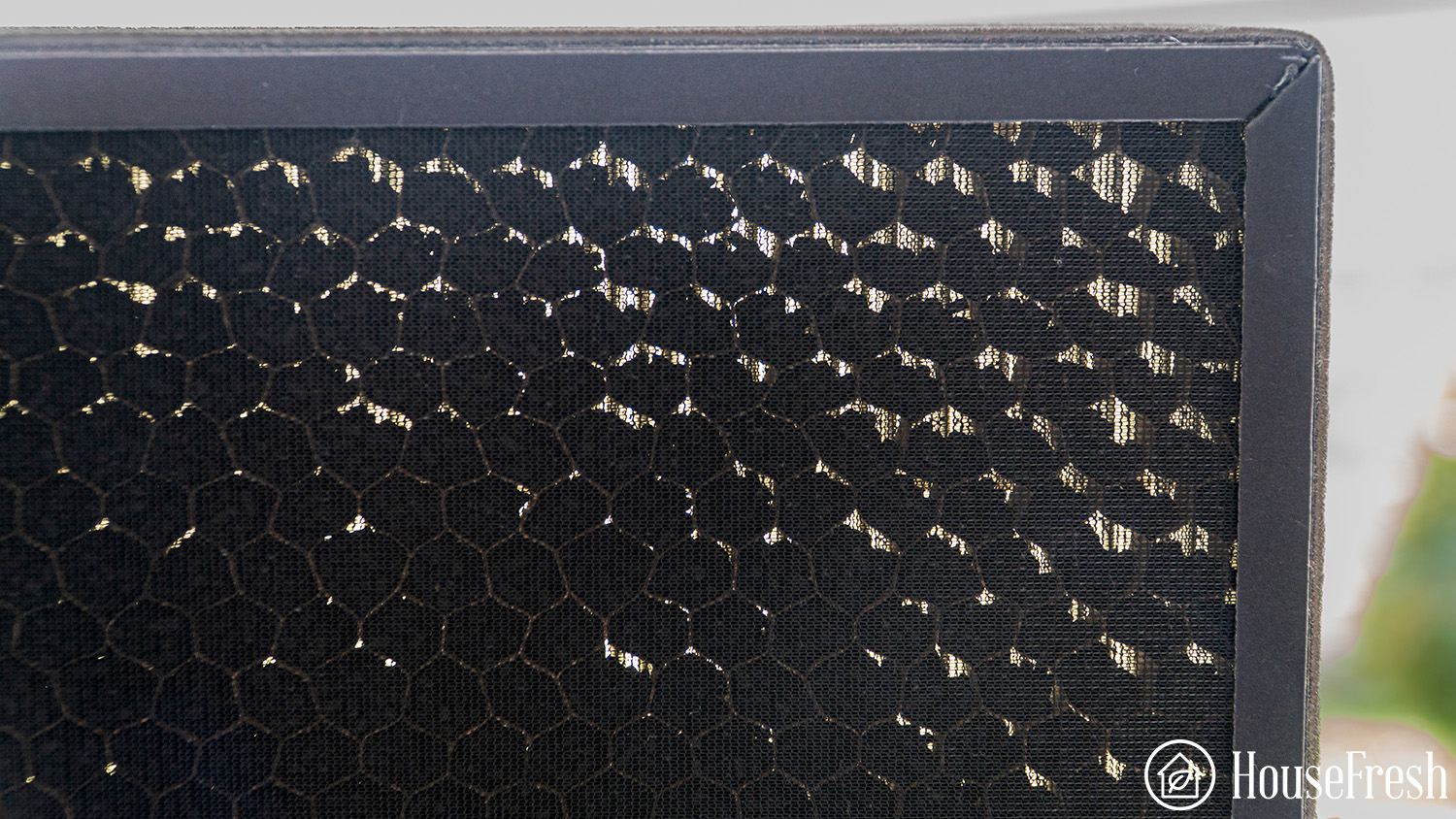
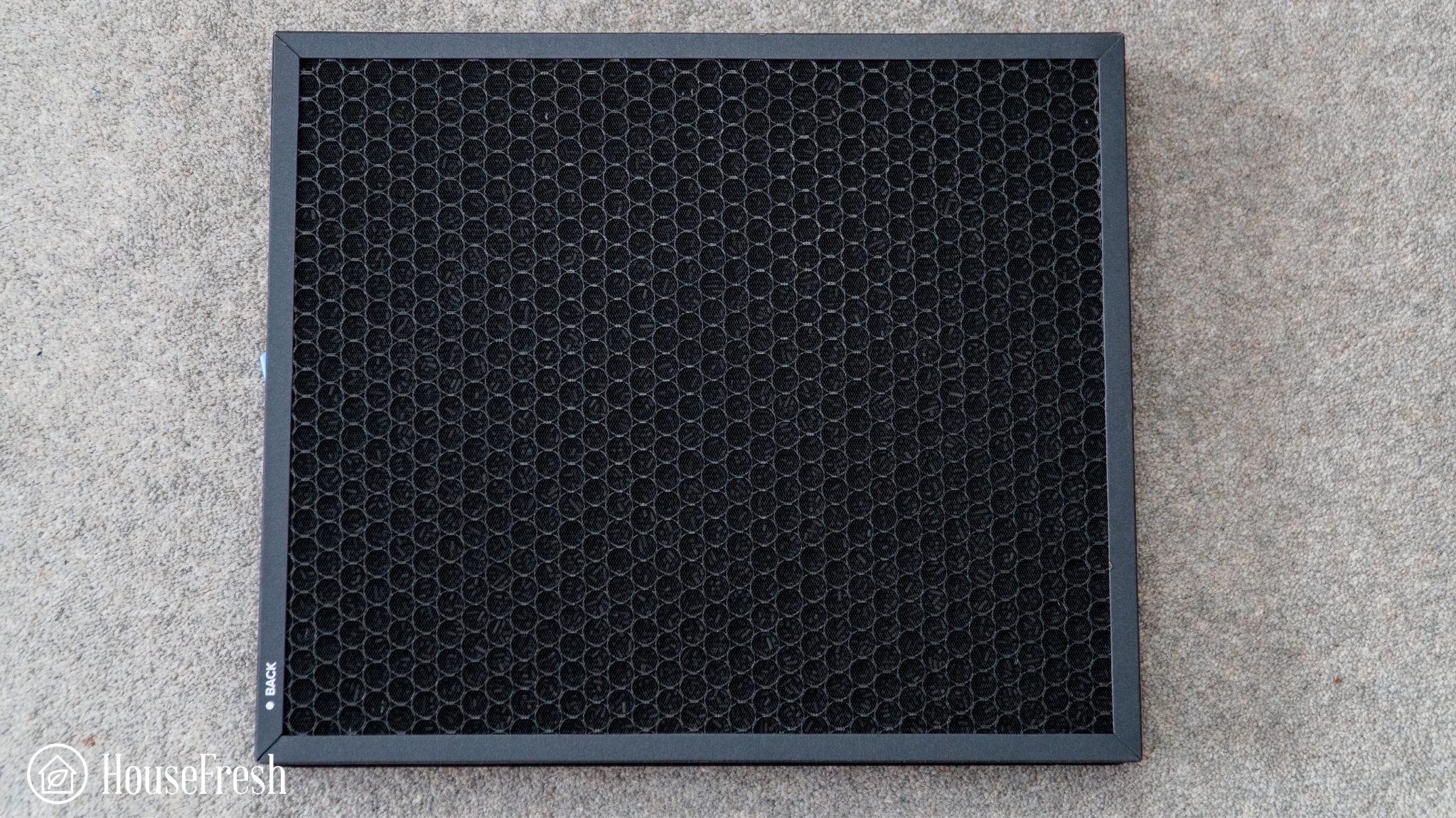
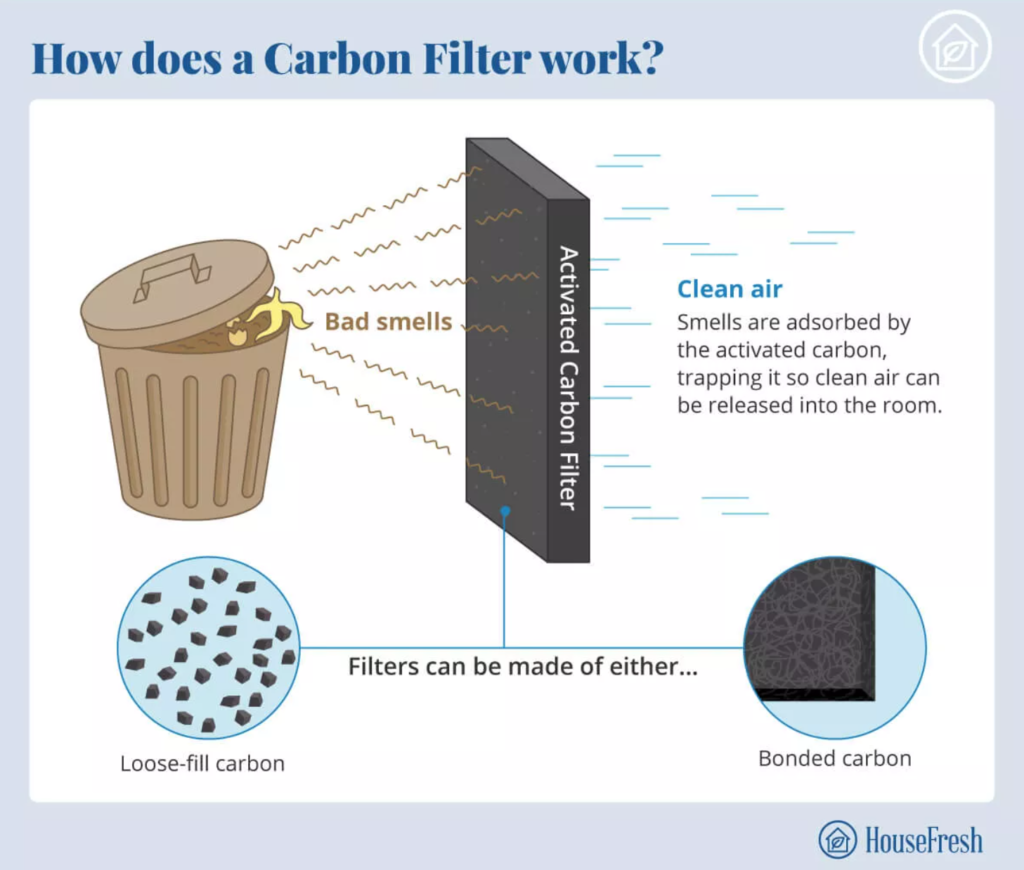
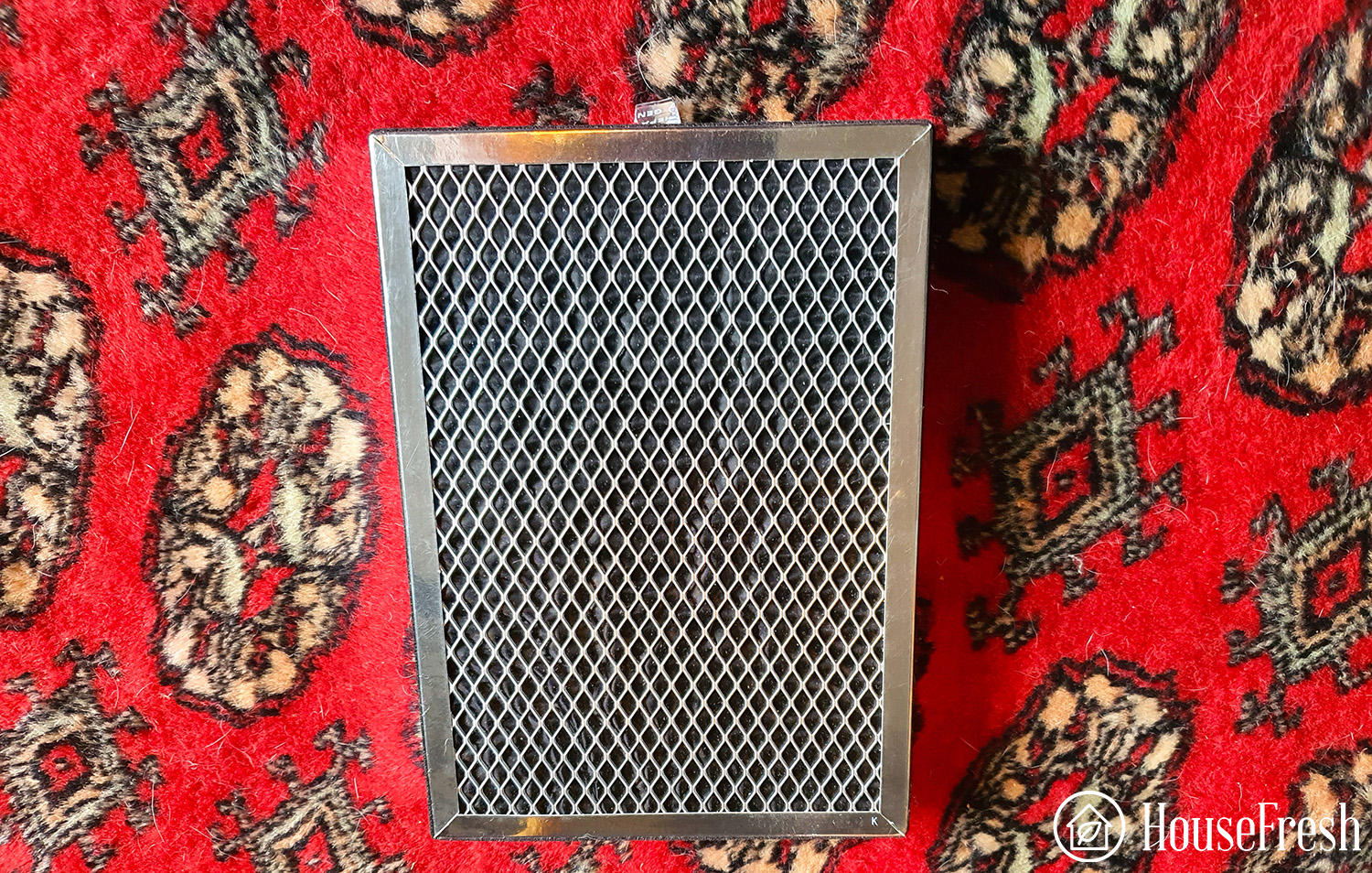
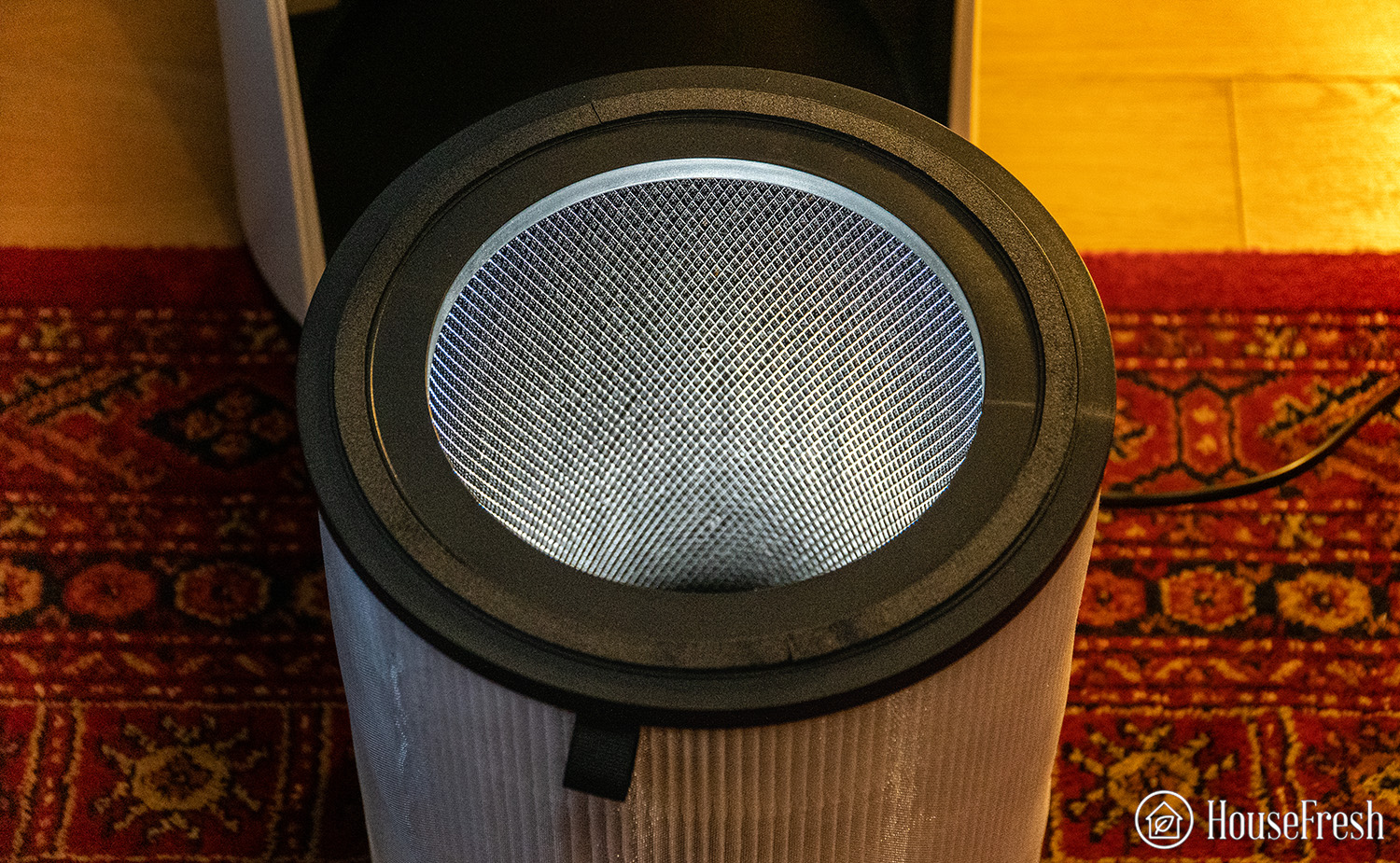
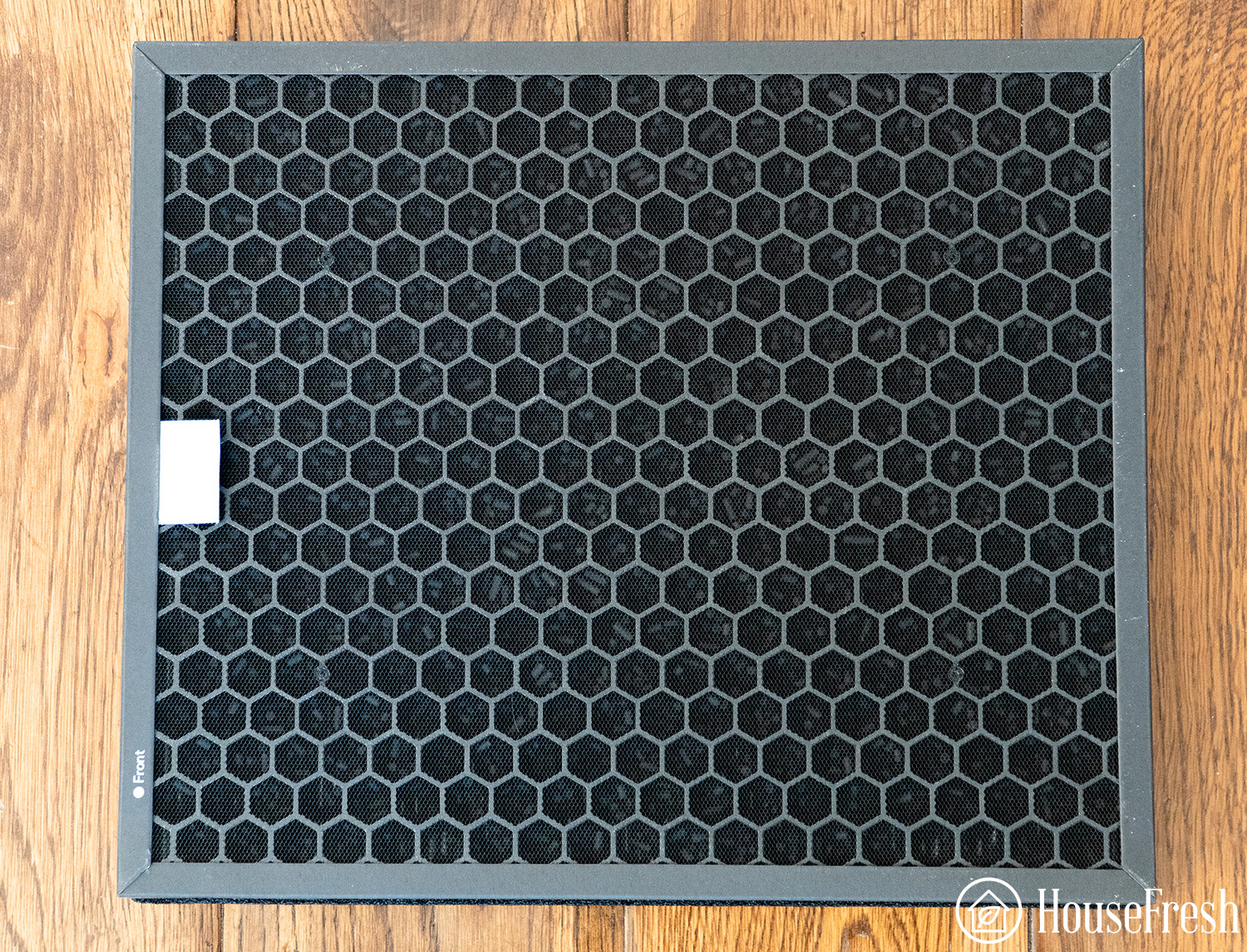
This third filtering stage will deal with the gaseous pollutants (like VOCs and smells) that can pass through the other two and re-enter your home air. When gases and odor molecules reach the activated carbon filter, they get stuck in the porous surface (this process is called adsorption), unable to flow back into the airstream. 

Tip

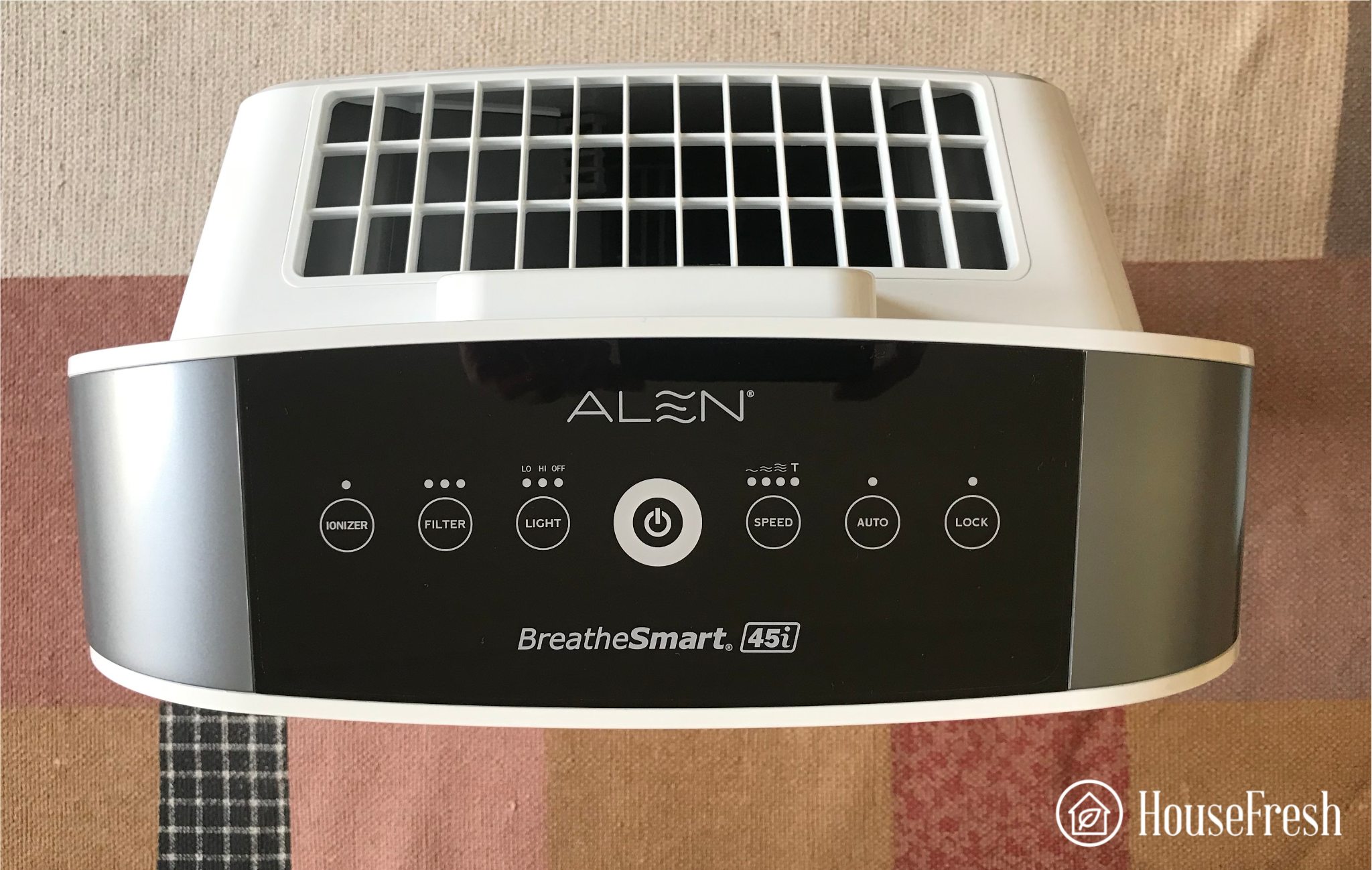
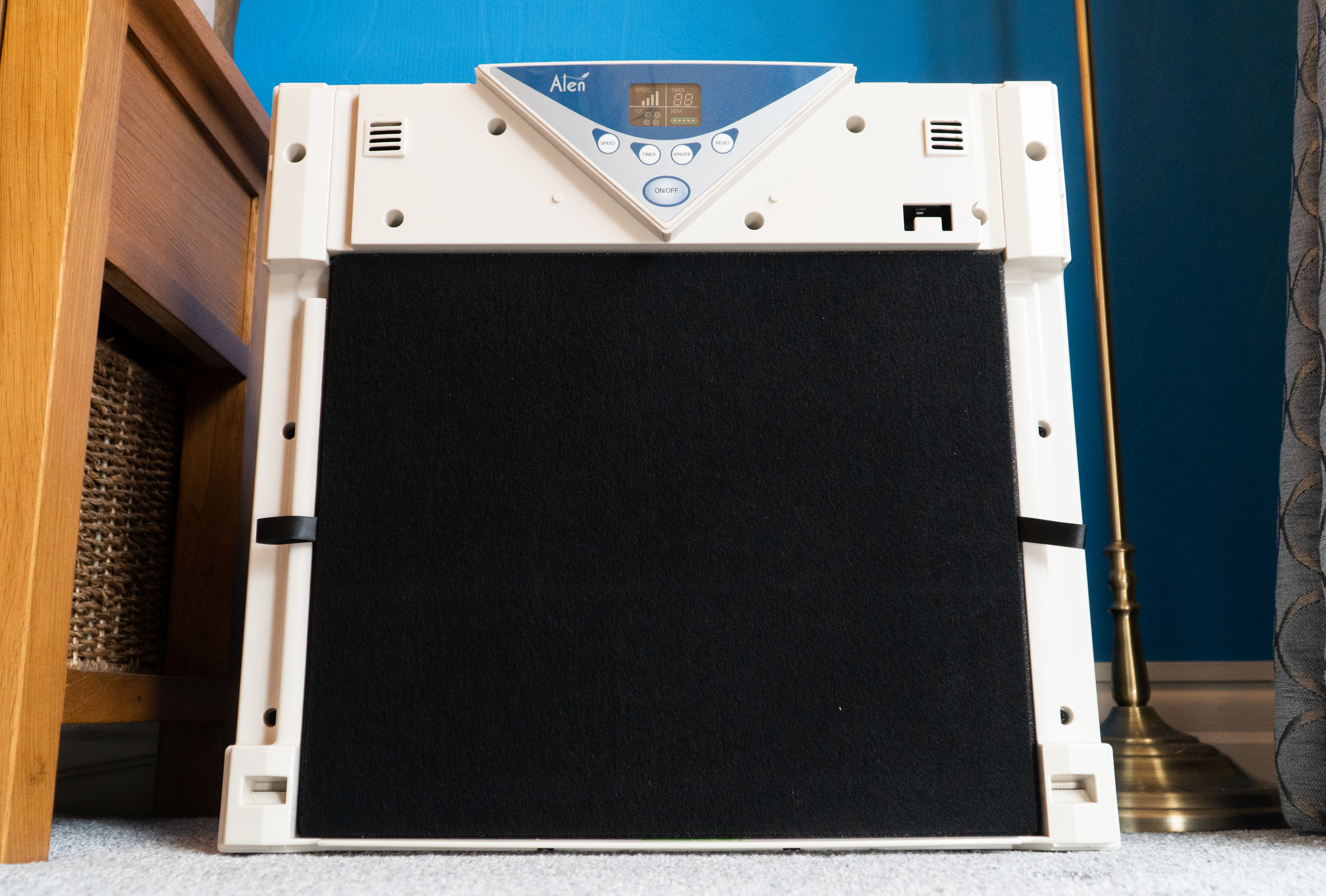
Air purifiers with mechanical filtration systems sometimes have built-in ionizers or emit ozone as they work to boost their performance. In some cases, like the Alen BreatheSmart 75i and 45i, the ion function can be turned off.

Some others, like Blueair units with their HEPASilent filtration technology, use an ionizer you cannot disable. Double-check the unit’s features before making your decision.

2. Silent units

All mechanical air purifiers make sounds as the fans draw in the air to filter. But the noise levels vary from one unit to another, even at the same fan speed or power to achieve the same air cleaning results. 

As animals have a much more keen sense of hearing than humans, it is best to opt for an air purifier that runs as quietly as possible to avoid stressing out your pet. HouseFresh recommendation is to opt for models with an average noise level of around 40dB.

3. The right cleaning power

Air purifiers are designed to efficiently clean the air within specific-sized areas. This means less powerful air purifiers will be best suited to remove most airborne particles from smaller rooms (such as bedrooms, studies, or small kitchens), while more potent units will be the best option to keep larger areas (such as integrated kitchens or ample living rooms) free of pollutants. 

However, greater power usually means an elevated energy consumption that translates into the general costs of running an air purifier. That’s why finding the unit with the right cleaning power and  Clean Air Delivery Rate (CADR) rating is important. 

As this may be a bit tricky to grasp at first, we’ve developed our own CADR calculator that will indicate the rating you need according to the exact size of your space. You’ll notice the Air changes per hour (ACH) field is pre-filed. That’s because 4.8 is the ACH the EPA recommends to keep up with any unfiltered air entering the room.

4. Button lock

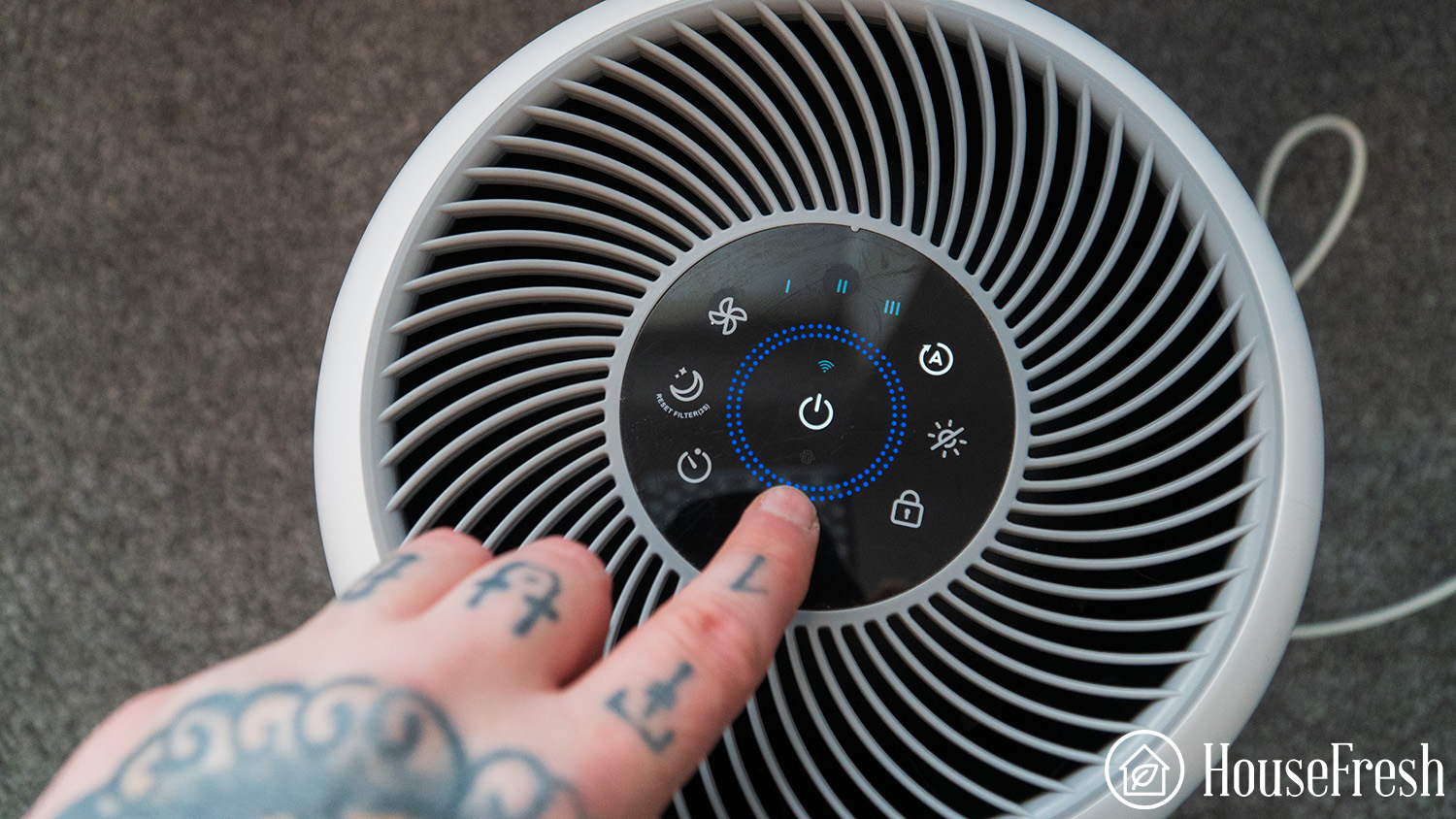
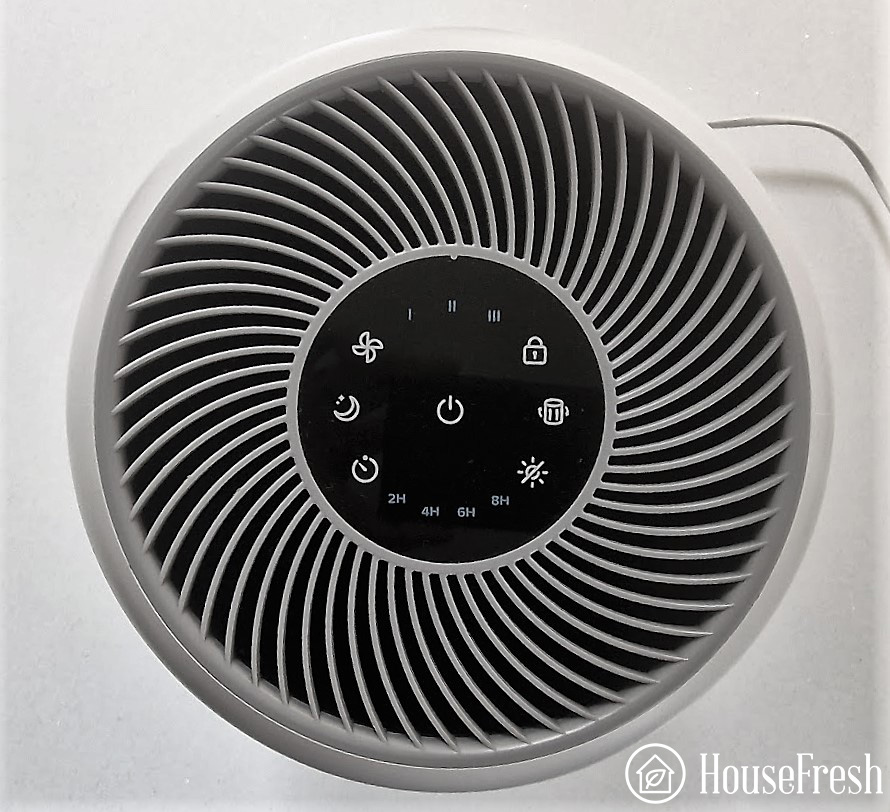
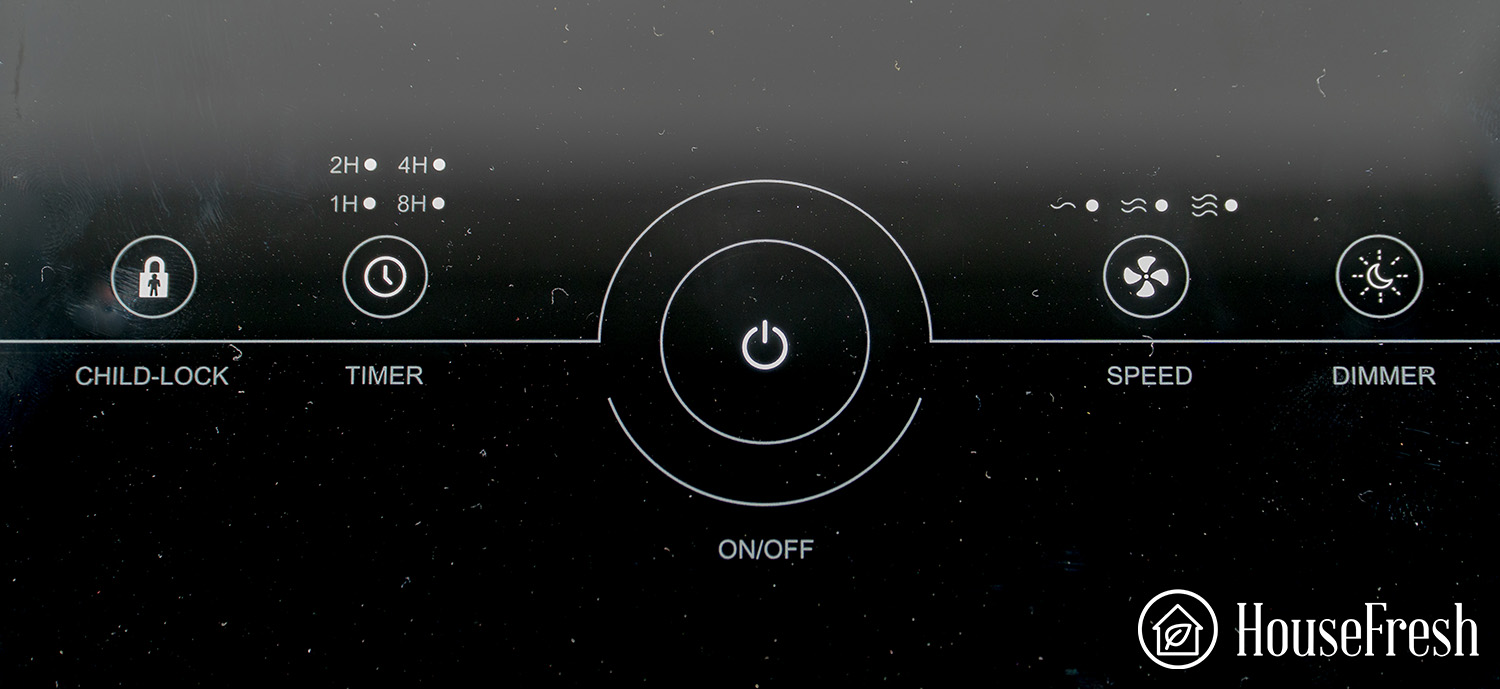
This is a useful feature to prevent mischievous or clumsy pets from tampering with the settings (or switching the air purifier off!). Most units have one-touch control settings that, as technology evolves, are becoming really sensitive to the point of responding even to the touch of a sneaky paw.

Wrapping up

After exploring different air purifier technologies, the dangers some of them may pose and the benefits of clean indoor air, it’s safe to say that mechanical air filtration is definitely something to consider.

An air purifier with HEPA+activated carbon filters and the power to clean and renew the air in your space will make your environment healthier —and make it smell fresher as a bonus!

SOURCES

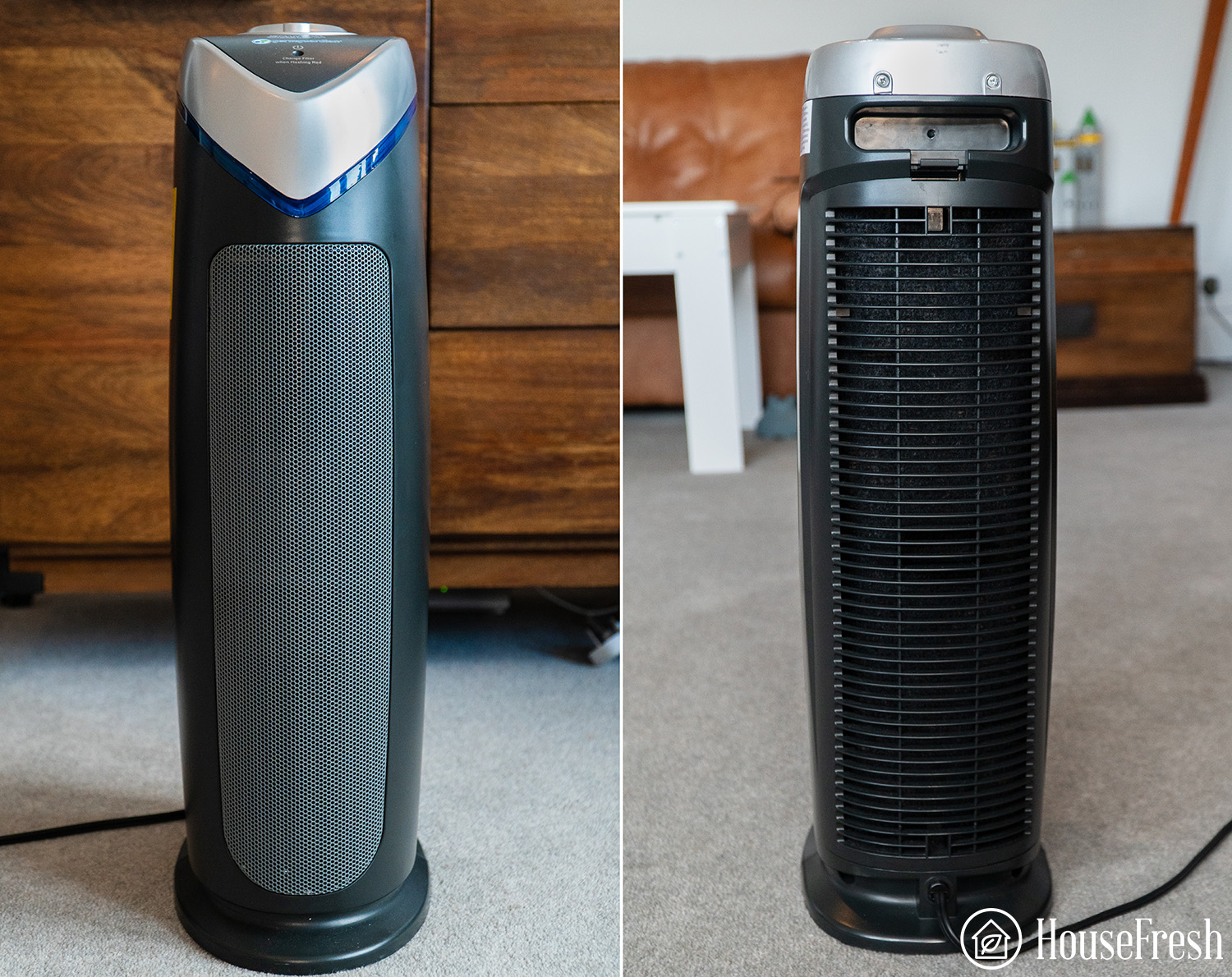
How to fix the most common GermGuardian air purifier problems

GermGuardian AC4825 Open Filter logo

Owning a GermGuardian air purifier can bring about some incredible improvements to your air quality. But despite their easy-to-use controls and fast-acting performance, like any other electrical appliance, they’re not immune from encountering issues from time to time.

From unexplained and irritating beeping to units that won’t power up, we’ve covered every issue fellow GermGuardain users have experienced and how you might be able to resolve them yourself at home. 

If all else fails, we’ve also included some handy information for each GermGuardian unit, including manuals, warranty details and who to contact if you require additional support. 

Problem 1: My GermGuardian air purifier won’t turn on

GermGuardian AC4825 Close Up logo

The ultimate headscratcher often occurs when you can’t get your appliance to switch on in the first place. Although it may seem catastrophic, there is usually a simple solution. 

❓ Is the power turned on?

We’ve all done it – Installed everything correctly and spent hours wondering what’s wrong, only to find you forgot to hit the switch at the socket or that the cord is loose at the unit. Simply switch it on and ensure the cable is securely connected and you’re good to go. 

❓ Is the filter installed correctly? 

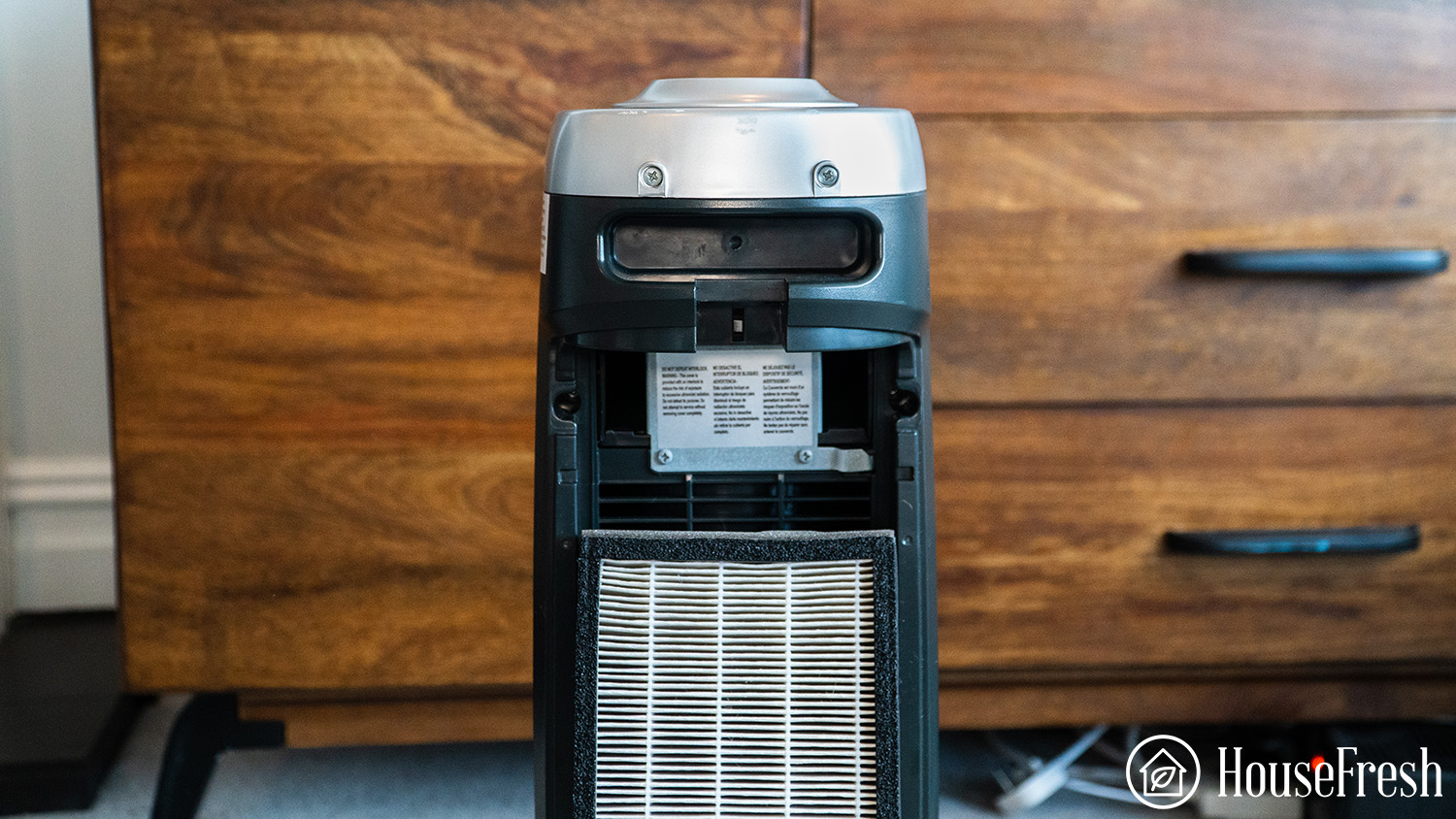
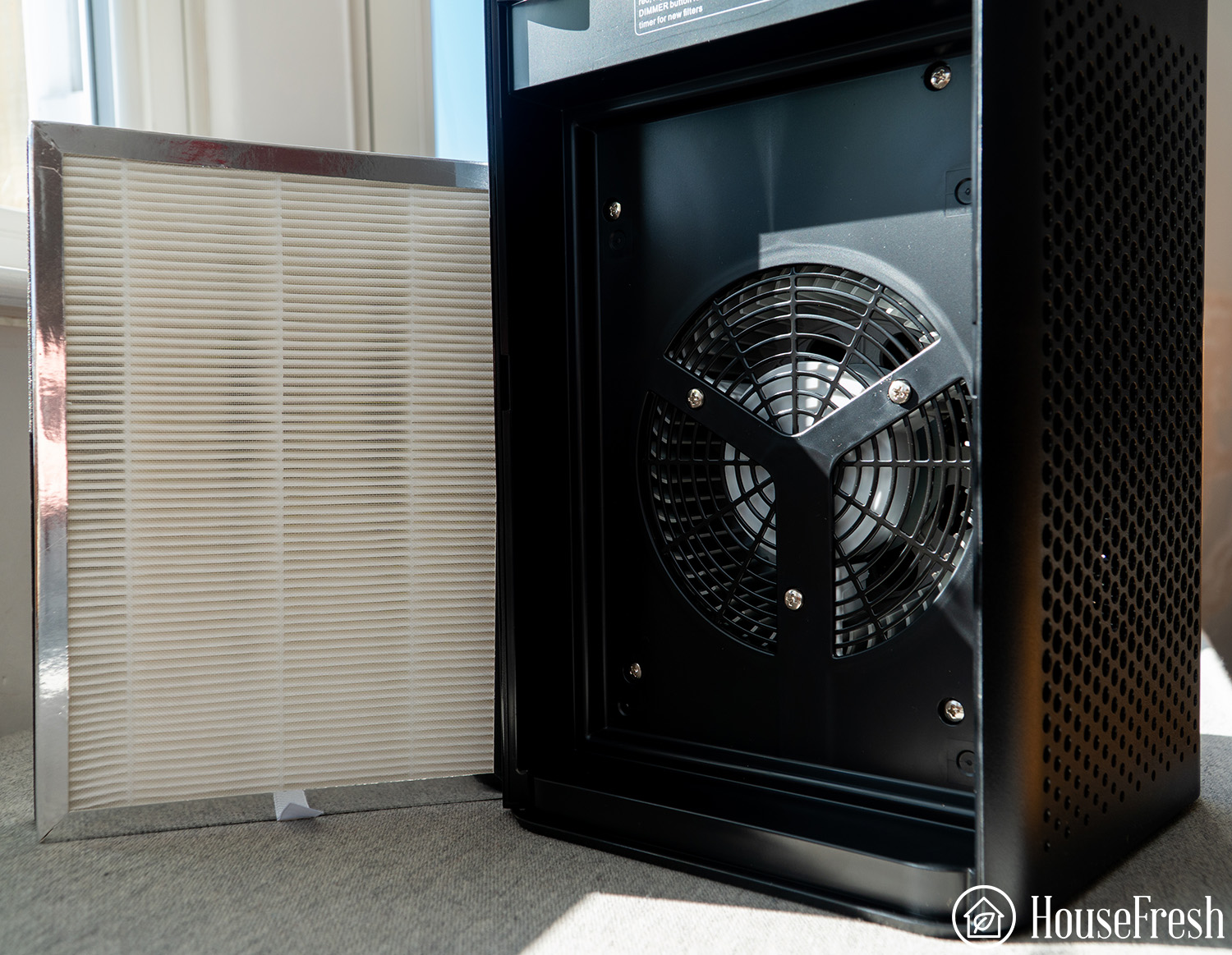
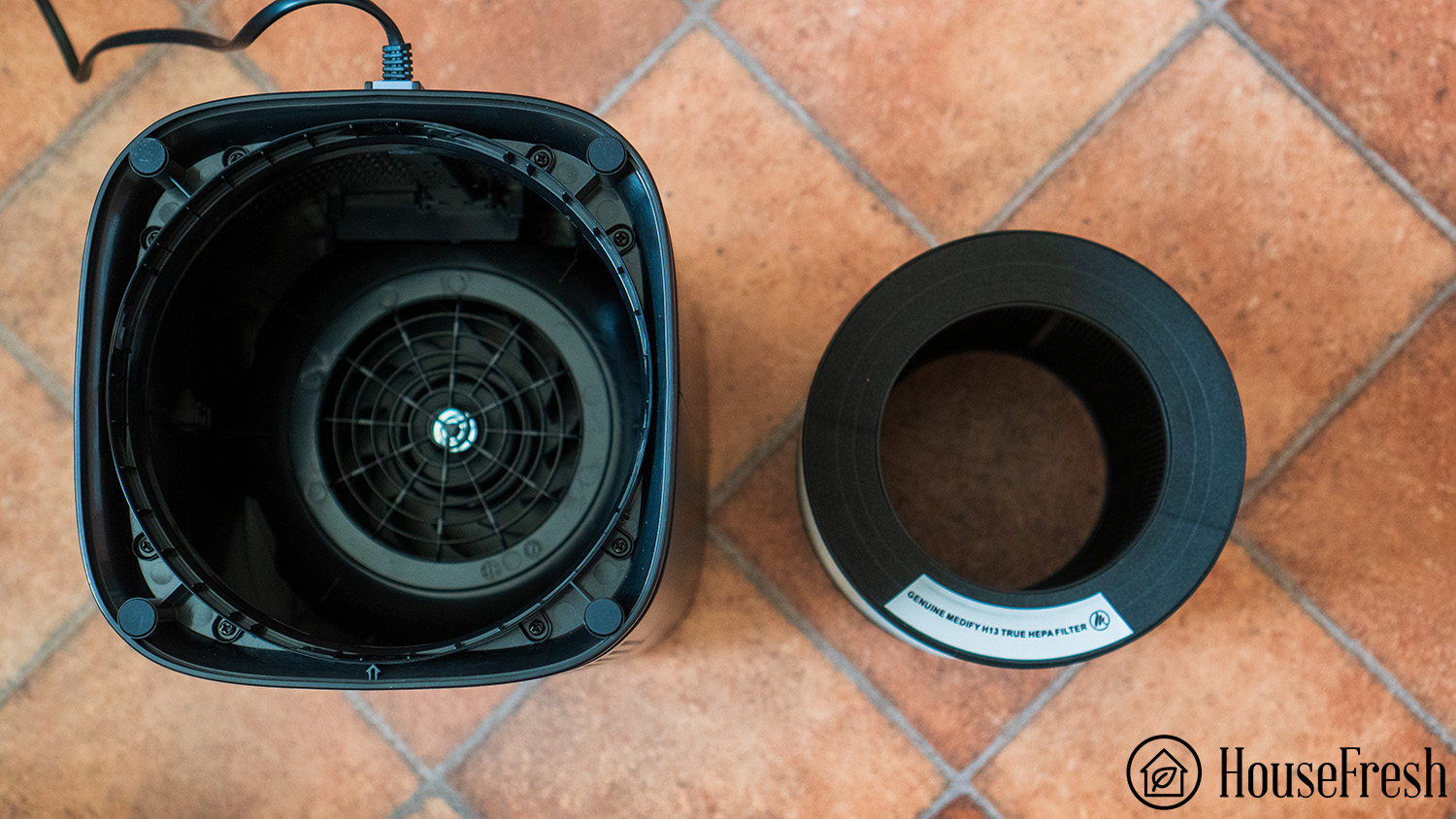
If the filter isn’t in place, facing the right way, or the back cover isn’t properly closed, the unit’s safety function will prevent the purifier from powering up. Ensure your HEPA filter is fitted with the arrows facing the right way and make sure the back panel is closed flush to rectify the problem.

❓ Is the power cable faulty?

Now and then, power cables can give up the ghost. There isn’t much you can do other than check the fuse or replace the cable entirely. 

❓ Is the power rating inaccurate? 

If the power rating is incorrect, your purifier won’t turn on. Check the outlet to make sure that the power rating is right.

GermGuardian ModelPower SupplyRated Power 
CDAP4500AC 110-120V, 60Hz 55 W
AC4825 AC 110-120V, 60Hz 62 W
AC5350AC 110-120V, 60Hz 58 W
AC5250PTAC 110-120V, 60Hz 58 W
AC5900WCAAC 110-120V, 60Hz 78 W
AC5000EAC 110-120V, 60Hz 58 W
AC4300AC 110-120V, 60Hz 55 W
AC4900CAAC 110-120V, 60Hz 55 W
CDAP5500AC 110-120V, 60Hz 55 W
AC5300BAC 110-120V, 60Hz 58 W
AC4200WAC 110-120V, 60Hz 26 W
AC4150AC 110-120V, 60Hz 45 W
AC9400WAC 110-120V, 60Hz 60 W
AC4700BDLAC 110-120V, 60Hz 55 W
AP2200CAAC 110-120V, 60Hz 55 W
AP5800WAC 110-120V, 60Hz 30 W
AC4870AC 110-120V, 60Hz 55 W
AC4711WAC 110-120V, 60Hz 55 W
AC5109WAC 110-120V, 60Hz 55 W
AC5600WDLXAC 110-120V, 60Hz 44 W
AC4820AC 110-120V, 60Hz 42 W
AC9600WAC 110-120V, 60Hz 30 W
AC4250BAC 110-120V, 60Hz 55 W
PureGuardian APH406WAC 110-120V, 60Hz 55 W
GG3000BCAAC 110-120V, 60Hz 10 W

Problem 2: My GermGuardian air purifier is making too much noise

Experiencing better air quality shouldn’t compromise on your day-to-day life. So if your air purifier is making a racket and becoming a nuisance, follow these simple steps that may help to reduce the volume.  

❓ Has the HEPA or carbon filter become blocked?

Over time your filters will become blocked with larger particles such as hair, lint or dust. Once this layer becomes thick, it can affect the airflow through the filter, creating more and more noise as the motor has to work overtime. Using a vacuum cleaner, you can gently remove this blockage and help ease airflow. 

❓ Are the fan blades misaligned?

This issue can occur if loose screws or bolts have allowed the motor fan to slip out of place. When this happens, the noise originates from the mechanics of the unit coming into contact with one another. 

By unplugging the unit and removing the filters, you should be able to tighten any screws, which will solve the issue. If the problem persists, it’s worth contacting GermGuardian directly rather than opening up the internal unit yourself. 

❓ Is there something lodged inside the unit?

Purifiers have plenty of openings and vents, so small items can often get lodged inside. Check whether this item is easily accessed by removing the back panel and removing the filters. If you still haven’t located the object, try slowly tipping the unit upside down to tip the item out again. 

Problem 3: My GermGuardian air purifier isn’t improving my air quality 

After investing in an air purifier, you should expect to see a difference in your air quality. Many modern units now come with an in-built air sensor to help you track pollutant levels in your space. However, if you don’t see a change, you can check a few things: 

❓ Can the unit circulate air effectively?

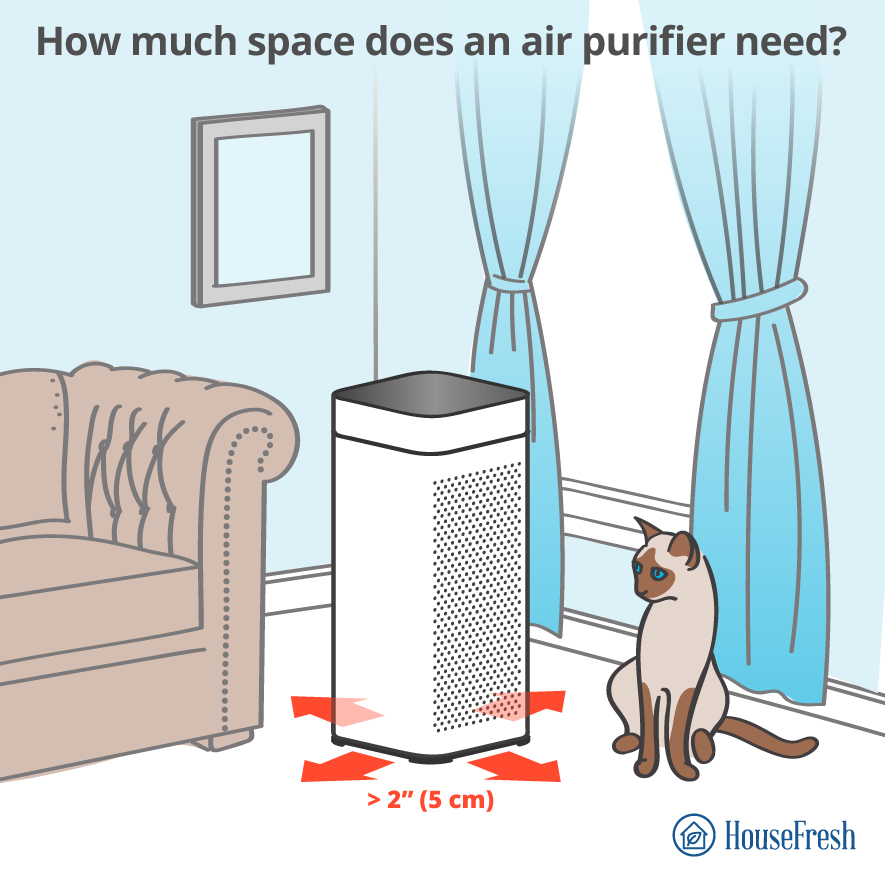
A common problem with air purifiers occurs when the unit can’t maximize airflow. For a purifier to work effectively, it needs to be placed away from the wall or any other pieces of large furniture, allowing it to draw in and expel air freely. Leaving a clearance of at least five cm will improve efficiency, but the greater the distance between a purifier and the surface will yield the best results.

Air Purifier distance 1

❓ Are the filters obstructed or do they need replacing? 

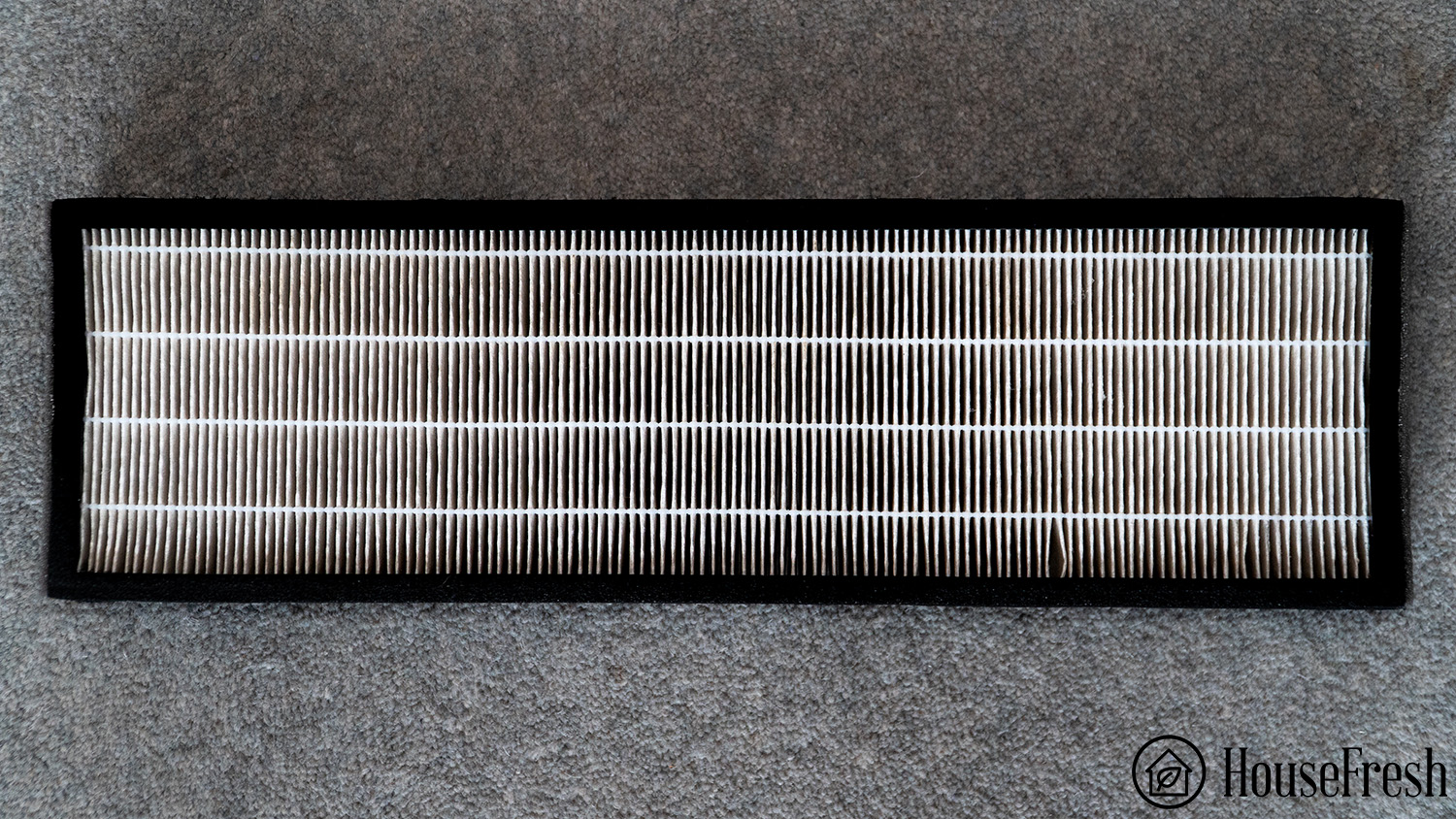
A blockage to your filters can result in decreased performance and less efficient cleaning. Assess your filters and try to remove any particle build-up from the exterior of your filter. If this doesn’t help, it is probably time to replace your filters. 

❓ Is the purifier appropriate for your space?

Before purchasing a purifier, it is vital that you first measure your space and identify a purifier that is capable of working effectively in your desired room. The manufacturer will provide a square foot area where the unit will work at its best so you can easily match a unit to your space. 

We’ve listed each unit’s room size suitability below so you can see if your unit is adequately powerful.  

GermGuardian ModelRoom Size Suitability
CDAP4500148 sq. ft.
AC4825 153 sq. ft.
AC5350167 sq. ft.
AC5250PT189 sq. ft.
AC5900WCA365 sq. ft.
AC5000E189 sq. ft.
AC4300153 sq. ft.
AC4900CA150 sq. ft.
CDAP5500171 sq. ft.
AC5300B167 sq. ft.
AC4200W105 sq. ft.
AC415054 sq. ft.
AC9400W402 sq. ft.
AC4700BDL150 sq. ft.
AP2200CA153 sq. ft.
AP5800W298 sq. ft.
AC4870153 sq. ft.
AC4711W150 sq. ft.
AC5109W394 sq. ft.
AC5600WDLX151 sq. ft.
AC4820153 sq. ft.
AC9600W395 sq. ft.
AC4250B102 sq. ft.
PureGuardian APH406W384 sq. ft.
AP6100837 sq. ft.

Problem 4: My GermGuardian air purifier makes unexpected noises or flashing lights

Unexplained beeping and flashing lights coming from your purifier can indicate something is wrong, or that there is something that needs to be addressed. 

❓ Does the UV bulb need to be replaced?

If you notice a blue LED light flashing on your unit, this will indicate that the UV-C bulb needs to be replaced. To do so, follow these simple steps:

  1. Disconnect the unit from the power 
  2. Remove the back panel and take out the HEPA filter 
  3. Behind this, you will find the UV compartment. A metal casing will protect the bulb and UV rays from escaping. You will need to unscrew this before removing it safely. 
  4. Behind the casing, you can easily slide out the bulb using a glove or cloth to protect your skin. 
  5. Slot in the replacement bulb and ensure you reinstall the metal cover before using the purifier again.  

❓ Is it time to change the filters?

When the red LED light starts to blink, you’ll know it’s time to replace your filters. This is simple to resolve. Simply order your chosen replacement, remove the back panel and discard the old filter before inserting the replacement. Pay close attention to directional arrows, which indicate the filter’s orientation. 

❓ Have you installed everything correctly and reset the unit?

So you’ve changed filters or bulb, yet the lights are still blinking, or the unit is now beeping? This could be a result of two issues. 

The first is that the filter or back panel is not installed correctly. To rectify this, retrace the steps and ensure everything is in place correctly. 

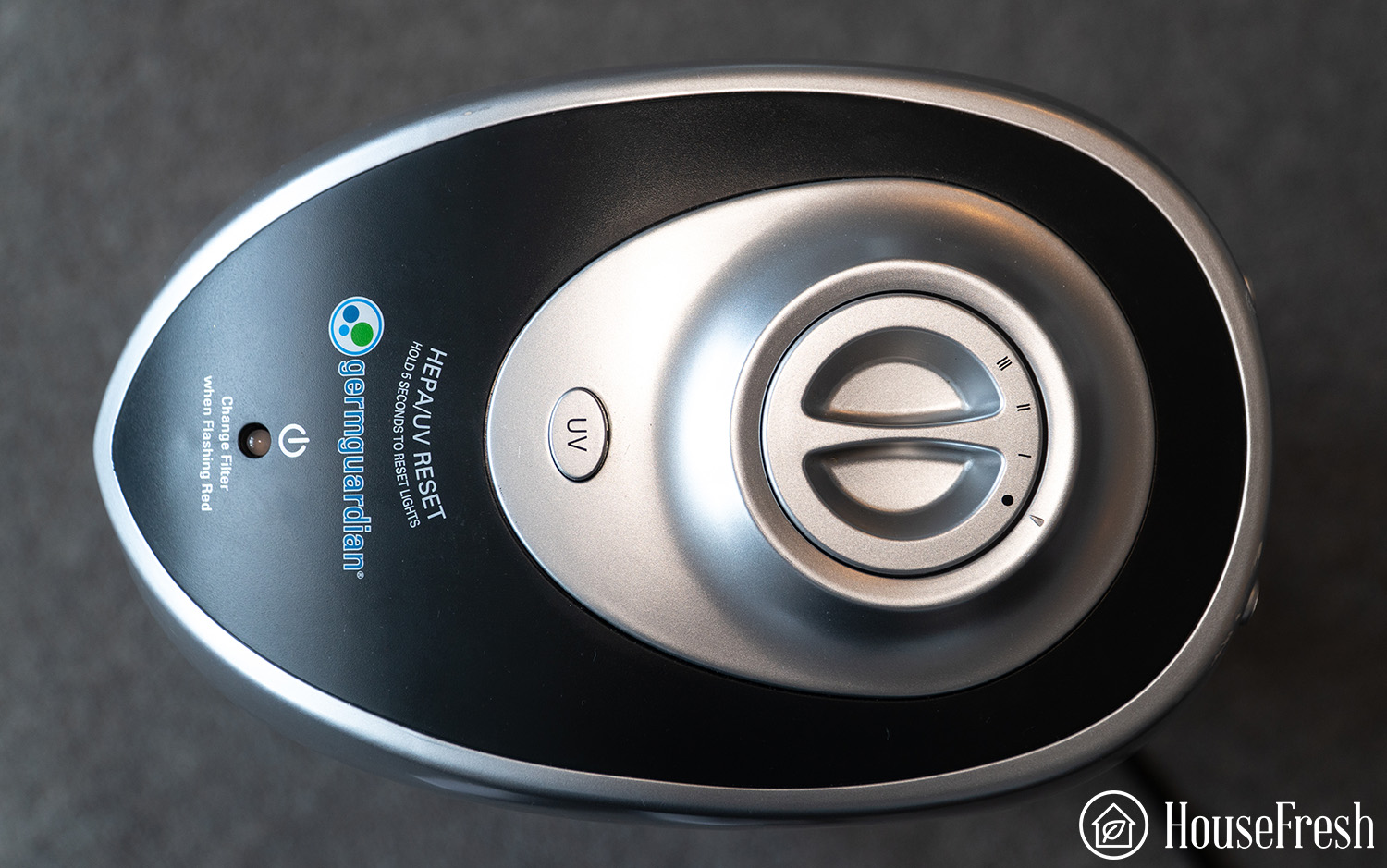
The other issue requires you to reset the unit. How to do this varies between models but will be resolved by pressing and holding a certain control down for five to eight seconds. 

See below to find out which button resets your purifier:

GermGuardian Air Purifier ModelReset Instructions
AP2200CA, AP2800CA, AC4820, AC4825, AC5000, AC5900WCAHold down the HEPA filter reset button for five seconds after inserting the new filter.
AC4700B, AC4900CA, AC4300, AC5300Hold down the UV button on the unit for five seconds after inserting the new filter.
CDAP4500, CDAP5500, AC5350Hold down the timer button for five seconds after inserting the new filter.
AC4200WHold down the power button for five seconds after inserting the new filter.
AC5250PTInsert a pen tip into the HEPA Reset area on the control panel to restart the system.
AC5600WReset the filter indicator by holding the fan speed button for five seconds.
AC9200WOn the right side of the unit, use a paper clip and hold down the small reset for five seconds.
AC9400WHold down the filter control for eight seconds; the unit will beep before resetting.

Problem 5: There’s a funny odor coming from my GermGuardian air purifier

When using an air purifier, you should expect odors and pollutants to get better, not worse. If strange or unpleasant odors are emanating from your unit, there’s probably something wrong that you should investigate. 

❓ Have you removed the filter from its plastic wrapping? 

Buying your first purifier and setting it all up is no easy task. One of the most common issues people encounter is leaving the filter in its plastic wrapping. 

If this has been done, you can expect an unpleasant odor and not much purification. Simply remove the filter and ensure the wrapping has been removed before re-installing.  

Suppose the smell persists, despite it being a new filter. In that case, it’s advisable to place the purifier in a room you infrequently use and allow the unit to run on a high-speed setting for 24 hours to allow the filter to air out and eradicate any unpleasant odors from its manufacture.

❓ Is there a strong odor originating from inside your space?

Air purifiers fitted with an Activated Carbon filter will work well against household odors and help create a fresher feel in your room. That being said, they aren’t miracle workers. The filter can only do so much if your space’s odor source is persistent. 

A great tip is to adequately ventilate your room when smoking or cooking; this will give the purifier a head start on any strong odors and help maintain a more pleasant atmosphere. 

❓ Do the filters need replacing?

Once your filters become clogged with polluting particles and debris, they will remain in the unit until replaced. After a while, when the unit is running, it might start spreading a musky or stale odor into your space. If you have noticed this, it may be time to replace and discard your old filters. 

Problem 6: My GermGuardian air purifier won’t connect to the GermGuardian app or Wifi

Being able to connect your purifier to your smartphone or tablet is supposed to make life much simpler. This development can offer untold benefits, from checking the current air quality to operating the appliance remotely. However, things can quickly become very stressful when technology decides it will not play ball.  

❓ Can you access the app on your device?

Often, users struggle to access the app on their phones or tablet. Without the app, you won’t be able to connect remotely to the purifier, let alone operate its controls or check air quality reports. To install the app successfully, you must have a compatible device and ensure that it has the latest software update installed. 

❓ Is the device in range of the purifier?

The next step to connect your device successfully is to ensure it is powered on and in the range of your purifier. Plug in the purifier and double check the ‘Linking’ setting is activated (the light will be flashing blue when looking for nearby devices). 

GermGuardain advises holding your device within a meter of the purifier to connect initially. Once in range, the purifier should appear on your device, where you can opt to connect. 

❓ Is a red light flashing in the center of the control panel?

This red light may indicate that the Wifi connection has been lost. To re-establish the connection, open the GermGuardian app on your smart device and look for the Wifi Settings page through the menu in the top right-hand corner. From here, you can reconnect your purifier to the Wifi. 

Problem 7: The air sensor is providing inaccurate results 

Many modern air purifiers now include an air sensor to help you keep track of pollutant levels and adjust your purifier settings accordingly. GermGuardian utilizes a three-color traffic light system to illustrate how good or poor your air is. 

Green indicates a good and healthy level, Orange signals average quality, while Red shows us the air quality is poor and requires attention. 

❓ The sensor may be dirty 

With air flowing in and around your purifier, carrying many particles along the way, these particles can often build up and affect the unit’s efficiency. If particles lodge onto the air sensor, this will cause your appliance to provide inaccurate readings. 

To solve this problem, locate the sensor using the diagrams in the manual and gently clean using a vacuum cleaner or by applying compressed air. 

❓ Have you changed the settings to combat pollutants effectively? 

The color-coded air quality feedback is a great tool for users to know how much pollutants are in the space. GermGuardian suggests that you adjust the unit’s fan speed to match the level of pollutants. 

Green indicates a low fan speed will suffice, while you should ramp up the speed when the light shows red. If your light consistently shows red, turn the purifier to its turbo setting and allow it to work for a few hours to combat the pollutant build-up.

Problem 8: My GermGuardian air purifier has suddenly stopped working

Perhaps the most perplexing issue you may encounter is when the unit simply stops working. Whether it’s powered down unexpectedly or gone from being fine one day to broken the next, we’ve uncovered a few issues that may have arisen. 

❓ Has the purifier lost power due to a loose cable or power cut? 

The first port of call if your purifier suddenly stops working is to double-check the power source. 

Ensure the cable is securely in place and hasn’t come loose from the socket. If this is all correct, you may wish to try a different socket or ensure that the other electrical appliances in your home are still operational. 

❓ Has the purifier overheated? 

Suppose the purifier has been left on continuously for a long period. In that case, the motor protection circuit may have kicked in to prevent the unit from overheating and frying the motor. This safety feature found on most GermGuardian purifiers will save you from costly damage. 

To get the unit up and running again, unplug and leave the device to cool for a couple of hours before reconnecting to the power. The appliance should have now reset itself and will work as normal. 

If this happens, remember to adjust the fan speeds to lower levels if using for a prolonged period and ensure adequate airflow around the appliance so it can dispel hot air. 

❓ Has the back panel been opened?

If the panel housing the filters has been opened while in use, the purifier may shut down automatically. Reinstate the panel securely and switch the purifier off and on again to resume operation. 

How to contact GermGuardian 

Now and then, an issue can occur that a home remedy won’t fix. If your air purifier issues still stump you, contact GermGuardian directly for further assistance.  

GermGuardain can be contacted online using their contact form or by emailing the support team directly at support@guardiantechnologies.com
Alternatively, you can contact the company by telephone, dialing 1.866.603.5900 between 8am to 9pm EST, Monday to Friday. 

GermGuardian offers a warranty of up to three years on most of their products. However, you must ensure that you register your product using proof of purchase to be able to claim and resolve any issues that may occur. 

Registering your product can be done here: https://www.guardiantechnologies.com/pages/product-registration 

If your product’s warranty has expired, GermGuardian can still assist with product repairs for $30. Simply fill out this form and follow the instructions to return your product for maintenance.

Find the manual for your Germguardian air purifier

It’s always worth consulting the manual before resolving an issue yourself. To save you from rummaging through old boxes to locate it, we’ve attached each model’s manual as a PDF file for you to access digitally. 

GermGuardian ModelManual
CDAP4500PDF 
AC4825 PDF
AC5350PDF
AC5250PTPDF
AC5900WCAPDF
AC5000EPDF
AC4300PDF
AC4900CAPDF
CDAP5500PDF
AC5300BPDF
AC4200WPDF
AC4150PDF
AC9400WPDF
AC4700BDLPDF
AP2200CAPDF
AP5800WPDF
AC4870PDF
AC4711WPDF
AC5109WPDF
AC5600WDLXPDF
AC4820PDF
AC9600WPDF
AC4250BPDF
PureGuardian APH406WPDF
AP6100PDF
GG3000BCAPDF

Final thoughts

If you want to improve the air quality inside your home, you won’t go far wrong with buying an air purifier. However, as with any other product, you might experience common problems from time to time. 

Fortunately, the issue can usually be resolved quickly and easily. Sometimes you might have to consult the user manual or dedicated customer support services.

The air purifiers for the bedroom that won’t disturb your sleep

Alen BreatheSmart 45i Bedroom

The bedroom as the private area of the house we know today dates back to the 17th century, a period not so distant considering the world’s oldest bed is approximately 77,000 years old. Bedrooms have widely evolved since then, achieving the high level of comfort we are used to today.

Yet, more often than not, that same coziness makes bedrooms ideal places for dust and other allergens to build up. The bedding, cushions, pillows, the chairdrobe with partially used clothes piling up accumulate dead skin cells, dander and lint while shedding tiny fibers, contributing to further dust buildups — a true feast for dust mites, also known to be common allergy triggers.

Then there’s ambient pollution that can slip in through the window, such as pollen, traffic fumes or the dust of a nearby construction.

As an allergic, compulsive morning sneezer, I can confidently say that sleeping with an air purifier in the bedroom can drastically alleviate congestion and most allergy symptoms. 

Needless to say, you’ll need the right air purifier for the job. Whether you have a spacious master bedroom, a cozy small room or live in an ample studio, we’ve handpicked four units to fit all needs. All our recommendations are backed up by multiple performance tests to ensure they meet our short and long-term standards.

how we test
How we test air purifiers

Read our full testing methodology.

We also made sure to check the noise output, power and speed capable of cleaning the air without disrupting your rest.

Staff picks: Top 3 air purifiers for bedrooms

From the over 50 units we have tested, we’ve run down our selection to these three units for improving the air quality in your bedroom:

👑 BEST OVERALL💰 FOR TIGHT BUDGETS🛋️ FOR LARGE SPACES
Levoit Core 300SWinix A230/A231Alen BreatheSmart Flex
Levoit Core 300S BedroomWinix A231 Living roomAlen BreatheSmart Flex Bedroom
AIR CLEANING SPEED ⚡32 minutes35 minutes34 minutes
CADR 👩‍🔬Dust: 134 CFM
Smoke: 126 CFM
Pollen: 154 CFM
Dust: 149 CFM 
Smoke: 147 CFM
Pollen: 154 CFM 
Dust: 208.8 CFM
Smoke: 191 CFM
Pollen: 245.4 CFM
FILTER TECHNOLOGY 💨3-Stage Filtration (Pre-filter for large particles, main filter for airborne particles, high-efficiency activated carbon filter for odors and gasses)Fine mesh pre-filter, True HEPA filter, activated carbon filter, PlasmaWave technologyH13 HEPA with an option for activated charcoal (Fresh, Odorcell and Heavy Smoke options available)
MAX ROOM SIZE 📏Up to 219 sq. ft.Up to 230 sq. ft.Up to 296 sq. ft.
WEIGHT ⚖️5.95 lbs (2.7 kg)7.1 lbs (3.2 kg)15 lbs (6.8 kg)
OUR REVIEW 🔍Core 300S reviewWinix A230 reviewAlen Flex review
PRICE 💵No products found.Price not available$299.00

Last update on 2026-04-04 / Affiliate links / Images from Amazon Product Advertising API

Read on to discover all the details and perks our recommended units could bring to your night’s sleep.

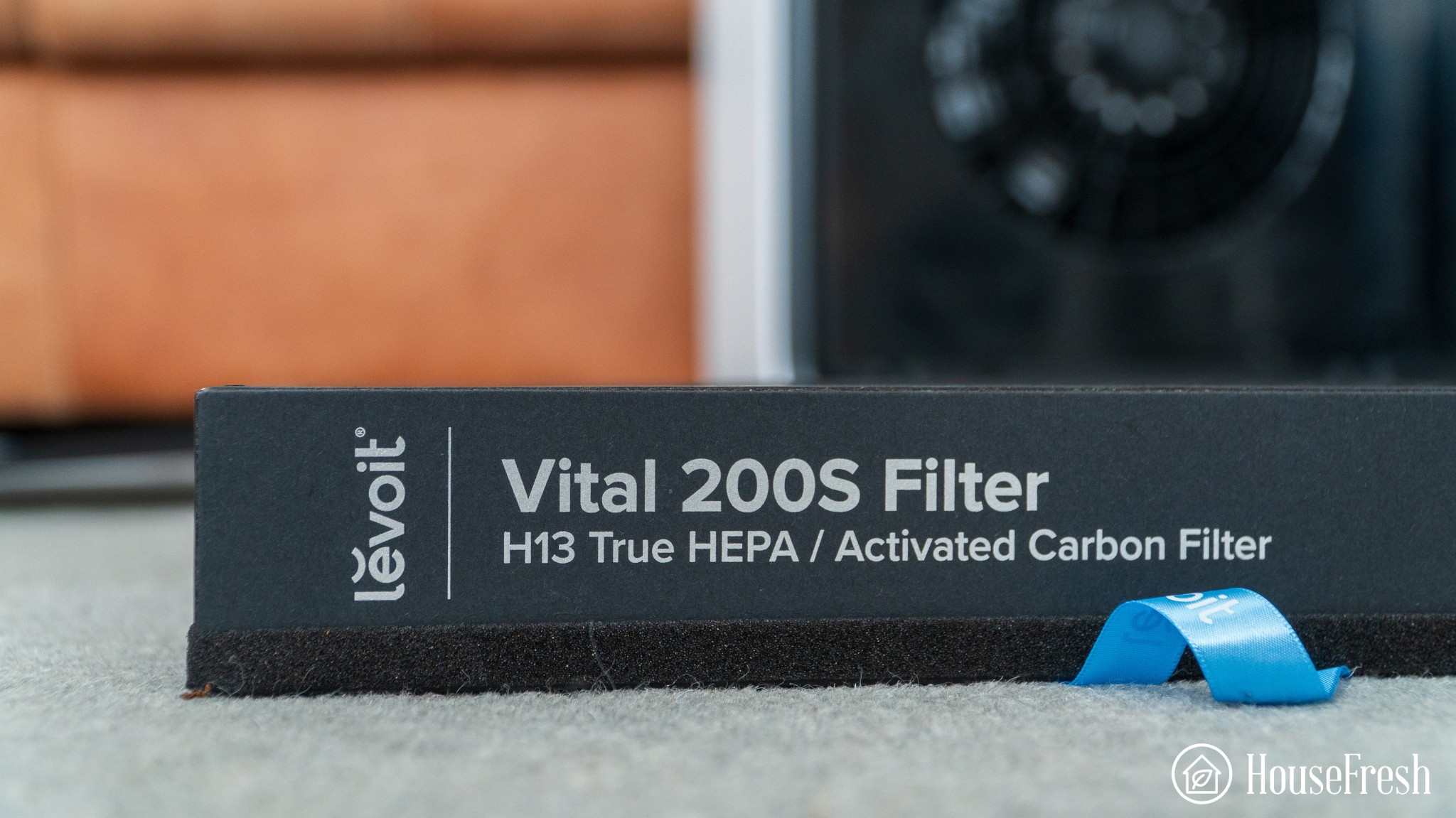
1. Best overall: Levoit Vital 200S

The Vital 200S is an excellent option for small to mid-sized bedrooms, offering excellent air cleaning performance for less than $200.

Levoit Vital 200S Living Room

We’ve been favorably impressed by this unit’s performance, particularly considering its more than reasonable price. The Vital 200S is powerful and efficient. It can complete five air changes per hour in rooms of up to 375 sq. ft.

It is fast, too. With a CADR of 245 CFM, it cleaned our test room in 18 minutes, which is only three minutes slower than the mighty Core 600S and a six-minute difference compared to the Smart Air Blast Mini —the quickest (and a far more expensive unit) of the 55 units we have reviewed. 

There are four fan speeds to choose from, including a turbo mode, which not all Levoit units feature. This is quite convenient for bedrooms, as it can thoroughly clean the air in the room before it’s time for bed. 

With better, cleaner air in the room, you can safely set the unit to sleep mode for the night, which means a lower fan speed and lower noise levels (24dB) for a peaceful rest.

What we really like

Well equipped with smart features, normally found on more costly models.
Despite boasting the perks of more expensive models and having an incredibly reasonable price tag, none of this compromises the unit’s cleaning power.
The washable pre-filter allows for a longer filter lifespan. 
The filter includes a pelleted activated carbon layer, good enough to control any unwanted smells.

What we think could be better

There isn’t any independent testing to certify the HEPA filters.
It is an averagely plain-looking unit.
Turbo mode is powerful but really loud.

Another handy feature Levoit has incorporated into this unit is the light detection mode. It allows the Vital 200S to automatically turn off the display lights when the room gets dark without needing you to manually set them off, which can also be done if you prefer. 

Plus, like all other S(mart) Levoit models, the VeSync mobile app allows remote control and voice command through Alexa and Google Home to tweak the settings from bed. It also lets you create custom sleep schedules to match personal routines and keep track of the filter life, displaying the filter’s remaining life percentage.

Clean air delivery rate (CADR):– Top speed PM1 CADR: 249 cfm
– Sub-45 dBA PM1 CADR: 128 cfm
– AHAM PM2.5 CADR: 254 cfm (dust)
Filter technology:Bonded particle filter with a layer of pelleted activated carbon and a removable pre-filter
Recommended room size:373 sq. ft. (5 air changes per hour)
Dimensions:15.6D x 8.5W x 19.8H inches (39.3D x 21.5W x 50.2H cm)
Weight:13.2 lbs (5.9 kg)
Noise level in decibels from 3 ft. away:Speed 1: 38.3 dB
Speed 2: 41.9 dB 
Speed 3: 53.8 dB
Speed 4: 57.7 dB
Electricity consumption in watts:Standby mode: 0.97 watts
Speed 1: 5.71 watts
Speed 2: 8.01 watts
Speed 3: 31.96 watts
Speed 4: 44.55 watts
Filter lifespan:12 months
Manufacturer’s warranty:2 years
Country of origin:United States
Country of manufacture:China

Read our review

2. Best for large bedrooms: Alen BreatheSmart Flex

A stylish yet powerful option to rely on for the biggest bedroom in your home.

Alen BreatheSmart Flex Bedroom

This is a trustworthy air purifier. We chose this unit for larger bedrooms because of its CADR of 208 CFM. The Alen Flex is able to completely renew the air in a 700 sq. ft. room every 30 minutes at top speed. 

It would be perfect for ample master bedrooms, studios or bedrooms with a walk-in closet: the Alen Flex can reduce the dust that would otherwise land on your clothes or remove the fiber particles that the clothes release into the air. 

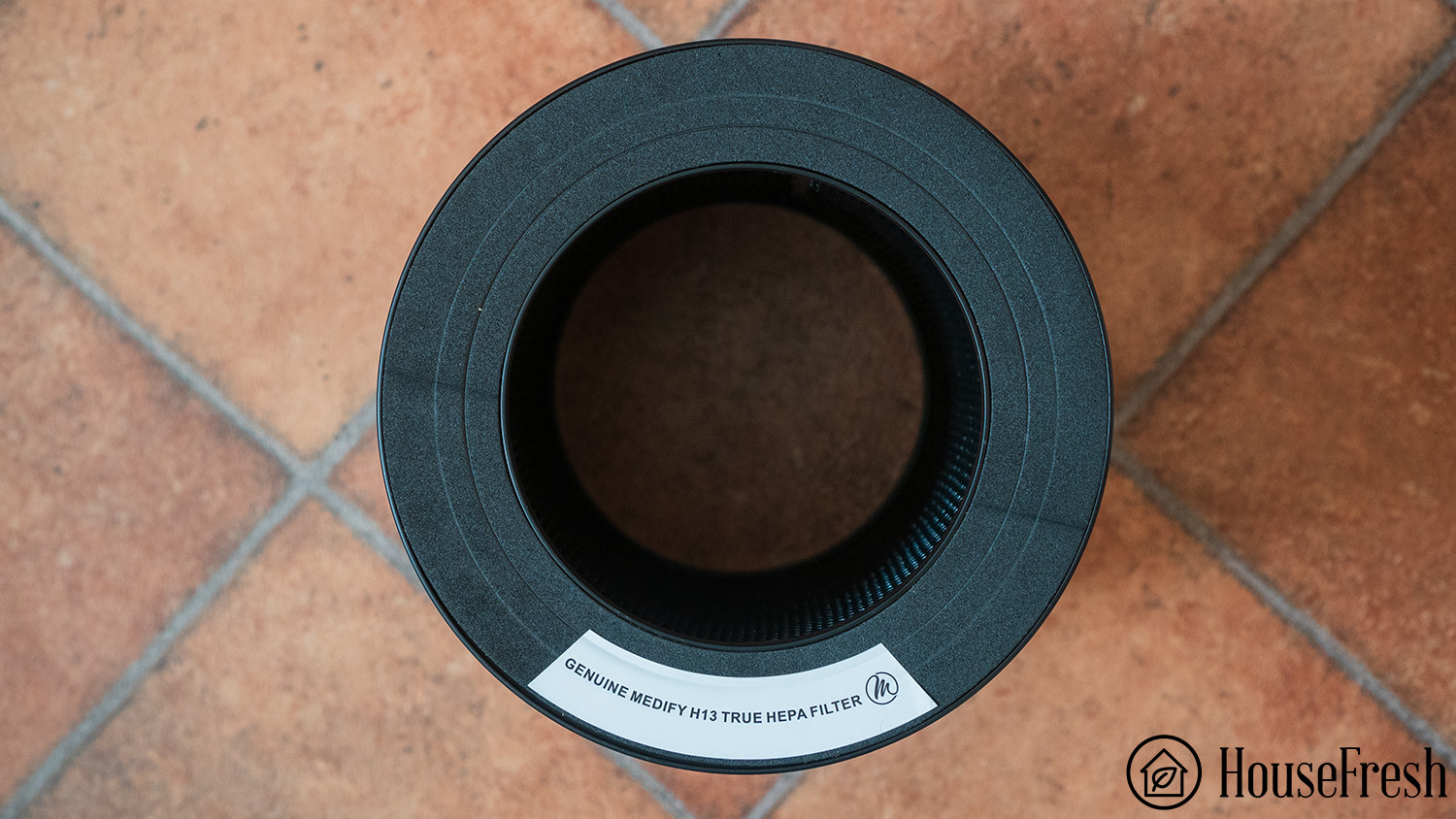
I also find this unit reliable because of the medical-grade H13 HEPA filters. The robust filter is ideal for reducing allergy symptoms from pollen in the early morning, dust mite particles and other common allergens that would otherwise hinder your sleep. 

What we really like

It’s highly energy-efficient, consuming far fewer watts than other units with the same air-cleaning performance.
It’s very quiet for its fan power: 36 dB at the lowest fan speed and 50dB at top speed.
Compared with other Alen units, this one doesn’t come with an ionizer, a controversial technology that can introduce ozone into your space.
Alen offers a lifetime warranty when you subscribe to their filter replacement program. 

What we think could be better

Unlike the 45i and 75i, the Flex doesn’t offer app support or auto mode.
Filter options with activated carbon are more expensive than the Pure filter included in the initial unit price.
It would be nice not to have to sign up for the filter subscription to get the lifetime warranty. 

Another thing I like about this air purifier is that you can choose the filter that best fits your needs. So, if you are looking for a unit that will also deal with VOCs and odors, you could either choose between the Fresh filter, with 3.6 lbs of activated carbon, or the Odor filter, with OdorCell technology that neutralizes odors.

There’s just one downside worth mentioning. As Alen Breathsmart’s most affordable unit, the Flex has no auto or sleep mode. It does allow you to turn off the control panel lights during nighttime, though. So, you can set the fan speed for the night and press the power button once to make the lights go out and enjoy a peaceful sleep. 

As a bonus for a cozy rest, Alen units produce pink noise on all fan speeds — which is said to be more soothing and less irritating than the white noise most units on the market emit.

HouseFresh rating:★★★★☆
Time to clean our 728 cubic feet test room (with the device running at top speed):34 minutes
Air purifier technology:H13 HEPA with an option for activated charcoal (Fresh, Odorcell and Heavy Smoke options available)
Recommended room size (4.8 air changes per hour):296 sq. ft.
Clean air delivery rate (CADR):Dust: 208.8 CFM
Smoke: 191 CFM
Pollen: 245.4 CFM
Dimensions (in inches / in cm):25H x 15W x 8.5D inches (63.5 x 38.1 x 21.59 cm)
Weight (in pounds / in kg):15 lbs (6.8 kg)
Filter life:9-12 months
Noise level in decibels (measured from 3 ft. away with a sound level meter):Speed 1: 35.7 dB
Speed 2: 45.5 dB
Speed 3: 50.7 dB
Electricity consumption in watts (recorded with an electricity usage monitor):Standby mode: 0.8 watts
Speed 1: 2.9 watts
Speed 2: 6.3 watts
Speed 3: 14 watts
Speed 4: 24.2 watts
Estimated running cost (electricity consumption + official filter replacement):$105.91 per year
Cost per CADR cfm (based on dust CFM as reported by AHAM):$1.21
Manufacturer’s warranty:Lifetime (with product registration & active filter subscription)
Country of manufacture:China

Read our review

3. Best for less than $100: Winix A230/A231

For those on a tight budget or limited space, the Winix A230/A231 delivers great cleaning performance with low long-term costs.

Winix A231 Side table

There are some ups and downs to the Winix A230, but after our hands-on tests, I can say it will do a beyond-fair job in small bedrooms of up to 230 sq. ft for a very reasonable price.

Among the outstanding features of this unit —and its twin black version, the A231— is that for a small, budget-friendly air purifier, it has an impressive CADR (Dust: 149 CFM – Pollen: 154 CFM – Smoke: 147 CFM), which is also AHAM verified

The True-HEPA filters under the A230/231 hood are also third-party certified and capable of removing 99.97% of airborne allergens as small as 0.3 microns. Plus, thanks to its small size, the unit is versatile enough to be placed on the night table or a shelf close to the bed without taking up too much space.

What we really like

Affordable genuine replacement filters and even cheaper generic ones. 
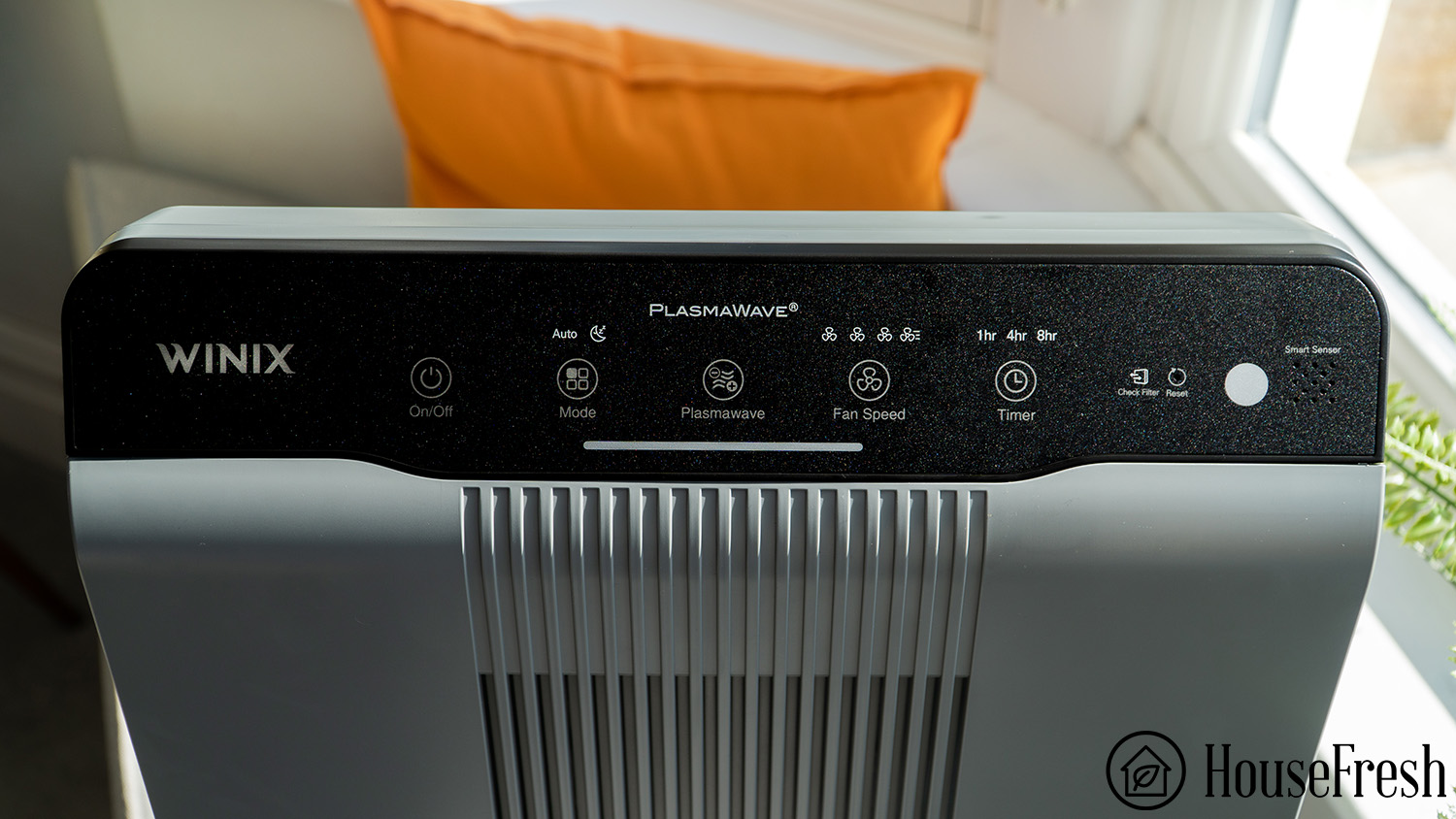
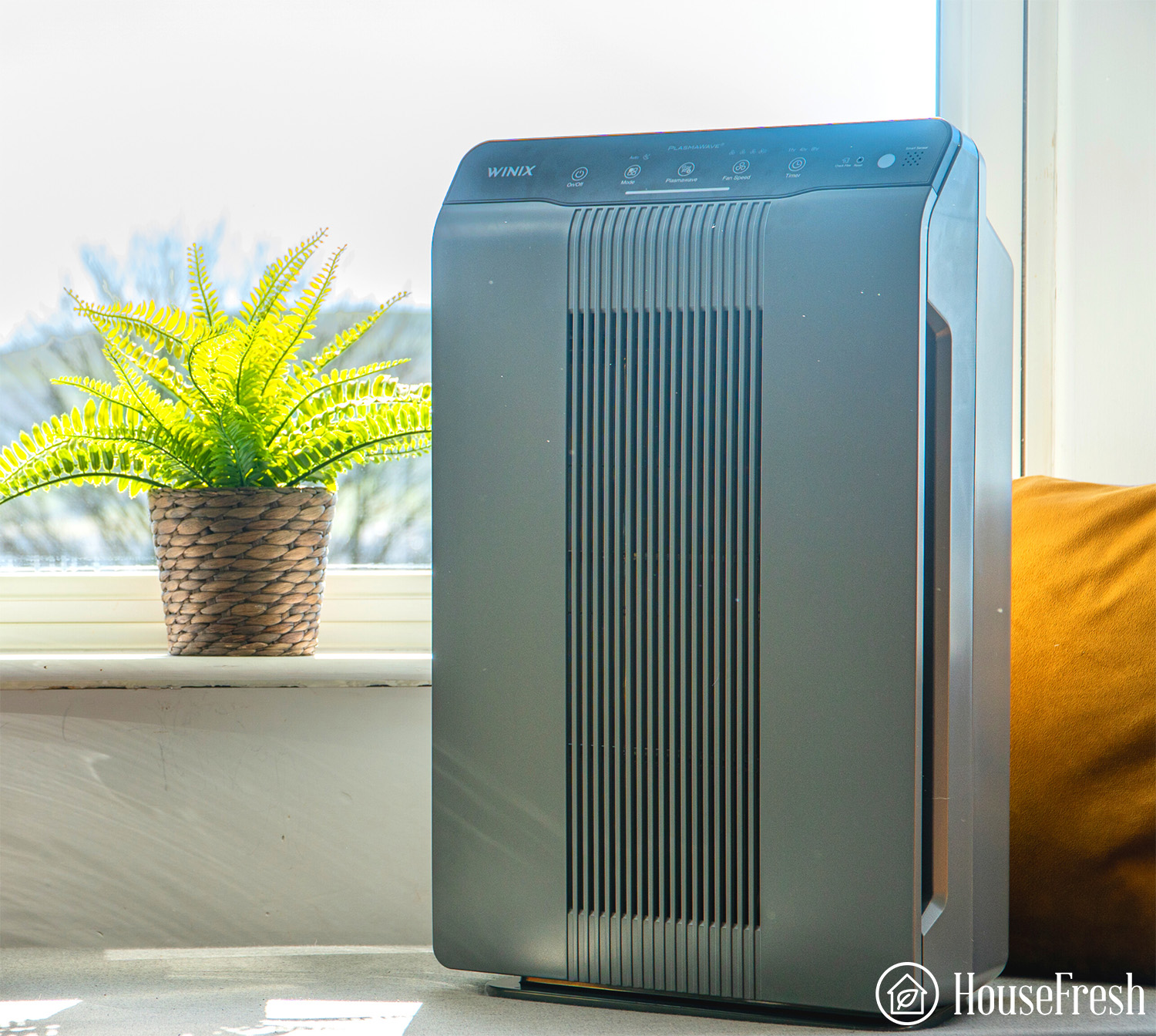
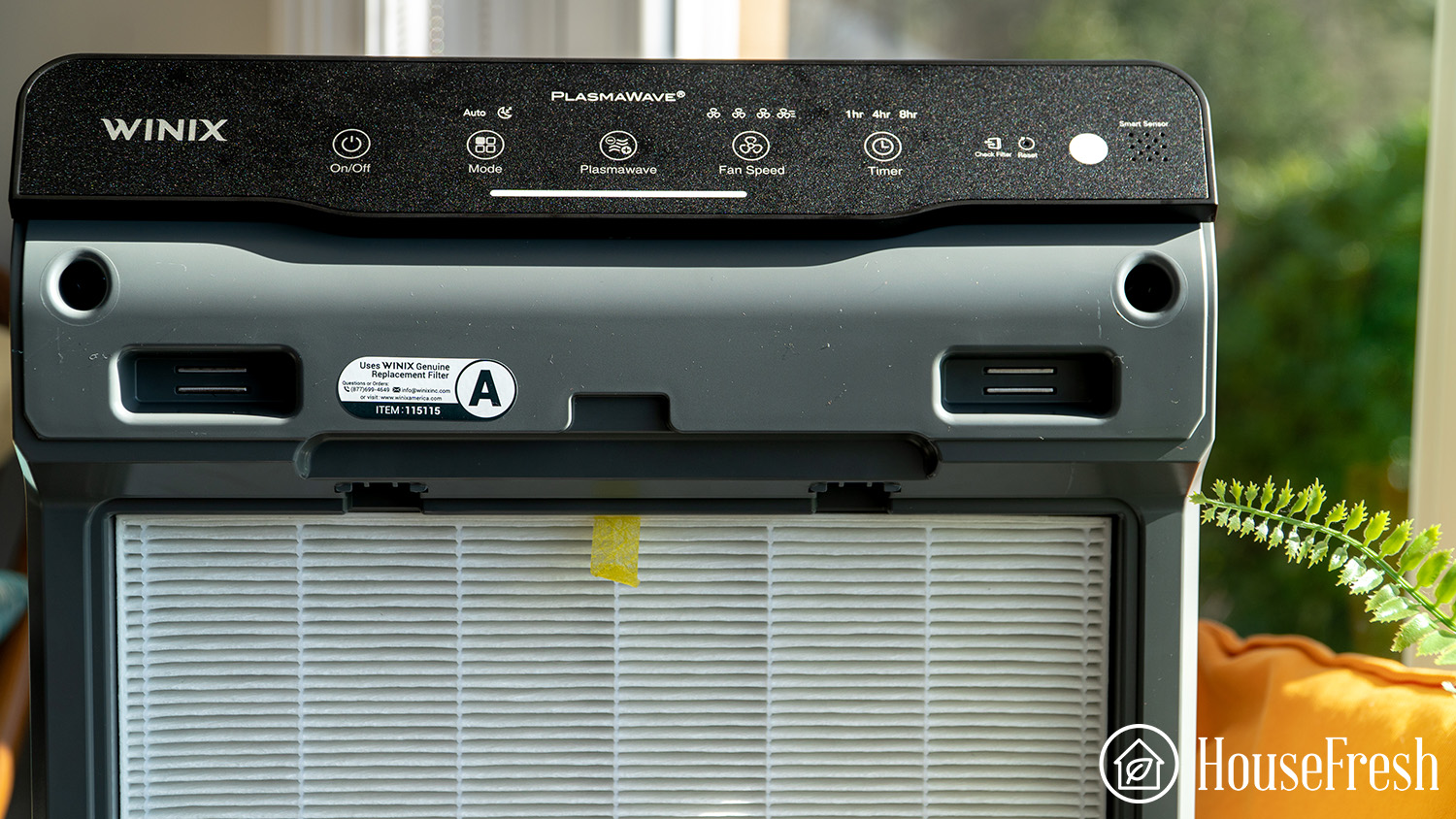
The PlasmaWave feature —Winix’s name for their ionizer— makes the unit faster, but for those who don’t fancy this technology, it can easily be switched off. 
It has plenty of features for its price point.
Small and lightweight, it’s easy to move around.

What we think could be better

It’s not the quietest air purifier.
It doesn’t come with app support.
It has no settings memory, so you’ll need to choose your favorite setting every time you unplug the unit.

When it comes to removing VOCs and gasses, the A230 is not as well equipped as other more robust units. Instead of having a pelleted carbon filter, there’s just a carbon-impregnated fabric. However, if you are looking for an air purifier to deal with night (and morning) allergies, the True-HEPA filter on this unit stands its ground.

Besides, this air purifier comes with an in-built sensor and auto mode, which, for the price, is quite rare. The sensors also allow for a color-coded air quality light indicator in the control panel, but these can be switched off in sleep mode. Yet, there’s no option for switching all the lights off: on sleep mode, the moon icon would still be lit. All in all, for a budget option, the Winix A230 boasts plenty of virtues.

Clean air delivery rate (CADR):– Top speed PM1 CADR: 148 cfm
– Sub-45 dBA PM1 CADR: 67 cfm
– AHAM PM2.5 CADR: 154 cfm (dust)
Filter technology:Fine mesh pre-filter, True HEPA filter, activated carbon filter, PlasmaWave technology
Recommended room size:222 sq. ft. (5 air changes per hour)
Dimensions:9.5D x 9.5W x 14.6H inches (24.13D x 24.13W x 37H cm)
Weight:7.1 lbs (3.2 kg)
Noise level in decibels from 3 ft. away:Speed 1: 35.2 dB
Speed 2: 48.3 dB 
Speed 3: 57.9 dB
Electricity consumption in watts:Standby mode: 0.06 watts
Speed 1: 35.4 watts
Speed 2: 37.7 watts
Speed 3: 45.6 watts
Filter lifespan:12 months
Manufacturer’s warranty:2 years
Country of origin:South Korea
Country of manufacture:Thailand

Read our review

Other units we tested but don’t recommend for bedrooms:

  • Levoit Core Mini: This is the smallest unit within Levoit’s Core series. Despite boasting an impressive performance for its size and power consumption, it still falls too short for most bedrooms. It’s better suited for even smaller places; as such, it secured the top spot on our best air purifiers for cars list.
  • AROEVE MK01: The price of this unit can be tempting, as it can easily be the cheapest unit in the market. However, how good is that if the air purifier won’t be able to clean your air? Just like with all the units we reviewed, we tested the Aroeve MK01 to find out it could not remove all the pollutants in the room, not even after five hours of running it. 
  • Rainbow RainMate: If the Aroeve was bad, the Rainbow RainMate is worse. This cheap, toy-looking device showed a poorer performance when we put it to the test, as the PM2.5 levels wouldn’t go lower than 270 microns after two consecutive hours of running the Rainbow RainMate — 201 to 300 ug/m3 is considered to be very unhealthy air by AirNow.

What to look for when buying an air purifier for a bedroom

When shopping for a bedroom air purifier that will actually improve the air quality in your space but will also guarantee an unbothered night’s sleep, I’d suggest you take a look at the following:

1. Does the unit have a robust main filter?

By this, I’m referring to high-quality particle filters capable of removing common pollutants and allergens such as dust, pollen, dust mites, pet dander and mold spores. 

High-efficiency particulate air (or HEPA) filters are made of pleated sheets, usually fiberglass, cotton, or foam, that trap particles as small as 0.3 microns, which includes all common allergens, on their woven fibers. Looking out for certified HEPA filters ensures the air purifier you get will remove at least 99.97% of airborne particles.

However, don’t rule out the Levoit Core 300S for the lack of a HEPA filter. We stand by this unit, not just because we fancy it, but because of its outstanding performance in our tests. Besides, just having a True HEPA filter isn’t always enough to ensure effective air filtration. Otherwise, look at the Aroeve MK01’s poor performance.

2. Does it have an activated carbon filter?

HEPA filters are excellent at removing microscopic particles. But they can’t filter VOCs or odors. That’s what the activated carbon filter is for. The activated carbon adsorbs gasses and smells, trapping them on the material’s surface and removing them from your space.

Activated carbon filters are convenient for bedrooms with poor ventilation or with windows facing busy streets that let car exhaust and other toxic fumes seep in. 

Filters with pelleted or granular activated carbon are significantly more efficient than impregnated fabrics, which contain inferior amounts of activated carbon.

3. How loud (and quiet) is the unit?

All purifiers produce a certain amount of noise as the fan and motor draw in and release the air. Most units emit white noise, which can actually be soothing for some, particularly in buzzy areas or bustling big metropolises.

However, the dB levels vary from one unit to another. While I’m sure it’s crucial for light sleepers, the noise levels should always be factored in — even more so when shopping for the bedroom. It will avoid unpleasant surprises the first night you put the air purifier to work.

At HouseFresh, we always measure how loud units are using a commercial sound meter.  We do this both at the lowest and fastest fan speed. If you’re wondering how the four units would perform on this topic, here’s a chat comparing noise levels:

4. Does it have a no-lights mode?

The option to switch off the control panel lights may not be the first requirement to choose a “BuyItForLife” air purifier. But, from experience, it’s definitely something to consider. 

A bright light projecting into the bedroom walls and ceilings all night can disrupt rest. And having to tape or cover the lights every night can be an obnoxious step to add to the night routine. That’s why the units we’ve selected have a no-lights mode. 

Then, having Sleep Mode or being able to create customized settings specifically for the night, like the Vesync app on the Levoit units, are also worthy features to consider. 

Levoit Vital 200S Top

5. What’s the square footage of your bedroom?

The size of the room you are choosing the air purifier for matters. Smaller air purifiers are better suited for smaller rooms, while bigger bedrooms will require more powerful units. 

Most manufacturers include an ideal room size and a maximum sq. footage their units can cover. But these can sometimes be deceiving. As a general guideline, you’ll be best off checking the units’ CADR, or clean air delivery rate, and the air changes per hour the purifier can achieve in a specific area.

The higher the CADR, the more powerful the unit will be. But usually, this also means a more elevated energy consumption and higher noise output.

To make things easier, we’ve created a CADR calculator where you can input your bedroom dimensions and the system will do the math for you. 

Common questions about air purifiers in the bedroom

They do. They can, in fact, improve your sleep. You just need to find the right unit for your room size. Also, as mentioned in the buying guide, a robust main filter is key for the unit to remove the air pollutants found in most bedrooms.

Definitely yes.

High-quality sleep is vital for our health. As well as reducing our exposure to toxic pollutants. We spend around a third of our lives sleeping, so the quality of the substantial amount of air that we breathe during this time has an impact on our overall well-being.

An air purifier with HEPA filters and activated carbon filters will remove hazardous ultrafine particles and toxic fumes from the bedroom, allowing you to breathe better, fresher air. It can reduce snoring, morning allergies and nighttime allergy symptoms, boosting your rest.

Placement is as important as choosing the right air purifier. When choosing the perfect spot for the unit, consider the following:

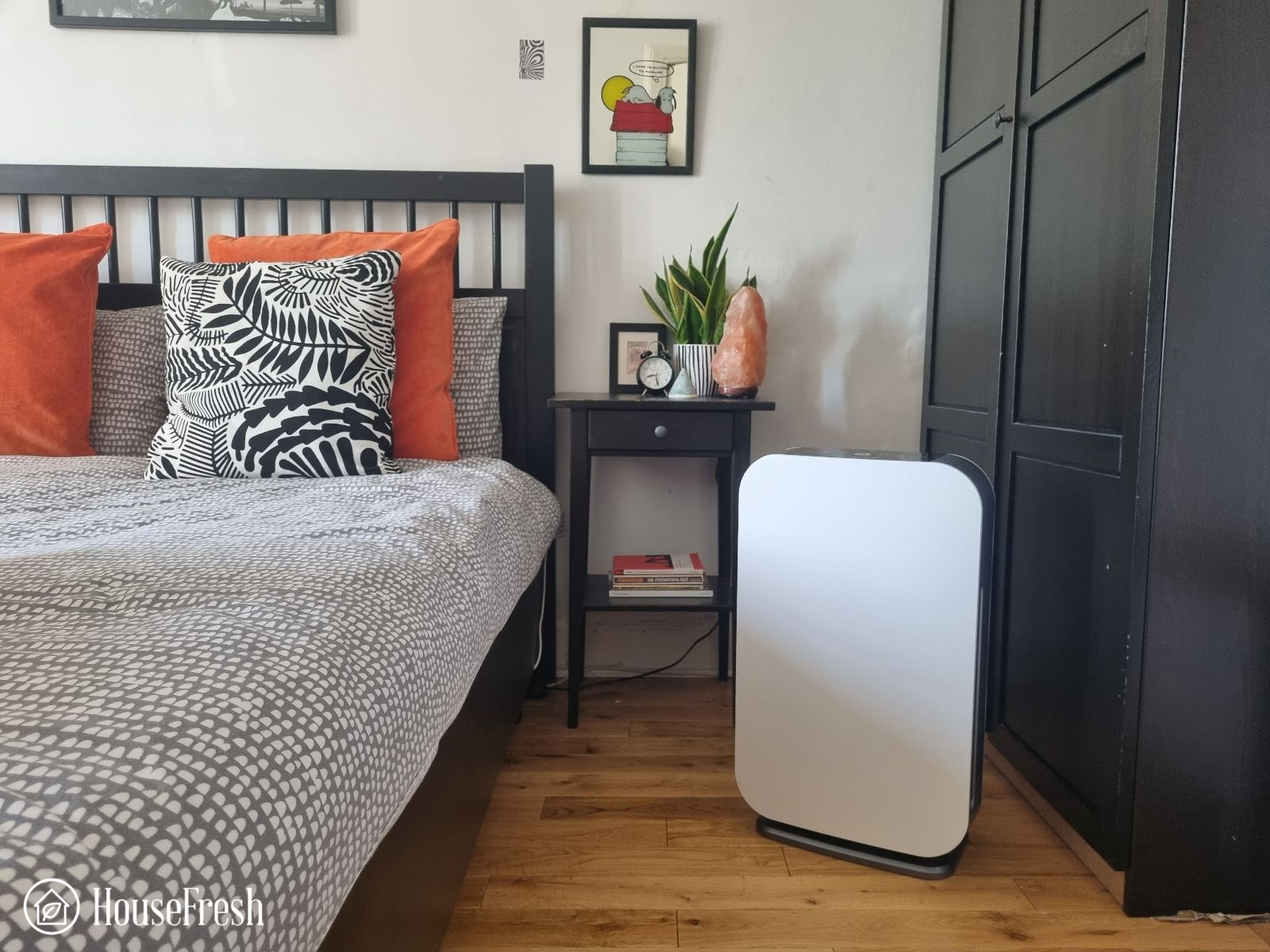
  • Keep it in your breathing zone to get as much clean, filtered air as possible. However, it’s best to have the air intake face towards the bed instead of the outlet. The air in the sleeping area will be filtered first, and you’ll avoid having air blowing directly at you, which can disrupt your rest. 
  • Put the unit at least three feet off the ground to take advantage of airflow in the room. This is especially important for smaller units that could otherwise struggle to clean the air with the night temperature changes.
  • Keep the unit away from corners or obstructions. If the air purifier cannot draw in air properly, it won’t be able to do its job correctly. Check where the vents are on your unit and be sure the air can flow freely around them.
  • Don’t obstruct pathways: Make sure the unit is safely placed out of foot traffic and that you won’t accidentally trip on the cord if you wake up half-asleep in the middle of the night.

It depends on what you are looking to achieve. Purifiers remove hazardous airborne pollutants, while humidifiers add moisture or humidity to the air  —but don’t clean it. 

The optimal humidity levels for sleep are around 30 and 50%. Humidity levels over 60% can alter the sleep cycle, increase allergy symptoms and create a favorable environment for mold and dust mites to thrive. It’s worth mentioning that excessive dryness can also trigger allergies.

If you are considering investing in a humidifier, I’d suggest checking the humidity levels in your bedroom first.

There’s no one-size-fits-all perfect air purifier. For some, a larger unit will be best suited to fit their needs. On the other hand, small air purifiers are usually more affordable, easier to place and less power-hungry. They are definitely worth it if they have the cleaning power and proper filters to clean your space.

Wrapping up

Regularly changing your bedding, ventilating, vacuuming and keeping that chairdrobe as light as possible is key for creating a healthy and comfortable sleep environment. However, getting an air purifier for the bedroom is a game changer.

As the air purifier market expands and new models and brands flourish, finding a unit you can trust can be complicated.

That’s what we’re here for. Remember to look for high-quality particle and activated carbon filters. Plus, check the noise output and make sure there’s a sleep mode that enables all lights to be off while you sleep. Lastly, be sure to choose a unit with the right CADR for your room size. 

Why trust HouseFresh?

I became interested in air quality back in 2010 when it wasn’t as hyped as it is today. The air purifier industry evolved a lot since then. As consumers started taking an interest in these devices, many new models and brands appeared, not all with the same credentials, certifications or proof of their performances. 

Unfortunately, there are many opaque marketing materials that mislead those seeking air purifiers that can actually help improve their air quality.

I also know that probing through the internet in search of a good air purifier is a daunting task. Tons of articles talk about their lab tests but don’t any of their process or results. Many big media companies publish commissioned reviews. And why should we all know all there is to know about everything?

That’s why in 2020, I decided to set up our in-home testing lab. At HouseFresh, we buy all the units we review with our own money. We run performance tests and are not afraid of speaking our minds, either if a unit impresses or disappoints us. 

We believe transparent, straightforward information is the key to making a good decision. And that’s what we work every day for.  

My inbox is always open to feedback. So if you have doubts about something that I haven’t covered in this guide, or would like to know more about our testing process, don’t hesitate to reach me at danny@housefresh.com
8 common Holmes air purifier problems (and how to fix them)

Header Holmes Air Purifiers

Founded in 1982, Holmes is an American company that produces various appliances, including humidifiers, fans and air purifiers. With their carbon and HEPA filtration systems, Holmes’ purifiers, such as the HAP625 model, can reduce odors and eliminate harmful, airborne particles. 

However, some customers have experienced problems with these devices, such as the unit and fan not working and reduced airflow. Luckily, we’re on hand to help you fix any issues. You’ll find some of the most common problems in Holmes air purifiers, along with our solutions. We’ll also educate you about your unit’s correct power rating and room size, and explain how to contact Holmes directly.
As with all electrical devices, ensure your air purifier is unplugged before trying to perform any of these solutions, especially when opening up the unit. Always consult the manual before doing anything.
Problem 1: My Holmes air purifier isn’t working

If your device won’t switch on or isn’t functioning, you can try these solutions:

Is the unit properly plugged in?

Ensure the air purifier is well plugged in, and there is power coming from the outlet (120V). 

Is the power switch on?

Double-check that the power button is set to the “On” position. You can then select a speed to turn on the unit.

Is the door firmly closed?

The purifier’s door needs to be fully closed to operate efficiently.

Have you checked the front grille?

If the front grill doesn’t fit properly, your purifier won’t operate. Be sure that the front grill is seated correctly and also that the filters are properly installed.

Is the purifier in the ideal room size? 

Your Holmes purifier needs to be placed in a room that’s suitable for its capacity. Check your device below. 

Holmes Air Purifier ModelIdeal Room Size in Square FeetIdeal Room Size in Square Meters
True HEPA ConsoleHAP865034932.4
Mini Tower HEPAHAP941311610.7
Personal Air Purifier HAP120SmallSmall
Tower True HEPA HAP942319217.8
Desktop HEPAHAP924110910.1
Smoke Grabber Ashtray and Odor Eliminator HAP75SmallSmall
HEPA Type TowerHAP120318817.4
Tower True HEPA HAP943518817.4
Small Room HEPAHAP600746.8
Desktop HEPAHAP242SmallSmall
True HEPA Allergen Remover HAP706857.8
True HEPA 360° Air PurifierHAP36015514.4
Desktop True HEPAHAP924313212.2
Mini Tower True HEPAHAP941513812.8
Tower HEPAHAP942520218.7
Personal Space 2-Speed HAP116SmallSmall
Germ-Reducing True HEPAHAP53725023.2
Allergen Remover True HEPAHAP208120118.6

Problem 2: The orange light is flashing

Generally, there’s one primary reason why this is happening, and it’s to do with the filters…

Have you checked the carbon filter?

When the orange light flashes, the carbon filter needs to be replaced. It’s recommended that you change this filter every one-three months. Here’s how to do it:

  1. Firstly, switch off the purifier and unplug it from the outlet.
  2. Next, you need to access the filter compartment: open the front air inlet grill door by pressing the “Door Release Button”.
  3. Remove the old carbon filter from the unit by pulling it towards you carefully.
  4. Using the plastic tab as a guideline, insert the new carbon filter (be sure to remove the plastic wrapping/bag). 
  5. Close the front air inlet grill door.
  6. Finally, you need to reset the filter life indicator. To do this, insert a small object such as a paperclip into the tiny hole under the light. Then hold down the “Filter Reset Button” for three seconds. You should see the green light indicating that the filter monitor has been reset successfully.

Problem 3: The red light stays on

In most cases, you’ll find that this problem is also connected to the filter.

Have you checked the HEPA filter?

Although these can last between 12-18 months, a red light means that you’ll need to replace the HEPA filter. 

Simply follow the first two steps from problem two then: 

  1. Remove the carbon and HEPA filters by pulling them towards you gently.
  2. Dispose of the old HEPA filter carefully (don’t attempt to clean it). 
  3. Place the carbon filter back on the new HEPA filter. 
  4. Insert the new HEPA filter into the unit by sliding it onto the hang tabs. 
  5. Close the front air inlet grill door.
  6. Reset the filter life indicator as above.

Problem 4: The fan isn’t working

If you’re experiencing this problem, you can try a couple of troubleshooting methods:

Have you attempted to spin the fan blade by hand?

Spinning the fan blade by hand will let you know if you need to replace the motor because the blade won’t be able to spin freely. However, if the blade does spin easily, you can test the motor for continuity using a multimeter — a device that can measure such things as voltage, current and resistance. 

You might need to replace the motor if it doesn’t have continuity. Be sure to contact Holmes customer service if you need any assistance.

If the motor does spin freely and it has continuity, the next thing you can do is make sure that it’s getting enough power. If the motor isn’t getting power, you’ll have to replace it.

Does the fan need cleaning?

It’s possible that the fan simply needs a good cleaning. Follow our step-by-step guide on how to do this:

  1. Switch off and unplug the purifier from the outlet, then place it on a table.
  2. Remove the front grill from inside the unit. 
  3. Hold the indentation on the right side of the purifier’s front cover and pull it open gently. Then grab the top area of the grill and pull it up and out of the unit slowly.
  4. Fill a sink with warm, soapy water using two tsp of mild liquid dish soap. Place the grill into the water. Using an old rag, gently wipe the grill to remove dust and dirt. Rinse the grill thoroughly in warm water and dry with a dish towel.
  5. Wipe the cover of the purifier with a soft, clean cloth, using an old toothbrush to remove any dirt in the air vents. Then wipe the inside of the device with a cloth.
  6. Dry the grill completely and place it back inside the purifier.
  7. Close the purifier door, ensuring it snaps shut.

❓ Is the power rating inaccurate?

It’s important to use the correct power rating for your purifier so that it works successfully. Use our table below to find the right wattage for your device.

Holmes Air PurifierPower Source Rated Power 
True HEPA ConsoleHAP86502-Prong Plug (Polarity type)100W
Mini Tower HEPAHAP94132-Prong Plug (Polarity type)38W
Personal Air Purifier HAP120USB4.5W
Tower True HEPA HAP94232-Prong Plug (Polarity type)95W
Desktop HEPAHAP92412-Prong Plug (Polarity type)38W
Smoke Grabber Ashtray and Odor Eliminator HAP75D BatteriesNA
HEPA Type TowerHAP12032-Prong Plug (Polarity type)High: 87 – 102W Medium: 63 – 80W Low: 50 – 60W
Tower True HEPA HAP94352-Prong Plug (Polarity type)90W
Small Room HEPAHAP6002-Prong Plug (Polarity type)38W
Desktop HEPAHAP2422-Prong Plug (Polarity type)45W
True HEPA Allergen Remover HAP7062-Prong Plug (Polarity type)43W
True HEPA 360° Air PurifierHAP3602-Prong Plug (Polarity type)30W
Desktop True HEPAHAP92432-Prong Plug (Polarity type)37W
Mini Tower True HEPAHAP94152-Prong Plug (Polarity type)37W
Tower HEPAHAP94252-Prong Plug (Polarity type)90W
Personal Space 2-Speed HAP1162-Prong Plug (Polarity type)36W
Germ-Reducing True HEPAHAP5372-Prong Plug (Polarity type)60W
Allergen Remover True HEPAHAP20812-Prong Plug (Polarity type)High: 30W Medium: 26W Low: 22W

Problem 5: The air flow has decreased

It’s super important that your purifier has sufficient airflow. Let’s have a look at why this might not be working properly.

Have you checked for blockages?

Be sure to check the air inlets for any blockages obstructing the flow of air and clear them away.

❓ Does the air inlet grill need cleaning?

Washing the air inlet grill in warm soapy water (after removing it from the purifier first) should improve the airflow and remove dust and dirt build-up. Remember to let the grill dry thoroughly before putting it back. Tip: You can also clean the outlet grills with a soft brush if you notice lots of dirt or dust.

Does the pre-filter need cleaning?

For your device to work effectively, it’s recommended that you check the washable foam pre-filter every 2-3 weeks and wash it at least every 30 days. Here’s how to clean it well:

  1. Make sure the unit is switched off and unplugged from the outlet
  2. Examine the pre-filter. To do this, open the front door and remove the pre-filter frame.
  3. If there’s a lot of dust, lint or particulate accumulation, wash the pre-filter by hand in warm soapy water. Do not attempt to wash it in an automatic washer. If the pre-filter is damaged or worn out, it’s best to replace it. 
  4. Rinse and dry the pre-filter thoroughly and then replace it with the purifier’s door. Avoid drying it in an automatic dryer; simply dab the pre-filter gently using a dry, cloth hand towel.
  5. Close the door and reattach the pre-filter frame.

Have you checked the condition of the permanent filter?

For optimal performance of the unit, regularly cleaning the permanent filter is recommended and you should check its condition every few weeks. 

Follow our guide on how to clean it effectively:

  1. Switch off the purifier and unplug it from the outlet.
  2. Carefully remove the air inlet grill by pulling on the tab.
  3. Inspect the foam pre-filter and follow the steps from above if it needs cleaning.
  4. Now check the condition of the permanent filters and remove them.
  5. Using your vacuum cleaner, run the brush attachment along both sides of the filter and clean between the pleated layers. Use only this method and do not attempt to clean with water, household cleaners, or detergents.
  6. Don’t worry if the filter appears discolored after vacuuming. This is normal and doesn’t affect the filter’s performance or mean that you need a new one.

Problem 6: The ionizer isn’t working

Many Holmes air purifiers include an ionizer that binds negative ions to help trap dust, smoke, pet dander, pollen, etc. Let’s have a look at why this might have stopped working.

Is the purifier switched on and running?

The ionizer simply won’t work if the unit isn’t running. After switching it on, press the ionizer button to activate this feature. The outer ring of the button should then illuminate in blue, which lets you know it’s working. 

Problem 7: The ionizer is causing a static charge

You might notice that the ionizer has caused a static charge to build up on the air outlet grill. Here’s what to look out for when this happens:

❓ Is the purifier grounded properly?

In electrical terms, grounding happens when there’s a fault in the wiring, and extra power is sent away from your devices and into the ground. This helps to prevent a power surge that could overload your purifier.

To avoid a static charge, you can make sure that the unit is grounded well. To do this, plug the 3-prong plug of the purifier into a grounded outlet. Or you can try installing a grounding adaptor. The static charge shouldn’t occur if the ionizer is switched off.

Problem 8: My Holmes air purifier is producing excessive noise

An unusually loud purifier can be a real nuisance, especially if you’re resting or want to sleep. Try these troubleshooting methods: 

Have you removed the plastic packaging from the filters?

It may seem obvious but this can easily happen when you’re eager to fit new filters. Checking for this should hopefully eradicate excess noise.

Are all the parts firmly in place?

Be sure that all the device’s components are secure and in place.

How to contact Holmes

If you need more assistance with your Holmes purifier, there are lots of ways you can get in touch. For all appliances queries, you can call them on 1-800-546-5637 and they’re available Mon-Fri, 9AM – 5PM ET.

You can also use their chat function by filling out the form on their Contact Us page. It’s recommended that you upload an image of your model to the form so that they can help you as quickly as possible. They’re available to chat Mon – Fri, 8AM – 12 AM EST every day, seven days a week.

Find the manual for your holmes air purifier

For more help with your device, click on the link below to access the manual.

Holmes Air Purifier ModelUser Manual
True HEPA ConsoleHAP8650Manual
Mini Tower HEPAHAP9413Manual
Personal Air Purifier HAP120Manual
Tower True HEPA HAP9423Manual
Desktop HEPAHAP9241Manual
Smoke Grabber Ashtray and Odor Eliminator HAP75Manual
HEPA Type TowerHAP1203Manual
Small Room HEPAHAP600Manual
Desktop HEPAHAP242Manual
True HEPA Allergen Remover HAP706Manual
Desktop True HEPAHAP9243Manual
Tower HEPAHAP9425Manual
Personal Space 2-Speed HAP116Manual

How much does an air purifier cost?

Coway Airmega 250S Yearly Costs

Buying an air purifier isn’t as simple as it may first seem. Before you take the plunge, there is a lot to consider, from the initial purchase to the ongoing operational costs. While some consumers are left wondering if an air purifier is worth it? 

What we know for sure, however, is that owning an air purifier can bring about a huge transformation to your air quality. Relieving asthma and allergy symptoms, eliminating harmful bacteria and viruses and even helping to rid your home of unpleasant odors, making them a worthy investment for millions of users.

To help you decide which air purifier is right for your home, we’ve delved into the true costs of an air purifier and what you can expect when looking into different price points. 

How much does it cost to buy an air purifier?

With many machines on the market, from budget options for under $100 to whole home appliances that cost more than $1000, finding the right air purifier for your space takes some careful consideration.

By breaking down the market into three sections, we can provide a clearer picture of what each purifier can deliver: a budget, mid-range or top-of-the-line unit.

The budget end of air purifiers: $99 – $200

For those looking for a cost-effective way to transform your air quality, you’ll more than likely be looking at purifiers at the lower end of the market. Thanks to the continued development of air purifier technology, you can now find an excellent unit that won’t break the bank, with plenty to choose from for less than $200 or even less than $100. 

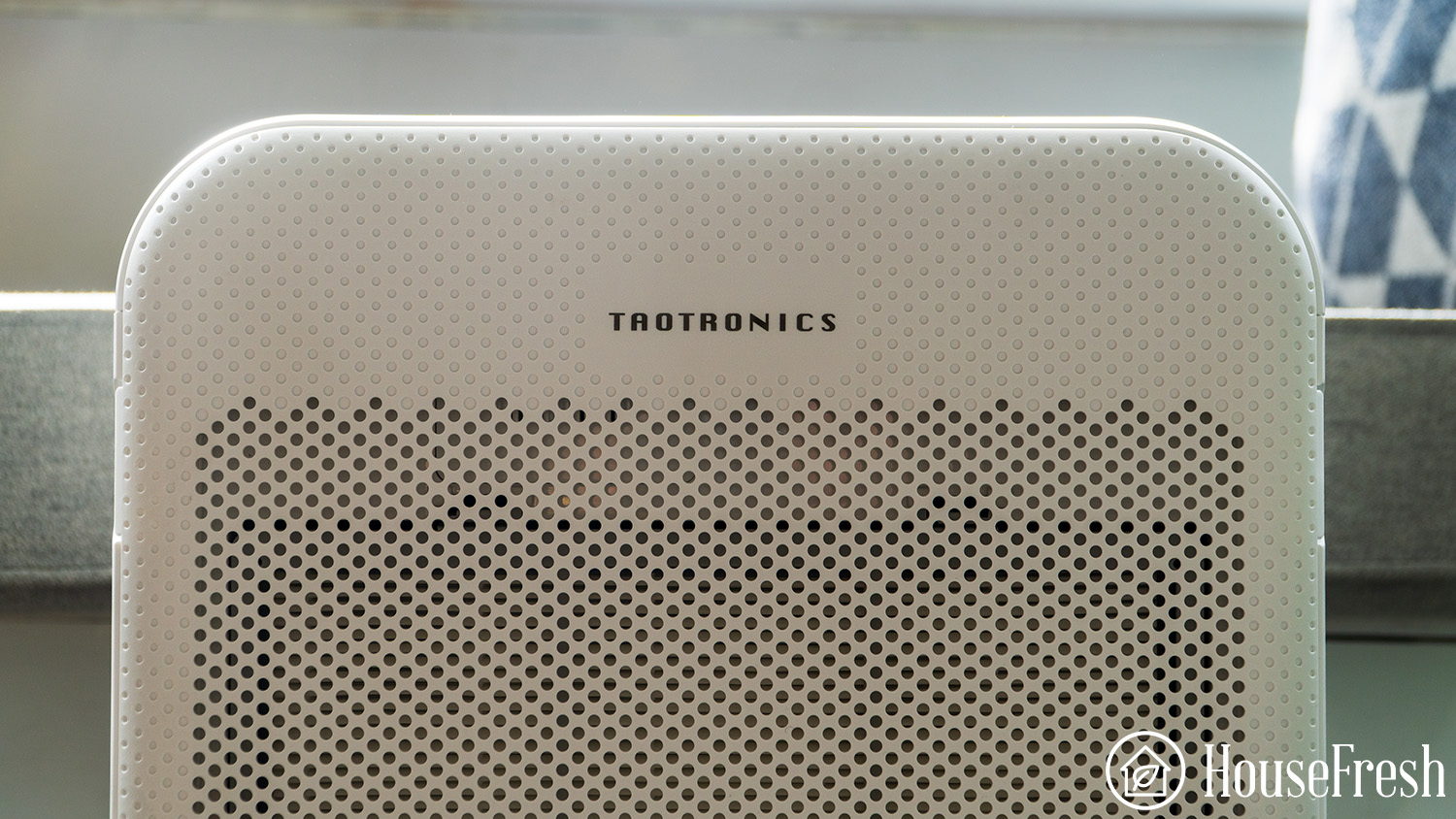
At this price range, you can find an air purifier with much of the same mechanical filter technology that you would find at the higher end of the market. In particular, looking for a purifier with three stages of protection, including a Pre-filter, HEPA and Activated Carbon filters, as found on the Taotronics AP003.

TaoTronics TT AP003 Close

For an air purifier to be effective, having fans and motors powerful enough to circulate the air within your space is paramount. This is often where budget purifiers fall short, partly down to their smaller stature, which can’t house large mechanics. 

That’s not to say they won’t work; just that budget units may be best suited to smaller rooms with an average room size suitability of between 150 and 400 square feet. The Smart Air Sqair is an excellent example of a wallet-friendly yet powerful purifier that can work its magic in space as large as 430 ft².

You may also find that cheaper air purifiers lack some features in more expensive units, which offer increased functionality. This, of course, may appeal to many users who see Smart features or high-tech displays as overkill for an air purifier, with options such as the Blueair Pure 411, which offers fuss-free features for simple operation. 

The anatomy of a typical budget air purifier:

Air Purifier: Key Features:
Levoit Core 300
HVRPiJchWPBg DxIJatooi 89FXLTnu9uwKmpKM4oAEiXtqtqRem7B8ZzVk0Ae7LKdLKfZ6ZbedT5JY y5fgIjIFBHOisE3w4OuioDrR78nBQ9RXBA02KkDnM
Current Price: $99.99
  • Three stages of filtration including a Pre-filter, H13 True HEPA and high-efficiency Activated Carbon filter. 
  • VortexAir technology which draws air in from 360 degrees, allowing for increased circulation.
  • CADR score of 145 CFM, making this a great option for rooms up to 219 ft².
  • Features including a 2/4/6/8 hour timer and Sleep Mode. 

The middle point of air purifier budget: $200 – $500

When looking at the mid-range purifiers on the market, you’ll see a noticeable step up in design, power and even more user-friendly functions and smart features. If your budget can stretch to between $200 and $500, you’ll be able to purchase from some of the leading names in the industry. 

This is clear when looking at more premium units from purifier manufacturers such as Levoit. While their Core 300 makes a great budget option, if you can afford to pay a bit more, then you quickly see the increase in performance. 

The 400S and 600S, for example, still from the Core range, make excellent mid-range purifiers, boasting greater room coverage (as high as 1,588 ft²) and impressive CADR scores of 260 CFM and 410 CFM retrospectively. 

Levoit Core 400S Performance test

Another top air purifier in this price range is the Coway Airmega 300S. This impeccably designed unit introduces a host of features that will make cleaning your air super simple. 

The anatomy of a mid-range air purifier:

Air Purifier: Key Features:
Blueair 211+
SGFXuM9M i dI0 UgCKn9oUYRwx28SnziymUJWGj3VO9 J791lQkDt U2XUvUw pf4fd8lcEpxiOd5CQZR1jHisEpi368HfU2tQ
Current Price: $299.99
  • HEPASilent Technology that removes up to 99.99% of particles as small as 0.1 micron.
  • Auto mode for reactive protection to changing pollutant levels.
  • Highly energy efficient and whisper quiet when on lowest fan speed.
  • Cleared our test space of all traces of pollutants in just 18 minutes.  

The top end of air purifier budget: Over $500

Air purifiers that cost over $500 can be considered some of the top units on the market. Although not everyone can afford a purifier from the upper echelons of the market, if you are eager to effortlessly achieve an excellent level of air quality for your home or workplace, then opting for a top-range purifier is something you should consider. And for a good reason too.

At this price range, you will find the highest level of protection, with filters that go above and beyond what many people may expect of a home air purifier. Units such as the IQAir HealthPro Plus are trusted to transform air in the home and are utilized in hospitals to help handle the Covid-19 pandemic. 

IQAir Healthpro Plus Hallway logo

This is thanks to the medical grade filtration they employ, with IQAir combining a Pre Max Micro Filter, V5 Cell Activated Carbon and HyperHEPA filter that can tackle any pollutant you could throw at it. It is certified to eliminate 99.95% of all particles down to 0.003 microns – the smallest particles that exist. 

IQAir doesn’t just set this level of protection, however, with the Smart Air Blast Mini and Blueair Pro laying down the gauntlet with some of the highest CADR scores we’ve witnessed, reaching as high as a whopping 600 CFM (1020 m³/h), making them an excellent option for large, open plan homes.  

For a premium price tag, you can even roll multiple appliances into one, as seen in Dyson’s range of products that combine air purification with their trademark fan and heater technology, as seen in the HP04 and their range of air purifiers and fan combos.

The anatomy of a top-range air purifier:

Air Purifier: Key Features:
Alen BreatheSmart 75i5n0pMx kfcB bHseLMc7RXxeTMgtSwas3HuSrgMaO7YVZRBOquh4U3j3csF2YHhCJo8dQiiI28XxOXNipcA5 zobmm02B5AhFZJl68cIFaxSl HI2VIlh8FOeH6mKyN3yj 8whDN33XNIX9nh TVKhlyraFNLbrftN0UZyYME2UvsvibUnB5Hbwqnr Hpw
Current Price: $741.99
  • High-quality and long-lasting filters, utilizing three stages of Pre-filter, HEPA and Activated Carbon to protect you from the smallest of particles. 
  • Powerful performance with a CADR score of 350 CFM.
  • Capable of cleaning the air in a room as large as 1300 ft².
  • Removes 99.9% of particles greater than 0.1 microns.
  • Comes with a lifetime warranty.

How much does it cost to run an air purifier?

Once you’ve found the perfect purifier to suit your needs, you’ll then need to assess how much it’ll cost to run in the long term.  

Not everyone will realize that there are ongoing costs to consider when purchasing an air purifier, so it’s best to make yourself aware of what to expect to avoid any nasty surprises down the line. 

The first key cost is how much replacing your filters will set you back. As mechanical filters, such as HEPA or Activated Carbon, capture polluting particles from the air, they have a finite lifespan that is reached when the filter becomes saturated. Once this happens, your unit will struggle to push air through effectively, and you will ultimately see a notable decrease in cleaning performance. 

Each filter will come with a suggested lifespan from the manufacturer; this can range from a couple of months to a few years but essentially will come down to how often you use the purifier and how polluted your environment is. 

We’ve included some examples below to understand better the varying levels and costs associated with filter replacements.

Air Purifier Filter replacement costFrequency 
Taotronics AP003$34.99Every 3 – 6 Months
Levoit Core 300S$39.99Every 6 – 8 Months
Coway Airmega 300$88.99Every 9 Months
Smart Health Blast Mini$139.99Every 18 – 24 Months
IQ Air Healthpro Plus$369.00Every 5 Years

The second key cost that you will incur is energy usage. Again this will vary from purifier to purifier as each unit uses different amounts of power to operate on its different speed settings. 

To obtain an estimate of energy costs, we’ve created a tool to calculate how much energy your unit will use and the average energy price in your local area. To use the tool, look for the rated power of a unit and enter this with your state. You can often find this information in the product description online or in the manual if you already own the device. 

How to choose an air purifier that is worth your budget

When selecting the right air purifier for you, much of the decision can be determined by the size of your space. 

Beyond the immediate benefits of being able to filter between budget purifiers for small rooms or premium units for larger spaces, it will help you identify the minimum power requirements to effectively clean the air, allowing you to avoid purchasing an underpowered unit and save on energy costs too.

To do so, follow this simple three-step process or check out our in-depth guide for more information. 

Step 1: Measure the volume of your room

A room with a square footage of 525 square feet and a ceiling height of 10 feet would have a volume of 5,250 cubic feet.

Volume = room area (length x width) x ceiling height 

This will give you a clear indication of what range of purifiers you will need to look for based on the manufactures suggested room coverage. 

Step 2: Calculate the minimum clean air delivery rate (CADR)

CADR is measured in cubic feet per minute, so we can now determine the minimum rating required for our space. To do this, we must remember to completely cycle the air four times an hour for best results.

Minimum CADR = room volume x four air changes ÷ 60 minutes

Meaning a room with a volume of 5,250 cubic feet x 4 air changes ÷ 60 minutes results in a minimum CADR score of 350 CFM.

Step 3: Identify the ideal unit for your space

With this invaluable data in hand, you can identify the perfect unit for your home. 

Remember that if you opt for a unit that doesn’t meet the minimum requirements, you will have to run it on the higher fan speeds for longer periods and go through more filters as they struggle to combat the volume of pollutants – costing you more in the long run. 

Final thoughts

Prices between air purifiers can vary for several reasons.  Whether a purifier is powerful enough to clean the air in a large or small space, the range of features each unit boasts or how effective its filters are. 

While the old proverb ‘you get what you pay for’ rings true regarding air purifiers, you needn’t pay over the odds for an air purifier if your space doesn’t require a large and powerful unit. 

Remember to assess the needs of your space by measuring the room and calculating the minimum Clean Air Delivery Rate first, then work out the long-term costs of filter replacements and energy usage to determine which air purifier is right for you. 

How to fix the most common Honeywell air purifier problems

Honeywell HPA300 Close Up

As with all electrical devices, ensure your air purifier is unplugged before trying to perform any of these solutions, especially when opening up the unit. Always consult the manual before doing anything.

Honeywell is a big name in the air purifier game, and if you have one of their units, you’ll know why. Honeywell is on a mission to manufacture air purifiers to provide clean air for our homes at prices that won’t break the bank. 

And with over 25 years of making units, they are doing a great job at achieving this. Check out our list of the 9 Best Honeywell Air Purifiers Available In 2023 to see why.

Honeywell has earned their title as ‘The Doctors choice’ as the high-efficiency fans and filters they use in their units are proven highly effective at drastically improving air quality in homes, offices and doctor surgeries.

But, as with any electrical device in the home, these units can sometimes falter. It can be frustrating when things don’t work as they should, so we wanted to look at the most common problems in Honeywell air purifiers and give you tips on solving them.

Tip

Have you turned the unit off and back on?

Sometimes all it takes is turning the unit off and back on again. It doesn’t take much time, so it’s always worth a shot before looking into other solutions.

Problem 1. My Honeywell air purifier won’t turn on

The most common problem with any device is when it just won’t turn on in the first place. Here are some things to try before buying a new unit.

❓ Is the unit plugged in?

Admit it; we’ve all made this mistake before, so you first need to check that the unit is plugged in properly and that the power to your outlet is switched on.

❓ Has it blown a fuse?

Any device that uses electricity is usually fitted with a fuse as a safety precaution. The fuse blows when too much electrical current passes through it, stopping it from setting on fire. If the fuse has blown, the unit will no longer work. It’s fairly easy to replace with a new fuse; just consult the manual first.

❓ Are you using the correct power rating?

Ensure that the power rating on your Honeywell unit matches the power of your wall socket. If they’re not the same, the unit won’t turn on.

ModelPower SupplyRated Power
HPA300110-120 V87W
HPA200110-120 V70W
HPA100110-120 V62W
HPA5300110-120 V62W
HFD320110-120 V38W
HPA8350B110-120 V62W
HPA030110-120 V54W
HPA080110-120 V40W

Problem 2. There’s no air coming out of my Honeywell air purifier

When an air purifier works as it should, it will discharge clean, filtered air into your home. If you notice that the unit isn’t doing this, it means there is a fault. Luckily there are a few solutions to try before you jump online to buy a new unit.

❓ Is there a problem with the fan?

If no air is coming out, it usually means the fan has a fault. It can sometimes become lodged with dust, hair and/or other larger particles from the air. Is the fan spinning free without any blockages? If something is in the way, give it a good clean so the fan spins without hindrance.

❓ Is the motor running correctly?

The motor powers the fan, so the unit won’t push air out if there’s a fault here. You can usually tell if there is a fault with the motor if:

  1. You cannot hear it working
  2. It’s making an unusual noise
  3. There is a burning smell coming from the motor

Now, unless you know what you’re doing, we suggest you contact Honeywell customer service before trying to fix the motor yourself.

❓ Do the filters need changing?

Often, when no air is coming out of the unit, it’s because no air can pass through the filters. This is usually caused by the filters being blocked with dust and other larger particles. If the pre-filter looks clogged, you can remove it and vacuum the dust. If the HEPA filter is full, it will need replacing.

❓ Is there enough air getting into the unit?

Make sure that your air purifier isn’t too close to other objects or walls which may be blocking air from getting into the unit in the first place.

Problem 3. There’s a flashing light on my Honeywell air purifier display

There’s nothing more annoying than a flashing light when you don’t know why it’s blinking. The lights are there to show you which function on your air purifier is active, and none of them should be flashing unless necessary.

❓ Do the filters need changing?

On most Honeywell air purifiers, the unit will let you know when the filters need replacing by displaying an indicator light on the control panel. This light won’t go off until you replace the filters and reset the function. 

Once you’ve installed new filters, simply follow this process to reset:

  1. Press the reset button
  2. Hold down for at least five seconds
  3. Release the button and wait for the light to go out

If the light doesn’t go out, check you’ve installed the replacement filters properly before trying our next solution.

❓ Is one of the buttons stuck?

If one of the buttons is stuck, it might be causing the lights to malfunction. Press all the buttons individually and give them a wiggle to ensure they’re not jammed. Also, give them a clean to ensure no dirt or dust is causing them to stick.

❓ There could be a fault with the electrics

If none of these solutions work, there might be a fault with the circuit board in your control panel. 

Don’t open up the electrics on your air purifier for your safety. It’s always best to contact Honeywell customer service.

Problem 4. My Honeywell air purifier is making a strange noise

Air purifiers aren’t meant to be noisy; when they are, it should sound like the gentle whirring of a fan spinning and the motor powering it. When your Honeywell is functioning normally, it will sound like this:

If you notice any other strange noises coming from your unit, try one of these solutions. 

❓ Is there something caught in the fan?

If there is a rattling sound coming from your air purifier or you can hear something moving around when it’s turned on, something may be caught in the fan area. Luckily, you can try a few things:

  1. Spin the fan manually and remove any object caught in there
  2. Pick your Honeywell up and give it a shake. If there’s something in there that shouldn’t be, you’ll be able to hear it. Locate and remove.

❓ Is it the motor?

The motor is the only other part of your air purifier that should be making a noise. If there is a strange noise coming from this, we suggest contacting Honeywell customer service over trying to fix it yourself.

Problem 5. My air isn’t getting any cleaner

If your air isn’t getting any cleaner, your Honeywell isn’t doing its job. You can easily test the air quality in your home with devices like the QingPing Lite or the Huma HI-120. There are a few simple solutions to get your air purifier back to work.

❓ Is the HEPA filter full?

The filters in your Honeywell need to be changed periodically as they get full of particles over time. Once the filters are full, they will no longer clean the air passing through them. A light on the control panel will indicate when your filters need replacing, but it’s always best to check for yourself when your air purifier isn’t performing as it should.

❓ Is the pre-filter dirty?

The pre-filter is designed to capture larger particles from the air in your home, like dust and dander prolonging the life of your HEPA filter. Over time, the pre-filter will become visibly dirty; when this happens, air won’t pass through, affecting how much clean air comes out.

If the pre-filter can be removed, it can also be cleaned. Try using a vacuum cleaner to remove the captured particles or a moist cloth to wipe down the pre-filter.

Problem 6. There’s a strange smell coming from my Honeywell purifier

The purpose of your purifier is to clean the air in your room, which includes removing odors. Something is wrong if the unit itself starts to produce a smell.

❓ Have you removed all of the packaging?

When you get your new Honeywell air purifier home, you must remove all the packaging. It’s not only the exterior packaging you must remove, as manufacturers usually wrap each filter in plastic to keep them clean. 

If you don’t remove this packaging, two things will happen:

  1. Air won’t be able to pass through the filters rendering them useless
  2. The plastic will start to produce a burning smell

❓ Has the motor burnt out?

As with any electrical device that runs on a motor, sometimes it can burn out. This produces a smokey/burning smell and can even produce smoke. If you notice this smell, it’s best practice to turn the device off immediately and contact Honeywell customer service.

Problem 7. My Honeywell air purifier keeps turning itself off

Air purifiers are designed to be turned on and left alone; there’s no reason you should have to “check-up” on it throughout the day. If your unit keeps turning itself off, this is not only a fault but is also extremely annoying.

❓ Is the unit working too hard?

When purchasing an air purifier, it’s paramount that you get one that’s suitable for the size of the room you’re operating it in. If the room is too big for the unit, it may shut itself down as it’s working too hard. 

Check that your unit’s specifications match the size of the room you’re using it in. If they don’t match, you may have to consider getting a secondary unit suited to your space. 

Honeywell ModelRecommended Room Size
HPA300465 sq. ft
HPA200310 sq. ft
HPA100155 sq. ft
HPA5300500 sq. ft
HFD320250 sq. ft
HPA8350B600 sq. ft
HPA030170 sq. ft

❓ Is the unit on Auto mode?

Some of the newer models contain an Auto mode which controls the fan speed depending on the air quality. When the unit senses the air quality is maximized, it will switch off until the quality drops again.

Check if your unit is set to Auto mode; it will indicate if this is the case on the control panel.

Problem 8. My Honeywell air purifier won’t turn off

It’s frustrating when your air purifier won’t turn on, but it’s equally frustrating when it won’t turn off. 

❓ Are the buttons jammed?

With all that dust and dirt being pulled into your air purifier, you’ll get some of it on the unit. Some of these particles may get stuck in the control buttons, making them jam and become inoperable. 

Give your unit a thorough clean with a wet cloth and wipe on and around the control buttons.

❓ Is the unit unplugged?

We’ve all made this mistake at least once in our lives (I know I have more than once), so it’s always best to check this before anything else. 

How to contact Honeywell

If non of these top tips solve your problem, the Honeywell Store website contains loads of information, including FAQs on specific products and instructional videos. Also, it has product manuals that can be downloaded.

If you need to get in touch with Honeywell about any problems with your air purifier, you can contact them through their online technical support form or call them 12 a.m. Monday through 9 p.m. Friday (EST) on 1 (877) 841-2840.

Find the manual for your Honeywell air purifier

Honeywell ModelManual
Honeywell HPA300Manual
Honeywell HPA200
Honeywell HPA100
Honeywell HPA5300Manual
Honeywell HFD320Manual
Honeywell HPA8350BManual
Honeywell HPA030Manual

Medify MA-14 review

Medify MA 14 Bathroom

Medify hasn’t been making air purifiers as long as some; founded in 2017 in Deerfield Beach, Florida, USA, by an engineer set on helping reduce indoor air pollution. They now have a large range of units suitable for various room sizes to match your needs.

With this range of units, Medify has given itself an advantage over the competition. But, the focus isn’t on variety; it’s on the high-quality filters inside them, as they only use H13 or H14 HEPA filters in each model.

The ‘mini’ air purifier market has grown significantly recently, with many brands offering units for smaller spaces. With so many models to choose from, like the Levoit Core Mini, the AROEVE MK01 and the notorious Molekule Air Mini, it’s easy to see why finding the right one is essential. 

We’ve previously reviewed the larger MA-40 with its high CADR (Clean Air Delivery Rate), H13 HEPA filter and ionizer, and the MA-25 that outperformed other similarly priced units, so it’ll be interesting to see how the smaller MA-14 performs.

how we test
How we test air purifiers

Read our full testing methodology.

Without further ado, this is what I learned after testing the Medify MA-14.

The lowdown on the Medift MA-14

danny

“The MA-14 is an okay unit when used in the right room. It would be ideal for taking on the road in your RV as it doesn’t take up much space and it’s quiet. But there are better air purifiers out there for the same price.”

— Danny Ashton, Founder & Senior Writer

Medify MA

If you don’t have time to read all the ins and outs of the MA-14, check out our ‘Too Long; Didn’t Read’ list of the main pros and cons of the unit.

What we really like

It’s nice and quiet.
Very easy to operate.
It’s light and effortless to move between rooms.
Comes with an H13 HEPA filter.

What we think could be better

I’d like to see them use activated carbon pellets in the filter.
Doesn’t have an air quality monitor.

Small, but surprisingly effective

For an air purifier of this size, you’d expect it to have a reasonably low CADR as we’ve seen in the Levoit Mini (32 CFM) or the Molekule Air Mini (estimated 25 CFM), but the MA-14 packs more of a punch with its CADR of 70 CFM which is closer to the $700 Dyson HP04 (89 CFM).

HouseFresh Rating:★★★☆☆
Time to clean our test room:77 minutes
Air purifier technology:Pre-filter, H13 True HEPA, active carbon composite
Recommended room size:109 sq. ft.
Clean air delivery rate (CADR):– Smoke: 70 CFM
– Dust: 73 CFM
– Pollen: 69 CFM
Dimensions (in inches / in cm):12.20H x 8.26W x 8.26D inches (30.99H x 20.99W x 20.99D cm)
Weight (in pounds / in kg):5.3 lbs /(2.4 kg)
Filter life:3 – 4 months
Noise level in decibels (measured from 3 ft. away with a sound level meter):Speed 1: 36.2 dB
Speed 3: 53 dB
Electricity consumption in watts (recorded with an electricity usage monitor):Standby: 0.3 watts
Speed 1: 7.3 watts
Speed 2: 13.3 watts
Speed 3: 24.3 watts
Estimated running costs (electricity consumption + official filter replacement):$111.05 per year
Cost per CADR cfm (based on dust CFM as reported by AHAM):$1.48
Manufacturer’s warranty:Lifetime
Country of manufacture:Designed the the U.S., assembled in China

Looks…like a mini air purifier

Now that air purifiers have proved to be a “must-have” device in our homes, brands have to put a lot into the design of their units (see the FÖRNUFTIG by IKEA, for example) to get our attention as customers. 

Medify MA 14 Kitchen

The MA-14 isn’t breaking any molds with its design, but it still looks good (especially in black). My favorite feature is the stand attached to the bottom instead of the unit sitting flush to the floor, like MA-25.

Medify MA 14 Look

I like the look of the MA-14. Its curved lines and sunken grill give it a “modern” feel, and the controls are right in front of you, making it very easy to use.

Small True HEPA H13 filter

The MA-14 has an ace up its sleeve by including a True HEPA H13 filter under the hood. It may be small, but we love seeing this grade filter used in home air purifiers. Also known as “medical grade,” this type of HEPA can trap up to 99.9% of particles down to 0.1 microns.

Medify MA 14 Filter NO LOGO


If you don’t know the difference between HEPA grades (aka you have a life), check out our handy chart or read our full guide here.

Variations of HEPA Filtration

Along with the HEPA is an in-built pre-filter and a layer of active carbon composite. The pre-filter is there to trap larger particles like dust in the air. These particles will settle on the surface of the pre-filter, which can be wiped off, prolonging the life of the HEPA.

Medify MA 14 Filter Top

Activated Carbon is used in many air purifier filters as it removes odors and other harmful VOCs (Volatile Organic Compounds) through adsorption*. Unfortunately, for this to be effective, the filter has to be packed with a large amount of activated carbon, which the MA-14 filter is not, making it more of a gesture than a solution.

Too much jargon? Don’t worry; we have written an in-depth article that explains how an activated carbon filter works in easy-to-follow terms.

As with all HEPA filters, you must replace them periodically to keep them effective. Because the filter is small enough to fit inside the MA-14, it’s recommended that you replace it every three-four months. Which, compared to other units, is fairly short.

Luckily, replacing the filter when the time comes is simple. All you need to do is follow these easy steps:

  1. Unplug the unit
  2. Turn it upside down and unscrew the cover clockwise to open
  3. Pull out the old filter and insert the new replacement
  4. Screw the cover counterclockwise to secure

Easy!

Medify MA 14 Filter Open Unit

Always remember to remove all the plastic wrapping before you insert a replacement filter into the unit. If you don’t, the filter won’t be able to work and you’ll probably cause a burning smell which, trust me, you don’t want.

3 button control

Some of you out there will be searching for a unit with all the latest technology and gadgetry; well, sorry, keep looking. The MA-14 is a simple air purifier with a no-thrills approach. With only three buttons to operate, you can’t get easier.

Medify MA 14 Control Buttons

There are four fan speeds to choose from:

1. Slow

2. Medium

3. Fast

S. Sleep

When you select Sleep, the fan will set to a slower than Slow speed and all the lights will automatically turn off after five seconds, so there are no distractions to keep you awake. To wake the unit back up, you need to press any button.

The Medify MA-14 cleared our test room in 77 minutes 

When looking for the right air purifier for your space, you want to know how efficiently it removes pollutants from your room. That’s why one of the most important factors to remember is to buy a unit that can handle the size of your room.

Medify MA 14 Filter Unit

We recommend that the MA-14 be used in rooms around 109 sq ft to be effective, which may sound small for a living room or den but would be ideal in a small home office, bathroom or even in an RV.

We test each air purifier in the same conditions to compare the units we review like for like. We first fill our home lab (728 cubic ft) with incense smoke to see how fast each air purifier cleans the pollution generated by the smoke.

Medify MA 14 Testing

Once our room is thoroughly contaminated, we turn each unit on to its highest fan speed and measure how long it takes to remove all pollutants from the air. To monitor this process, we use the Purple Air indoor sensor, which updates the PM1.0ug/m3, PM2.5ug/m3 and PM10.0ug/m3 levels in the room at regular intervals. 

Once the test is complete, we compile all the data onto a graph to see how it performed.

As the MA-14 has a CADR of 70 CFM, we expected it to have a comparable result to the FÖRNUFTIG from IKEA, which has the same CADR and we weren’t expecting anything under 60 minutes as it was a big space for a small unit.

Here’s what we found with the Medify MA-14.

Air cleaning performance test results

The graph shows us that from the peak of contamination, it took the MA-14 77 minutes to clear all that smokey pollution from our testing room. There was no swift decline in the graph like we see from more powerful units, but it cleared the air consistently.

The FÖRNUFTIG completed the same test in 65 minutes with the same CADR. It’s also less expensive and looks better. What gives IKEA the cleaning power over this Medify is the size of its fan compared to the smaller one inside the MA-14.

Noise levels test results

A great feature of the Medify MA-14 is the sound it produces. You wouldn’t expect a unit of this size to produce a lot of noise, but sometimes these little units surprise you (like the Molekule Mini, for example). 

Luckily the MA-14 produces from 21dB on low to 48dB on high, which is about the same level as average room noise. Listen to this sound video, where I run through each fan speed.  

The cost to run a Medify MA-14: $111.05 per year

1. Electricity costs = $37.06

Nothing can be said to be certain in this world except death, taxes and rising energy costs. Hence, it’s important to look at how much energy an air purifier uses to determine how much it will cost you to run per year.

Luckily, brands are energy conscious and do their best to make their products as efficient as possible. Not only does this save your wallet, but it also saves the planet as more energy = more pollution, which = more air purifiers, which = more energy and so on.

We used the average energy prices as reported by the U.S. Bureau of Labor Statistics to determine how much an air purifier will cost to run in your home. We estimate that the annual cost of running the MA-14 would be around $37.06 as we measured it to pull 24.3 watts of electricity from our socket. If we compare this again to the FÖRNUFTIG, which only pulls 14.7 watts when running at top speed ($22.42 per year). IKEA’s unit not only clears our room faster and costs less to run each year.

2. Filter costs = $73.99

Another cost you need to consider when buying an air purifier is the price of replacement filters.

HEPA filters may be the most effective way to clear contaminants from your room, but it comes at a cost. HEPA filters work by trapping particles in their intricate maze of glass fibers, and over time, those fibers fill up and become less effective. Think of it like a spider web catching flies; there is no spider to clean up.

You should change the filters on the MA-14 every three to four months. The reason is that they are much smaller than most filters, so they fill up faster, meaning the cost to run is higher than other units with larger filters.

Once you’ve used the filter it comes with, you should (if used in the correct sized room) be able to get away with buying a 2-pack of filters each year. If you go for the official Medify filters, a twin pack will set you back $73.99 on Amazon. Unofficial filters are cheaper, but we can’t vouch for them as we haven’t tested them. 

Medify MA-14 Genuine Replacement Filter for Allergens, Smoke, Wildfires, Dust, Odors, Pollen, Pet Dander | 3 in 1 with Pre-Filter, True HEPA H13 and Activated Carbon for 99.9% Removal | 2-Pack
Flintar MA14 Replacement Filter, Compatible with MA-14 Air Purifier, 3-in-1 H13 Grade Filtration and Activated Carbon Filter Set, 2 Packs
Technology
3 in 1 with Pre-filter, H13 HEPA, and Activated Carbon Filter Set, 2-Pack
3-in-1 H13 Grade True HEPA and Activated Carbon Filter Set, 2-Pack
More information
Price
$71.99
Price not available
Medify MA-14 Genuine Replacement Filter for Allergens, Smoke, Wildfires, Dust, Odors, Pollen, Pet Dander | 3 in 1 with Pre-Filter, True HEPA H13 and Activated Carbon for 99.9% Removal | 2-Pack
Technology
3 in 1 with Pre-filter, H13 HEPA, and Activated Carbon Filter Set, 2-Pack
More information
Price
$71.99
Flintar MA14 Replacement Filter, Compatible with MA-14 Air Purifier, 3-in-1 H13 Grade Filtration and Activated Carbon Filter Set, 2 Packs
Technology
3-in-1 H13 Grade True HEPA and Activated Carbon Filter Set, 2-Pack
More information
Price
Price not available

Bottom line

Medify is a big player in the air purification game, and with units like the MA-40 and the MA-25, it’s easy to see why. But the MA-14 seems to fall short for me. I would be as brazen as to say that the whole of the “mini air purifier” market falls short.

As a mini-unit, the MA-14 is better than most; it has a much higher CADR than others and outperformed the Levoit Core Mini in our home performance tests. But, when you compare it to other units you could buy in the same price bracket, like the FÖRNUFTIG from IKEA or even the powerful AP003 from Taotronics, you could get so much more for your money.

Medify MA 14 Bathroom

The Medify MA-14 does have strengths. If the size is a factor, for example, you’re looking for an RV, bathroom, or small home office air purifier, the MA-14 will sit neatly on a desk or the floor in a corner and not take up too much room. It’s also very quiet, so it won’t distract you from whatever you’re doing.

The best part of this unit is that Medify has equipped it with an H13 HEPA filter, which has given it the edge over the competition. But with the lack of smart features and a small fan, that’s all the MA-14 has to offer.


SOURCES

We calculated yearly costs associated with running the Medify MA-14 24 hours a day, 365 days per year utilizing the latest average energy prices as reported by the Bureau of Labor Statistics of $0.174/kWh as of May 2024.

Where should you place your air purifier?

Levoit LV PUR131 Hallway logo

 If the air quality in your home isn’t ideal, an air purifier is essential. Not only do they remove airborne allergens that can make us (and our pets) miserable, but they also make our homes more comfortable and pleasant. They can even improve our health and sleep quality.

Like anything else, the effectiveness of your air purifier depends on if you’re using it properly. And one of the most important considerations is its placement. Having your air purifier in the wrong spot can significantly reduce its effectiveness and longevity.

Factors to keep in mind when placing an air purifier

You put a lot of research and thought into choosing an air purifier. The top considerations are usually the filter type and the size of your room. You should apply the same consideration when choosing a place for it, as putting an air purifier in the wrong spot can reduce its effectiveness. 

Here are a few factors to consider:

1. Keep intake and outflow vents clear

Air purifiers work by drawing in your room’s air, filtering it to remove contaminants, and then blowing the purified air back out to circulate. For an air purifier to work properly, keep it away from walls or furniture so its intake and outflow vents aren’t blocked. 

Obstructed vents will not only degrade performance but can damage the unit. Ideally, you should have a minimum of 2 in (around 5 cm) of clear space around the unit.

Air Purifier distance 1

Tip

Although maximizing airflow for your air purifier will help it operate at peak efficiency, limit the amount of time you leave windows open in the room. Leaving them open for more than 20 minutes increases the amount of pollutants coming in.

2. Consider how high you put it

When placing an air purifier, elevate it so it’s about 4-5 feet off the ground in rooms where you primarily stand (like the kitchen), and 2-3 feet off the ground in rooms where you primarily sit or sleep (your bedroom). Keeping your air purifier at around the same height as your nose will maximize its effectiveness.

3. Keep away from heat and moisture

Like any other motorized device, excessive heat or moisture can damage the inner mechanisms of your air purifier and reduce its effectiveness. Or worse, cause it to malfunction. Avoid placing your purifier near heat sources or damp, humid areas.

Tip

Remember that other electronic devices can produce heat. Keep your air purifier away from televisions, computers, and other devices that can run hot.

4. Place near sources of smells and pollutants

Let’s say you have a conjoined kitchen and living room and also have a gas stove. You’ll want to place your air purifier somewhere in the kitchen and close to the gas source so that it can filter out pollutants immediately. 

The closer you place your air purifier to the source, the more impact it has.

Tip

If there’s air pollution outside the house (e.g., wildfire smoke), it’s a good idea to switch your air conditioning unit to “recirculate mode” combined with your air purifier. 

This mode stops taking in air from outside and reuses the purified air inside your home instead, reducing the contaminants that need to be removed.

What’s the advice from air purifier manufacturers?

It’s always wise to follow the advice of air purifier manufacturers, as they have a vested interest in helping you place your device properly.

Smart Air logo
“For purifiers to work best, it needs enough space to draw in and circulate air throughout the room. If it’s backed up against the wall, it can’t take in as much air and limit its airflow.”

“Place the air purifier in a strategically functional place. Preferably somewhere where airflow is already present.”
Winix

coway logo
“We recommend a placement close to the middle of where you want clean air, like in between the living room and kitchen, for maximum performance.”
Coway
Alen logo
“If you’ve bought your first air purifier, put it in the bedroom. You spend a significant amount of time in your bedroom, so purifying your air there will have the biggest “bang for the buck.”
Alen

RabbitAir logo
“Place the air purifier closest to the source. The closer the air purifier is to the contaminant, the faster it will trap the particles that are giving you grief.”

In general terms, manufacturers advise to maximize airflow around the purifier and to think about the specific dimensions of the space where it’ll be used.

The companies that build air purifiers conduct a lot of research, test diligently, and make constant improvements to their products. They know what they’re talking about.

Wrapping up: The do’s and don’ts of air purifier placement

An air purifier can be a hefty investment, and if it’s not working as intended, then you’re wasting money.

These general guidelines can help you get the most bang for your buck:

What you should do

Leave at least 12 in of space around your air purifier
Place your air purifier higher in rooms where you stand and lower in rooms where you sit or sleep
Target contaminants by placing your air purifier as near to the source as you can
Keep windows closed or open for up to 20 minutes
Keep your air purifier cool and dry

What you shouldn’t do

Block the intake and outflow vents by placing the air purifier against walls or near furniture
Place your air purifier on the floor, where it won’t have much impact on the air you’re actually breathing
Place your air purifier in out-of-the-way areas where it will have a limited impact on the overall air quality
Leave windows open for more than 20 minutes at a time
Place your air purifier near heat sources, including other electronics, or in moist or humid areas

Like any other device, an air purifier will be most effective if you put a little strategic thought into its placement. The closer it is to the source of problems and the air you’re breathing while using the room, the more benefit you’ll get from the device.

  • Kitchen: Target the middle of the room, and place it up on a counter. An island is the ideal spot. Don’t place it right next to any ventilation, like a hood vent, that can interfere with the purifier.

  • Living room: If there’s a specific source of air pollution, place as close to it as possible (e.g. near a dog bed). Otherwise, place it as close to the middle of the room as possible, and elevate it so it’s at head level when people sit.

  • Bedroom: Place your air purifier near your bed and at the same level as your mattress to ensure you breathe purified air all night.

  • Home office: Place as near your workspace as possible. Elevate to match the position of your head (e.g. if you use a standing desk, raise the purifier to match).

  • Basement: Basements tend to be damp and are often breeding grounds for mold. Target areas where there are signs of excess moisture —  but keep in mind that an air purifier cannot eliminate mold. Mold will still need to be addressed separately.

Dyson PH03 Air Purifier and Humidifier Review

Dyson PH03 Living Room

Dyson was founded in England in 1991, and it has quickly grown to become a powerful brand with over $6.63 billion in revenue and 14,000 employees around the world. They are famous for their bagless cyclonic vacuum cleaner, conceived by founder and inventor James Dyson after he became frustrated with his Hoover vacuum continuously clogging.

Since then, Dyson has been regularly introducing their latest inventions to many different categories of household appliances – and the Dyson PH03 is no exception. The “Air Multiplier” was Dyson’s approach to a fan with no blades. Since then, there have been multiple upgrades to this bladeless fan, such as the Dyson HP04 that included a fan, an air purifier and a heater. The Dyson PH03 is a combination of a bladeless fan, humidifier and air purifier. 

In the current market, there is nothing quite like this unit. Whilst there are a handful of humidifiers with air purifiers, there are no units that can also work as a bladeless fan. This new technology doesn’t come cheap, however, as this particular unit is sold on average for $819.99, which is the same price range as the IQAir Healthpro Plus.

One thing I really dislike about Dyson is that they don’t reveal the CADR score for their air purifiers. They suggest that it’s unfair to their units, which have a different way of cleaning the air, but I think they want to keep consumers in the dark. 

When I reviewed the Dyson HP04, I was able to find the CADR score (169.6 m3/h or 88 CFM) on the Chinese website, as they have strict rules when selling in PRC. Thanks to Google Translate, I could get both the gaseous and particulate scores for the Dyson PH03:

Dyson PH03 Chinese CADR report

When we convert this to CFM we have a particulate CADR score of 99.8 CFM, which is higher than the HP04 but is the same level of cleaning performance as the Blueair Blue Pure 411 which has 120 CFM but costs $110.

Manufacturers have been known to fib about CADR scores and while I don’t think Dyson would lie to the Chinese government, we want to know how well this air purifier can clean air in a real-world situation. That is why we tested this unit in our own home test lab. 

how we test
How we test air purifiers

Read our full testing methodology.

Hopefully, the findings of our testing and our insight will come in handy to help you decide if this unit is right for you.

The lowdown on the Dyson PH03 Air Purifier and Humidifier Combo Unit

Danny Ashton HouseFresh
“A premium combination unit that includes a humidifier, fan and air purifier. The design, intelligent features and app are world-class but the Dyson PH03 has the same cleaning power of a $100 air purifier with a much higher price tag.”
— Danny Ashton, HouseFresh Founder & Senior Writer

Dyson PH03 Living Room

PRICE on amazon PRICE on DYSON

If you don’t fancy reading my 3000+ word review (how dare you!) then here are my key findings:

This is a fairly low-powered air purifier that can operate as a humidifier and provide cooling through an oscillating fan. It is currently the only appliance available in the world that can do this.

What we really like

Best air cleaning performance for a combo unit we have tested
Impressive to get humidifier, fan and air purifier in one unit
Pure HEPA, activated charcoal, and no ionizer, which means zero ozone is created
Design is off the charts in product design and the remote control. The Apple of the air purifier market
The app is a real game changer in this industry with a great UX

What we think could be better

High initial price and you can’t control the unit from the onboard buttons – need remote or app
Pure air cleaning performance is better with the $99 Levoit Core 300
The latest filter uses impregnated filters rather than separate charcoal pellets, which feels like a step down in performance

Mediocre air cleaning power

At nearly $900 the amount of cleaning power is similar to an air purifier in the $100 range, but this unit does have the functionality of a humidifier and a fan, so it’s not a totally fair comparison. 

It is, however, something to consider if you are primarily looking for a gadget to clean your home air.

HouseFresh Rating:★★★★☆
Time to clean our test room:1 hour and 10 minutes
Air purifier technology:H13 HEPA with impregnated activated charcoal fabric
Recommended room size:Up to 2,860 sq. ft.
Clean air delivery rate (CADR):99.8 CFM (169.6 m³/h)
Dimensions (in inches / in cm):36.33H x 11.02W x 12.22D inches (92H x 28W x 31D cm)
Weight (in pounds / in kg):18 lbs (8.16 kg)
Filter life:3 – 6 months
Noise level in decibels (measured from 3 ft. away with a sound level meter):Speed 1: 35.1 dB
Speed 10: 54.3 dB
Electricity consumption in watts (recorded with an electricity usage motor):Standby: 0.6 watts
Speed 1: 3.16 watts
Speed 10: 41.7 watts
Estimated running costs (electricity consumption + official filter replacement):$93.60 per year
Cost per CADR cfm$8.77
Manufacturer’s warranty:2 years
Country of manufacture: Malaysia

The Dyson PH03 looks like $900!

If we were hosting a beauty competition, the Dyson PH03 would win hands down. When we finish testing our units, I have no problems finding a home for these Dyson units and I don’t think this is just because my family wants to sell them on eBay. 

Dyson PH03 Living Room

They look great, and you can easily see them adding to your home decor – air purifiers used to be beige units that looked more like photocopier machines than something you would want in your living room.

If you have a Dyson vacuum cleaner and you’re honest with yourself, you like it for its design as much as its ability to clean – and you’re happy to pay a premium for this.

Dyson PH03 Back

The first thing I noticed that was different with the Dyson PH03 compared to the HP04 that we had tested previously, was the quality of the screen. It’s like a miniature monitor that has full color and can show little animations on how to remove filters or fix something rather than just showing an error code.

Dyson PH03 Screen

This screen also shows the exact level of pollutants to the nearest ug/m3, as well as a color code from green to purple. The additional VOC sensor is something you never see on an air purifier and whilst it takes a little longer to give a reading, it’s good to see that in the future this might roll out to more affordable units.

Dyson PH03 Screen 2

As soon as I took this air purifier/humidifier combo out of the box, I noticed how much chunkier it was than the HP04.

Dyson PH03 Comparison

This makes sense considering it has a water reservoir with a cleaning function. Unlike the HP04, the whole unit doesn’t move to provide oscillation. Instead, small slits on each side adjust the fan flow.

Dyson PH03 Water Tray

Adding a water reservoir could be problematic if the whole base unit rotated, so it makes sense that they have adjusted this feature. However, it does mean that the unit has a maxim oscillation of 90 degrees versus the 350 degrees you get with the Dyson HP04.

The same filter as other Dyson Combo Units

The HEPA filter used with this unit is rated as HEPA H13, and it also contains activated charcoal. When looking at the filter, you can see that the activated charcoal is impregnated into the HEPA filter, so this unit doesn’t come with a separate filter filled with activated charcoal pellets you often see in other air purifiers.

Dyson PH03 HEPA

Impregnated charcoal will still work, but it is not as effective as using large pellets, which you often see in higher-end units or even the budget Taotronics AP-003 we tested recently. 

When comparing the filter size with the HP04, it seems that Dyson has decided to make a few changes. While the HP04 has a separate activated charcoal filter with pellets, the newer model has an integrated system with the charcoal filter being a part of the HEPA.

Dyson PH03 Filter Unit

With activated charcoal, more surface area means more cleaning power for odors and VOCs, so this update to the filter seems like a step back for those looking for odor-cleaning power. I would prefer a separate charcoal filter vs a combination like we see with the PH03.

Dyson PH03 Filter

As with the HP04, the PH03 filter looks well-made, and the seals do a good job of ensuring no air can bypass the filter. The prefilters make removing the lint and dust that will build up over time easy. 

The Dyson approach to customer information is top-notch, with very clear labels that no one could miss, informing them to remove the plastic from the filter before using the unit.

The Dyson best in class app

The Dyson PH03 has only 2 buttons on the unit itself – a power-on button and a cleaning mode to clean the humidifier unit.

Dyson PH03 Controls

Handily, you also receive a remote control that is highly intuitive. As I first saw with the HP04, it sticks to the top of the unit magnetically – very cool.

Dyson PH03 Remote 2

The remote is small, light, and simple to use without referencing the manual. You can adjust the humidification, fan speed, and oscillation – and even request current pollutant levels from the onboard screen!

Dyson PH03 Remote 2 NO LOGO1

Similar to Apple TV, the Dyson remote control nearly makes you forget that you’re paying $900 for $100 air cleaning power as it just feels good to use.

PH03 MyDyson App setup

I got to test the Android App and similar to my experience with the Dyson PH03, the experience was sublime.If you have read any of my other air purifier reviews, you will know I am not normally a fan of apps, as most are usually poorly made and don’t have any real value.

If only all air purifiers had an App like MyDyson, then it would be worth paying more for app-supported features. Pairing my unit took less than 10 seconds and only required me to enter my home Wi-Fi password.

MyDyson PH03 Setup and Ready

The app was ready to go within one minute. What I like the most is that the app gives me all the abilities of the remote as well as continuous updates on air quality for both particulates and VOCs. I could even receive air quality details for my local area.

Using the app, I could also easily switch between both machines I have in the house – if you love technology, then you will also love the MyDyson app. Don’t just take my word for it; the app has 4.1 stars on Google Play (over 1M downloads) and 4.5 stars on Apple across 7.6K ratings.

The Dyson PH03 cleared our test room in 1 hour and 10 minutes

I love the look and smart features of the Dyson PH03, but let’s get to the core issue: how well it cleans the air in our home. 

Many air purifier reviews you will read won’t put effort into finding out how well an air purifier cleans the air in the room, so we have made this our main focus here at HouseFresh. Painting the real picture is especially important with brands like Dyson, who don’t share their CADR scores outside of China. We hope our reviews will inform consumers who are about to get caught up in jargon and marketing speak without knowing how well the unit they are about to buy does the job it was designed to do. 

Our testing process at HouseFresh is simple. We use the same room with all the air purifiers we test (728 cubic feet), the same size as an average small bedroom or office. We then create indoor pollution using an incense stick before putting the air purifier on full power and tracking how quickly it can bring the particulate matter down to zero. 

For testing, we use the Purple Air indoor sensor, which provides regular updates of the level of PM1.0ug/m3, PM2.5ug/m3, and PM10.0ug/m3 at regular intervals. With this information, we can visualize the room cleaning and reach a number we can compare with other air purifiers from different brands. 

Based on the CADR data from the Chinese store, we would expect this unit to be on par with the Blueair Blue Pure 411 or Levoit Core 200S – and it should be slightly quicker than the Dyson HP04.

So, enough about our process… How did the Dyson PH03 do? Have a look below at the results:

Here’s how it did:

  • It took 70 minutes to remove all particulate pollutants from the air in our test room lab.
  • This matched up with the CADR scores we saw in China: quicker than the Dyson HP04 which managed 84 minutes.
  • The Blue Pure 411 was quicker at 68 minutes which makes sense considering its CADR was 120 CFM vs 99.8 CFM.
  • Compared to the air purifiers we tested, the PH03 is at the lower end but is still much better than the Honeywell Air Genius 5 HFD320 (93 minutes) and the Germguardian AC4825e (104 minutes).

Air cleaning performance test results 

When you compare the cost to CADR score, it’s one of the most expensive units, although it is still better than the Aroeve MK01.

ℹ️ Fact: While it’s not the most powerful air cleaning, the Dyson PH03 is currently the best combo unit we have tested.

Noise levels test results

Sound-wise, the Dyson PH03 is not overly quiet, but at its highest, it doesn’t hit more than 54.3 dB. This is less than the IQAir Healthpro Plus (61.2 dB), but higher than what we saw from the Alen BreatheSmart Flex (51 dB.) Some of this will be because this unit also works as a fan, naturally louder than just a pure air purifier.

But sounds can be super subjective, so feel free to listen to the different speeds in our video below:

The cost to run a Dyson PH03: $93.6 per year

1. Electricity costs = $63.60

A cost that many consumers forget when looking at air purifiers is the amount of electricity required to run it in the long term. If you have a continuous issue with outdoor pollution, you will likely use your air purifier 24 hours per day – electricity costs can add up with power-hungry units. 

Luckily, the Dyson PH03 is efficient, especially considering it does three jobs in one. When we tested it at its highest speed, it only pulled 41.7 watts which is much better than units with less cleaning power, such as the GermGuardian AC4825e that pulled 44.25 watts on full power. 

This level of energy consumption would cost you around $63.60 per year, according to the average energy prices in the U.S. as reported by the Bureu of Labour Statistics.

2. Filter costs = $30

Filter costs are another thing that air purifier customers can forget, and they can add up over time. HEPA and activated charcoal are mechanical filtration technology, which means that they will need to be replaced over time as pollutants get lodged in the filter. 

Dyson says that the filters will need replacing every 12 months, which is better than many smaller units that need to be replaced every 6 months. For reference, the genuine filters cost $79.99 each. This is on the higher end, as the filters for most units with this cleaning power cost less than $50 on average. 

However, this won’t be too bad if they only need replacing every 12 months. I will update this review to see how long we can get with our current filters. 

You should also be aware that non-genuine filters exist for this air purifier, with a pack of 2 available for $59.99. A cost of $30 per filter is a lot more palatable. While genuine filters are priced higher than the competition, the availability of generic filters means long-term costs should align with other units with this cleaning power.

Fette Filter - Premium Air Purifier Filter Replacement Compatible with Dyson HP06, HP09, TP06, TP09, PH01, PH02, PH03, PH04, HP07, TP07 (Part No.970341-01 & 965432-01) - Pack of 2
  • Enhanced Air Quality: Keep your Dyson HP06 TP06 HP07 TP07 TP7A HP09 TP09 HP09 TP09 PH01 PH02 PH03 PH04 systems performing at their best with this premium 2 pack of filter replacements. Enjoy cleaner and fresher air in your home.
  • Compatibility: Designed to be fully compatible with Dyson models HP06 TP06 HP07 TP07 TP7A HP09 TP09 HP09 TP09 PH01 PH02 PH03 PH04 these replacement filters are a perfect fit for your system. Part numbers 970341-01 or 965432-01.
  • True HEPA Filtration: Our replacement filter uses high-quality True HEPA technology to capture and remove particles as small as 0.3 microns, including dust, pet dander, and even fine smoke particles, providing you with the purest air.
  • Long-Lasting Performance: With a long filter lifespan, you won't have to worry about frequent replacements. These filters are built to last, ensuring cost-effective and reliable air purification for your home.
  • Easy Installation: Replacing your air purifier filter is a breeze with our user-friendly design. Enjoy hassle-free installation and continue to breathe easier with our premium replacement filter. Improve the air quality in your home today!


Bottom Line

This is normally an easy section to write up, with most air purifiers falling into the ‘good’ or ‘bad’ camps. However, it’s much trickier with the Dyson PH03 humidifier, fan and air purifier combo. 

Just looking at pure value for air cleaning power, it could seem that you are seriously overpaying with the Dyson PH03. But, this unit has a ton of extra features, its design is attractive, and it comes with top-end smart features that are unique across the whole air purifier industry.

Like Apple, Dyson has made design a key focus with these gadgets. For those people happy to pay the “Dyson tax” you will be pleased with a great fan humidifier combo that can also keep your bedroom air clean of particles, VOCs and gasses. It truly feels like an Apple device with the tech.

If you want to get the best bang for your cleaning buck, you are much better off investing in the reigning best budget air purifier in our rankings, which is less than $100 and has twice the cleaning power of this Dyson fan and humidifier combo. Be sure to check out the latest air purifier prime day deals and Black Friday air purifier deals, as often, the Dyson units have some of the biggest discounts during these sales.

Dyson PH03 Close Up

I don’t think this unit is aimed at these customers. Dyson, as it does with all its appliances, is promoting high-end units that are 100% focused on the customer experience – from the design of the unit, the use of the remote, the weight of the remote, and all the smart app-supported features. 

They offer a two-year warranty and if you have ever had other Dyson gadgets, you will know they do everything in their power to keep you happy if anything goes wrong.

The reality is that there is no other gadget on the market that does everything the Dyson PH03 can do, so it makes sense that the team at Dyson is charging a premium for it. 

If you are happy to pay a premium for a “Dyson” and need a unit capable of humidification with an oscillating fan and an air purifier suitable for a small to medium-sized bedroom, this is the unit you should go for. 

If it’s just the air cleaning power you are after, there are much better air purifiers that perform just as well, but you will give up the technology and design that the Dyson unit brings. 

Most people should pass on this unit, but I am pleased to see the improvements in cleaning power and features as Dyson keeps innovating in this sector. I hope they stick around to develop more units like this.

But which Dyson model is the best?

I find it strange that Dyson has many air purifier combo unit variations. For example, for the humidifier, fan, and air purifier range, you have:

– Dyson Pure PH04
– Dyson Pure PH03 
– Dyson Pure PH3A
– Dyson PH02
– Dyson PH01

The first thing to note is that all the above units use the same filter system, so the HEPA filter and activated charcoal setup is the same for all models. There is also an additional Cryptomic layer featured in the Dyson PH04 and PH02 aimed at removing Formaldehyde. 

The PH3A is similar to the PH03 but doesn’t come with any app support or Cryptomic layer and is slightly cheaper. The app support is my favorite part of this unit, so I don’t think it’s a good trade. 

To buy direct from Dyson, you must buy the latest model number. However, if you shop elsewhere, you might find older models with essentially the same features but for a much better price. Keep an eye out for that if you want to save a little money.

SOURCES

We calculated yearly costs associated with running the Dyson Pure PH03 24 hours a day, 365 days per year utilizing the latest average energy prices as reported by the Bureau of Labor Statistics of $0.174/kWh as of April 2024.

At HouseFresh, we have been reviewing air quality products since 2010. In all these years, we learned not to rely on manufacturers’ claims and the ever-so-glowing marketing materials. That is why we buy products with our own money, so we can write unbiased reviews after we’ve had enough time to evaluate air quality products in our home lab. Every unit we recommend has been thoroughly tested to assess its performance, energy consumption, and noise levels emitted in real-life environments. If you have any questions about our testing process for different types of air quality products, just drop us an email at danny@housefresh.com.

9 common Dyson air purifier problems (and how to fix them)

Dyson PH03 Comparison

Launched in the UK in the early 90s, Dyson may be most well-known for their vacuum cleaners, but they’ve also been producing air purifiers since 2015. Many of their units don’t just clean the air, however. For example, their HP04 Hot + Cool also works as a fan and heater and their PH03 unit is a premium combo of humidifier, fan, plus purifier. 

Yet while all of this sounds amazing, Dyson purifiers don’t always work perfectly. Luckily, we’ve listed the most common issues, such as the purifier not turning on. Most importantly, we’ve provided helpful tips on how to resolve these problems.

You’ll also find links to manuals, plus info about the correct power rating and room size for each device and how to contact Dyson directly.

Problem 1: My Dyson air purifier isn’t turning on

While this is frustrating, you should be able to fix it once you know the cause.

❓ Have you checked the power source?

Be sure to double-check the unit is plugged into an outlet. If so, it’s possible that the outlet itself is faulty, so try unplugging it and using a different outlet.

❓ Have you looked at the power switch on the purifier itself?

If you can see that the switch is in the “On” position, the issue may be with the internal wiring of the purifier. It’s best to contact Dyson customer support for further help if this is the case.

❓ Is the Power Rating inaccurate?

If the power rating is incorrect, your cleaner is unlikely to work properly. Check out our table below to find your device’s power supply.

Dyson Air Purifier ModelPower Supply Rated Power 
Pure Cool Link TP02100V / 50/60Hz 6 — 56 W
Humidify + Cool Autoreact PH3A120 V 40 W
Humidify + Cool PH03120 V6 — 40 W
Cool Formaldehyde TP09120 V6-40 W
Cool Autoreact TP7A120 V40 W
Humidify+Cool Formaldehyde PH04120 V120 W
Hot+Cool Formaldehyde HP09120 V40 — 1400 W
Hot+Cool HP07120 V40 — 1400 W
Hot+Cool Link HP02120 V6W – 40W (fan) 1500 W (heater mode)
Hot+Cool HP01120 V6W — 40W (fan) 1500 W (heater mode)
Hot + Cool HP04120 V6W — 40W (fan) 1500 W (heater mode)
Purifier Cool TP07120 V6 — 40 W

Problem 2: My Dyson air purifier isn’t rotating

Dyson fans are made with high-quality oscillation features that usually work effortlessly. If you’re having this particular problem, you can do several things.

❓ Is the filter clean?

The filter needs to be clean for the fan to rotate effectively. It’s a good idea always to check the filter first when you’re having issues. Dyson recommends changing filters every 12 months as they become clogged with pollutants. 

Here’s how to change a Dyson Pure Hot + Cool filter:

  1. Make sure the unit is switched off and unplugged from the outlet.
  2. Press both catches on either side of the unit simultaneously and lift this off the main body.
  3. Using the arrow indicators, press and release the filter.
  4. Dispose of the filter in a sealed garbage bag to ensure harmful particles won’t get dispersed back into the air.
  5. Remove the new filter from its packaging.
  6. Secure the new filter inside the filter casing.
  7. Place the filter casing onto the unit’s main body and push down until you hear it click into place.
  8. Locate the sensor hatch on the side of the machine and use a cotton swab to clean the inside.
  9. Refit the sensor hatch until you hear it click shut.
  10. Plug the purifier in at the outlet and press the On/Off button.
  11. Press and hold the On/Off button on the remote for approximately six seconds. You should notice a loading pattern rotating clockwise on the LED display.
  12. Once the pattern is complete, your purifier should work normally.

❓ Are there any obstructions? 

Be sure to remove any obstructions that could be blocking the rotation of the unit. 

❓ Could it be the power supply?

The unit needs to be securely plugged into an outlet. Also, double-check that the outlet is functioning properly. 

❓ Is the switch in the “On” position?

If you’ve checked this and tried all of the above solutions, there may be an internal wiring issue with the unit. Be sure to contact Dyson customer support for additional help.

Problem 3: My Dyson air purifier is displaying a warning sign

It can be a bit worrying if you see a warning sign. Let’s take a closer look.

❓ Is the filter attached correctly?

A warning triangle might show on your screen if this doesn’t fit properly. Be sure to reattach the filters securely.

❓ Have you checked the user manual?

The manual should help you diagnose the problem so you can fix it yourself. But if this is tricky, you can contact Dyson directly for more help and information.

Problem 4: My Dyson air purifier isn’t connecting to wi-fi

There are a few things you can try if you have connection issues.

❓ Have you checked the connection between the unit and the router?

Your purifier must be placed within the router’s range and connected to a 2.4GHz network. Also, make sure there aren’t any obstructions between the unit and the router. 

❓ Are the Wi-Fi settings correct?

Double-check that the Wi-Fi is turned on and you’ve selected the correct network.

Problem 5: My Dyson Air Purifier Isn’t Cleaning the Air Effectively

The most important thing about a purifier is that it cleans the air properly. Here’s what to do if you’re experiencing problems.

❓ Is the filter clean?

Be sure to check this and replace it if necessary. Also, clear any obstructions that might block airflow through the purifier.

❓ Do you need to clean the fan?

You can vacuum around the front of the fan, the controls and the main fan head. You can also try wiping the fan with a damp microfiber cloth. Remember to clean around the sensor ports and avoid sticking anything through them, as this could damage the sensors.

❓ Is it the power supply?

Ensure the purifier is plugged into an outlet and that this is working properly. If there aren’t any problems with the outlet, look at the power switch. Again, if this is set to “On,” there may be an internal issue with the unit, so it’s best to contact customer support.

❓ Is the air purifier in the ideal room size as specified by Dyson? 

To work effectively, your Dyson purifier needs to be placed in the right room for its capacity. Check your device below. 

Dyson Air Purifier ModelIdeal Room Size in Square FeetIdeal Room Size in Square Meters
Pure Cool Link TP0240037
Humidify + Cool Autoreact PH3A29027
Humidify + Cool PH0329027
Cool Formaldehyde TP0929027
Cool Autoreact TP7A29027
Humidify+Cool Formaldehyde PH0429027
Hot+Cool Formaldehyde HP0929027
Hot+Cool HP0729027
Hot+Cool Link HP0229027
Hot+Cool HP0129027
Hot + Cool HP0440037
Purifier Cool TP0729027

Problem 6: My Dyson air purifier isn’t responding to the remote

The Dyson remote helps ensure your purifier’s smooth running. Here’s what to look for if there are any problems. 

❓ Have you checked the batteries?

It’s important to make sure these are fresh and installed correctly.

❓ Do you need to change the settings?

Double-check that your purifier is set to respond to the remote.

❓ Are there any obstructions between the purifier and the remote?

This may also affect the connection so remove anything that could get in the way.

Problem 7: The continuous monitoring function isn’t working

When continuous monitoring is turned on, your Dyson purifier can gather information about the air quality, temperature and humidity in your environment. If this isn’t working properly, it could be one of these causes:

❓ Do you need to reset your Dyson air purifier?

You can try resetting the unit if the manual doesn’t describe a set procedure. Follow these steps:

  1. Find the standby On/Off button.
  2. Press and hold the button for 20 seconds.
  3. You should notice that the Wi-Fi symbol will flash white and green. This indicates that your network settings have been removed, and your purifier is reset.

❓ Have you checked the manual?

This will let you know if there’s a specific troubleshooting process for your model.

Problem 8: The air quality sensor isn’t working

The sensor measures temperature, humidity levels and volatile organic compounds (VOCs) to establish the kind of pollutants in the air. It’s a super helpful feature because the sensor uses this information to adjust your purifier’s settings accordingly. But what if it’s not working properly? Let’s take a look.

❓ Does the sensor need cleaning?

In most cases, the sensor has simply begun to malfunction because of dust. Follow our guide on how to clean it effectively:

  1. Locate your purifier’s sensor. On most units, this is on the left of the LCD display. You’ll be able to spot the sensor by its two tiny sensor holes.
  2. Once you’ve found the sensor, turn off the unit.
  3. Dust the sensor holes by using a dry dusting brush. 
  4. You can also vacuum debris out of the holes (using the correct attachments). A HEPA vacuum will help to ensure the complete capture of dust particles.
  5. Another option is to use a blow dryer in a cool setting, as the high pressure should quickly remove debris.
  6. Switch the purifier back on; the sensor should give you an accurate reading.

❓ Is the filter dirty?

This can also be another reason why the sensor isn’t working properly. Be sure to check the filter regularly and change it if it seems damaged or is due to be replaced. 

❓ Is your room too small?

A small room can mean poor airflow, which means the sensor feels too confined to function correctly. You can quickly fix this by opening a window or door to get the air circulating.

❓ Is the sensor blocked?

If there’s furniture in front of your purifier, the sensor may become blocked and unable to detect the surrounding air correctly. Simply make sure that nothing is obstructing its view.

❓ Is the setting correct?

Be sure to check that you’re using the correct setting on your purifier so that it knows how to filter the air efficiently. Each Dyson model has different settings for airborne pollutants, such as VOCs and humidity. 

❓ Is the sensor damaged?

If you’ve tried all the above solutions with no luck, then it may be that the sensor itself is damaged. In this instance, it’s best to contact Dyson customer support for more advice.

Problem 9: My Dyson air purifier is making a strange noise

According to Dyson’s own troubleshooting advice, you may hear such sounds as clicking,  whining or whistling. Here’s what to do: 

❓ Have you checked around the base?

If your device clicks when oscillating, some obstructions or debris may be around the base. Be sure to remove anything like this.

❓ Have you removed the loop amplifier?

If you can hear a whining or whistling sound, try removing the loop amplifier and refitting it. Ensure there isn’t an uneven gap between the loop and the main body.

How to get in touch with Dyson

If you’re still experiencing problems, there are various ways you can get in touch with Dyson. You can call them at 8447054777 and their phone lines are open 8:00 am — 8:00 pm CST Monday to Friday and 9:00 am — 6:00 pm CST Saturday. 

You can also use their live chat function via their website. The chat button appears on the bottom right corner of the site as soon as a Dyson Expert becomes available. You can also click this button at any time for helpful troubleshooting advice and information.

If you want to use social media, you can follow them on… 

You can also join the Dyson community to connect with other owners and share your Dyson experience.

Find the manual for your Dyson air purifier

Click on the link below for your device.

Dyson Air Purifier ModelUser Manual
Pure Cool Link TP02Manual
Humidify + Cool Autoreact PH3AManual
Humidify + Cool PH03Manual
Cool Formaldehyde TP09Manual
Cool Autoreact TP7AManual
Humidify+Cool Formaldehyde PH04Manual
Hot+Cool Formaldehyde HP09 Manual
Hot+Cool HP07Manual
Hot+Cool Link HP02Manual
Hot+Cool HP01Manual
Hot + Cool HP04Manual
Purifier Cool TP07Manual

SOURCES

12 common Winix air purifier problems (and how to fix them)

Winix 5300 2 Control Panel logo

The South Korean company Winix has been producing quality home appliances such as air purifiers for almost fifty years. Their purifiers come with HEPA, activated carbon filters and their unique PlasmaWave® technology designed to reduce contaminants without producing any toxic ozone. We’ve written a detailed review of their 5300-2 unit and it’s among our top six best air purifiers under $200.

As with all devices, however, problems can arise. But don’t worry because we’ve got some top tips on how to fix the most common issues, such as what to do if your purifier is stuck in sleep mode. 

You’ll also find advice about the correct rated power and ideal room size for each unit and how to contact Winix customer support.

Problem 1: My Winix air purifier won’t turn on

This is one of the most common problems, yet it can be easily fixed in most cases. 

❓ Have you examined the power cord?

This must be properly plugged into the outlet. Occasionally, the cord itself can become damaged, needing to be replaced.

❓ Are you using the right outlet?

One of your wall sockets may be faulty, so try unplugging the cord and using a different outlet.

❓ Is the power rating correct?

The power rating is often the main reason your Winix purifier won’t turn on. This rating is how much electricity is required for the purifier to work. If the power outlet isn’t rated to handle the purifier, you may not have any power. 

Use our handy table below to find your purifier’s power supply.

Winix Air Purifier ModelPower Supply Rated Power 
C535120V/60Hz70 W
A231120V/60Hz55 W
A230120V/60Hz55 W
5500-2120V/60Hz70 W
9800120V/60Hz95 W
5300-2120V/60Hz70 W
AM80120V/60Hz65 W
AM90120V/60Hz65 W
HR900120V/60Hz90 W
D360120V/60Hz65 W
XLC120V/60Hz90 W
XQ120V/60Hz90 W
6300-2120V/60Hz70 W

Once you know the power outlet of the device, simply plug it into an outlet that’s able to provide that amount of power. Turn on the purifier again; hopefully, you’ll be good to go. 

❓ Are there lots of devices plugged into one circuit?

If too many appliances or devices are plugged into one circuit, your purifier may not turn on. It’s best to avoid using extension cords and just plug the purifier directly into the power outlet. 

Equally, if you use the wrong extension cord, it may overheat and potentially lead to a fire.

Problem 2: My Winix air purifier is stuck in sleep mode

Sleep mode is one of the best things about Winix purifiers and allows you to save energy (and money). But it can be frustrating when your device is always stuck in that mode. Luckily, there’s often a simple solution.

❓ Have you turned the unit off and on?

Follow these steps:

  1. Turn off the purifier and unplug it from the power outlet
  2. Wait five minutes before plugging it into the wall socket 
  3. Turn the purifier back on and leave it in sleep mode for another five minutes
  4. Set the unit to your preferred mode, e.g., auto 

Problem 3: My Winix air purifier keeps turning off by itself

There could be a few reasons your device keeps doing this…

❓ Is the power cord securely plugged into the outlet?

The purifier may shut off if the cord is loosely plugged in.

❓ Is there a power outage in your area?

Be sure to check that there is power going to and from your outlet, as there may be a power outage in your neighborhood. 

❓ Is the purifier set to sleep mode?

It’s pretty common to put your air purifier in sleep mode accidentally. You must press the Mode function to return it to your preferred setting, such as low, medium, high, or auto. And, of course, sleep mode for when you want it to sleep! 

If you’ve tried all of the above solutions with no joy, you may need to contact customer support to resolve the issue fully. 

Problem 4: My Winix air purifier produces an unpleasant smell

It’s normal for a plasticky smell for a couple of days when your purifier is brand new. Yet If it starts smelling like burning plastic or produces any other strange, nasty odor, check these causes:

❓ Does the pre-filter need cleaning?

Unpleasant odors can indicate the pre-filter is dirty. Follow these steps for effective cleaning:

  1. Open the front panel
  2. Remove the pre-filter
  3. Use a soft brush to loosen the dirt
  4. Use a vacuum cleaner to get rid of the dirt
  5. Reinstall the pre-filter back inside your device
  6. Close the front panel

❓ Do you need to replace the filters?

When filters absorb as much dirt and other substances as possible, they’ll produce a dusty smell. Replacing them should eliminate any odors. Here’s how to do it:

  1. Remove the air intake cover by placing your hand on top and pulling it away from the purifier 
  2. Clean the air intake screen with a vacuum, then gently detach it from the device by placing your fingers on top of the hinges 
  3. Pull away the activated carbon pre-filter from the purifier 
  4. Remove the True HEPA filter similarly and throw both in the garbage 
  5. Insert a new HEPA filter, making sure that the arrow on the top of the filter points away from you and towards the purifier
  6. Insert a new activated carbon pre-filter into the space before the HEPA filter
  7. Finally, reattach the air intake screen and cover it by pressing them firmly back into position

Problem 5: The air quality indicator stays red

The Winix indicator shows various lights to mean different things:

  • Green = air quality is good
  • Orange/Amber = air quality is fair and there are increasing airborne pollutants
  • Red = air quality is poor

If the red light is always on, check for these issues:

❓ Is the red color at the center of the control panel?

If this is the case, the air in your room is unhealthy. Simply leave the purifier on and increase the fan speed to its maximum settings. This will ensure that the purifier treats the toxic air faster. Once the air stabilizes, the indicator light should change to green.

❓ Have you replaced the filter?

More often than not, a permanent red light means it’s time to change the filter. After doing so, be sure to reset the purifier. Hold the reset button next to the filter indicator light down for five seconds until you hear a beep. 

The red light should go off, but if this doesn’t work, try unplugging the unit for a few minutes, then plug it back in and try the reset button again.

Problem 6: My Winix air purifier has two blinking lights

There are probably a couple of reasons for this:

❓ Is there a fault with the filter?

Sometimes the purifier starts working in auto mode when you turn it on before flashing two fan lights. Yet then it stops working all of a sudden. This is due to either a faulty white inner HEPA filter or an outer black carbon pre-filter.

Once you’ve identified which filter is defective, you can replace it. After changing the filter, don’t forget to hold the filter light reset button for about five seconds.

❓ Is the purifier malfunctioning?

This is the worst-case scenario; unfortunately, you’ll have to return the unit and request a replacement.

Problem 7: My Winix air purifier makes an unusual sound

If your unit makes a noise such as ticking, crackling or buzzing, it’s likely because of one of these causes:

❓ Is it the PlasmaWave® function?

The occasional chirping or buzzing sound is from large particles passing through the PlasmaWave®. Don’t worry, though, because this is normal, and your device is working correctly. But if you don’t like the sound, you can always turn this function off via the control panel.

❓ Is there something inside the unit?

Turning the purifier upside down should enable you to remove anything that might have been caught inside (avoid opening the unit, though).

❓ Are the filters dirty?

If it’s simply that the filters need replacing, the strange noises should stop after you’ve done this. 

Problem 8: The fan of my Winix air purifier isn’t working

Many users have experienced problems with the fan on the C545 model. The filters are the most common reason it isn’t working or is functioning at a slower speed. However, this isn’t always the case, so let’s look closer.

❓ Do the filters need replacing?

If the filters are clogged with dirt or damaged in some way, this could affect the fan’s functionality. Be sure to change them asap.

❓ Has a fuse blown?

A power surge can damage the fuse, so your device will stop receiving power. Take care to inspect the fuse for any kind of damage. If so, you’ll need to replace the fuse.

❓ Are there issues with the motor?

Occasionally, the motor used to rotate the fan blades can become damaged. If this is the case, it’s best to organize replacement components. Be sure to get the ones that are compatible with your purifier.

❓ Have you set the purifier to automatic mode?

Simply press down the manual fan button and set it to your preferred speed. The fan should then go back to working manually.

❓ Is the unit faulty?

Sometimes, the purifier itself is faulty. You can contact Winix customer support for advice, although you’ll likely need a replacement unit. 

Problem 9: My Winix air purifier won’t turn off

This can be just as frustrating as when your device doesn’t turn on. 

❓ Have you unplugged the unit from the power outlet?

Rather than trying to press the off button multiple times (and getting more frustrated!), it’s best to unplug it directly from the outlet. Be sure to wait a few minutes and plug the unit back in. Next, turn on the purifier but set it to sleep mode for approximately two to five minutes. Finally, run the purifier as normal and hopefully, you’ll be able to turn it off in the usual way. 

Problem 10: The remote control isn’t working

The remote helps you control multiple settings of your Winix purifier. If this has stopped working, it’s likely to do with the batteries.

❓ Are the batteries inserted correctly?

Make sure you’ve properly fitted the batteries inside the remote.

 ❓ Do the batteries need replacing?

Yes, it may seem like a no-brainer, but it could just be that you need to replace those old batteries. 

Problem 11: The Winix smart app isn’t connecting

The Winix app enables you to track, monitor and control your device, but you may experience connection problems. 

❓ Have you tried closing and reopening the app?

You can try uninstalling and reinstalling the app if this doesn’t work.

❓ Are there too many Bluetooth devices around the location of your purifier?

This may also cause connectivity issues.

❓ Is the operating system supported?

For iOS this should be 10.0 and up and on Android 5.0 and up.

❓ Have you disabled any VPN networks?

Be sure to do this before connecting your device.

❓ Is your smartphone and router in the best location?

These should be placed within a 32 ft. radius of the purifier.

Hopefully, you should be good to go after trying these methods. Check out the Winix troubleshooting page for any other app problems. 

Problem 12: My Winix air purifier isn’t working effectively

You might find harmful particles like smoke and unpleasant odors floating around your space, even after using the purifier for the recommended time. 

❓ Are the blades clogged with dust?

If there is excessive dust, clean the blades with a cloth and leave to dry.

❓ Do you need to change the airflow settings?

Try setting the unit to high airflow. 

❓ Could it be the filter?

As with most Winix problems, it may simply be that you need to replace the filter.

Is Your Winix Air Purifier in the Ideal Room Size? 

Check your device to determine the best room size for your purifier.

Winix Air Purifier ModelIdeal Room Size in Square FeetIdeal Room Size in Square Meters
C53536033.44
A23123021.36
A23023021.36
5500-236033.44
980050046.45
5300-236033.44
AM8036033.44
AM9036033.44
HR90030027.87
D36036033.44
XLC62057.59
XQ69864.84
6300-2360 33.44

Contacting Winix air

You can get in touch with Winix in various ways to access their customer support. They’re open Mon-Fri 9:00am – 6:00pm CST, and you can reach them by phone on (877) 699-4649 or email at info@winixinc.com. You can also fill out their online form.

If you prefer postal mail, you can write to them at Winix America Inc. 220 North Fairway Drive, Vernon Hills, Illinois 60061.

For general questions about your purifier, check out their FAQ section.

Find the manual for your Winix air purifier

Click on the link for your particular model.

Ideal Room Size in Square MetersUser Manual
C535Manual 
A231Manual
A230Manual 
5500-2Manual 
9800Manual 
5300-2Manual
AM80Manual
AM90Manual 
HR900Manual
D360Manual
XLCManual
XQManual
6300-2Manual

SOURCES


IKEA FÖRNUFTIG air purifier review

IKEA FORNUFTIG Air Purifier

Since its conception in 1943, IKEA has been furnishing homes worldwide with modern, affordable goods. What made IKEA stand out was a straightforward innovation… you have to build each piece yourself.

Even though this fact has been the course of much frustration over the years (if you haven’t tried to make their furniture before, trust me, it’s frustrating), they can post furniture straight to your door, which keeps costs low.

IKEA has 456 stores worldwide (54 in the U.S.) and a huge marketing department, so any project they launch receives much attention from the media. 

Although IKEA is pretty new to the air purification market, they have released a few models for the home, the FÖRNUFTIG, the UPPÅTVIND and the STARKVIND, both under $200 and the STARKVIND, which is a table with an air purifier built in.

If you’ve read any of our product reviews before, you’ll know that we tell you exactly what we think and pull no punches. We test every unit in our home lab and compare it with others, so you know how well it performs in real-world conditions.

how we test
How we test air purifiers

Read our full testing methodology.

We promise to tell you if we think this air purifier (or any other we test) is not worth your hard-earned money.

The lowdown on the IKEA FÖRNUFTIG

Danny Ashton HouseFresh
“If you’re looking for a budget purifier that performs well, looks good in your small room and won’t cost you much to run, the FÖRNUFTIG is a worthy option.” 
— Danny Ashton, HouseFresh Founder & Senior Writer
IKEA FORNUFTIG Living Room

PRICE ON IKEA FIND IT ON EBAY

We tend to go pretty in-depth into our product reviews; if you don’t have time to read into all the details, check out our Too Long; Didn’t Read pros and cons to get a sense of what we thought of the FÖRNUFTIG.

What we really like

Solid CADR to $ cost — it cleared the air in our home lab in just one hour
It can be mounted on the wall, which is not something you can do with most air purifiers
The controls are straightforward and easy to figure out
Filter replacement is a simple process

What we think could be better

It doesn’t come with auto mode or sleep mode
You need to buy an activated carbon filter separately as it doesn’t come as default
It can be noisy when running at its top fan speed (60dB)

The CADR (Clean Air Delivery Rate) on the FÖRNUFTIG can seem a little low when compared to other smaller units like the Blueair Blue Pure 411 (120 CFM) or the Medify MA-25 (135 CFM). Still, you have to remember that this unit is $75! But any unit under $100 that gives you a CADR over 50 deserves recognition. 

HouseFresh rating:★★★☆☆
Time to clean our 728 cubic feet test room (with the device running at top speed):61 minutes
Air purifier technology:Pre-filter, HEPA-Type filter and activated carbon filter
Recommended room size (4.8 air changes per hour):98 sq. ft.
Clean air delivery rate (CADR):Smoke: 63
Dust: 79
Pollen: 87
Dimensions (in inches / in cm):18H x 12W x 4D inches (45.7H x 30.5W x 10.2D cm)
Weight (in pounds / in kg):6.7 lbs (3.04 kg)
Filter life:6 months
Noise level in decibels (as reported by the manufacturer):28 – 60dB
Estimated running cost (electricity consumption + official filter replacement):$80.38 per year
Manufacturer’s warranty:FÖRNUFTIG does not come with a warranty from IKEA
Country of manufacture:Sweden

It’s IKEA, what do you expect?

The FÖRNUFTIG sets itself apart from the usual boxy units we see day in and day out here at HouseFresh

IKEA FORNUFTIG Top Close Up

If there’s one thing that IKEA cares most about, it’s the design of its products. For the FÖRNUFTIG, IKEA enlisted one of their top designers, Swedish-born David Wahl (the man behind the award-winning PS 2014 pendant lamp). And it has paid off.

It has one solitary dial on the top to adjust the fan speed, making it super simple to operate and an excellent alternative to buttons and touch screens. A heavy-duty fabric handle on the top makes it easily transported between rooms and removable when wall-mounted.

If you don’t decide to mount it on the wall, the FÖRNUFTIG comes with a powder-coated steel stand, which only adds to the overall aesthetic. 

The fabric grill on the front reminds me of an old-school speaker cover you might find in the basement hangout on That 70’s Show (they probably should have checked out our top air purifiers for weed smoke article).

Strictly from a size and design standpoint, I would compare this unit to the Blueair Blue Pure 411. They’re both doing something bold and different and keeping the features and controls to a minimum.

IKEA FORNUFTIG VS Blueair Blue Pure 411

There are no fancy bells and whistles with the FÖRNUFTIG, which you may either love or hate.

I like units with an air quality indicator like the one on the TaoTronics AP-003 or an intuitive auto mode like the Coway Airmega 300. FÖRNUFTIG is as simple as they come.

IKEA FORNUFTIG Top Close Up

On the top of the unit is one dial to operate the fan. Simply twist the dial to turn the unit on to its lowest fan speed, then twist again to toggle to the other two speeds (medium and high). That’s it, no buttons, touchscreens, remote controls or smartphone apps to contend with.

Pre-filter and HEPA but no activated carbon

You should pay the extra $17 to get the ‘Gas Filter’ to allow your IKEA FÖRNUFTIG to handle odors and gasses

IKEA FORNUFTIG HEPA Filter

When looking for an air purifier, the filter is one of the essential parts. If the filter sucks, your air quality won’t improve.

The IKEA FÖRNUFTIG comes with a pre-filter and a HEPA filter.

IKEA FORNUFTIG HEPA

The HEPA filter in the FÖRNUFTIG isn’t groundbreaking; in fact, it’s quite thin compared to filters in other units, but for the size of the room this unit is intended for, it does the trick.

IKEA FORNUFTIG HEPA Thin

It feels well-made and covers much of the unit’s surface area (no wasted space).

The FÖRNUFTIG has a fabric cover on the front, which acts as a pre-filter. Again, it’s not the best we’ve seen, but it will stop larger particles like dust and hair, and you can remove it to vacuum, prolonging the HEPA’s life.

IKEA FORNUFTIG Pre Filter

Unfortunately, IKEA doesn’t provide an activated carbon filter (which they call a Gas Filter) as standard with the FÖRNUFTIG; you have to pay extra to have one included for an extra $17. I recommend getting this extra as activated carbon filters remove odor and other VOCs (Volatile Organic Compounds) from the air. 

If you choose not to pay for an activated carbon filter initially, you can buy and install one later.

The FÖRNUFTIG’s filters (HEPA and activated carbon) last around six months, depending on usage. You don’t have to mark it in your calendar; the unit will let you know when a replacement filter is needed with a red light.

IKEA FORNUFTIG Filter Replacement Indicator Light

It’s straightforward to replace the filter with a new one; follow these easy steps:

  1. Remove the fabric grill on the front of the unit
  2. Pull the tab on the filters and pull them out
  3. Remove all the packaging from the replacement filters and insert them into the unit
  4. Replace the fabric grill
  5. Reset the replacement filter indicator

If that sounds too complicated, I’ve made a video to show you how easy it is.

Tip

When replacing the filters, always remember to remove all packaging before installing the new filters into the unit. If you don’t, the filters will a. Not work and be rendered useless, and b. It will start to cause a burning or plastic smell.

IKEA’s FÖRNUFTIG cleared our room in 65 minutes 

That is 19 minutes faster than the fancy Dyson HP04

With any air purifier, it all comes down to how well it removes contaminants from the air in your home. There is no point in having a singing all-dancing unit that wins design awards if it doesn’t do its intended job.

We don’t test our units in a sterile laboratory because you don’t live in one. We want accurate results in a real-world environment so you know how well it will work in your home. That’s why we test every unit we review in the same 728 cubic ft office under the same conditions. This also allows us to compare side-by-side with other units we’ve tested.

To test how each unit performs, we first contaminate our room with pollution by lighting an incense stick, which fills the room with smoke. We then turn on the unit to its highest fan speed and track how long it takes to bring the particle matter down to zero.

Purple Air Monitor

To monitor this process, we use the Purple Air indoor sensor, which updates the PM1.0ug/m3, PM2.5ug/m3 and PM10.0ug/m3 levels in the room at regular intervals. These readings are then processed into a graph so we can visualize the results from each unit.

So, how did IKEA’s FÖRNUFTIG perform in our testing room?

As you can see from the graph, the FÖRNUFTIG cleared our room in 65 minutes with PM2.5ug/m3 and PM10.0ug/m3 levels dropping fast from when the unit was turned on PM1.0ug/m3 levels dropping steadily as these are the hardest pollutants to tackle for any air purifier.

Air cleaning performance compared

The CADR rating for the FÖRNUFTIG is 70 CFM, so we weren’t expecting it to clear our room in under an hour, as we’ve tested other units with similar ratings like the Dyson HP04 (89 CFM — 84 minutes to clear room) and the MA-14 from Medify (70 CFM — cleared our room in 77 minutes).

For the size of the unit and its price tag, IKEA has managed to build an air purifier with an impressive price-to-cleaning power ratio. It’s not just a pretty face, after all.

Noise levels test results

The FÖRNUFTIG may look great, but the sound it creates isn’t so hot. On its first fan speed setting, you’ll be treated to a nice low fan whirling sound measuring around 28 dB.

When you turn this unit up another couple of notches to its max speed, you hear the FÖRNUFTIG taking over the room. At 60 dB, you’ll definitely notice this unit working away in the background, but you won’t need to have it on high for long if you’re using it in the recommended room size.

Have a listen to the sound it creates on each fan speed with our video below:

The cost to run an IKEA FÖRNUFTIG: $80.38 per year

1. Electricity costs = $22.42

When looking at a budget to buy an air purifier, you need to consider not only the cost of the unit. Air purifiers use electricity; unfortunately, electricity costs money (now more than ever with increasing energy prices).

These days, manufacturers usually do everything they can to make their appliances as energy-efficient as possible. Still, if you have ongoing pollution problems, you may need to run your air purifiers for long periods.

Our energy usage monitor showed that the FÖRNUFTIG only pulls 14.7 watts at its highest fan speed. We then used the average energy prices of the U.S. Bureau of Labor Statistics to uncover that the annual cost of electricity per year to run the FÖRNUFTIG 24 hours a day non-stop is $22.42. Of course, this is an exaggeration as you’re unlikely to need to do this but it’s a way for us to see how expensive it can get to run a unit.

This is more efficient than the GermGuardian AC4825e, which uses 56 watts, cleared our testing room in 104 minutes and will cost you $121.66 annually.

2. Filter costs = $57.96

Another cost to consider is replacing the filters in this unit.

Air purifier filters trap particles in their maze of fine fibers, so they don’t re-enter your environment. As time passes, these filters start filling up with pollutants and becoming less efficient, so you need to replace them periodically.

The FÖRNUFTIG filters need to be replaced every six months (dependent on usage and air quality) and the unit will tell you when this needs to be done. Luckily, IKEA has made replacement filters inexpensive.

You can pick up their 2-piece filter set, including one HEPA filter and one activated carbon filter (the Gas filter) for $28.98. That’s just $57.96 a year if you replace them every six months.


Bottom line

For a company that isn’t associated with air quality, IKEA has made a great effort with this introduction to the air purifier market with the FÖRNUFTIG. 

With an award-winning designer like David Wahl’s style, this unit is a big selling point as it fits into any modern home. The controls are easy to use, with only one dial to turn the unit on/off and control the fan speed, and the filters are straightforward to replace.

I feel that the lack of smart features like an air quality monitor or auto mode will exclude consumers who want to keep an eye on the air quality in their home, but keeping things simple also keeps costs down.

The cleaning power is great for a unit of this size, and with a price tag of $74.99, it’s perfect if you’re on a budget. It can be wall mounted and stand on the floor, giving it another edge over the competition.

IKEA FORNUFTIG Air Purifier

If you’re looking for an air purifier for a smaller room on a budget that is easy to use and you’re not bothered about smart features, the FÖRNUFTIG looks great and performs well even if it is a little noisy.

For everyone else who wants a little more bang for their buck and isn’t too concerned with aesthetics, check out what the new wave of budget air purifiers looks like with the Taotronics AP-003.

SOURCES

We calculated yearly costs associated with running the Ikea FÖRNUFTIG 24 hours a day, 365 days per year utilizing the latest average energy prices as reported by the Bureau of Labor Statistics of $0.174/kWh as of May 2024.

Coway Airmega AP-1512HH Mighty review

Coway Airmega AP 1512HH Corner

Today, I am reviewing one of the most popular air purifiers in the world: the Coway Airmega AP-1512HH Mighty.

Why is it so popular, you ask?

Well, the AP-1522HH has been crowned the best air purifier by the NY Times’  Wirecutter team for many years in a row.

After some digging, I found that the original Wirecutter team first picked the Airmega AP-1512HH as #1 back in 2014, two years BEFORE the NY Times bought The Wirecutter: https://web.archive.org/web/20150314221945/http://thesweethome.com/reviews/best-air-purifier/ 

10 years later, The Wirecutter still stands by this pick, featuring the Coway Airmega AP-1512HH Mighty as the best air purifier on the market today:

wirecutter number one pick AP 1512hh

I am keen to show you what our testing data says about this.

how we test
How we test air purifiers

Read our full testing methodology.

receipt Coway airmega15122hh amazon 1

We bought it back in 2022 for £199, and it is available in the U.S. today for $229.99.

I will also compare the Coway Airmega AP-1512HH against the 90+ air purifiers we have tested at HouseFresh, collecting data on air cleaning performance, sound generation, energy efficiency, real-life user experience, and long-term running costs. 

To find out more about how we test, please click the box above as I list in detail how we benchmark and test air purifiers here at housefresh.com

The lowdown on the Airmega AP-1512HH

Danny Ashton HouseFresh
“The Coway Airmega AP-1512HH is a solid air purifier with good air cleaning performance for the money. However, after testing over 90 air purifiers, I personally feel it is now a little dated.

As of 2025, there are a number of air purifiers on the market that will offer better value than the AP-1512HH.

But if you have an AP-1512HH at home, you 100% have a great device and should keep using it for as long as it runs.”

— Danny Ashton, HouseFresh Founder & Senior Writer

We know that your time is precious, so here’s our Too Long; Didn’t Read pros and cons about the AP-1512HH Mighty air purifier.

What we really like

Decent value for air cleaning performance when using the ionizer at full speed
Some of the cheapest OEM filters we have seen
It has a carry handle for easy transportation
It is very popular, so lots of generic filters are available
Auto-mode works well,l but you do need to keep the sensor area clean

What we think could be better

A lot more power-hungry than similar performing air purifiers we have tested
Without an ionizer, performance to $ is much less than lots of other air purifier models
At speed 2, air cleaning performance drops significantly

The specifications

Coway Airmega AP 1512HH Living Room

Before I review our testing data, let’s consider what other third-party tests have to say.

The Coway Airmega AP-1512HH Mighty was CADR tested back in 2013, and you can find the results of the test on the EnergyStar website:

https://www.energystar.gov/productfinder/product/certified-room-air-cleaners/details/2359491

One paper it’s a solid machine.

It is designed to tackle contaminants in rooms around 361 sq. ft, which aren’t huge, but with that CFM, it should clear rooms pretty fast (keep reading to see our performance test results).

HouseFresh rating:★★★★☆
Time to clean our 728 cubic feet test room (with the device running at top speed):26 minutes
Air purifier technology:Pre-filter, True HEPA, Activated Carbon, and Bipolar Ionizer
Recommended room size (4.8 air changes per hour):362 sq. ft.
Clean air delivery rate (CADR):Dust: 247.7 CFM
Smoke: 233.6 CFM
Pollen: 232.2 CFM
Dimensions (in inches / in cm):18.3H x 16.8W x 9.6D inches (46.5H x 42.7W x 24.4D cm)
Weight (in pounds / in kg):12.34 lbs (5.60 kg)
Filter life:6 months
Noise level in decibels (measured from 3 ft. away with a sound level meter):Speed 1: 38.9 dB
Speed 2: 44.4 dB
Speed 3: 60.1 dB
Electricity consumption in watts (recorded with an electricity usage monitor):Standby mode: 0.3 watts
Speed 1: 3.7 watts
Speed 2: 8.7 watts
Speed 3: 75.3 watts
Estimated running cost (electricity consumption + official filter replacement):$123.63 per year
Cost per CADR cfm (based on dust CFM as reported by AHAM):$0.77
Manufacturer’s warranty:3 years
Country of manufacture:South Korea

AHAM CADR Results – One paper it’s a solid machine

Coway AHAM CADR result

The CADR test shows that the AP-1512HH has a dust CADR of 247 CFM, which is a solid score for an air purifier sold for under $250. 

This is in the same power level we see in more modern devices like:

Two things that stood out to me when comparing the CADR certificates:

  • The Coway AP-1512HH draws much more power with a dust-clean per watt of 3.14 vs. 5.7 for the Vital 200S or 4.86 for the 5500-2.
  • The Coway AP-1512HH emits 9ppb of Ozone, which is still well under the 50ppb limit set by the California Air Resources Board but higher than the 0ppb you see in the 5500-2 certificate, even though that Winix device also comes with an ionizer function. This would suggest that it uses a higher level of ionization, but when I left it running for 3 hours, I didn’t detect increases in ozone. 

So, I will monitor our energy consumption and compare performance with and without the ionization function to measure the level of ionization, as well as using an ozone detector.

Please feel free to check out the full ENERGY STAR report.

Alexa, play the Imperial March

Unique black design and a straightforward control panel

Coway Airmega AP 1512HH Fireplace

Let’s look at the design for the Coway AP-1512HH. 

I will start by saying I like it, but my wife hates it. So, after we finished our user experience tests around the house, our Coway AP-1512HH made its way back into the basement.

I like that it resembles Darth Vader from Star Wars, but you can also get it in white if you prefer a more Stormtrooper style.

I agree with Gisele that the shiny plastic can easily pick up smudges from sticky fingers.

You can also get it in white if you prefer more Stormtrooper style.

There’s no visible grill on the front like you see with other air purifiers. Instead, there’s a glossy sphere, which is like looking into the bottom of a spoon when you look into it. The control panel sits on top for easy access with the grill, meaning you can put this unit back against the wall, and it won’t affect the airflow.

Coway AP 1512HH Close Up

I sat the AP-1512HH next to our Winix 5300-2 to see how it looked compared to a unit with similar specifications. With its glossy finish and rounded corners, the Coway would fit better into a modern home. It doesn’t look like a conventional air purifier, which is one of the things I love about this unit.

Coway Airmega AP 1512HH VS Winix 5300 2

There’s nothing worse than getting a new product and having no clue how to work it. Luckily, Coway has always had the customers in mind when operating their air purifiers, and the AP-1512HH is no different.

Coway AP 1512HH Control Panel

The control panel at the top is simple and easy to use. It has 3 fan speeds, an auto mode, and an eco mode. 

The ionizer can easily be disabled by pressing the button, although when it switches off, it will default back to a mode without an ionizer. It also has a timer with 3 time options and a button for resetting the filter timer. 

One common missing feature is the child lock (another reason Gisele doesn’t like it), and it also lacks app support.

Coway Airmega AP 1512HH Control Panel Close Up

On/OffPretty self-explanatory: it allows you to turn the device on and off.
Fan SpeedThis will allow you to change through the three fan speeds and also select eco and auto modes. Eco Mode turns the fan speed to its lowest to save energy. If your environment is clean after 30 mins, it will turn the fan off.
Auto ModeIt uses the unit’s in-built air quality monitor and adjusts the fan speed according to its readings. If the air is bad, it will turn the fan up without you needing to press any buttons.
IonizerThis button engages the ionizer function if you wish to use it. To turn it off, simply press the button again.
TimerSelect from 1hr, 4hr, and 8hr countdowns. After the time selected has depleted the air purifier will automatically turn off.
Filter ResetWhen your filters need replacing, an indicator light will show up on the control panel. Once you’ve replaced the filter(s) hit this button, so the unit knows it has fresh ones installed.

The Coway AP-1512HH has a sensor that automatically adjusts the fan speed depending on the pollutants it detects. A light at the far right changes color, but you need to be above the air purifier to see it.

Coway Airmega AP 1512HH AQI Red

The air quality indicator in the Airmega AP-1512HH will show you one of three colors:

🔴 Red indicates that your air is heavily polluted

🟣 Purple shows the room is medium polluted

🔵 Blue indicates your air is currently clean

Coway AP1512hh sensor

Looking at the sensor, it is a particle sensor which means you need to clean it regularly every 2 months use a Q-tip/Cotton swap to clean inside.

Powerful 4-stage filtration

Everything you need to tackle air pollutants in your home

When looking for an air purifier for your home, we recommend you only look at units that use HEPA filters as they are scientifically proven to be the most efficient method of removing airborne contaminants from your home.

When opening up the panel of the AP-1512HH, I was pleased to find a comprehensive filtration system that included the all-important HEPA filter.

Coway Airmega AP 1512HH HEPA Filter Genuine

Once you remove the front cover, you can access the filters. The first one is a removable pre-filter.

If you’ve watched any of my previous air purifier reviews, you will know that I am a big fan of removable pre-filters as they are easier to clean. 

  • Pre-filter – This acts as the first line of defense against airborne contaminants. It works by trapping larger pollutants in its material, thus, prolonging the life of your HEPA. This pre-filter can also be cleaned, so you won’t need to replace it when it gets dirty.
Coway Airmega AP 1512HH Unit pre filter

  • HEPA filter – The AP-1512HH houses a True HEPA filter that traps 99.97% of tiny harmful particles like dust, pollen, mold, and smoke.
Coway Airmega AP 1512HH Unit HEPA

  • Activated carbon – Coway refers to this as their “Deodorization filter,” which is basically what it does. This sheet of bonded carbon uses a process called adsorption to trap odors and other VOCs, removing them from the air in your room. The carbon is impregnated fabric, which is cheaper and less effective than the pelleted style we see in other air purifier models. When we had this unit in our kitchen, we found it was less able to deal with odors than the Winix 5500-2 with its pelleted carbon filter.
Coway Airmega AP 1512HH Unit activated carbon

You may have noticed it says “4-stage filtration” in the title, and I’ve only mentioned three. This is because the fourth is an Ionizer. For those unfamiliar with this technology, it means the air purifier creates an electrochemical reaction in the air, which attracts additional airborne pollutants.

Tip

The manual of the Coway AP-1512HH, I recommend you keep the manual around as it has a very handy section with a table with troubleshooting tips:

AP 1512HH Troubleshooting

As with most air purifiers, they become less effective when the filters become full of pollutants. That’s why you need to change them after some time. The HEPA and activated carbon filters need changing around every six months, but don’t worry about adding it to your calendar; the Airmega will indicate when they need replacing.

  • Step 1: Remove the front panel by pulling it away from the body
  • Step 2: Unclip the pre-filter from the top and put to one side
  • Step 3: Take out the activated carbon filter
  • Step 4: Pull on the tabs to remove the HEPA filter
  • Step 5: Replace the filters and reassemble your unit 

This video will show you each step clearly:

Tip

Do me one favor: remove all the plastic packaging from the replacement filters before installing them into your air purifier. If you don’t, then the filters won’t work, and you’ll probably smell burning plastic after a while. Not what you want, I assure you. 

The Airmega AP-1512HH cleared our room in 26 minutes

Okay, here’s the science and probably why you’re looking into this air purifier: its performance.

Unlike some other air purifier review sites, we don’t rely on the manufacturer’s performance testing results because they most likely conducted those tests in a lab environment. You probably don’t have a lab, and neither do we, so we do our own tests in our 728 cubic ft home lab.

Here comes the fun part…

We first fill our room full of pollution to simulate the worst-case scenario using a concentration of incense smoke. Once the room is fully contaminated, we switched the Coway onto its highest fan speed and measured how long it took for the unit to clear the room of the pollutants.

Screenshot 2025 03 22 at 17.26.23

We measured our results using a Zen sensor from Purpleair, which provides us with constant updates on PM1.0ug/m3, PM2.5ug/m3, and PM10.0ug/m3 (pollution).

Here is what we found:

As you can see from the results graph, the AP-1512HH cleared our room of contaminants in 26 minutes. This shows that its high-performance fan makes light work of heavy pollution. This goes to show that the years Coway has been making units has provided them with the technology and know-how to manufacture highly efficient air purifiers.

Air cleaning performance test results

Screenshot 2025 03 22 at 17.30.12

If we compare this to other units we’ve tested, you’ll see just how well the AP-1512HH performed.

We can benchmark this against other similar-priced devices running at their top speed:

Air Purifier of Cleaned our test room (Zen)Cost (RRP) 
AirFanta 3Pro17 minutes$159.99
Winix 5500-223 minutes$249.99
Levoit Vital 200S23 minutes$189.99
CleanAirKits Luggable XL-723 minutes$299.00
Smart Air SA60024 minutes$279.95
Coway Airmega AP-1512HH Mighty26 minutes$229.99
Levoit Core 400S28 minutes$219.99
Mila38 minutes$439.99

Looking at top speed performance, the Coway AP-1512HH doesn’t particularly stand out when compared to some of the best devices we recommend, but it is much better value than a device like the Mila, which is nearly double the price. 

As the Coway AP1512-HH uses an ionizer, and the fact that the CADR reports a much higher ozone level than what we see with other similar performing air purifiers, we wanted to see how much of an effect the ionizer had on air cleaning performance.

When testing with the ionizer disabled the AP-1512HH achieved PM1 zero in 29 minutes :

Without the ionizer, you are looking at 3 more minutes to clean our test room.

Noise levels test results

Screenshot 2025 03 22 at 17.28.10

Another pro of this air purifier is the sound it makes. It can go from 38.9 dB (lowest fan speed) to 60.1 dB (high fan speed), which is right down the middle average for air purifiers.

If an air purifier is too loud, you are likely to turn it off, which is why it’s important to measure the sound generated at 3 feet away at different fan speeds.

Here are the results for the Coway Airmega AP-1512HH Mighty:

SpeedSound at 3ft away
138.9 dBA
244.4 dBA
360.1 dBA

But noise can be subjective to have a listen for yourself to see what you think d-.-b

We can also compare the top fan speed results with other air purifiers we have tested:

Air PurifierCleaned our test room (Zen)Sound level at top speed
AirFanta 3Pro17 minutes56.3 dBA
Winix 5500-223 minutes58.9 dBA
Levoit Vital 200S23 minutes57.7 dBA
CleanAirKits Luggable XL-723 minutes38.8 dBA
Smart Air SA60024 minutes56.7 dBA
Levoit Core 400S28 minutes53.5 dBA
Coway Airmega AP-1512HH Mighty26 minutes60.1 dBA
Mila38 minutes59.2 dBA

As the table shows, the Coway AP-1512HH runs louder than many of the other devices we have benchmarked, especially the new generation of PC fan-powered air purifiers.

One big benefit of choosing a large air purifier is that you can run it on a lower fan speed, which will be much quieter but still clean a lot of air.

That is why we re-tested the Coway AP-1512HH running at speed 2, which is under the 45 dBA recommended by Clean Air Stars for noisy offices and classrooms.

In our test, the AP-1522HH achieved PM1 zero in 51 minutes when running at sub 45 dBA:

We can compare these results with other air purifiers running at sub 45dBA:

Screenshot 2025 03 22 at 17.28.35

Air PurifierMax Sound levels at 3ft awayCleaned our test room (Zen)
Clean Air Kits Luggable XL-738.8 dBA24 minutes
Air Doctor 3000 – Speed 140.2 dBA51 minutes
Winix Zero Pro – Top speed41.1 dBA45 minutes
Levoit Vital 200S – Speed 242.5 dBA46 minutes
Taotronics AP-003 Speed 242.8 dBA47 minutes
AirFanta 3Pro – 6.54V43.3 dBA28 minutes
Coway Airmega AP-1512HH Mighty – Speed 2 44.4 dBA51 minutes
Smart Air Blast Mini – Speed 144.9 dBA22 minutes

The CleanAirKits Luggable-7 and the AirFanta 3Pro show how effective the new PC fan-powered devices are compared with traditional HEPA retail designs.

Even though it was louder, it still lagged behind many of the HEPA retail air purifiers we recommend here at HouseFresh when looking at air cleaning performance at sub 45dBA.

The cost to run the Coway AP-1512HH: $195.79 per year

1. Electricity costs = $83.64

Based on the CADR report results, I was interested to see how much energy the Coway Airmega AP-1512HH Mighty pulled compared to other similar-performing units.

These are the results for the Coway AP15122-HH. We also included the energy usage with and without the ionizer.

Without ionizerWith ionizer
Standby0.3 watts0.3 watts
Eco3.5 watts4.2 watts
13.7 watts4.2 watts
28.7 watts9.0 watts
375.3 watts77.3 watts

The first thing that jumps out at me about these results is the big jump in energy consumption we see when going from speed 2 to speed 3. 

We usually see gradual increases, but this data suggests that the top speed runs many times faster than speed 2. 

If you were to run the Coway Airmega AP-1512HH Mighty at top speed all day, every day of the year, then the cost would be $83.64.

We can also compare top-speed energy costs with similar-performing air purifiers:

Air Purifier of Cleaned our test room (Zen)Yearly energy usage at top speed
AirFanta 3Pro17 minutes$47.76
Winix 5500-223 minutes$59.38
Levoit Vital 200S23 minutes$49.48
CleanAirKits Luggable XL-723 minutes$11.66
Smart Air SA60024 minutes$59.76
Coway Airmega AP-1512HH 26 minutes$83.64
Levoit Core 400S28 minutes$27.44
Mila38 minutes$42.56

The Coway AP-1512HH is the most power-hungry air purifier on the market, costing much more to run in the long term than other similarly priced models.

2. Filter costs = $80.94 per year

Screenshot 2025 03 22 at 17.25.09

But it’s not just energy costs that add to the running costs for an air purifier; the Coway Airmega AP-1512HH Mighty will also need its filters replacing eventually.

According to Coway, you will need to replace the carbon filters in the AP-1512HH every 6 months so twice a year and the particle filter every 12 months.

Coway offers a pack where you can buy both HEPA and two activated carbon filters together, saving you time and money in making several purchases. This pack retails at $57.49 from their site, but there are always deals on Amazon.

We can compare this with other similar performing air purifiers and get a yearly running cost comparison:

We can compare this with other similar performing air purifiers and get a yearly running cost comparison:

Air Purifier of Annual Energy Cost Annual Filter CostTotal Annual Cost
AirFanta 3Pro$47.76$78.67$126.43
Winix 5500-2$59.38$79.99$139.37
Levoit Vital 200S$49.48$49.99$99.47
CleanAirKits Luggable XL-7$11.66$43.64$55.30
Smart Air SA600$59.76$271.35$331.11
Levoit Core 400S$27.44$99.98$127.42
Coway Airmega AP-1512HH Mighty$83.64$39.99$123.63
Mila$42.56$168.00$210.56

The Coway AP-1512HH has some of the lowest filter costs we have seen for OEM HEPA retail devices, and this is great because these lower filter replacement costs help balance the higher energy consumption costs.

This makes it one of the cheapest air purifiers to run in the long term. It still lags behind the newer Levoit Vital 200S and the PC-fan-powered CleanAirKits Luggable XL-7 but is ahead of everyone else on the list.

If you want to trim the costs even further, you can use generic filters, which can cost as little as $15-20 per filter. However, you must be aware that generic filters will likely impact air cleaning performance.

I bought the Pureburg filters to compare performance and found that they had the same speed in our test room. When using the ionizer, they achieved PM1 zero in 26 minutes.

As the price difference between generics and OEM filters is so small, I don’t see a significant reason why you would go down the generic route with the Coway AP-1512HH.

Bottom line

The Coway Airmega AP-1512HH is a reliable air purifier that offers good air cleaning performance for its price. 

Additionally, due to their popularity, OEM filters are among the most affordable options we have found outside of IKEA. 

As I said at the beginning, the AP-1512HH is the most popular air purifier in the world. Not only does The Wirecutter recommend it, but every other newspaper and magazine on the web does, too.

Coway Airmega AP 1512HH Living Room

However, after testing over 90 air purifiers, it is now a little dated.

In 2025, there are air purifiers on the market that will offer better value than the AP-1512HH:

  • The AirFanta 3Pro costs $70 less and will offer nearly double air cleaning performance.
  • The Levoit Vital 200S costs $50 less and comes with app support, a child lock and lower running costs due to a more efficient fan motor.
  • The CleanAirKits Luggable XL-7 costs around the same price if you go for a DIY kit and will give you more powerful air cleaning at a whisper-quiet operation.
  • The Winix 5500-2 usually costs $190 and comes with a much better-activated carbon filter that uses pelleted carbon instead of the impregnated fabric carbon you get with the AP-1512HH.

If you have an AP-1512HH at home, you 100% have a great device and should keep using it for as long as it runs.

But for those buying an air purifier for the first time, there are better options for performance, value, energy efficiency, sound generated and odor removal. 

As always, please let me know if you have any specific questions about the Airmega AP-1512HH in the comments below. This is how we received the idea to test generic filters.

SOURCES

We calculated yearly costs associated with running the Coway Airmega AP-1512HH Mighty for 24 hours a day, 365 days per year utilizing the latest average energy prices as reported by the Bureau of Labor Statistics of $0.174/kWh as of January 2025.

16 ways to get rid of cooking smells

How to Get Rid of Fish Smell After Cooking Washing up

There’s nothing finer than a home-cooked meal. But all of your hard work can easily be ruined if all those cooking smells linger around afterward. Yes, a delicious meal can result in a pong that lives on throughout your household for days, if not dealt with correctly. 

So, we’ve put together a multitude of tips and tricks to help you get rid of those unwanted odors. 

Before you cook: How to prevent smells from leaving the kitchen

More often than not, what you do before you start cooking can affect the aroma you create. So why not give yourself a head start?

1. Close doors 

When ingredients are thrown into a boiling pan over a pool of olive oil, scents will burst into life, quickly filling the room with flavorsome steam. That steam, like any cooking odor, really wants to escape the kitchen and take over the rest of your house. 

So this one is simple — closing your kitchen, dining, and living room doors will trap the odors.

Tip

Place a towel down at the bottom of the kitchen door to fully block in the smells and stop them from spreading to the rest of your home.

2. Sprinkle baking soda into your trash can  

Occasionally, we get lucky and the bin is full of remnants, ingredients, and leftovers so we can take out the trash immediately. But not always. If the meal you’ve just cooked has a particularly potent smell, then your trash will stink. 

Sprinkling baking soda into the trash before cooking will absorb odors and minimize the smell from spreading. Baking soda is composed of a sodium cation and a bicarbonate anion. With most kitchen odors being acidic, it’s perfect for eradicating these smells.

Tip

If you’re a cat owner and don’t have baking soda to hand, kitty litter will also do the odorizing trick.

3. Boil vinegar and water on the stove

Simply add half a cup of vinegar and half a cup of water to a saucepan and slowly boil it before you begin cooking. The mixture of both will create a steam that absorbs scents and prevents them from spreading around your kitchen. The acetic acid in white vinegar has been proven to absorb odors very effectively.

Other things you can simmer and leave to boil whilst you cook include:

  • Orange skins
  • Lemon peels
  • Cinnamon sticks
  • Potpourri

4. Ventilate the kitchen

Most kitchens these days have an extractor fan — we suggest you use it while you’re cooking up a stinky storm. Also, if your kitchen door is closed and the rest of your home is relatively shut off, open some windows and back doors. Doing this will improve your kitchen scent by allowing the outdoor air in, and once the cooking starts, it will feel much fresher. Leave that ventilator fan on for at least an hour after cooking. 

5. Put lemons in your garbage disposal 

Throwing lemon bits and peels into your garbage disposal (that blade mechanism located inside your sink) will release the lemony aroma around your kitchen, killing odors and breaking up blockage through the power of citric acid. 

Lemons and limes contain citric acid, which can act as an odor eliminator and a cleanser. It can also dissolve small pieces of food and grease from your drains.

Tip

Soda crystals are another great product to break up food and disperse odor in the kitchen:

  1. Sprinkle a handful of crystals down your garbage disposal
  2. Leave for 10 minutes
  3. Wash away with hot water

While you cook: How to keep odors at bay

Many foods and dishes give off different smells that can be approached differently when it comes to dispersing them from your kitchen. Other than waiting for the smell to simply disappear, these tips will help tackle them before they have the chance to spread around your home. 

From the smell of burnt toast to a heavily spiced-up curry, we’ve got you covered.

1. Use vinegar and lemon peels to minimize fish smells

Seafood, more often than not, is considered to be one of the worst odors when cooking. Although lighting a chef’s candle and opening windows while cooking will help the stench a little, you can also try these tried and tested hacks: 

  • Hack # 1: Leave a bowl of white vinegar out overnight — Vinegar’s acetic acid content has the ability to absorb unwanted odors.
  • Hack # 2: Simmer lemon peels or ground ginger — The steam produced releases the odor of the lemons into the air, acting as a natural air freshener. 

2. Try the potato hack to minimize curry smells

Opening spice jars, chopping herbs, crushing garlic, and spilling ingredients over your countertops. Yes, cooking a curry is often an action-packed process with an assortment of herbs and spices — all of which are great at leaving lingering odors around your home for days. 

Try this, it’s what we like to call: The Potato Hack: 

  1. Rinse some potatoes and chop them in half
  2. Place them in a dish on your counter-top 
  3. Sprinkle them with table salt and leave them there as you cook 

Unlike other common vegetables, potatoes contain multiple microscopic starch granules, which can soak up all types of cooking flavors, water, and even odors. 

Tip

Place potatoes into the pan you have just cooked curry in and leave it for a few hours. The smell will be absorbed into the potatoes.

3. Make a homemade spray to minimize bacon smells

One great tip for dispersing the smell of bacon grease is to make your own aromatherapy spray. 

Spraying your countertops and stove after cooking with a homemade spray will reduce the unwanted food smells from multiplying. 

It’s super simple to make a spray: 

  1. Fill three-quarters of a spray bottle with water 
  2. Add 2-3 teaspoons of rubbing alcohol
  3. Add 10-15 drops of essential oils
Tip

These essential oil flavors will work well as they are all-natural aromas with pungent scents:

  • Eucalyptus
  • Lavender
  • Lemon
  • Peppermint
  • Orange

4. Boil this herb mix to minimize smells from Italian cuisine

Fresh garlic, onions, peppers, and tomatoes will all burst with flavorsome aromas as soon as the cooking begins. 

  1. Add half a lemon and some fresh rosemary to boiling water
  2. Allow the steam to fill your indoor kitchen space

Rosemary, similar to eucalyptus, has a beautiful pinewood-type scent that, when boiled alongside lemons, releases a nice aroma.

5. Use coffee grounds to minimize smells from burnt toast

The stink of burnt toast can linger around the house for some time. A great way to tackle this particular odor is simply to leave an open cup or bowl of coffee grounds out on your countertop for a couple of hours.

Aromatic compounds can be broken down by acidic java, making coffee grounds a handy odor eliminator.

This one works for any dish. Cleaning as you go will diminish the odor of lingering smells, so here are five cleaning hacks to implement next time you hit the kitchen. 

  • Use towels – Paper towels are great for soaking up spills and avoiding mess around the kitchen, but re-useable towels are better for the environment and just as effective. I use bamboo ones, and they work great! 
  • For preparation, use a garbage bowl – Grab yourself a large bowl in the kitchen and save multiple trips to the garbage can by having a mini version right by your side. 
  • Clean up spills and mess instantly – If you crack an egg and it goes all over the stove or spill some Italian sauce all down your cooker, deal with it right away. Don’t give stains a chance! Wipe them up instantly. 
  • Use a splatter screen – Some food, when cooking, can split all over the place. Using a splatter screen over your cooking pots will help prevent that.
  • Soak your utensils in hot water – Soaking your utensils after use will only benefit the process. More often than not, you need to reuse your utensils, so plan ahead and let them soak. 

After you cook: How to eliminate cooking odors

The most important part of fully getting rid of cooking odors depends on what you do after you cook. Taking out the trash for sure will eliminate the stench of leftovers, but is that enough? 

More often than not, when we’re cooking, we become a little immune to the smell of food due to constant exposure. Here are some great tips on how to get rid of food odor after you cook. Oh, and these tips also apply to other mysterious odors that may be lingering around your home. 

1. Turn on an air purifier 

Air purifiers are a fantastic way to eliminate odor! But, not all models are designed to tackle this issue. From being a bit of a geek in the air purification world, you learn which units do what and for odor elimination, you want a product that features an activated charcoal carbon filter. 

Carbon filters will trap cooking odors and, after time, help disperse the smell altogether. The odor will attach to loose pieces of bonded carbon and be broken up through filtration.

In this video, Danny shares the top three air purifiers for cooking odors, based on our tests:

2. Clean your oven, cooking surfaces and countertops with an antibacterial spray 

Wipe down your kitchen surfaces. We all know that after a meal, the kitchen can be a bit messy. Spray your surfaces and stove with antibacterial spray and give it a thorough clean to prevent any odors from sticking around longer than you’d like them to. 

You can also use homemade sprays infused with odor-elimination ingredients such as lemons or lavender.

Tip

If there’s an odor lingering inside your cooker from a previous meal, place some lemons on a baking tray and bake for an hour to help keep your oven smelling fresh.

3. Wash your pots and pans properly

Sometimes either during or after a meal, your pots and pans can burn. The combination of these two smells will create a whole new scent that is not nice to have around your home. 

So be sure to soak your pots and pans thoroughly with hot water and use specific household products that remove grease effectively. Dishwasher detergent is designed to remove stains and burn marks from particular cooking materials, so this will help tremendously to loosen these staining problems.

Tip

Soda crystals are another great way to remove stains from kitchen materials — the alkaline neutralizes all things greasy combined with hot water.

4. Use aromatherapy and scented candles 

Oil diffusers and scented candles work super effectively (as long as you’ve cleaned up too). However, cleaning your kitchen by removing grease or leftover food is very important. When the candle burns out, you don’t want old food odor kicking back in.

Look for products containing geranium or basil extracts to ignite a powerful floral aroma to replace the cooking odors.

5. Open kitchen windows and doors 

Allowing the fresh air in will only increase the chances of helping with the smell. Give your room some outdoor fresh air after you’ve cleaned, taken out the trash, and removed other unwanted odors. 

Tip

If you own an air purifier, don’t open the windows and doors while it’s running. Either use an air purifier before you introduce fresh air, or after to maximize both tips effectively.

6. Bake yourself a dessert

This is a great excuse to treat yourself to something sweet after a nice dinner. After a long and exotic spicy meal, introducing the smell of a freshly baked pie or a tray of double chocolate brownies will no doubt cancel out previous odors and replace them with something divine. 

🍰 The smell of baked bread or cocoa powder oven cooking releases a malty or caramelized aroma as opposed to an allicin odor foursome savory meals. 

Commonly asked questions about cooking smells

Using heat or cold treatments often helps with dispersing odors when they linger on fabric. Washing clothes with fabric softener and setting them outside to blow dry will have great results. However, pretreating fabrics with baking soda is also a great way to protect your clothes from cooking odors. Place your clothes in the sink or a bucket with hot water and add baking soda. 

If you’re experiencing a bad smell on your dishes and glasses, try the following:

  1. Fill your sink with glass water until the glasses and dishes are relatively submerged
  2. Add ⅔ cups of white vinegar
  3. Remove the items after 30 minutes
  4. Scrub them with a clean sponge
  5. Dry them with a clean dish towel

In most cases, dishwasher odors are usually caused by some form of buildup or blockage, so a bit of maintenance may be required.

Check the filter for any sign of blockage and clean it, if necessary
The spray arm is usually detachable, so check to see if everything is running smoothly and clean it, if necessary
Clean around the edges of the seals to see if there is any build-up of any kind
Run a rinse wash with vinegar or baking soda

Final thoughts 

For many people, cooking during the Covid lockdown became a fun and experimental pastime. The odor that lingers after we cook is a problem we would all like to eradicate, so don’t get put off by the thought of your home smelling after a nice meal. These steps above will help diminish any unwanted smells, keeping your home smelling fresh and full of life. 

A jargon-free guide to air purifiers

HouseFresh Air Purifiers Tests

You’ve undoubtedly landed on this page because you have a critical question on your lips… What exactly does an air purifier do? You may have even seen one in a friend’s house, in your child’s classroom, in a waiting room, on the news or in a store and thought, “Do I need one of those?”

Studies by the EPA show how running an air purifier in your home will drastically increase air quality. In simple terms, an air purifier cleans the air by removing harmful airborne pollutants.

Danny explains it nicely in the video below:

@thishousefresh

What does an air purifier do? An air purifier is simply a fan and a filter If I attached this mask to this tiny fan, I could create my own tiny little air purifier – its probably not going to do much good but you get the idea. Most air purifiers you can buy use a combination of filters with a pre-filter, HEPA and activated carbon. The Pre-filter is the first stage of cleaning the air and catches the large dust and hair particles that are easy to see. Next, we have the HEPA filter, designed in 1950 to catch tiny particles so small you can’t see them. HEPA filters pick up tiny dust particles, pollen, bacteria, and viruses and do the bulk of the air cleaning work. A HEPA-grade filter alone won’t mean you will have clean air; you still need a device to push enough air through the filter. For large spaces, you will need a big HEPA filter with a big fan as this will clean the air multiple times in an hour. Smaller rooms can work with smaller devices but don’t go too small. Many small air purifiers are bestsellers on Amazon, but when we tested them, we found them to be too weak for even the smallest of rooms. Finally, we get to the activate carbon filter. While HEPA can deal with tiny particles in the air, it can’t remove any type of gas like VOCs or odors. Its why you can still smell a fart even when wearing a mask. Activated charcoal helps to trap any gasses as the air flows through them. As with HEPA, size matters, so if you have a serious issue with any VOC, Odors or gasses, you will want to get an activated carbon filter measured in lbs. A really simple way to understand what an air purifier does is to build one yourself. With an HVAC filter, a box fan, some cardboard and duct tape you can create your own air purifier that can remove particles from the air in your home. At HouseFresh we have tested over 60 different air purifier models so If your looking for an air purifier Google housefresh to find out what we think are the best devices right now. #airpurifier #airpurifierrecommendation #hepafilter #airfilter

♬ original sound – HouseFresh

Now we know the fundamentals, let’s look further into how an air purifier cleans the air.

Understanding how air purifiers work

Air purifiers comprise two essential components: a fan and a filter. The fan draws in air, passing it through one or a series of filter(s), then pushes the air back into the room. The filters trap particles and gasses, removing them from the air.

It’s as simple as that.

How air purifiers work

The filters found most commonly in air purifiers are engineered to remove microscopic particles from your air, with the strength and type of filter being determined by the size of the particles it can trap.

Modern air purifiers commonly utilize a combination of air filters, including a pre-filter, a main particle filter and an activated carbon filter. Let’s look at each component more closely.

  • Pre-filter: The pre-filter works like a sieve and picks up the large stuff you can see, such as hair or large dust particles – it will help reduce the number of particles that go into the main filters to prolong their life.

  • Main particle filter: The main filter is usually made of synthetic materials or fiberglass and does the majority of the air cleaning particles of different sizes:
    • Particles measuring up to 10 microns become stuck in the filter fibers as they can’t pass through the holes.
    • Particles less than 10 microns down to 0.3 microns could pass through the holes in the filter, but due to Inertial Impaction, these particles can’t change direction as quickly as the airflow, so they bump into the filter medium and get stuck.
    • As tiny particles less than 0.03 microns are so small, they constantly bump into air particles. Due to this constant movement, they also keep bumping into the filter material, increasing the chance of being stuck each time as they take a zig zap pattern through the filter. This process is called Brownian Motion, so even non-HEPA-grade filters can block these microscopic particles.
  • Activated carbon filter: While particles of all sizes can be blocked with a particle filter, gasses will just pass through, which is why many air purifiers also use activated carbon filters. Activated carbon has many tiny holes that can trap gasses and remove them from the air through a process called Adsorption. Eventually, the carbon will become full, so you need to replace it regularly for it to continue to be effective.

This combination of filters allows air purifiers to capture pet hair, dust, mold spores, pollen, pet dander, mold spores, smoke, viruses, bacteria, odors and chemical gases. What is more, studies have shown that running an air purifier in your home can even prevent transmission of the virus that causes COVID-19.

Maintaining air filters

Pre-filters need to be vacuumed regularly to extend the life of particle and activated carbon filters. Many air purifiers, come with removable and washable pre-filters to make it even easier to stay on top of cleaning them.

The main particle filters need replacing periodically. When these filters trap pollutants, those particles have nowhere to go. This means over time, the filter becomes full and ineffective. You must replace this filter when prompted to keep your air purifier working to its full potential. Most modern air purifiers will have a filter replacement indicator light, which will illuminate when it’s time to change filters.

The carbon in the activated carbon filters will eventually become full with gases and will start to smell bad. That is the sign that you need to replace the carbon filter so it can continue to trap gases and odors.

What types of particles can air purifiers remove from the air?

Air purifiers are the most effective way of removing particles from the air, but there are some things that they can’t do. Let’s look at some of the most prevalent.

Particles air purifiers can remove

Allergens. An air purifier will trap small particles that cause allergic reactions. For example, pollen, dust, mold and pet dander.
Pollution. It’s all around us, especially in towns and cities, from cars and factories to the plague of wildfire smoke in rural areas. Air purifiers will remove these harmful particles from your indoor air.
Gasses and VOCs. The activated carbon filter in air purifiers is designed to adsorb gasses and VOCs, such as odors, extracting them from the air.

Particles air purifiers can’t remove

CO2. A standard air purifier won’t be able to remove CO2 from the air. It’s much easier to ventilate for a short period to let this gas escape than try to use filters to remove it.
Non-airborne particles. Air purifiers can only remove airborne particles. When particles settle on furniture and carpets, use a vacuum cleaner with HEPA-certified filtration.
Moisture. Air purifiers cannot add or remove humidity and water particles from your air. You need either a humidifier (add moisture) or a dehumidifier (remove moisture).

Other questions you may have about air purifiers

So now you know what an air purifier does and how it can improve the air quality in your home. But you probably have a few more follow-up questions.

No. You will still need ventilation in your home. 

Whether that’s opening doors and windows or running an HVAC system, ventilation is key to keeping air circulating throughout your space alongside your air purifier. HVAC systems can even be fitted with pleated filters (the same found in most air purifiers).

A pleated filter could be HEPA grade, but it doesn’t need to be, as lower grade filters can still do a good job of removing pollutants as you can pass the air through the filters multiple times. 

Whilst HEPA is required in scenarios like an operating theatre or a nuclear plant as you don’t want any particles to escape, for cleaning the air in the home, a non-HEPA grade filter can handle a higher airflow and will actually clean your room of particles quicker as more air can pass through the filters.

It all depends on the air purifier. Air purifiers are often expensive because they are either high-performance units for larger spaces or use sophisticated technology like AQI sensors and smart functions.

Unfortunately, this isn’t always the case, as some brands have been known to bump up their prices simply because of their brand status. Others make exaggerated claims about their air purifier’s performance to warrant a higher price tag.

Don’t rely on an air purifier’s price; find the right unit that matches your space.

Overall, air purifiers don’t use large amounts of electricity to run. On average, they contribute less than 1% to household energy consumption.

Air purifiers are manufactured to be energy-efficient, but some are more efficient than others. Many units are tested by a third party, Energy Star and given certification to show their efficiency.

So… Do you need an air purifier?

Air purifiers are amazing yet simple devices. With only a few components, an air purifier can radically change the air quality in your home. 

They are scientifically proven to improve air quality by removing harmful pollutants. All those particles in our air caused by traffic, factories, cigarette and wildfire smoke (the list goes on) make their way into our homes, where we breathe them in.

Introducing an air purifier into your home gives you a better quality of life with clean air. That’s why I strongly recommend that every household has at least one.

But it’s not only pollution particles an air purifier can remove. If you suffer from allergies like pollen, pets, dust or mold, the right unit will trap these allergens in its filters, relieving your symptoms.

Even though air purifiers may seem like an extra expense, they don’t cost much to run, and the benefits far outweigh the cons. You can even make your own air purifier with a box fan, an HVAC filter and some duct tape.

And if you’re still unsure about whether you should get an air purifier or not, give our flowchart a try:

Do you need an air purifier Flowchart

Before I leave you, it is worth mentioning that many air purifiers are tested by the Association of Home Appliance Manufacturers to test the efficacy of air filters in removing dust, pollen and smoke from the air. If you’re in the market for an air purifier, I highly recommend you check out the list of certified units on the AHAM Verifide website, as it is a great way to ensure whatever unit you’re buying has been tested by a third party.

If you have any further questions or comments, just drop us an email and someone from our team will get back to you.

SOURCES

Mila air purifier review

Mila Air Purifier Kitchen

I became aware of Mila air purifiers in 2020, but the company was founded in 2015 in San Francisco. They certainly have top-end marketing skills, but their air purifier was only available directly through their website for many years. So, I got excited when I discovered it was available on Amazon a few months ago.

They use the simple filter technologies we care about here at HouseFresh with HEPA and activated charcoal, both of which have decades of science to back up their air-cleaning capabilities. Mila also allows you to customize your filter choice for specific situations like allergies, baby diapers and even VOCs from a home move.

Most air purifiers are simple devices, with smarter models allowing the device to turn on if it detects problems. The Mila takes this further, using its onboard computer to analyze your home air in real time. You can then enable the air purifier to work harder when you are not in the room to avoid higher speeds when you are close to it. 

It even tracks your bedtime! You can enable a “turn down” that switches the air purifier on one hour before so the air is cleaned just before you go to sleep.

The downside is that they don’t come cheap, with the most affordable package costing upwards of $400 – for half the price, you will get better air cleaning performance with something like a Levoit Core 400S or even three Taotronics AP003, but I do think that the Mila comes with many quality of life upgrades and that some customers will prefer to pay a little more initially.

What’s refreshing about Mila is that they only have one model and recommend that customers buy extra units for more rooms or bigger spaces. Mila suggests one unit for any room you spend a lot of time in. 

We updated our Mila air purifier review and posted it on YouTube, which has several updates over this current review.

how we test
How we test air purifiers

Read our full testing methodology.

The Lowdown on the Mila

Danny Ashton HouseFresh
“The Mila air purifier is for those who want smart home features and are happy to pay for them.”
— Danny Ashton, HouseFresh Founder & Senior Writer
Mila Air Purifier Fireplace

If you only want the choice cuts and don’t want to read my full review (how dare you), then here are the key things from this review:

What we really like

Smart home features that do make it easier to use and keep your home free of pollutants.
On-board sensor can detect PM1, PM2.5, PM10, VOCs, CO2, CO1 and temperature continuously. 
Simple user experience with auto mode defaulted, requiring no techy skills to start cleaning home air.
One air purifier, multiple options of filters for specific use cases.
It’s a great looking unit that doesn’t take up too much space.

What we think could be better

Air cleaning performance to $ ratio is higher than a non-smart air purifier, so you do pay extra for all the smart features.
Filter costs are on the high side compared to similar-performing purifiers.
The names of the filters are a little too much!

The specifications

This unit has a similar cleaning power as the Coway Airmega 150 or the Levoit Core 300S and can run fairly quietly at 37.5 dB at its very lowest. Electricity costs are optimal for a unit with this performance, but filter costs are slightly higher. 

HouseFresh rating:★★★★☆
Time to clean our 728 cubic feet test room (with the device running at top speed):35 minutes
Air purifier technology:HEPA (ranges from H12-H14) and ganular activated carbon filter
Recommended room size (4.8 air changes per hour):217 sq. ft.
Clean air delivery rate (CADR):Dust: 146 CFM
Smoke: 140 CFM
Pollen: 152 CFM
Dimensions (in inches / in cm):12L x 12W x 15H inches (30.48L x 30.48W x 38.1H cm)
Weight (in pounds / in kg):18 lbs (8.16 kg)
Filter life:6 months 
Noise level in decibels (measured from 3 ft. away with a sound level meter):Speed 1: 37.5 dB
Speed 3: 42.2 dB
Speed 6: 54.8 dB
Speed 8: 58.8 dB
Speed 10: 59.2 dB
Electricity consumption in watts (recorded with an electricity usage monitor):Standby mode: 5.62 watts
Speed 1: 8.42 watts
Speed 3: 10.1 watts
Speed 6: 20.45 watts
Speed 8: 36.2 watts
Speed 10: 38.32 watts
Estimated running cost (electricity consumption + official filter replacement):$208.45 per year
Cost per CADR cfm (based on dust CFM as reported by AHAM):$3.22
Manufacturer’s warranty:1 year
Country of manufacture:Designed in the U.S., assembled in China

Stylish air purifier with Google Nest Thermostat bibes

The Mila is a good-sized air purifier that looks stylish.

Mila Air Purifier Close Up

Many top-performing air purifiers are large and hard to live with, with most of them needing wheels to be moved around the house due to how heavy they are.

No, that is not the case with Mila. We’re talking here about an air purifier with a low-height profile designed to be looked at.

Mila Air Purifier Room 2

Similarly to the Smart Air S, the Mila was one of the very few air purifiers I brought home that my wife liked the look of. With its wooden legs and its dotted body, this air purifier blends into our home décor in a way that most units don’t. You won’t mind keeping this air purifier on show like a smart thermostat or smart speaker.

The control panel sits nicely at the top of the unit, making it easy to control the different functions without the need to move the unit around. The touch screen is easy to use, with just three buttons: a Mode button in the center (o) and the fan speed controls on each side (- and +).

Mila Air Purifier Top

Even though you can select a Manual mode when tapping the Mode button (o), the Mila is a smart air purifier designed to get to work automatically without the need to make adjustments on the control panel or the app.

The moment you turn on the unit, the Mila will go into Calibration Mode before switching to Automagic Mode automatically. When in Automagic Mode, the air purifier will choose the fan speed automatically based on the air quality level detected inside the room:

Mila Air Purifier Control Screen Auto

But that doesn’t mean you can’t make further adjustments inside Automagic mode. There are seven unique settings housed under Mila’s Automagic mode:

Mila Automagic Options

As I mentioned above, there is also a Manual Mode available, which you will be able to choose by tapping the Mode (o) button and then tapping the (+) button to change from Automagic Mode (the default mode) to Manual Mode. You will need to tap the Mode (o) button one last time in order to confirm your selection.

When running your Mila in Manual Mode, you will be able to adjust the fan speeds manually by touching the (-) and (+) buttons. You will notice that each time you change the fan speed, the timer will also change according to the new calculations your Mila has made to figure out the estimated time it will take to clean the air based on fan speed and room size. Another thing that will change is the value for the “Target AQI” (the projected air quality index score under the new conditions you have set).

Mila Air Purifier Control Screen Manual

Personally, I would recommend you let the Mila decide what to do, as it is more than capable of figuring out what is needed based on its calculations. Plus, this smart brain comes at a hefty price tag, so you will want to use it if you have paid extra.

You will also be able to pair your Mila to your phone by using the Mila app. The process is simple and painless: you tap and hold the Mode (o) button for 5 seconds, open the app on your phone and connect to the network called “Mila Air Purifier” so you can follow further instructions.

This is where I feel in love with the Mila: I got the app to connect to my Android smartphone straight away, which is a rarity for other air purifier brands:

Mila Air Purifier App

You can enable eight modes, each focusing on things like energy efficiency or sound levels and specific usage routines.

My favorite was a mode called “Bubble Boy Mode”, which is just a mode that instructs your Mila to keep the air as clean as possible at all times. Another mode I found myself using regularly was the “Housekeeping Mode”, which turns on the Mila automatically one hour before your bedtime to keep the air as clean as possible before sleep.

I liked that Mila shared the functionality issues of their device and app, from device pairing issues to device connections. They regularly update these issues at status.milacares.com. The fact that they share this publicly makes me feel confident that this is a core focus for them as a company. 

Seven HEPA filter choices

When you buy a Mila air purifier, you will have seven filter options that use different HEPA types, from H12-H13.

Mila Air Purifier Removing Filter

Something I appreciated is that you can also choose the amount of activated carbon you want so you can tailor it based on the gasses and odors you need to tackle.

Mila Air Purifier Filter 1

This way of using filters aligns with how we see the science of air cleaning with mechanical filters. Far too many brands like to make it sound like rocket science, but keeping the air clean is as simple as pushing it through two filters. 

Here is a breakdown of the characteristics, use cases and prices for all seven Mila filters:

Mila FilterCADRFilter TypeGood ForFilter Cost
The Basic Breather447H12 HEPA🚕 Pollution
🧹 Dust
🚬 Smoke
$74.00
The Big Sneeze416H13 HEPA🌻 Pollen
🐈 Dander
🤧 Dust allergies
$84.00
The Rookie Parent365H12 HEPA + 0.70 lb Activated Carbon🚕 Pollution
🧹 Dust
🚬 Smoke
👃 Odors
🧪 VOCs
$84.00
The Critter Cuddler350H13 HEPA + 0.84 lb Activated Carbon🌻 Pollen
🐈 Dander
🤧 Dust allergies
👃 Odors
🧪 VOCs
$94.00
The Home Wrecker300H12 HEPA + 1.96 Activated Carbon🚕 Pollution
🧹 Dust
🚬 Smoke
🐈 Dander
👃 Odors
🧪 VOCs
☠ Formaldehyde
$94.00
The Mama-to-Be254H14 HEPA + 0.70 lb Activated Carbon🚕 Pollution
🐈 Dander
🌻 Pollen
🧹 Dust
🚬 Smoke
👃 Odors
🧪 VOCs
🔬 Ultrafine particulate (PM2.5)
🦠 Viruses and bacteria
$94.00
The Overreactor254H14 HEPA + 1.25 lb Activated Carbon🚕 Pollution
🐈 Dander
🌻 Pollen
🧹 Dust
🚬 Smoke
👃 Odors
🧪 VOCs
☠ Formaldehyde
🔬 Ultrafine particulate (PM2.5)
🦠 Viruses and bacteria
$104.00

You can get filters that don’t have any activated charcoal. Still, I recommend that most people get at least some; otherwise, you cannot remove odors or gasses from the air.

The activated charcoal filter costs a little more, but I recommend it if you choose to use a Mila as your air purifier.

Mila Air Purifier Filter 2

When it comes to replacing the filter in your Mila air purifier, the process is super simple and straightforward. Check out the video below to see how to do it:

As with all good HEPA-based filters, the filter is supplied in a sealed plastic bag, so you need to make sure that you remove these before you start the unit. Mila does an excellent job of explaining this common error that people make by making it clear with stickers on the outside. 


The Mila cleared our test room in 35 minutes

We tested the ability of the Mila air purifier to remove particles from the air in the same room (our 728 cubic ft home lab) where we evaluate the performance of all our air purifiers. Our indoor sensor from Purpleair updates on PM1.0ug/m3, PM2.5ug/m3 and PM10.0 ug/m3.

Mila Air Purifier Testing

We visualized the data from the Purpleair sensor so you can see how smoke pollutants were cleaned from the air from the moment we turned on the Mila inside our test room:

Air cleaning performance test results

With a CADR score of 146 CFM for dust, we expected similar results to the Levoit Core 300S, which cleaned our test room in 32 minutes. The final time for the Mila air purifier was 35 minutes, matching our expectations of the lab CADR scores. 

The Mila can clean much quicker than a unit like the Levoit Core 200S, which has a CADR of 109 CFM (200.6 m³/h), and it took 61 minutes to clean our test room. So overall, even though it wasn’t the fastest unit to clear the incense smoke out of the air of our testing room, it performed better than the average across all units we tested.

Noise levels test results

On higher speeds, the Mila will go up to 59.2dB, which is not intrusive, but even so, in everyday usage, we found it rarely used this high power unless we were out of the room in automatic mode. 

Mila Air Purifier Sound

That said, we know that what we consider a comfortable noise level might be uncomfortable for someone else. Have a listen for yourself in the video below, where we show the different level of noise associated with running the Mila air purifier across each of its fan speed levels (when on Manual Mode):


The cost to run the Mila: $208.45 per year

1. Electricity costs = $58.45

Energy costs are rising worldwide and are certainly something to consider as many older units used to be 100W or more. Thankfully, the Mila air purifier has a 38.3 W max of around $60 a year, assuming it runs at full speed, which would be pretty unlikely unless you lived in a location with terrible outdoor air pollution. So, efficiency-wise, the Mila is good. 

2. Filter costs = $150

The filters are replaced every six months and can be around $150-$200 a year, depending on your chosen filter. This is higher than average but not in the same realms as the IQAir Healthpro Plus, which has filters that cost $250 for just the HEPA element. 

Bottom line

Overall, this is the first true “Smart Home” air purifier that does a great job of cleaning the air in your home. You have to know that it will mean paying more both in the long and short term, but it does come with many more features than your average air purifier. 

Mila Air Purifier Hallway

At this price point, you could get a Coway Airmega 300S with higher air-cleaning performance, but it lacks many of the smart features you find with the Mila. Suppose you want smart features and a decent air purifier. In that case, the Mila is currently the top unit I recommend.

SOURCES

We calculated yearly costs associated with running the Mila Air Purifier 24 hours a day, 365 days per year utilizing the latest average energy prices as reported by the Bureau of Labor Statistics of $0.174/kWh as of May 2024.

At HouseFresh, we have been reviewing air quality products since 2010. In all these years, we learned not to rely on manufacturers’ claims and the ever-so-glowing marketing materials. That is why we buy products with our own money, so we can write unbiased reviews after we’ve had enough time to evaluate air quality products in our home lab. Every unit we recommend has been thoroughly tested to assess its performance, energy consumption, and noise levels emitted in real-life environments. If you have any questions about our testing process for different types of air quality products, just drop us an email at danny@housefresh.com.

12 Common Alen Air Purifier Problems (and How To Fix Them)

AlenA350 3

Based in Austin, Texas, the Alen Corporation is one of the most trusted producers of high-quality air purifiers. We’ve long been fans of their units, including the BreatheSmart 75i for large spaces and the BreatheSmart 45i for smaller rooms. There’s also the a350 which is sadly no longer for sale, although you can still buy their filter replacements

However, Alen units don’t always work perfectly, as with all mechanical devices. But the good news is that most problems can be easily solved. We’ll give you top tips on how to fix the most common issues, such as what to do if the red light won’t turn off. 

You’ll also find guidance about the correct power supply and ideal room size for each unit and how to contact Alen directly when all else fails.

Problem 1: My Alen Air Purifier Won’t Turn On

There can be many reasons your purifier won’t turn on. Be sure to check for the following:

Is the cord plugged in correctly?

Ensure this is plugged in well and that you use the right outlet.

Is the power cord faulty?

If this is the case, you will need to replace it. You should be able to buy this direct from the Alen website.

Is there a blown fuse?

If the fuse is blown, it will need to be replaced. It’s possible to do this yourself, but we recommend contacting customer support on the Alen website for guidance. 

Is there a problem with the wall socket?

There may not be any issues with your unit; the wall socket might be the problem. Try plugging the purifier into another outlet; hopefully, this should work. 

Is the power rating correct?

Be sure to check that the power rating of your unit is the same as your wall socket. If not, your cleaner won’t turn on. 

Check using our handy table below:

Air PurifierPower Supply Rated Power 
Alen BreatheSmart 75i True HEPA 120 AV, 60HZ (3 Prong Power Cord)1.8 to 45 watts
Alen BreatheSmart 45i True HEPA120 AV, 60HZ (2 Prong Power Cord)1.1 to 50 watts
Alen BreatheSmart Classic True HEPA120 AV, 60HZ (2 Prong Power Cord)1.6 to 105 watts
Alen BreatheSmart FIT50 True HEPA120 AV, 60HZ (3 Prong Power Cord)1.2 to 60 watts
Alen BreatheSmart FLEX True HEPA 120 AV, 60HZ (2 Prong Power Cord)0.8 to 50 watts
Alen T500 True HEPA Tower Air Purifier120 AV, 60HZ (2 Prong Power Cord)0.8 to 53 watts

Note: It’s also possible that you may have accidentally bought the wrong version of the cleaner. For example, the European model won’t work in the U.S. 

Problem 2: Air Purification Isn’t Working 

❓ Is the room coverage too large?

Using the purifier in a room larger than 300 square feet can lead to persistent poor air quality. Be sure only to use it in the recommended room size.

Air PurifierIdeal Room Size in Square FeetIdeal Room Size in Square Meters
Alen BreatheSmart 75i True HEPA 1,300 120.77
Alen BreatheSmart 45i True HEPA80074.32
Alen BreatheSmart Classic True HEPA1,100102.19
Alen BreatheSmart FIT50 True HEPA90083.61
Alen BreatheSmart FLEX True HEPA 70065.03
Alen T500 True HEPA Tower Air Purifier50046.45

Is the filter installed correctly?

To check this, you need to open the unit and ensure the filter is correctly pushed until you hear a clicking sound. This tells you that the filter is in place and your purifier should work as expected.

❓ Is there a lack of clearance?

Reduced airflow can occur if the air intake and outlet are too close to objects. Simply change your purifier’s location to leave more space around it. 

Air Purifier distance 1

Problem 3: The Red Light Is Always On

A red light often indicates a maintenance issue and is often connected to the purifier’s filter. Let’s take a closer look.

Is it time to replace the filter?

It’s recommended to replace HEPA filters every six months as they can become clogged with debris. Here’s our step-by-step guide on changing the filter for a model such as the Alen BreatheSmart FIT50:

  1. Make sure your purifier is unplugged.
  2. With both hands, pull on the cover near the intake vents (ensure the unit is upright). This will release the magnets and remove the cover from the unit.
  3. To remove the used filter, pull the white tab gently. It’s a good idea to place this in a plastic bag as it’ll help to prevent harmful particles from re-entering the air.
  4. Remove the packaging from the replacement filter. Carefully insert the bottom of the filter first before pushing the top into the air purifier. Be sure to do this until the filter fits snugly.
  5. Put the cover back on.
  6. The final step is to reset the filter indicator. Turn on the purifier and hold the filter button for five seconds. The light above the filter should now reset to green.

Problem 4: My Alen Air Purifier Keeps Beeping

While it can be a nuisance if your unit keeps making noises, it’s usually something that can easily be rectified.

Does the unit need resetting?

In most cases, resetting the device will stop the beeping. Here’s how to do it:

  1. Find the filter button (usually located near the power button).
  2. Press and hold the filter button for at least 5 seconds. 
  3. Now turn the purifier back on; hopefully, the beeps will be gone.

Alen reset

Does the filter need replacing?

If resetting didn’t work, then it could be that you simply need to change the filter. Follow our guide on how to do this from above.

Problem 5: The Fan Isn’t Working

If the unit’s fan isn’t working correctly, it will impact the whole purification process.

Is there a problem with the motor or the blades?

If you suspect this is the case, contacting Alen customer support for advice and help is best.  Call them on +1-800-630-2396, use their chat function via their website, or fill out their online form.

Is the fan working at all?

If the fan has stopped working, you may need to replace the unit entirely. Again, you can contact customer support for their guidance.

Has a fuse blown?

You can test this by unplugging the unit, waiting a minute or so and then plugging it back in. If there is a blown fuse, this will need to be replaced, as we mentioned earlier.

Problem 6: The Filter Light Keeps Blinking

If there’s an issue with the filter light, don’t worry, as it’s usually nothing too serious.

Have you inserted the replacement filter correctly?

Remove the filter and try replacing it again. If it’s still blinking after you’ve tried this, there may be a problem with the new filter. Be sure to contact customer service for help.

Is your purifier showing an error code?

In this instance, it’s best to contact Alen customer support, who can help you troubleshoot the problem.

Problem 7: My Alen Air Purifier Isn’t Circulating Air

Your purifier must be able to circulate the air properly, yet sometimes this feature can malfunction. 

Is there a problem with the fan?

Firstly, check to see if the fan is spinning. If it seems to be running too slowly, you may need to adjust the speed. If the fan isn’t spinning, unplug the unit and check for any blockages. This includes in and around your unit where the air blows out.

Is there an issue with the motor?

You’ll need to contact customer support if this is the cause, as they can arrange a replacement.

Is there anything covering the fan?

You should always ensure that nothing is covering the fan, as this can lead to overheating and potentially damage your purifier.

Problem 8: The Air Quality Monitor Isn’t Working

It’s essential to monitor the air quality in your home via your device. But if this feature isn’t working correctly, the reasons are often quite simple.

Is there something blocking the sensor?

Be sure to check if anything is obstructing the sensor, and don’t forget to remove any dust or debris that may have been collected. 

Problem 9: My Alen Air Purifier Won’t Connect to Wi-Fi

To ensure your device runs smoothly, it’s essential to have good connectivity. 

Are you using the right network for your unit?

As Alen states, “the BreatheSmart 75i and 45i only support 2.4 GHz (not 5 GHz) Wi-Fi networks.” 

There are a few ways to identify your network’s GHz for Android and Mac devices.

  • Android: Go to the ‘Settings’ app, tap the Wi-Fi network name and locate the ‘Frequency’ value. 
  • Apple: Hold down the ‘Option’ and ‘Command’ keys, then click on the Wi-Fi icon in your top menu bar. Select the ‘Channel’ value.

Problem 10: The SmartLife Hotspot Isn’t Showing in Wi-Fi Settings

This is another problem you might encounter when adding your Alen device, but it’s often easily resolved.

Have you checked that the SmartLife network is available?

To do this, simply exit the Alen Air app, then go to ‘Settings’ on your phone to check if the ‘SmartLife-XXXX network is available. If it is, follow these steps:

  1. Hold the ‘Auto’ button on your purifier until the Wi-Fi light blinks.
  2. Continue to hold the button to allow the Wi-Fi light to blink for approximately two minutes i.e. until it stops blinking.
  3. Try to add your device again.

Problem 11: An ‘Onboarding Failed’ Message Is Showing When Adding the Device

There could be a few reasons for this, so be sure to ask…

Have you confirmed you want to connect to the right network?

This should be 2.4 GHz and not 5 GHz, as we mentioned above.

Have you checked the Wi-Fi password?

Make sure that the password you entered for the Wi-Fi network is accurate.

Have you selected the ‘SmartLife-XXXX’ as the temporary Wi-Fi network?

This should mean you can successfully onboard your device.

Problem 12: My Alen Air Purifier Isn’t Working At All

Finally, you may find that your unit just isn’t working at all. As frustrating as this is, it can often be easily fixed.

Does the device need resetting?

Resetting your unit can often work wonders and resolve the problem quickly. As mentioned above, hold the filter button for at least five seconds; this should get your purifier back up and running.

Is your power source working?

Simply unplug your device and swap it for a different one to check your power source. If your other device works perfectly, you may need to contact customer support for advice.

Is the Power Rating Inaccurate?

As we already discussed, your purifier won’t turn on if the power rating is incorrect. Check out our handy table above to find your device’s power supply. 

Contacting Alen Air

There are various ways to get in touch with Alen to access their customer support. You can phone them at +1-800-630-2396, use their chat function via their website, or fill out their online form

Their online and phone opening hours are Monday through Friday, 8 AM—6 PM CST.

And if you prefer to contact Alen via postal mail, you can send a letter to: Alen Corporation, 9200 Waterford Center Blvd. Suite 600, Austin, Texas 78758.

Alen also has a detailed FAQ section that gives helpful advice, such as how often you should run your purifier. You can check this out here

Find the Manual for Your Alen Air Purifier

Sometimes, you just need a good old-fashioned manual. Click on the link below for your particular model.

Model Manual
Alen BreatheSmart 75i True HEPA  PDF
Alen BreatheSmart 45i True HEPA PDF
Alen BreatheSmart Classic True HEPA PDF
Alen BreatheSmart FIT50 True HEPA PDF
Alen BreatheSmart FLEX True HEPA  PDF
Alen T500 True HEPA Tower Air Purifier PDF

Sources

Alen. (2022). Alen Air Purifiers and Filters Frequently Asked Questions (FAQ). alen.com

Alen. (2022). Alen Air App FAQs. alen.com
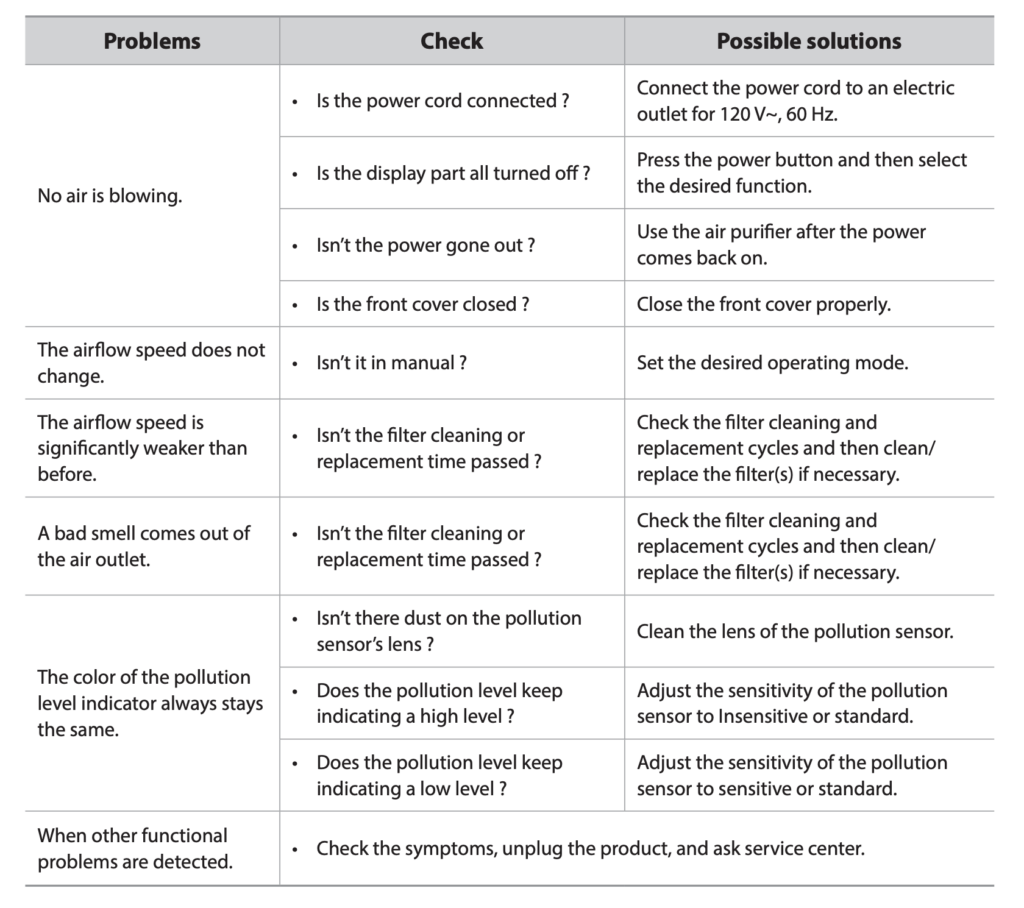
Allen, P. (2022). HouseFresh. Alen BreatheSmart 45i Review. housefresh.com
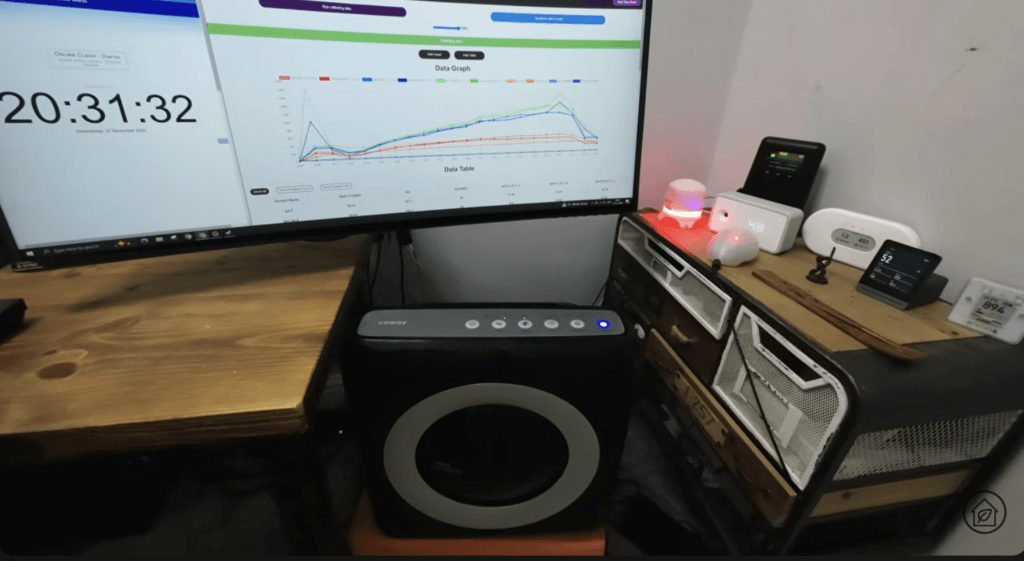
Ashton, D. (2022). HouseFresh. Alen a350 Air Purifier Review. housefresh.com

Booth, D. (2022). HouseFresh. Alen BreatheSmart 75i Review. housefresh.com

Herron, B. (2022). Air Purifiers.Company Review: Alen Air Purifiers. airpurifiers.com

Evans, A. (2022). Air Purifiers Reviews. Alen Air Purifier Won’t Turn On: How to Fix? moaablogs.org

Mills, I. (2022). Fresh Air Devices. Alen Air Purifier Troubleshooting (13 Issues Solved). freshairdevices.com 

Walker, P. (2022). Air Caring. Why Is My Alen Air Purifier Beeping? aircaring.com

Price, A. (2019). Filter Monster. How-To: Replacing your Alen Air Filter. filter-monster.com

How does an activated carbon filter work?

HF Charcoal Filter logo

If you’ve looked into purchasing an air purifier you will have come across the term “activated carbon”. If this has left you with questions, you’re in the right place.

But, first things first: what is carbon, and how is it activated?

Carbon is made when a chemical reaction is introduced to materials such as bamboo, willow peat, wood, and coal. Think of burning wood on a fire. After the fire goes out, you’re left with a black substance and pieces of blackened wood. The char that remains is mainly carbon (otherwise known as charcoal). This is left because all the combustible material in the wood has burned away.

Carbon can also be made in an industrial process. This involves heating substances in a vacuum chamber until all the VOCs (volatile organic compounds) are released, leaving only carbon behind. This is then collected and used for all kinds of things, from removing odors to purifying liquids.

For carbon to be effective at trapping VOCs, it needs to go through a process of activation, which is usually performed in a high-temperature kiln. During this activation process, the carbon is injected with hot air, carbon dioxide, or steam to create a lattice of tiny pores to increase the surface area of the carbon. 

By making the carbon larger, it makes more room to capture harmful molecules, making it far more effective as a filter. After the carbon is activated, it is treated with chemicals to enhance its ability to filter specific harmful molecules, making it the ideal substance to use in an air purifier.

How do activated carbon filters work?

Now we know what activated carbon is, let’s look at how it works as a filter.

Most air purifiers come with an activated carbon filter as standard, claiming they will remove odors from your home. They come in all shapes, sizes, and weights, some are filled with loose carbon, and some use a sheet of bonded carbon. Whichever form they come in, they are there to do the same job.

Once the carbon has been activated, it’s ready to do its job. 

How carbon filters work

Here’s what the process looks like:

  1. Contaminated air enters the filtration system
  2. The air passes through the activated carbon air filter
  3. The process of adsorption takes place to remove the contaminants
  4. Purified air flows out of the activated carbon filter and back into the room

You will notice the word adsorption when we talk about how activated carbon removes harmful contaminants from the air. This is different from absorption, which you may be more familiar with:

  • Adsorption = contaminants stick to the outside of the carbon substrate
  • Absorption = contaminants are absorbed inside the structure, like a sponge

Absorption is best used when collecting liquid, like using a paper towel to soak up a water spill from a surface. Adsorption, on the other hand, is the most effective way of removing pollutants from the air, like activated carbon, in an air purifier filter.

What they can remove from the air

Cooking odors
Cigarette, cigar and weed smoke
Burnt smells
Pet odors
Formaldehyde
Benzene
Naphthalene
Chloroform
Acetaldehyde

What they won’t remove from the air

Dust and dust mites
Mold spores
Pollen
Pet dander and hair
Bacteria
Airborne viruses

How much activated carbon should you aim for?

Introducing the air purifiers we’ve tested with the biggest amount of activated carbon in their filters.

You might be wondering, ‘Does the amount of carbon matter?’ And the answer is, yes, it absolutely does. The most effective filters are the ones that contain the most carbon. The more carbon there is, the more substance there is to adsorb airborne pollutants.

Plus, filters with higher amounts of activated carbon will have a longer lifespan meaning fewer replacements, saving you money in the long term.

So if you want to get the most out of a filter, go for an air purifier with a filter with at least two lbs of activated carbon.

These are the top choices based on our testing:

IQAir HealthPro Plus (5 lbs of activated carbon)

The V5-Cell filter in the HealthPro Plus is packed with over 5 lbs of activated carbon and zeolite mix, making it one of the most powerful air filters on the market to deal with odors and VOCs. However, be aware that this power comes at a cost: this device is power-hungry and the filter replacements are more expensive than the vast majority of filters from other brands. That said, filters will last for up to four years, so this helps reduce yearly maintenance costs.

$1,199.99 at IQAIR U.S. $1,199.99 at amazon

Austin Air HealthMate (15 lbs of activated carbon)

With its 15 lbs of carbon, the Austin Air HealthMate is the best air purifier on the market for dealing with severe air quality issues connected to chemical gasses, unwanted odors and VOCs. However, with a price that surpasses $700, this device is overkill for those looking to keep dust and pollen levels low due to its high initial and running costs.

Austin Healthmate Hallway

Dyson Big+Quiet BP06 (2 lbs of activated carbon)

The BP06 from Dyson comes with 900g of activated carbon, which doesn’t seem like much compared to the IQAir HealthPro Plus or the Austin Air HealthMate, but it’s still A LOT compared to most other air purifiers you will find on Amazon. This is a good amount of carbon and will help with removing unwanted odors from the air but it won’t be enough for those of you who need to deal with serious VOC issues.

I hope my article helped you clarify any doubts you mad had about activated carbon filtration. If you have any questions that I didn’t answer along the way, please drop them in the comments section below and Danny will get back to you right away.

12 common Levoit air purifier problems [including red light fix]

Levoit Core 600S 300S Comparison

Levoit air purifiers are widely regarded as among the best purification devices in terms of both price and performance and are popular throughout the world. However, this doesn’t mean that they’re perfect. 

As with all mechanical devices, problems can sometimes occur. These can range from strange noises to the unit being unable to connect to Wi-Fi. Luckily, we’re on hand to break down the most common complaints. 

Most importantly, we’ll give you top tips on how to solve them. If after you’ve tried our suggestions you are still experiencing an issue, we’ll provide advice on how to get hold of their user manuals and contact Levoit themselves.

Problem 1: My Levoit air purifier won’t turn on

It can be really frustrating when your system won’t turn on at all, but there are often some simple explanations. 

❓ Is the power turned on?

Make sure the power is definitely on at the outlet. If not, turn it on.

❓ Is the electrical cord faulty?

Although tough, the power cord can wear out over time. Be sure to test this and replace it if it’s faulty.

❓ Is the outlet damaged?

Try using another outlet to plug in your purifier.

❓ Is the back cover placed incorrectly?

Double check that you’ve placed the cover well to see if the air purifier works.

❓ Is the power rating inaccurate? 

If the power rating is incorrect, your purifier won’t turn on. Check the outlet to make sure that the power rating is right.

Levoit air purifier modelPower SupplyRated Power 
Core Mini12V 1A7W
Core 200SAC 120V, 60Hz37W
Core 300AC 120V, 60Hz45W
Core 300SAC 120V, 60Hz26W
Core 400SAC 120V, 60Hz38W
Core 600SAC 120V, 60Hz49W
Core P350AC 120V, 60Hz45W
EverestAirAC 120V, 60Hz70W, 1A
LV-H126AC 120V, 60Hz35W
LV-H128AC 120V, 60Hz6W
LV-H132AC 120V, 60Hz28W
LVH133AC 120V, 60Hz47W
LV-H134AC 120V, 60Hz45W
LV-H135AC 120V, 60Hz40W
LV-PUR131AC 120V, 60Hz40W
LV-PUR131SAC 120V, 60Hz40W
PlasmaPro 400SAC 120V, 60Hz38W
Vista 200AC 120V, 60Hz24W
Vital 100AC 120V, 60Hz55W
Vital 200SAC 120V, 60Hz50W

Problem 2: How to reset the Levoit air purifier red light?

This is one of the most common problems with Levoit air purifiers, and is generally connected to the filter. When it’s time to replace the filter, the indicator light on your purifier will turn red. Sometimes, however, it can stay on or even blink after you’ve inserted a new filter.

❓ Is the filter installed correctly?

If your unit is making weird noises, chances are the filter is installed incorrectly. Unplug the purifier and remove the filter from the system to ensure that it is correctly installed. Then re-insert the filter to check the issue has been resolved.

❓ Does the filter indicator need resetting?

Turn off the purifier and press the filter indicator reset button for three to five seconds.

Levoit Problems Filter indicator needs resetting

For the Levoit PUR-131 and PUR-131S, it’s a little more complicated as you need to use a small screwdriver to hold the internal button for 5 seconds.

Levoit PUR131 Red Light On

Recently our Levoit PUR131 showed the red light, so we got to show you how to fix this issue.

With the air purifier running, you will need to use the reset button on the side of the air purifier and using a small screwdriver, you will hold that button down for at least 5 seconds or until the unit beeps.

Check out the video of me resetting our Levoit PUR131:

Once the button has made a beep, the red light will disappear, and no light will greet you at the top of the air purifier. 

Levoit PUR141 Red Light Off

❓ Are the filters clogged?

Check and replace clogged filters with new filters, if necessary. 

Instructions: 

  1. Open the filter cover and remove the old filter.
  2. It’s a good idea to vacuum the inside of the unit and remove accumulated dust particles, hair, and similar dirt.
  3. Unpack the new filter, insert it into the device and close the lid.
  4. Finally, just reset the filter indicator.

❓ Is there excessive debris in the filter compartment?

Levoit Problems Debris filter compartment

Remove the filter and then remove excess debris from the compartment using a gentle brush or vacuum.

❓ Are there programming issues with the Levoit air purifier?

If you’re still having problems, your air purifier may be running into programming issues. 

Try these steps:

  1. Simply remove power from your unit for around 30 seconds.
  1. Turn on the unit one more time.
  1. Hold down on the check filter status for three seconds and then monitor the response from the purifier.
Check filter indicator Levoit

Problem 3: I notice reduced airflow

One of the most important things with your purifier is to have optimal airflow, but occasionally this can be diminished for a variety of reasons. 

❓ Is the fan speed set to Low? 

Change the fan speed by tapping the fan speed button and move up from 1 to two or three. 

Tip

Try using the auto mode function to increase the fan speed, this will detect and remove pollutants.

❓ Has the filter packaging been removed?

If you don’t remove all packaging, this can significantly reduce the airflow. Make sure you’ve removed it before operating your unit.

Levoit Core 200S filter in bag

❓ Is there a lack of clearance?

Reduced airflow can occur if the air intake and outlet are placed too close to objects. Simply change your purifier’s location to leave more space around it. 

Air Purifier distance 1

You might feel that the unit isn’t cleaning the air properly when in fact you’re using it in a room that’s too large. Be sure to use the purifier in the recommended room size. This info can be found in the manual. 

Tip

You can access all the user guides and manuals for Levoit units on https://levoit.com/user-manuals 

Problem 4: My Levoit air purifier is making unusual noises or beeping

If you tend to use your purifier while sleeping or resting, you certainly don’t want it to be making strange noises.

❓ Does the filter need changing?

Your Levoit instructions manual can help to ensure you get the correct filter replacement. See our instructions above for detailed guidance on how to change your filters. 

❓ Is there a foreign object inside?

If you find something that shouldn’t be there, turn off the unit and unplug it from the outlet. 

Be sure that you don’t open the air purifier. Instead, contact the support team by phone on 1-888-726-8520 or by email via support@levoit.com, they can help you solve the issue.

❓ Is the back cover placed incorrectly?

Make sure that this is fitted properly.

Levoit 600S Change filter 1

❓ Is there too much dust inside the purifier?

If this is the case, unplug your unit, turn it off and get rid of the excess dust using a vacuum cleaner. 

❓ Does your Levoit air purifier need to be reset?

If you hear a beeping noise while your air purifier is running, it likely needs to be reset. 

Follow these steps:

  1. Ensure the device is plugged in but switched off.
  2. Press and hold the filter reset button for three seconds.
  3. The reset is complete when the light turns off after releasing the button.

If the beeping continues, repeat this process a second time. If you can still hear it, contact customer service as there may be a malfunction. See the bottom of this article for how to contact Levoit Customer Care. 

Problem 5: My Levoit air purifier produces an unpleasant smell during usage

If you can detect an unwanted aroma in the same room as your purifier then the system may be faulty. Yet this isn’t always the case. Sometimes, strong odors and heavy smoke can affect the performance of a unit’s filtration. When this happens, the over-polluted filter gives off a nasty smell.

❓ Does the filter need cleaning?

As Levoit air purifier filters aren’t waterproof, you should never wash and reuse them. Instead, try gently blowing compressed air on the unit. 

Levoit Problems Filter needs cleaning

If the filter has been in the system for over six-to-eight months, it’ll be time to replace it.

❓ Is the room adequately ventilated?

To eliminate any strong odors or smoke, be sure to air out the room before running the purifier. 

Tip

Install a vent hood or a ceiling fan in areas such as the kitchen where there are often intense cooking smells and smoke.

❓ Is the filter causing the smell?

Remember that new filters have just left the factory. They haven’t been ventilated, and are immediately packed, so the unpleasant smell lingers in them. 

To combat this problem, leave the unit running for at least 24 hours in an area where you’re not around. This will help to ventilate the filter and make it fresh.

Problem 6: Air purification isn’t working 

When you’ve bought an air purifier, it can be pretty annoying if the unit isn’t cleaning your air effectively. You might be eager to get your system up and running, but it’s vital to read the user manual thoroughly to ensure correct setup. This is often the most common reason why the unit isn’t purifying the air. 

❓ Has dust built up on the filters?

Dust can build up and can cause problems, as we’ve already seen. Remember, you should never wash and resume a HEPA filter

Vacuuming them can cause damage and stop them working. If you really want to try cleaning your filter, be very gentle. But we really do recommend replacing them. 

❓ Is the room coverage too large?

If you use the purifier in a room larger than 300 square feet, it can lead to poor air quality. Be sure to only use it in the recommended room size.

Levoit Air Purifier ModelIdeal Room Size In Square FeetIdeal Room Size in Square Meters
Core 200S≤ 183 ft² ≤ 17 m²
Core 300219 ft² 20 m²
Core 300S219 ft² 20 m2
Core 400S403 ft² 37 m²
Core 600S635 ft² 59 m²
Core Mini178 ft² 17 m²
Core P350≤ 219 ft²≤ 20 m²
EverestAir558 ft² 52 m²
LV-H126158 ft² 14.7 m²
LV-H128≤ 161 ft² ≤ 15 m²
LV-H132129 ft² 12 m²
LVH133442 ft² 41 m²
LV-H134≤ 710 ft² ≤ 66 m²
LV-H135463ft²43 m²
LV-PUR131360 ft² 33 m²
LV-PUR131S360 ft² 33 m²
PlasmaPro 400S403 ft² 37 m²
Vista 200172 ft² / 16 m²
Vital 100≤ 300 ft²  ≤ 28 m²

❓ Is the interior air quality poor?

Air out the room before running your unit. Once the room is well ventilated, close all doors and windows and then run your purifier. 

❓ Is the air inlet or outlet blocked? 

Allow enough clearance around the purifier and remove objects that may block the inlet and outlet.

Is the air inlet or outlet blocked

❓ Is the purifier in the corner of the room?

The instruction manual advises setting up the purifier around the middle of the room for optimum performance. Simply reposition the device and the purification should start working.

Problem 7: My Levoit air purifier isn’t connecting to the app

Successful app connectivity is essential for the smooth running of your purifier, but unfortunately this can sometimes be a problem. 

❓ Are there network problems?

Check that your internet modem is supported and make sure it works at 2.4GHZ. If it works on 5GHz, switch it to 2.4GHz and try connecting again.

❓ Have you entered the wrong Wi-Fi password?

Be sure to check this and also that you haven’t left any spaces at the beginning or end of the password.

❓ Is your VPN turned on during setup?

Ensure that you turn off your VPN throughout this process.

❓ Is the unit too far from the modem?

Make sure that your modem is close enough to the unit to work correctly.

❓ Do you need to use a hotspot?

If none of the above work, try using a hotspot from another smart device as a modem. This should enable you to connect the VeSync app with the purifier.

Problem 8: My Levoit air purifier isn’t connecting to wi-fi

As well as the app, sometimes there can be connectivity issues with the Wi-Fi. It may be that your purifier simply needs rebooting. You can try this, as well as following these tips.

❓ Does the system need restarting?

Unplug it from the outlet for 30 seconds, then plug the unit back in. You should hopefully be able to connect again.

❓ Does the VeSync app need an update?

Open the VeSync app and check if there’s a firmware update available. If so, follow the instructions to update the software. Deleting the VeSync app and reinstalling again can also do the trick.

Levoit Core 600S App 2

❓ Are small appliances creating interference?

Be sure to keep your air purifier a good five feet away from small appliances to avoid interference. 

❓ Is your phone too far away from the purifier?

Ensure that your phone is close to the system. An iPhone has to be within about 33 feet of the air purifier to work. 

Problem 9: The display in my Levoit air purifier isn’t working

While it’s fairly uncommon, issues with the display can occur. The worst outcome is that there’s a malfunction in the system, and a replacement is the only solution. 

❓ Are there power issues with the unit? 

Firstly, connect a different appliance to the outlet and check the response. If the outlet is faulty, all you need to do is to find a different spot for your purifier. 

Tip

It’s best not to leave defective connections unattended when you’re using smart units, so if you can, hire an electrician to help with the wiring connections. 

❓ Is the cord damaged?

If a different appliance works fine with the outlet, then you need to check the power cord for possible damage. When this happens, it’s best to contact Levoit to secure a replacement. 

If you want the issue fixed quickly, taking your unit to a repair center is another option.

❓ Are there programming issues?

Try power-cycling (turn it off and on again) the purifier and then judge the response from the display.

If there aren’t any hardware issues with the control board, shut down the purifier for a few minutes and turn it back on.

❓ Is there water damage?

Levoit units don’t operate well when there’s water damage. In this instance, you’ll have to claim the warranty.

  1. Make sure your product is within the specified warranty period.
  2. Make sure you have a copy of the invoice and order ID or proof-of-purchase.
  3. Make sure you have your product. DO NOT dispose of your product before contacting us.
  4. Contact Levoit Customer Support team via support@levoit.com.
  5. Once the Customer Support team has approved your request, return the product with a copy of the invoice and order ID. 

❓ Does your air purifier need to be reset?

Reset the unit – you could even go back to factory settings – and then try using your display one more time. 

  1. While the unit is on standby, press and hold the filter reset button for 3 seconds. The filter reset button will light up.
  2. Press and hold the filter reset button again for 3 seconds, the filter reset button will now turn off. 

The reset is now complete.

Problem 10: All the lights are on

If you notice that all the purifier’s lights are on simultaneously, this indicates that the device isn’t working effectively. Most likely, it’s a malfunction within the system which can be resolved quite quickly.

❓ Does the unit need resetting?

Hold the power switch down for at least three seconds. Release the button then press down on it once again for a few more seconds. 

If this doesn’t work, hold down the power switch button for five seconds each time.

❓ Does the purifier needs to be unplugged?

Try unplugging the air purifier from its power source for at least 30 minutes and plugging it back in.

Problem 11: The fan in my Levoit air purifier isn’t working

The fan inside the purifier is an integral part of its functioning. If this isn’t working properly, it can affect the purification process. Often, the reason for a defective fan is something to do with the filter. 

❓ Has the plastic packaging been removed?

It may seem obvious but make sure that you’ve removed all plastic packaging from the filter. Similarly, it’s important to check that you’ve installed the filter correctly.

❓ Do you need to touch the fan icon?

Again, this may feel like a no-brainer but double-check that you’ve touched the fan icon on the display. Doing so means you will increase the speed of the fan.

Levoit Core 300 Control panel

❓ Is the Levoit air purifier in sleep mode?

This means that the fan will work as quietly as possible. To turn this off, simply press the sleep mode button icon.

❓ Are there any objects blocking the sides of the purifier?

It’s important to remove all existing things and objects from the sides of the purifier. As we mentioned earlier, this can prevent the device from working properly.

Problem 12: The air quality indicator shows the wrong status

It’s quite common for users to find that the air quality indicator displays the incorrect status, so don’t worry. Most of the time, the indicator is malfunctioning because there’s a problem with the dust sensor.

❓ Does the dust sensor need cleaning?

If the indicator keeps showing the red light, this is supposed to tell you that the air quality is bad. Yet if you’re running the purifier at full capacity, it probably means you need to clean the dust sensor. 

Follow our step-by-step guide:

  1. Firstly, open the sensor cover to access the air quality sensor.
  2. Using a damp cotton swab, clean the sensor lens.
  3. Dry the sensor lens thoroughly with a dry cotton swab.
  4. Close the sensor cover.

How to contact Levoit 

If you’ve tried our suggestions to fix your problem but are still experiencing issues, then don’t worry because Levoit customer support is ready to help. 

Their experts are available Monday through Friday, from 9am to 5pm PST. You can reach them by phone on 1-888-726-8520 or by email via support@levoit.com. You can also use their instant chat function which will enable you to describe the problem as well as submit attachments such as photos. 

Alongside these options, you can simply send a message on their Contact Us page. You’ll be asked to input things like your order number and what you’d like to discuss. 

Find the manual for your Levoit air purifier 

You may have purchased your Levoit purifier some time ago and now the manual seems to have disappeared… But never fear because Levoit has got your back. Download the manual for your unit below. 

Air purifier Manual
Core 200SDownload here
Core 300Download here
Core 300SDownload here
Core 400SDownload here
Core 600SDownload here
Core MiniDownload here
Core P350Download here
EverestAirDownload here
LV-H126Download here
LV-H128Download here
LV-H132Download here
LVH133Download here
LV-H134Download here
LV-H135Download here
LV-PUR131Download here
LV-PUR131SDownload here
PlasmaPro 400SDownload here
Vista 200Download here
Vital 100Download here

Final thoughts

If you want to improve the air quality inside your home, you won’t go far wrong with buying a Levoit purifier. However, there are some common problems that users experience from time to time. For example, the unit won’t turn on, or there’s a continuous beeping sound. 

Fortunately, and in many cases, the issue can be resolved through simple actions such as changing and/or cleaning the filter, and moving the unit to a different part of the room. In more serious instances, however, help is always on hand from Levoit themselves, either via their user manual, or from their dedicated customer support services.

SOURCES

Levoit Core 400S review

Levoit Core 400S Living Room 2 1

Today, I am reviewing a highly popular air purifier from Levoit that came on the market in 2021: the Levoit Core 400S.

This mid-sized air purifier sits between the Core 300S and the larger Core 600S, and it comes with the same cylindrical design and smart features such as the VeSync app.

The overall score for the Levoit Core 400S incorporates first-hand data results from our battery of tests, as well as our ratings for customer service, brand transparency and design & UX. Check out the full scorecard below to see the split of categories.

I have tested and compared the U.S. version with the European version in our YouTube channel, and learned that performance varies between the two. You can watch the video below:

As always, we bought both of our Core 400S devices with out own money so we could write an unbiased review, getting to experience the same customer journey you will if you decide to buy it. If you want to support the work we do at HouseFresh, please use the links in the buttons used throughout this page – we will earn a small commission at no extra charge to you.

The pros and cons of the Core 400S

A summary of our top-level findings after testing this air purifier following our methodology.

Levoit Core 400S Living Room.jpg

💡exclusive code for HouseFresh for 10% off a single purchase on Levoit.com: HOUSE10

“A solid option to consider with medium-sized rooms and those who value smart features like app support, auto-mode, and a screen that displays air quality levels in real time.

That said, I still think most people would be better off with the slightly cheaper Vital 200S thanks to its removable pre-filter, but the Core 400S is worthy of consideration, especially if you prefer the cylindrical design”

Danny Ashton HouseFresh
Danny Ashton
HouseFresh Founder
& Lead Tester

Looking for some quick-fire facts on the 400S? Here are the key points from my full review. 

CONS

There is no clear information anywhere about the differences between the European and the U.S. version of the Core 400S.
It uses a bonded filter so the pre-filter is attached to the main filter, which makes it inconvenient for cleaning regularly. Plus, you will need to replace the entire thing once the carbon is full, even if the particle still has life in it.
And we have the whole issue with Dyson’s complaint against Levoit with the BBB that led to Levoit removing the term HEPA from their marketing materials.

PROS

The U.S. version has great performance at sub-45 dBA fan speeds (134 cfm). The EU version was six minutes slower than the U.S. version (118 cfm).
You get filter options with different amounts of carbon, with the top one being 450 grams (Smoke Remover), which is the most you will get with any Levoit device.
The cylindrical design takes up less floor space than the traditional boxy air purifier design.
Super energy efficient, drawing 38 watts on its highest speed setting
The app has a ton of useful features and it is constantly updated and improved.

Clean air delivery rate (CADR):– Top speed PM1 CADR: 213 cfm
– Sub-45 dBA PM1 CADR: 134 cfm
– AHAM PM2.5 CADR: 247 cfm (dust)
Filtration technology:Pre-filter for large particles, main filter for airborne particles and activated carbon filter for odors and gasses
Recommended room size:319 sq. ft. (5 air changes per hour)
Dimensions:10.8L x 10.8W x 20.5H inches (27.4L x 27.4W x 52H cm)
Weight:11.2 lbs (5 kg)
Filter lifespan:6 months
Noise level in decibels from 3 ft. away:Sleep mode: 35.5 dBA
Speed 1: 38.3 dBA
Speed 2: 43.2 dBA
Speed 3: 51.2 dBA
Speed 4: 60.3 dBA
Electricity consumption in watts:Standby: 0.93 watts
Sleep mode: 3.05 watts
Speed 1: 5.28 watts
Speed 2: 8.51 watts
Speed 3: 16.41 watts
Speed 4: 39.64 watts
Manufacturer’s warranty:2 years
Country of origin:United States
Country of manufacture:China

Design and controls

The 400S might not set the world alight with its appearance but is well-designed with some useful smart functions.

Levoit Core 400S Kitchen

💡exclusive code for HouseFresh for 10% off a single purchase on Levoit.com: HOUSE10

Those who own any of the Levoit Core series will recognize the design of the Core 400S. 

Similar to the 300S and the 600S, it uses a cylindrical design which means it is more compact and takes up less floor space than the rectangular designs we see with the Vital series. 

Levoit Core 300S VS 400S VS 600S

While it’s much bigger than the Core 300S, it feels more manageable than the very large 600S, and as it’s less imposing. Personally, I prefer the design of the 400S over the larger 600S. 

Core 400S filter

Like the other devices in the Core series, the filter in the 400S is bonded, so the particle filter and carbon are combined into one filter, with a layer of mesh pre-filter on top.

This means that cleaning the pre-filter will involve taking out the entire filter, which is more cumbersome and may lead you to clean the pre-filter less often.

Core 400S sensor

The 400S comes with a laser air quality sensor that is better than the standard optical sensors that come with most air purifiers.

According to Levoit, you still need to clean with a vacuum cleaner every few months, but it is quicker to respond and more accurate than optical sensors.

Core 400S control panel

You get an LED ring on the control panel that changes color depending on the air quality. But unlike the 300S, you also get the particle count on a little screen inside the ring.

On the panel you’ll get a button to adjust the fan speed, sleep mode, auto mode, a button to switch off the lights, a child lock, a timer and a filter replacement indicator.

App connectivity

Those with smart homes will appreciate that you can connect the Core 400S to your phone and your smart home hub.

You can operate the 400S from your phone through the Vesync app, which is the same app that is used across all Levoit smart appliances. Once the app is set up, you can also use Amazon Alexa or Google home to control/access the air purifier. 

core 400S app1

Through the app, you can do the usual stuff like scheduling routines but you can also change the settings of the auto mode. This is something I wish more air purifiers would allow so you get to decide whether you want auto mode to hit the top fan speed or not. 

Usually auto modes don’t hit the top fan speed to reduce noise and energy consumption, but this leads to the air not being cleaned as fast and effectively as it could be.

core 400S app2

One thing that is worth noting is that Levoit has been busy rolling out new features for its app that will work across all models.

The tracking history of indoor air quality data is much better than it used to be, with regular intervals graphed out, including what mode the Core 400S was on at the time. I hope to see Levoit continue to improve the app support through regular updates.

All in all, the VeSync app is one of my favorite air purifier apps, but I do find the constant ads annoying. When I go on it, I do it to manage my Levoit devices so I don’t really want to see adverts for other Levoit products. I much prefer a cleaner design that just gives me the tools I need without it turning into a sales pitch to sell me more products. 

Filtration technology

For those looking for an air purifier to tackle odors, the 400S is a better choice than the larger 600S due to the option of a Smoke Remover filter with 450 grams of carbon.

Before I take you through what you get with the filter, we first need to talk about the change in marketing Levoit made after Dyson made a complaint to the BBB. When we bought our Core 400S, the filter was labelled as HEPA H13, but in late 2023 Levoit changed their marketing to remove all mentions of HEPA H13 after Dyson complained about the filters not being HEPA H13 certified.

However, after having tested over 100 air purifiers, I can confidently say that you don’t need a HEPA filter to get excellent air cleaning performance, as shown by what we saw when testing the Luggable XL-7 from CleanAirKits with its MERV 13 filters. This can be explained by the fact that high-grade HEPA filters will restrict the air passing through them, which in turn leads to lower airflow compared to low-grade particle filters that can benefit from the air passing through the filter multiple times.

Having said that, I still don’t think it’s okay for Levoit to say one thing publicly across their marketing and then take it all away quietly without any explanation of what happened or any sort of clarification on the grade of their filters.

Anyway, let me tell you about the filter…

core 400S prefilter

The Levoit Core 400S has a cylindrical bonded filter that is larger than what you get with the Core 300S but smaller than the filter in the Core 600S.

As we’ve come to expect from Levoit, you will find that there are multiple options for filters, each with different amounts of carbon.

levoit core 400s filters

The Original filter has 240g of carbon. The Pet Allergy and Toxin Absorber filter have 400g of carbon. Finally, the Smoke Remover filter comes with 450g of carbon.

The Levoit Core 400S with the Smoke Remover filter has the highest amount of carbon in the entire Levoit range.

Be aware that even though more activated carbon will be better for dealing with odors and gases, it will also reduce particle removal performance as carbon restricts airflow. So, if you don’t need the extra carbon, you are better off sticking with the original filters as they will save you money and offer higher CADR for removing particles.

It’s super simple to install and replace these filters. All you have to do is twist the body of the purifier, slot in the cylindrical filter with the tabs facing up, and reassemble the unit. Check out our short video below to see just how easy it is. 

The Levoit Core 400S I’m reviewing here doesn’t have an ionizer function but there is a version of the model that does: the PlasmaPro® 400S Smart Air Purifier.

400s plasmapro

Levoit’s PlasmaPro technology generates positive and negative ions that bind with pollutants to help neutralize them. This is similar to what we see in Winix units and their PlasmaWave technology.

Levoit air purifiers equipped with PlasmaPro have a button on their control panel with a leaf next to a plus (+) and minus (-) symbol that you can press to enable and disable this bipolar ionization technology.

Air cleaning performance

Our American Core 400S cleared our test room in 24 minutes, whereas our European version needed 30 minutes.

core 400s performance

💡exclusive code for HouseFresh for 10% off a single purchase on Levoit.com: HOUSE10

According to our PurpleAir Zen sensor, the U.S. version of the Core 400S needed 24 minutes to achieve PM1 zero in our 728 cubic ft. test room — we estimate a PM1 CADR of 213 cfm.

We were surprised to see that the European version of the 400S was slower, needing 30 minutes so we estimate a PM1 CADR of 198 cfm.

You can see the results of both tests in the chart below:

As you can see from the table, the U.S. Core 400S performs as well as the best devices we have tested when running at top speed.

core 400s comparison top speed scaled

When comparing against other units in the Levoit range, it becomes clear that the mid-sized Core 400S offers good value for your money:

performance comparison levoit core range scaled

I reached out to Levoit’s customer support team to confirm whether the two devices were supposed to be the same as I noticed that the same CADR figure was used in the marketing material in Europe and in the U.S.

“The European Core 400S model has been optimized with a focus on noise reduction. Extensive user research revealed that noise levels are a significant consideration for European customers. By optimizing the wattage, we are able to deliver a quieter experience without compromising essential air purification capabilities, ensuring a product that aligns with local expectations for comfort and usability.”

Levoit Customer Support

So it seems that the European version has been designed to be quieter which neatly brings us to the next part of our testing…

Sound levels

In our testing, the sound levels of the U.S. Core 400S ranged from 35.5 dBA to 60.3 dBA, and the European version ranged from 35.5 dBA to 55.9 dBA.

core 400s sound energy test

If an air purifier is too loud, you will turn it off eventually. That is why we always measure how much sound each air purifier generates from three (3) feet away.

core 400s us eu sound levels

Be aware our background noise is 35 dBA, so the 400S running at sleep and speed 1 is likely to generate less sound if you could measure it in a silent room.

Sound levels at low fan speeds are very similar but the U.S. version runs louder top speed. Compared to some of the best HEPA retail devices we have tested, the European Core 400S is quietest at top speed, but as expected, it can’t compare with a PC fan air purifier like the Luggable XL-7.

core 400s performance vs sound scaled

However, you are unlikely to want to run your device at top speed all the time, so we found a fan speed at which the Core 400S generates less than 45 dBA of noise, which is the limit we have set for our quiet performance tests.

Running at speed 2 the European model hits 44.4 dBA and the American version hits 43.2 dBA, so we repeated the particle removal test with both devices running at that sub-45 dBA speed.

core 400s quiet performance scaled

The U.S. version running at speed 2 is much closer to other mid-sized devices like the Vital 200S and Winix 5500-2 but can’t compete with much larger CADR devices like the Levoit EverestAir.

But as with most HEPA retail design it can’t compete with PC fan-powered devices like the Luggable XL and AirFanta 3Pro.

Long-term running costs

Running a Core 400S will cost you $144.41 per year, combining energy consumption costs and filter replacement prices.

As always, we used our energy meter to measure how much electricity the 400S uses when running at each fan speed and also while on standby.

core 400s energy consumption

As with sound, the difference in energy usage only shows at the top fan speed. If you had to leave your European Core 400S running 24/7, it would cost $26.07 in energy costs for a year and for the U.S. Core 400S it would cost $44.43

Considering you need to replace the filter every six months and that the replacement costs $49.99, you can expect to also spend $99.98 per year on filters.

When combining energy and filter costs, you can expect to pay $126.06 if you buy the European version and $144.41 if you get the U.S. version, due to the slightly higher energy consumption.

core 400s long term costs scaled

There are many generic filters available, starting at $34.99 per filter. We will run performance tests with a range of generic filters for our Patreon supporters.

Bottom line: Is the Levoit Core 400S worth it?

It really depends on the version you get, as the European version and U.S. version are not the same.

The European Core 400S will cost less to run at top speed on a yearly basis, but the U.S. version offers better air cleaning performance at more usable speeds under 45 dBA.

Levoit Core 400S Living Room 2 1

💡exclusive code for HouseFresh for 10% off a single purchase on Levoit.com: HOUSE10

Its size is much easier to live with compared to the Core 600S and Levoit EverestAir, and it requires less floor space than the Vital 200S.

While it lacks the Vital 200S removable pre-filter, the Core 400S still has all the smart functionality and features of the latest series, and I was pleased to see that Levoit has been adding new features to the app.

The OEM filters are fairly priced and thanks to the efficient fan motor, it doesn’t consume as much energy as other mid-sized air purifiers. 

Another pro is that its Smoke Remover filter comes packed with the highest amount of pelleted activated carbon in the Levoit Core range, including the much pricier Levoit EverestAir, which has 400 grams of carbon.

For those wanting a cheap air purifier with a good amount of carbon to help remove odors, the Core 400S with the Smoke Remover filter is the best option available under $250. In fact, you will usually find it online at around $180.

carbon filters compared

This review is a great example of how important first-hand testing is, as the AHAM report available on the EnergyStar website shows one CADR figure for the Levoit Core 400S but our testing shows that there are CADR differences between the U.S. version of this device and the model sold across Europe.

If you appreciate the lengths we go to with our air purifier reviews, be sure to use the links in the buttons. We will get a small affiliate commission at no extra cost to you, and it will help support the work we do here at HouseFresh.

Have you got any questions about the Core 400S that I didn’t answer in my review? Please, drop them in the comments below and I’ll reply as soon as I can.

TaoTronics AP003 review

TaoTronics TT AP003 Room 1 1 e1680774717302

TaoTronics is an interesting brand that is part of the Sunvalley group based in China, which was profiled by The New York Times back in 2017. They offer a wide range of technology products, from headphones to air purifiers.

At one point, TaoTronics was making $300 million from Amazon alone, so it was a shock when I read that all brands under the Sunvalley group were kicked off Amazon last year for breaking review rules. 

As we generally focus on air purifiers readily available on Amazon, we hadn’t yet had a chance to test any of the units from TaoTronics. Still, I chose to push ahead with a review after using a tool from ClearnAirStars, an NGO run by Dr. Pieter Peach from Australia. His tool results showed the TaoTronics AP003 was at the top for best performance for non-DIY air purifiers! So, I had high hopes for this unit.

When Chinese brands first entered the U.S. market with their generic designs, they could often compete on price but were disappointed with the quality. As any consumer will now relate, Chinese versions of electrical appliances can now match the performance of Western brands and, in many cases, even outperform them.

The TaoTronics AP003 clearly focuses on the budget end of the air purifier market. With an entry price of $99.77 but a CADR of 226 CFM (384 m³/h), its performance aligns with far higher-priced units.

On paper, the AP-003 looks like ‘the Levoit Core 300 killer’, with the ability to clean more air for less money. But we must take a more in-depth look at this unit before celebrating too early.

As with all our reviews here at HouseFresh, we bought the TTAP003 with our money. In this case, we bought the unit directly from taotronics.com, and while it wasn’t as fast as Amazon, the delivery was within just a few days, and the communication was excellent along the way.

We use our own money because we don’t want any external biases. We want to say exactly what we think so that our readers can choose the right unit for their particular use case. We also don’t just take CADR figures for granted; we test using our own equipment to see how real-world performance matches up to the numbers on the box.

how we test
How we test air purifiers

Read our full testing methodology.

We believe this is the only way you can assess and compare air purifiers fairly, as we tested them all performing the exact same jobs under the exact same conditions. This is how we can uncover jewels (like the AP003) and highlight devices that don’t live up to the hype (cough, Molekule cough).

So, let me walk you through what we learned when testing this air purifier.

The lowdown on the TaoTronics AP-003

Danny Ashton HouseFresh
“The TaoTronics AP-003 is a budget air purifier that offers powerful air cleaning power and features premium functions. Unfortunately, it won’t be available on Amazon, but you can buy it directly from the TaoTronics store and also might find it on eBay for less than $99.

As of September 2024, finding this device is becoming increasingly difficult, so I recommend looking into one of the various other brands selling the exact same model as the AP-003 is a white-labeled design. I tested the Lago air purifier (available in the U.S.) and the Midea SmartAir Pure Control (available in Europe), with both devices matching the performance, noise level generation and electricity consumption of the TaoTronics AP-003.”

— Danny Ashton, HouseFresh Founder & Senior Writer

PRICE IN EUROPE PRICE IN THE U.K.

If you don’t have the time to read my 3000+ word review, then get the main gist with the following bullet points:

What we really like

It costs less than $100 to achieve the high-speed air cleaning performance you can expect from devices that cost twice as much.
Sound levels are well below industry standard, which confirms the presence of a very efficient motor.
It comes with Pure HEPA and activated charcoal. There isn’t an ionizer, which means zero ozone is created.
One of the best-priced filters we have seen for units with such large filters.
It comes with activated charcoal pellets, normally only seen in premium units that cost about $200.

What we think could be better

It is currently out of stock on the TaoTronics store and finding it on eBay is becoming impossible. Fortunately, you can buy the same device sold under other brands, such as Lago in the U.S. or Midea in Europe.
There is no app support. This doesn’t bother me, but it is something to consider.
It doesn’t come with enough activated charcoal to tackle serious issues related to VOCs.

HouseFresh rating:★★★★★
Time to clean our 728 cubic feet test room (with the device running at top speed):26 minutes
Air purifier technology:H13 HEPA with activated carbon pellets
Recommended room size (4.8 air changes per hour):307 sq. ft.
Clean air delivery rate (CADR):Dust: 202 CFM
Smoke: 198 CFM
Pollen: 215 CFM
Dimensions (in inches / in cm):21.8 x 14.1 x 7.9 inches (55.4 x 35.8 x 20cm)
Weight (in pounds / in kg):13.64 lbs (6.19 kg)
Filter life:6 months
Noise level in decibels (measured from 3 ft. away with a sound level meter):Speed 1: 38.4 dB
Speed 2: 42.8 dB
Speed 3: 54.2 dB
Electricity consumption in watts (recorded with an electricity usage monitor):Standby mode: 0.7 watts
Speed 1: 5.9 watts
Speed 2: 10.5 watts
Speed 3: 36.5 watts
Estimated running cost (electricity consumption + official filter replacement):$90.66 per year
Cost per CADR cfm (based on dust CFM as reported by AHAM):$0.49
Manufacturer’s warranty:1 year
Country of manufacture:China

Looks good, modern (and expensive)

The TaoTronics AP003 comes with a sleek design and looks way more expensive than it costs.

TaoTronics TT AP003 Close

One of the big things Chinese manufacturers have been investing in is improving product design style. When my wife saw the AP-003, she thought it looked good (and expensive), which is an impressive job considering this unit is less than $100. It looks modern but doesn’t have a strange shape, so it should be easy to have in the corner of a room without looking out of place.

TaoTronics TT AP003 Sofa Corner

The main thing that stands out with this air purifier is the screen that shows the current air quality level. It doesn’t just give an estimate like many of the other air purifiers that contain sensors but it shows the exact level of pollutants to the nearest ug/m3. The screen looks high-end and doesn’t match the budget cost.

TaoTronics TT AP003 Screen

The inclusion of the screen makes a big difference compared with the Levoit Core 300S. Whilst most people can easily see that blue is clean and red is problematic, having the exact figure feels like a big step up. It is certainly bigger than the Levoit Core 300S and has a large footprint, but it’s not excessively big like the Alen 75i or IQAir Healthpro plus, both of which take up a ton more space. 

TaoTronics TT AP003 Comparrison

The TaoTronics AP003 has an uncomplicated menu system with a child lock button, timer, speed (3 options), auto mode, sleep mode, and on-off button. 

TaoTronics TT AP003 Controls

I don’t mind that there are no app-supported features, as I rarely use the app with air purifiers instead of the onboard buttons. This is especially true with purifiers that include auto-mode, as you just set, forget, and change the filters. One standout app would be that from Dyson, such as the one they include with their air purifier/fan combos, but most others are usually poorly designed with little usefulness for day-to-day use. 

For those looking to build a “smart home” you might prefer another unit, but for the rest of us, the TaoTronics AP-033 is simple enough to get going without the need to Google anything or *gasp* read the manual.

High performance filters for a low price

The filters in the TaoTronics AP003 are of excellent quality despite the low price tag.

TaoTronics TT AP003 Filters copy

Both the HEPA filter and activated charcoal filter in the AP-003 are of good quality. You will often find cheaper impregnated carbon filters such as those used in the Winix 5300-2, which still help to remove odors but are not anywhere near as effective as those that use actual charcoal pellets that you use on this unit.

Whilst odors might not be your primary concern for keeping your air clean, the addition of activated charcoal doesn’t have any negative effects on performance, and you will be surprised at the amount of odor-causing chemicals in your home. 

TaoTronics TT AP003 Unit HEPA

The actual size of the filters still constrains mechanical filter technology, so it’s good to see such a large amount of space dedicated to the filter with this unit. Adding the pre-filter is a good way to keep large particles from damaging the HEPA filter. Still, the main job of filtering the air is done using the H13 HEPA — the grade of HEPA recommended for medical uses.

In reality, all HEPA-grade filters can filter very small particles, and as we saw with the Smart Health S, even a lower-grade filter such as H11 can still perform very well in reducing PM2.5 particles in the air.

But it’s generally preferable to see a higher-grade HEPA filter if you have the right powered fan to push air through the filter, so we’re thrilled with including H13 in such a low-priced unit.

TaoTronics TT AP003 Replace Filter

The TaoTronics team did an excellent job of making new users aware that they must remove the plastic bag from the filters before usage. They use a big yellow sticker visible when you remove the air purifier from the box. You will be amazed at how many people still forget to remove the plastic, so be sure to do that before you switch on your unit, as it otherwise might worsen the air.

Taotronics AP003 Filter label

When the time comes to change the filter in your TaoTronics TT-AP003, you will be pleased to find out that it’s quite a simple task that won’t take a lot of time and won’t require you to read a manual to perform:

The TaoTronics AP-003 cleared our test room in 26 minutes

The AP-003 blew us away with its impressive air-cleaning performance, considering this is a budget-friendly air purifier.

Most air purifier reviews are written by journalists who play with the unit and take some pictures but don’t go further. At HouseFresh, our goal is to go a lot deeper into how an air purifier will work and how well it will keep your home air clean. 

Indoor air quality hasn’t always been a top priority for homeowners. Still, since Covid-19, there has been a ton of new research that has shown how important air quality is, both to your respiratory system and even your mental health

We know that most consumers will not be excited about the latest air purifier launch like they are about the latest iPhone. However, we do believe that air quality health will become a major concern for American homeowners, especially considering the rise of wildfires affecting the country. The air purifier industry has a reputation for selling products that promise a lot but fail to deliver, so we think it’s important that we help make life a little easier by thoroughly testing and assessing every unit we recommend. 

All our tests are done in the same room to compare different units, which all have the same job — removing all the pollutants generated by one incense stick in our 705 cubic ft office. We use the indoor sensor from Purpleair to track levels of PM1.0ug/m3, PM2.5ug/m3, and PM10.0ug/m3 over time so we can see how effective the air purifier is at removing these tiny particles from the air. 

The main number we track for our testing is how long the air purifier takes to bring the pollutants down to 0.

On paper, the TaoTronics AP-003 has some big numbers for its price, with a CADR of 384 m³/h/226 CFM.  This CADR is even higher than the old flagship air purifier the Alen A350, and even is in the same realm as the Levoit Core 400S (which costs $219.) If the performance test matches this CADR, it’s going to be easy to recommend this unit to those looking for cleaning on a budget.

So, how did it do?

Here are the main pointers:

  • It took 26 minutes to remove all the pollutants from our test room!
  • This was higher than the Mila (35 minutes) and even the BreatheSmart 45i (34 minutes), which was meant to have a slightly higher CADR on paper.
  • It was less than what we saw with the Alen 75i and IQAir Healthpro Plus (24 minutes), but both units are much larger, cost more and use way more electricity.

Let’s put that into perspective by comparing it to the top 10 best-performing units in our tests:

From a performance perspective, the TaoTronics AP-003 has the best air purifier performance for $ spent. 

Noise level results, compared

Another feature that makes the AP-003 stand out is the amount of sound generated. The TT AP–003 has a range of 38.4 to 54.2dB, which is fairly low compared with modern air purifiers.

Here is how the TaoTronics AP-003 compares against units with a similar air-cleaning performance:

The TaoTronics AP-003 has a very efficient fan motor, which allows it to clean a lot of air without generating a lot of noise.

The cost to run a TaoTronics AP-003: $90.66 per year

1. Electricity costs = $55.67 per year

One area many consumers of air purifiers forget is the cost of electricity. Air purifiers work best when they are running continuously so if you are not careful inefficient air purifiers can start to cost a lot of money over the long term. 

The good news is that the AP–003 manages to clean like a far more powerful unit than the amount of power it used. Using an electric meter, we saw a maximum of 36.5 watts at the top speed and 5.9 watts at the lowest speed.

This power usage is similar to the Levoit Core 300, which cleaned our test room in 40 minutes – the AP-003 is also our top unit for performance to electricity usage.

2. Filter costs = $34.99 per year

Another cost that gets forgotten is the cost of changing filters. Mechanical-based filters must be replaced every 6 months depending on usage, and costs can add up, especially for smaller units that run harder and longer. 

Genuine filters that contain both the HEPA H13 and activated charcoal are $29.99, which is a very fair price considering their size. In comparison, the IQAir HyperHEPA filters are $199 but are replaced less often but still end up costing a lot more in running costs.

If you are open to non-genuine filters, you can find two for $34.99, which is $17 per filter. This aligns with the cheapest filters we have reviewed for the FÖRNUFTIG from IKEA ($15.99) and Smart Health S from Smart HEPA ($29.99).

Long-term filter costs are very much in line with the very best in the industry.

Rioche TT-AP003 Premium H13 True HEPA Replacement Filter, Compatible with TaoTronics TT-AP003 Air Purifier, 3-in-1 Premium H13 True HEPA Filter, 2-Pack
  • ▶ Compatible with *TaoTronics *TT-AP003 Air Purifier. Compare to *VIVOSUN 5-in-1 Air Purifier (*FC-35S1A*) . Package of 2 pack.
  • ▶ H13 Grade True HEPA Filter helps remove up to 99.97% of airborne particles as small as 0.3 microns including lint, pet dander&pet fur, hair, dust, pollen, mold spores, dust mites, PM2.5, etc.
  • ▶ Activated carbon filter contains premium collumar activated carbon particles, which can efficiently absorb unwanted odors such as smoke, cooking smells pet odors and more.
  • ▶ 100% satisfaction. Recommended to replace every 3 to 6 months for optimal performance.

Bottom line: Is the TaoTronics AP003 worth it?

With a CADR of 226 CFM for less than $100, the AP003 offers incredible value for money. 

At the start of this review, I said I had high hopes for this air purifier. 

After testing this unit in our home, I’m happy to say we have found a Levoit Core 300 killer. It cleans the same level of air as much higher-priced units ($200+) and comes with low sound levels, energy usage, and filter replacement costs. 

I now understand why Dr. Pieter Peach at Clean Air Stars rates this air purifier so highly, as it offers excellent air cleaning performance at a truly affordable price, compared to the latest crop of air purifiers consistently aiming at the high-end of the market.

The only downside is the lack of app support, and you will still want more charcoal if you are looking to deal with serious odors or VOCs but for most people looking to keep their home air clean, you can’t go wrong with the AP-003 from TaoTronics.

TaoTronics TT AP003 Room 1

The main contender to the AP003 is the Levoit Core 300, but the unit from TaoTronics has it beat on both performance and short-term and long-term costs. The only challenge is where to purchase it since the main company has been kicked off Amazon, so you have two options: buying it directly from TaoTronics or hunting for it on eBay. Both of these options worked well up until mid-2024 when the AP003 started to show up as ‘Out of stock’ constantly on taotronics.com, and that seriously affected the number of units you can find on other marketplaces like eBay.

The good news is that the TaoTronics AP003 is built on a very popular ODM design that allows different brands to white-label the exact same device. You can see here the TaoTronics AP003 (right) next to the Lago air purifier (left), and you’ll notice that other than the color, the design is indistinguishable.

Lago Air Purifier VS TaoTronics AP003

BUY FROM EUROPE BUY FROM THE UK

I tested the Lago air purifier (available in the U.S.) and the Midea SmartAir Pure Control (available in Europe). Both units offer the same performance, generate the same noise levels, consume the same amount of electricity, and have the same estimated long-term costs as the TaoTronics AP003.

Let me know if you have any questions about the TaoTronics AP003 in the comments below, and I will get back to you as soon as I read your message. Also, watch out for my video review of this air purifier on our YouTube channel, where I will discuss the alternative models in more detail and share the results of our air cleaning performance test using generic filters available for a fraction of the price.

SOURCES

We calculated yearly costs associated with running the TaoTronics AP-003 for 24 hours a day, 365 days per year utilizing the latest average energy prices as reported by the Bureau of Labor Statistics of $0.17/kWh as of July 2024.

Medify MA-25 Review

Medify MA 25 Bedroom 1

The team behind Medify understands the issues we all face as air quality worsens year on year. To help combat this air quality crisis, they have created a range of products to foster healthier environments in order to prevent illnesses, allergies, and respiratory conditions for people around the globe. 

From a personal unit specifically designed for use in your car to extra-large units designed for open-plan living spaces or offices, the Medify range sets out to cover all bases where indoor air quality could be affected. As a mid-range product, the Medify MA-25 is designed for use in medium-sized spaces between 250 and 1000 sq. ft., offering an affordable purifier for the average home.  

Each of Medify’s purifiers comes with a medical grade H13 HEPA filter, capable of capturing 99.9% of pollutants as small as 0.1 micron in size. They are also extremely confident in the build quality of their purifiers, so much so that they offer a lifetime warranty on all their units. 

After reading Medify’s glowing reviews and being impressed with the Medify MA-40 when we reviewed it last year, we decided to put the MA-25 to the test. As always, we purchased this purifier with our own money, so you can rest assured this review will remain editorially impartial and give you an unbiased account of its performance. 

how we test
How we test air purifiers

Read our full testing methodology.

The lowdown on the Medify MA-25

Medify MA 25 Living room logo

PRICE on amazon PRICE on EBAY

No time to read the whole review? Here are the key takeaways we learned while putting this purifier through its paces. 

What we really like

Superior H13 HEPA filter comes as standard
Outperformed similarly priced purifiers during our real-world tests
Available in different color options
Comes with a lifetime guarantee

What we think could be better

The filters have a short lifespan and genuine replacements aren’t cheap
The unit is quite loud, even on the lowest setting
There are no smart features or an air quality sensor 

The specifications

The Medify MA-25 comes with 3-stage filtration and a powerful fan, contributing to a CADR rating of 135. This unit is currently on the market for $157.38, which works out as slightly more expensive than the Blueair Blue Pure 411 at $130 with a CADR of 120 or the Levoit PUR-131 for $151.99, which also has a CADR of 135.  

Purifier technology:Pre-Filter, H13 True HEPA, Active Carbon Composite 
CADR (CFM / m³/h):135 CFM
Recommended room size:500 sq. ft. 
Filter life:3-4 months
Noise level (low – high):35 – 52dB
Dimensions (in inches / in cm):13.5H x 8W x 8D inches / 34.3H x 20.3W x 20.3D cm
Weight (in pounds / in kg):3.9 kg / 8.6 lbs
Energy consumption:$76.69 per year

Average appearance enhanced by fancy flourishes

On receiving delivery of the purifier, I was surprised to find such a neatly packaged parcel. Thanks to the unit’s compact size and 3-in-1 filter, there were only a couple of components inside the box, which led to a speedy setup. Once everything was unpacked, it was easy to set up the purifier with little need to consult the instruction manual. Simply remove the back panel and slot in the filter, ensuring the pull tab is facing outwards, then plug into the mains and the unit is ready to go. 

Medify MA 25 Close up logo

It’s fair to describe the Medify MA-25 as an average, run-of-the-mill appliance. Its simple cuboid design doesn’t exactly break the mold, however it does possess a couple of nice features that elevate its appearance. Its glossy touch screen control panel adds a quality flourish, whilst the choice of three colors, coming in black, silver, or white, allows you to choose a unit to best suit your home.

Medify MA 25 Detail front logo

When comparing the unit to a similar purifier made by a rival manufacturer (such as the Levoit Core 400S), you really notice its compact size. Measuring up at 13.5 x 8 x 8 inches, this unit won’t take up much living space and can even be placed on a table or sideboard without looking out of place. 

Thanks to its different color options, the MA-25 also gives you the option to pick a colorway that will best match your home, whereas other manufacturers will often only produce more mundane white goods. 

Levoit Core 400S versus Medify MA 25 logo

3-in-1 air filter with H13 HEPA

When purchasing the MA-25, you receive a 3-in-1 filter consisting of a pre-Filter, H13 HEPA, and activated carbon composite filter. This conveniently packaged filter will protect you from a whole host of household pollutants, all you have to do is unclip the back panel and slot the filter inside. Here’s a look at just how easy it is:

With the unit set up, you can expect this purifier to tackle a range of pollutants thanks to its advanced H13 HEPA filter. This type of HEPA filter is medical grade, meaning it can capture a higher percentage of smaller particles than its predecessors can. It is certified to remove 99.9% of airborne particles as small as 0.1 microns, including harmful toxins, bacteria, and viruses. 

Medify MA 25 Filter 1 logo

As well as a HEPA filter, you will also find the pre-filter and activated carbon filter for enhanced protection. The mesh pre-filter comes attached to the HEPA filter to capture any larger particles such as hair, fur, or lint on entry. This can be regularly vacuumed to prolong the lifespan of the HEPA filter and keep your purifier operating at its optimum. 

The activated carbon filter is a composite layer made up of hundreds of charcoal pellets, providing the third stage of filtration. Thanks to these tightly packed, porous pellets, this filter will absorb VOCs and odors from your home as gaseous pollutants pass through and adhere to the carbon substrate. 

Medify MA 25 Filter 2 logo

Although Medify has clearly opted for high-quality filters to enhance their purifiers’ level of protection, it’s hard to look past their disappointing lifespan. Where most other manufacturers offer filters that last 6 months (with others lasting even longer), Medify states their filters will need to be replaced every 3-4 months or after 2500 hours.

Medify MA 25 Filter change logo

A quick word to the wise for any readers that are planning to buy this purifier is to be sure to remove the plastic wrapping before inserting your filter and switching on the machine, otherwise you won’t purify much air and might add some unusual aromas to your space, trust us!

Foolproof controls everyone will understand

Medify MA 25 Control panel logo

One of the best things about the MA-25 is its simplicity. By just taking one glance at the glossy touch screen control panel, even those with a serious aversion to technology will be able to operate this unit. 

Each of the controls is clearly labeled and illuminated to indicate which setting the purifier is on. Simply cycle through the fan speeds to adjust the power of the unit when required or utilize the 4-stage timer setting so you never have to remember to switch it off again. 

You can also operate the purifier in night mode, setting the purifier to its lowest fan speed along with cutting the LED lights so you can get a good night’s sleep. While the handy child-lock feature will prevent wandering hands from playing with your new toy. 

Although there is no doubting this is an easy purifier to get to grips with, some users may be left pining for more advanced features that are increasingly being found at this price point. Perhaps developing a compatible app for remote use or an air quality sensor for detailed feedback would take this purifier to the next level. 

The Medify-25 cleared our test room in 45 minutes 

In order to see how the Medify MA-25 performed in the real world, we took the unit to our home office/testing lab to put it through its paces.In the interest of conducting a fair and controlled test, this is the same space we use for each of the purifiers we test, which measures up at 705 cubic feet, around the size of a medium-sized bedroom. We also use the same method for creating pollutant particles, by burning incense sticks and measuring the amount of PM1.0, PM2.5, and PM10.0 created by using our PurpleAir indoor air sensor.

With the stage set and room filled with an abundance of incense smoke, we fired up the Medify MA-25 to see how well it performs in our real-world tests. At the time of switching on the unit, we recorded the particulate matter levels in the room to be: 

PM1.0: 376.99ug/m3PM2.5: 646.06ug/m3PM10.0: 709.79ug/m3

Within 43 minutes, the room was cleared completely of all particulate matter, showing this is a great option for eradicating harmful pollutants in well under an hour. 

To put this into context, the MA-25 outperformed two of its close competitors from within a similar price range, the Levoit PUR-131 and the Blueair Blue Pure 411, whilst giving other top-performing units a run for their money too. 

PurifierTime CADRPrice
Levoit PUR-13160 mins135$151.99
Blueair Blue Pure 41168 mins120$130.00
Levoit Core 30040 mins145$99.99
Levoit Core 400S33 mins260$236.94

During our tests, we also recorded the noise levels produced when cycling through its various fan speeds. With volumes ranging between 35 and 52dB this certainly isn’t the quietest purifier we’ve tested, but to hear what that sounds like for yourself, check out our sound guide below.

The cost to run a Medify MA-25: $226.69 per year

1. Electricity costs

With energy prices rising around the world, affecting the day-to-day cost of living, it’s more important than ever to know how much an appliance will cost you in the long run. With this in mind, we use our energy use calculator to estimate what you might expect to pay if using the Medify MA-25.

Whilst testing this purifier, we measured how much electricity the unit used when running on its highest speed setting. We found that it draws just 35.3 watts of power, making this unit pretty energy efficient. This would equate to $76.69 per year, if left to run 24/7 on the highest speed, which isn’t bad at all for a worst-case scenario cost. 

2. Filter costs

Similarly to energy costs, you need to factor in replacement filter costs before committing to buying an air purifier. For HEPA and carbon filters to work effectively and keep your unit running at its best, they need to be periodically replaced once they become saturated with pollutant particles. 

Medify states that their filters will need to be replaced every 3-4 months. This is a relatively short lifespan, especially when you consider a genuine filter replacement will set you back $50. When comparing this cost to those of Winix or Levoit you realize this is indeed a high price to pay, with competitors’ purifiers lasting 6 months and costing around $30-40. 

Medify MA-25 Genuine Replacement Filter Set for Allergens, Smoke, Wildfires, Dust, Odors, Pollen, Pet Dander | 3 in 1 with Pre-filter, HEPA H13 and Activated Carbon | Removal to 0.1 Microns | 1-Pack
  • GENUINE MEDIFY MA-25 FILTERS ONLY: Ensure optimal performance and longevity of your air purifier by using authentic Medify MA-25 replacement filters (ASIN: B084Q965BF). Non-genuine filters risk damaging your machine and compromised air quality.
  • EFFORTLESS FILTER REPLACEMENT: Our user-friendly design ensures a hassle-free filter change. Keep every room in your home, school, or office filled with fresh, irritant-free air. Regularly updated filters effectively neutralize lingering odors.
  • TRUE HEPA H13 FILTRATION: Medify Air’s HEPA filter material tested to remove 99.9% of particles from O.3 to 0.1 µm by Intertek Laboratories. Breathe easier with effective removal of dust, pollen, allergens, smog, smoke, wildfire smoke, odors, pet dander, and more.
  • 3-STAGE PURIFICATION PROCESS: The MA-25 boasts a three-layer filtration system—pre-filter for large particles, True HEPA H13 for superfine contaminants, and activated carbon for odor removal. Ideal for pet owners, allergy sufferers, and smokers.
  • EXTENDED FILTER LIFE & COST-EFFICIENCY: Our long-lasting filter set delivers up to 2,500 hours or 3-4 months of continuous, high-quality air purification. With fewer filter changes needed, enjoy cost savings and a healthier, cleaner home environment.

It’s worth noting that alternative filters that are compatible with the MA-25 are available on Amazon for a much more affordable price. However, you may wish to think carefully before purchasing these as Medify’s lifetime warranty is only applicable if genuine filters have been used. 

Sale
25 Replacement Filter for 25 Air Purifier S1/W1/B1, 3-in-1 H13 True HEPA Activated Carbon Filter
  • 25 replacement filters exactly designed for MA Series 25 S1/W1/B1 models air purifier .The package includes 2 filters, and it's recommended to replace the filters every 3-4 months on both sides at the same time.
  • 25 replacement flters are made of 3-in-1 filtration systems including Nylon Pre-Filter, HEPA Filter, and Activated Carbon Filter.
  • The 25 HEPA filter are capable of attaching 99.9% of airborne particles as small as 0.3 microns, and the carbon filter helps you solve the problem of unpleasant odors and gases.
  • Package includes 2 filters. Fully meet your needs for the replacement of 25 filter, with premium materials and advanced technology, ideal solution for homes with pets, smokers, open layout kitchens.
  • We value customer service and satisfaction. If you have any problems with the filter fitting your air purifier, please contact us through our Amazon home page. Filter made of FSC-Certified paper

Bottom line

Medify have certainly got their priorities in order, creating a mid-range purifier that comes with superior H13 HEPA filters and build quality backed up by a lifetime guarantee. Giving consumers peace of mind they can breathe clean and healthy air for years to come. 

Medify MA 25 Baby nursery room logo

We found that the MA-25 is, without doubt, a quality purifier that will work well in medium-sized spaces. This was proven during our real-world tests where all traces of polluting particles were eradicated in 43 minutes, beating many of the other units within a similar price range, such as the Levoit PUR-131 and Blueair Blue Pure 411.

That being said, there is still room for improvement. Despite having quality filters, their lifespan doesn’t compare to rival manufacturers and replacements don’t come cheap unless you source alternatives from Amazon. Also, while the simplicity of this unit makes life easier, the lack of advanced features does make it feel more basic. 

rish to help us show clearly how long it took a specific purifier to remove all pollutants from the air.

SOURCES

We calculated the monthly energy consumption costs with the help of our air purifier electricity usage calculator. We calculated daily and yearly costs associated with running an air purifier for 24 hours a day in California. You can customize the result by air purifier wattage and by state. 

At HouseFresh, we have been reviewing air quality products since 2010. In all these years, we learned not to rely on manufacturers’ claims and the ever-so-glowing marketing materials. That is why we buy products with our own money, so we can write unbiased reviews after we’ve had enough time to evaluate air quality products in our home lab. Every unit we recommend has been thoroughly tested to assess its performance, energy consumption, and noise levels emitted in real-life environments. If you have any questions about our testing process for different types of air quality products, just drop us an email at danny@housefresh.com.

Winix 5300-2 review

Winix 5300 2 Hallway logo

Starting their journey in 1973, this South Korean company made it their mission to “deliver perfect products which are superior in Innovation, Performance, and Style”. By making sure each of their products meets the high standards of testing companies like AHAM and Energy Star, it’s no wonder they’re a major player in the market.

Alongside HEPA and Activated Carbon filters, they use their signature technology, PlasmaWave®. PlasmaWave® claims to reduce bacteria and viruses from the air in your home without producing harmful ozone

As a disclaimer, we’re still not 100% convinced with ionization technology, so it will be interesting to see if PlasmaWave® persuades us otherwise.

As with all our product reviews, we don’t just do a little reading and look at pictures, we actually BUY the thing and conduct our own performance tests. This lets us play around with each product to tell you exactly what it’s like in a real-world setting, highlighting both pros and cons. We’re not scared of delivering the truth. If it sucks, we’ll tell you, trust us.

Here’s how we tested the performance of the Winix 5300-2:

how we test
How we test air purifiers

Read our full testing methodology.

The lowdown on the Winix 5300-2

Danny Ashton HouseFresh
“The CADR for the 5300-2 may not match other budget units like the Levoit Core 600S but it still held its own in our performance tests. It‘s easy to operate, has enough smart features to keep up with the market, and looks great in the home.”
— Danny Ashton, HouseFresh Founder & Senior Writer
Winix 5300 2 Window logo

buy it on amazon FIND IT ON EBAY read our review

The Winix 5300-2 may be older but isn’t dated. This hard-working air purifier proves that Winix builds efficient units to last, and at a price we can get along with. Here are some of the things we really like about the 5300-2, and some of the things we think could be improved.

What we really like

It looks modern with its matte finish
Controls are easy to navigate and operate
It offers a high CADR rating for the price
It has an air quality smart sensor
It comes with extra replacement carbon filters in the box

What we think could be better

It would be better if it came with loose-fill activated carbon instead of bonded
It is quite loud when running at its top fan speed (60 dB)

The specs

Although Winix can boast a good CADR (Clean Air Delivery Rate), it comes at a cost. When you have a high-efficiency fan, you need to be able to afford the cost of powering it (we’ll get into that further down). The other thing that comes with a big fan is noise. On its highest fan speed, you can expect the 5300-2 to make more noise than other units out there like the SmartAir Blast Mini or Blueairs’ Blue Pure 211+.

HouseFresh rating:★★★★☆
Time to clean our 728 cubic feet test room (with the device running at top speed):27 minutes
Air purifier technology:Washable Fine Mesh Pre-filter, Activated Carbon Filter, True HEPA Filter, Plasmawave Air Cleaning Technology
Recommended room size (4.8 air changes per hour):360 sq. ft.
Clean air delivery rate (CADR):Dust: 243 CFM
Smoke: 232 CFM
Pollen: 246 CFM
Dimensions (in inches / in cm):15W x 8.2D x 23.6H inches (38.1W x 20.8D x 59.9H cm)
Weight (in pounds / in kg):14.8 lbs (6.7 kg)
Filter life:HEPA filter: every 6 months 
Carbon filter: every 3 months
Noise level in decibels (measured from 3 ft. away with a sound level meter):Speed 1: 37.1 dB
Speed 2: 39.6 dB
Speed 3: 43.3 dB
Speed 4: 59.2 dB
Electricity consumption in watts (recorded with an electricity usage monitor):Standby mode: 0.41 watts
Speed 1: 4.85 watts
Speed 2: 6.7 watts
Speed 3: 10.47 watts
Speed 4: 51 watts
Estimated running cost (electricity consumption + official filter replacement):$150.99 per year
Cost per CADR cfm (based on dust CFM as reported by AHAM):$0.60
Manufacturer’s warranty:2 years
Country of manufacture:South Korea

Slender, modern, matte finish design with user-friendly controls

As soon as you pull the 5300-2 out of the box, you notice how different it looks to other models. Unlike the SpongeBobiness of the Coway Airmega 300 or the flat glossy Alen BreatheSmart 45i, this Winix is slender with a matte gray finish and a black control panel.

Winix 5300 2 No Filter Close Up logo

PRICE on amazon PRICE on EBAY

It has a flat base, so no need to worry about it wobbling over and it stands 23.6 inches tall. There’s a nice-looking grill on the front panel and side inlets, so plenty of air can enter the filters. 

The front panel is magnetized rather than having a clip, so you know it won’t be falling off in the middle of the night. A great safety feature on the 5300-2 is the fact the unit automatically shuts off when you remove the front panel to clean or change the filters. This way there’s no chance of you trapping your fingers in a moving fan.

We stood the 5300-2 next to the Honeywell HPA300 so we could compare the two units side by side. The HPA300 cleared pollution from our testing room only 1 minute faster than the Winix, but is heavier, more expensive, and uses a lot more energy. 

Winix 5300 2 VS Honeywell HPA300 logo

I don’t know about you, but I personally prefer the look of the Winix in comparison. I think it complements a room more and has a few more features like its smart sensor and air quality indicator light.

The controls on the 5300-2 are easy to navigate, easy to operate, and easy to understand. 

Winix 5300 2 Control Panel logo

buy it on amazon FIND IT ON EBAY read our review

There are five buttons across the top of the unit to turn it on/off, select mode, engage PlasmaWave®, change fan speed, and set the timer. Each button is responsive and the icons above light up to show what setting the unity is on.

You have four different fan speeds to choose from, press the fan speed button to scroll through the speeds. The timer allows you to select from three countdowns, 1hr, 4hr, and 8hr. Once the countdown hits zero, the unit will automatically shut itself off.

The mode function selects between sleep Mode and auto Mode. Sleep mode sets the fan to its lowest (quietest) speed and dims all the lights on the unit so you can get a good night’s rest without any distractions. 

The auto mode takes over the controls, so you don’t have to change the fan speed. Once engaged, the Smart Sensor measures air quality in the room and adjusts fan speed accordingly.

It also lets you know the quality of your air with its indicator light:

🔵 Blue: Good

🟠 Orange: Fair

🔴 Red: Poor

Three-stage filtration, powered by PlasmaWave technology

The activated carbon filter could be improved but the presence of a TrueHEPA filter really helps

Winix 5300 2 HEPA Filter logo 1

When you open the front panel, you’ll first see the pre-filter. This is here to stop any of the larger airborne particles from getting to the HEPA filter, thus removing them from your environment and prolonging the life of your HEPA.

You can unclip and remove the pre-filter, enabling you to clean it when needed. After prolonged use, the pre-filter will get clogged with dust particles. You can wipe the filter down or vacuum it clean.

When you unclip the pre-filter, you’ll reveal the bonded activated carbon filter:

Winix 5300 2 Carbon Filter logo

As you probably know, the activated carbon filter takes care of VOCs (Volatile Organic Compounds) and unwanted odors, removing them from the air. Here, activated carbon is pressed into a sheet so when VOCs try to pass through, they get caught in the carbon through a process called adsorption.

The basic rule for an activated carbon filter is; the more carbon it contains, the more effective it is.

Unfortunately, the 5300-2 doesn’t contain much of this, so it’s less effective than some (like the Coway Airmega 300) at removing VOCs and odors from your home. You should be able to clearly see how flimsy the activated carbon filter it is in the photo below:

Winix 5300 2 Three Stage Filtration System

Once you’ve removed the activated carbon filter, you expose the True HEPA filter:

Winix 5300 2 Carbon HEPA Filter logo

This is the main part of the filtration process. Made from tightly woven fibers, the HEPA catches tiny airborne particles, trapping them so they don’t get released back into your room.

True HEPA filters are designed to remove up to 99.97% of particles down to 0.3 microns in size (that’s SMALL). These are things like:

  • Pet dander
  • Pollen
  • Mold
  • Smoke
  • Fine dust

Having a HEPA filter is the most efficient way of removing these harmful pollutants from the air in your home. If an air purifier doesn’t contain a HEPA filter, I wouldn’t look twice at it.

Replacing the filter is a pretty simple process on the 5300-2. It’s as easy as 1, 2, 3.

  1. Remove the front panel and unclip the pre-filter
  2. Pull the tab removing the filter
  3. Slide in the new filter and re-attach the pre-filter and front panel

Here is a video just in case that seems a little complicated.

Tip

Remember, when you purchase this unit new or buy a replacement, the filter will come with plastic packaging. You have to remove this packaging before turning your air purifier on. If you don’t, the filter will be rendered useless and you’ll probably start to smell burning after a while as the plastic erodes. 

What is PlasmaWave®?

Most brands these days use their signature technology in their air purifiers. This not only sounds fancy, but it shows that they have their own engineers developing technology to make your home cleaner, aka, more trustworthy.

For Winix, it’s PlasmaWave®.

PlasmaWave® Technology creates Hydroxyls to reduce bacteria and viruses without producing harmful ozone. Our technology creates a safe & short electrical discharge to create dual polarity ions (positive and negative) and disperses them into the air.
— Winix team

This basically means the unit has an ionizer. An ionizer sends out electrically charged particles into the air, which attract airborne pollutants and pull them to the ground. Pretty much like when clothes stick together fresh out of the dryer from static.

I’ve never been too keen on ionizers for two reasons:

  1. We tested one and it didn’t seem to make any difference to the pollution in my room.
  2. The ions pull pollutants to the ground, they don’t actually remove them from the environment.

Because of this, I won’t be using the PlasmaWave® technology in my home.

The Winix 5300-2 cleared our test room in 27 minutes

That is 7 minutes faster than the Alen Flex and the Mila, but 8 minutes slower than the Winix 5500-2

Winix 5300 2 Testing logo

buy it on amazon FIND IT ON EBAY read our review

So, how does the 5300-2 actually perform? With every air purifier we review, we put it in our performance testing room where we see how well it does at removing airborne pollutants. We test each product in the same room under the same conditions in order to get a fair result that we can compare against other units.

Because we want to give you real-world results, we don’t test our air purifiers in a lab or manufactured environment. We use an actual room in our actual home.

To get these results, we placed the 5300-2 in our 705 cubic ft performance room and contaminated the air using incense. We then turned the unit onto its highest fan speed and waited until the room was clear of pollution.

We monitored each stage of our test using our indoor sensor from Purpleair to provide us updates on PM1.0ug/m3, PM2.5ug/m3, and PM10.0 ug/m3.

Here are the results:

As you can see from the graph, the Winix managed to clear the room of contaminants in 27 minutes which, for the size of the unit, was a good performance.

Air cleaning performance compared

When compared to other units, it was only 1 minute more than the powerhouse which is Honeywell’s HPA300, and Coway’s Airmega 300. Quite surprising as both of those units have a higher CADR.

Noise ;evels test results

As I mentioned before, because of its powerful fan, the 5300-2 can get quite loud when running on its higher fan speeds. At its lowest speed, it clocks in at 27 dB, but on high, it can reach 60+ dB. This is loud enough to disturb your movie or gaming. 

Fortunately though, as you can see from our performance tests, you should never need to have it at full speed for long periods of time. Here’s a video to demonstrate the sound levels.

The cost to run a Winix 5300-2 : $150.99 per year

When purchasing an air purifier, most of us will factor in how much a unit costs before buying. Unfortunately, that’s not the only expense you need to consider. 

1. Electricity costs = $66.23

With rising energy costs worldwide, you’ll need to consider how much an air purifier costs to run — especially as it is recommended that you have it on for eight hours every day.

We clocked the 5300-2 at using 63.4 watts on full power, which isn’t the most efficient we’ve tested, but it also is not the worst. It looks good when compared to the Honeywell’s HPA300, as it uses 87 watts at full speed. But put it next to the Levoit Core 600S, which cleared our performance room 12 minutes faster using 47 watts. It doesn’t look so great.

We worked out that if you had the 5300-2 on full fan speed 24 hrs a day, it would cost $66.23 per year, according to data from the Department of Energy’s appliance energy calculator.

2. Filter costs = $84.76

Air purifier filters don’t last forever. Periodically, you must replace each filter so your unit can run efficiently. If you don’t, you’re running a useless fan wasting energy.

Over time, HEPA and activated carbon filters become full of all the contaminants they’ve pulled out of the air. As they get fuller, they become less effective; therefore, they must be swapped out for new ones, which costs money.

As the activated carbon filters don’t last as long as the HEPA filters, Winix has included some replacements in the box. Nice touch, Winix; thank you!

When it’s time for a full replacement, the pack comes with one HEPA filter and four activated carbon filters, so you only have to make one purchase each time. This is well thought out and much appreciated, as some brands like to leave you to purchase separate filters.

Unfortunately, the filters cost around $80, so replacing them every 6 months can get a little expensive.

Genuine Winix 115115 Replacement Filter A for C535, 5300-2, P300, 5300, White/Black
115115 Size 21 Replacement Filter A for Winix PlasmaWave Air Purifier 5300 6300 5300-2 6300-2 P300 C535, Compatible with Fellowes AeraMax 290 300 DX95, 2 Pack HEPA Filters + 8 Pack Carbon Filters
Technology
True HEPA Filter + 4 Activated Carbon Filters
2 True HEPA Filters + 8 Activated Carbon Filters
More information
Price
$26.99
Price not available
Genuine Winix 115115 Replacement Filter A for C535, 5300-2, P300, 5300, White/Black
Technology
True HEPA Filter + 4 Activated Carbon Filters
More information
Price
$26.99
115115 Size 21 Replacement Filter A for Winix PlasmaWave Air Purifier 5300 6300 5300-2 6300-2 P300 C535, Compatible with Fellowes AeraMax 290 300 DX95, 2 Pack HEPA Filters + 8 Pack Carbon Filters
Technology
2 True HEPA Filters + 8 Activated Carbon Filters
More information
Price
Price not available

Bottom line

A solid option, although you might prefer to go for the Winix 5500-2 which looks nearly identical but offers better air cleaning performance and a sturdier activated carbon filter

Although Winix has released an updated model, that doesn’t mean the Winix 5300-2 is out of the race completely. This air purifier has enough features to keep you happy, and its design would look great in your home.

Winix 5300 2 Hallway logo

buy it on amazon FIND IT ON EBAY read our review

That said, the Winix 5300-2 is let down by the noise its fan can generate and that fact they use an ionizer as their signature technology. The activated carbon filter isn’t the best by far and the matt control panel is susceptible to fingerprint marks.

You can’t deny its performance, though. The 5300-2 sits comfortably alongside the “Doctors’ favorite” Honeywell’s HPA300 and Coway’s Airmega 300, making this unit a strong contender in an ever-growing market.

SOURCES

In order to calculate the monthly energy consumption costs, we used the appliance energy calculator from the Department of Energy. We calculated the daily and yearly costs of running an air purifier for 24 hours a day for 365 days. We ran this calculation utilizing the U.S. average utility rate of $0.12/kWh as of February 14th, 2024.

Honeywell HPA300 review

Honeywell HPA300 Editorial logo

There’s no doubt about it: Honeywell is a household name. But they’re so much more than an air purifier manufacturer. With heavy ties in industry, aerospace, chemicals, and healthcare, it’s no wonder their air quality products have earned their slogan of “The Doctor’s Choice.”

With quite a few models in the range, Honeywell has created a unit to suit most room sizes. In the HPA series, it starts with the small 060, right up to the larger, more tech-heavy 5300.

Today, we’re looking at the HPA300, which falls into the middle section of the series and is a good gauge of what the range has to offer.

As with all our hands-on reviews here at HouseFresh, we bought this unit with our own money, so we have no biases to give a better review than we would under normal circumstances.

Opposite to most reviews, you will read when searching for info about the Honeywell HPA300, we have actually tested this air purifier and used it in our own home for over six months BEFORE telling you what we think of it.

We tested the Honeywell HPA300 in three stages, as we do with all the air purifiers we review:

how we test
How we test air purifiers

Read our full testing methodology.

All this to say that this review is not a simple copy-paste of the manufacturer’s marketing materials peppered with photos we took without even turning on the unit once.

This is a reflection of our experience testing the Honeywell HPA300 and also using it daily in our own home.

The lowdown on the Honeywell HPA300


danny

“The Honeywell HPA300 is a no-thrills, hard-working air purifier for those on a budget.”

— Danny Ashton, Founder & Senior Writer

Honeywell HPA300 Living Room 2

PRICE on amazon PRICE on EBAY

You’re busy; we get it. Here’s a Too Long Didn’t Read low down showing you the main pros and cons I found when testing the HPA300.

What we really like

It has a high CADR rating for its budget price.
Ready to use straight out of the box.
It doesn’t take up much floor space.
Replacement filters are easy to come by.
It has straightforward controls.

What we think could be better

It can get quite loud at higher fan speeds.
You have to replace the pre-filter quite often.
It doesn’t come with a remote control or app.

It’s amazing to see a CADR this high in an air purifier that costs under $300. This can be attributed to Honeywell’s high-powered fan. The HPA300 is a workhorse, clearing medium-sized rooms fast and effectively. The downside to having a powerful fan is that it uses a lot of energy to run and usually, this comes hand-in-hand with higher energy bills.

HouseFresh rating:★★★☆☆
Time to clean our 728 cubic feet test room (with the device running at top speed):20 minutes
Air purifier technology:Activated Carbon pre-filter and True HEPA filter
Recommended room size (4.8 air changes per hour):465 sq. ft.
Clean air delivery rate (CADR):Dust: 320 CFM
Smoke: 300 CFM
Pollen: 300 CFM
Dimensions (in inches / in cm):20.8L x 10.83W x 22.38H inches (52.8L x 27.5W x 56.8H cm)
Weight (in pounds / in kg):17 lbs (7.7 kg)
Filter life:HEPA every 12 months, Pre-filters every 3 months
Noise level in decibels (measured from 3 ft. away with a sound level meter):Speed 1: 43.6 dB
Speed 2: 48.8 dB 
Speed 3: 53.9 dB
Speed 4: 59.5 dB
Electricity consumption in watts (recorded with an electricity usage monitor):Standby mode: 0 watts
Speed 1: 28.35 watts
Speed 2: 42.92 watts
Speed 3: 55.8 watts
Speed 4: 76.2 watts
Estimated running cost (electricity consumption + official filter replacement):$205.22 per year
Cost per CADR cfm (based on dust CFM as reported by AHAM):$0.84
Manufacturer’s warranty:5 years
Country of manufacture:China

Matt, black and discrete

If there were an international beauty pageant for air purifiers, the HPA300 wouldn’t be on the podium.

Honeywell HPA300 Close Up

If you compare it to Rabbit Air’s MinusA2, which is focused on style, you’ll see that Honeywell makes units that look like air purifiers and act like air purifiers.

It has a simple, flat base with no wheels, which isn’t an issue for maneuverability as it weighs 17 lbs and has an inset handle on each side. My mom mentioned she liked this style better, as it doesn’t make a mark on her new carpet.

The metallic touch control panel is easy to operate with minimal buttons. You do have to press them hard, so if at first you don’t succeed…

I did find an issue with the front panel of the HPA300. It is held on by clicking it into place, and if it isn’t clicked in properly, it tends to fall off, especially when you move the unit from room to room.

Honeywell HPA300 Issue NO LOGO

To compare the design with another unit, we sat the HPA300 next to the Winix 5300-2 as they’re both similar in size and had a similar performance in our testing room. I personally prefer the design of the Winix, and it has the smart features that are missed on the HPA300.

Winix 5300 2 VS Honeywell HPA300 logo

Why have one filter when you can have three?

When you remove the front panel of the HPA300, you have access to the three mini filters. Each uses a two-stage process:

  • Stage 1 – Activated carbon pre-filter: Instead of having a pre-filter and a carbon filter, they are combined in one handy sheet. It captures larger particles in the air, such as dust and hair, whilst reducing odors and VOCs.
  • Stage 2 – HEPA filter: Instead of one large HEPA filter, they’ve opted for three smaller ones that fit snugly behind the pre-filter. The bonus of using smaller filters is that if one gets dirty, you only need to replace one instead of all three.

Usually, the third layer of a filter is the activated carbon layer, which is either packed full of loose activated carbon or bonded into a sheet. In the HPA300, you get that thin layer of bonded activated carbon to adsorb odors and other VOCs in the home.

Honeywell HPA300 Filters Shot

I can see the logic behind why Honeywell has gone for this approach, but the carbon filter feels a bit flimsy. Compare it to the Coway Airmega 300, and you can see the difference. With Coway, you can see the bits of carbon in the filter. 

Honeywell HPA300 Activated Carbon Filter

I prefer the loose-fill carbon filters as there’s more surface area for VOCs to adsorb, so this sheet is a little disappointing.

Honeywell advises changing the HEPA filters every 12 months and the pre-filters every three months. Luckily, you can buy both types in one pack to last you 12 months or purchase them both separately if needs be.

Honeywell HPA300 Unit Without FIlters 1

Replacing the filters is a simple process that takes around 30 seconds. Here’s the process and a video to show you how. 

  • Step 1: Unplug the unit
  • Step 2: Remove the front panel
  • Step 3: Remove the activated carbon sheet
  • Step 4: Pull the red tabs on the top of each HEPA filter to remove
  • Step 5: Insert your new HEPA filters and reverse the steps

Tip

It’s important that you remember to remove any plastic packaging from the filters before installing them into the unit. If you don’t, the filters simply won’t be able to work, and you’ll probably start to smell plastic burning over time.

Simple operation

The Honeywell HPA300 is for those who want to turn it on and let it be.

Honeywell HPA300 Control Panel

With no app, air quality indicator, ionizer, or remote to deal with, the control panel is easy to navigate, responsive and very straightforward.

There are four speeds to choose from germ, generally clean, allergen, and a separate button for turbo. There’s no need to get confused over the names; they basically mean low, medium, and high.

You have a timer to set for 2 hours, 4 hours and 8 hours for extra ease, and indicators will light up when it’s time to change the filters.

Lastly, a dimmer button dims the blue lights or turns them off completely, making it handy for use in the bedroom whilst sleeping or if you don’t want to draw any extra attention to the unit.

The Honeywell HPA300 cleared our test room in 20 minutes 

It’s all good discussing design and functions, but how does this air purifier perform?

Honeywell HPA300 Testing

We tested the HPA300 to measure its effectiveness at removing airborne contaminants from our testing room and compare it with other units we’ve tested in the same conditions.

As with all our reviews, we test these units in real-world situations. You don’t live in a sterile laboratory environment, and neither do we, so we test them in our home.

We placed the HPA300 inside our 728 cubic ft test room and recorded how fast it cleared the air from thick incense smoke pollution when running on turbo mode. We used our indoor sensor from Purpleair to update us on PM1.0ug/m3, PM2.5ug/m3, and PM10.0ug/m3 levels throughout the test.

Here’s what we found:

As you can see from the data collected, the HPA300 clears our room of contaminants in 20 impressive minutes. That’s due to the powerful fan I keep mentioning. It may be loud, and it may use a lot of power, but this is the result you get because of that.

Update December 2023:

We received a comment asking us to see how well the Honeywell HPA300 cleaned the air when running on lower fan speeds, so we tested performance at Speed 2 and Speed 1.

At Speed 1 (Germ), which is less than 45 dbA, it is 43.6 dBA and achieved PM1 Zero in 50 minutes.

At Speed 2 (General clean), which is under 50 dBA, it is 48.8 dBA and achieved PM1 zero in 34 minutes.

Air cleaning performance, compared

When we compare it to other units on the market with similar CADR ratings, the HPA300 was only two minutes away if the fastest air purifier we have tested so far: the Smart Air Blast Mini. Besides, it cleared our room at the same time as Levoit’s EverestAir and the AirDoctor 3000, two units that cost nearly double the price of this Honeywell.

Noise levels test results, compared

Unfortunately, noise is where the HPA300 lets itself down.  The big fan, which allows it to have high CADR levels in this unit, means you must compromise on noise. There’s no ‘silent’ or ‘sleep’ mode, which is an asset to Alen’s 75i and 45i units, only a turbo mode which makes this unit the focus in any room.

SPEEDSOUND LEVEL (at 3 ft. away)
Speed 4 [Top Speed]59.5 dBA
Speed 353.9 dBA
Speed 248.8 dBA
Speed 143.6 dBA

Hear for yourself with our noise video.

The cost to run the Honeywell HPA300: $205.22 per year

1. Electricity costs = $116.23 per year

When investing in an air purifier, it’s not only the cost of the unit you need to think about. Air purifiers use electricity to operate, so you will need to consider the cost of running, especially if it is recommended to run the unit for at least 8 hours per day.

As energy costs keep rising, it’s beneficial to have an air purifier that’s as energy-efficient as possible.

On Turbo mode, the HPA300 draws 76 watts of power, which is quite substantial compared to other units. We clocked the Winix 5300-2 at 51 watts on full and the Levoit Core 600S (one of our favorites) at almost 30 watts less at 49 watts. 

We calculated that if you ran the HPA300 at full fan speed for 24 hours a day, every day, it would cost $116.23 per year. We got this figure using the average energy prices as reported by the U.S. Bureau of Labor Statistics.

Looking at the performance test results, you shouldn’t ever need to run this unit for that long on turbo every day; that would be overkill. We use these perimeters to show the highest it could cost you.

2. Filter costs = $88.99 per year

Electricity isn’t the only extra expense when operating an air purifier in your home. You will also need to replace the filters in your unit periodically.

HEPA filters were developed during WWII and have been used to filter airborne contaminants. This technology has proved itself as the most effective way to remove micropollutants from the air by trapping them in a maze of intertwined fibers. The thing is, HEPA filters become less effective over time as they start to fill up with these trapped contaminants. Depending on the filter, it will become full and ineffective at some point, so it’s paramount you change the filters at this time.

As the HPA300 uses three small HEPA filters instead of one large one, Honeywell has put plenty of thought into replacement filters. They offer packs of 1, 2, or 3 replacements, so if one filter is full but the others are okay, you don’t need to fork out the extras. 

A pack of three genuine Honeywell HEPA filters will set you back around $78, but that doesn’t include a replacement activated carbon sheet, so we recommend purchasing the all-in-one box with three HEPA filters and four pre-cut activated carbon sheets for $88.99.

Honeywell HEPA Air Purifier Filter Replacement Kit for HPA300, HPA3300, HPA5300, HPA8350 series Air Purifiers, Value Combo Pack Includes 3 HEPA R & 4 A Carbon Pre-Cut Pre-Filters
Durabasics 3 HEPA Filter Set for HPA300 Honeywell Air Purifier Filters & Honeywell HPA300 - Compatible with Air Purifier Replacement HPA 300 - Replacements for Filter R & HPA 300 Filter
Technology
3 HEPA Replacement Filters and 4 Activated Carbon Pre-Filters
More information
Price
$84.99
$41.99
Honeywell HEPA Air Purifier Filter Replacement Kit for HPA300, HPA3300, HPA5300, HPA8350 series Air Purifiers, Value Combo Pack Includes 3 HEPA R & 4 A Carbon Pre-Cut Pre-Filters
Technology
3 HEPA Replacement Filters and 4 Activated Carbon Pre-Filters
More information
Price
$84.99
Durabasics 3 HEPA Filter Set for HPA300 Honeywell Air Purifier Filters & Honeywell HPA300 - Compatible with Air Purifier Replacement HPA 300 - Replacements for Filter R & HPA 300 Filter
Technology
3 HEPA Replacement Filters and 4 Activated Carbon Pre-Filters
More information
Price
$41.99

Bottom line: Is the Honeywell HPA300 worth it?

Overall, Honeywell has produced another sturdy air purifier covering all room sizes in the HPA range.

Unfortunately, that’s all it is, another sturdy air purifier. With none of the cool features we’ve become accustomed to, the HPA300 does what it’s meant to do, but in the least exciting way possible. Its noise levels let it down, and it wouldn’t be advised to have it running when watching a scary movie.

Honeywell HPA300 Editorial logo

Don’t get me wrong; this unit works hard. It boasts high CADRs and passes the test when it comes to eliminating airborne pollutants. It’s easy to use, replacing filters is no trouble and it’s simple to move from room to room. It’s just a bit… meh.

If you’re looking for a unit that will fit into your home, work hard and has a few more features, I would recommend going for the Winix 5300-2 or the Levoit Core 600S over the HPA300. And if your budget is tight, then you can’t go wrong with the Core 300S or the TaoTronics AP003.

SOURCES

We calculated yearly costs associated with running the Honeywell HPA300 24 hours a day, 365 days per year utilizing the latest average energy prices as reported by the Bureau of Labor Statistics of $0.174/kWh as of May 2024.

Levoit LV-H133 review

Levoit LV H133 Living room logo

If you’ve already started researching air purifiers, you’ve most likely come across the brand name Levoit before. They are one of the major players in household products and their range of air cleaners is more popular than most.

Currently, they have their Core, LV-H, LV-PUR, Vista, and Vital ranges with the Core having the biggest choice of units. We’ve already reviewed the 600S, 400S, 300, and 200S from the Core range so we wanted to try something different Levoit has to offer.

One plus to buying an air purifier from Levoit is the signature technology they come with. As with most of their new products, the LV-H133 comes with a 360-degree HEPASmart filter, VortexAir™ technology, and a centrifugal fan wheel.

On your journey to buying new products online, you’ll no doubt come across heaps of ‘Best-of’ articles from big media sites telling you what to buy when the writer hasn’t ever seen or touched it. At HouseFresh, we cut the bulls**t. 

We buy every air purifier we test with our own money, so we can test it ourselves and be free to share our data with no strings attached to any manufacturer.

how we test
How we test air purifiers

Read our full testing methodology.

The lowdown on the Levoit LV-H133

danny

“If you don’t mind the size and aren’t too concerned about the lack of smartphone connectivity, this is a good-performing unit with a great design.

However, if you’re not too concerned about aesthetics, then the Core 600S is a superior model with its 410 CFM CADR, 635 sq. ft. room capacity, cheaper replacement filters, app connectivity… All for an extra $50 — and it’s 7 lbs lighter, too.”

— Danny Ashton, Founder & Senior Writer

Levoit LV H133 Living room logo

PRICE on amazon PRICE on LEVOIT

The LV-H133 is a great addition to the Levoit range. It’s pretty stylish (especially in black), has enough smart features to keep it current, and performs amazingly in medium to large size rooms. And all at under $250*, that’s a feat not many purifier brands can boast.

What we really like

It has an LED air quality monitor color wheel.
It offers solid air cleaning speed — it cleaned our test room as fast as the IQAir HealthPro Plus and the Coway Airmega AP-1512hh Mighty.
The touchscreen controls are easy to operate.
Replacing the filter is a simple process.
The numeric display shows how long the timer is set for.

What we think could be better

It would be better if it had handles on each side for maneuverability.
I wish the numeric display showed PM levels.
Other units at a similar price range performed better in our testing, like the Winix 5500-2.

Levoit excels at producing high-performing air purifiers at budget prices without sacrificing quality. The LV-H133 retails at $249.99, which is not bad compared to other units with similar CADR, like the Alen BreatheSmart 45i (costing over $430) and the Coway Airmega 300 ($330).

HouseFresh rating:★★★★☆
Time to clean our 728 cubic feet test room (with the device running at top speed):25 minutes
Air purifier technology:3-Stage Filtration (Pre-filter for large particles, main filter for airborne particles, high-efficiency activated carbon filter for odors and gasses)
Recommended room size (4.8 air changes per hour):360 sq. ft.
Clean air delivery rate (CADR):Dust: 274 CFM
Smoke: 284 CFM
Pollen: 287 CFM
Dimensions (in inches / in cm):12.5L x 12.5W x 23.6H in (31.8 x 31.8 x 60 cm)
Weight (in pounds / in kg):6.6 lbs (3kg)
Filter life:6 months
Noise level in decibels (as reported by manufacturer):Speed 1: 28 dB
Speed 2: 36 dB
Speed 3: 46 dB
Speed 4: 54 dB
Electricity consumption in watts (as reported by manufacturer):Lowest fan speed: 0.8 watts
Highest fan speed: 28.1 watts
Estimated running cost (electricity consumption + official filter replacement):$155.43 per year
Cost per CADR cfm (based on dust CFM as reported by AHAM):$0.91
Manufacturer’s warranty:2 years
Country of manufacture:China

The curvy cleaning tower and top-loaded touchscreen 

Sleeker design than other Levoit units, but it is a large device

Levoit LV H133 Close up front logojpg 2

For the LV-H133, Levoit has opted for a sleeker design over the cylindrical Core 400S or the more traditional boxy stylings of the 600S. It has curves in all the right places, making it quite pleasing to the eye.

If you’re like me, you don’t want your air purifier to be the main focus of a room. You don’t want to hide it away, but you don’t need it taking up space in the middle of the room. This is where the LV-H133 ticks all the boxes for me, as it sits comfortably in a corner without taking up too much space.

The control panel sits comfortably on top of the unit, sunken into the middle of the outlet, making it easy to access regardless where it sits in your room.

Levoit LV H133 Control panel logo

The round control panel contains 6 touch buttons, 3 icons to indicate fan speed, a filter check light, a color-changing air quality monitor ring, and a numerical display for the timer function. Each button is quite sensitive and doesn’t need to be pushed hard to engage. They’re all labeled and well-spaced, so you won’t accidentally hit the wrong one.

Here’s what each one does:

  • On/Off – Turns the air purifier on/off
  • Timer – Set the timer for anywhere between 1-12 hours to match your schedule
  • Display lock – Press and hold for 3 seconds to lock/unlock the display
  • Display lights on/off – Turns all display lights on/off for night time or movie time
  • Auto function – Adjusts fan speed automatically based on air quality
  • Fan speed – Select from 3 speeds; Low, Medium, and High
  • Sleep mode – Switches fan speed to Low and turns off display lights

The color-changing ring gives you a clear indication of the quality of the air in your room in real-time. You can adjust the fan speed yourself or use the unit’s Auto Mode where the purifier changes fan speed automatically in accordance with the air quality.

Indicator ColorAir QualityAuto Mode Fan Speed
BlueVery GoodSleep Mode
GreenGoodLow
OrangeModerateMedium
RedVery BadHigh

You can see here how the Levoit LV-H133 compares to the Coway Airmega 300 in terms of size and design aesthetics – the height of this unit stands out clearly against the Airmega 300:

Levoit LV H133 Coway Comparison 2 logo

When the time comes to replace the filter, you’ll find out that it’s a fairly easy job. Simply remove the back panel and you will see the filter ready to be changed.

Without the filter inside, you will be able to spot the large fan that powers the LV-H133. I don’t like to judge a book by its cover, but you can tell by the look that this fan means business.

360-degree filter technology

The Levoit team are big fans of the 360-degree filter. It obviously works, considering that you’ll find them in each of their Core air purifiers, as well as the LV-H133.

Levoit LV H133 FIlter 3 logo 2

The LV-H133 filter is made up of three layers:

  1. Nylon Pre-Filter – The main job of the pre-filter is to act as the first line of defense. It works by capturing the larger airborne particles from your room and trapping them. This also means that the HEPA filter doesn’t need to work as hard, giving it more life before it needs replacing.
  1. Main Filter – Highly effective at removing 99.97% of fine airborne particles like mold, pollen, pet dander, and dust mites. This is the part of the filter that’s doing the heavy lifting when it comes to cleaning the air.
  1. Activated Carbon Filter – The last stage in the process is by no means the least. This layer is packed with activated carbon, which is used to adsorb orders and other VOCs (Volatile Organic Compounds) like cooking smells, pet odors, fumes, and smoke.
Levoit LV H133 Filter change logo 3

Not only is the LV-H113’s filter highly effective, but it’s also straightforward to replace when the time comes, as I said earlier in this review.

All you need to do is:

  1. Remove the back panel
  2. Pull out the old filter
  3. Slide the new one in 

It’s that easy. Check out this instructional video if those steps weren’t clear enough.

Tip

Do yourself a big favor, and make sure you remove any packaging from the filter before you start using this (or any) unit. If you don’t, it will not be able to clean any particles from the air and will create a burning smell — which is the opposite of what you want, right?

The Levoit LV-H133 cleared our test room in 25 minutes  

Okay, down to the nitty-gritty, the performance. 

When we review an air purifier, we don’t just look at it, turn it on for a minute, and take some photos to copy/paste specs into an article—ahem, most review websites out there.

We test each air purifier in a real-life environment, putting it through its paces. This way, we can tell you exactly how they perform compared to one another.

Levoit LV H133 Testing logo

We do this by putting each unit in our 728 cubic ft test room, filling that room with pollutants using incense sticks, and then setting the purifier on full to see how long it takes to clear the room of pollutants. 

We can then monitor every minute of this test using our Purple Air Indoor sensor, which gives us data on PM1.0ug/m3, PM2.5ug/m3, and PM10.0 ug/m3. We then use that data to show you our findings in a simple graph.

Here’s what we found when testing our LV-H133:

The graph shows the pollution filling the room up to 10:19 a.m., which is the moment we switched the Levoits’ fan on to full speed. After that, contaminants swiftly declined as the LV-H133 filtered out those airborne pollutants and reached zero for PM1.0 particles at 10:44. That was exactly 25 minutes later.

Air cleaning speed, compared

The performance we’ve seen in the LV-H133 is impressive for a unit that could be seen as ‘old’ by today’s standards. Let’s compare that to other units we have tested in the same room.

You can see that modern units like the Levoit Vital 200S or the Winix 5500-2 outperformed the LV-H133 by a fair share. However, this air purifier is still more powerful than similarly priced units such as the Alen BreatheSmart Flex.

Noise levels, compared

The sound these units emit is a major factor in whether I will use them again. I like to make music at home, so if the air purifier I’m using is loud, it’s not gonna stay. 

The LV-H133 kicks out 28 dB on its lowest setting, which is hardly noticeable in an average household. On high, it goes up to 54dB, which is no jet engine, but you will hear it. As this unit clears your room of pollutants so fast, you’ll never need to have it on high for too long.

Check it out for yourself in this video.

The cost to run a Levoit LV-H133: $155.43 per year

1. Electricity costs = $42.86 per year

With the ever-rising costs of electricity and our environmental duty to be more energy-efficient, you need to factor in how much an air purifier costs to run. There’s no point in having clean air if you’ve got a monster energy bill to pay for it.

Luckily, Levoit has you covered. Each of their units is rigorously tested for its energy consumption as it strives to achieve an Energy Star Certificate to prove its efficiency…which it has. 

As with all our units, we don’t rely on what the manufacturers say, so we always test their energy consumption ourselves. We found that on its highest setting, the LV-H133 pulls 28.1 watts and less than 0.8 watts on its lowest. But what does that mean in terms of $$$?

Using the average energy prices of the U.S. Bureau of Labor Statistics, we worked out that if you had the LV-H133 on full fan speed, for 24hrs a day, 365 days a year (which is ridiculously pointless and wasteful), it would cost you $42.86 a year to run.

2. Filter costs = $126 per year

Unfortunately, electricity is not the only cost to factor into your purchase.

The HEPA filters in air purifiers don’t last forever. Over time they lose their efficiency as they become clogged up with the fine particles they’ve trapped. If you want your LV-H133 to operate to its potential, you’ll need to replace the filter every 6 to 8 months. 

Levoit LV H133 Filter logo

Don’t worry, you won’t have to check the filter daily. The filter change indicator light will go on when the unit recognizes needing a replacement.

You can pick up an official Levoit replacement filter online for $62.99* or an unofficial one for $52.99*.

LEVOIT LV-H133 Replacement Filter, Genuine Air Purifier Filters, High-Efficiency Activated Carbon for Removal of Smoke, Odor, Allergens, Pollen, LV-H133-RF, White,1 Pack
Flintar LV-H133 Replacement Filter, Made in Taiwan, Compatible with LEVOIT LV-H133 Tower Air Purifier, H13 Grade Filtration & Activated Carbon Filter Set, Part Number LV-H133-RF
Technology
H13 HEPA and Activated Carbon Filter
More information
Price
$62.99
$39.99
LEVOIT LV-H133 Replacement Filter, Genuine Air Purifier Filters, High-Efficiency Activated Carbon for Removal of Smoke, Odor, Allergens, Pollen, LV-H133-RF, White,1 Pack
Technology
H13 HEPA and Activated Carbon Filter
More information
Price
$62.99
Flintar LV-H133 Replacement Filter, Made in Taiwan, Compatible with LEVOIT LV-H133 Tower Air Purifier, H13 Grade Filtration & Activated Carbon Filter Set, Part Number LV-H133-RF
Technology
H13 HEPA and Activated Carbon Filter
More information
Price
$39.99

It is worth mentioning that we haven’t tested the unofficial filter, so we can’t testify to its efficiency.

Spending potentially $126 every year on filters does seem quite expensive, especially when the Core 600S out-performs the LV-H133 and its filters are slightly cheaper at $59.99*

Bottom line

The Levoit LV-H133 has most of the smart features I expect from units these days, such as a timer, Sleep mode, Auto mode and an air quality indicator, but it lacks app connectivity.

We can’t deny that the LV-H133 outperforms many other units on the market at a fraction of the price. It’s also energy-efficient, saving you money on electricity bills, but the cost of replacement filters lets it down.

Levoit LV H133 Living room logo

I like this unit—I really do—but I can’t help pointing out that the Core 600S is a superior model with its 410 CFM CADR, 635 sq. ft. room capacity, cheaper replacement filters, app connectivity, and it’s also 7 lbs lighter… all for an extra $50.


SOURCES

We calculated yearly costs associated with running the Levoit LV-H133 24 hours a day, 365 days per year utilizing the latest average energy prices as reported by the Bureau of Labor Statistics of $0.174/kWh as of May 2024.

Coway Airmega 300 review

DSC00224

If you’ve already started your journey into home air purification, you will likely have come across Coway units in your research. With over three decades of experience under their belts, the engineers at Coway have made it their mission to “help people live happier, healthier lives” by innovating technology through research, development, and design.

Coway has developed their HyperCaptive™ air filtration system, combining their washable pre-filter, Green True HEPA filter™, and activated carbon filter. 

Since its release, the 300 has had an update in the 300S, which has WiFi capability to connect to the Coway smartphone app, which can also connect to your Google Home device if you have one. Also, with new models released like the Airmega 250S and Airmega Icon (which has a wireless phone charging dock), the 300 might look a little ancient.

Based on our data, Coway has made a great little unit with a high CADR for its size at 300 CFM. It may be a bit more expensive than other units of this size like the Honeywell HPA300, but you’re also getting some pretty neat smart features and its Max2 HyperCaptive™ filters.

The lowdown on the Coway Airmega 300


danny

“During our air cleaning performance test, the Airmega 300 cleared our testing room in an impressive 26 minutes and based on its CADR of 298.7 cfm its good for rooms up to 459 square feet with 4.8 air changes per hour.

Yes, it’s a bit plasticky, no, it doesn’t have as many features as some of the units in this price range, but its a popular large CADR air purifier for a reason – its performance.”

— Danny Ashton, Founder & Senior Writer

Coway Airmega 300S Living room 1

PRICE on amazon PRICE on Coway UK

If you’re too busy to check out the full review, here are the pros and cons I found with the Coway Airmega 300 when putting it through its paces.

What we really like

A modern design that will fit into many different decors.
It has an air quality indicator light.
It features an auto-mode.
Having a filter on each side maximizes the cleaning of contaminated air

What we think could be better

The four legs can mark carpets. Wheels would have been better.
That on/off jingle will haunt my dreams.

HouseFresh Rating:★★★★☆
Time to clean our test room:26 minutes
Air purifier technology:Three-stage HyperCaptive™ Max2 filters (pre-filter + activated carbon + Green True HEPA™)
Recommended room size:459 square feet (4.8 air changes)
Clean air delivery rate (CADR):306 CFM (589 m³/h)
Dimensions (in inches / in cm):13.6W x 21.2H x 13.6D inches (34.5W x 53.8H x 34.5D cm)
Weight (in pounds / in kg):21.4 lbs (9.7 kg)
Noise level (low – high):22dB – 52dB
Filter life:12 months
Warranty5 years from the date of the original retail purchase
Estimated energy consumption:$55.71 per year

A clear focus on design

As soon as the 300 landed on my doorstep, you could tell from the packaging that this came from a company that values its design, as it shows you what the unit looks like from all angles before you even open the box.

Pulling it out of the box, you instantly feel it’s quite light, so moving it from room to room isn’t a problem using the handles on each side.

Coway Airmega 300 Close Up Front

The power button is recessed and the rest of the controls are touch sensitive. This took me a few seconds to work out, as I skipped the instruction manual (I like to delve straight in).

Coway Airmega 300 Top Down

On the front of the unit is the circular LED air quality monitor. The color changes let you know the air quality in the room so that you can adjust the fan accordingly. A great feature of the Coway units is that the colors don’t change drastically; they blend seamlessly into the next, making it very unintrusive.

ColorAir Quality
BlueGood
PurpleModerate
PinkUnhealthy
RedVery Unhealthy

A design issue I found with the 300 is that the side and front panels detach a little too easily and when they do, they feel a little flimsy. Also, the legs are thin and leave marks on the carpet. This unit would benefit from either a flat base or wheels.

Placing the 300 next to the Levoit LV-H133 (which is very similar in performance), you notice the size difference. Coway have taken what could have been a plain white front and added a fake grill to give it that extra design feature. I prefer the lighter black finish of the 300 over solid black on the top of the unit, but the overall shape of the Levoit is more appealing.

Levoit LV H133 Coway Comparison 2 logo

Operating the 300 is easy. A pro to not having a butt load of features is that you don’t get confused when making adjustments. There are four buttons on the control panel:

Coway Airmega 300 Manual Controls NO LOGO NEEDED

  1. On/Off button
  2. Fan speed/Auto mode selector
  3. Timer
  4. Display light on/off

The timer function has three modes, 1hr, 4hr, and 8hr. You press on the clock icon on the left-hand side to scroll through the modes until you hit your desired time. The “button” next to the timer is a little light bulb. This allows you to turn on/off the lights on the color quality monitor. Perfect for using this in the bedroom as you sleep or if you don’t want it to draw any attention to the unit.

Coway Airmega 300 Controls 2 1

On the right-hand side is where you control its four fan speeds. Tap the circle to scroll through each speed, or leave it on smart mode. If you’ve read any of my other reviews, you’ll know this is my preferred option. The smart mode works with the quality monitor to automatically adjust the fan speed to adapt to the quality of the air in real-time.

Tip

The air quality sensor should be cleaned every two months for absolute accuracy. You can access the sensor through the front panel.

Coway Airmega 300 Controls

Another great feature of Smart mode is that if the air quality doesn’t change after 10 minutes, the unit will shut the fan off automatically to save energy. If the air quality then changes, it will automatically start again. The controls are easy to adjust, and it takes little time for the fan to reach your desired speed. 

The lowest speed is their night mode. This ensures that the fan stays at a constant speed, making the least noise possible so it doesn’t disturb your much-needed rest.

There isn’t a whole load of features on the Airmega 300. I wanted an app to control and monitor the unit without being in front of it. If you agree, check out the WiFi-enabled Airmega 300S, which you can control through the Coway app.

Two three-stage HyperCaptive™ Max2 filters

Okay, down to the nitty-gritty, the main reason we want an air purifier in the first place. How does the Airmega 300 perform at cleaning your room of airborne contaminants? 

Coway Airmega 300 Pre Filter HEPA Filter

Each Coway unit is fitted with two signature three-stage HyperCaptive™ Max2 filters. One for each side of the unit.

  • Stage 1 – Pre Filter: This acts as the first line of defense. It captures the larger particles in the air like hair, dust, and dust mites. By filtering these particles early, it prolongs the life of the rest of the filters. It can be washed at home as well, so there’s no need to replace it.
  • Stage 2 – Activated Carbon Filter: This uses a large amount of activated carbon to remove and deodorize odors from your home. From cooking, cigarette/vaping, and pet smells, to odors that contain harmful gases like VOCs (Volatile Organic Compounds). These VOCs can cause headaches, nausea, and in the long term have been linked to liver damage and even cancer.
Coway Airmega 300 Carbon Filter

  • Stage 3 – Green True HEPA™ Filter: The last line of defense is arguably the most important. This “one of a kind” filter captures 99.999% of ultra-fine particles down to 0.01 ㎛², including bacteria, mold, viruses, and pollen. Ideal for those who suffer from allergies.

The filters are hidden behind the removable grill on each side of the air purifier. Coway suggests replacing these every 12 months, but if you forget, an indicator light on the control panel will tell you exactly when it’s time. One indicator is devoted to the pre-filter. When this lights up, you need to remove it, wash and dry it, then return it to its position. The second will indicate when the Max2 filter needs replacing. 

Replacing the filters isn’t a hard task. 

Step 1: Unplug the unit and remove the magnetic side panel

Coway Airmega 300 Filter Change 2

Step 2: Unclip the pre-filter

Coway Airmega 300 Filter Change 3

Step 3: Pull the tab on the top of the Max2 filter to remove

Coway Airmega 300 Removing Filter

Step 4: Insert your new Max2 filter and reverse the steps

Tip

Before inserting your new Max2 filter, remove all the plastic packaging first.

We recorded a video showing you how to do this, in case the step-by-step above isn’t clear enough:

The Coway Airmega 300 cleared our test room in 26 minutes

At HouseFresh, we put every air purifier through its paces to see how they perform in real-world conditions. We do this because we want to give you, the reader, an idea of what it can do in your home. We don’t live in airtight labs, so why should we judge an air purifier’s performance in one?

For our performance tests, we always use the same conditions each time. This means we can easily compare each unit against the other. 

We test each air purifier in our 705 cubic ft office. By filling the room with different-sized contaminants created from incense sticks, we turn the unit onto its top fan speed and measure how long it takes to clear the pollutants.

To measure each unit’s performance, we use a Purpleair indoor monitor, which tracks the number of airborne pollutants of sizes 1.0ug/m3, 2.5ug/m3, and 10.0ug/m3 every few minutes.

Here’s what we found with the Airmega 300:

Coway airmega 300 AHAM CADR

With a CADR of 296.3 for Smoke, 298.7 for dust, and 389.8 for pollen, we expected the 300 to perform well in our testing room, and we weren’t wrong. As you can see on the graph, the Airmega cleared the pollutants created by incense in just 26 minutes.

Air cleaning performance, compared

The result wasn’t a surprise when we compare this to other air purifiers we’ve tested. It shows that the 300 is right up there with the other major players like the Honeywell HPA300 with the same performance time and the Levoit LV-H133, which was only 1 minute faster.

Noise levels test results, compared

Sound is a big part of my life. I love all things music and spend a lot of time playing guitars, synthesizers, and many (maybe too many) other weird handmade instruments. For an air purifier to live in my house, it has to be stealthy. 

Compared to some of the other units we’ve reviewed:

When you look at the decibels produced, the Coway seems like an average unit. But when you compare that to the size of the room it’s working in and the size of its fan, you’ll see that it does a quieter job than most when working in larger rooms.

 Here’s a sound video for you to gauge the hum it produces:

The cost of running a Coway Airmega 300: $144.50 per year 

1. Electricity costs = $55.71 per year

When buying an air purifier, it’s not only the price of the unit you need to consider. You also need to think about how much it will cost to run. Air purifiers use electricity, electricity costs money, and those costs are growing…rapidly.

Luckily, manufacturers are making air purifiers more energy efficient. As efficiency is at the forefront of our global warming, brands are starting to show they care by getting energy-certified products from companies Energy Star.

When it comes to the Airmega 300, Coway has made a pretty efficient unit. We clocked its highest energy consumption at 52.5 watts. This was on its highest fan speed which, as you’ve seen from our performance test, wouldn’t need to be on for long periods of time.

We figured out that you would be paying around $55.71 yearly to power your unit. In my opinion, that’s a pretty small price for all the health benefits and fresh, clean air the 300 provides.

We calculated this cost using the average price of energy in the U.S. with the help of the Department of Energy’s appliance energy calculator.

2. Filter costs = $88.79 per tear

Not only do you need to power your air purifier, you also need to keep it working at its maximum efficiency. This includes replacing its HEPA and Activated Carbon filters. Over time, these filters become clogged with all the contaminants they’ve pulled out of the air in your home. Once they become full, they become less efficient.

Replacing these filters is an expense you can’t skip on. After all, there’s no point paying to run an air purifier if the filters are too full to do their job.

Luckily, when you buy a replacement from Coway, they come in sets of two, so there’s no need to double the cost. Each set can cost up to $99, depending on where you shop. There are unofficial Max2 filters that cost less, but I can’t testify to how efficient they are.

Coway AIRMEGA Max 2 Air Purifier Replacement Filter Set for 300/300S, green/black, 1256 sq. ft. (3111635)
300/300S Replacement Filter for Coway AIRMEGA Max2 300/300S Air Purifie-r, Combined with HEPA and Activated Carbon 2-in-1 Filter, AP-1515-FP
Technology
Coway Airmega Max2 filter is an all-in-one HEPA filter system that combines True HEPA filter technology with an Activated Carbon filter
Combined True HEPA with Activated Carbon 2-in-1 Filter
More information
Price
$89.99
$33.24
Coway AIRMEGA Max 2 Air Purifier Replacement Filter Set for 300/300S, green/black, 1256 sq. ft. (3111635)
Technology
Coway Airmega Max2 filter is an all-in-one HEPA filter system that combines True HEPA filter technology with an Activated Carbon filter
More information
Price
$89.99
300/300S Replacement Filter for Coway AIRMEGA Max2 300/300S Air Purifie-r, Combined with HEPA and Activated Carbon 2-in-1 Filter, AP-1515-FP
Technology
Combined True HEPA with Activated Carbon 2-in-1 Filter
More information
Price
$33.24

When you add that to the cost of changing the filter every 12 months, this unit costs $144.50 per annum. Of course, these calculations are conditional on how much you use it, what size room you’re using it, and which state you’re in. 

Bottom line: Is the Coway Airmega 300 worth it?

Although the 300 does have its faults; no wheels, annoying jingles, and a top grill (in which you could lose a penny), it is still one of my favorite units I’ve reviewed and will remain in my office. 

It may not have the features we expect from recent models, such as an app to control and monitor or even a remote control, but the 300 still holds its own against its competitors in our performance tests.

Coway Airmega 300 Editorial

It clears the air of contaminants and odors rapidly, and the color wheel air quality monitor is a great feature to reassure you that the unit is working. It doesn’t take up too much room compared to other units that service larger rooms, like the Alen BreatheSmart 75i

Overall, the Coway 300 would make a great addition to your home. My only advice would be (if you have it) to spend a little extra and go for the Airmega 300S for its extra features.

SOURCES

We used the Department of Energy’s appliance energy calculator to calculate yearly costs associated with running the Coway Airmega 300 for 24hs a day for 365 days. We ran this calculation utilizing the U.S. average utility rate of $0.12/kWh as of March 12th, 2023.

GermGuardian AC4825e review

Germ Guardian AC4825e Kitchen Counter NO LOGO 1

The GermGuardian AC4825e is the top-selling unit for Guardian Technologies – a US company based in Ohio that was founded in 2002 and creates air purifiers, humidifiers, and essential oil diffusers. Guardian Technologies was bought by Lasko Products, a manufacturing company that has been operating for around 100 years. Lasko Products makes humidifiers, portable heaters, and fans with 376 employees based in Philadelphia.

The AC4825e has been around since 2013, and while demand for this unit has waned over the last few years, it has regularly been on a major top-selling air purifier list. The main area that the AC4825 stands out is that it is Aham verified, and it’s available for less than $100.

Here at HouseFresh, we’re unashamed air purifier nerds, so we constantly research CADR rankings and all the other science bits published by the manufacturers. BUT we put them to one side to perform our tests. I wouldn’t be 100% confident recommending a unit without playing with all its settings and putting it through our real-life performance testing first.

how we test
How we test air purifiers

Read our full testing methodology.

The lowdown on the GermGuardian AC4825e

Danny Ashton HouseFresh
“A budget air purifier that is not worth your money in 2023, where you will find budget units that perform better and have lots of additional features for the same price as the AC4825e.”
— Danny Ashton, HouseFresh Founder & Senior Writer
GermGuardian AC4825 Living Room logo

PRICE on amazon PRICE on EBAY

Not in the mood to read the full review? We know that feeling. Save yourself some time and check out our pros and cons. You never know; you just might want to read on.

What we really like

55dB (sound level) at the most powerful speed is similar to other units at this price level.
You can find generic filters for a good price – $17 for four carbon filters and one HEPA filter.
Cheap initial price
Great clear screen onboard sensor

What we think could be better

Performance scores were poorer than we expected, with the CADR od only rating of 125 CFM.
It’s a power-hungry unit – 45 watts to clean our test room in 104 minutes.
UV-C is useless – we didn’t see any difference when switching it on or off and would recommend choosing the non-UV-C version as it uses less electricity.

The GermGuardian AC4825e is aimed at the budget range of air purifiers, with its top competitor being the Levoit 300.

HouseFresh rating:★☆☆☆☆
Time to clean our 728 cubic feet test room (with the device running at top speed):1 hour and 44 minutes
Air purifier technology:True HEPA with UV-C
Recommended room size (4.8 air changes per hour):167 sq. ft.
Clean air delivery rate (CADR):Dust: 118 CFM
Smoke: 99 CFM
Pollen: 125 CFM
Dimensions (in inches / in cm):21.5H x 6.75W x 10.25D inches (54.61H x 17.14W x 26.03D cm)
Weight (in pounds / in kg):8.6 lbs (3.9 kg)
Filter life:6 – 8 months
Noise level in decibels (measured from 3 ft. away with a sound level meter):Speed 1: 40 dB
Speed 2: 44.8 dB 
Speed 3: 51.6 dB
Speed 4: 55.6 dB
Electricity consumption in watts (recorded with an electricity usage monitor):Standby mode: 0 watts
Speed 1: 35.45 watts
Speed 2: 39.76 watts
Speed 3: 44.25 watts
Estimated running cost (electricity consumption + official filter replacement):$121.49 per year
Cost per CADR cfm (based on dust CFM as reported by AHAM):$0.72
Manufacturer’s warranty:3 years
Country of manufacture:China

Old-fashioned design

1990’s called and they want their design back.

GermGuardian AC4825 Close Up logo

But in all seriousness, the design does feel a little old-fashioned, but it does have a small floor space required as it’s so tall. It looks more like a fan than an air purifier which might be a good thing, depending on how you want to use it.

It has a super simple menu system with a circular wheel to control power and a one-click button to switch the UV mode on or off.

GermGuardian AC4825 Controls logo

At the $99 price point, the best comparison to make is with the Levoit Core 300. I prefer Levoit’s design, but maybe you might like the GermGuardian AC4825e – beauty, after all, is in the eye of the beholder.

Germ Guardian AC4825e VS Levoit Core 300S logo

HEPA filters below par

The GermGuardian AC4825e is a relatively simple unit with two filters (true-HEPA and activated charcoal), which you can access by removing the back panel.

GermGuardian AC4825 Open Filter logo

The quality of the True HEPA filter is fair, and it covers the entire flow space of the air purifier.

GermGuardian AC4825 Filter true HEPA logo

It’s worth noting that the activated charcoal filter is relatively cheap as it is made of fabric covered in charcoal.

GermGuardian AC4825 Dual Filter logo

This is a big difference when compared with higher-end and more modern air purifiers that use pellets of charcoal -but it’s not just about expensive units; when looking at other budget air purifiers such as the Levoit Core 300 and TaoTronics AP003, they both use pellet-based charcoal for the activated carbon filters.

GermGuardian AC4825 Fillter activated charcoal logo

Tip

If you are serious about removing odors, I would always look away from the GermGuardian AC4825e and instead go for air purifiers that use pellets of activated charcoal and have filters packed with at least 1lb of carbon.

If you have an issue with VOCs or Formaldehyde, go for something like the IQAir Healthpro Plus, which uses a combination of zeolite and other chemicals within a filter along 5 lbs. of activated charcoal.

Returning to the GermGuardian AC4825e, the filter is rated at H13 HEPA. After spending some time reading the reviews for replacement filters, there seems to be a change in manufacturer as some customers found that the latest filters don’t seem to have the same quality as those bought previously.

Replacing the filter when the time comes is not complex:

It is worth mentioning that the GermGuardian team has reported a new manufacturer has been found for the HEPA and activated charcoal filters. Hence, they expect newer filters to perform better than older ones.

The last point I will make on the filter technology of the GermGuardian AC4825e is that I think UV-C lights are useless on portable air purifiers, especially at this low price point, and this air purifier has yet to change my mind.  

The GermGuardian AC4825e cleared our test room in 104 minutes

The big question with any air purifier is how well it cleans the air.

GermGuardian AC4825 Performance Testing logo

For all the air purifier tests we conduct at HouseFresh, we test them in the same-sized room. This allows us to compare units with one metric—how long did it take to remove pollutants from the air?

We use incense to create pollutants of different sizes and use a Purpleair indoor monitor to track how quickly these are removed over time. The sensors on the Purpleair device can track the number of pollutants of size 1.0ug/m3, 2.5ug/m3, and 10.0 ug/m3 every few minutes. The room we test is the size of a small bedroom with a total capacity of 728 cubic ft – this allows us to test units designed for all types of spaces.

Based on the CADR score of 125, we expected this unit to perform at the same level as the Levoit PUR131, which cleared our room of all pollutants in 60 minutes. 

Air cleaning performance, compared

Sadly, the GermGuardian AC4825e took 104 minutes to remove all pollutants from our test room. This is a lot more time than we would expect based on the pure CADR score and is one of the big reasons we like to do our own testing. This score is not too far from the much cheaper Levoit Mini that cleaned the room in 113 minutes for far less money and electricity. 

These numbers make it hard to recommend this unit on a pure performance to $ ratio.

Noise levels test results, compared

One area in which the GermGuardian AC4825e fared OK was with sound: it reached a maximum of 55.6 dB, which is in the same range as other units at this price level.

Take a listen for yourself below to get a better idea:

The cost to run a GermGuardian AC4825e: $121.49 per year

1. Electricity costs = $67.49

One of the costs many people ignore when looking to buy an air purifier is running it. If you have an issue with an allergen in your outdoor environment, you will need to ensure your unit is running 24/7, and costs can quickly add up. 

When we review air purifiers at HouseFresh, we use an electricity meter to see how much power is being used at the highest speed. At the maximum power setting with the UV-C mode on, the GermGuardian AC4825e pulled 44.25 watts which equates to $67.49 in one year, according to data from the U.S. Bureau of Labor Statistics.

This compares very unfavorably to many of the newest air purifiers on the market. The Blueair Blue Pure 311 Auto uses a maximum of 32 watts but can clean our room in 21 minutes. I have to assume that there have not been any changes to the fan efficiency since the first AC4825 came out in 2012, as it shows poor levels of efficiency.

2. Filter costs = $54

Another cost often forgotten about when buying a new air purifier is replacement filters. The way that mechanical filters like HEPA and Activated Charcoal work are that, over time, they become full of pollutants and beyond a certain point, performance will drop unless you replace them. 

It’s recommended that for the AC4825e air purifier, you must replace the filters every six to eight months, depending on usage.

Assuming that you will have to change them every 6 months, the annual cost of filters for the original filters would be $54. This compares fairly well with other units, such as the Levoit Core 300, which could cost you up to $80 in filter replacements in one year. Still, it’s also worth noting that the activated charcoal filter used by the AC4825e is much cheaper and less effective than the Levoit’s, which uses charcoal pellets instead of the less effective impregnated fibers.

GermGuardian Filter B HEPA Pure Genuine Air Purifier Filter, Removes 99.97% of Pollutants, Wildfire Smoke, Odors, for AC4825, AC4300, AC4850, AC4880, AC4900, CDAP4500, AP2200, Black/Yellow, FLT4825
Filter-Monster – Replacement Filter with Carbon Pre-Filter Set, 2 Filters and 2 Carbon-Filter Pack - Compatible with GermGuardian Air Purifier FLT4825 Size B
Technology
True HEPA filter with Activated Charcoal layer
More information
Price
$19.89
$18.99
GermGuardian Filter B HEPA Pure Genuine Air Purifier Filter, Removes 99.97% of Pollutants, Wildfire Smoke, Odors, for AC4825, AC4300, AC4850, AC4880, AC4900, CDAP4500, AP2200, Black/Yellow, FLT4825
Technology
True HEPA filter with Activated Charcoal layer
More information
Price
$19.89
Filter-Monster – Replacement Filter with Carbon Pre-Filter Set, 2 Filters and 2 Carbon-Filter Pack - Compatible with GermGuardian Air Purifier FLT4825 Size B
Technology
True HEPA filter with Activated Charcoal layer
More information
Price
$18.99

Bottom line

The AC4825e is an old air purifier, and it’s starting to show when you compare it with newer units from brands like Levoit and Medify.

The Levoit Core 300 and Medify MA-14 are found for less than $100 and perform much better in our performance test than the AC4825e. 

Germ Guardian AC4825e Kitchen logo

Combined with its high electricity costs, even the fairly cheap replacement filters for the AC4825e can’t make us recommend the GermGuardian AC4825e over many other budget units on the market. 

If you are looking to buy the AC4825e, be sure to check out our reviews first for the Levoit Core 300 and Medify-14 as you will get much more for your money both in the short term and long term.

SOURCES

We calculated yearly costs associated with running the GermGuardian AC4825e 24 hours a day, 365 days per year utilizing the latest average energy prices as reported by the Bureau of Labor Statistics of $0.174/kWh as of April 2024.

Smart Air Blast Mini review

Blast Mini MKII Corner

Smart Air’s story is one of humble beginnings. It all started in 2013 when founder Thomas Talhelm was a student in Beijing, working on his PhD. 

Air pollution is an ongoing issue in Beijing, mainly due to smog, traffic pollution, coal burning and sandstorms. This led Talhelm to want to buy an air purifier, but he was shocked to find the cost of air purifiers was way outside his budget.

Talhelm decided to take matters into his own hands. 

He solved his problem at a fraction of the cost by simply strapping a HEPA filter to a fan. When he posted his results online on his blog, Particle Counting, he started to receive positive feedback and questions from folks wanting to do the same.

And so, Smart Air was born. Initially, they focused on selling DIY kits (a box fan, a HEPA filter and a strap) and hosting workshops in Beijing to teach people how to build their own air purifiers.

smart air 2013

Over time, Smart Air took the plunge and released its own line of no-nonsense, affordable air purifiers. That’s when units like the Blast Mini were introduced into the market.

The Blast Mini MkII is the second version of the Blast Mini. When designing the MkII, Smart Air made improvements to the original MkI design. They redesigned the air outlet to increase its airflow from 1200 to 1400 m3/hr, got rid of the metal wire guard and introduced hand twist screws to make it easier to remove the pre-filter, and upgraded the cardboard frame of the HEPA filter to make it lighter and more environmentally friendly.

In this review, I will walk you through the results of our performance tests, including how well the Blast Mini cleans the air, how loud (or quiet!) it is, how much money you will need to spend every year to keep it running, and how it’s like to live with it.

how we test
How we test air purifiers

Read our full testing methodology.

The lowdown on the Smart Air Blast Mini

Danny Ashton HouseFresh

“The Blast Mini outperformed all the units we’ve tested so far. It’s not loud, and although it’s heavy (mainly due to its metal body), it has wheels that move it around with ease. 

This is an air purifier that will stand the test of time.”

— Danny Ashton, HouseFresh Founder & Senior Writer

Blast Mini MKII Corner

£432 AT SMART AIR UK

If you want a quick summary, these are my main likes and dislikes for the Blast Mini.

What we really like

It’s made from metal instead of plastic, making it more durable and better for our planet.
It has a high CADR rating of 435 CFM (740 m3/h) – it cleaned the air in our test room in just 15 minutes.
The filter boasts a longer life than most other brands (13 months).
It doesn’t look out of place in my home, and I like the design of the front plate.
It is incredibly easy to use thanks to its one-dial operation. No fluffy functions.
Our sound tests showed it is incredibly quiet, considering how powerful its fan is.

What we think could be better

At 59 lbs, it ain’t easy to move this device from room to room — luckily, it comes with wheels.
The control dial sits at the back, making it difficult to access if you have the unit close to the the wall. But that also means that your kids (or your pets) won’t be able to access the controls easily.
Our electricity consumption test showed it is not as energy-efficient as other units (122.7 watts at its highest fan speed).

Clean air delivery rate (CADR):– Top speed PM1 CADR: 400 cfm
– Sub-45 dBA PM1 CADR: 272 cfm
– Manufacturer provided CADR: 437 cfm
Filter technology:H13 HEPA filter (and optional pelleted activated carbon filter)
Recommended room size:600 sq. ft. (5 air changes per hour):
Dimensions:22.6L x 13W x 24.8H inches (57.5L × 33W × 63H cm)
Weight:59 lbs (26.8 kg)
Noise level in decibels from 3 ft. away:Speed 1: 44.9 dB
Speed 2: 51.2 dB
Speed 3: 56.3 dB
Electricity consumption in watts:Standby mode: 0 watts
Speed 1: 51.9 watts
Speed 2: 87.4 watts
Speed 3: 122.7 watts
Filter lifespan:13 months
Manufacturer’s warranty:1 year
Country of origin:China
Country of manufacture:China

Right, let’s find out if the Blast Mini is the right air purifier for you.

The best Blast Mini feature: it is powerful yet quiet

Outstanding air cleaning speed that doesn’t disturb you.

The Smart Air Blast Mini has a high-performance motor that moves air through the filters a lot faster than every other air purifier I have tested. But here’s the thing: it is super quiet, too.

After our performance tests, the Blast Mini took the #1 spot as the fastest unit at cleaning the air (15 minutes, according to our PurpleAir Zen sensor) and the #1 spot as the quietest large air purifier (56.3 dB at top speed). 

Have a listen for yourself:

The “Mini” that is not so mini

No more plastic — you can now choose this metal beast with wheels and a one-dial control.

Blast Mini Living room

The Smart Air Blast Mini’s body is fully made of metal. This material will stand the test of time and is also a far more sustainable option compared to the plastic body of every other air purifier on the market.

Despite all odds, the metal body is actually quite stylish—mainly because of the beautiful front plate. Upon closer inspection, you can see that these cutaways are carefully polished to ensure there are no sharp metal edges anywhere in sight.

Blast Mini Design

The front plate is tightly secured by a metal top plate, which can be easily removed so you can access the filters. I say easily but be wary of the weight of each component of this air purifier, as everything is made of metal:

Blast Mini MKII Top Cover Removed

This is the part of the review where I clarify that the Blast Mini is not mini in size at all. The ‘Mini’ in the name has been added in relation to size compared to the Smart Air Blast (the big brother of the Blast Mini), which is double the height.

For reference, I took a photo of the Blast Mini next to the popular Levoit Vital 200S just to show you how big this device is:

Smart Air Blast Mini vs Levoit Vital 200S

The good news is that, unlike other large air purifiers like the Blueair Blue Pure 211+ or the Levoit Core 600S, the Blast Mini has high-quality, lockable wheels that allow you to move the unit from room to room. 

Blast Mini MKII Wheels

That said, the size makes complete sense when you realize how powerful this air purifier is. I will go through our performance test results further down in this review, but I can tell you now that this thing is IMPRESSIVE.

Moving on, let me show you one of my favorite things about the Blast Mini: its minimalist control panel.

Do you see the black dial in the picture below? That’s it. That’s your control panel.

Blast Mini Control panel

There are three speeds to choose from. Simply turn the dial to select which speed you want, and voilà.

The downside of the Blast Mini is the lack of smart functions or app capabilities. I generally prefer air purifiers with Auto Mode and on-board air quality sensors, but I’m also a smart home geek who understands that these IoT features don’t equal better air cleaning performance.

Smart Air believes that air purifiers should concentrate on their basic function without the need for bells and whistles, and they have designed a device that perfectly makes this point.

🎸 The Blast Mini was spotted being used by The Anchoress, who is clinically vulnerable and used a number of these air purifiers to keep the air she breathed clean; check out the photos over at NME.com.

A large, long-lasting H13 HEPA filter

The filter is the most important part of any air purifier, and the Blast Mini does not disappoint.

Blast Mini Close up

Smart Air made it their mission to have the best HEPA filter in the market by testing different filters in order to find the highest-performing option to match their powerful fan. They decided on an H13 (medical grade) HEPA filter, which removes 99.95% of particles like dust, pollen, pet dander, bacteria and viruses.

Blast Mini MKII HEPA Cover

Another thing worth mentioning is that the HEPA filter in the Blast Mini is huge, measuring 57 x 57 cm (23 x 23 inches). 

Just to put this into perspective, check out how much larger the filter looks next to the filter in the Levoit Core 200S — the Blast Mini HEPA filter is double the size of the Vital 200S filter!

Blast Mini MKII HEPA vs Vital 200S

Unlike other air purifiers, which need their HEPA filters replaced every six months, the Blast Mini’s filter can last up to 13 months.

In addition to the HEPA filter, the Blast Mini comes with a pre-filter at the back of the unit. This pre-filter captures larger particles like dust and hair, prolonging the lifespan of the HEPA filter.

The pre-filter is screwed in with twist screws, so you can easily unscrew it when you want to vacuum it and wash it with water or a damp cloth.

Blast Mini Back

Now, if you are reading about the Blast Mini because you’re considering it to help you tackle issues with VOCs or smells, be aware that Smart Air doesn’t provide an Activated Carbon filter as standard. 

That means you will have to purchase Smart Air’s VOC filter as an optional extra. 

In the words of Smart Air, “Purifier companies have a financial incentive to convince people to buy carbon filters.” In their view, consumers should only buy a carbon filter if they truly need it.

The Blast Mini cleared our test room in 15 minutes

The large body of the Blast Mini hides a heavy-duty motor with a centripetal “squirrel cage” fan that can quickly move a lot of air through the HEPA filter.

Blast Mini MKII No Filter

Now we’ve come to the good part: how this air purifier performs in the real world. 

If you visit Smart Air’s YouTube channel, you’ll see videos of them testing the performance of their air purifiers in translucent domes. We don’t have a translucent dome, and we guess you don’t either.

So, we tested the Blast Mini in an actual room to see how fast it could clear our 728-cubic-feet test room of airborne pollutants we generated by lighting an incense stick. We turned the Blast Air on at full speed and monitored each stage of our test using two indoor sensors, our Purpleair Touch and PurpleAir Zen, which provided us with updates on PM1.0 Ug/m3, PM2.5 Ug/m3, and PM10.0 ug/m3 levels in real-time.

With a fan of this size, I expected great results from the Blast Mini but the data still managed to surprise me. This unit cleared our simulated airborne contaminants from our home lab in an astonishing 15 minutes.

This placed the Blast Mini at the top of our leaderboard: it is the fastest air purifier we ever tested. You can see in the chart below how it compared to the top 10 fastest units we’ve tested;

The closest units are the Levoit EverestAir and the AirDoctor AD3000, both of which trail behind the Blast Min by just two minutes.

Fan speed test results

The cleaning performance of an air purifier depends on two factors: how good the filter is and how much air the unit pushes through it. Basically, the more power a unit has, the more clean air it can circulate in your room.

We used an anemometer to measure air speed when running our Blast Mini at each fan speed:.

Our data shows that at its lowest speed, the Blast Air pushes out an average of 0.55m of air per second (m/s). At medium fan speed, it pushes 1.6 m/s on average and at its highest speed, it pushes an average of 2.6 m/s.

Noise levels test results

As part of our tests, we also measured the noise levels generated by the Blast Mini at each of its fan speeds while standing 3 ft. away from it.

Because of the size and power of the fan in this unit, you can’t expect it to be “whisper” quiet, but it’s by no means loud. 

At its lowest speed, you will hear the hum of the motor at 44.9 dB, and as you crank it up, it reaches 56.3 dB, which is about the sound of a conversation — pretty outstanding considering the average decibels at the highest speed across all the units we’ve tested sit at 64 dB.

I know that sound can be subjective, so it is worth listening to the noise generated by the Blast Mini  with your own ears to decide if it is too noisy for you:

Here’s how the Blast Mini compares to other units in noise output, cleaning speed and initial price. 

AIR PURIFIER MODELSOUND LEVEL AT LOWEST SPEED (dB) SOUND LEVEL AT TOP SPEED (dB)TIME TO CLEAN OUR TEST ROOMPRICE
Blueair Blue Pure 211+37.2 dB55.7 dB18 minutes$249.95
Smart Air Blast Mini 44.9 dB56.3 dB12 minutes$599.00
Levoit EverestAir39.1 dB57.8 dB14 minutes$499.99
IQAir HealthPro Plus36.9 dB61.2 dB24 minutes$899.00
Austin Air HealthMate HM400 42 dB61.5 dB37 minutes$719.99
AirDoctor 300040.2 dB63.6 dB15 minutes$519.00

The cost to run a Smart Air Blast Mini: $285.29 per year

1. Electricity costs = $136.29 per year

When choosing the right air purifier for your home, you need to consider a few more things besides the size of your space and your taste in design. You need to think about how much it will cost to run, especially with ever-rising electricity prices worldwide.

That is why we used an energy monitor to measure how much electricity in watts the Smart Air Blast Mini consumes when running at each of its fan speeds.

Blast Mini MKII Energy Test

Our data shows that the Blast Mini isn’t the most efficient air purifier. 

We clocked its highest usage at 122.7 watts, which is quite substantial. But that’s when running at its top fan speed, which you are unlikely to need to use for long periods of time. It’s recommended that you keep an air purifier on 24/7/365, but keeping the Blast Mini running at full speed for that long would be pointless and wasteful in most situations.

On its lowest setting, this unit pulls around 51.9 watts, which is still a lot compared to air purifiers with similar cleaning performance. For example, the Levoit EverestAir cleared our home lab in 14 minutes yet only pulls 69.8 watts at full fan speed.

AIR PURIFIER MODELENERGY CONSUMPTION AT TOP SPEED (watts)TIME TO CLEAN OUR TEST ROOM
Blueair Blue Pure 211+54.5 watts18 minutes
Levoit EverestAir69.8 watts14 minutes
AirDoctor 300093.2 watts14 minutes
Smart Air Blast Mini 122.7 watts12 minutes
IQAir HealthPro Plus145.2 watts24 minutes

2. Filter costs = $149 per year (HEPA only) or $236.99 (HEPA + VOC filter)

Another cost to consider is replacing the filters. The filter is the most important part of your air purifier; without it, you just have a fan in a box circulating polluted air. As HEPA filters work by trapping these pollutants, they become full and less effective over time. That’s why they need replacing.

Even though Smart Air has redesigned their H13 HEPA filters for the Blast Mini, making them lighter and more environmentally friendly, they still come with a high price tag:

Smart Air (aka Smart Health) Blast Mini Genuine Replacement HEPA Filter – 99.97% Particle Filtration, Genuine Filter for Smart Air Blast Mini Air Purifier
  • ✔ 𝐎𝐑𝐈𝐆𝐈𝐍𝐀𝐋 𝐒𝐌𝐀𝐑𝐓 𝐀𝐈𝐑 𝐓𝐑𝐔𝐄 𝐇𝟏𝟑 𝐇𝐄𝐏𝐀 𝐑𝐄𝐏𝐋𝐀𝐂𝐄𝐌𝐄𝐍𝐓 𝐅𝐎𝐑 𝐁𝐋𝐀𝐒𝐓 𝐌𝐈𝐍𝐈 𝐀𝐈𝐑 𝐏𝐔𝐑𝐈𝐅𝐈𝐄𝐑: This original Smart Air (aka Smart Health) Blast Mini HEPA replacement filter is designed exclusively for the Smart Air (aka Smart Health) Blast Mini Mk II air purifier(ASIN B09S4HDQDQ), ensuring proper fit, correct airflow, and reliable filtration performance in large rooms, offices, classrooms, and shared spaces.
  • ✔ 𝐑𝐄𝐌𝐎𝐕𝐄𝐒 𝐖𝐇𝐀𝐓 𝐌𝐀𝐓𝐓𝐄𝐑𝐒 𝐌𝐎𝐒𝐓 𝐈𝐍 𝐑𝐄𝐀𝐋 𝐈𝐍𝐃𝐎𝐎𝐑 𝐄𝐍𝐕𝐈𝐑𝐎𝐍𝐌𝐄𝐍𝐓𝐒: These True H13 HEPA filters capture PM2.5, dust, pollen, mold particles, pet dander, allergens, bacteria, and airborne viruses. For families, allergy sufferers, pet owners, and high-occupancy spaces, this means fewer airborne irritants and cleaner air throughout daily life.
  • ✔ 𝐄𝐍𝐆𝐈𝐍𝐄𝐄𝐑𝐄𝐃 𝐅𝐎𝐑 𝐁𝐋𝐀𝐒𝐓 𝐌𝐈𝐍𝐈 - 𝐍𝐎𝐓 𝐀 𝐆𝐄𝐍𝐄𝐑𝐈𝐂 𝐑𝐄𝐏𝐋𝐀𝐂𝐄𝐌𝐄𝐍𝐓: Original Smart Air (aka Smart Health) filters are engineered specifically for the Blast Mini’s high-airflow, high-capacity system. They are built to match the purifier’s airflow, pressure, and filtration balance - helping the Blast Mini perform the way it was designed: powerfully, efficiently, and consistently. For Original Genuine Activated Carbon Filter for Blast Mini ASIN B09SJVSTFP.
  • ✔ 𝐌𝐀𝐒𝐒𝐈𝐕𝐄 𝐇𝐄𝐏𝐀 𝐒𝐔𝐑𝐅𝐀𝐂𝐄 𝐀𝐑𝐄𝐀 𝐅𝐎𝐑 𝐋𝐎𝐍𝐆𝐄𝐑-𝐋𝐀𝐒𝐓𝐈𝐍𝐆 𝐏𝐄𝐑𝐅𝐎𝐑𝐌𝐀𝐍𝐂𝐄: The Blast Mini HEPA filter features an extra-large filtration surface, significantly larger than standard home air purifier filters. This allows it to maintain strong airflow while capturing more pollutants, supporting a long lifespan of 7–14 months depending on air quality and usage.
  • ✔ 𝐏𝐑𝐎𝐓𝐄𝐂𝐓𝐒 𝐘𝐎𝐔𝐑 𝐈𝐍𝐕𝐄𝐒𝐓𝐌𝐄𝐍𝐓 𝐈𝐍 𝐂𝐋𝐄𝐀𝐍 𝐀𝐈𝐑: Using poorly made or overly restrictive filters can strain the fan and reduce purifier lifespan. Original Smart Air (aka Smart Health) HEPA filters are built to the correct specifications, helping protect internal components and ensuring long-term reliability of your Blast Mini air purifier.

The cost increases if you get the HEPA and the VOC filter, which I highly recommend you do:

Smart Air (aka Smart Health) Blast Mini Genuine Replacement Carbon Filter – VOC & Odor Filtration, Works with True H13 HEPA for Smoke, Chemicals & Household Gases
  • ✔ 𝐎𝐑𝐈𝐆𝐈𝐍𝐀𝐋 𝐒𝐌𝐀𝐑𝐓 𝐀𝐈𝐑 𝐀𝐂𝐓𝐈𝐕𝐀𝐓𝐄𝐃 𝐂𝐀𝐑𝐁𝐎𝐍 𝐅𝐈𝐋𝐓𝐄𝐑 𝐅𝐎𝐑 𝐁𝐋𝐀𝐒𝐓 𝐌𝐈𝐍𝐈: This genuine Smart Air carbon replacement filter is designed specifically for the Blast Mini air purifier (ASIN B09S4HDQDQ), ensuring proper fit, correct airflow, and reliable gas-removal performance. Using original filters helps your purifier operate the way it was engineered to - efficiently and consistently.
  • ✔ 𝐃𝐄𝐒𝐈𝐆𝐍𝐄𝐃 𝐓𝐎 𝐖𝐎𝐑𝐊 𝐈𝐍 𝐓𝐑𝐔𝐄 𝐏𝐀𝐑𝐓𝐍𝐄𝐑𝐒𝐇𝐈𝐏 𝐖𝐈𝐓𝐇 𝐓𝐑𝐔𝐄 𝐇𝟏𝟑 𝐇𝐄𝐏𝐀: HEPA filters capture particles like PM2.5, dust, pollen, and allergens. This activated carbon filter complements HEPA by addressing gases and odors, creating a more complete air-cleaning system that handles both particulate and gas-phase pollution.
  • ✔ 𝐓𝐀𝐑𝐆𝐄𝐓𝐒 𝐕𝐎𝐂𝐬 𝐅𝐎𝐔𝐍𝐃 𝐈𝐍 𝐑𝐄𝐀𝐋 𝐇𝐎𝐌𝐄𝐒 & 𝐎𝐅𝐅𝐈𝐂𝐄𝐒: Helps reduce volatile organic compounds (VOCs) such as formaldehyde, benzene, paint fumes, smoke, and chemical odors - common pollutants from cooking, cleaning products, furniture, renovations, traffic pollution, and cigarette smoke.
  • ✔ 𝐇𝐈𝐆𝐇-𝐐𝐔𝐀𝐋𝐈𝐓𝐘 𝐀𝐂𝐓𝐈𝐕𝐀𝐓𝐄𝐃 𝐂𝐀𝐑𝐁𝐎𝐍 𝐖𝐈𝐓𝐇 𝐌𝐀𝐒𝐒𝐈𝐕𝐄 𝐒𝐔𝐑𝐅𝐀𝐂𝐄 𝐀𝐑𝐄𝐀: Made with porous activated carbon pellets engineered to provide a huge adsorption surface area, allowing gas molecules to bind to the carbon instead of lingering in the air you breathe.
  • ✔ 𝐔𝐒𝐄𝐅𝐔𝐋 𝐖𝐇𝐄𝐑𝐄 𝐆𝐀𝐒𝐄𝐒 & 𝐎𝐃𝐎𝐑𝐒 𝐀𝐑𝐄 𝐀𝐂𝐓𝐔𝐀𝐋𝐋𝐘 𝐀 𝐏𝐑𝐎𝐁𝐋𝐄𝐌: Ideal for spaces with recent painting or renovation, persistent smoke or odors, limited ventilation, or proximity to outdoor pollution sources. Carbon filtration is optional - but essential when gas pollution is present. For Original Smart Air True H13 HEPA Filter for Blast Mini, ASIN B09SK7R7KT.

Use the table below to see how the long-term costs of running a Smart Air Blast Mini compare to other large air purifiers:

AIR PURIFIER MODELESTIMATED ELECTRICITY COST (per year) FILTER REPLACEMENT COST (per year)YEARLY MAINTENANCE COST
Levoit EverestAir$73.58$99.99$173.57
Blueair Blue Pure 211+$57.29$139.98$197.27
Austin Air HealthMate HM400 $164.39$57.90$283.03
AirDoctor 3000$104.63 $178.00$282.63
Smart Air Blast Mini $136.29$149 $366.29
IQAir HealthPro Plus$221$200$421

Bottom line: Is the Blast Mini worth it?

A high-performance, quiet air purifier ideal for classrooms, offices and commercial spaces.

Smart Air has stepped up the game when it comes to CADR (Clean Air Delivery Rate). The Smart Air Blast Mini shows us what’s possible when you use a high-performance motor in your unit. It outperformed units like the Alen BreatheSmart 75i and the IQAir Healthpro Plus, saving you a couple of hundred dollars on the price.

Unfortunately, the high-performance motor does come with its own cost: the cost of electricity to run it. But the fact that filters can last up to 13 months, will save you money.

Blast Mini MKII Kids Room

All in all, I really like what Smart Air is trying to achieve with the Blast Mini. It’s quiet yet performed incredibly well in our performance test. It’s easy to operate, built to last, and has wheels that make it easy to move around, even if it’s heavy.

If you want a hardworking unit and aren’t concerned about smart features, the Blast Mini might be the right choice. This is especially true if you are buying an air purifier for a large space like an office or a classroom, where keeping noise levels down is important to allow people to focus and concentrate.

Before I close this review, I want to mention how rare it is to find a brand that cares so much about its cause. Smart Air not only engineers its air purifiers for maximum cleaning performance but also dedicates their time, money and energy to help more people breathe clean air.

They invest 60% of their profits in educating people about air pollution, 20% in running experimental tests to contribute first-hand knowledge to the air quality community, and the remaining 20% into bringing clean air to people in need around the world.

We need more companies like Smart Air.

SOURCES

We calculated the yearly costs associated with running the Blast Mini 24 hours a day for 365 days using the Department of Energy’s appliance energy calculator. We ran this calculation utilizing the U.S. average utility rate of $0.12/kWh as of May 9th, 2024.

Do air purifiers help with smells?

Levoit Core 300S Kitchen Smells

Our sense of smell is one of the most acute senses we have. Surprisingly, we can distinguish more than one trillion scents.

Now, sensitivity to smell varies from person to person. But when it comes to the place we call home, all living spaces have a distinguished smell (or a mix of them). Some can make us feel safe and at ease. Others, like the infamous old house smell, pet urine, or dog smell, are unwelcome, to say the least.  

Good ventilation and proper cleaning make a world of difference. But air purifiers also offer a practical solution for those unwanted stenches.

However, you’ll need a unit that has an activated carbon filter. HEPA filters can help to some extent, such as getting rid of moldy odors. But the true hero is an activated carbon filter.

Understanding how activated carbon filters remove smells

Activated carbon is a sorbent material that can deal with molecules that HEPA filters can’t.

Unlike the solid particles HEPA filters can capture (such as pollen, dust, or mold spores), smell molecules are in a gaseous state. Gas plumes, like odor, move at much higher speeds than solid particles. Besides, the molecules are much smaller and capable of slipping through the fiber maze of HEPAs.

How activated carbon filters work

The activated carbon filter on air purifiers removes gaseous pollutants (and odors) through physical adsorption. The gas molecules drawn into the air purifier get trapped on the surface of the activated carbon filter as they pass through. 

Physical adsorption also means no added electronic processes, such as ionization or UV light cleaners, that could generate hazardous chemical by-products. 

However, the bounded pollutants accumulate in the charcoal. So, regarding activated carbon, the amount of sorbent area available is important. The larger the surface, the better. More molecules can be trapped in the material before reaching saturation. 

This is why the carbon is “activated,” meaning it’s injected with oxygen to create countless microscopic pores. The process maximizes the sorbent capacity of the carbon while minimizing pellet size so it can fit in the filter.

Winix 5500 2 Activated Carbon close up

This brings us to the difference between granular or pelleted carbon filters and carbon-impregnated fabrics. The latter is cheaper and more common in air purifiers, but the available surface for adsorption is limited.

Comparing Carbon Filters Winix 5500 VS Winix 5300

What activated carbon filters can and cannot help with

Activated carbon can filter more than smells —but not everything: 

What activated carbon filters can remove from the air

All kinds of odors from cooking,  smoking, pet smells, etc.
Volatile organic compounds (VOCs) such as formaldehyde, benzene, ethylene glycol, toluene, and xylene (among others).
Ambient harmful gases like carbon monoxide, nitrogen oxides, methane, and ozone.

What activated carbon filters can’t remove from the air

Dust, dust mites, or lint.
Indoor biological particles such as pet dander, viruses, and bacteria.
Outdoor biological particles, such as pollen and mold.

A safety note on cigarette smoke

Activated carbon can reduce the lingering stench of cigarette smoke. There are various techniques to clear the smoke out of a room. However, it’s worth noting that no consumer air purifier can eliminate all traces of third-hand smoke produced by smoking indoors and the risks it poses.

As activated carbon is so efficient at removing gasses such as VOCs (volatile organic compounds), an air purifier with a charcoal filter comes in handy against gaseous contaminants if you:

  • Made renovations at home
  • Want to remove burnt smells
  • Live near construction sites, industrial areas, or busy roads
  • Painted your home recently and want to reduce exposure to paint fumes.
Best air purifiers for dealing with smells

We’ve selected three units based on our hands-on performance tests and data. From over 50 air purifiers we’ve reviewed, our top three choices (with pelleted carbon) are:

  • The Winix 5500-2 as our best overall choice. It boasts an impressive CADR for its price, it’s fast (22 minutes to clean our test room without an ionizer), and comes with an auto mode so you can set and forget it. 
  • The IQAir HealthPro Plus is unbeatable for larger spaces. Packed with 5lb of activated carbon, the HealthPro Plus can tackle odors, VOCs, and all kinds of airborne pollutants. Its immediate downside is the price, but the company tests every unit in Switzerland to ensure its performance meets the IQAir standards. Worth every penny.

  • The Levoit Core 300 is a basic yet reliable small unit for those on a budget. Besides, for under $100, this is one of the only budget air purifiers equipped with pelleted activated carbon.

Should you use an ozone generator to remove odors?

Ozone generators are advertised as miraculous fix-all solutions for severe odor issues. Promotion of such devices is based on the ozone (O3) capacity to react with other chemicals, deteriorating particles and gas molecules to eliminate the source of smell.

Ozone can sound like an efficient air cleaner, but it’s actually the opposite. O3 is highly reactive. While it can deal with some molecules, it’ll also create other toxic and dangerous byproducts. Not to mention that, on its own, it’s a potent lung irritant and a health hazard. 

For odors, when ozone concentrations are kept below public health standards (0.005 ppm), it’s ineffective against odor-causing chemicals. In addition, ozone can alter your sense of smell and mask unwanted stenches instead of eliminating them. Or even worse, transform them into more toxic compounds. 

But then, it’s not just the research that discourages ozone generators. Real users have shared their dangerous and hazardous experiences. 

Even if you used an ozone generator for a short time in an empty home, there’s still little information available about the by-products ozone could leave behind.

Besides, I find it hard to understand the logic of pumping ozone into the air. Why pollute our environment with more of this toxic gas?

Wrapping up

The bottom line is air purifiers can help with unwanted smells, but they need to have activated carbon. 

However, if you’re considering investing in a robust air purifier, make sure it features these three filtration stages: a pre-filter that removes large particles such as hair, lint, and dust, a HEPA filter that traps fine particulates as small as 0.3 microns, and the activated carbon filter to remove harder-to-eliminate contaminants, such as odor molecules and toxic fumes.

SOURCES

How to smoke weed inside without leaving a smell

How to Smoke Weed 04

Nothing beats rolling one up and taking a hit after a long day. But for some of us, smoking weed is more akin to a covert operation than the relaxing experience it should be. Despite a recent wind of change bringing in new, more open-minded attitudes and laws surrounding smoking pot, it’s still far from being widely accepted in mainstream society. 

Whether you are concerned about your neighbors, family, or even law enforcement catching the scent of your joint, or perhaps you’re just tired of your home smelling stale after smoking weed, we’ve put together some top tips on how to smoke indoors without leaving a trace. 

In order to smoke weed indoors without leaving a smell, you will need to take a few precautionary steps before and after lighting a joint. By finding the ideal space, preparing the room, and removing smoke once you’ve finished, you can be confident you will eradicate any unwanted odor and keep your space feeling fresh.  

Before you smoke: How to choose the best area for smoking weed indoors

How to Smoke Weed 03

First things first, you’ll need to find the perfect pot-smoking spot. Now I know most of you will be heading straight to the comfiest seat in the house, ready to relax in style within close proximity to both the TV and fridge. However, this probably isn’t going to help keep your space odor-free. 

In order to prevent smells from traveling around the house, follow these tips to find the best area for smoking weed indoors.

1. Consider the location of the room and who else might use it

If you’re trying to smoke without affecting other people in your household or alerting an angsty neighbor, avoid communal areas or places where smoke will travel into other people’s personal space. This common courtesy is rule number one when smoking as the last thing you want to do when getting high is annoy the people around you.

Tip

Designate a specific smoke-friendly room and only light up in there to limit the smell of weed taking over the whole house.

2. Be aware of your surroundings

Scan any potential room and avoid areas with lots of soft furnishings or pristine white walls. Carpets, drapes or throws will absorb odors over time and will begin to stink of weed smoke. While walls and ceilings that are painted white can soon become discolored, which is the first thing your landlord will notice, so you can kiss your security deposit goodbye.  

3. Head to the bathroom

This room is almost tailor-made for smoking indoors. As most bathrooms have tiled walls or a linoleum floor, you can rest assured these surfaces won’t absorb odors. As bathrooms have excellent ventilation too, just switch on the extractor fan or open the window and you’re good to go.

Tip

Run the shower and allow the room to steam up, this will help quash smoke and minimize any odor.

While you smoke: How to prepare the room before lighting a joint inside

How to Smoke Weed 02

Once you’ve found the ideal spot, it’s now time to take a couple of precautionary measures to minimize the spread of smoke and ensure you don’t give the game away. 

1. Ventilate the space

Nothing rids odors as effectively as flooding the room with fresh air. Open any windows and doors within your immediate vicinity to increase airflow and allow smoke to dissipate.

Tip

When smoking, try to be as close to the window or door as possible and exhale directly outside.

2. Close interior air vents 

Your HVAC system is responsible for circulating air throughout your home. So when smoke is present indoors, it can enter the duct system and travel from room to room. By closing the vent in the specific room where you are smoking, you will isolate any odor to that room. Most vents have a small sliding mechanism, which allows you to easily open and close the vent. 

3. Seal gaps between doorways

If you want to stop smoke from spreading from one room to another, temporarily place a rolled-up towel at the base of your doorway. This will block a good section of space where smoke and odors would otherwise pass through.

Tip

Damp the towel slightly before placing it at the door for extra odor absorption.

After you smoke: How to get rid of weed smells after smoking indoors

How to Smoke Weed 01

Admittedly, the last thing you’ll want to do is carry out more precautionary steps once you’ve smoked your joint. But it’s important to rid the room of any smoke before it spreads, or seeps into any soft furnishings. So, before you relax, follow these quick, final steps to rid your room of weed smoke.  

1. Turn on your air purifier

When it comes to removing traces of weed smoke, an air purifier recommended for weed should be your first port of call. Ensure it comes with a heavy-loaded Activated Carbon filter, which targets volatile organic compounds (VOCs), such as odors, along with a HEPA filter which helps remove harmful smoke toxins.

In our study of the best air purifiers for weed smoke, we found that the Airfanta 3Pro with carbon filters provides great support for a really good price.

airfanta 3pro video housefresh
Tip

Be sure to leave the purifier running for an hour or two so it can carry out multiple air cycles.

2. Invest in Activated Charcoal bags

Much like the filter in your air purifier, Activated Charcoal bags are filled with carbon that adsorbs gasses and odors, eradicating them from your space. These offer an excellent, budget-friendly alternative, however, they are only effective in an immediate range as they have no means to circulate the air.

Tip

Place numerous bags around the room and target desk fans towards them to increase their efficiency.

3. Remove the evidence

Leaving the end of joints to sit in your ashtray will only continue to emit odors into your home. Ensure they are stubbed out and thrown away as soon as you’re finished to cut smells off at the source. Likewise, pack away all your weed in airtight containers to stop smells spreading.

Tip

Invest in a sealable ashtray so all you have to do is pop the lid on until you are ready to dispose of any waste.

4. Light a scented candle or use an essential oil diffuser

Although these will only temporarily mask the smell, they offer a short-term solution to covering up the smell of weed, which is especially useful if you are expecting visitors.

Frequently asked questions about smoking weed indoors

Trying to secretly smoke in your room is probably going to end in you getting busted, despite how good our odor-eliminating advice is 😉. So it’s best to be open and honest from the outset or smoke elsewhere. 

However, if you are hell-bent on secretly smoking indoors, ensure you maximize ventilation and airflow in your space, either by opening a window or utilizing an air purifier. Remember smoke travels easily and its odor can become absorbed by your bedding, carpet or drapes so be sure to block any spaces where smoke could escape into the rest of the home and eradicate any reminisce of smoke right away. It’s probably best to avoid masking the odor with air freshener too, as this might draw unwanted attention. 

This will vary depending on the room you are in and how you smoke weed. If your space is full of soft furnishings and you’ve smoked with the windows closed, you can expect the odor to linger a lot longer than if you smoked in a well-ventilated kitchen or bathroom. 

Whether you smoke a joint, bong, or pipe will also affect the longevity of lingering odors too. A pipe or bong uses relatively small amounts of combustible material, so they will emit less odor than a joint (especially if rolled using tobacco).

Generally speaking, if you smoke a joint or two indoors without following our odor-busting advice, the smell can remain for a day or two before returning back to normal. Regular smoking indoors will contribute to a constant odor in your home, which smokers often become nose blind to. 

Vaping is much more odor-friendly than smoking combustible joints, bongs or pipes. Providing a more discreet way to smoke. As vapor is less dense than smoke, it dissipates far quicker so won’t leave as much of a lingering smell in your home. However, over time it can attach to soft furnishings and belongings and may pose more of an odor issue in the long run. Be sure to check out our top air purifiers for vaping to keep your home smelling fresh for longer. If its cigarette smoke as well then look at higher powered units in our list of the best air purifiers for smokers.

Final thoughts

The lingering odor left from smoking weed can turn your home into a stale, smelly environment. Not to mention it can be a nuisance to your family, roommates or neighbors. By increasing natural ventilation or investing in an air purifier loaded with Activated Carbon filters, you can dramatically reduce any unwanted odor and create a fresher environment. 

It’s important to state that the smoke produced from burning weed has been shown to contain many of the same toxins, irritants, and carcinogens as tobacco smoke. Prolonged exposure or persistent inhalation of weed smoke can result in serious health complications, where the smell it creates will be the last of your worries. However, if you are going to continue smoking weed, by following each of our top 10 tips, you will not only reduce the odor but lower the risk of secondhand smoke for those around you.